window.__IS_SSR__=true
window.__INITIAL_STATE__={
"attachmentsReducer": {
"audio_0": {
"type": "attachments",
"id": "audio_0",
"imgSizes": {
"kqedFullSize": {
"file": "https://ww2.kqed.org/news/wp-content/themes/KQED-unified/img/audio_bgs/background0.jpg"
}
}
},
"audio_1": {
"type": "attachments",
"id": "audio_1",
"imgSizes": {
"kqedFullSize": {
"file": "https://ww2.kqed.org/news/wp-content/themes/KQED-unified/img/audio_bgs/background1.jpg"
}
}
},
"audio_2": {
"type": "attachments",
"id": "audio_2",
"imgSizes": {
"kqedFullSize": {
"file": "https://ww2.kqed.org/news/wp-content/themes/KQED-unified/img/audio_bgs/background2.jpg"
}
}
},
"audio_3": {
"type": "attachments",
"id": "audio_3",
"imgSizes": {
"kqedFullSize": {
"file": "https://ww2.kqed.org/news/wp-content/themes/KQED-unified/img/audio_bgs/background3.jpg"
}
}
},
"audio_4": {
"type": "attachments",
"id": "audio_4",
"imgSizes": {
"kqedFullSize": {
"file": "https://ww2.kqed.org/news/wp-content/themes/KQED-unified/img/audio_bgs/background4.jpg"
}
}
},
"placeholder": {
"type": "attachments",
"id": "placeholder",
"imgSizes": {
"thumbnail": {
"file": "https://cdn.kqed.org/wp-content/uploads/2024/12/KQED-Default-Image-816638274-2000x1333-1-160x107.jpg",
"width": 160,
"height": 107,
"mimeType": "image/jpeg"
},
"medium": {
"file": "https://cdn.kqed.org/wp-content/uploads/2024/12/KQED-Default-Image-816638274-2000x1333-1-800x533.jpg",
"width": 800,
"height": 533,
"mimeType": "image/jpeg"
},
"medium_large": {
"file": "https://cdn.kqed.org/wp-content/uploads/2024/12/KQED-Default-Image-816638274-2000x1333-1-768x512.jpg",
"width": 768,
"height": 512,
"mimeType": "image/jpeg"
},
"large": {
"file": "https://cdn.kqed.org/wp-content/uploads/2024/12/KQED-Default-Image-816638274-2000x1333-1-1020x680.jpg",
"width": 1020,
"height": 680,
"mimeType": "image/jpeg"
},
"1536x1536": {
"file": "https://cdn.kqed.org/wp-content/uploads/2024/12/KQED-Default-Image-816638274-2000x1333-1-1536x1024.jpg",
"width": 1536,
"height": 1024,
"mimeType": "image/jpeg"
},
"fd-lrg": {
"file": "https://cdn.kqed.org/wp-content/uploads/2024/12/KQED-Default-Image-816638274-2000x1333-1-1536x1024.jpg",
"width": 1536,
"height": 1024,
"mimeType": "image/jpeg"
},
"fd-med": {
"file": "https://cdn.kqed.org/wp-content/uploads/2024/12/KQED-Default-Image-816638274-2000x1333-1-1020x680.jpg",
"width": 1020,
"height": 680,
"mimeType": "image/jpeg"
},
"fd-sm": {
"file": "https://cdn.kqed.org/wp-content/uploads/2024/12/KQED-Default-Image-816638274-2000x1333-1-800x533.jpg",
"width": 800,
"height": 533,
"mimeType": "image/jpeg"
},
"post-thumbnail": {
"file": "https://cdn.kqed.org/wp-content/uploads/2024/12/KQED-Default-Image-816638274-2000x1333-1-672x372.jpg",
"width": 672,
"height": 372,
"mimeType": "image/jpeg"
},
"twentyfourteen-full-width": {
"file": "https://cdn.kqed.org/wp-content/uploads/2024/12/KQED-Default-Image-816638274-2000x1333-1-1038x576.jpg",
"width": 1038,
"height": 576,
"mimeType": "image/jpeg"
},
"xxsmall": {
"file": "https://cdn.kqed.org/wp-content/uploads/2024/12/KQED-Default-Image-816638274-2000x1333-1-160x107.jpg",
"width": 160,
"height": 107,
"mimeType": "image/jpeg"
},
"xsmall": {
"file": "https://cdn.kqed.org/wp-content/uploads/2024/12/KQED-Default-Image-816638274-2000x1333-1-672x372.jpg",
"width": 672,
"height": 372,
"mimeType": "image/jpeg"
},
"small": {
"file": "https://cdn.kqed.org/wp-content/uploads/2024/12/KQED-Default-Image-816638274-2000x1333-1-672x372.jpg",
"width": 672,
"height": 372,
"mimeType": "image/jpeg"
},
"xlarge": {
"file": "https://cdn.kqed.org/wp-content/uploads/2024/12/KQED-Default-Image-816638274-2000x1333-1-1020x680.jpg",
"width": 1020,
"height": 680,
"mimeType": "image/jpeg"
},
"full-width": {
"file": "https://cdn.kqed.org/wp-content/uploads/2024/12/KQED-Default-Image-816638274-2000x1333-1-1920x1280.jpg",
"width": 1920,
"height": 1280,
"mimeType": "image/jpeg"
},
"guest-author-32": {
"file": "https://cdn.kqed.org/wp-content/uploads/2025/01/KQED-Default-Image-816638274-1333x1333-1-160x160.jpg",
"width": 32,
"height": 32,
"mimeType": "image/jpeg"
},
"guest-author-50": {
"file": "https://cdn.kqed.org/wp-content/uploads/2025/01/KQED-Default-Image-816638274-1333x1333-1-160x160.jpg",
"width": 50,
"height": 50,
"mimeType": "image/jpeg"
},
"guest-author-64": {
"file": "https://cdn.kqed.org/wp-content/uploads/2025/01/KQED-Default-Image-816638274-1333x1333-1-160x160.jpg",
"width": 64,
"height": 64,
"mimeType": "image/jpeg"
},
"guest-author-96": {
"file": "https://cdn.kqed.org/wp-content/uploads/2025/01/KQED-Default-Image-816638274-1333x1333-1-160x160.jpg",
"width": 96,
"height": 96,
"mimeType": "image/jpeg"
},
"guest-author-128": {
"file": "https://cdn.kqed.org/wp-content/uploads/2025/01/KQED-Default-Image-816638274-1333x1333-1-160x160.jpg",
"width": 128,
"height": 128,
"mimeType": "image/jpeg"
},
"detail": {
"file": "https://cdn.kqed.org/wp-content/uploads/2025/01/KQED-Default-Image-816638274-1333x1333-1-160x160.jpg",
"width": 160,
"height": 160,
"mimeType": "image/jpeg"
},
"kqedFullSize": {
"file": "https://cdn.kqed.org/wp-content/uploads/2024/12/KQED-Default-Image-816638274-2000x1333-1.jpg",
"width": 2000,
"height": 1333
}
}
},
"news_12101826": {
"type": "attachments",
"id": "news_12101826",
"meta": {
"index": "attachments_1716263798",
"site": "news",
"id": "12101826",
"found": true
},
"title": "Election 2028 Newsom",
"publishDate": 1790703259,
"status": "inherit",
"parent": 12101807,
"modified": 1790703395,
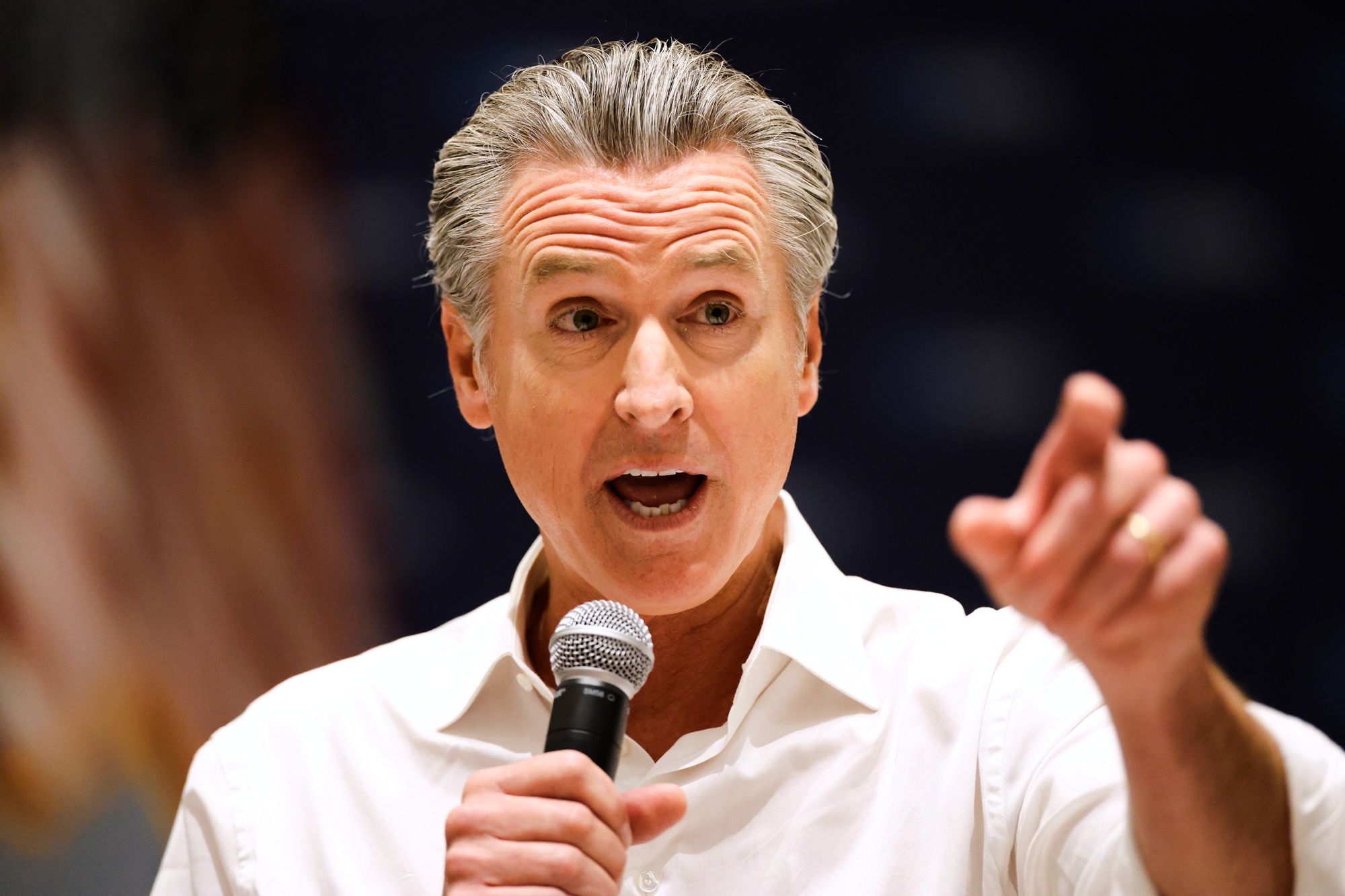
"caption": "Gov. Gavin Newsom speaks at a rally for democratic candidates on Sept. 5, 2026, in Monroe, North Carolina. Several bills signed by Newsom on Tuesday focused on expanding California's power to enforce health and safety standards in immigration detention, restrict construction of new detention facilities and tax private detention facilities.",
"credit": "Nell Redmond/AP Photo",
"altTag": null,
"description": null,
"imgSizes": {
"thumbnail": {
"file": "https://cdn.kqed.org/wp-content/uploads/sites/10/2026/09/GavinNewsomAP-160x107.jpg",
"width": 160,
"height": 107,
"mimeType": "image/jpeg"
},
"1536x1536": {
"file": "https://cdn.kqed.org/wp-content/uploads/sites/10/2026/09/GavinNewsomAP-1536x1024.jpg",
"width": 1536,
"height": 1024,
"mimeType": "image/jpeg"
},
"post-thumbnail": {
"file": "https://cdn.kqed.org/wp-content/uploads/sites/10/2026/09/GavinNewsomAP-672x372.jpg",
"width": 672,
"height": 372,
"mimeType": "image/jpeg"
},
"twentyfourteen-full-width": {
"file": "https://cdn.kqed.org/wp-content/uploads/sites/10/2026/09/GavinNewsomAP-1038x576.jpg",
"width": 1038,
"height": 576,
"mimeType": "image/jpeg"
},
"npr-cds-wide": {
"file": "https://cdn.kqed.org/wp-content/uploads/sites/10/2026/09/GavinNewsomAP-1200x675.jpg",
"width": 1200,
"height": 675,
"mimeType": "image/jpeg"
},
"npr-cds-square": {
"file": "https://cdn.kqed.org/wp-content/uploads/sites/10/2026/09/GavinNewsomAP-600x600.jpg",
"width": 600,
"height": 600,
"mimeType": "image/jpeg"
},
"kqedFullSize": {
"file": "https://cdn.kqed.org/wp-content/uploads/sites/10/2026/09/GavinNewsomAP.jpg",
"width": 2000,
"height": 1333
}
},
"isLoading": false,
"fetchFailed": false
},
"news_12054567": {
"type": "attachments",
"id": "news_12054567",
"meta": {
"index": "attachments_1716263798",
"site": "news",
"id": "12054567",
"found": true
},
"title": "US-POLITICS-IMMIGRATION",
"publishDate": 1756941444,
"status": "inherit",
"parent": 12054544,
"modified": 1769006278,
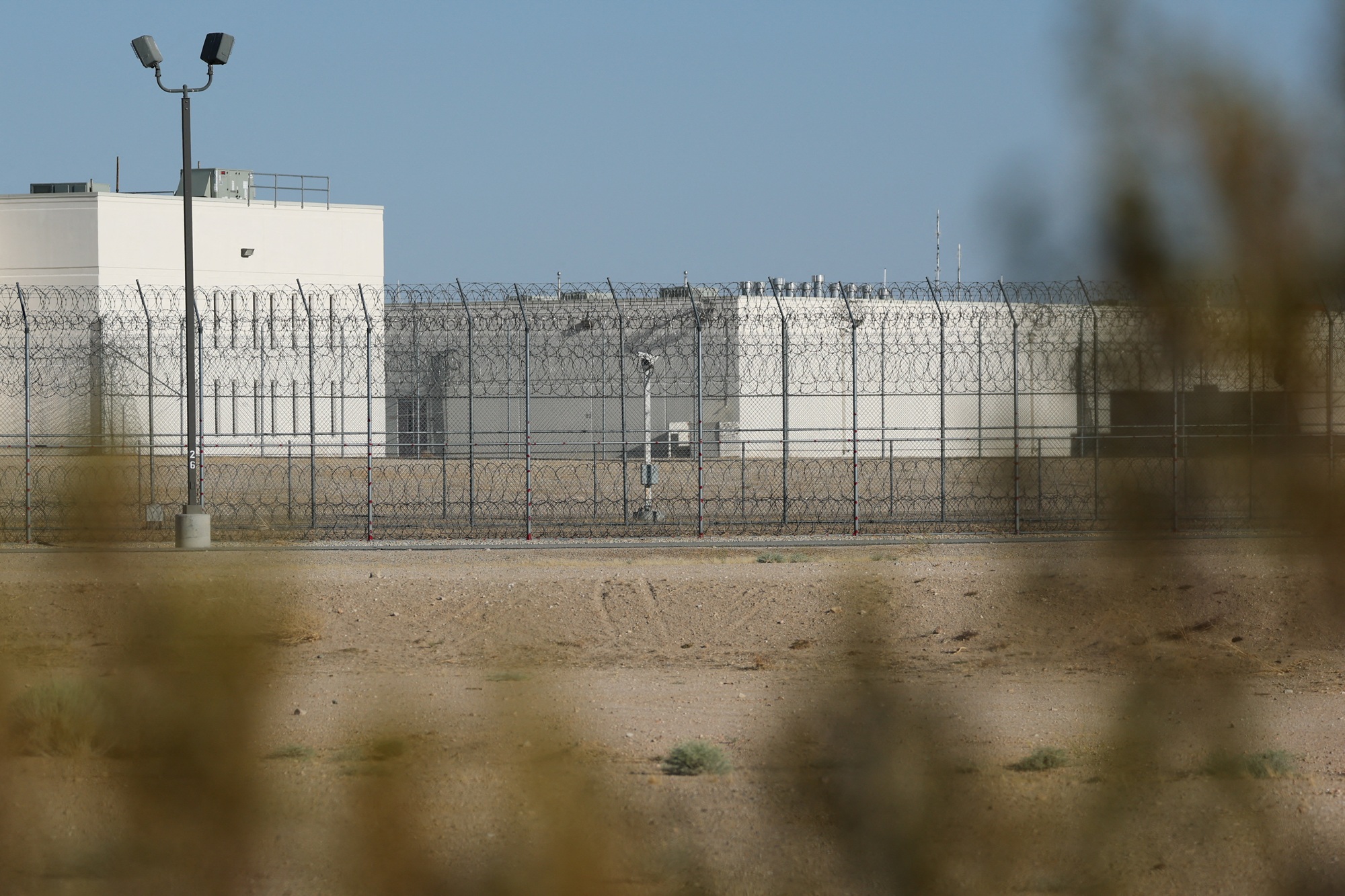
"caption": "The CoreCivic, Inc. California City Immigration Processing Center stands in the Kern County desert on July 10, 2025.",
"credit": "Patrick T. Fallon/AFP via Getty Images",
"altTag": null,
"description": null,
"imgSizes": {
"thumbnail": {
"file": "https://cdn.kqed.org/wp-content/uploads/sites/10/2025/09/KernCountyICEDetentionGetty-160x107.jpg",
"width": 160,
"height": 107,
"mimeType": "image/jpeg"
},
"1536x1536": {
"file": "https://cdn.kqed.org/wp-content/uploads/sites/10/2025/09/KernCountyICEDetentionGetty-1536x1024.jpg",
"width": 1536,
"height": 1024,
"mimeType": "image/jpeg"
},
"post-thumbnail": {
"file": "https://cdn.kqed.org/wp-content/uploads/sites/10/2025/09/KernCountyICEDetentionGetty-672x372.jpg",
"width": 672,
"height": 372,
"mimeType": "image/jpeg"
},
"twentyfourteen-full-width": {
"file": "https://cdn.kqed.org/wp-content/uploads/sites/10/2025/09/KernCountyICEDetentionGetty-1038x576.jpg",
"width": 1038,
"height": 576,
"mimeType": "image/jpeg"
},
"kqedFullSize": {
"file": "https://cdn.kqed.org/wp-content/uploads/sites/10/2025/09/KernCountyICEDetentionGetty.jpg",
"width": 2000,
"height": 1333
}
},
"isLoading": false,
"fetchFailed": false
},
"news_12067718": {
"type": "attachments",
"id": "news_12067718",
"meta": {
"index": "attachments_1716263798",
"site": "news",
"id": "12067718",
"found": true
},
"title": "fresno-airport-69441919cc590",
"publishDate": 1766070583,
"status": "inherit",
"parent": 12067716,
"modified": 1766070621,
"caption": "Travelers say the artificial Sequoia trees make the airport stand out.",
"credit": "Samantha Rangel/KVPR",
"altTag": null,
"description": null,
"imgSizes": {
"thumbnail": {
"file": "https://cdn.kqed.org/wp-content/uploads/sites/10/2025/12/fresno-airport-69441919cc590-160x107.jpg",
"width": 160,
"height": 107,
"mimeType": "image/jpeg"
},
"1536x1536": {
"file": "https://cdn.kqed.org/wp-content/uploads/sites/10/2025/12/fresno-airport-69441919cc590-1536x1025.jpg",
"width": 1536,
"height": 1025,
"mimeType": "image/jpeg"
},
"post-thumbnail": {
"file": "https://cdn.kqed.org/wp-content/uploads/sites/10/2025/12/fresno-airport-69441919cc590-672x372.jpg",
"width": 672,
"height": 372,
"mimeType": "image/jpeg"
},
"twentyfourteen-full-width": {
"file": "https://cdn.kqed.org/wp-content/uploads/sites/10/2025/12/fresno-airport-69441919cc590-1038x576.jpg",
"width": 1038,
"height": 576,
"mimeType": "image/jpeg"
},
"npr-cds-wide": {
"file": "https://cdn.kqed.org/wp-content/uploads/sites/10/2025/12/fresno-airport-69441919cc590-1200x675.jpg",
"width": 1200,
"height": 675,
"mimeType": "image/jpeg"
},
"kqedFullSize": {
"file": "https://cdn.kqed.org/wp-content/uploads/sites/10/2025/12/fresno-airport-69441919cc590.jpg",
"width": 1760,
"height": 1174
}
},
"isLoading": false,
"fetchFailed": false
},
"news_12066735": {
"type": "attachments",
"id": "news_12066735",
"meta": {
"index": "attachments_1716263798",
"site": "news",
"id": "12066735",
"found": true
},
"title": "detention-mass-693ae7ea080f4",
"publishDate": 1765468167,
"status": "inherit",
"parent": 12066732,
"modified": 1765468210,
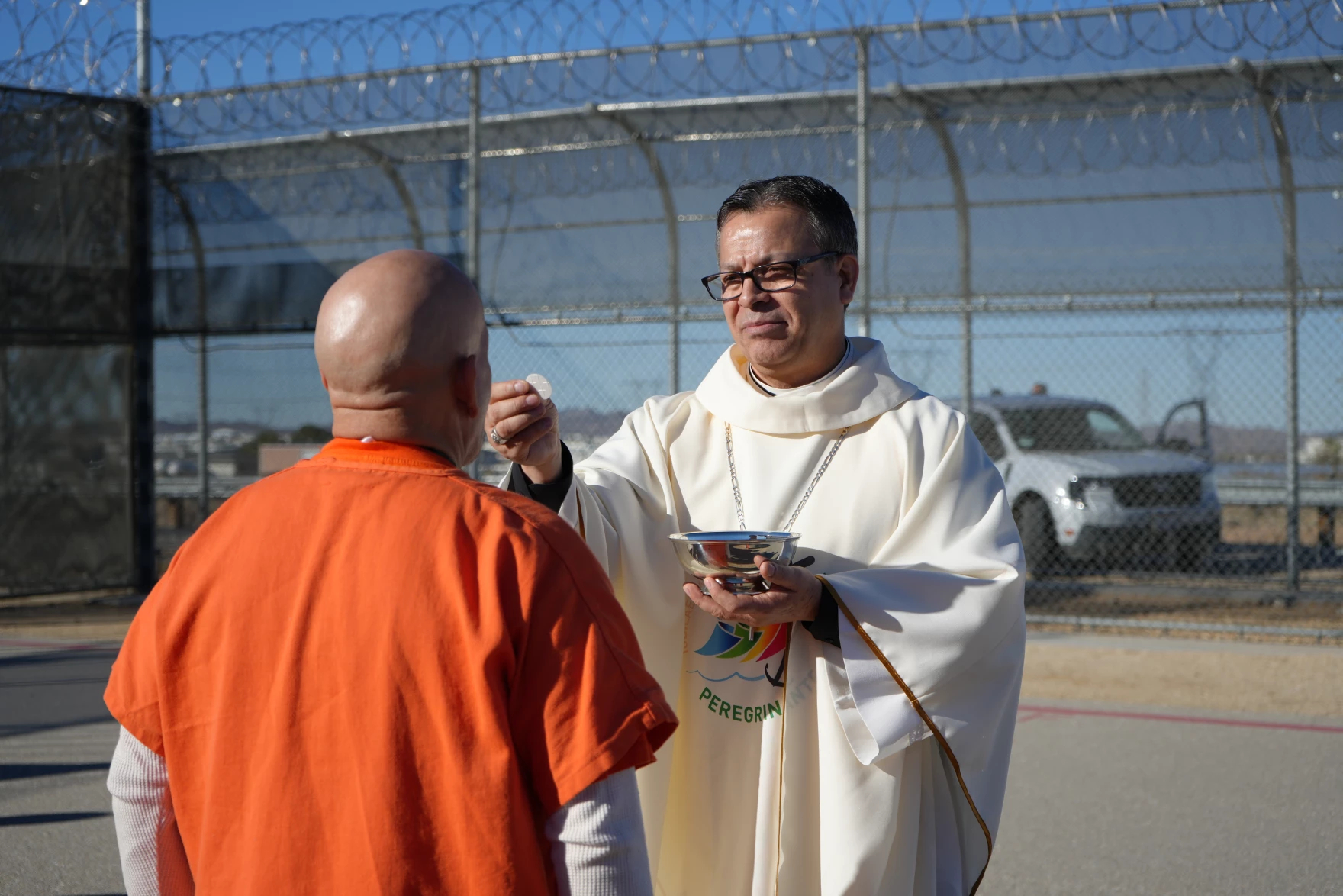
"caption": "San Bernardino Diocese Bishop Alberto Rojas providing communion to a detained person inside the Adelanto ICE Processing Center on Wednesday, December 10, 2025.",
"credit": "Photo courtesy of California Catholic Conference",
"altTag": null,
"description": null,
"imgSizes": {
"thumbnail": {
"file": "https://cdn.kqed.org/wp-content/uploads/sites/10/2025/12/detention-mass-693ae7ea080f4-160x107.jpg",
"width": 160,
"height": 107,
"mimeType": "image/jpeg"
},
"1536x1536": {
"file": "https://cdn.kqed.org/wp-content/uploads/sites/10/2025/12/detention-mass-693ae7ea080f4-1536x1025.jpg",
"width": 1536,
"height": 1025,
"mimeType": "image/jpeg"
},
"post-thumbnail": {
"file": "https://cdn.kqed.org/wp-content/uploads/sites/10/2025/12/detention-mass-693ae7ea080f4-672x372.jpg",
"width": 672,
"height": 372,
"mimeType": "image/jpeg"
},
"twentyfourteen-full-width": {
"file": "https://cdn.kqed.org/wp-content/uploads/sites/10/2025/12/detention-mass-693ae7ea080f4-1038x576.jpg",
"width": 1038,
"height": 576,
"mimeType": "image/jpeg"
},
"npr-cds-wide": {
"file": "https://cdn.kqed.org/wp-content/uploads/sites/10/2025/12/detention-mass-693ae7ea080f4-1200x675.jpg",
"width": 1200,
"height": 675,
"mimeType": "image/jpeg"
},
"kqedFullSize": {
"file": "https://cdn.kqed.org/wp-content/uploads/sites/10/2025/12/detention-mass-693ae7ea080f4.jpg",
"width": 1760,
"height": 1174
}
},
"isLoading": false,
"fetchFailed": false
},
"news_12062225": {
"type": "attachments",
"id": "news_12062225",
"meta": {
"index": "attachments_1716263798",
"site": "news",
"id": "12062225",
"found": true
},
"title": "251028-YOSEMITESHUTDOWN-114-BL_QED-KQED",
"publishDate": 1761842896,
"status": "inherit",
"parent": 12065737,
"modified": 1765292883,
"caption": "Visitors stand at Tunnel View overlook in Yosemite National Park in the Sierra Nevada Mountains on Oct. 28, 2025. ",
"credit": "Beth LaBerge/KQED",
"altTag": null,
"description": null,
"imgSizes": {
"thumbnail": {
"file": "https://cdn.kqed.org/wp-content/uploads/sites/10/2025/10/251028-YOSEMITESHUTDOWN-114-BL_QED-KQED-160x107.jpg",
"width": 160,
"height": 107,
"mimeType": "image/jpeg"
},
"1536x1536": {
"file": "https://cdn.kqed.org/wp-content/uploads/sites/10/2025/10/251028-YOSEMITESHUTDOWN-114-BL_QED-KQED-1536x1024.jpg",
"width": 1536,
"height": 1024,
"mimeType": "image/jpeg"
},
"post-thumbnail": {
"file": "https://cdn.kqed.org/wp-content/uploads/sites/10/2025/10/251028-YOSEMITESHUTDOWN-114-BL_QED-KQED-672x372.jpg",
"width": 672,
"height": 372,
"mimeType": "image/jpeg"
},
"twentyfourteen-full-width": {
"file": "https://cdn.kqed.org/wp-content/uploads/sites/10/2025/10/251028-YOSEMITESHUTDOWN-114-BL_QED-KQED-1038x576.jpg",
"width": 1038,
"height": 576,
"mimeType": "image/jpeg"
},
"npr-cds-wide": {
"file": "https://cdn.kqed.org/wp-content/uploads/sites/10/2025/10/251028-YOSEMITESHUTDOWN-114-BL_QED-KQED-1600x900.jpg",
"width": 1600,
"height": 900,
"mimeType": "image/jpeg"
},
"kqedFullSize": {
"file": "https://cdn.kqed.org/wp-content/uploads/sites/10/2025/10/251028-YOSEMITESHUTDOWN-114-BL_QED-KQED.jpg",
"width": 2000,
"height": 1333
}
},
"isLoading": false,
"fetchFailed": false
},
"news_12064027": {
"type": "attachments",
"id": "news_12064027",
"meta": {
"index": "attachments_1716263798",
"site": "news",
"id": "12064027",
"found": true
},
"title": "Immigration Commentator Detained",
"publishDate": 1763070004,
"status": "inherit",
"parent": 12063851,
"modified": 1763070053,
"caption": "British political commentator Sami Hamdi speaks to the media in London on Thursday, Nov. 13, 2025, upon his return to the U.K. after he was arrested by Immigration and Customs Enforcement on Oct. 26, while on a speaking tour in the U.S.",
"credit": "Thomas Krych/AP Photo",
"altTag": null,
"description": null,
"imgSizes": {
"thumbnail": {
"file": "https://cdn.kqed.org/wp-content/uploads/sites/10/2025/11/SamiHamdiLondonAP-160x107.jpg",
"width": 160,
"height": 107,
"mimeType": "image/jpeg"
},
"1536x1536": {
"file": "https://cdn.kqed.org/wp-content/uploads/sites/10/2025/11/SamiHamdiLondonAP-1536x1024.jpg",
"width": 1536,
"height": 1024,
"mimeType": "image/jpeg"
},
"post-thumbnail": {
"file": "https://cdn.kqed.org/wp-content/uploads/sites/10/2025/11/SamiHamdiLondonAP-672x372.jpg",
"width": 672,
"height": 372,
"mimeType": "image/jpeg"
},
"twentyfourteen-full-width": {
"file": "https://cdn.kqed.org/wp-content/uploads/sites/10/2025/11/SamiHamdiLondonAP-1038x576.jpg",
"width": 1038,
"height": 576,
"mimeType": "image/jpeg"
},
"npr-cds-wide": {
"file": "https://cdn.kqed.org/wp-content/uploads/sites/10/2025/11/SamiHamdiLondonAP-1200x675.jpg",
"width": 1200,
"height": 675,
"mimeType": "image/jpeg"
},
"kqedFullSize": {
"file": "https://cdn.kqed.org/wp-content/uploads/sites/10/2025/11/SamiHamdiLondonAP.jpg",
"width": 2000,
"height": 1333
}
},
"isLoading": false,
"fetchFailed": false
},
"news_12057950": {
"type": "attachments",
"id": "news_12057950",
"meta": {
"index": "attachments_1716263798",
"site": "news",
"id": "12057950",
"found": true
},
"title": "20250923_MEDICAIDDISABILITY_GC-7-KQED",
"publishDate": 1759164363,
"status": "inherit",
"parent": 12058930,
"modified": 1759880440,
"caption": "Students Ruth Defoe, left, and Douglas Morales, right, work on art in the art studio at the Arc in San Francisco on Sept. 23, 2025.",
"credit": "Gina Castro/KQED",
"altTag": null,
"description": null,
"imgSizes": {
"thumbnail": {
"file": "https://cdn.kqed.org/wp-content/uploads/sites/10/2025/09/20250923_MEDICAIDDISABILITY_GC-7-KQED-160x107.jpg",
"width": 160,
"height": 107,
"mimeType": "image/jpeg"
},
"1536x1536": {
"file": "https://cdn.kqed.org/wp-content/uploads/sites/10/2025/09/20250923_MEDICAIDDISABILITY_GC-7-KQED-1536x1024.jpg",
"width": 1536,
"height": 1024,
"mimeType": "image/jpeg"
},
"post-thumbnail": {
"file": "https://cdn.kqed.org/wp-content/uploads/sites/10/2025/09/20250923_MEDICAIDDISABILITY_GC-7-KQED-672x372.jpg",
"width": 672,
"height": 372,
"mimeType": "image/jpeg"
},
"twentyfourteen-full-width": {
"file": "https://cdn.kqed.org/wp-content/uploads/sites/10/2025/09/20250923_MEDICAIDDISABILITY_GC-7-KQED-1038x576.jpg",
"width": 1038,
"height": 576,
"mimeType": "image/jpeg"
},
"kqedFullSize": {
"file": "https://cdn.kqed.org/wp-content/uploads/sites/10/2025/09/20250923_MEDICAIDDISABILITY_GC-7-KQED.jpg",
"width": 2000,
"height": 1333
}
},
"isLoading": false,
"fetchFailed": false
},
"news_12047111": {
"type": "attachments",
"id": "news_12047111",
"meta": {
"index": "attachments_1716263798",
"site": "news",
"id": "12047111",
"found": true
},
"title": "default",
"publishDate": 1751651145,
"status": "inherit",
"parent": 12047108,
"modified": 1751651174,
"caption": "From an aerial view, the US-Mexico border fence ends with a gap on Jan. 20, 2025 near Sasabe, Ariz. Republicans' tax and spending bill includes $46.5 billion for border wall projects.",
"credit": "John Moore/Getty Images",
"altTag": null,
"description": null,
"imgSizes": {
"thumbnail": {
"file": "https://cdn.kqed.org/wp-content/uploads/sites/10/2025/07/npr.brightspotcdn-copy-160x90.jpg",
"width": 160,
"height": 90,
"mimeType": "image/jpeg"
},
"1536x1536": {
"file": "https://cdn.kqed.org/wp-content/uploads/sites/10/2025/07/npr.brightspotcdn-copy-1536x864.jpg",
"width": 1536,
"height": 864,
"mimeType": "image/jpeg"
},
"post-thumbnail": {
"file": "https://cdn.kqed.org/wp-content/uploads/sites/10/2025/07/npr.brightspotcdn-copy-672x372.jpg",
"width": 672,
"height": 372,
"mimeType": "image/jpeg"
},
"twentyfourteen-full-width": {
"file": "https://cdn.kqed.org/wp-content/uploads/sites/10/2025/07/npr.brightspotcdn-copy-1038x576.jpg",
"width": 1038,
"height": 576,
"mimeType": "image/jpeg"
},
"kqedFullSize": {
"file": "https://cdn.kqed.org/wp-content/uploads/sites/10/2025/07/npr.brightspotcdn-copy.jpg",
"width": 1800,
"height": 1013
}
},
"isLoading": false,
"fetchFailed": false
},
"news_12041614": {
"type": "attachments",
"id": "news_12041614",
"meta": {
"index": "attachments_1716263798",
"site": "news",
"id": "12041614",
"found": true
},
"title": "npr.brightspotcdn copy",
"publishDate": 1748117524,
"status": "inherit",
"parent": 12041613,
"modified": 1748117558,
"caption": "Mahmoud Khalil has asked an immigration judge to grant him asylum, saying he feared being targeted by Israel if he's deported to Syria or Algeria.",
"credit": "Spencer Platt/Getty Images",
"altTag": null,
"description": null,
"imgSizes": {
"medium": {
"file": "https://cdn.kqed.org/wp-content/uploads/sites/10/2025/05/npr.brightspotcdn-copy-15-800x533.jpg",
"width": 800,
"height": 533,
"mimeType": "image/jpeg"
},
"large": {
"file": "https://cdn.kqed.org/wp-content/uploads/sites/10/2025/05/npr.brightspotcdn-copy-15-1020x680.jpg",
"width": 1020,
"height": 680,
"mimeType": "image/jpeg"
},
"thumbnail": {
"file": "https://cdn.kqed.org/wp-content/uploads/sites/10/2025/05/npr.brightspotcdn-copy-15-160x107.jpg",
"width": 160,
"height": 107,
"mimeType": "image/jpeg"
},
"1536x1536": {
"file": "https://cdn.kqed.org/wp-content/uploads/sites/10/2025/05/npr.brightspotcdn-copy-15-1536x1024.jpg",
"width": 1536,
"height": 1024,
"mimeType": "image/jpeg"
},
"post-thumbnail": {
"file": "https://cdn.kqed.org/wp-content/uploads/sites/10/2025/05/npr.brightspotcdn-copy-15-672x372.jpg",
"width": 672,
"height": 372,
"mimeType": "image/jpeg"
},
"twentyfourteen-full-width": {
"file": "https://cdn.kqed.org/wp-content/uploads/sites/10/2025/05/npr.brightspotcdn-copy-15-1038x576.jpg",
"width": 1038,
"height": 576,
"mimeType": "image/jpeg"
},
"kqedFullSize": {
"file": "https://cdn.kqed.org/wp-content/uploads/sites/10/2025/05/npr.brightspotcdn-copy-15.jpg",
"width": 1800,
"height": 1200
}
},
"isLoading": false,
"fetchFailed": false
},
"news_12035874": {
"type": "attachments",
"id": "news_12035874",
"meta": {
"index": "attachments_1716263798",
"site": "news",
"id": "12035874",
"found": true
},
"title": "President Trump Meets With El Salvador President Nayib Bukele At The White House",
"publishDate": 1744653985,
"status": "inherit",
"parent": 12042492,
"modified": 1748970386,
"caption": "President Trump meets with President Nayib Bukele of El Salvador in the Oval Office on April 14, 2025. Trump and Bukele were expected to discuss a range of bilateral issues including the detention of Kilmar Armando Abrego Garcia, who has been held in a prison in El Salvador since March 15. ",
"credit": "Win McNamee/Getty Images",
"altTag": "Two men wearing suits shake hands while seated in chairs.",
"description": "WASHINGTON, DC - APRIL 14: U.S. President Donald Trump meets with President Nayib Bukele of El Salvador in the Oval Office of the White House April 14, 2025 in Washington, DC. Trump and Bukele were expected to discuss a range of bilateral issues including the detention of Kilmar Armando Abrego Garcia, who has been held in a prison in El Salvador since March 15. (Photo by Win McNamee/Getty Images)",
"imgSizes": {
"medium": {
"file": "https://cdn.kqed.org/wp-content/uploads/sites/10/2025/04/gettyimages-2210243092-800x533.jpeg",
"width": 800,
"height": 533,
"mimeType": "image/jpeg"
},
"large": {
"file": "https://cdn.kqed.org/wp-content/uploads/sites/10/2025/04/gettyimages-2210243092-1020x680.jpeg",
"width": 1020,
"height": 680,
"mimeType": "image/jpeg"
},
"thumbnail": {
"file": "https://cdn.kqed.org/wp-content/uploads/sites/10/2025/04/gettyimages-2210243092-160x107.jpeg",
"width": 160,
"height": 107,
"mimeType": "image/jpeg"
},
"1536x1536": {
"file": "https://cdn.kqed.org/wp-content/uploads/sites/10/2025/04/gettyimages-2210243092-1536x1023.jpeg",
"width": 1536,
"height": 1023,
"mimeType": "image/jpeg"
},
"2048x2048": {
"file": "https://cdn.kqed.org/wp-content/uploads/sites/10/2025/04/gettyimages-2210243092-2048x1365.jpeg",
"width": 2048,
"height": 1365,
"mimeType": "image/jpeg"
},
"post-thumbnail": {
"file": "https://cdn.kqed.org/wp-content/uploads/sites/10/2025/04/gettyimages-2210243092-672x372.jpeg",
"width": 672,
"height": 372,
"mimeType": "image/jpeg"
},
"twentyfourteen-full-width": {
"file": "https://cdn.kqed.org/wp-content/uploads/sites/10/2025/04/gettyimages-2210243092-1038x576.jpeg",
"width": 1038,
"height": 576,
"mimeType": "image/jpeg"
},
"full-width": {
"file": "https://cdn.kqed.org/wp-content/uploads/sites/10/2025/04/gettyimages-2210243092-1920x1279.jpeg",
"width": 1920,
"height": 1279,
"mimeType": "image/jpeg"
},
"kqedFullSize": {
"file": "https://cdn.kqed.org/wp-content/uploads/sites/10/2025/04/gettyimages-2210243092-scaled-e1745537471811.jpeg",
"width": 2000,
"height": 1333
}
},
"isLoading": false,
"fetchFailed": false
},
"news_12027014": {
"type": "attachments",
"id": "news_12027014",
"meta": {
"index": "attachments_1716263798",
"site": "news",
"id": "12027014",
"found": true
},
"title": "020825_Duran-Family_JAJ_CM_17 copy",
"publishDate": 1739488217,
"status": "inherit",
"parent": 12027013,
"modified": 1739488273,
"caption": "Loreal Duran with her children, ages 1 and 7, in front of her apartment complex in Los Angeles on Feb. 8, 2025. Loreal’s husband, Giovanni Duran, was born in El Salvador and detained by US Immigration and Customs Enforcement agents in late January. He is still being held.",
"credit": "Joel Angel Juarez for CalMatters",
"altTag": null,
"description": null,
"imgSizes": {
"medium": {
"file": "https://cdn.kqed.org/wp-content/uploads/sites/10/2025/02/020825_Duran-Family_JAJ_CM_17-copy-800x534.jpg",
"width": 800,
"height": 534,
"mimeType": "image/jpeg"
},
"large": {
"file": "https://cdn.kqed.org/wp-content/uploads/sites/10/2025/02/020825_Duran-Family_JAJ_CM_17-copy-1020x680.jpg",
"width": 1020,
"height": 680,
"mimeType": "image/jpeg"
},
"thumbnail": {
"file": "https://cdn.kqed.org/wp-content/uploads/sites/10/2025/02/020825_Duran-Family_JAJ_CM_17-copy-160x107.jpg",
"width": 160,
"height": 107,
"mimeType": "image/jpeg"
},
"1536x1536": {
"file": "https://cdn.kqed.org/wp-content/uploads/sites/10/2025/02/020825_Duran-Family_JAJ_CM_17-copy-1536x1025.jpg",
"width": 1536,
"height": 1025,
"mimeType": "image/jpeg"
},
"post-thumbnail": {
"file": "https://cdn.kqed.org/wp-content/uploads/sites/10/2025/02/020825_Duran-Family_JAJ_CM_17-copy-672x372.jpg",
"width": 672,
"height": 372,
"mimeType": "image/jpeg"
},
"twentyfourteen-full-width": {
"file": "https://cdn.kqed.org/wp-content/uploads/sites/10/2025/02/020825_Duran-Family_JAJ_CM_17-copy-1038x576.jpg",
"width": 1038,
"height": 576,
"mimeType": "image/jpeg"
},
"full-width": {
"file": "https://cdn.kqed.org/wp-content/uploads/sites/10/2025/02/020825_Duran-Family_JAJ_CM_17-copy-1920x1281.jpg",
"width": 1920,
"height": 1281,
"mimeType": "image/jpeg"
},
"kqedFullSize": {
"file": "https://cdn.kqed.org/wp-content/uploads/sites/10/2025/02/020825_Duran-Family_JAJ_CM_17-copy.jpg",
"width": 2000,
"height": 1334
}
},
"isLoading": false,
"fetchFailed": false
},
"news_12015777": {
"type": "attachments",
"id": "news_12015777",
"meta": {
"index": "attachments_1716263798",
"site": "news",
"id": "12015777",
"found": true
},
"title": "112324_Bun-Portrait_JK_CM_01",
"publishDate": 1732562253,
"status": "inherit",
"parent": 12015773,
"modified": 1732562302,
"caption": "Chanthon Bun stands in the living room of his home in San Leandro on Nov. 23, 2024. Bun was born in Cambodia during the genocide in the 1970s and grew up in a refugee camp in Thailand before moving to the United States, where he was convicted of robbery at age 18. That was decades ago, but now he's anxious about President-elect Donald Trump's plan for mass immigrant deportation.",
"credit": "Jungho Kim for CalMatters",
"altTag": null,
"description": null,
"imgSizes": {
"medium": {
"file": "https://cdn.kqed.org/wp-content/uploads/sites/10/2024/11/112324_Bun-Portrait_JK_CM_01-800x533.jpg",
"width": 800,
"height": 533,
"mimeType": "image/jpeg"
},
"large": {
"file": "https://cdn.kqed.org/wp-content/uploads/sites/10/2024/11/112324_Bun-Portrait_JK_CM_01-1020x680.jpg",
"width": 1020,
"height": 680,
"mimeType": "image/jpeg"
},
"thumbnail": {
"file": "https://cdn.kqed.org/wp-content/uploads/sites/10/2024/11/112324_Bun-Portrait_JK_CM_01-160x107.jpg",
"width": 160,
"height": 107,
"mimeType": "image/jpeg"
},
"1536x1536": {
"file": "https://cdn.kqed.org/wp-content/uploads/sites/10/2024/11/112324_Bun-Portrait_JK_CM_01-1536x1024.jpg",
"width": 1536,
"height": 1024,
"mimeType": "image/jpeg"
},
"post-thumbnail": {
"file": "https://cdn.kqed.org/wp-content/uploads/sites/10/2024/11/112324_Bun-Portrait_JK_CM_01-672x372.jpg",
"width": 672,
"height": 372,
"mimeType": "image/jpeg"
},
"twentyfourteen-full-width": {
"file": "https://cdn.kqed.org/wp-content/uploads/sites/10/2024/11/112324_Bun-Portrait_JK_CM_01-1038x576.jpg",
"width": 1038,
"height": 576,
"mimeType": "image/jpeg"
},
"full-width": {
"file": "https://cdn.kqed.org/wp-content/uploads/sites/10/2024/11/112324_Bun-Portrait_JK_CM_01-1920x1280.jpg",
"width": 1920,
"height": 1280,
"mimeType": "image/jpeg"
},
"kqedFullSize": {
"file": "https://cdn.kqed.org/wp-content/uploads/sites/10/2024/11/112324_Bun-Portrait_JK_CM_01.jpg",
"width": 2000,
"height": 1333
}
},
"isLoading": false,
"fetchFailed": false
}
},
"audioPlayerReducer": {
"postId": "stream_live",
"isPaused": true,
"isPlaying": false,
"pfsActive": false,
"pledgeModalIsOpen": true,
"playerDrawerIsOpen": false,
"liveAudioPlayStartedAt": 0,
"liveAudioPlayContext": ""
},
"authorsReducer": {
"byline_news_12083908": {
"type": "authors",
"id": "byline_news_12083908",
"meta": {
"override": true
},
"slug": "byline_news_12083908",
"name": "Wendy Fry and Sergio Olmos, CalMatters",
"isLoading": false
},
"byline_news_12047108": {
"type": "authors",
"id": "byline_news_12047108",
"meta": {
"override": true
},
"slug": "byline_news_12047108",
"name": "Juliana Kim, NPR",
"isLoading": false
},
"byline_news_12041613": {
"type": "authors",
"id": "byline_news_12041613",
"meta": {
"override": true
},
"slug": "byline_news_12041613",
"name": "\u003ca href=\"https://www.npr.org/people/427718118/adrian-florido\">Adrian Florido\u003c/a>, NPR",
"isLoading": false
},
"byline_news_12027013": {
"type": "authors",
"id": "byline_news_12027013",
"meta": {
"override": true
},
"slug": "byline_news_12027013",
"name": "\u003ca href=\"https://calmatters.org/author/wendy-fry/\">Wendy Fry\u003c/a>, CalMatters",
"isLoading": false
},
"byline_news_12015773": {
"type": "authors",
"id": "byline_news_12015773",
"meta": {
"override": true
},
"slug": "byline_news_12015773",
"name": "\u003ca href=\"https://calmatters.org/author/wendy-fry/\">Wendy Fry\u003c/a>, CalMatters",
"isLoading": false
},
"tychehendricks": {
"type": "authors",
"id": "259",
"meta": {
"index": "authors_1716337520",
"id": "259",
"found": true
},
"name": "Tyche Hendricks",
"firstName": "Tyche",
"lastName": "Hendricks",
"slug": "tychehendricks",
"email": "thendricks@kqed.org",
"display_author_email": true,
"staff_mastheads": [
"news"
],
"title": "KQED Senior Editor, Immigration",
"bio": "\u003cspan style=\"font-weight: 400;\">Tyche Hendricks is KQED’s senior editor for immigration, leading coverage of the policy and politics that affect California’s immigrant communities. Her work for KQED’s radio and online audiences is also carried on NPR and other national outlets. She has been recognized with awards from the Radio and Television News Directors Association, the Society for Professional Journalists; the Education Writers Association; the Best of the West and the National Federation of Community Broadcasters. Before joining KQED in 2010, Tyche spent more than a dozen years as a newspaper reporter, notably at the \u003c/span>\u003ci>\u003cspan style=\"font-weight: 400;\">San Francisco Chronicle\u003c/span>\u003c/i>\u003cspan style=\"font-weight: 400;\">. At different times she has covered criminal justice, government and politics and urban planning. Tyche has taught in the MFA Creative Writing program at the University of San Francisco and at UC Berkeley’s Graduate School of Journalism, where she was co-director of a national immigration symposium for professional journalists. She is the author of \u003c/span>\u003ci>\u003cspan style=\"font-weight: 400;\">The Wind Doesn't Need a Passport: Stories from the U.S.-Mexico Borderlands\u003c/span>\u003c/i>\u003cspan style=\"font-weight: 400;\"> (University of California Press). \u003c/span>",
"avatar": "https://secure.gravatar.com/avatar/b8ee458e2731c2d43df86882ce17267e?s=600&d=blank&r=g",
"twitter": "tychehendricks",
"facebook": null,
"instagram": null,
"linkedin": null,
"sites": [
{
"site": "news",
"roles": [
"editor"
]
},
{
"site": "stateofhealth",
"roles": [
"editor"
]
}
],
"headData": {
"title": "Tyche Hendricks | KQED",
"description": "KQED Senior Editor, Immigration",
"ogImgSrc": "https://secure.gravatar.com/avatar/b8ee458e2731c2d43df86882ce17267e?s=600&d=blank&r=g",
"twImgSrc": "https://secure.gravatar.com/avatar/b8ee458e2731c2d43df86882ce17267e?s=600&d=blank&r=g"
},
"isLoading": false,
"link": "/author/tychehendricks"
},
"slewis": {
"type": "authors",
"id": "8676",
"meta": {
"index": "authors_1716337520",
"id": "8676",
"found": true
},
"name": "Sukey Lewis",
"firstName": "Sukey",
"lastName": "Lewis",
"slug": "slewis",
"email": "slewis@kqed.org",
"display_author_email": true,
"staff_mastheads": [
"news"
],
"title": "KQED Contributor",
"bio": "Sukey Lewis is a criminal justice reporter and host of \u003cem>On Our Watch\u003c/em>, a new podcast from NPR and KQED about the shadow world of police discipline. In 2018, she co-founded the California Reporting Project, a coalition of newsrooms across the state focused on obtaining previously sealed internal affairs records from law enforcement. In addition to her reporting on police accountability, Sukey has investigated the bail bonds industry, California's wildfires and the high cost of prison phone calls. Sukey earned a master's degree in journalism from the University of California at Berkeley. Send news tips to slewis@kqed.org.",
"avatar": "https://secure.gravatar.com/avatar/03fd6b21024f99d8b0a1966654586de7?s=600&d=blank&r=g",
"twitter": "SukeyLewis",
"facebook": null,
"instagram": null,
"linkedin": null,
"sites": [
{
"site": "news",
"roles": [
"author",
"edit_others_posts"
]
}
],
"headData": {
"title": "Sukey Lewis | KQED",
"description": "KQED Contributor",
"ogImgSrc": "https://secure.gravatar.com/avatar/03fd6b21024f99d8b0a1966654586de7?s=600&d=blank&r=g",
"twImgSrc": "https://secure.gravatar.com/avatar/03fd6b21024f99d8b0a1966654586de7?s=600&d=blank&r=g"
},
"isLoading": false,
"link": "/author/slewis"
},
"kmizuguchi": {
"type": "authors",
"id": "11739",
"meta": {
"index": "authors_1716337520",
"id": "11739",
"found": true
},
"name": "Keith Mizuguchi",
"firstName": "Keith",
"lastName": "Mizuguchi",
"slug": "kmizuguchi",
"email": "kmizuguchi@kqed.org",
"display_author_email": false,
"staff_mastheads": [],
"title": "KQED Contributor",
"bio": null,
"avatar": "https://secure.gravatar.com/avatar/64d8a7de0723d4099b9fe4e915136103febcc20809abce228ee4415bcb237023?s=600&d=blank&r=g",
"twitter": null,
"bluesky": null,
"facebook": null,
"instagram": null,
"linkedin": null,
"sites": [
{
"site": "news",
"roles": [
"editor"
]
},
{
"site": "science",
"roles": [
"editor"
]
}
],
"headData": {
"title": "Keith Mizuguchi | KQED",
"description": "KQED Contributor",
"ogImgSrc": "https://secure.gravatar.com/avatar/64d8a7de0723d4099b9fe4e915136103febcc20809abce228ee4415bcb237023?s=600&d=blank&r=g",
"twImgSrc": "https://secure.gravatar.com/avatar/64d8a7de0723d4099b9fe4e915136103febcc20809abce228ee4415bcb237023?s=600&d=blank&r=g"
},
"isLoading": false,
"link": "/author/kmizuguchi"
},
"kdebenedetti": {
"type": "authors",
"id": "11913",
"meta": {
"index": "authors_1716337520",
"id": "11913",
"found": true
},
"name": "Katie DeBenedetti",
"firstName": "Katie",
"lastName": "DeBenedetti",
"slug": "kdebenedetti",
"email": "kdebenedetti@kqed.org",
"display_author_email": false,
"staff_mastheads": [
"news",
"science"
],
"title": "KQED Contributor",
"bio": "Katie DeBenedetti is a digital reporter covering daily news for the Express Desk. Prior to joining KQED as a culture reporting intern in January 2024, she covered education and city government for the Napa Valley Register.",
"avatar": "https://secure.gravatar.com/avatar/6e31073cb8f7e4214ab03f42771d0f45?s=600&d=blank&r=g",
"twitter": null,
"facebook": null,
"instagram": null,
"linkedin": null,
"sites": [
{
"site": "news",
"roles": [
"author"
]
},
{
"site": "science",
"roles": [
"author"
]
},
{
"site": "liveblog",
"roles": [
"author"
]
}
],
"headData": {
"title": "Katie DeBenedetti | KQED",
"description": "KQED Contributor",
"ogImgSrc": "https://secure.gravatar.com/avatar/6e31073cb8f7e4214ab03f42771d0f45?s=600&d=blank&r=g",
"twImgSrc": "https://secure.gravatar.com/avatar/6e31073cb8f7e4214ab03f42771d0f45?s=600&d=blank&r=g"
},
"isLoading": false,
"link": "/author/kdebenedetti"
}
},
"pagesReducer": {
"news_tag_immigration-detention": {
"type": "terms",
"id": "news_20584",
"meta": {
"index": "terms_1716263798",
"site": "news",
"id": "20584",
"score": 10.404627
},
"featImg": null,
"name": "immigration detention",
"description": null,
"taxonomy": "tag",
"headData": {
"twImgId": null,
"twTitle": null,
"ogTitle": null,
"ogImgId": null,
"twDescription": null,
"description": null,
"title": "immigration detention Archives | KQED News",
"ogDescription": null
},
"ttid": 20601,
"slug": "immigration-detention",
"isLoading": false,
"title": "immigration detention",
"pageMeta": {
"site": "news",
"WpPageTemplate": "page-topic-editorial",
"currentPage": 1
},
"blocks": [
{
"blockName": "kqed/post-list",
"attrs": {
"layout": "cardArticle2",
"query": "posts/news?tag=immigration-detention",
"seeMore": false,
"paginated": true,
"page": 1
}
},
{
"blockName": "kqed/ad"
}
]
}
},
"pfsSessionReducer": {},
"postsReducer": {
"stream_live": {
"type": "live",
"id": "stream_live",
"audioUrl": "https://streams.kqed.org/kqedradio",
"title": "Live Stream",
"excerpt": "Live Stream information currently unavailable.",
"link": "/radio",
"featImg": "",
"label": {
"name": "KQED Live",
"link": "/"
}
},
"stream_kqedNewscast": {
"type": "posts",
"id": "stream_kqedNewscast",
"audioUrl": "https://www.kqed.org/.stream/anon/radio/RDnews/newscast.mp3?_=1",
"title": "KQED Newscast",
"featImg": "",
"label": {
"name": "88.5 FM",
"link": "/"
}
},
"news_12101807": {
"type": "posts",
"id": "news_12101807",
"meta": {
"index": "posts_1716263798",
"site": "news",
"id": "12101807",
"score": null,
"sort": [
1790716901000
]
},
"guestAuthors": [],
"slug": "newsom-signs-bills-to-rein-in-trump-immigration-efforts",
"title": "Newsom Signs Bills to Rein In Trump Immigration Efforts",
"publishDate": 1790716901,
"format": "standard",
"headTitle": "Newsom Signs Bills to Rein In Trump Immigration Efforts | KQED",
"labelTerm": {
"site": "news"
},
"content": "\n\u003cp>Gov. Gavin Newsom signed a slate of 21 bills on Tuesday \u003ca href=\"https://www.kqed.org/news/12097637/lawmakers-send-immigration-detention-bills-to-gov-newsom\">aimed at increasing oversight\u003c/a> of federal immigration detention and reining in what he called the “Orwellian” tactics of the Trump administration’s approach to immigration enforcement.\u003c/p>\n\n\n\n\u003cp>The enactment of the new laws comes as immigration arrests have \u003ca href=\"https://www.kqed.org/news/12097313/northern-california-ice-arrests-surged-this-summer\">soared to new levels\u003c/a>, with nearly 50,000 arrests nationwide in July. California had the third-highest number of those arrests, and U.S. Immigration and Customs Enforcement has recently expanded detention capacity in the state as part of President Donald Trump’s campaign to achieve “mass deportation.”\u003c/p>\n\n\n\n\u003cp>The \u003ca href=\"https://www.gov.ca.gov/2026/09/29/governor-newsom-signs-bills-to-push-back-on-trumps-orwellian-immigration-tactics-to-protect-immigrant-communities/\">wide-ranging laws\u003c/a>, authored by Democrats from across the state, included measures to restrict law enforcement use of electroshock gloves, masks and flash-bang grenades, enable individuals to sue federal officials in state court over rights violations and require local agencies to release 911 call records originating from ICE facilities.\u003c/p>\n\n\n\n\u003cp>Several bills focused on expanding the state’s power to enforce health and safety standards in immigration detention, restrict construction of new detention centers and tax private detention facilities.\u003c/p>\n\n\n\u003cdiv class=\"wp-block-image\">\n\u003cfigure class=\"aligncenter size-full\">\u003cimg loading=\"lazy\" decoding=\"async\" width=\"2560\" height=\"1706\" src=\"https://cdn.kqed.org/wp-content/uploads/sites/10/2026/09/GettyImages-2287296637-scaled.jpg\" alt=\"\" class=\"wp-image-12101938\" srcset=\"https://cdn.kqed.org/wp-content/uploads/sites/10/2026/09/GettyImages-2287296637-scaled.jpg 2560w, https://cdn.kqed.org/wp-content/uploads/sites/10/2026/09/GettyImages-2287296637-2000x1333.jpg 2000w, https://cdn.kqed.org/wp-content/uploads/sites/10/2026/09/GettyImages-2287296637-160x107.jpg 160w, https://cdn.kqed.org/wp-content/uploads/sites/10/2026/09/GettyImages-2287296637-1536x1024.jpg 1536w, https://cdn.kqed.org/wp-content/uploads/sites/10/2026/09/GettyImages-2287296637-2048x1365.jpg 2048w\" sizes=\"auto, (max-width: 2560px) 100vw, 2560px\" />\u003cfigcaption class=\"wp-element-caption\">Immigration and Customs Enforcement (ICE) agents walk outside the Ventura County Government Center in Ventura, California, on July 27, 2026. (Blake Fagan/AFP via Getty Images)\u003c/figcaption>\u003c/figure>\n\u003c/div>\n\n\n\u003cp>In his signing statement, Newsom noted that the underlying authority for immigration enforcement lies with the federal government. But he insisted that facilities in California are subject to the state’s standards and oversight. \u003c/p>\n\n\n\n\u003cp>“Trump has put his political interests above the health, safety and livelihood of American families,” Newsom said. “California is taking action to strengthen transparency, accountability, and oversight around immigration enforcement in our state. This is about stepping up where the federal government has failed our communities.”\u003c/p>\n\n\n\n\u003cp>At a time when the number of people who died in ICE custody hit a two-decade high last year and continues to surge, legal watchdogs are raising alarms about the conditions inside the eight immigration jails in California. \u003c/p>\n\n\n\n\u003cp>One of the new laws, SB 942, authored by Central Valley Sen. Ana Caballero, creates a bill of rights for people in all forms of civil custody in California, including immigration detention. It establishes minimum standards for medical care, food, water, sanitation, religious practice, contact with family and access to legal counsel. And it gives the state attorney general new powers to enforce those standards.\u003c/p>\n\n\n\n\u003cp>Hamid Yazdan Panah, co-director of Immigrant Defense Advocates, called it a “first of its kind” law.\u003c/p>\n\n\n\n\n\n\u003cp>“California in many ways is leading the nation when it comes to pushing the envelope in terms of protecting the health and safety of immigrants in detention,” he said. “For years, we’ve passed bills that have been the first of their kind in the entire country and other states have followed suit and taken inspiration from those bills. This year is no different.”\u003c/p>\n\n\n\n\u003cp>Attorney General Rob Bonta co-sponsored that bill with Immigrant Defense Advocates in conjunction with another bill that extends existing state inspections of ICE facilities. \u003c/p>\n\n\n\n\u003cp>“Here in California, we know our diversity is our strength. There is no room in California for President Trump’s hateful mass deportation and detention agenda,” Bonta said in a statement. “We will continue to fight to provide immigrants with the rights, necessities, and respect that they deserve.”\u003c/p>\n\n\n\n\u003cp>Neither Core Civic nor GEO Group, the largest private prison companies operating ICE detention in California, responded to KQED’s request for comment.\u003c/p>\n\n\n\n\u003cp>Advocates who work with California immigrant families applauded the legislature and the governor for backing new legal protections at a time when fear is coursing through immigrant communities — even for individuals who have lawful status or have lived in the U.S. for decades.\u003c/p>\n\n\n\n\u003cp>Todd Benson, executive director of the multi-denominational community organization Faith in Action East Bay, credited the grassroots efforts of his members and others, who met with lawmakers and wrote letters to the governor, for the passage of the bills.\u003c/p>\n\n\n\n\u003cp>“We’ve all seen examples of the brutality of ICE agents. This goes against our faith values,” he said. “We believe that all human beings have dignity and should be treated with dignity and respect.”\u003c/p>\n\n\n\n\u003cp>He said increasing ICE arrests unnecessarily separate families and traumatize California children, and inhumane conditions in detention appear to be a “deliberate effort to get people to self deport.” \u003c/p>\n\n\n\n\u003cp>A bill from San Francisco Assemblymember Matt Haney will impose a 25% tax on the gross income of for-profit companies that operate immigration detention facilities — and put the money into a state fund to support immigration services.\u003c/p>\n\n\n\n\u003cfigure class=\"wp-block-image size-full\">\u003cimg loading=\"lazy\" decoding=\"async\" width=\"2000\" height=\"1333\" src=\"https://cdn.kqed.org/wp-content/uploads/sites/10/2025/02/250218-SFDowntown-14-BL.jpg\" alt=\"\" class=\"wp-image-12027566\" srcset=\"https://cdn.kqed.org/wp-content/uploads/sites/10/2025/02/250218-SFDowntown-14-BL.jpg 2000w, https://cdn.kqed.org/wp-content/uploads/sites/10/2025/02/250218-SFDowntown-14-BL-800x533.jpg 800w, https://cdn.kqed.org/wp-content/uploads/sites/10/2025/02/250218-SFDowntown-14-BL-1020x680.jpg 1020w, https://cdn.kqed.org/wp-content/uploads/sites/10/2025/02/250218-SFDowntown-14-BL-160x107.jpg 160w, https://cdn.kqed.org/wp-content/uploads/sites/10/2025/02/250218-SFDowntown-14-BL-1536x1024.jpg 1536w, https://cdn.kqed.org/wp-content/uploads/sites/10/2025/02/250218-SFDowntown-14-BL-1920x1280.jpg 1920w\" sizes=\"auto, (max-width: 2000px) 100vw, 2000px\" />\u003cfigcaption class=\"wp-element-caption\">Assemblymember Matt Haney speaks during a press conference announcing legislation to increase nightlife in Downtown San Francisco to help the recovery of the neighborhood, in Union Square, San Francisco, on Feb. 18, 2025. (Beth LaBerge/KQED)\u003c/figcaption>\u003c/figure>\n\n\n\n\u003cp>Masih Fouladi, executive director of the California Immigrant Policy Center, called it a win for accountability. \u003c/p>\n\n\n\n\u003cp>“No one should profit from tearing families apart,” Fouladi said. “Private detention corporations make hundreds of millions of dollars every year in California by separating parents from their children and locking up our neighbors in inhumane conditions. AB 1633 makes them pay for the trauma and suffering they inflict.”\u003c/p>\n\n\n\n\u003cp>He urged the governor to also sign a companion bill, AB 2465, that would bar private detention contractors from receiving state grants or loans.\u003c/p>\n\n\n\n\u003cp>The move to halt the use of electric shock gloves came as \u003ca href=\"https://apnews.com/article/ice-electric-shock-gloves-immigration-680c6f8a96736f46529287178c57b44b\">ICE awarded a nearly $17 million contract\u003c/a> last month to purchase 6,000 pairs. California sheriffs and other law enforcement groups \u003ca href=\"https://calmatters.org/politics/2026/08/california-ice-electric-shock-gloves/\">opposed the ban\u003c/a>, which they consider a “less lethal” de-escalation tool. \u003c/p>\n\n\n\n\u003cp>San Francisco Sen. Scott Wiener celebrated the signing of his bill to bar law enforcement officers from wearing masks, as well as another, dubbed the “No Kings Act,” to allow people to sue in state court over allegations that immigration agents have violated their civil rights. \u003c/p>\n\n\n\u003cdiv class=\"wp-block-image\">\n\u003cfigure class=\"aligncenter size-full\">\u003cimg loading=\"lazy\" decoding=\"async\" width=\"1999\" height=\"1333\" src=\"https://cdn.kqed.org/wp-content/uploads/sites/10/2026/09/20170515_StateCapitol_Sen_ScottWeiner_credit_BertJohnson-2_qed.jpg\" alt=\"\" class=\"wp-image-12101942\" srcset=\"https://cdn.kqed.org/wp-content/uploads/sites/10/2026/09/20170515_StateCapitol_Sen_ScottWeiner_credit_BertJohnson-2_qed.jpg 1999w, https://cdn.kqed.org/wp-content/uploads/sites/10/2026/09/20170515_StateCapitol_Sen_ScottWeiner_credit_BertJohnson-2_qed-160x107.jpg 160w, https://cdn.kqed.org/wp-content/uploads/sites/10/2026/09/20170515_StateCapitol_Sen_ScottWeiner_credit_BertJohnson-2_qed-1536x1024.jpg 1536w\" sizes=\"auto, (max-width: 1999px) 100vw, 1999px\" />\u003cfigcaption class=\"wp-element-caption\">California State Senator Scott Weiner in Sacramento on May 15, 2017. (Bert Johnson/KQED)\u003c/figcaption>\u003c/figure>\n\u003c/div>\n\n\n\u003cp>He said that’s needed because of cases across the country where immigration agents have violently pulled people from their cars and homes, and have fatally shot both immigrants and U.S. citizens.\u003c/p>\n\n\n\n\u003cp>“ICE and Border Patrol have terrorized California communities with impunity. That ends today,” Wiener said. “When federal agents act lawlessly, they should be held accountable the same as any other lawbreaker.”\u003c/p>\n\n\n\n\u003cp>Wiener’s office said they expect a few individuals to file suit shortly under the new law, which takes effect immediately and applies to incidents going back to March 2025. \u003c/p>\n\n\n\n\u003cp>Meanwhile, legal analysts expect the Trump administration to challenge a number of the new laws in court. Kevin Johnson, an emeritus professor at the UC Davis School of Law, \u003ca href=\"https://apnews.com/article/california-gloves-shock-law-newsom-bill-91b68ae4fbd44065256fb5e6b06891ad\">told the Associated Press\u003c/a> that courts are likely to rule that the state cannot bar federal officers from wearing shock gloves or face coverings.\u003c/p>\n\n\n\n\u003cp>“The state has very limited, if any, powers in dictating to the federal government how its officers are armed,” he said.\u003c/p>\n\n\n\n\u003cp>A few measures passed by the legislature were not among the 21 bills signed. They included a bill — vetoed by Newsom on Sunday night — that would have fortified a \u003ca href=\"https://www.kqed.org/news/12101563/newsom-vetoes-bill-to-fund-immigration-attorneys-in-rural-california\">pipeline of new immigration lawyers\u003c/a> to work in rural parts of California.\u003c/p>\n\n\n\n\u003cp>Also not signed were bills to \u003ca href=\"https://calmatters.digitaldemocracy.org/bills/ca_202520260sb941\">cap at 35% the markup private facilities can charge \u003c/a>detainees for commissary items, and the one to \u003ca href=\"https://calmatters.digitaldemocracy.org/bills/ca_202520260ab2465\">bar private detention contractors\u003c/a> from receiving state grants. \u003c/p>\n\n\n\n\u003cp>Newsom has until midnight on Sep. 30 to act on the remaining bills on his desk, in his last year as California’s governor.\u003c/p>\n",
"blocks": [
{
"blockName": "core/paragraph",
"attrs": {
"dropCap": false
},
"innerHTML": "\n\u003cp>Gov. Gavin Newsom signed a slate of 21 bills on Tuesday \u003ca href=\"https://www.kqed.org/news/12097637/lawmakers-send-immigration-detention-bills-to-gov-newsom\">aimed at increasing oversight\u003c/a> of federal immigration detention and reining in what he called the “Orwellian” tactics of the Trump administration’s approach to immigration enforcement.\u003c/p>\n",
"innerContent": [
"\n\u003cp>Gov. Gavin Newsom signed a slate of 21 bills on Tuesday \u003ca href=\"https://www.kqed.org/news/12097637/lawmakers-send-immigration-detention-bills-to-gov-newsom\">aimed at increasing oversight\u003c/a> of federal immigration detention and reining in what he called the “Orwellian” tactics of the Trump administration’s approach to immigration enforcement.\u003c/p>\n"
],
"innerBlocks": []
},
{
"blockName": "core/paragraph",
"attrs": {
"dropCap": false
},
"innerHTML": "\n\u003cp>The enactment of the new laws comes as immigration arrests have \u003ca href=\"https://www.kqed.org/news/12097313/northern-california-ice-arrests-surged-this-summer\">soared to new levels\u003c/a>, with nearly 50,000 arrests nationwide in July. California had the third-highest number of those arrests, and U.S. Immigration and Customs Enforcement has recently expanded detention capacity in the state as part of President Donald Trump’s campaign to achieve “mass deportation.”\u003c/p>\n",
"innerContent": [
"\n\u003cp>The enactment of the new laws comes as immigration arrests have \u003ca href=\"https://www.kqed.org/news/12097313/northern-california-ice-arrests-surged-this-summer\">soared to new levels\u003c/a>, with nearly 50,000 arrests nationwide in July. California had the third-highest number of those arrests, and U.S. Immigration and Customs Enforcement has recently expanded detention capacity in the state as part of President Donald Trump’s campaign to achieve “mass deportation.”\u003c/p>\n"
],
"innerBlocks": []
},
{
"blockName": "core/paragraph",
"attrs": {
"dropCap": false
},
"innerHTML": "\n\u003cp>The \u003ca href=\"https://www.gov.ca.gov/2026/09/29/governor-newsom-signs-bills-to-push-back-on-trumps-orwellian-immigration-tactics-to-protect-immigrant-communities/\">wide-ranging laws\u003c/a>, authored by Democrats from across the state, included measures to restrict law enforcement use of electroshock gloves, masks and flash-bang grenades, enable individuals to sue federal officials in state court over rights violations and require local agencies to release 911 call records originating from ICE facilities.\u003c/p>\n",
"innerContent": [
"\n\u003cp>The \u003ca href=\"https://www.gov.ca.gov/2026/09/29/governor-newsom-signs-bills-to-push-back-on-trumps-orwellian-immigration-tactics-to-protect-immigrant-communities/\">wide-ranging laws\u003c/a>, authored by Democrats from across the state, included measures to restrict law enforcement use of electroshock gloves, masks and flash-bang grenades, enable individuals to sue federal officials in state court over rights violations and require local agencies to release 911 call records originating from ICE facilities.\u003c/p>\n"
],
"innerBlocks": []
},
{
"blockName": "core/paragraph",
"attrs": {
"dropCap": false
},
"innerHTML": "\n\u003cp>Several bills focused on expanding the state’s power to enforce health and safety standards in immigration detention, restrict construction of new detention centers and tax private detention facilities.\u003c/p>\n",
"innerContent": [
"\n\u003cp>Several bills focused on expanding the state’s power to enforce health and safety standards in immigration detention, restrict construction of new detention centers and tax private detention facilities.\u003c/p>\n"
],
"innerBlocks": []
},
{
"blockName": "core/image",
"attrs": {
"id": 12101938,
"sizeSlug": "full",
"linkDestination": "none",
"align": "center",
"alt": "",
"srcset": "https://cdn.kqed.org/wp-content/uploads/sites/10/2026/09/GettyImages-2287296637-scaled.jpg 2560w, https://cdn.kqed.org/wp-content/uploads/sites/10/2026/09/GettyImages-2287296637-2000x1333.jpg 2000w, https://cdn.kqed.org/wp-content/uploads/sites/10/2026/09/GettyImages-2287296637-160x107.jpg 160w, https://cdn.kqed.org/wp-content/uploads/sites/10/2026/09/GettyImages-2287296637-1536x1024.jpg 1536w, https://cdn.kqed.org/wp-content/uploads/sites/10/2026/09/GettyImages-2287296637-2048x1365.jpg 2048w",
"sizes": "(min-width: 992px) min(100vw, 1536px), (min-width: 768px) min(100vw, 1280px), min(100vw, 1020px)"
},
"innerHTML": "\n\u003cfigure class=\"wp-block-image aligncenter size-full\">\u003cimg src=\"https://cdn.kqed.org/wp-content/uploads/sites/10/2026/09/GettyImages-2287296637-scaled.jpg\" alt=\"\" class=\"wp-image-12101938\" srcset=\"https://cdn.kqed.org/wp-content/uploads/sites/10/2026/09/GettyImages-2287296637-scaled.jpg 2560w, https://cdn.kqed.org/wp-content/uploads/sites/10/2026/09/GettyImages-2287296637-2000x1333.jpg 2000w, https://cdn.kqed.org/wp-content/uploads/sites/10/2026/09/GettyImages-2287296637-160x107.jpg 160w, https://cdn.kqed.org/wp-content/uploads/sites/10/2026/09/GettyImages-2287296637-1536x1024.jpg 1536w, https://cdn.kqed.org/wp-content/uploads/sites/10/2026/09/GettyImages-2287296637-2048x1365.jpg 2048w\" sizes=\"(min-width: 992px) min(100vw, 1536px), (min-width: 768px) min(100vw, 1280px), min(100vw, 1020px)\"/>\u003cfigcaption class=\"wp-element-caption\">Immigration and Customs Enforcement (ICE) agents walk outside the Ventura County Government Center in Ventura, California, on July 27, 2026.\u003ccite class=\"wp-inline-image-credit\"> (Blake Fagan/AFP via Getty Images)\u003c/cite>\u003c/figcaption>\u003c/figure>\n",
"innerContent": [
"\n\u003cfigure class=\"wp-block-image aligncenter size-full\">\u003cimg src=\"https://cdn.kqed.org/wp-content/uploads/sites/10/2026/09/GettyImages-2287296637-scaled.jpg\" alt=\"\" class=\"wp-image-12101938\"/>\u003cfigcaption class=\"wp-element-caption\">Immigration and Customs Enforcement (ICE) agents walk outside the Ventura County Government Center in Ventura, California, on July 27, 2026.\u003ccite class=\"wp-inline-image-credit\"> (Blake Fagan/AFP via Getty Images)\u003c/cite>\u003c/figcaption>\u003c/figure>\n"
],
"innerBlocks": []
},
{
"blockName": "core/paragraph",
"attrs": {
"dropCap": false
},
"innerHTML": "\n\u003cp>In his signing statement, Newsom noted that the underlying authority for immigration enforcement lies with the federal government. But he insisted that facilities in California are subject to the state’s standards and oversight. \u003c/p>\n",
"innerContent": [
"\n\u003cp>In his signing statement, Newsom noted that the underlying authority for immigration enforcement lies with the federal government. But he insisted that facilities in California are subject to the state’s standards and oversight. \u003c/p>\n"
],
"innerBlocks": []
},
{
"blockName": "core/paragraph",
"attrs": {
"dropCap": false
},
"innerHTML": "\n\u003cp>“Trump has put his political interests above the health, safety and livelihood of American families,” Newsom said. “California is taking action to strengthen transparency, accountability, and oversight around immigration enforcement in our state. This is about stepping up where the federal government has failed our communities.”\u003c/p>\n",
"innerContent": [
"\n\u003cp>“Trump has put his political interests above the health, safety and livelihood of American families,” Newsom said. “California is taking action to strengthen transparency, accountability, and oversight around immigration enforcement in our state. This is about stepping up where the federal government has failed our communities.”\u003c/p>\n"
],
"innerBlocks": []
},
{
"blockName": "core/paragraph",
"attrs": {
"dropCap": false
},
"innerHTML": "\n\u003cp>At a time when the number of people who died in ICE custody hit a two-decade high last year and continues to surge, legal watchdogs are raising alarms about the conditions inside the eight immigration jails in California. \u003c/p>\n",
"innerContent": [
"\n\u003cp>At a time when the number of people who died in ICE custody hit a two-decade high last year and continues to surge, legal watchdogs are raising alarms about the conditions inside the eight immigration jails in California. \u003c/p>\n"
],
"innerBlocks": []
},
{
"blockName": "core/paragraph",
"attrs": {
"dropCap": false
},
"innerHTML": "\n\u003cp>One of the new laws, SB 942, authored by Central Valley Sen. Ana Caballero, creates a bill of rights for people in all forms of civil custody in California, including immigration detention. It establishes minimum standards for medical care, food, water, sanitation, religious practice, contact with family and access to legal counsel. And it gives the state attorney general new powers to enforce those standards.\u003c/p>\n",
"innerContent": [
"\n\u003cp>One of the new laws, SB 942, authored by Central Valley Sen. Ana Caballero, creates a bill of rights for people in all forms of civil custody in California, including immigration detention. It establishes minimum standards for medical care, food, water, sanitation, religious practice, contact with family and access to legal counsel. And it gives the state attorney general new powers to enforce those standards.\u003c/p>\n"
],
"innerBlocks": []
},
{
"blockName": "core/paragraph",
"attrs": {
"dropCap": false
},
"innerHTML": "\n\u003cp>Hamid Yazdan Panah, co-director of Immigrant Defense Advocates, called it a “first of its kind” law.\u003c/p>\n",
"innerContent": [
"\n\u003cp>Hamid Yazdan Panah, co-director of Immigrant Defense Advocates, called it a “first of its kind” law.\u003c/p>\n"
],
"innerBlocks": []
},
{
"blockName": "kqed-v2/related-articles",
"attrs": {
"postIds": [
"news_12101563"
],
"label": "Related Articles",
"maxPosts": 1,
"showImages": false,
"heroImage": "https://cdn.kqed.org/wp-content/uploads/sites/10/2026/05/260507-IMMIGRATIONCOURTVOLUNTEERS-07-BL-KQED.jpg",
"query": "",
"labelWasCleared": false,
"heroImageAlt": "",
"heroImageLink": "",
"labelLink": "",
"alignment": "right",
"target": "_self",
"manualLinks": [],
"posts": []
},
"innerHTML": "",
"innerContent": [],
"innerBlocks": []
},
{
"blockName": "core/paragraph",
"attrs": {
"dropCap": false
},
"innerHTML": "\n\u003cp>“California in many ways is leading the nation when it comes to pushing the envelope in terms of protecting the health and safety of immigrants in detention,” he said. “For years, we’ve passed bills that have been the first of their kind in the entire country and other states have followed suit and taken inspiration from those bills. This year is no different.”\u003c/p>\n",
"innerContent": [
"\n\u003cp>“California in many ways is leading the nation when it comes to pushing the envelope in terms of protecting the health and safety of immigrants in detention,” he said. “For years, we’ve passed bills that have been the first of their kind in the entire country and other states have followed suit and taken inspiration from those bills. This year is no different.”\u003c/p>\n"
],
"innerBlocks": []
},
{
"blockName": "core/paragraph",
"attrs": {
"dropCap": false
},
"innerHTML": "\n\u003cp>Attorney General Rob Bonta co-sponsored that bill with Immigrant Defense Advocates in conjunction with another bill that extends existing state inspections of ICE facilities. \u003c/p>\n",
"innerContent": [
"\n\u003cp>Attorney General Rob Bonta co-sponsored that bill with Immigrant Defense Advocates in conjunction with another bill that extends existing state inspections of ICE facilities. \u003c/p>\n"
],
"innerBlocks": []
},
{
"blockName": "core/paragraph",
"attrs": {
"dropCap": false
},
"innerHTML": "\n\u003cp>“Here in California, we know our diversity is our strength. There is no room in California for President Trump’s hateful mass deportation and detention agenda,” Bonta said in a statement. “We will continue to fight to provide immigrants with the rights, necessities, and respect that they deserve.”\u003c/p>\n",
"innerContent": [
"\n\u003cp>“Here in California, we know our diversity is our strength. There is no room in California for President Trump’s hateful mass deportation and detention agenda,” Bonta said in a statement. “We will continue to fight to provide immigrants with the rights, necessities, and respect that they deserve.”\u003c/p>\n"
],
"innerBlocks": []
},
{
"blockName": "core/paragraph",
"attrs": {
"dropCap": false
},
"innerHTML": "\n\u003cp>Neither Core Civic nor GEO Group, the largest private prison companies operating ICE detention in California, responded to KQED’s request for comment.\u003c/p>\n",
"innerContent": [
"\n\u003cp>Neither Core Civic nor GEO Group, the largest private prison companies operating ICE detention in California, responded to KQED’s request for comment.\u003c/p>\n"
],
"innerBlocks": []
},
{
"blockName": "core/paragraph",
"attrs": {
"dropCap": false
},
"innerHTML": "\n\u003cp>Advocates who work with California immigrant families applauded the legislature and the governor for backing new legal protections at a time when fear is coursing through immigrant communities — even for individuals who have lawful status or have lived in the U.S. for decades.\u003c/p>\n",
"innerContent": [
"\n\u003cp>Advocates who work with California immigrant families applauded the legislature and the governor for backing new legal protections at a time when fear is coursing through immigrant communities — even for individuals who have lawful status or have lived in the U.S. for decades.\u003c/p>\n"
],
"innerBlocks": []
},
{
"blockName": "core/paragraph",
"attrs": {
"dropCap": false
},
"innerHTML": "\n\u003cp>Todd Benson, executive director of the multi-denominational community organization Faith in Action East Bay, credited the grassroots efforts of his members and others, who met with lawmakers and wrote letters to the governor, for the passage of the bills.\u003c/p>\n",
"innerContent": [
"\n\u003cp>Todd Benson, executive director of the multi-denominational community organization Faith in Action East Bay, credited the grassroots efforts of his members and others, who met with lawmakers and wrote letters to the governor, for the passage of the bills.\u003c/p>\n"
],
"innerBlocks": []
},
{
"blockName": "core/paragraph",
"attrs": {
"dropCap": false
},
"innerHTML": "\n\u003cp>“We’ve all seen examples of the brutality of ICE agents. This goes against our faith values,” he said. “We believe that all human beings have dignity and should be treated with dignity and respect.”\u003c/p>\n",
"innerContent": [
"\n\u003cp>“We’ve all seen examples of the brutality of ICE agents. This goes against our faith values,” he said. “We believe that all human beings have dignity and should be treated with dignity and respect.”\u003c/p>\n"
],
"innerBlocks": []
},
{
"blockName": "core/paragraph",
"attrs": {
"dropCap": false
},
"innerHTML": "\n\u003cp>He said increasing ICE arrests unnecessarily separate families and traumatize California children, and inhumane conditions in detention appear to be a “deliberate effort to get people to self deport.” \u003c/p>\n",
"innerContent": [
"\n\u003cp>He said increasing ICE arrests unnecessarily separate families and traumatize California children, and inhumane conditions in detention appear to be a “deliberate effort to get people to self deport.” \u003c/p>\n"
],
"innerBlocks": []
},
{
"blockName": "core/paragraph",
"attrs": {
"dropCap": false
},
"innerHTML": "\n\u003cp>A bill from San Francisco Assemblymember Matt Haney will impose a 25% tax on the gross income of for-profit companies that operate immigration detention facilities — and put the money into a state fund to support immigration services.\u003c/p>\n",
"innerContent": [
"\n\u003cp>A bill from San Francisco Assemblymember Matt Haney will impose a 25% tax on the gross income of for-profit companies that operate immigration detention facilities — and put the money into a state fund to support immigration services.\u003c/p>\n"
],
"innerBlocks": []
},
{
"blockName": "core/image",
"attrs": {
"id": 12027566,
"sizeSlug": "full",
"linkDestination": "none",
"alt": "",
"srcset": "https://cdn.kqed.org/wp-content/uploads/sites/10/2025/02/250218-SFDowntown-14-BL.jpg 2000w, https://cdn.kqed.org/wp-content/uploads/sites/10/2025/02/250218-SFDowntown-14-BL-800x533.jpg 800w, https://cdn.kqed.org/wp-content/uploads/sites/10/2025/02/250218-SFDowntown-14-BL-1020x680.jpg 1020w, https://cdn.kqed.org/wp-content/uploads/sites/10/2025/02/250218-SFDowntown-14-BL-160x107.jpg 160w, https://cdn.kqed.org/wp-content/uploads/sites/10/2025/02/250218-SFDowntown-14-BL-1536x1024.jpg 1536w, https://cdn.kqed.org/wp-content/uploads/sites/10/2025/02/250218-SFDowntown-14-BL-1920x1280.jpg 1920w",
"sizes": "(min-width: 992px) min(100vw, 1536px), (min-width: 768px) min(100vw, 1280px), min(100vw, 1020px)"
},
"innerHTML": "\n\u003cfigure class=\"wp-block-image size-full\">\u003cimg src=\"https://cdn.kqed.org/wp-content/uploads/sites/10/2025/02/250218-SFDowntown-14-BL.jpg\" alt=\"\" class=\"wp-image-12027566\" srcset=\"https://cdn.kqed.org/wp-content/uploads/sites/10/2025/02/250218-SFDowntown-14-BL.jpg 2000w, https://cdn.kqed.org/wp-content/uploads/sites/10/2025/02/250218-SFDowntown-14-BL-800x533.jpg 800w, https://cdn.kqed.org/wp-content/uploads/sites/10/2025/02/250218-SFDowntown-14-BL-1020x680.jpg 1020w, https://cdn.kqed.org/wp-content/uploads/sites/10/2025/02/250218-SFDowntown-14-BL-160x107.jpg 160w, https://cdn.kqed.org/wp-content/uploads/sites/10/2025/02/250218-SFDowntown-14-BL-1536x1024.jpg 1536w, https://cdn.kqed.org/wp-content/uploads/sites/10/2025/02/250218-SFDowntown-14-BL-1920x1280.jpg 1920w\" sizes=\"(min-width: 992px) min(100vw, 1536px), (min-width: 768px) min(100vw, 1280px), min(100vw, 1020px)\"/>\u003cfigcaption class=\"wp-element-caption\">Assemblymember Matt Haney speaks during a press conference announcing legislation to increase nightlife in Downtown San Francisco to help the recovery of the neighborhood, in Union Square, San Francisco, on Feb. 18, 2025.\u003ccite class=\"wp-inline-image-credit\"> (Beth LaBerge/KQED)\u003c/cite>\u003c/figcaption>\u003c/figure>\n",
"innerContent": [
"\n\u003cfigure class=\"wp-block-image size-full\">\u003cimg src=\"https://cdn.kqed.org/wp-content/uploads/sites/10/2025/02/250218-SFDowntown-14-BL.jpg\" alt=\"\" class=\"wp-image-12027566\"/>\u003cfigcaption class=\"wp-element-caption\">Assemblymember Matt Haney speaks during a press conference announcing legislation to increase nightlife in Downtown San Francisco to help the recovery of the neighborhood, in Union Square, San Francisco, on Feb. 18, 2025.\u003ccite class=\"wp-inline-image-credit\"> (Beth LaBerge/KQED)\u003c/cite>\u003c/figcaption>\u003c/figure>\n"
],
"innerBlocks": []
},
{
"blockName": "core/paragraph",
"attrs": {
"dropCap": false
},
"innerHTML": "\n\u003cp>Masih Fouladi, executive director of the California Immigrant Policy Center, called it a win for accountability. \u003c/p>\n",
"innerContent": [
"\n\u003cp>Masih Fouladi, executive director of the California Immigrant Policy Center, called it a win for accountability. \u003c/p>\n"
],
"innerBlocks": []
},
{
"blockName": "core/paragraph",
"attrs": {
"dropCap": false
},
"innerHTML": "\n\u003cp>“No one should profit from tearing families apart,” Fouladi said. “Private detention corporations make hundreds of millions of dollars every year in California by separating parents from their children and locking up our neighbors in inhumane conditions. AB 1633 makes them pay for the trauma and suffering they inflict.”\u003c/p>\n",
"innerContent": [
"\n\u003cp>“No one should profit from tearing families apart,” Fouladi said. “Private detention corporations make hundreds of millions of dollars every year in California by separating parents from their children and locking up our neighbors in inhumane conditions. AB 1633 makes them pay for the trauma and suffering they inflict.”\u003c/p>\n"
],
"innerBlocks": []
},
{
"blockName": "core/paragraph",
"attrs": {
"dropCap": false
},
"innerHTML": "\n\u003cp>He urged the governor to also sign a companion bill, AB 2465, that would bar private detention contractors from receiving state grants or loans.\u003c/p>\n",
"innerContent": [
"\n\u003cp>He urged the governor to also sign a companion bill, AB 2465, that would bar private detention contractors from receiving state grants or loans.\u003c/p>\n"
],
"innerBlocks": []
},
{
"blockName": "core/paragraph",
"attrs": {
"dropCap": false
},
"innerHTML": "\n\u003cp>The move to halt the use of electric shock gloves came as \u003ca href=\"https://apnews.com/article/ice-electric-shock-gloves-immigration-680c6f8a96736f46529287178c57b44b\">ICE awarded a nearly $17 million contract\u003c/a> last month to purchase 6,000 pairs. California sheriffs and other law enforcement groups \u003ca href=\"https://calmatters.org/politics/2026/08/california-ice-electric-shock-gloves/\">opposed the ban\u003c/a>, which they consider a “less lethal” de-escalation tool. \u003c/p>\n",
"innerContent": [
"\n\u003cp>The move to halt the use of electric shock gloves came as \u003ca href=\"https://apnews.com/article/ice-electric-shock-gloves-immigration-680c6f8a96736f46529287178c57b44b\">ICE awarded a nearly $17 million contract\u003c/a> last month to purchase 6,000 pairs. California sheriffs and other law enforcement groups \u003ca href=\"https://calmatters.org/politics/2026/08/california-ice-electric-shock-gloves/\">opposed the ban\u003c/a>, which they consider a “less lethal” de-escalation tool. \u003c/p>\n"
],
"innerBlocks": []
},
{
"blockName": "core/paragraph",
"attrs": {
"dropCap": false
},
"innerHTML": "\n\u003cp>San Francisco Sen. Scott Wiener celebrated the signing of his bill to bar law enforcement officers from wearing masks, as well as another, dubbed the “No Kings Act,” to allow people to sue in state court over allegations that immigration agents have violated their civil rights. \u003c/p>\n",
"innerContent": [
"\n\u003cp>San Francisco Sen. Scott Wiener celebrated the signing of his bill to bar law enforcement officers from wearing masks, as well as another, dubbed the “No Kings Act,” to allow people to sue in state court over allegations that immigration agents have violated their civil rights. \u003c/p>\n"
],
"innerBlocks": []
},
{
"blockName": "core/image",
"attrs": {
"id": 12101942,
"sizeSlug": "full",
"linkDestination": "none",
"align": "center",
"alt": "",
"srcset": "https://cdn.kqed.org/wp-content/uploads/sites/10/2026/09/20170515_StateCapitol_Sen_ScottWeiner_credit_BertJohnson-2_qed.jpg 1999w, https://cdn.kqed.org/wp-content/uploads/sites/10/2026/09/20170515_StateCapitol_Sen_ScottWeiner_credit_BertJohnson-2_qed-160x107.jpg 160w, https://cdn.kqed.org/wp-content/uploads/sites/10/2026/09/20170515_StateCapitol_Sen_ScottWeiner_credit_BertJohnson-2_qed-1536x1024.jpg 1536w",
"sizes": "(min-width: 992px) min(100vw, 1536px), (min-width: 768px) min(100vw, 1280px), min(100vw, 1020px)"
},
"innerHTML": "\n\u003cfigure class=\"wp-block-image aligncenter size-full\">\u003cimg src=\"https://cdn.kqed.org/wp-content/uploads/sites/10/2026/09/20170515_StateCapitol_Sen_ScottWeiner_credit_BertJohnson-2_qed.jpg\" alt=\"\" class=\"wp-image-12101942\" srcset=\"https://cdn.kqed.org/wp-content/uploads/sites/10/2026/09/20170515_StateCapitol_Sen_ScottWeiner_credit_BertJohnson-2_qed.jpg 1999w, https://cdn.kqed.org/wp-content/uploads/sites/10/2026/09/20170515_StateCapitol_Sen_ScottWeiner_credit_BertJohnson-2_qed-160x107.jpg 160w, https://cdn.kqed.org/wp-content/uploads/sites/10/2026/09/20170515_StateCapitol_Sen_ScottWeiner_credit_BertJohnson-2_qed-1536x1024.jpg 1536w\" sizes=\"(min-width: 992px) min(100vw, 1536px), (min-width: 768px) min(100vw, 1280px), min(100vw, 1020px)\"/>\u003cfigcaption class=\"wp-element-caption\">California State Senator Scott Weiner in Sacramento on May 15, 2017.\u003ccite class=\"wp-inline-image-credit\"> (Bert Johnson/KQED)\u003c/cite>\u003c/figcaption>\u003c/figure>\n",
"innerContent": [
"\n\u003cfigure class=\"wp-block-image aligncenter size-full\">\u003cimg src=\"https://cdn.kqed.org/wp-content/uploads/sites/10/2026/09/20170515_StateCapitol_Sen_ScottWeiner_credit_BertJohnson-2_qed.jpg\" alt=\"\" class=\"wp-image-12101942\"/>\u003cfigcaption class=\"wp-element-caption\">California State Senator Scott Weiner in Sacramento on May 15, 2017.\u003ccite class=\"wp-inline-image-credit\"> (Bert Johnson/KQED)\u003c/cite>\u003c/figcaption>\u003c/figure>\n"
],
"innerBlocks": []
},
{
"blockName": "core/paragraph",
"attrs": {
"dropCap": false
},
"innerHTML": "\n\u003cp>He said that’s needed because of cases across the country where immigration agents have violently pulled people from their cars and homes, and have fatally shot both immigrants and U.S. citizens.\u003c/p>\n",
"innerContent": [
"\n\u003cp>He said that’s needed because of cases across the country where immigration agents have violently pulled people from their cars and homes, and have fatally shot both immigrants and U.S. citizens.\u003c/p>\n"
],
"innerBlocks": []
},
{
"blockName": "core/paragraph",
"attrs": {
"dropCap": false
},
"innerHTML": "\n\u003cp>“ICE and Border Patrol have terrorized California communities with impunity. That ends today,” Wiener said. “When federal agents act lawlessly, they should be held accountable the same as any other lawbreaker.”\u003c/p>\n",
"innerContent": [
"\n\u003cp>“ICE and Border Patrol have terrorized California communities with impunity. That ends today,” Wiener said. “When federal agents act lawlessly, they should be held accountable the same as any other lawbreaker.”\u003c/p>\n"
],
"innerBlocks": []
},
{
"blockName": "core/paragraph",
"attrs": {
"dropCap": false
},
"innerHTML": "\n\u003cp>Wiener’s office said they expect a few individuals to file suit shortly under the new law, which takes effect immediately and applies to incidents going back to March 2025. \u003c/p>\n",
"innerContent": [
"\n\u003cp>Wiener’s office said they expect a few individuals to file suit shortly under the new law, which takes effect immediately and applies to incidents going back to March 2025. \u003c/p>\n"
],
"innerBlocks": []
},
{
"blockName": "core/paragraph",
"attrs": {
"dropCap": false
},
"innerHTML": "\n\u003cp>Meanwhile, legal analysts expect the Trump administration to challenge a number of the new laws in court. Kevin Johnson, an emeritus professor at the UC Davis School of Law, \u003ca href=\"https://apnews.com/article/california-gloves-shock-law-newsom-bill-91b68ae4fbd44065256fb5e6b06891ad\">told the Associated Press\u003c/a> that courts are likely to rule that the state cannot bar federal officers from wearing shock gloves or face coverings.\u003c/p>\n",
"innerContent": [
"\n\u003cp>Meanwhile, legal analysts expect the Trump administration to challenge a number of the new laws in court. Kevin Johnson, an emeritus professor at the UC Davis School of Law, \u003ca href=\"https://apnews.com/article/california-gloves-shock-law-newsom-bill-91b68ae4fbd44065256fb5e6b06891ad\">told the Associated Press\u003c/a> that courts are likely to rule that the state cannot bar federal officers from wearing shock gloves or face coverings.\u003c/p>\n"
],
"innerBlocks": []
},
{
"blockName": "core/paragraph",
"attrs": {
"dropCap": false
},
"innerHTML": "\n\u003cp>“The state has very limited, if any, powers in dictating to the federal government how its officers are armed,” he said.\u003c/p>\n",
"innerContent": [
"\n\u003cp>“The state has very limited, if any, powers in dictating to the federal government how its officers are armed,” he said.\u003c/p>\n"
],
"innerBlocks": []
},
{
"blockName": "core/paragraph",
"attrs": {
"dropCap": false
},
"innerHTML": "\n\u003cp>A few measures passed by the legislature were not among the 21 bills signed. They included a bill — vetoed by Newsom on Sunday night — that would have fortified a \u003ca href=\"https://www.kqed.org/news/12101563/newsom-vetoes-bill-to-fund-immigration-attorneys-in-rural-california\">pipeline of new immigration lawyers\u003c/a> to work in rural parts of California.\u003c/p>\n",
"innerContent": [
"\n\u003cp>A few measures passed by the legislature were not among the 21 bills signed. They included a bill — vetoed by Newsom on Sunday night — that would have fortified a \u003ca href=\"https://www.kqed.org/news/12101563/newsom-vetoes-bill-to-fund-immigration-attorneys-in-rural-california\">pipeline of new immigration lawyers\u003c/a> to work in rural parts of California.\u003c/p>\n"
],
"innerBlocks": []
},
{
"blockName": "core/paragraph",
"attrs": {
"dropCap": false
},
"innerHTML": "\n\u003cp>Also not signed were bills to \u003ca href=\"https://calmatters.digitaldemocracy.org/bills/ca_202520260sb941\">cap at 35% the markup private facilities can charge \u003c/a>detainees for commissary items, and the one to \u003ca href=\"https://calmatters.digitaldemocracy.org/bills/ca_202520260ab2465\">bar private detention contractors\u003c/a> from receiving state grants. \u003c/p>\n",
"innerContent": [
"\n\u003cp>Also not signed were bills to \u003ca href=\"https://calmatters.digitaldemocracy.org/bills/ca_202520260sb941\">cap at 35% the markup private facilities can charge \u003c/a>detainees for commissary items, and the one to \u003ca href=\"https://calmatters.digitaldemocracy.org/bills/ca_202520260ab2465\">bar private detention contractors\u003c/a> from receiving state grants. \u003c/p>\n"
],
"innerBlocks": []
},
{
"blockName": "core/paragraph",
"attrs": {
"dropCap": false
},
"innerHTML": "\n\u003cp>Newsom has until midnight on Sep. 30 to act on the remaining bills on his desk, in his last year as California’s governor.\u003c/p>\n",
"innerContent": [
"\n\u003cp>Newsom has until midnight on Sep. 30 to act on the remaining bills on his desk, in his last year as California’s governor.\u003c/p>\n"
],
"innerBlocks": []
}
],
"excerpt": "The governor signed more than 20 bills related to immigration.",
"status": "publish",
"parent": 0,
"modified": 1791228160,
"stats": {
"hasAudio": false,
"hasVideo": false,
"hasChartOrMap": false,
"iframeSrcs": [],
"hasGoogleForm": false,
"hasGallery": false,
"hasHearkenModule": false,
"hasPolis": false,
"paragraphCount": 31,
"wordCount": 1255
},
"headData": {
"title": "Newsom Signs Bills to Rein In Trump Immigration Efforts | KQED",
"description": "The governor signed more than 20 bills related to immigration.",
"ogTitle": "",
"ogDescription": "",
"ogImgId": "",
"twTitle": "",
"twDescription": "",
"twImgId": "",
"schema": {
"@context": "https://schema.org",
"@type": "NewsArticle",
"headline": "Newsom Signs Bills to Rein In Trump Immigration Efforts",
"datePublished": "2026-09-29T14:21:41-07:00",
"dateModified": "2026-10-05T12:22:40-07:00",
"image": "https://cdn.kqed.org/wp-content/uploads/2020/02/KQED-OG-Image@1x.png",
"isAccessibleForFree": "True",
"publisher": {
"@type": "NewsMediaOrganization",
"@id": "https://www.kqed.org/#organization",
"name": "KQED",
"logo": "https://cdn.kqed.org/wp-content/uploads/2020/02/KQED-OG-Image@1x.png",
"url": "https://www.kqed.org",
"sameAs": [
"https://www.facebook.com/KQED",
"https://twitter.com/KQED",
"https://www.instagram.com/kqed/",
"https://www.tiktok.com/@kqedofficial",
"https://www.linkedin.com/company/kqed",
"https://www.youtube.com/channel/UCeC0IOo7i1P_61zVUWbJ4nw"
]
}
}
},
"primaryCategory": {
"termId": 1169,
"slug": "immigration",
"name": "Immigration"
},
"audioUrl": "https://traffic.omny.fm/d/clips/0af137ef-751e-4b19-a055-aaef00d2d578/ffca7e9f-6831-41c5-bcaf-aaef00f5a073/e1603489-81f7-4f53-9136-b4da0112e2f7/audio.mp3",
"sticky": false,
"nprStoryId": "kqed-12101807",
"templateType": "standard",
"featuredImageType": "standard",
"excludeFromSiteSearch": "Include",
"articleAge": "0",
"path": "/news/12101807/newsom-signs-bills-to-rein-in-trump-immigration-efforts",
"audioTrackLength": null,
"parsedContent": [
{
"type": "contentString",
"content": "\u003cdiv class=\"post-body\">\u003cp>\n\u003cp>Gov. Gavin Newsom signed a slate of 21 bills on Tuesday \u003ca href=\"https://www.kqed.org/news/12097637/lawmakers-send-immigration-detention-bills-to-gov-newsom\">aimed at increasing oversight\u003c/a> of federal immigration detention and reining in what he called the “Orwellian” tactics of the Trump administration’s approach to immigration enforcement.\u003c/p>\n\n\n\n\u003cp>The enactment of the new laws comes as immigration arrests have \u003ca href=\"https://www.kqed.org/news/12097313/northern-california-ice-arrests-surged-this-summer\">soared to new levels\u003c/a>, with nearly 50,000 arrests nationwide in July. California had the third-highest number of those arrests, and U.S. Immigration and Customs Enforcement has recently expanded detention capacity in the state as part of President Donald Trump’s campaign to achieve “mass deportation.”\u003c/p>\n\n\n\n\u003cp>The \u003ca href=\"https://www.gov.ca.gov/2026/09/29/governor-newsom-signs-bills-to-push-back-on-trumps-orwellian-immigration-tactics-to-protect-immigrant-communities/\">wide-ranging laws\u003c/a>, authored by Democrats from across the state, included measures to restrict law enforcement use of electroshock gloves, masks and flash-bang grenades, enable individuals to sue federal officials in state court over rights violations and require local agencies to release 911 call records originating from ICE facilities.\u003c/p>\n\n\n\n\u003cp>Several bills focused on expanding the state’s power to enforce health and safety standards in immigration detention, restrict construction of new detention centers and tax private detention facilities.\u003c/p>\n\n\n\u003cdiv class=\"wp-block-image\">\n\u003cfigure class=\"aligncenter size-full\">\u003cimg loading=\"lazy\" decoding=\"async\" width=\"2560\" height=\"1706\" src=\"https://cdn.kqed.org/wp-content/uploads/sites/10/2026/09/GettyImages-2287296637-scaled.jpg\" alt=\"\" class=\"wp-image-12101938\" srcset=\"https://cdn.kqed.org/wp-content/uploads/sites/10/2026/09/GettyImages-2287296637-scaled.jpg 2560w, https://cdn.kqed.org/wp-content/uploads/sites/10/2026/09/GettyImages-2287296637-2000x1333.jpg 2000w, https://cdn.kqed.org/wp-content/uploads/sites/10/2026/09/GettyImages-2287296637-160x107.jpg 160w, https://cdn.kqed.org/wp-content/uploads/sites/10/2026/09/GettyImages-2287296637-1536x1024.jpg 1536w, https://cdn.kqed.org/wp-content/uploads/sites/10/2026/09/GettyImages-2287296637-2048x1365.jpg 2048w\" sizes=\"auto, (max-width: 2560px) 100vw, 2560px\" />\u003cfigcaption class=\"wp-element-caption\">Immigration and Customs Enforcement (ICE) agents walk outside the Ventura County Government Center in Ventura, California, on July 27, 2026. (Blake Fagan/AFP via Getty Images)\u003c/figcaption>\u003c/figure>\n\u003c/div>\n\n\n\u003cp>In his signing statement, Newsom noted that the underlying authority for immigration enforcement lies with the federal government. But he insisted that facilities in California are subject to the state’s standards and oversight. \u003c/p>\n\n\n\n\u003cp>“Trump has put his political interests above the health, safety and livelihood of American families,” Newsom said. “California is taking action to strengthen transparency, accountability, and oversight around immigration enforcement in our state. This is about stepping up where the federal government has failed our communities.”\u003c/p>\n\n\n\n\u003cp>At a time when the number of people who died in ICE custody hit a two-decade high last year and continues to surge, legal watchdogs are raising alarms about the conditions inside the eight immigration jails in California. \u003c/p>\n\n\n\n\u003cp>One of the new laws, SB 942, authored by Central Valley Sen. Ana Caballero, creates a bill of rights for people in all forms of civil custody in California, including immigration detention. It establishes minimum standards for medical care, food, water, sanitation, religious practice, contact with family and access to legal counsel. And it gives the state attorney general new powers to enforce those standards.\u003c/p>\n\n\n\n\u003cp>Hamid Yazdan Panah, co-director of Immigrant Defense Advocates, called it a “first of its kind” law.\u003c/p>\n\n\n\n\n\n\u003cp>“California in many ways is leading the nation when it comes to pushing the envelope in terms of protecting the health and safety of immigrants in detention,” he said. “For years, we’ve passed bills that have been the first of their kind in the entire country and other states have followed suit and taken inspiration from those bills. This year is no different.”\u003c/p>\n\n\n\n\u003cp>Attorney General Rob Bonta co-sponsored that bill with Immigrant Defense Advocates in conjunction with another bill that extends existing state inspections of ICE facilities. \u003c/p>\n\n\n\n\u003cp>“Here in California, we know our diversity is our strength. There is no room in California for President Trump’s hateful mass deportation and detention agenda,” Bonta said in a statement. “We will continue to fight to provide immigrants with the rights, necessities, and respect that they deserve.”\u003c/p>\n\n\n\n\u003cp>Neither Core Civic nor GEO Group, the largest private prison companies operating ICE detention in California, responded to KQED’s request for comment.\u003c/p>\n\n\n\n\u003cp>Advocates who work with California immigrant families applauded the legislature and the governor for backing new legal protections at a time when fear is coursing through immigrant communities — even for individuals who have lawful status or have lived in the U.S. for decades.\u003c/p>\n\n\n\n\u003cp>Todd Benson, executive director of the multi-denominational community organization Faith in Action East Bay, credited the grassroots efforts of his members and others, who met with lawmakers and wrote letters to the governor, for the passage of the bills.\u003c/p>\n\n\n\n\u003cp>“We’ve all seen examples of the brutality of ICE agents. This goes against our faith values,” he said. “We believe that all human beings have dignity and should be treated with dignity and respect.”\u003c/p>\n\n\n\n\u003cp>He said increasing ICE arrests unnecessarily separate families and traumatize California children, and inhumane conditions in detention appear to be a “deliberate effort to get people to self deport.” \u003c/p>\n\n\n\n\u003cp>A bill from San Francisco Assemblymember Matt Haney will impose a 25% tax on the gross income of for-profit companies that operate immigration detention facilities — and put the money into a state fund to support immigration services.\u003c/p>\n\n\n\n\u003cfigure class=\"wp-block-image size-full\">\u003cimg loading=\"lazy\" decoding=\"async\" width=\"2000\" height=\"1333\" src=\"https://cdn.kqed.org/wp-content/uploads/sites/10/2025/02/250218-SFDowntown-14-BL.jpg\" alt=\"\" class=\"wp-image-12027566\" srcset=\"https://cdn.kqed.org/wp-content/uploads/sites/10/2025/02/250218-SFDowntown-14-BL.jpg 2000w, https://cdn.kqed.org/wp-content/uploads/sites/10/2025/02/250218-SFDowntown-14-BL-800x533.jpg 800w, https://cdn.kqed.org/wp-content/uploads/sites/10/2025/02/250218-SFDowntown-14-BL-1020x680.jpg 1020w, https://cdn.kqed.org/wp-content/uploads/sites/10/2025/02/250218-SFDowntown-14-BL-160x107.jpg 160w, https://cdn.kqed.org/wp-content/uploads/sites/10/2025/02/250218-SFDowntown-14-BL-1536x1024.jpg 1536w, https://cdn.kqed.org/wp-content/uploads/sites/10/2025/02/250218-SFDowntown-14-BL-1920x1280.jpg 1920w\" sizes=\"auto, (max-width: 2000px) 100vw, 2000px\" />\u003cfigcaption class=\"wp-element-caption\">Assemblymember Matt Haney speaks during a press conference announcing legislation to increase nightlife in Downtown San Francisco to help the recovery of the neighborhood, in Union Square, San Francisco, on Feb. 18, 2025. (Beth LaBerge/KQED)\u003c/figcaption>\u003c/figure>\n\n\n\n\u003cp>Masih Fouladi, executive director of the California Immigrant Policy Center, called it a win for accountability. \u003c/p>\n\n\n\n\u003cp>“No one should profit from tearing families apart,” Fouladi said. “Private detention corporations make hundreds of millions of dollars every year in California by separating parents from their children and locking up our neighbors in inhumane conditions. AB 1633 makes them pay for the trauma and suffering they inflict.”\u003c/p>\n\n\n\n\u003cp>He urged the governor to also sign a companion bill, AB 2465, that would bar private detention contractors from receiving state grants or loans.\u003c/p>\n\n\n\n\u003cp>The move to halt the use of electric shock gloves came as \u003ca href=\"https://apnews.com/article/ice-electric-shock-gloves-immigration-680c6f8a96736f46529287178c57b44b\">ICE awarded a nearly $17 million contract\u003c/a> last month to purchase 6,000 pairs. California sheriffs and other law enforcement groups \u003ca href=\"https://calmatters.org/politics/2026/08/california-ice-electric-shock-gloves/\">opposed the ban\u003c/a>, which they consider a “less lethal” de-escalation tool. \u003c/p>\n\n\n\n\u003cp>San Francisco Sen. Scott Wiener celebrated the signing of his bill to bar law enforcement officers from wearing masks, as well as another, dubbed the “No Kings Act,” to allow people to sue in state court over allegations that immigration agents have violated their civil rights. \u003c/p>\n\n\n\u003cdiv class=\"wp-block-image\">\n\u003cfigure class=\"aligncenter size-full\">\u003cimg loading=\"lazy\" decoding=\"async\" width=\"1999\" height=\"1333\" src=\"https://cdn.kqed.org/wp-content/uploads/sites/10/2026/09/20170515_StateCapitol_Sen_ScottWeiner_credit_BertJohnson-2_qed.jpg\" alt=\"\" class=\"wp-image-12101942\" srcset=\"https://cdn.kqed.org/wp-content/uploads/sites/10/2026/09/20170515_StateCapitol_Sen_ScottWeiner_credit_BertJohnson-2_qed.jpg 1999w, https://cdn.kqed.org/wp-content/uploads/sites/10/2026/09/20170515_StateCapitol_Sen_ScottWeiner_credit_BertJohnson-2_qed-160x107.jpg 160w, https://cdn.kqed.org/wp-content/uploads/sites/10/2026/09/20170515_StateCapitol_Sen_ScottWeiner_credit_BertJohnson-2_qed-1536x1024.jpg 1536w\" sizes=\"auto, (max-width: 1999px) 100vw, 1999px\" />\u003cfigcaption class=\"wp-element-caption\">California State Senator Scott Weiner in Sacramento on May 15, 2017. (Bert Johnson/KQED)\u003c/figcaption>\u003c/figure>\n\u003c/div>\n\n\n\u003cp>He said that’s needed because of cases across the country where immigration agents have violently pulled people from their cars and homes, and have fatally shot both immigrants and U.S. citizens.\u003c/p>\n\n\n\n\u003cp>“ICE and Border Patrol have terrorized California communities with impunity. That ends today,” Wiener said. “When federal agents act lawlessly, they should be held accountable the same as any other lawbreaker.”\u003c/p>\n\n\n\n\u003cp>Wiener’s office said they expect a few individuals to file suit shortly under the new law, which takes effect immediately and applies to incidents going back to March 2025. \u003c/p>\n\n\n\n\u003cp>Meanwhile, legal analysts expect the Trump administration to challenge a number of the new laws in court. Kevin Johnson, an emeritus professor at the UC Davis School of Law, \u003ca href=\"https://apnews.com/article/california-gloves-shock-law-newsom-bill-91b68ae4fbd44065256fb5e6b06891ad\">told the Associated Press\u003c/a> that courts are likely to rule that the state cannot bar federal officers from wearing shock gloves or face coverings.\u003c/p>\n\n\n\n\u003cp>“The state has very limited, if any, powers in dictating to the federal government how its officers are armed,” he said.\u003c/p>\n\n\n\n\u003cp>A few measures passed by the legislature were not among the 21 bills signed. They included a bill — vetoed by Newsom on Sunday night — that would have fortified a \u003ca href=\"https://www.kqed.org/news/12101563/newsom-vetoes-bill-to-fund-immigration-attorneys-in-rural-california\">pipeline of new immigration lawyers\u003c/a> to work in rural parts of California.\u003c/p>\n\n\n\n\u003cp>Also not signed were bills to \u003ca href=\"https://calmatters.digitaldemocracy.org/bills/ca_202520260sb941\">cap at 35% the markup private facilities can charge \u003c/a>detainees for commissary items, and the one to \u003ca href=\"https://calmatters.digitaldemocracy.org/bills/ca_202520260ab2465\">bar private detention contractors\u003c/a> from receiving state grants. \u003c/p>\n\n\n\n\u003cp>Newsom has until midnight on Sep. 30 to act on the remaining bills on his desk, in his last year as California’s governor.\u003c/p>\n\u003c/div>\u003c/p>",
"attributes": {
"named": {},
"numeric": []
}
}
],
"link": "/news/12101807/newsom-signs-bills-to-rein-in-trump-immigration-efforts",
"authors": [
"259"
],
"categories": [
"news_31795",
"news_1169",
"news_8",
"news_13"
],
"tags": [
"news_18538",
"news_4750",
"news_1323",
"news_27626",
"news_34377",
"news_16",
"news_20202",
"news_20584",
"news_36435",
"news_17968"
],
"featImg": "news_12101826",
"label": "news"
},
"news_12083908": {
"type": "posts",
"id": "news_12083908",
"meta": {
"index": "posts_1716263798",
"site": "news",
"id": "12083908",
"score": null,
"sort": [
1778874040000
]
},
"guestAuthors": [],
"slug": "6-people-have-died-in-california-ice-detention-centers-as-trump-deportations-soared",
"title": "6 People Have Died in California ICE Detention Centers as Trump Deportations Soared",
"publishDate": 1778874040,
"format": "standard",
"headTitle": "6 People Have Died in California ICE Detention Centers as Trump Deportations Soared | KQED",
"labelTerm": {},
"content": "\u003cp>\u003cem>This story was originally published by \u003ca href=\"https://calmatters.org/\">CalMatters\u003c/a>. \u003ca href=\"https://calmatters.org/subscribe-to-calmatters/\">Sign up\u003c/a> for their newsletters.\u003c/em>\u003c/p>\n\u003cp>Six people died in California immigration detention centers over the past year as the crowded sites struggled to provide basic medical care, \u003ca href=\"https://oag.ca.gov/system/files/media/immigration-detention-2026.pdf\">according to a new state investigation\u003c/a> detailing conditions inside the facilities.\u003c/p>\n\u003cp>The 175-page report released Friday offers the most detailed look to date inside the detention centers that are often in remote areas of the state and hard to access for attorneys, families, and advocates.\u003c/p>\n\u003cp>It documents the highest death toll since the state began conducting inspections of the centers seven years ago. In 2024, there were zero deaths in California detention centers, according to \u003ca href=\"https://www.aila.org/library/deaths-at-adult-detention-centers#2024\">the American Immigration Lawyers Association’s list\u003c/a> of Immigration and Customs Enforcement press releases tracking them, and the Attorney General’s office.\u003c/p>\n\u003cp>[ad fullwidth]\u003c/p>\n\u003cp>The deaths occurred as the Trump administration carried out a mass deportation campaign — starting in Los Angeles — that drove up the population inside detention centers by more than 150%.\u003c/p>\n\u003cp>Eighteen people have died in facilities this year across the country, around one person a week. Since the start of the Trump administration, 48 people have died in detention. A study published last month in the Journal of the American Medical Association found that \u003ca href=\"https://abcnews.com/US/death-rates-ice-detention-facilities-raise-concerns-health/story?id=132121020&fbclid=IwY2xjawRXSpdleHRuA2FlbQIxMQBicmlkETF3OGVjYm41aU9MWE9hbkJac3J0YwZhcHBfaWQQMjIyMDM5MTc4ODIwMDg5MgABHqpFKVbh67fbaU_KYip5crI7kGL6tZ4XWBOeVktgP5jX5_bFcCXZkspop7jA_aem_ltdTyAvHCtAmn9ZNK3mOyQ\">the current rate is nearly seven times higher than fiscal year 2023 levels\u003c/a> at 88.9 per 100,000 people.\u003c/p>\n\u003cp>In California, four of the deaths occurred at the Adelanto ICE Processing Center in San Bernardino County. Two other people died at the Imperial Regional Detention Facility near the U.S.-Mexico border in Calexico. In all four of the Adelanto cases, families of the deceased allege the facility failed to provide adequate medical care, the report states.\u003c/p>\n\u003cfigure id=\"attachment_11891235\" class=\"wp-caption aligncenter\" style=\"max-width: 2000px\">\u003cimg loading=\"lazy\" decoding=\"async\" class=\"size-full wp-image-11891235\" src=\"https://cdn.kqed.org/wp-content/uploads/sites/10/2021/10/GettyImages-450371215-scaled-e1769711263847.jpg\" alt=\"On a modern, low-slung building with no windows, a big sign reading 'GEO' hangs on an exterior wall.\" width=\"2000\" height=\"1334\">\u003cfigcaption class=\"wp-caption-text\">This U.S. immigration processing center in Adelanto, California, is operated by GEO Group, a Florida-based company specializing in privatized corrections. \u003ccite>(John Moore/Getty Images)\u003c/cite>\u003c/figcaption>\u003c/figure>\n\u003cp>The Department of Homeland Security called the allegations in the lawsuit about the conditions inside Adelanto false.\u003c/p>\n\u003cp>“ICE is regularly audited and inspected by external agencies to ensure that ICE facilities comply with performance-based national detention standards,” a then-spokesperson for DHS said when the lawsuit was filed.\u003c/p>\n\u003cp>CalMatters reached out to ICE and the three private prison companies that operate facilities in California. ICE, GEO Group, MTC and Core Civic did not immediately respond to a request for responses to the AG’s report.\u003c/p>\n\u003cp>The inspections by the California Department of Justice are required under \u003ca href=\"https://legiscan.com/CA/text/AB103/id/1637414\">a 2017 law enacted\u003c/a> in response to concerns about conditions. Investigators and medical experts did two-day site visits at each facility and interviewed 194 people from more than 120 countries.\u003c/p>\n\u003cp>State inspectors interviewed 194 detainees for the new report, making it one of the largest reviews of its kind, between July and November 2025.\u003c/p>\n\u003cp>Last year, inspectors focused on lapses in mental health care across the six facilities operating in California in the early months of the second Trump administration. This year, state investigators drilled in on how the dramatic surge in detainee populations strained conditions and access to medical care at all of the facilities now operating across California.\u003c/p>\n\u003cp>Some detainees described only having beans and bread to eat, which gave them diarrhea, and extremely cold temperatures that caused them to try to turn their socks into extra arm sleeves. At one facility, investigators documented not enough toilets to serve the population, with detainees reporting dirty bathrooms.\u003c/p>\n\u003cfigure id=\"attachment_12070623\" class=\"wp-caption aligncenter\" style=\"max-width: 2000px\">\u003cimg loading=\"lazy\" decoding=\"async\" class=\"wp-image-12070623 size-full\" src=\"https://cdn.kqed.org/wp-content/uploads/sites/10/2026/01/AP26020826398216-KQED.jpg\" alt=\"\" width=\"2000\" height=\"1333\" srcset=\"https://cdn.kqed.org/wp-content/uploads/sites/10/2026/01/AP26020826398216-KQED.jpg 2000w, https://cdn.kqed.org/wp-content/uploads/sites/10/2026/01/AP26020826398216-KQED-160x107.jpg 160w, https://cdn.kqed.org/wp-content/uploads/sites/10/2026/01/AP26020826398216-KQED-1536x1024.jpg 1536w\" sizes=\"auto, (max-width: 2000px) 100vw, 2000px\">\u003cfigcaption class=\"wp-caption-text\">A guard walks to the entrance of an immigration detention center on Jan. 20, 2026, in California City, California. \u003ccite>(Marcio Jose Sanchez/AP Photo)\u003c/cite>\u003c/figcaption>\u003c/figure>\n\u003cp>State investigators wrote that the detention centers had not increased medical staffing to match the dramatic rise in the number of detainees. At a new detention center that opened in a former state prison in California City last year, investigators described “crisis-level” medical staffing that contributed to delays in care. At the time, the center had only one physician for nearly 1,000 detainees.\u003c/p>\n\u003cp>Several detainees cried as they relayed the conditions of their confinement in California City to state investigators. Most of the people detained have not been convicted of any crime.\u003c/p>\n\u003cp>“This is cruel, inhumane, and unacceptable,” said California Attorney General Rob Bonta, adding that his office “worked tirelessly to shine a light” on the conditions.\u003c/p>\n\u003cp>All of the detention centers are managed by private companies under contracts with the federal government. State investigators wrote that the companies and the federal agency are failing to meet their own standards of care.\u003c/p>\n\u003cp>“The federal government and facility operators have a significant choice before them: to reform their practices and bring these facilities into compliance or to continue their noncompliant policy of prioritizing detention over safety, which likely will lead to dire human and legal consequences,” the state report said.\u003c/p>\n\u003ch2>Diminished civil rights protections\u003c/h2>\n\u003cp>State investigators also described in their report how the Trump administration is rolling back federal protections for detainees.\u003c/p>\n\u003cp>Since January 2025, the federal government has defunded legal programs to inform people of their rights, shut down Department of Homeland Security civil rights oversight offices, and stopped protections for transgender detainees, the report states.\u003c/p>\n\u003cp>Immigration and Customs Enforcement stopped including congressionally mandated data on transgender people in its biweekly statistical reports in February 2025, the report says. The agency also removed from its website a policy memo that committed the agency to creating a safe environment for transgender people.[aside postID=news_12083600 hero='https://cdn.kqed.org/wp-content/uploads/sites/10/2026/05/260514-GILROY-ICE-ADE-02-KQED.jpg']Loba, a transgender woman from El Salvador who was detained at California City for six months in 2025, told CalMatters she experienced traumatizing sexual harassment and intimidation from guards while being housed in the male dorms. She asked CalMatters to only identify her by her first name because she fears retaliation for speaking about the conditions and for her safety in her home country.\u003c/p>\n\u003cp>The situation was so stressful, she said, that she finally decided to sign her voluntary departure paperwork to go back home to El Salvador.\u003c/p>\n\u003cp>“That is absolutely the reason,” she said. “I have been fighting my immigration case for two years, and then after not being around my community and the lack of support for the LGBTQ+ community inside detention centers, and then being a victim of harassment, it was really intimidating. It was very traumatizing.”\u003c/p>\n\u003cp>The report also looked into other complaints raised by detainees and their families.\u003c/p>\n\u003cp>During one incident at Adelanto, a person reported to state inspectors that guards deployed pepper spray in a confined room holding about 50 people.\u003c/p>\n\u003cp>At the Otay Mesa Detention Center in San Diego, investigators flagged concerns about strip-searching. The report states Otay Mesa is the only facility in California that has a policy of strip-searching detainees after every visit they have with someone who is not a lawyer.\u003c/p>\n\u003cp>Women described the searches as “humiliating” and “denigrating” after being searched in front of male officers, sometimes even while menstruating. Both males and females described feeling “violated” by the practice. One person told inspectors they had stopped visiting their family altogether to avoid the searches.\u003c/p>\n\u003ch2>Two new detention centers\u003c/h2>\n\u003cp>At the time of the investigators’ visits, 6,028 people were held in immigration detention in California. That was up 162% from the 2,300 held during inspections in 2023. \u003ca href=\"https://tracreports.org/immigration/quickfacts/\">California has the third highest ICE detainee population, behind Texas and Louisiana. \u003c/a>\u003c/p>\n\u003cp>California is also home to two of the seven largest facilities nationwide. Detainees in California were mostly from Mexico, India, Guatemala, El Salvador, China, Russia, Cuba, Colombia, Venezuela, and Honduras.\u003c/p>\n\u003cfigure id=\"attachment_12054610\" class=\"wp-caption aligncenter\" style=\"max-width: 2000px\">\u003cimg loading=\"lazy\" decoding=\"async\" class=\"wp-image-12054610 size-full\" src=\"https://cdn.kqed.org/wp-content/uploads/sites/10/2025/09/CoreCivicKernCountyGetty.jpg\" alt=\"\" width=\"2000\" height=\"1333\" srcset=\"https://cdn.kqed.org/wp-content/uploads/sites/10/2025/09/CoreCivicKernCountyGetty.jpg 2000w, https://cdn.kqed.org/wp-content/uploads/sites/10/2025/09/CoreCivicKernCountyGetty-160x107.jpg 160w, https://cdn.kqed.org/wp-content/uploads/sites/10/2025/09/CoreCivicKernCountyGetty-1536x1024.jpg 1536w\" sizes=\"auto, (max-width: 2000px) 100vw, 2000px\">\u003cfigcaption class=\"wp-caption-text\">The CoreCivic, Inc. California City Immigration Processing Center stands in the Kern County desert in California City, California, on July 10, 2025. \u003ccite>(Patrick T. Fallon/AFP via Getty Images)\u003c/cite>\u003c/figcaption>\u003c/figure>\n\u003cp>California Democrats during both of Trump’s terms have adopted policies that were meant to block the detention centers from operating. In 2019, California tried to ban private for-profit detention centers from operating in the state, but GEO Group, one of the major private prison operators, successfully sued to stop it. The 9th Circuit Court of Appeals ruled the ban violates the Constitution’s Supremacy Clause by preventing the federal government from conducting immigration enforcement.\u003c/p>\n\u003cp>ICE opened two detention centers in California over the past year, first the one in California City and then one in McFarland called Central Valley Annex. It began receiving detainees in April 2026 while the report was being finalized, but the state says it will begin monitoring that detention center as well. Both of the sites were previously used to hold state prison inmates under contracts with California’s corrections system.\u003c/p>\n\u003cp>This year California Democrats are carrying a range of bills to push back against the Trump administration’s immigration crackdown. One by Assemblymember Matt Haney, a San Francisco Democrat, \u003ca href=\"https://calmatters.digitaldemocracy.org/bills/ca_202520260ab1633\">would tax detention facilities\u003c/a>, with the funds going towards immigrant rights groups, effectively making it unprofitable to keep detention centers in the state.\u003c/p>\n\u003cp>State Sen. María Elena Durazo, a Democrat from Los Angeles, also introduced a bill to extend the state Department of Justice’s authority to conduct inspections at the detention centers.\u003c/p>\n\u003cp>\u003cem>This article was \u003ca href=\"https://calmatters.org/justice/2026/05/ice-detention-centers-state-inspections/\">originally published on CalMatters\u003c/a> and was republished under the \u003ca href=\"https://creativecommons.org/licenses/by-nc-nd/4.0/\">Creative Commons Attribution-NonCommercial-NoDerivatives\u003c/a> license.\u003c/em>\u003c/p>\n\u003cp>[ad floatright]\u003c/p>\n",
"blocks": [],
"excerpt": "The Trump administration immigration crackdown swelled the population inside California’s immigrant detention centers. State investigators in a report described strained medical resources inside the sites.",
"status": "publish",
"parent": 0,
"modified": 1778874040,
"stats": {
"hasAudio": false,
"hasVideo": false,
"hasChartOrMap": false,
"iframeSrcs": [],
"hasGoogleForm": false,
"hasGallery": false,
"hasHearkenModule": false,
"hasPolis": false,
"paragraphCount": 37,
"wordCount": 1573
},
"headData": {
"title": "6 People Have Died in California ICE Detention Centers as Trump Deportations Soared | KQED",
"description": "The Trump administration immigration crackdown swelled the population inside California’s immigrant detention centers. State investigators in a report described strained medical resources inside the sites.",
"ogTitle": "",
"ogDescription": "",
"ogImgId": "",
"twTitle": "",
"twDescription": "",
"twImgId": "",
"schema": {
"@context": "https://schema.org",
"@type": "NewsArticle",
"headline": "6 People Have Died in California ICE Detention Centers as Trump Deportations Soared",
"datePublished": "2026-05-15T12:40:40-07:00",
"dateModified": "2026-05-15T12:40:40-07:00",
"image": "https://cdn.kqed.org/wp-content/uploads/2020/02/KQED-OG-Image@1x.png",
"isAccessibleForFree": "True",
"publisher": {
"@type": "NewsMediaOrganization",
"@id": "https://www.kqed.org/#organization",
"name": "KQED",
"logo": "https://cdn.kqed.org/wp-content/uploads/2020/02/KQED-OG-Image@1x.png",
"url": "https://www.kqed.org",
"sameAs": [
"https://www.facebook.com/KQED",
"https://twitter.com/KQED",
"https://www.instagram.com/kqed/",
"https://www.tiktok.com/@kqedofficial",
"https://www.linkedin.com/company/kqed",
"https://www.youtube.com/channel/UCeC0IOo7i1P_61zVUWbJ4nw"
]
}
}
},
"primaryCategory": {
"termId": 1169,
"slug": "immigration",
"name": "Immigration"
},
"source": "CalMatters",
"sourceUrl": "https://calmatters.org/",
"sticky": false,
"nprByline": "Wendy Fry and Sergio Olmos, CalMatters",
"nprStoryId": "kqed-12083908",
"templateType": "standard",
"featuredImageType": "standard",
"excludeFromSiteSearch": "Include",
"showOnAuthorArchivePages": "No",
"articleAge": "0",
"path": "/news/12083908/6-people-have-died-in-california-ice-detention-centers-as-trump-deportations-soared",
"audioTrackLength": null,
"parsedContent": [
{
"type": "contentString",
"content": "\u003cdiv class=\"post-body\">\u003cp>\u003cp>\u003cem>This story was originally published by \u003ca href=\"https://calmatters.org/\">CalMatters\u003c/a>. \u003ca href=\"https://calmatters.org/subscribe-to-calmatters/\">Sign up\u003c/a> for their newsletters.\u003c/em>\u003c/p>\n\u003cp>Six people died in California immigration detention centers over the past year as the crowded sites struggled to provide basic medical care, \u003ca href=\"https://oag.ca.gov/system/files/media/immigration-detention-2026.pdf\">according to a new state investigation\u003c/a> detailing conditions inside the facilities.\u003c/p>\n\u003cp>The 175-page report released Friday offers the most detailed look to date inside the detention centers that are often in remote areas of the state and hard to access for attorneys, families, and advocates.\u003c/p>\n\u003cp>It documents the highest death toll since the state began conducting inspections of the centers seven years ago. In 2024, there were zero deaths in California detention centers, according to \u003ca href=\"https://www.aila.org/library/deaths-at-adult-detention-centers#2024\">the American Immigration Lawyers Association’s list\u003c/a> of Immigration and Customs Enforcement press releases tracking them, and the Attorney General’s office.\u003c/p>\n\u003cp>\u003c/p>\u003c/div>",
"attributes": {
"named": {},
"numeric": []
}
},
{
"type": "component",
"content": "",
"name": "ad",
"attributes": {
"named": {
"label": "fullwidth"
},
"numeric": [
"fullwidth"
]
}
},
{
"type": "contentString",
"content": "\u003cdiv class=\"post-body\">\u003cp>\u003c/p>\n\u003cp>The deaths occurred as the Trump administration carried out a mass deportation campaign — starting in Los Angeles — that drove up the population inside detention centers by more than 150%.\u003c/p>\n\u003cp>Eighteen people have died in facilities this year across the country, around one person a week. Since the start of the Trump administration, 48 people have died in detention. A study published last month in the Journal of the American Medical Association found that \u003ca href=\"https://abcnews.com/US/death-rates-ice-detention-facilities-raise-concerns-health/story?id=132121020&fbclid=IwY2xjawRXSpdleHRuA2FlbQIxMQBicmlkETF3OGVjYm41aU9MWE9hbkJac3J0YwZhcHBfaWQQMjIyMDM5MTc4ODIwMDg5MgABHqpFKVbh67fbaU_KYip5crI7kGL6tZ4XWBOeVktgP5jX5_bFcCXZkspop7jA_aem_ltdTyAvHCtAmn9ZNK3mOyQ\">the current rate is nearly seven times higher than fiscal year 2023 levels\u003c/a> at 88.9 per 100,000 people.\u003c/p>\n\u003cp>In California, four of the deaths occurred at the Adelanto ICE Processing Center in San Bernardino County. Two other people died at the Imperial Regional Detention Facility near the U.S.-Mexico border in Calexico. In all four of the Adelanto cases, families of the deceased allege the facility failed to provide adequate medical care, the report states.\u003c/p>\n\u003cfigure id=\"attachment_11891235\" class=\"wp-caption aligncenter\" style=\"max-width: 2000px\">\u003cimg loading=\"lazy\" decoding=\"async\" class=\"size-full wp-image-11891235\" src=\"https://cdn.kqed.org/wp-content/uploads/sites/10/2021/10/GettyImages-450371215-scaled-e1769711263847.jpg\" alt=\"On a modern, low-slung building with no windows, a big sign reading 'GEO' hangs on an exterior wall.\" width=\"2000\" height=\"1334\">\u003cfigcaption class=\"wp-caption-text\">This U.S. immigration processing center in Adelanto, California, is operated by GEO Group, a Florida-based company specializing in privatized corrections. \u003ccite>(John Moore/Getty Images)\u003c/cite>\u003c/figcaption>\u003c/figure>\n\u003cp>The Department of Homeland Security called the allegations in the lawsuit about the conditions inside Adelanto false.\u003c/p>\n\u003cp>“ICE is regularly audited and inspected by external agencies to ensure that ICE facilities comply with performance-based national detention standards,” a then-spokesperson for DHS said when the lawsuit was filed.\u003c/p>\n\u003cp>CalMatters reached out to ICE and the three private prison companies that operate facilities in California. ICE, GEO Group, MTC and Core Civic did not immediately respond to a request for responses to the AG’s report.\u003c/p>\n\u003cp>The inspections by the California Department of Justice are required under \u003ca href=\"https://legiscan.com/CA/text/AB103/id/1637414\">a 2017 law enacted\u003c/a> in response to concerns about conditions. Investigators and medical experts did two-day site visits at each facility and interviewed 194 people from more than 120 countries.\u003c/p>\n\u003cp>State inspectors interviewed 194 detainees for the new report, making it one of the largest reviews of its kind, between July and November 2025.\u003c/p>\n\u003cp>Last year, inspectors focused on lapses in mental health care across the six facilities operating in California in the early months of the second Trump administration. This year, state investigators drilled in on how the dramatic surge in detainee populations strained conditions and access to medical care at all of the facilities now operating across California.\u003c/p>\n\u003cp>Some detainees described only having beans and bread to eat, which gave them diarrhea, and extremely cold temperatures that caused them to try to turn their socks into extra arm sleeves. At one facility, investigators documented not enough toilets to serve the population, with detainees reporting dirty bathrooms.\u003c/p>\n\u003cfigure id=\"attachment_12070623\" class=\"wp-caption aligncenter\" style=\"max-width: 2000px\">\u003cimg loading=\"lazy\" decoding=\"async\" class=\"wp-image-12070623 size-full\" src=\"https://cdn.kqed.org/wp-content/uploads/sites/10/2026/01/AP26020826398216-KQED.jpg\" alt=\"\" width=\"2000\" height=\"1333\" srcset=\"https://cdn.kqed.org/wp-content/uploads/sites/10/2026/01/AP26020826398216-KQED.jpg 2000w, https://cdn.kqed.org/wp-content/uploads/sites/10/2026/01/AP26020826398216-KQED-160x107.jpg 160w, https://cdn.kqed.org/wp-content/uploads/sites/10/2026/01/AP26020826398216-KQED-1536x1024.jpg 1536w\" sizes=\"auto, (max-width: 2000px) 100vw, 2000px\">\u003cfigcaption class=\"wp-caption-text\">A guard walks to the entrance of an immigration detention center on Jan. 20, 2026, in California City, California. \u003ccite>(Marcio Jose Sanchez/AP Photo)\u003c/cite>\u003c/figcaption>\u003c/figure>\n\u003cp>State investigators wrote that the detention centers had not increased medical staffing to match the dramatic rise in the number of detainees. At a new detention center that opened in a former state prison in California City last year, investigators described “crisis-level” medical staffing that contributed to delays in care. At the time, the center had only one physician for nearly 1,000 detainees.\u003c/p>\n\u003cp>Several detainees cried as they relayed the conditions of their confinement in California City to state investigators. Most of the people detained have not been convicted of any crime.\u003c/p>\n\u003cp>“This is cruel, inhumane, and unacceptable,” said California Attorney General Rob Bonta, adding that his office “worked tirelessly to shine a light” on the conditions.\u003c/p>\n\u003cp>All of the detention centers are managed by private companies under contracts with the federal government. State investigators wrote that the companies and the federal agency are failing to meet their own standards of care.\u003c/p>\n\u003cp>“The federal government and facility operators have a significant choice before them: to reform their practices and bring these facilities into compliance or to continue their noncompliant policy of prioritizing detention over safety, which likely will lead to dire human and legal consequences,” the state report said.\u003c/p>\n\u003ch2>Diminished civil rights protections\u003c/h2>\n\u003cp>State investigators also described in their report how the Trump administration is rolling back federal protections for detainees.\u003c/p>\n\u003cp>Since January 2025, the federal government has defunded legal programs to inform people of their rights, shut down Department of Homeland Security civil rights oversight offices, and stopped protections for transgender detainees, the report states.\u003c/p>\n\u003cp>Immigration and Customs Enforcement stopped including congressionally mandated data on transgender people in its biweekly statistical reports in February 2025, the report says. The agency also removed from its website a policy memo that committed the agency to creating a safe environment for transgender people.\u003c/p>\u003c/div>",
"attributes": {
"named": {},
"numeric": []
}
},
{
"type": "component",
"content": "",
"name": "aside",
"attributes": {
"named": {
"postid": "news_12083600",
"hero": "https://cdn.kqed.org/wp-content/uploads/sites/10/2026/05/260514-GILROY-ICE-ADE-02-KQED.jpg",
"label": ""
},
"numeric": []
}
},
{
"type": "contentString",
"content": "\u003cdiv class=\"post-body\">\u003cp>Loba, a transgender woman from El Salvador who was detained at California City for six months in 2025, told CalMatters she experienced traumatizing sexual harassment and intimidation from guards while being housed in the male dorms. She asked CalMatters to only identify her by her first name because she fears retaliation for speaking about the conditions and for her safety in her home country.\u003c/p>\n\u003cp>The situation was so stressful, she said, that she finally decided to sign her voluntary departure paperwork to go back home to El Salvador.\u003c/p>\n\u003cp>“That is absolutely the reason,” she said. “I have been fighting my immigration case for two years, and then after not being around my community and the lack of support for the LGBTQ+ community inside detention centers, and then being a victim of harassment, it was really intimidating. It was very traumatizing.”\u003c/p>\n\u003cp>The report also looked into other complaints raised by detainees and their families.\u003c/p>\n\u003cp>During one incident at Adelanto, a person reported to state inspectors that guards deployed pepper spray in a confined room holding about 50 people.\u003c/p>\n\u003cp>At the Otay Mesa Detention Center in San Diego, investigators flagged concerns about strip-searching. The report states Otay Mesa is the only facility in California that has a policy of strip-searching detainees after every visit they have with someone who is not a lawyer.\u003c/p>\n\u003cp>Women described the searches as “humiliating” and “denigrating” after being searched in front of male officers, sometimes even while menstruating. Both males and females described feeling “violated” by the practice. One person told inspectors they had stopped visiting their family altogether to avoid the searches.\u003c/p>\n\u003ch2>Two new detention centers\u003c/h2>\n\u003cp>At the time of the investigators’ visits, 6,028 people were held in immigration detention in California. That was up 162% from the 2,300 held during inspections in 2023. \u003ca href=\"https://tracreports.org/immigration/quickfacts/\">California has the third highest ICE detainee population, behind Texas and Louisiana. \u003c/a>\u003c/p>\n\u003cp>California is also home to two of the seven largest facilities nationwide. Detainees in California were mostly from Mexico, India, Guatemala, El Salvador, China, Russia, Cuba, Colombia, Venezuela, and Honduras.\u003c/p>\n\u003cfigure id=\"attachment_12054610\" class=\"wp-caption aligncenter\" style=\"max-width: 2000px\">\u003cimg loading=\"lazy\" decoding=\"async\" class=\"wp-image-12054610 size-full\" src=\"https://cdn.kqed.org/wp-content/uploads/sites/10/2025/09/CoreCivicKernCountyGetty.jpg\" alt=\"\" width=\"2000\" height=\"1333\" srcset=\"https://cdn.kqed.org/wp-content/uploads/sites/10/2025/09/CoreCivicKernCountyGetty.jpg 2000w, https://cdn.kqed.org/wp-content/uploads/sites/10/2025/09/CoreCivicKernCountyGetty-160x107.jpg 160w, https://cdn.kqed.org/wp-content/uploads/sites/10/2025/09/CoreCivicKernCountyGetty-1536x1024.jpg 1536w\" sizes=\"auto, (max-width: 2000px) 100vw, 2000px\">\u003cfigcaption class=\"wp-caption-text\">The CoreCivic, Inc. California City Immigration Processing Center stands in the Kern County desert in California City, California, on July 10, 2025. \u003ccite>(Patrick T. Fallon/AFP via Getty Images)\u003c/cite>\u003c/figcaption>\u003c/figure>\n\u003cp>California Democrats during both of Trump’s terms have adopted policies that were meant to block the detention centers from operating. In 2019, California tried to ban private for-profit detention centers from operating in the state, but GEO Group, one of the major private prison operators, successfully sued to stop it. The 9th Circuit Court of Appeals ruled the ban violates the Constitution’s Supremacy Clause by preventing the federal government from conducting immigration enforcement.\u003c/p>\n\u003cp>ICE opened two detention centers in California over the past year, first the one in California City and then one in McFarland called Central Valley Annex. It began receiving detainees in April 2026 while the report was being finalized, but the state says it will begin monitoring that detention center as well. Both of the sites were previously used to hold state prison inmates under contracts with California’s corrections system.\u003c/p>\n\u003cp>This year California Democrats are carrying a range of bills to push back against the Trump administration’s immigration crackdown. One by Assemblymember Matt Haney, a San Francisco Democrat, \u003ca href=\"https://calmatters.digitaldemocracy.org/bills/ca_202520260ab1633\">would tax detention facilities\u003c/a>, with the funds going towards immigrant rights groups, effectively making it unprofitable to keep detention centers in the state.\u003c/p>\n\u003cp>State Sen. María Elena Durazo, a Democrat from Los Angeles, also introduced a bill to extend the state Department of Justice’s authority to conduct inspections at the detention centers.\u003c/p>\n\u003cp>\u003cem>This article was \u003ca href=\"https://calmatters.org/justice/2026/05/ice-detention-centers-state-inspections/\">originally published on CalMatters\u003c/a> and was republished under the \u003ca href=\"https://creativecommons.org/licenses/by-nc-nd/4.0/\">Creative Commons Attribution-NonCommercial-NoDerivatives\u003c/a> license.\u003c/em>\u003c/p>\n\u003cp>\u003c/p>\u003c/div>",
"attributes": {
"named": {},
"numeric": []
}
},
{
"type": "component",
"content": "",
"name": "ad",
"attributes": {
"named": {
"label": "floatright"
},
"numeric": [
"floatright"
]
}
},
{
"type": "contentString",
"content": "\u003cdiv class=\"post-body\">\u003cp>\u003c/p>\n\u003c/div>\u003c/p>",
"attributes": {
"named": {},
"numeric": []
}
}
],
"link": "/news/12083908/6-people-have-died-in-california-ice-detention-centers-as-trump-deportations-soared",
"authors": [
"byline_news_12083908"
],
"categories": [
"news_31795",
"news_1169",
"news_6188",
"news_8",
"news_13"
],
"tags": [
"news_20901",
"news_35559",
"news_18538",
"news_35600",
"news_36430",
"news_22772",
"news_35598",
"news_3716",
"news_24239",
"news_24238",
"news_20202",
"news_20584",
"news_25468",
"news_23797",
"news_36601",
"news_3674",
"news_20529"
],
"affiliates": [
"news_18481"
],
"featImg": "news_12054567",
"label": "source_news_12083908"
},
"news_12067716": {
"type": "posts",
"id": "news_12067716",
"meta": {
"index": "posts_1716263798",
"site": "news",
"id": "12067716",
"score": null,
"sort": [
1766152810000
]
},
"guestAuthors": [],
"slug": "fresno-airport-expansion-exemplifies-growing-region",
"title": "Fresno Airport Expansion Exemplifies Growing Region",
"publishDate": 1766152810,
"format": "audio",
"headTitle": "Fresno Airport Expansion Exemplifies Growing Region | KQED",
"labelTerm": {},
"content": "\u003cp>\u003cb>Here are the morning’s top stories on Thursday, December 18, 2025…\u003c/b>\u003c/p>\n\u003cul>\n\u003cli style=\"font-weight: 400\">\u003cspan style=\"font-weight: 400\">Fresno Yosemite International Airport may be considered small, but more than 2 million travelers passed through it last year. And the city of Fresno is \u003ca href=\"https://www.kvpr.org/business-economy/2025-12-16/in-fresno-a-growing-airport-signals-a-growing-region\">moving to expand the airport\u003c/a> and accommodate a growing customer base for a growing region. In 2023, the airport broke ground on a new terminal. And that terminal opened just in time for Christmas and New Year travel. \u003c/span>\u003c/li>\n\u003cli style=\"font-weight: 400\">\u003cspan style=\"font-weight: 400\">Officials in the Bay Area city of Dublin voted unanimously this week to oppose using a closed federal women’s prison as an immigration detention facility, or for any type of incarceration. \u003c/span>\u003c/li>\n\u003c/ul>\n\u003ch2 class=\"ArtP-headline\">\u003ca href=\"https://www.kvpr.org/business-economy/2025-12-16/in-fresno-a-growing-airport-signals-a-growing-region\">\u003cstrong>In Fresno, A Growing Airport Signals A Growing Region\u003c/strong>\u003c/a>\u003c/h2>\n\u003cp>Fresno Yosemite International Airport may be small compared to other larger hubs, but in recent years it has been busier than ever.\u003c/p>\n\u003cp>Over 2 million travelers passed through the airport last year alone – a testament to both the growing region and its expanding customer base. To meet the demand, the City of Fresno began major renovations and expansion projects at the airport in 2023. A new air terminal opened Wednesday just in time for the busy holiday season.\u003c/p>\n\u003cp>The city and county of Fresno have also recently embarked on new projects that seek to transform the region’s future and signal the region’s shifting economy. A regional rail system is being explored at the county level to connect rural communities. That’s in addition to construction for the state’s high-speed rail that will cut through the city and include a major station. At the airport, flyers will soon see a refreshed terminal with wider TSA lines and a floor-to-ceiling mural anchoring the space. City leaders have also unveiled a new airport mascot, a blue bird wearing an aviator hat.\u003c/p>\n\u003cp>But while construction has steadily moved forward, the expansion faced uncertainty earlier this year when federal funding for Fresno was put at risk. Mayor Jerry Dyer said the city was notified that hundreds of millions of dollars in federal grants could be pulled. The funding was not only for the airport improvements, but also for other major projects such as housing, transportation, capital improvement projects, and environmental safety. A total of $642 million were at risk, Dyer said. According to city officials, the funding threats were tied to language related to diversity, equity, and inclusion included in grant applications. City leaders viewed the move as federal overreach.\u003c/p>\n\u003cp>[ad fullwidth]\u003c/p>\n\u003cp>In August, Fresno led a lawsuit against the federal government seeking to restore the funding. Several other California cities – Eureka, Sacramento, and South Lake Tahoe – joined the case. The following month, a judge ruled in favor of the cities and allowed the funding to continue. The federal government has since appealed that decision, but Fresno moved forward with its airport expansion project as planned.\u003c/p>\n\u003ch2 class=\"routes-Site-routes-Post-Title-__Title__title\">\u003ca href=\"https://www.kqed.org/news/12067566/dublin-council-takes-stand-against-turning-closed-prison-into-ice-detention\">\u003cstrong>Dublin Council Takes Stand Against Turning Closed Prison Into ICE Detention\u003c/strong>\u003c/a>\u003c/h2>\n\u003cp>The Dublin City Council unanimously voted Tuesday night to oppose repurposing \u003ca href=\"https://www.kqed.org/news/tag/federal-correctional-institution-in-dublin\">a shuttered federal women’s prison\u003c/a> as an immigration detention facility or for any other type of incarceration.\u003c/p>\n\u003cp>FCI Dublin \u003ca href=\"https://www.kqed.org/news/11984115/women-forced-to-relocate-from-fci-dublin-prison-report-traumatizing-journey-seek-compassionate-release\">closed in scandal\u003c/a> last year amid allegations from scores of incarcerated women that they had faced years of sexual assault and mistreatment there. Following \u003ca href=\"https://www.ktvu.com/news/prison-union-concerned-fci-dublin-could-be-turned-ice-detention-center\">news reports\u003c/a> that U.S. Immigration and Customs Enforcement officials had toured the facility in February, community members rallied against a potential pivot to ICE detention.\u003c/p>\n\u003cp>More than 100 Dublin residents and others attended Tuesday evening’s council meeting, carrying signs that read “ICE out of Dublin,” and “We welcome immigrants here.” Vice Mayor Jean Josey said the message was heard loud and clear. 40% of Dublin residents are foreign-born, and she said she’s concerned they could be subject to racial profiling by immigration agents, as she’s observed in the Trump administration’s aggressive approach to enforcement in other cities.\u003c/p>\n\u003cp>\u003c/p>\n\u003cp>“We’re seeing fear around the country. We’re seeing impacts on schools and small businesses,” she said. “When there’s a detention facility nearby, it is well documented that there’s increased enforcement that’s not necessarily targeting folks with criminal backgrounds, but folks who may just look as if they might be immigrants.”\u003c/p>\n\n",
"blocks": [],
"excerpt": "Over 2 million travelers passed through the airport last year alone.",
"status": "publish",
"parent": 0,
"modified": 1766152810,
"stats": {
"hasAudio": false,
"hasVideo": false,
"hasChartOrMap": false,
"iframeSrcs": [],
"hasGoogleForm": false,
"hasGallery": false,
"hasHearkenModule": false,
"hasPolis": false,
"paragraphCount": 12,
"wordCount": 737
},
"headData": {
"title": "Fresno Airport Expansion Exemplifies Growing Region | KQED",
"description": "Over 2 million travelers passed through the airport last year alone.",
"ogTitle": "",
"ogDescription": "",
"ogImgId": "",
"twTitle": "",
"twDescription": "",
"twImgId": "",
"schema": {
"@context": "https://schema.org",
"@type": "NewsArticle",
"headline": "Fresno Airport Expansion Exemplifies Growing Region",
"datePublished": "2025-12-19T06:00:10-08:00",
"dateModified": "2025-12-19T06:00:10-08:00",
"image": "https://cdn.kqed.org/wp-content/uploads/2020/02/KQED-OG-Image@1x.png",
"isAccessibleForFree": "True",
"publisher": {
"@type": "NewsMediaOrganization",
"@id": "https://www.kqed.org/#organization",
"name": "KQED",
"logo": "https://cdn.kqed.org/wp-content/uploads/2020/02/KQED-OG-Image@1x.png",
"url": "https://www.kqed.org",
"sameAs": [
"https://www.facebook.com/KQED",
"https://twitter.com/KQED",
"https://www.instagram.com/kqed/",
"https://www.tiktok.com/@kqedofficial",
"https://www.linkedin.com/company/kqed",
"https://www.youtube.com/channel/UCeC0IOo7i1P_61zVUWbJ4nw"
]
}
}
},
"primaryCategory": {
"termId": 34018,
"slug": "tcr",
"name": "tcr"
},
"source": "The California Report",
"sourceUrl": "https://www.kqed.org/news/tag/tcrarchive/",
"audioUrl": "https://www.podtrac.com/pts/redirect.mp3/traffic.megaphone.fm/KQINC9432942206.mp3?updated=1766071503",
"sticky": false,
"nprStoryId": "kqed-12067716",
"templateType": "standard",
"featuredImageType": "standard",
"excludeFromSiteSearch": "Include",
"articleAge": "0",
"path": "/news/12067716/fresno-airport-expansion-exemplifies-growing-region",
"audioTrackLength": null,
"parsedContent": [
{
"type": "contentString",
"content": "\u003cdiv class=\"post-body\">\u003cp>\u003cp>\u003cb>Here are the morning’s top stories on Thursday, December 18, 2025…\u003c/b>\u003c/p>\n\u003cul>\n\u003cli style=\"font-weight: 400\">\u003cspan style=\"font-weight: 400\">Fresno Yosemite International Airport may be considered small, but more than 2 million travelers passed through it last year. And the city of Fresno is \u003ca href=\"https://www.kvpr.org/business-economy/2025-12-16/in-fresno-a-growing-airport-signals-a-growing-region\">moving to expand the airport\u003c/a> and accommodate a growing customer base for a growing region. In 2023, the airport broke ground on a new terminal. And that terminal opened just in time for Christmas and New Year travel. \u003c/span>\u003c/li>\n\u003cli style=\"font-weight: 400\">\u003cspan style=\"font-weight: 400\">Officials in the Bay Area city of Dublin voted unanimously this week to oppose using a closed federal women’s prison as an immigration detention facility, or for any type of incarceration. \u003c/span>\u003c/li>\n\u003c/ul>\n\u003ch2 class=\"ArtP-headline\">\u003ca href=\"https://www.kvpr.org/business-economy/2025-12-16/in-fresno-a-growing-airport-signals-a-growing-region\">\u003cstrong>In Fresno, A Growing Airport Signals A Growing Region\u003c/strong>\u003c/a>\u003c/h2>\n\u003cp>Fresno Yosemite International Airport may be small compared to other larger hubs, but in recent years it has been busier than ever.\u003c/p>\n\u003cp>Over 2 million travelers passed through the airport last year alone – a testament to both the growing region and its expanding customer base. To meet the demand, the City of Fresno began major renovations and expansion projects at the airport in 2023. A new air terminal opened Wednesday just in time for the busy holiday season.\u003c/p>\n\u003cp>The city and county of Fresno have also recently embarked on new projects that seek to transform the region’s future and signal the region’s shifting economy. A regional rail system is being explored at the county level to connect rural communities. That’s in addition to construction for the state’s high-speed rail that will cut through the city and include a major station. At the airport, flyers will soon see a refreshed terminal with wider TSA lines and a floor-to-ceiling mural anchoring the space. City leaders have also unveiled a new airport mascot, a blue bird wearing an aviator hat.\u003c/p>\n\u003cp>But while construction has steadily moved forward, the expansion faced uncertainty earlier this year when federal funding for Fresno was put at risk. Mayor Jerry Dyer said the city was notified that hundreds of millions of dollars in federal grants could be pulled. The funding was not only for the airport improvements, but also for other major projects such as housing, transportation, capital improvement projects, and environmental safety. A total of $642 million were at risk, Dyer said. According to city officials, the funding threats were tied to language related to diversity, equity, and inclusion included in grant applications. City leaders viewed the move as federal overreach.\u003c/p>\n\u003cp>\u003c/p>\u003c/div>",
"attributes": {
"named": {},
"numeric": []
}
},
{
"type": "component",
"content": "",
"name": "ad",
"attributes": {
"named": {
"label": "fullwidth"
},
"numeric": [
"fullwidth"
]
}
},
{
"type": "contentString",
"content": "\u003cdiv class=\"post-body\">\u003cp>\u003c/p>\n\u003cp>In August, Fresno led a lawsuit against the federal government seeking to restore the funding. Several other California cities – Eureka, Sacramento, and South Lake Tahoe – joined the case. The following month, a judge ruled in favor of the cities and allowed the funding to continue. The federal government has since appealed that decision, but Fresno moved forward with its airport expansion project as planned.\u003c/p>\n\u003ch2 class=\"routes-Site-routes-Post-Title-__Title__title\">\u003ca href=\"https://www.kqed.org/news/12067566/dublin-council-takes-stand-against-turning-closed-prison-into-ice-detention\">\u003cstrong>Dublin Council Takes Stand Against Turning Closed Prison Into ICE Detention\u003c/strong>\u003c/a>\u003c/h2>\n\u003cp>The Dublin City Council unanimously voted Tuesday night to oppose repurposing \u003ca href=\"https://www.kqed.org/news/tag/federal-correctional-institution-in-dublin\">a shuttered federal women’s prison\u003c/a> as an immigration detention facility or for any other type of incarceration.\u003c/p>\n\u003cp>FCI Dublin \u003ca href=\"https://www.kqed.org/news/11984115/women-forced-to-relocate-from-fci-dublin-prison-report-traumatizing-journey-seek-compassionate-release\">closed in scandal\u003c/a> last year amid allegations from scores of incarcerated women that they had faced years of sexual assault and mistreatment there. Following \u003ca href=\"https://www.ktvu.com/news/prison-union-concerned-fci-dublin-could-be-turned-ice-detention-center\">news reports\u003c/a> that U.S. Immigration and Customs Enforcement officials had toured the facility in February, community members rallied against a potential pivot to ICE detention.\u003c/p>\n\u003cp>More than 100 Dublin residents and others attended Tuesday evening’s council meeting, carrying signs that read “ICE out of Dublin,” and “We welcome immigrants here.” Vice Mayor Jean Josey said the message was heard loud and clear. 40% of Dublin residents are foreign-born, and she said she’s concerned they could be subject to racial profiling by immigration agents, as she’s observed in the Trump administration’s aggressive approach to enforcement in other cities.\u003c/p>\n\u003cp>\u003c/p>\n\u003cp>“We’re seeing fear around the country. We’re seeing impacts on schools and small businesses,” she said. “When there’s a detention facility nearby, it is well documented that there’s increased enforcement that’s not necessarily targeting folks with criminal backgrounds, but folks who may just look as if they might be immigrants.”\u003c/p>\n\n\u003c/div>\u003c/p>",
"attributes": {
"named": {},
"numeric": []
}
}
],
"link": "/news/12067716/fresno-airport-expansion-exemplifies-growing-region",
"authors": [
"11739"
],
"programs": [
"news_72"
],
"categories": [
"news_33520",
"news_34018"
],
"tags": [
"news_36258",
"news_33723",
"news_35063",
"news_36257",
"news_20584",
"news_21998",
"news_21268",
"news_32043"
],
"featImg": "news_12067718",
"label": "source_news_12067716"
},
"news_12066732": {
"type": "posts",
"id": "news_12066732",
"meta": {
"index": "posts_1716263798",
"site": "news",
"id": "12066732",
"score": null,
"sort": [
1765484004000
]
},
"guestAuthors": [],
"slug": "catholic-bishops-hold-mass-for-ice-detainees-in-adelanto",
"title": "Catholic Bishops Hold Mass For ICE Detainees In Adelanto",
"publishDate": 1765484004,
"format": "audio",
"headTitle": "Catholic Bishops Hold Mass For ICE Detainees In Adelanto | KQED",
"labelTerm": {},
"content": "\u003cp>\u003cb>Here are the morning’s top stories on Thursday, December 11, 2025…\u003c/b>\u003c/p>\n\u003cul>\n\u003cli style=\"font-weight: 400\">\u003cspan style=\"font-weight: 400\">Catholic bishops from across California held mass at the Adelanto ICE Detention Center near the Mojave Desert on Wednesday. This is part of an outreach effort to immigrants who have been caught up in the Trump administration’s ongoing immigration crackdown here in California. \u003c/span>\u003c/li>\n\u003cli style=\"font-weight: 400\">\u003cspan style=\"font-weight: 400\">Farmworkers across the country \u003c/span>\u003ca href=\"https://ufwfoundation.org/u-s-farm-workers-sue-trump-administration-to-save-american-farm-jobs-and-wages/\">\u003cspan style=\"font-weight: 400\">are suing the Trump administration.\u003c/span>\u003c/a>\u003cspan style=\"font-weight: 400\"> They want to axe a recent change to the guest worker visa program, known as H-2A, that cuts farmworker pay by 25%. \u003c/span>\u003c/li>\n\u003cli>Housing advocates \u003ca href=\"https://laist.com/news/housing-homelessness/housing-advocates-sue-newsom-local-leaders-duplex-ban-fire-recovery-zones\">filed a lawsuit Wednesday\u003c/a> against Governor Gavin Newsom and L.A. Mayor Karen Bass over their orders banning duplexes in burn zones.\u003c/li>\n\u003c/ul>\n\u003ch2 class=\"ArtP-headline\">\u003ca href=\"https://www.kvcrnews.org/local-news/2025-12-11/california-bishops-hold-first-mass-in-five-years-at-adelanto-ice-processing-center\">\u003cstrong>California Bishops Hold First Mass In Five Years At Adelanto ICE Processing Center\u003c/strong>\u003c/a>\u003c/h2>\n\u003cp>Catholic bishops from across California held mass for hundreds of people detained inside the Adelanto ICE Processing Center on Wednesday, the first service at the high-desert facility in more than five years.\u003c/p>\n\u003cp>More than 300 detained people attended the hour-long service, which took place on an outdoor basketball court in the men’s wing. Seven bishops, representing dioceses from San Diego to Sacramento, delivered communion and a sermon. The bishops could not speak directly with detainees, but San Jose Bishop Oscar Cantú said the visit was meant to show solidarity. “We want to be close to the people who are suffering now,” he said. “That’s what today was about.”\u003c/p>\n\u003cp>In November, the U.S. Conference of Catholic Bishops issued a statement raising concerns about immigration raids and conditions in detention centers. They urged the federal government to allow broader pastoral access. Cantú said Wednesday’s mass was a public example of California bishops standing behind that call. The California Catholic Conference says bishops plan to visit additional detention centers next year and will continue requesting entry to facilities across the state.\u003c/p>\n\u003ch2>\u003cstrong>Farmworkers Sue Trump Administration Over Wages\u003c/strong>\u003c/h2>\n\u003cp>Farmworkers across the country \u003ca href=\"https://ufwfoundation.org/u-s-farm-workers-sue-trump-administration-to-save-american-farm-jobs-and-wages/\">are suing the Trump administration\u003c/a> over a new rule that would change the guest worker visa program, H-2A.\u003c/p>\n\u003cp>[ad fullwidth]\u003c/p>\n\u003cp>On October 2, the Department of Labor announced a new rule that cuts the wages of H-2A workers between $5 to $7 per hour. According to the United Farmworkers of America, which is part of the lawsuit, this would directly transfer $2.46 billion annually in wages from workers to employers.\u003c/p>\n\u003cp>Dan Sumner is an agricultural economist at UC Davis and says the farmworker’s concern is valid. “This reform will benefit employers, and it has to be bad news for the current workers. It’s certainly bad news for the Mexican workers that are brought in,” he said. “They’re gonna get paid less.” Sumner said the move could help ease headwinds battering the state’s $60 billion agriculture industry, from rising labor costs to tariffs. But those savings likely won’t be passed on to consumers. ” Will you and I notice at the grocery store? I will, because I’m obsessive about these things,” Sumner said. “But the average consumer won’t notice a 1% lower price.”\u003c/p>\n\u003ch2 class=\"ArticlePage-headline\">\u003ca href=\"https://laist.com/news/housing-homelessness/housing-advocates-sue-newsom-local-leaders-duplex-ban-fire-recovery-zones\">\u003cstrong>Housing Advocates Sue Newsom, Local Leaders Over Duplex Ban In Fire Recovery Zones\u003c/strong>\u003c/a>\u003c/h2>\n\u003cp>The fight over how much new housing should be allowed in neighborhoods rebuilding from the Palisades and Eaton fires is headed to court.\u003c/p>\n\u003cp>\u003c/p>\n\u003cp>Advocates for increased housing construction filed \u003ca class=\"Link\" href=\"https://drive.google.com/file/d/1aCRWxH2GnveBETGwx_tI1pBoEXTVJMl8/view\" target=\"_blank\" rel=\"noopener\" data-cms-ai=\"0\">\u003cu>a lawsuit\u003c/u>\u003c/a> Wednesday against Gov. Gavin Newsom and Los Angeles-area politicians over their orders banning duplexes in burn zones. The group YIMBY Law alleges Newsom, L.A. Mayor Karen Bass and others acted illegally when they issued orders to suspend the state law SB 9 in certain neighborhoods now rebuilding from the Palisades and Eaton fires.\u003c/p>\n\u003cdiv class=\"\">\n\u003cp>SB 9 allows single-family homeowners to split their lots and build duplexes, in some cases creating four units where one house previously stood.\u003c/p>\n\u003cp>In July, Newsom \u003ca class=\"Link\" href=\"https://laist.com/news/housing-homelessness/los-angeles-palisades-fire-rebuilding-sb9-adu-mayor-bass-housing\" data-cms-ai=\"0\">\u003cu>signed an order\u003c/u>\u003c/a> granting local governments the ability to block the law in high fire risk zones. Bass quickly took up the offer, \u003ca class=\"Link\" href=\"https://laist.com/news/housing-homelessness/los-angeles-pacific-palisades-fire-mayor-bass-governor-newsom-sb9-duplex-ban\" data-cms-ai=\"0\">\u003cu>banning SB 9 projects\u003c/u>\u003c/a> in the Pacific Palisades. Other local governments, including the city of Pasadena, Malibu and L.A. County followed suit. The lawsuit seeks an injunction ordering local governments to begin processing SB 9 applications again, as well as a declaration that Newsom’s order was illegal.\u003c/p>\n\u003c/div>\n\n",
"blocks": [],
"excerpt": "This is part of an outreach effort to immigrants who have been caught up in the Trump administration's crackdown.",
"status": "publish",
"parent": 0,
"modified": 1766159001,
"stats": {
"hasAudio": false,
"hasVideo": false,
"hasChartOrMap": false,
"iframeSrcs": [],
"hasGoogleForm": false,
"hasGallery": false,
"hasHearkenModule": false,
"hasPolis": false,
"paragraphCount": 13,
"wordCount": 747
},
"headData": {
"title": "Catholic Bishops Hold Mass For ICE Detainees In Adelanto | KQED",
"description": "This is part of an outreach effort to immigrants who have been caught up in the Trump administration's crackdown.",
"ogTitle": "",
"ogDescription": "",
"ogImgId": "",
"twTitle": "",
"twDescription": "",
"twImgId": "",
"schema": {
"@context": "https://schema.org",
"@type": "NewsArticle",
"headline": "Catholic Bishops Hold Mass For ICE Detainees In Adelanto",
"datePublished": "2025-12-11T12:13:24-08:00",
"dateModified": "2025-12-19T07:43:21-08:00",
"image": "https://cdn.kqed.org/wp-content/uploads/2020/02/KQED-OG-Image@1x.png",
"isAccessibleForFree": "True",
"publisher": {
"@type": "NewsMediaOrganization",
"@id": "https://www.kqed.org/#organization",
"name": "KQED",
"logo": "https://cdn.kqed.org/wp-content/uploads/2020/02/KQED-OG-Image@1x.png",
"url": "https://www.kqed.org",
"sameAs": [
"https://www.facebook.com/KQED",
"https://twitter.com/KQED",
"https://www.instagram.com/kqed/",
"https://www.tiktok.com/@kqedofficial",
"https://www.linkedin.com/company/kqed",
"https://www.youtube.com/channel/UCeC0IOo7i1P_61zVUWbJ4nw"
]
}
}
},
"primaryCategory": {
"termId": 33520,
"slug": "podcast",
"name": "Podcast"
},
"source": "The California Report",
"sourceUrl": "https://www.kqed.org/news/tag/tcrarchive/",
"audioUrl": "https://www.podtrac.com/pts/redirect.mp3/traffic.megaphone.fm/KQINC2118946958.mp3?updated=1765465778",
"sticky": false,
"nprStoryId": "kqed-12066732",
"templateType": "standard",
"featuredImageType": "standard",
"excludeFromSiteSearch": "Include",
"articleAge": "0",
"path": "/news/12066732/catholic-bishops-hold-mass-for-ice-detainees-in-adelanto",
"audioTrackLength": null,
"parsedContent": [
{
"type": "contentString",
"content": "\u003cdiv class=\"post-body\">\u003cp>\u003cp>\u003cb>Here are the morning’s top stories on Thursday, December 11, 2025…\u003c/b>\u003c/p>\n\u003cul>\n\u003cli style=\"font-weight: 400\">\u003cspan style=\"font-weight: 400\">Catholic bishops from across California held mass at the Adelanto ICE Detention Center near the Mojave Desert on Wednesday. This is part of an outreach effort to immigrants who have been caught up in the Trump administration’s ongoing immigration crackdown here in California. \u003c/span>\u003c/li>\n\u003cli style=\"font-weight: 400\">\u003cspan style=\"font-weight: 400\">Farmworkers across the country \u003c/span>\u003ca href=\"https://ufwfoundation.org/u-s-farm-workers-sue-trump-administration-to-save-american-farm-jobs-and-wages/\">\u003cspan style=\"font-weight: 400\">are suing the Trump administration.\u003c/span>\u003c/a>\u003cspan style=\"font-weight: 400\"> They want to axe a recent change to the guest worker visa program, known as H-2A, that cuts farmworker pay by 25%. \u003c/span>\u003c/li>\n\u003cli>Housing advocates \u003ca href=\"https://laist.com/news/housing-homelessness/housing-advocates-sue-newsom-local-leaders-duplex-ban-fire-recovery-zones\">filed a lawsuit Wednesday\u003c/a> against Governor Gavin Newsom and L.A. Mayor Karen Bass over their orders banning duplexes in burn zones.\u003c/li>\n\u003c/ul>\n\u003ch2 class=\"ArtP-headline\">\u003ca href=\"https://www.kvcrnews.org/local-news/2025-12-11/california-bishops-hold-first-mass-in-five-years-at-adelanto-ice-processing-center\">\u003cstrong>California Bishops Hold First Mass In Five Years At Adelanto ICE Processing Center\u003c/strong>\u003c/a>\u003c/h2>\n\u003cp>Catholic bishops from across California held mass for hundreds of people detained inside the Adelanto ICE Processing Center on Wednesday, the first service at the high-desert facility in more than five years.\u003c/p>\n\u003cp>More than 300 detained people attended the hour-long service, which took place on an outdoor basketball court in the men’s wing. Seven bishops, representing dioceses from San Diego to Sacramento, delivered communion and a sermon. The bishops could not speak directly with detainees, but San Jose Bishop Oscar Cantú said the visit was meant to show solidarity. “We want to be close to the people who are suffering now,” he said. “That’s what today was about.”\u003c/p>\n\u003cp>In November, the U.S. Conference of Catholic Bishops issued a statement raising concerns about immigration raids and conditions in detention centers. They urged the federal government to allow broader pastoral access. Cantú said Wednesday’s mass was a public example of California bishops standing behind that call. The California Catholic Conference says bishops plan to visit additional detention centers next year and will continue requesting entry to facilities across the state.\u003c/p>\n\u003ch2>\u003cstrong>Farmworkers Sue Trump Administration Over Wages\u003c/strong>\u003c/h2>\n\u003cp>Farmworkers across the country \u003ca href=\"https://ufwfoundation.org/u-s-farm-workers-sue-trump-administration-to-save-american-farm-jobs-and-wages/\">are suing the Trump administration\u003c/a> over a new rule that would change the guest worker visa program, H-2A.\u003c/p>\n\u003cp>\u003c/p>\u003c/div>",
"attributes": {
"named": {},
"numeric": []
}
},
{
"type": "component",
"content": "",
"name": "ad",
"attributes": {
"named": {
"label": "fullwidth"
},
"numeric": [
"fullwidth"
]
}
},
{
"type": "contentString",
"content": "\u003cdiv class=\"post-body\">\u003cp>\u003c/p>\n\u003cp>On October 2, the Department of Labor announced a new rule that cuts the wages of H-2A workers between $5 to $7 per hour. According to the United Farmworkers of America, which is part of the lawsuit, this would directly transfer $2.46 billion annually in wages from workers to employers.\u003c/p>\n\u003cp>Dan Sumner is an agricultural economist at UC Davis and says the farmworker’s concern is valid. “This reform will benefit employers, and it has to be bad news for the current workers. It’s certainly bad news for the Mexican workers that are brought in,” he said. “They’re gonna get paid less.” Sumner said the move could help ease headwinds battering the state’s $60 billion agriculture industry, from rising labor costs to tariffs. But those savings likely won’t be passed on to consumers. ” Will you and I notice at the grocery store? I will, because I’m obsessive about these things,” Sumner said. “But the average consumer won’t notice a 1% lower price.”\u003c/p>\n\u003ch2 class=\"ArticlePage-headline\">\u003ca href=\"https://laist.com/news/housing-homelessness/housing-advocates-sue-newsom-local-leaders-duplex-ban-fire-recovery-zones\">\u003cstrong>Housing Advocates Sue Newsom, Local Leaders Over Duplex Ban In Fire Recovery Zones\u003c/strong>\u003c/a>\u003c/h2>\n\u003cp>The fight over how much new housing should be allowed in neighborhoods rebuilding from the Palisades and Eaton fires is headed to court.\u003c/p>\n\u003cp>\u003c/p>\n\u003cp>Advocates for increased housing construction filed \u003ca class=\"Link\" href=\"https://drive.google.com/file/d/1aCRWxH2GnveBETGwx_tI1pBoEXTVJMl8/view\" target=\"_blank\" rel=\"noopener\" data-cms-ai=\"0\">\u003cu>a lawsuit\u003c/u>\u003c/a> Wednesday against Gov. Gavin Newsom and Los Angeles-area politicians over their orders banning duplexes in burn zones. The group YIMBY Law alleges Newsom, L.A. Mayor Karen Bass and others acted illegally when they issued orders to suspend the state law SB 9 in certain neighborhoods now rebuilding from the Palisades and Eaton fires.\u003c/p>\n\u003cdiv class=\"\">\n\u003cp>SB 9 allows single-family homeowners to split their lots and build duplexes, in some cases creating four units where one house previously stood.\u003c/p>\n\u003cp>In July, Newsom \u003ca class=\"Link\" href=\"https://laist.com/news/housing-homelessness/los-angeles-palisades-fire-rebuilding-sb9-adu-mayor-bass-housing\" data-cms-ai=\"0\">\u003cu>signed an order\u003c/u>\u003c/a> granting local governments the ability to block the law in high fire risk zones. Bass quickly took up the offer, \u003ca class=\"Link\" href=\"https://laist.com/news/housing-homelessness/los-angeles-pacific-palisades-fire-mayor-bass-governor-newsom-sb9-duplex-ban\" data-cms-ai=\"0\">\u003cu>banning SB 9 projects\u003c/u>\u003c/a> in the Pacific Palisades. Other local governments, including the city of Pasadena, Malibu and L.A. County followed suit. The lawsuit seeks an injunction ordering local governments to begin processing SB 9 applications again, as well as a declaration that Newsom’s order was illegal.\u003c/p>\n\u003c/div>\n\n\u003c/div>\u003c/p>",
"attributes": {
"named": {},
"numeric": []
}
}
],
"link": "/news/12066732/catholic-bishops-hold-mass-for-ice-detainees-in-adelanto",
"authors": [
"11739"
],
"programs": [
"news_72"
],
"categories": [
"news_33520",
"news_34018"
],
"tags": [
"news_35559",
"news_36218",
"news_35706",
"news_34878",
"news_18269",
"news_36220",
"news_20584",
"news_36219",
"news_34879",
"news_21998",
"news_21268",
"news_3733"
],
"featImg": "news_12066735",
"label": "source_news_12066732"
},
"news_12066432": {
"type": "posts",
"id": "news_12066432",
"meta": {
"index": "posts_1716263798",
"site": "news",
"id": "12066432",
"score": null,
"sort": [
1765312897000
]
},
"guestAuthors": [],
"slug": "national-parks-changing-fee-free-calendar",
"title": "National Parks Changing Fee-Free Calendar",
"publishDate": 1765312897,
"format": "audio",
"headTitle": "National Parks Changing Fee-Free Calendar | KQED",
"labelTerm": {},
"content": "\u003cp>\u003cb>Here are the morning’s top stories on Tuesday, December 9, 2025…\u003c/b>\u003c/p>\n\u003cul>\n\u003cli style=\"font-weight: 400\">\u003cspan style=\"font-weight: 400\">Californians hoping to take advantage of free entry days at national parks will see big changes next year. The Trump administration is \u003ca href=\"https://www.npr.org/2025/12/06/g-s1-101090/national-parks-fee-free-calendar-mlk-juneteenth\">removing civil rights holidays\u003c/a> and adding President Trump’s birthday instead. The move is already prompting backlash from civil rights groups and conservation advocates. International visitors \u003ca href=\"https://www.kqed.org/news/12065737/yosemite-national-park-new-fees-international-tourists-foreigners-annual-pass-2026\">will also face new rules\u003c/a> for park access. \u003c/span>\u003c/li>\n\u003cli style=\"font-weight: 400\">\u003cspan style=\"font-weight: 400\">The Ukrainian wife of a U.S. citizen \u003ca href=\"https://www.kpbs.org/news/border-immigration/2025/12/08/ice-detains-ukrainian-wife-of-us-citizen-following-green-card-interview\">remains in ICE custody\u003c/a> after she was detained late last week in San Diego. Her lawyers say the arrest marks another new escalation in the Trump administration’s emerging practice of targeting immigrants at their green card interviews.\u003c/span>\u003c/li>\n\u003c/ul>\n\u003ch2>\u003ca href=\"https://www.npr.org/2025/12/06/g-s1-101090/national-parks-fee-free-calendar-mlk-juneteenth\">\u003cstrong>National Parks’ Fee-Free Calendar Drops MLK Day, Juneteenth And Adds Trump’s Birthday\u003c/strong>\u003c/a>\u003c/h2>\n\u003cp>The Trump administration has removed Martin Luther King Jr. Day and Juneteenth from next year’s calendar of entrance fee-free days for national parks and added President Trump’s birthday to the list, according to the National Park Service, as the administration continues to push back against a reckoning of the country’s racist history on \u003ca href=\"https://www.npr.org/2025/09/17/nx-s1-5540117/government-moves-to-national-scrub-park-sites-of-negative-history\" target=\"_blank\" rel=\"noopener\">federal lands\u003c/a>.\u003c/p>\n\u003cp>In addition to Trump’s birthday — which coincides with Flag Day (June 14) — the updated calendar of fee-free dates includes the 110th anniversary of the NPS (August 25), Constitution Day (September 17) and President Teddy Roosevelt’s birthday (October 27). The changes will take effect starting January 1.\u003c/p>\n\u003cp>Non-U.S. residents will still be required to pay entrance fees on those dates under the new “America-first pricing” policy. At 11 of some of the country’s most popular national parks, international visitors will be charged an extra $100, on top of the standard entrance fee, and the annual pass for non-residents will go up to $250. The annual pass for residents will be $80.\u003c/p>\n\u003cp>The move follows a July \u003ca href=\"https://www.whitehouse.gov/presidential-actions/2025/07/making-america-beautiful-again-by-improving-our-national-parks/\" target=\"_blank\" rel=\"noopener\">executive order\u003c/a> from the White House that called to increase fees applied to non-American visitors to national parks and grant citizens and residents “preferential treatment with respect to any remaining recreational access rules, including permitting or lottery rules.” The Department of the Interior, which oversees NPS, called the new fee-exempted dates “patriotic fee-free days,” in an announcement that lauded the changes as “Trump’s commitment to making national parks more accessible, more affordable and more efficient for the American people.”\u003c/p>\n\u003ch2 class=\"LongFormPage-headline\">\u003ca href=\"https://www.kpbs.org/news/border-immigration/2025/12/08/ice-detains-ukrainian-wife-of-us-citizen-following-green-card-interview\">\u003cstrong>ICE Detains Ukrainian Wife Of US Citizen Following Green Card Interview\u003c/strong>\u003c/a>\u003c/h2>\n\u003cp>Viktoriia Bulavina had just finished the final interview in her green card application when the officer asking questions said she needed to step out of the room. A moment later, the officer returned. Behind her were two federal agents.\u003c/p>\n\u003cp>[ad fullwidth]\u003c/p>\n\u003cp>The agents said they were taking Bulavina to a federal detention center according to her husband Victor Korol, who had come with her to the U.S. Citizenship and Immigration Services (USCIS) building in downtown San Diego last Thursday. They handcuffed Bulavina and led her away.\u003c/p>\n\u003cp>The couple had worried about attending the interview. A week earlier, Bulavina’s attorneys had warned them that ICE had begun to \u003ca class=\"Link\" href=\"https://www.kpbs.org/news/border-immigration/2025/11/25/ice-agents-arrest-green-card-applicants-in-san-diego\" target=\"_blank\" rel=\"noopener\" data-cms-ai=\"0\">\u003cu>arrest people at their green card appointments\u003c/u>\u003c/a> in San Diego, accusing them of overstaying their visas. But Bulavina, who fled the war in Ukraine, had entered the U.S. \u003ca class=\"Link\" href=\"https://www.npr.org/2025/03/28/nx-s1-5318049/as-protections-expire-ukrainians-war-uncertain-future-uniting-for-ukraine\" target=\"_blank\" rel=\"noopener\" data-cms-ai=\"0\">\u003cu>legally under a humanitarian program\u003c/u>\u003c/a>. Her attorneys said she still had legal status to be in the country. Korol, a U.S. citizen, believed his wife would be safe.\u003c/p>\n\u003cp>As \u003ca class=\"Link\" href=\"https://www.kpbs.org/news/border-immigration/2025/11/25/ice-agents-arrest-green-card-applicants-in-san-diego\" target=\"_blank\" rel=\"noopener\" data-cms-ai=\"0\">\u003cu>reported by KPBS\u003c/u>\u003c/a> and other news outlets, federal officials have in recent weeks begun targeting immigrants coming in for green card interviews who have allegedly overstayed their visas. San Diego immigration lawyers say ICE has already arrested dozens of people who’ve come in for these interviews. Those arrests have been particularly disturbing to immigration attorneys because people who reach the interview stage of their green card application have already gone through extensive background checks and have no violent criminal history. The interview is their final step to becoming a permanent resident.\u003c/p>\n\u003cp>\u003c/p>\n\u003cp>But Bulavina’s case stands apart from those previous detentions, said Caroline Matthews, a supervising attorney at the San Diego-based immigration law clinic Pathways to Citizenship. That’s because Bulavina’s legal status to be in the U.S. has never expired at any point, Matthews said, meaning federal agents would have had no possible charge to even seek her detention.\u003c/p>\n\n",
"blocks": [],
"excerpt": "The Trump administration is removing civil rights holidays and adding President Trump's birthday instead.",
"status": "publish",
"parent": 0,
"modified": 1765312897,
"stats": {
"hasAudio": false,
"hasVideo": false,
"hasChartOrMap": false,
"iframeSrcs": [],
"hasGoogleForm": false,
"hasGallery": false,
"hasHearkenModule": false,
"hasPolis": false,
"paragraphCount": 12,
"wordCount": 764
},
"headData": {
"title": "National Parks Changing Fee-Free Calendar | KQED",
"description": "The Trump administration is removing civil rights holidays and adding President Trump's birthday instead.",
"ogTitle": "",
"ogDescription": "",
"ogImgId": "",
"twTitle": "",
"twDescription": "",
"twImgId": "",
"schema": {
"@context": "https://schema.org",
"@type": "NewsArticle",
"headline": "National Parks Changing Fee-Free Calendar",
"datePublished": "2025-12-09T12:41:37-08:00",
"dateModified": "2025-12-09T12:41:37-08:00",
"image": "https://cdn.kqed.org/wp-content/uploads/2020/02/KQED-OG-Image@1x.png",
"isAccessibleForFree": "True",
"publisher": {
"@type": "NewsMediaOrganization",
"@id": "https://www.kqed.org/#organization",
"name": "KQED",
"logo": "https://cdn.kqed.org/wp-content/uploads/2020/02/KQED-OG-Image@1x.png",
"url": "https://www.kqed.org",
"sameAs": [
"https://www.facebook.com/KQED",
"https://twitter.com/KQED",
"https://www.instagram.com/kqed/",
"https://www.tiktok.com/@kqedofficial",
"https://www.linkedin.com/company/kqed",
"https://www.youtube.com/channel/UCeC0IOo7i1P_61zVUWbJ4nw"
]
}
}
},
"primaryCategory": {
"termId": 33520,
"slug": "podcast",
"name": "Podcast"
},
"source": "The California Report",
"sourceUrl": "https://www.kqed.org/news/tag/tcrarchive/",
"audioUrl": "https://www.podtrac.com/pts/redirect.mp3/traffic.megaphone.fm/KQINC1707378120.mp3?updated=1765293768",
"sticky": false,
"nprStoryId": "kqed-12066432",
"templateType": "standard",
"featuredImageType": "standard",
"excludeFromSiteSearch": "Include",
"articleAge": "0",
"path": "/news/12066432/national-parks-changing-fee-free-calendar",
"audioTrackLength": null,
"parsedContent": [
{
"type": "contentString",
"content": "\u003cdiv class=\"post-body\">\u003cp>\u003cp>\u003cb>Here are the morning’s top stories on Tuesday, December 9, 2025…\u003c/b>\u003c/p>\n\u003cul>\n\u003cli style=\"font-weight: 400\">\u003cspan style=\"font-weight: 400\">Californians hoping to take advantage of free entry days at national parks will see big changes next year. The Trump administration is \u003ca href=\"https://www.npr.org/2025/12/06/g-s1-101090/national-parks-fee-free-calendar-mlk-juneteenth\">removing civil rights holidays\u003c/a> and adding President Trump’s birthday instead. The move is already prompting backlash from civil rights groups and conservation advocates. International visitors \u003ca href=\"https://www.kqed.org/news/12065737/yosemite-national-park-new-fees-international-tourists-foreigners-annual-pass-2026\">will also face new rules\u003c/a> for park access. \u003c/span>\u003c/li>\n\u003cli style=\"font-weight: 400\">\u003cspan style=\"font-weight: 400\">The Ukrainian wife of a U.S. citizen \u003ca href=\"https://www.kpbs.org/news/border-immigration/2025/12/08/ice-detains-ukrainian-wife-of-us-citizen-following-green-card-interview\">remains in ICE custody\u003c/a> after she was detained late last week in San Diego. Her lawyers say the arrest marks another new escalation in the Trump administration’s emerging practice of targeting immigrants at their green card interviews.\u003c/span>\u003c/li>\n\u003c/ul>\n\u003ch2>\u003ca href=\"https://www.npr.org/2025/12/06/g-s1-101090/national-parks-fee-free-calendar-mlk-juneteenth\">\u003cstrong>National Parks’ Fee-Free Calendar Drops MLK Day, Juneteenth And Adds Trump’s Birthday\u003c/strong>\u003c/a>\u003c/h2>\n\u003cp>The Trump administration has removed Martin Luther King Jr. Day and Juneteenth from next year’s calendar of entrance fee-free days for national parks and added President Trump’s birthday to the list, according to the National Park Service, as the administration continues to push back against a reckoning of the country’s racist history on \u003ca href=\"https://www.npr.org/2025/09/17/nx-s1-5540117/government-moves-to-national-scrub-park-sites-of-negative-history\" target=\"_blank\" rel=\"noopener\">federal lands\u003c/a>.\u003c/p>\n\u003cp>In addition to Trump’s birthday — which coincides with Flag Day (June 14) — the updated calendar of fee-free dates includes the 110th anniversary of the NPS (August 25), Constitution Day (September 17) and President Teddy Roosevelt’s birthday (October 27). The changes will take effect starting January 1.\u003c/p>\n\u003cp>Non-U.S. residents will still be required to pay entrance fees on those dates under the new “America-first pricing” policy. At 11 of some of the country’s most popular national parks, international visitors will be charged an extra $100, on top of the standard entrance fee, and the annual pass for non-residents will go up to $250. The annual pass for residents will be $80.\u003c/p>\n\u003cp>The move follows a July \u003ca href=\"https://www.whitehouse.gov/presidential-actions/2025/07/making-america-beautiful-again-by-improving-our-national-parks/\" target=\"_blank\" rel=\"noopener\">executive order\u003c/a> from the White House that called to increase fees applied to non-American visitors to national parks and grant citizens and residents “preferential treatment with respect to any remaining recreational access rules, including permitting or lottery rules.” The Department of the Interior, which oversees NPS, called the new fee-exempted dates “patriotic fee-free days,” in an announcement that lauded the changes as “Trump’s commitment to making national parks more accessible, more affordable and more efficient for the American people.”\u003c/p>\n\u003ch2 class=\"LongFormPage-headline\">\u003ca href=\"https://www.kpbs.org/news/border-immigration/2025/12/08/ice-detains-ukrainian-wife-of-us-citizen-following-green-card-interview\">\u003cstrong>ICE Detains Ukrainian Wife Of US Citizen Following Green Card Interview\u003c/strong>\u003c/a>\u003c/h2>\n\u003cp>Viktoriia Bulavina had just finished the final interview in her green card application when the officer asking questions said she needed to step out of the room. A moment later, the officer returned. Behind her were two federal agents.\u003c/p>\n\u003cp>\u003c/p>\u003c/div>",
"attributes": {
"named": {},
"numeric": []
}
},
{
"type": "component",
"content": "",
"name": "ad",
"attributes": {
"named": {
"label": "fullwidth"
},
"numeric": [
"fullwidth"
]
}
},
{
"type": "contentString",
"content": "\u003cdiv class=\"post-body\">\u003cp>\u003c/p>\n\u003cp>The agents said they were taking Bulavina to a federal detention center according to her husband Victor Korol, who had come with her to the U.S. Citizenship and Immigration Services (USCIS) building in downtown San Diego last Thursday. They handcuffed Bulavina and led her away.\u003c/p>\n\u003cp>The couple had worried about attending the interview. A week earlier, Bulavina’s attorneys had warned them that ICE had begun to \u003ca class=\"Link\" href=\"https://www.kpbs.org/news/border-immigration/2025/11/25/ice-agents-arrest-green-card-applicants-in-san-diego\" target=\"_blank\" rel=\"noopener\" data-cms-ai=\"0\">\u003cu>arrest people at their green card appointments\u003c/u>\u003c/a> in San Diego, accusing them of overstaying their visas. But Bulavina, who fled the war in Ukraine, had entered the U.S. \u003ca class=\"Link\" href=\"https://www.npr.org/2025/03/28/nx-s1-5318049/as-protections-expire-ukrainians-war-uncertain-future-uniting-for-ukraine\" target=\"_blank\" rel=\"noopener\" data-cms-ai=\"0\">\u003cu>legally under a humanitarian program\u003c/u>\u003c/a>. Her attorneys said she still had legal status to be in the country. Korol, a U.S. citizen, believed his wife would be safe.\u003c/p>\n\u003cp>As \u003ca class=\"Link\" href=\"https://www.kpbs.org/news/border-immigration/2025/11/25/ice-agents-arrest-green-card-applicants-in-san-diego\" target=\"_blank\" rel=\"noopener\" data-cms-ai=\"0\">\u003cu>reported by KPBS\u003c/u>\u003c/a> and other news outlets, federal officials have in recent weeks begun targeting immigrants coming in for green card interviews who have allegedly overstayed their visas. San Diego immigration lawyers say ICE has already arrested dozens of people who’ve come in for these interviews. Those arrests have been particularly disturbing to immigration attorneys because people who reach the interview stage of their green card application have already gone through extensive background checks and have no violent criminal history. The interview is their final step to becoming a permanent resident.\u003c/p>\n\u003cp>\u003c/p>\n\u003cp>But Bulavina’s case stands apart from those previous detentions, said Caroline Matthews, a supervising attorney at the San Diego-based immigration law clinic Pathways to Citizenship. That’s because Bulavina’s legal status to be in the U.S. has never expired at any point, Matthews said, meaning federal agents would have had no possible charge to even seek her detention.\u003c/p>\n\n\u003c/div>\u003c/p>",
"attributes": {
"named": {},
"numeric": []
}
}
],
"link": "/news/12066432/national-parks-changing-fee-free-calendar",
"authors": [
"11739"
],
"programs": [
"news_72"
],
"categories": [
"news_33520",
"news_34018"
],
"tags": [
"news_36208",
"news_36206",
"news_20829",
"news_20584",
"news_36207",
"news_2715",
"news_21998",
"news_21268"
],
"featImg": "news_12062225",
"label": "source_news_12066432"
},
"news_12063851": {
"type": "posts",
"id": "news_12063851",
"meta": {
"index": "posts_1716263798",
"site": "news",
"id": "12063851",
"score": null,
"sort": [
1763074674000
]
},
"guestAuthors": [],
"slug": "weeks-after-sfo-arrest-political-commentator-sami-hamdi-is-released-and-leaves-us",
"title": "Weeks After SFO Arrest, Political Commentator Sami Hamdi Is Released and Leaves US",
"publishDate": 1763074674,
"format": "standard",
"headTitle": "Weeks After SFO Arrest, Political Commentator Sami Hamdi Is Released and Leaves US | KQED",
"labelTerm": {
"site": "news"
},
"content": "\u003cp>British political commentator Sami Hamdi voluntarily left the U.S. on Wednesday after more than two weeks in federal immigration detention following his arrest \u003ca href=\"https://www.kqed.org/news/12061703/british-commentator-sami-hamdis-detention-at-sfo-raises-alarms-over-free-speech\">at San Francisco International Airport\u003c/a>.\u003c/p>\n\u003cp>Hamdi, who is Muslim and a vocal critic of the Israeli government, was on a national speaking tour at the time of his detainment. The Department of Homeland Security accused him of being a supporter of terrorism and cheering on Hamas after its attack on Israel on Oct. 7, 2023.\u003c/p>\n\u003cp>Hamdi’s detention is part of a larger effort by the Trump administration to crack down on adversarial speech by noncitizens, particularly surrounding Israel and the war in Gaza, raising concerns about the erosion of First Amendment rights.\u003c/p>\n\u003cp>[ad fullwidth]\u003c/p>\n\u003cp>“This administration has made it clear that if you are critical of Israel and its policies in Gaza, you’re subject to efforts at removal of you from the United States,” UC Davis law professor Kevin Johnson said.\u003c/p>\n\u003cp>Immigration and Customs Enforcement officers detained Hamdi at SFO on Oct. 26, just a day after he spoke at the annual gala of the Council on American-Islamic Relations’ Sacramento chapter. He was headed to Florida, where he was scheduled to appear at another CAIR event later that evening.\u003c/p>\n\u003cp>Hamdi, who was taken to the Golden State Annex detention facility in McFarland after his arrest, said he was transported in shackles at least twice during his detention without notice, crowded into rooms with dozens of men and forced to wait hours for medical attention.[aside postID=news_12061703 hero='https://cdn.kqed.org/wp-content/uploads/sites/10/2025/10/SamiHamdiGetty.jpg']Following Hamdi’s arrest, Department of Homeland Security Assistant Secretary Tricia McLaughlin \u003ca href=\"https://x.com/TriciaOhio/status/1982514569307197749\">announced on social media platform X \u003c/a>that his visa had been revoked and that he was in ICE custody pending removal from the U.S., but his departure this week was voluntary rather than a deportation.\u003c/p>\n\u003cp>“Under President Trump, those who support terrorism and undermine American national security will not be allowed to work or visit this country,” McLaughlin said.\u003c/p>\n\u003cp>But according to CAIR’s California chapter, the government did not file criminal charges against Hamdi or allege in court that he posed any security threat. The organization said that the government brought only a claim that he had overstayed his visa, which was possible because DHS revoked his visa during his visit.\u003c/p>\n\u003cp>Hamdi’s attorneys said the detention was a show of political retaliation and a violation of his First Amendment rights that sought to suppress his future speech.\u003c/p>\n\u003cp>In a statement, the California chapter of CAIR said Hamdi was detained “at the urging of well-known anti-Muslim, anti-Palestinian extremists,” and added that his arrest occurred after a set of public appearances where Hamdi was vocal on Palestinian human rights.\u003c/p>\n\u003cp>“Hamdi’s case is part of a broader pattern of authorities targeting journalists and advocates who speak out for Palestinian human rights and criticize Israeli government policies,” it continued.\u003c/p>\n\u003cfigure id=\"attachment_12041614\" class=\"wp-caption aligncenter\" style=\"max-width: 1800px\">\u003cimg loading=\"lazy\" decoding=\"async\" class=\"size-full wp-image-12041614\" src=\"https://cdn.kqed.org/wp-content/uploads/sites/10/2025/05/npr.brightspotcdn-copy-15.jpg\" alt=\"\" width=\"1800\" height=\"1200\" srcset=\"https://cdn.kqed.org/wp-content/uploads/sites/10/2025/05/npr.brightspotcdn-copy-15.jpg 1800w, https://cdn.kqed.org/wp-content/uploads/sites/10/2025/05/npr.brightspotcdn-copy-15-800x533.jpg 800w, https://cdn.kqed.org/wp-content/uploads/sites/10/2025/05/npr.brightspotcdn-copy-15-1020x680.jpg 1020w, https://cdn.kqed.org/wp-content/uploads/sites/10/2025/05/npr.brightspotcdn-copy-15-160x107.jpg 160w, https://cdn.kqed.org/wp-content/uploads/sites/10/2025/05/npr.brightspotcdn-copy-15-1536x1024.jpg 1536w\" sizes=\"auto, (max-width: 1800px) 100vw, 1800px\">\u003cfigcaption class=\"wp-caption-text\">Mahmoud Khalil has asked an immigration judge to grant him asylum, saying he feared being targeted by Israel if he’s deported to Syria or Algeria. \u003ccite>(Spencer Platt/Getty Images)\u003c/cite>\u003c/figcaption>\u003c/figure>\n\u003cp>In March, ICE officers arrested Columbia University student \u003ca href=\"https://www.kqed.org/news/12040160/sf-immigration-attorney-says-first-amendment-should-protect-mahmoud-khalil-from-deportation\">Mahmoud Khalil\u003c/a>, an Algerian American legal permanent resident. Khalil was one of the most vocal spokespeople and negotiators at Columbia’s high-profile Gaza solidarity encampment in spring 2024.\u003c/p>\n\u003cp>The same month, Tufts student Rümeysa Öztürk was detained, though she was released after a federal judge found her arrest was likely in retaliation for a student newspaper op-ed she wrote that was critical of the campus’ response to the war in Gaza.\u003c/p>\n\u003cp>The State Department detained and initiated deportation hearings against another Columbia student activist, Mohsen Mahdawi, a lawful permanent resident, based on claims that his actions were harmful to foreign policy.[aside postID=news_12038872 hero='https://cdn.kqed.org/wp-content/uploads/sites/10/2025/04/gettyimages-2210243092-1020x680.jpeg']Johnson, the UC Davis law professor, said the Trump administration is unlike any other modern presidency in “using the immigration laws to target political dissenters, to target Muslims, to target Latinos, and using immigration laws in ways that are really extraordinary.”\u003c/p>\n\u003cp>The laws surrounding free speech for immigrants and noncitizens are not firmly established and have been much more restricted in the past, he said.\u003c/p>\n\u003cp>During the McCarthy-era rise of anti-communism fear and paranoia, the Supreme Court ruled in a number of cases that immigrants could be deported for expressing views sympathetic toward the Communist Party or its figures.\u003c/p>\n\u003cp>The Trump administration has also invoked the Alien Enemies Act of 1798, a wartime law that allows the president to remove people from the country without a hearing. The move came in an attempt to \u003ca href=\"https://www.kqed.org/news/12033527/trump-asks-supreme-court-to-allow-deportations-under-alien-enemies-act\">deport Venezuelan nationals\u003c/a> who Trump alleged were part of Tren de Aragua, a criminal organization on the administration’s foreign terrorist list.\u003c/p>\n\u003cp>Such a measure has only been taken three times in U.S. history — during the War of 1812 and the first and second World Wars — and can only be employed by a president if they determine that a foreign government is conducting an “invasion” outside of wartime, \u003ca href=\"https://www.congress.gov/crs-product/LSB11269\">according to Congress\u003c/a>.\u003c/p>\n\u003cp>“It appears that this administration is returning to an effort to regulate ideology among non-civilians in this country,” Johnson said.\u003c/p>\n\u003cfigure id=\"attachment_12040480\" class=\"wp-caption aligncenter\" style=\"max-width: 1600px\">\u003cimg loading=\"lazy\" decoding=\"async\" class=\"size-full wp-image-12040480\" src=\"https://cdn.kqed.org/wp-content/uploads/sites/10/2025/05/npr.brightspotcdn-copy-5.jpg\" alt=\"\" width=\"1600\" height=\"1067\" srcset=\"https://cdn.kqed.org/wp-content/uploads/sites/10/2025/05/npr.brightspotcdn-copy-5.jpg 1600w, https://cdn.kqed.org/wp-content/uploads/sites/10/2025/05/npr.brightspotcdn-copy-5-800x534.jpg 800w, https://cdn.kqed.org/wp-content/uploads/sites/10/2025/05/npr.brightspotcdn-copy-5-1020x680.jpg 1020w, https://cdn.kqed.org/wp-content/uploads/sites/10/2025/05/npr.brightspotcdn-copy-5-160x107.jpg 160w, https://cdn.kqed.org/wp-content/uploads/sites/10/2025/05/npr.brightspotcdn-copy-5-1536x1024.jpg 1536w\" sizes=\"auto, (max-width: 1600px) 100vw, 1600px\">\u003cfigcaption class=\"wp-caption-text\">The U.S. Supreme Court heard arguments on May 15, 2025, in a case challenging the Trump administration’s effort to limit who gets birthright citizenship. \u003ccite>(Andrew Harnik/Getty Images)\u003c/cite>\u003c/figcaption>\u003c/figure>\n\u003cp>An immigration judge in September ordered that Khalil should be deported for withholding information in his green card application, but his case is still undergoing an appeal. While federal judges have ordered that Öztürk and Mahdawi be freed from detention, the Trump administration is still pursuing deportation.\u003c/p>\n\u003cp>Trump’s invocation of the Alien Enemies Act has faced a slew of legal challenges from the Supreme Court and federal appeals courts, but the high court hasn’t yet ruled directly on whether his use of the law to deport Venezuelan nationals is legal.\u003c/p>\n\u003cp>Soon, Johnson said, it’s likely that the Supreme Court will revisit the question of how protected noncitizen speech in the country is.\u003c/p>\n\u003cp>“We’ll have to see what the Supreme Court decides,” he said.\u003c/p>\n\u003cp>\u003cem>KQED’s \u003c/em>\u003ca href=\"https://www.kqed.org/author/shossaini\">\u003cem>Sara Hossaini\u003c/em>\u003c/a>\u003cem> contributed to this report.\u003c/em>\u003c/p>\n\u003cp>[ad floatright]\u003c/p>\n",
"blocks": [],
"excerpt": "British commentator Sami Hamdi, who is Muslim and a vocal critic of the Israeli government, was on a U.S. speaking tour when ICE officers detained him at San Francisco International Airport last month.",
"status": "publish",
"parent": 0,
"modified": 1763077164,
"stats": {
"hasAudio": false,
"hasVideo": false,
"hasChartOrMap": false,
"iframeSrcs": [],
"hasGoogleForm": false,
"hasGallery": false,
"hasHearkenModule": false,
"hasPolis": false,
"paragraphCount": 26,
"wordCount": 1091
},
"headData": {
"title": "Weeks After SFO Arrest, Political Commentator Sami Hamdi Is Released and Leaves US | KQED",
"description": "British commentator Sami Hamdi, who is Muslim and a vocal critic of the Israeli government, was on a U.S. speaking tour when ICE officers detained him at San Francisco International Airport last month.",
"ogTitle": "",
"ogDescription": "",
"ogImgId": "",
"twTitle": "",
"twDescription": "",
"twImgId": "",
"schema": {
"@context": "https://schema.org",
"@type": "NewsArticle",
"headline": "Weeks After SFO Arrest, Political Commentator Sami Hamdi Is Released and Leaves US",
"datePublished": "2025-11-13T14:57:54-08:00",
"dateModified": "2025-11-13T15:39:24-08:00",
"image": "https://cdn.kqed.org/wp-content/uploads/2020/02/KQED-OG-Image@1x.png",
"isAccessibleForFree": "True",
"publisher": {
"@type": "NewsMediaOrganization",
"@id": "https://www.kqed.org/#organization",
"name": "KQED",
"logo": "https://cdn.kqed.org/wp-content/uploads/2020/02/KQED-OG-Image@1x.png",
"url": "https://www.kqed.org",
"sameAs": [
"https://www.facebook.com/KQED",
"https://twitter.com/KQED",
"https://www.instagram.com/kqed/",
"https://www.tiktok.com/@kqedofficial",
"https://www.linkedin.com/company/kqed",
"https://www.youtube.com/channel/UCeC0IOo7i1P_61zVUWbJ4nw"
]
}
}
},
"primaryCategory": {
"termId": 1169,
"slug": "immigration",
"name": "Immigration"
},
"sticky": false,
"nprStoryId": "kqed-12063851",
"templateType": "standard",
"featuredImageType": "standard",
"excludeFromSiteSearch": "Include",
"articleAge": "0",
"path": "/news/12063851/weeks-after-sfo-arrest-political-commentator-sami-hamdi-is-released-and-leaves-us",
"audioTrackLength": null,
"parsedContent": [
{
"type": "contentString",
"content": "\u003cdiv class=\"post-body\">\u003cp>\u003cp>British political commentator Sami Hamdi voluntarily left the U.S. on Wednesday after more than two weeks in federal immigration detention following his arrest \u003ca href=\"https://www.kqed.org/news/12061703/british-commentator-sami-hamdis-detention-at-sfo-raises-alarms-over-free-speech\">at San Francisco International Airport\u003c/a>.\u003c/p>\n\u003cp>Hamdi, who is Muslim and a vocal critic of the Israeli government, was on a national speaking tour at the time of his detainment. The Department of Homeland Security accused him of being a supporter of terrorism and cheering on Hamas after its attack on Israel on Oct. 7, 2023.\u003c/p>\n\u003cp>Hamdi’s detention is part of a larger effort by the Trump administration to crack down on adversarial speech by noncitizens, particularly surrounding Israel and the war in Gaza, raising concerns about the erosion of First Amendment rights.\u003c/p>\n\u003cp>\u003c/p>\u003c/div>",
"attributes": {
"named": {},
"numeric": []
}
},
{
"type": "component",
"content": "",
"name": "ad",
"attributes": {
"named": {
"label": "fullwidth"
},
"numeric": [
"fullwidth"
]
}
},
{
"type": "contentString",
"content": "\u003cdiv class=\"post-body\">\u003cp>\u003c/p>\n\u003cp>“This administration has made it clear that if you are critical of Israel and its policies in Gaza, you’re subject to efforts at removal of you from the United States,” UC Davis law professor Kevin Johnson said.\u003c/p>\n\u003cp>Immigration and Customs Enforcement officers detained Hamdi at SFO on Oct. 26, just a day after he spoke at the annual gala of the Council on American-Islamic Relations’ Sacramento chapter. He was headed to Florida, where he was scheduled to appear at another CAIR event later that evening.\u003c/p>\n\u003cp>Hamdi, who was taken to the Golden State Annex detention facility in McFarland after his arrest, said he was transported in shackles at least twice during his detention without notice, crowded into rooms with dozens of men and forced to wait hours for medical attention.\u003c/p>\u003c/div>",
"attributes": {
"named": {},
"numeric": []
}
},
{
"type": "component",
"content": "",
"name": "aside",
"attributes": {
"named": {
"postid": "news_12061703",
"hero": "https://cdn.kqed.org/wp-content/uploads/sites/10/2025/10/SamiHamdiGetty.jpg",
"label": ""
},
"numeric": []
}
},
{
"type": "contentString",
"content": "\u003cdiv class=\"post-body\">\u003cp>Following Hamdi’s arrest, Department of Homeland Security Assistant Secretary Tricia McLaughlin \u003ca href=\"https://x.com/TriciaOhio/status/1982514569307197749\">announced on social media platform X \u003c/a>that his visa had been revoked and that he was in ICE custody pending removal from the U.S., but his departure this week was voluntary rather than a deportation.\u003c/p>\n\u003cp>“Under President Trump, those who support terrorism and undermine American national security will not be allowed to work or visit this country,” McLaughlin said.\u003c/p>\n\u003cp>But according to CAIR’s California chapter, the government did not file criminal charges against Hamdi or allege in court that he posed any security threat. The organization said that the government brought only a claim that he had overstayed his visa, which was possible because DHS revoked his visa during his visit.\u003c/p>\n\u003cp>Hamdi’s attorneys said the detention was a show of political retaliation and a violation of his First Amendment rights that sought to suppress his future speech.\u003c/p>\n\u003cp>In a statement, the California chapter of CAIR said Hamdi was detained “at the urging of well-known anti-Muslim, anti-Palestinian extremists,” and added that his arrest occurred after a set of public appearances where Hamdi was vocal on Palestinian human rights.\u003c/p>\n\u003cp>“Hamdi’s case is part of a broader pattern of authorities targeting journalists and advocates who speak out for Palestinian human rights and criticize Israeli government policies,” it continued.\u003c/p>\n\u003cfigure id=\"attachment_12041614\" class=\"wp-caption aligncenter\" style=\"max-width: 1800px\">\u003cimg loading=\"lazy\" decoding=\"async\" class=\"size-full wp-image-12041614\" src=\"https://cdn.kqed.org/wp-content/uploads/sites/10/2025/05/npr.brightspotcdn-copy-15.jpg\" alt=\"\" width=\"1800\" height=\"1200\" srcset=\"https://cdn.kqed.org/wp-content/uploads/sites/10/2025/05/npr.brightspotcdn-copy-15.jpg 1800w, https://cdn.kqed.org/wp-content/uploads/sites/10/2025/05/npr.brightspotcdn-copy-15-800x533.jpg 800w, https://cdn.kqed.org/wp-content/uploads/sites/10/2025/05/npr.brightspotcdn-copy-15-1020x680.jpg 1020w, https://cdn.kqed.org/wp-content/uploads/sites/10/2025/05/npr.brightspotcdn-copy-15-160x107.jpg 160w, https://cdn.kqed.org/wp-content/uploads/sites/10/2025/05/npr.brightspotcdn-copy-15-1536x1024.jpg 1536w\" sizes=\"auto, (max-width: 1800px) 100vw, 1800px\">\u003cfigcaption class=\"wp-caption-text\">Mahmoud Khalil has asked an immigration judge to grant him asylum, saying he feared being targeted by Israel if he’s deported to Syria or Algeria. \u003ccite>(Spencer Platt/Getty Images)\u003c/cite>\u003c/figcaption>\u003c/figure>\n\u003cp>In March, ICE officers arrested Columbia University student \u003ca href=\"https://www.kqed.org/news/12040160/sf-immigration-attorney-says-first-amendment-should-protect-mahmoud-khalil-from-deportation\">Mahmoud Khalil\u003c/a>, an Algerian American legal permanent resident. Khalil was one of the most vocal spokespeople and negotiators at Columbia’s high-profile Gaza solidarity encampment in spring 2024.\u003c/p>\n\u003cp>The same month, Tufts student Rümeysa Öztürk was detained, though she was released after a federal judge found her arrest was likely in retaliation for a student newspaper op-ed she wrote that was critical of the campus’ response to the war in Gaza.\u003c/p>\n\u003cp>The State Department detained and initiated deportation hearings against another Columbia student activist, Mohsen Mahdawi, a lawful permanent resident, based on claims that his actions were harmful to foreign policy.\u003c/p>\u003c/div>",
"attributes": {
"named": {},
"numeric": []
}
},
{
"type": "component",
"content": "",
"name": "aside",
"attributes": {
"named": {
"postid": "news_12038872",
"hero": "https://cdn.kqed.org/wp-content/uploads/sites/10/2025/04/gettyimages-2210243092-1020x680.jpeg",
"label": ""
},
"numeric": []
}
},
{
"type": "contentString",
"content": "\u003cdiv class=\"post-body\">\u003cp>Johnson, the UC Davis law professor, said the Trump administration is unlike any other modern presidency in “using the immigration laws to target political dissenters, to target Muslims, to target Latinos, and using immigration laws in ways that are really extraordinary.”\u003c/p>\n\u003cp>The laws surrounding free speech for immigrants and noncitizens are not firmly established and have been much more restricted in the past, he said.\u003c/p>\n\u003cp>During the McCarthy-era rise of anti-communism fear and paranoia, the Supreme Court ruled in a number of cases that immigrants could be deported for expressing views sympathetic toward the Communist Party or its figures.\u003c/p>\n\u003cp>The Trump administration has also invoked the Alien Enemies Act of 1798, a wartime law that allows the president to remove people from the country without a hearing. The move came in an attempt to \u003ca href=\"https://www.kqed.org/news/12033527/trump-asks-supreme-court-to-allow-deportations-under-alien-enemies-act\">deport Venezuelan nationals\u003c/a> who Trump alleged were part of Tren de Aragua, a criminal organization on the administration’s foreign terrorist list.\u003c/p>\n\u003cp>Such a measure has only been taken three times in U.S. history — during the War of 1812 and the first and second World Wars — and can only be employed by a president if they determine that a foreign government is conducting an “invasion” outside of wartime, \u003ca href=\"https://www.congress.gov/crs-product/LSB11269\">according to Congress\u003c/a>.\u003c/p>\n\u003cp>“It appears that this administration is returning to an effort to regulate ideology among non-civilians in this country,” Johnson said.\u003c/p>\n\u003cfigure id=\"attachment_12040480\" class=\"wp-caption aligncenter\" style=\"max-width: 1600px\">\u003cimg loading=\"lazy\" decoding=\"async\" class=\"size-full wp-image-12040480\" src=\"https://cdn.kqed.org/wp-content/uploads/sites/10/2025/05/npr.brightspotcdn-copy-5.jpg\" alt=\"\" width=\"1600\" height=\"1067\" srcset=\"https://cdn.kqed.org/wp-content/uploads/sites/10/2025/05/npr.brightspotcdn-copy-5.jpg 1600w, https://cdn.kqed.org/wp-content/uploads/sites/10/2025/05/npr.brightspotcdn-copy-5-800x534.jpg 800w, https://cdn.kqed.org/wp-content/uploads/sites/10/2025/05/npr.brightspotcdn-copy-5-1020x680.jpg 1020w, https://cdn.kqed.org/wp-content/uploads/sites/10/2025/05/npr.brightspotcdn-copy-5-160x107.jpg 160w, https://cdn.kqed.org/wp-content/uploads/sites/10/2025/05/npr.brightspotcdn-copy-5-1536x1024.jpg 1536w\" sizes=\"auto, (max-width: 1600px) 100vw, 1600px\">\u003cfigcaption class=\"wp-caption-text\">The U.S. Supreme Court heard arguments on May 15, 2025, in a case challenging the Trump administration’s effort to limit who gets birthright citizenship. \u003ccite>(Andrew Harnik/Getty Images)\u003c/cite>\u003c/figcaption>\u003c/figure>\n\u003cp>An immigration judge in September ordered that Khalil should be deported for withholding information in his green card application, but his case is still undergoing an appeal. While federal judges have ordered that Öztürk and Mahdawi be freed from detention, the Trump administration is still pursuing deportation.\u003c/p>\n\u003cp>Trump’s invocation of the Alien Enemies Act has faced a slew of legal challenges from the Supreme Court and federal appeals courts, but the high court hasn’t yet ruled directly on whether his use of the law to deport Venezuelan nationals is legal.\u003c/p>\n\u003cp>Soon, Johnson said, it’s likely that the Supreme Court will revisit the question of how protected noncitizen speech in the country is.\u003c/p>\n\u003cp>“We’ll have to see what the Supreme Court decides,” he said.\u003c/p>\n\u003cp>\u003cem>KQED’s \u003c/em>\u003ca href=\"https://www.kqed.org/author/shossaini\">\u003cem>Sara Hossaini\u003c/em>\u003c/a>\u003cem> contributed to this report.\u003c/em>\u003c/p>\n\u003cp>\u003c/p>\u003c/div>",
"attributes": {
"named": {},
"numeric": []
}
},
{
"type": "component",
"content": "",
"name": "ad",
"attributes": {
"named": {
"label": "floatright"
},
"numeric": [
"floatright"
]
}
},
{
"type": "contentString",
"content": "\u003cdiv class=\"post-body\">\u003cp>\u003c/p>\n\u003c/div>\u003c/p>",
"attributes": {
"named": {},
"numeric": []
}
}
],
"link": "/news/12063851/weeks-after-sfo-arrest-political-commentator-sami-hamdi-is-released-and-leaves-us",
"authors": [
"11913"
],
"categories": [
"news_31795",
"news_1169",
"news_6188",
"news_28250",
"news_8",
"news_13"
],
"tags": [
"news_21200",
"news_1323",
"news_6631",
"news_20202",
"news_20584",
"news_33333",
"news_17968",
"news_38",
"news_2767",
"news_20529"
],
"featImg": "news_12064027",
"label": "news"
},
"news_12058726": {
"type": "posts",
"id": "news_12058726",
"meta": {
"index": "posts_1716263798",
"site": "news",
"id": "12058726",
"score": null,
"sort": [
1759772194000
]
},
"guestAuthors": [],
"slug": "following-medicaid-cuts-californians-with-intellectual-developmental-disabilities-face-uncertain-future",
"title": "Following Medicaid Cuts, Californians With Intellectual, Developmental Disabilities Face Uncertain Future",
"publishDate": 1759772194,
"format": "audio",
"headTitle": "Following Medicaid Cuts, Californians With Intellectual, Developmental Disabilities Face Uncertain Future | KQED",
"labelTerm": {},
"content": "\u003cp>\u003cb>Here are the morning’s top stories on Monday, October 6, 2025…\u003c/b>\u003c/p>\n\u003cul>\n\u003cli style=\"font-weight: 400\">\u003cspan style=\"font-weight: 400\">When President Donald Trump signed his sweeping policy bill this summer, it included $1 trillion in cuts to Medicaid, known here as Medi-Cal. The program is recognized for helping low-income people access health care, but it also funds services for people with intellectual and developmental disabilities. Now, \u003ca href=\"https://www.kqed.org/news/12058930/medicaid-cuts-could-put-services-for-disabled-californians-at-risk\">many Californians with disabilities\u003c/a> face an uncertain future.\u003c/span>\u003c/li>\n\u003cli>A federal judge \u003ca href=\"https://www.kqed.org/news/12058715/trumps-order-to-deploy-california-national-guard-to-oregon-sparks-legal-showdown\">has temporarily blocked\u003c/a> the Trump administration from deploying National Guard troops from California to Oregon.\u003c/li>\n\u003cli>California counties are allowed to inspect immigration detention centers under a state bill passed last year. But \u003ca href=\"https://calmatters.org/justice/2025/10/ice-detention-center-inspections/\">reporting from CalMatters\u003c/a> shows three of the four counties authorized to do inspections under state law haven’t done so.\u003c/li>\n\u003c/ul>\n\u003ch2>\u003ca href=\"https://www.kqed.org/news/12058930/medicaid-cuts-could-put-services-for-disabled-californians-at-risk\">\u003cstrong>Programs For Californians With Intellectual, Developmental Disabilities At Risk \u003c/strong>\u003c/a>\u003c/h2>\n\u003cp>A fall-themed Snoopy jazz playlist hums throughout the art studio, rising just above the soft scratching of brushes on canvas. One person uses purple paint to carefully outline Squidward, his fourth SpongeBob-themed painting. Another artist prefers to paint airplanes, having previously worked at the airport. Ron Ansley’s specialty is abstract paintings, often inspired by Tiggy, his cat who passed away. Today, he’s using oil pastels to outline an illustration of plates and cups sprouting cactuses. “Making art is what I call a relaxation stress breaker,” Ansley said. “Mostly, I just like to express myself in painting.”\u003c/p>\n\u003cp>Ansley, 64, has autism and several physical disabilities, including deep vein thrombosis and cataracts. Since 2019, he’s been attending art classes three days a week at The Arc \u003ca href=\"https://www.kqed.org/news/tag/san-francisco\">San Francisco\u003c/a>. As the local chapter of the national Arc organization, the nonprofit serves about 800 adults with intellectual and developmental disabilities in the \u003ca href=\"https://www.kqed.org/news/tag/bay-area\">Bay Area\u003c/a>. In addition to art, music and cooking classes, The Arc helps clients find jobs, pursue higher education and navigate their health care. Now, programs like these are at risk nationwide. When President Donald Trump signed into law his sweeping policy bill, dubbed the One Big Beautiful Bill, it included roughly $1 trillion in federal Medicaid cuts over the next decade.\u003c/p>\n\u003cp>Medicaid, called Medi-Cal in California, is best known for helping low-income people access health care, but it also funds services for people with disabilities. The White House website claims Trump’s megabill \u003ca href=\"https://www.whitehouse.gov/articles/2025/06/myth-vs-fact-the-one-big-beautiful-bill/\">won’t impact Americans with disabilities\u003c/a>: “Rest assured, those with disabilities receiving Medicaid will receive no loss or change in coverage.”\u003c/p>\n\u003cp>Policy experts, however, say that while nothing in the bill specifically targets disability services, they’re unlikely to be left unscathed. “Because people with disabilities are more likely to depend on Medi-Cal compared to the general population, we would argue that any cuts to this funding would disproportionately harm folks with a disability,” said Adriana Ramos-Yamamoto, a senior policy analyst at the California Budget and Policy Center. “They’re essentially destabilizing a whole program and system that supports these communities.”\u003c/p>\n\u003cp>[ad fullwidth]\u003c/p>\n\u003cp>The California Department of Health Care Services (DHCS) estimates the state could \u003ca href=\"https://ahea.assembly.ca.gov/system/files/2025-08/dhcs-slide-presentation.pdf\">lose $30 billion a year\u003c/a> in federal MediCal funding for the next decade. It falls to state legislators to close that gap when they take on next year’s budget. Ramos-Yamamoto expects the state will drain money from a benefit known as home- and community-based care, which \u003ca href=\"https://www.dhcs.ca.gov/dataandstats/dashboards/Pages/LTSS-Dashboard.aspx\">serves more than 900,000 Californians\u003c/a>, according to 2022 data from DHCS.\u003c/p>\n\u003ch2>\u003ca href=\"https://www.kqed.org/news/12058715/trumps-order-to-deploy-california-national-guard-to-oregon-sparks-legal-showdown\">\u003cstrong>Federal Judge Halts Trump’s Plan To Deploy California Troops To Oregon Protests\u003c/strong>\u003c/a>\u003c/h2>\n\u003cp>A federal judge in Oregon late Sunday halted the Trump administration from federalizing any out-of-state National Guard troops for \u003ca href=\"https://www.kqed.org/news/12058677/newsom-says-trump-is-sending-300-california-national-guard-members-to-oregon\">deployment to Oregon\u003c/a>, including hundreds from California. U.S. District Judge Karin Immergut held an emergency hearing after California joined Oregon’s lawsuit earlier in the day.\u003c/p>\n\u003cp>Gov. Gavin Newsom celebrated the ruling, calling it a “victory for American democracy itself.” In a post on X, he \u003ca href=\"https://x.com/CAgovernor/status/1975042264885035195\">wrote\u003c/a>, “Trump’s abuse of power won’t stand.”\u003c/p>\n\u003cp>The broader order comes a day after the same judge \u003ca href=\"https://www.opb.org/article/2025/10/04/portland-national-guard-deployment-judge-decision/\">temporarily blocked\u003c/a> the Trump administration from deploying Oregon’s National Guard in response to protests outside a U.S. Immigration and Customs Enforcement building in Portland.\u003c/p>\n\u003cp>The administration attempted to bypass that ruling by deploying troops from California. According to a memo from Defense Secretary Pete Hegseth filed in court, the president also ordered 400 Texas National Guard troops to “perform federal protection missions” in Chicago, Portland and potentially other major cities. The White House has increasingly turned to federalizing troops for deployment in U.S. cities, including earlier this summer in Los Angeles and Washington, D.C. President Donald Trump has also threatened to send troops to Chicago and on Tuesday mentioned San Francisco as a potential “training ground” during a speech to top military officials in Virginia.\u003c/p>\n\u003ch2 class=\"entry-title \">California Gave Counties Power To Inspect ICE Detention Centers. They’re Not Using It\u003c/h2>\n\u003cp>Three of the four California counties empowered to inspect federal \u003ca href=\"https://calmatters.org/tag/immigration/\" target=\"_blank\" rel=\"noreferrer noopener\">immigration\u003c/a> detention facilities have not done so, and the fourth has conducted only basic reviews of food this year, records obtained by CalMatters show.\u003c/p>\n\u003cp>If they were checking, local officials would be providing an additional layer of oversight at a time when the number of people held in detention centers has surged because of the \u003ca href=\"https://calmatters.org/justice/2025/08/immigrant-population-declines/\" target=\"_blank\" rel=\"noreferrer noopener\">Trump administration’s crackdown\u003c/a> on unauthorized immigrants.\u003c/p>\n\u003cp>Two state laws provide state, county and local officials the authority to review health and safety conditions in privately-run immigration detention facilities. The first, passed \u003ca href=\"https://legiscan.com/CA/text/AB103/id/1637414\" target=\"_blank\" rel=\"noreferrer noopener\">during the first Trump administration\u003c/a>, allows the attorney general’s office to inspect for violations of national detention standards and health or safety issues. The AG’s office has used that power to publish annual reports on conditions inside detention centers, including \u003ca href=\"https://calmatters.org/justice/2025/04/ice-detention-center-investigation/\" target=\"_blank\" rel=\"noreferrer noopener\">one this year\u003c/a> that alleged deficient mental health care. The second, a 2024 law, empowers counties to \u003ca href=\"https://calmatters.digitaldemocracy.org/bills/ca_202320240sb1132\" target=\"_blank\" rel=\"noreferrer noopener\">inspect privately run detention facilities\u003c/a>. In the past, counties have inspected jails and prisons, finding mold, rats, and other health violations. But county health officials have not used that power to inspect federal immigration detention facilities.\u003c/p>\n\u003cp>[ad floatright]\u003c/p>\n\u003cp>In Kern County — where three detention centers operate — the health officer, through an attorney, has said in testimony before a federal judge that he has “no intention” of exercising his new authority to inspect the facilities to ensure they comply with state and local health standards. The companies that manage the detention centers through contracts with the federal government say they take seriously their responsibility to adhere to federal standards and uphold human rights. One unsuccessfully sued to overturn the \u003ca href=\"https://californiahealthline.org/news/article/immigration-detention-centers-geo-group-health-inspection-lawsuit/\" target=\"_blank\" rel=\"noreferrer noopener\">new California inspection law\u003c/a>, alleging it was unnecessary and an intrusion on the federal government’s authority.\u003c/p>\n\n",
"blocks": [],
"excerpt": "Programs that help Californians with disabilities could face a significant cut in Medi-Cal funding.",
"status": "publish",
"parent": 0,
"modified": 1760122614,
"stats": {
"hasAudio": false,
"hasVideo": false,
"hasChartOrMap": false,
"iframeSrcs": [],
"hasGoogleForm": false,
"hasGallery": false,
"hasHearkenModule": false,
"hasPolis": false,
"paragraphCount": 16,
"wordCount": 1164
},
"headData": {
"title": "Following Medicaid Cuts, Californians With Intellectual, Developmental Disabilities Face Uncertain Future | KQED",
"description": "Programs that help Californians with disabilities could face a significant cut in Medi-Cal funding.",
"ogTitle": "",
"ogDescription": "",
"ogImgId": "",
"twTitle": "",
"twDescription": "",
"twImgId": "",
"schema": {
"@context": "https://schema.org",
"@type": "NewsArticle",
"headline": "Following Medicaid Cuts, Californians With Intellectual, Developmental Disabilities Face Uncertain Future",
"datePublished": "2025-10-06T10:36:34-07:00",
"dateModified": "2025-10-10T11:56:54-07:00",
"image": "https://cdn.kqed.org/wp-content/uploads/2020/02/KQED-OG-Image@1x.png",
"isAccessibleForFree": "True",
"publisher": {
"@type": "NewsMediaOrganization",
"@id": "https://www.kqed.org/#organization",
"name": "KQED",
"logo": "https://cdn.kqed.org/wp-content/uploads/2020/02/KQED-OG-Image@1x.png",
"url": "https://www.kqed.org",
"sameAs": [
"https://www.facebook.com/KQED",
"https://twitter.com/KQED",
"https://www.instagram.com/kqed/",
"https://www.tiktok.com/@kqedofficial",
"https://www.linkedin.com/company/kqed",
"https://www.youtube.com/channel/UCeC0IOo7i1P_61zVUWbJ4nw"
]
}
}
},
"primaryCategory": {
"termId": 33520,
"slug": "podcast",
"name": "Podcast"
},
"source": "The California Report",
"sourceUrl": "https://www.kqed.org/news/tag/tcrarchive/",
"audioUrl": "https://www.podtrac.com/pts/redirect.mp3/chrt.fm/track/G6C7C3/traffic.megaphone.fm/KQINC7983235874.mp3?updated=1759759326",
"sticky": false,
"nprStoryId": "kqed-12058726",
"templateType": "standard",
"featuredImageType": "standard",
"excludeFromSiteSearch": "Include",
"articleAge": "0",
"path": "/news/12058726/following-medicaid-cuts-californians-with-intellectual-developmental-disabilities-face-uncertain-future",
"audioTrackLength": null,
"parsedContent": [
{
"type": "contentString",
"content": "\u003cdiv class=\"post-body\">\u003cp>\u003cp>\u003cb>Here are the morning’s top stories on Monday, October 6, 2025…\u003c/b>\u003c/p>\n\u003cul>\n\u003cli style=\"font-weight: 400\">\u003cspan style=\"font-weight: 400\">When President Donald Trump signed his sweeping policy bill this summer, it included $1 trillion in cuts to Medicaid, known here as Medi-Cal. The program is recognized for helping low-income people access health care, but it also funds services for people with intellectual and developmental disabilities. Now, \u003ca href=\"https://www.kqed.org/news/12058930/medicaid-cuts-could-put-services-for-disabled-californians-at-risk\">many Californians with disabilities\u003c/a> face an uncertain future.\u003c/span>\u003c/li>\n\u003cli>A federal judge \u003ca href=\"https://www.kqed.org/news/12058715/trumps-order-to-deploy-california-national-guard-to-oregon-sparks-legal-showdown\">has temporarily blocked\u003c/a> the Trump administration from deploying National Guard troops from California to Oregon.\u003c/li>\n\u003cli>California counties are allowed to inspect immigration detention centers under a state bill passed last year. But \u003ca href=\"https://calmatters.org/justice/2025/10/ice-detention-center-inspections/\">reporting from CalMatters\u003c/a> shows three of the four counties authorized to do inspections under state law haven’t done so.\u003c/li>\n\u003c/ul>\n\u003ch2>\u003ca href=\"https://www.kqed.org/news/12058930/medicaid-cuts-could-put-services-for-disabled-californians-at-risk\">\u003cstrong>Programs For Californians With Intellectual, Developmental Disabilities At Risk \u003c/strong>\u003c/a>\u003c/h2>\n\u003cp>A fall-themed Snoopy jazz playlist hums throughout the art studio, rising just above the soft scratching of brushes on canvas. One person uses purple paint to carefully outline Squidward, his fourth SpongeBob-themed painting. Another artist prefers to paint airplanes, having previously worked at the airport. Ron Ansley’s specialty is abstract paintings, often inspired by Tiggy, his cat who passed away. Today, he’s using oil pastels to outline an illustration of plates and cups sprouting cactuses. “Making art is what I call a relaxation stress breaker,” Ansley said. “Mostly, I just like to express myself in painting.”\u003c/p>\n\u003cp>Ansley, 64, has autism and several physical disabilities, including deep vein thrombosis and cataracts. Since 2019, he’s been attending art classes three days a week at The Arc \u003ca href=\"https://www.kqed.org/news/tag/san-francisco\">San Francisco\u003c/a>. As the local chapter of the national Arc organization, the nonprofit serves about 800 adults with intellectual and developmental disabilities in the \u003ca href=\"https://www.kqed.org/news/tag/bay-area\">Bay Area\u003c/a>. In addition to art, music and cooking classes, The Arc helps clients find jobs, pursue higher education and navigate their health care. Now, programs like these are at risk nationwide. When President Donald Trump signed into law his sweeping policy bill, dubbed the One Big Beautiful Bill, it included roughly $1 trillion in federal Medicaid cuts over the next decade.\u003c/p>\n\u003cp>Medicaid, called Medi-Cal in California, is best known for helping low-income people access health care, but it also funds services for people with disabilities. The White House website claims Trump’s megabill \u003ca href=\"https://www.whitehouse.gov/articles/2025/06/myth-vs-fact-the-one-big-beautiful-bill/\">won’t impact Americans with disabilities\u003c/a>: “Rest assured, those with disabilities receiving Medicaid will receive no loss or change in coverage.”\u003c/p>\n\u003cp>Policy experts, however, say that while nothing in the bill specifically targets disability services, they’re unlikely to be left unscathed. “Because people with disabilities are more likely to depend on Medi-Cal compared to the general population, we would argue that any cuts to this funding would disproportionately harm folks with a disability,” said Adriana Ramos-Yamamoto, a senior policy analyst at the California Budget and Policy Center. “They’re essentially destabilizing a whole program and system that supports these communities.”\u003c/p>\n\u003cp>\u003c/p>\u003c/div>",
"attributes": {
"named": {},
"numeric": []
}
},
{
"type": "component",
"content": "",
"name": "ad",
"attributes": {
"named": {
"label": "fullwidth"
},
"numeric": [
"fullwidth"
]
}
},
{
"type": "contentString",
"content": "\u003cdiv class=\"post-body\">\u003cp>\u003c/p>\n\u003cp>The California Department of Health Care Services (DHCS) estimates the state could \u003ca href=\"https://ahea.assembly.ca.gov/system/files/2025-08/dhcs-slide-presentation.pdf\">lose $30 billion a year\u003c/a> in federal MediCal funding for the next decade. It falls to state legislators to close that gap when they take on next year’s budget. Ramos-Yamamoto expects the state will drain money from a benefit known as home- and community-based care, which \u003ca href=\"https://www.dhcs.ca.gov/dataandstats/dashboards/Pages/LTSS-Dashboard.aspx\">serves more than 900,000 Californians\u003c/a>, according to 2022 data from DHCS.\u003c/p>\n\u003ch2>\u003ca href=\"https://www.kqed.org/news/12058715/trumps-order-to-deploy-california-national-guard-to-oregon-sparks-legal-showdown\">\u003cstrong>Federal Judge Halts Trump’s Plan To Deploy California Troops To Oregon Protests\u003c/strong>\u003c/a>\u003c/h2>\n\u003cp>A federal judge in Oregon late Sunday halted the Trump administration from federalizing any out-of-state National Guard troops for \u003ca href=\"https://www.kqed.org/news/12058677/newsom-says-trump-is-sending-300-california-national-guard-members-to-oregon\">deployment to Oregon\u003c/a>, including hundreds from California. U.S. District Judge Karin Immergut held an emergency hearing after California joined Oregon’s lawsuit earlier in the day.\u003c/p>\n\u003cp>Gov. Gavin Newsom celebrated the ruling, calling it a “victory for American democracy itself.” In a post on X, he \u003ca href=\"https://x.com/CAgovernor/status/1975042264885035195\">wrote\u003c/a>, “Trump’s abuse of power won’t stand.”\u003c/p>\n\u003cp>The broader order comes a day after the same judge \u003ca href=\"https://www.opb.org/article/2025/10/04/portland-national-guard-deployment-judge-decision/\">temporarily blocked\u003c/a> the Trump administration from deploying Oregon’s National Guard in response to protests outside a U.S. Immigration and Customs Enforcement building in Portland.\u003c/p>\n\u003cp>The administration attempted to bypass that ruling by deploying troops from California. According to a memo from Defense Secretary Pete Hegseth filed in court, the president also ordered 400 Texas National Guard troops to “perform federal protection missions” in Chicago, Portland and potentially other major cities. The White House has increasingly turned to federalizing troops for deployment in U.S. cities, including earlier this summer in Los Angeles and Washington, D.C. President Donald Trump has also threatened to send troops to Chicago and on Tuesday mentioned San Francisco as a potential “training ground” during a speech to top military officials in Virginia.\u003c/p>\n\u003ch2 class=\"entry-title \">California Gave Counties Power To Inspect ICE Detention Centers. They’re Not Using It\u003c/h2>\n\u003cp>Three of the four California counties empowered to inspect federal \u003ca href=\"https://calmatters.org/tag/immigration/\" target=\"_blank\" rel=\"noreferrer noopener\">immigration\u003c/a> detention facilities have not done so, and the fourth has conducted only basic reviews of food this year, records obtained by CalMatters show.\u003c/p>\n\u003cp>If they were checking, local officials would be providing an additional layer of oversight at a time when the number of people held in detention centers has surged because of the \u003ca href=\"https://calmatters.org/justice/2025/08/immigrant-population-declines/\" target=\"_blank\" rel=\"noreferrer noopener\">Trump administration’s crackdown\u003c/a> on unauthorized immigrants.\u003c/p>\n\u003cp>Two state laws provide state, county and local officials the authority to review health and safety conditions in privately-run immigration detention facilities. The first, passed \u003ca href=\"https://legiscan.com/CA/text/AB103/id/1637414\" target=\"_blank\" rel=\"noreferrer noopener\">during the first Trump administration\u003c/a>, allows the attorney general’s office to inspect for violations of national detention standards and health or safety issues. The AG’s office has used that power to publish annual reports on conditions inside detention centers, including \u003ca href=\"https://calmatters.org/justice/2025/04/ice-detention-center-investigation/\" target=\"_blank\" rel=\"noreferrer noopener\">one this year\u003c/a> that alleged deficient mental health care. The second, a 2024 law, empowers counties to \u003ca href=\"https://calmatters.digitaldemocracy.org/bills/ca_202320240sb1132\" target=\"_blank\" rel=\"noreferrer noopener\">inspect privately run detention facilities\u003c/a>. In the past, counties have inspected jails and prisons, finding mold, rats, and other health violations. But county health officials have not used that power to inspect federal immigration detention facilities.\u003c/p>\n\u003cp>\u003c/p>\u003c/div>",
"attributes": {
"named": {},
"numeric": []
}
},
{
"type": "component",
"content": "",
"name": "ad",
"attributes": {
"named": {
"label": "floatright"
},
"numeric": [
"floatright"
]
}
},
{
"type": "contentString",
"content": "\u003cdiv class=\"post-body\">\u003cp>\u003c/p>\n\u003cp>In Kern County — where three detention centers operate — the health officer, through an attorney, has said in testimony before a federal judge that he has “no intention” of exercising his new authority to inspect the facilities to ensure they comply with state and local health standards. The companies that manage the detention centers through contracts with the federal government say they take seriously their responsibility to adhere to federal standards and uphold human rights. One unsuccessfully sued to overturn the \u003ca href=\"https://californiahealthline.org/news/article/immigration-detention-centers-geo-group-health-inspection-lawsuit/\" target=\"_blank\" rel=\"noreferrer noopener\">new California inspection law\u003c/a>, alleging it was unnecessary and an intrusion on the federal government’s authority.\u003c/p>\n\n\u003c/div>\u003c/p>",
"attributes": {
"named": {},
"numeric": []
}
}
],
"link": "/news/12058726/following-medicaid-cuts-californians-with-intellectual-developmental-disabilities-face-uncertain-future",
"authors": [
"11739"
],
"programs": [
"news_72"
],
"categories": [
"news_33520",
"news_34018"
],
"tags": [
"news_34553",
"news_20584",
"news_35950",
"news_35949",
"news_2605",
"news_20666",
"news_79",
"news_1024",
"news_21998",
"news_21268"
],
"featImg": "news_12057950",
"label": "source_news_12058726"
},
"news_12047108": {
"type": "posts",
"id": "news_12047108",
"meta": {
"index": "posts_1716263798",
"site": "news",
"id": "12047108",
"score": null,
"sort": [
1751652019000
]
},
"guestAuthors": [],
"slug": "how-trumps-tax-cut-and-policy-bill-aims-to-supercharge-immigration-enforcement",
"title": "How Trump's Tax Cut and Policy Bill Aims to 'Supercharge' Immigration Enforcement",
"publishDate": 1751652019,
"format": "standard",
"headTitle": "How Trump’s Tax Cut and Policy Bill Aims to ‘Supercharge’ Immigration Enforcement | KQED",
"labelTerm": {
"term": 253,
"site": "news"
},
"content": "\u003cp>President Trump’s \u003ca href=\"https://www.npr.org/2025/07/03/nx-s1-5454841/house-republicans-trump-tax-bill-medicaid\">signature domestic policy bill\u003c/a> is headed to his desk, marking a historic federal investment in immigration enforcement.\u003c/p>\n\u003cp>The House \u003ca href=\"https://www.congress.gov/bill/119th-congress/house-bill/1/text\">cleared\u003c/a> Trump’s “big, beautiful bill” on Thursday — meeting the president’s self-imposed deadline of July 4.\u003c/p>\n\u003cp>The massive package sets aside \u003ca href=\"https://www.npr.org/2025/06/29/nx-s1-5445352/trumps-mass-deportation-policy-could-cost-the-economy\">about $170 billion\u003c/a> to support the Trump’s administration’s border and immigration goals, which includes detaining and deporting a record number of people from the U.S.\u003c/p>\n\u003cp>[ad fullwidth]\u003c/p>\n\u003cp>Earlier this week, White House border czar Tom Homan told reporters that Congress needed to pass the bill in order for the federal government to buy more detention beds.\u003c/p>\n\u003cp>“The more beds that we have, the more bad guys we arrest,” he added.\u003c/p>\n\u003cp>Both critics and supporters say carrying out Trump’s immigration agenda will depend on how effectively federal agencies implement and deploy those resources.\u003c/p>\n\u003cp>“It will absolutely supercharge immigration enforcement over time, but it’s not gonna happen overnight,” said Kathleen Bush-Joseph, a policy analyst at the Migration Policy Institute. “So how quickly the Trump administration is able to use this money to fuel its mass deportations campaign is a real question.”\u003c/p>\n\u003ch2>Immigration enforcement\u003c/h2>\n\u003cp>The final bill allocates $45 billion for immigration detention centers, as well as about $30 billion to hire more ICE personnel, for transportation costs, and to maintain ICE facilities, among other spending. It comes as detention centers operate \u003ca href=\"https://www.npr.org/2025/06/04/nx-s1-5417980/private-prisons-and-local-jails-are-ramping-up-as-ice-detention-exceeds-capacity\">beyond their capacity\u003c/a>.\u003c/p>\n\u003cp>The American Immigration Council \u003ca href=\"https://www.americanimmigrationcouncil.org/fact-sheet/house-reconciliation-bill-immigration-border-security/\">estimates\u003c/a> that the new funding could expand detention capacity to “at least 116,000 beds.”\u003c/p>\n\u003cp>[aside postID=news_12047037 hero='https://cdn.kqed.org/wp-content/uploads/sites/10/2025/07/NancyPelosiGetty2.jpg']\u003c/p>\n\u003cp>Bush-Joseph said the money may help reduce overcrowding and improve staffing. But she is also concerned that it will lead to a broader use of detention.\u003c/p>\n\u003cp>After migrants are identified as removable from the U.S., they may be released ahead of their court dates, held in \u003ca href=\"https://www.npr.org/2025/06/04/nx-s1-5417980/private-prisons-and-local-jails-are-ramping-up-as-ice-detention-exceeds-capacity\">local jails\u003c/a>, or placed in ICE detention. The Trump administration \u003ca href=\"https://www.npr.org/2025/01/20/g-s1-43650/trump-inauguration-day-one-immigration\">has made plans\u003c/a> to end the policy known as “catch and release” — which allows people to be released from detention while they await an immigration court hearing — but ending it would require more detention space.\u003c/p>\n\u003cp>Bush-Joseph said that individuals in immigration custody tend to face greater challenges with communication, obtaining counsel, interpretation, and understanding their rights.\u003c/p>\n\u003cp>“The nature of immigration detention in and of itself is that it’s harder for people to win relief in immigration court,” she said.\u003c/p>\n\u003ch2>Border security\u003c/h2>\n\u003cp>The bill provides roughly $46.5 billion to complete Trump’s border wall. It also sets aside $5 billion for Customs and Border Protection facilities and $10 billion for border security initiatives more broadly.\u003c/p>\n\u003cp>About $13.5 billion is put toward reimbursing states and local governments engaging in immigration and border-related enforcement.\u003c/p>\n\u003cp>Some critics have questioned the need for more border security funding, given that the number of people crossing the southern border has fallen to \u003ca href=\"https://www.whitehouse.gov/articles/2025/07/extraordinary-president-trump-drives-illegal-border-crossings-to-a-new-historic-low/\">its lowest level in decades\u003c/a> — with slightly over 6,000 apprehensions in June, according to \u003ca href=\"https://www.dhs.gov/news/2025/07/02/dhs-shatters-nationwide-border-records-once-again-delivering-most-secure-border\">preliminary figures\u003c/a> released by the Department of Homeland Security.\u003c/p>\n\u003cp>But Andrew Arthur, a fellow at the Center for Immigration Studies, a think tank that supports restricting immigration, argued that its better to invest in border infrastructure now than wait until another surge in crossings.\u003c/p>\n\u003cp>“If we wait until 250,000 people arrive per month, it’s going to be too late,” he added, referring to the \u003ca href=\"https://www.npr.org/2024/06/04/nx-s1-4991917/biden-executive-order-asylum-migration-border\">peak of monthly arrests\u003c/a> hit under former President Joe Biden.\u003c/p>\n\u003ch2>Immigration fees\u003c/h2>\n\u003cp>Republicans also sought to make the immigration process more expensive with increased or new fees.\u003c/p>\n\u003cp>Among the biggest changes to the immigration provisions from the House to the Senate version is the reduction in the minimum fee required to apply for asylum: \u003ca href=\"https://www.npr.org/2025/05/28/nx-s1-5403815/congress-reconciliation-immigrants-benefits\">from $1,000 in the initial House version\u003c/a> to $100 in the final bill. The adjustment came after the Senate parliamentarian determined that the higher fee did not meet the rules needed to qualify for a simple majority vote.[aside postID=news_12044974 hero='https://cdn.kqed.org/wp-content/uploads/sites/10/2025/01/Presser_IMG_5746-1020x765.jpg']Arthur said adjudicating each application can be costly. “ It’s not unreasonable to expect them to pay at least $100 for their asylum application if only to cover a portion — and a very small portion of that — of the processing and adjudication fees,” he added, speaking about migrants seeking asylum to stay in the U.S.\u003c/p>\n\u003cp>But Heidi Altman, vice president of policy at the National Immigration Law Center, argued that the new or increased fees will put an “unaffordable price tag on due process” for many immigrants. According to Altman, among the biggest increases is the fee to appeal an immigration judge’s decision: from the current $110 to $900.\u003c/p>\n\u003cp>“Many of these fees are going to become barriers or obstacles to people making their way through the very basic requirements of the immigration court system,” she said.\u003c/p>\n\u003ch2>Safety net programs\u003c/h2>\n\u003cp>The initial House bill \u003ca href=\"https://www.npr.org/2025/05/28/nx-s1-5403815/congress-reconciliation-immigrants-benefits\">already stripped health coverage\u003c/a> under Affordable Care Act marketplaces and Medicare for a range of lawfully present immigrants including refugees, asylees, and those with other humanitarian protections. It also restricted eligibility for the Supplemental Nutrition Assistance Program.\u003c/p>\n\u003cp>The final version maintains those cuts while extending similar limitations to federal funding for Medicaid and the Children’s Health Insurance Program, according to Shelby Gonzales, the vice president for immigration policy at the left-leaning think tank Center on Budget and Policy Priorities.\u003c/p>\n\u003cp>“The truth is that already a lot of people are barred from insurance just based off of not having the right kind of immigration status,” Gonzales said. “The changes that are made in this law go even further.”\u003c/p>\n\u003cp>Those remaining eligible for these public benefits are green card holders who have completed the five-year waiting period, certain Cubans and Haitians, and individuals residing in the U.S. under the Compacts of Free Association, which includes people from Micronesia, Palau and the Marshall Islands.\u003c/p>\n\u003cp>Arthur from the Center for Immigration Studies argued that the U.S. already faces a challenge supporting a large number of low-income citizens — even without the additional strain on the country’s social safety nets.\u003c/p>\n\u003cp>“It is reasonable to expect those who come to this country to be able to provide for themselves,” he said. Arthur added that states who want to provide benefits should be able to fund them.\u003c/p>\n\u003cp>Gonzales said her most immediate concern is the limits to SNAP benefits, adding that she is worried whether food banks can meet potential increased demand in the future. “I don’t think that they have the capacity to help people in huge numbers that might be losing access to food immediately,” she said.\u003c/p>\n\u003cp>The bill’s changes to the Child Tax Credit will also have an impact on immigrant families. Currently, only the child needs to have a Social Security number to qualify for the benefit. While the House initially proposed requiring both parents to have a Social Security number, the final version requires just one parent to do so.\u003c/p>\n\u003cp>“The child tax credit will be effectively cut off for kids with two undocumented parents,” said Tara Watson, director of the Center for Economic Security and Opportunity at the Brookings Institution. “That’s a significant amount of money that assists with the wellbeing of citizen children and it will be gone.”\u003c/p>\n\u003ch2>Immigration courts\u003c/h2>\n\u003cp>Over $3 billion is allocated to the Justice Department for immigration-related activities. That includes the hiring of more immigration judges to address the growing case backlog, which was at \u003ca href=\"https://www.justice.gov/eoir/media/1344791/dl?inline\">nearly 4 million cases\u003c/a> as of April, the latest data available.\u003c/p>\n\u003cp>Bush-Joseph from the Migration Policy Institute said the immigration court system is vastly underfunded compared to ICE and CBP, therefore the additional funding is promising. But she noted that the bill caps the number of judges to 800, which may fall short of what’s needed.\u003c/p>\n\u003cp>Bush-Joseph pointed to a 2023 analysis by the \u003ca href=\"https://www.congress.gov/crs-product/R47637\">Congressional Research Service\u003c/a>, which estimated that over 1,300 judges would be necessary to eliminate the backlog over the next several years.\u003c/p>\n\u003cp>“To my mind, immigration courts will likely continue to struggle to keep up because the backlog is so huge,” she added.\u003c/p>\n\u003cp>[ad floatright]\u003c/p>\n",
"blocks": [],
"excerpt": "Trump's massive \"big, beautiful bill\" package sets aside about $170 billion to support the Trump administration's border and immigration goals, which includes detaining and deporting a record number of people from the U.S.",
"status": "publish",
"parent": 0,
"modified": 1751663110,
"stats": {
"hasAudio": false,
"hasVideo": false,
"hasChartOrMap": false,
"iframeSrcs": [],
"hasGoogleForm": false,
"hasGallery": false,
"hasHearkenModule": false,
"hasPolis": false,
"paragraphCount": 38,
"wordCount": 1454
},
"headData": {
"title": "How Trump's Tax Cut and Policy Bill Aims to 'Supercharge' Immigration Enforcement | KQED",
"description": "Trump's massive "big, beautiful bill" package sets aside about $170 billion to support the Trump administration's border and immigration goals, which includes detaining and deporting a record number of people from the U.S.",
"ogTitle": "",
"ogDescription": "",
"ogImgId": "",
"twTitle": "",
"twDescription": "",
"twImgId": "",
"schema": {
"@context": "https://schema.org",
"@type": "NewsArticle",
"headline": "How Trump's Tax Cut and Policy Bill Aims to 'Supercharge' Immigration Enforcement",
"datePublished": "2025-07-04T11:00:19-07:00",
"dateModified": "2025-07-04T14:05:10-07:00",
"image": "https://cdn.kqed.org/wp-content/uploads/2020/02/KQED-OG-Image@1x.png",
"isAccessibleForFree": "True",
"publisher": {
"@type": "NewsMediaOrganization",
"@id": "https://www.kqed.org/#organization",
"name": "KQED",
"logo": "https://cdn.kqed.org/wp-content/uploads/2020/02/KQED-OG-Image@1x.png",
"url": "https://www.kqed.org",
"sameAs": [
"https://www.facebook.com/KQED",
"https://twitter.com/KQED",
"https://www.instagram.com/kqed/",
"https://www.tiktok.com/@kqedofficial",
"https://www.linkedin.com/company/kqed",
"https://www.youtube.com/channel/UCeC0IOo7i1P_61zVUWbJ4nw"
]
}
}
},
"primaryCategory": {
"termId": 8,
"slug": "news",
"name": "News"
},
"sticky": false,
"nprByline": "Juliana Kim, NPR",
"nprStoryId": "kqed-12047108",
"templateType": "standard",
"featuredImageType": "standard",
"excludeFromSiteSearch": "Include",
"showOnAuthorArchivePages": "No",
"articleAge": "0",
"path": "/news/12047108/how-trumps-tax-cut-and-policy-bill-aims-to-supercharge-immigration-enforcement",
"audioTrackLength": null,
"parsedContent": [
{
"type": "contentString",
"content": "\u003cdiv class=\"post-body\">\u003cp>\u003cp>President Trump’s \u003ca href=\"https://www.npr.org/2025/07/03/nx-s1-5454841/house-republicans-trump-tax-bill-medicaid\">signature domestic policy bill\u003c/a> is headed to his desk, marking a historic federal investment in immigration enforcement.\u003c/p>\n\u003cp>The House \u003ca href=\"https://www.congress.gov/bill/119th-congress/house-bill/1/text\">cleared\u003c/a> Trump’s “big, beautiful bill” on Thursday — meeting the president’s self-imposed deadline of July 4.\u003c/p>\n\u003cp>The massive package sets aside \u003ca href=\"https://www.npr.org/2025/06/29/nx-s1-5445352/trumps-mass-deportation-policy-could-cost-the-economy\">about $170 billion\u003c/a> to support the Trump’s administration’s border and immigration goals, which includes detaining and deporting a record number of people from the U.S.\u003c/p>\n\u003cp>\u003c/p>\u003c/div>",
"attributes": {
"named": {},
"numeric": []
}
},
{
"type": "component",
"content": "",
"name": "ad",
"attributes": {
"named": {
"label": "fullwidth"
},
"numeric": [
"fullwidth"
]
}
},
{
"type": "contentString",
"content": "\u003cdiv class=\"post-body\">\u003cp>\u003c/p>\n\u003cp>Earlier this week, White House border czar Tom Homan told reporters that Congress needed to pass the bill in order for the federal government to buy more detention beds.\u003c/p>\n\u003cp>“The more beds that we have, the more bad guys we arrest,” he added.\u003c/p>\n\u003cp>Both critics and supporters say carrying out Trump’s immigration agenda will depend on how effectively federal agencies implement and deploy those resources.\u003c/p>\n\u003cp>“It will absolutely supercharge immigration enforcement over time, but it’s not gonna happen overnight,” said Kathleen Bush-Joseph, a policy analyst at the Migration Policy Institute. “So how quickly the Trump administration is able to use this money to fuel its mass deportations campaign is a real question.”\u003c/p>\n\u003ch2>Immigration enforcement\u003c/h2>\n\u003cp>The final bill allocates $45 billion for immigration detention centers, as well as about $30 billion to hire more ICE personnel, for transportation costs, and to maintain ICE facilities, among other spending. It comes as detention centers operate \u003ca href=\"https://www.npr.org/2025/06/04/nx-s1-5417980/private-prisons-and-local-jails-are-ramping-up-as-ice-detention-exceeds-capacity\">beyond their capacity\u003c/a>.\u003c/p>\n\u003cp>The American Immigration Council \u003ca href=\"https://www.americanimmigrationcouncil.org/fact-sheet/house-reconciliation-bill-immigration-border-security/\">estimates\u003c/a> that the new funding could expand detention capacity to “at least 116,000 beds.”\u003c/p>\n\u003cp>\u003c/p>\u003c/div>",
"attributes": {
"named": {},
"numeric": []
}
},
{
"type": "component",
"content": "",
"name": "aside",
"attributes": {
"named": {
"postid": "news_12047037",
"hero": "https://cdn.kqed.org/wp-content/uploads/sites/10/2025/07/NancyPelosiGetty2.jpg",
"label": ""
},
"numeric": []
}
},
{
"type": "contentString",
"content": "\u003cdiv class=\"post-body\">\u003cp>\u003c/p>\n\u003cp>Bush-Joseph said the money may help reduce overcrowding and improve staffing. But she is also concerned that it will lead to a broader use of detention.\u003c/p>\n\u003cp>After migrants are identified as removable from the U.S., they may be released ahead of their court dates, held in \u003ca href=\"https://www.npr.org/2025/06/04/nx-s1-5417980/private-prisons-and-local-jails-are-ramping-up-as-ice-detention-exceeds-capacity\">local jails\u003c/a>, or placed in ICE detention. The Trump administration \u003ca href=\"https://www.npr.org/2025/01/20/g-s1-43650/trump-inauguration-day-one-immigration\">has made plans\u003c/a> to end the policy known as “catch and release” — which allows people to be released from detention while they await an immigration court hearing — but ending it would require more detention space.\u003c/p>\n\u003cp>Bush-Joseph said that individuals in immigration custody tend to face greater challenges with communication, obtaining counsel, interpretation, and understanding their rights.\u003c/p>\n\u003cp>“The nature of immigration detention in and of itself is that it’s harder for people to win relief in immigration court,” she said.\u003c/p>\n\u003ch2>Border security\u003c/h2>\n\u003cp>The bill provides roughly $46.5 billion to complete Trump’s border wall. It also sets aside $5 billion for Customs and Border Protection facilities and $10 billion for border security initiatives more broadly.\u003c/p>\n\u003cp>About $13.5 billion is put toward reimbursing states and local governments engaging in immigration and border-related enforcement.\u003c/p>\n\u003cp>Some critics have questioned the need for more border security funding, given that the number of people crossing the southern border has fallen to \u003ca href=\"https://www.whitehouse.gov/articles/2025/07/extraordinary-president-trump-drives-illegal-border-crossings-to-a-new-historic-low/\">its lowest level in decades\u003c/a> — with slightly over 6,000 apprehensions in June, according to \u003ca href=\"https://www.dhs.gov/news/2025/07/02/dhs-shatters-nationwide-border-records-once-again-delivering-most-secure-border\">preliminary figures\u003c/a> released by the Department of Homeland Security.\u003c/p>\n\u003cp>But Andrew Arthur, a fellow at the Center for Immigration Studies, a think tank that supports restricting immigration, argued that its better to invest in border infrastructure now than wait until another surge in crossings.\u003c/p>\n\u003cp>“If we wait until 250,000 people arrive per month, it’s going to be too late,” he added, referring to the \u003ca href=\"https://www.npr.org/2024/06/04/nx-s1-4991917/biden-executive-order-asylum-migration-border\">peak of monthly arrests\u003c/a> hit under former President Joe Biden.\u003c/p>\n\u003ch2>Immigration fees\u003c/h2>\n\u003cp>Republicans also sought to make the immigration process more expensive with increased or new fees.\u003c/p>\n\u003cp>Among the biggest changes to the immigration provisions from the House to the Senate version is the reduction in the minimum fee required to apply for asylum: \u003ca href=\"https://www.npr.org/2025/05/28/nx-s1-5403815/congress-reconciliation-immigrants-benefits\">from $1,000 in the initial House version\u003c/a> to $100 in the final bill. The adjustment came after the Senate parliamentarian determined that the higher fee did not meet the rules needed to qualify for a simple majority vote.\u003c/p>\u003c/div>",
"attributes": {
"named": {},
"numeric": []
}
},
{
"type": "component",
"content": "",
"name": "aside",
"attributes": {
"named": {
"postid": "news_12044974",
"hero": "https://cdn.kqed.org/wp-content/uploads/sites/10/2025/01/Presser_IMG_5746-1020x765.jpg",
"label": ""
},
"numeric": []
}
},
{
"type": "contentString",
"content": "\u003cdiv class=\"post-body\">\u003cp>Arthur said adjudicating each application can be costly. “ It’s not unreasonable to expect them to pay at least $100 for their asylum application if only to cover a portion — and a very small portion of that — of the processing and adjudication fees,” he added, speaking about migrants seeking asylum to stay in the U.S.\u003c/p>\n\u003cp>But Heidi Altman, vice president of policy at the National Immigration Law Center, argued that the new or increased fees will put an “unaffordable price tag on due process” for many immigrants. According to Altman, among the biggest increases is the fee to appeal an immigration judge’s decision: from the current $110 to $900.\u003c/p>\n\u003cp>“Many of these fees are going to become barriers or obstacles to people making their way through the very basic requirements of the immigration court system,” she said.\u003c/p>\n\u003ch2>Safety net programs\u003c/h2>\n\u003cp>The initial House bill \u003ca href=\"https://www.npr.org/2025/05/28/nx-s1-5403815/congress-reconciliation-immigrants-benefits\">already stripped health coverage\u003c/a> under Affordable Care Act marketplaces and Medicare for a range of lawfully present immigrants including refugees, asylees, and those with other humanitarian protections. It also restricted eligibility for the Supplemental Nutrition Assistance Program.\u003c/p>\n\u003cp>The final version maintains those cuts while extending similar limitations to federal funding for Medicaid and the Children’s Health Insurance Program, according to Shelby Gonzales, the vice president for immigration policy at the left-leaning think tank Center on Budget and Policy Priorities.\u003c/p>\n\u003cp>“The truth is that already a lot of people are barred from insurance just based off of not having the right kind of immigration status,” Gonzales said. “The changes that are made in this law go even further.”\u003c/p>\n\u003cp>Those remaining eligible for these public benefits are green card holders who have completed the five-year waiting period, certain Cubans and Haitians, and individuals residing in the U.S. under the Compacts of Free Association, which includes people from Micronesia, Palau and the Marshall Islands.\u003c/p>\n\u003cp>Arthur from the Center for Immigration Studies argued that the U.S. already faces a challenge supporting a large number of low-income citizens — even without the additional strain on the country’s social safety nets.\u003c/p>\n\u003cp>“It is reasonable to expect those who come to this country to be able to provide for themselves,” he said. Arthur added that states who want to provide benefits should be able to fund them.\u003c/p>\n\u003cp>Gonzales said her most immediate concern is the limits to SNAP benefits, adding that she is worried whether food banks can meet potential increased demand in the future. “I don’t think that they have the capacity to help people in huge numbers that might be losing access to food immediately,” she said.\u003c/p>\n\u003cp>The bill’s changes to the Child Tax Credit will also have an impact on immigrant families. Currently, only the child needs to have a Social Security number to qualify for the benefit. While the House initially proposed requiring both parents to have a Social Security number, the final version requires just one parent to do so.\u003c/p>\n\u003cp>“The child tax credit will be effectively cut off for kids with two undocumented parents,” said Tara Watson, director of the Center for Economic Security and Opportunity at the Brookings Institution. “That’s a significant amount of money that assists with the wellbeing of citizen children and it will be gone.”\u003c/p>\n\u003ch2>Immigration courts\u003c/h2>\n\u003cp>Over $3 billion is allocated to the Justice Department for immigration-related activities. That includes the hiring of more immigration judges to address the growing case backlog, which was at \u003ca href=\"https://www.justice.gov/eoir/media/1344791/dl?inline\">nearly 4 million cases\u003c/a> as of April, the latest data available.\u003c/p>\n\u003cp>Bush-Joseph from the Migration Policy Institute said the immigration court system is vastly underfunded compared to ICE and CBP, therefore the additional funding is promising. But she noted that the bill caps the number of judges to 800, which may fall short of what’s needed.\u003c/p>\n\u003cp>Bush-Joseph pointed to a 2023 analysis by the \u003ca href=\"https://www.congress.gov/crs-product/R47637\">Congressional Research Service\u003c/a>, which estimated that over 1,300 judges would be necessary to eliminate the backlog over the next several years.\u003c/p>\n\u003cp>“To my mind, immigration courts will likely continue to struggle to keep up because the backlog is so huge,” she added.\u003c/p>\n\u003cp>\u003c/p>\u003c/div>",
"attributes": {
"named": {},
"numeric": []
}
},
{
"type": "component",
"content": "",
"name": "ad",
"attributes": {
"named": {
"label": "floatright"
},
"numeric": [
"floatright"
]
}
},
{
"type": "contentString",
"content": "\u003cdiv class=\"post-body\">\u003cp>\u003c/p>\n\u003c/div>\u003c/p>",
"attributes": {
"named": {},
"numeric": []
}
}
],
"link": "/news/12047108/how-trumps-tax-cut-and-policy-bill-aims-to-supercharge-immigration-enforcement",
"authors": [
"byline_news_12047108"
],
"categories": [
"news_1169",
"news_8",
"news_13"
],
"tags": [
"news_27240",
"news_27626",
"news_20202",
"news_20584",
"news_21791",
"news_35256",
"news_20529"
],
"affiliates": [
"news_253"
],
"featImg": "news_12047111",
"label": "news_253"
},
"news_12041613": {
"type": "posts",
"id": "news_12041613",
"meta": {
"index": "posts_1716263798",
"site": "news",
"id": "12041613",
"score": null,
"sort": [
1748120402000
]
},
"guestAuthors": [],
"slug": "mahmoud-khalil-told-a-judge-his-deportation-could-be-a-death-sentence-heres-why",
"title": "Mahmoud Khalil Told a Judge His Deportation Could Be a Death Sentence. Here's Why",
"publishDate": 1748120402,
"format": "standard",
"headTitle": "Mahmoud Khalil Told a Judge His Deportation Could Be a Death Sentence. Here’s Why | KQED",
"labelTerm": {
"term": 253,
"site": "news"
},
"content": "\u003cp>JENA, La. — The immigration judge was looking out over her courtroom. Mahmoud Khalil was sitting at a table next to his lawyers as they tried to convince her not to order him deported to the Middle East.\u003c/p>\n\u003cp>“His life is at stake, your honor,” one of them, Marc Van Der Hout, told the judge.\u003c/p>\n\u003cp>Khalil was focused and stern. But he kept getting distracted. His wife was sitting in the public gallery a few feet away, cradling their tiny newborn son, Deen. The baby was cooing. Everyone could hear. And each time, Khalil couldn’t resist a smile.\u003c/p>\n\u003cp>[ad fullwidth]\u003c/p>\n\u003cp>It was a touch of levity in a courtroom otherwise heavy with the gravity of what was being discussed: Khalil’s fear that if he’s deported, the state of Israel might try to kill him.\u003c/p>\n\u003cp>Last month, Judge Jamee Comans ruled that \u003ca href=\"https://www.npr.org/2025/04/11/nx-s1-5361208/mahmoud-khalil-deported-judge-rubio-antisemitism-immigration-court\">\u003cu>Khalil could be deported \u003c/u>\u003c/a>because as an immigration judge she had no authority to question Secretary of State Marco Rubio’s determination that his pro-Palestinian activism at Columbia University was antisemitic and threatened U.S. foreign policy goals. Unless his lawyers believed he qualified for special protection like asylum, the judge said, she would order him expelled either to Syria, where he was born and raised in a camp for Palestinian refugees, or to Algeria, which gave him a passport because of his mother’s ancestry.\u003c/p>\n\u003cp>[aside postID=news_12041473 hero='https://cdn.kqed.org/wp-content/uploads/sites/10/2018/12/gettyimages-888870656-e9acdd0cdcb80ec5cd16b8a05023e4e5664f30fb-1020x765.jpg']\u003c/p>\n\u003cp>On Thursday, over 10 grueling hours behind the barbed wire of the Central Louisiana ICE Processing Center, where Khalil is being held, his lawyers called on experts via videoconference to convince the judge to grant him asylum and set him free. Here’s the heart of their argument: The Trump administration’s false, they say, and public accusations that Khalil is an anti-Semite and terrorist sympathizer have turned him into a high profile critic of Israel known around the world. Because of that, he said he fears that if he is deported to the Middle East, Israel could come after him.\u003c/p>\n\u003cp>“It could range from assassination, kidnapping, torture,” Khalil said during more than three hours of testimony that recalled key moments in his life, from his earliest memory in a Palestinian refugee camp near Damascus, Syria, to missing the birth of his son last month because he was locked up at the detention center 1,400 miles from his home in New York.\u003c/p>\n\u003cp>President Trump, Secretary of State Rubio, and other government officials “mislabeled me a terrorist, a terrorist sympathizer or a Hamas supporter, which couldn’t be further from the truth. I advocate for human rights. I never engaged in antisemitic activities,” Khalil said.\u003c/p>\n\u003cp>He challenged the government lawyers sitting a few feet from him to offer any evidence to the contrary. “I became, not by choice, a celebrity – someone who has a target on his back by these mislabels. This means wherever I go in the world, I will have that target.”\u003c/p>\n\u003cp>Judge Comans said it would be several weeks before she makes a decision on Khalil’s asylum claim. But whatever she decides will not be the final word on his fate. A federal judge in the Northeast has temporarily blocked the government from deporting him while he considers whether it violated Khalil’s constitutional right to free speech. Khalil’s lawyers are pursuing every legal option to stop his deportation and restore his green card, and have said they’ll go all the way to the Supreme Court if necessary.\u003c/p>\n\u003cfigure id=\"attachment_12041615\" class=\"wp-caption aligncenter\" style=\"max-width: 1800px\">\u003cimg loading=\"lazy\" decoding=\"async\" class=\"size-full wp-image-12041615\" src=\"https://cdn.kqed.org/wp-content/uploads/sites/10/2025/05/npr.brightspotcdn-copy-16.jpg\" alt=\"\" width=\"1800\" height=\"1350\" srcset=\"https://cdn.kqed.org/wp-content/uploads/sites/10/2025/05/npr.brightspotcdn-copy-16.jpg 1800w, https://cdn.kqed.org/wp-content/uploads/sites/10/2025/05/npr.brightspotcdn-copy-16-800x600.jpg 800w, https://cdn.kqed.org/wp-content/uploads/sites/10/2025/05/npr.brightspotcdn-copy-16-1020x765.jpg 1020w, https://cdn.kqed.org/wp-content/uploads/sites/10/2025/05/npr.brightspotcdn-copy-16-160x120.jpg 160w, https://cdn.kqed.org/wp-content/uploads/sites/10/2025/05/npr.brightspotcdn-copy-16-1536x1152.jpg 1536w\" sizes=\"auto, (max-width: 1800px) 100vw, 1800px\">\u003cfigcaption class=\"wp-caption-text\">Mahmoud Khalil has been appearing in an immigration court at the Central Louisiana ICE Processing Center, where he’s been held since immigration agents arrested him in New York on March 8. \u003ccite>(Adrian Florido/NPR)\u003c/cite>\u003c/figcaption>\u003c/figure>\n\u003cp>During Thursday’s asylum hearing, his lawyers questioned several experts on the Middle East about why they thought Khalil would be at risk if he’s sent back there.\u003c/p>\n\u003cp>“The U.S. has called him a pro-Hamas agent,” said Muriam Haleh Davis, a professor of the Middle East at U.C. Santa Cruz. She said Israel has historically targeted Hamas collaborators for assassination.\u003c/p>\n\u003cp>Khaled Elgindy, an expert on Israeli-Palestinian affairs at Georgetown University, told the court that Khalil’s newly elevated profile as a critic of Israel’s bombardment of Gaza puts him at risk of harm or arrest.\u003c/p>\n\u003cp>Khalil has achieved an ability to sway Americans, Elgindy said, so “he is a direct and potent threat to Israel’s objectives. If he can be targeted by the United States government, then certainly the Israelis would perceive him in a similar light.”\u003c/p>\n\u003cp>Lisa Wedeen, a Syria expert at the University of Chicago, testified about the ease with which, if it wanted to, Israel could target Khalil there, given Syria’s political instability and Israel’s recent expansion of the territory it controls in the country.\u003c/p>\n\u003cp>“My biggest worry is that they’ll disappear him,” Wedeen said, because of “the latitude and impunity with which Israel is able to operate in Syria.”\u003c/p>\n\u003cp>During his testimony, Khalil said that in addition to fearing Israel, he’s also concerned that if he returns to Syria, he could be targeted by former operatives of Bashar al-Assad who’ve remained in the country since Assad’s government fell last December. Khalil, who is now 30, said he organized protests against Assad as a teenager in Syria and fled the country in 2013 after two cousins he often protested with were arrested.\u003c/p>\n\u003cp>The Department of Homeland Security did not call any witnesses of its own to challenge Khalil’s claim of fear. Whether it submitted written testimony is unclear.\u003c/p>\n\u003cp>But when he cross-examined Khalil, Numa Metoyer, a lawyer for the department, asked questions probing the level of danger Khalil would actually face.\u003c/p>\n\u003cp>If he feared deportation to Syria, Metoyer asked him, why had he visited the country in January?\u003c/p>\n\u003cp>“Before March 8 was different than after March 8,” Khalil said, referring to the date ICE agents arrested him, leading President Trump to \u003ca href=\"https://x.com/POTUS/status/1899178095535350258\">\u003cu>call him\u003c/u>\u003c/a> a “Radical Foreign Pro-Hamas Student.”\u003c/p>\n\u003cp>“Because attention was brought to you here in this case, now you have been targeted by the Israeli government?” Metoyer asked.\u003c/p>\n\u003cp>The Department of Homeland Security did not immediately respond to questions about Khalil’s asylum claim. After the hearing, his lawyers said they hoped the judge will consider it “with an open mind.”\u003c/p>\n\u003cp>During his testimony, Khalil did too.\u003c/p>\n\u003cp>“Although I have no faith in the immigration system,” he said, “I hope that my presence here is not merely a formality.”\u003c/p>\n\u003cp>[ad floatright]\u003c/p>\n",
"blocks": [],
"excerpt": "Mahmoud Khalil — whom a judge ruled could be deported last month — fears that if he's deported, the state of Israel might try to kill him.",
"status": "publish",
"parent": 0,
"modified": 1748118317,
"stats": {
"hasAudio": false,
"hasVideo": false,
"hasChartOrMap": false,
"iframeSrcs": [],
"hasGoogleForm": false,
"hasGallery": false,
"hasHearkenModule": false,
"hasPolis": false,
"paragraphCount": 28,
"wordCount": 1163
},
"headData": {
"title": "Mahmoud Khalil Told a Judge His Deportation Could Be a Death Sentence. Here's Why | KQED",
"description": "Mahmoud Khalil — whom a judge ruled could be deported last month — fears that if he's deported, the state of Israel might try to kill him.",
"ogTitle": "",
"ogDescription": "",
"ogImgId": "",
"twTitle": "",
"twDescription": "",
"twImgId": "",
"schema": {
"@context": "https://schema.org",
"@type": "NewsArticle",
"headline": "Mahmoud Khalil Told a Judge His Deportation Could Be a Death Sentence. Here's Why",
"datePublished": "2025-05-24T14:00:02-07:00",
"dateModified": "2025-05-24T13:25:17-07:00",
"image": "https://cdn.kqed.org/wp-content/uploads/2020/02/KQED-OG-Image@1x.png",
"isAccessibleForFree": "True",
"publisher": {
"@type": "NewsMediaOrganization",
"@id": "https://www.kqed.org/#organization",
"name": "KQED",
"logo": "https://cdn.kqed.org/wp-content/uploads/2020/02/KQED-OG-Image@1x.png",
"url": "https://www.kqed.org",
"sameAs": [
"https://www.facebook.com/KQED",
"https://twitter.com/KQED",
"https://www.instagram.com/kqed/",
"https://www.tiktok.com/@kqedofficial",
"https://www.linkedin.com/company/kqed",
"https://www.youtube.com/channel/UCeC0IOo7i1P_61zVUWbJ4nw"
]
}
}
},
"sticky": false,
"nprByline": "\u003ca href=\"https://www.npr.org/people/427718118/adrian-florido\">Adrian Florido\u003c/a>, NPR",
"templateType": "standard",
"featuredImageType": "standard",
"excludeFromSiteSearch": "Include",
"showOnAuthorArchivePages": "No",
"articleAge": "0",
"path": "/news/12041613/mahmoud-khalil-told-a-judge-his-deportation-could-be-a-death-sentence-heres-why",
"audioTrackLength": null,
"parsedContent": [
{
"type": "contentString",
"content": "\u003cdiv class=\"post-body\">\u003cp>\u003cp>JENA, La. — The immigration judge was looking out over her courtroom. Mahmoud Khalil was sitting at a table next to his lawyers as they tried to convince her not to order him deported to the Middle East.\u003c/p>\n\u003cp>“His life is at stake, your honor,” one of them, Marc Van Der Hout, told the judge.\u003c/p>\n\u003cp>Khalil was focused and stern. But he kept getting distracted. His wife was sitting in the public gallery a few feet away, cradling their tiny newborn son, Deen. The baby was cooing. Everyone could hear. And each time, Khalil couldn’t resist a smile.\u003c/p>\n\u003cp>\u003c/p>\u003c/div>",
"attributes": {
"named": {},
"numeric": []
}
},
{
"type": "component",
"content": "",
"name": "ad",
"attributes": {
"named": {
"label": "fullwidth"
},
"numeric": [
"fullwidth"
]
}
},
{
"type": "contentString",
"content": "\u003cdiv class=\"post-body\">\u003cp>\u003c/p>\n\u003cp>It was a touch of levity in a courtroom otherwise heavy with the gravity of what was being discussed: Khalil’s fear that if he’s deported, the state of Israel might try to kill him.\u003c/p>\n\u003cp>Last month, Judge Jamee Comans ruled that \u003ca href=\"https://www.npr.org/2025/04/11/nx-s1-5361208/mahmoud-khalil-deported-judge-rubio-antisemitism-immigration-court\">\u003cu>Khalil could be deported \u003c/u>\u003c/a>because as an immigration judge she had no authority to question Secretary of State Marco Rubio’s determination that his pro-Palestinian activism at Columbia University was antisemitic and threatened U.S. foreign policy goals. Unless his lawyers believed he qualified for special protection like asylum, the judge said, she would order him expelled either to Syria, where he was born and raised in a camp for Palestinian refugees, or to Algeria, which gave him a passport because of his mother’s ancestry.\u003c/p>\n\u003cp>\u003c/p>\u003c/div>",
"attributes": {
"named": {},
"numeric": []
}
},
{
"type": "component",
"content": "",
"name": "aside",
"attributes": {
"named": {
"postid": "news_12041473",
"hero": "https://cdn.kqed.org/wp-content/uploads/sites/10/2018/12/gettyimages-888870656-e9acdd0cdcb80ec5cd16b8a05023e4e5664f30fb-1020x765.jpg",
"label": ""
},
"numeric": []
}
},
{
"type": "contentString",
"content": "\u003cdiv class=\"post-body\">\u003cp>\u003c/p>\n\u003cp>On Thursday, over 10 grueling hours behind the barbed wire of the Central Louisiana ICE Processing Center, where Khalil is being held, his lawyers called on experts via videoconference to convince the judge to grant him asylum and set him free. Here’s the heart of their argument: The Trump administration’s false, they say, and public accusations that Khalil is an anti-Semite and terrorist sympathizer have turned him into a high profile critic of Israel known around the world. Because of that, he said he fears that if he is deported to the Middle East, Israel could come after him.\u003c/p>\n\u003cp>“It could range from assassination, kidnapping, torture,” Khalil said during more than three hours of testimony that recalled key moments in his life, from his earliest memory in a Palestinian refugee camp near Damascus, Syria, to missing the birth of his son last month because he was locked up at the detention center 1,400 miles from his home in New York.\u003c/p>\n\u003cp>President Trump, Secretary of State Rubio, and other government officials “mislabeled me a terrorist, a terrorist sympathizer or a Hamas supporter, which couldn’t be further from the truth. I advocate for human rights. I never engaged in antisemitic activities,” Khalil said.\u003c/p>\n\u003cp>He challenged the government lawyers sitting a few feet from him to offer any evidence to the contrary. “I became, not by choice, a celebrity – someone who has a target on his back by these mislabels. This means wherever I go in the world, I will have that target.”\u003c/p>\n\u003cp>Judge Comans said it would be several weeks before she makes a decision on Khalil’s asylum claim. But whatever she decides will not be the final word on his fate. A federal judge in the Northeast has temporarily blocked the government from deporting him while he considers whether it violated Khalil’s constitutional right to free speech. Khalil’s lawyers are pursuing every legal option to stop his deportation and restore his green card, and have said they’ll go all the way to the Supreme Court if necessary.\u003c/p>\n\u003cfigure id=\"attachment_12041615\" class=\"wp-caption aligncenter\" style=\"max-width: 1800px\">\u003cimg loading=\"lazy\" decoding=\"async\" class=\"size-full wp-image-12041615\" src=\"https://cdn.kqed.org/wp-content/uploads/sites/10/2025/05/npr.brightspotcdn-copy-16.jpg\" alt=\"\" width=\"1800\" height=\"1350\" srcset=\"https://cdn.kqed.org/wp-content/uploads/sites/10/2025/05/npr.brightspotcdn-copy-16.jpg 1800w, https://cdn.kqed.org/wp-content/uploads/sites/10/2025/05/npr.brightspotcdn-copy-16-800x600.jpg 800w, https://cdn.kqed.org/wp-content/uploads/sites/10/2025/05/npr.brightspotcdn-copy-16-1020x765.jpg 1020w, https://cdn.kqed.org/wp-content/uploads/sites/10/2025/05/npr.brightspotcdn-copy-16-160x120.jpg 160w, https://cdn.kqed.org/wp-content/uploads/sites/10/2025/05/npr.brightspotcdn-copy-16-1536x1152.jpg 1536w\" sizes=\"auto, (max-width: 1800px) 100vw, 1800px\">\u003cfigcaption class=\"wp-caption-text\">Mahmoud Khalil has been appearing in an immigration court at the Central Louisiana ICE Processing Center, where he’s been held since immigration agents arrested him in New York on March 8. \u003ccite>(Adrian Florido/NPR)\u003c/cite>\u003c/figcaption>\u003c/figure>\n\u003cp>During Thursday’s asylum hearing, his lawyers questioned several experts on the Middle East about why they thought Khalil would be at risk if he’s sent back there.\u003c/p>\n\u003cp>“The U.S. has called him a pro-Hamas agent,” said Muriam Haleh Davis, a professor of the Middle East at U.C. Santa Cruz. She said Israel has historically targeted Hamas collaborators for assassination.\u003c/p>\n\u003cp>Khaled Elgindy, an expert on Israeli-Palestinian affairs at Georgetown University, told the court that Khalil’s newly elevated profile as a critic of Israel’s bombardment of Gaza puts him at risk of harm or arrest.\u003c/p>\n\u003cp>Khalil has achieved an ability to sway Americans, Elgindy said, so “he is a direct and potent threat to Israel’s objectives. If he can be targeted by the United States government, then certainly the Israelis would perceive him in a similar light.”\u003c/p>\n\u003cp>Lisa Wedeen, a Syria expert at the University of Chicago, testified about the ease with which, if it wanted to, Israel could target Khalil there, given Syria’s political instability and Israel’s recent expansion of the territory it controls in the country.\u003c/p>\n\u003cp>“My biggest worry is that they’ll disappear him,” Wedeen said, because of “the latitude and impunity with which Israel is able to operate in Syria.”\u003c/p>\n\u003cp>During his testimony, Khalil said that in addition to fearing Israel, he’s also concerned that if he returns to Syria, he could be targeted by former operatives of Bashar al-Assad who’ve remained in the country since Assad’s government fell last December. Khalil, who is now 30, said he organized protests against Assad as a teenager in Syria and fled the country in 2013 after two cousins he often protested with were arrested.\u003c/p>\n\u003cp>The Department of Homeland Security did not call any witnesses of its own to challenge Khalil’s claim of fear. Whether it submitted written testimony is unclear.\u003c/p>\n\u003cp>But when he cross-examined Khalil, Numa Metoyer, a lawyer for the department, asked questions probing the level of danger Khalil would actually face.\u003c/p>\n\u003cp>If he feared deportation to Syria, Metoyer asked him, why had he visited the country in January?\u003c/p>\n\u003cp>“Before March 8 was different than after March 8,” Khalil said, referring to the date ICE agents arrested him, leading President Trump to \u003ca href=\"https://x.com/POTUS/status/1899178095535350258\">\u003cu>call him\u003c/u>\u003c/a> a “Radical Foreign Pro-Hamas Student.”\u003c/p>\n\u003cp>“Because attention was brought to you here in this case, now you have been targeted by the Israeli government?” Metoyer asked.\u003c/p>\n\u003cp>The Department of Homeland Security did not immediately respond to questions about Khalil’s asylum claim. After the hearing, his lawyers said they hoped the judge will consider it “with an open mind.”\u003c/p>\n\u003cp>During his testimony, Khalil did too.\u003c/p>\n\u003cp>“Although I have no faith in the immigration system,” he said, “I hope that my presence here is not merely a formality.”\u003c/p>\n\u003cp>\u003c/p>\u003c/div>",
"attributes": {
"named": {},
"numeric": []
}
},
{
"type": "component",
"content": "",
"name": "ad",
"attributes": {
"named": {
"label": "floatright"
},
"numeric": [
"floatright"
]
}
},
{
"type": "contentString",
"content": "\u003cdiv class=\"post-body\">\u003cp>\u003c/p>\n\u003c/div>\u003c/p>",
"attributes": {
"named": {},
"numeric": []
}
}
],
"link": "/news/12041613/mahmoud-khalil-told-a-judge-his-deportation-could-be-a-death-sentence-heres-why",
"authors": [
"byline_news_12041613"
],
"categories": [
"news_1169",
"news_6188",
"news_8",
"news_13"
],
"tags": [
"news_18123",
"news_34007",
"news_27924",
"news_20202",
"news_20584",
"news_33647",
"news_22646"
],
"affiliates": [
"news_253"
],
"featImg": "news_12041614",
"label": "news_253"
},
"news_12038872": {
"type": "posts",
"id": "news_12038872",
"meta": {
"index": "posts_1716263798",
"site": "news",
"id": "12038872",
"score": null,
"sort": [
1746615647000
]
},
"guestAuthors": [],
"slug": "what-us-taxpayers-getting-6-million-deal-salvadoran-mega-prison",
"title": "What Are US Taxpayers Getting in $6 Million Deal With Salvadoran Mega-Prison?",
"publishDate": 1746615647,
"format": "standard",
"headTitle": "What Are US Taxpayers Getting in $6 Million Deal With Salvadoran Mega-Prison? | KQED",
"labelTerm": {
"site": "news"
},
"content": "\u003cp>In an unprecedented deal with a foreign government, the United States has paid millions of dollars to El Salvador for the incarceration of about 300 Venezuelan and Salvadoran nationals — many of whom were labeled terrorists and deported without due process under \u003ca href=\"https://www.kqed.org/news/12021919/bay-area-japanese-americans-draw-on-wwii-trauma-resist-deportation-threats\">the Alien Enemies Act of 1798\u003c/a>, an obscure wartime law.\u003c/p>\n\u003cp>But the exact terms of the controversial arrangement to hold these men in a crowded, foreign mega-prison — one that’s been cited for human rights violations — remain murky, even as lawyers, \u003ca href=\"https://www.foreign.senate.gov/imo/media/doc/shaheen_case_act_letter_to_rubio.pdf\">lawmakers\u003c/a> and the public seek answers.\u003c/p>\n\u003cp>In an email to KQED, a U.S. State Department spokesperson described the payment as “funding for El Salvador’s law enforcement and anticrime needs,” which was “provided in connection with the Government of El Salvador’s offer to receive Venezuelan Tren de Aragua (TdA) gang members removed from the United States.”\u003c/p>\n\u003cp>[ad fullwidth]\u003c/p>\n\u003cp>KQED has filed a Freedom of Information Act request for the agreement, but has yet to receive responsive documents.\u003c/p>\n\u003cp>On Tuesday, 14 media organizations, including NPR, \u003cem>The\u003c/em> \u003cem>New York Times\u003c/em> and the \u003cem>Associated Press\u003c/em>, filed a \u003ca href=\"https://storage.courtlistener.com/recap/gov.uscourts.mdd.578815/gov.uscourts.mdd.578815.108.1.pdf\">motion to intervene\u003c/a> in the case of wrongly-deported Maryland man Kilmar Armando Abrego Garcia, asking the judge to unseal recent filings and release the transcript of an apparently secret proceeding that took place on April 30. KQED is an NPR member station.\u003c/p>\n\u003cfigure id=\"attachment_11937603\" class=\"wp-caption aligncenter\" style=\"max-width: 2560px\">\u003cimg loading=\"lazy\" decoding=\"async\" class=\"wp-image-11937603 size-full\" src=\"https://cdn.kqed.org/wp-content/uploads/sites/10/2023/01/gettyimages-1161630733-c49fd69fe9a132a12a758e5f2ac175c53611ae2c-scaled.jpg\" alt=\"An America flag flies near the Statue of Liberty on Liberty Island.\" width=\"2560\" height=\"1920\" srcset=\"https://cdn.kqed.org/wp-content/uploads/sites/10/2023/01/gettyimages-1161630733-c49fd69fe9a132a12a758e5f2ac175c53611ae2c-scaled.jpg 2560w, https://cdn.kqed.org/wp-content/uploads/sites/10/2023/01/gettyimages-1161630733-c49fd69fe9a132a12a758e5f2ac175c53611ae2c-800x600.jpg 800w, https://cdn.kqed.org/wp-content/uploads/sites/10/2023/01/gettyimages-1161630733-c49fd69fe9a132a12a758e5f2ac175c53611ae2c-1020x765.jpg 1020w, https://cdn.kqed.org/wp-content/uploads/sites/10/2023/01/gettyimages-1161630733-c49fd69fe9a132a12a758e5f2ac175c53611ae2c-160x120.jpg 160w, https://cdn.kqed.org/wp-content/uploads/sites/10/2023/01/gettyimages-1161630733-c49fd69fe9a132a12a758e5f2ac175c53611ae2c-1536x1152.jpg 1536w, https://cdn.kqed.org/wp-content/uploads/sites/10/2023/01/gettyimages-1161630733-c49fd69fe9a132a12a758e5f2ac175c53611ae2c-2048x1536.jpg 2048w, https://cdn.kqed.org/wp-content/uploads/sites/10/2023/01/gettyimages-1161630733-c49fd69fe9a132a12a758e5f2ac175c53611ae2c-1920x1440.jpg 1920w\" sizes=\"auto, (max-width: 2560px) 100vw, 2560px\">\u003cfigcaption class=\"wp-caption-text\">An American flag flies near the Statue of Liberty on Liberty Island on Aug. 14, 2019, in New York City. \u003ccite>(Drew Angerer/Getty Images)\u003c/cite>\u003c/figcaption>\u003c/figure>\n\u003cp>“The case raises profound questions of separation of powers, civil liberties, and foreign relations,” the filing reads. “Such a case requires maximum transparency so that ‘the public [can] participate in and serve as a check upon’ their government.”\u003c/p>\n\u003cp>While much of the dollars-for-detention deal remains mired in secrecy, court filings, government press conferences and officials’ social media statements contain hints about the scope and legality of the unorthodox arrangement. Here’s what to know:\u003c/p>\n\u003ch2>President Nayib Bukele makes an offer\u003c/h2>\n\u003cp>Last July, then-U.S. Rep. Matt Gaetz (R-Florida) lauded the massive maximum-security complex, known as Centro de Confinamiento del Terrorismo, or CECOT, during a visit to El Salvador.\u003c/p>\n\u003cp>“There’s a lot more discipline in this prison than we see in a lot of the prisons in the United States,” Gaetz said in a \u003ca href=\"https://x.com/nayibbukele/status/1815184818683904183\">video\u003c/a> President Nayib Bukele posted on social media platform X. “And there are a lot more murderers\u003cem> here.\u003c/em>”\u003c/p>\n\u003cfigure id=\"attachment_12038931\" class=\"wp-caption aligncenter\" style=\"max-width: 2000px\">\u003cimg loading=\"lazy\" decoding=\"async\" class=\"size-full wp-image-12038931\" src=\"https://cdn.kqed.org/wp-content/uploads/sites/10/2025/05/MattGaetzAP.jpg\" alt=\"\" width=\"2000\" height=\"1333\" srcset=\"https://cdn.kqed.org/wp-content/uploads/sites/10/2025/05/MattGaetzAP.jpg 2000w, https://cdn.kqed.org/wp-content/uploads/sites/10/2025/05/MattGaetzAP-800x533.jpg 800w, https://cdn.kqed.org/wp-content/uploads/sites/10/2025/05/MattGaetzAP-1020x680.jpg 1020w, https://cdn.kqed.org/wp-content/uploads/sites/10/2025/05/MattGaetzAP-160x107.jpg 160w, https://cdn.kqed.org/wp-content/uploads/sites/10/2025/05/MattGaetzAP-1536x1024.jpg 1536w, https://cdn.kqed.org/wp-content/uploads/sites/10/2025/05/MattGaetzAP-1920x1280.jpg 1920w\" sizes=\"auto, (max-width: 2000px) 100vw, 2000px\">\u003cfigcaption class=\"wp-caption-text\">Rep. Matt Gaetz, R-Florida, speaks during the House Judiciary Committee hearing on Oversight of the U.S. Department of Homeland Security on Capitol Hill in Washington, on July 26, 2023. \u003ccite>(Jose Luis Magana/AP Photo)\u003c/cite>\u003c/figcaption>\u003c/figure>\n\u003cp>Gaetz expressed admiration for El Salvador’s “\u003ca href=\"https://www.congress.gov/crs-product/IN12510\">state of exception\u003c/a>,” the legal mechanism Bukele invoked to suspend many constitutional rights for Salvadorans to combat gang violence in the country. The crackdown has led to a sharp reduction in homicides and the \u003ca href=\"https://www.wola.org/analysis/mass-incarceration-and-democratic-deterioration-three-years-of-the-state-of-exception-in-el-salvador/\">mass incarceration\u003c/a> of tens of thousands of people since 2022.\u003c/p>\n\u003cp>“We think the good ideas in El Salvador actually have legs and can go to other places and help other people be safe and secure and hopeful and prosperous,” Gaetz said, the brightly lit bars of prisoners’ cells visible behind him.\u003c/p>\n\u003cp>Then in February, Bukele took to X to offer the United States “the opportunity to outsource part of its prison system.” In this \u003ca href=\"https://x.com/nayibbukele/status/1886606794614587573\">post\u003c/a>, Bukele stated that El Salvador will accept “only convicted criminals (including convicted U.S. citizens)” into CECOT.[aside postID=news_12037889 hero='https://cdn.kqed.org/wp-content/uploads/sites/10/2025/04/TravisAirForceBaseGetty-1020x602.jpg']Secretary of State Marco Rubio was visiting El Salvador at the time and \u003ca href=\"https://www.state.gov/secretary-rubios-meeting-with-salvadoran-president-nayib-bukele/\">met with\u003c/a> Bukele to discuss the offer. Rubio said in a March \u003ca href=\"https://www.state.gov/secretary-of-state-marco-rubio-remarks-to-the-press-3/\">press conference\u003c/a> that the verbal agreement reached during that visit was later finalized.\u003c/p>\n\u003cp>Many of the alleged Tren de Aragua members sent to CECOT had no criminal record, according to court filings. When asked by KQED if this violated the understanding between the two countries, the State Department declined to answer. \u003cem>The\u003c/em> \u003cem>New York Times\u003c/em> has \u003ca href=\"https://www.nytimes.com/2025/04/30/us/politics/trump-deportations-venezuela-el-salvador.html?unlocked_article_code=1.Dk8.tW5w.kzoxheiRdEIK&smid=nytcore-ios-share&referringSource=articleShare\">reported\u003c/a> that Bukele “wanted assurances” that the Venezuelans he’d agreed to lock up really were members of the gang.\u003c/p>\n\u003cp>In court filings, Robert Cerna, an ICE official responsible for removal operations in South Texas, declared that the agency “carefully vetted each individual alien to ensure they were in fact members of TdA.”\u003c/p>\n\u003cp>Family members and attorneys for some of the men have \u003ca href=\"https://storage.courtlistener.com/recap/gov.uscourts.dcd.278436/gov.uscourts.dcd.278436.102.8.pdf\">vehemently denied\u003c/a> their ties to the Venezuelan gang. (U.S. officials have clearly made mistakes in this process, as the related \u003ca href=\"https://www.supremecourt.gov/DocketPDF/24/24A949/354843/20250407103341248_Kristi%20Noem%20application.pdf\">case\u003c/a> of Abrego Garcia demonstrates.)\u003c/p>\n\u003cp>Dr. Doug Specht, who is an expert on\u003ca href=\"https://saisreview.sais.jhu.edu/el-salvadors-controversial-offer-housing-u-s-criminals-in-its-mega-prison/#_edn19\"> Central America, human rights and communications\u003c/a> at the University of Westminster in the United Kingdom, said it is extremely “ unusual for any country to want to — for want of a better phrase — import people who are accused of violent and extreme crimes.”\u003c/p>\n\u003cp>Adding to the irregularity of the arrangement is El Salvador’s willingness to accept deportees who were not Salvadoran, but Venezuelan nationals.\u003c/p>\n\u003cp>“That’s not a repatriation, it’s not an extradition,” Specht said. “That is a movement of human beings beyond their nationality into a state of which they have no rights.”\u003c/p>\n\u003ch2>Price tag: $6 million\u003c/h2>\n\u003cp>In a March 16 \u003ca href=\"https://x.com/nayibbukele/status/1901245427216978290\">post on\u003c/a> X, Bukele touted the arrival of “the first 238 members” of Tren de Aragua from the United States. He said they would be imprisoned in “CECOT, the Terrorism Confinement Center, for a period of one year (renewable). The United States will pay a very low fee for them, but a high one for us.”\u003c/p>\n\u003cp>The next day, White House Press Secretary Karoline Leavitt \u003ca href=\"https://www.youtube.com/watch?v=kB-LdmGd920\">said\u003c/a> in a briefing that “approximately $6 million” had been paid to El Salvador “for the detention of these foreign terrorists.” Leavitt said this fee was “pennies on the dollar” when compared with the cost of housing these individuals in a U.S. maximum security prison.\u003c/p>\n\u003cfigure id=\"attachment_11958277\" class=\"wp-caption aligncenter\" style=\"max-width: 2000px\">\u003cimg loading=\"lazy\" decoding=\"async\" class=\"size-full wp-image-11958277\" src=\"https://cdn.kqed.org/wp-content/uploads/sites/10/2023/08/230815-IMMIGRATION-RALLY-AP-JC-KQED.jpg\" alt=\"People fill a plaza holding signs in front of a large ornate building.\" width=\"2000\" height=\"1397\" srcset=\"https://cdn.kqed.org/wp-content/uploads/sites/10/2023/08/230815-IMMIGRATION-RALLY-AP-JC-KQED.jpg 2000w, https://cdn.kqed.org/wp-content/uploads/sites/10/2023/08/230815-IMMIGRATION-RALLY-AP-JC-KQED-800x559.jpg 800w, https://cdn.kqed.org/wp-content/uploads/sites/10/2023/08/230815-IMMIGRATION-RALLY-AP-JC-KQED-1020x712.jpg 1020w, https://cdn.kqed.org/wp-content/uploads/sites/10/2023/08/230815-IMMIGRATION-RALLY-AP-JC-KQED-160x112.jpg 160w, https://cdn.kqed.org/wp-content/uploads/sites/10/2023/08/230815-IMMIGRATION-RALLY-AP-JC-KQED-1536x1073.jpg 1536w, https://cdn.kqed.org/wp-content/uploads/sites/10/2023/08/230815-IMMIGRATION-RALLY-AP-JC-KQED-1920x1341.jpg 1920w\" sizes=\"auto, (max-width: 2000px) 100vw, 2000px\">\u003cfigcaption class=\"wp-caption-text\">Demonstrators hold signs at a rally held by immigrant and union groups as they march to mark May Day and protest against President Donald Trump’s efforts to boost deportations at the San Francisco City Hall on May 1, 2017. \u003ccite>(Jeff Chiu/AP Photo)\u003c/cite>\u003c/figcaption>\u003c/figure>\n\u003cp>The average annual cost of housing someone in a U.S. federal prison is about $44,000, according to a 2024 report by the \u003ca href=\"https://www.federalregister.gov/documents/2024/12/06/2024-28743/annual-determination-of-average-cost-of-incarceration-fee-coif\">U.S. Bureau of Prisons\u003c/a>. Back-of-the-napkin math shows that $6 million divided by 300 comes to an annual cost of about $20,000 per person.\u003c/p>\n\u003cp>However, without knowing the details of the arrangement, it is difficult to accurately assess any cost savings. The $6 million figure does not include the costs of transportation to El Salvador or the legal costs of defending the government’s arrangement against court challenges.\u003c/p>\n\u003cp>Specht said the U.S. government’s financial motives are secondary to its chief goal. “It’s a power play,” he said.\u003c/p>\n\u003cp>While the administration faces an uphill battle legally; politically, it’s a winning position, Specht said. “You can’t argue back against it without looking like you want to re-import dangerous people.”\u003c/p>\n\u003ch2>‘A tool in our toolkit’\u003c/h2>\n\u003cp>On March 26, U.S. Department of Homeland Security Secretary Kristi Noem also visited CECOT. Her statements in an Instagram \u003ca href=\"https://www.instagram.com/reel/DHrtPr2o311/?hl=en\">reel\u003c/a> underscore the idea that the United States retains a meaningful interest in the detention of the deportees.\u003c/p>\n\u003cp>She characterized their incarceration there as punishment “for the violence that they perpetuated in our communities.” The prison, she said, is now “a tool in our toolkit,” and thus, a part of the machinery of the U.S. detention system.\u003c/p>\n\u003cfigure id=\"attachment_12038928\" class=\"wp-caption aligncenter\" style=\"max-width: 2000px\">\u003cimg loading=\"lazy\" decoding=\"async\" class=\"wp-image-12038928 size-full\" src=\"https://cdn.kqed.org/wp-content/uploads/sites/10/2025/05/CECOTKristiNoemGetty.jpg\" alt=\"\" width=\"2000\" height=\"1333\" srcset=\"https://cdn.kqed.org/wp-content/uploads/sites/10/2025/05/CECOTKristiNoemGetty.jpg 2000w, https://cdn.kqed.org/wp-content/uploads/sites/10/2025/05/CECOTKristiNoemGetty-800x533.jpg 800w, https://cdn.kqed.org/wp-content/uploads/sites/10/2025/05/CECOTKristiNoemGetty-1020x680.jpg 1020w, https://cdn.kqed.org/wp-content/uploads/sites/10/2025/05/CECOTKristiNoemGetty-160x107.jpg 160w, https://cdn.kqed.org/wp-content/uploads/sites/10/2025/05/CECOTKristiNoemGetty-1536x1024.jpg 1536w, https://cdn.kqed.org/wp-content/uploads/sites/10/2025/05/CECOTKristiNoemGetty-1920x1280.jpg 1920w\" sizes=\"auto, (max-width: 2000px) 100vw, 2000px\">\u003cfigcaption class=\"wp-caption-text\">As prisoners stand looking out from a cell, Department of Homeland Security Secretary Kristi Noem speaks during a tour of the Terrorist Confinement Center (CECOT) on March 26, 2025, in Tecoluca, El Salvador. \u003ccite>(Alex Brandon-Pool/Getty Images)\u003c/cite>\u003c/figcaption>\u003c/figure>\n\u003cp>This is important because if the federal government retains custody over the deportees, “it probably would give them the right to bring a habeas corpus here in the United States,” according to Roger Parloff, senior editor of \u003ca href=\"https://www.lawfaremedia.org/about/about-lawfare\">Lawfare\u003c/a>, a nonprofit publication covering national security. He pointed to a 2004 Supreme Court \u003ca href=\"https://www.courtlistener.com/opinion/137000/rasul-v-bush/\">ruling\u003c/a>, which found that detainees at the Guantanamo Bay military base in Cuba had the right to challenge their detention in D.C. courts.\u003c/p>\n\u003cp>Parloff said the ACLU is relying on this ruling to challenge the foreign imprisonment of Venezuelans who were deported and locked up without due process. In \u003ca href=\"https://journaliststudio.google.com/pinpoint/document-view?collection=2250b9975bba72ea&docid=173bf7817af41b48_2250b9975bba72ea&page=1&utm_source=highlight_deep_link&dapvm=1&highlight=4db42fc37d5661c4\">court filings\u003c/a>, the administration has asserted it has no jurisdiction over the individuals held at CECOT.\u003c/p>\n\u003cp>Along with the Venezuelan nationals, 23 Salvadorans — including Abrego Garcia — who the U.S. government alleges are MS-13 gang members were also put on planes to El Salvador. A judge later determined that Abrego Garcia should never have been sent to El Salvador, and on April 10, the Supreme Court largely \u003ca href=\"https://www.supremecourt.gov/opinions/24pdf/24a949_lkhn.pdf\">upheld\u003c/a> the lower court’s ruling that the U.S. government must “facilitate” his return.\u003c/p>\n\u003cp>Four days later, during a \u003ca href=\"https://www.c-span.org/program/white-house-event/president-trump-welcomes-president-of-el-salvador-to-white-house/658588\">meeting\u003c/a> in the Oval Office, Bukele scoffed at the idea he would return Abrego Garcia, a Salvadoran citizen, to the United States: “How can I smuggle a terrorist into the United States?”\u003c/p>\n\u003cp>Both Bukele and Trump administration officials told journalists they lacked the power to return Abrego Garcia.\u003c/p>\n\u003cp>Sen. Jeanne Shaheen (D-New Hampshire), ranking member of the Senate Foreign Relations Committee, \u003ca href=\"https://www.foreign.senate.gov/imo/media/doc/shaheen_case_act_letter_to_rubio.pdf\">noted\u003c/a> the “absurdity” of the administration’s position in a letter to Rubio, given that “the administration is funding these detentions.”\u003c/p>\n\u003ch2>Prisoner swap?\u003c/h2>\n\u003cp>Part of the reason the Venezuelan nationals were sent to El Salvador, rather than their home country, is that Venezuelan President Nicolas Maduro had refused to receive them, according to \u003ca href=\"https://www.c-span.org/program/white-house-event/president-trump-meets-with-president-of-el-salvador/658589\">public statements\u003c/a> from Rubio.\u003c/p>\n\u003cp>Maduro was involved in the “intensive and delicate negotiations” that led to the multimillion-dollar arrangement to send alleged Tren de Aragua members to CECOT, according to a declaration from a senior State Department official.\u003c/p>\n\u003cfigure id=\"attachment_12038944\" class=\"wp-caption aligncenter\" style=\"max-width: 2000px\">\u003cimg loading=\"lazy\" decoding=\"async\" class=\"size-full wp-image-12038944\" src=\"https://cdn.kqed.org/wp-content/uploads/sites/10/2025/05/NicolasMaduroAP.jpg\" alt=\"\" width=\"2000\" height=\"1333\" srcset=\"https://cdn.kqed.org/wp-content/uploads/sites/10/2025/05/NicolasMaduroAP.jpg 2000w, https://cdn.kqed.org/wp-content/uploads/sites/10/2025/05/NicolasMaduroAP-800x533.jpg 800w, https://cdn.kqed.org/wp-content/uploads/sites/10/2025/05/NicolasMaduroAP-1020x680.jpg 1020w, https://cdn.kqed.org/wp-content/uploads/sites/10/2025/05/NicolasMaduroAP-160x107.jpg 160w, https://cdn.kqed.org/wp-content/uploads/sites/10/2025/05/NicolasMaduroAP-1536x1024.jpg 1536w, https://cdn.kqed.org/wp-content/uploads/sites/10/2025/05/NicolasMaduroAP-1920x1280.jpg 1920w\" sizes=\"auto, (max-width: 2000px) 100vw, 2000px\">\u003cfigcaption class=\"wp-caption-text\">Venezuelan President Nicolas Maduro speaks at the Supreme Court in Caracas, Venezuela, on July 31, 2024. \u003ccite>(Fernando Vergara/AP Photo)\u003c/cite>\u003c/figcaption>\u003c/figure>\n\u003cp>But after the outcry and lawsuits over the deportation of Venezuelans under the Alien Enemies Act, Maduro labeled the deportation a “kidnapping” and \u003ca href=\"https://www.cnn.com/2025/03/20/americas/venezuela-el-salvador-us-migrant-deportations-intl-hnk/index.html\">called\u003c/a> on Bukele to return his citizens home. (He also agreed to again receive Venezuelan deportees from the United States.)\u003c/p>\n\u003cp>In response, on April 22, Bukele made a \u003ca href=\"https://x.com/nayibbukele/status/1914802146325004726\">counteroffer\u003c/a> — posted in Spanish on X — proposing a “humanitarian agreement that includes the repatriation of 100% of the 252 Venezuelans who were deported, in exchange for the release and delivery of an identical number (252) of the thousands of political prisoners that you hold.” Bukele asked Maduro to let Venezuelan activists and journalists out of prison and to release about 50 foreign prisoners from the U.S. and two dozen other countries.\u003c/p>\n\u003cp>In an email, a State Department spokesperson said that “while this is a matter for El Salvador and the Maduro regime,” the administration supports the proposal and calls for the immediate release of “all Americans unjustly detained by the Maduro regime.”\u003c/p>\n\u003cp>Maduro’s deeply unpopular authoritarian rule has plunged Venezuela into an economic and civic crisis, according to analysis from the \u003ca href=\"https://2017-2021.state.gov/a-democratic-crisis-in-venezuela/\">State Department\u003c/a> and \u003ca href=\"https://theowp.org/venezuelas-justice-system-perpetuating-human-rights-abuses/\">international organizations\u003c/a>. Specht sees Bukele’s deal with the U.S. as a strategic move to further disrupt Venezuelan politics and expand his own power.\u003c/p>\n\u003cp>“ That kind of influence will ripple across the region,” Specht said. He worries it won’t end with a deal over a few hundred prisoners: “ I’m fearful for what that means for the millions and millions of people who live in these countries who are often just trying to exist.”\u003c/p>\n\u003ch2>Source of funds: ‘Foreign assistance’\u003c/h2>\n\u003cp>While a federal judge has \u003ca href=\"https://www.aclu.org/cases/jav-v-trump?document=ORDER#legal-documents\">blocked\u003c/a> further removals under the Alien Enemies Act, the Trump administration clearly made plans to send more people to the prison, costing taxpayers more money.\u003c/p>\n\u003cp>“Upwards of $15 million in International Narcotics Control and Law Enforcement (INCLE) funds have been set aside to send to El Salvador to house additional detainees,” Shaheen wrote in her letter to Rubio.\u003c/p>\n\u003cp>The Bureau of International Narcotics Control and Law Enforcement “supports counter-drug activities through foreign assistance,” according to the 2019 \u003ca href=\"https://trumpwhitehouse.archives.gov/wp-content/uploads/2019/05/FY-2019-Budget-Summary-FINAL.pdf\">National Drug Control Strategy\u003c/a>. Shaheen called the use of these funds for the foreign detention of unconvicted deportees “unprecedented and inappropriate.”[aside postID=news_12037508 hero='https://cdn.kqed.org/wp-content/uploads/sites/10/2021/12/026_SanJose_Immigration_08232021-1020x680.jpg']There are \u003ca href=\"https://www.govinfo.gov/content/pkg/COMPS-1071/pdf/COMPS-1071.pdf\">legal restrictions\u003c/a> on foreign assistance, including the \u003ca href=\"https://www.state.gov/bureau-of-democracy-human-rights-and-labor/releases/2025/01/leahy-law-fact-sheet\">Leahy Law\u003c/a>, which prohibits the use of federal money for international security forces “where there is credible information implicating that unit in the commission of gross violations of human rights.” A 2022 State Department \u003ca href=\"https://www.state.gov/reports/2022-country-reports-on-human-rights-practices/el-salvador/\">report\u003c/a> on El Salvador found “significant human rights issues,” which included “life-threatening” and inhumane prison conditions.\u003c/p>\n\u003cp>The State Department did not confirm the amount of money that had been set aside for this deal going forward, but said its goal is “to ensure our partners are well-equipped to handle the challenges they face, ultimately contributing to a more stable and secure region,” and that it is following “all applicable laws related to foreign assistance, including the Leahy law.”\u003c/p>\n\u003cp>Specht pointed out that the United States has used foreign assistance money for dubious purposes dating back to the Contra war in Nicaragua and the civil war in El Salvador.\u003c/p>\n\u003cp>“ The idea that this is also being funded through foreign assistance money, rather suggests that the U.S. approach to Latin America hasn’t changed a great deal,” he said.\u003c/p>\n\u003cp>Along with restrictions on the programs and countries eligible for “foreign assistance,” that spending is also supposed to be transparent.\u003c/p>\n\u003ch2>Transparency implications\u003c/h2>\n\u003cp>“Taxpayers have a right to see where and how American dollars are being used overseas,” then-Sen. Rubio \u003ca href=\"https://www.usglc.org/media/2017/04/USGLC-FATAA-Fact-Sheet.pdf\">said\u003c/a> that in 2015, in support of the Foreign Assistance Transparency and Accountability \u003ca href=\"https://www.congress.gov/114/plaws/publ191/PLAW-114publ191.pdf\">Act\u003c/a>, which he co-sponsored.\u003c/p>\n\u003cp>The law, which passed with near-unanimous support, established rigorous reporting and monitoring requirements for foreign assistance, and a public-facing dashboard that the Secretary of State is required to update quarterly to reflect foreign payments.\u003c/p>\n\u003cfigure id=\"attachment_12033556\" class=\"wp-caption aligncenter\" style=\"max-width: 1600px\">\u003cimg loading=\"lazy\" decoding=\"async\" class=\"size-full wp-image-12033556\" src=\"https://cdn.kqed.org/wp-content/uploads/sites/10/2025/03/npr.brightspotcdn-1-copy-2.jpg\" alt=\"\" width=\"1600\" height=\"1067\" srcset=\"https://cdn.kqed.org/wp-content/uploads/sites/10/2025/03/npr.brightspotcdn-1-copy-2.jpg 1600w, https://cdn.kqed.org/wp-content/uploads/sites/10/2025/03/npr.brightspotcdn-1-copy-2-800x534.jpg 800w, https://cdn.kqed.org/wp-content/uploads/sites/10/2025/03/npr.brightspotcdn-1-copy-2-1020x680.jpg 1020w, https://cdn.kqed.org/wp-content/uploads/sites/10/2025/03/npr.brightspotcdn-1-copy-2-160x107.jpg 160w, https://cdn.kqed.org/wp-content/uploads/sites/10/2025/03/npr.brightspotcdn-1-copy-2-1536x1024.jpg 1536w\" sizes=\"auto, (max-width: 1600px) 100vw, 1600px\">\u003cfigcaption class=\"wp-caption-text\">Secretary of State Marco Rubio speaks during his visit to the Yad Vashem Holocaust Memorial museum in Jerusalem on Feb. 16, 2025. \u003ccite>(Evelyn Hockstein/AFP via Getty Images)\u003c/cite>\u003c/figcaption>\u003c/figure>\n\u003cp>As of publication, the \u003ca href=\"https://foreignassistance.gov/\">dashboard\u003c/a> does not reflect a $6 million payment to El Salvador from the Bureau of International Narcotics Control and Law Enforcement this year.\u003c/p>\n\u003cp>Letters to Rubio from Shaheen and \u003ca href=\"https://democrats-foreignaffairs.house.gov/2025/4/meeks-castro-send-letter-to-rubio-demanding-answers-on-el-salvador-agreement\">members\u003c/a> of the House Foreign Affairs Committee also invoked the \u003ca href=\"https://www.state.gov/treaty-negotiation-and-signing#:~:text=The%20Case%2DZablocki%20Act%20(1,agreements%20upon%20entry%20into%20force.\">Case-Zablocki Act\u003c/a>, which requires the Secretary of State to provide Congress with information about all international treaties and agreements.\u003c/p>\n\u003cp>Parloff, the Lawfare editor, said even non-binding agreements are supposed to be shared if “they could reasonably be expected to have a significant impact on the foreign policy of the United States.”[aside postID=news_12021919 hero='https://cdn.kqed.org/wp-content/uploads/sites/10/2025/01/20250115_JapaneseAmericanActivism_GC-47-1020x680.jpg']Rep. Joaquin Castro (D/R-Texas) is among those still pushing for transparency. On April 22, he submitted a \u003ca href=\"https://castro.house.gov/imo/media/doc/roi_42925.pdf\">resolution\u003c/a> which, if passed, would require the administration to turn over all records, transcripts, calls and even artificial intelligence chats related to the negotiations and agreement.\u003c/p>\n\u003cp>The State Department did not answer KQED’s follow-up questions regarding its compliance with transparency laws or the legitimacy of using taxpayer funds to detain people abroad.\u003c/p>\n\u003cp>While complex legal wranglings are still playing out in U.S. courts, Specht said that in the broadest sense, the deal “flies in the face” of how international law has been understood and interpreted across the world. For the people who are in prison in CECOT, he fears that it may not matter.\u003c/p>\n\u003cp>“ They no longer exist as human beings,” he said. Even if a court finds they were removed illegally, “It’s already too late for most of these people. They won’t be found again.”\u003c/p>\n\u003cp>\u003cem>This story was produced with support from \u003c/em>\u003ca href=\"https://www.kqed.org/californianewsroom#:~:text=About%20the%20California%20Newsroom&text=The%20California%20Newsroom%3A&text=provides%20one%2Don%2Done%20mentorship,UC%20Berkeley%20Journalism%20Fellows%20program.\">\u003cem>The California Newsroom\u003c/em>\u003c/a>\u003cem>, a KQED-led collaboration of public media outlets throughout the state, with NPR as its national partner.\u003c/em>\u003c/p>\n\u003cp>[ad floatright]\u003c/p>\n",
"blocks": [],
"excerpt": "The Trump administration has cut an unprecedented deal to send alleged gang members to El Salvador’s notorious prison, but it won’t provide the details about the arrangement. Here’s what to know.",
"status": "publish",
"parent": 0,
"modified": 1746593266,
"stats": {
"hasAudio": false,
"hasVideo": false,
"hasChartOrMap": false,
"iframeSrcs": [],
"hasGoogleForm": false,
"hasGallery": false,
"hasHearkenModule": false,
"hasPolis": false,
"paragraphCount": 57,
"wordCount": 2810
},
"headData": {
"title": "What Are US Taxpayers Getting in $6 Million Deal With Salvadoran Mega-Prison? | KQED",
"description": "The Trump administration has cut an unprecedented deal to send alleged gang members to El Salvador’s notorious prison, but it won’t provide the details about the arrangement. Here’s what to know.",
"ogTitle": "",
"ogDescription": "",
"ogImgId": "",
"twTitle": "",
"twDescription": "",
"twImgId": "",
"schema": {
"@context": "https://schema.org",
"@type": "NewsArticle",
"headline": "What Are US Taxpayers Getting in $6 Million Deal With Salvadoran Mega-Prison?",
"datePublished": "2025-05-07T04:00:47-07:00",
"dateModified": "2025-05-06T21:47:46-07:00",
"image": "https://cdn.kqed.org/wp-content/uploads/2020/02/KQED-OG-Image@1x.png",
"isAccessibleForFree": "True",
"publisher": {
"@type": "NewsMediaOrganization",
"@id": "https://www.kqed.org/#organization",
"name": "KQED",
"logo": "https://cdn.kqed.org/wp-content/uploads/2020/02/KQED-OG-Image@1x.png",
"url": "https://www.kqed.org",
"sameAs": [
"https://www.facebook.com/KQED",
"https://twitter.com/KQED",
"https://www.instagram.com/kqed/",
"https://www.tiktok.com/@kqedofficial",
"https://www.linkedin.com/company/kqed",
"https://www.youtube.com/channel/UCeC0IOo7i1P_61zVUWbJ4nw"
]
}
}
},
"sticky": false,
"templateType": "standard",
"featuredImageType": "standard",
"excludeFromSiteSearch": "Include",
"articleAge": "0",
"path": "/news/12038872/what-us-taxpayers-getting-6-million-deal-salvadoran-mega-prison",
"audioTrackLength": null,
"parsedContent": [
{
"type": "contentString",
"content": "\u003cdiv class=\"post-body\">\u003cp>\u003cp>In an unprecedented deal with a foreign government, the United States has paid millions of dollars to El Salvador for the incarceration of about 300 Venezuelan and Salvadoran nationals — many of whom were labeled terrorists and deported without due process under \u003ca href=\"https://www.kqed.org/news/12021919/bay-area-japanese-americans-draw-on-wwii-trauma-resist-deportation-threats\">the Alien Enemies Act of 1798\u003c/a>, an obscure wartime law.\u003c/p>\n\u003cp>But the exact terms of the controversial arrangement to hold these men in a crowded, foreign mega-prison — one that’s been cited for human rights violations — remain murky, even as lawyers, \u003ca href=\"https://www.foreign.senate.gov/imo/media/doc/shaheen_case_act_letter_to_rubio.pdf\">lawmakers\u003c/a> and the public seek answers.\u003c/p>\n\u003cp>In an email to KQED, a U.S. State Department spokesperson described the payment as “funding for El Salvador’s law enforcement and anticrime needs,” which was “provided in connection with the Government of El Salvador’s offer to receive Venezuelan Tren de Aragua (TdA) gang members removed from the United States.”\u003c/p>\n\u003cp>\u003c/p>\u003c/div>",
"attributes": {
"named": {},
"numeric": []
}
},
{
"type": "component",
"content": "",
"name": "ad",
"attributes": {
"named": {
"label": "fullwidth"
},
"numeric": [
"fullwidth"
]
}
},
{
"type": "contentString",
"content": "\u003cdiv class=\"post-body\">\u003cp>\u003c/p>\n\u003cp>KQED has filed a Freedom of Information Act request for the agreement, but has yet to receive responsive documents.\u003c/p>\n\u003cp>On Tuesday, 14 media organizations, including NPR, \u003cem>The\u003c/em> \u003cem>New York Times\u003c/em> and the \u003cem>Associated Press\u003c/em>, filed a \u003ca href=\"https://storage.courtlistener.com/recap/gov.uscourts.mdd.578815/gov.uscourts.mdd.578815.108.1.pdf\">motion to intervene\u003c/a> in the case of wrongly-deported Maryland man Kilmar Armando Abrego Garcia, asking the judge to unseal recent filings and release the transcript of an apparently secret proceeding that took place on April 30. KQED is an NPR member station.\u003c/p>\n\u003cfigure id=\"attachment_11937603\" class=\"wp-caption aligncenter\" style=\"max-width: 2560px\">\u003cimg loading=\"lazy\" decoding=\"async\" class=\"wp-image-11937603 size-full\" src=\"https://cdn.kqed.org/wp-content/uploads/sites/10/2023/01/gettyimages-1161630733-c49fd69fe9a132a12a758e5f2ac175c53611ae2c-scaled.jpg\" alt=\"An America flag flies near the Statue of Liberty on Liberty Island.\" width=\"2560\" height=\"1920\" srcset=\"https://cdn.kqed.org/wp-content/uploads/sites/10/2023/01/gettyimages-1161630733-c49fd69fe9a132a12a758e5f2ac175c53611ae2c-scaled.jpg 2560w, https://cdn.kqed.org/wp-content/uploads/sites/10/2023/01/gettyimages-1161630733-c49fd69fe9a132a12a758e5f2ac175c53611ae2c-800x600.jpg 800w, https://cdn.kqed.org/wp-content/uploads/sites/10/2023/01/gettyimages-1161630733-c49fd69fe9a132a12a758e5f2ac175c53611ae2c-1020x765.jpg 1020w, https://cdn.kqed.org/wp-content/uploads/sites/10/2023/01/gettyimages-1161630733-c49fd69fe9a132a12a758e5f2ac175c53611ae2c-160x120.jpg 160w, https://cdn.kqed.org/wp-content/uploads/sites/10/2023/01/gettyimages-1161630733-c49fd69fe9a132a12a758e5f2ac175c53611ae2c-1536x1152.jpg 1536w, https://cdn.kqed.org/wp-content/uploads/sites/10/2023/01/gettyimages-1161630733-c49fd69fe9a132a12a758e5f2ac175c53611ae2c-2048x1536.jpg 2048w, https://cdn.kqed.org/wp-content/uploads/sites/10/2023/01/gettyimages-1161630733-c49fd69fe9a132a12a758e5f2ac175c53611ae2c-1920x1440.jpg 1920w\" sizes=\"auto, (max-width: 2560px) 100vw, 2560px\">\u003cfigcaption class=\"wp-caption-text\">An American flag flies near the Statue of Liberty on Liberty Island on Aug. 14, 2019, in New York City. \u003ccite>(Drew Angerer/Getty Images)\u003c/cite>\u003c/figcaption>\u003c/figure>\n\u003cp>“The case raises profound questions of separation of powers, civil liberties, and foreign relations,” the filing reads. “Such a case requires maximum transparency so that ‘the public [can] participate in and serve as a check upon’ their government.”\u003c/p>\n\u003cp>While much of the dollars-for-detention deal remains mired in secrecy, court filings, government press conferences and officials’ social media statements contain hints about the scope and legality of the unorthodox arrangement. Here’s what to know:\u003c/p>\n\u003ch2>President Nayib Bukele makes an offer\u003c/h2>\n\u003cp>Last July, then-U.S. Rep. Matt Gaetz (R-Florida) lauded the massive maximum-security complex, known as Centro de Confinamiento del Terrorismo, or CECOT, during a visit to El Salvador.\u003c/p>\n\u003cp>“There’s a lot more discipline in this prison than we see in a lot of the prisons in the United States,” Gaetz said in a \u003ca href=\"https://x.com/nayibbukele/status/1815184818683904183\">video\u003c/a> President Nayib Bukele posted on social media platform X. “And there are a lot more murderers\u003cem> here.\u003c/em>”\u003c/p>\n\u003cfigure id=\"attachment_12038931\" class=\"wp-caption aligncenter\" style=\"max-width: 2000px\">\u003cimg loading=\"lazy\" decoding=\"async\" class=\"size-full wp-image-12038931\" src=\"https://cdn.kqed.org/wp-content/uploads/sites/10/2025/05/MattGaetzAP.jpg\" alt=\"\" width=\"2000\" height=\"1333\" srcset=\"https://cdn.kqed.org/wp-content/uploads/sites/10/2025/05/MattGaetzAP.jpg 2000w, https://cdn.kqed.org/wp-content/uploads/sites/10/2025/05/MattGaetzAP-800x533.jpg 800w, https://cdn.kqed.org/wp-content/uploads/sites/10/2025/05/MattGaetzAP-1020x680.jpg 1020w, https://cdn.kqed.org/wp-content/uploads/sites/10/2025/05/MattGaetzAP-160x107.jpg 160w, https://cdn.kqed.org/wp-content/uploads/sites/10/2025/05/MattGaetzAP-1536x1024.jpg 1536w, https://cdn.kqed.org/wp-content/uploads/sites/10/2025/05/MattGaetzAP-1920x1280.jpg 1920w\" sizes=\"auto, (max-width: 2000px) 100vw, 2000px\">\u003cfigcaption class=\"wp-caption-text\">Rep. Matt Gaetz, R-Florida, speaks during the House Judiciary Committee hearing on Oversight of the U.S. Department of Homeland Security on Capitol Hill in Washington, on July 26, 2023. \u003ccite>(Jose Luis Magana/AP Photo)\u003c/cite>\u003c/figcaption>\u003c/figure>\n\u003cp>Gaetz expressed admiration for El Salvador’s “\u003ca href=\"https://www.congress.gov/crs-product/IN12510\">state of exception\u003c/a>,” the legal mechanism Bukele invoked to suspend many constitutional rights for Salvadorans to combat gang violence in the country. The crackdown has led to a sharp reduction in homicides and the \u003ca href=\"https://www.wola.org/analysis/mass-incarceration-and-democratic-deterioration-three-years-of-the-state-of-exception-in-el-salvador/\">mass incarceration\u003c/a> of tens of thousands of people since 2022.\u003c/p>\n\u003cp>“We think the good ideas in El Salvador actually have legs and can go to other places and help other people be safe and secure and hopeful and prosperous,” Gaetz said, the brightly lit bars of prisoners’ cells visible behind him.\u003c/p>\n\u003cp>Then in February, Bukele took to X to offer the United States “the opportunity to outsource part of its prison system.” In this \u003ca href=\"https://x.com/nayibbukele/status/1886606794614587573\">post\u003c/a>, Bukele stated that El Salvador will accept “only convicted criminals (including convicted U.S. citizens)” into CECOT.\u003c/p>\u003c/div>",
"attributes": {
"named": {},
"numeric": []
}
},
{
"type": "component",
"content": "",
"name": "aside",
"attributes": {
"named": {
"postid": "news_12037889",
"hero": "https://cdn.kqed.org/wp-content/uploads/sites/10/2025/04/TravisAirForceBaseGetty-1020x602.jpg",
"label": ""
},
"numeric": []
}
},
{
"type": "contentString",
"content": "\u003cdiv class=\"post-body\">\u003cp>Secretary of State Marco Rubio was visiting El Salvador at the time and \u003ca href=\"https://www.state.gov/secretary-rubios-meeting-with-salvadoran-president-nayib-bukele/\">met with\u003c/a> Bukele to discuss the offer. Rubio said in a March \u003ca href=\"https://www.state.gov/secretary-of-state-marco-rubio-remarks-to-the-press-3/\">press conference\u003c/a> that the verbal agreement reached during that visit was later finalized.\u003c/p>\n\u003cp>Many of the alleged Tren de Aragua members sent to CECOT had no criminal record, according to court filings. When asked by KQED if this violated the understanding between the two countries, the State Department declined to answer. \u003cem>The\u003c/em> \u003cem>New York Times\u003c/em> has \u003ca href=\"https://www.nytimes.com/2025/04/30/us/politics/trump-deportations-venezuela-el-salvador.html?unlocked_article_code=1.Dk8.tW5w.kzoxheiRdEIK&smid=nytcore-ios-share&referringSource=articleShare\">reported\u003c/a> that Bukele “wanted assurances” that the Venezuelans he’d agreed to lock up really were members of the gang.\u003c/p>\n\u003cp>In court filings, Robert Cerna, an ICE official responsible for removal operations in South Texas, declared that the agency “carefully vetted each individual alien to ensure they were in fact members of TdA.”\u003c/p>\n\u003cp>Family members and attorneys for some of the men have \u003ca href=\"https://storage.courtlistener.com/recap/gov.uscourts.dcd.278436/gov.uscourts.dcd.278436.102.8.pdf\">vehemently denied\u003c/a> their ties to the Venezuelan gang. (U.S. officials have clearly made mistakes in this process, as the related \u003ca href=\"https://www.supremecourt.gov/DocketPDF/24/24A949/354843/20250407103341248_Kristi%20Noem%20application.pdf\">case\u003c/a> of Abrego Garcia demonstrates.)\u003c/p>\n\u003cp>Dr. Doug Specht, who is an expert on\u003ca href=\"https://saisreview.sais.jhu.edu/el-salvadors-controversial-offer-housing-u-s-criminals-in-its-mega-prison/#_edn19\"> Central America, human rights and communications\u003c/a> at the University of Westminster in the United Kingdom, said it is extremely “ unusual for any country to want to — for want of a better phrase — import people who are accused of violent and extreme crimes.”\u003c/p>\n\u003cp>Adding to the irregularity of the arrangement is El Salvador’s willingness to accept deportees who were not Salvadoran, but Venezuelan nationals.\u003c/p>\n\u003cp>“That’s not a repatriation, it’s not an extradition,” Specht said. “That is a movement of human beings beyond their nationality into a state of which they have no rights.”\u003c/p>\n\u003ch2>Price tag: $6 million\u003c/h2>\n\u003cp>In a March 16 \u003ca href=\"https://x.com/nayibbukele/status/1901245427216978290\">post on\u003c/a> X, Bukele touted the arrival of “the first 238 members” of Tren de Aragua from the United States. He said they would be imprisoned in “CECOT, the Terrorism Confinement Center, for a period of one year (renewable). The United States will pay a very low fee for them, but a high one for us.”\u003c/p>\n\u003cp>The next day, White House Press Secretary Karoline Leavitt \u003ca href=\"https://www.youtube.com/watch?v=kB-LdmGd920\">said\u003c/a> in a briefing that “approximately $6 million” had been paid to El Salvador “for the detention of these foreign terrorists.” Leavitt said this fee was “pennies on the dollar” when compared with the cost of housing these individuals in a U.S. maximum security prison.\u003c/p>\n\u003cfigure id=\"attachment_11958277\" class=\"wp-caption aligncenter\" style=\"max-width: 2000px\">\u003cimg loading=\"lazy\" decoding=\"async\" class=\"size-full wp-image-11958277\" src=\"https://cdn.kqed.org/wp-content/uploads/sites/10/2023/08/230815-IMMIGRATION-RALLY-AP-JC-KQED.jpg\" alt=\"People fill a plaza holding signs in front of a large ornate building.\" width=\"2000\" height=\"1397\" srcset=\"https://cdn.kqed.org/wp-content/uploads/sites/10/2023/08/230815-IMMIGRATION-RALLY-AP-JC-KQED.jpg 2000w, https://cdn.kqed.org/wp-content/uploads/sites/10/2023/08/230815-IMMIGRATION-RALLY-AP-JC-KQED-800x559.jpg 800w, https://cdn.kqed.org/wp-content/uploads/sites/10/2023/08/230815-IMMIGRATION-RALLY-AP-JC-KQED-1020x712.jpg 1020w, https://cdn.kqed.org/wp-content/uploads/sites/10/2023/08/230815-IMMIGRATION-RALLY-AP-JC-KQED-160x112.jpg 160w, https://cdn.kqed.org/wp-content/uploads/sites/10/2023/08/230815-IMMIGRATION-RALLY-AP-JC-KQED-1536x1073.jpg 1536w, https://cdn.kqed.org/wp-content/uploads/sites/10/2023/08/230815-IMMIGRATION-RALLY-AP-JC-KQED-1920x1341.jpg 1920w\" sizes=\"auto, (max-width: 2000px) 100vw, 2000px\">\u003cfigcaption class=\"wp-caption-text\">Demonstrators hold signs at a rally held by immigrant and union groups as they march to mark May Day and protest against President Donald Trump’s efforts to boost deportations at the San Francisco City Hall on May 1, 2017. \u003ccite>(Jeff Chiu/AP Photo)\u003c/cite>\u003c/figcaption>\u003c/figure>\n\u003cp>The average annual cost of housing someone in a U.S. federal prison is about $44,000, according to a 2024 report by the \u003ca href=\"https://www.federalregister.gov/documents/2024/12/06/2024-28743/annual-determination-of-average-cost-of-incarceration-fee-coif\">U.S. Bureau of Prisons\u003c/a>. Back-of-the-napkin math shows that $6 million divided by 300 comes to an annual cost of about $20,000 per person.\u003c/p>\n\u003cp>However, without knowing the details of the arrangement, it is difficult to accurately assess any cost savings. The $6 million figure does not include the costs of transportation to El Salvador or the legal costs of defending the government’s arrangement against court challenges.\u003c/p>\n\u003cp>Specht said the U.S. government’s financial motives are secondary to its chief goal. “It’s a power play,” he said.\u003c/p>\n\u003cp>While the administration faces an uphill battle legally; politically, it’s a winning position, Specht said. “You can’t argue back against it without looking like you want to re-import dangerous people.”\u003c/p>\n\u003ch2>‘A tool in our toolkit’\u003c/h2>\n\u003cp>On March 26, U.S. Department of Homeland Security Secretary Kristi Noem also visited CECOT. Her statements in an Instagram \u003ca href=\"https://www.instagram.com/reel/DHrtPr2o311/?hl=en\">reel\u003c/a> underscore the idea that the United States retains a meaningful interest in the detention of the deportees.\u003c/p>\n\u003cp>She characterized their incarceration there as punishment “for the violence that they perpetuated in our communities.” The prison, she said, is now “a tool in our toolkit,” and thus, a part of the machinery of the U.S. detention system.\u003c/p>\n\u003cfigure id=\"attachment_12038928\" class=\"wp-caption aligncenter\" style=\"max-width: 2000px\">\u003cimg loading=\"lazy\" decoding=\"async\" class=\"wp-image-12038928 size-full\" src=\"https://cdn.kqed.org/wp-content/uploads/sites/10/2025/05/CECOTKristiNoemGetty.jpg\" alt=\"\" width=\"2000\" height=\"1333\" srcset=\"https://cdn.kqed.org/wp-content/uploads/sites/10/2025/05/CECOTKristiNoemGetty.jpg 2000w, https://cdn.kqed.org/wp-content/uploads/sites/10/2025/05/CECOTKristiNoemGetty-800x533.jpg 800w, https://cdn.kqed.org/wp-content/uploads/sites/10/2025/05/CECOTKristiNoemGetty-1020x680.jpg 1020w, https://cdn.kqed.org/wp-content/uploads/sites/10/2025/05/CECOTKristiNoemGetty-160x107.jpg 160w, https://cdn.kqed.org/wp-content/uploads/sites/10/2025/05/CECOTKristiNoemGetty-1536x1024.jpg 1536w, https://cdn.kqed.org/wp-content/uploads/sites/10/2025/05/CECOTKristiNoemGetty-1920x1280.jpg 1920w\" sizes=\"auto, (max-width: 2000px) 100vw, 2000px\">\u003cfigcaption class=\"wp-caption-text\">As prisoners stand looking out from a cell, Department of Homeland Security Secretary Kristi Noem speaks during a tour of the Terrorist Confinement Center (CECOT) on March 26, 2025, in Tecoluca, El Salvador. \u003ccite>(Alex Brandon-Pool/Getty Images)\u003c/cite>\u003c/figcaption>\u003c/figure>\n\u003cp>This is important because if the federal government retains custody over the deportees, “it probably would give them the right to bring a habeas corpus here in the United States,” according to Roger Parloff, senior editor of \u003ca href=\"https://www.lawfaremedia.org/about/about-lawfare\">Lawfare\u003c/a>, a nonprofit publication covering national security. He pointed to a 2004 Supreme Court \u003ca href=\"https://www.courtlistener.com/opinion/137000/rasul-v-bush/\">ruling\u003c/a>, which found that detainees at the Guantanamo Bay military base in Cuba had the right to challenge their detention in D.C. courts.\u003c/p>\n\u003cp>Parloff said the ACLU is relying on this ruling to challenge the foreign imprisonment of Venezuelans who were deported and locked up without due process. In \u003ca href=\"https://journaliststudio.google.com/pinpoint/document-view?collection=2250b9975bba72ea&docid=173bf7817af41b48_2250b9975bba72ea&page=1&utm_source=highlight_deep_link&dapvm=1&highlight=4db42fc37d5661c4\">court filings\u003c/a>, the administration has asserted it has no jurisdiction over the individuals held at CECOT.\u003c/p>\n\u003cp>Along with the Venezuelan nationals, 23 Salvadorans — including Abrego Garcia — who the U.S. government alleges are MS-13 gang members were also put on planes to El Salvador. A judge later determined that Abrego Garcia should never have been sent to El Salvador, and on April 10, the Supreme Court largely \u003ca href=\"https://www.supremecourt.gov/opinions/24pdf/24a949_lkhn.pdf\">upheld\u003c/a> the lower court’s ruling that the U.S. government must “facilitate” his return.\u003c/p>\n\u003cp>Four days later, during a \u003ca href=\"https://www.c-span.org/program/white-house-event/president-trump-welcomes-president-of-el-salvador-to-white-house/658588\">meeting\u003c/a> in the Oval Office, Bukele scoffed at the idea he would return Abrego Garcia, a Salvadoran citizen, to the United States: “How can I smuggle a terrorist into the United States?”\u003c/p>\n\u003cp>Both Bukele and Trump administration officials told journalists they lacked the power to return Abrego Garcia.\u003c/p>\n\u003cp>Sen. Jeanne Shaheen (D-New Hampshire), ranking member of the Senate Foreign Relations Committee, \u003ca href=\"https://www.foreign.senate.gov/imo/media/doc/shaheen_case_act_letter_to_rubio.pdf\">noted\u003c/a> the “absurdity” of the administration’s position in a letter to Rubio, given that “the administration is funding these detentions.”\u003c/p>\n\u003ch2>Prisoner swap?\u003c/h2>\n\u003cp>Part of the reason the Venezuelan nationals were sent to El Salvador, rather than their home country, is that Venezuelan President Nicolas Maduro had refused to receive them, according to \u003ca href=\"https://www.c-span.org/program/white-house-event/president-trump-meets-with-president-of-el-salvador/658589\">public statements\u003c/a> from Rubio.\u003c/p>\n\u003cp>Maduro was involved in the “intensive and delicate negotiations” that led to the multimillion-dollar arrangement to send alleged Tren de Aragua members to CECOT, according to a declaration from a senior State Department official.\u003c/p>\n\u003cfigure id=\"attachment_12038944\" class=\"wp-caption aligncenter\" style=\"max-width: 2000px\">\u003cimg loading=\"lazy\" decoding=\"async\" class=\"size-full wp-image-12038944\" src=\"https://cdn.kqed.org/wp-content/uploads/sites/10/2025/05/NicolasMaduroAP.jpg\" alt=\"\" width=\"2000\" height=\"1333\" srcset=\"https://cdn.kqed.org/wp-content/uploads/sites/10/2025/05/NicolasMaduroAP.jpg 2000w, https://cdn.kqed.org/wp-content/uploads/sites/10/2025/05/NicolasMaduroAP-800x533.jpg 800w, https://cdn.kqed.org/wp-content/uploads/sites/10/2025/05/NicolasMaduroAP-1020x680.jpg 1020w, https://cdn.kqed.org/wp-content/uploads/sites/10/2025/05/NicolasMaduroAP-160x107.jpg 160w, https://cdn.kqed.org/wp-content/uploads/sites/10/2025/05/NicolasMaduroAP-1536x1024.jpg 1536w, https://cdn.kqed.org/wp-content/uploads/sites/10/2025/05/NicolasMaduroAP-1920x1280.jpg 1920w\" sizes=\"auto, (max-width: 2000px) 100vw, 2000px\">\u003cfigcaption class=\"wp-caption-text\">Venezuelan President Nicolas Maduro speaks at the Supreme Court in Caracas, Venezuela, on July 31, 2024. \u003ccite>(Fernando Vergara/AP Photo)\u003c/cite>\u003c/figcaption>\u003c/figure>\n\u003cp>But after the outcry and lawsuits over the deportation of Venezuelans under the Alien Enemies Act, Maduro labeled the deportation a “kidnapping” and \u003ca href=\"https://www.cnn.com/2025/03/20/americas/venezuela-el-salvador-us-migrant-deportations-intl-hnk/index.html\">called\u003c/a> on Bukele to return his citizens home. (He also agreed to again receive Venezuelan deportees from the United States.)\u003c/p>\n\u003cp>In response, on April 22, Bukele made a \u003ca href=\"https://x.com/nayibbukele/status/1914802146325004726\">counteroffer\u003c/a> — posted in Spanish on X — proposing a “humanitarian agreement that includes the repatriation of 100% of the 252 Venezuelans who were deported, in exchange for the release and delivery of an identical number (252) of the thousands of political prisoners that you hold.” Bukele asked Maduro to let Venezuelan activists and journalists out of prison and to release about 50 foreign prisoners from the U.S. and two dozen other countries.\u003c/p>\n\u003cp>In an email, a State Department spokesperson said that “while this is a matter for El Salvador and the Maduro regime,” the administration supports the proposal and calls for the immediate release of “all Americans unjustly detained by the Maduro regime.”\u003c/p>\n\u003cp>Maduro’s deeply unpopular authoritarian rule has plunged Venezuela into an economic and civic crisis, according to analysis from the \u003ca href=\"https://2017-2021.state.gov/a-democratic-crisis-in-venezuela/\">State Department\u003c/a> and \u003ca href=\"https://theowp.org/venezuelas-justice-system-perpetuating-human-rights-abuses/\">international organizations\u003c/a>. Specht sees Bukele’s deal with the U.S. as a strategic move to further disrupt Venezuelan politics and expand his own power.\u003c/p>\n\u003cp>“ That kind of influence will ripple across the region,” Specht said. He worries it won’t end with a deal over a few hundred prisoners: “ I’m fearful for what that means for the millions and millions of people who live in these countries who are often just trying to exist.”\u003c/p>\n\u003ch2>Source of funds: ‘Foreign assistance’\u003c/h2>\n\u003cp>While a federal judge has \u003ca href=\"https://www.aclu.org/cases/jav-v-trump?document=ORDER#legal-documents\">blocked\u003c/a> further removals under the Alien Enemies Act, the Trump administration clearly made plans to send more people to the prison, costing taxpayers more money.\u003c/p>\n\u003cp>“Upwards of $15 million in International Narcotics Control and Law Enforcement (INCLE) funds have been set aside to send to El Salvador to house additional detainees,” Shaheen wrote in her letter to Rubio.\u003c/p>\n\u003cp>The Bureau of International Narcotics Control and Law Enforcement “supports counter-drug activities through foreign assistance,” according to the 2019 \u003ca href=\"https://trumpwhitehouse.archives.gov/wp-content/uploads/2019/05/FY-2019-Budget-Summary-FINAL.pdf\">National Drug Control Strategy\u003c/a>. Shaheen called the use of these funds for the foreign detention of unconvicted deportees “unprecedented and inappropriate.”\u003c/p>\u003c/div>",
"attributes": {
"named": {},
"numeric": []
}
},
{
"type": "component",
"content": "",
"name": "aside",
"attributes": {
"named": {
"postid": "news_12037508",
"hero": "https://cdn.kqed.org/wp-content/uploads/sites/10/2021/12/026_SanJose_Immigration_08232021-1020x680.jpg",
"label": ""
},
"numeric": []
}
},
{
"type": "contentString",
"content": "\u003cdiv class=\"post-body\">\u003cp>There are \u003ca href=\"https://www.govinfo.gov/content/pkg/COMPS-1071/pdf/COMPS-1071.pdf\">legal restrictions\u003c/a> on foreign assistance, including the \u003ca href=\"https://www.state.gov/bureau-of-democracy-human-rights-and-labor/releases/2025/01/leahy-law-fact-sheet\">Leahy Law\u003c/a>, which prohibits the use of federal money for international security forces “where there is credible information implicating that unit in the commission of gross violations of human rights.” A 2022 State Department \u003ca href=\"https://www.state.gov/reports/2022-country-reports-on-human-rights-practices/el-salvador/\">report\u003c/a> on El Salvador found “significant human rights issues,” which included “life-threatening” and inhumane prison conditions.\u003c/p>\n\u003cp>The State Department did not confirm the amount of money that had been set aside for this deal going forward, but said its goal is “to ensure our partners are well-equipped to handle the challenges they face, ultimately contributing to a more stable and secure region,” and that it is following “all applicable laws related to foreign assistance, including the Leahy law.”\u003c/p>\n\u003cp>Specht pointed out that the United States has used foreign assistance money for dubious purposes dating back to the Contra war in Nicaragua and the civil war in El Salvador.\u003c/p>\n\u003cp>“ The idea that this is also being funded through foreign assistance money, rather suggests that the U.S. approach to Latin America hasn’t changed a great deal,” he said.\u003c/p>\n\u003cp>Along with restrictions on the programs and countries eligible for “foreign assistance,” that spending is also supposed to be transparent.\u003c/p>\n\u003ch2>Transparency implications\u003c/h2>\n\u003cp>“Taxpayers have a right to see where and how American dollars are being used overseas,” then-Sen. Rubio \u003ca href=\"https://www.usglc.org/media/2017/04/USGLC-FATAA-Fact-Sheet.pdf\">said\u003c/a> that in 2015, in support of the Foreign Assistance Transparency and Accountability \u003ca href=\"https://www.congress.gov/114/plaws/publ191/PLAW-114publ191.pdf\">Act\u003c/a>, which he co-sponsored.\u003c/p>\n\u003cp>The law, which passed with near-unanimous support, established rigorous reporting and monitoring requirements for foreign assistance, and a public-facing dashboard that the Secretary of State is required to update quarterly to reflect foreign payments.\u003c/p>\n\u003cfigure id=\"attachment_12033556\" class=\"wp-caption aligncenter\" style=\"max-width: 1600px\">\u003cimg loading=\"lazy\" decoding=\"async\" class=\"size-full wp-image-12033556\" src=\"https://cdn.kqed.org/wp-content/uploads/sites/10/2025/03/npr.brightspotcdn-1-copy-2.jpg\" alt=\"\" width=\"1600\" height=\"1067\" srcset=\"https://cdn.kqed.org/wp-content/uploads/sites/10/2025/03/npr.brightspotcdn-1-copy-2.jpg 1600w, https://cdn.kqed.org/wp-content/uploads/sites/10/2025/03/npr.brightspotcdn-1-copy-2-800x534.jpg 800w, https://cdn.kqed.org/wp-content/uploads/sites/10/2025/03/npr.brightspotcdn-1-copy-2-1020x680.jpg 1020w, https://cdn.kqed.org/wp-content/uploads/sites/10/2025/03/npr.brightspotcdn-1-copy-2-160x107.jpg 160w, https://cdn.kqed.org/wp-content/uploads/sites/10/2025/03/npr.brightspotcdn-1-copy-2-1536x1024.jpg 1536w\" sizes=\"auto, (max-width: 1600px) 100vw, 1600px\">\u003cfigcaption class=\"wp-caption-text\">Secretary of State Marco Rubio speaks during his visit to the Yad Vashem Holocaust Memorial museum in Jerusalem on Feb. 16, 2025. \u003ccite>(Evelyn Hockstein/AFP via Getty Images)\u003c/cite>\u003c/figcaption>\u003c/figure>\n\u003cp>As of publication, the \u003ca href=\"https://foreignassistance.gov/\">dashboard\u003c/a> does not reflect a $6 million payment to El Salvador from the Bureau of International Narcotics Control and Law Enforcement this year.\u003c/p>\n\u003cp>Letters to Rubio from Shaheen and \u003ca href=\"https://democrats-foreignaffairs.house.gov/2025/4/meeks-castro-send-letter-to-rubio-demanding-answers-on-el-salvador-agreement\">members\u003c/a> of the House Foreign Affairs Committee also invoked the \u003ca href=\"https://www.state.gov/treaty-negotiation-and-signing#:~:text=The%20Case%2DZablocki%20Act%20(1,agreements%20upon%20entry%20into%20force.\">Case-Zablocki Act\u003c/a>, which requires the Secretary of State to provide Congress with information about all international treaties and agreements.\u003c/p>\n\u003cp>Parloff, the Lawfare editor, said even non-binding agreements are supposed to be shared if “they could reasonably be expected to have a significant impact on the foreign policy of the United States.”\u003c/p>\u003c/div>",
"attributes": {
"named": {},
"numeric": []
}
},
{
"type": "component",
"content": "",
"name": "aside",
"attributes": {
"named": {
"postid": "news_12021919",
"hero": "https://cdn.kqed.org/wp-content/uploads/sites/10/2025/01/20250115_JapaneseAmericanActivism_GC-47-1020x680.jpg",
"label": ""
},
"numeric": []
}
},
{
"type": "contentString",
"content": "\u003cdiv class=\"post-body\">\u003cp>Rep. Joaquin Castro (D/R-Texas) is among those still pushing for transparency. On April 22, he submitted a \u003ca href=\"https://castro.house.gov/imo/media/doc/roi_42925.pdf\">resolution\u003c/a> which, if passed, would require the administration to turn over all records, transcripts, calls and even artificial intelligence chats related to the negotiations and agreement.\u003c/p>\n\u003cp>The State Department did not answer KQED’s follow-up questions regarding its compliance with transparency laws or the legitimacy of using taxpayer funds to detain people abroad.\u003c/p>\n\u003cp>While complex legal wranglings are still playing out in U.S. courts, Specht said that in the broadest sense, the deal “flies in the face” of how international law has been understood and interpreted across the world. For the people who are in prison in CECOT, he fears that it may not matter.\u003c/p>\n\u003cp>“ They no longer exist as human beings,” he said. Even if a court finds they were removed illegally, “It’s already too late for most of these people. They won’t be found again.”\u003c/p>\n\u003cp>\u003cem>This story was produced with support from \u003c/em>\u003ca href=\"https://www.kqed.org/californianewsroom#:~:text=About%20the%20California%20Newsroom&text=The%20California%20Newsroom%3A&text=provides%20one%2Don%2Done%20mentorship,UC%20Berkeley%20Journalism%20Fellows%20program.\">\u003cem>The California Newsroom\u003c/em>\u003c/a>\u003cem>, a KQED-led collaboration of public media outlets throughout the state, with NPR as its national partner.\u003c/em>\u003c/p>\n\u003cp>\u003c/p>\u003c/div>",
"attributes": {
"named": {},
"numeric": []
}
},
{
"type": "component",
"content": "",
"name": "ad",
"attributes": {
"named": {
"label": "floatright"
},
"numeric": [
"floatright"
]
}
},
{
"type": "contentString",
"content": "\u003cdiv class=\"post-body\">\u003cp>\u003c/p>\n\u003c/div>\u003c/p>",
"attributes": {
"named": {},
"numeric": []
}
}
],
"link": "/news/12038872/what-us-taxpayers-getting-6-million-deal-salvadoran-mega-prison",
"authors": [
"8676"
],
"categories": [
"news_1169",
"news_8",
"news_13"
],
"tags": [
"news_18123",
"news_1323",
"news_22334",
"news_27626",
"news_34377",
"news_20202",
"news_20584",
"news_34468",
"news_17968"
],
"featImg": "news_12035874",
"label": "news"
},
"news_12027013": {
"type": "posts",
"id": "news_12027013",
"meta": {
"index": "posts_1716263798",
"site": "news",
"id": "12027013",
"score": null,
"sort": [
1739533826000
]
},
"guestAuthors": [],
"slug": "it-was-just-a-regular-morning-californians-picked-up-in-recent-ice-raids-include-kids-volunteers",
"title": "As ICE Arrests Hit California, Families Broken Up, Working People Detained",
"publishDate": 1739533826,
"format": "standard",
"headTitle": "As ICE Arrests Hit California, Families Broken Up, Working People Detained | KQED",
"labelTerm": {
"term": 18481,
"site": "news"
},
"content": "\u003cp>A church-going agricultural worker. An Echo Park man taking his son to school. A 16-year-old kid searching for work to support his family in Mexico.\u003c/p>\n\u003cp>Three weeks into President Donald Trump’s second term, a clearer picture is beginning to emerge of some of the first Californians targeted in his high-profile immigration crackdown. It’s very different from the descriptions of hardened criminals President Donald Trump has touted. People CalMatters interviewed about the raids across California suggested those swept up in them are dedicated family members and employees, their lives deeply woven into their communities. None appeared to pose the risks to national security or public safety Trump promised he’d target during his campaign.\u003c/p>\n\u003cp>The state has only begun to grapple with the resulting fear and need for reliable information. Last week Gov. Gavin Newsom signed into law legislation allocating $25 million to provide immigrants with legal services to fight immigration proceedings against them.\u003c/p>\n\u003cp>[ad fullwidth]\u003c/p>\n\u003cp>A spokesman for ICE said officers do not target noncitizens indiscriminately. “ICE’s enforcement resources are based on intelligence-driven leads,” said Richard Beam, a spokesman for ICE’s Los Angeles office.\u003c/p>\n\u003cp>Some people detained during the statewide crackdown said that’s not what it feels like on the ground.\u003c/p>\n\u003cp>“It was just a regular morning,” said Loreal Duran from Echo Park in Los Angeles, describing her family’s before-school rush to get the kids out the door and loaded into the car.\u003c/p>\n\u003cp>But on the morning in question, Jan. 23, as her husband fastened their two young children into their seats, an immigration officer walked up, asking Loreal to show identification. “As he got closer to the car, he saw my husband, and basically, he just went around to the other side to grab my husband out of the car and take him away.”\u003c/p>\n\u003cfigure id=\"attachment_12027015\" class=\"wp-caption aligncenter\" style=\"max-width: 1568px\">\u003cimg loading=\"lazy\" decoding=\"async\" class=\"size-full wp-image-12027015\" src=\"https://cdn.kqed.org/wp-content/uploads/sites/10/2025/02/020825_Duran-Family_JAJ_CM_07-copy.jpg\" alt=\"\" width=\"1568\" height=\"1046\" srcset=\"https://cdn.kqed.org/wp-content/uploads/sites/10/2025/02/020825_Duran-Family_JAJ_CM_07-copy.jpg 1568w, https://cdn.kqed.org/wp-content/uploads/sites/10/2025/02/020825_Duran-Family_JAJ_CM_07-copy-800x534.jpg 800w, https://cdn.kqed.org/wp-content/uploads/sites/10/2025/02/020825_Duran-Family_JAJ_CM_07-copy-1020x680.jpg 1020w, https://cdn.kqed.org/wp-content/uploads/sites/10/2025/02/020825_Duran-Family_JAJ_CM_07-copy-160x107.jpg 160w, https://cdn.kqed.org/wp-content/uploads/sites/10/2025/02/020825_Duran-Family_JAJ_CM_07-copy-1536x1025.jpg 1536w\" sizes=\"auto, (max-width: 1568px) 100vw, 1568px\">\u003cfigcaption class=\"wp-caption-text\">Loreal Duran holds a photo of her with her husband Giovanni Duran at her apartment in Los Angeles on Feb. 8, 2025. \u003ccite>(Joel Angel Juarez for CalMatters)\u003c/cite>\u003c/figcaption>\u003c/figure>\n\u003cfigure id=\"attachment_12027021\" class=\"wp-caption aligncenter\" style=\"max-width: 2500px\">\u003cimg loading=\"lazy\" decoding=\"async\" class=\"size-full wp-image-12027021\" src=\"https://cdn.kqed.org/wp-content/uploads/sites/10/2025/02/Copy-of-KQED-side-by-side-downpage-image.jpg\" alt=\"\" width=\"2500\" height=\"833\" srcset=\"https://cdn.kqed.org/wp-content/uploads/sites/10/2025/02/Copy-of-KQED-side-by-side-downpage-image.jpg 2500w, https://cdn.kqed.org/wp-content/uploads/sites/10/2025/02/Copy-of-KQED-side-by-side-downpage-image-800x267.jpg 800w, https://cdn.kqed.org/wp-content/uploads/sites/10/2025/02/Copy-of-KQED-side-by-side-downpage-image-1020x340.jpg 1020w, https://cdn.kqed.org/wp-content/uploads/sites/10/2025/02/Copy-of-KQED-side-by-side-downpage-image-160x53.jpg 160w, https://cdn.kqed.org/wp-content/uploads/sites/10/2025/02/Copy-of-KQED-side-by-side-downpage-image-1536x512.jpg 1536w, https://cdn.kqed.org/wp-content/uploads/sites/10/2025/02/Copy-of-KQED-side-by-side-downpage-image-2048x682.jpg 2048w, https://cdn.kqed.org/wp-content/uploads/sites/10/2025/02/Copy-of-KQED-side-by-side-downpage-image-1920x640.jpg 1920w\" sizes=\"auto, (max-width: 2500px) 100vw, 2500px\">\u003cfigcaption class=\"wp-caption-text\">Left: The Durans’ 1-year-old daughter, whose identity is being withheld for privacy concerns, eats breakfast at their apartment in Los Angeles. Right: The Durans’ 8-year-old son, whose identity is being withheld for privacy concerns, sits on their bed at their apartment on Feb. 8, 2025. \u003ccite>(Joel Angel Juarez for CalMatters)\u003c/cite>\u003c/figcaption>\u003c/figure>\n\u003cp>Giovanni Duran, 42, came to California from El Salvador without federal authorization when he was 2 years old, brought by his family. He worked as a busser in a sushi restaurant in Los Angeles, Loreal said. Duran is now being held in the Adelanto detention facility, run by a private company under contract to ICE, awaiting deportation to a country he doesn’t know.\u003c/p>\n\u003cp>“I haven’t talked to him in almost two days,” said Loreal last week. She’s had to get counseling for her 7-year-old son after he saw his dad taken away by officers.\u003c/p>\n\u003cp>“He was telling his classmates, ‘Oh, daddy got arrested for not wearing his seatbelt,’” Duran recounted. Later, the second grader asked his mom, “Did daddy get arrested because he’s Brown? I replied back to him, I go: ‘Yea, he kinda did.’”\u003c/p>\n\u003cp>Immigration and Customs Enforcement reported on social media 8,276 arrests nationwide between Jan. 22 and Jan. 31. The agency would not break out those numbers for California or different cities.\u003c/p>\n\u003ch2>Casting a wide net\u003c/h2>\n\u003cp>ProPublica and the \u003cem>Texas Tribune\u003c/em> reported less than half of the approximately 8,200 people arrested from Jan. 20 through Feb. 2, so far have criminal convictions, \u003ca href=\"https://www.propublica.org/article/donald-trump-immigration-executive-orders\">according to government data they obtained\u003c/a>.\u003c/p>\n\u003cp>In California, the apparently broad crackdown has immigrant advocates working around the clock. There have been several high-profile protests — one that shuttered a freeway in Los Angeles and another that prompted police to fire off tear gas at people in National City. Social media channels have been flooded by reported sightings of immigration officers and phones have been ringing nonstop.\u003c/p>\n\u003cp>“You can sense that kind of panic and also hunger; hunger for correct, reliable information as to what they should do in times of a raid or in times of an encounter with an immigration agent,” said Ian M. Seruelo, an immigration attorney in San Diego.\u003c/p>\n\u003cp>Two days after President Donald Trump visited wildfire-scarred Los Angeles, promising to work with California on needed federal assistance for recovery, his administration \u003ca href=\"https://x.com/dealosangeles/status/1883584230804140075?s=46\">announced, with few details, immigration enforcement operations\u003c/a> in the city carried out by federal agencies, such as the Drug Enforcement Administration, the Justice Department, “and other federal law enforcement partners.” Video released with the announcement showed officers in camouflaged uniforms and bullet-proof vests approaching apartment buildings and standing around armored vehicles and mobile command centers.\u003c/p>\n\u003cp>Trump authorized law enforcement agents from across the federal government to participate in immigration enforcement activities. He also lifted longtime guidelines restricting ICE from operating at “sensitive locations” such as schools, churches or hospitals.\u003c/p>\n\u003cp>ICE messaging about its enforcement actions has emphasized the apprehension of criminals. Last week, Enforcement and Removal Operations Los Angeles, a part of the agency, \u003ca href=\"https://x.com/EROLosAngeles/status/1886819216638255342?ref_src=twsrc%5Etfw%7Ctwcamp%5Etweetembed%7Ctwterm%5E1886819216638255342%7Ctwgr%5E8a2028151efab540da31db22ebeb7629d80c687a%7Ctwcon%5Es1_c10&ref_url=https%3A%2F%2Fwww.foxla.com%2Fnews%2Fice-raids-california-protests-immigration\">said officers arrested\u003c/a> a 47-year-old noncitizen who was convicted of DUI. “This noncitizen had previously been arrested for driving without a license and evading a peace officer,” officials said on social media. They also \u003ca href=\"https://x.com/EROLosAngeles/status/1886433176761057748\">said they arrested\u003c/a> an “unlawfully present Venezuelan Tren de Aragua gang member. This noncitizen is currently in ICE custody pending removal proceedings.”\u003c/p>\n\u003cfigure id=\"attachment_12027018\" class=\"wp-caption aligncenter\" style=\"max-width: 1568px\">\u003cimg loading=\"lazy\" decoding=\"async\" class=\"size-full wp-image-12027018\" src=\"https://cdn.kqed.org/wp-content/uploads/sites/10/2025/02/020525-ICE-Raid-AP-CM-01-copy.jpg\" alt=\"\" width=\"1568\" height=\"1045\" srcset=\"https://cdn.kqed.org/wp-content/uploads/sites/10/2025/02/020525-ICE-Raid-AP-CM-01-copy.jpg 1568w, https://cdn.kqed.org/wp-content/uploads/sites/10/2025/02/020525-ICE-Raid-AP-CM-01-copy-800x533.jpg 800w, https://cdn.kqed.org/wp-content/uploads/sites/10/2025/02/020525-ICE-Raid-AP-CM-01-copy-1020x680.jpg 1020w, https://cdn.kqed.org/wp-content/uploads/sites/10/2025/02/020525-ICE-Raid-AP-CM-01-copy-160x107.jpg 160w, https://cdn.kqed.org/wp-content/uploads/sites/10/2025/02/020525-ICE-Raid-AP-CM-01-copy-1536x1024.jpg 1536w\" sizes=\"auto, (max-width: 1568px) 100vw, 1568px\">\u003cfigcaption class=\"wp-caption-text\">Law enforcement officials spread out through an apartment complex during a raid in Denver on Feb. 5, 2025. Officials have also been conducting immigration enforcement activities across California. \u003ccite>(David Zalubowski/Reuters)\u003c/cite>\u003c/figcaption>\u003c/figure>\n\u003cp>Nayna Gupta, the policy director at the American Immigration Council, an advocacy group for immigrants, said for the Trump administration to deport millions of people as the president \u003ca href=\"https://www.washingtonpost.com/politics/2024/11/18/there-arent-20-million-people-deport-trump-will-certainly-try/\">promised\u003c/a>, it will have to target people who have not had contact with the criminal system.\u003c/p>\n\u003cp>“Based on recent data, we know that fewer than 1 in 10 undocumented immigrants has a criminal record,” said Gupta.\u003c/p>\n\u003cp>More than \u003ca href=\"https://dornsife.usc.edu/eri/wp-content/uploads/sites/41/2024/07/Final_SOILA2024_ExecSummary_v5.pdf\">one in three people in Los Angeles County (PDF)\u003c/a> are immigrants, according to a report last year from the University of Southern California. Tens of thousands of county residents had to evacuate following a series of wildfires that began in early January.\u003c/p>\n\u003cp>“It is unconscionable to have or plan for immigration enforcement activities in a natural disaster,” said Angelica Salas, the executive director of the Coalition for Humane Immigrant Rights of Los Angeles. ICE did not respond to a request for comment on the issue.\u003c/p>\n\u003ch2>In the name of public safety\u003c/h2>\n\u003cp>California Republicans appear to be on board with Trump’s actions so far. They urged Newsom to veto two bills signed into law last week. One was the $25 million for immigrant legal defense and the other allocated another $25 million for Attorney General Rob Bonta to pursue litigation against the Trump administration.\u003c/p>\n\u003cp>“We have a public safety problem in California, and a big component of that is international gangs and cartels. Human trafficking has exploded, and it knows no bounds,” said Sen. Suzette Martinez Valladares, a Republican from Santa Clarita, during a floor debate on the legislation.[aside label=\"Related Stories\" postID=\"news_12026959,news_12026817,news_12026582\"]During his campaign, Trump and his advisors repeatedly invoked hardened criminals and threats to national security when promising mass detentions and deportations of undocumented immigrants.\u003c/p>\n\u003cp>That’s what Estefany Peña, 30, from Lincoln, California, believed when she supported Trump for reelection.\u003c/p>\n\u003cp>“I thought they were going to be targeting criminals. No one mentioned during the campaigning of Donald Trump that residents …\u003cem> legal residents\u003c/em> … were going to have to go through this,” she said. Her husband, who came to the country legally in 1999 and has a green card, went to an immigration office in San Francisco for a check-in in late January and still hasn’t come home, she said.\u003c/p>\n\u003cp>“Everything just came crumbling down,” she said of when immigration officers wouldn’t let her husband leave.\u003c/p>\n\u003cp>The husband, Joel Jacuinde, 40, is the breadwinner for his family, working at a rice dryer company east of San Francisco. Peña said he also volunteers for his church and provides the primary source of transportation for the family, regularly taking their 11-year-old son for treatment for his asthma. Both children are covered for health care under Jacuinde’s Medi-Cal account, she said.\u003c/p>\n\u003cp>“My kids are very close to their dad, so it’s taken a terrible toll on them,” she said.\u003c/p>\n\u003cp>Jacuinde doesn’t show up in a database of people being detained by ICE. Peña said he was told he was not free to leave the immigration office and that agents were holding him to pressure him to sign a voluntary removal form. The family has contacted dozens of attorneys but hasn’t been able to secure legal representation, she said.\u003c/p>\n\u003cp>In Tijuana, outside a federal shelter set up to assist recently deported Mexicans, a 16-year-old told CalMatters he had been detained trying to reach Stockton to find work. “They grabbed me,” he said, and within hours, he was back in Mexico.\u003c/p>\n\u003cp>Leaving the same Tijuana shelter, Mario Guerra, 39, a construction worker from Bakersfield, said he ran from about seven or eight ICE agents on Jan. 31. Though he grew up in Bakersfield, he said he was in the U.S. without federal authorization. Guerra said the agents caught him, detained him, and sent him back to Mexico after two days in detention.\u003c/p>\n\u003cfigure id=\"attachment_12027019\" class=\"wp-caption aligncenter\" style=\"max-width: 1568px\">\u003cimg loading=\"lazy\" decoding=\"async\" class=\"size-full wp-image-12027019\" src=\"https://cdn.kqed.org/wp-content/uploads/sites/10/2025/02/020325_Day-Without-Immigrants_JWH_06-copy.jpg\" alt=\"\" width=\"1568\" height=\"1046\" srcset=\"https://cdn.kqed.org/wp-content/uploads/sites/10/2025/02/020325_Day-Without-Immigrants_JWH_06-copy.jpg 1568w, https://cdn.kqed.org/wp-content/uploads/sites/10/2025/02/020325_Day-Without-Immigrants_JWH_06-copy-800x534.jpg 800w, https://cdn.kqed.org/wp-content/uploads/sites/10/2025/02/020325_Day-Without-Immigrants_JWH_06-copy-1020x680.jpg 1020w, https://cdn.kqed.org/wp-content/uploads/sites/10/2025/02/020325_Day-Without-Immigrants_JWH_06-copy-160x107.jpg 160w, https://cdn.kqed.org/wp-content/uploads/sites/10/2025/02/020325_Day-Without-Immigrants_JWH_06-copy-1536x1025.jpg 1536w\" sizes=\"auto, (max-width: 1568px) 100vw, 1568px\">\u003cfigcaption class=\"wp-caption-text\">Protesters gather over US Route 101 in Downtown Los Angeles in support of the ‘Day Without Immigrants’ march on Feb. 3, 2025. \u003ccite>(J.W. Hendricks for CalMatters)\u003c/cite>\u003c/figcaption>\u003c/figure>\n\u003cp>Guerra said the officers handcuffed his feet and hands and left him in a transportation van for hours from Bakersfield to San Ysidro with no restroom breaks and nothing to drink.\u003c/p>\n\u003cp>“We were, basically, telling them that we needed to use the restroom, but they didn’t answer at all,” he said.\u003c/p>\n\u003cp>“The kids are the ones who are going to suffer the most,” he added about his children who are still in Bakersfield.\u003c/p>\n\u003cp>Vilma Ordóñez, 34, said she and her husband and children went out to eat in East Los Angeles on Jan. 26. As they got out of the car in front of the restaurant, two agents wearing bulletproof vests approached “and told my husband that he looked like someone they were looking for,” Ordóñez described.\u003c/p>\n\u003cp>Her stomach dropped as she remembered advice she’d read online, telling her husband, who is in the U.S. without legal status, “Let’s not say anything; let’s just look for an attorney.” The agents kept insisting the couple show them their IDs, she said.\u003c/p>\n\u003cp>“He had to take out his ID,” she said. “He showed it to them, and they said, ‘Oh, we knew you were not the right person.’”\u003c/p>\n\u003cp>“They knew he was not the right person, but yet they still insisted on asking him for his ID?” she asked in Spanish.\u003c/p>\n\u003cp>It’s possible the agents were looking for indications on Ordóñez’s husband’s ID that he was not an authorized immigrant. In 2013, California passed the Safe and Responsible Drivers Act, granting undocumented residents the ability to obtain driver’s licenses. More than a million undocumented Californians \u003ca href=\"https://calmatters.org/california-divide/2023/01/drivers-licenses-undocumented-immigrants/\">got the special licenses\u003c/a>, which look slightly different than regular state licenses. Some advocates worried at the time the licenses could be misused by immigration authorities to identify people who are undocumented. ICE did not respond to a request for comment about whether it is identifying immigrants without legal status by their AB60 driver’s licenses.\u003c/p>\n\u003cp>Ordóñez said the agents let them go, so they went into the restaurant with their children and had dinner. But when they returned to the parking lot, four agents were standing around their car.\u003c/p>\n\u003cp>“They told him he had signed a voluntary return in 1996 and had not left the country, and so they were going to detain him and take him,” she said, adding that he’s currently being held in a California detention facility. Ordóñez said her husband never signed the voluntary return form.\u003c/p>\n\u003cp>“The father has a very important role in the family, and right now, our children are traumatized. More than anything, our kids are suffering,” said Ordóñez. “My husband has always paid his taxes every single year since he entered, and he’s always worked and taken care of his family.”\u003c/p>\n\u003cp>\u003cem>Attention: If someone close to you has recently been detained by immigration agents, and you want to share your story, please reach out to CalMatters via \u003ca href=\"mailto:wendy@calmatters.org\">wendy@calmatters.org\u003c/a>.\u003c/em>\u003c/p>\n\u003cp>\u003cem>Atención: Si tienes un ser querido que recientemente ha sido detenido por agentes de migración y quieres compartir tu historia, por favor comunícate con CalMatters: \u003ca href=\"mailto:wendy@calmatters.org\">wendy@calmatters.org\u003c/a>.\u003c/em>\u003c/p>\n\u003cp>[ad floatright]\u003c/p>\n",
"blocks": [],
"excerpt": "Interviews suggest some people swept up in Trump’s immigration crackdown are dedicated to their families and communities — not hardened criminals.",
"status": "publish",
"parent": 0,
"modified": 1739552966,
"stats": {
"hasAudio": false,
"hasVideo": false,
"hasChartOrMap": false,
"iframeSrcs": [],
"hasGoogleForm": false,
"hasGallery": false,
"hasHearkenModule": false,
"hasPolis": false,
"paragraphCount": 46,
"wordCount": 2265
},
"headData": {
"title": "As ICE Arrests Hit California, Families Broken Up, Working People Detained | KQED",
"description": "Interviews suggest some people swept up in Trump’s immigration crackdown are dedicated to their families and communities — not hardened criminals.",
"ogTitle": "",
"ogDescription": "",
"ogImgId": "",
"twTitle": "",
"twDescription": "",
"twImgId": "",
"schema": {
"@context": "https://schema.org",
"@type": "NewsArticle",
"headline": "As ICE Arrests Hit California, Families Broken Up, Working People Detained",
"datePublished": "2025-02-14T03:50:26-08:00",
"dateModified": "2025-02-14T09:09:26-08:00",
"image": "https://cdn.kqed.org/wp-content/uploads/2020/02/KQED-OG-Image@1x.png",
"isAccessibleForFree": "True",
"publisher": {
"@type": "NewsMediaOrganization",
"@id": "https://www.kqed.org/#organization",
"name": "KQED",
"logo": "https://cdn.kqed.org/wp-content/uploads/2020/02/KQED-OG-Image@1x.png",
"url": "https://www.kqed.org",
"sameAs": [
"https://www.facebook.com/KQED",
"https://twitter.com/KQED",
"https://www.instagram.com/kqed/",
"https://www.tiktok.com/@kqedofficial",
"https://www.linkedin.com/company/kqed",
"https://www.youtube.com/channel/UCeC0IOo7i1P_61zVUWbJ4nw"
]
}
}
},
"sticky": false,
"nprByline": "\u003ca href=\"https://calmatters.org/author/wendy-fry/\">Wendy Fry\u003c/a>, CalMatters",
"nprStoryId": "kqed-12027013",
"excludeFromSiteSearch": "Include",
"showOnAuthorArchivePages": "No",
"articleAge": "0",
"path": "/news/12027013/it-was-just-a-regular-morning-californians-picked-up-in-recent-ice-raids-include-kids-volunteers",
"audioTrackLength": null,
"parsedContent": [
{
"type": "contentString",
"content": "\u003cdiv class=\"post-body\">\u003cp>\u003cp>A church-going agricultural worker. An Echo Park man taking his son to school. A 16-year-old kid searching for work to support his family in Mexico.\u003c/p>\n\u003cp>Three weeks into President Donald Trump’s second term, a clearer picture is beginning to emerge of some of the first Californians targeted in his high-profile immigration crackdown. It’s very different from the descriptions of hardened criminals President Donald Trump has touted. People CalMatters interviewed about the raids across California suggested those swept up in them are dedicated family members and employees, their lives deeply woven into their communities. None appeared to pose the risks to national security or public safety Trump promised he’d target during his campaign.\u003c/p>\n\u003cp>The state has only begun to grapple with the resulting fear and need for reliable information. Last week Gov. Gavin Newsom signed into law legislation allocating $25 million to provide immigrants with legal services to fight immigration proceedings against them.\u003c/p>\n\u003cp>\u003c/p>\u003c/div>",
"attributes": {
"named": {},
"numeric": []
}
},
{
"type": "component",
"content": "",
"name": "ad",
"attributes": {
"named": {
"label": "fullwidth"
},
"numeric": [
"fullwidth"
]
}
},
{
"type": "contentString",
"content": "\u003cdiv class=\"post-body\">\u003cp>\u003c/p>\n\u003cp>A spokesman for ICE said officers do not target noncitizens indiscriminately. “ICE’s enforcement resources are based on intelligence-driven leads,” said Richard Beam, a spokesman for ICE’s Los Angeles office.\u003c/p>\n\u003cp>Some people detained during the statewide crackdown said that’s not what it feels like on the ground.\u003c/p>\n\u003cp>“It was just a regular morning,” said Loreal Duran from Echo Park in Los Angeles, describing her family’s before-school rush to get the kids out the door and loaded into the car.\u003c/p>\n\u003cp>But on the morning in question, Jan. 23, as her husband fastened their two young children into their seats, an immigration officer walked up, asking Loreal to show identification. “As he got closer to the car, he saw my husband, and basically, he just went around to the other side to grab my husband out of the car and take him away.”\u003c/p>\n\u003cfigure id=\"attachment_12027015\" class=\"wp-caption aligncenter\" style=\"max-width: 1568px\">\u003cimg loading=\"lazy\" decoding=\"async\" class=\"size-full wp-image-12027015\" src=\"https://cdn.kqed.org/wp-content/uploads/sites/10/2025/02/020825_Duran-Family_JAJ_CM_07-copy.jpg\" alt=\"\" width=\"1568\" height=\"1046\" srcset=\"https://cdn.kqed.org/wp-content/uploads/sites/10/2025/02/020825_Duran-Family_JAJ_CM_07-copy.jpg 1568w, https://cdn.kqed.org/wp-content/uploads/sites/10/2025/02/020825_Duran-Family_JAJ_CM_07-copy-800x534.jpg 800w, https://cdn.kqed.org/wp-content/uploads/sites/10/2025/02/020825_Duran-Family_JAJ_CM_07-copy-1020x680.jpg 1020w, https://cdn.kqed.org/wp-content/uploads/sites/10/2025/02/020825_Duran-Family_JAJ_CM_07-copy-160x107.jpg 160w, https://cdn.kqed.org/wp-content/uploads/sites/10/2025/02/020825_Duran-Family_JAJ_CM_07-copy-1536x1025.jpg 1536w\" sizes=\"auto, (max-width: 1568px) 100vw, 1568px\">\u003cfigcaption class=\"wp-caption-text\">Loreal Duran holds a photo of her with her husband Giovanni Duran at her apartment in Los Angeles on Feb. 8, 2025. \u003ccite>(Joel Angel Juarez for CalMatters)\u003c/cite>\u003c/figcaption>\u003c/figure>\n\u003cfigure id=\"attachment_12027021\" class=\"wp-caption aligncenter\" style=\"max-width: 2500px\">\u003cimg loading=\"lazy\" decoding=\"async\" class=\"size-full wp-image-12027021\" src=\"https://cdn.kqed.org/wp-content/uploads/sites/10/2025/02/Copy-of-KQED-side-by-side-downpage-image.jpg\" alt=\"\" width=\"2500\" height=\"833\" srcset=\"https://cdn.kqed.org/wp-content/uploads/sites/10/2025/02/Copy-of-KQED-side-by-side-downpage-image.jpg 2500w, https://cdn.kqed.org/wp-content/uploads/sites/10/2025/02/Copy-of-KQED-side-by-side-downpage-image-800x267.jpg 800w, https://cdn.kqed.org/wp-content/uploads/sites/10/2025/02/Copy-of-KQED-side-by-side-downpage-image-1020x340.jpg 1020w, https://cdn.kqed.org/wp-content/uploads/sites/10/2025/02/Copy-of-KQED-side-by-side-downpage-image-160x53.jpg 160w, https://cdn.kqed.org/wp-content/uploads/sites/10/2025/02/Copy-of-KQED-side-by-side-downpage-image-1536x512.jpg 1536w, https://cdn.kqed.org/wp-content/uploads/sites/10/2025/02/Copy-of-KQED-side-by-side-downpage-image-2048x682.jpg 2048w, https://cdn.kqed.org/wp-content/uploads/sites/10/2025/02/Copy-of-KQED-side-by-side-downpage-image-1920x640.jpg 1920w\" sizes=\"auto, (max-width: 2500px) 100vw, 2500px\">\u003cfigcaption class=\"wp-caption-text\">Left: The Durans’ 1-year-old daughter, whose identity is being withheld for privacy concerns, eats breakfast at their apartment in Los Angeles. Right: The Durans’ 8-year-old son, whose identity is being withheld for privacy concerns, sits on their bed at their apartment on Feb. 8, 2025. \u003ccite>(Joel Angel Juarez for CalMatters)\u003c/cite>\u003c/figcaption>\u003c/figure>\n\u003cp>Giovanni Duran, 42, came to California from El Salvador without federal authorization when he was 2 years old, brought by his family. He worked as a busser in a sushi restaurant in Los Angeles, Loreal said. Duran is now being held in the Adelanto detention facility, run by a private company under contract to ICE, awaiting deportation to a country he doesn’t know.\u003c/p>\n\u003cp>“I haven’t talked to him in almost two days,” said Loreal last week. She’s had to get counseling for her 7-year-old son after he saw his dad taken away by officers.\u003c/p>\n\u003cp>“He was telling his classmates, ‘Oh, daddy got arrested for not wearing his seatbelt,’” Duran recounted. Later, the second grader asked his mom, “Did daddy get arrested because he’s Brown? I replied back to him, I go: ‘Yea, he kinda did.’”\u003c/p>\n\u003cp>Immigration and Customs Enforcement reported on social media 8,276 arrests nationwide between Jan. 22 and Jan. 31. The agency would not break out those numbers for California or different cities.\u003c/p>\n\u003ch2>Casting a wide net\u003c/h2>\n\u003cp>ProPublica and the \u003cem>Texas Tribune\u003c/em> reported less than half of the approximately 8,200 people arrested from Jan. 20 through Feb. 2, so far have criminal convictions, \u003ca href=\"https://www.propublica.org/article/donald-trump-immigration-executive-orders\">according to government data they obtained\u003c/a>.\u003c/p>\n\u003cp>In California, the apparently broad crackdown has immigrant advocates working around the clock. There have been several high-profile protests — one that shuttered a freeway in Los Angeles and another that prompted police to fire off tear gas at people in National City. Social media channels have been flooded by reported sightings of immigration officers and phones have been ringing nonstop.\u003c/p>\n\u003cp>“You can sense that kind of panic and also hunger; hunger for correct, reliable information as to what they should do in times of a raid or in times of an encounter with an immigration agent,” said Ian M. Seruelo, an immigration attorney in San Diego.\u003c/p>\n\u003cp>Two days after President Donald Trump visited wildfire-scarred Los Angeles, promising to work with California on needed federal assistance for recovery, his administration \u003ca href=\"https://x.com/dealosangeles/status/1883584230804140075?s=46\">announced, with few details, immigration enforcement operations\u003c/a> in the city carried out by federal agencies, such as the Drug Enforcement Administration, the Justice Department, “and other federal law enforcement partners.” Video released with the announcement showed officers in camouflaged uniforms and bullet-proof vests approaching apartment buildings and standing around armored vehicles and mobile command centers.\u003c/p>\n\u003cp>Trump authorized law enforcement agents from across the federal government to participate in immigration enforcement activities. He also lifted longtime guidelines restricting ICE from operating at “sensitive locations” such as schools, churches or hospitals.\u003c/p>\n\u003cp>ICE messaging about its enforcement actions has emphasized the apprehension of criminals. Last week, Enforcement and Removal Operations Los Angeles, a part of the agency, \u003ca href=\"https://x.com/EROLosAngeles/status/1886819216638255342?ref_src=twsrc%5Etfw%7Ctwcamp%5Etweetembed%7Ctwterm%5E1886819216638255342%7Ctwgr%5E8a2028151efab540da31db22ebeb7629d80c687a%7Ctwcon%5Es1_c10&ref_url=https%3A%2F%2Fwww.foxla.com%2Fnews%2Fice-raids-california-protests-immigration\">said officers arrested\u003c/a> a 47-year-old noncitizen who was convicted of DUI. “This noncitizen had previously been arrested for driving without a license and evading a peace officer,” officials said on social media. They also \u003ca href=\"https://x.com/EROLosAngeles/status/1886433176761057748\">said they arrested\u003c/a> an “unlawfully present Venezuelan Tren de Aragua gang member. This noncitizen is currently in ICE custody pending removal proceedings.”\u003c/p>\n\u003cfigure id=\"attachment_12027018\" class=\"wp-caption aligncenter\" style=\"max-width: 1568px\">\u003cimg loading=\"lazy\" decoding=\"async\" class=\"size-full wp-image-12027018\" src=\"https://cdn.kqed.org/wp-content/uploads/sites/10/2025/02/020525-ICE-Raid-AP-CM-01-copy.jpg\" alt=\"\" width=\"1568\" height=\"1045\" srcset=\"https://cdn.kqed.org/wp-content/uploads/sites/10/2025/02/020525-ICE-Raid-AP-CM-01-copy.jpg 1568w, https://cdn.kqed.org/wp-content/uploads/sites/10/2025/02/020525-ICE-Raid-AP-CM-01-copy-800x533.jpg 800w, https://cdn.kqed.org/wp-content/uploads/sites/10/2025/02/020525-ICE-Raid-AP-CM-01-copy-1020x680.jpg 1020w, https://cdn.kqed.org/wp-content/uploads/sites/10/2025/02/020525-ICE-Raid-AP-CM-01-copy-160x107.jpg 160w, https://cdn.kqed.org/wp-content/uploads/sites/10/2025/02/020525-ICE-Raid-AP-CM-01-copy-1536x1024.jpg 1536w\" sizes=\"auto, (max-width: 1568px) 100vw, 1568px\">\u003cfigcaption class=\"wp-caption-text\">Law enforcement officials spread out through an apartment complex during a raid in Denver on Feb. 5, 2025. Officials have also been conducting immigration enforcement activities across California. \u003ccite>(David Zalubowski/Reuters)\u003c/cite>\u003c/figcaption>\u003c/figure>\n\u003cp>Nayna Gupta, the policy director at the American Immigration Council, an advocacy group for immigrants, said for the Trump administration to deport millions of people as the president \u003ca href=\"https://www.washingtonpost.com/politics/2024/11/18/there-arent-20-million-people-deport-trump-will-certainly-try/\">promised\u003c/a>, it will have to target people who have not had contact with the criminal system.\u003c/p>\n\u003cp>“Based on recent data, we know that fewer than 1 in 10 undocumented immigrants has a criminal record,” said Gupta.\u003c/p>\n\u003cp>More than \u003ca href=\"https://dornsife.usc.edu/eri/wp-content/uploads/sites/41/2024/07/Final_SOILA2024_ExecSummary_v5.pdf\">one in three people in Los Angeles County (PDF)\u003c/a> are immigrants, according to a report last year from the University of Southern California. Tens of thousands of county residents had to evacuate following a series of wildfires that began in early January.\u003c/p>\n\u003cp>“It is unconscionable to have or plan for immigration enforcement activities in a natural disaster,” said Angelica Salas, the executive director of the Coalition for Humane Immigrant Rights of Los Angeles. ICE did not respond to a request for comment on the issue.\u003c/p>\n\u003ch2>In the name of public safety\u003c/h2>\n\u003cp>California Republicans appear to be on board with Trump’s actions so far. They urged Newsom to veto two bills signed into law last week. One was the $25 million for immigrant legal defense and the other allocated another $25 million for Attorney General Rob Bonta to pursue litigation against the Trump administration.\u003c/p>\n\u003cp>“We have a public safety problem in California, and a big component of that is international gangs and cartels. Human trafficking has exploded, and it knows no bounds,” said Sen. Suzette Martinez Valladares, a Republican from Santa Clarita, during a floor debate on the legislation.\u003c/p>\u003c/div>",
"attributes": {
"named": {},
"numeric": []
}
},
{
"type": "component",
"content": "",
"name": "aside",
"attributes": {
"named": {
"label": "Related Stories ",
"postid": "news_12026959,news_12026817,news_12026582"
},
"numeric": []
}
},
{
"type": "contentString",
"content": "\u003cdiv class=\"post-body\">\u003cp>During his campaign, Trump and his advisors repeatedly invoked hardened criminals and threats to national security when promising mass detentions and deportations of undocumented immigrants.\u003c/p>\n\u003cp>That’s what Estefany Peña, 30, from Lincoln, California, believed when she supported Trump for reelection.\u003c/p>\n\u003cp>“I thought they were going to be targeting criminals. No one mentioned during the campaigning of Donald Trump that residents …\u003cem> legal residents\u003c/em> … were going to have to go through this,” she said. Her husband, who came to the country legally in 1999 and has a green card, went to an immigration office in San Francisco for a check-in in late January and still hasn’t come home, she said.\u003c/p>\n\u003cp>“Everything just came crumbling down,” she said of when immigration officers wouldn’t let her husband leave.\u003c/p>\n\u003cp>The husband, Joel Jacuinde, 40, is the breadwinner for his family, working at a rice dryer company east of San Francisco. Peña said he also volunteers for his church and provides the primary source of transportation for the family, regularly taking their 11-year-old son for treatment for his asthma. Both children are covered for health care under Jacuinde’s Medi-Cal account, she said.\u003c/p>\n\u003cp>“My kids are very close to their dad, so it’s taken a terrible toll on them,” she said.\u003c/p>\n\u003cp>Jacuinde doesn’t show up in a database of people being detained by ICE. Peña said he was told he was not free to leave the immigration office and that agents were holding him to pressure him to sign a voluntary removal form. The family has contacted dozens of attorneys but hasn’t been able to secure legal representation, she said.\u003c/p>\n\u003cp>In Tijuana, outside a federal shelter set up to assist recently deported Mexicans, a 16-year-old told CalMatters he had been detained trying to reach Stockton to find work. “They grabbed me,” he said, and within hours, he was back in Mexico.\u003c/p>\n\u003cp>Leaving the same Tijuana shelter, Mario Guerra, 39, a construction worker from Bakersfield, said he ran from about seven or eight ICE agents on Jan. 31. Though he grew up in Bakersfield, he said he was in the U.S. without federal authorization. Guerra said the agents caught him, detained him, and sent him back to Mexico after two days in detention.\u003c/p>\n\u003cfigure id=\"attachment_12027019\" class=\"wp-caption aligncenter\" style=\"max-width: 1568px\">\u003cimg loading=\"lazy\" decoding=\"async\" class=\"size-full wp-image-12027019\" src=\"https://cdn.kqed.org/wp-content/uploads/sites/10/2025/02/020325_Day-Without-Immigrants_JWH_06-copy.jpg\" alt=\"\" width=\"1568\" height=\"1046\" srcset=\"https://cdn.kqed.org/wp-content/uploads/sites/10/2025/02/020325_Day-Without-Immigrants_JWH_06-copy.jpg 1568w, https://cdn.kqed.org/wp-content/uploads/sites/10/2025/02/020325_Day-Without-Immigrants_JWH_06-copy-800x534.jpg 800w, https://cdn.kqed.org/wp-content/uploads/sites/10/2025/02/020325_Day-Without-Immigrants_JWH_06-copy-1020x680.jpg 1020w, https://cdn.kqed.org/wp-content/uploads/sites/10/2025/02/020325_Day-Without-Immigrants_JWH_06-copy-160x107.jpg 160w, https://cdn.kqed.org/wp-content/uploads/sites/10/2025/02/020325_Day-Without-Immigrants_JWH_06-copy-1536x1025.jpg 1536w\" sizes=\"auto, (max-width: 1568px) 100vw, 1568px\">\u003cfigcaption class=\"wp-caption-text\">Protesters gather over US Route 101 in Downtown Los Angeles in support of the ‘Day Without Immigrants’ march on Feb. 3, 2025. \u003ccite>(J.W. Hendricks for CalMatters)\u003c/cite>\u003c/figcaption>\u003c/figure>\n\u003cp>Guerra said the officers handcuffed his feet and hands and left him in a transportation van for hours from Bakersfield to San Ysidro with no restroom breaks and nothing to drink.\u003c/p>\n\u003cp>“We were, basically, telling them that we needed to use the restroom, but they didn’t answer at all,” he said.\u003c/p>\n\u003cp>“The kids are the ones who are going to suffer the most,” he added about his children who are still in Bakersfield.\u003c/p>\n\u003cp>Vilma Ordóñez, 34, said she and her husband and children went out to eat in East Los Angeles on Jan. 26. As they got out of the car in front of the restaurant, two agents wearing bulletproof vests approached “and told my husband that he looked like someone they were looking for,” Ordóñez described.\u003c/p>\n\u003cp>Her stomach dropped as she remembered advice she’d read online, telling her husband, who is in the U.S. without legal status, “Let’s not say anything; let’s just look for an attorney.” The agents kept insisting the couple show them their IDs, she said.\u003c/p>\n\u003cp>“He had to take out his ID,” she said. “He showed it to them, and they said, ‘Oh, we knew you were not the right person.’”\u003c/p>\n\u003cp>“They knew he was not the right person, but yet they still insisted on asking him for his ID?” she asked in Spanish.\u003c/p>\n\u003cp>It’s possible the agents were looking for indications on Ordóñez’s husband’s ID that he was not an authorized immigrant. In 2013, California passed the Safe and Responsible Drivers Act, granting undocumented residents the ability to obtain driver’s licenses. More than a million undocumented Californians \u003ca href=\"https://calmatters.org/california-divide/2023/01/drivers-licenses-undocumented-immigrants/\">got the special licenses\u003c/a>, which look slightly different than regular state licenses. Some advocates worried at the time the licenses could be misused by immigration authorities to identify people who are undocumented. ICE did not respond to a request for comment about whether it is identifying immigrants without legal status by their AB60 driver’s licenses.\u003c/p>\n\u003cp>Ordóñez said the agents let them go, so they went into the restaurant with their children and had dinner. But when they returned to the parking lot, four agents were standing around their car.\u003c/p>\n\u003cp>“They told him he had signed a voluntary return in 1996 and had not left the country, and so they were going to detain him and take him,” she said, adding that he’s currently being held in a California detention facility. Ordóñez said her husband never signed the voluntary return form.\u003c/p>\n\u003cp>“The father has a very important role in the family, and right now, our children are traumatized. More than anything, our kids are suffering,” said Ordóñez. “My husband has always paid his taxes every single year since he entered, and he’s always worked and taken care of his family.”\u003c/p>\n\u003cp>\u003cem>Attention: If someone close to you has recently been detained by immigration agents, and you want to share your story, please reach out to CalMatters via \u003ca href=\"mailto:wendy@calmatters.org\">wendy@calmatters.org\u003c/a>.\u003c/em>\u003c/p>\n\u003cp>\u003cem>Atención: Si tienes un ser querido que recientemente ha sido detenido por agentes de migración y quieres compartir tu historia, por favor comunícate con CalMatters: \u003ca href=\"mailto:wendy@calmatters.org\">wendy@calmatters.org\u003c/a>.\u003c/em>\u003c/p>\n\u003cp>\u003c/p>\u003c/div>",
"attributes": {
"named": {},
"numeric": []
}
},
{
"type": "component",
"content": "",
"name": "ad",
"attributes": {
"named": {
"label": "floatright"
},
"numeric": [
"floatright"
]
}
},
{
"type": "contentString",
"content": "\u003cdiv class=\"post-body\">\u003cp>\u003c/p>\n\u003c/div>\u003c/p>",
"attributes": {
"named": {},
"numeric": []
}
}
],
"link": "/news/12027013/it-was-just-a-regular-morning-californians-picked-up-in-recent-ice-raids-include-kids-volunteers",
"authors": [
"byline_news_12027013"
],
"categories": [
"news_31795",
"news_1169",
"news_6188",
"news_8",
"news_13"
],
"tags": [
"news_18123",
"news_20202",
"news_20857",
"news_20584",
"news_25305",
"news_32380"
],
"affiliates": [
"news_18481"
],
"featImg": "news_12027014",
"label": "news_18481"
},
"news_12015773": {
"type": "posts",
"id": "news_12015773",
"meta": {
"index": "posts_1716263798",
"site": "news",
"id": "12015773",
"score": null,
"sort": [
1732579219000
]
},
"guestAuthors": [],
"slug": "whats-going-to-happen-to-my-kids-california-prepares-to-resist-trump-deportations",
"title": "'What's Going to Happen to My Kids?': California Prepares to Resist Trump Deportations",
"publishDate": 1732579219,
"format": "standard",
"headTitle": "‘What’s Going to Happen to My Kids?’: California Prepares to Resist Trump Deportations | KQED",
"labelTerm": {},
"content": "\u003cp>When he was 18, Chanthon Bun recalled, he was the lookout during a Los Angeles robbery in which no one was hurt. He was sentenced to 50 years in state prison.\u003c/p>\n\u003cp>Incarcerated for 23 years, he was paroled in 2020 at the height of the COVID-19 pandemic.\u003c/p>\n\u003cp>Bun had come to the United States as a refugee at age 6. He was born during the \u003ca href=\"https://cla.umn.edu/chgs/holocaust-genocide-education/resource-guides/cambodia\">Cambodian Genocide\u003c/a> when millions of people were put into work camps, separated from their families and killed by the communist group Khmer Rouge.\u003c/p>\n\u003cp>Although he’s a legal permanent resident of the United States, the 46-year-old is among the thousands of Californians who live in constant fear of deportation because of a past criminal conviction. That threat became even more serious earlier this month when Donald Trump was reelected. The president-elect has vowed to launch the biggest militarized mass deportation in U.S. history, and his team has since doubled down on those threats.\u003c/p>\n\u003cp>“I worry about what’s going to happen to my kids,” Bun said. “It’s like you’re not even here. Your mind is in such fear that you can’t even enjoy breathing.”\u003c/p>\n\u003cp>[ad fullwidth]\u003c/p>\n\u003cp>Immigration experts warn of an indiscriminate dragnet that could put almost anyone at risk, but some are in more immediate jeopardy than others. Those include noncitizens who have had contact with the criminal justice system, some 1.3 million people nationwide who have already received final orders of removal, and undocumented people who may live or work close to the other two groups.\u003c/p>\n\u003cp>“Folks who have had contact with the criminal legal system will be of high priority,” said Nayna Gupta, the policy director at the left-leaning Washington think tank American Immigration Council. “Under current immigration law, that includes people who might have convictions from decades prior. There’s no statute of limitations on when the government can remove someone.”\u003c/p>\n\u003cp>Communities closer to the border may be at greater risk early in the next Trump administration because that’s where more Customs and Border Protection agents and Border Patrol officials are located. Trump has said he plans to use those agencies to carry out his mass deportation plan.\u003c/p>\n\u003cp>For months, advocates have been planning ways to fight back.\u003c/p>\n\u003cp>“He doesn’t own our states,” said \u003ca href=\"https://www.aclu.org/bio/naureen-shah\">Naureen Shah\u003c/a>, deputy director of government affairs at the American Civil Liberties Union. “And our states will be the frontline in the defense of our civil liberties and our civil rights.”\u003c/p>\n\u003cp>California, which has the country’s largest immigrant population, already has strong state laws to protect immigrant communities from mass deportations, although not as strong as Oregon and Illinois, according to the \u003ca href=\"https://www.ilrc.org/state-map-immigration-enforcement-2024\">Immigrant Legal Resource Center\u003c/a>.\u003c/p>\n\u003cp>Those two states have comprehensive laws restricting transfers of people to ICE, whereas California state prison employees regularly contact the federal immigration enforcement agency about inmates in their custody, including United States citizens, public records show. Immigrant Legal Resource Center, a national nonprofit that provides legal training and does pro-immigrant policy work in California and Texas, estimates 70% to 75% of ICE arrests in the interior of the U.S. are handoffs from another law enforcement agency, such as local jails or state or federal prisons.\u003c/p>\n\u003cp>During Trump’s first term, California led in resisting federal deportation of undocumented immigrants by becoming the first “sanctuary state” that \u003ca href=\"https://calmatters.org/politics/2018/03/how-california-went-from-anti-immigration-to-sanctuary-state/\">curbed local agencies’ cooperation\u003c/a> with Immigration and Customs Enforcement. But before that law was signed, it was weakened to allow state prisons to continue their coordination with ICE and to give federal immigration agents access to interview people in prisons and jails. Protections that limited police agencies sharing data with ICE were also weakened \u003ca href=\"https://www.nbcnews.com/news/us-news/california-s-sanctuary-state-bill-protecting-immigrants-closer-approval-n801976\">to allow for information to be provided\u003c/a> if a person has been convicted of one of some 800 crimes.\u003c/p>\n\u003cp>The day after Trump’s second election, Gov. Gavin Newsom summoned the Legislature, dominated by his fellow Democrats, to a special session starting Dec. 2 — vowing to “protect California values” as the state braces for renewed clashes with the incoming administration.\u003c/p>\n\u003ch2>‘There is no price tag’\u003c/h2>\n\u003cp>Trump’s political ascent was fueled by racist and xenophobic rhetoric about immigrants: At a December 2023 campaign rally in New Hampshire, for instance, he said they were “\u003ca href=\"https://www.nbcnews.com/politics/2024-election/trump-says-immigrants-are-poisoning-blood-country-biden-campaign-liken-rcna130141\">poisoning the blood of our country\u003c/a>.” He’s promised to expend massive federal resources on raids and sweeps in immigrant communities, especially in ‘sanctuary cities.’ One goal is to discourage future illegal immigration.\u003c/p>\n\u003cp>“It’s not a question of a price tag. It’s not — really, we have no choice,” \u003ca href=\"https://www.nbcnews.com/politics/2024-election/trump-says-no-price-tag-mass-deportation-plan-rcna179178\">he recently told NBC\u003c/a>. “When people have killed and murdered, when drug lords have destroyed countries, and now they’re going to go back to those countries because they’re not staying here. There is no price tag.”\u003c/p>\n\u003cp>A majority of registered voters — 56% — agree with \u003ca href=\"https://www.pewresearch.org/wp-content/uploads/sites/20/2024/09/RE_2024.09.27_Voters-on-Immigration_REPORT.pdf\">enforcing mass deportations (PDF)\u003c/a> of immigrants living in the country illegally, according to the Pew Research Center. In a separate survey by Data for Progress, \u003ca href=\"https://www.dataforprogress.org/blog/2024/10/25/mass-deportation-is-actually-very-unpopular\">67% of voters say they supported\u003c/a> deporting an undocumented person who has a criminal record for a non-violent offense.\u003c/p>\n\u003cp>In California, immigrant advocates want the state to step up again.\u003c/p>\n\u003cp>“We’re looking to California to provide leadership,” said Alex Mensing with the California Collaborative for Immigrant Justice. “We fully expect California to stand up to ICE’s terror as a state. We fully expect the state to put as much creativity and as many resources as possible toward supporting a response that defends immigrants.”\u003c/p>\n\u003cp>In an interview with CalMatters, Attorney General Rob Bonta said Friday his office is preparing legal challenges and bracing for “a full frontal assault on our immigrant communities.”\u003c/p>\n\u003cp>“We are ready to file,” he added. “We have been thinking about and preparing and readying ourselves for the possibility of this moment for months.”\u003c/p>\n\u003cp>Bonta said his office has been carefully watching and listening to what the president-elect and his team say they are planning, “and, thankfully, he’s telling us what he’s going to do.”\u003c/p>\n\u003cp>“The Trump administration 1.0 told us one thing: that Trump is unable to not break the law. It’s his brand. He does what he wants to do, when he wants to and how he wants to, regardless of the Constitution or federal law. And by doing that, he breaks the law,” Bonta said. “That’s why our job is so important to be there when he does and to stop him from doing it.”\u003c/p>\n\u003cp>The state’s attorney general office spent about $10 million a year in legal expenses fighting Trump during the last administration, Bonta acknowledged, but “you can’t put a price on freedom, on rights, on democracy. It is always the right time and the right thing to protect those rights.” During the last Trump administration, California’s attorneys successfully defended protections for people who were brought to the U.S. illegally as children, for example.\u003c/p>\n\u003cp>For years, the Golden State has been increasing protections for immigrants.\u003c/p>\n\u003cp>This year, California passed a law that will allow county health workers to inspect inside federal immigration detention centers where there has been a long documented history of medical neglect and worker safety violations. In 2023, the state fined the for-profit prison operator Geo Group \u003ca href=\"https://www.osha.gov/ords/imis/establishment.inspection_detail?id=1609228.015\">$100,000 for six workplace violations\u003c/a>, including lacking a plan to control COVID-19 spread and failure to provide information and training on hazardous chemicals.\u003c/p>\n\u003cfigure id=\"attachment_12015794\" class=\"wp-caption aligncenter\" style=\"max-width: 1200px\">\u003cimg loading=\"lazy\" decoding=\"async\" class=\"size-full wp-image-12015794\" src=\"https://cdn.kqed.org/wp-content/uploads/sites/10/2024/11/112224-Immigration-Detention-Center-CC-AP-02.jpg\" alt=\"\" width=\"1200\" height=\"800\" srcset=\"https://cdn.kqed.org/wp-content/uploads/sites/10/2024/11/112224-Immigration-Detention-Center-CC-AP-02.jpg 1200w, https://cdn.kqed.org/wp-content/uploads/sites/10/2024/11/112224-Immigration-Detention-Center-CC-AP-02-800x533.jpg 800w, https://cdn.kqed.org/wp-content/uploads/sites/10/2024/11/112224-Immigration-Detention-Center-CC-AP-02-1020x680.jpg 1020w, https://cdn.kqed.org/wp-content/uploads/sites/10/2024/11/112224-Immigration-Detention-Center-CC-AP-02-160x107.jpg 160w\" sizes=\"(max-width: 1200px) 100vw, 1200px\">\u003cfigcaption class=\"wp-caption-text\">Detainees exercise at the Adelanto ICE Processing Center in Adelanto on Aug. 28, 2019. The expansion of such facilities would be necessary for President-elect Donald Trump to carry out his immigrant deportation plans. \u003ccite>(Chris Carlson, AP Photo)\u003c/cite>\u003c/figcaption>\u003c/figure>\n\u003cp>Advocates say more could be done, such as strengthening data protections in local police agencies and preventing state prison staff from coordinating with ICE.\u003c/p>\n\u003cp>The governor could pardon immigrants with old criminal records, shielding them from deportation. Newsom has done it when certain refugees faced removal due to old cases, like Bun’s, but Newsom’s clemency rate has been lower than that of other governors.\u003c/p>\n\u003cp>“Gov. Newsom has pardoned far fewer people than Gov. Brown,” said Angela Chan, assistant chief attorney of the San Francisco public defender’s office. “Thus far, in his six years in office, Gov. Newsom has granted \u003ca href=\"https://www.gov.ca.gov/2024/11/11/governor-newsom-grants-executive-clemency-11-11-24/\">186 pardons\u003c/a>, an average of 31 per year. By contrast, Gov. Brown issued \u003ca href=\"https://calmatters.org/politics/2018/12/governor-jerrry-brown-pardon-record-number/\">1,332 pardons\u003c/a> during his third and fourth terms as governor, an average of 166 pardons per year.”\u003c/p>\n\u003cp>There are limits to what California can do. Lots of legal issues remain unresolved and will be battled out in court. Most sanctuary laws have a caveat that says local law enforcement cannot cooperate with immigration authorities “unless required by a valid court order.” Experts said what constitutes a valid court order might become an issue for the courts. The U.S. Supreme Court let California’s sanctuary law stand in 2020 by not hearing a Trump challenge to it.\u003c/p>\n\u003cp>The state also can’t do much about military troops entering California. The president can \u003ca href=\"https://crsreports.congress.gov/product/pdf/LSB/LSB10121\">federalize the National Guard\u003c/a>. In 2018, Trump sent nearly 6,000 active-duty service members to the border, authorizing them to perform “military protective activities.”\u003c/p>\n\u003cp>“It’s going to have to be fought out in the courts,” said Shawn VanDiver, a national security expert.\u003c/p>\n\u003cp>Some of the avenues Trump is exploring to deploy the military, such as the Alien and Sedition Acts of 1798, would require an invasion by a foreign government, some lawyers say. Lee Gelernt, a lawyer at the American Civil Liberties Union who argued challenges to immigration restrictions during Trump’s first term, said the president-elect’s plan to use the military is illegal, and the civil liberties organization was already preparing legal challenges.\u003c/p>\n\u003cp>[aside label='More Immigration Coverage' tag='immigration']\u003c/p>\n\u003cp>“Trump is going to do everything that he can get away with,” Mensing said.\u003c/p>\n\u003cp>However, there are limits to what Trump can do, too, particularly based on the resources he’d need to deliver on some of his campaign promises.\u003c/p>\n\u003cp>The president-elect has said he plans to carry out a million deportations a year. The highest number of deportations in a single fiscal year in recent history was fiscal year 2012 — during the Obama administration — with 407,821 deportations across the United States. During Trump’s first term, he was only able to carry out several hundred thousand removals a year, about on par with other presidents, at least partly because of California and other states’ new sanctuary laws.\u003c/p>\n\u003cp>According to the American Immigration Council, the long-term cost of deporting one million people annually could average $88 billion annually, which would be higher than the Department of Homeland Security’s $62 billion budget in fiscal year 2025. It would also require massive expansions of federal immigration court systems and detention facilities.\u003c/p>\n\u003cp>Deportations from California have reached record lows in recent years following the changes in state law and policy about ICE pick-ups and new federal regulations about COVID-19 testing before pick-ups at state prisons, public records show.\u003c/p>\n\u003ch2>‘Power not panic’\u003c/h2>\n\u003cp>Advocates are emphasizing the need for community preparedness and organization to combat the anticipated crackdown on immigrants in California.\u003c/p>\n\u003cp>“There are a lot of people actively preparing, and I think community members should take heart in that and also participate,” Mensing said. “Ultimately, that is what is going to prevent Trump from getting what he wants, which is to terrorize people.”\u003c/p>\n\u003cp>In immigrant communities across the state, advocates are helping those at risk of detention and deportation make emergency plans, including who will pick up their children from school and how to protect their assets in the United States. “Know your rights” workshops are being organized, and neighbors are helping each other get informed.\u003c/p>\n\u003cp>“Power not panic” is a mantra Mensing and others often repeat. “Trump is going to attack sanctuary cities and sanctuary states because he is vindictive. Our main tools are to be organized and to be informed,” he said.\u003c/p>\n\u003cp>Pedro Rios, director of the American Friends Service Committee’s U.S.-Mexico Border Program, a Quaker organization, said even people with some form of legal status and protection are concerned.\u003c/p>\n\u003cp>“The amount of worry and the amount of uncertainty that people have is just tremendous, and what I tell people is to find a supportive community and to not be alone at this time,” Rios said. He said he was asked to talk to a 6-year-old child “because what he had been hearing in his school terrified him.”\u003c/p>\n\u003cp>Bun said his phone has also been ringing nonstop with urgent calls from fellow Cambodian refugees across the country. Meanwhile, he’s been trying to figure out how to tell his own 3-year-old son that there might be a knock on the door, and he’ll be gone forever.\u003c/p>\n\u003cp>“This is like planning a life sentence,” he said. “How could you plan for that?”\u003c/p>\n\u003cp>[ad floatright]\u003c/p>\n\u003cp>\u003cem>Journalism engineer \u003ca href=\"https://calmatters.org/author/mohamed-al-elew/\">Mohamed Al Elew\u003c/a> contributed to this report.\u003c/em>\u003c/p>\n\n",
"blocks": [],
"excerpt": "California is readying legal challenges to reaffirm a 'sanctuary state' law to thwart a second Trump administration’s mass deportation plans.",
"status": "publish",
"parent": 0,
"modified": 1732582155,
"stats": {
"hasAudio": false,
"hasVideo": false,
"hasChartOrMap": false,
"iframeSrcs": [],
"hasGoogleForm": false,
"hasGallery": false,
"hasHearkenModule": false,
"hasPolis": false,
"paragraphCount": 50,
"wordCount": 2283
},
"headData": {
"title": "'What's Going to Happen to My Kids?': California Prepares to Resist Trump Deportations | KQED",
"description": "California is readying legal challenges to reaffirm a 'sanctuary state' law to thwart a second Trump administration’s mass deportation plans.",
"ogTitle": "",
"ogDescription": "",
"ogImgId": "",
"twTitle": "",
"twDescription": "",
"twImgId": "",
"schema": {
"@context": "https://schema.org",
"@type": "NewsArticle",
"headline": "'What's Going to Happen to My Kids?': California Prepares to Resist Trump Deportations",
"datePublished": "2024-11-25T16:00:19-08:00",
"dateModified": "2024-11-25T16:49:15-08:00",
"image": "https://cdn.kqed.org/wp-content/uploads/2020/02/KQED-OG-Image@1x.png",
"isAccessibleForFree": "True",
"publisher": {
"@type": "NewsMediaOrganization",
"@id": "https://www.kqed.org/#organization",
"name": "KQED",
"logo": "https://cdn.kqed.org/wp-content/uploads/2020/02/KQED-OG-Image@1x.png",
"url": "https://www.kqed.org",
"sameAs": [
"https://www.facebook.com/KQED",
"https://twitter.com/KQED",
"https://www.instagram.com/kqed/",
"https://www.tiktok.com/@kqedofficial",
"https://www.linkedin.com/company/kqed",
"https://www.youtube.com/channel/UCeC0IOo7i1P_61zVUWbJ4nw"
]
}
}
},
"source": "CalMatters",
"sourceUrl": "https://calmatters.org/",
"sticky": false,
"nprByline": "\u003ca href=\"https://calmatters.org/author/wendy-fry/\">Wendy Fry\u003c/a>, CalMatters",
"nprStoryId": "kqed-12015773",
"excludeFromSiteSearch": "Include",
"showOnAuthorArchivePages": "No",
"articleAge": "0",
"path": "/news/12015773/whats-going-to-happen-to-my-kids-california-prepares-to-resist-trump-deportations",
"audioTrackLength": null,
"parsedContent": [
{
"type": "contentString",
"content": "\u003cdiv class=\"post-body\">\u003cp>\u003cp>When he was 18, Chanthon Bun recalled, he was the lookout during a Los Angeles robbery in which no one was hurt. He was sentenced to 50 years in state prison.\u003c/p>\n\u003cp>Incarcerated for 23 years, he was paroled in 2020 at the height of the COVID-19 pandemic.\u003c/p>\n\u003cp>Bun had come to the United States as a refugee at age 6. He was born during the \u003ca href=\"https://cla.umn.edu/chgs/holocaust-genocide-education/resource-guides/cambodia\">Cambodian Genocide\u003c/a> when millions of people were put into work camps, separated from their families and killed by the communist group Khmer Rouge.\u003c/p>\n\u003cp>Although he’s a legal permanent resident of the United States, the 46-year-old is among the thousands of Californians who live in constant fear of deportation because of a past criminal conviction. That threat became even more serious earlier this month when Donald Trump was reelected. The president-elect has vowed to launch the biggest militarized mass deportation in U.S. history, and his team has since doubled down on those threats.\u003c/p>\n\u003cp>“I worry about what’s going to happen to my kids,” Bun said. “It’s like you’re not even here. Your mind is in such fear that you can’t even enjoy breathing.”\u003c/p>\n\u003cp>\u003c/p>\u003c/div>",
"attributes": {
"named": {},
"numeric": []
}
},
{
"type": "component",
"content": "",
"name": "ad",
"attributes": {
"named": {
"label": "fullwidth"
},
"numeric": [
"fullwidth"
]
}
},
{
"type": "contentString",
"content": "\u003cdiv class=\"post-body\">\u003cp>\u003c/p>\n\u003cp>Immigration experts warn of an indiscriminate dragnet that could put almost anyone at risk, but some are in more immediate jeopardy than others. Those include noncitizens who have had contact with the criminal justice system, some 1.3 million people nationwide who have already received final orders of removal, and undocumented people who may live or work close to the other two groups.\u003c/p>\n\u003cp>“Folks who have had contact with the criminal legal system will be of high priority,” said Nayna Gupta, the policy director at the left-leaning Washington think tank American Immigration Council. “Under current immigration law, that includes people who might have convictions from decades prior. There’s no statute of limitations on when the government can remove someone.”\u003c/p>\n\u003cp>Communities closer to the border may be at greater risk early in the next Trump administration because that’s where more Customs and Border Protection agents and Border Patrol officials are located. Trump has said he plans to use those agencies to carry out his mass deportation plan.\u003c/p>\n\u003cp>For months, advocates have been planning ways to fight back.\u003c/p>\n\u003cp>“He doesn’t own our states,” said \u003ca href=\"https://www.aclu.org/bio/naureen-shah\">Naureen Shah\u003c/a>, deputy director of government affairs at the American Civil Liberties Union. “And our states will be the frontline in the defense of our civil liberties and our civil rights.”\u003c/p>\n\u003cp>California, which has the country’s largest immigrant population, already has strong state laws to protect immigrant communities from mass deportations, although not as strong as Oregon and Illinois, according to the \u003ca href=\"https://www.ilrc.org/state-map-immigration-enforcement-2024\">Immigrant Legal Resource Center\u003c/a>.\u003c/p>\n\u003cp>Those two states have comprehensive laws restricting transfers of people to ICE, whereas California state prison employees regularly contact the federal immigration enforcement agency about inmates in their custody, including United States citizens, public records show. Immigrant Legal Resource Center, a national nonprofit that provides legal training and does pro-immigrant policy work in California and Texas, estimates 70% to 75% of ICE arrests in the interior of the U.S. are handoffs from another law enforcement agency, such as local jails or state or federal prisons.\u003c/p>\n\u003cp>During Trump’s first term, California led in resisting federal deportation of undocumented immigrants by becoming the first “sanctuary state” that \u003ca href=\"https://calmatters.org/politics/2018/03/how-california-went-from-anti-immigration-to-sanctuary-state/\">curbed local agencies’ cooperation\u003c/a> with Immigration and Customs Enforcement. But before that law was signed, it was weakened to allow state prisons to continue their coordination with ICE and to give federal immigration agents access to interview people in prisons and jails. Protections that limited police agencies sharing data with ICE were also weakened \u003ca href=\"https://www.nbcnews.com/news/us-news/california-s-sanctuary-state-bill-protecting-immigrants-closer-approval-n801976\">to allow for information to be provided\u003c/a> if a person has been convicted of one of some 800 crimes.\u003c/p>\n\u003cp>The day after Trump’s second election, Gov. Gavin Newsom summoned the Legislature, dominated by his fellow Democrats, to a special session starting Dec. 2 — vowing to “protect California values” as the state braces for renewed clashes with the incoming administration.\u003c/p>\n\u003ch2>‘There is no price tag’\u003c/h2>\n\u003cp>Trump’s political ascent was fueled by racist and xenophobic rhetoric about immigrants: At a December 2023 campaign rally in New Hampshire, for instance, he said they were “\u003ca href=\"https://www.nbcnews.com/politics/2024-election/trump-says-immigrants-are-poisoning-blood-country-biden-campaign-liken-rcna130141\">poisoning the blood of our country\u003c/a>.” He’s promised to expend massive federal resources on raids and sweeps in immigrant communities, especially in ‘sanctuary cities.’ One goal is to discourage future illegal immigration.\u003c/p>\n\u003cp>“It’s not a question of a price tag. It’s not — really, we have no choice,” \u003ca href=\"https://www.nbcnews.com/politics/2024-election/trump-says-no-price-tag-mass-deportation-plan-rcna179178\">he recently told NBC\u003c/a>. “When people have killed and murdered, when drug lords have destroyed countries, and now they’re going to go back to those countries because they’re not staying here. There is no price tag.”\u003c/p>\n\u003cp>A majority of registered voters — 56% — agree with \u003ca href=\"https://www.pewresearch.org/wp-content/uploads/sites/20/2024/09/RE_2024.09.27_Voters-on-Immigration_REPORT.pdf\">enforcing mass deportations (PDF)\u003c/a> of immigrants living in the country illegally, according to the Pew Research Center. In a separate survey by Data for Progress, \u003ca href=\"https://www.dataforprogress.org/blog/2024/10/25/mass-deportation-is-actually-very-unpopular\">67% of voters say they supported\u003c/a> deporting an undocumented person who has a criminal record for a non-violent offense.\u003c/p>\n\u003cp>In California, immigrant advocates want the state to step up again.\u003c/p>\n\u003cp>“We’re looking to California to provide leadership,” said Alex Mensing with the California Collaborative for Immigrant Justice. “We fully expect California to stand up to ICE’s terror as a state. We fully expect the state to put as much creativity and as many resources as possible toward supporting a response that defends immigrants.”\u003c/p>\n\u003cp>In an interview with CalMatters, Attorney General Rob Bonta said Friday his office is preparing legal challenges and bracing for “a full frontal assault on our immigrant communities.”\u003c/p>\n\u003cp>“We are ready to file,” he added. “We have been thinking about and preparing and readying ourselves for the possibility of this moment for months.”\u003c/p>\n\u003cp>Bonta said his office has been carefully watching and listening to what the president-elect and his team say they are planning, “and, thankfully, he’s telling us what he’s going to do.”\u003c/p>\n\u003cp>“The Trump administration 1.0 told us one thing: that Trump is unable to not break the law. It’s his brand. He does what he wants to do, when he wants to and how he wants to, regardless of the Constitution or federal law. And by doing that, he breaks the law,” Bonta said. “That’s why our job is so important to be there when he does and to stop him from doing it.”\u003c/p>\n\u003cp>The state’s attorney general office spent about $10 million a year in legal expenses fighting Trump during the last administration, Bonta acknowledged, but “you can’t put a price on freedom, on rights, on democracy. It is always the right time and the right thing to protect those rights.” During the last Trump administration, California’s attorneys successfully defended protections for people who were brought to the U.S. illegally as children, for example.\u003c/p>\n\u003cp>For years, the Golden State has been increasing protections for immigrants.\u003c/p>\n\u003cp>This year, California passed a law that will allow county health workers to inspect inside federal immigration detention centers where there has been a long documented history of medical neglect and worker safety violations. In 2023, the state fined the for-profit prison operator Geo Group \u003ca href=\"https://www.osha.gov/ords/imis/establishment.inspection_detail?id=1609228.015\">$100,000 for six workplace violations\u003c/a>, including lacking a plan to control COVID-19 spread and failure to provide information and training on hazardous chemicals.\u003c/p>\n\u003cfigure id=\"attachment_12015794\" class=\"wp-caption aligncenter\" style=\"max-width: 1200px\">\u003cimg loading=\"lazy\" decoding=\"async\" class=\"size-full wp-image-12015794\" src=\"https://cdn.kqed.org/wp-content/uploads/sites/10/2024/11/112224-Immigration-Detention-Center-CC-AP-02.jpg\" alt=\"\" width=\"1200\" height=\"800\" srcset=\"https://cdn.kqed.org/wp-content/uploads/sites/10/2024/11/112224-Immigration-Detention-Center-CC-AP-02.jpg 1200w, https://cdn.kqed.org/wp-content/uploads/sites/10/2024/11/112224-Immigration-Detention-Center-CC-AP-02-800x533.jpg 800w, https://cdn.kqed.org/wp-content/uploads/sites/10/2024/11/112224-Immigration-Detention-Center-CC-AP-02-1020x680.jpg 1020w, https://cdn.kqed.org/wp-content/uploads/sites/10/2024/11/112224-Immigration-Detention-Center-CC-AP-02-160x107.jpg 160w\" sizes=\"(max-width: 1200px) 100vw, 1200px\">\u003cfigcaption class=\"wp-caption-text\">Detainees exercise at the Adelanto ICE Processing Center in Adelanto on Aug. 28, 2019. The expansion of such facilities would be necessary for President-elect Donald Trump to carry out his immigrant deportation plans. \u003ccite>(Chris Carlson, AP Photo)\u003c/cite>\u003c/figcaption>\u003c/figure>\n\u003cp>Advocates say more could be done, such as strengthening data protections in local police agencies and preventing state prison staff from coordinating with ICE.\u003c/p>\n\u003cp>The governor could pardon immigrants with old criminal records, shielding them from deportation. Newsom has done it when certain refugees faced removal due to old cases, like Bun’s, but Newsom’s clemency rate has been lower than that of other governors.\u003c/p>\n\u003cp>“Gov. Newsom has pardoned far fewer people than Gov. Brown,” said Angela Chan, assistant chief attorney of the San Francisco public defender’s office. “Thus far, in his six years in office, Gov. Newsom has granted \u003ca href=\"https://www.gov.ca.gov/2024/11/11/governor-newsom-grants-executive-clemency-11-11-24/\">186 pardons\u003c/a>, an average of 31 per year. By contrast, Gov. Brown issued \u003ca href=\"https://calmatters.org/politics/2018/12/governor-jerrry-brown-pardon-record-number/\">1,332 pardons\u003c/a> during his third and fourth terms as governor, an average of 166 pardons per year.”\u003c/p>\n\u003cp>There are limits to what California can do. Lots of legal issues remain unresolved and will be battled out in court. Most sanctuary laws have a caveat that says local law enforcement cannot cooperate with immigration authorities “unless required by a valid court order.” Experts said what constitutes a valid court order might become an issue for the courts. The U.S. Supreme Court let California’s sanctuary law stand in 2020 by not hearing a Trump challenge to it.\u003c/p>\n\u003cp>The state also can’t do much about military troops entering California. The president can \u003ca href=\"https://crsreports.congress.gov/product/pdf/LSB/LSB10121\">federalize the National Guard\u003c/a>. In 2018, Trump sent nearly 6,000 active-duty service members to the border, authorizing them to perform “military protective activities.”\u003c/p>\n\u003cp>“It’s going to have to be fought out in the courts,” said Shawn VanDiver, a national security expert.\u003c/p>\n\u003cp>Some of the avenues Trump is exploring to deploy the military, such as the Alien and Sedition Acts of 1798, would require an invasion by a foreign government, some lawyers say. Lee Gelernt, a lawyer at the American Civil Liberties Union who argued challenges to immigration restrictions during Trump’s first term, said the president-elect’s plan to use the military is illegal, and the civil liberties organization was already preparing legal challenges.\u003c/p>\n\u003cp>\u003c/p>\u003c/div>",
"attributes": {
"named": {},
"numeric": []
}
},
{
"type": "component",
"content": "",
"name": "aside",
"attributes": {
"named": {
"label": "More Immigration Coverage ",
"tag": "immigration"
},
"numeric": []
}
},
{
"type": "contentString",
"content": "\u003cdiv class=\"post-body\">\u003cp>\u003c/p>\n\u003cp>“Trump is going to do everything that he can get away with,” Mensing said.\u003c/p>\n\u003cp>However, there are limits to what Trump can do, too, particularly based on the resources he’d need to deliver on some of his campaign promises.\u003c/p>\n\u003cp>The president-elect has said he plans to carry out a million deportations a year. The highest number of deportations in a single fiscal year in recent history was fiscal year 2012 — during the Obama administration — with 407,821 deportations across the United States. During Trump’s first term, he was only able to carry out several hundred thousand removals a year, about on par with other presidents, at least partly because of California and other states’ new sanctuary laws.\u003c/p>\n\u003cp>According to the American Immigration Council, the long-term cost of deporting one million people annually could average $88 billion annually, which would be higher than the Department of Homeland Security’s $62 billion budget in fiscal year 2025. It would also require massive expansions of federal immigration court systems and detention facilities.\u003c/p>\n\u003cp>Deportations from California have reached record lows in recent years following the changes in state law and policy about ICE pick-ups and new federal regulations about COVID-19 testing before pick-ups at state prisons, public records show.\u003c/p>\n\u003ch2>‘Power not panic’\u003c/h2>\n\u003cp>Advocates are emphasizing the need for community preparedness and organization to combat the anticipated crackdown on immigrants in California.\u003c/p>\n\u003cp>“There are a lot of people actively preparing, and I think community members should take heart in that and also participate,” Mensing said. “Ultimately, that is what is going to prevent Trump from getting what he wants, which is to terrorize people.”\u003c/p>\n\u003cp>In immigrant communities across the state, advocates are helping those at risk of detention and deportation make emergency plans, including who will pick up their children from school and how to protect their assets in the United States. “Know your rights” workshops are being organized, and neighbors are helping each other get informed.\u003c/p>\n\u003cp>“Power not panic” is a mantra Mensing and others often repeat. “Trump is going to attack sanctuary cities and sanctuary states because he is vindictive. Our main tools are to be organized and to be informed,” he said.\u003c/p>\n\u003cp>Pedro Rios, director of the American Friends Service Committee’s U.S.-Mexico Border Program, a Quaker organization, said even people with some form of legal status and protection are concerned.\u003c/p>\n\u003cp>“The amount of worry and the amount of uncertainty that people have is just tremendous, and what I tell people is to find a supportive community and to not be alone at this time,” Rios said. He said he was asked to talk to a 6-year-old child “because what he had been hearing in his school terrified him.”\u003c/p>\n\u003cp>Bun said his phone has also been ringing nonstop with urgent calls from fellow Cambodian refugees across the country. Meanwhile, he’s been trying to figure out how to tell his own 3-year-old son that there might be a knock on the door, and he’ll be gone forever.\u003c/p>\n\u003cp>“This is like planning a life sentence,” he said. “How could you plan for that?”\u003c/p>\n\u003cp>\u003c/p>\u003c/div>",
"attributes": {
"named": {},
"numeric": []
}
},
{
"type": "component",
"content": "",
"name": "ad",
"attributes": {
"named": {
"label": "floatright"
},
"numeric": [
"floatright"
]
}
},
{
"type": "contentString",
"content": "\u003cdiv class=\"post-body\">\u003cp>\u003c/p>\n\u003cp>\u003cem>Journalism engineer \u003ca href=\"https://calmatters.org/author/mohamed-al-elew/\">Mohamed Al Elew\u003c/a> contributed to this report.\u003c/em>\u003c/p>\n\n\u003c/div>\u003c/p>",
"attributes": {
"named": {},
"numeric": []
}
}
],
"link": "/news/12015773/whats-going-to-happen-to-my-kids-california-prepares-to-resist-trump-deportations",
"authors": [
"byline_news_12015773"
],
"categories": [
"news_8"
],
"tags": [
"news_350",
"news_18538",
"news_21200",
"news_1323",
"news_20202",
"news_20584",
"news_21791",
"news_3674",
"news_23272"
],
"affiliates": [
"news_18481"
],
"featImg": "news_12015777",
"label": "source_news_12015773"
}
},
"podcastsReducer": {
"isFetching": false,
"fetchFailed": false,
"hasFetched": false,
"podcasts": {}
},
"radioProgramsReducer": {
"isFetching": false,
"fetchFailed": false,
"hasFetched": false,
"radioPrograms": {}
},
"radioSearchSegmentsReducer": {},
"programsReducer": {
"all-things-considered": {
"id": "all-things-considered",
"title": "All Things Considered",
"info": "Every weekday, \u003cem>All Things Considered\u003c/em> hosts Robert Siegel, Audie Cornish, Ari Shapiro, and Kelly McEvers present the program's trademark mix of news, interviews, commentaries, reviews, and offbeat features. Michel Martin hosts on the weekends.",
"airtime": "MON-FRI 1pm-2pm, 4:30pm-6:30pm\u003cbr />SAT-SUN 5pm-6pm",
"imageSrc": "https://cdn.kqed.org/wp-content/uploads/2024/04/All-Things-Considered-Podcast-Tile-360x360-1.jpg",
"officialWebsiteLink": "https://www.npr.org/programs/all-things-considered/",
"meta": {
"site": "news",
"source": "npr"
},
"link": "/radio/program/all-things-considered"
},
"american-suburb-podcast": {
"id": "american-suburb-podcast",
"title": "American Suburb: The Podcast",
"tagline": "The flip side of gentrification, told through one town",
"info": "Gentrification is changing cities across America, forcing people from neighborhoods they have long called home. Call them the displaced. Now those priced out of the Bay Area are looking for a better life in an unlikely place. American Suburb follows this migration to one California town along the Delta, 45 miles from San Francisco. But is this once sleepy suburb ready for them?",
"imageSrc": "https://cdn.kqed.org/wp-content/uploads/2024/04/American-Suburb-Podcast-Tile-703x703-1.jpg",
"officialWebsiteLink": "/news/series/american-suburb-podcast",
"meta": {
"site": "news",
"source": "kqed",
"order": 19
},
"link": "/news/series/american-suburb-podcast/",
"subscribe": {
"npr": "https://rpb3r.app.goo.gl/RBrW",
"apple": "https://itunes.apple.com/WebObjects/MZStore.woa/wa/viewPodcast?mt=2&id=1287748328",
"tuneIn": "https://tunein.com/radio/American-Suburb-p1086805/",
"rss": "https://ww2.kqed.org/news/series/american-suburb-podcast/feed/podcast",
"google": "https://podcasts.google.com/feed/aHR0cHM6Ly9mZWVkcy5tZWdhcGhvbmUuZm0vS1FJTkMzMDExODgxNjA5"
}
},
"baycurious": {
"id": "baycurious",
"title": "Bay Curious",
"tagline": "Exploring the Bay Area, one question at a time",
"info": "KQED’s new podcast, Bay Curious, gets to the bottom of the mysteries — both profound and peculiar — that give the Bay Area its unique identity. And we’ll do it with your help! You ask the questions. You decide what Bay Curious investigates. And you join us on the journey to find the answers.",
"imageSrc": "https://cdn.kqed.org/wp-content/uploads/2024/04/Bay-Curious-Podcast-Tile-703x703-1.jpg",
"imageAlt": "KQED Bay Curious",
"officialWebsiteLink": "/news/series/baycurious",
"meta": {
"site": "news",
"source": "kqed",
"order": 3
},
"link": "/podcasts/baycurious",
"subscribe": {
"apple": "https://podcasts.apple.com/us/podcast/bay-curious/id1172473406",
"npr": "https://www.npr.org/podcasts/500557090/bay-curious",
"rss": "https://ww2.kqed.org/news/category/bay-curious-podcast/feed/podcast",
"amazon": "https://music.amazon.com/podcasts/9a90d476-aa04-455d-9a4c-0871ed6216d4/bay-curious",
"stitcher": "https://www.stitcher.com/podcast/kqed/bay-curious",
"spotify": "https://open.spotify.com/show/6O76IdmhixfijmhTZLIJ8k"
}
},
"bbc-world-service": {
"id": "bbc-world-service",
"title": "BBC World Service",
"info": "The day's top stories from BBC News compiled twice daily in the week, once at weekends.",
"airtime": "MON-FRI 9pm-10pm, TUE-FRI 1am-2am",
"imageSrc": "https://cdn.kqed.org/wp-content/uploads/2024/04/BBC-World-Service-Podcast-Tile-360x360-1.jpg",
"officialWebsiteLink": "https://www.bbc.co.uk/sounds/play/live:bbc_world_service",
"meta": {
"site": "news",
"source": "BBC World Service"
},
"link": "/radio/program/bbc-world-service",
"subscribe": {
"apple": "https://itunes.apple.com/us/podcast/global-news-podcast/id135067274?mt=2",
"tuneIn": "https://tunein.com/radio/BBC-World-Service-p455581/",
"rss": "https://podcasts.files.bbci.co.uk/p02nq0gn.rss"
}
},
"californiareport": {
"id": "californiareport",
"title": "The California Report",
"tagline": "California, day by day",
"info": "KQED’s statewide radio news program providing daily coverage of issues, trends and public policy decisions.",
"imageSrc": "https://cdn.kqed.org/wp-content/uploads/2024/04/The-California-Report-Podcast-Tile-703x703-1.jpg",
"imageAlt": "KQED The California Report",
"officialWebsiteLink": "/californiareport",
"meta": {
"site": "news",
"source": "kqed",
"order": 8
},
"link": "/californiareport",
"subscribe": {
"apple": "https://podcasts.apple.com/us/podcast/kqeds-the-california-report/id79681292",
"amazon": "https://music.amazon.com/podcasts/26099305-72af-4542-9dde-ac1807fe36d5/kqed-s-the-california-report",
"npr": "https://www.npr.org/podcasts/432285393/the-california-report",
"stitcher": "https://www.stitcher.com/podcast/kqedfm-kqeds-the-california-report-podcast-8838",
"rss": "https://ww2.kqed.org/news/tag/tcram/feed/podcast"
}
},
"californiareportmagazine": {
"id": "californiareportmagazine",
"title": "The California Report Magazine",
"tagline": "Your state, your stories",
"info": "Every week, The California Report Magazine takes you on a road trip for the ears: to visit the places and meet the people who make California unique. The in-depth storytelling podcast from the California Report.",
"airtime": "FRI 4:30pm-5pm, 6:30pm-7pm, 11pm-11:30pm",
"imageSrc": "https://cdn.kqed.org/wp-content/uploads/2024/04/The-California-Report-Magazine-Podcast-Tile-703x703-1.jpg",
"imageAlt": "KQED The California Report Magazine",
"officialWebsiteLink": "/californiareportmagazine",
"meta": {
"site": "news",
"source": "kqed",
"order": 10
},
"link": "/californiareportmagazine",
"subscribe": {
"apple": "https://podcasts.apple.com/us/podcast/the-california-report-magazine/id1314750545",
"google": "https://podcasts.google.com/feed/aHR0cHM6Ly9mZWVkcy5tZWdhcGhvbmUuZm0vS1FJTkM3NjkwNjk1OTAz",
"npr": "https://www.npr.org/podcasts/564733126/the-california-report-magazine",
"stitcher": "https://www.stitcher.com/podcast/kqed/the-california-report-magazine",
"rss": "https://ww2.kqed.org/news/tag/tcrmag/feed/podcast"
}
},
"city-arts": {
"id": "city-arts",
"title": "City Arts & Lectures",
"info": "A one-hour radio program to hear celebrated writers, artists and thinkers address contemporary ideas and values, often discussing the creative process. Please note: tapes or transcripts are not available",
"imageSrc": "https://ww2.kqed.org/radio/wp-content/uploads/sites/50/2018/05/cityartsandlecture-300x300.jpg",
"officialWebsiteLink": "https://www.cityarts.net/",
"airtime": "SUN 1pm-2pm, TUE 10pm, WED 1am",
"meta": {
"site": "news",
"source": "City Arts & Lectures"
},
"link": "https://www.cityarts.net",
"subscribe": {
"tuneIn": "https://tunein.com/radio/City-Arts-and-Lectures-p692/",
"rss": "https://www.cityarts.net/feed/"
}
},
"closealltabs": {
"id": "closealltabs",
"title": "Close All Tabs",
"tagline": "Your irreverent guide to the trends redefining our world",
"info": "Close All Tabs breaks down how digital culture shapes our world through thoughtful insights and irreverent humor.",
"imageSrc": "https://cdn.kqed.org/wp-content/uploads/2025/02/CAT_2_Tile-scaled.jpg",
"imageAlt": "KQED Close All Tabs",
"officialWebsiteLink": "/podcasts/closealltabs",
"meta": {
"site": "news",
"source": "kqed",
"order": 1
},
"link": "/podcasts/closealltabs",
"subscribe": {
"apple": "https://podcasts.apple.com/us/podcast/close-all-tabs/id214663465",
"rss": "https://feeds.megaphone.fm/KQINC6993880386",
"amazon": "https://music.amazon.com/podcasts/92d9d4ac-67a3-4eed-b10a-fb45d45b1ef2/close-all-tabs",
"spotify": "https://open.spotify.com/show/6LAJFHnGK1pYXYzv6SIol6?si=deb0cae19813417c"
}
},
"code-switch-life-kit": {
"id": "code-switch-life-kit",
"title": "Code Switch / Life Kit",
"info": "\u003cem>Code Switch\u003c/em>, which listeners will hear in the first part of the hour, has fearless and much-needed conversations about race. Hosted by journalists of color, the show tackles the subject of race head-on, exploring how it impacts every part of society — from politics and pop culture to history, sports and more.\u003cbr />\u003cbr />\u003cem>Life Kit\u003c/em>, which will be in the second part of the hour, guides you through spaces and feelings no one prepares you for — from finances to mental health, from workplace microaggressions to imposter syndrome, from relationships to parenting. The show features experts with real world experience and shares their knowledge. Because everyone needs a little help being human.\u003cbr />\u003cbr />\u003ca href=\"https://www.npr.org/podcasts/510312/codeswitch\">\u003cem>Code Switch\u003c/em> offical site and podcast\u003c/a>\u003cbr />\u003ca href=\"https://www.npr.org/lifekit\">\u003cem>Life Kit\u003c/em> offical site and podcast\u003c/a>\u003cbr />",
"airtime": "SUN 9pm-10pm",
"imageSrc": "https://cdn.kqed.org/wp-content/uploads/2024/04/Code-Switch-Life-Kit-Podcast-Tile-360x360-1.jpg",
"meta": {
"site": "radio",
"source": "npr"
},
"link": "/radio/program/code-switch-life-kit",
"subscribe": {
"apple": "https://podcasts.apple.com/podcast/1112190608?mt=2&at=11l79Y&ct=nprdirectory",
"google": "https://podcasts.google.com/feed/aHR0cHM6Ly93d3cubnByLm9yZy9yc3MvcG9kY2FzdC5waHA_aWQ9NTEwMzEy",
"spotify": "https://open.spotify.com/show/3bExJ9JQpkwNhoHvaIIuyV",
"rss": "https://feeds.npr.org/510312/podcast.xml"
}
},
"commonwealth-club": {
"id": "commonwealth-club",
"title": "Commonwealth Club of California Podcast",
"info": "The Commonwealth Club of California is the nation's oldest and largest public affairs forum. As a non-partisan forum, The Club brings to the public airwaves diverse viewpoints on important topics. The Club's weekly radio broadcast - the oldest in the U.S., dating back to 1924 - is carried across the nation on public radio stations and is now podcasting. Our website archive features audio of our recent programs, as well as selected speeches from our long and distinguished history. This podcast feed is usually updated twice a week and is always un-edited.",
"airtime": "THU 10pm, FRI 1am",
"imageSrc": "https://cdn.kqed.org/wp-content/uploads/2024/04/Commonwealth-Club-Podcast-Tile-360x360-1.jpg",
"officialWebsiteLink": "https://www.commonwealthclub.org/podcasts",
"meta": {
"site": "news",
"source": "Commonwealth Club of California"
},
"link": "/radio/program/commonwealth-club",
"subscribe": {
"apple": "https://itunes.apple.com/us/podcast/commonwealth-club-of-california-podcast/id976334034?mt=2",
"google": "https://podcasts.google.com/feed/aHR0cDovL3d3dy5jb21tb253ZWFsdGhjbHViLm9yZy9hdWRpby9wb2RjYXN0L3dlZWtseS54bWw",
"tuneIn": "https://tunein.com/radio/Commonwealth-Club-of-California-p1060/"
}
},
"forum": {
"id": "forum",
"title": "Forum",
"tagline": "The conversation starts here",
"info": "KQED’s live call-in program discussing local, state, national and international issues, as well as in-depth interviews.",
"airtime": "MON-FRI 9am-11am, 10pm-11pm",
"imageSrc": "https://cdn.kqed.org/wp-content/uploads/2024/04/Forum-Podcast-Tile-703x703-1.jpg",
"imageAlt": "KQED Forum with Mina Kim and Alexis Madrigal",
"officialWebsiteLink": "/forum",
"meta": {
"site": "news",
"source": "kqed",
"order": 9
},
"link": "/forum",
"subscribe": {
"apple": "https://podcasts.apple.com/us/podcast/kqeds-forum/id73329719",
"google": "https://podcasts.google.com/feed/aHR0cHM6Ly9mZWVkcy5tZWdhcGhvbmUuZm0vS1FJTkM5NTU3MzgxNjMz",
"npr": "https://www.npr.org/podcasts/432307980/forum",
"stitcher": "https://www.stitcher.com/podcast/kqedfm-kqeds-forum-podcast",
"rss": "https://feeds.megaphone.fm/KQINC9557381633"
}
},
"freakonomics-radio": {
"id": "freakonomics-radio",
"title": "Freakonomics Radio",
"info": "Freakonomics Radio is a one-hour award-winning podcast and public-radio project hosted by Stephen Dubner, with co-author Steve Levitt as a regular guest. It is produced in partnership with WNYC.",
"imageSrc": "https://ww2.kqed.org/news/wp-content/uploads/sites/10/2018/05/freakonomicsRadio.png",
"officialWebsiteLink": "http://freakonomics.com/",
"airtime": "SUN 1am-2am, SAT 3pm-4pm",
"meta": {
"site": "radio",
"source": "WNYC"
},
"link": "/radio/program/freakonomics-radio",
"subscribe": {
"npr": "https://rpb3r.app.goo.gl/4s8b",
"apple": "https://itunes.apple.com/us/podcast/freakonomics-radio/id354668519",
"tuneIn": "https://tunein.com/podcasts/WNYC-Podcasts/Freakonomics-Radio-p272293/",
"rss": "https://feeds.feedburner.com/freakonomicsradio"
}
},
"fresh-air": {
"id": "fresh-air",
"title": "Fresh Air",
"info": "Hosted by Terry Gross, \u003cem>Fresh Air from WHYY\u003c/em> is the Peabody Award-winning weekday magazine of contemporary arts and issues. One of public radio's most popular programs, Fresh Air features intimate conversations with today's biggest luminaries.",
"airtime": "MON-FRI 7pm-8pm",
"imageSrc": "https://cdn.kqed.org/wp-content/uploads/2024/04/Fresh-Air-Podcast-Tile-360x360-1.jpg",
"officialWebsiteLink": "https://www.npr.org/programs/fresh-air/",
"meta": {
"site": "radio",
"source": "npr"
},
"link": "/radio/program/fresh-air",
"subscribe": {
"npr": "https://rpb3r.app.goo.gl/4s8b",
"apple": "https://itunes.apple.com/WebObjects/MZStore.woa/wa/viewPodcast?s=143441&mt=2&id=214089682&at=11l79Y&ct=nprdirectory",
"tuneIn": "https://tunein.com/radio/Fresh-Air-p17/",
"rss": "https://feeds.npr.org/381444908/podcast.xml"
}
},
"here-and-now": {
"id": "here-and-now",
"title": "Here & Now",
"info": "A live production of NPR and WBUR Boston, in collaboration with stations across the country, Here & Now reflects the fluid world of news as it's happening in the middle of the day, with timely, in-depth news, interviews and conversation. Hosted by Robin Young, Jeremy Hobson and Tonya Mosley.",
"airtime": "MON-THU 11am-12pm",
"imageSrc": "https://cdn.kqed.org/wp-content/uploads/2024/04/Here-And-Now-Podcast-Tile-360x360-1.jpg",
"officialWebsiteLink": "http://www.wbur.org/hereandnow",
"meta": {
"site": "news",
"source": "npr"
},
"link": "/radio/program/here-and-now",
"subsdcribe": {
"apple": "https://itunes.apple.com/WebObjects/MZStore.woa/wa/viewPodcast?mt=2&id=426698661",
"tuneIn": "https://tunein.com/radio/Here--Now-p211/",
"rss": "https://feeds.npr.org/510051/podcast.xml"
}
},
"hidden-brain": {
"id": "hidden-brain",
"title": "Hidden Brain",
"info": "Shankar Vedantam uses science and storytelling to reveal the unconscious patterns that drive human behavior, shape our choices and direct our relationships.",
"imageSrc": "https://ww2.kqed.org/radio/wp-content/uploads/sites/50/2018/05/hiddenbrain.jpg",
"officialWebsiteLink": "https://www.npr.org/series/423302056/hidden-brain",
"airtime": "SUN 7pm-8pm",
"meta": {
"site": "news",
"source": "NPR"
},
"link": "/radio/program/hidden-brain",
"subscribe": {
"apple": "https://itunes.apple.com/us/podcast/hidden-brain/id1028908750?mt=2",
"tuneIn": "https://tunein.com/podcasts/Science-Podcasts/Hidden-Brain-p787503/",
"rss": "https://feeds.npr.org/510308/podcast.xml"
}
},
"how-i-built-this": {
"id": "how-i-built-this",
"title": "How I Built This with Guy Raz",
"info": "Guy Raz dives into the stories behind some of the world's best known companies. How I Built This weaves a narrative journey about innovators, entrepreneurs and idealists—and the movements they built.",
"imageSrc": "https://ww2.kqed.org/news/wp-content/uploads/sites/10/2018/05/howIBuiltThis.png",
"officialWebsiteLink": "https://www.npr.org/podcasts/510313/how-i-built-this",
"airtime": "SUN 7:30pm-8pm",
"meta": {
"site": "news",
"source": "npr"
},
"link": "/radio/program/how-i-built-this",
"subscribe": {
"npr": "https://rpb3r.app.goo.gl/3zxy",
"apple": "https://itunes.apple.com/us/podcast/how-i-built-this-with-guy-raz/id1150510297?mt=2",
"tuneIn": "https://tunein.com/podcasts/Arts--Culture-Podcasts/How-I-Built-This-p910896/",
"rss": "https://feeds.npr.org/510313/podcast.xml"
}
},
"hyphenacion": {
"id": "hyphenacion",
"title": "Hyphenación",
"tagline": "Where conversation and cultura meet",
"info": "What kind of no sabo word is Hyphenación? For us, it’s about living within a hyphenation. Like being a third-gen Mexican-American from the Texas border now living that Bay Area Chicano life. Like Xorje! Each week we bring together a couple of hyphenated Latinos to talk all about personal life choices: family, careers, relationships, belonging … everything is on the table. ",
"imageSrc": "https://cdn.kqed.org/wp-content/uploads/2025/03/Hyphenacion_FinalAssets_PodcastTile.png",
"imageAlt": "KQED Hyphenación",
"officialWebsiteLink": "/podcasts/hyphenacion",
"meta": {
"site": "news",
"source": "kqed",
"order": 15
},
"link": "/podcasts/hyphenacion",
"subscribe": {
"apple": "https://podcasts.apple.com/us/podcast/hyphenaci%C3%B3n/id1191591838",
"spotify": "https://open.spotify.com/show/2p3Fifq96nw9BPcmFdIq0o?si=39209f7b25774f38",
"youtube": "https://www.youtube.com/c/kqedarts",
"amazon": "https://music.amazon.com/podcasts/6c3dd23c-93fb-4aab-97ba-1725fa6315f1/hyphenaci%C3%B3n",
"rss": "https://feeds.megaphone.fm/KQINC2275451163"
}
},
"jerrybrown": {
"id": "jerrybrown",
"title": "The Political Mind of Jerry Brown",
"tagline": "Lessons from a lifetime in politics",
"info": "The Political Mind of Jerry Brown brings listeners the wisdom of the former Governor, Mayor, and presidential candidate. Scott Shafer interviewed Brown for more than 40 hours, covering the former governor's life and half-century in the political game – and Brown has some lessons he'd like to share. ",
"imageSrc": "https://cdn.kqed.org/wp-content/uploads/2024/04/The-Political-Mind-of-Jerry-Brown-Podcast-Tile-703x703-1.jpg",
"imageAlt": "KQED The Political Mind of Jerry Brown",
"officialWebsiteLink": "/podcasts/jerrybrown",
"meta": {
"site": "news",
"source": "kqed",
"order": 18
},
"link": "/podcasts/jerrybrown",
"subscribe": {
"npr": "https://www.npr.org/podcasts/790253322/the-political-mind-of-jerry-brown",
"apple": "https://itunes.apple.com/us/podcast/id1492194549",
"rss": "https://ww2.kqed.org/news/series/jerrybrown/feed/podcast/",
"tuneIn": "http://tun.in/pjGcK",
"stitcher": "https://www.stitcher.com/podcast/kqed/the-political-mind-of-jerry-brown",
"spotify": "https://open.spotify.com/show/54C1dmuyFyKMFttY6X2j6r?si=K8SgRCoISNK6ZbjpXrX5-w",
"amazon": "https://music.amazon.com/podcasts/44420f75-3b0e-4301-ab3b-16da6b09e543/the-political-mind-of-jerry-brown"
}
},
"latino-usa": {
"id": "latino-usa",
"title": "Latino USA",
"airtime": "MON 1am-2am, SUN 6pm-7pm",
"info": "Latino USA, the radio journal of news and culture, is the only national, English-language radio program produced from a Latino perspective.",
"imageSrc": "https://ww2.kqed.org/radio/wp-content/uploads/sites/50/2018/04/latinoUsa.jpg",
"officialWebsiteLink": "http://latinousa.org/",
"meta": {
"site": "news",
"source": "npr"
},
"link": "/radio/program/latino-usa",
"subscribe": {
"npr": "https://rpb3r.app.goo.gl/xtTd",
"apple": "https://itunes.apple.com/WebObjects/MZStore.woa/wa/viewPodcast?s=143441&mt=2&id=79681317&at=11l79Y&ct=nprdirectory",
"tuneIn": "https://tunein.com/radio/Latino-USA-p621/",
"rss": "https://feeds.npr.org/510016/podcast.xml"
}
},
"marketplace": {
"id": "marketplace",
"title": "Marketplace",
"info": "Our flagship program, helmed by Kai Ryssdal, examines what the day in money delivered, through stories, conversations, newsworthy numbers and more. Updated Monday through Friday at about 3:30 p.m. PT.",
"airtime": "MON-FRI 4pm-4:30pm, MON-WED 6:30pm-7pm",
"imageSrc": "https://cdn.kqed.org/wp-content/uploads/2024/04/Marketplace-Podcast-Tile-360x360-1.jpg",
"officialWebsiteLink": "https://www.marketplace.org/",
"meta": {
"site": "news",
"source": "American Public Media"
},
"link": "/radio/program/marketplace",
"subscribe": {
"apple": "https://itunes.apple.com/WebObjects/MZStore.woa/wa/viewPodcast?s=143441&mt=2&id=201853034&at=11l79Y&ct=nprdirectory",
"tuneIn": "https://tunein.com/radio/APM-Marketplace-p88/",
"rss": "https://feeds.publicradio.org/public_feeds/marketplace-pm/rss/rss"
}
},
"masters-of-scale": {
"id": "masters-of-scale",
"title": "Masters of Scale",
"info": "Masters of Scale is an original podcast in which LinkedIn co-founder and Greylock Partner Reid Hoffman sets out to describe and prove theories that explain how great entrepreneurs take their companies from zero to a gazillion in ingenious fashion.",
"airtime": "Every other Wednesday June 12 through October 16 at 8pm (repeats Thursdays at 2am)",
"imageSrc": "https://cdn.kqed.org/wp-content/uploads/2024/04/Masters-of-Scale-Podcast-Tile-360x360-1.jpg",
"officialWebsiteLink": "https://mastersofscale.com/",
"meta": {
"site": "radio",
"source": "WaitWhat"
},
"link": "/radio/program/masters-of-scale",
"subscribe": {
"apple": "http://mastersofscale.app.link/",
"rss": "https://rss.art19.com/masters-of-scale"
}
},
"mindshift": {
"id": "mindshift",
"title": "MindShift",
"tagline": "A podcast about the future of learning and how we raise our kids",
"info": "The MindShift podcast explores the innovations in education that are shaping how kids learn. Hosts Ki Sung and Katrina Schwartz introduce listeners to educators, researchers, parents and students who are developing effective ways to improve how kids learn. We cover topics like how fed-up administrators are developing surprising tactics to deal with classroom disruptions; how listening to podcasts are helping kids develop reading skills; the consequences of overparenting; and why interdisciplinary learning can engage students on all ends of the traditional achievement spectrum. This podcast is part of the MindShift education site, a division of KQED News. KQED is an NPR/PBS member station based in San Francisco. You can also visit the MindShift website for episodes and supplemental blog posts or tweet us \u003ca href=\"https://twitter.com/MindShiftKQED\">@MindShiftKQED\u003c/a> or visit us at \u003ca href=\"/mindshift\">MindShift.KQED.org\u003c/a>",
"imageSrc": "https://cdn.kqed.org/wp-content/uploads/2024/04/Mindshift-Podcast-Tile-703x703-1.jpg",
"imageAlt": "KQED MindShift: How We Will Learn",
"officialWebsiteLink": "/mindshift/",
"meta": {
"site": "news",
"source": "kqed",
"order": 12
},
"link": "/podcasts/mindshift",
"subscribe": {
"apple": "https://podcasts.apple.com/us/podcast/mindshift-podcast/id1078765985",
"google": "https://podcasts.google.com/feed/aHR0cHM6Ly9mZWVkcy5tZWdhcGhvbmUuZm0vS1FJTkM1NzY0NjAwNDI5",
"npr": "https://www.npr.org/podcasts/464615685/mind-shift-podcast",
"stitcher": "https://www.stitcher.com/podcast/kqed/stories-teachers-share",
"spotify": "https://open.spotify.com/show/0MxSpNYZKNprFLCl7eEtyx"
}
},
"morning-edition": {
"id": "morning-edition",
"title": "Morning Edition",
"info": "\u003cem>Morning Edition\u003c/em> takes listeners around the country and the world with multi-faceted stories and commentaries every weekday. Hosts Steve Inskeep, David Greene and Rachel Martin bring you the latest breaking news and features to prepare you for the day.",
"airtime": "MON-FRI 3am-9am",
"imageSrc": "https://cdn.kqed.org/wp-content/uploads/2024/04/Morning-Edition-Podcast-Tile-360x360-1.jpg",
"officialWebsiteLink": "https://www.npr.org/programs/morning-edition/",
"meta": {
"site": "news",
"source": "npr"
},
"link": "/radio/program/morning-edition"
},
"onourwatch": {
"id": "onourwatch",
"title": "On Our Watch",
"tagline": "Deeply-reported investigative journalism",
"info": "For decades, the process for how police police themselves has been inconsistent – if not opaque. In some states, like California, these proceedings were completely hidden. After a new police transparency law unsealed scores of internal affairs files, our reporters set out to examine these cases and the shadow world of police discipline. On Our Watch brings listeners into the rooms where officers are questioned and witnesses are interrogated to find out who this system is really protecting. Is it the officers, or the public they've sworn to serve?",
"imageSrc": "https://cdn.kqed.org/wp-content/uploads/2024/04/On-Our-Watch-Podcast-Tile-703x703-1.jpg",
"imageAlt": "On Our Watch from NPR and KQED",
"officialWebsiteLink": "/podcasts/onourwatch",
"meta": {
"site": "news",
"source": "kqed",
"order": 11
},
"link": "/podcasts/onourwatch",
"subscribe": {
"apple": "https://podcasts.apple.com/podcast/id1567098962",
"google": "https://podcasts.google.com/feed/aHR0cHM6Ly9mZWVkcy5ucHIub3JnLzUxMDM2MC9wb2RjYXN0LnhtbD9zYz1nb29nbGVwb2RjYXN0cw",
"npr": "https://rpb3r.app.goo.gl/onourwatch",
"spotify": "https://open.spotify.com/show/0OLWoyizopu6tY1XiuX70x",
"tuneIn": "https://tunein.com/radio/On-Our-Watch-p1436229/",
"stitcher": "https://www.stitcher.com/show/on-our-watch",
"rss": "https://feeds.npr.org/510360/podcast.xml"
}
},
"on-the-media": {
"id": "on-the-media",
"title": "On The Media",
"info": "Our weekly podcast explores how the media 'sausage' is made, casts an incisive eye on fluctuations in the marketplace of ideas, and examines threats to the freedom of information and expression in America and abroad. For one hour a week, the show tries to lift the veil from the process of \"making media,\" especially news media, because it's through that lens that we see the world and the world sees us",
"airtime": "SUN 2pm-3pm, MON 12am-1am",
"imageSrc": "https://ww2.kqed.org/radio/wp-content/uploads/sites/50/2018/04/onTheMedia.png",
"officialWebsiteLink": "https://www.wnycstudios.org/shows/otm",
"meta": {
"site": "news",
"source": "wnyc"
},
"link": "/radio/program/on-the-media",
"subscribe": {
"apple": "https://itunes.apple.com/us/podcast/on-the-media/id73330715?mt=2",
"tuneIn": "https://tunein.com/radio/On-the-Media-p69/",
"rss": "http://feeds.wnyc.org/onthemedia"
}
},
"pbs-newshour": {
"id": "pbs-newshour",
"title": "PBS NewsHour",
"info": "Analysis, background reports and updates from the PBS NewsHour putting today's news in context.",
"airtime": "MON-FRI 3pm-4pm",
"imageSrc": "https://cdn.kqed.org/wp-content/uploads/2024/04/PBS-News-Hour-Podcast-Tile-360x360-1.jpg",
"officialWebsiteLink": "https://www.pbs.org/newshour/",
"meta": {
"site": "news",
"source": "pbs"
},
"link": "/radio/program/pbs-newshour",
"subscribe": {
"apple": "https://itunes.apple.com/us/podcast/pbs-newshour-full-show/id394432287?mt=2",
"tuneIn": "https://tunein.com/radio/PBS-NewsHour---Full-Show-p425698/",
"rss": "https://www.pbs.org/newshour/feeds/rss/podcasts/show"
}
},
"perspectives": {
"id": "perspectives",
"title": "Perspectives",
"tagline": "KQED's series of daily listener commentaries since 1991",
"info": "KQED's series of daily listener commentaries since 1991.",
"imageSrc": "https://cdn.kqed.org/wp-content/uploads/2025/01/Perspectives_Tile_Final.jpg",
"imageAlt": "KQED Perspectives",
"officialWebsiteLink": "/perspectives/",
"meta": {
"site": "radio",
"source": "kqed",
"order": 14
},
"link": "/perspectives",
"subscribe": {
"apple": "https://podcasts.apple.com/us/podcast/id73801135",
"npr": "https://www.npr.org/podcasts/432309616/perspectives",
"rss": "https://ww2.kqed.org/perspectives/category/perspectives/feed/",
"google": "https://podcasts.google.com/feed/aHR0cHM6Ly93dzIua3FlZC5vcmcvcGVyc3BlY3RpdmVzL2NhdGVnb3J5L3BlcnNwZWN0aXZlcy9mZWVkLw"
}
},
"planet-money": {
"id": "planet-money",
"title": "Planet Money",
"info": "The economy explained. Imagine you could call up a friend and say, Meet me at the bar and tell me what's going on with the economy. Now imagine that's actually a fun evening.",
"airtime": "SUN 3pm-4pm",
"imageSrc": "https://ww2.kqed.org/radio/wp-content/uploads/sites/50/2018/04/planetmoney.jpg",
"officialWebsiteLink": "https://www.npr.org/sections/money/",
"meta": {
"site": "news",
"source": "npr"
},
"link": "/radio/program/planet-money",
"subscribe": {
"npr": "https://rpb3r.app.goo.gl/M4f5",
"apple": "https://itunes.apple.com/us/podcast/planet-money/id290783428?mt=2",
"tuneIn": "https://tunein.com/podcasts/Business--Economics-Podcasts/Planet-Money-p164680/",
"rss": "https://feeds.npr.org/510289/podcast.xml"
}
},
"politicalbreakdown": {
"id": "politicalbreakdown",
"title": "Political Breakdown",
"tagline": "Politics from a personal perspective",
"info": "Political Breakdown is a new series that explores the political intersection of California and the nation. Each week hosts Scott Shafer and Marisa Lagos are joined with a new special guest to unpack politics -- with personality — and offer an insider’s glimpse at how politics happens.",
"airtime": "THU 6:30pm-7pm",
"imageSrc": "https://cdn.kqed.org/wp-content/uploads/2024/04/Political-Breakdown-2024-Podcast-Tile-703x703-1.jpg",
"imageAlt": "KQED Political Breakdown",
"officialWebsiteLink": "/podcasts/politicalbreakdown",
"meta": {
"site": "radio",
"source": "kqed",
"order": 5
},
"link": "/podcasts/politicalbreakdown",
"subscribe": {
"apple": "https://podcasts.apple.com/us/podcast/political-breakdown/id1327641087",
"amazon": "https://music.amazon.com/podcasts/e0c2d153-ad36-4c8d-901d-f1da6a724824/political-breakdown",
"npr": "https://www.npr.org/podcasts/572155894/political-breakdown",
"stitcher": "https://www.stitcher.com/podcast/kqed/political-breakdown",
"spotify": "https://open.spotify.com/show/07RVyIjIdk2WDuVehvBMoN",
"rss": "https://ww2.kqed.org/news/tag/political-breakdown/feed/podcast"
}
},
"possible": {
"id": "possible",
"title": "Possible",
"info": "Possible is hosted by entrepreneur Reid Hoffman and writer Aria Finger. Together in Possible, Hoffman and Finger lead enlightening discussions about building a brighter collective future. The show features interviews with visionary guests like Trevor Noah, Sam Altman and Janette Sadik-Khan. Possible paints an optimistic portrait of the world we can create through science, policy, business, art and our shared humanity. It asks: What if everything goes right for once? How can we get there? Each episode also includes a short fiction story generated by advanced AI GPT-4, serving as a thought-provoking springboard to speculate how humanity could leverage technology for good.",
"airtime": "SUN 2pm",
"imageSrc": "https://cdn.kqed.org/wp-content/uploads/2024/04/Possible-Podcast-Tile-360x360-1.jpg",
"officialWebsiteLink": "https://www.possible.fm/",
"meta": {
"site": "news",
"source": "Possible"
},
"link": "/radio/program/possible",
"subscribe": {
"apple": "https://podcasts.apple.com/us/podcast/possible/id1677184070",
"spotify": "https://open.spotify.com/show/730YpdUSNlMyPQwNnyjp4k"
}
},
"pri-the-world": {
"id": "pri-the-world",
"title": "PRI's The World: Latest Edition",
"info": "Each weekday, host Marco Werman and his team of producers bring you the world's most interesting stories in an hour of radio that reminds us just how small our planet really is.",
"airtime": "MON-FRI 2pm-3pm",
"imageSrc": "https://cdn.kqed.org/wp-content/uploads/2024/04/The-World-Podcast-Tile-360x360-1.jpg",
"officialWebsiteLink": "https://www.pri.org/programs/the-world",
"meta": {
"site": "news",
"source": "PRI"
},
"link": "/radio/program/pri-the-world",
"subscribe": {
"apple": "https://itunes.apple.com/us/podcast/pris-the-world-latest-edition/id278196007?mt=2",
"tuneIn": "https://tunein.com/podcasts/News--Politics-Podcasts/PRIs-The-World-p24/",
"rss": "http://feeds.feedburner.com/pri/theworld"
}
},
"radiolab": {
"id": "radiolab",
"title": "Radiolab",
"info": "A two-time Peabody Award-winner, Radiolab is an investigation told through sounds and stories, and centered around one big idea. In the Radiolab world, information sounds like music and science and culture collide. Hosted by Jad Abumrad and Robert Krulwich, the show is designed for listeners who demand skepticism, but appreciate wonder. WNYC Studios is the producer of other leading podcasts including Freakonomics Radio, Death, Sex & Money, On the Media and many more.",
"airtime": "SUN 12am-1am, SAT 2pm-3pm",
"imageSrc": "https://ww2.kqed.org/radio/wp-content/uploads/sites/50/2018/04/radiolab1400.png",
"officialWebsiteLink": "https://www.wnycstudios.org/shows/radiolab/",
"meta": {
"site": "science",
"source": "WNYC"
},
"link": "/radio/program/radiolab",
"subscribe": {
"apple": "https://itunes.apple.com/us/podcast/radiolab/id152249110?mt=2",
"tuneIn": "https://tunein.com/radio/RadioLab-p68032/",
"rss": "https://feeds.wnyc.org/radiolab"
}
},
"reveal": {
"id": "reveal",
"title": "Reveal",
"info": "Created by The Center for Investigative Reporting and PRX, Reveal is public radios first one-hour weekly radio show and podcast dedicated to investigative reporting. Credible, fact based and without a partisan agenda, Reveal combines the power and artistry of driveway moment storytelling with data-rich reporting on critically important issues. The result is stories that inform and inspire, arming our listeners with information to right injustices, hold the powerful accountable and improve lives.Reveal is hosted by Al Letson and showcases the award-winning work of CIR and newsrooms large and small across the nation. In a radio and podcast market crowded with choices, Reveal focuses on important and often surprising stories that illuminate the world for our listeners.",
"airtime": "SAT 4pm-5pm",
"imageSrc": "https://ww2.kqed.org/radio/wp-content/uploads/sites/50/2018/04/reveal300px.png",
"officialWebsiteLink": "https://www.revealnews.org/episodes/",
"meta": {
"site": "news",
"source": "npr"
},
"link": "/radio/program/reveal",
"subscribe": {
"apple": "https://itunes.apple.com/us/podcast/reveal/id886009669",
"tuneIn": "https://tunein.com/radio/Reveal-p679597/",
"rss": "http://feeds.revealradio.org/revealpodcast"
}
},
"rightnowish": {
"id": "rightnowish",
"title": "Rightnowish",
"tagline": "Art is where you find it",
"info": "Rightnowish digs into life in the Bay Area right now… ish. Journalist Pendarvis Harshaw takes us to galleries painted on the sides of liquor stores in West Oakland. We'll dance in warehouses in the Bayview, make smoothies with kids in South Berkeley, and listen to classical music in a 1984 Cutlass Supreme in Richmond. Every week, Pen talks to movers and shakers about how the Bay Area shapes what they create, and how they shape the place we call home.",
"imageSrc": "https://cdn.kqed.org/wp-content/uploads/2024/04/Rightnowish-Podcast-Tile-500x500-1.jpg",
"imageAlt": "KQED Rightnowish with Pendarvis Harshaw",
"officialWebsiteLink": "/podcasts/rightnowish",
"meta": {
"site": "arts",
"source": "kqed",
"order": 16
},
"link": "/podcasts/rightnowish",
"subscribe": {
"npr": "https://www.npr.org/podcasts/721590300/rightnowish",
"rss": "https://ww2.kqed.org/arts/programs/rightnowish/feed/podcast",
"apple": "https://podcasts.apple.com/us/podcast/rightnowish/id1482187648",
"stitcher": "https://www.stitcher.com/podcast/kqed/rightnowish",
"google": "https://podcasts.google.com/feed/aHR0cHM6Ly9mZWVkcy5tZWdhcGhvbmUuZm0vS1FJTkMxMjU5MTY3NDc4",
"spotify": "https://open.spotify.com/show/7kEJuafTzTVan7B78ttz1I"
}
},
"science-friday": {
"id": "science-friday",
"title": "Science Friday",
"info": "Science Friday is a weekly science talk show, broadcast live over public radio stations nationwide. Each week, the show focuses on science topics that are in the news and tries to bring an educated, balanced discussion to bear on the scientific issues at hand. Panels of expert guests join host Ira Flatow, a veteran science journalist, to discuss science and to take questions from listeners during the call-in portion of the program.",
"airtime": "FRI 11am-1pm",
"imageSrc": "https://cdn.kqed.org/wp-content/uploads/2024/04/Science-Friday-Podcast-Tile-360x360-1.jpg",
"officialWebsiteLink": "https://www.wnycstudios.org/shows/science-friday",
"meta": {
"site": "news",
"source": "npr"
},
"link": "/radio/program/science-friday",
"subscribe": {
"apple": "https://itunes.apple.com/WebObjects/MZStore.woa/wa/viewPodcast?s=143441&mt=2&id=73329284&at=11l79Y&ct=nprdirectory",
"tuneIn": "https://tunein.com/radio/Science-Friday-p394/",
"rss": "http://feeds.wnyc.org/science-friday"
}
},
"snap-judgment": {
"id": "snap-judgment",
"title": "Snap Judgment",
"tagline": "Real stories with killer beats",
"info": "The Snap Judgment radio show and podcast mixes real stories with killer beats to produce cinematic, dramatic radio. Snap's musical brand of storytelling dares listeners to see the world through the eyes of another. This is storytelling... with a BEAT!! Snap first aired on public radio stations nationwide in July 2010. Today, Snap Judgment airs on over 450 public radio stations and is brought to the airwaves by KQED & PRX.",
"airtime": "SAT 1pm-2pm, 9pm-10pm",
"imageSrc": "https://cdn.kqed.org/wp-content/uploads/2024/05/Snap-Judgment-Podcast-Tile-703x703-1.jpg",
"imageAlt": "KQED Snap Judgment",
"officialWebsiteLink": "https://snapjudgment.org",
"meta": {
"site": "arts",
"source": "kqed",
"order": 4
},
"link": "https://snapjudgment.org",
"subscribe": {
"apple": "https://podcasts.apple.com/us/podcast/snap-judgment/id283657561",
"npr": "https://www.npr.org/podcasts/449018144/snap-judgment",
"stitcher": "https://www.pandora.com/podcast/snap-judgment/PC:241?source=stitcher-sunset",
"spotify": "https://open.spotify.com/show/3Cct7ZWmxHNAtLgBTqjC5v",
"rss": "https://snap.feed.snapjudgment.org/"
}
},
"soldout": {
"id": "soldout",
"title": "SOLD OUT: Rethinking Housing in America",
"tagline": "A new future for housing",
"info": "Sold Out: Rethinking Housing in America",
"imageSrc": "https://cdn.kqed.org/wp-content/uploads/2024/04/Sold-Out-Podcast-Tile-703x703-1.jpg",
"imageAlt": "KQED Sold Out: Rethinking Housing in America",
"officialWebsiteLink": "/podcasts/soldout",
"meta": {
"site": "news",
"source": "kqed",
"order": 13
},
"link": "/podcasts/soldout",
"subscribe": {
"npr": "https://www.npr.org/podcasts/911586047/s-o-l-d-o-u-t-a-new-future-for-housing",
"apple": "https://podcasts.apple.com/us/podcast/introducing-sold-out-rethinking-housing-in-america/id1531354937",
"rss": "https://feeds.megaphone.fm/soldout",
"spotify": "https://open.spotify.com/show/38dTBSk2ISFoPiyYNoKn1X",
"stitcher": "https://www.stitcher.com/podcast/kqed/sold-out-rethinking-housing-in-america",
"tunein": "https://tunein.com/radio/SOLD-OUT-Rethinking-Housing-in-America-p1365871/"
}
},
"spooked": {
"id": "spooked",
"title": "Spooked",
"tagline": "True-life supernatural stories",
"info": "",
"imageSrc": "https://cdn.kqed.org/wp-content/uploads/2024/10/Spooked-Podcast-Tile-703x703-1.jpg",
"imageAlt": "KQED Spooked",
"officialWebsiteLink": "https://spookedpodcast.org/",
"meta": {
"site": "news",
"source": "kqed",
"order": 7
},
"link": "https://spookedpodcast.org/",
"subscribe": {
"apple": "https://podcasts.apple.com/us/podcast/spooked/id1279361017",
"npr": "https://www.npr.org/podcasts/549547848/snap-judgment-presents-spooked",
"spotify": "https://open.spotify.com/show/76571Rfl3m7PLJQZKQIGCT",
"rss": "https://feeds.simplecast.com/TBotaapn"
}
},
"tech-nation": {
"id": "tech-nation",
"title": "Tech Nation Radio Podcast",
"info": "Tech Nation is a weekly public radio program, hosted by Dr. Moira Gunn. Founded in 1993, it has grown from a simple interview show to a multi-faceted production, featuring conversations with noted technology and science leaders, and a weekly science and technology-related commentary.",
"airtime": "FRI 10pm",
"imageSrc": "https://cdn.kqed.org/wp-content/uploads/2024/04/Tech-Nation-Radio-Podcast-Tile-360x360-1.jpg",
"officialWebsiteLink": "http://technation.podomatic.com/",
"meta": {
"site": "science",
"source": "Tech Nation Media"
},
"link": "/radio/program/tech-nation",
"subscribe": {
"rss": "https://technation.podomatic.com/rss2.xml"
}
},
"ted-radio-hour": {
"id": "ted-radio-hour",
"title": "TED Radio Hour",
"info": "The TED Radio Hour is a journey through fascinating ideas, astonishing inventions, fresh approaches to old problems, and new ways to think and create.",
"airtime": "SUN 3pm-4pm, SAT 10pm-11pm",
"imageSrc": "https://ww2.kqed.org/radio/wp-content/uploads/sites/50/2018/04/tedRadioHour.jpg",
"officialWebsiteLink": "https://www.npr.org/programs/ted-radio-hour/?showDate=2018-06-22",
"meta": {
"site": "news",
"source": "npr"
},
"link": "/radio/program/ted-radio-hour",
"subscribe": {
"npr": "https://rpb3r.app.goo.gl/8vsS",
"apple": "https://itunes.apple.com/WebObjects/MZStore.woa/wa/viewPodcast?s=143441&mt=2&id=523121474&at=11l79Y&ct=nprdirectory",
"tuneIn": "https://tunein.com/radio/TED-Radio-Hour-p418021/",
"rss": "https://feeds.npr.org/510298/podcast.xml"
}
},
"thebay": {
"id": "thebay",
"title": "The Bay",
"tagline": "Local news to keep you rooted",
"info": "Host Devin Katayama walks you through the biggest story of the day with reporters and newsmakers.",
"imageSrc": "https://cdn.kqed.org/wp-content/uploads/2024/04/The-Bay-Podcast-Tile-703x703-1.jpg",
"imageAlt": "KQED The Bay",
"officialWebsiteLink": "/podcasts/thebay",
"meta": {
"site": "radio",
"source": "kqed",
"order": 2
},
"link": "/podcasts/thebay",
"subscribe": {
"apple": "https://podcasts.apple.com/us/podcast/the-bay/id1350043452",
"amazon": "https://music.amazon.com/podcasts/d800ea4c-7a2c-42f2-b861-edaf78a5db0b/the-bay",
"npr": "https://www.npr.org/podcasts/586725995/the-bay",
"stitcher": "https://www.stitcher.com/podcast/kqed/the-bay",
"spotify": "https://open.spotify.com/show/4BIKBKIujizLHlIlBNaAqQ",
"rss": "https://feeds.megaphone.fm/KQINC8259786327"
}
},
"thelatest": {
"id": "thelatest",
"title": "The Latest",
"tagline": "Trusted local news in real time",
"info": "",
"imageSrc": "https://cdn.kqed.org/wp-content/uploads/2025/05/The-Latest-2025-Podcast-Tile-703x703-1.jpg",
"imageAlt": "KQED The Latest",
"officialWebsiteLink": "/thelatest",
"meta": {
"site": "news",
"source": "kqed",
"order": 6
},
"link": "/thelatest",
"subscribe": {
"apple": "https://podcasts.apple.com/us/podcast/the-latest-from-kqed/id1197721799",
"npr": "https://www.npr.org/podcasts/1257949365/the-latest-from-k-q-e-d",
"spotify": "https://open.spotify.com/show/5KIIXMgM9GTi5AepwOYvIZ?si=bd3053fec7244dba",
"rss": "https://feeds.megaphone.fm/KQINC9137121918"
}
},
"theleap": {
"id": "theleap",
"title": "The Leap",
"tagline": "What if you closed your eyes, and jumped?",
"info": "Stories about people making dramatic, risky changes, told by award-winning public radio reporter Judy Campbell.",
"imageSrc": "https://cdn.kqed.org/wp-content/uploads/2024/04/The-Leap-Podcast-Tile-703x703-1.jpg",
"imageAlt": "KQED The Leap",
"officialWebsiteLink": "/podcasts/theleap",
"meta": {
"site": "news",
"source": "kqed",
"order": 17
},
"link": "/podcasts/theleap",
"subscribe": {
"apple": "https://podcasts.apple.com/us/podcast/the-leap/id1046668171",
"npr": "https://www.npr.org/podcasts/447248267/the-leap",
"stitcher": "https://www.stitcher.com/podcast/kqed/the-leap",
"spotify": "https://open.spotify.com/show/3sSlVHHzU0ytLwuGs1SD1U",
"rss": "https://ww2.kqed.org/news/programs/the-leap/feed/podcast"
}
},
"the-moth-radio-hour": {
"id": "the-moth-radio-hour",
"title": "The Moth Radio Hour",
"info": "Since its launch in 1997, The Moth has presented thousands of true stories, told live and without notes, to standing-room-only crowds worldwide. Moth storytellers stand alone, under a spotlight, with only a microphone and a roomful of strangers. The storyteller and the audience embark on a high-wire act of shared experience which is both terrifying and exhilarating. Since 2008, The Moth podcast has featured many of our favorite stories told live on Moth stages around the country. For information on all of our programs and live events, visit themoth.org.",
"airtime": "SAT 8pm-9pm and SUN 11am-12pm",
"imageSrc": "https://ww2.kqed.org/radio/wp-content/uploads/sites/50/2018/04/theMoth.jpg",
"officialWebsiteLink": "https://themoth.org/",
"meta": {
"site": "arts",
"source": "prx"
},
"link": "/radio/program/the-moth-radio-hour",
"subscribe": {
"apple": "https://itunes.apple.com/us/podcast/the-moth-podcast/id275699983?mt=2",
"tuneIn": "https://tunein.com/radio/The-Moth-p273888/",
"rss": "http://feeds.themoth.org/themothpodcast"
}
},
"the-new-yorker-radio-hour": {
"id": "the-new-yorker-radio-hour",
"title": "The New Yorker Radio Hour",
"info": "The New Yorker Radio Hour is a weekly program presented by the magazine's editor, David Remnick, and produced by WNYC Studios and The New Yorker. Each episode features a diverse mix of interviews, profiles, storytelling, and an occasional burst of humor inspired by the magazine, and shaped by its writers, artists, and editors. This isn't a radio version of a magazine, but something all its own, reflecting the rich possibilities of audio storytelling and conversation. Theme music for the show was composed and performed by Merrill Garbus of tUnE-YArDs.",
"airtime": "SAT 10am-11am",
"imageSrc": "https://cdn.kqed.org/wp-content/uploads/2024/04/The-New-Yorker-Podcast-Tile-360x360-1.jpg",
"officialWebsiteLink": "https://www.wnycstudios.org/shows/tnyradiohour",
"meta": {
"site": "arts",
"source": "WNYC"
},
"link": "/radio/program/the-new-yorker-radio-hour",
"subscribe": {
"apple": "https://itunes.apple.com/us/podcast/id1050430296",
"tuneIn": "https://tunein.com/podcasts/WNYC-Podcasts/New-Yorker-Radio-Hour-p803804/",
"rss": "https://feeds.feedburner.com/newyorkerradiohour"
}
},
"the-sam-sanders-show": {
"id": "the-sam-sanders-show",
"title": "The Sam Sanders Show",
"info": "One of public radio's most dynamic voices, Sam Sanders helped launch The NPR Politics Podcast and hosted NPR's hit show It's Been A Minute. Now, the award-winning host returns with something brand new, The Sam Sanders Show. Every week, Sam Sanders and friends dig into the culture that shapes our lives: what's driving the biggest trends, how artists really think, and even the memes you can't stop scrolling past. Sam is beloved for his way of unpacking the world and bringing you up close to fresh currents and engaging conversations. The Sam Sanders Show is smart, funny and always a good time.",
"airtime": "FRI 12-1pm AND SAT 11am-12pm",
"imageSrc": "https://cdn.kqed.org/wp-content/uploads/2025/11/The-Sam-Sanders-Show-Podcast-Tile-400x400-1.jpg",
"officialWebsiteLink": "https://www.kcrw.com/shows/the-sam-sanders-show/latest",
"meta": {
"site": "arts",
"source": "KCRW"
},
"link": "https://www.kcrw.com/shows/the-sam-sanders-show/latest",
"subscribe": {
"rss": "https://feed.cdnstream1.com/zjb/feed/download/ac/28/59/ac28594c-e1d0-4231-8728-61865cdc80e8.xml"
}
},
"the-splendid-table": {
"id": "the-splendid-table",
"title": "The Splendid Table",
"info": "\u003cem>The Splendid Table\u003c/em> hosts our nation's conversations about cooking, sustainability and food culture.",
"imageSrc": "https://cdn.kqed.org/wp-content/uploads/2024/04/The-Splendid-Table-Podcast-Tile-360x360-1.jpg",
"officialWebsiteLink": "https://www.splendidtable.org/",
"airtime": "SUN 10-11 pm",
"meta": {
"site": "radio",
"source": "npr"
},
"link": "/radio/program/the-splendid-table"
},
"this-american-life": {
"id": "this-american-life",
"title": "This American Life",
"info": "This American Life is a weekly public radio show, heard by 2.2 million people on more than 500 stations. Another 2.5 million people download the weekly podcast. It is hosted by Ira Glass, produced in collaboration with Chicago Public Media, delivered to stations by PRX The Public Radio Exchange, and has won all of the major broadcasting awards.",
"airtime": "SAT 12pm-1pm, 7pm-8pm",
"imageSrc": "https://ww2.kqed.org/radio/wp-content/uploads/sites/50/2018/04/thisAmericanLife.png",
"officialWebsiteLink": "https://www.thisamericanlife.org/",
"meta": {
"site": "news",
"source": "wbez"
},
"link": "/radio/program/this-american-life",
"subscribe": {
"apple": "https://itunes.apple.com/WebObjects/MZStore.woa/wa/viewPodcast?s=143441&mt=2&id=201671138&at=11l79Y&ct=nprdirectory",
"rss": "https://www.thisamericanlife.org/podcast/rss.xml"
}
},
"tinydeskradio": {
"id": "tinydeskradio",
"title": "Tiny Desk Radio",
"info": "We're bringing the best of Tiny Desk to the airwaves, only on public radio.",
"airtime": "SUN 8pm and SAT 9pm",
"imageSrc": "https://cdn.kqed.org/wp-content/uploads/2025/04/300x300-For-Member-Station-Logo-Tiny-Desk-Radio-@2x.png",
"officialWebsiteLink": "https://www.npr.org/series/g-s1-52030/tiny-desk-radio",
"meta": {
"site": "news",
"source": "npr"
},
"link": "/radio/program/tinydeskradio",
"subscribe": {
"rss": "https://feeds.npr.org/g-s1-52030/rss.xml"
}
},
"wait-wait-dont-tell-me": {
"id": "wait-wait-dont-tell-me",
"title": "Wait Wait... Don't Tell Me!",
"info": "Peter Sagal and Bill Kurtis host the weekly NPR News quiz show alongside some of the best and brightest news and entertainment personalities.",
"airtime": "SUN 10am-11am, SAT 11am-12pm, SAT 6pm-7pm",
"imageSrc": "https://cdn.kqed.org/wp-content/uploads/2024/04/Wait-Wait-Podcast-Tile-300x300-1.jpg",
"officialWebsiteLink": "https://www.npr.org/programs/wait-wait-dont-tell-me/",
"meta": {
"site": "news",
"source": "npr"
},
"link": "/radio/program/wait-wait-dont-tell-me",
"subscribe": {
"npr": "https://rpb3r.app.goo.gl/Xogv",
"apple": "https://itunes.apple.com/WebObjects/MZStore.woa/wa/viewPodcast?s=143441&mt=2&id=121493804&at=11l79Y&ct=nprdirectory",
"tuneIn": "https://tunein.com/radio/Wait-Wait-Dont-Tell-Me-p46/",
"rss": "https://feeds.npr.org/344098539/podcast.xml"
}
},
"weekend-edition-saturday": {
"id": "weekend-edition-saturday",
"title": "Weekend Edition Saturday",
"info": "Weekend Edition Saturday wraps up the week's news and offers a mix of analysis and features on a wide range of topics, including arts, sports, entertainment, and human interest stories. The two-hour program is hosted by NPR's Peabody Award-winning Scott Simon.",
"airtime": "SAT 5am-10am",
"imageSrc": "https://cdn.kqed.org/wp-content/uploads/2024/04/Weekend-Edition-Podcast-Tile-360x360-1.jpg",
"officialWebsiteLink": "https://www.npr.org/programs/weekend-edition-saturday/",
"meta": {
"site": "news",
"source": "npr"
},
"link": "/radio/program/weekend-edition-saturday"
},
"weekend-edition-sunday": {
"id": "weekend-edition-sunday",
"title": "Weekend Edition Sunday",
"info": "Weekend Edition Sunday features interviews with newsmakers, artists, scientists, politicians, musicians, writers, theologians and historians. The program has covered news events from Nelson Mandela's 1990 release from a South African prison to the capture of Saddam Hussein.",
"airtime": "SUN 5am-10am",
"imageSrc": "https://cdn.kqed.org/wp-content/uploads/2024/04/Weekend-Edition-Podcast-Tile-360x360-1.jpg",
"officialWebsiteLink": "https://www.npr.org/programs/weekend-edition-sunday/",
"meta": {
"site": "news",
"source": "npr"
},
"link": "/radio/program/weekend-edition-sunday"
}
},
"racesReducer": {},
"racesGenElectionReducer": {},
"racesGenElection2026Reducer": {},
"racesGenElection2026PresidentialReducer": {},
"radioSchedulesReducer": {},
"listsReducer": {
"posts/news?tag=immigration-detention": {
"isFetching": false,
"latestQuery": {
"from": 0,
"size": 12
},
"vitalsOnly": false,
"totalRequested": 12,
"isLoading": false,
"isLoadingMore": true,
"total": {
"value": 48,
"relation": "eq"
},
"items": [
"news_12101807",
"news_12083908",
"news_12067716",
"news_12066732",
"news_12066432",
"news_12063851",
"news_12058726",
"news_12047108",
"news_12041613",
"news_12038872",
"news_12027013",
"news_12015773"
],
"complete": true
}
},
"recallGuideReducer": {
"intros": {},
"policy": {},
"candidates": {}
},
"savedArticleReducer": {
"articles": [],
"status": {}
},
"newslettersReducer": {
"isFetching": false,
"fetchFailed": false,
"hasFetched": false,
"newsletters": {},
"isSubscribing": false,
"isUnsubscribing": false,
"subscribedNewsletters": {}
},
"termsReducer": {
"about": {
"name": "About",
"type": "terms",
"id": "about",
"slug": "about",
"link": "/about",
"taxonomy": "site"
},
"arts": {
"name": "Arts & Culture",
"grouping": [
"arts",
"pop",
"trulyca"
],
"description": "KQED Arts provides daily in-depth coverage of the Bay Area's music, art, film, performing arts, literature and arts news, as well as cultural commentary and criticism.",
"type": "terms",
"id": "arts",
"slug": "arts",
"link": "/arts",
"taxonomy": "site"
},
"artschool": {
"name": "Art School",
"parent": "arts",
"type": "terms",
"id": "artschool",
"slug": "artschool",
"link": "/artschool",
"taxonomy": "site"
},
"bayareabites": {
"name": "KQED food",
"grouping": [
"food",
"bayareabites",
"checkplease"
],
"parent": "food",
"type": "terms",
"id": "bayareabites",
"slug": "bayareabites",
"link": "/food",
"taxonomy": "site"
},
"bayareahiphop": {
"name": "Bay Area Hiphop",
"type": "terms",
"id": "bayareahiphop",
"slug": "bayareahiphop",
"link": "/bayareahiphop",
"taxonomy": "site"
},
"campaign21": {
"name": "Campaign 21",
"type": "terms",
"id": "campaign21",
"slug": "campaign21",
"link": "/campaign21",
"taxonomy": "site"
},
"careers": {
"name": "Careers",
"type": "terms",
"id": "careers",
"slug": "careers",
"link": "/careers",
"taxonomy": "site"
},
"checkplease": {
"name": "KQED food",
"grouping": [
"food",
"bayareabites",
"checkplease"
],
"parent": "food",
"type": "terms",
"id": "checkplease",
"slug": "checkplease",
"link": "/food",
"taxonomy": "site"
},
"education": {
"name": "Education",
"grouping": [
"education"
],
"type": "terms",
"id": "education",
"slug": "education",
"link": "/education",
"taxonomy": "site"
},
"elections": {
"name": "Elections",
"type": "terms",
"id": "elections",
"slug": "elections",
"link": "/elections",
"taxonomy": "site"
},
"events": {
"name": "Events",
"type": "terms",
"id": "events",
"slug": "events",
"link": "/events",
"taxonomy": "site"
},
"event": {
"name": "Event",
"alias": "events",
"type": "terms",
"id": "event",
"slug": "event",
"link": "/event",
"taxonomy": "site"
},
"filmschoolshorts": {
"name": "Film School Shorts",
"type": "terms",
"id": "filmschoolshorts",
"slug": "filmschoolshorts",
"link": "/filmschoolshorts",
"taxonomy": "site"
},
"food": {
"name": "KQED food",
"grouping": [
"food",
"bayareabites",
"checkplease"
],
"type": "terms",
"id": "food",
"slug": "food",
"link": "/food",
"taxonomy": "site"
},
"forum": {
"name": "Forum",
"relatedContentQuery": "posts/forum?",
"parent": "news",
"type": "terms",
"id": "forum",
"slug": "forum",
"link": "/forum",
"taxonomy": "site"
},
"futureofyou": {
"name": "Future of You",
"grouping": [
"science",
"futureofyou"
],
"parent": "science",
"type": "terms",
"id": "futureofyou",
"slug": "futureofyou",
"link": "/futureofyou",
"taxonomy": "site"
},
"jpepinheart": {
"name": "KQED food",
"relatedContentQuery": "posts/food,bayareabites,checkplease",
"parent": "food",
"type": "terms",
"id": "jpepinheart",
"slug": "jpepinheart",
"link": "/food",
"taxonomy": "site"
},
"liveblog": {
"name": "Live Blog",
"type": "terms",
"id": "liveblog",
"slug": "liveblog",
"link": "/liveblog",
"taxonomy": "site"
},
"livetv": {
"name": "Live TV",
"parent": "tv",
"type": "terms",
"id": "livetv",
"slug": "livetv",
"link": "/livetv",
"taxonomy": "site"
},
"lowdown": {
"name": "The Lowdown",
"relatedContentQuery": "posts/lowdown?",
"parent": "news",
"type": "terms",
"id": "lowdown",
"slug": "lowdown",
"link": "/lowdown",
"taxonomy": "site"
},
"mindshift": {
"name": "Mindshift",
"parent": "news",
"description": "MindShift explores the future of education by highlighting the innovative – and sometimes counterintuitive – ways educators and parents are helping all children succeed.",
"type": "terms",
"id": "mindshift",
"slug": "mindshift",
"link": "/mindshift",
"taxonomy": "site"
},
"news": {
"name": "News",
"grouping": [
"news",
"forum"
],
"type": "terms",
"id": "news",
"slug": "news",
"link": "/news",
"taxonomy": "site"
},
"newsletters": {
"name": "newsletters",
"type": "terms",
"id": "newsletters",
"slug": "newsletters",
"link": "/newsletters",
"taxonomy": "site"
},
"perspectives": {
"name": "Perspectives",
"parent": "radio",
"type": "terms",
"id": "perspectives",
"slug": "perspectives",
"link": "/perspectives",
"taxonomy": "site"
},
"podcasts": {
"name": "Podcasts",
"type": "terms",
"id": "podcasts",
"slug": "podcasts",
"link": "/podcasts",
"taxonomy": "site"
},
"pop": {
"name": "Pop",
"parent": "arts",
"type": "terms",
"id": "pop",
"slug": "pop",
"link": "/pop",
"taxonomy": "site"
},
"pressroom": {
"name": "Pressroom",
"type": "terms",
"id": "pressroom",
"slug": "pressroom",
"link": "/pressroom",
"taxonomy": "site"
},
"quest": {
"name": "Quest",
"parent": "science",
"type": "terms",
"id": "quest",
"slug": "quest",
"link": "/quest",
"taxonomy": "site"
},
"radio": {
"name": "Radio",
"grouping": [
"forum",
"perspectives"
],
"description": "Listen to KQED Public Radio – home of Forum and The California Report – on 88.5 FM in San Francisco, 89.3 FM in Sacramento, 88.3 FM in Santa Rosa and 88.1 FM in Martinez.",
"type": "terms",
"id": "radio",
"slug": "radio",
"link": "/radio",
"taxonomy": "site"
},
"root": {
"name": "KQED",
"image": "https://ww2.kqed.org/app/uploads/2020/02/KQED-OG-Image@1x.png",
"imageWidth": 1200,
"imageHeight": 630,
"headData": {
"title": "KQED | News, Radio, Podcasts, TV | Public Media for Northern California",
"description": "KQED provides public radio, television, and independent reporting on issues that matter to the Bay Area. We’re the NPR and PBS member station for Northern California."
},
"type": "terms",
"id": "root",
"slug": "root",
"link": "/root",
"taxonomy": "site"
},
"science": {
"name": "Science",
"grouping": [
"science",
"futureofyou"
],
"description": "KQED Science brings you award-winning science and environment coverage from the Bay Area and beyond.",
"type": "terms",
"id": "science",
"slug": "science",
"link": "/science",
"taxonomy": "site"
},
"stateofhealth": {
"name": "State of Health",
"parent": "science",
"type": "terms",
"id": "stateofhealth",
"slug": "stateofhealth",
"link": "/stateofhealth",
"taxonomy": "site"
},
"support": {
"name": "Support",
"type": "terms",
"id": "support",
"slug": "support",
"link": "/support",
"taxonomy": "site"
},
"thedolist": {
"name": "The Do List",
"parent": "arts",
"type": "terms",
"id": "thedolist",
"slug": "thedolist",
"link": "/thedolist",
"taxonomy": "site"
},
"trulyca": {
"name": "Truly CA",
"grouping": [
"arts",
"pop",
"trulyca"
],
"parent": "arts",
"type": "terms",
"id": "trulyca",
"slug": "trulyca",
"link": "/trulyca",
"taxonomy": "site"
},
"tv": {
"name": "TV",
"type": "terms",
"id": "tv",
"slug": "tv",
"link": "/tv",
"taxonomy": "site"
},
"voterguide": {
"name": "Voter Guide",
"parent": "elections",
"alias": "elections",
"type": "terms",
"id": "voterguide",
"slug": "voterguide",
"link": "/voterguide",
"taxonomy": "site"
},
"guiaelectoral": {
"name": "Guia Electoral",
"parent": "elections",
"alias": "elections",
"type": "terms",
"id": "guiaelectoral",
"slug": "guiaelectoral",
"link": "/guiaelectoral",
"taxonomy": "site"
},
"news_tag_immigration-detention": {
"isLoading": true
},
"news_20584": {
"type": "terms",
"id": "news_20584",
"meta": {
"index": "terms_1716263798",
"site": "news",
"id": "20584",
"found": true
},
"relationships": {},
"featImg": null,
"name": "immigration detention",
"description": null,
"taxonomy": "tag",
"headData": {
"twImgId": null,
"twTitle": null,
"ogTitle": null,
"ogImgId": null,
"twDescription": null,
"description": null,
"title": "immigration detention Archives | KQED News",
"ogDescription": null
},
"ttid": 20601,
"slug": "immigration-detention",
"isLoading": false,
"link": "/news/tag/immigration-detention"
},
"source_news_12083908": {
"type": "terms",
"id": "source_news_12083908",
"meta": {
"override": true
},
"name": "CalMatters",
"link": "https://calmatters.org/",
"isLoading": false
},
"source_news_12067716": {
"type": "terms",
"id": "source_news_12067716",
"meta": {
"override": true
},
"name": "The California Report",
"link": "https://www.kqed.org/news/tag/tcrarchive/",
"isLoading": false
},
"source_news_12066732": {
"type": "terms",
"id": "source_news_12066732",
"meta": {
"override": true
},
"name": "The California Report",
"link": "https://www.kqed.org/news/tag/tcrarchive/",
"isLoading": false
},
"source_news_12066432": {
"type": "terms",
"id": "source_news_12066432",
"meta": {
"override": true
},
"name": "The California Report",
"link": "https://www.kqed.org/news/tag/tcrarchive/",
"isLoading": false
},
"source_news_12058726": {
"type": "terms",
"id": "source_news_12058726",
"meta": {
"override": true
},
"name": "The California Report",
"link": "https://www.kqed.org/news/tag/tcrarchive/",
"isLoading": false
},
"source_news_12015773": {
"type": "terms",
"id": "source_news_12015773",
"meta": {
"override": true
},
"name": "CalMatters",
"link": "https://calmatters.org/",
"isLoading": false
},
"news_31795": {
"type": "terms",
"id": "news_31795",
"meta": {
"index": "terms_1716263798",
"site": "news",
"id": "31795",
"found": true
},
"relationships": {},
"featImg": null,
"name": "California",
"description": null,
"taxonomy": "category",
"headData": {
"twImgId": null,
"twTitle": null,
"ogTitle": null,
"ogImgId": null,
"twDescription": null,
"description": null,
"title": "California Archives | KQED News",
"ogDescription": null
},
"ttid": 31812,
"slug": "california",
"isLoading": false,
"link": "/news/category/california"
},
"news_1169": {
"type": "terms",
"id": "news_1169",
"meta": {
"index": "terms_1716263798",
"site": "news",
"id": "1169",
"found": true
},
"relationships": {},
"featImg": null,
"name": "Immigration",
"description": null,
"taxonomy": "category",
"headData": {
"twImgId": null,
"twTitle": null,
"ogTitle": null,
"ogImgId": null,
"twDescription": null,
"description": null,
"title": "Immigration Archives | KQED News",
"ogDescription": null
},
"ttid": 1180,
"slug": "immigration",
"isLoading": false,
"link": "/news/category/immigration"
},
"news_8": {
"type": "terms",
"id": "news_8",
"meta": {
"index": "terms_1716263798",
"site": "news",
"id": "8",
"found": true
},
"relationships": {},
"featImg": null,
"name": "News",
"description": null,
"taxonomy": "category",
"headData": {
"twImgId": null,
"twTitle": null,
"ogTitle": null,
"ogImgId": null,
"twDescription": null,
"description": null,
"title": "News Archives | KQED News",
"ogDescription": null
},
"ttid": 8,
"slug": "news",
"isLoading": false,
"link": "/news/category/news"
},
"news_13": {
"type": "terms",
"id": "news_13",
"meta": {
"index": "terms_1716263798",
"site": "news",
"id": "13",
"found": true
},
"relationships": {},
"name": "Politics",
"slug": "politics",
"taxonomy": "category",
"description": null,
"featImg": null,
"headData": {
"title": "Politics | KQED News",
"description": null,
"ogTitle": null,
"ogDescription": null,
"ogImgId": null,
"twTitle": null,
"twDescription": null,
"twImgId": null
},
"ttid": 13,
"isLoading": false,
"link": "/news/category/politics"
},
"news_18538": {
"type": "terms",
"id": "news_18538",
"meta": {
"index": "terms_1716263798",
"site": "news",
"id": "18538",
"found": true
},
"relationships": {},
"featImg": null,
"name": "California",
"description": null,
"taxonomy": "tag",
"headData": {
"twImgId": null,
"twTitle": null,
"ogTitle": null,
"ogImgId": null,
"twDescription": null,
"description": null,
"title": "California Archives | KQED News",
"ogDescription": null
},
"ttid": 31,
"slug": "california",
"isLoading": false,
"link": "/news/tag/california"
},
"news_4750": {
"type": "terms",
"id": "news_4750",
"meta": {
"index": "terms_1716263798",
"site": "news",
"id": "4750",
"found": true
},
"relationships": {},
"featImg": null,
"name": "civil rights",
"description": null,
"taxonomy": "tag",
"headData": {
"twImgId": null,
"twTitle": null,
"ogTitle": null,
"ogImgId": null,
"twDescription": null,
"description": null,
"title": "civil rights Archives | KQED News",
"ogDescription": null
},
"ttid": 4769,
"slug": "civil-rights",
"isLoading": false,
"link": "/news/tag/civil-rights"
},
"news_1323": {
"type": "terms",
"id": "news_1323",
"meta": {
"index": "terms_1716263798",
"site": "news",
"id": "1323",
"found": true
},
"relationships": {},
"featImg": null,
"name": "Donald Trump",
"description": null,
"taxonomy": "tag",
"headData": {
"twImgId": null,
"twTitle": null,
"ogTitle": null,
"ogImgId": null,
"twDescription": null,
"description": null,
"title": "Donald Trump Archives | KQED News",
"ogDescription": null
},
"ttid": 1335,
"slug": "donald-trump",
"isLoading": false,
"link": "/news/tag/donald-trump"
},
"news_27626": {
"type": "terms",
"id": "news_27626",
"meta": {
"index": "terms_1716263798",
"site": "news",
"id": "27626",
"found": true
},
"relationships": {},
"featImg": null,
"name": "featured-news",
"description": null,
"taxonomy": "tag",
"headData": {
"twImgId": null,
"twTitle": null,
"ogTitle": null,
"ogImgId": null,
"twDescription": null,
"description": null,
"title": "featured-news Archives | KQED News",
"ogDescription": null
},
"ttid": 27643,
"slug": "featured-news",
"isLoading": false,
"link": "/news/tag/featured-news"
},
"news_34377": {
"type": "terms",
"id": "news_34377",
"meta": {
"index": "terms_1716263798",
"site": "news",
"id": "34377",
"found": true
},
"relationships": {},
"name": "featured-politics",
"slug": "featured-politics",
"taxonomy": "tag",
"description": null,
"featImg": null,
"headData": {
"title": "featured-politics Archives | KQED News",
"description": null,
"ogTitle": null,
"ogDescription": null,
"ogImgId": null,
"twTitle": null,
"twDescription": null,
"twImgId": null
},
"ttid": 34394,
"isLoading": false,
"link": "/news/tag/featured-politics"
},
"news_16": {
"type": "terms",
"id": "news_16",
"meta": {
"index": "terms_1716263798",
"site": "news",
"id": "16",
"found": true
},
"relationships": {},
"featImg": null,
"name": "Gavin Newsom",
"description": null,
"taxonomy": "tag",
"headData": {
"twImgId": null,
"twTitle": null,
"ogTitle": null,
"ogImgId": null,
"twDescription": null,
"description": null,
"title": "Gavin Newsom Archives | KQED News",
"ogDescription": null
},
"ttid": 16,
"slug": "gavin-newsom",
"isLoading": false,
"link": "/news/tag/gavin-newsom"
},
"news_20202": {
"type": "terms",
"id": "news_20202",
"meta": {
"index": "terms_1716263798",
"site": "news",
"id": "20202",
"found": true
},
"relationships": {},
"featImg": null,
"name": "immigration",
"description": null,
"taxonomy": "tag",
"headData": {
"twImgId": null,
"twTitle": null,
"ogTitle": null,
"ogImgId": null,
"twDescription": null,
"description": null,
"title": "immigration Archives | KQED News",
"ogDescription": null
},
"ttid": 20219,
"slug": "immigration",
"isLoading": false,
"link": "/news/tag/immigration"
},
"news_36435": {
"type": "terms",
"id": "news_36435",
"meta": {
"index": "terms_1716263798",
"site": "news",
"id": "36435",
"found": true
},
"relationships": {},
"name": "immigration detention centers",
"slug": "immigration-detention-centers",
"taxonomy": "tag",
"description": null,
"featImg": null,
"headData": {
"title": "immigration detention centers | KQED News",
"description": null,
"ogTitle": null,
"ogDescription": null,
"ogImgId": null,
"twTitle": null,
"twDescription": null,
"twImgId": null
},
"ttid": 36452,
"isLoading": false,
"link": "/news/tag/immigration-detention-centers"
},
"news_17968": {
"type": "terms",
"id": "news_17968",
"meta": {
"index": "terms_1716263798",
"site": "news",
"id": "17968",
"found": true
},
"relationships": {},
"name": "Politics",
"slug": "politics",
"taxonomy": "tag",
"description": null,
"featImg": null,
"headData": {
"title": "Politics | KQED News",
"description": null,
"ogTitle": null,
"ogDescription": null,
"ogImgId": null,
"twTitle": null,
"twDescription": null,
"twImgId": null
},
"ttid": 18002,
"isLoading": false,
"link": "/news/tag/politics"
},
"news_33748": {
"type": "terms",
"id": "news_33748",
"meta": {
"index": "terms_1716263798",
"site": "news",
"id": "33748",
"found": true
},
"relationships": {},
"featImg": null,
"name": "Immigration",
"description": null,
"taxonomy": "interest",
"headData": {
"twImgId": null,
"twTitle": null,
"ogTitle": null,
"ogImgId": null,
"twDescription": null,
"description": null,
"title": "Immigration Archives | KQED News",
"ogDescription": null
},
"ttid": 33765,
"slug": "immigration",
"isLoading": false,
"link": "/news/interest/immigration"
},
"news_33734": {
"type": "terms",
"id": "news_33734",
"meta": {
"index": "terms_1716263798",
"site": "news",
"id": "33734",
"found": true
},
"relationships": {},
"featImg": null,
"name": "Local Politics",
"description": null,
"taxonomy": "interest",
"headData": {
"twImgId": null,
"twTitle": null,
"ogTitle": null,
"ogImgId": null,
"twDescription": null,
"description": null,
"title": "Local Politics Archives | KQED News",
"ogDescription": null
},
"ttid": 33751,
"slug": "local-politics",
"isLoading": false,
"link": "/news/interest/local-politics"
},
"news_33733": {
"type": "terms",
"id": "news_33733",
"meta": {
"index": "terms_1716263798",
"site": "news",
"id": "33733",
"found": true
},
"relationships": {},
"featImg": null,
"name": "News",
"description": null,
"taxonomy": "interest",
"headData": {
"twImgId": null,
"twTitle": null,
"ogTitle": null,
"ogImgId": null,
"twDescription": null,
"description": null,
"title": "News Archives | KQED News",
"ogDescription": null
},
"ttid": 33750,
"slug": "news",
"isLoading": false,
"link": "/news/interest/news"
},
"news_6188": {
"type": "terms",
"id": "news_6188",
"meta": {
"index": "terms_1716263798",
"site": "news",
"id": "6188",
"found": true
},
"relationships": {},
"featImg": null,
"name": "Law and Justice",
"description": null,
"taxonomy": "category",
"headData": {
"twImgId": null,
"twTitle": null,
"ogTitle": null,
"ogImgId": null,
"twDescription": null,
"description": null,
"title": "Law and Justice Archives | KQED News",
"ogDescription": null
},
"ttid": 6212,
"slug": "law-and-justice",
"isLoading": false,
"link": "/news/category/law-and-justice"
},
"news_20901": {
"type": "terms",
"id": "news_20901",
"meta": {
"index": "terms_1716263798",
"site": "news",
"id": "20901",
"found": true
},
"relationships": {},
"name": "Adelanto",
"slug": "adelanto",
"taxonomy": "tag",
"description": null,
"featImg": null,
"headData": {
"title": "Adelanto | KQED News",
"description": null,
"ogTitle": null,
"ogDescription": null,
"ogImgId": null,
"twTitle": null,
"twDescription": null,
"twImgId": null,
"metaRobotsNoIndex": "noindex"
},
"ttid": 20918,
"isLoading": false,
"link": "/news/tag/adelanto"
},
"news_35559": {
"type": "terms",
"id": "news_35559",
"meta": {
"index": "terms_1716263798",
"site": "news",
"id": "35559",
"found": true
},
"relationships": {},
"name": "Adelanto Detention Facility",
"slug": "adelanto-detention-facility",
"taxonomy": "tag",
"description": null,
"featImg": null,
"headData": {
"title": "Adelanto Detention Facility | KQED News",
"description": null,
"ogTitle": null,
"ogDescription": null,
"ogImgId": null,
"twTitle": null,
"twDescription": null,
"twImgId": null
},
"ttid": 35576,
"isLoading": false,
"link": "/news/tag/adelanto-detention-facility"
},
"news_35600": {
"type": "terms",
"id": "news_35600",
"meta": {
"index": "terms_1716263798",
"site": "news",
"id": "35600",
"found": true
},
"relationships": {},
"name": "California City",
"slug": "california-city",
"taxonomy": "tag",
"description": null,
"featImg": null,
"headData": {
"title": "California City | KQED News",
"description": null,
"ogTitle": null,
"ogDescription": null,
"ogImgId": null,
"twTitle": null,
"twDescription": null,
"twImgId": null
},
"ttid": 35617,
"isLoading": false,
"link": "/news/tag/california-city"
},
"news_36430": {
"type": "terms",
"id": "news_36430",
"meta": {
"index": "terms_1716263798",
"site": "news",
"id": "36430",
"found": true
},
"relationships": {},
"name": "California City detention facility",
"slug": "california-city-detention-facility",
"taxonomy": "tag",
"description": null,
"featImg": null,
"headData": {
"title": "California City detention facility | KQED News",
"description": null,
"ogTitle": null,
"ogDescription": null,
"ogImgId": null,
"twTitle": null,
"twDescription": null,
"twImgId": null
},
"ttid": 36447,
"isLoading": false,
"link": "/news/tag/california-city-detention-facility"
},
"news_22772": {
"type": "terms",
"id": "news_22772",
"meta": {
"index": "terms_1716263798",
"site": "news",
"id": "22772",
"found": true
},
"relationships": {},
"featImg": null,
"name": "CALmatters",
"description": null,
"taxonomy": "tag",
"headData": {
"twImgId": null,
"twTitle": null,
"ogTitle": null,
"ogImgId": null,
"twDescription": null,
"description": null,
"title": "CALmatters Archives | KQED News",
"ogDescription": null
},
"ttid": 22789,
"slug": "calmatters",
"isLoading": false,
"link": "/news/tag/calmatters"
},
"news_35598": {
"type": "terms",
"id": "news_35598",
"meta": {
"index": "terms_1716263798",
"site": "news",
"id": "35598",
"found": true
},
"relationships": {},
"name": "CoreCivic",
"slug": "corecivic",
"taxonomy": "tag",
"description": null,
"featImg": null,
"headData": {
"title": "CoreCivic | KQED News",
"description": null,
"ogTitle": null,
"ogDescription": null,
"ogImgId": null,
"twTitle": null,
"twDescription": null,
"twImgId": null
},
"ttid": 35615,
"isLoading": false,
"link": "/news/tag/corecivic"
},
"news_3716": {
"type": "terms",
"id": "news_3716",
"meta": {
"index": "terms_1716263798",
"site": "news",
"id": "3716",
"found": true
},
"relationships": {},
"featImg": null,
"name": "Department of Homeland Security",
"description": null,
"taxonomy": "tag",
"headData": {
"twImgId": null,
"twTitle": null,
"ogTitle": null,
"ogImgId": null,
"twDescription": null,
"description": null,
"title": "Department of Homeland Security Archives | KQED News",
"ogDescription": null
},
"ttid": 3734,
"slug": "department-of-homeland-security",
"isLoading": false,
"link": "/news/tag/department-of-homeland-security"
},
"news_24239": {
"type": "terms",
"id": "news_24239",
"meta": {
"index": "terms_1716263798",
"site": "news",
"id": "24239",
"found": true
},
"relationships": {},
"featImg": null,
"name": "DHS",
"description": null,
"taxonomy": "tag",
"headData": {
"twImgId": null,
"twTitle": null,
"ogTitle": null,
"ogImgId": null,
"twDescription": null,
"description": null,
"title": "DHS Archives | KQED News",
"ogDescription": null
},
"ttid": 24256,
"slug": "dhs",
"isLoading": false,
"link": "/news/tag/dhs"
},
"news_24238": {
"type": "terms",
"id": "news_24238",
"meta": {
"index": "terms_1716263798",
"site": "news",
"id": "24238",
"found": true
},
"relationships": {},
"featImg": null,
"name": "GEO Group",
"description": null,
"taxonomy": "tag",
"headData": {
"twImgId": null,
"twTitle": null,
"ogTitle": null,
"ogImgId": null,
"twDescription": null,
"description": null,
"title": "GEO Group Archives | KQED News",
"ogDescription": null
},
"ttid": 24255,
"slug": "geo-group",
"isLoading": false,
"link": "/news/tag/geo-group"
},
"news_25468": {
"type": "terms",
"id": "news_25468",
"meta": {
"index": "terms_1716263798",
"site": "news",
"id": "25468",
"found": true
},
"relationships": {},
"featImg": null,
"name": "Matt Haney",
"description": null,
"taxonomy": "tag",
"headData": {
"twImgId": null,
"twTitle": null,
"ogTitle": null,
"ogImgId": null,
"twDescription": null,
"description": null,
"title": "Matt Haney Archives | KQED News",
"ogDescription": null
},
"ttid": 25485,
"slug": "matt-haney",
"isLoading": false,
"link": "/news/tag/matt-haney"
},
"news_23797": {
"type": "terms",
"id": "news_23797",
"meta": {
"index": "terms_1716263798",
"site": "news",
"id": "23797",
"found": true
},
"relationships": {},
"featImg": null,
"name": "Otay Mesa",
"description": null,
"taxonomy": "tag",
"headData": {
"twImgId": null,
"twTitle": null,
"ogTitle": null,
"ogImgId": null,
"twDescription": null,
"description": null,
"title": "Otay Mesa Archives | KQED News",
"ogDescription": null
},
"ttid": 23814,
"slug": "otay-mesa",
"isLoading": false,
"link": "/news/tag/otay-mesa"
},
"news_36601": {
"type": "terms",
"id": "news_36601",
"meta": {
"index": "terms_1716263798",
"site": "news",
"id": "36601",
"found": true
},
"relationships": {},
"name": "Otay Mesa detention center",
"slug": "otay-mesa-detention-center",
"taxonomy": "tag",
"description": null,
"featImg": null,
"headData": {
"title": "Otay Mesa detention center | KQED News",
"description": null,
"ogTitle": null,
"ogDescription": null,
"ogImgId": null,
"twTitle": null,
"twDescription": null,
"twImgId": null
},
"ttid": 36618,
"isLoading": false,
"link": "/news/tag/otay-mesa-detention-center"
},
"news_3674": {
"type": "terms",
"id": "news_3674",
"meta": {
"index": "terms_1716263798",
"site": "news",
"id": "3674",
"found": true
},
"relationships": {},
"featImg": null,
"name": "Rob Bonta",
"description": null,
"taxonomy": "tag",
"headData": {
"twImgId": null,
"twTitle": null,
"ogTitle": null,
"ogImgId": null,
"twDescription": null,
"description": null,
"title": "Rob Bonta Archives | KQED News",
"ogDescription": null
},
"ttid": 3692,
"slug": "rob-bonta",
"isLoading": false,
"link": "/news/tag/rob-bonta"
},
"news_20529": {
"type": "terms",
"id": "news_20529",
"meta": {
"index": "terms_1716263798",
"site": "news",
"id": "20529",
"found": true
},
"relationships": {},
"featImg": null,
"name": "U.S. Immigration and Customs Enforcement",
"description": null,
"taxonomy": "tag",
"headData": {
"twImgId": null,
"twTitle": null,
"ogTitle": null,
"ogImgId": null,
"twDescription": null,
"description": null,
"title": "U.S. Immigration and Customs Enforcement Archives | KQED News",
"ogDescription": null
},
"ttid": 20546,
"slug": "u-s-immigration-and-customs-enforcement",
"isLoading": false,
"link": "/news/tag/u-s-immigration-and-customs-enforcement"
},
"news_18481": {
"type": "terms",
"id": "news_18481",
"meta": {
"index": "terms_1716263798",
"site": "news",
"id": "18481",
"found": true
},
"relationships": {},
"featImg": null,
"name": "CALmatters",
"description": null,
"taxonomy": "affiliate",
"headData": {
"twImgId": null,
"twTitle": null,
"ogTitle": null,
"ogImgId": null,
"twDescription": null,
"description": null,
"title": "CALmatters Archives | KQED Arts",
"ogDescription": null
},
"ttid": 18515,
"slug": "calmatters",
"isLoading": false,
"link": "/news/affiliate/calmatters"
},
"news_33738": {
"type": "terms",
"id": "news_33738",
"meta": {
"index": "terms_1716263798",
"site": "news",
"id": "33738",
"found": true
},
"relationships": {},
"featImg": null,
"name": "California",
"description": null,
"taxonomy": "interest",
"headData": {
"twImgId": null,
"twTitle": null,
"ogTitle": null,
"ogImgId": null,
"twDescription": null,
"description": null,
"title": "California Archives | KQED News",
"ogDescription": null
},
"ttid": 33755,
"slug": "california",
"isLoading": false,
"link": "/news/interest/california"
},
"news_72": {
"type": "terms",
"id": "news_72",
"meta": {
"index": "terms_1716263798",
"site": "news",
"id": "72",
"found": true
},
"relationships": {},
"featImg": "https://ww2.kqed.org/app/uploads/sites/10/2014/10/TCR-2-Logo-Web-Banners-03.png",
"name": "The California Report",
"description": null,
"taxonomy": "program",
"headData": {
"twImgId": null,
"twTitle": null,
"ogTitle": null,
"ogImgId": null,
"twDescription": null,
"description": null,
"title": "The California Report Archives | KQED News",
"ogDescription": null
},
"ttid": 6969,
"slug": "the-california-report",
"isLoading": false,
"link": "/news/program/the-california-report"
},
"news_33520": {
"type": "terms",
"id": "news_33520",
"meta": {
"index": "terms_1716263798",
"site": "news",
"id": "33520",
"found": true
},
"relationships": {},
"featImg": null,
"name": "Podcast",
"description": null,
"taxonomy": "category",
"headData": {
"twImgId": null,
"twTitle": null,
"ogTitle": null,
"ogImgId": null,
"twDescription": null,
"description": null,
"title": "Podcast Archives | KQED News",
"ogDescription": null
},
"ttid": 33537,
"slug": "podcast",
"isLoading": false,
"link": "/news/category/podcast"
},
"news_34018": {
"type": "terms",
"id": "news_34018",
"meta": {
"index": "terms_1716263798",
"site": "news",
"id": "34018",
"found": true
},
"relationships": {},
"featImg": null,
"name": "tcr",
"description": null,
"taxonomy": "category",
"headData": {
"twImgId": null,
"twTitle": null,
"ogTitle": null,
"ogImgId": null,
"twDescription": null,
"description": null,
"title": "tcr Archives | KQED News",
"ogDescription": null
},
"ttid": 34035,
"slug": "tcr",
"isLoading": false,
"link": "/news/category/tcr"
},
"news_36258": {
"type": "terms",
"id": "news_36258",
"meta": {
"index": "terms_1716263798",
"site": "news",
"id": "36258",
"found": true
},
"relationships": {},
"name": "expansion",
"slug": "expansion",
"taxonomy": "tag",
"description": null,
"featImg": null,
"headData": {
"title": "expansion | KQED News",
"description": null,
"ogTitle": null,
"ogDescription": null,
"ogImgId": null,
"twTitle": null,
"twDescription": null,
"twImgId": null
},
"ttid": 36275,
"isLoading": false,
"link": "/news/tag/expansion"
},
"news_33723": {
"type": "terms",
"id": "news_33723",
"meta": {
"index": "terms_1716263798",
"site": "news",
"id": "33723",
"found": true
},
"relationships": {},
"featImg": null,
"name": "fci dublin",
"description": null,
"taxonomy": "tag",
"headData": {
"twImgId": null,
"twTitle": null,
"ogTitle": null,
"ogImgId": null,
"twDescription": null,
"description": null,
"title": "fci dublin Archives | KQED News",
"ogDescription": null
},
"ttid": 33740,
"slug": "fci-dublin",
"isLoading": false,
"link": "/news/tag/fci-dublin"
},
"news_35063": {
"type": "terms",
"id": "news_35063",
"meta": {
"index": "terms_1716263798",
"site": "news",
"id": "35063",
"found": true
},
"relationships": {},
"name": "federal funding",
"slug": "federal-funding",
"taxonomy": "tag",
"description": null,
"featImg": null,
"headData": {
"title": "federal funding | KQED News",
"description": null,
"ogTitle": null,
"ogDescription": null,
"ogImgId": null,
"twTitle": null,
"twDescription": null,
"twImgId": null
},
"ttid": 35080,
"isLoading": false,
"link": "/news/tag/federal-funding"
},
"news_36257": {
"type": "terms",
"id": "news_36257",
"meta": {
"index": "terms_1716263798",
"site": "news",
"id": "36257",
"found": true
},
"relationships": {},
"name": "Fresno Airport",
"slug": "fresno-airport",
"taxonomy": "tag",
"description": null,
"featImg": null,
"headData": {
"title": "Fresno Airport | KQED News",
"description": null,
"ogTitle": null,
"ogDescription": null,
"ogImgId": null,
"twTitle": null,
"twDescription": null,
"twImgId": null
},
"ttid": 36274,
"isLoading": false,
"link": "/news/tag/fresno-airport"
},
"news_21998": {
"type": "terms",
"id": "news_21998",
"meta": {
"index": "terms_1716263798",
"site": "news",
"id": "21998",
"found": true
},
"relationships": {},
"featImg": null,
"name": "TCRAM",
"description": null,
"taxonomy": "tag",
"headData": {
"twImgId": null,
"twTitle": null,
"ogTitle": null,
"ogImgId": null,
"twDescription": null,
"description": null,
"title": "TCRAM Archives | KQED News",
"ogDescription": null
},
"ttid": 22015,
"slug": "tcram",
"isLoading": false,
"link": "/news/tag/tcram"
},
"news_21268": {
"type": "terms",
"id": "news_21268",
"meta": {
"index": "terms_1716263798",
"site": "news",
"id": "21268",
"found": true
},
"relationships": {},
"featImg": null,
"name": "tcrarchive",
"description": null,
"taxonomy": "tag",
"headData": {
"twImgId": null,
"twTitle": null,
"ogTitle": null,
"ogImgId": null,
"twDescription": null,
"description": null,
"title": "tcrarchive Archives | KQED News",
"ogDescription": null
},
"ttid": 21285,
"slug": "tcrarchive",
"isLoading": false,
"link": "/news/tag/tcrarchive"
},
"news_32043": {
"type": "terms",
"id": "news_32043",
"meta": {
"index": "terms_1716263798",
"site": "news",
"id": "32043",
"found": true
},
"relationships": {},
"featImg": null,
"name": "women's prison",
"description": null,
"taxonomy": "tag",
"headData": {
"twImgId": null,
"twTitle": null,
"ogTitle": null,
"ogImgId": null,
"twDescription": null,
"description": null,
"title": "women's prison Archives | KQED News",
"ogDescription": null
},
"ttid": 32060,
"slug": "womens-prison",
"isLoading": false,
"link": "/news/tag/womens-prison"
},
"news_36218": {
"type": "terms",
"id": "news_36218",
"meta": {
"index": "terms_1716263798",
"site": "news",
"id": "36218",
"found": true
},
"relationships": {},
"name": "bishops",
"slug": "bishops",
"taxonomy": "tag",
"description": null,
"featImg": null,
"headData": {
"title": "bishops | KQED News",
"description": null,
"ogTitle": null,
"ogDescription": null,
"ogImgId": null,
"twTitle": null,
"twDescription": null,
"twImgId": null
},
"ttid": 36235,
"isLoading": false,
"link": "/news/tag/bishops"
},
"news_35706": {
"type": "terms",
"id": "news_35706",
"meta": {
"index": "terms_1716263798",
"site": "news",
"id": "35706",
"found": true
},
"relationships": {},
"name": "Duplexes",
"slug": "duplexes",
"taxonomy": "tag",
"description": null,
"featImg": null,
"headData": {
"title": "Duplexes | KQED News",
"description": null,
"ogTitle": null,
"ogDescription": null,
"ogImgId": null,
"twTitle": null,
"twDescription": null,
"twImgId": null
},
"ttid": 35723,
"isLoading": false,
"link": "/news/tag/duplexes"
},
"news_34878": {
"type": "terms",
"id": "news_34878",
"meta": {
"index": "terms_1716263798",
"site": "news",
"id": "34878",
"found": true
},
"relationships": {},
"name": "Eaton Fire",
"slug": "eaton-fire",
"taxonomy": "tag",
"description": null,
"featImg": null,
"headData": {
"title": "Eaton Fire | KQED News",
"description": null,
"ogTitle": null,
"ogDescription": null,
"ogImgId": null,
"twTitle": null,
"twDescription": null,
"twImgId": null
},
"ttid": 34895,
"isLoading": false,
"link": "/news/tag/eaton-fire"
},
"news_18269": {
"type": "terms",
"id": "news_18269",
"meta": {
"index": "terms_1716263798",
"site": "news",
"id": "18269",
"found": true
},
"relationships": {},
"featImg": null,
"name": "farmworkers",
"description": null,
"taxonomy": "tag",
"headData": {
"twImgId": null,
"twTitle": null,
"ogTitle": null,
"ogImgId": null,
"twDescription": null,
"description": null,
"title": "farmworkers Archives | KQED News",
"ogDescription": null
},
"ttid": 18303,
"slug": "farmworkers",
"isLoading": false,
"link": "/news/tag/farmworkers"
},
"news_36220": {
"type": "terms",
"id": "news_36220",
"meta": {
"index": "terms_1716263798",
"site": "news",
"id": "36220",
"found": true
},
"relationships": {},
"name": "H-2A",
"slug": "h-2a",
"taxonomy": "tag",
"description": null,
"featImg": null,
"headData": {
"title": "H-2A | KQED News",
"description": null,
"ogTitle": null,
"ogDescription": null,
"ogImgId": null,
"twTitle": null,
"twDescription": null,
"twImgId": null
},
"ttid": 36237,
"isLoading": false,
"link": "/news/tag/h-2a"
},
"news_36219": {
"type": "terms",
"id": "news_36219",
"meta": {
"index": "terms_1716263798",
"site": "news",
"id": "36219",
"found": true
},
"relationships": {},
"name": "mass",
"slug": "mass",
"taxonomy": "tag",
"description": null,
"featImg": null,
"headData": {
"title": "mass | KQED News",
"description": null,
"ogTitle": null,
"ogDescription": null,
"ogImgId": null,
"twTitle": null,
"twDescription": null,
"twImgId": null
},
"ttid": 36236,
"isLoading": false,
"link": "/news/tag/mass"
},
"news_34879": {
"type": "terms",
"id": "news_34879",
"meta": {
"index": "terms_1716263798",
"site": "news",
"id": "34879",
"found": true
},
"relationships": {},
"name": "Palisades Fire",
"slug": "palisades-fire",
"taxonomy": "tag",
"description": null,
"featImg": null,
"headData": {
"title": "Palisades Fire | KQED News",
"description": null,
"ogTitle": null,
"ogDescription": null,
"ogImgId": null,
"twTitle": null,
"twDescription": null,
"twImgId": null
},
"ttid": 34896,
"isLoading": false,
"link": "/news/tag/palisades-fire"
},
"news_3733": {
"type": "terms",
"id": "news_3733",
"meta": {
"index": "terms_1716263798",
"site": "news",
"id": "3733",
"found": true
},
"relationships": {},
"featImg": null,
"name": "wages",
"description": null,
"taxonomy": "tag",
"headData": {
"twImgId": null,
"twTitle": null,
"ogTitle": null,
"ogImgId": null,
"twDescription": null,
"description": null,
"title": "wages Archives | KQED News",
"ogDescription": null
},
"ttid": 3751,
"slug": "wages",
"isLoading": false,
"link": "/news/tag/wages"
},
"news_36208": {
"type": "terms",
"id": "news_36208",
"meta": {
"index": "terms_1716263798",
"site": "news",
"id": "36208",
"found": true
},
"relationships": {},
"name": "fee-free days",
"slug": "fee-free-days",
"taxonomy": "tag",
"description": null,
"featImg": null,
"headData": {
"title": "fee-free days | KQED News",
"description": null,
"ogTitle": null,
"ogDescription": null,
"ogImgId": null,
"twTitle": null,
"twDescription": null,
"twImgId": null
},
"ttid": 36225,
"isLoading": false,
"link": "/news/tag/fee-free-days"
},
"news_36206": {
"type": "terms",
"id": "news_36206",
"meta": {
"index": "terms_1716263798",
"site": "news",
"id": "36206",
"found": true
},
"relationships": {},
"name": "fees",
"slug": "fees",
"taxonomy": "tag",
"description": null,
"featImg": null,
"headData": {
"title": "fees | KQED News",
"description": null,
"ogTitle": null,
"ogDescription": null,
"ogImgId": null,
"twTitle": null,
"twDescription": null,
"twImgId": null
},
"ttid": 36223,
"isLoading": false,
"link": "/news/tag/fees"
},
"news_20829": {
"type": "terms",
"id": "news_20829",
"meta": {
"index": "terms_1716263798",
"site": "news",
"id": "20829",
"found": true
},
"relationships": {},
"featImg": null,
"name": "green card",
"description": null,
"taxonomy": "tag",
"headData": {
"twImgId": null,
"twTitle": null,
"ogTitle": null,
"ogImgId": null,
"twDescription": null,
"description": null,
"title": "green card Archives | KQED News",
"ogDescription": null
},
"ttid": 20846,
"slug": "green-card",
"isLoading": false,
"link": "/news/tag/green-card"
},
"news_36207": {
"type": "terms",
"id": "news_36207",
"meta": {
"index": "terms_1716263798",
"site": "news",
"id": "36207",
"found": true
},
"relationships": {},
"name": "international visitors",
"slug": "international-visitors",
"taxonomy": "tag",
"description": null,
"featImg": null,
"headData": {
"title": "international visitors | KQED News",
"description": null,
"ogTitle": null,
"ogDescription": null,
"ogImgId": null,
"twTitle": null,
"twDescription": null,
"twImgId": null
},
"ttid": 36224,
"isLoading": false,
"link": "/news/tag/international-visitors"
},
"news_2715": {
"type": "terms",
"id": "news_2715",
"meta": {
"index": "terms_1716263798",
"site": "news",
"id": "2715",
"found": true
},
"relationships": {},
"featImg": null,
"name": "national parks",
"description": null,
"taxonomy": "tag",
"headData": {
"twImgId": null,
"twTitle": null,
"ogTitle": null,
"ogImgId": null,
"twDescription": null,
"description": null,
"title": "national parks Archives | KQED News",
"ogDescription": null
},
"ttid": 2733,
"slug": "national-parks",
"isLoading": false,
"link": "/news/tag/national-parks"
},
"news_28250": {
"type": "terms",
"id": "news_28250",
"meta": {
"index": "terms_1716263798",
"site": "news",
"id": "28250",
"found": true
},
"relationships": {},
"featImg": null,
"name": "Local",
"description": null,
"taxonomy": "category",
"headData": {
"twImgId": null,
"twTitle": null,
"ogTitle": null,
"ogImgId": null,
"twDescription": null,
"description": null,
"title": "Local Archives | KQED News",
"ogDescription": null
},
"ttid": 28267,
"slug": "local",
"isLoading": false,
"link": "/news/category/local"
},
"news_21200": {
"type": "terms",
"id": "news_21200",
"meta": {
"index": "terms_1716263798",
"site": "news",
"id": "21200",
"found": true
},
"relationships": {},
"featImg": null,
"name": "Customs and Border Protection",
"description": null,
"taxonomy": "tag",
"headData": {
"twImgId": null,
"twTitle": null,
"ogTitle": null,
"ogImgId": null,
"twDescription": null,
"description": null,
"title": "Customs and Border Protection Archives | KQED News",
"ogDescription": null
},
"ttid": 21217,
"slug": "customs-and-border-protection",
"isLoading": false,
"link": "/news/tag/customs-and-border-protection"
},
"news_6631": {
"type": "terms",
"id": "news_6631",
"meta": {
"index": "terms_1716263798",
"site": "news",
"id": "6631",
"found": true
},
"relationships": {},
"featImg": null,
"name": "Gaza",
"description": null,
"taxonomy": "tag",
"headData": {
"twImgId": null,
"twTitle": null,
"ogTitle": null,
"ogImgId": null,
"twDescription": null,
"description": null,
"title": "Gaza Archives | KQED News",
"ogDescription": null
},
"ttid": 6655,
"slug": "gaza",
"isLoading": false,
"link": "/news/tag/gaza"
},
"news_33333": {
"type": "terms",
"id": "news_33333",
"meta": {
"index": "terms_1716263798",
"site": "news",
"id": "33333",
"found": true
},
"relationships": {},
"featImg": null,
"name": "Israel-Hamas War",
"description": null,
"taxonomy": "tag",
"headData": {
"twImgId": null,
"twTitle": null,
"ogTitle": null,
"ogImgId": null,
"twDescription": null,
"description": null,
"title": "Israel-Hamas War Archives | KQED News",
"ogDescription": null
},
"ttid": 33350,
"slug": "israel-hamas-war",
"isLoading": false,
"link": "/news/tag/israel-hamas-war"
},
"news_38": {
"type": "terms",
"id": "news_38",
"meta": {
"index": "terms_1716263798",
"site": "news",
"id": "38",
"found": true
},
"relationships": {},
"featImg": null,
"name": "San Francisco",
"description": null,
"taxonomy": "tag",
"headData": {
"twImgId": null,
"twTitle": null,
"ogTitle": null,
"ogImgId": null,
"twDescription": null,
"description": null,
"title": "San Francisco Archives | KQED News",
"ogDescription": null
},
"ttid": 58,
"slug": "san-francisco",
"isLoading": false,
"link": "/news/tag/san-francisco"
},
"news_2767": {
"type": "terms",
"id": "news_2767",
"meta": {
"index": "terms_1716263798",
"site": "news",
"id": "2767",
"found": true
},
"relationships": {},
"featImg": null,
"name": "San Francisco international Airport",
"description": null,
"taxonomy": "tag",
"headData": {
"twImgId": null,
"twTitle": null,
"ogTitle": null,
"ogImgId": null,
"twDescription": null,
"description": null,
"title": "San Francisco international Airport Archives | KQED News",
"ogDescription": null
},
"ttid": 2785,
"slug": "san-francisco-international-airport",
"isLoading": false,
"link": "/news/tag/san-francisco-international-airport"
},
"news_34553": {
"type": "terms",
"id": "news_34553",
"meta": {
"index": "terms_1716263798",
"site": "news",
"id": "34553",
"found": true
},
"relationships": {},
"name": "developmental disabilities",
"slug": "developmental-disabilities",
"taxonomy": "tag",
"description": null,
"featImg": null,
"headData": {
"title": "developmental disabilities | KQED News",
"description": null,
"ogTitle": null,
"ogDescription": null,
"ogImgId": null,
"twTitle": null,
"twDescription": null,
"twImgId": null,
"metaRobotsNoIndex": "noindex"
},
"ttid": 34570,
"isLoading": false,
"link": "/news/tag/developmental-disabilities"
},
"news_35950": {
"type": "terms",
"id": "news_35950",
"meta": {
"index": "terms_1716263798",
"site": "news",
"id": "35950",
"found": true
},
"relationships": {},
"name": "inspections",
"slug": "inspections",
"taxonomy": "tag",
"description": null,
"featImg": null,
"headData": {
"title": "inspections | KQED News",
"description": null,
"ogTitle": null,
"ogDescription": null,
"ogImgId": null,
"twTitle": null,
"twDescription": null,
"twImgId": null
},
"ttid": 35967,
"isLoading": false,
"link": "/news/tag/inspections"
},
"news_35949": {
"type": "terms",
"id": "news_35949",
"meta": {
"index": "terms_1716263798",
"site": "news",
"id": "35949",
"found": true
},
"relationships": {},
"name": "Intellectual disabilities",
"slug": "intellectual-disabilities",
"taxonomy": "tag",
"description": null,
"featImg": null,
"headData": {
"title": "Intellectual disabilities | KQED News",
"description": null,
"ogTitle": null,
"ogDescription": null,
"ogImgId": null,
"twTitle": null,
"twDescription": null,
"twImgId": null
},
"ttid": 35966,
"isLoading": false,
"link": "/news/tag/intellectual-disabilities"
},
"news_2605": {
"type": "terms",
"id": "news_2605",
"meta": {
"index": "terms_1716263798",
"site": "news",
"id": "2605",
"found": true
},
"relationships": {},
"featImg": null,
"name": "Medi-Cal",
"description": null,
"taxonomy": "tag",
"headData": {
"twImgId": null,
"twTitle": null,
"ogTitle": null,
"ogImgId": null,
"twDescription": null,
"description": null,
"title": "Medi-Cal Archives | KQED News",
"ogDescription": null
},
"ttid": 2621,
"slug": "medi-cal",
"isLoading": false,
"link": "/news/tag/medi-cal"
},
"news_20666": {
"type": "terms",
"id": "news_20666",
"meta": {
"index": "terms_1716263798",
"site": "news",
"id": "20666",
"found": true
},
"relationships": {},
"featImg": null,
"name": "Medicaid",
"description": null,
"taxonomy": "tag",
"headData": {
"twImgId": null,
"twTitle": null,
"ogTitle": null,
"ogImgId": null,
"twDescription": null,
"description": null,
"title": "Medicaid Archives | KQED News",
"ogDescription": null
},
"ttid": 20683,
"slug": "medicaid",
"isLoading": false,
"link": "/news/tag/medicaid"
},
"news_79": {
"type": "terms",
"id": "news_79",
"meta": {
"index": "terms_1716263798",
"site": "news",
"id": "79",
"found": true
},
"relationships": {},
"featImg": null,
"name": "National Guard",
"description": null,
"taxonomy": "tag",
"headData": {
"twImgId": null,
"twTitle": null,
"ogTitle": null,
"ogImgId": null,
"twDescription": null,
"description": null,
"title": "National Guard Archives | KQED News",
"ogDescription": null
},
"ttid": 80,
"slug": "national-guard",
"isLoading": false,
"link": "/news/tag/national-guard"
},
"news_1024": {
"type": "terms",
"id": "news_1024",
"meta": {
"index": "terms_1716263798",
"site": "news",
"id": "1024",
"found": true
},
"relationships": {},
"featImg": null,
"name": "oregon",
"description": null,
"taxonomy": "tag",
"headData": {
"twImgId": null,
"twTitle": null,
"ogTitle": null,
"ogImgId": null,
"twDescription": null,
"description": null,
"title": "oregon Archives | KQED News",
"ogDescription": null
},
"ttid": 1034,
"slug": "oregon",
"isLoading": false,
"link": "/news/tag/oregon"
},
"news_27240": {
"type": "terms",
"id": "news_27240",
"meta": {
"index": "terms_1716263798",
"site": "news",
"id": "27240",
"found": true
},
"relationships": {},
"featImg": null,
"name": "detention centers",
"description": null,
"taxonomy": "tag",
"headData": {
"twImgId": null,
"twTitle": null,
"ogTitle": null,
"ogImgId": null,
"twDescription": null,
"description": null,
"title": "detention centers Archives | KQED News",
"ogDescription": null
},
"ttid": 27257,
"slug": "detention-centers",
"isLoading": false,
"link": "/news/tag/detention-centers"
},
"news_21791": {
"type": "terms",
"id": "news_21791",
"meta": {
"index": "terms_1716263798",
"site": "news",
"id": "21791",
"found": true
},
"relationships": {},
"featImg": null,
"name": "immigration enforcement",
"description": null,
"taxonomy": "tag",
"headData": {
"twImgId": null,
"twTitle": null,
"ogTitle": null,
"ogImgId": null,
"twDescription": null,
"description": null,
"title": "immigration enforcement Archives | KQED News",
"ogDescription": null
},
"ttid": 21808,
"slug": "immigration-enforcement",
"isLoading": false,
"link": "/news/tag/immigration-enforcement"
},
"news_35256": {
"type": "terms",
"id": "news_35256",
"meta": {
"index": "terms_1716263798",
"site": "news",
"id": "35256",
"found": true
},
"relationships": {},
"name": "Trump Administration",
"slug": "trump-administration",
"taxonomy": "tag",
"description": null,
"featImg": null,
"headData": {
"title": "Trump Administration | KQED News",
"description": null,
"ogTitle": null,
"ogDescription": null,
"ogImgId": null,
"twTitle": null,
"twDescription": null,
"twImgId": null
},
"ttid": 35273,
"isLoading": false,
"link": "/news/tag/trump-administration"
},
"news_253": {
"type": "terms",
"id": "news_253",
"meta": {
"index": "terms_1716263798",
"site": "news",
"id": "253",
"found": true
},
"relationships": {},
"featImg": null,
"name": "NPR",
"description": null,
"taxonomy": "affiliate",
"headData": {
"twImgId": null,
"twTitle": null,
"ogTitle": null,
"ogImgId": null,
"twDescription": null,
"description": "KQED is the NPR station for the Bay Area, providing award-winning news, programming, and community engagement.",
"title": "NPR Archives - Get the Latest News and Reports from California | KQED",
"ogDescription": null
},
"ttid": 7083,
"slug": "npr",
"isLoading": false,
"link": "/news/affiliate/npr"
},
"news_18123": {
"type": "terms",
"id": "news_18123",
"meta": {
"index": "terms_1716263798",
"site": "news",
"id": "18123",
"found": true
},
"relationships": {},
"featImg": null,
"name": "deportation",
"description": null,
"taxonomy": "tag",
"headData": {
"twImgId": null,
"twTitle": null,
"ogTitle": null,
"ogImgId": null,
"twDescription": null,
"description": null,
"title": "deportation Archives | KQED News",
"ogDescription": null
},
"ttid": 18157,
"slug": "deportation",
"isLoading": false,
"link": "/news/tag/deportation"
},
"news_34007": {
"type": "terms",
"id": "news_34007",
"meta": {
"index": "terms_1716263798",
"site": "news",
"id": "34007",
"found": true
},
"relationships": {},
"featImg": null,
"name": "Hamas-Israel war",
"description": null,
"taxonomy": "tag",
"headData": {
"twImgId": null,
"twTitle": null,
"ogTitle": null,
"ogImgId": null,
"twDescription": null,
"description": null,
"title": "Hamas-Israel war Archives | KQED News",
"ogDescription": null
},
"ttid": 34024,
"slug": "hamas-israel-war",
"isLoading": false,
"link": "/news/tag/hamas-israel-war"
},
"news_27924": {
"type": "terms",
"id": "news_27924",
"meta": {
"index": "terms_1716263798",
"site": "news",
"id": "27924",
"found": true
},
"relationships": {},
"featImg": null,
"name": "immigrant students",
"description": null,
"taxonomy": "tag",
"headData": {
"twImgId": null,
"twTitle": null,
"ogTitle": null,
"ogImgId": null,
"twDescription": null,
"description": null,
"title": "immigrant students Archives | KQED News",
"ogDescription": null
},
"ttid": 27941,
"slug": "immigrant-students",
"isLoading": false,
"link": "/news/tag/immigrant-students"
},
"news_33647": {
"type": "terms",
"id": "news_33647",
"meta": {
"index": "terms_1716263798",
"site": "news",
"id": "33647",
"found": true
},
"relationships": {},
"featImg": null,
"name": "pro-palestinian protest",
"description": null,
"taxonomy": "tag",
"headData": {
"twImgId": null,
"twTitle": null,
"ogTitle": null,
"ogImgId": null,
"twDescription": null,
"description": null,
"title": "pro-palestinian protest Archives | KQED News",
"ogDescription": null
},
"ttid": 33664,
"slug": "pro-palestinian-protest",
"isLoading": false,
"link": "/news/tag/pro-palestinian-protest"
},
"news_22646": {
"type": "terms",
"id": "news_22646",
"meta": {
"index": "terms_1716263798",
"site": "news",
"id": "22646",
"found": true
},
"relationships": {},
"featImg": null,
"name": "student activism",
"description": null,
"taxonomy": "tag",
"headData": {
"twImgId": null,
"twTitle": null,
"ogTitle": null,
"ogImgId": null,
"twDescription": null,
"description": null,
"title": "student activism Archives | KQED News",
"ogDescription": null
},
"ttid": 22663,
"slug": "student-activism",
"isLoading": false,
"link": "/news/tag/student-activism"
},
"news_33746": {
"type": "terms",
"id": "news_33746",
"meta": {
"index": "terms_1716263798",
"site": "news",
"id": "33746",
"found": true
},
"relationships": {},
"featImg": null,
"name": "Education",
"description": null,
"taxonomy": "interest",
"headData": {
"twImgId": null,
"twTitle": null,
"ogTitle": null,
"ogImgId": null,
"twDescription": null,
"description": null,
"title": "Education Archives | KQED News",
"ogDescription": null
},
"ttid": 33763,
"slug": "education",
"isLoading": false,
"link": "/news/interest/education"
},
"news_22334": {
"type": "terms",
"id": "news_22334",
"meta": {
"index": "terms_1716263798",
"site": "news",
"id": "22334",
"found": true
},
"relationships": {},
"featImg": null,
"name": "El Salvador",
"description": null,
"taxonomy": "tag",
"headData": {
"twImgId": null,
"twTitle": null,
"ogTitle": null,
"ogImgId": null,
"twDescription": null,
"description": null,
"title": "El Salvador Archives | KQED News",
"ogDescription": null
},
"ttid": 22351,
"slug": "el-salvador",
"isLoading": false,
"link": "/news/tag/el-salvador"
},
"news_34468": {
"type": "terms",
"id": "news_34468",
"meta": {
"index": "terms_1716263798",
"site": "news",
"id": "34468",
"found": true
},
"relationships": {},
"name": "mass deportations",
"slug": "mass-deportations",
"taxonomy": "tag",
"description": null,
"featImg": null,
"headData": {
"title": "mass deportations | KQED News",
"description": null,
"ogTitle": null,
"ogDescription": null,
"ogImgId": null,
"twTitle": null,
"twDescription": null,
"twImgId": null
},
"ttid": 34485,
"isLoading": false,
"link": "/news/tag/mass-deportations"
},
"news_20857": {
"type": "terms",
"id": "news_20857",
"meta": {
"index": "terms_1716263798",
"site": "news",
"id": "20857",
"found": true
},
"relationships": {},
"featImg": null,
"name": "Immigration Customs and Enforcement",
"description": null,
"taxonomy": "tag",
"headData": {
"twImgId": null,
"twTitle": null,
"ogTitle": null,
"ogImgId": null,
"twDescription": null,
"description": null,
"title": "Immigration Customs and Enforcement Archives | KQED News",
"ogDescription": null
},
"ttid": 20874,
"slug": "immigration-customs-and-enforcement",
"isLoading": false,
"link": "/news/tag/immigration-customs-and-enforcement"
},
"news_25305": {
"type": "terms",
"id": "news_25305",
"meta": {
"index": "terms_1716263798",
"site": "news",
"id": "25305",
"found": true
},
"relationships": {},
"featImg": null,
"name": "undocumented immigrant",
"description": null,
"taxonomy": "tag",
"headData": {
"twImgId": null,
"twTitle": null,
"ogTitle": null,
"ogImgId": null,
"twDescription": null,
"description": null,
"title": "undocumented immigrant Archives | KQED News",
"ogDescription": null
},
"ttid": 25322,
"slug": "undocumented-immigrant",
"isLoading": false,
"link": "/news/tag/undocumented-immigrant"
},
"news_32380": {
"type": "terms",
"id": "news_32380",
"meta": {
"index": "terms_1716263798",
"site": "news",
"id": "32380",
"found": true
},
"relationships": {},
"featImg": null,
"name": "undocumented workers",
"description": null,
"taxonomy": "tag",
"headData": {
"twImgId": null,
"twTitle": null,
"ogTitle": null,
"ogImgId": null,
"twDescription": null,
"description": null,
"title": "undocumented workers Archives | KQED News",
"ogDescription": null
},
"ttid": 32397,
"slug": "undocumented-workers",
"isLoading": false,
"link": "/news/tag/undocumented-workers"
},
"news_350": {
"type": "terms",
"id": "news_350",
"meta": {
"index": "terms_1716263798",
"site": "news",
"id": "350",
"found": true
},
"relationships": {},
"featImg": null,
"name": "ACLU",
"description": null,
"taxonomy": "tag",
"headData": {
"twImgId": null,
"twTitle": null,
"ogTitle": null,
"ogImgId": null,
"twDescription": null,
"description": null,
"title": "ACLU Archives | KQED News",
"ogDescription": null
},
"ttid": 358,
"slug": "aclu",
"isLoading": false,
"link": "/news/tag/aclu"
},
"news_23272": {
"type": "terms",
"id": "news_23272",
"meta": {
"index": "terms_1716263798",
"site": "news",
"id": "23272",
"found": true
},
"relationships": {},
"featImg": null,
"name": "Sanctuary State",
"description": null,
"taxonomy": "tag",
"headData": {
"twImgId": null,
"twTitle": null,
"ogTitle": null,
"ogImgId": null,
"twDescription": null,
"description": null,
"title": "Sanctuary State Archives | KQED News",
"ogDescription": null
},
"ttid": 23289,
"slug": "sanctuary-state",
"isLoading": false,
"link": "/news/tag/sanctuary-state"
},
"news_33745": {
"type": "terms",
"id": "news_33745",
"meta": {
"index": "terms_1716263798",
"site": "news",
"id": "33745",
"found": true
},
"relationships": {},
"featImg": null,
"name": "Criminal Justice",
"description": null,
"taxonomy": "interest",
"headData": {
"twImgId": null,
"twTitle": null,
"ogTitle": null,
"ogImgId": null,
"twDescription": null,
"description": null,
"title": "Criminal Justice Archives | KQED News",
"ogDescription": null
},
"ttid": 33762,
"slug": "criminal-justice",
"isLoading": false,
"link": "/news/interest/criminal-justice"
}
},
"userPermissionsReducer": {
"wpLoggedIn": false
},
"eventsReducer": {},
"fssReducer": {},
"tvDailyScheduleReducer": {},
"tvWeeklyScheduleReducer": {},
"tvPrimetimeScheduleReducer": {},
"tvMonthlyScheduleReducer": {},
"userAccountReducer": {
"user": {
"email": null,
"emailStatus": "EMAIL_UNVALIDATED",
"loggedStatus": "LOGGED_OUT",
"loggingChecked": false,
"articles": [],
"firstName": null,
"lastName": null,
"phoneNumber": null,
"fetchingMembership": false,
"membershipError": false,
"memberships": [
{
"id": null,
"startDate": null,
"firstName": null,
"lastName": null,
"familyNumber": null,
"memberNumber": null,
"memberSince": null,
"expirationDate": null,
"pfsEligible": false,
"isSustaining": false,
"membershipLevel": "Prospect",
"membershipStatus": "Non Member",
"lastGiftDate": null,
"renewalDate": null,
"lastDonationAmount": null
}
]
},
"authModal": {
"isOpen": false,
"view": "LANDING_VIEW"
},
"error": null
},
"youthMediaReducer": {},
"checkPleaseReducer": {
"filterData": {
"region": {
"key": "Restaurant Region",
"filters": [
"Any Region"
]
},
"cuisine": {
"key": "Restaurant Cuisine",
"filters": [
"Any Cuisine"
]
}
},
"restaurantDataById": {},
"restaurantIdsSorted": [],
"error": null
},
"userAgentReducer": {
"userAgent": "Mozilla/5.0 AppleWebKit/537.36 (KHTML, like Gecko; compatible; ClaudeBot/1.0; +claudebot@anthropic.com)",
"isBot": true
},
"requestOutcomesReducer": {
"notFound": []
}
}