Here’s What We Know About ICE Activity Near West Oakland Schools
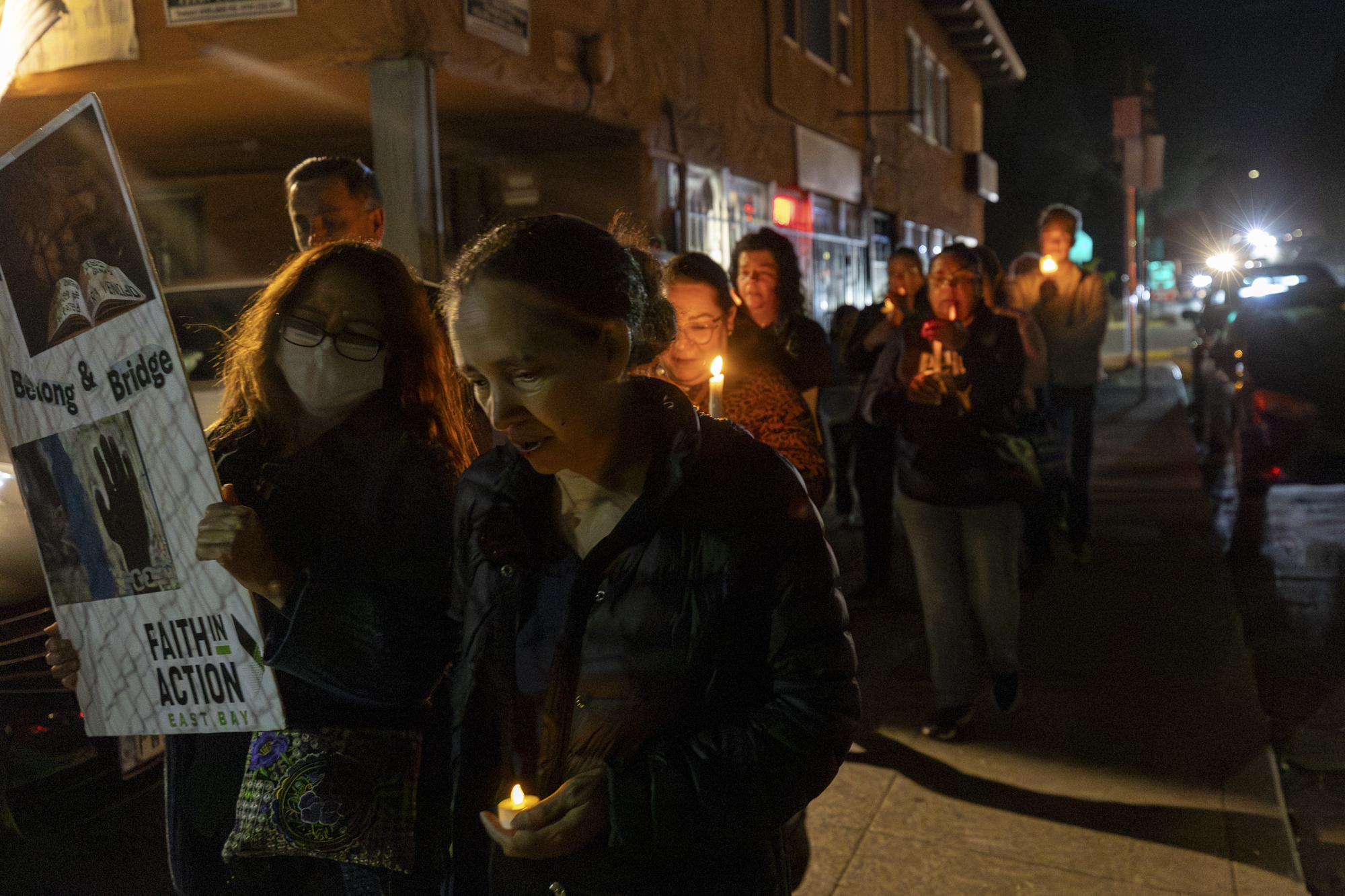
As Enforcement Intensifies, Churches Become Sanctuaries for Immigrants Seeking Peace
‘This Is Our Home’: San Francisco Families in RVs Brace for New City Crackdown
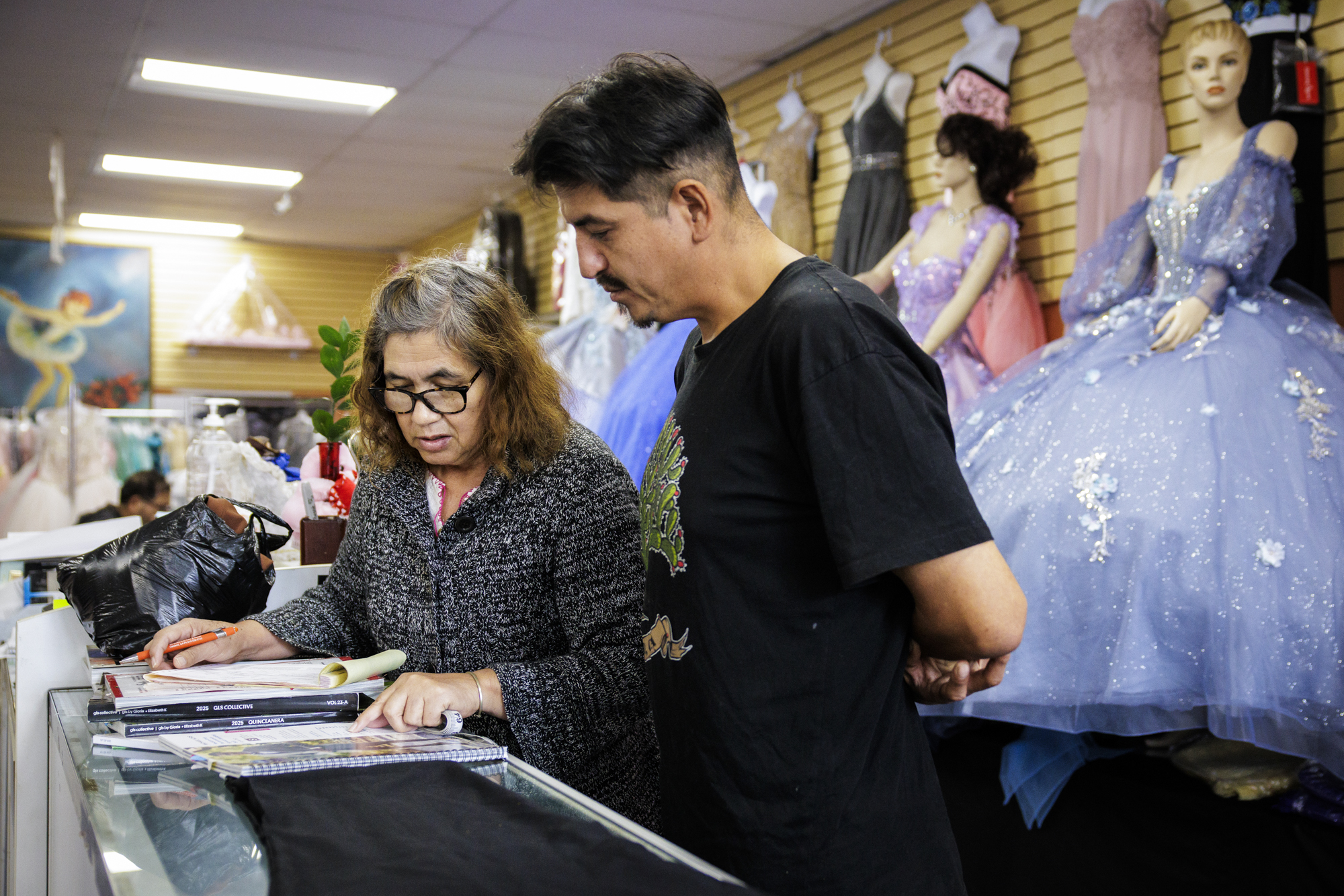
Fear of ICE Raids Drains Sales for Businesses in Oakland’s Fruitvale
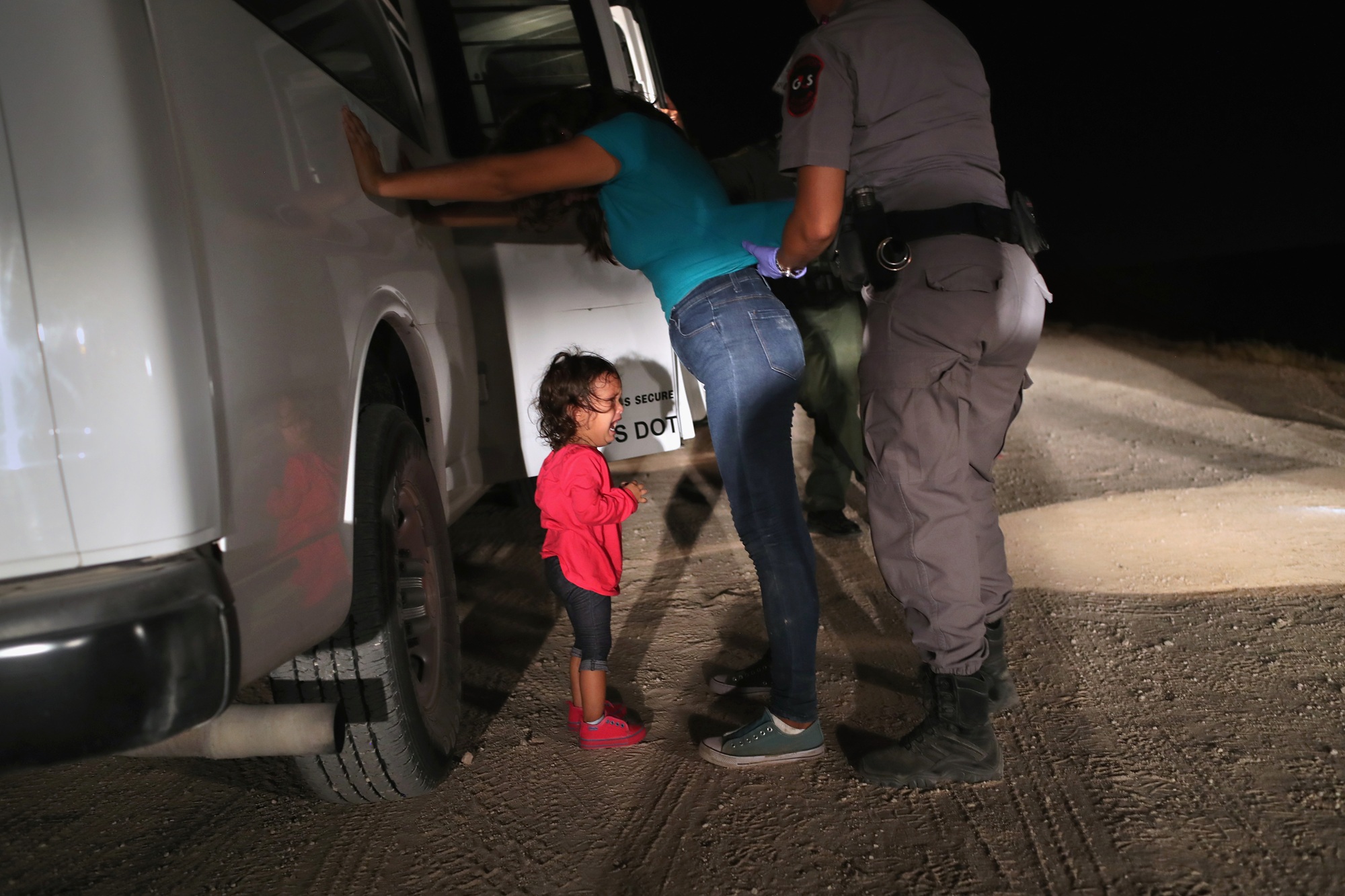
Families Once Torn Apart at Border Face Renewed Threat of Separation
Alameda County Approves $3.5 Million to Scale Up Immigrant Defense Amid ICE Surge
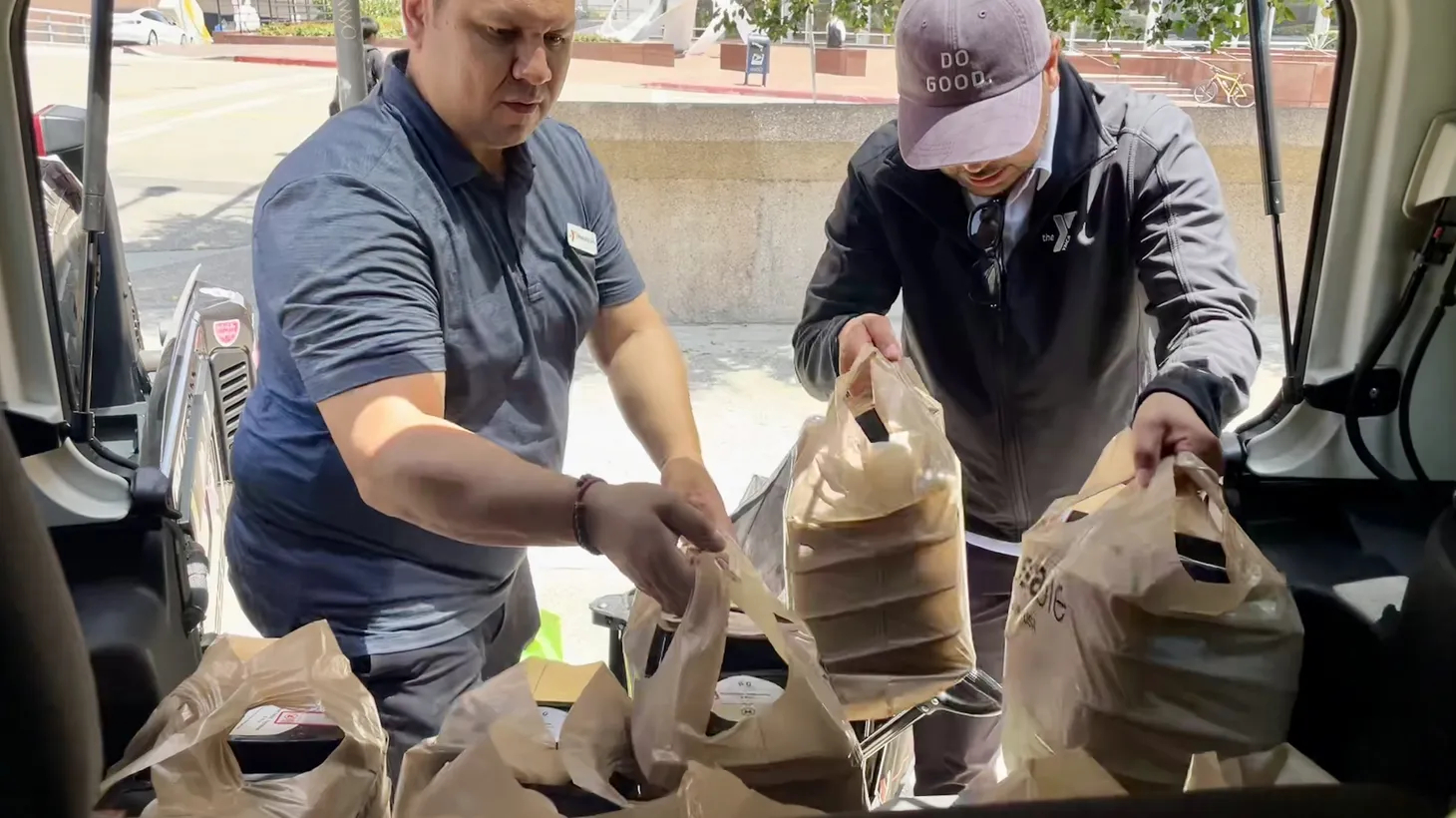
Non-Profit Help Families Afraid To Leave Their Homes With Food Deliveries
Sponsored
Player sponsored by
window.__IS_SSR__=true
window.__INITIAL_STATE__={
"attachmentsReducer": {
"audio_0": {
"type": "attachments",
"id": "audio_0",
"imgSizes": {
"kqedFullSize": {
"file": "https://ww2.kqed.org/news/wp-content/themes/KQED-unified/img/audio_bgs/background0.jpg"
}
}
},
"audio_1": {
"type": "attachments",
"id": "audio_1",
"imgSizes": {
"kqedFullSize": {
"file": "https://ww2.kqed.org/news/wp-content/themes/KQED-unified/img/audio_bgs/background1.jpg"
}
}
},
"audio_2": {
"type": "attachments",
"id": "audio_2",
"imgSizes": {
"kqedFullSize": {
"file": "https://ww2.kqed.org/news/wp-content/themes/KQED-unified/img/audio_bgs/background2.jpg"
}
}
},
"audio_3": {
"type": "attachments",
"id": "audio_3",
"imgSizes": {
"kqedFullSize": {
"file": "https://ww2.kqed.org/news/wp-content/themes/KQED-unified/img/audio_bgs/background3.jpg"
}
}
},
"audio_4": {
"type": "attachments",
"id": "audio_4",
"imgSizes": {
"kqedFullSize": {
"file": "https://ww2.kqed.org/news/wp-content/themes/KQED-unified/img/audio_bgs/background4.jpg"
}
}
},
"placeholder": {
"type": "attachments",
"id": "placeholder",
"imgSizes": {
"thumbnail": {
"file": "https://cdn.kqed.org/wp-content/uploads/2024/12/KQED-Default-Image-816638274-2000x1333-1-160x107.jpg",
"width": 160,
"height": 107,
"mimeType": "image/jpeg"
},
"medium": {
"file": "https://cdn.kqed.org/wp-content/uploads/2024/12/KQED-Default-Image-816638274-2000x1333-1-800x533.jpg",
"width": 800,
"height": 533,
"mimeType": "image/jpeg"
},
"medium_large": {
"file": "https://cdn.kqed.org/wp-content/uploads/2024/12/KQED-Default-Image-816638274-2000x1333-1-768x512.jpg",
"width": 768,
"height": 512,
"mimeType": "image/jpeg"
},
"large": {
"file": "https://cdn.kqed.org/wp-content/uploads/2024/12/KQED-Default-Image-816638274-2000x1333-1-1020x680.jpg",
"width": 1020,
"height": 680,
"mimeType": "image/jpeg"
},
"1536x1536": {
"file": "https://cdn.kqed.org/wp-content/uploads/2024/12/KQED-Default-Image-816638274-2000x1333-1-1536x1024.jpg",
"width": 1536,
"height": 1024,
"mimeType": "image/jpeg"
},
"fd-lrg": {
"file": "https://cdn.kqed.org/wp-content/uploads/2024/12/KQED-Default-Image-816638274-2000x1333-1-1536x1024.jpg",
"width": 1536,
"height": 1024,
"mimeType": "image/jpeg"
},
"fd-med": {
"file": "https://cdn.kqed.org/wp-content/uploads/2024/12/KQED-Default-Image-816638274-2000x1333-1-1020x680.jpg",
"width": 1020,
"height": 680,
"mimeType": "image/jpeg"
},
"fd-sm": {
"file": "https://cdn.kqed.org/wp-content/uploads/2024/12/KQED-Default-Image-816638274-2000x1333-1-800x533.jpg",
"width": 800,
"height": 533,
"mimeType": "image/jpeg"
},
"post-thumbnail": {
"file": "https://cdn.kqed.org/wp-content/uploads/2024/12/KQED-Default-Image-816638274-2000x1333-1-672x372.jpg",
"width": 672,
"height": 372,
"mimeType": "image/jpeg"
},
"twentyfourteen-full-width": {
"file": "https://cdn.kqed.org/wp-content/uploads/2024/12/KQED-Default-Image-816638274-2000x1333-1-1038x576.jpg",
"width": 1038,
"height": 576,
"mimeType": "image/jpeg"
},
"xxsmall": {
"file": "https://cdn.kqed.org/wp-content/uploads/2024/12/KQED-Default-Image-816638274-2000x1333-1-160x107.jpg",
"width": 160,
"height": 107,
"mimeType": "image/jpeg"
},
"xsmall": {
"file": "https://cdn.kqed.org/wp-content/uploads/2024/12/KQED-Default-Image-816638274-2000x1333-1-672x372.jpg",
"width": 672,
"height": 372,
"mimeType": "image/jpeg"
},
"small": {
"file": "https://cdn.kqed.org/wp-content/uploads/2024/12/KQED-Default-Image-816638274-2000x1333-1-672x372.jpg",
"width": 672,
"height": 372,
"mimeType": "image/jpeg"
},
"xlarge": {
"file": "https://cdn.kqed.org/wp-content/uploads/2024/12/KQED-Default-Image-816638274-2000x1333-1-1020x680.jpg",
"width": 1020,
"height": 680,
"mimeType": "image/jpeg"
},
"full-width": {
"file": "https://cdn.kqed.org/wp-content/uploads/2024/12/KQED-Default-Image-816638274-2000x1333-1-1920x1280.jpg",
"width": 1920,
"height": 1280,
"mimeType": "image/jpeg"
},
"guest-author-32": {
"file": "https://cdn.kqed.org/wp-content/uploads/2025/01/KQED-Default-Image-816638274-1333x1333-1-160x160.jpg",
"width": 32,
"height": 32,
"mimeType": "image/jpeg"
},
"guest-author-50": {
"file": "https://cdn.kqed.org/wp-content/uploads/2025/01/KQED-Default-Image-816638274-1333x1333-1-160x160.jpg",
"width": 50,
"height": 50,
"mimeType": "image/jpeg"
},
"guest-author-64": {
"file": "https://cdn.kqed.org/wp-content/uploads/2025/01/KQED-Default-Image-816638274-1333x1333-1-160x160.jpg",
"width": 64,
"height": 64,
"mimeType": "image/jpeg"
},
"guest-author-96": {
"file": "https://cdn.kqed.org/wp-content/uploads/2025/01/KQED-Default-Image-816638274-1333x1333-1-160x160.jpg",
"width": 96,
"height": 96,
"mimeType": "image/jpeg"
},
"guest-author-128": {
"file": "https://cdn.kqed.org/wp-content/uploads/2025/01/KQED-Default-Image-816638274-1333x1333-1-160x160.jpg",
"width": 128,
"height": 128,
"mimeType": "image/jpeg"
},
"detail": {
"file": "https://cdn.kqed.org/wp-content/uploads/2025/01/KQED-Default-Image-816638274-1333x1333-1-160x160.jpg",
"width": 160,
"height": 160,
"mimeType": "image/jpeg"
},
"kqedFullSize": {
"file": "https://cdn.kqed.org/wp-content/uploads/2024/12/KQED-Default-Image-816638274-2000x1333-1.jpg",
"width": 2000,
"height": 1333
}
}
},
"news_12064810": {
"type": "attachments",
"id": "news_12064810",
"meta": {
"index": "attachments_1716263798",
"site": "news",
"id": "12064810",
"found": true
},
"title": "U.S. Customs and Border Protection Agent",
"publishDate": 1763595140,
"status": "inherit",
"parent": 12064801,
"modified": 1763595174,
"caption": "A U.S. Customs and Border Protection logo is seen on a vest worn by an agent on Sept. 26, 2025, in San Diego, California. Oakland school officials and immigration advocates believe a targeted enforcement operation on Wednesday led to a car crash near Hoover Elementary School and the Harriet Tubman preschool.",
"credit": "Kevin Carter/Getty Images",
"altTag": null,
"description": null,
"imgSizes": {
"thumbnail": {
"file": "https://cdn.kqed.org/wp-content/uploads/sites/10/2025/11/ICEGetty-160x107.jpg",
"width": 160,
"height": 107,
"mimeType": "image/jpeg"
},
"1536x1536": {
"file": "https://cdn.kqed.org/wp-content/uploads/sites/10/2025/11/ICEGetty-1536x1024.jpg",
"width": 1536,
"height": 1024,
"mimeType": "image/jpeg"
},
"post-thumbnail": {
"file": "https://cdn.kqed.org/wp-content/uploads/sites/10/2025/11/ICEGetty-672x372.jpg",
"width": 672,
"height": 372,
"mimeType": "image/jpeg"
},
"twentyfourteen-full-width": {
"file": "https://cdn.kqed.org/wp-content/uploads/sites/10/2025/11/ICEGetty-1038x576.jpg",
"width": 1038,
"height": 576,
"mimeType": "image/jpeg"
},
"npr-cds-wide": {
"file": "https://cdn.kqed.org/wp-content/uploads/sites/10/2025/11/ICEGetty-1200x675.jpg",
"width": 1200,
"height": 675,
"mimeType": "image/jpeg"
},
"kqedFullSize": {
"file": "https://cdn.kqed.org/wp-content/uploads/sites/10/2025/11/ICEGetty.jpg",
"width": 2000,
"height": 1333
}
},
"fetchFailed": false,
"isLoading": false
},
"news_12062016": {
"type": "attachments",
"id": "news_12062016",
"meta": {
"index": "attachments_1716263798",
"site": "news",
"id": "12062016",
"found": true
},
"title": "20251028_IMMIGRANT MASS-_HERNANDEZ-17-KQED",
"publishDate": 1761753039,
"status": "inherit",
"parent": 0,
"modified": 1763168870,
"caption": "Faith in Action East Bay members join a candlelight procession outside Saint Jarlath’s Church during a vigil for immigrant families on Oct. 28, 2025, in Oakland.",
"credit": "Gustavo Hernandez/KQED",
"altTag": null,
"description": null,
"imgSizes": {
"thumbnail": {
"file": "https://cdn.kqed.org/wp-content/uploads/sites/10/2025/10/20251028_IMMIGRANT-MASS-_HERNANDEZ-17-KQED-160x107.jpg",
"width": 160,
"height": 107,
"mimeType": "image/jpeg"
},
"1536x1536": {
"file": "https://cdn.kqed.org/wp-content/uploads/sites/10/2025/10/20251028_IMMIGRANT-MASS-_HERNANDEZ-17-KQED-1536x1024.jpg",
"width": 1536,
"height": 1024,
"mimeType": "image/jpeg"
},
"post-thumbnail": {
"file": "https://cdn.kqed.org/wp-content/uploads/sites/10/2025/10/20251028_IMMIGRANT-MASS-_HERNANDEZ-17-KQED-672x372.jpg",
"width": 672,
"height": 372,
"mimeType": "image/jpeg"
},
"twentyfourteen-full-width": {
"file": "https://cdn.kqed.org/wp-content/uploads/sites/10/2025/10/20251028_IMMIGRANT-MASS-_HERNANDEZ-17-KQED-1038x576.jpg",
"width": 1038,
"height": 576,
"mimeType": "image/jpeg"
},
"npr-cds-wide": {
"file": "https://cdn.kqed.org/wp-content/uploads/sites/10/2025/10/20251028_IMMIGRANT-MASS-_HERNANDEZ-17-KQED-1600x900.jpg",
"width": 1600,
"height": 900,
"mimeType": "image/jpeg"
},
"kqedFullSize": {
"file": "https://cdn.kqed.org/wp-content/uploads/sites/10/2025/10/20251028_IMMIGRANT-MASS-_HERNANDEZ-17-KQED.jpg",
"width": 2000,
"height": 1333
}
},
"fetchFailed": false,
"isLoading": false
},
"news_12062249": {
"type": "attachments",
"id": "news_12062249",
"meta": {
"index": "attachments_1716263798",
"site": "news",
"id": "12062249",
"found": true
},
"title": "RV1",
"publishDate": 1761844485,
"status": "inherit",
"parent": 12062202,
"modified": 1761844565,
"caption": "A collage that show the entrances of RVs that have begun to appear more and more on the street near Lake Merced in San Francisco, California, on April 9, 2025. After a uniquely working immigrant RV community was displaced in the nearby street of Winston, some families opted for Lake Merced or the Bayview.",
"credit": "Pablo Unzueta for El Tecolote/CatchLight Local",
"altTag": null,
"description": null,
"imgSizes": {
"thumbnail": {
"file": "https://cdn.kqed.org/wp-content/uploads/sites/10/2025/10/RV1-160x207.jpg",
"width": 160,
"height": 207,
"mimeType": "image/jpeg"
},
"1536x1536": {
"file": "https://cdn.kqed.org/wp-content/uploads/sites/10/2025/10/RV1-1187x1536.jpg",
"width": 1187,
"height": 1536,
"mimeType": "image/jpeg"
},
"2048x2048": {
"file": "https://cdn.kqed.org/wp-content/uploads/sites/10/2025/10/RV1-1583x2048.jpg",
"width": 1583,
"height": 2048,
"mimeType": "image/jpeg"
},
"post-thumbnail": {
"file": "https://cdn.kqed.org/wp-content/uploads/sites/10/2025/10/RV1-672x372.jpg",
"width": 672,
"height": 372,
"mimeType": "image/jpeg"
},
"twentyfourteen-full-width": {
"file": "https://cdn.kqed.org/wp-content/uploads/sites/10/2025/10/RV1-1038x576.jpg",
"width": 1038,
"height": 576,
"mimeType": "image/jpeg"
},
"npr-cds-wide": {
"file": "https://cdn.kqed.org/wp-content/uploads/sites/10/2025/10/RV1-1600x900.jpg",
"width": 1600,
"height": 900,
"mimeType": "image/jpeg"
},
"kqedFullSize": {
"file": "https://cdn.kqed.org/wp-content/uploads/sites/10/2025/10/RV1-scaled.jpg",
"width": 1978,
"height": 2560
}
},
"fetchFailed": false,
"isLoading": false
},
"news_12061127": {
"type": "attachments",
"id": "news_12061127",
"meta": {
"index": "attachments_1716263798",
"site": "news",
"id": "12061127",
"found": true
},
"title": "251022-FRUITVALE MERCHANTS-MD-02-KQED",
"publishDate": 1761174404,
"status": "inherit",
"parent": 0,
"modified": 1761174819,
"caption": "Enriqueta Soriano and her son Enrique work inside her store El Palacio de las Novias y Quinceañeras in the Fruitvale neighborhood in Oakland on Oct. 22, 2025.",
"credit": "Martin do Nascimento/KQED",
"altTag": null,
"description": null,
"imgSizes": {
"thumbnail": {
"file": "https://cdn.kqed.org/wp-content/uploads/sites/10/2025/10/251022-FRUITVALE-MERCHANTS-MD-02-KQED-160x107.jpg",
"width": 160,
"height": 107,
"mimeType": "image/jpeg"
},
"1536x1536": {
"file": "https://cdn.kqed.org/wp-content/uploads/sites/10/2025/10/251022-FRUITVALE-MERCHANTS-MD-02-KQED-1536x1025.jpg",
"width": 1536,
"height": 1025,
"mimeType": "image/jpeg"
},
"post-thumbnail": {
"file": "https://cdn.kqed.org/wp-content/uploads/sites/10/2025/10/251022-FRUITVALE-MERCHANTS-MD-02-KQED-672x372.jpg",
"width": 672,
"height": 372,
"mimeType": "image/jpeg"
},
"twentyfourteen-full-width": {
"file": "https://cdn.kqed.org/wp-content/uploads/sites/10/2025/10/251022-FRUITVALE-MERCHANTS-MD-02-KQED-1038x576.jpg",
"width": 1038,
"height": 576,
"mimeType": "image/jpeg"
},
"npr-cds-wide": {
"file": "https://cdn.kqed.org/wp-content/uploads/sites/10/2025/10/251022-FRUITVALE-MERCHANTS-MD-02-KQED-1600x900.jpg",
"width": 1600,
"height": 900,
"mimeType": "image/jpeg"
},
"kqedFullSize": {
"file": "https://cdn.kqed.org/wp-content/uploads/sites/10/2025/10/251022-FRUITVALE-MERCHANTS-MD-02-KQED.jpg",
"width": 2000,
"height": 1334
}
},
"fetchFailed": false,
"isLoading": false
},
"news_12060142": {
"type": "attachments",
"id": "news_12060142",
"meta": {
"index": "attachments_1716263798",
"site": "news",
"id": "12060142",
"found": true
},
"title": "Border Patrol Agents Detain Migrants Near US-Mexico Border",
"publishDate": 1760641072,
"status": "inherit",
"parent": 12060135,
"modified": 1760643684,
"caption": "A 2-year-old Honduran asylum seeker cries as her mother is searched and detained near the U.S.-Mexico border on June 12, 2018, in McAllen, Texas. ",
"credit": "John Moore/Getty Images",
"altTag": null,
"description": null,
"imgSizes": {
"thumbnail": {
"file": "https://cdn.kqed.org/wp-content/uploads/sites/10/2025/10/FamilySeparationGetty1-160x107.jpg",
"width": 160,
"height": 107,
"mimeType": "image/jpeg"
},
"1536x1536": {
"file": "https://cdn.kqed.org/wp-content/uploads/sites/10/2025/10/FamilySeparationGetty1-1536x1024.jpg",
"width": 1536,
"height": 1024,
"mimeType": "image/jpeg"
},
"post-thumbnail": {
"file": "https://cdn.kqed.org/wp-content/uploads/sites/10/2025/10/FamilySeparationGetty1-672x372.jpg",
"width": 672,
"height": 372,
"mimeType": "image/jpeg"
},
"twentyfourteen-full-width": {
"file": "https://cdn.kqed.org/wp-content/uploads/sites/10/2025/10/FamilySeparationGetty1-1038x576.jpg",
"width": 1038,
"height": 576,
"mimeType": "image/jpeg"
},
"kqedFullSize": {
"file": "https://cdn.kqed.org/wp-content/uploads/sites/10/2025/10/FamilySeparationGetty1.jpg",
"width": 2000,
"height": 1333
}
},
"fetchFailed": false,
"isLoading": false
},
"news_12055063": {
"type": "attachments",
"id": "news_12055063",
"meta": {
"index": "attachments_1716263798",
"site": "news",
"id": "12055063",
"found": true
},
"title": "250903-ICETRAINING_01023_TV-KQED",
"publishDate": 1757336633,
"status": "inherit",
"parent": 0,
"modified": 1757463002,
"caption": "Signs identify Taqueria La Gran Chiquita as a safe space for those at risk of deportation in Oakland on Sept. 3, 2025. Members of the Community of Fruitvale and East Bay Sanctuary Covenant gather to prepare for how to fight back against ICE.",
"credit": "Tâm Vũ/KQED",
"altTag": null,
"description": null,
"imgSizes": {
"thumbnail": {
"file": "https://cdn.kqed.org/wp-content/uploads/sites/10/2025/09/250903-ICETRAINING_01023_TV-KQED-160x107.jpg",
"width": 160,
"height": 107,
"mimeType": "image/jpeg"
},
"1536x1536": {
"file": "https://cdn.kqed.org/wp-content/uploads/sites/10/2025/09/250903-ICETRAINING_01023_TV-KQED-1536x1024.jpg",
"width": 1536,
"height": 1024,
"mimeType": "image/jpeg"
},
"post-thumbnail": {
"file": "https://cdn.kqed.org/wp-content/uploads/sites/10/2025/09/250903-ICETRAINING_01023_TV-KQED-672x372.jpg",
"width": 672,
"height": 372,
"mimeType": "image/jpeg"
},
"twentyfourteen-full-width": {
"file": "https://cdn.kqed.org/wp-content/uploads/sites/10/2025/09/250903-ICETRAINING_01023_TV-KQED-1038x576.jpg",
"width": 1038,
"height": 576,
"mimeType": "image/jpeg"
},
"kqedFullSize": {
"file": "https://cdn.kqed.org/wp-content/uploads/sites/10/2025/09/250903-ICETRAINING_01023_TV-KQED.jpg",
"width": 2000,
"height": 1333
}
},
"fetchFailed": false,
"isLoading": false
},
"news_12044879": {
"type": "attachments",
"id": "news_12044879",
"meta": {
"index": "attachments_1716263798",
"site": "news",
"id": "12044879",
"found": true
},
"title": "food-delivery-6852bf1342923",
"publishDate": 1750253374,
"status": "inherit",
"parent": 12044876,
"modified": 1750253429,
"caption": "Jimmy Ozaeta (left) and Mario Valenzuela (right) load bags of donated groceries to deliver to families too frightened by ICE activity to leave home to work or shop.",
"credit": "Megan Jamerson/KCRW",
"altTag": null,
"description": null,
"imgSizes": {
"thumbnail": {
"file": "https://cdn.kqed.org/wp-content/uploads/sites/10/2025/06/food-delivery-6852bf1342923-160x90.jpg",
"width": 160,
"height": 90,
"mimeType": "image/jpeg"
},
"post-thumbnail": {
"file": "https://cdn.kqed.org/wp-content/uploads/sites/10/2025/06/food-delivery-6852bf1342923-672x372.jpg",
"width": 672,
"height": 372,
"mimeType": "image/jpeg"
},
"twentyfourteen-full-width": {
"file": "https://cdn.kqed.org/wp-content/uploads/sites/10/2025/06/food-delivery-6852bf1342923-1038x576.jpg",
"width": 1038,
"height": 576,
"mimeType": "image/jpeg"
},
"kqedFullSize": {
"file": "https://cdn.kqed.org/wp-content/uploads/sites/10/2025/06/food-delivery-6852bf1342923.jpg",
"width": 1460,
"height": 820
}
},
"fetchFailed": false,
"isLoading": false
}
},
"audioPlayerReducer": {
"postId": "stream_live",
"isPaused": true,
"isPlaying": false,
"pfsActive": false,
"pledgeModalIsOpen": true,
"playerDrawerIsOpen": false
},
"authorsReducer": {
"byline_news_12062202": {
"type": "authors",
"id": "byline_news_12062202",
"meta": {
"override": true
},
"slug": "byline_news_12062202",
"name": "Mariana Duran, Pablo Unzueta, Yesica Prado, El Tecolote",
"isLoading": false
},
"byline_news_12060135": {
"type": "authors",
"id": "byline_news_12060135",
"meta": {
"override": true
},
"slug": "byline_news_12060135",
"name": "Mark Betancourt, The California Newsroom",
"isLoading": false
},
"tychehendricks": {
"type": "authors",
"id": "259",
"meta": {
"index": "authors_1716337520",
"id": "259",
"found": true
},
"name": "Tyche Hendricks",
"firstName": "Tyche",
"lastName": "Hendricks",
"slug": "tychehendricks",
"email": "thendricks@kqed.org",
"display_author_email": true,
"staff_mastheads": [
"news"
],
"title": "KQED Senior Editor, Immigration",
"bio": "\u003cspan style=\"font-weight: 400;\">Tyche Hendricks is KQED’s senior editor for immigration, leading coverage of the policy and politics that affect California’s immigrant communities. Her work for KQED’s radio and online audiences is also carried on NPR and other national outlets. She has been recognized with awards from the Radio and Television News Directors Association, the Society for Professional Journalists; the Education Writers Association; the Best of the West and the National Federation of Community Broadcasters. Before joining KQED in 2010, Tyche spent more than a dozen years as a newspaper reporter, notably at the \u003c/span>\u003ci>\u003cspan style=\"font-weight: 400;\">San Francisco Chronicle\u003c/span>\u003c/i>\u003cspan style=\"font-weight: 400;\">. At different times she has covered criminal justice, government and politics and urban planning. Tyche has taught in the MFA Creative Writing program at the University of San Francisco and at UC Berkeley’s Graduate School of Journalism, where she was co-director of a national immigration symposium for professional journalists. She is the author of \u003c/span>\u003ci>\u003cspan style=\"font-weight: 400;\">The Wind Doesn't Need a Passport: Stories from the U.S.-Mexico Borderlands\u003c/span>\u003c/i>\u003cspan style=\"font-weight: 400;\"> (University of California Press). \u003c/span>",
"avatar": "https://secure.gravatar.com/avatar/b8ee458e2731c2d43df86882ce17267e?s=600&d=blank&r=g",
"twitter": "tychehendricks",
"facebook": null,
"instagram": null,
"linkedin": null,
"sites": [
{
"site": "news",
"roles": [
"editor"
]
},
{
"site": "stateofhealth",
"roles": [
"editor"
]
}
],
"headData": {
"title": "Tyche Hendricks | KQED",
"description": "KQED Senior Editor, Immigration",
"ogImgSrc": "https://secure.gravatar.com/avatar/b8ee458e2731c2d43df86882ce17267e?s=600&d=blank&r=g",
"twImgSrc": "https://secure.gravatar.com/avatar/b8ee458e2731c2d43df86882ce17267e?s=600&d=blank&r=g"
},
"isLoading": false,
"link": "/author/tychehendricks"
},
"fjhabvala": {
"type": "authors",
"id": "8659",
"meta": {
"index": "authors_1716337520",
"id": "8659",
"found": true
},
"name": "Farida Jhabvala Romero",
"firstName": "Farida",
"lastName": "Jhabvala Romero",
"slug": "fjhabvala",
"email": "fjhabvala@kqed.org",
"display_author_email": true,
"staff_mastheads": [
"news"
],
"title": "KQED Contributor",
"bio": "\u003cspan style=\"font-weight: 400;\">Farida Jhabvala Romero is a Labor Correspondent for KQED. She previously covered immigration. Farida was \u003ca href=\"https://www.ccnma.org/2022-most-influential-latina-journalists\">named\u003c/a> one of the 10 Most Influential Latina Journalists in California in 2022 by the California Chicano News Media Association. Her work has won awards from the Society of Professional Journalists (Northern California), as well as a national and regional Edward M. Murrow Award for the collaborative reporting projects “Dangerous Air” and “Graying California.” \u003c/span>\u003cspan style=\"font-weight: 400;\">Before joining KQED, Farida worked as a producer at Radio Bilingüe, a national public radio network. Farida earned her master’s degree in journalism from Stanford University.\u003c/span>",
"avatar": "https://secure.gravatar.com/avatar/c3ab27c5554b67b478f80971e515aa02?s=600&d=blank&r=g",
"twitter": "FaridaJhabvala",
"facebook": null,
"instagram": null,
"linkedin": "https://www.linkedin.com/in/faridajhabvala/",
"sites": [
{
"site": "news",
"roles": [
"editor"
]
},
{
"site": "stateofhealth",
"roles": [
"author"
]
}
],
"headData": {
"title": "Farida Jhabvala Romero | KQED",
"description": "KQED Contributor",
"ogImgSrc": "https://secure.gravatar.com/avatar/c3ab27c5554b67b478f80971e515aa02?s=600&d=blank&r=g",
"twImgSrc": "https://secure.gravatar.com/avatar/c3ab27c5554b67b478f80971e515aa02?s=600&d=blank&r=g"
},
"isLoading": false,
"link": "/author/fjhabvala"
},
"kmizuguchi": {
"type": "authors",
"id": "11739",
"meta": {
"index": "authors_1716337520",
"id": "11739",
"found": true
},
"name": "Keith Mizuguchi",
"firstName": "Keith",
"lastName": "Mizuguchi",
"slug": "kmizuguchi",
"email": "kmizuguchi@kqed.org",
"display_author_email": false,
"staff_mastheads": [],
"title": "KQED Contributor",
"bio": null,
"avatar": "https://secure.gravatar.com/avatar/ce1182f9924192ae5ea66d39a75cd7d1?s=600&d=blank&r=g",
"twitter": null,
"facebook": null,
"instagram": null,
"linkedin": null,
"sites": [
{
"site": "news",
"roles": [
"editor"
]
},
{
"site": "science",
"roles": [
"editor"
]
}
],
"headData": {
"title": "Keith Mizuguchi | KQED",
"description": "KQED Contributor",
"ogImgSrc": "https://secure.gravatar.com/avatar/ce1182f9924192ae5ea66d39a75cd7d1?s=600&d=blank&r=g",
"twImgSrc": "https://secure.gravatar.com/avatar/ce1182f9924192ae5ea66d39a75cd7d1?s=600&d=blank&r=g"
},
"isLoading": false,
"link": "/author/kmizuguchi"
},
"kdebenedetti": {
"type": "authors",
"id": "11913",
"meta": {
"index": "authors_1716337520",
"id": "11913",
"found": true
},
"name": "Katie DeBenedetti",
"firstName": "Katie",
"lastName": "DeBenedetti",
"slug": "kdebenedetti",
"email": "kdebenedetti@kqed.org",
"display_author_email": false,
"staff_mastheads": [
"news",
"science"
],
"title": "KQED Contributor",
"bio": "Katie DeBenedetti is a digital reporter covering daily news for the Express Desk. Prior to joining KQED as a culture reporting intern in January 2024, she covered education and city government for the Napa Valley Register.",
"avatar": "https://secure.gravatar.com/avatar/6e31073cb8f7e4214ab03f42771d0f45?s=600&d=blank&r=g",
"twitter": null,
"facebook": null,
"instagram": null,
"linkedin": null,
"sites": [
{
"site": "news",
"roles": [
"author"
]
},
{
"site": "science",
"roles": [
"author"
]
},
{
"site": "liveblog",
"roles": [
"author"
]
}
],
"headData": {
"title": "Katie DeBenedetti | KQED",
"description": "KQED Contributor",
"ogImgSrc": "https://secure.gravatar.com/avatar/6e31073cb8f7e4214ab03f42771d0f45?s=600&d=blank&r=g",
"twImgSrc": "https://secure.gravatar.com/avatar/6e31073cb8f7e4214ab03f42771d0f45?s=600&d=blank&r=g"
},
"isLoading": false,
"link": "/author/kdebenedetti"
},
"aaliahmad": {
"type": "authors",
"id": "11986",
"meta": {
"index": "authors_1716337520",
"id": "11986",
"found": true
},
"name": "Ayah Ali-Ahmad",
"firstName": "Ayah",
"lastName": "Ali-Ahmad",
"slug": "aaliahmad",
"email": "aaliahmad@KQED.org",
"display_author_email": false,
"staff_mastheads": [],
"title": "KQED Contributor",
"bio": null,
"avatar": "https://secure.gravatar.com/avatar/7f340465c69a2c816f6c07000137a3ee?s=600&d=blank&r=g",
"twitter": null,
"facebook": null,
"instagram": null,
"linkedin": null,
"sites": [
{
"site": "news",
"roles": [
"author"
]
}
],
"headData": {
"title": "Ayah Ali-Ahmad | KQED",
"description": "KQED Contributor",
"ogImgSrc": "https://secure.gravatar.com/avatar/7f340465c69a2c816f6c07000137a3ee?s=600&d=blank&r=g",
"twImgSrc": "https://secure.gravatar.com/avatar/7f340465c69a2c816f6c07000137a3ee?s=600&d=blank&r=g"
},
"isLoading": false,
"link": "/author/aaliahmad"
}
},
"breakingNewsReducer": {},
"pagesReducer": {},
"postsReducer": {
"stream_live": {
"type": "live",
"id": "stream_live",
"audioUrl": "https://streams.kqed.org/kqedradio",
"title": "Live Stream",
"excerpt": "Live Stream information currently unavailable.",
"link": "/radio",
"featImg": "",
"label": {
"name": "KQED Live",
"link": "/"
}
},
"stream_kqedNewscast": {
"type": "posts",
"id": "stream_kqedNewscast",
"audioUrl": "https://www.kqed.org/.stream/anon/radio/RDnews/newscast.mp3?_=1",
"title": "KQED Newscast",
"featImg": "",
"label": {
"name": "88.5 FM",
"link": "/"
}
},
"news_12064801": {
"type": "posts",
"id": "news_12064801",
"meta": {
"index": "posts_1716263798",
"site": "news",
"id": "12064801",
"score": null,
"sort": [
1763598504000
]
},
"guestAuthors": [],
"slug": "heres-what-we-know-about-ice-activity-near-west-oakland-schools",
"title": "Here’s What We Know About ICE Activity Near West Oakland Schools",
"publishDate": 1763598504,
"format": "standard",
"headTitle": "Here’s What We Know About ICE Activity Near West Oakland Schools | KQED",
"labelTerm": {
"site": "news"
},
"content": "\u003cp>Two schools in \u003ca href=\"https://www.kqed.org/news/tag/west-oakland\">West Oakland\u003c/a> and concerned neighbors were on alert Wednesday after an immigration enforcement operation appeared to have led to a car crash near the campuses.\u003c/p>\n\u003cp>Though the schools followed the district’s “\u003ca href=\"https://docs.google.com/document/d/1uvwTgGIS_2SFTspbEnU7oPMTggaP8QOS6ieKHCDEh2c/edit?tab=t.0\">secure protocol\u003c/a>” for Immigration and Customs Enforcement activity, the Oakland Unified School District and Alameda County’s rapid response network said the sites were not targeted by ICE and remained safe.\u003c/p>\n\u003cp>Here’s what we know, and don’t know, about the incident.\u003c/p>\n\u003cp>[ad fullwidth]\u003c/p>\n\u003ch2>Enforcement activity in West Oakland\u003c/h2>\n\u003cp>According to the Alameda County Immigration Legal Education Partnership, federal immigration officers were conducting targeted enforcement activity in the area on Wednesday morning when a vehicle crashed.\u003c/p>\n\u003cp>The crash happened just before 10 a.m. on the 800 block of 31st Street as “an outside law enforcement agency was conducting an investigation within the City of Oakland,” according to the Oakland Police Department, which is investigating the collision.\u003c/p>\n\u003cfigure id=\"attachment_12043210\" class=\"wp-caption aligncenter\" style=\"max-width: 2000px\">\u003cimg loading=\"lazy\" decoding=\"async\" class=\"size-full wp-image-12043210\" src=\"https://cdn.kqed.org/wp-content/uploads/sites/10/2025/06/250428-OUSD-OFFICE-FILE-MD-04_qed.jpg\" alt=\"\" width=\"2000\" height=\"1333\" srcset=\"https://cdn.kqed.org/wp-content/uploads/sites/10/2025/06/250428-OUSD-OFFICE-FILE-MD-04_qed.jpg 2000w, https://cdn.kqed.org/wp-content/uploads/sites/10/2025/06/250428-OUSD-OFFICE-FILE-MD-04_qed-160x107.jpg 160w, https://cdn.kqed.org/wp-content/uploads/sites/10/2025/06/250428-OUSD-OFFICE-FILE-MD-04_qed-1536x1024.jpg 1536w\" sizes=\"auto, (max-width: 2000px) 100vw, 2000px\">\u003cfigcaption class=\"wp-caption-text\">The Oakland Unified School District Offices in Oakland on April 28, 2025. \u003ccite>(Martin do Nascimento/KQED)\u003c/cite>\u003c/figcaption>\u003c/figure>\n\u003cp>The outside agency — presumed to be ICE — was trying to contact a vehicle involved in its case, Oakland police said. That vehicle collided with another vehicle, which was not involved in the operation.\u003c/p>\n\u003cp>Councilmember Carroll Fife \u003ca href=\"https://www.instagram.com/p/DRQJ6nGEk8E/?hl=en\">said in a video on social media\u003c/a> that the crash happened as a parent dropping their child off at school was “chased by masked men” believed to be ICE officers.\u003c/p>\n\u003cp>Monique Berlanga, who heads Centro Legal de la Raza in Oakland, said the collision scared people in the neighborhood, where there are multiple OUSD campuses.\u003c/p>\n\u003ch2>Schools respond\u003c/h2>\n\u003cp>The district said in a message to parents on Wednesday that it placed Hoover Elementary School and Harriet Tubman Child Development Center under its secure school protocol after hearing reports of ICE activity in their vicinity.\u003c/p>\n\u003cp>“Your child is safe in school,” the message continued, adding that other campuses were following standard protocol for ICE activity.\u003c/p>\n\u003cfigure id=\"attachment_12013785\" class=\"wp-caption aligncenter\" style=\"max-width: 2000px\">\u003cimg loading=\"lazy\" decoding=\"async\" class=\"wp-image-12013785 size-full\" src=\"https://cdn.kqed.org/wp-content/uploads/sites/10/2024/11/030_KQEDScience_IntCommunitySchoolOakland_10202022_qed.jpg\" alt=\"\" width=\"2000\" height=\"1333\" srcset=\"https://cdn.kqed.org/wp-content/uploads/sites/10/2024/11/030_KQEDScience_IntCommunitySchoolOakland_10202022_qed.jpg 2000w, https://cdn.kqed.org/wp-content/uploads/sites/10/2024/11/030_KQEDScience_IntCommunitySchoolOakland_10202022_qed-800x533.jpg 800w, https://cdn.kqed.org/wp-content/uploads/sites/10/2024/11/030_KQEDScience_IntCommunitySchoolOakland_10202022_qed-1020x680.jpg 1020w, https://cdn.kqed.org/wp-content/uploads/sites/10/2024/11/030_KQEDScience_IntCommunitySchoolOakland_10202022_qed-160x107.jpg 160w, https://cdn.kqed.org/wp-content/uploads/sites/10/2024/11/030_KQEDScience_IntCommunitySchoolOakland_10202022_qed-1536x1024.jpg 1536w, https://cdn.kqed.org/wp-content/uploads/sites/10/2024/11/030_KQEDScience_IntCommunitySchoolOakland_10202022_qed-1920x1280.jpg 1920w\" sizes=\"auto, (max-width: 2000px) 100vw, 2000px\">\u003cfigcaption class=\"wp-caption-text\">Students at recess at an Oakland school on Oct. 20, 2022. \u003ccite>(Beth LaBerge/KQED)\u003c/cite>\u003c/figcaption>\u003c/figure>\n\u003cp>Berlanga said the Alameda County Immigration Legal Education Partnership got reports that staff at Hoover questioned the officers and asked them to identify themselves, but that they had not been able to confirm what agency they were with. She said the network had no reason to believe that either school was the target of enforcement activity.\u003c/p>\n\u003cp>“It appears likely that this was targeted ICE enforcement nearby the school, which may have been related to a collision nearby,” she said.\u003c/p>\n\u003cp>Still, the incident rattled community members and sparked a protest of about 50 people, including Oakland teachers and teachers union staff, outside Hoover in the late morning.\u003c/p>\n\u003cp>They told KQED they were gathered to support families and school staff if there was increased ICE presence, especially around pickup time.\u003c/p>\n\u003cp>Olivia Udovic, a kindergarten teacher and Oakland Education Association officer, said principals were driving some students home from school.\u003c/p>\n\u003ch2>What we don’t know\u003c/h2>\n\u003cp>Oakland police said their investigation into the crash is ongoing, and they did not specify which outside law enforcement agency was involved.[aside postID=news_12063793 hero='https://cdn.kqed.org/wp-content/uploads/sites/10/2025/10/20251028_IMMIGRANT-MASS-_HERNANDEZ-17-KQED.jpg']OUSD said it had heard reports of ICE presence in other Oakland neighborhoods, including between 71st and 81st avenues and International Boulevard, but those had not been confirmed. ICE did not immediately respond to a request for comment.\u003c/p>\n\u003cp>Fife said that after the collision, neighbors surrounded the immigration officials’ vehicle and prevented them from making any arrest, though that has not been confirmed. Berlanga said ACILEP was still determining whether the morning’s enforcement activity had led to any arrests.\u003c/p>\n\u003cp>Mayor Barbara Lee said in a statement that her office was in communication with the school district and police about the reports.\u003c/p>\n\u003cp>“I want to reiterate to our immigrant community: Oakland stands firmly with you — this is who we are and what we believe. You are not alone, and we will not be intimidated by federal operations designed to create fear and division,” she wrote.\u003c/p>\n\u003cp>\u003cem>KQED’s \u003c/em>\u003ca href=\"https://www.kqed.org/author/jlara\">\u003cem>Juan Carlos Lara\u003c/em>\u003c/a>\u003cem> contributed to this report.\u003c/em>\u003c/p>\n\u003cp>\u003c/p>\n",
"blocks": [],
"excerpt": "Oakland school officials and immigration advocates believe a targeted enforcement operation led to a car crash near Hoover Elementary School and the Harriet Tubman preschool.",
"status": "publish",
"parent": 0,
"modified": 1763600480,
"stats": {
"hasAudio": false,
"hasVideo": false,
"hasChartOrMap": false,
"iframeSrcs": [],
"hasGoogleForm": false,
"hasGallery": false,
"hasHearkenModule": false,
"hasPolis": false,
"paragraphCount": 22,
"wordCount": 704
},
"headData": {
"title": "Here’s What We Know About ICE Activity Near West Oakland Schools | KQED",
"description": "Oakland school officials and immigration advocates believe a targeted enforcement operation led to a car crash near Hoover Elementary School and the Harriet Tubman preschool.",
"ogTitle": "",
"ogDescription": "",
"ogImgId": "",
"twTitle": "",
"twDescription": "",
"twImgId": "",
"schema": {
"@context": "https://schema.org",
"@type": "NewsArticle",
"headline": "Here’s What We Know About ICE Activity Near West Oakland Schools",
"datePublished": "2025-11-19T16:28:24-08:00",
"dateModified": "2025-11-19T17:01:20-08:00",
"image": "https://cdn.kqed.org/wp-content/uploads/2020/02/KQED-OG-Image@1x.png",
"isAccessibleForFree": "True",
"publisher": {
"@type": "NewsMediaOrganization",
"@id": "https://www.kqed.org/#organization",
"name": "KQED",
"logo": "https://cdn.kqed.org/wp-content/uploads/2020/02/KQED-OG-Image@1x.png",
"url": "https://www.kqed.org",
"sameAs": [
"https://www.facebook.com/KQED",
"https://twitter.com/KQED",
"https://www.instagram.com/kqed/",
"https://www.tiktok.com/@kqedofficial",
"https://www.linkedin.com/company/kqed",
"https://www.youtube.com/channel/UCeC0IOo7i1P_61zVUWbJ4nw"
]
}
}
},
"primaryCategory": {
"termId": 1169,
"slug": "immigration",
"name": "Immigration"
},
"sticky": false,
"nprStoryId": "kqed-12064801",
"templateType": "standard",
"featuredImageType": "standard",
"excludeFromSiteSearch": "Include",
"articleAge": "0",
"path": "/news/12064801/heres-what-we-know-about-ice-activity-near-west-oakland-schools",
"audioTrackLength": null,
"parsedContent": [
{
"type": "contentString",
"content": "\u003cdiv class=\"post-body\">\u003cp>\u003cp>Two schools in \u003ca href=\"https://www.kqed.org/news/tag/west-oakland\">West Oakland\u003c/a> and concerned neighbors were on alert Wednesday after an immigration enforcement operation appeared to have led to a car crash near the campuses.\u003c/p>\n\u003cp>Though the schools followed the district’s “\u003ca href=\"https://docs.google.com/document/d/1uvwTgGIS_2SFTspbEnU7oPMTggaP8QOS6ieKHCDEh2c/edit?tab=t.0\">secure protocol\u003c/a>” for Immigration and Customs Enforcement activity, the Oakland Unified School District and Alameda County’s rapid response network said the sites were not targeted by ICE and remained safe.\u003c/p>\n\u003cp>Here’s what we know, and don’t know, about the incident.\u003c/p>\n\u003cp>\u003c/p>\u003c/div>",
"attributes": {
"named": {},
"numeric": []
}
},
{
"type": "component",
"content": "",
"name": "ad",
"attributes": {
"named": {
"label": "fullwidth"
},
"numeric": [
"fullwidth"
]
}
},
{
"type": "contentString",
"content": "\u003cdiv class=\"post-body\">\u003cp>\u003c/p>\n\u003ch2>Enforcement activity in West Oakland\u003c/h2>\n\u003cp>According to the Alameda County Immigration Legal Education Partnership, federal immigration officers were conducting targeted enforcement activity in the area on Wednesday morning when a vehicle crashed.\u003c/p>\n\u003cp>The crash happened just before 10 a.m. on the 800 block of 31st Street as “an outside law enforcement agency was conducting an investigation within the City of Oakland,” according to the Oakland Police Department, which is investigating the collision.\u003c/p>\n\u003cfigure id=\"attachment_12043210\" class=\"wp-caption aligncenter\" style=\"max-width: 2000px\">\u003cimg loading=\"lazy\" decoding=\"async\" class=\"size-full wp-image-12043210\" src=\"https://cdn.kqed.org/wp-content/uploads/sites/10/2025/06/250428-OUSD-OFFICE-FILE-MD-04_qed.jpg\" alt=\"\" width=\"2000\" height=\"1333\" srcset=\"https://cdn.kqed.org/wp-content/uploads/sites/10/2025/06/250428-OUSD-OFFICE-FILE-MD-04_qed.jpg 2000w, https://cdn.kqed.org/wp-content/uploads/sites/10/2025/06/250428-OUSD-OFFICE-FILE-MD-04_qed-160x107.jpg 160w, https://cdn.kqed.org/wp-content/uploads/sites/10/2025/06/250428-OUSD-OFFICE-FILE-MD-04_qed-1536x1024.jpg 1536w\" sizes=\"auto, (max-width: 2000px) 100vw, 2000px\">\u003cfigcaption class=\"wp-caption-text\">The Oakland Unified School District Offices in Oakland on April 28, 2025. \u003ccite>(Martin do Nascimento/KQED)\u003c/cite>\u003c/figcaption>\u003c/figure>\n\u003cp>The outside agency — presumed to be ICE — was trying to contact a vehicle involved in its case, Oakland police said. That vehicle collided with another vehicle, which was not involved in the operation.\u003c/p>\n\u003cp>Councilmember Carroll Fife \u003ca href=\"https://www.instagram.com/p/DRQJ6nGEk8E/?hl=en\">said in a video on social media\u003c/a> that the crash happened as a parent dropping their child off at school was “chased by masked men” believed to be ICE officers.\u003c/p>\n\u003cp>Monique Berlanga, who heads Centro Legal de la Raza in Oakland, said the collision scared people in the neighborhood, where there are multiple OUSD campuses.\u003c/p>\n\u003ch2>Schools respond\u003c/h2>\n\u003cp>The district said in a message to parents on Wednesday that it placed Hoover Elementary School and Harriet Tubman Child Development Center under its secure school protocol after hearing reports of ICE activity in their vicinity.\u003c/p>\n\u003cp>“Your child is safe in school,” the message continued, adding that other campuses were following standard protocol for ICE activity.\u003c/p>\n\u003cfigure id=\"attachment_12013785\" class=\"wp-caption aligncenter\" style=\"max-width: 2000px\">\u003cimg loading=\"lazy\" decoding=\"async\" class=\"wp-image-12013785 size-full\" src=\"https://cdn.kqed.org/wp-content/uploads/sites/10/2024/11/030_KQEDScience_IntCommunitySchoolOakland_10202022_qed.jpg\" alt=\"\" width=\"2000\" height=\"1333\" srcset=\"https://cdn.kqed.org/wp-content/uploads/sites/10/2024/11/030_KQEDScience_IntCommunitySchoolOakland_10202022_qed.jpg 2000w, https://cdn.kqed.org/wp-content/uploads/sites/10/2024/11/030_KQEDScience_IntCommunitySchoolOakland_10202022_qed-800x533.jpg 800w, https://cdn.kqed.org/wp-content/uploads/sites/10/2024/11/030_KQEDScience_IntCommunitySchoolOakland_10202022_qed-1020x680.jpg 1020w, https://cdn.kqed.org/wp-content/uploads/sites/10/2024/11/030_KQEDScience_IntCommunitySchoolOakland_10202022_qed-160x107.jpg 160w, https://cdn.kqed.org/wp-content/uploads/sites/10/2024/11/030_KQEDScience_IntCommunitySchoolOakland_10202022_qed-1536x1024.jpg 1536w, https://cdn.kqed.org/wp-content/uploads/sites/10/2024/11/030_KQEDScience_IntCommunitySchoolOakland_10202022_qed-1920x1280.jpg 1920w\" sizes=\"auto, (max-width: 2000px) 100vw, 2000px\">\u003cfigcaption class=\"wp-caption-text\">Students at recess at an Oakland school on Oct. 20, 2022. \u003ccite>(Beth LaBerge/KQED)\u003c/cite>\u003c/figcaption>\u003c/figure>\n\u003cp>Berlanga said the Alameda County Immigration Legal Education Partnership got reports that staff at Hoover questioned the officers and asked them to identify themselves, but that they had not been able to confirm what agency they were with. She said the network had no reason to believe that either school was the target of enforcement activity.\u003c/p>\n\u003cp>“It appears likely that this was targeted ICE enforcement nearby the school, which may have been related to a collision nearby,” she said.\u003c/p>\n\u003cp>Still, the incident rattled community members and sparked a protest of about 50 people, including Oakland teachers and teachers union staff, outside Hoover in the late morning.\u003c/p>\n\u003cp>They told KQED they were gathered to support families and school staff if there was increased ICE presence, especially around pickup time.\u003c/p>\n\u003cp>Olivia Udovic, a kindergarten teacher and Oakland Education Association officer, said principals were driving some students home from school.\u003c/p>\n\u003ch2>What we don’t know\u003c/h2>\n\u003cp>Oakland police said their investigation into the crash is ongoing, and they did not specify which outside law enforcement agency was involved.\u003c/p>\u003c/div>",
"attributes": {
"named": {},
"numeric": []
}
},
{
"type": "component",
"content": "",
"name": "aside",
"attributes": {
"named": {
"postid": "news_12063793",
"hero": "https://cdn.kqed.org/wp-content/uploads/sites/10/2025/10/20251028_IMMIGRANT-MASS-_HERNANDEZ-17-KQED.jpg",
"label": ""
},
"numeric": []
}
},
{
"type": "contentString",
"content": "\u003cdiv class=\"post-body\">\u003cp>OUSD said it had heard reports of ICE presence in other Oakland neighborhoods, including between 71st and 81st avenues and International Boulevard, but those had not been confirmed. ICE did not immediately respond to a request for comment.\u003c/p>\n\u003cp>Fife said that after the collision, neighbors surrounded the immigration officials’ vehicle and prevented them from making any arrest, though that has not been confirmed. Berlanga said ACILEP was still determining whether the morning’s enforcement activity had led to any arrests.\u003c/p>\n\u003cp>Mayor Barbara Lee said in a statement that her office was in communication with the school district and police about the reports.\u003c/p>\n\u003cp>“I want to reiterate to our immigrant community: Oakland stands firmly with you — this is who we are and what we believe. You are not alone, and we will not be intimidated by federal operations designed to create fear and division,” she wrote.\u003c/p>\n\u003cp>\u003cem>KQED’s \u003c/em>\u003ca href=\"https://www.kqed.org/author/jlara\">\u003cem>Juan Carlos Lara\u003c/em>\u003c/a>\u003cem> contributed to this report.\u003c/em>\u003c/p>\n\u003cp>\u003c/p>\n\u003c/div>\u003c/p>",
"attributes": {
"named": {},
"numeric": []
}
}
],
"link": "/news/12064801/heres-what-we-know-about-ice-activity-near-west-oakland-schools",
"authors": [
"11913"
],
"categories": [
"news_31795",
"news_1169",
"news_28250",
"news_8",
"news_13"
],
"tags": [
"news_1386",
"news_1323",
"news_18352",
"news_18066",
"news_35606",
"news_35558",
"news_17708",
"news_20202",
"news_34054",
"news_20529",
"news_244",
"news_2318"
],
"featImg": "news_12064810",
"label": "news"
},
"news_12063793": {
"type": "posts",
"id": "news_12063793",
"meta": {
"index": "posts_1716263798",
"site": "news",
"id": "12063793",
"score": null,
"sort": [
1763305245000
]
},
"guestAuthors": [],
"slug": "as-enforcement-intensifies-churches-become-sanctuaries-for-immigrants-seeking-peace",
"title": "As Enforcement Intensifies, Churches Become Sanctuaries for Immigrants Seeking Peace",
"publishDate": 1763305245,
"format": "standard",
"headTitle": "As Enforcement Intensifies, Churches Become Sanctuaries for Immigrants Seeking Peace | KQED",
"labelTerm": {
"site": "news"
},
"content": "\u003cp>On a recent Thursday evening, on the edge of Oakland’s \u003ca href=\"https://www.kqed.org/news/tag/fruitvale\">Fruitvale neighborhood\u003c/a>, scores of parishioners carrying candles made a quiet procession out the heavy wooden doors of St. Jarlath Catholic Church, past the glowing stained-glass windows and around the block.\u003c/p>\n\u003cp>This special service centered on a \u003ca href=\"https://www.xavier.edu/jesuitresource/online-resources/prayer-index/immigrants-and-refugees\">prayer\u003c/a>, written by the late Pope Francis, for the \u003ca href=\"https://www.kqed.org/news/12061294/federal-immigration-agents-in-the-bay-what-we-know-and-dont-know\">protection of immigrants\u003c/a>: “May we seek a world where none are forced to leave their home and where all can live in freedom, dignity and peace.”\u003c/p>\n\u003cp>These words were a balm for Vicente, 57, a welder with glasses and a goatee, whose 10-year-old son walked beside him.\u003c/p>\n\u003cp>[ad fullwidth]\u003c/p>\n\u003cp>Vicente, who’s originally from Mexico but has built a life in the East Bay over the past quarter-century, said the Trump administration’s aggressive approach to immigration enforcement has left his family, friends and coworkers in a constant state of anxiety. KQED is not using his last name because, even with a lawyer’s help, he’s been unable to obtain a secure immigration status.\u003c/p>\n\u003cp>“We’re all living with this same panic,” Vicente said. “More than anything, it’s the fear of being separated from our children.”\u003c/p>\n\u003cfigure id=\"attachment_12062012\" class=\"wp-caption aligncenter\" style=\"max-width: 2000px\">\u003cimg loading=\"lazy\" decoding=\"async\" class=\"size-full wp-image-12062012\" src=\"https://cdn.kqed.org/wp-content/uploads/sites/10/2025/10/20251028_IMMIGRANT-MASS-_HERNANDEZ-3-KQED.jpg\" alt=\"\" width=\"2000\" height=\"1333\" srcset=\"https://cdn.kqed.org/wp-content/uploads/sites/10/2025/10/20251028_IMMIGRANT-MASS-_HERNANDEZ-3-KQED.jpg 2000w, https://cdn.kqed.org/wp-content/uploads/sites/10/2025/10/20251028_IMMIGRANT-MASS-_HERNANDEZ-3-KQED-160x107.jpg 160w, https://cdn.kqed.org/wp-content/uploads/sites/10/2025/10/20251028_IMMIGRANT-MASS-_HERNANDEZ-3-KQED-1536x1024.jpg 1536w\" sizes=\"auto, (max-width: 2000px) 100vw, 2000px\">\u003cfigcaption class=\"wp-caption-text\">Fr. Simon Mbuthi stands outside St. Jarlath’s Church in Oakland before a vigil for immigrant families on Oct. 28, 2025. \u003ccite>(Gustavo Hernandez/KQED)\u003c/cite>\u003c/figcaption>\u003c/figure>\n\u003cp>St. Jarlath’s pastor, Father Simon Mbuthi, organized the mass at the request of \u003ca href=\"https://fiaeastbay.org\">Faith in Action East Bay\u003c/a>, a multi-denominational community organizing network that advocates for immigrants. He said he was also moved to act because he had seen fewer students show up for catechism classes as their immigrant parents are fearful of leaving their homes any more than necessary.\u003c/p>\n\u003cp>“It’s to dispel fear, first of all, and also to let them know that they are not alone in this,” said Mbuthi, who’s originally from Kenya and holds mass in both Spanish and English. “We want to show them solidarity.”\u003c/p>\n\u003cp>As Mbuthi stood outside the church in his red clerical robe, he said Francis’s prayer was not only meant to offer comfort but also a plea to God to open the hearts of those in power, namely the people making decisions about immigration enforcement — “that they may see our brothers and sisters not as criminals, not as enemies, but as human beings.”\u003c/p>\n\u003ch2>Faith communities mobilize\u003c/h2>\n\u003cp>With social media feeds and TV news filled with videos of masked immigration agents smashing car windows and wrestling people to the ground in Chicago, Los Angeles and other U.S. cities, Mbuthi is one of many Bay Area faith leaders working to build solidarity — and offer some solace.\u003c/p>\n\u003cp>His mass took place shortly before the U.S. Conference of Catholic Bishops issued a near-unanimous \u003ca href=\"https://www.usccb.org/news/2025/us-bishops-issue-special-message-immigration-plenary-assembly-baltimore\">special pastoral message\u003c/a> on Wednesday, condemning the government for “the indiscriminate mass deportation of people.”\u003c/p>\n\u003cfigure id=\"attachment_12062014\" class=\"wp-caption aligncenter\" style=\"max-width: 2000px\">\u003cimg loading=\"lazy\" decoding=\"async\" class=\"size-full wp-image-12062014\" src=\"https://cdn.kqed.org/wp-content/uploads/sites/10/2025/10/20251028_IMMIGRANT-MASS-_HERNANDEZ-5-KQED.jpg\" alt=\"\" width=\"2000\" height=\"1333\" srcset=\"https://cdn.kqed.org/wp-content/uploads/sites/10/2025/10/20251028_IMMIGRANT-MASS-_HERNANDEZ-5-KQED.jpg 2000w, https://cdn.kqed.org/wp-content/uploads/sites/10/2025/10/20251028_IMMIGRANT-MASS-_HERNANDEZ-5-KQED-160x107.jpg 160w, https://cdn.kqed.org/wp-content/uploads/sites/10/2025/10/20251028_IMMIGRANT-MASS-_HERNANDEZ-5-KQED-1536x1024.jpg 1536w\" sizes=\"auto, (max-width: 2000px) 100vw, 2000px\">\u003cfigcaption class=\"wp-caption-text\">A son and mother hold hands in prayer during a vigil for immigrant families at St. Jarlath’s Church in Oakland on Oct. 28, 2025. \u003ccite>(Gustavo Hernandez/KQED)\u003c/cite>\u003c/figcaption>\u003c/figure>\n\u003cp>“We are saddened by the state of contemporary debate and the vilification of immigrants,” the bishops wrote in the rare unified message. “We feel compelled now in this environment to raise our voices in defense of God-given human dignity.”\u003c/p>\n\u003cp>For months, as immigration enforcement ramped up in President Donald Trump’s second term, \u003ca href=\"https://www.kqed.org/news/12063228/bay-area-religious-leaders-hold-interfaith-vigil-outside-of-ice-office-in-san-francisco\">religious leaders of many faiths have held vigils\u003c/a> outside the San Francisco office of U.S. Immigration and Customs Enforcement, calling for an end to the agency’s increasingly harsh tactics that they say separate families and violate people’s rights.\u003c/p>\n\u003cp>And in late October, when dozens of Border Patrol agents were deployed to U.S. Coast Guard Base Alameda with \u003ca href=\"https://www.kqed.org/news/12061080/federal-border-agents-to-arrive-in-bay-area-as-cities-brace-for-enforcement-surge\">a plan to “surge”\u003c/a> them onto Bay Area streets, clergy were prominent among those protesting at the gates. The operation was \u003ca href=\"https://www.kqed.org/news/12061209/lurie-trump-is-calling-off-plans-to-send-federal-troops-to-san-francisco\">canceled at the last minute\u003c/a>, following reports of phone calls to Trump made by tech executives at the behest of San Francisco Mayor Daniel Lurie.\u003c/p>\n\u003cfigure id=\"attachment_12062017\" class=\"wp-caption aligncenter\" style=\"max-width: 2000px\">\u003cimg loading=\"lazy\" decoding=\"async\" class=\"size-full wp-image-12062017\" src=\"https://cdn.kqed.org/wp-content/uploads/sites/10/2025/10/20251028_IMMIGRANT-MASS-_HERNANDEZ-20-KQED.jpg\" alt=\"\" width=\"2000\" height=\"1333\" srcset=\"https://cdn.kqed.org/wp-content/uploads/sites/10/2025/10/20251028_IMMIGRANT-MASS-_HERNANDEZ-20-KQED.jpg 2000w, https://cdn.kqed.org/wp-content/uploads/sites/10/2025/10/20251028_IMMIGRANT-MASS-_HERNANDEZ-20-KQED-160x107.jpg 160w, https://cdn.kqed.org/wp-content/uploads/sites/10/2025/10/20251028_IMMIGRANT-MASS-_HERNANDEZ-20-KQED-1536x1024.jpg 1536w\" sizes=\"auto, (max-width: 2000px) 100vw, 2000px\">\u003cfigcaption class=\"wp-caption-text\">Parishioners kneel and raise candles as clergy lead a blessing outside St. Jarlath’s Church in Oakland during a vigil for immigrant families on Oct. 28, 2025. \u003ccite>(Gustavo Hernandez/KQED)\u003c/cite>\u003c/figcaption>\u003c/figure>\n\u003cp>The protests come amid a sharp rise in arrests and detentions, as the Trump administration aims for “mass” deportations. ICE \u003ca href=\"https://enforcementdashboard.com/ice-arrests/?state=CALIFORNIA&composition=All&age_group=All&nationality_group=All&from_date=&to_date=\">arrests in California\u003c/a> shot up from 456 in July 2024 to 2,874 this past July, the most recent month for which data is available.\u003c/p>\n\u003cp>Deportations from California grew 78% — to roughly 5,500 people in the first seven months of 2025 compared to the same period last year, the \u003ca href=\"https://www.sfchronicle.com/california/article/ice-deported-california-21075519.php\">\u003cem>San Francisco Chronicle\u003c/em> reported\u003c/a>, citing data obtained by the \u003ca href=\"https://deportationdata.org\">Deportation Data Project\u003c/a> at UC Berkeley.\u003c/p>\n\u003cp>“Many of us have been deeply distressed to see so many of our immigrant neighbors treated in such brutal ways,” Rev. Marjorie Matthews, pastor of Plymouth United Church of Christ in Oakland, said at a recent rally.\u003c/p>\n\u003ch2>Dignity emboldened in faith\u003c/h2>\n\u003cp>At St. Jarlath’s, Vicente said he has barely wanted to leave the house lately, but he felt safe to attend the service because Faith in Action, a group he volunteers with, was involved. After the mass, organizers provided information to parishioners about the county’s rapid response hotline for verifying ICE activity and about resources for families whose loved ones face detention.\u003c/p>\n\u003cp>“We feel more secure doing this vigil because there are people here who understand the issue,” he said.\u003c/p>\n\u003cfigure id=\"attachment_12062011\" class=\"wp-caption aligncenter\" style=\"max-width: 2000px\">\u003cimg loading=\"lazy\" decoding=\"async\" class=\"size-full wp-image-12062011\" src=\"https://cdn.kqed.org/wp-content/uploads/sites/10/2025/10/20251028_IMMIGRANT-MASS-_HERNANDEZ-2-KQED.jpg\" alt=\"\" width=\"2000\" height=\"1333\" srcset=\"https://cdn.kqed.org/wp-content/uploads/sites/10/2025/10/20251028_IMMIGRANT-MASS-_HERNANDEZ-2-KQED.jpg 2000w, https://cdn.kqed.org/wp-content/uploads/sites/10/2025/10/20251028_IMMIGRANT-MASS-_HERNANDEZ-2-KQED-160x107.jpg 160w, https://cdn.kqed.org/wp-content/uploads/sites/10/2025/10/20251028_IMMIGRANT-MASS-_HERNANDEZ-2-KQED-1536x1024.jpg 1536w\" sizes=\"auto, (max-width: 2000px) 100vw, 2000px\">\u003cfigcaption class=\"wp-caption-text\">Faith in Action organizer Emma Paulino stands before a mural of Our Lady of Guadalupe at St. Jarlath’s Church in Oakland on Oct. 28, 2025. \u003ccite>(Gustavo Hernandez/KQED)\u003c/cite>\u003c/figcaption>\u003c/figure>\n\u003cp>Emma Paulino, a longtime organizer with Faith in Action who asked Father Mbuthi to hold the service, said people need to see their clergy accompany them through this difficult time.\u003c/p>\n\u003cp>“For many families, immigrant families, the church is their second home,” said Paulino, whose short gray hair framed her weathered face. “The church is a place where we feel safe, where we feel like this is my community.”\u003c/p>\n\u003cp>With one in four Californians born in another country, the impact of Trump’s immigration crackdown is widely felt. Nearly 40% of likely California voters say they know someone whose mental health and finances are suffering as a result, according to an October \u003ca href=\"https://www.calwellness.org/news/new-poll-finds-californians-deeply-connected-to-their-communities-but-anxious-about-healthcare-and-affordability/\">poll by the California Wellness Foundation\u003c/a>.[aside postID=news_12063676 hero='https://cdn.kqed.org/wp-content/uploads/sites/10/2025/11/20251106_ICE-Vigil_GH-15_qed.jpg']Another recent poll, by the Public Policy Institute of California, found nearly \u003ca href=\"https://www.ppic.org/publication/ppic-statewide-survey-californians-and-their-government-october-2025/\">three-quarters of Californians consider immigrants a benefit\u003c/a> to the state and say undocumented immigrants should be allowed to stay legally if they meet certain requirements. Additionally, 71% said they disapprove of ICE’s performance.\u003c/p>\n\u003cp>One of them is Jim Wood, a lawyer and lifelong Oaklander, who’s a member of the St. Jarlath congregation and offers free legal services to others in the parish.\u003c/p>\n\u003cp>“People who have come here deserve so much better than what it is that this country is giving them,” said Wood, 77, as he walked in the evening procession. “These are extraordinarily courageous people.”\u003c/p>\n\u003cp>He said he takes seriously Francis’s call to pray even for those whose actions he abhors.\u003c/p>\n\u003cp>“The hardest thing that we can do is to stand up to the Trump administration with compassion, with love,” he said. “We learned from the civil rights movement that that is extraordinarily powerful and effective in creating change.”\u003c/p>\n\u003cfigure id=\"attachment_12062013\" class=\"wp-caption aligncenter\" style=\"max-width: 2000px\">\u003cimg loading=\"lazy\" decoding=\"async\" class=\"size-full wp-image-12062013\" src=\"https://cdn.kqed.org/wp-content/uploads/sites/10/2025/10/20251028_IMMIGRANT-MASS-_HERNANDEZ-4-KQED.jpg\" alt=\"\" width=\"2000\" height=\"1333\" srcset=\"https://cdn.kqed.org/wp-content/uploads/sites/10/2025/10/20251028_IMMIGRANT-MASS-_HERNANDEZ-4-KQED.jpg 2000w, https://cdn.kqed.org/wp-content/uploads/sites/10/2025/10/20251028_IMMIGRANT-MASS-_HERNANDEZ-4-KQED-160x107.jpg 160w, https://cdn.kqed.org/wp-content/uploads/sites/10/2025/10/20251028_IMMIGRANT-MASS-_HERNANDEZ-4-KQED-1536x1024.jpg 1536w\" sizes=\"auto, (max-width: 2000px) 100vw, 2000px\">\u003cfigcaption class=\"wp-caption-text\">A man prays inside St. Jarlath’s Church during a vigil for immigrant families on Oct. 28, 2025, in Oakland. \u003ccite>(Gustavo Hernandez/KQED)\u003c/cite>\u003c/figcaption>\u003c/figure>\n\u003cp>For Vicente, walking with his son and his priest and the other members of Faith in Action through the dark streets with candles raised meant a lot.\u003c/p>\n\u003cp>“Gathering together in faith gives us strength,” he said. “We can say, ‘We’re here. And we’re working and helping this country.’ It’s a way of saying, ‘Here I am.’”\u003c/p>\n\u003cp>For advocates like Paulino, reminding people of their inherent worth is both an antidote to fear and a source of power — one they can draw from to organize for change.\u003c/p>\n\u003cp>“For me, as a person of faith, my dignity is not something that somebody in a political power position gives to me,” she said. “It’s a gift from God. We have been created in the image of God, and that is something that no one can take away from us.”\u003c/p>\n\u003cp>[ad floatright]\u003c/p>\n",
"blocks": [],
"excerpt": "Across the Bay Area, faith communities are creating spaces where immigrants can reclaim dignity and find solace amid escalating ICE enforcement, including a recent Oakland candlelight service that drew families seeking safety and solidarity.",
"status": "publish",
"parent": 0,
"modified": 1763400149,
"stats": {
"hasAudio": false,
"hasVideo": false,
"hasChartOrMap": false,
"iframeSrcs": [],
"hasGoogleForm": false,
"hasGallery": false,
"hasHearkenModule": false,
"hasPolis": false,
"paragraphCount": 31,
"wordCount": 1478
},
"headData": {
"title": "As Enforcement Intensifies, Churches Become Sanctuaries for Immigrants Seeking Peace | KQED",
"description": "Across the Bay Area, faith communities are creating spaces where immigrants can reclaim dignity and find solace amid escalating ICE enforcement, including a recent Oakland candlelight service that drew families seeking safety and solidarity.",
"ogTitle": "",
"ogDescription": "",
"ogImgId": "",
"twTitle": "",
"twDescription": "",
"twImgId": "",
"schema": {
"@context": "https://schema.org",
"@type": "NewsArticle",
"headline": "As Enforcement Intensifies, Churches Become Sanctuaries for Immigrants Seeking Peace",
"datePublished": "2025-11-16T07:00:45-08:00",
"dateModified": "2025-11-17T09:22:29-08:00",
"image": "https://cdn.kqed.org/wp-content/uploads/2020/02/KQED-OG-Image@1x.png",
"isAccessibleForFree": "True",
"publisher": {
"@type": "NewsMediaOrganization",
"@id": "https://www.kqed.org/#organization",
"name": "KQED",
"logo": "https://cdn.kqed.org/wp-content/uploads/2020/02/KQED-OG-Image@1x.png",
"url": "https://www.kqed.org",
"sameAs": [
"https://www.facebook.com/KQED",
"https://twitter.com/KQED",
"https://www.instagram.com/kqed/",
"https://www.tiktok.com/@kqedofficial",
"https://www.linkedin.com/company/kqed",
"https://www.youtube.com/channel/UCeC0IOo7i1P_61zVUWbJ4nw"
]
}
}
},
"primaryCategory": {
"termId": 1169,
"slug": "immigration",
"name": "Immigration"
},
"audioUrl": "https://traffic.omny.fm/d/clips/0af137ef-751e-4b19-a055-aaef00d2d578/ffca7e9f-6831-41c5-bcaf-aaef00f5a073/744a1105-70aa-4f75-b3c8-b393011bbacc/audio.mp3",
"sticky": false,
"nprStoryId": "kqed-12063793",
"templateType": "standard",
"featuredImageType": "standard",
"excludeFromSiteSearch": "Include",
"articleAge": "0",
"path": "/news/12063793/as-enforcement-intensifies-churches-become-sanctuaries-for-immigrants-seeking-peace",
"audioTrackLength": null,
"parsedContent": [
{
"type": "contentString",
"content": "\u003cdiv class=\"post-body\">\u003cp>\u003cp>On a recent Thursday evening, on the edge of Oakland’s \u003ca href=\"https://www.kqed.org/news/tag/fruitvale\">Fruitvale neighborhood\u003c/a>, scores of parishioners carrying candles made a quiet procession out the heavy wooden doors of St. Jarlath Catholic Church, past the glowing stained-glass windows and around the block.\u003c/p>\n\u003cp>This special service centered on a \u003ca href=\"https://www.xavier.edu/jesuitresource/online-resources/prayer-index/immigrants-and-refugees\">prayer\u003c/a>, written by the late Pope Francis, for the \u003ca href=\"https://www.kqed.org/news/12061294/federal-immigration-agents-in-the-bay-what-we-know-and-dont-know\">protection of immigrants\u003c/a>: “May we seek a world where none are forced to leave their home and where all can live in freedom, dignity and peace.”\u003c/p>\n\u003cp>These words were a balm for Vicente, 57, a welder with glasses and a goatee, whose 10-year-old son walked beside him.\u003c/p>\n\u003cp>\u003c/p>\u003c/div>",
"attributes": {
"named": {},
"numeric": []
}
},
{
"type": "component",
"content": "",
"name": "ad",
"attributes": {
"named": {
"label": "fullwidth"
},
"numeric": [
"fullwidth"
]
}
},
{
"type": "contentString",
"content": "\u003cdiv class=\"post-body\">\u003cp>\u003c/p>\n\u003cp>Vicente, who’s originally from Mexico but has built a life in the East Bay over the past quarter-century, said the Trump administration’s aggressive approach to immigration enforcement has left his family, friends and coworkers in a constant state of anxiety. KQED is not using his last name because, even with a lawyer’s help, he’s been unable to obtain a secure immigration status.\u003c/p>\n\u003cp>“We’re all living with this same panic,” Vicente said. “More than anything, it’s the fear of being separated from our children.”\u003c/p>\n\u003cfigure id=\"attachment_12062012\" class=\"wp-caption aligncenter\" style=\"max-width: 2000px\">\u003cimg loading=\"lazy\" decoding=\"async\" class=\"size-full wp-image-12062012\" src=\"https://cdn.kqed.org/wp-content/uploads/sites/10/2025/10/20251028_IMMIGRANT-MASS-_HERNANDEZ-3-KQED.jpg\" alt=\"\" width=\"2000\" height=\"1333\" srcset=\"https://cdn.kqed.org/wp-content/uploads/sites/10/2025/10/20251028_IMMIGRANT-MASS-_HERNANDEZ-3-KQED.jpg 2000w, https://cdn.kqed.org/wp-content/uploads/sites/10/2025/10/20251028_IMMIGRANT-MASS-_HERNANDEZ-3-KQED-160x107.jpg 160w, https://cdn.kqed.org/wp-content/uploads/sites/10/2025/10/20251028_IMMIGRANT-MASS-_HERNANDEZ-3-KQED-1536x1024.jpg 1536w\" sizes=\"auto, (max-width: 2000px) 100vw, 2000px\">\u003cfigcaption class=\"wp-caption-text\">Fr. Simon Mbuthi stands outside St. Jarlath’s Church in Oakland before a vigil for immigrant families on Oct. 28, 2025. \u003ccite>(Gustavo Hernandez/KQED)\u003c/cite>\u003c/figcaption>\u003c/figure>\n\u003cp>St. Jarlath’s pastor, Father Simon Mbuthi, organized the mass at the request of \u003ca href=\"https://fiaeastbay.org\">Faith in Action East Bay\u003c/a>, a multi-denominational community organizing network that advocates for immigrants. He said he was also moved to act because he had seen fewer students show up for catechism classes as their immigrant parents are fearful of leaving their homes any more than necessary.\u003c/p>\n\u003cp>“It’s to dispel fear, first of all, and also to let them know that they are not alone in this,” said Mbuthi, who’s originally from Kenya and holds mass in both Spanish and English. “We want to show them solidarity.”\u003c/p>\n\u003cp>As Mbuthi stood outside the church in his red clerical robe, he said Francis’s prayer was not only meant to offer comfort but also a plea to God to open the hearts of those in power, namely the people making decisions about immigration enforcement — “that they may see our brothers and sisters not as criminals, not as enemies, but as human beings.”\u003c/p>\n\u003ch2>Faith communities mobilize\u003c/h2>\n\u003cp>With social media feeds and TV news filled with videos of masked immigration agents smashing car windows and wrestling people to the ground in Chicago, Los Angeles and other U.S. cities, Mbuthi is one of many Bay Area faith leaders working to build solidarity — and offer some solace.\u003c/p>\n\u003cp>His mass took place shortly before the U.S. Conference of Catholic Bishops issued a near-unanimous \u003ca href=\"https://www.usccb.org/news/2025/us-bishops-issue-special-message-immigration-plenary-assembly-baltimore\">special pastoral message\u003c/a> on Wednesday, condemning the government for “the indiscriminate mass deportation of people.”\u003c/p>\n\u003cfigure id=\"attachment_12062014\" class=\"wp-caption aligncenter\" style=\"max-width: 2000px\">\u003cimg loading=\"lazy\" decoding=\"async\" class=\"size-full wp-image-12062014\" src=\"https://cdn.kqed.org/wp-content/uploads/sites/10/2025/10/20251028_IMMIGRANT-MASS-_HERNANDEZ-5-KQED.jpg\" alt=\"\" width=\"2000\" height=\"1333\" srcset=\"https://cdn.kqed.org/wp-content/uploads/sites/10/2025/10/20251028_IMMIGRANT-MASS-_HERNANDEZ-5-KQED.jpg 2000w, https://cdn.kqed.org/wp-content/uploads/sites/10/2025/10/20251028_IMMIGRANT-MASS-_HERNANDEZ-5-KQED-160x107.jpg 160w, https://cdn.kqed.org/wp-content/uploads/sites/10/2025/10/20251028_IMMIGRANT-MASS-_HERNANDEZ-5-KQED-1536x1024.jpg 1536w\" sizes=\"auto, (max-width: 2000px) 100vw, 2000px\">\u003cfigcaption class=\"wp-caption-text\">A son and mother hold hands in prayer during a vigil for immigrant families at St. Jarlath’s Church in Oakland on Oct. 28, 2025. \u003ccite>(Gustavo Hernandez/KQED)\u003c/cite>\u003c/figcaption>\u003c/figure>\n\u003cp>“We are saddened by the state of contemporary debate and the vilification of immigrants,” the bishops wrote in the rare unified message. “We feel compelled now in this environment to raise our voices in defense of God-given human dignity.”\u003c/p>\n\u003cp>For months, as immigration enforcement ramped up in President Donald Trump’s second term, \u003ca href=\"https://www.kqed.org/news/12063228/bay-area-religious-leaders-hold-interfaith-vigil-outside-of-ice-office-in-san-francisco\">religious leaders of many faiths have held vigils\u003c/a> outside the San Francisco office of U.S. Immigration and Customs Enforcement, calling for an end to the agency’s increasingly harsh tactics that they say separate families and violate people’s rights.\u003c/p>\n\u003cp>And in late October, when dozens of Border Patrol agents were deployed to U.S. Coast Guard Base Alameda with \u003ca href=\"https://www.kqed.org/news/12061080/federal-border-agents-to-arrive-in-bay-area-as-cities-brace-for-enforcement-surge\">a plan to “surge”\u003c/a> them onto Bay Area streets, clergy were prominent among those protesting at the gates. The operation was \u003ca href=\"https://www.kqed.org/news/12061209/lurie-trump-is-calling-off-plans-to-send-federal-troops-to-san-francisco\">canceled at the last minute\u003c/a>, following reports of phone calls to Trump made by tech executives at the behest of San Francisco Mayor Daniel Lurie.\u003c/p>\n\u003cfigure id=\"attachment_12062017\" class=\"wp-caption aligncenter\" style=\"max-width: 2000px\">\u003cimg loading=\"lazy\" decoding=\"async\" class=\"size-full wp-image-12062017\" src=\"https://cdn.kqed.org/wp-content/uploads/sites/10/2025/10/20251028_IMMIGRANT-MASS-_HERNANDEZ-20-KQED.jpg\" alt=\"\" width=\"2000\" height=\"1333\" srcset=\"https://cdn.kqed.org/wp-content/uploads/sites/10/2025/10/20251028_IMMIGRANT-MASS-_HERNANDEZ-20-KQED.jpg 2000w, https://cdn.kqed.org/wp-content/uploads/sites/10/2025/10/20251028_IMMIGRANT-MASS-_HERNANDEZ-20-KQED-160x107.jpg 160w, https://cdn.kqed.org/wp-content/uploads/sites/10/2025/10/20251028_IMMIGRANT-MASS-_HERNANDEZ-20-KQED-1536x1024.jpg 1536w\" sizes=\"auto, (max-width: 2000px) 100vw, 2000px\">\u003cfigcaption class=\"wp-caption-text\">Parishioners kneel and raise candles as clergy lead a blessing outside St. Jarlath’s Church in Oakland during a vigil for immigrant families on Oct. 28, 2025. \u003ccite>(Gustavo Hernandez/KQED)\u003c/cite>\u003c/figcaption>\u003c/figure>\n\u003cp>The protests come amid a sharp rise in arrests and detentions, as the Trump administration aims for “mass” deportations. ICE \u003ca href=\"https://enforcementdashboard.com/ice-arrests/?state=CALIFORNIA&composition=All&age_group=All&nationality_group=All&from_date=&to_date=\">arrests in California\u003c/a> shot up from 456 in July 2024 to 2,874 this past July, the most recent month for which data is available.\u003c/p>\n\u003cp>Deportations from California grew 78% — to roughly 5,500 people in the first seven months of 2025 compared to the same period last year, the \u003ca href=\"https://www.sfchronicle.com/california/article/ice-deported-california-21075519.php\">\u003cem>San Francisco Chronicle\u003c/em> reported\u003c/a>, citing data obtained by the \u003ca href=\"https://deportationdata.org\">Deportation Data Project\u003c/a> at UC Berkeley.\u003c/p>\n\u003cp>“Many of us have been deeply distressed to see so many of our immigrant neighbors treated in such brutal ways,” Rev. Marjorie Matthews, pastor of Plymouth United Church of Christ in Oakland, said at a recent rally.\u003c/p>\n\u003ch2>Dignity emboldened in faith\u003c/h2>\n\u003cp>At St. Jarlath’s, Vicente said he has barely wanted to leave the house lately, but he felt safe to attend the service because Faith in Action, a group he volunteers with, was involved. After the mass, organizers provided information to parishioners about the county’s rapid response hotline for verifying ICE activity and about resources for families whose loved ones face detention.\u003c/p>\n\u003cp>“We feel more secure doing this vigil because there are people here who understand the issue,” he said.\u003c/p>\n\u003cfigure id=\"attachment_12062011\" class=\"wp-caption aligncenter\" style=\"max-width: 2000px\">\u003cimg loading=\"lazy\" decoding=\"async\" class=\"size-full wp-image-12062011\" src=\"https://cdn.kqed.org/wp-content/uploads/sites/10/2025/10/20251028_IMMIGRANT-MASS-_HERNANDEZ-2-KQED.jpg\" alt=\"\" width=\"2000\" height=\"1333\" srcset=\"https://cdn.kqed.org/wp-content/uploads/sites/10/2025/10/20251028_IMMIGRANT-MASS-_HERNANDEZ-2-KQED.jpg 2000w, https://cdn.kqed.org/wp-content/uploads/sites/10/2025/10/20251028_IMMIGRANT-MASS-_HERNANDEZ-2-KQED-160x107.jpg 160w, https://cdn.kqed.org/wp-content/uploads/sites/10/2025/10/20251028_IMMIGRANT-MASS-_HERNANDEZ-2-KQED-1536x1024.jpg 1536w\" sizes=\"auto, (max-width: 2000px) 100vw, 2000px\">\u003cfigcaption class=\"wp-caption-text\">Faith in Action organizer Emma Paulino stands before a mural of Our Lady of Guadalupe at St. Jarlath’s Church in Oakland on Oct. 28, 2025. \u003ccite>(Gustavo Hernandez/KQED)\u003c/cite>\u003c/figcaption>\u003c/figure>\n\u003cp>Emma Paulino, a longtime organizer with Faith in Action who asked Father Mbuthi to hold the service, said people need to see their clergy accompany them through this difficult time.\u003c/p>\n\u003cp>“For many families, immigrant families, the church is their second home,” said Paulino, whose short gray hair framed her weathered face. “The church is a place where we feel safe, where we feel like this is my community.”\u003c/p>\n\u003cp>With one in four Californians born in another country, the impact of Trump’s immigration crackdown is widely felt. Nearly 40% of likely California voters say they know someone whose mental health and finances are suffering as a result, according to an October \u003ca href=\"https://www.calwellness.org/news/new-poll-finds-californians-deeply-connected-to-their-communities-but-anxious-about-healthcare-and-affordability/\">poll by the California Wellness Foundation\u003c/a>.\u003c/p>\u003c/div>",
"attributes": {
"named": {},
"numeric": []
}
},
{
"type": "component",
"content": "",
"name": "aside",
"attributes": {
"named": {
"postid": "news_12063676",
"hero": "https://cdn.kqed.org/wp-content/uploads/sites/10/2025/11/20251106_ICE-Vigil_GH-15_qed.jpg",
"label": ""
},
"numeric": []
}
},
{
"type": "contentString",
"content": "\u003cdiv class=\"post-body\">\u003cp>Another recent poll, by the Public Policy Institute of California, found nearly \u003ca href=\"https://www.ppic.org/publication/ppic-statewide-survey-californians-and-their-government-october-2025/\">three-quarters of Californians consider immigrants a benefit\u003c/a> to the state and say undocumented immigrants should be allowed to stay legally if they meet certain requirements. Additionally, 71% said they disapprove of ICE’s performance.\u003c/p>\n\u003cp>One of them is Jim Wood, a lawyer and lifelong Oaklander, who’s a member of the St. Jarlath congregation and offers free legal services to others in the parish.\u003c/p>\n\u003cp>“People who have come here deserve so much better than what it is that this country is giving them,” said Wood, 77, as he walked in the evening procession. “These are extraordinarily courageous people.”\u003c/p>\n\u003cp>He said he takes seriously Francis’s call to pray even for those whose actions he abhors.\u003c/p>\n\u003cp>“The hardest thing that we can do is to stand up to the Trump administration with compassion, with love,” he said. “We learned from the civil rights movement that that is extraordinarily powerful and effective in creating change.”\u003c/p>\n\u003cfigure id=\"attachment_12062013\" class=\"wp-caption aligncenter\" style=\"max-width: 2000px\">\u003cimg loading=\"lazy\" decoding=\"async\" class=\"size-full wp-image-12062013\" src=\"https://cdn.kqed.org/wp-content/uploads/sites/10/2025/10/20251028_IMMIGRANT-MASS-_HERNANDEZ-4-KQED.jpg\" alt=\"\" width=\"2000\" height=\"1333\" srcset=\"https://cdn.kqed.org/wp-content/uploads/sites/10/2025/10/20251028_IMMIGRANT-MASS-_HERNANDEZ-4-KQED.jpg 2000w, https://cdn.kqed.org/wp-content/uploads/sites/10/2025/10/20251028_IMMIGRANT-MASS-_HERNANDEZ-4-KQED-160x107.jpg 160w, https://cdn.kqed.org/wp-content/uploads/sites/10/2025/10/20251028_IMMIGRANT-MASS-_HERNANDEZ-4-KQED-1536x1024.jpg 1536w\" sizes=\"auto, (max-width: 2000px) 100vw, 2000px\">\u003cfigcaption class=\"wp-caption-text\">A man prays inside St. Jarlath’s Church during a vigil for immigrant families on Oct. 28, 2025, in Oakland. \u003ccite>(Gustavo Hernandez/KQED)\u003c/cite>\u003c/figcaption>\u003c/figure>\n\u003cp>For Vicente, walking with his son and his priest and the other members of Faith in Action through the dark streets with candles raised meant a lot.\u003c/p>\n\u003cp>“Gathering together in faith gives us strength,” he said. “We can say, ‘We’re here. And we’re working and helping this country.’ It’s a way of saying, ‘Here I am.’”\u003c/p>\n\u003cp>For advocates like Paulino, reminding people of their inherent worth is both an antidote to fear and a source of power — one they can draw from to organize for change.\u003c/p>\n\u003cp>“For me, as a person of faith, my dignity is not something that somebody in a political power position gives to me,” she said. “It’s a gift from God. We have been created in the image of God, and that is something that no one can take away from us.”\u003c/p>\n\u003cp>\u003c/p>\u003c/div>",
"attributes": {
"named": {},
"numeric": []
}
},
{
"type": "component",
"content": "",
"name": "ad",
"attributes": {
"named": {
"label": "floatright"
},
"numeric": [
"floatright"
]
}
},
{
"type": "contentString",
"content": "\u003cdiv class=\"post-body\">\u003cp>\u003c/p>\n\u003c/div>\u003c/p>",
"attributes": {
"named": {},
"numeric": []
}
}
],
"link": "/news/12063793/as-enforcement-intensifies-churches-become-sanctuaries-for-immigrants-seeking-peace",
"authors": [
"259"
],
"categories": [
"news_31795",
"news_1169",
"news_28250",
"news_8",
"news_13"
],
"tags": [
"news_2824",
"news_1177",
"news_22060",
"news_21641",
"news_27626",
"news_85",
"news_35606",
"news_35558",
"news_20202",
"news_34054",
"news_17968",
"news_20529"
],
"featImg": "news_12062016",
"label": "news"
},
"news_12062202": {
"type": "posts",
"id": "news_12062202",
"meta": {
"index": "posts_1716263798",
"site": "news",
"id": "12062202",
"score": null,
"sort": [
1761915602000
]
},
"guestAuthors": [],
"slug": "this-is-our-home-san-francisco-families-in-rvs-brace-for-new-city-crackdown",
"title": "‘This Is Our Home’: San Francisco Families in RVs Brace for New City Crackdown",
"publishDate": 1761915602,
"format": "standard",
"headTitle": "‘This Is Our Home’: San Francisco Families in RVs Brace for New City Crackdown | KQED",
"labelTerm": {
"term": 28184,
"site": "news"
},
"content": "\u003cp>\u003ca href=\"https://eltecolote.org/content/en/sf-rv-crackdown-fallout/\">\u003cem>El Tecolote originally published this story.\u003c/em>\u003c/a>\u003c/p>\n\u003cp>Along John Muir Drive, a winding road in \u003ca href=\"https://www.kqed.org/news/tag/san-francisco\">San Francisco\u003c/a>’s quiet Lake Merced neighborhood, more than a \u003ca href=\"https://www.kqed.org/news/12047562/please-just-let-us-be-san-francisco-rv-crackdown-advances-despite-families-pleas\">dozen RVs line the curb\u003c/a>. Inside one of them, Jessica Cuevas, 32, lives with her 8-year-old son.\u003c/p>\n\u003cp>After being evicted from her $3,800-a-month rental in late January, she bought an RV on Facebook Marketplace and parked near her son’s school in the Bayview. When parking tickets began piling up, she moved across the city to Lake Merced, joining other RV residents who, once again, may soon have to leave, this time having nowhere else to go.\u003c/p>\n\u003cp>As San Francisco steps up efforts to curb vehicular \u003ca href=\"https://www.kqed.org/news/tag/homelessness\">homelessness\u003c/a>, safe parking options for RV residents have dwindled. The crisis, which disproportionately impacts Latino\u003ca href=\"https://www.kqed.org/news/tag/immigrants\"> immigrants\u003c/a>, has pushed longtime residents hit hard by pandemic job loss and newcomers seeking sanctuary into two distinct neighborhoods: Lake Merced and the Bayview.\u003c/p>\n\u003cp>[ad fullwidth]\u003c/p>\n\u003cp>At the same time, more people are turning to oversized vehicles for shelter as San Francisco’s cost of living soars. Driven onto the same few streets, many RV residents have formed small communities of support.\u003c/p>\n\u003cp>Now, a new citywide policy could decide the future of hundreds of people and families who call RVs home. Starting Nov. 1, 2025, San Francisco will enforce a two-hour parking limit for large vehicles. Residents must obtain a \u003ca href=\"https://www.sf.gov/large-vehicle-refuge-permit-program\">Large Vehicle Refuge Permit\u003c/a> or face tickets and towing.\u003c/p>\n\u003cfigure id=\"attachment_12062252\" class=\"wp-caption aligncenter\" style=\"max-width: 2000px\">\u003cimg loading=\"lazy\" decoding=\"async\" class=\"wp-image-12062252 size-full\" src=\"https://cdn.kqed.org/wp-content/uploads/sites/10/2025/10/RV2.jpg\" alt=\"\" width=\"2000\" height=\"1330\" srcset=\"https://cdn.kqed.org/wp-content/uploads/sites/10/2025/10/RV2.jpg 2000w, https://cdn.kqed.org/wp-content/uploads/sites/10/2025/10/RV2-160x106.jpg 160w, https://cdn.kqed.org/wp-content/uploads/sites/10/2025/10/RV2-1536x1021.jpg 1536w\" sizes=\"auto, (max-width: 2000px) 100vw, 2000px\">\u003cfigcaption class=\"wp-caption-text\">The Lakewood Apartments serve as a backdrop to a row of RVs parked along the street near Lake Merced in San Francisco, California, on April 9, 2025. Some neighbors have voiced concerns about the RVs in online forums such as Reddit. \u003ccite>(Pablo Unzueta for El Tecolote/CatchLight Local)\u003c/cite>\u003c/figcaption>\u003c/figure>\n\u003cp>City officials say the program will connect eligible residents to housing assistance, but advocates warn it will uproot families and worsen conditions for working-class immigrants, seniors and people with disabilities already weathering the physical and mental health toll of displacement.\u003c/p>\n\u003cp>Over the past year, \u003cem>El Tecolote\u003c/em> has documented the informal support systems forged by RV residents in Lake Merced and the Bayview in the absence of city aid. Firsthand accounts and public records reveal that, despite the promised support, the city’s upcoming crackdown threatens to dismantle the fragile stability these households have found.\u003c/p>\n\u003ch2>This isn’t forever: Families find refuge in Lake Merced\u003c/h2>\n\u003cp>When Cuevas worked as a DoorDash delivery driver last year, she often drove past dozens of parked RVs around Lake Merced. The Mexican mother worked three jobs and shared a Visitacion Valley home with two roommates to cover $3,800 rent.\u003c/p>\n\u003cp>She had already been homeless once, when she first moved to the Bay Area in 2018 with a pending asylum application. After time in San Mateo County’s shelter system, a social worker helped her find housing in San Francisco.\u003c/p>\n\u003cfigure id=\"attachment_12062256\" class=\"wp-caption aligncenter\" style=\"max-width: 2000px\">\u003cimg loading=\"lazy\" decoding=\"async\" class=\"wp-image-12062256 size-full\" src=\"https://cdn.kqed.org/wp-content/uploads/sites/10/2025/10/RV3.jpg\" alt=\"\" width=\"2000\" height=\"1330\" srcset=\"https://cdn.kqed.org/wp-content/uploads/sites/10/2025/10/RV3.jpg 2000w, https://cdn.kqed.org/wp-content/uploads/sites/10/2025/10/RV3-160x106.jpg 160w, https://cdn.kqed.org/wp-content/uploads/sites/10/2025/10/RV3-1536x1021.jpg 1536w\" sizes=\"auto, (max-width: 2000px) 100vw, 2000px\">\u003cfigcaption class=\"wp-caption-text\">Jessica Cuevas, 32, stands outside her RV near Lake Merced holding her two guinea pigs in San Francisco, California, on April 9, 2025. “I like staying on this street because it feels safer than the Bayview, where we stayed for a short time,” she said. “It’s been really difficult to get any type of resources.” \u003ccite>(Pablo Unzueta for El Tecolote/CatchLight Local)\u003c/cite>\u003c/figcaption>\u003c/figure>\n\u003cp>By late January, an eviction over missed rent payments pushed her family back to the streets. Cuevas bought an RV and started parking near her 8-year-old son’s school in the Bayview, moving every 72 hours to avoid tickets. As the citations piled up, Cuevas remembered the motorhomes she’d seen in Lake Merced and headed west.\u003c/p>\n\u003cp>In March, Cuevas found a spot on John Muir Drive, a wide, quiet street facing the lake where dozens of other RVs were parked.\u003c/p>\n\u003cp>“We’re still here,” Cuevas said. “We’re trying to look for a better place. But we have to wait.”\u003c/p>\n\u003cfigure id=\"attachment_12062269\" class=\"wp-caption aligncenter\" style=\"max-width: 2000px\">\u003cimg loading=\"lazy\" decoding=\"async\" class=\"wp-image-12062269 size-full\" src=\"https://cdn.kqed.org/wp-content/uploads/sites/10/2025/10/RV4.jpg\" alt=\"\" width=\"2000\" height=\"1330\" srcset=\"https://cdn.kqed.org/wp-content/uploads/sites/10/2025/10/RV4.jpg 2000w, https://cdn.kqed.org/wp-content/uploads/sites/10/2025/10/RV4-160x106.jpg 160w, https://cdn.kqed.org/wp-content/uploads/sites/10/2025/10/RV4-1536x1021.jpg 1536w\" sizes=\"auto, (max-width: 2000px) 100vw, 2000px\">\u003cfigcaption class=\"wp-caption-text\">Nathan, 8, holds his guinea pig outside the RV he shares with his mother, Jessica Cuevas, near Lake Merced in San Francisco, California, on April 9, 2025. \u003ccite>(Pablo Unzueta for El Tecolote/CatchLight Local)\u003c/cite>\u003c/figcaption>\u003c/figure>\n\u003cp>Her RV is small and poorly insulated, and rain seeps through the roof. Inside, a single mattress fills most of the floor, and a plastic box holds her son’s two guinea pigs, Pepe and Greñas. Without electricity or plumbing, they rely on the park’s public restrooms and a propane stove.\u003c/p>\n\u003cp>This kind of unstable housing puts residents at greater risk of poor health outcomes, including respiratory and cardiac diseases, \u003ca href=\"https://pmc.ncbi.nlm.nih.gov/articles/PMC10203673/#Sec16\">public health experts warn\u003c/a>. It also makes it harder to manage chronic conditions.[aside postID=news_12062042 hero='https://cdn.kqed.org/wp-content/uploads/sites/10/2025/10/250519-AffordableHousingFile-13-BL_qed-1.jpg']San Francisco’s promise of housing support to RV residents is what Cuevas said she needs, though those options seem far from reach.\u003c/p>\n\u003cp>She’s been on the city’s backlogged family-shelter waitlist since January. In June, the Department of Homelessness and Supportive Housing \u003ca href=\"https://media.api.sf.gov/documents/Agenda_Item_8_Directors_Report_June_2025.pdf\">reported\u003c/a> that 295 families were waiting for shelter.\u003c/p>\n\u003cp>For now, Lake Merced feels more peaceful than anywhere else she’s parked.\u003c/p>\n\u003cp>The area is quiet, aside from chirping birds and the occasional car driving by. Between the line of RVs and the lake, residents take evening strolls along a walking path.\u003c/p>\n\u003cp>Many parked along the road have formed a sense of community. They look out for one another — Cuevas said she once drove a neighbor to the hospital after noticing she was limping — and work together to keep the area clean.\u003c/p>\n\u003cfigure id=\"attachment_12062280\" class=\"wp-caption aligncenter\" style=\"max-width: 2000px\">\u003cimg loading=\"lazy\" decoding=\"async\" class=\"wp-image-12062280 size-full\" src=\"https://cdn.kqed.org/wp-content/uploads/sites/10/2025/10/RV5.jpg\" alt=\"\" width=\"2000\" height=\"1330\" srcset=\"https://cdn.kqed.org/wp-content/uploads/sites/10/2025/10/RV5.jpg 2000w, https://cdn.kqed.org/wp-content/uploads/sites/10/2025/10/RV5-160x106.jpg 160w, https://cdn.kqed.org/wp-content/uploads/sites/10/2025/10/RV5-1536x1021.jpg 1536w\" sizes=\"auto, (max-width: 2000px) 100vw, 2000px\">\u003cfigcaption class=\"wp-caption-text\">The work boots of Rubén, 23, a Mexican immigrant who lives in an RV near Lake Merced, an area that has become a refuge for displaced working families in San Francisco, California, on April 9, 2025. \u003ccite>(Pablo Unzueta for El Tecolote/CatchLight Local)\u003c/cite>\u003c/figcaption>\u003c/figure>\n\u003cp>“This place is nice and we try to take care of it, because they’re letting us stay here,” said Rubén, a 23-year-old Mexican immigrant who lives a few RVs down. Unlike Cuevas, Rubén chose to move out of a shared apartment and invest in an RV, saving the wages he earns from a street-repavement company.\u003c/p>\n\u003cp>Residents are able to park on John Muir Drive for months largely due to sparse enforcement, moving their vehicles only for biweekly street sweeping.\u003c/p>\n\u003cp>Yet even that schedule brings stress, affecting their mental health.\u003c/p>\n\u003cfigure id=\"attachment_12062288\" class=\"wp-caption aligncenter\" style=\"max-width: 2000px\">\u003cimg loading=\"lazy\" decoding=\"async\" class=\"size-full wp-image-12062288\" src=\"https://cdn.kqed.org/wp-content/uploads/sites/10/2025/10/RV6.jpg\" alt=\"\" width=\"2000\" height=\"1330\" srcset=\"https://cdn.kqed.org/wp-content/uploads/sites/10/2025/10/RV6.jpg 2000w, https://cdn.kqed.org/wp-content/uploads/sites/10/2025/10/RV6-160x106.jpg 160w, https://cdn.kqed.org/wp-content/uploads/sites/10/2025/10/RV6-1536x1021.jpg 1536w\" sizes=\"auto, (max-width: 2000px) 100vw, 2000px\">\u003cfigcaption class=\"wp-caption-text\">Yuri S., 40, stands outside her RV near Lake Merced, an area that has become a parking refuge for working families in San Francisco, California, on April 9, 2025. \u003ccite>(Pablo Unzueta for El Tecolote/CatchLight Local)\u003c/cite>\u003c/figcaption>\u003c/figure>\n\u003cp>Yuri S., 40, watches her 1-year-old daughter during the day while her husband works, so she’s often in charge of moving the RV every other Monday, despite not knowing how to drive.\u003c/p>\n\u003cp>When spaces fill up after street sweeping, she sometimes has to park in other parts of Lake Merced that feel less safe, with heavier traffic and unfamiliar neighbors.\u003c/p>\n\u003cp>“Sometimes I just want to leave as fast as I can,” said Yuri, whose family was pushed out of a shared apartment in Daly City after having a baby last October. “I’m not used to this. Living here in the United States is completely different from anything I was used to.”\u003c/p>\n\u003ch2>Echoes of a displaced community\u003c/h2>\n\u003cp>Some residents now parked along John Muir Drive had previously spent years in even more established RV communities nearby, along Winston Drive and Lake Merced Boulevard. There, they had systems in place to discard water waste, organize trash pickups and coordinate child care.\u003c/p>\n\u003cp>But last summer, the tight-knit community of predominantly Latino families was dispersed to different parts of the city after one of San Francisco’s \u003ca href=\"https://eltecolote.org/content/en/sf-rv-crackdown-six-takeaways/\">most controversial crackdowns\u003c/a>. According to Lukas Illa, an organizer with the Coalition on Homelessness, the displacement placed them in even more precarious situations.\u003c/p>\n\u003cfigure id=\"attachment_12062289\" class=\"wp-caption aligncenter\" style=\"max-width: 2000px\">\u003cimg loading=\"lazy\" decoding=\"async\" class=\"size-full wp-image-12062289\" src=\"https://cdn.kqed.org/wp-content/uploads/sites/10/2025/10/RV8.jpg\" alt=\"\" width=\"2000\" height=\"1330\" srcset=\"https://cdn.kqed.org/wp-content/uploads/sites/10/2025/10/RV8.jpg 2000w, https://cdn.kqed.org/wp-content/uploads/sites/10/2025/10/RV8-160x106.jpg 160w, https://cdn.kqed.org/wp-content/uploads/sites/10/2025/10/RV8-1536x1021.jpg 1536w\" sizes=\"auto, (max-width: 2000px) 100vw, 2000px\">\u003cfigcaption class=\"wp-caption-text\">A row of RVs, where many working immigrant families live, lines a street near Lake Merced in San Francisco, California, on April 9, 2025. \u003ccite>(Pablo Unzueta for El Tecolote/CatchLight Local)\u003c/cite>\u003c/figcaption>\u003c/figure>\n\u003cp>“Sweeps are not only a means to displace people from a sidewalk, it is a means to break down communities and break down political power,” Illa told \u003cem>El Tecolote.\u003c/em> “It breaks down communication channels. It breaks down the community of trust and resource sharing.”\u003c/p>\n\u003cp>Illa said the mass eviction of a working-class community of families with children on Winston Drive exposed the limits of the city’s goodwill to find compassionate solutions. “We had the most humanizing population,” he said. “And still, nothing was done. It was seen as acceptable to displace them.”\u003c/p>\n\u003cp>District 7 Supervisor Myrna Melgar, who represents the neighborhood, has since become a leading voice in regulating and banning RVs citywide. Melgar has framed enforcement as a way to protect RV residents, who she said have faced harassment, vandalism and frequent calls to law enforcement, including Immigration and Customs Enforcement ICE.\u003c/p>\n\u003cfigure id=\"attachment_12062292\" class=\"wp-caption aligncenter\" style=\"max-width: 2000px\">\u003cimg loading=\"lazy\" decoding=\"async\" class=\"size-full wp-image-12062292\" src=\"https://cdn.kqed.org/wp-content/uploads/sites/10/2025/10/RV9.jpg\" alt=\"\" width=\"2000\" height=\"1330\" srcset=\"https://cdn.kqed.org/wp-content/uploads/sites/10/2025/10/RV9.jpg 2000w, https://cdn.kqed.org/wp-content/uploads/sites/10/2025/10/RV9-160x106.jpg 160w, https://cdn.kqed.org/wp-content/uploads/sites/10/2025/10/RV9-1536x1021.jpg 1536w\" sizes=\"auto, (max-width: 2000px) 100vw, 2000px\">\u003cfigcaption class=\"wp-caption-text\">Juan Sebastián, 25, a newcomer from Colombia, shows his neck tattoo in the Bayview neighborhood of San Francisco, California, on April 24, 2025. “I carried my two daughters in front of me with my suitcase on my back,” Sebastián said, recalling his migration through the Darién Gap from Colombia. He and his wife later saved enough money to apply for political asylum and obtain Social Security numbers. “It’s all been thanks to the RV,” he said. \u003ccite>(Pablo Unzueta for El Tecolote/CatchLight Local)\u003c/cite>\u003c/figcaption>\u003c/figure>\n\u003cp>“We do not have a system to not just regulate but also support these families in an adequate way,” Melgar said \u003ca href=\"https://sanfrancisco.granicus.com/player/clip/50412?view_id=10&redirect=true\">on July 15\u003c/a>, ahead of the vote to approve the new RV policy. “I think it’s on us to build the system to support people to success, and not pretend that by leaving them on the streets we are doing the progressive thing.”\u003c/p>\n\u003cp>Even in Lake Merced, where \u003ca href=\"https://journaliststudio.google.com/pinpoint/document-view?collection=d25e221763f99bd4&p=1&docid=2b28caa7a019a360_d25e221763f99bd4&page=1&capvm=2&dapvm=2\">complaints from neighbors\u003c/a> are driving an uptick in enforcement on certain streets, RV residents have continued to park and accrue tickets. Vidal Drive, for instance, limits parking to four hours without a permit but remains a refuge for residents like Beriuska Acosta.\u003c/p>\n\u003cp>“The tickets are piling up, but we have nowhere else to park,” Acosta said. Each one costs $102. “I get stressed out when I see the parking officers coming because you don’t know who you are going to get that day.”\u003c/p>\n\u003ch2>In the Bayview, RV residents are pushed to the brink\u003c/h2>\n\u003cp>While Lake Merced’s RVs sit near water and family housing, those in Bayview–Hunters Point make do in industrial corridors lined with warehouses and empty lots.\u003c/p>\n\u003cp>Along Jerrold and Barneveld avenues, rows of RVs sit wheel-to-wheel. Children’s bikes and barbecue grills rest outside. On Toland Street, a massive Amazon logo looms over the rows of vehicular homes.\u003c/p>\n\u003cp>For Laura C., 37, living in an RV is the only option for her family. She rents her vehicle for $1,000 a month from another resident and has been parking along the same Bayview Avenue for months.\u003c/p>\n\u003cfigure id=\"attachment_12062293\" class=\"wp-caption aligncenter\" style=\"max-width: 2000px\">\u003cimg loading=\"lazy\" decoding=\"async\" class=\"size-full wp-image-12062293\" src=\"https://cdn.kqed.org/wp-content/uploads/sites/10/2025/10/RV11.jpg\" alt=\"\" width=\"2000\" height=\"1333\" srcset=\"https://cdn.kqed.org/wp-content/uploads/sites/10/2025/10/RV11.jpg 2000w, https://cdn.kqed.org/wp-content/uploads/sites/10/2025/10/RV11-160x107.jpg 160w, https://cdn.kqed.org/wp-content/uploads/sites/10/2025/10/RV11-1536x1024.jpg 1536w\" sizes=\"auto, (max-width: 2000px) 100vw, 2000px\">\u003cfigcaption class=\"wp-caption-text\">RVs are parked in front of an Amazon warehouse in the industrial Bayview neighborhood, where a concentration of families are living inside their RVs, many who are working immigrants, in San Francisco, California, on Jan. 17, 2025. \u003ccite>(Pablo Unzueta for El Tecolote/CatchLight Local)\u003c/cite>\u003c/figcaption>\u003c/figure>\n\u003cp>“On one occasion, the city came to clear us out,” Laura said. “But to tell you the truth, we came back. There is nowhere else to park.”\u003c/p>\n\u003cp>District 10 Supervisor Shaman Walton, who oversees the Bayview, was one of two supervisors to vote against the new RV policy, arguing that an enforcement-first approach won’t solve the housing crisis that made RV living necessary.\u003c/p>\n\u003cp>“To say that someone living in a vehicle does not have a home is malicious when they have no other form of shelter,” Walton said during the board’s vote. “This legislation is alluding to supporting brick and mortar as the only possible home in the most expensive city on the planet.”\u003c/p>\n\u003cp>With 55% of the city’s RVs parked in the Bayview, Walton’s district is the epicenter of San Francisco’s RV crisis. In \u003ca href=\"https://journaliststudio.google.com/pinpoint/document-view?collection=d25e221763f99bd4&p=1&docid=7763a74df0eb275f_d25e221763f99bd4&page=1&capvm=2&dapvm=2\">emails obtained\u003c/a> by \u003cem>El Tecolote\u003c/em>, residents described RVs blocking hydrants and generating trash and noise, which they fear deters potential tenants.\u003c/p>\n\u003cfigure id=\"attachment_12062296\" class=\"wp-caption aligncenter\" style=\"max-width: 2000px\">\u003cimg loading=\"lazy\" decoding=\"async\" class=\"size-full wp-image-12062296\" src=\"https://cdn.kqed.org/wp-content/uploads/sites/10/2025/10/RV10.jpg\" alt=\"\" width=\"2000\" height=\"1330\" srcset=\"https://cdn.kqed.org/wp-content/uploads/sites/10/2025/10/RV10.jpg 2000w, https://cdn.kqed.org/wp-content/uploads/sites/10/2025/10/RV10-160x106.jpg 160w, https://cdn.kqed.org/wp-content/uploads/sites/10/2025/10/RV10-1536x1021.jpg 1536w\" sizes=\"auto, (max-width: 2000px) 100vw, 2000px\">\u003cfigcaption class=\"wp-caption-text\">Inside the RV the Clavejo family rents for $1,000 a month in the industrial Bayview neighborhood of San Francisco, California, on April 3, 2025. \u003ccite>(Pablo Unzueta for El Tecolote/CatchLight Local)\u003c/cite>\u003c/figcaption>\u003c/figure>\n\u003cp>Despite numerous 311 reports, many cases are quickly closed as “invalid” or “canceled,” fueling accusations of unequal enforcement compared with wealthier Lake Merced.\u003c/p>\n\u003cp>Meanwhile, along a number of streets in the Bayview, RV neighbors say they help each other find jobs, resources and care for each other’s pets. Some, like Laura, lend their shower or kitchen to neighbors living in cars.\u003c/p>\n\u003cp>In September, the SFMTA began taping notices on the windshields of the RVs, warning that vehicles longer than 22 feet or taller than seven feet will risk being towed. The flyers invited residents to informational events and permit workshops.\u003c/p>\n\u003cfigure id=\"attachment_12062298\" class=\"wp-caption aligncenter\" style=\"max-width: 2000px\">\u003cimg loading=\"lazy\" decoding=\"async\" class=\"size-full wp-image-12062298\" src=\"https://cdn.kqed.org/wp-content/uploads/sites/10/2025/10/RV12.jpg\" alt=\"\" width=\"2000\" height=\"1330\" srcset=\"https://cdn.kqed.org/wp-content/uploads/sites/10/2025/10/RV12.jpg 2000w, https://cdn.kqed.org/wp-content/uploads/sites/10/2025/10/RV12-160x106.jpg 160w, https://cdn.kqed.org/wp-content/uploads/sites/10/2025/10/RV12-1536x1021.jpg 1536w\" sizes=\"auto, (max-width: 2000px) 100vw, 2000px\">\u003cfigcaption class=\"wp-caption-text\">Sofía, 7, plays on a smartphone inside the RV her parents rent for $1,000 a month in the industrial Bayview neighborhood in San Francisco, California, on April 3, 2025. \u003ccite>(Pablo Unzueta for El Tecolote/CatchLight Local)\u003c/cite>\u003c/figcaption>\u003c/figure>\n\u003cp>The agency is offering six-month parking permits for people who were found parked in the city on May 31, as well as a limited number of housing subsidies.\u003c/p>\n\u003cp>Permits could be revoked if residents decline shelter services. The city will also have an optional buyback program, paying $175 per linear foot — $1,000 upfront, with the remainder after residents secure housing.\u003c/p>\n\u003cp>Laura and her husband said they feel reassured by the permit but are anxious that they might be required to give up their RV to qualify for housing, a rumor that has circled among RV communities.\u003c/p>\n\u003cfigure id=\"attachment_12062299\" class=\"wp-caption aligncenter\" style=\"max-width: 2000px\">\u003cimg loading=\"lazy\" decoding=\"async\" class=\"size-full wp-image-12062299\" src=\"https://cdn.kqed.org/wp-content/uploads/sites/10/2025/10/RV14.jpg\" alt=\"\" width=\"2000\" height=\"1330\" srcset=\"https://cdn.kqed.org/wp-content/uploads/sites/10/2025/10/RV14.jpg 2000w, https://cdn.kqed.org/wp-content/uploads/sites/10/2025/10/RV14-160x106.jpg 160w, https://cdn.kqed.org/wp-content/uploads/sites/10/2025/10/RV14-1536x1021.jpg 1536w\" sizes=\"auto, (max-width: 2000px) 100vw, 2000px\">\u003cfigcaption class=\"wp-caption-text\">Laura C., 37, checks her DoorDash app from her car in the Bayview neighborhood of San Francisco, California, on April 3, 2025. \u003ccite>(Pablo Unzueta for El Tecolote/CatchLight Local)\u003c/cite>\u003c/figcaption>\u003c/figure>\n\u003cp>A spokesperson with the Department of Emergency Management \u003ca href=\"https://drive.google.com/file/d/1v0axnUbwmWfMXKqYU3BFw7fvR6Dq_aaj/view?usp=drive_link\">clarified in an email\u003c/a> that residents can keep their RVs, though they must move them to storage or parking outside the city once the ban begins.\u003c/p>\n\u003cp>Still, Laura worries that housing subsidies won’t provide lasting relief. She and her husband have struggled to find steady work to cover a full month’s rent, and their rental assistance is \u003ca href=\"https://www.sf.gov/strategy-to-address-vehicular-homelessness-and-restore-public-spaces?\">temporary\u003c/a>.\u003c/p>\n\u003cp>“You adapt to a place,” Laura said. “We’ve already adapted to the calmness here. So going to a different place is difficult because you’re not sure if you can trust it, you can’t leave your children alone.”\u003c/p>\n\u003ch2>The toll of displacement on fragile communities\u003c/h2>\n\u003cp>As the ban looms closer, many RV residents feel mounting anxiety about their future. Lupe Velez, communications director at the Coalition on Homelessness, said some elderly immigrants she’s spoken with are so stressed they can’t sleep, unsure if they’ll qualify for permits.\u003c/p>\n\u003cp>“There’s really just so many barriers that they’re facing just to receive this information: cultural, language, generational,” she said. “It’s just really devastating.”\u003c/p>\n\u003cfigure id=\"attachment_12062302\" class=\"wp-caption aligncenter\" style=\"max-width: 2000px\">\u003cimg loading=\"lazy\" decoding=\"async\" class=\"size-full wp-image-12062302\" src=\"https://cdn.kqed.org/wp-content/uploads/sites/10/2025/10/RV15.jpg\" alt=\"\" width=\"2000\" height=\"1330\" srcset=\"https://cdn.kqed.org/wp-content/uploads/sites/10/2025/10/RV15.jpg 2000w, https://cdn.kqed.org/wp-content/uploads/sites/10/2025/10/RV15-160x106.jpg 160w, https://cdn.kqed.org/wp-content/uploads/sites/10/2025/10/RV15-1536x1021.jpg 1536w\" sizes=\"auto, (max-width: 2000px) 100vw, 2000px\">\u003cfigcaption class=\"wp-caption-text\">Laura C., 37, pours a spoonful of Gatorade into a cup while her two children eat lunch inside their RV in the Bayview neighborhood of San Francisco, California, on April 3, 2025. \u003ccite>(Pablo Unzueta for El Tecolote/CatchLight Local)\u003c/cite>\u003c/figcaption>\u003c/figure>\n\u003cp>For some residents, giving up their vehicle would mean surrendering their only source of stability. And frequent displacement can disrupt access to medication and healthcare visits, as well as take a steep mental toll.\u003c/p>\n\u003cp>A 2021 study on Oakland’s RV population, for instance, found that \u003ca href=\"https://homelessness.ucsf.edu/sites/default/files/resources/UCSF%20BHHI%20Oversized%20Vehicle%20Report.pdf\">RV residents were often reluctant\u003c/a> to seek healthcare or social services because they feared their vehicles might be towed while they were gone.\u003c/p>\n\u003cp>For Daniela, 37, who lost most of her belongings during a tent sweep five years ago, those fears are constant. She fears leaving her RV for too long, worried that it might get towed. She can’t fathom giving it up for a shelter bed, leaving her five pet dogs behind.\u003c/p>\n\u003cfigure id=\"attachment_12062315\" class=\"wp-caption aligncenter\" style=\"max-width: 2000px\">\u003cimg loading=\"lazy\" decoding=\"async\" class=\"size-full wp-image-12062315\" src=\"https://cdn.kqed.org/wp-content/uploads/sites/10/2025/10/RV16.jpg\" alt=\"\" width=\"2000\" height=\"1330\" srcset=\"https://cdn.kqed.org/wp-content/uploads/sites/10/2025/10/RV16.jpg 2000w, https://cdn.kqed.org/wp-content/uploads/sites/10/2025/10/RV16-160x106.jpg 160w, https://cdn.kqed.org/wp-content/uploads/sites/10/2025/10/RV16-1536x1021.jpg 1536w\" sizes=\"auto, (max-width: 2000px) 100vw, 2000px\">\u003cfigcaption class=\"wp-caption-text\">Samir, 8, walks past the RV where he lives with his family in the Bayview neighborhood of San Francisco, California, on April 24, 2025. He attends Buena Vista Horace Mann K–8 Community School, which operates an overnight shelter for students and families experiencing homelessness. \u003ccite>(Pablo Unzueta for El Tecolote/CatchLight Local)\u003c/cite>\u003c/figcaption>\u003c/figure>\n\u003cp>“Sometimes I have enough to eat, sometimes I don’t,” said Daniela, who parks her RV in the Bayview by an Amazon warehouse. “I’m always worried about the police coming and taking away my home because it’s the only thing I have.”\u003c/p>\n\u003cp>Others are cautiously optimistic. Asylum seeker Alexander, 33, and his wife live with their dog in an RV. Increased enforcement pushed them from Vidal Drive to John Muir Drive, and they’re now weighing the city’s permit program — or even its RV buyback offer.\u003c/p>\n\u003cp>“It’s nice that they’re giving us opportunities,” Alexander told \u003cem>El Tecolote\u003c/em>. “That they’re not just putting rules but that they’re giving us a way to move forward.”\u003c/p>\n\u003cfigure id=\"attachment_12062316\" class=\"wp-caption aligncenter\" style=\"max-width: 2000px\">\u003cimg loading=\"lazy\" decoding=\"async\" class=\"size-full wp-image-12062316\" src=\"https://cdn.kqed.org/wp-content/uploads/sites/10/2025/10/RV18.jpg\" alt=\"\" width=\"2000\" height=\"1330\" srcset=\"https://cdn.kqed.org/wp-content/uploads/sites/10/2025/10/RV18.jpg 2000w, https://cdn.kqed.org/wp-content/uploads/sites/10/2025/10/RV18-160x106.jpg 160w, https://cdn.kqed.org/wp-content/uploads/sites/10/2025/10/RV18-1536x1021.jpg 1536w\" sizes=\"auto, (max-width: 2000px) 100vw, 2000px\">\u003cfigcaption class=\"wp-caption-text\">Samir, 8, tries to juggle his soccer ball with his feet in the Bayview neighborhood in San Francisco, California, on April 24, 2025. \u003ccite>(Pablo Unzueta for El Tecolote/CatchLight Local)\u003c/cite>\u003c/figcaption>\u003c/figure>\n\u003cp>A few vehicles down, Mario and Nancy Guardin are more skeptical. They plan to apply for the permit but are wary of selling their RV, worried that once housing subsidies expire, they’ll face homelessness again.\u003c/p>\n\u003cp>“With a safe parking site, they would be able to solve all these problems,” Mario said. “But they don’t want that.”\u003c/p>\n\u003cp>With an enforcement deadline looming, the city is deciding where to place the new two-hour parking signs. Mayoral staffer Eufern Pan advised the SFMTA in \u003ca href=\"https://journaliststudio.google.com/pinpoint/document-view?collection=d25e221763f99bd4&p=1&docid=6a366498aa6e6557_d25e221763f99bd4&page=1&capvm=2&dapvm=2\">an email\u003c/a> to base the locations on four factors: where RVs are concentrated, where constituents complain most, 311 data, and input from police and parking officers who work on homelessness.\u003c/p>\n\u003cfigure id=\"attachment_12062324\" class=\"wp-caption aligncenter\" style=\"max-width: 2000px\">\u003cimg loading=\"lazy\" decoding=\"async\" class=\"size-full wp-image-12062324\" src=\"https://cdn.kqed.org/wp-content/uploads/sites/10/2025/10/RV19.jpg\" alt=\"\" width=\"2000\" height=\"1333\" srcset=\"https://cdn.kqed.org/wp-content/uploads/sites/10/2025/10/RV19.jpg 2000w, https://cdn.kqed.org/wp-content/uploads/sites/10/2025/10/RV19-160x107.jpg 160w, https://cdn.kqed.org/wp-content/uploads/sites/10/2025/10/RV19-1536x1024.jpg 1536w\" sizes=\"auto, (max-width: 2000px) 100vw, 2000px\">\u003cfigcaption class=\"wp-caption-text\">Pairs of shoes dangle above the Bayview neighborhood where a concentration of families are living inside their RVs, many who are working immigrants, in San Francisco, California, on Jan. 17, 2025. \u003ccite>(Pablo Unzueta for El Tecolote/CatchLight Local)\u003c/cite>\u003c/figcaption>\u003c/figure>\n\u003cp>For the dense communities of families living in RVs in Lake Merced and the Bayview, it’s unclear whether the new policy will stabilize their lives with more housing opportunities or uproot them entirely through constant tows.\u003c/p>\n\u003cp>“They have consolidated the RVs to two different spots. It’s the Bayview, it’s Lake Merced,” Illa said. “[It’ll make it easy] for cops to monitor every two hours.”\u003c/p>\n\u003cp>Illa said a ban on large RVs, a “visible sign of poverty,” will only encourage housed residents to report RVs in their neighborhoods and push families to seek refuge in cars and smaller vehicles.\u003c/p>\n\u003cfigure id=\"attachment_12062320\" class=\"wp-caption aligncenter\" style=\"max-width: 2000px\">\u003cimg loading=\"lazy\" decoding=\"async\" class=\"size-full wp-image-12062320\" src=\"https://cdn.kqed.org/wp-content/uploads/sites/10/2025/10/RV17.jpg\" alt=\"\" width=\"2000\" height=\"1330\" srcset=\"https://cdn.kqed.org/wp-content/uploads/sites/10/2025/10/RV17.jpg 2000w, https://cdn.kqed.org/wp-content/uploads/sites/10/2025/10/RV17-160x106.jpg 160w, https://cdn.kqed.org/wp-content/uploads/sites/10/2025/10/RV17-1536x1021.jpg 1536w\" sizes=\"auto, (max-width: 2000px) 100vw, 2000px\">\u003cfigcaption class=\"wp-caption-text\">Laura C., 37, looks out from the RV she rents for $1,000 a month in the Bayview neighborhood of San Francisco, California, on April 24, 2025. \u003ccite>(Pablo Unzueta for El Tecolote/CatchLight Local)\u003c/cite>\u003c/figcaption>\u003c/figure>\n\u003cp>“It’s a lot harder to stay vehicularly housed in an RV versus like a sedan because the image of an RV is so stigmatized, is so hyper policed, that it is reported the second that it is seen,” Illa said.\u003c/p>\n\u003cp>From the living room of her RV in the Bayview, Laura looks out over an industrial landscape. Her eyes widen when she thinks about a backup plan.\u003c/p>\n\u003cp>“This is our home. If they take our homes, we will end up in the street,” she said. “For me, this is my home.”\u003c/p>\n\u003cp>\u003cem>This project was supported by the USC Annenberg Center for Health Journalism, and is part of “Healing California,” a yearlong reporting Ethnic Media Collaborative venture with print, online and broadcast outlets across California.\u003c/em>\u003c/p>\n\u003cp>[ad floatright]\u003c/p>\n",
"blocks": [],
"excerpt": "Along Lake Merced and in the Bayview, families who turned to RVs for shelter face new city rules that could uproot the fragile communities they’ve built.",
"status": "publish",
"parent": 0,
"modified": 1761922410,
"stats": {
"hasAudio": false,
"hasVideo": false,
"hasChartOrMap": false,
"iframeSrcs": [],
"hasGoogleForm": false,
"hasGallery": false,
"hasHearkenModule": false,
"hasPolis": false,
"paragraphCount": 69,
"wordCount": 3450
},
"headData": {
"title": "‘This Is Our Home’: San Francisco Families in RVs Brace for New City Crackdown | KQED",
"description": "Along Lake Merced and in the Bayview, families who turned to RVs for shelter face new city rules that could uproot the fragile communities they’ve built.",
"ogTitle": "",
"ogDescription": "",
"ogImgId": "",
"twTitle": "",
"twDescription": "",
"twImgId": "",
"schema": {
"@context": "https://schema.org",
"@type": "NewsArticle",
"headline": "‘This Is Our Home’: San Francisco Families in RVs Brace for New City Crackdown",
"datePublished": "2025-10-31T06:00:02-07:00",
"dateModified": "2025-10-31T07:53:30-07:00",
"image": "https://cdn.kqed.org/wp-content/uploads/2020/02/KQED-OG-Image@1x.png",
"isAccessibleForFree": "True",
"publisher": {
"@type": "NewsMediaOrganization",
"@id": "https://www.kqed.org/#organization",
"name": "KQED",
"logo": "https://cdn.kqed.org/wp-content/uploads/2020/02/KQED-OG-Image@1x.png",
"url": "https://www.kqed.org",
"sameAs": [
"https://www.facebook.com/KQED",
"https://twitter.com/KQED",
"https://www.instagram.com/kqed/",
"https://www.tiktok.com/@kqedofficial",
"https://www.linkedin.com/company/kqed",
"https://www.youtube.com/channel/UCeC0IOo7i1P_61zVUWbJ4nw"
]
}
}
},
"primaryCategory": {
"termId": 6266,
"slug": "housing",
"name": "Housing"
},
"sticky": false,
"nprByline": "Mariana Duran, Pablo Unzueta, Yesica Prado, El Tecolote",
"nprStoryId": "kqed-12062202",
"templateType": "standard",
"featuredImageType": "standard",
"excludeFromSiteSearch": "Include",
"showOnAuthorArchivePages": "No",
"articleAge": "0",
"path": "/news/12062202/this-is-our-home-san-francisco-families-in-rvs-brace-for-new-city-crackdown",
"audioTrackLength": null,
"parsedContent": [
{
"type": "contentString",
"content": "\u003cdiv class=\"post-body\">\u003cp>\u003cp>\u003ca href=\"https://eltecolote.org/content/en/sf-rv-crackdown-fallout/\">\u003cem>El Tecolote originally published this story.\u003c/em>\u003c/a>\u003c/p>\n\u003cp>Along John Muir Drive, a winding road in \u003ca href=\"https://www.kqed.org/news/tag/san-francisco\">San Francisco\u003c/a>’s quiet Lake Merced neighborhood, more than a \u003ca href=\"https://www.kqed.org/news/12047562/please-just-let-us-be-san-francisco-rv-crackdown-advances-despite-families-pleas\">dozen RVs line the curb\u003c/a>. Inside one of them, Jessica Cuevas, 32, lives with her 8-year-old son.\u003c/p>\n\u003cp>After being evicted from her $3,800-a-month rental in late January, she bought an RV on Facebook Marketplace and parked near her son’s school in the Bayview. When parking tickets began piling up, she moved across the city to Lake Merced, joining other RV residents who, once again, may soon have to leave, this time having nowhere else to go.\u003c/p>\n\u003cp>As San Francisco steps up efforts to curb vehicular \u003ca href=\"https://www.kqed.org/news/tag/homelessness\">homelessness\u003c/a>, safe parking options for RV residents have dwindled. The crisis, which disproportionately impacts Latino\u003ca href=\"https://www.kqed.org/news/tag/immigrants\"> immigrants\u003c/a>, has pushed longtime residents hit hard by pandemic job loss and newcomers seeking sanctuary into two distinct neighborhoods: Lake Merced and the Bayview.\u003c/p>\n\u003cp>\u003c/p>\u003c/div>",
"attributes": {
"named": {},
"numeric": []
}
},
{
"type": "component",
"content": "",
"name": "ad",
"attributes": {
"named": {
"label": "fullwidth"
},
"numeric": [
"fullwidth"
]
}
},
{
"type": "contentString",
"content": "\u003cdiv class=\"post-body\">\u003cp>\u003c/p>\n\u003cp>At the same time, more people are turning to oversized vehicles for shelter as San Francisco’s cost of living soars. Driven onto the same few streets, many RV residents have formed small communities of support.\u003c/p>\n\u003cp>Now, a new citywide policy could decide the future of hundreds of people and families who call RVs home. Starting Nov. 1, 2025, San Francisco will enforce a two-hour parking limit for large vehicles. Residents must obtain a \u003ca href=\"https://www.sf.gov/large-vehicle-refuge-permit-program\">Large Vehicle Refuge Permit\u003c/a> or face tickets and towing.\u003c/p>\n\u003cfigure id=\"attachment_12062252\" class=\"wp-caption aligncenter\" style=\"max-width: 2000px\">\u003cimg loading=\"lazy\" decoding=\"async\" class=\"wp-image-12062252 size-full\" src=\"https://cdn.kqed.org/wp-content/uploads/sites/10/2025/10/RV2.jpg\" alt=\"\" width=\"2000\" height=\"1330\" srcset=\"https://cdn.kqed.org/wp-content/uploads/sites/10/2025/10/RV2.jpg 2000w, https://cdn.kqed.org/wp-content/uploads/sites/10/2025/10/RV2-160x106.jpg 160w, https://cdn.kqed.org/wp-content/uploads/sites/10/2025/10/RV2-1536x1021.jpg 1536w\" sizes=\"auto, (max-width: 2000px) 100vw, 2000px\">\u003cfigcaption class=\"wp-caption-text\">The Lakewood Apartments serve as a backdrop to a row of RVs parked along the street near Lake Merced in San Francisco, California, on April 9, 2025. Some neighbors have voiced concerns about the RVs in online forums such as Reddit. \u003ccite>(Pablo Unzueta for El Tecolote/CatchLight Local)\u003c/cite>\u003c/figcaption>\u003c/figure>\n\u003cp>City officials say the program will connect eligible residents to housing assistance, but advocates warn it will uproot families and worsen conditions for working-class immigrants, seniors and people with disabilities already weathering the physical and mental health toll of displacement.\u003c/p>\n\u003cp>Over the past year, \u003cem>El Tecolote\u003c/em> has documented the informal support systems forged by RV residents in Lake Merced and the Bayview in the absence of city aid. Firsthand accounts and public records reveal that, despite the promised support, the city’s upcoming crackdown threatens to dismantle the fragile stability these households have found.\u003c/p>\n\u003ch2>This isn’t forever: Families find refuge in Lake Merced\u003c/h2>\n\u003cp>When Cuevas worked as a DoorDash delivery driver last year, she often drove past dozens of parked RVs around Lake Merced. The Mexican mother worked three jobs and shared a Visitacion Valley home with two roommates to cover $3,800 rent.\u003c/p>\n\u003cp>She had already been homeless once, when she first moved to the Bay Area in 2018 with a pending asylum application. After time in San Mateo County’s shelter system, a social worker helped her find housing in San Francisco.\u003c/p>\n\u003cfigure id=\"attachment_12062256\" class=\"wp-caption aligncenter\" style=\"max-width: 2000px\">\u003cimg loading=\"lazy\" decoding=\"async\" class=\"wp-image-12062256 size-full\" src=\"https://cdn.kqed.org/wp-content/uploads/sites/10/2025/10/RV3.jpg\" alt=\"\" width=\"2000\" height=\"1330\" srcset=\"https://cdn.kqed.org/wp-content/uploads/sites/10/2025/10/RV3.jpg 2000w, https://cdn.kqed.org/wp-content/uploads/sites/10/2025/10/RV3-160x106.jpg 160w, https://cdn.kqed.org/wp-content/uploads/sites/10/2025/10/RV3-1536x1021.jpg 1536w\" sizes=\"auto, (max-width: 2000px) 100vw, 2000px\">\u003cfigcaption class=\"wp-caption-text\">Jessica Cuevas, 32, stands outside her RV near Lake Merced holding her two guinea pigs in San Francisco, California, on April 9, 2025. “I like staying on this street because it feels safer than the Bayview, where we stayed for a short time,” she said. “It’s been really difficult to get any type of resources.” \u003ccite>(Pablo Unzueta for El Tecolote/CatchLight Local)\u003c/cite>\u003c/figcaption>\u003c/figure>\n\u003cp>By late January, an eviction over missed rent payments pushed her family back to the streets. Cuevas bought an RV and started parking near her 8-year-old son’s school in the Bayview, moving every 72 hours to avoid tickets. As the citations piled up, Cuevas remembered the motorhomes she’d seen in Lake Merced and headed west.\u003c/p>\n\u003cp>In March, Cuevas found a spot on John Muir Drive, a wide, quiet street facing the lake where dozens of other RVs were parked.\u003c/p>\n\u003cp>“We’re still here,” Cuevas said. “We’re trying to look for a better place. But we have to wait.”\u003c/p>\n\u003cfigure id=\"attachment_12062269\" class=\"wp-caption aligncenter\" style=\"max-width: 2000px\">\u003cimg loading=\"lazy\" decoding=\"async\" class=\"wp-image-12062269 size-full\" src=\"https://cdn.kqed.org/wp-content/uploads/sites/10/2025/10/RV4.jpg\" alt=\"\" width=\"2000\" height=\"1330\" srcset=\"https://cdn.kqed.org/wp-content/uploads/sites/10/2025/10/RV4.jpg 2000w, https://cdn.kqed.org/wp-content/uploads/sites/10/2025/10/RV4-160x106.jpg 160w, https://cdn.kqed.org/wp-content/uploads/sites/10/2025/10/RV4-1536x1021.jpg 1536w\" sizes=\"auto, (max-width: 2000px) 100vw, 2000px\">\u003cfigcaption class=\"wp-caption-text\">Nathan, 8, holds his guinea pig outside the RV he shares with his mother, Jessica Cuevas, near Lake Merced in San Francisco, California, on April 9, 2025. \u003ccite>(Pablo Unzueta for El Tecolote/CatchLight Local)\u003c/cite>\u003c/figcaption>\u003c/figure>\n\u003cp>Her RV is small and poorly insulated, and rain seeps through the roof. Inside, a single mattress fills most of the floor, and a plastic box holds her son’s two guinea pigs, Pepe and Greñas. Without electricity or plumbing, they rely on the park’s public restrooms and a propane stove.\u003c/p>\n\u003cp>This kind of unstable housing puts residents at greater risk of poor health outcomes, including respiratory and cardiac diseases, \u003ca href=\"https://pmc.ncbi.nlm.nih.gov/articles/PMC10203673/#Sec16\">public health experts warn\u003c/a>. It also makes it harder to manage chronic conditions.\u003c/p>\u003c/div>",
"attributes": {
"named": {},
"numeric": []
}
},
{
"type": "component",
"content": "",
"name": "aside",
"attributes": {
"named": {
"postid": "news_12062042",
"hero": "https://cdn.kqed.org/wp-content/uploads/sites/10/2025/10/250519-AffordableHousingFile-13-BL_qed-1.jpg",
"label": ""
},
"numeric": []
}
},
{
"type": "contentString",
"content": "\u003cdiv class=\"post-body\">\u003cp>San Francisco’s promise of housing support to RV residents is what Cuevas said she needs, though those options seem far from reach.\u003c/p>\n\u003cp>She’s been on the city’s backlogged family-shelter waitlist since January. In June, the Department of Homelessness and Supportive Housing \u003ca href=\"https://media.api.sf.gov/documents/Agenda_Item_8_Directors_Report_June_2025.pdf\">reported\u003c/a> that 295 families were waiting for shelter.\u003c/p>\n\u003cp>For now, Lake Merced feels more peaceful than anywhere else she’s parked.\u003c/p>\n\u003cp>The area is quiet, aside from chirping birds and the occasional car driving by. Between the line of RVs and the lake, residents take evening strolls along a walking path.\u003c/p>\n\u003cp>Many parked along the road have formed a sense of community. They look out for one another — Cuevas said she once drove a neighbor to the hospital after noticing she was limping — and work together to keep the area clean.\u003c/p>\n\u003cfigure id=\"attachment_12062280\" class=\"wp-caption aligncenter\" style=\"max-width: 2000px\">\u003cimg loading=\"lazy\" decoding=\"async\" class=\"wp-image-12062280 size-full\" src=\"https://cdn.kqed.org/wp-content/uploads/sites/10/2025/10/RV5.jpg\" alt=\"\" width=\"2000\" height=\"1330\" srcset=\"https://cdn.kqed.org/wp-content/uploads/sites/10/2025/10/RV5.jpg 2000w, https://cdn.kqed.org/wp-content/uploads/sites/10/2025/10/RV5-160x106.jpg 160w, https://cdn.kqed.org/wp-content/uploads/sites/10/2025/10/RV5-1536x1021.jpg 1536w\" sizes=\"auto, (max-width: 2000px) 100vw, 2000px\">\u003cfigcaption class=\"wp-caption-text\">The work boots of Rubén, 23, a Mexican immigrant who lives in an RV near Lake Merced, an area that has become a refuge for displaced working families in San Francisco, California, on April 9, 2025. \u003ccite>(Pablo Unzueta for El Tecolote/CatchLight Local)\u003c/cite>\u003c/figcaption>\u003c/figure>\n\u003cp>“This place is nice and we try to take care of it, because they’re letting us stay here,” said Rubén, a 23-year-old Mexican immigrant who lives a few RVs down. Unlike Cuevas, Rubén chose to move out of a shared apartment and invest in an RV, saving the wages he earns from a street-repavement company.\u003c/p>\n\u003cp>Residents are able to park on John Muir Drive for months largely due to sparse enforcement, moving their vehicles only for biweekly street sweeping.\u003c/p>\n\u003cp>Yet even that schedule brings stress, affecting their mental health.\u003c/p>\n\u003cfigure id=\"attachment_12062288\" class=\"wp-caption aligncenter\" style=\"max-width: 2000px\">\u003cimg loading=\"lazy\" decoding=\"async\" class=\"size-full wp-image-12062288\" src=\"https://cdn.kqed.org/wp-content/uploads/sites/10/2025/10/RV6.jpg\" alt=\"\" width=\"2000\" height=\"1330\" srcset=\"https://cdn.kqed.org/wp-content/uploads/sites/10/2025/10/RV6.jpg 2000w, https://cdn.kqed.org/wp-content/uploads/sites/10/2025/10/RV6-160x106.jpg 160w, https://cdn.kqed.org/wp-content/uploads/sites/10/2025/10/RV6-1536x1021.jpg 1536w\" sizes=\"auto, (max-width: 2000px) 100vw, 2000px\">\u003cfigcaption class=\"wp-caption-text\">Yuri S., 40, stands outside her RV near Lake Merced, an area that has become a parking refuge for working families in San Francisco, California, on April 9, 2025. \u003ccite>(Pablo Unzueta for El Tecolote/CatchLight Local)\u003c/cite>\u003c/figcaption>\u003c/figure>\n\u003cp>Yuri S., 40, watches her 1-year-old daughter during the day while her husband works, so she’s often in charge of moving the RV every other Monday, despite not knowing how to drive.\u003c/p>\n\u003cp>When spaces fill up after street sweeping, she sometimes has to park in other parts of Lake Merced that feel less safe, with heavier traffic and unfamiliar neighbors.\u003c/p>\n\u003cp>“Sometimes I just want to leave as fast as I can,” said Yuri, whose family was pushed out of a shared apartment in Daly City after having a baby last October. “I’m not used to this. Living here in the United States is completely different from anything I was used to.”\u003c/p>\n\u003ch2>Echoes of a displaced community\u003c/h2>\n\u003cp>Some residents now parked along John Muir Drive had previously spent years in even more established RV communities nearby, along Winston Drive and Lake Merced Boulevard. There, they had systems in place to discard water waste, organize trash pickups and coordinate child care.\u003c/p>\n\u003cp>But last summer, the tight-knit community of predominantly Latino families was dispersed to different parts of the city after one of San Francisco’s \u003ca href=\"https://eltecolote.org/content/en/sf-rv-crackdown-six-takeaways/\">most controversial crackdowns\u003c/a>. According to Lukas Illa, an organizer with the Coalition on Homelessness, the displacement placed them in even more precarious situations.\u003c/p>\n\u003cfigure id=\"attachment_12062289\" class=\"wp-caption aligncenter\" style=\"max-width: 2000px\">\u003cimg loading=\"lazy\" decoding=\"async\" class=\"size-full wp-image-12062289\" src=\"https://cdn.kqed.org/wp-content/uploads/sites/10/2025/10/RV8.jpg\" alt=\"\" width=\"2000\" height=\"1330\" srcset=\"https://cdn.kqed.org/wp-content/uploads/sites/10/2025/10/RV8.jpg 2000w, https://cdn.kqed.org/wp-content/uploads/sites/10/2025/10/RV8-160x106.jpg 160w, https://cdn.kqed.org/wp-content/uploads/sites/10/2025/10/RV8-1536x1021.jpg 1536w\" sizes=\"auto, (max-width: 2000px) 100vw, 2000px\">\u003cfigcaption class=\"wp-caption-text\">A row of RVs, where many working immigrant families live, lines a street near Lake Merced in San Francisco, California, on April 9, 2025. \u003ccite>(Pablo Unzueta for El Tecolote/CatchLight Local)\u003c/cite>\u003c/figcaption>\u003c/figure>\n\u003cp>“Sweeps are not only a means to displace people from a sidewalk, it is a means to break down communities and break down political power,” Illa told \u003cem>El Tecolote.\u003c/em> “It breaks down communication channels. It breaks down the community of trust and resource sharing.”\u003c/p>\n\u003cp>Illa said the mass eviction of a working-class community of families with children on Winston Drive exposed the limits of the city’s goodwill to find compassionate solutions. “We had the most humanizing population,” he said. “And still, nothing was done. It was seen as acceptable to displace them.”\u003c/p>\n\u003cp>District 7 Supervisor Myrna Melgar, who represents the neighborhood, has since become a leading voice in regulating and banning RVs citywide. Melgar has framed enforcement as a way to protect RV residents, who she said have faced harassment, vandalism and frequent calls to law enforcement, including Immigration and Customs Enforcement ICE.\u003c/p>\n\u003cfigure id=\"attachment_12062292\" class=\"wp-caption aligncenter\" style=\"max-width: 2000px\">\u003cimg loading=\"lazy\" decoding=\"async\" class=\"size-full wp-image-12062292\" src=\"https://cdn.kqed.org/wp-content/uploads/sites/10/2025/10/RV9.jpg\" alt=\"\" width=\"2000\" height=\"1330\" srcset=\"https://cdn.kqed.org/wp-content/uploads/sites/10/2025/10/RV9.jpg 2000w, https://cdn.kqed.org/wp-content/uploads/sites/10/2025/10/RV9-160x106.jpg 160w, https://cdn.kqed.org/wp-content/uploads/sites/10/2025/10/RV9-1536x1021.jpg 1536w\" sizes=\"auto, (max-width: 2000px) 100vw, 2000px\">\u003cfigcaption class=\"wp-caption-text\">Juan Sebastián, 25, a newcomer from Colombia, shows his neck tattoo in the Bayview neighborhood of San Francisco, California, on April 24, 2025. “I carried my two daughters in front of me with my suitcase on my back,” Sebastián said, recalling his migration through the Darién Gap from Colombia. He and his wife later saved enough money to apply for political asylum and obtain Social Security numbers. “It’s all been thanks to the RV,” he said. \u003ccite>(Pablo Unzueta for El Tecolote/CatchLight Local)\u003c/cite>\u003c/figcaption>\u003c/figure>\n\u003cp>“We do not have a system to not just regulate but also support these families in an adequate way,” Melgar said \u003ca href=\"https://sanfrancisco.granicus.com/player/clip/50412?view_id=10&redirect=true\">on July 15\u003c/a>, ahead of the vote to approve the new RV policy. “I think it’s on us to build the system to support people to success, and not pretend that by leaving them on the streets we are doing the progressive thing.”\u003c/p>\n\u003cp>Even in Lake Merced, where \u003ca href=\"https://journaliststudio.google.com/pinpoint/document-view?collection=d25e221763f99bd4&p=1&docid=2b28caa7a019a360_d25e221763f99bd4&page=1&capvm=2&dapvm=2\">complaints from neighbors\u003c/a> are driving an uptick in enforcement on certain streets, RV residents have continued to park and accrue tickets. Vidal Drive, for instance, limits parking to four hours without a permit but remains a refuge for residents like Beriuska Acosta.\u003c/p>\n\u003cp>“The tickets are piling up, but we have nowhere else to park,” Acosta said. Each one costs $102. “I get stressed out when I see the parking officers coming because you don’t know who you are going to get that day.”\u003c/p>\n\u003ch2>In the Bayview, RV residents are pushed to the brink\u003c/h2>\n\u003cp>While Lake Merced’s RVs sit near water and family housing, those in Bayview–Hunters Point make do in industrial corridors lined with warehouses and empty lots.\u003c/p>\n\u003cp>Along Jerrold and Barneveld avenues, rows of RVs sit wheel-to-wheel. Children’s bikes and barbecue grills rest outside. On Toland Street, a massive Amazon logo looms over the rows of vehicular homes.\u003c/p>\n\u003cp>For Laura C., 37, living in an RV is the only option for her family. She rents her vehicle for $1,000 a month from another resident and has been parking along the same Bayview Avenue for months.\u003c/p>\n\u003cfigure id=\"attachment_12062293\" class=\"wp-caption aligncenter\" style=\"max-width: 2000px\">\u003cimg loading=\"lazy\" decoding=\"async\" class=\"size-full wp-image-12062293\" src=\"https://cdn.kqed.org/wp-content/uploads/sites/10/2025/10/RV11.jpg\" alt=\"\" width=\"2000\" height=\"1333\" srcset=\"https://cdn.kqed.org/wp-content/uploads/sites/10/2025/10/RV11.jpg 2000w, https://cdn.kqed.org/wp-content/uploads/sites/10/2025/10/RV11-160x107.jpg 160w, https://cdn.kqed.org/wp-content/uploads/sites/10/2025/10/RV11-1536x1024.jpg 1536w\" sizes=\"auto, (max-width: 2000px) 100vw, 2000px\">\u003cfigcaption class=\"wp-caption-text\">RVs are parked in front of an Amazon warehouse in the industrial Bayview neighborhood, where a concentration of families are living inside their RVs, many who are working immigrants, in San Francisco, California, on Jan. 17, 2025. \u003ccite>(Pablo Unzueta for El Tecolote/CatchLight Local)\u003c/cite>\u003c/figcaption>\u003c/figure>\n\u003cp>“On one occasion, the city came to clear us out,” Laura said. “But to tell you the truth, we came back. There is nowhere else to park.”\u003c/p>\n\u003cp>District 10 Supervisor Shaman Walton, who oversees the Bayview, was one of two supervisors to vote against the new RV policy, arguing that an enforcement-first approach won’t solve the housing crisis that made RV living necessary.\u003c/p>\n\u003cp>“To say that someone living in a vehicle does not have a home is malicious when they have no other form of shelter,” Walton said during the board’s vote. “This legislation is alluding to supporting brick and mortar as the only possible home in the most expensive city on the planet.”\u003c/p>\n\u003cp>With 55% of the city’s RVs parked in the Bayview, Walton’s district is the epicenter of San Francisco’s RV crisis. In \u003ca href=\"https://journaliststudio.google.com/pinpoint/document-view?collection=d25e221763f99bd4&p=1&docid=7763a74df0eb275f_d25e221763f99bd4&page=1&capvm=2&dapvm=2\">emails obtained\u003c/a> by \u003cem>El Tecolote\u003c/em>, residents described RVs blocking hydrants and generating trash and noise, which they fear deters potential tenants.\u003c/p>\n\u003cfigure id=\"attachment_12062296\" class=\"wp-caption aligncenter\" style=\"max-width: 2000px\">\u003cimg loading=\"lazy\" decoding=\"async\" class=\"size-full wp-image-12062296\" src=\"https://cdn.kqed.org/wp-content/uploads/sites/10/2025/10/RV10.jpg\" alt=\"\" width=\"2000\" height=\"1330\" srcset=\"https://cdn.kqed.org/wp-content/uploads/sites/10/2025/10/RV10.jpg 2000w, https://cdn.kqed.org/wp-content/uploads/sites/10/2025/10/RV10-160x106.jpg 160w, https://cdn.kqed.org/wp-content/uploads/sites/10/2025/10/RV10-1536x1021.jpg 1536w\" sizes=\"auto, (max-width: 2000px) 100vw, 2000px\">\u003cfigcaption class=\"wp-caption-text\">Inside the RV the Clavejo family rents for $1,000 a month in the industrial Bayview neighborhood of San Francisco, California, on April 3, 2025. \u003ccite>(Pablo Unzueta for El Tecolote/CatchLight Local)\u003c/cite>\u003c/figcaption>\u003c/figure>\n\u003cp>Despite numerous 311 reports, many cases are quickly closed as “invalid” or “canceled,” fueling accusations of unequal enforcement compared with wealthier Lake Merced.\u003c/p>\n\u003cp>Meanwhile, along a number of streets in the Bayview, RV neighbors say they help each other find jobs, resources and care for each other’s pets. Some, like Laura, lend their shower or kitchen to neighbors living in cars.\u003c/p>\n\u003cp>In September, the SFMTA began taping notices on the windshields of the RVs, warning that vehicles longer than 22 feet or taller than seven feet will risk being towed. The flyers invited residents to informational events and permit workshops.\u003c/p>\n\u003cfigure id=\"attachment_12062298\" class=\"wp-caption aligncenter\" style=\"max-width: 2000px\">\u003cimg loading=\"lazy\" decoding=\"async\" class=\"size-full wp-image-12062298\" src=\"https://cdn.kqed.org/wp-content/uploads/sites/10/2025/10/RV12.jpg\" alt=\"\" width=\"2000\" height=\"1330\" srcset=\"https://cdn.kqed.org/wp-content/uploads/sites/10/2025/10/RV12.jpg 2000w, https://cdn.kqed.org/wp-content/uploads/sites/10/2025/10/RV12-160x106.jpg 160w, https://cdn.kqed.org/wp-content/uploads/sites/10/2025/10/RV12-1536x1021.jpg 1536w\" sizes=\"auto, (max-width: 2000px) 100vw, 2000px\">\u003cfigcaption class=\"wp-caption-text\">Sofía, 7, plays on a smartphone inside the RV her parents rent for $1,000 a month in the industrial Bayview neighborhood in San Francisco, California, on April 3, 2025. \u003ccite>(Pablo Unzueta for El Tecolote/CatchLight Local)\u003c/cite>\u003c/figcaption>\u003c/figure>\n\u003cp>The agency is offering six-month parking permits for people who were found parked in the city on May 31, as well as a limited number of housing subsidies.\u003c/p>\n\u003cp>Permits could be revoked if residents decline shelter services. The city will also have an optional buyback program, paying $175 per linear foot — $1,000 upfront, with the remainder after residents secure housing.\u003c/p>\n\u003cp>Laura and her husband said they feel reassured by the permit but are anxious that they might be required to give up their RV to qualify for housing, a rumor that has circled among RV communities.\u003c/p>\n\u003cfigure id=\"attachment_12062299\" class=\"wp-caption aligncenter\" style=\"max-width: 2000px\">\u003cimg loading=\"lazy\" decoding=\"async\" class=\"size-full wp-image-12062299\" src=\"https://cdn.kqed.org/wp-content/uploads/sites/10/2025/10/RV14.jpg\" alt=\"\" width=\"2000\" height=\"1330\" srcset=\"https://cdn.kqed.org/wp-content/uploads/sites/10/2025/10/RV14.jpg 2000w, https://cdn.kqed.org/wp-content/uploads/sites/10/2025/10/RV14-160x106.jpg 160w, https://cdn.kqed.org/wp-content/uploads/sites/10/2025/10/RV14-1536x1021.jpg 1536w\" sizes=\"auto, (max-width: 2000px) 100vw, 2000px\">\u003cfigcaption class=\"wp-caption-text\">Laura C., 37, checks her DoorDash app from her car in the Bayview neighborhood of San Francisco, California, on April 3, 2025. \u003ccite>(Pablo Unzueta for El Tecolote/CatchLight Local)\u003c/cite>\u003c/figcaption>\u003c/figure>\n\u003cp>A spokesperson with the Department of Emergency Management \u003ca href=\"https://drive.google.com/file/d/1v0axnUbwmWfMXKqYU3BFw7fvR6Dq_aaj/view?usp=drive_link\">clarified in an email\u003c/a> that residents can keep their RVs, though they must move them to storage or parking outside the city once the ban begins.\u003c/p>\n\u003cp>Still, Laura worries that housing subsidies won’t provide lasting relief. She and her husband have struggled to find steady work to cover a full month’s rent, and their rental assistance is \u003ca href=\"https://www.sf.gov/strategy-to-address-vehicular-homelessness-and-restore-public-spaces?\">temporary\u003c/a>.\u003c/p>\n\u003cp>“You adapt to a place,” Laura said. “We’ve already adapted to the calmness here. So going to a different place is difficult because you’re not sure if you can trust it, you can’t leave your children alone.”\u003c/p>\n\u003ch2>The toll of displacement on fragile communities\u003c/h2>\n\u003cp>As the ban looms closer, many RV residents feel mounting anxiety about their future. Lupe Velez, communications director at the Coalition on Homelessness, said some elderly immigrants she’s spoken with are so stressed they can’t sleep, unsure if they’ll qualify for permits.\u003c/p>\n\u003cp>“There’s really just so many barriers that they’re facing just to receive this information: cultural, language, generational,” she said. “It’s just really devastating.”\u003c/p>\n\u003cfigure id=\"attachment_12062302\" class=\"wp-caption aligncenter\" style=\"max-width: 2000px\">\u003cimg loading=\"lazy\" decoding=\"async\" class=\"size-full wp-image-12062302\" src=\"https://cdn.kqed.org/wp-content/uploads/sites/10/2025/10/RV15.jpg\" alt=\"\" width=\"2000\" height=\"1330\" srcset=\"https://cdn.kqed.org/wp-content/uploads/sites/10/2025/10/RV15.jpg 2000w, https://cdn.kqed.org/wp-content/uploads/sites/10/2025/10/RV15-160x106.jpg 160w, https://cdn.kqed.org/wp-content/uploads/sites/10/2025/10/RV15-1536x1021.jpg 1536w\" sizes=\"auto, (max-width: 2000px) 100vw, 2000px\">\u003cfigcaption class=\"wp-caption-text\">Laura C., 37, pours a spoonful of Gatorade into a cup while her two children eat lunch inside their RV in the Bayview neighborhood of San Francisco, California, on April 3, 2025. \u003ccite>(Pablo Unzueta for El Tecolote/CatchLight Local)\u003c/cite>\u003c/figcaption>\u003c/figure>\n\u003cp>For some residents, giving up their vehicle would mean surrendering their only source of stability. And frequent displacement can disrupt access to medication and healthcare visits, as well as take a steep mental toll.\u003c/p>\n\u003cp>A 2021 study on Oakland’s RV population, for instance, found that \u003ca href=\"https://homelessness.ucsf.edu/sites/default/files/resources/UCSF%20BHHI%20Oversized%20Vehicle%20Report.pdf\">RV residents were often reluctant\u003c/a> to seek healthcare or social services because they feared their vehicles might be towed while they were gone.\u003c/p>\n\u003cp>For Daniela, 37, who lost most of her belongings during a tent sweep five years ago, those fears are constant. She fears leaving her RV for too long, worried that it might get towed. She can’t fathom giving it up for a shelter bed, leaving her five pet dogs behind.\u003c/p>\n\u003cfigure id=\"attachment_12062315\" class=\"wp-caption aligncenter\" style=\"max-width: 2000px\">\u003cimg loading=\"lazy\" decoding=\"async\" class=\"size-full wp-image-12062315\" src=\"https://cdn.kqed.org/wp-content/uploads/sites/10/2025/10/RV16.jpg\" alt=\"\" width=\"2000\" height=\"1330\" srcset=\"https://cdn.kqed.org/wp-content/uploads/sites/10/2025/10/RV16.jpg 2000w, https://cdn.kqed.org/wp-content/uploads/sites/10/2025/10/RV16-160x106.jpg 160w, https://cdn.kqed.org/wp-content/uploads/sites/10/2025/10/RV16-1536x1021.jpg 1536w\" sizes=\"auto, (max-width: 2000px) 100vw, 2000px\">\u003cfigcaption class=\"wp-caption-text\">Samir, 8, walks past the RV where he lives with his family in the Bayview neighborhood of San Francisco, California, on April 24, 2025. He attends Buena Vista Horace Mann K–8 Community School, which operates an overnight shelter for students and families experiencing homelessness. \u003ccite>(Pablo Unzueta for El Tecolote/CatchLight Local)\u003c/cite>\u003c/figcaption>\u003c/figure>\n\u003cp>“Sometimes I have enough to eat, sometimes I don’t,” said Daniela, who parks her RV in the Bayview by an Amazon warehouse. “I’m always worried about the police coming and taking away my home because it’s the only thing I have.”\u003c/p>\n\u003cp>Others are cautiously optimistic. Asylum seeker Alexander, 33, and his wife live with their dog in an RV. Increased enforcement pushed them from Vidal Drive to John Muir Drive, and they’re now weighing the city’s permit program — or even its RV buyback offer.\u003c/p>\n\u003cp>“It’s nice that they’re giving us opportunities,” Alexander told \u003cem>El Tecolote\u003c/em>. “That they’re not just putting rules but that they’re giving us a way to move forward.”\u003c/p>\n\u003cfigure id=\"attachment_12062316\" class=\"wp-caption aligncenter\" style=\"max-width: 2000px\">\u003cimg loading=\"lazy\" decoding=\"async\" class=\"size-full wp-image-12062316\" src=\"https://cdn.kqed.org/wp-content/uploads/sites/10/2025/10/RV18.jpg\" alt=\"\" width=\"2000\" height=\"1330\" srcset=\"https://cdn.kqed.org/wp-content/uploads/sites/10/2025/10/RV18.jpg 2000w, https://cdn.kqed.org/wp-content/uploads/sites/10/2025/10/RV18-160x106.jpg 160w, https://cdn.kqed.org/wp-content/uploads/sites/10/2025/10/RV18-1536x1021.jpg 1536w\" sizes=\"auto, (max-width: 2000px) 100vw, 2000px\">\u003cfigcaption class=\"wp-caption-text\">Samir, 8, tries to juggle his soccer ball with his feet in the Bayview neighborhood in San Francisco, California, on April 24, 2025. \u003ccite>(Pablo Unzueta for El Tecolote/CatchLight Local)\u003c/cite>\u003c/figcaption>\u003c/figure>\n\u003cp>A few vehicles down, Mario and Nancy Guardin are more skeptical. They plan to apply for the permit but are wary of selling their RV, worried that once housing subsidies expire, they’ll face homelessness again.\u003c/p>\n\u003cp>“With a safe parking site, they would be able to solve all these problems,” Mario said. “But they don’t want that.”\u003c/p>\n\u003cp>With an enforcement deadline looming, the city is deciding where to place the new two-hour parking signs. Mayoral staffer Eufern Pan advised the SFMTA in \u003ca href=\"https://journaliststudio.google.com/pinpoint/document-view?collection=d25e221763f99bd4&p=1&docid=6a366498aa6e6557_d25e221763f99bd4&page=1&capvm=2&dapvm=2\">an email\u003c/a> to base the locations on four factors: where RVs are concentrated, where constituents complain most, 311 data, and input from police and parking officers who work on homelessness.\u003c/p>\n\u003cfigure id=\"attachment_12062324\" class=\"wp-caption aligncenter\" style=\"max-width: 2000px\">\u003cimg loading=\"lazy\" decoding=\"async\" class=\"size-full wp-image-12062324\" src=\"https://cdn.kqed.org/wp-content/uploads/sites/10/2025/10/RV19.jpg\" alt=\"\" width=\"2000\" height=\"1333\" srcset=\"https://cdn.kqed.org/wp-content/uploads/sites/10/2025/10/RV19.jpg 2000w, https://cdn.kqed.org/wp-content/uploads/sites/10/2025/10/RV19-160x107.jpg 160w, https://cdn.kqed.org/wp-content/uploads/sites/10/2025/10/RV19-1536x1024.jpg 1536w\" sizes=\"auto, (max-width: 2000px) 100vw, 2000px\">\u003cfigcaption class=\"wp-caption-text\">Pairs of shoes dangle above the Bayview neighborhood where a concentration of families are living inside their RVs, many who are working immigrants, in San Francisco, California, on Jan. 17, 2025. \u003ccite>(Pablo Unzueta for El Tecolote/CatchLight Local)\u003c/cite>\u003c/figcaption>\u003c/figure>\n\u003cp>For the dense communities of families living in RVs in Lake Merced and the Bayview, it’s unclear whether the new policy will stabilize their lives with more housing opportunities or uproot them entirely through constant tows.\u003c/p>\n\u003cp>“They have consolidated the RVs to two different spots. It’s the Bayview, it’s Lake Merced,” Illa said. “[It’ll make it easy] for cops to monitor every two hours.”\u003c/p>\n\u003cp>Illa said a ban on large RVs, a “visible sign of poverty,” will only encourage housed residents to report RVs in their neighborhoods and push families to seek refuge in cars and smaller vehicles.\u003c/p>\n\u003cfigure id=\"attachment_12062320\" class=\"wp-caption aligncenter\" style=\"max-width: 2000px\">\u003cimg loading=\"lazy\" decoding=\"async\" class=\"size-full wp-image-12062320\" src=\"https://cdn.kqed.org/wp-content/uploads/sites/10/2025/10/RV17.jpg\" alt=\"\" width=\"2000\" height=\"1330\" srcset=\"https://cdn.kqed.org/wp-content/uploads/sites/10/2025/10/RV17.jpg 2000w, https://cdn.kqed.org/wp-content/uploads/sites/10/2025/10/RV17-160x106.jpg 160w, https://cdn.kqed.org/wp-content/uploads/sites/10/2025/10/RV17-1536x1021.jpg 1536w\" sizes=\"auto, (max-width: 2000px) 100vw, 2000px\">\u003cfigcaption class=\"wp-caption-text\">Laura C., 37, looks out from the RV she rents for $1,000 a month in the Bayview neighborhood of San Francisco, California, on April 24, 2025. \u003ccite>(Pablo Unzueta for El Tecolote/CatchLight Local)\u003c/cite>\u003c/figcaption>\u003c/figure>\n\u003cp>“It’s a lot harder to stay vehicularly housed in an RV versus like a sedan because the image of an RV is so stigmatized, is so hyper policed, that it is reported the second that it is seen,” Illa said.\u003c/p>\n\u003cp>From the living room of her RV in the Bayview, Laura looks out over an industrial landscape. Her eyes widen when she thinks about a backup plan.\u003c/p>\n\u003cp>“This is our home. If they take our homes, we will end up in the street,” she said. “For me, this is my home.”\u003c/p>\n\u003cp>\u003cem>This project was supported by the USC Annenberg Center for Health Journalism, and is part of “Healing California,” a yearlong reporting Ethnic Media Collaborative venture with print, online and broadcast outlets across California.\u003c/em>\u003c/p>\n\u003cp>\u003c/p>\u003c/div>",
"attributes": {
"named": {},
"numeric": []
}
},
{
"type": "component",
"content": "",
"name": "ad",
"attributes": {
"named": {
"label": "floatright"
},
"numeric": [
"floatright"
]
}
},
{
"type": "contentString",
"content": "\u003cdiv class=\"post-body\">\u003cp>\u003c/p>\n\u003c/div>\u003c/p>",
"attributes": {
"named": {},
"numeric": []
}
}
],
"link": "/news/12062202/this-is-our-home-san-francisco-families-in-rvs-brace-for-new-city-crackdown",
"authors": [
"byline_news_12062202"
],
"categories": [
"news_31795",
"news_6266",
"news_28250",
"news_8"
],
"tags": [
"news_3921",
"news_1386",
"news_5706",
"news_27626",
"news_4020",
"news_1775",
"news_35558",
"news_35825",
"news_28313",
"news_38"
],
"affiliates": [
"news_28184"
],
"featImg": "news_12062249",
"label": "news_28184"
},
"news_12057190": {
"type": "posts",
"id": "news_12057190",
"meta": {
"index": "posts_1716263798",
"site": "news",
"id": "12057190",
"score": null,
"sort": [
1761310825000
]
},
"guestAuthors": [],
"slug": "fear-of-ice-raids-drains-sales-for-businesses-in-oaklands-fruitvale",
"title": "Fear of ICE Raids Drains Sales for Businesses in Oakland’s Fruitvale",
"publishDate": 1761310825,
"format": "standard",
"headTitle": "Fear of ICE Raids Drains Sales for Businesses in Oakland’s Fruitvale | KQED",
"labelTerm": {
"site": "news"
},
"content": "\u003cp>Enriqueta Soriano has sold bejeweled, colorful ball gowns for quinceañeras, weddings and other formal events for 30 years in \u003ca href=\"https://www.kqed.org/news/12052452/you-cant-trust-anyone-in-oakland-fear-of-ice-raids-grips-day-laborers\">Oakland’s Fruitvale district\u003c/a>, a majority Latino area where one in three residents is foreign-born.\u003c/p>\n\u003cp>The Mexican immigrant raised six children and saved for retirement with income from her once-prosperous store.\u003c/p>\n\u003cp>But since reports spread in June of masked federal immigration agents \u003ca href=\"https://www.kqed.org/news/12043346/sf-rallies-for-david-huerta-california-union-leader-arrested-in-la-immigration-raid\">raiding Los Angeles workplaces\u003c/a> and Home Depot parking lots, few customers have entered Soriano’s shop. The nosedive in sales came as local merchants were already struggling with public safety concerns that hurt the area’s reputation and drove customers away in recent years, said the 66-year-old.\u003c/p>\n\u003cp>[ad fullwidth]\u003c/p>\n\u003cp>“Now, to give us the final blow, came the ICE raids that were on TV so much. They really scared people,” Soriano, owner of El Palacio de Novias y Quinceañeras, said in Spanish. “Business is going down, down, down.”\u003c/p>\n\u003cp>Across California, businesses owned and frequented by immigrants like Soriano’s are suffering from an economic chill driven not just by enforcement, but by fear. Families are staying home, \u003ca href=\"https://www.kqed.org/news/12055084/california-volunteers-stand-guard-at-day-laborer-corners-amid-ice-sweeps\">workers are keeping low profiles\u003c/a>, and small shops that once thrived are watching their customers disappear. The impact ripples through neighborhoods, local economies and city budgets.\u003c/p>\n\u003cfigure id=\"attachment_12061128\" class=\"wp-caption aligncenter\" style=\"max-width: 2000px\">\u003cimg loading=\"lazy\" decoding=\"async\" class=\"wp-image-12061128 size-full\" src=\"https://cdn.kqed.org/wp-content/uploads/sites/10/2025/10/251022-FRUITVALE-MERCHANTS-MD-03-KQED.jpg\" alt=\"\" width=\"2000\" height=\"1334\" srcset=\"https://cdn.kqed.org/wp-content/uploads/sites/10/2025/10/251022-FRUITVALE-MERCHANTS-MD-03-KQED.jpg 2000w, https://cdn.kqed.org/wp-content/uploads/sites/10/2025/10/251022-FRUITVALE-MERCHANTS-MD-03-KQED-160x107.jpg 160w, https://cdn.kqed.org/wp-content/uploads/sites/10/2025/10/251022-FRUITVALE-MERCHANTS-MD-03-KQED-1536x1025.jpg 1536w\" sizes=\"auto, (max-width: 2000px) 100vw, 2000px\">\u003cfigcaption class=\"wp-caption-text\">Enriqueta Soriano and her son Enrique work inside her store, El Palacio de las Novias y Quinceañeras, in the Fruitvale neighborhood in Oakland on Oct. 22, 2025. \u003ccite>(Martin do Nascimento/KQED)\u003c/cite>\u003c/figcaption>\u003c/figure>\n\u003cp>As the \u003ca href=\"https://www.kqed.org/news/12061224/oakland-braces-for-possible-federal-action-after-san-francisco-dodges-trumps-attention\">Bay Area braced\u003c/a> for President Donald Trump’s promised immigration crackdown, \u003ca href=\"https://www.kqed.org/news/12055279/oakland-latino-merchants-learn-rights-as-ice-targets-worksites\">small-business owners in the Fruitvale\u003c/a> reeled from a steep decline in sales and foot traffic as immigrant communities limit spending and outings to essentials.\u003c/p>\n\u003cp>Restaurants, grocery stores, travel agencies, retail and auto repair shops along International Boulevard point to a months-long economic slump that could deepen. Businesses across California that serve Latino immigrant customers or employ undocumented workers would be hardest hit, according to experts.\u003c/p>\n\u003cp>“If the raids start occurring in the [Bay Area] region, you’re going to see huge decreases in revenue and that affects the city budget and the city’s ability to operate — that goes for Oakland and San José as well,” said Abby Raisz, vice president of research at the Bay Area Council Economic Institute.[aside postID=news_12061224 hero='https://cdn.kqed.org/wp-content/uploads/sites/10/2025/10/251023-MAYOR-LEE-PRESSER-MD-05-KQED.jpg']After an Immigration and Customs Enforcement workplace raid, rattled undocumented workers may not show up to their jobs in construction, agriculture, hospitality, retail and other industries. The disruptions can raise costs for businesses, which then pass them to consumers. Eventually, Raisz said, most of these immigrants try to go back to work out of financial need, but cut back on spending.\u003c/p>\n\u003cp>“What they won’t do is go back to establishments. They won’t go eat out at restaurants that maybe they would have previously. They won’t shop locally,” Raisz said, calling it “the cost of fear.”\u003c/p>\n\u003cp>“That affects the business owners, who often are immigrants themselves, especially when we look at areas that are very concentrated with high shares of immigrants,” she added.\u003c/p>\n\u003cp>Mass deportations could reduce California’s gross domestic product by $275 billion through labor shortages, supply chain disruptions and reduced household spending, according to a June \u003ca href=\"https://www.bayareaeconomy.org/files/pdf/Economic%20Impact%20of%20Mass%20Deportation_June%202025.pdf\">report\u003c/a> by Raisz and other researchers at the Bay Area Council Economic Institute and UC Merced.\u003c/p>\n\u003cp>California has roughly 2.3 million undocumented immigrants — roughly 8% of its workforce — the most of any state. The Bay Area is home to more than 300,000 undocumented workers, with nearly half concentrated in Alameda and Santa Clara counties, according to estimates by the Migration Policy Institute.\u003c/p>\n\u003cfigure id=\"attachment_12061131\" class=\"wp-caption aligncenter\" style=\"max-width: 2000px\">\u003cimg loading=\"lazy\" decoding=\"async\" class=\"size-full wp-image-12061131\" src=\"https://cdn.kqed.org/wp-content/uploads/sites/10/2025/10/251022-FRUITVALE-MERCHANTS-MD-07-KQED.jpg\" alt=\"\" width=\"2000\" height=\"1334\" srcset=\"https://cdn.kqed.org/wp-content/uploads/sites/10/2025/10/251022-FRUITVALE-MERCHANTS-MD-07-KQED.jpg 2000w, https://cdn.kqed.org/wp-content/uploads/sites/10/2025/10/251022-FRUITVALE-MERCHANTS-MD-07-KQED-160x107.jpg 160w, https://cdn.kqed.org/wp-content/uploads/sites/10/2025/10/251022-FRUITVALE-MERCHANTS-MD-07-KQED-1536x1025.jpg 1536w\" sizes=\"auto, (max-width: 2000px) 100vw, 2000px\">\u003cfigcaption class=\"wp-caption-text\">Transmatic Transmission in the Fruitvale neighborhood in Oakland on Oct. 22, 2025. \u003ccite>(Martin do Nascimento/KQED)\u003c/cite>\u003c/figcaption>\u003c/figure>\n\u003cp>In Los Angeles and Chicago, National Guard troops — sometimes armed with rifles — accompanied ICE agents or provided logistical support. Trump said the troops were needed to protect agents from violent protesters and address “out-of-control crime,” a claim local authorities disputed.\u003c/p>\n\u003cp>Gilbert Alfonso, who has operated a car transmission repair shop in the Fruitvale for 48 years, said he’s been surprised by how quiet streets have remained amid the looming threat of increased immigration enforcement. Deploying the National Guard, he said, to the neighborhood would only make things worse.\u003c/p>\n\u003cp>“The businesses around me — the stores, the restaurants — they have no customers. They are just not coming out,” Alfonso, who owns Transmatic Transmission, said. “I’ve been here for that many years and this is the worst I’ve ever seen it.”\u003c/p>\n\u003cp>He used to handle up to 15 repair jobs a week. Now he’s lucky to get one. Because he owns his building, it blunts the financial hit somewhat, but he feels for other business owners who must come up with the rent money.\u003c/p>\n\u003cfigure id=\"attachment_12061130\" class=\"wp-caption aligncenter\" style=\"max-width: 2000px\">\u003cimg loading=\"lazy\" decoding=\"async\" class=\"size-full wp-image-12061130\" src=\"https://cdn.kqed.org/wp-content/uploads/sites/10/2025/10/251022-FRUITVALE-MERCHANTS-MD-05-KQED.jpg\" alt=\"\" width=\"2000\" height=\"1334\" srcset=\"https://cdn.kqed.org/wp-content/uploads/sites/10/2025/10/251022-FRUITVALE-MERCHANTS-MD-05-KQED.jpg 2000w, https://cdn.kqed.org/wp-content/uploads/sites/10/2025/10/251022-FRUITVALE-MERCHANTS-MD-05-KQED-160x107.jpg 160w, https://cdn.kqed.org/wp-content/uploads/sites/10/2025/10/251022-FRUITVALE-MERCHANTS-MD-05-KQED-1536x1025.jpg 1536w\" sizes=\"auto, (max-width: 2000px) 100vw, 2000px\">\u003cfigcaption class=\"wp-caption-text\">A mural on the facade of Transmatic Transmission in the Fruitvale neighborhood in Oakland on Oct. 22, 2025. \u003ccite>(Martin do Nascimento/KQED)\u003c/cite>\u003c/figcaption>\u003c/figure>\n\u003cp>“Nobody is driving up or down the streets no more. The foot traffic is hardly anything anymore. My phone doesn’t ring anymore,” he said.\u003c/p>\n\u003cp>The sales slump and labor disruptions compound the economic uncertainties small businesses face, said Oscar Garcia, senior vice president of the California Hispanic Chambers of Commerce.\u003c/p>\n\u003cp>“Inflation, cost of doing business, cost of your product or your service, gasoline, rent — all that makes it a bigger challenge,” he said, adding that many businesses also lack access to capital or grants once available during the pandemic. “There are many factors that contribute to slow business.”[aside postID=news_12061191 hero='https://cdn.kqed.org/wp-content/uploads/sites/10/2025/10/GETTYIMAGES-2242445000-KQED.jpg']In Fruitvale, most merchants told KQED that robberies, theft and vandalism had already hurt profits before the ICE raids in L.A.\u003c/p>\n\u003cp>The area including Fruitvale had the most robberies from 2020 through 2024 in Oakland, according to a KQED analysis of police data, though other crimes, such as burglaries and auto theft, were more common elsewhere in the city.\u003c/p>\n\u003cp>“Business owners create economic activity and jobs. These communities must be safe, and I have worked — and will continue to work — with our public safety officials, the Oakland Police Department, and local merchants to determine more effective measures to enhance public safety, which is key to a successful business environment,” Oakland Mayor Barbara Lee said in a statement.\u003c/p>\n\u003cp>The city budget adopted this year — which lists public safety as a top priority — funds 678 police officers, still short of the 700 required under a 2024 voter-approved ballot measure.\u003c/p>\n\u003cp>Violent crime has since fallen nationwide, including in Oakland. In the first half of this year, citywide crime dropped\u003ca href=\"https://www.oaklandca.gov/News-Releases/Police/OPD-Shares-Crime-Statistics-for-First-Half-of-2025\"> significantly\u003c/a> compared to last year, including a 41% drop in robberies, according to police. But most Fruitvale business owners, including Soriano, say they haven’t seen much improvement.\u003c/p>\n\u003cp>Soriano is now considering closing her store for good, which she said fills her with dread. She’s kept the doors open by spending her retirement and savings on rent and bills, but worries she and her husband won’t have enough money to get by.\u003c/p>\n\u003cp>“I still had the will to fight, to try to move forward. But I’m finding myself in the painful necessity of having to close my business,” she said, as tears streamed down her face. “I’m just so depressed and frustrated.”\u003c/p>\n\u003cp>[ad floatright]\u003c/p>\n",
"blocks": [],
"excerpt": "Business owners in Oakland’s Fruitvale district say fear of immigration raids has emptied streets and storefronts, further straining an already fragile local economy. ",
"status": "publish",
"parent": 0,
"modified": 1761331698,
"stats": {
"hasAudio": false,
"hasVideo": false,
"hasChartOrMap": false,
"iframeSrcs": [],
"hasGoogleForm": false,
"hasGallery": false,
"hasHearkenModule": false,
"hasPolis": false,
"paragraphCount": 27,
"wordCount": 1301
},
"headData": {
"title": "Fear of ICE Raids Drains Sales for Businesses in Oakland’s Fruitvale | KQED",
"description": "Business owners in Oakland’s Fruitvale district say fear of immigration raids has emptied streets and storefronts, further straining an already fragile local economy. ",
"ogTitle": "",
"ogDescription": "",
"ogImgId": "",
"twTitle": "",
"twDescription": "",
"twImgId": "",
"schema": {
"@context": "https://schema.org",
"@type": "NewsArticle",
"headline": "Fear of ICE Raids Drains Sales for Businesses in Oakland’s Fruitvale",
"datePublished": "2025-10-24T06:00:25-07:00",
"dateModified": "2025-10-24T11:48:18-07:00",
"image": "https://cdn.kqed.org/wp-content/uploads/2020/02/KQED-OG-Image@1x.png",
"isAccessibleForFree": "True",
"publisher": {
"@type": "NewsMediaOrganization",
"@id": "https://www.kqed.org/#organization",
"name": "KQED",
"logo": "https://cdn.kqed.org/wp-content/uploads/2020/02/KQED-OG-Image@1x.png",
"url": "https://www.kqed.org",
"sameAs": [
"https://www.facebook.com/KQED",
"https://twitter.com/KQED",
"https://www.instagram.com/kqed/",
"https://www.tiktok.com/@kqedofficial",
"https://www.linkedin.com/company/kqed",
"https://www.youtube.com/channel/UCeC0IOo7i1P_61zVUWbJ4nw"
]
}
}
},
"primaryCategory": {
"termId": 1169,
"slug": "immigration",
"name": "Immigration"
},
"audioUrl": "https://traffic.omny.fm/d/clips/0af137ef-751e-4b19-a055-aaef00d2d578/ffca7e9f-6831-4[…]f-aaef00f5a073/42072e62-82f4-49b8-82b7-b380010af55c/audio.mp3",
"sticky": false,
"nprStoryId": "kqed-12057190",
"templateType": "standard",
"featuredImageType": "standard",
"excludeFromSiteSearch": "Include",
"articleAge": "0",
"path": "/news/12057190/fear-of-ice-raids-drains-sales-for-businesses-in-oaklands-fruitvale",
"audioTrackLength": null,
"parsedContent": [
{
"type": "contentString",
"content": "\u003cdiv class=\"post-body\">\u003cp>\u003cp>Enriqueta Soriano has sold bejeweled, colorful ball gowns for quinceañeras, weddings and other formal events for 30 years in \u003ca href=\"https://www.kqed.org/news/12052452/you-cant-trust-anyone-in-oakland-fear-of-ice-raids-grips-day-laborers\">Oakland’s Fruitvale district\u003c/a>, a majority Latino area where one in three residents is foreign-born.\u003c/p>\n\u003cp>The Mexican immigrant raised six children and saved for retirement with income from her once-prosperous store.\u003c/p>\n\u003cp>But since reports spread in June of masked federal immigration agents \u003ca href=\"https://www.kqed.org/news/12043346/sf-rallies-for-david-huerta-california-union-leader-arrested-in-la-immigration-raid\">raiding Los Angeles workplaces\u003c/a> and Home Depot parking lots, few customers have entered Soriano’s shop. The nosedive in sales came as local merchants were already struggling with public safety concerns that hurt the area’s reputation and drove customers away in recent years, said the 66-year-old.\u003c/p>\n\u003cp>\u003c/p>\u003c/div>",
"attributes": {
"named": {},
"numeric": []
}
},
{
"type": "component",
"content": "",
"name": "ad",
"attributes": {
"named": {
"label": "fullwidth"
},
"numeric": [
"fullwidth"
]
}
},
{
"type": "contentString",
"content": "\u003cdiv class=\"post-body\">\u003cp>\u003c/p>\n\u003cp>“Now, to give us the final blow, came the ICE raids that were on TV so much. They really scared people,” Soriano, owner of El Palacio de Novias y Quinceañeras, said in Spanish. “Business is going down, down, down.”\u003c/p>\n\u003cp>Across California, businesses owned and frequented by immigrants like Soriano’s are suffering from an economic chill driven not just by enforcement, but by fear. Families are staying home, \u003ca href=\"https://www.kqed.org/news/12055084/california-volunteers-stand-guard-at-day-laborer-corners-amid-ice-sweeps\">workers are keeping low profiles\u003c/a>, and small shops that once thrived are watching their customers disappear. The impact ripples through neighborhoods, local economies and city budgets.\u003c/p>\n\u003cfigure id=\"attachment_12061128\" class=\"wp-caption aligncenter\" style=\"max-width: 2000px\">\u003cimg loading=\"lazy\" decoding=\"async\" class=\"wp-image-12061128 size-full\" src=\"https://cdn.kqed.org/wp-content/uploads/sites/10/2025/10/251022-FRUITVALE-MERCHANTS-MD-03-KQED.jpg\" alt=\"\" width=\"2000\" height=\"1334\" srcset=\"https://cdn.kqed.org/wp-content/uploads/sites/10/2025/10/251022-FRUITVALE-MERCHANTS-MD-03-KQED.jpg 2000w, https://cdn.kqed.org/wp-content/uploads/sites/10/2025/10/251022-FRUITVALE-MERCHANTS-MD-03-KQED-160x107.jpg 160w, https://cdn.kqed.org/wp-content/uploads/sites/10/2025/10/251022-FRUITVALE-MERCHANTS-MD-03-KQED-1536x1025.jpg 1536w\" sizes=\"auto, (max-width: 2000px) 100vw, 2000px\">\u003cfigcaption class=\"wp-caption-text\">Enriqueta Soriano and her son Enrique work inside her store, El Palacio de las Novias y Quinceañeras, in the Fruitvale neighborhood in Oakland on Oct. 22, 2025. \u003ccite>(Martin do Nascimento/KQED)\u003c/cite>\u003c/figcaption>\u003c/figure>\n\u003cp>As the \u003ca href=\"https://www.kqed.org/news/12061224/oakland-braces-for-possible-federal-action-after-san-francisco-dodges-trumps-attention\">Bay Area braced\u003c/a> for President Donald Trump’s promised immigration crackdown, \u003ca href=\"https://www.kqed.org/news/12055279/oakland-latino-merchants-learn-rights-as-ice-targets-worksites\">small-business owners in the Fruitvale\u003c/a> reeled from a steep decline in sales and foot traffic as immigrant communities limit spending and outings to essentials.\u003c/p>\n\u003cp>Restaurants, grocery stores, travel agencies, retail and auto repair shops along International Boulevard point to a months-long economic slump that could deepen. Businesses across California that serve Latino immigrant customers or employ undocumented workers would be hardest hit, according to experts.\u003c/p>\n\u003cp>“If the raids start occurring in the [Bay Area] region, you’re going to see huge decreases in revenue and that affects the city budget and the city’s ability to operate — that goes for Oakland and San José as well,” said Abby Raisz, vice president of research at the Bay Area Council Economic Institute.\u003c/p>\u003c/div>",
"attributes": {
"named": {},
"numeric": []
}
},
{
"type": "component",
"content": "",
"name": "aside",
"attributes": {
"named": {
"postid": "news_12061224",
"hero": "https://cdn.kqed.org/wp-content/uploads/sites/10/2025/10/251023-MAYOR-LEE-PRESSER-MD-05-KQED.jpg",
"label": ""
},
"numeric": []
}
},
{
"type": "contentString",
"content": "\u003cdiv class=\"post-body\">\u003cp>After an Immigration and Customs Enforcement workplace raid, rattled undocumented workers may not show up to their jobs in construction, agriculture, hospitality, retail and other industries. The disruptions can raise costs for businesses, which then pass them to consumers. Eventually, Raisz said, most of these immigrants try to go back to work out of financial need, but cut back on spending.\u003c/p>\n\u003cp>“What they won’t do is go back to establishments. They won’t go eat out at restaurants that maybe they would have previously. They won’t shop locally,” Raisz said, calling it “the cost of fear.”\u003c/p>\n\u003cp>“That affects the business owners, who often are immigrants themselves, especially when we look at areas that are very concentrated with high shares of immigrants,” she added.\u003c/p>\n\u003cp>Mass deportations could reduce California’s gross domestic product by $275 billion through labor shortages, supply chain disruptions and reduced household spending, according to a June \u003ca href=\"https://www.bayareaeconomy.org/files/pdf/Economic%20Impact%20of%20Mass%20Deportation_June%202025.pdf\">report\u003c/a> by Raisz and other researchers at the Bay Area Council Economic Institute and UC Merced.\u003c/p>\n\u003cp>California has roughly 2.3 million undocumented immigrants — roughly 8% of its workforce — the most of any state. The Bay Area is home to more than 300,000 undocumented workers, with nearly half concentrated in Alameda and Santa Clara counties, according to estimates by the Migration Policy Institute.\u003c/p>\n\u003cfigure id=\"attachment_12061131\" class=\"wp-caption aligncenter\" style=\"max-width: 2000px\">\u003cimg loading=\"lazy\" decoding=\"async\" class=\"size-full wp-image-12061131\" src=\"https://cdn.kqed.org/wp-content/uploads/sites/10/2025/10/251022-FRUITVALE-MERCHANTS-MD-07-KQED.jpg\" alt=\"\" width=\"2000\" height=\"1334\" srcset=\"https://cdn.kqed.org/wp-content/uploads/sites/10/2025/10/251022-FRUITVALE-MERCHANTS-MD-07-KQED.jpg 2000w, https://cdn.kqed.org/wp-content/uploads/sites/10/2025/10/251022-FRUITVALE-MERCHANTS-MD-07-KQED-160x107.jpg 160w, https://cdn.kqed.org/wp-content/uploads/sites/10/2025/10/251022-FRUITVALE-MERCHANTS-MD-07-KQED-1536x1025.jpg 1536w\" sizes=\"auto, (max-width: 2000px) 100vw, 2000px\">\u003cfigcaption class=\"wp-caption-text\">Transmatic Transmission in the Fruitvale neighborhood in Oakland on Oct. 22, 2025. \u003ccite>(Martin do Nascimento/KQED)\u003c/cite>\u003c/figcaption>\u003c/figure>\n\u003cp>In Los Angeles and Chicago, National Guard troops — sometimes armed with rifles — accompanied ICE agents or provided logistical support. Trump said the troops were needed to protect agents from violent protesters and address “out-of-control crime,” a claim local authorities disputed.\u003c/p>\n\u003cp>Gilbert Alfonso, who has operated a car transmission repair shop in the Fruitvale for 48 years, said he’s been surprised by how quiet streets have remained amid the looming threat of increased immigration enforcement. Deploying the National Guard, he said, to the neighborhood would only make things worse.\u003c/p>\n\u003cp>“The businesses around me — the stores, the restaurants — they have no customers. They are just not coming out,” Alfonso, who owns Transmatic Transmission, said. “I’ve been here for that many years and this is the worst I’ve ever seen it.”\u003c/p>\n\u003cp>He used to handle up to 15 repair jobs a week. Now he’s lucky to get one. Because he owns his building, it blunts the financial hit somewhat, but he feels for other business owners who must come up with the rent money.\u003c/p>\n\u003cfigure id=\"attachment_12061130\" class=\"wp-caption aligncenter\" style=\"max-width: 2000px\">\u003cimg loading=\"lazy\" decoding=\"async\" class=\"size-full wp-image-12061130\" src=\"https://cdn.kqed.org/wp-content/uploads/sites/10/2025/10/251022-FRUITVALE-MERCHANTS-MD-05-KQED.jpg\" alt=\"\" width=\"2000\" height=\"1334\" srcset=\"https://cdn.kqed.org/wp-content/uploads/sites/10/2025/10/251022-FRUITVALE-MERCHANTS-MD-05-KQED.jpg 2000w, https://cdn.kqed.org/wp-content/uploads/sites/10/2025/10/251022-FRUITVALE-MERCHANTS-MD-05-KQED-160x107.jpg 160w, https://cdn.kqed.org/wp-content/uploads/sites/10/2025/10/251022-FRUITVALE-MERCHANTS-MD-05-KQED-1536x1025.jpg 1536w\" sizes=\"auto, (max-width: 2000px) 100vw, 2000px\">\u003cfigcaption class=\"wp-caption-text\">A mural on the facade of Transmatic Transmission in the Fruitvale neighborhood in Oakland on Oct. 22, 2025. \u003ccite>(Martin do Nascimento/KQED)\u003c/cite>\u003c/figcaption>\u003c/figure>\n\u003cp>“Nobody is driving up or down the streets no more. The foot traffic is hardly anything anymore. My phone doesn’t ring anymore,” he said.\u003c/p>\n\u003cp>The sales slump and labor disruptions compound the economic uncertainties small businesses face, said Oscar Garcia, senior vice president of the California Hispanic Chambers of Commerce.\u003c/p>\n\u003cp>“Inflation, cost of doing business, cost of your product or your service, gasoline, rent — all that makes it a bigger challenge,” he said, adding that many businesses also lack access to capital or grants once available during the pandemic. “There are many factors that contribute to slow business.”\u003c/p>\u003c/div>",
"attributes": {
"named": {},
"numeric": []
}
},
{
"type": "component",
"content": "",
"name": "aside",
"attributes": {
"named": {
"postid": "news_12061191",
"hero": "https://cdn.kqed.org/wp-content/uploads/sites/10/2025/10/GETTYIMAGES-2242445000-KQED.jpg",
"label": ""
},
"numeric": []
}
},
{
"type": "contentString",
"content": "\u003cdiv class=\"post-body\">\u003cp>In Fruitvale, most merchants told KQED that robberies, theft and vandalism had already hurt profits before the ICE raids in L.A.\u003c/p>\n\u003cp>The area including Fruitvale had the most robberies from 2020 through 2024 in Oakland, according to a KQED analysis of police data, though other crimes, such as burglaries and auto theft, were more common elsewhere in the city.\u003c/p>\n\u003cp>“Business owners create economic activity and jobs. These communities must be safe, and I have worked — and will continue to work — with our public safety officials, the Oakland Police Department, and local merchants to determine more effective measures to enhance public safety, which is key to a successful business environment,” Oakland Mayor Barbara Lee said in a statement.\u003c/p>\n\u003cp>The city budget adopted this year — which lists public safety as a top priority — funds 678 police officers, still short of the 700 required under a 2024 voter-approved ballot measure.\u003c/p>\n\u003cp>Violent crime has since fallen nationwide, including in Oakland. In the first half of this year, citywide crime dropped\u003ca href=\"https://www.oaklandca.gov/News-Releases/Police/OPD-Shares-Crime-Statistics-for-First-Half-of-2025\"> significantly\u003c/a> compared to last year, including a 41% drop in robberies, according to police. But most Fruitvale business owners, including Soriano, say they haven’t seen much improvement.\u003c/p>\n\u003cp>Soriano is now considering closing her store for good, which she said fills her with dread. She’s kept the doors open by spending her retirement and savings on rent and bills, but worries she and her husband won’t have enough money to get by.\u003c/p>\n\u003cp>“I still had the will to fight, to try to move forward. But I’m finding myself in the painful necessity of having to close my business,” she said, as tears streamed down her face. “I’m just so depressed and frustrated.”\u003c/p>\n\u003cp>\u003c/p>\u003c/div>",
"attributes": {
"named": {},
"numeric": []
}
},
{
"type": "component",
"content": "",
"name": "ad",
"attributes": {
"named": {
"label": "floatright"
},
"numeric": [
"floatright"
]
}
},
{
"type": "contentString",
"content": "\u003cdiv class=\"post-body\">\u003cp>\u003c/p>\n\u003c/div>\u003c/p>",
"attributes": {
"named": {},
"numeric": []
}
}
],
"link": "/news/12057190/fear-of-ice-raids-drains-sales-for-businesses-in-oaklands-fruitvale",
"authors": [
"8659"
],
"categories": [
"news_31795",
"news_1169",
"news_34551",
"news_6188",
"news_8",
"news_13"
],
"tags": [
"news_27626",
"news_85",
"news_35558",
"news_35825",
"news_20857",
"news_34054",
"news_244"
],
"featImg": "news_12061127",
"label": "news"
},
"news_12060135": {
"type": "posts",
"id": "news_12060135",
"meta": {
"index": "posts_1716263798",
"site": "news",
"id": "12060135",
"score": null,
"sort": [
1760706056000
]
},
"guestAuthors": [],
"slug": "families-once-torn-apart-at-border-face-renewed-threat-of-separation",
"title": "Families Once Torn Apart at Border Face Renewed Threat of Separation",
"publishDate": 1760706056,
"format": "standard",
"headTitle": "Families Once Torn Apart at Border Face Renewed Threat of Separation | KQED",
"labelTerm": {
"site": "news"
},
"content": "\u003cp>Seven years ago, the first Trump administration triggered \u003ca href=\"https://www.npr.org/2018/06/01/616257822/immigration-rights-activists-protest-trump-administration-child-separation-polic\">global condemnation\u003c/a> when news broke that it was\u003ca href=\"https://www.npr.org/2018/06/19/621065383/what-we-know-family-separation-and-zero-tolerance-at-the-border\"> forcibly separating children\u003c/a> from their families at the U.S.-Mexico Border. The outcry led the administration to \u003ca href=\"https://www.npr.org/2018/06/20/621798823/speaker-ryan-plans-immigration-votes-amid-doubts-that-bills-can-pass\">shutter the program\u003c/a>, but thousands of families remained shattered.\u003c/p>\n\u003cp>The American Academy of Pediatrics called the policy “government-sanctioned child abuse.” Physicians who examined statements from many separated parents and children noted that most met the diagnostic criteria for major mental health disorders as a result of their experience at the border.\u003c/p>\n\u003cp>A class-action lawsuit followed, and the Biden administration later \u003ca href=\"https://www.aclu.org/documents/ms-l-amended-settlement\">settled the case.\u003c/a> In the settlement agreement, the federal government promised to repair some of the damage by reuniting the families in the U.S. and providing them with a path to asylum.\u003c/p>\n\u003cp>[ad fullwidth]\u003c/p>\n\u003cp>Now the second Trump administration is \u003ca href=\"https://www.kqed.org/news/12026959/families-separated-at-the-border-are-protected-by-a-2023-settlement-will-trump-honor-it\">quietly abandoning that promise\u003c/a>, putting thousands of once-separated families at risk of being split up a second time. At least four families have been deported already.\u003c/p>\n\u003cp>That’s according to the American Civil Liberties Union, which brought the original lawsuit, known as \u003cem>Ms. L. v. ICE\u003c/em>, on behalf of separated families. The ACLU filed a motion in federal court on Tuesday asking for the recently deported families to be returned to the U.S., alleging that at least one of the deportations violated an explicit court order.\u003c/p>\n\u003cp>It’s only one skirmish in a pitched battle that the ACLU and advocates across the country have been fighting since Trump was reelected. The organization said the settlement agreement is now in danger of unraveling.\u003c/p>\n\u003cfigure id=\"attachment_12060144\" class=\"wp-caption aligncenter\" style=\"max-width: 2000px\">\u003cimg loading=\"lazy\" decoding=\"async\" class=\"wp-image-12060144 size-full\" src=\"https://cdn.kqed.org/wp-content/uploads/sites/10/2025/10/FamilySeparationGetty2.jpg\" alt=\"\" width=\"2000\" height=\"1403\" srcset=\"https://cdn.kqed.org/wp-content/uploads/sites/10/2025/10/FamilySeparationGetty2.jpg 2000w, https://cdn.kqed.org/wp-content/uploads/sites/10/2025/10/FamilySeparationGetty2-160x112.jpg 160w, https://cdn.kqed.org/wp-content/uploads/sites/10/2025/10/FamilySeparationGetty2-1536x1078.jpg 1536w\" sizes=\"auto, (max-width: 2000px) 100vw, 2000px\">\u003cfigcaption class=\"wp-caption-text\">Protesters stand outside the James A. Musick Facility, a detention center that houses unauthorized immigrants, to protest President Trump’s immigration policies and demand that children be reunited with their families in Irvine on Saturday, June 30, 2018. \u003ccite>(Kevin Sullivan/Orange County Register via Getty Images)\u003c/cite>\u003c/figcaption>\u003c/figure>\n\u003cp>Since April, the administration has chipped away at \u003cem>Ms. L.\u003c/em> in a series of technical maneuvers that have profoundly impacted families covered by the settlement, according to ACLU filings. Most notably, the government pulled funding for services laid out in the agreement — like help navigating the complex immigration process, assistance with housing and medical costs, and mental health treatment. Defending its actions in court, government lawyers cited the president’s agenda to cut costs and purge contractors with diversity, equity and inclusion policies.\u003c/p>\n\u003cp>While the services were eventually restored, the families are still facing the consequences of the lapse, and the government has only continued to make things harder for them.\u003c/p>\n\u003cp>Despite orders from a judge to give \u003cem>Ms. L.\u003c/em> class members more time to stay in the country legally while plodding through the asylum process, court filings say the administration has failed to demonstrate that it is doing so.\u003c/p>\n\u003cp>“It started off slowly, but now we’re seeing breach after breach” of the settlement agreement, said Lee Gelernt, the ACLU’s lead attorney in the case. “The administration, while claiming the settlement is still in place, is trying to undermine it in various ways that will have the effect of allowing families to be reseparated and deported.”[aside postID=news_12026959 hero='https://ww2.kqed.org/app/uploads/sites/10/2020/10/CBP-family-border-1020x680.jpg']It’s not unusual or improper for the government to renegotiate court-ordered settlement agreements, said David Super, an administrative law expert at Georgetown University who has litigated against both Democratic and Republican administrations. But, he said, it’s “extraordinary” for the government to change its policy before receiving permission from the court, as the DOJ has done in \u003cem>Ms. L.\u003c/em> this year.\u003c/p>\n\u003cp>“When the government unilaterally stops complying, that’s not negotiation,” he said. “That’s contempt of court.”\u003c/p>\n\u003cp>The Department of Justice declined to answer questions about its challenges to the settlement agreement, saying it doesn’t comment on matters that are in litigation. But in hearings before Judge Dana M. Sabraw, of the U.S. District Court for the Southern District of California in San Diego, DOJ attorneys have maintained that government agencies are “trying to meet their obligations under the settlement agreement,” and that the deportations are legal.\u003c/p>\n\u003cp>The California Newsroom also asked the Department of Homeland Security, which oversees Immigration and Customs Enforcement, how it avoids reseparating families that are entitled to protection under the \u003cem>Ms. L.\u003c/em> agreement.\u003c/p>\n\u003cp>“ICE does not separate families,” an unnamed DHS spokesperson wrote in an email. “Parents are asked if they want to be removed with their children or ICE will place the children with a safe person the parent designates.”\u003c/p>\n\u003cp>Among those deported was a mother of five who was detained at a routine ICE check-in, along with her two youngest children, according to an ACLU court filing. The woman, whose family members had been separated during the first Trump presidency, had permission to stay in the United States under the terms of the settlement. She and the toddlers were deported to Honduras anyway, while the rest of their family was left behind in the U.S.\u003c/p>\n\u003cp>“My two youngest children cry for their father and siblings every day,” the woman, who was identified only by her initials, wrote in a declaration to the court. “It breaks my heart to see them in such pain.”\u003c/p>\n\u003ch2>‘The sole purpose of causing them harm’\u003c/h2>\n\u003cp>Upon approving the \u003cem>Ms. L.\u003c/em> settlement agreement in December 2023, Sabraw called family separation “one of the most shameful chapters in the history of our country.”\u003c/p>\n\u003cp>For decades, the federal government\u003ca href=\"https://www.congress.gov/crs-product/R45266\"> rarely separated families\u003c/a> at the border, often allowing them to stay in the country together while they pursued asylum. But soon after Trump took office in 2017, immigration officials began a coordinated effort to apprehend all adults who crossed without authorization, including those with children in tow. While adults were detained and deported, kids — \u003ca href=\"https://www.nytimes.com/2019/06/14/the-weekly/trump-immigration-border-separation-family.html\">some only a few months old\u003c/a> — were placed in federal custody. They \u003ca href=\"https://www.npr.org/2018/06/19/621065383/what-we-know-family-separation-and-zero-tolerance-at-the-border\">slept on the floors\u003c/a> of \u003ca href=\"https://www.nbcnews.com/storyline/immigration-border-crisis/trump-admin-s-tent-cities-cost-more-keeping-migrant-kids-n884871\">makeshift detention centers\u003c/a> and were later sent to other relatives or foster homes.\u003c/p>\n\u003cfigure id=\"attachment_11844000\" class=\"wp-caption aligncenter\" style=\"max-width: 1920px\">\u003cimg loading=\"lazy\" decoding=\"async\" class=\"size-full wp-image-11844000\" src=\"https://cdn.kqed.org/wp-content/uploads/sites/10/2020/10/CBPAgent.jpg\" alt=\"CBP agent detains migrants\" width=\"1920\" height=\"1280\" srcset=\"https://cdn.kqed.org/wp-content/uploads/sites/10/2020/10/CBPAgent.jpg 1920w, https://cdn.kqed.org/wp-content/uploads/sites/10/2020/10/CBPAgent-800x533.jpg 800w, https://cdn.kqed.org/wp-content/uploads/sites/10/2020/10/CBPAgent-1020x680.jpg 1020w, https://cdn.kqed.org/wp-content/uploads/sites/10/2020/10/CBPAgent-160x107.jpg 160w, https://cdn.kqed.org/wp-content/uploads/sites/10/2020/10/CBPAgent-1536x1024.jpg 1536w\" sizes=\"auto, (max-width: 1920px) 100vw, 1920px\">\u003cfigcaption class=\"wp-caption-text\">Central American asylum seekers wait as U.S. Border Patrol agents take them into custody in 2018 near McAllen, Texas. The families were then sent to a U.S. Customs and Border Protection (CBP) processing center for possible separation as part of the Trump administration’s “zero tolerance” policy toward undocumented immigrants. \u003ccite>(John Moore/Getty Images)\u003c/cite>\u003c/figcaption>\u003c/figure>\n\u003cp>The Trump administration called the policy “zero tolerance.”\u003c/p>\n\u003cp>In its rush to scale up the campaign, the government \u003ca href=\"https://www.cnn.com/2018/09/19/politics/undocumented-immigrant-children-not-located-detention-released\">lost track\u003c/a> of which children belonged to which families. Anguished parents were \u003ca href=\"https://www.buzzfeednews.com/article/zoetillman/migrant-parents-in-their-own-words-tell-a-judge-whats-like\">kept in the dark\u003c/a> about where immigration officials had taken their kids — and when they could see them again. Families \u003ca href=\"https://www.hrw.org/report/2024/12/16/we-need-take-away-children/zero-accountability-six-years-after-zero-tolerance\">remained separated\u003c/a> for weeks, months, and in some cases even years. As many as 1,000 children, parents and guardians may still be separated today, according to the ACLU, which is struggling to locate and reunite them all.\u003c/p>\n\u003cp>Trump officials have said, both during and since “zero tolerance,” that the explicit purpose of family separation was to make the crossing so painful that it would discourage other families from trying.\u003c/p>\n\u003cp>The pain has lasted.\u003c/p>\n\u003cp>“These events caused by the government have integrated into the psyche,” said Alfonso Mercado, a psychologist in South Texas who has done clinical research and consulted as an expert witness in family separation cases at the border. The trauma, he added, makes it difficult for families to function as they struggle to move on with a new life in the U.S.\u003c/p>\n\u003cfigure id=\"attachment_11331900\" class=\"wp-caption aligncenter\" style=\"max-width: 1920px\">\u003cimg loading=\"lazy\" decoding=\"async\" class=\"size-full wp-image-11331900\" src=\"https://cdn.kqed.org/wp-content/uploads/sites/10/2017/02/ChildBorderPatrol.jpg\" alt=\"Border Patrol agents take Central American immigrants into custody on January 4, 2017 near McAllen, Texas. Thousands of families and unaccompanied children, most from Central America, are crossing the border illegally to request asylum in the U.S. from violence and poverty in their home countries.\" width=\"1920\" height=\"1280\" srcset=\"https://cdn.kqed.org/wp-content/uploads/sites/10/2017/02/ChildBorderPatrol.jpg 1920w, https://cdn.kqed.org/wp-content/uploads/sites/10/2017/02/ChildBorderPatrol-160x107.jpg 160w, https://cdn.kqed.org/wp-content/uploads/sites/10/2017/02/ChildBorderPatrol-800x533.jpg 800w, https://cdn.kqed.org/wp-content/uploads/sites/10/2017/02/ChildBorderPatrol-1020x680.jpg 1020w, https://cdn.kqed.org/wp-content/uploads/sites/10/2017/02/ChildBorderPatrol-1180x787.jpg 1180w, https://cdn.kqed.org/wp-content/uploads/sites/10/2017/02/ChildBorderPatrol-960x640.jpg 960w, https://cdn.kqed.org/wp-content/uploads/sites/10/2017/02/ChildBorderPatrol-240x160.jpg 240w, https://cdn.kqed.org/wp-content/uploads/sites/10/2017/02/ChildBorderPatrol-375x250.jpg 375w, https://cdn.kqed.org/wp-content/uploads/sites/10/2017/02/ChildBorderPatrol-520x347.jpg 520w\" sizes=\"auto, (max-width: 1920px) 100vw, 1920px\">\u003cfigcaption class=\"wp-caption-text\">Border Patrol agents take Central American immigrants into custody on Jan. 4, 2017, near McAllen, Texas. \u003ccite>(John Moore/Getty Images)\u003c/cite>\u003c/figcaption>\u003c/figure>\n\u003cp>“We were intentionally tearing parents and kids from each other with the sole purpose of causing them harm,” said Sara Van Hofwegen of Acacia Center for Justice, the main contractor tasked with providing separated families with legal help. “Part of what the government did through \u003cem>Ms. L.\u003c/em> was it promised to help people rebuild their lives and give them a small piece of redress for everything that they went through.”\u003c/p>\n\u003cp>In all, the \u003cem>Ms. L.\u003c/em> settlement agreement applies to roughly 8,000 people, including close family members who were affected by the separation. California is home to the largest proportion — about 12% — of class members with known addresses, according to Acacia. The organization placed two of its eight contractors in California to manage the heavier caseload.\u003c/p>\n\u003cp>The vast majority of the families came to the U.S. seeking refuge from violence or persecution in their home countries, Van Hofwegen said. But before pursuing asylum cases, attorneys working with families through Acacia’s legal-services contract have helped them establish temporary immigration status and get permission to work, so they can support themselves and not worry about being deported during the asylum process, which can take years.\u003c/p>\n\u003cp>That work ground to a halt with little warning in April, when the Trump administration \u003ca href=\"https://www.kqed.org/news/12037508/aclu-fights-trump-court-preserve-legal-aid-border-separated-families\">abruptly cut off funding\u003c/a> for Acacia’s legal services.\u003c/p>\n\u003ch2>Rolling back protections\u003c/h2>\n\u003cp>Pulling the plug on the Acacia contract was only the first of a series of government steps that have made it more difficult for formerly separated families to stay in the U.S., according to the ACLU’s court filings and advocates who provide services to them.\u003c/p>\n\u003cp>In May, for example, the government stopped paying travel expenses for reuniting families. It also lets invoices pile up from an adjudicator who handles disputes about who qualifies for protections. Both services are required under the settlement agreement.\u003c/p>\n\u003cfigure id=\"attachment_12060151\" class=\"wp-caption aligncenter\" style=\"max-width: 2000px\">\u003cimg loading=\"lazy\" decoding=\"async\" class=\"wp-image-12060151 size-full\" src=\"https://cdn.kqed.org/wp-content/uploads/sites/10/2025/10/FamilySeparationGetty3.jpg\" alt=\"\" width=\"2000\" height=\"1333\" srcset=\"https://cdn.kqed.org/wp-content/uploads/sites/10/2025/10/FamilySeparationGetty3.jpg 2000w, https://cdn.kqed.org/wp-content/uploads/sites/10/2025/10/FamilySeparationGetty3-160x107.jpg 160w, https://cdn.kqed.org/wp-content/uploads/sites/10/2025/10/FamilySeparationGetty3-1536x1024.jpg 1536w\" sizes=\"auto, (max-width: 2000px) 100vw, 2000px\">\u003cfigcaption class=\"wp-caption-text\">A Honduran migrant and his daughter, who are taking part in a caravan heading to the U.S., rest as they wait to cross the border from Ciudad Tecun Uman in Guatemala to Ciudad Hidalgo, Mexico, on Oct. 22, 2018. \u003ccite>(Orlando Sierra/AFP via Getty Images)\u003c/cite>\u003c/figcaption>\u003c/figure>\n\u003cp>The next month, the DOJ let another contract lapse, this one with Oakland-based Seneca Family of Agencies, which provided mental health care, medical copays and general case management for separated families.\u003c/p>\n\u003cp>While the ACLU fought to get funding reinstated, some families couldn’t afford medications or access mental health care on their own. Some parents, who should have been flying to reunite with their children, were stuck in their home countries. One of the deported mothers searched for legal help to keep her family in the country, but none was available during the lapse of Acacia’s contract, according to the recent ACLU filing.\u003c/p>\n\u003cp>“One of the M.O.s of the Trump administration in this case has been to wait until there’s almost no time to fix things and then force us to rush into court,” said Gelernt, the ACLU attorney. “But while we’re litigating that issue, there’s this lapse in services.”\u003c/p>\n\u003cp>DOJ lawyers defended cutting off the Acacia contract by saying it would be cheaper for the agency to provide some legal services itself and let pro bono lawyers do the rest. The ACLU argued there aren’t enough private lawyers with the willingness and expertise to do that. The Justice Department also told the court that the government had only “temporarily paused” the travel and adjudication payments while officials reviewed the contracts for cost savings.\u003c/p>\n\u003cfigure id=\"attachment_11692190\" class=\"wp-caption aligncenter\" style=\"max-width: 1920px\">\u003cimg loading=\"lazy\" decoding=\"async\" class=\"size-full wp-image-11692190\" src=\"https://cdn.kqed.org/wp-content/uploads/sites/10/2018/09/ap_18207644894177-bf4e7bceee939dda2a4262cf80ca6777a3d16a80-e1536865057762.jpg\" alt=\"Asylum seekers line up at the San Ysidro port of entry in Tijuana, Mexico. The ACLU announced today a preliminary agreement with the Trump administration to allow some parents already in the U.S. but separated from their children at the border to apply for asylum.\" width=\"1920\" height=\"1440\">\u003cfigcaption class=\"wp-caption-text\">Asylum seekers line up at the San Ysidro port of entry in Tijuana, Mexico, on Sept. 13, 2018. The ACLU announced on Tuesday a preliminary agreement with the Trump administration to allow some parents already in the U.S. but separated from their children at the border to apply for asylum. \u003ccite>(Gregory Bull/AP Photo)\u003c/cite>\u003c/figcaption>\u003c/figure>\n\u003cp>As for the checks the government stopped cutting to Seneca, the administration suggested the organization’s efforts to hire a diverse staff may have violated anti-discrimination laws, an allegation that Seneca rejected.\u003c/p>\n\u003cp>“We take pride in our compliance with civil rights and employment laws and have received no specific evidence of any violations,” Seneca wrote in a June statement. “Should such information emerge, we would welcome the opportunity to review and address it.”\u003c/p>\n\u003cp>In four separate orders throughout the summer, Sabraw found the government was in breach of the settlement agreement by withholding funding for services. After a series of failed attempts to push back, the DOJ finally reinstated the Acacia and Seneca contracts and paid for the other lapsed services.\u003c/p>\n\u003cp>Advocates say they welcome the reversal, but don’t expect the government to give up its fight against the settlement agreement.\u003c/p>\n\u003cp>“While we’re really grateful that our contract is reinstated and that people are getting services,” Acacia’s Van Hofwegen said, “we’re prepared for ongoing attempts to roll back protections for class members.”\u003c/p>\n\u003ch2>‘In real jeopardy’\u003c/h2>\n\u003cp>In fact, while Acacia and Seneca scramble to rebuild teams they were forced to lay off during the lapse in services, slog through their backlog of cases and attempt to reach families they’d turned away, the government has continued to undermine the settlement agreement and fight the court on multiple fronts.\u003c/p>\n\u003cp>Last month, it challenged Sabraw’s standing order that requires DHS to notify the ACLU within 24 hours if it detains anyone covered by the settlement agreement, and to provide a list of those already in ICE custody or required to check in with the agency. The DOJ told Sabraw that following the orders would be too “operationally challenging,” and in early September, it appealed them in the 9th Circuit. The case is not scheduled to be heard until December.\u003c/p>\n\u003cfigure id=\"attachment_11868594\" class=\"wp-caption aligncenter\" style=\"max-width: 2000px\">\u003cimg loading=\"lazy\" decoding=\"async\" class=\"size-full wp-image-11868594\" src=\"https://cdn.kqed.org/wp-content/uploads/sites/10/2021/04/ap21089772775412-a8735e2cecb75d66dc4f6b59c06f7845a07e1342-scaled-e1760642201475.jpg\" alt=\"\" width=\"2000\" height=\"1500\">\u003cfigcaption class=\"wp-caption-text\">Young migrants lie down inside a pod at a Department of Homeland Security holding facility in Donna, Texas, the main detention center for unaccompanied children in the Rio Grande Valley, on March 30, 2021. The minors are housed by the hundreds in eight pods that are about 3,200 square feet in size. Many of the pods have more than 500 children in them. \u003ccite>(Dario Lopez-Mills/AP/Pool)\u003c/cite>\u003c/figcaption>\u003c/figure>\n\u003cp>Meanwhile, the ACLU remains in the dark about how many \u003cem>Ms. L.\u003c/em> families are at risk of being swept up by immigration enforcement.\u003c/p>\n\u003cp>“Everyone’s entitled to notice and everyone’s entitled to good faith in the exercise of their contractual rights,” Sabraw told DOJ lawyers during a July 17 hearing. “The fear, of course, is that the government is detaining and removing people, and to the extent they fall within the corners of the settlement agreement, it seems to me it would have an obligation, no matter how burdensome, to get it right.”\u003c/p>\n\u003cp>The DOJ also recently opened an entirely new objection to the settlement agreement, arguing that noncitizens applying for legal status — including \u003cem>Ms. L.\u003c/em> families — should pay hundreds of dollars in fees per person and be required to reapply annually, as laid out in the One Big Beautiful Bill Act passed in July. Under the settlement agreement, applying should be free and status should last for three years at a time, according to an ACLU court filing.\u003c/p>\n\u003cp>In declarations filed with the court, legal services providers wrote that nearly 30 people protected by the settlement agreement have already been denied work authorization renewals over the fees, even though Sabraw has not yet ruled on whether they should have to pay. According to one example in the ACLU’s court filings, a family of 10 could not come up with the $2,475 to renew their papers. Several of them have lost their jobs because their work authorization expired during the lapse in legal services.[aside postID=news_12038327 hero='https://cdn.kqed.org/wp-content/uploads/sites/10/2021/09/GettyImages-1031228044-1020x680.jpg']If the chaos continues, Van Hofwegen said, the added burden of renewing status more often will also tax legal-services providers, delay asylum applications and ultimately eat away at the support the settlement agreement is supposed to provide for separated families.\u003c/p>\n\u003cp>“It makes every piece of this legal process that’s supposed to exist for them harder and harder, with the goal of denying permanency in the U.S. to as many class members as possible,” she said.\u003c/p>\n\u003cp>Given the lapse in legal services, Sabraw recently extended deadlines for class members to apply for immigration documents and ordered the government to reinstate their legal status or work authorizations that expired during the stoppage.\u003c/p>\n\u003cp>But it’s unclear if the government has complied with that order, according to the filings. Attorneys advising class members say the administration has not responded to their requests for proof of the extension. Without official documents, the attorneys said, \u003cem>Ms. L.\u003c/em> families can’t show they have a right to be in the country if they’re stopped by law enforcement.\u003c/p>\n\u003cp>Even if the administration eventually complies with the court’s orders, say advocates, formerly separated families can only be protected by the settlement agreement if the government is willing to honor it.\u003c/p>\n\u003cp>“All the work the court did and all the work the parties did over two years to reach this settlement is in real jeopardy,” Gelernt told the court during one of many hearings this summer. “We cannot leave these families drifting.”\u003c/p>\n\u003cp>\u003cem>This story was produced with \u003c/em>\u003ca href=\"https://www.kqed.org/californianewsroom\">\u003cem>The California Newsroom\u003c/em>\u003c/a>\u003cem>, a collaboration of public media outlets throughout the state. \u003c/em>\u003c/p>\n\u003cp>[ad floatright]\u003c/p>\n",
"blocks": [],
"excerpt": "The Trump administration is quietly unraveling a court settlement meant to reunite and help families separated at the U.S.-Mexico border, the ACLU says, putting thousands at risk of being torn apart again.",
"status": "publish",
"parent": 0,
"modified": 1760711688,
"stats": {
"hasAudio": false,
"hasVideo": false,
"hasChartOrMap": false,
"iframeSrcs": [],
"hasGoogleForm": false,
"hasGallery": false,
"hasHearkenModule": false,
"hasPolis": false,
"paragraphCount": 52,
"wordCount": 2933
},
"headData": {
"title": "Families Once Torn Apart at Border Face Renewed Threat of Separation | KQED",
"description": "The Trump administration is quietly unraveling a court settlement meant to reunite and help families separated at the U.S.-Mexico border, the ACLU says, putting thousands at risk of being torn apart again.",
"ogTitle": "",
"ogDescription": "",
"ogImgId": "",
"twTitle": "",
"twDescription": "",
"twImgId": "",
"schema": {
"@context": "https://schema.org",
"@type": "NewsArticle",
"headline": "Families Once Torn Apart at Border Face Renewed Threat of Separation",
"datePublished": "2025-10-17T06:00:56-07:00",
"dateModified": "2025-10-17T07:34:48-07:00",
"image": "https://cdn.kqed.org/wp-content/uploads/2020/02/KQED-OG-Image@1x.png",
"isAccessibleForFree": "True",
"publisher": {
"@type": "NewsMediaOrganization",
"@id": "https://www.kqed.org/#organization",
"name": "KQED",
"logo": "https://cdn.kqed.org/wp-content/uploads/2020/02/KQED-OG-Image@1x.png",
"url": "https://www.kqed.org",
"sameAs": [
"https://www.facebook.com/KQED",
"https://twitter.com/KQED",
"https://www.instagram.com/kqed/",
"https://www.tiktok.com/@kqedofficial",
"https://www.linkedin.com/company/kqed",
"https://www.youtube.com/channel/UCeC0IOo7i1P_61zVUWbJ4nw"
]
}
}
},
"primaryCategory": {
"termId": 1169,
"slug": "immigration",
"name": "Immigration"
},
"sticky": false,
"nprByline": "Mark Betancourt, The California Newsroom",
"nprStoryId": "kqed-12060135",
"templateType": "standard",
"featuredImageType": "standard",
"excludeFromSiteSearch": "Include",
"showOnAuthorArchivePages": "No",
"articleAge": "0",
"path": "/news/12060135/families-once-torn-apart-at-border-face-renewed-threat-of-separation",
"audioTrackLength": null,
"parsedContent": [
{
"type": "contentString",
"content": "\u003cdiv class=\"post-body\">\u003cp>\u003cp>Seven years ago, the first Trump administration triggered \u003ca href=\"https://www.npr.org/2018/06/01/616257822/immigration-rights-activists-protest-trump-administration-child-separation-polic\">global condemnation\u003c/a> when news broke that it was\u003ca href=\"https://www.npr.org/2018/06/19/621065383/what-we-know-family-separation-and-zero-tolerance-at-the-border\"> forcibly separating children\u003c/a> from their families at the U.S.-Mexico Border. The outcry led the administration to \u003ca href=\"https://www.npr.org/2018/06/20/621798823/speaker-ryan-plans-immigration-votes-amid-doubts-that-bills-can-pass\">shutter the program\u003c/a>, but thousands of families remained shattered.\u003c/p>\n\u003cp>The American Academy of Pediatrics called the policy “government-sanctioned child abuse.” Physicians who examined statements from many separated parents and children noted that most met the diagnostic criteria for major mental health disorders as a result of their experience at the border.\u003c/p>\n\u003cp>A class-action lawsuit followed, and the Biden administration later \u003ca href=\"https://www.aclu.org/documents/ms-l-amended-settlement\">settled the case.\u003c/a> In the settlement agreement, the federal government promised to repair some of the damage by reuniting the families in the U.S. and providing them with a path to asylum.\u003c/p>\n\u003cp>\u003c/p>\u003c/div>",
"attributes": {
"named": {},
"numeric": []
}
},
{
"type": "component",
"content": "",
"name": "ad",
"attributes": {
"named": {
"label": "fullwidth"
},
"numeric": [
"fullwidth"
]
}
},
{
"type": "contentString",
"content": "\u003cdiv class=\"post-body\">\u003cp>\u003c/p>\n\u003cp>Now the second Trump administration is \u003ca href=\"https://www.kqed.org/news/12026959/families-separated-at-the-border-are-protected-by-a-2023-settlement-will-trump-honor-it\">quietly abandoning that promise\u003c/a>, putting thousands of once-separated families at risk of being split up a second time. At least four families have been deported already.\u003c/p>\n\u003cp>That’s according to the American Civil Liberties Union, which brought the original lawsuit, known as \u003cem>Ms. L. v. ICE\u003c/em>, on behalf of separated families. The ACLU filed a motion in federal court on Tuesday asking for the recently deported families to be returned to the U.S., alleging that at least one of the deportations violated an explicit court order.\u003c/p>\n\u003cp>It’s only one skirmish in a pitched battle that the ACLU and advocates across the country have been fighting since Trump was reelected. The organization said the settlement agreement is now in danger of unraveling.\u003c/p>\n\u003cfigure id=\"attachment_12060144\" class=\"wp-caption aligncenter\" style=\"max-width: 2000px\">\u003cimg loading=\"lazy\" decoding=\"async\" class=\"wp-image-12060144 size-full\" src=\"https://cdn.kqed.org/wp-content/uploads/sites/10/2025/10/FamilySeparationGetty2.jpg\" alt=\"\" width=\"2000\" height=\"1403\" srcset=\"https://cdn.kqed.org/wp-content/uploads/sites/10/2025/10/FamilySeparationGetty2.jpg 2000w, https://cdn.kqed.org/wp-content/uploads/sites/10/2025/10/FamilySeparationGetty2-160x112.jpg 160w, https://cdn.kqed.org/wp-content/uploads/sites/10/2025/10/FamilySeparationGetty2-1536x1078.jpg 1536w\" sizes=\"auto, (max-width: 2000px) 100vw, 2000px\">\u003cfigcaption class=\"wp-caption-text\">Protesters stand outside the James A. Musick Facility, a detention center that houses unauthorized immigrants, to protest President Trump’s immigration policies and demand that children be reunited with their families in Irvine on Saturday, June 30, 2018. \u003ccite>(Kevin Sullivan/Orange County Register via Getty Images)\u003c/cite>\u003c/figcaption>\u003c/figure>\n\u003cp>Since April, the administration has chipped away at \u003cem>Ms. L.\u003c/em> in a series of technical maneuvers that have profoundly impacted families covered by the settlement, according to ACLU filings. Most notably, the government pulled funding for services laid out in the agreement — like help navigating the complex immigration process, assistance with housing and medical costs, and mental health treatment. Defending its actions in court, government lawyers cited the president’s agenda to cut costs and purge contractors with diversity, equity and inclusion policies.\u003c/p>\n\u003cp>While the services were eventually restored, the families are still facing the consequences of the lapse, and the government has only continued to make things harder for them.\u003c/p>\n\u003cp>Despite orders from a judge to give \u003cem>Ms. L.\u003c/em> class members more time to stay in the country legally while plodding through the asylum process, court filings say the administration has failed to demonstrate that it is doing so.\u003c/p>\n\u003cp>“It started off slowly, but now we’re seeing breach after breach” of the settlement agreement, said Lee Gelernt, the ACLU’s lead attorney in the case. “The administration, while claiming the settlement is still in place, is trying to undermine it in various ways that will have the effect of allowing families to be reseparated and deported.”\u003c/p>\u003c/div>",
"attributes": {
"named": {},
"numeric": []
}
},
{
"type": "component",
"content": "",
"name": "aside",
"attributes": {
"named": {
"postid": "news_12026959",
"hero": "https://ww2.kqed.org/app/uploads/sites/10/2020/10/CBP-family-border-1020x680.jpg",
"label": ""
},
"numeric": []
}
},
{
"type": "contentString",
"content": "\u003cdiv class=\"post-body\">\u003cp>It’s not unusual or improper for the government to renegotiate court-ordered settlement agreements, said David Super, an administrative law expert at Georgetown University who has litigated against both Democratic and Republican administrations. But, he said, it’s “extraordinary” for the government to change its policy before receiving permission from the court, as the DOJ has done in \u003cem>Ms. L.\u003c/em> this year.\u003c/p>\n\u003cp>“When the government unilaterally stops complying, that’s not negotiation,” he said. “That’s contempt of court.”\u003c/p>\n\u003cp>The Department of Justice declined to answer questions about its challenges to the settlement agreement, saying it doesn’t comment on matters that are in litigation. But in hearings before Judge Dana M. Sabraw, of the U.S. District Court for the Southern District of California in San Diego, DOJ attorneys have maintained that government agencies are “trying to meet their obligations under the settlement agreement,” and that the deportations are legal.\u003c/p>\n\u003cp>The California Newsroom also asked the Department of Homeland Security, which oversees Immigration and Customs Enforcement, how it avoids reseparating families that are entitled to protection under the \u003cem>Ms. L.\u003c/em> agreement.\u003c/p>\n\u003cp>“ICE does not separate families,” an unnamed DHS spokesperson wrote in an email. “Parents are asked if they want to be removed with their children or ICE will place the children with a safe person the parent designates.”\u003c/p>\n\u003cp>Among those deported was a mother of five who was detained at a routine ICE check-in, along with her two youngest children, according to an ACLU court filing. The woman, whose family members had been separated during the first Trump presidency, had permission to stay in the United States under the terms of the settlement. She and the toddlers were deported to Honduras anyway, while the rest of their family was left behind in the U.S.\u003c/p>\n\u003cp>“My two youngest children cry for their father and siblings every day,” the woman, who was identified only by her initials, wrote in a declaration to the court. “It breaks my heart to see them in such pain.”\u003c/p>\n\u003ch2>‘The sole purpose of causing them harm’\u003c/h2>\n\u003cp>Upon approving the \u003cem>Ms. L.\u003c/em> settlement agreement in December 2023, Sabraw called family separation “one of the most shameful chapters in the history of our country.”\u003c/p>\n\u003cp>For decades, the federal government\u003ca href=\"https://www.congress.gov/crs-product/R45266\"> rarely separated families\u003c/a> at the border, often allowing them to stay in the country together while they pursued asylum. But soon after Trump took office in 2017, immigration officials began a coordinated effort to apprehend all adults who crossed without authorization, including those with children in tow. While adults were detained and deported, kids — \u003ca href=\"https://www.nytimes.com/2019/06/14/the-weekly/trump-immigration-border-separation-family.html\">some only a few months old\u003c/a> — were placed in federal custody. They \u003ca href=\"https://www.npr.org/2018/06/19/621065383/what-we-know-family-separation-and-zero-tolerance-at-the-border\">slept on the floors\u003c/a> of \u003ca href=\"https://www.nbcnews.com/storyline/immigration-border-crisis/trump-admin-s-tent-cities-cost-more-keeping-migrant-kids-n884871\">makeshift detention centers\u003c/a> and were later sent to other relatives or foster homes.\u003c/p>\n\u003cfigure id=\"attachment_11844000\" class=\"wp-caption aligncenter\" style=\"max-width: 1920px\">\u003cimg loading=\"lazy\" decoding=\"async\" class=\"size-full wp-image-11844000\" src=\"https://cdn.kqed.org/wp-content/uploads/sites/10/2020/10/CBPAgent.jpg\" alt=\"CBP agent detains migrants\" width=\"1920\" height=\"1280\" srcset=\"https://cdn.kqed.org/wp-content/uploads/sites/10/2020/10/CBPAgent.jpg 1920w, https://cdn.kqed.org/wp-content/uploads/sites/10/2020/10/CBPAgent-800x533.jpg 800w, https://cdn.kqed.org/wp-content/uploads/sites/10/2020/10/CBPAgent-1020x680.jpg 1020w, https://cdn.kqed.org/wp-content/uploads/sites/10/2020/10/CBPAgent-160x107.jpg 160w, https://cdn.kqed.org/wp-content/uploads/sites/10/2020/10/CBPAgent-1536x1024.jpg 1536w\" sizes=\"auto, (max-width: 1920px) 100vw, 1920px\">\u003cfigcaption class=\"wp-caption-text\">Central American asylum seekers wait as U.S. Border Patrol agents take them into custody in 2018 near McAllen, Texas. The families were then sent to a U.S. Customs and Border Protection (CBP) processing center for possible separation as part of the Trump administration’s “zero tolerance” policy toward undocumented immigrants. \u003ccite>(John Moore/Getty Images)\u003c/cite>\u003c/figcaption>\u003c/figure>\n\u003cp>The Trump administration called the policy “zero tolerance.”\u003c/p>\n\u003cp>In its rush to scale up the campaign, the government \u003ca href=\"https://www.cnn.com/2018/09/19/politics/undocumented-immigrant-children-not-located-detention-released\">lost track\u003c/a> of which children belonged to which families. Anguished parents were \u003ca href=\"https://www.buzzfeednews.com/article/zoetillman/migrant-parents-in-their-own-words-tell-a-judge-whats-like\">kept in the dark\u003c/a> about where immigration officials had taken their kids — and when they could see them again. Families \u003ca href=\"https://www.hrw.org/report/2024/12/16/we-need-take-away-children/zero-accountability-six-years-after-zero-tolerance\">remained separated\u003c/a> for weeks, months, and in some cases even years. As many as 1,000 children, parents and guardians may still be separated today, according to the ACLU, which is struggling to locate and reunite them all.\u003c/p>\n\u003cp>Trump officials have said, both during and since “zero tolerance,” that the explicit purpose of family separation was to make the crossing so painful that it would discourage other families from trying.\u003c/p>\n\u003cp>The pain has lasted.\u003c/p>\n\u003cp>“These events caused by the government have integrated into the psyche,” said Alfonso Mercado, a psychologist in South Texas who has done clinical research and consulted as an expert witness in family separation cases at the border. The trauma, he added, makes it difficult for families to function as they struggle to move on with a new life in the U.S.\u003c/p>\n\u003cfigure id=\"attachment_11331900\" class=\"wp-caption aligncenter\" style=\"max-width: 1920px\">\u003cimg loading=\"lazy\" decoding=\"async\" class=\"size-full wp-image-11331900\" src=\"https://cdn.kqed.org/wp-content/uploads/sites/10/2017/02/ChildBorderPatrol.jpg\" alt=\"Border Patrol agents take Central American immigrants into custody on January 4, 2017 near McAllen, Texas. Thousands of families and unaccompanied children, most from Central America, are crossing the border illegally to request asylum in the U.S. from violence and poverty in their home countries.\" width=\"1920\" height=\"1280\" srcset=\"https://cdn.kqed.org/wp-content/uploads/sites/10/2017/02/ChildBorderPatrol.jpg 1920w, https://cdn.kqed.org/wp-content/uploads/sites/10/2017/02/ChildBorderPatrol-160x107.jpg 160w, https://cdn.kqed.org/wp-content/uploads/sites/10/2017/02/ChildBorderPatrol-800x533.jpg 800w, https://cdn.kqed.org/wp-content/uploads/sites/10/2017/02/ChildBorderPatrol-1020x680.jpg 1020w, https://cdn.kqed.org/wp-content/uploads/sites/10/2017/02/ChildBorderPatrol-1180x787.jpg 1180w, https://cdn.kqed.org/wp-content/uploads/sites/10/2017/02/ChildBorderPatrol-960x640.jpg 960w, https://cdn.kqed.org/wp-content/uploads/sites/10/2017/02/ChildBorderPatrol-240x160.jpg 240w, https://cdn.kqed.org/wp-content/uploads/sites/10/2017/02/ChildBorderPatrol-375x250.jpg 375w, https://cdn.kqed.org/wp-content/uploads/sites/10/2017/02/ChildBorderPatrol-520x347.jpg 520w\" sizes=\"auto, (max-width: 1920px) 100vw, 1920px\">\u003cfigcaption class=\"wp-caption-text\">Border Patrol agents take Central American immigrants into custody on Jan. 4, 2017, near McAllen, Texas. \u003ccite>(John Moore/Getty Images)\u003c/cite>\u003c/figcaption>\u003c/figure>\n\u003cp>“We were intentionally tearing parents and kids from each other with the sole purpose of causing them harm,” said Sara Van Hofwegen of Acacia Center for Justice, the main contractor tasked with providing separated families with legal help. “Part of what the government did through \u003cem>Ms. L.\u003c/em> was it promised to help people rebuild their lives and give them a small piece of redress for everything that they went through.”\u003c/p>\n\u003cp>In all, the \u003cem>Ms. L.\u003c/em> settlement agreement applies to roughly 8,000 people, including close family members who were affected by the separation. California is home to the largest proportion — about 12% — of class members with known addresses, according to Acacia. The organization placed two of its eight contractors in California to manage the heavier caseload.\u003c/p>\n\u003cp>The vast majority of the families came to the U.S. seeking refuge from violence or persecution in their home countries, Van Hofwegen said. But before pursuing asylum cases, attorneys working with families through Acacia’s legal-services contract have helped them establish temporary immigration status and get permission to work, so they can support themselves and not worry about being deported during the asylum process, which can take years.\u003c/p>\n\u003cp>That work ground to a halt with little warning in April, when the Trump administration \u003ca href=\"https://www.kqed.org/news/12037508/aclu-fights-trump-court-preserve-legal-aid-border-separated-families\">abruptly cut off funding\u003c/a> for Acacia’s legal services.\u003c/p>\n\u003ch2>Rolling back protections\u003c/h2>\n\u003cp>Pulling the plug on the Acacia contract was only the first of a series of government steps that have made it more difficult for formerly separated families to stay in the U.S., according to the ACLU’s court filings and advocates who provide services to them.\u003c/p>\n\u003cp>In May, for example, the government stopped paying travel expenses for reuniting families. It also lets invoices pile up from an adjudicator who handles disputes about who qualifies for protections. Both services are required under the settlement agreement.\u003c/p>\n\u003cfigure id=\"attachment_12060151\" class=\"wp-caption aligncenter\" style=\"max-width: 2000px\">\u003cimg loading=\"lazy\" decoding=\"async\" class=\"wp-image-12060151 size-full\" src=\"https://cdn.kqed.org/wp-content/uploads/sites/10/2025/10/FamilySeparationGetty3.jpg\" alt=\"\" width=\"2000\" height=\"1333\" srcset=\"https://cdn.kqed.org/wp-content/uploads/sites/10/2025/10/FamilySeparationGetty3.jpg 2000w, https://cdn.kqed.org/wp-content/uploads/sites/10/2025/10/FamilySeparationGetty3-160x107.jpg 160w, https://cdn.kqed.org/wp-content/uploads/sites/10/2025/10/FamilySeparationGetty3-1536x1024.jpg 1536w\" sizes=\"auto, (max-width: 2000px) 100vw, 2000px\">\u003cfigcaption class=\"wp-caption-text\">A Honduran migrant and his daughter, who are taking part in a caravan heading to the U.S., rest as they wait to cross the border from Ciudad Tecun Uman in Guatemala to Ciudad Hidalgo, Mexico, on Oct. 22, 2018. \u003ccite>(Orlando Sierra/AFP via Getty Images)\u003c/cite>\u003c/figcaption>\u003c/figure>\n\u003cp>The next month, the DOJ let another contract lapse, this one with Oakland-based Seneca Family of Agencies, which provided mental health care, medical copays and general case management for separated families.\u003c/p>\n\u003cp>While the ACLU fought to get funding reinstated, some families couldn’t afford medications or access mental health care on their own. Some parents, who should have been flying to reunite with their children, were stuck in their home countries. One of the deported mothers searched for legal help to keep her family in the country, but none was available during the lapse of Acacia’s contract, according to the recent ACLU filing.\u003c/p>\n\u003cp>“One of the M.O.s of the Trump administration in this case has been to wait until there’s almost no time to fix things and then force us to rush into court,” said Gelernt, the ACLU attorney. “But while we’re litigating that issue, there’s this lapse in services.”\u003c/p>\n\u003cp>DOJ lawyers defended cutting off the Acacia contract by saying it would be cheaper for the agency to provide some legal services itself and let pro bono lawyers do the rest. The ACLU argued there aren’t enough private lawyers with the willingness and expertise to do that. The Justice Department also told the court that the government had only “temporarily paused” the travel and adjudication payments while officials reviewed the contracts for cost savings.\u003c/p>\n\u003cfigure id=\"attachment_11692190\" class=\"wp-caption aligncenter\" style=\"max-width: 1920px\">\u003cimg loading=\"lazy\" decoding=\"async\" class=\"size-full wp-image-11692190\" src=\"https://cdn.kqed.org/wp-content/uploads/sites/10/2018/09/ap_18207644894177-bf4e7bceee939dda2a4262cf80ca6777a3d16a80-e1536865057762.jpg\" alt=\"Asylum seekers line up at the San Ysidro port of entry in Tijuana, Mexico. The ACLU announced today a preliminary agreement with the Trump administration to allow some parents already in the U.S. but separated from their children at the border to apply for asylum.\" width=\"1920\" height=\"1440\">\u003cfigcaption class=\"wp-caption-text\">Asylum seekers line up at the San Ysidro port of entry in Tijuana, Mexico, on Sept. 13, 2018. The ACLU announced on Tuesday a preliminary agreement with the Trump administration to allow some parents already in the U.S. but separated from their children at the border to apply for asylum. \u003ccite>(Gregory Bull/AP Photo)\u003c/cite>\u003c/figcaption>\u003c/figure>\n\u003cp>As for the checks the government stopped cutting to Seneca, the administration suggested the organization’s efforts to hire a diverse staff may have violated anti-discrimination laws, an allegation that Seneca rejected.\u003c/p>\n\u003cp>“We take pride in our compliance with civil rights and employment laws and have received no specific evidence of any violations,” Seneca wrote in a June statement. “Should such information emerge, we would welcome the opportunity to review and address it.”\u003c/p>\n\u003cp>In four separate orders throughout the summer, Sabraw found the government was in breach of the settlement agreement by withholding funding for services. After a series of failed attempts to push back, the DOJ finally reinstated the Acacia and Seneca contracts and paid for the other lapsed services.\u003c/p>\n\u003cp>Advocates say they welcome the reversal, but don’t expect the government to give up its fight against the settlement agreement.\u003c/p>\n\u003cp>“While we’re really grateful that our contract is reinstated and that people are getting services,” Acacia’s Van Hofwegen said, “we’re prepared for ongoing attempts to roll back protections for class members.”\u003c/p>\n\u003ch2>‘In real jeopardy’\u003c/h2>\n\u003cp>In fact, while Acacia and Seneca scramble to rebuild teams they were forced to lay off during the lapse in services, slog through their backlog of cases and attempt to reach families they’d turned away, the government has continued to undermine the settlement agreement and fight the court on multiple fronts.\u003c/p>\n\u003cp>Last month, it challenged Sabraw’s standing order that requires DHS to notify the ACLU within 24 hours if it detains anyone covered by the settlement agreement, and to provide a list of those already in ICE custody or required to check in with the agency. The DOJ told Sabraw that following the orders would be too “operationally challenging,” and in early September, it appealed them in the 9th Circuit. The case is not scheduled to be heard until December.\u003c/p>\n\u003cfigure id=\"attachment_11868594\" class=\"wp-caption aligncenter\" style=\"max-width: 2000px\">\u003cimg loading=\"lazy\" decoding=\"async\" class=\"size-full wp-image-11868594\" src=\"https://cdn.kqed.org/wp-content/uploads/sites/10/2021/04/ap21089772775412-a8735e2cecb75d66dc4f6b59c06f7845a07e1342-scaled-e1760642201475.jpg\" alt=\"\" width=\"2000\" height=\"1500\">\u003cfigcaption class=\"wp-caption-text\">Young migrants lie down inside a pod at a Department of Homeland Security holding facility in Donna, Texas, the main detention center for unaccompanied children in the Rio Grande Valley, on March 30, 2021. The minors are housed by the hundreds in eight pods that are about 3,200 square feet in size. Many of the pods have more than 500 children in them. \u003ccite>(Dario Lopez-Mills/AP/Pool)\u003c/cite>\u003c/figcaption>\u003c/figure>\n\u003cp>Meanwhile, the ACLU remains in the dark about how many \u003cem>Ms. L.\u003c/em> families are at risk of being swept up by immigration enforcement.\u003c/p>\n\u003cp>“Everyone’s entitled to notice and everyone’s entitled to good faith in the exercise of their contractual rights,” Sabraw told DOJ lawyers during a July 17 hearing. “The fear, of course, is that the government is detaining and removing people, and to the extent they fall within the corners of the settlement agreement, it seems to me it would have an obligation, no matter how burdensome, to get it right.”\u003c/p>\n\u003cp>The DOJ also recently opened an entirely new objection to the settlement agreement, arguing that noncitizens applying for legal status — including \u003cem>Ms. L.\u003c/em> families — should pay hundreds of dollars in fees per person and be required to reapply annually, as laid out in the One Big Beautiful Bill Act passed in July. Under the settlement agreement, applying should be free and status should last for three years at a time, according to an ACLU court filing.\u003c/p>\n\u003cp>In declarations filed with the court, legal services providers wrote that nearly 30 people protected by the settlement agreement have already been denied work authorization renewals over the fees, even though Sabraw has not yet ruled on whether they should have to pay. According to one example in the ACLU’s court filings, a family of 10 could not come up with the $2,475 to renew their papers. Several of them have lost their jobs because their work authorization expired during the lapse in legal services.\u003c/p>\u003c/div>",
"attributes": {
"named": {},
"numeric": []
}
},
{
"type": "component",
"content": "",
"name": "aside",
"attributes": {
"named": {
"postid": "news_12038327",
"hero": "https://cdn.kqed.org/wp-content/uploads/sites/10/2021/09/GettyImages-1031228044-1020x680.jpg",
"label": ""
},
"numeric": []
}
},
{
"type": "contentString",
"content": "\u003cdiv class=\"post-body\">\u003cp>If the chaos continues, Van Hofwegen said, the added burden of renewing status more often will also tax legal-services providers, delay asylum applications and ultimately eat away at the support the settlement agreement is supposed to provide for separated families.\u003c/p>\n\u003cp>“It makes every piece of this legal process that’s supposed to exist for them harder and harder, with the goal of denying permanency in the U.S. to as many class members as possible,” she said.\u003c/p>\n\u003cp>Given the lapse in legal services, Sabraw recently extended deadlines for class members to apply for immigration documents and ordered the government to reinstate their legal status or work authorizations that expired during the stoppage.\u003c/p>\n\u003cp>But it’s unclear if the government has complied with that order, according to the filings. Attorneys advising class members say the administration has not responded to their requests for proof of the extension. Without official documents, the attorneys said, \u003cem>Ms. L.\u003c/em> families can’t show they have a right to be in the country if they’re stopped by law enforcement.\u003c/p>\n\u003cp>Even if the administration eventually complies with the court’s orders, say advocates, formerly separated families can only be protected by the settlement agreement if the government is willing to honor it.\u003c/p>\n\u003cp>“All the work the court did and all the work the parties did over two years to reach this settlement is in real jeopardy,” Gelernt told the court during one of many hearings this summer. “We cannot leave these families drifting.”\u003c/p>\n\u003cp>\u003cem>This story was produced with \u003c/em>\u003ca href=\"https://www.kqed.org/californianewsroom\">\u003cem>The California Newsroom\u003c/em>\u003c/a>\u003cem>, a collaboration of public media outlets throughout the state. \u003c/em>\u003c/p>\n\u003cp>\u003c/p>\u003c/div>",
"attributes": {
"named": {},
"numeric": []
}
},
{
"type": "component",
"content": "",
"name": "ad",
"attributes": {
"named": {
"label": "floatright"
},
"numeric": [
"floatright"
]
}
},
{
"type": "contentString",
"content": "\u003cdiv class=\"post-body\">\u003cp>\u003c/p>\n\u003c/div>\u003c/p>",
"attributes": {
"named": {},
"numeric": []
}
}
],
"link": "/news/12060135/families-once-torn-apart-at-border-face-renewed-threat-of-separation",
"authors": [
"byline_news_12060135"
],
"categories": [
"news_31795",
"news_1169",
"news_8",
"news_13"
],
"tags": [
"news_350",
"news_18538",
"news_1323",
"news_23456",
"news_27626",
"news_34377",
"news_35606",
"news_35558",
"news_20202",
"news_17968",
"news_22226",
"news_20058",
"news_20529"
],
"featImg": "news_12060142",
"label": "news"
},
"news_12059894": {
"type": "posts",
"id": "news_12059894",
"meta": {
"index": "posts_1716263798",
"site": "news",
"id": "12059894",
"score": null,
"sort": [
1760533224000
]
},
"guestAuthors": [],
"slug": "alameda-county-approves-3-5-million-to-scale-up-immigrant-defense-amid-ice-surge",
"title": "Alameda County Approves $3.5 Million to Scale Up Immigrant Defense Amid ICE Surge",
"publishDate": 1760533224,
"format": "standard",
"headTitle": "Alameda County Approves $3.5 Million to Scale Up Immigrant Defense Amid ICE Surge | KQED",
"labelTerm": {
"site": "news"
},
"content": "\u003cp>The \u003ca href=\"https://www.kqed.org/news/tag/alameda-county\">Alameda County\u003c/a> Board of Supervisors voted unanimously on Tuesday afternoon to approve a $3.57 million emergency allocation to dramatically scale up legal services, community outreach and rapid response networks for the county’s immigrant and refugee residents.\u003c/p>\n\u003cp>Sourced primarily from the Measure W Essential Services Fund, \u003ca href=\"https://www.acgov.org/board/bos_calendar/documents/DocsAgendaReg_10_14_25/GENERAL%20ADMINISTRATION/Regular%20Calendar/Supervisor%20Fortunato%20Bas_Supervisor%20M%c3%a1rquez_394335.pdf\">the allocation\u003c/a> includes $2.5 million designated for immigrant and refugee support and an additional $1 million for a flexible contingency pool. The funds will extend and increase contracts for three frontline community coalitions.\u003c/p>\n\u003cp>These funds extend the county’s initial $3.5 million emergency package approved on March 11, which helped establish the rapid response services now facing critical demand.\u003c/p>\n\u003cp>[ad fullwidth]\u003c/p>\n\u003cp>Spearheaded by Supervisors Nikki Fortunato Bas and Elisa Márquez, the action is a direct response to what county staff reports describe as “exponentially more attacks” and “unprecedented levels” of federal immigration enforcement.\u003c/p>\n\u003cp>“This is about real-time response and building an infrastructure that will continue to educate and empower our communities to withstand this escalation of threats and attacks,” Márquez said.\u003c/p>\n\u003cfigure id=\"attachment_12050001\" class=\"wp-caption aligncenter\" style=\"max-width: 2000px\">\u003cimg loading=\"lazy\" decoding=\"async\" class=\"size-full wp-image-12050001\" src=\"https://cdn.kqed.org/wp-content/uploads/sites/10/2025/07/20250725_OAKLANDDAYLABORERS_GC-11-KQED.jpg\" alt=\"\" width=\"2000\" height=\"1333\" srcset=\"https://cdn.kqed.org/wp-content/uploads/sites/10/2025/07/20250725_OAKLANDDAYLABORERS_GC-11-KQED.jpg 2000w, https://cdn.kqed.org/wp-content/uploads/sites/10/2025/07/20250725_OAKLANDDAYLABORERS_GC-11-KQED-160x107.jpg 160w, https://cdn.kqed.org/wp-content/uploads/sites/10/2025/07/20250725_OAKLANDDAYLABORERS_GC-11-KQED-1536x1024.jpg 1536w\" sizes=\"auto, (max-width: 2000px) 100vw, 2000px\">\u003cfigcaption class=\"wp-caption-text\">A person holds a red card, listing people’s rights and protections if they are approached by ICE agents, in Oakland on July 25, 2025. \u003ccite>(Gina Castro for KQED)\u003c/cite>\u003c/figcaption>\u003c/figure>\n\u003cp>Under the new federal budget, Immigration and Customs Enforcement is set to receive an \u003ca href=\"https://www.kqed.org/forum/2010101910650/ices-budget-just-tripled-whats-next\">additional $75 billion\u003c/a> over four years, representing a more than 300% increase in enforcement and detention capacity.\u003c/p>\n\u003cp>Bas said that residents demanded greater support after a recent Supreme Court ruling that allows federal ICE agents to conduct stops based on perceived ethnicity, raising concerns about heightened racial profiling. The move also follows an incident last month where federal immigration officers\u003ca href=\"https://www.kqed.org/news/12057368/unprecedented-ice-arrest-inside-oakland-courthouse-draws-backlash\"> detained a man inside an Oakland courthouse\u003c/a>.\u003c/p>\n\u003cp>“With the surge in ICE arrests again, the targeting of our immigrant communities, the community has come to us to say it is urgent that we boost our capacity,” Bas said. “This will allow us to expand the rapid response hotline into the weekends and continue defending immigrants in our legal system to ensure they have due process.”[aside postID=news_12057368 hero='https://cdn.kqed.org/wp-content/uploads/sites/10/2018/08/RS24077_Courthouse-closeup-qut-1180x664.jpg']The six-month funding extension is designed to fortify the local safety net in a county where one in three residents is foreign-born and half of all children live in a mixed-status household, according to a \u003ca href=\"https://www.acgov.org/board/bos_calendar/documents/DocsAgendaReg_10_14_25/GENERAL%20ADMINISTRATION/Regular%20Calendar/Supervisor%20Fortunato%20Bas_Supervisor%20M%c3%a1rquez_394335.pdf\">letter\u003c/a> from Bas and Márquez to the board recommending adoption.\u003c/p>\n\u003cp>Enforcement data for what ICE refers to as the San Francisco “Area of Responsibility,” which stretches from Kern County to Hawaii, Saipan and Guam and includes Alameda County, showed that immigration arrests doubled in early 2025.\u003c/p>\n\u003cp>This spike disproportionately impacts working-class families, particularly nationals from Mexico, Guatemala, India, El Salvador and Honduras, according to the supervisors’ letter.\u003c/p>\n\u003cp>The Alameda County Immigration Legal Education Partnership’s rapid response hotline documented a 500% surge in monthly call volume since its relaunch earlier this year, receiving over 1,300 calls between March and October 2025. At Tuesday’s meeting, ACILEP said during the weekday, one staffer currently mans the phone at a time, highlighting the group’s limited capacity.\u003c/p>\n\u003cp>The $3.57 million will support the county’s three core partners in scaling their services:\u003c/p>\n\u003cul>\n\u003cli>\u003ca href=\"http://acilep.org/\">ACILEP\u003c/a>: The largest portion of the funding will support the expansion of the organization’s Rapid Response Hotline to operate on weekends and ensure 24/7 coverage, alongside bolstering legal services and community volunteer network coordination.\u003c/li>\n\u003cli>\u003ca href=\"https://www.ccijustice.org/\">California Collaborative for Immigrant Justice\u003c/a>: The funds will maintain removal defense capacity, offset filing fees for low-income clients and fund legal education and outreach—ensuring immigrants in removal proceedings have access to due process and legal protection.\u003c/li>\n\u003cli>\u003ca href=\"https://tuwu.org/\">Trabajadores Unidos Workers United\u003c/a>: The group will use the funding to provide resources, mutual aid and community organizing opportunities to low-income immigrant workers and their families.\u003c/li>\n\u003c/ul>\n\u003cp>The board also designated $50,000 for the Alameda County Public Defender’s Office. This funding will help offset skyrocketing immigration application and litigation fees for low-income clients, such as the recent significant increase in costs for asylum applications and green cards following the passage of President Donald Trump’s “One Big Beautiful” budget bill.\u003c/p>\n\u003cp>Unlike all three of its neighboring counties — Contra Costa, San Francisco and Santa Clara — Alameda County does not currently operate a dedicated Office of Immigrant and Refugee Affairs.\u003c/p>\n\u003cfigure id=\"attachment_12055079\" class=\"wp-caption aligncenter\" style=\"max-width: 2000px\">\u003cimg loading=\"lazy\" decoding=\"async\" class=\"size-full wp-image-12055079\" src=\"https://cdn.kqed.org/wp-content/uploads/sites/10/2025/09/250905-ADOPTACORNER_00840_TV-KQED.jpg\" alt=\"\" width=\"2000\" height=\"1333\" srcset=\"https://cdn.kqed.org/wp-content/uploads/sites/10/2025/09/250905-ADOPTACORNER_00840_TV-KQED.jpg 2000w, https://cdn.kqed.org/wp-content/uploads/sites/10/2025/09/250905-ADOPTACORNER_00840_TV-KQED-160x107.jpg 160w, https://cdn.kqed.org/wp-content/uploads/sites/10/2025/09/250905-ADOPTACORNER_00840_TV-KQED-1536x1024.jpg 1536w\" sizes=\"auto, (max-width: 2000px) 100vw, 2000px\">\u003cfigcaption class=\"wp-caption-text\">A day laborer waits for work on International Boulevard at a U-Haul in Oakland on Sept. 5, 2025. \u003ccite>(Tâm Vũ/KQED)\u003c/cite>\u003c/figcaption>\u003c/figure>\n\u003cp>“We definitely have to do more strategic planning and develop stronger infrastructure for the long term,” Márquez said.\u003c/p>\n\u003cp>Alameda County Together, an ad hoc committee prioritizing equity and inclusion for residents, recommended that the county establish such an office, which would be tasked with coordinating resources, overseeing immigrant-serving programs and advising the Board on responsive policies.\u003c/p>\n\u003cp>County staff have been directed to return to the Board on Oct. 21 with a comprehensive coordination plan, and again on Oct. 28. The county is engaging with philanthropy, including the San Francisco Foundation’s new initiative, the Stand Together Bay Area Fund, to support these initiatives.\u003c/p>\n\u003cp>“It’s really important that people have a sense of belonging in this county,” Márquez said. “By us investing in these services, to acknowledge the challenges that are occurring and finding a way to mitigate that, just reaffirms our commitment to being a space and inclusive community for everyone.”\u003c/p>\n\u003cp>\u003c/p>\n",
"blocks": [],
"excerpt": "The money will fund the county’s rapid response hotline, deportation defense services and outreach. ",
"status": "publish",
"parent": 0,
"modified": 1763421314,
"stats": {
"hasAudio": false,
"hasVideo": false,
"hasChartOrMap": false,
"iframeSrcs": [],
"hasGoogleForm": false,
"hasGallery": false,
"hasHearkenModule": false,
"hasPolis": false,
"paragraphCount": 20,
"wordCount": 950
},
"headData": {
"title": "Alameda County Approves $3.5 Million to Scale Up Immigrant Defense Amid ICE Surge | KQED",
"description": "The money will fund the county’s rapid response hotline, deportation defense services and outreach. ",
"ogTitle": "",
"ogDescription": "",
"ogImgId": "",
"twTitle": "",
"twDescription": "",
"twImgId": "",
"schema": {
"@context": "https://schema.org",
"@type": "NewsArticle",
"headline": "Alameda County Approves $3.5 Million to Scale Up Immigrant Defense Amid ICE Surge",
"datePublished": "2025-10-15T06:00:24-07:00",
"dateModified": "2025-11-17T15:15:14-08:00",
"image": "https://cdn.kqed.org/wp-content/uploads/2020/02/KQED-OG-Image@1x.png",
"isAccessibleForFree": "True",
"publisher": {
"@type": "NewsMediaOrganization",
"@id": "https://www.kqed.org/#organization",
"name": "KQED",
"logo": "https://cdn.kqed.org/wp-content/uploads/2020/02/KQED-OG-Image@1x.png",
"url": "https://www.kqed.org",
"sameAs": [
"https://www.facebook.com/KQED",
"https://twitter.com/KQED",
"https://www.instagram.com/kqed/",
"https://www.tiktok.com/@kqedofficial",
"https://www.linkedin.com/company/kqed",
"https://www.youtube.com/channel/UCeC0IOo7i1P_61zVUWbJ4nw"
]
}
}
},
"primaryCategory": {
"termId": 1169,
"slug": "immigration",
"name": "Immigration"
},
"sticky": false,
"nprStoryId": "kqed-12059894",
"templateType": "standard",
"featuredImageType": "standard",
"excludeFromSiteSearch": "Include",
"showOnAuthorArchivePages": "No",
"articleAge": "0",
"path": "/news/12059894/alameda-county-approves-3-5-million-to-scale-up-immigrant-defense-amid-ice-surge",
"audioTrackLength": null,
"parsedContent": [
{
"type": "contentString",
"content": "\u003cdiv class=\"post-body\">\u003cp>\u003cp>The \u003ca href=\"https://www.kqed.org/news/tag/alameda-county\">Alameda County\u003c/a> Board of Supervisors voted unanimously on Tuesday afternoon to approve a $3.57 million emergency allocation to dramatically scale up legal services, community outreach and rapid response networks for the county’s immigrant and refugee residents.\u003c/p>\n\u003cp>Sourced primarily from the Measure W Essential Services Fund, \u003ca href=\"https://www.acgov.org/board/bos_calendar/documents/DocsAgendaReg_10_14_25/GENERAL%20ADMINISTRATION/Regular%20Calendar/Supervisor%20Fortunato%20Bas_Supervisor%20M%c3%a1rquez_394335.pdf\">the allocation\u003c/a> includes $2.5 million designated for immigrant and refugee support and an additional $1 million for a flexible contingency pool. The funds will extend and increase contracts for three frontline community coalitions.\u003c/p>\n\u003cp>These funds extend the county’s initial $3.5 million emergency package approved on March 11, which helped establish the rapid response services now facing critical demand.\u003c/p>\n\u003cp>\u003c/p>\u003c/div>",
"attributes": {
"named": {},
"numeric": []
}
},
{
"type": "component",
"content": "",
"name": "ad",
"attributes": {
"named": {
"label": "fullwidth"
},
"numeric": [
"fullwidth"
]
}
},
{
"type": "contentString",
"content": "\u003cdiv class=\"post-body\">\u003cp>\u003c/p>\n\u003cp>Spearheaded by Supervisors Nikki Fortunato Bas and Elisa Márquez, the action is a direct response to what county staff reports describe as “exponentially more attacks” and “unprecedented levels” of federal immigration enforcement.\u003c/p>\n\u003cp>“This is about real-time response and building an infrastructure that will continue to educate and empower our communities to withstand this escalation of threats and attacks,” Márquez said.\u003c/p>\n\u003cfigure id=\"attachment_12050001\" class=\"wp-caption aligncenter\" style=\"max-width: 2000px\">\u003cimg loading=\"lazy\" decoding=\"async\" class=\"size-full wp-image-12050001\" src=\"https://cdn.kqed.org/wp-content/uploads/sites/10/2025/07/20250725_OAKLANDDAYLABORERS_GC-11-KQED.jpg\" alt=\"\" width=\"2000\" height=\"1333\" srcset=\"https://cdn.kqed.org/wp-content/uploads/sites/10/2025/07/20250725_OAKLANDDAYLABORERS_GC-11-KQED.jpg 2000w, https://cdn.kqed.org/wp-content/uploads/sites/10/2025/07/20250725_OAKLANDDAYLABORERS_GC-11-KQED-160x107.jpg 160w, https://cdn.kqed.org/wp-content/uploads/sites/10/2025/07/20250725_OAKLANDDAYLABORERS_GC-11-KQED-1536x1024.jpg 1536w\" sizes=\"auto, (max-width: 2000px) 100vw, 2000px\">\u003cfigcaption class=\"wp-caption-text\">A person holds a red card, listing people’s rights and protections if they are approached by ICE agents, in Oakland on July 25, 2025. \u003ccite>(Gina Castro for KQED)\u003c/cite>\u003c/figcaption>\u003c/figure>\n\u003cp>Under the new federal budget, Immigration and Customs Enforcement is set to receive an \u003ca href=\"https://www.kqed.org/forum/2010101910650/ices-budget-just-tripled-whats-next\">additional $75 billion\u003c/a> over four years, representing a more than 300% increase in enforcement and detention capacity.\u003c/p>\n\u003cp>Bas said that residents demanded greater support after a recent Supreme Court ruling that allows federal ICE agents to conduct stops based on perceived ethnicity, raising concerns about heightened racial profiling. The move also follows an incident last month where federal immigration officers\u003ca href=\"https://www.kqed.org/news/12057368/unprecedented-ice-arrest-inside-oakland-courthouse-draws-backlash\"> detained a man inside an Oakland courthouse\u003c/a>.\u003c/p>\n\u003cp>“With the surge in ICE arrests again, the targeting of our immigrant communities, the community has come to us to say it is urgent that we boost our capacity,” Bas said. “This will allow us to expand the rapid response hotline into the weekends and continue defending immigrants in our legal system to ensure they have due process.”\u003c/p>\u003c/div>",
"attributes": {
"named": {},
"numeric": []
}
},
{
"type": "component",
"content": "",
"name": "aside",
"attributes": {
"named": {
"postid": "news_12057368",
"hero": "https://cdn.kqed.org/wp-content/uploads/sites/10/2018/08/RS24077_Courthouse-closeup-qut-1180x664.jpg",
"label": ""
},
"numeric": []
}
},
{
"type": "contentString",
"content": "\u003cdiv class=\"post-body\">\u003cp>The six-month funding extension is designed to fortify the local safety net in a county where one in three residents is foreign-born and half of all children live in a mixed-status household, according to a \u003ca href=\"https://www.acgov.org/board/bos_calendar/documents/DocsAgendaReg_10_14_25/GENERAL%20ADMINISTRATION/Regular%20Calendar/Supervisor%20Fortunato%20Bas_Supervisor%20M%c3%a1rquez_394335.pdf\">letter\u003c/a> from Bas and Márquez to the board recommending adoption.\u003c/p>\n\u003cp>Enforcement data for what ICE refers to as the San Francisco “Area of Responsibility,” which stretches from Kern County to Hawaii, Saipan and Guam and includes Alameda County, showed that immigration arrests doubled in early 2025.\u003c/p>\n\u003cp>This spike disproportionately impacts working-class families, particularly nationals from Mexico, Guatemala, India, El Salvador and Honduras, according to the supervisors’ letter.\u003c/p>\n\u003cp>The Alameda County Immigration Legal Education Partnership’s rapid response hotline documented a 500% surge in monthly call volume since its relaunch earlier this year, receiving over 1,300 calls between March and October 2025. At Tuesday’s meeting, ACILEP said during the weekday, one staffer currently mans the phone at a time, highlighting the group’s limited capacity.\u003c/p>\n\u003cp>The $3.57 million will support the county’s three core partners in scaling their services:\u003c/p>\n\u003cul>\n\u003cli>\u003ca href=\"http://acilep.org/\">ACILEP\u003c/a>: The largest portion of the funding will support the expansion of the organization’s Rapid Response Hotline to operate on weekends and ensure 24/7 coverage, alongside bolstering legal services and community volunteer network coordination.\u003c/li>\n\u003cli>\u003ca href=\"https://www.ccijustice.org/\">California Collaborative for Immigrant Justice\u003c/a>: The funds will maintain removal defense capacity, offset filing fees for low-income clients and fund legal education and outreach—ensuring immigrants in removal proceedings have access to due process and legal protection.\u003c/li>\n\u003cli>\u003ca href=\"https://tuwu.org/\">Trabajadores Unidos Workers United\u003c/a>: The group will use the funding to provide resources, mutual aid and community organizing opportunities to low-income immigrant workers and their families.\u003c/li>\n\u003c/ul>\n\u003cp>The board also designated $50,000 for the Alameda County Public Defender’s Office. This funding will help offset skyrocketing immigration application and litigation fees for low-income clients, such as the recent significant increase in costs for asylum applications and green cards following the passage of President Donald Trump’s “One Big Beautiful” budget bill.\u003c/p>\n\u003cp>Unlike all three of its neighboring counties — Contra Costa, San Francisco and Santa Clara — Alameda County does not currently operate a dedicated Office of Immigrant and Refugee Affairs.\u003c/p>\n\u003cfigure id=\"attachment_12055079\" class=\"wp-caption aligncenter\" style=\"max-width: 2000px\">\u003cimg loading=\"lazy\" decoding=\"async\" class=\"size-full wp-image-12055079\" src=\"https://cdn.kqed.org/wp-content/uploads/sites/10/2025/09/250905-ADOPTACORNER_00840_TV-KQED.jpg\" alt=\"\" width=\"2000\" height=\"1333\" srcset=\"https://cdn.kqed.org/wp-content/uploads/sites/10/2025/09/250905-ADOPTACORNER_00840_TV-KQED.jpg 2000w, https://cdn.kqed.org/wp-content/uploads/sites/10/2025/09/250905-ADOPTACORNER_00840_TV-KQED-160x107.jpg 160w, https://cdn.kqed.org/wp-content/uploads/sites/10/2025/09/250905-ADOPTACORNER_00840_TV-KQED-1536x1024.jpg 1536w\" sizes=\"auto, (max-width: 2000px) 100vw, 2000px\">\u003cfigcaption class=\"wp-caption-text\">A day laborer waits for work on International Boulevard at a U-Haul in Oakland on Sept. 5, 2025. \u003ccite>(Tâm Vũ/KQED)\u003c/cite>\u003c/figcaption>\u003c/figure>\n\u003cp>“We definitely have to do more strategic planning and develop stronger infrastructure for the long term,” Márquez said.\u003c/p>\n\u003cp>Alameda County Together, an ad hoc committee prioritizing equity and inclusion for residents, recommended that the county establish such an office, which would be tasked with coordinating resources, overseeing immigrant-serving programs and advising the Board on responsive policies.\u003c/p>\n\u003cp>County staff have been directed to return to the Board on Oct. 21 with a comprehensive coordination plan, and again on Oct. 28. The county is engaging with philanthropy, including the San Francisco Foundation’s new initiative, the Stand Together Bay Area Fund, to support these initiatives.\u003c/p>\n\u003cp>“It’s really important that people have a sense of belonging in this county,” Márquez said. “By us investing in these services, to acknowledge the challenges that are occurring and finding a way to mitigate that, just reaffirms our commitment to being a space and inclusive community for everyone.”\u003c/p>\n\u003cp>\u003c/p>\n\u003c/div>\u003c/p>",
"attributes": {
"named": {},
"numeric": []
}
}
],
"link": "/news/12059894/alameda-county-approves-3-5-million-to-scale-up-immigrant-defense-amid-ice-surge",
"authors": [
"11986"
],
"categories": [
"news_1169",
"news_28250",
"news_8",
"news_13"
],
"tags": [
"news_260",
"news_34150",
"news_35606",
"news_35558",
"news_17708",
"news_20202",
"news_19904",
"news_19006",
"news_20529"
],
"featImg": "news_12055063",
"label": "news"
},
"news_12044876": {
"type": "posts",
"id": "news_12044876",
"meta": {
"index": "posts_1716263798",
"site": "news",
"id": "12044876",
"score": null,
"sort": [
1750264153000
]
},
"guestAuthors": [],
"slug": "non-profit-help-families-afraid-to-leave-their-homes-with-food-deliveries",
"title": "Non-Profit Help Families Afraid To Leave Their Homes With Food Deliveries",
"publishDate": 1750264153,
"format": "audio",
"headTitle": "Non-Profit Help Families Afraid To Leave Their Homes With Food Deliveries | KQED",
"labelTerm": {},
"content": "\u003cp>\u003cb>Here are the morning’s top stories on Wednesday, June 18, 2025…\u003c/b>\u003c/p>\n\u003cul>\n\u003cli style=\"font-weight: 400\">\u003cspan style=\"font-weight: 400\">Many immigrant families in Los Angeles are \u003ca href=\"https://www.kcrw.com/news/shows/kcrw-features/ymca-meal-delivery\">frightened to leave their homes\u003c/a>, as federal immigration agents continue to make daily arrests in public places. So two local non-profit executives decided to do something about it. Deliver meals. \u003c/span>\u003c/li>\n\u003cli style=\"font-weight: 400\">\u003cspan style=\"font-weight: 400\">A group of Democratic congress members, led by Representative Judy Chu of Pasadena, \u003ca href=\"https://www.kvcrnews.org/local-news/2025-06-17/democratic-lawmakers-call-for-transparency-after-touring-adelanto-detention-facility\">visited the Adelanto Detention Facility\u003c/a> in San Bernardino County on Tuesday. They were denied entry there last week by Immigration and Customs Enforcement officials.\u003c/span>\u003c/li>\n\u003cli>US Senator Alex Padilla says that President Trump’s actions in California are meant to test the boundaries of his power. On Tuesday, he \u003ca href=\"https://www.npr.org/2025/06/17/g-s1-73157/alex-padilla-kristi-noem-los-angeles-immigration-protests-press-conference\">delivered his first speech\u003c/a> on the Senate floor since he was handcuffed and detained at a Homeland Security news conference last week in Los Angeles.\u003c/li>\n\u003c/ul>\n\u003ch2 class=\"title\">\u003ca href=\"https://www.kcrw.com/news/shows/kcrw-features/ymca-meal-delivery\">\u003cstrong>Afraid To Leave Home Amid ICE Raids? YMCA Delivers Meals To You\u003c/strong>\u003c/a>\u003c/h2>\n\u003cp>Jimmy Ozaeta stuffs his Jeep Wrangler with 340 frozen meals: beef kabobs, spaghetti and meatballs, canned soup. He’s about to drive this food from the Ketchum-Downtown YMCA to Bell Gardens, where seven immigrant families too frightened to leave home are waiting for him. “It really has been an Underground Railroad kind of deal,” says Ozaeta, senior vice president of mission advancement at the \u003ca href=\"https://www.ymcala.org/\">YMCA of Metropolitan Los Angeles\u003c/a>. “The word is spreading amongst the community.”\u003c/p>\n\u003cp>On June 9, days after federal immigration agents began daily arrests in public places in LA, the local YMCA posted on Instagram that they had a new hotline for immigrant families to call if they needed free food. They also requested community donations — and got them. The very next day, Ozaeta and his colleagues started bringing people supplies. They’ve received dozens of calls, and every day connect with more families through word of mouth. To protect the families’ identities, only a few senior leaders are responsible for deliveries.\u003c/p>\n\u003cp>Mario Valenzuela, the senior vice president of social impact, came up with the meal delivery idea — a first for the YMCA of Metropolitan LA. Valenzuela’s heard from people who are no longer going to work, or running quick errands for things like water or cooking oil. “The fact that they’re just so afraid that they won’t even walk down to the corner to get that stuff just really shows the level of fear that we’re experiencing,” he said.\u003c/p>\n\u003ch2 class=\"ArtP-headline\">\u003ca href=\"https://www.kvcrnews.org/local-news/2025-06-17/democratic-lawmakers-call-for-transparency-after-touring-adelanto-detention-facility\">\u003cstrong>Democratic Lawmakers Call For Transparency After Touring Adelanto Detention Facility\u003c/strong>\u003c/a>\u003c/h2>\n\u003cp>A group of Democratic congressmembers visited the Adelanto Detention Facility Tuesday and are urging federal immigration officials to be more transparent about conditions inside the center. The lawmakers spoke to several people who were arrested in recent immigration raids across Southern California and are now detained at the facility.\u003c/p>\n\u003cp>[ad fullwidth]\u003c/p>\n\u003cp>On June 8, ICE \u003ca class=\"Link\" href=\"https://www.kvcrnews.org/local-news/2025-06-09/members-of-congress-denied-access-to-adelanto-demand-answers-on-la-immigration-detainees\" target=\"_blank\" rel=\"noopener\" data-cms-ai=\"0\">denied \u003c/a>Congresswoman Judy Chu entry to Adelanto, despite a federal law that allows unannounced visits by members of Congress. But on Tuesday, Chu and fellow Reps. Sydney Kamlager-Dove, Luz Rivas and Mark Takano were granted access for a tour.\u003c/p>\n\u003cp>Chu’s office says the detention center is now holding around 1,100 people, up from about 300 people a month ago. The increase follows a recent legal settlement allowing the private prison operator contracting with ICE — GEO Group — to hold more people at the site. Chu said some detainees told her they went without clean clothes for over a week and had no way to contact attorneys or family members because they hadn’t been issued phone PINs required to make calls from inside.\u003c/p>\n\u003cp>“They are very upset, anxious and fearful,” said Chu. “They don’t know what the future holds for them, and in the meanwhile, the conditions that they’re facing in there are not good.”\u003c/p>\n\u003ch2>\u003ca href=\"https://www.npr.org/2025/06/17/g-s1-73157/alex-padilla-kristi-noem-los-angeles-immigration-protests-press-conference\">\u003cstrong>Alex Padilla Recounts His Removal From DHS News Conference In Emotional Senate Speech\u003c/strong>\u003c/a>\u003c/h2>\n\u003cp>Sen. Alex Padilla, D-Calif., took to the Senate floor on Tuesday to emotionally describe the moments that led to him being forcefully removed from a news conference last week focused on the Trump administration’s response to the immigration protests in Los Angeles.\u003c/p>\n\u003cp>Padilla was in the same Los Angeles federal building \u003ca href=\"https://www.npr.org/2025/06/12/nx-s1-5431731/padilla-removed-dhs-press-conference\" target=\"_blank\" rel=\"noopener\">last Thursday\u003c/a> where Department of Homeland Security Secretary Kristi Noem was outlining President Trump’s decision to send in National Guard troops and U.S. Marines in response to the protests. Padilla said that a meeting he had scheduled with a separate official down the hall was delayed by the Noem event, so he decided to attend.\u003c/p>\n\u003cp>Padilla said he asked to attend and was escorted into the press conference by FBI and National Guard officials. As he tried to question Noem, another set of officials grabbed him and removed him from the room. “You’ve seen the video. I was pushed and pulled, struggled to maintain my balance. I was forced to the ground. First on my knees and then flat on my chest, and was handcuffed and marched down a hallway repeatedly asking, ‘Why am I being detained?'” Padilla recalled. “Not once did they tell me why. I pray you never have a moment like this.”\u003c/p>\n\u003cp>\u003c/p>\n\u003cp>In his remarks Tuesday — his first on the Senate floor since the incident — Padilla said his detainment marked a turning point in what he described as the Trump administration’s “undemocratic crackdown” on protest.\u003c/p>\n\n",
"blocks": [],
"excerpt": "This as federal immigration agents continue to make daily arrests in public places in Los Angeles.",
"status": "publish",
"parent": 0,
"modified": 1750264153,
"stats": {
"hasAudio": false,
"hasVideo": false,
"hasChartOrMap": false,
"iframeSrcs": [],
"hasGoogleForm": false,
"hasGallery": false,
"hasHearkenModule": false,
"hasPolis": false,
"paragraphCount": 14,
"wordCount": 929
},
"headData": {
"title": "Non-Profit Help Families Afraid To Leave Their Homes With Food Deliveries | KQED",
"description": "This as federal immigration agents continue to make daily arrests in public places in Los Angeles.",
"ogTitle": "",
"ogDescription": "",
"ogImgId": "",
"twTitle": "",
"twDescription": "",
"twImgId": "",
"schema": {
"@context": "https://schema.org",
"@type": "NewsArticle",
"headline": "Non-Profit Help Families Afraid To Leave Their Homes With Food Deliveries",
"datePublished": "2025-06-18T09:29:13-07:00",
"dateModified": "2025-06-18T09:29:13-07:00",
"image": "https://cdn.kqed.org/wp-content/uploads/2020/02/KQED-OG-Image@1x.png",
"isAccessibleForFree": "True",
"publisher": {
"@type": "NewsMediaOrganization",
"@id": "https://www.kqed.org/#organization",
"name": "KQED",
"logo": "https://cdn.kqed.org/wp-content/uploads/2020/02/KQED-OG-Image@1x.png",
"url": "https://www.kqed.org",
"sameAs": [
"https://www.facebook.com/KQED",
"https://twitter.com/KQED",
"https://www.instagram.com/kqed/",
"https://www.tiktok.com/@kqedofficial",
"https://www.linkedin.com/company/kqed",
"https://www.youtube.com/channel/UCeC0IOo7i1P_61zVUWbJ4nw"
]
}
}
},
"source": "The California Report",
"sourceUrl": "https://www.kqed.org/news/tag/tcrarchive/",
"audioUrl": "https://www.podtrac.com/pts/redirect.mp3/chrt.fm/track/G6C7C3/traffic.megaphone.fm/KQINC2258138539.mp3?updated=1750254710",
"sticky": false,
"nprStoryId": "kqed-12044876",
"templateType": "standard",
"featuredImageType": "standard",
"excludeFromSiteSearch": "Include",
"articleAge": "0",
"path": "/news/12044876/non-profit-help-families-afraid-to-leave-their-homes-with-food-deliveries",
"audioTrackLength": null,
"parsedContent": [
{
"type": "contentString",
"content": "\u003cdiv class=\"post-body\">\u003cp>\u003cp>\u003cb>Here are the morning’s top stories on Wednesday, June 18, 2025…\u003c/b>\u003c/p>\n\u003cul>\n\u003cli style=\"font-weight: 400\">\u003cspan style=\"font-weight: 400\">Many immigrant families in Los Angeles are \u003ca href=\"https://www.kcrw.com/news/shows/kcrw-features/ymca-meal-delivery\">frightened to leave their homes\u003c/a>, as federal immigration agents continue to make daily arrests in public places. So two local non-profit executives decided to do something about it. Deliver meals. \u003c/span>\u003c/li>\n\u003cli style=\"font-weight: 400\">\u003cspan style=\"font-weight: 400\">A group of Democratic congress members, led by Representative Judy Chu of Pasadena, \u003ca href=\"https://www.kvcrnews.org/local-news/2025-06-17/democratic-lawmakers-call-for-transparency-after-touring-adelanto-detention-facility\">visited the Adelanto Detention Facility\u003c/a> in San Bernardino County on Tuesday. They were denied entry there last week by Immigration and Customs Enforcement officials.\u003c/span>\u003c/li>\n\u003cli>US Senator Alex Padilla says that President Trump’s actions in California are meant to test the boundaries of his power. On Tuesday, he \u003ca href=\"https://www.npr.org/2025/06/17/g-s1-73157/alex-padilla-kristi-noem-los-angeles-immigration-protests-press-conference\">delivered his first speech\u003c/a> on the Senate floor since he was handcuffed and detained at a Homeland Security news conference last week in Los Angeles.\u003c/li>\n\u003c/ul>\n\u003ch2 class=\"title\">\u003ca href=\"https://www.kcrw.com/news/shows/kcrw-features/ymca-meal-delivery\">\u003cstrong>Afraid To Leave Home Amid ICE Raids? YMCA Delivers Meals To You\u003c/strong>\u003c/a>\u003c/h2>\n\u003cp>Jimmy Ozaeta stuffs his Jeep Wrangler with 340 frozen meals: beef kabobs, spaghetti and meatballs, canned soup. He’s about to drive this food from the Ketchum-Downtown YMCA to Bell Gardens, where seven immigrant families too frightened to leave home are waiting for him. “It really has been an Underground Railroad kind of deal,” says Ozaeta, senior vice president of mission advancement at the \u003ca href=\"https://www.ymcala.org/\">YMCA of Metropolitan Los Angeles\u003c/a>. “The word is spreading amongst the community.”\u003c/p>\n\u003cp>On June 9, days after federal immigration agents began daily arrests in public places in LA, the local YMCA posted on Instagram that they had a new hotline for immigrant families to call if they needed free food. They also requested community donations — and got them. The very next day, Ozaeta and his colleagues started bringing people supplies. They’ve received dozens of calls, and every day connect with more families through word of mouth. To protect the families’ identities, only a few senior leaders are responsible for deliveries.\u003c/p>\n\u003cp>Mario Valenzuela, the senior vice president of social impact, came up with the meal delivery idea — a first for the YMCA of Metropolitan LA. Valenzuela’s heard from people who are no longer going to work, or running quick errands for things like water or cooking oil. “The fact that they’re just so afraid that they won’t even walk down to the corner to get that stuff just really shows the level of fear that we’re experiencing,” he said.\u003c/p>\n\u003ch2 class=\"ArtP-headline\">\u003ca href=\"https://www.kvcrnews.org/local-news/2025-06-17/democratic-lawmakers-call-for-transparency-after-touring-adelanto-detention-facility\">\u003cstrong>Democratic Lawmakers Call For Transparency After Touring Adelanto Detention Facility\u003c/strong>\u003c/a>\u003c/h2>\n\u003cp>A group of Democratic congressmembers visited the Adelanto Detention Facility Tuesday and are urging federal immigration officials to be more transparent about conditions inside the center. The lawmakers spoke to several people who were arrested in recent immigration raids across Southern California and are now detained at the facility.\u003c/p>\n\u003cp>\u003c/p>\u003c/div>",
"attributes": {
"named": {},
"numeric": []
}
},
{
"type": "component",
"content": "",
"name": "ad",
"attributes": {
"named": {
"label": "fullwidth"
},
"numeric": [
"fullwidth"
]
}
},
{
"type": "contentString",
"content": "\u003cdiv class=\"post-body\">\u003cp>\u003c/p>\n\u003cp>On June 8, ICE \u003ca class=\"Link\" href=\"https://www.kvcrnews.org/local-news/2025-06-09/members-of-congress-denied-access-to-adelanto-demand-answers-on-la-immigration-detainees\" target=\"_blank\" rel=\"noopener\" data-cms-ai=\"0\">denied \u003c/a>Congresswoman Judy Chu entry to Adelanto, despite a federal law that allows unannounced visits by members of Congress. But on Tuesday, Chu and fellow Reps. Sydney Kamlager-Dove, Luz Rivas and Mark Takano were granted access for a tour.\u003c/p>\n\u003cp>Chu’s office says the detention center is now holding around 1,100 people, up from about 300 people a month ago. The increase follows a recent legal settlement allowing the private prison operator contracting with ICE — GEO Group — to hold more people at the site. Chu said some detainees told her they went without clean clothes for over a week and had no way to contact attorneys or family members because they hadn’t been issued phone PINs required to make calls from inside.\u003c/p>\n\u003cp>“They are very upset, anxious and fearful,” said Chu. “They don’t know what the future holds for them, and in the meanwhile, the conditions that they’re facing in there are not good.”\u003c/p>\n\u003ch2>\u003ca href=\"https://www.npr.org/2025/06/17/g-s1-73157/alex-padilla-kristi-noem-los-angeles-immigration-protests-press-conference\">\u003cstrong>Alex Padilla Recounts His Removal From DHS News Conference In Emotional Senate Speech\u003c/strong>\u003c/a>\u003c/h2>\n\u003cp>Sen. Alex Padilla, D-Calif., took to the Senate floor on Tuesday to emotionally describe the moments that led to him being forcefully removed from a news conference last week focused on the Trump administration’s response to the immigration protests in Los Angeles.\u003c/p>\n\u003cp>Padilla was in the same Los Angeles federal building \u003ca href=\"https://www.npr.org/2025/06/12/nx-s1-5431731/padilla-removed-dhs-press-conference\" target=\"_blank\" rel=\"noopener\">last Thursday\u003c/a> where Department of Homeland Security Secretary Kristi Noem was outlining President Trump’s decision to send in National Guard troops and U.S. Marines in response to the protests. Padilla said that a meeting he had scheduled with a separate official down the hall was delayed by the Noem event, so he decided to attend.\u003c/p>\n\u003cp>Padilla said he asked to attend and was escorted into the press conference by FBI and National Guard officials. As he tried to question Noem, another set of officials grabbed him and removed him from the room. “You’ve seen the video. I was pushed and pulled, struggled to maintain my balance. I was forced to the ground. First on my knees and then flat on my chest, and was handcuffed and marched down a hallway repeatedly asking, ‘Why am I being detained?'” Padilla recalled. “Not once did they tell me why. I pray you never have a moment like this.”\u003c/p>\n\u003cp>\u003c/p>\n\u003cp>In his remarks Tuesday — his first on the Senate floor since the incident — Padilla said his detainment marked a turning point in what he described as the Trump administration’s “undemocratic crackdown” on protest.\u003c/p>\n\n\u003c/div>\u003c/p>",
"attributes": {
"named": {},
"numeric": []
}
}
],
"link": "/news/12044876/non-profit-help-families-afraid-to-leave-their-homes-with-food-deliveries",
"authors": [
"11739"
],
"programs": [
"news_72"
],
"categories": [
"news_33520",
"news_34018"
],
"tags": [
"news_35559",
"news_19112",
"news_35557",
"news_35558",
"news_21998",
"news_21268",
"news_35556"
],
"featImg": "news_12044879",
"label": "source_news_12044876"
}
},
"programsReducer": {
"all-things-considered": {
"id": "all-things-considered",
"title": "All Things Considered",
"info": "Every weekday, \u003cem>All Things Considered\u003c/em> hosts Robert Siegel, Audie Cornish, Ari Shapiro, and Kelly McEvers present the program's trademark mix of news, interviews, commentaries, reviews, and offbeat features. Michel Martin hosts on the weekends.",
"airtime": "MON-FRI 1pm-2pm, 4:30pm-6:30pm\u003cbr />SAT-SUN 5pm-6pm",
"imageSrc": "https://cdn.kqed.org/wp-content/uploads/2024/04/All-Things-Considered-Podcast-Tile-360x360-1.jpg",
"officialWebsiteLink": "https://www.npr.org/programs/all-things-considered/",
"meta": {
"site": "news",
"source": "npr"
},
"link": "/radio/program/all-things-considered"
},
"american-suburb-podcast": {
"id": "american-suburb-podcast",
"title": "American Suburb: The Podcast",
"tagline": "The flip side of gentrification, told through one town",
"info": "Gentrification is changing cities across America, forcing people from neighborhoods they have long called home. Call them the displaced. Now those priced out of the Bay Area are looking for a better life in an unlikely place. American Suburb follows this migration to one California town along the Delta, 45 miles from San Francisco. But is this once sleepy suburb ready for them?",
"imageSrc": "https://cdn.kqed.org/wp-content/uploads/2024/04/American-Suburb-Podcast-Tile-703x703-1.jpg",
"officialWebsiteLink": "/news/series/american-suburb-podcast",
"meta": {
"site": "news",
"source": "kqed",
"order": 19
},
"link": "/news/series/american-suburb-podcast/",
"subscribe": {
"npr": "https://rpb3r.app.goo.gl/RBrW",
"apple": "https://itunes.apple.com/WebObjects/MZStore.woa/wa/viewPodcast?mt=2&id=1287748328",
"tuneIn": "https://tunein.com/radio/American-Suburb-p1086805/",
"rss": "https://ww2.kqed.org/news/series/american-suburb-podcast/feed/podcast",
"google": "https://podcasts.google.com/feed/aHR0cHM6Ly9mZWVkcy5tZWdhcGhvbmUuZm0vS1FJTkMzMDExODgxNjA5"
}
},
"baycurious": {
"id": "baycurious",
"title": "Bay Curious",
"tagline": "Exploring the Bay Area, one question at a time",
"info": "KQED’s new podcast, Bay Curious, gets to the bottom of the mysteries — both profound and peculiar — that give the Bay Area its unique identity. And we’ll do it with your help! You ask the questions. You decide what Bay Curious investigates. And you join us on the journey to find the answers.",
"imageSrc": "https://cdn.kqed.org/wp-content/uploads/2024/04/Bay-Curious-Podcast-Tile-703x703-1.jpg",
"imageAlt": "\"KQED Bay Curious",
"officialWebsiteLink": "/news/series/baycurious",
"meta": {
"site": "news",
"source": "kqed",
"order": 3
},
"link": "/podcasts/baycurious",
"subscribe": {
"apple": "https://podcasts.apple.com/us/podcast/bay-curious/id1172473406",
"npr": "https://www.npr.org/podcasts/500557090/bay-curious",
"rss": "https://ww2.kqed.org/news/category/bay-curious-podcast/feed/podcast",
"google": "https://podcasts.google.com/feed/aHR0cHM6Ly93dzIua3FlZC5vcmcvbmV3cy9jYXRlZ29yeS9iYXktY3VyaW91cy1wb2RjYXN0L2ZlZWQvcG9kY2FzdA",
"stitcher": "https://www.stitcher.com/podcast/kqed/bay-curious",
"spotify": "https://open.spotify.com/show/6O76IdmhixfijmhTZLIJ8k"
}
},
"bbc-world-service": {
"id": "bbc-world-service",
"title": "BBC World Service",
"info": "The day's top stories from BBC News compiled twice daily in the week, once at weekends.",
"airtime": "MON-FRI 9pm-10pm, TUE-FRI 1am-2am",
"imageSrc": "https://cdn.kqed.org/wp-content/uploads/2024/04/BBC-World-Service-Podcast-Tile-360x360-1.jpg",
"officialWebsiteLink": "https://www.bbc.co.uk/sounds/play/live:bbc_world_service",
"meta": {
"site": "news",
"source": "BBC World Service"
},
"link": "/radio/program/bbc-world-service",
"subscribe": {
"apple": "https://itunes.apple.com/us/podcast/global-news-podcast/id135067274?mt=2",
"tuneIn": "https://tunein.com/radio/BBC-World-Service-p455581/",
"rss": "https://podcasts.files.bbci.co.uk/p02nq0gn.rss"
}
},
"californiareport": {
"id": "californiareport",
"title": "The California Report",
"tagline": "California, day by day",
"info": "KQED’s statewide radio news program providing daily coverage of issues, trends and public policy decisions.",
"imageSrc": "https://cdn.kqed.org/wp-content/uploads/2024/04/The-California-Report-Podcast-Tile-703x703-1.jpg",
"imageAlt": "KQED The California Report",
"officialWebsiteLink": "/californiareport",
"meta": {
"site": "news",
"source": "kqed",
"order": 8
},
"link": "/californiareport",
"subscribe": {
"apple": "https://podcasts.apple.com/us/podcast/kqeds-the-california-report/id79681292",
"google": "https://podcasts.google.com/feed/aHR0cHM6Ly9mZWVkcy5tZWdhcGhvbmUuZm0vS1FJTkM1MDAyODE4NTgz",
"npr": "https://www.npr.org/podcasts/432285393/the-california-report",
"stitcher": "https://www.stitcher.com/podcast/kqedfm-kqeds-the-california-report-podcast-8838",
"rss": "https://ww2.kqed.org/news/tag/tcram/feed/podcast"
}
},
"californiareportmagazine": {
"id": "californiareportmagazine",
"title": "The California Report Magazine",
"tagline": "Your state, your stories",
"info": "Every week, The California Report Magazine takes you on a road trip for the ears: to visit the places and meet the people who make California unique. The in-depth storytelling podcast from the California Report.",
"airtime": "FRI 4:30pm-5pm, 6:30pm-7pm, 11pm-11:30pm",
"imageSrc": "https://cdn.kqed.org/wp-content/uploads/2024/04/The-California-Report-Magazine-Podcast-Tile-703x703-1.jpg",
"imageAlt": "KQED The California Report Magazine",
"officialWebsiteLink": "/californiareportmagazine",
"meta": {
"site": "news",
"source": "kqed",
"order": 10
},
"link": "/californiareportmagazine",
"subscribe": {
"apple": "https://podcasts.apple.com/us/podcast/the-california-report-magazine/id1314750545",
"google": "https://podcasts.google.com/feed/aHR0cHM6Ly9mZWVkcy5tZWdhcGhvbmUuZm0vS1FJTkM3NjkwNjk1OTAz",
"npr": "https://www.npr.org/podcasts/564733126/the-california-report-magazine",
"stitcher": "https://www.stitcher.com/podcast/kqed/the-california-report-magazine",
"rss": "https://ww2.kqed.org/news/tag/tcrmag/feed/podcast"
}
},
"city-arts": {
"id": "city-arts",
"title": "City Arts & Lectures",
"info": "A one-hour radio program to hear celebrated writers, artists and thinkers address contemporary ideas and values, often discussing the creative process. Please note: tapes or transcripts are not available",
"imageSrc": "https://ww2.kqed.org/radio/wp-content/uploads/sites/50/2018/05/cityartsandlecture-300x300.jpg",
"officialWebsiteLink": "https://www.cityarts.net/",
"airtime": "SUN 1pm-2pm, TUE 10pm, WED 1am",
"meta": {
"site": "news",
"source": "City Arts & Lectures"
},
"link": "https://www.cityarts.net",
"subscribe": {
"tuneIn": "https://tunein.com/radio/City-Arts-and-Lectures-p692/",
"rss": "https://www.cityarts.net/feed/"
}
},
"closealltabs": {
"id": "closealltabs",
"title": "Close All Tabs",
"tagline": "Your irreverent guide to the trends redefining our world",
"info": "Close All Tabs breaks down how digital culture shapes our world through thoughtful insights and irreverent humor.",
"imageSrc": "https://cdn.kqed.org/wp-content/uploads/2025/02/CAT_2_Tile-scaled.jpg",
"imageAlt": "\"KQED Close All Tabs",
"officialWebsiteLink": "/podcasts/closealltabs",
"meta": {
"site": "news",
"source": "kqed",
"order": 1
},
"link": "/podcasts/closealltabs",
"subscribe": {
"apple": "https://podcasts.apple.com/us/podcast/close-all-tabs/id214663465",
"rss": "https://feeds.megaphone.fm/KQINC6993880386",
"amazon": "https://music.amazon.com/podcasts/92d9d4ac-67a3-4eed-b10a-fb45d45b1ef2/close-all-tabs",
"spotify": "https://open.spotify.com/show/6LAJFHnGK1pYXYzv6SIol6?si=deb0cae19813417c"
}
},
"code-switch-life-kit": {
"id": "code-switch-life-kit",
"title": "Code Switch / Life Kit",
"info": "\u003cem>Code Switch\u003c/em>, which listeners will hear in the first part of the hour, has fearless and much-needed conversations about race. Hosted by journalists of color, the show tackles the subject of race head-on, exploring how it impacts every part of society — from politics and pop culture to history, sports and more.\u003cbr />\u003cbr />\u003cem>Life Kit\u003c/em>, which will be in the second part of the hour, guides you through spaces and feelings no one prepares you for — from finances to mental health, from workplace microaggressions to imposter syndrome, from relationships to parenting. The show features experts with real world experience and shares their knowledge. Because everyone needs a little help being human.\u003cbr />\u003cbr />\u003ca href=\"https://www.npr.org/podcasts/510312/codeswitch\">\u003cem>Code Switch\u003c/em> offical site and podcast\u003c/a>\u003cbr />\u003ca href=\"https://www.npr.org/lifekit\">\u003cem>Life Kit\u003c/em> offical site and podcast\u003c/a>\u003cbr />",
"airtime": "SUN 9pm-10pm",
"imageSrc": "https://cdn.kqed.org/wp-content/uploads/2024/04/Code-Switch-Life-Kit-Podcast-Tile-360x360-1.jpg",
"meta": {
"site": "radio",
"source": "npr"
},
"link": "/radio/program/code-switch-life-kit",
"subscribe": {
"apple": "https://podcasts.apple.com/podcast/1112190608?mt=2&at=11l79Y&ct=nprdirectory",
"google": "https://podcasts.google.com/feed/aHR0cHM6Ly93d3cubnByLm9yZy9yc3MvcG9kY2FzdC5waHA_aWQ9NTEwMzEy",
"spotify": "https://open.spotify.com/show/3bExJ9JQpkwNhoHvaIIuyV",
"rss": "https://feeds.npr.org/510312/podcast.xml"
}
},
"commonwealth-club": {
"id": "commonwealth-club",
"title": "Commonwealth Club of California Podcast",
"info": "The Commonwealth Club of California is the nation's oldest and largest public affairs forum. As a non-partisan forum, The Club brings to the public airwaves diverse viewpoints on important topics. The Club's weekly radio broadcast - the oldest in the U.S., dating back to 1924 - is carried across the nation on public radio stations and is now podcasting. Our website archive features audio of our recent programs, as well as selected speeches from our long and distinguished history. This podcast feed is usually updated twice a week and is always un-edited.",
"airtime": "THU 10pm, FRI 1am",
"imageSrc": "https://cdn.kqed.org/wp-content/uploads/2024/04/Commonwealth-Club-Podcast-Tile-360x360-1.jpg",
"officialWebsiteLink": "https://www.commonwealthclub.org/podcasts",
"meta": {
"site": "news",
"source": "Commonwealth Club of California"
},
"link": "/radio/program/commonwealth-club",
"subscribe": {
"apple": "https://itunes.apple.com/us/podcast/commonwealth-club-of-california-podcast/id976334034?mt=2",
"google": "https://podcasts.google.com/feed/aHR0cDovL3d3dy5jb21tb253ZWFsdGhjbHViLm9yZy9hdWRpby9wb2RjYXN0L3dlZWtseS54bWw",
"tuneIn": "https://tunein.com/radio/Commonwealth-Club-of-California-p1060/"
}
},
"forum": {
"id": "forum",
"title": "Forum",
"tagline": "The conversation starts here",
"info": "KQED’s live call-in program discussing local, state, national and international issues, as well as in-depth interviews.",
"airtime": "MON-FRI 9am-11am, 10pm-11pm",
"imageSrc": "https://cdn.kqed.org/wp-content/uploads/2024/04/Forum-Podcast-Tile-703x703-1.jpg",
"imageAlt": "KQED Forum with Mina Kim and Alexis Madrigal",
"officialWebsiteLink": "/forum",
"meta": {
"site": "news",
"source": "kqed",
"order": 9
},
"link": "/forum",
"subscribe": {
"apple": "https://podcasts.apple.com/us/podcast/kqeds-forum/id73329719",
"google": "https://podcasts.google.com/feed/aHR0cHM6Ly9mZWVkcy5tZWdhcGhvbmUuZm0vS1FJTkM5NTU3MzgxNjMz",
"npr": "https://www.npr.org/podcasts/432307980/forum",
"stitcher": "https://www.stitcher.com/podcast/kqedfm-kqeds-forum-podcast",
"rss": "https://feeds.megaphone.fm/KQINC9557381633"
}
},
"freakonomics-radio": {
"id": "freakonomics-radio",
"title": "Freakonomics Radio",
"info": "Freakonomics Radio is a one-hour award-winning podcast and public-radio project hosted by Stephen Dubner, with co-author Steve Levitt as a regular guest. It is produced in partnership with WNYC.",
"imageSrc": "https://ww2.kqed.org/news/wp-content/uploads/sites/10/2018/05/freakonomicsRadio.png",
"officialWebsiteLink": "http://freakonomics.com/",
"airtime": "SUN 1am-2am, SAT 3pm-4pm",
"meta": {
"site": "radio",
"source": "WNYC"
},
"link": "/radio/program/freakonomics-radio",
"subscribe": {
"npr": "https://rpb3r.app.goo.gl/4s8b",
"apple": "https://itunes.apple.com/us/podcast/freakonomics-radio/id354668519",
"tuneIn": "https://tunein.com/podcasts/WNYC-Podcasts/Freakonomics-Radio-p272293/",
"rss": "https://feeds.feedburner.com/freakonomicsradio"
}
},
"fresh-air": {
"id": "fresh-air",
"title": "Fresh Air",
"info": "Hosted by Terry Gross, \u003cem>Fresh Air from WHYY\u003c/em> is the Peabody Award-winning weekday magazine of contemporary arts and issues. One of public radio's most popular programs, Fresh Air features intimate conversations with today's biggest luminaries.",
"airtime": "MON-FRI 7pm-8pm",
"imageSrc": "https://cdn.kqed.org/wp-content/uploads/2024/04/Fresh-Air-Podcast-Tile-360x360-1.jpg",
"officialWebsiteLink": "https://www.npr.org/programs/fresh-air/",
"meta": {
"site": "radio",
"source": "npr"
},
"link": "/radio/program/fresh-air",
"subscribe": {
"npr": "https://rpb3r.app.goo.gl/4s8b",
"apple": "https://itunes.apple.com/WebObjects/MZStore.woa/wa/viewPodcast?s=143441&mt=2&id=214089682&at=11l79Y&ct=nprdirectory",
"tuneIn": "https://tunein.com/radio/Fresh-Air-p17/",
"rss": "https://feeds.npr.org/381444908/podcast.xml"
}
},
"here-and-now": {
"id": "here-and-now",
"title": "Here & Now",
"info": "A live production of NPR and WBUR Boston, in collaboration with stations across the country, Here & Now reflects the fluid world of news as it's happening in the middle of the day, with timely, in-depth news, interviews and conversation. Hosted by Robin Young, Jeremy Hobson and Tonya Mosley.",
"airtime": "MON-THU 11am-12pm",
"imageSrc": "https://cdn.kqed.org/wp-content/uploads/2024/04/Here-And-Now-Podcast-Tile-360x360-1.jpg",
"officialWebsiteLink": "http://www.wbur.org/hereandnow",
"meta": {
"site": "news",
"source": "npr"
},
"link": "/radio/program/here-and-now",
"subsdcribe": {
"apple": "https://itunes.apple.com/WebObjects/MZStore.woa/wa/viewPodcast?mt=2&id=426698661",
"tuneIn": "https://tunein.com/radio/Here--Now-p211/",
"rss": "https://feeds.npr.org/510051/podcast.xml"
}
},
"hidden-brain": {
"id": "hidden-brain",
"title": "Hidden Brain",
"info": "Shankar Vedantam uses science and storytelling to reveal the unconscious patterns that drive human behavior, shape our choices and direct our relationships.",
"imageSrc": "https://ww2.kqed.org/radio/wp-content/uploads/sites/50/2018/05/hiddenbrain.jpg",
"officialWebsiteLink": "https://www.npr.org/series/423302056/hidden-brain",
"airtime": "SUN 7pm-8pm",
"meta": {
"site": "news",
"source": "NPR"
},
"link": "/radio/program/hidden-brain",
"subscribe": {
"apple": "https://itunes.apple.com/us/podcast/hidden-brain/id1028908750?mt=2",
"tuneIn": "https://tunein.com/podcasts/Science-Podcasts/Hidden-Brain-p787503/",
"rss": "https://feeds.npr.org/510308/podcast.xml"
}
},
"how-i-built-this": {
"id": "how-i-built-this",
"title": "How I Built This with Guy Raz",
"info": "Guy Raz dives into the stories behind some of the world's best known companies. How I Built This weaves a narrative journey about innovators, entrepreneurs and idealists—and the movements they built.",
"imageSrc": "https://ww2.kqed.org/news/wp-content/uploads/sites/10/2018/05/howIBuiltThis.png",
"officialWebsiteLink": "https://www.npr.org/podcasts/510313/how-i-built-this",
"airtime": "SUN 7:30pm-8pm",
"meta": {
"site": "news",
"source": "npr"
},
"link": "/radio/program/how-i-built-this",
"subscribe": {
"npr": "https://rpb3r.app.goo.gl/3zxy",
"apple": "https://itunes.apple.com/us/podcast/how-i-built-this-with-guy-raz/id1150510297?mt=2",
"tuneIn": "https://tunein.com/podcasts/Arts--Culture-Podcasts/How-I-Built-This-p910896/",
"rss": "https://feeds.npr.org/510313/podcast.xml"
}
},
"hyphenacion": {
"id": "hyphenacion",
"title": "Hyphenación",
"tagline": "Where conversation and cultura meet",
"info": "What kind of no sabo word is Hyphenación? For us, it’s about living within a hyphenation. Like being a third-gen Mexican-American from the Texas border now living that Bay Area Chicano life. Like Xorje! Each week we bring together a couple of hyphenated Latinos to talk all about personal life choices: family, careers, relationships, belonging … everything is on the table. ",
"imageSrc": "https://cdn.kqed.org/wp-content/uploads/2025/03/Hyphenacion_FinalAssets_PodcastTile.png",
"imageAlt": "KQED Hyphenación",
"officialWebsiteLink": "/podcasts/hyphenacion",
"meta": {
"site": "news",
"source": "kqed",
"order": 15
},
"link": "/podcasts/hyphenacion",
"subscribe": {
"apple": "https://podcasts.apple.com/us/podcast/hyphenaci%C3%B3n/id1191591838",
"spotify": "https://open.spotify.com/show/2p3Fifq96nw9BPcmFdIq0o?si=39209f7b25774f38",
"youtube": "https://www.youtube.com/c/kqedarts",
"amazon": "https://music.amazon.com/podcasts/6c3dd23c-93fb-4aab-97ba-1725fa6315f1/hyphenaci%C3%B3n",
"rss": "https://feeds.megaphone.fm/KQINC2275451163"
}
},
"jerrybrown": {
"id": "jerrybrown",
"title": "The Political Mind of Jerry Brown",
"tagline": "Lessons from a lifetime in politics",
"info": "The Political Mind of Jerry Brown brings listeners the wisdom of the former Governor, Mayor, and presidential candidate. Scott Shafer interviewed Brown for more than 40 hours, covering the former governor's life and half-century in the political game – and Brown has some lessons he'd like to share. ",
"imageSrc": "https://cdn.kqed.org/wp-content/uploads/2024/04/The-Political-Mind-of-Jerry-Brown-Podcast-Tile-703x703-1.jpg",
"imageAlt": "KQED The Political Mind of Jerry Brown",
"officialWebsiteLink": "/podcasts/jerrybrown",
"meta": {
"site": "news",
"source": "kqed",
"order": 18
},
"link": "/podcasts/jerrybrown",
"subscribe": {
"npr": "https://www.npr.org/podcasts/790253322/the-political-mind-of-jerry-brown",
"apple": "https://itunes.apple.com/us/podcast/id1492194549",
"rss": "https://ww2.kqed.org/news/series/jerrybrown/feed/podcast/",
"tuneIn": "http://tun.in/pjGcK",
"stitcher": "https://www.stitcher.com/podcast/kqed/the-political-mind-of-jerry-brown",
"spotify": "https://open.spotify.com/show/54C1dmuyFyKMFttY6X2j6r?si=K8SgRCoISNK6ZbjpXrX5-w",
"google": "https://podcasts.google.com/feed/aHR0cHM6Ly93dzIua3FlZC5vcmcvbmV3cy9zZXJpZXMvamVycnlicm93bi9mZWVkL3BvZGNhc3Qv"
}
},
"latino-usa": {
"id": "latino-usa",
"title": "Latino USA",
"airtime": "MON 1am-2am, SUN 6pm-7pm",
"info": "Latino USA, the radio journal of news and culture, is the only national, English-language radio program produced from a Latino perspective.",
"imageSrc": "https://ww2.kqed.org/radio/wp-content/uploads/sites/50/2018/04/latinoUsa.jpg",
"officialWebsiteLink": "http://latinousa.org/",
"meta": {
"site": "news",
"source": "npr"
},
"link": "/radio/program/latino-usa",
"subscribe": {
"npr": "https://rpb3r.app.goo.gl/xtTd",
"apple": "https://itunes.apple.com/WebObjects/MZStore.woa/wa/viewPodcast?s=143441&mt=2&id=79681317&at=11l79Y&ct=nprdirectory",
"tuneIn": "https://tunein.com/radio/Latino-USA-p621/",
"rss": "https://feeds.npr.org/510016/podcast.xml"
}
},
"marketplace": {
"id": "marketplace",
"title": "Marketplace",
"info": "Our flagship program, helmed by Kai Ryssdal, examines what the day in money delivered, through stories, conversations, newsworthy numbers and more. Updated Monday through Friday at about 3:30 p.m. PT.",
"airtime": "MON-FRI 4pm-4:30pm, MON-WED 6:30pm-7pm",
"imageSrc": "https://cdn.kqed.org/wp-content/uploads/2024/04/Marketplace-Podcast-Tile-360x360-1.jpg",
"officialWebsiteLink": "https://www.marketplace.org/",
"meta": {
"site": "news",
"source": "American Public Media"
},
"link": "/radio/program/marketplace",
"subscribe": {
"apple": "https://itunes.apple.com/WebObjects/MZStore.woa/wa/viewPodcast?s=143441&mt=2&id=201853034&at=11l79Y&ct=nprdirectory",
"tuneIn": "https://tunein.com/radio/APM-Marketplace-p88/",
"rss": "https://feeds.publicradio.org/public_feeds/marketplace-pm/rss/rss"
}
},
"masters-of-scale": {
"id": "masters-of-scale",
"title": "Masters of Scale",
"info": "Masters of Scale is an original podcast in which LinkedIn co-founder and Greylock Partner Reid Hoffman sets out to describe and prove theories that explain how great entrepreneurs take their companies from zero to a gazillion in ingenious fashion.",
"airtime": "Every other Wednesday June 12 through October 16 at 8pm (repeats Thursdays at 2am)",
"imageSrc": "https://cdn.kqed.org/wp-content/uploads/2024/04/Masters-of-Scale-Podcast-Tile-360x360-1.jpg",
"officialWebsiteLink": "https://mastersofscale.com/",
"meta": {
"site": "radio",
"source": "WaitWhat"
},
"link": "/radio/program/masters-of-scale",
"subscribe": {
"apple": "http://mastersofscale.app.link/",
"rss": "https://rss.art19.com/masters-of-scale"
}
},
"mindshift": {
"id": "mindshift",
"title": "MindShift",
"tagline": "A podcast about the future of learning and how we raise our kids",
"info": "The MindShift podcast explores the innovations in education that are shaping how kids learn. Hosts Ki Sung and Katrina Schwartz introduce listeners to educators, researchers, parents and students who are developing effective ways to improve how kids learn. We cover topics like how fed-up administrators are developing surprising tactics to deal with classroom disruptions; how listening to podcasts are helping kids develop reading skills; the consequences of overparenting; and why interdisciplinary learning can engage students on all ends of the traditional achievement spectrum. This podcast is part of the MindShift education site, a division of KQED News. KQED is an NPR/PBS member station based in San Francisco. You can also visit the MindShift website for episodes and supplemental blog posts or tweet us \u003ca href=\"https://twitter.com/MindShiftKQED\">@MindShiftKQED\u003c/a> or visit us at \u003ca href=\"/mindshift\">MindShift.KQED.org\u003c/a>",
"imageSrc": "https://cdn.kqed.org/wp-content/uploads/2024/04/Mindshift-Podcast-Tile-703x703-1.jpg",
"imageAlt": "KQED MindShift: How We Will Learn",
"officialWebsiteLink": "/mindshift/",
"meta": {
"site": "news",
"source": "kqed",
"order": 12
},
"link": "/podcasts/mindshift",
"subscribe": {
"apple": "https://podcasts.apple.com/us/podcast/mindshift-podcast/id1078765985",
"google": "https://podcasts.google.com/feed/aHR0cHM6Ly9mZWVkcy5tZWdhcGhvbmUuZm0vS1FJTkM1NzY0NjAwNDI5",
"npr": "https://www.npr.org/podcasts/464615685/mind-shift-podcast",
"stitcher": "https://www.stitcher.com/podcast/kqed/stories-teachers-share",
"spotify": "https://open.spotify.com/show/0MxSpNYZKNprFLCl7eEtyx"
}
},
"morning-edition": {
"id": "morning-edition",
"title": "Morning Edition",
"info": "\u003cem>Morning Edition\u003c/em> takes listeners around the country and the world with multi-faceted stories and commentaries every weekday. Hosts Steve Inskeep, David Greene and Rachel Martin bring you the latest breaking news and features to prepare you for the day.",
"airtime": "MON-FRI 3am-9am",
"imageSrc": "https://cdn.kqed.org/wp-content/uploads/2024/04/Morning-Edition-Podcast-Tile-360x360-1.jpg",
"officialWebsiteLink": "https://www.npr.org/programs/morning-edition/",
"meta": {
"site": "news",
"source": "npr"
},
"link": "/radio/program/morning-edition"
},
"onourwatch": {
"id": "onourwatch",
"title": "On Our Watch",
"tagline": "Deeply-reported investigative journalism",
"info": "For decades, the process for how police police themselves has been inconsistent – if not opaque. In some states, like California, these proceedings were completely hidden. After a new police transparency law unsealed scores of internal affairs files, our reporters set out to examine these cases and the shadow world of police discipline. On Our Watch brings listeners into the rooms where officers are questioned and witnesses are interrogated to find out who this system is really protecting. Is it the officers, or the public they've sworn to serve?",
"imageSrc": "https://cdn.kqed.org/wp-content/uploads/2024/04/On-Our-Watch-Podcast-Tile-703x703-1.jpg",
"imageAlt": "On Our Watch from NPR and KQED",
"officialWebsiteLink": "/podcasts/onourwatch",
"meta": {
"site": "news",
"source": "kqed",
"order": 11
},
"link": "/podcasts/onourwatch",
"subscribe": {
"apple": "https://podcasts.apple.com/podcast/id1567098962",
"google": "https://podcasts.google.com/feed/aHR0cHM6Ly9mZWVkcy5ucHIub3JnLzUxMDM2MC9wb2RjYXN0LnhtbD9zYz1nb29nbGVwb2RjYXN0cw",
"npr": "https://rpb3r.app.goo.gl/onourwatch",
"spotify": "https://open.spotify.com/show/0OLWoyizopu6tY1XiuX70x",
"tuneIn": "https://tunein.com/radio/On-Our-Watch-p1436229/",
"stitcher": "https://www.stitcher.com/show/on-our-watch",
"rss": "https://feeds.npr.org/510360/podcast.xml"
}
},
"on-the-media": {
"id": "on-the-media",
"title": "On The Media",
"info": "Our weekly podcast explores how the media 'sausage' is made, casts an incisive eye on fluctuations in the marketplace of ideas, and examines threats to the freedom of information and expression in America and abroad. For one hour a week, the show tries to lift the veil from the process of \"making media,\" especially news media, because it's through that lens that we see the world and the world sees us",
"airtime": "SUN 2pm-3pm, MON 12am-1am",
"imageSrc": "https://ww2.kqed.org/radio/wp-content/uploads/sites/50/2018/04/onTheMedia.png",
"officialWebsiteLink": "https://www.wnycstudios.org/shows/otm",
"meta": {
"site": "news",
"source": "wnyc"
},
"link": "/radio/program/on-the-media",
"subscribe": {
"apple": "https://itunes.apple.com/us/podcast/on-the-media/id73330715?mt=2",
"tuneIn": "https://tunein.com/radio/On-the-Media-p69/",
"rss": "http://feeds.wnyc.org/onthemedia"
}
},
"pbs-newshour": {
"id": "pbs-newshour",
"title": "PBS NewsHour",
"info": "Analysis, background reports and updates from the PBS NewsHour putting today's news in context.",
"airtime": "MON-FRI 3pm-4pm",
"imageSrc": "https://cdn.kqed.org/wp-content/uploads/2024/04/PBS-News-Hour-Podcast-Tile-360x360-1.jpg",
"officialWebsiteLink": "https://www.pbs.org/newshour/",
"meta": {
"site": "news",
"source": "pbs"
},
"link": "/radio/program/pbs-newshour",
"subscribe": {
"apple": "https://itunes.apple.com/us/podcast/pbs-newshour-full-show/id394432287?mt=2",
"tuneIn": "https://tunein.com/radio/PBS-NewsHour---Full-Show-p425698/",
"rss": "https://www.pbs.org/newshour/feeds/rss/podcasts/show"
}
},
"perspectives": {
"id": "perspectives",
"title": "Perspectives",
"tagline": "KQED's series of daily listener commentaries since 1991",
"info": "KQED's series of daily listener commentaries since 1991.",
"imageSrc": "https://cdn.kqed.org/wp-content/uploads/2025/01/Perspectives_Tile_Final.jpg",
"officialWebsiteLink": "/perspectives/",
"meta": {
"site": "radio",
"source": "kqed",
"order": 14
},
"link": "/perspectives",
"subscribe": {
"apple": "https://podcasts.apple.com/us/podcast/id73801135",
"npr": "https://www.npr.org/podcasts/432309616/perspectives",
"rss": "https://ww2.kqed.org/perspectives/category/perspectives/feed/",
"google": "https://podcasts.google.com/feed/aHR0cHM6Ly93dzIua3FlZC5vcmcvcGVyc3BlY3RpdmVzL2NhdGVnb3J5L3BlcnNwZWN0aXZlcy9mZWVkLw"
}
},
"planet-money": {
"id": "planet-money",
"title": "Planet Money",
"info": "The economy explained. Imagine you could call up a friend and say, Meet me at the bar and tell me what's going on with the economy. Now imagine that's actually a fun evening.",
"airtime": "SUN 3pm-4pm",
"imageSrc": "https://ww2.kqed.org/radio/wp-content/uploads/sites/50/2018/04/planetmoney.jpg",
"officialWebsiteLink": "https://www.npr.org/sections/money/",
"meta": {
"site": "news",
"source": "npr"
},
"link": "/radio/program/planet-money",
"subscribe": {
"npr": "https://rpb3r.app.goo.gl/M4f5",
"apple": "https://itunes.apple.com/us/podcast/planet-money/id290783428?mt=2",
"tuneIn": "https://tunein.com/podcasts/Business--Economics-Podcasts/Planet-Money-p164680/",
"rss": "https://feeds.npr.org/510289/podcast.xml"
}
},
"politicalbreakdown": {
"id": "politicalbreakdown",
"title": "Political Breakdown",
"tagline": "Politics from a personal perspective",
"info": "Political Breakdown is a new series that explores the political intersection of California and the nation. Each week hosts Scott Shafer and Marisa Lagos are joined with a new special guest to unpack politics -- with personality — and offer an insider’s glimpse at how politics happens.",
"airtime": "THU 6:30pm-7pm",
"imageSrc": "https://cdn.kqed.org/wp-content/uploads/2024/04/Political-Breakdown-2024-Podcast-Tile-703x703-1.jpg",
"imageAlt": "KQED Political Breakdown",
"officialWebsiteLink": "/podcasts/politicalbreakdown",
"meta": {
"site": "radio",
"source": "kqed",
"order": 5
},
"link": "/podcasts/politicalbreakdown",
"subscribe": {
"apple": "https://podcasts.apple.com/us/podcast/political-breakdown/id1327641087",
"google": "https://podcasts.google.com/feed/aHR0cHM6Ly9mZWVkcy5tZWdhcGhvbmUuZm0vS1FJTkM5Nzk2MzI2MTEx",
"npr": "https://www.npr.org/podcasts/572155894/political-breakdown",
"stitcher": "https://www.stitcher.com/podcast/kqed/political-breakdown",
"spotify": "https://open.spotify.com/show/07RVyIjIdk2WDuVehvBMoN",
"rss": "https://ww2.kqed.org/news/tag/political-breakdown/feed/podcast"
}
},
"possible": {
"id": "possible",
"title": "Possible",
"info": "Possible is hosted by entrepreneur Reid Hoffman and writer Aria Finger. Together in Possible, Hoffman and Finger lead enlightening discussions about building a brighter collective future. The show features interviews with visionary guests like Trevor Noah, Sam Altman and Janette Sadik-Khan. Possible paints an optimistic portrait of the world we can create through science, policy, business, art and our shared humanity. It asks: What if everything goes right for once? How can we get there? Each episode also includes a short fiction story generated by advanced AI GPT-4, serving as a thought-provoking springboard to speculate how humanity could leverage technology for good.",
"airtime": "SUN 2pm",
"imageSrc": "https://cdn.kqed.org/wp-content/uploads/2024/04/Possible-Podcast-Tile-360x360-1.jpg",
"officialWebsiteLink": "https://www.possible.fm/",
"meta": {
"site": "news",
"source": "Possible"
},
"link": "/radio/program/possible",
"subscribe": {
"apple": "https://podcasts.apple.com/us/podcast/possible/id1677184070",
"spotify": "https://open.spotify.com/show/730YpdUSNlMyPQwNnyjp4k"
}
},
"pri-the-world": {
"id": "pri-the-world",
"title": "PRI's The World: Latest Edition",
"info": "Each weekday, host Marco Werman and his team of producers bring you the world's most interesting stories in an hour of radio that reminds us just how small our planet really is.",
"airtime": "MON-FRI 2pm-3pm",
"imageSrc": "https://cdn.kqed.org/wp-content/uploads/2024/04/The-World-Podcast-Tile-360x360-1.jpg",
"officialWebsiteLink": "https://www.pri.org/programs/the-world",
"meta": {
"site": "news",
"source": "PRI"
},
"link": "/radio/program/pri-the-world",
"subscribe": {
"apple": "https://itunes.apple.com/us/podcast/pris-the-world-latest-edition/id278196007?mt=2",
"tuneIn": "https://tunein.com/podcasts/News--Politics-Podcasts/PRIs-The-World-p24/",
"rss": "http://feeds.feedburner.com/pri/theworld"
}
},
"radiolab": {
"id": "radiolab",
"title": "Radiolab",
"info": "A two-time Peabody Award-winner, Radiolab is an investigation told through sounds and stories, and centered around one big idea. In the Radiolab world, information sounds like music and science and culture collide. Hosted by Jad Abumrad and Robert Krulwich, the show is designed for listeners who demand skepticism, but appreciate wonder. WNYC Studios is the producer of other leading podcasts including Freakonomics Radio, Death, Sex & Money, On the Media and many more.",
"airtime": "SUN 12am-1am, SAT 2pm-3pm",
"imageSrc": "https://ww2.kqed.org/radio/wp-content/uploads/sites/50/2018/04/radiolab1400.png",
"officialWebsiteLink": "https://www.wnycstudios.org/shows/radiolab/",
"meta": {
"site": "science",
"source": "WNYC"
},
"link": "/radio/program/radiolab",
"subscribe": {
"apple": "https://itunes.apple.com/us/podcast/radiolab/id152249110?mt=2",
"tuneIn": "https://tunein.com/radio/RadioLab-p68032/",
"rss": "https://feeds.wnyc.org/radiolab"
}
},
"reveal": {
"id": "reveal",
"title": "Reveal",
"info": "Created by The Center for Investigative Reporting and PRX, Reveal is public radios first one-hour weekly radio show and podcast dedicated to investigative reporting. Credible, fact based and without a partisan agenda, Reveal combines the power and artistry of driveway moment storytelling with data-rich reporting on critically important issues. The result is stories that inform and inspire, arming our listeners with information to right injustices, hold the powerful accountable and improve lives.Reveal is hosted by Al Letson and showcases the award-winning work of CIR and newsrooms large and small across the nation. In a radio and podcast market crowded with choices, Reveal focuses on important and often surprising stories that illuminate the world for our listeners.",
"airtime": "SAT 4pm-5pm",
"imageSrc": "https://ww2.kqed.org/radio/wp-content/uploads/sites/50/2018/04/reveal300px.png",
"officialWebsiteLink": "https://www.revealnews.org/episodes/",
"meta": {
"site": "news",
"source": "npr"
},
"link": "/radio/program/reveal",
"subscribe": {
"apple": "https://itunes.apple.com/us/podcast/reveal/id886009669",
"tuneIn": "https://tunein.com/radio/Reveal-p679597/",
"rss": "http://feeds.revealradio.org/revealpodcast"
}
},
"rightnowish": {
"id": "rightnowish",
"title": "Rightnowish",
"tagline": "Art is where you find it",
"info": "Rightnowish digs into life in the Bay Area right now… ish. Journalist Pendarvis Harshaw takes us to galleries painted on the sides of liquor stores in West Oakland. We'll dance in warehouses in the Bayview, make smoothies with kids in South Berkeley, and listen to classical music in a 1984 Cutlass Supreme in Richmond. Every week, Pen talks to movers and shakers about how the Bay Area shapes what they create, and how they shape the place we call home.",
"imageSrc": "https://cdn.kqed.org/wp-content/uploads/2024/04/Rightnowish-Podcast-Tile-500x500-1.jpg",
"imageAlt": "KQED Rightnowish with Pendarvis Harshaw",
"officialWebsiteLink": "/podcasts/rightnowish",
"meta": {
"site": "arts",
"source": "kqed",
"order": 16
},
"link": "/podcasts/rightnowish",
"subscribe": {
"npr": "https://www.npr.org/podcasts/721590300/rightnowish",
"rss": "https://ww2.kqed.org/arts/programs/rightnowish/feed/podcast",
"apple": "https://podcasts.apple.com/us/podcast/rightnowish/id1482187648",
"stitcher": "https://www.stitcher.com/podcast/kqed/rightnowish",
"google": "https://podcasts.google.com/feed/aHR0cHM6Ly9mZWVkcy5tZWdhcGhvbmUuZm0vS1FJTkMxMjU5MTY3NDc4",
"spotify": "https://open.spotify.com/show/7kEJuafTzTVan7B78ttz1I"
}
},
"science-friday": {
"id": "science-friday",
"title": "Science Friday",
"info": "Science Friday is a weekly science talk show, broadcast live over public radio stations nationwide. Each week, the show focuses on science topics that are in the news and tries to bring an educated, balanced discussion to bear on the scientific issues at hand. Panels of expert guests join host Ira Flatow, a veteran science journalist, to discuss science and to take questions from listeners during the call-in portion of the program.",
"airtime": "FRI 11am-1pm",
"imageSrc": "https://cdn.kqed.org/wp-content/uploads/2024/04/Science-Friday-Podcast-Tile-360x360-1.jpg",
"officialWebsiteLink": "https://www.wnycstudios.org/shows/science-friday",
"meta": {
"site": "news",
"source": "npr"
},
"link": "/radio/program/science-friday",
"subscribe": {
"apple": "https://itunes.apple.com/WebObjects/MZStore.woa/wa/viewPodcast?s=143441&mt=2&id=73329284&at=11l79Y&ct=nprdirectory",
"tuneIn": "https://tunein.com/radio/Science-Friday-p394/",
"rss": "http://feeds.wnyc.org/science-friday"
}
},
"snap-judgment": {
"id": "snap-judgment",
"title": "Snap Judgment",
"tagline": "Real stories with killer beats",
"info": "The Snap Judgment radio show and podcast mixes real stories with killer beats to produce cinematic, dramatic radio. Snap's musical brand of storytelling dares listeners to see the world through the eyes of another. This is storytelling... with a BEAT!! Snap first aired on public radio stations nationwide in July 2010. Today, Snap Judgment airs on over 450 public radio stations and is brought to the airwaves by KQED & PRX.",
"airtime": "SAT 1pm-2pm, 9pm-10pm",
"imageSrc": "https://cdn.kqed.org/wp-content/uploads/2024/05/Snap-Judgment-Podcast-Tile-703x703-1.jpg",
"officialWebsiteLink": "https://snapjudgment.org",
"meta": {
"site": "arts",
"source": "kqed",
"order": 4
},
"link": "https://snapjudgment.org",
"subscribe": {
"apple": "https://podcasts.apple.com/us/podcast/snap-judgment/id283657561",
"npr": "https://www.npr.org/podcasts/449018144/snap-judgment",
"stitcher": "https://www.pandora.com/podcast/snap-judgment/PC:241?source=stitcher-sunset",
"spotify": "https://open.spotify.com/show/3Cct7ZWmxHNAtLgBTqjC5v",
"rss": "https://snap.feed.snapjudgment.org/"
}
},
"soldout": {
"id": "soldout",
"title": "SOLD OUT: Rethinking Housing in America",
"tagline": "A new future for housing",
"info": "Sold Out: Rethinking Housing in America",
"imageSrc": "https://cdn.kqed.org/wp-content/uploads/2024/04/Sold-Out-Podcast-Tile-703x703-1.jpg",
"imageAlt": "KQED Sold Out: Rethinking Housing in America",
"officialWebsiteLink": "/podcasts/soldout",
"meta": {
"site": "news",
"source": "kqed",
"order": 13
},
"link": "/podcasts/soldout",
"subscribe": {
"npr": "https://www.npr.org/podcasts/911586047/s-o-l-d-o-u-t-a-new-future-for-housing",
"apple": "https://podcasts.apple.com/us/podcast/introducing-sold-out-rethinking-housing-in-america/id1531354937",
"rss": "https://feeds.megaphone.fm/soldout",
"spotify": "https://open.spotify.com/show/38dTBSk2ISFoPiyYNoKn1X",
"stitcher": "https://www.stitcher.com/podcast/kqed/sold-out-rethinking-housing-in-america",
"tunein": "https://tunein.com/radio/SOLD-OUT-Rethinking-Housing-in-America-p1365871/",
"google": "https://podcasts.google.com/feed/aHR0cHM6Ly9mZWVkcy5tZWdhcGhvbmUuZm0vc29sZG91dA"
}
},
"spooked": {
"id": "spooked",
"title": "Spooked",
"tagline": "True-life supernatural stories",
"info": "",
"imageSrc": "https://cdn.kqed.org/wp-content/uploads/2024/10/Spooked-Podcast-Tile-703x703-1.jpg",
"imageAlt": "",
"officialWebsiteLink": "https://spookedpodcast.org/",
"meta": {
"site": "news",
"source": "kqed",
"order": 7
},
"link": "https://spookedpodcast.org/",
"subscribe": {
"apple": "https://podcasts.apple.com/us/podcast/spooked/id1279361017",
"npr": "https://www.npr.org/podcasts/549547848/snap-judgment-presents-spooked",
"spotify": "https://open.spotify.com/show/76571Rfl3m7PLJQZKQIGCT",
"rss": "https://feeds.simplecast.com/TBotaapn"
}
},
"tech-nation": {
"id": "tech-nation",
"title": "Tech Nation Radio Podcast",
"info": "Tech Nation is a weekly public radio program, hosted by Dr. Moira Gunn. Founded in 1993, it has grown from a simple interview show to a multi-faceted production, featuring conversations with noted technology and science leaders, and a weekly science and technology-related commentary.",
"airtime": "FRI 10pm",
"imageSrc": "https://cdn.kqed.org/wp-content/uploads/2024/04/Tech-Nation-Radio-Podcast-Tile-360x360-1.jpg",
"officialWebsiteLink": "http://technation.podomatic.com/",
"meta": {
"site": "science",
"source": "Tech Nation Media"
},
"link": "/radio/program/tech-nation",
"subscribe": {
"rss": "https://technation.podomatic.com/rss2.xml"
}
},
"ted-radio-hour": {
"id": "ted-radio-hour",
"title": "TED Radio Hour",
"info": "The TED Radio Hour is a journey through fascinating ideas, astonishing inventions, fresh approaches to old problems, and new ways to think and create.",
"airtime": "SUN 3pm-4pm, SAT 10pm-11pm",
"imageSrc": "https://ww2.kqed.org/radio/wp-content/uploads/sites/50/2018/04/tedRadioHour.jpg",
"officialWebsiteLink": "https://www.npr.org/programs/ted-radio-hour/?showDate=2018-06-22",
"meta": {
"site": "news",
"source": "npr"
},
"link": "/radio/program/ted-radio-hour",
"subscribe": {
"npr": "https://rpb3r.app.goo.gl/8vsS",
"apple": "https://itunes.apple.com/WebObjects/MZStore.woa/wa/viewPodcast?s=143441&mt=2&id=523121474&at=11l79Y&ct=nprdirectory",
"tuneIn": "https://tunein.com/radio/TED-Radio-Hour-p418021/",
"rss": "https://feeds.npr.org/510298/podcast.xml"
}
},
"thebay": {
"id": "thebay",
"title": "The Bay",
"tagline": "Local news to keep you rooted",
"info": "Host Devin Katayama walks you through the biggest story of the day with reporters and newsmakers.",
"imageSrc": "https://cdn.kqed.org/wp-content/uploads/2024/04/The-Bay-Podcast-Tile-703x703-1.jpg",
"imageAlt": "KQED The Bay",
"officialWebsiteLink": "/podcasts/thebay",
"meta": {
"site": "radio",
"source": "kqed",
"order": 2
},
"link": "/podcasts/thebay",
"subscribe": {
"apple": "https://podcasts.apple.com/us/podcast/the-bay/id1350043452",
"google": "https://podcasts.google.com/feed/aHR0cHM6Ly9mZWVkcy5tZWdhcGhvbmUuZm0vS1FJTkM4MjU5Nzg2MzI3",
"npr": "https://www.npr.org/podcasts/586725995/the-bay",
"stitcher": "https://www.stitcher.com/podcast/kqed/the-bay",
"spotify": "https://open.spotify.com/show/4BIKBKIujizLHlIlBNaAqQ",
"rss": "https://feeds.megaphone.fm/KQINC8259786327"
}
},
"thelatest": {
"id": "thelatest",
"title": "The Latest",
"tagline": "Trusted local news in real time",
"info": "",
"imageSrc": "https://cdn.kqed.org/wp-content/uploads/2025/05/The-Latest-2025-Podcast-Tile-703x703-1.jpg",
"imageAlt": "KQED The Latest",
"officialWebsiteLink": "/thelatest",
"meta": {
"site": "news",
"source": "kqed",
"order": 6
},
"link": "/thelatest",
"subscribe": {
"apple": "https://podcasts.apple.com/us/podcast/the-latest-from-kqed/id1197721799",
"npr": "https://www.npr.org/podcasts/1257949365/the-latest-from-k-q-e-d",
"spotify": "https://open.spotify.com/show/5KIIXMgM9GTi5AepwOYvIZ?si=bd3053fec7244dba",
"rss": "https://feeds.megaphone.fm/KQINC9137121918"
}
},
"theleap": {
"id": "theleap",
"title": "The Leap",
"tagline": "What if you closed your eyes, and jumped?",
"info": "Stories about people making dramatic, risky changes, told by award-winning public radio reporter Judy Campbell.",
"imageSrc": "https://cdn.kqed.org/wp-content/uploads/2024/04/The-Leap-Podcast-Tile-703x703-1.jpg",
"imageAlt": "KQED The Leap",
"officialWebsiteLink": "/podcasts/theleap",
"meta": {
"site": "news",
"source": "kqed",
"order": 17
},
"link": "/podcasts/theleap",
"subscribe": {
"apple": "https://podcasts.apple.com/us/podcast/the-leap/id1046668171",
"google": "https://podcasts.google.com/feed/aHR0cHM6Ly9mZWVkcy5tZWdhcGhvbmUuZm0vS1FJTkM0NTcwODQ2MjY2",
"npr": "https://www.npr.org/podcasts/447248267/the-leap",
"stitcher": "https://www.stitcher.com/podcast/kqed/the-leap",
"spotify": "https://open.spotify.com/show/3sSlVHHzU0ytLwuGs1SD1U",
"rss": "https://ww2.kqed.org/news/programs/the-leap/feed/podcast"
}
},
"the-moth-radio-hour": {
"id": "the-moth-radio-hour",
"title": "The Moth Radio Hour",
"info": "Since its launch in 1997, The Moth has presented thousands of true stories, told live and without notes, to standing-room-only crowds worldwide. Moth storytellers stand alone, under a spotlight, with only a microphone and a roomful of strangers. The storyteller and the audience embark on a high-wire act of shared experience which is both terrifying and exhilarating. Since 2008, The Moth podcast has featured many of our favorite stories told live on Moth stages around the country. For information on all of our programs and live events, visit themoth.org.",
"airtime": "SAT 8pm-9pm and SUN 11am-12pm",
"imageSrc": "https://ww2.kqed.org/radio/wp-content/uploads/sites/50/2018/04/theMoth.jpg",
"officialWebsiteLink": "https://themoth.org/",
"meta": {
"site": "arts",
"source": "prx"
},
"link": "/radio/program/the-moth-radio-hour",
"subscribe": {
"apple": "https://itunes.apple.com/us/podcast/the-moth-podcast/id275699983?mt=2",
"tuneIn": "https://tunein.com/radio/The-Moth-p273888/",
"rss": "http://feeds.themoth.org/themothpodcast"
}
},
"the-new-yorker-radio-hour": {
"id": "the-new-yorker-radio-hour",
"title": "The New Yorker Radio Hour",
"info": "The New Yorker Radio Hour is a weekly program presented by the magazine's editor, David Remnick, and produced by WNYC Studios and The New Yorker. Each episode features a diverse mix of interviews, profiles, storytelling, and an occasional burst of humor inspired by the magazine, and shaped by its writers, artists, and editors. This isn't a radio version of a magazine, but something all its own, reflecting the rich possibilities of audio storytelling and conversation. Theme music for the show was composed and performed by Merrill Garbus of tUnE-YArDs.",
"airtime": "SAT 10am-11am",
"imageSrc": "https://cdn.kqed.org/wp-content/uploads/2024/04/The-New-Yorker-Podcast-Tile-360x360-1.jpg",
"officialWebsiteLink": "https://www.wnycstudios.org/shows/tnyradiohour",
"meta": {
"site": "arts",
"source": "WNYC"
},
"link": "/radio/program/the-new-yorker-radio-hour",
"subscribe": {
"apple": "https://itunes.apple.com/us/podcast/id1050430296",
"tuneIn": "https://tunein.com/podcasts/WNYC-Podcasts/New-Yorker-Radio-Hour-p803804/",
"rss": "https://feeds.feedburner.com/newyorkerradiohour"
}
},
"the-sam-sanders-show": {
"id": "the-sam-sanders-show",
"title": "The Sam Sanders Show",
"info": "One of public radio's most dynamic voices, Sam Sanders helped launch The NPR Politics Podcast and hosted NPR's hit show It's Been A Minute. Now, the award-winning host returns with something brand new, The Sam Sanders Show. Every week, Sam Sanders and friends dig into the culture that shapes our lives: what's driving the biggest trends, how artists really think, and even the memes you can't stop scrolling past. Sam is beloved for his way of unpacking the world and bringing you up close to fresh currents and engaging conversations. The Sam Sanders Show is smart, funny and always a good time.",
"airtime": "FRI 12-1pm AND SAT 11am-12pm",
"imageSrc": "https://cdn.kqed.org/wp-content/uploads/2025/11/The-Sam-Sanders-Show-Podcast-Tile-400x400-1.jpg",
"officialWebsiteLink": "https://www.kcrw.com/shows/the-sam-sanders-show/latest",
"meta": {
"site": "arts",
"source": "KCRW"
},
"link": "https://www.kcrw.com/shows/the-sam-sanders-show/latest",
"subscribe": {
"rss": "https://feed.cdnstream1.com/zjb/feed/download/ac/28/59/ac28594c-e1d0-4231-8728-61865cdc80e8.xml"
}
},
"the-splendid-table": {
"id": "the-splendid-table",
"title": "The Splendid Table",
"info": "\u003cem>The Splendid Table\u003c/em> hosts our nation's conversations about cooking, sustainability and food culture.",
"imageSrc": "https://cdn.kqed.org/wp-content/uploads/2024/04/The-Splendid-Table-Podcast-Tile-360x360-1.jpg",
"officialWebsiteLink": "https://www.splendidtable.org/",
"airtime": "SUN 10-11 pm",
"meta": {
"site": "radio",
"source": "npr"
},
"link": "/radio/program/the-splendid-table"
},
"this-american-life": {
"id": "this-american-life",
"title": "This American Life",
"info": "This American Life is a weekly public radio show, heard by 2.2 million people on more than 500 stations. Another 2.5 million people download the weekly podcast. It is hosted by Ira Glass, produced in collaboration with Chicago Public Media, delivered to stations by PRX The Public Radio Exchange, and has won all of the major broadcasting awards.",
"airtime": "SAT 12pm-1pm, 7pm-8pm",
"imageSrc": "https://ww2.kqed.org/radio/wp-content/uploads/sites/50/2018/04/thisAmericanLife.png",
"officialWebsiteLink": "https://www.thisamericanlife.org/",
"meta": {
"site": "news",
"source": "wbez"
},
"link": "/radio/program/this-american-life",
"subscribe": {
"apple": "https://itunes.apple.com/WebObjects/MZStore.woa/wa/viewPodcast?s=143441&mt=2&id=201671138&at=11l79Y&ct=nprdirectory",
"rss": "https://www.thisamericanlife.org/podcast/rss.xml"
}
},
"tinydeskradio": {
"id": "tinydeskradio",
"title": "Tiny Desk Radio",
"info": "We're bringing the best of Tiny Desk to the airwaves, only on public radio.",
"airtime": "SUN 8pm and SAT 9pm",
"imageSrc": "https://cdn.kqed.org/wp-content/uploads/2025/04/300x300-For-Member-Station-Logo-Tiny-Desk-Radio-@2x.png",
"officialWebsiteLink": "https://www.npr.org/series/g-s1-52030/tiny-desk-radio",
"meta": {
"site": "news",
"source": "npr"
},
"link": "/radio/program/tinydeskradio",
"subscribe": {
"rss": "https://feeds.npr.org/g-s1-52030/rss.xml"
}
},
"wait-wait-dont-tell-me": {
"id": "wait-wait-dont-tell-me",
"title": "Wait Wait... Don't Tell Me!",
"info": "Peter Sagal and Bill Kurtis host the weekly NPR News quiz show alongside some of the best and brightest news and entertainment personalities.",
"airtime": "SUN 10am-11am, SAT 11am-12pm, SAT 6pm-7pm",
"imageSrc": "https://cdn.kqed.org/wp-content/uploads/2024/04/Wait-Wait-Podcast-Tile-300x300-1.jpg",
"officialWebsiteLink": "https://www.npr.org/programs/wait-wait-dont-tell-me/",
"meta": {
"site": "news",
"source": "npr"
},
"link": "/radio/program/wait-wait-dont-tell-me",
"subscribe": {
"npr": "https://rpb3r.app.goo.gl/Xogv",
"apple": "https://itunes.apple.com/WebObjects/MZStore.woa/wa/viewPodcast?s=143441&mt=2&id=121493804&at=11l79Y&ct=nprdirectory",
"tuneIn": "https://tunein.com/radio/Wait-Wait-Dont-Tell-Me-p46/",
"rss": "https://feeds.npr.org/344098539/podcast.xml"
}
},
"weekend-edition-saturday": {
"id": "weekend-edition-saturday",
"title": "Weekend Edition Saturday",
"info": "Weekend Edition Saturday wraps up the week's news and offers a mix of analysis and features on a wide range of topics, including arts, sports, entertainment, and human interest stories. The two-hour program is hosted by NPR's Peabody Award-winning Scott Simon.",
"airtime": "SAT 5am-10am",
"imageSrc": "https://cdn.kqed.org/wp-content/uploads/2024/04/Weekend-Edition-Podcast-Tile-360x360-1.jpg",
"officialWebsiteLink": "https://www.npr.org/programs/weekend-edition-saturday/",
"meta": {
"site": "news",
"source": "npr"
},
"link": "/radio/program/weekend-edition-saturday"
},
"weekend-edition-sunday": {
"id": "weekend-edition-sunday",
"title": "Weekend Edition Sunday",
"info": "Weekend Edition Sunday features interviews with newsmakers, artists, scientists, politicians, musicians, writers, theologians and historians. The program has covered news events from Nelson Mandela's 1990 release from a South African prison to the capture of Saddam Hussein.",
"airtime": "SUN 5am-10am",
"imageSrc": "https://cdn.kqed.org/wp-content/uploads/2024/04/Weekend-Edition-Podcast-Tile-360x360-1.jpg",
"officialWebsiteLink": "https://www.npr.org/programs/weekend-edition-sunday/",
"meta": {
"site": "news",
"source": "npr"
},
"link": "/radio/program/weekend-edition-sunday"
}
},
"racesReducer": {},
"racesGenElectionReducer": {},
"radioSchedulesReducer": {},
"listsReducer": {
"posts/news?tag=immigrant-families": {
"isFetching": false,
"latestQuery": {
"from": 0,
"postsToRender": 9
},
"tag": null,
"vitalsOnly": true,
"totalRequested": 7,
"isLoading": false,
"isLoadingMore": true,
"total": {
"value": 7,
"relation": "eq"
},
"items": [
"news_12064801",
"news_12063793",
"news_12062202",
"news_12057190",
"news_12060135",
"news_12059894",
"news_12044876"
]
}
},
"recallGuideReducer": {
"intros": {},
"policy": {},
"candidates": {}
},
"savedArticleReducer": {
"articles": [],
"status": {}
},
"pfsSessionReducer": {},
"subscriptionsReducer": {},
"termsReducer": {
"about": {
"name": "About",
"type": "terms",
"id": "about",
"slug": "about",
"link": "/about",
"taxonomy": "site"
},
"arts": {
"name": "Arts & Culture",
"grouping": [
"arts",
"pop",
"trulyca"
],
"description": "KQED Arts provides daily in-depth coverage of the Bay Area's music, art, film, performing arts, literature and arts news, as well as cultural commentary and criticism.",
"type": "terms",
"id": "arts",
"slug": "arts",
"link": "/arts",
"taxonomy": "site"
},
"artschool": {
"name": "Art School",
"parent": "arts",
"type": "terms",
"id": "artschool",
"slug": "artschool",
"link": "/artschool",
"taxonomy": "site"
},
"bayareabites": {
"name": "KQED food",
"grouping": [
"food",
"bayareabites",
"checkplease"
],
"parent": "food",
"type": "terms",
"id": "bayareabites",
"slug": "bayareabites",
"link": "/food",
"taxonomy": "site"
},
"bayareahiphop": {
"name": "Bay Area Hiphop",
"type": "terms",
"id": "bayareahiphop",
"slug": "bayareahiphop",
"link": "/bayareahiphop",
"taxonomy": "site"
},
"campaign21": {
"name": "Campaign 21",
"type": "terms",
"id": "campaign21",
"slug": "campaign21",
"link": "/campaign21",
"taxonomy": "site"
},
"checkplease": {
"name": "KQED food",
"grouping": [
"food",
"bayareabites",
"checkplease"
],
"parent": "food",
"type": "terms",
"id": "checkplease",
"slug": "checkplease",
"link": "/food",
"taxonomy": "site"
},
"education": {
"name": "Education",
"grouping": [
"education"
],
"type": "terms",
"id": "education",
"slug": "education",
"link": "/education",
"taxonomy": "site"
},
"elections": {
"name": "Elections",
"type": "terms",
"id": "elections",
"slug": "elections",
"link": "/elections",
"taxonomy": "site"
},
"events": {
"name": "Events",
"type": "terms",
"id": "events",
"slug": "events",
"link": "/events",
"taxonomy": "site"
},
"event": {
"name": "Event",
"alias": "events",
"type": "terms",
"id": "event",
"slug": "event",
"link": "/event",
"taxonomy": "site"
},
"filmschoolshorts": {
"name": "Film School Shorts",
"type": "terms",
"id": "filmschoolshorts",
"slug": "filmschoolshorts",
"link": "/filmschoolshorts",
"taxonomy": "site"
},
"food": {
"name": "KQED food",
"grouping": [
"food",
"bayareabites",
"checkplease"
],
"type": "terms",
"id": "food",
"slug": "food",
"link": "/food",
"taxonomy": "site"
},
"forum": {
"name": "Forum",
"relatedContentQuery": "posts/forum?",
"parent": "news",
"type": "terms",
"id": "forum",
"slug": "forum",
"link": "/forum",
"taxonomy": "site"
},
"futureofyou": {
"name": "Future of You",
"grouping": [
"science",
"futureofyou"
],
"parent": "science",
"type": "terms",
"id": "futureofyou",
"slug": "futureofyou",
"link": "/futureofyou",
"taxonomy": "site"
},
"jpepinheart": {
"name": "KQED food",
"relatedContentQuery": "posts/food,bayareabites,checkplease",
"parent": "food",
"type": "terms",
"id": "jpepinheart",
"slug": "jpepinheart",
"link": "/food",
"taxonomy": "site"
},
"liveblog": {
"name": "Live Blog",
"type": "terms",
"id": "liveblog",
"slug": "liveblog",
"link": "/liveblog",
"taxonomy": "site"
},
"livetv": {
"name": "Live TV",
"parent": "tv",
"type": "terms",
"id": "livetv",
"slug": "livetv",
"link": "/livetv",
"taxonomy": "site"
},
"lowdown": {
"name": "The Lowdown",
"relatedContentQuery": "posts/lowdown?",
"parent": "news",
"type": "terms",
"id": "lowdown",
"slug": "lowdown",
"link": "/lowdown",
"taxonomy": "site"
},
"mindshift": {
"name": "Mindshift",
"parent": "news",
"description": "MindShift explores the future of education by highlighting the innovative – and sometimes counterintuitive – ways educators and parents are helping all children succeed.",
"type": "terms",
"id": "mindshift",
"slug": "mindshift",
"link": "/mindshift",
"taxonomy": "site"
},
"news": {
"name": "News",
"grouping": [
"news",
"forum"
],
"type": "terms",
"id": "news",
"slug": "news",
"link": "/news",
"taxonomy": "site"
},
"perspectives": {
"name": "Perspectives",
"parent": "radio",
"type": "terms",
"id": "perspectives",
"slug": "perspectives",
"link": "/perspectives",
"taxonomy": "site"
},
"podcasts": {
"name": "Podcasts",
"type": "terms",
"id": "podcasts",
"slug": "podcasts",
"link": "/podcasts",
"taxonomy": "site"
},
"pop": {
"name": "Pop",
"parent": "arts",
"type": "terms",
"id": "pop",
"slug": "pop",
"link": "/pop",
"taxonomy": "site"
},
"pressroom": {
"name": "Pressroom",
"type": "terms",
"id": "pressroom",
"slug": "pressroom",
"link": "/pressroom",
"taxonomy": "site"
},
"quest": {
"name": "Quest",
"parent": "science",
"type": "terms",
"id": "quest",
"slug": "quest",
"link": "/quest",
"taxonomy": "site"
},
"radio": {
"name": "Radio",
"grouping": [
"forum",
"perspectives"
],
"description": "Listen to KQED Public Radio – home of Forum and The California Report – on 88.5 FM in San Francisco, 89.3 FM in Sacramento, 88.3 FM in Santa Rosa and 88.1 FM in Martinez.",
"type": "terms",
"id": "radio",
"slug": "radio",
"link": "/radio",
"taxonomy": "site"
},
"root": {
"name": "KQED",
"image": "https://ww2.kqed.org/app/uploads/2020/02/KQED-OG-Image@1x.png",
"imageWidth": 1200,
"imageHeight": 630,
"headData": {
"title": "KQED | News, Radio, Podcasts, TV | Public Media for Northern California",
"description": "KQED provides public radio, television, and independent reporting on issues that matter to the Bay Area. We’re the NPR and PBS member station for Northern California."
},
"type": "terms",
"id": "root",
"slug": "root",
"link": "/root",
"taxonomy": "site"
},
"science": {
"name": "Science",
"grouping": [
"science",
"futureofyou"
],
"description": "KQED Science brings you award-winning science and environment coverage from the Bay Area and beyond.",
"type": "terms",
"id": "science",
"slug": "science",
"link": "/science",
"taxonomy": "site"
},
"stateofhealth": {
"name": "State of Health",
"parent": "science",
"type": "terms",
"id": "stateofhealth",
"slug": "stateofhealth",
"link": "/stateofhealth",
"taxonomy": "site"
},
"support": {
"name": "Support",
"type": "terms",
"id": "support",
"slug": "support",
"link": "/support",
"taxonomy": "site"
},
"thedolist": {
"name": "The Do List",
"parent": "arts",
"type": "terms",
"id": "thedolist",
"slug": "thedolist",
"link": "/thedolist",
"taxonomy": "site"
},
"trulyca": {
"name": "Truly CA",
"grouping": [
"arts",
"pop",
"trulyca"
],
"parent": "arts",
"type": "terms",
"id": "trulyca",
"slug": "trulyca",
"link": "/trulyca",
"taxonomy": "site"
},
"tv": {
"name": "TV",
"type": "terms",
"id": "tv",
"slug": "tv",
"link": "/tv",
"taxonomy": "site"
},
"voterguide": {
"name": "Voter Guide",
"parent": "elections",
"alias": "elections",
"type": "terms",
"id": "voterguide",
"slug": "voterguide",
"link": "/voterguide",
"taxonomy": "site"
},
"guiaelectoral": {
"name": "Guia Electoral",
"parent": "elections",
"alias": "elections",
"type": "terms",
"id": "guiaelectoral",
"slug": "guiaelectoral",
"link": "/guiaelectoral",
"taxonomy": "site"
},
"news_35558": {
"type": "terms",
"id": "news_35558",
"meta": {
"index": "terms_1716263798",
"site": "news",
"id": "35558",
"found": true
},
"relationships": {},
"name": "immigrant families",
"slug": "immigrant-families",
"taxonomy": "tag",
"description": null,
"featImg": null,
"headData": {
"title": "immigrant families | KQED News",
"description": null,
"ogTitle": null,
"ogDescription": null,
"ogImgId": null,
"twTitle": null,
"twDescription": null,
"twImgId": null,
"imageData": {
"ogImageSize": {
"file": "https://cdn.kqed.org/wp-content/uploads/2020/02/KQED-OG-Image@1x.png",
"width": 1200,
"height": 630
},
"twImageSize": {
"file": "https://cdn.kqed.org/wp-content/uploads/2020/02/KQED-OG-Image@1x.png"
},
"twitterCard": "summary_large_image"
}
},
"ttid": 35575,
"isLoading": false,
"link": "/news/tag/immigrant-families"
},
"source_news_12044876": {
"type": "terms",
"id": "source_news_12044876",
"meta": {
"override": true
},
"name": "The California Report",
"link": "https://www.kqed.org/news/tag/tcrarchive/",
"isLoading": false
},
"news_31795": {
"type": "terms",
"id": "news_31795",
"meta": {
"index": "terms_1716263798",
"site": "news",
"id": "31795",
"found": true
},
"relationships": {},
"featImg": null,
"name": "California",
"description": null,
"taxonomy": "category",
"headData": {
"twImgId": null,
"twTitle": null,
"ogTitle": null,
"ogImgId": null,
"twDescription": null,
"description": null,
"title": "California Archives | KQED News",
"ogDescription": null
},
"ttid": 31812,
"slug": "california",
"isLoading": false,
"link": "/news/category/california"
},
"news_1169": {
"type": "terms",
"id": "news_1169",
"meta": {
"index": "terms_1716263798",
"site": "news",
"id": "1169",
"found": true
},
"relationships": {},
"featImg": null,
"name": "Immigration",
"description": null,
"taxonomy": "category",
"headData": {
"twImgId": null,
"twTitle": null,
"ogTitle": null,
"ogImgId": null,
"twDescription": null,
"description": null,
"title": "Immigration Archives | KQED News",
"ogDescription": null
},
"ttid": 1180,
"slug": "immigration",
"isLoading": false,
"link": "/news/category/immigration"
},
"news_28250": {
"type": "terms",
"id": "news_28250",
"meta": {
"index": "terms_1716263798",
"site": "news",
"id": "28250",
"found": true
},
"relationships": {},
"featImg": null,
"name": "Local",
"description": null,
"taxonomy": "category",
"headData": {
"twImgId": null,
"twTitle": null,
"ogTitle": null,
"ogImgId": null,
"twDescription": null,
"description": null,
"title": "Local Archives | KQED News",
"ogDescription": null
},
"ttid": 28267,
"slug": "local",
"isLoading": false,
"link": "/news/category/local"
},
"news_8": {
"type": "terms",
"id": "news_8",
"meta": {
"index": "terms_1716263798",
"site": "news",
"id": "8",
"found": true
},
"relationships": {},
"featImg": null,
"name": "News",
"description": null,
"taxonomy": "category",
"headData": {
"twImgId": null,
"twTitle": null,
"ogTitle": null,
"ogImgId": null,
"twDescription": null,
"description": null,
"title": "News Archives | KQED News",
"ogDescription": null
},
"ttid": 8,
"slug": "news",
"isLoading": false,
"link": "/news/category/news"
},
"news_13": {
"type": "terms",
"id": "news_13",
"meta": {
"index": "terms_1716263798",
"site": "news",
"id": "13",
"found": true
},
"relationships": {},
"name": "Politics",
"slug": "politics",
"taxonomy": "category",
"description": null,
"featImg": null,
"headData": {
"title": "Politics | KQED News",
"description": null,
"ogTitle": null,
"ogDescription": null,
"ogImgId": null,
"twTitle": null,
"twDescription": null,
"twImgId": null
},
"ttid": 13,
"isLoading": false,
"link": "/news/category/politics"
},
"news_1386": {
"type": "terms",
"id": "news_1386",
"meta": {
"index": "terms_1716263798",
"site": "news",
"id": "1386",
"found": true
},
"relationships": {},
"featImg": null,
"name": "Bay Area",
"description": null,
"taxonomy": "tag",
"headData": {
"twImgId": null,
"twTitle": null,
"ogTitle": null,
"ogImgId": null,
"twDescription": null,
"description": null,
"title": "Bay Area Archives | KQED News",
"ogDescription": null
},
"ttid": 1398,
"slug": "bay-area",
"isLoading": false,
"link": "/news/tag/bay-area"
},
"news_1323": {
"type": "terms",
"id": "news_1323",
"meta": {
"index": "terms_1716263798",
"site": "news",
"id": "1323",
"found": true
},
"relationships": {},
"featImg": null,
"name": "Donald Trump",
"description": null,
"taxonomy": "tag",
"headData": {
"twImgId": null,
"twTitle": null,
"ogTitle": null,
"ogImgId": null,
"twDescription": null,
"description": null,
"title": "Donald Trump Archives | KQED News",
"ogDescription": null
},
"ttid": 1335,
"slug": "donald-trump",
"isLoading": false,
"link": "/news/tag/donald-trump"
},
"news_18352": {
"type": "terms",
"id": "news_18352",
"meta": {
"index": "terms_1716263798",
"site": "news",
"id": "18352",
"found": true
},
"relationships": {},
"featImg": null,
"name": "East Bay",
"description": null,
"taxonomy": "tag",
"headData": {
"twImgId": null,
"twTitle": null,
"ogTitle": null,
"ogImgId": null,
"twDescription": null,
"description": null,
"title": "East Bay Archives | KQED News",
"ogDescription": null
},
"ttid": 18386,
"slug": "east-bay",
"isLoading": false,
"link": "/news/tag/east-bay"
},
"news_18066": {
"type": "terms",
"id": "news_18066",
"meta": {
"index": "terms_1716263798",
"site": "news",
"id": "18066",
"found": true
},
"relationships": {},
"featImg": null,
"name": "east oakland",
"description": null,
"taxonomy": "tag",
"headData": {
"twImgId": null,
"twTitle": null,
"ogTitle": null,
"ogImgId": null,
"twDescription": null,
"description": null,
"title": "east oakland Archives | KQED News",
"ogDescription": null
},
"ttid": 18100,
"slug": "east-oakland",
"isLoading": false,
"link": "/news/tag/east-oakland"
},
"news_35606": {
"type": "terms",
"id": "news_35606",
"meta": {
"index": "terms_1716263798",
"site": "news",
"id": "35606",
"found": true
},
"relationships": {},
"name": "ICE raids",
"slug": "ice-raids",
"taxonomy": "tag",
"description": null,
"featImg": null,
"headData": {
"title": "ICE raids | KQED News",
"description": null,
"ogTitle": null,
"ogDescription": null,
"ogImgId": null,
"twTitle": null,
"twDescription": null,
"twImgId": null
},
"ttid": 35623,
"isLoading": false,
"link": "/news/tag/ice-raids"
},
"news_17708": {
"type": "terms",
"id": "news_17708",
"meta": {
"index": "terms_1716263798",
"site": "news",
"id": "17708",
"found": true
},
"relationships": {},
"featImg": null,
"name": "immigrants",
"description": null,
"taxonomy": "tag",
"headData": {
"twImgId": null,
"twTitle": null,
"ogTitle": null,
"ogImgId": null,
"twDescription": null,
"description": null,
"title": "immigrants Archives | KQED News",
"ogDescription": null
},
"ttid": 17742,
"slug": "immigrants",
"isLoading": false,
"link": "/news/tag/immigrants"
},
"news_20202": {
"type": "terms",
"id": "news_20202",
"meta": {
"index": "terms_1716263798",
"site": "news",
"id": "20202",
"found": true
},
"relationships": {},
"featImg": null,
"name": "immigration",
"description": null,
"taxonomy": "tag",
"headData": {
"twImgId": null,
"twTitle": null,
"ogTitle": null,
"ogImgId": null,
"twDescription": null,
"description": null,
"title": "immigration Archives | KQED News",
"ogDescription": null
},
"ttid": 20219,
"slug": "immigration",
"isLoading": false,
"link": "/news/tag/immigration"
},
"news_34054": {
"type": "terms",
"id": "news_34054",
"meta": {
"index": "terms_1716263798",
"site": "news",
"id": "34054",
"found": true
},
"relationships": {},
"featImg": null,
"name": "oakland",
"description": null,
"taxonomy": "tag",
"headData": {
"twImgId": null,
"twTitle": null,
"ogTitle": null,
"ogImgId": null,
"twDescription": null,
"description": null,
"title": "oakland Archives | KQED News",
"ogDescription": null
},
"ttid": 34071,
"slug": "oakland",
"isLoading": false,
"link": "/news/tag/oakland"
},
"news_20529": {
"type": "terms",
"id": "news_20529",
"meta": {
"index": "terms_1716263798",
"site": "news",
"id": "20529",
"found": true
},
"relationships": {},
"featImg": null,
"name": "U.S. Immigration and Customs Enforcement",
"description": null,
"taxonomy": "tag",
"headData": {
"twImgId": null,
"twTitle": null,
"ogTitle": null,
"ogImgId": null,
"twDescription": null,
"description": null,
"title": "U.S. Immigration and Customs Enforcement Archives | KQED News",
"ogDescription": null
},
"ttid": 20546,
"slug": "u-s-immigration-and-customs-enforcement",
"isLoading": false,
"link": "/news/tag/u-s-immigration-and-customs-enforcement"
},
"news_244": {
"type": "terms",
"id": "news_244",
"meta": {
"index": "terms_1716263798",
"site": "news",
"id": "244",
"found": true
},
"relationships": {},
"featImg": null,
"name": "undocumented immigrants",
"description": null,
"taxonomy": "tag",
"headData": {
"twImgId": null,
"twTitle": null,
"ogTitle": null,
"ogImgId": null,
"twDescription": null,
"description": null,
"title": "undocumented immigrants Archives | KQED News",
"ogDescription": null
},
"ttid": 252,
"slug": "undocumented-immigrants",
"isLoading": false,
"link": "/news/tag/undocumented-immigrants"
},
"news_2318": {
"type": "terms",
"id": "news_2318",
"meta": {
"index": "terms_1716263798",
"site": "news",
"id": "2318",
"found": true
},
"relationships": {},
"featImg": null,
"name": "West Oakland",
"description": null,
"taxonomy": "tag",
"headData": {
"twImgId": null,
"twTitle": null,
"ogTitle": null,
"ogImgId": null,
"twDescription": null,
"description": null,
"title": "West Oakland Archives | KQED News",
"ogDescription": null
},
"ttid": 2333,
"slug": "west-oakland",
"isLoading": false,
"link": "/news/tag/west-oakland"
},
"news_33748": {
"type": "terms",
"id": "news_33748",
"meta": {
"index": "terms_1716263798",
"site": "news",
"id": "33748",
"found": true
},
"relationships": {},
"featImg": null,
"name": "Immigration",
"description": null,
"taxonomy": "interest",
"headData": {
"twImgId": null,
"twTitle": null,
"ogTitle": null,
"ogImgId": null,
"twDescription": null,
"description": null,
"title": "Immigration Archives | KQED News",
"ogDescription": null
},
"ttid": 33765,
"slug": "immigration",
"isLoading": false,
"link": "/news/interest/immigration"
},
"news_33733": {
"type": "terms",
"id": "news_33733",
"meta": {
"index": "terms_1716263798",
"site": "news",
"id": "33733",
"found": true
},
"relationships": {},
"featImg": null,
"name": "News",
"description": null,
"taxonomy": "interest",
"headData": {
"twImgId": null,
"twTitle": null,
"ogTitle": null,
"ogImgId": null,
"twDescription": null,
"description": null,
"title": "News Archives | KQED News",
"ogDescription": null
},
"ttid": 33750,
"slug": "news",
"isLoading": false,
"link": "/news/interest/news"
},
"news_33730": {
"type": "terms",
"id": "news_33730",
"meta": {
"index": "terms_1716263798",
"site": "news",
"id": "33730",
"found": true
},
"relationships": {},
"featImg": null,
"name": "Oakland",
"description": null,
"taxonomy": "interest",
"headData": {
"twImgId": null,
"twTitle": null,
"ogTitle": null,
"ogImgId": null,
"twDescription": null,
"description": null,
"title": "Oakland Archives | KQED News",
"ogDescription": null
},
"ttid": 33747,
"slug": "oakland",
"isLoading": false,
"link": "/news/interest/oakland"
},
"news_2824": {
"type": "terms",
"id": "news_2824",
"meta": {
"index": "terms_1716263798",
"site": "news",
"id": "2824",
"found": true
},
"relationships": {},
"featImg": null,
"name": "Catholic",
"description": null,
"taxonomy": "tag",
"headData": {
"twImgId": null,
"twTitle": null,
"ogTitle": null,
"ogImgId": null,
"twDescription": null,
"description": null,
"title": "Catholic Archives | KQED News",
"ogDescription": null
},
"ttid": 2842,
"slug": "catholic",
"isLoading": false,
"link": "/news/tag/catholic"
},
"news_1177": {
"type": "terms",
"id": "news_1177",
"meta": {
"index": "terms_1716263798",
"site": "news",
"id": "1177",
"found": true
},
"relationships": {},
"featImg": null,
"name": "Catholic Church",
"description": null,
"taxonomy": "tag",
"headData": {
"twImgId": null,
"twTitle": null,
"ogTitle": null,
"ogImgId": null,
"twDescription": null,
"description": null,
"title": "Catholic Church Archives | KQED News",
"ogDescription": null
},
"ttid": 1188,
"slug": "catholic-church",
"isLoading": false,
"link": "/news/tag/catholic-church"
},
"news_22060": {
"type": "terms",
"id": "news_22060",
"meta": {
"index": "terms_1716263798",
"site": "news",
"id": "22060",
"found": true
},
"relationships": {},
"featImg": null,
"name": "church",
"description": null,
"taxonomy": "tag",
"headData": {
"twImgId": null,
"twTitle": null,
"ogTitle": null,
"ogImgId": null,
"twDescription": null,
"description": null,
"title": "church Archives | KQED News",
"ogDescription": null
},
"ttid": 22077,
"slug": "church",
"isLoading": false,
"link": "/news/tag/church"
},
"news_21641": {
"type": "terms",
"id": "news_21641",
"meta": {
"index": "terms_1716263798",
"site": "news",
"id": "21641",
"found": true
},
"relationships": {},
"featImg": null,
"name": "churches",
"description": null,
"taxonomy": "tag",
"headData": {
"twImgId": null,
"twTitle": null,
"ogTitle": null,
"ogImgId": null,
"twDescription": null,
"description": null,
"title": "churches Archives | KQED News",
"ogDescription": null
},
"ttid": 21658,
"slug": "churches",
"isLoading": false,
"link": "/news/tag/churches"
},
"news_27626": {
"type": "terms",
"id": "news_27626",
"meta": {
"index": "terms_1716263798",
"site": "news",
"id": "27626",
"found": true
},
"relationships": {},
"featImg": null,
"name": "featured-news",
"description": null,
"taxonomy": "tag",
"headData": {
"twImgId": null,
"twTitle": null,
"ogTitle": null,
"ogImgId": null,
"twDescription": null,
"description": null,
"title": "featured-news Archives | KQED News",
"ogDescription": null
},
"ttid": 27643,
"slug": "featured-news",
"isLoading": false,
"link": "/news/tag/featured-news"
},
"news_85": {
"type": "terms",
"id": "news_85",
"meta": {
"index": "terms_1716263798",
"site": "news",
"id": "85",
"found": true
},
"relationships": {},
"featImg": null,
"name": "Fruitvale",
"description": null,
"taxonomy": "tag",
"headData": {
"twImgId": null,
"twTitle": null,
"ogTitle": null,
"ogImgId": null,
"twDescription": null,
"description": null,
"title": "Fruitvale Archives | KQED News",
"ogDescription": null
},
"ttid": 87,
"slug": "fruitvale",
"isLoading": false,
"link": "/news/tag/fruitvale"
},
"news_17968": {
"type": "terms",
"id": "news_17968",
"meta": {
"index": "terms_1716263798",
"site": "news",
"id": "17968",
"found": true
},
"relationships": {},
"name": "Politics",
"slug": "politics",
"taxonomy": "tag",
"description": null,
"featImg": null,
"headData": {
"title": "Politics | KQED News",
"description": null,
"ogTitle": null,
"ogDescription": null,
"ogImgId": null,
"twTitle": null,
"twDescription": null,
"twImgId": null
},
"ttid": 18002,
"isLoading": false,
"link": "/news/tag/politics"
},
"news_33734": {
"type": "terms",
"id": "news_33734",
"meta": {
"index": "terms_1716263798",
"site": "news",
"id": "33734",
"found": true
},
"relationships": {},
"featImg": null,
"name": "Local Politics",
"description": null,
"taxonomy": "interest",
"headData": {
"twImgId": null,
"twTitle": null,
"ogTitle": null,
"ogImgId": null,
"twDescription": null,
"description": null,
"title": "Local Politics Archives | KQED News",
"ogDescription": null
},
"ttid": 33751,
"slug": "local-politics",
"isLoading": false,
"link": "/news/interest/local-politics"
},
"news_6266": {
"type": "terms",
"id": "news_6266",
"meta": {
"index": "terms_1716263798",
"site": "news",
"id": "6266",
"found": true
},
"relationships": {},
"featImg": null,
"name": "Housing",
"description": null,
"taxonomy": "category",
"headData": {
"twImgId": null,
"twTitle": null,
"ogTitle": null,
"ogImgId": null,
"twDescription": null,
"description": null,
"title": "Housing Archives | KQED News",
"ogDescription": null
},
"ttid": 6290,
"slug": "housing",
"isLoading": false,
"link": "/news/category/housing"
},
"news_3921": {
"type": "terms",
"id": "news_3921",
"meta": {
"index": "terms_1716263798",
"site": "news",
"id": "3921",
"found": true
},
"relationships": {},
"featImg": null,
"name": "affordable housing",
"description": null,
"taxonomy": "tag",
"headData": {
"twImgId": null,
"twTitle": null,
"ogTitle": null,
"ogImgId": null,
"twDescription": null,
"description": null,
"title": "affordable housing Archives | KQED News",
"ogDescription": null
},
"ttid": 3940,
"slug": "affordable-housing",
"isLoading": false,
"link": "/news/tag/affordable-housing"
},
"news_5706": {
"type": "terms",
"id": "news_5706",
"meta": {
"index": "terms_1716263798",
"site": "news",
"id": "5706",
"found": true
},
"relationships": {},
"featImg": null,
"name": "Bayview",
"description": null,
"taxonomy": "tag",
"headData": {
"twImgId": null,
"twTitle": null,
"ogTitle": null,
"ogImgId": null,
"twDescription": null,
"description": null,
"title": "Bayview Archives | KQED News",
"ogDescription": null
},
"ttid": 5730,
"slug": "bayview",
"isLoading": false,
"link": "/news/tag/bayview"
},
"news_4020": {
"type": "terms",
"id": "news_4020",
"meta": {
"index": "terms_1716263798",
"site": "news",
"id": "4020",
"found": true
},
"relationships": {},
"name": "Homelessness",
"slug": "homelessness",
"taxonomy": "tag",
"description": null,
"featImg": null,
"headData": {
"title": "Homelessness | KQED News",
"description": null,
"ogTitle": null,
"ogDescription": null,
"ogImgId": null,
"twTitle": null,
"twDescription": null,
"twImgId": null,
"metaRobotsNoIndex": "index"
},
"ttid": 4039,
"isLoading": false,
"link": "/news/tag/homelessness"
},
"news_1775": {
"type": "terms",
"id": "news_1775",
"meta": {
"index": "terms_1716263798",
"site": "news",
"id": "1775",
"found": true
},
"relationships": {},
"featImg": null,
"name": "housing",
"description": null,
"taxonomy": "tag",
"headData": {
"twImgId": null,
"twTitle": null,
"ogTitle": null,
"ogImgId": null,
"twDescription": null,
"description": null,
"title": "housing Archives | KQED News",
"ogDescription": null
},
"ttid": 1790,
"slug": "housing",
"isLoading": false,
"link": "/news/tag/housing"
},
"news_35825": {
"type": "terms",
"id": "news_35825",
"meta": {
"index": "terms_1716263798",
"site": "news",
"id": "35825",
"found": true
},
"relationships": {},
"name": "immigrant workers",
"slug": "immigrant-workers",
"taxonomy": "tag",
"description": null,
"featImg": null,
"headData": {
"title": "immigrant workers | KQED News",
"description": null,
"ogTitle": null,
"ogDescription": null,
"ogImgId": null,
"twTitle": null,
"twDescription": null,
"twImgId": null
},
"ttid": 35842,
"isLoading": false,
"link": "/news/tag/immigrant-workers"
},
"news_28313": {
"type": "terms",
"id": "news_28313",
"meta": {
"index": "terms_1716263798",
"site": "news",
"id": "28313",
"found": true
},
"relationships": {},
"name": "Lake Merced",
"slug": "lake-merced",
"taxonomy": "tag",
"description": null,
"featImg": null,
"headData": {
"title": "Lake Merced | KQED News",
"description": null,
"ogTitle": null,
"ogDescription": null,
"ogImgId": null,
"twTitle": null,
"twDescription": null,
"twImgId": null,
"metaRobotsNoIndex": "noindex"
},
"ttid": 28330,
"isLoading": false,
"link": "/news/tag/lake-merced"
},
"news_38": {
"type": "terms",
"id": "news_38",
"meta": {
"index": "terms_1716263798",
"site": "news",
"id": "38",
"found": true
},
"relationships": {},
"featImg": null,
"name": "San Francisco",
"description": null,
"taxonomy": "tag",
"headData": {
"twImgId": null,
"twTitle": null,
"ogTitle": null,
"ogImgId": null,
"twDescription": null,
"description": null,
"title": "San Francisco Archives | KQED News",
"ogDescription": null
},
"ttid": 58,
"slug": "san-francisco",
"isLoading": false,
"link": "/news/tag/san-francisco"
},
"news_28184": {
"type": "terms",
"id": "news_28184",
"meta": {
"index": "terms_1716263798",
"site": "news",
"id": "28184",
"found": true
},
"relationships": {},
"featImg": null,
"name": "El Tecolote",
"description": null,
"taxonomy": "affiliate",
"headData": {
"twImgId": null,
"twTitle": null,
"ogTitle": null,
"ogImgId": null,
"twDescription": null,
"description": null,
"title": "El Tecolote Archives | KQED Arts",
"ogDescription": null
},
"ttid": 28201,
"slug": "el-tecolote",
"isLoading": false,
"link": "/news/affiliate/el-tecolote"
},
"news_33739": {
"type": "terms",
"id": "news_33739",
"meta": {
"index": "terms_1716263798",
"site": "news",
"id": "33739",
"found": true
},
"relationships": {},
"featImg": null,
"name": "Housing",
"description": null,
"taxonomy": "interest",
"headData": {
"twImgId": null,
"twTitle": null,
"ogTitle": null,
"ogImgId": null,
"twDescription": null,
"description": null,
"title": "Housing Archives | KQED News",
"ogDescription": null
},
"ttid": 33756,
"slug": "housing",
"isLoading": false,
"link": "/news/interest/housing"
},
"news_33729": {
"type": "terms",
"id": "news_33729",
"meta": {
"index": "terms_1716263798",
"site": "news",
"id": "33729",
"found": true
},
"relationships": {},
"featImg": null,
"name": "San Francisco",
"description": null,
"taxonomy": "interest",
"headData": {
"twImgId": null,
"twTitle": null,
"ogTitle": null,
"ogImgId": null,
"twDescription": null,
"description": null,
"title": "San Francisco Archives | KQED News",
"ogDescription": null
},
"ttid": 33746,
"slug": "san-francisco",
"isLoading": false,
"link": "/news/interest/san-francisco"
},
"news_34551": {
"type": "terms",
"id": "news_34551",
"meta": {
"index": "terms_1716263798",
"site": "news",
"id": "34551",
"found": true
},
"relationships": {},
"name": "Labor",
"slug": "labor",
"taxonomy": "category",
"description": "We examine worker safety, workplace regulation, employment trends and union organizing.",
"featImg": null,
"headData": {
"title": "Labor | KQED News",
"description": "We examine worker safety, workplace regulation, employment trends and union organizing.",
"ogTitle": null,
"ogDescription": null,
"ogImgId": null,
"twTitle": null,
"twDescription": null,
"twImgId": null
},
"ttid": 34568,
"isLoading": false,
"link": "/news/category/labor"
},
"news_6188": {
"type": "terms",
"id": "news_6188",
"meta": {
"index": "terms_1716263798",
"site": "news",
"id": "6188",
"found": true
},
"relationships": {},
"featImg": null,
"name": "Law and Justice",
"description": null,
"taxonomy": "category",
"headData": {
"twImgId": null,
"twTitle": null,
"ogTitle": null,
"ogImgId": null,
"twDescription": null,
"description": null,
"title": "Law and Justice Archives | KQED News",
"ogDescription": null
},
"ttid": 6212,
"slug": "law-and-justice",
"isLoading": false,
"link": "/news/category/law-and-justice"
},
"news_20857": {
"type": "terms",
"id": "news_20857",
"meta": {
"index": "terms_1716263798",
"site": "news",
"id": "20857",
"found": true
},
"relationships": {},
"featImg": null,
"name": "Immigration Customs and Enforcement",
"description": null,
"taxonomy": "tag",
"headData": {
"twImgId": null,
"twTitle": null,
"ogTitle": null,
"ogImgId": null,
"twDescription": null,
"description": null,
"title": "Immigration Customs and Enforcement Archives | KQED News",
"ogDescription": null
},
"ttid": 20874,
"slug": "immigration-customs-and-enforcement",
"isLoading": false,
"link": "/news/tag/immigration-customs-and-enforcement"
},
"news_33738": {
"type": "terms",
"id": "news_33738",
"meta": {
"index": "terms_1716263798",
"site": "news",
"id": "33738",
"found": true
},
"relationships": {},
"featImg": null,
"name": "California",
"description": null,
"taxonomy": "interest",
"headData": {
"twImgId": null,
"twTitle": null,
"ogTitle": null,
"ogImgId": null,
"twDescription": null,
"description": null,
"title": "California Archives | KQED News",
"ogDescription": null
},
"ttid": 33755,
"slug": "california",
"isLoading": false,
"link": "/news/interest/california"
},
"news_350": {
"type": "terms",
"id": "news_350",
"meta": {
"index": "terms_1716263798",
"site": "news",
"id": "350",
"found": true
},
"relationships": {},
"featImg": null,
"name": "ACLU",
"description": null,
"taxonomy": "tag",
"headData": {
"twImgId": null,
"twTitle": null,
"ogTitle": null,
"ogImgId": null,
"twDescription": null,
"description": null,
"title": "ACLU Archives | KQED News",
"ogDescription": null
},
"ttid": 358,
"slug": "aclu",
"isLoading": false,
"link": "/news/tag/aclu"
},
"news_18538": {
"type": "terms",
"id": "news_18538",
"meta": {
"index": "terms_1716263798",
"site": "news",
"id": "18538",
"found": true
},
"relationships": {},
"featImg": null,
"name": "California",
"description": null,
"taxonomy": "tag",
"headData": {
"twImgId": null,
"twTitle": null,
"ogTitle": null,
"ogImgId": null,
"twDescription": null,
"description": null,
"title": "California Archives | KQED News",
"ogDescription": null
},
"ttid": 31,
"slug": "california",
"isLoading": false,
"link": "/news/tag/california"
},
"news_23456": {
"type": "terms",
"id": "news_23456",
"meta": {
"index": "terms_1716263798",
"site": "news",
"id": "23456",
"found": true
},
"relationships": {},
"featImg": null,
"name": "family separation",
"description": null,
"taxonomy": "tag",
"headData": {
"twImgId": null,
"twTitle": null,
"ogTitle": null,
"ogImgId": null,
"twDescription": null,
"description": null,
"title": "family separation Archives | KQED News",
"ogDescription": null
},
"ttid": 23473,
"slug": "family-separation",
"isLoading": false,
"link": "/news/tag/family-separation"
},
"news_34377": {
"type": "terms",
"id": "news_34377",
"meta": {
"index": "terms_1716263798",
"site": "news",
"id": "34377",
"found": true
},
"relationships": {},
"name": "featured-politics",
"slug": "featured-politics",
"taxonomy": "tag",
"description": null,
"featImg": null,
"headData": {
"title": "featured-politics Archives | KQED News",
"description": null,
"ogTitle": null,
"ogDescription": null,
"ogImgId": null,
"twTitle": null,
"twDescription": null,
"twImgId": null
},
"ttid": 34394,
"isLoading": false,
"link": "/news/tag/featured-politics"
},
"news_22226": {
"type": "terms",
"id": "news_22226",
"meta": {
"index": "terms_1716263798",
"site": "news",
"id": "22226",
"found": true
},
"relationships": {},
"featImg": null,
"name": "U.S. Department of Homeland Security",
"description": null,
"taxonomy": "tag",
"headData": {
"twImgId": null,
"twTitle": null,
"ogTitle": null,
"ogImgId": null,
"twDescription": null,
"description": null,
"title": "U.S. Department of Homeland Security Archives | KQED News",
"ogDescription": null
},
"ttid": 22243,
"slug": "u-s-department-of-homeland-security",
"isLoading": false,
"link": "/news/tag/u-s-department-of-homeland-security"
},
"news_20058": {
"type": "terms",
"id": "news_20058",
"meta": {
"index": "terms_1716263798",
"site": "news",
"id": "20058",
"found": true
},
"relationships": {},
"featImg": null,
"name": "U.S. Department of Justice",
"description": null,
"taxonomy": "tag",
"headData": {
"twImgId": null,
"twTitle": null,
"ogTitle": null,
"ogImgId": null,
"twDescription": null,
"description": null,
"title": "U.S. Department of Justice Archives | KQED News",
"ogDescription": null
},
"ttid": 20075,
"slug": "u-s-department-of-justice",
"isLoading": false,
"link": "/news/tag/u-s-department-of-justice"
},
"news_260": {
"type": "terms",
"id": "news_260",
"meta": {
"index": "terms_1716263798",
"site": "news",
"id": "260",
"found": true
},
"relationships": {},
"featImg": null,
"name": "Alameda County",
"description": null,
"taxonomy": "tag",
"headData": {
"twImgId": null,
"twTitle": null,
"ogTitle": null,
"ogImgId": null,
"twDescription": null,
"description": null,
"title": "Alameda County Archives | KQED News",
"ogDescription": null
},
"ttid": 268,
"slug": "alameda-county",
"isLoading": false,
"link": "/news/tag/alameda-county"
},
"news_34150": {
"type": "terms",
"id": "news_34150",
"meta": {
"index": "terms_1716263798",
"site": "news",
"id": "34150",
"found": true
},
"relationships": {},
"name": "Alameda County Supervisors",
"slug": "alameda-county-supervisors",
"taxonomy": "tag",
"description": null,
"featImg": null,
"headData": {
"title": "Alameda County Supervisors | KQED News",
"description": null,
"ogTitle": null,
"ogDescription": null,
"ogImgId": null,
"twTitle": null,
"twDescription": null,
"twImgId": null,
"metaRobotsNoIndex": "noindex"
},
"ttid": 34167,
"isLoading": false,
"link": "/news/tag/alameda-county-supervisors"
},
"news_19904": {
"type": "terms",
"id": "news_19904",
"meta": {
"index": "terms_1716263798",
"site": "news",
"id": "19904",
"found": true
},
"relationships": {},
"name": "Labor",
"slug": "labor",
"taxonomy": "tag",
"description": null,
"featImg": null,
"headData": {
"title": "Labor | KQED News",
"description": null,
"ogTitle": null,
"ogDescription": null,
"ogImgId": null,
"twTitle": null,
"twDescription": null,
"twImgId": null
},
"ttid": 19921,
"isLoading": false,
"link": "/news/tag/labor"
},
"news_19006": {
"type": "terms",
"id": "news_19006",
"meta": {
"index": "terms_1716263798",
"site": "news",
"id": "19006",
"found": true
},
"relationships": {},
"featImg": null,
"name": "refugees",
"description": null,
"taxonomy": "tag",
"headData": {
"twImgId": null,
"twTitle": null,
"ogTitle": null,
"ogImgId": null,
"twDescription": null,
"description": null,
"title": "refugees Archives | KQED News",
"ogDescription": null
},
"ttid": 19023,
"slug": "refugees",
"isLoading": false,
"link": "/news/tag/refugees"
},
"news_33741": {
"type": "terms",
"id": "news_33741",
"meta": {
"index": "terms_1716263798",
"site": "news",
"id": "33741",
"found": true
},
"relationships": {},
"featImg": null,
"name": "East Bay",
"description": null,
"taxonomy": "interest",
"headData": {
"twImgId": null,
"twTitle": null,
"ogTitle": null,
"ogImgId": null,
"twDescription": null,
"description": null,
"title": "East Bay Archives | KQED News",
"ogDescription": null
},
"ttid": 33758,
"slug": "east-bay",
"isLoading": false,
"link": "/news/interest/east-bay"
},
"news_72": {
"type": "terms",
"id": "news_72",
"meta": {
"index": "terms_1716263798",
"site": "news",
"id": "72",
"found": true
},
"relationships": {},
"featImg": "https://ww2.kqed.org/app/uploads/sites/10/2014/10/TCR-2-Logo-Web-Banners-03.png",
"name": "The California Report",
"description": null,
"taxonomy": "program",
"headData": {
"twImgId": null,
"twTitle": null,
"ogTitle": null,
"ogImgId": null,
"twDescription": null,
"description": null,
"title": "The California Report Archives | KQED News",
"ogDescription": null
},
"ttid": 6969,
"slug": "the-california-report",
"isLoading": false,
"link": "/news/program/the-california-report"
},
"news_33520": {
"type": "terms",
"id": "news_33520",
"meta": {
"index": "terms_1716263798",
"site": "news",
"id": "33520",
"found": true
},
"relationships": {},
"featImg": null,
"name": "Podcast",
"description": null,
"taxonomy": "category",
"headData": {
"twImgId": null,
"twTitle": null,
"ogTitle": null,
"ogImgId": null,
"twDescription": null,
"description": null,
"title": "Podcast Archives | KQED News",
"ogDescription": null
},
"ttid": 33537,
"slug": "podcast",
"isLoading": false,
"link": "/news/category/podcast"
},
"news_34018": {
"type": "terms",
"id": "news_34018",
"meta": {
"index": "terms_1716263798",
"site": "news",
"id": "34018",
"found": true
},
"relationships": {},
"featImg": null,
"name": "tcr",
"description": null,
"taxonomy": "category",
"headData": {
"twImgId": null,
"twTitle": null,
"ogTitle": null,
"ogImgId": null,
"twDescription": null,
"description": null,
"title": "tcr Archives | KQED News",
"ogDescription": null
},
"ttid": 34035,
"slug": "tcr",
"isLoading": false,
"link": "/news/category/tcr"
},
"news_35559": {
"type": "terms",
"id": "news_35559",
"meta": {
"index": "terms_1716263798",
"site": "news",
"id": "35559",
"found": true
},
"relationships": {},
"name": "Adelanto Detention Facility",
"slug": "adelanto-detention-facility",
"taxonomy": "tag",
"description": null,
"featImg": null,
"headData": {
"title": "Adelanto Detention Facility | KQED News",
"description": null,
"ogTitle": null,
"ogDescription": null,
"ogImgId": null,
"twTitle": null,
"twDescription": null,
"twImgId": null
},
"ttid": 35576,
"isLoading": false,
"link": "/news/tag/adelanto-detention-facility"
},
"news_19112": {
"type": "terms",
"id": "news_19112",
"meta": {
"index": "terms_1716263798",
"site": "news",
"id": "19112",
"found": true
},
"relationships": {},
"featImg": null,
"name": "Alex Padilla",
"description": null,
"taxonomy": "tag",
"headData": {
"twImgId": null,
"twTitle": null,
"ogTitle": null,
"ogImgId": null,
"twDescription": null,
"description": null,
"title": "Alex Padilla Archives | KQED News",
"ogDescription": null
},
"ttid": 19129,
"slug": "alex-padilla",
"isLoading": false,
"link": "/news/tag/alex-padilla"
},
"news_35557": {
"type": "terms",
"id": "news_35557",
"meta": {
"index": "terms_1716263798",
"site": "news",
"id": "35557",
"found": true
},
"relationships": {},
"name": "food delivery",
"slug": "food-delivery",
"taxonomy": "tag",
"description": null,
"featImg": null,
"headData": {
"title": "food delivery | KQED News",
"description": null,
"ogTitle": null,
"ogDescription": null,
"ogImgId": null,
"twTitle": null,
"twDescription": null,
"twImgId": null
},
"ttid": 35574,
"isLoading": false,
"link": "/news/tag/food-delivery"
},
"news_21998": {
"type": "terms",
"id": "news_21998",
"meta": {
"index": "terms_1716263798",
"site": "news",
"id": "21998",
"found": true
},
"relationships": {},
"featImg": null,
"name": "TCRAM",
"description": null,
"taxonomy": "tag",
"headData": {
"twImgId": null,
"twTitle": null,
"ogTitle": null,
"ogImgId": null,
"twDescription": null,
"description": null,
"title": "TCRAM Archives | KQED News",
"ogDescription": null
},
"ttid": 22015,
"slug": "tcram",
"isLoading": false,
"link": "/news/tag/tcram"
},
"news_21268": {
"type": "terms",
"id": "news_21268",
"meta": {
"index": "terms_1716263798",
"site": "news",
"id": "21268",
"found": true
},
"relationships": {},
"featImg": null,
"name": "tcrarchive",
"description": null,
"taxonomy": "tag",
"headData": {
"twImgId": null,
"twTitle": null,
"ogTitle": null,
"ogImgId": null,
"twDescription": null,
"description": null,
"title": "tcrarchive Archives | KQED News",
"ogDescription": null
},
"ttid": 21285,
"slug": "tcrarchive",
"isLoading": false,
"link": "/news/tag/tcrarchive"
},
"news_35556": {
"type": "terms",
"id": "news_35556",
"meta": {
"index": "terms_1716263798",
"site": "news",
"id": "35556",
"found": true
},
"relationships": {},
"name": "YMCA",
"slug": "ymca",
"taxonomy": "tag",
"description": null,
"featImg": null,
"headData": {
"title": "YMCA | KQED News",
"description": null,
"ogTitle": null,
"ogDescription": null,
"ogImgId": null,
"twTitle": null,
"twDescription": null,
"twImgId": null
},
"ttid": 35573,
"isLoading": false,
"link": "/news/tag/ymca"
}
},
"userAgentReducer": {
"userAgent": "Mozilla/5.0 AppleWebKit/537.36 (KHTML, like Gecko; compatible; ClaudeBot/1.0; +claudebot@anthropic.com)",
"isBot": true
},
"userPermissionsReducer": {
"wpLoggedIn": false
},
"localStorageReducer": {},
"browserHistoryReducer": [],
"eventsReducer": {},
"fssReducer": {},
"tvDailyScheduleReducer": {},
"tvWeeklyScheduleReducer": {},
"tvPrimetimeScheduleReducer": {},
"tvMonthlyScheduleReducer": {},
"userAccountReducer": {
"user": {
"email": null,
"emailStatus": "EMAIL_UNVALIDATED",
"loggedStatus": "LOGGED_OUT",
"loggingChecked": false,
"articles": [],
"firstName": null,
"lastName": null,
"phoneNumber": null,
"fetchingMembership": false,
"membershipError": false,
"memberships": [
{
"id": null,
"startDate": null,
"firstName": null,
"lastName": null,
"familyNumber": null,
"memberNumber": null,
"memberSince": null,
"expirationDate": null,
"pfsEligible": false,
"isSustaining": false,
"membershipLevel": "Prospect",
"membershipStatus": "Non Member",
"lastGiftDate": null,
"renewalDate": null,
"lastDonationAmount": null
}
]
},
"authModal": {
"isOpen": false,
"view": "LANDING_VIEW"
},
"error": null
},
"youthMediaReducer": {},
"checkPleaseReducer": {
"filterData": {},
"restaurantData": []
},
"location": {
"pathname": "/news/tag/immigrant-families",
"previousPathname": "/"
}
}