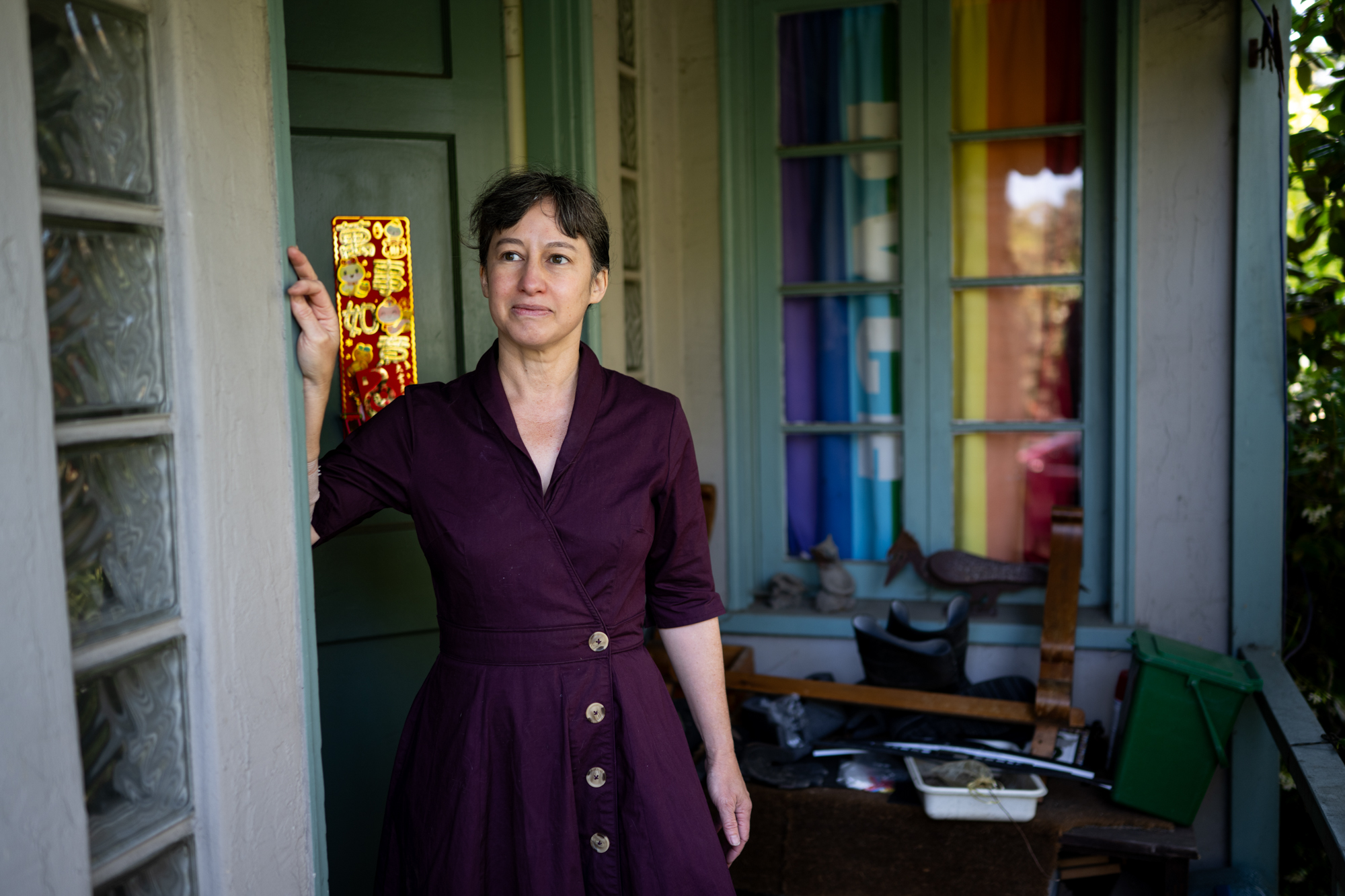
Berkeley Considers Middle Housing Plan That Could Reshape Neighborhoods
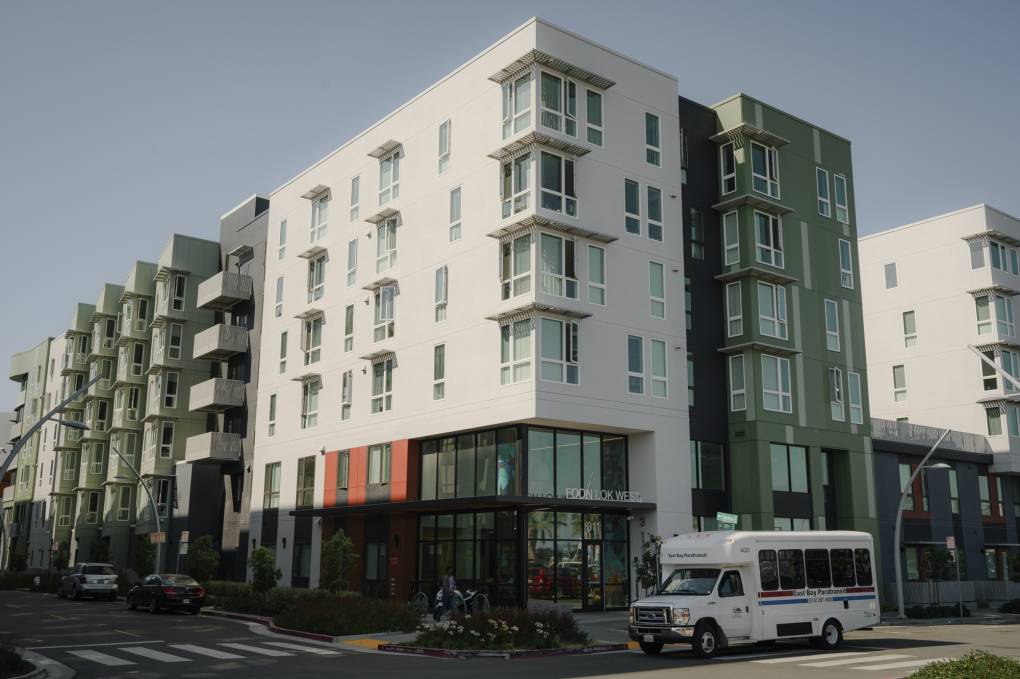
Oakland's Largest Housing Project Aims to Build 3,700 Homes On-Site
Why Bay Area Black, Latino Residents Struggle Most to Become Homeowners
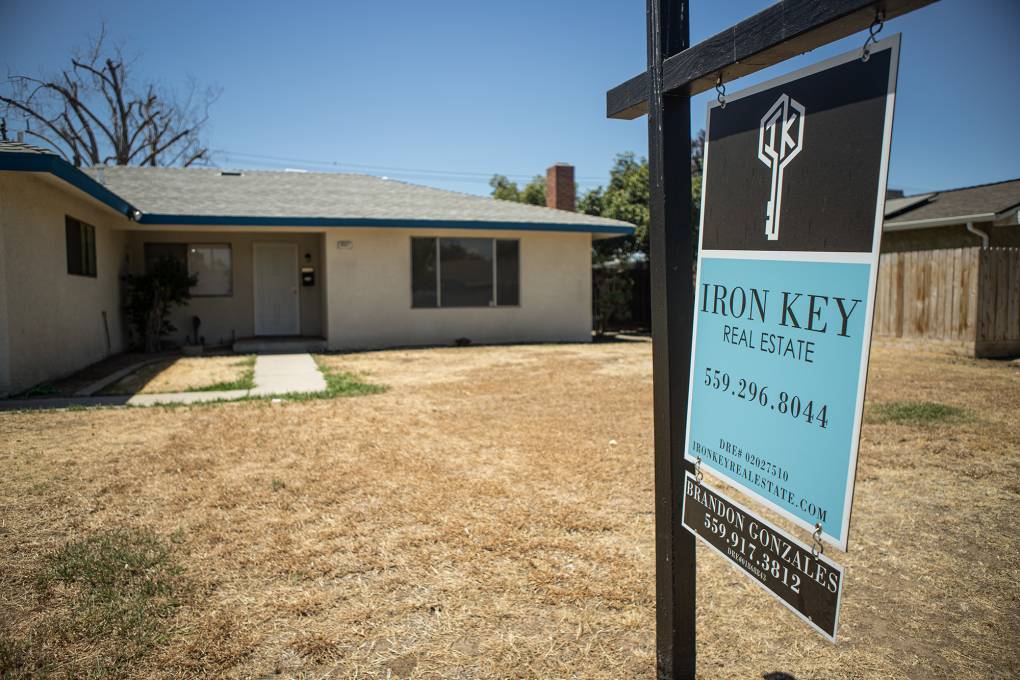
Some of California's 'Cheapest' Cities See the Biggest Rent Hikes
New California Law Blocks Enrollment Drop at UC Berkeley
Sponsored
Player sponsored by
window.__IS_SSR__=true
window.__INITIAL_STATE__={
"attachmentsReducer": {
"audio_0": {
"type": "attachments",
"id": "audio_0",
"imgSizes": {
"kqedFullSize": {
"file": "https://ww2.kqed.org/news/wp-content/themes/KQED-unified/img/audio_bgs/background0.jpg"
}
}
},
"audio_1": {
"type": "attachments",
"id": "audio_1",
"imgSizes": {
"kqedFullSize": {
"file": "https://ww2.kqed.org/news/wp-content/themes/KQED-unified/img/audio_bgs/background1.jpg"
}
}
},
"audio_2": {
"type": "attachments",
"id": "audio_2",
"imgSizes": {
"kqedFullSize": {
"file": "https://ww2.kqed.org/news/wp-content/themes/KQED-unified/img/audio_bgs/background2.jpg"
}
}
},
"audio_3": {
"type": "attachments",
"id": "audio_3",
"imgSizes": {
"kqedFullSize": {
"file": "https://ww2.kqed.org/news/wp-content/themes/KQED-unified/img/audio_bgs/background3.jpg"
}
}
},
"audio_4": {
"type": "attachments",
"id": "audio_4",
"imgSizes": {
"kqedFullSize": {
"file": "https://ww2.kqed.org/news/wp-content/themes/KQED-unified/img/audio_bgs/background4.jpg"
}
}
},
"placeholder": {
"type": "attachments",
"id": "placeholder",
"imgSizes": {
"thumbnail": {
"file": "https://cdn.kqed.org/wp-content/uploads/2024/12/KQED-Default-Image-816638274-2000x1333-1-160x107.jpg",
"width": 160,
"height": 107,
"mimeType": "image/jpeg"
},
"medium": {
"file": "https://cdn.kqed.org/wp-content/uploads/2024/12/KQED-Default-Image-816638274-2000x1333-1-800x533.jpg",
"width": 800,
"height": 533,
"mimeType": "image/jpeg"
},
"medium_large": {
"file": "https://cdn.kqed.org/wp-content/uploads/2024/12/KQED-Default-Image-816638274-2000x1333-1-768x512.jpg",
"width": 768,
"height": 512,
"mimeType": "image/jpeg"
},
"large": {
"file": "https://cdn.kqed.org/wp-content/uploads/2024/12/KQED-Default-Image-816638274-2000x1333-1-1020x680.jpg",
"width": 1020,
"height": 680,
"mimeType": "image/jpeg"
},
"1536x1536": {
"file": "https://cdn.kqed.org/wp-content/uploads/2024/12/KQED-Default-Image-816638274-2000x1333-1-1536x1024.jpg",
"width": 1536,
"height": 1024,
"mimeType": "image/jpeg"
},
"fd-lrg": {
"file": "https://cdn.kqed.org/wp-content/uploads/2024/12/KQED-Default-Image-816638274-2000x1333-1-1536x1024.jpg",
"width": 1536,
"height": 1024,
"mimeType": "image/jpeg"
},
"fd-med": {
"file": "https://cdn.kqed.org/wp-content/uploads/2024/12/KQED-Default-Image-816638274-2000x1333-1-1020x680.jpg",
"width": 1020,
"height": 680,
"mimeType": "image/jpeg"
},
"fd-sm": {
"file": "https://cdn.kqed.org/wp-content/uploads/2024/12/KQED-Default-Image-816638274-2000x1333-1-800x533.jpg",
"width": 800,
"height": 533,
"mimeType": "image/jpeg"
},
"post-thumbnail": {
"file": "https://cdn.kqed.org/wp-content/uploads/2024/12/KQED-Default-Image-816638274-2000x1333-1-672x372.jpg",
"width": 672,
"height": 372,
"mimeType": "image/jpeg"
},
"twentyfourteen-full-width": {
"file": "https://cdn.kqed.org/wp-content/uploads/2024/12/KQED-Default-Image-816638274-2000x1333-1-1038x576.jpg",
"width": 1038,
"height": 576,
"mimeType": "image/jpeg"
},
"xxsmall": {
"file": "https://cdn.kqed.org/wp-content/uploads/2024/12/KQED-Default-Image-816638274-2000x1333-1-160x107.jpg",
"width": 160,
"height": 107,
"mimeType": "image/jpeg"
},
"xsmall": {
"file": "https://cdn.kqed.org/wp-content/uploads/2024/12/KQED-Default-Image-816638274-2000x1333-1-672x372.jpg",
"width": 672,
"height": 372,
"mimeType": "image/jpeg"
},
"small": {
"file": "https://cdn.kqed.org/wp-content/uploads/2024/12/KQED-Default-Image-816638274-2000x1333-1-672x372.jpg",
"width": 672,
"height": 372,
"mimeType": "image/jpeg"
},
"xlarge": {
"file": "https://cdn.kqed.org/wp-content/uploads/2024/12/KQED-Default-Image-816638274-2000x1333-1-1020x680.jpg",
"width": 1020,
"height": 680,
"mimeType": "image/jpeg"
},
"full-width": {
"file": "https://cdn.kqed.org/wp-content/uploads/2024/12/KQED-Default-Image-816638274-2000x1333-1-1920x1280.jpg",
"width": 1920,
"height": 1280,
"mimeType": "image/jpeg"
},
"guest-author-32": {
"file": "https://cdn.kqed.org/wp-content/uploads/2025/01/KQED-Default-Image-816638274-1333x1333-1-160x160.jpg",
"width": 32,
"height": 32,
"mimeType": "image/jpeg"
},
"guest-author-50": {
"file": "https://cdn.kqed.org/wp-content/uploads/2025/01/KQED-Default-Image-816638274-1333x1333-1-160x160.jpg",
"width": 50,
"height": 50,
"mimeType": "image/jpeg"
},
"guest-author-64": {
"file": "https://cdn.kqed.org/wp-content/uploads/2025/01/KQED-Default-Image-816638274-1333x1333-1-160x160.jpg",
"width": 64,
"height": 64,
"mimeType": "image/jpeg"
},
"guest-author-96": {
"file": "https://cdn.kqed.org/wp-content/uploads/2025/01/KQED-Default-Image-816638274-1333x1333-1-160x160.jpg",
"width": 96,
"height": 96,
"mimeType": "image/jpeg"
},
"guest-author-128": {
"file": "https://cdn.kqed.org/wp-content/uploads/2025/01/KQED-Default-Image-816638274-1333x1333-1-160x160.jpg",
"width": 128,
"height": 128,
"mimeType": "image/jpeg"
},
"detail": {
"file": "https://cdn.kqed.org/wp-content/uploads/2025/01/KQED-Default-Image-816638274-1333x1333-1-160x160.jpg",
"width": 160,
"height": 160,
"mimeType": "image/jpeg"
},
"kqedFullSize": {
"file": "https://cdn.kqed.org/wp-content/uploads/2024/12/KQED-Default-Image-816638274-2000x1333-1.jpg",
"width": 2000,
"height": 1333
}
}
},
"news_12045595": {
"type": "attachments",
"id": "news_12045595",
"meta": {
"index": "attachments_1716263798",
"site": "news",
"id": "12045595",
"found": true
},
"title": "250623-BERKELEYMIDDLEHOUSING-03-BL-KQED",
"publishDate": 1750715458,
"status": "inherit",
"parent": 0,
"modified": 1750715524,
"caption": "Aimee Baldwin, whose Chinese American family has lived in Berkeley since the early 1900s, at her home in Berkeley on June 23, 2025. As the city considers a proposal to allow small apartment buildings in single-family neighborhoods, Baldwin says addressing past exclusion will require more than zoning changes.",
"credit": "Beth LaBerge/KQED",
"altTag": null,
"description": null,
"imgSizes": {
"thumbnail": {
"file": "https://cdn.kqed.org/wp-content/uploads/sites/10/2025/06/250623-BERKELEYMIDDLEHOUSING-03-BL-KQED-160x107.jpg",
"width": 160,
"height": 107,
"mimeType": "image/jpeg"
},
"1536x1536": {
"file": "https://cdn.kqed.org/wp-content/uploads/sites/10/2025/06/250623-BERKELEYMIDDLEHOUSING-03-BL-KQED-1536x1024.jpg",
"width": 1536,
"height": 1024,
"mimeType": "image/jpeg"
},
"post-thumbnail": {
"file": "https://cdn.kqed.org/wp-content/uploads/sites/10/2025/06/250623-BERKELEYMIDDLEHOUSING-03-BL-KQED-672x372.jpg",
"width": 672,
"height": 372,
"mimeType": "image/jpeg"
},
"twentyfourteen-full-width": {
"file": "https://cdn.kqed.org/wp-content/uploads/sites/10/2025/06/250623-BERKELEYMIDDLEHOUSING-03-BL-KQED-1038x576.jpg",
"width": 1038,
"height": 576,
"mimeType": "image/jpeg"
},
"kqedFullSize": {
"file": "https://cdn.kqed.org/wp-content/uploads/sites/10/2025/06/250623-BERKELEYMIDDLEHOUSING-03-BL-KQED.jpg",
"width": 2000,
"height": 1333
}
},
"fetchFailed": false,
"isLoading": false
},
"news_11953203": {
"type": "attachments",
"id": "news_11953203",
"meta": {
"index": "attachments_1716263798",
"site": "news",
"id": "11953203",
"found": true
},
"parent": 0,
"imgSizes": {
"twentyfourteen-full-width": {
"file": "https://ww2.kqed.org/app/uploads/sites/10/2023/06/RS66358_230615-brooklyn-basin-239-ks.NEF-24-ks-KQED-1038x576.jpg",
"width": 1038,
"mimeType": "image/jpeg",
"height": 576
},
"thumbnail": {
"file": "https://ww2.kqed.org/app/uploads/sites/10/2023/06/RS66358_230615-brooklyn-basin-239-ks.NEF-24-ks-KQED-160x106.jpg",
"width": 160,
"mimeType": "image/jpeg",
"height": 106
},
"post-thumbnail": {
"file": "https://ww2.kqed.org/app/uploads/sites/10/2023/06/RS66358_230615-brooklyn-basin-239-ks.NEF-24-ks-KQED-672x372.jpg",
"width": 672,
"mimeType": "image/jpeg",
"height": 372
},
"kqedFullSize": {
"file": "https://ww2.kqed.org/app/uploads/sites/10/2023/06/RS66358_230615-brooklyn-basin-239-ks.NEF-24-ks-KQED.jpg",
"width": 2000,
"height": 1331
},
"large": {
"file": "https://ww2.kqed.org/app/uploads/sites/10/2023/06/RS66358_230615-brooklyn-basin-239-ks.NEF-24-ks-KQED-1020x679.jpg",
"width": 1020,
"mimeType": "image/jpeg",
"height": 679
},
"1536x1536": {
"file": "https://ww2.kqed.org/app/uploads/sites/10/2023/06/RS66358_230615-brooklyn-basin-239-ks.NEF-24-ks-KQED-1536x1022.jpg",
"width": 1536,
"mimeType": "image/jpeg",
"height": 1022
},
"full-width": {
"file": "https://ww2.kqed.org/app/uploads/sites/10/2023/06/RS66358_230615-brooklyn-basin-239-ks.NEF-24-ks-KQED-1920x1278.jpg",
"width": 1920,
"mimeType": "image/jpeg",
"height": 1278
},
"medium": {
"file": "https://ww2.kqed.org/app/uploads/sites/10/2023/06/RS66358_230615-brooklyn-basin-239-ks.NEF-24-ks-KQED-800x532.jpg",
"width": 800,
"mimeType": "image/jpeg",
"height": 532
}
},
"publishDate": 1686941533,
"modified": 1695675168,
"caption": "The Foon Lok West affordable housing complex is part of the new Brooklyn Basin housing project of Oakland. Brooklyn Basin has added over 1,000 homes to the new neighborhood along the city’s waterfront and plans to add 2,000 more.",
"description": null,
"title": "affordable-housing",
"credit": "Kori Suzuki/KQED",
"status": "inherit",
"altTag": "The facade of a multistory green and white residential building seen from across the street. A white shuttle bus is parked in front.",
"fetchFailed": false,
"isLoading": false
},
"news_11953159": {
"type": "attachments",
"id": "news_11953159",
"meta": {
"index": "attachments_1716263798",
"site": "news",
"id": "11953159",
"found": true
},
"parent": 0,
"imgSizes": {
"twentyfourteen-full-width": {
"file": "https://ww2.kqed.org/app/uploads/sites/10/2023/06/RS66328_230613-RealtorMontanaHooks-06-BL-KQED-1038x576.jpg",
"width": 1038,
"mimeType": "image/jpeg",
"height": 576
},
"thumbnail": {
"file": "https://ww2.kqed.org/app/uploads/sites/10/2023/06/RS66328_230613-RealtorMontanaHooks-06-BL-KQED-160x107.jpg",
"width": 160,
"mimeType": "image/jpeg",
"height": 107
},
"post-thumbnail": {
"file": "https://ww2.kqed.org/app/uploads/sites/10/2023/06/RS66328_230613-RealtorMontanaHooks-06-BL-KQED-672x372.jpg",
"width": 672,
"mimeType": "image/jpeg",
"height": 372
},
"kqedFullSize": {
"file": "https://ww2.kqed.org/app/uploads/sites/10/2023/06/RS66328_230613-RealtorMontanaHooks-06-BL-KQED.jpg",
"width": 2000,
"height": 1333
},
"large": {
"file": "https://ww2.kqed.org/app/uploads/sites/10/2023/06/RS66328_230613-RealtorMontanaHooks-06-BL-KQED-1020x680.jpg",
"width": 1020,
"mimeType": "image/jpeg",
"height": 680
},
"1536x1536": {
"file": "https://ww2.kqed.org/app/uploads/sites/10/2023/06/RS66328_230613-RealtorMontanaHooks-06-BL-KQED-1536x1024.jpg",
"width": 1536,
"mimeType": "image/jpeg",
"height": 1024
},
"full-width": {
"file": "https://ww2.kqed.org/app/uploads/sites/10/2023/06/RS66328_230613-RealtorMontanaHooks-06-BL-KQED-1920x1280.jpg",
"width": 1920,
"mimeType": "image/jpeg",
"height": 1280
},
"medium": {
"file": "https://ww2.kqed.org/app/uploads/sites/10/2023/06/RS66328_230613-RealtorMontanaHooks-06-BL-KQED-800x533.jpg",
"width": 800,
"mimeType": "image/jpeg",
"height": 533
}
},
"publishDate": 1686929820,
"modified": 1686930219,
"caption": "Realtor Montana Gabrielle Hooks stands outside her realty office in the Uptown neighborhood of Oakland on June 15, 2023.",
"description": null,
"title": "RS66328_230613-RealtorMontanaHooks-06-BL-KQED",
"credit": "Beth LaBerge/KQED",
"status": "inherit",
"altTag": "A woman in a red top stands outdoors along a city sidewalk leaning against big pane glass windows and looking at the camera.",
"fetchFailed": false,
"isLoading": false
},
"news_11956172": {
"type": "attachments",
"id": "news_11956172",
"meta": {
"index": "attachments_1716263798",
"site": "news",
"id": "11956172",
"found": true
},
"parent": 0,
"imgSizes": {
"twentyfourteen-full-width": {
"file": "https://ww2.kqed.org/app/uploads/sites/10/2023/07/CalMattersHousing01-1038x576.jpg",
"width": 1038,
"mimeType": "image/jpeg",
"height": 576
},
"thumbnail": {
"file": "https://ww2.kqed.org/app/uploads/sites/10/2023/07/CalMattersHousing01-160x107.jpg",
"width": 160,
"mimeType": "image/jpeg",
"height": 107
},
"post-thumbnail": {
"file": "https://ww2.kqed.org/app/uploads/sites/10/2023/07/CalMattersHousing01-672x372.jpg",
"width": 672,
"mimeType": "image/jpeg",
"height": 372
},
"kqedFullSize": {
"file": "https://ww2.kqed.org/app/uploads/sites/10/2023/07/CalMattersHousing01.jpg",
"width": 2000,
"height": 1333
},
"large": {
"file": "https://ww2.kqed.org/app/uploads/sites/10/2023/07/CalMattersHousing01-1020x680.jpg",
"width": 1020,
"mimeType": "image/jpeg",
"height": 680
},
"1536x1536": {
"file": "https://ww2.kqed.org/app/uploads/sites/10/2023/07/CalMattersHousing01-1536x1024.jpg",
"width": 1536,
"mimeType": "image/jpeg",
"height": 1024
},
"full-width": {
"file": "https://ww2.kqed.org/app/uploads/sites/10/2023/07/CalMattersHousing01-1920x1280.jpg",
"width": 1920,
"mimeType": "image/jpeg",
"height": 1280
},
"medium": {
"file": "https://ww2.kqed.org/app/uploads/sites/10/2023/07/CalMattersHousing01-800x533.jpg",
"width": 800,
"mimeType": "image/jpeg",
"height": 533
}
},
"publishDate": 1689966373,
"modified": 1689966481,
"caption": "A home with a real estate sign in Tower District in central Fresno on June 28, 2022.",
"description": null,
"title": "CalMattersHousing01",
"credit": "Larry Valenzuela/CalMatters/CatchLight Local",
"status": "inherit",
"altTag": "A real estate sign is in front of a house with a dried lawn on a sunny day.",
"fetchFailed": false,
"isLoading": false
},
"news_11908168": {
"type": "attachments",
"id": "news_11908168",
"meta": {
"index": "attachments_1716263798",
"site": "news",
"id": "11908168",
"found": true
},
"parent": 11908141,
"imgSizes": {
"twentyfourteen-full-width": {
"file": "https://ww2.kqed.org/app/uploads/sites/10/2022/03/RS26539_P1070533-qut-1038x576.jpg",
"width": 1038,
"mimeType": "image/jpeg",
"height": 576
},
"thumbnail": {
"file": "https://ww2.kqed.org/app/uploads/sites/10/2022/03/RS26539_P1070533-qut-160x107.jpg",
"width": 160,
"mimeType": "image/jpeg",
"height": 107
},
"post-thumbnail": {
"file": "https://ww2.kqed.org/app/uploads/sites/10/2022/03/RS26539_P1070533-qut-672x372.jpg",
"width": 672,
"mimeType": "image/jpeg",
"height": 372
},
"kqedFullSize": {
"file": "https://ww2.kqed.org/app/uploads/sites/10/2022/03/RS26539_P1070533-qut.jpg",
"width": 1920,
"height": 1280
},
"large": {
"file": "https://ww2.kqed.org/app/uploads/sites/10/2022/03/RS26539_P1070533-qut-1020x680.jpg",
"width": 1020,
"mimeType": "image/jpeg",
"height": 680
},
"1536x1536": {
"file": "https://ww2.kqed.org/app/uploads/sites/10/2022/03/RS26539_P1070533-qut-1536x1024.jpg",
"width": 1536,
"mimeType": "image/jpeg",
"height": 1024
},
"medium": {
"file": "https://ww2.kqed.org/app/uploads/sites/10/2022/03/RS26539_P1070533-qut-800x533.jpg",
"width": 800,
"mimeType": "image/jpeg",
"height": 533
}
},
"publishDate": 1647299484,
"modified": 1647306695,
"caption": "The Sather Gate entrance at the UC Berkeley campus, where a security checkpoint was set up to screen attendees of a lecture by conservative author and radio host Ben Shapiro on Sept. 14, 2017.",
"description": null,
"title": "RS26539_P1070533-qut",
"credit": "Sheraz Sadiq/KQED",
"status": "inherit",
"altTag": "People are walking through a gate entrance on a college campus.",
"fetchFailed": false,
"isLoading": false
}
},
"audioPlayerReducer": {
"postId": "stream_live",
"isPaused": true,
"isPlaying": false,
"pfsActive": false,
"pledgeModalIsOpen": true,
"playerDrawerIsOpen": false
},
"authorsReducer": {
"byline_news_11956168": {
"type": "authors",
"id": "byline_news_11956168",
"meta": {
"override": true
},
"slug": "byline_news_11956168",
"name": "\u003ca href=\"https://calmatters.org/author/ben-christopher/\">Ben Christopher\u003c/a>",
"isLoading": false
},
"byline_news_11908141": {
"type": "authors",
"id": "byline_news_11908141",
"meta": {
"override": true
},
"slug": "byline_news_11908141",
"name": "Janie Har and Adam Beam\u003cbr>The Associated Press",
"isLoading": false
},
"ebaldassari": {
"type": "authors",
"id": "11652",
"meta": {
"index": "authors_1716337520",
"id": "11652",
"found": true
},
"name": "Erin Baldassari",
"firstName": "Erin",
"lastName": "Baldassari",
"slug": "ebaldassari",
"email": "ebaldassari@KQED.org",
"display_author_email": true,
"staff_mastheads": [
"news"
],
"title": "Staff Writer",
"bio": "Erin Baldassari covers housing for KQED. She's a former print journalist and most recently worked as the transportation reporter for the \u003cem>Mercury News\u003c/em> and \u003cem>East Bay Times. \u003c/em>There, she focused on how the Bay Area’s housing shortage has changed the way people move around the region. She also served on the \u003cem>East Bay Times\u003c/em>’ 2017 Pulitzer Prize-winning team for coverage of the Ghost Ship Fire in Oakland. Prior to that, Erin worked as a breaking news and general assignment reporter for a variety of outlets in the Bay Area and the greater Boston area. A Tufts University alumna, Erin grew up in the foothills of the Sierra Nevada mountains and in Sonoma County. She is a life-long KQED listener.",
"avatar": "https://secure.gravatar.com/avatar/660ce35d088ca54ad606d7e941abc652?s=600&d=mm&r=g",
"twitter": "e_baldi",
"facebook": null,
"instagram": null,
"linkedin": null,
"sites": [
{
"site": "news",
"roles": [
"edit_others_posts",
"editor"
]
},
{
"site": "science",
"roles": [
"editor"
]
},
{
"site": "liveblog",
"roles": [
"editor"
]
}
],
"headData": {
"title": "Erin Baldassari | KQED",
"description": "Staff Writer",
"ogImgSrc": "https://secure.gravatar.com/avatar/660ce35d088ca54ad606d7e941abc652?s=600&d=mm&r=g",
"twImgSrc": "https://secure.gravatar.com/avatar/660ce35d088ca54ad606d7e941abc652?s=600&d=mm&r=g"
},
"isLoading": false,
"link": "/author/ebaldassari"
},
"btorres": {
"type": "authors",
"id": "11666",
"meta": {
"index": "authors_1716337520",
"id": "11666",
"found": true
},
"name": "Blanca Torres",
"firstName": "Blanca",
"lastName": "Torres",
"slug": "btorres",
"email": "btorres@kqed.org",
"display_author_email": true,
"staff_mastheads": [
"news"
],
"title": "Producer, Forum",
"bio": "Blanca Torres brings sharp news judgement and keen sense of lively conversation to her work as producer for Forum. She loves producing shows that leave listeners feeling like they heard distinctive voices, learned something new and gained a fresh perspective.\r\n\r\nShe joined KQED in January of 2020 after 16 years of working as a newspaper reporter most recently at the \u003cem>San Francisco Business Times,\u003c/em> where she wrote about real estate and economic development. Before that, she covered a variety of beats including crime, education, retail, workplace, the economy, consumer issues, and small business for the \u003cem>Contra Costa Times, Baltimore Sun\u003c/em> and\u003cem> The Seattle Times\u003c/em>. In addition to reporting, she worked as an editorial writer and columnist for the \u003cem>Seattle Times\u003c/em>. From 2017 to 2020, Blanca won a total of ten awards from the National Association of Real Estate Editors and won first place for land use reporting from the California News Publishers Association two years in a row. She is also a member and former board member for the National Association of Hispanic Journalists.\r\n\r\nA native of the Pacific Northwest, Blanca earned her bachelor's degree from Vanderbilt University in Nashville and a master's in fine arts in creative writing at Mills College. She lives in the East Bay with her family.",
"avatar": "https://secure.gravatar.com/avatar/f2322ff46076d337f7ba731ee6068cb1?s=600&d=blank&r=g",
"twitter": "@blancawrites",
"facebook": null,
"instagram": null,
"linkedin": null,
"sites": [
{
"site": "arts",
"roles": [
"editor"
]
},
{
"site": "news",
"roles": [
"editor"
]
},
{
"site": "forum",
"roles": [
"editor"
]
}
],
"headData": {
"title": "Blanca Torres | KQED",
"description": "Producer, Forum",
"ogImgSrc": "https://secure.gravatar.com/avatar/f2322ff46076d337f7ba731ee6068cb1?s=600&d=blank&r=g",
"twImgSrc": "https://secure.gravatar.com/avatar/f2322ff46076d337f7ba731ee6068cb1?s=600&d=blank&r=g"
},
"isLoading": false,
"link": "/author/btorres"
}
},
"breakingNewsReducer": {},
"pagesReducer": {},
"postsReducer": {
"stream_live": {
"type": "live",
"id": "stream_live",
"audioUrl": "https://streams.kqed.org/kqedradio",
"title": "Live Stream",
"excerpt": "Live Stream information currently unavailable.",
"link": "/radio",
"featImg": "",
"label": {
"name": "KQED Live",
"link": "/"
}
},
"stream_kqedNewscast": {
"type": "posts",
"id": "stream_kqedNewscast",
"audioUrl": "https://www.kqed.org/.stream/anon/radio/RDnews/newscast.mp3?_=1",
"title": "KQED Newscast",
"featImg": "",
"label": {
"name": "88.5 FM",
"link": "/"
}
},
"news_12045685": {
"type": "posts",
"id": "news_12045685",
"meta": {
"index": "posts_1716263798",
"site": "news",
"id": "12045685",
"score": null,
"sort": [
1750852800000
]
},
"guestAuthors": [],
"slug": "berkeley-considers-middle-housing-plan-that-could-reshape-neighborhoods",
"title": "Berkeley Considers Middle Housing Plan That Could Reshape Neighborhoods",
"publishDate": 1750852800,
"format": "standard",
"headTitle": "Berkeley Considers Middle Housing Plan That Could Reshape Neighborhoods | KQED",
"labelTerm": {
"site": "news"
},
"content": "\u003cp>Aimee Baldwin is worried her home is in danger of being seen as the “scruffy house” on the block.\u003c/p>\n\u003cp>There’s often a jumble of loose lumber and supplies the artist uses for projects in front of the garage, plants that need to be potted and a sprawling garden she describes as “chaotic” — a mix of California native flowers and shrubs that spill from the front yard and run down the side.\u003c/p>\n\u003cp>In the backyard are the persimmon and Asian pear trees her grandparents, Frank and Jackie Kee, planted after they moved to Francisco Street in the mid-1950s, near what is now the North Berkeley BART station. Back then, it was a blue-collar neighborhood — her grandfather worked as a gardener at a Japanese-owned plant nursery — with a set of train tracks running through the block.\u003c/p>\n\u003cp>[ad fullwidth]\u003c/p>\n\u003cp>Today, those tracks have been converted into a greenway, complete with a pocket community garden Baldwin helps tend. Recently, the 960 square-foot house across from hers sold for $1.1 million, and the new owners are renovating.\u003c/p>\n\u003cp>“I kind of wonder how much are people going to start to look down on me for having things a little funky and weird,” she said, “when other people are clearly working on fixing up their house and fixing up their yard and trying to make it look nice.”\u003c/p>\n\u003cfigure id=\"attachment_12045597\" class=\"wp-caption aligncenter\" style=\"max-width: 2000px\">\u003cimg loading=\"lazy\" decoding=\"async\" class=\"wp-image-12045597 size-full\" src=\"https://cdn.kqed.org/wp-content/uploads/sites/10/2025/06/250623-BERKELEYMIDDLEHOUSING-08-BL-KQED.jpg\" alt=\"\" width=\"2000\" height=\"1333\" srcset=\"https://cdn.kqed.org/wp-content/uploads/sites/10/2025/06/250623-BERKELEYMIDDLEHOUSING-08-BL-KQED.jpg 2000w, https://cdn.kqed.org/wp-content/uploads/sites/10/2025/06/250623-BERKELEYMIDDLEHOUSING-08-BL-KQED-160x107.jpg 160w, https://cdn.kqed.org/wp-content/uploads/sites/10/2025/06/250623-BERKELEYMIDDLEHOUSING-08-BL-KQED-1536x1024.jpg 1536w\" sizes=\"auto, (max-width: 2000px) 100vw, 2000px\">\u003cfigcaption class=\"wp-caption-text\">Aimee Baldwin walks along the West Street Pathway near her home on June 23, 2025. Her neighborhood gardening group helped plant native species along the path. \u003ccite>(Beth LaBerge/KQED)\u003c/cite>\u003c/figcaption>\u003c/figure>\n\u003cp>Baldwin is concerned not only for the changes already underway but also about what might come if the Berkeley City Council votes Thursday to allow more duplexes, fourplexes and small apartments in most neighborhoods throughout the city.\u003c/p>\n\u003cp>If the measure is approved, it would be a historic reversal of more than a century of city planning. In 1916, Berkeley \u003ca href=\"https://babel.hathitrust.org/cgi/pt?id=uc1.c044977650&seq=9&q1=dance\">set aside\u003c/a> parts of the city as single-family neighborhoods, a provision \u003ca href=\"https://www.google.com/books/edition/Planning_Problems_of_Town_City_and_Regio/lnmiAAAAMAAJ?hl=en&gbpv=1&dq=chinese&pg=PA189&printsec=frontcover\">first applied\u003c/a> to Elmwood Park to combat a \u003ca href=\"https://www.google.com/books/edition/Berkeley_Civic_Bulletin/u0reKZelu2MC?hl=en&gbpv=1&dq=elmwood&pg=RA2-PA105&printsec=frontcover\">perceived invasion\u003c/a> “by flats, apartment houses and stores.”\u003c/p>\n\u003cp>While California has already essentially outlawed single-family zoning by allowing homeowners to build both accessory dwelling units, or ADUs, on their properties and \u003ca href=\"https://www.kqed.org/news/11980785/these-california-companies-want-to-buy-your-backyard-and-build-a-house\">subdivide lots to build up to two duplexes\u003c/a> in most urban neighborhoods, Berkeley’s proposed \u003ca href=\"https://berkeleyca.gov/sites/default/files/documents/2025-06-26%20Special%20Item%2001%20Zoning%20Ordinance%20and%20General%20Plan.pdf\">Middle Housing ordinance\u003c/a> would go further. It would allow greater flexibility in home design and increase the number of units permitted in each building.[aside postID=news_11996949 hero='https://cdn.kqed.org/wp-content/uploads/sites/10/2024/07/005_KQED_Housing_Berkeley_ShadowStandards_02272020__qed-1-1020x680.jpg']The ordinance would allow three-story buildings, with the number of units determined by lot size. A typical 5,000-square-foot property could potentially have five to seven units, not including ADUs. Neighborhoods in the Berkeley hills, with steep, narrow, winding roads, are excluded because of fire-safety concerns.\u003c/p>\n\u003cp>Councilmember Rashi Kesarwani, who has long championed the proposal, said the idea is to promote more housing on existing lots, with the expectation that the new homes will be more accessible to middle-income earners who don’t qualify for deed-restricted affordable housing.\u003c/p>\n\u003cp>“The goal is to think about the future of our city and what kind of community we want to be,” Kesarwani said. “I believe that we need to be a city that has housing opportunities for our middle-class workers. And really, the only way we can do that cost-effectively is through middle housing.”\u003c/p>\n\u003cp>Baldwin’s block already has a diverse mix of single-family homes, duplexes and the occasional low-rise apartment building, making it emblematic of the kind of development the city’s proposed Middle Housing ordinance seeks to promote. Despite this mix, the neighborhood maintains a suburban feel, she said. Baldwin is concerned that the plan could pressure the remaining working-class families to sell, driving them out of the city.\u003c/p>\n\u003cp>“What is middle housing getting us, besides what I fear is the opportunity for basically really large profiteering companies to come and strip our neighborhood of the community that we have,” she asked.\u003c/p>\n\u003cfigure id=\"attachment_12045599\" class=\"wp-caption aligncenter\" style=\"max-width: 2000px\">\u003cimg loading=\"lazy\" decoding=\"async\" class=\"size-full wp-image-12045599\" src=\"https://cdn.kqed.org/wp-content/uploads/sites/10/2025/06/250623-BERKELEYMIDDLEHOUSING-14-BL-KQED.jpg\" alt=\"\" width=\"2000\" height=\"1333\" srcset=\"https://cdn.kqed.org/wp-content/uploads/sites/10/2025/06/250623-BERKELEYMIDDLEHOUSING-14-BL-KQED.jpg 2000w, https://cdn.kqed.org/wp-content/uploads/sites/10/2025/06/250623-BERKELEYMIDDLEHOUSING-14-BL-KQED-160x107.jpg 160w, https://cdn.kqed.org/wp-content/uploads/sites/10/2025/06/250623-BERKELEYMIDDLEHOUSING-14-BL-KQED-1536x1024.jpg 1536w\" sizes=\"auto, (max-width: 2000px) 100vw, 2000px\">\u003cfigcaption class=\"wp-caption-text\">An apartment building in Berkeley on June 23, 2025. \u003ccite>(Beth LaBerge/KQED)\u003c/cite>\u003c/figcaption>\u003c/figure>\n\u003cp>Her fears were echoed in \u003ca href=\"https://records.cityofberkeley.info/PublicAccess/api/Document/AY6R0ICLRi%C3%89I234utuTkx9iIqj755tb9wZppF2iGC%C3%81oYukxBg2GzZxdeoyRdXi6G0eZY03AA90QQ6g5%C3%89I%C3%81hjxz0%3D/\">letters sent to the council\u003c/a> ahead of Thursday’s meeting. Some residents, like Clifford Fred, are concerned about the sheer volume of development that could be unleashed, writing: “Berkeley city officials are turning what used to be a beautiful, low-rise, human-scaled city into an ugly warren of high rises and massive buildings stretching relentlessly from the Oakland border to the Albany border.”\u003c/p>\n\u003cp>Others are more apprehensive about where the new homes and apartments would be built. The proposed Middle Housing ordinance would allow greater density in parts of the city that have historically allowed duplexes and apartments, and less density in the city’s existing single-family neighborhoods.\u003c/p>\n\u003cp>This would only further exacerbate disparities in development, wrote a group of residents, including Eugene Turitz of Friends of Adeline and Wilhelimenia Wilson, executive director of Healthy Black Families Inc., in a joint letter.\u003c/p>\n\u003cp>“[Middle Housing] is discriminatory because of its predictable consequences, as neighborhoods in the ‘flats’ become repositories of excessive densities — with no additional amenities like parks or neighborhood-supporting services,” they wrote.\u003c/p>\n\u003cp>It’s unclear, however, how developers will respond to Berkeley’s Middle Housing proposal, should it be adopted. In September, Sacramento \u003ca href=\"https://sacramentocityexpress.com/2024/09/19/sacramento-first-in-california-to-allow-multi-unit-housing-in-every-neighborhood/#:~:text=The%20Missing%20Middle%20Housing%20(MMH,and%20proximity%20to%20public%20transit.\">approved\u003c/a> a similar ordinance, becoming the first in the state to do so, though Santa Rosa is considering a \u003ca href=\"https://www.srcity.org/3495/Missing-Middle-Housing\">proposal\u003c/a> as well.\u003c/p>\n\u003cfigure id=\"attachment_12045600\" class=\"wp-caption aligncenter\" style=\"max-width: 2000px\">\u003cimg loading=\"lazy\" decoding=\"async\" class=\"size-full wp-image-12045600\" src=\"https://cdn.kqed.org/wp-content/uploads/sites/10/2025/06/250623-BERKELEYMIDDLEHOUSING-21-BL-KQED.jpg\" alt=\"\" width=\"2000\" height=\"1333\" srcset=\"https://cdn.kqed.org/wp-content/uploads/sites/10/2025/06/250623-BERKELEYMIDDLEHOUSING-21-BL-KQED.jpg 2000w, https://cdn.kqed.org/wp-content/uploads/sites/10/2025/06/250623-BERKELEYMIDDLEHOUSING-21-BL-KQED-160x107.jpg 160w, https://cdn.kqed.org/wp-content/uploads/sites/10/2025/06/250623-BERKELEYMIDDLEHOUSING-21-BL-KQED-1536x1024.jpg 1536w\" sizes=\"auto, (max-width: 2000px) 100vw, 2000px\">\u003cfigcaption class=\"wp-caption-text\">A house for sale in Berkeley on June 23, 2025. \u003ccite>(Beth LaBerge/KQED)\u003c/cite>\u003c/figcaption>\u003c/figure>\n\u003cp>Since going into effect in October, Sacramento has received 19 applications, most for duplexes with ADUs, Nguyen Nguyen, an associate planner for the city, wrote in an email to KQED. Of those, nine have been approved and six are in progress.\u003c/p>\n\u003cp>Nguyen said staff are seeing projects that otherwise would not have been allowed without the new ordinance, but added that developers tend to prefer projects on vacant lots over properties with existing homes that would first need to be demolished.\u003c/p>\n\u003cp>Builders proposing projects under the ordinance have also tended to be less experienced than typical developers, he said. “They are usually a local property owner or local entrepreneur or small real estate investor who needs extra hand-holding and technical assistance,” he added.\u003c/p>\n\u003cp>Financing is also a challenge, according to Nguyen. Projects proposing three or more units are reviewed under the Commercial Building Code, which creates higher construction and permitting costs. Projects with four or more units require a licensed professional, which adds more cost.\u003c/p>\n\u003cp>Sacramento’s experience, though nascent, aligns with predictions from a study David Garcia \u003ca href=\"https://ternercenter.berkeley.edu/wp-content/uploads/2024/06/Missing-Middle-Development-Math-Final-June-2024.pdf\">published last year\u003c/a> for UC Berkeley’s Terner Center on Housing Innovation. In it, he found that most forms of “middle housing” — buildings with two and 10 units — are not financially feasible, except for duplexes under the right conditions.\u003c/p>\n\u003cfigure id=\"attachment_12045598\" class=\"wp-caption aligncenter\" style=\"max-width: 2000px\">\u003cimg loading=\"lazy\" decoding=\"async\" class=\"size-full wp-image-12045598\" src=\"https://cdn.kqed.org/wp-content/uploads/sites/10/2025/06/250623-BERKELEYMIDDLEHOUSING-12-BL-KQED.jpg\" alt=\"\" width=\"2000\" height=\"1333\" srcset=\"https://cdn.kqed.org/wp-content/uploads/sites/10/2025/06/250623-BERKELEYMIDDLEHOUSING-12-BL-KQED.jpg 2000w, https://cdn.kqed.org/wp-content/uploads/sites/10/2025/06/250623-BERKELEYMIDDLEHOUSING-12-BL-KQED-160x107.jpg 160w, https://cdn.kqed.org/wp-content/uploads/sites/10/2025/06/250623-BERKELEYMIDDLEHOUSING-12-BL-KQED-1536x1024.jpg 1536w\" sizes=\"auto, (max-width: 2000px) 100vw, 2000px\">\u003cfigcaption class=\"wp-caption-text\">A sign promoting homes at North Berkeley BART in Berkeley on June 23, 2025. \u003ccite>(Beth LaBerge/KQED)\u003c/cite>\u003c/figcaption>\u003c/figure>\n\u003cp>“There are so many other factors that go into whether or not a missing middle housing project can work in real life. So, it’s not just the zoning,” Garcia told KQED. “It’s all these other little rules that dictate what can be built on the sites — whether that’s setbacks, height restrictions, roof pitch materials, easements, things like that.”\u003c/p>\n\u003cp>Developers who pursue middle housing projects often find themselves mired in site-by-site problem-solving, Garcia said, making the projects unappealing to large, corporate investors.\u003c/p>\n\u003cp>“There’s no economies of scale there,” Garcia said. “A traditional large developer is not really gonna get out of bed for anything lower than 100 units. And that’s not what we’re talking about here.”\u003c/p>\n\u003cp>Jordan Klein, director of planning and development in Berkeley, thinks it unlikely his department will be overwhelmed with applications. In the first three years after the state’s lot-split law, SB 9, went into effect, developers submitted 17 applications, 12 of which were deemed eligible. Of those dozen, five single-family homes and one ADU have been approved.\u003c/p>\n\u003cp>“If we get 10 middle housing projects a year, I think that’ll be a success,” Klein said. “I think we’ll be excited about that. Adding maybe an average of three units per project. That’s 40 units a year. That would be great.”\u003c/p>\n\u003cp>In fact, some proponents of the ordinance say it doesn’t go far enough and want to see it strengthened by removing density limits to allow for \u003ca href=\"https://records.cityofberkeley.info/PublicAccess/api/Document/AY6R0ICLRi%C3%89I234utuTkx9iIqj755tb9wZppF2iGC%C3%81oYukxBg2GzZxdeoyRdXi6G0eZY03AA90QQ6g5%C3%89I%C3%81hjxz0%3D/\">more units\u003c/a> within the same building envelope.\u003c/p>\n\u003cfigure id=\"attachment_12045601\" class=\"wp-caption aligncenter\" style=\"max-width: 2000px\">\u003cimg loading=\"lazy\" decoding=\"async\" class=\"size-full wp-image-12045601\" src=\"https://cdn.kqed.org/wp-content/uploads/sites/10/2025/06/250623-BERKELEYMIDDLEHOUSING-29-BL-KQED.jpg\" alt=\"\" width=\"2000\" height=\"1333\" srcset=\"https://cdn.kqed.org/wp-content/uploads/sites/10/2025/06/250623-BERKELEYMIDDLEHOUSING-29-BL-KQED.jpg 2000w, https://cdn.kqed.org/wp-content/uploads/sites/10/2025/06/250623-BERKELEYMIDDLEHOUSING-29-BL-KQED-160x107.jpg 160w, https://cdn.kqed.org/wp-content/uploads/sites/10/2025/06/250623-BERKELEYMIDDLEHOUSING-29-BL-KQED-1536x1024.jpg 1536w\" sizes=\"auto, (max-width: 2000px) 100vw, 2000px\">\u003cfigcaption class=\"wp-caption-text\">Deborah Matthews, a longtime Berkeley resident and former candidate for City Council District 3, near her home in Berkeley on June 23, 2025, where she’s been involved in community housing advocacy. \u003ccite>(Beth LaBerge/KQED)\u003c/cite>\u003c/figcaption>\u003c/figure>\n\u003cp>In South Berkeley, resident and real estate agent Deborah Matthews shares concerns about limiting development in the city’s historically exclusionary neighborhoods — but also acknowledges the demographic shift that has already taken place.\u003c/p>\n\u003cp>To her, the city’s \u003ca href=\"https://darrellowens.substack.com/p/the-history-of-gentrification-in\">downzoning efforts\u003c/a> in the 1960s, which limited new apartments in residential neighborhoods, have already driven up home prices and pushed out many lower- and middle-income families, including many Black residents. Berkeley’s Black population peaked in 1970 at \u003ca href=\"https://census.bayareametro.gov/historical-data/1970/berkeley\">about 24%\u003c/a> of the population. In 2024, it was \u003ca href=\"https://www.census.gov/quickfacts/fact/table/berkeleycitycalifornia/PST045223\">just over 7%\u003c/a>.\u003c/p>\n\u003cp>The exodus is felt on Sunday strolls through South Berkeley, as much as it is heard. Where gospel music once rang out from churches, now there is silence.\u003c/p>\n\u003cp>“It was such a wonderful celebration,” Matthews said, recalling her weekly walks some three decades ago. “You would interact with people that would walk by. They’d stop and start talking with you, and people would kind of do a little rhythm dance or hand clapping or just something that they enjoyed about listening to that music.”\u003c/p>\n\u003cp>Over the past 25 years, the price of a “\u003ca href=\"https://www.zillow.com/research/data/\">typical\u003c/a>” Berkeley home rose more than 270%, from around $385,000 in January 2000 to just over $1.4 million in May 2025, according to Zillow.\u003c/p>\n\u003cp>And while the Middle Housing ordinance doesn’t specifically address homeownership, the city is considering separate proposals to allow homeowners to \u003ca href=\"https://berkeleyca.gov/sites/default/files/documents/2024-05-14%20Item%2028%20Increasing%20Entry%20Level%20Homeownership%20Opportunities%20Implementation%20of%20AB%201033_0.pdf\">convert ADUs into condominiums\u003c/a> and to \u003ca href=\"https://berkeleyca.gov/sites/default/files/documents/2025-01-21%20Item%2026%20Expanding%20Homeownership.pdf\">subdivide lots\u003c/a> that don’t qualify under the state’s lot split law. Taken together with Middle Housing, Matthews said, it will allow more opportunity for homeownership.\u003c/p>\n\u003cp>“What I’m hoping is that it will provide an opportunity, first of all, for homeownership and access to people who haven’t had it before, or who feel that they’ve been left out for a number of years — and rightfully so,” she said. “That assumption, that feeling, that lack of being able to participate in the housing market, it has been very accurate.”\u003c/p>\n\u003cp>But she said the final proposal should provide that opportunity throughout the city, rather than concentrating development in areas that have already borne the brunt of it.\u003c/p>\n\u003cp>“Berkeley must implement inclusionary housing development in more than a ceremonial process,” Matthews said. “Middle Housing must be an equitable action throughout our city, providing housing in every district and neighborhood to meet residents’ needs.”\u003c/p>\n\u003cp>[ad floatright]\u003c/p>\n",
"blocks": [],
"excerpt": "Berkeley was the first U.S. city to make some neighborhoods off-limits to anything but single-family homes. Now, it’s considering allowing small apartment buildings in most areas.",
"status": "publish",
"parent": 0,
"modified": 1751475753,
"stats": {
"hasAudio": false,
"hasVideo": false,
"hasChartOrMap": false,
"iframeSrcs": [],
"hasGoogleForm": false,
"hasGallery": false,
"hasHearkenModule": false,
"hasPolis": false,
"paragraphCount": 39,
"wordCount": 1944
},
"headData": {
"title": "Berkeley Considers Middle Housing Plan That Could Reshape Neighborhoods | KQED",
"description": "Berkeley was the first U.S. city to make some neighborhoods off-limits to anything but single-family homes. Now, it’s considering allowing small apartment buildings in most areas.",
"ogTitle": "",
"ogDescription": "",
"ogImgId": "",
"twTitle": "",
"twDescription": "",
"twImgId": "",
"schema": {
"@context": "https://schema.org",
"@type": "NewsArticle",
"headline": "Berkeley Considers Middle Housing Plan That Could Reshape Neighborhoods",
"datePublished": "2025-06-25T05:00:00-07:00",
"dateModified": "2025-07-02T10:02:33-07:00",
"image": "https://cdn.kqed.org/wp-content/uploads/2020/02/KQED-OG-Image@1x.png",
"isAccessibleForFree": "True",
"publisher": {
"@type": "NewsMediaOrganization",
"@id": "https://www.kqed.org/#organization",
"name": "KQED",
"logo": "https://cdn.kqed.org/wp-content/uploads/2020/02/KQED-OG-Image@1x.png",
"url": "https://www.kqed.org",
"sameAs": [
"https://www.facebook.com/KQED",
"https://twitter.com/KQED",
"https://www.instagram.com/kqed/",
"https://www.tiktok.com/@kqedofficial",
"https://www.linkedin.com/company/kqed",
"https://www.youtube.com/channel/UCeC0IOo7i1P_61zVUWbJ4nw"
]
}
}
},
"primaryCategory": {
"termId": 8,
"slug": "news",
"name": "News"
},
"audioUrl": "https://traffic.omny.fm/d/clips/0af137ef-751e-4b19-a055-aaef00d2d578/ffca7e9f-6831-4[…]f-aaef00f5a073/f034c5c2-78c6-4534-8dd3-b308010457dd/audio.mp3",
"sticky": false,
"nprStoryId": "kqed-12045685",
"templateType": "standard",
"featuredImageType": "standard",
"excludeFromSiteSearch": "Include",
"articleAge": "0",
"path": "/news/12045685/berkeley-considers-middle-housing-plan-that-could-reshape-neighborhoods",
"audioTrackLength": null,
"parsedContent": [
{
"type": "contentString",
"content": "\u003cdiv class=\"post-body\">\u003cp>\u003cp>Aimee Baldwin is worried her home is in danger of being seen as the “scruffy house” on the block.\u003c/p>\n\u003cp>There’s often a jumble of loose lumber and supplies the artist uses for projects in front of the garage, plants that need to be potted and a sprawling garden she describes as “chaotic” — a mix of California native flowers and shrubs that spill from the front yard and run down the side.\u003c/p>\n\u003cp>In the backyard are the persimmon and Asian pear trees her grandparents, Frank and Jackie Kee, planted after they moved to Francisco Street in the mid-1950s, near what is now the North Berkeley BART station. Back then, it was a blue-collar neighborhood — her grandfather worked as a gardener at a Japanese-owned plant nursery — with a set of train tracks running through the block.\u003c/p>\n\u003cp>\u003c/p>\u003c/div>",
"attributes": {
"named": {},
"numeric": []
}
},
{
"type": "component",
"content": "",
"name": "ad",
"attributes": {
"named": {
"label": "fullwidth"
},
"numeric": [
"fullwidth"
]
}
},
{
"type": "contentString",
"content": "\u003cdiv class=\"post-body\">\u003cp>\u003c/p>\n\u003cp>Today, those tracks have been converted into a greenway, complete with a pocket community garden Baldwin helps tend. Recently, the 960 square-foot house across from hers sold for $1.1 million, and the new owners are renovating.\u003c/p>\n\u003cp>“I kind of wonder how much are people going to start to look down on me for having things a little funky and weird,” she said, “when other people are clearly working on fixing up their house and fixing up their yard and trying to make it look nice.”\u003c/p>\n\u003cfigure id=\"attachment_12045597\" class=\"wp-caption aligncenter\" style=\"max-width: 2000px\">\u003cimg loading=\"lazy\" decoding=\"async\" class=\"wp-image-12045597 size-full\" src=\"https://cdn.kqed.org/wp-content/uploads/sites/10/2025/06/250623-BERKELEYMIDDLEHOUSING-08-BL-KQED.jpg\" alt=\"\" width=\"2000\" height=\"1333\" srcset=\"https://cdn.kqed.org/wp-content/uploads/sites/10/2025/06/250623-BERKELEYMIDDLEHOUSING-08-BL-KQED.jpg 2000w, https://cdn.kqed.org/wp-content/uploads/sites/10/2025/06/250623-BERKELEYMIDDLEHOUSING-08-BL-KQED-160x107.jpg 160w, https://cdn.kqed.org/wp-content/uploads/sites/10/2025/06/250623-BERKELEYMIDDLEHOUSING-08-BL-KQED-1536x1024.jpg 1536w\" sizes=\"auto, (max-width: 2000px) 100vw, 2000px\">\u003cfigcaption class=\"wp-caption-text\">Aimee Baldwin walks along the West Street Pathway near her home on June 23, 2025. Her neighborhood gardening group helped plant native species along the path. \u003ccite>(Beth LaBerge/KQED)\u003c/cite>\u003c/figcaption>\u003c/figure>\n\u003cp>Baldwin is concerned not only for the changes already underway but also about what might come if the Berkeley City Council votes Thursday to allow more duplexes, fourplexes and small apartments in most neighborhoods throughout the city.\u003c/p>\n\u003cp>If the measure is approved, it would be a historic reversal of more than a century of city planning. In 1916, Berkeley \u003ca href=\"https://babel.hathitrust.org/cgi/pt?id=uc1.c044977650&seq=9&q1=dance\">set aside\u003c/a> parts of the city as single-family neighborhoods, a provision \u003ca href=\"https://www.google.com/books/edition/Planning_Problems_of_Town_City_and_Regio/lnmiAAAAMAAJ?hl=en&gbpv=1&dq=chinese&pg=PA189&printsec=frontcover\">first applied\u003c/a> to Elmwood Park to combat a \u003ca href=\"https://www.google.com/books/edition/Berkeley_Civic_Bulletin/u0reKZelu2MC?hl=en&gbpv=1&dq=elmwood&pg=RA2-PA105&printsec=frontcover\">perceived invasion\u003c/a> “by flats, apartment houses and stores.”\u003c/p>\n\u003cp>While California has already essentially outlawed single-family zoning by allowing homeowners to build both accessory dwelling units, or ADUs, on their properties and \u003ca href=\"https://www.kqed.org/news/11980785/these-california-companies-want-to-buy-your-backyard-and-build-a-house\">subdivide lots to build up to two duplexes\u003c/a> in most urban neighborhoods, Berkeley’s proposed \u003ca href=\"https://berkeleyca.gov/sites/default/files/documents/2025-06-26%20Special%20Item%2001%20Zoning%20Ordinance%20and%20General%20Plan.pdf\">Middle Housing ordinance\u003c/a> would go further. It would allow greater flexibility in home design and increase the number of units permitted in each building.\u003c/p>\u003c/div>",
"attributes": {
"named": {},
"numeric": []
}
},
{
"type": "component",
"content": "",
"name": "aside",
"attributes": {
"named": {
"postid": "news_11996949",
"hero": "https://cdn.kqed.org/wp-content/uploads/sites/10/2024/07/005_KQED_Housing_Berkeley_ShadowStandards_02272020__qed-1-1020x680.jpg",
"label": ""
},
"numeric": []
}
},
{
"type": "contentString",
"content": "\u003cdiv class=\"post-body\">\u003cp>The ordinance would allow three-story buildings, with the number of units determined by lot size. A typical 5,000-square-foot property could potentially have five to seven units, not including ADUs. Neighborhoods in the Berkeley hills, with steep, narrow, winding roads, are excluded because of fire-safety concerns.\u003c/p>\n\u003cp>Councilmember Rashi Kesarwani, who has long championed the proposal, said the idea is to promote more housing on existing lots, with the expectation that the new homes will be more accessible to middle-income earners who don’t qualify for deed-restricted affordable housing.\u003c/p>\n\u003cp>“The goal is to think about the future of our city and what kind of community we want to be,” Kesarwani said. “I believe that we need to be a city that has housing opportunities for our middle-class workers. And really, the only way we can do that cost-effectively is through middle housing.”\u003c/p>\n\u003cp>Baldwin’s block already has a diverse mix of single-family homes, duplexes and the occasional low-rise apartment building, making it emblematic of the kind of development the city’s proposed Middle Housing ordinance seeks to promote. Despite this mix, the neighborhood maintains a suburban feel, she said. Baldwin is concerned that the plan could pressure the remaining working-class families to sell, driving them out of the city.\u003c/p>\n\u003cp>“What is middle housing getting us, besides what I fear is the opportunity for basically really large profiteering companies to come and strip our neighborhood of the community that we have,” she asked.\u003c/p>\n\u003cfigure id=\"attachment_12045599\" class=\"wp-caption aligncenter\" style=\"max-width: 2000px\">\u003cimg loading=\"lazy\" decoding=\"async\" class=\"size-full wp-image-12045599\" src=\"https://cdn.kqed.org/wp-content/uploads/sites/10/2025/06/250623-BERKELEYMIDDLEHOUSING-14-BL-KQED.jpg\" alt=\"\" width=\"2000\" height=\"1333\" srcset=\"https://cdn.kqed.org/wp-content/uploads/sites/10/2025/06/250623-BERKELEYMIDDLEHOUSING-14-BL-KQED.jpg 2000w, https://cdn.kqed.org/wp-content/uploads/sites/10/2025/06/250623-BERKELEYMIDDLEHOUSING-14-BL-KQED-160x107.jpg 160w, https://cdn.kqed.org/wp-content/uploads/sites/10/2025/06/250623-BERKELEYMIDDLEHOUSING-14-BL-KQED-1536x1024.jpg 1536w\" sizes=\"auto, (max-width: 2000px) 100vw, 2000px\">\u003cfigcaption class=\"wp-caption-text\">An apartment building in Berkeley on June 23, 2025. \u003ccite>(Beth LaBerge/KQED)\u003c/cite>\u003c/figcaption>\u003c/figure>\n\u003cp>Her fears were echoed in \u003ca href=\"https://records.cityofberkeley.info/PublicAccess/api/Document/AY6R0ICLRi%C3%89I234utuTkx9iIqj755tb9wZppF2iGC%C3%81oYukxBg2GzZxdeoyRdXi6G0eZY03AA90QQ6g5%C3%89I%C3%81hjxz0%3D/\">letters sent to the council\u003c/a> ahead of Thursday’s meeting. Some residents, like Clifford Fred, are concerned about the sheer volume of development that could be unleashed, writing: “Berkeley city officials are turning what used to be a beautiful, low-rise, human-scaled city into an ugly warren of high rises and massive buildings stretching relentlessly from the Oakland border to the Albany border.”\u003c/p>\n\u003cp>Others are more apprehensive about where the new homes and apartments would be built. The proposed Middle Housing ordinance would allow greater density in parts of the city that have historically allowed duplexes and apartments, and less density in the city’s existing single-family neighborhoods.\u003c/p>\n\u003cp>This would only further exacerbate disparities in development, wrote a group of residents, including Eugene Turitz of Friends of Adeline and Wilhelimenia Wilson, executive director of Healthy Black Families Inc., in a joint letter.\u003c/p>\n\u003cp>“[Middle Housing] is discriminatory because of its predictable consequences, as neighborhoods in the ‘flats’ become repositories of excessive densities — with no additional amenities like parks or neighborhood-supporting services,” they wrote.\u003c/p>\n\u003cp>It’s unclear, however, how developers will respond to Berkeley’s Middle Housing proposal, should it be adopted. In September, Sacramento \u003ca href=\"https://sacramentocityexpress.com/2024/09/19/sacramento-first-in-california-to-allow-multi-unit-housing-in-every-neighborhood/#:~:text=The%20Missing%20Middle%20Housing%20(MMH,and%20proximity%20to%20public%20transit.\">approved\u003c/a> a similar ordinance, becoming the first in the state to do so, though Santa Rosa is considering a \u003ca href=\"https://www.srcity.org/3495/Missing-Middle-Housing\">proposal\u003c/a> as well.\u003c/p>\n\u003cfigure id=\"attachment_12045600\" class=\"wp-caption aligncenter\" style=\"max-width: 2000px\">\u003cimg loading=\"lazy\" decoding=\"async\" class=\"size-full wp-image-12045600\" src=\"https://cdn.kqed.org/wp-content/uploads/sites/10/2025/06/250623-BERKELEYMIDDLEHOUSING-21-BL-KQED.jpg\" alt=\"\" width=\"2000\" height=\"1333\" srcset=\"https://cdn.kqed.org/wp-content/uploads/sites/10/2025/06/250623-BERKELEYMIDDLEHOUSING-21-BL-KQED.jpg 2000w, https://cdn.kqed.org/wp-content/uploads/sites/10/2025/06/250623-BERKELEYMIDDLEHOUSING-21-BL-KQED-160x107.jpg 160w, https://cdn.kqed.org/wp-content/uploads/sites/10/2025/06/250623-BERKELEYMIDDLEHOUSING-21-BL-KQED-1536x1024.jpg 1536w\" sizes=\"auto, (max-width: 2000px) 100vw, 2000px\">\u003cfigcaption class=\"wp-caption-text\">A house for sale in Berkeley on June 23, 2025. \u003ccite>(Beth LaBerge/KQED)\u003c/cite>\u003c/figcaption>\u003c/figure>\n\u003cp>Since going into effect in October, Sacramento has received 19 applications, most for duplexes with ADUs, Nguyen Nguyen, an associate planner for the city, wrote in an email to KQED. Of those, nine have been approved and six are in progress.\u003c/p>\n\u003cp>Nguyen said staff are seeing projects that otherwise would not have been allowed without the new ordinance, but added that developers tend to prefer projects on vacant lots over properties with existing homes that would first need to be demolished.\u003c/p>\n\u003cp>Builders proposing projects under the ordinance have also tended to be less experienced than typical developers, he said. “They are usually a local property owner or local entrepreneur or small real estate investor who needs extra hand-holding and technical assistance,” he added.\u003c/p>\n\u003cp>Financing is also a challenge, according to Nguyen. Projects proposing three or more units are reviewed under the Commercial Building Code, which creates higher construction and permitting costs. Projects with four or more units require a licensed professional, which adds more cost.\u003c/p>\n\u003cp>Sacramento’s experience, though nascent, aligns with predictions from a study David Garcia \u003ca href=\"https://ternercenter.berkeley.edu/wp-content/uploads/2024/06/Missing-Middle-Development-Math-Final-June-2024.pdf\">published last year\u003c/a> for UC Berkeley’s Terner Center on Housing Innovation. In it, he found that most forms of “middle housing” — buildings with two and 10 units — are not financially feasible, except for duplexes under the right conditions.\u003c/p>\n\u003cfigure id=\"attachment_12045598\" class=\"wp-caption aligncenter\" style=\"max-width: 2000px\">\u003cimg loading=\"lazy\" decoding=\"async\" class=\"size-full wp-image-12045598\" src=\"https://cdn.kqed.org/wp-content/uploads/sites/10/2025/06/250623-BERKELEYMIDDLEHOUSING-12-BL-KQED.jpg\" alt=\"\" width=\"2000\" height=\"1333\" srcset=\"https://cdn.kqed.org/wp-content/uploads/sites/10/2025/06/250623-BERKELEYMIDDLEHOUSING-12-BL-KQED.jpg 2000w, https://cdn.kqed.org/wp-content/uploads/sites/10/2025/06/250623-BERKELEYMIDDLEHOUSING-12-BL-KQED-160x107.jpg 160w, https://cdn.kqed.org/wp-content/uploads/sites/10/2025/06/250623-BERKELEYMIDDLEHOUSING-12-BL-KQED-1536x1024.jpg 1536w\" sizes=\"auto, (max-width: 2000px) 100vw, 2000px\">\u003cfigcaption class=\"wp-caption-text\">A sign promoting homes at North Berkeley BART in Berkeley on June 23, 2025. \u003ccite>(Beth LaBerge/KQED)\u003c/cite>\u003c/figcaption>\u003c/figure>\n\u003cp>“There are so many other factors that go into whether or not a missing middle housing project can work in real life. So, it’s not just the zoning,” Garcia told KQED. “It’s all these other little rules that dictate what can be built on the sites — whether that’s setbacks, height restrictions, roof pitch materials, easements, things like that.”\u003c/p>\n\u003cp>Developers who pursue middle housing projects often find themselves mired in site-by-site problem-solving, Garcia said, making the projects unappealing to large, corporate investors.\u003c/p>\n\u003cp>“There’s no economies of scale there,” Garcia said. “A traditional large developer is not really gonna get out of bed for anything lower than 100 units. And that’s not what we’re talking about here.”\u003c/p>\n\u003cp>Jordan Klein, director of planning and development in Berkeley, thinks it unlikely his department will be overwhelmed with applications. In the first three years after the state’s lot-split law, SB 9, went into effect, developers submitted 17 applications, 12 of which were deemed eligible. Of those dozen, five single-family homes and one ADU have been approved.\u003c/p>\n\u003cp>“If we get 10 middle housing projects a year, I think that’ll be a success,” Klein said. “I think we’ll be excited about that. Adding maybe an average of three units per project. That’s 40 units a year. That would be great.”\u003c/p>\n\u003cp>In fact, some proponents of the ordinance say it doesn’t go far enough and want to see it strengthened by removing density limits to allow for \u003ca href=\"https://records.cityofberkeley.info/PublicAccess/api/Document/AY6R0ICLRi%C3%89I234utuTkx9iIqj755tb9wZppF2iGC%C3%81oYukxBg2GzZxdeoyRdXi6G0eZY03AA90QQ6g5%C3%89I%C3%81hjxz0%3D/\">more units\u003c/a> within the same building envelope.\u003c/p>\n\u003cfigure id=\"attachment_12045601\" class=\"wp-caption aligncenter\" style=\"max-width: 2000px\">\u003cimg loading=\"lazy\" decoding=\"async\" class=\"size-full wp-image-12045601\" src=\"https://cdn.kqed.org/wp-content/uploads/sites/10/2025/06/250623-BERKELEYMIDDLEHOUSING-29-BL-KQED.jpg\" alt=\"\" width=\"2000\" height=\"1333\" srcset=\"https://cdn.kqed.org/wp-content/uploads/sites/10/2025/06/250623-BERKELEYMIDDLEHOUSING-29-BL-KQED.jpg 2000w, https://cdn.kqed.org/wp-content/uploads/sites/10/2025/06/250623-BERKELEYMIDDLEHOUSING-29-BL-KQED-160x107.jpg 160w, https://cdn.kqed.org/wp-content/uploads/sites/10/2025/06/250623-BERKELEYMIDDLEHOUSING-29-BL-KQED-1536x1024.jpg 1536w\" sizes=\"auto, (max-width: 2000px) 100vw, 2000px\">\u003cfigcaption class=\"wp-caption-text\">Deborah Matthews, a longtime Berkeley resident and former candidate for City Council District 3, near her home in Berkeley on June 23, 2025, where she’s been involved in community housing advocacy. \u003ccite>(Beth LaBerge/KQED)\u003c/cite>\u003c/figcaption>\u003c/figure>\n\u003cp>In South Berkeley, resident and real estate agent Deborah Matthews shares concerns about limiting development in the city’s historically exclusionary neighborhoods — but also acknowledges the demographic shift that has already taken place.\u003c/p>\n\u003cp>To her, the city’s \u003ca href=\"https://darrellowens.substack.com/p/the-history-of-gentrification-in\">downzoning efforts\u003c/a> in the 1960s, which limited new apartments in residential neighborhoods, have already driven up home prices and pushed out many lower- and middle-income families, including many Black residents. Berkeley’s Black population peaked in 1970 at \u003ca href=\"https://census.bayareametro.gov/historical-data/1970/berkeley\">about 24%\u003c/a> of the population. In 2024, it was \u003ca href=\"https://www.census.gov/quickfacts/fact/table/berkeleycitycalifornia/PST045223\">just over 7%\u003c/a>.\u003c/p>\n\u003cp>The exodus is felt on Sunday strolls through South Berkeley, as much as it is heard. Where gospel music once rang out from churches, now there is silence.\u003c/p>\n\u003cp>“It was such a wonderful celebration,” Matthews said, recalling her weekly walks some three decades ago. “You would interact with people that would walk by. They’d stop and start talking with you, and people would kind of do a little rhythm dance or hand clapping or just something that they enjoyed about listening to that music.”\u003c/p>\n\u003cp>Over the past 25 years, the price of a “\u003ca href=\"https://www.zillow.com/research/data/\">typical\u003c/a>” Berkeley home rose more than 270%, from around $385,000 in January 2000 to just over $1.4 million in May 2025, according to Zillow.\u003c/p>\n\u003cp>And while the Middle Housing ordinance doesn’t specifically address homeownership, the city is considering separate proposals to allow homeowners to \u003ca href=\"https://berkeleyca.gov/sites/default/files/documents/2024-05-14%20Item%2028%20Increasing%20Entry%20Level%20Homeownership%20Opportunities%20Implementation%20of%20AB%201033_0.pdf\">convert ADUs into condominiums\u003c/a> and to \u003ca href=\"https://berkeleyca.gov/sites/default/files/documents/2025-01-21%20Item%2026%20Expanding%20Homeownership.pdf\">subdivide lots\u003c/a> that don’t qualify under the state’s lot split law. Taken together with Middle Housing, Matthews said, it will allow more opportunity for homeownership.\u003c/p>\n\u003cp>“What I’m hoping is that it will provide an opportunity, first of all, for homeownership and access to people who haven’t had it before, or who feel that they’ve been left out for a number of years — and rightfully so,” she said. “That assumption, that feeling, that lack of being able to participate in the housing market, it has been very accurate.”\u003c/p>\n\u003cp>But she said the final proposal should provide that opportunity throughout the city, rather than concentrating development in areas that have already borne the brunt of it.\u003c/p>\n\u003cp>“Berkeley must implement inclusionary housing development in more than a ceremonial process,” Matthews said. “Middle Housing must be an equitable action throughout our city, providing housing in every district and neighborhood to meet residents’ needs.”\u003c/p>\n\u003cp>\u003c/p>\u003c/div>",
"attributes": {
"named": {},
"numeric": []
}
},
{
"type": "component",
"content": "",
"name": "ad",
"attributes": {
"named": {
"label": "floatright"
},
"numeric": [
"floatright"
]
}
},
{
"type": "contentString",
"content": "\u003cdiv class=\"post-body\">\u003cp>\u003c/p>\n\u003c/div>\u003c/p>",
"attributes": {
"named": {},
"numeric": []
}
}
],
"link": "/news/12045685/berkeley-considers-middle-housing-plan-that-could-reshape-neighborhoods",
"authors": [
"11652"
],
"categories": [
"news_6266",
"news_28250",
"news_8"
],
"tags": [
"news_3921",
"news_32945",
"news_129",
"news_18538",
"news_18352",
"news_1775",
"news_30796",
"news_21308"
],
"featImg": "news_12045595",
"label": "news"
},
"news_11962307": {
"type": "posts",
"id": "news_11962307",
"meta": {
"index": "posts_1716263798",
"site": "news",
"id": "11962307",
"score": null,
"sort": [
1695726039000
]
},
"guestAuthors": [],
"slug": "oaklands-largest-housing-project-aims-to-build-3700-homes-on-site",
"title": "Oakland's Largest Housing Project Aims to Build 3,700 Homes On-Site",
"publishDate": 1695726039,
"format": "standard",
"headTitle": "Oakland’s Largest Housing Project Aims to Build 3,700 Homes On-Site | KQED",
"labelTerm": {
"site": "news"
},
"content": "\u003cp>If you’ve driven south on Interstate 880 past downtown Oakland, you’ve likely seen the cluster of apartment buildings sprouting in \u003ca href=\"https://www.kqed.org/news/11959720/millions-earmarked-for-affordable-housing-in-california\">Brooklyn Basin\u003c/a>, a 64-acre peninsula that juts out into the Oakland Estuary.\u003c/p>\n\u003cp>When Dayona Johnson leased one of the new apartments, she hadn’t even heard the name Brooklyn Basin.\u003c/p>\n\u003cp>During her first visit, the neighborhood felt bare, but she loved the waterfront views, the quiet and the feeling that the area was “up and coming.” Moving to Brooklyn Basin for her 7-year-old son “has been life-changing,” Johnson, 34, said.\u003c/p>\n\u003cp>“I’m a strong believer that your environment and where you live really sets the tone for how your day is going to go,” she added.\u003c/p>\n\u003cfigure id=\"attachment_11953202\" class=\"wp-caption aligncenter\" style=\"max-width: 2000px\">\u003cimg loading=\"lazy\" decoding=\"async\" class=\"size-full wp-image-11953202\" src=\"https://ww2.kqed.org/app/uploads/sites/10/2023/06/RS66352_230615-brooklyn-basin-239-ks.NEF-17-ks-KQED.jpg\" alt=\"A woman wearing a white baseball cap leans against a wall in a kitchen and smiles at the camera.\" width=\"2000\" height=\"1331\" srcset=\"https://cdn.kqed.org/wp-content/uploads/sites/10/2023/06/RS66352_230615-brooklyn-basin-239-ks.NEF-17-ks-KQED.jpg 2000w, https://cdn.kqed.org/wp-content/uploads/sites/10/2023/06/RS66352_230615-brooklyn-basin-239-ks.NEF-17-ks-KQED-800x532.jpg 800w, https://cdn.kqed.org/wp-content/uploads/sites/10/2023/06/RS66352_230615-brooklyn-basin-239-ks.NEF-17-ks-KQED-1020x679.jpg 1020w, https://cdn.kqed.org/wp-content/uploads/sites/10/2023/06/RS66352_230615-brooklyn-basin-239-ks.NEF-17-ks-KQED-160x106.jpg 160w, https://cdn.kqed.org/wp-content/uploads/sites/10/2023/06/RS66352_230615-brooklyn-basin-239-ks.NEF-17-ks-KQED-1536x1022.jpg 1536w, https://cdn.kqed.org/wp-content/uploads/sites/10/2023/06/RS66352_230615-brooklyn-basin-239-ks.NEF-17-ks-KQED-1920x1278.jpg 1920w\" sizes=\"(max-width: 2000px) 100vw, 2000px\">\u003cfigcaption class=\"wp-caption-text\">Dayona Johnson stands for a portrait in her new kitchen at an affordable housing complex in the Brooklyn Basin neighborhood of Oakland on June 15, 2023. \u003ccite>(Kori Suzuki/KQED)\u003c/cite>\u003c/figcaption>\u003c/figure>\n\u003cp>At a time when the Bay Area faces a major housing shortage, megaprojects like Brooklyn Basin create large-scale, high-density housing tucked into an urban area. The master-planned community is the largest residential project under construction in Oakland and promises to add up to 3,700 homes on the site of a former shipping dock.\u003c/p>\n\u003cp>But building any new housing in the Bay Area is challenging, let alone a whole neighborhood from the ground up the way developers are doing at Brooklyn Basin. Megaprojects require years, if not decades, of planning and face challenges such as regulatory hurdles, complex environmental cleanup and difficulty lining up financing. [pullquote size=\"medium\" align=\"right\" citation=\"Dayona Johnson, resident, Brooklyn Basin\"]‘I’m a strong believer that your environment and where you live really sets the tone for how your day is going to go.’[/pullquote]After two decades, Brooklyn Basin is only about one-third of the way through development. Reaching completion could take another decade — and that’s a best-case scenario, which rarely happens with housing development in California.\u003c/p>\n\u003cp>“We always thought [Brooklyn Basin] would be a big project,” said Mike Ghielmetti, CEO of Signature Development, the lead developer of the project. “It has a large acreage. It’s on the waterfront. It’s close to transit. It’s close to jobs. It’s a former industrial site that really wanted to be something different.”\u003c/p>\n\u003cp>The site was once a bustling dock where Mormon travelers from New York disembarked in Oakland off a ship named the Brooklyn in the mid-1800s. Brooklyn was also the name of a town that was later annexed by Oakland.\u003c/p>\n\u003cp>The area’s mix of industrial buildings, warehouses, marinas and a ship terminal were largely abandoned when the Port of Oakland selected Signature Development to buy the land for $18 million in 2001.\u003c/p>\n\u003cp>[ad fullwidth]\u003c/p>\n\u003cp>Five years later, the city approved Signature’s development proposal. Securing more approvals from various state and local agencies took another four years. Then came a series of legal battles from groups claiming the project did not meet state environmental laws. Other opponents wanted to convert the entire site into a park.\u003c/p>\n\u003cp>When the challenges were resolved in 2011, the real estate industry was reeling from the Great Recession, which made it hard to secure a construction loan. Signature finally broke ground in 2014 after Zarsion, a Chinese company, stepped in as a partner with $1.5 billion in financing. [aside postID=news_11956396 hero='https://ww2.kqed.org/app/uploads/sites/10/2023/06/RS66358_230615-brooklyn-basin-239-ks.NEF-24-ks-KQED-1020x679.jpg']“It shouldn’t be this hard to produce housing for our children and grandchildren. And it shouldn’t be this hard to create places where people want to stay and call home,” Ghielmetti said.\u003c/p>\n\u003cp>Brooklyn Basin is slated to include up to 200,000 square feet of commercial space and 30 acres of parks and open space. A total of 13 residential buildings are planned — four of which will be for residents with lower income.\u003c/p>\n\u003cp>Township Commons, a former shipping facility repurposed into a park, draws people from inside and outside the neighborhood for activities ranging from picnics to salsa dancing. The historic Ninth Avenue Terminal building was refurbished into a retail hall for restaurants and shops.\u003c/p>\n\u003cp>A small grocery store, Rocky’s Market, opened in April 2020 but closed two years later citing complications from the pandemic and a lack of foot traffic. The former space, inside the terminal building, will be taken over by The Lumpia Company, a Filipino-inspired restaurant backed by Bay Area rapper E-40. The terminal building also houses an Oaklandish boutique and a California Canoe and Kayak.\u003c/p>\n\u003cfigure id=\"attachment_11953201\" class=\"wp-caption aligncenter\" style=\"max-width: 2000px\">\u003cimg loading=\"lazy\" decoding=\"async\" class=\"size-full wp-image-11953201\" src=\"https://ww2.kqed.org/app/uploads/sites/10/2023/06/RS66345_230615-brooklyn-basin-239-ks.NEF-04-ks-KQED.jpg\" alt=\"A large sunny plaza with a smattering of people set beside a body of water with a sail boat floating in it and others docked on the opposite shore.\" width=\"2000\" height=\"1331\" srcset=\"https://cdn.kqed.org/wp-content/uploads/sites/10/2023/06/RS66345_230615-brooklyn-basin-239-ks.NEF-04-ks-KQED.jpg 2000w, https://cdn.kqed.org/wp-content/uploads/sites/10/2023/06/RS66345_230615-brooklyn-basin-239-ks.NEF-04-ks-KQED-800x532.jpg 800w, https://cdn.kqed.org/wp-content/uploads/sites/10/2023/06/RS66345_230615-brooklyn-basin-239-ks.NEF-04-ks-KQED-1020x679.jpg 1020w, https://cdn.kqed.org/wp-content/uploads/sites/10/2023/06/RS66345_230615-brooklyn-basin-239-ks.NEF-04-ks-KQED-160x106.jpg 160w, https://cdn.kqed.org/wp-content/uploads/sites/10/2023/06/RS66345_230615-brooklyn-basin-239-ks.NEF-04-ks-KQED-1536x1022.jpg 1536w, https://cdn.kqed.org/wp-content/uploads/sites/10/2023/06/RS66345_230615-brooklyn-basin-239-ks.NEF-04-ks-KQED-1920x1278.jpg 1920w\" sizes=\"(max-width: 2000px) 100vw, 2000px\">\u003cfigcaption class=\"wp-caption-text\">The view from one of the apartments in Brooklyn Basin. The project includes redeveloping the former shipping buildings and terminals. \u003ccite>(Kori Suzuki/KQED)\u003c/cite>\u003c/figcaption>\u003c/figure>\n\u003cp>In February, Zocalo Coffee and Kitchen opened on the ground floor of one of the apartment buildings. Owner Sara Ubelhart said the shop does have some regulars, but weekday mornings are lighter than she would like. The shop is an expansion of Zocalo’s original coffee shop and roastery in San Leandro.\u003c/p>\n\u003cp>“I actually didn’t want to open up a new cafe,” she said. “But what really attracted me was the Commons — so much space outside, people outside using it, kids skating and on their bikes, and just all this community happening outside.”\u003c/p>\n\u003cp>The cafe fills up on weekends when people from outside the neighborhood come to hang out along the water. She expects it will take time to build up a larger customer base and is working on hosting more events in the cafe to draw crowds.\u003c/p>\n\u003cp>Setting up in Brooklyn Basin “was definitely risky, is feeling risky. Not felt — \u003cem>feeling,\u003c/em>” she said. “We’ve got the water on one side and the freeway on the other, and then all of our neighborhood and community members are above us. So we’re really trying to figure out how to connect with those folks.”\u003c/p>\n\u003cp>So far, builders have constructed six mid-rise buildings with more than 1,000 apartments — three market-rate buildings and three of the affordable subsidized housing buildings. About 1,500 residents have moved in since leasing began in late 2019.[pullquote size=\"medium\" align=\"right\" citation=\"Sara Ubelhart, owner, Zocalo Coffee and Kitchen\"]‘What really attracted me was the Commons — so much space outside, people outside using it, kids skating and on their bikes, and just all this community happening outside.’[/pullquote]The first was the 241-unit Orion building, which opened just months before the COVID-19 pandemic took hold. Last year, tenants began filling up the 241-unit Artizan Apartments. This month, the first phase of the 378-unit Caspian will welcome its first residents. Rents start around $2,000 per month for a studio and range up to $5,300 for a three-bedroom apartment.\u003c/p>\n\u003cp>“Now that the project is successful, people say, ‘Oh, yeah, I’ve always loved that project,’” Ghielmetti said. “But there were a group of folks that didn’t and sued and delayed it. Those parks could have been opened five, eight years earlier. And the housing should have been there five, eight years earlier.”\u003c/p>\n\u003cp>The Bay Area has not built nearly enough housing to keep up with job and population growth for the past few decades, according to Sarah Karlinsky, a housing and land use policy expert with SPUR, a San Francisco-based planning and urban development think tank.\u003c/p>\n\u003cp>A \u003ca href=\"https://www.spur.org/sites/default/files/2021-05/SPUR_What_It_Will_Really_Take_To_Create_An_Affordable_Bay_Area_Report.pdf\">2021 report from SPUR (PDF)\u003c/a> found that the nine-county Bay Area added about 360,000 homes between 2000 and 2018, about one-third of what was needed. The organization estimates that the Bay Area needs to produce at least 2.2 million more homes by 2070, or roughly 45,000 units per year.\u003c/p>\n\u003cp>When a megaproject can add thousands of homes to a city’s inventory, Karlinsky said, that is significant.\u003c/p>\n\u003cp>“Even if our future population growth is not as strong as our prior population growth, we still have an affordability crisis, we still have incredibly expensive housing,” she said. “We’ve actually pushed out a lot of our low- and middle-income households to either far-flung portions of the region, outside of the region to the Central Valley or to other states entirely. And that is not healthy.”\u003c/p>\n\u003cp>All over the Bay Area, developers and city planners are reimagining numerous sites, including former industrial parks, military bases or massive parking lots. Treasure Island, a former naval station, is slated for more than 8,000 homes. Google is crafting plans for about 5,900 homes in downtown San José near Diridon Station. The San Francisco Giants are converting 28 acres of former surface parking in Mission Bay into 1,200 homes and 1.7 million square feet of commercial space. In San Mateo, developers have turned the former Bay Meadows Racetrack into an urban village now home to tech company offices, 1,000 homes, parks, restaurants and breweries.\u003c/p>\n\u003cp>“[Megaprojects] are not going to solve our housing crisis. But without them, we have no chance of solving our housing crisis,” said Matt Regan, senior vice president of public policy for the Bay Area Council, a business advocacy group.\u003c/p>\n\u003cp>The state’s lengthy and complicated development process could be faster for smaller projects, Karlinsky said, but megaprojects are a different category.\u003c/p>\n\u003cp>“These are going to be people’s homes for generations, right? So you really want to make sure you get the environmental right. You want to make sure that you get the planning right,” she said. “They are the sort of projects that I would say are deserving of more community input and more scrutiny. And so, they do take a really long time to get done.”\u003c/p>\n\u003cp>In 2015, nonprofit developer MidPen Housing signed on to build the affordable housing component of Brooklyn Basin, including four subsidized buildings for older adults with lower-income, families and formerly unhoused people. Those units will make up around 14% of all the homes in Brooklyn Basin.\u003c/p>\n\u003cp>Three of these affordable housing projects, including the one where Johnson lives, are completed and have added 341 homes that are now occupied. The fourth, a 124-unit building, is under construction. The cost of all four buildings, funded by a combination of local, state and federal grants and loans, is around $340 million.\u003c/p>\n\u003cfigure id=\"attachment_11953200\" class=\"wp-caption aligncenter\" style=\"max-width: 2000px\">\u003cimg loading=\"lazy\" decoding=\"async\" class=\"size-full wp-image-11953200\" src=\"https://ww2.kqed.org/app/uploads/sites/10/2023/06/RS66339_230615-brooklyn-basin-239-ks.NEF-08-ks-KQED.jpg\" alt=\"A man in a plaid sport coat leans on a railing while standing in front of the bright green exterior paneling of a building and large windows.\" width=\"2000\" height=\"1331\" srcset=\"https://cdn.kqed.org/wp-content/uploads/sites/10/2023/06/RS66339_230615-brooklyn-basin-239-ks.NEF-08-ks-KQED.jpg 2000w, https://cdn.kqed.org/wp-content/uploads/sites/10/2023/06/RS66339_230615-brooklyn-basin-239-ks.NEF-08-ks-KQED-800x532.jpg 800w, https://cdn.kqed.org/wp-content/uploads/sites/10/2023/06/RS66339_230615-brooklyn-basin-239-ks.NEF-08-ks-KQED-1020x679.jpg 1020w, https://cdn.kqed.org/wp-content/uploads/sites/10/2023/06/RS66339_230615-brooklyn-basin-239-ks.NEF-08-ks-KQED-160x106.jpg 160w, https://cdn.kqed.org/wp-content/uploads/sites/10/2023/06/RS66339_230615-brooklyn-basin-239-ks.NEF-08-ks-KQED-1536x1022.jpg 1536w, https://cdn.kqed.org/wp-content/uploads/sites/10/2023/06/RS66339_230615-brooklyn-basin-239-ks.NEF-08-ks-KQED-1920x1278.jpg 1920w\" sizes=\"(max-width: 2000px) 100vw, 2000px\">\u003cfigcaption class=\"wp-caption-text\">MidPen Housing President Matt Franklin stands for a portrait on the rooftop patio of an affordable housing complex in Brooklyn Basin on June 15, 2023. MidPen has signed on to build 4 buildings of subsidized housing. \u003ccite>(Kori Suzuki/KQED)\u003c/cite>\u003c/figcaption>\u003c/figure>\n\u003cp>“We feel really fortunate to be able to do 465 units in a new neighborhood in this central location in Oakland,” said Matt Franklin, head of MidPen. “We got over 13,000 applications for the three phases that we have done here. That’s just a small representation of how deep the need is here in Oakland and really throughout the Bay Area.”\u003c/p>\n\u003cp>MidPen was drawn in by the waterfront and park space, but also the density of the buildings, Franklin said. Building up to seven or eight stories allows for more residents to access the neighborhood’s views and amenities. [aside label='More on Affordable Housing' tag='affordable-housing']“We’ve done a really nice job collectively for this to really feel like a neighborhood,” Franklin said. “All of the buildings are distinct from one another, but all are of a similar high quality. It’s indistinguishable, what’s a market rate unit or what’s an affordable unit.”\u003c/p>\n\u003cp>On a recent afternoon, Johnson relaxed on a navy sofa in her living room that overlooks a playground she frequents with her son. Her apartment was adorned in soothing blue hues with tasteful decor akin to a Pinterest inspiration board. She gushed over the spaciousness of her two-bedroom unit and the waterfront park where she and her son spend hours walking, biking and riding scooters.\u003c/p>\n\u003cp>Before moving here, Johnson rented a cramped, one-bedroom in East Oakland for several years. The area was noisy thanks in part to frequent sideshows. The worst part was the violence, she said. She packed up and left after a shooting in her building. She and her son were staying in a hotel when she received a call that she had been selected for a home eight months after she put her name on the list. [pullquote size=\"medium\" align=\"right\" citation=\"Dayona Johnson, resident, Brooklyn Basin\"]‘This community has enhanced our overall wellness, mentally and spiritually — just everything. It’s been a great adjustment to our lives.’[/pullquote]“This environment has been a blessing to us,” Johnson said. “I want my son to be very well-rounded. I want him to be a grounded young man. I want him to be a kind person, a mindful person. And it’s difficult to do that in neighborhoods where there’s so much going on. You see so many things — homelessness — and just people not living their best lives.”\u003c/p>\n\u003cp>She is focused on completing an associate’s degree at Laney College, about a half-mile from Brooklyn Basin. Johnson, who has dabbled in podcasting, has three semesters to go. She dreams of working in media production, and eventually becoming a homeowner. For now, she’s grateful she can make a home in Brooklyn Basin.\u003c/p>\n\u003cp>“You feel safe and comfortable,” Johnson said. “This community has enhanced our overall wellness, mentally and spiritually — just everything. It’s been a great adjustment to our lives.”\u003c/p>\n\u003cp>[ad floatright]\u003c/p>\n",
"blocks": [],
"excerpt": "Builders at Brooklyn Basin's housing development have completed 5 mid-rise apartment buildings with a 6th nearing completion on the site of a former shipping dock.",
"status": "publish",
"parent": 0,
"modified": 1721149912,
"stats": {
"hasAudio": false,
"hasVideo": false,
"hasChartOrMap": false,
"iframeSrcs": [],
"hasGoogleForm": false,
"hasGallery": false,
"hasHearkenModule": false,
"hasPolis": false,
"paragraphCount": 38,
"wordCount": 2350
},
"headData": {
"title": "Oakland's Largest Housing Project Aims to Build 3,700 Homes On-Site | KQED",
"description": "Builders at Brooklyn Basin's housing development have completed 5 mid-rise apartment buildings with a 6th nearing completion on the site of a former shipping dock.",
"ogTitle": "",
"ogDescription": "",
"ogImgId": "",
"twTitle": "",
"twDescription": "",
"twImgId": "",
"schema": {
"@context": "https://schema.org",
"@type": "NewsArticle",
"headline": "Oakland's Largest Housing Project Aims to Build 3,700 Homes On-Site",
"datePublished": "2023-09-26T04:00:39-07:00",
"dateModified": "2024-07-16T10:11:52-07:00",
"image": "https://cdn.kqed.org/wp-content/uploads/2020/02/KQED-OG-Image@1x.png",
"isAccessibleForFree": "True",
"publisher": {
"@type": "NewsMediaOrganization",
"@id": "https://www.kqed.org/#organization",
"name": "KQED",
"logo": "https://cdn.kqed.org/wp-content/uploads/2020/02/KQED-OG-Image@1x.png",
"url": "https://www.kqed.org",
"sameAs": [
"https://www.facebook.com/KQED",
"https://twitter.com/KQED",
"https://www.instagram.com/kqed/",
"https://www.tiktok.com/@kqedofficial",
"https://www.linkedin.com/company/kqed",
"https://www.youtube.com/channel/UCeC0IOo7i1P_61zVUWbJ4nw"
]
}
}
},
"sticky": false,
"excludeFromSiteSearch": "Include",
"articleAge": "0",
"path": "/news/11962307/oaklands-largest-housing-project-aims-to-build-3700-homes-on-site",
"audioTrackLength": null,
"parsedContent": [
{
"type": "contentString",
"content": "\u003cdiv class=\"post-body\">\u003cp>\u003cp>If you’ve driven south on Interstate 880 past downtown Oakland, you’ve likely seen the cluster of apartment buildings sprouting in \u003ca href=\"https://www.kqed.org/news/11959720/millions-earmarked-for-affordable-housing-in-california\">Brooklyn Basin\u003c/a>, a 64-acre peninsula that juts out into the Oakland Estuary.\u003c/p>\n\u003cp>When Dayona Johnson leased one of the new apartments, she hadn’t even heard the name Brooklyn Basin.\u003c/p>\n\u003cp>During her first visit, the neighborhood felt bare, but she loved the waterfront views, the quiet and the feeling that the area was “up and coming.” Moving to Brooklyn Basin for her 7-year-old son “has been life-changing,” Johnson, 34, said.\u003c/p>\n\u003cp>“I’m a strong believer that your environment and where you live really sets the tone for how your day is going to go,” she added.\u003c/p>\n\u003cfigure id=\"attachment_11953202\" class=\"wp-caption aligncenter\" style=\"max-width: 2000px\">\u003cimg loading=\"lazy\" decoding=\"async\" class=\"size-full wp-image-11953202\" src=\"https://ww2.kqed.org/app/uploads/sites/10/2023/06/RS66352_230615-brooklyn-basin-239-ks.NEF-17-ks-KQED.jpg\" alt=\"A woman wearing a white baseball cap leans against a wall in a kitchen and smiles at the camera.\" width=\"2000\" height=\"1331\" srcset=\"https://cdn.kqed.org/wp-content/uploads/sites/10/2023/06/RS66352_230615-brooklyn-basin-239-ks.NEF-17-ks-KQED.jpg 2000w, https://cdn.kqed.org/wp-content/uploads/sites/10/2023/06/RS66352_230615-brooklyn-basin-239-ks.NEF-17-ks-KQED-800x532.jpg 800w, https://cdn.kqed.org/wp-content/uploads/sites/10/2023/06/RS66352_230615-brooklyn-basin-239-ks.NEF-17-ks-KQED-1020x679.jpg 1020w, https://cdn.kqed.org/wp-content/uploads/sites/10/2023/06/RS66352_230615-brooklyn-basin-239-ks.NEF-17-ks-KQED-160x106.jpg 160w, https://cdn.kqed.org/wp-content/uploads/sites/10/2023/06/RS66352_230615-brooklyn-basin-239-ks.NEF-17-ks-KQED-1536x1022.jpg 1536w, https://cdn.kqed.org/wp-content/uploads/sites/10/2023/06/RS66352_230615-brooklyn-basin-239-ks.NEF-17-ks-KQED-1920x1278.jpg 1920w\" sizes=\"(max-width: 2000px) 100vw, 2000px\">\u003cfigcaption class=\"wp-caption-text\">Dayona Johnson stands for a portrait in her new kitchen at an affordable housing complex in the Brooklyn Basin neighborhood of Oakland on June 15, 2023. \u003ccite>(Kori Suzuki/KQED)\u003c/cite>\u003c/figcaption>\u003c/figure>\n\u003cp>At a time when the Bay Area faces a major housing shortage, megaprojects like Brooklyn Basin create large-scale, high-density housing tucked into an urban area. The master-planned community is the largest residential project under construction in Oakland and promises to add up to 3,700 homes on the site of a former shipping dock.\u003c/p>\n\u003cp>But building any new housing in the Bay Area is challenging, let alone a whole neighborhood from the ground up the way developers are doing at Brooklyn Basin. Megaprojects require years, if not decades, of planning and face challenges such as regulatory hurdles, complex environmental cleanup and difficulty lining up financing. \u003c/p>\u003c/div>",
"attributes": {
"named": {},
"numeric": []
}
},
{
"type": "component",
"content": "‘I’m a strong believer that your environment and where you live really sets the tone for how your day is going to go.’",
"name": "pullquote",
"attributes": {
"named": {
"size": "medium",
"align": "right",
"citation": "Dayona Johnson, resident, Brooklyn Basin",
"label": ""
},
"numeric": []
}
},
{
"type": "contentString",
"content": "\u003cdiv class=\"post-body\">\u003cp>After two decades, Brooklyn Basin is only about one-third of the way through development. Reaching completion could take another decade — and that’s a best-case scenario, which rarely happens with housing development in California.\u003c/p>\n\u003cp>“We always thought [Brooklyn Basin] would be a big project,” said Mike Ghielmetti, CEO of Signature Development, the lead developer of the project. “It has a large acreage. It’s on the waterfront. It’s close to transit. It’s close to jobs. It’s a former industrial site that really wanted to be something different.”\u003c/p>\n\u003cp>The site was once a bustling dock where Mormon travelers from New York disembarked in Oakland off a ship named the Brooklyn in the mid-1800s. Brooklyn was also the name of a town that was later annexed by Oakland.\u003c/p>\n\u003cp>The area’s mix of industrial buildings, warehouses, marinas and a ship terminal were largely abandoned when the Port of Oakland selected Signature Development to buy the land for $18 million in 2001.\u003c/p>\n\u003cp>\u003c/p>\u003c/div>",
"attributes": {
"named": {},
"numeric": []
}
},
{
"type": "component",
"content": "",
"name": "ad",
"attributes": {
"named": {
"label": "fullwidth"
},
"numeric": [
"fullwidth"
]
}
},
{
"type": "contentString",
"content": "\u003cdiv class=\"post-body\">\u003cp>\u003c/p>\n\u003cp>Five years later, the city approved Signature’s development proposal. Securing more approvals from various state and local agencies took another four years. Then came a series of legal battles from groups claiming the project did not meet state environmental laws. Other opponents wanted to convert the entire site into a park.\u003c/p>\n\u003cp>When the challenges were resolved in 2011, the real estate industry was reeling from the Great Recession, which made it hard to secure a construction loan. Signature finally broke ground in 2014 after Zarsion, a Chinese company, stepped in as a partner with $1.5 billion in financing. \u003c/p>\u003c/div>",
"attributes": {
"named": {},
"numeric": []
}
},
{
"type": "component",
"content": "",
"name": "aside",
"attributes": {
"named": {
"postid": "news_11956396",
"hero": "https://ww2.kqed.org/app/uploads/sites/10/2023/06/RS66358_230615-brooklyn-basin-239-ks.NEF-24-ks-KQED-1020x679.jpg",
"label": ""
},
"numeric": []
}
},
{
"type": "contentString",
"content": "\u003cdiv class=\"post-body\">\u003cp>“It shouldn’t be this hard to produce housing for our children and grandchildren. And it shouldn’t be this hard to create places where people want to stay and call home,” Ghielmetti said.\u003c/p>\n\u003cp>Brooklyn Basin is slated to include up to 200,000 square feet of commercial space and 30 acres of parks and open space. A total of 13 residential buildings are planned — four of which will be for residents with lower income.\u003c/p>\n\u003cp>Township Commons, a former shipping facility repurposed into a park, draws people from inside and outside the neighborhood for activities ranging from picnics to salsa dancing. The historic Ninth Avenue Terminal building was refurbished into a retail hall for restaurants and shops.\u003c/p>\n\u003cp>A small grocery store, Rocky’s Market, opened in April 2020 but closed two years later citing complications from the pandemic and a lack of foot traffic. The former space, inside the terminal building, will be taken over by The Lumpia Company, a Filipino-inspired restaurant backed by Bay Area rapper E-40. The terminal building also houses an Oaklandish boutique and a California Canoe and Kayak.\u003c/p>\n\u003cfigure id=\"attachment_11953201\" class=\"wp-caption aligncenter\" style=\"max-width: 2000px\">\u003cimg loading=\"lazy\" decoding=\"async\" class=\"size-full wp-image-11953201\" src=\"https://ww2.kqed.org/app/uploads/sites/10/2023/06/RS66345_230615-brooklyn-basin-239-ks.NEF-04-ks-KQED.jpg\" alt=\"A large sunny plaza with a smattering of people set beside a body of water with a sail boat floating in it and others docked on the opposite shore.\" width=\"2000\" height=\"1331\" srcset=\"https://cdn.kqed.org/wp-content/uploads/sites/10/2023/06/RS66345_230615-brooklyn-basin-239-ks.NEF-04-ks-KQED.jpg 2000w, https://cdn.kqed.org/wp-content/uploads/sites/10/2023/06/RS66345_230615-brooklyn-basin-239-ks.NEF-04-ks-KQED-800x532.jpg 800w, https://cdn.kqed.org/wp-content/uploads/sites/10/2023/06/RS66345_230615-brooklyn-basin-239-ks.NEF-04-ks-KQED-1020x679.jpg 1020w, https://cdn.kqed.org/wp-content/uploads/sites/10/2023/06/RS66345_230615-brooklyn-basin-239-ks.NEF-04-ks-KQED-160x106.jpg 160w, https://cdn.kqed.org/wp-content/uploads/sites/10/2023/06/RS66345_230615-brooklyn-basin-239-ks.NEF-04-ks-KQED-1536x1022.jpg 1536w, https://cdn.kqed.org/wp-content/uploads/sites/10/2023/06/RS66345_230615-brooklyn-basin-239-ks.NEF-04-ks-KQED-1920x1278.jpg 1920w\" sizes=\"(max-width: 2000px) 100vw, 2000px\">\u003cfigcaption class=\"wp-caption-text\">The view from one of the apartments in Brooklyn Basin. The project includes redeveloping the former shipping buildings and terminals. \u003ccite>(Kori Suzuki/KQED)\u003c/cite>\u003c/figcaption>\u003c/figure>\n\u003cp>In February, Zocalo Coffee and Kitchen opened on the ground floor of one of the apartment buildings. Owner Sara Ubelhart said the shop does have some regulars, but weekday mornings are lighter than she would like. The shop is an expansion of Zocalo’s original coffee shop and roastery in San Leandro.\u003c/p>\n\u003cp>“I actually didn’t want to open up a new cafe,” she said. “But what really attracted me was the Commons — so much space outside, people outside using it, kids skating and on their bikes, and just all this community happening outside.”\u003c/p>\n\u003cp>The cafe fills up on weekends when people from outside the neighborhood come to hang out along the water. She expects it will take time to build up a larger customer base and is working on hosting more events in the cafe to draw crowds.\u003c/p>\n\u003cp>Setting up in Brooklyn Basin “was definitely risky, is feeling risky. Not felt — \u003cem>feeling,\u003c/em>” she said. “We’ve got the water on one side and the freeway on the other, and then all of our neighborhood and community members are above us. So we’re really trying to figure out how to connect with those folks.”\u003c/p>\n\u003cp>So far, builders have constructed six mid-rise buildings with more than 1,000 apartments — three market-rate buildings and three of the affordable subsidized housing buildings. About 1,500 residents have moved in since leasing began in late 2019.\u003c/p>\u003c/div>",
"attributes": {
"named": {},
"numeric": []
}
},
{
"type": "component",
"content": "‘What really attracted me was the Commons — so much space outside, people outside using it, kids skating and on their bikes, and just all this community happening outside.’",
"name": "pullquote",
"attributes": {
"named": {
"size": "medium",
"align": "right",
"citation": "Sara Ubelhart, owner, Zocalo Coffee and Kitchen",
"label": ""
},
"numeric": []
}
},
{
"type": "contentString",
"content": "\u003cdiv class=\"post-body\">\u003cp>The first was the 241-unit Orion building, which opened just months before the COVID-19 pandemic took hold. Last year, tenants began filling up the 241-unit Artizan Apartments. This month, the first phase of the 378-unit Caspian will welcome its first residents. Rents start around $2,000 per month for a studio and range up to $5,300 for a three-bedroom apartment.\u003c/p>\n\u003cp>“Now that the project is successful, people say, ‘Oh, yeah, I’ve always loved that project,’” Ghielmetti said. “But there were a group of folks that didn’t and sued and delayed it. Those parks could have been opened five, eight years earlier. And the housing should have been there five, eight years earlier.”\u003c/p>\n\u003cp>The Bay Area has not built nearly enough housing to keep up with job and population growth for the past few decades, according to Sarah Karlinsky, a housing and land use policy expert with SPUR, a San Francisco-based planning and urban development think tank.\u003c/p>\n\u003cp>A \u003ca href=\"https://www.spur.org/sites/default/files/2021-05/SPUR_What_It_Will_Really_Take_To_Create_An_Affordable_Bay_Area_Report.pdf\">2021 report from SPUR (PDF)\u003c/a> found that the nine-county Bay Area added about 360,000 homes between 2000 and 2018, about one-third of what was needed. The organization estimates that the Bay Area needs to produce at least 2.2 million more homes by 2070, or roughly 45,000 units per year.\u003c/p>\n\u003cp>When a megaproject can add thousands of homes to a city’s inventory, Karlinsky said, that is significant.\u003c/p>\n\u003cp>“Even if our future population growth is not as strong as our prior population growth, we still have an affordability crisis, we still have incredibly expensive housing,” she said. “We’ve actually pushed out a lot of our low- and middle-income households to either far-flung portions of the region, outside of the region to the Central Valley or to other states entirely. And that is not healthy.”\u003c/p>\n\u003cp>All over the Bay Area, developers and city planners are reimagining numerous sites, including former industrial parks, military bases or massive parking lots. Treasure Island, a former naval station, is slated for more than 8,000 homes. Google is crafting plans for about 5,900 homes in downtown San José near Diridon Station. The San Francisco Giants are converting 28 acres of former surface parking in Mission Bay into 1,200 homes and 1.7 million square feet of commercial space. In San Mateo, developers have turned the former Bay Meadows Racetrack into an urban village now home to tech company offices, 1,000 homes, parks, restaurants and breweries.\u003c/p>\n\u003cp>“[Megaprojects] are not going to solve our housing crisis. But without them, we have no chance of solving our housing crisis,” said Matt Regan, senior vice president of public policy for the Bay Area Council, a business advocacy group.\u003c/p>\n\u003cp>The state’s lengthy and complicated development process could be faster for smaller projects, Karlinsky said, but megaprojects are a different category.\u003c/p>\n\u003cp>“These are going to be people’s homes for generations, right? So you really want to make sure you get the environmental right. You want to make sure that you get the planning right,” she said. “They are the sort of projects that I would say are deserving of more community input and more scrutiny. And so, they do take a really long time to get done.”\u003c/p>\n\u003cp>In 2015, nonprofit developer MidPen Housing signed on to build the affordable housing component of Brooklyn Basin, including four subsidized buildings for older adults with lower-income, families and formerly unhoused people. Those units will make up around 14% of all the homes in Brooklyn Basin.\u003c/p>\n\u003cp>Three of these affordable housing projects, including the one where Johnson lives, are completed and have added 341 homes that are now occupied. The fourth, a 124-unit building, is under construction. The cost of all four buildings, funded by a combination of local, state and federal grants and loans, is around $340 million.\u003c/p>\n\u003cfigure id=\"attachment_11953200\" class=\"wp-caption aligncenter\" style=\"max-width: 2000px\">\u003cimg loading=\"lazy\" decoding=\"async\" class=\"size-full wp-image-11953200\" src=\"https://ww2.kqed.org/app/uploads/sites/10/2023/06/RS66339_230615-brooklyn-basin-239-ks.NEF-08-ks-KQED.jpg\" alt=\"A man in a plaid sport coat leans on a railing while standing in front of the bright green exterior paneling of a building and large windows.\" width=\"2000\" height=\"1331\" srcset=\"https://cdn.kqed.org/wp-content/uploads/sites/10/2023/06/RS66339_230615-brooklyn-basin-239-ks.NEF-08-ks-KQED.jpg 2000w, https://cdn.kqed.org/wp-content/uploads/sites/10/2023/06/RS66339_230615-brooklyn-basin-239-ks.NEF-08-ks-KQED-800x532.jpg 800w, https://cdn.kqed.org/wp-content/uploads/sites/10/2023/06/RS66339_230615-brooklyn-basin-239-ks.NEF-08-ks-KQED-1020x679.jpg 1020w, https://cdn.kqed.org/wp-content/uploads/sites/10/2023/06/RS66339_230615-brooklyn-basin-239-ks.NEF-08-ks-KQED-160x106.jpg 160w, https://cdn.kqed.org/wp-content/uploads/sites/10/2023/06/RS66339_230615-brooklyn-basin-239-ks.NEF-08-ks-KQED-1536x1022.jpg 1536w, https://cdn.kqed.org/wp-content/uploads/sites/10/2023/06/RS66339_230615-brooklyn-basin-239-ks.NEF-08-ks-KQED-1920x1278.jpg 1920w\" sizes=\"(max-width: 2000px) 100vw, 2000px\">\u003cfigcaption class=\"wp-caption-text\">MidPen Housing President Matt Franklin stands for a portrait on the rooftop patio of an affordable housing complex in Brooklyn Basin on June 15, 2023. MidPen has signed on to build 4 buildings of subsidized housing. \u003ccite>(Kori Suzuki/KQED)\u003c/cite>\u003c/figcaption>\u003c/figure>\n\u003cp>“We feel really fortunate to be able to do 465 units in a new neighborhood in this central location in Oakland,” said Matt Franklin, head of MidPen. “We got over 13,000 applications for the three phases that we have done here. That’s just a small representation of how deep the need is here in Oakland and really throughout the Bay Area.”\u003c/p>\n\u003cp>MidPen was drawn in by the waterfront and park space, but also the density of the buildings, Franklin said. Building up to seven or eight stories allows for more residents to access the neighborhood’s views and amenities. \u003c/p>\u003c/div>",
"attributes": {
"named": {},
"numeric": []
}
},
{
"type": "component",
"content": "",
"name": "aside",
"attributes": {
"named": {
"label": "More on Affordable Housing ",
"tag": "affordable-housing"
},
"numeric": []
}
},
{
"type": "contentString",
"content": "\u003cdiv class=\"post-body\">\u003cp>“We’ve done a really nice job collectively for this to really feel like a neighborhood,” Franklin said. “All of the buildings are distinct from one another, but all are of a similar high quality. It’s indistinguishable, what’s a market rate unit or what’s an affordable unit.”\u003c/p>\n\u003cp>On a recent afternoon, Johnson relaxed on a navy sofa in her living room that overlooks a playground she frequents with her son. Her apartment was adorned in soothing blue hues with tasteful decor akin to a Pinterest inspiration board. She gushed over the spaciousness of her two-bedroom unit and the waterfront park where she and her son spend hours walking, biking and riding scooters.\u003c/p>\n\u003cp>Before moving here, Johnson rented a cramped, one-bedroom in East Oakland for several years. The area was noisy thanks in part to frequent sideshows. The worst part was the violence, she said. She packed up and left after a shooting in her building. She and her son were staying in a hotel when she received a call that she had been selected for a home eight months after she put her name on the list. \u003c/p>\u003c/div>",
"attributes": {
"named": {},
"numeric": []
}
},
{
"type": "component",
"content": "‘This community has enhanced our overall wellness, mentally and spiritually — just everything. It’s been a great adjustment to our lives.’",
"name": "pullquote",
"attributes": {
"named": {
"size": "medium",
"align": "right",
"citation": "Dayona Johnson, resident, Brooklyn Basin",
"label": ""
},
"numeric": []
}
},
{
"type": "contentString",
"content": "\u003cdiv class=\"post-body\">\u003cp>“This environment has been a blessing to us,” Johnson said. “I want my son to be very well-rounded. I want him to be a grounded young man. I want him to be a kind person, a mindful person. And it’s difficult to do that in neighborhoods where there’s so much going on. You see so many things — homelessness — and just people not living their best lives.”\u003c/p>\n\u003cp>She is focused on completing an associate’s degree at Laney College, about a half-mile from Brooklyn Basin. Johnson, who has dabbled in podcasting, has three semesters to go. She dreams of working in media production, and eventually becoming a homeowner. For now, she’s grateful she can make a home in Brooklyn Basin.\u003c/p>\n\u003cp>“You feel safe and comfortable,” Johnson said. “This community has enhanced our overall wellness, mentally and spiritually — just everything. It’s been a great adjustment to our lives.”\u003c/p>\n\u003cp>\u003c/p>\u003c/div>",
"attributes": {
"named": {},
"numeric": []
}
},
{
"type": "component",
"content": "",
"name": "ad",
"attributes": {
"named": {
"label": "floatright"
},
"numeric": [
"floatright"
]
}
},
{
"type": "contentString",
"content": "\u003cdiv class=\"post-body\">\u003cp>\u003c/p>\n\u003c/div>\u003c/p>",
"attributes": {
"named": {},
"numeric": []
}
}
],
"link": "/news/11962307/oaklands-largest-housing-project-aims-to-build-3700-homes-on-site",
"authors": [
"11666"
],
"categories": [
"news_6266",
"news_8"
],
"tags": [
"news_3921",
"news_1386",
"news_33239",
"news_20013",
"news_27626",
"news_1775",
"news_30796",
"news_32313"
],
"featImg": "news_11953203",
"label": "news"
},
"news_11959201": {
"type": "posts",
"id": "news_11959201",
"meta": {
"index": "posts_1716263798",
"site": "news",
"id": "11959201",
"score": null,
"sort": [
1693306820000
]
},
"guestAuthors": [],
"slug": "bay-area-black-latino-residents-struggle-most-to-become-homeowners",
"title": "Why Bay Area Black, Latino Residents Struggle Most to Become Homeowners",
"publishDate": 1693306820,
"format": "standard",
"headTitle": "Why Bay Area Black, Latino Residents Struggle Most to Become Homeowners | KQED",
"labelTerm": {
"site": "news"
},
"content": "\u003cp>Montana Hooks fondly remembers a childhood filled with open houses on the weekends.\u003c/p>\n\u003cp>But the Fremont native wasn’t peering into bedrooms, living rooms and kitchens with her house-hunting family. She often found herself dashing across streets to set up signs to attract prospective buyers for her realtor father.\u003c/p>\n\u003cp>On weekday nights, he taught her to run comps, the process of using home sales data to come up with a house price. Those lessons stayed with Hooks, but she didn’t plan on following in her father’s footsteps.\u003c/p>\n\u003cp>But Hooks, 34, has spent the last few years immersing herself in real estate after leaving a career in corporate marketing.\u003c/p>\n\u003cp>[ad fullwidth]\u003c/p>\n\u003cp>“Real estate wasn’t something I thought I would do as an adult,” said Hooks, a realtor with eXp Realty. “I always knew, and looking back to my time with my dad, that real estate is definitely a way to create huge transformative wealth in your family if you stick with it.”\u003c/p>\n\u003cp>Selling homes is about much more than properties changing owners, Hooks said. A home gives buyers stability and the feeling of being rooted in a community.\u003c/p>\n\u003cp>Hooks, who is Black, focuses on working with first-time buyers and people of color, mostly Black or Latinx — the type of buyers who struggle the most to purchase homes in the Bay Area.[pullquote size=\"medium\" align=\"right\" citation=\"Montana Hooks, realtor, eXp Realty\"]‘I don’t know if I will ever be able to afford Oakland. It’s like the hairdresser whose hair is always messy or the chef who eats macaroni and cheese at home.’[/pullquote]When she’s not working directly with clients, she writes articles to help buyers understand the home-buying process. A couple of years ago, she launched \u003ca href=\"https://www.bayareablackrealtors.com/\">bayareablackrealtors.com\u003c/a>, a website that matches Black buyers with agents.\u003c/p>\n\u003cp>In 2020, nationwide, just \u003ca href=\"https://datausa.io/profile/soc/real-estate-brokers-sales-agents?ethnicity-gender=genderAllE&races-filter=shareR\">6% of realtors and real estate agents identified as Black while 11% identified as Hispanic.\u003c/a>\u003c/p>\n\u003cp>“I can’t even tell you how infrequently I see another Black listing agent,” Hooks said. “And I can’t tell you how many times I’ve been looked at with a side-eye when I show up to sell a home, even in Oakland.”\u003c/p>\n\u003cp>She continued: “The more people of color that work in real estate on any of these sides of the transactions, the less inequity that buyers of color will feel when they’re going through the buying process or when they’re trying to sell their home.”\u003c/p>\n\u003cp>While Hooks is dedicated to selling homes to people of color, she has yet to buy one for herself.\u003c/p>\n\u003cp>“I don’t know if I will ever be able to afford Oakland,” she said. “It’s like the hairdresser whose hair is always messy or the chef who eats macaroni and cheese at home.”\u003c/p>\n\u003cp>Homeownership is the most common pathway to build wealth in the U.S., but the cost of owning a home is increasingly out of reach for first-time buyers. In August, the average 30-year mortgage rate reached the highest level — 7.23% — in more than two decades, according to mortgage buyer Freddie Mac. High interest rates and low inventory have combined to create a daunting atmosphere for people looking for their starter home.\u003c/p>\n\u003cp>Hooks’ experience underscores a paradox many would-be Latinx and Black buyers face: Not coming from generational wealth makes it harder to accumulate wealth. From 2011 to 2021, Black homeownership in the Bay Area ranged between 29% and 33%, according to U.S. Census data. For Latinos, the rate ranged between 35% and 39%. At around 60%, both white and Asian households, have the highest homeownership rates in the Bay Area.\u003c/p>\n\u003cp>Both Latino and Black households in the Bay Area own homes at lower rates than they do statewide or \u003ca href=\"https://www.jchs.harvard.edu/blog/nearly-every-state-people-color-are-less-likely-own-homes-compared-white-households#:~:text=However%2C%20the%20racial%20homeownership%20gap,points%20lower%20than%20white%20households.\">across the country.\u003c/a> More often than not, clients come to Hooks excited to shop for a house only to find that they don’t qualify for a mortgage, can’t afford the location they want or simply can’t find any houses in their price ranges.\u003c/p>\n\u003cp>\u003c!-- iframe plugin v.4.3 wordpress.org/plugins/iframe/ -->\u003cbr>\n\u003ciframe loading=\"lazy\" title=\"Bay Area Homeownership Rates by Race\" aria-label=\"Interactive line chart\" id=\"datawrapper-chart-PGYfC\" src=\"https://datawrapper.dwcdn.net/PGYfC/5/\" scrolling=\"no\" frameborder=\"0\" style=\"border: none;\" width=\"1000\" height=\"600\" data-external=\"1\" class=\"iframe-class\">\u003c/iframe>\u003c/p>\n\u003cp>The Black and Latinx rates are low, but it’s not because they don’t want to own homes, according to Rebecca Gallardo, a Latina realtor in San José for more than 30 years.\u003c/p>\n\u003cp>“At the end of the day, homeownership for Latinos and African Americans creates not just general generational wealth, but also contributes to the socialization of your family and creates sustainability,” said Gallardo, a former board member for the National Association of Hispanic Real Estate Professionals.\u003c/p>\n\u003cp>In California, more than half of all households — 54.4% — own homes, but Blacks and Latinos are the only demographic groups that have homeowner rates under 50% at 34.5% and 43.2%, respectively. The trend is related to the unaffordable market, according to Jung Hyun Choi, a senior research associate with the Housing Finance Policy Center at the Urban Institute, a think tank focused on economic and social equity.[pullquote size=\"medium\" align=\"right\" citation=\"Rebecca Gallardo, realtor, Intero Real Estate Services\"]‘At the end of the day, homeownership for Latinos and African Americans creates not just general generational wealth, but also contributes to the socialization of your family and creates sustainability.’[/pullquote]“In places like California, where homes are really unaffordable, it is really difficult for those with fewer financial resources to access homeownership,” she said. “Homeownership itself is creating greater wealth disparities and inequalities among those who have been able to access homeownership and those who have not, and that is likely to exacerbate over time.”\u003c/p>\n\u003cp>Many Black and Latino households also lack know-how about the buying process, according to Maria Michel-Ramirez, a Latina East Bay realtor. And even after educating potential buyers, realtors often contend with another barrier: fear. Michel-Ramirez, who owns a home in Pinole and several investment properties, said she can’t even convince her own mother to give up renting.\u003c/p>\n\u003cp>“I find that a lot of Latinos and African Americans tell me, ‘Well, if I buy a house, I’m responsible for everything. Right now, if my dishwasher breaks, I just call the landlord, or the property manager,’” she said. “They see the negative part of homeownership, not the positive part. They don’t think, like, ‘Oh, if I buy a home, I’m going to build equity. And, I can write off my property taxes and I can write off my insurance.’”\u003c/p>\n\u003cp>Michel-Ramirez recalls a couple that was paying $3,200 a month in rent. She found them a home to purchase in a better neighborhood for a total monthly payment of $3,400, including the mortgage, taxes and insurance. According to Michel-Ramirez, the couple initially balked at the higher monthly cost of $200.\u003c/p>\n\u003cp>“A lot of individuals just don’t have the education that comes with homeownership. They think it’s like a lot of money out and no money in,” she said. “A lot of Latino and African Americans come from parents who don’t own a house and have to be the first ones to make the move and that’s a little scary.”[aside label='More on Affordable Housing' tag='affordable-housing']Many Black and Latinx households just don’t have the income needed to keep up with the Bay Area’s rising home prices. In California, the median income for white households is 45% higher than Latino households and 65% higher than Black households, according to the Public Policy Institute of California.\u003c/p>\n\u003cp>Michel-Ramirez once represented a family of buyers — two parents, two grown children, a niece and nephew — who combined their incomes to qualify for a mortgage for a house in Richmond.\u003c/p>\n\u003cp>“With the incomes that many individuals have here, they have to come together and do this,” she said.\u003c/p>\n\u003cp>The median price of an existing home in the Bay Area is $1.3 million, according to the California Association of Realtors. Gallardo, the San José realtor, said the market doesn’t have inventory, especially at the low end.\u003c/p>\n\u003cp>The lack of inventory, she continued, “doesn’t affect just the first-time homebuyer, the Latino and African American community, but it affects our country as a whole because there’s just not enough inventory and not enough housing stock for every stretch of the imagination — from the homeless to the first-time home buyer to the moderate buyer.”\u003c/p>\n\u003cp>Issi Romem, a housing and real estate economist with MetroSight, an economics research company, said people who own homes tend to be more stable and engaged in their communities, but he added that renting is not inherently bad since it gives people more flexibility about where they want to live and for how long.\u003c/p>\n\u003cp>“What’s not OK is when people are forced into renting because they can’t afford to buy a home,” Romem, who also conducts research for the Terner Center for Housing Innovation at UC Berkeley, told KQED. “We want people to have both options. We don’t want their finances or, more correctly, the cost of housing as it relates to their finances, to prevent them from having access to all the good that can come with homeownership.”\u003c/p>\n\u003cp>Boosting the state’s housing inventory, especially at low price points, would make a huge difference. California gives every city housing goals at different levels of affordability, \u003ca href=\"https://www.kqed.org/news/11938267/to-meet-state-housing-goals-one-bay-area-city-had-to-overcome-its-nimby-past\">but cities rarely meet those goals, especially at the lower end of the market.\u003c/a>[pullquote size=\"medium\" align=\"right\" citation=\"Issi Romem, real estate economist, MetroSight\"]‘The most important fundamental fix is building more housing. … housing of all types, not housing geared at this population or that population. Build enough new housing, and it will keep price growth at bay.’[/pullquote]“The most important fundamental fix is building more housing,” Romem said. “That’s what matters — housing of all types, not housing geared at this population or that population. Build enough new housing, and it will keep price growth at bay.”\u003c/p>\n\u003cp>Hooks, who has deep knowledge and roots in real estate, still faces barriers to home ownership. Her father was a realtor, but her family didn’t own a home when she was growing up.\u003c/p>\n\u003cp>“I went to six different elementary schools and moved around a lot, so I understand the stability that homeownership can provide, and even tax benefits and just having something there to pass on,” she said. “But for me, it seems very difficult to do.”\u003c/p>\n\u003cp>Television shows such as \u003cem>Selling Sunset\u003c/em> on Netflix might make it seem like realtors are raking in millions in sales commissions, Hooks said. But as a single woman in her mid-30s, she said she doesn’t have enough income to buy a home on her own.\u003c/p>\n\u003cp>“I totally understand how difficult it is to scrounge up the funds for the down payment,” she said. “I have a lot of empathy for my buyers.”\u003c/p>\n\u003cp>Hooks is contemplating buying an investment property — out of state. For now, she prioritizes living in Oakland.\u003c/p>\n\u003cp>“The cost of living might be a bit more affordable elsewhere, [but] you’re going to be giving up some of that culture that you love or the nightlife or access to great restaurants and great food or proximity to nature,” she said. “So, there’s a lot to think about. And for me, I’m not sure I’m ready to make that trade yet.”\u003c/p>\n\u003cp>[ad floatright]\u003c/p>\n",
"blocks": [],
"excerpt": "Bay Area Black and Latino households own homes at lower rates compared to statewide and across the US. These local realtors are dedicated to changing that.",
"status": "publish",
"parent": 0,
"modified": 1721105643,
"stats": {
"hasAudio": false,
"hasVideo": false,
"hasChartOrMap": true,
"iframeSrcs": [
"https://datawrapper.dwcdn.net/PGYfC/5/"
],
"hasGoogleForm": false,
"hasGallery": false,
"hasHearkenModule": false,
"hasPolis": false,
"paragraphCount": 38,
"wordCount": 2012
},
"headData": {
"title": "Why Bay Area Black, Latino Residents Struggle Most to Become Homeowners | KQED",
"description": "Bay Area Black and Latino households own homes at lower rates compared to statewide and across the US. These local realtors are dedicated to changing that.",
"ogTitle": "",
"ogDescription": "",
"ogImgId": "",
"twTitle": "",
"twDescription": "",
"twImgId": "",
"schema": {
"@context": "https://schema.org",
"@type": "NewsArticle",
"headline": "Why Bay Area Black, Latino Residents Struggle Most to Become Homeowners",
"datePublished": "2023-08-29T04:00:20-07:00",
"dateModified": "2024-07-15T21:54:03-07:00",
"image": "https://cdn.kqed.org/wp-content/uploads/2020/02/KQED-OG-Image@1x.png",
"isAccessibleForFree": "True",
"publisher": {
"@type": "NewsMediaOrganization",
"@id": "https://www.kqed.org/#organization",
"name": "KQED",
"logo": "https://cdn.kqed.org/wp-content/uploads/2020/02/KQED-OG-Image@1x.png",
"url": "https://www.kqed.org",
"sameAs": [
"https://www.facebook.com/KQED",
"https://twitter.com/KQED",
"https://www.instagram.com/kqed/",
"https://www.tiktok.com/@kqedofficial",
"https://www.linkedin.com/company/kqed",
"https://www.youtube.com/channel/UCeC0IOo7i1P_61zVUWbJ4nw"
]
}
}
},
"sticky": false,
"excludeFromSiteSearch": "Include",
"articleAge": "0",
"path": "/news/11959201/bay-area-black-latino-residents-struggle-most-to-become-homeowners",
"audioTrackLength": null,
"parsedContent": [
{
"type": "contentString",
"content": "\u003cdiv class=\"post-body\">\u003cp>\u003cp>Montana Hooks fondly remembers a childhood filled with open houses on the weekends.\u003c/p>\n\u003cp>But the Fremont native wasn’t peering into bedrooms, living rooms and kitchens with her house-hunting family. She often found herself dashing across streets to set up signs to attract prospective buyers for her realtor father.\u003c/p>\n\u003cp>On weekday nights, he taught her to run comps, the process of using home sales data to come up with a house price. Those lessons stayed with Hooks, but she didn’t plan on following in her father’s footsteps.\u003c/p>\n\u003cp>But Hooks, 34, has spent the last few years immersing herself in real estate after leaving a career in corporate marketing.\u003c/p>\n\u003cp>\u003c/p>\u003c/div>",
"attributes": {
"named": {},
"numeric": []
}
},
{
"type": "component",
"content": "",
"name": "ad",
"attributes": {
"named": {
"label": "fullwidth"
},
"numeric": [
"fullwidth"
]
}
},
{
"type": "contentString",
"content": "\u003cdiv class=\"post-body\">\u003cp>\u003c/p>\n\u003cp>“Real estate wasn’t something I thought I would do as an adult,” said Hooks, a realtor with eXp Realty. “I always knew, and looking back to my time with my dad, that real estate is definitely a way to create huge transformative wealth in your family if you stick with it.”\u003c/p>\n\u003cp>Selling homes is about much more than properties changing owners, Hooks said. A home gives buyers stability and the feeling of being rooted in a community.\u003c/p>\n\u003cp>Hooks, who is Black, focuses on working with first-time buyers and people of color, mostly Black or Latinx — the type of buyers who struggle the most to purchase homes in the Bay Area.\u003c/p>\u003c/div>",
"attributes": {
"named": {},
"numeric": []
}
},
{
"type": "component",
"content": "‘I don’t know if I will ever be able to afford Oakland. It’s like the hairdresser whose hair is always messy or the chef who eats macaroni and cheese at home.’",
"name": "pullquote",
"attributes": {
"named": {
"size": "medium",
"align": "right",
"citation": "Montana Hooks, realtor, eXp Realty",
"label": ""
},
"numeric": []
}
},
{
"type": "contentString",
"content": "\u003cdiv class=\"post-body\">\u003cp>When she’s not working directly with clients, she writes articles to help buyers understand the home-buying process. A couple of years ago, she launched \u003ca href=\"https://www.bayareablackrealtors.com/\">bayareablackrealtors.com\u003c/a>, a website that matches Black buyers with agents.\u003c/p>\n\u003cp>In 2020, nationwide, just \u003ca href=\"https://datausa.io/profile/soc/real-estate-brokers-sales-agents?ethnicity-gender=genderAllE&races-filter=shareR\">6% of realtors and real estate agents identified as Black while 11% identified as Hispanic.\u003c/a>\u003c/p>\n\u003cp>“I can’t even tell you how infrequently I see another Black listing agent,” Hooks said. “And I can’t tell you how many times I’ve been looked at with a side-eye when I show up to sell a home, even in Oakland.”\u003c/p>\n\u003cp>She continued: “The more people of color that work in real estate on any of these sides of the transactions, the less inequity that buyers of color will feel when they’re going through the buying process or when they’re trying to sell their home.”\u003c/p>\n\u003cp>While Hooks is dedicated to selling homes to people of color, she has yet to buy one for herself.\u003c/p>\n\u003cp>“I don’t know if I will ever be able to afford Oakland,” she said. “It’s like the hairdresser whose hair is always messy or the chef who eats macaroni and cheese at home.”\u003c/p>\n\u003cp>Homeownership is the most common pathway to build wealth in the U.S., but the cost of owning a home is increasingly out of reach for first-time buyers. In August, the average 30-year mortgage rate reached the highest level — 7.23% — in more than two decades, according to mortgage buyer Freddie Mac. High interest rates and low inventory have combined to create a daunting atmosphere for people looking for their starter home.\u003c/p>\n\u003cp>Hooks’ experience underscores a paradox many would-be Latinx and Black buyers face: Not coming from generational wealth makes it harder to accumulate wealth. From 2011 to 2021, Black homeownership in the Bay Area ranged between 29% and 33%, according to U.S. Census data. For Latinos, the rate ranged between 35% and 39%. At around 60%, both white and Asian households, have the highest homeownership rates in the Bay Area.\u003c/p>\n\u003cp>Both Latino and Black households in the Bay Area own homes at lower rates than they do statewide or \u003ca href=\"https://www.jchs.harvard.edu/blog/nearly-every-state-people-color-are-less-likely-own-homes-compared-white-households#:~:text=However%2C%20the%20racial%20homeownership%20gap,points%20lower%20than%20white%20households.\">across the country.\u003c/a> More often than not, clients come to Hooks excited to shop for a house only to find that they don’t qualify for a mortgage, can’t afford the location they want or simply can’t find any houses in their price ranges.\u003c/p>\n\u003cp>\u003c!-- iframe plugin v.4.3 wordpress.org/plugins/iframe/ -->\u003cbr>\n\u003ciframe loading=\"lazy\" title=\"Bay Area Homeownership Rates by Race\" aria-label=\"Interactive line chart\" id=\"datawrapper-chart-PGYfC\" src=\"https://datawrapper.dwcdn.net/PGYfC/5/\" scrolling=\"no\" frameborder=\"0\" style=\"border: none;\" width=\"1000\" height=\"600\" data-external=\"1\" class=\"iframe-class\">\u003c/iframe>\u003c/p>\n\u003cp>The Black and Latinx rates are low, but it’s not because they don’t want to own homes, according to Rebecca Gallardo, a Latina realtor in San José for more than 30 years.\u003c/p>\n\u003cp>“At the end of the day, homeownership for Latinos and African Americans creates not just general generational wealth, but also contributes to the socialization of your family and creates sustainability,” said Gallardo, a former board member for the National Association of Hispanic Real Estate Professionals.\u003c/p>\n\u003cp>In California, more than half of all households — 54.4% — own homes, but Blacks and Latinos are the only demographic groups that have homeowner rates under 50% at 34.5% and 43.2%, respectively. The trend is related to the unaffordable market, according to Jung Hyun Choi, a senior research associate with the Housing Finance Policy Center at the Urban Institute, a think tank focused on economic and social equity.\u003c/p>\u003c/div>",
"attributes": {
"named": {},
"numeric": []
}
},
{
"type": "component",
"content": "‘At the end of the day, homeownership for Latinos and African Americans creates not just general generational wealth, but also contributes to the socialization of your family and creates sustainability.’",
"name": "pullquote",
"attributes": {
"named": {
"size": "medium",
"align": "right",
"citation": "Rebecca Gallardo, realtor, Intero Real Estate Services",
"label": ""
},
"numeric": []
}
},
{
"type": "contentString",
"content": "\u003cdiv class=\"post-body\">\u003cp>“In places like California, where homes are really unaffordable, it is really difficult for those with fewer financial resources to access homeownership,” she said. “Homeownership itself is creating greater wealth disparities and inequalities among those who have been able to access homeownership and those who have not, and that is likely to exacerbate over time.”\u003c/p>\n\u003cp>Many Black and Latino households also lack know-how about the buying process, according to Maria Michel-Ramirez, a Latina East Bay realtor. And even after educating potential buyers, realtors often contend with another barrier: fear. Michel-Ramirez, who owns a home in Pinole and several investment properties, said she can’t even convince her own mother to give up renting.\u003c/p>\n\u003cp>“I find that a lot of Latinos and African Americans tell me, ‘Well, if I buy a house, I’m responsible for everything. Right now, if my dishwasher breaks, I just call the landlord, or the property manager,’” she said. “They see the negative part of homeownership, not the positive part. They don’t think, like, ‘Oh, if I buy a home, I’m going to build equity. And, I can write off my property taxes and I can write off my insurance.’”\u003c/p>\n\u003cp>Michel-Ramirez recalls a couple that was paying $3,200 a month in rent. She found them a home to purchase in a better neighborhood for a total monthly payment of $3,400, including the mortgage, taxes and insurance. According to Michel-Ramirez, the couple initially balked at the higher monthly cost of $200.\u003c/p>\n\u003cp>“A lot of individuals just don’t have the education that comes with homeownership. They think it’s like a lot of money out and no money in,” she said. “A lot of Latino and African Americans come from parents who don’t own a house and have to be the first ones to make the move and that’s a little scary.”\u003c/p>\u003c/div>",
"attributes": {
"named": {},
"numeric": []
}
},
{
"type": "component",
"content": "",
"name": "aside",
"attributes": {
"named": {
"label": "More on Affordable Housing ",
"tag": "affordable-housing"
},
"numeric": []
}
},
{
"type": "contentString",
"content": "\u003cdiv class=\"post-body\">\u003cp>Many Black and Latinx households just don’t have the income needed to keep up with the Bay Area’s rising home prices. In California, the median income for white households is 45% higher than Latino households and 65% higher than Black households, according to the Public Policy Institute of California.\u003c/p>\n\u003cp>Michel-Ramirez once represented a family of buyers — two parents, two grown children, a niece and nephew — who combined their incomes to qualify for a mortgage for a house in Richmond.\u003c/p>\n\u003cp>“With the incomes that many individuals have here, they have to come together and do this,” she said.\u003c/p>\n\u003cp>The median price of an existing home in the Bay Area is $1.3 million, according to the California Association of Realtors. Gallardo, the San José realtor, said the market doesn’t have inventory, especially at the low end.\u003c/p>\n\u003cp>The lack of inventory, she continued, “doesn’t affect just the first-time homebuyer, the Latino and African American community, but it affects our country as a whole because there’s just not enough inventory and not enough housing stock for every stretch of the imagination — from the homeless to the first-time home buyer to the moderate buyer.”\u003c/p>\n\u003cp>Issi Romem, a housing and real estate economist with MetroSight, an economics research company, said people who own homes tend to be more stable and engaged in their communities, but he added that renting is not inherently bad since it gives people more flexibility about where they want to live and for how long.\u003c/p>\n\u003cp>“What’s not OK is when people are forced into renting because they can’t afford to buy a home,” Romem, who also conducts research for the Terner Center for Housing Innovation at UC Berkeley, told KQED. “We want people to have both options. We don’t want their finances or, more correctly, the cost of housing as it relates to their finances, to prevent them from having access to all the good that can come with homeownership.”\u003c/p>\n\u003cp>Boosting the state’s housing inventory, especially at low price points, would make a huge difference. California gives every city housing goals at different levels of affordability, \u003ca href=\"https://www.kqed.org/news/11938267/to-meet-state-housing-goals-one-bay-area-city-had-to-overcome-its-nimby-past\">but cities rarely meet those goals, especially at the lower end of the market.\u003c/a>\u003c/p>\u003c/div>",
"attributes": {
"named": {},
"numeric": []
}
},
{
"type": "component",
"content": "‘The most important fundamental fix is building more housing. … housing of all types, not housing geared at this population or that population. Build enough new housing, and it will keep price growth at bay.’",
"name": "pullquote",
"attributes": {
"named": {
"size": "medium",
"align": "right",
"citation": "Issi Romem, real estate economist, MetroSight",
"label": ""
},
"numeric": []
}
},
{
"type": "contentString",
"content": "\u003cdiv class=\"post-body\">\u003cp>“The most important fundamental fix is building more housing,” Romem said. “That’s what matters — housing of all types, not housing geared at this population or that population. Build enough new housing, and it will keep price growth at bay.”\u003c/p>\n\u003cp>Hooks, who has deep knowledge and roots in real estate, still faces barriers to home ownership. Her father was a realtor, but her family didn’t own a home when she was growing up.\u003c/p>\n\u003cp>“I went to six different elementary schools and moved around a lot, so I understand the stability that homeownership can provide, and even tax benefits and just having something there to pass on,” she said. “But for me, it seems very difficult to do.”\u003c/p>\n\u003cp>Television shows such as \u003cem>Selling Sunset\u003c/em> on Netflix might make it seem like realtors are raking in millions in sales commissions, Hooks said. But as a single woman in her mid-30s, she said she doesn’t have enough income to buy a home on her own.\u003c/p>\n\u003cp>“I totally understand how difficult it is to scrounge up the funds for the down payment,” she said. “I have a lot of empathy for my buyers.”\u003c/p>\n\u003cp>Hooks is contemplating buying an investment property — out of state. For now, she prioritizes living in Oakland.\u003c/p>\n\u003cp>“The cost of living might be a bit more affordable elsewhere, [but] you’re going to be giving up some of that culture that you love or the nightlife or access to great restaurants and great food or proximity to nature,” she said. “So, there’s a lot to think about. And for me, I’m not sure I’m ready to make that trade yet.”\u003c/p>\n\u003cp>\u003c/p>\u003c/div>",
"attributes": {
"named": {},
"numeric": []
}
},
{
"type": "component",
"content": "",
"name": "ad",
"attributes": {
"named": {
"label": "floatright"
},
"numeric": [
"floatright"
]
}
},
{
"type": "contentString",
"content": "\u003cdiv class=\"post-body\">\u003cp>\u003c/p>\n\u003c/div>\u003c/p>",
"attributes": {
"named": {},
"numeric": []
}
}
],
"link": "/news/11959201/bay-area-black-latino-residents-struggle-most-to-become-homeowners",
"authors": [
"11666"
],
"categories": [
"news_6266",
"news_8"
],
"tags": [
"news_3921",
"news_28272",
"news_18538",
"news_27626",
"news_1775",
"news_30796",
"news_20605",
"news_25409",
"news_137"
],
"featImg": "news_11953159",
"label": "news"
},
"news_11956168": {
"type": "posts",
"id": "news_11956168",
"meta": {
"index": "posts_1716263798",
"site": "news",
"id": "11956168",
"score": null,
"sort": [
1689974612000
]
},
"parent": 0,
"labelTerm": {},
"blocks": [],
"publishDate": 1689974612,
"format": "standard",
"title": "Some of California's 'Cheapest' Cities See the Biggest Rent Hikes",
"headTitle": "Some of California’s ‘Cheapest’ Cities See the Biggest Rent Hikes | KQED",
"content": "\u003cp>Inland cities including Bakersfield, Fresno, Visalia and Riverside — once cheaper options than pricey places such as the Bay Area — are no longer refuges from California’s housing affordability crisis.\u003c/p>\n\u003cp>Since the beginning of the pandemic, the typical asking rent in these former bastions of relative affordability has exploded by as much as 40%, according to \u003ca href=\"https://www.zillow.com/research/data/\">data from the real estate listings company Zillow\u003c/a>.\u003c/p>\n\u003cp>California’s inland rent spike is yet another lasting effect of the COVID-19 pandemic. Beginning in 2020, California’s \u003ca href=\"https://www.axios.com/2023/01/31/cities-pandemic-moving-trends\">dense metropolitan coast saw an outflux\u003c/a> of people, as \u003ca href=\"https://www.nytimes.com/interactive/2023/05/15/upshot/migrations-college-super-cities.html\">educated white-collar workers\u003c/a>, suddenly untethered from the office, packed their bags in search of cheaper and more socially distanced modes of living.\u003c/p>\n\u003cp>For many smaller California towns, the surge of new residents competing for housing has placed new financial pressures on lower-income residents, upended local housing markets and, in some cases, shifted the politics around housing and affordability.\u003c/p>\n\u003cp>\u003c!-- iframe plugin v.4.3 wordpress.org/plugins/iframe/ -->\u003cbr>\n\u003ciframe loading=\"lazy\" src=\"https://flo.uri.sh/visualisation/14082160/embed?auto=1\" width=\"800\" height=\"850\" scrolling=\"yes\" class=\"iframe-class\" frameborder=\"0\">\u003c/iframe>\u003c/p>\n\u003cp>In Santa Maria, just an hour up the 101 from Santa Barbara, the last three years have been a “perfect storm” for renters, said Victor Honma, who oversees housing vouchers across the region for the Housing Authority of the County of Santa Barbara.\u003c/p>\n\u003cp>The town was awash in suburb-seeking homebuyers from Los Angeles, the Bay Area and nearby Santa Barbara and San Luis Obispo. The suddenly hot housing market persuaded many longtime local property owners to sell their rentals to the wave of new homebuyers, reducing the rental stock further. And though Santa Maria had always had a “healthy supply of inventory,” said Honma, the available homes ran on the large side, leaving few one-bedroom units to go around for many suddenly desperate renters.\u003c/p>\n\u003cp>These trends were in the works prior to 2020, but “the pandemic was a stimulus,” he said.\u003c/p>\n\u003cp>[ad fullwidth]\u003c/p>\n\u003cp>It’s the same story in Bakersfield, where rents have jumped 39% since March 2020, as priced-out Angelenos migrated north of the Grapevine, said Stephen Pelz, executive director of the housing authority in Kern County.\u003c/p>\n\u003cp>Since then rising interest rates have cooled the national housing market. But Pelz said the higher cost of borrowing has only added to the woes of Kern County renters: Fewer people purchasing homes has meant more competition for the area’s remaining rental units.\u003c/p>\n\u003ch2>An inevitable consequence\u003c/h2>\n\u003cp>Jeff Tucker, an economist at Zillow, said the inland rental crunch is the inevitable result of California’s overall housing shortage, as the affordability crisis along the coast ripples outward. Cities in the Central Valley used to enjoy a healthy “affordability advantage” over coastal urban areas, he said. But that advantage has begun to shrink over the last three years.\u003c/p>\n\u003cp>“People have been moving towards that more affordable option when they don’t have anywhere else in California that they can afford,” said Tucker.\u003c/p>\n\u003cp>[pullquote size=\"medium\" align=\"right\" citation=\"Jeff Tucker, economist, Zillow\"]‘People have been moving towards that more affordable option when they don’t have anywhere else in California that they can afford.’[/pullquote]\u003c/p>\n\u003cp>According to Zillow’s seasonally adjusted “observed rent index” — a kind of gussied-up average that strips out exceptionally pricey or cheap outliers in a given market — the typical rent in the Fresno metropolitan used to be 54% cheaper than that in San Francisco. As of June 2023, that discount dropped to 40%.\u003c/p>\n\u003cp>Further south in Bakersfield, where renters used to pay roughly half of L.A. area tenants, on average, the difference has narrowed to 40%.\u003c/p>\n\u003cp>In part, that’s just a function of arithmetic. In both the Bakersfield and the Los Angeles metro areas, the typical rent has increased by a little more than $500 since the beginning of the pandemic. Because Kern County rents were much lower, $500 represents a larger percentage hike.\u003c/p>\n\u003cp>But for the average Bakersfield area resident, that $500 rent hike pinches a lot harder: The \u003ca href=\"https://www.census.gov/quickfacts/fact/table/losangelescountycalifornia,kerncountycalifornia/PST045222\">average income in Kern County is roughly $25,000\u003c/a>, according to the most recent Census data. In L.A. County, the average is $38,000.\u003c/p>\n\u003cp>Some modest relief could be on the way.[aside postID=news_11955733 hero='https://ww2.kqed.org/app/uploads/sites/10/2023/07/GettyImages-1444525626-1-1020x680.jpg']The cities of Bakersfield, Visalia and Fresno have all permitted roughly 15% more units in 2021 and 2022 than they did in the two years before the pandemic, according to data collected by the state Housing and Community Development Department.\u003c/p>\n\u003cp>The city of \u003ca href=\"https://www.hcd.ca.gov/planning-and-community-development/housing-open-data-tools/housing-element-implementation-and-apr-dashboard\">Santa Maria has permitted 150% more\u003c/a>. The bulk of the new or incoming units around town are accessory dwelling units — backyard cottages and annexes. For a city short on lower-cost single-bedroom places to live, the new crop of ADUs are “really filling that gap,” Honma said.\u003c/p>\n\u003ch2>Pro-renter advocates unsuccessful\u003c/h2>\n\u003cp>While building more places for people to live is one part of the battle, others have tried to soften the impact on rents of existing housing stock.\u003c/p>\n\u003cp>Earlier this year, tenant rights and anti-poverty advocates mounted a campaign to push the city of Fresno to adopt a rent control ordinance. For a city whose most notable politico, Democratic U.S. Rep. Jim Costa, lent his name to a state law that \u003ca href=\"https://en.wikipedia.org/wiki/Costa%E2%80%93Hawkins_Rental_Housing_Act\">restricts local governments for enacting or expanding rent control laws\u003c/a>, it was a symbolic push.[aside postID=news_11955554 hero='https://ww2.kqed.org/app/uploads/sites/10/2023/06/230630100-Van-Ness-MB-KQED-1020x453.jpg']Further south, activists in Delano were competing to see which town would be the first in the Central Valley to enact a permanent cap on rent hikes.\u003c/p>\n\u003cp>Neither campaign was successful. Fresno’s city council \u003ca href=\"https://fresnoland.org/2023/06/28/frustrated-rent-control-advocates-say-fresno-leaders-arent-listening-but-the-fight-isnt-over/\">declined to include a rent stabilization program in its budget\u003c/a> for this fiscal year and elected leaders in Delano \u003ca href=\"https://www.bakersfield.com/news/delano-leaders-dodge-rent-control-agree-to-study-costs/article_635dc4e4-d297-11ed-b2fb-1b90089b6133.html\">agreed only to study the issue\u003c/a>.\u003c/p>\n\u003cp>In Sacramento, many of these same advocacy organizations have been pushing a bill by state Sen. \u003ca href=\"https://calmatters.org/legislator-tracker/maria-elena-durazo-1953/\">María Elena Durazo\u003c/a> that would have, among other things, lowered a \u003ca href=\"https://calmatters.org/california-divide/2023/06/california-renters/\">statewide cap on annual rent increases\u003c/a> from 10% to a mere 5%. But that \u003ca href=\"https://calmatters.org/california-divide/2023/06/california-renters/\">provision was stripped out\u003c/a>, leaving only new rules that make it harder for landlords to evict tenants without cause.\u003c/p>\n\u003cp>\u003c/p>\n",
"stats": {
"hasVideo": false,
"hasChartOrMap": true,
"hasAudio": false,
"hasPolis": false,
"wordCount": 1062,
"hasGoogleForm": false,
"hasGallery": false,
"hasHearkenModule": false,
"iframeSrcs": [
"https://flo.uri.sh/visualisation/14082160/embed"
],
"paragraphCount": 25
},
"modified": 1690318291,
"excerpt": "A lack of affordable housing for Californians has increased inland rent prices to match coastal prices, removing large swaths of previously cheaper rental units.",
"headData": {
"twImgId": "",
"twTitle": "",
"ogTitle": "",
"ogImgId": "",
"twDescription": "",
"description": "A lack of affordable housing for Californians has increased inland rent prices to match coastal prices, removing large swaths of previously cheaper rental units.",
"title": "Some of California's 'Cheapest' Cities See the Biggest Rent Hikes | KQED",
"ogDescription": "",
"schema": {
"@context": "https://schema.org",
"@type": "NewsArticle",
"headline": "Some of California's 'Cheapest' Cities See the Biggest Rent Hikes",
"datePublished": "2023-07-21T14:23:32-07:00",
"dateModified": "2023-07-25T13:51:31-07:00",
"image": "https://cdn.kqed.org/wp-content/uploads/2020/02/KQED-OG-Image@1x.png",
"isAccessibleForFree": "True",
"publisher": {
"@type": "NewsMediaOrganization",
"@id": "https://www.kqed.org/#organization",
"name": "KQED",
"logo": "https://cdn.kqed.org/wp-content/uploads/2020/02/KQED-OG-Image@1x.png",
"url": "https://www.kqed.org",
"sameAs": [
"https://www.facebook.com/KQED",
"https://twitter.com/KQED",
"https://www.instagram.com/kqed/",
"https://www.tiktok.com/@kqedofficial",
"https://www.linkedin.com/company/kqed",
"https://www.youtube.com/channel/UCeC0IOo7i1P_61zVUWbJ4nw"
]
}
}
},
"guestAuthors": [],
"slug": "some-of-californias-cheapest-cities-see-the-biggest-rent-hikes",
"status": "publish",
"sourceUrl": "https://calmatters.org/",
"nprByline": "\u003ca href=\"https://calmatters.org/author/ben-christopher/\">Ben Christopher\u003c/a>",
"excludeFromSiteSearch": "Include",
"source": "CalMatters",
"showOnAuthorArchivePages": "No",
"articleAge": "0",
"path": "/news/11956168/some-of-californias-cheapest-cities-see-the-biggest-rent-hikes",
"audioTrackLength": null,
"parsedContent": [
{
"type": "contentString",
"content": "\u003cdiv class=\"post-body\">\u003cp>\u003cp>Inland cities including Bakersfield, Fresno, Visalia and Riverside — once cheaper options than pricey places such as the Bay Area — are no longer refuges from California’s housing affordability crisis.\u003c/p>\n\u003cp>Since the beginning of the pandemic, the typical asking rent in these former bastions of relative affordability has exploded by as much as 40%, according to \u003ca href=\"https://www.zillow.com/research/data/\">data from the real estate listings company Zillow\u003c/a>.\u003c/p>\n\u003cp>California’s inland rent spike is yet another lasting effect of the COVID-19 pandemic. Beginning in 2020, California’s \u003ca href=\"https://www.axios.com/2023/01/31/cities-pandemic-moving-trends\">dense metropolitan coast saw an outflux\u003c/a> of people, as \u003ca href=\"https://www.nytimes.com/interactive/2023/05/15/upshot/migrations-college-super-cities.html\">educated white-collar workers\u003c/a>, suddenly untethered from the office, packed their bags in search of cheaper and more socially distanced modes of living.\u003c/p>\n\u003cp>For many smaller California towns, the surge of new residents competing for housing has placed new financial pressures on lower-income residents, upended local housing markets and, in some cases, shifted the politics around housing and affordability.\u003c/p>\n\u003cp>\u003c!-- iframe plugin v.4.3 wordpress.org/plugins/iframe/ -->\u003cbr>\n\u003ciframe loading=\"lazy\" src=\"https://flo.uri.sh/visualisation/14082160/embed?auto=1\" width=\"800\" height=\"850\" scrolling=\"yes\" class=\"iframe-class\" frameborder=\"0\">\u003c/iframe>\u003c/p>\n\u003cp>In Santa Maria, just an hour up the 101 from Santa Barbara, the last three years have been a “perfect storm” for renters, said Victor Honma, who oversees housing vouchers across the region for the Housing Authority of the County of Santa Barbara.\u003c/p>\n\u003cp>The town was awash in suburb-seeking homebuyers from Los Angeles, the Bay Area and nearby Santa Barbara and San Luis Obispo. The suddenly hot housing market persuaded many longtime local property owners to sell their rentals to the wave of new homebuyers, reducing the rental stock further. And though Santa Maria had always had a “healthy supply of inventory,” said Honma, the available homes ran on the large side, leaving few one-bedroom units to go around for many suddenly desperate renters.\u003c/p>\n\u003cp>These trends were in the works prior to 2020, but “the pandemic was a stimulus,” he said.\u003c/p>\n\u003cp>\u003c/p>\u003c/div>",
"attributes": {
"named": {},
"numeric": []
}
},
{
"type": "component",
"content": "",
"name": "ad",
"attributes": {
"named": {
"label": "fullwidth"
},
"numeric": [
"fullwidth"
]
}
},
{
"type": "contentString",
"content": "\u003cdiv class=\"post-body\">\u003cp>\u003c/p>\n\u003cp>It’s the same story in Bakersfield, where rents have jumped 39% since March 2020, as priced-out Angelenos migrated north of the Grapevine, said Stephen Pelz, executive director of the housing authority in Kern County.\u003c/p>\n\u003cp>Since then rising interest rates have cooled the national housing market. But Pelz said the higher cost of borrowing has only added to the woes of Kern County renters: Fewer people purchasing homes has meant more competition for the area’s remaining rental units.\u003c/p>\n\u003ch2>An inevitable consequence\u003c/h2>\n\u003cp>Jeff Tucker, an economist at Zillow, said the inland rental crunch is the inevitable result of California’s overall housing shortage, as the affordability crisis along the coast ripples outward. Cities in the Central Valley used to enjoy a healthy “affordability advantage” over coastal urban areas, he said. But that advantage has begun to shrink over the last three years.\u003c/p>\n\u003cp>“People have been moving towards that more affordable option when they don’t have anywhere else in California that they can afford,” said Tucker.\u003c/p>\n\u003cp>\u003c/p>\u003c/div>",
"attributes": {
"named": {},
"numeric": []
}
},
{
"type": "component",
"content": "‘People have been moving towards that more affordable option when they don’t have anywhere else in California that they can afford.’",
"name": "pullquote",
"attributes": {
"named": {
"size": "medium",
"align": "right",
"citation": "Jeff Tucker, economist, Zillow",
"label": ""
},
"numeric": []
}
},
{
"type": "contentString",
"content": "\u003cdiv class=\"post-body\">\u003cp>\u003c/p>\n\u003cp>According to Zillow’s seasonally adjusted “observed rent index” — a kind of gussied-up average that strips out exceptionally pricey or cheap outliers in a given market — the typical rent in the Fresno metropolitan used to be 54% cheaper than that in San Francisco. As of June 2023, that discount dropped to 40%.\u003c/p>\n\u003cp>Further south in Bakersfield, where renters used to pay roughly half of L.A. area tenants, on average, the difference has narrowed to 40%.\u003c/p>\n\u003cp>In part, that’s just a function of arithmetic. In both the Bakersfield and the Los Angeles metro areas, the typical rent has increased by a little more than $500 since the beginning of the pandemic. Because Kern County rents were much lower, $500 represents a larger percentage hike.\u003c/p>\n\u003cp>But for the average Bakersfield area resident, that $500 rent hike pinches a lot harder: The \u003ca href=\"https://www.census.gov/quickfacts/fact/table/losangelescountycalifornia,kerncountycalifornia/PST045222\">average income in Kern County is roughly $25,000\u003c/a>, according to the most recent Census data. In L.A. County, the average is $38,000.\u003c/p>\n\u003cp>Some modest relief could be on the way.\u003c/p>\u003c/div>",
"attributes": {
"named": {},
"numeric": []
}
},
{
"type": "component",
"content": "",
"name": "aside",
"attributes": {
"named": {
"postid": "news_11955733",
"hero": "https://ww2.kqed.org/app/uploads/sites/10/2023/07/GettyImages-1444525626-1-1020x680.jpg",
"label": ""
},
"numeric": []
}
},
{
"type": "contentString",
"content": "\u003cdiv class=\"post-body\">\u003cp>The cities of Bakersfield, Visalia and Fresno have all permitted roughly 15% more units in 2021 and 2022 than they did in the two years before the pandemic, according to data collected by the state Housing and Community Development Department.\u003c/p>\n\u003cp>The city of \u003ca href=\"https://www.hcd.ca.gov/planning-and-community-development/housing-open-data-tools/housing-element-implementation-and-apr-dashboard\">Santa Maria has permitted 150% more\u003c/a>. The bulk of the new or incoming units around town are accessory dwelling units — backyard cottages and annexes. For a city short on lower-cost single-bedroom places to live, the new crop of ADUs are “really filling that gap,” Honma said.\u003c/p>\n\u003ch2>Pro-renter advocates unsuccessful\u003c/h2>\n\u003cp>While building more places for people to live is one part of the battle, others have tried to soften the impact on rents of existing housing stock.\u003c/p>\n\u003cp>Earlier this year, tenant rights and anti-poverty advocates mounted a campaign to push the city of Fresno to adopt a rent control ordinance. For a city whose most notable politico, Democratic U.S. Rep. Jim Costa, lent his name to a state law that \u003ca href=\"https://en.wikipedia.org/wiki/Costa%E2%80%93Hawkins_Rental_Housing_Act\">restricts local governments for enacting or expanding rent control laws\u003c/a>, it was a symbolic push.\u003c/p>\u003c/div>",
"attributes": {
"named": {},
"numeric": []
}
},
{
"type": "component",
"content": "",
"name": "aside",
"attributes": {
"named": {
"postid": "news_11955554",
"hero": "https://ww2.kqed.org/app/uploads/sites/10/2023/06/230630100-Van-Ness-MB-KQED-1020x453.jpg",
"label": ""
},
"numeric": []
}
},
{
"type": "contentString",
"content": "\u003cdiv class=\"post-body\">\u003cp>Further south, activists in Delano were competing to see which town would be the first in the Central Valley to enact a permanent cap on rent hikes.\u003c/p>\n\u003cp>Neither campaign was successful. Fresno’s city council \u003ca href=\"https://fresnoland.org/2023/06/28/frustrated-rent-control-advocates-say-fresno-leaders-arent-listening-but-the-fight-isnt-over/\">declined to include a rent stabilization program in its budget\u003c/a> for this fiscal year and elected leaders in Delano \u003ca href=\"https://www.bakersfield.com/news/delano-leaders-dodge-rent-control-agree-to-study-costs/article_635dc4e4-d297-11ed-b2fb-1b90089b6133.html\">agreed only to study the issue\u003c/a>.\u003c/p>\n\u003cp>In Sacramento, many of these same advocacy organizations have been pushing a bill by state Sen. \u003ca href=\"https://calmatters.org/legislator-tracker/maria-elena-durazo-1953/\">María Elena Durazo\u003c/a> that would have, among other things, lowered a \u003ca href=\"https://calmatters.org/california-divide/2023/06/california-renters/\">statewide cap on annual rent increases\u003c/a> from 10% to a mere 5%. But that \u003ca href=\"https://calmatters.org/california-divide/2023/06/california-renters/\">provision was stripped out\u003c/a>, leaving only new rules that make it harder for landlords to evict tenants without cause.\u003c/p>\n\u003cp>\u003c/p>\n\u003c/div>\u003c/p>",
"attributes": {
"named": {},
"numeric": []
}
}
],
"link": "/news/11956168/some-of-californias-cheapest-cities-see-the-biggest-rent-hikes",
"authors": [
"byline_news_11956168"
],
"categories": [
"news_6266",
"news_8"
],
"tags": [
"news_5563",
"news_18538",
"news_30796",
"news_21238"
],
"affiliates": [
"news_18481"
],
"featImg": "news_11956172",
"label": "source_news_11956168"
},
"news_11908141": {
"type": "posts",
"id": "news_11908141",
"meta": {
"index": "posts_1716263798",
"site": "news",
"id": "11908141",
"score": null,
"sort": [
1647303373000
]
},
"guestAuthors": [],
"slug": "lawmakers-vote-unanimously-to-lift-uc-berkeley-enrollment-freeze",
"title": "New California Law Blocks Enrollment Drop at UC Berkeley",
"publishDate": 1647303373,
"format": "standard",
"headTitle": "New California Law Blocks Enrollment Drop at UC Berkeley | KQED",
"labelTerm": {
"site": "news"
},
"content": "\u003cp>\u003cem>Updated 11 a.m. Tuesday\u003c/em>\u003c/p>\n\u003cp>Under new legislation passed swiftly and unanimously by state lawmakers on Monday, and immediately signed into law by the governor, UC Berkeley will no longer be forced to turn away thousands of students from its incoming freshman class.\u003c/p>\n\u003cp>Less than two weeks ago, the state \u003ca href=\"https://apnews.com/article/college-admissions-california-homelessness-berkeley-university-of-california-1e78be3efe09aee2681ea85e5eb3c95c\">Supreme Court ordered the university to reduce its enrollment\u003c/a>. The court sided with a Berkeley neighborhood group that had sued the school, arguing that university officials did not adequately consider the environmental impacts of its planned enrollment increase, as required by a state law.\u003c/p>\n\u003cp>But the newly approved legislation (\u003ca href=\"https://leginfo.legislature.ca.gov/faces/billNavClient.xhtml?bill_id=202120220SB118\">Senate Bill 118\u003c/a>) gives UC Berkeley and other schools up to 18 months to comply with the law before judges can order them to reduce enrollment. And it is retroactive, effectively reversing the state high court’s ruling.\u003c/p>\n\u003cp>“I’m grateful to the Legislature for moving quickly on this critical issue. It sends a clear signal that California won’t let lawsuits get in the way of the education and dreams of thousands of students, our future leaders and innovators,” Gov. Gavin Newsom said Monday evening, while signing it.\u003c/p>\n\u003cp>The new legislation makes changes to the California Environmental Quality Act (CEQA), a landmark 1970 law that requires state and local agencies to evaluate and disclose significant environmental effects of projects and find ways to lessen those effects.\u003c/p>\n\u003cp>[aside label=\"Related Coverage\" tag=\"uc-berkeley\"]But in the decades since its passage, critics say the environmental law has been used by opponents of development to block affordable housing and public transit projects.\u003c/p>\n\u003cp>In this instance, the group Save Berkeley’s Neighborhoods had sued the university, arguing that adding more students would exacerbate the housing shortage and increase rents for residents in the city and wider region.\u003c/p>\n\u003cp>UC Berkeley, like much of the rest of California, has an affordable housing problem resulting from \u003ca href=\"https://www.sfchronicle.com/eastbay/article/UC-Berkeley-s-housing-crisis-is-50-years-in-the-16996100.php\">decades of lagged development\u003c/a>. On-campus housing at the school is limited, and many students live off campus. Rents are expensive, especially for apartments closer to campus, while residents grumble over the added traffic, noise and housing costs brought by an increased student body.\u003c/p>\n\u003cp>The court agreed with the neighborhood group and ordered the university to stop construction of more housing and classroom space and to keep its enrollment at the same level as the 2020-21 school year. School officials said that meant they would have to reject or offer online-only options to about 2,600 students for the upcoming freshman class whom they had planned to accept on campus.\u003c/p>\n\u003cp>The ruling stunned lawmakers, parents and anxious applicants awaiting to hear whether they would be admitted this fall. University officials and students pleaded with state lawmakers for an emergency fix.\u003c/p>\n\u003cp>Lawmakers in the state Legislature dominated by Democrats responded with unusual speed, writing and passing a bill in just 11 days. Most other bills take up to eight months before they become law.\u003c/p>\n\u003cp>“This would have shut the doors of college education for thousands of Californians,” said Assemblymember Kevin McCarty, a Democrat from Sacramento. “Our economy requires more college graduates. We know that college is the ticket to the middle class.”\u003c/p>\n\u003cp>https://twitter.com/PhilTing/status/1503515581869264896\u003c/p>\n\u003cp>San Francisco Assemblymember Phil Ting, a UC Berkeley alum, who introduced the legislation with state Sen. Nancy Skinner of Berkeley, said the university was partly to blame for failing to properly plan for campus growth.\u003c/p>\n\u003cp>“I don’t think the students should really pay the price for bad bureaucratic decisions and a very poor lawyer,” Ting said on Monday.\u003c/p>\n\u003cp>In a statement, UC Berkeley Chancellor Carol Christ thanked legislators for their quick action and said the school is “committed to continuing our efforts to address a student housing crisis through new construction of below market housing.”\u003c/p>\n\u003cp>Lawmakers hoped the bill would end the controversy. But Phil Bokovoy, president of Save Berkeley’s Neighborhoods, warned that “this poorly drafted bill will result in more litigation.”\u003c/p>\n\u003cp>“UC Berkeley does not have the capacity to handle more students,” said Bokovoy, an alumnus of the school who lives near its bustling campus. “We don’t want new students to have to live in their cars.”\u003c/p>\n\u003cp>Although the law is narrowly tailored to fix the specific problem at UC Berkeley, it applies to all state colleges and universities. It does not, however, include broader reforms called for by legislators from both parties.\u003c/p>\n\u003cp>State Sen. Scott Wiener, a Democrat from San Francisco, said the environmental protection law has been “distorted beyond recognition to empower anyone with enough money to hire a lawyer to delay or block even the most environmentally sustainable project” — including the construction of bike lanes, public transportation and clean energy projects.\u003c/p>\n\u003cp>In a rare moment of alignment, Republicans agreed, with San Joaquin Valley Assemblymember Vince Fong saying there’s growing appetite in both parties for reform.\u003c/p>\n\u003cp>“But the question remains,” he said, “is there the political will to make that happen?”\u003c/p>\n\u003cp>\u003cem>KQED’s Sara Hossaini contributed reporting to this post.\u003c/em>\u003c/p>\n\u003cp>[ad fullwidth]\u003c/p>\n\u003cp>\u003c/p>\n",
"blocks": [],
"excerpt": "The unanimously approved bill gives UC Berkeley and other schools more time to comply with a state environmental regulation before judges can order them to reduce enrollment. The legislation is retroactive, effectively reversing a state court ruling.",
"status": "publish",
"parent": 0,
"modified": 1722644353,
"stats": {
"hasAudio": false,
"hasVideo": false,
"hasChartOrMap": false,
"iframeSrcs": [],
"hasGoogleForm": false,
"hasGallery": false,
"hasHearkenModule": false,
"hasPolis": false,
"paragraphCount": 25,
"wordCount": 861
},
"headData": {
"title": "New California Law Blocks Enrollment Drop at UC Berkeley | KQED",
"description": "The unanimously approved bill gives UC Berkeley and other schools more time to comply with a state environmental regulation before judges can order them to reduce enrollment. The legislation is retroactive, effectively reversing a state court ruling.",
"ogTitle": "",
"ogDescription": "",
"ogImgId": "",
"twTitle": "",
"twDescription": "",
"twImgId": "",
"schema": {
"@context": "https://schema.org",
"@type": "NewsArticle",
"headline": "New California Law Blocks Enrollment Drop at UC Berkeley",
"datePublished": "2022-03-14T17:16:13-07:00",
"dateModified": "2024-08-02T17:19:13-07:00",
"image": "https://cdn.kqed.org/wp-content/uploads/2020/02/KQED-OG-Image@1x.png",
"isAccessibleForFree": "True",
"publisher": {
"@type": "NewsMediaOrganization",
"@id": "https://www.kqed.org/#organization",
"name": "KQED",
"logo": "https://cdn.kqed.org/wp-content/uploads/2020/02/KQED-OG-Image@1x.png",
"url": "https://www.kqed.org",
"sameAs": [
"https://www.facebook.com/KQED",
"https://twitter.com/KQED",
"https://www.instagram.com/kqed/",
"https://www.tiktok.com/@kqedofficial",
"https://www.linkedin.com/company/kqed",
"https://www.youtube.com/channel/UCeC0IOo7i1P_61zVUWbJ4nw"
]
}
}
},
"sticky": false,
"nprByline": "Janie Har and Adam Beam\u003cbr>The Associated Press",
"excludeFromSiteSearch": "Include",
"showOnAuthorArchivePages": "No",
"path": "/news/11908141/lawmakers-vote-unanimously-to-lift-uc-berkeley-enrollment-freeze",
"audioTrackLength": null,
"parsedContent": [
{
"type": "contentString",
"content": "\u003cdiv class=\"post-body\">\u003cp>\u003cp>\u003cem>Updated 11 a.m. Tuesday\u003c/em>\u003c/p>\n\u003cp>Under new legislation passed swiftly and unanimously by state lawmakers on Monday, and immediately signed into law by the governor, UC Berkeley will no longer be forced to turn away thousands of students from its incoming freshman class.\u003c/p>\n\u003cp>Less than two weeks ago, the state \u003ca href=\"https://apnews.com/article/college-admissions-california-homelessness-berkeley-university-of-california-1e78be3efe09aee2681ea85e5eb3c95c\">Supreme Court ordered the university to reduce its enrollment\u003c/a>. The court sided with a Berkeley neighborhood group that had sued the school, arguing that university officials did not adequately consider the environmental impacts of its planned enrollment increase, as required by a state law.\u003c/p>\n\u003cp>But the newly approved legislation (\u003ca href=\"https://leginfo.legislature.ca.gov/faces/billNavClient.xhtml?bill_id=202120220SB118\">Senate Bill 118\u003c/a>) gives UC Berkeley and other schools up to 18 months to comply with the law before judges can order them to reduce enrollment. And it is retroactive, effectively reversing the state high court’s ruling.\u003c/p>\n\u003cp>“I’m grateful to the Legislature for moving quickly on this critical issue. It sends a clear signal that California won’t let lawsuits get in the way of the education and dreams of thousands of students, our future leaders and innovators,” Gov. Gavin Newsom said Monday evening, while signing it.\u003c/p>\n\u003cp>The new legislation makes changes to the California Environmental Quality Act (CEQA), a landmark 1970 law that requires state and local agencies to evaluate and disclose significant environmental effects of projects and find ways to lessen those effects.\u003c/p>\n\u003cp>\u003c/p>\u003c/div>",
"attributes": {
"named": {},
"numeric": []
}
},
{
"type": "component",
"content": "",
"name": "aside",
"attributes": {
"named": {
"label": "Related Coverage ",
"tag": "uc-berkeley"
},
"numeric": []
}
},
{
"type": "contentString",
"content": "\u003cdiv class=\"post-body\">\u003cp>But in the decades since its passage, critics say the environmental law has been used by opponents of development to block affordable housing and public transit projects.\u003c/p>\n\u003cp>In this instance, the group Save Berkeley’s Neighborhoods had sued the university, arguing that adding more students would exacerbate the housing shortage and increase rents for residents in the city and wider region.\u003c/p>\n\u003cp>UC Berkeley, like much of the rest of California, has an affordable housing problem resulting from \u003ca href=\"https://www.sfchronicle.com/eastbay/article/UC-Berkeley-s-housing-crisis-is-50-years-in-the-16996100.php\">decades of lagged development\u003c/a>. On-campus housing at the school is limited, and many students live off campus. Rents are expensive, especially for apartments closer to campus, while residents grumble over the added traffic, noise and housing costs brought by an increased student body.\u003c/p>\n\u003cp>The court agreed with the neighborhood group and ordered the university to stop construction of more housing and classroom space and to keep its enrollment at the same level as the 2020-21 school year. School officials said that meant they would have to reject or offer online-only options to about 2,600 students for the upcoming freshman class whom they had planned to accept on campus.\u003c/p>\n\u003cp>The ruling stunned lawmakers, parents and anxious applicants awaiting to hear whether they would be admitted this fall. University officials and students pleaded with state lawmakers for an emergency fix.\u003c/p>\n\u003cp>Lawmakers in the state Legislature dominated by Democrats responded with unusual speed, writing and passing a bill in just 11 days. Most other bills take up to eight months before they become law.\u003c/p>\n\u003cp>“This would have shut the doors of college education for thousands of Californians,” said Assemblymember Kevin McCarty, a Democrat from Sacramento. “Our economy requires more college graduates. We know that college is the ticket to the middle class.”\u003c/p>\u003c/p>\u003c/div>",
"attributes": {
"named": {},
"numeric": []
}
},
{
"type": "component",
"content": "",
"name": "singleTwitterStatus",
"attributes": {
"named": {
"id": "1503515581869264896"
},
"numeric": []
}
},
{
"type": "contentString",
"content": "\u003cdiv class=\"post-body\">\u003cp>\n\u003cp>San Francisco Assemblymember Phil Ting, a UC Berkeley alum, who introduced the legislation with state Sen. Nancy Skinner of Berkeley, said the university was partly to blame for failing to properly plan for campus growth.\u003c/p>\n\u003cp>“I don’t think the students should really pay the price for bad bureaucratic decisions and a very poor lawyer,” Ting said on Monday.\u003c/p>\n\u003cp>In a statement, UC Berkeley Chancellor Carol Christ thanked legislators for their quick action and said the school is “committed to continuing our efforts to address a student housing crisis through new construction of below market housing.”\u003c/p>\n\u003cp>Lawmakers hoped the bill would end the controversy. But Phil Bokovoy, president of Save Berkeley’s Neighborhoods, warned that “this poorly drafted bill will result in more litigation.”\u003c/p>\n\u003cp>“UC Berkeley does not have the capacity to handle more students,” said Bokovoy, an alumnus of the school who lives near its bustling campus. “We don’t want new students to have to live in their cars.”\u003c/p>\n\u003cp>Although the law is narrowly tailored to fix the specific problem at UC Berkeley, it applies to all state colleges and universities. It does not, however, include broader reforms called for by legislators from both parties.\u003c/p>\n\u003cp>State Sen. Scott Wiener, a Democrat from San Francisco, said the environmental protection law has been “distorted beyond recognition to empower anyone with enough money to hire a lawyer to delay or block even the most environmentally sustainable project” — including the construction of bike lanes, public transportation and clean energy projects.\u003c/p>\n\u003cp>In a rare moment of alignment, Republicans agreed, with San Joaquin Valley Assemblymember Vince Fong saying there’s growing appetite in both parties for reform.\u003c/p>\n\u003cp>“But the question remains,” he said, “is there the political will to make that happen?”\u003c/p>\n\u003cp>\u003cem>KQED’s Sara Hossaini contributed reporting to this post.\u003c/em>\u003c/p>\n\u003cp>\u003c/p>\u003c/div>",
"attributes": {
"named": {},
"numeric": []
}
},
{
"type": "component",
"content": "",
"name": "ad",
"attributes": {
"named": {
"label": "fullwidth"
},
"numeric": [
"fullwidth"
]
}
},
{
"type": "contentString",
"content": "\u003cdiv class=\"post-body\">\u003cp>\u003c/p>\n\u003cp>\u003c/p>\n\u003c/div>\u003c/p>",
"attributes": {
"named": {},
"numeric": []
}
}
],
"link": "/news/11908141/lawmakers-vote-unanimously-to-lift-uc-berkeley-enrollment-freeze",
"authors": [
"byline_news_11908141"
],
"categories": [
"news_18540",
"news_8"
],
"tags": [
"news_16",
"news_30796",
"news_17597"
],
"featImg": "news_11908168",
"label": "news"
}
},
"programsReducer": {
"all-things-considered": {
"id": "all-things-considered",
"title": "All Things Considered",
"info": "Every weekday, \u003cem>All Things Considered\u003c/em> hosts Robert Siegel, Audie Cornish, Ari Shapiro, and Kelly McEvers present the program's trademark mix of news, interviews, commentaries, reviews, and offbeat features. Michel Martin hosts on the weekends.",
"airtime": "MON-FRI 1pm-2pm, 4:30pm-6:30pm\u003cbr />SAT-SUN 5pm-6pm",
"imageSrc": "https://cdn.kqed.org/wp-content/uploads/2024/04/All-Things-Considered-Podcast-Tile-360x360-1.jpg",
"officialWebsiteLink": "https://www.npr.org/programs/all-things-considered/",
"meta": {
"site": "news",
"source": "npr"
},
"link": "/radio/program/all-things-considered"
},
"american-suburb-podcast": {
"id": "american-suburb-podcast",
"title": "American Suburb: The Podcast",
"tagline": "The flip side of gentrification, told through one town",
"info": "Gentrification is changing cities across America, forcing people from neighborhoods they have long called home. Call them the displaced. Now those priced out of the Bay Area are looking for a better life in an unlikely place. American Suburb follows this migration to one California town along the Delta, 45 miles from San Francisco. But is this once sleepy suburb ready for them?",
"imageSrc": "https://cdn.kqed.org/wp-content/uploads/2024/04/American-Suburb-Podcast-Tile-703x703-1.jpg",
"officialWebsiteLink": "/news/series/american-suburb-podcast",
"meta": {
"site": "news",
"source": "kqed",
"order": 19
},
"link": "/news/series/american-suburb-podcast/",
"subscribe": {
"npr": "https://rpb3r.app.goo.gl/RBrW",
"apple": "https://itunes.apple.com/WebObjects/MZStore.woa/wa/viewPodcast?mt=2&id=1287748328",
"tuneIn": "https://tunein.com/radio/American-Suburb-p1086805/",
"rss": "https://ww2.kqed.org/news/series/american-suburb-podcast/feed/podcast",
"google": "https://podcasts.google.com/feed/aHR0cHM6Ly9mZWVkcy5tZWdhcGhvbmUuZm0vS1FJTkMzMDExODgxNjA5"
}
},
"baycurious": {
"id": "baycurious",
"title": "Bay Curious",
"tagline": "Exploring the Bay Area, one question at a time",
"info": "KQED’s new podcast, Bay Curious, gets to the bottom of the mysteries — both profound and peculiar — that give the Bay Area its unique identity. And we’ll do it with your help! You ask the questions. You decide what Bay Curious investigates. And you join us on the journey to find the answers.",
"imageSrc": "https://cdn.kqed.org/wp-content/uploads/2024/04/Bay-Curious-Podcast-Tile-703x703-1.jpg",
"imageAlt": "\"KQED Bay Curious",
"officialWebsiteLink": "/news/series/baycurious",
"meta": {
"site": "news",
"source": "kqed",
"order": 3
},
"link": "/podcasts/baycurious",
"subscribe": {
"apple": "https://podcasts.apple.com/us/podcast/bay-curious/id1172473406",
"npr": "https://www.npr.org/podcasts/500557090/bay-curious",
"rss": "https://ww2.kqed.org/news/category/bay-curious-podcast/feed/podcast",
"google": "https://podcasts.google.com/feed/aHR0cHM6Ly93dzIua3FlZC5vcmcvbmV3cy9jYXRlZ29yeS9iYXktY3VyaW91cy1wb2RjYXN0L2ZlZWQvcG9kY2FzdA",
"stitcher": "https://www.stitcher.com/podcast/kqed/bay-curious",
"spotify": "https://open.spotify.com/show/6O76IdmhixfijmhTZLIJ8k"
}
},
"bbc-world-service": {
"id": "bbc-world-service",
"title": "BBC World Service",
"info": "The day's top stories from BBC News compiled twice daily in the week, once at weekends.",
"airtime": "MON-FRI 9pm-10pm, TUE-FRI 1am-2am",
"imageSrc": "https://cdn.kqed.org/wp-content/uploads/2024/04/BBC-World-Service-Podcast-Tile-360x360-1.jpg",
"officialWebsiteLink": "https://www.bbc.co.uk/sounds/play/live:bbc_world_service",
"meta": {
"site": "news",
"source": "BBC World Service"
},
"link": "/radio/program/bbc-world-service",
"subscribe": {
"apple": "https://itunes.apple.com/us/podcast/global-news-podcast/id135067274?mt=2",
"tuneIn": "https://tunein.com/radio/BBC-World-Service-p455581/",
"rss": "https://podcasts.files.bbci.co.uk/p02nq0gn.rss"
}
},
"californiareport": {
"id": "californiareport",
"title": "The California Report",
"tagline": "California, day by day",
"info": "KQED’s statewide radio news program providing daily coverage of issues, trends and public policy decisions.",
"imageSrc": "https://cdn.kqed.org/wp-content/uploads/2024/04/The-California-Report-Podcast-Tile-703x703-1.jpg",
"imageAlt": "KQED The California Report",
"officialWebsiteLink": "/californiareport",
"meta": {
"site": "news",
"source": "kqed",
"order": 8
},
"link": "/californiareport",
"subscribe": {
"apple": "https://podcasts.apple.com/us/podcast/kqeds-the-california-report/id79681292",
"google": "https://podcasts.google.com/feed/aHR0cHM6Ly9mZWVkcy5tZWdhcGhvbmUuZm0vS1FJTkM1MDAyODE4NTgz",
"npr": "https://www.npr.org/podcasts/432285393/the-california-report",
"stitcher": "https://www.stitcher.com/podcast/kqedfm-kqeds-the-california-report-podcast-8838",
"rss": "https://ww2.kqed.org/news/tag/tcram/feed/podcast"
}
},
"californiareportmagazine": {
"id": "californiareportmagazine",
"title": "The California Report Magazine",
"tagline": "Your state, your stories",
"info": "Every week, The California Report Magazine takes you on a road trip for the ears: to visit the places and meet the people who make California unique. The in-depth storytelling podcast from the California Report.",
"airtime": "FRI 4:30pm-5pm, 6:30pm-7pm, 11pm-11:30pm",
"imageSrc": "https://cdn.kqed.org/wp-content/uploads/2024/04/The-California-Report-Magazine-Podcast-Tile-703x703-1.jpg",
"imageAlt": "KQED The California Report Magazine",
"officialWebsiteLink": "/californiareportmagazine",
"meta": {
"site": "news",
"source": "kqed",
"order": 10
},
"link": "/californiareportmagazine",
"subscribe": {
"apple": "https://podcasts.apple.com/us/podcast/the-california-report-magazine/id1314750545",
"google": "https://podcasts.google.com/feed/aHR0cHM6Ly9mZWVkcy5tZWdhcGhvbmUuZm0vS1FJTkM3NjkwNjk1OTAz",
"npr": "https://www.npr.org/podcasts/564733126/the-california-report-magazine",
"stitcher": "https://www.stitcher.com/podcast/kqed/the-california-report-magazine",
"rss": "https://ww2.kqed.org/news/tag/tcrmag/feed/podcast"
}
},
"city-arts": {
"id": "city-arts",
"title": "City Arts & Lectures",
"info": "A one-hour radio program to hear celebrated writers, artists and thinkers address contemporary ideas and values, often discussing the creative process. Please note: tapes or transcripts are not available",
"imageSrc": "https://ww2.kqed.org/radio/wp-content/uploads/sites/50/2018/05/cityartsandlecture-300x300.jpg",
"officialWebsiteLink": "https://www.cityarts.net/",
"airtime": "SUN 1pm-2pm, TUE 10pm, WED 1am",
"meta": {
"site": "news",
"source": "City Arts & Lectures"
},
"link": "https://www.cityarts.net",
"subscribe": {
"tuneIn": "https://tunein.com/radio/City-Arts-and-Lectures-p692/",
"rss": "https://www.cityarts.net/feed/"
}
},
"closealltabs": {
"id": "closealltabs",
"title": "Close All Tabs",
"tagline": "Your irreverent guide to the trends redefining our world",
"info": "Close All Tabs breaks down how digital culture shapes our world through thoughtful insights and irreverent humor.",
"imageSrc": "https://cdn.kqed.org/wp-content/uploads/2025/02/CAT_2_Tile-scaled.jpg",
"imageAlt": "\"KQED Close All Tabs",
"officialWebsiteLink": "/podcasts/closealltabs",
"meta": {
"site": "news",
"source": "kqed",
"order": 1
},
"link": "/podcasts/closealltabs",
"subscribe": {
"apple": "https://podcasts.apple.com/us/podcast/close-all-tabs/id214663465",
"rss": "https://feeds.megaphone.fm/KQINC6993880386",
"amazon": "https://music.amazon.com/podcasts/92d9d4ac-67a3-4eed-b10a-fb45d45b1ef2/close-all-tabs",
"spotify": "https://open.spotify.com/show/6LAJFHnGK1pYXYzv6SIol6?si=deb0cae19813417c"
}
},
"code-switch-life-kit": {
"id": "code-switch-life-kit",
"title": "Code Switch / Life Kit",
"info": "\u003cem>Code Switch\u003c/em>, which listeners will hear in the first part of the hour, has fearless and much-needed conversations about race. Hosted by journalists of color, the show tackles the subject of race head-on, exploring how it impacts every part of society — from politics and pop culture to history, sports and more.\u003cbr />\u003cbr />\u003cem>Life Kit\u003c/em>, which will be in the second part of the hour, guides you through spaces and feelings no one prepares you for — from finances to mental health, from workplace microaggressions to imposter syndrome, from relationships to parenting. The show features experts with real world experience and shares their knowledge. Because everyone needs a little help being human.\u003cbr />\u003cbr />\u003ca href=\"https://www.npr.org/podcasts/510312/codeswitch\">\u003cem>Code Switch\u003c/em> offical site and podcast\u003c/a>\u003cbr />\u003ca href=\"https://www.npr.org/lifekit\">\u003cem>Life Kit\u003c/em> offical site and podcast\u003c/a>\u003cbr />",
"airtime": "SUN 9pm-10pm",
"imageSrc": "https://cdn.kqed.org/wp-content/uploads/2024/04/Code-Switch-Life-Kit-Podcast-Tile-360x360-1.jpg",
"meta": {
"site": "radio",
"source": "npr"
},
"link": "/radio/program/code-switch-life-kit",
"subscribe": {
"apple": "https://podcasts.apple.com/podcast/1112190608?mt=2&at=11l79Y&ct=nprdirectory",
"google": "https://podcasts.google.com/feed/aHR0cHM6Ly93d3cubnByLm9yZy9yc3MvcG9kY2FzdC5waHA_aWQ9NTEwMzEy",
"spotify": "https://open.spotify.com/show/3bExJ9JQpkwNhoHvaIIuyV",
"rss": "https://feeds.npr.org/510312/podcast.xml"
}
},
"commonwealth-club": {
"id": "commonwealth-club",
"title": "Commonwealth Club of California Podcast",
"info": "The Commonwealth Club of California is the nation's oldest and largest public affairs forum. As a non-partisan forum, The Club brings to the public airwaves diverse viewpoints on important topics. The Club's weekly radio broadcast - the oldest in the U.S., dating back to 1924 - is carried across the nation on public radio stations and is now podcasting. Our website archive features audio of our recent programs, as well as selected speeches from our long and distinguished history. This podcast feed is usually updated twice a week and is always un-edited.",
"airtime": "THU 10pm, FRI 1am",
"imageSrc": "https://cdn.kqed.org/wp-content/uploads/2024/04/Commonwealth-Club-Podcast-Tile-360x360-1.jpg",
"officialWebsiteLink": "https://www.commonwealthclub.org/podcasts",
"meta": {
"site": "news",
"source": "Commonwealth Club of California"
},
"link": "/radio/program/commonwealth-club",
"subscribe": {
"apple": "https://itunes.apple.com/us/podcast/commonwealth-club-of-california-podcast/id976334034?mt=2",
"google": "https://podcasts.google.com/feed/aHR0cDovL3d3dy5jb21tb253ZWFsdGhjbHViLm9yZy9hdWRpby9wb2RjYXN0L3dlZWtseS54bWw",
"tuneIn": "https://tunein.com/radio/Commonwealth-Club-of-California-p1060/"
}
},
"forum": {
"id": "forum",
"title": "Forum",
"tagline": "The conversation starts here",
"info": "KQED’s live call-in program discussing local, state, national and international issues, as well as in-depth interviews.",
"airtime": "MON-FRI 9am-11am, 10pm-11pm",
"imageSrc": "https://cdn.kqed.org/wp-content/uploads/2024/04/Forum-Podcast-Tile-703x703-1.jpg",
"imageAlt": "KQED Forum with Mina Kim and Alexis Madrigal",
"officialWebsiteLink": "/forum",
"meta": {
"site": "news",
"source": "kqed",
"order": 9
},
"link": "/forum",
"subscribe": {
"apple": "https://podcasts.apple.com/us/podcast/kqeds-forum/id73329719",
"google": "https://podcasts.google.com/feed/aHR0cHM6Ly9mZWVkcy5tZWdhcGhvbmUuZm0vS1FJTkM5NTU3MzgxNjMz",
"npr": "https://www.npr.org/podcasts/432307980/forum",
"stitcher": "https://www.stitcher.com/podcast/kqedfm-kqeds-forum-podcast",
"rss": "https://feeds.megaphone.fm/KQINC9557381633"
}
},
"freakonomics-radio": {
"id": "freakonomics-radio",
"title": "Freakonomics Radio",
"info": "Freakonomics Radio is a one-hour award-winning podcast and public-radio project hosted by Stephen Dubner, with co-author Steve Levitt as a regular guest. It is produced in partnership with WNYC.",
"imageSrc": "https://ww2.kqed.org/news/wp-content/uploads/sites/10/2018/05/freakonomicsRadio.png",
"officialWebsiteLink": "http://freakonomics.com/",
"airtime": "SUN 1am-2am, SAT 3pm-4pm",
"meta": {
"site": "radio",
"source": "WNYC"
},
"link": "/radio/program/freakonomics-radio",
"subscribe": {
"npr": "https://rpb3r.app.goo.gl/4s8b",
"apple": "https://itunes.apple.com/us/podcast/freakonomics-radio/id354668519",
"tuneIn": "https://tunein.com/podcasts/WNYC-Podcasts/Freakonomics-Radio-p272293/",
"rss": "https://feeds.feedburner.com/freakonomicsradio"
}
},
"fresh-air": {
"id": "fresh-air",
"title": "Fresh Air",
"info": "Hosted by Terry Gross, \u003cem>Fresh Air from WHYY\u003c/em> is the Peabody Award-winning weekday magazine of contemporary arts and issues. One of public radio's most popular programs, Fresh Air features intimate conversations with today's biggest luminaries.",
"airtime": "MON-FRI 7pm-8pm",
"imageSrc": "https://cdn.kqed.org/wp-content/uploads/2024/04/Fresh-Air-Podcast-Tile-360x360-1.jpg",
"officialWebsiteLink": "https://www.npr.org/programs/fresh-air/",
"meta": {
"site": "radio",
"source": "npr"
},
"link": "/radio/program/fresh-air",
"subscribe": {
"npr": "https://rpb3r.app.goo.gl/4s8b",
"apple": "https://itunes.apple.com/WebObjects/MZStore.woa/wa/viewPodcast?s=143441&mt=2&id=214089682&at=11l79Y&ct=nprdirectory",
"tuneIn": "https://tunein.com/radio/Fresh-Air-p17/",
"rss": "https://feeds.npr.org/381444908/podcast.xml"
}
},
"here-and-now": {
"id": "here-and-now",
"title": "Here & Now",
"info": "A live production of NPR and WBUR Boston, in collaboration with stations across the country, Here & Now reflects the fluid world of news as it's happening in the middle of the day, with timely, in-depth news, interviews and conversation. Hosted by Robin Young, Jeremy Hobson and Tonya Mosley.",
"airtime": "MON-THU 11am-12pm",
"imageSrc": "https://cdn.kqed.org/wp-content/uploads/2024/04/Here-And-Now-Podcast-Tile-360x360-1.jpg",
"officialWebsiteLink": "http://www.wbur.org/hereandnow",
"meta": {
"site": "news",
"source": "npr"
},
"link": "/radio/program/here-and-now",
"subsdcribe": {
"apple": "https://itunes.apple.com/WebObjects/MZStore.woa/wa/viewPodcast?mt=2&id=426698661",
"tuneIn": "https://tunein.com/radio/Here--Now-p211/",
"rss": "https://feeds.npr.org/510051/podcast.xml"
}
},
"hidden-brain": {
"id": "hidden-brain",
"title": "Hidden Brain",
"info": "Shankar Vedantam uses science and storytelling to reveal the unconscious patterns that drive human behavior, shape our choices and direct our relationships.",
"imageSrc": "https://ww2.kqed.org/radio/wp-content/uploads/sites/50/2018/05/hiddenbrain.jpg",
"officialWebsiteLink": "https://www.npr.org/series/423302056/hidden-brain",
"airtime": "SUN 7pm-8pm",
"meta": {
"site": "news",
"source": "NPR"
},
"link": "/radio/program/hidden-brain",
"subscribe": {
"apple": "https://itunes.apple.com/us/podcast/hidden-brain/id1028908750?mt=2",
"tuneIn": "https://tunein.com/podcasts/Science-Podcasts/Hidden-Brain-p787503/",
"rss": "https://feeds.npr.org/510308/podcast.xml"
}
},
"how-i-built-this": {
"id": "how-i-built-this",
"title": "How I Built This with Guy Raz",
"info": "Guy Raz dives into the stories behind some of the world's best known companies. How I Built This weaves a narrative journey about innovators, entrepreneurs and idealists—and the movements they built.",
"imageSrc": "https://ww2.kqed.org/news/wp-content/uploads/sites/10/2018/05/howIBuiltThis.png",
"officialWebsiteLink": "https://www.npr.org/podcasts/510313/how-i-built-this",
"airtime": "SUN 7:30pm-8pm",
"meta": {
"site": "news",
"source": "npr"
},
"link": "/radio/program/how-i-built-this",
"subscribe": {
"npr": "https://rpb3r.app.goo.gl/3zxy",
"apple": "https://itunes.apple.com/us/podcast/how-i-built-this-with-guy-raz/id1150510297?mt=2",
"tuneIn": "https://tunein.com/podcasts/Arts--Culture-Podcasts/How-I-Built-This-p910896/",
"rss": "https://feeds.npr.org/510313/podcast.xml"
}
},
"hyphenacion": {
"id": "hyphenacion",
"title": "Hyphenación",
"tagline": "Where conversation and cultura meet",
"info": "What kind of no sabo word is Hyphenación? For us, it’s about living within a hyphenation. Like being a third-gen Mexican-American from the Texas border now living that Bay Area Chicano life. Like Xorje! Each week we bring together a couple of hyphenated Latinos to talk all about personal life choices: family, careers, relationships, belonging … everything is on the table. ",
"imageSrc": "https://cdn.kqed.org/wp-content/uploads/2025/03/Hyphenacion_FinalAssets_PodcastTile.png",
"imageAlt": "KQED Hyphenación",
"officialWebsiteLink": "/podcasts/hyphenacion",
"meta": {
"site": "news",
"source": "kqed",
"order": 15
},
"link": "/podcasts/hyphenacion",
"subscribe": {
"apple": "https://podcasts.apple.com/us/podcast/hyphenaci%C3%B3n/id1191591838",
"spotify": "https://open.spotify.com/show/2p3Fifq96nw9BPcmFdIq0o?si=39209f7b25774f38",
"youtube": "https://www.youtube.com/c/kqedarts",
"amazon": "https://music.amazon.com/podcasts/6c3dd23c-93fb-4aab-97ba-1725fa6315f1/hyphenaci%C3%B3n",
"rss": "https://feeds.megaphone.fm/KQINC2275451163"
}
},
"jerrybrown": {
"id": "jerrybrown",
"title": "The Political Mind of Jerry Brown",
"tagline": "Lessons from a lifetime in politics",
"info": "The Political Mind of Jerry Brown brings listeners the wisdom of the former Governor, Mayor, and presidential candidate. Scott Shafer interviewed Brown for more than 40 hours, covering the former governor's life and half-century in the political game – and Brown has some lessons he'd like to share. ",
"imageSrc": "https://cdn.kqed.org/wp-content/uploads/2024/04/The-Political-Mind-of-Jerry-Brown-Podcast-Tile-703x703-1.jpg",
"imageAlt": "KQED The Political Mind of Jerry Brown",
"officialWebsiteLink": "/podcasts/jerrybrown",
"meta": {
"site": "news",
"source": "kqed",
"order": 18
},
"link": "/podcasts/jerrybrown",
"subscribe": {
"npr": "https://www.npr.org/podcasts/790253322/the-political-mind-of-jerry-brown",
"apple": "https://itunes.apple.com/us/podcast/id1492194549",
"rss": "https://ww2.kqed.org/news/series/jerrybrown/feed/podcast/",
"tuneIn": "http://tun.in/pjGcK",
"stitcher": "https://www.stitcher.com/podcast/kqed/the-political-mind-of-jerry-brown",
"spotify": "https://open.spotify.com/show/54C1dmuyFyKMFttY6X2j6r?si=K8SgRCoISNK6ZbjpXrX5-w",
"google": "https://podcasts.google.com/feed/aHR0cHM6Ly93dzIua3FlZC5vcmcvbmV3cy9zZXJpZXMvamVycnlicm93bi9mZWVkL3BvZGNhc3Qv"
}
},
"latino-usa": {
"id": "latino-usa",
"title": "Latino USA",
"airtime": "MON 1am-2am, SUN 6pm-7pm",
"info": "Latino USA, the radio journal of news and culture, is the only national, English-language radio program produced from a Latino perspective.",
"imageSrc": "https://ww2.kqed.org/radio/wp-content/uploads/sites/50/2018/04/latinoUsa.jpg",
"officialWebsiteLink": "http://latinousa.org/",
"meta": {
"site": "news",
"source": "npr"
},
"link": "/radio/program/latino-usa",
"subscribe": {
"npr": "https://rpb3r.app.goo.gl/xtTd",
"apple": "https://itunes.apple.com/WebObjects/MZStore.woa/wa/viewPodcast?s=143441&mt=2&id=79681317&at=11l79Y&ct=nprdirectory",
"tuneIn": "https://tunein.com/radio/Latino-USA-p621/",
"rss": "https://feeds.npr.org/510016/podcast.xml"
}
},
"marketplace": {
"id": "marketplace",
"title": "Marketplace",
"info": "Our flagship program, helmed by Kai Ryssdal, examines what the day in money delivered, through stories, conversations, newsworthy numbers and more. Updated Monday through Friday at about 3:30 p.m. PT.",
"airtime": "MON-FRI 4pm-4:30pm, MON-WED 6:30pm-7pm",
"imageSrc": "https://cdn.kqed.org/wp-content/uploads/2024/04/Marketplace-Podcast-Tile-360x360-1.jpg",
"officialWebsiteLink": "https://www.marketplace.org/",
"meta": {
"site": "news",
"source": "American Public Media"
},
"link": "/radio/program/marketplace",
"subscribe": {
"apple": "https://itunes.apple.com/WebObjects/MZStore.woa/wa/viewPodcast?s=143441&mt=2&id=201853034&at=11l79Y&ct=nprdirectory",
"tuneIn": "https://tunein.com/radio/APM-Marketplace-p88/",
"rss": "https://feeds.publicradio.org/public_feeds/marketplace-pm/rss/rss"
}
},
"masters-of-scale": {
"id": "masters-of-scale",
"title": "Masters of Scale",
"info": "Masters of Scale is an original podcast in which LinkedIn co-founder and Greylock Partner Reid Hoffman sets out to describe and prove theories that explain how great entrepreneurs take their companies from zero to a gazillion in ingenious fashion.",
"airtime": "Every other Wednesday June 12 through October 16 at 8pm (repeats Thursdays at 2am)",
"imageSrc": "https://cdn.kqed.org/wp-content/uploads/2024/04/Masters-of-Scale-Podcast-Tile-360x360-1.jpg",
"officialWebsiteLink": "https://mastersofscale.com/",
"meta": {
"site": "radio",
"source": "WaitWhat"
},
"link": "/radio/program/masters-of-scale",
"subscribe": {
"apple": "http://mastersofscale.app.link/",
"rss": "https://rss.art19.com/masters-of-scale"
}
},
"mindshift": {
"id": "mindshift",
"title": "MindShift",
"tagline": "A podcast about the future of learning and how we raise our kids",
"info": "The MindShift podcast explores the innovations in education that are shaping how kids learn. Hosts Ki Sung and Katrina Schwartz introduce listeners to educators, researchers, parents and students who are developing effective ways to improve how kids learn. We cover topics like how fed-up administrators are developing surprising tactics to deal with classroom disruptions; how listening to podcasts are helping kids develop reading skills; the consequences of overparenting; and why interdisciplinary learning can engage students on all ends of the traditional achievement spectrum. This podcast is part of the MindShift education site, a division of KQED News. KQED is an NPR/PBS member station based in San Francisco. You can also visit the MindShift website for episodes and supplemental blog posts or tweet us \u003ca href=\"https://twitter.com/MindShiftKQED\">@MindShiftKQED\u003c/a> or visit us at \u003ca href=\"/mindshift\">MindShift.KQED.org\u003c/a>",
"imageSrc": "https://cdn.kqed.org/wp-content/uploads/2024/04/Mindshift-Podcast-Tile-703x703-1.jpg",
"imageAlt": "KQED MindShift: How We Will Learn",
"officialWebsiteLink": "/mindshift/",
"meta": {
"site": "news",
"source": "kqed",
"order": 12
},
"link": "/podcasts/mindshift",
"subscribe": {
"apple": "https://podcasts.apple.com/us/podcast/mindshift-podcast/id1078765985",
"google": "https://podcasts.google.com/feed/aHR0cHM6Ly9mZWVkcy5tZWdhcGhvbmUuZm0vS1FJTkM1NzY0NjAwNDI5",
"npr": "https://www.npr.org/podcasts/464615685/mind-shift-podcast",
"stitcher": "https://www.stitcher.com/podcast/kqed/stories-teachers-share",
"spotify": "https://open.spotify.com/show/0MxSpNYZKNprFLCl7eEtyx"
}
},
"morning-edition": {
"id": "morning-edition",
"title": "Morning Edition",
"info": "\u003cem>Morning Edition\u003c/em> takes listeners around the country and the world with multi-faceted stories and commentaries every weekday. Hosts Steve Inskeep, David Greene and Rachel Martin bring you the latest breaking news and features to prepare you for the day.",
"airtime": "MON-FRI 3am-9am",
"imageSrc": "https://cdn.kqed.org/wp-content/uploads/2024/04/Morning-Edition-Podcast-Tile-360x360-1.jpg",
"officialWebsiteLink": "https://www.npr.org/programs/morning-edition/",
"meta": {
"site": "news",
"source": "npr"
},
"link": "/radio/program/morning-edition"
},
"onourwatch": {
"id": "onourwatch",
"title": "On Our Watch",
"tagline": "Deeply-reported investigative journalism",
"info": "For decades, the process for how police police themselves has been inconsistent – if not opaque. In some states, like California, these proceedings were completely hidden. After a new police transparency law unsealed scores of internal affairs files, our reporters set out to examine these cases and the shadow world of police discipline. On Our Watch brings listeners into the rooms where officers are questioned and witnesses are interrogated to find out who this system is really protecting. Is it the officers, or the public they've sworn to serve?",
"imageSrc": "https://cdn.kqed.org/wp-content/uploads/2024/04/On-Our-Watch-Podcast-Tile-703x703-1.jpg",
"imageAlt": "On Our Watch from NPR and KQED",
"officialWebsiteLink": "/podcasts/onourwatch",
"meta": {
"site": "news",
"source": "kqed",
"order": 11
},
"link": "/podcasts/onourwatch",
"subscribe": {
"apple": "https://podcasts.apple.com/podcast/id1567098962",
"google": "https://podcasts.google.com/feed/aHR0cHM6Ly9mZWVkcy5ucHIub3JnLzUxMDM2MC9wb2RjYXN0LnhtbD9zYz1nb29nbGVwb2RjYXN0cw",
"npr": "https://rpb3r.app.goo.gl/onourwatch",
"spotify": "https://open.spotify.com/show/0OLWoyizopu6tY1XiuX70x",
"tuneIn": "https://tunein.com/radio/On-Our-Watch-p1436229/",
"stitcher": "https://www.stitcher.com/show/on-our-watch",
"rss": "https://feeds.npr.org/510360/podcast.xml"
}
},
"on-the-media": {
"id": "on-the-media",
"title": "On The Media",
"info": "Our weekly podcast explores how the media 'sausage' is made, casts an incisive eye on fluctuations in the marketplace of ideas, and examines threats to the freedom of information and expression in America and abroad. For one hour a week, the show tries to lift the veil from the process of \"making media,\" especially news media, because it's through that lens that we see the world and the world sees us",
"airtime": "SUN 2pm-3pm, MON 12am-1am",
"imageSrc": "https://ww2.kqed.org/radio/wp-content/uploads/sites/50/2018/04/onTheMedia.png",
"officialWebsiteLink": "https://www.wnycstudios.org/shows/otm",
"meta": {
"site": "news",
"source": "wnyc"
},
"link": "/radio/program/on-the-media",
"subscribe": {
"apple": "https://itunes.apple.com/us/podcast/on-the-media/id73330715?mt=2",
"tuneIn": "https://tunein.com/radio/On-the-Media-p69/",
"rss": "http://feeds.wnyc.org/onthemedia"
}
},
"pbs-newshour": {
"id": "pbs-newshour",
"title": "PBS NewsHour",
"info": "Analysis, background reports and updates from the PBS NewsHour putting today's news in context.",
"airtime": "MON-FRI 3pm-4pm",
"imageSrc": "https://cdn.kqed.org/wp-content/uploads/2024/04/PBS-News-Hour-Podcast-Tile-360x360-1.jpg",
"officialWebsiteLink": "https://www.pbs.org/newshour/",
"meta": {
"site": "news",
"source": "pbs"
},
"link": "/radio/program/pbs-newshour",
"subscribe": {
"apple": "https://itunes.apple.com/us/podcast/pbs-newshour-full-show/id394432287?mt=2",
"tuneIn": "https://tunein.com/radio/PBS-NewsHour---Full-Show-p425698/",
"rss": "https://www.pbs.org/newshour/feeds/rss/podcasts/show"
}
},
"perspectives": {
"id": "perspectives",
"title": "Perspectives",
"tagline": "KQED's series of daily listener commentaries since 1991",
"info": "KQED's series of daily listener commentaries since 1991.",
"imageSrc": "https://cdn.kqed.org/wp-content/uploads/2025/01/Perspectives_Tile_Final.jpg",
"officialWebsiteLink": "/perspectives/",
"meta": {
"site": "radio",
"source": "kqed",
"order": 14
},
"link": "/perspectives",
"subscribe": {
"apple": "https://podcasts.apple.com/us/podcast/id73801135",
"npr": "https://www.npr.org/podcasts/432309616/perspectives",
"rss": "https://ww2.kqed.org/perspectives/category/perspectives/feed/",
"google": "https://podcasts.google.com/feed/aHR0cHM6Ly93dzIua3FlZC5vcmcvcGVyc3BlY3RpdmVzL2NhdGVnb3J5L3BlcnNwZWN0aXZlcy9mZWVkLw"
}
},
"planet-money": {
"id": "planet-money",
"title": "Planet Money",
"info": "The economy explained. Imagine you could call up a friend and say, Meet me at the bar and tell me what's going on with the economy. Now imagine that's actually a fun evening.",
"airtime": "SUN 3pm-4pm",
"imageSrc": "https://ww2.kqed.org/radio/wp-content/uploads/sites/50/2018/04/planetmoney.jpg",
"officialWebsiteLink": "https://www.npr.org/sections/money/",
"meta": {
"site": "news",
"source": "npr"
},
"link": "/radio/program/planet-money",
"subscribe": {
"npr": "https://rpb3r.app.goo.gl/M4f5",
"apple": "https://itunes.apple.com/us/podcast/planet-money/id290783428?mt=2",
"tuneIn": "https://tunein.com/podcasts/Business--Economics-Podcasts/Planet-Money-p164680/",
"rss": "https://feeds.npr.org/510289/podcast.xml"
}
},
"politicalbreakdown": {
"id": "politicalbreakdown",
"title": "Political Breakdown",
"tagline": "Politics from a personal perspective",
"info": "Political Breakdown is a new series that explores the political intersection of California and the nation. Each week hosts Scott Shafer and Marisa Lagos are joined with a new special guest to unpack politics -- with personality — and offer an insider’s glimpse at how politics happens.",
"airtime": "THU 6:30pm-7pm",
"imageSrc": "https://cdn.kqed.org/wp-content/uploads/2024/04/Political-Breakdown-2024-Podcast-Tile-703x703-1.jpg",
"imageAlt": "KQED Political Breakdown",
"officialWebsiteLink": "/podcasts/politicalbreakdown",
"meta": {
"site": "radio",
"source": "kqed",
"order": 5
},
"link": "/podcasts/politicalbreakdown",
"subscribe": {
"apple": "https://podcasts.apple.com/us/podcast/political-breakdown/id1327641087",
"google": "https://podcasts.google.com/feed/aHR0cHM6Ly9mZWVkcy5tZWdhcGhvbmUuZm0vS1FJTkM5Nzk2MzI2MTEx",
"npr": "https://www.npr.org/podcasts/572155894/political-breakdown",
"stitcher": "https://www.stitcher.com/podcast/kqed/political-breakdown",
"spotify": "https://open.spotify.com/show/07RVyIjIdk2WDuVehvBMoN",
"rss": "https://ww2.kqed.org/news/tag/political-breakdown/feed/podcast"
}
},
"possible": {
"id": "possible",
"title": "Possible",
"info": "Possible is hosted by entrepreneur Reid Hoffman and writer Aria Finger. Together in Possible, Hoffman and Finger lead enlightening discussions about building a brighter collective future. The show features interviews with visionary guests like Trevor Noah, Sam Altman and Janette Sadik-Khan. Possible paints an optimistic portrait of the world we can create through science, policy, business, art and our shared humanity. It asks: What if everything goes right for once? How can we get there? Each episode also includes a short fiction story generated by advanced AI GPT-4, serving as a thought-provoking springboard to speculate how humanity could leverage technology for good.",
"airtime": "SUN 2pm",
"imageSrc": "https://cdn.kqed.org/wp-content/uploads/2024/04/Possible-Podcast-Tile-360x360-1.jpg",
"officialWebsiteLink": "https://www.possible.fm/",
"meta": {
"site": "news",
"source": "Possible"
},
"link": "/radio/program/possible",
"subscribe": {
"apple": "https://podcasts.apple.com/us/podcast/possible/id1677184070",
"spotify": "https://open.spotify.com/show/730YpdUSNlMyPQwNnyjp4k"
}
},
"pri-the-world": {
"id": "pri-the-world",
"title": "PRI's The World: Latest Edition",
"info": "Each weekday, host Marco Werman and his team of producers bring you the world's most interesting stories in an hour of radio that reminds us just how small our planet really is.",
"airtime": "MON-FRI 2pm-3pm",
"imageSrc": "https://cdn.kqed.org/wp-content/uploads/2024/04/The-World-Podcast-Tile-360x360-1.jpg",
"officialWebsiteLink": "https://www.pri.org/programs/the-world",
"meta": {
"site": "news",
"source": "PRI"
},
"link": "/radio/program/pri-the-world",
"subscribe": {
"apple": "https://itunes.apple.com/us/podcast/pris-the-world-latest-edition/id278196007?mt=2",
"tuneIn": "https://tunein.com/podcasts/News--Politics-Podcasts/PRIs-The-World-p24/",
"rss": "http://feeds.feedburner.com/pri/theworld"
}
},
"radiolab": {
"id": "radiolab",
"title": "Radiolab",
"info": "A two-time Peabody Award-winner, Radiolab is an investigation told through sounds and stories, and centered around one big idea. In the Radiolab world, information sounds like music and science and culture collide. Hosted by Jad Abumrad and Robert Krulwich, the show is designed for listeners who demand skepticism, but appreciate wonder. WNYC Studios is the producer of other leading podcasts including Freakonomics Radio, Death, Sex & Money, On the Media and many more.",
"airtime": "SUN 12am-1am, SAT 2pm-3pm",
"imageSrc": "https://ww2.kqed.org/radio/wp-content/uploads/sites/50/2018/04/radiolab1400.png",
"officialWebsiteLink": "https://www.wnycstudios.org/shows/radiolab/",
"meta": {
"site": "science",
"source": "WNYC"
},
"link": "/radio/program/radiolab",
"subscribe": {
"apple": "https://itunes.apple.com/us/podcast/radiolab/id152249110?mt=2",
"tuneIn": "https://tunein.com/radio/RadioLab-p68032/",
"rss": "https://feeds.wnyc.org/radiolab"
}
},
"reveal": {
"id": "reveal",
"title": "Reveal",
"info": "Created by The Center for Investigative Reporting and PRX, Reveal is public radios first one-hour weekly radio show and podcast dedicated to investigative reporting. Credible, fact based and without a partisan agenda, Reveal combines the power and artistry of driveway moment storytelling with data-rich reporting on critically important issues. The result is stories that inform and inspire, arming our listeners with information to right injustices, hold the powerful accountable and improve lives.Reveal is hosted by Al Letson and showcases the award-winning work of CIR and newsrooms large and small across the nation. In a radio and podcast market crowded with choices, Reveal focuses on important and often surprising stories that illuminate the world for our listeners.",
"airtime": "SAT 4pm-5pm",
"imageSrc": "https://ww2.kqed.org/radio/wp-content/uploads/sites/50/2018/04/reveal300px.png",
"officialWebsiteLink": "https://www.revealnews.org/episodes/",
"meta": {
"site": "news",
"source": "npr"
},
"link": "/radio/program/reveal",
"subscribe": {
"apple": "https://itunes.apple.com/us/podcast/reveal/id886009669",
"tuneIn": "https://tunein.com/radio/Reveal-p679597/",
"rss": "http://feeds.revealradio.org/revealpodcast"
}
},
"rightnowish": {
"id": "rightnowish",
"title": "Rightnowish",
"tagline": "Art is where you find it",
"info": "Rightnowish digs into life in the Bay Area right now… ish. Journalist Pendarvis Harshaw takes us to galleries painted on the sides of liquor stores in West Oakland. We'll dance in warehouses in the Bayview, make smoothies with kids in South Berkeley, and listen to classical music in a 1984 Cutlass Supreme in Richmond. Every week, Pen talks to movers and shakers about how the Bay Area shapes what they create, and how they shape the place we call home.",
"imageSrc": "https://cdn.kqed.org/wp-content/uploads/2024/04/Rightnowish-Podcast-Tile-500x500-1.jpg",
"imageAlt": "KQED Rightnowish with Pendarvis Harshaw",
"officialWebsiteLink": "/podcasts/rightnowish",
"meta": {
"site": "arts",
"source": "kqed",
"order": 16
},
"link": "/podcasts/rightnowish",
"subscribe": {
"npr": "https://www.npr.org/podcasts/721590300/rightnowish",
"rss": "https://ww2.kqed.org/arts/programs/rightnowish/feed/podcast",
"apple": "https://podcasts.apple.com/us/podcast/rightnowish/id1482187648",
"stitcher": "https://www.stitcher.com/podcast/kqed/rightnowish",
"google": "https://podcasts.google.com/feed/aHR0cHM6Ly9mZWVkcy5tZWdhcGhvbmUuZm0vS1FJTkMxMjU5MTY3NDc4",
"spotify": "https://open.spotify.com/show/7kEJuafTzTVan7B78ttz1I"
}
},
"science-friday": {
"id": "science-friday",
"title": "Science Friday",
"info": "Science Friday is a weekly science talk show, broadcast live over public radio stations nationwide. Each week, the show focuses on science topics that are in the news and tries to bring an educated, balanced discussion to bear on the scientific issues at hand. Panels of expert guests join host Ira Flatow, a veteran science journalist, to discuss science and to take questions from listeners during the call-in portion of the program.",
"airtime": "FRI 11am-1pm",
"imageSrc": "https://cdn.kqed.org/wp-content/uploads/2024/04/Science-Friday-Podcast-Tile-360x360-1.jpg",
"officialWebsiteLink": "https://www.wnycstudios.org/shows/science-friday",
"meta": {
"site": "news",
"source": "npr"
},
"link": "/radio/program/science-friday",
"subscribe": {
"apple": "https://itunes.apple.com/WebObjects/MZStore.woa/wa/viewPodcast?s=143441&mt=2&id=73329284&at=11l79Y&ct=nprdirectory",
"tuneIn": "https://tunein.com/radio/Science-Friday-p394/",
"rss": "http://feeds.wnyc.org/science-friday"
}
},
"snap-judgment": {
"id": "snap-judgment",
"title": "Snap Judgment",
"tagline": "Real stories with killer beats",
"info": "The Snap Judgment radio show and podcast mixes real stories with killer beats to produce cinematic, dramatic radio. Snap's musical brand of storytelling dares listeners to see the world through the eyes of another. This is storytelling... with a BEAT!! Snap first aired on public radio stations nationwide in July 2010. Today, Snap Judgment airs on over 450 public radio stations and is brought to the airwaves by KQED & PRX.",
"airtime": "SAT 1pm-2pm, 9pm-10pm",
"imageSrc": "https://cdn.kqed.org/wp-content/uploads/2024/05/Snap-Judgment-Podcast-Tile-703x703-1.jpg",
"officialWebsiteLink": "https://snapjudgment.org",
"meta": {
"site": "arts",
"source": "kqed",
"order": 4
},
"link": "https://snapjudgment.org",
"subscribe": {
"apple": "https://podcasts.apple.com/us/podcast/snap-judgment/id283657561",
"npr": "https://www.npr.org/podcasts/449018144/snap-judgment",
"stitcher": "https://www.pandora.com/podcast/snap-judgment/PC:241?source=stitcher-sunset",
"spotify": "https://open.spotify.com/show/3Cct7ZWmxHNAtLgBTqjC5v",
"rss": "https://snap.feed.snapjudgment.org/"
}
},
"soldout": {
"id": "soldout",
"title": "SOLD OUT: Rethinking Housing in America",
"tagline": "A new future for housing",
"info": "Sold Out: Rethinking Housing in America",
"imageSrc": "https://cdn.kqed.org/wp-content/uploads/2024/04/Sold-Out-Podcast-Tile-703x703-1.jpg",
"imageAlt": "KQED Sold Out: Rethinking Housing in America",
"officialWebsiteLink": "/podcasts/soldout",
"meta": {
"site": "news",
"source": "kqed",
"order": 13
},
"link": "/podcasts/soldout",
"subscribe": {
"npr": "https://www.npr.org/podcasts/911586047/s-o-l-d-o-u-t-a-new-future-for-housing",
"apple": "https://podcasts.apple.com/us/podcast/introducing-sold-out-rethinking-housing-in-america/id1531354937",
"rss": "https://feeds.megaphone.fm/soldout",
"spotify": "https://open.spotify.com/show/38dTBSk2ISFoPiyYNoKn1X",
"stitcher": "https://www.stitcher.com/podcast/kqed/sold-out-rethinking-housing-in-america",
"tunein": "https://tunein.com/radio/SOLD-OUT-Rethinking-Housing-in-America-p1365871/",
"google": "https://podcasts.google.com/feed/aHR0cHM6Ly9mZWVkcy5tZWdhcGhvbmUuZm0vc29sZG91dA"
}
},
"spooked": {
"id": "spooked",
"title": "Spooked",
"tagline": "True-life supernatural stories",
"info": "",
"imageSrc": "https://cdn.kqed.org/wp-content/uploads/2024/10/Spooked-Podcast-Tile-703x703-1.jpg",
"imageAlt": "",
"officialWebsiteLink": "https://spookedpodcast.org/",
"meta": {
"site": "news",
"source": "kqed",
"order": 7
},
"link": "https://spookedpodcast.org/",
"subscribe": {
"apple": "https://podcasts.apple.com/us/podcast/spooked/id1279361017",
"npr": "https://www.npr.org/podcasts/549547848/snap-judgment-presents-spooked",
"spotify": "https://open.spotify.com/show/76571Rfl3m7PLJQZKQIGCT",
"rss": "https://feeds.simplecast.com/TBotaapn"
}
},
"tech-nation": {
"id": "tech-nation",
"title": "Tech Nation Radio Podcast",
"info": "Tech Nation is a weekly public radio program, hosted by Dr. Moira Gunn. Founded in 1993, it has grown from a simple interview show to a multi-faceted production, featuring conversations with noted technology and science leaders, and a weekly science and technology-related commentary.",
"airtime": "FRI 10pm",
"imageSrc": "https://cdn.kqed.org/wp-content/uploads/2024/04/Tech-Nation-Radio-Podcast-Tile-360x360-1.jpg",
"officialWebsiteLink": "http://technation.podomatic.com/",
"meta": {
"site": "science",
"source": "Tech Nation Media"
},
"link": "/radio/program/tech-nation",
"subscribe": {
"rss": "https://technation.podomatic.com/rss2.xml"
}
},
"ted-radio-hour": {
"id": "ted-radio-hour",
"title": "TED Radio Hour",
"info": "The TED Radio Hour is a journey through fascinating ideas, astonishing inventions, fresh approaches to old problems, and new ways to think and create.",
"airtime": "SUN 3pm-4pm, SAT 10pm-11pm",
"imageSrc": "https://ww2.kqed.org/radio/wp-content/uploads/sites/50/2018/04/tedRadioHour.jpg",
"officialWebsiteLink": "https://www.npr.org/programs/ted-radio-hour/?showDate=2018-06-22",
"meta": {
"site": "news",
"source": "npr"
},
"link": "/radio/program/ted-radio-hour",
"subscribe": {
"npr": "https://rpb3r.app.goo.gl/8vsS",
"apple": "https://itunes.apple.com/WebObjects/MZStore.woa/wa/viewPodcast?s=143441&mt=2&id=523121474&at=11l79Y&ct=nprdirectory",
"tuneIn": "https://tunein.com/radio/TED-Radio-Hour-p418021/",
"rss": "https://feeds.npr.org/510298/podcast.xml"
}
},
"thebay": {
"id": "thebay",
"title": "The Bay",
"tagline": "Local news to keep you rooted",
"info": "Host Devin Katayama walks you through the biggest story of the day with reporters and newsmakers.",
"imageSrc": "https://cdn.kqed.org/wp-content/uploads/2024/04/The-Bay-Podcast-Tile-703x703-1.jpg",
"imageAlt": "KQED The Bay",
"officialWebsiteLink": "/podcasts/thebay",
"meta": {
"site": "radio",
"source": "kqed",
"order": 2
},
"link": "/podcasts/thebay",
"subscribe": {
"apple": "https://podcasts.apple.com/us/podcast/the-bay/id1350043452",
"google": "https://podcasts.google.com/feed/aHR0cHM6Ly9mZWVkcy5tZWdhcGhvbmUuZm0vS1FJTkM4MjU5Nzg2MzI3",
"npr": "https://www.npr.org/podcasts/586725995/the-bay",
"stitcher": "https://www.stitcher.com/podcast/kqed/the-bay",
"spotify": "https://open.spotify.com/show/4BIKBKIujizLHlIlBNaAqQ",
"rss": "https://feeds.megaphone.fm/KQINC8259786327"
}
},
"thelatest": {
"id": "thelatest",
"title": "The Latest",
"tagline": "Trusted local news in real time",
"info": "",
"imageSrc": "https://cdn.kqed.org/wp-content/uploads/2025/05/The-Latest-2025-Podcast-Tile-703x703-1.jpg",
"imageAlt": "KQED The Latest",
"officialWebsiteLink": "/thelatest",
"meta": {
"site": "news",
"source": "kqed",
"order": 6
},
"link": "/thelatest",
"subscribe": {
"apple": "https://podcasts.apple.com/us/podcast/the-latest-from-kqed/id1197721799",
"npr": "https://www.npr.org/podcasts/1257949365/the-latest-from-k-q-e-d",
"spotify": "https://open.spotify.com/show/5KIIXMgM9GTi5AepwOYvIZ?si=bd3053fec7244dba",
"rss": "https://feeds.megaphone.fm/KQINC9137121918"
}
},
"theleap": {
"id": "theleap",
"title": "The Leap",
"tagline": "What if you closed your eyes, and jumped?",
"info": "Stories about people making dramatic, risky changes, told by award-winning public radio reporter Judy Campbell.",
"imageSrc": "https://cdn.kqed.org/wp-content/uploads/2024/04/The-Leap-Podcast-Tile-703x703-1.jpg",
"imageAlt": "KQED The Leap",
"officialWebsiteLink": "/podcasts/theleap",
"meta": {
"site": "news",
"source": "kqed",
"order": 17
},
"link": "/podcasts/theleap",
"subscribe": {
"apple": "https://podcasts.apple.com/us/podcast/the-leap/id1046668171",
"google": "https://podcasts.google.com/feed/aHR0cHM6Ly9mZWVkcy5tZWdhcGhvbmUuZm0vS1FJTkM0NTcwODQ2MjY2",
"npr": "https://www.npr.org/podcasts/447248267/the-leap",
"stitcher": "https://www.stitcher.com/podcast/kqed/the-leap",
"spotify": "https://open.spotify.com/show/3sSlVHHzU0ytLwuGs1SD1U",
"rss": "https://ww2.kqed.org/news/programs/the-leap/feed/podcast"
}
},
"the-moth-radio-hour": {
"id": "the-moth-radio-hour",
"title": "The Moth Radio Hour",
"info": "Since its launch in 1997, The Moth has presented thousands of true stories, told live and without notes, to standing-room-only crowds worldwide. Moth storytellers stand alone, under a spotlight, with only a microphone and a roomful of strangers. The storyteller and the audience embark on a high-wire act of shared experience which is both terrifying and exhilarating. Since 2008, The Moth podcast has featured many of our favorite stories told live on Moth stages around the country. For information on all of our programs and live events, visit themoth.org.",
"airtime": "SAT 8pm-9pm and SUN 11am-12pm",
"imageSrc": "https://ww2.kqed.org/radio/wp-content/uploads/sites/50/2018/04/theMoth.jpg",
"officialWebsiteLink": "https://themoth.org/",
"meta": {
"site": "arts",
"source": "prx"
},
"link": "/radio/program/the-moth-radio-hour",
"subscribe": {
"apple": "https://itunes.apple.com/us/podcast/the-moth-podcast/id275699983?mt=2",
"tuneIn": "https://tunein.com/radio/The-Moth-p273888/",
"rss": "http://feeds.themoth.org/themothpodcast"
}
},
"the-new-yorker-radio-hour": {
"id": "the-new-yorker-radio-hour",
"title": "The New Yorker Radio Hour",
"info": "The New Yorker Radio Hour is a weekly program presented by the magazine's editor, David Remnick, and produced by WNYC Studios and The New Yorker. Each episode features a diverse mix of interviews, profiles, storytelling, and an occasional burst of humor inspired by the magazine, and shaped by its writers, artists, and editors. This isn't a radio version of a magazine, but something all its own, reflecting the rich possibilities of audio storytelling and conversation. Theme music for the show was composed and performed by Merrill Garbus of tUnE-YArDs.",
"airtime": "SAT 10am-11am",
"imageSrc": "https://cdn.kqed.org/wp-content/uploads/2024/04/The-New-Yorker-Podcast-Tile-360x360-1.jpg",
"officialWebsiteLink": "https://www.wnycstudios.org/shows/tnyradiohour",
"meta": {
"site": "arts",
"source": "WNYC"
},
"link": "/radio/program/the-new-yorker-radio-hour",
"subscribe": {
"apple": "https://itunes.apple.com/us/podcast/id1050430296",
"tuneIn": "https://tunein.com/podcasts/WNYC-Podcasts/New-Yorker-Radio-Hour-p803804/",
"rss": "https://feeds.feedburner.com/newyorkerradiohour"
}
},
"the-sam-sanders-show": {
"id": "the-sam-sanders-show",
"title": "The Sam Sanders Show",
"info": "One of public radio's most dynamic voices, Sam Sanders helped launch The NPR Politics Podcast and hosted NPR's hit show It's Been A Minute. Now, the award-winning host returns with something brand new, The Sam Sanders Show. Every week, Sam Sanders and friends dig into the culture that shapes our lives: what's driving the biggest trends, how artists really think, and even the memes you can't stop scrolling past. Sam is beloved for his way of unpacking the world and bringing you up close to fresh currents and engaging conversations. The Sam Sanders Show is smart, funny and always a good time.",
"airtime": "FRI 12-1pm AND SAT 11am-12pm",
"imageSrc": "https://cdn.kqed.org/wp-content/uploads/2025/11/The-Sam-Sanders-Show-Podcast-Tile-400x400-1.jpg",
"officialWebsiteLink": "https://www.kcrw.com/shows/the-sam-sanders-show/latest",
"meta": {
"site": "arts",
"source": "KCRW"
},
"link": "https://www.kcrw.com/shows/the-sam-sanders-show/latest",
"subscribe": {
"rss": "https://feed.cdnstream1.com/zjb/feed/download/ac/28/59/ac28594c-e1d0-4231-8728-61865cdc80e8.xml"
}
},
"the-splendid-table": {
"id": "the-splendid-table",
"title": "The Splendid Table",
"info": "\u003cem>The Splendid Table\u003c/em> hosts our nation's conversations about cooking, sustainability and food culture.",
"imageSrc": "https://cdn.kqed.org/wp-content/uploads/2024/04/The-Splendid-Table-Podcast-Tile-360x360-1.jpg",
"officialWebsiteLink": "https://www.splendidtable.org/",
"airtime": "SUN 10-11 pm",
"meta": {
"site": "radio",
"source": "npr"
},
"link": "/radio/program/the-splendid-table"
},
"this-american-life": {
"id": "this-american-life",
"title": "This American Life",
"info": "This American Life is a weekly public radio show, heard by 2.2 million people on more than 500 stations. Another 2.5 million people download the weekly podcast. It is hosted by Ira Glass, produced in collaboration with Chicago Public Media, delivered to stations by PRX The Public Radio Exchange, and has won all of the major broadcasting awards.",
"airtime": "SAT 12pm-1pm, 7pm-8pm",
"imageSrc": "https://ww2.kqed.org/radio/wp-content/uploads/sites/50/2018/04/thisAmericanLife.png",
"officialWebsiteLink": "https://www.thisamericanlife.org/",
"meta": {
"site": "news",
"source": "wbez"
},
"link": "/radio/program/this-american-life",
"subscribe": {
"apple": "https://itunes.apple.com/WebObjects/MZStore.woa/wa/viewPodcast?s=143441&mt=2&id=201671138&at=11l79Y&ct=nprdirectory",
"rss": "https://www.thisamericanlife.org/podcast/rss.xml"
}
},
"tinydeskradio": {
"id": "tinydeskradio",
"title": "Tiny Desk Radio",
"info": "We're bringing the best of Tiny Desk to the airwaves, only on public radio.",
"airtime": "SUN 8pm and SAT 9pm",
"imageSrc": "https://cdn.kqed.org/wp-content/uploads/2025/04/300x300-For-Member-Station-Logo-Tiny-Desk-Radio-@2x.png",
"officialWebsiteLink": "https://www.npr.org/series/g-s1-52030/tiny-desk-radio",
"meta": {
"site": "news",
"source": "npr"
},
"link": "/radio/program/tinydeskradio",
"subscribe": {
"rss": "https://feeds.npr.org/g-s1-52030/rss.xml"
}
},
"wait-wait-dont-tell-me": {
"id": "wait-wait-dont-tell-me",
"title": "Wait Wait... Don't Tell Me!",
"info": "Peter Sagal and Bill Kurtis host the weekly NPR News quiz show alongside some of the best and brightest news and entertainment personalities.",
"airtime": "SUN 10am-11am, SAT 11am-12pm, SAT 6pm-7pm",
"imageSrc": "https://cdn.kqed.org/wp-content/uploads/2024/04/Wait-Wait-Podcast-Tile-300x300-1.jpg",
"officialWebsiteLink": "https://www.npr.org/programs/wait-wait-dont-tell-me/",
"meta": {
"site": "news",
"source": "npr"
},
"link": "/radio/program/wait-wait-dont-tell-me",
"subscribe": {
"npr": "https://rpb3r.app.goo.gl/Xogv",
"apple": "https://itunes.apple.com/WebObjects/MZStore.woa/wa/viewPodcast?s=143441&mt=2&id=121493804&at=11l79Y&ct=nprdirectory",
"tuneIn": "https://tunein.com/radio/Wait-Wait-Dont-Tell-Me-p46/",
"rss": "https://feeds.npr.org/344098539/podcast.xml"
}
},
"weekend-edition-saturday": {
"id": "weekend-edition-saturday",
"title": "Weekend Edition Saturday",
"info": "Weekend Edition Saturday wraps up the week's news and offers a mix of analysis and features on a wide range of topics, including arts, sports, entertainment, and human interest stories. The two-hour program is hosted by NPR's Peabody Award-winning Scott Simon.",
"airtime": "SAT 5am-10am",
"imageSrc": "https://cdn.kqed.org/wp-content/uploads/2024/04/Weekend-Edition-Podcast-Tile-360x360-1.jpg",
"officialWebsiteLink": "https://www.npr.org/programs/weekend-edition-saturday/",
"meta": {
"site": "news",
"source": "npr"
},
"link": "/radio/program/weekend-edition-saturday"
},
"weekend-edition-sunday": {
"id": "weekend-edition-sunday",
"title": "Weekend Edition Sunday",
"info": "Weekend Edition Sunday features interviews with newsmakers, artists, scientists, politicians, musicians, writers, theologians and historians. The program has covered news events from Nelson Mandela's 1990 release from a South African prison to the capture of Saddam Hussein.",
"airtime": "SUN 5am-10am",
"imageSrc": "https://cdn.kqed.org/wp-content/uploads/2024/04/Weekend-Edition-Podcast-Tile-360x360-1.jpg",
"officialWebsiteLink": "https://www.npr.org/programs/weekend-edition-sunday/",
"meta": {
"site": "news",
"source": "npr"
},
"link": "/radio/program/weekend-edition-sunday"
}
},
"racesReducer": {},
"racesGenElectionReducer": {},
"radioSchedulesReducer": {},
"listsReducer": {
"posts/news?tag=housing-market": {
"isFetching": false,
"latestQuery": {
"from": 0,
"postsToRender": 9
},
"tag": null,
"vitalsOnly": true,
"totalRequested": 5,
"isLoading": false,
"isLoadingMore": true,
"total": {
"value": 5,
"relation": "eq"
},
"items": [
"news_12045685",
"news_11962307",
"news_11959201",
"news_11956168",
"news_11908141"
]
}
},
"recallGuideReducer": {
"intros": {},
"policy": {},
"candidates": {}
},
"savedArticleReducer": {
"articles": [],
"status": {}
},
"pfsSessionReducer": {},
"subscriptionsReducer": {},
"termsReducer": {
"about": {
"name": "About",
"type": "terms",
"id": "about",
"slug": "about",
"link": "/about",
"taxonomy": "site"
},
"arts": {
"name": "Arts & Culture",
"grouping": [
"arts",
"pop",
"trulyca"
],
"description": "KQED Arts provides daily in-depth coverage of the Bay Area's music, art, film, performing arts, literature and arts news, as well as cultural commentary and criticism.",
"type": "terms",
"id": "arts",
"slug": "arts",
"link": "/arts",
"taxonomy": "site"
},
"artschool": {
"name": "Art School",
"parent": "arts",
"type": "terms",
"id": "artschool",
"slug": "artschool",
"link": "/artschool",
"taxonomy": "site"
},
"bayareabites": {
"name": "KQED food",
"grouping": [
"food",
"bayareabites",
"checkplease"
],
"parent": "food",
"type": "terms",
"id": "bayareabites",
"slug": "bayareabites",
"link": "/food",
"taxonomy": "site"
},
"bayareahiphop": {
"name": "Bay Area Hiphop",
"type": "terms",
"id": "bayareahiphop",
"slug": "bayareahiphop",
"link": "/bayareahiphop",
"taxonomy": "site"
},
"campaign21": {
"name": "Campaign 21",
"type": "terms",
"id": "campaign21",
"slug": "campaign21",
"link": "/campaign21",
"taxonomy": "site"
},
"checkplease": {
"name": "KQED food",
"grouping": [
"food",
"bayareabites",
"checkplease"
],
"parent": "food",
"type": "terms",
"id": "checkplease",
"slug": "checkplease",
"link": "/food",
"taxonomy": "site"
},
"education": {
"name": "Education",
"grouping": [
"education"
],
"type": "terms",
"id": "education",
"slug": "education",
"link": "/education",
"taxonomy": "site"
},
"elections": {
"name": "Elections",
"type": "terms",
"id": "elections",
"slug": "elections",
"link": "/elections",
"taxonomy": "site"
},
"events": {
"name": "Events",
"type": "terms",
"id": "events",
"slug": "events",
"link": "/events",
"taxonomy": "site"
},
"event": {
"name": "Event",
"alias": "events",
"type": "terms",
"id": "event",
"slug": "event",
"link": "/event",
"taxonomy": "site"
},
"filmschoolshorts": {
"name": "Film School Shorts",
"type": "terms",
"id": "filmschoolshorts",
"slug": "filmschoolshorts",
"link": "/filmschoolshorts",
"taxonomy": "site"
},
"food": {
"name": "KQED food",
"grouping": [
"food",
"bayareabites",
"checkplease"
],
"type": "terms",
"id": "food",
"slug": "food",
"link": "/food",
"taxonomy": "site"
},
"forum": {
"name": "Forum",
"relatedContentQuery": "posts/forum?",
"parent": "news",
"type": "terms",
"id": "forum",
"slug": "forum",
"link": "/forum",
"taxonomy": "site"
},
"futureofyou": {
"name": "Future of You",
"grouping": [
"science",
"futureofyou"
],
"parent": "science",
"type": "terms",
"id": "futureofyou",
"slug": "futureofyou",
"link": "/futureofyou",
"taxonomy": "site"
},
"jpepinheart": {
"name": "KQED food",
"relatedContentQuery": "posts/food,bayareabites,checkplease",
"parent": "food",
"type": "terms",
"id": "jpepinheart",
"slug": "jpepinheart",
"link": "/food",
"taxonomy": "site"
},
"liveblog": {
"name": "Live Blog",
"type": "terms",
"id": "liveblog",
"slug": "liveblog",
"link": "/liveblog",
"taxonomy": "site"
},
"livetv": {
"name": "Live TV",
"parent": "tv",
"type": "terms",
"id": "livetv",
"slug": "livetv",
"link": "/livetv",
"taxonomy": "site"
},
"lowdown": {
"name": "The Lowdown",
"relatedContentQuery": "posts/lowdown?",
"parent": "news",
"type": "terms",
"id": "lowdown",
"slug": "lowdown",
"link": "/lowdown",
"taxonomy": "site"
},
"mindshift": {
"name": "Mindshift",
"parent": "news",
"description": "MindShift explores the future of education by highlighting the innovative – and sometimes counterintuitive – ways educators and parents are helping all children succeed.",
"type": "terms",
"id": "mindshift",
"slug": "mindshift",
"link": "/mindshift",
"taxonomy": "site"
},
"news": {
"name": "News",
"grouping": [
"news",
"forum"
],
"type": "terms",
"id": "news",
"slug": "news",
"link": "/news",
"taxonomy": "site"
},
"perspectives": {
"name": "Perspectives",
"parent": "radio",
"type": "terms",
"id": "perspectives",
"slug": "perspectives",
"link": "/perspectives",
"taxonomy": "site"
},
"podcasts": {
"name": "Podcasts",
"type": "terms",
"id": "podcasts",
"slug": "podcasts",
"link": "/podcasts",
"taxonomy": "site"
},
"pop": {
"name": "Pop",
"parent": "arts",
"type": "terms",
"id": "pop",
"slug": "pop",
"link": "/pop",
"taxonomy": "site"
},
"pressroom": {
"name": "Pressroom",
"type": "terms",
"id": "pressroom",
"slug": "pressroom",
"link": "/pressroom",
"taxonomy": "site"
},
"quest": {
"name": "Quest",
"parent": "science",
"type": "terms",
"id": "quest",
"slug": "quest",
"link": "/quest",
"taxonomy": "site"
},
"radio": {
"name": "Radio",
"grouping": [
"forum",
"perspectives"
],
"description": "Listen to KQED Public Radio – home of Forum and The California Report – on 88.5 FM in San Francisco, 89.3 FM in Sacramento, 88.3 FM in Santa Rosa and 88.1 FM in Martinez.",
"type": "terms",
"id": "radio",
"slug": "radio",
"link": "/radio",
"taxonomy": "site"
},
"root": {
"name": "KQED",
"image": "https://ww2.kqed.org/app/uploads/2020/02/KQED-OG-Image@1x.png",
"imageWidth": 1200,
"imageHeight": 630,
"headData": {
"title": "KQED | News, Radio, Podcasts, TV | Public Media for Northern California",
"description": "KQED provides public radio, television, and independent reporting on issues that matter to the Bay Area. We’re the NPR and PBS member station for Northern California."
},
"type": "terms",
"id": "root",
"slug": "root",
"link": "/root",
"taxonomy": "site"
},
"science": {
"name": "Science",
"grouping": [
"science",
"futureofyou"
],
"description": "KQED Science brings you award-winning science and environment coverage from the Bay Area and beyond.",
"type": "terms",
"id": "science",
"slug": "science",
"link": "/science",
"taxonomy": "site"
},
"stateofhealth": {
"name": "State of Health",
"parent": "science",
"type": "terms",
"id": "stateofhealth",
"slug": "stateofhealth",
"link": "/stateofhealth",
"taxonomy": "site"
},
"support": {
"name": "Support",
"type": "terms",
"id": "support",
"slug": "support",
"link": "/support",
"taxonomy": "site"
},
"thedolist": {
"name": "The Do List",
"parent": "arts",
"type": "terms",
"id": "thedolist",
"slug": "thedolist",
"link": "/thedolist",
"taxonomy": "site"
},
"trulyca": {
"name": "Truly CA",
"grouping": [
"arts",
"pop",
"trulyca"
],
"parent": "arts",
"type": "terms",
"id": "trulyca",
"slug": "trulyca",
"link": "/trulyca",
"taxonomy": "site"
},
"tv": {
"name": "TV",
"type": "terms",
"id": "tv",
"slug": "tv",
"link": "/tv",
"taxonomy": "site"
},
"voterguide": {
"name": "Voter Guide",
"parent": "elections",
"alias": "elections",
"type": "terms",
"id": "voterguide",
"slug": "voterguide",
"link": "/voterguide",
"taxonomy": "site"
},
"guiaelectoral": {
"name": "Guia Electoral",
"parent": "elections",
"alias": "elections",
"type": "terms",
"id": "guiaelectoral",
"slug": "guiaelectoral",
"link": "/guiaelectoral",
"taxonomy": "site"
},
"news_30796": {
"type": "terms",
"id": "news_30796",
"meta": {
"index": "terms_1716263798",
"site": "news",
"id": "30796",
"found": true
},
"relationships": {},
"featImg": null,
"name": "housing market",
"description": null,
"taxonomy": "tag",
"headData": {
"twImgId": null,
"twTitle": null,
"ogTitle": null,
"ogImgId": null,
"twDescription": null,
"description": null,
"title": "housing market Archives | KQED News",
"ogDescription": null,
"imageData": {
"ogImageSize": {
"file": "https://cdn.kqed.org/wp-content/uploads/2020/02/KQED-OG-Image@1x.png",
"width": 1200,
"height": 630
},
"twImageSize": {
"file": "https://cdn.kqed.org/wp-content/uploads/2020/02/KQED-OG-Image@1x.png"
},
"twitterCard": "summary_large_image"
}
},
"ttid": 30813,
"slug": "housing-market",
"isLoading": false,
"link": "/news/tag/housing-market"
},
"source_news_11956168": {
"type": "terms",
"id": "source_news_11956168",
"meta": {
"override": true
},
"name": "CalMatters",
"link": "https://calmatters.org/",
"isLoading": false
},
"news_6266": {
"type": "terms",
"id": "news_6266",
"meta": {
"index": "terms_1716263798",
"site": "news",
"id": "6266",
"found": true
},
"relationships": {},
"featImg": null,
"name": "Housing",
"description": null,
"taxonomy": "category",
"headData": {
"twImgId": null,
"twTitle": null,
"ogTitle": null,
"ogImgId": null,
"twDescription": null,
"description": null,
"title": "Housing Archives | KQED News",
"ogDescription": null
},
"ttid": 6290,
"slug": "housing",
"isLoading": false,
"link": "/news/category/housing"
},
"news_28250": {
"type": "terms",
"id": "news_28250",
"meta": {
"index": "terms_1716263798",
"site": "news",
"id": "28250",
"found": true
},
"relationships": {},
"featImg": null,
"name": "Local",
"description": null,
"taxonomy": "category",
"headData": {
"twImgId": null,
"twTitle": null,
"ogTitle": null,
"ogImgId": null,
"twDescription": null,
"description": null,
"title": "Local Archives | KQED News",
"ogDescription": null
},
"ttid": 28267,
"slug": "local",
"isLoading": false,
"link": "/news/category/local"
},
"news_8": {
"type": "terms",
"id": "news_8",
"meta": {
"index": "terms_1716263798",
"site": "news",
"id": "8",
"found": true
},
"relationships": {},
"featImg": null,
"name": "News",
"description": null,
"taxonomy": "category",
"headData": {
"twImgId": null,
"twTitle": null,
"ogTitle": null,
"ogImgId": null,
"twDescription": null,
"description": null,
"title": "News Archives | KQED News",
"ogDescription": null
},
"ttid": 8,
"slug": "news",
"isLoading": false,
"link": "/news/category/news"
},
"news_3921": {
"type": "terms",
"id": "news_3921",
"meta": {
"index": "terms_1716263798",
"site": "news",
"id": "3921",
"found": true
},
"relationships": {},
"featImg": null,
"name": "affordable housing",
"description": null,
"taxonomy": "tag",
"headData": {
"twImgId": null,
"twTitle": null,
"ogTitle": null,
"ogImgId": null,
"twDescription": null,
"description": null,
"title": "affordable housing Archives | KQED News",
"ogDescription": null
},
"ttid": 3940,
"slug": "affordable-housing",
"isLoading": false,
"link": "/news/tag/affordable-housing"
},
"news_32945": {
"type": "terms",
"id": "news_32945",
"meta": {
"index": "terms_1716263798",
"site": "news",
"id": "32945",
"found": true
},
"relationships": {},
"featImg": null,
"name": "bay area housing",
"description": null,
"taxonomy": "tag",
"headData": {
"twImgId": null,
"twTitle": null,
"ogTitle": null,
"ogImgId": null,
"twDescription": null,
"description": null,
"title": "bay area housing Archives | KQED News",
"ogDescription": null
},
"ttid": 32962,
"slug": "bay-area-housing",
"isLoading": false,
"link": "/news/tag/bay-area-housing"
},
"news_129": {
"type": "terms",
"id": "news_129",
"meta": {
"index": "terms_1716263798",
"site": "news",
"id": "129",
"found": true
},
"relationships": {},
"featImg": null,
"name": "Berkeley",
"description": null,
"taxonomy": "tag",
"headData": {
"twImgId": null,
"twTitle": null,
"ogTitle": null,
"ogImgId": null,
"twDescription": null,
"description": null,
"title": "Berkeley Archives | KQED News",
"ogDescription": null
},
"ttid": 133,
"slug": "berkeley",
"isLoading": false,
"link": "/news/tag/berkeley"
},
"news_18538": {
"type": "terms",
"id": "news_18538",
"meta": {
"index": "terms_1716263798",
"site": "news",
"id": "18538",
"found": true
},
"relationships": {},
"featImg": null,
"name": "California",
"description": null,
"taxonomy": "tag",
"headData": {
"twImgId": null,
"twTitle": null,
"ogTitle": null,
"ogImgId": null,
"twDescription": null,
"description": null,
"title": "California Archives | KQED News",
"ogDescription": null
},
"ttid": 31,
"slug": "california",
"isLoading": false,
"link": "/news/tag/california"
},
"news_18352": {
"type": "terms",
"id": "news_18352",
"meta": {
"index": "terms_1716263798",
"site": "news",
"id": "18352",
"found": true
},
"relationships": {},
"featImg": null,
"name": "East Bay",
"description": null,
"taxonomy": "tag",
"headData": {
"twImgId": null,
"twTitle": null,
"ogTitle": null,
"ogImgId": null,
"twDescription": null,
"description": null,
"title": "East Bay Archives | KQED News",
"ogDescription": null
},
"ttid": 18386,
"slug": "east-bay",
"isLoading": false,
"link": "/news/tag/east-bay"
},
"news_1775": {
"type": "terms",
"id": "news_1775",
"meta": {
"index": "terms_1716263798",
"site": "news",
"id": "1775",
"found": true
},
"relationships": {},
"featImg": null,
"name": "housing",
"description": null,
"taxonomy": "tag",
"headData": {
"twImgId": null,
"twTitle": null,
"ogTitle": null,
"ogImgId": null,
"twDescription": null,
"description": null,
"title": "housing Archives | KQED News",
"ogDescription": null
},
"ttid": 1790,
"slug": "housing",
"isLoading": false,
"link": "/news/tag/housing"
},
"news_21308": {
"type": "terms",
"id": "news_21308",
"meta": {
"index": "terms_1716263798",
"site": "news",
"id": "21308",
"found": true
},
"relationships": {},
"featImg": null,
"name": "low-income",
"description": null,
"taxonomy": "tag",
"headData": {
"twImgId": null,
"twTitle": null,
"ogTitle": null,
"ogImgId": null,
"twDescription": null,
"description": null,
"title": "low-income Archives | KQED News",
"ogDescription": null
},
"ttid": 21325,
"slug": "low-income",
"isLoading": false,
"link": "/news/tag/low-income"
},
"news_33742": {
"type": "terms",
"id": "news_33742",
"meta": {
"index": "terms_1716263798",
"site": "news",
"id": "33742",
"found": true
},
"relationships": {},
"featImg": null,
"name": "Berkeley",
"description": null,
"taxonomy": "interest",
"headData": {
"twImgId": null,
"twTitle": null,
"ogTitle": null,
"ogImgId": null,
"twDescription": null,
"description": null,
"title": "Berkeley Archives | KQED News",
"ogDescription": null
},
"ttid": 33759,
"slug": "berkeley",
"isLoading": false,
"link": "/news/interest/berkeley"
},
"news_33739": {
"type": "terms",
"id": "news_33739",
"meta": {
"index": "terms_1716263798",
"site": "news",
"id": "33739",
"found": true
},
"relationships": {},
"featImg": null,
"name": "Housing",
"description": null,
"taxonomy": "interest",
"headData": {
"twImgId": null,
"twTitle": null,
"ogTitle": null,
"ogImgId": null,
"twDescription": null,
"description": null,
"title": "Housing Archives | KQED News",
"ogDescription": null
},
"ttid": 33756,
"slug": "housing",
"isLoading": false,
"link": "/news/interest/housing"
},
"news_33733": {
"type": "terms",
"id": "news_33733",
"meta": {
"index": "terms_1716263798",
"site": "news",
"id": "33733",
"found": true
},
"relationships": {},
"featImg": null,
"name": "News",
"description": null,
"taxonomy": "interest",
"headData": {
"twImgId": null,
"twTitle": null,
"ogTitle": null,
"ogImgId": null,
"twDescription": null,
"description": null,
"title": "News Archives | KQED News",
"ogDescription": null
},
"ttid": 33750,
"slug": "news",
"isLoading": false,
"link": "/news/interest/news"
},
"news_1386": {
"type": "terms",
"id": "news_1386",
"meta": {
"index": "terms_1716263798",
"site": "news",
"id": "1386",
"found": true
},
"relationships": {},
"featImg": null,
"name": "Bay Area",
"description": null,
"taxonomy": "tag",
"headData": {
"twImgId": null,
"twTitle": null,
"ogTitle": null,
"ogImgId": null,
"twDescription": null,
"description": null,
"title": "Bay Area Archives | KQED News",
"ogDescription": null
},
"ttid": 1398,
"slug": "bay-area",
"isLoading": false,
"link": "/news/tag/bay-area"
},
"news_33239": {
"type": "terms",
"id": "news_33239",
"meta": {
"index": "terms_1716263798",
"site": "news",
"id": "33239",
"found": true
},
"relationships": {},
"name": "Brooklyn Basin",
"slug": "brooklyn-basin",
"taxonomy": "tag",
"description": null,
"featImg": null,
"headData": {
"title": "Brooklyn Basin | KQED News",
"description": null,
"ogTitle": null,
"ogDescription": null,
"ogImgId": null,
"twTitle": null,
"twDescription": null,
"twImgId": null,
"metaRobotsNoIndex": "noindex"
},
"ttid": 33256,
"isLoading": false,
"link": "/news/tag/brooklyn-basin"
},
"news_20013": {
"type": "terms",
"id": "news_20013",
"meta": {
"index": "terms_1716263798",
"site": "news",
"id": "20013",
"found": true
},
"relationships": {},
"featImg": null,
"name": "education",
"description": null,
"taxonomy": "tag",
"headData": {
"twImgId": null,
"twTitle": null,
"ogTitle": null,
"ogImgId": null,
"twDescription": null,
"description": null,
"title": "education Archives | KQED News",
"ogDescription": null
},
"ttid": 20030,
"slug": "education",
"isLoading": false,
"link": "/news/tag/education"
},
"news_27626": {
"type": "terms",
"id": "news_27626",
"meta": {
"index": "terms_1716263798",
"site": "news",
"id": "27626",
"found": true
},
"relationships": {},
"featImg": null,
"name": "featured-news",
"description": null,
"taxonomy": "tag",
"headData": {
"twImgId": null,
"twTitle": null,
"ogTitle": null,
"ogImgId": null,
"twDescription": null,
"description": null,
"title": "featured-news Archives | KQED News",
"ogDescription": null
},
"ttid": 27643,
"slug": "featured-news",
"isLoading": false,
"link": "/news/tag/featured-news"
},
"news_32313": {
"type": "terms",
"id": "news_32313",
"meta": {
"index": "terms_1716263798",
"site": "news",
"id": "32313",
"found": true
},
"relationships": {},
"name": "multifamily apartments",
"slug": "multifamily-apartments",
"taxonomy": "tag",
"description": null,
"featImg": null,
"headData": {
"title": "multifamily apartments | KQED News",
"description": null,
"ogTitle": null,
"ogDescription": null,
"ogImgId": null,
"twTitle": null,
"twDescription": null,
"twImgId": null,
"metaRobotsNoIndex": "noindex"
},
"ttid": 32330,
"isLoading": false,
"link": "/news/tag/multifamily-apartments"
},
"news_28272": {
"type": "terms",
"id": "news_28272",
"meta": {
"index": "terms_1716263798",
"site": "news",
"id": "28272",
"found": true
},
"relationships": {},
"featImg": null,
"name": "black californians",
"description": null,
"taxonomy": "tag",
"headData": {
"twImgId": null,
"twTitle": null,
"ogTitle": null,
"ogImgId": null,
"twDescription": null,
"description": null,
"title": "black californians Archives | KQED News",
"ogDescription": null
},
"ttid": 28289,
"slug": "black-californians",
"isLoading": false,
"link": "/news/tag/black-californians"
},
"news_20605": {
"type": "terms",
"id": "news_20605",
"meta": {
"index": "terms_1716263798",
"site": "news",
"id": "20605",
"found": true
},
"relationships": {},
"featImg": null,
"name": "Latino",
"description": null,
"taxonomy": "tag",
"headData": {
"twImgId": null,
"twTitle": null,
"ogTitle": null,
"ogImgId": null,
"twDescription": null,
"description": null,
"title": "Latino Archives | KQED News",
"ogDescription": null
},
"ttid": 20622,
"slug": "latino",
"isLoading": false,
"link": "/news/tag/latino"
},
"news_25409": {
"type": "terms",
"id": "news_25409",
"meta": {
"index": "terms_1716263798",
"site": "news",
"id": "25409",
"found": true
},
"relationships": {},
"featImg": null,
"name": "Latinx",
"description": null,
"taxonomy": "tag",
"headData": {
"twImgId": null,
"twTitle": null,
"ogTitle": null,
"ogImgId": null,
"twDescription": null,
"description": null,
"title": "Latinx Archives | KQED News",
"ogDescription": null
},
"ttid": 25426,
"slug": "latinx",
"isLoading": false,
"link": "/news/tag/latinx"
},
"news_137": {
"type": "terms",
"id": "news_137",
"meta": {
"index": "terms_1716263798",
"site": "news",
"id": "137",
"found": true
},
"relationships": {},
"featImg": null,
"name": "real estate",
"description": null,
"taxonomy": "tag",
"headData": {
"twImgId": null,
"twTitle": null,
"ogTitle": null,
"ogImgId": null,
"twDescription": null,
"description": null,
"title": "real estate Archives | KQED News",
"ogDescription": null
},
"ttid": 141,
"slug": "real-estate",
"isLoading": false,
"link": "/news/tag/real-estate"
},
"news_5563": {
"type": "terms",
"id": "news_5563",
"meta": {
"index": "terms_1716263798",
"site": "news",
"id": "5563",
"found": true
},
"relationships": {},
"featImg": null,
"name": "Bakersfield",
"description": null,
"taxonomy": "tag",
"headData": {
"twImgId": null,
"twTitle": null,
"ogTitle": null,
"ogImgId": null,
"twDescription": null,
"description": null,
"title": "Bakersfield Archives | KQED News",
"ogDescription": null
},
"ttid": 5587,
"slug": "bakersfield",
"isLoading": false,
"link": "/news/tag/bakersfield"
},
"news_21238": {
"type": "terms",
"id": "news_21238",
"meta": {
"index": "terms_1716263798",
"site": "news",
"id": "21238",
"found": true
},
"relationships": {},
"featImg": null,
"name": "Los Angeles County",
"description": null,
"taxonomy": "tag",
"headData": {
"twImgId": null,
"twTitle": null,
"ogTitle": null,
"ogImgId": null,
"twDescription": null,
"description": null,
"title": "Los Angeles County Archives | KQED News",
"ogDescription": null
},
"ttid": 21255,
"slug": "los-angeles-county",
"isLoading": false,
"link": "/news/tag/los-angeles-county"
},
"news_18481": {
"type": "terms",
"id": "news_18481",
"meta": {
"index": "terms_1716263798",
"site": "news",
"id": "18481",
"found": true
},
"relationships": {},
"featImg": null,
"name": "CALmatters",
"description": null,
"taxonomy": "affiliate",
"headData": {
"twImgId": null,
"twTitle": null,
"ogTitle": null,
"ogImgId": null,
"twDescription": null,
"description": null,
"title": "CALmatters Archives | KQED Arts",
"ogDescription": null
},
"ttid": 18515,
"slug": "calmatters",
"isLoading": false,
"link": "/news/affiliate/calmatters"
},
"news_18540": {
"type": "terms",
"id": "news_18540",
"meta": {
"index": "terms_1716263798",
"site": "news",
"id": "18540",
"found": true
},
"relationships": {},
"featImg": null,
"name": "Education",
"description": null,
"taxonomy": "category",
"headData": {
"twImgId": null,
"twTitle": null,
"ogTitle": null,
"ogImgId": null,
"twDescription": null,
"description": null,
"title": "Education Archives | KQED News",
"ogDescription": null
},
"ttid": 2595,
"slug": "education",
"isLoading": false,
"link": "/news/category/education"
},
"news_16": {
"type": "terms",
"id": "news_16",
"meta": {
"index": "terms_1716263798",
"site": "news",
"id": "16",
"found": true
},
"relationships": {},
"featImg": null,
"name": "Gavin Newsom",
"description": null,
"taxonomy": "tag",
"headData": {
"twImgId": null,
"twTitle": null,
"ogTitle": null,
"ogImgId": null,
"twDescription": null,
"description": null,
"title": "Gavin Newsom Archives | KQED News",
"ogDescription": null
},
"ttid": 16,
"slug": "gavin-newsom",
"isLoading": false,
"link": "/news/tag/gavin-newsom"
},
"news_17597": {
"type": "terms",
"id": "news_17597",
"meta": {
"index": "terms_1716263798",
"site": "news",
"id": "17597",
"found": true
},
"relationships": {},
"featImg": null,
"name": "UC Berkeley",
"description": null,
"taxonomy": "tag",
"headData": {
"twImgId": null,
"twTitle": null,
"ogTitle": null,
"ogImgId": null,
"twDescription": null,
"description": null,
"title": "UC Berkeley Archives | KQED News",
"ogDescription": null
},
"ttid": 17631,
"slug": "uc-berkeley",
"isLoading": false,
"link": "/news/tag/uc-berkeley"
}
},
"userAgentReducer": {
"userAgent": "Mozilla/5.0 AppleWebKit/537.36 (KHTML, like Gecko; compatible; ClaudeBot/1.0; +claudebot@anthropic.com)",
"isBot": true
},
"userPermissionsReducer": {
"wpLoggedIn": false
},
"localStorageReducer": {},
"browserHistoryReducer": [],
"eventsReducer": {},
"fssReducer": {},
"tvDailyScheduleReducer": {},
"tvWeeklyScheduleReducer": {},
"tvPrimetimeScheduleReducer": {},
"tvMonthlyScheduleReducer": {},
"userAccountReducer": {
"user": {
"email": null,
"emailStatus": "EMAIL_UNVALIDATED",
"loggedStatus": "LOGGED_OUT",
"loggingChecked": false,
"articles": [],
"firstName": null,
"lastName": null,
"phoneNumber": null,
"fetchingMembership": false,
"membershipError": false,
"memberships": [
{
"id": null,
"startDate": null,
"firstName": null,
"lastName": null,
"familyNumber": null,
"memberNumber": null,
"memberSince": null,
"expirationDate": null,
"pfsEligible": false,
"isSustaining": false,
"membershipLevel": "Prospect",
"membershipStatus": "Non Member",
"lastGiftDate": null,
"renewalDate": null,
"lastDonationAmount": null
}
]
},
"authModal": {
"isOpen": false,
"view": "LANDING_VIEW"
},
"error": null
},
"youthMediaReducer": {},
"checkPleaseReducer": {
"filterData": {},
"restaurantData": []
},
"location": {
"pathname": "/news/tag/housing-market",
"previousPathname": "/"
}
}