window.__IS_SSR__=true
window.__INITIAL_STATE__={
"attachmentsReducer": {
"audio_0": {
"type": "attachments",
"id": "audio_0",
"imgSizes": {
"kqedFullSize": {
"file": "https://ww2.kqed.org/news/wp-content/themes/KQED-unified/img/audio_bgs/background0.jpg"
}
}
},
"audio_1": {
"type": "attachments",
"id": "audio_1",
"imgSizes": {
"kqedFullSize": {
"file": "https://ww2.kqed.org/news/wp-content/themes/KQED-unified/img/audio_bgs/background1.jpg"
}
}
},
"audio_2": {
"type": "attachments",
"id": "audio_2",
"imgSizes": {
"kqedFullSize": {
"file": "https://ww2.kqed.org/news/wp-content/themes/KQED-unified/img/audio_bgs/background2.jpg"
}
}
},
"audio_3": {
"type": "attachments",
"id": "audio_3",
"imgSizes": {
"kqedFullSize": {
"file": "https://ww2.kqed.org/news/wp-content/themes/KQED-unified/img/audio_bgs/background3.jpg"
}
}
},
"audio_4": {
"type": "attachments",
"id": "audio_4",
"imgSizes": {
"kqedFullSize": {
"file": "https://ww2.kqed.org/news/wp-content/themes/KQED-unified/img/audio_bgs/background4.jpg"
}
}
},
"placeholder": {
"type": "attachments",
"id": "placeholder",
"imgSizes": {
"thumbnail": {
"file": "https://cdn.kqed.org/wp-content/uploads/2024/12/KQED-Default-Image-816638274-2000x1333-1-160x107.jpg",
"width": 160,
"height": 107,
"mimeType": "image/jpeg"
},
"medium": {
"file": "https://cdn.kqed.org/wp-content/uploads/2024/12/KQED-Default-Image-816638274-2000x1333-1-800x533.jpg",
"width": 800,
"height": 533,
"mimeType": "image/jpeg"
},
"medium_large": {
"file": "https://cdn.kqed.org/wp-content/uploads/2024/12/KQED-Default-Image-816638274-2000x1333-1-768x512.jpg",
"width": 768,
"height": 512,
"mimeType": "image/jpeg"
},
"large": {
"file": "https://cdn.kqed.org/wp-content/uploads/2024/12/KQED-Default-Image-816638274-2000x1333-1-1020x680.jpg",
"width": 1020,
"height": 680,
"mimeType": "image/jpeg"
},
"1536x1536": {
"file": "https://cdn.kqed.org/wp-content/uploads/2024/12/KQED-Default-Image-816638274-2000x1333-1-1536x1024.jpg",
"width": 1536,
"height": 1024,
"mimeType": "image/jpeg"
},
"fd-lrg": {
"file": "https://cdn.kqed.org/wp-content/uploads/2024/12/KQED-Default-Image-816638274-2000x1333-1-1536x1024.jpg",
"width": 1536,
"height": 1024,
"mimeType": "image/jpeg"
},
"fd-med": {
"file": "https://cdn.kqed.org/wp-content/uploads/2024/12/KQED-Default-Image-816638274-2000x1333-1-1020x680.jpg",
"width": 1020,
"height": 680,
"mimeType": "image/jpeg"
},
"fd-sm": {
"file": "https://cdn.kqed.org/wp-content/uploads/2024/12/KQED-Default-Image-816638274-2000x1333-1-800x533.jpg",
"width": 800,
"height": 533,
"mimeType": "image/jpeg"
},
"post-thumbnail": {
"file": "https://cdn.kqed.org/wp-content/uploads/2024/12/KQED-Default-Image-816638274-2000x1333-1-672x372.jpg",
"width": 672,
"height": 372,
"mimeType": "image/jpeg"
},
"twentyfourteen-full-width": {
"file": "https://cdn.kqed.org/wp-content/uploads/2024/12/KQED-Default-Image-816638274-2000x1333-1-1038x576.jpg",
"width": 1038,
"height": 576,
"mimeType": "image/jpeg"
},
"xxsmall": {
"file": "https://cdn.kqed.org/wp-content/uploads/2024/12/KQED-Default-Image-816638274-2000x1333-1-160x107.jpg",
"width": 160,
"height": 107,
"mimeType": "image/jpeg"
},
"xsmall": {
"file": "https://cdn.kqed.org/wp-content/uploads/2024/12/KQED-Default-Image-816638274-2000x1333-1-672x372.jpg",
"width": 672,
"height": 372,
"mimeType": "image/jpeg"
},
"small": {
"file": "https://cdn.kqed.org/wp-content/uploads/2024/12/KQED-Default-Image-816638274-2000x1333-1-672x372.jpg",
"width": 672,
"height": 372,
"mimeType": "image/jpeg"
},
"xlarge": {
"file": "https://cdn.kqed.org/wp-content/uploads/2024/12/KQED-Default-Image-816638274-2000x1333-1-1020x680.jpg",
"width": 1020,
"height": 680,
"mimeType": "image/jpeg"
},
"full-width": {
"file": "https://cdn.kqed.org/wp-content/uploads/2024/12/KQED-Default-Image-816638274-2000x1333-1-1920x1280.jpg",
"width": 1920,
"height": 1280,
"mimeType": "image/jpeg"
},
"guest-author-32": {
"file": "https://cdn.kqed.org/wp-content/uploads/2025/01/KQED-Default-Image-816638274-1333x1333-1-160x160.jpg",
"width": 32,
"height": 32,
"mimeType": "image/jpeg"
},
"guest-author-50": {
"file": "https://cdn.kqed.org/wp-content/uploads/2025/01/KQED-Default-Image-816638274-1333x1333-1-160x160.jpg",
"width": 50,
"height": 50,
"mimeType": "image/jpeg"
},
"guest-author-64": {
"file": "https://cdn.kqed.org/wp-content/uploads/2025/01/KQED-Default-Image-816638274-1333x1333-1-160x160.jpg",
"width": 64,
"height": 64,
"mimeType": "image/jpeg"
},
"guest-author-96": {
"file": "https://cdn.kqed.org/wp-content/uploads/2025/01/KQED-Default-Image-816638274-1333x1333-1-160x160.jpg",
"width": 96,
"height": 96,
"mimeType": "image/jpeg"
},
"guest-author-128": {
"file": "https://cdn.kqed.org/wp-content/uploads/2025/01/KQED-Default-Image-816638274-1333x1333-1-160x160.jpg",
"width": 128,
"height": 128,
"mimeType": "image/jpeg"
},
"detail": {
"file": "https://cdn.kqed.org/wp-content/uploads/2025/01/KQED-Default-Image-816638274-1333x1333-1-160x160.jpg",
"width": 160,
"height": 160,
"mimeType": "image/jpeg"
},
"kqedFullSize": {
"file": "https://cdn.kqed.org/wp-content/uploads/2024/12/KQED-Default-Image-816638274-2000x1333-1.jpg",
"width": 2000,
"height": 1333
}
}
},
"news_12076122": {
"type": "attachments",
"id": "news_12076122",
"meta": {
"index": "attachments_1716263798",
"site": "news",
"id": "12076122",
"found": true
},
"title": "DCC-L-FLOCK_2MJ8945",
"publishDate": 1773256197,
"status": "inherit",
"parent": 12080233,
"modified": 1776376999,
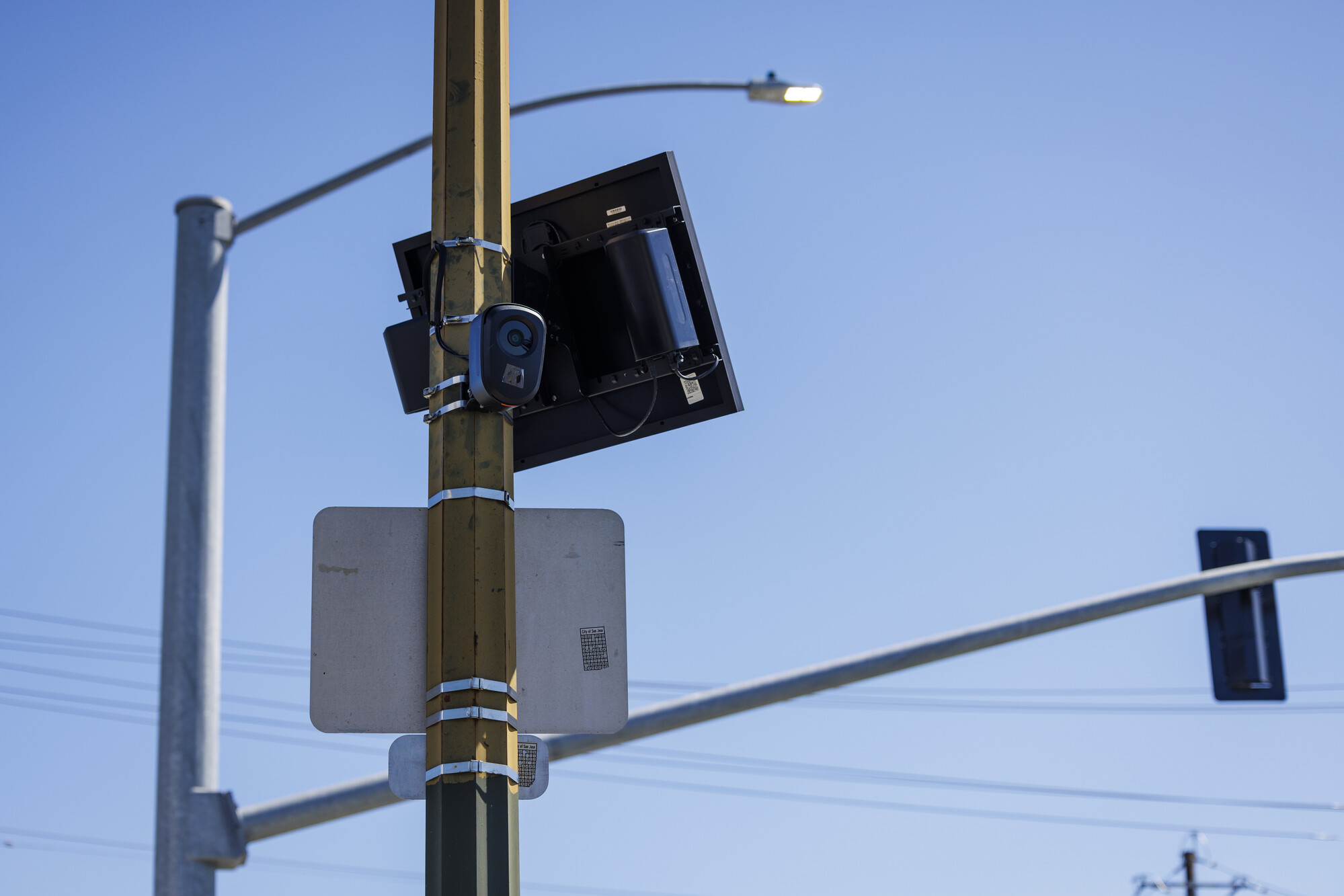
"caption": "A Flock Safety license plate recognition camera is seen near the intersection of Marine Street and Arapahoe Avenue in Boulder on March 5, 2026.",
"credit": "Matthew Jonas/MediaNews Group/Boulder Daily Camera via Getty Images",
"altTag": null,
"description": null,
"imgSizes": {
"thumbnail": {
"file": "https://cdn.kqed.org/wp-content/uploads/sites/10/2026/03/GETTYIMAGES-2265184865-KQED-160x107.jpg",
"width": 160,
"height": 107,
"mimeType": "image/jpeg"
},
"1536x1536": {
"file": "https://cdn.kqed.org/wp-content/uploads/sites/10/2026/03/GETTYIMAGES-2265184865-KQED-1536x1024.jpg",
"width": 1536,
"height": 1024,
"mimeType": "image/jpeg"
},
"post-thumbnail": {
"file": "https://cdn.kqed.org/wp-content/uploads/sites/10/2026/03/GETTYIMAGES-2265184865-KQED-672x372.jpg",
"width": 672,
"height": 372,
"mimeType": "image/jpeg"
},
"twentyfourteen-full-width": {
"file": "https://cdn.kqed.org/wp-content/uploads/sites/10/2026/03/GETTYIMAGES-2265184865-KQED-1038x576.jpg",
"width": 1038,
"height": 576,
"mimeType": "image/jpeg"
},
"npr-cds-wide": {
"file": "https://cdn.kqed.org/wp-content/uploads/sites/10/2026/03/GETTYIMAGES-2265184865-KQED-1200x675.jpg",
"width": 1200,
"height": 675,
"mimeType": "image/jpeg"
},
"kqedFullSize": {
"file": "https://cdn.kqed.org/wp-content/uploads/sites/10/2026/03/GETTYIMAGES-2265184865-KQED.jpg",
"width": 2000,
"height": 1333
}
},
"isLoading": false,
"fetchFailed": false
},
"news_12096109": {
"type": "attachments",
"id": "news_12096109",
"meta": {
"index": "attachments_1716263798",
"site": "news",
"id": "12096109",
"found": true
},
"title": "260501-OAKLAND MAY DAY-MD-05_qed",
"publishDate": 1787254053,
"status": "inherit",
"parent": 12096106,
"modified": 1787336857,
"caption": "Protesters march carrying a papier-mâché camera to protest the use of Flock security cameras at the Oakland Sin Fronteras May Day march in Oakland on May 1, 2026.",
"credit": "Martin do Nascimento/KQED",
"altTag": null,
"description": null,
"imgSizes": {
"thumbnail": {
"file": "https://cdn.kqed.org/wp-content/uploads/sites/10/2026/08/260501-OAKLAND-MAY-DAY-MD-05_qed-160x107.jpg",
"width": 160,
"height": 107,
"mimeType": "image/jpeg"
},
"1536x1536": {
"file": "https://cdn.kqed.org/wp-content/uploads/sites/10/2026/08/260501-OAKLAND-MAY-DAY-MD-05_qed-1536x1025.jpg",
"width": 1536,
"height": 1025,
"mimeType": "image/jpeg"
},
"post-thumbnail": {
"file": "https://cdn.kqed.org/wp-content/uploads/sites/10/2026/08/260501-OAKLAND-MAY-DAY-MD-05_qed-672x372.jpg",
"width": 672,
"height": 372,
"mimeType": "image/jpeg"
},
"twentyfourteen-full-width": {
"file": "https://cdn.kqed.org/wp-content/uploads/sites/10/2026/08/260501-OAKLAND-MAY-DAY-MD-05_qed-1038x576.jpg",
"width": 1038,
"height": 576,
"mimeType": "image/jpeg"
},
"npr-cds-wide": {
"file": "https://cdn.kqed.org/wp-content/uploads/sites/10/2026/08/260501-OAKLAND-MAY-DAY-MD-05_qed-1200x675.jpg",
"width": 1200,
"height": 675,
"mimeType": "image/jpeg"
},
"npr-cds-square": {
"file": "https://cdn.kqed.org/wp-content/uploads/sites/10/2026/08/260501-OAKLAND-MAY-DAY-MD-05_qed-600x600.jpg",
"width": 600,
"height": 600,
"mimeType": "image/jpeg"
},
"kqedFullSize": {
"file": "https://cdn.kqed.org/wp-content/uploads/sites/10/2026/08/260501-OAKLAND-MAY-DAY-MD-05_qed.jpg",
"width": 1998,
"height": 1333
}
},
"isLoading": false,
"fetchFailed": false
},
"news_12078560": {
"type": "attachments",
"id": "news_12078560",
"meta": {
"index": "attachments_1716263798",
"site": "news",
"id": "12078560",
"found": true
},
"title": "260402-FLOCK SECURITY CAMERA FILE-MD-03-KQED_1",
"publishDate": 1775174177,
"status": "inherit",
"parent": 0,
"modified": 1790098926,
"caption": "A Flock camera monitors the intersection at McKee Road and North White Road in San José on April 2, 2026.",
"credit": "Martin do Nascimento/KQED",
"altTag": null,
"description": null,
"imgSizes": {
"thumbnail": {
"file": "https://cdn.kqed.org/wp-content/uploads/sites/10/2026/04/260402-FLOCK-SECURITY-CAMERA-FILE-MD-03-KQED_1-160x107.jpg",
"width": 160,
"height": 107,
"mimeType": "image/jpeg"
},
"1536x1536": {
"file": "https://cdn.kqed.org/wp-content/uploads/sites/10/2026/04/260402-FLOCK-SECURITY-CAMERA-FILE-MD-03-KQED_1-1536x1025.jpg",
"width": 1536,
"height": 1025,
"mimeType": "image/jpeg"
},
"post-thumbnail": {
"file": "https://cdn.kqed.org/wp-content/uploads/sites/10/2026/04/260402-FLOCK-SECURITY-CAMERA-FILE-MD-03-KQED_1-672x372.jpg",
"width": 672,
"height": 372,
"mimeType": "image/jpeg"
},
"twentyfourteen-full-width": {
"file": "https://cdn.kqed.org/wp-content/uploads/sites/10/2026/04/260402-FLOCK-SECURITY-CAMERA-FILE-MD-03-KQED_1-1038x576.jpg",
"width": 1038,
"height": 576,
"mimeType": "image/jpeg"
},
"npr-cds-wide": {
"file": "https://cdn.kqed.org/wp-content/uploads/sites/10/2026/04/260402-FLOCK-SECURITY-CAMERA-FILE-MD-03-KQED_1-1200x675.jpg",
"width": 1200,
"height": 675,
"mimeType": "image/jpeg"
},
"npr-cds-square": {
"file": "https://cdn.kqed.org/wp-content/uploads/sites/10/2026/04/260402-FLOCK-SECURITY-CAMERA-FILE-MD-03-KQED_1-600x600.jpg",
"width": 600,
"height": 600,
"mimeType": "image/jpeg"
},
"kqedFullSize": {
"file": "https://cdn.kqed.org/wp-content/uploads/sites/10/2026/04/260402-FLOCK-SECURITY-CAMERA-FILE-MD-03-KQED_1.jpg",
"width": 2000,
"height": 1334
}
},
"isLoading": false,
"fetchFailed": false
},
"news_12078562": {
"type": "attachments",
"id": "news_12078562",
"meta": {
"index": "attachments_1716263798",
"site": "news",
"id": "12078562",
"found": true
},
"title": "260402-FLOCK SECURITY CAMERA FILE-MD-05-KQED_1",
"publishDate": 1775174184,
"status": "inherit",
"parent": 0,
"modified": 1787949646,
"caption": "A Flock camera monitors the intersection at McKee and North White roads in San José on April 2, 2026.",
"credit": "Martin do Nascimento/KQED",
"altTag": null,
"description": null,
"imgSizes": {
"thumbnail": {
"file": "https://cdn.kqed.org/wp-content/uploads/sites/10/2026/04/260402-FLOCK-SECURITY-CAMERA-FILE-MD-05-KQED_1-160x107.jpg",
"width": 160,
"height": 107,
"mimeType": "image/jpeg"
},
"1536x1536": {
"file": "https://cdn.kqed.org/wp-content/uploads/sites/10/2026/04/260402-FLOCK-SECURITY-CAMERA-FILE-MD-05-KQED_1-1536x1025.jpg",
"width": 1536,
"height": 1025,
"mimeType": "image/jpeg"
},
"post-thumbnail": {
"file": "https://cdn.kqed.org/wp-content/uploads/sites/10/2026/04/260402-FLOCK-SECURITY-CAMERA-FILE-MD-05-KQED_1-672x372.jpg",
"width": 672,
"height": 372,
"mimeType": "image/jpeg"
},
"twentyfourteen-full-width": {
"file": "https://cdn.kqed.org/wp-content/uploads/sites/10/2026/04/260402-FLOCK-SECURITY-CAMERA-FILE-MD-05-KQED_1-1038x576.jpg",
"width": 1038,
"height": 576,
"mimeType": "image/jpeg"
},
"npr-cds-wide": {
"file": "https://cdn.kqed.org/wp-content/uploads/sites/10/2026/04/260402-FLOCK-SECURITY-CAMERA-FILE-MD-05-KQED_1-1200x675.jpg",
"width": 1200,
"height": 675,
"mimeType": "image/jpeg"
},
"npr-cds-square": {
"file": "https://cdn.kqed.org/wp-content/uploads/sites/10/2026/04/260402-FLOCK-SECURITY-CAMERA-FILE-MD-05-KQED_1-600x600.jpg",
"width": 600,
"height": 600,
"mimeType": "image/jpeg"
},
"kqedFullSize": {
"file": "https://cdn.kqed.org/wp-content/uploads/sites/10/2026/04/260402-FLOCK-SECURITY-CAMERA-FILE-MD-05-KQED_1.jpg",
"width": 2000,
"height": 1334
}
},
"isLoading": false,
"fetchFailed": false
},
"news_12062228": {
"type": "attachments",
"id": "news_12062228",
"meta": {
"index": "attachments_1716263798",
"site": "news",
"id": "12062228",
"found": true
},
"title": "20251029_STANFORDFILE--_GH-3-KQED",
"publishDate": 1761843202,
"status": "inherit",
"parent": 12066592,
"modified": 1765387792,
"caption": "Students walk and bike past the fountain outside Memorial Auditorium at Stanford University in Stanford on Oct. 29, 2025.",
"credit": "Gustavo Hernandez/KQED",
"altTag": null,
"description": null,
"imgSizes": {
"thumbnail": {
"file": "https://cdn.kqed.org/wp-content/uploads/sites/10/2025/10/20251029_STANFORDFILE-_GH-3-KQED-160x107.jpg",
"width": 160,
"height": 107,
"mimeType": "image/jpeg"
},
"1536x1536": {
"file": "https://cdn.kqed.org/wp-content/uploads/sites/10/2025/10/20251029_STANFORDFILE-_GH-3-KQED-1536x1024.jpg",
"width": 1536,
"height": 1024,
"mimeType": "image/jpeg"
},
"post-thumbnail": {
"file": "https://cdn.kqed.org/wp-content/uploads/sites/10/2025/10/20251029_STANFORDFILE-_GH-3-KQED-672x372.jpg",
"width": 672,
"height": 372,
"mimeType": "image/jpeg"
},
"twentyfourteen-full-width": {
"file": "https://cdn.kqed.org/wp-content/uploads/sites/10/2025/10/20251029_STANFORDFILE-_GH-3-KQED-1038x576.jpg",
"width": 1038,
"height": 576,
"mimeType": "image/jpeg"
},
"npr-cds-wide": {
"file": "https://cdn.kqed.org/wp-content/uploads/sites/10/2025/10/20251029_STANFORDFILE-_GH-3-KQED-1600x900.jpg",
"width": 1600,
"height": 900,
"mimeType": "image/jpeg"
},
"kqedFullSize": {
"file": "https://cdn.kqed.org/wp-content/uploads/sites/10/2025/10/20251029_STANFORDFILE-_GH-3-KQED.jpg",
"width": 2000,
"height": 1333
}
},
"isLoading": false,
"fetchFailed": false
},
"news_12090104": {
"type": "attachments",
"id": "news_12090104",
"meta": {
"index": "attachments_1716263798",
"site": "news",
"id": "12090104",
"found": true
},
"title": "CAT_Flock Out_img",
"publishDate": 1783459082,
"status": "inherit",
"parent": 12090103,
"modified": 1783487319,
"caption": "Protesters advocating against Flock Safety cameras are surrounded by images of automated license plate readers.",
"credit": "Composite image by Maya Cueva and Chris Egusa; Images courtesy of Gustavo Hernandez via KQED, Tony Webster via Wikimedia Commons, and Eoneren via Getty Images",
"altTag": "Protesters in black and white advocating against Flock Safety cameras are holding signs that read ‘Get the Flock Out’ and other anti-surveillance slogans. The protesters are surrounded by automated license plate readers and other surveillance cameras. The text \"Close All Tabs\" appears in black text in the upper right corner.",
"description": null,
"imgSizes": {
"thumbnail": {
"file": "https://cdn.kqed.org/wp-content/uploads/sites/10/2026/07/CAT_Flock-Out_img-160x90.png",
"width": 160,
"height": 90,
"mimeType": "image/png"
},
"1536x1536": {
"file": "https://cdn.kqed.org/wp-content/uploads/sites/10/2026/07/CAT_Flock-Out_img-1536x864.png",
"width": 1536,
"height": 864,
"mimeType": "image/png"
},
"post-thumbnail": {
"file": "https://cdn.kqed.org/wp-content/uploads/sites/10/2026/07/CAT_Flock-Out_img-672x372.png",
"width": 672,
"height": 372,
"mimeType": "image/png"
},
"twentyfourteen-full-width": {
"file": "https://cdn.kqed.org/wp-content/uploads/sites/10/2026/07/CAT_Flock-Out_img-1038x576.png",
"width": 1038,
"height": 576,
"mimeType": "image/png"
},
"npr-cds-wide": {
"file": "https://cdn.kqed.org/wp-content/uploads/sites/10/2026/07/CAT_Flock-Out_img-1200x675.png",
"width": 1200,
"height": 675,
"mimeType": "image/png"
},
"npr-cds-square": {
"file": "https://cdn.kqed.org/wp-content/uploads/sites/10/2026/07/CAT_Flock-Out_img-600x600.png",
"width": 600,
"height": 600,
"mimeType": "image/png"
},
"kqedFullSize": {
"file": "https://cdn.kqed.org/wp-content/uploads/sites/10/2026/07/CAT_Flock-Out_img.png",
"width": 1920,
"height": 1080
}
},
"isLoading": false,
"fetchFailed": false
},
"news_12069708": {
"type": "attachments",
"id": "news_12069708",
"meta": {
"index": "attachments_1716263798",
"site": "news",
"id": "12069708",
"found": true
},
"title": "San Francisco Deploys License-Plate Reading Cameras To Catch Offenders",
"publishDate": 1768413795,
"status": "inherit",
"parent": 12069705,
"modified": 1768413847,
"caption": "In an aerial view, an automated license plate reader is seen mounted on a pole on June 13, 2024, in San Francisco, California. The city of San Francisco has installed 100 automated license plate readers across the city and plans to install 300 more in the coming weeks as officials look to technology to help combat crime in the city. ",
"credit": "Justin Sullivan/Getty Images",
"altTag": null,
"description": null,
"imgSizes": {
"thumbnail": {
"file": "https://cdn.kqed.org/wp-content/uploads/sites/10/2026/01/SFFlockSafetyGetty-160x112.jpg",
"width": 160,
"height": 112,
"mimeType": "image/jpeg"
},
"1536x1536": {
"file": "https://cdn.kqed.org/wp-content/uploads/sites/10/2026/01/SFFlockSafetyGetty-1536x1080.jpg",
"width": 1536,
"height": 1080,
"mimeType": "image/jpeg"
},
"post-thumbnail": {
"file": "https://cdn.kqed.org/wp-content/uploads/sites/10/2026/01/SFFlockSafetyGetty-672x372.jpg",
"width": 672,
"height": 372,
"mimeType": "image/jpeg"
},
"twentyfourteen-full-width": {
"file": "https://cdn.kqed.org/wp-content/uploads/sites/10/2026/01/SFFlockSafetyGetty-1038x576.jpg",
"width": 1038,
"height": 576,
"mimeType": "image/jpeg"
},
"npr-cds-wide": {
"file": "https://cdn.kqed.org/wp-content/uploads/sites/10/2026/01/SFFlockSafetyGetty-1200x675.jpg",
"width": 1200,
"height": 675,
"mimeType": "image/jpeg"
},
"kqedFullSize": {
"file": "https://cdn.kqed.org/wp-content/uploads/sites/10/2026/01/SFFlockSafetyGetty.jpg",
"width": 2000,
"height": 1406
}
},
"isLoading": false,
"fetchFailed": false
},
"news_12088084": {
"type": "attachments",
"id": "news_12088084",
"meta": {
"index": "attachments_1716263798",
"site": "news",
"id": "12088084",
"found": true
},
"title": "250418-SFPDFile-01-BL_qed",
"publishDate": 1781800777,
"status": "inherit",
"parent": 12088076,
"modified": 1781800787,
"caption": "San Francisco Police Department headquarters in San Francisco on April 18, 2025.",
"credit": "Beth LaBerge/KQED",
"altTag": null,
"description": null,
"imgSizes": {
"thumbnail": {
"file": "https://cdn.kqed.org/wp-content/uploads/sites/10/2026/06/250418-SFPDFile-01-BL_qed-160x107.jpg",
"width": 160,
"height": 107,
"mimeType": "image/jpeg"
},
"1536x1536": {
"file": "https://cdn.kqed.org/wp-content/uploads/sites/10/2026/06/250418-SFPDFile-01-BL_qed-1536x1024.jpg",
"width": 1536,
"height": 1024,
"mimeType": "image/jpeg"
},
"post-thumbnail": {
"file": "https://cdn.kqed.org/wp-content/uploads/sites/10/2026/06/250418-SFPDFile-01-BL_qed-672x372.jpg",
"width": 672,
"height": 372,
"mimeType": "image/jpeg"
},
"twentyfourteen-full-width": {
"file": "https://cdn.kqed.org/wp-content/uploads/sites/10/2026/06/250418-SFPDFile-01-BL_qed-1038x576.jpg",
"width": 1038,
"height": 576,
"mimeType": "image/jpeg"
},
"npr-cds-wide": {
"file": "https://cdn.kqed.org/wp-content/uploads/sites/10/2026/06/250418-SFPDFile-01-BL_qed-1200x675.jpg",
"width": 1200,
"height": 675,
"mimeType": "image/jpeg"
},
"npr-cds-square": {
"file": "https://cdn.kqed.org/wp-content/uploads/sites/10/2026/06/250418-SFPDFile-01-BL_qed-600x600.jpg",
"width": 600,
"height": 600,
"mimeType": "image/jpeg"
},
"kqedFullSize": {
"file": "https://cdn.kqed.org/wp-content/uploads/sites/10/2026/06/250418-SFPDFile-01-BL_qed.jpg",
"width": 1999,
"height": 1333
}
},
"isLoading": false,
"fetchFailed": false
},
"news_12082871": {
"type": "attachments",
"id": "news_12082871",
"meta": {
"index": "attachments_1716263798",
"site": "news",
"id": "12082871",
"found": true
},
"title": "050726BERKELEY FLOCK RALLY_GH_010-KQED",
"publishDate": 1778258324,
"status": "inherit",
"parent": 12093784,
"modified": 1785800207,
"caption": "A protester holds a sign during a rally opposing Berkeley’s proposed contract expansion with surveillance company Flock Safety outside the Berkeley Unified School District boardroom in Berkeley on May 7, 2026.",
"credit": "Gustavo Hernandez/KQED",
"altTag": null,
"description": null,
"imgSizes": {
"thumbnail": {
"file": "https://cdn.kqed.org/wp-content/uploads/sites/10/2026/05/050726BERKELEY-FLOCK-RALLY_GH_010-KQED-160x107.jpg",
"width": 160,
"height": 107,
"mimeType": "image/jpeg"
},
"1536x1536": {
"file": "https://cdn.kqed.org/wp-content/uploads/sites/10/2026/05/050726BERKELEY-FLOCK-RALLY_GH_010-KQED-1536x1024.jpg",
"width": 1536,
"height": 1024,
"mimeType": "image/jpeg"
},
"post-thumbnail": {
"file": "https://cdn.kqed.org/wp-content/uploads/sites/10/2026/05/050726BERKELEY-FLOCK-RALLY_GH_010-KQED-672x372.jpg",
"width": 672,
"height": 372,
"mimeType": "image/jpeg"
},
"twentyfourteen-full-width": {
"file": "https://cdn.kqed.org/wp-content/uploads/sites/10/2026/05/050726BERKELEY-FLOCK-RALLY_GH_010-KQED-1038x576.jpg",
"width": 1038,
"height": 576,
"mimeType": "image/jpeg"
},
"npr-cds-wide": {
"file": "https://cdn.kqed.org/wp-content/uploads/sites/10/2026/05/050726BERKELEY-FLOCK-RALLY_GH_010-KQED-1200x675.jpg",
"width": 1200,
"height": 675,
"mimeType": "image/jpeg"
},
"npr-cds-square": {
"file": "https://cdn.kqed.org/wp-content/uploads/sites/10/2026/05/050726BERKELEY-FLOCK-RALLY_GH_010-KQED-600x600.jpg",
"width": 600,
"height": 600,
"mimeType": "image/jpeg"
},
"kqedFullSize": {
"file": "https://cdn.kqed.org/wp-content/uploads/sites/10/2026/05/050726BERKELEY-FLOCK-RALLY_GH_010-KQED.jpg",
"width": 2000,
"height": 1333
}
},
"isLoading": false,
"fetchFailed": false
},
"news_12080236": {
"type": "attachments",
"id": "news_12080236",
"meta": {
"index": "attachments_1716263798",
"site": "news",
"id": "12080236",
"found": true
},
"title": "260402-FLOCK SECURITY CAMERA FILE-MD-04_qed",
"publishDate": 1776360227,
"status": "inherit",
"parent": 12080233,
"modified": 1776360250,
"caption": "Flock cameras monitor the intersection at McKee Road and North White Road in San José on April 2, 2026.",
"credit": "Martin do Nascimento/KQED",
"altTag": null,
"description": null,
"imgSizes": {
"thumbnail": {
"file": "https://cdn.kqed.org/wp-content/uploads/sites/10/2026/04/260402-FLOCK-SECURITY-CAMERA-FILE-MD-04_qed-160x107.jpg",
"width": 160,
"height": 107,
"mimeType": "image/jpeg"
},
"1536x1536": {
"file": "https://cdn.kqed.org/wp-content/uploads/sites/10/2026/04/260402-FLOCK-SECURITY-CAMERA-FILE-MD-04_qed-1536x1024.jpg",
"width": 1536,
"height": 1024,
"mimeType": "image/jpeg"
},
"post-thumbnail": {
"file": "https://cdn.kqed.org/wp-content/uploads/sites/10/2026/04/260402-FLOCK-SECURITY-CAMERA-FILE-MD-04_qed-672x372.jpg",
"width": 672,
"height": 372,
"mimeType": "image/jpeg"
},
"twentyfourteen-full-width": {
"file": "https://cdn.kqed.org/wp-content/uploads/sites/10/2026/04/260402-FLOCK-SECURITY-CAMERA-FILE-MD-04_qed-1038x576.jpg",
"width": 1038,
"height": 576,
"mimeType": "image/jpeg"
},
"npr-cds-wide": {
"file": "https://cdn.kqed.org/wp-content/uploads/sites/10/2026/04/260402-FLOCK-SECURITY-CAMERA-FILE-MD-04_qed-1200x675.jpg",
"width": 1200,
"height": 675,
"mimeType": "image/jpeg"
},
"npr-cds-square": {
"file": "https://cdn.kqed.org/wp-content/uploads/sites/10/2026/04/260402-FLOCK-SECURITY-CAMERA-FILE-MD-04_qed-600x600.jpg",
"width": 600,
"height": 600,
"mimeType": "image/jpeg"
},
"kqedFullSize": {
"file": "https://cdn.kqed.org/wp-content/uploads/sites/10/2026/04/260402-FLOCK-SECURITY-CAMERA-FILE-MD-04_qed.jpg",
"width": 1999,
"height": 1333
}
},
"isLoading": false,
"fetchFailed": false
}
},
"audioPlayerReducer": {
"postId": "stream_live",
"isPaused": true,
"isPlaying": false,
"pfsActive": false,
"pledgeModalIsOpen": true,
"playerDrawerIsOpen": false,
"liveAudioPlayStartedAt": 0,
"liveAudioPlayContext": ""
},
"authorsReducer": {
"byline_news_12101186": {
"type": "authors",
"id": "byline_news_12101186",
"meta": {
"override": true
},
"slug": "byline_news_12101186",
"name": "Alina Ta",
"isLoading": false
},
"byline_news_12100732": {
"type": "authors",
"id": "byline_news_12100732",
"meta": {
"override": true
},
"slug": "byline_news_12100732",
"name": "Emily Tenorio-Molina",
"isLoading": false
},
"byline_news_12093784": {
"type": "authors",
"id": "byline_news_12093784",
"meta": {
"override": true
},
"slug": "byline_news_12093784",
"name": "Ryan Sabalow, CalMatters",
"isLoading": false
},
"chambrick": {
"type": "authors",
"id": "11832",
"meta": {
"index": "authors_1716337520",
"id": "11832",
"found": true
},
"name": "Chris Hambrick",
"firstName": "Chris",
"lastName": "Hambrick",
"slug": "chambrick",
"email": "chambrick@kqed.org",
"display_author_email": false,
"staff_mastheads": [],
"title": "KQED Contributor",
"bio": null,
"avatar": "https://secure.gravatar.com/avatar/23cb83888bc440645af5d36d0d1909e8ecb6cef21f2fdb96abf9a55495bb19d8?s=600&d=blank&r=g",
"twitter": null,
"bluesky": null,
"facebook": null,
"instagram": null,
"linkedin": null,
"sites": [
{
"site": "",
"roles": [
"editor"
]
},
{
"site": "arts",
"roles": [
"editor"
]
},
{
"site": "news",
"roles": [
"editor"
]
},
{
"site": "podcasts",
"roles": [
"editor"
]
}
],
"headData": {
"title": "Chris Hambrick | KQED",
"description": "KQED Contributor",
"ogImgSrc": "https://secure.gravatar.com/avatar/23cb83888bc440645af5d36d0d1909e8ecb6cef21f2fdb96abf9a55495bb19d8?s=600&d=blank&r=g",
"twImgSrc": "https://secure.gravatar.com/avatar/23cb83888bc440645af5d36d0d1909e8ecb6cef21f2fdb96abf9a55495bb19d8?s=600&d=blank&r=g"
},
"isLoading": false,
"link": "/author/chambrick"
},
"cegusa": {
"type": "authors",
"id": "11869",
"meta": {
"index": "authors_1716337520",
"id": "11869",
"found": true
},
"name": "Chris Egusa",
"firstName": "Chris",
"lastName": "Egusa",
"slug": "cegusa",
"email": "cegusa@kqed.org",
"display_author_email": false,
"staff_mastheads": [],
"title": "KQED Contributor",
"bio": null,
"avatar": "https://secure.gravatar.com/avatar/3562ed52747313a4c94017da88ea89f9e85cd901f63ebc056a7d5e0adf4a03da?s=600&d=blank&r=g",
"twitter": null,
"bluesky": null,
"facebook": null,
"instagram": null,
"linkedin": null,
"sites": [
{
"site": "arts",
"roles": [
"editor"
]
},
{
"site": "news",
"roles": [
"editor"
]
}
],
"headData": {
"title": "Chris Egusa | KQED",
"description": "KQED Contributor",
"ogImgSrc": "https://secure.gravatar.com/avatar/3562ed52747313a4c94017da88ea89f9e85cd901f63ebc056a7d5e0adf4a03da?s=600&d=blank&r=g",
"twImgSrc": "https://secure.gravatar.com/avatar/3562ed52747313a4c94017da88ea89f9e85cd901f63ebc056a7d5e0adf4a03da?s=600&d=blank&r=g"
},
"isLoading": false,
"link": "/author/cegusa"
},
"jgeha": {
"type": "authors",
"id": "11906",
"meta": {
"index": "authors_1716337520",
"id": "11906",
"found": true
},
"name": "Joseph Geha",
"firstName": "Joseph",
"lastName": "Geha",
"slug": "jgeha",
"email": "jgeha@kqed.org",
"display_author_email": false,
"staff_mastheads": [
"news",
"science"
],
"title": "KQED Contributor",
"bio": null,
"avatar": "https://secure.gravatar.com/avatar/ea84d2b6dd93d6369d453edf19dd583f117cd1759d2d9c9c92f9de77017354fe?s=600&d=blank&r=g",
"twitter": null,
"bluesky": null,
"facebook": null,
"instagram": null,
"linkedin": null,
"sites": [
{
"site": "news",
"roles": [
"editor"
]
},
{
"site": "liveblog",
"roles": [
"author"
]
}
],
"headData": {
"title": "Joseph Geha | KQED",
"description": "KQED Contributor",
"ogImgSrc": "https://secure.gravatar.com/avatar/ea84d2b6dd93d6369d453edf19dd583f117cd1759d2d9c9c92f9de77017354fe?s=600&d=blank&r=g",
"twImgSrc": "https://secure.gravatar.com/avatar/ea84d2b6dd93d6369d453edf19dd583f117cd1759d2d9c9c92f9de77017354fe?s=600&d=blank&r=g"
},
"isLoading": false,
"link": "/author/jgeha"
},
"kdebenedetti": {
"type": "authors",
"id": "11913",
"meta": {
"index": "authors_1716337520",
"id": "11913",
"found": true
},
"name": "Katie DeBenedetti",
"firstName": "Katie",
"lastName": "DeBenedetti",
"slug": "kdebenedetti",
"email": "kdebenedetti@kqed.org",
"display_author_email": false,
"staff_mastheads": [
"news",
"science"
],
"title": "KQED Contributor",
"bio": "Katie DeBenedetti is a digital reporter covering daily news for the Express Desk. Prior to joining KQED as a culture reporting intern in January 2024, she covered education and city government for the Napa Valley Register.",
"avatar": "https://secure.gravatar.com/avatar/6e31073cb8f7e4214ab03f42771d0f45?s=600&d=blank&r=g",
"twitter": null,
"facebook": null,
"instagram": null,
"linkedin": null,
"sites": [
{
"site": "news",
"roles": [
"author"
]
},
{
"site": "science",
"roles": [
"author"
]
},
{
"site": "liveblog",
"roles": [
"author"
]
}
],
"headData": {
"title": "Katie DeBenedetti | KQED",
"description": "KQED Contributor",
"ogImgSrc": "https://secure.gravatar.com/avatar/6e31073cb8f7e4214ab03f42771d0f45?s=600&d=blank&r=g",
"twImgSrc": "https://secure.gravatar.com/avatar/6e31073cb8f7e4214ab03f42771d0f45?s=600&d=blank&r=g"
},
"isLoading": false,
"link": "/author/kdebenedetti"
},
"skennedy": {
"type": "authors",
"id": "11935",
"meta": {
"index": "authors_1716337520",
"id": "11935",
"found": true
},
"name": "Samantha Kennedy",
"firstName": "Samantha",
"lastName": "Kennedy",
"slug": "skennedy",
"email": "SKennedy@kqed.org",
"display_author_email": false,
"staff_mastheads": [],
"title": "KQED Contributor",
"bio": null,
"avatar": "https://secure.gravatar.com/avatar/adc7b14bf1e801793202a156ecc864d4ad505b0fd63162a2f3da0e5ba57222d0?s=600&d=blank&r=g",
"twitter": null,
"bluesky": null,
"facebook": null,
"instagram": null,
"linkedin": null,
"sites": [
{
"site": "arts",
"roles": [
"author"
]
},
{
"site": "news",
"roles": [
"editor"
]
},
{
"site": "science",
"roles": [
"editor"
]
}
],
"headData": {
"title": "Samantha Kennedy | KQED",
"description": "KQED Contributor",
"ogImgSrc": "https://secure.gravatar.com/avatar/adc7b14bf1e801793202a156ecc864d4ad505b0fd63162a2f3da0e5ba57222d0?s=600&d=blank&r=g",
"twImgSrc": "https://secure.gravatar.com/avatar/adc7b14bf1e801793202a156ecc864d4ad505b0fd63162a2f3da0e5ba57222d0?s=600&d=blank&r=g"
},
"isLoading": false,
"link": "/author/skennedy"
},
"mcueva": {
"type": "authors",
"id": "11943",
"meta": {
"index": "authors_1716337520",
"id": "11943",
"found": true
},
"name": "Maya Cueva",
"firstName": "Maya",
"lastName": "Cueva",
"slug": "mcueva",
"email": "mcueva@kqed.org",
"display_author_email": false,
"staff_mastheads": [],
"title": "KQED Contributor",
"bio": null,
"avatar": "https://secure.gravatar.com/avatar/238c7aba67c4b6b7b891965ba8cc9e9a4928b5dbdeaf4bde6a81c13e87f49b49?s=600&d=blank&r=g",
"twitter": null,
"bluesky": null,
"facebook": null,
"instagram": null,
"linkedin": null,
"sites": [
{
"site": "news",
"roles": [
"editor"
]
}
],
"headData": {
"title": "Maya Cueva | KQED",
"description": "KQED Contributor",
"ogImgSrc": "https://secure.gravatar.com/avatar/238c7aba67c4b6b7b891965ba8cc9e9a4928b5dbdeaf4bde6a81c13e87f49b49?s=600&d=blank&r=g",
"twImgSrc": "https://secure.gravatar.com/avatar/238c7aba67c4b6b7b891965ba8cc9e9a4928b5dbdeaf4bde6a81c13e87f49b49?s=600&d=blank&r=g"
},
"isLoading": false,
"link": "/author/mcueva"
},
"msung": {
"type": "authors",
"id": "11944",
"meta": {
"index": "authors_1716337520",
"id": "11944",
"found": true
},
"name": "Morgan Sung",
"firstName": "Morgan",
"lastName": "Sung",
"slug": "msung",
"email": "msung@kqed.org",
"display_author_email": false,
"staff_mastheads": [],
"title": "Close All Tabs Host",
"bio": null,
"avatar": "https://secure.gravatar.com/avatar/34033b8d232ee6c987ca6f0a1a28f0e5?s=600&d=blank&r=g",
"twitter": null,
"facebook": null,
"instagram": null,
"linkedin": null,
"sites": [
{
"site": "news",
"roles": [
"editor"
]
}
],
"headData": {
"title": "Morgan Sung | KQED",
"description": "Close All Tabs Host",
"ogImgSrc": "https://secure.gravatar.com/avatar/34033b8d232ee6c987ca6f0a1a28f0e5?s=600&d=blank&r=g",
"twImgSrc": "https://secure.gravatar.com/avatar/34033b8d232ee6c987ca6f0a1a28f0e5?s=600&d=blank&r=g"
},
"isLoading": false,
"link": "/author/msung"
},
"aaliahmad": {
"type": "authors",
"id": "11986",
"meta": {
"index": "authors_1716337520",
"id": "11986",
"found": true
},
"name": "Ayah Ali-Ahmad",
"firstName": "Ayah",
"lastName": "Ali-Ahmad",
"slug": "aaliahmad",
"email": "aaliahmad@KQED.org",
"display_author_email": false,
"staff_mastheads": [],
"title": "KQED Contributor",
"bio": null,
"avatar": "https://secure.gravatar.com/avatar/1cf54f187a5e1064b2cfef3f3d2f1e4f93e453395d56912aca6382a6071ec3ed?s=600&d=blank&r=g",
"twitter": "ayahaliahmad",
"bluesky": null,
"facebook": null,
"instagram": null,
"linkedin": null,
"sites": [
{
"site": "news",
"roles": [
"subscriber"
]
}
],
"headData": {
"title": "Ayah Ali-Ahmad | KQED",
"description": "KQED Contributor",
"ogImgSrc": "https://secure.gravatar.com/avatar/1cf54f187a5e1064b2cfef3f3d2f1e4f93e453395d56912aca6382a6071ec3ed?s=600&d=blank&r=g",
"twImgSrc": "https://secure.gravatar.com/avatar/1cf54f187a5e1064b2cfef3f3d2f1e4f93e453395d56912aca6382a6071ec3ed?s=600&d=blank&r=g"
},
"isLoading": false,
"link": "/author/aaliahmad"
}
},
"pagesReducer": {
"news_tag_flock-safety": {
"type": "terms",
"id": "news_36201",
"meta": {
"index": "terms_1716263798",
"site": "news",
"id": "36201",
"score": 10.404648
},
"name": "Flock Safety",
"slug": "flock-safety",
"taxonomy": "tag",
"description": null,
"featImg": null,
"headData": {
"title": "Flock Safety | KQED News",
"description": null,
"ogTitle": null,
"ogDescription": null,
"ogImgId": null,
"twTitle": null,
"twDescription": null,
"twImgId": null
},
"ttid": 36218,
"isLoading": false,
"title": "Flock Safety",
"pageMeta": {
"site": "news",
"WpPageTemplate": "page-topic-editorial",
"currentPage": 1
},
"blocks": [
{
"blockName": "kqed/post-list",
"attrs": {
"layout": "cardArticle2",
"query": "posts/news?tag=flock-safety",
"seeMore": false,
"paginated": true,
"page": 1
}
},
{
"blockName": "kqed/ad"
}
]
}
},
"pfsSessionReducer": {},
"postsReducer": {
"stream_live": {
"type": "live",
"id": "stream_live",
"audioUrl": "https://streams.kqed.org/kqedradio",
"title": "Live Stream",
"excerpt": "Live Stream information currently unavailable.",
"link": "/radio",
"featImg": "",
"label": {
"name": "KQED Live",
"link": "/"
}
},
"stream_kqedNewscast": {
"type": "posts",
"id": "stream_kqedNewscast",
"audioUrl": "https://www.kqed.org/.stream/anon/radio/RDnews/newscast.mp3?_=1",
"title": "KQED Newscast",
"featImg": "",
"label": {
"name": "88.5 FM",
"link": "/"
}
},
"news_12102922": {
"type": "posts",
"id": "news_12102922",
"meta": {
"index": "posts_1716263798",
"site": "news",
"id": "12102922",
"score": null,
"sort": [
1791241869000
]
},
"guestAuthors": [],
"slug": "south-bay-judge-rules-san-joses-flock-cameras-dont-invade-privacy",
"title": "South Bay Judge Rules San José’s Flock Cameras Don’t Invade Privacy ",
"publishDate": 1791241869,
"format": "standard",
"headTitle": "South Bay Judge Rules San José’s Flock Cameras Don’t Invade Privacy | KQED",
"labelTerm": {
"site": "news"
},
"content": "\n\u003cp>A Santa Clara County judge has dismissed a \u003ca href=\"https://www.kqed.org/news/12064587/civil-liberties-groups-sue-san-jose-over-license-plate-reader-use\">lawsuit\u003c/a> challenging San José’s massive license plate reader network, dealing a major blow to advocates for privacy and civil liberties. \u003c/p>\n\n\n\n\u003cp>In a ruling on Friday, Judge Jeffrey El-Hajj said that the city’s arsenal of \u003ca href=\"https://www.kqed.org/news/11983813/san-jose-adding-hundreds-of-license-plate-readers-amid-privacy-and-efficacy-concerns\">nearly 500\u003c/a> Flock automated license plate readers, which scan hundreds of millions of plates every year, does not violate people’s right to privacy, as the lawsuit alleged. \u003c/p>\n\n\n\n\u003cp>El-Hajj’s ruling leans on a decision from a state appeals court in 2024 that said a set of traffic surveillance cameras in San Diego was not an invasion of privacy. The decision this month sides with San José, which argued in a January filing that the lawsuit didn’t have a firm enough legal footing to continue. \u003c/p>\n\n\n\n\u003cfigure class=\"wp-block-image size-full\">\u003cimg loading=\"lazy\" decoding=\"async\" width=\"2000\" height=\"1334\" src=\"https://cdn.kqed.org/wp-content/uploads/sites/10/2026/04/260402-FLOCK-SECURITY-CAMERA-FILE-MD-02-KQED_1.jpg\" alt=\"\" class=\"wp-image-12078559\" srcset=\"https://cdn.kqed.org/wp-content/uploads/sites/10/2026/04/260402-FLOCK-SECURITY-CAMERA-FILE-MD-02-KQED_1.jpg 2000w, https://cdn.kqed.org/wp-content/uploads/sites/10/2026/04/260402-FLOCK-SECURITY-CAMERA-FILE-MD-02-KQED_1-160x107.jpg 160w, https://cdn.kqed.org/wp-content/uploads/sites/10/2026/04/260402-FLOCK-SECURITY-CAMERA-FILE-MD-02-KQED_1-1536x1025.jpg 1536w\" sizes=\"auto, (max-width: 2000px) 100vw, 2000px\" />\u003cfigcaption class=\"wp-element-caption\">A Flock camera monitors the intersection at McKee Road and North White Road in San José on April 2, 2026. (Martin do Nascimento/KQED)\u003c/figcaption>\u003c/figure>\n\n\n\n\u003cp>“We are pleased with the court’s decision as it validates that the city’s deployment and oversight of its ALPR system meets required constitutional privacy standards,” City Attorney Susana Alcala Wood said in an emailed statement on Monday. \u003c/p>\n\n\n\n\u003cp>In November 2025, the American Civil Liberties Union of Northern California and the Electronic Frontier Foundation filed the lawsuit on behalf of the California chapter of the Council on American Islamic Relations, known as CAIR-CA, and the Services, Immigrant Rights and Education Network, known as SIREN. \u003c/p>\n\n\n\n\u003cp>The lawsuit said the city’s nearly 500 license plate readers and its searchable AI-powered database that stores plate and car information for a month amount to a “deeply invasive” mass surveillance system that violates residents’ rights to privacy under the California Constitution. The group argued that a warrant should be required before such searches could take place. \u003c/p>\n\n\n\n\u003cp>When the lawsuit was first filed, San José was keeping that information for a year. \u003c/p>\n\n\n\n\u003cp>Andrew Crocker, the surveillance litigation director for the EFF, said the group is disappointed in the ruling and that the plaintiffs may file an appeal. \u003c/p>\n\n\n\n\u003cp>“We’re considering all our options about how to proceed in this case, but we think that the tide is turning against ALPRs both in the courts and in just public sentiment around the country,” Crocker said Monday. “We can see folks objecting to existing ALPR networks and trying to block them being further expanded.”\u003c/p>\n\n\n\n\n\n\u003cp>Crocker said the question of how large, connected networks of ALPRs like the one in San José fare against the rights of residents under the U.S. and state constitutions “is a cutting-edge issue” that courts are wrangling with currently. \u003c/p>\n\n\n\n\u003cp>“You can see courts around the country, including a federal district court in \u003ca href=\"https://local21news.com/news/local/judge-rules-police-conducted-unconstitutional-search-using-flock-cameras-automatic-license-plate-reader-alpr-federal-district-court-ruling-california-oklahoma-fourth-amendment-privacy-law\">Oklahoma\u003c/a>, coming to a different conclusion and saying that ALPRs are a violation of the Fourth Amendment because they invade people’s expectation of privacy against being tracked everywhere they drive,” Crocker said. \u003c/p>\n\n\n\n\u003cp>The court decision in Santa Clara County comes only weeks after officials revealed that a San José police officer was fired for abusing the city’s license plate reader network to help his family member track the whereabouts of a woman who accused the family member of domestic violence.\u003c/p>\n\n\n\n\u003cp>In the wake of that revelation, Mayor Matt Mahan said he’ll petition state lawmakers to make it a crime to abuse such systems. Mahan and Vice Mayor Pam Foley also put forth a proposal to beef up audits of police searches and \u003ca href=\"https://www.kqed.org/news/12101186/its-not-illegal-for-california-police-to-misuse-flock-data-san-jose-leaders-want-to-change-that\">tighten restrictions\u003c/a> on how police can access the database, barring them from using personal devices. \u003c/p>\n\n\n\n\u003cp>The city has also reduced the amount of time it retains license plate and car information from one year to 30 days, and has barred the cameras from recording outside places of worship, reproductive health clinics and other sensitive locations, officials said.\u003c/p>\n\n\n\n\u003cp>Crocker said the restrictions don’t go nearly far enough. \u003c/p>\n\n\n\n\u003cp>“Clearly these cities are recognizing there’s a problem, and I don’t think that restrictions like this are going to solve that problem. Really any use of ALPRs is harmful, and the only way to stop the risk of this kind of abuse is to end their use in these cities,” Crocker said. \u003c/p>\n\n\n\n\u003cp>“Short of that, they could get a warrant, they could go before a court and present probable cause to run these searches, which is what we’re seeking in this lawsuit,” he said. “San José has not done that. San Francisco has not done that. So it’s insufficient, and it’s very likely that we will see further abuse of these systems.” \u003c/p>\n\n\n\n\u003cp>Alcala Wood said the city’s use of the readers seeks “to balance the use of a significant crime detection and community safety tool with stringent protection of individual privacy rights.” \u003c/p>\n\n\n\n\u003cfigure class=\"wp-block-image size-full\">\u003cimg loading=\"lazy\" decoding=\"async\" width=\"2000\" height=\"1333\" src=\"https://cdn.kqed.org/wp-content/uploads/sites/10/2024/04/SAN-JOSE-LICENSE-PLATE-READERS-11-KQED.jpg\" alt=\"A man with a fluorescent yellow coat holds a black machine.\" class=\"wp-image-11984097\" srcset=\"https://cdn.kqed.org/wp-content/uploads/sites/10/2024/04/SAN-JOSE-LICENSE-PLATE-READERS-11-KQED.jpg 2000w, https://cdn.kqed.org/wp-content/uploads/sites/10/2024/04/SAN-JOSE-LICENSE-PLATE-READERS-11-KQED-800x533.jpg 800w, https://cdn.kqed.org/wp-content/uploads/sites/10/2024/04/SAN-JOSE-LICENSE-PLATE-READERS-11-KQED-1020x680.jpg 1020w, https://cdn.kqed.org/wp-content/uploads/sites/10/2024/04/SAN-JOSE-LICENSE-PLATE-READERS-11-KQED-160x107.jpg 160w, https://cdn.kqed.org/wp-content/uploads/sites/10/2024/04/SAN-JOSE-LICENSE-PLATE-READERS-11-KQED-1536x1024.jpg 1536w, https://cdn.kqed.org/wp-content/uploads/sites/10/2024/04/SAN-JOSE-LICENSE-PLATE-READERS-11-KQED-1920x1280.jpg 1920w\" sizes=\"auto, (max-width: 2000px) 100vw, 2000px\" />\u003cfigcaption class=\"wp-element-caption\">A Flock Safety worker holds up a new automated license plate reader that was being installed in East San José on April 23, 2024. (Joseph Geha/KQED)\u003c/figcaption>\u003c/figure>\n\n\n\n\u003cp>San José is also still facing a \u003ca href=\"https://www.kqed.org/news/12080233/san-jose-residents-sue-city-saying-flock-safety-cameras-allow-mass-surveillance\">similar lawsuit\u003c/a> against the license plate reader network in federal court, where three residents have sued over privacy rights under the Fourth Amendment of the U.S. Constitution. The residents are seeking class-action status on behalf of all who live in the city who have or will have their license plate scanned. The city is also seeking a dismissal in that case, which is pending. \u003c/p>\n\n\n\n\u003cp>After media reports revealed that federal agencies like Customs and Border Protection and Immigration and Customs Enforcement were able to access data from vast local Flock camera networks across the country, more than two dozen cities and counties across the U.S. — including Santa Clara County, along with Santa Cruz and Los Altos Hills — cut contracts with or distanced themselves from Flock. \u003c/p>\n\n\n\n\u003cp>Other cities, like Oakland and San Francisco, have doubled down on their contracts, lauding the technology’s benefits to aid in investigations. \u003c/p>\n\n\n\n\u003cp>While Flock is the largest single purveyor of such cameras and software, Crocker said many cities and counties also maintain large networks of license plate readers from other vendors, and it’s those types of mass surveillance systems in general that “give rise to this invasion of privacy, these harms and the risk of abuse.”\u003c/p>\n",
"blocks": [
{
"blockName": "core/paragraph",
"attrs": {
"dropCap": false
},
"innerHTML": "\n\u003cp>A Santa Clara County judge has dismissed a \u003ca href=\"https://www.kqed.org/news/12064587/civil-liberties-groups-sue-san-jose-over-license-plate-reader-use\">lawsuit\u003c/a> challenging San José’s massive license plate reader network, dealing a major blow to advocates for privacy and civil liberties. \u003c/p>\n",
"innerContent": [
"\n\u003cp>A Santa Clara County judge has dismissed a \u003ca href=\"https://www.kqed.org/news/12064587/civil-liberties-groups-sue-san-jose-over-license-plate-reader-use\">lawsuit\u003c/a> challenging San José’s massive license plate reader network, dealing a major blow to advocates for privacy and civil liberties. \u003c/p>\n"
],
"innerBlocks": []
},
{
"blockName": "core/paragraph",
"attrs": {
"dropCap": false
},
"innerHTML": "\n\u003cp>In a ruling on Friday, Judge Jeffrey El-Hajj said that the city’s arsenal of \u003ca href=\"https://www.kqed.org/news/11983813/san-jose-adding-hundreds-of-license-plate-readers-amid-privacy-and-efficacy-concerns\">nearly 500\u003c/a> Flock automated license plate readers, which scan hundreds of millions of plates every year, does not violate people’s right to privacy, as the lawsuit alleged. \u003c/p>\n",
"innerContent": [
"\n\u003cp>In a ruling on Friday, Judge Jeffrey El-Hajj said that the city’s arsenal of \u003ca href=\"https://www.kqed.org/news/11983813/san-jose-adding-hundreds-of-license-plate-readers-amid-privacy-and-efficacy-concerns\">nearly 500\u003c/a> Flock automated license plate readers, which scan hundreds of millions of plates every year, does not violate people’s right to privacy, as the lawsuit alleged. \u003c/p>\n"
],
"innerBlocks": []
},
{
"blockName": "core/paragraph",
"attrs": {
"dropCap": false
},
"innerHTML": "\n\u003cp>El-Hajj’s ruling leans on a decision from a state appeals court in 2024 that said a set of traffic surveillance cameras in San Diego was not an invasion of privacy. The decision this month sides with San José, which argued in a January filing that the lawsuit didn’t have a firm enough legal footing to continue. \u003c/p>\n",
"innerContent": [
"\n\u003cp>El-Hajj’s ruling leans on a decision from a state appeals court in 2024 that said a set of traffic surveillance cameras in San Diego was not an invasion of privacy. The decision this month sides with San José, which argued in a January filing that the lawsuit didn’t have a firm enough legal footing to continue. \u003c/p>\n"
],
"innerBlocks": []
},
{
"blockName": "core/image",
"attrs": {
"id": 12078559,
"sizeSlug": "full",
"linkDestination": "none",
"alt": "",
"srcset": "https://cdn.kqed.org/wp-content/uploads/sites/10/2026/04/260402-FLOCK-SECURITY-CAMERA-FILE-MD-02-KQED_1.jpg 2000w, https://cdn.kqed.org/wp-content/uploads/sites/10/2026/04/260402-FLOCK-SECURITY-CAMERA-FILE-MD-02-KQED_1-160x107.jpg 160w, https://cdn.kqed.org/wp-content/uploads/sites/10/2026/04/260402-FLOCK-SECURITY-CAMERA-FILE-MD-02-KQED_1-1536x1025.jpg 1536w",
"sizes": "(min-width: 992px) min(100vw, 1536px), (min-width: 768px) min(100vw, 1280px), min(100vw, 1020px)"
},
"innerHTML": "\n\u003cfigure class=\"wp-block-image size-full\">\u003cimg src=\"https://cdn.kqed.org/wp-content/uploads/sites/10/2026/04/260402-FLOCK-SECURITY-CAMERA-FILE-MD-02-KQED_1.jpg\" alt=\"\" class=\"wp-image-12078559\" srcset=\"https://cdn.kqed.org/wp-content/uploads/sites/10/2026/04/260402-FLOCK-SECURITY-CAMERA-FILE-MD-02-KQED_1.jpg 2000w, https://cdn.kqed.org/wp-content/uploads/sites/10/2026/04/260402-FLOCK-SECURITY-CAMERA-FILE-MD-02-KQED_1-160x107.jpg 160w, https://cdn.kqed.org/wp-content/uploads/sites/10/2026/04/260402-FLOCK-SECURITY-CAMERA-FILE-MD-02-KQED_1-1536x1025.jpg 1536w\" sizes=\"(min-width: 992px) min(100vw, 1536px), (min-width: 768px) min(100vw, 1280px), min(100vw, 1020px)\"/>\u003cfigcaption class=\"wp-element-caption\">A Flock camera monitors the intersection at McKee Road and North White Road in San José on April 2, 2026.\u003ccite class=\"wp-inline-image-credit\"> (Martin do Nascimento/KQED)\u003c/cite>\u003c/figcaption>\u003c/figure>\n",
"innerContent": [
"\n\u003cfigure class=\"wp-block-image size-full\">\u003cimg src=\"https://cdn.kqed.org/wp-content/uploads/sites/10/2026/04/260402-FLOCK-SECURITY-CAMERA-FILE-MD-02-KQED_1.jpg\" alt=\"\" class=\"wp-image-12078559\"/>\u003cfigcaption class=\"wp-element-caption\">A Flock camera monitors the intersection at McKee Road and North White Road in San José on April 2, 2026.\u003ccite class=\"wp-inline-image-credit\"> (Martin do Nascimento/KQED)\u003c/cite>\u003c/figcaption>\u003c/figure>\n"
],
"innerBlocks": []
},
{
"blockName": "core/paragraph",
"attrs": {
"dropCap": false
},
"innerHTML": "\n\u003cp>“We are pleased with the court’s decision as it validates that the city’s deployment and oversight of its ALPR system meets required constitutional privacy standards,” City Attorney Susana Alcala Wood said in an emailed statement on Monday. \u003c/p>\n",
"innerContent": [
"\n\u003cp>“We are pleased with the court’s decision as it validates that the city’s deployment and oversight of its ALPR system meets required constitutional privacy standards,” City Attorney Susana Alcala Wood said in an emailed statement on Monday. \u003c/p>\n"
],
"innerBlocks": []
},
{
"blockName": "core/paragraph",
"attrs": {
"dropCap": false
},
"innerHTML": "\n\u003cp>In November 2025, the American Civil Liberties Union of Northern California and the Electronic Frontier Foundation filed the lawsuit on behalf of the California chapter of the Council on American Islamic Relations, known as CAIR-CA, and the Services, Immigrant Rights and Education Network, known as SIREN. \u003c/p>\n",
"innerContent": [
"\n\u003cp>In November 2025, the American Civil Liberties Union of Northern California and the Electronic Frontier Foundation filed the lawsuit on behalf of the California chapter of the Council on American Islamic Relations, known as CAIR-CA, and the Services, Immigrant Rights and Education Network, known as SIREN. \u003c/p>\n"
],
"innerBlocks": []
},
{
"blockName": "core/paragraph",
"attrs": {
"dropCap": false
},
"innerHTML": "\n\u003cp>The lawsuit said the city’s nearly 500 license plate readers and its searchable AI-powered database that stores plate and car information for a month amount to a “deeply invasive” mass surveillance system that violates residents’ rights to privacy under the California Constitution. The group argued that a warrant should be required before such searches could take place. \u003c/p>\n",
"innerContent": [
"\n\u003cp>The lawsuit said the city’s nearly 500 license plate readers and its searchable AI-powered database that stores plate and car information for a month amount to a “deeply invasive” mass surveillance system that violates residents’ rights to privacy under the California Constitution. The group argued that a warrant should be required before such searches could take place. \u003c/p>\n"
],
"innerBlocks": []
},
{
"blockName": "core/paragraph",
"attrs": {
"dropCap": false
},
"innerHTML": "\n\u003cp>When the lawsuit was first filed, San José was keeping that information for a year. \u003c/p>\n",
"innerContent": [
"\n\u003cp>When the lawsuit was first filed, San José was keeping that information for a year. \u003c/p>\n"
],
"innerBlocks": []
},
{
"blockName": "core/paragraph",
"attrs": {
"dropCap": false
},
"innerHTML": "\n\u003cp>Andrew Crocker, the surveillance litigation director for the EFF, said the group is disappointed in the ruling and that the plaintiffs may file an appeal. \u003c/p>\n",
"innerContent": [
"\n\u003cp>Andrew Crocker, the surveillance litigation director for the EFF, said the group is disappointed in the ruling and that the plaintiffs may file an appeal. \u003c/p>\n"
],
"innerBlocks": []
},
{
"blockName": "core/paragraph",
"attrs": {
"dropCap": false
},
"innerHTML": "\n\u003cp>“We’re considering all our options about how to proceed in this case, but we think that the tide is turning against ALPRs both in the courts and in just public sentiment around the country,” Crocker said Monday. “We can see folks objecting to existing ALPR networks and trying to block them being further expanded.”\u003c/p>\n",
"innerContent": [
"\n\u003cp>“We’re considering all our options about how to proceed in this case, but we think that the tide is turning against ALPRs both in the courts and in just public sentiment around the country,” Crocker said Monday. “We can see folks objecting to existing ALPR networks and trying to block them being further expanded.”\u003c/p>\n"
],
"innerBlocks": []
},
{
"blockName": "kqed-v2/related-articles",
"attrs": {
"postIds": [
"news_12101186"
],
"label": "Related Articles",
"maxPosts": 1,
"showImages": false,
"heroImage": "https://cdn.kqed.org/wp-content/uploads/sites/10/2026/08/260501-OAKLAND-MAY-DAY-MD-05_qed.jpg",
"query": "",
"labelWasCleared": false,
"heroImageAlt": "",
"heroImageLink": "",
"labelLink": "",
"alignment": "right",
"target": "_self",
"manualLinks": [],
"posts": []
},
"innerHTML": "",
"innerContent": [],
"innerBlocks": []
},
{
"blockName": "core/paragraph",
"attrs": {
"dropCap": false
},
"innerHTML": "\n\u003cp>Crocker said the question of how large, connected networks of ALPRs like the one in San José fare against the rights of residents under the U.S. and state constitutions “is a cutting-edge issue” that courts are wrangling with currently. \u003c/p>\n",
"innerContent": [
"\n\u003cp>Crocker said the question of how large, connected networks of ALPRs like the one in San José fare against the rights of residents under the U.S. and state constitutions “is a cutting-edge issue” that courts are wrangling with currently. \u003c/p>\n"
],
"innerBlocks": []
},
{
"blockName": "core/paragraph",
"attrs": {
"dropCap": false
},
"innerHTML": "\n\u003cp>“You can see courts around the country, including a federal district court in \u003ca href=\"https://local21news.com/news/local/judge-rules-police-conducted-unconstitutional-search-using-flock-cameras-automatic-license-plate-reader-alpr-federal-district-court-ruling-california-oklahoma-fourth-amendment-privacy-law\">Oklahoma\u003c/a>, coming to a different conclusion and saying that ALPRs are a violation of the Fourth Amendment because they invade people’s expectation of privacy against being tracked everywhere they drive,” Crocker said. \u003c/p>\n",
"innerContent": [
"\n\u003cp>“You can see courts around the country, including a federal district court in \u003ca href=\"https://local21news.com/news/local/judge-rules-police-conducted-unconstitutional-search-using-flock-cameras-automatic-license-plate-reader-alpr-federal-district-court-ruling-california-oklahoma-fourth-amendment-privacy-law\">Oklahoma\u003c/a>, coming to a different conclusion and saying that ALPRs are a violation of the Fourth Amendment because they invade people’s expectation of privacy against being tracked everywhere they drive,” Crocker said. \u003c/p>\n"
],
"innerBlocks": []
},
{
"blockName": "core/paragraph",
"attrs": {
"dropCap": false
},
"innerHTML": "\n\u003cp>The court decision in Santa Clara County comes only weeks after officials revealed that a San José police officer was fired for abusing the city’s license plate reader network to help his family member track the whereabouts of a woman who accused the family member of domestic violence.\u003c/p>\n",
"innerContent": [
"\n\u003cp>The court decision in Santa Clara County comes only weeks after officials revealed that a San José police officer was fired for abusing the city’s license plate reader network to help his family member track the whereabouts of a woman who accused the family member of domestic violence.\u003c/p>\n"
],
"innerBlocks": []
},
{
"blockName": "core/paragraph",
"attrs": {
"dropCap": false
},
"innerHTML": "\n\u003cp>In the wake of that revelation, Mayor Matt Mahan said he’ll petition state lawmakers to make it a crime to abuse such systems. Mahan and Vice Mayor Pam Foley also put forth a proposal to beef up audits of police searches and \u003ca href=\"https://www.kqed.org/news/12101186/its-not-illegal-for-california-police-to-misuse-flock-data-san-jose-leaders-want-to-change-that\">tighten restrictions\u003c/a> on how police can access the database, barring them from using personal devices. \u003c/p>\n",
"innerContent": [
"\n\u003cp>In the wake of that revelation, Mayor Matt Mahan said he’ll petition state lawmakers to make it a crime to abuse such systems. Mahan and Vice Mayor Pam Foley also put forth a proposal to beef up audits of police searches and \u003ca href=\"https://www.kqed.org/news/12101186/its-not-illegal-for-california-police-to-misuse-flock-data-san-jose-leaders-want-to-change-that\">tighten restrictions\u003c/a> on how police can access the database, barring them from using personal devices. \u003c/p>\n"
],
"innerBlocks": []
},
{
"blockName": "core/paragraph",
"attrs": {
"dropCap": false
},
"innerHTML": "\n\u003cp>The city has also reduced the amount of time it retains license plate and car information from one year to 30 days, and has barred the cameras from recording outside places of worship, reproductive health clinics and other sensitive locations, officials said.\u003c/p>\n",
"innerContent": [
"\n\u003cp>The city has also reduced the amount of time it retains license plate and car information from one year to 30 days, and has barred the cameras from recording outside places of worship, reproductive health clinics and other sensitive locations, officials said.\u003c/p>\n"
],
"innerBlocks": []
},
{
"blockName": "core/paragraph",
"attrs": {
"dropCap": false
},
"innerHTML": "\n\u003cp>Crocker said the restrictions don’t go nearly far enough. \u003c/p>\n",
"innerContent": [
"\n\u003cp>Crocker said the restrictions don’t go nearly far enough. \u003c/p>\n"
],
"innerBlocks": []
},
{
"blockName": "core/paragraph",
"attrs": {
"dropCap": false
},
"innerHTML": "\n\u003cp>“Clearly these cities are recognizing there’s a problem, and I don’t think that restrictions like this are going to solve that problem. Really any use of ALPRs is harmful, and the only way to stop the risk of this kind of abuse is to end their use in these cities,” Crocker said. \u003c/p>\n",
"innerContent": [
"\n\u003cp>“Clearly these cities are recognizing there’s a problem, and I don’t think that restrictions like this are going to solve that problem. Really any use of ALPRs is harmful, and the only way to stop the risk of this kind of abuse is to end their use in these cities,” Crocker said. \u003c/p>\n"
],
"innerBlocks": []
},
{
"blockName": "core/paragraph",
"attrs": {
"dropCap": false
},
"innerHTML": "\n\u003cp>“Short of that, they could get a warrant, they could go before a court and present probable cause to run these searches, which is what we’re seeking in this lawsuit,” he said. “San José has not done that. San Francisco has not done that. So it’s insufficient, and it’s very likely that we will see further abuse of these systems.” \u003c/p>\n",
"innerContent": [
"\n\u003cp>“Short of that, they could get a warrant, they could go before a court and present probable cause to run these searches, which is what we’re seeking in this lawsuit,” he said. “San José has not done that. San Francisco has not done that. So it’s insufficient, and it’s very likely that we will see further abuse of these systems.” \u003c/p>\n"
],
"innerBlocks": []
},
{
"blockName": "core/paragraph",
"attrs": {
"dropCap": false
},
"innerHTML": "\n\u003cp>Alcala Wood said the city’s use of the readers seeks “to balance the use of a significant crime detection and community safety tool with stringent protection of individual privacy rights.” \u003c/p>\n",
"innerContent": [
"\n\u003cp>Alcala Wood said the city’s use of the readers seeks “to balance the use of a significant crime detection and community safety tool with stringent protection of individual privacy rights.” \u003c/p>\n"
],
"innerBlocks": []
},
{
"blockName": "core/image",
"attrs": {
"id": 11984097,
"sizeSlug": "full",
"linkDestination": "none",
"alt": "A man with a fluorescent yellow coat holds a black machine.",
"srcset": "https://cdn.kqed.org/wp-content/uploads/sites/10/2024/04/SAN-JOSE-LICENSE-PLATE-READERS-11-KQED.jpg 2000w, https://cdn.kqed.org/wp-content/uploads/sites/10/2024/04/SAN-JOSE-LICENSE-PLATE-READERS-11-KQED-800x533.jpg 800w, https://cdn.kqed.org/wp-content/uploads/sites/10/2024/04/SAN-JOSE-LICENSE-PLATE-READERS-11-KQED-1020x680.jpg 1020w, https://cdn.kqed.org/wp-content/uploads/sites/10/2024/04/SAN-JOSE-LICENSE-PLATE-READERS-11-KQED-160x107.jpg 160w, https://cdn.kqed.org/wp-content/uploads/sites/10/2024/04/SAN-JOSE-LICENSE-PLATE-READERS-11-KQED-1536x1024.jpg 1536w, https://cdn.kqed.org/wp-content/uploads/sites/10/2024/04/SAN-JOSE-LICENSE-PLATE-READERS-11-KQED-1920x1280.jpg 1920w",
"sizes": "(min-width: 992px) min(100vw, 1536px), (min-width: 768px) min(100vw, 1280px), min(100vw, 1020px)"
},
"innerHTML": "\n\u003cfigure class=\"wp-block-image size-full\">\u003cimg src=\"https://cdn.kqed.org/wp-content/uploads/sites/10/2024/04/SAN-JOSE-LICENSE-PLATE-READERS-11-KQED.jpg\" alt=\"A man with a fluorescent yellow coat holds a black machine.\" class=\"wp-image-11984097\" srcset=\"https://cdn.kqed.org/wp-content/uploads/sites/10/2024/04/SAN-JOSE-LICENSE-PLATE-READERS-11-KQED.jpg 2000w, https://cdn.kqed.org/wp-content/uploads/sites/10/2024/04/SAN-JOSE-LICENSE-PLATE-READERS-11-KQED-800x533.jpg 800w, https://cdn.kqed.org/wp-content/uploads/sites/10/2024/04/SAN-JOSE-LICENSE-PLATE-READERS-11-KQED-1020x680.jpg 1020w, https://cdn.kqed.org/wp-content/uploads/sites/10/2024/04/SAN-JOSE-LICENSE-PLATE-READERS-11-KQED-160x107.jpg 160w, https://cdn.kqed.org/wp-content/uploads/sites/10/2024/04/SAN-JOSE-LICENSE-PLATE-READERS-11-KQED-1536x1024.jpg 1536w, https://cdn.kqed.org/wp-content/uploads/sites/10/2024/04/SAN-JOSE-LICENSE-PLATE-READERS-11-KQED-1920x1280.jpg 1920w\" sizes=\"(min-width: 992px) min(100vw, 1536px), (min-width: 768px) min(100vw, 1280px), min(100vw, 1020px)\"/>\u003cfigcaption class=\"wp-element-caption\">A Flock Safety worker holds up a new automated license plate reader that was being installed in East San José on April 23, 2024.\u003ccite class=\"wp-inline-image-credit\"> (Joseph Geha/KQED)\u003c/cite>\u003c/figcaption>\u003c/figure>\n",
"innerContent": [
"\n\u003cfigure class=\"wp-block-image size-full\">\u003cimg src=\"https://cdn.kqed.org/wp-content/uploads/sites/10/2024/04/SAN-JOSE-LICENSE-PLATE-READERS-11-KQED.jpg\" alt=\"A man with a fluorescent yellow coat holds a black machine.\" class=\"wp-image-11984097\"/>\u003cfigcaption class=\"wp-element-caption\">A Flock Safety worker holds up a new automated license plate reader that was being installed in East San José on April 23, 2024.\u003ccite class=\"wp-inline-image-credit\"> (Joseph Geha/KQED)\u003c/cite>\u003c/figcaption>\u003c/figure>\n"
],
"innerBlocks": []
},
{
"blockName": "core/paragraph",
"attrs": {
"dropCap": false
},
"innerHTML": "\n\u003cp>San José is also still facing a \u003ca href=\"https://www.kqed.org/news/12080233/san-jose-residents-sue-city-saying-flock-safety-cameras-allow-mass-surveillance\">similar lawsuit\u003c/a> against the license plate reader network in federal court, where three residents have sued over privacy rights under the Fourth Amendment of the U.S. Constitution. The residents are seeking class-action status on behalf of all who live in the city who have or will have their license plate scanned. The city is also seeking a dismissal in that case, which is pending. \u003c/p>\n",
"innerContent": [
"\n\u003cp>San José is also still facing a \u003ca href=\"https://www.kqed.org/news/12080233/san-jose-residents-sue-city-saying-flock-safety-cameras-allow-mass-surveillance\">similar lawsuit\u003c/a> against the license plate reader network in federal court, where three residents have sued over privacy rights under the Fourth Amendment of the U.S. Constitution. The residents are seeking class-action status on behalf of all who live in the city who have or will have their license plate scanned. The city is also seeking a dismissal in that case, which is pending. \u003c/p>\n"
],
"innerBlocks": []
},
{
"blockName": "core/paragraph",
"attrs": {
"dropCap": false
},
"innerHTML": "\n\u003cp>After media reports revealed that federal agencies like Customs and Border Protection and Immigration and Customs Enforcement were able to access data from vast local Flock camera networks across the country, more than two dozen cities and counties across the U.S. — including Santa Clara County, along with Santa Cruz and Los Altos Hills — cut contracts with or distanced themselves from Flock. \u003c/p>\n",
"innerContent": [
"\n\u003cp>After media reports revealed that federal agencies like Customs and Border Protection and Immigration and Customs Enforcement were able to access data from vast local Flock camera networks across the country, more than two dozen cities and counties across the U.S. — including Santa Clara County, along with Santa Cruz and Los Altos Hills — cut contracts with or distanced themselves from Flock. \u003c/p>\n"
],
"innerBlocks": []
},
{
"blockName": "core/paragraph",
"attrs": {
"dropCap": false
},
"innerHTML": "\n\u003cp>Other cities, like Oakland and San Francisco, have doubled down on their contracts, lauding the technology’s benefits to aid in investigations. \u003c/p>\n",
"innerContent": [
"\n\u003cp>Other cities, like Oakland and San Francisco, have doubled down on their contracts, lauding the technology’s benefits to aid in investigations. \u003c/p>\n"
],
"innerBlocks": []
},
{
"blockName": "core/paragraph",
"attrs": {
"dropCap": false
},
"innerHTML": "\n\u003cp>While Flock is the largest single purveyor of such cameras and software, Crocker said many cities and counties also maintain large networks of license plate readers from other vendors, and it’s those types of mass surveillance systems in general that “give rise to this invasion of privacy, these harms and the risk of abuse.”\u003c/p>\n",
"innerContent": [
"\n\u003cp>While Flock is the largest single purveyor of such cameras and software, Crocker said many cities and counties also maintain large networks of license plate readers from other vendors, and it’s those types of mass surveillance systems in general that “give rise to this invasion of privacy, these harms and the risk of abuse.”\u003c/p>\n"
],
"innerBlocks": []
}
],
"excerpt": "A judge dismissed a lawsuit against San José over its massive network of automated license plate readers. ",
"status": "publish",
"parent": 0,
"modified": 1791243275,
"stats": {
"hasAudio": false,
"hasVideo": false,
"hasChartOrMap": false,
"iframeSrcs": [],
"hasGoogleForm": false,
"hasGallery": false,
"hasHearkenModule": false,
"hasPolis": false,
"paragraphCount": 22,
"wordCount": 1048
},
"headData": {
"title": "South Bay Judge Rules San José’s Flock Cameras Don’t Invade Privacy | KQED",
"description": "A judge dismissed a lawsuit against San José over its massive network of automated license plate readers. ",
"ogTitle": "",
"ogDescription": "",
"ogImgId": "",
"twTitle": "",
"twDescription": "",
"twImgId": "",
"schema": {
"@context": "https://schema.org",
"@type": "NewsArticle",
"headline": "South Bay Judge Rules San José’s Flock Cameras Don’t Invade Privacy ",
"datePublished": "2026-10-05T16:11:09-07:00",
"dateModified": "2026-10-05T16:34:35-07:00",
"image": "https://cdn.kqed.org/wp-content/uploads/2020/02/KQED-OG-Image@1x.png",
"isAccessibleForFree": "True",
"publisher": {
"@type": "NewsMediaOrganization",
"@id": "https://www.kqed.org/#organization",
"name": "KQED",
"logo": "https://cdn.kqed.org/wp-content/uploads/2020/02/KQED-OG-Image@1x.png",
"url": "https://www.kqed.org",
"sameAs": [
"https://www.facebook.com/KQED",
"https://twitter.com/KQED",
"https://www.instagram.com/kqed/",
"https://www.tiktok.com/@kqedofficial",
"https://www.linkedin.com/company/kqed",
"https://www.youtube.com/channel/UCeC0IOo7i1P_61zVUWbJ4nw"
]
}
}
},
"primaryCategory": {
"termId": 28250,
"slug": "local",
"name": "Local"
},
"sticky": false,
"nprStoryId": "kqed-12102922",
"templateType": "standard",
"featuredImageType": "standard",
"excludeFromSiteSearch": "Include",
"articleAge": "0",
"path": "/news/12102922/south-bay-judge-rules-san-joses-flock-cameras-dont-invade-privacy",
"audioTrackLength": null,
"parsedContent": [
{
"type": "contentString",
"content": "\u003cdiv class=\"post-body\">\u003cp>\n\u003cp>A Santa Clara County judge has dismissed a \u003ca href=\"https://www.kqed.org/news/12064587/civil-liberties-groups-sue-san-jose-over-license-plate-reader-use\">lawsuit\u003c/a> challenging San José’s massive license plate reader network, dealing a major blow to advocates for privacy and civil liberties. \u003c/p>\n\n\n\n\u003cp>In a ruling on Friday, Judge Jeffrey El-Hajj said that the city’s arsenal of \u003ca href=\"https://www.kqed.org/news/11983813/san-jose-adding-hundreds-of-license-plate-readers-amid-privacy-and-efficacy-concerns\">nearly 500\u003c/a> Flock automated license plate readers, which scan hundreds of millions of plates every year, does not violate people’s right to privacy, as the lawsuit alleged. \u003c/p>\n\n\n\n\u003cp>El-Hajj’s ruling leans on a decision from a state appeals court in 2024 that said a set of traffic surveillance cameras in San Diego was not an invasion of privacy. The decision this month sides with San José, which argued in a January filing that the lawsuit didn’t have a firm enough legal footing to continue. \u003c/p>\n\n\n\n\u003cfigure class=\"wp-block-image size-full\">\u003cimg loading=\"lazy\" decoding=\"async\" width=\"2000\" height=\"1334\" src=\"https://cdn.kqed.org/wp-content/uploads/sites/10/2026/04/260402-FLOCK-SECURITY-CAMERA-FILE-MD-02-KQED_1.jpg\" alt=\"\" class=\"wp-image-12078559\" srcset=\"https://cdn.kqed.org/wp-content/uploads/sites/10/2026/04/260402-FLOCK-SECURITY-CAMERA-FILE-MD-02-KQED_1.jpg 2000w, https://cdn.kqed.org/wp-content/uploads/sites/10/2026/04/260402-FLOCK-SECURITY-CAMERA-FILE-MD-02-KQED_1-160x107.jpg 160w, https://cdn.kqed.org/wp-content/uploads/sites/10/2026/04/260402-FLOCK-SECURITY-CAMERA-FILE-MD-02-KQED_1-1536x1025.jpg 1536w\" sizes=\"auto, (max-width: 2000px) 100vw, 2000px\" />\u003cfigcaption class=\"wp-element-caption\">A Flock camera monitors the intersection at McKee Road and North White Road in San José on April 2, 2026. (Martin do Nascimento/KQED)\u003c/figcaption>\u003c/figure>\n\n\n\n\u003cp>“We are pleased with the court’s decision as it validates that the city’s deployment and oversight of its ALPR system meets required constitutional privacy standards,” City Attorney Susana Alcala Wood said in an emailed statement on Monday. \u003c/p>\n\n\n\n\u003cp>In November 2025, the American Civil Liberties Union of Northern California and the Electronic Frontier Foundation filed the lawsuit on behalf of the California chapter of the Council on American Islamic Relations, known as CAIR-CA, and the Services, Immigrant Rights and Education Network, known as SIREN. \u003c/p>\n\n\n\n\u003cp>The lawsuit said the city’s nearly 500 license plate readers and its searchable AI-powered database that stores plate and car information for a month amount to a “deeply invasive” mass surveillance system that violates residents’ rights to privacy under the California Constitution. The group argued that a warrant should be required before such searches could take place. \u003c/p>\n\n\n\n\u003cp>When the lawsuit was first filed, San José was keeping that information for a year. \u003c/p>\n\n\n\n\u003cp>Andrew Crocker, the surveillance litigation director for the EFF, said the group is disappointed in the ruling and that the plaintiffs may file an appeal. \u003c/p>\n\n\n\n\u003cp>“We’re considering all our options about how to proceed in this case, but we think that the tide is turning against ALPRs both in the courts and in just public sentiment around the country,” Crocker said Monday. “We can see folks objecting to existing ALPR networks and trying to block them being further expanded.”\u003c/p>\n\n\n\n\n\n\u003cp>Crocker said the question of how large, connected networks of ALPRs like the one in San José fare against the rights of residents under the U.S. and state constitutions “is a cutting-edge issue” that courts are wrangling with currently. \u003c/p>\n\n\n\n\u003cp>“You can see courts around the country, including a federal district court in \u003ca href=\"https://local21news.com/news/local/judge-rules-police-conducted-unconstitutional-search-using-flock-cameras-automatic-license-plate-reader-alpr-federal-district-court-ruling-california-oklahoma-fourth-amendment-privacy-law\">Oklahoma\u003c/a>, coming to a different conclusion and saying that ALPRs are a violation of the Fourth Amendment because they invade people’s expectation of privacy against being tracked everywhere they drive,” Crocker said. \u003c/p>\n\n\n\n\u003cp>The court decision in Santa Clara County comes only weeks after officials revealed that a San José police officer was fired for abusing the city’s license plate reader network to help his family member track the whereabouts of a woman who accused the family member of domestic violence.\u003c/p>\n\n\n\n\u003cp>In the wake of that revelation, Mayor Matt Mahan said he’ll petition state lawmakers to make it a crime to abuse such systems. Mahan and Vice Mayor Pam Foley also put forth a proposal to beef up audits of police searches and \u003ca href=\"https://www.kqed.org/news/12101186/its-not-illegal-for-california-police-to-misuse-flock-data-san-jose-leaders-want-to-change-that\">tighten restrictions\u003c/a> on how police can access the database, barring them from using personal devices. \u003c/p>\n\n\n\n\u003cp>The city has also reduced the amount of time it retains license plate and car information from one year to 30 days, and has barred the cameras from recording outside places of worship, reproductive health clinics and other sensitive locations, officials said.\u003c/p>\n\n\n\n\u003cp>Crocker said the restrictions don’t go nearly far enough. \u003c/p>\n\n\n\n\u003cp>“Clearly these cities are recognizing there’s a problem, and I don’t think that restrictions like this are going to solve that problem. Really any use of ALPRs is harmful, and the only way to stop the risk of this kind of abuse is to end their use in these cities,” Crocker said. \u003c/p>\n\n\n\n\u003cp>“Short of that, they could get a warrant, they could go before a court and present probable cause to run these searches, which is what we’re seeking in this lawsuit,” he said. “San José has not done that. San Francisco has not done that. So it’s insufficient, and it’s very likely that we will see further abuse of these systems.” \u003c/p>\n\n\n\n\u003cp>Alcala Wood said the city’s use of the readers seeks “to balance the use of a significant crime detection and community safety tool with stringent protection of individual privacy rights.” \u003c/p>\n\n\n\n\u003cfigure class=\"wp-block-image size-full\">\u003cimg loading=\"lazy\" decoding=\"async\" width=\"2000\" height=\"1333\" src=\"https://cdn.kqed.org/wp-content/uploads/sites/10/2024/04/SAN-JOSE-LICENSE-PLATE-READERS-11-KQED.jpg\" alt=\"A man with a fluorescent yellow coat holds a black machine.\" class=\"wp-image-11984097\" srcset=\"https://cdn.kqed.org/wp-content/uploads/sites/10/2024/04/SAN-JOSE-LICENSE-PLATE-READERS-11-KQED.jpg 2000w, https://cdn.kqed.org/wp-content/uploads/sites/10/2024/04/SAN-JOSE-LICENSE-PLATE-READERS-11-KQED-800x533.jpg 800w, https://cdn.kqed.org/wp-content/uploads/sites/10/2024/04/SAN-JOSE-LICENSE-PLATE-READERS-11-KQED-1020x680.jpg 1020w, https://cdn.kqed.org/wp-content/uploads/sites/10/2024/04/SAN-JOSE-LICENSE-PLATE-READERS-11-KQED-160x107.jpg 160w, https://cdn.kqed.org/wp-content/uploads/sites/10/2024/04/SAN-JOSE-LICENSE-PLATE-READERS-11-KQED-1536x1024.jpg 1536w, https://cdn.kqed.org/wp-content/uploads/sites/10/2024/04/SAN-JOSE-LICENSE-PLATE-READERS-11-KQED-1920x1280.jpg 1920w\" sizes=\"auto, (max-width: 2000px) 100vw, 2000px\" />\u003cfigcaption class=\"wp-element-caption\">A Flock Safety worker holds up a new automated license plate reader that was being installed in East San José on April 23, 2024. (Joseph Geha/KQED)\u003c/figcaption>\u003c/figure>\n\n\n\n\u003cp>San José is also still facing a \u003ca href=\"https://www.kqed.org/news/12080233/san-jose-residents-sue-city-saying-flock-safety-cameras-allow-mass-surveillance\">similar lawsuit\u003c/a> against the license plate reader network in federal court, where three residents have sued over privacy rights under the Fourth Amendment of the U.S. Constitution. The residents are seeking class-action status on behalf of all who live in the city who have or will have their license plate scanned. The city is also seeking a dismissal in that case, which is pending. \u003c/p>\n\n\n\n\u003cp>After media reports revealed that federal agencies like Customs and Border Protection and Immigration and Customs Enforcement were able to access data from vast local Flock camera networks across the country, more than two dozen cities and counties across the U.S. — including Santa Clara County, along with Santa Cruz and Los Altos Hills — cut contracts with or distanced themselves from Flock. \u003c/p>\n\n\n\n\u003cp>Other cities, like Oakland and San Francisco, have doubled down on their contracts, lauding the technology’s benefits to aid in investigations. \u003c/p>\n\n\n\n\u003cp>While Flock is the largest single purveyor of such cameras and software, Crocker said many cities and counties also maintain large networks of license plate readers from other vendors, and it’s those types of mass surveillance systems in general that “give rise to this invasion of privacy, these harms and the risk of abuse.”\u003c/p>\n\u003c/div>\u003c/p>",
"attributes": {
"named": {},
"numeric": []
}
}
],
"link": "/news/12102922/south-bay-judge-rules-san-joses-flock-cameras-dont-invade-privacy",
"authors": [
"11906"
],
"categories": [
"news_28250",
"news_8",
"news_248"
],
"tags": [
"news_36200",
"news_37321",
"news_36201",
"news_37322",
"news_18541"
],
"featImg": "news_12076122",
"label": "news"
},
"news_12101186": {
"type": "posts",
"id": "news_12101186",
"meta": {
"index": "posts_1716263798",
"site": "news",
"id": "12101186",
"score": null,
"sort": [
1790285661000
]
},
"guestAuthors": [],
"slug": "its-not-illegal-for-california-police-to-misuse-flock-data-san-jose-leaders-want-to-change-that",
"title": "It’s Not Illegal for California Police to Misuse Flock Data. San José Leaders Want to Change That",
"publishDate": 1790285661,
"format": "standard",
"headTitle": "It’s Not Illegal for California Police to Misuse Flock Data. San José Leaders Want to Change That | KQED",
"labelTerm": {
"site": "news"
},
"content": "\n\u003cp>San José officials said they plan to tighten rules for accessing the city’s automatic license plate reader system after a police officer was fired for misusing the city’s \u003ca href=\"https://www.kqed.org/news/tag/flock-safety\">Flock \u003c/a>database to track a civilian who accused his family member of domestic violence.\u003c/p>\n\n\n\n\u003cp>A memo from Vice Mayor Pam Foley and Mayor Matt Mahan would petition the California state Legislature to find a way to add criminal penalties as one of the potential consequences for when an officer misuses license plate reader data, Foley told KQED on Wednesday. \u003c/p>\n\n\n\n\u003cp>“There ought to be more ways that we can hold an officer who misuses the information accountable than just firing him. But there is not that provision or that capability right now,” she said.\u003c/p>\n\n\n\n\u003cfigure class=\"wp-block-image size-full\">\u003cimg loading=\"lazy\" decoding=\"async\" width=\"2000\" height=\"1333\" src=\"https://cdn.kqed.org/wp-content/uploads/sites/10/2025/11/image-9.png\" alt=\"\" class=\"wp-image-12064595\" srcset=\"https://cdn.kqed.org/wp-content/uploads/sites/10/2025/11/image-9.png 2000w, https://cdn.kqed.org/wp-content/uploads/sites/10/2025/11/image-9-160x107.png 160w, https://cdn.kqed.org/wp-content/uploads/sites/10/2025/11/image-9-1536x1024.png 1536w\" sizes=\"auto, (max-width: 2000px) 100vw, 2000px\" />\u003cfigcaption class=\"wp-element-caption\">San José Mayor Matt Mahan helps to install a Flock Safety brand automated license plate reader on April 23, 2024. Civil liberties groups are now suing the city and Mahan over the technology’s uses. (Joseph Geha/KQED)\u003c/figcaption>\u003c/figure>\n\n\n\n\u003cp>According to San José Police Chief Paul Joseph, an off-duty officer used a personal device to perform unauthorized license plate reader searches and locate a victim’s vehicle. He then shared the location with the suspect, who was a relative of the officer.\u003c/p>\n\n\n\n\u003cp>The officer was immediately placed on leave and later terminated following a criminal investigation, Joseph said in an email. The case was submitted to the state for a decertification investigation.\u003c/p>\n\n\n\n\n\n\u003cp>“When an officer violates the public’s trust this severely, my responsibility is clear: that person cannot remain in a position of police authority, and they cannot wear the San José badge,” the chief said. “This technology is new; the standard is not.”\u003c/p>\n\n\n\n\u003cp>But no criminal charges were filed against the officer. \u003c/p>\n\n\n\n\u003cp>In a statement to KQED, the Santa Clara County District Attorney’s Office said improper access by a police officer is outside the reach of state criminal law. \u003c/p>\n\n\n\n\u003cp>“Laws like California’s computer system hacking statute have been interpreted by the US Supreme Court to apply only to persons who are not authorized to access a computer system from doing so,” the DA’s office said. “There is no law that makes it a crime for a police officer to improperly access an agency’s license plate reader database. Only the state legislature can make this conduct a crime.”\u003c/p>\n\n\n\n\u003cp>In addition to addressing that gap, the proposal will strengthen audits of individual user searches, including increasing the frequency and number of audits with annual reports to city oversight committees.\u003c/p>\n\n\n\n\u003cp>The annual reports will include records that flag officers for accessing license plate readers without legitimate law enforcement purpose, suspicious search activity and any other violations of the city’s policy.\u003c/p>\n\n\n\n\u003cfigure class=\"wp-block-image size-full\">\u003cimg loading=\"lazy\" decoding=\"async\" width=\"2000\" height=\"1333\" src=\"https://cdn.kqed.org/wp-content/uploads/sites/10/2026/08/240423-SanJoseLicensePlateReaders-JG-12.jpg\" alt=\"A worker in a high visibility vest holds up a black camera.\" class=\"wp-image-12095776\" srcset=\"https://cdn.kqed.org/wp-content/uploads/sites/10/2026/08/240423-SanJoseLicensePlateReaders-JG-12.jpg 2000w, https://cdn.kqed.org/wp-content/uploads/sites/10/2026/08/240423-SanJoseLicensePlateReaders-JG-12-160x107.jpg 160w, https://cdn.kqed.org/wp-content/uploads/sites/10/2026/08/240423-SanJoseLicensePlateReaders-JG-12-1536x1024.jpg 1536w\" sizes=\"auto, (max-width: 2000px) 100vw, 2000px\" />\u003cfigcaption class=\"wp-element-caption\">A Flock Safety worker holds up a new Automated License Plate Reader that was being installed in East San José on Tuesday, April 23, 2024. (Joseph Geha/KQED)\u003c/figcaption>\u003c/figure>\n\n\n\n\u003cp>“It’s important that we show the community that what happened we take seriously, and we want to put as many stipulations in effect as we can not let these things happen again,” Foley said.\u003c/p>\n\n\n\n\u003cp>The memo also recommends strengthening the police department’s and the city’s policies to prohibit officers from accessing any law enforcement database, including Flock camera data, with personally owned devices.\u003c/p>\n\n\n\n\u003cp>While Foley emphasized the goal of the memo, which will be released on Friday, is to add more guardrails in place, she said the city does not plan to change or eliminate its contract with Flock Safety, citing public safety. \u003c/p>\n\n\n\n\u003cp>“We need this tool to help really solve serious crimes,” Foley said. “We have to do what we can do to protect our community by being able to solve crimes as quickly as possible, and that’s with the use of this technology.”\u003c/p>\n\n\n\n\u003cp>In a statement, SJPD said the new standards “will help maintain trust with our community that the data is being used as intended.”\u003c/p>\n\n\n\n\u003cp>“They will also ensure that anyone who breaches the community’s trust will face administrative and criminal consequences,” the statement said.\u003c/p>\n\n\n\n\u003cfigure class=\"wp-block-image size-full\">\u003cimg loading=\"lazy\" decoding=\"async\" width=\"2000\" height=\"1334\" src=\"https://cdn.kqed.org/wp-content/uploads/sites/10/2026/04/260402-FLOCK-SECURITY-CAMERA-FILE-MD-05-KQED_1.jpg\" alt=\"\" class=\"wp-image-12078562\" srcset=\"https://cdn.kqed.org/wp-content/uploads/sites/10/2026/04/260402-FLOCK-SECURITY-CAMERA-FILE-MD-05-KQED_1.jpg 2000w, https://cdn.kqed.org/wp-content/uploads/sites/10/2026/04/260402-FLOCK-SECURITY-CAMERA-FILE-MD-05-KQED_1-160x107.jpg 160w, https://cdn.kqed.org/wp-content/uploads/sites/10/2026/04/260402-FLOCK-SECURITY-CAMERA-FILE-MD-05-KQED_1-1536x1025.jpg 1536w\" sizes=\"auto, (max-width: 2000px) 100vw, 2000px\" />\u003cfigcaption class=\"wp-element-caption\">A Flock camera monitors the intersection at McKee and North White roads in San José on April 2, 2026. (Martin do Nascimento/KQED)\u003c/figcaption>\u003c/figure>\n\n\n\n\u003cp>Advocates for civil liberties and immigrant protections, however, said the incident was proof that license-plate reading cameras and other surveillance tools are “not public safety.”\u003c/p>\n\n\n\n\u003cp> “It is a blatant violation of our community’s trust to learn that a sworn police officer abused our private ALPR data for their personal purposes on their personal phone for their personal contact to stalk and endanger a domestic violence survivor,” said Kimberly Woo, a community organizer from SIREN, a group that has sued San José, along with civil liberties groups, over Flock cameras. \u003c/p>\n\n\n\n\u003cp>“Mass surveillance goes beyond one company, one vendor, and one ‘bad actor,’” the statement said. “Mass warrantless surveillance from ALPRs makes our people vulnerable to who is in power to turn our data into the wrong hands.”\u003c/p>\n\n\n\n\u003cp>\u003cem>KQED’s \u003c/em>\u003ca href=\"https://www.kqed.org/author/emanoukian\">\u003cem>Elize Manoukian\u003c/em>\u003c/a>\u003cem> contributed to this report.\u003c/em>\u003c/p>\n",
"blocks": [
{
"blockName": "core/paragraph",
"attrs": {
"dropCap": false
},
"innerHTML": "\n\u003cp>San José officials said they plan to tighten rules for accessing the city’s automatic license plate reader system after a police officer was fired for misusing the city’s \u003ca href=\"https://www.kqed.org/news/tag/flock-safety\">Flock \u003c/a>database to track a civilian who accused his family member of domestic violence.\u003c/p>\n",
"innerContent": [
"\n\u003cp>San José officials said they plan to tighten rules for accessing the city’s automatic license plate reader system after a police officer was fired for misusing the city’s \u003ca href=\"https://www.kqed.org/news/tag/flock-safety\">Flock \u003c/a>database to track a civilian who accused his family member of domestic violence.\u003c/p>\n"
],
"innerBlocks": []
},
{
"blockName": "core/paragraph",
"attrs": {
"dropCap": false
},
"innerHTML": "\n\u003cp>A memo from Vice Mayor Pam Foley and Mayor Matt Mahan would petition the California state Legislature to find a way to add criminal penalties as one of the potential consequences for when an officer misuses license plate reader data, Foley told KQED on Wednesday. \u003c/p>\n",
"innerContent": [
"\n\u003cp>A memo from Vice Mayor Pam Foley and Mayor Matt Mahan would petition the California state Legislature to find a way to add criminal penalties as one of the potential consequences for when an officer misuses license plate reader data, Foley told KQED on Wednesday. \u003c/p>\n"
],
"innerBlocks": []
},
{
"blockName": "core/paragraph",
"attrs": {
"dropCap": false
},
"innerHTML": "\n\u003cp>“There ought to be more ways that we can hold an officer who misuses the information accountable than just firing him. But there is not that provision or that capability right now,” she said.\u003c/p>\n",
"innerContent": [
"\n\u003cp>“There ought to be more ways that we can hold an officer who misuses the information accountable than just firing him. But there is not that provision or that capability right now,” she said.\u003c/p>\n"
],
"innerBlocks": []
},
{
"blockName": "core/image",
"attrs": {
"id": 12064595,
"sizeSlug": "full",
"linkDestination": "none",
"alt": "",
"srcset": "https://cdn.kqed.org/wp-content/uploads/sites/10/2025/11/image-9.png 2000w, https://cdn.kqed.org/wp-content/uploads/sites/10/2025/11/image-9-160x107.png 160w, https://cdn.kqed.org/wp-content/uploads/sites/10/2025/11/image-9-1536x1024.png 1536w",
"sizes": "(min-width: 992px) min(100vw, 1536px), (min-width: 768px) min(100vw, 1280px), min(100vw, 1020px)"
},
"innerHTML": "\n\u003cfigure class=\"wp-block-image size-full\">\u003cimg src=\"https://cdn.kqed.org/wp-content/uploads/sites/10/2025/11/image-9.png\" alt=\"\" class=\"wp-image-12064595\" srcset=\"https://cdn.kqed.org/wp-content/uploads/sites/10/2025/11/image-9.png 2000w, https://cdn.kqed.org/wp-content/uploads/sites/10/2025/11/image-9-160x107.png 160w, https://cdn.kqed.org/wp-content/uploads/sites/10/2025/11/image-9-1536x1024.png 1536w\" sizes=\"(min-width: 992px) min(100vw, 1536px), (min-width: 768px) min(100vw, 1280px), min(100vw, 1020px)\"/>\u003cfigcaption class=\"wp-element-caption\">San José Mayor Matt Mahan helps to install a Flock Safety brand automated license plate reader on April 23, 2024. Civil liberties groups are now suing the city and Mahan over the technology’s uses.\u003ccite class=\"wp-inline-image-credit\"> (Joseph Geha/KQED)\u003c/cite>\u003c/figcaption>\u003c/figure>\n",
"innerContent": [
"\n\u003cfigure class=\"wp-block-image size-full\">\u003cimg src=\"https://cdn.kqed.org/wp-content/uploads/sites/10/2025/11/image-9.png\" alt=\"\" class=\"wp-image-12064595\"/>\u003cfigcaption class=\"wp-element-caption\">San José Mayor Matt Mahan helps to install a Flock Safety brand automated license plate reader on April 23, 2024. Civil liberties groups are now suing the city and Mahan over the technology’s uses.\u003ccite class=\"wp-inline-image-credit\"> (Joseph Geha/KQED)\u003c/cite>\u003c/figcaption>\u003c/figure>\n"
],
"innerBlocks": []
},
{
"blockName": "core/paragraph",
"attrs": {
"dropCap": false
},
"innerHTML": "\n\u003cp>According to San José Police Chief Paul Joseph, an off-duty officer used a personal device to perform unauthorized license plate reader searches and locate a victim’s vehicle. He then shared the location with the suspect, who was a relative of the officer.\u003c/p>\n",
"innerContent": [
"\n\u003cp>According to San José Police Chief Paul Joseph, an off-duty officer used a personal device to perform unauthorized license plate reader searches and locate a victim’s vehicle. He then shared the location with the suspect, who was a relative of the officer.\u003c/p>\n"
],
"innerBlocks": []
},
{
"blockName": "core/paragraph",
"attrs": {
"dropCap": false
},
"innerHTML": "\n\u003cp>The officer was immediately placed on leave and later terminated following a criminal investigation, Joseph said in an email. The case was submitted to the state for a decertification investigation.\u003c/p>\n",
"innerContent": [
"\n\u003cp>The officer was immediately placed on leave and later terminated following a criminal investigation, Joseph said in an email. The case was submitted to the state for a decertification investigation.\u003c/p>\n"
],
"innerBlocks": []
},
{
"blockName": "kqed-v2/related-articles",
"attrs": {
"postIds": [
"news_12099195"
],
"label": "Related Articles",
"maxPosts": 1,
"showImages": false,
"heroImage": "https://cdn.kqed.org/wp-content/uploads/sites/10/2026/09/260828-SOUTH-BAY-DATA-CENTERS-MD-01-KQED.jpg",
"query": "",
"labelWasCleared": false,
"heroImageAlt": "",
"heroImageLink": "",
"labelLink": "",
"alignment": "right",
"target": "_self",
"manualLinks": [],
"posts": []
},
"innerHTML": "",
"innerContent": [],
"innerBlocks": []
},
{
"blockName": "core/paragraph",
"attrs": {
"dropCap": false
},
"innerHTML": "\n\u003cp>“When an officer violates the public’s trust this severely, my responsibility is clear: that person cannot remain in a position of police authority, and they cannot wear the San José badge,” the chief said. “This technology is new; the standard is not.”\u003c/p>\n",
"innerContent": [
"\n\u003cp>“When an officer violates the public’s trust this severely, my responsibility is clear: that person cannot remain in a position of police authority, and they cannot wear the San José badge,” the chief said. “This technology is new; the standard is not.”\u003c/p>\n"
],
"innerBlocks": []
},
{
"blockName": "core/paragraph",
"attrs": {
"dropCap": false
},
"innerHTML": "\n\u003cp>But no criminal charges were filed against the officer. \u003c/p>\n",
"innerContent": [
"\n\u003cp>But no criminal charges were filed against the officer. \u003c/p>\n"
],
"innerBlocks": []
},
{
"blockName": "core/paragraph",
"attrs": {
"dropCap": false
},
"innerHTML": "\n\u003cp>In a statement to KQED, the Santa Clara County District Attorney’s Office said improper access by a police officer is outside the reach of state criminal law. \u003c/p>\n",
"innerContent": [
"\n\u003cp>In a statement to KQED, the Santa Clara County District Attorney’s Office said improper access by a police officer is outside the reach of state criminal law. \u003c/p>\n"
],
"innerBlocks": []
},
{
"blockName": "core/paragraph",
"attrs": {
"dropCap": false
},
"innerHTML": "\n\u003cp>“Laws like California’s computer system hacking statute have been interpreted by the US Supreme Court to apply only to persons who are not authorized to access a computer system from doing so,” the DA’s office said. “There is no law that makes it a crime for a police officer to improperly access an agency’s license plate reader database. Only the state legislature can make this conduct a crime.”\u003c/p>\n",
"innerContent": [
"\n\u003cp>“Laws like California’s computer system hacking statute have been interpreted by the US Supreme Court to apply only to persons who are not authorized to access a computer system from doing so,” the DA’s office said. “There is no law that makes it a crime for a police officer to improperly access an agency’s license plate reader database. Only the state legislature can make this conduct a crime.”\u003c/p>\n"
],
"innerBlocks": []
},
{
"blockName": "core/paragraph",
"attrs": {
"dropCap": false
},
"innerHTML": "\n\u003cp>In addition to addressing that gap, the proposal will strengthen audits of individual user searches, including increasing the frequency and number of audits with annual reports to city oversight committees.\u003c/p>\n",
"innerContent": [
"\n\u003cp>In addition to addressing that gap, the proposal will strengthen audits of individual user searches, including increasing the frequency and number of audits with annual reports to city oversight committees.\u003c/p>\n"
],
"innerBlocks": []
},
{
"blockName": "core/paragraph",
"attrs": {
"dropCap": false
},
"innerHTML": "\n\u003cp>The annual reports will include records that flag officers for accessing license plate readers without legitimate law enforcement purpose, suspicious search activity and any other violations of the city’s policy.\u003c/p>\n",
"innerContent": [
"\n\u003cp>The annual reports will include records that flag officers for accessing license plate readers without legitimate law enforcement purpose, suspicious search activity and any other violations of the city’s policy.\u003c/p>\n"
],
"innerBlocks": []
},
{
"blockName": "core/image",
"attrs": {
"id": 12095776,
"sizeSlug": "full",
"linkDestination": "none",
"alt": "A worker in a high visibility vest holds up a black camera.",
"srcset": "https://cdn.kqed.org/wp-content/uploads/sites/10/2026/08/240423-SanJoseLicensePlateReaders-JG-12.jpg 2000w, https://cdn.kqed.org/wp-content/uploads/sites/10/2026/08/240423-SanJoseLicensePlateReaders-JG-12-160x107.jpg 160w, https://cdn.kqed.org/wp-content/uploads/sites/10/2026/08/240423-SanJoseLicensePlateReaders-JG-12-1536x1024.jpg 1536w",
"sizes": "(min-width: 992px) min(100vw, 1536px), (min-width: 768px) min(100vw, 1280px), min(100vw, 1020px)"
},
"innerHTML": "\n\u003cfigure class=\"wp-block-image size-full\">\u003cimg src=\"https://cdn.kqed.org/wp-content/uploads/sites/10/2026/08/240423-SanJoseLicensePlateReaders-JG-12.jpg\" alt=\"A worker in a high visibility vest holds up a black camera.\" class=\"wp-image-12095776\" srcset=\"https://cdn.kqed.org/wp-content/uploads/sites/10/2026/08/240423-SanJoseLicensePlateReaders-JG-12.jpg 2000w, https://cdn.kqed.org/wp-content/uploads/sites/10/2026/08/240423-SanJoseLicensePlateReaders-JG-12-160x107.jpg 160w, https://cdn.kqed.org/wp-content/uploads/sites/10/2026/08/240423-SanJoseLicensePlateReaders-JG-12-1536x1024.jpg 1536w\" sizes=\"(min-width: 992px) min(100vw, 1536px), (min-width: 768px) min(100vw, 1280px), min(100vw, 1020px)\"/>\u003cfigcaption class=\"wp-element-caption\">A Flock Safety worker holds up a new Automated License Plate Reader that was being installed in East San José on Tuesday, April 23, 2024.\u003ccite class=\"wp-inline-image-credit\"> (Joseph Geha/KQED)\u003c/cite>\u003c/figcaption>\u003c/figure>\n",
"innerContent": [
"\n\u003cfigure class=\"wp-block-image size-full\">\u003cimg src=\"https://cdn.kqed.org/wp-content/uploads/sites/10/2026/08/240423-SanJoseLicensePlateReaders-JG-12.jpg\" alt=\"A worker in a high visibility vest holds up a black camera.\" class=\"wp-image-12095776\"/>\u003cfigcaption class=\"wp-element-caption\">A Flock Safety worker holds up a new Automated License Plate Reader that was being installed in East San José on Tuesday, April 23, 2024.\u003ccite class=\"wp-inline-image-credit\"> (Joseph Geha/KQED)\u003c/cite>\u003c/figcaption>\u003c/figure>\n"
],
"innerBlocks": []
},
{
"blockName": "core/paragraph",
"attrs": {
"dropCap": false
},
"innerHTML": "\n\u003cp>“It’s important that we show the community that what happened we take seriously, and we want to put as many stipulations in effect as we can not let these things happen again,” Foley said.\u003c/p>\n",
"innerContent": [
"\n\u003cp>“It’s important that we show the community that what happened we take seriously, and we want to put as many stipulations in effect as we can not let these things happen again,” Foley said.\u003c/p>\n"
],
"innerBlocks": []
},
{
"blockName": "core/paragraph",
"attrs": {
"dropCap": false
},
"innerHTML": "\n\u003cp>The memo also recommends strengthening the police department’s and the city’s policies to prohibit officers from accessing any law enforcement database, including Flock camera data, with personally owned devices.\u003c/p>\n",
"innerContent": [
"\n\u003cp>The memo also recommends strengthening the police department’s and the city’s policies to prohibit officers from accessing any law enforcement database, including Flock camera data, with personally owned devices.\u003c/p>\n"
],
"innerBlocks": []
},
{
"blockName": "core/paragraph",
"attrs": {
"dropCap": false
},
"innerHTML": "\n\u003cp>While Foley emphasized the goal of the memo, which will be released on Friday, is to add more guardrails in place, she said the city does not plan to change or eliminate its contract with Flock Safety, citing public safety. \u003c/p>\n",
"innerContent": [
"\n\u003cp>While Foley emphasized the goal of the memo, which will be released on Friday, is to add more guardrails in place, she said the city does not plan to change or eliminate its contract with Flock Safety, citing public safety. \u003c/p>\n"
],
"innerBlocks": []
},
{
"blockName": "core/paragraph",
"attrs": {
"dropCap": false
},
"innerHTML": "\n\u003cp>“We need this tool to help really solve serious crimes,” Foley said. “We have to do what we can do to protect our community by being able to solve crimes as quickly as possible, and that’s with the use of this technology.”\u003c/p>\n",
"innerContent": [
"\n\u003cp>“We need this tool to help really solve serious crimes,” Foley said. “We have to do what we can do to protect our community by being able to solve crimes as quickly as possible, and that’s with the use of this technology.”\u003c/p>\n"
],
"innerBlocks": []
},
{
"blockName": "core/paragraph",
"attrs": {
"dropCap": false
},
"innerHTML": "\n\u003cp>In a statement, SJPD said the new standards “will help maintain trust with our community that the data is being used as intended.”\u003c/p>\n",
"innerContent": [
"\n\u003cp>In a statement, SJPD said the new standards “will help maintain trust with our community that the data is being used as intended.”\u003c/p>\n"
],
"innerBlocks": []
},
{
"blockName": "core/paragraph",
"attrs": {
"dropCap": false
},
"innerHTML": "\n\u003cp>“They will also ensure that anyone who breaches the community’s trust will face administrative and criminal consequences,” the statement said.\u003c/p>\n",
"innerContent": [
"\n\u003cp>“They will also ensure that anyone who breaches the community’s trust will face administrative and criminal consequences,” the statement said.\u003c/p>\n"
],
"innerBlocks": []
},
{
"blockName": "core/image",
"attrs": {
"id": 12078562,
"sizeSlug": "full",
"linkDestination": "none",
"alt": "",
"srcset": "https://cdn.kqed.org/wp-content/uploads/sites/10/2026/04/260402-FLOCK-SECURITY-CAMERA-FILE-MD-05-KQED_1.jpg 2000w, https://cdn.kqed.org/wp-content/uploads/sites/10/2026/04/260402-FLOCK-SECURITY-CAMERA-FILE-MD-05-KQED_1-160x107.jpg 160w, https://cdn.kqed.org/wp-content/uploads/sites/10/2026/04/260402-FLOCK-SECURITY-CAMERA-FILE-MD-05-KQED_1-1536x1025.jpg 1536w",
"sizes": "(min-width: 992px) min(100vw, 1536px), (min-width: 768px) min(100vw, 1280px), min(100vw, 1020px)"
},
"innerHTML": "\n\u003cfigure class=\"wp-block-image size-full\">\u003cimg src=\"https://cdn.kqed.org/wp-content/uploads/sites/10/2026/04/260402-FLOCK-SECURITY-CAMERA-FILE-MD-05-KQED_1.jpg\" alt=\"\" class=\"wp-image-12078562\" srcset=\"https://cdn.kqed.org/wp-content/uploads/sites/10/2026/04/260402-FLOCK-SECURITY-CAMERA-FILE-MD-05-KQED_1.jpg 2000w, https://cdn.kqed.org/wp-content/uploads/sites/10/2026/04/260402-FLOCK-SECURITY-CAMERA-FILE-MD-05-KQED_1-160x107.jpg 160w, https://cdn.kqed.org/wp-content/uploads/sites/10/2026/04/260402-FLOCK-SECURITY-CAMERA-FILE-MD-05-KQED_1-1536x1025.jpg 1536w\" sizes=\"(min-width: 992px) min(100vw, 1536px), (min-width: 768px) min(100vw, 1280px), min(100vw, 1020px)\"/>\u003cfigcaption class=\"wp-element-caption\">A Flock camera monitors the intersection at McKee and North White roads in San José on April 2, 2026.\u003ccite class=\"wp-inline-image-credit\"> (Martin do Nascimento/KQED)\u003c/cite>\u003c/figcaption>\u003c/figure>\n",
"innerContent": [
"\n\u003cfigure class=\"wp-block-image size-full\">\u003cimg src=\"https://cdn.kqed.org/wp-content/uploads/sites/10/2026/04/260402-FLOCK-SECURITY-CAMERA-FILE-MD-05-KQED_1.jpg\" alt=\"\" class=\"wp-image-12078562\"/>\u003cfigcaption class=\"wp-element-caption\">A Flock camera monitors the intersection at McKee and North White roads in San José on April 2, 2026.\u003ccite class=\"wp-inline-image-credit\"> (Martin do Nascimento/KQED)\u003c/cite>\u003c/figcaption>\u003c/figure>\n"
],
"innerBlocks": []
},
{
"blockName": "core/paragraph",
"attrs": {
"dropCap": false
},
"innerHTML": "\n\u003cp>Advocates for civil liberties and immigrant protections, however, said the incident was proof that license-plate reading cameras and other surveillance tools are “not public safety.”\u003c/p>\n",
"innerContent": [
"\n\u003cp>Advocates for civil liberties and immigrant protections, however, said the incident was proof that license-plate reading cameras and other surveillance tools are “not public safety.”\u003c/p>\n"
],
"innerBlocks": []
},
{
"blockName": "core/paragraph",
"attrs": {
"dropCap": false
},
"innerHTML": "\n\u003cp> “It is a blatant violation of our community’s trust to learn that a sworn police officer abused our private ALPR data for their personal purposes on their personal phone for their personal contact to stalk and endanger a domestic violence survivor,” said Kimberly Woo, a community organizer from SIREN, a group that has sued San José, along with civil liberties groups, over Flock cameras. \u003c/p>\n",
"innerContent": [
"\n\u003cp> “It is a blatant violation of our community’s trust to learn that a sworn police officer abused our private ALPR data for their personal purposes on their personal phone for their personal contact to stalk and endanger a domestic violence survivor,” said Kimberly Woo, a community organizer from SIREN, a group that has sued San José, along with civil liberties groups, over Flock cameras. \u003c/p>\n"
],
"innerBlocks": []
},
{
"blockName": "core/paragraph",
"attrs": {
"dropCap": false
},
"innerHTML": "\n\u003cp>“Mass surveillance goes beyond one company, one vendor, and one ‘bad actor,’” the statement said. “Mass warrantless surveillance from ALPRs makes our people vulnerable to who is in power to turn our data into the wrong hands.”\u003c/p>\n",
"innerContent": [
"\n\u003cp>“Mass surveillance goes beyond one company, one vendor, and one ‘bad actor,’” the statement said. “Mass warrantless surveillance from ALPRs makes our people vulnerable to who is in power to turn our data into the wrong hands.”\u003c/p>\n"
],
"innerBlocks": []
},
{
"blockName": "core/paragraph",
"attrs": {
"dropCap": false
},
"innerHTML": "\n\u003cp>\u003cem>KQED’s \u003c/em>\u003ca href=\"https://www.kqed.org/author/emanoukian\">\u003cem>Elize Manoukian\u003c/em>\u003c/a>\u003cem> contributed to this report.\u003c/em>\u003c/p>\n",
"innerContent": [
"\n\u003cp>\u003cem>KQED’s \u003c/em>\u003ca href=\"https://www.kqed.org/author/emanoukian\">\u003cem>Elize Manoukian\u003c/em>\u003c/a>\u003cem> contributed to this report.\u003c/em>\u003c/p>\n"
],
"innerBlocks": []
}
],
"excerpt": "A new proposal would tighten rules around unauthorized searches, but the cameras aren’t going anywhere, officials said.",
"status": "publish",
"parent": 0,
"modified": 1790290449,
"stats": {
"hasAudio": false,
"hasVideo": false,
"hasChartOrMap": false,
"iframeSrcs": [],
"hasGoogleForm": false,
"hasGallery": false,
"hasHearkenModule": false,
"hasPolis": false,
"paragraphCount": 21,
"wordCount": 834
},
"headData": {
"title": "It’s Not Illegal for California Police to Misuse Flock Data. San José Leaders Want to Change That | KQED",
"description": "A new proposal would tighten rules around unauthorized searches, but the cameras aren’t going anywhere, officials said.",
"ogTitle": "",
"ogDescription": "",
"ogImgId": "",
"twTitle": "",
"twDescription": "",
"twImgId": "",
"schema": {
"@context": "https://schema.org",
"@type": "NewsArticle",
"headline": "It’s Not Illegal for California Police to Misuse Flock Data. San José Leaders Want to Change That",
"datePublished": "2026-09-24T14:34:21-07:00",
"dateModified": "2026-09-24T15:54:09-07:00",
"image": "https://cdn.kqed.org/wp-content/uploads/2020/02/KQED-OG-Image@1x.png",
"isAccessibleForFree": "True",
"publisher": {
"@type": "NewsMediaOrganization",
"@id": "https://www.kqed.org/#organization",
"name": "KQED",
"logo": "https://cdn.kqed.org/wp-content/uploads/2020/02/KQED-OG-Image@1x.png",
"url": "https://www.kqed.org",
"sameAs": [
"https://www.facebook.com/KQED",
"https://twitter.com/KQED",
"https://www.instagram.com/kqed/",
"https://www.tiktok.com/@kqedofficial",
"https://www.linkedin.com/company/kqed",
"https://www.youtube.com/channel/UCeC0IOo7i1P_61zVUWbJ4nw"
]
}
}
},
"primaryCategory": {
"termId": 28250,
"slug": "local",
"name": "Local"
},
"sticky": false,
"nprByline": "Alina Ta",
"nprStoryId": "kqed-12101186",
"templateType": "standard",
"featuredImageType": "standard",
"excludeFromSiteSearch": "Include",
"showOnAuthorArchivePages": "No",
"articleAge": "0",
"path": "/news/12101186/its-not-illegal-for-california-police-to-misuse-flock-data-san-jose-leaders-want-to-change-that",
"audioTrackLength": null,
"parsedContent": [
{
"type": "contentString",
"content": "\u003cdiv class=\"post-body\">\u003cp>\n\u003cp>San José officials said they plan to tighten rules for accessing the city’s automatic license plate reader system after a police officer was fired for misusing the city’s \u003ca href=\"https://www.kqed.org/news/tag/flock-safety\">Flock \u003c/a>database to track a civilian who accused his family member of domestic violence.\u003c/p>\n\n\n\n\u003cp>A memo from Vice Mayor Pam Foley and Mayor Matt Mahan would petition the California state Legislature to find a way to add criminal penalties as one of the potential consequences for when an officer misuses license plate reader data, Foley told KQED on Wednesday. \u003c/p>\n\n\n\n\u003cp>“There ought to be more ways that we can hold an officer who misuses the information accountable than just firing him. But there is not that provision or that capability right now,” she said.\u003c/p>\n\n\n\n\u003cfigure class=\"wp-block-image size-full\">\u003cimg loading=\"lazy\" decoding=\"async\" width=\"2000\" height=\"1333\" src=\"https://cdn.kqed.org/wp-content/uploads/sites/10/2025/11/image-9.png\" alt=\"\" class=\"wp-image-12064595\" srcset=\"https://cdn.kqed.org/wp-content/uploads/sites/10/2025/11/image-9.png 2000w, https://cdn.kqed.org/wp-content/uploads/sites/10/2025/11/image-9-160x107.png 160w, https://cdn.kqed.org/wp-content/uploads/sites/10/2025/11/image-9-1536x1024.png 1536w\" sizes=\"auto, (max-width: 2000px) 100vw, 2000px\" />\u003cfigcaption class=\"wp-element-caption\">San José Mayor Matt Mahan helps to install a Flock Safety brand automated license plate reader on April 23, 2024. Civil liberties groups are now suing the city and Mahan over the technology’s uses. (Joseph Geha/KQED)\u003c/figcaption>\u003c/figure>\n\n\n\n\u003cp>According to San José Police Chief Paul Joseph, an off-duty officer used a personal device to perform unauthorized license plate reader searches and locate a victim’s vehicle. He then shared the location with the suspect, who was a relative of the officer.\u003c/p>\n\n\n\n\u003cp>The officer was immediately placed on leave and later terminated following a criminal investigation, Joseph said in an email. The case was submitted to the state for a decertification investigation.\u003c/p>\n\n\n\n\n\n\u003cp>“When an officer violates the public’s trust this severely, my responsibility is clear: that person cannot remain in a position of police authority, and they cannot wear the San José badge,” the chief said. “This technology is new; the standard is not.”\u003c/p>\n\n\n\n\u003cp>But no criminal charges were filed against the officer. \u003c/p>\n\n\n\n\u003cp>In a statement to KQED, the Santa Clara County District Attorney’s Office said improper access by a police officer is outside the reach of state criminal law. \u003c/p>\n\n\n\n\u003cp>“Laws like California’s computer system hacking statute have been interpreted by the US Supreme Court to apply only to persons who are not authorized to access a computer system from doing so,” the DA’s office said. “There is no law that makes it a crime for a police officer to improperly access an agency’s license plate reader database. Only the state legislature can make this conduct a crime.”\u003c/p>\n\n\n\n\u003cp>In addition to addressing that gap, the proposal will strengthen audits of individual user searches, including increasing the frequency and number of audits with annual reports to city oversight committees.\u003c/p>\n\n\n\n\u003cp>The annual reports will include records that flag officers for accessing license plate readers without legitimate law enforcement purpose, suspicious search activity and any other violations of the city’s policy.\u003c/p>\n\n\n\n\u003cfigure class=\"wp-block-image size-full\">\u003cimg loading=\"lazy\" decoding=\"async\" width=\"2000\" height=\"1333\" src=\"https://cdn.kqed.org/wp-content/uploads/sites/10/2026/08/240423-SanJoseLicensePlateReaders-JG-12.jpg\" alt=\"A worker in a high visibility vest holds up a black camera.\" class=\"wp-image-12095776\" srcset=\"https://cdn.kqed.org/wp-content/uploads/sites/10/2026/08/240423-SanJoseLicensePlateReaders-JG-12.jpg 2000w, https://cdn.kqed.org/wp-content/uploads/sites/10/2026/08/240423-SanJoseLicensePlateReaders-JG-12-160x107.jpg 160w, https://cdn.kqed.org/wp-content/uploads/sites/10/2026/08/240423-SanJoseLicensePlateReaders-JG-12-1536x1024.jpg 1536w\" sizes=\"auto, (max-width: 2000px) 100vw, 2000px\" />\u003cfigcaption class=\"wp-element-caption\">A Flock Safety worker holds up a new Automated License Plate Reader that was being installed in East San José on Tuesday, April 23, 2024. (Joseph Geha/KQED)\u003c/figcaption>\u003c/figure>\n\n\n\n\u003cp>“It’s important that we show the community that what happened we take seriously, and we want to put as many stipulations in effect as we can not let these things happen again,” Foley said.\u003c/p>\n\n\n\n\u003cp>The memo also recommends strengthening the police department’s and the city’s policies to prohibit officers from accessing any law enforcement database, including Flock camera data, with personally owned devices.\u003c/p>\n\n\n\n\u003cp>While Foley emphasized the goal of the memo, which will be released on Friday, is to add more guardrails in place, she said the city does not plan to change or eliminate its contract with Flock Safety, citing public safety. \u003c/p>\n\n\n\n\u003cp>“We need this tool to help really solve serious crimes,” Foley said. “We have to do what we can do to protect our community by being able to solve crimes as quickly as possible, and that’s with the use of this technology.”\u003c/p>\n\n\n\n\u003cp>In a statement, SJPD said the new standards “will help maintain trust with our community that the data is being used as intended.”\u003c/p>\n\n\n\n\u003cp>“They will also ensure that anyone who breaches the community’s trust will face administrative and criminal consequences,” the statement said.\u003c/p>\n\n\n\n\u003cfigure class=\"wp-block-image size-full\">\u003cimg loading=\"lazy\" decoding=\"async\" width=\"2000\" height=\"1334\" src=\"https://cdn.kqed.org/wp-content/uploads/sites/10/2026/04/260402-FLOCK-SECURITY-CAMERA-FILE-MD-05-KQED_1.jpg\" alt=\"\" class=\"wp-image-12078562\" srcset=\"https://cdn.kqed.org/wp-content/uploads/sites/10/2026/04/260402-FLOCK-SECURITY-CAMERA-FILE-MD-05-KQED_1.jpg 2000w, https://cdn.kqed.org/wp-content/uploads/sites/10/2026/04/260402-FLOCK-SECURITY-CAMERA-FILE-MD-05-KQED_1-160x107.jpg 160w, https://cdn.kqed.org/wp-content/uploads/sites/10/2026/04/260402-FLOCK-SECURITY-CAMERA-FILE-MD-05-KQED_1-1536x1025.jpg 1536w\" sizes=\"auto, (max-width: 2000px) 100vw, 2000px\" />\u003cfigcaption class=\"wp-element-caption\">A Flock camera monitors the intersection at McKee and North White roads in San José on April 2, 2026. (Martin do Nascimento/KQED)\u003c/figcaption>\u003c/figure>\n\n\n\n\u003cp>Advocates for civil liberties and immigrant protections, however, said the incident was proof that license-plate reading cameras and other surveillance tools are “not public safety.”\u003c/p>\n\n\n\n\u003cp> “It is a blatant violation of our community’s trust to learn that a sworn police officer abused our private ALPR data for their personal purposes on their personal phone for their personal contact to stalk and endanger a domestic violence survivor,” said Kimberly Woo, a community organizer from SIREN, a group that has sued San José, along with civil liberties groups, over Flock cameras. \u003c/p>\n\n\n\n\u003cp>“Mass surveillance goes beyond one company, one vendor, and one ‘bad actor,’” the statement said. “Mass warrantless surveillance from ALPRs makes our people vulnerable to who is in power to turn our data into the wrong hands.”\u003c/p>\n\n\n\n\u003cp>\u003cem>KQED’s \u003c/em>\u003ca href=\"https://www.kqed.org/author/emanoukian\">\u003cem>Elize Manoukian\u003c/em>\u003c/a>\u003cem> contributed to this report.\u003c/em>\u003c/p>\n\u003c/div>\u003c/p>",
"attributes": {
"named": {},
"numeric": []
}
}
],
"link": "/news/12101186/its-not-illegal-for-california-police-to-misuse-flock-data-san-jose-leaders-want-to-change-that",
"authors": [
"byline_news_12101186"
],
"categories": [
"news_28250",
"news_8",
"news_248"
],
"tags": [
"news_36200",
"news_27626",
"news_37321",
"news_36201",
"news_37322",
"news_31197",
"news_18541"
],
"featImg": "news_12096109",
"label": "news"
},
"news_12100732": {
"type": "posts",
"id": "news_12100732",
"meta": {
"index": "posts_1716263798",
"site": "news",
"id": "12100732",
"score": null,
"sort": [
1790093539000
]
},
"guestAuthors": [],
"slug": "richmond-could-be-the-latest-bay-area-city-to-leave-flock-safety",
"title": "Richmond Could Be the Latest Bay Area City to Leave Flock Safety",
"publishDate": 1790093539,
"format": "standard",
"headTitle": "Richmond Could Be the Latest Bay Area City to Leave Flock Safety | KQED",
"labelTerm": {
"site": "news"
},
"content": "\n\u003cp>In response to backlash over data-sharing practices and privacy concerns, Richmond may join a growing list of Bay Area cities saying goodbye to \u003ca href=\"https://www.kqed.org/news/tag/flock-safety\">Flock Safety \u003c/a>— and replacing the technology with other vendors. \u003c/p>\n\n\n\n\u003cp>Richmond City Council is set to vote Tuesday on a $12 million contract with Axon Enterprise, a competing surveillance company. \u003c/p>\n\n\n\n\u003cp>The city council will also hear a presentation from the digital rights group Electronic Frontier Foundation about whether license plate-reading technology has reduced crime in the city, according to the meeting agenda. \u003c/p>\n\n\n\n\u003cfigure class=\"wp-block-image size-full\">\u003cimg loading=\"lazy\" decoding=\"async\" width=\"2000\" height=\"1333\" src=\"https://cdn.kqed.org/wp-content/uploads/sites/10/2026/05/050726BERKELEY-FLOCK-RALLY_GH_010-KQED.jpg\" alt=\"\" class=\"wp-image-12082871\" srcset=\"https://cdn.kqed.org/wp-content/uploads/sites/10/2026/05/050726BERKELEY-FLOCK-RALLY_GH_010-KQED.jpg 2000w, https://cdn.kqed.org/wp-content/uploads/sites/10/2026/05/050726BERKELEY-FLOCK-RALLY_GH_010-KQED-160x107.jpg 160w, https://cdn.kqed.org/wp-content/uploads/sites/10/2026/05/050726BERKELEY-FLOCK-RALLY_GH_010-KQED-1536x1024.jpg 1536w\" sizes=\"auto, (max-width: 2000px) 100vw, 2000px\" />\u003cfigcaption class=\"wp-element-caption\">A protester holds a sign during a rally opposing Berkeley’s proposed contract expansion with surveillance company Flock Safety outside the Berkeley Unified School District boardroom in Berkeley on May 7, 2026. (Gustavo Hernandez/KQED)\u003c/figcaption>\u003c/figure>\n\n\n\n\u003cp>“As the City considers the continued use, expansion, or oversight of this technology, it is important that the City Council have objective information about whether LPRs are achieving their intended public safety outcomes and whether any benefits outweigh the risk of misuse of these technologies now or in the future,” a Sept. 22 agenda report states. \u003c/p>\n\n\n\n\u003cp>The city’s police chief, Timothy Simmons, wants the city to expand its relationship with Axon, which it already uses for its body-worn cameras, taser devices, interview room equipment and virtual reality training equipment. \u003c/p>\n\n\n\n\u003cp>“Axon Enterprise was shortlisted because it proposed a comprehensive, turnkey law enforcement solution that would integrate with technology already utilized by the Richmond Police Department,” Simmons \u003ca href=\"https://pub-richmond.escribemeetings.com/filestream.ashx?DocumentId=62999\">wrote \u003c/a>in a Sept. 15 agenda report.\u003c/p>\n\n\n\n\n\n\u003cp>Axon will provide 110 solar-powered cameras, 60 CCTV cameras and drones for the Richmond Police Department to use starting next month.\u003c/p>\n\n\n\n\u003cp>The switch from Flock to Axon will reduce annual costs by about $200,000, according to the report. \u003c/p>\n\n\n\n\u003cp>Some community members, however, questioned the difference between the camera vendors and said they’d rather see the money spent on things like road safety and parks.\u003c/p>\n\n\n\n\u003cp>Carlos Juarez, a member of community safety advocacy group Reimagine Richmond, called Axon a “sub” for Flock, and said the city has more important issues related to road safety.\u003c/p>\n\n\n\n\u003cp>“It doesn’t necessarily make sense,” Juarez told KQED. “They’re always telling the community of Richmond that they don’t have money for the Richmond infrastructure.”\u003c/p>\n\n\n\n\u003cp>Flock’s technology is used by thousands of law enforcement agencies in the U.S. But cities throughout California have \u003ca href=\"https://www.kqed.org/news/12072077/as-california-cities-grow-wary-of-flock-safety-cameras-mountain-views-shuts-its-off\">ended contracts\u003c/a> with Flock Safety following public concerns around surveillance and repeated reports that \u003ca href=\"https://www.kqed.org/news/12096106/anti-flock-organizers-ramp-up-bay-area-protests-urging-cities-to-cut-ties-with-company\">out-of-state agencies\u003c/a> have illegally accessed its customer agencies’ data. \u003c/p>\n\n\n\n\u003cp>Richmond city staff “determined that concerns about reliability, transparency, system performance and public confidence warranted consideration in the City’s overall evaluation,” according to the agenda report from Simmons. \u003c/p>\n\n\n\n\u003cfigure class=\"wp-block-image size-full\">\u003cimg loading=\"lazy\" decoding=\"async\" width=\"2000\" height=\"1334\" src=\"https://cdn.kqed.org/wp-content/uploads/sites/10/2025/08/250806-RICHMOND-POLICE-FILE-MD-03-KQED.jpg\" alt=\"\" class=\"wp-image-12051143\" srcset=\"https://cdn.kqed.org/wp-content/uploads/sites/10/2025/08/250806-RICHMOND-POLICE-FILE-MD-03-KQED.jpg 2000w, https://cdn.kqed.org/wp-content/uploads/sites/10/2025/08/250806-RICHMOND-POLICE-FILE-MD-03-KQED-160x107.jpg 160w, https://cdn.kqed.org/wp-content/uploads/sites/10/2025/08/250806-RICHMOND-POLICE-FILE-MD-03-KQED-1536x1025.jpg 1536w\" sizes=\"auto, (max-width: 2000px) 100vw, 2000px\" />\u003cfigcaption class=\"wp-element-caption\">The Richmond Police Department in Richmond on Aug. 6, 2025. (Martin do Nascimento/KQED)\u003c/figcaption>\u003c/figure>\n\n\n\n\u003cp>In August, Antioch approved a $661,687 contract with Axon to start using their cameras, starting next month through November 2030.\u003c/p>\n\n\n\n\u003cp>\u003ca href=\"https://www.kqed.org/news/12094101/stanford-cuts-ties-with-flock-safety-shifts-to-new-surveillance-vendor\">Stanford\u003c/a> University also cut ties with Flock that same month and opted for Genetec Cloudrunner, which will be used for internal data sharing.\u003c/p>\n\n\n\n\u003cp>Flock CEO Garrett Langley told \u003ca href=\"https://www.npr.org/2026/08/23/nx-s1-5931446-e1/flock-safety-alternatives-new-names-same-surveillance\">NPR\u003c/a> in August that he’s not worried about losing customers to competitors, like Axon. \u003c/p>\n\n\n\n\u003cp>He said that similar competitors lack Flock’s “guardrails” that provide transparency and accountability to providers. \u003c/p>\n\n\n\n\u003cp>The Richmond Police Department said it will hold data from the cameras for up to 30 days and won’t share it without authorization. \u003c/p>\n\n\n\n\u003cp>Yet, Juarez said that the adoption of another surveillance tool doesn’t relieve concerns around civil liberties from residents. \u003c/p>\n\n\n\n\u003cp>“They do the same thing at the end of the day. They’re tracking us without our consent.”\u003c/p>\n",
"blocks": [
{
"blockName": "core/paragraph",
"attrs": {
"dropCap": false
},
"innerHTML": "\n\u003cp>In response to backlash over data-sharing practices and privacy concerns, Richmond may join a growing list of Bay Area cities saying goodbye to \u003ca href=\"https://www.kqed.org/news/tag/flock-safety\">Flock Safety \u003c/a>— and replacing the technology with other vendors. \u003c/p>\n",
"innerContent": [
"\n\u003cp>In response to backlash over data-sharing practices and privacy concerns, Richmond may join a growing list of Bay Area cities saying goodbye to \u003ca href=\"https://www.kqed.org/news/tag/flock-safety\">Flock Safety \u003c/a>— and replacing the technology with other vendors. \u003c/p>\n"
],
"innerBlocks": []
},
{
"blockName": "core/paragraph",
"attrs": {
"dropCap": false
},
"innerHTML": "\n\u003cp>Richmond City Council is set to vote Tuesday on a $12 million contract with Axon Enterprise, a competing surveillance company. \u003c/p>\n",
"innerContent": [
"\n\u003cp>Richmond City Council is set to vote Tuesday on a $12 million contract with Axon Enterprise, a competing surveillance company. \u003c/p>\n"
],
"innerBlocks": []
},
{
"blockName": "core/paragraph",
"attrs": {
"dropCap": false
},
"innerHTML": "\n\u003cp>The city council will also hear a presentation from the digital rights group Electronic Frontier Foundation about whether license plate-reading technology has reduced crime in the city, according to the meeting agenda. \u003c/p>\n",
"innerContent": [
"\n\u003cp>The city council will also hear a presentation from the digital rights group Electronic Frontier Foundation about whether license plate-reading technology has reduced crime in the city, according to the meeting agenda. \u003c/p>\n"
],
"innerBlocks": []
},
{
"blockName": "core/image",
"attrs": {
"id": 12082871,
"sizeSlug": "full",
"linkDestination": "none",
"alt": "",
"srcset": "https://cdn.kqed.org/wp-content/uploads/sites/10/2026/05/050726BERKELEY-FLOCK-RALLY_GH_010-KQED.jpg 2000w, https://cdn.kqed.org/wp-content/uploads/sites/10/2026/05/050726BERKELEY-FLOCK-RALLY_GH_010-KQED-160x107.jpg 160w, https://cdn.kqed.org/wp-content/uploads/sites/10/2026/05/050726BERKELEY-FLOCK-RALLY_GH_010-KQED-1536x1024.jpg 1536w",
"sizes": "(min-width: 992px) min(100vw, 1536px), (min-width: 768px) min(100vw, 1280px), min(100vw, 1020px)"
},
"innerHTML": "\n\u003cfigure class=\"wp-block-image size-full\">\u003cimg src=\"https://cdn.kqed.org/wp-content/uploads/sites/10/2026/05/050726BERKELEY-FLOCK-RALLY_GH_010-KQED.jpg\" alt=\"\" class=\"wp-image-12082871\" srcset=\"https://cdn.kqed.org/wp-content/uploads/sites/10/2026/05/050726BERKELEY-FLOCK-RALLY_GH_010-KQED.jpg 2000w, https://cdn.kqed.org/wp-content/uploads/sites/10/2026/05/050726BERKELEY-FLOCK-RALLY_GH_010-KQED-160x107.jpg 160w, https://cdn.kqed.org/wp-content/uploads/sites/10/2026/05/050726BERKELEY-FLOCK-RALLY_GH_010-KQED-1536x1024.jpg 1536w\" sizes=\"(min-width: 992px) min(100vw, 1536px), (min-width: 768px) min(100vw, 1280px), min(100vw, 1020px)\"/>\u003cfigcaption class=\"wp-element-caption\">A protester holds a sign during a rally opposing Berkeley’s proposed contract expansion with surveillance company Flock Safety outside the Berkeley Unified School District boardroom in Berkeley on May 7, 2026.\u003ccite class=\"wp-inline-image-credit\"> (Gustavo Hernandez/KQED)\u003c/cite>\u003c/figcaption>\u003c/figure>\n",
"innerContent": [
"\n\u003cfigure class=\"wp-block-image size-full\">\u003cimg src=\"https://cdn.kqed.org/wp-content/uploads/sites/10/2026/05/050726BERKELEY-FLOCK-RALLY_GH_010-KQED.jpg\" alt=\"\" class=\"wp-image-12082871\"/>\u003cfigcaption class=\"wp-element-caption\">A protester holds a sign during a rally opposing Berkeley’s proposed contract expansion with surveillance company Flock Safety outside the Berkeley Unified School District boardroom in Berkeley on May 7, 2026.\u003ccite class=\"wp-inline-image-credit\"> (Gustavo Hernandez/KQED)\u003c/cite>\u003c/figcaption>\u003c/figure>\n"
],
"innerBlocks": []
},
{
"blockName": "core/paragraph",
"attrs": {
"dropCap": false
},
"innerHTML": "\n\u003cp>“As the City considers the continued use, expansion, or oversight of this technology, it is important that the City Council have objective information about whether LPRs are achieving their intended public safety outcomes and whether any benefits outweigh the risk of misuse of these technologies now or in the future,” a Sept. 22 agenda report states. \u003c/p>\n",
"innerContent": [
"\n\u003cp>“As the City considers the continued use, expansion, or oversight of this technology, it is important that the City Council have objective information about whether LPRs are achieving their intended public safety outcomes and whether any benefits outweigh the risk of misuse of these technologies now or in the future,” a Sept. 22 agenda report states. \u003c/p>\n"
],
"innerBlocks": []
},
{
"blockName": "core/paragraph",
"attrs": {
"dropCap": false
},
"innerHTML": "\n\u003cp>The city’s police chief, Timothy Simmons, wants the city to expand its relationship with Axon, which it already uses for its body-worn cameras, taser devices, interview room equipment and virtual reality training equipment. \u003c/p>\n",
"innerContent": [
"\n\u003cp>The city’s police chief, Timothy Simmons, wants the city to expand its relationship with Axon, which it already uses for its body-worn cameras, taser devices, interview room equipment and virtual reality training equipment. \u003c/p>\n"
],
"innerBlocks": []
},
{
"blockName": "core/paragraph",
"attrs": {
"dropCap": false
},
"innerHTML": "\n\u003cp>“Axon Enterprise was shortlisted because it proposed a comprehensive, turnkey law enforcement solution that would integrate with technology already utilized by the Richmond Police Department,” Simmons \u003ca href=\"https://pub-richmond.escribemeetings.com/filestream.ashx?DocumentId=62999\">wrote \u003c/a>in a Sept. 15 agenda report.\u003c/p>\n",
"innerContent": [
"\n\u003cp>“Axon Enterprise was shortlisted because it proposed a comprehensive, turnkey law enforcement solution that would integrate with technology already utilized by the Richmond Police Department,” Simmons \u003ca href=\"https://pub-richmond.escribemeetings.com/filestream.ashx?DocumentId=62999\">wrote \u003c/a>in a Sept. 15 agenda report.\u003c/p>\n"
],
"innerBlocks": []
},
{
"blockName": "kqed-v2/related-articles",
"attrs": {
"postIds": [
"science_2002033"
],
"label": "Related Articles",
"maxPosts": 1,
"showImages": false,
"heroImage": "https://cdn.kqed.org/wp-content/uploads/sites/35/2026/09/260904-ClimateSolutionsSolarCanal-21-BL-KQED.jpg",
"query": "",
"labelWasCleared": false,
"heroImageAlt": "",
"heroImageLink": "",
"labelLink": "",
"alignment": "right",
"target": "_self",
"manualLinks": [],
"posts": []
},
"innerHTML": "",
"innerContent": [],
"innerBlocks": []
},
{
"blockName": "core/paragraph",
"attrs": {
"dropCap": false
},
"innerHTML": "\n\u003cp>Axon will provide 110 solar-powered cameras, 60 CCTV cameras and drones for the Richmond Police Department to use starting next month.\u003c/p>\n",
"innerContent": [
"\n\u003cp>Axon will provide 110 solar-powered cameras, 60 CCTV cameras and drones for the Richmond Police Department to use starting next month.\u003c/p>\n"
],
"innerBlocks": []
},
{
"blockName": "core/paragraph",
"attrs": {
"dropCap": false
},
"innerHTML": "\n\u003cp>The switch from Flock to Axon will reduce annual costs by about $200,000, according to the report. \u003c/p>\n",
"innerContent": [
"\n\u003cp>The switch from Flock to Axon will reduce annual costs by about $200,000, according to the report. \u003c/p>\n"
],
"innerBlocks": []
},
{
"blockName": "core/paragraph",
"attrs": {
"dropCap": false
},
"innerHTML": "\n\u003cp>Some community members, however, questioned the difference between the camera vendors and said they’d rather see the money spent on things like road safety and parks.\u003c/p>\n",
"innerContent": [
"\n\u003cp>Some community members, however, questioned the difference between the camera vendors and said they’d rather see the money spent on things like road safety and parks.\u003c/p>\n"
],
"innerBlocks": []
},
{
"blockName": "core/paragraph",
"attrs": {
"dropCap": false
},
"innerHTML": "\n\u003cp>Carlos Juarez, a member of community safety advocacy group Reimagine Richmond, called Axon a “sub” for Flock, and said the city has more important issues related to road safety.\u003c/p>\n",
"innerContent": [
"\n\u003cp>Carlos Juarez, a member of community safety advocacy group Reimagine Richmond, called Axon a “sub” for Flock, and said the city has more important issues related to road safety.\u003c/p>\n"
],
"innerBlocks": []
},
{
"blockName": "core/paragraph",
"attrs": {
"dropCap": false
},
"innerHTML": "\n\u003cp>“It doesn’t necessarily make sense,” Juarez told KQED. “They’re always telling the community of Richmond that they don’t have money for the Richmond infrastructure.”\u003c/p>\n",
"innerContent": [
"\n\u003cp>“It doesn’t necessarily make sense,” Juarez told KQED. “They’re always telling the community of Richmond that they don’t have money for the Richmond infrastructure.”\u003c/p>\n"
],
"innerBlocks": []
},
{
"blockName": "core/paragraph",
"attrs": {
"dropCap": false
},
"innerHTML": "\n\u003cp>Flock’s technology is used by thousands of law enforcement agencies in the U.S. But cities throughout California have \u003ca href=\"https://www.kqed.org/news/12072077/as-california-cities-grow-wary-of-flock-safety-cameras-mountain-views-shuts-its-off\">ended contracts\u003c/a> with Flock Safety following public concerns around surveillance and repeated reports that \u003ca href=\"https://www.kqed.org/news/12096106/anti-flock-organizers-ramp-up-bay-area-protests-urging-cities-to-cut-ties-with-company\">out-of-state agencies\u003c/a> have illegally accessed its customer agencies’ data. \u003c/p>\n",
"innerContent": [
"\n\u003cp>Flock’s technology is used by thousands of law enforcement agencies in the U.S. But cities throughout California have \u003ca href=\"https://www.kqed.org/news/12072077/as-california-cities-grow-wary-of-flock-safety-cameras-mountain-views-shuts-its-off\">ended contracts\u003c/a> with Flock Safety following public concerns around surveillance and repeated reports that \u003ca href=\"https://www.kqed.org/news/12096106/anti-flock-organizers-ramp-up-bay-area-protests-urging-cities-to-cut-ties-with-company\">out-of-state agencies\u003c/a> have illegally accessed its customer agencies’ data. \u003c/p>\n"
],
"innerBlocks": []
},
{
"blockName": "core/paragraph",
"attrs": {
"dropCap": false
},
"innerHTML": "\n\u003cp>Richmond city staff “determined that concerns about reliability, transparency, system performance and public confidence warranted consideration in the City’s overall evaluation,” according to the agenda report from Simmons. \u003c/p>\n",
"innerContent": [
"\n\u003cp>Richmond city staff “determined that concerns about reliability, transparency, system performance and public confidence warranted consideration in the City’s overall evaluation,” according to the agenda report from Simmons. \u003c/p>\n"
],
"innerBlocks": []
},
{
"blockName": "core/image",
"attrs": {
"id": 12051143,
"sizeSlug": "full",
"linkDestination": "none",
"alt": "",
"srcset": "https://cdn.kqed.org/wp-content/uploads/sites/10/2025/08/250806-RICHMOND-POLICE-FILE-MD-03-KQED.jpg 2000w, https://cdn.kqed.org/wp-content/uploads/sites/10/2025/08/250806-RICHMOND-POLICE-FILE-MD-03-KQED-160x107.jpg 160w, https://cdn.kqed.org/wp-content/uploads/sites/10/2025/08/250806-RICHMOND-POLICE-FILE-MD-03-KQED-1536x1025.jpg 1536w",
"sizes": "(min-width: 992px) min(100vw, 1536px), (min-width: 768px) min(100vw, 1280px), min(100vw, 1020px)"
},
"innerHTML": "\n\u003cfigure class=\"wp-block-image size-full\">\u003cimg src=\"https://cdn.kqed.org/wp-content/uploads/sites/10/2025/08/250806-RICHMOND-POLICE-FILE-MD-03-KQED.jpg\" alt=\"\" class=\"wp-image-12051143\" srcset=\"https://cdn.kqed.org/wp-content/uploads/sites/10/2025/08/250806-RICHMOND-POLICE-FILE-MD-03-KQED.jpg 2000w, https://cdn.kqed.org/wp-content/uploads/sites/10/2025/08/250806-RICHMOND-POLICE-FILE-MD-03-KQED-160x107.jpg 160w, https://cdn.kqed.org/wp-content/uploads/sites/10/2025/08/250806-RICHMOND-POLICE-FILE-MD-03-KQED-1536x1025.jpg 1536w\" sizes=\"(min-width: 992px) min(100vw, 1536px), (min-width: 768px) min(100vw, 1280px), min(100vw, 1020px)\"/>\u003cfigcaption class=\"wp-element-caption\">The Richmond Police Department in Richmond on Aug. 6, 2025.\u003ccite class=\"wp-inline-image-credit\"> (Martin do Nascimento/KQED)\u003c/cite>\u003c/figcaption>\u003c/figure>\n",
"innerContent": [
"\n\u003cfigure class=\"wp-block-image size-full\">\u003cimg src=\"https://cdn.kqed.org/wp-content/uploads/sites/10/2025/08/250806-RICHMOND-POLICE-FILE-MD-03-KQED.jpg\" alt=\"\" class=\"wp-image-12051143\"/>\u003cfigcaption class=\"wp-element-caption\">The Richmond Police Department in Richmond on Aug. 6, 2025.\u003ccite class=\"wp-inline-image-credit\"> (Martin do Nascimento/KQED)\u003c/cite>\u003c/figcaption>\u003c/figure>\n"
],
"innerBlocks": []
},
{
"blockName": "core/paragraph",
"attrs": {
"dropCap": false
},
"innerHTML": "\n\u003cp>In August, Antioch approved a $661,687 contract with Axon to start using their cameras, starting next month through November 2030.\u003c/p>\n",
"innerContent": [
"\n\u003cp>In August, Antioch approved a $661,687 contract with Axon to start using their cameras, starting next month through November 2030.\u003c/p>\n"
],
"innerBlocks": []
},
{
"blockName": "core/paragraph",
"attrs": {
"dropCap": false
},
"innerHTML": "\n\u003cp>\u003ca href=\"https://www.kqed.org/news/12094101/stanford-cuts-ties-with-flock-safety-shifts-to-new-surveillance-vendor\">Stanford\u003c/a> University also cut ties with Flock that same month and opted for Genetec Cloudrunner, which will be used for internal data sharing.\u003c/p>\n",
"innerContent": [
"\n\u003cp>\u003ca href=\"https://www.kqed.org/news/12094101/stanford-cuts-ties-with-flock-safety-shifts-to-new-surveillance-vendor\">Stanford\u003c/a> University also cut ties with Flock that same month and opted for Genetec Cloudrunner, which will be used for internal data sharing.\u003c/p>\n"
],
"innerBlocks": []
},
{
"blockName": "core/paragraph",
"attrs": {
"dropCap": false
},
"innerHTML": "\n\u003cp>Flock CEO Garrett Langley told \u003ca href=\"https://www.npr.org/2026/08/23/nx-s1-5931446-e1/flock-safety-alternatives-new-names-same-surveillance\">NPR\u003c/a> in August that he’s not worried about losing customers to competitors, like Axon. \u003c/p>\n",
"innerContent": [
"\n\u003cp>Flock CEO Garrett Langley told \u003ca href=\"https://www.npr.org/2026/08/23/nx-s1-5931446-e1/flock-safety-alternatives-new-names-same-surveillance\">NPR\u003c/a> in August that he’s not worried about losing customers to competitors, like Axon. \u003c/p>\n"
],
"innerBlocks": []
},
{
"blockName": "core/paragraph",
"attrs": {
"dropCap": false
},
"innerHTML": "\n\u003cp>He said that similar competitors lack Flock’s “guardrails” that provide transparency and accountability to providers. \u003c/p>\n",
"innerContent": [
"\n\u003cp>He said that similar competitors lack Flock’s “guardrails” that provide transparency and accountability to providers. \u003c/p>\n"
],
"innerBlocks": []
},
{
"blockName": "core/paragraph",
"attrs": {
"dropCap": false
},
"innerHTML": "\n\u003cp>The Richmond Police Department said it will hold data from the cameras for up to 30 days and won’t share it without authorization. \u003c/p>\n",
"innerContent": [
"\n\u003cp>The Richmond Police Department said it will hold data from the cameras for up to 30 days and won’t share it without authorization. \u003c/p>\n"
],
"innerBlocks": []
},
{
"blockName": "core/paragraph",
"attrs": {
"dropCap": false
},
"innerHTML": "\n\u003cp>Yet, Juarez said that the adoption of another surveillance tool doesn’t relieve concerns around civil liberties from residents. \u003c/p>\n",
"innerContent": [
"\n\u003cp>Yet, Juarez said that the adoption of another surveillance tool doesn’t relieve concerns around civil liberties from residents. \u003c/p>\n"
],
"innerBlocks": []
},
{
"blockName": "core/paragraph",
"attrs": {
"dropCap": false
},
"innerHTML": "\n\u003cp>“They do the same thing at the end of the day. They’re tracking us without our consent.”\u003c/p>\n",
"innerContent": [
"\n\u003cp>“They do the same thing at the end of the day. They’re tracking us without our consent.”\u003c/p>\n"
],
"innerBlocks": []
}
],
"excerpt": "The Richmond City Council is set to vote Tuesday on a $12 million contract with a new license plate reader company.",
"status": "publish",
"parent": 0,
"modified": 1790099215,
"stats": {
"hasAudio": false,
"hasVideo": false,
"hasChartOrMap": false,
"iframeSrcs": [],
"hasGoogleForm": false,
"hasGallery": false,
"hasHearkenModule": false,
"hasPolis": false,
"paragraphCount": 20,
"wordCount": 605
},
"headData": {
"title": "Richmond Could Be the Latest Bay Area City to Leave Flock Safety | KQED",
"description": "The Richmond City Council is set to vote Tuesday on a $12 million contract with a new license plate reader company.",
"ogTitle": "",
"ogDescription": "",
"ogImgId": "",
"twTitle": "",
"twDescription": "",
"twImgId": "",
"schema": {
"@context": "https://schema.org",
"@type": "NewsArticle",
"headline": "Richmond Could Be the Latest Bay Area City to Leave Flock Safety",
"datePublished": "2026-09-22T09:12:19-07:00",
"dateModified": "2026-09-22T10:46:55-07:00",
"image": "https://cdn.kqed.org/wp-content/uploads/2020/02/KQED-OG-Image@1x.png",
"isAccessibleForFree": "True",
"publisher": {
"@type": "NewsMediaOrganization",
"@id": "https://www.kqed.org/#organization",
"name": "KQED",
"logo": "https://cdn.kqed.org/wp-content/uploads/2020/02/KQED-OG-Image@1x.png",
"url": "https://www.kqed.org",
"sameAs": [
"https://www.facebook.com/KQED",
"https://twitter.com/KQED",
"https://www.instagram.com/kqed/",
"https://www.tiktok.com/@kqedofficial",
"https://www.linkedin.com/company/kqed",
"https://www.youtube.com/channel/UCeC0IOo7i1P_61zVUWbJ4nw"
]
}
}
},
"primaryCategory": {
"termId": 28250,
"slug": "local",
"name": "Local"
},
"sticky": false,
"nprByline": "Emily Tenorio-Molina",
"nprStoryId": "kqed-12100732",
"templateType": "standard",
"featuredImageType": "standard",
"excludeFromSiteSearch": "Include",
"showOnAuthorArchivePages": "No",
"articleAge": "0",
"path": "/news/12100732/richmond-could-be-the-latest-bay-area-city-to-leave-flock-safety",
"audioTrackLength": null,
"parsedContent": [
{
"type": "contentString",
"content": "\u003cdiv class=\"post-body\">\u003cp>\n\u003cp>In response to backlash over data-sharing practices and privacy concerns, Richmond may join a growing list of Bay Area cities saying goodbye to \u003ca href=\"https://www.kqed.org/news/tag/flock-safety\">Flock Safety \u003c/a>— and replacing the technology with other vendors. \u003c/p>\n\n\n\n\u003cp>Richmond City Council is set to vote Tuesday on a $12 million contract with Axon Enterprise, a competing surveillance company. \u003c/p>\n\n\n\n\u003cp>The city council will also hear a presentation from the digital rights group Electronic Frontier Foundation about whether license plate-reading technology has reduced crime in the city, according to the meeting agenda. \u003c/p>\n\n\n\n\u003cfigure class=\"wp-block-image size-full\">\u003cimg loading=\"lazy\" decoding=\"async\" width=\"2000\" height=\"1333\" src=\"https://cdn.kqed.org/wp-content/uploads/sites/10/2026/05/050726BERKELEY-FLOCK-RALLY_GH_010-KQED.jpg\" alt=\"\" class=\"wp-image-12082871\" srcset=\"https://cdn.kqed.org/wp-content/uploads/sites/10/2026/05/050726BERKELEY-FLOCK-RALLY_GH_010-KQED.jpg 2000w, https://cdn.kqed.org/wp-content/uploads/sites/10/2026/05/050726BERKELEY-FLOCK-RALLY_GH_010-KQED-160x107.jpg 160w, https://cdn.kqed.org/wp-content/uploads/sites/10/2026/05/050726BERKELEY-FLOCK-RALLY_GH_010-KQED-1536x1024.jpg 1536w\" sizes=\"auto, (max-width: 2000px) 100vw, 2000px\" />\u003cfigcaption class=\"wp-element-caption\">A protester holds a sign during a rally opposing Berkeley’s proposed contract expansion with surveillance company Flock Safety outside the Berkeley Unified School District boardroom in Berkeley on May 7, 2026. (Gustavo Hernandez/KQED)\u003c/figcaption>\u003c/figure>\n\n\n\n\u003cp>“As the City considers the continued use, expansion, or oversight of this technology, it is important that the City Council have objective information about whether LPRs are achieving their intended public safety outcomes and whether any benefits outweigh the risk of misuse of these technologies now or in the future,” a Sept. 22 agenda report states. \u003c/p>\n\n\n\n\u003cp>The city’s police chief, Timothy Simmons, wants the city to expand its relationship with Axon, which it already uses for its body-worn cameras, taser devices, interview room equipment and virtual reality training equipment. \u003c/p>\n\n\n\n\u003cp>“Axon Enterprise was shortlisted because it proposed a comprehensive, turnkey law enforcement solution that would integrate with technology already utilized by the Richmond Police Department,” Simmons \u003ca href=\"https://pub-richmond.escribemeetings.com/filestream.ashx?DocumentId=62999\">wrote \u003c/a>in a Sept. 15 agenda report.\u003c/p>\n\n\n\n\n\n\u003cp>Axon will provide 110 solar-powered cameras, 60 CCTV cameras and drones for the Richmond Police Department to use starting next month.\u003c/p>\n\n\n\n\u003cp>The switch from Flock to Axon will reduce annual costs by about $200,000, according to the report. \u003c/p>\n\n\n\n\u003cp>Some community members, however, questioned the difference between the camera vendors and said they’d rather see the money spent on things like road safety and parks.\u003c/p>\n\n\n\n\u003cp>Carlos Juarez, a member of community safety advocacy group Reimagine Richmond, called Axon a “sub” for Flock, and said the city has more important issues related to road safety.\u003c/p>\n\n\n\n\u003cp>“It doesn’t necessarily make sense,” Juarez told KQED. “They’re always telling the community of Richmond that they don’t have money for the Richmond infrastructure.”\u003c/p>\n\n\n\n\u003cp>Flock’s technology is used by thousands of law enforcement agencies in the U.S. But cities throughout California have \u003ca href=\"https://www.kqed.org/news/12072077/as-california-cities-grow-wary-of-flock-safety-cameras-mountain-views-shuts-its-off\">ended contracts\u003c/a> with Flock Safety following public concerns around surveillance and repeated reports that \u003ca href=\"https://www.kqed.org/news/12096106/anti-flock-organizers-ramp-up-bay-area-protests-urging-cities-to-cut-ties-with-company\">out-of-state agencies\u003c/a> have illegally accessed its customer agencies’ data. \u003c/p>\n\n\n\n\u003cp>Richmond city staff “determined that concerns about reliability, transparency, system performance and public confidence warranted consideration in the City’s overall evaluation,” according to the agenda report from Simmons. \u003c/p>\n\n\n\n\u003cfigure class=\"wp-block-image size-full\">\u003cimg loading=\"lazy\" decoding=\"async\" width=\"2000\" height=\"1334\" src=\"https://cdn.kqed.org/wp-content/uploads/sites/10/2025/08/250806-RICHMOND-POLICE-FILE-MD-03-KQED.jpg\" alt=\"\" class=\"wp-image-12051143\" srcset=\"https://cdn.kqed.org/wp-content/uploads/sites/10/2025/08/250806-RICHMOND-POLICE-FILE-MD-03-KQED.jpg 2000w, https://cdn.kqed.org/wp-content/uploads/sites/10/2025/08/250806-RICHMOND-POLICE-FILE-MD-03-KQED-160x107.jpg 160w, https://cdn.kqed.org/wp-content/uploads/sites/10/2025/08/250806-RICHMOND-POLICE-FILE-MD-03-KQED-1536x1025.jpg 1536w\" sizes=\"auto, (max-width: 2000px) 100vw, 2000px\" />\u003cfigcaption class=\"wp-element-caption\">The Richmond Police Department in Richmond on Aug. 6, 2025. (Martin do Nascimento/KQED)\u003c/figcaption>\u003c/figure>\n\n\n\n\u003cp>In August, Antioch approved a $661,687 contract with Axon to start using their cameras, starting next month through November 2030.\u003c/p>\n\n\n\n\u003cp>\u003ca href=\"https://www.kqed.org/news/12094101/stanford-cuts-ties-with-flock-safety-shifts-to-new-surveillance-vendor\">Stanford\u003c/a> University also cut ties with Flock that same month and opted for Genetec Cloudrunner, which will be used for internal data sharing.\u003c/p>\n\n\n\n\u003cp>Flock CEO Garrett Langley told \u003ca href=\"https://www.npr.org/2026/08/23/nx-s1-5931446-e1/flock-safety-alternatives-new-names-same-surveillance\">NPR\u003c/a> in August that he’s not worried about losing customers to competitors, like Axon. \u003c/p>\n\n\n\n\u003cp>He said that similar competitors lack Flock’s “guardrails” that provide transparency and accountability to providers. \u003c/p>\n\n\n\n\u003cp>The Richmond Police Department said it will hold data from the cameras for up to 30 days and won’t share it without authorization. \u003c/p>\n\n\n\n\u003cp>Yet, Juarez said that the adoption of another surveillance tool doesn’t relieve concerns around civil liberties from residents. \u003c/p>\n\n\n\n\u003cp>“They do the same thing at the end of the day. They’re tracking us without our consent.”\u003c/p>\n\u003c/div>\u003c/p>",
"attributes": {
"named": {},
"numeric": []
}
}
],
"link": "/news/12100732/richmond-could-be-the-latest-bay-area-city-to-leave-flock-safety",
"authors": [
"byline_news_12100732"
],
"categories": [
"news_31795",
"news_28250",
"news_8"
],
"tags": [
"news_36204",
"news_1467",
"news_27626",
"news_37321",
"news_36201",
"news_579",
"news_4289"
],
"featImg": "news_12078560",
"label": "news"
},
"news_12097298": {
"type": "posts",
"id": "news_12097298",
"meta": {
"index": "posts_1716263798",
"site": "news",
"id": "12097298",
"score": null,
"sort": [
1787948930000
]
},
"guestAuthors": [],
"slug": "menlo-park-joins-growing-list-of-bay-area-cities-reining-in-flock-cameras",
"title": "Menlo Park Joins Growing List of Bay Area Cities Reining in Flock Cameras",
"publishDate": 1787948930,
"format": "standard",
"headTitle": "Menlo Park Joins Growing List of Bay Area Cities Reining in Flock Cameras | KQED",
"labelTerm": {
"site": "news"
},
"content": "\n\u003cp>Menlo Park Police is tightening its \u003ca href=\"https://www.kqed.org/news/tag/flock-safety\">license plate reader\u003c/a> data-sharing policies after finding that an outside organization misused its data for the second time since 2025. \u003c/p>\n\n\n\n\u003cp>The department announced that it would nullify all existing data-sharing agreements after a June audit — which found that a regional anti-crime organization coordinating between law enforcement agencies conducted hundreds of improper searches. \u003c/p>\n\n\n\n\u003cp>Since 2024, Menlo Park Police has contracted with surveillance technology company Flock Safety to operate 35 of its Automatic License Plate Reader cameras, crediting the technology for helping identify missing people, stolen and wanted vehicles and gathering active warrant and investigation information. \u003c/p>\n\n\n\n\u003cp>Flock’s technology has been widely integrated by law enforcement agencies across the country in recent years, credited with “revolutionizing” their methods for solving crimes, but several law enforcement agencies in the Bay Area and beyond have \u003ca href=\"https://www.kqed.org/news/12072077/as-california-cities-grow-wary-of-flock-safety-cameras-mountain-views-shuts-its-off\">ended contracts\u003c/a> with Flock Safety following repeated reports that \u003ca href=\"https://www.kqed.org/news/12096106/anti-flock-organizers-ramp-up-bay-area-protests-urging-cities-to-cut-ties-with-company\">out-of-state agencies\u003c/a> have illegally accessed its customer agencies’ data. \u003c/p>\n\n\n\n\u003cfigure class=\"wp-block-image size-full\">\u003cimg loading=\"lazy\" decoding=\"async\" width=\"2000\" height=\"1333\" src=\"https://cdn.kqed.org/wp-content/uploads/sites/10/2026/05/050726BERKELEY-FLOCK-RALLY_GH_010-KQED.jpg\" alt=\"\" class=\"wp-image-12082871\" srcset=\"https://cdn.kqed.org/wp-content/uploads/sites/10/2026/05/050726BERKELEY-FLOCK-RALLY_GH_010-KQED.jpg 2000w, https://cdn.kqed.org/wp-content/uploads/sites/10/2026/05/050726BERKELEY-FLOCK-RALLY_GH_010-KQED-160x107.jpg 160w, https://cdn.kqed.org/wp-content/uploads/sites/10/2026/05/050726BERKELEY-FLOCK-RALLY_GH_010-KQED-1536x1024.jpg 1536w\" sizes=\"auto, (max-width: 2000px) 100vw, 2000px\" />\u003cfigcaption class=\"wp-element-caption\">A protester holds a sign during a rally opposing Berkeley’s proposed contract expansion with surveillance company Flock Safety outside the Berkeley Unified School District boardroom in Berkeley on May 7, 2026. (Gustavo Hernandez/KQED)\u003c/figcaption>\u003c/figure>\n\n\n\n\u003cp>Flock advertises that its data-sharing offerings allow customers to share camera data with other contracted agencies on either a national, state or one-to-one sharing level. In part, the tool is intended to increase coordination between neighboring departments, such as being able to track a suspect vehicle that travels from one jurisdiction to another.\u003c/p>\n\n\n\n\u003cp>But its data-sharing practices have come under scrutiny after several data-sharing scandals, with clients accusing Flock of altering their data-sharing settings without permission and allowing out-of-state agencies, including U.S. Immigration and Customs Enforcement, to access their cameras’ information.\u003c/p>\n\n\n\n\u003cp>Many Bay Area agencies say they do not participate in the “National Lookup,” in line with California state law, which prohibits agencies from sharing license plate reader data with federal and out-of-state agencies. \u003c/p>\n\n\n\n\n\n\u003cp>Menlo Park Police said it shares data with other agencies on a one-to-one basis. Since the June audit, it said it would nullify existing sharing agreements and require partner agencies to execute updated ones. \u003c/p>\n\n\n\n\u003cp>Menlo Park Police has also instituted regular internal and external audits of its Flock system, following an investigation by \u003ca href=\"https://www.almanacnews.com/investigative-story/2025/08/19/menlo-park-police-broke-state-law-shared-license-plate-data-out-of-state/\">\u003cem>The Almanac\u003c/em>\u003c/a> in 2025 that found its camera data was shared with police departments in Houston and Sauk Village in Illinois. \u003c/p>\n\n\n\n\u003cp>According to Menlo Park Police’s most recent quarterly update, recent routine audits found no instances of noncompliance with its data-sharing permissions. But after the San Francisco Police Department found in June that a regional anti-crime organization had \u003ca href=\"https://www.kqed.org/news/12088076/san-francisco-police-audit-shows-feds-accessed-license-plate-data-hundreds-of-times\">improperly accessed its cameras hundreds of times\u003c/a>, Menlo Park Police conducted a separate investigation. \u003c/p>\n\n\n\n\u003cp>Both San Francisco and Menlo Park police departments authorized the Northern California Regional Intelligence Center, also known as NCRIC, to access their data at the time of the searches, but SFPD’s audit found that the organization gave access to analysts from a third-party group, the West States Information Network, “during night hours.”\u003c/p>\n\n\n\n\u003cp>“Although Menlo Park’s data-sharing relationship with NCRIC was authorized and consistent with Department policy and applicable law when established, the Department immediately revoked NCRIC’s access and conducted its own audit,” the quarterly report said.\u003c/p>\n\n\n\n\u003cfigure class=\"wp-block-image size-full\">\u003cimg loading=\"lazy\" decoding=\"async\" width=\"2000\" height=\"1406\" src=\"https://cdn.kqed.org/wp-content/uploads/sites/10/2026/01/SFFlockSafetyGetty.jpg\" alt=\"\" class=\"wp-image-12069708\" srcset=\"https://cdn.kqed.org/wp-content/uploads/sites/10/2026/01/SFFlockSafetyGetty.jpg 2000w, https://cdn.kqed.org/wp-content/uploads/sites/10/2026/01/SFFlockSafetyGetty-160x112.jpg 160w, https://cdn.kqed.org/wp-content/uploads/sites/10/2026/01/SFFlockSafetyGetty-1536x1080.jpg 1536w\" sizes=\"auto, (max-width: 2000px) 100vw, 2000px\" />\u003cfigcaption class=\"wp-element-caption\">In an aerial view, an automated license plate reader is seen mounted on a pole on June 13, 2024, in San Francisco, California. The city of San Francisco has installed 100 automated license plate readers across the city and plans to install 300 more in the coming weeks as officials look to technology to help combat crime in the city. (Justin Sullivan/Getty Images)\u003c/figcaption>\u003c/figure>\n\n\n\n\u003cp>Menlo Park Police found that the agency conducted about 700 searches deemed “out of compliance” with its policy between February 2025 and June 2026. \u003c/p>\n\n\n\n\u003cp>None of the searches referenced Immigration and Customs Enforcement or immigration enforcement in their search justifications, the department said.\u003c/p>\n\n\n\n\u003cp>According to its \u003ca href=\"https://transparency.flocksafety.com/menlo-park-ca-pd\">transparency portal\u003c/a>, Menlo Park Police currently shares ALPR data with the East Palo Alto and South San Francisco police departments, the San Diego County District Attorney’s Office and San Mateo’s Police and County Sheriff’s Office.\u003c/p>\n\n\n\n\n\n\u003cp>Earlier this month at a Police Advisory Committee meeting, the Redwood City Police Department revealed that its Flock cameras have also been improperly accessed multiple times since 2023, even before the department had signed a contract with the company.\u003c/p>\n\n\n\n\u003cp>The department said the improper searches were “all errors and inconsistencies [that] resulted from Flock Safety’s mismanagement.” According to the committee report, Flock had enabled its “National Lookup” feature without permission, allowing outside agencies, including the FBI, to conduct dozens of searches in 2023. \u003c/p>\n\n\n\n\u003cp>According to Redwood City Police Chief Kristina Bell, those searches didn’t yield any results, since they occurred before the city’s cameras were installed. \u003c/p>\n\n\n\n\u003cp>In 2024 and 2025, Redwood City Police identified additional improper searches by Flock clients who were miscategorized by the company as California law enforcement agencies. Flock also conducted its own searches of Redwood City’s data without permission, Bell told the Police Advisory Committee. \u003c/p>\n\n\n\n\u003cp>\u003ca href=\"https://www.kqed.org/news/12094101/stanford-cuts-ties-with-flock-safety-shifts-to-new-surveillance-vendor\">Stanford University\u003c/a> also quietly terminated its contract with Flock Safety and will replace its ALPR cameras with ones operated by a different company. \u003c/p>\n\n\n\n\u003cp>In January, \u003ca href=\"https://www.kqed.org/news/12069705/santa-cruz-the-first-in-california-to-terminate-its-contract-with-flock-safety\">Santa Cruz\u003c/a> became the first city in California to cancel its contract with Flock. Other jurisdictions, including \u003ca href=\"https://www.kqed.org/news/12072077/as-california-cities-grow-wary-of-flock-safety-cameras-mountain-views-shuts-its-off\">Mountain View \u003c/a>and \u003ca href=\"https://www.kqed.org/news/12074467/santa-clara-county-leaders-cut-out-flock-safety-in-new-surveillance-policy\">Santa Clara County\u003c/a>, have also distanced themselves from Flock in recent months.\u003c/p>\n",
"blocks": [
{
"blockName": "core/paragraph",
"attrs": {
"dropCap": false
},
"innerHTML": "\n\u003cp>Menlo Park Police is tightening its \u003ca href=\"https://www.kqed.org/news/tag/flock-safety\">license plate reader\u003c/a> data-sharing policies after finding that an outside organization misused its data for the second time since 2025. \u003c/p>\n",
"innerContent": [
"\n\u003cp>Menlo Park Police is tightening its \u003ca href=\"https://www.kqed.org/news/tag/flock-safety\">license plate reader\u003c/a> data-sharing policies after finding that an outside organization misused its data for the second time since 2025. \u003c/p>\n"
],
"innerBlocks": []
},
{
"blockName": "core/paragraph",
"attrs": {
"dropCap": false
},
"innerHTML": "\n\u003cp>The department announced that it would nullify all existing data-sharing agreements after a June audit — which found that a regional anti-crime organization coordinating between law enforcement agencies conducted hundreds of improper searches. \u003c/p>\n",
"innerContent": [
"\n\u003cp>The department announced that it would nullify all existing data-sharing agreements after a June audit — which found that a regional anti-crime organization coordinating between law enforcement agencies conducted hundreds of improper searches. \u003c/p>\n"
],
"innerBlocks": []
},
{
"blockName": "core/paragraph",
"attrs": {
"dropCap": false
},
"innerHTML": "\n\u003cp>Since 2024, Menlo Park Police has contracted with surveillance technology company Flock Safety to operate 35 of its Automatic License Plate Reader cameras, crediting the technology for helping identify missing people, stolen and wanted vehicles and gathering active warrant and investigation information. \u003c/p>\n",
"innerContent": [
"\n\u003cp>Since 2024, Menlo Park Police has contracted with surveillance technology company Flock Safety to operate 35 of its Automatic License Plate Reader cameras, crediting the technology for helping identify missing people, stolen and wanted vehicles and gathering active warrant and investigation information. \u003c/p>\n"
],
"innerBlocks": []
},
{
"blockName": "core/paragraph",
"attrs": {
"dropCap": false
},
"innerHTML": "\n\u003cp>Flock’s technology has been widely integrated by law enforcement agencies across the country in recent years, credited with “revolutionizing” their methods for solving crimes, but several law enforcement agencies in the Bay Area and beyond have \u003ca href=\"https://www.kqed.org/news/12072077/as-california-cities-grow-wary-of-flock-safety-cameras-mountain-views-shuts-its-off\">ended contracts\u003c/a> with Flock Safety following repeated reports that \u003ca href=\"https://www.kqed.org/news/12096106/anti-flock-organizers-ramp-up-bay-area-protests-urging-cities-to-cut-ties-with-company\">out-of-state agencies\u003c/a> have illegally accessed its customer agencies’ data. \u003c/p>\n",
"innerContent": [
"\n\u003cp>Flock’s technology has been widely integrated by law enforcement agencies across the country in recent years, credited with “revolutionizing” their methods for solving crimes, but several law enforcement agencies in the Bay Area and beyond have \u003ca href=\"https://www.kqed.org/news/12072077/as-california-cities-grow-wary-of-flock-safety-cameras-mountain-views-shuts-its-off\">ended contracts\u003c/a> with Flock Safety following repeated reports that \u003ca href=\"https://www.kqed.org/news/12096106/anti-flock-organizers-ramp-up-bay-area-protests-urging-cities-to-cut-ties-with-company\">out-of-state agencies\u003c/a> have illegally accessed its customer agencies’ data. \u003c/p>\n"
],
"innerBlocks": []
},
{
"blockName": "core/image",
"attrs": {
"id": 12082871,
"sizeSlug": "full",
"linkDestination": "none",
"alt": "",
"srcset": "https://cdn.kqed.org/wp-content/uploads/sites/10/2026/05/050726BERKELEY-FLOCK-RALLY_GH_010-KQED.jpg 2000w, https://cdn.kqed.org/wp-content/uploads/sites/10/2026/05/050726BERKELEY-FLOCK-RALLY_GH_010-KQED-160x107.jpg 160w, https://cdn.kqed.org/wp-content/uploads/sites/10/2026/05/050726BERKELEY-FLOCK-RALLY_GH_010-KQED-1536x1024.jpg 1536w",
"sizes": "(min-width: 992px) min(100vw, 1536px), (min-width: 768px) min(100vw, 1280px), min(100vw, 1020px)"
},
"innerHTML": "\n\u003cfigure class=\"wp-block-image size-full\">\u003cimg src=\"https://cdn.kqed.org/wp-content/uploads/sites/10/2026/05/050726BERKELEY-FLOCK-RALLY_GH_010-KQED.jpg\" alt=\"\" class=\"wp-image-12082871\" srcset=\"https://cdn.kqed.org/wp-content/uploads/sites/10/2026/05/050726BERKELEY-FLOCK-RALLY_GH_010-KQED.jpg 2000w, https://cdn.kqed.org/wp-content/uploads/sites/10/2026/05/050726BERKELEY-FLOCK-RALLY_GH_010-KQED-160x107.jpg 160w, https://cdn.kqed.org/wp-content/uploads/sites/10/2026/05/050726BERKELEY-FLOCK-RALLY_GH_010-KQED-1536x1024.jpg 1536w\" sizes=\"(min-width: 992px) min(100vw, 1536px), (min-width: 768px) min(100vw, 1280px), min(100vw, 1020px)\" />\u003cfigcaption class=\"wp-element-caption\">A protester holds a sign during a rally opposing Berkeley’s proposed contract expansion with surveillance company Flock Safety outside the Berkeley Unified School District boardroom in Berkeley on May 7, 2026.\u003ccite class=\"wp-inline-image-credit\"> (Gustavo Hernandez/KQED)\u003c/cite>\u003c/figcaption>\u003c/figure>\n",
"innerContent": [
"\n\u003cfigure class=\"wp-block-image size-full\">\u003cimg src=\"https://cdn.kqed.org/wp-content/uploads/sites/10/2026/05/050726BERKELEY-FLOCK-RALLY_GH_010-KQED.jpg\" alt=\"\" class=\"wp-image-12082871\" />\u003cfigcaption class=\"wp-element-caption\">A protester holds a sign during a rally opposing Berkeley’s proposed contract expansion with surveillance company Flock Safety outside the Berkeley Unified School District boardroom in Berkeley on May 7, 2026.\u003ccite class=\"wp-inline-image-credit\"> (Gustavo Hernandez/KQED)\u003c/cite>\u003c/figcaption>\u003c/figure>\n"
],
"innerBlocks": []
},
{
"blockName": "core/paragraph",
"attrs": {
"dropCap": false
},
"innerHTML": "\n\u003cp>Flock advertises that its data-sharing offerings allow customers to share camera data with other contracted agencies on either a national, state or one-to-one sharing level. In part, the tool is intended to increase coordination between neighboring departments, such as being able to track a suspect vehicle that travels from one jurisdiction to another.\u003c/p>\n",
"innerContent": [
"\n\u003cp>Flock advertises that its data-sharing offerings allow customers to share camera data with other contracted agencies on either a national, state or one-to-one sharing level. In part, the tool is intended to increase coordination between neighboring departments, such as being able to track a suspect vehicle that travels from one jurisdiction to another.\u003c/p>\n"
],
"innerBlocks": []
},
{
"blockName": "core/paragraph",
"attrs": {
"dropCap": false
},
"innerHTML": "\n\u003cp>But its data-sharing practices have come under scrutiny after several data-sharing scandals, with clients accusing Flock of altering their data-sharing settings without permission and allowing out-of-state agencies, including U.S. Immigration and Customs Enforcement, to access their cameras’ information.\u003c/p>\n",
"innerContent": [
"\n\u003cp>But its data-sharing practices have come under scrutiny after several data-sharing scandals, with clients accusing Flock of altering their data-sharing settings without permission and allowing out-of-state agencies, including U.S. Immigration and Customs Enforcement, to access their cameras’ information.\u003c/p>\n"
],
"innerBlocks": []
},
{
"blockName": "core/paragraph",
"attrs": {
"dropCap": false
},
"innerHTML": "\n\u003cp>Many Bay Area agencies say they do not participate in the “National Lookup,” in line with California state law, which prohibits agencies from sharing license plate reader data with federal and out-of-state agencies. \u003c/p>\n",
"innerContent": [
"\n\u003cp>Many Bay Area agencies say they do not participate in the “National Lookup,” in line with California state law, which prohibits agencies from sharing license plate reader data with federal and out-of-state agencies. \u003c/p>\n"
],
"innerBlocks": []
},
{
"blockName": "kqed-v2/related-articles",
"attrs": {
"postIds": [
"news_12096106"
],
"label": "Related Articles",
"maxPosts": 1,
"showImages": false,
"heroImage": "https://cdn.kqed.org/wp-content/uploads/sites/10/2026/08/260501-OAKLAND-MAY-DAY-MD-05_qed.jpg",
"query": "",
"labelWasCleared": false,
"heroImageAlt": "",
"heroImageLink": "",
"labelLink": "",
"alignment": "right",
"target": "_self",
"manualLinks": [],
"posts": []
},
"innerHTML": "",
"innerContent": [],
"innerBlocks": []
},
{
"blockName": "core/paragraph",
"attrs": {
"dropCap": false
},
"innerHTML": "\n\u003cp>Menlo Park Police said it shares data with other agencies on a one-to-one basis. Since the June audit, it said it would nullify existing sharing agreements and require partner agencies to execute updated ones. \u003c/p>\n",
"innerContent": [
"\n\u003cp>Menlo Park Police said it shares data with other agencies on a one-to-one basis. Since the June audit, it said it would nullify existing sharing agreements and require partner agencies to execute updated ones. \u003c/p>\n"
],
"innerBlocks": []
},
{
"blockName": "core/paragraph",
"attrs": {
"dropCap": false
},
"innerHTML": "\n\u003cp>Menlo Park Police has also instituted regular internal and external audits of its Flock system, following an investigation by \u003ca href=\"https://www.almanacnews.com/investigative-story/2025/08/19/menlo-park-police-broke-state-law-shared-license-plate-data-out-of-state/\">\u003cem>The Almanac\u003c/em>\u003c/a> in 2025 that found its camera data was shared with police departments in Houston and Sauk Village in Illinois. \u003c/p>\n",
"innerContent": [
"\n\u003cp>Menlo Park Police has also instituted regular internal and external audits of its Flock system, following an investigation by \u003ca href=\"https://www.almanacnews.com/investigative-story/2025/08/19/menlo-park-police-broke-state-law-shared-license-plate-data-out-of-state/\">\u003cem>The Almanac\u003c/em>\u003c/a> in 2025 that found its camera data was shared with police departments in Houston and Sauk Village in Illinois. \u003c/p>\n"
],
"innerBlocks": []
},
{
"blockName": "core/paragraph",
"attrs": {
"dropCap": false
},
"innerHTML": "\n\u003cp>According to Menlo Park Police’s most recent quarterly update, recent routine audits found no instances of noncompliance with its data-sharing permissions. But after the San Francisco Police Department found in June that a regional anti-crime organization had \u003ca href=\"https://www.kqed.org/news/12088076/san-francisco-police-audit-shows-feds-accessed-license-plate-data-hundreds-of-times\">improperly accessed its cameras hundreds of times\u003c/a>, Menlo Park Police conducted a separate investigation. \u003c/p>\n",
"innerContent": [
"\n\u003cp>According to Menlo Park Police’s most recent quarterly update, recent routine audits found no instances of noncompliance with its data-sharing permissions. But after the San Francisco Police Department found in June that a regional anti-crime organization had \u003ca href=\"https://www.kqed.org/news/12088076/san-francisco-police-audit-shows-feds-accessed-license-plate-data-hundreds-of-times\">improperly accessed its cameras hundreds of times\u003c/a>, Menlo Park Police conducted a separate investigation. \u003c/p>\n"
],
"innerBlocks": []
},
{
"blockName": "core/paragraph",
"attrs": {
"dropCap": false
},
"innerHTML": "\n\u003cp>Both San Francisco and Menlo Park police departments authorized the Northern California Regional Intelligence Center, also known as NCRIC, to access their data at the time of the searches, but SFPD’s audit found that the organization gave access to analysts from a third-party group, the West States Information Network, “during night hours.”\u003c/p>\n",
"innerContent": [
"\n\u003cp>Both San Francisco and Menlo Park police departments authorized the Northern California Regional Intelligence Center, also known as NCRIC, to access their data at the time of the searches, but SFPD’s audit found that the organization gave access to analysts from a third-party group, the West States Information Network, “during night hours.”\u003c/p>\n"
],
"innerBlocks": []
},
{
"blockName": "core/paragraph",
"attrs": {
"dropCap": false
},
"innerHTML": "\n\u003cp>“Although Menlo Park’s data-sharing relationship with NCRIC was authorized and consistent with Department policy and applicable law when established, the Department immediately revoked NCRIC’s access and conducted its own audit,” the quarterly report said.\u003c/p>\n",
"innerContent": [
"\n\u003cp>“Although Menlo Park’s data-sharing relationship with NCRIC was authorized and consistent with Department policy and applicable law when established, the Department immediately revoked NCRIC’s access and conducted its own audit,” the quarterly report said.\u003c/p>\n"
],
"innerBlocks": []
},
{
"blockName": "core/image",
"attrs": {
"id": 12069708,
"sizeSlug": "full",
"linkDestination": "none",
"alt": "",
"srcset": "https://cdn.kqed.org/wp-content/uploads/sites/10/2026/01/SFFlockSafetyGetty.jpg 2000w, https://cdn.kqed.org/wp-content/uploads/sites/10/2026/01/SFFlockSafetyGetty-160x112.jpg 160w, https://cdn.kqed.org/wp-content/uploads/sites/10/2026/01/SFFlockSafetyGetty-1536x1080.jpg 1536w",
"sizes": "(min-width: 992px) min(100vw, 1536px), (min-width: 768px) min(100vw, 1280px), min(100vw, 1020px)"
},
"innerHTML": "\n\u003cfigure class=\"wp-block-image size-full\">\u003cimg src=\"https://cdn.kqed.org/wp-content/uploads/sites/10/2026/01/SFFlockSafetyGetty.jpg\" alt=\"\" class=\"wp-image-12069708\" srcset=\"https://cdn.kqed.org/wp-content/uploads/sites/10/2026/01/SFFlockSafetyGetty.jpg 2000w, https://cdn.kqed.org/wp-content/uploads/sites/10/2026/01/SFFlockSafetyGetty-160x112.jpg 160w, https://cdn.kqed.org/wp-content/uploads/sites/10/2026/01/SFFlockSafetyGetty-1536x1080.jpg 1536w\" sizes=\"(min-width: 992px) min(100vw, 1536px), (min-width: 768px) min(100vw, 1280px), min(100vw, 1020px)\" />\u003cfigcaption class=\"wp-element-caption\">In an aerial view, an automated license plate reader is seen mounted on a pole on June 13, 2024, in San Francisco, California. The city of San Francisco has installed 100 automated license plate readers across the city and plans to install 300 more in the coming weeks as officials look to technology to help combat crime in the city. \u003ccite class=\"wp-inline-image-credit\"> (Justin Sullivan/Getty Images)\u003c/cite>\u003c/figcaption>\u003c/figure>\n",
"innerContent": [
"\n\u003cfigure class=\"wp-block-image size-full\">\u003cimg src=\"https://cdn.kqed.org/wp-content/uploads/sites/10/2026/01/SFFlockSafetyGetty.jpg\" alt=\"\" class=\"wp-image-12069708\" />\u003cfigcaption class=\"wp-element-caption\">In an aerial view, an automated license plate reader is seen mounted on a pole on June 13, 2024, in San Francisco, California. The city of San Francisco has installed 100 automated license plate readers across the city and plans to install 300 more in the coming weeks as officials look to technology to help combat crime in the city. \u003ccite class=\"wp-inline-image-credit\"> (Justin Sullivan/Getty Images)\u003c/cite>\u003c/figcaption>\u003c/figure>\n"
],
"innerBlocks": []
},
{
"blockName": "core/paragraph",
"attrs": {
"dropCap": false
},
"innerHTML": "\n\u003cp>Menlo Park Police found that the agency conducted about 700 searches deemed “out of compliance” with its policy between February 2025 and June 2026. \u003c/p>\n",
"innerContent": [
"\n\u003cp>Menlo Park Police found that the agency conducted about 700 searches deemed “out of compliance” with its policy between February 2025 and June 2026. \u003c/p>\n"
],
"innerBlocks": []
},
{
"blockName": "core/paragraph",
"attrs": {
"dropCap": false
},
"innerHTML": "\n\u003cp>None of the searches referenced Immigration and Customs Enforcement or immigration enforcement in their search justifications, the department said.\u003c/p>\n",
"innerContent": [
"\n\u003cp>None of the searches referenced Immigration and Customs Enforcement or immigration enforcement in their search justifications, the department said.\u003c/p>\n"
],
"innerBlocks": []
},
{
"blockName": "core/paragraph",
"attrs": {
"dropCap": false
},
"innerHTML": "\n\u003cp>According to its \u003ca href=\"https://transparency.flocksafety.com/menlo-park-ca-pd\">transparency portal\u003c/a>, Menlo Park Police currently shares ALPR data with the East Palo Alto and South San Francisco police departments, the San Diego County District Attorney’s Office and San Mateo’s Police and County Sheriff’s Office.\u003c/p>\n",
"innerContent": [
"\n\u003cp>According to its \u003ca href=\"https://transparency.flocksafety.com/menlo-park-ca-pd\">transparency portal\u003c/a>, Menlo Park Police currently shares ALPR data with the East Palo Alto and South San Francisco police departments, the San Diego County District Attorney’s Office and San Mateo’s Police and County Sheriff’s Office.\u003c/p>\n"
],
"innerBlocks": []
},
{
"blockName": "kqed-v2/related-articles",
"attrs": {
"postIds": [
"news_12094101"
],
"label": "Related Articles",
"maxPosts": 1,
"showImages": false,
"heroImage": "https://cdn.kqed.org/wp-content/uploads/sites/10/2025/10/20251029_STANFORDFILE-_GH-3-KQED.jpg",
"query": "",
"labelWasCleared": false,
"heroImageAlt": "",
"heroImageLink": "",
"labelLink": "",
"alignment": "right",
"target": "_self",
"manualLinks": [],
"posts": []
},
"innerHTML": "",
"innerContent": [],
"innerBlocks": []
},
{
"blockName": "core/paragraph",
"attrs": {
"dropCap": false
},
"innerHTML": "\n\u003cp>Earlier this month at a Police Advisory Committee meeting, the Redwood City Police Department revealed that its Flock cameras have also been improperly accessed multiple times since 2023, even before the department had signed a contract with the company.\u003c/p>\n",
"innerContent": [
"\n\u003cp>Earlier this month at a Police Advisory Committee meeting, the Redwood City Police Department revealed that its Flock cameras have also been improperly accessed multiple times since 2023, even before the department had signed a contract with the company.\u003c/p>\n"
],
"innerBlocks": []
},
{
"blockName": "core/paragraph",
"attrs": {
"dropCap": false
},
"innerHTML": "\n\u003cp>The department said the improper searches were “all errors and inconsistencies [that] resulted from Flock Safety’s mismanagement.” According to the committee report, Flock had enabled its “National Lookup” feature without permission, allowing outside agencies, including the FBI, to conduct dozens of searches in 2023. \u003c/p>\n",
"innerContent": [
"\n\u003cp>The department said the improper searches were “all errors and inconsistencies [that] resulted from Flock Safety’s mismanagement.” According to the committee report, Flock had enabled its “National Lookup” feature without permission, allowing outside agencies, including the FBI, to conduct dozens of searches in 2023. \u003c/p>\n"
],
"innerBlocks": []
},
{
"blockName": "core/paragraph",
"attrs": {
"dropCap": false
},
"innerHTML": "\n\u003cp>According to Redwood City Police Chief Kristina Bell, those searches didn’t yield any results, since they occurred before the city’s cameras were installed. \u003c/p>\n",
"innerContent": [
"\n\u003cp>According to Redwood City Police Chief Kristina Bell, those searches didn’t yield any results, since they occurred before the city’s cameras were installed. \u003c/p>\n"
],
"innerBlocks": []
},
{
"blockName": "core/paragraph",
"attrs": {
"dropCap": false
},
"innerHTML": "\n\u003cp>In 2024 and 2025, Redwood City Police identified additional improper searches by Flock clients who were miscategorized by the company as California law enforcement agencies. Flock also conducted its own searches of Redwood City’s data without permission, Bell told the Police Advisory Committee. \u003c/p>\n",
"innerContent": [
"\n\u003cp>In 2024 and 2025, Redwood City Police identified additional improper searches by Flock clients who were miscategorized by the company as California law enforcement agencies. Flock also conducted its own searches of Redwood City’s data without permission, Bell told the Police Advisory Committee. \u003c/p>\n"
],
"innerBlocks": []
},
{
"blockName": "core/paragraph",
"attrs": {
"dropCap": false
},
"innerHTML": "\n\u003cp>\u003ca href=\"https://www.kqed.org/news/12094101/stanford-cuts-ties-with-flock-safety-shifts-to-new-surveillance-vendor\">Stanford University\u003c/a> also quietly terminated its contract with Flock Safety and will replace its ALPR cameras with ones operated by a different company. \u003c/p>\n",
"innerContent": [
"\n\u003cp>\u003ca href=\"https://www.kqed.org/news/12094101/stanford-cuts-ties-with-flock-safety-shifts-to-new-surveillance-vendor\">Stanford University\u003c/a> also quietly terminated its contract with Flock Safety and will replace its ALPR cameras with ones operated by a different company. \u003c/p>\n"
],
"innerBlocks": []
},
{
"blockName": "core/paragraph",
"attrs": {
"dropCap": false
},
"innerHTML": "\n\u003cp>In January, \u003ca href=\"https://www.kqed.org/news/12069705/santa-cruz-the-first-in-california-to-terminate-its-contract-with-flock-safety\">Santa Cruz\u003c/a> became the first city in California to cancel its contract with Flock. Other jurisdictions, including \u003ca href=\"https://www.kqed.org/news/12072077/as-california-cities-grow-wary-of-flock-safety-cameras-mountain-views-shuts-its-off\">Mountain View \u003c/a>and \u003ca href=\"https://www.kqed.org/news/12074467/santa-clara-county-leaders-cut-out-flock-safety-in-new-surveillance-policy\">Santa Clara County\u003c/a>, have also distanced themselves from Flock in recent months.\u003c/p>\n",
"innerContent": [
"\n\u003cp>In January, \u003ca href=\"https://www.kqed.org/news/12069705/santa-cruz-the-first-in-california-to-terminate-its-contract-with-flock-safety\">Santa Cruz\u003c/a> became the first city in California to cancel its contract with Flock. Other jurisdictions, including \u003ca href=\"https://www.kqed.org/news/12072077/as-california-cities-grow-wary-of-flock-safety-cameras-mountain-views-shuts-its-off\">Mountain View \u003c/a>and \u003ca href=\"https://www.kqed.org/news/12074467/santa-clara-county-leaders-cut-out-flock-safety-in-new-surveillance-policy\">Santa Clara County\u003c/a>, have also distanced themselves from Flock in recent months.\u003c/p>\n"
],
"innerBlocks": []
}
],
"excerpt": "The department found that a third-party agency conducted around 700 searches deemed “out of compliance” with its data-sharing policies.",
"status": "publish",
"parent": 0,
"modified": 1787950464,
"stats": {
"hasAudio": false,
"hasVideo": false,
"hasChartOrMap": false,
"iframeSrcs": [],
"hasGoogleForm": false,
"hasGallery": false,
"hasHearkenModule": false,
"hasPolis": false,
"paragraphCount": 21,
"wordCount": 918
},
"headData": {
"title": "Menlo Park Joins Growing List of Bay Area Cities Reining in Flock Cameras | KQED",
"description": "The department found that a third-party agency conducted around 700 searches deemed “out of compliance” with its data-sharing policies.",
"ogTitle": "",
"ogDescription": "",
"ogImgId": "",
"twTitle": "",
"twDescription": "",
"twImgId": "",
"schema": {
"@context": "https://schema.org",
"@type": "NewsArticle",
"headline": "Menlo Park Joins Growing List of Bay Area Cities Reining in Flock Cameras",
"datePublished": "2026-08-28T13:28:50-07:00",
"dateModified": "2026-08-28T13:54:24-07:00",
"image": "https://cdn.kqed.org/wp-content/uploads/2020/02/KQED-OG-Image@1x.png",
"isAccessibleForFree": "True",
"publisher": {
"@type": "NewsMediaOrganization",
"@id": "https://www.kqed.org/#organization",
"name": "KQED",
"logo": "https://cdn.kqed.org/wp-content/uploads/2020/02/KQED-OG-Image@1x.png",
"url": "https://www.kqed.org",
"sameAs": [
"https://www.facebook.com/KQED",
"https://twitter.com/KQED",
"https://www.instagram.com/kqed/",
"https://www.tiktok.com/@kqedofficial",
"https://www.linkedin.com/company/kqed",
"https://www.youtube.com/channel/UCeC0IOo7i1P_61zVUWbJ4nw"
]
}
}
},
"primaryCategory": {
"termId": 28250,
"slug": "local",
"name": "Local"
},
"sticky": false,
"nprStoryId": "kqed-12097298",
"templateType": "standard",
"featuredImageType": "standard",
"excludeFromSiteSearch": "Include",
"articleAge": "0",
"path": "/news/12097298/menlo-park-joins-growing-list-of-bay-area-cities-reining-in-flock-cameras",
"audioTrackLength": null,
"parsedContent": [
{
"type": "contentString",
"content": "\u003cdiv class=\"post-body\">\u003cp>\n\u003cp>Menlo Park Police is tightening its \u003ca href=\"https://www.kqed.org/news/tag/flock-safety\">license plate reader\u003c/a> data-sharing policies after finding that an outside organization misused its data for the second time since 2025. \u003c/p>\n\n\n\n\u003cp>The department announced that it would nullify all existing data-sharing agreements after a June audit — which found that a regional anti-crime organization coordinating between law enforcement agencies conducted hundreds of improper searches. \u003c/p>\n\n\n\n\u003cp>Since 2024, Menlo Park Police has contracted with surveillance technology company Flock Safety to operate 35 of its Automatic License Plate Reader cameras, crediting the technology for helping identify missing people, stolen and wanted vehicles and gathering active warrant and investigation information. \u003c/p>\n\n\n\n\u003cp>Flock’s technology has been widely integrated by law enforcement agencies across the country in recent years, credited with “revolutionizing” their methods for solving crimes, but several law enforcement agencies in the Bay Area and beyond have \u003ca href=\"https://www.kqed.org/news/12072077/as-california-cities-grow-wary-of-flock-safety-cameras-mountain-views-shuts-its-off\">ended contracts\u003c/a> with Flock Safety following repeated reports that \u003ca href=\"https://www.kqed.org/news/12096106/anti-flock-organizers-ramp-up-bay-area-protests-urging-cities-to-cut-ties-with-company\">out-of-state agencies\u003c/a> have illegally accessed its customer agencies’ data. \u003c/p>\n\n\n\n\u003cfigure class=\"wp-block-image size-full\">\u003cimg loading=\"lazy\" decoding=\"async\" width=\"2000\" height=\"1333\" src=\"https://cdn.kqed.org/wp-content/uploads/sites/10/2026/05/050726BERKELEY-FLOCK-RALLY_GH_010-KQED.jpg\" alt=\"\" class=\"wp-image-12082871\" srcset=\"https://cdn.kqed.org/wp-content/uploads/sites/10/2026/05/050726BERKELEY-FLOCK-RALLY_GH_010-KQED.jpg 2000w, https://cdn.kqed.org/wp-content/uploads/sites/10/2026/05/050726BERKELEY-FLOCK-RALLY_GH_010-KQED-160x107.jpg 160w, https://cdn.kqed.org/wp-content/uploads/sites/10/2026/05/050726BERKELEY-FLOCK-RALLY_GH_010-KQED-1536x1024.jpg 1536w\" sizes=\"auto, (max-width: 2000px) 100vw, 2000px\" />\u003cfigcaption class=\"wp-element-caption\">A protester holds a sign during a rally opposing Berkeley’s proposed contract expansion with surveillance company Flock Safety outside the Berkeley Unified School District boardroom in Berkeley on May 7, 2026. (Gustavo Hernandez/KQED)\u003c/figcaption>\u003c/figure>\n\n\n\n\u003cp>Flock advertises that its data-sharing offerings allow customers to share camera data with other contracted agencies on either a national, state or one-to-one sharing level. In part, the tool is intended to increase coordination between neighboring departments, such as being able to track a suspect vehicle that travels from one jurisdiction to another.\u003c/p>\n\n\n\n\u003cp>But its data-sharing practices have come under scrutiny after several data-sharing scandals, with clients accusing Flock of altering their data-sharing settings without permission and allowing out-of-state agencies, including U.S. Immigration and Customs Enforcement, to access their cameras’ information.\u003c/p>\n\n\n\n\u003cp>Many Bay Area agencies say they do not participate in the “National Lookup,” in line with California state law, which prohibits agencies from sharing license plate reader data with federal and out-of-state agencies. \u003c/p>\n\n\n\n\n\n\u003cp>Menlo Park Police said it shares data with other agencies on a one-to-one basis. Since the June audit, it said it would nullify existing sharing agreements and require partner agencies to execute updated ones. \u003c/p>\n\n\n\n\u003cp>Menlo Park Police has also instituted regular internal and external audits of its Flock system, following an investigation by \u003ca href=\"https://www.almanacnews.com/investigative-story/2025/08/19/menlo-park-police-broke-state-law-shared-license-plate-data-out-of-state/\">\u003cem>The Almanac\u003c/em>\u003c/a> in 2025 that found its camera data was shared with police departments in Houston and Sauk Village in Illinois. \u003c/p>\n\n\n\n\u003cp>According to Menlo Park Police’s most recent quarterly update, recent routine audits found no instances of noncompliance with its data-sharing permissions. But after the San Francisco Police Department found in June that a regional anti-crime organization had \u003ca href=\"https://www.kqed.org/news/12088076/san-francisco-police-audit-shows-feds-accessed-license-plate-data-hundreds-of-times\">improperly accessed its cameras hundreds of times\u003c/a>, Menlo Park Police conducted a separate investigation. \u003c/p>\n\n\n\n\u003cp>Both San Francisco and Menlo Park police departments authorized the Northern California Regional Intelligence Center, also known as NCRIC, to access their data at the time of the searches, but SFPD’s audit found that the organization gave access to analysts from a third-party group, the West States Information Network, “during night hours.”\u003c/p>\n\n\n\n\u003cp>“Although Menlo Park’s data-sharing relationship with NCRIC was authorized and consistent with Department policy and applicable law when established, the Department immediately revoked NCRIC’s access and conducted its own audit,” the quarterly report said.\u003c/p>\n\n\n\n\u003cfigure class=\"wp-block-image size-full\">\u003cimg loading=\"lazy\" decoding=\"async\" width=\"2000\" height=\"1406\" src=\"https://cdn.kqed.org/wp-content/uploads/sites/10/2026/01/SFFlockSafetyGetty.jpg\" alt=\"\" class=\"wp-image-12069708\" srcset=\"https://cdn.kqed.org/wp-content/uploads/sites/10/2026/01/SFFlockSafetyGetty.jpg 2000w, https://cdn.kqed.org/wp-content/uploads/sites/10/2026/01/SFFlockSafetyGetty-160x112.jpg 160w, https://cdn.kqed.org/wp-content/uploads/sites/10/2026/01/SFFlockSafetyGetty-1536x1080.jpg 1536w\" sizes=\"auto, (max-width: 2000px) 100vw, 2000px\" />\u003cfigcaption class=\"wp-element-caption\">In an aerial view, an automated license plate reader is seen mounted on a pole on June 13, 2024, in San Francisco, California. The city of San Francisco has installed 100 automated license plate readers across the city and plans to install 300 more in the coming weeks as officials look to technology to help combat crime in the city. (Justin Sullivan/Getty Images)\u003c/figcaption>\u003c/figure>\n\n\n\n\u003cp>Menlo Park Police found that the agency conducted about 700 searches deemed “out of compliance” with its policy between February 2025 and June 2026. \u003c/p>\n\n\n\n\u003cp>None of the searches referenced Immigration and Customs Enforcement or immigration enforcement in their search justifications, the department said.\u003c/p>\n\n\n\n\u003cp>According to its \u003ca href=\"https://transparency.flocksafety.com/menlo-park-ca-pd\">transparency portal\u003c/a>, Menlo Park Police currently shares ALPR data with the East Palo Alto and South San Francisco police departments, the San Diego County District Attorney’s Office and San Mateo’s Police and County Sheriff’s Office.\u003c/p>\n\n\n\n\n\n\u003cp>Earlier this month at a Police Advisory Committee meeting, the Redwood City Police Department revealed that its Flock cameras have also been improperly accessed multiple times since 2023, even before the department had signed a contract with the company.\u003c/p>\n\n\n\n\u003cp>The department said the improper searches were “all errors and inconsistencies [that] resulted from Flock Safety’s mismanagement.” According to the committee report, Flock had enabled its “National Lookup” feature without permission, allowing outside agencies, including the FBI, to conduct dozens of searches in 2023. \u003c/p>\n\n\n\n\u003cp>According to Redwood City Police Chief Kristina Bell, those searches didn’t yield any results, since they occurred before the city’s cameras were installed. \u003c/p>\n\n\n\n\u003cp>In 2024 and 2025, Redwood City Police identified additional improper searches by Flock clients who were miscategorized by the company as California law enforcement agencies. Flock also conducted its own searches of Redwood City’s data without permission, Bell told the Police Advisory Committee. \u003c/p>\n\n\n\n\u003cp>\u003ca href=\"https://www.kqed.org/news/12094101/stanford-cuts-ties-with-flock-safety-shifts-to-new-surveillance-vendor\">Stanford University\u003c/a> also quietly terminated its contract with Flock Safety and will replace its ALPR cameras with ones operated by a different company. \u003c/p>\n\n\n\n\u003cp>In January, \u003ca href=\"https://www.kqed.org/news/12069705/santa-cruz-the-first-in-california-to-terminate-its-contract-with-flock-safety\">Santa Cruz\u003c/a> became the first city in California to cancel its contract with Flock. Other jurisdictions, including \u003ca href=\"https://www.kqed.org/news/12072077/as-california-cities-grow-wary-of-flock-safety-cameras-mountain-views-shuts-its-off\">Mountain View \u003c/a>and \u003ca href=\"https://www.kqed.org/news/12074467/santa-clara-county-leaders-cut-out-flock-safety-in-new-surveillance-policy\">Santa Clara County\u003c/a>, have also distanced themselves from Flock in recent months.\u003c/p>\n\u003c/div>\u003c/p>",
"attributes": {
"named": {},
"numeric": []
}
}
],
"link": "/news/12097298/menlo-park-joins-growing-list-of-bay-area-cities-reining-in-flock-cameras",
"authors": [
"11913"
],
"categories": [
"news_28250",
"news_8",
"news_248"
],
"tags": [
"news_1386",
"news_27626",
"news_37321",
"news_36201",
"news_480",
"news_1631"
],
"featImg": "news_12078562",
"label": "news"
},
"news_12096106": {
"type": "posts",
"id": "news_12096106",
"meta": {
"index": "posts_1716263798",
"site": "news",
"id": "12096106",
"score": null,
"sort": [
1787333272000
]
},
"guestAuthors": [],
"slug": "anti-flock-organizers-ramp-up-bay-area-protests-urging-cities-to-cut-ties-with-company",
"title": "Anti-Flock Organizers Ramp Up Bay Area Protests, Urging Cities to Cut Ties With Company",
"publishDate": 1787333272,
"format": "standard",
"headTitle": "Anti-Flock Organizers Ramp Up Bay Area Protests, Urging Cities to Cut Ties With Company | KQED",
"labelTerm": {
"site": "news"
},
"content": "\u003cp>\u003ca href=\"https://www.kqed.org/news/tag/bay-area\">Bay Area\u003c/a> activists launched a multi-day wave of protests this week to demand that cities shut off automated license plate readers entirely instead of adopting new regulations.\u003c/p>\n\n\n\n\u003cp>The mobilization by 20 immigrant rights groups, climate organizers and other community groups is part of a national week of action and arrives as the technology and its primary provider, Flock Safety, face mounting pushback. Over the past eight months, several Bay Area cities, a \u003ca href=\"https://www.kqed.org/news/12074467/santa-clara-county-leaders-cut-out-flock-safety-in-new-surveillance-policy\">county\u003c/a> and a university have \u003ca href=\"https://www.kqed.org/news/12072077/as-california-cities-grow-wary-of-flock-safety-cameras-mountain-views-shuts-its-off\">canceled contracts\u003c/a>, switched cameras off or \u003ca href=\"https://www.kqed.org/news/12075999/san-jose-is-the-latest-bay-area-city-to-restrict-flock-license-plate-cameras\">tightened their rules\u003c/a>. \u003c/p>\n\n\n\n\u003cp>These moves followed \u003ca href=\"https://www.kqed.org/news/12088076/san-francisco-police-audit-shows-feds-accessed-licenseplate-data-hundreds-of-times\">audits\u003c/a> and public records that showed federal and out-of-state agencies accessed local camera data in apparent violation of a 2015 California law that bars it. Flock announced \u003ca href=\"https://apnews.com/article/flock-license-plate-cameras-surveillance-deflock-2a93bc075e2f7ffcca9e04a35d75a3fe\">privacy changes\u003c/a> on Aug. 13, shortening the default period it holds data from 30 days to seven and requiring police customers to turn on misuse-detection tools by Jan. 1.\u003c/p>\n\n\n\n\u003cp>Organizers say the changes don’t go far enough.\u003c/p>\n\n\n\n\u003cfigure class=\"wp-block-image size-full\">\u003cimg loading=\"lazy\" decoding=\"async\" width=\"2000\" height=\"1333\" src=\"https://cdn.kqed.org/wp-content/uploads/sites/10/2026/05/050726BERKELEY-FLOCK-RALLY_GH_023-KQED.jpg\" alt=\"\" class=\"wp-image-12082873\" srcset=\"https://cdn.kqed.org/wp-content/uploads/sites/10/2026/05/050726BERKELEY-FLOCK-RALLY_GH_023-KQED.jpg 2000w, https://cdn.kqed.org/wp-content/uploads/sites/10/2026/05/050726BERKELEY-FLOCK-RALLY_GH_023-KQED-160x107.jpg 160w, https://cdn.kqed.org/wp-content/uploads/sites/10/2026/05/050726BERKELEY-FLOCK-RALLY_GH_023-KQED-1536x1024.jpg 1536w\" sizes=\"auto, (max-width: 2000px) 100vw, 2000px\">\u003cfigcaption class=\"wp-element-caption\">Organizers speak during a rally opposing Berkeley’s proposed contract expansion with surveillance company Flock Safety outside the Berkeley Unified School District boardroom in Berkeley on May 7, 2026. (Gustavo Hernandez/KQED)\u003c/figcaption>\u003c/figure>\n\n\n\n\u003cp>“We cannot sacrifice every person’s rights for the false and dangerous illusion of safety,” said Kimberly Woo, a community organizer with the Services, Immigrant Rights and Education Network, or SIREN, in San José. “That’s why the best solution is to turn all these cameras off.”\u003c/p>\n\n\n\n\u003cp>[ad fullwidth]\u003c/p>\n\u003cp>Many of the events are taking place in Bay Area cities that are actively grappling with how to best balance public safety with privacy. In Palo Alto, where organizers gathered Thursday evening outside City Hall under a “Safety Over Surveillance” banner, 30 cameras are still in use under a contract that extends to 2029. The city council is scheduled to take up an independent audit of the program on Aug. 24. \u003ca href=\"https://www.kqed.org/news/12095764/why-is-flock-safety-so-controversial-in-the-bay-area\">Reporting by \u003cem>The Palo Alto Weekly\u003c/em>\u003c/a> earlier this year found that police agencies around the country had searched Palo Alto’s Flock data, something city police said they had not authorized.\u003c/p>\n\n\n\n\u003cp>Other Bay Area cities have embraced the technology. The Oakland City Council \u003ca href=\"https://www.kqed.org/news/12067461/oakland-council-expands-flock-license-plate-reader-network-despite-privacy-concerns\">voted in December\u003c/a> to renew and expand its Flock network in a $2.25 million, two-year deal, adding pan-tilt-zoom cameras that can follow pedestrians as well as vehicles. Berkeley extended its contract by up to a year in May but \u003ca href=\"https://www.kqed.org/news/12082887/berkeley-extends-surveillance-contract-with-flock-safety-but-rejects-major-expansion\">rejected a $1.4 million expansion\u003c/a> after a city attorney memo warned the company might not be able to honor promises about data sharing.\u003c/p>\n\n\n\n\u003cfigure class=\"wp-block-image size-full\">\u003cimg loading=\"lazy\" decoding=\"async\" width=\"2000\" height=\"1333\" src=\"https://cdn.kqed.org/wp-content/uploads/sites/10/2025/11/image-9.png\" alt=\"\" class=\"wp-image-12064595\" srcset=\"https://cdn.kqed.org/wp-content/uploads/sites/10/2025/11/image-9.png 2000w, https://cdn.kqed.org/wp-content/uploads/sites/10/2025/11/image-9-160x107.png 160w, https://cdn.kqed.org/wp-content/uploads/sites/10/2025/11/image-9-1536x1024.png 1536w\" sizes=\"auto, (max-width: 2000px) 100vw, 2000px\">\u003cfigcaption class=\"wp-element-caption\">San José Mayor Matt Mahan helps install a Flock Safety automated license plate reader on April 23, 2024. Civil liberties groups are now suing the city and Mahan over the technology’s uses. (Joseph Geha/KQED)\u003c/figcaption>\u003c/figure>\n\n\n\n\u003cp>Police departments have consistently defended the cameras as among their most effective investigative tools. San José Police Chief Paul Joseph told the \u003ca href=\"https://www.kqed.org/news/12075999/san-jose-is-the-latest-bay-area-city-to-restrict-flock-license-plate-cameras\">city council in March\u003c/a> that no technology in his career had been more useful for solving serious crimes. Oakland’s Lt. Gabriel Urquiza told the city council \u003ca href=\"https://www.kqed.org/news/12067461/oakland-council-expands-flock-license-plate-reader-network-despite-privacy-concerns\">in December\u003c/a> that the system had produced 232 arrests and the recovery of 68 firearms since mid-2024.\u003c/p>\n\n\n\n\u003cp>Anti-Flock advocates reject the link between the cameras and safety. Woo said crime has been trending down nationally for years for reasons that predate the cameras, and that clearance rates don’t move measurably when the systems are switched on or off. \u003c/p>\n\n\n\n\u003cp>In an email \u003ca href=\"https://www.kqed.org/news/12094101/stanford-cuts-ties-with-flock-safety-shifts-to-new-surveillance-vendor\">earlier this month\u003c/a>, Flock spokesperson Courtney Terlecki told KQED that pulling out a technology that is actively helping solve violent crimes moves public safety backward, leaving cases unsolved longer and victims waiting. \u003c/p>\n\n\n\n\n\n\u003cp>She added it supported more than a million criminal investigations in 2025 and helped locate more than 10,000 missing people, and that new city partnerships this year have outpaced nonrenewals by roughly seven to one. In California, she said, it has disabled its national search feature, blocked out-of-state discoverability and cut off federal access to state agencies’ data.\u003c/p>\n\n\n\n\u003cp>In Gilroy on Sunday, organizers plan to draw a connection between Flock cameras, a planned Amazon data center and an ICE processing facility under construction to highlight the dangers of data collection by automated plate readers. More than 50 agencies and jurisdictions nationwide have canceled, suspended or rejected Flock contracts \u003ca href=\"https://deflock.org/council#wins\">since January\u003c/a>, according to DeFlock, the volunteer group that maps the cameras. \u003c/p>\n\n\n\n\u003cp>A lot of the group’s concerns center around the use of license plate readers for immigration enforcement. Woo described immigrants who fear that a trip to work, school or the grocery store could be the last time they see their families. Some of the organization’s most outspoken people now come to public events in masks, or skip them, worried that being recorded could be turned against them, Woo said. \u003c/p>\n\n\n\n\u003cp>In an email to KQED, the youth climate group Sunrise Movement’s Bay Area chapter said that it sees the two fights as connected. Getting to a “green economy,” one that runs on clean energy and the jobs that come with it, requires a democracy that puts working people’s needs first, not mass surveillance, the group said. \u003c/p>\n\n\n\n\u003cp>\u003c/p>\n\u003cp>“We want cities and counties to completely reject ALPRs and mass surveillance and instead invest in initiatives that create healthy communities like education, affordable housing, green jobs, and social services,” it continued.\u003c/p>\n\n",
"blocks": [
{
"blockName": "core/paragraph",
"attrs": {
"dropCap": false
},
"innerHTML": "\n\u003cp>\u003ca href=\"https://www.kqed.org/news/tag/bay-area\">Bay Area\u003c/a> activists launched a multi-day wave of protests this week to demand that cities shut off automated license plate readers entirely instead of adopting new regulations.\u003c/p>\n",
"innerContent": [
"\n\u003cp>\u003ca href=\"https://www.kqed.org/news/tag/bay-area\">Bay Area\u003c/a> activists launched a multi-day wave of protests this week to demand that cities shut off automated license plate readers entirely instead of adopting new regulations.\u003c/p>\n"
],
"innerBlocks": []
},
{
"blockName": "core/paragraph",
"attrs": {
"dropCap": false
},
"innerHTML": "\n\u003cp>The mobilization by 20 immigrant rights groups, climate organizers and other community groups is part of a national week of action and arrives as the technology and its primary provider, Flock Safety, face mounting pushback. Over the past eight months, several Bay Area cities, a \u003ca href=\"https://www.kqed.org/news/12074467/santa-clara-county-leaders-cut-out-flock-safety-in-new-surveillance-policy\">county\u003c/a> and a university have \u003ca href=\"https://www.kqed.org/news/12072077/as-california-cities-grow-wary-of-flock-safety-cameras-mountain-views-shuts-its-off\">canceled contracts\u003c/a>, switched cameras off or \u003ca href=\"https://www.kqed.org/news/12075999/san-jose-is-the-latest-bay-area-city-to-restrict-flock-license-plate-cameras\">tightened their rules\u003c/a>. \u003c/p>\n",
"innerContent": [
"\n\u003cp>The mobilization by 20 immigrant rights groups, climate organizers and other community groups is part of a national week of action and arrives as the technology and its primary provider, Flock Safety, face mounting pushback. Over the past eight months, several Bay Area cities, a \u003ca href=\"https://www.kqed.org/news/12074467/santa-clara-county-leaders-cut-out-flock-safety-in-new-surveillance-policy\">county\u003c/a> and a university have \u003ca href=\"https://www.kqed.org/news/12072077/as-california-cities-grow-wary-of-flock-safety-cameras-mountain-views-shuts-its-off\">canceled contracts\u003c/a>, switched cameras off or \u003ca href=\"https://www.kqed.org/news/12075999/san-jose-is-the-latest-bay-area-city-to-restrict-flock-license-plate-cameras\">tightened their rules\u003c/a>. \u003c/p>\n"
],
"innerBlocks": []
},
{
"blockName": "core/paragraph",
"attrs": {
"dropCap": false
},
"innerHTML": "\n\u003cp>These moves followed \u003ca href=\"https://www.kqed.org/news/12088076/san-francisco-police-audit-shows-feds-accessed-licenseplate-data-hundreds-of-times\">audits\u003c/a> and public records that showed federal and out-of-state agencies accessed local camera data in apparent violation of a 2015 California law that bars it. Flock announced \u003ca href=\"https://apnews.com/article/flock-license-plate-cameras-surveillance-deflock-2a93bc075e2f7ffcca9e04a35d75a3fe\">privacy changes\u003c/a> on Aug. 13, shortening the default period it holds data from 30 days to seven and requiring police customers to turn on misuse-detection tools by Jan. 1.\u003c/p>\n",
"innerContent": [
"\n\u003cp>These moves followed \u003ca href=\"https://www.kqed.org/news/12088076/san-francisco-police-audit-shows-feds-accessed-licenseplate-data-hundreds-of-times\">audits\u003c/a> and public records that showed federal and out-of-state agencies accessed local camera data in apparent violation of a 2015 California law that bars it. Flock announced \u003ca href=\"https://apnews.com/article/flock-license-plate-cameras-surveillance-deflock-2a93bc075e2f7ffcca9e04a35d75a3fe\">privacy changes\u003c/a> on Aug. 13, shortening the default period it holds data from 30 days to seven and requiring police customers to turn on misuse-detection tools by Jan. 1.\u003c/p>\n"
],
"innerBlocks": []
},
{
"blockName": "core/paragraph",
"attrs": {
"dropCap": false
},
"innerHTML": "\n\u003cp>Organizers say the changes don’t go far enough.\u003c/p>\n",
"innerContent": [
"\n\u003cp>Organizers say the changes don’t go far enough.\u003c/p>\n"
],
"innerBlocks": []
},
{
"blockName": "core/image",
"attrs": {
"id": 12082873,
"sizeSlug": "full",
"linkDestination": "none",
"imageCredit": "Gustavo Hernandez/KQED",
"srcset": "https://cdn.kqed.org/wp-content/uploads/sites/10/2026/05/050726BERKELEY-FLOCK-RALLY_GH_023-KQED.jpg 2000w, https://cdn.kqed.org/wp-content/uploads/sites/10/2026/05/050726BERKELEY-FLOCK-RALLY_GH_023-KQED-160x107.jpg 160w, https://cdn.kqed.org/wp-content/uploads/sites/10/2026/05/050726BERKELEY-FLOCK-RALLY_GH_023-KQED-1536x1024.jpg 1536w",
"sizes": "(min-width: 992px) min(100vw, 1536px), (min-width: 768px) min(100vw, 1280px), min(100vw, 1020px)",
"alt": ""
},
"innerHTML": "\n\u003cfigure class=\"wp-block-image size-full\">\u003cimg src=\"https://cdn.kqed.org/wp-content/uploads/sites/10/2026/05/050726BERKELEY-FLOCK-RALLY_GH_023-KQED.jpg\" alt=\"\" class=\"wp-image-12082873\" srcset=\"https://cdn.kqed.org/wp-content/uploads/sites/10/2026/05/050726BERKELEY-FLOCK-RALLY_GH_023-KQED.jpg 2000w, https://cdn.kqed.org/wp-content/uploads/sites/10/2026/05/050726BERKELEY-FLOCK-RALLY_GH_023-KQED-160x107.jpg 160w, https://cdn.kqed.org/wp-content/uploads/sites/10/2026/05/050726BERKELEY-FLOCK-RALLY_GH_023-KQED-1536x1024.jpg 1536w\" sizes=\"(min-width: 992px) min(100vw, 1536px), (min-width: 768px) min(100vw, 1280px), min(100vw, 1020px)\" />\u003cfigcaption class=\"wp-element-caption\">Organizers speak during a rally opposing Berkeley’s proposed contract expansion with surveillance company Flock Safety outside the Berkeley Unified School District boardroom in Berkeley on May 7, 2026.\u003c/figcaption>\u003c/figure>\n",
"innerContent": [
"\n\u003cfigure class=\"wp-block-image size-full\">\u003cimg src=\"https://cdn.kqed.org/wp-content/uploads/sites/10/2026/05/050726BERKELEY-FLOCK-RALLY_GH_023-KQED.jpg\" alt=\"\" class=\"wp-image-12082873\" />\u003cfigcaption class=\"wp-element-caption\">Organizers speak during a rally opposing Berkeley’s proposed contract expansion with surveillance company Flock Safety outside the Berkeley Unified School District boardroom in Berkeley on May 7, 2026.\u003c/figcaption>\u003c/figure>\n"
],
"innerBlocks": []
},
{
"blockName": "core/paragraph",
"attrs": {
"dropCap": false
},
"innerHTML": "\n\u003cp>“We cannot sacrifice every person’s rights for the false and dangerous illusion of safety,” said Kimberly Woo, a community organizer with the Services, Immigrant Rights and Education Network, or SIREN, in San José. “That’s why the best solution is to turn all these cameras off.”\u003c/p>\n",
"innerContent": [
"\n\u003cp>“We cannot sacrifice every person’s rights for the false and dangerous illusion of safety,” said Kimberly Woo, a community organizer with the Services, Immigrant Rights and Education Network, or SIREN, in San José. “That’s why the best solution is to turn all these cameras off.”\u003c/p>\n"
],
"innerBlocks": []
},
{
"blockName": "kqed/ad",
"attrs": {
"format": "fullwidth"
},
"innerBlocks": [],
"innerHTML": "",
"innerContent": []
},
{
"blockName": "core/paragraph",
"attrs": {
"dropCap": false
},
"innerHTML": "\n\u003cp>Many of the events are taking place in Bay Area cities that are actively grappling with how to best balance public safety with privacy. In Palo Alto, where organizers gathered Thursday evening outside City Hall under a “Safety Over Surveillance” banner, 30 cameras are still in use under a contract that extends to 2029. The city council is scheduled to take up an independent audit of the program on Aug. 24. \u003ca href=\"https://www.kqed.org/news/12095764/why-is-flock-safety-so-controversial-in-the-bay-area\">Reporting by \u003cem>The Palo Alto Weekly\u003c/em>\u003c/a> earlier this year found that police agencies around the country had searched Palo Alto’s Flock data, something city police said they had not authorized.\u003c/p>\n",
"innerContent": [
"\n\u003cp>Many of the events are taking place in Bay Area cities that are actively grappling with how to best balance public safety with privacy. In Palo Alto, where organizers gathered Thursday evening outside City Hall under a “Safety Over Surveillance” banner, 30 cameras are still in use under a contract that extends to 2029. The city council is scheduled to take up an independent audit of the program on Aug. 24. \u003ca href=\"https://www.kqed.org/news/12095764/why-is-flock-safety-so-controversial-in-the-bay-area\">Reporting by \u003cem>The Palo Alto Weekly\u003c/em>\u003c/a> earlier this year found that police agencies around the country had searched Palo Alto’s Flock data, something city police said they had not authorized.\u003c/p>\n"
],
"innerBlocks": []
},
{
"blockName": "core/paragraph",
"attrs": {
"dropCap": false
},
"innerHTML": "\n\u003cp>Other Bay Area cities have embraced the technology. The Oakland City Council \u003ca href=\"https://www.kqed.org/news/12067461/oakland-council-expands-flock-license-plate-reader-network-despite-privacy-concerns\">voted in December\u003c/a> to renew and expand its Flock network in a $2.25 million, two-year deal, adding pan-tilt-zoom cameras that can follow pedestrians as well as vehicles. Berkeley extended its contract by up to a year in May but \u003ca href=\"https://www.kqed.org/news/12082887/berkeley-extends-surveillance-contract-with-flock-safety-but-rejects-major-expansion\">rejected a $1.4 million expansion\u003c/a> after a city attorney memo warned the company might not be able to honor promises about data sharing.\u003c/p>\n",
"innerContent": [
"\n\u003cp>Other Bay Area cities have embraced the technology. The Oakland City Council \u003ca href=\"https://www.kqed.org/news/12067461/oakland-council-expands-flock-license-plate-reader-network-despite-privacy-concerns\">voted in December\u003c/a> to renew and expand its Flock network in a $2.25 million, two-year deal, adding pan-tilt-zoom cameras that can follow pedestrians as well as vehicles. Berkeley extended its contract by up to a year in May but \u003ca href=\"https://www.kqed.org/news/12082887/berkeley-extends-surveillance-contract-with-flock-safety-but-rejects-major-expansion\">rejected a $1.4 million expansion\u003c/a> after a city attorney memo warned the company might not be able to honor promises about data sharing.\u003c/p>\n"
],
"innerBlocks": []
},
{
"blockName": "core/image",
"attrs": {
"id": 12064595,
"sizeSlug": "full",
"linkDestination": "none",
"imageCredit": "Joseph Geha/KQED",
"srcset": "https://cdn.kqed.org/wp-content/uploads/sites/10/2025/11/image-9.png 2000w, https://cdn.kqed.org/wp-content/uploads/sites/10/2025/11/image-9-160x107.png 160w, https://cdn.kqed.org/wp-content/uploads/sites/10/2025/11/image-9-1536x1024.png 1536w",
"sizes": "(min-width: 992px) min(100vw, 1536px), (min-width: 768px) min(100vw, 1280px), min(100vw, 1020px)",
"alt": ""
},
"innerHTML": "\n\u003cfigure class=\"wp-block-image size-full\">\u003cimg src=\"https://cdn.kqed.org/wp-content/uploads/sites/10/2025/11/image-9.png\" alt=\"\" class=\"wp-image-12064595\" srcset=\"https://cdn.kqed.org/wp-content/uploads/sites/10/2025/11/image-9.png 2000w, https://cdn.kqed.org/wp-content/uploads/sites/10/2025/11/image-9-160x107.png 160w, https://cdn.kqed.org/wp-content/uploads/sites/10/2025/11/image-9-1536x1024.png 1536w\" sizes=\"(min-width: 992px) min(100vw, 1536px), (min-width: 768px) min(100vw, 1280px), min(100vw, 1020px)\" />\u003cfigcaption class=\"wp-element-caption\">San José Mayor Matt Mahan helps install a Flock Safety automated license plate reader on April 23, 2024. Civil liberties groups are now suing the city and Mahan over the technology’s uses.\u003c/figcaption>\u003c/figure>\n",
"innerContent": [
"\n\u003cfigure class=\"wp-block-image size-full\">\u003cimg src=\"https://cdn.kqed.org/wp-content/uploads/sites/10/2025/11/image-9.png\" alt=\"\" class=\"wp-image-12064595\" />\u003cfigcaption class=\"wp-element-caption\">San José Mayor Matt Mahan helps install a Flock Safety automated license plate reader on April 23, 2024. Civil liberties groups are now suing the city and Mahan over the technology’s uses.\u003c/figcaption>\u003c/figure>\n"
],
"innerBlocks": []
},
{
"blockName": "core/paragraph",
"attrs": {
"dropCap": false
},
"innerHTML": "\n\u003cp>Police departments have consistently defended the cameras as among their most effective investigative tools. San José Police Chief Paul Joseph told the \u003ca href=\"https://www.kqed.org/news/12075999/san-jose-is-the-latest-bay-area-city-to-restrict-flock-license-plate-cameras\">city council in March\u003c/a> that no technology in his career had been more useful for solving serious crimes. Oakland’s Lt. Gabriel Urquiza told the city council \u003ca href=\"https://www.kqed.org/news/12067461/oakland-council-expands-flock-license-plate-reader-network-despite-privacy-concerns\">in December\u003c/a> that the system had produced 232 arrests and the recovery of 68 firearms since mid-2024.\u003c/p>\n",
"innerContent": [
"\n\u003cp>Police departments have consistently defended the cameras as among their most effective investigative tools. San José Police Chief Paul Joseph told the \u003ca href=\"https://www.kqed.org/news/12075999/san-jose-is-the-latest-bay-area-city-to-restrict-flock-license-plate-cameras\">city council in March\u003c/a> that no technology in his career had been more useful for solving serious crimes. Oakland’s Lt. Gabriel Urquiza told the city council \u003ca href=\"https://www.kqed.org/news/12067461/oakland-council-expands-flock-license-plate-reader-network-despite-privacy-concerns\">in December\u003c/a> that the system had produced 232 arrests and the recovery of 68 firearms since mid-2024.\u003c/p>\n"
],
"innerBlocks": []
},
{
"blockName": "core/paragraph",
"attrs": {
"dropCap": false
},
"innerHTML": "\n\u003cp>Anti-Flock advocates reject the link between the cameras and safety. Woo said crime has been trending down nationally for years for reasons that predate the cameras, and that clearance rates don’t move measurably when the systems are switched on or off. \u003c/p>\n",
"innerContent": [
"\n\u003cp>Anti-Flock advocates reject the link between the cameras and safety. Woo said crime has been trending down nationally for years for reasons that predate the cameras, and that clearance rates don’t move measurably when the systems are switched on or off. \u003c/p>\n"
],
"innerBlocks": []
},
{
"blockName": "core/paragraph",
"attrs": {
"dropCap": false
},
"innerHTML": "\n\u003cp>In an email \u003ca href=\"https://www.kqed.org/news/12094101/stanford-cuts-ties-with-flock-safety-shifts-to-new-surveillance-vendor\">earlier this month\u003c/a>, Flock spokesperson Courtney Terlecki told KQED that pulling out a technology that is actively helping solve violent crimes moves public safety backward, leaving cases unsolved longer and victims waiting. \u003c/p>\n",
"innerContent": [
"\n\u003cp>In an email \u003ca href=\"https://www.kqed.org/news/12094101/stanford-cuts-ties-with-flock-safety-shifts-to-new-surveillance-vendor\">earlier this month\u003c/a>, Flock spokesperson Courtney Terlecki told KQED that pulling out a technology that is actively helping solve violent crimes moves public safety backward, leaving cases unsolved longer and victims waiting. \u003c/p>\n"
],
"innerBlocks": []
},
{
"blockName": "kqed-v2/related-articles",
"attrs": {
"postIds": [
"news_12095997"
],
"label": "Related Articles",
"maxPosts": 1,
"showImages": false,
"heroImage": "https://cdn.kqed.org/wp-content/uploads/sites/10/2026/01/260122-OAKLAND-SPEED-CAMERAS-MD-02-KQED.jpg",
"query": "",
"labelWasCleared": false,
"heroImageAlt": "",
"heroImageLink": "",
"labelLink": "",
"alignment": "right",
"target": "_self",
"manualLinks": [],
"posts": []
},
"innerHTML": "",
"innerContent": [],
"innerBlocks": []
},
{
"blockName": "core/paragraph",
"attrs": {
"dropCap": false
},
"innerHTML": "\n\u003cp>She added it supported more than a million criminal investigations in 2025 and helped locate more than 10,000 missing people, and that new city partnerships this year have outpaced nonrenewals by roughly seven to one. In California, she said, it has disabled its national search feature, blocked out-of-state discoverability and cut off federal access to state agencies’ data.\u003c/p>\n",
"innerContent": [
"\n\u003cp>She added it supported more than a million criminal investigations in 2025 and helped locate more than 10,000 missing people, and that new city partnerships this year have outpaced nonrenewals by roughly seven to one. In California, she said, it has disabled its national search feature, blocked out-of-state discoverability and cut off federal access to state agencies’ data.\u003c/p>\n"
],
"innerBlocks": []
},
{
"blockName": "core/paragraph",
"attrs": {
"dropCap": false
},
"innerHTML": "\n\u003cp>In Gilroy on Sunday, organizers plan to draw a connection between Flock cameras, a planned Amazon data center and an ICE processing facility under construction to highlight the dangers of data collection by automated plate readers. More than 50 agencies and jurisdictions nationwide have canceled, suspended or rejected Flock contracts \u003ca href=\"https://deflock.org/council#wins\">since January\u003c/a>, according to DeFlock, the volunteer group that maps the cameras. \u003c/p>\n",
"innerContent": [
"\n\u003cp>In Gilroy on Sunday, organizers plan to draw a connection between Flock cameras, a planned Amazon data center and an ICE processing facility under construction to highlight the dangers of data collection by automated plate readers. More than 50 agencies and jurisdictions nationwide have canceled, suspended or rejected Flock contracts \u003ca href=\"https://deflock.org/council#wins\">since January\u003c/a>, according to DeFlock, the volunteer group that maps the cameras. \u003c/p>\n"
],
"innerBlocks": []
},
{
"blockName": "core/paragraph",
"attrs": {
"dropCap": false
},
"innerHTML": "\n\u003cp>A lot of the group’s concerns center around the use of license plate readers for immigration enforcement. Woo described immigrants who fear that a trip to work, school or the grocery store could be the last time they see their families. Some of the organization’s most outspoken people now come to public events in masks, or skip them, worried that being recorded could be turned against them, Woo said. \u003c/p>\n",
"innerContent": [
"\n\u003cp>A lot of the group’s concerns center around the use of license plate readers for immigration enforcement. Woo described immigrants who fear that a trip to work, school or the grocery store could be the last time they see their families. Some of the organization’s most outspoken people now come to public events in masks, or skip them, worried that being recorded could be turned against them, Woo said. \u003c/p>\n"
],
"innerBlocks": []
},
{
"blockName": "core/paragraph",
"attrs": {
"dropCap": false
},
"innerHTML": "\n\u003cp>In an email to KQED, the youth climate group Sunrise Movement’s Bay Area chapter said that it sees the two fights as connected. Getting to a “green economy,” one that runs on clean energy and the jobs that come with it, requires a democracy that puts working people’s needs first, not mass surveillance, the group said. \u003c/p>\n",
"innerContent": [
"\n\u003cp>In an email to KQED, the youth climate group Sunrise Movement’s Bay Area chapter said that it sees the two fights as connected. Getting to a “green economy,” one that runs on clean energy and the jobs that come with it, requires a democracy that puts working people’s needs first, not mass surveillance, the group said. \u003c/p>\n"
],
"innerBlocks": []
},
{
"blockName": "kqed/ad",
"attrs": {
"format": "floatright"
},
"innerBlocks": [],
"innerHTML": "",
"innerContent": []
},
{
"blockName": "core/paragraph",
"attrs": {
"dropCap": false
},
"innerHTML": "\n\u003cp>“We want cities and counties to completely reject ALPRs and mass surveillance and instead invest in initiatives that create healthy communities like education, affordable housing, green jobs, and social services,” it continued.\u003c/p>\n",
"innerContent": [
"\n\u003cp>“We want cities and counties to completely reject ALPRs and mass surveillance and instead invest in initiatives that create healthy communities like education, affordable housing, green jobs, and social services,” it continued.\u003c/p>\n"
],
"innerBlocks": []
}
],
"excerpt": "Activists are holding events across the region through next week, urging cities to shut off license plate readers.",
"status": "publish",
"parent": 0,
"modified": 1787338045,
"stats": {
"hasAudio": false,
"hasVideo": false,
"hasChartOrMap": false,
"iframeSrcs": [],
"hasGoogleForm": false,
"hasGallery": false,
"hasHearkenModule": false,
"hasPolis": false,
"paragraphCount": 17,
"wordCount": 916
},
"headData": {
"title": "Anti-Flock Organizers Ramp Up Bay Area Protests, Urging Cities to Cut Ties With Company | KQED",
"description": "Activists are holding events across the region through next week, urging cities to shut off license plate readers.",
"ogTitle": "",
"ogDescription": "",
"ogImgId": "",
"twTitle": "",
"twDescription": "",
"twImgId": "",
"schema": {
"@context": "https://schema.org",
"@type": "NewsArticle",
"headline": "Anti-Flock Organizers Ramp Up Bay Area Protests, Urging Cities to Cut Ties With Company",
"datePublished": "2026-08-21T10:27:52-07:00",
"dateModified": "2026-08-21T11:47:25-07:00",
"image": "https://cdn.kqed.org/wp-content/uploads/2020/02/KQED-OG-Image@1x.png",
"isAccessibleForFree": "True",
"publisher": {
"@type": "NewsMediaOrganization",
"@id": "https://www.kqed.org/#organization",
"name": "KQED",
"logo": "https://cdn.kqed.org/wp-content/uploads/2020/02/KQED-OG-Image@1x.png",
"url": "https://www.kqed.org",
"sameAs": [
"https://www.facebook.com/KQED",
"https://twitter.com/KQED",
"https://www.instagram.com/kqed/",
"https://www.tiktok.com/@kqedofficial",
"https://www.linkedin.com/company/kqed",
"https://www.youtube.com/channel/UCeC0IOo7i1P_61zVUWbJ4nw"
]
}
}
},
"primaryCategory": {
"termId": 28250,
"slug": "local",
"name": "Local"
},
"sticky": false,
"nprStoryId": "kqed-12096106",
"templateType": "standard",
"featuredImageType": "standard",
"excludeFromSiteSearch": "Include",
"articleAge": "0",
"path": "/news/12096106/anti-flock-organizers-ramp-up-bay-area-protests-urging-cities-to-cut-ties-with-company",
"audioTrackLength": null,
"parsedContent": [
{
"type": "contentString",
"content": "\u003cdiv class=\"post-body\">\u003cp>\u003cp>\u003ca href=\"https://www.kqed.org/news/tag/bay-area\">Bay Area\u003c/a> activists launched a multi-day wave of protests this week to demand that cities shut off automated license plate readers entirely instead of adopting new regulations.\u003c/p>\n\n\n\n\u003cp>The mobilization by 20 immigrant rights groups, climate organizers and other community groups is part of a national week of action and arrives as the technology and its primary provider, Flock Safety, face mounting pushback. Over the past eight months, several Bay Area cities, a \u003ca href=\"https://www.kqed.org/news/12074467/santa-clara-county-leaders-cut-out-flock-safety-in-new-surveillance-policy\">county\u003c/a> and a university have \u003ca href=\"https://www.kqed.org/news/12072077/as-california-cities-grow-wary-of-flock-safety-cameras-mountain-views-shuts-its-off\">canceled contracts\u003c/a>, switched cameras off or \u003ca href=\"https://www.kqed.org/news/12075999/san-jose-is-the-latest-bay-area-city-to-restrict-flock-license-plate-cameras\">tightened their rules\u003c/a>. \u003c/p>\n\n\n\n\u003cp>These moves followed \u003ca href=\"https://www.kqed.org/news/12088076/san-francisco-police-audit-shows-feds-accessed-licenseplate-data-hundreds-of-times\">audits\u003c/a> and public records that showed federal and out-of-state agencies accessed local camera data in apparent violation of a 2015 California law that bars it. Flock announced \u003ca href=\"https://apnews.com/article/flock-license-plate-cameras-surveillance-deflock-2a93bc075e2f7ffcca9e04a35d75a3fe\">privacy changes\u003c/a> on Aug. 13, shortening the default period it holds data from 30 days to seven and requiring police customers to turn on misuse-detection tools by Jan. 1.\u003c/p>\n\n\n\n\u003cp>Organizers say the changes don’t go far enough.\u003c/p>\n\n\n\n\u003cfigure class=\"wp-block-image size-full\">\u003cimg loading=\"lazy\" decoding=\"async\" width=\"2000\" height=\"1333\" src=\"https://cdn.kqed.org/wp-content/uploads/sites/10/2026/05/050726BERKELEY-FLOCK-RALLY_GH_023-KQED.jpg\" alt=\"\" class=\"wp-image-12082873\" srcset=\"https://cdn.kqed.org/wp-content/uploads/sites/10/2026/05/050726BERKELEY-FLOCK-RALLY_GH_023-KQED.jpg 2000w, https://cdn.kqed.org/wp-content/uploads/sites/10/2026/05/050726BERKELEY-FLOCK-RALLY_GH_023-KQED-160x107.jpg 160w, https://cdn.kqed.org/wp-content/uploads/sites/10/2026/05/050726BERKELEY-FLOCK-RALLY_GH_023-KQED-1536x1024.jpg 1536w\" sizes=\"auto, (max-width: 2000px) 100vw, 2000px\">\u003cfigcaption class=\"wp-element-caption\">Organizers speak during a rally opposing Berkeley’s proposed contract expansion with surveillance company Flock Safety outside the Berkeley Unified School District boardroom in Berkeley on May 7, 2026. (Gustavo Hernandez/KQED)\u003c/figcaption>\u003c/figure>\n\n\n\n\u003cp>“We cannot sacrifice every person’s rights for the false and dangerous illusion of safety,” said Kimberly Woo, a community organizer with the Services, Immigrant Rights and Education Network, or SIREN, in San José. “That’s why the best solution is to turn all these cameras off.”\u003c/p>\n\n\n\n\u003cp>\u003c/p>\u003c/div>",
"attributes": {
"named": {},
"numeric": []
}
},
{
"type": "component",
"content": "",
"name": "ad",
"attributes": {
"named": {
"label": "fullwidth"
},
"numeric": [
"fullwidth"
]
}
},
{
"type": "contentString",
"content": "\u003cdiv class=\"post-body\">\u003cp>\u003c/p>\n\u003cp>Many of the events are taking place in Bay Area cities that are actively grappling with how to best balance public safety with privacy. In Palo Alto, where organizers gathered Thursday evening outside City Hall under a “Safety Over Surveillance” banner, 30 cameras are still in use under a contract that extends to 2029. The city council is scheduled to take up an independent audit of the program on Aug. 24. \u003ca href=\"https://www.kqed.org/news/12095764/why-is-flock-safety-so-controversial-in-the-bay-area\">Reporting by \u003cem>The Palo Alto Weekly\u003c/em>\u003c/a> earlier this year found that police agencies around the country had searched Palo Alto’s Flock data, something city police said they had not authorized.\u003c/p>\n\n\n\n\u003cp>Other Bay Area cities have embraced the technology. The Oakland City Council \u003ca href=\"https://www.kqed.org/news/12067461/oakland-council-expands-flock-license-plate-reader-network-despite-privacy-concerns\">voted in December\u003c/a> to renew and expand its Flock network in a $2.25 million, two-year deal, adding pan-tilt-zoom cameras that can follow pedestrians as well as vehicles. Berkeley extended its contract by up to a year in May but \u003ca href=\"https://www.kqed.org/news/12082887/berkeley-extends-surveillance-contract-with-flock-safety-but-rejects-major-expansion\">rejected a $1.4 million expansion\u003c/a> after a city attorney memo warned the company might not be able to honor promises about data sharing.\u003c/p>\n\n\n\n\u003cfigure class=\"wp-block-image size-full\">\u003cimg loading=\"lazy\" decoding=\"async\" width=\"2000\" height=\"1333\" src=\"https://cdn.kqed.org/wp-content/uploads/sites/10/2025/11/image-9.png\" alt=\"\" class=\"wp-image-12064595\" srcset=\"https://cdn.kqed.org/wp-content/uploads/sites/10/2025/11/image-9.png 2000w, https://cdn.kqed.org/wp-content/uploads/sites/10/2025/11/image-9-160x107.png 160w, https://cdn.kqed.org/wp-content/uploads/sites/10/2025/11/image-9-1536x1024.png 1536w\" sizes=\"auto, (max-width: 2000px) 100vw, 2000px\">\u003cfigcaption class=\"wp-element-caption\">San José Mayor Matt Mahan helps install a Flock Safety automated license plate reader on April 23, 2024. Civil liberties groups are now suing the city and Mahan over the technology’s uses. (Joseph Geha/KQED)\u003c/figcaption>\u003c/figure>\n\n\n\n\u003cp>Police departments have consistently defended the cameras as among their most effective investigative tools. San José Police Chief Paul Joseph told the \u003ca href=\"https://www.kqed.org/news/12075999/san-jose-is-the-latest-bay-area-city-to-restrict-flock-license-plate-cameras\">city council in March\u003c/a> that no technology in his career had been more useful for solving serious crimes. Oakland’s Lt. Gabriel Urquiza told the city council \u003ca href=\"https://www.kqed.org/news/12067461/oakland-council-expands-flock-license-plate-reader-network-despite-privacy-concerns\">in December\u003c/a> that the system had produced 232 arrests and the recovery of 68 firearms since mid-2024.\u003c/p>\n\n\n\n\u003cp>Anti-Flock advocates reject the link between the cameras and safety. Woo said crime has been trending down nationally for years for reasons that predate the cameras, and that clearance rates don’t move measurably when the systems are switched on or off. \u003c/p>\n\n\n\n\u003cp>In an email \u003ca href=\"https://www.kqed.org/news/12094101/stanford-cuts-ties-with-flock-safety-shifts-to-new-surveillance-vendor\">earlier this month\u003c/a>, Flock spokesperson Courtney Terlecki told KQED that pulling out a technology that is actively helping solve violent crimes moves public safety backward, leaving cases unsolved longer and victims waiting. \u003c/p>\n\n\n\n\n\n\u003cp>She added it supported more than a million criminal investigations in 2025 and helped locate more than 10,000 missing people, and that new city partnerships this year have outpaced nonrenewals by roughly seven to one. In California, she said, it has disabled its national search feature, blocked out-of-state discoverability and cut off federal access to state agencies’ data.\u003c/p>\n\n\n\n\u003cp>In Gilroy on Sunday, organizers plan to draw a connection between Flock cameras, a planned Amazon data center and an ICE processing facility under construction to highlight the dangers of data collection by automated plate readers. More than 50 agencies and jurisdictions nationwide have canceled, suspended or rejected Flock contracts \u003ca href=\"https://deflock.org/council#wins\">since January\u003c/a>, according to DeFlock, the volunteer group that maps the cameras. \u003c/p>\n\n\n\n\u003cp>A lot of the group’s concerns center around the use of license plate readers for immigration enforcement. Woo described immigrants who fear that a trip to work, school or the grocery store could be the last time they see their families. Some of the organization’s most outspoken people now come to public events in masks, or skip them, worried that being recorded could be turned against them, Woo said. \u003c/p>\n\n\n\n\u003cp>In an email to KQED, the youth climate group Sunrise Movement’s Bay Area chapter said that it sees the two fights as connected. Getting to a “green economy,” one that runs on clean energy and the jobs that come with it, requires a democracy that puts working people’s needs first, not mass surveillance, the group said. \u003c/p>\n\n\n\n\u003cp>\u003c/p>\n\u003cp>“We want cities and counties to completely reject ALPRs and mass surveillance and instead invest in initiatives that create healthy communities like education, affordable housing, green jobs, and social services,” it continued.\u003c/p>\n\n\u003c/div>\u003c/p>",
"attributes": {
"named": {},
"numeric": []
}
}
],
"link": "/news/12096106/anti-flock-organizers-ramp-up-bay-area-protests-urging-cities-to-cut-ties-with-company",
"authors": [
"11986"
],
"categories": [
"news_28250",
"news_8",
"news_248"
],
"tags": [
"news_1386",
"news_4750",
"news_22844",
"news_27626",
"news_37321",
"news_36201",
"news_19954",
"news_1859",
"news_22456",
"news_6501",
"news_4289",
"news_1631"
],
"featImg": "news_12096109",
"label": "news"
},
"news_12094101": {
"type": "posts",
"id": "news_12094101",
"meta": {
"index": "posts_1716263798",
"site": "news",
"id": "12094101",
"score": null,
"sort": [
1786129748000
]
},
"guestAuthors": [],
"slug": "stanford-cuts-ties-with-flock-safety-shifts-to-new-surveillance-vendor",
"title": "Stanford Cuts Ties With Flock Safety, Shifts to New Surveillance Vendor",
"publishDate": 1786129748,
"format": "standard",
"headTitle": "Stanford Cuts Ties With Flock Safety, Shifts to New Surveillance Vendor | KQED",
"labelTerm": {
"site": "news"
},
"content": "\u003cp>Stanford University’s license plate cameras have been covered up and switched off since late July, when the university quietly ended its contract with \u003ca href=\"https://www.kqed.org/news/tag/flock-safety\">Flock Safety\u003c/a> and signed with a different vendor.\u003c/p>\n\n\n\n\u003cp>The replacement, a system called Genetec Cloudrunner, is scheduled to be installed by early September, along with new solar hardware, said Luisa Rapport, a Stanford spokesperson. \u003c/p>\n\n\n\n\u003cp>“The change was influenced by the desire to balance the privacy of our community with access by Stanford’s Department of Public Safety (DPS) to an important tool that supports the safety of our campus,” Rapport said.\u003c/p>\n\n\n\n\u003cfigure class=\"wp-block-image size-full\">\u003cimg loading=\"lazy\" decoding=\"async\" width=\"2000\" height=\"1333\" src=\"https://cdn.kqed.org/wp-content/uploads/sites/10/2026/03/GETTYIMAGES-2265184865-KQED.jpg\" alt=\"\" class=\"wp-image-12076122\" srcset=\"https://cdn.kqed.org/wp-content/uploads/sites/10/2026/03/GETTYIMAGES-2265184865-KQED.jpg 2000w, https://cdn.kqed.org/wp-content/uploads/sites/10/2026/03/GETTYIMAGES-2265184865-KQED-160x107.jpg 160w, https://cdn.kqed.org/wp-content/uploads/sites/10/2026/03/GETTYIMAGES-2265184865-KQED-1536x1024.jpg 1536w\" sizes=\"auto, (max-width: 2000px) 100vw, 2000px\">\u003cfigcaption class=\"wp-element-caption\">A Flock Safety license plate recognition camera is seen near the intersection of Marine Street and Arapahoe Avenue in Boulder on March 5, 2026. (Matthew Jonas/MediaNews Group/Boulder Daily Camera via Getty Images)\u003c/figcaption>\u003c/figure>\n\n\n\n\u003cp>Patrick Dunkley, Stanford’s vice provost for institutional equity, access and community, said in the \u003ca href=\"https://news.stanford.edu/stories/2026/08/new-license-plate-camera-company?mkt_tok=NjYwLVRKQy05ODQAAAGja9aYyq4G3yMJgV-8RVQrooM0DvbjAjxjwVHKSVzF9JN-EbTLdaSrjr0bHQtEK4Cmtxp5c672VZp20DdRyqNRzzgFFy9k23QupnBt6vo\">university’s announcement\u003c/a> that unlike Flock, the new system “is designed for use within a single institution.”\u003c/p>\n\n\n\n\u003cp>\u003ca href=\"https://www.kqed.org/news/12090103/get-the-flock-out-the-heated-debate-over-license-plate-readers\">Flock’s cameras\u003c/a> photograph every passing vehicle and build what the company calls a vehicle fingerprint, logging the plate along with the make, model and details like bumper stickers or dents. Those records feed a shared national database that other agencies on Flock’s network can search. \u003c/p>\n\n\n\n\u003cp>[ad fullwidth]\u003c/p>\n\u003cp>Stanford said its own data never traveled that way, but Rapport acknowledged the capability existed.\u003c/p>\n\n\n\n\n\n\u003cp>Flock is built as a shared network, she said, “even if that’s not how we chose to use it,” while the new system does not have third-party access built into its architecture.\u003c/p>\n\n\n\n\u003cp>Flock disputed that framing. A company spokesperson said customers control their own sharing settings, that those relationships are opt-in, and that an agency can change or revoke them at any time. \u003c/p>\n\n\n\n\u003cp>The spokesperson said Flock has since added California-specific safeguards, disabling its National Lookup feature for California agencies, blocking out-of-state discoverability and preventing new out-of-state or federal sharing arrangements. California agencies cannot use the platform to share data outside the state or with federal authorities, the company said.\u003c/p>\n\n\n\n\u003cp>Flock declined to say when Stanford’s service ended or whether the university paid anything to get out of the contract, saying it does not discuss specifics of customer accounts.\u003c/p>\n\n\n\n\u003cp>Under Genetec, still images from cameras installed at campus entrances will sit in a cloud server for under an hour before moving to a server Stanford controls, where the university said it will keep them for 30 days.\u003c/p>\n\n\n\n\u003cp>Rapport said cameras were not installed on university property beyond the main campus.\u003c/p>\n\n\n\n\u003cp>A \u003ca href=\"https://police.stanford.edu/pdf/Flock%20Annual%20Report%202024-25.pdf\">university report\u003c/a> covering September 2024 through August 2025 logged 1,742 individual searches in the Flock system across 129 investigations by 20 employees, used in property crime, violent crime, and stalking cases, as well as welfare checks and missing person searches. \u003c/p>\n\n\n\n\u003cfigure class=\"wp-block-image size-full\">\u003cimg loading=\"lazy\" decoding=\"async\" width=\"2000\" height=\"1333\" src=\"https://cdn.kqed.org/wp-content/uploads/sites/10/2025/12/251210-STANFORDFILE00607_TV-KQED.jpg\" alt=\"\" class=\"wp-image-12067141\" srcset=\"https://cdn.kqed.org/wp-content/uploads/sites/10/2025/12/251210-STANFORDFILE00607_TV-KQED.jpg 2000w, https://cdn.kqed.org/wp-content/uploads/sites/10/2025/12/251210-STANFORDFILE00607_TV-KQED-160x107.jpg 160w, https://cdn.kqed.org/wp-content/uploads/sites/10/2025/12/251210-STANFORDFILE00607_TV-KQED-1536x1024.jpg 1536w\" sizes=\"auto, (max-width: 2000px) 100vw, 2000px\">\u003cfigcaption class=\"wp-element-caption\">Hoover Tower at Stanford University in Palo Alto on Dec. 10, 2025. (Tâm Vũ/KQED)\u003c/figcaption>\u003c/figure>\n\n\n\n\u003cp>The report notes no formal complaints and states that no data was given to anyone outside the university. \u003c/p>\n\n\n\n\u003cp>DPS Chief Laura Wilson has called the cameras an important investigative tool, and the university credits them with helping arrest two serial thieves on campus.\u003c/p>\n\n\n\n\u003cp>Flock said it respects Stanford’s decision to evaluate the technology against its own policies and community priorities, but framed the loss as a setback. “When a tool that is actively helping solve violent crimes is removed, public safety moves backward,” the spokesperson said, adding that cases take longer to solve and victims wait longer for justice.\u003c/p>\n\n\n\n\u003cp>The switch lands in the middle of a regional reckoning. Santa Cruz became the \u003ca href=\"https://www.kqed.org/news/12069705/santa-cruz-the-first-in-california-to-terminate-its-contract-with-flock-safety\">first California city\u003c/a> to cancel its Flock contract in January, after officials confirmed out-of-state agencies had reached its data. \u003c/p>\n\n\n\n\u003cp>\u003ca href=\"https://www.kqed.org/news/12072077/as-california-cities-grow-wary-of-flock-safety-cameras-mountain-views-shuts-its-off\">Mountain View shut\u003c/a> its cameras off in February following a similar discovery. \u003ca href=\"https://www.kqed.org/news/12074467/santa-clara-county-leaders-cut-out-flock-safety-in-new-surveillance-policy\">Santa Clara County supervisors\u003c/a> amended their surveillance policy to effectively bar Flock as a vendor in Cupertino, Saratoga and Los Altos Hills. Asked whether that county action forced Stanford’s hand, Rapport said the policy does not apply to the campus.\u003c/p>\n\n\n\n\u003cp>Flock said the departures are outpaced by new business. So far this year, the company said, new city partnerships have exceeded nonrenewals by roughly seven to one.\u003c/p>\n\n\n\n\u003cfigure class=\"wp-block-image size-full\">\u003cimg loading=\"lazy\" decoding=\"async\" width=\"2000\" height=\"1333\" src=\"https://cdn.kqed.org/wp-content/uploads/sites/10/2024/04/SAN-JOSE-LICENSE-PLATE-READERS-11-KQED.jpg\" alt=\"A man with a fluorescent yellow coat holds a black machine.\" class=\"wp-image-11984097\" srcset=\"https://cdn.kqed.org/wp-content/uploads/sites/10/2024/04/SAN-JOSE-LICENSE-PLATE-READERS-11-KQED.jpg 2000w, https://cdn.kqed.org/wp-content/uploads/sites/10/2024/04/SAN-JOSE-LICENSE-PLATE-READERS-11-KQED-800x533.jpg 800w, https://cdn.kqed.org/wp-content/uploads/sites/10/2024/04/SAN-JOSE-LICENSE-PLATE-READERS-11-KQED-1020x680.jpg 1020w, https://cdn.kqed.org/wp-content/uploads/sites/10/2024/04/SAN-JOSE-LICENSE-PLATE-READERS-11-KQED-160x107.jpg 160w, https://cdn.kqed.org/wp-content/uploads/sites/10/2024/04/SAN-JOSE-LICENSE-PLATE-READERS-11-KQED-1536x1024.jpg 1536w, https://cdn.kqed.org/wp-content/uploads/sites/10/2024/04/SAN-JOSE-LICENSE-PLATE-READERS-11-KQED-1920x1280.jpg 1920w\" sizes=\"auto, (max-width: 2000px) 100vw, 2000px\">\u003cfigcaption class=\"wp-element-caption\">A Flock Safety worker holds up a new automated license plate reader that was being installed in East San José on April 23, 2024. (Joseph Geha/KQED)\u003c/figcaption>\u003c/figure>\n\n\n\n\u003cp>San José, however, decided to keep its 474 Flock cameras in March but \u003ca href=\"https://www.kqed.org/news/12075999/san-jose-is-the-latest-bay-area-city-to-restrict-flock-license-plate-cameras\">cut default data retention \u003c/a>from a year to 30 days and barred cameras near reproductive health clinics and places of worship. The city is currently facing a lawsuit from advocates \u003ca href=\"https://www.kqed.org/news/12080233/san-jose-residents-sue-city-saying-flock-safety-cameras-allow-mass-surveillance\">who want to end the contract outright\u003c/a>.\u003c/p>\n\n\n\n\u003cp>Nearby Palo Alto’s contract with Flock runs through December 2029, and its 30 cameras are still operating.\u003c/p>\n\n\n\n\u003cp>Meghan Horrigan-Taylor, a city spokesperson, said the city is negotiating with Flock over contract language meant to tighten the company’s obligation to secure data, and the department remains open to other vendors. The City Council will take up an independent audit of the program on Aug. 24.\u003c/p>\n\n\n\n\u003cp>Palo Alto has received no federal request for license plate data this year, she said, and shares data only through agency agreements, including one with Stanford’s police.\u003c/p>\n\n\n\n\u003cp>\u003c/p>\n\u003cp>A\u003ca href=\"https://sanmateo.courts.ca.gov/system/files/grand-jury/auto-license-plate-readers-report.pdf\"> San Mateo County Civil Grand Jury report\u003c/a> released Aug. 3 found that at least 12 of the county’s 18 police agencies were sharing license plate data with private university security forces, naming Stanford and the University of the Pacific. The jury said none had established that a private university’s security department meets the legal definition of a public agency, the only kind of entity state law permits them to share with, and recommended they obtain a written legal determination or end the sharing.\u003c/p>\n\n",
"blocks": [
{
"blockName": "core/paragraph",
"attrs": [],
"innerHTML": "\n\u003cp>Stanford University’s license plate cameras have been covered up and switched off since late July, when the university quietly ended its contract with \u003ca href=\"https://www.kqed.org/news/tag/flock-safety\">Flock Safety\u003c/a> and signed with a different vendor.\u003c/p>\n",
"innerContent": [
"\n\u003cp>Stanford University’s license plate cameras have been covered up and switched off since late July, when the university quietly ended its contract with \u003ca href=\"https://www.kqed.org/news/tag/flock-safety\">Flock Safety\u003c/a> and signed with a different vendor.\u003c/p>\n"
],
"innerBlocks": []
},
{
"blockName": "core/paragraph",
"attrs": [],
"innerHTML": "\n\u003cp>The replacement, a system called Genetec Cloudrunner, is scheduled to be installed by early September, along with new solar hardware, said Luisa Rapport, a Stanford spokesperson. \u003c/p>\n",
"innerContent": [
"\n\u003cp>The replacement, a system called Genetec Cloudrunner, is scheduled to be installed by early September, along with new solar hardware, said Luisa Rapport, a Stanford spokesperson. \u003c/p>\n"
],
"innerBlocks": []
},
{
"blockName": "core/paragraph",
"attrs": [],
"innerHTML": "\n\u003cp>“The change was influenced by the desire to balance the privacy of our community with access by Stanford’s Department of Public Safety (DPS) to an important tool that supports the safety of our campus,” Rapport said.\u003c/p>\n",
"innerContent": [
"\n\u003cp>“The change was influenced by the desire to balance the privacy of our community with access by Stanford’s Department of Public Safety (DPS) to an important tool that supports the safety of our campus,” Rapport said.\u003c/p>\n"
],
"innerBlocks": []
},
{
"blockName": "core/image",
"attrs": {
"id": 12076122,
"sizeSlug": "full",
"linkDestination": "none",
"imageCredit": "Matthew Jonas/MediaNews Group/Boulder Daily Camera via Getty Images",
"srcset": "https://cdn.kqed.org/wp-content/uploads/sites/10/2026/03/GETTYIMAGES-2265184865-KQED.jpg 2000w, https://cdn.kqed.org/wp-content/uploads/sites/10/2026/03/GETTYIMAGES-2265184865-KQED-160x107.jpg 160w, https://cdn.kqed.org/wp-content/uploads/sites/10/2026/03/GETTYIMAGES-2265184865-KQED-1536x1024.jpg 1536w",
"sizes": "(min-width: 992px) min(100vw, 1536px), (min-width: 768px) min(100vw, 1280px), min(100vw, 1020px)"
},
"innerHTML": "\n\u003cfigure class=\"wp-block-image size-full\">\u003cimg src=\"https://cdn.kqed.org/wp-content/uploads/sites/10/2026/03/GETTYIMAGES-2265184865-KQED.jpg\" alt=\"\" class=\"wp-image-12076122\" srcset=\"https://cdn.kqed.org/wp-content/uploads/sites/10/2026/03/GETTYIMAGES-2265184865-KQED.jpg 2000w, https://cdn.kqed.org/wp-content/uploads/sites/10/2026/03/GETTYIMAGES-2265184865-KQED-160x107.jpg 160w, https://cdn.kqed.org/wp-content/uploads/sites/10/2026/03/GETTYIMAGES-2265184865-KQED-1536x1024.jpg 1536w\" sizes=\"(min-width: 992px) min(100vw, 1536px), (min-width: 768px) min(100vw, 1280px), min(100vw, 1020px)\"/>\u003cfigcaption class=\"wp-element-caption\">A Flock Safety license plate recognition camera is seen near the intersection of Marine Street and Arapahoe Avenue in Boulder on March 5, 2026.\u003c/figcaption>\u003c/figure>\n",
"innerContent": [
"\n\u003cfigure class=\"wp-block-image size-full\">\u003cimg src=\"https://cdn.kqed.org/wp-content/uploads/sites/10/2026/03/GETTYIMAGES-2265184865-KQED.jpg\" alt=\"\" class=\"wp-image-12076122\"/>\u003cfigcaption class=\"wp-element-caption\">A Flock Safety license plate recognition camera is seen near the intersection of Marine Street and Arapahoe Avenue in Boulder on March 5, 2026.\u003c/figcaption>\u003c/figure>\n"
],
"innerBlocks": []
},
{
"blockName": "core/paragraph",
"attrs": [],
"innerHTML": "\n\u003cp>Patrick Dunkley, Stanford’s vice provost for institutional equity, access and community, said in the \u003ca href=\"https://news.stanford.edu/stories/2026/08/new-license-plate-camera-company?mkt_tok=NjYwLVRKQy05ODQAAAGja9aYyq4G3yMJgV-8RVQrooM0DvbjAjxjwVHKSVzF9JN-EbTLdaSrjr0bHQtEK4Cmtxp5c672VZp20DdRyqNRzzgFFy9k23QupnBt6vo\">university’s announcement\u003c/a> that unlike Flock, the new system “is designed for use within a single institution.”\u003c/p>\n",
"innerContent": [
"\n\u003cp>Patrick Dunkley, Stanford’s vice provost for institutional equity, access and community, said in the \u003ca href=\"https://news.stanford.edu/stories/2026/08/new-license-plate-camera-company?mkt_tok=NjYwLVRKQy05ODQAAAGja9aYyq4G3yMJgV-8RVQrooM0DvbjAjxjwVHKSVzF9JN-EbTLdaSrjr0bHQtEK4Cmtxp5c672VZp20DdRyqNRzzgFFy9k23QupnBt6vo\">university’s announcement\u003c/a> that unlike Flock, the new system “is designed for use within a single institution.”\u003c/p>\n"
],
"innerBlocks": []
},
{
"blockName": "core/paragraph",
"attrs": [],
"innerHTML": "\n\u003cp>\u003ca href=\"https://www.kqed.org/news/12090103/get-the-flock-out-the-heated-debate-over-license-plate-readers\">Flock’s cameras\u003c/a> photograph every passing vehicle and build what the company calls a vehicle fingerprint, logging the plate along with the make, model and details like bumper stickers or dents. Those records feed a shared national database that other agencies on Flock’s network can search. \u003c/p>\n",
"innerContent": [
"\n\u003cp>\u003ca href=\"https://www.kqed.org/news/12090103/get-the-flock-out-the-heated-debate-over-license-plate-readers\">Flock’s cameras\u003c/a> photograph every passing vehicle and build what the company calls a vehicle fingerprint, logging the plate along with the make, model and details like bumper stickers or dents. Those records feed a shared national database that other agencies on Flock’s network can search. \u003c/p>\n"
],
"innerBlocks": []
},
{
"blockName": "kqed/ad",
"attrs": {
"format": "fullwidth"
},
"innerBlocks": [],
"innerHTML": "",
"innerContent": []
},
{
"blockName": "core/paragraph",
"attrs": [],
"innerHTML": "\n\u003cp>Stanford said its own data never traveled that way, but Rapport acknowledged the capability existed.\u003c/p>\n",
"innerContent": [
"\n\u003cp>Stanford said its own data never traveled that way, but Rapport acknowledged the capability existed.\u003c/p>\n"
],
"innerBlocks": []
},
{
"blockName": "kqed-v2/related-articles",
"attrs": {
"postIds": [
"news_12080233"
],
"label": "Related Articles",
"maxPosts": 1,
"showImages": false,
"heroImage": "https://cdn.kqed.org/wp-content/uploads/sites/10/2026/04/260402-FLOCK-SECURITY-CAMERA-FILE-MD-04_qed.jpg"
},
"innerHTML": "",
"innerContent": [],
"innerBlocks": []
},
{
"blockName": "core/paragraph",
"attrs": [],
"innerHTML": "\n\u003cp>Flock is built as a shared network, she said, “even if that’s not how we chose to use it,” while the new system does not have third-party access built into its architecture.\u003c/p>\n",
"innerContent": [
"\n\u003cp>Flock is built as a shared network, she said, “even if that’s not how we chose to use it,” while the new system does not have third-party access built into its architecture.\u003c/p>\n"
],
"innerBlocks": []
},
{
"blockName": "core/paragraph",
"attrs": [],
"innerHTML": "\n\u003cp>Flock disputed that framing. A company spokesperson said customers control their own sharing settings, that those relationships are opt-in, and that an agency can change or revoke them at any time. \u003c/p>\n",
"innerContent": [
"\n\u003cp>Flock disputed that framing. A company spokesperson said customers control their own sharing settings, that those relationships are opt-in, and that an agency can change or revoke them at any time. \u003c/p>\n"
],
"innerBlocks": []
},
{
"blockName": "core/paragraph",
"attrs": [],
"innerHTML": "\n\u003cp>The spokesperson said Flock has since added California-specific safeguards, disabling its National Lookup feature for California agencies, blocking out-of-state discoverability and preventing new out-of-state or federal sharing arrangements. California agencies cannot use the platform to share data outside the state or with federal authorities, the company said.\u003c/p>\n",
"innerContent": [
"\n\u003cp>The spokesperson said Flock has since added California-specific safeguards, disabling its National Lookup feature for California agencies, blocking out-of-state discoverability and preventing new out-of-state or federal sharing arrangements. California agencies cannot use the platform to share data outside the state or with federal authorities, the company said.\u003c/p>\n"
],
"innerBlocks": []
},
{
"blockName": "core/paragraph",
"attrs": [],
"innerHTML": "\n\u003cp>Flock declined to say when Stanford’s service ended or whether the university paid anything to get out of the contract, saying it does not discuss specifics of customer accounts.\u003c/p>\n",
"innerContent": [
"\n\u003cp>Flock declined to say when Stanford’s service ended or whether the university paid anything to get out of the contract, saying it does not discuss specifics of customer accounts.\u003c/p>\n"
],
"innerBlocks": []
},
{
"blockName": "core/paragraph",
"attrs": [],
"innerHTML": "\n\u003cp>Under Genetec, still images from cameras installed at campus entrances will sit in a cloud server for under an hour before moving to a server Stanford controls, where the university said it will keep them for 30 days.\u003c/p>\n",
"innerContent": [
"\n\u003cp>Under Genetec, still images from cameras installed at campus entrances will sit in a cloud server for under an hour before moving to a server Stanford controls, where the university said it will keep them for 30 days.\u003c/p>\n"
],
"innerBlocks": []
},
{
"blockName": "core/paragraph",
"attrs": [],
"innerHTML": "\n\u003cp>Rapport said cameras were not installed on university property beyond the main campus.\u003c/p>\n",
"innerContent": [
"\n\u003cp>Rapport said cameras were not installed on university property beyond the main campus.\u003c/p>\n"
],
"innerBlocks": []
},
{
"blockName": "core/paragraph",
"attrs": [],
"innerHTML": "\n\u003cp>A \u003ca href=\"https://police.stanford.edu/pdf/Flock%20Annual%20Report%202024-25.pdf\">university report\u003c/a> covering September 2024 through August 2025 logged 1,742 individual searches in the Flock system across 129 investigations by 20 employees, used in property crime, violent crime, and stalking cases, as well as welfare checks and missing person searches. \u003c/p>\n",
"innerContent": [
"\n\u003cp>A \u003ca href=\"https://police.stanford.edu/pdf/Flock%20Annual%20Report%202024-25.pdf\">university report\u003c/a> covering September 2024 through August 2025 logged 1,742 individual searches in the Flock system across 129 investigations by 20 employees, used in property crime, violent crime, and stalking cases, as well as welfare checks and missing person searches. \u003c/p>\n"
],
"innerBlocks": []
},
{
"blockName": "core/image",
"attrs": {
"id": 12067141,
"sizeSlug": "full",
"linkDestination": "none",
"imageCredit": "Tâm Vũ/KQED",
"srcset": "https://cdn.kqed.org/wp-content/uploads/sites/10/2025/12/251210-STANFORDFILE00607_TV-KQED.jpg 2000w, https://cdn.kqed.org/wp-content/uploads/sites/10/2025/12/251210-STANFORDFILE00607_TV-KQED-160x107.jpg 160w, https://cdn.kqed.org/wp-content/uploads/sites/10/2025/12/251210-STANFORDFILE00607_TV-KQED-1536x1024.jpg 1536w",
"sizes": "(min-width: 992px) min(100vw, 1536px), (min-width: 768px) min(100vw, 1280px), min(100vw, 1020px)"
},
"innerHTML": "\n\u003cfigure class=\"wp-block-image size-full\">\u003cimg src=\"https://cdn.kqed.org/wp-content/uploads/sites/10/2025/12/251210-STANFORDFILE00607_TV-KQED.jpg\" alt=\"\" class=\"wp-image-12067141\" srcset=\"https://cdn.kqed.org/wp-content/uploads/sites/10/2025/12/251210-STANFORDFILE00607_TV-KQED.jpg 2000w, https://cdn.kqed.org/wp-content/uploads/sites/10/2025/12/251210-STANFORDFILE00607_TV-KQED-160x107.jpg 160w, https://cdn.kqed.org/wp-content/uploads/sites/10/2025/12/251210-STANFORDFILE00607_TV-KQED-1536x1024.jpg 1536w\" sizes=\"(min-width: 992px) min(100vw, 1536px), (min-width: 768px) min(100vw, 1280px), min(100vw, 1020px)\"/>\u003cfigcaption class=\"wp-element-caption\">Hoover Tower at Stanford University in Palo Alto on Dec. 10, 2025.\u003c/figcaption>\u003c/figure>\n",
"innerContent": [
"\n\u003cfigure class=\"wp-block-image size-full\">\u003cimg src=\"https://cdn.kqed.org/wp-content/uploads/sites/10/2025/12/251210-STANFORDFILE00607_TV-KQED.jpg\" alt=\"\" class=\"wp-image-12067141\"/>\u003cfigcaption class=\"wp-element-caption\">Hoover Tower at Stanford University in Palo Alto on Dec. 10, 2025.\u003c/figcaption>\u003c/figure>\n"
],
"innerBlocks": []
},
{
"blockName": "core/paragraph",
"attrs": [],
"innerHTML": "\n\u003cp>The report notes no formal complaints and states that no data was given to anyone outside the university. \u003c/p>\n",
"innerContent": [
"\n\u003cp>The report notes no formal complaints and states that no data was given to anyone outside the university. \u003c/p>\n"
],
"innerBlocks": []
},
{
"blockName": "core/paragraph",
"attrs": [],
"innerHTML": "\n\u003cp>DPS Chief Laura Wilson has called the cameras an important investigative tool, and the university credits them with helping arrest two serial thieves on campus.\u003c/p>\n",
"innerContent": [
"\n\u003cp>DPS Chief Laura Wilson has called the cameras an important investigative tool, and the university credits them with helping arrest two serial thieves on campus.\u003c/p>\n"
],
"innerBlocks": []
},
{
"blockName": "core/paragraph",
"attrs": [],
"innerHTML": "\n\u003cp>Flock said it respects Stanford’s decision to evaluate the technology against its own policies and community priorities, but framed the loss as a setback. “When a tool that is actively helping solve violent crimes is removed, public safety moves backward,” the spokesperson said, adding that cases take longer to solve and victims wait longer for justice.\u003c/p>\n",
"innerContent": [
"\n\u003cp>Flock said it respects Stanford’s decision to evaluate the technology against its own policies and community priorities, but framed the loss as a setback. “When a tool that is actively helping solve violent crimes is removed, public safety moves backward,” the spokesperson said, adding that cases take longer to solve and victims wait longer for justice.\u003c/p>\n"
],
"innerBlocks": []
},
{
"blockName": "core/paragraph",
"attrs": [],
"innerHTML": "\n\u003cp>The switch lands in the middle of a regional reckoning. Santa Cruz became the \u003ca href=\"https://www.kqed.org/news/12069705/santa-cruz-the-first-in-california-to-terminate-its-contract-with-flock-safety\">first California city\u003c/a> to cancel its Flock contract in January, after officials confirmed out-of-state agencies had reached its data. \u003c/p>\n",
"innerContent": [
"\n\u003cp>The switch lands in the middle of a regional reckoning. Santa Cruz became the \u003ca href=\"https://www.kqed.org/news/12069705/santa-cruz-the-first-in-california-to-terminate-its-contract-with-flock-safety\">first California city\u003c/a> to cancel its Flock contract in January, after officials confirmed out-of-state agencies had reached its data. \u003c/p>\n"
],
"innerBlocks": []
},
{
"blockName": "core/paragraph",
"attrs": [],
"innerHTML": "\n\u003cp>\u003ca href=\"https://www.kqed.org/news/12072077/as-california-cities-grow-wary-of-flock-safety-cameras-mountain-views-shuts-its-off\">Mountain View shut\u003c/a> its cameras off in February following a similar discovery. \u003ca href=\"https://www.kqed.org/news/12074467/santa-clara-county-leaders-cut-out-flock-safety-in-new-surveillance-policy\">Santa Clara County supervisors\u003c/a> amended their surveillance policy to effectively bar Flock as a vendor in Cupertino, Saratoga and Los Altos Hills. Asked whether that county action forced Stanford’s hand, Rapport said the policy does not apply to the campus.\u003c/p>\n",
"innerContent": [
"\n\u003cp>\u003ca href=\"https://www.kqed.org/news/12072077/as-california-cities-grow-wary-of-flock-safety-cameras-mountain-views-shuts-its-off\">Mountain View shut\u003c/a> its cameras off in February following a similar discovery. \u003ca href=\"https://www.kqed.org/news/12074467/santa-clara-county-leaders-cut-out-flock-safety-in-new-surveillance-policy\">Santa Clara County supervisors\u003c/a> amended their surveillance policy to effectively bar Flock as a vendor in Cupertino, Saratoga and Los Altos Hills. Asked whether that county action forced Stanford’s hand, Rapport said the policy does not apply to the campus.\u003c/p>\n"
],
"innerBlocks": []
},
{
"blockName": "core/paragraph",
"attrs": [],
"innerHTML": "\n\u003cp>Flock said the departures are outpaced by new business. So far this year, the company said, new city partnerships have exceeded nonrenewals by roughly seven to one.\u003c/p>\n",
"innerContent": [
"\n\u003cp>Flock said the departures are outpaced by new business. So far this year, the company said, new city partnerships have exceeded nonrenewals by roughly seven to one.\u003c/p>\n"
],
"innerBlocks": []
},
{
"blockName": "core/image",
"attrs": {
"id": 11984097,
"sizeSlug": "full",
"linkDestination": "none",
"imageCredit": "Joseph Geha/KQED",
"srcset": "https://cdn.kqed.org/wp-content/uploads/sites/10/2024/04/SAN-JOSE-LICENSE-PLATE-READERS-11-KQED.jpg 2000w, https://cdn.kqed.org/wp-content/uploads/sites/10/2024/04/SAN-JOSE-LICENSE-PLATE-READERS-11-KQED-800x533.jpg 800w, https://cdn.kqed.org/wp-content/uploads/sites/10/2024/04/SAN-JOSE-LICENSE-PLATE-READERS-11-KQED-1020x680.jpg 1020w, https://cdn.kqed.org/wp-content/uploads/sites/10/2024/04/SAN-JOSE-LICENSE-PLATE-READERS-11-KQED-160x107.jpg 160w, https://cdn.kqed.org/wp-content/uploads/sites/10/2024/04/SAN-JOSE-LICENSE-PLATE-READERS-11-KQED-1536x1024.jpg 1536w, https://cdn.kqed.org/wp-content/uploads/sites/10/2024/04/SAN-JOSE-LICENSE-PLATE-READERS-11-KQED-1920x1280.jpg 1920w",
"sizes": "(min-width: 992px) min(100vw, 1536px), (min-width: 768px) min(100vw, 1280px), min(100vw, 1020px)"
},
"innerHTML": "\n\u003cfigure class=\"wp-block-image size-full\">\u003cimg src=\"https://cdn.kqed.org/wp-content/uploads/sites/10/2024/04/SAN-JOSE-LICENSE-PLATE-READERS-11-KQED.jpg\" alt=\"A man with a fluorescent yellow coat holds a black machine.\" class=\"wp-image-11984097\" srcset=\"https://cdn.kqed.org/wp-content/uploads/sites/10/2024/04/SAN-JOSE-LICENSE-PLATE-READERS-11-KQED.jpg 2000w, https://cdn.kqed.org/wp-content/uploads/sites/10/2024/04/SAN-JOSE-LICENSE-PLATE-READERS-11-KQED-800x533.jpg 800w, https://cdn.kqed.org/wp-content/uploads/sites/10/2024/04/SAN-JOSE-LICENSE-PLATE-READERS-11-KQED-1020x680.jpg 1020w, https://cdn.kqed.org/wp-content/uploads/sites/10/2024/04/SAN-JOSE-LICENSE-PLATE-READERS-11-KQED-160x107.jpg 160w, https://cdn.kqed.org/wp-content/uploads/sites/10/2024/04/SAN-JOSE-LICENSE-PLATE-READERS-11-KQED-1536x1024.jpg 1536w, https://cdn.kqed.org/wp-content/uploads/sites/10/2024/04/SAN-JOSE-LICENSE-PLATE-READERS-11-KQED-1920x1280.jpg 1920w\" sizes=\"(min-width: 992px) min(100vw, 1536px), (min-width: 768px) min(100vw, 1280px), min(100vw, 1020px)\"/>\u003cfigcaption class=\"wp-element-caption\">A Flock Safety worker holds up a new automated license plate reader that was being installed in East San José on April 23, 2024.\u003c/figcaption>\u003c/figure>\n",
"innerContent": [
"\n\u003cfigure class=\"wp-block-image size-full\">\u003cimg src=\"https://cdn.kqed.org/wp-content/uploads/sites/10/2024/04/SAN-JOSE-LICENSE-PLATE-READERS-11-KQED.jpg\" alt=\"A man with a fluorescent yellow coat holds a black machine.\" class=\"wp-image-11984097\"/>\u003cfigcaption class=\"wp-element-caption\">A Flock Safety worker holds up a new automated license plate reader that was being installed in East San José on April 23, 2024.\u003c/figcaption>\u003c/figure>\n"
],
"innerBlocks": []
},
{
"blockName": "core/paragraph",
"attrs": [],
"innerHTML": "\n\u003cp>San José, however, decided to keep its 474 Flock cameras in March but \u003ca href=\"https://www.kqed.org/news/12075999/san-jose-is-the-latest-bay-area-city-to-restrict-flock-license-plate-cameras\">cut default data retention \u003c/a>from a year to 30 days and barred cameras near reproductive health clinics and places of worship. The city is currently facing a lawsuit from advocates \u003ca href=\"https://www.kqed.org/news/12080233/san-jose-residents-sue-city-saying-flock-safety-cameras-allow-mass-surveillance\">who want to end the contract outright\u003c/a>.\u003c/p>\n",
"innerContent": [
"\n\u003cp>San José, however, decided to keep its 474 Flock cameras in March but \u003ca href=\"https://www.kqed.org/news/12075999/san-jose-is-the-latest-bay-area-city-to-restrict-flock-license-plate-cameras\">cut default data retention \u003c/a>from a year to 30 days and barred cameras near reproductive health clinics and places of worship. The city is currently facing a lawsuit from advocates \u003ca href=\"https://www.kqed.org/news/12080233/san-jose-residents-sue-city-saying-flock-safety-cameras-allow-mass-surveillance\">who want to end the contract outright\u003c/a>.\u003c/p>\n"
],
"innerBlocks": []
},
{
"blockName": "core/paragraph",
"attrs": [],
"innerHTML": "\n\u003cp>Nearby Palo Alto’s contract with Flock runs through December 2029, and its 30 cameras are still operating.\u003c/p>\n",
"innerContent": [
"\n\u003cp>Nearby Palo Alto’s contract with Flock runs through December 2029, and its 30 cameras are still operating.\u003c/p>\n"
],
"innerBlocks": []
},
{
"blockName": "core/paragraph",
"attrs": [],
"innerHTML": "\n\u003cp>Meghan Horrigan-Taylor, a city spokesperson, said the city is negotiating with Flock over contract language meant to tighten the company’s obligation to secure data, and the department remains open to other vendors. The City Council will take up an independent audit of the program on Aug. 24.\u003c/p>\n",
"innerContent": [
"\n\u003cp>Meghan Horrigan-Taylor, a city spokesperson, said the city is negotiating with Flock over contract language meant to tighten the company’s obligation to secure data, and the department remains open to other vendors. The City Council will take up an independent audit of the program on Aug. 24.\u003c/p>\n"
],
"innerBlocks": []
},
{
"blockName": "core/paragraph",
"attrs": [],
"innerHTML": "\n\u003cp>Palo Alto has received no federal request for license plate data this year, she said, and shares data only through agency agreements, including one with Stanford’s police.\u003c/p>\n",
"innerContent": [
"\n\u003cp>Palo Alto has received no federal request for license plate data this year, she said, and shares data only through agency agreements, including one with Stanford’s police.\u003c/p>\n"
],
"innerBlocks": []
},
{
"blockName": "kqed/ad",
"attrs": {
"format": "floatright"
},
"innerBlocks": [],
"innerHTML": "",
"innerContent": []
},
{
"blockName": "core/paragraph",
"attrs": [],
"innerHTML": "\n\u003cp>A\u003ca href=\"https://sanmateo.courts.ca.gov/system/files/grand-jury/auto-license-plate-readers-report.pdf\"> San Mateo County Civil Grand Jury report\u003c/a> released Aug. 3 found that at least 12 of the county’s 18 police agencies were sharing license plate data with private university security forces, naming Stanford and the University of the Pacific. The jury said none had established that a private university’s security department meets the legal definition of a public agency, the only kind of entity state law permits them to share with, and recommended they obtain a written legal determination or end the sharing.\u003c/p>\n",
"innerContent": [
"\n\u003cp>A\u003ca href=\"https://sanmateo.courts.ca.gov/system/files/grand-jury/auto-license-plate-readers-report.pdf\"> San Mateo County Civil Grand Jury report\u003c/a> released Aug. 3 found that at least 12 of the county’s 18 police agencies were sharing license plate data with private university security forces, naming Stanford and the University of the Pacific. The jury said none had established that a private university’s security department meets the legal definition of a public agency, the only kind of entity state law permits them to share with, and recommended they obtain a written legal determination or end the sharing.\u003c/p>\n"
],
"innerBlocks": []
}
],
"excerpt": "The university joins a growing list of Bay Area jurisdictions rethinking the reach of data collection. ",
"status": "publish",
"parent": 0,
"modified": 1786652530,
"stats": {
"hasAudio": false,
"hasVideo": false,
"hasChartOrMap": false,
"iframeSrcs": [],
"hasGoogleForm": false,
"hasGallery": false,
"hasHearkenModule": false,
"hasPolis": false,
"paragraphCount": 26,
"wordCount": 985
},
"headData": {
"title": "Stanford Cuts Ties With Flock Safety, Shifts to New Surveillance Vendor | KQED",
"description": "The university joins a growing list of Bay Area jurisdictions rethinking the reach of data collection. ",
"ogTitle": "",
"ogDescription": "",
"ogImgId": "",
"twTitle": "",
"twDescription": "",
"twImgId": "",
"schema": {
"@context": "https://schema.org",
"@type": "NewsArticle",
"headline": "Stanford Cuts Ties With Flock Safety, Shifts to New Surveillance Vendor",
"datePublished": "2026-08-07T12:09:08-07:00",
"dateModified": "2026-08-13T13:22:10-07:00",
"image": "https://cdn.kqed.org/wp-content/uploads/2020/02/KQED-OG-Image@1x.png",
"isAccessibleForFree": "True",
"publisher": {
"@type": "NewsMediaOrganization",
"@id": "https://www.kqed.org/#organization",
"name": "KQED",
"logo": "https://cdn.kqed.org/wp-content/uploads/2020/02/KQED-OG-Image@1x.png",
"url": "https://www.kqed.org",
"sameAs": [
"https://www.facebook.com/KQED",
"https://twitter.com/KQED",
"https://www.instagram.com/kqed/",
"https://www.tiktok.com/@kqedofficial",
"https://www.linkedin.com/company/kqed",
"https://www.youtube.com/channel/UCeC0IOo7i1P_61zVUWbJ4nw"
]
}
}
},
"primaryCategory": {
"termId": 248,
"slug": "technology",
"name": "Technology"
},
"sticky": false,
"nprStoryId": "kqed-12094101",
"templateType": "standard",
"featuredImageType": "standard",
"excludeFromSiteSearch": "Include",
"articleAge": "0",
"path": "/news/12094101/stanford-cuts-ties-with-flock-safety-shifts-to-new-surveillance-vendor",
"audioTrackLength": null,
"parsedContent": [
{
"type": "contentString",
"content": "\u003cdiv class=\"post-body\">\u003cp>\u003cp>Stanford University’s license plate cameras have been covered up and switched off since late July, when the university quietly ended its contract with \u003ca href=\"https://www.kqed.org/news/tag/flock-safety\">Flock Safety\u003c/a> and signed with a different vendor.\u003c/p>\n\n\n\n\u003cp>The replacement, a system called Genetec Cloudrunner, is scheduled to be installed by early September, along with new solar hardware, said Luisa Rapport, a Stanford spokesperson. \u003c/p>\n\n\n\n\u003cp>“The change was influenced by the desire to balance the privacy of our community with access by Stanford’s Department of Public Safety (DPS) to an important tool that supports the safety of our campus,” Rapport said.\u003c/p>\n\n\n\n\u003cfigure class=\"wp-block-image size-full\">\u003cimg loading=\"lazy\" decoding=\"async\" width=\"2000\" height=\"1333\" src=\"https://cdn.kqed.org/wp-content/uploads/sites/10/2026/03/GETTYIMAGES-2265184865-KQED.jpg\" alt=\"\" class=\"wp-image-12076122\" srcset=\"https://cdn.kqed.org/wp-content/uploads/sites/10/2026/03/GETTYIMAGES-2265184865-KQED.jpg 2000w, https://cdn.kqed.org/wp-content/uploads/sites/10/2026/03/GETTYIMAGES-2265184865-KQED-160x107.jpg 160w, https://cdn.kqed.org/wp-content/uploads/sites/10/2026/03/GETTYIMAGES-2265184865-KQED-1536x1024.jpg 1536w\" sizes=\"auto, (max-width: 2000px) 100vw, 2000px\">\u003cfigcaption class=\"wp-element-caption\">A Flock Safety license plate recognition camera is seen near the intersection of Marine Street and Arapahoe Avenue in Boulder on March 5, 2026. (Matthew Jonas/MediaNews Group/Boulder Daily Camera via Getty Images)\u003c/figcaption>\u003c/figure>\n\n\n\n\u003cp>Patrick Dunkley, Stanford’s vice provost for institutional equity, access and community, said in the \u003ca href=\"https://news.stanford.edu/stories/2026/08/new-license-plate-camera-company?mkt_tok=NjYwLVRKQy05ODQAAAGja9aYyq4G3yMJgV-8RVQrooM0DvbjAjxjwVHKSVzF9JN-EbTLdaSrjr0bHQtEK4Cmtxp5c672VZp20DdRyqNRzzgFFy9k23QupnBt6vo\">university’s announcement\u003c/a> that unlike Flock, the new system “is designed for use within a single institution.”\u003c/p>\n\n\n\n\u003cp>\u003ca href=\"https://www.kqed.org/news/12090103/get-the-flock-out-the-heated-debate-over-license-plate-readers\">Flock’s cameras\u003c/a> photograph every passing vehicle and build what the company calls a vehicle fingerprint, logging the plate along with the make, model and details like bumper stickers or dents. Those records feed a shared national database that other agencies on Flock’s network can search. \u003c/p>\n\n\n\n\u003cp>\u003c/p>\u003c/div>",
"attributes": {
"named": {},
"numeric": []
}
},
{
"type": "component",
"content": "",
"name": "ad",
"attributes": {
"named": {
"label": "fullwidth"
},
"numeric": [
"fullwidth"
]
}
},
{
"type": "contentString",
"content": "\u003cdiv class=\"post-body\">\u003cp>\u003c/p>\n\u003cp>Stanford said its own data never traveled that way, but Rapport acknowledged the capability existed.\u003c/p>\n\n\n\n\n\n\u003cp>Flock is built as a shared network, she said, “even if that’s not how we chose to use it,” while the new system does not have third-party access built into its architecture.\u003c/p>\n\n\n\n\u003cp>Flock disputed that framing. A company spokesperson said customers control their own sharing settings, that those relationships are opt-in, and that an agency can change or revoke them at any time. \u003c/p>\n\n\n\n\u003cp>The spokesperson said Flock has since added California-specific safeguards, disabling its National Lookup feature for California agencies, blocking out-of-state discoverability and preventing new out-of-state or federal sharing arrangements. California agencies cannot use the platform to share data outside the state or with federal authorities, the company said.\u003c/p>\n\n\n\n\u003cp>Flock declined to say when Stanford’s service ended or whether the university paid anything to get out of the contract, saying it does not discuss specifics of customer accounts.\u003c/p>\n\n\n\n\u003cp>Under Genetec, still images from cameras installed at campus entrances will sit in a cloud server for under an hour before moving to a server Stanford controls, where the university said it will keep them for 30 days.\u003c/p>\n\n\n\n\u003cp>Rapport said cameras were not installed on university property beyond the main campus.\u003c/p>\n\n\n\n\u003cp>A \u003ca href=\"https://police.stanford.edu/pdf/Flock%20Annual%20Report%202024-25.pdf\">university report\u003c/a> covering September 2024 through August 2025 logged 1,742 individual searches in the Flock system across 129 investigations by 20 employees, used in property crime, violent crime, and stalking cases, as well as welfare checks and missing person searches. \u003c/p>\n\n\n\n\u003cfigure class=\"wp-block-image size-full\">\u003cimg loading=\"lazy\" decoding=\"async\" width=\"2000\" height=\"1333\" src=\"https://cdn.kqed.org/wp-content/uploads/sites/10/2025/12/251210-STANFORDFILE00607_TV-KQED.jpg\" alt=\"\" class=\"wp-image-12067141\" srcset=\"https://cdn.kqed.org/wp-content/uploads/sites/10/2025/12/251210-STANFORDFILE00607_TV-KQED.jpg 2000w, https://cdn.kqed.org/wp-content/uploads/sites/10/2025/12/251210-STANFORDFILE00607_TV-KQED-160x107.jpg 160w, https://cdn.kqed.org/wp-content/uploads/sites/10/2025/12/251210-STANFORDFILE00607_TV-KQED-1536x1024.jpg 1536w\" sizes=\"auto, (max-width: 2000px) 100vw, 2000px\">\u003cfigcaption class=\"wp-element-caption\">Hoover Tower at Stanford University in Palo Alto on Dec. 10, 2025. (Tâm Vũ/KQED)\u003c/figcaption>\u003c/figure>\n\n\n\n\u003cp>The report notes no formal complaints and states that no data was given to anyone outside the university. \u003c/p>\n\n\n\n\u003cp>DPS Chief Laura Wilson has called the cameras an important investigative tool, and the university credits them with helping arrest two serial thieves on campus.\u003c/p>\n\n\n\n\u003cp>Flock said it respects Stanford’s decision to evaluate the technology against its own policies and community priorities, but framed the loss as a setback. “When a tool that is actively helping solve violent crimes is removed, public safety moves backward,” the spokesperson said, adding that cases take longer to solve and victims wait longer for justice.\u003c/p>\n\n\n\n\u003cp>The switch lands in the middle of a regional reckoning. Santa Cruz became the \u003ca href=\"https://www.kqed.org/news/12069705/santa-cruz-the-first-in-california-to-terminate-its-contract-with-flock-safety\">first California city\u003c/a> to cancel its Flock contract in January, after officials confirmed out-of-state agencies had reached its data. \u003c/p>\n\n\n\n\u003cp>\u003ca href=\"https://www.kqed.org/news/12072077/as-california-cities-grow-wary-of-flock-safety-cameras-mountain-views-shuts-its-off\">Mountain View shut\u003c/a> its cameras off in February following a similar discovery. \u003ca href=\"https://www.kqed.org/news/12074467/santa-clara-county-leaders-cut-out-flock-safety-in-new-surveillance-policy\">Santa Clara County supervisors\u003c/a> amended their surveillance policy to effectively bar Flock as a vendor in Cupertino, Saratoga and Los Altos Hills. Asked whether that county action forced Stanford’s hand, Rapport said the policy does not apply to the campus.\u003c/p>\n\n\n\n\u003cp>Flock said the departures are outpaced by new business. So far this year, the company said, new city partnerships have exceeded nonrenewals by roughly seven to one.\u003c/p>\n\n\n\n\u003cfigure class=\"wp-block-image size-full\">\u003cimg loading=\"lazy\" decoding=\"async\" width=\"2000\" height=\"1333\" src=\"https://cdn.kqed.org/wp-content/uploads/sites/10/2024/04/SAN-JOSE-LICENSE-PLATE-READERS-11-KQED.jpg\" alt=\"A man with a fluorescent yellow coat holds a black machine.\" class=\"wp-image-11984097\" srcset=\"https://cdn.kqed.org/wp-content/uploads/sites/10/2024/04/SAN-JOSE-LICENSE-PLATE-READERS-11-KQED.jpg 2000w, https://cdn.kqed.org/wp-content/uploads/sites/10/2024/04/SAN-JOSE-LICENSE-PLATE-READERS-11-KQED-800x533.jpg 800w, https://cdn.kqed.org/wp-content/uploads/sites/10/2024/04/SAN-JOSE-LICENSE-PLATE-READERS-11-KQED-1020x680.jpg 1020w, https://cdn.kqed.org/wp-content/uploads/sites/10/2024/04/SAN-JOSE-LICENSE-PLATE-READERS-11-KQED-160x107.jpg 160w, https://cdn.kqed.org/wp-content/uploads/sites/10/2024/04/SAN-JOSE-LICENSE-PLATE-READERS-11-KQED-1536x1024.jpg 1536w, https://cdn.kqed.org/wp-content/uploads/sites/10/2024/04/SAN-JOSE-LICENSE-PLATE-READERS-11-KQED-1920x1280.jpg 1920w\" sizes=\"auto, (max-width: 2000px) 100vw, 2000px\">\u003cfigcaption class=\"wp-element-caption\">A Flock Safety worker holds up a new automated license plate reader that was being installed in East San José on April 23, 2024. (Joseph Geha/KQED)\u003c/figcaption>\u003c/figure>\n\n\n\n\u003cp>San José, however, decided to keep its 474 Flock cameras in March but \u003ca href=\"https://www.kqed.org/news/12075999/san-jose-is-the-latest-bay-area-city-to-restrict-flock-license-plate-cameras\">cut default data retention \u003c/a>from a year to 30 days and barred cameras near reproductive health clinics and places of worship. The city is currently facing a lawsuit from advocates \u003ca href=\"https://www.kqed.org/news/12080233/san-jose-residents-sue-city-saying-flock-safety-cameras-allow-mass-surveillance\">who want to end the contract outright\u003c/a>.\u003c/p>\n\n\n\n\u003cp>Nearby Palo Alto’s contract with Flock runs through December 2029, and its 30 cameras are still operating.\u003c/p>\n\n\n\n\u003cp>Meghan Horrigan-Taylor, a city spokesperson, said the city is negotiating with Flock over contract language meant to tighten the company’s obligation to secure data, and the department remains open to other vendors. The City Council will take up an independent audit of the program on Aug. 24.\u003c/p>\n\n\n\n\u003cp>Palo Alto has received no federal request for license plate data this year, she said, and shares data only through agency agreements, including one with Stanford’s police.\u003c/p>\n\n\n\n\u003cp>\u003c/p>\n\u003cp>A\u003ca href=\"https://sanmateo.courts.ca.gov/system/files/grand-jury/auto-license-plate-readers-report.pdf\"> San Mateo County Civil Grand Jury report\u003c/a> released Aug. 3 found that at least 12 of the county’s 18 police agencies were sharing license plate data with private university security forces, naming Stanford and the University of the Pacific. The jury said none had established that a private university’s security department meets the legal definition of a public agency, the only kind of entity state law permits them to share with, and recommended they obtain a written legal determination or end the sharing.\u003c/p>\n\n\u003c/div>\u003c/p>",
"attributes": {
"named": {},
"numeric": []
}
}
],
"link": "/news/12094101/stanford-cuts-ties-with-flock-safety-shifts-to-new-surveillance-vendor",
"authors": [
"11986"
],
"categories": [
"news_31795",
"news_18540",
"news_8",
"news_248"
],
"tags": [
"news_36200",
"news_22844",
"news_20013",
"news_36201",
"news_1859",
"news_21285",
"news_178",
"news_1928"
],
"featImg": "news_12062228",
"label": "news"
},
"news_12093784": {
"type": "posts",
"id": "news_12093784",
"meta": {
"index": "posts_1716263798",
"site": "news",
"id": "12093784",
"score": null,
"sort": [
1785859255000
]
},
"guestAuthors": [],
"slug": "california-us-lawmakers-debate-license-plate-reader-technology",
"title": "California, US Lawmakers Debate License Plate Reader Technology",
"publishDate": 1785859255,
"format": "standard",
"headTitle": "California, US Lawmakers Debate License Plate Reader Technology | KQED",
"labelTerm": {},
"content": "\u003cp>\u003c!-- Creative Commons Attribution-NonCommercial-NoDerivatives https://creativecommons.org/licenses/by-nc-nd/4.0/ -->\u003c/p>\n\u003cp>\u003cem>This story was originally published by \u003ca href=\"https://calmatters.org/\">CalMatters\u003c/a>. \u003ca href=\"https://calmatters.org/subscribe-to-calmatters/\">Sign up\u003c/a> for their newsletters.\u003c/em>\u003c/p>\n\u003cp>In the past year alone, they’ve helped catch suspected murderers, \u003ca href=\"https://www.sjpd.org/Home/Components/News/News/2699/262\">bank robbers\u003c/a> and \u003ca href=\"https://www.cbsnews.com/sanfrancisco/news/redwood-city-police-solve-fatal-hit-and-run/\">hit-and-run drivers\u003c/a>. They’ve located dozens of stolen cars and helped send a wildland arsonist to \u003ca href=\"https://www.kqed.org/news/tag/prison\">prison\u003c/a>.\u003c/p>\n\u003cp>They’re also distrusted and despised by privacy rights activists on the left and on the right. Just last month, \u003ca href=\"https://www.ktvu.com/news/monterey-county-man-vandalizes-flock-cameras\">police accused a suspect\u003c/a> in Monterey County of yanking down three of them with his pickup.\u003c/p>\n\u003cp>They’re called automated license plate readers. Every day, untold numbers of Californians drive past the thousands of cameras that at least 230 police and sheriffs’ departments have posted along roadways or installed on their patrol cars.\u003c/p>\n\u003cp>[ad fullwidth]\u003c/p>\n\u003cp>The cameras in real time capture and read plate numbers, then \u003ca href=\"https://ncric.ca.gov/wp-content/uploads/2021/10/California-Law-Enforcement-ALPR-FAQ.pdf\">cross-referenc\u003c/a>e them with law enforcement databases of vehicles police want to locate, such as stolen cars, getaway vehicles or those that may be carrying a missing or wanted person.\u003c/p>\n\u003cp>Since 2019, California Democratic lawmakers have unsuccessfully sought to further restrict how police use the technology. They’re trying again this year \u003ca href=\"https://calmatters.digitaldemocracy.org/bills/ca_202520260sb1013\">with a bill\u003c/a> that would add limits on how long police may retain license plate data, how they access it and with whom they share it.\u003c/p>\n\u003cp>Police agencies and officers’ unions across the state oppose the latest measure, which is similar to \u003ca href=\"https://calmatters.digitaldemocracy.org/bills/ca_202520260sb274\">a bill\u003c/a> Gov. Gavin Newsom vetoed last year. “This bill is about one simple principle: Protecting the privacy and safety of Californians while ensuring law enforcement tools are used responsibly before it’s too late,” the author of this year’s legislation, Riverside Democratic Sen. \u003ca href=\"https://calmatters.digitaldemocracy.org/legislators/sabrina-cervantes-36813\">Sabrina Cervantes\u003c/a>, \u003ca href=\"https://calmatters.digitaldemocracy.org/hearings/279703#t=168&f=03e459111a80032d25ad98083c53988e\">told the Assembly privacy committee\u003c/a> last month. She did not respond to a request for an interview from CalMatters.\u003c/p>\n\u003cfigure id=\"attachment_12076122\" class=\"wp-caption aligncenter\" style=\"max-width: 2000px\">\u003cimg loading=\"lazy\" decoding=\"async\" class=\"size-full wp-image-12076122\" src=\"https://cdn.kqed.org/wp-content/uploads/sites/10/2026/03/GETTYIMAGES-2265184865-KQED.jpg\" alt=\"\" width=\"2000\" height=\"1333\" srcset=\"https://cdn.kqed.org/wp-content/uploads/sites/10/2026/03/GETTYIMAGES-2265184865-KQED.jpg 2000w, https://cdn.kqed.org/wp-content/uploads/sites/10/2026/03/GETTYIMAGES-2265184865-KQED-160x107.jpg 160w, https://cdn.kqed.org/wp-content/uploads/sites/10/2026/03/GETTYIMAGES-2265184865-KQED-1536x1024.jpg 1536w\" sizes=\"auto, (max-width: 2000px) 100vw, 2000px\">\u003cfigcaption class=\"wp-caption-text\">A Flock Safety license plate recognition camera is seen near the intersection of Marine Street and Arapahoe Avenue in Boulder on March 5, 2026. \u003ccite>(Matthew Jonas/MediaNews Group/Boulder Daily Camera via Getty Images)\u003c/cite>\u003c/figcaption>\u003c/figure>\n\u003cp>Critics of the technology cite high-profile examples of California police using license plate data inappropriately, including to stalk or harass innocent people. \u003ca href=\"https://calmatters.org/economy/technology/2025/10/newsom-vetoes-license-plate-reader-regulations/\">As CalMatters reported last year\u003c/a>, California officers have repeatedly violated an 11-year-old state law that prohibits sharing the data with federal authorities and others outside the state.\u003c/p>\n\u003cp>404 Media also \u003ca href=\"https://www.404media.co/a-texas-cop-searched-license-plate-cameras-nationwide-for-a-woman-who-got-an-abortion/\">reported last year\u003c/a> that a Texas cop searched a national license plate database to try to locate a woman who had an abortion, leading to fears that conservative states that criminalize abortion are accessing California’s plate data to hunt down patients or providers.\u003c/p>\n\u003cp>Cervantes’ bill would generally limit to 30 days the amount of time agencies could keep license plate data, unless it pertains to an active investigation or is part of a search for missing people. It also sets limits around who can access the data and adds training and search-tracking requirements.\u003c/p>\n\u003cp>Police and sheriffs’ departments would be prohibited from entering into contracts with camera companies that provide default access to plate databases that federal and out-of-state police can search.\u003c/p>\n\u003cp>That provision is in response to Flock Safety, a prominent license plate reader company that allowed federal authorities to search local license plate data \u003ca href=\"https://www.kqed.org/news/12082887/berkeley-extends-surveillance-contract-with-flock-safety-but-rejects-major-expansion\">as part of a pilot program\u003c/a>, said Tracy Rosenberg of Oakland Privacy, one of the bill’s supporters.\u003c/p>\n\u003cfigure id=\"attachment_12082871\" class=\"wp-caption aligncenter\" style=\"max-width: 2000px\">\u003cimg loading=\"lazy\" decoding=\"async\" class=\"size-full wp-image-12082871\" src=\"https://cdn.kqed.org/wp-content/uploads/sites/10/2026/05/050726BERKELEY-FLOCK-RALLY_GH_010-KQED.jpg\" alt=\"\" width=\"2000\" height=\"1333\" srcset=\"https://cdn.kqed.org/wp-content/uploads/sites/10/2026/05/050726BERKELEY-FLOCK-RALLY_GH_010-KQED.jpg 2000w, https://cdn.kqed.org/wp-content/uploads/sites/10/2026/05/050726BERKELEY-FLOCK-RALLY_GH_010-KQED-160x107.jpg 160w, https://cdn.kqed.org/wp-content/uploads/sites/10/2026/05/050726BERKELEY-FLOCK-RALLY_GH_010-KQED-1536x1024.jpg 1536w\" sizes=\"auto, (max-width: 2000px) 100vw, 2000px\">\u003cfigcaption class=\"wp-caption-text\">A protester holds a sign during a rally opposing Berkeley’s proposed contract expansion with surveillance company Flock Safety outside the Berkeley Unified School District boardroom in Berkeley on May 7, 2026. \u003ccite>(Gustavo Hernandez/KQED)\u003c/cite>\u003c/figcaption>\u003c/figure>\n\u003cp>“(Police departments) learned after the fact, like our advocates did,” Rosenberg said. “And we all said, ‘What the …’ You know, pick your four-letter word.”\u003c/p>\n\u003cp>Flock Safety did not respond to CalMatters’ request for an interview, but the company says on \u003ca href=\"https://www.flocksafety.com/blog/does-flock-share-data-with-ice\">its website\u003c/a> that it doesn’t work with immigration agencies and it stopped its federal pilot programs. Local agencies have total control over the data Flock readers collect, the company said.\u003c/p>\n\u003cp>“By default, sharing with federal agencies is disabled,” the company wrote. “ICE does not have direct access to Flock cameras, systems or data.”\u003c/p>\n\u003ch2>Why police are opposed\u003c/h2>\n\u003cp>At least 39 police agencies and officers’ unions oppose \u003ca href=\"https://calmatters.digitaldemocracy.org/bills/ca_202520260sb1013\">Senate Bill 1013\u003c/a>. Combined, they have spent at least $5.6 million on legislative campaigns since 2000, according to the \u003ca href=\"https://calmatters.digitaldemocracy.org/\">CalMatters Digital Democracy database\u003c/a>. Police say the technology has proven invaluable at helping them solve crimes.\u003c/p>\n\u003cp>Tustin Police Chief Sean Thuilliez, president of the California Police Chiefs Association, said the technology helped clear an innocent man. It also identified a suspected killer when \u003ca href=\"https://abc7.com/post/juan-marquez-arrested-killing-former-girlfriend-sandra-fernandez-tustin-fleeing-mexico-police-say/19120273/\">a woman was shot and killed\u003c/a> on a street in the Orange County city in May.\u003c/p>\n\u003cp>The woman had just testified against her ex-husband in a restraining order case, making him a prime suspect, Thuilliez said.\u003c/p>\n\u003cfigure id=\"attachment_12050362\" class=\"wp-caption aligncenter\" style=\"max-width: 2000px\">\u003cimg loading=\"lazy\" decoding=\"async\" class=\"size-full wp-image-12050362\" src=\"https://cdn.kqed.org/wp-content/uploads/sites/10/2025/07/250730-BERKELEY-POLICE-DEPARTMENT-BPD-FILE-MD-01-KQED.jpg\" alt=\"\" width=\"2000\" height=\"1333\" srcset=\"https://cdn.kqed.org/wp-content/uploads/sites/10/2025/07/250730-BERKELEY-POLICE-DEPARTMENT-BPD-FILE-MD-01-KQED.jpg 2000w, https://cdn.kqed.org/wp-content/uploads/sites/10/2025/07/250730-BERKELEY-POLICE-DEPARTMENT-BPD-FILE-MD-01-KQED-160x107.jpg 160w, https://cdn.kqed.org/wp-content/uploads/sites/10/2025/07/250730-BERKELEY-POLICE-DEPARTMENT-BPD-FILE-MD-01-KQED-1536x1024.jpg 1536w\" sizes=\"auto, (max-width: 2000px) 100vw, 2000px\">\u003cfigcaption class=\"wp-caption-text\">A Berkeley Police Department squad car in Berkeley on July 30, 2025. \u003ccite>(Martin do Nascimento/KQED)\u003c/cite>\u003c/figcaption>\u003c/figure>\n\u003cp>But Thuilliez said that thanks to the city’s 102 license plate readers, eight of which are from Flock, detectives quickly ruled out her ex-husband and were able to apprehend \u003ca href=\"https://orangecountytribune.com/2026/05/18/man-arrested-in-fatal-shooting-shooting-of-anaheim-woman/\">her former boyfriend\u003c/a> at the Mexico border. He’s now charged with first-degree murder.\u003c/p>\n\u003cp>“It’s technology mixed with good investigative work,” he said in an interview. “But within one weekend, we were able to arrest the suspect for this person’s murder.”\u003c/p>\n\u003cp>The Berkeley Police Department noted similar successes after \u003ca href=\"https://www.berkeleyside.org/2026/07/13/flock-safety-cameras-berkeley-license-plate-readers\">52 Flock cameras\u003c/a> were installed last year. In \u003ca href=\"https://berkeleyca.gov/sites/default/files/2026-03/2026-03-24%20Special%20Item%2001%202025%20Berkeley%20Police%20Department%20Annual.pdf\">a report\u003c/a> to the Berkeley City Council, the department noted license plate readers had been used in 121 cases, contributed to 58 arrests and led to the recovery of 37 stolen vehicles.\u003c/p>\n\u003cp>The department noted its rate for solving robbery cases climbed from 34% in 2024 to 49% the following year, thanks in part to the license plate data.\u003c/p>\n\u003cp>“The technology has fundamentally improved how officers patrol and how detectives investigate crimes spanning a range of serious offenses including robbery, kidnapping, carjacking, burglary, weapons violations, organized retail theft, stolen property and DUI,” the report said.\u003c/p>\n\u003ch2>Why Newsom vetoed last year’s bill\u003c/h2>\n\u003cp>Such investigative success stories may have helped persuade Newsom to veto last year’s bill, which would have required police to dump their license plate data within 60 days.\u003c/p>\n\u003cp>In his \u003ca href=\"https://www.gov.ca.gov/wp-content/uploads/2025/10/SB-274-Veto.pdf\">veto message\u003c/a>, he said the restrictions on sharing data and forcing departments to purge it could hinder officers’ ability to solve cold cases and find missing people.\u003c/p>\n\u003cp>Newsom also said there was no money in the budget to pay for the mandatory California Department of Justice audits last year’s bill would have required.\u003c/p>\n\u003cfigure id=\"attachment_12070630\" class=\"wp-caption aligncenter\" style=\"max-width: 2000px\">\u003cimg loading=\"lazy\" decoding=\"async\" class=\"size-full wp-image-12070630\" src=\"https://cdn.kqed.org/wp-content/uploads/sites/10/2026/01/260116-NewsomLuriePresser-32-BL_qed.jpg\" alt=\"\" width=\"2000\" height=\"1333\" srcset=\"https://cdn.kqed.org/wp-content/uploads/sites/10/2026/01/260116-NewsomLuriePresser-32-BL_qed.jpg 2000w, https://cdn.kqed.org/wp-content/uploads/sites/10/2026/01/260116-NewsomLuriePresser-32-BL_qed-160x107.jpg 160w, https://cdn.kqed.org/wp-content/uploads/sites/10/2026/01/260116-NewsomLuriePresser-32-BL_qed-1536x1024.jpg 1536w\" sizes=\"auto, (max-width: 2000px) 100vw, 2000px\">\u003cfigcaption class=\"wp-caption-text\">Gov. Gavin Newsom speaks during a press conference at the Friendship House Association of American Indians in San Francisco on Jan. 16, 2026. \u003ccite>(Beth LaBerge/KQED)\u003c/cite>\u003c/figcaption>\u003c/figure>\n\u003cp>To address Newsom’s concerns, this year’s proposal allows police to retain data to locate missing people and it makes a state audit program contingent on future funding.\u003c/p>\n\u003cp>Newsom’s press office declined to say whether he has a position on the latest bill, which has advanced through the Legislature with only Republicans voting against it.\u003c/p>\n\u003cp>The measure is now pending before the Assembly Appropriations Committee. Meanwhile, at least one Republican lawmaker is taking the issue to Congress.[aside postID=news_12090103 hero='https://cdn.kqed.org/wp-content/uploads/sites/10/2026/07/CAT_Flock-Out_img.png']U.S. Rep. Thomas Massie of Kentucky recently shared a meme of a “Don’t Tread on Me” snake wrapped around a camera. The riff on the yellow Gadsden flag says, “Don’t Flock me.”\u003c/p>\n\u003cp>“I’ll soon be sponsoring a bill to withhold federal money from municipalities and police departments that deploy Flock (and other style) cameras to surveil law-abiding citizens,” Massie \u003ca href=\"https://www.facebook.com/RepThomasMassie/posts/pfbid0ZRCz5XLjEKZ2QtdHT9ibRbHV5wiMVovmTmWJ6NmSeSeUqECmYgqjgDU8t3gwsrjsl\">wrote\u003c/a> on Facebook.\u003c/p>\n\u003cp>Rosenberg of Oakland Privacy said she understands the cameras’ usefulness to California police, but she thinks they’ve become ubiquitous.\u003c/p>\n\u003cp>Police, she said, also shouldn’t have a permanent pass to keep “mountains” of data for as long as they want.\u003c/p>\n\u003cp>“There is kind of a balancing act. We as human beings also need some camera-free space,” she said. “We don’t want to be on camera every minute of every single day.”\u003c/p>\n\u003cp>\u003cem>This article was \u003ca href=\"https://calmatters.org/politics/2026/08/california-flock-license-plates-bill/\">originally published on CalMatters\u003c/a> and was republished under the \u003ca href=\"https://creativecommons.org/licenses/by-nc-nd/4.0/\">Creative Commons Attribution-NonCommercial-NoDerivatives\u003c/a> license.\u003c/em>\u003c/p>\n\u003cp>[ad floatright]\u003c/p>\n",
"blocks": [],
"excerpt": "Every day, untold numbers of Californians drive past the thousands of cameras that at least 230 police and sheriffs’ departments have posted along roadways or installed on their patrol cars.",
"status": "publish",
"parent": 0,
"modified": 1785800951,
"stats": {
"hasAudio": false,
"hasVideo": false,
"hasChartOrMap": false,
"iframeSrcs": [],
"hasGoogleForm": false,
"hasGallery": false,
"hasHearkenModule": false,
"hasPolis": false,
"paragraphCount": 37,
"wordCount": 1434
},
"headData": {
"title": "California, US Lawmakers Debate License Plate Reader Technology | KQED",
"description": "Every day, untold numbers of Californians drive past the thousands of cameras that at least 230 police and sheriffs’ departments have posted along roadways or installed on their patrol cars.",
"ogTitle": "",
"ogDescription": "",
"ogImgId": "",
"twTitle": "",
"twDescription": "",
"twImgId": "",
"schema": {
"@context": "https://schema.org",
"@type": "NewsArticle",
"headline": "California, US Lawmakers Debate License Plate Reader Technology",
"datePublished": "2026-08-04T09:00:55-07:00",
"dateModified": "2026-08-03T16:49:11-07:00",
"image": "https://cdn.kqed.org/wp-content/uploads/2020/02/KQED-OG-Image@1x.png",
"isAccessibleForFree": "True",
"publisher": {
"@type": "NewsMediaOrganization",
"@id": "https://www.kqed.org/#organization",
"name": "KQED",
"logo": "https://cdn.kqed.org/wp-content/uploads/2020/02/KQED-OG-Image@1x.png",
"url": "https://www.kqed.org",
"sameAs": [
"https://www.facebook.com/KQED",
"https://twitter.com/KQED",
"https://www.instagram.com/kqed/",
"https://www.tiktok.com/@kqedofficial",
"https://www.linkedin.com/company/kqed",
"https://www.youtube.com/channel/UCeC0IOo7i1P_61zVUWbJ4nw"
]
}
}
},
"primaryCategory": {
"termId": 1397,
"slug": "transportation",
"name": "Transportation"
},
"source": "CalMatters",
"sourceUrl": "https://calmatters.org/",
"sticky": false,
"nprByline": "Ryan Sabalow, CalMatters",
"templateType": "standard",
"featuredImageType": "standard",
"excludeFromSiteSearch": "Include",
"showOnAuthorArchivePages": "No",
"articleAge": "0",
"path": "/news/12093784/california-us-lawmakers-debate-license-plate-reader-technology",
"audioTrackLength": null,
"parsedContent": [
{
"type": "contentString",
"content": "\u003cdiv class=\"post-body\">\u003cp>\u003cp>\u003c!-- Creative Commons Attribution-NonCommercial-NoDerivatives https://creativecommons.org/licenses/by-nc-nd/4.0/ -->\u003c/p>\n\u003cp>\u003cem>This story was originally published by \u003ca href=\"https://calmatters.org/\">CalMatters\u003c/a>. \u003ca href=\"https://calmatters.org/subscribe-to-calmatters/\">Sign up\u003c/a> for their newsletters.\u003c/em>\u003c/p>\n\u003cp>In the past year alone, they’ve helped catch suspected murderers, \u003ca href=\"https://www.sjpd.org/Home/Components/News/News/2699/262\">bank robbers\u003c/a> and \u003ca href=\"https://www.cbsnews.com/sanfrancisco/news/redwood-city-police-solve-fatal-hit-and-run/\">hit-and-run drivers\u003c/a>. They’ve located dozens of stolen cars and helped send a wildland arsonist to \u003ca href=\"https://www.kqed.org/news/tag/prison\">prison\u003c/a>.\u003c/p>\n\u003cp>They’re also distrusted and despised by privacy rights activists on the left and on the right. Just last month, \u003ca href=\"https://www.ktvu.com/news/monterey-county-man-vandalizes-flock-cameras\">police accused a suspect\u003c/a> in Monterey County of yanking down three of them with his pickup.\u003c/p>\n\u003cp>They’re called automated license plate readers. Every day, untold numbers of Californians drive past the thousands of cameras that at least 230 police and sheriffs’ departments have posted along roadways or installed on their patrol cars.\u003c/p>\n\u003cp>\u003c/p>\u003c/div>",
"attributes": {
"named": {},
"numeric": []
}
},
{
"type": "component",
"content": "",
"name": "ad",
"attributes": {
"named": {
"label": "fullwidth"
},
"numeric": [
"fullwidth"
]
}
},
{
"type": "contentString",
"content": "\u003cdiv class=\"post-body\">\u003cp>\u003c/p>\n\u003cp>The cameras in real time capture and read plate numbers, then \u003ca href=\"https://ncric.ca.gov/wp-content/uploads/2021/10/California-Law-Enforcement-ALPR-FAQ.pdf\">cross-referenc\u003c/a>e them with law enforcement databases of vehicles police want to locate, such as stolen cars, getaway vehicles or those that may be carrying a missing or wanted person.\u003c/p>\n\u003cp>Since 2019, California Democratic lawmakers have unsuccessfully sought to further restrict how police use the technology. They’re trying again this year \u003ca href=\"https://calmatters.digitaldemocracy.org/bills/ca_202520260sb1013\">with a bill\u003c/a> that would add limits on how long police may retain license plate data, how they access it and with whom they share it.\u003c/p>\n\u003cp>Police agencies and officers’ unions across the state oppose the latest measure, which is similar to \u003ca href=\"https://calmatters.digitaldemocracy.org/bills/ca_202520260sb274\">a bill\u003c/a> Gov. Gavin Newsom vetoed last year. “This bill is about one simple principle: Protecting the privacy and safety of Californians while ensuring law enforcement tools are used responsibly before it’s too late,” the author of this year’s legislation, Riverside Democratic Sen. \u003ca href=\"https://calmatters.digitaldemocracy.org/legislators/sabrina-cervantes-36813\">Sabrina Cervantes\u003c/a>, \u003ca href=\"https://calmatters.digitaldemocracy.org/hearings/279703#t=168&f=03e459111a80032d25ad98083c53988e\">told the Assembly privacy committee\u003c/a> last month. She did not respond to a request for an interview from CalMatters.\u003c/p>\n\u003cfigure id=\"attachment_12076122\" class=\"wp-caption aligncenter\" style=\"max-width: 2000px\">\u003cimg loading=\"lazy\" decoding=\"async\" class=\"size-full wp-image-12076122\" src=\"https://cdn.kqed.org/wp-content/uploads/sites/10/2026/03/GETTYIMAGES-2265184865-KQED.jpg\" alt=\"\" width=\"2000\" height=\"1333\" srcset=\"https://cdn.kqed.org/wp-content/uploads/sites/10/2026/03/GETTYIMAGES-2265184865-KQED.jpg 2000w, https://cdn.kqed.org/wp-content/uploads/sites/10/2026/03/GETTYIMAGES-2265184865-KQED-160x107.jpg 160w, https://cdn.kqed.org/wp-content/uploads/sites/10/2026/03/GETTYIMAGES-2265184865-KQED-1536x1024.jpg 1536w\" sizes=\"auto, (max-width: 2000px) 100vw, 2000px\">\u003cfigcaption class=\"wp-caption-text\">A Flock Safety license plate recognition camera is seen near the intersection of Marine Street and Arapahoe Avenue in Boulder on March 5, 2026. \u003ccite>(Matthew Jonas/MediaNews Group/Boulder Daily Camera via Getty Images)\u003c/cite>\u003c/figcaption>\u003c/figure>\n\u003cp>Critics of the technology cite high-profile examples of California police using license plate data inappropriately, including to stalk or harass innocent people. \u003ca href=\"https://calmatters.org/economy/technology/2025/10/newsom-vetoes-license-plate-reader-regulations/\">As CalMatters reported last year\u003c/a>, California officers have repeatedly violated an 11-year-old state law that prohibits sharing the data with federal authorities and others outside the state.\u003c/p>\n\u003cp>404 Media also \u003ca href=\"https://www.404media.co/a-texas-cop-searched-license-plate-cameras-nationwide-for-a-woman-who-got-an-abortion/\">reported last year\u003c/a> that a Texas cop searched a national license plate database to try to locate a woman who had an abortion, leading to fears that conservative states that criminalize abortion are accessing California’s plate data to hunt down patients or providers.\u003c/p>\n\u003cp>Cervantes’ bill would generally limit to 30 days the amount of time agencies could keep license plate data, unless it pertains to an active investigation or is part of a search for missing people. It also sets limits around who can access the data and adds training and search-tracking requirements.\u003c/p>\n\u003cp>Police and sheriffs’ departments would be prohibited from entering into contracts with camera companies that provide default access to plate databases that federal and out-of-state police can search.\u003c/p>\n\u003cp>That provision is in response to Flock Safety, a prominent license plate reader company that allowed federal authorities to search local license plate data \u003ca href=\"https://www.kqed.org/news/12082887/berkeley-extends-surveillance-contract-with-flock-safety-but-rejects-major-expansion\">as part of a pilot program\u003c/a>, said Tracy Rosenberg of Oakland Privacy, one of the bill’s supporters.\u003c/p>\n\u003cfigure id=\"attachment_12082871\" class=\"wp-caption aligncenter\" style=\"max-width: 2000px\">\u003cimg loading=\"lazy\" decoding=\"async\" class=\"size-full wp-image-12082871\" src=\"https://cdn.kqed.org/wp-content/uploads/sites/10/2026/05/050726BERKELEY-FLOCK-RALLY_GH_010-KQED.jpg\" alt=\"\" width=\"2000\" height=\"1333\" srcset=\"https://cdn.kqed.org/wp-content/uploads/sites/10/2026/05/050726BERKELEY-FLOCK-RALLY_GH_010-KQED.jpg 2000w, https://cdn.kqed.org/wp-content/uploads/sites/10/2026/05/050726BERKELEY-FLOCK-RALLY_GH_010-KQED-160x107.jpg 160w, https://cdn.kqed.org/wp-content/uploads/sites/10/2026/05/050726BERKELEY-FLOCK-RALLY_GH_010-KQED-1536x1024.jpg 1536w\" sizes=\"auto, (max-width: 2000px) 100vw, 2000px\">\u003cfigcaption class=\"wp-caption-text\">A protester holds a sign during a rally opposing Berkeley’s proposed contract expansion with surveillance company Flock Safety outside the Berkeley Unified School District boardroom in Berkeley on May 7, 2026. \u003ccite>(Gustavo Hernandez/KQED)\u003c/cite>\u003c/figcaption>\u003c/figure>\n\u003cp>“(Police departments) learned after the fact, like our advocates did,” Rosenberg said. “And we all said, ‘What the …’ You know, pick your four-letter word.”\u003c/p>\n\u003cp>Flock Safety did not respond to CalMatters’ request for an interview, but the company says on \u003ca href=\"https://www.flocksafety.com/blog/does-flock-share-data-with-ice\">its website\u003c/a> that it doesn’t work with immigration agencies and it stopped its federal pilot programs. Local agencies have total control over the data Flock readers collect, the company said.\u003c/p>\n\u003cp>“By default, sharing with federal agencies is disabled,” the company wrote. “ICE does not have direct access to Flock cameras, systems or data.”\u003c/p>\n\u003ch2>Why police are opposed\u003c/h2>\n\u003cp>At least 39 police agencies and officers’ unions oppose \u003ca href=\"https://calmatters.digitaldemocracy.org/bills/ca_202520260sb1013\">Senate Bill 1013\u003c/a>. Combined, they have spent at least $5.6 million on legislative campaigns since 2000, according to the \u003ca href=\"https://calmatters.digitaldemocracy.org/\">CalMatters Digital Democracy database\u003c/a>. Police say the technology has proven invaluable at helping them solve crimes.\u003c/p>\n\u003cp>Tustin Police Chief Sean Thuilliez, president of the California Police Chiefs Association, said the technology helped clear an innocent man. It also identified a suspected killer when \u003ca href=\"https://abc7.com/post/juan-marquez-arrested-killing-former-girlfriend-sandra-fernandez-tustin-fleeing-mexico-police-say/19120273/\">a woman was shot and killed\u003c/a> on a street in the Orange County city in May.\u003c/p>\n\u003cp>The woman had just testified against her ex-husband in a restraining order case, making him a prime suspect, Thuilliez said.\u003c/p>\n\u003cfigure id=\"attachment_12050362\" class=\"wp-caption aligncenter\" style=\"max-width: 2000px\">\u003cimg loading=\"lazy\" decoding=\"async\" class=\"size-full wp-image-12050362\" src=\"https://cdn.kqed.org/wp-content/uploads/sites/10/2025/07/250730-BERKELEY-POLICE-DEPARTMENT-BPD-FILE-MD-01-KQED.jpg\" alt=\"\" width=\"2000\" height=\"1333\" srcset=\"https://cdn.kqed.org/wp-content/uploads/sites/10/2025/07/250730-BERKELEY-POLICE-DEPARTMENT-BPD-FILE-MD-01-KQED.jpg 2000w, https://cdn.kqed.org/wp-content/uploads/sites/10/2025/07/250730-BERKELEY-POLICE-DEPARTMENT-BPD-FILE-MD-01-KQED-160x107.jpg 160w, https://cdn.kqed.org/wp-content/uploads/sites/10/2025/07/250730-BERKELEY-POLICE-DEPARTMENT-BPD-FILE-MD-01-KQED-1536x1024.jpg 1536w\" sizes=\"auto, (max-width: 2000px) 100vw, 2000px\">\u003cfigcaption class=\"wp-caption-text\">A Berkeley Police Department squad car in Berkeley on July 30, 2025. \u003ccite>(Martin do Nascimento/KQED)\u003c/cite>\u003c/figcaption>\u003c/figure>\n\u003cp>But Thuilliez said that thanks to the city’s 102 license plate readers, eight of which are from Flock, detectives quickly ruled out her ex-husband and were able to apprehend \u003ca href=\"https://orangecountytribune.com/2026/05/18/man-arrested-in-fatal-shooting-shooting-of-anaheim-woman/\">her former boyfriend\u003c/a> at the Mexico border. He’s now charged with first-degree murder.\u003c/p>\n\u003cp>“It’s technology mixed with good investigative work,” he said in an interview. “But within one weekend, we were able to arrest the suspect for this person’s murder.”\u003c/p>\n\u003cp>The Berkeley Police Department noted similar successes after \u003ca href=\"https://www.berkeleyside.org/2026/07/13/flock-safety-cameras-berkeley-license-plate-readers\">52 Flock cameras\u003c/a> were installed last year. In \u003ca href=\"https://berkeleyca.gov/sites/default/files/2026-03/2026-03-24%20Special%20Item%2001%202025%20Berkeley%20Police%20Department%20Annual.pdf\">a report\u003c/a> to the Berkeley City Council, the department noted license plate readers had been used in 121 cases, contributed to 58 arrests and led to the recovery of 37 stolen vehicles.\u003c/p>\n\u003cp>The department noted its rate for solving robbery cases climbed from 34% in 2024 to 49% the following year, thanks in part to the license plate data.\u003c/p>\n\u003cp>“The technology has fundamentally improved how officers patrol and how detectives investigate crimes spanning a range of serious offenses including robbery, kidnapping, carjacking, burglary, weapons violations, organized retail theft, stolen property and DUI,” the report said.\u003c/p>\n\u003ch2>Why Newsom vetoed last year’s bill\u003c/h2>\n\u003cp>Such investigative success stories may have helped persuade Newsom to veto last year’s bill, which would have required police to dump their license plate data within 60 days.\u003c/p>\n\u003cp>In his \u003ca href=\"https://www.gov.ca.gov/wp-content/uploads/2025/10/SB-274-Veto.pdf\">veto message\u003c/a>, he said the restrictions on sharing data and forcing departments to purge it could hinder officers’ ability to solve cold cases and find missing people.\u003c/p>\n\u003cp>Newsom also said there was no money in the budget to pay for the mandatory California Department of Justice audits last year’s bill would have required.\u003c/p>\n\u003cfigure id=\"attachment_12070630\" class=\"wp-caption aligncenter\" style=\"max-width: 2000px\">\u003cimg loading=\"lazy\" decoding=\"async\" class=\"size-full wp-image-12070630\" src=\"https://cdn.kqed.org/wp-content/uploads/sites/10/2026/01/260116-NewsomLuriePresser-32-BL_qed.jpg\" alt=\"\" width=\"2000\" height=\"1333\" srcset=\"https://cdn.kqed.org/wp-content/uploads/sites/10/2026/01/260116-NewsomLuriePresser-32-BL_qed.jpg 2000w, https://cdn.kqed.org/wp-content/uploads/sites/10/2026/01/260116-NewsomLuriePresser-32-BL_qed-160x107.jpg 160w, https://cdn.kqed.org/wp-content/uploads/sites/10/2026/01/260116-NewsomLuriePresser-32-BL_qed-1536x1024.jpg 1536w\" sizes=\"auto, (max-width: 2000px) 100vw, 2000px\">\u003cfigcaption class=\"wp-caption-text\">Gov. Gavin Newsom speaks during a press conference at the Friendship House Association of American Indians in San Francisco on Jan. 16, 2026. \u003ccite>(Beth LaBerge/KQED)\u003c/cite>\u003c/figcaption>\u003c/figure>\n\u003cp>To address Newsom’s concerns, this year’s proposal allows police to retain data to locate missing people and it makes a state audit program contingent on future funding.\u003c/p>\n\u003cp>Newsom’s press office declined to say whether he has a position on the latest bill, which has advanced through the Legislature with only Republicans voting against it.\u003c/p>\n\u003cp>The measure is now pending before the Assembly Appropriations Committee. Meanwhile, at least one Republican lawmaker is taking the issue to Congress.\u003c/p>\u003c/div>",
"attributes": {
"named": {},
"numeric": []
}
},
{
"type": "component",
"content": "",
"name": "aside",
"attributes": {
"named": {
"postid": "news_12090103",
"hero": "https://cdn.kqed.org/wp-content/uploads/sites/10/2026/07/CAT_Flock-Out_img.png",
"label": ""
},
"numeric": []
}
},
{
"type": "contentString",
"content": "\u003cdiv class=\"post-body\">\u003cp>U.S. Rep. Thomas Massie of Kentucky recently shared a meme of a “Don’t Tread on Me” snake wrapped around a camera. The riff on the yellow Gadsden flag says, “Don’t Flock me.”\u003c/p>\n\u003cp>“I’ll soon be sponsoring a bill to withhold federal money from municipalities and police departments that deploy Flock (and other style) cameras to surveil law-abiding citizens,” Massie \u003ca href=\"https://www.facebook.com/RepThomasMassie/posts/pfbid0ZRCz5XLjEKZ2QtdHT9ibRbHV5wiMVovmTmWJ6NmSeSeUqECmYgqjgDU8t3gwsrjsl\">wrote\u003c/a> on Facebook.\u003c/p>\n\u003cp>Rosenberg of Oakland Privacy said she understands the cameras’ usefulness to California police, but she thinks they’ve become ubiquitous.\u003c/p>\n\u003cp>Police, she said, also shouldn’t have a permanent pass to keep “mountains” of data for as long as they want.\u003c/p>\n\u003cp>“There is kind of a balancing act. We as human beings also need some camera-free space,” she said. “We don’t want to be on camera every minute of every single day.”\u003c/p>\n\u003cp>\u003cem>This article was \u003ca href=\"https://calmatters.org/politics/2026/08/california-flock-license-plates-bill/\">originally published on CalMatters\u003c/a> and was republished under the \u003ca href=\"https://creativecommons.org/licenses/by-nc-nd/4.0/\">Creative Commons Attribution-NonCommercial-NoDerivatives\u003c/a> license.\u003c/em>\u003c/p>\n\u003cp>\u003c/p>\u003c/div>",
"attributes": {
"named": {},
"numeric": []
}
},
{
"type": "component",
"content": "",
"name": "ad",
"attributes": {
"named": {
"label": "floatright"
},
"numeric": [
"floatright"
]
}
},
{
"type": "contentString",
"content": "\u003cdiv class=\"post-body\">\u003cp>\u003c/p>\n\u003c/div>\u003c/p>",
"attributes": {
"named": {},
"numeric": []
}
}
],
"link": "/news/12093784/california-us-lawmakers-debate-license-plate-reader-technology",
"authors": [
"byline_news_12093784"
],
"categories": [
"news_8",
"news_248",
"news_1397"
],
"tags": [
"news_2385",
"news_2704",
"news_36204",
"news_36201",
"news_16"
],
"affiliates": [
"news_18481"
],
"featImg": "news_12078562",
"label": "source_news_12093784"
},
"news_12090103": {
"type": "posts",
"id": "news_12090103",
"meta": {
"index": "posts_1716263798",
"site": "news",
"id": "12090103",
"score": null,
"sort": [
1783504814000
]
},
"guestAuthors": [],
"slug": "get-the-flock-out-the-heated-debate-over-license-plate-readers",
"title": "'Get The Flock Out': The Fight Over License-Plate Readers Heats Up",
"publishDate": 1783504814,
"format": "audio",
"headTitle": "‘Get The Flock Out’: The Fight Over License-Plate Readers Heats Up | KQED",
"labelTerm": {},
"content": "\u003cp>\u003ca href=\"#episode-transcript\">\u003ci>View the full episode transcript.\u003c/i>\u003c/a>\u003c/p>\n\u003cp>\u003cspan style=\"font-weight: 400\">Flock Safety’s license plate readers have become a flashpoint for a debate across the country. On one side: law enforcement and their supporters, who say the cameras reduce crime and improve public safety. On the other: residents and advocates worried about a creeping surveillance state and the myriad security issues Flock has already been exposed for.\u003c/span>\u003c/p>\n\u003cp>\u003cspan style=\"font-weight: 400\">Morgan talks to Bay Area reporters Roselyn Romero and Riley Cooke about the fight over Flock spreading throughout the region, what we still don’t know about how Flock’s data is used and how some residents are finding creative ways to push back.\u003c/span>\u003c/p>\n\u003cp>\u003c!-- iframe plugin v.4.3 wordpress.org/plugins/iframe/ -->\u003cbr>\n\u003ciframe loading=\"lazy\" frameborder=\"0\" height=\"200\" scrolling=\"no\" src=\"https://playlist.megaphone.fm?e=KQINC6560783367\" width=\"100%\" class=\"iframe-class\">\u003c/iframe>\u003c/p>\n\u003cp>\u003cstrong>Guests:\u003c/strong>\u003c/p>\n\u003cul>\n\u003cli>\u003ca href=\"https://oaklandside.org/author/roselyn-romero/\">\u003cspan style=\"font-weight: 400\">Roselyn Romero\u003c/span>\u003c/a>\u003cspan style=\"font-weight: 400\">, public safety journalist at \u003c/span>\u003ci>\u003cspan style=\"font-weight: 400\">The Oaklandside \u003c/span>\u003c/i>\u003c/li>\n\u003cli>\u003ci>\u003c/i>\u003ca href=\"https://www.paloaltoonline.com/author/rcookeembarcaderopublishing-com/\">\u003cspan style=\"font-weight: 400\">Riley Cooke\u003c/span>\u003c/a>\u003cspan style=\"font-weight: 400\">, reporter at \u003c/span>\u003ci>\u003cspan style=\"font-weight: 400\">Palo Alto Weekly \u003c/span>\u003c/i>\u003c/li>\n\u003c/ul>\n\u003cp>\u003cb>Further Reading/Listening:\u003c/b>\u003c/p>\n\u003cul>\n\u003cli>\u003ca href=\"https://www.youtube.com/watch?v=uB0gr7Fh6lY\">\u003cspan style=\"font-weight: 400\">We Hacked Flock Safety Cameras in under 30 Seconds \u003c/span>\u003c/a>\u003cspan style=\"font-weight: 400\">— Benn Jordan, \u003c/span>\u003ci>\u003cspan style=\"font-weight: 400\">Youtube \u003c/span>\u003c/i>\u003c/li>\n\u003cli>\u003cspan style=\"font-weight: 400\">\u003ca href=\"https://sanjosespotlight.com/palo-alto-license-plate-data-searched-by-hundreds-of-out-of-state-agencies/\">Palo Alto license plate data searched by hundreds of out-of-state agencies\u003c/a>\u003c/span>\u003cspan style=\"font-weight: 400\"> — Riley Cooke, \u003c/span>\u003ci>\u003cspan style=\"font-weight: 400\">\u003ci>Palo Alto Weekly\u003c/i>\u003c/span>\u003c/i>\u003c/li>\n\u003cli>\u003cspan style=\"font-weight: 400\">\u003ca href=\"https://oaklandside.org/2026/05/28/flock-training-police-city-councils-webinar/\">Flock is quietly training Bay Area police to sway city leaders to buy surveillance tech\u003c/a>\u003c/span>\u003cspan style=\"font-weight: 400\"> — Roselyn Romero, \u003c/span>\u003ci>\u003cspan style=\"font-weight: 400\">\u003ci>The Oaklandside \u003c/i>\u003c/span>\u003c/i>\u003c/li>\n\u003cli>\u003cspan style=\"font-weight: 400\">\u003ca href=\"https://www.404media.co/flock-exposed-its-ai-powered-cameras-to-the-internet-we-tracked-ourselves/\">Flock Exposed Its AI-Powered Cameras to the Internet. We Tracked Ourselves\u003c/a>\u003c/span>\u003cspan style=\"font-weight: 400\"> — Jason Koebler, \u003c/span>\u003ci>\u003cspan style=\"font-weight: 400\">\u003ci>\u003ci>404 Media\u003c/i>\u003c/i>\u003c/span>\u003c/i>\u003c/li>\n\u003cli>\u003cspan style=\"font-weight: 400\">\u003ca href=\"https://knock-la.com/does-flock-safety-keep-women-safe/\">Does Flock Safety Keep Women Safe?\u003c/a>\u003c/span>\u003cspan style=\"font-weight: 400\"> — Jayme Kusyk, \u003c/span>\u003ci>\u003cspan style=\"font-weight: 400\">\u003ci>\u003ci>\u003ci>Knock LA\u003c/i>\u003c/i>\u003c/i>\u003c/span>\u003c/i>\u003c/li>\n\u003cli>\u003cspan style=\"font-weight: 400\">\u003ca href=\"https://ij.org/police-have-reportedly-used-license-plate-readers-to-stalk-romantic-interests-at-least-14-times-in-recent-years/\">Police Have Reportedly Used License Plate Readers to Stalk Romantic Interests at Least 21 Times in Recent Years \u003c/a>\u003c/span>\u003ci>\u003cspan style=\"font-weight: 400\">\u003ci>\u003ci>\u003ci> —\u003c/i>\u003c/i>\u003c/i>\u003c/span>\u003c/i>\u003cspan style=\"font-weight: 400\">Christopher Ingraham, \u003c/span>\u003ci>\u003cspan style=\"font-weight: 400\">\u003ci>\u003ci>\u003ci>Institute for Justice\u003c/i>\u003c/i>\u003c/i>\u003c/span>\u003c/i>\u003c/li>\n\u003cli>\u003cspan style=\"font-weight: 400\">\u003ca href=\"https://prospect.org/2026/05/21/home-depot-lowes-downplay-customer-surveillance-threats-flock-cameras-immigration/\">Home Depot and Lowe’s Downplay Customer Surveillance Threats\u003c/a>\u003c/span>\u003cspan style=\"font-weight: 400\"> — Whitney Curry Wimbish, \u003c/span>\u003ci>\u003cspan style=\"font-weight: 400\">\u003ci>\u003ci>\u003ci>\u003ci>The American Prospect\u003c/i>\u003c/i>\u003c/i>\u003c/i>\u003c/span>\u003c/i>\u003c/li>\n\u003cli>\u003ca href=\"https://www.whro.org/business-growth/2026-01-20/flock-cameras-in-hampton-roads-surveil-black-communities-more-intensely-than-white-ones-cnu-study-says\">Flock cameras in Hampton Roads surveil Black communities more intensely than white ones, CNU study says\u003c/a> — Toby Cox, \u003ci>WHRO\u003c/i>\u003c/li>\n\u003cli>\u003ca href=\"https://www.404media.co/ice-taps-into-nationwide-ai-enabled-camera-network-data-shows/\">ICE Taps into Nationwide AI-Enabled Camera Network, Data Shows\u003c/a> — Jason Koebler & Joseph Cox, \u003ci>404 Media\u003c/i>\u003c/li>\n\u003cli>\u003ca href=\"https://oaklandside.org/2026/04/24/who-is-paint-bombing-oaklands-flock-cameras/\">Who is paint bombing Oakland’s Flock cameras?\u003c/a> — Eli Wolfe, \u003ci>The Oaklandside\u003c/i>\u003c/li>\n\u003cli>\u003ca href=\"https://www.bloodinthemachine.com/p/across-the-us-people-are-dismantling\">Across the US, people are dismantling and destroying Flock surveillance cameras\u003c/a> — Brian Merchant, \u003ci>Blood In The Machine\u003c/i>\u003c/li>\n\u003cli>\u003ca href=\"https://www.sfchronicle.com/crime/article/sf-car-break-in-data-18639763.php\">Has S.F. cracked how to fix the car break-in crisis? Here’s what is driving the decline\u003c/a> — Rachel Swan, \u003ci>San Francisco Chronicle \u003c/i>\u003c/li>\n\u003c/ul>\n\u003cp>Want to give us feedback on the show? Shoot us an email at \u003ca href=\"mailto:CloseAllTabs@KQED.org\">CloseAllTabs@KQED.org\u003c/a>\u003c/p>\n\u003cp>\u003cspan style=\"font-weight: 400\">Follow us on\u003c/span>\u003ca href=\"https://www.instagram.com/closealltabspod/\"> \u003cspan style=\"font-weight: 400\">Instagram\u003c/span>\u003c/a>\u003cspan style=\"font-weight: 400\"> and\u003c/span>\u003ca href=\"https://www.tiktok.com/@closealltabs\"> \u003cspan style=\"font-weight: 400\">TikTok\u003c/span>\u003c/a>\u003c/p>\n\u003cp>[ad fullwidth]\u003c/p>\n\u003ch2 id=\"episode-transcript\">Episode Transcript\u003c/h2>\n\u003cp>\u003ci>\u003cspan style=\"font-weight: 400\">This is a computer-generated transcript. While our team has reviewed it, there may be errors.\u003c/span>\u003c/i>\u003c/p>\n\u003cp>\u003cb>Bay Area Resident: \u003c/b>\u003cspan style=\"font-weight: 400\">Having Flock cameras will not keep us safe. These cameras will go up in the neighborhoods where people of color live and we can be damn sure that this information will be taken by the feds and shared with ICE. They do what they want. So don’t believe anybody who says this information is private and secure. \u003c/span>\u003c/p>\n\u003cp>\u003cb>Morgan Sung: \u003c/b>\u003cspan style=\"font-weight: 400\">In April, Bay Area residents crowded into the downtown Oakland Administration building. It was supposed to be a routine budget meeting for the Alameda County Board of Supervisors. But it was unusually packed, thanks to one agenda item: approving a contract extension for Flock Safety cameras. \u003c/span>\u003c/p>\n\u003cp>\u003cspan style=\"font-weight: 400\">This would allow the controversial surveillance tech company to continue running its network of AI-powered license plate readers throughout the county — including unincorporated areas outside of cities like Oakland and Berkeley. \u003c/span>\u003cspan style=\"font-weight: 400\">The contract expired last summer. If approved, the extension would buy another three months of Flock surveillance. \u003c/span>\u003c/p>\n\u003cp>\u003cspan style=\"font-weight: 400\">The room was packed with residents, from Oakland to Castro Valley. Even more attended virtually to give comments. More than a hundred residents spoke during the meeting. Close All Tabs producer, Maya Cueva, was on the scene. \u003c/span>\u003c/p>\n\u003cp>\u003cb>Narayan: \u003c/b>\u003cspan style=\"font-weight: 400\">Good evening. I urge you to reject Flock’s $854,000 contract extension. This isn’t a camera system, it’s a mass surveillance network that will track every single one of us, making a searchable database that tracks our movements. You guys say you care about immigrant communities, but this system puts them directly in danger. \u003c/span>\u003c/p>\n\u003cp>\u003cb>Morgan Sung: \u003c/b>\u003cspan style=\"font-weight: 400\">Flock’s license plate readers have become a flashpoint for a debate across the country — not just in the Bay Area. On one side: law enforcement and their supporters, who say the cameras reduce crime and improve public safety. On the other: residents and advocates who are concerned about a creeping surveillance state, an erosion of the right to privacy, and the myriad security issues Flock has already been exposed for. Alameda County residents of all ages have been fighting against Flock in their neighborhoods for a while. And some aren’t even able to vote yet. \u003c/span>\u003c/p>\n\u003cp>\u003cb>Narayan: \u003c/b>\u003cspan style=\"font-weight: 400\">Hi, my name’s Narayan. I’m 17. I go by he/him pronouns, and I’m from East Oakland. \u003c/span>\u003c/p>\n\u003cp>\u003cb>Kaylyn: \u003c/b>\u003cspan style=\"font-weight: 400\">Hello, my names Kaylyn. I’m 17 years old, and I live in Oakland. \u003c/span>\u003c/p>\n\u003cp>\u003cb>Tyson: \u003c/b>\u003cspan style=\"font-weight: 400\">My name is Tyson, I’m 18, he/him pronouns, and I live in Albany. \u003c/span>\u003c/p>\n\u003cp>\u003cb>Narayan: \u003c/b>\u003cspan style=\"font-weight: 400\">I’m here to stop the implementation and extending of a Flock contract in my county. Flock is a multi-billion dollar corporation that is focused on hyper surveillance of people, and we’ve already seen that it is in the wrong hands. \u003c/span>\u003c/p>\n\u003cp>\u003cb>Morgan Sung: \u003c/b>\u003cspan style=\"font-weight: 400\">Three years ago, Alameda County leaders approved a contract to install 100 plate readers throughout the county. Berkeley has just over 30, and Oakland recently approved a $2 million contract for nearly 300 more cameras in the city. Other residents have been speaking out about the issue for years now. \u003c/span>\u003c/p>\n\u003cp>\u003cb>Manny: \u003c/b>\u003cspan style=\"font-weight: 400\">I’ve been fighting Flock since 2023, but now it’s a lot more in the cultural zeitgeist. A lot of people have become a lot aware of the surveillance systems that are being used to surveil them, to watch and kidnap their community members. \u003c/span>\u003c/p>\n\u003cp>\u003cb>Ramesh Sridharan: \u003c/b>\u003cspan style=\"font-weight: 400\">We don’t want mass surveillance. We should be investing in communities. We should be spending our money on that as opposed to programs like Flock, which contribute to a surveillance state and have no evidence of actually reducing crime. \u003c/span>\u003c/p>\n\u003cp>\u003cb>Morgan Sung: \u003c/b>\u003cspan style=\"font-weight: 400\">But some residents spoke in support of extending Flock’s contract. \u003c/span>\u003c/p>\n\u003cp>\u003cb>Robert Battinich: \u003c/b>\u003cspan style=\"font-weight: 400\">I was raised in San Leandro for 25 years. I own property in San Leandro and I’ve been robbed 24 times. Recently, they put Flock cameras in San Leandro, and it seems to be that they haven’t been breaking in. So, please vote “yes” on renewing the contract with the Flock cameras. \u003c/span>\u003c/p>\n\u003cp>\u003cb>Morgan Sung: \u003c/b>\u003cspan style=\"font-weight: 400\">The board of supervisors kept calling for decorum when attendees clapped for anti-Flock speakers. So one resident used his allotted time to scold the board. \u003c/span>\u003c/p>\n\u003cp>\u003cb>Ralph Brown: \u003c/b>\u003cspan style=\"font-weight: 400\">I mean, it seems like a majority of you are just ready to reject the overwhelming majority of your residents who are telling you to vote “no” on this contract, not spend $300,000 plus more dollars to extend this contract and basically just say- tell us to go fuck ourselves, is what I’m hearing from you. \u003c/span>\u003c/p>\n\u003cp>\u003cb>Morgan Sung: \u003c/b>\u003cspan style=\"font-weight: 400\">The meeting lasted hours — and after all that, the board of supervisors voted 3-2 in favor of extending the contract. Protests broke out. \u003c/span>\u003c/p>\n\u003cp>\u003cb>[Protesters outside of budget meeting]: \u003c/b>\u003cspan style=\"font-weight: 400\">Get Flock off our block! Get Flock off our block! Get Flock off our block! \u003c/span>\u003c/p>\n\u003cp>\u003cb>Morgan Sung: \u003c/b>\u003cspan style=\"font-weight: 400\">The backlash we’re seeing against Flock in Alameda County is part of a bigger nationwide fight against normalizing mass surveillance. Flock vandalism is up across the country. \u003c/span>\u003c/p>\n\u003cp>\u003cb>[Clip from @wwmtnews on YouTube]: \u003c/b>\u003cspan style=\"font-weight: 400\">The Kalamazoo County Sheriff’s Office says someone intentionally cut down a Flock license plate reader camera along D Avenue in Cooper Township. \u003c/span>\u003c/p>\n\u003cp>\u003cb>[Clip from @WHAS11News on YouTube]: \u003c/b>\u003cspan style=\"font-weight: 400\">Auburn normally has 12 in the city, now they’re down two. \u003c/span>\u003c/p>\n\u003cp>\u003cb>[Clip from @tmj4 on YouTube]: \u003c/b>\u003cspan style=\"font-weight: 400\">Take a close look at this automatic license plate reading camera, and you’ll notice gold paint covering the lens. \u003c/span>\u003c/p>\n\u003cp>\u003cb>Morgan Sung: \u003c/b>\u003cspan style=\"font-weight: 400\">People have put stickers over the cameras’ lenses, covered them with trash bags, paintbombed entire devices, and joked online about pointing lasers at the cameras to destroy the sensors. In Oregon, someone cut down six poles holding Flock cameras, leaving a note that said, quote, “Hahaha get wrecked you surveilling fucks.” \u003c/span>\u003c/p>\n\u003cp>\u003cb>[Clip from @KEZI9News on YouTube]: \u003c/b>\u003cspan style=\"font-weight: 400\">No arrests have been made in either jurisdiction, but this is considered criminal mischief. \u003c/span>\u003c/p>\n\u003cp>\u003cb>Morgan Sung: \u003c/b>\u003cspan style=\"font-weight: 400\">That’s local news station KEZI 9, which actually broadcasted the uncensored note. But aside from resorting to “criminal mischief,” how else are people fighting the installation of these cameras in their neighborhoods? Today, we’re digging into the heated debate around Flock cameras: what exactly they’re doing with your data and why this might matter more than you think. Ready? \u003c/span>\u003c/p>\n\u003cp>\u003cspan style=\"font-weight: 400\">This is Close All Tabs. \u003c/span>\u003cspan style=\"font-weight: 400\">I’m Morgan Sung, tech journalist, and your chronically online friend, here to open as many browser tabs as it takes to help you understand how the digital world affects our real lives. Let’s get into it. \u003c/span>\u003c/p>\n\u003cp>\u003cspan style=\"font-weight: 400\">Automated license plate readers, or ALPRs, have been rapidly rolled out by cities and communities around the country, with Flock Safety’s tech at the lead. Before we get any deeper into this, we need to talk about what Flock actually is — and how it was adopted so quickly. Let’s open a new tab: Why is Flock so controversial? \u003c/span>\u003c/p>\n\u003cp>\u003cspan style=\"font-weight: 400\">Let’s get into the origin story. So, Flock Safety is based in Atlanta, Georgia. It operates a whole host of surveillance devices: cameras, drones, and, importantly, for this story, ALPRs. Back in 2017, this Georgia Tech alum, Garrett Langley, noticed the uptake in break-ins around his Atlanta neighborhood. \u003c/span>\u003cspan style=\"font-weight: 400\">Police told him that grainy surveillance camera footage was actually unhelpful, and what they really needed to find perpetrators were license plates. \u003c/span>\u003c/p>\n\u003cp>\u003cspan style=\"font-weight: 400\">So, Garrett called up two of his college buddies. Together, they worked on a prototype camera that could record and share what he called “evidence,” not just footage. Here he is speaking to Forbes last year. \u003c/span>\u003c/p>\n\u003cp>\u003cb>[Clip of Garrett’s interview with @Forbes on YouTube]: \u003c/b>\u003cspan style=\"font-weight: 400\">Yeah, it’s pretty wild. At the end of ’17, we were sitting at my dining room table in Atlanta, building cameras by hand. And now, today, we’re in a roughly 100,000 square foot facility building cameras, building trailers, building drones — all right here in Georgia, which is pretty fun. \u003c/span>\u003c/p>\n\u003cp>\u003cb>Morgan Sung: \u003c/b>\u003cspan style=\"font-weight: 400\">“Fun” is certainly one way to put it. This entrepreneurial, neighborly concern has grown into an operation of at least 90,000 cameras nationwide, scanning over 20 billion license plates per month. Over 1,000 private businesses have also installed the cameras, adding to Flock’s massive surveillance database. \u003c/span>\u003c/p>\n\u003cp>\u003cspan style=\"font-weight: 400\">In Oakland, the push for installing Flock’s ALPRs was fueled by local frustration over BIP-ing — you know, breaking into a parked car and looting whatever’s inside. Here’s Roselyn Romero, a reporter for the independent local news outlet, The Oaklandside. She’s been covering Flock Safety cameras for the region. \u003c/span>\u003c/p>\n\u003cp>\u003cb>Roselyn Romero: \u003c/b>\u003cspan style=\"font-weight: 400\">BIP-ing, or car break-ins, were also understandably making a lot of residents angry. \u003c/span>\u003c/p>\n\u003cp>\u003cb>Morgan Sung: \u003c/b>\u003cspan style=\"font-weight: 400\">The city took action around 2024. \u003c/span>\u003c/p>\n\u003cp>\u003cb>Roselyn Romero: \u003c/b>\u003cspan style=\"font-weight: 400\">The Oakland Police Department eventually signed a contract with Flock Safety for cameras to be installed throughout the city, primarily on freeway entrances and exits. And right now, today, there are 293 Flock cameras in Oakland — specifically, automated license plate readers. \u003c/span>\u003c/p>\n\u003cp>\u003cb>Morgan Sung: \u003c/b>\u003cspan style=\"font-weight: 400\">Flock’s ALPRs go way further than the standard traffic cam that tickets drivers for speeding. The cameras automatically capture the license plate of every car that drives by — as well as 6 to 12 images of other identifying information. All of this is used to create what Flock calls: a vehicle fingerprint. \u003c/span>\u003c/p>\n\u003cp>\u003cb>Roselyn Romero: \u003c/b>\u003cspan style=\"font-weight: 400\">The make and the model of that vehicle, if there is a scrape on the bumper, or if there are bumper stickers on the car — Flock keeps a database of all of that information of every car that passes by the ALPRs. And that database can be used by the law enforcement agencies that contract with Flock to investigate crimes. \u003c/span>\u003c/p>\n\u003cp>\u003cb>Morgan Sung: \u003c/b>\u003cspan style=\"font-weight: 400\">Flock will send officers alerts when a camera captures a vehicle that’s been marked stolen or wanted. Or, the police can search the database to trace a specific vehicle’s movements across the country. Car break-ins in San Francisco have plummeted since 2023. \u003c/span>\u003c/p>\n\u003cp>\u003cspan style=\"font-weight: 400\">But whether Flock has any part in that is dubious. The city started cracking down on car break-ins long before it adopted Flock cameras. Still, supporters say that Flock is necessary to prevent crime and catch those who do it. Now, the company says its devices are not equipped to track individual people — but recent expansions have residents concerned. \u003c/span>\u003c/p>\n\u003cp>\u003cb>Roselyn Romero: \u003c/b>\u003cspan style=\"font-weight: 400\">Flock also has cameras that are called pan, tilt, and zoom cameras. Those cameras, which are currently being used by the Alameda County Sheriff’s Office, can be used to track pedestrians in addition to vehicles. \u003c/span>\u003c/p>\n\u003cp>\u003cb>Morgan Sung: \u003c/b>\u003cspan style=\"font-weight: 400\">All of the data collected by Flock cameras around the country is shared and stored in a massive aggregated database, which can be accessed by anyone in the network. That means that police in Texas can hunt a woman who travels out of state for an abortion, or that ICE agents can ask local police in Illinois to track undocumented families. \u003c/span>\u003c/p>\n\u003cp>\u003cspan style=\"font-weight: 400\">Both of these scenarios are real. They’ve already happened. Privacy activists and civil liberties groups are especially worried. Given the Trump administration’s recent immigration crackdown. \u003c/span>\u003c/p>\n\u003cp>\u003cb>Roselyn Romero: \u003c/b>\u003cspan style=\"font-weight: 400\">People are scared — even putting Flock cameras aside, many immigrants are afraid of immigration enforcement knocking on their doors. We’re hearing a lot of newly arrived immigrants, refugee and asylum seekers, and other vulnerable populations say that they don’t even want to go outside anymore. They don’t even want to go grocery shopping or send their children to school because they’re afraid of ICE coming in and taking them away from their families. \u003c/span>\u003c/p>\n\u003cp>\u003cspan style=\"font-weight: 400\">We’ve been seeing reports of law enforcement agencies and police departments in places outside of California that have shared data with Border Patrol, with U.S. Customs and Immigration Enforcement, and other federal law enforcement agencies that deal with deporting people. \u003c/span>\u003c/p>\n\u003cp>\u003cspan style=\"font-weight: 400\">And so a lot of people are understandably afraid. And really concerned about, well, if this technology is continued here in Alameda County, who’s to say that that data is gonna end up in the wrong hands? \u003c/span>\u003c/p>\n\u003cp>\u003cb>Morgan Sung: \u003c/b>\u003cspan style=\"font-weight: 400\">A big part of the concern is around data privacy. Flock says it deletes all the information after 30 days. But the company isn’t very transparent about how they handle all of this data. \u003c/span>\u003c/p>\n\u003cp>\u003cb>Roselyn Romero: \u003c/b>\u003cspan style=\"font-weight: 400\">There have been a lot of concerns from community members I’ve interviewed who say, you know, even if this data is stored in this database for 30 days, what happens after those 30 days? There have just been a whole host of concerns about the type of data that is stored, for how long it’s stored, and who has access to that data before and after it’s retained. \u003c/span>\u003c/p>\n\u003cp>\u003cb>Morgan Sung: \u003c/b>\u003cspan style=\"font-weight: 400\">Flock also says all of this data, and their camera feeds, are encrypted. These assurances fall flat, though. Around the U.S., amateur hackers have been able to get around the company’s security systems. Tech YouTuber Benn Jordan explained how he did it in a video posted last year. \u003c/span>\u003c/p>\n\u003cp>\u003cb>[Clip from @BennJordan on YouTube]: \u003c/b>\u003cspan style=\"font-weight: 400\">You may remember me from this video, where I told you about 40,000 of these things that your tax dollars pay for that are tracking your every move and repurposing data collected about you every time that you drive past them. Upon further investigation, it turns out that there are over 80,000 of them — and, um, we got some, and we hacked them. \u003c/span>\u003c/p>\n\u003cp>\u003cb>Morgan Sung: \u003c/b>\u003cspan style=\"font-weight: 400\">With the help of a cybersecurity expert, Benn was able to hack Flock safety cameras in a whopping 30 seconds. \u003c/span>\u003c/p>\n\u003cp>\u003cb>[Clip from @BennJordan on YouTube]: \u003c/b>\u003cspan style=\"font-weight: 400\">First thing you’re going to want to do is go ahead and press the button to turn on that police camera. Then press the button on the back a number of times I can’t disclose in this video. \u003c/span>\u003cspan style=\"font-weight: 400\">There she is: the Flock wireless access point. Go on and connect. Send a command to enable ADB. Connect. And now you can connect to the Flock Safety device and access its data. Or install whatever the hell you want on it. Have fun! \u003c/span>\u003c/p>\n\u003cp>\u003cb>Morgan Sung: \u003c/b>\u003cspan style=\"font-weight: 400\">Apparently, hacking a Flock camera really is that easy. At least, it was when that video was published. And once you’re in, there’s a lot you can do. \u003c/span>\u003c/p>\n\u003cp>\u003cb>[Clip from @BennJordan on YouTube]: \u003c/b>\u003cspan style=\"font-weight: 400\">You can clone or decompile the apps. You could send the video stream data to a remote server. You could use it as a botnet client for malware. You could have it capture Wi-Fi handshake credentials and do middleman or honeypot attacks — or replace or modify captured footage or images. And if that is the case, this could bring into question the integrity of the data being used as admissible evidence in court, like, in general. \u003c/span>\u003c/p>\n\u003cp>\u003cb>Roselyn Romero: \u003c/b>\u003cspan style=\"font-weight: 400\">When these cameras can be hacked and used to spy on people or watch kids, watch everyday people, it really makes you think: how comfortable are we with this type of mass surveillance in our communities? \u003c/span>\u003c/p>\n\u003cp>\u003cb>Morgan Sung: \u003c/b>\u003cspan style=\"font-weight: 400\">In a follow-up video, Benn showed how easy it was to find the control panels for Flock’s cameras. 404 Media confirmed that at least 60 of Flock’s Condor cameras — the ones that can pan, zoom, and tilt — were left unsecured on the open internet. That means that the live streams and administrator panels could be accessed by anyone with the right link — no login credentials needed. \u003c/span>\u003cspan style=\"font-weight: 400\">With the panels, anyone could download 30 days of archive footage, manually control the cameras, and run diagnostics. \u003c/span>\u003c/p>\n\u003cp>\u003cspan style=\"font-weight: 400\">So, if Flock cameras can be easily hacked or are left totally unsecured, what does it mean for the troves of data? All the photos, the live feeds, the vehicle fingerprints that are stored on Flock’s cloud servers — how is this data being used, authorized or not? Who can access it? That’s a new tab: How is Flock being misused? \u003c/span>\u003c/p>\n\u003cp>\u003cb>Roselyn Romero: \u003c/b>\u003cspan style=\"font-weight: 400\">There have been a lot of red flags raised by privacy experts and technology experts who say that Flock doesn’t have enough data privacy safeguards to protect itself from liability, as well as protect community members who may be vulnerable to civil immigration enforcement, or enforcement as it relates to seeking abortions or reproductive health care in states where it’s illegal. \u003c/span>\u003c/p>\n\u003cp>\u003cb>Morgan Sung: \u003c/b>\u003cspan style=\"font-weight: 400\">There have been reports of law enforcement using Flock data for both of these purposes — as well as more… personal uses. \u003c/span>\u003c/p>\n\u003cp>\u003cb>Roselyn Romero: \u003c/b>\u003cspan style=\"font-weight: 400\">We’ve seen reports from other parts of the country where police officers have used Flock’s database to track down their ex-girlfriends and stalk them. \u003c/span>\u003c/p>\n\u003cp>\u003cb>Morgan Sung: \u003c/b>\u003cspan style=\"font-weight: 400\">A Wisconsin cop used Flock to stalk his ex-girlfriend and her partner. He submitted 179 database searches for their license plates. In fact, multiple officers have been accused of using Flock’s database to stalk romantic interests — there are at least 21 reported incidents of this in recent years. \u003c/span>\u003c/p>\n\u003cp>\u003cb>Roselyn Romero: \u003c/b>\u003cspan style=\"font-weight: 400\">So, even though we have Flock and law enforcement saying one thing about Flock cameras’ original intent and purpose, there’s always the potential for something to happen where this technology is used beyond its original intent. \u003c/span>\u003c/p>\n\u003cp>\u003cb>Morgan Sung: \u003c/b>\u003cspan style=\"font-weight: 400\">And that’s all assuming that technology is working correctly. What if Flock’s vehicle fingerprint is wrong? Just a few months ago, police stopped a 62-year-old woman in Oakland who was driving to her job at a nursing home. Flock had connected her plates to a “serious crime.” \u003c/span>\u003c/p>\n\u003cp>\u003cb>Roselyn Romero: \u003c/b>\u003cspan style=\"font-weight: 400\">So, she exited the vehicle with her hands up, her car registration was in her hand, and she saw these sheriff’s deputies pointing their guns at her — and she was really confused. \u003c/span>\u003c/p>\n\u003cp>\u003cspan style=\"font-weight: 400\">And so, eventually the sheriff’s deputies told her, “Oh, you might not be the suspect we’re looking for because the license plate reader tracked down your license plate. And we essentially connected your license plate number to a crime that had been committed not that long ago.”\u003c/span>\u003c/p>\n\u003cp>\u003cb>Morgan Sung: \u003c/b>\u003cspan style=\"font-weight: 400\">What the woman didn’t know was that her plates had been stolen, and replaced with the ones associated with the crime. \u003c/span>\u003c/p>\n\u003cp>\u003cb>Roselyn Romero: \u003c/b>\u003cspan style=\"font-weight: 400\">She came to the realization, “I’m being treated like I’m a violent criminal.” That could have gone so much worse than it did, right? \u003c/span>\u003c/p>\n\u003cp>\u003cb>Morgan Sung: \u003c/b>\u003cspan style=\"font-weight: 400\">But here’s the thing: Flock flagged a black Honda Civic. This woman drove a silver car. Flock’s “vehicle fingerprint” is supposed to be holistic, taking into account way more details about a car than just its license plates. Were these other details checked before officers made the stop? \u003c/span>\u003c/p>\n\u003cp>\u003cb>Roselyn Romero: \u003c/b>\u003cspan style=\"font-weight: 400\">It opens up this scary question of: can this happen to me? Can this happen to someone I love, someone I know — completely unsuspecting — who may have had their license plate stolen?\u003c/span>\u003c/p>\n\u003cp>\u003cb>Morgan Sung: \u003c/b>\u003cspan style=\"font-weight: 400\">And here’s another issue with this technology: racial bias. Black and Brown communities are already more likely to be overpoliced and are disproportionately targeted for traffic stops. The existing bias is evident in Flock’s search records — law enforcement officials still use racist and derogatory language when they search through Flock’s ALPR database. \u003c/span>\u003c/p>\n\u003cp>\u003cspan style=\"font-weight: 400\">And as one study showed, Flock Safety cameras have been found to surveil predominantly Black communities more intensely than white ones. In Virginia’s Hampton Roads area, neighborhoods where at least 50% of residents are Black have four times the number of Flock cameras as majority-white neighborhoods. One of the highest concentrations of cameras is around the only HBCU in the area. \u003c/span>\u003c/p>\n\u003cp>\u003cb>Roselyn Romero: \u003c/b>\u003cspan style=\"font-weight: 400\">In neighborhoods where Black and Brown people are already overly policed, overly surveilled, and overly criminalized, these cameras can play a big role in terms of the types of enforcement actions police take against these communities. \u003c/span>\u003c/p>\n\u003cp>\u003cb>Morgan Sung: \u003c/b>\u003cspan style=\"font-weight: 400\">And, the company has been long-resistant to efforts to track and log its devices, like in the case of a project called DeFlock. It’s an open-source, community-run tool that identifies and maps the locations of Flock’s cameras. Flock CEO and Co-Founder Garrett Langley is not a fan. Here he is speaking to Forbes again. \u003c/span>\u003c/p>\n\u003cp>\u003cb>[Clip of Garrett’s interview with @Forbes on YouTube]: \u003c/b>\u003cspan style=\"font-weight: 400\">Unfortunately, there’s terroristic organizations like DeFlock, whose primary motivation is chaos. They are closer to Antifa than they are anything else. And that, I think, is unfortunate — because we don’t want chaos, or I don’t want chaos. I like law and order, I like a society that has a bedrock of safety. \u003c/span>\u003c/p>\n\u003cp>\u003cb>Morgan Sung: \u003c/b>\u003cspan style=\"font-weight: 400\">That interview is from September of last year. A few months later, he sent an unsolicited email to all Flock law enforcement clients. \u003c/span>\u003c/p>\n\u003cp>\u003cb>Roselyn Romero: \u003c/b>\u003cspan style=\"font-weight: 400\">And in that email, the CEO attacked activist groups who were against Flock. He said that they wanted to normalize lawlessness and let murderers go free. The CEO also called these activists, quote, “terrorists.” \u003c/span>\u003c/p>\n\u003cp>\u003cb>Morgan Sung: \u003c/b>\u003cspan style=\"font-weight: 400\">This prompted the city of Staunton, Virginia, as well as several others, to officially terminate their contracts. \u003c/span>\u003c/p>\n\u003cp>\u003cb>Roselyn Romero: \u003c/b>\u003cspan style=\"font-weight: 400\">And in a press release, the police chief of Staunton, Virginia, basically was like, “We will not tolerate this type of rhetoric.” They said, quote, “The city of Staunton wants to make it clear that the Flock Safety CEO’s narrative does not reflect the city’s values.” \u003c/span>\u003c/p>\n\u003cp>\u003cb>Morgan Sung: \u003c/b>\u003cspan style=\"font-weight: 400\">Langley’s comments also came amid intense debate over local police sharing Flock data with ICE, which is a violation of city policy in some places. Altogether, it was a PR disaster. As of March, at least 30 localities have canceled their contracts with Flock, or deactivated the ALPRs. The city of Dayton, Ohio is still deciding whether to turn off their cameras — so, while they deliberate, they covered them up with trash bags. \u003c/span>\u003c/p>\n\u003cp>\u003cspan style=\"font-weight: 400\">Despite all the vocal opposition, Flock has a lot of support from businesses looking to improve public safety around their buildings — whether it’s private companies trying to protect employees in downtown corporate offices, or mom-and-pop shops trying to protect their storefronts. \u003c/span>\u003c/p>\n\u003cp>\u003cb>Roselyn Romero: \u003c/b>\u003cspan style=\"font-weight: 400\">Flock Safety cameras have been used by many business leaders and commercial districts throughout the Bay Area to address crime, prevent crime, track down people who may have broken into restaurants, vandalized businesses. So there’s just been a lot of support from large corporations, in addition to local business leaders, who argue that Flock cameras have actually been a really good thing for business, and for the safety of their employees, and customers. \u003c/span>\u003c/p>\n\u003cp>\u003cb>Morgan Sung: \u003c/b>\u003cspan style=\"font-weight: 400\">But residents are becoming more vocal about their distrust in Flock — in part, because it’s unclear who exactly has access to Flock’s data once it’s collected. \u003c/span>\u003c/p>\n\u003cp>\u003cb>Roselyn Romero: \u003c/b>\u003cspan style=\"font-weight: 400\">Who’s to say that these law enforcement agencies from other states can also use data from California law enforcement agencies? \u003c/span>\u003c/p>\n\u003cp>\u003cb>Morgan Sung: \u003c/b>\u003cspan style=\"font-weight: 400\">How far is this data being shared? Is Flock breaking local laws? One reporter in Palo Alto uncovered a slew of Flock search requests that violated the city’s own policies. We’re getting into that after this break. \u003c/span>\u003c/p>\n\u003cp>\u003cspan style=\"font-weight: 400\">But first, we wanted to remind you that Close All Tabs depends on listeners like you to keep us going. You can support us by becoming a member at donate dot kqed dot org slash podcasts. Okay. After the break, Flock’s data breach. \u003c/span>\u003c/p>\n\u003cp>\u003cspan style=\"font-weight: 400\">Okay, we’re back. Let’s open a new tab: The Palo Alto Flock scandal. \u003c/span>\u003c/p>\n\u003cp>\u003cb>Riley Cooke: \u003c/b>\u003cspan style=\"font-weight: 400\">People were just as fired up about a pickleball debate a couple of weeks ago in Palo Alto — so there are certain issues that definitely get people to turn out, whether it’s converting a pickleball court or, you know, cameras that are watching your every move when you’re moving about the city. \u003c/span>\u003c/p>\n\u003cp>\u003cb>Morgan Sung: \u003c/b>\u003cspan style=\"font-weight: 400\">Riley Cooke is a City Hall reporter at Palo Alto Weekly. Earlier this year, a publication in nearby Mountain View had discovered that the city’s Flock data had been accessed by a slew of outside entities. Riley wanted to find out if the same thing was happening in Palo Alto. \u003c/span>\u003c/p>\n\u003cp>\u003cb>Riley Cooke: \u003c/b>\u003cspan style=\"font-weight: 400\">So what I did is I filed a records request for these search audits that Flock and the police department maintain. So, every time a search is conducted, whether by a local officer or by an out-of-state agency, or outside agency at all into Palo Alto — that’s logged in a giant spreadsheet with the time, the date, and the reason for the search. \u003c/span>\u003c/p>\n\u003cp>\u003cb>Morgan Sung: \u003c/b>\u003cspan style=\"font-weight: 400\">The request was approved, but at first, the police chief didn’t hand over the specific documents that Riley was looking for. \u003c/span>\u003c/p>\n\u003cp>\u003cb>Riley Cooke: \u003c/b>\u003cspan style=\"font-weight: 400\">So, I reopened the request and said, “Hey, I actually want these spreadsheets.” And eventually they gave them to me in March. And my editor was- he was out on some, like, coffee chat with a source, and so I was blowing up his texts, like, “We got the ALPR records, we’ve got them.” And it’s thousands and thousands of pages that detail every single search: the time, the date, who conducted it. \u003c/span>\u003c/p>\n\u003cp>\u003cb>Morgan Sung: \u003c/b>\u003cspan style=\"font-weight: 400\">The search records revealed that police departments from all over the country were also searching Palo Alto’s Flock data, without the permission of the city, or the Palo Alto Police Department. \u003c/span>\u003c/p>\n\u003cp>\u003cb>Riley Cooke: \u003c/b>\u003cspan style=\"font-weight: 400\">The police department told me that they didn’t actually access any of the data or download it, but Palo Alto’s cameras still appeared in search results from, you know, Mississippi, Illinois — basically all 50 states, including some federal agencies, such as the ATF. \u003c/span>\u003c/p>\n\u003cp>\u003cb>Morgan Sung: \u003c/b>\u003cspan style=\"font-weight: 400\">ATF is short for the Bureau of Alcohol, Tobacco, Firearms, and Explosives. Riley’s reporting shows that, for about a year and a half, tens of thousands of searches from outside agencies were performed in Palo Alto. \u003c/span>\u003c/p>\n\u003cp>\u003cb>Riley Cooke: \u003c/b>\u003cspan style=\"font-weight: 400\">I think my hope with doing that was to sort of beg the question of: what do these agencies have anything to do with Palo Alto? Or why is Palo Alto’s ALPR data appearing in search results by, you know, police departments from halfway across the country? \u003c/span>\u003c/p>\n\u003cp>\u003cb>Morgan Sung: \u003c/b>\u003cspan style=\"font-weight: 400\">This is actually super illegal. California law prohibits the sharing of ALPR data with out-of-state and federal agencies — and this has been the case since 2016. The Palo Alto Police Department told Riley that they didn’t know the city had been opted into the national lookup feature. \u003c/span>\u003c/p>\n\u003cp>\u003cb>Riley Cooke: \u003c/b>\u003cspan style=\"font-weight: 400\">And, they went above and beyond existing California law about not sharing with any out-of-state or federal agencies. And, what my reporting shows is that Flock was still able to bypass those without telling anybody. They didn’t tell the police department, they didn’t tell city officials, they just quietly rolled out this nationwide data-sharing effort, which completely went past local and California regulations. \u003c/span>\u003c/p>\n\u003cp>\u003cspan style=\"font-weight: 400\">I think city officials were really confident at first that they had enacted these protections, that they were protecting residents and heeding those surveillance concerns. And yet, at the end of the day, the company still did what they wanted to do. \u003c/span>\u003c/p>\n\u003cp>\u003cb>Morgan Sung: \u003c/b>\u003cspan style=\"font-weight: 400\">It begs the question: why did Flock bypass the police department and make this data available nationwide? And what is the point of privacy protections if Flock can just access the data and share it anyway? \u003c/span>\u003c/p>\n\u003cp>\u003cb>Riley Cooke: \u003c/b>\u003cspan style=\"font-weight: 400\">Recently there’s been hundreds of people turning out to city government meetings to protest the Flock contract and urging Palo Alto to do what neighboring cities have done, which is to shut down the cameras or terminate their contract with Flock. \u003c/span>\u003c/p>\n\u003cp>\u003cb>Morgan Sung: \u003c/b>\u003cspan style=\"font-weight: 400\">Now, thanks to Riley’s reporting, the Palo Alto Police Department is proactively sharing license plate search logs on its website. \u003c/span>\u003c/p>\n\u003cp>\u003cb>Riley Cooke: \u003c/b>\u003cspan style=\"font-weight: 400\">So, everyone’s able to go and find that information on their own, and can verify that no out-of-state or illegal searches are being performed. I don’t know any other city that’s currently doing that by practically publishing those, so I think that’s pretty cool. And Palo Alto is also auditing its Flock contract. \u003c/span>\u003c/p>\n\u003cp>\u003cb>Morgan Sung: \u003c/b>\u003cspan style=\"font-weight: 400\">The consulting firm in charge of the Flock audit — called the OIR Group — has managed to hold Palo Alto’s cops accountable in the past — like standardizing bodycam usage. Will these data protections do anything, though? Riley says that residents are concerned that Flock could easily disregard them and go over the city again, like it did in Mountain View. \u003c/span>\u003c/p>\n\u003cp>\u003cb>Riley Cooke: \u003c/b>\u003cspan style=\"font-weight: 400\">They don’t like that they were lied to. And so, I think a lot of residents had their suspicions about this, couldn’t exactly confirm that it was happening in Palo Alto, and my reporting was just — again, that confirmation that they were looking for. \u003c/span>\u003c/p>\n\u003cp>\u003cb>Morgan Sung: \u003c/b>\u003cspan style=\"font-weight: 400\">Riley said the Palo Alto Police Department will probably listen to resident demands for greater transparency around Flock. But, even if the city gets rid of Flock cameras, law enforcement will likely still use ALPRs. If not Flock’s, then another company’s. There’s nationwide pushback against Flock — are these community efforts going anywhere though? Let’s open one last tab: can Flock be stopped? \u003c/span>\u003c/p>\n\u003cp>\u003cspan style=\"font-weight: 400\">We’re heading back to Alameda County, where Oakland is partnering with Flock to operate nearly 300 ALPRs throughout the city. But organizers remain committed to protesting the contracts. Roselyn Romero, the Oaklandside reporter from earlier, pointed out that Alameda County has a history of social movements. \u003c/span>\u003c/p>\n\u003cp>\u003cb>Roselyn Romero: \u003c/b>\u003cspan style=\"font-weight: 400\">Because of Alameda County’s location, situated where all of these technological and AI advancements are originated, and the fact that Alameda County is home to many social justice movements over the years — I’m thinking about the Black Panther Party in Oakland, right? \u003c/span>\u003c/p>\n\u003cp>\u003cspan style=\"font-weight: 400\">A lot of these social justice movements, racial justice movements, and activists are also on the side of: we shouldn’t have Flock in our communities, and why are we continuing to expand these sorts of police technologies in our neighborhoods, when there are already so many community members who are vulnerable and afraid? \u003c/span>\u003c/p>\n\u003cp>\u003cspan style=\"font-weight: 400\">So I think it speaks to this crucial moment in Alameda County of: everybody agrees that Flock Safety’s cameras are really powerful. It’s just- now, the debate is: what to use that power for, how comfortable we are with that power, and where we see our society going with this type of powerful tool in our communities. \u003c/span>\u003c/p>\n\u003cp>\u003cb>Morgan Sung: \u003c/b>\u003cspan style=\"font-weight: 400\">In California, organizers have actually made real progress in stopping Flock — or getting it removed. Santa Cruz was the first city to turn off its cameras. Mountain View, South Pasadena, El Cerrito, Campbell, Oxnard, and other California cities followed. And, like we talked about earlier, some residents have taken matters into their own hands. \u003c/span>\u003c/p>\n\u003cp>\u003cb>Roselyn Romero: \u003c/b>\u003cspan style=\"font-weight: 400\">In Oakland, we’ve seen people paintbombing these Flock cameras, where cameras in Oakland have just been splashed with paint and vandalized, if you will. \u003c/span>\u003c/p>\n\u003cp>\u003cb>Morgan Sung: \u003c/b>\u003cspan style=\"font-weight: 400\">And beyond the concerns about Flock’s capabilities, the company’s services are expensive. Flock contracts add up to millions of dollars. And this has many residents questioning how else this funding could be used. \u003c/span>\u003c/p>\n\u003cp>\u003cb>Roselyn Romero: \u003c/b>\u003cspan style=\"font-weight: 400\">When crime is at near historic lows, why are we continuing to put more money and more power into these powerful technologies? Right now, the Oakland City Council is debating its budget for the next fiscal year. And, we’re seeing all of these programs for violence prevention and for other community events being cut. \u003c/span>\u003c/p>\n\u003cp>\u003cspan style=\"font-weight: 400\">A lot of community members are saying, “Why are we continuing to invest in police technologies and surveillance tools when we could instead allocate that money toward, say, health care or childhood education — early childhood education — more social programs for people who really need it during the summertime, or homelessness services?” \u003c/span>\u003c/p>\n\u003cp>\u003cspan style=\"font-weight: 400\">It’s a really interesting and seemingly endless debate that we’re seeing in Oakland and Alameda County and across the country. \u003c/span>\u003c/p>\n\u003cp>\u003cb>Alameda County Supervisor David Haubert: \u003c/b>\u003ci>\u003cspan style=\"font-weight: 400\">[bangs gavel] \u003c/span>\u003c/i>\u003cspan style=\"font-weight: 400\">We have to take a vote on this. \u003c/span>\u003c/p>\n\u003cp>\u003cb>Morgan Sung: \u003c/b>\u003cspan style=\"font-weight: 400\">Back in April, at the Alameda Board of Supervisors meeting, the board voted in favor of extending the Flock contract until July 1st. That’s despite the vocal pushback from residents. \u003c/span>\u003c/p>\n\u003cp>\u003cb>[Protesters outside of budget meeting]: \u003c/b>\u003cspan style=\"font-weight: 400\">Get Flock off our block! Get Flock off our block! Get Flock off our block! \u003c/span>\u003c/p>\n\u003cp>\u003cb>Morgan Sung: \u003c/b>\u003cspan style=\"font-weight: 400\">Last Tuesday — the day before the contract expired —the Alameda Board of Supervisors once again voted to extend Flock’s contract… This time, until the end of next year. \u003c/span>\u003c/p>\n\u003cp>\u003cb>Alameda County Supervisor David Haubert: \u003c/b>\u003cspan style=\"font-weight: 400\">So that motion passes. We’re not entertaining comments from the gallery. \u003c/span>\u003c/p>\n\u003cp>\u003cb>Morgan Sung: \u003c/b>\u003cspan style=\"font-weight: 400\">Once that’s up, the County Sheriff’s Office will have the opportunity to look for alternative vendors: surveillance tech companies that offer the same services as Flock. There are about a dozen or so competitors that could replace Flock cameras. \u003c/span>\u003c/p>\n\u003cp>\u003cspan style=\"font-weight: 400\">So, even if the board votes to end its contract, this larger question still exists: Does mass surveillance of people who aren’t suspected of a crime violate their Fourth Amendment right to privacy? Is that worth giving up in the name of public safety? \u003c/span>\u003c/p>\n\u003cp>\u003cb>Roselyn Romero: \u003c/b>\u003cspan style=\"font-weight: 400\">This debate is not unique to the Bay Area. We’re seeing — at the federal level — President Donald Trump’s mass deportation agenda playing out in full force. What does that say about the type of surveillance, technology, and society that we want to have here in the Bay Area? What does that say about the types of companies and values we want to support and continue funding, not just at the national level, but even here, in our own communities. \u003c/span>\u003c/p>\n\u003cp>\u003cb>Morgan Sung: \u003c/b>\u003cspan style=\"font-weight: 400\">This debate gets at the heart of the right to privacy, guaranteed by the Constitution, but chipped away at every year. Communities across the country have made it clear that they oppose the partnerships between surveillance tech companies and the government. Will city leaders listen? Who knows? But paintbombing Flock cameras is a growing trend. And, as we’ve seen from other incidents across the country, people will find alternative — and creative —ways to make their anger heard. \u003c/span>\u003c/p>\n\u003cp>\u003cspan style=\"font-weight: 400\">That’s it for today’s deep dive. But, as usual, stick around after the credits for bonus content. And if you’re dying to open more tabs about Flock Safety and all of its controversies, check out our show notes. We have some further reading there. But for now, let’s close all these tabs. \u003c/span>\u003c/p>\n\u003cp>\u003cspan style=\"font-weight: 400\">Close All Tabs is a production of KQED Studios, and it’s reported and hosted by me, Morgan Sung. This episode was produced and field-reported by Maya Cueva. It was edited by Chris Egusa, who also composed our theme song and credits music. \u003c/span>\u003cspan style=\"font-weight: 400\">The Close All Tabs team also includes editor Chris Hambrick and audio engineer, Brendan Willard. Additional music by APM. \u003c/span>\u003c/p>\n\u003cp>\u003cspan style=\"font-weight: 400\">Audience and engagement support from Maha Sanad. Jen Chien is our Director of Podcasts and Ethan Toven-Lindsey is our Editor-in-Chief. Some members of the KQED Podcast team are represented by the Screen Actors Guild, American Federation of Television and Radio Artists, San Francisco, Northern California Local. \u003c/span>\u003c/p>\n\u003cp>\u003cspan style=\"font-weight: 400\">This episode’s keyboard sounds were submitted by Alex Tran and recorded on his white Epomaker Hi75 keyboard with Fogruaden red samurai keycaps and materon Milky yellow pro v2 switches. \u003c/span>\u003c/p>\n\u003cp>\u003cspan style=\"font-weight: 400\">This episode includes clips from WWMT News, WHAS-11, TMJ4 News, KEZI 9, Benn Jordan, and Forbes. Special thanks to Rosalyn Romero and Riley Cooke, and everyone we spoke to at the Alameda County Board of Supervisors meeting. Thanks for listening! \u003c/span>\u003c/p>\n\u003cp>\u003cb>Riley Cooke: \u003c/b>\u003cspan style=\"font-weight: 400\">For the past couple of months, it’s mostly been organized demonstrations, and there’s been a sign that’s been going around that says, “GTFO: Get the Flock Out,” which I think is pretty funny. \u003c/span>\u003c/p>\n\u003cp>[ad floatright]\u003c/p>\n",
"blocks": [],
"excerpt": " The debate over Flock Safety’s license plate readers heats up in the Bay Area and beyond. ",
"status": "publish",
"parent": 0,
"modified": 1784754969,
"stats": {
"hasAudio": true,
"hasVideo": false,
"hasChartOrMap": false,
"iframeSrcs": [],
"hasGoogleForm": false,
"hasGallery": false,
"hasHearkenModule": false,
"hasPolis": false,
"paragraphCount": 141,
"wordCount": 6673
},
"headData": {
"title": "'Get The Flock Out': The Fight Over License-Plate Readers Heats Up | KQED",
"description": "Flock Safety’s license plate readers have become a flashpoint for a debate across the country. On one side: law enforcement and their supporters, who say the cameras reduce crime and improve public safety. On the other: residents and advocates worried about a creeping surveillance state and the myriad security issues Flock has already been exposed for. Morgan talks to Bay Area reporters Roselyn Romero and Riley Cooke about the fight over Flock spreading throughout the region, what we still don’t know about how Flock’s data is used and how some residents are finding creative ways to push back.",
"ogTitle": "",
"ogDescription": "",
"ogImgId": "",
"twTitle": "",
"twDescription": "",
"twImgId": "",
"socialDescription": "Flock Safety’s license plate readers have become a flashpoint for a debate across the country. On one side: law enforcement and their supporters, who say the cameras reduce crime and improve public safety. On the other: residents and advocates worried about a creeping surveillance state and the myriad security issues Flock has already been exposed for. Morgan talks to Bay Area reporters Roselyn Romero and Riley Cooke about the fight over Flock spreading throughout the region, what we still don’t know about how Flock’s data is used and how some residents are finding creative ways to push back.",
"schema": {
"@context": "https://schema.org",
"@type": "NewsArticle",
"headline": "'Get The Flock Out': The Fight Over License-Plate Readers Heats Up",
"datePublished": "2026-07-08T03:00:14-07:00",
"dateModified": "2026-07-22T14:16:09-07:00",
"image": "https://cdn.kqed.org/wp-content/uploads/2020/02/KQED-OG-Image@1x.png",
"isAccessibleForFree": "True",
"publisher": {
"@type": "NewsMediaOrganization",
"@id": "https://www.kqed.org/#organization",
"name": "KQED",
"logo": "https://cdn.kqed.org/wp-content/uploads/2020/02/KQED-OG-Image@1x.png",
"url": "https://www.kqed.org",
"sameAs": [
"https://www.facebook.com/KQED",
"https://twitter.com/KQED",
"https://www.instagram.com/kqed/",
"https://www.tiktok.com/@kqedofficial",
"https://www.linkedin.com/company/kqed",
"https://www.youtube.com/channel/UCeC0IOo7i1P_61zVUWbJ4nw"
]
}
}
},
"primaryCategory": {
"termId": 33520,
"slug": "podcast",
"name": "Podcast"
},
"source": "Close All Tabs",
"sourceUrl": "https://www.kqed.org/podcasts/closealltabs",
"audioUrl": "https://traffic.megaphone.fm/KQINC6560783367.mp3",
"sticky": false,
"nprStoryId": "kqed-12090103",
"templateType": "standard",
"featuredImageType": "standard",
"excludeFromSiteSearch": "Include",
"articleAge": "0",
"path": "/news/12090103/get-the-flock-out-the-heated-debate-over-license-plate-readers",
"audioTrackLength": null,
"parsedContent": [
{
"type": "contentString",
"content": "\u003cdiv class=\"post-body\">\u003cp>\u003cp>\u003ca href=\"#episode-transcript\">\u003ci>View the full episode transcript.\u003c/i>\u003c/a>\u003c/p>\n\u003cp>\u003cspan style=\"font-weight: 400\">Flock Safety’s license plate readers have become a flashpoint for a debate across the country. On one side: law enforcement and their supporters, who say the cameras reduce crime and improve public safety. On the other: residents and advocates worried about a creeping surveillance state and the myriad security issues Flock has already been exposed for.\u003c/span>\u003c/p>\n\u003cp>\u003cspan style=\"font-weight: 400\">Morgan talks to Bay Area reporters Roselyn Romero and Riley Cooke about the fight over Flock spreading throughout the region, what we still don’t know about how Flock’s data is used and how some residents are finding creative ways to push back.\u003c/span>\u003c/p>\n\u003cp>\u003c!-- iframe plugin v.4.3 wordpress.org/plugins/iframe/ -->\u003cbr>\n\u003ciframe loading=\"lazy\" frameborder=\"0\" height=\"200\" scrolling=\"no\" src=\"https://playlist.megaphone.fm?e=KQINC6560783367\" width=\"100%\" class=\"iframe-class\">\u003c/iframe>\u003c/p>\n\u003cp>\u003cstrong>Guests:\u003c/strong>\u003c/p>\n\u003cul>\n\u003cli>\u003ca href=\"https://oaklandside.org/author/roselyn-romero/\">\u003cspan style=\"font-weight: 400\">Roselyn Romero\u003c/span>\u003c/a>\u003cspan style=\"font-weight: 400\">, public safety journalist at \u003c/span>\u003ci>\u003cspan style=\"font-weight: 400\">The Oaklandside \u003c/span>\u003c/i>\u003c/li>\n\u003cli>\u003ci>\u003c/i>\u003ca href=\"https://www.paloaltoonline.com/author/rcookeembarcaderopublishing-com/\">\u003cspan style=\"font-weight: 400\">Riley Cooke\u003c/span>\u003c/a>\u003cspan style=\"font-weight: 400\">, reporter at \u003c/span>\u003ci>\u003cspan style=\"font-weight: 400\">Palo Alto Weekly \u003c/span>\u003c/i>\u003c/li>\n\u003c/ul>\n\u003cp>\u003cb>Further Reading/Listening:\u003c/b>\u003c/p>\n\u003cul>\n\u003cli>\u003ca href=\"https://www.youtube.com/watch?v=uB0gr7Fh6lY\">\u003cspan style=\"font-weight: 400\">We Hacked Flock Safety Cameras in under 30 Seconds \u003c/span>\u003c/a>\u003cspan style=\"font-weight: 400\">— Benn Jordan, \u003c/span>\u003ci>\u003cspan style=\"font-weight: 400\">Youtube \u003c/span>\u003c/i>\u003c/li>\n\u003cli>\u003cspan style=\"font-weight: 400\">\u003ca href=\"https://sanjosespotlight.com/palo-alto-license-plate-data-searched-by-hundreds-of-out-of-state-agencies/\">Palo Alto license plate data searched by hundreds of out-of-state agencies\u003c/a>\u003c/span>\u003cspan style=\"font-weight: 400\"> — Riley Cooke, \u003c/span>\u003ci>\u003cspan style=\"font-weight: 400\">\u003ci>Palo Alto Weekly\u003c/i>\u003c/span>\u003c/i>\u003c/li>\n\u003cli>\u003cspan style=\"font-weight: 400\">\u003ca href=\"https://oaklandside.org/2026/05/28/flock-training-police-city-councils-webinar/\">Flock is quietly training Bay Area police to sway city leaders to buy surveillance tech\u003c/a>\u003c/span>\u003cspan style=\"font-weight: 400\"> — Roselyn Romero, \u003c/span>\u003ci>\u003cspan style=\"font-weight: 400\">\u003ci>The Oaklandside \u003c/i>\u003c/span>\u003c/i>\u003c/li>\n\u003cli>\u003cspan style=\"font-weight: 400\">\u003ca href=\"https://www.404media.co/flock-exposed-its-ai-powered-cameras-to-the-internet-we-tracked-ourselves/\">Flock Exposed Its AI-Powered Cameras to the Internet. We Tracked Ourselves\u003c/a>\u003c/span>\u003cspan style=\"font-weight: 400\"> — Jason Koebler, \u003c/span>\u003ci>\u003cspan style=\"font-weight: 400\">\u003ci>\u003ci>404 Media\u003c/i>\u003c/i>\u003c/span>\u003c/i>\u003c/li>\n\u003cli>\u003cspan style=\"font-weight: 400\">\u003ca href=\"https://knock-la.com/does-flock-safety-keep-women-safe/\">Does Flock Safety Keep Women Safe?\u003c/a>\u003c/span>\u003cspan style=\"font-weight: 400\"> — Jayme Kusyk, \u003c/span>\u003ci>\u003cspan style=\"font-weight: 400\">\u003ci>\u003ci>\u003ci>Knock LA\u003c/i>\u003c/i>\u003c/i>\u003c/span>\u003c/i>\u003c/li>\n\u003cli>\u003cspan style=\"font-weight: 400\">\u003ca href=\"https://ij.org/police-have-reportedly-used-license-plate-readers-to-stalk-romantic-interests-at-least-14-times-in-recent-years/\">Police Have Reportedly Used License Plate Readers to Stalk Romantic Interests at Least 21 Times in Recent Years \u003c/a>\u003c/span>\u003ci>\u003cspan style=\"font-weight: 400\">\u003ci>\u003ci>\u003ci> —\u003c/i>\u003c/i>\u003c/i>\u003c/span>\u003c/i>\u003cspan style=\"font-weight: 400\">Christopher Ingraham, \u003c/span>\u003ci>\u003cspan style=\"font-weight: 400\">\u003ci>\u003ci>\u003ci>Institute for Justice\u003c/i>\u003c/i>\u003c/i>\u003c/span>\u003c/i>\u003c/li>\n\u003cli>\u003cspan style=\"font-weight: 400\">\u003ca href=\"https://prospect.org/2026/05/21/home-depot-lowes-downplay-customer-surveillance-threats-flock-cameras-immigration/\">Home Depot and Lowe’s Downplay Customer Surveillance Threats\u003c/a>\u003c/span>\u003cspan style=\"font-weight: 400\"> — Whitney Curry Wimbish, \u003c/span>\u003ci>\u003cspan style=\"font-weight: 400\">\u003ci>\u003ci>\u003ci>\u003ci>The American Prospect\u003c/i>\u003c/i>\u003c/i>\u003c/i>\u003c/span>\u003c/i>\u003c/li>\n\u003cli>\u003ca href=\"https://www.whro.org/business-growth/2026-01-20/flock-cameras-in-hampton-roads-surveil-black-communities-more-intensely-than-white-ones-cnu-study-says\">Flock cameras in Hampton Roads surveil Black communities more intensely than white ones, CNU study says\u003c/a> — Toby Cox, \u003ci>WHRO\u003c/i>\u003c/li>\n\u003cli>\u003ca href=\"https://www.404media.co/ice-taps-into-nationwide-ai-enabled-camera-network-data-shows/\">ICE Taps into Nationwide AI-Enabled Camera Network, Data Shows\u003c/a> — Jason Koebler & Joseph Cox, \u003ci>404 Media\u003c/i>\u003c/li>\n\u003cli>\u003ca href=\"https://oaklandside.org/2026/04/24/who-is-paint-bombing-oaklands-flock-cameras/\">Who is paint bombing Oakland’s Flock cameras?\u003c/a> — Eli Wolfe, \u003ci>The Oaklandside\u003c/i>\u003c/li>\n\u003cli>\u003ca href=\"https://www.bloodinthemachine.com/p/across-the-us-people-are-dismantling\">Across the US, people are dismantling and destroying Flock surveillance cameras\u003c/a> — Brian Merchant, \u003ci>Blood In The Machine\u003c/i>\u003c/li>\n\u003cli>\u003ca href=\"https://www.sfchronicle.com/crime/article/sf-car-break-in-data-18639763.php\">Has S.F. cracked how to fix the car break-in crisis? Here’s what is driving the decline\u003c/a> — Rachel Swan, \u003ci>San Francisco Chronicle \u003c/i>\u003c/li>\n\u003c/ul>\n\u003cp>Want to give us feedback on the show? Shoot us an email at \u003ca href=\"mailto:CloseAllTabs@KQED.org\">CloseAllTabs@KQED.org\u003c/a>\u003c/p>\n\u003cp>\u003cspan style=\"font-weight: 400\">Follow us on\u003c/span>\u003ca href=\"https://www.instagram.com/closealltabspod/\"> \u003cspan style=\"font-weight: 400\">Instagram\u003c/span>\u003c/a>\u003cspan style=\"font-weight: 400\"> and\u003c/span>\u003ca href=\"https://www.tiktok.com/@closealltabs\"> \u003cspan style=\"font-weight: 400\">TikTok\u003c/span>\u003c/a>\u003c/p>\n\u003cp>\u003c/p>\u003c/div>",
"attributes": {
"named": {},
"numeric": []
}
},
{
"type": "component",
"content": "",
"name": "ad",
"attributes": {
"named": {
"label": "fullwidth"
},
"numeric": [
"fullwidth"
]
}
},
{
"type": "contentString",
"content": "\u003cdiv class=\"post-body\">\u003c/div>",
"attributes": {
"named": {},
"numeric": []
}
},
{
"type": "contentString",
"content": "\u003cdiv class=\"post-content post-body\">\u003ch2 id=\"episode-transcript\">Episode Transcript\u003c/h2>\n\u003cp>\u003ci>\u003cspan style=\"font-weight: 400\">This is a computer-generated transcript. While our team has reviewed it, there may be errors.\u003c/span>\u003c/i>\u003c/p>\n\u003cp>\u003cb>Bay Area Resident: \u003c/b>\u003cspan style=\"font-weight: 400\">Having Flock cameras will not keep us safe. These cameras will go up in the neighborhoods where people of color live and we can be damn sure that this information will be taken by the feds and shared with ICE. They do what they want. So don’t believe anybody who says this information is private and secure. \u003c/span>\u003c/p>\n\u003cp>\u003cb>Morgan Sung: \u003c/b>\u003cspan style=\"font-weight: 400\">In April, Bay Area residents crowded into the downtown Oakland Administration building. It was supposed to be a routine budget meeting for the Alameda County Board of Supervisors. But it was unusually packed, thanks to one agenda item: approving a contract extension for Flock Safety cameras. \u003c/span>\u003c/p>\n\u003cp>\u003cspan style=\"font-weight: 400\">This would allow the controversial surveillance tech company to continue running its network of AI-powered license plate readers throughout the county — including unincorporated areas outside of cities like Oakland and Berkeley. \u003c/span>\u003cspan style=\"font-weight: 400\">The contract expired last summer. If approved, the extension would buy another three months of Flock surveillance. \u003c/span>\u003c/p>\n\u003cp>\u003cspan style=\"font-weight: 400\">The room was packed with residents, from Oakland to Castro Valley. Even more attended virtually to give comments. More than a hundred residents spoke during the meeting. Close All Tabs producer, Maya Cueva, was on the scene. \u003c/span>\u003c/p>\n\u003cp>\u003cb>Narayan: \u003c/b>\u003cspan style=\"font-weight: 400\">Good evening. I urge you to reject Flock’s $854,000 contract extension. This isn’t a camera system, it’s a mass surveillance network that will track every single one of us, making a searchable database that tracks our movements. You guys say you care about immigrant communities, but this system puts them directly in danger. \u003c/span>\u003c/p>\n\u003cp>\u003cb>Morgan Sung: \u003c/b>\u003cspan style=\"font-weight: 400\">Flock’s license plate readers have become a flashpoint for a debate across the country — not just in the Bay Area. On one side: law enforcement and their supporters, who say the cameras reduce crime and improve public safety. On the other: residents and advocates who are concerned about a creeping surveillance state, an erosion of the right to privacy, and the myriad security issues Flock has already been exposed for. Alameda County residents of all ages have been fighting against Flock in their neighborhoods for a while. And some aren’t even able to vote yet. \u003c/span>\u003c/p>\n\u003cp>\u003cb>Narayan: \u003c/b>\u003cspan style=\"font-weight: 400\">Hi, my name’s Narayan. I’m 17. I go by he/him pronouns, and I’m from East Oakland. \u003c/span>\u003c/p>\n\u003cp>\u003cb>Kaylyn: \u003c/b>\u003cspan style=\"font-weight: 400\">Hello, my names Kaylyn. I’m 17 years old, and I live in Oakland. \u003c/span>\u003c/p>\n\u003cp>\u003cb>Tyson: \u003c/b>\u003cspan style=\"font-weight: 400\">My name is Tyson, I’m 18, he/him pronouns, and I live in Albany. \u003c/span>\u003c/p>\n\u003cp>\u003cb>Narayan: \u003c/b>\u003cspan style=\"font-weight: 400\">I’m here to stop the implementation and extending of a Flock contract in my county. Flock is a multi-billion dollar corporation that is focused on hyper surveillance of people, and we’ve already seen that it is in the wrong hands. \u003c/span>\u003c/p>\n\u003cp>\u003cb>Morgan Sung: \u003c/b>\u003cspan style=\"font-weight: 400\">Three years ago, Alameda County leaders approved a contract to install 100 plate readers throughout the county. Berkeley has just over 30, and Oakland recently approved a $2 million contract for nearly 300 more cameras in the city. Other residents have been speaking out about the issue for years now. \u003c/span>\u003c/p>\n\u003cp>\u003cb>Manny: \u003c/b>\u003cspan style=\"font-weight: 400\">I’ve been fighting Flock since 2023, but now it’s a lot more in the cultural zeitgeist. A lot of people have become a lot aware of the surveillance systems that are being used to surveil them, to watch and kidnap their community members. \u003c/span>\u003c/p>\n\u003cp>\u003cb>Ramesh Sridharan: \u003c/b>\u003cspan style=\"font-weight: 400\">We don’t want mass surveillance. We should be investing in communities. We should be spending our money on that as opposed to programs like Flock, which contribute to a surveillance state and have no evidence of actually reducing crime. \u003c/span>\u003c/p>\n\u003cp>\u003cb>Morgan Sung: \u003c/b>\u003cspan style=\"font-weight: 400\">But some residents spoke in support of extending Flock’s contract. \u003c/span>\u003c/p>\n\u003cp>\u003cb>Robert Battinich: \u003c/b>\u003cspan style=\"font-weight: 400\">I was raised in San Leandro for 25 years. I own property in San Leandro and I’ve been robbed 24 times. Recently, they put Flock cameras in San Leandro, and it seems to be that they haven’t been breaking in. So, please vote “yes” on renewing the contract with the Flock cameras. \u003c/span>\u003c/p>\n\u003cp>\u003cb>Morgan Sung: \u003c/b>\u003cspan style=\"font-weight: 400\">The board of supervisors kept calling for decorum when attendees clapped for anti-Flock speakers. So one resident used his allotted time to scold the board. \u003c/span>\u003c/p>\n\u003cp>\u003cb>Ralph Brown: \u003c/b>\u003cspan style=\"font-weight: 400\">I mean, it seems like a majority of you are just ready to reject the overwhelming majority of your residents who are telling you to vote “no” on this contract, not spend $300,000 plus more dollars to extend this contract and basically just say- tell us to go fuck ourselves, is what I’m hearing from you. \u003c/span>\u003c/p>\n\u003cp>\u003cb>Morgan Sung: \u003c/b>\u003cspan style=\"font-weight: 400\">The meeting lasted hours — and after all that, the board of supervisors voted 3-2 in favor of extending the contract. Protests broke out. \u003c/span>\u003c/p>\n\u003cp>\u003cb>[Protesters outside of budget meeting]: \u003c/b>\u003cspan style=\"font-weight: 400\">Get Flock off our block! Get Flock off our block! Get Flock off our block! \u003c/span>\u003c/p>\n\u003cp>\u003cb>Morgan Sung: \u003c/b>\u003cspan style=\"font-weight: 400\">The backlash we’re seeing against Flock in Alameda County is part of a bigger nationwide fight against normalizing mass surveillance. Flock vandalism is up across the country. \u003c/span>\u003c/p>\n\u003cp>\u003cb>[Clip from @wwmtnews on YouTube]: \u003c/b>\u003cspan style=\"font-weight: 400\">The Kalamazoo County Sheriff’s Office says someone intentionally cut down a Flock license plate reader camera along D Avenue in Cooper Township. \u003c/span>\u003c/p>\n\u003cp>\u003cb>[Clip from @WHAS11News on YouTube]: \u003c/b>\u003cspan style=\"font-weight: 400\">Auburn normally has 12 in the city, now they’re down two. \u003c/span>\u003c/p>\n\u003cp>\u003cb>[Clip from @tmj4 on YouTube]: \u003c/b>\u003cspan style=\"font-weight: 400\">Take a close look at this automatic license plate reading camera, and you’ll notice gold paint covering the lens. \u003c/span>\u003c/p>\n\u003cp>\u003cb>Morgan Sung: \u003c/b>\u003cspan style=\"font-weight: 400\">People have put stickers over the cameras’ lenses, covered them with trash bags, paintbombed entire devices, and joked online about pointing lasers at the cameras to destroy the sensors. In Oregon, someone cut down six poles holding Flock cameras, leaving a note that said, quote, “Hahaha get wrecked you surveilling fucks.” \u003c/span>\u003c/p>\n\u003cp>\u003cb>[Clip from @KEZI9News on YouTube]: \u003c/b>\u003cspan style=\"font-weight: 400\">No arrests have been made in either jurisdiction, but this is considered criminal mischief. \u003c/span>\u003c/p>\n\u003cp>\u003cb>Morgan Sung: \u003c/b>\u003cspan style=\"font-weight: 400\">That’s local news station KEZI 9, which actually broadcasted the uncensored note. But aside from resorting to “criminal mischief,” how else are people fighting the installation of these cameras in their neighborhoods? Today, we’re digging into the heated debate around Flock cameras: what exactly they’re doing with your data and why this might matter more than you think. Ready? \u003c/span>\u003c/p>\n\u003cp>\u003cspan style=\"font-weight: 400\">This is Close All Tabs. \u003c/span>\u003cspan style=\"font-weight: 400\">I’m Morgan Sung, tech journalist, and your chronically online friend, here to open as many browser tabs as it takes to help you understand how the digital world affects our real lives. Let’s get into it. \u003c/span>\u003c/p>\n\u003cp>\u003cspan style=\"font-weight: 400\">Automated license plate readers, or ALPRs, have been rapidly rolled out by cities and communities around the country, with Flock Safety’s tech at the lead. Before we get any deeper into this, we need to talk about what Flock actually is — and how it was adopted so quickly. Let’s open a new tab: Why is Flock so controversial? \u003c/span>\u003c/p>\n\u003cp>\u003cspan style=\"font-weight: 400\">Let’s get into the origin story. So, Flock Safety is based in Atlanta, Georgia. It operates a whole host of surveillance devices: cameras, drones, and, importantly, for this story, ALPRs. Back in 2017, this Georgia Tech alum, Garrett Langley, noticed the uptake in break-ins around his Atlanta neighborhood. \u003c/span>\u003cspan style=\"font-weight: 400\">Police told him that grainy surveillance camera footage was actually unhelpful, and what they really needed to find perpetrators were license plates. \u003c/span>\u003c/p>\n\u003cp>\u003cspan style=\"font-weight: 400\">So, Garrett called up two of his college buddies. Together, they worked on a prototype camera that could record and share what he called “evidence,” not just footage. Here he is speaking to Forbes last year. \u003c/span>\u003c/p>\n\u003cp>\u003cb>[Clip of Garrett’s interview with @Forbes on YouTube]: \u003c/b>\u003cspan style=\"font-weight: 400\">Yeah, it’s pretty wild. At the end of ’17, we were sitting at my dining room table in Atlanta, building cameras by hand. And now, today, we’re in a roughly 100,000 square foot facility building cameras, building trailers, building drones — all right here in Georgia, which is pretty fun. \u003c/span>\u003c/p>\n\u003cp>\u003cb>Morgan Sung: \u003c/b>\u003cspan style=\"font-weight: 400\">“Fun” is certainly one way to put it. This entrepreneurial, neighborly concern has grown into an operation of at least 90,000 cameras nationwide, scanning over 20 billion license plates per month. Over 1,000 private businesses have also installed the cameras, adding to Flock’s massive surveillance database. \u003c/span>\u003c/p>\n\u003cp>\u003cspan style=\"font-weight: 400\">In Oakland, the push for installing Flock’s ALPRs was fueled by local frustration over BIP-ing — you know, breaking into a parked car and looting whatever’s inside. Here’s Roselyn Romero, a reporter for the independent local news outlet, The Oaklandside. She’s been covering Flock Safety cameras for the region. \u003c/span>\u003c/p>\n\u003cp>\u003cb>Roselyn Romero: \u003c/b>\u003cspan style=\"font-weight: 400\">BIP-ing, or car break-ins, were also understandably making a lot of residents angry. \u003c/span>\u003c/p>\n\u003cp>\u003cb>Morgan Sung: \u003c/b>\u003cspan style=\"font-weight: 400\">The city took action around 2024. \u003c/span>\u003c/p>\n\u003cp>\u003cb>Roselyn Romero: \u003c/b>\u003cspan style=\"font-weight: 400\">The Oakland Police Department eventually signed a contract with Flock Safety for cameras to be installed throughout the city, primarily on freeway entrances and exits. And right now, today, there are 293 Flock cameras in Oakland — specifically, automated license plate readers. \u003c/span>\u003c/p>\n\u003cp>\u003cb>Morgan Sung: \u003c/b>\u003cspan style=\"font-weight: 400\">Flock’s ALPRs go way further than the standard traffic cam that tickets drivers for speeding. The cameras automatically capture the license plate of every car that drives by — as well as 6 to 12 images of other identifying information. All of this is used to create what Flock calls: a vehicle fingerprint. \u003c/span>\u003c/p>\n\u003cp>\u003cb>Roselyn Romero: \u003c/b>\u003cspan style=\"font-weight: 400\">The make and the model of that vehicle, if there is a scrape on the bumper, or if there are bumper stickers on the car — Flock keeps a database of all of that information of every car that passes by the ALPRs. And that database can be used by the law enforcement agencies that contract with Flock to investigate crimes. \u003c/span>\u003c/p>\n\u003cp>\u003cb>Morgan Sung: \u003c/b>\u003cspan style=\"font-weight: 400\">Flock will send officers alerts when a camera captures a vehicle that’s been marked stolen or wanted. Or, the police can search the database to trace a specific vehicle’s movements across the country. Car break-ins in San Francisco have plummeted since 2023. \u003c/span>\u003c/p>\n\u003cp>\u003cspan style=\"font-weight: 400\">But whether Flock has any part in that is dubious. The city started cracking down on car break-ins long before it adopted Flock cameras. Still, supporters say that Flock is necessary to prevent crime and catch those who do it. Now, the company says its devices are not equipped to track individual people — but recent expansions have residents concerned. \u003c/span>\u003c/p>\n\u003cp>\u003cb>Roselyn Romero: \u003c/b>\u003cspan style=\"font-weight: 400\">Flock also has cameras that are called pan, tilt, and zoom cameras. Those cameras, which are currently being used by the Alameda County Sheriff’s Office, can be used to track pedestrians in addition to vehicles. \u003c/span>\u003c/p>\n\u003cp>\u003cb>Morgan Sung: \u003c/b>\u003cspan style=\"font-weight: 400\">All of the data collected by Flock cameras around the country is shared and stored in a massive aggregated database, which can be accessed by anyone in the network. That means that police in Texas can hunt a woman who travels out of state for an abortion, or that ICE agents can ask local police in Illinois to track undocumented families. \u003c/span>\u003c/p>\n\u003cp>\u003cspan style=\"font-weight: 400\">Both of these scenarios are real. They’ve already happened. Privacy activists and civil liberties groups are especially worried. Given the Trump administration’s recent immigration crackdown. \u003c/span>\u003c/p>\n\u003cp>\u003cb>Roselyn Romero: \u003c/b>\u003cspan style=\"font-weight: 400\">People are scared — even putting Flock cameras aside, many immigrants are afraid of immigration enforcement knocking on their doors. We’re hearing a lot of newly arrived immigrants, refugee and asylum seekers, and other vulnerable populations say that they don’t even want to go outside anymore. They don’t even want to go grocery shopping or send their children to school because they’re afraid of ICE coming in and taking them away from their families. \u003c/span>\u003c/p>\n\u003cp>\u003cspan style=\"font-weight: 400\">We’ve been seeing reports of law enforcement agencies and police departments in places outside of California that have shared data with Border Patrol, with U.S. Customs and Immigration Enforcement, and other federal law enforcement agencies that deal with deporting people. \u003c/span>\u003c/p>\n\u003cp>\u003cspan style=\"font-weight: 400\">And so a lot of people are understandably afraid. And really concerned about, well, if this technology is continued here in Alameda County, who’s to say that that data is gonna end up in the wrong hands? \u003c/span>\u003c/p>\n\u003cp>\u003cb>Morgan Sung: \u003c/b>\u003cspan style=\"font-weight: 400\">A big part of the concern is around data privacy. Flock says it deletes all the information after 30 days. But the company isn’t very transparent about how they handle all of this data. \u003c/span>\u003c/p>\n\u003cp>\u003cb>Roselyn Romero: \u003c/b>\u003cspan style=\"font-weight: 400\">There have been a lot of concerns from community members I’ve interviewed who say, you know, even if this data is stored in this database for 30 days, what happens after those 30 days? There have just been a whole host of concerns about the type of data that is stored, for how long it’s stored, and who has access to that data before and after it’s retained. \u003c/span>\u003c/p>\n\u003cp>\u003cb>Morgan Sung: \u003c/b>\u003cspan style=\"font-weight: 400\">Flock also says all of this data, and their camera feeds, are encrypted. These assurances fall flat, though. Around the U.S., amateur hackers have been able to get around the company’s security systems. Tech YouTuber Benn Jordan explained how he did it in a video posted last year. \u003c/span>\u003c/p>\n\u003cp>\u003cb>[Clip from @BennJordan on YouTube]: \u003c/b>\u003cspan style=\"font-weight: 400\">You may remember me from this video, where I told you about 40,000 of these things that your tax dollars pay for that are tracking your every move and repurposing data collected about you every time that you drive past them. Upon further investigation, it turns out that there are over 80,000 of them — and, um, we got some, and we hacked them. \u003c/span>\u003c/p>\n\u003cp>\u003cb>Morgan Sung: \u003c/b>\u003cspan style=\"font-weight: 400\">With the help of a cybersecurity expert, Benn was able to hack Flock safety cameras in a whopping 30 seconds. \u003c/span>\u003c/p>\n\u003cp>\u003cb>[Clip from @BennJordan on YouTube]: \u003c/b>\u003cspan style=\"font-weight: 400\">First thing you’re going to want to do is go ahead and press the button to turn on that police camera. Then press the button on the back a number of times I can’t disclose in this video. \u003c/span>\u003cspan style=\"font-weight: 400\">There she is: the Flock wireless access point. Go on and connect. Send a command to enable ADB. Connect. And now you can connect to the Flock Safety device and access its data. Or install whatever the hell you want on it. Have fun! \u003c/span>\u003c/p>\n\u003cp>\u003cb>Morgan Sung: \u003c/b>\u003cspan style=\"font-weight: 400\">Apparently, hacking a Flock camera really is that easy. At least, it was when that video was published. And once you’re in, there’s a lot you can do. \u003c/span>\u003c/p>\n\u003cp>\u003cb>[Clip from @BennJordan on YouTube]: \u003c/b>\u003cspan style=\"font-weight: 400\">You can clone or decompile the apps. You could send the video stream data to a remote server. You could use it as a botnet client for malware. You could have it capture Wi-Fi handshake credentials and do middleman or honeypot attacks — or replace or modify captured footage or images. And if that is the case, this could bring into question the integrity of the data being used as admissible evidence in court, like, in general. \u003c/span>\u003c/p>\n\u003cp>\u003cb>Roselyn Romero: \u003c/b>\u003cspan style=\"font-weight: 400\">When these cameras can be hacked and used to spy on people or watch kids, watch everyday people, it really makes you think: how comfortable are we with this type of mass surveillance in our communities? \u003c/span>\u003c/p>\n\u003cp>\u003cb>Morgan Sung: \u003c/b>\u003cspan style=\"font-weight: 400\">In a follow-up video, Benn showed how easy it was to find the control panels for Flock’s cameras. 404 Media confirmed that at least 60 of Flock’s Condor cameras — the ones that can pan, zoom, and tilt — were left unsecured on the open internet. That means that the live streams and administrator panels could be accessed by anyone with the right link — no login credentials needed. \u003c/span>\u003cspan style=\"font-weight: 400\">With the panels, anyone could download 30 days of archive footage, manually control the cameras, and run diagnostics. \u003c/span>\u003c/p>\n\u003cp>\u003cspan style=\"font-weight: 400\">So, if Flock cameras can be easily hacked or are left totally unsecured, what does it mean for the troves of data? All the photos, the live feeds, the vehicle fingerprints that are stored on Flock’s cloud servers — how is this data being used, authorized or not? Who can access it? That’s a new tab: How is Flock being misused? \u003c/span>\u003c/p>\n\u003cp>\u003cb>Roselyn Romero: \u003c/b>\u003cspan style=\"font-weight: 400\">There have been a lot of red flags raised by privacy experts and technology experts who say that Flock doesn’t have enough data privacy safeguards to protect itself from liability, as well as protect community members who may be vulnerable to civil immigration enforcement, or enforcement as it relates to seeking abortions or reproductive health care in states where it’s illegal. \u003c/span>\u003c/p>\n\u003cp>\u003cb>Morgan Sung: \u003c/b>\u003cspan style=\"font-weight: 400\">There have been reports of law enforcement using Flock data for both of these purposes — as well as more… personal uses. \u003c/span>\u003c/p>\n\u003cp>\u003cb>Roselyn Romero: \u003c/b>\u003cspan style=\"font-weight: 400\">We’ve seen reports from other parts of the country where police officers have used Flock’s database to track down their ex-girlfriends and stalk them. \u003c/span>\u003c/p>\n\u003cp>\u003cb>Morgan Sung: \u003c/b>\u003cspan style=\"font-weight: 400\">A Wisconsin cop used Flock to stalk his ex-girlfriend and her partner. He submitted 179 database searches for their license plates. In fact, multiple officers have been accused of using Flock’s database to stalk romantic interests — there are at least 21 reported incidents of this in recent years. \u003c/span>\u003c/p>\n\u003cp>\u003cb>Roselyn Romero: \u003c/b>\u003cspan style=\"font-weight: 400\">So, even though we have Flock and law enforcement saying one thing about Flock cameras’ original intent and purpose, there’s always the potential for something to happen where this technology is used beyond its original intent. \u003c/span>\u003c/p>\n\u003cp>\u003cb>Morgan Sung: \u003c/b>\u003cspan style=\"font-weight: 400\">And that’s all assuming that technology is working correctly. What if Flock’s vehicle fingerprint is wrong? Just a few months ago, police stopped a 62-year-old woman in Oakland who was driving to her job at a nursing home. Flock had connected her plates to a “serious crime.” \u003c/span>\u003c/p>\n\u003cp>\u003cb>Roselyn Romero: \u003c/b>\u003cspan style=\"font-weight: 400\">So, she exited the vehicle with her hands up, her car registration was in her hand, and she saw these sheriff’s deputies pointing their guns at her — and she was really confused. \u003c/span>\u003c/p>\n\u003cp>\u003cspan style=\"font-weight: 400\">And so, eventually the sheriff’s deputies told her, “Oh, you might not be the suspect we’re looking for because the license plate reader tracked down your license plate. And we essentially connected your license plate number to a crime that had been committed not that long ago.”\u003c/span>\u003c/p>\n\u003cp>\u003cb>Morgan Sung: \u003c/b>\u003cspan style=\"font-weight: 400\">What the woman didn’t know was that her plates had been stolen, and replaced with the ones associated with the crime. \u003c/span>\u003c/p>\n\u003cp>\u003cb>Roselyn Romero: \u003c/b>\u003cspan style=\"font-weight: 400\">She came to the realization, “I’m being treated like I’m a violent criminal.” That could have gone so much worse than it did, right? \u003c/span>\u003c/p>\n\u003cp>\u003cb>Morgan Sung: \u003c/b>\u003cspan style=\"font-weight: 400\">But here’s the thing: Flock flagged a black Honda Civic. This woman drove a silver car. Flock’s “vehicle fingerprint” is supposed to be holistic, taking into account way more details about a car than just its license plates. Were these other details checked before officers made the stop? \u003c/span>\u003c/p>\n\u003cp>\u003cb>Roselyn Romero: \u003c/b>\u003cspan style=\"font-weight: 400\">It opens up this scary question of: can this happen to me? Can this happen to someone I love, someone I know — completely unsuspecting — who may have had their license plate stolen?\u003c/span>\u003c/p>\n\u003cp>\u003cb>Morgan Sung: \u003c/b>\u003cspan style=\"font-weight: 400\">And here’s another issue with this technology: racial bias. Black and Brown communities are already more likely to be overpoliced and are disproportionately targeted for traffic stops. The existing bias is evident in Flock’s search records — law enforcement officials still use racist and derogatory language when they search through Flock’s ALPR database. \u003c/span>\u003c/p>\n\u003cp>\u003cspan style=\"font-weight: 400\">And as one study showed, Flock Safety cameras have been found to surveil predominantly Black communities more intensely than white ones. In Virginia’s Hampton Roads area, neighborhoods where at least 50% of residents are Black have four times the number of Flock cameras as majority-white neighborhoods. One of the highest concentrations of cameras is around the only HBCU in the area. \u003c/span>\u003c/p>\n\u003cp>\u003cb>Roselyn Romero: \u003c/b>\u003cspan style=\"font-weight: 400\">In neighborhoods where Black and Brown people are already overly policed, overly surveilled, and overly criminalized, these cameras can play a big role in terms of the types of enforcement actions police take against these communities. \u003c/span>\u003c/p>\n\u003cp>\u003cb>Morgan Sung: \u003c/b>\u003cspan style=\"font-weight: 400\">And, the company has been long-resistant to efforts to track and log its devices, like in the case of a project called DeFlock. It’s an open-source, community-run tool that identifies and maps the locations of Flock’s cameras. Flock CEO and Co-Founder Garrett Langley is not a fan. Here he is speaking to Forbes again. \u003c/span>\u003c/p>\n\u003cp>\u003cb>[Clip of Garrett’s interview with @Forbes on YouTube]: \u003c/b>\u003cspan style=\"font-weight: 400\">Unfortunately, there’s terroristic organizations like DeFlock, whose primary motivation is chaos. They are closer to Antifa than they are anything else. And that, I think, is unfortunate — because we don’t want chaos, or I don’t want chaos. I like law and order, I like a society that has a bedrock of safety. \u003c/span>\u003c/p>\n\u003cp>\u003cb>Morgan Sung: \u003c/b>\u003cspan style=\"font-weight: 400\">That interview is from September of last year. A few months later, he sent an unsolicited email to all Flock law enforcement clients. \u003c/span>\u003c/p>\n\u003cp>\u003cb>Roselyn Romero: \u003c/b>\u003cspan style=\"font-weight: 400\">And in that email, the CEO attacked activist groups who were against Flock. He said that they wanted to normalize lawlessness and let murderers go free. The CEO also called these activists, quote, “terrorists.” \u003c/span>\u003c/p>\n\u003cp>\u003cb>Morgan Sung: \u003c/b>\u003cspan style=\"font-weight: 400\">This prompted the city of Staunton, Virginia, as well as several others, to officially terminate their contracts. \u003c/span>\u003c/p>\n\u003cp>\u003cb>Roselyn Romero: \u003c/b>\u003cspan style=\"font-weight: 400\">And in a press release, the police chief of Staunton, Virginia, basically was like, “We will not tolerate this type of rhetoric.” They said, quote, “The city of Staunton wants to make it clear that the Flock Safety CEO’s narrative does not reflect the city’s values.” \u003c/span>\u003c/p>\n\u003cp>\u003cb>Morgan Sung: \u003c/b>\u003cspan style=\"font-weight: 400\">Langley’s comments also came amid intense debate over local police sharing Flock data with ICE, which is a violation of city policy in some places. Altogether, it was a PR disaster. As of March, at least 30 localities have canceled their contracts with Flock, or deactivated the ALPRs. The city of Dayton, Ohio is still deciding whether to turn off their cameras — so, while they deliberate, they covered them up with trash bags. \u003c/span>\u003c/p>\n\u003cp>\u003cspan style=\"font-weight: 400\">Despite all the vocal opposition, Flock has a lot of support from businesses looking to improve public safety around their buildings — whether it’s private companies trying to protect employees in downtown corporate offices, or mom-and-pop shops trying to protect their storefronts. \u003c/span>\u003c/p>\n\u003cp>\u003cb>Roselyn Romero: \u003c/b>\u003cspan style=\"font-weight: 400\">Flock Safety cameras have been used by many business leaders and commercial districts throughout the Bay Area to address crime, prevent crime, track down people who may have broken into restaurants, vandalized businesses. So there’s just been a lot of support from large corporations, in addition to local business leaders, who argue that Flock cameras have actually been a really good thing for business, and for the safety of their employees, and customers. \u003c/span>\u003c/p>\n\u003cp>\u003cb>Morgan Sung: \u003c/b>\u003cspan style=\"font-weight: 400\">But residents are becoming more vocal about their distrust in Flock — in part, because it’s unclear who exactly has access to Flock’s data once it’s collected. \u003c/span>\u003c/p>\n\u003cp>\u003cb>Roselyn Romero: \u003c/b>\u003cspan style=\"font-weight: 400\">Who’s to say that these law enforcement agencies from other states can also use data from California law enforcement agencies? \u003c/span>\u003c/p>\n\u003cp>\u003cb>Morgan Sung: \u003c/b>\u003cspan style=\"font-weight: 400\">How far is this data being shared? Is Flock breaking local laws? One reporter in Palo Alto uncovered a slew of Flock search requests that violated the city’s own policies. We’re getting into that after this break. \u003c/span>\u003c/p>\n\u003cp>\u003cspan style=\"font-weight: 400\">But first, we wanted to remind you that Close All Tabs depends on listeners like you to keep us going. You can support us by becoming a member at donate dot kqed dot org slash podcasts. Okay. After the break, Flock’s data breach. \u003c/span>\u003c/p>\n\u003cp>\u003cspan style=\"font-weight: 400\">Okay, we’re back. Let’s open a new tab: The Palo Alto Flock scandal. \u003c/span>\u003c/p>\n\u003cp>\u003cb>Riley Cooke: \u003c/b>\u003cspan style=\"font-weight: 400\">People were just as fired up about a pickleball debate a couple of weeks ago in Palo Alto — so there are certain issues that definitely get people to turn out, whether it’s converting a pickleball court or, you know, cameras that are watching your every move when you’re moving about the city. \u003c/span>\u003c/p>\n\u003cp>\u003cb>Morgan Sung: \u003c/b>\u003cspan style=\"font-weight: 400\">Riley Cooke is a City Hall reporter at Palo Alto Weekly. Earlier this year, a publication in nearby Mountain View had discovered that the city’s Flock data had been accessed by a slew of outside entities. Riley wanted to find out if the same thing was happening in Palo Alto. \u003c/span>\u003c/p>\n\u003cp>\u003cb>Riley Cooke: \u003c/b>\u003cspan style=\"font-weight: 400\">So what I did is I filed a records request for these search audits that Flock and the police department maintain. So, every time a search is conducted, whether by a local officer or by an out-of-state agency, or outside agency at all into Palo Alto — that’s logged in a giant spreadsheet with the time, the date, and the reason for the search. \u003c/span>\u003c/p>\n\u003cp>\u003cb>Morgan Sung: \u003c/b>\u003cspan style=\"font-weight: 400\">The request was approved, but at first, the police chief didn’t hand over the specific documents that Riley was looking for. \u003c/span>\u003c/p>\n\u003cp>\u003cb>Riley Cooke: \u003c/b>\u003cspan style=\"font-weight: 400\">So, I reopened the request and said, “Hey, I actually want these spreadsheets.” And eventually they gave them to me in March. And my editor was- he was out on some, like, coffee chat with a source, and so I was blowing up his texts, like, “We got the ALPR records, we’ve got them.” And it’s thousands and thousands of pages that detail every single search: the time, the date, who conducted it. \u003c/span>\u003c/p>\n\u003cp>\u003cb>Morgan Sung: \u003c/b>\u003cspan style=\"font-weight: 400\">The search records revealed that police departments from all over the country were also searching Palo Alto’s Flock data, without the permission of the city, or the Palo Alto Police Department. \u003c/span>\u003c/p>\n\u003cp>\u003cb>Riley Cooke: \u003c/b>\u003cspan style=\"font-weight: 400\">The police department told me that they didn’t actually access any of the data or download it, but Palo Alto’s cameras still appeared in search results from, you know, Mississippi, Illinois — basically all 50 states, including some federal agencies, such as the ATF. \u003c/span>\u003c/p>\n\u003cp>\u003cb>Morgan Sung: \u003c/b>\u003cspan style=\"font-weight: 400\">ATF is short for the Bureau of Alcohol, Tobacco, Firearms, and Explosives. Riley’s reporting shows that, for about a year and a half, tens of thousands of searches from outside agencies were performed in Palo Alto. \u003c/span>\u003c/p>\n\u003cp>\u003cb>Riley Cooke: \u003c/b>\u003cspan style=\"font-weight: 400\">I think my hope with doing that was to sort of beg the question of: what do these agencies have anything to do with Palo Alto? Or why is Palo Alto’s ALPR data appearing in search results by, you know, police departments from halfway across the country? \u003c/span>\u003c/p>\n\u003cp>\u003cb>Morgan Sung: \u003c/b>\u003cspan style=\"font-weight: 400\">This is actually super illegal. California law prohibits the sharing of ALPR data with out-of-state and federal agencies — and this has been the case since 2016. The Palo Alto Police Department told Riley that they didn’t know the city had been opted into the national lookup feature. \u003c/span>\u003c/p>\n\u003cp>\u003cb>Riley Cooke: \u003c/b>\u003cspan style=\"font-weight: 400\">And, they went above and beyond existing California law about not sharing with any out-of-state or federal agencies. And, what my reporting shows is that Flock was still able to bypass those without telling anybody. They didn’t tell the police department, they didn’t tell city officials, they just quietly rolled out this nationwide data-sharing effort, which completely went past local and California regulations. \u003c/span>\u003c/p>\n\u003cp>\u003cspan style=\"font-weight: 400\">I think city officials were really confident at first that they had enacted these protections, that they were protecting residents and heeding those surveillance concerns. And yet, at the end of the day, the company still did what they wanted to do. \u003c/span>\u003c/p>\n\u003cp>\u003cb>Morgan Sung: \u003c/b>\u003cspan style=\"font-weight: 400\">It begs the question: why did Flock bypass the police department and make this data available nationwide? And what is the point of privacy protections if Flock can just access the data and share it anyway? \u003c/span>\u003c/p>\n\u003cp>\u003cb>Riley Cooke: \u003c/b>\u003cspan style=\"font-weight: 400\">Recently there’s been hundreds of people turning out to city government meetings to protest the Flock contract and urging Palo Alto to do what neighboring cities have done, which is to shut down the cameras or terminate their contract with Flock. \u003c/span>\u003c/p>\n\u003cp>\u003cb>Morgan Sung: \u003c/b>\u003cspan style=\"font-weight: 400\">Now, thanks to Riley’s reporting, the Palo Alto Police Department is proactively sharing license plate search logs on its website. \u003c/span>\u003c/p>\n\u003cp>\u003cb>Riley Cooke: \u003c/b>\u003cspan style=\"font-weight: 400\">So, everyone’s able to go and find that information on their own, and can verify that no out-of-state or illegal searches are being performed. I don’t know any other city that’s currently doing that by practically publishing those, so I think that’s pretty cool. And Palo Alto is also auditing its Flock contract. \u003c/span>\u003c/p>\n\u003cp>\u003cb>Morgan Sung: \u003c/b>\u003cspan style=\"font-weight: 400\">The consulting firm in charge of the Flock audit — called the OIR Group — has managed to hold Palo Alto’s cops accountable in the past — like standardizing bodycam usage. Will these data protections do anything, though? Riley says that residents are concerned that Flock could easily disregard them and go over the city again, like it did in Mountain View. \u003c/span>\u003c/p>\n\u003cp>\u003cb>Riley Cooke: \u003c/b>\u003cspan style=\"font-weight: 400\">They don’t like that they were lied to. And so, I think a lot of residents had their suspicions about this, couldn’t exactly confirm that it was happening in Palo Alto, and my reporting was just — again, that confirmation that they were looking for. \u003c/span>\u003c/p>\n\u003cp>\u003cb>Morgan Sung: \u003c/b>\u003cspan style=\"font-weight: 400\">Riley said the Palo Alto Police Department will probably listen to resident demands for greater transparency around Flock. But, even if the city gets rid of Flock cameras, law enforcement will likely still use ALPRs. If not Flock’s, then another company’s. There’s nationwide pushback against Flock — are these community efforts going anywhere though? Let’s open one last tab: can Flock be stopped? \u003c/span>\u003c/p>\n\u003cp>\u003cspan style=\"font-weight: 400\">We’re heading back to Alameda County, where Oakland is partnering with Flock to operate nearly 300 ALPRs throughout the city. But organizers remain committed to protesting the contracts. Roselyn Romero, the Oaklandside reporter from earlier, pointed out that Alameda County has a history of social movements. \u003c/span>\u003c/p>\n\u003cp>\u003cb>Roselyn Romero: \u003c/b>\u003cspan style=\"font-weight: 400\">Because of Alameda County’s location, situated where all of these technological and AI advancements are originated, and the fact that Alameda County is home to many social justice movements over the years — I’m thinking about the Black Panther Party in Oakland, right? \u003c/span>\u003c/p>\n\u003cp>\u003cspan style=\"font-weight: 400\">A lot of these social justice movements, racial justice movements, and activists are also on the side of: we shouldn’t have Flock in our communities, and why are we continuing to expand these sorts of police technologies in our neighborhoods, when there are already so many community members who are vulnerable and afraid? \u003c/span>\u003c/p>\n\u003cp>\u003cspan style=\"font-weight: 400\">So I think it speaks to this crucial moment in Alameda County of: everybody agrees that Flock Safety’s cameras are really powerful. It’s just- now, the debate is: what to use that power for, how comfortable we are with that power, and where we see our society going with this type of powerful tool in our communities. \u003c/span>\u003c/p>\n\u003cp>\u003cb>Morgan Sung: \u003c/b>\u003cspan style=\"font-weight: 400\">In California, organizers have actually made real progress in stopping Flock — or getting it removed. Santa Cruz was the first city to turn off its cameras. Mountain View, South Pasadena, El Cerrito, Campbell, Oxnard, and other California cities followed. And, like we talked about earlier, some residents have taken matters into their own hands. \u003c/span>\u003c/p>\n\u003cp>\u003cb>Roselyn Romero: \u003c/b>\u003cspan style=\"font-weight: 400\">In Oakland, we’ve seen people paintbombing these Flock cameras, where cameras in Oakland have just been splashed with paint and vandalized, if you will. \u003c/span>\u003c/p>\n\u003cp>\u003cb>Morgan Sung: \u003c/b>\u003cspan style=\"font-weight: 400\">And beyond the concerns about Flock’s capabilities, the company’s services are expensive. Flock contracts add up to millions of dollars. And this has many residents questioning how else this funding could be used. \u003c/span>\u003c/p>\n\u003cp>\u003cb>Roselyn Romero: \u003c/b>\u003cspan style=\"font-weight: 400\">When crime is at near historic lows, why are we continuing to put more money and more power into these powerful technologies? Right now, the Oakland City Council is debating its budget for the next fiscal year. And, we’re seeing all of these programs for violence prevention and for other community events being cut. \u003c/span>\u003c/p>\n\u003cp>\u003cspan style=\"font-weight: 400\">A lot of community members are saying, “Why are we continuing to invest in police technologies and surveillance tools when we could instead allocate that money toward, say, health care or childhood education — early childhood education — more social programs for people who really need it during the summertime, or homelessness services?” \u003c/span>\u003c/p>\n\u003cp>\u003cspan style=\"font-weight: 400\">It’s a really interesting and seemingly endless debate that we’re seeing in Oakland and Alameda County and across the country. \u003c/span>\u003c/p>\n\u003cp>\u003cb>Alameda County Supervisor David Haubert: \u003c/b>\u003ci>\u003cspan style=\"font-weight: 400\">[bangs gavel] \u003c/span>\u003c/i>\u003cspan style=\"font-weight: 400\">We have to take a vote on this. \u003c/span>\u003c/p>\n\u003cp>\u003cb>Morgan Sung: \u003c/b>\u003cspan style=\"font-weight: 400\">Back in April, at the Alameda Board of Supervisors meeting, the board voted in favor of extending the Flock contract until July 1st. That’s despite the vocal pushback from residents. \u003c/span>\u003c/p>\n\u003cp>\u003cb>[Protesters outside of budget meeting]: \u003c/b>\u003cspan style=\"font-weight: 400\">Get Flock off our block! Get Flock off our block! Get Flock off our block! \u003c/span>\u003c/p>\n\u003cp>\u003cb>Morgan Sung: \u003c/b>\u003cspan style=\"font-weight: 400\">Last Tuesday — the day before the contract expired —the Alameda Board of Supervisors once again voted to extend Flock’s contract… This time, until the end of next year. \u003c/span>\u003c/p>\n\u003cp>\u003cb>Alameda County Supervisor David Haubert: \u003c/b>\u003cspan style=\"font-weight: 400\">So that motion passes. We’re not entertaining comments from the gallery. \u003c/span>\u003c/p>\n\u003cp>\u003cb>Morgan Sung: \u003c/b>\u003cspan style=\"font-weight: 400\">Once that’s up, the County Sheriff’s Office will have the opportunity to look for alternative vendors: surveillance tech companies that offer the same services as Flock. There are about a dozen or so competitors that could replace Flock cameras. \u003c/span>\u003c/p>\n\u003cp>\u003cspan style=\"font-weight: 400\">So, even if the board votes to end its contract, this larger question still exists: Does mass surveillance of people who aren’t suspected of a crime violate their Fourth Amendment right to privacy? Is that worth giving up in the name of public safety? \u003c/span>\u003c/p>\n\u003cp>\u003cb>Roselyn Romero: \u003c/b>\u003cspan style=\"font-weight: 400\">This debate is not unique to the Bay Area. We’re seeing — at the federal level — President Donald Trump’s mass deportation agenda playing out in full force. What does that say about the type of surveillance, technology, and society that we want to have here in the Bay Area? What does that say about the types of companies and values we want to support and continue funding, not just at the national level, but even here, in our own communities. \u003c/span>\u003c/p>\n\u003cp>\u003cb>Morgan Sung: \u003c/b>\u003cspan style=\"font-weight: 400\">This debate gets at the heart of the right to privacy, guaranteed by the Constitution, but chipped away at every year. Communities across the country have made it clear that they oppose the partnerships between surveillance tech companies and the government. Will city leaders listen? Who knows? But paintbombing Flock cameras is a growing trend. And, as we’ve seen from other incidents across the country, people will find alternative — and creative —ways to make their anger heard. \u003c/span>\u003c/p>\n\u003cp>\u003cspan style=\"font-weight: 400\">That’s it for today’s deep dive. But, as usual, stick around after the credits for bonus content. And if you’re dying to open more tabs about Flock Safety and all of its controversies, check out our show notes. We have some further reading there. But for now, let’s close all these tabs. \u003c/span>\u003c/p>\n\u003cp>\u003cspan style=\"font-weight: 400\">Close All Tabs is a production of KQED Studios, and it’s reported and hosted by me, Morgan Sung. This episode was produced and field-reported by Maya Cueva. It was edited by Chris Egusa, who also composed our theme song and credits music. \u003c/span>\u003cspan style=\"font-weight: 400\">The Close All Tabs team also includes editor Chris Hambrick and audio engineer, Brendan Willard. Additional music by APM. \u003c/span>\u003c/p>\n\u003cp>\u003cspan style=\"font-weight: 400\">Audience and engagement support from Maha Sanad. Jen Chien is our Director of Podcasts and Ethan Toven-Lindsey is our Editor-in-Chief. Some members of the KQED Podcast team are represented by the Screen Actors Guild, American Federation of Television and Radio Artists, San Francisco, Northern California Local. \u003c/span>\u003c/p>\n\u003cp>\u003cspan style=\"font-weight: 400\">This episode’s keyboard sounds were submitted by Alex Tran and recorded on his white Epomaker Hi75 keyboard with Fogruaden red samurai keycaps and materon Milky yellow pro v2 switches. \u003c/span>\u003c/p>\n\u003cp>\u003cspan style=\"font-weight: 400\">This episode includes clips from WWMT News, WHAS-11, TMJ4 News, KEZI 9, Benn Jordan, and Forbes. Special thanks to Rosalyn Romero and Riley Cooke, and everyone we spoke to at the Alameda County Board of Supervisors meeting. Thanks for listening! \u003c/span>\u003c/p>\n\u003cp>\u003cb>Riley Cooke: \u003c/b>\u003cspan style=\"font-weight: 400\">For the past couple of months, it’s mostly been organized demonstrations, and there’s been a sign that’s been going around that says, “GTFO: Get the Flock Out,” which I think is pretty funny. \u003c/span>\u003c/p>\n\u003cp>\u003c/p>\n\u003c/div>"
}
],
"link": "/news/12090103/get-the-flock-out-the-heated-debate-over-license-plate-readers",
"authors": [
"11944",
"11943",
"11869",
"11832"
],
"programs": [
"news_35082"
],
"categories": [
"news_33520"
],
"tags": [
"news_260",
"news_36200",
"news_17626",
"news_22973",
"news_23095",
"news_36201",
"news_3137",
"news_34646",
"news_19903",
"news_803",
"news_116",
"news_745",
"news_4289",
"news_1631"
],
"featImg": "news_12090104",
"label": "source_news_12090103"
},
"news_12088310": {
"type": "posts",
"id": "news_12088310",
"meta": {
"index": "posts_1716263798",
"site": "news",
"id": "12088310",
"score": null,
"sort": [
1782172880000
]
},
"guestAuthors": [],
"slug": "san-francisco-residents-tour-of-surveillance-infrastructure-shows-system-greater-than-sum-of-its-parts",
"title": "San Francisco Resident’s Surveillance ‘Walking Tour’ Maps Big Brother’s Expansion in the City",
"publishDate": 1782172880,
"format": "standard",
"headTitle": "San Francisco Resident’s Surveillance ‘Walking Tour’ Maps Big Brother’s Expansion in the City | KQED",
"labelTerm": {
"site": "news"
},
"content": "\u003cp>\u003ca href=\"https://www.kqed.org/news/tag/san-francisco\">San Francisco\u003c/a> is a surveillance city — or at least, that’s how local writer Larry Kubin now sees it.\u003c/p>\n\u003cp>He even worries that it might soon look like something out of a sci-fi show. Humanoid robots and things like that.\u003c/p>\n\u003cp>Kubin toured the city in search of the same surveillance infrastructure technology that sparked\u003ca href=\"https://www.kqed.org/news/12080233/san-jose-residents-sue-city-saying-flock-safety-cameras-allow-mass-surveillance\"> a recent surge in criticism\u003c/a> over privacy concerns. He discovered around 700 San Francisco Police Department drone flights in February, a rundown of city-owned tech, and separate private cameras, all swarming amidst a push for even more surveillance.\u003c/p>\n\u003cp>Kubin has since published those findings in \u003ca href=\"https://www.foglinesf.com/p/a-walking-tour-of-surveillance-infrastructure-in-san-francisco\">\u003cem>The Fogline\u003c/em>\u003c/a>, an independent site he runs with his wife.\u003c/p>\n\u003cp>[ad fullwidth]\u003c/p>\n\u003cp>“It’s just where trends are heading, and thinking about where to draw the line on what makes people safe versus where it starts to get a little invasive,” Kubin said.\u003c/p>\n\u003cp>Kubin’s research included scrutiny of the around 400 Flock Safety automated license plate readers that SFPD uses. Police Chief Derrick Lew\u003ca href=\"https://www.kqed.org/news/12088076/san-francisco-police-audit-shows-feds-accessed-license-plate-data-hundreds-of-times\"> said last week \u003c/a>that out-of-state and federal law enforcement agencies had “improperly” accessed the data, after the Northern California Regional Intelligence Center queried the system hundreds of times.\u003c/p>\n\u003cp>The incident prompted SFPD to stop sharing Flock data with NCRIC and another agency, the Western States Information Network.\u003c/p>\n\u003cfigure id=\"attachment_12088321\" class=\"wp-caption alignleft\" style=\"max-width: 1200px\">\u003cimg loading=\"lazy\" decoding=\"async\" class=\"size-full wp-image-12088321\" src=\"https://cdn.kqed.org/wp-content/uploads/sites/10/2026/06/st-francis-wood.jpg\" alt=\"\" width=\"1200\" height=\"900\" srcset=\"https://cdn.kqed.org/wp-content/uploads/sites/10/2026/06/st-francis-wood.jpg 1200w, https://cdn.kqed.org/wp-content/uploads/sites/10/2026/06/st-francis-wood-160x120.jpg 160w\" sizes=\"auto, (max-width: 1200px) 100vw, 1200px\">\u003cfigcaption class=\"wp-caption-text\">Flock Safety automated license plate readers in the St. Francis Wood neighborhood in San Francisco, California. \u003ccite>(Courtesy of Larry Kubin)\u003c/cite>\u003c/figcaption>\u003c/figure>\n\u003cp>It wasn’t the first of the city’s problems with Flock. In 2025, an investigation by \u003ca href=\"https://sfstandard.com/2025/09/08/sfpd-flock-alpr-ice-data-sharing/\">\u003cem>The San Francisco Standard\u003c/em> \u003c/a>revealed that SFPD had allowed out-of-state agencies to search its system 1.6 million times, a possible violation of state law. Some SFPD personnel also appeared to make searches on behalf of federal agencies.\u003c/p>\n\u003cp>Bay Area cities \u003ca href=\"https://www.kqed.org/news/12069705/santa-cruz-the-first-in-california-to-terminate-its-contract-with-flock-safety\">Santa Cruz\u003c/a>, \u003ca href=\"https://www.kqed.org/news/12072077/as-california-cities-grow-wary-of-flock-safety-cameras-mountain-views-shuts-its-off\">Mountain View\u003c/a>, \u003ca href=\"https://ccpulse.org/2026/05/07/el-cerrito-becomes-first-in-county-to-drop-flock-after-unauthorized-searches/\">El Cerrito\u003c/a> and the town of Los Altos Hills have canceled Flock contracts over similar concerns surrounding improper data sharing, after each city discovered that their own data had been searched in similar ways. Santa Clara County also \u003ca href=\"https://www.kqed.org/news/12074467/santa-clara-county-leaders-cut-out-flock-safety-in-new-surveillance-policy\">iced the company out\u003c/a>, and Berkeley council members \u003ca href=\"https://www.kqed.org/news/12082887/berkeley-extends-surveillance-contract-with-flock-safety-but-rejects-major-expansion\">last month approved \u003c/a>a contract extension, but not an expansion.\u003c/p>\n\u003cp>Flock’s attention in the media, plus a 2019 look at Seattle’s surveillance infrastructure, was part of Kubin’s inspiration for the tour.\u003c/p>\n\u003cp>“I wanted to look more into that because my initial reaction was, like, ‘Oh, reading a license plate, that’s not so bad,’” Kubin said.\u003c/p>\n\u003cp>But then he started spotting cameras in “postcard views” of the city and places where people relax. He said it feels like a much different world than the one he grew up in.\u003c/p>\n\u003cp>“We shouldn’t have to need this much technology,” Kubin said. “We shouldn’t need a police surveillance technology inventory that’s continuing to expand.”\u003c/p>\n\u003cfigure id=\"attachment_12088322\" class=\"wp-caption aligncenter\" style=\"max-width: 1500px\">\u003cimg loading=\"lazy\" decoding=\"async\" class=\"size-full wp-image-12088322\" src=\"https://cdn.kqed.org/wp-content/uploads/sites/10/2026/06/painted-ladies.jpg\" alt=\"\" width=\"1500\" height=\"1125\" srcset=\"https://cdn.kqed.org/wp-content/uploads/sites/10/2026/06/painted-ladies.jpg 1500w, https://cdn.kqed.org/wp-content/uploads/sites/10/2026/06/painted-ladies-160x120.jpg 160w\" sizes=\"auto, (max-width: 1500px) 100vw, 1500px\">\u003cfigcaption class=\"wp-caption-text\">A public safety camera, at right, on the same street as the Painted Ladies in San Francisco, California. \u003ccite>(Courtesy of Larry Kubin)\u003c/cite>\u003c/figcaption>\u003c/figure>\n\u003cp>Kubin partly blamed the city’s voter-approved Proposition E. The 2024 ballot measure gave SFPD the green light to roll out new surveillance technology for a full year without an official policy.\u003c/p>\n\u003cp>“I’m just picturing where we are now and whether it can become like a sci-fi TV show, right?” Kubin said. Kubin said that with the “new powers of things like Proposition E, the checks and balances are a bit looser.”\u003c/p>\n\u003cp>Proponents of the measure have defended it, \u003ca href=\"https://www.kqed.org/news/11977185/police-want-drones-in-car-chases-how-sfs-prop-e-could-affect-that\">with a former spokesperson for the Yes on E campaign saying \u003c/a>officers are “highly trained and should be trusted to make smart decisions” regarding the use of drones in high-speed chases.[aside postID=news_12067461 hero='https://cdn.kqed.org/wp-content/uploads/sites/10/2025/04/250428-OAKLAND-CITY-HALL-FILE-MD-02_qed.jpg']SFPD’s surveillance network has increased in recent years, opening its fully operational Real Time Investigation Center at its headquarters last year. Mayor Daniel Lurie touted it as an important resource in his efforts to keep the city safe and clean.\u003c/p>\n\u003cp>The center houses a central hub that synthesizes real-time data from Flock cameras, drones and other public safety cameras. As of its reopening, the center helped make at least 800 arrests, \u003ca href=\"https://abc7news.com/post/how-sfpds-new-investigation-center-is-catching-criminals-faster-using-400-cameras-drones/18247811/\">according to ABC7\u003c/a>.\u003c/p>\n\u003cp>But the San Francisco-based Electronic Frontier Foundation is a critic of the center and its origin story.\u003c/p>\n\u003cp>EFF said that these centers, which other cities like \u003ca href=\"https://www.sjpd.org/about-us/organization/bureau-of-investigations/real-time-intelligence-center\">San José\u003c/a> also have, \u003ca href=\"https://www.eff.org/deeplinks/2025/09/san-francisco-gets-invasive-billionaire-bought-surveillance-hq\">are \u003c/a>“basically control rooms that pull together all feeds from a vast warrantless digital dragnet.”\u003c/p>\n\u003cp>SFPD’s center was funded partly through Proposition E, with \u003ca href=\"https://www.kqed.org/news/11978236/propositions-e-and-f-in-san-francisco-appear-headed-for-victory\">later additional backing \u003c/a>from crypto billionaire and Ripple CEO Chris Larsen. Larsen, through Ripple and his nonprofit San Francisco Police Community Foundation, \u003ca href=\"https://www.kqed.org/news/12042515/sf-crypto-billionaire-wants-to-donate-millions-for-police-drones-surveillance-efforts\">gifted $9.4 million\u003c/a> to the new headquarters.\u003c/p>\n\u003cp>Larsen’s support was another source of inspiration for Kubin’s deep dive into surveillance. He said that, while Larsen’s “crypto billionaire” title was not enough to upset him, his name had come up a lot in funding for increasing police technology.\u003c/p>\n\u003cp>Kubin said that the introduction of each surveillance tool in isolation — Flock automated license plate reader cameras, drones, ShotSpotter technology and so on — might’ve made sense at the time for safety. But he worries that it will soon evolve into something else.\u003c/p>\n\u003cp>“The fact that all those different modalities are coming together into this Real-Time Investigation Center, the whole of that is now greater than the sum of its parts,” Kubin said.\u003c/p>\n\u003cp>\u003c/p>\n",
"blocks": [],
"excerpt": "Independent writer Larry Kubin documented a fast-growing police network of license plate cameras and drones.",
"status": "publish",
"parent": 0,
"modified": 1782176065,
"stats": {
"hasAudio": false,
"hasVideo": false,
"hasChartOrMap": false,
"iframeSrcs": [],
"hasGoogleForm": false,
"hasGallery": false,
"hasHearkenModule": false,
"hasPolis": false,
"paragraphCount": 25,
"wordCount": 950
},
"headData": {
"title": "San Francisco Resident’s Surveillance ‘Walking Tour’ Maps Big Brother’s Expansion in the City | KQED",
"description": "Independent writer Larry Kubin documented a fast-growing police network of license plate cameras and drones.",
"ogTitle": "",
"ogDescription": "",
"ogImgId": "",
"twTitle": "",
"twDescription": "",
"twImgId": "",
"schema": {
"@context": "https://schema.org",
"@type": "NewsArticle",
"headline": "San Francisco Resident’s Surveillance ‘Walking Tour’ Maps Big Brother’s Expansion in the City",
"datePublished": "2026-06-22T17:01:20-07:00",
"dateModified": "2026-06-22T17:54:25-07:00",
"image": "https://cdn.kqed.org/wp-content/uploads/2020/02/KQED-OG-Image@1x.png",
"isAccessibleForFree": "True",
"publisher": {
"@type": "NewsMediaOrganization",
"@id": "https://www.kqed.org/#organization",
"name": "KQED",
"logo": "https://cdn.kqed.org/wp-content/uploads/2020/02/KQED-OG-Image@1x.png",
"url": "https://www.kqed.org",
"sameAs": [
"https://www.facebook.com/KQED",
"https://twitter.com/KQED",
"https://www.instagram.com/kqed/",
"https://www.tiktok.com/@kqedofficial",
"https://www.linkedin.com/company/kqed",
"https://www.youtube.com/channel/UCeC0IOo7i1P_61zVUWbJ4nw"
]
}
}
},
"primaryCategory": {
"termId": 28250,
"slug": "local",
"name": "Local"
},
"sticky": false,
"nprStoryId": "kqed-12088310",
"templateType": "standard",
"featuredImageType": "standard",
"excludeFromSiteSearch": "Include",
"articleAge": "0",
"path": "/news/12088310/san-francisco-residents-tour-of-surveillance-infrastructure-shows-system-greater-than-sum-of-its-parts",
"audioTrackLength": null,
"parsedContent": [
{
"type": "contentString",
"content": "\u003cdiv class=\"post-body\">\u003cp>\u003cp>\u003ca href=\"https://www.kqed.org/news/tag/san-francisco\">San Francisco\u003c/a> is a surveillance city — or at least, that’s how local writer Larry Kubin now sees it.\u003c/p>\n\u003cp>He even worries that it might soon look like something out of a sci-fi show. Humanoid robots and things like that.\u003c/p>\n\u003cp>Kubin toured the city in search of the same surveillance infrastructure technology that sparked\u003ca href=\"https://www.kqed.org/news/12080233/san-jose-residents-sue-city-saying-flock-safety-cameras-allow-mass-surveillance\"> a recent surge in criticism\u003c/a> over privacy concerns. He discovered around 700 San Francisco Police Department drone flights in February, a rundown of city-owned tech, and separate private cameras, all swarming amidst a push for even more surveillance.\u003c/p>\n\u003cp>Kubin has since published those findings in \u003ca href=\"https://www.foglinesf.com/p/a-walking-tour-of-surveillance-infrastructure-in-san-francisco\">\u003cem>The Fogline\u003c/em>\u003c/a>, an independent site he runs with his wife.\u003c/p>\n\u003cp>\u003c/p>\u003c/div>",
"attributes": {
"named": {},
"numeric": []
}
},
{
"type": "component",
"content": "",
"name": "ad",
"attributes": {
"named": {
"label": "fullwidth"
},
"numeric": [
"fullwidth"
]
}
},
{
"type": "contentString",
"content": "\u003cdiv class=\"post-body\">\u003cp>\u003c/p>\n\u003cp>“It’s just where trends are heading, and thinking about where to draw the line on what makes people safe versus where it starts to get a little invasive,” Kubin said.\u003c/p>\n\u003cp>Kubin’s research included scrutiny of the around 400 Flock Safety automated license plate readers that SFPD uses. Police Chief Derrick Lew\u003ca href=\"https://www.kqed.org/news/12088076/san-francisco-police-audit-shows-feds-accessed-license-plate-data-hundreds-of-times\"> said last week \u003c/a>that out-of-state and federal law enforcement agencies had “improperly” accessed the data, after the Northern California Regional Intelligence Center queried the system hundreds of times.\u003c/p>\n\u003cp>The incident prompted SFPD to stop sharing Flock data with NCRIC and another agency, the Western States Information Network.\u003c/p>\n\u003cfigure id=\"attachment_12088321\" class=\"wp-caption alignleft\" style=\"max-width: 1200px\">\u003cimg loading=\"lazy\" decoding=\"async\" class=\"size-full wp-image-12088321\" src=\"https://cdn.kqed.org/wp-content/uploads/sites/10/2026/06/st-francis-wood.jpg\" alt=\"\" width=\"1200\" height=\"900\" srcset=\"https://cdn.kqed.org/wp-content/uploads/sites/10/2026/06/st-francis-wood.jpg 1200w, https://cdn.kqed.org/wp-content/uploads/sites/10/2026/06/st-francis-wood-160x120.jpg 160w\" sizes=\"auto, (max-width: 1200px) 100vw, 1200px\">\u003cfigcaption class=\"wp-caption-text\">Flock Safety automated license plate readers in the St. Francis Wood neighborhood in San Francisco, California. \u003ccite>(Courtesy of Larry Kubin)\u003c/cite>\u003c/figcaption>\u003c/figure>\n\u003cp>It wasn’t the first of the city’s problems with Flock. In 2025, an investigation by \u003ca href=\"https://sfstandard.com/2025/09/08/sfpd-flock-alpr-ice-data-sharing/\">\u003cem>The San Francisco Standard\u003c/em> \u003c/a>revealed that SFPD had allowed out-of-state agencies to search its system 1.6 million times, a possible violation of state law. Some SFPD personnel also appeared to make searches on behalf of federal agencies.\u003c/p>\n\u003cp>Bay Area cities \u003ca href=\"https://www.kqed.org/news/12069705/santa-cruz-the-first-in-california-to-terminate-its-contract-with-flock-safety\">Santa Cruz\u003c/a>, \u003ca href=\"https://www.kqed.org/news/12072077/as-california-cities-grow-wary-of-flock-safety-cameras-mountain-views-shuts-its-off\">Mountain View\u003c/a>, \u003ca href=\"https://ccpulse.org/2026/05/07/el-cerrito-becomes-first-in-county-to-drop-flock-after-unauthorized-searches/\">El Cerrito\u003c/a> and the town of Los Altos Hills have canceled Flock contracts over similar concerns surrounding improper data sharing, after each city discovered that their own data had been searched in similar ways. Santa Clara County also \u003ca href=\"https://www.kqed.org/news/12074467/santa-clara-county-leaders-cut-out-flock-safety-in-new-surveillance-policy\">iced the company out\u003c/a>, and Berkeley council members \u003ca href=\"https://www.kqed.org/news/12082887/berkeley-extends-surveillance-contract-with-flock-safety-but-rejects-major-expansion\">last month approved \u003c/a>a contract extension, but not an expansion.\u003c/p>\n\u003cp>Flock’s attention in the media, plus a 2019 look at Seattle’s surveillance infrastructure, was part of Kubin’s inspiration for the tour.\u003c/p>\n\u003cp>“I wanted to look more into that because my initial reaction was, like, ‘Oh, reading a license plate, that’s not so bad,’” Kubin said.\u003c/p>\n\u003cp>But then he started spotting cameras in “postcard views” of the city and places where people relax. He said it feels like a much different world than the one he grew up in.\u003c/p>\n\u003cp>“We shouldn’t have to need this much technology,” Kubin said. “We shouldn’t need a police surveillance technology inventory that’s continuing to expand.”\u003c/p>\n\u003cfigure id=\"attachment_12088322\" class=\"wp-caption aligncenter\" style=\"max-width: 1500px\">\u003cimg loading=\"lazy\" decoding=\"async\" class=\"size-full wp-image-12088322\" src=\"https://cdn.kqed.org/wp-content/uploads/sites/10/2026/06/painted-ladies.jpg\" alt=\"\" width=\"1500\" height=\"1125\" srcset=\"https://cdn.kqed.org/wp-content/uploads/sites/10/2026/06/painted-ladies.jpg 1500w, https://cdn.kqed.org/wp-content/uploads/sites/10/2026/06/painted-ladies-160x120.jpg 160w\" sizes=\"auto, (max-width: 1500px) 100vw, 1500px\">\u003cfigcaption class=\"wp-caption-text\">A public safety camera, at right, on the same street as the Painted Ladies in San Francisco, California. \u003ccite>(Courtesy of Larry Kubin)\u003c/cite>\u003c/figcaption>\u003c/figure>\n\u003cp>Kubin partly blamed the city’s voter-approved Proposition E. The 2024 ballot measure gave SFPD the green light to roll out new surveillance technology for a full year without an official policy.\u003c/p>\n\u003cp>“I’m just picturing where we are now and whether it can become like a sci-fi TV show, right?” Kubin said. Kubin said that with the “new powers of things like Proposition E, the checks and balances are a bit looser.”\u003c/p>\n\u003cp>Proponents of the measure have defended it, \u003ca href=\"https://www.kqed.org/news/11977185/police-want-drones-in-car-chases-how-sfs-prop-e-could-affect-that\">with a former spokesperson for the Yes on E campaign saying \u003c/a>officers are “highly trained and should be trusted to make smart decisions” regarding the use of drones in high-speed chases.\u003c/p>\u003c/div>",
"attributes": {
"named": {},
"numeric": []
}
},
{
"type": "component",
"content": "",
"name": "aside",
"attributes": {
"named": {
"postid": "news_12067461",
"hero": "https://cdn.kqed.org/wp-content/uploads/sites/10/2025/04/250428-OAKLAND-CITY-HALL-FILE-MD-02_qed.jpg",
"label": ""
},
"numeric": []
}
},
{
"type": "contentString",
"content": "\u003cdiv class=\"post-body\">\u003cp>SFPD’s surveillance network has increased in recent years, opening its fully operational Real Time Investigation Center at its headquarters last year. Mayor Daniel Lurie touted it as an important resource in his efforts to keep the city safe and clean.\u003c/p>\n\u003cp>The center houses a central hub that synthesizes real-time data from Flock cameras, drones and other public safety cameras. As of its reopening, the center helped make at least 800 arrests, \u003ca href=\"https://abc7news.com/post/how-sfpds-new-investigation-center-is-catching-criminals-faster-using-400-cameras-drones/18247811/\">according to ABC7\u003c/a>.\u003c/p>\n\u003cp>But the San Francisco-based Electronic Frontier Foundation is a critic of the center and its origin story.\u003c/p>\n\u003cp>EFF said that these centers, which other cities like \u003ca href=\"https://www.sjpd.org/about-us/organization/bureau-of-investigations/real-time-intelligence-center\">San José\u003c/a> also have, \u003ca href=\"https://www.eff.org/deeplinks/2025/09/san-francisco-gets-invasive-billionaire-bought-surveillance-hq\">are \u003c/a>“basically control rooms that pull together all feeds from a vast warrantless digital dragnet.”\u003c/p>\n\u003cp>SFPD’s center was funded partly through Proposition E, with \u003ca href=\"https://www.kqed.org/news/11978236/propositions-e-and-f-in-san-francisco-appear-headed-for-victory\">later additional backing \u003c/a>from crypto billionaire and Ripple CEO Chris Larsen. Larsen, through Ripple and his nonprofit San Francisco Police Community Foundation, \u003ca href=\"https://www.kqed.org/news/12042515/sf-crypto-billionaire-wants-to-donate-millions-for-police-drones-surveillance-efforts\">gifted $9.4 million\u003c/a> to the new headquarters.\u003c/p>\n\u003cp>Larsen’s support was another source of inspiration for Kubin’s deep dive into surveillance. He said that, while Larsen’s “crypto billionaire” title was not enough to upset him, his name had come up a lot in funding for increasing police technology.\u003c/p>\n\u003cp>Kubin said that the introduction of each surveillance tool in isolation — Flock automated license plate reader cameras, drones, ShotSpotter technology and so on — might’ve made sense at the time for safety. But he worries that it will soon evolve into something else.\u003c/p>\n\u003cp>“The fact that all those different modalities are coming together into this Real-Time Investigation Center, the whole of that is now greater than the sum of its parts,” Kubin said.\u003c/p>\n\u003cp>\u003c/p>\n\u003c/div>\u003c/p>",
"attributes": {
"named": {},
"numeric": []
}
}
],
"link": "/news/12088310/san-francisco-residents-tour-of-surveillance-infrastructure-shows-system-greater-than-sum-of-its-parts",
"authors": [
"11935"
],
"categories": [
"news_28250",
"news_8"
],
"tags": [
"news_27626",
"news_36201",
"news_38"
],
"featImg": "news_12069708",
"label": "news"
},
"news_12088076": {
"type": "posts",
"id": "news_12088076",
"meta": {
"index": "posts_1716263798",
"site": "news",
"id": "12088076",
"score": null,
"sort": [
1781801104000
]
},
"guestAuthors": [],
"slug": "san-francisco-police-audit-shows-feds-accessed-license-plate-data-hundreds-of-times",
"title": "San Francisco Police Audit Shows Feds ‘Improperly’ Accessed License Plate Data Hundreds of Times",
"publishDate": 1781801104,
"format": "standard",
"headTitle": "San Francisco Police Audit Shows Feds ‘Improperly’ Accessed License Plate Data Hundreds of Times | KQED",
"labelTerm": {
"site": "news"
},
"content": "\u003cp>San Francisco’s \u003ca href=\"https://www.kqed.org/news/12066989/california-cities-double-down-on-license-plate-readers-as-federal-surveillance-grows\">license plate reader\u003c/a> data has been improperly accessed hundreds of times by out-of-state and federal agencies since last May, police officials said Wednesday.\u003c/p>\n\u003cp>The San Francisco Police Department said that an audit of the \u003ca href=\"https://www.kqed.org/news/11989977/san-franciscos-new-license-plate-readers-are-leading-to-arrests-and-concerns-about-privacy\">controversial surveillance technology\u003c/a> — which some Bay Area cities have abandoned over data-sharing concerns — revealed that the Northern California Regional Intelligence Center, or NCRIC, an anti-crime organization that shares information between law enforcement agencies, repeatedly queried SFPD and more than 500 law enforcement agencies statewide.\u003c/p>\n\u003cp>San Francisco introduced automated license plate readers operated by Flock Safety in 2024, and the department has credited the technology with “revolutionizing” the way it solves crimes and identifies suspects.\u003c/p>\n\u003cp>[ad fullwidth]\u003c/p>\n\u003cp>But the revelations from the audit have already drawn renewed scrutiny of the partnership — after cities across the Bay Area have \u003ca href=\"https://www.kqed.org/news/12082887/berkeley-extends-surveillance-contract-with-flock-safety-but-rejects-major-expansion\">reconsidered\u003c/a> or \u003ca href=\"https://www.kqed.org/news/12069705/santa-cruz-the-first-in-california-to-terminate-its-contract-with-flock-safety\">terminated contracts\u003c/a> in the last year following reports that some customers’ data had been \u003ca href=\"https://calmatters.org/economy/technology/2025/06/california-police-sharing-license-plate-reader-data/\">illegally accessed by out-of-state agencies\u003c/a>, including U.S. Immigration and Customs Enforcement, without their knowledge and in violation of California law.\u003c/p>\n\u003cp>Under a 2015 state law, California public agencies are barred from sharing license plate reader data with federal and out-of-state agencies, and they are subject to strict privacy policies on such information.\u003c/p>\n\u003cp>“Local law enforcement continue not to care, not [to] pay attention to these sensitive databases that we have,” said Brian Hofer, whose nonprofit, Secure Justice, sued Oakland over reports of illegal data sharing last year. He said the organization plans to file a separate suit over the new findings.\u003c/p>\n\u003cfigure id=\"attachment_12069708\" class=\"wp-caption aligncenter\" style=\"max-width: 2000px\">\u003cimg loading=\"lazy\" decoding=\"async\" class=\"size-full wp-image-12069708\" src=\"https://cdn.kqed.org/wp-content/uploads/sites/10/2026/01/SFFlockSafetyGetty.jpg\" alt=\"\" width=\"2000\" height=\"1406\" srcset=\"https://cdn.kqed.org/wp-content/uploads/sites/10/2026/01/SFFlockSafetyGetty.jpg 2000w, https://cdn.kqed.org/wp-content/uploads/sites/10/2026/01/SFFlockSafetyGetty-160x112.jpg 160w, https://cdn.kqed.org/wp-content/uploads/sites/10/2026/01/SFFlockSafetyGetty-1536x1080.jpg 1536w\" sizes=\"auto, (max-width: 2000px) 100vw, 2000px\">\u003cfigcaption class=\"wp-caption-text\">In an aerial view, an automated license plate reader is seen mounted on a pole on June 13, 2024, in San Francisco, California. The city of San Francisco has installed 100 automated license plate readers across the city and plans to install 300 more in the coming weeks as officials look to technology to help combat crime in the city. \u003ccite>(Justin Sullivan/Getty Images)\u003c/cite>\u003c/figcaption>\u003c/figure>\n\u003cp>Civil liberties organizations have also \u003ca href=\"https://www.kqed.org/news/12080233/san-jose-residents-sue-city-saying-flock-safety-cameras-allow-mass-surveillance\">sued San José\u003c/a> related to its Flock cameras, alleging that the technology creates an unconstitutional “mass surveillance system.” Critics fear the data could be used against immigrants and women seeking reproductive care, as the Trump administration moves to expand deportations and limit abortion access.\u003c/p>\n\u003cp>Flock advertises its data-sharing offerings, which allow customers to share camera data with other contracted agencies on either a national, state or one-to-one sharing level. In part, the tool is intended to increase coordination between neighboring departments, such as being able to track a suspect vehicle that travels from one jurisdiction to another.\u003c/p>\n\u003cp>While many Bay Area agencies have said that they do not participate in the “National Lookup,” and instead share their data on a one-to-one basis with neighboring departments, some have alleged that the wider sharing setting was reactivated by Flock without their knowledge, allowing out-of-state agencies to access their information.\u003c/p>\n\u003cp>In this case, SFPD allowed NCRIC to access its data, but said that the partner organization gave access to analysts from a third-party group, the West States Information Network, “during night hours.” SFPD Chief Derrick Lew said analysts from WSIN, an agency that provides law enforcement coordination and analytical support, conducted the searches on behalf of other agencies and did not know about California’s state law prohibiting data sharing out of state. The department has since disabled both NCRIC and WSIN’s access to the city’s camera network, Lew said.[aside postID=news_12082887 hero='https://cdn.kqed.org/wp-content/uploads/sites/10/2026/05/050726BERKELEY-FLOCK-RALLY_GH_010-KQED.jpg']Hofer said Secure Justice has been warning about illegal inquiries for years.\u003c/p>\n\u003cp>“This was always a known speculative concern, and for the last two-and-a-half years of doing audits, it’s been a proven concern,” he said.\u003c/p>\n\u003cp>NCRIC Executive Director Mike Sena said the organization’s protocol is not to share data with federal and out-of-state agencies. He said that was not part of WSIN’s protocol before the audit, but that its policies have been “corrected.”\u003c/p>\n\u003cp>In a statement, a Flock spokesperson said the breach “was not the result of a software malfunction, platform issue, unauthorized access or any failure of the Flock system. It involved searches conducted by authorized users at a California state agency that were later determined to be inconsistent with California’s ALPR data-sharing requirements.”\u003c/p>\n\u003cp>It’s not clear, according to Lew, if any of the outside organizations accessed any SFPD data. Not every query “hits,” or leads to relevant information, he explained.\u003c/p>\n\u003cp>Among the searches, he said, were queries related to criminal activity and “serious” crime, including homicide, child sexual abuse and drug and gun trafficking.\u003c/p>\n\u003cp>Lew said the “queries of concern” conducted by NCRIC don’t include any that reference immigration enforcement or reproductive rights. He confirmed that the department is not aware of data being accessed by ICE or the Department of Homeland Security.\u003c/p>\n\u003cp>But Hofer said that doesn’t guarantee the searches weren’t conducted for a related purpose.\u003c/p>\n\u003cp>“They just stopped putting things in writing,” he said. “Before all these public record requests and scandals started blowing up, people were actually honest. When they would do a search for ICE, they would literally type in, ‘looking for ICE, investigation number …’”\u003c/p>\n\u003cp>In December, a federal law enforcement agency in Texas told local officers to be \u003ca href=\"https://www.404media.co/police-told-to-be-as-vague-as-permissible-about-why-they-use-flock/\">as “vague as permissible\u003c/a>” in their Flock database searches, instructing them to say it is for the purpose, for example, of “investigation.” Hofer said Flock has also removed features that track the name of the officer who conducts a search, and suppressed searches with terms like immigration enforcement and abortion.\u003c/p>\n\u003cp>\u003c/p>\n",
"blocks": [],
"excerpt": "The revelations are likely to intensify criticism of San Francisco’s partnership with Flock Safety, a leading company behind the surveillance technology used nationwide to stop crime. ",
"status": "publish",
"parent": 0,
"modified": 1781811161,
"stats": {
"hasAudio": false,
"hasVideo": false,
"hasChartOrMap": false,
"iframeSrcs": [],
"hasGoogleForm": false,
"hasGallery": false,
"hasHearkenModule": false,
"hasPolis": false,
"paragraphCount": 21,
"wordCount": 995
},
"headData": {
"title": "San Francisco Police Audit Shows Feds ‘Improperly’ Accessed License Plate Data Hundreds of Times | KQED",
"description": "The revelations are likely to intensify criticism of San Francisco’s partnership with Flock Safety, a leading company behind the surveillance technology used nationwide to stop crime. ",
"ogTitle": "",
"ogDescription": "",
"ogImgId": "",
"twTitle": "",
"twDescription": "",
"twImgId": "",
"schema": {
"@context": "https://schema.org",
"@type": "NewsArticle",
"headline": "San Francisco Police Audit Shows Feds ‘Improperly’ Accessed License Plate Data Hundreds of Times",
"datePublished": "2026-06-18T09:45:04-07:00",
"dateModified": "2026-06-18T12:32:41-07:00",
"image": "https://cdn.kqed.org/wp-content/uploads/2020/02/KQED-OG-Image@1x.png",
"isAccessibleForFree": "True",
"publisher": {
"@type": "NewsMediaOrganization",
"@id": "https://www.kqed.org/#organization",
"name": "KQED",
"logo": "https://cdn.kqed.org/wp-content/uploads/2020/02/KQED-OG-Image@1x.png",
"url": "https://www.kqed.org",
"sameAs": [
"https://www.facebook.com/KQED",
"https://twitter.com/KQED",
"https://www.instagram.com/kqed/",
"https://www.tiktok.com/@kqedofficial",
"https://www.linkedin.com/company/kqed",
"https://www.youtube.com/channel/UCeC0IOo7i1P_61zVUWbJ4nw"
]
}
}
},
"primaryCategory": {
"termId": 28250,
"slug": "local",
"name": "Local"
},
"sticky": false,
"nprStoryId": "kqed-12088076",
"templateType": "standard",
"featuredImageType": "standard",
"excludeFromSiteSearch": "Include",
"articleAge": "0",
"path": "/news/12088076/san-francisco-police-audit-shows-feds-accessed-license-plate-data-hundreds-of-times",
"audioTrackLength": null,
"parsedContent": [
{
"type": "contentString",
"content": "\u003cdiv class=\"post-body\">\u003cp>\u003cp>San Francisco’s \u003ca href=\"https://www.kqed.org/news/12066989/california-cities-double-down-on-license-plate-readers-as-federal-surveillance-grows\">license plate reader\u003c/a> data has been improperly accessed hundreds of times by out-of-state and federal agencies since last May, police officials said Wednesday.\u003c/p>\n\u003cp>The San Francisco Police Department said that an audit of the \u003ca href=\"https://www.kqed.org/news/11989977/san-franciscos-new-license-plate-readers-are-leading-to-arrests-and-concerns-about-privacy\">controversial surveillance technology\u003c/a> — which some Bay Area cities have abandoned over data-sharing concerns — revealed that the Northern California Regional Intelligence Center, or NCRIC, an anti-crime organization that shares information between law enforcement agencies, repeatedly queried SFPD and more than 500 law enforcement agencies statewide.\u003c/p>\n\u003cp>San Francisco introduced automated license plate readers operated by Flock Safety in 2024, and the department has credited the technology with “revolutionizing” the way it solves crimes and identifies suspects.\u003c/p>\n\u003cp>\u003c/p>\u003c/div>",
"attributes": {
"named": {},
"numeric": []
}
},
{
"type": "component",
"content": "",
"name": "ad",
"attributes": {
"named": {
"label": "fullwidth"
},
"numeric": [
"fullwidth"
]
}
},
{
"type": "contentString",
"content": "\u003cdiv class=\"post-body\">\u003cp>\u003c/p>\n\u003cp>But the revelations from the audit have already drawn renewed scrutiny of the partnership — after cities across the Bay Area have \u003ca href=\"https://www.kqed.org/news/12082887/berkeley-extends-surveillance-contract-with-flock-safety-but-rejects-major-expansion\">reconsidered\u003c/a> or \u003ca href=\"https://www.kqed.org/news/12069705/santa-cruz-the-first-in-california-to-terminate-its-contract-with-flock-safety\">terminated contracts\u003c/a> in the last year following reports that some customers’ data had been \u003ca href=\"https://calmatters.org/economy/technology/2025/06/california-police-sharing-license-plate-reader-data/\">illegally accessed by out-of-state agencies\u003c/a>, including U.S. Immigration and Customs Enforcement, without their knowledge and in violation of California law.\u003c/p>\n\u003cp>Under a 2015 state law, California public agencies are barred from sharing license plate reader data with federal and out-of-state agencies, and they are subject to strict privacy policies on such information.\u003c/p>\n\u003cp>“Local law enforcement continue not to care, not [to] pay attention to these sensitive databases that we have,” said Brian Hofer, whose nonprofit, Secure Justice, sued Oakland over reports of illegal data sharing last year. He said the organization plans to file a separate suit over the new findings.\u003c/p>\n\u003cfigure id=\"attachment_12069708\" class=\"wp-caption aligncenter\" style=\"max-width: 2000px\">\u003cimg loading=\"lazy\" decoding=\"async\" class=\"size-full wp-image-12069708\" src=\"https://cdn.kqed.org/wp-content/uploads/sites/10/2026/01/SFFlockSafetyGetty.jpg\" alt=\"\" width=\"2000\" height=\"1406\" srcset=\"https://cdn.kqed.org/wp-content/uploads/sites/10/2026/01/SFFlockSafetyGetty.jpg 2000w, https://cdn.kqed.org/wp-content/uploads/sites/10/2026/01/SFFlockSafetyGetty-160x112.jpg 160w, https://cdn.kqed.org/wp-content/uploads/sites/10/2026/01/SFFlockSafetyGetty-1536x1080.jpg 1536w\" sizes=\"auto, (max-width: 2000px) 100vw, 2000px\">\u003cfigcaption class=\"wp-caption-text\">In an aerial view, an automated license plate reader is seen mounted on a pole on June 13, 2024, in San Francisco, California. The city of San Francisco has installed 100 automated license plate readers across the city and plans to install 300 more in the coming weeks as officials look to technology to help combat crime in the city. \u003ccite>(Justin Sullivan/Getty Images)\u003c/cite>\u003c/figcaption>\u003c/figure>\n\u003cp>Civil liberties organizations have also \u003ca href=\"https://www.kqed.org/news/12080233/san-jose-residents-sue-city-saying-flock-safety-cameras-allow-mass-surveillance\">sued San José\u003c/a> related to its Flock cameras, alleging that the technology creates an unconstitutional “mass surveillance system.” Critics fear the data could be used against immigrants and women seeking reproductive care, as the Trump administration moves to expand deportations and limit abortion access.\u003c/p>\n\u003cp>Flock advertises its data-sharing offerings, which allow customers to share camera data with other contracted agencies on either a national, state or one-to-one sharing level. In part, the tool is intended to increase coordination between neighboring departments, such as being able to track a suspect vehicle that travels from one jurisdiction to another.\u003c/p>\n\u003cp>While many Bay Area agencies have said that they do not participate in the “National Lookup,” and instead share their data on a one-to-one basis with neighboring departments, some have alleged that the wider sharing setting was reactivated by Flock without their knowledge, allowing out-of-state agencies to access their information.\u003c/p>\n\u003cp>In this case, SFPD allowed NCRIC to access its data, but said that the partner organization gave access to analysts from a third-party group, the West States Information Network, “during night hours.” SFPD Chief Derrick Lew said analysts from WSIN, an agency that provides law enforcement coordination and analytical support, conducted the searches on behalf of other agencies and did not know about California’s state law prohibiting data sharing out of state. The department has since disabled both NCRIC and WSIN’s access to the city’s camera network, Lew said.\u003c/p>\u003c/div>",
"attributes": {
"named": {},
"numeric": []
}
},
{
"type": "component",
"content": "",
"name": "aside",
"attributes": {
"named": {
"postid": "news_12082887",
"hero": "https://cdn.kqed.org/wp-content/uploads/sites/10/2026/05/050726BERKELEY-FLOCK-RALLY_GH_010-KQED.jpg",
"label": ""
},
"numeric": []
}
},
{
"type": "contentString",
"content": "\u003cdiv class=\"post-body\">\u003cp>Hofer said Secure Justice has been warning about illegal inquiries for years.\u003c/p>\n\u003cp>“This was always a known speculative concern, and for the last two-and-a-half years of doing audits, it’s been a proven concern,” he said.\u003c/p>\n\u003cp>NCRIC Executive Director Mike Sena said the organization’s protocol is not to share data with federal and out-of-state agencies. He said that was not part of WSIN’s protocol before the audit, but that its policies have been “corrected.”\u003c/p>\n\u003cp>In a statement, a Flock spokesperson said the breach “was not the result of a software malfunction, platform issue, unauthorized access or any failure of the Flock system. It involved searches conducted by authorized users at a California state agency that were later determined to be inconsistent with California’s ALPR data-sharing requirements.”\u003c/p>\n\u003cp>It’s not clear, according to Lew, if any of the outside organizations accessed any SFPD data. Not every query “hits,” or leads to relevant information, he explained.\u003c/p>\n\u003cp>Among the searches, he said, were queries related to criminal activity and “serious” crime, including homicide, child sexual abuse and drug and gun trafficking.\u003c/p>\n\u003cp>Lew said the “queries of concern” conducted by NCRIC don’t include any that reference immigration enforcement or reproductive rights. He confirmed that the department is not aware of data being accessed by ICE or the Department of Homeland Security.\u003c/p>\n\u003cp>But Hofer said that doesn’t guarantee the searches weren’t conducted for a related purpose.\u003c/p>\n\u003cp>“They just stopped putting things in writing,” he said. “Before all these public record requests and scandals started blowing up, people were actually honest. When they would do a search for ICE, they would literally type in, ‘looking for ICE, investigation number …’”\u003c/p>\n\u003cp>In December, a federal law enforcement agency in Texas told local officers to be \u003ca href=\"https://www.404media.co/police-told-to-be-as-vague-as-permissible-about-why-they-use-flock/\">as “vague as permissible\u003c/a>” in their Flock database searches, instructing them to say it is for the purpose, for example, of “investigation.” Hofer said Flock has also removed features that track the name of the officer who conducts a search, and suppressed searches with terms like immigration enforcement and abortion.\u003c/p>\n\u003cp>\u003c/p>\n\u003c/div>\u003c/p>",
"attributes": {
"named": {},
"numeric": []
}
}
],
"link": "/news/12088076/san-francisco-police-audit-shows-feds-accessed-license-plate-data-hundreds-of-times",
"authors": [
"11913"
],
"categories": [
"news_31795",
"news_34167",
"news_28250",
"news_8"
],
"tags": [
"news_36200",
"news_1386",
"news_18538",
"news_22844",
"news_27626",
"news_36201",
"news_19954",
"news_22456",
"news_38",
"news_545",
"news_20331"
],
"featImg": "news_12088084",
"label": "news"
},
"news_12082887": {
"type": "posts",
"id": "news_12082887",
"meta": {
"index": "posts_1716263798",
"site": "news",
"id": "12082887",
"score": null,
"sort": [
1778282066000
]
},
"guestAuthors": [],
"slug": "berkeley-extends-surveillance-contract-with-flock-safety-but-rejects-major-expansion",
"title": "Berkeley Extends Surveillance Contract With Flock Safety but Rejects Major Expansion",
"publishDate": 1778282066,
"format": "standard",
"headTitle": "Berkeley Extends Surveillance Contract With Flock Safety but Rejects Major Expansion | KQED",
"labelTerm": {
"site": "news"
},
"content": "\u003cp>\u003ca href=\"https://www.kqed.org/news/tag/berkeley\">Berkeley\u003c/a> is extending its contract with the surveillance company Flock Safety but halting a proposed major expansion that would have added drones and more cameras to the city’s system.\u003c/p>\n\u003cp>The City Council’s vote Thursday night comes after a leaked memo from the city attorney’s office pointing to high-profile instances in other cities where data from Flock’s automated license plate readers was \u003ca href=\"https://www.kqed.org/news/12072077/as-california-cities-grow-wary-of-flock-safety-cameras-mountain-views-shuts-its-off\">shared with outside agencies\u003c/a>. The memo warned council members that Flock might not be able to comply with contractual obligations not to share their data with other customers, including federal immigration enforcement and out-of-state agencies.\u003c/p>\n\u003cp>“Flock’s track record raises serious concerns about data sharing, accountability and oversight,” Mayor Adena Ishii said ahead of the meeting. “One, I do not trust Flock as a company, and two, I don’t trust our current federal government.”\u003c/p>\n\u003cp>[ad fullwidth]\u003c/p>\n\u003cp>The council voted 5 to 4 to approve an extension of up to 12 months of its existing contract with Flock, which was initially approved in 2023 and provides 52 automatic license plate readers. The cameras are used to track down suspects and stolen vehicles, streamline police department coordination and aid investigations.\u003c/p>\n\u003cp>Council members, however, overwhelmingly rejected the Berkeley Police Department’s request to grow its Flock fleet, introducing new drone technology, investigative software and additional fixed surveillance cameras that would have cost an additional $1.4 million over the next four years. Instead, the council directed the city to engage in a competitive bidding process with other vendors who could offer that surveillance software.\u003c/p>\n\u003cp>Ishii, along with Councilmembers Igor Tregub, Cecilia Lunaparra and Ben Bartlett, voted against the extension of the city’s current contract. The expanded package was rejected on an 8–1 vote, with only Bartlett opposed. He said his district’s residents opposed any contract that could be awarded to Flock.\u003c/p>\n\u003cfigure id=\"attachment_12082869\" class=\"wp-caption aligncenter\" style=\"max-width: 2000px\">\u003cimg loading=\"lazy\" decoding=\"async\" class=\"size-full wp-image-12082869\" src=\"https://cdn.kqed.org/wp-content/uploads/sites/10/2026/05/050726BERKELEY-FLOCK-RALLY_GH_004-KQED.jpg\" alt=\"\" width=\"2000\" height=\"1333\" srcset=\"https://cdn.kqed.org/wp-content/uploads/sites/10/2026/05/050726BERKELEY-FLOCK-RALLY_GH_004-KQED.jpg 2000w, https://cdn.kqed.org/wp-content/uploads/sites/10/2026/05/050726BERKELEY-FLOCK-RALLY_GH_004-KQED-160x107.jpg 160w, https://cdn.kqed.org/wp-content/uploads/sites/10/2026/05/050726BERKELEY-FLOCK-RALLY_GH_004-KQED-1536x1024.jpg 1536w\" sizes=\"auto, (max-width: 2000px) 100vw, 2000px\">\u003cfigcaption class=\"wp-caption-text\">Protesters gather outside the Berkeley Unified School District boardroom ahead of a Berkeley City Council meeting on a proposed expansion of the city’s contract with surveillance company Flock Safety in Berkeley on May 7, 2026. \u003ccite>(Gustavo Hernandez/KQED)\u003c/cite>\u003c/figcaption>\u003c/figure>\n\u003cp>Berkeley is one of many Bay Area cities that have contracted with Flock to operate automatic license plate reading cameras in recent years, as police officials and the company have hailed the technology as an effective tool to find suspects and stolen vehicles, and even curb dangerous collisions by reducing the need for pursuits.\u003c/p>\n\u003cp>However, municipalities have started to rethink or \u003ca href=\"https://www.kqed.org/news/12069705/santa-cruz-the-first-in-california-to-terminate-its-contract-with-flock-safety\">terminate\u003c/a> their contracts with Flock after reports that some customers’ data had been accessed by out-of-state agencies, including U.S. Immigration and Customs Enforcement, without their knowledge and in violation of California law. Separately, \u003ca href=\"https://www.kqed.org/news/12080233/san-jose-residents-sue-city-saying-flock-safety-cameras-allow-mass-surveillance\">San José is facing lawsuits in state and district courts\u003c/a> from civil liberties organizations alleging that the technology creates an unconstitutional “mass surveillance system.”\u003c/p>\n\u003cp>Under a 2015 state law, California public agencies are barred from sharing license plate reader data with federal and out-of-state agencies, and they are subject to strict privacy policies on such information.\u003c/p>\n\u003cp>Flock advertises data sharing as part of its offerings, providing options for its customers to share their camera data with other contracted agencies on either a national, state or one-to-one sharing level.[aside postID=news_12080233 hero='https://cdn.kqed.org/wp-content/uploads/sites/10/2026/04/260402-FLOCK-SECURITY-CAMERA-FILE-MD-04_qed.jpg']While many Bay Area agencies have said that they do not participate in the “National Lookup,” and instead share their data on a one-to-one basis with neighboring departments, some have alleged that the wider sharing setting was reactivated by Flock without their knowledge, allowing out-of-state agencies to access their information.\u003c/p>\n\u003cp>Flock spokesperson Trevor Chandler told the council at Thursday’s meeting that the company has made it possible for cities to opt out of data sharing and “could have communicated the compliance features better.”\u003c/p>\n\u003cp>“We take full responsibility for that,” he said.\u003c/p>\n\u003cp>Public officials and activists say the data collected by Flock’s systems could be used against immigrants and women seeking reproductive care, as the Trump administration moves to expand deportations and limit abortion access.\u003c/p>\n\u003cp>“Our data not only could be, but has been accessed time and time again and used by federal agencies in ways that have undermined other commitments elsewhere, and could and would undermine Berkeley Sanctuary City commitments here,” Tregub said. “There is a real anxiety among our immigrant residents. And safety that does not include our immigrant community is not true public safety.”\u003c/p>\n\u003cp>In 2025, Flock began a pilot program with the U.S. Border Patrol that allowed the agency to search its “National Lookup” database without alerting affected jurisdictions, according to the memo from Berkeley’s city attorney. Berkeley — and the state of California — have sanctuary policy protections that prevent local law enforcement from aiding in federal immigration enforcement operations.\u003c/p>\n\u003cfigure id=\"attachment_12082870\" class=\"wp-caption aligncenter\" style=\"max-width: 2000px\">\u003cimg loading=\"lazy\" decoding=\"async\" class=\"size-full wp-image-12082870\" src=\"https://cdn.kqed.org/wp-content/uploads/sites/10/2026/05/050726BERKELEY-FLOCK-RALLY_GH_007-KQED.jpg\" alt=\"\" width=\"2000\" height=\"1333\" srcset=\"https://cdn.kqed.org/wp-content/uploads/sites/10/2026/05/050726BERKELEY-FLOCK-RALLY_GH_007-KQED.jpg 2000w, https://cdn.kqed.org/wp-content/uploads/sites/10/2026/05/050726BERKELEY-FLOCK-RALLY_GH_007-KQED-160x107.jpg 160w, https://cdn.kqed.org/wp-content/uploads/sites/10/2026/05/050726BERKELEY-FLOCK-RALLY_GH_007-KQED-1536x1024.jpg 1536w\" sizes=\"auto, (max-width: 2000px) 100vw, 2000px\">\u003cfigcaption class=\"wp-caption-text\">Protesters gather outside the Berkeley Unified School District boardroom before a Berkeley City Council meeting on Berkeley’s proposed contract expansion with surveillance company Flock Safety in Berkeley on May 7, 2026. \u003ccite>(Gustavo Hernandez/KQED)\u003c/cite>\u003c/figcaption>\u003c/figure>\n\u003cp>Allowing Border Patrol to access California agencies’ data, the city attorney said, “raises concerns among civil liberty groups that Flock is either intentionally violating or recklessly disregarding local sanctuary policies.”\u003c/p>\n\u003cp>Data from departments that aren’t opted in to the National Lookup could also be at risk if it is shared with other local jurisdictions that then share the information nationally themselves.\u003c/p>\n\u003cp>An \u003ca href=\"https://calmatters.org/economy/technology/2025/06/california-police-sharing-license-plate-reader-data/\">investigation by \u003cem>CalMatters\u003c/em>\u003c/a> last summer revealed that multiple law enforcement departments in Southern California had carried out searches of data from other agencies in the state on behalf of ICE and Customs and Border Protection.\u003c/p>\n\u003cfigure id=\"attachment_12082873\" class=\"wp-caption aligncenter\" style=\"max-width: 2000px\">\u003cimg loading=\"lazy\" decoding=\"async\" class=\"size-full wp-image-12082873\" src=\"https://cdn.kqed.org/wp-content/uploads/sites/10/2026/05/050726BERKELEY-FLOCK-RALLY_GH_023-KQED.jpg\" alt=\"\" width=\"2000\" height=\"1333\" srcset=\"https://cdn.kqed.org/wp-content/uploads/sites/10/2026/05/050726BERKELEY-FLOCK-RALLY_GH_023-KQED.jpg 2000w, https://cdn.kqed.org/wp-content/uploads/sites/10/2026/05/050726BERKELEY-FLOCK-RALLY_GH_023-KQED-160x107.jpg 160w, https://cdn.kqed.org/wp-content/uploads/sites/10/2026/05/050726BERKELEY-FLOCK-RALLY_GH_023-KQED-1536x1024.jpg 1536w\" sizes=\"auto, (max-width: 2000px) 100vw, 2000px\">\u003cfigcaption class=\"wp-caption-text\">Organizers speak during a rally opposing Berkeley’s proposed contract expansion with surveillance company Flock Safety outside the Berkeley Unified School District boardroom in Berkeley on May 7, 2026. \u003ccite>(Gustavo Hernandez/KQED)\u003c/cite>\u003c/figcaption>\u003c/figure>\n\u003cp>In the fall, California Attorney General Rob Bonta also sued the city of El Cajon, alleging it had shared data with more than 100 agencies, including in Texas, Florida and Georgia — all states with stricter limitations on abortion access. The \u003ca href=\"https://www.kpbs.org/news/border-immigration/2025/10/08/records-el-cajon-license-plate-data-used-in-nationwide-immigration-searches\">city’s data\u003c/a> was used in immigration-related searches more than 500 times last year, according to KPBS.\u003c/p>\n\u003cp>Federal agencies have accessed data from Flock cameras in Oakland, and the city of Richmond earlier this year deactivated its own camera network after discovering that federal officials could search its database.\u003c/p>\n\u003cp>“When the city can map who attends a place of worship or who seeks immigration help, people fear the worst,” said Musa Tariq, the policy coordinator for the Bay Area’s chapter of the Council on American-Islamic Relations. “They fear that by simply showing up to pray, by seeking legal help, or by standing up for justice, that they or their kids will be violently kidnapped or worse.”\u003c/p>\n\u003cp>\u003cem>KQED’s \u003c/em>\u003ca href=\"https://www.kqed.org/author/kmonahan\">\u003cem>Katherine Monahan\u003c/em>\u003c/a>\u003cem> contributed to this report.\u003c/em>\u003c/p>\n\u003cp>[ad floatright]\u003c/p>\n",
"blocks": [],
"excerpt": "Although the City Council approved up to 12 more months of Flock’s automated license plate readers, it voted against the Berkeley Police Department’s request to add drones, more cameras and new technology. ",
"status": "publish",
"parent": 0,
"modified": 1778525561,
"stats": {
"hasAudio": false,
"hasVideo": false,
"hasChartOrMap": false,
"iframeSrcs": [],
"hasGoogleForm": false,
"hasGallery": false,
"hasHearkenModule": false,
"hasPolis": false,
"paragraphCount": 24,
"wordCount": 1195
},
"headData": {
"title": "Berkeley Extends Surveillance Contract With Flock Safety but Rejects Major Expansion | KQED",
"description": "Although the City Council approved up to 12 more months of Flock’s automated license plate readers, it voted against the Berkeley Police Department’s request to add drones, more cameras and new technology. ",
"ogTitle": "",
"ogDescription": "",
"ogImgId": "",
"twTitle": "",
"twDescription": "",
"twImgId": "",
"schema": {
"@context": "https://schema.org",
"@type": "NewsArticle",
"headline": "Berkeley Extends Surveillance Contract With Flock Safety but Rejects Major Expansion",
"datePublished": "2026-05-08T16:14:26-07:00",
"dateModified": "2026-05-11T11:52:41-07:00",
"image": "https://cdn.kqed.org/wp-content/uploads/2020/02/KQED-OG-Image@1x.png",
"isAccessibleForFree": "True",
"publisher": {
"@type": "NewsMediaOrganization",
"@id": "https://www.kqed.org/#organization",
"name": "KQED",
"logo": "https://cdn.kqed.org/wp-content/uploads/2020/02/KQED-OG-Image@1x.png",
"url": "https://www.kqed.org",
"sameAs": [
"https://www.facebook.com/KQED",
"https://twitter.com/KQED",
"https://www.instagram.com/kqed/",
"https://www.tiktok.com/@kqedofficial",
"https://www.linkedin.com/company/kqed",
"https://www.youtube.com/channel/UCeC0IOo7i1P_61zVUWbJ4nw"
]
}
}
},
"primaryCategory": {
"termId": 28250,
"slug": "local",
"name": "Local"
},
"audioUrl": "https://traffic.omny.fm/d/clips/0af137ef-751e-4b19-a055-aaef00d2d578/ffca7e9f-6831-41c5-bcaf-aaef00f5a073/12814251-fbdc-4c26-a9b1-b445000af424/audio.mp3",
"sticky": false,
"nprStoryId": "kqed-12082887",
"templateType": "standard",
"featuredImageType": "standard",
"excludeFromSiteSearch": "Include",
"articleAge": "0",
"path": "/news/12082887/berkeley-extends-surveillance-contract-with-flock-safety-but-rejects-major-expansion",
"audioTrackLength": null,
"parsedContent": [
{
"type": "contentString",
"content": "\u003cdiv class=\"post-body\">\u003cp>\u003cp>\u003ca href=\"https://www.kqed.org/news/tag/berkeley\">Berkeley\u003c/a> is extending its contract with the surveillance company Flock Safety but halting a proposed major expansion that would have added drones and more cameras to the city’s system.\u003c/p>\n\u003cp>The City Council’s vote Thursday night comes after a leaked memo from the city attorney’s office pointing to high-profile instances in other cities where data from Flock’s automated license plate readers was \u003ca href=\"https://www.kqed.org/news/12072077/as-california-cities-grow-wary-of-flock-safety-cameras-mountain-views-shuts-its-off\">shared with outside agencies\u003c/a>. The memo warned council members that Flock might not be able to comply with contractual obligations not to share their data with other customers, including federal immigration enforcement and out-of-state agencies.\u003c/p>\n\u003cp>“Flock’s track record raises serious concerns about data sharing, accountability and oversight,” Mayor Adena Ishii said ahead of the meeting. “One, I do not trust Flock as a company, and two, I don’t trust our current federal government.”\u003c/p>\n\u003cp>\u003c/p>\u003c/div>",
"attributes": {
"named": {},
"numeric": []
}
},
{
"type": "component",
"content": "",
"name": "ad",
"attributes": {
"named": {
"label": "fullwidth"
},
"numeric": [
"fullwidth"
]
}
},
{
"type": "contentString",
"content": "\u003cdiv class=\"post-body\">\u003cp>\u003c/p>\n\u003cp>The council voted 5 to 4 to approve an extension of up to 12 months of its existing contract with Flock, which was initially approved in 2023 and provides 52 automatic license plate readers. The cameras are used to track down suspects and stolen vehicles, streamline police department coordination and aid investigations.\u003c/p>\n\u003cp>Council members, however, overwhelmingly rejected the Berkeley Police Department’s request to grow its Flock fleet, introducing new drone technology, investigative software and additional fixed surveillance cameras that would have cost an additional $1.4 million over the next four years. Instead, the council directed the city to engage in a competitive bidding process with other vendors who could offer that surveillance software.\u003c/p>\n\u003cp>Ishii, along with Councilmembers Igor Tregub, Cecilia Lunaparra and Ben Bartlett, voted against the extension of the city’s current contract. The expanded package was rejected on an 8–1 vote, with only Bartlett opposed. He said his district’s residents opposed any contract that could be awarded to Flock.\u003c/p>\n\u003cfigure id=\"attachment_12082869\" class=\"wp-caption aligncenter\" style=\"max-width: 2000px\">\u003cimg loading=\"lazy\" decoding=\"async\" class=\"size-full wp-image-12082869\" src=\"https://cdn.kqed.org/wp-content/uploads/sites/10/2026/05/050726BERKELEY-FLOCK-RALLY_GH_004-KQED.jpg\" alt=\"\" width=\"2000\" height=\"1333\" srcset=\"https://cdn.kqed.org/wp-content/uploads/sites/10/2026/05/050726BERKELEY-FLOCK-RALLY_GH_004-KQED.jpg 2000w, https://cdn.kqed.org/wp-content/uploads/sites/10/2026/05/050726BERKELEY-FLOCK-RALLY_GH_004-KQED-160x107.jpg 160w, https://cdn.kqed.org/wp-content/uploads/sites/10/2026/05/050726BERKELEY-FLOCK-RALLY_GH_004-KQED-1536x1024.jpg 1536w\" sizes=\"auto, (max-width: 2000px) 100vw, 2000px\">\u003cfigcaption class=\"wp-caption-text\">Protesters gather outside the Berkeley Unified School District boardroom ahead of a Berkeley City Council meeting on a proposed expansion of the city’s contract with surveillance company Flock Safety in Berkeley on May 7, 2026. \u003ccite>(Gustavo Hernandez/KQED)\u003c/cite>\u003c/figcaption>\u003c/figure>\n\u003cp>Berkeley is one of many Bay Area cities that have contracted with Flock to operate automatic license plate reading cameras in recent years, as police officials and the company have hailed the technology as an effective tool to find suspects and stolen vehicles, and even curb dangerous collisions by reducing the need for pursuits.\u003c/p>\n\u003cp>However, municipalities have started to rethink or \u003ca href=\"https://www.kqed.org/news/12069705/santa-cruz-the-first-in-california-to-terminate-its-contract-with-flock-safety\">terminate\u003c/a> their contracts with Flock after reports that some customers’ data had been accessed by out-of-state agencies, including U.S. Immigration and Customs Enforcement, without their knowledge and in violation of California law. Separately, \u003ca href=\"https://www.kqed.org/news/12080233/san-jose-residents-sue-city-saying-flock-safety-cameras-allow-mass-surveillance\">San José is facing lawsuits in state and district courts\u003c/a> from civil liberties organizations alleging that the technology creates an unconstitutional “mass surveillance system.”\u003c/p>\n\u003cp>Under a 2015 state law, California public agencies are barred from sharing license plate reader data with federal and out-of-state agencies, and they are subject to strict privacy policies on such information.\u003c/p>\n\u003cp>Flock advertises data sharing as part of its offerings, providing options for its customers to share their camera data with other contracted agencies on either a national, state or one-to-one sharing level.\u003c/p>\u003c/div>",
"attributes": {
"named": {},
"numeric": []
}
},
{
"type": "component",
"content": "",
"name": "aside",
"attributes": {
"named": {
"postid": "news_12080233",
"hero": "https://cdn.kqed.org/wp-content/uploads/sites/10/2026/04/260402-FLOCK-SECURITY-CAMERA-FILE-MD-04_qed.jpg",
"label": ""
},
"numeric": []
}
},
{
"type": "contentString",
"content": "\u003cdiv class=\"post-body\">\u003cp>While many Bay Area agencies have said that they do not participate in the “National Lookup,” and instead share their data on a one-to-one basis with neighboring departments, some have alleged that the wider sharing setting was reactivated by Flock without their knowledge, allowing out-of-state agencies to access their information.\u003c/p>\n\u003cp>Flock spokesperson Trevor Chandler told the council at Thursday’s meeting that the company has made it possible for cities to opt out of data sharing and “could have communicated the compliance features better.”\u003c/p>\n\u003cp>“We take full responsibility for that,” he said.\u003c/p>\n\u003cp>Public officials and activists say the data collected by Flock’s systems could be used against immigrants and women seeking reproductive care, as the Trump administration moves to expand deportations and limit abortion access.\u003c/p>\n\u003cp>“Our data not only could be, but has been accessed time and time again and used by federal agencies in ways that have undermined other commitments elsewhere, and could and would undermine Berkeley Sanctuary City commitments here,” Tregub said. “There is a real anxiety among our immigrant residents. And safety that does not include our immigrant community is not true public safety.”\u003c/p>\n\u003cp>In 2025, Flock began a pilot program with the U.S. Border Patrol that allowed the agency to search its “National Lookup” database without alerting affected jurisdictions, according to the memo from Berkeley’s city attorney. Berkeley — and the state of California — have sanctuary policy protections that prevent local law enforcement from aiding in federal immigration enforcement operations.\u003c/p>\n\u003cfigure id=\"attachment_12082870\" class=\"wp-caption aligncenter\" style=\"max-width: 2000px\">\u003cimg loading=\"lazy\" decoding=\"async\" class=\"size-full wp-image-12082870\" src=\"https://cdn.kqed.org/wp-content/uploads/sites/10/2026/05/050726BERKELEY-FLOCK-RALLY_GH_007-KQED.jpg\" alt=\"\" width=\"2000\" height=\"1333\" srcset=\"https://cdn.kqed.org/wp-content/uploads/sites/10/2026/05/050726BERKELEY-FLOCK-RALLY_GH_007-KQED.jpg 2000w, https://cdn.kqed.org/wp-content/uploads/sites/10/2026/05/050726BERKELEY-FLOCK-RALLY_GH_007-KQED-160x107.jpg 160w, https://cdn.kqed.org/wp-content/uploads/sites/10/2026/05/050726BERKELEY-FLOCK-RALLY_GH_007-KQED-1536x1024.jpg 1536w\" sizes=\"auto, (max-width: 2000px) 100vw, 2000px\">\u003cfigcaption class=\"wp-caption-text\">Protesters gather outside the Berkeley Unified School District boardroom before a Berkeley City Council meeting on Berkeley’s proposed contract expansion with surveillance company Flock Safety in Berkeley on May 7, 2026. \u003ccite>(Gustavo Hernandez/KQED)\u003c/cite>\u003c/figcaption>\u003c/figure>\n\u003cp>Allowing Border Patrol to access California agencies’ data, the city attorney said, “raises concerns among civil liberty groups that Flock is either intentionally violating or recklessly disregarding local sanctuary policies.”\u003c/p>\n\u003cp>Data from departments that aren’t opted in to the National Lookup could also be at risk if it is shared with other local jurisdictions that then share the information nationally themselves.\u003c/p>\n\u003cp>An \u003ca href=\"https://calmatters.org/economy/technology/2025/06/california-police-sharing-license-plate-reader-data/\">investigation by \u003cem>CalMatters\u003c/em>\u003c/a> last summer revealed that multiple law enforcement departments in Southern California had carried out searches of data from other agencies in the state on behalf of ICE and Customs and Border Protection.\u003c/p>\n\u003cfigure id=\"attachment_12082873\" class=\"wp-caption aligncenter\" style=\"max-width: 2000px\">\u003cimg loading=\"lazy\" decoding=\"async\" class=\"size-full wp-image-12082873\" src=\"https://cdn.kqed.org/wp-content/uploads/sites/10/2026/05/050726BERKELEY-FLOCK-RALLY_GH_023-KQED.jpg\" alt=\"\" width=\"2000\" height=\"1333\" srcset=\"https://cdn.kqed.org/wp-content/uploads/sites/10/2026/05/050726BERKELEY-FLOCK-RALLY_GH_023-KQED.jpg 2000w, https://cdn.kqed.org/wp-content/uploads/sites/10/2026/05/050726BERKELEY-FLOCK-RALLY_GH_023-KQED-160x107.jpg 160w, https://cdn.kqed.org/wp-content/uploads/sites/10/2026/05/050726BERKELEY-FLOCK-RALLY_GH_023-KQED-1536x1024.jpg 1536w\" sizes=\"auto, (max-width: 2000px) 100vw, 2000px\">\u003cfigcaption class=\"wp-caption-text\">Organizers speak during a rally opposing Berkeley’s proposed contract expansion with surveillance company Flock Safety outside the Berkeley Unified School District boardroom in Berkeley on May 7, 2026. \u003ccite>(Gustavo Hernandez/KQED)\u003c/cite>\u003c/figcaption>\u003c/figure>\n\u003cp>In the fall, California Attorney General Rob Bonta also sued the city of El Cajon, alleging it had shared data with more than 100 agencies, including in Texas, Florida and Georgia — all states with stricter limitations on abortion access. The \u003ca href=\"https://www.kpbs.org/news/border-immigration/2025/10/08/records-el-cajon-license-plate-data-used-in-nationwide-immigration-searches\">city’s data\u003c/a> was used in immigration-related searches more than 500 times last year, according to KPBS.\u003c/p>\n\u003cp>Federal agencies have accessed data from Flock cameras in Oakland, and the city of Richmond earlier this year deactivated its own camera network after discovering that federal officials could search its database.\u003c/p>\n\u003cp>“When the city can map who attends a place of worship or who seeks immigration help, people fear the worst,” said Musa Tariq, the policy coordinator for the Bay Area’s chapter of the Council on American-Islamic Relations. “They fear that by simply showing up to pray, by seeking legal help, or by standing up for justice, that they or their kids will be violently kidnapped or worse.”\u003c/p>\n\u003cp>\u003cem>KQED’s \u003c/em>\u003ca href=\"https://www.kqed.org/author/kmonahan\">\u003cem>Katherine Monahan\u003c/em>\u003c/a>\u003cem> contributed to this report.\u003c/em>\u003c/p>\n\u003cp>\u003c/p>\u003c/div>",
"attributes": {
"named": {},
"numeric": []
}
},
{
"type": "component",
"content": "",
"name": "ad",
"attributes": {
"named": {
"label": "floatright"
},
"numeric": [
"floatright"
]
}
},
{
"type": "contentString",
"content": "\u003cdiv class=\"post-body\">\u003cp>\u003c/p>\n\u003c/div>\u003c/p>",
"attributes": {
"named": {},
"numeric": []
}
}
],
"link": "/news/12082887/berkeley-extends-surveillance-contract-with-flock-safety-but-rejects-major-expansion",
"authors": [
"11913"
],
"categories": [
"news_1169",
"news_28250",
"news_8",
"news_248"
],
"tags": [
"news_36200",
"news_1386",
"news_129",
"news_673",
"news_36204",
"news_4750",
"news_22844",
"news_36742",
"news_27626",
"news_36201",
"news_20202",
"news_4289"
],
"featImg": "news_12082871",
"label": "news"
},
"news_12080233": {
"type": "posts",
"id": "news_12080233",
"meta": {
"index": "posts_1716263798",
"site": "news",
"id": "12080233",
"score": null,
"sort": [
1776377300000
]
},
"guestAuthors": [],
"slug": "san-jose-residents-sue-city-saying-flock-safety-cameras-allow-mass-surveillance",
"title": "San José Residents Sue City, Saying Flock Safety Cameras Allow ‘Mass Surveillance’",
"publishDate": 1776377300,
"format": "standard",
"headTitle": "San José Residents Sue City, Saying Flock Safety Cameras Allow ‘Mass Surveillance’ | KQED",
"labelTerm": {
"site": "news"
},
"content": "\u003cp>Residents are suing \u003ca href=\"https://www.kqed.org/news/tag/san-jose\">San José \u003c/a>over its Flock Safety cameras, alleging that the \u003ca href=\"https://www.kqed.org/news/12075999/san-jose-is-the-latest-bay-area-city-to-restrict-flock-license-plate-cameras\">city’s use of the license-plate reading technology\u003c/a> creates an unconstitutional “mass surveillance system.”\u003c/p>\n\u003cp>The civil rights suit, filed in federal court on Wednesday, said the cameras allow the San José Police Department to monitor residents’ movements in violation of the Fourth Amendment, which protects citizens against unlawful search and seizure, and asks a judge to require the city to delete most data the cameras capture after 24 hours.\u003c/p>\n\u003cp>“San José is operating nearly 500 license plate reader cameras connected with AI technology around the city to essentially spy on everyday people going about their business,” said Daniel Woislaw, an attorney with the Virginia-based Institute for Justice, which is representing the plaintiffs. “This kind of intrusive technology that collects basically a dossier on people on a rolling basis is a search, and therefore has to have some constitutional guardrails around it.”\u003c/p>\n\u003cp>[ad fullwidth]\u003c/p>\n\u003cp>The three San José residents bringing the suit have alleged that the city’s system of readers conducts constant monitoring, allowing the SJPD and other agencies to track residents’ whereabouts without a warrant or probable cause of a crime.\u003c/p>\n\u003cp>They’re seeking a class-action status on behalf of all city dwellers who have or will have their license plate data recorded.\u003c/p>\n\u003cp>“No officer ever has to establish probable cause, swear to the facts in a warrant application, or await the approval of a judge,” the suit said. “Officers can run searches based on a hunch, idle curiosity, or even personal animus. Around the country, officers have been caught using [automated license-plating reader] databases to stalk their ex-partners, monitor protestors and even track down a woman who reportedly had an abortion.”\u003c/p>\n\u003cfigure id=\"attachment_12076122\" class=\"wp-caption aligncenter\" style=\"max-width: 2000px\">\u003cimg loading=\"lazy\" decoding=\"async\" class=\"size-full wp-image-12076122\" src=\"https://cdn.kqed.org/wp-content/uploads/sites/10/2026/03/GETTYIMAGES-2265184865-KQED.jpg\" alt=\"\" width=\"2000\" height=\"1333\" srcset=\"https://cdn.kqed.org/wp-content/uploads/sites/10/2026/03/GETTYIMAGES-2265184865-KQED.jpg 2000w, https://cdn.kqed.org/wp-content/uploads/sites/10/2026/03/GETTYIMAGES-2265184865-KQED-160x107.jpg 160w, https://cdn.kqed.org/wp-content/uploads/sites/10/2026/03/GETTYIMAGES-2265184865-KQED-1536x1024.jpg 1536w\" sizes=\"auto, (max-width: 2000px) 100vw, 2000px\">\u003cfigcaption class=\"wp-caption-text\">A Flock Safety license plate recognition camera is seen near the intersection of Marine Street and Arapahoe Avenue in Boulder on March 5, 2026. \u003ccite>(Matthew Jonas/MediaNews Group/Boulder Daily Camera via Getty Images)\u003c/cite>\u003c/figcaption>\u003c/figure>\n\u003cp>Wednesday’s legal challenge follows a similar state-level suit \u003ca href=\"https://www.kqed.org/news/12064587/civil-liberties-groups-sue-san-jose-over-license-plate-reader-use\">brought against San José by civil liberties groups in the fall\u003c/a>, alleging their use of Flock Safety cameras violates the California constitution.\u003c/p>\n\u003cp>It comes as dozens of municipalities across the U.S. terminate or rethink contracts with Flock, a leading company selling the technology, over growing privacy and legal concerns stemming from its data-sharing system.\u003c/p>\n\u003cp>Data sharing is an advertised part of Flock’s offerings — the company offers contracted agencies multiple options to share data with other customers, including “National” and “State” lookups, which share data between Flock Safety customers who opt in across the U.S., or only in the agency’s home state, respectively. Alternatively, customers can choose a 1:1 sharing option, which requires that they add agencies they would like to share data with individually.[aside postID=news_12079887 hero='https://cdn.kqed.org/wp-content/uploads/sites/10/2026/04/GettyImages-2259952730.jpg']City officials have said this can be helpful to follow a suspect’s vehicle movements between nearby jurisdictions. In recent months, though, some Bay Area cities have amended their controls around data sharing after discoveries that their records had been accessed by out-of-state agencies, including to aid in federal immigration enforcement activities in violation of local Sanctuary policies.\u003c/p>\n\u003cp>More than two dozen municipalities across the U.S. — including\u003ca href=\"https://www.kqed.org/news/12069705/santa-cruz-the-first-in-california-to-terminate-its-contract-with-flock-safety\"> Santa Cruz\u003c/a> and\u003ca href=\"https://www.kqed.org/news/12074467/santa-clara-county-leaders-cut-out-flock-safety-in-new-surveillance-policy\"> Los Altos Hills \u003c/a>— have terminated contracts with Flock altogether. Others, like Oakland and San Francisco, have \u003ca href=\"https://www.kqed.org/news/12067461/oakland-council-expands-flock-license-plate-reader-network-despite-privacy-concerns\">doubled down on their contracts\u003c/a>, lauding the technology’s benefits to aid in investigations and even curb dangerous vehicle collisions.\u003c/p>\n\u003cp>But the San José residents represented in the suit say that the city’s more than 470 cameras have created a system of “mass surveillance.” Plaintiff Zhaocheng Anthony said in court documents that the system “reminds him of the Chinese surveillance state.”\u003c/p>\n\u003cp>“Pervasively tracking a person’s movements and then storing them in a government database … creates precisely the type of suffocating atmosphere of surveillance the Framers adopted the Fourth Amendment to prevent,” the suit reads. “Police no longer need to identify suspects in advance to place them under surveillance; they just surveil everyone instead.”\u003c/p>\n\u003cp>The residents say that Flock can create “vehicle journey maps” that can be traced to a driver, allowing the city to track residents’ routines, habits and outings, especially to sensitive locations like health care clinics, places of worship and protests.\u003c/p>\n\u003cfigure id=\"attachment_12064595\" class=\"wp-caption aligncenter\" style=\"max-width: 2000px\">\u003cimg loading=\"lazy\" decoding=\"async\" class=\"size-full wp-image-12064595\" src=\"https://cdn.kqed.org/wp-content/uploads/sites/10/2025/11/image-9.png\" alt=\"\" width=\"2000\" height=\"1333\" srcset=\"https://cdn.kqed.org/wp-content/uploads/sites/10/2025/11/image-9.png 2000w, https://cdn.kqed.org/wp-content/uploads/sites/10/2025/11/image-9-160x107.png 160w, https://cdn.kqed.org/wp-content/uploads/sites/10/2025/11/image-9-1536x1024.png 1536w\" sizes=\"auto, (max-width: 2000px) 100vw, 2000px\">\u003cfigcaption class=\"wp-caption-text\">San José Mayor Matt Mahan helps to install a Flock Safety brand automated license plate reader on April 23, 2024. Civil liberties groups are now suing the city and Mahan over the technology’s uses. \u003ccite>(Joseph Geha/KQED)\u003c/cite>\u003c/figcaption>\u003c/figure>\n\u003cp>In March, \u003ca href=\"https://www.kqed.org/news/12075999/san-jose-is-the-latest-bay-area-city-to-restrict-flock-license-plate-cameras\">San José’s city council put restrictions\u003c/a> on where the city can position cameras, including near reproductive health care facilities and places of worship; reduced the default data retention period from one year to 30 days; and added new documentation and authentication requirements for agencies requesting sharing access.\u003c/p>\n\u003cp>“The San Jose Police Department has robust, transparent policies in place to ensure that the information is not misused in any way, including policies that prohibit direct access to the data to private entities, out-of-state law enforcement agencies, or federal agencies,” City Attorney Susana Alcala Wood said in a statement. “Access to our ALPR system is tightly controlled and limited to authorized SJPD personnel only.”\u003c/p>\n\u003cp>SJPD said it conducted a review of internal and external searches in 2025, and found that “all searches were in compliance with department policy and California law.”\u003c/p>\n\u003cp>\u003c/p>\n",
"blocks": [],
"excerpt": "The lawsuit alleges that the use of the automated license plate reader technology is unconstitutional and seeks class-action status on behalf of all residents.",
"status": "publish",
"parent": 0,
"modified": 1776380703,
"stats": {
"hasAudio": false,
"hasVideo": false,
"hasChartOrMap": false,
"iframeSrcs": [],
"hasGoogleForm": false,
"hasGallery": false,
"hasHearkenModule": false,
"hasPolis": false,
"paragraphCount": 18,
"wordCount": 966
},
"headData": {
"title": "San José Residents Sue City, Saying Flock Safety Cameras Allow ‘Mass Surveillance’ | KQED",
"description": "The lawsuit alleges that the use of the automated license plate reader technology is unconstitutional and seeks class-action status on behalf of all residents.",
"ogTitle": "",
"ogDescription": "",
"ogImgId": "",
"twTitle": "",
"twDescription": "",
"twImgId": "",
"schema": {
"@context": "https://schema.org",
"@type": "NewsArticle",
"headline": "San José Residents Sue City, Saying Flock Safety Cameras Allow ‘Mass Surveillance’",
"datePublished": "2026-04-16T15:08:20-07:00",
"dateModified": "2026-04-16T16:05:03-07:00",
"image": "https://cdn.kqed.org/wp-content/uploads/2020/02/KQED-OG-Image@1x.png",
"isAccessibleForFree": "True",
"publisher": {
"@type": "NewsMediaOrganization",
"@id": "https://www.kqed.org/#organization",
"name": "KQED",
"logo": "https://cdn.kqed.org/wp-content/uploads/2020/02/KQED-OG-Image@1x.png",
"url": "https://www.kqed.org",
"sameAs": [
"https://www.facebook.com/KQED",
"https://twitter.com/KQED",
"https://www.instagram.com/kqed/",
"https://www.tiktok.com/@kqedofficial",
"https://www.linkedin.com/company/kqed",
"https://www.youtube.com/channel/UCeC0IOo7i1P_61zVUWbJ4nw"
]
}
}
},
"primaryCategory": {
"termId": 8,
"slug": "news",
"name": "News"
},
"sticky": false,
"nprStoryId": "kqed-12080233",
"templateType": "standard",
"featuredImageType": "standard",
"excludeFromSiteSearch": "Include",
"articleAge": "0",
"path": "/news/12080233/san-jose-residents-sue-city-saying-flock-safety-cameras-allow-mass-surveillance",
"audioTrackLength": null,
"parsedContent": [
{
"type": "contentString",
"content": "\u003cdiv class=\"post-body\">\u003cp>\u003cp>Residents are suing \u003ca href=\"https://www.kqed.org/news/tag/san-jose\">San José \u003c/a>over its Flock Safety cameras, alleging that the \u003ca href=\"https://www.kqed.org/news/12075999/san-jose-is-the-latest-bay-area-city-to-restrict-flock-license-plate-cameras\">city’s use of the license-plate reading technology\u003c/a> creates an unconstitutional “mass surveillance system.”\u003c/p>\n\u003cp>The civil rights suit, filed in federal court on Wednesday, said the cameras allow the San José Police Department to monitor residents’ movements in violation of the Fourth Amendment, which protects citizens against unlawful search and seizure, and asks a judge to require the city to delete most data the cameras capture after 24 hours.\u003c/p>\n\u003cp>“San José is operating nearly 500 license plate reader cameras connected with AI technology around the city to essentially spy on everyday people going about their business,” said Daniel Woislaw, an attorney with the Virginia-based Institute for Justice, which is representing the plaintiffs. “This kind of intrusive technology that collects basically a dossier on people on a rolling basis is a search, and therefore has to have some constitutional guardrails around it.”\u003c/p>\n\u003cp>\u003c/p>\u003c/div>",
"attributes": {
"named": {},
"numeric": []
}
},
{
"type": "component",
"content": "",
"name": "ad",
"attributes": {
"named": {
"label": "fullwidth"
},
"numeric": [
"fullwidth"
]
}
},
{
"type": "contentString",
"content": "\u003cdiv class=\"post-body\">\u003cp>\u003c/p>\n\u003cp>The three San José residents bringing the suit have alleged that the city’s system of readers conducts constant monitoring, allowing the SJPD and other agencies to track residents’ whereabouts without a warrant or probable cause of a crime.\u003c/p>\n\u003cp>They’re seeking a class-action status on behalf of all city dwellers who have or will have their license plate data recorded.\u003c/p>\n\u003cp>“No officer ever has to establish probable cause, swear to the facts in a warrant application, or await the approval of a judge,” the suit said. “Officers can run searches based on a hunch, idle curiosity, or even personal animus. Around the country, officers have been caught using [automated license-plating reader] databases to stalk their ex-partners, monitor protestors and even track down a woman who reportedly had an abortion.”\u003c/p>\n\u003cfigure id=\"attachment_12076122\" class=\"wp-caption aligncenter\" style=\"max-width: 2000px\">\u003cimg loading=\"lazy\" decoding=\"async\" class=\"size-full wp-image-12076122\" src=\"https://cdn.kqed.org/wp-content/uploads/sites/10/2026/03/GETTYIMAGES-2265184865-KQED.jpg\" alt=\"\" width=\"2000\" height=\"1333\" srcset=\"https://cdn.kqed.org/wp-content/uploads/sites/10/2026/03/GETTYIMAGES-2265184865-KQED.jpg 2000w, https://cdn.kqed.org/wp-content/uploads/sites/10/2026/03/GETTYIMAGES-2265184865-KQED-160x107.jpg 160w, https://cdn.kqed.org/wp-content/uploads/sites/10/2026/03/GETTYIMAGES-2265184865-KQED-1536x1024.jpg 1536w\" sizes=\"auto, (max-width: 2000px) 100vw, 2000px\">\u003cfigcaption class=\"wp-caption-text\">A Flock Safety license plate recognition camera is seen near the intersection of Marine Street and Arapahoe Avenue in Boulder on March 5, 2026. \u003ccite>(Matthew Jonas/MediaNews Group/Boulder Daily Camera via Getty Images)\u003c/cite>\u003c/figcaption>\u003c/figure>\n\u003cp>Wednesday’s legal challenge follows a similar state-level suit \u003ca href=\"https://www.kqed.org/news/12064587/civil-liberties-groups-sue-san-jose-over-license-plate-reader-use\">brought against San José by civil liberties groups in the fall\u003c/a>, alleging their use of Flock Safety cameras violates the California constitution.\u003c/p>\n\u003cp>It comes as dozens of municipalities across the U.S. terminate or rethink contracts with Flock, a leading company selling the technology, over growing privacy and legal concerns stemming from its data-sharing system.\u003c/p>\n\u003cp>Data sharing is an advertised part of Flock’s offerings — the company offers contracted agencies multiple options to share data with other customers, including “National” and “State” lookups, which share data between Flock Safety customers who opt in across the U.S., or only in the agency’s home state, respectively. Alternatively, customers can choose a 1:1 sharing option, which requires that they add agencies they would like to share data with individually.\u003c/p>\u003c/div>",
"attributes": {
"named": {},
"numeric": []
}
},
{
"type": "component",
"content": "",
"name": "aside",
"attributes": {
"named": {
"postid": "news_12079887",
"hero": "https://cdn.kqed.org/wp-content/uploads/sites/10/2026/04/GettyImages-2259952730.jpg",
"label": ""
},
"numeric": []
}
},
{
"type": "contentString",
"content": "\u003cdiv class=\"post-body\">\u003cp>City officials have said this can be helpful to follow a suspect’s vehicle movements between nearby jurisdictions. In recent months, though, some Bay Area cities have amended their controls around data sharing after discoveries that their records had been accessed by out-of-state agencies, including to aid in federal immigration enforcement activities in violation of local Sanctuary policies.\u003c/p>\n\u003cp>More than two dozen municipalities across the U.S. — including\u003ca href=\"https://www.kqed.org/news/12069705/santa-cruz-the-first-in-california-to-terminate-its-contract-with-flock-safety\"> Santa Cruz\u003c/a> and\u003ca href=\"https://www.kqed.org/news/12074467/santa-clara-county-leaders-cut-out-flock-safety-in-new-surveillance-policy\"> Los Altos Hills \u003c/a>— have terminated contracts with Flock altogether. Others, like Oakland and San Francisco, have \u003ca href=\"https://www.kqed.org/news/12067461/oakland-council-expands-flock-license-plate-reader-network-despite-privacy-concerns\">doubled down on their contracts\u003c/a>, lauding the technology’s benefits to aid in investigations and even curb dangerous vehicle collisions.\u003c/p>\n\u003cp>But the San José residents represented in the suit say that the city’s more than 470 cameras have created a system of “mass surveillance.” Plaintiff Zhaocheng Anthony said in court documents that the system “reminds him of the Chinese surveillance state.”\u003c/p>\n\u003cp>“Pervasively tracking a person’s movements and then storing them in a government database … creates precisely the type of suffocating atmosphere of surveillance the Framers adopted the Fourth Amendment to prevent,” the suit reads. “Police no longer need to identify suspects in advance to place them under surveillance; they just surveil everyone instead.”\u003c/p>\n\u003cp>The residents say that Flock can create “vehicle journey maps” that can be traced to a driver, allowing the city to track residents’ routines, habits and outings, especially to sensitive locations like health care clinics, places of worship and protests.\u003c/p>\n\u003cfigure id=\"attachment_12064595\" class=\"wp-caption aligncenter\" style=\"max-width: 2000px\">\u003cimg loading=\"lazy\" decoding=\"async\" class=\"size-full wp-image-12064595\" src=\"https://cdn.kqed.org/wp-content/uploads/sites/10/2025/11/image-9.png\" alt=\"\" width=\"2000\" height=\"1333\" srcset=\"https://cdn.kqed.org/wp-content/uploads/sites/10/2025/11/image-9.png 2000w, https://cdn.kqed.org/wp-content/uploads/sites/10/2025/11/image-9-160x107.png 160w, https://cdn.kqed.org/wp-content/uploads/sites/10/2025/11/image-9-1536x1024.png 1536w\" sizes=\"auto, (max-width: 2000px) 100vw, 2000px\">\u003cfigcaption class=\"wp-caption-text\">San José Mayor Matt Mahan helps to install a Flock Safety brand automated license plate reader on April 23, 2024. Civil liberties groups are now suing the city and Mahan over the technology’s uses. \u003ccite>(Joseph Geha/KQED)\u003c/cite>\u003c/figcaption>\u003c/figure>\n\u003cp>In March, \u003ca href=\"https://www.kqed.org/news/12075999/san-jose-is-the-latest-bay-area-city-to-restrict-flock-license-plate-cameras\">San José’s city council put restrictions\u003c/a> on where the city can position cameras, including near reproductive health care facilities and places of worship; reduced the default data retention period from one year to 30 days; and added new documentation and authentication requirements for agencies requesting sharing access.\u003c/p>\n\u003cp>“The San Jose Police Department has robust, transparent policies in place to ensure that the information is not misused in any way, including policies that prohibit direct access to the data to private entities, out-of-state law enforcement agencies, or federal agencies,” City Attorney Susana Alcala Wood said in a statement. “Access to our ALPR system is tightly controlled and limited to authorized SJPD personnel only.”\u003c/p>\n\u003cp>SJPD said it conducted a review of internal and external searches in 2025, and found that “all searches were in compliance with department policy and California law.”\u003c/p>\n\u003cp>\u003c/p>\n\u003c/div>\u003c/p>",
"attributes": {
"named": {},
"numeric": []
}
}
],
"link": "/news/12080233/san-jose-residents-sue-city-saying-flock-safety-cameras-allow-mass-surveillance",
"authors": [
"11913"
],
"categories": [
"news_8",
"news_248"
],
"tags": [
"news_36200",
"news_36201",
"news_18541",
"news_667",
"news_21285",
"news_20517"
],
"featImg": "news_12080236",
"label": "news"
}
},
"podcastsReducer": {
"isFetching": false,
"fetchFailed": false,
"hasFetched": false,
"podcasts": {}
},
"radioProgramsReducer": {
"isFetching": false,
"fetchFailed": false,
"hasFetched": false,
"radioPrograms": {}
},
"radioSearchSegmentsReducer": {},
"programsReducer": {
"all-things-considered": {
"id": "all-things-considered",
"title": "All Things Considered",
"info": "Every weekday, \u003cem>All Things Considered\u003c/em> hosts Robert Siegel, Audie Cornish, Ari Shapiro, and Kelly McEvers present the program's trademark mix of news, interviews, commentaries, reviews, and offbeat features. Michel Martin hosts on the weekends.",
"airtime": "MON-FRI 1pm-2pm, 4:30pm-6:30pm\u003cbr />SAT-SUN 5pm-6pm",
"imageSrc": "https://cdn.kqed.org/wp-content/uploads/2024/04/All-Things-Considered-Podcast-Tile-360x360-1.jpg",
"officialWebsiteLink": "https://www.npr.org/programs/all-things-considered/",
"meta": {
"site": "news",
"source": "npr"
},
"link": "/radio/program/all-things-considered"
},
"american-suburb-podcast": {
"id": "american-suburb-podcast",
"title": "American Suburb: The Podcast",
"tagline": "The flip side of gentrification, told through one town",
"info": "Gentrification is changing cities across America, forcing people from neighborhoods they have long called home. Call them the displaced. Now those priced out of the Bay Area are looking for a better life in an unlikely place. American Suburb follows this migration to one California town along the Delta, 45 miles from San Francisco. But is this once sleepy suburb ready for them?",
"imageSrc": "https://cdn.kqed.org/wp-content/uploads/2024/04/American-Suburb-Podcast-Tile-703x703-1.jpg",
"officialWebsiteLink": "/news/series/american-suburb-podcast",
"meta": {
"site": "news",
"source": "kqed",
"order": 19
},
"link": "/news/series/american-suburb-podcast/",
"subscribe": {
"npr": "https://rpb3r.app.goo.gl/RBrW",
"apple": "https://itunes.apple.com/WebObjects/MZStore.woa/wa/viewPodcast?mt=2&id=1287748328",
"tuneIn": "https://tunein.com/radio/American-Suburb-p1086805/",
"rss": "https://ww2.kqed.org/news/series/american-suburb-podcast/feed/podcast",
"google": "https://podcasts.google.com/feed/aHR0cHM6Ly9mZWVkcy5tZWdhcGhvbmUuZm0vS1FJTkMzMDExODgxNjA5"
}
},
"baycurious": {
"id": "baycurious",
"title": "Bay Curious",
"tagline": "Exploring the Bay Area, one question at a time",
"info": "KQED’s new podcast, Bay Curious, gets to the bottom of the mysteries — both profound and peculiar — that give the Bay Area its unique identity. And we’ll do it with your help! You ask the questions. You decide what Bay Curious investigates. And you join us on the journey to find the answers.",
"imageSrc": "https://cdn.kqed.org/wp-content/uploads/2024/04/Bay-Curious-Podcast-Tile-703x703-1.jpg",
"imageAlt": "KQED Bay Curious",
"officialWebsiteLink": "/news/series/baycurious",
"meta": {
"site": "news",
"source": "kqed",
"order": 3
},
"link": "/podcasts/baycurious",
"subscribe": {
"apple": "https://podcasts.apple.com/us/podcast/bay-curious/id1172473406",
"npr": "https://www.npr.org/podcasts/500557090/bay-curious",
"rss": "https://ww2.kqed.org/news/category/bay-curious-podcast/feed/podcast",
"amazon": "https://music.amazon.com/podcasts/9a90d476-aa04-455d-9a4c-0871ed6216d4/bay-curious",
"stitcher": "https://www.stitcher.com/podcast/kqed/bay-curious",
"spotify": "https://open.spotify.com/show/6O76IdmhixfijmhTZLIJ8k"
}
},
"bbc-world-service": {
"id": "bbc-world-service",
"title": "BBC World Service",
"info": "The day's top stories from BBC News compiled twice daily in the week, once at weekends.",
"airtime": "MON-FRI 9pm-10pm, TUE-FRI 1am-2am",
"imageSrc": "https://cdn.kqed.org/wp-content/uploads/2024/04/BBC-World-Service-Podcast-Tile-360x360-1.jpg",
"officialWebsiteLink": "https://www.bbc.co.uk/sounds/play/live:bbc_world_service",
"meta": {
"site": "news",
"source": "BBC World Service"
},
"link": "/radio/program/bbc-world-service",
"subscribe": {
"apple": "https://itunes.apple.com/us/podcast/global-news-podcast/id135067274?mt=2",
"tuneIn": "https://tunein.com/radio/BBC-World-Service-p455581/",
"rss": "https://podcasts.files.bbci.co.uk/p02nq0gn.rss"
}
},
"californiareport": {
"id": "californiareport",
"title": "The California Report",
"tagline": "California, day by day",
"info": "KQED’s statewide radio news program providing daily coverage of issues, trends and public policy decisions.",
"imageSrc": "https://cdn.kqed.org/wp-content/uploads/2024/04/The-California-Report-Podcast-Tile-703x703-1.jpg",
"imageAlt": "KQED The California Report",
"officialWebsiteLink": "/californiareport",
"meta": {
"site": "news",
"source": "kqed",
"order": 8
},
"link": "/californiareport",
"subscribe": {
"apple": "https://podcasts.apple.com/us/podcast/kqeds-the-california-report/id79681292",
"amazon": "https://music.amazon.com/podcasts/26099305-72af-4542-9dde-ac1807fe36d5/kqed-s-the-california-report",
"npr": "https://www.npr.org/podcasts/432285393/the-california-report",
"stitcher": "https://www.stitcher.com/podcast/kqedfm-kqeds-the-california-report-podcast-8838",
"rss": "https://ww2.kqed.org/news/tag/tcram/feed/podcast"
}
},
"californiareportmagazine": {
"id": "californiareportmagazine",
"title": "The California Report Magazine",
"tagline": "Your state, your stories",
"info": "Every week, The California Report Magazine takes you on a road trip for the ears: to visit the places and meet the people who make California unique. The in-depth storytelling podcast from the California Report.",
"airtime": "FRI 4:30pm-5pm, 6:30pm-7pm, 11pm-11:30pm",
"imageSrc": "https://cdn.kqed.org/wp-content/uploads/2024/04/The-California-Report-Magazine-Podcast-Tile-703x703-1.jpg",
"imageAlt": "KQED The California Report Magazine",
"officialWebsiteLink": "/californiareportmagazine",
"meta": {
"site": "news",
"source": "kqed",
"order": 10
},
"link": "/californiareportmagazine",
"subscribe": {
"apple": "https://podcasts.apple.com/us/podcast/the-california-report-magazine/id1314750545",
"google": "https://podcasts.google.com/feed/aHR0cHM6Ly9mZWVkcy5tZWdhcGhvbmUuZm0vS1FJTkM3NjkwNjk1OTAz",
"npr": "https://www.npr.org/podcasts/564733126/the-california-report-magazine",
"stitcher": "https://www.stitcher.com/podcast/kqed/the-california-report-magazine",
"rss": "https://ww2.kqed.org/news/tag/tcrmag/feed/podcast"
}
},
"city-arts": {
"id": "city-arts",
"title": "City Arts & Lectures",
"info": "A one-hour radio program to hear celebrated writers, artists and thinkers address contemporary ideas and values, often discussing the creative process. Please note: tapes or transcripts are not available",
"imageSrc": "https://ww2.kqed.org/radio/wp-content/uploads/sites/50/2018/05/cityartsandlecture-300x300.jpg",
"officialWebsiteLink": "https://www.cityarts.net/",
"airtime": "SUN 1pm-2pm, TUE 10pm, WED 1am",
"meta": {
"site": "news",
"source": "City Arts & Lectures"
},
"link": "https://www.cityarts.net",
"subscribe": {
"tuneIn": "https://tunein.com/radio/City-Arts-and-Lectures-p692/",
"rss": "https://www.cityarts.net/feed/"
}
},
"closealltabs": {
"id": "closealltabs",
"title": "Close All Tabs",
"tagline": "Your irreverent guide to the trends redefining our world",
"info": "Close All Tabs breaks down how digital culture shapes our world through thoughtful insights and irreverent humor.",
"imageSrc": "https://cdn.kqed.org/wp-content/uploads/2025/02/CAT_2_Tile-scaled.jpg",
"imageAlt": "KQED Close All Tabs",
"officialWebsiteLink": "/podcasts/closealltabs",
"meta": {
"site": "news",
"source": "kqed",
"order": 1
},
"link": "/podcasts/closealltabs",
"subscribe": {
"apple": "https://podcasts.apple.com/us/podcast/close-all-tabs/id214663465",
"rss": "https://feeds.megaphone.fm/KQINC6993880386",
"amazon": "https://music.amazon.com/podcasts/92d9d4ac-67a3-4eed-b10a-fb45d45b1ef2/close-all-tabs",
"spotify": "https://open.spotify.com/show/6LAJFHnGK1pYXYzv6SIol6?si=deb0cae19813417c"
}
},
"code-switch-life-kit": {
"id": "code-switch-life-kit",
"title": "Code Switch / Life Kit",
"info": "\u003cem>Code Switch\u003c/em>, which listeners will hear in the first part of the hour, has fearless and much-needed conversations about race. Hosted by journalists of color, the show tackles the subject of race head-on, exploring how it impacts every part of society — from politics and pop culture to history, sports and more.\u003cbr />\u003cbr />\u003cem>Life Kit\u003c/em>, which will be in the second part of the hour, guides you through spaces and feelings no one prepares you for — from finances to mental health, from workplace microaggressions to imposter syndrome, from relationships to parenting. The show features experts with real world experience and shares their knowledge. Because everyone needs a little help being human.\u003cbr />\u003cbr />\u003ca href=\"https://www.npr.org/podcasts/510312/codeswitch\">\u003cem>Code Switch\u003c/em> offical site and podcast\u003c/a>\u003cbr />\u003ca href=\"https://www.npr.org/lifekit\">\u003cem>Life Kit\u003c/em> offical site and podcast\u003c/a>\u003cbr />",
"airtime": "SUN 9pm-10pm",
"imageSrc": "https://cdn.kqed.org/wp-content/uploads/2024/04/Code-Switch-Life-Kit-Podcast-Tile-360x360-1.jpg",
"meta": {
"site": "radio",
"source": "npr"
},
"link": "/radio/program/code-switch-life-kit",
"subscribe": {
"apple": "https://podcasts.apple.com/podcast/1112190608?mt=2&at=11l79Y&ct=nprdirectory",
"google": "https://podcasts.google.com/feed/aHR0cHM6Ly93d3cubnByLm9yZy9yc3MvcG9kY2FzdC5waHA_aWQ9NTEwMzEy",
"spotify": "https://open.spotify.com/show/3bExJ9JQpkwNhoHvaIIuyV",
"rss": "https://feeds.npr.org/510312/podcast.xml"
}
},
"commonwealth-club": {
"id": "commonwealth-club",
"title": "Commonwealth Club of California Podcast",
"info": "The Commonwealth Club of California is the nation's oldest and largest public affairs forum. As a non-partisan forum, The Club brings to the public airwaves diverse viewpoints on important topics. The Club's weekly radio broadcast - the oldest in the U.S., dating back to 1924 - is carried across the nation on public radio stations and is now podcasting. Our website archive features audio of our recent programs, as well as selected speeches from our long and distinguished history. This podcast feed is usually updated twice a week and is always un-edited.",
"airtime": "THU 10pm, FRI 1am",
"imageSrc": "https://cdn.kqed.org/wp-content/uploads/2024/04/Commonwealth-Club-Podcast-Tile-360x360-1.jpg",
"officialWebsiteLink": "https://www.commonwealthclub.org/podcasts",
"meta": {
"site": "news",
"source": "Commonwealth Club of California"
},
"link": "/radio/program/commonwealth-club",
"subscribe": {
"apple": "https://itunes.apple.com/us/podcast/commonwealth-club-of-california-podcast/id976334034?mt=2",
"google": "https://podcasts.google.com/feed/aHR0cDovL3d3dy5jb21tb253ZWFsdGhjbHViLm9yZy9hdWRpby9wb2RjYXN0L3dlZWtseS54bWw",
"tuneIn": "https://tunein.com/radio/Commonwealth-Club-of-California-p1060/"
}
},
"forum": {
"id": "forum",
"title": "Forum",
"tagline": "The conversation starts here",
"info": "KQED’s live call-in program discussing local, state, national and international issues, as well as in-depth interviews.",
"airtime": "MON-FRI 9am-11am, 10pm-11pm",
"imageSrc": "https://cdn.kqed.org/wp-content/uploads/2024/04/Forum-Podcast-Tile-703x703-1.jpg",
"imageAlt": "KQED Forum with Mina Kim and Alexis Madrigal",
"officialWebsiteLink": "/forum",
"meta": {
"site": "news",
"source": "kqed",
"order": 9
},
"link": "/forum",
"subscribe": {
"apple": "https://podcasts.apple.com/us/podcast/kqeds-forum/id73329719",
"google": "https://podcasts.google.com/feed/aHR0cHM6Ly9mZWVkcy5tZWdhcGhvbmUuZm0vS1FJTkM5NTU3MzgxNjMz",
"npr": "https://www.npr.org/podcasts/432307980/forum",
"stitcher": "https://www.stitcher.com/podcast/kqedfm-kqeds-forum-podcast",
"rss": "https://feeds.megaphone.fm/KQINC9557381633"
}
},
"freakonomics-radio": {
"id": "freakonomics-radio",
"title": "Freakonomics Radio",
"info": "Freakonomics Radio is a one-hour award-winning podcast and public-radio project hosted by Stephen Dubner, with co-author Steve Levitt as a regular guest. It is produced in partnership with WNYC.",
"imageSrc": "https://ww2.kqed.org/news/wp-content/uploads/sites/10/2018/05/freakonomicsRadio.png",
"officialWebsiteLink": "http://freakonomics.com/",
"airtime": "SUN 1am-2am, SAT 3pm-4pm",
"meta": {
"site": "radio",
"source": "WNYC"
},
"link": "/radio/program/freakonomics-radio",
"subscribe": {
"npr": "https://rpb3r.app.goo.gl/4s8b",
"apple": "https://itunes.apple.com/us/podcast/freakonomics-radio/id354668519",
"tuneIn": "https://tunein.com/podcasts/WNYC-Podcasts/Freakonomics-Radio-p272293/",
"rss": "https://feeds.feedburner.com/freakonomicsradio"
}
},
"fresh-air": {
"id": "fresh-air",
"title": "Fresh Air",
"info": "Hosted by Terry Gross, \u003cem>Fresh Air from WHYY\u003c/em> is the Peabody Award-winning weekday magazine of contemporary arts and issues. One of public radio's most popular programs, Fresh Air features intimate conversations with today's biggest luminaries.",
"airtime": "MON-FRI 7pm-8pm",
"imageSrc": "https://cdn.kqed.org/wp-content/uploads/2024/04/Fresh-Air-Podcast-Tile-360x360-1.jpg",
"officialWebsiteLink": "https://www.npr.org/programs/fresh-air/",
"meta": {
"site": "radio",
"source": "npr"
},
"link": "/radio/program/fresh-air",
"subscribe": {
"npr": "https://rpb3r.app.goo.gl/4s8b",
"apple": "https://itunes.apple.com/WebObjects/MZStore.woa/wa/viewPodcast?s=143441&mt=2&id=214089682&at=11l79Y&ct=nprdirectory",
"tuneIn": "https://tunein.com/radio/Fresh-Air-p17/",
"rss": "https://feeds.npr.org/381444908/podcast.xml"
}
},
"here-and-now": {
"id": "here-and-now",
"title": "Here & Now",
"info": "A live production of NPR and WBUR Boston, in collaboration with stations across the country, Here & Now reflects the fluid world of news as it's happening in the middle of the day, with timely, in-depth news, interviews and conversation. Hosted by Robin Young, Jeremy Hobson and Tonya Mosley.",
"airtime": "MON-THU 11am-12pm",
"imageSrc": "https://cdn.kqed.org/wp-content/uploads/2024/04/Here-And-Now-Podcast-Tile-360x360-1.jpg",
"officialWebsiteLink": "http://www.wbur.org/hereandnow",
"meta": {
"site": "news",
"source": "npr"
},
"link": "/radio/program/here-and-now",
"subsdcribe": {
"apple": "https://itunes.apple.com/WebObjects/MZStore.woa/wa/viewPodcast?mt=2&id=426698661",
"tuneIn": "https://tunein.com/radio/Here--Now-p211/",
"rss": "https://feeds.npr.org/510051/podcast.xml"
}
},
"hidden-brain": {
"id": "hidden-brain",
"title": "Hidden Brain",
"info": "Shankar Vedantam uses science and storytelling to reveal the unconscious patterns that drive human behavior, shape our choices and direct our relationships.",
"imageSrc": "https://ww2.kqed.org/radio/wp-content/uploads/sites/50/2018/05/hiddenbrain.jpg",
"officialWebsiteLink": "https://www.npr.org/series/423302056/hidden-brain",
"airtime": "SUN 7pm-8pm",
"meta": {
"site": "news",
"source": "NPR"
},
"link": "/radio/program/hidden-brain",
"subscribe": {
"apple": "https://itunes.apple.com/us/podcast/hidden-brain/id1028908750?mt=2",
"tuneIn": "https://tunein.com/podcasts/Science-Podcasts/Hidden-Brain-p787503/",
"rss": "https://feeds.npr.org/510308/podcast.xml"
}
},
"how-i-built-this": {
"id": "how-i-built-this",
"title": "How I Built This with Guy Raz",
"info": "Guy Raz dives into the stories behind some of the world's best known companies. How I Built This weaves a narrative journey about innovators, entrepreneurs and idealists—and the movements they built.",
"imageSrc": "https://ww2.kqed.org/news/wp-content/uploads/sites/10/2018/05/howIBuiltThis.png",
"officialWebsiteLink": "https://www.npr.org/podcasts/510313/how-i-built-this",
"airtime": "SUN 7:30pm-8pm",
"meta": {
"site": "news",
"source": "npr"
},
"link": "/radio/program/how-i-built-this",
"subscribe": {
"npr": "https://rpb3r.app.goo.gl/3zxy",
"apple": "https://itunes.apple.com/us/podcast/how-i-built-this-with-guy-raz/id1150510297?mt=2",
"tuneIn": "https://tunein.com/podcasts/Arts--Culture-Podcasts/How-I-Built-This-p910896/",
"rss": "https://feeds.npr.org/510313/podcast.xml"
}
},
"hyphenacion": {
"id": "hyphenacion",
"title": "Hyphenación",
"tagline": "Where conversation and cultura meet",
"info": "What kind of no sabo word is Hyphenación? For us, it’s about living within a hyphenation. Like being a third-gen Mexican-American from the Texas border now living that Bay Area Chicano life. Like Xorje! Each week we bring together a couple of hyphenated Latinos to talk all about personal life choices: family, careers, relationships, belonging … everything is on the table. ",
"imageSrc": "https://cdn.kqed.org/wp-content/uploads/2025/03/Hyphenacion_FinalAssets_PodcastTile.png",
"imageAlt": "KQED Hyphenación",
"officialWebsiteLink": "/podcasts/hyphenacion",
"meta": {
"site": "news",
"source": "kqed",
"order": 15
},
"link": "/podcasts/hyphenacion",
"subscribe": {
"apple": "https://podcasts.apple.com/us/podcast/hyphenaci%C3%B3n/id1191591838",
"spotify": "https://open.spotify.com/show/2p3Fifq96nw9BPcmFdIq0o?si=39209f7b25774f38",
"youtube": "https://www.youtube.com/c/kqedarts",
"amazon": "https://music.amazon.com/podcasts/6c3dd23c-93fb-4aab-97ba-1725fa6315f1/hyphenaci%C3%B3n",
"rss": "https://feeds.megaphone.fm/KQINC2275451163"
}
},
"jerrybrown": {
"id": "jerrybrown",
"title": "The Political Mind of Jerry Brown",
"tagline": "Lessons from a lifetime in politics",
"info": "The Political Mind of Jerry Brown brings listeners the wisdom of the former Governor, Mayor, and presidential candidate. Scott Shafer interviewed Brown for more than 40 hours, covering the former governor's life and half-century in the political game – and Brown has some lessons he'd like to share. ",
"imageSrc": "https://cdn.kqed.org/wp-content/uploads/2024/04/The-Political-Mind-of-Jerry-Brown-Podcast-Tile-703x703-1.jpg",
"imageAlt": "KQED The Political Mind of Jerry Brown",
"officialWebsiteLink": "/podcasts/jerrybrown",
"meta": {
"site": "news",
"source": "kqed",
"order": 18
},
"link": "/podcasts/jerrybrown",
"subscribe": {
"npr": "https://www.npr.org/podcasts/790253322/the-political-mind-of-jerry-brown",
"apple": "https://itunes.apple.com/us/podcast/id1492194549",
"rss": "https://ww2.kqed.org/news/series/jerrybrown/feed/podcast/",
"tuneIn": "http://tun.in/pjGcK",
"stitcher": "https://www.stitcher.com/podcast/kqed/the-political-mind-of-jerry-brown",
"spotify": "https://open.spotify.com/show/54C1dmuyFyKMFttY6X2j6r?si=K8SgRCoISNK6ZbjpXrX5-w",
"amazon": "https://music.amazon.com/podcasts/44420f75-3b0e-4301-ab3b-16da6b09e543/the-political-mind-of-jerry-brown"
}
},
"latino-usa": {
"id": "latino-usa",
"title": "Latino USA",
"airtime": "MON 1am-2am, SUN 6pm-7pm",
"info": "Latino USA, the radio journal of news and culture, is the only national, English-language radio program produced from a Latino perspective.",
"imageSrc": "https://ww2.kqed.org/radio/wp-content/uploads/sites/50/2018/04/latinoUsa.jpg",
"officialWebsiteLink": "http://latinousa.org/",
"meta": {
"site": "news",
"source": "npr"
},
"link": "/radio/program/latino-usa",
"subscribe": {
"npr": "https://rpb3r.app.goo.gl/xtTd",
"apple": "https://itunes.apple.com/WebObjects/MZStore.woa/wa/viewPodcast?s=143441&mt=2&id=79681317&at=11l79Y&ct=nprdirectory",
"tuneIn": "https://tunein.com/radio/Latino-USA-p621/",
"rss": "https://feeds.npr.org/510016/podcast.xml"
}
},
"marketplace": {
"id": "marketplace",
"title": "Marketplace",
"info": "Our flagship program, helmed by Kai Ryssdal, examines what the day in money delivered, through stories, conversations, newsworthy numbers and more. Updated Monday through Friday at about 3:30 p.m. PT.",
"airtime": "MON-FRI 4pm-4:30pm, MON-WED 6:30pm-7pm",
"imageSrc": "https://cdn.kqed.org/wp-content/uploads/2024/04/Marketplace-Podcast-Tile-360x360-1.jpg",
"officialWebsiteLink": "https://www.marketplace.org/",
"meta": {
"site": "news",
"source": "American Public Media"
},
"link": "/radio/program/marketplace",
"subscribe": {
"apple": "https://itunes.apple.com/WebObjects/MZStore.woa/wa/viewPodcast?s=143441&mt=2&id=201853034&at=11l79Y&ct=nprdirectory",
"tuneIn": "https://tunein.com/radio/APM-Marketplace-p88/",
"rss": "https://feeds.publicradio.org/public_feeds/marketplace-pm/rss/rss"
}
},
"masters-of-scale": {
"id": "masters-of-scale",
"title": "Masters of Scale",
"info": "Masters of Scale is an original podcast in which LinkedIn co-founder and Greylock Partner Reid Hoffman sets out to describe and prove theories that explain how great entrepreneurs take their companies from zero to a gazillion in ingenious fashion.",
"airtime": "Every other Wednesday June 12 through October 16 at 8pm (repeats Thursdays at 2am)",
"imageSrc": "https://cdn.kqed.org/wp-content/uploads/2024/04/Masters-of-Scale-Podcast-Tile-360x360-1.jpg",
"officialWebsiteLink": "https://mastersofscale.com/",
"meta": {
"site": "radio",
"source": "WaitWhat"
},
"link": "/radio/program/masters-of-scale",
"subscribe": {
"apple": "http://mastersofscale.app.link/",
"rss": "https://rss.art19.com/masters-of-scale"
}
},
"mindshift": {
"id": "mindshift",
"title": "MindShift",
"tagline": "A podcast about the future of learning and how we raise our kids",
"info": "The MindShift podcast explores the innovations in education that are shaping how kids learn. Hosts Ki Sung and Katrina Schwartz introduce listeners to educators, researchers, parents and students who are developing effective ways to improve how kids learn. We cover topics like how fed-up administrators are developing surprising tactics to deal with classroom disruptions; how listening to podcasts are helping kids develop reading skills; the consequences of overparenting; and why interdisciplinary learning can engage students on all ends of the traditional achievement spectrum. This podcast is part of the MindShift education site, a division of KQED News. KQED is an NPR/PBS member station based in San Francisco. You can also visit the MindShift website for episodes and supplemental blog posts or tweet us \u003ca href=\"https://twitter.com/MindShiftKQED\">@MindShiftKQED\u003c/a> or visit us at \u003ca href=\"/mindshift\">MindShift.KQED.org\u003c/a>",
"imageSrc": "https://cdn.kqed.org/wp-content/uploads/2024/04/Mindshift-Podcast-Tile-703x703-1.jpg",
"imageAlt": "KQED MindShift: How We Will Learn",
"officialWebsiteLink": "/mindshift/",
"meta": {
"site": "news",
"source": "kqed",
"order": 12
},
"link": "/podcasts/mindshift",
"subscribe": {
"apple": "https://podcasts.apple.com/us/podcast/mindshift-podcast/id1078765985",
"google": "https://podcasts.google.com/feed/aHR0cHM6Ly9mZWVkcy5tZWdhcGhvbmUuZm0vS1FJTkM1NzY0NjAwNDI5",
"npr": "https://www.npr.org/podcasts/464615685/mind-shift-podcast",
"stitcher": "https://www.stitcher.com/podcast/kqed/stories-teachers-share",
"spotify": "https://open.spotify.com/show/0MxSpNYZKNprFLCl7eEtyx"
}
},
"morning-edition": {
"id": "morning-edition",
"title": "Morning Edition",
"info": "\u003cem>Morning Edition\u003c/em> takes listeners around the country and the world with multi-faceted stories and commentaries every weekday. Hosts Steve Inskeep, David Greene and Rachel Martin bring you the latest breaking news and features to prepare you for the day.",
"airtime": "MON-FRI 3am-9am",
"imageSrc": "https://cdn.kqed.org/wp-content/uploads/2024/04/Morning-Edition-Podcast-Tile-360x360-1.jpg",
"officialWebsiteLink": "https://www.npr.org/programs/morning-edition/",
"meta": {
"site": "news",
"source": "npr"
},
"link": "/radio/program/morning-edition"
},
"onourwatch": {
"id": "onourwatch",
"title": "On Our Watch",
"tagline": "Deeply-reported investigative journalism",
"info": "For decades, the process for how police police themselves has been inconsistent – if not opaque. In some states, like California, these proceedings were completely hidden. After a new police transparency law unsealed scores of internal affairs files, our reporters set out to examine these cases and the shadow world of police discipline. On Our Watch brings listeners into the rooms where officers are questioned and witnesses are interrogated to find out who this system is really protecting. Is it the officers, or the public they've sworn to serve?",
"imageSrc": "https://cdn.kqed.org/wp-content/uploads/2024/04/On-Our-Watch-Podcast-Tile-703x703-1.jpg",
"imageAlt": "On Our Watch from NPR and KQED",
"officialWebsiteLink": "/podcasts/onourwatch",
"meta": {
"site": "news",
"source": "kqed",
"order": 11
},
"link": "/podcasts/onourwatch",
"subscribe": {
"apple": "https://podcasts.apple.com/podcast/id1567098962",
"google": "https://podcasts.google.com/feed/aHR0cHM6Ly9mZWVkcy5ucHIub3JnLzUxMDM2MC9wb2RjYXN0LnhtbD9zYz1nb29nbGVwb2RjYXN0cw",
"npr": "https://rpb3r.app.goo.gl/onourwatch",
"spotify": "https://open.spotify.com/show/0OLWoyizopu6tY1XiuX70x",
"tuneIn": "https://tunein.com/radio/On-Our-Watch-p1436229/",
"stitcher": "https://www.stitcher.com/show/on-our-watch",
"rss": "https://feeds.npr.org/510360/podcast.xml"
}
},
"on-the-media": {
"id": "on-the-media",
"title": "On The Media",
"info": "Our weekly podcast explores how the media 'sausage' is made, casts an incisive eye on fluctuations in the marketplace of ideas, and examines threats to the freedom of information and expression in America and abroad. For one hour a week, the show tries to lift the veil from the process of \"making media,\" especially news media, because it's through that lens that we see the world and the world sees us",
"airtime": "SUN 2pm-3pm, MON 12am-1am",
"imageSrc": "https://ww2.kqed.org/radio/wp-content/uploads/sites/50/2018/04/onTheMedia.png",
"officialWebsiteLink": "https://www.wnycstudios.org/shows/otm",
"meta": {
"site": "news",
"source": "wnyc"
},
"link": "/radio/program/on-the-media",
"subscribe": {
"apple": "https://itunes.apple.com/us/podcast/on-the-media/id73330715?mt=2",
"tuneIn": "https://tunein.com/radio/On-the-Media-p69/",
"rss": "http://feeds.wnyc.org/onthemedia"
}
},
"pbs-newshour": {
"id": "pbs-newshour",
"title": "PBS NewsHour",
"info": "Analysis, background reports and updates from the PBS NewsHour putting today's news in context.",
"airtime": "MON-FRI 3pm-4pm",
"imageSrc": "https://cdn.kqed.org/wp-content/uploads/2024/04/PBS-News-Hour-Podcast-Tile-360x360-1.jpg",
"officialWebsiteLink": "https://www.pbs.org/newshour/",
"meta": {
"site": "news",
"source": "pbs"
},
"link": "/radio/program/pbs-newshour",
"subscribe": {
"apple": "https://itunes.apple.com/us/podcast/pbs-newshour-full-show/id394432287?mt=2",
"tuneIn": "https://tunein.com/radio/PBS-NewsHour---Full-Show-p425698/",
"rss": "https://www.pbs.org/newshour/feeds/rss/podcasts/show"
}
},
"perspectives": {
"id": "perspectives",
"title": "Perspectives",
"tagline": "KQED's series of daily listener commentaries since 1991",
"info": "KQED's series of daily listener commentaries since 1991.",
"imageSrc": "https://cdn.kqed.org/wp-content/uploads/2025/01/Perspectives_Tile_Final.jpg",
"imageAlt": "KQED Perspectives",
"officialWebsiteLink": "/perspectives/",
"meta": {
"site": "radio",
"source": "kqed",
"order": 14
},
"link": "/perspectives",
"subscribe": {
"apple": "https://podcasts.apple.com/us/podcast/id73801135",
"npr": "https://www.npr.org/podcasts/432309616/perspectives",
"rss": "https://ww2.kqed.org/perspectives/category/perspectives/feed/",
"google": "https://podcasts.google.com/feed/aHR0cHM6Ly93dzIua3FlZC5vcmcvcGVyc3BlY3RpdmVzL2NhdGVnb3J5L3BlcnNwZWN0aXZlcy9mZWVkLw"
}
},
"planet-money": {
"id": "planet-money",
"title": "Planet Money",
"info": "The economy explained. Imagine you could call up a friend and say, Meet me at the bar and tell me what's going on with the economy. Now imagine that's actually a fun evening.",
"airtime": "SUN 3pm-4pm",
"imageSrc": "https://ww2.kqed.org/radio/wp-content/uploads/sites/50/2018/04/planetmoney.jpg",
"officialWebsiteLink": "https://www.npr.org/sections/money/",
"meta": {
"site": "news",
"source": "npr"
},
"link": "/radio/program/planet-money",
"subscribe": {
"npr": "https://rpb3r.app.goo.gl/M4f5",
"apple": "https://itunes.apple.com/us/podcast/planet-money/id290783428?mt=2",
"tuneIn": "https://tunein.com/podcasts/Business--Economics-Podcasts/Planet-Money-p164680/",
"rss": "https://feeds.npr.org/510289/podcast.xml"
}
},
"politicalbreakdown": {
"id": "politicalbreakdown",
"title": "Political Breakdown",
"tagline": "Politics from a personal perspective",
"info": "Political Breakdown is a new series that explores the political intersection of California and the nation. Each week hosts Scott Shafer and Marisa Lagos are joined with a new special guest to unpack politics -- with personality — and offer an insider’s glimpse at how politics happens.",
"airtime": "THU 6:30pm-7pm",
"imageSrc": "https://cdn.kqed.org/wp-content/uploads/2024/04/Political-Breakdown-2024-Podcast-Tile-703x703-1.jpg",
"imageAlt": "KQED Political Breakdown",
"officialWebsiteLink": "/podcasts/politicalbreakdown",
"meta": {
"site": "radio",
"source": "kqed",
"order": 5
},
"link": "/podcasts/politicalbreakdown",
"subscribe": {
"apple": "https://podcasts.apple.com/us/podcast/political-breakdown/id1327641087",
"amazon": "https://music.amazon.com/podcasts/e0c2d153-ad36-4c8d-901d-f1da6a724824/political-breakdown",
"npr": "https://www.npr.org/podcasts/572155894/political-breakdown",
"stitcher": "https://www.stitcher.com/podcast/kqed/political-breakdown",
"spotify": "https://open.spotify.com/show/07RVyIjIdk2WDuVehvBMoN",
"rss": "https://ww2.kqed.org/news/tag/political-breakdown/feed/podcast"
}
},
"possible": {
"id": "possible",
"title": "Possible",
"info": "Possible is hosted by entrepreneur Reid Hoffman and writer Aria Finger. Together in Possible, Hoffman and Finger lead enlightening discussions about building a brighter collective future. The show features interviews with visionary guests like Trevor Noah, Sam Altman and Janette Sadik-Khan. Possible paints an optimistic portrait of the world we can create through science, policy, business, art and our shared humanity. It asks: What if everything goes right for once? How can we get there? Each episode also includes a short fiction story generated by advanced AI GPT-4, serving as a thought-provoking springboard to speculate how humanity could leverage technology for good.",
"airtime": "SUN 2pm",
"imageSrc": "https://cdn.kqed.org/wp-content/uploads/2024/04/Possible-Podcast-Tile-360x360-1.jpg",
"officialWebsiteLink": "https://www.possible.fm/",
"meta": {
"site": "news",
"source": "Possible"
},
"link": "/radio/program/possible",
"subscribe": {
"apple": "https://podcasts.apple.com/us/podcast/possible/id1677184070",
"spotify": "https://open.spotify.com/show/730YpdUSNlMyPQwNnyjp4k"
}
},
"pri-the-world": {
"id": "pri-the-world",
"title": "PRI's The World: Latest Edition",
"info": "Each weekday, host Marco Werman and his team of producers bring you the world's most interesting stories in an hour of radio that reminds us just how small our planet really is.",
"airtime": "MON-FRI 2pm-3pm",
"imageSrc": "https://cdn.kqed.org/wp-content/uploads/2024/04/The-World-Podcast-Tile-360x360-1.jpg",
"officialWebsiteLink": "https://www.pri.org/programs/the-world",
"meta": {
"site": "news",
"source": "PRI"
},
"link": "/radio/program/pri-the-world",
"subscribe": {
"apple": "https://itunes.apple.com/us/podcast/pris-the-world-latest-edition/id278196007?mt=2",
"tuneIn": "https://tunein.com/podcasts/News--Politics-Podcasts/PRIs-The-World-p24/",
"rss": "http://feeds.feedburner.com/pri/theworld"
}
},
"radiolab": {
"id": "radiolab",
"title": "Radiolab",
"info": "A two-time Peabody Award-winner, Radiolab is an investigation told through sounds and stories, and centered around one big idea. In the Radiolab world, information sounds like music and science and culture collide. Hosted by Jad Abumrad and Robert Krulwich, the show is designed for listeners who demand skepticism, but appreciate wonder. WNYC Studios is the producer of other leading podcasts including Freakonomics Radio, Death, Sex & Money, On the Media and many more.",
"airtime": "SUN 12am-1am, SAT 2pm-3pm",
"imageSrc": "https://ww2.kqed.org/radio/wp-content/uploads/sites/50/2018/04/radiolab1400.png",
"officialWebsiteLink": "https://www.wnycstudios.org/shows/radiolab/",
"meta": {
"site": "science",
"source": "WNYC"
},
"link": "/radio/program/radiolab",
"subscribe": {
"apple": "https://itunes.apple.com/us/podcast/radiolab/id152249110?mt=2",
"tuneIn": "https://tunein.com/radio/RadioLab-p68032/",
"rss": "https://feeds.wnyc.org/radiolab"
}
},
"reveal": {
"id": "reveal",
"title": "Reveal",
"info": "Created by The Center for Investigative Reporting and PRX, Reveal is public radios first one-hour weekly radio show and podcast dedicated to investigative reporting. Credible, fact based and without a partisan agenda, Reveal combines the power and artistry of driveway moment storytelling with data-rich reporting on critically important issues. The result is stories that inform and inspire, arming our listeners with information to right injustices, hold the powerful accountable and improve lives.Reveal is hosted by Al Letson and showcases the award-winning work of CIR and newsrooms large and small across the nation. In a radio and podcast market crowded with choices, Reveal focuses on important and often surprising stories that illuminate the world for our listeners.",
"airtime": "SAT 4pm-5pm",
"imageSrc": "https://ww2.kqed.org/radio/wp-content/uploads/sites/50/2018/04/reveal300px.png",
"officialWebsiteLink": "https://www.revealnews.org/episodes/",
"meta": {
"site": "news",
"source": "npr"
},
"link": "/radio/program/reveal",
"subscribe": {
"apple": "https://itunes.apple.com/us/podcast/reveal/id886009669",
"tuneIn": "https://tunein.com/radio/Reveal-p679597/",
"rss": "http://feeds.revealradio.org/revealpodcast"
}
},
"rightnowish": {
"id": "rightnowish",
"title": "Rightnowish",
"tagline": "Art is where you find it",
"info": "Rightnowish digs into life in the Bay Area right now… ish. Journalist Pendarvis Harshaw takes us to galleries painted on the sides of liquor stores in West Oakland. We'll dance in warehouses in the Bayview, make smoothies with kids in South Berkeley, and listen to classical music in a 1984 Cutlass Supreme in Richmond. Every week, Pen talks to movers and shakers about how the Bay Area shapes what they create, and how they shape the place we call home.",
"imageSrc": "https://cdn.kqed.org/wp-content/uploads/2024/04/Rightnowish-Podcast-Tile-500x500-1.jpg",
"imageAlt": "KQED Rightnowish with Pendarvis Harshaw",
"officialWebsiteLink": "/podcasts/rightnowish",
"meta": {
"site": "arts",
"source": "kqed",
"order": 16
},
"link": "/podcasts/rightnowish",
"subscribe": {
"npr": "https://www.npr.org/podcasts/721590300/rightnowish",
"rss": "https://ww2.kqed.org/arts/programs/rightnowish/feed/podcast",
"apple": "https://podcasts.apple.com/us/podcast/rightnowish/id1482187648",
"stitcher": "https://www.stitcher.com/podcast/kqed/rightnowish",
"google": "https://podcasts.google.com/feed/aHR0cHM6Ly9mZWVkcy5tZWdhcGhvbmUuZm0vS1FJTkMxMjU5MTY3NDc4",
"spotify": "https://open.spotify.com/show/7kEJuafTzTVan7B78ttz1I"
}
},
"science-friday": {
"id": "science-friday",
"title": "Science Friday",
"info": "Science Friday is a weekly science talk show, broadcast live over public radio stations nationwide. Each week, the show focuses on science topics that are in the news and tries to bring an educated, balanced discussion to bear on the scientific issues at hand. Panels of expert guests join host Ira Flatow, a veteran science journalist, to discuss science and to take questions from listeners during the call-in portion of the program.",
"airtime": "FRI 11am-1pm",
"imageSrc": "https://cdn.kqed.org/wp-content/uploads/2024/04/Science-Friday-Podcast-Tile-360x360-1.jpg",
"officialWebsiteLink": "https://www.wnycstudios.org/shows/science-friday",
"meta": {
"site": "news",
"source": "npr"
},
"link": "/radio/program/science-friday",
"subscribe": {
"apple": "https://itunes.apple.com/WebObjects/MZStore.woa/wa/viewPodcast?s=143441&mt=2&id=73329284&at=11l79Y&ct=nprdirectory",
"tuneIn": "https://tunein.com/radio/Science-Friday-p394/",
"rss": "http://feeds.wnyc.org/science-friday"
}
},
"snap-judgment": {
"id": "snap-judgment",
"title": "Snap Judgment",
"tagline": "Real stories with killer beats",
"info": "The Snap Judgment radio show and podcast mixes real stories with killer beats to produce cinematic, dramatic radio. Snap's musical brand of storytelling dares listeners to see the world through the eyes of another. This is storytelling... with a BEAT!! Snap first aired on public radio stations nationwide in July 2010. Today, Snap Judgment airs on over 450 public radio stations and is brought to the airwaves by KQED & PRX.",
"airtime": "SAT 1pm-2pm, 9pm-10pm",
"imageSrc": "https://cdn.kqed.org/wp-content/uploads/2024/05/Snap-Judgment-Podcast-Tile-703x703-1.jpg",
"imageAlt": "KQED Snap Judgment",
"officialWebsiteLink": "https://snapjudgment.org",
"meta": {
"site": "arts",
"source": "kqed",
"order": 4
},
"link": "https://snapjudgment.org",
"subscribe": {
"apple": "https://podcasts.apple.com/us/podcast/snap-judgment/id283657561",
"npr": "https://www.npr.org/podcasts/449018144/snap-judgment",
"stitcher": "https://www.pandora.com/podcast/snap-judgment/PC:241?source=stitcher-sunset",
"spotify": "https://open.spotify.com/show/3Cct7ZWmxHNAtLgBTqjC5v",
"rss": "https://snap.feed.snapjudgment.org/"
}
},
"soldout": {
"id": "soldout",
"title": "SOLD OUT: Rethinking Housing in America",
"tagline": "A new future for housing",
"info": "Sold Out: Rethinking Housing in America",
"imageSrc": "https://cdn.kqed.org/wp-content/uploads/2024/04/Sold-Out-Podcast-Tile-703x703-1.jpg",
"imageAlt": "KQED Sold Out: Rethinking Housing in America",
"officialWebsiteLink": "/podcasts/soldout",
"meta": {
"site": "news",
"source": "kqed",
"order": 13
},
"link": "/podcasts/soldout",
"subscribe": {
"npr": "https://www.npr.org/podcasts/911586047/s-o-l-d-o-u-t-a-new-future-for-housing",
"apple": "https://podcasts.apple.com/us/podcast/introducing-sold-out-rethinking-housing-in-america/id1531354937",
"rss": "https://feeds.megaphone.fm/soldout",
"spotify": "https://open.spotify.com/show/38dTBSk2ISFoPiyYNoKn1X",
"stitcher": "https://www.stitcher.com/podcast/kqed/sold-out-rethinking-housing-in-america",
"tunein": "https://tunein.com/radio/SOLD-OUT-Rethinking-Housing-in-America-p1365871/"
}
},
"spooked": {
"id": "spooked",
"title": "Spooked",
"tagline": "True-life supernatural stories",
"info": "",
"imageSrc": "https://cdn.kqed.org/wp-content/uploads/2024/10/Spooked-Podcast-Tile-703x703-1.jpg",
"imageAlt": "KQED Spooked",
"officialWebsiteLink": "https://spookedpodcast.org/",
"meta": {
"site": "news",
"source": "kqed",
"order": 7
},
"link": "https://spookedpodcast.org/",
"subscribe": {
"apple": "https://podcasts.apple.com/us/podcast/spooked/id1279361017",
"npr": "https://www.npr.org/podcasts/549547848/snap-judgment-presents-spooked",
"spotify": "https://open.spotify.com/show/76571Rfl3m7PLJQZKQIGCT",
"rss": "https://feeds.simplecast.com/TBotaapn"
}
},
"tech-nation": {
"id": "tech-nation",
"title": "Tech Nation Radio Podcast",
"info": "Tech Nation is a weekly public radio program, hosted by Dr. Moira Gunn. Founded in 1993, it has grown from a simple interview show to a multi-faceted production, featuring conversations with noted technology and science leaders, and a weekly science and technology-related commentary.",
"airtime": "FRI 10pm",
"imageSrc": "https://cdn.kqed.org/wp-content/uploads/2024/04/Tech-Nation-Radio-Podcast-Tile-360x360-1.jpg",
"officialWebsiteLink": "http://technation.podomatic.com/",
"meta": {
"site": "science",
"source": "Tech Nation Media"
},
"link": "/radio/program/tech-nation",
"subscribe": {
"rss": "https://technation.podomatic.com/rss2.xml"
}
},
"ted-radio-hour": {
"id": "ted-radio-hour",
"title": "TED Radio Hour",
"info": "The TED Radio Hour is a journey through fascinating ideas, astonishing inventions, fresh approaches to old problems, and new ways to think and create.",
"airtime": "SUN 3pm-4pm, SAT 10pm-11pm",
"imageSrc": "https://ww2.kqed.org/radio/wp-content/uploads/sites/50/2018/04/tedRadioHour.jpg",
"officialWebsiteLink": "https://www.npr.org/programs/ted-radio-hour/?showDate=2018-06-22",
"meta": {
"site": "news",
"source": "npr"
},
"link": "/radio/program/ted-radio-hour",
"subscribe": {
"npr": "https://rpb3r.app.goo.gl/8vsS",
"apple": "https://itunes.apple.com/WebObjects/MZStore.woa/wa/viewPodcast?s=143441&mt=2&id=523121474&at=11l79Y&ct=nprdirectory",
"tuneIn": "https://tunein.com/radio/TED-Radio-Hour-p418021/",
"rss": "https://feeds.npr.org/510298/podcast.xml"
}
},
"thebay": {
"id": "thebay",
"title": "The Bay",
"tagline": "Local news to keep you rooted",
"info": "Host Devin Katayama walks you through the biggest story of the day with reporters and newsmakers.",
"imageSrc": "https://cdn.kqed.org/wp-content/uploads/2024/04/The-Bay-Podcast-Tile-703x703-1.jpg",
"imageAlt": "KQED The Bay",
"officialWebsiteLink": "/podcasts/thebay",
"meta": {
"site": "radio",
"source": "kqed",
"order": 2
},
"link": "/podcasts/thebay",
"subscribe": {
"apple": "https://podcasts.apple.com/us/podcast/the-bay/id1350043452",
"amazon": "https://music.amazon.com/podcasts/d800ea4c-7a2c-42f2-b861-edaf78a5db0b/the-bay",
"npr": "https://www.npr.org/podcasts/586725995/the-bay",
"stitcher": "https://www.stitcher.com/podcast/kqed/the-bay",
"spotify": "https://open.spotify.com/show/4BIKBKIujizLHlIlBNaAqQ",
"rss": "https://feeds.megaphone.fm/KQINC8259786327"
}
},
"thelatest": {
"id": "thelatest",
"title": "The Latest",
"tagline": "Trusted local news in real time",
"info": "",
"imageSrc": "https://cdn.kqed.org/wp-content/uploads/2025/05/The-Latest-2025-Podcast-Tile-703x703-1.jpg",
"imageAlt": "KQED The Latest",
"officialWebsiteLink": "/thelatest",
"meta": {
"site": "news",
"source": "kqed",
"order": 6
},
"link": "/thelatest",
"subscribe": {
"apple": "https://podcasts.apple.com/us/podcast/the-latest-from-kqed/id1197721799",
"npr": "https://www.npr.org/podcasts/1257949365/the-latest-from-k-q-e-d",
"spotify": "https://open.spotify.com/show/5KIIXMgM9GTi5AepwOYvIZ?si=bd3053fec7244dba",
"rss": "https://feeds.megaphone.fm/KQINC9137121918"
}
},
"theleap": {
"id": "theleap",
"title": "The Leap",
"tagline": "What if you closed your eyes, and jumped?",
"info": "Stories about people making dramatic, risky changes, told by award-winning public radio reporter Judy Campbell.",
"imageSrc": "https://cdn.kqed.org/wp-content/uploads/2024/04/The-Leap-Podcast-Tile-703x703-1.jpg",
"imageAlt": "KQED The Leap",
"officialWebsiteLink": "/podcasts/theleap",
"meta": {
"site": "news",
"source": "kqed",
"order": 17
},
"link": "/podcasts/theleap",
"subscribe": {
"apple": "https://podcasts.apple.com/us/podcast/the-leap/id1046668171",
"npr": "https://www.npr.org/podcasts/447248267/the-leap",
"stitcher": "https://www.stitcher.com/podcast/kqed/the-leap",
"spotify": "https://open.spotify.com/show/3sSlVHHzU0ytLwuGs1SD1U",
"rss": "https://ww2.kqed.org/news/programs/the-leap/feed/podcast"
}
},
"the-moth-radio-hour": {
"id": "the-moth-radio-hour",
"title": "The Moth Radio Hour",
"info": "Since its launch in 1997, The Moth has presented thousands of true stories, told live and without notes, to standing-room-only crowds worldwide. Moth storytellers stand alone, under a spotlight, with only a microphone and a roomful of strangers. The storyteller and the audience embark on a high-wire act of shared experience which is both terrifying and exhilarating. Since 2008, The Moth podcast has featured many of our favorite stories told live on Moth stages around the country. For information on all of our programs and live events, visit themoth.org.",
"airtime": "SAT 8pm-9pm and SUN 11am-12pm",
"imageSrc": "https://ww2.kqed.org/radio/wp-content/uploads/sites/50/2018/04/theMoth.jpg",
"officialWebsiteLink": "https://themoth.org/",
"meta": {
"site": "arts",
"source": "prx"
},
"link": "/radio/program/the-moth-radio-hour",
"subscribe": {
"apple": "https://itunes.apple.com/us/podcast/the-moth-podcast/id275699983?mt=2",
"tuneIn": "https://tunein.com/radio/The-Moth-p273888/",
"rss": "http://feeds.themoth.org/themothpodcast"
}
},
"the-new-yorker-radio-hour": {
"id": "the-new-yorker-radio-hour",
"title": "The New Yorker Radio Hour",
"info": "The New Yorker Radio Hour is a weekly program presented by the magazine's editor, David Remnick, and produced by WNYC Studios and The New Yorker. Each episode features a diverse mix of interviews, profiles, storytelling, and an occasional burst of humor inspired by the magazine, and shaped by its writers, artists, and editors. This isn't a radio version of a magazine, but something all its own, reflecting the rich possibilities of audio storytelling and conversation. Theme music for the show was composed and performed by Merrill Garbus of tUnE-YArDs.",
"airtime": "SAT 10am-11am",
"imageSrc": "https://cdn.kqed.org/wp-content/uploads/2024/04/The-New-Yorker-Podcast-Tile-360x360-1.jpg",
"officialWebsiteLink": "https://www.wnycstudios.org/shows/tnyradiohour",
"meta": {
"site": "arts",
"source": "WNYC"
},
"link": "/radio/program/the-new-yorker-radio-hour",
"subscribe": {
"apple": "https://itunes.apple.com/us/podcast/id1050430296",
"tuneIn": "https://tunein.com/podcasts/WNYC-Podcasts/New-Yorker-Radio-Hour-p803804/",
"rss": "https://feeds.feedburner.com/newyorkerradiohour"
}
},
"the-sam-sanders-show": {
"id": "the-sam-sanders-show",
"title": "The Sam Sanders Show",
"info": "One of public radio's most dynamic voices, Sam Sanders helped launch The NPR Politics Podcast and hosted NPR's hit show It's Been A Minute. Now, the award-winning host returns with something brand new, The Sam Sanders Show. Every week, Sam Sanders and friends dig into the culture that shapes our lives: what's driving the biggest trends, how artists really think, and even the memes you can't stop scrolling past. Sam is beloved for his way of unpacking the world and bringing you up close to fresh currents and engaging conversations. The Sam Sanders Show is smart, funny and always a good time.",
"airtime": "FRI 12-1pm AND SAT 11am-12pm",
"imageSrc": "https://cdn.kqed.org/wp-content/uploads/2025/11/The-Sam-Sanders-Show-Podcast-Tile-400x400-1.jpg",
"officialWebsiteLink": "https://www.kcrw.com/shows/the-sam-sanders-show/latest",
"meta": {
"site": "arts",
"source": "KCRW"
},
"link": "https://www.kcrw.com/shows/the-sam-sanders-show/latest",
"subscribe": {
"rss": "https://feed.cdnstream1.com/zjb/feed/download/ac/28/59/ac28594c-e1d0-4231-8728-61865cdc80e8.xml"
}
},
"the-splendid-table": {
"id": "the-splendid-table",
"title": "The Splendid Table",
"info": "\u003cem>The Splendid Table\u003c/em> hosts our nation's conversations about cooking, sustainability and food culture.",
"imageSrc": "https://cdn.kqed.org/wp-content/uploads/2024/04/The-Splendid-Table-Podcast-Tile-360x360-1.jpg",
"officialWebsiteLink": "https://www.splendidtable.org/",
"airtime": "SUN 10-11 pm",
"meta": {
"site": "radio",
"source": "npr"
},
"link": "/radio/program/the-splendid-table"
},
"this-american-life": {
"id": "this-american-life",
"title": "This American Life",
"info": "This American Life is a weekly public radio show, heard by 2.2 million people on more than 500 stations. Another 2.5 million people download the weekly podcast. It is hosted by Ira Glass, produced in collaboration with Chicago Public Media, delivered to stations by PRX The Public Radio Exchange, and has won all of the major broadcasting awards.",
"airtime": "SAT 12pm-1pm, 7pm-8pm",
"imageSrc": "https://ww2.kqed.org/radio/wp-content/uploads/sites/50/2018/04/thisAmericanLife.png",
"officialWebsiteLink": "https://www.thisamericanlife.org/",
"meta": {
"site": "news",
"source": "wbez"
},
"link": "/radio/program/this-american-life",
"subscribe": {
"apple": "https://itunes.apple.com/WebObjects/MZStore.woa/wa/viewPodcast?s=143441&mt=2&id=201671138&at=11l79Y&ct=nprdirectory",
"rss": "https://www.thisamericanlife.org/podcast/rss.xml"
}
},
"tinydeskradio": {
"id": "tinydeskradio",
"title": "Tiny Desk Radio",
"info": "We're bringing the best of Tiny Desk to the airwaves, only on public radio.",
"airtime": "SUN 8pm and SAT 9pm",
"imageSrc": "https://cdn.kqed.org/wp-content/uploads/2025/04/300x300-For-Member-Station-Logo-Tiny-Desk-Radio-@2x.png",
"officialWebsiteLink": "https://www.npr.org/series/g-s1-52030/tiny-desk-radio",
"meta": {
"site": "news",
"source": "npr"
},
"link": "/radio/program/tinydeskradio",
"subscribe": {
"rss": "https://feeds.npr.org/g-s1-52030/rss.xml"
}
},
"wait-wait-dont-tell-me": {
"id": "wait-wait-dont-tell-me",
"title": "Wait Wait... Don't Tell Me!",
"info": "Peter Sagal and Bill Kurtis host the weekly NPR News quiz show alongside some of the best and brightest news and entertainment personalities.",
"airtime": "SUN 10am-11am, SAT 11am-12pm, SAT 6pm-7pm",
"imageSrc": "https://cdn.kqed.org/wp-content/uploads/2024/04/Wait-Wait-Podcast-Tile-300x300-1.jpg",
"officialWebsiteLink": "https://www.npr.org/programs/wait-wait-dont-tell-me/",
"meta": {
"site": "news",
"source": "npr"
},
"link": "/radio/program/wait-wait-dont-tell-me",
"subscribe": {
"npr": "https://rpb3r.app.goo.gl/Xogv",
"apple": "https://itunes.apple.com/WebObjects/MZStore.woa/wa/viewPodcast?s=143441&mt=2&id=121493804&at=11l79Y&ct=nprdirectory",
"tuneIn": "https://tunein.com/radio/Wait-Wait-Dont-Tell-Me-p46/",
"rss": "https://feeds.npr.org/344098539/podcast.xml"
}
},
"weekend-edition-saturday": {
"id": "weekend-edition-saturday",
"title": "Weekend Edition Saturday",
"info": "Weekend Edition Saturday wraps up the week's news and offers a mix of analysis and features on a wide range of topics, including arts, sports, entertainment, and human interest stories. The two-hour program is hosted by NPR's Peabody Award-winning Scott Simon.",
"airtime": "SAT 5am-10am",
"imageSrc": "https://cdn.kqed.org/wp-content/uploads/2024/04/Weekend-Edition-Podcast-Tile-360x360-1.jpg",
"officialWebsiteLink": "https://www.npr.org/programs/weekend-edition-saturday/",
"meta": {
"site": "news",
"source": "npr"
},
"link": "/radio/program/weekend-edition-saturday"
},
"weekend-edition-sunday": {
"id": "weekend-edition-sunday",
"title": "Weekend Edition Sunday",
"info": "Weekend Edition Sunday features interviews with newsmakers, artists, scientists, politicians, musicians, writers, theologians and historians. The program has covered news events from Nelson Mandela's 1990 release from a South African prison to the capture of Saddam Hussein.",
"airtime": "SUN 5am-10am",
"imageSrc": "https://cdn.kqed.org/wp-content/uploads/2024/04/Weekend-Edition-Podcast-Tile-360x360-1.jpg",
"officialWebsiteLink": "https://www.npr.org/programs/weekend-edition-sunday/",
"meta": {
"site": "news",
"source": "npr"
},
"link": "/radio/program/weekend-edition-sunday"
}
},
"racesReducer": {},
"racesGenElectionReducer": {},
"racesGenElection2026Reducer": {},
"racesGenElection2026PresidentialReducer": {},
"radioSchedulesReducer": {},
"listsReducer": {
"posts/news?tag=flock-safety": {
"isFetching": false,
"latestQuery": {
"from": 0,
"size": 12
},
"vitalsOnly": false,
"totalRequested": 12,
"isLoading": false,
"isLoadingMore": true,
"total": {
"value": 20,
"relation": "eq"
},
"items": [
"news_12102922",
"news_12101186",
"news_12100732",
"news_12097298",
"news_12096106",
"news_12094101",
"news_12093784",
"news_12090103",
"news_12088310",
"news_12088076",
"news_12082887",
"news_12080233"
],
"complete": true
}
},
"recallGuideReducer": {
"intros": {},
"policy": {},
"candidates": {}
},
"savedArticleReducer": {
"articles": [],
"status": {}
},
"newslettersReducer": {
"isFetching": false,
"fetchFailed": false,
"hasFetched": false,
"newsletters": {},
"isSubscribing": false,
"isUnsubscribing": false,
"subscribedNewsletters": {}
},
"termsReducer": {
"about": {
"name": "About",
"type": "terms",
"id": "about",
"slug": "about",
"link": "/about",
"taxonomy": "site"
},
"arts": {
"name": "Arts & Culture",
"grouping": [
"arts",
"pop",
"trulyca"
],
"description": "KQED Arts provides daily in-depth coverage of the Bay Area's music, art, film, performing arts, literature and arts news, as well as cultural commentary and criticism.",
"type": "terms",
"id": "arts",
"slug": "arts",
"link": "/arts",
"taxonomy": "site"
},
"artschool": {
"name": "Art School",
"parent": "arts",
"type": "terms",
"id": "artschool",
"slug": "artschool",
"link": "/artschool",
"taxonomy": "site"
},
"bayareabites": {
"name": "KQED food",
"grouping": [
"food",
"bayareabites",
"checkplease"
],
"parent": "food",
"type": "terms",
"id": "bayareabites",
"slug": "bayareabites",
"link": "/food",
"taxonomy": "site"
},
"bayareahiphop": {
"name": "Bay Area Hiphop",
"type": "terms",
"id": "bayareahiphop",
"slug": "bayareahiphop",
"link": "/bayareahiphop",
"taxonomy": "site"
},
"campaign21": {
"name": "Campaign 21",
"type": "terms",
"id": "campaign21",
"slug": "campaign21",
"link": "/campaign21",
"taxonomy": "site"
},
"careers": {
"name": "Careers",
"type": "terms",
"id": "careers",
"slug": "careers",
"link": "/careers",
"taxonomy": "site"
},
"checkplease": {
"name": "KQED food",
"grouping": [
"food",
"bayareabites",
"checkplease"
],
"parent": "food",
"type": "terms",
"id": "checkplease",
"slug": "checkplease",
"link": "/food",
"taxonomy": "site"
},
"education": {
"name": "Education",
"grouping": [
"education"
],
"type": "terms",
"id": "education",
"slug": "education",
"link": "/education",
"taxonomy": "site"
},
"elections": {
"name": "Elections",
"type": "terms",
"id": "elections",
"slug": "elections",
"link": "/elections",
"taxonomy": "site"
},
"events": {
"name": "Events",
"type": "terms",
"id": "events",
"slug": "events",
"link": "/events",
"taxonomy": "site"
},
"event": {
"name": "Event",
"alias": "events",
"type": "terms",
"id": "event",
"slug": "event",
"link": "/event",
"taxonomy": "site"
},
"filmschoolshorts": {
"name": "Film School Shorts",
"type": "terms",
"id": "filmschoolshorts",
"slug": "filmschoolshorts",
"link": "/filmschoolshorts",
"taxonomy": "site"
},
"food": {
"name": "KQED food",
"grouping": [
"food",
"bayareabites",
"checkplease"
],
"type": "terms",
"id": "food",
"slug": "food",
"link": "/food",
"taxonomy": "site"
},
"forum": {
"name": "Forum",
"relatedContentQuery": "posts/forum?",
"parent": "news",
"type": "terms",
"id": "forum",
"slug": "forum",
"link": "/forum",
"taxonomy": "site"
},
"futureofyou": {
"name": "Future of You",
"grouping": [
"science",
"futureofyou"
],
"parent": "science",
"type": "terms",
"id": "futureofyou",
"slug": "futureofyou",
"link": "/futureofyou",
"taxonomy": "site"
},
"jpepinheart": {
"name": "KQED food",
"relatedContentQuery": "posts/food,bayareabites,checkplease",
"parent": "food",
"type": "terms",
"id": "jpepinheart",
"slug": "jpepinheart",
"link": "/food",
"taxonomy": "site"
},
"liveblog": {
"name": "Live Blog",
"type": "terms",
"id": "liveblog",
"slug": "liveblog",
"link": "/liveblog",
"taxonomy": "site"
},
"livetv": {
"name": "Live TV",
"parent": "tv",
"type": "terms",
"id": "livetv",
"slug": "livetv",
"link": "/livetv",
"taxonomy": "site"
},
"lowdown": {
"name": "The Lowdown",
"relatedContentQuery": "posts/lowdown?",
"parent": "news",
"type": "terms",
"id": "lowdown",
"slug": "lowdown",
"link": "/lowdown",
"taxonomy": "site"
},
"mindshift": {
"name": "Mindshift",
"parent": "news",
"description": "MindShift explores the future of education by highlighting the innovative – and sometimes counterintuitive – ways educators and parents are helping all children succeed.",
"type": "terms",
"id": "mindshift",
"slug": "mindshift",
"link": "/mindshift",
"taxonomy": "site"
},
"news": {
"name": "News",
"grouping": [
"news",
"forum"
],
"type": "terms",
"id": "news",
"slug": "news",
"link": "/news",
"taxonomy": "site"
},
"newsletters": {
"name": "newsletters",
"type": "terms",
"id": "newsletters",
"slug": "newsletters",
"link": "/newsletters",
"taxonomy": "site"
},
"perspectives": {
"name": "Perspectives",
"parent": "radio",
"type": "terms",
"id": "perspectives",
"slug": "perspectives",
"link": "/perspectives",
"taxonomy": "site"
},
"podcasts": {
"name": "Podcasts",
"type": "terms",
"id": "podcasts",
"slug": "podcasts",
"link": "/podcasts",
"taxonomy": "site"
},
"pop": {
"name": "Pop",
"parent": "arts",
"type": "terms",
"id": "pop",
"slug": "pop",
"link": "/pop",
"taxonomy": "site"
},
"pressroom": {
"name": "Pressroom",
"type": "terms",
"id": "pressroom",
"slug": "pressroom",
"link": "/pressroom",
"taxonomy": "site"
},
"quest": {
"name": "Quest",
"parent": "science",
"type": "terms",
"id": "quest",
"slug": "quest",
"link": "/quest",
"taxonomy": "site"
},
"radio": {
"name": "Radio",
"grouping": [
"forum",
"perspectives"
],
"description": "Listen to KQED Public Radio – home of Forum and The California Report – on 88.5 FM in San Francisco, 89.3 FM in Sacramento, 88.3 FM in Santa Rosa and 88.1 FM in Martinez.",
"type": "terms",
"id": "radio",
"slug": "radio",
"link": "/radio",
"taxonomy": "site"
},
"root": {
"name": "KQED",
"image": "https://ww2.kqed.org/app/uploads/2020/02/KQED-OG-Image@1x.png",
"imageWidth": 1200,
"imageHeight": 630,
"headData": {
"title": "KQED | News, Radio, Podcasts, TV | Public Media for Northern California",
"description": "KQED provides public radio, television, and independent reporting on issues that matter to the Bay Area. We’re the NPR and PBS member station for Northern California."
},
"type": "terms",
"id": "root",
"slug": "root",
"link": "/root",
"taxonomy": "site"
},
"science": {
"name": "Science",
"grouping": [
"science",
"futureofyou"
],
"description": "KQED Science brings you award-winning science and environment coverage from the Bay Area and beyond.",
"type": "terms",
"id": "science",
"slug": "science",
"link": "/science",
"taxonomy": "site"
},
"stateofhealth": {
"name": "State of Health",
"parent": "science",
"type": "terms",
"id": "stateofhealth",
"slug": "stateofhealth",
"link": "/stateofhealth",
"taxonomy": "site"
},
"support": {
"name": "Support",
"type": "terms",
"id": "support",
"slug": "support",
"link": "/support",
"taxonomy": "site"
},
"thedolist": {
"name": "The Do List",
"parent": "arts",
"type": "terms",
"id": "thedolist",
"slug": "thedolist",
"link": "/thedolist",
"taxonomy": "site"
},
"trulyca": {
"name": "Truly CA",
"grouping": [
"arts",
"pop",
"trulyca"
],
"parent": "arts",
"type": "terms",
"id": "trulyca",
"slug": "trulyca",
"link": "/trulyca",
"taxonomy": "site"
},
"tv": {
"name": "TV",
"type": "terms",
"id": "tv",
"slug": "tv",
"link": "/tv",
"taxonomy": "site"
},
"voterguide": {
"name": "Voter Guide",
"parent": "elections",
"alias": "elections",
"type": "terms",
"id": "voterguide",
"slug": "voterguide",
"link": "/voterguide",
"taxonomy": "site"
},
"guiaelectoral": {
"name": "Guia Electoral",
"parent": "elections",
"alias": "elections",
"type": "terms",
"id": "guiaelectoral",
"slug": "guiaelectoral",
"link": "/guiaelectoral",
"taxonomy": "site"
},
"news_tag_flock-safety": {
"isLoading": true
},
"news_36201": {
"type": "terms",
"id": "news_36201",
"meta": {
"index": "terms_1716263798",
"site": "news",
"id": "36201",
"found": true
},
"relationships": {},
"name": "Flock Safety",
"slug": "flock-safety",
"taxonomy": "tag",
"description": null,
"featImg": null,
"headData": {
"title": "Flock Safety | KQED News",
"description": null,
"ogTitle": null,
"ogDescription": null,
"ogImgId": null,
"twTitle": null,
"twDescription": null,
"twImgId": null
},
"ttid": 36218,
"isLoading": false,
"link": "/news/tag/flock-safety"
},
"source_news_12093784": {
"type": "terms",
"id": "source_news_12093784",
"meta": {
"override": true
},
"name": "CalMatters",
"link": "https://calmatters.org/",
"isLoading": false
},
"source_news_12090103": {
"type": "terms",
"id": "source_news_12090103",
"meta": {
"override": true
},
"name": "Close All Tabs",
"link": "https://www.kqed.org/podcasts/closealltabs",
"isLoading": false
},
"news_28250": {
"type": "terms",
"id": "news_28250",
"meta": {
"index": "terms_1716263798",
"site": "news",
"id": "28250",
"found": true
},
"relationships": {},
"featImg": null,
"name": "Local",
"description": null,
"taxonomy": "category",
"headData": {
"twImgId": null,
"twTitle": null,
"ogTitle": null,
"ogImgId": null,
"twDescription": null,
"description": null,
"title": "Local Archives | KQED News",
"ogDescription": null
},
"ttid": 28267,
"slug": "local",
"isLoading": false,
"link": "/news/category/local"
},
"news_8": {
"type": "terms",
"id": "news_8",
"meta": {
"index": "terms_1716263798",
"site": "news",
"id": "8",
"found": true
},
"relationships": {},
"featImg": null,
"name": "News",
"description": null,
"taxonomy": "category",
"headData": {
"twImgId": null,
"twTitle": null,
"ogTitle": null,
"ogImgId": null,
"twDescription": null,
"description": null,
"title": "News Archives | KQED News",
"ogDescription": null
},
"ttid": 8,
"slug": "news",
"isLoading": false,
"link": "/news/category/news"
},
"news_248": {
"type": "terms",
"id": "news_248",
"meta": {
"index": "terms_1716263798",
"site": "news",
"id": "248",
"found": true
},
"relationships": {},
"featImg": null,
"name": "Technology",
"description": null,
"taxonomy": "category",
"headData": {
"twImgId": null,
"twTitle": null,
"ogTitle": null,
"ogImgId": null,
"twDescription": null,
"description": null,
"title": "Technology Archives | KQED News",
"ogDescription": null
},
"ttid": 256,
"slug": "technology",
"isLoading": false,
"link": "/news/category/technology"
},
"news_36200": {
"type": "terms",
"id": "news_36200",
"meta": {
"index": "terms_1716263798",
"site": "news",
"id": "36200",
"found": true
},
"relationships": {},
"name": "automated license plate readers",
"slug": "automated-license-plate-readers",
"taxonomy": "tag",
"description": null,
"featImg": null,
"headData": {
"title": "automated license plate readers | KQED News",
"description": null,
"ogTitle": null,
"ogDescription": null,
"ogImgId": null,
"twTitle": null,
"twDescription": null,
"twImgId": null
},
"ttid": 36217,
"isLoading": false,
"link": "/news/tag/automated-license-plate-readers"
},
"news_37321": {
"type": "terms",
"id": "news_37321",
"meta": {
"index": "terms_1716263798",
"site": "news",
"id": "37321",
"found": true
},
"relationships": {},
"name": "Flock",
"slug": "flock",
"taxonomy": "tag",
"description": null,
"featImg": null,
"headData": {
"title": "Flock | KQED News",
"description": null,
"ogTitle": null,
"ogDescription": null,
"ogImgId": null,
"twTitle": null,
"twDescription": null,
"twImgId": null
},
"ttid": 37338,
"isLoading": false,
"link": "/news/tag/flock"
},
"news_37322": {
"type": "terms",
"id": "news_37322",
"meta": {
"index": "terms_1716263798",
"site": "news",
"id": "37322",
"found": true
},
"relationships": {},
"name": "license plate readers",
"slug": "license-plate-readers",
"taxonomy": "tag",
"description": null,
"featImg": null,
"headData": {
"title": "license plate readers | KQED News",
"description": null,
"ogTitle": null,
"ogDescription": null,
"ogImgId": null,
"twTitle": null,
"twDescription": null,
"twImgId": null
},
"ttid": 37339,
"isLoading": false,
"link": "/news/tag/license-plate-readers"
},
"news_18541": {
"type": "terms",
"id": "news_18541",
"meta": {
"index": "terms_1716263798",
"site": "news",
"id": "18541",
"found": true
},
"relationships": {},
"featImg": null,
"name": "San Jose",
"description": null,
"taxonomy": "tag",
"headData": {
"twImgId": null,
"twTitle": null,
"ogTitle": null,
"ogImgId": null,
"twDescription": null,
"description": null,
"title": "San Jose Archives | KQED News",
"ogDescription": null
},
"ttid": 91,
"slug": "san-jose",
"isLoading": false,
"link": "/news/tag/san-jose"
},
"news_33734": {
"type": "terms",
"id": "news_33734",
"meta": {
"index": "terms_1716263798",
"site": "news",
"id": "33734",
"found": true
},
"relationships": {},
"featImg": null,
"name": "Local Politics",
"description": null,
"taxonomy": "interest",
"headData": {
"twImgId": null,
"twTitle": null,
"ogTitle": null,
"ogImgId": null,
"twDescription": null,
"description": null,
"title": "Local Politics Archives | KQED News",
"ogDescription": null
},
"ttid": 33751,
"slug": "local-politics",
"isLoading": false,
"link": "/news/interest/local-politics"
},
"news_33731": {
"type": "terms",
"id": "news_33731",
"meta": {
"index": "terms_1716263798",
"site": "news",
"id": "33731",
"found": true
},
"relationships": {},
"featImg": null,
"name": "South Bay",
"description": null,
"taxonomy": "interest",
"headData": {
"twImgId": null,
"twTitle": null,
"ogTitle": null,
"ogImgId": null,
"twDescription": null,
"description": null,
"title": "South Bay Archives | KQED News",
"ogDescription": null
},
"ttid": 33748,
"slug": "south-bay",
"isLoading": false,
"link": "/news/interest/south-bay"
},
"news_33732": {
"type": "terms",
"id": "news_33732",
"meta": {
"index": "terms_1716263798",
"site": "news",
"id": "33732",
"found": true
},
"relationships": {},
"featImg": null,
"name": "Technology",
"description": null,
"taxonomy": "interest",
"headData": {
"twImgId": null,
"twTitle": null,
"ogTitle": null,
"ogImgId": null,
"twDescription": null,
"description": null,
"title": "Technology Archives | KQED News",
"ogDescription": null
},
"ttid": 33749,
"slug": "technology",
"isLoading": false,
"link": "/news/interest/technology"
},
"news_27626": {
"type": "terms",
"id": "news_27626",
"meta": {
"index": "terms_1716263798",
"site": "news",
"id": "27626",
"found": true
},
"relationships": {},
"featImg": null,
"name": "featured-news",
"description": null,
"taxonomy": "tag",
"headData": {
"twImgId": null,
"twTitle": null,
"ogTitle": null,
"ogImgId": null,
"twDescription": null,
"description": null,
"title": "featured-news Archives | KQED News",
"ogDescription": null
},
"ttid": 27643,
"slug": "featured-news",
"isLoading": false,
"link": "/news/tag/featured-news"
},
"news_31197": {
"type": "terms",
"id": "news_31197",
"meta": {
"index": "terms_1716263798",
"site": "news",
"id": "31197",
"found": true
},
"relationships": {},
"name": "Matt Mahan",
"slug": "matt-mahan",
"taxonomy": "tag",
"description": null,
"featImg": null,
"headData": {
"title": "Matt Mahan | KQED News",
"description": null,
"ogTitle": null,
"ogDescription": null,
"ogImgId": null,
"twTitle": null,
"twDescription": null,
"twImgId": null
},
"ttid": 31214,
"isLoading": false,
"link": "/news/tag/matt-mahan"
},
"news_31795": {
"type": "terms",
"id": "news_31795",
"meta": {
"index": "terms_1716263798",
"site": "news",
"id": "31795",
"found": true
},
"relationships": {},
"featImg": null,
"name": "California",
"description": null,
"taxonomy": "category",
"headData": {
"twImgId": null,
"twTitle": null,
"ogTitle": null,
"ogImgId": null,
"twDescription": null,
"description": null,
"title": "California Archives | KQED News",
"ogDescription": null
},
"ttid": 31812,
"slug": "california",
"isLoading": false,
"link": "/news/category/california"
},
"news_36204": {
"type": "terms",
"id": "news_36204",
"meta": {
"index": "terms_1716263798",
"site": "news",
"id": "36204",
"found": true
},
"relationships": {},
"name": "cameras",
"slug": "cameras",
"taxonomy": "tag",
"description": null,
"featImg": null,
"headData": {
"title": "cameras | KQED News",
"description": null,
"ogTitle": null,
"ogDescription": null,
"ogImgId": null,
"twTitle": null,
"twDescription": null,
"twImgId": null
},
"ttid": 36221,
"isLoading": false,
"link": "/news/tag/cameras"
},
"news_1467": {
"type": "terms",
"id": "news_1467",
"meta": {
"index": "terms_1716263798",
"site": "news",
"id": "1467",
"found": true
},
"relationships": {},
"featImg": null,
"name": "Contra Costa County",
"description": null,
"taxonomy": "tag",
"headData": {
"twImgId": null,
"twTitle": null,
"ogTitle": null,
"ogImgId": null,
"twDescription": null,
"description": null,
"title": "Contra Costa County Archives | KQED News",
"ogDescription": null
},
"ttid": 1479,
"slug": "contra-costa-county",
"isLoading": false,
"link": "/news/tag/contra-costa-county"
},
"news_579": {
"type": "terms",
"id": "news_579",
"meta": {
"index": "terms_1716263798",
"site": "news",
"id": "579",
"found": true
},
"relationships": {},
"featImg": null,
"name": "Richmond",
"description": null,
"taxonomy": "tag",
"headData": {
"twImgId": null,
"twTitle": null,
"ogTitle": null,
"ogImgId": null,
"twDescription": null,
"description": null,
"title": "Richmond Archives | KQED News",
"ogDescription": null
},
"ttid": 2717,
"slug": "richmond",
"isLoading": false,
"link": "/news/tag/richmond"
},
"news_4289": {
"type": "terms",
"id": "news_4289",
"meta": {
"index": "terms_1716263798",
"site": "news",
"id": "4289",
"found": true
},
"relationships": {},
"featImg": null,
"name": "surveillance",
"description": null,
"taxonomy": "tag",
"headData": {
"twImgId": null,
"twTitle": null,
"ogTitle": null,
"ogImgId": null,
"twDescription": null,
"description": null,
"title": "surveillance Archives | KQED News",
"ogDescription": null
},
"ttid": 4308,
"slug": "surveillance",
"isLoading": false,
"link": "/news/tag/surveillance"
},
"news_33741": {
"type": "terms",
"id": "news_33741",
"meta": {
"index": "terms_1716263798",
"site": "news",
"id": "33741",
"found": true
},
"relationships": {},
"featImg": null,
"name": "East Bay",
"description": null,
"taxonomy": "interest",
"headData": {
"twImgId": null,
"twTitle": null,
"ogTitle": null,
"ogImgId": null,
"twDescription": null,
"description": null,
"title": "East Bay Archives | KQED News",
"ogDescription": null
},
"ttid": 33758,
"slug": "east-bay",
"isLoading": false,
"link": "/news/interest/east-bay"
},
"news_33733": {
"type": "terms",
"id": "news_33733",
"meta": {
"index": "terms_1716263798",
"site": "news",
"id": "33733",
"found": true
},
"relationships": {},
"featImg": null,
"name": "News",
"description": null,
"taxonomy": "interest",
"headData": {
"twImgId": null,
"twTitle": null,
"ogTitle": null,
"ogImgId": null,
"twDescription": null,
"description": null,
"title": "News Archives | KQED News",
"ogDescription": null
},
"ttid": 33750,
"slug": "news",
"isLoading": false,
"link": "/news/interest/news"
},
"news_1386": {
"type": "terms",
"id": "news_1386",
"meta": {
"index": "terms_1716263798",
"site": "news",
"id": "1386",
"found": true
},
"relationships": {},
"featImg": null,
"name": "Bay Area",
"description": null,
"taxonomy": "tag",
"headData": {
"twImgId": null,
"twTitle": null,
"ogTitle": null,
"ogImgId": null,
"twDescription": null,
"description": null,
"title": "Bay Area Archives | KQED News",
"ogDescription": null
},
"ttid": 1398,
"slug": "bay-area",
"isLoading": false,
"link": "/news/tag/bay-area"
},
"news_480": {
"type": "terms",
"id": "news_480",
"meta": {
"index": "terms_1716263798",
"site": "news",
"id": "480",
"found": true
},
"relationships": {},
"featImg": null,
"name": "Menlo Park",
"description": null,
"taxonomy": "tag",
"headData": {
"twImgId": null,
"twTitle": null,
"ogTitle": null,
"ogImgId": null,
"twDescription": null,
"description": null,
"title": "Menlo Park Archives | KQED News",
"ogDescription": null
},
"ttid": 489,
"slug": "menlo-park",
"isLoading": false,
"link": "/news/tag/menlo-park"
},
"news_1631": {
"type": "terms",
"id": "news_1631",
"meta": {
"index": "terms_1716263798",
"site": "news",
"id": "1631",
"found": true
},
"relationships": {},
"name": "Technology",
"slug": "technology",
"taxonomy": "tag",
"description": null,
"featImg": null,
"headData": {
"title": "Technology | KQED News",
"description": null,
"ogTitle": null,
"ogDescription": null,
"ogImgId": null,
"twTitle": null,
"twDescription": null,
"twImgId": null
},
"ttid": 1643,
"isLoading": false,
"link": "/news/tag/technology"
},
"news_33744": {
"type": "terms",
"id": "news_33744",
"meta": {
"index": "terms_1716263798",
"site": "news",
"id": "33744",
"found": true
},
"relationships": {},
"featImg": null,
"name": "Peninsula",
"description": null,
"taxonomy": "interest",
"headData": {
"twImgId": null,
"twTitle": null,
"ogTitle": null,
"ogImgId": null,
"twDescription": null,
"description": null,
"title": "Peninsula Archives | KQED News",
"ogDescription": null
},
"ttid": 33761,
"slug": "peninsula",
"isLoading": false,
"link": "/news/interest/peninsula"
},
"news_4750": {
"type": "terms",
"id": "news_4750",
"meta": {
"index": "terms_1716263798",
"site": "news",
"id": "4750",
"found": true
},
"relationships": {},
"featImg": null,
"name": "civil rights",
"description": null,
"taxonomy": "tag",
"headData": {
"twImgId": null,
"twTitle": null,
"ogTitle": null,
"ogImgId": null,
"twDescription": null,
"description": null,
"title": "civil rights Archives | KQED News",
"ogDescription": null
},
"ttid": 4769,
"slug": "civil-rights",
"isLoading": false,
"link": "/news/tag/civil-rights"
},
"news_22844": {
"type": "terms",
"id": "news_22844",
"meta": {
"index": "terms_1716263798",
"site": "news",
"id": "22844",
"found": true
},
"relationships": {},
"featImg": null,
"name": "Data Privacy",
"description": null,
"taxonomy": "tag",
"headData": {
"twImgId": null,
"twTitle": null,
"ogTitle": null,
"ogImgId": null,
"twDescription": null,
"description": null,
"title": "Data Privacy Archives | KQED News",
"ogDescription": null
},
"ttid": 22861,
"slug": "data-privacy",
"isLoading": false,
"link": "/news/tag/data-privacy"
},
"news_19954": {
"type": "terms",
"id": "news_19954",
"meta": {
"index": "terms_1716263798",
"site": "news",
"id": "19954",
"found": true
},
"relationships": {},
"featImg": null,
"name": "Law and Justice",
"description": null,
"taxonomy": "tag",
"headData": {
"twImgId": null,
"twTitle": null,
"ogTitle": null,
"ogImgId": null,
"twDescription": null,
"description": null,
"title": "Law and Justice Archives | KQED News",
"ogDescription": null
},
"ttid": 19971,
"slug": "law-and-justice",
"isLoading": false,
"link": "/news/tag/law-and-justice"
},
"news_1859": {
"type": "terms",
"id": "news_1859",
"meta": {
"index": "terms_1716263798",
"site": "news",
"id": "1859",
"found": true
},
"relationships": {},
"featImg": null,
"name": "privacy",
"description": null,
"taxonomy": "tag",
"headData": {
"twImgId": null,
"twTitle": null,
"ogTitle": null,
"ogImgId": null,
"twDescription": null,
"description": null,
"title": "privacy Archives | KQED News",
"ogDescription": null
},
"ttid": 1874,
"slug": "privacy",
"isLoading": false,
"link": "/news/tag/privacy"
},
"news_22456": {
"type": "terms",
"id": "news_22456",
"meta": {
"index": "terms_1716263798",
"site": "news",
"id": "22456",
"found": true
},
"relationships": {},
"featImg": null,
"name": "public safety",
"description": null,
"taxonomy": "tag",
"headData": {
"twImgId": null,
"twTitle": null,
"ogTitle": null,
"ogImgId": null,
"twDescription": null,
"description": null,
"title": "public safety Archives | KQED News",
"ogDescription": null
},
"ttid": 22473,
"slug": "public-safety",
"isLoading": false,
"link": "/news/tag/public-safety"
},
"news_6501": {
"type": "terms",
"id": "news_6501",
"meta": {
"index": "terms_1716263798",
"site": "news",
"id": "6501",
"found": true
},
"relationships": {},
"featImg": null,
"name": "racial profiling",
"description": null,
"taxonomy": "tag",
"headData": {
"twImgId": null,
"twTitle": null,
"ogTitle": null,
"ogImgId": null,
"twDescription": null,
"description": null,
"title": "racial profiling Archives | KQED News",
"ogDescription": null
},
"ttid": 6525,
"slug": "racial-profiling",
"isLoading": false,
"link": "/news/tag/racial-profiling"
},
"news_18540": {
"type": "terms",
"id": "news_18540",
"meta": {
"index": "terms_1716263798",
"site": "news",
"id": "18540",
"found": true
},
"relationships": {},
"featImg": null,
"name": "Education",
"description": null,
"taxonomy": "category",
"headData": {
"twImgId": null,
"twTitle": null,
"ogTitle": null,
"ogImgId": null,
"twDescription": null,
"description": null,
"title": "Education Archives | KQED News",
"ogDescription": null
},
"ttid": 2595,
"slug": "education",
"isLoading": false,
"link": "/news/category/education"
},
"news_20013": {
"type": "terms",
"id": "news_20013",
"meta": {
"index": "terms_1716263798",
"site": "news",
"id": "20013",
"found": true
},
"relationships": {},
"featImg": null,
"name": "education",
"description": null,
"taxonomy": "tag",
"headData": {
"twImgId": null,
"twTitle": null,
"ogTitle": null,
"ogImgId": null,
"twDescription": null,
"description": null,
"title": "education Archives | KQED News",
"ogDescription": null
},
"ttid": 20030,
"slug": "education",
"isLoading": false,
"link": "/news/tag/education"
},
"news_21285": {
"type": "terms",
"id": "news_21285",
"meta": {
"index": "terms_1716263798",
"site": "news",
"id": "21285",
"found": true
},
"relationships": {},
"featImg": null,
"name": "South Bay",
"description": null,
"taxonomy": "tag",
"headData": {
"twImgId": null,
"twTitle": null,
"ogTitle": null,
"ogImgId": null,
"twDescription": null,
"description": null,
"title": "South Bay Archives | KQED News",
"ogDescription": null
},
"ttid": 21302,
"slug": "south-bay",
"isLoading": false,
"link": "/news/tag/south-bay"
},
"news_178": {
"type": "terms",
"id": "news_178",
"meta": {
"index": "terms_1716263798",
"site": "news",
"id": "178",
"found": true
},
"relationships": {},
"featImg": null,
"name": "Stanford",
"description": null,
"taxonomy": "tag",
"headData": {
"twImgId": null,
"twTitle": null,
"ogTitle": null,
"ogImgId": null,
"twDescription": null,
"description": null,
"title": "Stanford Archives | KQED News",
"ogDescription": null
},
"ttid": 185,
"slug": "stanford",
"isLoading": false,
"link": "/news/tag/stanford"
},
"news_1928": {
"type": "terms",
"id": "news_1928",
"meta": {
"index": "terms_1716263798",
"site": "news",
"id": "1928",
"found": true
},
"relationships": {},
"featImg": null,
"name": "Stanford University",
"description": null,
"taxonomy": "tag",
"headData": {
"twImgId": null,
"twTitle": null,
"ogTitle": null,
"ogImgId": null,
"twDescription": null,
"description": null,
"title": "Stanford University Archives | KQED News",
"ogDescription": null
},
"ttid": 1943,
"slug": "stanford-university",
"isLoading": false,
"link": "/news/tag/stanford-university"
},
"news_33746": {
"type": "terms",
"id": "news_33746",
"meta": {
"index": "terms_1716263798",
"site": "news",
"id": "33746",
"found": true
},
"relationships": {},
"featImg": null,
"name": "Education",
"description": null,
"taxonomy": "interest",
"headData": {
"twImgId": null,
"twTitle": null,
"ogTitle": null,
"ogImgId": null,
"twDescription": null,
"description": null,
"title": "Education Archives | KQED News",
"ogDescription": null
},
"ttid": 33763,
"slug": "education",
"isLoading": false,
"link": "/news/interest/education"
},
"news_1397": {
"type": "terms",
"id": "news_1397",
"meta": {
"index": "terms_1716263798",
"site": "news",
"id": "1397",
"found": true
},
"relationships": {},
"featImg": null,
"name": "Transportation",
"description": null,
"taxonomy": "category",
"headData": {
"twImgId": null,
"twTitle": null,
"ogTitle": null,
"ogImgId": null,
"twDescription": null,
"description": null,
"title": "Transportation Archives | KQED News",
"ogDescription": null
},
"ttid": 1409,
"slug": "transportation",
"isLoading": false,
"link": "/news/category/transportation"
},
"news_2385": {
"type": "terms",
"id": "news_2385",
"meta": {
"index": "terms_1716263798",
"site": "news",
"id": "2385",
"found": true
},
"relationships": {},
"featImg": null,
"name": "Berkeley Police",
"description": null,
"taxonomy": "tag",
"headData": {
"twImgId": null,
"twTitle": null,
"ogTitle": null,
"ogImgId": null,
"twDescription": null,
"description": null,
"title": "Berkeley Police Archives | KQED News",
"ogDescription": null
},
"ttid": 2400,
"slug": "berkeley-police",
"isLoading": false,
"link": "/news/tag/berkeley-police"
},
"news_2704": {
"type": "terms",
"id": "news_2704",
"meta": {
"index": "terms_1716263798",
"site": "news",
"id": "2704",
"found": true
},
"relationships": {},
"featImg": null,
"name": "California Legislature",
"description": null,
"taxonomy": "tag",
"headData": {
"twImgId": null,
"twTitle": null,
"ogTitle": null,
"ogImgId": null,
"twDescription": null,
"description": null,
"title": "California Legislature Archives | KQED News",
"ogDescription": null
},
"ttid": 2722,
"slug": "california-legislature",
"isLoading": false,
"link": "/news/tag/california-legislature"
},
"news_16": {
"type": "terms",
"id": "news_16",
"meta": {
"index": "terms_1716263798",
"site": "news",
"id": "16",
"found": true
},
"relationships": {},
"featImg": null,
"name": "Gavin Newsom",
"description": null,
"taxonomy": "tag",
"headData": {
"twImgId": null,
"twTitle": null,
"ogTitle": null,
"ogImgId": null,
"twDescription": null,
"description": null,
"title": "Gavin Newsom Archives | KQED News",
"ogDescription": null
},
"ttid": 16,
"slug": "gavin-newsom",
"isLoading": false,
"link": "/news/tag/gavin-newsom"
},
"news_18481": {
"type": "terms",
"id": "news_18481",
"meta": {
"index": "terms_1716263798",
"site": "news",
"id": "18481",
"found": true
},
"relationships": {},
"featImg": null,
"name": "CALmatters",
"description": null,
"taxonomy": "affiliate",
"headData": {
"twImgId": null,
"twTitle": null,
"ogTitle": null,
"ogImgId": null,
"twDescription": null,
"description": null,
"title": "CALmatters Archives | KQED Arts",
"ogDescription": null
},
"ttid": 18515,
"slug": "calmatters",
"isLoading": false,
"link": "/news/affiliate/calmatters"
},
"news_33738": {
"type": "terms",
"id": "news_33738",
"meta": {
"index": "terms_1716263798",
"site": "news",
"id": "33738",
"found": true
},
"relationships": {},
"featImg": null,
"name": "California",
"description": null,
"taxonomy": "interest",
"headData": {
"twImgId": null,
"twTitle": null,
"ogTitle": null,
"ogImgId": null,
"twDescription": null,
"description": null,
"title": "California Archives | KQED News",
"ogDescription": null
},
"ttid": 33755,
"slug": "california",
"isLoading": false,
"link": "/news/interest/california"
},
"news_35082": {
"type": "terms",
"id": "news_35082",
"meta": {
"index": "terms_1716263798",
"site": "news",
"id": "35082",
"found": true
},
"relationships": {},
"name": "Close All Tabs",
"slug": "close-all-tabs",
"taxonomy": "program",
"description": null,
"featImg": null,
"headData": {
"title": "Close All Tabs | KQED News",
"description": null,
"ogTitle": null,
"ogDescription": null,
"ogImgId": null,
"twTitle": null,
"twDescription": null,
"twImgId": null
},
"ttid": 35099,
"isLoading": false,
"link": "/news/program/close-all-tabs"
},
"news_33520": {
"type": "terms",
"id": "news_33520",
"meta": {
"index": "terms_1716263798",
"site": "news",
"id": "33520",
"found": true
},
"relationships": {},
"featImg": null,
"name": "Podcast",
"description": null,
"taxonomy": "category",
"headData": {
"twImgId": null,
"twTitle": null,
"ogTitle": null,
"ogImgId": null,
"twDescription": null,
"description": null,
"title": "Podcast Archives | KQED News",
"ogDescription": null
},
"ttid": 33537,
"slug": "podcast",
"isLoading": false,
"link": "/news/category/podcast"
},
"news_260": {
"type": "terms",
"id": "news_260",
"meta": {
"index": "terms_1716263798",
"site": "news",
"id": "260",
"found": true
},
"relationships": {},
"featImg": null,
"name": "Alameda County",
"description": null,
"taxonomy": "tag",
"headData": {
"twImgId": null,
"twTitle": null,
"ogTitle": null,
"ogImgId": null,
"twDescription": null,
"description": null,
"title": "Alameda County Archives | KQED News",
"ogDescription": null
},
"ttid": 268,
"slug": "alameda-county",
"isLoading": false,
"link": "/news/tag/alameda-county"
},
"news_17626": {
"type": "terms",
"id": "news_17626",
"meta": {
"index": "terms_1716263798",
"site": "news",
"id": "17626",
"found": true
},
"relationships": {},
"featImg": null,
"name": "crime",
"description": null,
"taxonomy": "tag",
"headData": {
"twImgId": null,
"twTitle": null,
"ogTitle": null,
"ogImgId": null,
"twDescription": null,
"description": null,
"title": "crime Archives | KQED News",
"ogDescription": null
},
"ttid": 17660,
"slug": "crime",
"isLoading": false,
"link": "/news/tag/crime"
},
"news_22973": {
"type": "terms",
"id": "news_22973",
"meta": {
"index": "terms_1716263798",
"site": "news",
"id": "22973",
"found": true
},
"relationships": {},
"featImg": null,
"name": "culture",
"description": null,
"taxonomy": "tag",
"headData": {
"twImgId": null,
"twTitle": null,
"ogTitle": null,
"ogImgId": null,
"twDescription": null,
"description": null,
"title": "culture Archives | KQED News",
"ogDescription": null
},
"ttid": 22990,
"slug": "culture",
"isLoading": false,
"link": "/news/tag/culture"
},
"news_23095": {
"type": "terms",
"id": "news_23095",
"meta": {
"index": "terms_1716263798",
"site": "news",
"id": "23095",
"found": true
},
"relationships": {},
"featImg": null,
"name": "debate",
"description": null,
"taxonomy": "tag",
"headData": {
"twImgId": null,
"twTitle": null,
"ogTitle": null,
"ogImgId": null,
"twDescription": null,
"description": null,
"title": "debate Archives | KQED News",
"ogDescription": null
},
"ttid": 23112,
"slug": "debate",
"isLoading": false,
"link": "/news/tag/debate"
},
"news_3137": {
"type": "terms",
"id": "news_3137",
"meta": {
"index": "terms_1716263798",
"site": "news",
"id": "3137",
"found": true
},
"relationships": {},
"featImg": null,
"name": "internet",
"description": null,
"taxonomy": "tag",
"headData": {
"twImgId": null,
"twTitle": null,
"ogTitle": null,
"ogImgId": null,
"twDescription": null,
"description": null,
"title": "internet Archives | KQED News",
"ogDescription": null
},
"ttid": 3155,
"slug": "internet",
"isLoading": false,
"link": "/news/tag/internet"
},
"news_34646": {
"type": "terms",
"id": "news_34646",
"meta": {
"index": "terms_1716263798",
"site": "news",
"id": "34646",
"found": true
},
"relationships": {},
"name": "internet culture",
"slug": "internet-culture",
"taxonomy": "tag",
"description": null,
"featImg": null,
"headData": {
"title": "internet culture | KQED News",
"description": null,
"ogTitle": null,
"ogDescription": null,
"ogImgId": null,
"twTitle": null,
"twDescription": null,
"twImgId": null
},
"ttid": 34663,
"isLoading": false,
"link": "/news/tag/internet-culture"
},
"news_19903": {
"type": "terms",
"id": "news_19903",
"meta": {
"index": "terms_1716263798",
"site": "news",
"id": "19903",
"found": true
},
"relationships": {},
"featImg": null,
"name": "law enforcement",
"description": null,
"taxonomy": "tag",
"headData": {
"twImgId": null,
"twTitle": null,
"ogTitle": null,
"ogImgId": null,
"twDescription": null,
"description": null,
"title": "law enforcement Archives | KQED News",
"ogDescription": null
},
"ttid": 19920,
"slug": "law-enforcement",
"isLoading": false,
"link": "/news/tag/law-enforcement"
},
"news_803": {
"type": "terms",
"id": "news_803",
"meta": {
"index": "terms_1716263798",
"site": "news",
"id": "803",
"found": true
},
"relationships": {},
"featImg": null,
"name": "Palo Alto",
"description": null,
"taxonomy": "tag",
"headData": {
"twImgId": null,
"twTitle": null,
"ogTitle": null,
"ogImgId": null,
"twDescription": null,
"description": null,
"title": "Palo Alto Archives | KQED News",
"ogDescription": null
},
"ttid": 813,
"slug": "palo-alto",
"isLoading": false,
"link": "/news/tag/palo-alto"
},
"news_116": {
"type": "terms",
"id": "news_116",
"meta": {
"index": "terms_1716263798",
"site": "news",
"id": "116",
"found": true
},
"relationships": {},
"featImg": null,
"name": "police",
"description": null,
"taxonomy": "tag",
"headData": {
"twImgId": null,
"twTitle": null,
"ogTitle": null,
"ogImgId": null,
"twDescription": null,
"description": null,
"title": "police Archives | KQED News",
"ogDescription": null
},
"ttid": 120,
"slug": "police",
"isLoading": false,
"link": "/news/tag/police"
},
"news_745": {
"type": "terms",
"id": "news_745",
"meta": {
"index": "terms_1716263798",
"site": "news",
"id": "745",
"found": true
},
"relationships": {},
"featImg": null,
"name": "protests",
"description": null,
"taxonomy": "tag",
"headData": {
"twImgId": null,
"twTitle": null,
"ogTitle": null,
"ogImgId": null,
"twDescription": null,
"description": null,
"title": "protests Archives | KQED News",
"ogDescription": null
},
"ttid": 754,
"slug": "protests",
"isLoading": false,
"link": "/news/tag/protests"
},
"news_38": {
"type": "terms",
"id": "news_38",
"meta": {
"index": "terms_1716263798",
"site": "news",
"id": "38",
"found": true
},
"relationships": {},
"featImg": null,
"name": "San Francisco",
"description": null,
"taxonomy": "tag",
"headData": {
"twImgId": null,
"twTitle": null,
"ogTitle": null,
"ogImgId": null,
"twDescription": null,
"description": null,
"title": "San Francisco Archives | KQED News",
"ogDescription": null
},
"ttid": 58,
"slug": "san-francisco",
"isLoading": false,
"link": "/news/tag/san-francisco"
},
"news_33729": {
"type": "terms",
"id": "news_33729",
"meta": {
"index": "terms_1716263798",
"site": "news",
"id": "33729",
"found": true
},
"relationships": {},
"featImg": null,
"name": "San Francisco",
"description": null,
"taxonomy": "interest",
"headData": {
"twImgId": null,
"twTitle": null,
"ogTitle": null,
"ogImgId": null,
"twDescription": null,
"description": null,
"title": "San Francisco Archives | KQED News",
"ogDescription": null
},
"ttid": 33746,
"slug": "san-francisco",
"isLoading": false,
"link": "/news/interest/san-francisco"
},
"news_34167": {
"type": "terms",
"id": "news_34167",
"meta": {
"index": "terms_1716263798",
"site": "news",
"id": "34167",
"found": true
},
"relationships": {},
"name": "Criminal Justice",
"slug": "criminal-justice",
"taxonomy": "category",
"description": null,
"featImg": null,
"headData": {
"title": "Criminal Justice Archives | KQED News",
"description": null,
"ogTitle": null,
"ogDescription": null,
"ogImgId": null,
"twTitle": null,
"twDescription": null,
"twImgId": null
},
"ttid": 34184,
"isLoading": false,
"link": "/news/category/criminal-justice"
},
"news_18538": {
"type": "terms",
"id": "news_18538",
"meta": {
"index": "terms_1716263798",
"site": "news",
"id": "18538",
"found": true
},
"relationships": {},
"featImg": null,
"name": "California",
"description": null,
"taxonomy": "tag",
"headData": {
"twImgId": null,
"twTitle": null,
"ogTitle": null,
"ogImgId": null,
"twDescription": null,
"description": null,
"title": "California Archives | KQED News",
"ogDescription": null
},
"ttid": 31,
"slug": "california",
"isLoading": false,
"link": "/news/tag/california"
},
"news_545": {
"type": "terms",
"id": "news_545",
"meta": {
"index": "terms_1716263798",
"site": "news",
"id": "545",
"found": true
},
"relationships": {},
"featImg": null,
"name": "San Francisco Police Department",
"description": null,
"taxonomy": "tag",
"headData": {
"twImgId": null,
"twTitle": null,
"ogTitle": null,
"ogImgId": null,
"twDescription": null,
"description": null,
"title": "San Francisco Police Department Archives | KQED News",
"ogDescription": null
},
"ttid": 554,
"slug": "san-francisco-police-department",
"isLoading": false,
"link": "/news/tag/san-francisco-police-department"
},
"news_20331": {
"type": "terms",
"id": "news_20331",
"meta": {
"index": "terms_1716263798",
"site": "news",
"id": "20331",
"found": true
},
"relationships": {},
"featImg": null,
"name": "SFPD",
"description": null,
"taxonomy": "tag",
"headData": {
"twImgId": null,
"twTitle": null,
"ogTitle": null,
"ogImgId": null,
"twDescription": null,
"description": null,
"title": "SFPD Archives | KQED News",
"ogDescription": null
},
"ttid": 20348,
"slug": "sfpd",
"isLoading": false,
"link": "/news/tag/sfpd"
},
"news_33745": {
"type": "terms",
"id": "news_33745",
"meta": {
"index": "terms_1716263798",
"site": "news",
"id": "33745",
"found": true
},
"relationships": {},
"featImg": null,
"name": "Criminal Justice",
"description": null,
"taxonomy": "interest",
"headData": {
"twImgId": null,
"twTitle": null,
"ogTitle": null,
"ogImgId": null,
"twDescription": null,
"description": null,
"title": "Criminal Justice Archives | KQED News",
"ogDescription": null
},
"ttid": 33762,
"slug": "criminal-justice",
"isLoading": false,
"link": "/news/interest/criminal-justice"
},
"news_1169": {
"type": "terms",
"id": "news_1169",
"meta": {
"index": "terms_1716263798",
"site": "news",
"id": "1169",
"found": true
},
"relationships": {},
"featImg": null,
"name": "Immigration",
"description": null,
"taxonomy": "category",
"headData": {
"twImgId": null,
"twTitle": null,
"ogTitle": null,
"ogImgId": null,
"twDescription": null,
"description": null,
"title": "Immigration Archives | KQED News",
"ogDescription": null
},
"ttid": 1180,
"slug": "immigration",
"isLoading": false,
"link": "/news/category/immigration"
},
"news_129": {
"type": "terms",
"id": "news_129",
"meta": {
"index": "terms_1716263798",
"site": "news",
"id": "129",
"found": true
},
"relationships": {},
"featImg": null,
"name": "Berkeley",
"description": null,
"taxonomy": "tag",
"headData": {
"twImgId": null,
"twTitle": null,
"ogTitle": null,
"ogImgId": null,
"twDescription": null,
"description": null,
"title": "Berkeley Archives | KQED News",
"ogDescription": null
},
"ttid": 133,
"slug": "berkeley",
"isLoading": false,
"link": "/news/tag/berkeley"
},
"news_673": {
"type": "terms",
"id": "news_673",
"meta": {
"index": "terms_1716263798",
"site": "news",
"id": "673",
"found": true
},
"relationships": {},
"featImg": null,
"name": "Berkeley City Council",
"description": null,
"taxonomy": "tag",
"headData": {
"twImgId": null,
"twTitle": null,
"ogTitle": null,
"ogImgId": null,
"twDescription": null,
"description": null,
"title": "Berkeley City Council Archives | KQED News",
"ogDescription": null
},
"ttid": 682,
"slug": "berkeley-city-council",
"isLoading": false,
"link": "/news/tag/berkeley-city-council"
},
"news_36742": {
"type": "terms",
"id": "news_36742",
"meta": {
"index": "terms_1716263798",
"site": "news",
"id": "36742",
"found": true
},
"relationships": {},
"name": "data sharing",
"slug": "data-sharing",
"taxonomy": "tag",
"description": null,
"featImg": null,
"headData": {
"title": "data sharing | KQED News",
"description": null,
"ogTitle": null,
"ogDescription": null,
"ogImgId": null,
"twTitle": null,
"twDescription": null,
"twImgId": null
},
"ttid": 36759,
"isLoading": false,
"link": "/news/tag/data-sharing"
},
"news_20202": {
"type": "terms",
"id": "news_20202",
"meta": {
"index": "terms_1716263798",
"site": "news",
"id": "20202",
"found": true
},
"relationships": {},
"featImg": null,
"name": "immigration",
"description": null,
"taxonomy": "tag",
"headData": {
"twImgId": null,
"twTitle": null,
"ogTitle": null,
"ogImgId": null,
"twDescription": null,
"description": null,
"title": "immigration Archives | KQED News",
"ogDescription": null
},
"ttid": 20219,
"slug": "immigration",
"isLoading": false,
"link": "/news/tag/immigration"
},
"news_33742": {
"type": "terms",
"id": "news_33742",
"meta": {
"index": "terms_1716263798",
"site": "news",
"id": "33742",
"found": true
},
"relationships": {},
"featImg": null,
"name": "Berkeley",
"description": null,
"taxonomy": "interest",
"headData": {
"twImgId": null,
"twTitle": null,
"ogTitle": null,
"ogImgId": null,
"twDescription": null,
"description": null,
"title": "Berkeley Archives | KQED News",
"ogDescription": null
},
"ttid": 33759,
"slug": "berkeley",
"isLoading": false,
"link": "/news/interest/berkeley"
},
"news_33748": {
"type": "terms",
"id": "news_33748",
"meta": {
"index": "terms_1716263798",
"site": "news",
"id": "33748",
"found": true
},
"relationships": {},
"featImg": null,
"name": "Immigration",
"description": null,
"taxonomy": "interest",
"headData": {
"twImgId": null,
"twTitle": null,
"ogTitle": null,
"ogImgId": null,
"twDescription": null,
"description": null,
"title": "Immigration Archives | KQED News",
"ogDescription": null
},
"ttid": 33765,
"slug": "immigration",
"isLoading": false,
"link": "/news/interest/immigration"
},
"news_667": {
"type": "terms",
"id": "news_667",
"meta": {
"index": "terms_1716263798",
"site": "news",
"id": "667",
"found": true
},
"relationships": {},
"featImg": null,
"name": "San Jose police",
"description": null,
"taxonomy": "tag",
"headData": {
"twImgId": null,
"twTitle": null,
"ogTitle": null,
"ogImgId": null,
"twDescription": null,
"description": null,
"title": "San Jose police Archives | KQED News",
"ogDescription": null
},
"ttid": 676,
"slug": "san-jose-police",
"isLoading": false,
"link": "/news/tag/san-jose-police"
},
"news_20517": {
"type": "terms",
"id": "news_20517",
"meta": {
"index": "terms_1716263798",
"site": "news",
"id": "20517",
"found": true
},
"relationships": {},
"featImg": null,
"name": "transportation",
"description": null,
"taxonomy": "tag",
"headData": {
"twImgId": null,
"twTitle": null,
"ogTitle": null,
"ogImgId": null,
"twDescription": null,
"description": null,
"title": "transportation Archives | KQED News",
"ogDescription": null
},
"ttid": 20534,
"slug": "transportation",
"isLoading": false,
"link": "/news/tag/transportation"
}
},
"userPermissionsReducer": {
"wpLoggedIn": false
},
"eventsReducer": {},
"fssReducer": {},
"tvDailyScheduleReducer": {},
"tvWeeklyScheduleReducer": {},
"tvPrimetimeScheduleReducer": {},
"tvMonthlyScheduleReducer": {},
"userAccountReducer": {
"user": {
"email": null,
"emailStatus": "EMAIL_UNVALIDATED",
"loggedStatus": "LOGGED_OUT",
"loggingChecked": false,
"articles": [],
"firstName": null,
"lastName": null,
"phoneNumber": null,
"fetchingMembership": false,
"membershipError": false,
"memberships": [
{
"id": null,
"startDate": null,
"firstName": null,
"lastName": null,
"familyNumber": null,
"memberNumber": null,
"memberSince": null,
"expirationDate": null,
"pfsEligible": false,
"isSustaining": false,
"membershipLevel": "Prospect",
"membershipStatus": "Non Member",
"lastGiftDate": null,
"renewalDate": null,
"lastDonationAmount": null
}
]
},
"authModal": {
"isOpen": false,
"view": "LANDING_VIEW"
},
"error": null
},
"youthMediaReducer": {},
"checkPleaseReducer": {
"filterData": {
"region": {
"key": "Restaurant Region",
"filters": [
"Any Region"
]
},
"cuisine": {
"key": "Restaurant Cuisine",
"filters": [
"Any Cuisine"
]
}
},
"restaurantDataById": {},
"restaurantIdsSorted": [],
"error": null
},
"userAgentReducer": {
"userAgent": "Mozilla/5.0 AppleWebKit/537.36 (KHTML, like Gecko; compatible; ClaudeBot/1.0; +claudebot@anthropic.com)",
"isBot": true
},
"requestOutcomesReducer": {
"notFound": []
}
}