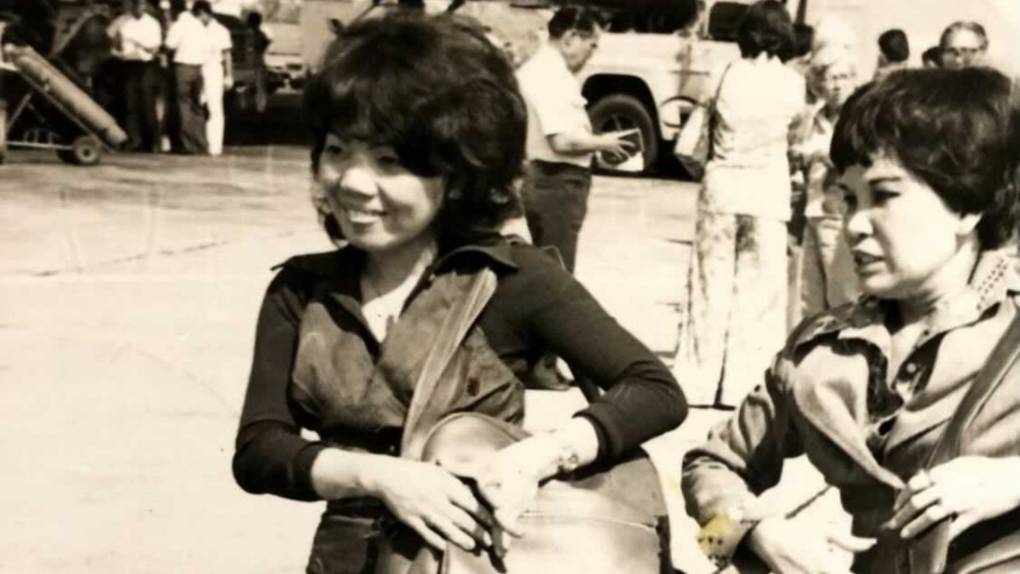
In Daly City, the Bayanihan Spirit Is Alive and Well
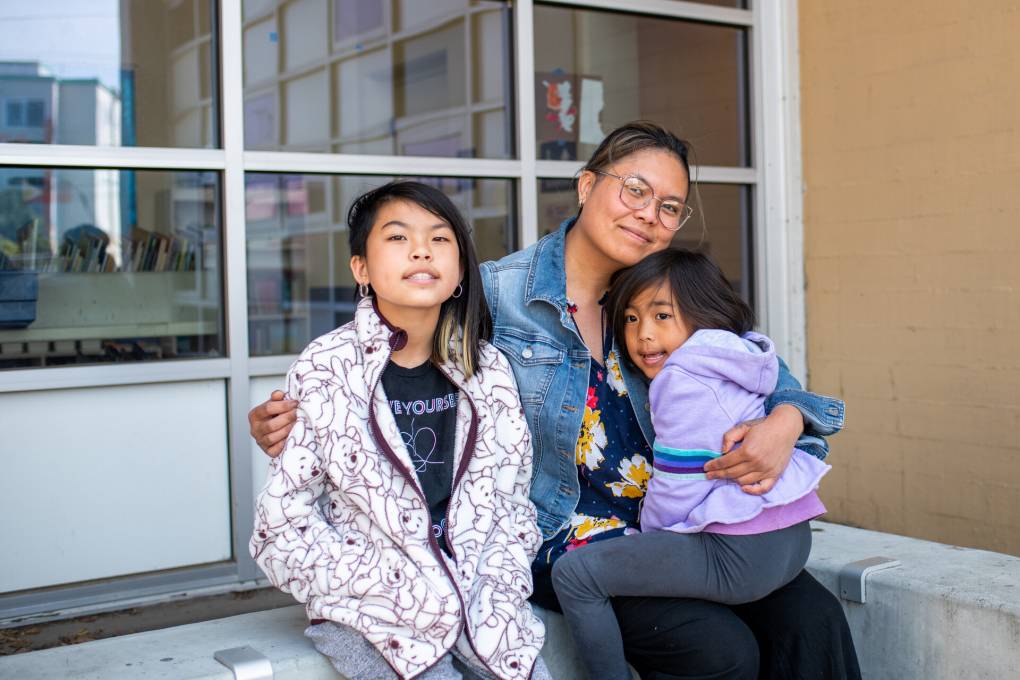
SF Filipino Community Mobilizes to Preserve Unique Elementary School Language Program
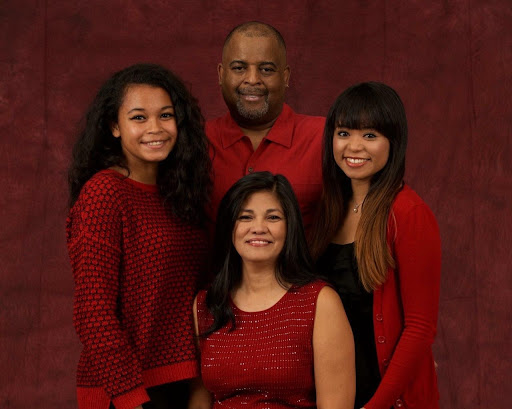
What Does It Mean to Be Mixed? A Conversation Between Generations
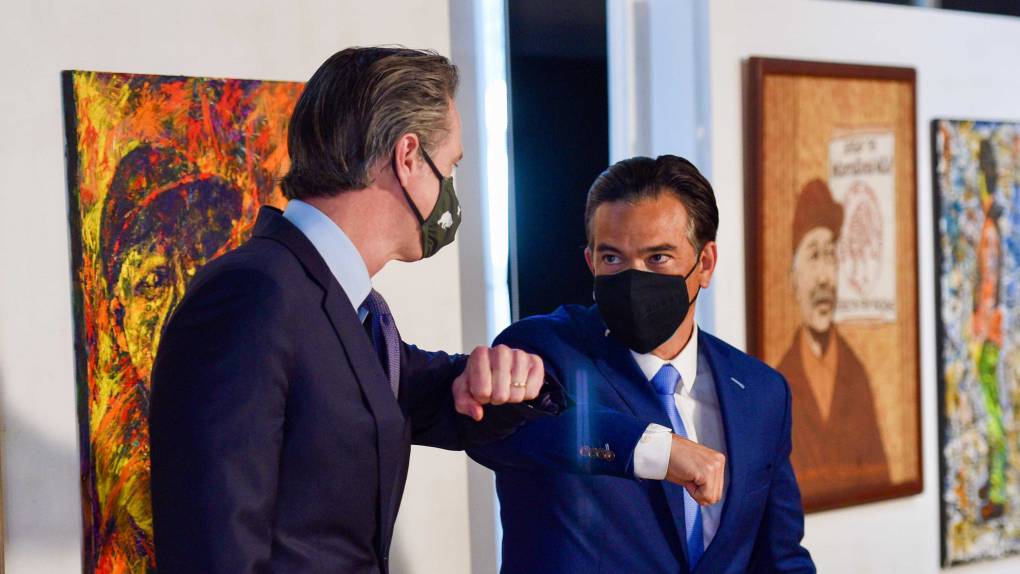
California Confirms Rob Bonta as First Filipino American Attorney General
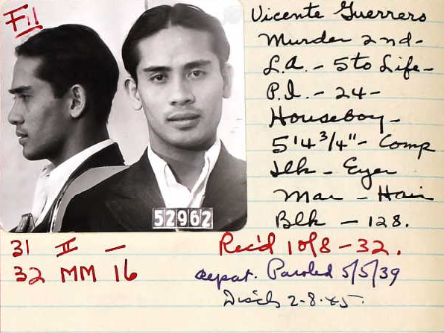
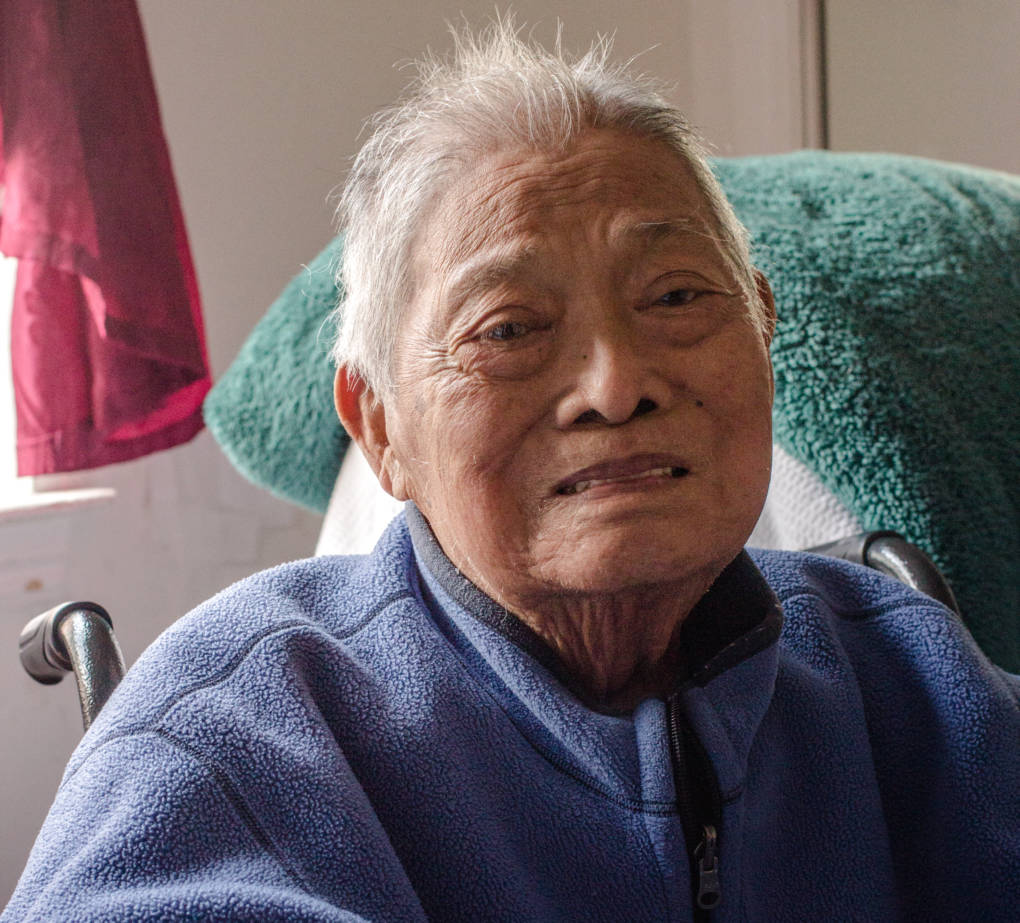
My Grandfather, A Killer
Long Distance Podcast Connects Filipinos Across the Diaspora
To Help Heal an Unhappy History, Congress Awards Medal to Filipino World War II Vets
Sponsored
Player sponsored by
window.__IS_SSR__=true
window.__INITIAL_STATE__={
"attachmentsReducer": {
"audio_0": {
"type": "attachments",
"id": "audio_0",
"imgSizes": {
"kqedFullSize": {
"file": "https://ww2.kqed.org/news/wp-content/themes/KQED-unified/img/audio_bgs/background0.jpg"
}
}
},
"audio_1": {
"type": "attachments",
"id": "audio_1",
"imgSizes": {
"kqedFullSize": {
"file": "https://ww2.kqed.org/news/wp-content/themes/KQED-unified/img/audio_bgs/background1.jpg"
}
}
},
"audio_2": {
"type": "attachments",
"id": "audio_2",
"imgSizes": {
"kqedFullSize": {
"file": "https://ww2.kqed.org/news/wp-content/themes/KQED-unified/img/audio_bgs/background2.jpg"
}
}
},
"audio_3": {
"type": "attachments",
"id": "audio_3",
"imgSizes": {
"kqedFullSize": {
"file": "https://ww2.kqed.org/news/wp-content/themes/KQED-unified/img/audio_bgs/background3.jpg"
}
}
},
"audio_4": {
"type": "attachments",
"id": "audio_4",
"imgSizes": {
"kqedFullSize": {
"file": "https://ww2.kqed.org/news/wp-content/themes/KQED-unified/img/audio_bgs/background4.jpg"
}
}
},
"placeholder": {
"type": "attachments",
"id": "placeholder",
"imgSizes": {
"thumbnail": {
"file": "https://cdn.kqed.org/wp-content/uploads/2024/12/KQED-Default-Image-816638274-2000x1333-1-160x107.jpg",
"width": 160,
"height": 107,
"mimeType": "image/jpeg"
},
"medium": {
"file": "https://cdn.kqed.org/wp-content/uploads/2024/12/KQED-Default-Image-816638274-2000x1333-1-800x533.jpg",
"width": 800,
"height": 533,
"mimeType": "image/jpeg"
},
"medium_large": {
"file": "https://cdn.kqed.org/wp-content/uploads/2024/12/KQED-Default-Image-816638274-2000x1333-1-768x512.jpg",
"width": 768,
"height": 512,
"mimeType": "image/jpeg"
},
"large": {
"file": "https://cdn.kqed.org/wp-content/uploads/2024/12/KQED-Default-Image-816638274-2000x1333-1-1020x680.jpg",
"width": 1020,
"height": 680,
"mimeType": "image/jpeg"
},
"1536x1536": {
"file": "https://cdn.kqed.org/wp-content/uploads/2024/12/KQED-Default-Image-816638274-2000x1333-1-1536x1024.jpg",
"width": 1536,
"height": 1024,
"mimeType": "image/jpeg"
},
"fd-lrg": {
"file": "https://cdn.kqed.org/wp-content/uploads/2024/12/KQED-Default-Image-816638274-2000x1333-1-1536x1024.jpg",
"width": 1536,
"height": 1024,
"mimeType": "image/jpeg"
},
"fd-med": {
"file": "https://cdn.kqed.org/wp-content/uploads/2024/12/KQED-Default-Image-816638274-2000x1333-1-1020x680.jpg",
"width": 1020,
"height": 680,
"mimeType": "image/jpeg"
},
"fd-sm": {
"file": "https://cdn.kqed.org/wp-content/uploads/2024/12/KQED-Default-Image-816638274-2000x1333-1-800x533.jpg",
"width": 800,
"height": 533,
"mimeType": "image/jpeg"
},
"post-thumbnail": {
"file": "https://cdn.kqed.org/wp-content/uploads/2024/12/KQED-Default-Image-816638274-2000x1333-1-672x372.jpg",
"width": 672,
"height": 372,
"mimeType": "image/jpeg"
},
"twentyfourteen-full-width": {
"file": "https://cdn.kqed.org/wp-content/uploads/2024/12/KQED-Default-Image-816638274-2000x1333-1-1038x576.jpg",
"width": 1038,
"height": 576,
"mimeType": "image/jpeg"
},
"xxsmall": {
"file": "https://cdn.kqed.org/wp-content/uploads/2024/12/KQED-Default-Image-816638274-2000x1333-1-160x107.jpg",
"width": 160,
"height": 107,
"mimeType": "image/jpeg"
},
"xsmall": {
"file": "https://cdn.kqed.org/wp-content/uploads/2024/12/KQED-Default-Image-816638274-2000x1333-1-672x372.jpg",
"width": 672,
"height": 372,
"mimeType": "image/jpeg"
},
"small": {
"file": "https://cdn.kqed.org/wp-content/uploads/2024/12/KQED-Default-Image-816638274-2000x1333-1-672x372.jpg",
"width": 672,
"height": 372,
"mimeType": "image/jpeg"
},
"xlarge": {
"file": "https://cdn.kqed.org/wp-content/uploads/2024/12/KQED-Default-Image-816638274-2000x1333-1-1020x680.jpg",
"width": 1020,
"height": 680,
"mimeType": "image/jpeg"
},
"full-width": {
"file": "https://cdn.kqed.org/wp-content/uploads/2024/12/KQED-Default-Image-816638274-2000x1333-1-1920x1280.jpg",
"width": 1920,
"height": 1280,
"mimeType": "image/jpeg"
},
"guest-author-32": {
"file": "https://cdn.kqed.org/wp-content/uploads/2025/01/KQED-Default-Image-816638274-1333x1333-1-160x160.jpg",
"width": 32,
"height": 32,
"mimeType": "image/jpeg"
},
"guest-author-50": {
"file": "https://cdn.kqed.org/wp-content/uploads/2025/01/KQED-Default-Image-816638274-1333x1333-1-160x160.jpg",
"width": 50,
"height": 50,
"mimeType": "image/jpeg"
},
"guest-author-64": {
"file": "https://cdn.kqed.org/wp-content/uploads/2025/01/KQED-Default-Image-816638274-1333x1333-1-160x160.jpg",
"width": 64,
"height": 64,
"mimeType": "image/jpeg"
},
"guest-author-96": {
"file": "https://cdn.kqed.org/wp-content/uploads/2025/01/KQED-Default-Image-816638274-1333x1333-1-160x160.jpg",
"width": 96,
"height": 96,
"mimeType": "image/jpeg"
},
"guest-author-128": {
"file": "https://cdn.kqed.org/wp-content/uploads/2025/01/KQED-Default-Image-816638274-1333x1333-1-160x160.jpg",
"width": 128,
"height": 128,
"mimeType": "image/jpeg"
},
"detail": {
"file": "https://cdn.kqed.org/wp-content/uploads/2025/01/KQED-Default-Image-816638274-1333x1333-1-160x160.jpg",
"width": 160,
"height": 160,
"mimeType": "image/jpeg"
},
"kqedFullSize": {
"file": "https://cdn.kqed.org/wp-content/uploads/2024/12/KQED-Default-Image-816638274-2000x1333-1.jpg",
"width": 2000,
"height": 1333
}
}
},
"news_11883672": {
"type": "attachments",
"id": "news_11883672",
"meta": {
"index": "attachments_1716263798",
"site": "news",
"id": "11883672",
"found": true
},
"parent": 11883382,
"imgSizes": {
"twentyfourteen-full-width": {
"file": "https://ww2.kqed.org/app/uploads/sites/10/2021/08/Josie-Manalo-leaving-for-America-1920x1080-1-1038x576.jpg",
"width": 1038,
"mimeType": "image/jpeg",
"height": 576
},
"thumbnail": {
"file": "https://ww2.kqed.org/app/uploads/sites/10/2021/08/Josie-Manalo-leaving-for-America-1920x1080-1-160x90.jpg",
"width": 160,
"mimeType": "image/jpeg",
"height": 90
},
"post-thumbnail": {
"file": "https://ww2.kqed.org/app/uploads/sites/10/2021/08/Josie-Manalo-leaving-for-America-1920x1080-1-672x372.jpg",
"width": 672,
"mimeType": "image/jpeg",
"height": 372
},
"kqedFullSize": {
"file": "https://ww2.kqed.org/app/uploads/sites/10/2021/08/Josie-Manalo-leaving-for-America-1920x1080-1.jpg",
"width": 1920,
"height": 1080
},
"large": {
"file": "https://ww2.kqed.org/app/uploads/sites/10/2021/08/Josie-Manalo-leaving-for-America-1920x1080-1-1020x574.jpg",
"width": 1020,
"mimeType": "image/jpeg",
"height": 574
},
"1536x1536": {
"file": "https://ww2.kqed.org/app/uploads/sites/10/2021/08/Josie-Manalo-leaving-for-America-1920x1080-1-1536x864.jpg",
"width": 1536,
"mimeType": "image/jpeg",
"height": 864
},
"medium": {
"file": "https://ww2.kqed.org/app/uploads/sites/10/2021/08/Josie-Manalo-leaving-for-America-1920x1080-1-800x450.jpg",
"width": 800,
"mimeType": "image/jpeg",
"height": 450
}
},
"publishDate": 1628084533,
"modified": 1628176740,
"caption": "Josie Manalo, the mother of Daly City Mayor Juslyn Manalo, getting ready to board her flight from the Philippines to the United States in 1973.",
"description": "A young woman smiles while carrying a large bag over her shoulder. She wears a collared top. There is an airplane in the background.",
"title": "Josie Manalo leaving for America 1920x1080",
"credit": "Courtesy of Juslyn Manalo",
"status": "inherit",
"altTag": "A young woman smiles while carrying a large bag over her shoulder. She wears a collared top. There is an airplane in the background.",
"fetchFailed": false,
"isLoading": false
},
"news_11918625": {
"type": "attachments",
"id": "news_11918625",
"meta": {
"index": "attachments_1716263798",
"site": "news",
"id": "11918625",
"found": true
},
"parent": 11918252,
"imgSizes": {
"twentyfourteen-full-width": {
"file": "https://ww2.kqed.org/app/uploads/sites/10/2022/06/RS56788_006_KQED_NikkiSantiagoLongfellowElem_06232022-qut-1038x576.jpg",
"width": 1038,
"mimeType": "image/jpeg",
"height": 576
},
"thumbnail": {
"file": "https://ww2.kqed.org/app/uploads/sites/10/2022/06/RS56788_006_KQED_NikkiSantiagoLongfellowElem_06232022-qut-160x107.jpg",
"width": 160,
"mimeType": "image/jpeg",
"height": 107
},
"post-thumbnail": {
"file": "https://ww2.kqed.org/app/uploads/sites/10/2022/06/RS56788_006_KQED_NikkiSantiagoLongfellowElem_06232022-qut-672x372.jpg",
"width": 672,
"mimeType": "image/jpeg",
"height": 372
},
"kqedFullSize": {
"file": "https://ww2.kqed.org/app/uploads/sites/10/2022/06/RS56788_006_KQED_NikkiSantiagoLongfellowElem_06232022-qut.jpg",
"width": 1920,
"height": 1280
},
"large": {
"file": "https://ww2.kqed.org/app/uploads/sites/10/2022/06/RS56788_006_KQED_NikkiSantiagoLongfellowElem_06232022-qut-1020x680.jpg",
"width": 1020,
"mimeType": "image/jpeg",
"height": 680
},
"1536x1536": {
"file": "https://ww2.kqed.org/app/uploads/sites/10/2022/06/RS56788_006_KQED_NikkiSantiagoLongfellowElem_06232022-qut-1536x1024.jpg",
"width": 1536,
"mimeType": "image/jpeg",
"height": 1024
},
"medium": {
"file": "https://ww2.kqed.org/app/uploads/sites/10/2022/06/RS56788_006_KQED_NikkiSantiagoLongfellowElem_06232022-qut-800x533.jpg",
"width": 800,
"mimeType": "image/jpeg",
"height": 533
}
},
"publishDate": 1656635505,
"modified": 1656717218,
"caption": "Nikki Santiago sits with her two daughters outside Longfellow Elementary School in San Francisco on June 23, 2022.",
"description": null,
"title": "RS56788_006_KQED_NikkiSantiagoLongfellowElem_06232022-qut",
"credit": "Beth LaBerge/KQED",
"status": "inherit",
"altTag": "A mother with her arms around her two young daughters.",
"fetchFailed": false,
"isLoading": false
},
"news_11894840": {
"type": "attachments",
"id": "news_11894840",
"meta": {
"index": "attachments_1716263798",
"site": "news",
"id": "11894840",
"found": true
},
"parent": 11894797,
"imgSizes": {
"thumbnail": {
"file": "https://ww2.kqed.org/app/uploads/sites/10/2021/11/Katrina-and-family-160x128.jpeg",
"width": 160,
"mimeType": "image/jpeg",
"height": 128
},
"post-thumbnail": {
"file": "https://ww2.kqed.org/app/uploads/sites/10/2021/11/Katrina-and-family-512x372.jpeg",
"width": 512,
"mimeType": "image/jpeg",
"height": 372
},
"kqedFullSize": {
"file": "https://ww2.kqed.org/app/uploads/sites/10/2021/11/Katrina-and-family.jpeg",
"width": 512,
"height": 409
}
},
"publishDate": 1635893973,
"modified": 1636150237,
"caption": "Katrina Bullock says growing up with a Black father and Filipina mother in the 2000s was a very different experience from what it is for an older generation of mixed folks. ",
"description": null,
"title": "Katrina and family",
"credit": "Courtesy Katrina Bullock",
"status": "inherit",
"altTag": "A family portrait of two daughters, a mother and a father.",
"fetchFailed": false,
"isLoading": false
},
"news_11870750": {
"type": "attachments",
"id": "news_11870750",
"meta": {
"index": "attachments_1716263798",
"site": "news",
"id": "11870750",
"found": true
},
"parent": 11870739,
"imgSizes": {
"twentyfourteen-full-width": {
"file": "https://ww2.kqed.org/app/uploads/sites/10/2021/04/1920_Newsom_Bonta-copy-1038x576.jpg",
"width": 1038,
"mimeType": "image/jpeg",
"height": 576
},
"thumbnail": {
"file": "https://ww2.kqed.org/app/uploads/sites/10/2021/04/1920_Newsom_Bonta-copy-160x90.jpg",
"width": 160,
"mimeType": "image/jpeg",
"height": 90
},
"post-thumbnail": {
"file": "https://ww2.kqed.org/app/uploads/sites/10/2021/04/1920_Newsom_Bonta-copy-672x372.jpg",
"width": 672,
"mimeType": "image/jpeg",
"height": 372
},
"kqedFullSize": {
"file": "https://ww2.kqed.org/app/uploads/sites/10/2021/04/1920_Newsom_Bonta-copy-scaled.jpg",
"width": 2560,
"height": 1440
},
"2048x2048": {
"file": "https://ww2.kqed.org/app/uploads/sites/10/2021/04/1920_Newsom_Bonta-copy-2048x1152.jpg",
"width": 2048,
"mimeType": "image/jpeg",
"height": 1152
},
"large": {
"file": "https://ww2.kqed.org/app/uploads/sites/10/2021/04/1920_Newsom_Bonta-copy-1020x574.jpg",
"width": 1020,
"mimeType": "image/jpeg",
"height": 574
},
"1536x1536": {
"file": "https://ww2.kqed.org/app/uploads/sites/10/2021/04/1920_Newsom_Bonta-copy-1536x864.jpg",
"width": 1536,
"mimeType": "image/jpeg",
"height": 864
},
"full-width": {
"file": "https://ww2.kqed.org/app/uploads/sites/10/2021/04/1920_Newsom_Bonta-copy-1920x1080.jpg",
"width": 1920,
"mimeType": "image/jpeg",
"height": 1080
},
"medium": {
"file": "https://ww2.kqed.org/app/uploads/sites/10/2021/04/1920_Newsom_Bonta-copy-800x450.jpg",
"width": 800,
"mimeType": "image/jpeg",
"height": 450
}
},
"publishDate": 1619121578,
"modified": 1619122329,
"caption": "Rob Bonta and Gov. Gavin Newsom bump elbows at a press conference in San Francisco on March 24, 2021, where Gov. Newsom announced his nomination for California attorney general.",
"description": null,
"title": "1920_Newsom_Bonta copy",
"credit": "Beth LaBerge/KQED ",
"status": "inherit",
"altTag": null,
"fetchFailed": false,
"isLoading": false
},
"news_11768294": {
"type": "attachments",
"id": "news_11768294",
"meta": {
"index": "attachments_1716263798",
"site": "news",
"id": "11768294",
"found": true
},
"parent": 11768293,
"imgSizes": {
"thumbnail": {
"file": "https://ww2.kqed.org/app/uploads/sites/10/2019/08/capture-8019cfe570844cabb9c37357027146d40daade17-160x120.png",
"width": 160,
"mimeType": "image/png",
"height": 120
},
"kqedFullSize": {
"file": "https://ww2.kqed.org/app/uploads/sites/10/2019/08/capture-8019cfe570844cabb9c37357027146d40daade17.png",
"width": 444,
"height": 333
},
"apple_news_ca_portrait_4_7": {
"file": "https://ww2.kqed.org/app/uploads/sites/10/2019/08/capture-8019cfe570844cabb9c37357027146d40daade17-414x333.png",
"width": 414,
"mimeType": "image/png",
"height": 333
},
"apple_news_ca_portrait_4_0": {
"file": "https://ww2.kqed.org/app/uploads/sites/10/2019/08/capture-8019cfe570844cabb9c37357027146d40daade17-354x333.png",
"width": 354,
"mimeType": "image/png",
"height": 333
}
},
"publishDate": 1566154087,
"modified": 1566154087,
"caption": null,
"description": null,
"title": "The author's grandfather, Vicente Guerra, is pictured in a mug shot from San Quentin State Prison. He was sentenced to five years to life for the 1931 murder of Joseph Retotar.",
"credit": null,
"status": "inherit",
"fetchFailed": false,
"isLoading": false
},
"news_11756103": {
"type": "attachments",
"id": "news_11756103",
"meta": {
"index": "attachments_1716263798",
"site": "news",
"id": "11756103",
"found": true
},
"parent": 11756094,
"imgSizes": {
"apple_news_ca_landscape_5_5": {
"file": "https://ww2.kqed.org/app/uploads/sites/10/2019/06/RS37797_Long-DIstance-Paola-featured-image-qut-1044x783.jpg",
"width": 1044,
"mimeType": "image/jpeg",
"height": 783
},
"apple_news_ca_square_4_0": {
"file": "https://ww2.kqed.org/app/uploads/sites/10/2019/06/RS37797_Long-DIstance-Paola-featured-image-qut-470x470.jpg",
"width": 470,
"mimeType": "image/jpeg",
"height": 470
},
"twentyfourteen-full-width": {
"file": "https://ww2.kqed.org/app/uploads/sites/10/2019/06/RS37797_Long-DIstance-Paola-featured-image-qut-1038x576.jpg",
"width": 1038,
"mimeType": "image/jpeg",
"height": 576
},
"thumbnail": {
"file": "https://ww2.kqed.org/app/uploads/sites/10/2019/06/RS37797_Long-DIstance-Paola-featured-image-qut-160x107.jpg",
"width": 160,
"mimeType": "image/jpeg",
"height": 107
},
"post-thumbnail": {
"file": "https://ww2.kqed.org/app/uploads/sites/10/2019/06/RS37797_Long-DIstance-Paola-featured-image-qut-672x372.jpg",
"width": 672,
"mimeType": "image/jpeg",
"height": 372
},
"kqedFullSize": {
"file": "https://ww2.kqed.org/app/uploads/sites/10/2019/06/RS37797_Long-DIstance-Paola-featured-image-qut.jpg",
"width": 1500,
"height": 1000
},
"apple_news_ca_landscape_4_7": {
"file": "https://ww2.kqed.org/app/uploads/sites/10/2019/06/RS37797_Long-DIstance-Paola-featured-image-qut-632x474.jpg",
"width": 632,
"mimeType": "image/jpeg",
"height": 474
},
"large": {
"file": "https://ww2.kqed.org/app/uploads/sites/10/2019/06/RS37797_Long-DIstance-Paola-featured-image-qut-1020x680.jpg",
"width": 1020,
"mimeType": "image/jpeg",
"height": 680
},
"complete_open_graph": {
"file": "https://ww2.kqed.org/app/uploads/sites/10/2019/06/RS37797_Long-DIstance-Paola-featured-image-qut-1200x800.jpg",
"width": 1200,
"mimeType": "image/jpeg",
"height": 800
},
"apple_news_ca_landscape_4_0": {
"file": "https://ww2.kqed.org/app/uploads/sites/10/2019/06/RS37797_Long-DIstance-Paola-featured-image-qut-536x402.jpg",
"width": 536,
"mimeType": "image/jpeg",
"height": 402
},
"apple_news_ca_portrait_12_9": {
"file": "https://ww2.kqed.org/app/uploads/sites/10/2019/06/RS37797_Long-DIstance-Paola-featured-image-qut-1122x1000.jpg",
"width": 1122,
"mimeType": "image/jpeg",
"height": 1000
},
"medium": {
"file": "https://ww2.kqed.org/app/uploads/sites/10/2019/06/RS37797_Long-DIstance-Paola-featured-image-qut-800x533.jpg",
"width": 800,
"mimeType": "image/jpeg",
"height": 533
},
"apple_news_ca_portrait_4_0": {
"file": "https://ww2.kqed.org/app/uploads/sites/10/2019/06/RS37797_Long-DIstance-Paola-featured-image-qut-354x472.jpg",
"width": 354,
"mimeType": "image/jpeg",
"height": 472
},
"apple_news_ca_portrait_9_7": {
"file": "https://ww2.kqed.org/app/uploads/sites/10/2019/06/RS37797_Long-DIstance-Paola-featured-image-qut-840x1000.jpg",
"width": 840,
"mimeType": "image/jpeg",
"height": 1000
},
"apple_news_ca_square_9_7": {
"file": "https://ww2.kqed.org/app/uploads/sites/10/2019/06/RS37797_Long-DIstance-Paola-featured-image-qut-1104x1000.jpg",
"width": 1104,
"mimeType": "image/jpeg",
"height": 1000
},
"apple_news_ca_portrait_4_7": {
"file": "https://ww2.kqed.org/app/uploads/sites/10/2019/06/RS37797_Long-DIstance-Paola-featured-image-qut-414x552.jpg",
"width": 414,
"mimeType": "image/jpeg",
"height": 552
},
"apple_news_ca_square_12_9": {
"file": "https://ww2.kqed.org/app/uploads/sites/10/2019/06/RS37797_Long-DIstance-Paola-featured-image-qut-1472x1000.jpg",
"width": 1472,
"mimeType": "image/jpeg",
"height": 1000
},
"apple_news_ca_portrait_5_5": {
"file": "https://ww2.kqed.org/app/uploads/sites/10/2019/06/RS37797_Long-DIstance-Paola-featured-image-qut-687x916.jpg",
"width": 687,
"mimeType": "image/jpeg",
"height": 916
},
"apple_news_ca_square_4_7": {
"file": "https://ww2.kqed.org/app/uploads/sites/10/2019/06/RS37797_Long-DIstance-Paola-featured-image-qut-550x550.jpg",
"width": 550,
"mimeType": "image/jpeg",
"height": 550
},
"apple_news_ca_landscape_9_7": {
"file": "https://ww2.kqed.org/app/uploads/sites/10/2019/06/RS37797_Long-DIstance-Paola-featured-image-qut-1376x1000.jpg",
"width": 1376,
"mimeType": "image/jpeg",
"height": 1000
},
"apple_news_ca_square_5_5": {
"file": "https://ww2.kqed.org/app/uploads/sites/10/2019/06/RS37797_Long-DIstance-Paola-featured-image-qut-912x912.jpg",
"width": 912,
"mimeType": "image/jpeg",
"height": 912
}
},
"publishDate": 1561063148,
"modified": 1561160279,
"caption": "Long Distance podcast host and creator Paola Mardo conducts an interview in L.A.'s historic Filipinotown. ",
"description": "Long Distance podcast host and creator Paola Mardo conducts an interview in L.A.'s historic Filipinotown. ",
"title": "Long Distance Paola Mardo",
"credit": "Courtesy of Patrick Epino",
"status": "inherit",
"fetchFailed": false,
"isLoading": false
},
"news_11625814": {
"type": "attachments",
"id": "news_11625814",
"meta": {
"index": "attachments_1716263798",
"site": "news",
"id": "11625814",
"found": true
},
"parent": 11625813,
"imgSizes": {
"small": {
"file": "https://ww2.kqed.org/app/uploads/sites/10/2017/10/ramonregalado171020-520x470.jpg",
"width": 520,
"mimeType": "image/jpeg",
"height": 470
},
"twentyfourteen-full-width": {
"file": "https://ww2.kqed.org/app/uploads/sites/10/2017/10/ramonregalado171020-1038x576.jpg",
"width": 1038,
"mimeType": "image/jpeg",
"height": 576
},
"thumbnail": {
"file": "https://ww2.kqed.org/app/uploads/sites/10/2017/10/ramonregalado171020-160x145.jpg",
"width": 160,
"mimeType": "image/jpeg",
"height": 145
},
"fd-sm": {
"file": "https://ww2.kqed.org/app/uploads/sites/10/2017/10/ramonregalado171020-960x868.jpg",
"width": 960,
"mimeType": "image/jpeg",
"height": 868
},
"post-thumbnail": {
"file": "https://ww2.kqed.org/app/uploads/sites/10/2017/10/ramonregalado171020-672x372.jpg",
"width": 672,
"mimeType": "image/jpeg",
"height": 372
},
"xsmall": {
"file": "https://ww2.kqed.org/app/uploads/sites/10/2017/10/ramonregalado171020-375x339.jpg",
"width": 375,
"mimeType": "image/jpeg",
"height": 339
},
"kqedFullSize": {
"file": "https://ww2.kqed.org/app/uploads/sites/10/2017/10/ramonregalado171020-e1508904915325.jpg",
"width": 1920,
"height": 1737
},
"large": {
"file": "https://ww2.kqed.org/app/uploads/sites/10/2017/10/ramonregalado171020-1020x923.jpg",
"width": 1020,
"mimeType": "image/jpeg",
"height": 923
},
"xlarge": {
"file": "https://ww2.kqed.org/app/uploads/sites/10/2017/10/ramonregalado171020-1180x1067.jpg",
"width": 1180,
"mimeType": "image/jpeg",
"height": 1067
},
"guest-author-50": {
"file": "https://ww2.kqed.org/app/uploads/sites/10/2017/10/ramonregalado171020-50x50.jpg",
"width": 50,
"mimeType": "image/jpeg",
"height": 50
},
"guest-author-96": {
"file": "https://ww2.kqed.org/app/uploads/sites/10/2017/10/ramonregalado171020-96x96.jpg",
"width": 96,
"mimeType": "image/jpeg",
"height": 96
},
"medium": {
"file": "https://ww2.kqed.org/app/uploads/sites/10/2017/10/ramonregalado171020-800x724.jpg",
"width": 800,
"mimeType": "image/jpeg",
"height": 724
},
"guest-author-64": {
"file": "https://ww2.kqed.org/app/uploads/sites/10/2017/10/ramonregalado171020-64x64.jpg",
"width": 64,
"mimeType": "image/jpeg",
"height": 64
},
"guest-author-32": {
"file": "https://ww2.kqed.org/app/uploads/sites/10/2017/10/ramonregalado171020-32x32.jpg",
"width": 32,
"mimeType": "image/jpeg",
"height": 32
},
"fd-lrg": {
"file": "https://ww2.kqed.org/app/uploads/sites/10/2017/10/ramonregalado171020-1920x1737.jpg",
"width": 1920,
"mimeType": "image/jpeg",
"height": 1737
},
"fd-med": {
"file": "https://ww2.kqed.org/app/uploads/sites/10/2017/10/ramonregalado171020-1180x1067.jpg",
"width": 1180,
"mimeType": "image/jpeg",
"height": 1067
},
"full-width": {
"file": "https://ww2.kqed.org/app/uploads/sites/10/2017/10/ramonregalado171020-1920x1737.jpg",
"width": 1920,
"mimeType": "image/jpeg",
"height": 1737
},
"detail": {
"file": "https://ww2.kqed.org/app/uploads/sites/10/2017/10/ramonregalado171020-150x150.jpg",
"width": 150,
"mimeType": "image/jpeg",
"height": 150
},
"guest-author-128": {
"file": "https://ww2.kqed.org/app/uploads/sites/10/2017/10/ramonregalado171020-128x128.jpg",
"width": 128,
"mimeType": "image/jpeg",
"height": 128
},
"xxsmall": {
"file": "https://ww2.kqed.org/app/uploads/sites/10/2017/10/ramonregalado171020-240x217.jpg",
"width": 240,
"mimeType": "image/jpeg",
"height": 217
}
},
"publishDate": 1508904661,
"modified": 1508904825,
"caption": "Ramon Regalado, 100, of Berkeley, served in the U.S. Army during the defense of Bataan in 1941-42, escaped his Japanese captors after the allied surrender and joined Filipino guerrillas who resisted Japan's occupation of their homeland. Regalado is one among thousands of surviving Filipino veterans who are being awarded the Congressional Gold Star in recognition of their wartime service. ",
"description": null,
"title": "Ramon Regalado, Filipino Veteran",
"credit": "Dan Brekke/KQED",
"status": "inherit",
"fetchFailed": false,
"isLoading": false
}
},
"audioPlayerReducer": {
"postId": "stream_live",
"isPaused": true,
"isPlaying": false,
"pfsActive": false,
"pledgeModalIsOpen": true,
"playerDrawerIsOpen": false
},
"authorsReducer": {
"byline_news_11870739": {
"type": "authors",
"id": "byline_news_11870739",
"meta": {
"override": true
},
"slug": "byline_news_11870739",
"name": "Don Thompson \u003cbr> Associated Press",
"isLoading": false
},
"byline_news_11768293": {
"type": "authors",
"id": "byline_news_11768293",
"meta": {
"override": true
},
"slug": "byline_news_11768293",
"name": "\u003ca href= \"https://www.npr.org/people/716309801/denise-guerra\"> Denise Guerra \u003ca/>",
"isLoading": false
},
"astupi": {
"type": "authors",
"id": "70",
"meta": {
"index": "authors_1716337520",
"id": "70",
"found": true
},
"name": "Amanda Stupi",
"firstName": "Amanda",
"lastName": "Stupi",
"slug": "astupi",
"email": "astupi@kqed.org",
"display_author_email": false,
"staff_mastheads": [],
"title": "Senior Engagement Producer",
"bio": "Amanda joined KQED Science’s engagement team as a Senior Audience Engagement Strategist in the spring of 2019. She has helped craft messaging around wildfires, the coronavirus pandemic, climate change and many other stories. She has also brought KQED Science to new platforms such as Reddit’s Ask Me Anything series. Prior to joining KQED Science, Amanda spent seven years as an engagement producer with Forum, KQED’s daily live call-in show. She got her start in radio at KALW's weekly call in show, City Visions, before going on to an internship and stint at NPR's Talk of the Nation.\r\n\r\nPrior to journalism, Amanda taught English at Lowell High School. She's a native of Petaluma and currently lives under the \"South San Francisco the Industrial City\" sign in South City. She believes that engagement is vital to news’s future and that good journalism listens as much as it asks questions.",
"avatar": "https://secure.gravatar.com/avatar/e981c503e5c162da701dcaccfbf87e35?s=600&d=blank&r=g",
"twitter": null,
"facebook": null,
"instagram": null,
"linkedin": null,
"sites": [
{
"site": "arts",
"roles": [
"Contributor"
]
},
{
"site": "news",
"roles": [
"editor"
]
},
{
"site": "pop",
"roles": [
"contributor"
]
},
{
"site": "stateofhealth",
"roles": [
"editor"
]
},
{
"site": "science",
"roles": []
},
{
"site": "perspectives",
"roles": [
"editor"
]
}
],
"headData": {
"title": "Amanda Stupi | KQED",
"description": "Senior Engagement Producer",
"ogImgSrc": "https://secure.gravatar.com/avatar/e981c503e5c162da701dcaccfbf87e35?s=600&d=blank&r=g",
"twImgSrc": "https://secure.gravatar.com/avatar/e981c503e5c162da701dcaccfbf87e35?s=600&d=blank&r=g"
},
"isLoading": false,
"link": "/author/astupi"
},
"danbrekke": {
"type": "authors",
"id": "222",
"meta": {
"index": "authors_1716337520",
"id": "222",
"found": true
},
"name": "Dan Brekke",
"firstName": "Dan",
"lastName": "Brekke",
"slug": "danbrekke",
"email": "dbrekke@kqed.org",
"display_author_email": true,
"staff_mastheads": [
"news",
"science"
],
"title": "KQED Editor and Reporter",
"bio": "Dan Brekke is a reporter and editor for KQED News, responsible for coverage of topics ranging from California water issues to the Bay Area's transportation challenges. In a newsroom career that began in Chicago in 1972, Dan has worked for \u003cem>The San Francisco Examiner,\u003c/em> Wired and TechTV and has been published in The New York Times, The New York Times Magazine, Business 2.0, Salon and elsewhere.\r\n\r\nSince joining KQED in 2007, Dan has reported, edited and produced both radio and online features and breaking news pieces. He has shared as both editor and reporter in four Society of Professional Journalists Norcal Excellence in Journalism awards and one Edward R. Murrow regional award. He was chosen for a spring 2017 residency at the Mesa Refuge to advance his research on California salmon.\r\n\r\nEmail Dan at: \u003ca href=\"mailto:dbrekke@kqed.org\">dbrekke@kqed.org\u003c/a>\r\n\r\n\u003cstrong>Twitter:\u003c/strong> \u003ca href=\"https://twitter.com/danbrekke\" rel=\"noopener noreferrer\">twitter.com/danbrekke\u003c/a>\r\n\u003cstrong>Facebook:\u003c/strong> \u003ca href=\"https://www.facebook.com/danbrekke\" rel=\"noopener noreferrer\">www.facebook.com/danbrekke\u003c/a>\r\n\u003cstrong>LinkedIn:\u003c/strong> \u003ca href=\"https://www.linkedin.com/in/danbrekke\" rel=\"noopener noreferrer\">www.linkedin.com/in/danbrekke\u003c/a>",
"avatar": "https://secure.gravatar.com/avatar/c8126230345efca3f7aa89b1a402be45?s=600&d=mm&r=g",
"twitter": "danbrekke",
"facebook": null,
"instagram": "https://www.instagram.com/dan.brekke/",
"linkedin": "https://www.linkedin.com/in/danbrekke/",
"sites": [
{
"site": "news",
"roles": [
"administrator",
"create_posts"
]
},
{
"site": "stateofhealth",
"roles": [
"editor"
]
},
{
"site": "science",
"roles": [
"editor"
]
},
{
"site": "quest",
"roles": [
"contributor"
]
},
{
"site": "food",
"roles": [
"contributor"
]
},
{
"site": "forum",
"roles": [
"contributor"
]
},
{
"site": "liveblog",
"roles": [
"editor"
]
}
],
"headData": {
"title": "Dan Brekke | KQED",
"description": "KQED Editor and Reporter",
"ogImgSrc": "https://secure.gravatar.com/avatar/c8126230345efca3f7aa89b1a402be45?s=600&d=mm&r=g",
"twImgSrc": "https://secure.gravatar.com/avatar/c8126230345efca3f7aa89b1a402be45?s=600&d=mm&r=g"
},
"isLoading": false,
"link": "/author/danbrekke"
},
"jmcevoy": {
"type": "authors",
"id": "231",
"meta": {
"index": "authors_1716337520",
"id": "231",
"found": true
},
"name": "Julia McEvoy",
"firstName": "Julia",
"lastName": "McEvoy",
"slug": "jmcevoy",
"email": "jmcevoy@KQED.org",
"display_author_email": true,
"staff_mastheads": [
"news"
],
"title": "KQED Senior Editor",
"bio": "Julia McEvoy is KQED's Senior Editor, Education Equity.\r\n\r\nJulia heads KQED’s education coverage examining inequities students face in Bay Area and California schools, and reports on what it will take to educate the next generation.\r\n\r\nJulia's editorial work has received a Peabody Award, a Casey Medal for Coverage of Children and Families, several Edward R. Murrow awards, as well as awards from the Public Radio News Directors Inc. and the Society for Professional Journalists.",
"avatar": "https://secure.gravatar.com/avatar/aec3ce21abe02b302fd33638abd56a22?s=600&d=blank&r=g",
"twitter": "juliamcevoy1",
"facebook": null,
"instagram": null,
"linkedin": null,
"sites": [
{
"site": "news",
"roles": []
},
{
"site": "stateofhealth",
"roles": [
"author"
]
}
],
"headData": {
"title": "Julia McEvoy | KQED",
"description": "KQED Senior Editor",
"ogImgSrc": "https://secure.gravatar.com/avatar/aec3ce21abe02b302fd33638abd56a22?s=600&d=blank&r=g",
"twImgSrc": "https://secure.gravatar.com/avatar/aec3ce21abe02b302fd33638abd56a22?s=600&d=blank&r=g"
},
"isLoading": false,
"link": "/author/jmcevoy"
},
"sasha-khokha": {
"type": "authors",
"id": "254",
"meta": {
"index": "authors_1716337520",
"id": "254",
"found": true
},
"name": "Sasha Khokha",
"firstName": "Sasha",
"lastName": "Khokha",
"slug": "sasha-khokha",
"email": "skhokha@kqed.org",
"display_author_email": true,
"staff_mastheads": [
"news"
],
"title": "Host, The California Report Magazine",
"bio": "Sasha Khokha is the host of \u003cem>The California Report's \u003c/em> weekly magazine program, which takes listeners on sound-rich excursions to meet the people that make the Golden State unique -- through audio documentaries and long-form stories. As \u003cem>The California Report's\u003c/em> Central Valley Bureau Chief based in Fresno for nearly a dozen years, Sasha brought the lives and concerns of rural Californians to listeners around the state. Her reporting helped expose the hidden price immigrant women janitors and farmworkers may pay to keep their jobs: sexual assault at work. It inspired two new California laws to protect them from sexual harassment. She was a key member of the reporting team for the Frontline film \u003cem>Rape on the Night Shift, \u003c/em>which was nominated for two national Emmys. Sasha has also won a national Edward R. Murrow and a national PRNDI award for investigative reporting, as well as multiple prizes from the Society for Professional Journalists. Sasha is a proud alum of the UC Berkeley Graduate School of Journalism and Brown University and a member of the South Asian Journalists Association.",
"avatar": "https://secure.gravatar.com/avatar/e4b5e1541aaeea2aa356aa1fb2a68950?s=600&d=blank&r=g",
"twitter": "KQEDSashaKhokha",
"facebook": null,
"instagram": null,
"linkedin": null,
"sites": [
{
"site": "news",
"roles": [
"editor"
]
},
{
"site": "stateofhealth",
"roles": [
"author"
]
},
{
"site": "science",
"roles": [
"author"
]
},
{
"site": "quest",
"roles": [
"subscriber"
]
}
],
"headData": {
"title": "Sasha Khokha | KQED",
"description": "Host, The California Report Magazine",
"ogImgSrc": "https://secure.gravatar.com/avatar/e4b5e1541aaeea2aa356aa1fb2a68950?s=600&d=blank&r=g",
"twImgSrc": "https://secure.gravatar.com/avatar/e4b5e1541aaeea2aa356aa1fb2a68950?s=600&d=blank&r=g"
},
"isLoading": false,
"link": "/author/sasha-khokha"
},
"mlagos": {
"type": "authors",
"id": "3239",
"meta": {
"index": "authors_1716337520",
"id": "3239",
"found": true
},
"name": "Marisa Lagos",
"firstName": "Marisa",
"lastName": "Lagos",
"slug": "mlagos",
"email": "mlagos@kqed.org",
"display_author_email": false,
"staff_mastheads": [
"news"
],
"title": "KQED Contributor",
"bio": "Marisa Lagos is a correspondent for KQED’s California Politics and Government Desk and co-hosts the award-winning show and podcast, Political Breakdown. At KQED, Lagos also conducts reporting, analysis and investigations into state, local and national politics for radio, TV, online and onstage. In 2022, she and co-host, Scott Shafer, moderated the only gubernatorial debate in California. In 2020, the \u003ci>Washington Post\u003c/i> named her one of the top political journalists in California; she was nominated for a Peabody and won several other awards for her work investigating the 2017 California wildfires. She has worked at the \u003ci>San Francisco Chronicle\u003c/i>, \u003ci>San Francisco Examiner\u003c/i> and \u003ci>Los Angeles Times\u003c/i>. A UC Santa Barbara graduate, she lives in San Francisco with her two sons and husband.",
"avatar": "https://secure.gravatar.com/avatar/a261a0d3696fc066871ef96b85b5e7d2?s=600&d=blank&r=g",
"twitter": "@mlagos",
"facebook": null,
"instagram": null,
"linkedin": null,
"sites": [
{
"site": "arts",
"roles": [
"author"
]
},
{
"site": "news",
"roles": [
"editor"
]
},
{
"site": "science",
"roles": [
"editor"
]
},
{
"site": "forum",
"roles": [
"author"
]
},
{
"site": "liveblog",
"roles": [
"author"
]
}
],
"headData": {
"title": "Marisa Lagos | KQED",
"description": "KQED Contributor",
"ogImgSrc": "https://secure.gravatar.com/avatar/a261a0d3696fc066871ef96b85b5e7d2?s=600&d=blank&r=g",
"twImgSrc": "https://secure.gravatar.com/avatar/a261a0d3696fc066871ef96b85b5e7d2?s=600&d=blank&r=g"
},
"isLoading": false,
"link": "/author/mlagos"
}
},
"breakingNewsReducer": {},
"pagesReducer": {},
"postsReducer": {
"stream_live": {
"type": "live",
"id": "stream_live",
"audioUrl": "https://streams.kqed.org/kqedradio",
"title": "Live Stream",
"excerpt": "Live Stream information currently unavailable.",
"link": "/radio",
"featImg": "",
"label": {
"name": "KQED Live",
"link": "/"
}
},
"stream_kqedNewscast": {
"type": "posts",
"id": "stream_kqedNewscast",
"audioUrl": "https://www.kqed.org/.stream/anon/radio/RDnews/newscast.mp3?_=1",
"title": "KQED Newscast",
"featImg": "",
"label": {
"name": "88.5 FM",
"link": "/"
}
},
"news_11883382": {
"type": "posts",
"id": "news_11883382",
"meta": {
"index": "posts_1716263798",
"site": "news",
"id": "11883382",
"score": null,
"sort": [
1753351218000
]
},
"guestAuthors": [],
"slug": "in-daly-city-the-bayanihan-spirit-is-alive-and-well",
"title": "In Daly City, the Bayanihan Spirit Is Alive and Well",
"publishDate": 1753351218,
"format": "image",
"headTitle": "In Daly City, the Bayanihan Spirit Is Alive and Well | KQED",
"labelTerm": {},
"content": "\u003cp>\u003cem>\u003ca href=\"#episode-transcript\">View the full episode transcript.\u003c/a>\u003c/em>\u003c/p>\n\u003cp>\u003cem>This article first published August 5, 2021. Since then, Juslyn Manalo finished her term as mayor and has transitioned back onto the city council.\u003c/em>\u003c/p>\n\u003cp>Whether it’s the smells of señorita bread wafting from Ling Nam Starbread, or storefronts advertising \u003ca href=\"https://www.latimes.com/local/lanow/la-me-balikbayan-boxes-20180428-htmlstory.html\">balikbayan boxes\u003c/a> — Filipinos and Filipino Americans often find something familiar in Daly City.\u003c/p>\n\u003cp>Nearly one in three Daly City residents identify as Filipino, \u003ca href=\"https://data.census.gov/cedsci/table?q=Daly%20City&tid=ACSDP1Y2019.DP05&hidePreview=false\">according to 2019 Census data\u003c/a>. But it wasn’t always this way. After World War II, a lot of \u003ca href=\"https://www.kqed.org/news/11882379/how-daly-city-became-one-of-the-most-densely-populated-cities-in-the-country\">the houses built in Daly City were in whites-only developments like Westlake\u003c/a>.\u003c/p>\n\u003cp>Ricky Tjandra works for a language school in San Francisco, and used to be in charge of finding families for students to live with. Often the retired couples who hosted students were living in Daly City. And more often than not, they were Filipino American.\u003c/p>\n\u003cp>[ad fullwidth]\u003c/p>\n\u003cp>This got Ricky wondering about the connection between Daly City and the Philippines.\u003c/p>\n\u003cp>[baycuriouspodcastinfo]\u003c/p>\n\u003cp>“I notice that there’s a large Filipino community in Daly City, and I’m just wondering how that came to be,” he asked.\u003c/p>\n\u003ch3>Golden Gate Nursery\u003c/h3>\n\u003cp>Why have so many Filipino immigrants and Filipino Americans chosen Daly City, as opposed to say Berkeley or Oakland?\u003c/p>\n\u003cp>“There was a big nursery, one of the biggest in Northern California,” said Dan Gonzales, who teaches Asian American Studies at San Francisco State University. “It was called the Golden Gate Nursery. And the anchor crew was mostly Filipino.”\u003c/p>\n\u003cp>The nursery ran along Hillside Boulevard opposite the \u003ca href=\"https://www.kqed.org/news/10779164/why-are-so-many-dead-people-in-colma-and-so-few-in-san-francisco\">cemeteries in Colma\u003c/a>. It was a major supplier of cut flowers to the cemeteries and florists in the area, said Gonzales. His mother and father worked there alongside some of the first Filipino families to buy homes in Daly City.\u003c/p>\n\u003cfigure id=\"attachment_11882808\" class=\"wp-caption aligncenter\" style=\"max-width: 2500px\">\u003cimg loading=\"lazy\" decoding=\"async\" class=\"size-full wp-image-11882808\" src=\"https://ww2.kqed.org/app/uploads/sites/10/2021/07/07272021_MinoBucheli_DalyCity-0272.jpg\" alt=\"A view from the Saint Francis neighborhood in Daly City. \" width=\"2500\" height=\"1667\" srcset=\"https://cdn.kqed.org/wp-content/uploads/sites/10/2021/07/07272021_MinoBucheli_DalyCity-0272.jpg 2500w, https://cdn.kqed.org/wp-content/uploads/sites/10/2021/07/07272021_MinoBucheli_DalyCity-0272-800x533.jpg 800w, https://cdn.kqed.org/wp-content/uploads/sites/10/2021/07/07272021_MinoBucheli_DalyCity-0272-1020x680.jpg 1020w, https://cdn.kqed.org/wp-content/uploads/sites/10/2021/07/07272021_MinoBucheli_DalyCity-0272-160x107.jpg 160w, https://cdn.kqed.org/wp-content/uploads/sites/10/2021/07/07272021_MinoBucheli_DalyCity-0272-1536x1024.jpg 1536w, https://cdn.kqed.org/wp-content/uploads/sites/10/2021/07/07272021_MinoBucheli_DalyCity-0272-2048x1366.jpg 2048w, https://cdn.kqed.org/wp-content/uploads/sites/10/2021/07/07272021_MinoBucheli_DalyCity-0272-1920x1280.jpg 1920w\" sizes=\"auto, (max-width: 2500px) 100vw, 2500px\">\u003cfigcaption class=\"wp-caption-text\">A view from the St. Francis neighborhood in Daly City. \u003ccite>(Sebastian Miño-Bucheli/KQED)\u003c/cite>\u003c/figcaption>\u003c/figure>\n\u003cp>“[Filipinos] started moving out to Daly City as early as the mid and late ’50s, but they were relegated to the area to the east of Junipero Serra [Boulevard],” said Gonzales.\u003c/p>\n\u003cp>Those older homes were often owned by Italian immigrants and were not part of redlined developments like Westlake where \u003ca href=\"https://www.kqed.org/news/11882379/how-daly-city-became-one-of-the-most-densely-populated-cities-in-the-country\">racial covenants prevented Filipinos or anyone of color from buying\u003c/a>.\u003c/p>\n\u003cp>As those first families left Daly City for jobs and homes further down the peninsula, they often sold their homes to other Filipino families. This likely established the roots of Daly City’s Filipino American population.\u003c/p>\n\u003cp>But to fully answer Ricky’s question, we need to step back and look at the complicated relationship between the Philippines and the United States going back over 100 years.\u003c/p>\n\u003ch3>A Relationship Built on Colonialism\u003c/h3>\n\u003cp>\u003ca href=\"https://history.state.gov/milestones/1899-1913/war\" target=\"_blank\" rel=\"noopener noreferrer\">The United States took control of the Philippines\u003c/a> after driving the Spanish out of the islands in 1898. Filipinos fought U.S. occupation for three years. The war and subsequent famine and disease killed an estimated 200,000 Filipino civilians.\u003c/p>\n\u003cp>It wasn’t long before English was being taught in Filipino elementary schools, American nurses were \u003ca href=\"https://www.zocalopublicsquare.org/2019/09/30/why-are-there-so-many-filipino-nurses-in-california/ideas/essay/\" target=\"_blank\" rel=\"noopener noreferrer\">teaching Western methods to students\u003c/a> and American businesses used the islands as a source of cheap labor.\u003c/p>\n\u003cp>https://www.youtube.com/watch?v=yw8a8n7ZAZg\u003c/p>\n\u003cp>That labor connection has driven a lot of emigration from the Philippines to the U.S., which occurred in three major waves.\u003c/p>\n\u003ch3>A Bachelor Society\u003c/h3>\n\u003cp>The first large wave of Filipino immigrants arrived in the early 1900s — thousands of single men answered the call for agricultural labor in Hawaii and California.\u003c/p>\n\u003cp>These men created a so-called bachelor society in California’s Central Valley, including a “Little Manila” neighborhood in Stockton.\u003c/p>\n\u003cp>“That group was really the beginning of really substantial arrival and settlement in the United States,” said Gonzales.\u003c/p>\n\u003cp>https://www.youtube.com/watch?v=FNCZ8sGJs8I\u003c/p>\n\u003ch3>Home From War\u003c/h3>\n\u003cp>Thousands of Filipinos joined the United States military to liberate the Philippines from the Japanese during World War II and to defend the United States.\u003c/p>\n\u003cp>“My father was one of them, my wife’s father. In my generation, just about all of our fathers” joined the war effort, said Gonzales.\u003c/p>\n\u003cp>Many of the soldiers stationed in the Philippines brought wives and children home with them, creating another spike in immigration from the islands.\u003c/p>\n\u003cfigure id=\"attachment_11883676\" class=\"wp-caption aligncenter\" style=\"max-width: 756px\">\u003cimg loading=\"lazy\" decoding=\"async\" class=\"wp-image-11883676 size-full\" src=\"https://ww2.kqed.org/app/uploads/sites/10/2021/08/Soledad-and-Julian-Gonzales-1959-in-front-of-their-house-in-SF.png\" alt=\"A well-dressed Filipino couple stop for a photo in front of their house in 1959.\" width=\"756\" height=\"755\" srcset=\"https://cdn.kqed.org/wp-content/uploads/sites/10/2021/08/Soledad-and-Julian-Gonzales-1959-in-front-of-their-house-in-SF.png 756w, https://cdn.kqed.org/wp-content/uploads/sites/10/2021/08/Soledad-and-Julian-Gonzales-1959-in-front-of-their-house-in-SF-160x160.png 160w\" sizes=\"auto, (max-width: 756px) 100vw, 756px\">\u003cfigcaption class=\"wp-caption-text\">Soledad and Julian Gonzales met during World War II when Julian was in the Army and stationed in the Philippines. \u003ccite>(Courtesy of Dan Gonzales)\u003c/cite>\u003c/figcaption>\u003c/figure>\n\u003cp>In Gonzales’ case, his mother, Soledad, married his father, Julian, several years after the war, giving him time to save up money for a wedding. After marrying in the Philippines, they moved to a small apartment in San Francisco’s South of Market neighborhood, but eventually bought a house in the Excelsior/Crocker Amazon neighborhood.\u003c/p>\n\u003cp>“I have really vivid recollections of segregation,” said Gonzales. “There was always an issue of, you know, will the white people let you live there? I mean, it was it was very clear that white people had the power to exclude.”\u003c/p>\n\u003cfigure id=\"attachment_11883682\" class=\"wp-caption aligncenter\" style=\"max-width: 756px\">\u003cimg loading=\"lazy\" decoding=\"async\" class=\"wp-image-11883682 size-full\" src=\"https://ww2.kqed.org/app/uploads/sites/10/2021/08/Dan-Gonzales-1960.png\" alt=\"A young Filipino boy straddles a bike in front of a house in 1960.\" width=\"756\" height=\"1008\" srcset=\"https://cdn.kqed.org/wp-content/uploads/sites/10/2021/08/Dan-Gonzales-1960.png 756w, https://cdn.kqed.org/wp-content/uploads/sites/10/2021/08/Dan-Gonzales-1960-160x213.png 160w\" sizes=\"auto, (max-width: 756px) 100vw, 756px\">\u003cfigcaption class=\"wp-caption-text\">Dan Gonzales grew up around a community of Filipino immigrants and Filipino Americans. He said discrimination was common, so the community relied on one another for help and support. \u003ccite>(Courtesy Dan Gonzales)\u003c/cite>\u003c/figcaption>\u003c/figure>\n\u003cp>He recalls one time when he and his parents were driving around San Francisco and they stopped to look at a house that was for sale.\u003c/p>\n\u003cp>“The [real estate agent] ran up the stairs and he was really eager to talk to the owner to see whether or not he would show the house to my parents,” said Gonzales. “He talked to the owner for a couple of moments, walked down the stairs very slowly and he walked up to the driver’s side of the car where my father was sitting and said, ‘I’m sorry, Mr. and Mrs. Gonzales, but the owner refuses to show you the house and he has the right to do that.’ ”\u003c/p>\n\u003cp>Gonzales said that his dad, who had been in the U.S. since before the war, wasn’t surprised. But his mother was shocked. “I think she cried for three days. … She never missed work,” said Gonzales, “but she didn’t go to work the next day.”\u003c/p>\n\u003ch3>A Change in Policy\u003c/h3>\n\u003cp>“People refer to the third wave very commonly as the 1965 group,” Gonzales said. “Post 65. Those are the big numbers.”\u003c/p>\n\u003cp>The third large wave of immigrants from the Philippines came after the \u003ca href=\"https://history.house.gov/Historical-Highlights/1951-2000/Immigration-and-Nationality-Act-of-1965/\">Immigration and Nationality Act of 1965\u003c/a>, which changed United States policy from one focused on country of origin to one that prioritized people with desirable skills and family already in the U.S. Many Filipinos had both, due in part to the Americanization of their culture during the U.S occupation of the Philippines.\u003c/p>\n\u003cp>Juslyn Manalo grew up in Daly City and is now mayor. Her mother, Josie, came to the U.S. by herself in 1973 with plans to teach. \u003ca href=\"https://www.zocalopublicsquare.org/2019/09/30/why-are-there-so-many-filipino-nurses-in-california/ideas/essay/\">Like nursing\u003c/a>, teaching is a profession for which many Filipinos are recruited to come to the U.S.\u003c/p>\n\u003cfigure id=\"attachment_11883670\" class=\"wp-caption aligncenter\" style=\"max-width: 1125px\">\u003cimg loading=\"lazy\" decoding=\"async\" class=\"size-full wp-image-11883670\" src=\"https://ww2.kqed.org/app/uploads/sites/10/2021/08/Image-from-iOS-3.jpg\" alt=\"A Filipino American family poses for a photograph. They are wearing clothes and have hairstyles that were popular in the 1990s.\" width=\"1125\" height=\"1370\" srcset=\"https://cdn.kqed.org/wp-content/uploads/sites/10/2021/08/Image-from-iOS-3.jpg 1125w, https://cdn.kqed.org/wp-content/uploads/sites/10/2021/08/Image-from-iOS-3-800x974.jpg 800w, https://cdn.kqed.org/wp-content/uploads/sites/10/2021/08/Image-from-iOS-3-1020x1242.jpg 1020w, https://cdn.kqed.org/wp-content/uploads/sites/10/2021/08/Image-from-iOS-3-160x195.jpg 160w\" sizes=\"auto, (max-width: 1125px) 100vw, 1125px\">\u003cfigcaption class=\"wp-caption-text\">Daly City Mayor Juslyn Manalo’s family poses for a photo in their Daly City home during the 1990s. \u003ccite>(Courtesy Juslyn Manalo)\u003c/cite>\u003c/figcaption>\u003c/figure>\n\u003cp>Manalo recalls her mother’s classroom experience with laughter: “And at that point, you know, she’s 5 feet. She got the sixth grade class. And unfortunately, she was like, ‘Oh, my goodness!’ She was in culture shock.”\u003c/p>\n\u003cp>Manalo’s father, Carlito, moved to San Francisco several years later, on the day that Manalo was born.\u003c/p>\n\u003cp>They also lived in an apartment in San Francisco before buying a house in Daly City, which they chose for it’s short commute to the city, Manalo said.\u003c/p>\n\u003cfigure id=\"attachment_11883705\" class=\"wp-caption aligncenter\" style=\"max-width: 1920px\">\u003cimg loading=\"lazy\" decoding=\"async\" class=\"size-full wp-image-11883705\" src=\"https://ww2.kqed.org/app/uploads/sites/10/2021/08/JuslynManaloCityHall.jpg\" alt=\"Daly City Mayor Juslyn Manalo points to a wall of past mayors on the wall of City Hall. For many years white men dominated, but more recently the city's diverse community is represented here too.\" width=\"1920\" height=\"1080\" srcset=\"https://cdn.kqed.org/wp-content/uploads/sites/10/2021/08/JuslynManaloCityHall.jpg 1920w, https://cdn.kqed.org/wp-content/uploads/sites/10/2021/08/JuslynManaloCityHall-800x450.jpg 800w, https://cdn.kqed.org/wp-content/uploads/sites/10/2021/08/JuslynManaloCityHall-1020x574.jpg 1020w, https://cdn.kqed.org/wp-content/uploads/sites/10/2021/08/JuslynManaloCityHall-160x90.jpg 160w, https://cdn.kqed.org/wp-content/uploads/sites/10/2021/08/JuslynManaloCityHall-1536x864.jpg 1536w\" sizes=\"auto, (max-width: 1920px) 100vw, 1920px\">\u003cfigcaption class=\"wp-caption-text\">Daly City Mayor Juslyn Manalo points to a wall of past mayors on the wall of City Hall. For many years white men dominated, but more recently the city’s diverse community has been represented here, too. \u003ccite>(Sebastian Miño-Bucheli/KQED)\u003c/cite>\u003c/figcaption>\u003c/figure>\n\u003cp>Manalo’s parents worked hard to pay their mortgage and support the family. They didn’t get involved in local politics, but Manalo said her desire to represent her community is built on the shoulders of leaders who came before her.\u003c/p>\n\u003cp>“There was and is a robust, civically engaged group of Filipino Americans that, you know, my parents probably weren’t involved in,” said Manalo. She cites the decades-old Filipino American Democratic Club of San Mateo County and Alice Peña Bulos, the “Godmother of Filipino American politics.”\u003c/p>\n\u003ch3>Daly City’s International Name Recognition\u003c/h3>\n\u003cfigure id=\"attachment_11883701\" class=\"wp-caption aligncenter\" style=\"max-width: 1920px\">\u003cimg loading=\"lazy\" decoding=\"async\" class=\"size-full wp-image-11883701\" src=\"https://ww2.kqed.org/app/uploads/sites/10/2021/08/Jollibees.jpg\" alt=\"There are now 37 Jollibees locations across the U.S., but the first one opened in Daly City.\" width=\"1920\" height=\"1080\" srcset=\"https://cdn.kqed.org/wp-content/uploads/sites/10/2021/08/Jollibees.jpg 1920w, https://cdn.kqed.org/wp-content/uploads/sites/10/2021/08/Jollibees-800x450.jpg 800w, https://cdn.kqed.org/wp-content/uploads/sites/10/2021/08/Jollibees-1020x574.jpg 1020w, https://cdn.kqed.org/wp-content/uploads/sites/10/2021/08/Jollibees-160x90.jpg 160w, https://cdn.kqed.org/wp-content/uploads/sites/10/2021/08/Jollibees-1536x864.jpg 1536w\" sizes=\"auto, (max-width: 1920px) 100vw, 1920px\">\u003cfigcaption class=\"wp-caption-text\">There are now 37 Jollibee locations across the U.S., but the first one opened in Daly City. \u003ccite>(Sebastian Muño-Bucheli/KQEDii)\u003c/cite>\u003c/figcaption>\u003c/figure>\n\u003cp>“A lot of it is just a matter of practicality,” said James Zarsadiaz, director of the University of San Francisco’s \u003ca href=\"https://www.usfca.edu/arts-sciences/undergraduate-programs/philippine-studies\">Yuchengco Philippine Studies Program\u003c/a>, when asked why so many Filipino Americans have settled in Daly City. He’s right: From those first homebuyers who worked at the Colma nursery, to Juslyn Manalo and Dan Gonzales’ parents, proximity to work and a desire for more space has brought a lot of people to this particular suburb.\u003c/p>\n\u003cp>And Daly City is certainly not alone in having a large Filipino American population. Large Filipino American communities exist in Southern California, in New York and in Seattle. According to 2019 census data, 4.2 million people who identify as Filipino or Filipino and another race live in the United States.\u003c/p>\n\u003cp>But Daly City has something those cities don’t have: name recognition.\u003c/p>\n\u003cp>“Among Filipino Americans and Filipinos around the world, you can say Daly City and they know where that is because they probably have a friend, a relative, some family member or connection that lives in Daly City,” Zarsadiaz said.\u003c/p>\n\u003cfigure id=\"attachment_11883703\" class=\"wp-caption aligncenter\" style=\"max-width: 1920px\">\u003cimg loading=\"lazy\" decoding=\"async\" class=\"size-full wp-image-11883703\" src=\"https://ww2.kqed.org/app/uploads/sites/10/2021/08/JollibeesMenu.jpg\" alt=\"\" width=\"1920\" height=\"1080\" srcset=\"https://cdn.kqed.org/wp-content/uploads/sites/10/2021/08/JollibeesMenu.jpg 1920w, https://cdn.kqed.org/wp-content/uploads/sites/10/2021/08/JollibeesMenu-800x450.jpg 800w, https://cdn.kqed.org/wp-content/uploads/sites/10/2021/08/JollibeesMenu-1020x574.jpg 1020w, https://cdn.kqed.org/wp-content/uploads/sites/10/2021/08/JollibeesMenu-160x90.jpg 160w, https://cdn.kqed.org/wp-content/uploads/sites/10/2021/08/JollibeesMenu-1536x864.jpg 1536w\" sizes=\"auto, (max-width: 1920px) 100vw, 1920px\">\u003cfigcaption class=\"wp-caption-text\">Jolly Spaghetti and ChickenJoy are just a few of the items that have made Jollibee popular around the world. \u003ccite>(Sebastian Miño-Bucheli/KQED)\u003c/cite>\u003c/figcaption>\u003c/figure>\n\u003cp>There are business connections, too. The Filipino Channel is headquartered in Daly City. And the Filipino fast food restaurant chain Jollibee picked Daly City for its first U.S. location.\u003c/p>\n\u003cp>“It may not be the Philippines itself, but you have access to the goods, to friends and social networks that make it easier [for immigrants] to feel more comfortable and to kind of ease into a new landscape and new way of life,” Zarsadiaz said.\u003c/p>\n\u003cp>Growing up as part of a large Filipino community has helped shape the identity of many younger Daly City residents who were born here or came to the U.S when they were young.\u003c/p>\n\u003cp>“They grew up with these spaces, these foods, these traditions,” said Zarsadiaz. “And it’s a big part of who they are and how they see themselves as part of a wider network and community.”\u003c/p>\n\u003cp>https://youtu.be/lEmsbjbcE8Q\u003c/p>\n\u003ch3>Bayanihan Spirit\u003c/h3>\n\u003cp>“When there is family that moved to a certain place, then other family members will move close by,” said Manalo.\u003c/p>\n\u003cp>She mentioned bayanihan, the Filipino concept of doing something for the greater good.\u003c/p>\n\u003cp>Things like running for city council, packing up a balikbayan box with your cousins’ favorite cookies, being an extra in your young neighbor’s movie, hosting a foreign language student in your home — these are all examples of the bayanihan spirit.\u003c/p>\n\u003cp>[baycuriousquestion]\u003c/p>\n\u003ch2>\u003ca id=\"episode-transcript\">\u003c/a>Episode Transcript\u003c/h2>\n\u003cp>\u003cem>This is a computer-generated transcript. While our team has reviewed it, there may be errors.\u003c/em>\u003c/p>\n\u003cp>\u003cb>Patricio Ginelsa: \u003c/b>The running joke of Daly city is that the reason why it’s so foggy is because everyone opens up the rice cookers at the same time.\u003c/p>\n\u003cp>\u003cb>Katrina Schwartz:\u003c/b> This is Patricio Ginelsa. He directed the indy cult classic \u003ci>Lumpia\u003c/i> and its sequel, \u003ci>Lumpia with a Vengeance\u003c/i>.\u003c/p>\n\u003cp>\u003cb>From Lumpia With A Vengeance Trailer: \u003c/b>All my sexy Pinoys and Pinais!\u003c/p>\n\u003cp>\u003cb>Katrina Schwartz: \u003c/b>The fictional Fogtown in the film is really his hometown…Daly City.\u003c/p>\n\u003cp>\u003cb>\u003c/b>\u003cb>From Lumpia With A Vengeance Trailer: \u003c/b>Welcome to fogtown where over 60 percent of the population is Filipino.\u003c/p>\n\u003cp>\u003cb>Katrina Schwartz: \u003c/b>Patricio shot the first Lumpia movie when he was home on summer break from USC film school. His friends are the actors, his neighbors the extras….and the Filipino food staple lumpia… his hero’s weapon of choice.\u003c/p>\n\u003cp>\u003cb>From Lumpia With A Vengeance Trailer: \u003c/b>It’s not a taquito. It’s Lumpia, the Filipino eggroll.\u003c/p>\n\u003cp>\u003cb>Katrina Schwartz: \u003c/b>It’s a very fun film…an action comedy, but deals with the sensitive issue of discrimination against newer immigrants within the Filipino community.\u003c/p>\n\u003cp>\u003cb>Patricio Ginelsa: \u003c/b>It gave me an opportunity to talk about these experiences through a wacky comic book filter.\u003c/p>\n\u003cp>\u003cb>Katrina Schwartz: \u003c/b>I met up with Patricio at his old high school, Jefferson High, where he shot scenes for both movies. Growing up he didn’t realize how unique it was to be surrounded by so many Filipino people.\u003c/p>\n\u003cp>\u003cb>Patricio Ginelsa: \u003c/b>I thought it was like this everywhere else in the United States at that point.\u003c/p>\n\u003cp>\u003cb>Katrina Schwartz: \u003c/b>But Daly City is not like everywhere else. Filipino people are not a minority here..a fact that’s apparent to anyone who works in the community. Ricky Tjandra, our question asker this week, used to help international students find homestay placements. Many families he worked with in Daly City were Filipino.\u003c/p>\n\u003cp>\u003cb>Ricky Tjandra: \u003c/b>I noticed that there’s a large Filipino population in Daly City and I was always curious about the origins of that and how it came about.\u003c/p>\n\u003cp>\u003cb>Katrina Schwartz: \u003c/b>Daly City does have a large Filipino population, about 30%. But it wasn’t always this way. After World War II, a lot of the houses built in Daly City were in whites-only developments like Westlake. We made a Bay Curious episode all about that history — I’ll put a link to it in the show notes. Check it out.\u003c/p>\n\u003cp>Today, we’re going back more than a hundred years to explain the complicated relationship between the US and the Philippines, why so many Filipino people chose to settle in Daly City, and how this place has become a cultural touchstone for Filipinos around the world. This episode first aired in August of 2021.\u003c/p>\n\u003cp>I’m Katrina Schwartz and you’re listening to Bay Curious.\u003c/p>\n\u003cp>\u003ci>Sponsor Message\u003c/i>\u003c/p>\n\u003cp>\u003cb>Katrina Schwartz: \u003c/b>Producer Amanda Stupi used to live in South San Francisco and has family in Daly City. She’s spent her fair share of time hanging out at the Serramonte Mall food court. And she’s been looking into why Daly City is such a hub for the Filipino community. Hi, Amanda.\u003c/p>\n\u003cp>\u003cb>Amanda Stupi:\u003c/b> Hi, Katrina.\u003c/p>\n\u003cp>\u003cb>Katrina Schwartz:\u003c/b> I know the relationship between the U.S. and the Philippines goes back a long way. When do we see immigration from the Philippines begin?\u003c/p>\n\u003cp>\u003cb>Amanda Stupi:\u003c/b> Filipino immigration to the US goes back to the 1890s.\u003c/p>\n\u003cp>By then, the western United States had seen a lot of immigration from Asia and many white people resented that immigrants from places like China and Japan were starting to buy land and farm.\u003c/p>\n\u003cp>\u003cb>Dan Gonzales: \u003c/b>And then in nineteen twenty four, there was a strong push nationally, not just statewide, but nationally to exclude Japanese immigrants, but what they did was they said why just exclude Japanese immigrants? Let’s exclude them all.\u003c/p>\n\u003cp>\u003cb>Amanda Stupi: \u003c/b>This is Dan Gonzales, professor of Asian American studies at San Francisco State. Back then, the Philippines were technically part of the United States because after the US military drove the Spanish out of the Philippines, the Americans decided to occupy the islands and colonize them.\u003c/p>\n\u003cp>\u003cb>Dan Gonzales:\u003c/b> Because the American flag flew over the Philippines they couldn’t be excluded, Filipinos could be restricted, but they couldn’t be excluded.\u003c/p>\n\u003cp>\u003cb>Amanda Stupi: \u003c/b>At the same time, California was becoming an agricultural powerhouse. Farmers and businesses needed cheap labor. They found it in the Philippines. Thousands of young Filipino men came to California to harvest crops like asparagus.\u003c/p>\n\u003cp>\u003cb>Dimitri Ente Jr: \u003c/b>The hardest work I ever done was asparagus. You had to get the asparagus out of the fields because during the hot day, the sun will soak up the liquid in the grass, the asparagus.\u003c/p>\n\u003cp>\u003cb>Amanda Stupi: \u003c/b>That’s Dimitri Ente Jr, who was interviewed in a PBS documentary about Stockton’s Little Manila neighborhood.\u003c/p>\n\u003cp>\u003cb>Dimitri Ente Jr:\u003c/b> When working in the grass, the wind was just blowing on that peat dust. You couldn’t see your hand in front of your face. I wore two pairs of pants, 3 shirts, a bandana over my head, a scarf and goggles.\u003c/p>\n\u003cp>\u003cb>Amanda Stupi: \u003c/b>During the Great Depression of the 1930s displaced people flooded into California looking for jobs. Jobs Filipino immigrants were already doing. That set the stage for conflict. Gonzales says that animosity spurred the US government to once again limit immigration, this time from the Philippines.\u003c/p>\n\u003cp>Dan Gonzales again.\u003c/p>\n\u003cp>\u003cb>Dan Gonzales:\u003c/b> It was just as much race, as it was for economic reasons.\u003c/p>\n\u003cp>\u003cb>Amanda Stupi: \u003c/b>Immigration from the Philippines dried to a trickle until World War 2.\u003c/p>\n\u003cp>\u003cb>Amanda Stupi: \u003c/b>By the time the war broke out…the US had seen 50 years of immigration from the Philippines. Thousands of those immigrants joined the military to fight the Japanese in the Pacific.\u003c/p>\n\u003cp>\u003cb>Dan Gonzales: \u003c/b>My father was one of them, my father, my and my wife’s father, my generation, just about all of our fathers.\u003c/p>\n\u003cp>\u003cb>Amanda Stupi: \u003c/b>Many of those soldiers… who’d fought in the Pacific… met and married wives in the Philippines. That led to a second wave of immigration…this time with women and children.\u003c/p>\n\u003cp>\u003cb>Amanda Stupi: \u003c/b>Gonzales’ mother married his father a couple of years after the war, giving him time to save up for a wedding and … Gonzales teases, for his mother to be\u003c/p>\n\u003cp>\u003cb>Dan Gonzales: \u003c/b>Courted properly. Right.\u003c/p>\n\u003cp>\u003cb>Amanda Stupi: \u003c/b> When she first arrived in San Francisco, Gonzales’ mother and father worked at Golden Gate Nursery…a huge operation that sold flowers to the Colma cemeteries.\u003c/p>\n\u003cp>\u003cb>Dan Gonzales: \u003c/b>There was a big nursery, one of the biggest in Northern California. And the anchor crew was mostly Filipino.\u003c/p>\n\u003cp>\u003cb>Amanda Stupi: \u003c/b>Gonzalez says the nursery workers were some of the first Filipinos to buy houses in Daly City. And when they moved on — often for jobs down the peninsula — they sold their houses to other Filipino families. That’s likely how Filipino Americans started to build a community in Daly City.\u003c/p>\n\u003cp>\u003cb>Dan Gonzales: \u003c/b>They started moving out to Daly City as early as the mid and late 50s, but they were relegated to the area to the east of Junipero Serra. And typically to the older homes that were built in the 20s and 30s.\u003c/p>\n\u003cp>\u003cb>Amanda Stupi: \u003c/b>These houses weren’t part of big developments…and didn’t have rules about who could…or couldn’t… live there like some Daly City neighborhoods.\u003c/p>\n\u003cp>\u003cb>Dan Gonzales:\u003c/b> There was always an issue of, you know, will the white people let you live there? I mean, it was very clear that white people had the power to exclude.\u003c/p>\n\u003cp>\u003cb>Amanda Stupi: \u003c/b>Dan Gonzalez remembers growing up in the South of Market area ….one of the few places Filipino families could rent when they arrived in San Francisco.\u003c/p>\n\u003cp>\u003cb>Dan Gonzales: \u003c/b>I have really vivid recollections of segregation.\u003c/p>\n\u003cp>\u003cb>Amanda Stupi: \u003c/b>After saving up money, his parents started thinking about moving. He remembers a time in the 1950s when they were driving around and stopped to look at a house that was for sale. The real estate agent went to ask the owner about showing it to Gonazales’ parents.\u003c/p>\n\u003cp>\u003cb>Dan Gonzales: \u003c/b>He talked to the owner for a couple of moments, walked down the stairs very slowly and he walked up to the driver’s side of the car where my father was sitting and and said, I’m sorry, Mr. and Mrs. Gonzales, but the owner refuses to show you the house and he has the right to do that.\u003c/p>\n\u003cp>\u003ci>Music starts playing\u003c/i>\u003c/p>\n\u003cp>\u003cb>Dan Gonzales: \u003c/b>And you know, my dad, who had been here since before the Second World War, he knew about that. And so he knew he had to accept that when my mother, who had not come here until after the Second World War, was shocked by it, dismayed by it. And I tell you, I think she cried for three days because one of the few times that she didn’t go to work the next day, she never missed work.\u003c/p>\n\u003cp>\u003cb>Amanda Stupi: \u003c/b>Gonzales’ family did eventually buy a home and settle down in San Francisco’s Excelsior neighborhood, now a thriving, diverse neighborhood.\u003c/p>\n\u003cp>\u003ci>Music\u003c/i>\u003c/p>\n\u003cp>A small but steady stream of Filipinos continued immigrating to the US through the 1960s. Then, immigration policy shifted in a major way.\u003c/p>\n\u003cp>In 1965, the U.S got rid of its racist immigration policy that kept Asian immigrants out. The law now favored people with education or who had family already in the United States. Many Filipinos had both.\u003c/p>\n\u003cp>\u003cb>Dan Gonzales: \u003c/b>As the Filipinos arrive after 1965, some of them are not only educated, but they are experienced. They actually have been working in their professions in the Philippines. And so they’re recruited to pretty decent jobs.\u003c/p>\n\u003cp>\u003cb>Amanda Stupi: \u003c/b>One of those people was Josie Manalo.\u003c/p>\n\u003cp>\u003cb>Juslyn Manalo: \u003c/b>My mother, Josie Manolo, she came in 1974 as a single woman and she came here, you know, of course for a better opportunity.\u003c/p>\n\u003cp>\u003cb>Amanda Stupi: \u003c/b>This is Daly City mayor Juslyn Manalo.\u003c/p>\n\u003cp>\u003cb>Juslyn Manalo: \u003c/b>She came to be a teacher over here, but her story is when she went to get her kind of first assignment, they gave her the sixth grade class. you know, she’s five feet. she was in culture shock.\u003c/p>\n\u003cp>\u003cb>Amanda Stupi: \u003c/b>Like a lot of immigrants, Juslyn’s parents moved directly to San Francisco where there was a Filipino community and jobs. And then, after saving up money, and growing tired of living in a small apartment, they moved to the closest, most affordable suburb — Daly City.\u003c/p>\n\u003cp>\u003cb>Juslyn Manalo: \u003c/b>As an eight year old I thought it was so far. I mean, going on a freeway, I was like, oh, my gosh, I’m moving so far. And in hindsight, it was actually so close.\u003c/p>\n\u003cp>\u003cb>Amanda Stupi: \u003c/b>Around this time, San Francisco planners were tearing down and “redeveloping” the Fillmore and South of Market neighborhoods. So whether they wanted to leave or not, the Filipinos living in those areas needed another affordable place to live and many found that in Daly City.\u003c/p>\n\u003cp>By this time the Fair Housing Act of 1968 had passed, making housing discrimination based on race illegal. That set the stage for Daly City to become the diverse place it is today.\u003c/p>\n\u003cp>\u003ci>Music\u003c/i>\u003c/p>\n\u003cp>\u003cb>Juslyn Manalo: \u003c/b>When there is family that moved to a certain place, then other family members will move close by. And I think that’s also, you know, how the population grew.\u003c/p>\n\u003cp>\u003cb>Amanda Stupi: \u003c/b>And people in the Filipino community help one another. It’s a cultural value called bayanihan.\u003c/p>\n\u003cp>\u003cb>J\u003c/b>\u003cb>ames Zarsadiaz:\u003c/b> So when folks say they’re doing something in the bayanihan spirit, what they’re often referring to is doing something for the greater good, for the community at large.\u003c/p>\n\u003cp>\u003cb>Amanda Stupi: \u003c/b>Here’s James Zarsadiaz, head of the Yuchengo Center for Filipino Studies at the University of San Francisco.\u003c/p>\n\u003cp>Zarzadiaz says the Bayanihan spirit has helped Daly City thrive. Now it has something a lot of other Filipino communities around the country don’t have.\u003c/p>\n\u003cp>\u003cb>J\u003c/b>\u003cb>ames Zarsadiaz: \u003c/b>International name recognition among Filipino Americans and Filipinos around the world, you can say Daly City and they know where that is because they probably have a friend, a relative, some family member or connection that lives in Daly City.\u003c/p>\n\u003cp>\u003cb>Amanda Stupi: \u003c/b>The Filipino Channel is headquartered in Daly City. There are dozens of Filipino restaurants and bakeries. And the Filipino fast food restaurant Jollibees picked Daly City for its first U.S. location.\u003c/p>\n\u003cp>\u003cb>J\u003c/b>\u003cb>ames Zarsadiaz:\u003c/b> It may not be the Philippines itself, but you have access to the goods, to friends and social networks that make it easier for them to feel more comfortable and to kind of ease into a new landscape and new way of life.\u003c/p>\n\u003cp>\u003ci>Music in\u003c/i>\u003c/p>\n\u003cp>\u003cb>Amanda Stupi: \u003c/b>Mayor Juslyn Manalo is from a generation of Filipino Americans who grew up surrounded by these tastes and sounds of Filipino culture.\u003c/p>\n\u003cp>\u003cb>J\u003c/b>\u003cb>ames Zarsadiaz:\u003c/b> It’s part of their identity. They grew up with these spaces, these foods, these traditions. And it’s a big part of who they are and how they see themselves as part of a wider network and community.\u003c/p>\n\u003cp>\u003cb>Amanda Stupi: \u003c/b>Now Manalo is committed to making Daly City a welcoming place for people of all backgrounds. She says she owes it to her elders.\u003c/p>\n\u003cp>\u003cb>Juslyn Manalo: \u003c/b>So I’m a beneficiary of those that were leaders way before my time.\u003c/p>\n\u003cp>\u003cb>Amanda Stupi: \u003c/b>The Filipino and Filipino-American roots run deep in Daly City. More than 70 years. You can see it at City Hall. There’s this wall with photos of past mayors.\u003c/p>\n\u003cp>\u003cb>Juslyn Manalo: \u003c/b>You’ll see kind of the change along the years, there was heavily Caucasian men on that wall and then finally a Caucasian woman. And then further down the line, you saw diversity. So you know, there has been that change that reflects the population.\u003c/p>\n\u003cp>\u003cb>Amanda Stupi: \u003c/b>Over the last three decades Manalo says Filipino Americans like her have been showing up on that wall.\u003c/p>\n\u003cp>\u003cb>Katrina Schwartz:\u003c/b> That was producer Amanda Stupi.\u003c/p>\n\u003cp>Be sure to check out our other episode about \u003ca href=\"https://www.kqed.org/news/11882379/how-daly-city-became-one-of-the-most-densely-populated-cities-in-the-country\">why Daly City is so densely populated\u003c/a>. We’ll put a link to it in our show notes. You’ll also see a link to donate there. As you may have heard, funding for public media is in jeopardy right now and we need folks like you to step up and support the show. Every little bit helps. We really appreciate it.\u003c/p>\n\u003cp>Bay Curious is a production of member-supported KQED in San Francisco.\u003c/p>\n\u003cp>Our show is made by Gabriela Glueck, Christopher Beale and me, Katrina Schwartz. With extra support from Maha Sanad, Katie Springer, Jen Chien and everyone at team KQED.\u003c/p>\n\u003cp>Some members of the KQED podcast team are represented by The Screen Actors Guild, American Federation of Television and Radio Artists. San Francisco Northern California Local.\u003c/p>\n\u003cp>[ad floatright]\u003c/p>\n\u003cp>Thanks for listening! Have a great week.\u003c/p>\n\n",
"blocks": [],
"excerpt": "We dig into why and how Daly City on San Francisco's southern border has an international reputation as a Filipino hub.",
"status": "publish",
"parent": 0,
"modified": 1752880890,
"stats": {
"hasAudio": false,
"hasVideo": true,
"hasChartOrMap": false,
"iframeSrcs": [],
"hasGoogleForm": false,
"hasGallery": false,
"hasHearkenModule": true,
"hasPolis": false,
"paragraphCount": 138,
"wordCount": 4508
},
"headData": {
"title": "In Daly City, the Bayanihan Spirit Is Alive and Well | KQED",
"description": "We dig into why and how Daly City on San Francisco's southern border has an international reputation as a Filipino hub.",
"ogTitle": "",
"ogDescription": "",
"ogImgId": "",
"twTitle": "",
"twDescription": "",
"twImgId": "",
"schema": {
"@context": "https://schema.org",
"@type": "NewsArticle",
"headline": "In Daly City, the Bayanihan Spirit Is Alive and Well",
"datePublished": "2025-07-24T03:00:18-07:00",
"dateModified": "2025-07-18T16:21:30-07:00",
"image": "https://cdn.kqed.org/wp-content/uploads/2020/02/KQED-OG-Image@1x.png",
"isAccessibleForFree": "True",
"publisher": {
"@type": "NewsMediaOrganization",
"@id": "https://www.kqed.org/#organization",
"name": "KQED",
"logo": "https://cdn.kqed.org/wp-content/uploads/2020/02/KQED-OG-Image@1x.png",
"url": "https://www.kqed.org",
"sameAs": [
"https://www.facebook.com/KQED",
"https://twitter.com/KQED",
"https://www.instagram.com/kqed/",
"https://www.tiktok.com/@kqedofficial",
"https://www.linkedin.com/company/kqed",
"https://www.youtube.com/channel/UCeC0IOo7i1P_61zVUWbJ4nw"
]
}
}
},
"primaryCategory": {
"termId": 223,
"slug": "arts-and-culture",
"name": "Arts and Culture"
},
"source": "Bay Curious",
"sourceUrl": "https://www.kqed.org/podcasts/baycurious",
"audioUrl": "https://www.podtrac.com/pts/redirect.mp3/pdst.fm/e/chrt.fm/track/G6C7C3/traffic.megaphone.fm/KQINC8056802343.mp3?updated=1752271547",
"sticky": false,
"templateType": "standard",
"featuredImageType": "standard",
"excludeFromSiteSearch": "Include",
"articleAge": "0",
"path": "/news/11883382/in-daly-city-the-bayanihan-spirit-is-alive-and-well",
"audioTrackLength": null,
"parsedContent": [
{
"type": "contentString",
"content": "\u003cdiv class=\"post-body\">\u003cp>\u003cp>\u003cem>\u003ca href=\"#episode-transcript\">View the full episode transcript.\u003c/a>\u003c/em>\u003c/p>\n\u003cp>\u003cem>This article first published August 5, 2021. Since then, Juslyn Manalo finished her term as mayor and has transitioned back onto the city council.\u003c/em>\u003c/p>\n\u003cp>Whether it’s the smells of señorita bread wafting from Ling Nam Starbread, or storefronts advertising \u003ca href=\"https://www.latimes.com/local/lanow/la-me-balikbayan-boxes-20180428-htmlstory.html\">balikbayan boxes\u003c/a> — Filipinos and Filipino Americans often find something familiar in Daly City.\u003c/p>\n\u003cp>Nearly one in three Daly City residents identify as Filipino, \u003ca href=\"https://data.census.gov/cedsci/table?q=Daly%20City&tid=ACSDP1Y2019.DP05&hidePreview=false\">according to 2019 Census data\u003c/a>. But it wasn’t always this way. After World War II, a lot of \u003ca href=\"https://www.kqed.org/news/11882379/how-daly-city-became-one-of-the-most-densely-populated-cities-in-the-country\">the houses built in Daly City were in whites-only developments like Westlake\u003c/a>.\u003c/p>\n\u003cp>Ricky Tjandra works for a language school in San Francisco, and used to be in charge of finding families for students to live with. Often the retired couples who hosted students were living in Daly City. And more often than not, they were Filipino American.\u003c/p>\n\u003cp>\u003c/p>\u003c/div>",
"attributes": {
"named": {},
"numeric": []
}
},
{
"type": "component",
"content": "",
"name": "ad",
"attributes": {
"named": {
"label": "fullwidth"
},
"numeric": [
"fullwidth"
]
}
},
{
"type": "contentString",
"content": "\u003cdiv class=\"post-body\">\u003cp>\u003c/p>\n\u003cp>This got Ricky wondering about the connection between Daly City and the Philippines.\u003c/p>\n\u003cp>\u003c/p>\u003cp>\u003caside class=\"alignleft utils-parseShortcode-shortcodes-__bayCuriousPodcastShortcode__bayCurious\">\u003cimg src=https://cdn.kqed.org/wp-content/uploads/2023/02/bayCuriousLogo.png alt=\"Bay Curious Podcast\" loading=\"lazy\" />\n \u003ca href=\"/news/series/baycurious\">Bay Curious\u003c/a> is a podcast that answers your questions about the Bay Area.\n Subscribe on \u003ca href=\"https://itunes.apple.com/us/podcast/bay-curious/id1172473406\" target=\"_blank\" rel=\"noopener noreferrer\">Apple Podcasts\u003c/a>,\n \u003ca href=\"http://www.npr.org/podcasts/500557090/bay-curious\" target=\"_blank\" rel=\"noopener noreferrer\">NPR One\u003c/a> or your favorite podcast platform.\u003c/aside>\u003c/p>\u003cp>\u003c/p>\n\u003cp>“I notice that there’s a large Filipino community in Daly City, and I’m just wondering how that came to be,” he asked.\u003c/p>\n\u003ch3>Golden Gate Nursery\u003c/h3>\n\u003cp>Why have so many Filipino immigrants and Filipino Americans chosen Daly City, as opposed to say Berkeley or Oakland?\u003c/p>\n\u003cp>“There was a big nursery, one of the biggest in Northern California,” said Dan Gonzales, who teaches Asian American Studies at San Francisco State University. “It was called the Golden Gate Nursery. And the anchor crew was mostly Filipino.”\u003c/p>\n\u003cp>The nursery ran along Hillside Boulevard opposite the \u003ca href=\"https://www.kqed.org/news/10779164/why-are-so-many-dead-people-in-colma-and-so-few-in-san-francisco\">cemeteries in Colma\u003c/a>. It was a major supplier of cut flowers to the cemeteries and florists in the area, said Gonzales. His mother and father worked there alongside some of the first Filipino families to buy homes in Daly City.\u003c/p>\n\u003cfigure id=\"attachment_11882808\" class=\"wp-caption aligncenter\" style=\"max-width: 2500px\">\u003cimg loading=\"lazy\" decoding=\"async\" class=\"size-full wp-image-11882808\" src=\"https://ww2.kqed.org/app/uploads/sites/10/2021/07/07272021_MinoBucheli_DalyCity-0272.jpg\" alt=\"A view from the Saint Francis neighborhood in Daly City. \" width=\"2500\" height=\"1667\" srcset=\"https://cdn.kqed.org/wp-content/uploads/sites/10/2021/07/07272021_MinoBucheli_DalyCity-0272.jpg 2500w, https://cdn.kqed.org/wp-content/uploads/sites/10/2021/07/07272021_MinoBucheli_DalyCity-0272-800x533.jpg 800w, https://cdn.kqed.org/wp-content/uploads/sites/10/2021/07/07272021_MinoBucheli_DalyCity-0272-1020x680.jpg 1020w, https://cdn.kqed.org/wp-content/uploads/sites/10/2021/07/07272021_MinoBucheli_DalyCity-0272-160x107.jpg 160w, https://cdn.kqed.org/wp-content/uploads/sites/10/2021/07/07272021_MinoBucheli_DalyCity-0272-1536x1024.jpg 1536w, https://cdn.kqed.org/wp-content/uploads/sites/10/2021/07/07272021_MinoBucheli_DalyCity-0272-2048x1366.jpg 2048w, https://cdn.kqed.org/wp-content/uploads/sites/10/2021/07/07272021_MinoBucheli_DalyCity-0272-1920x1280.jpg 1920w\" sizes=\"auto, (max-width: 2500px) 100vw, 2500px\">\u003cfigcaption class=\"wp-caption-text\">A view from the St. Francis neighborhood in Daly City. \u003ccite>(Sebastian Miño-Bucheli/KQED)\u003c/cite>\u003c/figcaption>\u003c/figure>\n\u003cp>“[Filipinos] started moving out to Daly City as early as the mid and late ’50s, but they were relegated to the area to the east of Junipero Serra [Boulevard],” said Gonzales.\u003c/p>\n\u003cp>Those older homes were often owned by Italian immigrants and were not part of redlined developments like Westlake where \u003ca href=\"https://www.kqed.org/news/11882379/how-daly-city-became-one-of-the-most-densely-populated-cities-in-the-country\">racial covenants prevented Filipinos or anyone of color from buying\u003c/a>.\u003c/p>\n\u003cp>As those first families left Daly City for jobs and homes further down the peninsula, they often sold their homes to other Filipino families. This likely established the roots of Daly City’s Filipino American population.\u003c/p>\n\u003cp>But to fully answer Ricky’s question, we need to step back and look at the complicated relationship between the Philippines and the United States going back over 100 years.\u003c/p>\n\u003ch3>A Relationship Built on Colonialism\u003c/h3>\n\u003cp>\u003ca href=\"https://history.state.gov/milestones/1899-1913/war\" target=\"_blank\" rel=\"noopener noreferrer\">The United States took control of the Philippines\u003c/a> after driving the Spanish out of the islands in 1898. Filipinos fought U.S. occupation for three years. The war and subsequent famine and disease killed an estimated 200,000 Filipino civilians.\u003c/p>\n\u003cp>It wasn’t long before English was being taught in Filipino elementary schools, American nurses were \u003ca href=\"https://www.zocalopublicsquare.org/2019/09/30/why-are-there-so-many-filipino-nurses-in-california/ideas/essay/\" target=\"_blank\" rel=\"noopener noreferrer\">teaching Western methods to students\u003c/a> and American businesses used the islands as a source of cheap labor.\u003c/p>\u003c/p>\u003cp>\u003cspan class='utils-parseShortcode-shortcodes-__youtubeShortcode__embedYoutube'>\n \u003cspan class='utils-parseShortcode-shortcodes-__youtubeShortcode__embedYoutubeInside'>\n \u003ciframe\n loading='lazy'\n class='utils-parseShortcode-shortcodes-__youtubeShortcode__youtubePlayer'\n type='text/html'\n src='//www.youtube.com/embed/yw8a8n7ZAZg'\n title='//www.youtube.com/embed/yw8a8n7ZAZg'\n allowfullscreen='true'\n style='border:0;'>\u003c/iframe>\n \u003c/span>\n \u003c/span>\u003c/p>\u003cp>\u003cp>That labor connection has driven a lot of emigration from the Philippines to the U.S., which occurred in three major waves.\u003c/p>\n\u003ch3>A Bachelor Society\u003c/h3>\n\u003cp>The first large wave of Filipino immigrants arrived in the early 1900s — thousands of single men answered the call for agricultural labor in Hawaii and California.\u003c/p>\n\u003cp>These men created a so-called bachelor society in California’s Central Valley, including a “Little Manila” neighborhood in Stockton.\u003c/p>\n\u003cp>“That group was really the beginning of really substantial arrival and settlement in the United States,” said Gonzales.\u003c/p>\u003c/p>\u003cp>\u003cspan class='utils-parseShortcode-shortcodes-__youtubeShortcode__embedYoutube'>\n \u003cspan class='utils-parseShortcode-shortcodes-__youtubeShortcode__embedYoutubeInside'>\n \u003ciframe\n loading='lazy'\n class='utils-parseShortcode-shortcodes-__youtubeShortcode__youtubePlayer'\n type='text/html'\n src='//www.youtube.com/embed/FNCZ8sGJs8I'\n title='//www.youtube.com/embed/FNCZ8sGJs8I'\n allowfullscreen='true'\n style='border:0;'>\u003c/iframe>\n \u003c/span>\n \u003c/span>\u003c/p>\u003cp>\u003ch3>Home From War\u003c/h3>\n\u003cp>Thousands of Filipinos joined the United States military to liberate the Philippines from the Japanese during World War II and to defend the United States.\u003c/p>\n\u003cp>“My father was one of them, my wife’s father. In my generation, just about all of our fathers” joined the war effort, said Gonzales.\u003c/p>\n\u003cp>Many of the soldiers stationed in the Philippines brought wives and children home with them, creating another spike in immigration from the islands.\u003c/p>\n\u003cfigure id=\"attachment_11883676\" class=\"wp-caption aligncenter\" style=\"max-width: 756px\">\u003cimg loading=\"lazy\" decoding=\"async\" class=\"wp-image-11883676 size-full\" src=\"https://ww2.kqed.org/app/uploads/sites/10/2021/08/Soledad-and-Julian-Gonzales-1959-in-front-of-their-house-in-SF.png\" alt=\"A well-dressed Filipino couple stop for a photo in front of their house in 1959.\" width=\"756\" height=\"755\" srcset=\"https://cdn.kqed.org/wp-content/uploads/sites/10/2021/08/Soledad-and-Julian-Gonzales-1959-in-front-of-their-house-in-SF.png 756w, https://cdn.kqed.org/wp-content/uploads/sites/10/2021/08/Soledad-and-Julian-Gonzales-1959-in-front-of-their-house-in-SF-160x160.png 160w\" sizes=\"auto, (max-width: 756px) 100vw, 756px\">\u003cfigcaption class=\"wp-caption-text\">Soledad and Julian Gonzales met during World War II when Julian was in the Army and stationed in the Philippines. \u003ccite>(Courtesy of Dan Gonzales)\u003c/cite>\u003c/figcaption>\u003c/figure>\n\u003cp>In Gonzales’ case, his mother, Soledad, married his father, Julian, several years after the war, giving him time to save up money for a wedding. After marrying in the Philippines, they moved to a small apartment in San Francisco’s South of Market neighborhood, but eventually bought a house in the Excelsior/Crocker Amazon neighborhood.\u003c/p>\n\u003cp>“I have really vivid recollections of segregation,” said Gonzales. “There was always an issue of, you know, will the white people let you live there? I mean, it was it was very clear that white people had the power to exclude.”\u003c/p>\n\u003cfigure id=\"attachment_11883682\" class=\"wp-caption aligncenter\" style=\"max-width: 756px\">\u003cimg loading=\"lazy\" decoding=\"async\" class=\"wp-image-11883682 size-full\" src=\"https://ww2.kqed.org/app/uploads/sites/10/2021/08/Dan-Gonzales-1960.png\" alt=\"A young Filipino boy straddles a bike in front of a house in 1960.\" width=\"756\" height=\"1008\" srcset=\"https://cdn.kqed.org/wp-content/uploads/sites/10/2021/08/Dan-Gonzales-1960.png 756w, https://cdn.kqed.org/wp-content/uploads/sites/10/2021/08/Dan-Gonzales-1960-160x213.png 160w\" sizes=\"auto, (max-width: 756px) 100vw, 756px\">\u003cfigcaption class=\"wp-caption-text\">Dan Gonzales grew up around a community of Filipino immigrants and Filipino Americans. He said discrimination was common, so the community relied on one another for help and support. \u003ccite>(Courtesy Dan Gonzales)\u003c/cite>\u003c/figcaption>\u003c/figure>\n\u003cp>He recalls one time when he and his parents were driving around San Francisco and they stopped to look at a house that was for sale.\u003c/p>\n\u003cp>“The [real estate agent] ran up the stairs and he was really eager to talk to the owner to see whether or not he would show the house to my parents,” said Gonzales. “He talked to the owner for a couple of moments, walked down the stairs very slowly and he walked up to the driver’s side of the car where my father was sitting and said, ‘I’m sorry, Mr. and Mrs. Gonzales, but the owner refuses to show you the house and he has the right to do that.’ ”\u003c/p>\n\u003cp>Gonzales said that his dad, who had been in the U.S. since before the war, wasn’t surprised. But his mother was shocked. “I think she cried for three days. … She never missed work,” said Gonzales, “but she didn’t go to work the next day.”\u003c/p>\n\u003ch3>A Change in Policy\u003c/h3>\n\u003cp>“People refer to the third wave very commonly as the 1965 group,” Gonzales said. “Post 65. Those are the big numbers.”\u003c/p>\n\u003cp>The third large wave of immigrants from the Philippines came after the \u003ca href=\"https://history.house.gov/Historical-Highlights/1951-2000/Immigration-and-Nationality-Act-of-1965/\">Immigration and Nationality Act of 1965\u003c/a>, which changed United States policy from one focused on country of origin to one that prioritized people with desirable skills and family already in the U.S. Many Filipinos had both, due in part to the Americanization of their culture during the U.S occupation of the Philippines.\u003c/p>\n\u003cp>Juslyn Manalo grew up in Daly City and is now mayor. Her mother, Josie, came to the U.S. by herself in 1973 with plans to teach. \u003ca href=\"https://www.zocalopublicsquare.org/2019/09/30/why-are-there-so-many-filipino-nurses-in-california/ideas/essay/\">Like nursing\u003c/a>, teaching is a profession for which many Filipinos are recruited to come to the U.S.\u003c/p>\n\u003cfigure id=\"attachment_11883670\" class=\"wp-caption aligncenter\" style=\"max-width: 1125px\">\u003cimg loading=\"lazy\" decoding=\"async\" class=\"size-full wp-image-11883670\" src=\"https://ww2.kqed.org/app/uploads/sites/10/2021/08/Image-from-iOS-3.jpg\" alt=\"A Filipino American family poses for a photograph. They are wearing clothes and have hairstyles that were popular in the 1990s.\" width=\"1125\" height=\"1370\" srcset=\"https://cdn.kqed.org/wp-content/uploads/sites/10/2021/08/Image-from-iOS-3.jpg 1125w, https://cdn.kqed.org/wp-content/uploads/sites/10/2021/08/Image-from-iOS-3-800x974.jpg 800w, https://cdn.kqed.org/wp-content/uploads/sites/10/2021/08/Image-from-iOS-3-1020x1242.jpg 1020w, https://cdn.kqed.org/wp-content/uploads/sites/10/2021/08/Image-from-iOS-3-160x195.jpg 160w\" sizes=\"auto, (max-width: 1125px) 100vw, 1125px\">\u003cfigcaption class=\"wp-caption-text\">Daly City Mayor Juslyn Manalo’s family poses for a photo in their Daly City home during the 1990s. \u003ccite>(Courtesy Juslyn Manalo)\u003c/cite>\u003c/figcaption>\u003c/figure>\n\u003cp>Manalo recalls her mother’s classroom experience with laughter: “And at that point, you know, she’s 5 feet. She got the sixth grade class. And unfortunately, she was like, ‘Oh, my goodness!’ She was in culture shock.”\u003c/p>\n\u003cp>Manalo’s father, Carlito, moved to San Francisco several years later, on the day that Manalo was born.\u003c/p>\n\u003cp>They also lived in an apartment in San Francisco before buying a house in Daly City, which they chose for it’s short commute to the city, Manalo said.\u003c/p>\n\u003cfigure id=\"attachment_11883705\" class=\"wp-caption aligncenter\" style=\"max-width: 1920px\">\u003cimg loading=\"lazy\" decoding=\"async\" class=\"size-full wp-image-11883705\" src=\"https://ww2.kqed.org/app/uploads/sites/10/2021/08/JuslynManaloCityHall.jpg\" alt=\"Daly City Mayor Juslyn Manalo points to a wall of past mayors on the wall of City Hall. For many years white men dominated, but more recently the city's diverse community is represented here too.\" width=\"1920\" height=\"1080\" srcset=\"https://cdn.kqed.org/wp-content/uploads/sites/10/2021/08/JuslynManaloCityHall.jpg 1920w, https://cdn.kqed.org/wp-content/uploads/sites/10/2021/08/JuslynManaloCityHall-800x450.jpg 800w, https://cdn.kqed.org/wp-content/uploads/sites/10/2021/08/JuslynManaloCityHall-1020x574.jpg 1020w, https://cdn.kqed.org/wp-content/uploads/sites/10/2021/08/JuslynManaloCityHall-160x90.jpg 160w, https://cdn.kqed.org/wp-content/uploads/sites/10/2021/08/JuslynManaloCityHall-1536x864.jpg 1536w\" sizes=\"auto, (max-width: 1920px) 100vw, 1920px\">\u003cfigcaption class=\"wp-caption-text\">Daly City Mayor Juslyn Manalo points to a wall of past mayors on the wall of City Hall. For many years white men dominated, but more recently the city’s diverse community has been represented here, too. \u003ccite>(Sebastian Miño-Bucheli/KQED)\u003c/cite>\u003c/figcaption>\u003c/figure>\n\u003cp>Manalo’s parents worked hard to pay their mortgage and support the family. They didn’t get involved in local politics, but Manalo said her desire to represent her community is built on the shoulders of leaders who came before her.\u003c/p>\n\u003cp>“There was and is a robust, civically engaged group of Filipino Americans that, you know, my parents probably weren’t involved in,” said Manalo. She cites the decades-old Filipino American Democratic Club of San Mateo County and Alice Peña Bulos, the “Godmother of Filipino American politics.”\u003c/p>\n\u003ch3>Daly City’s International Name Recognition\u003c/h3>\n\u003cfigure id=\"attachment_11883701\" class=\"wp-caption aligncenter\" style=\"max-width: 1920px\">\u003cimg loading=\"lazy\" decoding=\"async\" class=\"size-full wp-image-11883701\" src=\"https://ww2.kqed.org/app/uploads/sites/10/2021/08/Jollibees.jpg\" alt=\"There are now 37 Jollibees locations across the U.S., but the first one opened in Daly City.\" width=\"1920\" height=\"1080\" srcset=\"https://cdn.kqed.org/wp-content/uploads/sites/10/2021/08/Jollibees.jpg 1920w, https://cdn.kqed.org/wp-content/uploads/sites/10/2021/08/Jollibees-800x450.jpg 800w, https://cdn.kqed.org/wp-content/uploads/sites/10/2021/08/Jollibees-1020x574.jpg 1020w, https://cdn.kqed.org/wp-content/uploads/sites/10/2021/08/Jollibees-160x90.jpg 160w, https://cdn.kqed.org/wp-content/uploads/sites/10/2021/08/Jollibees-1536x864.jpg 1536w\" sizes=\"auto, (max-width: 1920px) 100vw, 1920px\">\u003cfigcaption class=\"wp-caption-text\">There are now 37 Jollibee locations across the U.S., but the first one opened in Daly City. \u003ccite>(Sebastian Muño-Bucheli/KQEDii)\u003c/cite>\u003c/figcaption>\u003c/figure>\n\u003cp>“A lot of it is just a matter of practicality,” said James Zarsadiaz, director of the University of San Francisco’s \u003ca href=\"https://www.usfca.edu/arts-sciences/undergraduate-programs/philippine-studies\">Yuchengco Philippine Studies Program\u003c/a>, when asked why so many Filipino Americans have settled in Daly City. He’s right: From those first homebuyers who worked at the Colma nursery, to Juslyn Manalo and Dan Gonzales’ parents, proximity to work and a desire for more space has brought a lot of people to this particular suburb.\u003c/p>\n\u003cp>And Daly City is certainly not alone in having a large Filipino American population. Large Filipino American communities exist in Southern California, in New York and in Seattle. According to 2019 census data, 4.2 million people who identify as Filipino or Filipino and another race live in the United States.\u003c/p>\n\u003cp>But Daly City has something those cities don’t have: name recognition.\u003c/p>\n\u003cp>“Among Filipino Americans and Filipinos around the world, you can say Daly City and they know where that is because they probably have a friend, a relative, some family member or connection that lives in Daly City,” Zarsadiaz said.\u003c/p>\n\u003cfigure id=\"attachment_11883703\" class=\"wp-caption aligncenter\" style=\"max-width: 1920px\">\u003cimg loading=\"lazy\" decoding=\"async\" class=\"size-full wp-image-11883703\" src=\"https://ww2.kqed.org/app/uploads/sites/10/2021/08/JollibeesMenu.jpg\" alt=\"\" width=\"1920\" height=\"1080\" srcset=\"https://cdn.kqed.org/wp-content/uploads/sites/10/2021/08/JollibeesMenu.jpg 1920w, https://cdn.kqed.org/wp-content/uploads/sites/10/2021/08/JollibeesMenu-800x450.jpg 800w, https://cdn.kqed.org/wp-content/uploads/sites/10/2021/08/JollibeesMenu-1020x574.jpg 1020w, https://cdn.kqed.org/wp-content/uploads/sites/10/2021/08/JollibeesMenu-160x90.jpg 160w, https://cdn.kqed.org/wp-content/uploads/sites/10/2021/08/JollibeesMenu-1536x864.jpg 1536w\" sizes=\"auto, (max-width: 1920px) 100vw, 1920px\">\u003cfigcaption class=\"wp-caption-text\">Jolly Spaghetti and ChickenJoy are just a few of the items that have made Jollibee popular around the world. \u003ccite>(Sebastian Miño-Bucheli/KQED)\u003c/cite>\u003c/figcaption>\u003c/figure>\n\u003cp>There are business connections, too. The Filipino Channel is headquartered in Daly City. And the Filipino fast food restaurant chain Jollibee picked Daly City for its first U.S. location.\u003c/p>\n\u003cp>“It may not be the Philippines itself, but you have access to the goods, to friends and social networks that make it easier [for immigrants] to feel more comfortable and to kind of ease into a new landscape and new way of life,” Zarsadiaz said.\u003c/p>\n\u003cp>Growing up as part of a large Filipino community has helped shape the identity of many younger Daly City residents who were born here or came to the U.S when they were young.\u003c/p>\n\u003cp>“They grew up with these spaces, these foods, these traditions,” said Zarsadiaz. “And it’s a big part of who they are and how they see themselves as part of a wider network and community.”\u003c/p>\u003c/p>\u003cp>\u003cspan class='utils-parseShortcode-shortcodes-__youtubeShortcode__embedYoutube'>\n \u003cspan class='utils-parseShortcode-shortcodes-__youtubeShortcode__embedYoutubeInside'>\n \u003ciframe\n loading='lazy'\n class='utils-parseShortcode-shortcodes-__youtubeShortcode__youtubePlayer'\n type='text/html'\n src='//www.youtube.com/embed/lEmsbjbcE8Q'\n title='//www.youtube.com/embed/lEmsbjbcE8Q'\n allowfullscreen='true'\n style='border:0;'>\u003c/iframe>\n \u003c/span>\n \u003c/span>\u003c/p>\u003cp>\u003ch3>Bayanihan Spirit\u003c/h3>\n\u003cp>“When there is family that moved to a certain place, then other family members will move close by,” said Manalo.\u003c/p>\n\u003cp>She mentioned bayanihan, the Filipino concept of doing something for the greater good.\u003c/p>\n\u003cp>Things like running for city council, packing up a balikbayan box with your cousins’ favorite cookies, being an extra in your young neighbor’s movie, hosting a foreign language student in your home — these are all examples of the bayanihan spirit.\u003c/p>\n\u003cp>\u003c/p>\u003c/div>",
"attributes": {
"named": {},
"numeric": []
}
},
{
"type": "component",
"content": "",
"name": "baycuriousquestion",
"attributes": {
"named": {
"label": ""
},
"numeric": []
}
},
{
"type": "contentString",
"content": "\u003cdiv class=\"post-body\">\u003cp>\u003c/p>\n\u003ch2>\u003ca id=\"episode-transcript\">\u003c/a>Episode Transcript\u003c/h2>\n\u003cp>\u003cem>This is a computer-generated transcript. While our team has reviewed it, there may be errors.\u003c/em>\u003c/p>\n\u003cp>\u003cb>Patricio Ginelsa: \u003c/b>The running joke of Daly city is that the reason why it’s so foggy is because everyone opens up the rice cookers at the same time.\u003c/p>\n\u003cp>\u003cb>Katrina Schwartz:\u003c/b> This is Patricio Ginelsa. He directed the indy cult classic \u003ci>Lumpia\u003c/i> and its sequel, \u003ci>Lumpia with a Vengeance\u003c/i>.\u003c/p>\n\u003cp>\u003cb>From Lumpia With A Vengeance Trailer: \u003c/b>All my sexy Pinoys and Pinais!\u003c/p>\n\u003cp>\u003cb>Katrina Schwartz: \u003c/b>The fictional Fogtown in the film is really his hometown…Daly City.\u003c/p>\n\u003cp>\u003cb>\u003c/b>\u003cb>From Lumpia With A Vengeance Trailer: \u003c/b>Welcome to fogtown where over 60 percent of the population is Filipino.\u003c/p>\n\u003cp>\u003cb>Katrina Schwartz: \u003c/b>Patricio shot the first Lumpia movie when he was home on summer break from USC film school. His friends are the actors, his neighbors the extras….and the Filipino food staple lumpia… his hero’s weapon of choice.\u003c/p>\n\u003cp>\u003cb>From Lumpia With A Vengeance Trailer: \u003c/b>It’s not a taquito. It’s Lumpia, the Filipino eggroll.\u003c/p>\n\u003cp>\u003cb>Katrina Schwartz: \u003c/b>It’s a very fun film…an action comedy, but deals with the sensitive issue of discrimination against newer immigrants within the Filipino community.\u003c/p>\n\u003cp>\u003cb>Patricio Ginelsa: \u003c/b>It gave me an opportunity to talk about these experiences through a wacky comic book filter.\u003c/p>\n\u003cp>\u003cb>Katrina Schwartz: \u003c/b>I met up with Patricio at his old high school, Jefferson High, where he shot scenes for both movies. Growing up he didn’t realize how unique it was to be surrounded by so many Filipino people.\u003c/p>\n\u003cp>\u003cb>Patricio Ginelsa: \u003c/b>I thought it was like this everywhere else in the United States at that point.\u003c/p>\n\u003cp>\u003cb>Katrina Schwartz: \u003c/b>But Daly City is not like everywhere else. Filipino people are not a minority here..a fact that’s apparent to anyone who works in the community. Ricky Tjandra, our question asker this week, used to help international students find homestay placements. Many families he worked with in Daly City were Filipino.\u003c/p>\n\u003cp>\u003cb>Ricky Tjandra: \u003c/b>I noticed that there’s a large Filipino population in Daly City and I was always curious about the origins of that and how it came about.\u003c/p>\n\u003cp>\u003cb>Katrina Schwartz: \u003c/b>Daly City does have a large Filipino population, about 30%. But it wasn’t always this way. After World War II, a lot of the houses built in Daly City were in whites-only developments like Westlake. We made a Bay Curious episode all about that history — I’ll put a link to it in the show notes. Check it out.\u003c/p>\n\u003cp>Today, we’re going back more than a hundred years to explain the complicated relationship between the US and the Philippines, why so many Filipino people chose to settle in Daly City, and how this place has become a cultural touchstone for Filipinos around the world. This episode first aired in August of 2021.\u003c/p>\n\u003cp>I’m Katrina Schwartz and you’re listening to Bay Curious.\u003c/p>\n\u003cp>\u003ci>Sponsor Message\u003c/i>\u003c/p>\n\u003cp>\u003cb>Katrina Schwartz: \u003c/b>Producer Amanda Stupi used to live in South San Francisco and has family in Daly City. She’s spent her fair share of time hanging out at the Serramonte Mall food court. And she’s been looking into why Daly City is such a hub for the Filipino community. Hi, Amanda.\u003c/p>\n\u003cp>\u003cb>Amanda Stupi:\u003c/b> Hi, Katrina.\u003c/p>\n\u003cp>\u003cb>Katrina Schwartz:\u003c/b> I know the relationship between the U.S. and the Philippines goes back a long way. When do we see immigration from the Philippines begin?\u003c/p>\n\u003cp>\u003cb>Amanda Stupi:\u003c/b> Filipino immigration to the US goes back to the 1890s.\u003c/p>\n\u003cp>By then, the western United States had seen a lot of immigration from Asia and many white people resented that immigrants from places like China and Japan were starting to buy land and farm.\u003c/p>\n\u003cp>\u003cb>Dan Gonzales: \u003c/b>And then in nineteen twenty four, there was a strong push nationally, not just statewide, but nationally to exclude Japanese immigrants, but what they did was they said why just exclude Japanese immigrants? Let’s exclude them all.\u003c/p>\n\u003cp>\u003cb>Amanda Stupi: \u003c/b>This is Dan Gonzales, professor of Asian American studies at San Francisco State. Back then, the Philippines were technically part of the United States because after the US military drove the Spanish out of the Philippines, the Americans decided to occupy the islands and colonize them.\u003c/p>\n\u003cp>\u003cb>Dan Gonzales:\u003c/b> Because the American flag flew over the Philippines they couldn’t be excluded, Filipinos could be restricted, but they couldn’t be excluded.\u003c/p>\n\u003cp>\u003cb>Amanda Stupi: \u003c/b>At the same time, California was becoming an agricultural powerhouse. Farmers and businesses needed cheap labor. They found it in the Philippines. Thousands of young Filipino men came to California to harvest crops like asparagus.\u003c/p>\n\u003cp>\u003cb>Dimitri Ente Jr: \u003c/b>The hardest work I ever done was asparagus. You had to get the asparagus out of the fields because during the hot day, the sun will soak up the liquid in the grass, the asparagus.\u003c/p>\n\u003cp>\u003cb>Amanda Stupi: \u003c/b>That’s Dimitri Ente Jr, who was interviewed in a PBS documentary about Stockton’s Little Manila neighborhood.\u003c/p>\n\u003cp>\u003cb>Dimitri Ente Jr:\u003c/b> When working in the grass, the wind was just blowing on that peat dust. You couldn’t see your hand in front of your face. I wore two pairs of pants, 3 shirts, a bandana over my head, a scarf and goggles.\u003c/p>\n\u003cp>\u003cb>Amanda Stupi: \u003c/b>During the Great Depression of the 1930s displaced people flooded into California looking for jobs. Jobs Filipino immigrants were already doing. That set the stage for conflict. Gonzales says that animosity spurred the US government to once again limit immigration, this time from the Philippines.\u003c/p>\n\u003cp>Dan Gonzales again.\u003c/p>\n\u003cp>\u003cb>Dan Gonzales:\u003c/b> It was just as much race, as it was for economic reasons.\u003c/p>\n\u003cp>\u003cb>Amanda Stupi: \u003c/b>Immigration from the Philippines dried to a trickle until World War 2.\u003c/p>\n\u003cp>\u003cb>Amanda Stupi: \u003c/b>By the time the war broke out…the US had seen 50 years of immigration from the Philippines. Thousands of those immigrants joined the military to fight the Japanese in the Pacific.\u003c/p>\n\u003cp>\u003cb>Dan Gonzales: \u003c/b>My father was one of them, my father, my and my wife’s father, my generation, just about all of our fathers.\u003c/p>\n\u003cp>\u003cb>Amanda Stupi: \u003c/b>Many of those soldiers… who’d fought in the Pacific… met and married wives in the Philippines. That led to a second wave of immigration…this time with women and children.\u003c/p>\n\u003cp>\u003cb>Amanda Stupi: \u003c/b>Gonzales’ mother married his father a couple of years after the war, giving him time to save up for a wedding and … Gonzales teases, for his mother to be\u003c/p>\n\u003cp>\u003cb>Dan Gonzales: \u003c/b>Courted properly. Right.\u003c/p>\n\u003cp>\u003cb>Amanda Stupi: \u003c/b> When she first arrived in San Francisco, Gonzales’ mother and father worked at Golden Gate Nursery…a huge operation that sold flowers to the Colma cemeteries.\u003c/p>\n\u003cp>\u003cb>Dan Gonzales: \u003c/b>There was a big nursery, one of the biggest in Northern California. And the anchor crew was mostly Filipino.\u003c/p>\n\u003cp>\u003cb>Amanda Stupi: \u003c/b>Gonzalez says the nursery workers were some of the first Filipinos to buy houses in Daly City. And when they moved on — often for jobs down the peninsula — they sold their houses to other Filipino families. That’s likely how Filipino Americans started to build a community in Daly City.\u003c/p>\n\u003cp>\u003cb>Dan Gonzales: \u003c/b>They started moving out to Daly City as early as the mid and late 50s, but they were relegated to the area to the east of Junipero Serra. And typically to the older homes that were built in the 20s and 30s.\u003c/p>\n\u003cp>\u003cb>Amanda Stupi: \u003c/b>These houses weren’t part of big developments…and didn’t have rules about who could…or couldn’t… live there like some Daly City neighborhoods.\u003c/p>\n\u003cp>\u003cb>Dan Gonzales:\u003c/b> There was always an issue of, you know, will the white people let you live there? I mean, it was very clear that white people had the power to exclude.\u003c/p>\n\u003cp>\u003cb>Amanda Stupi: \u003c/b>Dan Gonzalez remembers growing up in the South of Market area ….one of the few places Filipino families could rent when they arrived in San Francisco.\u003c/p>\n\u003cp>\u003cb>Dan Gonzales: \u003c/b>I have really vivid recollections of segregation.\u003c/p>\n\u003cp>\u003cb>Amanda Stupi: \u003c/b>After saving up money, his parents started thinking about moving. He remembers a time in the 1950s when they were driving around and stopped to look at a house that was for sale. The real estate agent went to ask the owner about showing it to Gonazales’ parents.\u003c/p>\n\u003cp>\u003cb>Dan Gonzales: \u003c/b>He talked to the owner for a couple of moments, walked down the stairs very slowly and he walked up to the driver’s side of the car where my father was sitting and and said, I’m sorry, Mr. and Mrs. Gonzales, but the owner refuses to show you the house and he has the right to do that.\u003c/p>\n\u003cp>\u003ci>Music starts playing\u003c/i>\u003c/p>\n\u003cp>\u003cb>Dan Gonzales: \u003c/b>And you know, my dad, who had been here since before the Second World War, he knew about that. And so he knew he had to accept that when my mother, who had not come here until after the Second World War, was shocked by it, dismayed by it. And I tell you, I think she cried for three days because one of the few times that she didn’t go to work the next day, she never missed work.\u003c/p>\n\u003cp>\u003cb>Amanda Stupi: \u003c/b>Gonzales’ family did eventually buy a home and settle down in San Francisco’s Excelsior neighborhood, now a thriving, diverse neighborhood.\u003c/p>\n\u003cp>\u003ci>Music\u003c/i>\u003c/p>\n\u003cp>A small but steady stream of Filipinos continued immigrating to the US through the 1960s. Then, immigration policy shifted in a major way.\u003c/p>\n\u003cp>In 1965, the U.S got rid of its racist immigration policy that kept Asian immigrants out. The law now favored people with education or who had family already in the United States. Many Filipinos had both.\u003c/p>\n\u003cp>\u003cb>Dan Gonzales: \u003c/b>As the Filipinos arrive after 1965, some of them are not only educated, but they are experienced. They actually have been working in their professions in the Philippines. And so they’re recruited to pretty decent jobs.\u003c/p>\n\u003cp>\u003cb>Amanda Stupi: \u003c/b>One of those people was Josie Manalo.\u003c/p>\n\u003cp>\u003cb>Juslyn Manalo: \u003c/b>My mother, Josie Manolo, she came in 1974 as a single woman and she came here, you know, of course for a better opportunity.\u003c/p>\n\u003cp>\u003cb>Amanda Stupi: \u003c/b>This is Daly City mayor Juslyn Manalo.\u003c/p>\n\u003cp>\u003cb>Juslyn Manalo: \u003c/b>She came to be a teacher over here, but her story is when she went to get her kind of first assignment, they gave her the sixth grade class. you know, she’s five feet. she was in culture shock.\u003c/p>\n\u003cp>\u003cb>Amanda Stupi: \u003c/b>Like a lot of immigrants, Juslyn’s parents moved directly to San Francisco where there was a Filipino community and jobs. And then, after saving up money, and growing tired of living in a small apartment, they moved to the closest, most affordable suburb — Daly City.\u003c/p>\n\u003cp>\u003cb>Juslyn Manalo: \u003c/b>As an eight year old I thought it was so far. I mean, going on a freeway, I was like, oh, my gosh, I’m moving so far. And in hindsight, it was actually so close.\u003c/p>\n\u003cp>\u003cb>Amanda Stupi: \u003c/b>Around this time, San Francisco planners were tearing down and “redeveloping” the Fillmore and South of Market neighborhoods. So whether they wanted to leave or not, the Filipinos living in those areas needed another affordable place to live and many found that in Daly City.\u003c/p>\n\u003cp>By this time the Fair Housing Act of 1968 had passed, making housing discrimination based on race illegal. That set the stage for Daly City to become the diverse place it is today.\u003c/p>\n\u003cp>\u003ci>Music\u003c/i>\u003c/p>\n\u003cp>\u003cb>Juslyn Manalo: \u003c/b>When there is family that moved to a certain place, then other family members will move close by. And I think that’s also, you know, how the population grew.\u003c/p>\n\u003cp>\u003cb>Amanda Stupi: \u003c/b>And people in the Filipino community help one another. It’s a cultural value called bayanihan.\u003c/p>\n\u003cp>\u003cb>J\u003c/b>\u003cb>ames Zarsadiaz:\u003c/b> So when folks say they’re doing something in the bayanihan spirit, what they’re often referring to is doing something for the greater good, for the community at large.\u003c/p>\n\u003cp>\u003cb>Amanda Stupi: \u003c/b>Here’s James Zarsadiaz, head of the Yuchengo Center for Filipino Studies at the University of San Francisco.\u003c/p>\n\u003cp>Zarzadiaz says the Bayanihan spirit has helped Daly City thrive. Now it has something a lot of other Filipino communities around the country don’t have.\u003c/p>\n\u003cp>\u003cb>J\u003c/b>\u003cb>ames Zarsadiaz: \u003c/b>International name recognition among Filipino Americans and Filipinos around the world, you can say Daly City and they know where that is because they probably have a friend, a relative, some family member or connection that lives in Daly City.\u003c/p>\n\u003cp>\u003cb>Amanda Stupi: \u003c/b>The Filipino Channel is headquartered in Daly City. There are dozens of Filipino restaurants and bakeries. And the Filipino fast food restaurant Jollibees picked Daly City for its first U.S. location.\u003c/p>\n\u003cp>\u003cb>J\u003c/b>\u003cb>ames Zarsadiaz:\u003c/b> It may not be the Philippines itself, but you have access to the goods, to friends and social networks that make it easier for them to feel more comfortable and to kind of ease into a new landscape and new way of life.\u003c/p>\n\u003cp>\u003ci>Music in\u003c/i>\u003c/p>\n\u003cp>\u003cb>Amanda Stupi: \u003c/b>Mayor Juslyn Manalo is from a generation of Filipino Americans who grew up surrounded by these tastes and sounds of Filipino culture.\u003c/p>\n\u003cp>\u003cb>J\u003c/b>\u003cb>ames Zarsadiaz:\u003c/b> It’s part of their identity. They grew up with these spaces, these foods, these traditions. And it’s a big part of who they are and how they see themselves as part of a wider network and community.\u003c/p>\n\u003cp>\u003cb>Amanda Stupi: \u003c/b>Now Manalo is committed to making Daly City a welcoming place for people of all backgrounds. She says she owes it to her elders.\u003c/p>\n\u003cp>\u003cb>Juslyn Manalo: \u003c/b>So I’m a beneficiary of those that were leaders way before my time.\u003c/p>\n\u003cp>\u003cb>Amanda Stupi: \u003c/b>The Filipino and Filipino-American roots run deep in Daly City. More than 70 years. You can see it at City Hall. There’s this wall with photos of past mayors.\u003c/p>\n\u003cp>\u003cb>Juslyn Manalo: \u003c/b>You’ll see kind of the change along the years, there was heavily Caucasian men on that wall and then finally a Caucasian woman. And then further down the line, you saw diversity. So you know, there has been that change that reflects the population.\u003c/p>\n\u003cp>\u003cb>Amanda Stupi: \u003c/b>Over the last three decades Manalo says Filipino Americans like her have been showing up on that wall.\u003c/p>\n\u003cp>\u003cb>Katrina Schwartz:\u003c/b> That was producer Amanda Stupi.\u003c/p>\n\u003cp>Be sure to check out our other episode about \u003ca href=\"https://www.kqed.org/news/11882379/how-daly-city-became-one-of-the-most-densely-populated-cities-in-the-country\">why Daly City is so densely populated\u003c/a>. We’ll put a link to it in our show notes. You’ll also see a link to donate there. As you may have heard, funding for public media is in jeopardy right now and we need folks like you to step up and support the show. Every little bit helps. We really appreciate it.\u003c/p>\n\u003cp>Bay Curious is a production of member-supported KQED in San Francisco.\u003c/p>\n\u003cp>Our show is made by Gabriela Glueck, Christopher Beale and me, Katrina Schwartz. With extra support from Maha Sanad, Katie Springer, Jen Chien and everyone at team KQED.\u003c/p>\n\u003cp>Some members of the KQED podcast team are represented by The Screen Actors Guild, American Federation of Television and Radio Artists. San Francisco Northern California Local.\u003c/p>\n\u003cp>\u003c/p>\u003c/div>",
"attributes": {
"named": {},
"numeric": []
}
},
{
"type": "component",
"content": "",
"name": "ad",
"attributes": {
"named": {
"label": "floatright"
},
"numeric": [
"floatright"
]
}
},
{
"type": "contentString",
"content": "\u003cdiv class=\"post-body\">\u003cp>\u003c/p>\n\u003cp>Thanks for listening! Have a great week.\u003c/p>\n\n\u003c/div>\u003c/p>",
"attributes": {
"named": {},
"numeric": []
}
}
],
"link": "/news/11883382/in-daly-city-the-bayanihan-spirit-is-alive-and-well",
"authors": [
"70"
],
"programs": [
"news_33523",
"news_34552",
"news_28779"
],
"series": [
"news_17986"
],
"categories": [
"news_223",
"news_1169",
"news_28250",
"news_8",
"news_33520"
],
"tags": [
"news_20855",
"news_5056",
"news_20202"
],
"featImg": "news_11883672",
"label": "source_news_11883382"
},
"news_11918252": {
"type": "posts",
"id": "news_11918252",
"meta": {
"index": "posts_1716263798",
"site": "news",
"id": "11918252",
"score": null,
"sort": [
1656706759000
]
},
"guestAuthors": [],
"slug": "sf-filipino-community-mobilizes-to-preserve-unique-elementary-school-language-program",
"title": "SF Filipino Community Mobilizes to Preserve Unique Elementary School Language Program",
"publishDate": 1656706759,
"format": "standard",
"headTitle": "SF Filipino Community Mobilizes to Preserve Unique Elementary School Language Program | KQED",
"labelTerm": {
"site": "news"
},
"content": "\u003cp>Nikki Santiago paused on the steps of the San Francisco Unified School District headquarters in early June, fumbling for her notes, before taking the microphone. In front of her, a small crowd of parents and young children held colorful handmade signs that read, “Save Filipino Language Program at Longfellow.”\u003c/p>\n\u003cp>“This program has really helped my child blossom into the person that she is,” Santiago told the crowd, referring to her older daughter, who had just graduated from the program.[pullquote align=\"right\" size=\"medium\" citation=\"Nikki Santiago, SFUSD parent and organizer\"]‘This program has really helped my child blossom into the person that she is. She used to be very, very reserved and now she’s not just a proud American, but she’s a proud Filipino.’[/pullquote]“She used to be very, very reserved and now she’s not just a proud American, but she’s a proud Filipino,” Santiago added. “And that is really important for an immigrant like myself — to be able to represent my Filipino-ness outside my country and be proud and stand tall in a city that eats us up in the United States.”\u003c/p>\n\u003cp>A few weeks earlier, the families here had learned the district was planning to significantly downsize the Filipino language program at Longfellow Elementary School by combining its kindergarten and first grade classes, reducing the number of spots available by roughly half.\u003c/p>\n\u003cp>Located in San Francisco’s Excelsior neighborhood, the school hosts a large Filipino student body. Its full-day language program is one of just a handful throughout the county offering an elementary school-level ethnic studies curriculum that focuses on Filipino culture and the Tagalog language.\u003c/p>\n\u003cp>Demonstrators at the rally that day were joined by a representative from their supervisor’s office, along with a school board member and the district superintendent, a show of support underscoring the political sway of their influential community.\u003c/p>\n\u003cfigure id=\"attachment_11918617\" class=\"wp-caption aligncenter\" style=\"max-width: 1920px\">\u003ca href=\"https://ww2.kqed.org/app/uploads/sites/10/2022/06/IMG_8133.jpg\">\u003cimg loading=\"lazy\" decoding=\"async\" class=\"size-full wp-image-11918617\" src=\"https://ww2.kqed.org/app/uploads/sites/10/2022/06/IMG_8133.jpg\" alt=\"Children and adults hold signs at a demonstration to save a Filipino language program.\" width=\"1920\" height=\"1440\" srcset=\"https://cdn.kqed.org/wp-content/uploads/sites/10/2022/06/IMG_8133.jpg 1920w, https://cdn.kqed.org/wp-content/uploads/sites/10/2022/06/IMG_8133-800x600.jpg 800w, https://cdn.kqed.org/wp-content/uploads/sites/10/2022/06/IMG_8133-1020x765.jpg 1020w, https://cdn.kqed.org/wp-content/uploads/sites/10/2022/06/IMG_8133-160x120.jpg 160w, https://cdn.kqed.org/wp-content/uploads/sites/10/2022/06/IMG_8133-1536x1152.jpg 1536w\" sizes=\"(max-width: 1920px) 100vw, 1920px\">\u003c/a>\u003cfigcaption class=\"wp-caption-text\">A group of students and community members demonstrate outside SFUSD headquarters on June 7, 2022, to protest the district’s plan to downsize the Filipino language program at Longfellow Elementary School. \u003ccite>(Julia McEvoy/KQED)\u003c/cite>\u003c/figcaption>\u003c/figure>\n\u003cp>Santiago, like a number of other parents at the rally, had been trying to get her youngest daughter into the program this fall, but at that point had yet to hear back from the district.\u003c/p>\n\u003cp>[ad fullwidth]\u003c/p>\n\u003cp>A professional chef, Santiago recently moved with her children to Fremont, but says she is willing to make the commute. Because there is no equivalent program in Fremont, she was able to apply for an interdistrict transfer to SFUSD so her daughter could attend Longfellow.\u003c/p>\n\u003cp>“To be in limbo now for my younger child and not know whether or not she’ll be afforded the same opportunity?” Santiago told the crowd. “As a parent, you just fight for what’s best for your kids, for what’s right.”\u003c/p>\n\u003cp>Santiago emigrated here from the Philippines when she was 18. She says growing up as a first-generation immigrant without the validation of her culture affected her self-confidence and made it harder for her to succeed.\u003c/p>\n\u003cp>The language program, she says, offers that validation, while also helping to strengthen the bond between children and their Filipino-born parents.\u003c/p>\n\u003cfigure id=\"attachment_11918622\" class=\"wp-caption alignnone\" style=\"max-width: 1920px\">\u003ca href=\"https://ww2.kqed.org/app/uploads/sites/10/2022/06/RS56780_006_KQED_JeffreyLapitanLongfellowElem_06232022-qut-1.jpg\">\u003cimg loading=\"lazy\" decoding=\"async\" class=\"size-full wp-image-11918622\" src=\"https://ww2.kqed.org/app/uploads/sites/10/2022/06/RS56780_006_KQED_JeffreyLapitanLongfellowElem_06232022-qut-1.jpg\" alt=\"A teacher wearing a mask speaks with young students outside. \" width=\"1920\" height=\"1280\" srcset=\"https://cdn.kqed.org/wp-content/uploads/sites/10/2022/06/RS56780_006_KQED_JeffreyLapitanLongfellowElem_06232022-qut-1.jpg 1920w, https://cdn.kqed.org/wp-content/uploads/sites/10/2022/06/RS56780_006_KQED_JeffreyLapitanLongfellowElem_06232022-qut-1-800x533.jpg 800w, https://cdn.kqed.org/wp-content/uploads/sites/10/2022/06/RS56780_006_KQED_JeffreyLapitanLongfellowElem_06232022-qut-1-1020x680.jpg 1020w, https://cdn.kqed.org/wp-content/uploads/sites/10/2022/06/RS56780_006_KQED_JeffreyLapitanLongfellowElem_06232022-qut-1-160x107.jpg 160w, https://cdn.kqed.org/wp-content/uploads/sites/10/2022/06/RS56780_006_KQED_JeffreyLapitanLongfellowElem_06232022-qut-1-1536x1024.jpg 1536w\" sizes=\"(max-width: 1920px) 100vw, 1920px\">\u003c/a>\u003cfigcaption class=\"wp-caption-text\">Longfellow Elementary School teacher Jeffrey Lapitan speaks with students at the school on June 23, 2022. \u003ccite>(Beth LaBerge/KQED)\u003c/cite>\u003c/figcaption>\u003c/figure>\n\u003cp>“You have to be able to also show the kids that you can be proud as an American, but you can also be proud as a Filipino in the United States. Because a lot of my identity crisis came from the fact that I felt very disconnected to my homeland, growing up in the Philippines and coming to the United States,” she told KQED. “And a lot of my logic still stems from the culture, the tradition, the history that I experienced as a Filipino in the Philippines.”[aside label=\"Related Stories\" postID=\"news_10666155,news_11823900,news_11883382\"]It’s one thing for parents to emphasize this at home, says Santiago, but when your kid’s public school honors your heritage, it sends a powerful message that you, too, belong.\u003c/p>\n\u003cp>And it’s not just Filipino students who benefit from the program, says Laurie Hughes, a humanities teacher whose two grandsons attend. “What my grandson has learned in kindergarten, first, second and third grade totally makes sense for ethnic studies and high school. None of his background is Filipino. It doesn’t make any difference. They’re learning this amazing language and culture and history that is part of San Francisco in the district.”\u003c/p>\n\u003cp>Like many other school districts, San Francisco Unified is scrambling to figure out how to deal with \u003ca href=\"https://www.sfchronicle.com/bayarea/article/San-Francisco-lost-about-7-of-its-public-school-17134833.php#:~:text=Enrollment%20at%20San%20Francisco%20public,7%25%20since%20before%20the%20pandemic.\">a significant drop in student enrollment\u003c/a> — one fueled in large part by the pandemic — that ultimately translates to less state funding. The district lost roughly 3,600 students, or 7% of its student body, in the 2019-2020 and 2021-22 school years, according to \u003ca href=\"https://www.cde.ca.gov/ds/ad/enrolldowndata.asp\">state education data\u003c/a>.\u003c/p>\n\u003cp>Outgoing SFUSD Superintendent Vincent Matthews, who attended the rally, told demonstrators the district is going through “huge budget issues.”\u003c/p>\n\u003cp>“One of the pushes from the state has been that we have to align our resources to the number of students,” he said, noting that the district was condensing the Longfellow language program because only about 20 students had signed up for it for next year — roughly half its capacity.\u003c/p>\n\u003cfigure id=\"attachment_11918623\" class=\"wp-caption alignnone\" style=\"max-width: 1920px\">\u003ca href=\"https://ww2.kqed.org/app/uploads/sites/10/2022/06/RS56775_002_KQED_JeffreyLapitanLongfellowElem_06232022-qut-1.jpg\">\u003cimg loading=\"lazy\" decoding=\"async\" class=\"size-full wp-image-11918623\" src=\"https://ww2.kqed.org/app/uploads/sites/10/2022/06/RS56775_002_KQED_JeffreyLapitanLongfellowElem_06232022-qut-1.jpg\" alt=\"A teacher sits on a desk in his classroom\" width=\"1920\" height=\"1280\" srcset=\"https://cdn.kqed.org/wp-content/uploads/sites/10/2022/06/RS56775_002_KQED_JeffreyLapitanLongfellowElem_06232022-qut-1.jpg 1920w, https://cdn.kqed.org/wp-content/uploads/sites/10/2022/06/RS56775_002_KQED_JeffreyLapitanLongfellowElem_06232022-qut-1-800x533.jpg 800w, https://cdn.kqed.org/wp-content/uploads/sites/10/2022/06/RS56775_002_KQED_JeffreyLapitanLongfellowElem_06232022-qut-1-1020x680.jpg 1020w, https://cdn.kqed.org/wp-content/uploads/sites/10/2022/06/RS56775_002_KQED_JeffreyLapitanLongfellowElem_06232022-qut-1-160x107.jpg 160w, https://cdn.kqed.org/wp-content/uploads/sites/10/2022/06/RS56775_002_KQED_JeffreyLapitanLongfellowElem_06232022-qut-1-1536x1024.jpg 1536w\" sizes=\"(max-width: 1920px) 100vw, 1920px\">\u003c/a>\u003cfigcaption class=\"wp-caption-text\">Longfellow Elementary School Filipino-language program teacher Jeffrey Lapitan poses for a portrait at the school on June 23, 2022. \u003ccite>(Beth LaBerge/KQED)\u003c/cite>\u003c/figcaption>\u003c/figure>\n\u003cp>District officials note that under-enrollment is not unique to this program — there were almost 1,700 unfilled elementary school language pathway spaces in the district in 2021-22. The district says it is trying to maintain existing pathway programs by combining classes, with the option of expanding them in the future if and when more students apply.\u003c/p>\n\u003cp>But advocates of the Longfellow program argue it has been consistently at capacity for much of its 10-year existence — up until the pandemic hit — and soon will be so again. They’ve recently reached out to families to encourage more students to enroll, and hundreds of people have signed a petition urging the district to lift the new enrollment cap.\u003c/p>\n\u003cp>“Filipinos have contributed to this community for years and decades. And it’s very personal to me,” said Santiago, who is helping lead the organizing effort. “It’s really, really backwards of the district to do it, kind of like hush-hush. They didn’t even give a warning.”\u003c/p>\n\u003cp>Teachers in the program mobilized first, alerting parents. Jeffrey Lapitan, who teaches kindergarten in the program, says parents activated quickly, using the remote networks they had formed during the pandemic.\u003c/p>\n\u003cp>“They made it a real big point for them to organize themselves through email, through texting. They have their own little text thread group for organizing playdates and things like that,” he said.\u003c/p>\n\u003cfigure id=\"attachment_11918624\" class=\"wp-caption alignnone\" style=\"max-width: 1920px\">\u003ca href=\"https://ww2.kqed.org/app/uploads/sites/10/2022/06/RS56787_007_KQED_NikkiSantiagoLongfellowElem_06232022-qut.jpg\">\u003cimg loading=\"lazy\" decoding=\"async\" class=\"size-full wp-image-11918624\" src=\"https://ww2.kqed.org/app/uploads/sites/10/2022/06/RS56787_007_KQED_NikkiSantiagoLongfellowElem_06232022-qut.jpg\" alt=\"A woman stands in front of an elementary school.\" width=\"1920\" height=\"1280\" srcset=\"https://cdn.kqed.org/wp-content/uploads/sites/10/2022/06/RS56787_007_KQED_NikkiSantiagoLongfellowElem_06232022-qut.jpg 1920w, https://cdn.kqed.org/wp-content/uploads/sites/10/2022/06/RS56787_007_KQED_NikkiSantiagoLongfellowElem_06232022-qut-800x533.jpg 800w, https://cdn.kqed.org/wp-content/uploads/sites/10/2022/06/RS56787_007_KQED_NikkiSantiagoLongfellowElem_06232022-qut-1020x680.jpg 1020w, https://cdn.kqed.org/wp-content/uploads/sites/10/2022/06/RS56787_007_KQED_NikkiSantiagoLongfellowElem_06232022-qut-160x107.jpg 160w, https://cdn.kqed.org/wp-content/uploads/sites/10/2022/06/RS56787_007_KQED_NikkiSantiagoLongfellowElem_06232022-qut-1536x1024.jpg 1536w\" sizes=\"(max-width: 1920px) 100vw, 1920px\">\u003c/a>\u003cfigcaption class=\"wp-caption-text\">Nikki Santiago poses for a portrait outside Longfellow Elementary School in San Francisco on June 23, 2022. \u003ccite>(Beth LaBerge/KQED)\u003c/cite>\u003c/figcaption>\u003c/figure>\n\u003cp>Many of those teachers and students volunteered to make the buttons everyone wore to the rally, Lapitan says. “So really, just using those personal connections.”\u003c/p>\n\u003cp>Parents also contacted \u003ca href=\"http://www.pepsf.org/pep-at-longfellow.html\">Pin@y Educational Partnerships\u003c/a>, part of a larger network of Filipino ethnic studies classes at local colleges and several high schools that was founded by San Francisco State students. And they notified the Filipino Community Center, created out of a Filipino workers rights’ movement in 2005, which had the line to Supervisor Ahsha Safaí, who represents the Excelsior.\u003c/p>\n\u003cp>Santiago says she was a community organizer in college but hadn’t taken to the streets in protest since having children. Now she was coming up with slogans for the signs and joining committees in planning the rally and the social media push.\u003c/p>\n\u003cp>That organizing instinct, she says, is deeply rooted in a long history of Filipino activism in San Francisco and California. It’s a history she can recite easily, from the trailblazing Filipino organizers who helped \u003ca href=\"https://www.kqed.org/news/10666155/50-years-later-the-forgotten-origins-of-the-historic-delano-grape-strike\">lead the fight for farmworkers rights\u003c/a> in the 1960s, to the movement, the next decade, to save the \u003ca href=\"https://www.foundsf.org/index.php?title=The_Battle_for_the_International_Hotel\">International Hotel\u003c/a>, a low-income apartment building in the heart of San Francisco’s Manilatown.\u003c/p>\n\u003cp>“We’re scrappers. We’re used to being in front of the fight,” she said. “So to say that this fight is over, I think that’s neglecting the history of how Filipinos are just relentless.”\u003c/p>\n\u003cp>In late June, Santiago finally learned her daughter had been accepted at Longfellow. But some other families she knows were not as fortunate.\u003c/p>\n\u003cp>[ad floatright]\u003c/p>\n\u003cp>“This is separating our communities,” she said. “And we are going to continue speaking up on this issue until it’s righted.”\u003c/p>\n\n",
"blocks": [],
"excerpt": "Families are organizing to maintain the unique Filipino language and cultural program following the San Francisco school district's decision to downsize it as a cost-saving measure.",
"status": "publish",
"parent": 0,
"modified": 1721157586,
"stats": {
"hasAudio": false,
"hasVideo": false,
"hasChartOrMap": false,
"iframeSrcs": [],
"hasGoogleForm": false,
"hasGallery": false,
"hasHearkenModule": false,
"hasPolis": false,
"paragraphCount": 29,
"wordCount": 1517
},
"headData": {
"title": "SF Filipino Community Mobilizes to Preserve Unique Elementary School Language Program | KQED",
"description": "Families are organizing to maintain the unique Filipino language and cultural program following the San Francisco school district's decision to downsize it as a cost-saving measure.",
"ogTitle": "",
"ogDescription": "",
"ogImgId": "",
"twTitle": "",
"twDescription": "",
"twImgId": "",
"schema": {
"@context": "https://schema.org",
"@type": "NewsArticle",
"headline": "SF Filipino Community Mobilizes to Preserve Unique Elementary School Language Program",
"datePublished": "2022-07-01T13:19:19-07:00",
"dateModified": "2024-07-16T12:19:46-07:00",
"image": "https://cdn.kqed.org/wp-content/uploads/2020/02/KQED-OG-Image@1x.png",
"isAccessibleForFree": "True",
"publisher": {
"@type": "NewsMediaOrganization",
"@id": "https://www.kqed.org/#organization",
"name": "KQED",
"logo": "https://cdn.kqed.org/wp-content/uploads/2020/02/KQED-OG-Image@1x.png",
"url": "https://www.kqed.org",
"sameAs": [
"https://www.facebook.com/KQED",
"https://twitter.com/KQED",
"https://www.instagram.com/kqed/",
"https://www.tiktok.com/@kqedofficial",
"https://www.linkedin.com/company/kqed",
"https://www.youtube.com/channel/UCeC0IOo7i1P_61zVUWbJ4nw"
]
}
}
},
"audioUrl": "https://traffic.omny.fm/d/clips/0af137ef-751e-4b19-a055-aaef00d2d578/ffca7e9f-6831-4[…]f-aaef00f5a073/615a1856-29be-4358-82f1-aebd012891bf/audio.mp3",
"sticky": false,
"excludeFromSiteSearch": "Include",
"path": "/news/11918252/sf-filipino-community-mobilizes-to-preserve-unique-elementary-school-language-program",
"audioTrackLength": null,
"parsedContent": [
{
"type": "contentString",
"content": "\u003cdiv class=\"post-body\">\u003cp>\u003cp>Nikki Santiago paused on the steps of the San Francisco Unified School District headquarters in early June, fumbling for her notes, before taking the microphone. In front of her, a small crowd of parents and young children held colorful handmade signs that read, “Save Filipino Language Program at Longfellow.”\u003c/p>\n\u003cp>“This program has really helped my child blossom into the person that she is,” Santiago told the crowd, referring to her older daughter, who had just graduated from the program.\u003c/p>\u003c/div>",
"attributes": {
"named": {},
"numeric": []
}
},
{
"type": "component",
"content": "‘This program has really helped my child blossom into the person that she is. She used to be very, very reserved and now she’s not just a proud American, but she’s a proud Filipino.’",
"name": "pullquote",
"attributes": {
"named": {
"align": "right",
"size": "medium",
"citation": "Nikki Santiago, SFUSD parent and organizer",
"label": ""
},
"numeric": []
}
},
{
"type": "contentString",
"content": "\u003cdiv class=\"post-body\">\u003cp>“She used to be very, very reserved and now she’s not just a proud American, but she’s a proud Filipino,” Santiago added. “And that is really important for an immigrant like myself — to be able to represent my Filipino-ness outside my country and be proud and stand tall in a city that eats us up in the United States.”\u003c/p>\n\u003cp>A few weeks earlier, the families here had learned the district was planning to significantly downsize the Filipino language program at Longfellow Elementary School by combining its kindergarten and first grade classes, reducing the number of spots available by roughly half.\u003c/p>\n\u003cp>Located in San Francisco’s Excelsior neighborhood, the school hosts a large Filipino student body. Its full-day language program is one of just a handful throughout the county offering an elementary school-level ethnic studies curriculum that focuses on Filipino culture and the Tagalog language.\u003c/p>\n\u003cp>Demonstrators at the rally that day were joined by a representative from their supervisor’s office, along with a school board member and the district superintendent, a show of support underscoring the political sway of their influential community.\u003c/p>\n\u003cfigure id=\"attachment_11918617\" class=\"wp-caption aligncenter\" style=\"max-width: 1920px\">\u003ca href=\"https://ww2.kqed.org/app/uploads/sites/10/2022/06/IMG_8133.jpg\">\u003cimg loading=\"lazy\" decoding=\"async\" class=\"size-full wp-image-11918617\" src=\"https://ww2.kqed.org/app/uploads/sites/10/2022/06/IMG_8133.jpg\" alt=\"Children and adults hold signs at a demonstration to save a Filipino language program.\" width=\"1920\" height=\"1440\" srcset=\"https://cdn.kqed.org/wp-content/uploads/sites/10/2022/06/IMG_8133.jpg 1920w, https://cdn.kqed.org/wp-content/uploads/sites/10/2022/06/IMG_8133-800x600.jpg 800w, https://cdn.kqed.org/wp-content/uploads/sites/10/2022/06/IMG_8133-1020x765.jpg 1020w, https://cdn.kqed.org/wp-content/uploads/sites/10/2022/06/IMG_8133-160x120.jpg 160w, https://cdn.kqed.org/wp-content/uploads/sites/10/2022/06/IMG_8133-1536x1152.jpg 1536w\" sizes=\"(max-width: 1920px) 100vw, 1920px\">\u003c/a>\u003cfigcaption class=\"wp-caption-text\">A group of students and community members demonstrate outside SFUSD headquarters on June 7, 2022, to protest the district’s plan to downsize the Filipino language program at Longfellow Elementary School. \u003ccite>(Julia McEvoy/KQED)\u003c/cite>\u003c/figcaption>\u003c/figure>\n\u003cp>Santiago, like a number of other parents at the rally, had been trying to get her youngest daughter into the program this fall, but at that point had yet to hear back from the district.\u003c/p>\n\u003cp>\u003c/p>\u003c/div>",
"attributes": {
"named": {},
"numeric": []
}
},
{
"type": "component",
"content": "",
"name": "ad",
"attributes": {
"named": {
"label": "fullwidth"
},
"numeric": [
"fullwidth"
]
}
},
{
"type": "contentString",
"content": "\u003cdiv class=\"post-body\">\u003cp>\u003c/p>\n\u003cp>A professional chef, Santiago recently moved with her children to Fremont, but says she is willing to make the commute. Because there is no equivalent program in Fremont, she was able to apply for an interdistrict transfer to SFUSD so her daughter could attend Longfellow.\u003c/p>\n\u003cp>“To be in limbo now for my younger child and not know whether or not she’ll be afforded the same opportunity?” Santiago told the crowd. “As a parent, you just fight for what’s best for your kids, for what’s right.”\u003c/p>\n\u003cp>Santiago emigrated here from the Philippines when she was 18. She says growing up as a first-generation immigrant without the validation of her culture affected her self-confidence and made it harder for her to succeed.\u003c/p>\n\u003cp>The language program, she says, offers that validation, while also helping to strengthen the bond between children and their Filipino-born parents.\u003c/p>\n\u003cfigure id=\"attachment_11918622\" class=\"wp-caption alignnone\" style=\"max-width: 1920px\">\u003ca href=\"https://ww2.kqed.org/app/uploads/sites/10/2022/06/RS56780_006_KQED_JeffreyLapitanLongfellowElem_06232022-qut-1.jpg\">\u003cimg loading=\"lazy\" decoding=\"async\" class=\"size-full wp-image-11918622\" src=\"https://ww2.kqed.org/app/uploads/sites/10/2022/06/RS56780_006_KQED_JeffreyLapitanLongfellowElem_06232022-qut-1.jpg\" alt=\"A teacher wearing a mask speaks with young students outside. \" width=\"1920\" height=\"1280\" srcset=\"https://cdn.kqed.org/wp-content/uploads/sites/10/2022/06/RS56780_006_KQED_JeffreyLapitanLongfellowElem_06232022-qut-1.jpg 1920w, https://cdn.kqed.org/wp-content/uploads/sites/10/2022/06/RS56780_006_KQED_JeffreyLapitanLongfellowElem_06232022-qut-1-800x533.jpg 800w, https://cdn.kqed.org/wp-content/uploads/sites/10/2022/06/RS56780_006_KQED_JeffreyLapitanLongfellowElem_06232022-qut-1-1020x680.jpg 1020w, https://cdn.kqed.org/wp-content/uploads/sites/10/2022/06/RS56780_006_KQED_JeffreyLapitanLongfellowElem_06232022-qut-1-160x107.jpg 160w, https://cdn.kqed.org/wp-content/uploads/sites/10/2022/06/RS56780_006_KQED_JeffreyLapitanLongfellowElem_06232022-qut-1-1536x1024.jpg 1536w\" sizes=\"(max-width: 1920px) 100vw, 1920px\">\u003c/a>\u003cfigcaption class=\"wp-caption-text\">Longfellow Elementary School teacher Jeffrey Lapitan speaks with students at the school on June 23, 2022. \u003ccite>(Beth LaBerge/KQED)\u003c/cite>\u003c/figcaption>\u003c/figure>\n\u003cp>“You have to be able to also show the kids that you can be proud as an American, but you can also be proud as a Filipino in the United States. Because a lot of my identity crisis came from the fact that I felt very disconnected to my homeland, growing up in the Philippines and coming to the United States,” she told KQED. “And a lot of my logic still stems from the culture, the tradition, the history that I experienced as a Filipino in the Philippines.”\u003c/p>\u003c/div>",
"attributes": {
"named": {},
"numeric": []
}
},
{
"type": "component",
"content": "",
"name": "aside",
"attributes": {
"named": {
"label": "Related Stories ",
"postid": "news_10666155,news_11823900,news_11883382"
},
"numeric": []
}
},
{
"type": "contentString",
"content": "\u003cdiv class=\"post-body\">\u003cp>It’s one thing for parents to emphasize this at home, says Santiago, but when your kid’s public school honors your heritage, it sends a powerful message that you, too, belong.\u003c/p>\n\u003cp>And it’s not just Filipino students who benefit from the program, says Laurie Hughes, a humanities teacher whose two grandsons attend. “What my grandson has learned in kindergarten, first, second and third grade totally makes sense for ethnic studies and high school. None of his background is Filipino. It doesn’t make any difference. They’re learning this amazing language and culture and history that is part of San Francisco in the district.”\u003c/p>\n\u003cp>Like many other school districts, San Francisco Unified is scrambling to figure out how to deal with \u003ca href=\"https://www.sfchronicle.com/bayarea/article/San-Francisco-lost-about-7-of-its-public-school-17134833.php#:~:text=Enrollment%20at%20San%20Francisco%20public,7%25%20since%20before%20the%20pandemic.\">a significant drop in student enrollment\u003c/a> — one fueled in large part by the pandemic — that ultimately translates to less state funding. The district lost roughly 3,600 students, or 7% of its student body, in the 2019-2020 and 2021-22 school years, according to \u003ca href=\"https://www.cde.ca.gov/ds/ad/enrolldowndata.asp\">state education data\u003c/a>.\u003c/p>\n\u003cp>Outgoing SFUSD Superintendent Vincent Matthews, who attended the rally, told demonstrators the district is going through “huge budget issues.”\u003c/p>\n\u003cp>“One of the pushes from the state has been that we have to align our resources to the number of students,” he said, noting that the district was condensing the Longfellow language program because only about 20 students had signed up for it for next year — roughly half its capacity.\u003c/p>\n\u003cfigure id=\"attachment_11918623\" class=\"wp-caption alignnone\" style=\"max-width: 1920px\">\u003ca href=\"https://ww2.kqed.org/app/uploads/sites/10/2022/06/RS56775_002_KQED_JeffreyLapitanLongfellowElem_06232022-qut-1.jpg\">\u003cimg loading=\"lazy\" decoding=\"async\" class=\"size-full wp-image-11918623\" src=\"https://ww2.kqed.org/app/uploads/sites/10/2022/06/RS56775_002_KQED_JeffreyLapitanLongfellowElem_06232022-qut-1.jpg\" alt=\"A teacher sits on a desk in his classroom\" width=\"1920\" height=\"1280\" srcset=\"https://cdn.kqed.org/wp-content/uploads/sites/10/2022/06/RS56775_002_KQED_JeffreyLapitanLongfellowElem_06232022-qut-1.jpg 1920w, https://cdn.kqed.org/wp-content/uploads/sites/10/2022/06/RS56775_002_KQED_JeffreyLapitanLongfellowElem_06232022-qut-1-800x533.jpg 800w, https://cdn.kqed.org/wp-content/uploads/sites/10/2022/06/RS56775_002_KQED_JeffreyLapitanLongfellowElem_06232022-qut-1-1020x680.jpg 1020w, https://cdn.kqed.org/wp-content/uploads/sites/10/2022/06/RS56775_002_KQED_JeffreyLapitanLongfellowElem_06232022-qut-1-160x107.jpg 160w, https://cdn.kqed.org/wp-content/uploads/sites/10/2022/06/RS56775_002_KQED_JeffreyLapitanLongfellowElem_06232022-qut-1-1536x1024.jpg 1536w\" sizes=\"(max-width: 1920px) 100vw, 1920px\">\u003c/a>\u003cfigcaption class=\"wp-caption-text\">Longfellow Elementary School Filipino-language program teacher Jeffrey Lapitan poses for a portrait at the school on June 23, 2022. \u003ccite>(Beth LaBerge/KQED)\u003c/cite>\u003c/figcaption>\u003c/figure>\n\u003cp>District officials note that under-enrollment is not unique to this program — there were almost 1,700 unfilled elementary school language pathway spaces in the district in 2021-22. The district says it is trying to maintain existing pathway programs by combining classes, with the option of expanding them in the future if and when more students apply.\u003c/p>\n\u003cp>But advocates of the Longfellow program argue it has been consistently at capacity for much of its 10-year existence — up until the pandemic hit — and soon will be so again. They’ve recently reached out to families to encourage more students to enroll, and hundreds of people have signed a petition urging the district to lift the new enrollment cap.\u003c/p>\n\u003cp>“Filipinos have contributed to this community for years and decades. And it’s very personal to me,” said Santiago, who is helping lead the organizing effort. “It’s really, really backwards of the district to do it, kind of like hush-hush. They didn’t even give a warning.”\u003c/p>\n\u003cp>Teachers in the program mobilized first, alerting parents. Jeffrey Lapitan, who teaches kindergarten in the program, says parents activated quickly, using the remote networks they had formed during the pandemic.\u003c/p>\n\u003cp>“They made it a real big point for them to organize themselves through email, through texting. They have their own little text thread group for organizing playdates and things like that,” he said.\u003c/p>\n\u003cfigure id=\"attachment_11918624\" class=\"wp-caption alignnone\" style=\"max-width: 1920px\">\u003ca href=\"https://ww2.kqed.org/app/uploads/sites/10/2022/06/RS56787_007_KQED_NikkiSantiagoLongfellowElem_06232022-qut.jpg\">\u003cimg loading=\"lazy\" decoding=\"async\" class=\"size-full wp-image-11918624\" src=\"https://ww2.kqed.org/app/uploads/sites/10/2022/06/RS56787_007_KQED_NikkiSantiagoLongfellowElem_06232022-qut.jpg\" alt=\"A woman stands in front of an elementary school.\" width=\"1920\" height=\"1280\" srcset=\"https://cdn.kqed.org/wp-content/uploads/sites/10/2022/06/RS56787_007_KQED_NikkiSantiagoLongfellowElem_06232022-qut.jpg 1920w, https://cdn.kqed.org/wp-content/uploads/sites/10/2022/06/RS56787_007_KQED_NikkiSantiagoLongfellowElem_06232022-qut-800x533.jpg 800w, https://cdn.kqed.org/wp-content/uploads/sites/10/2022/06/RS56787_007_KQED_NikkiSantiagoLongfellowElem_06232022-qut-1020x680.jpg 1020w, https://cdn.kqed.org/wp-content/uploads/sites/10/2022/06/RS56787_007_KQED_NikkiSantiagoLongfellowElem_06232022-qut-160x107.jpg 160w, https://cdn.kqed.org/wp-content/uploads/sites/10/2022/06/RS56787_007_KQED_NikkiSantiagoLongfellowElem_06232022-qut-1536x1024.jpg 1536w\" sizes=\"(max-width: 1920px) 100vw, 1920px\">\u003c/a>\u003cfigcaption class=\"wp-caption-text\">Nikki Santiago poses for a portrait outside Longfellow Elementary School in San Francisco on June 23, 2022. \u003ccite>(Beth LaBerge/KQED)\u003c/cite>\u003c/figcaption>\u003c/figure>\n\u003cp>Many of those teachers and students volunteered to make the buttons everyone wore to the rally, Lapitan says. “So really, just using those personal connections.”\u003c/p>\n\u003cp>Parents also contacted \u003ca href=\"http://www.pepsf.org/pep-at-longfellow.html\">Pin@y Educational Partnerships\u003c/a>, part of a larger network of Filipino ethnic studies classes at local colleges and several high schools that was founded by San Francisco State students. And they notified the Filipino Community Center, created out of a Filipino workers rights’ movement in 2005, which had the line to Supervisor Ahsha Safaí, who represents the Excelsior.\u003c/p>\n\u003cp>Santiago says she was a community organizer in college but hadn’t taken to the streets in protest since having children. Now she was coming up with slogans for the signs and joining committees in planning the rally and the social media push.\u003c/p>\n\u003cp>That organizing instinct, she says, is deeply rooted in a long history of Filipino activism in San Francisco and California. It’s a history she can recite easily, from the trailblazing Filipino organizers who helped \u003ca href=\"https://www.kqed.org/news/10666155/50-years-later-the-forgotten-origins-of-the-historic-delano-grape-strike\">lead the fight for farmworkers rights\u003c/a> in the 1960s, to the movement, the next decade, to save the \u003ca href=\"https://www.foundsf.org/index.php?title=The_Battle_for_the_International_Hotel\">International Hotel\u003c/a>, a low-income apartment building in the heart of San Francisco’s Manilatown.\u003c/p>\n\u003cp>“We’re scrappers. We’re used to being in front of the fight,” she said. “So to say that this fight is over, I think that’s neglecting the history of how Filipinos are just relentless.”\u003c/p>\n\u003cp>In late June, Santiago finally learned her daughter had been accepted at Longfellow. But some other families she knows were not as fortunate.\u003c/p>\n\u003cp>\u003c/p>\u003c/div>",
"attributes": {
"named": {},
"numeric": []
}
},
{
"type": "component",
"content": "",
"name": "ad",
"attributes": {
"named": {
"label": "floatright"
},
"numeric": [
"floatright"
]
}
},
{
"type": "contentString",
"content": "\u003cdiv class=\"post-body\">\u003cp>\u003c/p>\n\u003cp>“This is separating our communities,” she said. “And we are going to continue speaking up on this issue until it’s righted.”\u003c/p>\n\n\u003c/div>\u003c/p>",
"attributes": {
"named": {},
"numeric": []
}
}
],
"link": "/news/11918252/sf-filipino-community-mobilizes-to-preserve-unique-elementary-school-language-program",
"authors": [
"231"
],
"categories": [
"news_8"
],
"tags": [
"news_20013",
"news_19203",
"news_20855",
"news_1290",
"news_6080"
],
"featImg": "news_11918625",
"label": "news"
},
"news_11894797": {
"type": "posts",
"id": "news_11894797",
"meta": {
"index": "posts_1716263798",
"site": "news",
"id": "11894797",
"score": null,
"sort": [
1636150309000
]
},
"guestAuthors": [],
"slug": "what-does-it-mean-to-be-mixed-a-conversation-between-generations",
"title": "What Does It Mean to Be Mixed? A Conversation Between Generations",
"publishDate": 1636150309,
"format": "standard",
"headTitle": "What Does It Mean to Be Mixed? A Conversation Between Generations | KQED",
"labelTerm": {
"term": 26731,
"site": "news"
},
"content": "\u003cp>\u003ca href=\"https://www.kqed.org/news/tag/mixed-race\">\u003ci>This post is part of a series of stories featured on this week’s episode of The California Report Magazine about the experience of being mixed race.\u003c/i>\u003c/a>\u003c/p>\n\u003chr>\n\u003cp>For some mixed-race people, finding a sense of belonging can feel like a balancing act. One common experience is the feeling of being an outsider. But it can create a type of kinship that’s held together by loneliness.\u003c/p>\n\u003cp>\u003cem>Two California Report Magazine listeners who share a common background — their mothers are Filipina, their fathers are Black — sat down to have a conversation about identity and growing up mixed in different eras and different parts of the Golden State.\u003c/em>\u003c/p>\n\u003cfigure id=\"attachment_11895300\" class=\"wp-caption aligncenter\" style=\"max-width: 1367px\">\u003ca href=\"https://ww2.kqed.org/app/uploads/sites/10/2021/11/mixed2.png\">\u003cimg loading=\"lazy\" decoding=\"async\" class=\"wp-image-11895300 size-full\" src=\"https://ww2.kqed.org/app/uploads/sites/10/2021/11/mixed2.png\" alt=\"Two women side by side.\" width=\"1367\" height=\"609\" srcset=\"https://cdn.kqed.org/wp-content/uploads/sites/10/2021/11/mixed2.png 1367w, https://cdn.kqed.org/wp-content/uploads/sites/10/2021/11/mixed2-800x356.png 800w, https://cdn.kqed.org/wp-content/uploads/sites/10/2021/11/mixed2-1020x454.png 1020w, https://cdn.kqed.org/wp-content/uploads/sites/10/2021/11/mixed2-160x71.png 160w\" sizes=\"(max-width: 1367px) 100vw, 1367px\">\u003c/a>\u003cfigcaption class=\"wp-caption-text\">Camille Seiberling, 48, (left) is a business owner in her hometown of San Francisco, and mother of two sons. Katrina Bullock, 21, is a student at UC Berkeley, where she’s involved with the Mixed at Berkeley club. \u003ccite>(Courtesy of Sieberling and Bullock)\u003c/cite>\u003c/figcaption>\u003c/figure>\n\u003cp>\u003cem>Camille Seiberling, 48, is a business owner in her hometown of San Francisco, where she grew up. She has two sons.\u003c/em>\u003c/p>\n\u003cp>\u003cem>Katrina Bullock, 21, a student at UC Berkeley, grew up in Santa Clarita, just outside Los Angeles. She helps run a program called \u003ca href=\"http://mixedatberkeley.com\">Mixed at Berkeley\u003c/a>, which aims to support mixed-race students who are the first in their families to go to college.\u003c/em>\u003c/p>\n\u003cp>\u003cem>The conversation has been edited for brevity and clarity.\u003c/em>\u003c/p>\n\u003ch3>\u003cstrong>The question all mixed people get: “What are you?”\u003c/strong>\u003c/h3>\n\u003cp>KB: I’m an Aries. I am Black and Filipino. I’m a woman. I identify as a lot of things, [I’m] a multifaceted person. The question is definitely interesting. When I get asked it, I like to kind of give people a little bit more of my personality. I’m like, “Oh, I’m funny” or “I’m cool” or things like that. Just so they have to really explicitly ask, “What is your ethnic or racial background?”\u003c/p>\n\u003cp>CS: I’m 48, and I’ve been asked that same question for a long time. When I was younger, it was awkward. Sometimes it depended on who was asking the question. If it was somebody who was white, I would be a little bit curious about why they’re asking that question. If [it was] someone who is Filipino, too, or African American or mixed themselves, I would get what they’re trying to figure out and it wouldn’t bother me as much.\u003c/p>\n\u003cfigure id=\"attachment_11894920\" class=\"wp-caption alignnone\" style=\"max-width: 512px\">\u003cimg loading=\"lazy\" decoding=\"async\" class=\"size-full wp-image-11894920\" src=\"https://ww2.kqed.org/app/uploads/sites/10/2021/11/Camille-and-family.jpeg\" alt=\"\" width=\"512\" height=\"375\" srcset=\"https://cdn.kqed.org/wp-content/uploads/sites/10/2021/11/Camille-and-family.jpeg 512w, https://cdn.kqed.org/wp-content/uploads/sites/10/2021/11/Camille-and-family-160x117.jpeg 160w\" sizes=\"(max-width: 512px) 100vw, 512px\">\u003cfigcaption class=\"wp-caption-text\">Camille Seiberling and her husband and two kids. \u003ccite>(Courtesy Camille Seiberling)\u003c/cite>\u003c/figcaption>\u003c/figure>\n\u003cp>KB: Yeah, it really depends on who I’m interacting with and like how they construct race by their experiences. In Santa Clarita, which is a predominantly white community, the people there have a very narrow perception of Blackness. So when they see me, it’s very much like I am the tokenized Black person, like I’m the representative of the Black community. Whereas when I interact with people who are in more multicultural spaces, or have a broadened view of the Black community, they will identify that I am mixed and treat me differently.\u003c/p>\n\u003cp>[aside label=\"More From the California Report's 'Mixed' Series\" postID=\"news_11894632,news_11894597\"]CS: I know there are Black and Filipino girls like Katrina, but I didn’t have that growing up. There were mostly Black and white mixed women that I grew up around. I was really unique, and I still am, actually, in my group of friends.\u003c/p>\n\u003cp>KB: I think that we really all find like a collective identity in this feeling of never fitting in or never feeling like you’re fully anything. And then when you find a space with other mixed people who feel the same way, then you kind of take a step back and realize, “Oh, I am a full person. I can be fully Black and fully Filipino. I can just be truly me without having to deal with other people’s opinions on what my racial makeup is and like what that says about me. It’s just truly who I am.”\u003c/p>\n\u003ch3>\u003cstrong>Race is a lot about how you’re perceived\u003c/strong>\u003c/h3>\n\u003cp>CS: Being mixed, I never really felt that people thought I was African American. I was an actress for a while, [and when] I was going out for parts, they always wanted me to be Latina. When I went to Vietnam, they thought I was Vietnamese. When I went to Morocco, they thought I was Moroccan.\u003c/p>\n\u003cp>KB: Racially I think I present as Black. But culturally, I feel like I still hold Filipino traditions and practices. So growing up in a suburban community that’s majority white, a lot of people have these racial assumptions like [from] the get-go. They see one Black person — because there’s not that many Black people in my suburban city — and so they see me and they’re like, “OK, she knows everything. I bet she can rap all the Drake songs.”\u003c/p>\n\u003cfigure id=\"attachment_11894918\" class=\"wp-caption alignnone\" style=\"max-width: 800px\">\u003cimg loading=\"lazy\" decoding=\"async\" class=\"size-medium wp-image-11894918\" src=\"https://ww2.kqed.org/app/uploads/sites/10/2021/11/IMG_4645-e1635961139131-800x600.jpg\" alt=\"\" width=\"800\" height=\"600\" srcset=\"https://cdn.kqed.org/wp-content/uploads/sites/10/2021/11/IMG_4645-e1635961139131-800x600.jpg 800w, https://cdn.kqed.org/wp-content/uploads/sites/10/2021/11/IMG_4645-e1635961139131-1020x765.jpg 1020w, https://cdn.kqed.org/wp-content/uploads/sites/10/2021/11/IMG_4645-e1635961139131-160x120.jpg 160w, https://cdn.kqed.org/wp-content/uploads/sites/10/2021/11/IMG_4645-e1635961139131.jpg 1280w\" sizes=\"(max-width: 800px) 100vw, 800px\">\u003cfigcaption class=\"wp-caption-text\">Katrina Bullock (far left) and her parents and sister. \u003ccite>(Courtesy Katrina Bullock)\u003c/cite>\u003c/figcaption>\u003c/figure>\n\u003ch3>\u003cstrong>Anti-blackness within mixed families\u003c/strong>\u003c/h3>\n\u003cp>KB: One of the first racialized experiences I remember having was in my elementary school. I went to a school where there was a large Filipino population, and I had a classmate who was Filipino and our moms were friends. We were on the playground playing tag, and I tagged him. I’m sure I said something a little bit arrogant, like, “I got you,” and he turned around, and said, “Well, at least I’m not Black.”\u003c/p>\n\u003cp>[Later] [m]y dad [told my mom], “Well, she is Black. That’s just something that she’s going to learn.” That was just my first experience, understanding the aggression that I would face because I’m Black. From that moment forward, I think my dad made it a really strong point in our household for me to know my Black history. We watched a lot of movies and documentaries about Black history.\u003c/p>\n\u003cfigure id=\"attachment_11894919\" class=\"wp-caption aligncenter\" style=\"max-width: 512px\">\u003ca href=\"https://ww2.kqed.org/app/uploads/sites/10/2021/11/Camille-and-family-transamerica-pyramid.jpeg\">\u003cimg loading=\"lazy\" decoding=\"async\" class=\"size-full wp-image-11894919\" src=\"https://ww2.kqed.org/app/uploads/sites/10/2021/11/Camille-and-family-transamerica-pyramid.jpeg\" alt=\"A family photo of eight people in front of the TransAmerica Pyramid building in San Francisco.\" width=\"512\" height=\"322\" srcset=\"https://cdn.kqed.org/wp-content/uploads/sites/10/2021/11/Camille-and-family-transamerica-pyramid.jpeg 512w, https://cdn.kqed.org/wp-content/uploads/sites/10/2021/11/Camille-and-family-transamerica-pyramid-160x101.jpeg 160w\" sizes=\"(max-width: 512px) 100vw, 512px\">\u003c/a>\u003cfigcaption class=\"wp-caption-text\">Camille Seiberling, second from right, and the Filipino side of her family pose in front of San Francisco’s Transamerica Pyramid. \u003ccite>(Courtesy Camille Seiberling)\u003c/cite>\u003c/figcaption>\u003c/figure>\n\u003cp>CS: I didn’t have that, not only because my parents separated, [but] because they didn’t talk about our history or what they felt about it. I think it has a lot to do with coming out of the ’60s and civil rights and my dad struggling. I feel like if he was there more, then I could talk to him about my feelings and get more information about how he was feeling about things. But I just had my mom’s perspective, really. So I had to navigate these things myself.\u003c/p>\n\u003cfigure id=\"attachment_11894921\" class=\"wp-caption alignnone\" style=\"max-width: 502px\">\u003cimg loading=\"lazy\" decoding=\"async\" class=\"size-full wp-image-11894921\" src=\"https://ww2.kqed.org/app/uploads/sites/10/2021/11/Camille-and-her-dad.jpeg\" alt=\"\" width=\"502\" height=\"512\" srcset=\"https://cdn.kqed.org/wp-content/uploads/sites/10/2021/11/Camille-and-her-dad.jpeg 502w, https://cdn.kqed.org/wp-content/uploads/sites/10/2021/11/Camille-and-her-dad-160x163.jpeg 160w\" sizes=\"(max-width: 502px) 100vw, 502px\">\u003cfigcaption class=\"wp-caption-text\">Camille Seiberling, hugging her father in an undated photo. \u003ccite>(Courtesy Camille Seiberling)\u003c/cite>\u003c/figcaption>\u003c/figure>\n\u003cp>When my mom first decided to be with my dad, there were racist comments. I think [for] my grandmother, my dad not always being there [meant] her stereotypes came true and so were reinforced in some way. I remember the store down the street was owned by a Chinese couple. I remember, they used to always kind of be afraid of my dad coming in [to the store], like he was going to do something. I grew up with those things. They felt very familiar to me.\u003c/p>\n\u003ch3>\u003cstrong>The curly hair chronicles\u003c/strong>\u003c/h3>\n\u003cp>KB: Once I hit middle school, I think that’s when my mom gave me control over my hair. I had a lot of white peers who were straightening their hair. And so, I just adopted that and straightened my hair until probably like the middle of high school. Once I got to Berkeley — actually [in] my club \u003ca href=\"https://www.instagram.com/mixedatberkeley/\">Mixed at Berkeley\u003c/a> — they have a program called The Curly Hair Chronicles, where people talk about their curly hair experiences and how to properly deal with curly and textured hair.\u003c/p>\n\u003cfigure id=\"attachment_11894817\" class=\"wp-caption alignnone\" style=\"max-width: 800px\">\u003cimg loading=\"lazy\" decoding=\"async\" class=\"size-medium wp-image-11894817\" src=\"https://ww2.kqed.org/app/uploads/sites/10/2021/11/IMG_4019-800x533.jpg\" alt=\"\" width=\"800\" height=\"533\" srcset=\"https://cdn.kqed.org/wp-content/uploads/sites/10/2021/11/IMG_4019-800x533.jpg 800w, https://cdn.kqed.org/wp-content/uploads/sites/10/2021/11/IMG_4019-1020x680.jpg 1020w, https://cdn.kqed.org/wp-content/uploads/sites/10/2021/11/IMG_4019-160x107.jpg 160w, https://cdn.kqed.org/wp-content/uploads/sites/10/2021/11/IMG_4019-1536x1024.jpg 1536w, https://cdn.kqed.org/wp-content/uploads/sites/10/2021/11/IMG_4019-2048x1365.jpg 2048w, https://cdn.kqed.org/wp-content/uploads/sites/10/2021/11/IMG_4019-1920x1280.jpg 1920w\" sizes=\"(max-width: 800px) 100vw, 800px\">\u003cfigcaption class=\"wp-caption-text\">Katrina Bullock and friends who are part of Mixed at Berkeley, a club for mixed-race students. \u003ccite>(Courtesy Katrina Bullock)\u003c/cite>\u003c/figcaption>\u003c/figure>\n\u003cp>CS: I wish I had that. One thing that’s good is that my mom didn’t chemically straighten [my or] my sister’s hair. I always say how it looks like ‘Chaka Khan hair’ when it’s down. But I always wear it up, back from my face. I think it’s because of the attention I got, not wanting that attention. When I went to private schools, I was objectified. I got a lot of attention for being mixed or not white.\u003c/p>\n\u003cp>[ad fullwidth]\u003c/p>\n\u003cp>KB: Mixed people are obviously fetishized. I believe that’s a tool of like white supremacy to keep us kind of subjugated and not thinking about the racial hierarchy. Why has our idea of beauty been shaped around being ethnically ambiguous?\u003c/p>\n\u003cp>My mom actually doesn’t talk about race as much as my dad did. Just recently, we had a conversation about colorism. I was just telling her [that] in Black communities, I benefit from colorism. But in Filipino communities, I’m more like the victim of colorism.\u003c/p>\n\u003cp>Growing up [in] Filipino communities, it was like, “You need to have whitening lotion,” and “You need to pin your nose together so it doesn’t look so wide.”\u003c/p>\n\u003cp>CS: I think that right now the next generation is looking at this stuff and talking about it more, because there are more of us. When I hear Katrina, I feel that.\u003c/p>\n\u003cp>KB: Camille, thank you so much for sharing your story. I absolutely love talking to people who are of the same mix because I think it just showcases how diverse the mixed community is. We come from the same racial background, her parents are of the same race [as my parents], but we have such different experiences growing up in different parts of the states during a different era.\u003c/p>\n\u003cp>[hearken id=\"7528\" src=\"https://modules.wearehearken.com/kqed/embed/7528.js\"]\u003c/p>\n\u003cp>[ad floatright]\u003c/p>\n",
"blocks": [],
"excerpt": "These two California Report Magazine listeners both have Filipina moms and Black dads, but navigate their mixed identities in different ways. ",
"status": "publish",
"parent": 0,
"modified": 1729712892,
"stats": {
"hasAudio": false,
"hasVideo": false,
"hasChartOrMap": false,
"iframeSrcs": [],
"hasGoogleForm": false,
"hasGallery": false,
"hasHearkenModule": true,
"hasPolis": false,
"paragraphCount": 27,
"wordCount": 1704
},
"headData": {
"title": "What Does It Mean to Be Mixed? A Conversation Between Generations | KQED",
"description": "These two California Report Magazine listeners both have Filipina moms and Black dads, but navigate their mixed identities in different ways. ",
"ogTitle": "",
"ogDescription": "",
"ogImgId": "",
"twTitle": "",
"twDescription": "",
"twImgId": "",
"schema": {
"@context": "https://schema.org",
"@type": "NewsArticle",
"headline": "What Does It Mean to Be Mixed? A Conversation Between Generations",
"datePublished": "2021-11-05T15:11:49-07:00",
"dateModified": "2024-10-23T12:48:12-07:00",
"image": "https://cdn.kqed.org/wp-content/uploads/2020/02/KQED-OG-Image@1x.png",
"isAccessibleForFree": "True",
"publisher": {
"@type": "NewsMediaOrganization",
"@id": "https://www.kqed.org/#organization",
"name": "KQED",
"logo": "https://cdn.kqed.org/wp-content/uploads/2020/02/KQED-OG-Image@1x.png",
"url": "https://www.kqed.org",
"sameAs": [
"https://www.facebook.com/KQED",
"https://twitter.com/KQED",
"https://www.instagram.com/kqed/",
"https://www.tiktok.com/@kqedofficial",
"https://www.linkedin.com/company/kqed",
"https://www.youtube.com/channel/UCeC0IOo7i1P_61zVUWbJ4nw"
]
}
}
},
"audioUrl": "https://traffic.omny.fm/d/clips/0af137ef-751e-4b19-a055-aaef00d2d578/ffca7e9f-6831-41c5-bcaf-aaef00f5a073/d7f7d74b-a2da-4f47-9994-add6017259fe/audio.mp3",
"sticky": false,
"excludeFromSiteSearch": "Include",
"articleAge": "0",
"path": "/news/11894797/what-does-it-mean-to-be-mixed-a-conversation-between-generations",
"audioTrackLength": null,
"parsedContent": [
{
"type": "contentString",
"content": "\u003cdiv class=\"post-body\">\u003cp>\u003cp>\u003ca href=\"https://www.kqed.org/news/tag/mixed-race\">\u003ci>This post is part of a series of stories featured on this week’s episode of The California Report Magazine about the experience of being mixed race.\u003c/i>\u003c/a>\u003c/p>\n\u003chr>\n\u003cp>For some mixed-race people, finding a sense of belonging can feel like a balancing act. One common experience is the feeling of being an outsider. But it can create a type of kinship that’s held together by loneliness.\u003c/p>\n\u003cp>\u003cem>Two California Report Magazine listeners who share a common background — their mothers are Filipina, their fathers are Black — sat down to have a conversation about identity and growing up mixed in different eras and different parts of the Golden State.\u003c/em>\u003c/p>\n\u003cfigure id=\"attachment_11895300\" class=\"wp-caption aligncenter\" style=\"max-width: 1367px\">\u003ca href=\"https://ww2.kqed.org/app/uploads/sites/10/2021/11/mixed2.png\">\u003cimg loading=\"lazy\" decoding=\"async\" class=\"wp-image-11895300 size-full\" src=\"https://ww2.kqed.org/app/uploads/sites/10/2021/11/mixed2.png\" alt=\"Two women side by side.\" width=\"1367\" height=\"609\" srcset=\"https://cdn.kqed.org/wp-content/uploads/sites/10/2021/11/mixed2.png 1367w, https://cdn.kqed.org/wp-content/uploads/sites/10/2021/11/mixed2-800x356.png 800w, https://cdn.kqed.org/wp-content/uploads/sites/10/2021/11/mixed2-1020x454.png 1020w, https://cdn.kqed.org/wp-content/uploads/sites/10/2021/11/mixed2-160x71.png 160w\" sizes=\"(max-width: 1367px) 100vw, 1367px\">\u003c/a>\u003cfigcaption class=\"wp-caption-text\">Camille Seiberling, 48, (left) is a business owner in her hometown of San Francisco, and mother of two sons. Katrina Bullock, 21, is a student at UC Berkeley, where she’s involved with the Mixed at Berkeley club. \u003ccite>(Courtesy of Sieberling and Bullock)\u003c/cite>\u003c/figcaption>\u003c/figure>\n\u003cp>\u003cem>Camille Seiberling, 48, is a business owner in her hometown of San Francisco, where she grew up. She has two sons.\u003c/em>\u003c/p>\n\u003cp>\u003cem>Katrina Bullock, 21, a student at UC Berkeley, grew up in Santa Clarita, just outside Los Angeles. She helps run a program called \u003ca href=\"http://mixedatberkeley.com\">Mixed at Berkeley\u003c/a>, which aims to support mixed-race students who are the first in their families to go to college.\u003c/em>\u003c/p>\n\u003cp>\u003cem>The conversation has been edited for brevity and clarity.\u003c/em>\u003c/p>\n\u003ch3>\u003cstrong>The question all mixed people get: “What are you?”\u003c/strong>\u003c/h3>\n\u003cp>KB: I’m an Aries. I am Black and Filipino. I’m a woman. I identify as a lot of things, [I’m] a multifaceted person. The question is definitely interesting. When I get asked it, I like to kind of give people a little bit more of my personality. I’m like, “Oh, I’m funny” or “I’m cool” or things like that. Just so they have to really explicitly ask, “What is your ethnic or racial background?”\u003c/p>\n\u003cp>CS: I’m 48, and I’ve been asked that same question for a long time. When I was younger, it was awkward. Sometimes it depended on who was asking the question. If it was somebody who was white, I would be a little bit curious about why they’re asking that question. If [it was] someone who is Filipino, too, or African American or mixed themselves, I would get what they’re trying to figure out and it wouldn’t bother me as much.\u003c/p>\n\u003cfigure id=\"attachment_11894920\" class=\"wp-caption alignnone\" style=\"max-width: 512px\">\u003cimg loading=\"lazy\" decoding=\"async\" class=\"size-full wp-image-11894920\" src=\"https://ww2.kqed.org/app/uploads/sites/10/2021/11/Camille-and-family.jpeg\" alt=\"\" width=\"512\" height=\"375\" srcset=\"https://cdn.kqed.org/wp-content/uploads/sites/10/2021/11/Camille-and-family.jpeg 512w, https://cdn.kqed.org/wp-content/uploads/sites/10/2021/11/Camille-and-family-160x117.jpeg 160w\" sizes=\"(max-width: 512px) 100vw, 512px\">\u003cfigcaption class=\"wp-caption-text\">Camille Seiberling and her husband and two kids. \u003ccite>(Courtesy Camille Seiberling)\u003c/cite>\u003c/figcaption>\u003c/figure>\n\u003cp>KB: Yeah, it really depends on who I’m interacting with and like how they construct race by their experiences. In Santa Clarita, which is a predominantly white community, the people there have a very narrow perception of Blackness. So when they see me, it’s very much like I am the tokenized Black person, like I’m the representative of the Black community. Whereas when I interact with people who are in more multicultural spaces, or have a broadened view of the Black community, they will identify that I am mixed and treat me differently.\u003c/p>\n\u003cp>\u003c/p>\u003c/div>",
"attributes": {
"named": {},
"numeric": []
}
},
{
"type": "component",
"content": "",
"name": "aside",
"attributes": {
"named": {
"label": "More From the California Report's 'Mixed' Series ",
"postid": "news_11894632,news_11894597"
},
"numeric": []
}
},
{
"type": "contentString",
"content": "\u003cdiv class=\"post-body\">\u003cp>CS: I know there are Black and Filipino girls like Katrina, but I didn’t have that growing up. There were mostly Black and white mixed women that I grew up around. I was really unique, and I still am, actually, in my group of friends.\u003c/p>\n\u003cp>KB: I think that we really all find like a collective identity in this feeling of never fitting in or never feeling like you’re fully anything. And then when you find a space with other mixed people who feel the same way, then you kind of take a step back and realize, “Oh, I am a full person. I can be fully Black and fully Filipino. I can just be truly me without having to deal with other people’s opinions on what my racial makeup is and like what that says about me. It’s just truly who I am.”\u003c/p>\n\u003ch3>\u003cstrong>Race is a lot about how you’re perceived\u003c/strong>\u003c/h3>\n\u003cp>CS: Being mixed, I never really felt that people thought I was African American. I was an actress for a while, [and when] I was going out for parts, they always wanted me to be Latina. When I went to Vietnam, they thought I was Vietnamese. When I went to Morocco, they thought I was Moroccan.\u003c/p>\n\u003cp>KB: Racially I think I present as Black. But culturally, I feel like I still hold Filipino traditions and practices. So growing up in a suburban community that’s majority white, a lot of people have these racial assumptions like [from] the get-go. They see one Black person — because there’s not that many Black people in my suburban city — and so they see me and they’re like, “OK, she knows everything. I bet she can rap all the Drake songs.”\u003c/p>\n\u003cfigure id=\"attachment_11894918\" class=\"wp-caption alignnone\" style=\"max-width: 800px\">\u003cimg loading=\"lazy\" decoding=\"async\" class=\"size-medium wp-image-11894918\" src=\"https://ww2.kqed.org/app/uploads/sites/10/2021/11/IMG_4645-e1635961139131-800x600.jpg\" alt=\"\" width=\"800\" height=\"600\" srcset=\"https://cdn.kqed.org/wp-content/uploads/sites/10/2021/11/IMG_4645-e1635961139131-800x600.jpg 800w, https://cdn.kqed.org/wp-content/uploads/sites/10/2021/11/IMG_4645-e1635961139131-1020x765.jpg 1020w, https://cdn.kqed.org/wp-content/uploads/sites/10/2021/11/IMG_4645-e1635961139131-160x120.jpg 160w, https://cdn.kqed.org/wp-content/uploads/sites/10/2021/11/IMG_4645-e1635961139131.jpg 1280w\" sizes=\"(max-width: 800px) 100vw, 800px\">\u003cfigcaption class=\"wp-caption-text\">Katrina Bullock (far left) and her parents and sister. \u003ccite>(Courtesy Katrina Bullock)\u003c/cite>\u003c/figcaption>\u003c/figure>\n\u003ch3>\u003cstrong>Anti-blackness within mixed families\u003c/strong>\u003c/h3>\n\u003cp>KB: One of the first racialized experiences I remember having was in my elementary school. I went to a school where there was a large Filipino population, and I had a classmate who was Filipino and our moms were friends. We were on the playground playing tag, and I tagged him. I’m sure I said something a little bit arrogant, like, “I got you,” and he turned around, and said, “Well, at least I’m not Black.”\u003c/p>\n\u003cp>[Later] [m]y dad [told my mom], “Well, she is Black. That’s just something that she’s going to learn.” That was just my first experience, understanding the aggression that I would face because I’m Black. From that moment forward, I think my dad made it a really strong point in our household for me to know my Black history. We watched a lot of movies and documentaries about Black history.\u003c/p>\n\u003cfigure id=\"attachment_11894919\" class=\"wp-caption aligncenter\" style=\"max-width: 512px\">\u003ca href=\"https://ww2.kqed.org/app/uploads/sites/10/2021/11/Camille-and-family-transamerica-pyramid.jpeg\">\u003cimg loading=\"lazy\" decoding=\"async\" class=\"size-full wp-image-11894919\" src=\"https://ww2.kqed.org/app/uploads/sites/10/2021/11/Camille-and-family-transamerica-pyramid.jpeg\" alt=\"A family photo of eight people in front of the TransAmerica Pyramid building in San Francisco.\" width=\"512\" height=\"322\" srcset=\"https://cdn.kqed.org/wp-content/uploads/sites/10/2021/11/Camille-and-family-transamerica-pyramid.jpeg 512w, https://cdn.kqed.org/wp-content/uploads/sites/10/2021/11/Camille-and-family-transamerica-pyramid-160x101.jpeg 160w\" sizes=\"(max-width: 512px) 100vw, 512px\">\u003c/a>\u003cfigcaption class=\"wp-caption-text\">Camille Seiberling, second from right, and the Filipino side of her family pose in front of San Francisco’s Transamerica Pyramid. \u003ccite>(Courtesy Camille Seiberling)\u003c/cite>\u003c/figcaption>\u003c/figure>\n\u003cp>CS: I didn’t have that, not only because my parents separated, [but] because they didn’t talk about our history or what they felt about it. I think it has a lot to do with coming out of the ’60s and civil rights and my dad struggling. I feel like if he was there more, then I could talk to him about my feelings and get more information about how he was feeling about things. But I just had my mom’s perspective, really. So I had to navigate these things myself.\u003c/p>\n\u003cfigure id=\"attachment_11894921\" class=\"wp-caption alignnone\" style=\"max-width: 502px\">\u003cimg loading=\"lazy\" decoding=\"async\" class=\"size-full wp-image-11894921\" src=\"https://ww2.kqed.org/app/uploads/sites/10/2021/11/Camille-and-her-dad.jpeg\" alt=\"\" width=\"502\" height=\"512\" srcset=\"https://cdn.kqed.org/wp-content/uploads/sites/10/2021/11/Camille-and-her-dad.jpeg 502w, https://cdn.kqed.org/wp-content/uploads/sites/10/2021/11/Camille-and-her-dad-160x163.jpeg 160w\" sizes=\"(max-width: 502px) 100vw, 502px\">\u003cfigcaption class=\"wp-caption-text\">Camille Seiberling, hugging her father in an undated photo. \u003ccite>(Courtesy Camille Seiberling)\u003c/cite>\u003c/figcaption>\u003c/figure>\n\u003cp>When my mom first decided to be with my dad, there were racist comments. I think [for] my grandmother, my dad not always being there [meant] her stereotypes came true and so were reinforced in some way. I remember the store down the street was owned by a Chinese couple. I remember, they used to always kind of be afraid of my dad coming in [to the store], like he was going to do something. I grew up with those things. They felt very familiar to me.\u003c/p>\n\u003ch3>\u003cstrong>The curly hair chronicles\u003c/strong>\u003c/h3>\n\u003cp>KB: Once I hit middle school, I think that’s when my mom gave me control over my hair. I had a lot of white peers who were straightening their hair. And so, I just adopted that and straightened my hair until probably like the middle of high school. Once I got to Berkeley — actually [in] my club \u003ca href=\"https://www.instagram.com/mixedatberkeley/\">Mixed at Berkeley\u003c/a> — they have a program called The Curly Hair Chronicles, where people talk about their curly hair experiences and how to properly deal with curly and textured hair.\u003c/p>\n\u003cfigure id=\"attachment_11894817\" class=\"wp-caption alignnone\" style=\"max-width: 800px\">\u003cimg loading=\"lazy\" decoding=\"async\" class=\"size-medium wp-image-11894817\" src=\"https://ww2.kqed.org/app/uploads/sites/10/2021/11/IMG_4019-800x533.jpg\" alt=\"\" width=\"800\" height=\"533\" srcset=\"https://cdn.kqed.org/wp-content/uploads/sites/10/2021/11/IMG_4019-800x533.jpg 800w, https://cdn.kqed.org/wp-content/uploads/sites/10/2021/11/IMG_4019-1020x680.jpg 1020w, https://cdn.kqed.org/wp-content/uploads/sites/10/2021/11/IMG_4019-160x107.jpg 160w, https://cdn.kqed.org/wp-content/uploads/sites/10/2021/11/IMG_4019-1536x1024.jpg 1536w, https://cdn.kqed.org/wp-content/uploads/sites/10/2021/11/IMG_4019-2048x1365.jpg 2048w, https://cdn.kqed.org/wp-content/uploads/sites/10/2021/11/IMG_4019-1920x1280.jpg 1920w\" sizes=\"(max-width: 800px) 100vw, 800px\">\u003cfigcaption class=\"wp-caption-text\">Katrina Bullock and friends who are part of Mixed at Berkeley, a club for mixed-race students. \u003ccite>(Courtesy Katrina Bullock)\u003c/cite>\u003c/figcaption>\u003c/figure>\n\u003cp>CS: I wish I had that. One thing that’s good is that my mom didn’t chemically straighten [my or] my sister’s hair. I always say how it looks like ‘Chaka Khan hair’ when it’s down. But I always wear it up, back from my face. I think it’s because of the attention I got, not wanting that attention. When I went to private schools, I was objectified. I got a lot of attention for being mixed or not white.\u003c/p>\n\u003cp>\u003c/p>\u003c/div>",
"attributes": {
"named": {},
"numeric": []
}
},
{
"type": "component",
"content": "",
"name": "ad",
"attributes": {
"named": {
"label": "fullwidth"
},
"numeric": [
"fullwidth"
]
}
},
{
"type": "contentString",
"content": "\u003cdiv class=\"post-body\">\u003cp>\u003c/p>\n\u003cp>KB: Mixed people are obviously fetishized. I believe that’s a tool of like white supremacy to keep us kind of subjugated and not thinking about the racial hierarchy. Why has our idea of beauty been shaped around being ethnically ambiguous?\u003c/p>\n\u003cp>My mom actually doesn’t talk about race as much as my dad did. Just recently, we had a conversation about colorism. I was just telling her [that] in Black communities, I benefit from colorism. But in Filipino communities, I’m more like the victim of colorism.\u003c/p>\n\u003cp>Growing up [in] Filipino communities, it was like, “You need to have whitening lotion,” and “You need to pin your nose together so it doesn’t look so wide.”\u003c/p>\n\u003cp>CS: I think that right now the next generation is looking at this stuff and talking about it more, because there are more of us. When I hear Katrina, I feel that.\u003c/p>\n\u003cp>KB: Camille, thank you so much for sharing your story. I absolutely love talking to people who are of the same mix because I think it just showcases how diverse the mixed community is. We come from the same racial background, her parents are of the same race [as my parents], but we have such different experiences growing up in different parts of the states during a different era.\u003c/p>\n\u003cp>\u003c/p>\u003c/div>",
"attributes": {
"named": {},
"numeric": []
}
},
{
"type": "component",
"content": "",
"name": "hearken",
"attributes": {
"named": {
"id": "7528",
"src": "https://modules.wearehearken.com/kqed/embed/7528.js",
"label": ""
},
"numeric": []
}
},
{
"type": "contentString",
"content": "\u003cdiv class=\"post-body\">\u003cp>\u003c/p>\n\u003cp>\u003c/p>\u003c/div>",
"attributes": {
"named": {},
"numeric": []
}
},
{
"type": "component",
"content": "",
"name": "ad",
"attributes": {
"named": {
"label": "floatright"
},
"numeric": [
"floatright"
]
}
},
{
"type": "contentString",
"content": "\u003cdiv class=\"post-body\">\u003cp>\u003c/p>\n\u003c/div>\u003c/p>",
"attributes": {
"named": {},
"numeric": []
}
}
],
"link": "/news/11894797/what-does-it-mean-to-be-mixed-a-conversation-between-generations",
"authors": [
"254",
"3239"
],
"programs": [
"news_72",
"news_26731"
],
"categories": [
"news_223",
"news_8",
"news_33520"
],
"tags": [
"news_20855",
"news_5056",
"news_32533",
"news_28093",
"news_20219",
"news_38",
"news_17597"
],
"featImg": "news_11894840",
"label": "news_26731"
},
"news_11870739": {
"type": "posts",
"id": "news_11870739",
"meta": {
"index": "posts_1716263798",
"site": "news",
"id": "11870739",
"score": null,
"sort": [
1619123159000
]
},
"guestAuthors": [],
"slug": "california-confirms-rob-bonta-as-first-filipino-american-attorney-general",
"title": "California Confirms Rob Bonta as First Filipino American Attorney General",
"publishDate": 1619123159,
"format": "standard",
"headTitle": "California Confirms Rob Bonta as First Filipino American Attorney General | KQED",
"labelTerm": {
"site": "news"
},
"content": "\u003cp>California lawmakers on Thursday approved the state’s first Filipino American to hold the top law enforcement job in the nation’s most populous state, saying the progressive Democrat is taking office during a critical debate over racial justice and the changing role of police.\u003c/p>\n\u003cp>Rob Bonta becomes California’s second attorney general of Asian descent, after Kamala Harris. Harris’ rise to U.S. senator and now vice president illustrates the prominence of the job. [pullquote size=\"medium\" align=\"right\" citation=\"Rob Bonta, attorney general of California\"]‘To fight for everyday folks, the vulnerable, the voiceless, the disadvantaged, those who need a champion, those who are hurting, being abused, and to push back and fight back against those in power who are overreaching that power or abusing that power … That’s the job.’[/pullquote]\u003c/p>\n\u003cp>“It’s the right choice at the right time,” said state Sen. Dave Min, D-Irvine. “Our Asian American community is experiencing unprecedented levels of hate and violence. We’ve seen at the same time that our state and nation are grappling with a wide array of challenges on racial unrest, domestic terrorism, a surge in gun violence and the need for meaningful law enforcement reforms.”\u003c/p>\n\u003cp>Democratic Gov. Gavin Newsom nominated Bonta, 49, a Democratic assemblyman from the east San Francisco Bay Area city of Alameda, to succeed Xavier Becerra. He resigned to become the U.S. Health and Human Services secretary.\u003c/p>\n\u003cp>The Assembly approved Bonta’s nomination on a 62-0 vote with Republicans abstaining, while the Senate followed on a 29-6 roll call with three additional Republicans not voting.\u003c/p>\n\u003cp>[ad fullwidth]\u003c/p>\n\u003cp>GOP Caucus Chairwoman Sen. Patricia Bates, R-Laguna Niguel, said Republicans remain concerned about Bonta’s progressive track record since he was elected to the Assembly in 2012, but were reassured by his promise “that he is very committed to a bipartisan role on issues that do affect our constituents.”\u003c/p>\n\u003cp>Republicans didn’t support his nomination, Bates said, “but do want to recognize a commitment and a passion that he will bring to this assignment, and we wish him well and we very much look forward to working with him in the coming years.” [aside label=\"related coverage\" tag=\"rob-bonta\"]\u003c/p>\n\u003cp>Bonta will be up for election with other statewide officials next year.\u003c/p>\n\u003cp>He takes office during a time of “a very strong examining of our justice system and whether it has really truly been just,” said state Sen. Nancy Skinner, D-Bekeley. \u003c/p>\n\u003cp>Bonta will be responsible for enforcing laws that the Legislature has recently enacted “through the lens of racial equity,” Skinner said, including a law requiring his office to investigate police shootings that result in the deaths of unarmed civilians.\u003c/p>\n\u003cp>Bonta said after his confirmation that he views the attorney general as “the people’s attorney.”\u003c/p>\n\u003cp>\u003c/p>\n\u003cp>“To fight for everyday folks, the vulnerable, the voiceless, the disadvantaged, those who need a champion, those who are hurting, being abused, and to push back and fight back against those in power who are overreaching that power or abusing that power,” he said. “That’s the job.”\u003c/p>\n\n",
"blocks": [],
"excerpt": "'To fight for everyday folks, the vulnerable, the voiceless, the disadvantaged, those who need a champion ... and fight back against those in power who are overreaching that power or abusing that power,' Rob Bonta said. 'That’s the job.'",
"status": "publish",
"parent": 0,
"modified": 1727137018,
"stats": {
"hasAudio": false,
"hasVideo": false,
"hasChartOrMap": false,
"iframeSrcs": [],
"hasGoogleForm": false,
"hasGallery": false,
"hasHearkenModule": false,
"hasPolis": false,
"paragraphCount": 14,
"wordCount": 546
},
"headData": {
"title": "California Confirms Rob Bonta as First Filipino American Attorney General | KQED",
"description": "'To fight for everyday folks, the vulnerable, the voiceless, the disadvantaged, those who need a champion ... and fight back against those in power who are overreaching that power or abusing that power,' Rob Bonta said. 'That’s the job.'",
"ogTitle": "",
"ogDescription": "",
"ogImgId": "",
"twTitle": "",
"twDescription": "",
"twImgId": "",
"schema": {
"@context": "https://schema.org",
"@type": "NewsArticle",
"headline": "California Confirms Rob Bonta as First Filipino American Attorney General",
"datePublished": "2021-04-22T13:25:59-07:00",
"dateModified": "2024-09-23T17:16:58-07:00",
"image": "https://cdn.kqed.org/wp-content/uploads/2020/02/KQED-OG-Image@1x.png",
"isAccessibleForFree": "True",
"publisher": {
"@type": "NewsMediaOrganization",
"@id": "https://www.kqed.org/#organization",
"name": "KQED",
"logo": "https://cdn.kqed.org/wp-content/uploads/2020/02/KQED-OG-Image@1x.png",
"url": "https://www.kqed.org",
"sameAs": [
"https://www.facebook.com/KQED",
"https://twitter.com/KQED",
"https://www.instagram.com/kqed/",
"https://www.tiktok.com/@kqedofficial",
"https://www.linkedin.com/company/kqed",
"https://www.youtube.com/channel/UCeC0IOo7i1P_61zVUWbJ4nw"
]
}
}
},
"sticky": false,
"nprByline": "Don Thompson \u003cbr> Associated Press",
"path": "/news/11870739/california-confirms-rob-bonta-as-first-filipino-american-attorney-general",
"audioTrackLength": null,
"parsedContent": [
{
"type": "contentString",
"content": "\u003cdiv class=\"post-body\">\u003cp>\u003cp>California lawmakers on Thursday approved the state’s first Filipino American to hold the top law enforcement job in the nation’s most populous state, saying the progressive Democrat is taking office during a critical debate over racial justice and the changing role of police.\u003c/p>\n\u003cp>Rob Bonta becomes California’s second attorney general of Asian descent, after Kamala Harris. Harris’ rise to U.S. senator and now vice president illustrates the prominence of the job. \u003c/p>\u003c/div>",
"attributes": {
"named": {},
"numeric": []
}
},
{
"type": "component",
"content": "‘To fight for everyday folks, the vulnerable, the voiceless, the disadvantaged, those who need a champion, those who are hurting, being abused, and to push back and fight back against those in power who are overreaching that power or abusing that power … That’s the job.’",
"name": "pullquote",
"attributes": {
"named": {
"size": "medium",
"align": "right",
"citation": "Rob Bonta, attorney general of California",
"label": ""
},
"numeric": []
}
},
{
"type": "contentString",
"content": "\u003cdiv class=\"post-body\">\u003cp>\u003c/p>\n\u003cp>“It’s the right choice at the right time,” said state Sen. Dave Min, D-Irvine. “Our Asian American community is experiencing unprecedented levels of hate and violence. We’ve seen at the same time that our state and nation are grappling with a wide array of challenges on racial unrest, domestic terrorism, a surge in gun violence and the need for meaningful law enforcement reforms.”\u003c/p>\n\u003cp>Democratic Gov. Gavin Newsom nominated Bonta, 49, a Democratic assemblyman from the east San Francisco Bay Area city of Alameda, to succeed Xavier Becerra. He resigned to become the U.S. Health and Human Services secretary.\u003c/p>\n\u003cp>The Assembly approved Bonta’s nomination on a 62-0 vote with Republicans abstaining, while the Senate followed on a 29-6 roll call with three additional Republicans not voting.\u003c/p>\n\u003cp>\u003c/p>\u003c/div>",
"attributes": {
"named": {},
"numeric": []
}
},
{
"type": "component",
"content": "",
"name": "ad",
"attributes": {
"named": {
"label": "fullwidth"
},
"numeric": [
"fullwidth"
]
}
},
{
"type": "contentString",
"content": "\u003cdiv class=\"post-body\">\u003cp>\u003c/p>\n\u003cp>GOP Caucus Chairwoman Sen. Patricia Bates, R-Laguna Niguel, said Republicans remain concerned about Bonta’s progressive track record since he was elected to the Assembly in 2012, but were reassured by his promise “that he is very committed to a bipartisan role on issues that do affect our constituents.”\u003c/p>\n\u003cp>Republicans didn’t support his nomination, Bates said, “but do want to recognize a commitment and a passion that he will bring to this assignment, and we wish him well and we very much look forward to working with him in the coming years.” \u003c/p>\u003c/div>",
"attributes": {
"named": {},
"numeric": []
}
},
{
"type": "component",
"content": "",
"name": "aside",
"attributes": {
"named": {
"label": "related coverage ",
"tag": "rob-bonta"
},
"numeric": []
}
},
{
"type": "contentString",
"content": "\u003cdiv class=\"post-body\">\u003cp>\u003c/p>\n\u003cp>Bonta will be up for election with other statewide officials next year.\u003c/p>\n\u003cp>He takes office during a time of “a very strong examining of our justice system and whether it has really truly been just,” said state Sen. Nancy Skinner, D-Bekeley. \u003c/p>\n\u003cp>Bonta will be responsible for enforcing laws that the Legislature has recently enacted “through the lens of racial equity,” Skinner said, including a law requiring his office to investigate police shootings that result in the deaths of unarmed civilians.\u003c/p>\n\u003cp>Bonta said after his confirmation that he views the attorney general as “the people’s attorney.”\u003c/p>\n\u003cp>\u003c/p>\n\u003cp>“To fight for everyday folks, the vulnerable, the voiceless, the disadvantaged, those who need a champion, those who are hurting, being abused, and to push back and fight back against those in power who are overreaching that power or abusing that power,” he said. “That’s the job.”\u003c/p>\n\n\u003c/div>\u003c/p>",
"attributes": {
"named": {},
"numeric": []
}
}
],
"link": "/news/11870739/california-confirms-rob-bonta-as-first-filipino-american-attorney-general",
"authors": [
"byline_news_11870739"
],
"categories": [
"news_8",
"news_13"
],
"tags": [
"news_18538",
"news_20855",
"news_5056",
"news_17968",
"news_3674"
],
"featImg": "news_11870750",
"label": "news"
},
"news_11768293": {
"type": "posts",
"id": "news_11768293",
"meta": {
"index": "posts_1716263798",
"site": "news",
"id": "11768293",
"score": null,
"sort": [
1566158464000
]
},
"parent": 0,
"labelTerm": {},
"blocks": [],
"publishDate": 1566158464,
"format": "standard",
"disqusTitle": "My Grandfather, A Killer",
"title": "My Grandfather, A Killer",
"headTitle": "The California Report | KQED News",
"content": "\u003cp>On rare occasions, Dad and I would get together for lunch. It was 2014, and I had just started a job at NPR. Dad was retired and lived 60 miles away.\u003c/p>\n\u003cp>From what I remember, we ate dim sum, which meant driving through the heart of downtown Los Angeles, the massive skyscrapers glistening in the afternoon sun.\u003c/p>\n\u003cp>It was quiet in the car. I was thinking about how Mom and Dad used to make this commute to LA every day for work. Two hours in the morning, two hours at night.\u003c/p>\n\u003cp>[aside postID=\"news_11767453\" label=\"Bay Area Activist Shot in PI\"]\u003c/p>\n\u003cp>Dad interrupted my thoughts, pointing to a building on the side of the freeway.\u003c/p>\n\u003cp>\"Did you know that my dad killed somebody in that place?\"\u003c/p>\n\u003cp>\"Wait, what?\" I responded, almost missing the moment.\u003c/p>\n\u003cp>I never met my grandfather, Lolo Vicente, but I'd heard stories about him. On our living room wall, there's a picture of him. He was handsome. Dad said he was strict, but he never talked about him coming to America, much less that he killed someone. When I asked Dad why it had taken him so long to tell me, he said it's because I never asked.\u003c/p>\n\u003cp>A million thoughts raced through my head. Lolo was in America? Why was Lolo in America? Who did he kill? Did he go to prison?\u003c/p>\n\u003cp>But the main question tugging at me was what this all meant for the story of my family's history in America.\u003c/p>\n\u003cfigure id=\"attachment_11768295\" class=\"wp-caption alignnone\" style=\"max-width: 1920px\">\u003ca href=\"https://ww2.kqed.org/news/wp-content/uploads/sites/10/2019/08/npr_kat_kaye_mg_0087_custom-c0585b545430b16710a9af0cf79faf63be15644e-e1566155580832.jpg\">\u003cimg class=\"size-full wp-image-11768295\" src=\"https://ww2.kqed.org/news/wp-content/uploads/sites/10/2019/08/npr_kat_kaye_mg_0087_custom-c0585b545430b16710a9af0cf79faf63be15644e-e1566155580832.jpg\" alt=\"\" width=\"1920\" height=\"1222\">\u003c/a>\u003cfigcaption class=\"wp-caption-text\">The author's father, Manolo Guerra, stands for a portrait at his home in Moreno Valley, Calif., on Aug. 7. \u003ccite>(Kat Kaye/NPR)\u003c/cite>\u003c/figcaption>\u003c/figure>\n\u003cp> \u003c/p>\n\u003cp>The murder had suddenly shattered my view of the quintessential immigrant narrative — the story my parents embodied. They both came to the United States from the Philippines in the 1980s looking for a better life. Dad became a citizen; Mom, a green card holder. They worked hard, bought a house in the suburbs and raised three children.\u003c/p>\n\u003cp>My grandfather had taken a darker path. The fact that this violence was a part of my American story scared me. I hated how it might feed into the \u003ca href=\"https://www.nytimes.com/interactive/2018/03/30/upshot/crime-immigration-myth.html?module=inline\">false\u003c/a> \u003ca href=\"https://www.nytimes.com/2019/05/13/upshot/illegal-immigration-crime-rates-research.html\">narrative\u003c/a> that immigrants drive up crime rates. The story also enticed me. I needed to find answers to my questions.\u003c/p>\n\u003cp>This is the story of my Lolo — which means \"grandfather\" in Tagalog, a language native to the Philippines. The reason I'm here is because of him.\u003c/p>\n\u003cfigure id=\"attachment_11768296\" class=\"wp-caption alignnone\" style=\"max-width: 1920px\">\u003ca href=\"https://ww2.kqed.org/news/wp-content/uploads/sites/10/2019/08/npr_kat_kaye_mg_0125_custom-c9645c2e7b06ad2ca7ca309cb317dc0510e8d865-e1566155627245.jpg\">\u003cimg class=\"size-full wp-image-11768296\" src=\"https://ww2.kqed.org/news/wp-content/uploads/sites/10/2019/08/npr_kat_kaye_mg_0125_custom-c9645c2e7b06ad2ca7ca309cb317dc0510e8d865-e1566155627245.jpg\" alt=\"\" width=\"1920\" height=\"1332\">\u003c/a>\u003cfigcaption class=\"wp-caption-text\">Trophies and ribbons won by the Guerra sisters are on display in the garage of their father, Manolo Guerra. \u003ccite>(Kat Kaye/NPR)\u003c/cite>\u003c/figcaption>\u003c/figure>\n\u003cp> \u003c/p>\n\u003cp>\u003cstrong>America's \"Little Brown Brothers\" \u003c/strong>\u003c/p>\n\u003cp>When I first found Lolo's mug shot, I thought he looked handsome. He was only 24, with soft features and slick black hair.\u003c/p>\n\u003cp>He had come to America six years earlier, in 1926. He grew up poor in a small province in the Philippines and was part of a mass migration that, \u003ca href=\"https://www.migrationpolicy.org/article/philippines-culture-migration\">by one estimate\u003c/a>, brought 150,000 Filipinos to America between 1907 and 1930. These were mostly single young men who boarded steamships to travel thousands of miles from the Philippines to the United States.\u003c/p>\n\u003cp>At the time, it was relatively easy to immigrate to the U.S. from the Philippines, which in the 1930s was still \u003ca href=\"https://history.house.gov/Exhibitions-and-Publications/APA/Historical-Essays/Exclusion-and-Empire/The-Philippines/\">a U.S. territory\u003c/a>. The agricultural sector needed cheap labor, and Filipinos, who were considered noncitizen nationals, fulfilled that role.\u003c/p>\n\u003cfigure id=\"attachment_11768297\" class=\"wp-caption alignnone\" style=\"max-width: 1920px\">\u003ca href=\"https://ww2.kqed.org/news/wp-content/uploads/sites/10/2019/08/npr_kat_kaye_mg_0006_custom-1882b5ad05ee6114c851da325a2def1eb5d017ee-e1566155844678.jpg\">\u003cimg class=\"size-full wp-image-11768297\" src=\"https://ww2.kqed.org/news/wp-content/uploads/sites/10/2019/08/npr_kat_kaye_mg_0006_custom-1882b5ad05ee6114c851da325a2def1eb5d017ee-e1566155844678.jpg\" alt=\"\" width=\"1920\" height=\"1280\">\u003c/a>\u003cfigcaption class=\"wp-caption-text\">Manolo Guerra points himself out in an old family portrait. He's standing in the photo with his father, Vicente Guerra, his mother, Isabel Guerra, and his older brother Greg. \u003ccite>(Kat Kaye/NPR)\u003c/cite>\u003c/figcaption>\u003c/figure>\n\u003cfigure id=\"attachment_11768298\" class=\"wp-caption alignnone\" style=\"max-width: 1920px\">\u003ca href=\"https://ww2.kqed.org/news/wp-content/uploads/sites/10/2019/08/npr_kat_kaye_mg_0103_custom-628870066d5a5490411611fdb6372e0377ff79a8-e1566155896220.jpg\">\u003cimg class=\"size-full wp-image-11768298\" src=\"https://ww2.kqed.org/news/wp-content/uploads/sites/10/2019/08/npr_kat_kaye_mg_0103_custom-628870066d5a5490411611fdb6372e0377ff79a8-e1566155896220.jpg\" alt=\"\" width=\"1920\" height=\"1332\">\u003c/a>\u003cfigcaption class=\"wp-caption-text\">A family photo at the home of Manolo Guerra. The author, Denise Guerra, appears on the far left alongside her sister, mother, father, sister and brother-in-law. Her two nieces appear seated in the front row. \u003ccite>(Kat Kaye/NPR)\u003c/cite>\u003c/figcaption>\u003c/figure>\n\u003cp>While most of these Filipinos worked in farming, men like my grandfather ended up in cities as low-wage domestic workers. In Los Angeles, he became a \"houseboy.\" Family lore said he cleaned house for actor George Raft, who appeared in the original \u003cem>Scarface\u003c/em>.\u003c/p>\n\u003cp>For newly arrived immigrants like Lolo, life in America was hard, and the reception was not always warm. Filipino men were known as America's \"little brown brothers,\" a phrase coined by William Howard Taft, who before winning the White House in the 1908 election, served as the first American governor-general of the Philippines.\u003c/p>\n\u003cp>[aside postID=\"perspectives_201601138926\" label=\"Perspectives: Filipino Pride\"]\u003c/p>\n\u003cp>White America's view could be summed up in a 1929 \u003cem>Los Angeles Times \u003c/em>op-ed titled \"The Filipino Invasion.\" The author describes Filipinos as \"good boys, most of them trained on battleships or as houseboys to neatness, cleanliness and quiet courtesy.\"\u003c/p>\n\u003cp>I can only imagine how emasculating this must have felt for Lolo and other young Filipino men. But you wouldn't be able to tell by looking at photographs of them from the time. Outside of work they wore fedoras, \u003ca href=\"https://www.esquiremag.ph/style/fashion/filipino-mens-fashion-a2289-20190401-lfrm6\">pressed zoot suits\u003c/a> and shiny wingtip shoes.\u003c/p>\n\u003cp>Anthony Ocampo, a sociologist at California State Polytechnic University and author of the book \u003cem>The Latinos of Asia: How Filipino Americans Break the Rules of Race, \u003c/em>said dressing like that offered a form of mental self-preservation.\u003c/p>\n\u003cp>\"I think part of the reason they did that is because having traveled 7,000 miles across the Pacific Ocean, being able to present themselves in that way gave them some sort of dignity,\" Ocampo said. \"That the journey was worth it.\"\u003c/p>\n\u003cfigure id=\"attachment_11768306\" class=\"wp-caption alignnone\" style=\"max-width: 800px\">\u003ca href=\"https://ww2.kqed.org/news/wp-content/uploads/sites/10/2019/08/npr_kat_kaye_mg_0320_custom-175badc4bdaff2881b5f935ef6b6505fd46bb2fd-s800-c85.jpg\">\u003cimg class=\"size-full wp-image-11768306\" src=\"https://ww2.kqed.org/news/wp-content/uploads/sites/10/2019/08/npr_kat_kaye_mg_0320_custom-175badc4bdaff2881b5f935ef6b6505fd46bb2fd-s800-c85.jpg\" alt=\"\" width=\"800\" height=\"533\" srcset=\"https://ww2.kqed.org/app/uploads/sites/10/2019/08/npr_kat_kaye_mg_0320_custom-175badc4bdaff2881b5f935ef6b6505fd46bb2fd-s800-c85.jpg 800w, https://ww2.kqed.org/app/uploads/sites/10/2019/08/npr_kat_kaye_mg_0320_custom-175badc4bdaff2881b5f935ef6b6505fd46bb2fd-s800-c85-160x107.jpg 160w\" sizes=\"(max-width: 800px) 100vw, 800px\">\u003c/a>\u003cfigcaption class=\"wp-caption-text\">Guerra sits at his home. In the 1980s, Guerra immigrated to the U.S. from the Philippines in search of a better life. \u003ccite>(Kat Kaye/NPR)\u003c/cite>\u003c/figcaption>\u003c/figure>\n\u003cp>Of course, it wasn't strictly about self-preservation, said Ocampo. They also did it to attract women, especially at the local taxi-dance halls, where men could hire women to dance with them. The dance halls gave immigrants an outlet to socialize with one another and spend some of their hard-earned money — typically 10 cents per dance — in hopes of finding some companionship.\u003c/p>\n\u003cp>The women were usually white, and given racist attitudes and miscegenation laws, that dynamic would eventually spark violence against the Filipino community by white men enraged over the \u003ca href=\"https://books.google.com/books?id=_yD8ND6gMUsC&pg=PA21#v=onepage&q&f=false\">influx of migrant laborers in the area\u003c/a>.\u003c/p>\n\u003cp>The most notorious incident happened in Watsonville, an agricultural community in Northern California. In 1930, a mob of about 500 white men and youth opened fire at a dance hall popular with the local Filipino community where white women were being employed. Over five days, roaming mobs assaulted Filipinos with pistols, clubs and whips. They dragged Filipinos from their homes and beat them. Filipinos were thrown off bridges. One man, Fermin Tobera, 22, was shot to death.\u003c/p>\n\u003cp>\"I was out to run the Filipinos out of the country,\" one participant told the \u003cem>Oakland Tribune\u003c/em>. \"We're going to get rid of them, that's what.\"\u003c/p>\n\u003cp>\u003cstrong>The Murder \u003c/strong>\u003c/p>\n\u003cp>The next year, a woman would again be at the center of violence involving Filipinos. This time, it involved my Lolo.\u003c/p>\n\u003cp>To this day, no one in my family can say for certain what drove my grandfather to murder. But according to an Associated Press report dated Sept. 23, 1931, it all had to do with \"an American girl.\" The headline of the story read, \"Oriental Killed, One Shot in Love Feud.\"\u003c/p>\n\u003cp>According to my dad, Lolo was in a restaurant bathroom when two men cornered him and slit his neck, leaving Lolo bleeding and facedown on a toilet. Someone found Lolo and was able to get help.\u003c/p>\n\u003cp>Dad doesn't know what prompted the attack, but he remembers the scar that it left on the back of Lolo's neck.\u003c/p>\n\u003cp>After his recovery, Lolo went looking for his attackers, and one day, while cruising the streets of a busy downtown corridor, Lolo spotted two men leaving a theater. He told a friend to get the car ready. Lolo had a gun and was set on revenge.\u003c/p>\n\u003cp>The shooting took place close to a popular dance hall where Filipinos hung out, near city hall. His victims were John Lopez, shot in the leg, and Joseph Retotar, a Filipino, who died.\u003c/p>\n\u003cp>Records for the two men are hard to come by. Based on what I could find, Retotar was about the same age as Lolo. And that love feud? While the article suggests it was over an American, no one in the family can say for sure.\u003c/p>\n\u003cp>For years I agonized. If only I had her name or the details of the others involved, then just maybe I could figure out what really happened. It had to be in the case file. I went to the Los Angeles County Hall of Records to look for it, but when the archivist took the decades-old microfilm out of its box, it fell apart. This mystery woman was now a ghost on decrepit microfilm.\u003c/p>\n\u003cfigure id=\"attachment_11768307\" class=\"wp-caption alignnone\" style=\"max-width: 800px\">\u003ca href=\"https://ww2.kqed.org/news/wp-content/uploads/sites/10/2019/08/npr_kat_kaye_mg_0455_custom-84a3de002f71d533d87bdc201dafbf8875775473-s800-c85.jpg\">\u003cimg class=\"size-full wp-image-11768307\" src=\"https://ww2.kqed.org/news/wp-content/uploads/sites/10/2019/08/npr_kat_kaye_mg_0455_custom-84a3de002f71d533d87bdc201dafbf8875775473-s800-c85.jpg\" alt=\"\" width=\"800\" height=\"533\" srcset=\"https://ww2.kqed.org/app/uploads/sites/10/2019/08/npr_kat_kaye_mg_0455_custom-84a3de002f71d533d87bdc201dafbf8875775473-s800-c85.jpg 800w, https://ww2.kqed.org/app/uploads/sites/10/2019/08/npr_kat_kaye_mg_0455_custom-84a3de002f71d533d87bdc201dafbf8875775473-s800-c85-160x107.jpg 160w\" sizes=\"(max-width: 800px) 100vw, 800px\">\u003c/a>\u003cfigcaption class=\"wp-caption-text\">Guerra and wife's house in the suburban community of Moreno Valley. The couple bought the home after immigrating to the U.S. and raised three children there. \u003ccite>(Kat Kaye/NPR)\u003c/cite>\u003c/figcaption>\u003c/figure>\n\u003cp>\u003cstrong>Return to the Philippines\u003c/strong>\u003c/p>\n\u003cp>Lolo was caught, tried by a jury and found guilty of second-degree murder. He was sentenced to five years to life at San Quentin State Prison.\u003c/p>\n\u003cp>He was out in seven years. Dad said Lolo talked about marking his cell with chalk every year he spent there. When he was released, he took his hand, swiped the chalk marks off the wall and cried aloud, \"Goodbye!\"\u003c/p>\n\u003cp>It's unclear why Lolo was released from prison so early, but a handwritten note in his prison records offers a clue. It appears to read, \"repat Paroled 5/5/39.\"\u003c/p>\n\u003cp>\"Repat\" is a likely reference to the government's efforts to repatriate Filipinos under a 1935 law signed by President Franklin D. Roosevelt in response to anger among white workers about Filipino men taking U.S. jobs. The measure came a year after the Tydings-McDuffie Act — a law that set the Philippines on the path to independence but that also reclassified Filipinos already in the U.S. as \"aliens.\" Taken together, the two laws were blamed for separating Filipino families, given that Tydings-McDuffie capped Filipino immigration at 50 people per year, making it near impossible for anyone who was repatriated to return.\u003c/p>\n\u003cp>As Lolo was heading back to the Philippines in 1939, World War II was raging in Europe. In the Pacific, Japanese forces had taken over several Chinese cities. The U.S. was on guard — its interests in the Philippines could be next.\u003c/p>\n\u003cp>Lolo's niece, my Tita Letty Francisco, remembers that the war may be the reason for Lolo's parole. Back then, it was common for prisoners to be recruited to fight the Japanese.\u003c/p>\n\u003cp>In 1941, Japan bombed Pearl Harbor, Hawaii. Within hours, it invaded the Philippines. Lolo became a second lieutenant in the guerrilla army fighting the Japanese alongside U.S. forces. He even got a new nickname. Instead of Vicente Guerra, they called him Vicente Bakal.\u003c/p>\n\u003cfigure id=\"attachment_11768304\" class=\"wp-caption alignnone\" style=\"max-width: 800px\">\u003ca href=\"https://ww2.kqed.org/news/wp-content/uploads/sites/10/2019/08/img_2491-copy-84559d54d634a915727b2c66a1b2c6f8f924956c-s800-c85.jpg\">\u003cimg class=\"size-full wp-image-11768304\" src=\"https://ww2.kqed.org/news/wp-content/uploads/sites/10/2019/08/img_2491-copy-84559d54d634a915727b2c66a1b2c6f8f924956c-s800-c85.jpg\" alt=\"\" width=\"800\" height=\"599\" srcset=\"https://ww2.kqed.org/app/uploads/sites/10/2019/08/img_2491-copy-84559d54d634a915727b2c66a1b2c6f8f924956c-s800-c85.jpg 800w, https://ww2.kqed.org/app/uploads/sites/10/2019/08/img_2491-copy-84559d54d634a915727b2c66a1b2c6f8f924956c-s800-c85-160x120.jpg 160w, https://ww2.kqed.org/app/uploads/sites/10/2019/08/img_2491-copy-84559d54d634a915727b2c66a1b2c6f8f924956c-s800-c85-632x474.jpg 632w, https://ww2.kqed.org/app/uploads/sites/10/2019/08/img_2491-copy-84559d54d634a915727b2c66a1b2c6f8f924956c-s800-c85-536x402.jpg 536w\" sizes=\"(max-width: 800px) 100vw, 800px\">\u003c/a>\u003cfigcaption class=\"wp-caption-text\">Vicente Guerra is pictured during his time as a second lieutenant in the guerilla force fighting the Japanese in World War II. \u003ccite>(Courtesy of Denise Guerra)\u003c/cite>\u003c/figcaption>\u003c/figure>\n\u003cp>\"Bakal is iron,\" said Tita Letty. She said he could be loving toward his family, but when it came to war, Lolo showed no remorse for killing the Japanese. She remembers Lolo's fury after the Japanese bombed the home he shared with the woman he ended up marrying in the Philippines, Lola Isabel. He'd even brag about how many lives he took, she said.\u003c/p>\n\u003cp>But according to Dad, there was at least one death that troubled Lolo.\u003c/p>\n\u003cp>It was the time he was tasked with killing a Filipina who had been accused of working as an informant for the Japanese. She was labeled a \"Makapili,\" the name Filipinos gave those who aided the Japanese.\u003c/p>\n\u003cp>During the war, the Japanese would take informants, place bags over their heads, cut two holes for their eyes and ask them to identify Filipinos. Once identified, the Japanese would shoot.\u003c/p>\n\u003cp>Lolo's secret mission to kill this woman meant he couldn't use a gun, because it would make noise, so he and others used a piece of wood.\u003c/p>\n\u003cp>\"' They keep hitting her and hitting her, and she won't die,'\" Dad remembered Lolo telling him.\u003c/p>\n\u003cp>\"So what they did, they just digged a hole. But when they put her there, she's still alive. So they keep hitting her,\" Dad said, his tone solemn like I imagine Lolo's must have been when recounting the story.\u003c/p>\n\u003cp>After that, Lolo asked his boss to transfer him to another assignment. He couldn't take it anymore.\u003c/p>\n\u003cp>When I think back on this story, it makes me angry. How could he have killed someone so brutally? Even if it was in the service of his country.\u003c/p>\n\u003cp>Dad takes me back to reality.\u003c/p>\n\u003cp>\"This is war,\" he said. \"What did you expect?\"\u003c/p>\n\u003cp>\u003cstrong>The Enforcer \u003c/strong>\u003c/p>\n\u003cp>It was about five years after our car ride that Dad and I went to where the murder took place in downtown LA. The street corner looks like a restored loft with some shops. It's loud, bustling. Traffic and construction noise fills the air. In one direction, I see homeless men. In another, a man on a dockless scooter riding by.\u003c/p>\n\u003cp>It's here, almost a century ago, that Lolo's life in America took a turn.\u003c/p>\n\u003cp>Dad's silent, taking it all in. My thoughts are elsewhere, and I wonder how Lolo's environment shaped his actions. Did life in America encourage the worst in him? Turn him more angry? More violent? What if he had never come to the U.S.? Would he have avoided all the bloodshed? Or was it all inevitable?\u003c/p>\n\u003cp>I think about another influence in Lolo's life, Ted Lewin. He was an American who built one of the biggest gaming operations in Manila. In a 1959 profile, \u003ca href=\"http://content.time.com/time/magazine/article/0,9171,865128,00.html\">\u003cem>Time\u003c/em> magazine described\u003c/a> Lewin, saying he had \"a taste for dark shirts, penthouses, air-conditioned Cadillacs and shadowy wheelings and dealings. In and out of Manila, in the past two decades, he has turned many a fast peso.\"\u003c/p>\n\u003cp>[aside tag=\"filipino-americans\" label=\"Related Coverage\"]\u003c/p>\n\u003cp>Lolo worked for Lewin as an enforcer.\u003c/p>\n\u003cp>\"When they see something or they found out something in the casino that you are cheating, they would beat the hell out of them,\" said Dad.\u003c/p>\n\u003cp>Dad said Lolo would tell him stories about taking a hammer and smashing each finger of a cheater's hand.\u003c/p>\n\u003cp>Lolo became a top boss for Lewin. He was feared and respected. When Lewin was forced out of the trade by the Philippine government, Lolo took his experience and used it to establish his own businesses.\u003c/p>\n\u003cp>He had a fleet of taxis and operated distilleries. Ever the hustler, he at one point took a job at customs, where he accepted bribes for letting folks smuggle goods into the islands.\u003c/p>\n\u003cp>This allowed him to give his kids the opportunity to attend college in the Philippines, drive nice cars and establish political and business connections.\u003c/p>\n\u003cp>Dad used that to build his own business selling electronics in the Philippines. It did well at first but then fell into bankruptcy. He looked at America and saw a second chance. And thanks in part to Lolo's war service, Dad was eventually able to gain citizenship.\u003c/p>\n\u003cp>He's retired now, after 40 years in manufacturing. He and my mom worked all the time, and because of that, my family enjoyed full bellies and college educations. The quintessential American Dream.\u003c/p>\n\u003cp>\u003cstrong>My family, my country \u003c/strong>\u003c/p>\n\u003cp>I asked Dad why his life in America was so different from Lolo's. He said it's because each generation will be better off than the one before it.\u003c/p>\n\u003cp>\"Remember during [his] time, they are all illiterate. They didn't go to high school,\" Dad said.\u003c/p>\n\u003cp>\"You go to another country, especially an industrialized country like America, most of them turned out to be drivers, busboys or work as a maid because they don't have schooling.\"\u003c/p>\n\u003cp>Dad never went back to the Philippines, even for Lolo's funeral.\u003c/p>\n\u003cp>\"Even when I die, I already bought our family plot, because most people when they die, they go home, but this is my home, so I will just stay here,\" Dad said.\u003c/p>\n\u003cp>\"My parents are already dead. My only brother is dead. So there's no more thing for me to go to the Philippines.\"\u003c/p>\n\u003cfigure id=\"attachment_11768305\" class=\"wp-caption alignnone\" style=\"max-width: 800px\">\u003ca href=\"https://ww2.kqed.org/news/wp-content/uploads/sites/10/2019/08/npr_kat_kaye_mg_0155_custom-fb92a686c357b8bd1b2269c5e9a242486348174e-s800-c85.jpg\">\u003cimg class=\"size-full wp-image-11768305\" src=\"https://ww2.kqed.org/news/wp-content/uploads/sites/10/2019/08/npr_kat_kaye_mg_0155_custom-fb92a686c357b8bd1b2269c5e9a242486348174e-s800-c85.jpg\" alt=\"\" width=\"800\" height=\"550\" srcset=\"https://ww2.kqed.org/app/uploads/sites/10/2019/08/npr_kat_kaye_mg_0155_custom-fb92a686c357b8bd1b2269c5e9a242486348174e-s800-c85.jpg 800w, https://ww2.kqed.org/app/uploads/sites/10/2019/08/npr_kat_kaye_mg_0155_custom-fb92a686c357b8bd1b2269c5e9a242486348174e-s800-c85-160x110.jpg 160w\" sizes=\"(max-width: 800px) 100vw, 800px\">\u003c/a>\u003cfigcaption class=\"wp-caption-text\">Guerra says a prayer in the chapel he constructed in his garage. He has never returned to the Philippines since coming to America in the 1980s. \"My parents are already dead. My only brother is dead. So there's no more thing for me to go to the Philippines,\" he said. \u003ccite>(Kat Kaye/NPR)\u003c/cite>\u003c/figcaption>\u003c/figure>\n\u003cp>When I think about Lolo's history in America — the murder, the war, his thuggery — my biggest question is still whether he was a monster. Or would he have made different choices if America had been kinder? If you exist in a land where you're constantly seen as a villain, do you inevitably become one?\u003c/p>\n\u003cp>Despite Lolo's violence, Dad believes he was a good father, a good friend. Tita Letty remembers him as kind.\u003c/p>\n\u003cp>I'm not so sure. But the blood he shed is part of my family's story. It's part of America's.\u003c/p>\n\u003cdiv class=\"fullattribution\">\u003cem>Copyright 2019 NPR. To see more, visit \u003ca href=\"https://www.npr.org\">https://www.npr.org\u003c/a>.\u003cimg src=\"https://www.google-analytics.com/__utm.gif?utmac=UA-5828686-4&utmdt=My+Grandfather%2C+A+Killer+&utme=8(APIKey)9(MDAxOTAwOTE4MDEyMTkxMDAzNjczZDljZA004)\">\u003c/em>\u003c/div>\n\u003cp>[ad fullwidth]\u003c/p>\n\u003cp>[ad floatright]\u003c/p>\n",
"disqusIdentifier": "11768293 https://ww2.kqed.org/news/?p=11768293",
"disqusUrl": "https://ww2.kqed.org/news/2019/08/18/my-grandfather-a-killer/",
"stats": {
"hasVideo": false,
"hasChartOrMap": false,
"hasAudio": false,
"hasPolis": false,
"wordCount": 2919,
"hasGoogleForm": false,
"hasGallery": false,
"hasHearkenModule": false,
"iframeSrcs": [],
"paragraphCount": 82
},
"modified": 1566158464,
"excerpt": "Denise Guerra, a second-generation Filipino American, never met her grandfather. When she finally learned a long-held family secret, it shattered her view of the quintessential immigrant narrative.",
"headData": {
"twImgId": "",
"twTitle": "",
"ogTitle": "",
"ogImgId": "",
"twDescription": "",
"description": "Denise Guerra, a second-generation Filipino American, never met her grandfather. When she finally learned a long-held family secret, it shattered her view of the quintessential immigrant narrative.",
"title": "My Grandfather, A Killer | KQED",
"ogDescription": "",
"schema": {
"@context": "https://schema.org",
"@type": "NewsArticle",
"headline": "My Grandfather, A Killer",
"datePublished": "2019-08-18T13:01:04-07:00",
"dateModified": "2019-08-18T13:01:04-07:00",
"image": "https://cdn.kqed.org/wp-content/uploads/2020/02/KQED-OG-Image@1x.png",
"isAccessibleForFree": "True",
"publisher": {
"@type": "NewsMediaOrganization",
"@id": "https://www.kqed.org/#organization",
"name": "KQED",
"logo": "https://cdn.kqed.org/wp-content/uploads/2020/02/KQED-OG-Image@1x.png",
"url": "https://www.kqed.org",
"sameAs": [
"https://www.facebook.com/KQED",
"https://twitter.com/KQED",
"https://www.instagram.com/kqed/",
"https://www.tiktok.com/@kqedofficial",
"https://www.linkedin.com/company/kqed",
"https://www.youtube.com/channel/UCeC0IOo7i1P_61zVUWbJ4nw"
]
}
}
},
"guestAuthors": [],
"slug": "my-grandfather-a-killer",
"status": "publish",
"sourceUrl": "https://www.npr.org",
"nprByline": "\u003ca href= \"https://www.npr.org/people/716309801/denise-guerra\"> Denise Guerra \u003ca/>",
"nprImageAgency": "California State Archives",
"source": "NPR",
"path": "/news/11768293/my-grandfather-a-killer",
"audioTrackLength": null,
"parsedContent": [
{
"type": "contentString",
"content": "\u003cdiv class=\"post-body\">\u003cp>\u003cp>On rare occasions, Dad and I would get together for lunch. It was 2014, and I had just started a job at NPR. Dad was retired and lived 60 miles away.\u003c/p>\n\u003cp>From what I remember, we ate dim sum, which meant driving through the heart of downtown Los Angeles, the massive skyscrapers glistening in the afternoon sun.\u003c/p>\n\u003cp>It was quiet in the car. I was thinking about how Mom and Dad used to make this commute to LA every day for work. Two hours in the morning, two hours at night.\u003c/p>\n\u003cp>\u003c/p>\u003c/div>",
"attributes": {
"named": {},
"numeric": []
}
},
{
"type": "component",
"content": "",
"name": "aside",
"attributes": {
"named": {
"postid": "news_11767453",
"label": "Bay Area Activist Shot in PI "
},
"numeric": []
}
},
{
"type": "contentString",
"content": "\u003cdiv class=\"post-body\">\u003cp>\u003c/p>\n\u003cp>Dad interrupted my thoughts, pointing to a building on the side of the freeway.\u003c/p>\n\u003cp>\"Did you know that my dad killed somebody in that place?\"\u003c/p>\n\u003cp>\"Wait, what?\" I responded, almost missing the moment.\u003c/p>\n\u003cp>I never met my grandfather, Lolo Vicente, but I'd heard stories about him. On our living room wall, there's a picture of him. He was handsome. Dad said he was strict, but he never talked about him coming to America, much less that he killed someone. When I asked Dad why it had taken him so long to tell me, he said it's because I never asked.\u003c/p>\n\u003cp>A million thoughts raced through my head. Lolo was in America? Why was Lolo in America? Who did he kill? Did he go to prison?\u003c/p>\n\u003cp>But the main question tugging at me was what this all meant for the story of my family's history in America.\u003c/p>\n\u003cfigure id=\"attachment_11768295\" class=\"wp-caption alignnone\" style=\"max-width: 1920px\">\u003ca href=\"https://ww2.kqed.org/news/wp-content/uploads/sites/10/2019/08/npr_kat_kaye_mg_0087_custom-c0585b545430b16710a9af0cf79faf63be15644e-e1566155580832.jpg\">\u003cimg class=\"size-full wp-image-11768295\" src=\"https://ww2.kqed.org/news/wp-content/uploads/sites/10/2019/08/npr_kat_kaye_mg_0087_custom-c0585b545430b16710a9af0cf79faf63be15644e-e1566155580832.jpg\" alt=\"\" width=\"1920\" height=\"1222\">\u003c/a>\u003cfigcaption class=\"wp-caption-text\">The author's father, Manolo Guerra, stands for a portrait at his home in Moreno Valley, Calif., on Aug. 7. \u003ccite>(Kat Kaye/NPR)\u003c/cite>\u003c/figcaption>\u003c/figure>\n\u003cp> \u003c/p>\n\u003cp>The murder had suddenly shattered my view of the quintessential immigrant narrative — the story my parents embodied. They both came to the United States from the Philippines in the 1980s looking for a better life. Dad became a citizen; Mom, a green card holder. They worked hard, bought a house in the suburbs and raised three children.\u003c/p>\n\u003cp>My grandfather had taken a darker path. The fact that this violence was a part of my American story scared me. I hated how it might feed into the \u003ca href=\"https://www.nytimes.com/interactive/2018/03/30/upshot/crime-immigration-myth.html?module=inline\">false\u003c/a> \u003ca href=\"https://www.nytimes.com/2019/05/13/upshot/illegal-immigration-crime-rates-research.html\">narrative\u003c/a> that immigrants drive up crime rates. The story also enticed me. I needed to find answers to my questions.\u003c/p>\n\u003cp>This is the story of my Lolo — which means \"grandfather\" in Tagalog, a language native to the Philippines. The reason I'm here is because of him.\u003c/p>\n\u003cfigure id=\"attachment_11768296\" class=\"wp-caption alignnone\" style=\"max-width: 1920px\">\u003ca href=\"https://ww2.kqed.org/news/wp-content/uploads/sites/10/2019/08/npr_kat_kaye_mg_0125_custom-c9645c2e7b06ad2ca7ca309cb317dc0510e8d865-e1566155627245.jpg\">\u003cimg class=\"size-full wp-image-11768296\" src=\"https://ww2.kqed.org/news/wp-content/uploads/sites/10/2019/08/npr_kat_kaye_mg_0125_custom-c9645c2e7b06ad2ca7ca309cb317dc0510e8d865-e1566155627245.jpg\" alt=\"\" width=\"1920\" height=\"1332\">\u003c/a>\u003cfigcaption class=\"wp-caption-text\">Trophies and ribbons won by the Guerra sisters are on display in the garage of their father, Manolo Guerra. \u003ccite>(Kat Kaye/NPR)\u003c/cite>\u003c/figcaption>\u003c/figure>\n\u003cp> \u003c/p>\n\u003cp>\u003cstrong>America's \"Little Brown Brothers\" \u003c/strong>\u003c/p>\n\u003cp>When I first found Lolo's mug shot, I thought he looked handsome. He was only 24, with soft features and slick black hair.\u003c/p>\n\u003cp>He had come to America six years earlier, in 1926. He grew up poor in a small province in the Philippines and was part of a mass migration that, \u003ca href=\"https://www.migrationpolicy.org/article/philippines-culture-migration\">by one estimate\u003c/a>, brought 150,000 Filipinos to America between 1907 and 1930. These were mostly single young men who boarded steamships to travel thousands of miles from the Philippines to the United States.\u003c/p>\n\u003cp>At the time, it was relatively easy to immigrate to the U.S. from the Philippines, which in the 1930s was still \u003ca href=\"https://history.house.gov/Exhibitions-and-Publications/APA/Historical-Essays/Exclusion-and-Empire/The-Philippines/\">a U.S. territory\u003c/a>. The agricultural sector needed cheap labor, and Filipinos, who were considered noncitizen nationals, fulfilled that role.\u003c/p>\n\u003cfigure id=\"attachment_11768297\" class=\"wp-caption alignnone\" style=\"max-width: 1920px\">\u003ca href=\"https://ww2.kqed.org/news/wp-content/uploads/sites/10/2019/08/npr_kat_kaye_mg_0006_custom-1882b5ad05ee6114c851da325a2def1eb5d017ee-e1566155844678.jpg\">\u003cimg class=\"size-full wp-image-11768297\" src=\"https://ww2.kqed.org/news/wp-content/uploads/sites/10/2019/08/npr_kat_kaye_mg_0006_custom-1882b5ad05ee6114c851da325a2def1eb5d017ee-e1566155844678.jpg\" alt=\"\" width=\"1920\" height=\"1280\">\u003c/a>\u003cfigcaption class=\"wp-caption-text\">Manolo Guerra points himself out in an old family portrait. He's standing in the photo with his father, Vicente Guerra, his mother, Isabel Guerra, and his older brother Greg. \u003ccite>(Kat Kaye/NPR)\u003c/cite>\u003c/figcaption>\u003c/figure>\n\u003cfigure id=\"attachment_11768298\" class=\"wp-caption alignnone\" style=\"max-width: 1920px\">\u003ca href=\"https://ww2.kqed.org/news/wp-content/uploads/sites/10/2019/08/npr_kat_kaye_mg_0103_custom-628870066d5a5490411611fdb6372e0377ff79a8-e1566155896220.jpg\">\u003cimg class=\"size-full wp-image-11768298\" src=\"https://ww2.kqed.org/news/wp-content/uploads/sites/10/2019/08/npr_kat_kaye_mg_0103_custom-628870066d5a5490411611fdb6372e0377ff79a8-e1566155896220.jpg\" alt=\"\" width=\"1920\" height=\"1332\">\u003c/a>\u003cfigcaption class=\"wp-caption-text\">A family photo at the home of Manolo Guerra. The author, Denise Guerra, appears on the far left alongside her sister, mother, father, sister and brother-in-law. Her two nieces appear seated in the front row. \u003ccite>(Kat Kaye/NPR)\u003c/cite>\u003c/figcaption>\u003c/figure>\n\u003cp>While most of these Filipinos worked in farming, men like my grandfather ended up in cities as low-wage domestic workers. In Los Angeles, he became a \"houseboy.\" Family lore said he cleaned house for actor George Raft, who appeared in the original \u003cem>Scarface\u003c/em>.\u003c/p>\n\u003cp>For newly arrived immigrants like Lolo, life in America was hard, and the reception was not always warm. Filipino men were known as America's \"little brown brothers,\" a phrase coined by William Howard Taft, who before winning the White House in the 1908 election, served as the first American governor-general of the Philippines.\u003c/p>\n\u003cp>\u003c/p>\u003c/div>",
"attributes": {
"named": {},
"numeric": []
}
},
{
"type": "component",
"content": "",
"name": "aside",
"attributes": {
"named": {
"postid": "perspectives_201601138926",
"label": "Perspectives: Filipino Pride "
},
"numeric": []
}
},
{
"type": "contentString",
"content": "\u003cdiv class=\"post-body\">\u003cp>\u003c/p>\n\u003cp>White America's view could be summed up in a 1929 \u003cem>Los Angeles Times \u003c/em>op-ed titled \"The Filipino Invasion.\" The author describes Filipinos as \"good boys, most of them trained on battleships or as houseboys to neatness, cleanliness and quiet courtesy.\"\u003c/p>\n\u003cp>I can only imagine how emasculating this must have felt for Lolo and other young Filipino men. But you wouldn't be able to tell by looking at photographs of them from the time. Outside of work they wore fedoras, \u003ca href=\"https://www.esquiremag.ph/style/fashion/filipino-mens-fashion-a2289-20190401-lfrm6\">pressed zoot suits\u003c/a> and shiny wingtip shoes.\u003c/p>\n\u003cp>Anthony Ocampo, a sociologist at California State Polytechnic University and author of the book \u003cem>The Latinos of Asia: How Filipino Americans Break the Rules of Race, \u003c/em>said dressing like that offered a form of mental self-preservation.\u003c/p>\n\u003cp>\"I think part of the reason they did that is because having traveled 7,000 miles across the Pacific Ocean, being able to present themselves in that way gave them some sort of dignity,\" Ocampo said. \"That the journey was worth it.\"\u003c/p>\n\u003cfigure id=\"attachment_11768306\" class=\"wp-caption alignnone\" style=\"max-width: 800px\">\u003ca href=\"https://ww2.kqed.org/news/wp-content/uploads/sites/10/2019/08/npr_kat_kaye_mg_0320_custom-175badc4bdaff2881b5f935ef6b6505fd46bb2fd-s800-c85.jpg\">\u003cimg class=\"size-full wp-image-11768306\" src=\"https://ww2.kqed.org/news/wp-content/uploads/sites/10/2019/08/npr_kat_kaye_mg_0320_custom-175badc4bdaff2881b5f935ef6b6505fd46bb2fd-s800-c85.jpg\" alt=\"\" width=\"800\" height=\"533\" srcset=\"https://ww2.kqed.org/app/uploads/sites/10/2019/08/npr_kat_kaye_mg_0320_custom-175badc4bdaff2881b5f935ef6b6505fd46bb2fd-s800-c85.jpg 800w, https://ww2.kqed.org/app/uploads/sites/10/2019/08/npr_kat_kaye_mg_0320_custom-175badc4bdaff2881b5f935ef6b6505fd46bb2fd-s800-c85-160x107.jpg 160w\" sizes=\"(max-width: 800px) 100vw, 800px\">\u003c/a>\u003cfigcaption class=\"wp-caption-text\">Guerra sits at his home. In the 1980s, Guerra immigrated to the U.S. from the Philippines in search of a better life. \u003ccite>(Kat Kaye/NPR)\u003c/cite>\u003c/figcaption>\u003c/figure>\n\u003cp>Of course, it wasn't strictly about self-preservation, said Ocampo. They also did it to attract women, especially at the local taxi-dance halls, where men could hire women to dance with them. The dance halls gave immigrants an outlet to socialize with one another and spend some of their hard-earned money — typically 10 cents per dance — in hopes of finding some companionship.\u003c/p>\n\u003cp>The women were usually white, and given racist attitudes and miscegenation laws, that dynamic would eventually spark violence against the Filipino community by white men enraged over the \u003ca href=\"https://books.google.com/books?id=_yD8ND6gMUsC&pg=PA21#v=onepage&q&f=false\">influx of migrant laborers in the area\u003c/a>.\u003c/p>\n\u003cp>The most notorious incident happened in Watsonville, an agricultural community in Northern California. In 1930, a mob of about 500 white men and youth opened fire at a dance hall popular with the local Filipino community where white women were being employed. Over five days, roaming mobs assaulted Filipinos with pistols, clubs and whips. They dragged Filipinos from their homes and beat them. Filipinos were thrown off bridges. One man, Fermin Tobera, 22, was shot to death.\u003c/p>\n\u003cp>\"I was out to run the Filipinos out of the country,\" one participant told the \u003cem>Oakland Tribune\u003c/em>. \"We're going to get rid of them, that's what.\"\u003c/p>\n\u003cp>\u003cstrong>The Murder \u003c/strong>\u003c/p>\n\u003cp>The next year, a woman would again be at the center of violence involving Filipinos. This time, it involved my Lolo.\u003c/p>\n\u003cp>To this day, no one in my family can say for certain what drove my grandfather to murder. But according to an Associated Press report dated Sept. 23, 1931, it all had to do with \"an American girl.\" The headline of the story read, \"Oriental Killed, One Shot in Love Feud.\"\u003c/p>\n\u003cp>According to my dad, Lolo was in a restaurant bathroom when two men cornered him and slit his neck, leaving Lolo bleeding and facedown on a toilet. Someone found Lolo and was able to get help.\u003c/p>\n\u003cp>Dad doesn't know what prompted the attack, but he remembers the scar that it left on the back of Lolo's neck.\u003c/p>\n\u003cp>After his recovery, Lolo went looking for his attackers, and one day, while cruising the streets of a busy downtown corridor, Lolo spotted two men leaving a theater. He told a friend to get the car ready. Lolo had a gun and was set on revenge.\u003c/p>\n\u003cp>The shooting took place close to a popular dance hall where Filipinos hung out, near city hall. His victims were John Lopez, shot in the leg, and Joseph Retotar, a Filipino, who died.\u003c/p>\n\u003cp>Records for the two men are hard to come by. Based on what I could find, Retotar was about the same age as Lolo. And that love feud? While the article suggests it was over an American, no one in the family can say for sure.\u003c/p>\n\u003cp>For years I agonized. If only I had her name or the details of the others involved, then just maybe I could figure out what really happened. It had to be in the case file. I went to the Los Angeles County Hall of Records to look for it, but when the archivist took the decades-old microfilm out of its box, it fell apart. This mystery woman was now a ghost on decrepit microfilm.\u003c/p>\n\u003cfigure id=\"attachment_11768307\" class=\"wp-caption alignnone\" style=\"max-width: 800px\">\u003ca href=\"https://ww2.kqed.org/news/wp-content/uploads/sites/10/2019/08/npr_kat_kaye_mg_0455_custom-84a3de002f71d533d87bdc201dafbf8875775473-s800-c85.jpg\">\u003cimg class=\"size-full wp-image-11768307\" src=\"https://ww2.kqed.org/news/wp-content/uploads/sites/10/2019/08/npr_kat_kaye_mg_0455_custom-84a3de002f71d533d87bdc201dafbf8875775473-s800-c85.jpg\" alt=\"\" width=\"800\" height=\"533\" srcset=\"https://ww2.kqed.org/app/uploads/sites/10/2019/08/npr_kat_kaye_mg_0455_custom-84a3de002f71d533d87bdc201dafbf8875775473-s800-c85.jpg 800w, https://ww2.kqed.org/app/uploads/sites/10/2019/08/npr_kat_kaye_mg_0455_custom-84a3de002f71d533d87bdc201dafbf8875775473-s800-c85-160x107.jpg 160w\" sizes=\"(max-width: 800px) 100vw, 800px\">\u003c/a>\u003cfigcaption class=\"wp-caption-text\">Guerra and wife's house in the suburban community of Moreno Valley. The couple bought the home after immigrating to the U.S. and raised three children there. \u003ccite>(Kat Kaye/NPR)\u003c/cite>\u003c/figcaption>\u003c/figure>\n\u003cp>\u003cstrong>Return to the Philippines\u003c/strong>\u003c/p>\n\u003cp>Lolo was caught, tried by a jury and found guilty of second-degree murder. He was sentenced to five years to life at San Quentin State Prison.\u003c/p>\n\u003cp>He was out in seven years. Dad said Lolo talked about marking his cell with chalk every year he spent there. When he was released, he took his hand, swiped the chalk marks off the wall and cried aloud, \"Goodbye!\"\u003c/p>\n\u003cp>It's unclear why Lolo was released from prison so early, but a handwritten note in his prison records offers a clue. It appears to read, \"repat Paroled 5/5/39.\"\u003c/p>\n\u003cp>\"Repat\" is a likely reference to the government's efforts to repatriate Filipinos under a 1935 law signed by President Franklin D. Roosevelt in response to anger among white workers about Filipino men taking U.S. jobs. The measure came a year after the Tydings-McDuffie Act — a law that set the Philippines on the path to independence but that also reclassified Filipinos already in the U.S. as \"aliens.\" Taken together, the two laws were blamed for separating Filipino families, given that Tydings-McDuffie capped Filipino immigration at 50 people per year, making it near impossible for anyone who was repatriated to return.\u003c/p>\n\u003cp>As Lolo was heading back to the Philippines in 1939, World War II was raging in Europe. In the Pacific, Japanese forces had taken over several Chinese cities. The U.S. was on guard — its interests in the Philippines could be next.\u003c/p>\n\u003cp>Lolo's niece, my Tita Letty Francisco, remembers that the war may be the reason for Lolo's parole. Back then, it was common for prisoners to be recruited to fight the Japanese.\u003c/p>\n\u003cp>In 1941, Japan bombed Pearl Harbor, Hawaii. Within hours, it invaded the Philippines. Lolo became a second lieutenant in the guerrilla army fighting the Japanese alongside U.S. forces. He even got a new nickname. Instead of Vicente Guerra, they called him Vicente Bakal.\u003c/p>\n\u003cfigure id=\"attachment_11768304\" class=\"wp-caption alignnone\" style=\"max-width: 800px\">\u003ca href=\"https://ww2.kqed.org/news/wp-content/uploads/sites/10/2019/08/img_2491-copy-84559d54d634a915727b2c66a1b2c6f8f924956c-s800-c85.jpg\">\u003cimg class=\"size-full wp-image-11768304\" src=\"https://ww2.kqed.org/news/wp-content/uploads/sites/10/2019/08/img_2491-copy-84559d54d634a915727b2c66a1b2c6f8f924956c-s800-c85.jpg\" alt=\"\" width=\"800\" height=\"599\" srcset=\"https://ww2.kqed.org/app/uploads/sites/10/2019/08/img_2491-copy-84559d54d634a915727b2c66a1b2c6f8f924956c-s800-c85.jpg 800w, https://ww2.kqed.org/app/uploads/sites/10/2019/08/img_2491-copy-84559d54d634a915727b2c66a1b2c6f8f924956c-s800-c85-160x120.jpg 160w, https://ww2.kqed.org/app/uploads/sites/10/2019/08/img_2491-copy-84559d54d634a915727b2c66a1b2c6f8f924956c-s800-c85-632x474.jpg 632w, https://ww2.kqed.org/app/uploads/sites/10/2019/08/img_2491-copy-84559d54d634a915727b2c66a1b2c6f8f924956c-s800-c85-536x402.jpg 536w\" sizes=\"(max-width: 800px) 100vw, 800px\">\u003c/a>\u003cfigcaption class=\"wp-caption-text\">Vicente Guerra is pictured during his time as a second lieutenant in the guerilla force fighting the Japanese in World War II. \u003ccite>(Courtesy of Denise Guerra)\u003c/cite>\u003c/figcaption>\u003c/figure>\n\u003cp>\"Bakal is iron,\" said Tita Letty. She said he could be loving toward his family, but when it came to war, Lolo showed no remorse for killing the Japanese. She remembers Lolo's fury after the Japanese bombed the home he shared with the woman he ended up marrying in the Philippines, Lola Isabel. He'd even brag about how many lives he took, she said.\u003c/p>\n\u003cp>But according to Dad, there was at least one death that troubled Lolo.\u003c/p>\n\u003cp>It was the time he was tasked with killing a Filipina who had been accused of working as an informant for the Japanese. She was labeled a \"Makapili,\" the name Filipinos gave those who aided the Japanese.\u003c/p>\n\u003cp>During the war, the Japanese would take informants, place bags over their heads, cut two holes for their eyes and ask them to identify Filipinos. Once identified, the Japanese would shoot.\u003c/p>\n\u003cp>Lolo's secret mission to kill this woman meant he couldn't use a gun, because it would make noise, so he and others used a piece of wood.\u003c/p>\n\u003cp>\"' They keep hitting her and hitting her, and she won't die,'\" Dad remembered Lolo telling him.\u003c/p>\n\u003cp>\"So what they did, they just digged a hole. But when they put her there, she's still alive. So they keep hitting her,\" Dad said, his tone solemn like I imagine Lolo's must have been when recounting the story.\u003c/p>\n\u003cp>After that, Lolo asked his boss to transfer him to another assignment. He couldn't take it anymore.\u003c/p>\n\u003cp>When I think back on this story, it makes me angry. How could he have killed someone so brutally? Even if it was in the service of his country.\u003c/p>\n\u003cp>Dad takes me back to reality.\u003c/p>\n\u003cp>\"This is war,\" he said. \"What did you expect?\"\u003c/p>\n\u003cp>\u003cstrong>The Enforcer \u003c/strong>\u003c/p>\n\u003cp>It was about five years after our car ride that Dad and I went to where the murder took place in downtown LA. The street corner looks like a restored loft with some shops. It's loud, bustling. Traffic and construction noise fills the air. In one direction, I see homeless men. In another, a man on a dockless scooter riding by.\u003c/p>\n\u003cp>It's here, almost a century ago, that Lolo's life in America took a turn.\u003c/p>\n\u003cp>Dad's silent, taking it all in. My thoughts are elsewhere, and I wonder how Lolo's environment shaped his actions. Did life in America encourage the worst in him? Turn him more angry? More violent? What if he had never come to the U.S.? Would he have avoided all the bloodshed? Or was it all inevitable?\u003c/p>\n\u003cp>I think about another influence in Lolo's life, Ted Lewin. He was an American who built one of the biggest gaming operations in Manila. In a 1959 profile, \u003ca href=\"http://content.time.com/time/magazine/article/0,9171,865128,00.html\">\u003cem>Time\u003c/em> magazine described\u003c/a> Lewin, saying he had \"a taste for dark shirts, penthouses, air-conditioned Cadillacs and shadowy wheelings and dealings. In and out of Manila, in the past two decades, he has turned many a fast peso.\"\u003c/p>\n\u003cp>\u003c/p>\u003c/div>",
"attributes": {
"named": {},
"numeric": []
}
},
{
"type": "component",
"content": "",
"name": "aside",
"attributes": {
"named": {
"tag": "filipino-americans",
"label": "Related Coverage "
},
"numeric": []
}
},
{
"type": "contentString",
"content": "\u003cdiv class=\"post-body\">\u003cp>\u003c/p>\n\u003cp>Lolo worked for Lewin as an enforcer.\u003c/p>\n\u003cp>\"When they see something or they found out something in the casino that you are cheating, they would beat the hell out of them,\" said Dad.\u003c/p>\n\u003cp>Dad said Lolo would tell him stories about taking a hammer and smashing each finger of a cheater's hand.\u003c/p>\n\u003cp>Lolo became a top boss for Lewin. He was feared and respected. When Lewin was forced out of the trade by the Philippine government, Lolo took his experience and used it to establish his own businesses.\u003c/p>\n\u003cp>He had a fleet of taxis and operated distilleries. Ever the hustler, he at one point took a job at customs, where he accepted bribes for letting folks smuggle goods into the islands.\u003c/p>\n\u003cp>This allowed him to give his kids the opportunity to attend college in the Philippines, drive nice cars and establish political and business connections.\u003c/p>\n\u003cp>Dad used that to build his own business selling electronics in the Philippines. It did well at first but then fell into bankruptcy. He looked at America and saw a second chance. And thanks in part to Lolo's war service, Dad was eventually able to gain citizenship.\u003c/p>\n\u003cp>He's retired now, after 40 years in manufacturing. He and my mom worked all the time, and because of that, my family enjoyed full bellies and college educations. The quintessential American Dream.\u003c/p>\n\u003cp>\u003cstrong>My family, my country \u003c/strong>\u003c/p>\n\u003cp>I asked Dad why his life in America was so different from Lolo's. He said it's because each generation will be better off than the one before it.\u003c/p>\n\u003cp>\"Remember during [his] time, they are all illiterate. They didn't go to high school,\" Dad said.\u003c/p>\n\u003cp>\"You go to another country, especially an industrialized country like America, most of them turned out to be drivers, busboys or work as a maid because they don't have schooling.\"\u003c/p>\n\u003cp>Dad never went back to the Philippines, even for Lolo's funeral.\u003c/p>\n\u003cp>\"Even when I die, I already bought our family plot, because most people when they die, they go home, but this is my home, so I will just stay here,\" Dad said.\u003c/p>\n\u003cp>\"My parents are already dead. My only brother is dead. So there's no more thing for me to go to the Philippines.\"\u003c/p>\n\u003cfigure id=\"attachment_11768305\" class=\"wp-caption alignnone\" style=\"max-width: 800px\">\u003ca href=\"https://ww2.kqed.org/news/wp-content/uploads/sites/10/2019/08/npr_kat_kaye_mg_0155_custom-fb92a686c357b8bd1b2269c5e9a242486348174e-s800-c85.jpg\">\u003cimg class=\"size-full wp-image-11768305\" src=\"https://ww2.kqed.org/news/wp-content/uploads/sites/10/2019/08/npr_kat_kaye_mg_0155_custom-fb92a686c357b8bd1b2269c5e9a242486348174e-s800-c85.jpg\" alt=\"\" width=\"800\" height=\"550\" srcset=\"https://ww2.kqed.org/app/uploads/sites/10/2019/08/npr_kat_kaye_mg_0155_custom-fb92a686c357b8bd1b2269c5e9a242486348174e-s800-c85.jpg 800w, https://ww2.kqed.org/app/uploads/sites/10/2019/08/npr_kat_kaye_mg_0155_custom-fb92a686c357b8bd1b2269c5e9a242486348174e-s800-c85-160x110.jpg 160w\" sizes=\"(max-width: 800px) 100vw, 800px\">\u003c/a>\u003cfigcaption class=\"wp-caption-text\">Guerra says a prayer in the chapel he constructed in his garage. He has never returned to the Philippines since coming to America in the 1980s. \"My parents are already dead. My only brother is dead. So there's no more thing for me to go to the Philippines,\" he said. \u003ccite>(Kat Kaye/NPR)\u003c/cite>\u003c/figcaption>\u003c/figure>\n\u003cp>When I think about Lolo's history in America — the murder, the war, his thuggery — my biggest question is still whether he was a monster. Or would he have made different choices if America had been kinder? If you exist in a land where you're constantly seen as a villain, do you inevitably become one?\u003c/p>\n\u003cp>Despite Lolo's violence, Dad believes he was a good father, a good friend. Tita Letty remembers him as kind.\u003c/p>\n\u003cp>I'm not so sure. But the blood he shed is part of my family's story. It's part of America's.\u003c/p>\n\u003cdiv class=\"fullattribution\">\u003cem>Copyright 2019 NPR. To see more, visit \u003ca href=\"https://www.npr.org\">https://www.npr.org\u003c/a>.\u003cimg src=\"https://www.google-analytics.com/__utm.gif?utmac=UA-5828686-4&utmdt=My+Grandfather%2C+A+Killer+&utme=8(APIKey)9(MDAxOTAwOTE4MDEyMTkxMDAzNjczZDljZA004)\">\u003c/em>\u003c/div>\n\u003cp>\u003c/p>\u003c/div>",
"attributes": {
"named": {},
"numeric": []
}
},
{
"type": "component",
"content": "",
"name": "ad",
"attributes": {
"named": {
"label": "fullwidth"
},
"numeric": [
"fullwidth"
]
}
},
{
"type": "contentString",
"content": "\u003cdiv class=\"post-body\">\u003cp>\u003c/p>\n\u003cp>\u003c/p>\u003c/div>",
"attributes": {
"named": {},
"numeric": []
}
},
{
"type": "component",
"content": "",
"name": "ad",
"attributes": {
"named": {
"label": "floatright"
},
"numeric": [
"floatright"
]
}
},
{
"type": "contentString",
"content": "\u003cdiv class=\"post-body\">\u003cp>\u003c/p>\n\u003c/div>\u003c/p>",
"attributes": {
"named": {},
"numeric": []
}
}
],
"link": "/news/11768293/my-grandfather-a-killer",
"authors": [
"byline_news_11768293"
],
"programs": [
"news_72"
],
"categories": [
"news_1169",
"news_6188",
"news_8"
],
"tags": [
"news_20855",
"news_5056",
"news_4",
"news_5055"
],
"affiliates": [
"news_253"
],
"featImg": "news_11768294",
"label": "source_news_11768293"
},
"news_11756094": {
"type": "posts",
"id": "news_11756094",
"meta": {
"index": "posts_1716263798",
"site": "news",
"id": "11756094",
"score": null,
"sort": [
1561162305000
]
},
"guestAuthors": [],
"slug": "long-distance-podcast-connects-filipinos-across-the-diaspora",
"title": "Long Distance Podcast Connects Filipinos Across the Diaspora",
"publishDate": 1561162305,
"format": "standard",
"headTitle": "Long Distance Podcast Connects Filipinos Across the Diaspora | KQED",
"labelTerm": {},
"content": "\u003cp>\u003cem>California is home to one of the largest populations of Filipinos in the world outside of the Filipines, so it’s fitting that a California-based producer is the first to start a podcast dedicated to stories of the Filipino diaspora.\u003ca href=\"http://longdistanceradio.com\"> Long Distance \u003c/a>moves beyond typical immigrant narratives to share thoughtful tales of love, loss, history, and humor. In its first season, the podcast featured stories about a hate cr\u003c/em>\u003cimg loading=\"lazy\" decoding=\"async\" class=\"wp-image-11756130 alignright\" src=\"https://ww2.kqed.org/news/wp-content/uploads/sites/10/2019/06/RS37811_LD-CoverArt-qut-800x800.jpg\" alt=\"\" width=\"267\" height=\"267\" srcset=\"https://cdn.kqed.org/wp-content/uploads/sites/10/2019/06/RS37811_LD-CoverArt-qut-800x800.jpg 800w, https://cdn.kqed.org/wp-content/uploads/sites/10/2019/06/RS37811_LD-CoverArt-qut-160x160.jpg 160w, https://cdn.kqed.org/wp-content/uploads/sites/10/2019/06/RS37811_LD-CoverArt-qut-1020x1020.jpg 1020w, https://cdn.kqed.org/wp-content/uploads/sites/10/2019/06/RS37811_LD-CoverArt-qut-1200x1200.jpg 1200w, https://cdn.kqed.org/wp-content/uploads/sites/10/2019/06/RS37811_LD-CoverArt-qut.jpg 1920w, https://cdn.kqed.org/wp-content/uploads/sites/10/2019/06/RS37811_LD-CoverArt-qut-1472x1472.jpg 1472w, https://cdn.kqed.org/wp-content/uploads/sites/10/2019/06/RS37811_LD-CoverArt-qut-1104x1104.jpg 1104w, https://cdn.kqed.org/wp-content/uploads/sites/10/2019/06/RS37811_LD-CoverArt-qut-912x912.jpg 912w, https://cdn.kqed.org/wp-content/uploads/sites/10/2019/06/RS37811_LD-CoverArt-qut-550x550.jpg 550w, https://cdn.kqed.org/wp-content/uploads/sites/10/2019/06/RS37811_LD-CoverArt-qut-470x470.jpg 470w\" sizes=\"auto, (max-width: 267px) 100vw, 267px\">\u003cem>ime in Stockton, a Filipina American rapper’s immigrant journey, and an undocumented couple’s love story in Los Angeles. Long Distance is also one of six podcasts selected for the first cohort of the \u003ca href=\"https://googlecp.prx.org/\">Google/PRX Podcast creator program.\u003c/a>\u003c/em>\u003c/p>\n\u003cp>\u003cem>The California Report Magazine’s host Sasha Khokha sat down with Long Distance’s producer and host Paola Mardo in Los Angeles. What follows are excerpts of their conversation, edited for brevity and clarity.\u003c/em>\u003c/p>\n\u003cp>https://youtu.be/Nas-LZfk3v8\u003c/p>\n\u003cp>\u003cstrong>What made you want to start a podcast focused on the Filipino-American experience? \u003c/strong>\u003c/p>\n\u003cp>I was born in L.A. but I grew up in the Philippines, the Bay Area, and Kuala Lumpur. So when I moved back to L.A. after college, I got really interested in just learning more about the community here. If you drive around L.A., there are all these signs that say “Historic Filipinotown.” I wanted to know what that meant. So I started interviewing people in the Historic Filipinotown community to learn more about their stories. And as I started listening, I realized I could relate to their stories because of our diaspora connection. I decided to make a podcast about the diaspora that includes stories about places like Historic Filipinotown, but also other parts of the country and the world.\u003c/p>\n\u003cfigure id=\"attachment_11756120\" class=\"wp-caption alignnone\" style=\"max-width: 600px\">\u003cimg loading=\"lazy\" decoding=\"async\" class=\"size-full wp-image-11756120\" src=\"https://ww2.kqed.org/news/wp-content/uploads/sites/10/2019/06/Long-Distance-historical-photos.jpg\" alt=\"\" width=\"600\" height=\"400\" srcset=\"https://cdn.kqed.org/wp-content/uploads/sites/10/2019/06/Long-Distance-historical-photos.jpg 600w, https://cdn.kqed.org/wp-content/uploads/sites/10/2019/06/Long-Distance-historical-photos-160x107.jpg 160w\" sizes=\"auto, (max-width: 600px) 100vw, 600px\">\u003cfigcaption class=\"wp-caption-text\">L to R: Carlene Sobrino Bonnivier takes a break from trying to pick strawberries in Salinas, California circa 1970s; Gregory Villanueva, age 8, hangs his hand-washed socks on a clothesline in the backyard of his family’s home. His family had just moved from the Temple-Beaudry area in Historic Filipinotown to El Sereno in East Los Angeles. Paola Mardo interviewed these families for an episode on LA’s historic Filipinotown. \u003ccite>(Couresy Paola Mardo)\u003c/cite>\u003c/figcaption>\u003c/figure>\n\u003cfigure id=\"attachment_11756117\" class=\"wp-caption alignnone\" style=\"max-width: 509px\">\u003cimg loading=\"lazy\" decoding=\"async\" class=\" wp-image-11756117\" src=\"https://ww2.kqed.org/news/wp-content/uploads/sites/10/2019/06/RS37801_Long-Distance-little-manila-center-qut-800x533.jpg\" alt=\"\" width=\"509\" height=\"339\" srcset=\"https://cdn.kqed.org/wp-content/uploads/sites/10/2019/06/RS37801_Long-Distance-little-manila-center-qut-800x533.jpg 800w, https://cdn.kqed.org/wp-content/uploads/sites/10/2019/06/RS37801_Long-Distance-little-manila-center-qut-160x107.jpg 160w, https://cdn.kqed.org/wp-content/uploads/sites/10/2019/06/RS37801_Long-Distance-little-manila-center-qut-1020x680.jpg 1020w, https://cdn.kqed.org/wp-content/uploads/sites/10/2019/06/RS37801_Long-Distance-little-manila-center-qut-1200x800.jpg 1200w, https://cdn.kqed.org/wp-content/uploads/sites/10/2019/06/RS37801_Long-Distance-little-manila-center-qut.jpg 1500w\" sizes=\"auto, (max-width: 509px) 100vw, 509px\">\u003cfigcaption class=\"wp-caption-text\">The Little Manila Center in Stockton, California, after it was vandalized in what Filipino leaders consider a hate crime. \u003ccite>(Courtesy of Patrick Epino)\u003c/cite>\u003c/figcaption>\u003c/figure>\n\u003cp>\u003cstrong>How does a story about a tiki bar fit into a podcast about the Filipino diaspora?\u003c/strong>\u003c/p>\n\u003cp>[ad fullwidth]\u003c/p>\n\u003cp>I’ve always wanted to know about the first Filipinos who came to Los Angeles, and what life was like for them. I caught a glimpse of this life in a book called “Filipinos in Hollywood,” by Carina Montoya. It’s where I found a photograph of Ray Buhen, behind\u003c/p>\n\u003cfigure id=\"attachment_11756111\" class=\"wp-caption alignleft\" style=\"max-width: 306px\">\u003cimg loading=\"lazy\" decoding=\"async\" class=\" wp-image-11756111\" src=\"https://ww2.kqed.org/news/wp-content/uploads/sites/10/2019/06/RS37804_Long-Distance-Tiki-Bar-3-qut-800x533.jpg\" alt=\"\" width=\"306\" height=\"204\" srcset=\"https://cdn.kqed.org/wp-content/uploads/sites/10/2019/06/RS37804_Long-Distance-Tiki-Bar-3-qut-800x533.jpg 800w, https://cdn.kqed.org/wp-content/uploads/sites/10/2019/06/RS37804_Long-Distance-Tiki-Bar-3-qut-160x107.jpg 160w, https://cdn.kqed.org/wp-content/uploads/sites/10/2019/06/RS37804_Long-Distance-Tiki-Bar-3-qut-1020x680.jpg 1020w, https://cdn.kqed.org/wp-content/uploads/sites/10/2019/06/RS37804_Long-Distance-Tiki-Bar-3-qut-1200x800.jpg 1200w, https://cdn.kqed.org/wp-content/uploads/sites/10/2019/06/RS37804_Long-Distance-Tiki-Bar-3-qut.jpg 1500w\" sizes=\"auto, (max-width: 306px) 100vw, 306px\">\u003cfigcaption class=\"wp-caption-text\">Photo of Ray Buhen at the Tiki Ti in Los Angeles. \u003ccite>(Courtesy of Patrick Epino)\u003c/cite>\u003c/figcaption>\u003c/figure>\n\u003cp>a bamboo bar, serving a crowd of white men and women. Ray looks proud — happy even, — as if he’s thinking, “Hey, I’m living the American dream.”\u003c/p>\n\u003cp>I wanted to know more about his story. So I spent some time in tiki bars, with Ray’s son, and with tiki aficionados and experts. I talked with Pacific Islander artists and activists. What I ended up finding was a lot more than just a little-known chapter in Filipino and American history. The story of tiki touches on a lot of issues we’re still struggling with in America today: the difference between appreciating and appropriating culture, race and pop culture, escapism and the American dream.\u003c/p>\n\u003cp>\u003cstrong>Last year, you produced a\u003ca href=\"https://www.kqed.org/news/11429742/an-immigrant-love-story-four-decades-in-the-making\"> story for The California Report\u003c/a> about a couple who had been high school sweethearts in the Philippines, and were reunited in L.A. four decades later. How did you update their story for the podcast? \u003c/strong>\u003c/p>\n\u003cp>[Terry and Jun] were high school sweethearts separated after graduation and then reconnected 40 years later. One of them was living in Saudi Arabia as an overseas Filipino worker (OFW). And one of them was living in Los Angeles. After restarting their relationship on social media, they finally reconnected in Los Angeles at the airport. They were afraid to marry because they were undocumented, and didn’t want to attract attention. But after the first story aired, we stayed in touch.\u003c/p>\n\u003cfigure id=\"attachment_11756114\" class=\"wp-caption aligncenter\" style=\"max-width: 1500px\">\u003cimg loading=\"lazy\" decoding=\"async\" class=\"wp-image-11756114 size-full\" src=\"https://ww2.kqed.org/news/wp-content/uploads/sites/10/2019/06/RS37807_Long-Distance-Terry-and-Jun-qut.jpg\" alt=\"\" width=\"1500\" height=\"1000\" srcset=\"https://cdn.kqed.org/wp-content/uploads/sites/10/2019/06/RS37807_Long-Distance-Terry-and-Jun-qut.jpg 1500w, https://cdn.kqed.org/wp-content/uploads/sites/10/2019/06/RS37807_Long-Distance-Terry-and-Jun-qut-160x107.jpg 160w, https://cdn.kqed.org/wp-content/uploads/sites/10/2019/06/RS37807_Long-Distance-Terry-and-Jun-qut-800x533.jpg 800w, https://cdn.kqed.org/wp-content/uploads/sites/10/2019/06/RS37807_Long-Distance-Terry-and-Jun-qut-1020x680.jpg 1020w, https://cdn.kqed.org/wp-content/uploads/sites/10/2019/06/RS37807_Long-Distance-Terry-and-Jun-qut-1200x800.jpg 1200w\" sizes=\"auto, (max-width: 1500px) 100vw, 1500px\">\u003cfigcaption class=\"wp-caption-text\">Terry and Jun dance at their wedding, four decades after they were childhood sweethearts. \u003ccite>(Courtesy of Paola Mardo)\u003c/cite>\u003c/figcaption>\u003c/figure>\n\u003cp>Terry told me last year that she got her visa, and she and Jun were finally going to get married. They wanted to kind of seal that love and celebrate it through a wedding where they invited close friends and family. And it was really sweet.\u003c/p>\n\u003cp>\u003cstrong>You guys have a lot of listener engagement. Who’s your audience?\u003c/strong>\u003c/p>\n\u003cp>https://www.youtube.com/watch?time_continue=155&v=7Xzydnx5Rg0\u003c/p>\n\u003cp>When we first started back in October, the people listening were mostly millennials — a lot of Filipino Americans but also Filipinos all over the world. We have listeners in Saudi Arabia, Australia, Singapore, even the Philippines, which surprised me because podcasting in the Philippines is still growing — it’s not too popular of a medium yet. I wasn’t sure if they’d be interested in stories about people who left the country, left the homeland. But I’ve gotten emails from people from the Philippines who are very interested to know this because we touch on stories and even histories that they don’t learn at school in the Philippines.\u003c/p>\n\u003cp>\u003cstrong>What’s coming up in Season Two of Long Distance? \u003c/strong>\u003c/p>\n\u003cp>\u003c/p>\n\u003cp>We did one-on-one interviews with listeners about what they want to hear more. Folks are telling us they want more history, more stories about the LGBT community. And more about food. We’re hoping to take the show beyond California stories and start talking to Filipinos across the U.S., even abroad.\u003c/p>\n\n",
"blocks": [],
"excerpt": "Producer Paola Mardo talks about moving beyond typical immigrant narratives with tales of love, loss, history, and humor. ",
"status": "publish",
"parent": 0,
"modified": 1739493828,
"stats": {
"hasAudio": false,
"hasVideo": true,
"hasChartOrMap": false,
"iframeSrcs": [],
"hasGoogleForm": false,
"hasGallery": false,
"hasHearkenModule": false,
"hasPolis": false,
"paragraphCount": 17,
"wordCount": 1009
},
"headData": {
"title": "Long Distance Podcast Connects Filipinos Across the Diaspora | KQED",
"description": "Producer Paola Mardo talks about moving beyond typical immigrant narratives with tales of love, loss, history, and humor. ",
"ogTitle": "",
"ogDescription": "",
"ogImgId": "",
"twTitle": "",
"twDescription": "",
"twImgId": "",
"schema": {
"@context": "https://schema.org",
"@type": "NewsArticle",
"headline": "Long Distance Podcast Connects Filipinos Across the Diaspora",
"datePublished": "2019-06-21T17:11:45-07:00",
"dateModified": "2025-02-13T16:43:48-08:00",
"image": "https://cdn.kqed.org/wp-content/uploads/2020/02/KQED-OG-Image@1x.png",
"isAccessibleForFree": "True",
"publisher": {
"@type": "NewsMediaOrganization",
"@id": "https://www.kqed.org/#organization",
"name": "KQED",
"logo": "https://cdn.kqed.org/wp-content/uploads/2020/02/KQED-OG-Image@1x.png",
"url": "https://www.kqed.org",
"sameAs": [
"https://www.facebook.com/KQED",
"https://twitter.com/KQED",
"https://www.instagram.com/kqed/",
"https://www.tiktok.com/@kqedofficial",
"https://www.linkedin.com/company/kqed",
"https://www.youtube.com/channel/UCeC0IOo7i1P_61zVUWbJ4nw"
]
}
}
},
"source": "Food",
"sourceUrl": "https://www.kqed.org/food",
"audioUrl": "https://www.kqed.org/.stream/anon/radio/tcrmag/2019/06/20190621btcrmag.mp3",
"sticky": false,
"path": "/news/11756094/long-distance-podcast-connects-filipinos-across-the-diaspora",
"audioTrackLength": null,
"parsedContent": [
{
"type": "contentString",
"content": "\u003cdiv class=\"post-body\">\u003cp>\u003cp>\u003cem>California is home to one of the largest populations of Filipinos in the world outside of the Filipines, so it’s fitting that a California-based producer is the first to start a podcast dedicated to stories of the Filipino diaspora.\u003ca href=\"http://longdistanceradio.com\"> Long Distance \u003c/a>moves beyond typical immigrant narratives to share thoughtful tales of love, loss, history, and humor. In its first season, the podcast featured stories about a hate cr\u003c/em>\u003cimg loading=\"lazy\" decoding=\"async\" class=\"wp-image-11756130 alignright\" src=\"https://ww2.kqed.org/news/wp-content/uploads/sites/10/2019/06/RS37811_LD-CoverArt-qut-800x800.jpg\" alt=\"\" width=\"267\" height=\"267\" srcset=\"https://cdn.kqed.org/wp-content/uploads/sites/10/2019/06/RS37811_LD-CoverArt-qut-800x800.jpg 800w, https://cdn.kqed.org/wp-content/uploads/sites/10/2019/06/RS37811_LD-CoverArt-qut-160x160.jpg 160w, https://cdn.kqed.org/wp-content/uploads/sites/10/2019/06/RS37811_LD-CoverArt-qut-1020x1020.jpg 1020w, https://cdn.kqed.org/wp-content/uploads/sites/10/2019/06/RS37811_LD-CoverArt-qut-1200x1200.jpg 1200w, https://cdn.kqed.org/wp-content/uploads/sites/10/2019/06/RS37811_LD-CoverArt-qut.jpg 1920w, https://cdn.kqed.org/wp-content/uploads/sites/10/2019/06/RS37811_LD-CoverArt-qut-1472x1472.jpg 1472w, https://cdn.kqed.org/wp-content/uploads/sites/10/2019/06/RS37811_LD-CoverArt-qut-1104x1104.jpg 1104w, https://cdn.kqed.org/wp-content/uploads/sites/10/2019/06/RS37811_LD-CoverArt-qut-912x912.jpg 912w, https://cdn.kqed.org/wp-content/uploads/sites/10/2019/06/RS37811_LD-CoverArt-qut-550x550.jpg 550w, https://cdn.kqed.org/wp-content/uploads/sites/10/2019/06/RS37811_LD-CoverArt-qut-470x470.jpg 470w\" sizes=\"auto, (max-width: 267px) 100vw, 267px\">\u003cem>ime in Stockton, a Filipina American rapper’s immigrant journey, and an undocumented couple’s love story in Los Angeles. Long Distance is also one of six podcasts selected for the first cohort of the \u003ca href=\"https://googlecp.prx.org/\">Google/PRX Podcast creator program.\u003c/a>\u003c/em>\u003c/p>\n\u003cp>\u003cem>The California Report Magazine’s host Sasha Khokha sat down with Long Distance’s producer and host Paola Mardo in Los Angeles. What follows are excerpts of their conversation, edited for brevity and clarity.\u003c/em>\u003c/p>\u003c/p>\u003cp>\u003cspan class='utils-parseShortcode-shortcodes-__youtubeShortcode__embedYoutube'>\n \u003cspan class='utils-parseShortcode-shortcodes-__youtubeShortcode__embedYoutubeInside'>\n \u003ciframe\n loading='lazy'\n class='utils-parseShortcode-shortcodes-__youtubeShortcode__youtubePlayer'\n type='text/html'\n src='//www.youtube.com/embed/Nas-LZfk3v8'\n title='//www.youtube.com/embed/Nas-LZfk3v8'\n allowfullscreen='true'\n style='border:0;'>\u003c/iframe>\n \u003c/span>\n \u003c/span>\u003c/p>\u003cp>\u003cp>\u003cstrong>What made you want to start a podcast focused on the Filipino-American experience? \u003c/strong>\u003c/p>\n\u003cp>I was born in L.A. but I grew up in the Philippines, the Bay Area, and Kuala Lumpur. So when I moved back to L.A. after college, I got really interested in just learning more about the community here. If you drive around L.A., there are all these signs that say “Historic Filipinotown.” I wanted to know what that meant. So I started interviewing people in the Historic Filipinotown community to learn more about their stories. And as I started listening, I realized I could relate to their stories because of our diaspora connection. I decided to make a podcast about the diaspora that includes stories about places like Historic Filipinotown, but also other parts of the country and the world.\u003c/p>\n\u003cfigure id=\"attachment_11756120\" class=\"wp-caption alignnone\" style=\"max-width: 600px\">\u003cimg loading=\"lazy\" decoding=\"async\" class=\"size-full wp-image-11756120\" src=\"https://ww2.kqed.org/news/wp-content/uploads/sites/10/2019/06/Long-Distance-historical-photos.jpg\" alt=\"\" width=\"600\" height=\"400\" srcset=\"https://cdn.kqed.org/wp-content/uploads/sites/10/2019/06/Long-Distance-historical-photos.jpg 600w, https://cdn.kqed.org/wp-content/uploads/sites/10/2019/06/Long-Distance-historical-photos-160x107.jpg 160w\" sizes=\"auto, (max-width: 600px) 100vw, 600px\">\u003cfigcaption class=\"wp-caption-text\">L to R: Carlene Sobrino Bonnivier takes a break from trying to pick strawberries in Salinas, California circa 1970s; Gregory Villanueva, age 8, hangs his hand-washed socks on a clothesline in the backyard of his family’s home. His family had just moved from the Temple-Beaudry area in Historic Filipinotown to El Sereno in East Los Angeles. Paola Mardo interviewed these families for an episode on LA’s historic Filipinotown. \u003ccite>(Couresy Paola Mardo)\u003c/cite>\u003c/figcaption>\u003c/figure>\n\u003cfigure id=\"attachment_11756117\" class=\"wp-caption alignnone\" style=\"max-width: 509px\">\u003cimg loading=\"lazy\" decoding=\"async\" class=\" wp-image-11756117\" src=\"https://ww2.kqed.org/news/wp-content/uploads/sites/10/2019/06/RS37801_Long-Distance-little-manila-center-qut-800x533.jpg\" alt=\"\" width=\"509\" height=\"339\" srcset=\"https://cdn.kqed.org/wp-content/uploads/sites/10/2019/06/RS37801_Long-Distance-little-manila-center-qut-800x533.jpg 800w, https://cdn.kqed.org/wp-content/uploads/sites/10/2019/06/RS37801_Long-Distance-little-manila-center-qut-160x107.jpg 160w, https://cdn.kqed.org/wp-content/uploads/sites/10/2019/06/RS37801_Long-Distance-little-manila-center-qut-1020x680.jpg 1020w, https://cdn.kqed.org/wp-content/uploads/sites/10/2019/06/RS37801_Long-Distance-little-manila-center-qut-1200x800.jpg 1200w, https://cdn.kqed.org/wp-content/uploads/sites/10/2019/06/RS37801_Long-Distance-little-manila-center-qut.jpg 1500w\" sizes=\"auto, (max-width: 509px) 100vw, 509px\">\u003cfigcaption class=\"wp-caption-text\">The Little Manila Center in Stockton, California, after it was vandalized in what Filipino leaders consider a hate crime. \u003ccite>(Courtesy of Patrick Epino)\u003c/cite>\u003c/figcaption>\u003c/figure>\n\u003cp>\u003cstrong>How does a story about a tiki bar fit into a podcast about the Filipino diaspora?\u003c/strong>\u003c/p>\n\u003cp>\u003c/p>\u003c/div>",
"attributes": {
"named": {},
"numeric": []
}
},
{
"type": "component",
"content": "",
"name": "ad",
"attributes": {
"named": {
"label": "fullwidth"
},
"numeric": [
"fullwidth"
]
}
},
{
"type": "contentString",
"content": "\u003cdiv class=\"post-body\">\u003cp>\u003c/p>\n\u003cp>I’ve always wanted to know about the first Filipinos who came to Los Angeles, and what life was like for them. I caught a glimpse of this life in a book called “Filipinos in Hollywood,” by Carina Montoya. It’s where I found a photograph of Ray Buhen, behind\u003c/p>\n\u003cfigure id=\"attachment_11756111\" class=\"wp-caption alignleft\" style=\"max-width: 306px\">\u003cimg loading=\"lazy\" decoding=\"async\" class=\" wp-image-11756111\" src=\"https://ww2.kqed.org/news/wp-content/uploads/sites/10/2019/06/RS37804_Long-Distance-Tiki-Bar-3-qut-800x533.jpg\" alt=\"\" width=\"306\" height=\"204\" srcset=\"https://cdn.kqed.org/wp-content/uploads/sites/10/2019/06/RS37804_Long-Distance-Tiki-Bar-3-qut-800x533.jpg 800w, https://cdn.kqed.org/wp-content/uploads/sites/10/2019/06/RS37804_Long-Distance-Tiki-Bar-3-qut-160x107.jpg 160w, https://cdn.kqed.org/wp-content/uploads/sites/10/2019/06/RS37804_Long-Distance-Tiki-Bar-3-qut-1020x680.jpg 1020w, https://cdn.kqed.org/wp-content/uploads/sites/10/2019/06/RS37804_Long-Distance-Tiki-Bar-3-qut-1200x800.jpg 1200w, https://cdn.kqed.org/wp-content/uploads/sites/10/2019/06/RS37804_Long-Distance-Tiki-Bar-3-qut.jpg 1500w\" sizes=\"auto, (max-width: 306px) 100vw, 306px\">\u003cfigcaption class=\"wp-caption-text\">Photo of Ray Buhen at the Tiki Ti in Los Angeles. \u003ccite>(Courtesy of Patrick Epino)\u003c/cite>\u003c/figcaption>\u003c/figure>\n\u003cp>a bamboo bar, serving a crowd of white men and women. Ray looks proud — happy even, — as if he’s thinking, “Hey, I’m living the American dream.”\u003c/p>\n\u003cp>I wanted to know more about his story. So I spent some time in tiki bars, with Ray’s son, and with tiki aficionados and experts. I talked with Pacific Islander artists and activists. What I ended up finding was a lot more than just a little-known chapter in Filipino and American history. The story of tiki touches on a lot of issues we’re still struggling with in America today: the difference between appreciating and appropriating culture, race and pop culture, escapism and the American dream.\u003c/p>\n\u003cp>\u003cstrong>Last year, you produced a\u003ca href=\"https://www.kqed.org/news/11429742/an-immigrant-love-story-four-decades-in-the-making\"> story for The California Report\u003c/a> about a couple who had been high school sweethearts in the Philippines, and were reunited in L.A. four decades later. How did you update their story for the podcast? \u003c/strong>\u003c/p>\n\u003cp>[Terry and Jun] were high school sweethearts separated after graduation and then reconnected 40 years later. One of them was living in Saudi Arabia as an overseas Filipino worker (OFW). And one of them was living in Los Angeles. After restarting their relationship on social media, they finally reconnected in Los Angeles at the airport. They were afraid to marry because they were undocumented, and didn’t want to attract attention. But after the first story aired, we stayed in touch.\u003c/p>\n\u003cfigure id=\"attachment_11756114\" class=\"wp-caption aligncenter\" style=\"max-width: 1500px\">\u003cimg loading=\"lazy\" decoding=\"async\" class=\"wp-image-11756114 size-full\" src=\"https://ww2.kqed.org/news/wp-content/uploads/sites/10/2019/06/RS37807_Long-Distance-Terry-and-Jun-qut.jpg\" alt=\"\" width=\"1500\" height=\"1000\" srcset=\"https://cdn.kqed.org/wp-content/uploads/sites/10/2019/06/RS37807_Long-Distance-Terry-and-Jun-qut.jpg 1500w, https://cdn.kqed.org/wp-content/uploads/sites/10/2019/06/RS37807_Long-Distance-Terry-and-Jun-qut-160x107.jpg 160w, https://cdn.kqed.org/wp-content/uploads/sites/10/2019/06/RS37807_Long-Distance-Terry-and-Jun-qut-800x533.jpg 800w, https://cdn.kqed.org/wp-content/uploads/sites/10/2019/06/RS37807_Long-Distance-Terry-and-Jun-qut-1020x680.jpg 1020w, https://cdn.kqed.org/wp-content/uploads/sites/10/2019/06/RS37807_Long-Distance-Terry-and-Jun-qut-1200x800.jpg 1200w\" sizes=\"auto, (max-width: 1500px) 100vw, 1500px\">\u003cfigcaption class=\"wp-caption-text\">Terry and Jun dance at their wedding, four decades after they were childhood sweethearts. \u003ccite>(Courtesy of Paola Mardo)\u003c/cite>\u003c/figcaption>\u003c/figure>\n\u003cp>Terry told me last year that she got her visa, and she and Jun were finally going to get married. They wanted to kind of seal that love and celebrate it through a wedding where they invited close friends and family. And it was really sweet.\u003c/p>\n\u003cp>\u003cstrong>You guys have a lot of listener engagement. Who’s your audience?\u003c/strong>\u003c/p>\u003c/p>\u003cp>\u003cspan class='utils-parseShortcode-shortcodes-__youtubeShortcode__embedYoutube'>\n \u003cspan class='utils-parseShortcode-shortcodes-__youtubeShortcode__embedYoutubeInside'>\n \u003ciframe\n loading='lazy'\n class='utils-parseShortcode-shortcodes-__youtubeShortcode__youtubePlayer'\n type='text/html'\n src='//www.youtube.com/embed/7Xzydnx5Rg0'\n title='//www.youtube.com/embed/7Xzydnx5Rg0'\n allowfullscreen='true'\n style='border:0;'>\u003c/iframe>\n \u003c/span>\n \u003c/span>\u003c/p>\u003cp>\u003cp>When we first started back in October, the people listening were mostly millennials — a lot of Filipino Americans but also Filipinos all over the world. We have listeners in Saudi Arabia, Australia, Singapore, even the Philippines, which surprised me because podcasting in the Philippines is still growing — it’s not too popular of a medium yet. I wasn’t sure if they’d be interested in stories about people who left the country, left the homeland. But I’ve gotten emails from people from the Philippines who are very interested to know this because we touch on stories and even histories that they don’t learn at school in the Philippines.\u003c/p>\n\u003cp>\u003cstrong>What’s coming up in Season Two of Long Distance? \u003c/strong>\u003c/p>\n\u003cp>\u003c/p>\n\u003cp>We did one-on-one interviews with listeners about what they want to hear more. Folks are telling us they want more history, more stories about the LGBT community. And more about food. We’re hoping to take the show beyond California stories and start talking to Filipinos across the U.S., even abroad.\u003c/p>\n\n\u003c/div>\u003c/p>",
"attributes": {
"named": {},
"numeric": []
}
}
],
"link": "/news/11756094/long-distance-podcast-connects-filipinos-across-the-diaspora",
"authors": [
"254"
],
"programs": [
"news_72"
],
"categories": [
"news_223",
"news_24114",
"news_1169",
"news_8",
"news_33520"
],
"tags": [
"news_20855",
"news_5056",
"news_4",
"news_784",
"news_244"
],
"featImg": "news_11756103",
"label": "source_news_11756094"
},
"news_11625813": {
"type": "posts",
"id": "news_11625813",
"meta": {
"index": "posts_1716263798",
"site": "news",
"id": "11625813",
"score": null,
"sort": [
1508928275000
]
},
"parent": 0,
"labelTerm": {
"site": "news",
"term": 72
},
"blocks": [],
"publishDate": 1508928275,
"format": "audio",
"disqusTitle": "To Help Heal an Unhappy History, Congress Awards Medal to Filipino World War II Vets",
"title": "To Help Heal an Unhappy History, Congress Awards Medal to Filipino World War II Vets",
"headTitle": "The California Report | KQED News",
"content": "\u003cp>The words don’t come easy for Ramon Regalado.\u003c/p>\n\u003cp>He’s 100, and frail, and for now the longtime Berkeley resident is living at an El Cerrito convalescent home.\u003c/p>\n\u003cp>But he says, “I am so happy.”\u003c/p>\n\u003cp>What he's joyful about is a ceremony Wednesday in Washington, D.C., to honor Filipinos who served in the U.S. armed forces during World War II.\u003c/p>\n\u003cp>Leaders of the House and Senate will award \u003ca href=\"https://www.congress.gov/bill/114th-congress/senate-bill/1555/text\" target=\"_blank\" rel=\"noopener\">a Congressional Gold Medal\u003c/a> -- the highest civilian honor Congress can bestow -- in long-delayed recognition of the Filipinos' role in resisting the Japanese invasion of their islands in 1941 and in helping the United States defeat Japan. The text of the bill approving the medal cites the veterans' \"bravery, valor and dedication.\"\u003c/p>\n\u003cp>[ad fullwidth]\u003c/p>\n\u003cp>Regalado is one of those vets, having been part of the Philippines armed forces that merged with the U.S. Army just months before Japan attacked.\u003c/p>\n\u003cp>\"They train us to fight hard and be ferocious when the Japanese come,\" Regalado says.\u003c/p>\n\u003cp>A machine-gunner and mortarman, he put that training to use in one of the most harrowing of all World War II campaigns, the defense of the Bataan Peninsula west of Manila.\u003c/p>\n\u003cp>About 66,000 Filipino troops alongside a 12,000-strong U.S. force fought Japanese troops to a standstill in a long series of bloody engagements at the end of 1941 and start of 1942. Beyond help -- the U.S. didn't have the capacity to send reinforcements or supplies -- Regalado and his comrades endured half-rations, then quarter-rations, as they resisted the invaders for four full months.\u003c/p>\n\u003cp>When American commanders surrendered in April 1942, the Japanese forced survivors of the campaign on a long trek into captivity that immediately became notorious as the Bataan Death March. Several hundred Americans and as many as 10,000 Filipinos died along the way -- and many more perished later as prisoners of war.\u003c/p>\n\u003cp>Regalado, starving and suffering from malaria, beriberi and dysentery “all mixed up,\" escaped the march. Saved by a fisherman, he joined guerrilla forces until Gen. Douglas MacArthur -- the U.S. commander who had evacuated during the fighting -- came back to reconquer the islands.\u003c/p>\n\u003cp>“I did not go home until General MacArthur came back to the Philippines, to liberate the Philippines,” Regalado says. “I fought hard.”\u003c/p>\n\u003cfigure id=\"attachment_11625816\" class=\"wp-caption aligncenter\" style=\"max-width: 800px\">\u003ca href=\"https://ww2.kqed.org/news/wp-content/uploads/sites/10/2017/10/hands171020a-e1508905663390.jpg\">\u003cimg class=\"size-medium wp-image-11625816\" src=\"https://ww2.kqed.org/news/wp-content/uploads/sites/10/2017/10/hands171020a-800x546.jpg\" alt=\"\" width=\"800\" height=\"546\">\u003c/a>\u003cfigcaption class=\"wp-caption-text\">Ramon Regalado served as a machine-gunner and mortarman during the defense of the Bataan Peninsula from Japanese invaders in 1941-42. He said air-cooled .50-caliber machine guns were an improvement over earlier models, though he still burned his hands after firing. Another firearm was his favorite. \"The best weapon I like was the Browning automatic rifle. I could wipe out a platoon of Japanese if I hold that, easy.\" \u003ccite>(Dan Brekke/KQED)\u003c/cite>\u003c/figcaption>\u003c/figure>\n\u003ch2>An Uneasy History\u003c/h2>\n\u003cp>The Congressional Gold Medal being awarded Wednesday is the latest gesture from a federal government that has long had an uneasy relationship with the Filipino veterans and their service.\u003c/p>\n\u003cp>In 1946, less than a year after the end of World War II and just as the Philippines were about to gain their independence from the United States, President Harry Truman had occasion to recall the service of the roughly 250,000 Filipinos who had served with U.S. forces.\u003c/p>\n\u003cp>\"The record of the Philippine soldiers for bravery and loyalty is second to none,\" Truman wrote in \u003ca href=\"https://www.trumanlibrary.org/publicpapers/index.php?pid=1564&st=philippine&st1=veterans\" target=\"_blank\" rel=\"noopener\">a message to Congress\u003c/a>. \"Their assignment was as bloody and difficult as any in which our American soldiers engaged. Under desperate circumstances they acquitted themselves nobly.\"\u003c/p>\n\u003cp>The context for Truman's words was ironic: He was helping finalize a policy that stripped Filipino service members -- who, as citizens of a U.S. commonwealth were American nationals -- of most of the veterans benefits his predecessor, Franklin D. Roosevelt, had promised them.\u003c/p>\n\u003cp>Truman conceded that the minimal benefits that remained -- mainly medical treatment and pensions for vets disabled during the war -- was not enough to cure “the current discrimination against the Philippines veterans.” But he insisted that even the reduced level of aid “will clearly indicate to the Filipinos that it is the purpose of the United States Government to do justice to their veterans.”\u003c/p>\n\u003cp>It wasn’t until 2009, though, that Congress and the Obama administration approved “equity pay” for surviving Filipino veterans. Under the program, veterans living who can prove their service can get $15,000 lump-sum payments (for vets living in the Philippines, the amount is $9,000).\u003c/p>\n\u003cp>The program has been the subject of widespread complaints, though, since many of the former Filipino service members \u003ca href=\"http://usa.inquirer.net/7520/centenarian-vet-wins-appeal-wwii-filvets-get-congressional-gold-medal\" target=\"_blank\" rel=\"noopener\">lack the paperwork\u003c/a> to secure the one-time payments.\u003c/p>\n\u003cp>Cecilia Gaerlan heads the Berkeley-based \u003ca href=\"http://bataanlegacy.org/index.html\" target=\"_blank\" rel=\"noopener\">Bataan Legacy Historical Society\u003c/a>. Visiting Ramon Regalado, she says her father was a Bataan Death March survivor and that she had no idea of what he had endured until long after the war.\u003c/p>\n\u003cp>\"My father, he was a comedian, so the way he related the stories was actually funny,\" Gaerlan said. \"... I think that's the typical reaction. Most of these soldiers, they never told their families the pain and the sacrifice they went through.\"\u003c/p>\n\u003cp>Gaerlan says the Congressional Gold Medal ceremony today is just a small step in shedding light on this past.\u003c/p>\n\u003cp>She says education is the key to gaining wider public awareness of Filipinos' sacrifices during the war. To promote that, the Bataan Legacy Historical Society has developed a curriculum on the war in the Philippines that was recently approved for use in California high school history courses.\u003c/p>\n\u003cp>Because of California's influence in the textbook market, Gaerlan says, it's likely that material will wind up in high schools nationwide.\u003c/p>\n\u003cp>\u003c/p>\n\u003cp>\"So it's just a matter of time before the rest of the country will learn about World War II in the Philippines,\" she says.\u003c/p>\n\u003cfigure id=\"attachment_11625815\" class=\"wp-caption aligncenter\" style=\"max-width: 800px\">\u003ca href=\"https://ww2.kqed.org/news/wp-content/uploads/sites/10/2017/10/ceciliagaerlan171020-e1508904936856.jpg\">\u003cimg class=\"size-medium wp-image-11625815\" src=\"https://ww2.kqed.org/news/wp-content/uploads/sites/10/2017/10/ceciliagaerlan171020-800x568.jpg\" alt=\"\" width=\"800\" height=\"568\">\u003c/a>\u003cfigcaption class=\"wp-caption-text\">Cecilia Gaerlan of Berkeley heads the Bataan Legacy Historical Society, a group that is working for wider public awareness of the sacrifices the Filipino fighting men and civilians made during Japan's occupation of their homeland during World War II. Here, she's talking with Ramon Regalado, also of Berkeley, a 100-year-old veteran who was among the defenders of Bataan. \u003ccite>(Dan Brekke/KQED)\u003c/cite>\u003c/figcaption>\u003c/figure>\n\n",
"disqusIdentifier": "11625813 https://ww2.kqed.org/news/?p=11625813",
"disqusUrl": "https://ww2.kqed.org/news/2017/10/25/world-war-two-filipino-veterans-congressional-gold-medal/",
"stats": {
"hasVideo": false,
"hasChartOrMap": false,
"hasAudio": false,
"hasPolis": false,
"wordCount": 1042,
"hasGoogleForm": false,
"hasGallery": false,
"hasHearkenModule": false,
"iframeSrcs": [],
"paragraphCount": 27
},
"modified": 1508977816,
"excerpt": "Some 75 years after Filipinos suffered through some of war's most harrowing episodes, a recognition of 'bravery, valor and dedication.'",
"headData": {
"twImgId": "",
"twTitle": "",
"ogTitle": "",
"ogImgId": "",
"twDescription": "",
"description": "Some 75 years after Filipinos suffered through some of war's most harrowing episodes, a recognition of 'bravery, valor and dedication.'",
"title": "To Help Heal an Unhappy History, Congress Awards Medal to Filipino World War II Vets | KQED",
"ogDescription": "",
"schema": {
"@context": "https://schema.org",
"@type": "NewsArticle",
"headline": "To Help Heal an Unhappy History, Congress Awards Medal to Filipino World War II Vets",
"datePublished": "2017-10-25T03:44:35-07:00",
"dateModified": "2017-10-25T17:30:16-07:00",
"image": "https://cdn.kqed.org/wp-content/uploads/2020/02/KQED-OG-Image@1x.png",
"isAccessibleForFree": "True",
"publisher": {
"@type": "NewsMediaOrganization",
"@id": "https://www.kqed.org/#organization",
"name": "KQED",
"logo": "https://cdn.kqed.org/wp-content/uploads/2020/02/KQED-OG-Image@1x.png",
"url": "https://www.kqed.org",
"sameAs": [
"https://www.facebook.com/KQED",
"https://twitter.com/KQED",
"https://www.instagram.com/kqed/",
"https://www.tiktok.com/@kqedofficial",
"https://www.linkedin.com/company/kqed",
"https://www.youtube.com/channel/UCeC0IOo7i1P_61zVUWbJ4nw"
]
}
}
},
"guestAuthors": [],
"slug": "world-war-two-filipino-veterans-congressional-gold-medal",
"status": "publish",
"audioUrl": "https://www.kqed.org/.stream/anon/radio/tcr/2017/10/FilipinoVeteranBrekke.mp3",
"path": "/news/11625813/world-war-two-filipino-veterans-congressional-gold-medal",
"audioDuration": 127000,
"audioTrackLength": null,
"parsedContent": [
{
"type": "contentString",
"content": "\u003cdiv class=\"post-body\">\u003cp>\u003cp>The words don’t come easy for Ramon Regalado.\u003c/p>\n\u003cp>He’s 100, and frail, and for now the longtime Berkeley resident is living at an El Cerrito convalescent home.\u003c/p>\n\u003cp>But he says, “I am so happy.”\u003c/p>\n\u003cp>What he's joyful about is a ceremony Wednesday in Washington, D.C., to honor Filipinos who served in the U.S. armed forces during World War II.\u003c/p>\n\u003cp>Leaders of the House and Senate will award \u003ca href=\"https://www.congress.gov/bill/114th-congress/senate-bill/1555/text\" target=\"_blank\" rel=\"noopener\">a Congressional Gold Medal\u003c/a> -- the highest civilian honor Congress can bestow -- in long-delayed recognition of the Filipinos' role in resisting the Japanese invasion of their islands in 1941 and in helping the United States defeat Japan. The text of the bill approving the medal cites the veterans' \"bravery, valor and dedication.\"\u003c/p>\n\u003cp>\u003c/p>\u003c/div>",
"attributes": {
"named": {},
"numeric": []
}
},
{
"type": "component",
"content": "",
"name": "ad",
"attributes": {
"named": {
"label": "fullwidth"
},
"numeric": [
"fullwidth"
]
}
},
{
"type": "contentString",
"content": "\u003cdiv class=\"post-body\">\u003cp>\u003c/p>\n\u003cp>Regalado is one of those vets, having been part of the Philippines armed forces that merged with the U.S. Army just months before Japan attacked.\u003c/p>\n\u003cp>\"They train us to fight hard and be ferocious when the Japanese come,\" Regalado says.\u003c/p>\n\u003cp>A machine-gunner and mortarman, he put that training to use in one of the most harrowing of all World War II campaigns, the defense of the Bataan Peninsula west of Manila.\u003c/p>\n\u003cp>About 66,000 Filipino troops alongside a 12,000-strong U.S. force fought Japanese troops to a standstill in a long series of bloody engagements at the end of 1941 and start of 1942. Beyond help -- the U.S. didn't have the capacity to send reinforcements or supplies -- Regalado and his comrades endured half-rations, then quarter-rations, as they resisted the invaders for four full months.\u003c/p>\n\u003cp>When American commanders surrendered in April 1942, the Japanese forced survivors of the campaign on a long trek into captivity that immediately became notorious as the Bataan Death March. Several hundred Americans and as many as 10,000 Filipinos died along the way -- and many more perished later as prisoners of war.\u003c/p>\n\u003cp>Regalado, starving and suffering from malaria, beriberi and dysentery “all mixed up,\" escaped the march. Saved by a fisherman, he joined guerrilla forces until Gen. Douglas MacArthur -- the U.S. commander who had evacuated during the fighting -- came back to reconquer the islands.\u003c/p>\n\u003cp>“I did not go home until General MacArthur came back to the Philippines, to liberate the Philippines,” Regalado says. “I fought hard.”\u003c/p>\n\u003cfigure id=\"attachment_11625816\" class=\"wp-caption aligncenter\" style=\"max-width: 800px\">\u003ca href=\"https://ww2.kqed.org/news/wp-content/uploads/sites/10/2017/10/hands171020a-e1508905663390.jpg\">\u003cimg class=\"size-medium wp-image-11625816\" src=\"https://ww2.kqed.org/news/wp-content/uploads/sites/10/2017/10/hands171020a-800x546.jpg\" alt=\"\" width=\"800\" height=\"546\">\u003c/a>\u003cfigcaption class=\"wp-caption-text\">Ramon Regalado served as a machine-gunner and mortarman during the defense of the Bataan Peninsula from Japanese invaders in 1941-42. He said air-cooled .50-caliber machine guns were an improvement over earlier models, though he still burned his hands after firing. Another firearm was his favorite. \"The best weapon I like was the Browning automatic rifle. I could wipe out a platoon of Japanese if I hold that, easy.\" \u003ccite>(Dan Brekke/KQED)\u003c/cite>\u003c/figcaption>\u003c/figure>\n\u003ch2>An Uneasy History\u003c/h2>\n\u003cp>The Congressional Gold Medal being awarded Wednesday is the latest gesture from a federal government that has long had an uneasy relationship with the Filipino veterans and their service.\u003c/p>\n\u003cp>In 1946, less than a year after the end of World War II and just as the Philippines were about to gain their independence from the United States, President Harry Truman had occasion to recall the service of the roughly 250,000 Filipinos who had served with U.S. forces.\u003c/p>\n\u003cp>\"The record of the Philippine soldiers for bravery and loyalty is second to none,\" Truman wrote in \u003ca href=\"https://www.trumanlibrary.org/publicpapers/index.php?pid=1564&st=philippine&st1=veterans\" target=\"_blank\" rel=\"noopener\">a message to Congress\u003c/a>. \"Their assignment was as bloody and difficult as any in which our American soldiers engaged. Under desperate circumstances they acquitted themselves nobly.\"\u003c/p>\n\u003cp>The context for Truman's words was ironic: He was helping finalize a policy that stripped Filipino service members -- who, as citizens of a U.S. commonwealth were American nationals -- of most of the veterans benefits his predecessor, Franklin D. Roosevelt, had promised them.\u003c/p>\n\u003cp>Truman conceded that the minimal benefits that remained -- mainly medical treatment and pensions for vets disabled during the war -- was not enough to cure “the current discrimination against the Philippines veterans.” But he insisted that even the reduced level of aid “will clearly indicate to the Filipinos that it is the purpose of the United States Government to do justice to their veterans.”\u003c/p>\n\u003cp>It wasn’t until 2009, though, that Congress and the Obama administration approved “equity pay” for surviving Filipino veterans. Under the program, veterans living who can prove their service can get $15,000 lump-sum payments (for vets living in the Philippines, the amount is $9,000).\u003c/p>\n\u003cp>The program has been the subject of widespread complaints, though, since many of the former Filipino service members \u003ca href=\"http://usa.inquirer.net/7520/centenarian-vet-wins-appeal-wwii-filvets-get-congressional-gold-medal\" target=\"_blank\" rel=\"noopener\">lack the paperwork\u003c/a> to secure the one-time payments.\u003c/p>\n\u003cp>Cecilia Gaerlan heads the Berkeley-based \u003ca href=\"http://bataanlegacy.org/index.html\" target=\"_blank\" rel=\"noopener\">Bataan Legacy Historical Society\u003c/a>. Visiting Ramon Regalado, she says her father was a Bataan Death March survivor and that she had no idea of what he had endured until long after the war.\u003c/p>\n\u003cp>\"My father, he was a comedian, so the way he related the stories was actually funny,\" Gaerlan said. \"... I think that's the typical reaction. Most of these soldiers, they never told their families the pain and the sacrifice they went through.\"\u003c/p>\n\u003cp>Gaerlan says the Congressional Gold Medal ceremony today is just a small step in shedding light on this past.\u003c/p>\n\u003cp>She says education is the key to gaining wider public awareness of Filipinos' sacrifices during the war. To promote that, the Bataan Legacy Historical Society has developed a curriculum on the war in the Philippines that was recently approved for use in California high school history courses.\u003c/p>\n\u003cp>Because of California's influence in the textbook market, Gaerlan says, it's likely that material will wind up in high schools nationwide.\u003c/p>\n\u003cp>\u003c/p>\n\u003cp>\"So it's just a matter of time before the rest of the country will learn about World War II in the Philippines,\" she says.\u003c/p>\n\u003cfigure id=\"attachment_11625815\" class=\"wp-caption aligncenter\" style=\"max-width: 800px\">\u003ca href=\"https://ww2.kqed.org/news/wp-content/uploads/sites/10/2017/10/ceciliagaerlan171020-e1508904936856.jpg\">\u003cimg class=\"size-medium wp-image-11625815\" src=\"https://ww2.kqed.org/news/wp-content/uploads/sites/10/2017/10/ceciliagaerlan171020-800x568.jpg\" alt=\"\" width=\"800\" height=\"568\">\u003c/a>\u003cfigcaption class=\"wp-caption-text\">Cecilia Gaerlan of Berkeley heads the Bataan Legacy Historical Society, a group that is working for wider public awareness of the sacrifices the Filipino fighting men and civilians made during Japan's occupation of their homeland during World War II. Here, she's talking with Ramon Regalado, also of Berkeley, a 100-year-old veteran who was among the defenders of Bataan. \u003ccite>(Dan Brekke/KQED)\u003c/cite>\u003c/figcaption>\u003c/figure>\n\n\u003c/div>\u003c/p>",
"attributes": {
"named": {},
"numeric": []
}
}
],
"link": "/news/11625813/world-war-two-filipino-veterans-congressional-gold-medal",
"authors": [
"222"
],
"programs": [
"news_6944",
"news_72"
],
"categories": [
"news_8"
],
"tags": [
"news_20855",
"news_5055",
"news_17286",
"news_17041",
"news_236"
],
"featImg": "news_11625814",
"label": "news_72"
}
},
"programsReducer": {
"all-things-considered": {
"id": "all-things-considered",
"title": "All Things Considered",
"info": "Every weekday, \u003cem>All Things Considered\u003c/em> hosts Robert Siegel, Audie Cornish, Ari Shapiro, and Kelly McEvers present the program's trademark mix of news, interviews, commentaries, reviews, and offbeat features. Michel Martin hosts on the weekends.",
"airtime": "MON-FRI 1pm-2pm, 4:30pm-6:30pm\u003cbr />SAT-SUN 5pm-6pm",
"imageSrc": "https://cdn.kqed.org/wp-content/uploads/2024/04/All-Things-Considered-Podcast-Tile-360x360-1.jpg",
"officialWebsiteLink": "https://www.npr.org/programs/all-things-considered/",
"meta": {
"site": "news",
"source": "npr"
},
"link": "/radio/program/all-things-considered"
},
"american-suburb-podcast": {
"id": "american-suburb-podcast",
"title": "American Suburb: The Podcast",
"tagline": "The flip side of gentrification, told through one town",
"info": "Gentrification is changing cities across America, forcing people from neighborhoods they have long called home. Call them the displaced. Now those priced out of the Bay Area are looking for a better life in an unlikely place. American Suburb follows this migration to one California town along the Delta, 45 miles from San Francisco. But is this once sleepy suburb ready for them?",
"imageSrc": "https://cdn.kqed.org/wp-content/uploads/2024/04/American-Suburb-Podcast-Tile-703x703-1.jpg",
"officialWebsiteLink": "/news/series/american-suburb-podcast",
"meta": {
"site": "news",
"source": "kqed",
"order": 19
},
"link": "/news/series/american-suburb-podcast/",
"subscribe": {
"npr": "https://rpb3r.app.goo.gl/RBrW",
"apple": "https://itunes.apple.com/WebObjects/MZStore.woa/wa/viewPodcast?mt=2&id=1287748328",
"tuneIn": "https://tunein.com/radio/American-Suburb-p1086805/",
"rss": "https://ww2.kqed.org/news/series/american-suburb-podcast/feed/podcast",
"google": "https://podcasts.google.com/feed/aHR0cHM6Ly9mZWVkcy5tZWdhcGhvbmUuZm0vS1FJTkMzMDExODgxNjA5"
}
},
"baycurious": {
"id": "baycurious",
"title": "Bay Curious",
"tagline": "Exploring the Bay Area, one question at a time",
"info": "KQED’s new podcast, Bay Curious, gets to the bottom of the mysteries — both profound and peculiar — that give the Bay Area its unique identity. And we’ll do it with your help! You ask the questions. You decide what Bay Curious investigates. And you join us on the journey to find the answers.",
"imageSrc": "https://cdn.kqed.org/wp-content/uploads/2024/04/Bay-Curious-Podcast-Tile-703x703-1.jpg",
"imageAlt": "\"KQED Bay Curious",
"officialWebsiteLink": "/news/series/baycurious",
"meta": {
"site": "news",
"source": "kqed",
"order": 3
},
"link": "/podcasts/baycurious",
"subscribe": {
"apple": "https://podcasts.apple.com/us/podcast/bay-curious/id1172473406",
"npr": "https://www.npr.org/podcasts/500557090/bay-curious",
"rss": "https://ww2.kqed.org/news/category/bay-curious-podcast/feed/podcast",
"google": "https://podcasts.google.com/feed/aHR0cHM6Ly93dzIua3FlZC5vcmcvbmV3cy9jYXRlZ29yeS9iYXktY3VyaW91cy1wb2RjYXN0L2ZlZWQvcG9kY2FzdA",
"stitcher": "https://www.stitcher.com/podcast/kqed/bay-curious",
"spotify": "https://open.spotify.com/show/6O76IdmhixfijmhTZLIJ8k"
}
},
"bbc-world-service": {
"id": "bbc-world-service",
"title": "BBC World Service",
"info": "The day's top stories from BBC News compiled twice daily in the week, once at weekends.",
"airtime": "MON-FRI 9pm-10pm, TUE-FRI 1am-2am",
"imageSrc": "https://cdn.kqed.org/wp-content/uploads/2024/04/BBC-World-Service-Podcast-Tile-360x360-1.jpg",
"officialWebsiteLink": "https://www.bbc.co.uk/sounds/play/live:bbc_world_service",
"meta": {
"site": "news",
"source": "BBC World Service"
},
"link": "/radio/program/bbc-world-service",
"subscribe": {
"apple": "https://itunes.apple.com/us/podcast/global-news-podcast/id135067274?mt=2",
"tuneIn": "https://tunein.com/radio/BBC-World-Service-p455581/",
"rss": "https://podcasts.files.bbci.co.uk/p02nq0gn.rss"
}
},
"californiareport": {
"id": "californiareport",
"title": "The California Report",
"tagline": "California, day by day",
"info": "KQED’s statewide radio news program providing daily coverage of issues, trends and public policy decisions.",
"imageSrc": "https://cdn.kqed.org/wp-content/uploads/2024/04/The-California-Report-Podcast-Tile-703x703-1.jpg",
"imageAlt": "KQED The California Report",
"officialWebsiteLink": "/californiareport",
"meta": {
"site": "news",
"source": "kqed",
"order": 8
},
"link": "/californiareport",
"subscribe": {
"apple": "https://podcasts.apple.com/us/podcast/kqeds-the-california-report/id79681292",
"google": "https://podcasts.google.com/feed/aHR0cHM6Ly9mZWVkcy5tZWdhcGhvbmUuZm0vS1FJTkM1MDAyODE4NTgz",
"npr": "https://www.npr.org/podcasts/432285393/the-california-report",
"stitcher": "https://www.stitcher.com/podcast/kqedfm-kqeds-the-california-report-podcast-8838",
"rss": "https://ww2.kqed.org/news/tag/tcram/feed/podcast"
}
},
"californiareportmagazine": {
"id": "californiareportmagazine",
"title": "The California Report Magazine",
"tagline": "Your state, your stories",
"info": "Every week, The California Report Magazine takes you on a road trip for the ears: to visit the places and meet the people who make California unique. The in-depth storytelling podcast from the California Report.",
"airtime": "FRI 4:30pm-5pm, 6:30pm-7pm, 11pm-11:30pm",
"imageSrc": "https://cdn.kqed.org/wp-content/uploads/2024/04/The-California-Report-Magazine-Podcast-Tile-703x703-1.jpg",
"imageAlt": "KQED The California Report Magazine",
"officialWebsiteLink": "/californiareportmagazine",
"meta": {
"site": "news",
"source": "kqed",
"order": 10
},
"link": "/californiareportmagazine",
"subscribe": {
"apple": "https://podcasts.apple.com/us/podcast/the-california-report-magazine/id1314750545",
"google": "https://podcasts.google.com/feed/aHR0cHM6Ly9mZWVkcy5tZWdhcGhvbmUuZm0vS1FJTkM3NjkwNjk1OTAz",
"npr": "https://www.npr.org/podcasts/564733126/the-california-report-magazine",
"stitcher": "https://www.stitcher.com/podcast/kqed/the-california-report-magazine",
"rss": "https://ww2.kqed.org/news/tag/tcrmag/feed/podcast"
}
},
"city-arts": {
"id": "city-arts",
"title": "City Arts & Lectures",
"info": "A one-hour radio program to hear celebrated writers, artists and thinkers address contemporary ideas and values, often discussing the creative process. Please note: tapes or transcripts are not available",
"imageSrc": "https://ww2.kqed.org/radio/wp-content/uploads/sites/50/2018/05/cityartsandlecture-300x300.jpg",
"officialWebsiteLink": "https://www.cityarts.net/",
"airtime": "SUN 1pm-2pm, TUE 10pm, WED 1am",
"meta": {
"site": "news",
"source": "City Arts & Lectures"
},
"link": "https://www.cityarts.net",
"subscribe": {
"tuneIn": "https://tunein.com/radio/City-Arts-and-Lectures-p692/",
"rss": "https://www.cityarts.net/feed/"
}
},
"closealltabs": {
"id": "closealltabs",
"title": "Close All Tabs",
"tagline": "Your irreverent guide to the trends redefining our world",
"info": "Close All Tabs breaks down how digital culture shapes our world through thoughtful insights and irreverent humor.",
"imageSrc": "https://cdn.kqed.org/wp-content/uploads/2025/02/CAT_2_Tile-scaled.jpg",
"imageAlt": "\"KQED Close All Tabs",
"officialWebsiteLink": "/podcasts/closealltabs",
"meta": {
"site": "news",
"source": "kqed",
"order": 1
},
"link": "/podcasts/closealltabs",
"subscribe": {
"apple": "https://podcasts.apple.com/us/podcast/close-all-tabs/id214663465",
"rss": "https://feeds.megaphone.fm/KQINC6993880386",
"amazon": "https://music.amazon.com/podcasts/92d9d4ac-67a3-4eed-b10a-fb45d45b1ef2/close-all-tabs",
"spotify": "https://open.spotify.com/show/6LAJFHnGK1pYXYzv6SIol6?si=deb0cae19813417c"
}
},
"code-switch-life-kit": {
"id": "code-switch-life-kit",
"title": "Code Switch / Life Kit",
"info": "\u003cem>Code Switch\u003c/em>, which listeners will hear in the first part of the hour, has fearless and much-needed conversations about race. Hosted by journalists of color, the show tackles the subject of race head-on, exploring how it impacts every part of society — from politics and pop culture to history, sports and more.\u003cbr />\u003cbr />\u003cem>Life Kit\u003c/em>, which will be in the second part of the hour, guides you through spaces and feelings no one prepares you for — from finances to mental health, from workplace microaggressions to imposter syndrome, from relationships to parenting. The show features experts with real world experience and shares their knowledge. Because everyone needs a little help being human.\u003cbr />\u003cbr />\u003ca href=\"https://www.npr.org/podcasts/510312/codeswitch\">\u003cem>Code Switch\u003c/em> offical site and podcast\u003c/a>\u003cbr />\u003ca href=\"https://www.npr.org/lifekit\">\u003cem>Life Kit\u003c/em> offical site and podcast\u003c/a>\u003cbr />",
"airtime": "SUN 9pm-10pm",
"imageSrc": "https://cdn.kqed.org/wp-content/uploads/2024/04/Code-Switch-Life-Kit-Podcast-Tile-360x360-1.jpg",
"meta": {
"site": "radio",
"source": "npr"
},
"link": "/radio/program/code-switch-life-kit",
"subscribe": {
"apple": "https://podcasts.apple.com/podcast/1112190608?mt=2&at=11l79Y&ct=nprdirectory",
"google": "https://podcasts.google.com/feed/aHR0cHM6Ly93d3cubnByLm9yZy9yc3MvcG9kY2FzdC5waHA_aWQ9NTEwMzEy",
"spotify": "https://open.spotify.com/show/3bExJ9JQpkwNhoHvaIIuyV",
"rss": "https://feeds.npr.org/510312/podcast.xml"
}
},
"commonwealth-club": {
"id": "commonwealth-club",
"title": "Commonwealth Club of California Podcast",
"info": "The Commonwealth Club of California is the nation's oldest and largest public affairs forum. As a non-partisan forum, The Club brings to the public airwaves diverse viewpoints on important topics. The Club's weekly radio broadcast - the oldest in the U.S., dating back to 1924 - is carried across the nation on public radio stations and is now podcasting. Our website archive features audio of our recent programs, as well as selected speeches from our long and distinguished history. This podcast feed is usually updated twice a week and is always un-edited.",
"airtime": "THU 10pm, FRI 1am",
"imageSrc": "https://cdn.kqed.org/wp-content/uploads/2024/04/Commonwealth-Club-Podcast-Tile-360x360-1.jpg",
"officialWebsiteLink": "https://www.commonwealthclub.org/podcasts",
"meta": {
"site": "news",
"source": "Commonwealth Club of California"
},
"link": "/radio/program/commonwealth-club",
"subscribe": {
"apple": "https://itunes.apple.com/us/podcast/commonwealth-club-of-california-podcast/id976334034?mt=2",
"google": "https://podcasts.google.com/feed/aHR0cDovL3d3dy5jb21tb253ZWFsdGhjbHViLm9yZy9hdWRpby9wb2RjYXN0L3dlZWtseS54bWw",
"tuneIn": "https://tunein.com/radio/Commonwealth-Club-of-California-p1060/"
}
},
"forum": {
"id": "forum",
"title": "Forum",
"tagline": "The conversation starts here",
"info": "KQED’s live call-in program discussing local, state, national and international issues, as well as in-depth interviews.",
"airtime": "MON-FRI 9am-11am, 10pm-11pm",
"imageSrc": "https://cdn.kqed.org/wp-content/uploads/2024/04/Forum-Podcast-Tile-703x703-1.jpg",
"imageAlt": "KQED Forum with Mina Kim and Alexis Madrigal",
"officialWebsiteLink": "/forum",
"meta": {
"site": "news",
"source": "kqed",
"order": 9
},
"link": "/forum",
"subscribe": {
"apple": "https://podcasts.apple.com/us/podcast/kqeds-forum/id73329719",
"google": "https://podcasts.google.com/feed/aHR0cHM6Ly9mZWVkcy5tZWdhcGhvbmUuZm0vS1FJTkM5NTU3MzgxNjMz",
"npr": "https://www.npr.org/podcasts/432307980/forum",
"stitcher": "https://www.stitcher.com/podcast/kqedfm-kqeds-forum-podcast",
"rss": "https://feeds.megaphone.fm/KQINC9557381633"
}
},
"freakonomics-radio": {
"id": "freakonomics-radio",
"title": "Freakonomics Radio",
"info": "Freakonomics Radio is a one-hour award-winning podcast and public-radio project hosted by Stephen Dubner, with co-author Steve Levitt as a regular guest. It is produced in partnership with WNYC.",
"imageSrc": "https://ww2.kqed.org/news/wp-content/uploads/sites/10/2018/05/freakonomicsRadio.png",
"officialWebsiteLink": "http://freakonomics.com/",
"airtime": "SUN 1am-2am, SAT 3pm-4pm",
"meta": {
"site": "radio",
"source": "WNYC"
},
"link": "/radio/program/freakonomics-radio",
"subscribe": {
"npr": "https://rpb3r.app.goo.gl/4s8b",
"apple": "https://itunes.apple.com/us/podcast/freakonomics-radio/id354668519",
"tuneIn": "https://tunein.com/podcasts/WNYC-Podcasts/Freakonomics-Radio-p272293/",
"rss": "https://feeds.feedburner.com/freakonomicsradio"
}
},
"fresh-air": {
"id": "fresh-air",
"title": "Fresh Air",
"info": "Hosted by Terry Gross, \u003cem>Fresh Air from WHYY\u003c/em> is the Peabody Award-winning weekday magazine of contemporary arts and issues. One of public radio's most popular programs, Fresh Air features intimate conversations with today's biggest luminaries.",
"airtime": "MON-FRI 7pm-8pm",
"imageSrc": "https://cdn.kqed.org/wp-content/uploads/2024/04/Fresh-Air-Podcast-Tile-360x360-1.jpg",
"officialWebsiteLink": "https://www.npr.org/programs/fresh-air/",
"meta": {
"site": "radio",
"source": "npr"
},
"link": "/radio/program/fresh-air",
"subscribe": {
"npr": "https://rpb3r.app.goo.gl/4s8b",
"apple": "https://itunes.apple.com/WebObjects/MZStore.woa/wa/viewPodcast?s=143441&mt=2&id=214089682&at=11l79Y&ct=nprdirectory",
"tuneIn": "https://tunein.com/radio/Fresh-Air-p17/",
"rss": "https://feeds.npr.org/381444908/podcast.xml"
}
},
"here-and-now": {
"id": "here-and-now",
"title": "Here & Now",
"info": "A live production of NPR and WBUR Boston, in collaboration with stations across the country, Here & Now reflects the fluid world of news as it's happening in the middle of the day, with timely, in-depth news, interviews and conversation. Hosted by Robin Young, Jeremy Hobson and Tonya Mosley.",
"airtime": "MON-THU 11am-12pm",
"imageSrc": "https://cdn.kqed.org/wp-content/uploads/2024/04/Here-And-Now-Podcast-Tile-360x360-1.jpg",
"officialWebsiteLink": "http://www.wbur.org/hereandnow",
"meta": {
"site": "news",
"source": "npr"
},
"link": "/radio/program/here-and-now",
"subsdcribe": {
"apple": "https://itunes.apple.com/WebObjects/MZStore.woa/wa/viewPodcast?mt=2&id=426698661",
"tuneIn": "https://tunein.com/radio/Here--Now-p211/",
"rss": "https://feeds.npr.org/510051/podcast.xml"
}
},
"hidden-brain": {
"id": "hidden-brain",
"title": "Hidden Brain",
"info": "Shankar Vedantam uses science and storytelling to reveal the unconscious patterns that drive human behavior, shape our choices and direct our relationships.",
"imageSrc": "https://ww2.kqed.org/radio/wp-content/uploads/sites/50/2018/05/hiddenbrain.jpg",
"officialWebsiteLink": "https://www.npr.org/series/423302056/hidden-brain",
"airtime": "SUN 7pm-8pm",
"meta": {
"site": "news",
"source": "NPR"
},
"link": "/radio/program/hidden-brain",
"subscribe": {
"apple": "https://itunes.apple.com/us/podcast/hidden-brain/id1028908750?mt=2",
"tuneIn": "https://tunein.com/podcasts/Science-Podcasts/Hidden-Brain-p787503/",
"rss": "https://feeds.npr.org/510308/podcast.xml"
}
},
"how-i-built-this": {
"id": "how-i-built-this",
"title": "How I Built This with Guy Raz",
"info": "Guy Raz dives into the stories behind some of the world's best known companies. How I Built This weaves a narrative journey about innovators, entrepreneurs and idealists—and the movements they built.",
"imageSrc": "https://ww2.kqed.org/news/wp-content/uploads/sites/10/2018/05/howIBuiltThis.png",
"officialWebsiteLink": "https://www.npr.org/podcasts/510313/how-i-built-this",
"airtime": "SUN 7:30pm-8pm",
"meta": {
"site": "news",
"source": "npr"
},
"link": "/radio/program/how-i-built-this",
"subscribe": {
"npr": "https://rpb3r.app.goo.gl/3zxy",
"apple": "https://itunes.apple.com/us/podcast/how-i-built-this-with-guy-raz/id1150510297?mt=2",
"tuneIn": "https://tunein.com/podcasts/Arts--Culture-Podcasts/How-I-Built-This-p910896/",
"rss": "https://feeds.npr.org/510313/podcast.xml"
}
},
"hyphenacion": {
"id": "hyphenacion",
"title": "Hyphenación",
"tagline": "Where conversation and cultura meet",
"info": "What kind of no sabo word is Hyphenación? For us, it’s about living within a hyphenation. Like being a third-gen Mexican-American from the Texas border now living that Bay Area Chicano life. Like Xorje! Each week we bring together a couple of hyphenated Latinos to talk all about personal life choices: family, careers, relationships, belonging … everything is on the table. ",
"imageSrc": "https://cdn.kqed.org/wp-content/uploads/2025/03/Hyphenacion_FinalAssets_PodcastTile.png",
"imageAlt": "KQED Hyphenación",
"officialWebsiteLink": "/podcasts/hyphenacion",
"meta": {
"site": "news",
"source": "kqed",
"order": 15
},
"link": "/podcasts/hyphenacion",
"subscribe": {
"apple": "https://podcasts.apple.com/us/podcast/hyphenaci%C3%B3n/id1191591838",
"spotify": "https://open.spotify.com/show/2p3Fifq96nw9BPcmFdIq0o?si=39209f7b25774f38",
"youtube": "https://www.youtube.com/c/kqedarts",
"amazon": "https://music.amazon.com/podcasts/6c3dd23c-93fb-4aab-97ba-1725fa6315f1/hyphenaci%C3%B3n",
"rss": "https://feeds.megaphone.fm/KQINC2275451163"
}
},
"jerrybrown": {
"id": "jerrybrown",
"title": "The Political Mind of Jerry Brown",
"tagline": "Lessons from a lifetime in politics",
"info": "The Political Mind of Jerry Brown brings listeners the wisdom of the former Governor, Mayor, and presidential candidate. Scott Shafer interviewed Brown for more than 40 hours, covering the former governor's life and half-century in the political game – and Brown has some lessons he'd like to share. ",
"imageSrc": "https://cdn.kqed.org/wp-content/uploads/2024/04/The-Political-Mind-of-Jerry-Brown-Podcast-Tile-703x703-1.jpg",
"imageAlt": "KQED The Political Mind of Jerry Brown",
"officialWebsiteLink": "/podcasts/jerrybrown",
"meta": {
"site": "news",
"source": "kqed",
"order": 18
},
"link": "/podcasts/jerrybrown",
"subscribe": {
"npr": "https://www.npr.org/podcasts/790253322/the-political-mind-of-jerry-brown",
"apple": "https://itunes.apple.com/us/podcast/id1492194549",
"rss": "https://ww2.kqed.org/news/series/jerrybrown/feed/podcast/",
"tuneIn": "http://tun.in/pjGcK",
"stitcher": "https://www.stitcher.com/podcast/kqed/the-political-mind-of-jerry-brown",
"spotify": "https://open.spotify.com/show/54C1dmuyFyKMFttY6X2j6r?si=K8SgRCoISNK6ZbjpXrX5-w",
"google": "https://podcasts.google.com/feed/aHR0cHM6Ly93dzIua3FlZC5vcmcvbmV3cy9zZXJpZXMvamVycnlicm93bi9mZWVkL3BvZGNhc3Qv"
}
},
"latino-usa": {
"id": "latino-usa",
"title": "Latino USA",
"airtime": "MON 1am-2am, SUN 6pm-7pm",
"info": "Latino USA, the radio journal of news and culture, is the only national, English-language radio program produced from a Latino perspective.",
"imageSrc": "https://ww2.kqed.org/radio/wp-content/uploads/sites/50/2018/04/latinoUsa.jpg",
"officialWebsiteLink": "http://latinousa.org/",
"meta": {
"site": "news",
"source": "npr"
},
"link": "/radio/program/latino-usa",
"subscribe": {
"npr": "https://rpb3r.app.goo.gl/xtTd",
"apple": "https://itunes.apple.com/WebObjects/MZStore.woa/wa/viewPodcast?s=143441&mt=2&id=79681317&at=11l79Y&ct=nprdirectory",
"tuneIn": "https://tunein.com/radio/Latino-USA-p621/",
"rss": "https://feeds.npr.org/510016/podcast.xml"
}
},
"marketplace": {
"id": "marketplace",
"title": "Marketplace",
"info": "Our flagship program, helmed by Kai Ryssdal, examines what the day in money delivered, through stories, conversations, newsworthy numbers and more. Updated Monday through Friday at about 3:30 p.m. PT.",
"airtime": "MON-FRI 4pm-4:30pm, MON-WED 6:30pm-7pm",
"imageSrc": "https://cdn.kqed.org/wp-content/uploads/2024/04/Marketplace-Podcast-Tile-360x360-1.jpg",
"officialWebsiteLink": "https://www.marketplace.org/",
"meta": {
"site": "news",
"source": "American Public Media"
},
"link": "/radio/program/marketplace",
"subscribe": {
"apple": "https://itunes.apple.com/WebObjects/MZStore.woa/wa/viewPodcast?s=143441&mt=2&id=201853034&at=11l79Y&ct=nprdirectory",
"tuneIn": "https://tunein.com/radio/APM-Marketplace-p88/",
"rss": "https://feeds.publicradio.org/public_feeds/marketplace-pm/rss/rss"
}
},
"masters-of-scale": {
"id": "masters-of-scale",
"title": "Masters of Scale",
"info": "Masters of Scale is an original podcast in which LinkedIn co-founder and Greylock Partner Reid Hoffman sets out to describe and prove theories that explain how great entrepreneurs take their companies from zero to a gazillion in ingenious fashion.",
"airtime": "Every other Wednesday June 12 through October 16 at 8pm (repeats Thursdays at 2am)",
"imageSrc": "https://cdn.kqed.org/wp-content/uploads/2024/04/Masters-of-Scale-Podcast-Tile-360x360-1.jpg",
"officialWebsiteLink": "https://mastersofscale.com/",
"meta": {
"site": "radio",
"source": "WaitWhat"
},
"link": "/radio/program/masters-of-scale",
"subscribe": {
"apple": "http://mastersofscale.app.link/",
"rss": "https://rss.art19.com/masters-of-scale"
}
},
"mindshift": {
"id": "mindshift",
"title": "MindShift",
"tagline": "A podcast about the future of learning and how we raise our kids",
"info": "The MindShift podcast explores the innovations in education that are shaping how kids learn. Hosts Ki Sung and Katrina Schwartz introduce listeners to educators, researchers, parents and students who are developing effective ways to improve how kids learn. We cover topics like how fed-up administrators are developing surprising tactics to deal with classroom disruptions; how listening to podcasts are helping kids develop reading skills; the consequences of overparenting; and why interdisciplinary learning can engage students on all ends of the traditional achievement spectrum. This podcast is part of the MindShift education site, a division of KQED News. KQED is an NPR/PBS member station based in San Francisco. You can also visit the MindShift website for episodes and supplemental blog posts or tweet us \u003ca href=\"https://twitter.com/MindShiftKQED\">@MindShiftKQED\u003c/a> or visit us at \u003ca href=\"/mindshift\">MindShift.KQED.org\u003c/a>",
"imageSrc": "https://cdn.kqed.org/wp-content/uploads/2024/04/Mindshift-Podcast-Tile-703x703-1.jpg",
"imageAlt": "KQED MindShift: How We Will Learn",
"officialWebsiteLink": "/mindshift/",
"meta": {
"site": "news",
"source": "kqed",
"order": 12
},
"link": "/podcasts/mindshift",
"subscribe": {
"apple": "https://podcasts.apple.com/us/podcast/mindshift-podcast/id1078765985",
"google": "https://podcasts.google.com/feed/aHR0cHM6Ly9mZWVkcy5tZWdhcGhvbmUuZm0vS1FJTkM1NzY0NjAwNDI5",
"npr": "https://www.npr.org/podcasts/464615685/mind-shift-podcast",
"stitcher": "https://www.stitcher.com/podcast/kqed/stories-teachers-share",
"spotify": "https://open.spotify.com/show/0MxSpNYZKNprFLCl7eEtyx"
}
},
"morning-edition": {
"id": "morning-edition",
"title": "Morning Edition",
"info": "\u003cem>Morning Edition\u003c/em> takes listeners around the country and the world with multi-faceted stories and commentaries every weekday. Hosts Steve Inskeep, David Greene and Rachel Martin bring you the latest breaking news and features to prepare you for the day.",
"airtime": "MON-FRI 3am-9am",
"imageSrc": "https://cdn.kqed.org/wp-content/uploads/2024/04/Morning-Edition-Podcast-Tile-360x360-1.jpg",
"officialWebsiteLink": "https://www.npr.org/programs/morning-edition/",
"meta": {
"site": "news",
"source": "npr"
},
"link": "/radio/program/morning-edition"
},
"onourwatch": {
"id": "onourwatch",
"title": "On Our Watch",
"tagline": "Deeply-reported investigative journalism",
"info": "For decades, the process for how police police themselves has been inconsistent – if not opaque. In some states, like California, these proceedings were completely hidden. After a new police transparency law unsealed scores of internal affairs files, our reporters set out to examine these cases and the shadow world of police discipline. On Our Watch brings listeners into the rooms where officers are questioned and witnesses are interrogated to find out who this system is really protecting. Is it the officers, or the public they've sworn to serve?",
"imageSrc": "https://cdn.kqed.org/wp-content/uploads/2024/04/On-Our-Watch-Podcast-Tile-703x703-1.jpg",
"imageAlt": "On Our Watch from NPR and KQED",
"officialWebsiteLink": "/podcasts/onourwatch",
"meta": {
"site": "news",
"source": "kqed",
"order": 11
},
"link": "/podcasts/onourwatch",
"subscribe": {
"apple": "https://podcasts.apple.com/podcast/id1567098962",
"google": "https://podcasts.google.com/feed/aHR0cHM6Ly9mZWVkcy5ucHIub3JnLzUxMDM2MC9wb2RjYXN0LnhtbD9zYz1nb29nbGVwb2RjYXN0cw",
"npr": "https://rpb3r.app.goo.gl/onourwatch",
"spotify": "https://open.spotify.com/show/0OLWoyizopu6tY1XiuX70x",
"tuneIn": "https://tunein.com/radio/On-Our-Watch-p1436229/",
"stitcher": "https://www.stitcher.com/show/on-our-watch",
"rss": "https://feeds.npr.org/510360/podcast.xml"
}
},
"on-the-media": {
"id": "on-the-media",
"title": "On The Media",
"info": "Our weekly podcast explores how the media 'sausage' is made, casts an incisive eye on fluctuations in the marketplace of ideas, and examines threats to the freedom of information and expression in America and abroad. For one hour a week, the show tries to lift the veil from the process of \"making media,\" especially news media, because it's through that lens that we see the world and the world sees us",
"airtime": "SUN 2pm-3pm, MON 12am-1am",
"imageSrc": "https://ww2.kqed.org/radio/wp-content/uploads/sites/50/2018/04/onTheMedia.png",
"officialWebsiteLink": "https://www.wnycstudios.org/shows/otm",
"meta": {
"site": "news",
"source": "wnyc"
},
"link": "/radio/program/on-the-media",
"subscribe": {
"apple": "https://itunes.apple.com/us/podcast/on-the-media/id73330715?mt=2",
"tuneIn": "https://tunein.com/radio/On-the-Media-p69/",
"rss": "http://feeds.wnyc.org/onthemedia"
}
},
"pbs-newshour": {
"id": "pbs-newshour",
"title": "PBS NewsHour",
"info": "Analysis, background reports and updates from the PBS NewsHour putting today's news in context.",
"airtime": "MON-FRI 3pm-4pm",
"imageSrc": "https://cdn.kqed.org/wp-content/uploads/2024/04/PBS-News-Hour-Podcast-Tile-360x360-1.jpg",
"officialWebsiteLink": "https://www.pbs.org/newshour/",
"meta": {
"site": "news",
"source": "pbs"
},
"link": "/radio/program/pbs-newshour",
"subscribe": {
"apple": "https://itunes.apple.com/us/podcast/pbs-newshour-full-show/id394432287?mt=2",
"tuneIn": "https://tunein.com/radio/PBS-NewsHour---Full-Show-p425698/",
"rss": "https://www.pbs.org/newshour/feeds/rss/podcasts/show"
}
},
"perspectives": {
"id": "perspectives",
"title": "Perspectives",
"tagline": "KQED's series of daily listener commentaries since 1991",
"info": "KQED's series of daily listener commentaries since 1991.",
"imageSrc": "https://cdn.kqed.org/wp-content/uploads/2025/01/Perspectives_Tile_Final.jpg",
"officialWebsiteLink": "/perspectives/",
"meta": {
"site": "radio",
"source": "kqed",
"order": 14
},
"link": "/perspectives",
"subscribe": {
"apple": "https://podcasts.apple.com/us/podcast/id73801135",
"npr": "https://www.npr.org/podcasts/432309616/perspectives",
"rss": "https://ww2.kqed.org/perspectives/category/perspectives/feed/",
"google": "https://podcasts.google.com/feed/aHR0cHM6Ly93dzIua3FlZC5vcmcvcGVyc3BlY3RpdmVzL2NhdGVnb3J5L3BlcnNwZWN0aXZlcy9mZWVkLw"
}
},
"planet-money": {
"id": "planet-money",
"title": "Planet Money",
"info": "The economy explained. Imagine you could call up a friend and say, Meet me at the bar and tell me what's going on with the economy. Now imagine that's actually a fun evening.",
"airtime": "SUN 3pm-4pm",
"imageSrc": "https://ww2.kqed.org/radio/wp-content/uploads/sites/50/2018/04/planetmoney.jpg",
"officialWebsiteLink": "https://www.npr.org/sections/money/",
"meta": {
"site": "news",
"source": "npr"
},
"link": "/radio/program/planet-money",
"subscribe": {
"npr": "https://rpb3r.app.goo.gl/M4f5",
"apple": "https://itunes.apple.com/us/podcast/planet-money/id290783428?mt=2",
"tuneIn": "https://tunein.com/podcasts/Business--Economics-Podcasts/Planet-Money-p164680/",
"rss": "https://feeds.npr.org/510289/podcast.xml"
}
},
"politicalbreakdown": {
"id": "politicalbreakdown",
"title": "Political Breakdown",
"tagline": "Politics from a personal perspective",
"info": "Political Breakdown is a new series that explores the political intersection of California and the nation. Each week hosts Scott Shafer and Marisa Lagos are joined with a new special guest to unpack politics -- with personality — and offer an insider’s glimpse at how politics happens.",
"airtime": "THU 6:30pm-7pm",
"imageSrc": "https://cdn.kqed.org/wp-content/uploads/2024/04/Political-Breakdown-2024-Podcast-Tile-703x703-1.jpg",
"imageAlt": "KQED Political Breakdown",
"officialWebsiteLink": "/podcasts/politicalbreakdown",
"meta": {
"site": "radio",
"source": "kqed",
"order": 5
},
"link": "/podcasts/politicalbreakdown",
"subscribe": {
"apple": "https://podcasts.apple.com/us/podcast/political-breakdown/id1327641087",
"google": "https://podcasts.google.com/feed/aHR0cHM6Ly9mZWVkcy5tZWdhcGhvbmUuZm0vS1FJTkM5Nzk2MzI2MTEx",
"npr": "https://www.npr.org/podcasts/572155894/political-breakdown",
"stitcher": "https://www.stitcher.com/podcast/kqed/political-breakdown",
"spotify": "https://open.spotify.com/show/07RVyIjIdk2WDuVehvBMoN",
"rss": "https://ww2.kqed.org/news/tag/political-breakdown/feed/podcast"
}
},
"possible": {
"id": "possible",
"title": "Possible",
"info": "Possible is hosted by entrepreneur Reid Hoffman and writer Aria Finger. Together in Possible, Hoffman and Finger lead enlightening discussions about building a brighter collective future. The show features interviews with visionary guests like Trevor Noah, Sam Altman and Janette Sadik-Khan. Possible paints an optimistic portrait of the world we can create through science, policy, business, art and our shared humanity. It asks: What if everything goes right for once? How can we get there? Each episode also includes a short fiction story generated by advanced AI GPT-4, serving as a thought-provoking springboard to speculate how humanity could leverage technology for good.",
"airtime": "SUN 2pm",
"imageSrc": "https://cdn.kqed.org/wp-content/uploads/2024/04/Possible-Podcast-Tile-360x360-1.jpg",
"officialWebsiteLink": "https://www.possible.fm/",
"meta": {
"site": "news",
"source": "Possible"
},
"link": "/radio/program/possible",
"subscribe": {
"apple": "https://podcasts.apple.com/us/podcast/possible/id1677184070",
"spotify": "https://open.spotify.com/show/730YpdUSNlMyPQwNnyjp4k"
}
},
"pri-the-world": {
"id": "pri-the-world",
"title": "PRI's The World: Latest Edition",
"info": "Each weekday, host Marco Werman and his team of producers bring you the world's most interesting stories in an hour of radio that reminds us just how small our planet really is.",
"airtime": "MON-FRI 2pm-3pm",
"imageSrc": "https://cdn.kqed.org/wp-content/uploads/2024/04/The-World-Podcast-Tile-360x360-1.jpg",
"officialWebsiteLink": "https://www.pri.org/programs/the-world",
"meta": {
"site": "news",
"source": "PRI"
},
"link": "/radio/program/pri-the-world",
"subscribe": {
"apple": "https://itunes.apple.com/us/podcast/pris-the-world-latest-edition/id278196007?mt=2",
"tuneIn": "https://tunein.com/podcasts/News--Politics-Podcasts/PRIs-The-World-p24/",
"rss": "http://feeds.feedburner.com/pri/theworld"
}
},
"radiolab": {
"id": "radiolab",
"title": "Radiolab",
"info": "A two-time Peabody Award-winner, Radiolab is an investigation told through sounds and stories, and centered around one big idea. In the Radiolab world, information sounds like music and science and culture collide. Hosted by Jad Abumrad and Robert Krulwich, the show is designed for listeners who demand skepticism, but appreciate wonder. WNYC Studios is the producer of other leading podcasts including Freakonomics Radio, Death, Sex & Money, On the Media and many more.",
"airtime": "SUN 12am-1am, SAT 2pm-3pm",
"imageSrc": "https://ww2.kqed.org/radio/wp-content/uploads/sites/50/2018/04/radiolab1400.png",
"officialWebsiteLink": "https://www.wnycstudios.org/shows/radiolab/",
"meta": {
"site": "science",
"source": "WNYC"
},
"link": "/radio/program/radiolab",
"subscribe": {
"apple": "https://itunes.apple.com/us/podcast/radiolab/id152249110?mt=2",
"tuneIn": "https://tunein.com/radio/RadioLab-p68032/",
"rss": "https://feeds.wnyc.org/radiolab"
}
},
"reveal": {
"id": "reveal",
"title": "Reveal",
"info": "Created by The Center for Investigative Reporting and PRX, Reveal is public radios first one-hour weekly radio show and podcast dedicated to investigative reporting. Credible, fact based and without a partisan agenda, Reveal combines the power and artistry of driveway moment storytelling with data-rich reporting on critically important issues. The result is stories that inform and inspire, arming our listeners with information to right injustices, hold the powerful accountable and improve lives.Reveal is hosted by Al Letson and showcases the award-winning work of CIR and newsrooms large and small across the nation. In a radio and podcast market crowded with choices, Reveal focuses on important and often surprising stories that illuminate the world for our listeners.",
"airtime": "SAT 4pm-5pm",
"imageSrc": "https://ww2.kqed.org/radio/wp-content/uploads/sites/50/2018/04/reveal300px.png",
"officialWebsiteLink": "https://www.revealnews.org/episodes/",
"meta": {
"site": "news",
"source": "npr"
},
"link": "/radio/program/reveal",
"subscribe": {
"apple": "https://itunes.apple.com/us/podcast/reveal/id886009669",
"tuneIn": "https://tunein.com/radio/Reveal-p679597/",
"rss": "http://feeds.revealradio.org/revealpodcast"
}
},
"rightnowish": {
"id": "rightnowish",
"title": "Rightnowish",
"tagline": "Art is where you find it",
"info": "Rightnowish digs into life in the Bay Area right now… ish. Journalist Pendarvis Harshaw takes us to galleries painted on the sides of liquor stores in West Oakland. We'll dance in warehouses in the Bayview, make smoothies with kids in South Berkeley, and listen to classical music in a 1984 Cutlass Supreme in Richmond. Every week, Pen talks to movers and shakers about how the Bay Area shapes what they create, and how they shape the place we call home.",
"imageSrc": "https://cdn.kqed.org/wp-content/uploads/2024/04/Rightnowish-Podcast-Tile-500x500-1.jpg",
"imageAlt": "KQED Rightnowish with Pendarvis Harshaw",
"officialWebsiteLink": "/podcasts/rightnowish",
"meta": {
"site": "arts",
"source": "kqed",
"order": 16
},
"link": "/podcasts/rightnowish",
"subscribe": {
"npr": "https://www.npr.org/podcasts/721590300/rightnowish",
"rss": "https://ww2.kqed.org/arts/programs/rightnowish/feed/podcast",
"apple": "https://podcasts.apple.com/us/podcast/rightnowish/id1482187648",
"stitcher": "https://www.stitcher.com/podcast/kqed/rightnowish",
"google": "https://podcasts.google.com/feed/aHR0cHM6Ly9mZWVkcy5tZWdhcGhvbmUuZm0vS1FJTkMxMjU5MTY3NDc4",
"spotify": "https://open.spotify.com/show/7kEJuafTzTVan7B78ttz1I"
}
},
"science-friday": {
"id": "science-friday",
"title": "Science Friday",
"info": "Science Friday is a weekly science talk show, broadcast live over public radio stations nationwide. Each week, the show focuses on science topics that are in the news and tries to bring an educated, balanced discussion to bear on the scientific issues at hand. Panels of expert guests join host Ira Flatow, a veteran science journalist, to discuss science and to take questions from listeners during the call-in portion of the program.",
"airtime": "FRI 11am-1pm",
"imageSrc": "https://cdn.kqed.org/wp-content/uploads/2024/04/Science-Friday-Podcast-Tile-360x360-1.jpg",
"officialWebsiteLink": "https://www.wnycstudios.org/shows/science-friday",
"meta": {
"site": "news",
"source": "npr"
},
"link": "/radio/program/science-friday",
"subscribe": {
"apple": "https://itunes.apple.com/WebObjects/MZStore.woa/wa/viewPodcast?s=143441&mt=2&id=73329284&at=11l79Y&ct=nprdirectory",
"tuneIn": "https://tunein.com/radio/Science-Friday-p394/",
"rss": "http://feeds.wnyc.org/science-friday"
}
},
"snap-judgment": {
"id": "snap-judgment",
"title": "Snap Judgment",
"tagline": "Real stories with killer beats",
"info": "The Snap Judgment radio show and podcast mixes real stories with killer beats to produce cinematic, dramatic radio. Snap's musical brand of storytelling dares listeners to see the world through the eyes of another. This is storytelling... with a BEAT!! Snap first aired on public radio stations nationwide in July 2010. Today, Snap Judgment airs on over 450 public radio stations and is brought to the airwaves by KQED & PRX.",
"airtime": "SAT 1pm-2pm, 9pm-10pm",
"imageSrc": "https://cdn.kqed.org/wp-content/uploads/2024/05/Snap-Judgment-Podcast-Tile-703x703-1.jpg",
"officialWebsiteLink": "https://snapjudgment.org",
"meta": {
"site": "arts",
"source": "kqed",
"order": 4
},
"link": "https://snapjudgment.org",
"subscribe": {
"apple": "https://podcasts.apple.com/us/podcast/snap-judgment/id283657561",
"npr": "https://www.npr.org/podcasts/449018144/snap-judgment",
"stitcher": "https://www.pandora.com/podcast/snap-judgment/PC:241?source=stitcher-sunset",
"spotify": "https://open.spotify.com/show/3Cct7ZWmxHNAtLgBTqjC5v",
"rss": "https://snap.feed.snapjudgment.org/"
}
},
"soldout": {
"id": "soldout",
"title": "SOLD OUT: Rethinking Housing in America",
"tagline": "A new future for housing",
"info": "Sold Out: Rethinking Housing in America",
"imageSrc": "https://cdn.kqed.org/wp-content/uploads/2024/04/Sold-Out-Podcast-Tile-703x703-1.jpg",
"imageAlt": "KQED Sold Out: Rethinking Housing in America",
"officialWebsiteLink": "/podcasts/soldout",
"meta": {
"site": "news",
"source": "kqed",
"order": 13
},
"link": "/podcasts/soldout",
"subscribe": {
"npr": "https://www.npr.org/podcasts/911586047/s-o-l-d-o-u-t-a-new-future-for-housing",
"apple": "https://podcasts.apple.com/us/podcast/introducing-sold-out-rethinking-housing-in-america/id1531354937",
"rss": "https://feeds.megaphone.fm/soldout",
"spotify": "https://open.spotify.com/show/38dTBSk2ISFoPiyYNoKn1X",
"stitcher": "https://www.stitcher.com/podcast/kqed/sold-out-rethinking-housing-in-america",
"tunein": "https://tunein.com/radio/SOLD-OUT-Rethinking-Housing-in-America-p1365871/",
"google": "https://podcasts.google.com/feed/aHR0cHM6Ly9mZWVkcy5tZWdhcGhvbmUuZm0vc29sZG91dA"
}
},
"spooked": {
"id": "spooked",
"title": "Spooked",
"tagline": "True-life supernatural stories",
"info": "",
"imageSrc": "https://cdn.kqed.org/wp-content/uploads/2024/10/Spooked-Podcast-Tile-703x703-1.jpg",
"imageAlt": "",
"officialWebsiteLink": "https://spookedpodcast.org/",
"meta": {
"site": "news",
"source": "kqed",
"order": 7
},
"link": "https://spookedpodcast.org/",
"subscribe": {
"apple": "https://podcasts.apple.com/us/podcast/spooked/id1279361017",
"npr": "https://www.npr.org/podcasts/549547848/snap-judgment-presents-spooked",
"spotify": "https://open.spotify.com/show/76571Rfl3m7PLJQZKQIGCT",
"rss": "https://feeds.simplecast.com/TBotaapn"
}
},
"tech-nation": {
"id": "tech-nation",
"title": "Tech Nation Radio Podcast",
"info": "Tech Nation is a weekly public radio program, hosted by Dr. Moira Gunn. Founded in 1993, it has grown from a simple interview show to a multi-faceted production, featuring conversations with noted technology and science leaders, and a weekly science and technology-related commentary.",
"airtime": "FRI 10pm",
"imageSrc": "https://cdn.kqed.org/wp-content/uploads/2024/04/Tech-Nation-Radio-Podcast-Tile-360x360-1.jpg",
"officialWebsiteLink": "http://technation.podomatic.com/",
"meta": {
"site": "science",
"source": "Tech Nation Media"
},
"link": "/radio/program/tech-nation",
"subscribe": {
"rss": "https://technation.podomatic.com/rss2.xml"
}
},
"ted-radio-hour": {
"id": "ted-radio-hour",
"title": "TED Radio Hour",
"info": "The TED Radio Hour is a journey through fascinating ideas, astonishing inventions, fresh approaches to old problems, and new ways to think and create.",
"airtime": "SUN 3pm-4pm, SAT 10pm-11pm",
"imageSrc": "https://ww2.kqed.org/radio/wp-content/uploads/sites/50/2018/04/tedRadioHour.jpg",
"officialWebsiteLink": "https://www.npr.org/programs/ted-radio-hour/?showDate=2018-06-22",
"meta": {
"site": "news",
"source": "npr"
},
"link": "/radio/program/ted-radio-hour",
"subscribe": {
"npr": "https://rpb3r.app.goo.gl/8vsS",
"apple": "https://itunes.apple.com/WebObjects/MZStore.woa/wa/viewPodcast?s=143441&mt=2&id=523121474&at=11l79Y&ct=nprdirectory",
"tuneIn": "https://tunein.com/radio/TED-Radio-Hour-p418021/",
"rss": "https://feeds.npr.org/510298/podcast.xml"
}
},
"thebay": {
"id": "thebay",
"title": "The Bay",
"tagline": "Local news to keep you rooted",
"info": "Host Devin Katayama walks you through the biggest story of the day with reporters and newsmakers.",
"imageSrc": "https://cdn.kqed.org/wp-content/uploads/2024/04/The-Bay-Podcast-Tile-703x703-1.jpg",
"imageAlt": "KQED The Bay",
"officialWebsiteLink": "/podcasts/thebay",
"meta": {
"site": "radio",
"source": "kqed",
"order": 2
},
"link": "/podcasts/thebay",
"subscribe": {
"apple": "https://podcasts.apple.com/us/podcast/the-bay/id1350043452",
"google": "https://podcasts.google.com/feed/aHR0cHM6Ly9mZWVkcy5tZWdhcGhvbmUuZm0vS1FJTkM4MjU5Nzg2MzI3",
"npr": "https://www.npr.org/podcasts/586725995/the-bay",
"stitcher": "https://www.stitcher.com/podcast/kqed/the-bay",
"spotify": "https://open.spotify.com/show/4BIKBKIujizLHlIlBNaAqQ",
"rss": "https://feeds.megaphone.fm/KQINC8259786327"
}
},
"thelatest": {
"id": "thelatest",
"title": "The Latest",
"tagline": "Trusted local news in real time",
"info": "",
"imageSrc": "https://cdn.kqed.org/wp-content/uploads/2025/05/The-Latest-2025-Podcast-Tile-703x703-1.jpg",
"imageAlt": "KQED The Latest",
"officialWebsiteLink": "/thelatest",
"meta": {
"site": "news",
"source": "kqed",
"order": 6
},
"link": "/thelatest",
"subscribe": {
"apple": "https://podcasts.apple.com/us/podcast/the-latest-from-kqed/id1197721799",
"npr": "https://www.npr.org/podcasts/1257949365/the-latest-from-k-q-e-d",
"spotify": "https://open.spotify.com/show/5KIIXMgM9GTi5AepwOYvIZ?si=bd3053fec7244dba",
"rss": "https://feeds.megaphone.fm/KQINC9137121918"
}
},
"theleap": {
"id": "theleap",
"title": "The Leap",
"tagline": "What if you closed your eyes, and jumped?",
"info": "Stories about people making dramatic, risky changes, told by award-winning public radio reporter Judy Campbell.",
"imageSrc": "https://cdn.kqed.org/wp-content/uploads/2024/04/The-Leap-Podcast-Tile-703x703-1.jpg",
"imageAlt": "KQED The Leap",
"officialWebsiteLink": "/podcasts/theleap",
"meta": {
"site": "news",
"source": "kqed",
"order": 17
},
"link": "/podcasts/theleap",
"subscribe": {
"apple": "https://podcasts.apple.com/us/podcast/the-leap/id1046668171",
"google": "https://podcasts.google.com/feed/aHR0cHM6Ly9mZWVkcy5tZWdhcGhvbmUuZm0vS1FJTkM0NTcwODQ2MjY2",
"npr": "https://www.npr.org/podcasts/447248267/the-leap",
"stitcher": "https://www.stitcher.com/podcast/kqed/the-leap",
"spotify": "https://open.spotify.com/show/3sSlVHHzU0ytLwuGs1SD1U",
"rss": "https://ww2.kqed.org/news/programs/the-leap/feed/podcast"
}
},
"the-moth-radio-hour": {
"id": "the-moth-radio-hour",
"title": "The Moth Radio Hour",
"info": "Since its launch in 1997, The Moth has presented thousands of true stories, told live and without notes, to standing-room-only crowds worldwide. Moth storytellers stand alone, under a spotlight, with only a microphone and a roomful of strangers. The storyteller and the audience embark on a high-wire act of shared experience which is both terrifying and exhilarating. Since 2008, The Moth podcast has featured many of our favorite stories told live on Moth stages around the country. For information on all of our programs and live events, visit themoth.org.",
"airtime": "SAT 8pm-9pm and SUN 11am-12pm",
"imageSrc": "https://ww2.kqed.org/radio/wp-content/uploads/sites/50/2018/04/theMoth.jpg",
"officialWebsiteLink": "https://themoth.org/",
"meta": {
"site": "arts",
"source": "prx"
},
"link": "/radio/program/the-moth-radio-hour",
"subscribe": {
"apple": "https://itunes.apple.com/us/podcast/the-moth-podcast/id275699983?mt=2",
"tuneIn": "https://tunein.com/radio/The-Moth-p273888/",
"rss": "http://feeds.themoth.org/themothpodcast"
}
},
"the-new-yorker-radio-hour": {
"id": "the-new-yorker-radio-hour",
"title": "The New Yorker Radio Hour",
"info": "The New Yorker Radio Hour is a weekly program presented by the magazine's editor, David Remnick, and produced by WNYC Studios and The New Yorker. Each episode features a diverse mix of interviews, profiles, storytelling, and an occasional burst of humor inspired by the magazine, and shaped by its writers, artists, and editors. This isn't a radio version of a magazine, but something all its own, reflecting the rich possibilities of audio storytelling and conversation. Theme music for the show was composed and performed by Merrill Garbus of tUnE-YArDs.",
"airtime": "SAT 10am-11am",
"imageSrc": "https://cdn.kqed.org/wp-content/uploads/2024/04/The-New-Yorker-Podcast-Tile-360x360-1.jpg",
"officialWebsiteLink": "https://www.wnycstudios.org/shows/tnyradiohour",
"meta": {
"site": "arts",
"source": "WNYC"
},
"link": "/radio/program/the-new-yorker-radio-hour",
"subscribe": {
"apple": "https://itunes.apple.com/us/podcast/id1050430296",
"tuneIn": "https://tunein.com/podcasts/WNYC-Podcasts/New-Yorker-Radio-Hour-p803804/",
"rss": "https://feeds.feedburner.com/newyorkerradiohour"
}
},
"the-sam-sanders-show": {
"id": "the-sam-sanders-show",
"title": "The Sam Sanders Show",
"info": "One of public radio's most dynamic voices, Sam Sanders helped launch The NPR Politics Podcast and hosted NPR's hit show It's Been A Minute. Now, the award-winning host returns with something brand new, The Sam Sanders Show. Every week, Sam Sanders and friends dig into the culture that shapes our lives: what's driving the biggest trends, how artists really think, and even the memes you can't stop scrolling past. Sam is beloved for his way of unpacking the world and bringing you up close to fresh currents and engaging conversations. The Sam Sanders Show is smart, funny and always a good time.",
"airtime": "FRI 12-1pm AND SAT 11am-12pm",
"imageSrc": "https://cdn.kqed.org/wp-content/uploads/2025/11/The-Sam-Sanders-Show-Podcast-Tile-400x400-1.jpg",
"officialWebsiteLink": "https://www.kcrw.com/shows/the-sam-sanders-show/latest",
"meta": {
"site": "arts",
"source": "KCRW"
},
"link": "https://www.kcrw.com/shows/the-sam-sanders-show/latest",
"subscribe": {
"rss": "https://feed.cdnstream1.com/zjb/feed/download/ac/28/59/ac28594c-e1d0-4231-8728-61865cdc80e8.xml"
}
},
"the-splendid-table": {
"id": "the-splendid-table",
"title": "The Splendid Table",
"info": "\u003cem>The Splendid Table\u003c/em> hosts our nation's conversations about cooking, sustainability and food culture.",
"imageSrc": "https://cdn.kqed.org/wp-content/uploads/2024/04/The-Splendid-Table-Podcast-Tile-360x360-1.jpg",
"officialWebsiteLink": "https://www.splendidtable.org/",
"airtime": "SUN 10-11 pm",
"meta": {
"site": "radio",
"source": "npr"
},
"link": "/radio/program/the-splendid-table"
},
"this-american-life": {
"id": "this-american-life",
"title": "This American Life",
"info": "This American Life is a weekly public radio show, heard by 2.2 million people on more than 500 stations. Another 2.5 million people download the weekly podcast. It is hosted by Ira Glass, produced in collaboration with Chicago Public Media, delivered to stations by PRX The Public Radio Exchange, and has won all of the major broadcasting awards.",
"airtime": "SAT 12pm-1pm, 7pm-8pm",
"imageSrc": "https://ww2.kqed.org/radio/wp-content/uploads/sites/50/2018/04/thisAmericanLife.png",
"officialWebsiteLink": "https://www.thisamericanlife.org/",
"meta": {
"site": "news",
"source": "wbez"
},
"link": "/radio/program/this-american-life",
"subscribe": {
"apple": "https://itunes.apple.com/WebObjects/MZStore.woa/wa/viewPodcast?s=143441&mt=2&id=201671138&at=11l79Y&ct=nprdirectory",
"rss": "https://www.thisamericanlife.org/podcast/rss.xml"
}
},
"tinydeskradio": {
"id": "tinydeskradio",
"title": "Tiny Desk Radio",
"info": "We're bringing the best of Tiny Desk to the airwaves, only on public radio.",
"airtime": "SUN 8pm and SAT 9pm",
"imageSrc": "https://cdn.kqed.org/wp-content/uploads/2025/04/300x300-For-Member-Station-Logo-Tiny-Desk-Radio-@2x.png",
"officialWebsiteLink": "https://www.npr.org/series/g-s1-52030/tiny-desk-radio",
"meta": {
"site": "news",
"source": "npr"
},
"link": "/radio/program/tinydeskradio",
"subscribe": {
"rss": "https://feeds.npr.org/g-s1-52030/rss.xml"
}
},
"wait-wait-dont-tell-me": {
"id": "wait-wait-dont-tell-me",
"title": "Wait Wait... Don't Tell Me!",
"info": "Peter Sagal and Bill Kurtis host the weekly NPR News quiz show alongside some of the best and brightest news and entertainment personalities.",
"airtime": "SUN 10am-11am, SAT 11am-12pm, SAT 6pm-7pm",
"imageSrc": "https://cdn.kqed.org/wp-content/uploads/2024/04/Wait-Wait-Podcast-Tile-300x300-1.jpg",
"officialWebsiteLink": "https://www.npr.org/programs/wait-wait-dont-tell-me/",
"meta": {
"site": "news",
"source": "npr"
},
"link": "/radio/program/wait-wait-dont-tell-me",
"subscribe": {
"npr": "https://rpb3r.app.goo.gl/Xogv",
"apple": "https://itunes.apple.com/WebObjects/MZStore.woa/wa/viewPodcast?s=143441&mt=2&id=121493804&at=11l79Y&ct=nprdirectory",
"tuneIn": "https://tunein.com/radio/Wait-Wait-Dont-Tell-Me-p46/",
"rss": "https://feeds.npr.org/344098539/podcast.xml"
}
},
"weekend-edition-saturday": {
"id": "weekend-edition-saturday",
"title": "Weekend Edition Saturday",
"info": "Weekend Edition Saturday wraps up the week's news and offers a mix of analysis and features on a wide range of topics, including arts, sports, entertainment, and human interest stories. The two-hour program is hosted by NPR's Peabody Award-winning Scott Simon.",
"airtime": "SAT 5am-10am",
"imageSrc": "https://cdn.kqed.org/wp-content/uploads/2024/04/Weekend-Edition-Podcast-Tile-360x360-1.jpg",
"officialWebsiteLink": "https://www.npr.org/programs/weekend-edition-saturday/",
"meta": {
"site": "news",
"source": "npr"
},
"link": "/radio/program/weekend-edition-saturday"
},
"weekend-edition-sunday": {
"id": "weekend-edition-sunday",
"title": "Weekend Edition Sunday",
"info": "Weekend Edition Sunday features interviews with newsmakers, artists, scientists, politicians, musicians, writers, theologians and historians. The program has covered news events from Nelson Mandela's 1990 release from a South African prison to the capture of Saddam Hussein.",
"airtime": "SUN 5am-10am",
"imageSrc": "https://cdn.kqed.org/wp-content/uploads/2024/04/Weekend-Edition-Podcast-Tile-360x360-1.jpg",
"officialWebsiteLink": "https://www.npr.org/programs/weekend-edition-sunday/",
"meta": {
"site": "news",
"source": "npr"
},
"link": "/radio/program/weekend-edition-sunday"
}
},
"racesReducer": {},
"racesGenElectionReducer": {},
"radioSchedulesReducer": {},
"listsReducer": {
"posts/news?tag=filipino": {
"isFetching": false,
"latestQuery": {
"from": 0,
"postsToRender": 9
},
"tag": null,
"vitalsOnly": true,
"totalRequested": 7,
"isLoading": false,
"isLoadingMore": true,
"total": {
"value": 7,
"relation": "eq"
},
"items": [
"news_11883382",
"news_11918252",
"news_11894797",
"news_11870739",
"news_11768293",
"news_11756094",
"news_11625813"
]
}
},
"recallGuideReducer": {
"intros": {},
"policy": {},
"candidates": {}
},
"savedArticleReducer": {
"articles": [],
"status": {}
},
"pfsSessionReducer": {},
"subscriptionsReducer": {},
"termsReducer": {
"about": {
"name": "About",
"type": "terms",
"id": "about",
"slug": "about",
"link": "/about",
"taxonomy": "site"
},
"arts": {
"name": "Arts & Culture",
"grouping": [
"arts",
"pop",
"trulyca"
],
"description": "KQED Arts provides daily in-depth coverage of the Bay Area's music, art, film, performing arts, literature and arts news, as well as cultural commentary and criticism.",
"type": "terms",
"id": "arts",
"slug": "arts",
"link": "/arts",
"taxonomy": "site"
},
"artschool": {
"name": "Art School",
"parent": "arts",
"type": "terms",
"id": "artschool",
"slug": "artschool",
"link": "/artschool",
"taxonomy": "site"
},
"bayareabites": {
"name": "KQED food",
"grouping": [
"food",
"bayareabites",
"checkplease"
],
"parent": "food",
"type": "terms",
"id": "bayareabites",
"slug": "bayareabites",
"link": "/food",
"taxonomy": "site"
},
"bayareahiphop": {
"name": "Bay Area Hiphop",
"type": "terms",
"id": "bayareahiphop",
"slug": "bayareahiphop",
"link": "/bayareahiphop",
"taxonomy": "site"
},
"campaign21": {
"name": "Campaign 21",
"type": "terms",
"id": "campaign21",
"slug": "campaign21",
"link": "/campaign21",
"taxonomy": "site"
},
"checkplease": {
"name": "KQED food",
"grouping": [
"food",
"bayareabites",
"checkplease"
],
"parent": "food",
"type": "terms",
"id": "checkplease",
"slug": "checkplease",
"link": "/food",
"taxonomy": "site"
},
"education": {
"name": "Education",
"grouping": [
"education"
],
"type": "terms",
"id": "education",
"slug": "education",
"link": "/education",
"taxonomy": "site"
},
"elections": {
"name": "Elections",
"type": "terms",
"id": "elections",
"slug": "elections",
"link": "/elections",
"taxonomy": "site"
},
"events": {
"name": "Events",
"type": "terms",
"id": "events",
"slug": "events",
"link": "/events",
"taxonomy": "site"
},
"event": {
"name": "Event",
"alias": "events",
"type": "terms",
"id": "event",
"slug": "event",
"link": "/event",
"taxonomy": "site"
},
"filmschoolshorts": {
"name": "Film School Shorts",
"type": "terms",
"id": "filmschoolshorts",
"slug": "filmschoolshorts",
"link": "/filmschoolshorts",
"taxonomy": "site"
},
"food": {
"name": "KQED food",
"grouping": [
"food",
"bayareabites",
"checkplease"
],
"type": "terms",
"id": "food",
"slug": "food",
"link": "/food",
"taxonomy": "site"
},
"forum": {
"name": "Forum",
"relatedContentQuery": "posts/forum?",
"parent": "news",
"type": "terms",
"id": "forum",
"slug": "forum",
"link": "/forum",
"taxonomy": "site"
},
"futureofyou": {
"name": "Future of You",
"grouping": [
"science",
"futureofyou"
],
"parent": "science",
"type": "terms",
"id": "futureofyou",
"slug": "futureofyou",
"link": "/futureofyou",
"taxonomy": "site"
},
"jpepinheart": {
"name": "KQED food",
"relatedContentQuery": "posts/food,bayareabites,checkplease",
"parent": "food",
"type": "terms",
"id": "jpepinheart",
"slug": "jpepinheart",
"link": "/food",
"taxonomy": "site"
},
"liveblog": {
"name": "Live Blog",
"type": "terms",
"id": "liveblog",
"slug": "liveblog",
"link": "/liveblog",
"taxonomy": "site"
},
"livetv": {
"name": "Live TV",
"parent": "tv",
"type": "terms",
"id": "livetv",
"slug": "livetv",
"link": "/livetv",
"taxonomy": "site"
},
"lowdown": {
"name": "The Lowdown",
"relatedContentQuery": "posts/lowdown?",
"parent": "news",
"type": "terms",
"id": "lowdown",
"slug": "lowdown",
"link": "/lowdown",
"taxonomy": "site"
},
"mindshift": {
"name": "Mindshift",
"parent": "news",
"description": "MindShift explores the future of education by highlighting the innovative – and sometimes counterintuitive – ways educators and parents are helping all children succeed.",
"type": "terms",
"id": "mindshift",
"slug": "mindshift",
"link": "/mindshift",
"taxonomy": "site"
},
"news": {
"name": "News",
"grouping": [
"news",
"forum"
],
"type": "terms",
"id": "news",
"slug": "news",
"link": "/news",
"taxonomy": "site"
},
"perspectives": {
"name": "Perspectives",
"parent": "radio",
"type": "terms",
"id": "perspectives",
"slug": "perspectives",
"link": "/perspectives",
"taxonomy": "site"
},
"podcasts": {
"name": "Podcasts",
"type": "terms",
"id": "podcasts",
"slug": "podcasts",
"link": "/podcasts",
"taxonomy": "site"
},
"pop": {
"name": "Pop",
"parent": "arts",
"type": "terms",
"id": "pop",
"slug": "pop",
"link": "/pop",
"taxonomy": "site"
},
"pressroom": {
"name": "Pressroom",
"type": "terms",
"id": "pressroom",
"slug": "pressroom",
"link": "/pressroom",
"taxonomy": "site"
},
"quest": {
"name": "Quest",
"parent": "science",
"type": "terms",
"id": "quest",
"slug": "quest",
"link": "/quest",
"taxonomy": "site"
},
"radio": {
"name": "Radio",
"grouping": [
"forum",
"perspectives"
],
"description": "Listen to KQED Public Radio – home of Forum and The California Report – on 88.5 FM in San Francisco, 89.3 FM in Sacramento, 88.3 FM in Santa Rosa and 88.1 FM in Martinez.",
"type": "terms",
"id": "radio",
"slug": "radio",
"link": "/radio",
"taxonomy": "site"
},
"root": {
"name": "KQED",
"image": "https://ww2.kqed.org/app/uploads/2020/02/KQED-OG-Image@1x.png",
"imageWidth": 1200,
"imageHeight": 630,
"headData": {
"title": "KQED | News, Radio, Podcasts, TV | Public Media for Northern California",
"description": "KQED provides public radio, television, and independent reporting on issues that matter to the Bay Area. We’re the NPR and PBS member station for Northern California."
},
"type": "terms",
"id": "root",
"slug": "root",
"link": "/root",
"taxonomy": "site"
},
"science": {
"name": "Science",
"grouping": [
"science",
"futureofyou"
],
"description": "KQED Science brings you award-winning science and environment coverage from the Bay Area and beyond.",
"type": "terms",
"id": "science",
"slug": "science",
"link": "/science",
"taxonomy": "site"
},
"stateofhealth": {
"name": "State of Health",
"parent": "science",
"type": "terms",
"id": "stateofhealth",
"slug": "stateofhealth",
"link": "/stateofhealth",
"taxonomy": "site"
},
"support": {
"name": "Support",
"type": "terms",
"id": "support",
"slug": "support",
"link": "/support",
"taxonomy": "site"
},
"thedolist": {
"name": "The Do List",
"parent": "arts",
"type": "terms",
"id": "thedolist",
"slug": "thedolist",
"link": "/thedolist",
"taxonomy": "site"
},
"trulyca": {
"name": "Truly CA",
"grouping": [
"arts",
"pop",
"trulyca"
],
"parent": "arts",
"type": "terms",
"id": "trulyca",
"slug": "trulyca",
"link": "/trulyca",
"taxonomy": "site"
},
"tv": {
"name": "TV",
"type": "terms",
"id": "tv",
"slug": "tv",
"link": "/tv",
"taxonomy": "site"
},
"voterguide": {
"name": "Voter Guide",
"parent": "elections",
"alias": "elections",
"type": "terms",
"id": "voterguide",
"slug": "voterguide",
"link": "/voterguide",
"taxonomy": "site"
},
"guiaelectoral": {
"name": "Guia Electoral",
"parent": "elections",
"alias": "elections",
"type": "terms",
"id": "guiaelectoral",
"slug": "guiaelectoral",
"link": "/guiaelectoral",
"taxonomy": "site"
},
"news_20855": {
"type": "terms",
"id": "news_20855",
"meta": {
"index": "terms_1716263798",
"site": "news",
"id": "20855",
"found": true
},
"relationships": {},
"featImg": null,
"name": "Filipino",
"description": null,
"taxonomy": "tag",
"headData": {
"twImgId": null,
"twTitle": null,
"ogTitle": null,
"ogImgId": null,
"twDescription": null,
"description": null,
"title": "Filipino Archives | KQED News",
"ogDescription": null,
"imageData": {
"ogImageSize": {
"file": "https://cdn.kqed.org/wp-content/uploads/2020/02/KQED-OG-Image@1x.png",
"width": 1200,
"height": 630
},
"twImageSize": {
"file": "https://cdn.kqed.org/wp-content/uploads/2020/02/KQED-OG-Image@1x.png"
},
"twitterCard": "summary_large_image"
}
},
"ttid": 20872,
"slug": "filipino",
"isLoading": false,
"link": "/news/tag/filipino"
},
"source_news_11883382": {
"type": "terms",
"id": "source_news_11883382",
"meta": {
"override": true
},
"name": "Bay Curious",
"link": "https://www.kqed.org/podcasts/baycurious",
"isLoading": false
},
"source_news_11768293": {
"type": "terms",
"id": "source_news_11768293",
"meta": {
"override": true
},
"name": "NPR",
"link": "https://www.npr.org",
"isLoading": false
},
"source_news_11756094": {
"type": "terms",
"id": "source_news_11756094",
"meta": {
"override": true
},
"name": "Food",
"link": "https://www.kqed.org/food",
"isLoading": false
},
"news_33523": {
"type": "terms",
"id": "news_33523",
"meta": {
"index": "terms_1716263798",
"site": "news",
"id": "33523",
"found": true
},
"relationships": {},
"featImg": null,
"name": "Bay Curious",
"description": null,
"taxonomy": "program",
"headData": {
"twImgId": null,
"twTitle": null,
"ogTitle": null,
"ogImgId": null,
"twDescription": null,
"description": null,
"title": "Bay Curious Archives | KQED News",
"ogDescription": null
},
"ttid": 33540,
"slug": "bay-curious",
"isLoading": false,
"link": "/news/program/bay-curious"
},
"news_34552": {
"type": "terms",
"id": "news_34552",
"meta": {
"index": "terms_1716263798",
"site": "news",
"id": "34552",
"found": true
},
"relationships": {},
"name": "baycurious",
"slug": "baycurious",
"taxonomy": "program",
"description": null,
"featImg": null,
"headData": {
"title": "baycurious | KQED News",
"description": null,
"ogTitle": null,
"ogDescription": null,
"ogImgId": null,
"twTitle": null,
"twDescription": null,
"twImgId": null
},
"ttid": 34569,
"isLoading": false,
"link": "/news/program/baycurious"
},
"news_28779": {
"type": "terms",
"id": "news_28779",
"meta": {
"index": "terms_1716263798",
"site": "news",
"id": "28779",
"found": true
},
"relationships": {},
"featImg": null,
"name": "The Bay",
"description": null,
"taxonomy": "program",
"headData": {
"twImgId": null,
"twTitle": null,
"ogTitle": null,
"ogImgId": null,
"twDescription": null,
"description": "The Bay is a daily news and culture program from KQED that covers the latest headlines, trends, and stories that matter to the Bay Area.",
"title": "The Bay Area Archives | KQED",
"ogDescription": null
},
"ttid": 28796,
"slug": "the-bay",
"isLoading": false,
"link": "/news/program/the-bay"
},
"news_17986": {
"type": "terms",
"id": "news_17986",
"meta": {
"index": "terms_1716263798",
"site": "news",
"id": "17986",
"found": true
},
"relationships": {},
"featImg": "https://ww2.kqed.org/app/uploads/sites/10/2016/11/BayCuriousLogoFinal01-e1493662037229.png",
"name": "Bay Curious",
"description": "\u003ch2>A podcast exploring the Bay Area one question at a time\u003c/h2>\r\n\r\n\u003caside>\r\n\u003cdiv style=\"width: 100%; padding-right: 20px;\">\r\n\r\nKQED’s \u003cstrong>Bay Curious\u003c/strong> gets to the bottom of the mysteries — both profound and peculiar — that give the Bay Area its unique identity. And we’ll do it with your help! You ask the questions. You decide what Bay Curious investigates. And you join us on the journey to find the answers.\r\n\u003cbr />\r\n\u003cspan class=\"alignleft\">\u003ca href=\"https://itunes.apple.com/us/podcast/id1172473406\">\u003cimg width=\"75px\" src=\"https://ww2.kqed.org/news/wp-content/uploads/sites/10/2016/11/DownloadOniTunes_100x100.png\">\u003c/a> \u003ca href=\"https://goo.gl/app/playmusic?ibi=com.google.PlayMusic&isi=691797987&ius=googleplaymusic&link=https://play.google.com/music/m/Ipi2mc5aqfen4nr2daayiziiyuy?t%3DBay_Curious\">\u003cimg width=\"75px\" src=\"https://ww2.kqed.org/news/wp-content/uploads/sites/10/2016/11/Google_Play_100x100.png\">\u003c/a>\u003c/span>\u003c/div>\r\n\u003c/aside> \r\n\u003ch2>What's your question?\u003c/h2>\r\n\u003cdiv id=\"huxq6\" class=\"curiosity-module\" data-pym-src=\"//modules.wearehearken.com/kqed/curiosity_modules/133\">\u003c/div>\r\n\u003cscript src=\"//assets.wearehearken.com/production/thirdparty/p.m.js\">\u003c/script>\r\n\u003ch2>Bay Curious monthly newsletter\u003c/h2>\r\nWe're launching it soon! \u003ca href=\"https://docs.google.com/forms/d/e/1FAIpQLSdEtzbyNbSQkRHCCAkKhoGiAl3Bd0zWxhk0ZseJ1KH_o_ZDjQ/viewform\" target=\"_blank\">Sign up\u003c/a> so you don't miss it when it drops.\r\n",
"taxonomy": "series",
"headData": {
"twImgId": null,
"twTitle": null,
"ogTitle": null,
"ogImgId": null,
"twDescription": null,
"description": "A podcast exploring the Bay Area one question at a time KQED’s Bay Curious gets to the bottom of the mysteries — both profound and peculiar — that give the Bay Area its unique identity. And we’ll do it with your help! You ask the questions. You decide what Bay Curious investigates. And you join us on the journey to find the answers. What's your question? Bay Curious monthly newsletter We're launching it soon! Sign up so you don't miss it when it drops.",
"title": "Bay Curious Archives | KQED News",
"ogDescription": null
},
"ttid": 18020,
"slug": "baycurious",
"isLoading": false,
"link": "/news/series/baycurious"
},
"news_223": {
"type": "terms",
"id": "news_223",
"meta": {
"index": "terms_1716263798",
"site": "news",
"id": "223",
"found": true
},
"relationships": {},
"featImg": null,
"name": "Arts and Culture",
"description": null,
"taxonomy": "category",
"headData": {
"twImgId": null,
"twTitle": null,
"ogTitle": null,
"ogImgId": null,
"twDescription": null,
"description": null,
"title": "Arts and Culture Archives | KQED News",
"ogDescription": null
},
"ttid": 231,
"slug": "arts-and-culture",
"isLoading": false,
"link": "/news/category/arts-and-culture"
},
"news_1169": {
"type": "terms",
"id": "news_1169",
"meta": {
"index": "terms_1716263798",
"site": "news",
"id": "1169",
"found": true
},
"relationships": {},
"featImg": null,
"name": "Immigration",
"description": null,
"taxonomy": "category",
"headData": {
"twImgId": null,
"twTitle": null,
"ogTitle": null,
"ogImgId": null,
"twDescription": null,
"description": null,
"title": "Immigration Archives | KQED News",
"ogDescription": null
},
"ttid": 1180,
"slug": "immigration",
"isLoading": false,
"link": "/news/category/immigration"
},
"news_28250": {
"type": "terms",
"id": "news_28250",
"meta": {
"index": "terms_1716263798",
"site": "news",
"id": "28250",
"found": true
},
"relationships": {},
"featImg": null,
"name": "Local",
"description": null,
"taxonomy": "category",
"headData": {
"twImgId": null,
"twTitle": null,
"ogTitle": null,
"ogImgId": null,
"twDescription": null,
"description": null,
"title": "Local Archives | KQED News",
"ogDescription": null
},
"ttid": 28267,
"slug": "local",
"isLoading": false,
"link": "/news/category/local"
},
"news_8": {
"type": "terms",
"id": "news_8",
"meta": {
"index": "terms_1716263798",
"site": "news",
"id": "8",
"found": true
},
"relationships": {},
"featImg": null,
"name": "News",
"description": null,
"taxonomy": "category",
"headData": {
"twImgId": null,
"twTitle": null,
"ogTitle": null,
"ogImgId": null,
"twDescription": null,
"description": null,
"title": "News Archives | KQED News",
"ogDescription": null
},
"ttid": 8,
"slug": "news",
"isLoading": false,
"link": "/news/category/news"
},
"news_33520": {
"type": "terms",
"id": "news_33520",
"meta": {
"index": "terms_1716263798",
"site": "news",
"id": "33520",
"found": true
},
"relationships": {},
"featImg": null,
"name": "Podcast",
"description": null,
"taxonomy": "category",
"headData": {
"twImgId": null,
"twTitle": null,
"ogTitle": null,
"ogImgId": null,
"twDescription": null,
"description": null,
"title": "Podcast Archives | KQED News",
"ogDescription": null
},
"ttid": 33537,
"slug": "podcast",
"isLoading": false,
"link": "/news/category/podcast"
},
"news_5056": {
"type": "terms",
"id": "news_5056",
"meta": {
"index": "terms_1716263798",
"site": "news",
"id": "5056",
"found": true
},
"relationships": {},
"featImg": null,
"name": "Filipino Americans",
"description": null,
"taxonomy": "tag",
"headData": {
"twImgId": null,
"twTitle": null,
"ogTitle": null,
"ogImgId": null,
"twDescription": null,
"description": null,
"title": "Filipino Americans Archives | KQED News",
"ogDescription": null
},
"ttid": 5077,
"slug": "filipino-americans",
"isLoading": false,
"link": "/news/tag/filipino-americans"
},
"news_20202": {
"type": "terms",
"id": "news_20202",
"meta": {
"index": "terms_1716263798",
"site": "news",
"id": "20202",
"found": true
},
"relationships": {},
"featImg": null,
"name": "immigration",
"description": null,
"taxonomy": "tag",
"headData": {
"twImgId": null,
"twTitle": null,
"ogTitle": null,
"ogImgId": null,
"twDescription": null,
"description": null,
"title": "immigration Archives | KQED News",
"ogDescription": null
},
"ttid": 20219,
"slug": "immigration",
"isLoading": false,
"link": "/news/tag/immigration"
},
"news_20013": {
"type": "terms",
"id": "news_20013",
"meta": {
"index": "terms_1716263798",
"site": "news",
"id": "20013",
"found": true
},
"relationships": {},
"featImg": null,
"name": "education",
"description": null,
"taxonomy": "tag",
"headData": {
"twImgId": null,
"twTitle": null,
"ogTitle": null,
"ogImgId": null,
"twDescription": null,
"description": null,
"title": "education Archives | KQED News",
"ogDescription": null
},
"ttid": 20030,
"slug": "education",
"isLoading": false,
"link": "/news/tag/education"
},
"news_19203": {
"type": "terms",
"id": "news_19203",
"meta": {
"index": "terms_1716263798",
"site": "news",
"id": "19203",
"found": true
},
"relationships": {},
"featImg": null,
"name": "ethnic studies",
"description": null,
"taxonomy": "tag",
"headData": {
"twImgId": null,
"twTitle": null,
"ogTitle": null,
"ogImgId": null,
"twDescription": null,
"description": null,
"title": "ethnic studies Archives | KQED News",
"ogDescription": null
},
"ttid": 19220,
"slug": "ethnic-studies",
"isLoading": false,
"link": "/news/tag/ethnic-studies"
},
"news_1290": {
"type": "terms",
"id": "news_1290",
"meta": {
"index": "terms_1716263798",
"site": "news",
"id": "1290",
"found": true
},
"relationships": {},
"featImg": null,
"name": "SFUSD",
"description": null,
"taxonomy": "tag",
"headData": {
"twImgId": null,
"twTitle": null,
"ogTitle": null,
"ogImgId": null,
"twDescription": null,
"description": null,
"title": "SFUSD Archives | KQED News",
"ogDescription": null
},
"ttid": 1302,
"slug": "sfusd",
"isLoading": false,
"link": "/news/tag/sfusd"
},
"news_6080": {
"type": "terms",
"id": "news_6080",
"meta": {
"index": "terms_1716263798",
"site": "news",
"id": "6080",
"found": true
},
"relationships": {},
"name": "Tagalog",
"slug": "tagalog",
"taxonomy": "tag",
"description": null,
"featImg": null,
"headData": {
"title": "Tagalog | KQED News",
"description": null,
"ogTitle": null,
"ogDescription": null,
"ogImgId": null,
"twTitle": null,
"twDescription": null,
"twImgId": null,
"metaRobotsNoIndex": "noindex"
},
"ttid": 6104,
"isLoading": false,
"link": "/news/tag/tagalog"
},
"news_72": {
"type": "terms",
"id": "news_72",
"meta": {
"index": "terms_1716263798",
"site": "news",
"id": "72",
"found": true
},
"relationships": {},
"featImg": "https://ww2.kqed.org/app/uploads/sites/10/2014/10/TCR-2-Logo-Web-Banners-03.png",
"name": "The California Report",
"description": null,
"taxonomy": "program",
"headData": {
"twImgId": null,
"twTitle": null,
"ogTitle": null,
"ogImgId": null,
"twDescription": null,
"description": null,
"title": "The California Report Archives | KQED News",
"ogDescription": null
},
"ttid": 6969,
"slug": "the-california-report",
"isLoading": false,
"link": "/news/program/the-california-report"
},
"news_26731": {
"type": "terms",
"id": "news_26731",
"meta": {
"index": "terms_1716263798",
"site": "news",
"id": "26731",
"found": true
},
"relationships": {},
"featImg": null,
"name": "The California Report Magazine",
"description": null,
"taxonomy": "program",
"headData": {
"twImgId": null,
"twTitle": null,
"ogTitle": null,
"ogImgId": null,
"twDescription": null,
"description": null,
"title": "The California Report Magazine Archives | KQED News",
"ogDescription": null
},
"ttid": 26748,
"slug": "the-california-report-magazine",
"isLoading": false,
"link": "/news/program/the-california-report-magazine"
},
"news_32533": {
"type": "terms",
"id": "news_32533",
"meta": {
"index": "terms_1716263798",
"site": "news",
"id": "32533",
"found": true
},
"relationships": {},
"featImg": null,
"name": "Mixed",
"description": null,
"taxonomy": "tag",
"headData": {
"twImgId": null,
"twTitle": null,
"ogTitle": null,
"ogImgId": null,
"twDescription": null,
"description": null,
"title": "Mixed Archives | KQED News",
"ogDescription": null
},
"ttid": 32550,
"slug": "mixed",
"isLoading": false,
"link": "/news/tag/mixed"
},
"news_28093": {
"type": "terms",
"id": "news_28093",
"meta": {
"index": "terms_1716263798",
"site": "news",
"id": "28093",
"found": true
},
"relationships": {},
"featImg": null,
"name": "mixed race",
"description": null,
"taxonomy": "tag",
"headData": {
"twImgId": null,
"twTitle": null,
"ogTitle": null,
"ogImgId": null,
"twDescription": null,
"description": null,
"title": "mixed race Archives | KQED News",
"ogDescription": null
},
"ttid": 28110,
"slug": "mixed-race",
"isLoading": false,
"link": "/news/tag/mixed-race"
},
"news_20219": {
"type": "terms",
"id": "news_20219",
"meta": {
"index": "terms_1716263798",
"site": "news",
"id": "20219",
"found": true
},
"relationships": {},
"featImg": null,
"name": "race",
"description": null,
"taxonomy": "tag",
"headData": {
"twImgId": null,
"twTitle": null,
"ogTitle": null,
"ogImgId": null,
"twDescription": null,
"description": null,
"title": "race Archives | KQED News",
"ogDescription": null
},
"ttid": 20236,
"slug": "race",
"isLoading": false,
"link": "/news/tag/race"
},
"news_38": {
"type": "terms",
"id": "news_38",
"meta": {
"index": "terms_1716263798",
"site": "news",
"id": "38",
"found": true
},
"relationships": {},
"featImg": null,
"name": "San Francisco",
"description": null,
"taxonomy": "tag",
"headData": {
"twImgId": null,
"twTitle": null,
"ogTitle": null,
"ogImgId": null,
"twDescription": null,
"description": null,
"title": "San Francisco Archives | KQED News",
"ogDescription": null
},
"ttid": 58,
"slug": "san-francisco",
"isLoading": false,
"link": "/news/tag/san-francisco"
},
"news_17597": {
"type": "terms",
"id": "news_17597",
"meta": {
"index": "terms_1716263798",
"site": "news",
"id": "17597",
"found": true
},
"relationships": {},
"featImg": null,
"name": "UC Berkeley",
"description": null,
"taxonomy": "tag",
"headData": {
"twImgId": null,
"twTitle": null,
"ogTitle": null,
"ogImgId": null,
"twDescription": null,
"description": null,
"title": "UC Berkeley Archives | KQED News",
"ogDescription": null
},
"ttid": 17631,
"slug": "uc-berkeley",
"isLoading": false,
"link": "/news/tag/uc-berkeley"
},
"news_13": {
"type": "terms",
"id": "news_13",
"meta": {
"index": "terms_1716263798",
"site": "news",
"id": "13",
"found": true
},
"relationships": {},
"name": "Politics",
"slug": "politics",
"taxonomy": "category",
"description": null,
"featImg": null,
"headData": {
"title": "Politics | KQED News",
"description": null,
"ogTitle": null,
"ogDescription": null,
"ogImgId": null,
"twTitle": null,
"twDescription": null,
"twImgId": null
},
"ttid": 13,
"isLoading": false,
"link": "/news/category/politics"
},
"news_18538": {
"type": "terms",
"id": "news_18538",
"meta": {
"index": "terms_1716263798",
"site": "news",
"id": "18538",
"found": true
},
"relationships": {},
"featImg": null,
"name": "California",
"description": null,
"taxonomy": "tag",
"headData": {
"twImgId": null,
"twTitle": null,
"ogTitle": null,
"ogImgId": null,
"twDescription": null,
"description": null,
"title": "California Archives | KQED News",
"ogDescription": null
},
"ttid": 31,
"slug": "california",
"isLoading": false,
"link": "/news/tag/california"
},
"news_17968": {
"type": "terms",
"id": "news_17968",
"meta": {
"index": "terms_1716263798",
"site": "news",
"id": "17968",
"found": true
},
"relationships": {},
"name": "Politics",
"slug": "politics",
"taxonomy": "tag",
"description": null,
"featImg": null,
"headData": {
"title": "Politics | KQED News",
"description": null,
"ogTitle": null,
"ogDescription": null,
"ogImgId": null,
"twTitle": null,
"twDescription": null,
"twImgId": null
},
"ttid": 18002,
"isLoading": false,
"link": "/news/tag/politics"
},
"news_3674": {
"type": "terms",
"id": "news_3674",
"meta": {
"index": "terms_1716263798",
"site": "news",
"id": "3674",
"found": true
},
"relationships": {},
"featImg": null,
"name": "Rob Bonta",
"description": null,
"taxonomy": "tag",
"headData": {
"twImgId": null,
"twTitle": null,
"ogTitle": null,
"ogImgId": null,
"twDescription": null,
"description": null,
"title": "Rob Bonta Archives | KQED News",
"ogDescription": null
},
"ttid": 3692,
"slug": "rob-bonta",
"isLoading": false,
"link": "/news/tag/rob-bonta"
},
"news_6188": {
"type": "terms",
"id": "news_6188",
"meta": {
"index": "terms_1716263798",
"site": "news",
"id": "6188",
"found": true
},
"relationships": {},
"featImg": null,
"name": "Law and Justice",
"description": null,
"taxonomy": "category",
"headData": {
"twImgId": null,
"twTitle": null,
"ogTitle": null,
"ogImgId": null,
"twDescription": null,
"description": null,
"title": "Law and Justice Archives | KQED News",
"ogDescription": null
},
"ttid": 6212,
"slug": "law-and-justice",
"isLoading": false,
"link": "/news/category/law-and-justice"
},
"news_4": {
"type": "terms",
"id": "news_4",
"meta": {
"index": "terms_1716263798",
"site": "news",
"id": "4",
"found": true
},
"relationships": {},
"featImg": null,
"name": "los angeles",
"description": null,
"taxonomy": "tag",
"headData": {
"twImgId": null,
"twTitle": null,
"ogTitle": null,
"ogImgId": null,
"twDescription": null,
"description": null,
"title": "los angeles Archives | KQED News",
"ogDescription": null
},
"ttid": 4,
"slug": "los-angeles",
"isLoading": false,
"link": "/news/tag/los-angeles"
},
"news_5055": {
"type": "terms",
"id": "news_5055",
"meta": {
"index": "terms_1716263798",
"site": "news",
"id": "5055",
"found": true
},
"relationships": {},
"featImg": null,
"name": "Philippines",
"description": null,
"taxonomy": "tag",
"headData": {
"twImgId": null,
"twTitle": null,
"ogTitle": null,
"ogImgId": null,
"twDescription": null,
"description": null,
"title": "Philippines Archives | KQED News",
"ogDescription": null
},
"ttid": 5076,
"slug": "philippines",
"isLoading": false,
"link": "/news/tag/philippines"
},
"news_253": {
"type": "terms",
"id": "news_253",
"meta": {
"index": "terms_1716263798",
"site": "news",
"id": "253",
"found": true
},
"relationships": {},
"featImg": null,
"name": "NPR",
"description": null,
"taxonomy": "affiliate",
"headData": {
"twImgId": null,
"twTitle": null,
"ogTitle": null,
"ogImgId": null,
"twDescription": null,
"description": "KQED is the NPR station for the Bay Area, providing award-winning news, programming, and community engagement.",
"title": "NPR Archives - Get the Latest News and Reports from California | KQED",
"ogDescription": null
},
"ttid": 7083,
"slug": "npr",
"isLoading": false,
"link": "/news/affiliate/npr"
},
"news_24114": {
"type": "terms",
"id": "news_24114",
"meta": {
"index": "terms_1716263798",
"site": "news",
"id": "24114",
"found": true
},
"relationships": {},
"featImg": null,
"name": "Food",
"description": null,
"taxonomy": "category",
"headData": {
"twImgId": null,
"twTitle": null,
"ogTitle": null,
"ogImgId": null,
"twDescription": null,
"description": null,
"title": "Food Archives | KQED News",
"ogDescription": null
},
"ttid": 24131,
"slug": "food",
"isLoading": false,
"link": "/news/category/food"
},
"news_784": {
"type": "terms",
"id": "news_784",
"meta": {
"index": "terms_1716263798",
"site": "news",
"id": "784",
"found": true
},
"relationships": {},
"featImg": null,
"name": "Stockton",
"description": null,
"taxonomy": "tag",
"headData": {
"twImgId": null,
"twTitle": null,
"ogTitle": null,
"ogImgId": null,
"twDescription": null,
"description": null,
"title": "Stockton Archives | KQED News",
"ogDescription": null
},
"ttid": 794,
"slug": "stockton",
"isLoading": false,
"link": "/news/tag/stockton"
},
"news_244": {
"type": "terms",
"id": "news_244",
"meta": {
"index": "terms_1716263798",
"site": "news",
"id": "244",
"found": true
},
"relationships": {},
"featImg": null,
"name": "undocumented immigrants",
"description": null,
"taxonomy": "tag",
"headData": {
"twImgId": null,
"twTitle": null,
"ogTitle": null,
"ogImgId": null,
"twDescription": null,
"description": null,
"title": "undocumented immigrants Archives | KQED News",
"ogDescription": null
},
"ttid": 252,
"slug": "undocumented-immigrants",
"isLoading": false,
"link": "/news/tag/undocumented-immigrants"
},
"news_6944": {
"type": "terms",
"id": "news_6944",
"meta": {
"index": "terms_1716263798",
"site": "news",
"id": "6944",
"found": true
},
"relationships": {},
"featImg": "https://ww2.kqed.org/app/uploads/sites/10/2014/10/News-Fix-Logo-Web-Banners-04.png",
"name": "News Fix",
"description": null,
"taxonomy": "program",
"headData": {
"twImgId": null,
"twTitle": null,
"ogTitle": null,
"ogImgId": null,
"twDescription": null,
"description": "The News Fix is a daily news podcast from KQED that breaks down the latest headlines and provides in-depth analysis of the stories that matter to the Bay Area.",
"title": "News Fix - Daily Dose of Bay Area News | KQED",
"ogDescription": null
},
"ttid": 6968,
"slug": "news-fix",
"isLoading": false,
"link": "/news/program/news-fix"
},
"news_17286": {
"type": "terms",
"id": "news_17286",
"meta": {
"index": "terms_1716263798",
"site": "news",
"id": "17286",
"found": true
},
"relationships": {},
"featImg": null,
"name": "tcr",
"description": null,
"taxonomy": "tag",
"headData": {
"twImgId": null,
"twTitle": null,
"ogTitle": null,
"ogImgId": null,
"twDescription": null,
"description": null,
"title": "tcr Archives | KQED News",
"ogDescription": null
},
"ttid": 17318,
"slug": "tcr",
"isLoading": false,
"link": "/news/tag/tcr"
},
"news_17041": {
"type": "terms",
"id": "news_17041",
"meta": {
"index": "terms_1716263798",
"site": "news",
"id": "17041",
"found": true
},
"relationships": {},
"featImg": null,
"name": "the-california-report-featured",
"description": null,
"taxonomy": "tag",
"headData": {
"twImgId": null,
"twTitle": null,
"ogTitle": null,
"ogImgId": null,
"twDescription": null,
"description": null,
"title": "the-california-report-featured Archives | KQED News",
"ogDescription": null
},
"ttid": 17067,
"slug": "the-california-report-featured",
"isLoading": false,
"link": "/news/tag/the-california-report-featured"
},
"news_236": {
"type": "terms",
"id": "news_236",
"meta": {
"index": "terms_1716263798",
"site": "news",
"id": "236",
"found": true
},
"relationships": {},
"featImg": null,
"name": "World War II",
"description": null,
"taxonomy": "tag",
"headData": {
"twImgId": null,
"twTitle": null,
"ogTitle": null,
"ogImgId": null,
"twDescription": null,
"description": null,
"title": "World War II Archives | KQED News",
"ogDescription": null
},
"ttid": 244,
"slug": "world-war-ii",
"isLoading": false,
"link": "/news/tag/world-war-ii"
}
},
"userAgentReducer": {
"userAgent": "Mozilla/5.0 AppleWebKit/537.36 (KHTML, like Gecko; compatible; ClaudeBot/1.0; +claudebot@anthropic.com)",
"isBot": true
},
"userPermissionsReducer": {
"wpLoggedIn": false
},
"localStorageReducer": {},
"browserHistoryReducer": [],
"eventsReducer": {},
"fssReducer": {},
"tvDailyScheduleReducer": {},
"tvWeeklyScheduleReducer": {},
"tvPrimetimeScheduleReducer": {},
"tvMonthlyScheduleReducer": {},
"userAccountReducer": {
"user": {
"email": null,
"emailStatus": "EMAIL_UNVALIDATED",
"loggedStatus": "LOGGED_OUT",
"loggingChecked": false,
"articles": [],
"firstName": null,
"lastName": null,
"phoneNumber": null,
"fetchingMembership": false,
"membershipError": false,
"memberships": [
{
"id": null,
"startDate": null,
"firstName": null,
"lastName": null,
"familyNumber": null,
"memberNumber": null,
"memberSince": null,
"expirationDate": null,
"pfsEligible": false,
"isSustaining": false,
"membershipLevel": "Prospect",
"membershipStatus": "Non Member",
"lastGiftDate": null,
"renewalDate": null,
"lastDonationAmount": null
}
]
},
"authModal": {
"isOpen": false,
"view": "LANDING_VIEW"
},
"error": null
},
"youthMediaReducer": {},
"checkPleaseReducer": {
"filterData": {},
"restaurantData": []
},
"location": {
"pathname": "/news/tag/filipino",
"previousPathname": "/"
}
}