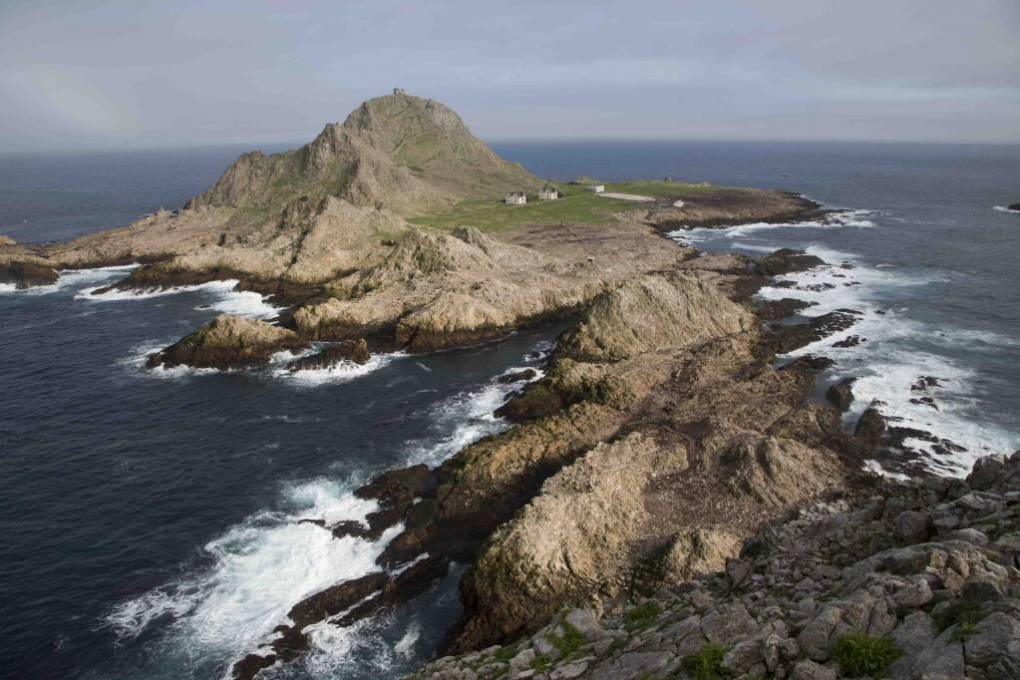
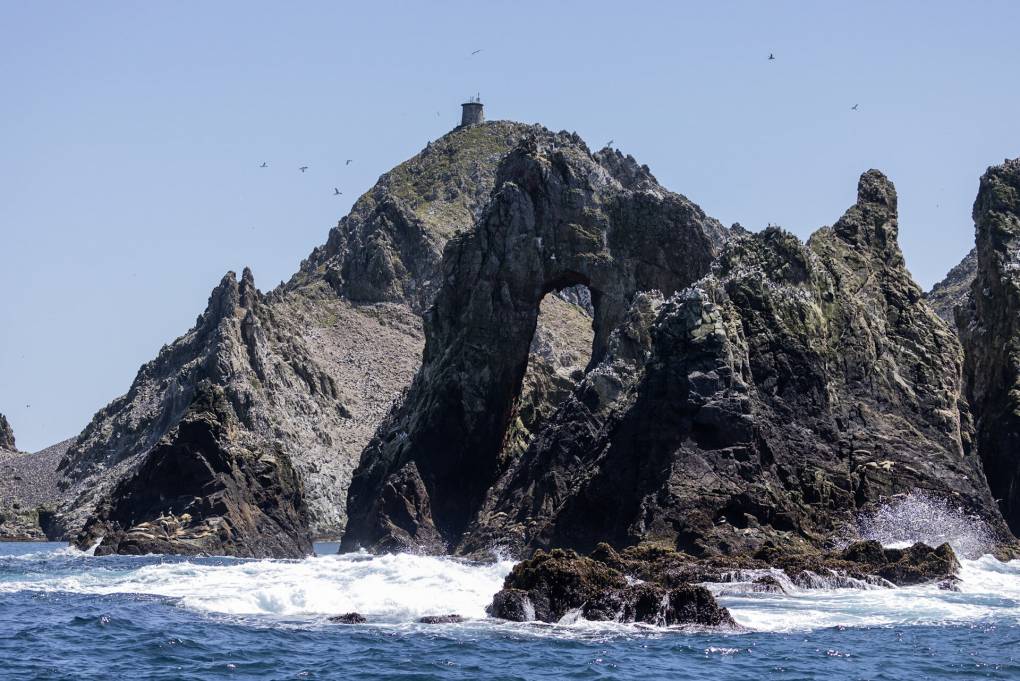
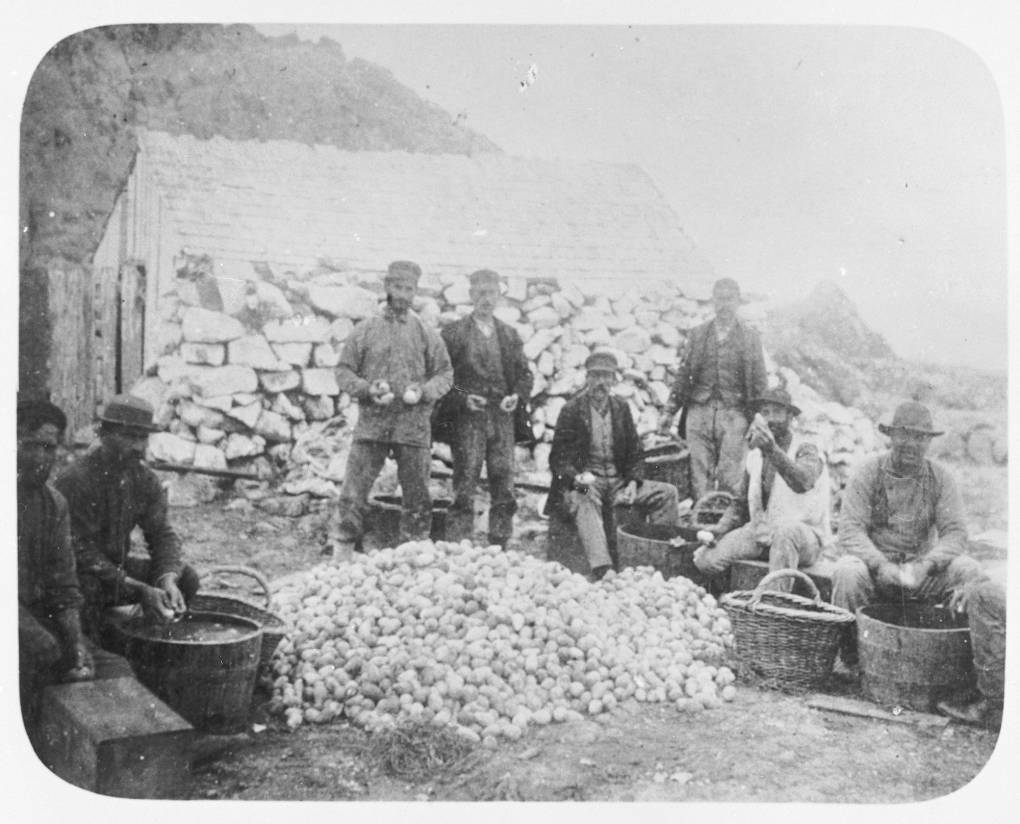
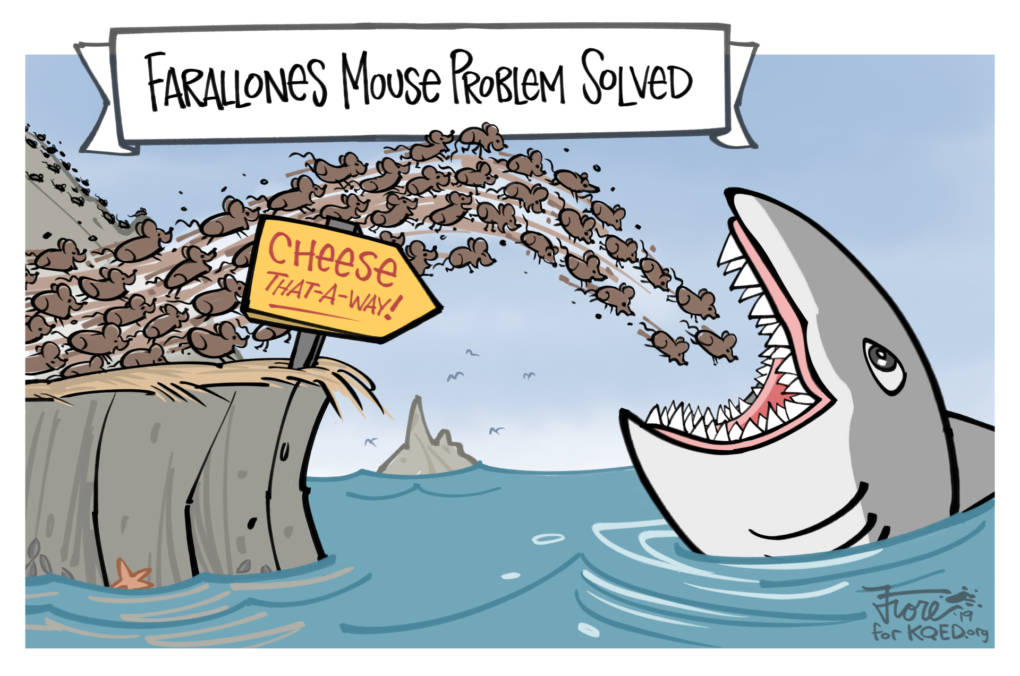
Feds Withdraw Plan to Drop Rat Poison on Farallon Islands – for Now
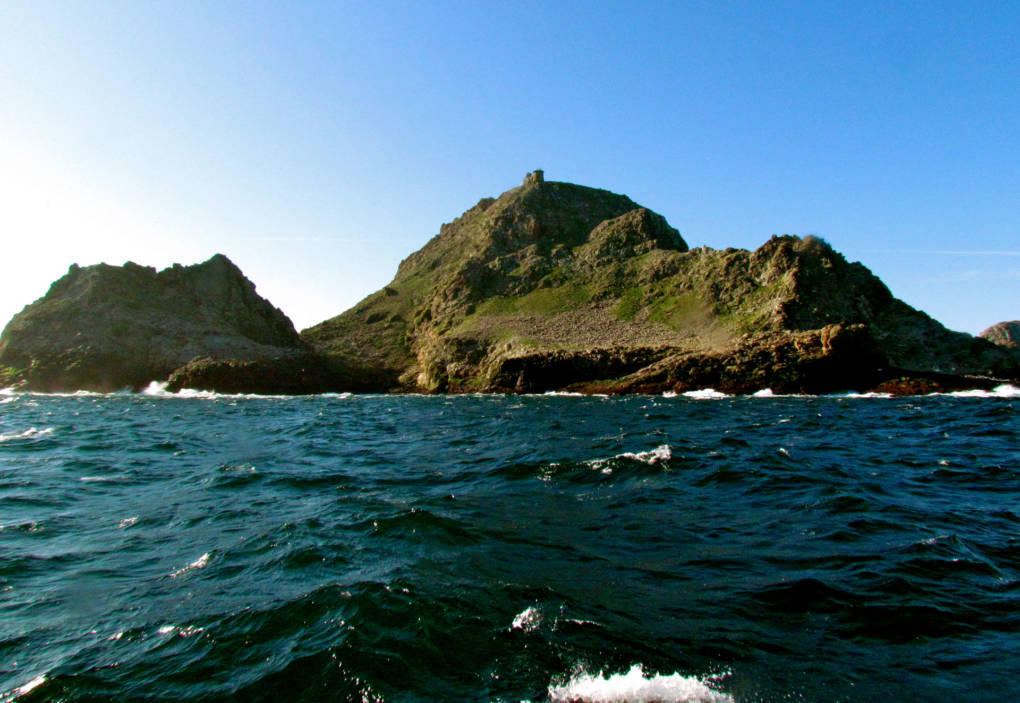
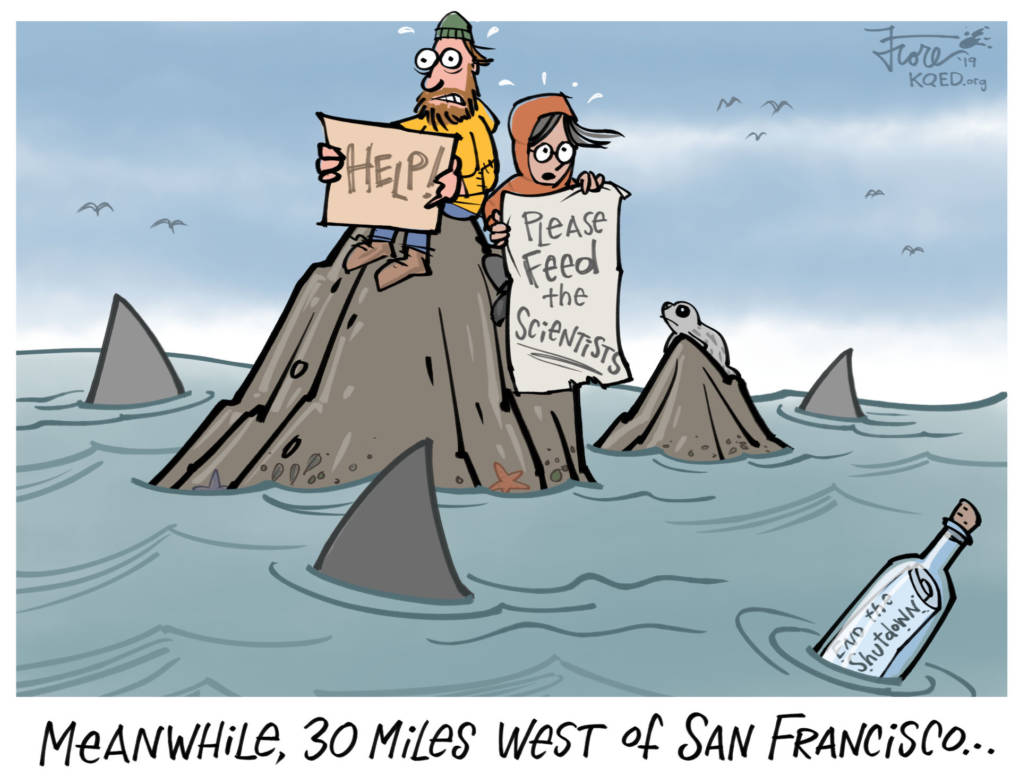
Government Shutdown Maroons Science
Player sponsored by
window.__IS_SSR__=true
window.__INITIAL_STATE__={
"attachmentsReducer": {
"audio_0": {
"type": "attachments",
"id": "audio_0",
"imgSizes": {
"kqedFullSize": {
"file": "https://ww2.kqed.org/news/wp-content/themes/KQED-unified/img/audio_bgs/background0.jpg"
}
}
},
"audio_1": {
"type": "attachments",
"id": "audio_1",
"imgSizes": {
"kqedFullSize": {
"file": "https://ww2.kqed.org/news/wp-content/themes/KQED-unified/img/audio_bgs/background1.jpg"
}
}
},
"audio_2": {
"type": "attachments",
"id": "audio_2",
"imgSizes": {
"kqedFullSize": {
"file": "https://ww2.kqed.org/news/wp-content/themes/KQED-unified/img/audio_bgs/background2.jpg"
}
}
},
"audio_3": {
"type": "attachments",
"id": "audio_3",
"imgSizes": {
"kqedFullSize": {
"file": "https://ww2.kqed.org/news/wp-content/themes/KQED-unified/img/audio_bgs/background3.jpg"
}
}
},
"audio_4": {
"type": "attachments",
"id": "audio_4",
"imgSizes": {
"kqedFullSize": {
"file": "https://ww2.kqed.org/news/wp-content/themes/KQED-unified/img/audio_bgs/background4.jpg"
}
}
},
"placeholder": {
"type": "attachments",
"id": "placeholder",
"imgSizes": {
"thumbnail": {
"file": "https://cdn.kqed.org/wp-content/uploads/2024/12/KQED-Default-Image-816638274-2000x1333-1-160x107.jpg",
"width": 160,
"height": 107,
"mimeType": "image/jpeg"
},
"medium": {
"file": "https://cdn.kqed.org/wp-content/uploads/2024/12/KQED-Default-Image-816638274-2000x1333-1-800x533.jpg",
"width": 800,
"height": 533,
"mimeType": "image/jpeg"
},
"medium_large": {
"file": "https://cdn.kqed.org/wp-content/uploads/2024/12/KQED-Default-Image-816638274-2000x1333-1-768x512.jpg",
"width": 768,
"height": 512,
"mimeType": "image/jpeg"
},
"large": {
"file": "https://cdn.kqed.org/wp-content/uploads/2024/12/KQED-Default-Image-816638274-2000x1333-1-1020x680.jpg",
"width": 1020,
"height": 680,
"mimeType": "image/jpeg"
},
"1536x1536": {
"file": "https://cdn.kqed.org/wp-content/uploads/2024/12/KQED-Default-Image-816638274-2000x1333-1-1536x1024.jpg",
"width": 1536,
"height": 1024,
"mimeType": "image/jpeg"
},
"fd-lrg": {
"file": "https://cdn.kqed.org/wp-content/uploads/2024/12/KQED-Default-Image-816638274-2000x1333-1-1536x1024.jpg",
"width": 1536,
"height": 1024,
"mimeType": "image/jpeg"
},
"fd-med": {
"file": "https://cdn.kqed.org/wp-content/uploads/2024/12/KQED-Default-Image-816638274-2000x1333-1-1020x680.jpg",
"width": 1020,
"height": 680,
"mimeType": "image/jpeg"
},
"fd-sm": {
"file": "https://cdn.kqed.org/wp-content/uploads/2024/12/KQED-Default-Image-816638274-2000x1333-1-800x533.jpg",
"width": 800,
"height": 533,
"mimeType": "image/jpeg"
},
"post-thumbnail": {
"file": "https://cdn.kqed.org/wp-content/uploads/2024/12/KQED-Default-Image-816638274-2000x1333-1-672x372.jpg",
"width": 672,
"height": 372,
"mimeType": "image/jpeg"
},
"twentyfourteen-full-width": {
"file": "https://cdn.kqed.org/wp-content/uploads/2024/12/KQED-Default-Image-816638274-2000x1333-1-1038x576.jpg",
"width": 1038,
"height": 576,
"mimeType": "image/jpeg"
},
"xxsmall": {
"file": "https://cdn.kqed.org/wp-content/uploads/2024/12/KQED-Default-Image-816638274-2000x1333-1-160x107.jpg",
"width": 160,
"height": 107,
"mimeType": "image/jpeg"
},
"xsmall": {
"file": "https://cdn.kqed.org/wp-content/uploads/2024/12/KQED-Default-Image-816638274-2000x1333-1-672x372.jpg",
"width": 672,
"height": 372,
"mimeType": "image/jpeg"
},
"small": {
"file": "https://cdn.kqed.org/wp-content/uploads/2024/12/KQED-Default-Image-816638274-2000x1333-1-672x372.jpg",
"width": 672,
"height": 372,
"mimeType": "image/jpeg"
},
"xlarge": {
"file": "https://cdn.kqed.org/wp-content/uploads/2024/12/KQED-Default-Image-816638274-2000x1333-1-1020x680.jpg",
"width": 1020,
"height": 680,
"mimeType": "image/jpeg"
},
"full-width": {
"file": "https://cdn.kqed.org/wp-content/uploads/2024/12/KQED-Default-Image-816638274-2000x1333-1-1920x1280.jpg",
"width": 1920,
"height": 1280,
"mimeType": "image/jpeg"
},
"guest-author-32": {
"file": "https://cdn.kqed.org/wp-content/uploads/2025/01/KQED-Default-Image-816638274-1333x1333-1-160x160.jpg",
"width": 32,
"height": 32,
"mimeType": "image/jpeg"
},
"guest-author-50": {
"file": "https://cdn.kqed.org/wp-content/uploads/2025/01/KQED-Default-Image-816638274-1333x1333-1-160x160.jpg",
"width": 50,
"height": 50,
"mimeType": "image/jpeg"
},
"guest-author-64": {
"file": "https://cdn.kqed.org/wp-content/uploads/2025/01/KQED-Default-Image-816638274-1333x1333-1-160x160.jpg",
"width": 64,
"height": 64,
"mimeType": "image/jpeg"
},
"guest-author-96": {
"file": "https://cdn.kqed.org/wp-content/uploads/2025/01/KQED-Default-Image-816638274-1333x1333-1-160x160.jpg",
"width": 96,
"height": 96,
"mimeType": "image/jpeg"
},
"guest-author-128": {
"file": "https://cdn.kqed.org/wp-content/uploads/2025/01/KQED-Default-Image-816638274-1333x1333-1-160x160.jpg",
"width": 128,
"height": 128,
"mimeType": "image/jpeg"
},
"detail": {
"file": "https://cdn.kqed.org/wp-content/uploads/2025/01/KQED-Default-Image-816638274-1333x1333-1-160x160.jpg",
"width": 160,
"height": 160,
"mimeType": "image/jpeg"
},
"kqedFullSize": {
"file": "https://cdn.kqed.org/wp-content/uploads/2024/12/KQED-Default-Image-816638274-2000x1333-1.jpg",
"width": 2000,
"height": 1333
}
}
},
"news_11920257": {
"type": "attachments",
"id": "news_11920257",
"meta": {
"index": "attachments_1716263798",
"site": "news",
"id": "11920257",
"found": true
},
"parent": 11920240,
"imgSizes": {
"twentyfourteen-full-width": {
"file": "https://ww2.kqed.org/app/uploads/sites/10/2022/07/Farallons-1023x576.jpeg",
"width": 1023,
"mimeType": "image/jpeg",
"height": 576
},
"thumbnail": {
"file": "https://ww2.kqed.org/app/uploads/sites/10/2022/07/Farallons-160x107.jpeg",
"width": 160,
"mimeType": "image/jpeg",
"height": 107
},
"post-thumbnail": {
"file": "https://ww2.kqed.org/app/uploads/sites/10/2022/07/Farallons-672x372.jpeg",
"width": 672,
"mimeType": "image/jpeg",
"height": 372
},
"kqedFullSize": {
"file": "https://ww2.kqed.org/app/uploads/sites/10/2022/07/Farallons.jpeg",
"width": 1023,
"height": 682
},
"large": {
"file": "https://ww2.kqed.org/app/uploads/sites/10/2022/07/Farallons-1020x680.jpeg",
"width": 1020,
"mimeType": "image/jpeg",
"height": 680
},
"medium": {
"file": "https://ww2.kqed.org/app/uploads/sites/10/2022/07/Farallons-800x533.jpeg",
"width": 800,
"mimeType": "image/jpeg",
"height": 533
}
},
"publishDate": 1658514956,
"modified": 1658774542,
"caption": "Sitting 26 miles outside the Golden Gate, the Farallon Islands are a home to one of the most biodiverse ecosystems on the planet.",
"description": null,
"title": "An aerial view of the Southeast Farallon. A few structures are visible.",
"credit": "Courtesy of Point Blue Conservation Science",
"status": "inherit",
"altTag": null,
"isLoading": false,
"fetchFailed": false
},
"news_11916657": {
"type": "attachments",
"id": "news_11916657",
"meta": {
"index": "attachments_1716263798",
"site": "news",
"id": "11916657",
"found": true
},
"parent": 11916632,
"imgSizes": {
"twentyfourteen-full-width": {
"file": "https://ww2.kqed.org/app/uploads/sites/10/2022/06/RS56595_IMG_9558-qut-1038x576.jpg",
"width": 1038,
"mimeType": "image/jpeg",
"height": 576
},
"thumbnail": {
"file": "https://ww2.kqed.org/app/uploads/sites/10/2022/06/RS56595_IMG_9558-qut-160x107.jpg",
"width": 160,
"mimeType": "image/jpeg",
"height": 107
},
"post-thumbnail": {
"file": "https://ww2.kqed.org/app/uploads/sites/10/2022/06/RS56595_IMG_9558-qut-672x372.jpg",
"width": 672,
"mimeType": "image/jpeg",
"height": 372
},
"kqedFullSize": {
"file": "https://ww2.kqed.org/app/uploads/sites/10/2022/06/RS56595_IMG_9558-qut.jpg",
"width": 1920,
"height": 1281
},
"large": {
"file": "https://ww2.kqed.org/app/uploads/sites/10/2022/06/RS56595_IMG_9558-qut-1020x681.jpg",
"width": 1020,
"mimeType": "image/jpeg",
"height": 681
},
"1536x1536": {
"file": "https://ww2.kqed.org/app/uploads/sites/10/2022/06/RS56595_IMG_9558-qut-1536x1025.jpg",
"width": 1536,
"mimeType": "image/jpeg",
"height": 1025
},
"medium": {
"file": "https://ww2.kqed.org/app/uploads/sites/10/2022/06/RS56595_IMG_9558-qut-800x534.jpg",
"width": 800,
"mimeType": "image/jpeg",
"height": 534
}
},
"publishDate": 1654807543,
"modified": 1654908511,
"caption": "Southeast Farallon Island, about 27 miles west of San Francisco, is the largest and only inhabited island of the Farallones.",
"description": null,
"title": "RS56595_IMG_9558-qut",
"credit": "Rhys Watkin/Oceanic Society",
"status": "inherit",
"altTag": "A large, rocky island, with waves crashing around it.",
"isLoading": false,
"fetchFailed": false
},
"news_11872731": {
"type": "attachments",
"id": "news_11872731",
"meta": {
"index": "attachments_1716263798",
"site": "news",
"id": "11872731",
"found": true
},
"parent": 11872730,
"imgSizes": {
"twentyfourteen-full-width": {
"file": "https://ww2.kqed.org/app/uploads/sites/10/2016/08/egger2_enl-6caea5207a48def8f2179382777a1e494376ff38-1038x576.jpg",
"width": 1038,
"mimeType": "image/jpeg",
"height": 576
},
"thumbnail": {
"file": "https://ww2.kqed.org/app/uploads/sites/10/2016/08/egger2_enl-6caea5207a48def8f2179382777a1e494376ff38-160x129.jpg",
"width": 160,
"mimeType": "image/jpeg",
"height": 129
},
"post-thumbnail": {
"file": "https://ww2.kqed.org/app/uploads/sites/10/2016/08/egger2_enl-6caea5207a48def8f2179382777a1e494376ff38-672x372.jpg",
"width": 672,
"mimeType": "image/jpeg",
"height": 372
},
"kqedFullSize": {
"file": "https://ww2.kqed.org/app/uploads/sites/10/2016/08/egger2_enl-6caea5207a48def8f2179382777a1e494376ff38.jpg",
"width": 2000,
"height": 1616
},
"large": {
"file": "https://ww2.kqed.org/app/uploads/sites/10/2016/08/egger2_enl-6caea5207a48def8f2179382777a1e494376ff38-1020x824.jpg",
"width": 1020,
"mimeType": "image/jpeg",
"height": 824
},
"1536x1536": {
"file": "https://ww2.kqed.org/app/uploads/sites/10/2016/08/egger2_enl-6caea5207a48def8f2179382777a1e494376ff38-1536x1241.jpg",
"width": 1536,
"mimeType": "image/jpeg",
"height": 1241
},
"full-width": {
"file": "https://ww2.kqed.org/app/uploads/sites/10/2016/08/egger2_enl-6caea5207a48def8f2179382777a1e494376ff38-1920x1551.jpg",
"width": 1920,
"mimeType": "image/jpeg",
"height": 1551
},
"medium": {
"file": "https://ww2.kqed.org/app/uploads/sites/10/2016/08/egger2_enl-6caea5207a48def8f2179382777a1e494376ff38-800x646.jpg",
"width": 800,
"mimeType": "image/jpeg",
"height": 646
}
},
"publishDate": 1620412443,
"modified": 1620415239,
"caption": "A group of men clean a week's haul of seabird eggs.",
"description": "A group of men clean a week's haul of seabird eggs.",
"title": "A group of men clean a week's haul of seabird eggs.",
"credit": "Arthur Bolton/California Academy of Sciences ",
"status": "inherit",
"altTag": "A group of men clean a week's haul of seabird eggs.",
"isLoading": false,
"fetchFailed": false
},
"news_11760924": {
"type": "attachments",
"id": "news_11760924",
"meta": {
"index": "attachments_1716263798",
"site": "news",
"id": "11760924",
"found": true
},
"parent": 11760898,
"imgSizes": {
"apple_news_ca_landscape_5_5": {
"file": "https://ww2.kqed.org/app/uploads/sites/10/2019/07/mice_071219_final-1044x783.jpg",
"width": 1044,
"mimeType": "image/jpeg",
"height": 783
},
"apple_news_ca_square_4_0": {
"file": "https://ww2.kqed.org/app/uploads/sites/10/2019/07/mice_071219_final-470x470.jpg",
"width": 470,
"mimeType": "image/jpeg",
"height": 470
},
"twentyfourteen-full-width": {
"file": "https://ww2.kqed.org/app/uploads/sites/10/2019/07/mice_071219_final-1038x576.jpg",
"width": 1038,
"mimeType": "image/jpeg",
"height": 576
},
"thumbnail": {
"file": "https://ww2.kqed.org/app/uploads/sites/10/2019/07/mice_071219_final-160x106.jpg",
"width": 160,
"mimeType": "image/jpeg",
"height": 106
},
"post-thumbnail": {
"file": "https://ww2.kqed.org/app/uploads/sites/10/2019/07/mice_071219_final-672x372.jpg",
"width": 672,
"mimeType": "image/jpeg",
"height": 372
},
"kqedFullSize": {
"file": "https://ww2.kqed.org/app/uploads/sites/10/2019/07/mice_071219_final.jpg",
"width": 1920,
"height": 1273
},
"apple_news_ca_landscape_4_7": {
"file": "https://ww2.kqed.org/app/uploads/sites/10/2019/07/mice_071219_final-632x474.jpg",
"width": 632,
"mimeType": "image/jpeg",
"height": 474
},
"large": {
"file": "https://ww2.kqed.org/app/uploads/sites/10/2019/07/mice_071219_final-1020x676.jpg",
"width": 1020,
"mimeType": "image/jpeg",
"height": 676
},
"complete_open_graph": {
"file": "https://ww2.kqed.org/app/uploads/sites/10/2019/07/mice_071219_final-1200x796.jpg",
"width": 1200,
"mimeType": "image/jpeg",
"height": 796
},
"apple_news_ca_landscape_4_0": {
"file": "https://ww2.kqed.org/app/uploads/sites/10/2019/07/mice_071219_final-536x402.jpg",
"width": 536,
"mimeType": "image/jpeg",
"height": 402
},
"apple_news_ca_portrait_12_9": {
"file": "https://ww2.kqed.org/app/uploads/sites/10/2019/07/mice_071219_final-1122x1273.jpg",
"width": 1122,
"mimeType": "image/jpeg",
"height": 1273
},
"medium": {
"file": "https://ww2.kqed.org/app/uploads/sites/10/2019/07/mice_071219_final-800x530.jpg",
"width": 800,
"mimeType": "image/jpeg",
"height": 530
},
"apple_news_ca_portrait_4_0": {
"file": "https://ww2.kqed.org/app/uploads/sites/10/2019/07/mice_071219_final-354x472.jpg",
"width": 354,
"mimeType": "image/jpeg",
"height": 472
},
"apple_news_ca_portrait_9_7": {
"file": "https://ww2.kqed.org/app/uploads/sites/10/2019/07/mice_071219_final-840x1120.jpg",
"width": 840,
"mimeType": "image/jpeg",
"height": 1120
},
"apple_news_ca_landscape_12_9": {
"file": "https://ww2.kqed.org/app/uploads/sites/10/2019/07/mice_071219_final-1832x1273.jpg",
"width": 1832,
"mimeType": "image/jpeg",
"height": 1273
},
"apple_news_ca_square_9_7": {
"file": "https://ww2.kqed.org/app/uploads/sites/10/2019/07/mice_071219_final-1104x1104.jpg",
"width": 1104,
"mimeType": "image/jpeg",
"height": 1104
},
"apple_news_ca_portrait_4_7": {
"file": "https://ww2.kqed.org/app/uploads/sites/10/2019/07/mice_071219_final-414x552.jpg",
"width": 414,
"mimeType": "image/jpeg",
"height": 552
},
"apple_news_ca_square_12_9": {
"file": "https://ww2.kqed.org/app/uploads/sites/10/2019/07/mice_071219_final-1472x1273.jpg",
"width": 1472,
"mimeType": "image/jpeg",
"height": 1273
},
"apple_news_ca_portrait_5_5": {
"file": "https://ww2.kqed.org/app/uploads/sites/10/2019/07/mice_071219_final-687x916.jpg",
"width": 687,
"mimeType": "image/jpeg",
"height": 916
},
"full-width": {
"file": "https://ww2.kqed.org/app/uploads/sites/10/2019/07/mice_071219_final-1920x1273.jpg",
"width": 1920,
"mimeType": "image/jpeg",
"height": 1273
},
"apple_news_ca_square_4_7": {
"file": "https://ww2.kqed.org/app/uploads/sites/10/2019/07/mice_071219_final-550x550.jpg",
"width": 550,
"mimeType": "image/jpeg",
"height": 550
},
"apple_news_ca_landscape_9_7": {
"file": "https://ww2.kqed.org/app/uploads/sites/10/2019/07/mice_071219_final-1376x1032.jpg",
"width": 1376,
"mimeType": "image/jpeg",
"height": 1032
},
"apple_news_ca_square_5_5": {
"file": "https://ww2.kqed.org/app/uploads/sites/10/2019/07/mice_071219_final-912x912.jpg",
"width": 912,
"mimeType": "image/jpeg",
"height": 912
}
},
"publishDate": 1562967443,
"modified": 1562967476,
"caption": null,
"description": null,
"title": "mice_071219_final",
"credit": null,
"status": "inherit",
"isLoading": false,
"fetchFailed": false
},
"news_11760350": {
"type": "attachments",
"id": "news_11760350",
"meta": {
"index": "attachments_1716263798",
"site": "news",
"id": "11760350",
"found": true
},
"parent": 11760328,
"imgSizes": {
"apple_news_ca_landscape_5_5": {
"file": "https://ww2.kqed.org/app/uploads/sites/10/2019/07/Farallon-Islands-1044x783.jpg",
"width": 1044,
"mimeType": "image/jpeg",
"height": 783
},
"apple_news_ca_square_4_0": {
"file": "https://ww2.kqed.org/app/uploads/sites/10/2019/07/Farallon-Islands-470x470.jpg",
"width": 470,
"mimeType": "image/jpeg",
"height": 470
},
"twentyfourteen-full-width": {
"file": "https://ww2.kqed.org/app/uploads/sites/10/2019/07/Farallon-Islands-1038x576.jpg",
"width": 1038,
"mimeType": "image/jpeg",
"height": 576
},
"thumbnail": {
"file": "https://ww2.kqed.org/app/uploads/sites/10/2019/07/Farallon-Islands-160x110.jpg",
"width": 160,
"mimeType": "image/jpeg",
"height": 110
},
"post-thumbnail": {
"file": "https://ww2.kqed.org/app/uploads/sites/10/2019/07/Farallon-Islands-672x372.jpg",
"width": 672,
"mimeType": "image/jpeg",
"height": 372
},
"kqedFullSize": {
"file": "https://ww2.kqed.org/app/uploads/sites/10/2019/07/Farallon-Islands.jpg",
"width": 1920,
"height": 1324
},
"apple_news_ca_landscape_4_7": {
"file": "https://ww2.kqed.org/app/uploads/sites/10/2019/07/Farallon-Islands-632x474.jpg",
"width": 632,
"mimeType": "image/jpeg",
"height": 474
},
"large": {
"file": "https://ww2.kqed.org/app/uploads/sites/10/2019/07/Farallon-Islands-1020x703.jpg",
"width": 1020,
"mimeType": "image/jpeg",
"height": 703
},
"complete_open_graph": {
"file": "https://ww2.kqed.org/app/uploads/sites/10/2019/07/Farallon-Islands-1200x828.jpg",
"width": 1200,
"mimeType": "image/jpeg",
"height": 828
},
"apple_news_ca_landscape_4_0": {
"file": "https://ww2.kqed.org/app/uploads/sites/10/2019/07/Farallon-Islands-536x402.jpg",
"width": 536,
"mimeType": "image/jpeg",
"height": 402
},
"apple_news_ca_portrait_12_9": {
"file": "https://ww2.kqed.org/app/uploads/sites/10/2019/07/Farallon-Islands-1122x1324.jpg",
"width": 1122,
"mimeType": "image/jpeg",
"height": 1324
},
"medium": {
"file": "https://ww2.kqed.org/app/uploads/sites/10/2019/07/Farallon-Islands-800x552.jpg",
"width": 800,
"mimeType": "image/jpeg",
"height": 552
},
"apple_news_ca_portrait_4_0": {
"file": "https://ww2.kqed.org/app/uploads/sites/10/2019/07/Farallon-Islands-354x472.jpg",
"width": 354,
"mimeType": "image/jpeg",
"height": 472
},
"apple_news_ca_portrait_9_7": {
"file": "https://ww2.kqed.org/app/uploads/sites/10/2019/07/Farallon-Islands-840x1120.jpg",
"width": 840,
"mimeType": "image/jpeg",
"height": 1120
},
"apple_news_ca_landscape_12_9": {
"file": "https://ww2.kqed.org/app/uploads/sites/10/2019/07/Farallon-Islands-1832x1324.jpg",
"width": 1832,
"mimeType": "image/jpeg",
"height": 1324
},
"apple_news_ca_square_9_7": {
"file": "https://ww2.kqed.org/app/uploads/sites/10/2019/07/Farallon-Islands-1104x1104.jpg",
"width": 1104,
"mimeType": "image/jpeg",
"height": 1104
},
"apple_news_ca_portrait_4_7": {
"file": "https://ww2.kqed.org/app/uploads/sites/10/2019/07/Farallon-Islands-414x552.jpg",
"width": 414,
"mimeType": "image/jpeg",
"height": 552
},
"apple_news_ca_square_12_9": {
"file": "https://ww2.kqed.org/app/uploads/sites/10/2019/07/Farallon-Islands-1472x1324.jpg",
"width": 1472,
"mimeType": "image/jpeg",
"height": 1324
},
"apple_news_ca_portrait_5_5": {
"file": "https://ww2.kqed.org/app/uploads/sites/10/2019/07/Farallon-Islands-687x916.jpg",
"width": 687,
"mimeType": "image/jpeg",
"height": 916
},
"full-width": {
"file": "https://ww2.kqed.org/app/uploads/sites/10/2019/07/Farallon-Islands-1920x1324.jpg",
"width": 1920,
"mimeType": "image/jpeg",
"height": 1324
},
"apple_news_ca_square_4_7": {
"file": "https://ww2.kqed.org/app/uploads/sites/10/2019/07/Farallon-Islands-550x550.jpg",
"width": 550,
"mimeType": "image/jpeg",
"height": 550
},
"apple_news_ca_landscape_9_7": {
"file": "https://ww2.kqed.org/app/uploads/sites/10/2019/07/Farallon-Islands-1376x1032.jpg",
"width": 1376,
"mimeType": "image/jpeg",
"height": 1032
},
"apple_news_ca_square_5_5": {
"file": "https://ww2.kqed.org/app/uploads/sites/10/2019/07/Farallon-Islands-912x912.jpg",
"width": 912,
"mimeType": "image/jpeg",
"height": 912
}
},
"publishDate": 1562797864,
"modified": 1562800425,
"caption": "The rugged Farallon Islands, 27 miles off the coast of San Francisco.",
"description": "The rugged Farallon Islands, 27 miles off the coast of San Francisco.",
"title": "Farallon-Islands",
"credit": "Jeff Gunn/Flickr",
"status": "inherit",
"isLoading": false,
"fetchFailed": false
},
"news_11720849": {
"type": "attachments",
"id": "news_11720849",
"meta": {
"index": "attachments_1716263798",
"site": "news",
"id": "11720849",
"found": true
},
"parent": 11720822,
"imgSizes": {
"twentyfourteen-full-width": {
"file": "https://ww2.kqed.org/app/uploads/sites/10/2019/01/scientists_012419_final-1038x576.jpg",
"width": 1038,
"mimeType": "image/jpeg",
"height": 576
},
"thumbnail": {
"file": "https://ww2.kqed.org/app/uploads/sites/10/2019/01/scientists_012419_final-160x123.jpg",
"width": 160,
"mimeType": "image/jpeg",
"height": 123
},
"post-thumbnail": {
"file": "https://ww2.kqed.org/app/uploads/sites/10/2019/01/scientists_012419_final-672x372.jpg",
"width": 672,
"mimeType": "image/jpeg",
"height": 372
},
"kqedFullSize": {
"file": "https://ww2.kqed.org/app/uploads/sites/10/2019/01/scientists_012419_final.jpg",
"width": 1921,
"height": 1476
},
"large": {
"file": "https://ww2.kqed.org/app/uploads/sites/10/2019/01/scientists_012419_final-1020x784.jpg",
"width": 1020,
"mimeType": "image/jpeg",
"height": 784
},
"complete_open_graph": {
"file": "https://ww2.kqed.org/app/uploads/sites/10/2019/01/scientists_012419_final-1200x922.jpg",
"width": 1200,
"mimeType": "image/jpeg",
"height": 922
},
"guest-author-50": {
"file": "https://ww2.kqed.org/app/uploads/sites/10/2019/01/scientists_012419_final-50x50.jpg",
"width": 50,
"mimeType": "image/jpeg",
"height": 50
},
"guest-author-96": {
"file": "https://ww2.kqed.org/app/uploads/sites/10/2019/01/scientists_012419_final-96x96.jpg",
"width": 96,
"mimeType": "image/jpeg",
"height": 96
},
"medium": {
"file": "https://ww2.kqed.org/app/uploads/sites/10/2019/01/scientists_012419_final-800x615.jpg",
"width": 800,
"mimeType": "image/jpeg",
"height": 615
},
"guest-author-64": {
"file": "https://ww2.kqed.org/app/uploads/sites/10/2019/01/scientists_012419_final-64x64.jpg",
"width": 64,
"mimeType": "image/jpeg",
"height": 64
},
"guest-author-32": {
"file": "https://ww2.kqed.org/app/uploads/sites/10/2019/01/scientists_012419_final-32x32.jpg",
"width": 32,
"mimeType": "image/jpeg",
"height": 32
},
"full-width": {
"file": "https://ww2.kqed.org/app/uploads/sites/10/2019/01/scientists_012419_final-1920x1475.jpg",
"width": 1920,
"mimeType": "image/jpeg",
"height": 1475
},
"detail": {
"file": "https://ww2.kqed.org/app/uploads/sites/10/2019/01/scientists_012419_final-150x150.jpg",
"width": 150,
"mimeType": "image/jpeg",
"height": 150
},
"guest-author-128": {
"file": "https://ww2.kqed.org/app/uploads/sites/10/2019/01/scientists_012419_final-128x128.jpg",
"width": 128,
"mimeType": "image/jpeg",
"height": 128
}
},
"publishDate": 1548374878,
"modified": 1548374903,
"caption": null,
"description": null,
"title": "scientists_012419_final",
"credit": null,
"status": "inherit",
"isLoading": false,
"fetchFailed": false
}
},
"audioPlayerReducer": {
"postId": "stream_live",
"isPaused": true,
"isPlaying": false,
"pfsActive": false,
"pledgeModalIsOpen": true,
"playerDrawerIsOpen": false
},
"authorsReducer": {
"byline_news_11872730": {
"type": "authors",
"id": "byline_news_11872730",
"meta": {
"override": true
},
"slug": "byline_news_11872730",
"name": "The Kitchen Sisters, Nikki Silva and Davia Nelson",
"isLoading": false
},
"ohubertallen": {
"type": "authors",
"id": "102",
"meta": {
"index": "authors_1716337520",
"id": "102",
"found": true
},
"name": "Olivia Allen-Price",
"firstName": "Olivia",
"lastName": "Allen-Price",
"slug": "ohubertallen",
"email": "oallenprice@kqed.org",
"display_author_email": false,
"staff_mastheads": [
"news"
],
"title": "Senior Editor",
"bio": "Olivia Allen-Price is senior editor and host of the award-winning Bay Curious podcast. Prior to joining KQED in 2013, Olivia worked at The Baltimore Sun and The Virginian-Pilot in Norfolk, Va. She holds degrees in journalism and political science from Elon University. Her work has earned awards from the Society of Professional Journalists, the Hearst Foundation and Hearken. She loves to talk about running and curly hair.\r\n\r\nFollow: \u003ca href=\"https://twitter.com/oallenprice\">@oallenprice\u003c/a>\r\nEmail: \u003ca href=\"mailto:oallenprice@kqed.org\">oallenprice@kqed.org\u003c/a>",
"avatar": "https://secure.gravatar.com/avatar/fdd38db811fcf449bd7d7db84a39eea1?s=600&d=blank&r=g",
"twitter": "oallenprice",
"facebook": null,
"instagram": null,
"linkedin": null,
"sites": [
{
"site": "",
"roles": [
"editor"
]
},
{
"site": "arts",
"roles": [
"subscriber"
]
},
{
"site": "styleguide",
"roles": [
"administrator"
]
},
{
"site": "news",
"roles": [
"administrator"
]
},
{
"site": "pop",
"roles": [
"administrator"
]
},
{
"site": "bayareabites",
"roles": [
"contributor"
]
},
{
"site": "stateofhealth",
"roles": [
"administrator"
]
},
{
"site": "science",
"roles": [
"editor"
]
},
{
"site": "breakingnews",
"roles": [
"administrator"
]
}
],
"headData": {
"title": "Olivia Allen-Price | KQED",
"description": "Senior Editor",
"ogImgSrc": "https://secure.gravatar.com/avatar/fdd38db811fcf449bd7d7db84a39eea1?s=600&d=blank&r=g",
"twImgSrc": "https://secure.gravatar.com/avatar/fdd38db811fcf449bd7d7db84a39eea1?s=600&d=blank&r=g"
},
"isLoading": false,
"link": "/author/ohubertallen"
},
"kqednewsstaffandwires": {
"type": "authors",
"id": "237",
"meta": {
"index": "authors_1716337520",
"id": "237",
"found": true
},
"name": "KQED News Staff and Wires",
"firstName": "KQED News Staff and Wires",
"lastName": null,
"slug": "kqednewsstaffandwires",
"email": "onlinenewsstaff@kqed.org",
"display_author_email": false,
"staff_mastheads": [],
"title": null,
"bio": null,
"avatar": "https://secure.gravatar.com/avatar/72295af8ebbfbd19a4948f5271285664?s=600&d=blank&r=g",
"twitter": null,
"facebook": null,
"instagram": null,
"linkedin": null,
"sites": [
{
"site": "arts",
"roles": [
"contributor"
]
},
{
"site": "news",
"roles": [
"contributor"
]
},
{
"site": "lowdown",
"roles": [
"author"
]
},
{
"site": "stateofhealth",
"roles": [
"contributor"
]
},
{
"site": "food",
"roles": [
"author"
]
}
],
"headData": {
"title": "KQED News Staff and Wires | KQED",
"description": null,
"ogImgSrc": "https://secure.gravatar.com/avatar/72295af8ebbfbd19a4948f5271285664?s=600&d=blank&r=g",
"twImgSrc": "https://secure.gravatar.com/avatar/72295af8ebbfbd19a4948f5271285664?s=600&d=blank&r=g"
},
"isLoading": false,
"link": "/author/kqednewsstaffandwires"
},
"markfiore": {
"type": "authors",
"id": "3236",
"meta": {
"index": "authors_1716337520",
"id": "3236",
"found": true
},
"name": "Mark Fiore",
"firstName": "Mark",
"lastName": "Fiore",
"slug": "markfiore",
"email": "mark@markfiore.com",
"display_author_email": false,
"staff_mastheads": [
"news"
],
"title": "KQED News Cartoonist",
"bio": "\u003ca href=\"http://www.MarkFiore.com\">MarkFiore.com\u003c/a> | \u003ca href=\"https://twitter.com/markfiore\">Follow on Twitter\u003c/a> | \u003ca href=\"https://www.facebook.com/pages/Mark-Fiore-Animated-Political-Cartoons/94451707396?ref=bookmarks\">Facebook\u003c/a> | \u003ca href=\"mailto:mark@markfiore.com\">email\u003c/a>\r\n\r\nPulitzer Prize-winner, Mark Fiore, who the Wall Street Journal has called “the undisputed guru of the form,” creates animated political cartoons in San Francisco, where his work has been featured regularly on the San Francisco Chronicle’s web site, SFGate.com. His work has appeared on Newsweek.com, Slate.com, CBSNews.com, MotherJones.com, DailyKos.com and NPR’s web site. Fiore’s political animation has appeared on CNN, Frontline, Bill Moyers Journal, Salon.com and cable and broadcast outlets across the globe.\r\n\r\nBeginning his professional life by drawing traditional political cartoons for newspapers, Fiore’s work appeared in publications ranging from the Washington Post to the Los Angeles Times. In the late 1990s, he began to experiment with animating political cartoons and, after a short stint at the San Jose Mercury News as their staff cartoonist, Fiore devoted all his energies to animation.\r\nGrowing up in California, Fiore also spent a good portion of his life in the backwoods of Idaho. It was this combination that shaped him politically. Mark majored in political science at Colorado College, where, in a perfect send-off for a cartoonist, he received his diploma in 1991 as commencement speaker Dick Cheney smiled approvingly.\r\nMark Fiore was awarded the Pulitzer Prize for political cartooning in 2010, a Robert F. Kennedy Journalism Award in 2004 and has twice received an Online Journalism Award for commentary from the Online News Association (2002, 2008). Fiore has received two awards for his work in new media from the National Cartoonists Society (2001, 2002), and in 2006 received The James Madison Freedom of Information Award from The Society of Professional Journalists.",
"avatar": "https://secure.gravatar.com/avatar/fc4e2a612b15b67bad0c6f0e1db4ca9b?s=600&d=blank&r=g",
"twitter": "MarkFiore",
"facebook": null,
"instagram": "https://www.instagram.com/markfiore/?hl=en",
"linkedin": null,
"sites": [
{
"site": "arts",
"roles": [
"contributor"
]
},
{
"site": "news",
"roles": [
"editor"
]
},
{
"site": "futureofyou",
"roles": [
"editor"
]
},
{
"site": "science",
"roles": [
"editor"
]
}
],
"headData": {
"title": "Mark Fiore | KQED",
"description": "KQED News Cartoonist",
"ogImgSrc": "https://secure.gravatar.com/avatar/fc4e2a612b15b67bad0c6f0e1db4ca9b?s=600&d=blank&r=g",
"twImgSrc": "https://secure.gravatar.com/avatar/fc4e2a612b15b67bad0c6f0e1db4ca9b?s=600&d=blank&r=g"
},
"isLoading": false,
"link": "/author/markfiore"
},
"ibloom": {
"type": "authors",
"id": "11805",
"meta": {
"index": "authors_1716337520",
"id": "11805",
"found": true
},
"name": "Izzy Bloom",
"firstName": "Izzy",
"lastName": "Bloom",
"slug": "ibloom",
"email": "ibloom@kqed.org",
"display_author_email": false,
"staff_mastheads": [],
"title": "KQED Reporter & Producer",
"bio": "Izzy is a reporter and producer on KQED's California Politics & Government Desk. She joined the desk in 2024 to produce Political Breakdown, covering local and national elections and attending the RNC and DNC in Milwaukee and Chicago. \r\n\r\nBefore that, Izzy was a producer on The California Report and reported long-form stories for The California Report Magazine. She was a finalist for the Third Coast/Richard H. Driehaus Foundation Competition and was awarded for her reporting on indigenous land back by the Society of Professional Journalists. Izzy received her master's in journalism from the University of California, Berkeley.",
"avatar": "https://secure.gravatar.com/avatar/c318d55506fa162aaca4e542df149485?s=600&d=blank&r=g",
"twitter": null,
"facebook": null,
"instagram": null,
"linkedin": null,
"sites": [
{
"site": "news",
"roles": [
"editor"
]
},
{
"site": "perspectives",
"roles": [
"editor"
]
}
],
"headData": {
"title": "Izzy Bloom | KQED",
"description": "KQED Reporter & Producer",
"ogImgSrc": "https://secure.gravatar.com/avatar/c318d55506fa162aaca4e542df149485?s=600&d=blank&r=g",
"twImgSrc": "https://secure.gravatar.com/avatar/c318d55506fa162aaca4e542df149485?s=600&d=blank&r=g"
},
"isLoading": false,
"link": "/author/ibloom"
}
},
"breakingNewsReducer": {},
"pagesReducer": {},
"postsReducer": {
"stream_live": {
"type": "live",
"id": "stream_live",
"audioUrl": "https://streams.kqed.org/kqedradio",
"title": "Live Stream",
"excerpt": "Live Stream information currently unavailable.",
"link": "/radio",
"featImg": "",
"label": {
"name": "KQED Live",
"link": "/"
}
},
"stream_kqedNewscast": {
"type": "posts",
"id": "stream_kqedNewscast",
"audioUrl": "https://www.kqed.org/.stream/anon/radio/RDnews/newscast.mp3?_=1",
"title": "KQED Newscast",
"featImg": "",
"label": {
"name": "88.5 FM",
"link": "/"
}
},
"news_11920240": {
"type": "posts",
"id": "news_11920240",
"meta": {
"index": "posts_1716263798",
"site": "news",
"id": "11920240",
"score": null,
"sort": [
1658516289000
]
},
"guestAuthors": [],
"slug": "a-history-of-san-franciscos-wild-raw-farallon-islands",
"title": "A History of San Francisco's Wild, Raw Farallon Islands",
"publishDate": 1658516289,
"format": "standard",
"headTitle": "A History of San Francisco’s Wild, Raw Farallon Islands | KQED",
"labelTerm": {},
"content": "\u003cp>Whether or not the Farallon Islands are visible from shore is always a good measure of how clear a day we’re having in the San Francisco Bay Area. Situated 27 miles west of the Golden Gate, the cluster of 20 islets is often obscured by fog or marine layer — but on the clearest of days they emerge as a blurry silhouette on the horizon line.\u003c/p>\n\u003cp>The islands are closed to the public because they’re now a wildlife refuge where a dazzling array of birds and other wildlife thrive. But over the years, the islands have served many purposes, and been home to a few brave souls willing to weather the inhospitable conditions.\u003c/p>\n\u003cp>[baycuriouspodcastinfo]\u003c/p>\n\u003cp>Oakland resident Ali Moghaddam was enjoying a day in Pacifica with his wife when he first learned about the islands from a placard overlooking the sea. It gave him just enough information to want to know more, so he sent this question to the \u003ca href=\"https://www.kqed.org/podcasts/baycurious\">Bay Curious\u003c/a> team: What is the history of the Farallon Islands?\u003c/p>\n\u003cfigure id=\"attachment_11920246\" class=\"wp-caption aligncenter\" style=\"max-width: 800px\">\u003cimg loading=\"lazy\" decoding=\"async\" class=\"size-medium wp-image-11920246\" src=\"https://ww2.kqed.org/app/uploads/sites/10/2022/07/GettyImages-1298923486-small-800x424.jpg\" alt=\"The sun setting over the Pacific ocean. The Golden Gate Bridge is an silhouette, and on the horizon, the Farallon Islands stick out of the ocean. \" width=\"800\" height=\"424\" srcset=\"https://cdn.kqed.org/wp-content/uploads/sites/10/2022/07/GettyImages-1298923486-small-800x424.jpg 800w, https://cdn.kqed.org/wp-content/uploads/sites/10/2022/07/GettyImages-1298923486-small-1020x541.jpg 1020w, https://cdn.kqed.org/wp-content/uploads/sites/10/2022/07/GettyImages-1298923486-small-160x85.jpg 160w, https://cdn.kqed.org/wp-content/uploads/sites/10/2022/07/GettyImages-1298923486-small-1536x814.jpg 1536w, https://cdn.kqed.org/wp-content/uploads/sites/10/2022/07/GettyImages-1298923486-small.jpg 1920w\" sizes=\"(max-width: 800px) 100vw, 800px\">\u003cfigcaption class=\"wp-caption-text\">The Farallon Islands are often obscured by fog or the marine layer, but on the clearest of days, you can see them from land. \u003ccite>(Michael Macor/San Francisco Chronicle via Getty Images)\u003c/cite>\u003c/figcaption>\u003c/figure>\n\u003ch2>The island’s early visitors\u003c/h2>\n\u003cp>The first people of the Bay Area were wary of the Farallons. Local tribes called them the Islands of the Dead, and it’s said they never stepped foot on them.\u003c/p>\n\u003cp>[ad fullwidth]\u003c/p>\n\u003cp>English explorer, pirate and trader of enslaved people Sir Francis Drake is the first person to leave a record of visiting the islands. He and his men made their way onshore in 1579, where they collected seal meat and eggs. They left after just one day. Drake named them the “Islands of St. James” — a name that didn’t stick.\u003c/p>\n\u003cp>The name that did stick came about 25 years later, when Friar Antonio de la Asunción, sailing on a Spanish expedition, described the string of islands in his diary as “seven farallones close together.” Farallon is Spanish for steep rock or cliff. This time around, the name took.\u003c/p>\n\u003cfigure id=\"attachment_11920259\" class=\"wp-caption aligncenter\" style=\"max-width: 2047px\">\u003cimg loading=\"lazy\" decoding=\"async\" class=\"size-full wp-image-11920259\" src=\"https://ww2.kqed.org/app/uploads/sites/10/2022/07/11105699446_a73ba6de9f_k.jpg\" alt=\"An illustration of the Farallons, with waves splashing up on the rocky shore in the foreground.\" width=\"2047\" height=\"1279\" srcset=\"https://cdn.kqed.org/wp-content/uploads/sites/10/2022/07/11105699446_a73ba6de9f_k.jpg 2047w, https://cdn.kqed.org/wp-content/uploads/sites/10/2022/07/11105699446_a73ba6de9f_k-800x500.jpg 800w, https://cdn.kqed.org/wp-content/uploads/sites/10/2022/07/11105699446_a73ba6de9f_k-1020x637.jpg 1020w, https://cdn.kqed.org/wp-content/uploads/sites/10/2022/07/11105699446_a73ba6de9f_k-160x100.jpg 160w, https://cdn.kqed.org/wp-content/uploads/sites/10/2022/07/11105699446_a73ba6de9f_k-1536x960.jpg 1536w, https://cdn.kqed.org/wp-content/uploads/sites/10/2022/07/11105699446_a73ba6de9f_k-1920x1200.jpg 1920w\" sizes=\"(max-width: 2047px) 100vw, 2047px\">\u003cfigcaption class=\"wp-caption-text\">An illustration of the Farallons featured in the 1874 book “Western Wanderings: A Record of Travel in the Evening Land, etc. Illustrated” by J.W. Boddam-Whetham. \u003ccite>(Courtesy of the \u003ca href=\"https://www.flickr.com/photos/britishlibrary/11105699446/\">British Library/Flickr\u003c/a>)\u003c/cite>\u003c/figcaption>\u003c/figure>\n\u003ch2>A land pillaged\u003c/h2>\n\u003cp>The first people known to live on the islands arrived in 1819. They were Russian fur hunters and members of the Aleut community, who likely were working as enslaved people. They lived on the Southeast Farallon, which is the only island large enough to support humans. They came to the islands to harvest fur seals — the warm pelts were in high demand in Russia.\u003c/p>\n\u003cp>Zackhar Chichinoff was one of the Russians living on the island. His story has been\u003ca href=\"https://www.islapedia.com/images/0/05/Hoover%2C_M_The_Farallon_Islands_1932.pdf\"> recounted in several books\u003c/a> over the years:\u003c/p>\n\u003cblockquote>\u003cp>A schooner took us down to the islands but we had to cruise around for over a week before we could make a landing. We had a few planks with us and some canvas, and with that we built huts for shelter. The water was very bad also, being taken from hollow places in the rocks where it stood all the year round. We had no fire-arms, the sea lions were killed with clubs or spears. Scurvy broke out among us and in a short time all were sick except myself. All the next winter we passed there in great misery and when the spring came the men were too weak to kill sea-lions, and all we could do was to crawl around the cliffs and gather some sea birds’ eggs and suck them raw.\u003c/p>\u003c/blockquote>\n\u003cp>Despite the difficult living conditions and basic weaponry, settlers managed to kill an estimated 200,000 fur seals on the Farallons over the course of a few years. Captain Benjamin Morrell Jr. visited the island in 1825 and offered this \u003ca href=\"https://www.islapedia.com/images/0/05/Hoover%2C_M_The_Farallon_Islands_1932.pdf\">update in his diary\u003c/a>:\u003c/p>\n\u003cblockquote>\u003cp>Many years ago this place was the resort of numerous fur seal but the Russians have made such a havoc among them that there is scarcely a breed left. On this barren rock we found a Russian family and twenty-three Codiaks, or northwest Indians, with their bark canoes. They were employed in taking sea-leopards, sea-horses, and sea-elephants for their skins, oil and flesh … at the time of our visit they had about fifty tons of this beef cured and were expecting the arrival of a Russian vessel to take off the beef and leave them a supply of fresh water, there being none on the island.\u003c/p>\u003c/blockquote>\n\u003cp>By 1834 the fur seal population was decimated. The animals that survived abandoned the island. It would be 140 years before they were seen on the island again; in the 1970s, a few fur seals started to return to the island. The first pup was spotted in 1996, and since then the population has continued to grow. In 2019, Point Blue Conservation Science reported that about 2,000 pups are born on the island each year.\u003c/p>\n\u003cfigure id=\"attachment_11920258\" class=\"wp-caption aligncenter\" style=\"max-width: 1024px\">\u003cimg loading=\"lazy\" decoding=\"async\" class=\"size-full wp-image-11920258\" src=\"https://ww2.kqed.org/app/uploads/sites/10/2022/07/Farallon_Refuge_12294370586.jpeg\" alt=\"More than a dozen fur seals in the foreground, and countless more in the background. A few look directly at the camera. \" width=\"1024\" height=\"710\" srcset=\"https://cdn.kqed.org/wp-content/uploads/sites/10/2022/07/Farallon_Refuge_12294370586.jpeg 1024w, https://cdn.kqed.org/wp-content/uploads/sites/10/2022/07/Farallon_Refuge_12294370586-800x555.jpeg 800w, https://cdn.kqed.org/wp-content/uploads/sites/10/2022/07/Farallon_Refuge_12294370586-1020x707.jpeg 1020w, https://cdn.kqed.org/wp-content/uploads/sites/10/2022/07/Farallon_Refuge_12294370586-160x111.jpeg 160w\" sizes=\"(max-width: 1024px) 100vw, 1024px\">\u003cfigcaption class=\"wp-caption-text\">The fur seal population has rebounded, as seen in this 2011 photo. \u003ccite>(Jim Tietz/PRBO Conservation Science)\u003c/cite>\u003c/figcaption>\u003c/figure>\n\u003ch2>The Egg War\u003c/h2>\n\u003cp>Things were quiet on the islands for a few years, but interest in them picked up again during the Gold Rush. Food scarcity prompted entrepreneurial men to venture out to the Farallons in search of supplies. Because the islands are the largest seabird nesting colony south of Alaska, what they found there were eggs. Lots and lots of eggs.\u003c/p>\n\u003cfigure id=\"attachment_11872731\" class=\"wp-caption aligncenter\" style=\"max-width: 2000px\">\u003cimg loading=\"lazy\" decoding=\"async\" class=\"size-full wp-image-11872731\" src=\"https://ww2.kqed.org/app/uploads/sites/10/2016/08/egger2_enl-6caea5207a48def8f2179382777a1e494376ff38.jpg\" alt=\"A group of men clean a week's haul of seabird eggs.\" width=\"2000\" height=\"1616\" srcset=\"https://cdn.kqed.org/wp-content/uploads/sites/10/2016/08/egger2_enl-6caea5207a48def8f2179382777a1e494376ff38.jpg 2000w, https://cdn.kqed.org/wp-content/uploads/sites/10/2016/08/egger2_enl-6caea5207a48def8f2179382777a1e494376ff38-800x646.jpg 800w, https://cdn.kqed.org/wp-content/uploads/sites/10/2016/08/egger2_enl-6caea5207a48def8f2179382777a1e494376ff38-1020x824.jpg 1020w, https://cdn.kqed.org/wp-content/uploads/sites/10/2016/08/egger2_enl-6caea5207a48def8f2179382777a1e494376ff38-160x129.jpg 160w, https://cdn.kqed.org/wp-content/uploads/sites/10/2016/08/egger2_enl-6caea5207a48def8f2179382777a1e494376ff38-1536x1241.jpg 1536w, https://cdn.kqed.org/wp-content/uploads/sites/10/2016/08/egger2_enl-6caea5207a48def8f2179382777a1e494376ff38-1920x1551.jpg 1920w\" sizes=\"(max-width: 2000px) 100vw, 2000px\">\u003cfigcaption class=\"wp-caption-text\">A group of men clean a week’s haul of seabird eggs. \u003ccite>(Arthur Bolton/California Academy of Sciences )\u003c/cite>\u003c/figcaption>\u003c/figure>\n\u003cp>The eggs they collected turned out to be a hot commodity in protein-starved San Francisco, and the egg hunters quickly found themselves quite rich. An industry sprung up, which Mildred Hoover described in her \u003ca href=\"https://www.islapedia.com/images/0/05/Hoover%2C_M_The_Farallon_Islands_1932.pdf\">1932 book about the Farallons\u003c/a>:\u003c/p>\n\u003cblockquote>\u003cp>There was one essential item in the equipment of the workers – a loose fitting jacket with capacious pockets inside the front. At a given signal, the day’s operations began: every man started on the run for a favored spot among the nests. … When the loose-fronted jackets were full of eggs the men descended the slippery rocks with care to deposit their booty in hidden baskets – hidden because of the Gulls. Accidents were not unknown and to fall while wearing a coat full of eggs delayed the worker at least long enough to wash out the pockets with cold sea water.\u003c/p>\u003c/blockquote>\n\u003cp>By the early 1850s, about a half-million eggs were gathered each year. Egg collecting became so lucrative that in 1863 two men were killed in “The Great Egg War.” (We actually did a whole \u003ca href=\"https://www.kqed.org/news/11872730/the-gold-rush-delicacy-that-started-a-war-eggs\">Bay Curious episode about The Great Egg War\u003c/a> if you’d like to learn more.)\u003c/p>\n\u003cp>But just as with the fur seals, overharvesting of eggs caused damage to the animal world. The wild murre population plummeted. Eventually, the federal government ruled all commercial eggers off the islands.\u003c/p>\n\u003cfigure id=\"attachment_11920247\" class=\"wp-caption aligncenter\" style=\"max-width: 800px\">\u003cimg loading=\"lazy\" decoding=\"async\" class=\"size-medium wp-image-11920247\" src=\"https://ww2.kqed.org/app/uploads/sites/10/2022/07/South_Farallon_Island_landing_1871-800x704.jpeg\" alt=\"A black and white photo taken on the Farallon Islands. A boat has been pulled onto the top of the rocks by a wooden, crane-like device. \" width=\"800\" height=\"704\" srcset=\"https://cdn.kqed.org/wp-content/uploads/sites/10/2022/07/South_Farallon_Island_landing_1871-800x704.jpeg 800w, https://cdn.kqed.org/wp-content/uploads/sites/10/2022/07/South_Farallon_Island_landing_1871-1020x897.jpeg 1020w, https://cdn.kqed.org/wp-content/uploads/sites/10/2022/07/South_Farallon_Island_landing_1871-160x141.jpeg 160w, https://cdn.kqed.org/wp-content/uploads/sites/10/2022/07/South_Farallon_Island_landing_1871-1536x1352.jpeg 1536w, https://cdn.kqed.org/wp-content/uploads/sites/10/2022/07/South_Farallon_Island_landing_1871-1920x1689.jpeg 1920w, https://cdn.kqed.org/wp-content/uploads/sites/10/2022/07/South_Farallon_Island_landing_1871.jpeg 2048w\" sizes=\"(max-width: 800px) 100vw, 800px\">\u003cfigcaption class=\"wp-caption-text\">In this 1871 image, you can see a crane-like device that was used to haul small boats safely onto the island. A similar technique is used today. \u003ccite>(Eadweard Muybridge photography, courtesy of USCG History)\u003c/cite>\u003c/figcaption>\u003c/figure>\n\u003ch2>A lighthouse brings new residents\u003c/h2>\n\u003cp>Navigating the waters around the Farallon islands has always been extremely dangerous. Quick-moving currents can sweep boats onto the rocks, where the Pacific pounds them into oblivion, and during storms waves can get so big they swallow boats whole.[emailsignup newslettername=\"baycurious\" align=\"right\"]There are about 400 ship and airplane wrecks in the Greater Farallones sanctuary. (Airplanes flying low to get under the fog would run into the islands’ rocky peaks.)\u003c/p>\n\u003cp>In hopes of warding off disaster, a lighthouse was built at the top of Southeast Farallon Island in 1855. It was one of the first lighthouses built on the West Coast. Four lighthouse keepers and their families lived simultaneously on the island to keep the light in operation. They lived in two Victorian duplexes that are still standing today.\u003c/p>\n\u003cp>Charles Nordhoff wrote about their lives in an \u003ca href=\"https://www.islapedia.com/images/8/88/Nordhoff_Farrallon_Islands_Harpers_1874.pdf\">1874 edition of Harper’s Magazine\u003c/a>:\u003c/p>\n\u003cblockquote>\u003cp>The life of the keepers on the Farallon Light is singularly lonely and monotonous … they live in what would seem to a landman like a perpetual storm. The ocean roars in their ears day and night; the boom of the surf is their constant and only music, the wild scream of the sea birds and the howl of the sea lions, the whistle and shriek of the gale, the dull threatening thunder of the vast breakers, are the dreary and desolate sounds which lull them to sleep at night, and assail their ears when they wake.\u003c/p>\u003c/blockquote>\n\u003cp>Life seemed to have improved somewhat by 1932 when Mildred Hoover wrote about the lives of the island’s few residents. She wrote that radio reception on the islands was good, so keepers and their families spent their evenings dancing.\u003c/p>\n\u003cfigure id=\"attachment_11920249\" class=\"wp-caption aligncenter\" style=\"max-width: 800px\">\u003cimg loading=\"lazy\" decoding=\"async\" class=\"size-full wp-image-11920249\" src=\"https://ww2.kqed.org/app/uploads/sites/10/2022/07/FarallonsFromSky.jpeg\" alt=\"A black and white 1929 photograph of the Southeast Farallon from the sky. You can see three dwellings, a lighthouse, and several auxiliary buildings. \" width=\"800\" height=\"653\" srcset=\"https://cdn.kqed.org/wp-content/uploads/sites/10/2022/07/FarallonsFromSky.jpeg 800w, https://cdn.kqed.org/wp-content/uploads/sites/10/2022/07/FarallonsFromSky-160x131.jpeg 160w\" sizes=\"(max-width: 800px) 100vw, 800px\">\u003cfigcaption class=\"wp-caption-text\">A 1929 photograph of Southeast Farallon Island from the sky. You can see three dwellings, a lighthouse, and several auxiliary buildings. \u003ccite>(Courtesy US Coast Guard)\u003c/cite>\u003c/figcaption>\u003c/figure>\n\u003cp>With the lighthouse keepers came another longtime resident: a \u003ca href=\"https://www.lighthousefriends.com/light.asp?ID=100\">mule named Jack\u003c/a>. He was used to carry fuel and supplies to and from the lighthouse, which was perched at the top of a dangerous climb. Though most lighthouse keepers stayed on the island for \u003ca href=\"https://www.lighthousefriends.com/light.asp?ID=100\">one or two years\u003c/a>, Jack called that rock in the middle of the Pacific home for 18 years.\u003c/p>\n\u003cp>In the 1970s, the Coast Guard automated the lighthouse, and the keepers moved off the island.\u003c/p>\n\u003ch2>Scientific and military presence on the island\u003c/h2>\n\u003cp>[baycuriousbug]\u003c/p>\n\u003cp>In the early 1900s, the \u003ca href=\"https://www.lighthousefriends.com/light.asp?ID=100\">Navy began operating a radio direction finder station\u003c/a> on Southeast Farallon Island, which could be used to locate enemy broadcasters. They constructed dormitories, a power house, two compass houses and several work sheds. Staffing of the station fluctuated, but one report says the total population on the island may have been as high as 70 at some points.\u003c/p>\n\u003cp>The Weather Bureau also built a weather station on the island around 1902. Weather data collected on the Farallons was helpful in predicting what mainland residents could expect.\u003c/p>\n\u003ch2>A sanctuary and laboratory\u003c/h2>\n\u003cp>Today, the Farallon Islands all are part of a \u003ca href=\"https://www.fws.gov/refuge/farallon-islands/about-us\">National Wildlife Refuge\u003c/a>, and the waters surrounding them make up the \u003ca href=\"https://farallones.noaa.gov/\">Greater Farallones National Marine Sanctuary\u003c/a>. The island is managed by the U.S. Fish and Wildlife Service. In 1971, they entered into an agreement with \u003ca href=\"https://www.pointblue.org/\">Point Blue Conservation Science\u003c/a> to jointly protect, monitor, conduct research, and manage the islands. The public isn’t allowed on them, but you can take a boat tour through the waters around them — like our colleague\u003ca href=\"https://www.kqed.org/news/11916632/its-like-youre-on-a-different-planet-in-search-of-whales-and-other-creatures-at-the-mysterious-farallon-islands\"> Izzy Bloom did for a recent story\u003c/a>.\u003c/p>\n\u003cfigure id=\"attachment_11920251\" class=\"wp-caption aligncenter\" style=\"max-width: 1920px\">\u003cimg loading=\"lazy\" decoding=\"async\" class=\"size-full wp-image-11920251\" src=\"https://ww2.kqed.org/app/uploads/sites/10/2022/07/GettyImages-1321230164-small.jpg\" alt=\"\" width=\"1920\" height=\"1275\" srcset=\"https://cdn.kqed.org/wp-content/uploads/sites/10/2022/07/GettyImages-1321230164-small.jpg 1920w, https://cdn.kqed.org/wp-content/uploads/sites/10/2022/07/GettyImages-1321230164-small-800x531.jpg 800w, https://cdn.kqed.org/wp-content/uploads/sites/10/2022/07/GettyImages-1321230164-small-1020x677.jpg 1020w, https://cdn.kqed.org/wp-content/uploads/sites/10/2022/07/GettyImages-1321230164-small-160x106.jpg 160w, https://cdn.kqed.org/wp-content/uploads/sites/10/2022/07/GettyImages-1321230164-small-1536x1020.jpg 1536w\" sizes=\"(max-width: 1920px) 100vw, 1920px\">\u003cfigcaption class=\"wp-caption-text\">Oceanic Society naturalist Peter Winch (left) points as visitors aboard the Salty Lady view the Farallon Islands. \u003ccite>(Jane Tyska/Digital First Media/East Bay Times via Getty Images)\u003c/cite>\u003c/figcaption>\u003c/figure>\n\u003cp>Biologists with Point Blue live in the two Victorian duplexes where lighthouse keepers once stayed. They’ve been conducting many long-term studies on the wild seabirds, seals, whales and sharks that thrive on the islands and in nearby waters. In 2009, KQED’s Quest produced this video about the islands and the research being done there.\u003c/p>\n\u003cp>https://youtu.be/WVL_2exHQrg\u003c/p>\n\u003cp>[ad floatright]\u003c/p>\n\u003cp>[baycuriousquestion]\u003c/p>\n\n",
"blocks": [],
"excerpt": "The rugged islands that sit 27 miles west of the Golden Gate Bridge are extremely inhospitable, but a host of people have lived on them over the centuries.",
"status": "publish",
"parent": 0,
"modified": 1721129806,
"stats": {
"hasAudio": false,
"hasVideo": false,
"hasChartOrMap": false,
"iframeSrcs": [],
"hasGoogleForm": false,
"hasGallery": false,
"hasHearkenModule": true,
"hasPolis": false,
"paragraphCount": 33,
"wordCount": 1900
},
"headData": {
"title": "A History of San Francisco's Wild, Raw Farallon Islands | KQED",
"description": "The rugged islands that sit 27 miles west of the Golden Gate Bridge are extremely inhospitable, but a host of people have lived on them over the centuries.",
"ogTitle": "",
"ogDescription": "",
"ogImgId": "",
"twTitle": "",
"twDescription": "",
"twImgId": "",
"schema": {
"@context": "https://schema.org",
"@type": "NewsArticle",
"headline": "A History of San Francisco's Wild, Raw Farallon Islands",
"datePublished": "2022-07-22T11:58:09-07:00",
"dateModified": "2024-07-16T04:36:46-07:00",
"image": "https://cdn.kqed.org/wp-content/uploads/2020/02/KQED-OG-Image@1x.png",
"isAccessibleForFree": "True",
"publisher": {
"@type": "NewsMediaOrganization",
"@id": "https://www.kqed.org/#organization",
"name": "KQED",
"logo": "https://cdn.kqed.org/wp-content/uploads/2020/02/KQED-OG-Image@1x.png",
"url": "https://www.kqed.org",
"sameAs": [
"https://www.facebook.com/KQED",
"https://twitter.com/KQED",
"https://www.instagram.com/kqed/",
"https://www.tiktok.com/@kqedofficial",
"https://www.linkedin.com/company/kqed",
"https://www.youtube.com/channel/UCeC0IOo7i1P_61zVUWbJ4nw"
]
}
}
},
"source": "Bay Curious",
"sourceUrl": "https://www.kqed.org/podcasts/baycurious",
"audioUrl": "https://www.podtrac.com/pts/redirect.mp3/traffic.megaphone.fm/KQINC8808631284.mp3?updated=1658354448",
"sticky": false,
"excludeFromSiteSearch": "Include",
"path": "/news/11920240/a-history-of-san-franciscos-wild-raw-farallon-islands",
"audioTrackLength": null,
"parsedContent": [
{
"type": "contentString",
"content": "\u003cdiv class=\"post-body\">\u003cp>\u003cp>Whether or not the Farallon Islands are visible from shore is always a good measure of how clear a day we’re having in the San Francisco Bay Area. Situated 27 miles west of the Golden Gate, the cluster of 20 islets is often obscured by fog or marine layer — but on the clearest of days they emerge as a blurry silhouette on the horizon line.\u003c/p>\n\u003cp>The islands are closed to the public because they’re now a wildlife refuge where a dazzling array of birds and other wildlife thrive. But over the years, the islands have served many purposes, and been home to a few brave souls willing to weather the inhospitable conditions.\u003c/p>\n\u003cp>\u003c/p>\u003cp>\u003caside class=\"alignleft utils-parseShortcode-shortcodes-__bayCuriousPodcastShortcode__bayCurious\">\u003cimg src=https://cdn.kqed.org/wp-content/uploads/2023/02/bayCuriousLogo.png alt=\"Bay Curious Podcast\" loading=\"lazy\" />\n \u003ca href=\"/news/series/baycurious\">Bay Curious\u003c/a> is a podcast that answers your questions about the Bay Area.\n Subscribe on \u003ca href=\"https://itunes.apple.com/us/podcast/bay-curious/id1172473406\" target=\"_blank\" rel=\"noopener noreferrer\">Apple Podcasts\u003c/a>,\n \u003ca href=\"http://www.npr.org/podcasts/500557090/bay-curious\" target=\"_blank\" rel=\"noopener noreferrer\">NPR One\u003c/a> or your favorite podcast platform.\u003c/aside>\u003c/p>\u003cp>\u003c/p>\n\u003cp>Oakland resident Ali Moghaddam was enjoying a day in Pacifica with his wife when he first learned about the islands from a placard overlooking the sea. It gave him just enough information to want to know more, so he sent this question to the \u003ca href=\"https://www.kqed.org/podcasts/baycurious\">Bay Curious\u003c/a> team: What is the history of the Farallon Islands?\u003c/p>\n\u003cfigure id=\"attachment_11920246\" class=\"wp-caption aligncenter\" style=\"max-width: 800px\">\u003cimg loading=\"lazy\" decoding=\"async\" class=\"size-medium wp-image-11920246\" src=\"https://ww2.kqed.org/app/uploads/sites/10/2022/07/GettyImages-1298923486-small-800x424.jpg\" alt=\"The sun setting over the Pacific ocean. The Golden Gate Bridge is an silhouette, and on the horizon, the Farallon Islands stick out of the ocean. \" width=\"800\" height=\"424\" srcset=\"https://cdn.kqed.org/wp-content/uploads/sites/10/2022/07/GettyImages-1298923486-small-800x424.jpg 800w, https://cdn.kqed.org/wp-content/uploads/sites/10/2022/07/GettyImages-1298923486-small-1020x541.jpg 1020w, https://cdn.kqed.org/wp-content/uploads/sites/10/2022/07/GettyImages-1298923486-small-160x85.jpg 160w, https://cdn.kqed.org/wp-content/uploads/sites/10/2022/07/GettyImages-1298923486-small-1536x814.jpg 1536w, https://cdn.kqed.org/wp-content/uploads/sites/10/2022/07/GettyImages-1298923486-small.jpg 1920w\" sizes=\"(max-width: 800px) 100vw, 800px\">\u003cfigcaption class=\"wp-caption-text\">The Farallon Islands are often obscured by fog or the marine layer, but on the clearest of days, you can see them from land. \u003ccite>(Michael Macor/San Francisco Chronicle via Getty Images)\u003c/cite>\u003c/figcaption>\u003c/figure>\n\u003ch2>The island’s early visitors\u003c/h2>\n\u003cp>The first people of the Bay Area were wary of the Farallons. Local tribes called them the Islands of the Dead, and it’s said they never stepped foot on them.\u003c/p>\n\u003cp>\u003c/p>\u003c/div>",
"attributes": {
"named": {},
"numeric": []
}
},
{
"type": "component",
"content": "",
"name": "ad",
"attributes": {
"named": {
"label": "fullwidth"
},
"numeric": [
"fullwidth"
]
}
},
{
"type": "contentString",
"content": "\u003cdiv class=\"post-body\">\u003cp>\u003c/p>\n\u003cp>English explorer, pirate and trader of enslaved people Sir Francis Drake is the first person to leave a record of visiting the islands. He and his men made their way onshore in 1579, where they collected seal meat and eggs. They left after just one day. Drake named them the “Islands of St. James” — a name that didn’t stick.\u003c/p>\n\u003cp>The name that did stick came about 25 years later, when Friar Antonio de la Asunción, sailing on a Spanish expedition, described the string of islands in his diary as “seven farallones close together.” Farallon is Spanish for steep rock or cliff. This time around, the name took.\u003c/p>\n\u003cfigure id=\"attachment_11920259\" class=\"wp-caption aligncenter\" style=\"max-width: 2047px\">\u003cimg loading=\"lazy\" decoding=\"async\" class=\"size-full wp-image-11920259\" src=\"https://ww2.kqed.org/app/uploads/sites/10/2022/07/11105699446_a73ba6de9f_k.jpg\" alt=\"An illustration of the Farallons, with waves splashing up on the rocky shore in the foreground.\" width=\"2047\" height=\"1279\" srcset=\"https://cdn.kqed.org/wp-content/uploads/sites/10/2022/07/11105699446_a73ba6de9f_k.jpg 2047w, https://cdn.kqed.org/wp-content/uploads/sites/10/2022/07/11105699446_a73ba6de9f_k-800x500.jpg 800w, https://cdn.kqed.org/wp-content/uploads/sites/10/2022/07/11105699446_a73ba6de9f_k-1020x637.jpg 1020w, https://cdn.kqed.org/wp-content/uploads/sites/10/2022/07/11105699446_a73ba6de9f_k-160x100.jpg 160w, https://cdn.kqed.org/wp-content/uploads/sites/10/2022/07/11105699446_a73ba6de9f_k-1536x960.jpg 1536w, https://cdn.kqed.org/wp-content/uploads/sites/10/2022/07/11105699446_a73ba6de9f_k-1920x1200.jpg 1920w\" sizes=\"(max-width: 2047px) 100vw, 2047px\">\u003cfigcaption class=\"wp-caption-text\">An illustration of the Farallons featured in the 1874 book “Western Wanderings: A Record of Travel in the Evening Land, etc. Illustrated” by J.W. Boddam-Whetham. \u003ccite>(Courtesy of the \u003ca href=\"https://www.flickr.com/photos/britishlibrary/11105699446/\">British Library/Flickr\u003c/a>)\u003c/cite>\u003c/figcaption>\u003c/figure>\n\u003ch2>A land pillaged\u003c/h2>\n\u003cp>The first people known to live on the islands arrived in 1819. They were Russian fur hunters and members of the Aleut community, who likely were working as enslaved people. They lived on the Southeast Farallon, which is the only island large enough to support humans. They came to the islands to harvest fur seals — the warm pelts were in high demand in Russia.\u003c/p>\n\u003cp>Zackhar Chichinoff was one of the Russians living on the island. His story has been\u003ca href=\"https://www.islapedia.com/images/0/05/Hoover%2C_M_The_Farallon_Islands_1932.pdf\"> recounted in several books\u003c/a> over the years:\u003c/p>\n\u003cblockquote>\u003cp>A schooner took us down to the islands but we had to cruise around for over a week before we could make a landing. We had a few planks with us and some canvas, and with that we built huts for shelter. The water was very bad also, being taken from hollow places in the rocks where it stood all the year round. We had no fire-arms, the sea lions were killed with clubs or spears. Scurvy broke out among us and in a short time all were sick except myself. All the next winter we passed there in great misery and when the spring came the men were too weak to kill sea-lions, and all we could do was to crawl around the cliffs and gather some sea birds’ eggs and suck them raw.\u003c/p>\u003c/blockquote>\n\u003cp>Despite the difficult living conditions and basic weaponry, settlers managed to kill an estimated 200,000 fur seals on the Farallons over the course of a few years. Captain Benjamin Morrell Jr. visited the island in 1825 and offered this \u003ca href=\"https://www.islapedia.com/images/0/05/Hoover%2C_M_The_Farallon_Islands_1932.pdf\">update in his diary\u003c/a>:\u003c/p>\n\u003cblockquote>\u003cp>Many years ago this place was the resort of numerous fur seal but the Russians have made such a havoc among them that there is scarcely a breed left. On this barren rock we found a Russian family and twenty-three Codiaks, or northwest Indians, with their bark canoes. They were employed in taking sea-leopards, sea-horses, and sea-elephants for their skins, oil and flesh … at the time of our visit they had about fifty tons of this beef cured and were expecting the arrival of a Russian vessel to take off the beef and leave them a supply of fresh water, there being none on the island.\u003c/p>\u003c/blockquote>\n\u003cp>By 1834 the fur seal population was decimated. The animals that survived abandoned the island. It would be 140 years before they were seen on the island again; in the 1970s, a few fur seals started to return to the island. The first pup was spotted in 1996, and since then the population has continued to grow. In 2019, Point Blue Conservation Science reported that about 2,000 pups are born on the island each year.\u003c/p>\n\u003cfigure id=\"attachment_11920258\" class=\"wp-caption aligncenter\" style=\"max-width: 1024px\">\u003cimg loading=\"lazy\" decoding=\"async\" class=\"size-full wp-image-11920258\" src=\"https://ww2.kqed.org/app/uploads/sites/10/2022/07/Farallon_Refuge_12294370586.jpeg\" alt=\"More than a dozen fur seals in the foreground, and countless more in the background. A few look directly at the camera. \" width=\"1024\" height=\"710\" srcset=\"https://cdn.kqed.org/wp-content/uploads/sites/10/2022/07/Farallon_Refuge_12294370586.jpeg 1024w, https://cdn.kqed.org/wp-content/uploads/sites/10/2022/07/Farallon_Refuge_12294370586-800x555.jpeg 800w, https://cdn.kqed.org/wp-content/uploads/sites/10/2022/07/Farallon_Refuge_12294370586-1020x707.jpeg 1020w, https://cdn.kqed.org/wp-content/uploads/sites/10/2022/07/Farallon_Refuge_12294370586-160x111.jpeg 160w\" sizes=\"(max-width: 1024px) 100vw, 1024px\">\u003cfigcaption class=\"wp-caption-text\">The fur seal population has rebounded, as seen in this 2011 photo. \u003ccite>(Jim Tietz/PRBO Conservation Science)\u003c/cite>\u003c/figcaption>\u003c/figure>\n\u003ch2>The Egg War\u003c/h2>\n\u003cp>Things were quiet on the islands for a few years, but interest in them picked up again during the Gold Rush. Food scarcity prompted entrepreneurial men to venture out to the Farallons in search of supplies. Because the islands are the largest seabird nesting colony south of Alaska, what they found there were eggs. Lots and lots of eggs.\u003c/p>\n\u003cfigure id=\"attachment_11872731\" class=\"wp-caption aligncenter\" style=\"max-width: 2000px\">\u003cimg loading=\"lazy\" decoding=\"async\" class=\"size-full wp-image-11872731\" src=\"https://ww2.kqed.org/app/uploads/sites/10/2016/08/egger2_enl-6caea5207a48def8f2179382777a1e494376ff38.jpg\" alt=\"A group of men clean a week's haul of seabird eggs.\" width=\"2000\" height=\"1616\" srcset=\"https://cdn.kqed.org/wp-content/uploads/sites/10/2016/08/egger2_enl-6caea5207a48def8f2179382777a1e494376ff38.jpg 2000w, https://cdn.kqed.org/wp-content/uploads/sites/10/2016/08/egger2_enl-6caea5207a48def8f2179382777a1e494376ff38-800x646.jpg 800w, https://cdn.kqed.org/wp-content/uploads/sites/10/2016/08/egger2_enl-6caea5207a48def8f2179382777a1e494376ff38-1020x824.jpg 1020w, https://cdn.kqed.org/wp-content/uploads/sites/10/2016/08/egger2_enl-6caea5207a48def8f2179382777a1e494376ff38-160x129.jpg 160w, https://cdn.kqed.org/wp-content/uploads/sites/10/2016/08/egger2_enl-6caea5207a48def8f2179382777a1e494376ff38-1536x1241.jpg 1536w, https://cdn.kqed.org/wp-content/uploads/sites/10/2016/08/egger2_enl-6caea5207a48def8f2179382777a1e494376ff38-1920x1551.jpg 1920w\" sizes=\"(max-width: 2000px) 100vw, 2000px\">\u003cfigcaption class=\"wp-caption-text\">A group of men clean a week’s haul of seabird eggs. \u003ccite>(Arthur Bolton/California Academy of Sciences )\u003c/cite>\u003c/figcaption>\u003c/figure>\n\u003cp>The eggs they collected turned out to be a hot commodity in protein-starved San Francisco, and the egg hunters quickly found themselves quite rich. An industry sprung up, which Mildred Hoover described in her \u003ca href=\"https://www.islapedia.com/images/0/05/Hoover%2C_M_The_Farallon_Islands_1932.pdf\">1932 book about the Farallons\u003c/a>:\u003c/p>\n\u003cblockquote>\u003cp>There was one essential item in the equipment of the workers – a loose fitting jacket with capacious pockets inside the front. At a given signal, the day’s operations began: every man started on the run for a favored spot among the nests. … When the loose-fronted jackets were full of eggs the men descended the slippery rocks with care to deposit their booty in hidden baskets – hidden because of the Gulls. Accidents were not unknown and to fall while wearing a coat full of eggs delayed the worker at least long enough to wash out the pockets with cold sea water.\u003c/p>\u003c/blockquote>\n\u003cp>By the early 1850s, about a half-million eggs were gathered each year. Egg collecting became so lucrative that in 1863 two men were killed in “The Great Egg War.” (We actually did a whole \u003ca href=\"https://www.kqed.org/news/11872730/the-gold-rush-delicacy-that-started-a-war-eggs\">Bay Curious episode about The Great Egg War\u003c/a> if you’d like to learn more.)\u003c/p>\n\u003cp>But just as with the fur seals, overharvesting of eggs caused damage to the animal world. The wild murre population plummeted. Eventually, the federal government ruled all commercial eggers off the islands.\u003c/p>\n\u003cfigure id=\"attachment_11920247\" class=\"wp-caption aligncenter\" style=\"max-width: 800px\">\u003cimg loading=\"lazy\" decoding=\"async\" class=\"size-medium wp-image-11920247\" src=\"https://ww2.kqed.org/app/uploads/sites/10/2022/07/South_Farallon_Island_landing_1871-800x704.jpeg\" alt=\"A black and white photo taken on the Farallon Islands. A boat has been pulled onto the top of the rocks by a wooden, crane-like device. \" width=\"800\" height=\"704\" srcset=\"https://cdn.kqed.org/wp-content/uploads/sites/10/2022/07/South_Farallon_Island_landing_1871-800x704.jpeg 800w, https://cdn.kqed.org/wp-content/uploads/sites/10/2022/07/South_Farallon_Island_landing_1871-1020x897.jpeg 1020w, https://cdn.kqed.org/wp-content/uploads/sites/10/2022/07/South_Farallon_Island_landing_1871-160x141.jpeg 160w, https://cdn.kqed.org/wp-content/uploads/sites/10/2022/07/South_Farallon_Island_landing_1871-1536x1352.jpeg 1536w, https://cdn.kqed.org/wp-content/uploads/sites/10/2022/07/South_Farallon_Island_landing_1871-1920x1689.jpeg 1920w, https://cdn.kqed.org/wp-content/uploads/sites/10/2022/07/South_Farallon_Island_landing_1871.jpeg 2048w\" sizes=\"(max-width: 800px) 100vw, 800px\">\u003cfigcaption class=\"wp-caption-text\">In this 1871 image, you can see a crane-like device that was used to haul small boats safely onto the island. A similar technique is used today. \u003ccite>(Eadweard Muybridge photography, courtesy of USCG History)\u003c/cite>\u003c/figcaption>\u003c/figure>\n\u003ch2>A lighthouse brings new residents\u003c/h2>\n\u003cp>Navigating the waters around the Farallon islands has always been extremely dangerous. Quick-moving currents can sweep boats onto the rocks, where the Pacific pounds them into oblivion, and during storms waves can get so big they swallow boats whole.\u003c/p>\u003c/div>",
"attributes": {
"named": {},
"numeric": []
}
},
{
"type": "component",
"content": "",
"name": "emailsignup",
"attributes": {
"named": {
"newslettername": "baycurious",
"align": "right",
"label": ""
},
"numeric": []
}
},
{
"type": "contentString",
"content": "\u003cdiv class=\"post-body\">\u003cp>There are about 400 ship and airplane wrecks in the Greater Farallones sanctuary. (Airplanes flying low to get under the fog would run into the islands’ rocky peaks.)\u003c/p>\n\u003cp>In hopes of warding off disaster, a lighthouse was built at the top of Southeast Farallon Island in 1855. It was one of the first lighthouses built on the West Coast. Four lighthouse keepers and their families lived simultaneously on the island to keep the light in operation. They lived in two Victorian duplexes that are still standing today.\u003c/p>\n\u003cp>Charles Nordhoff wrote about their lives in an \u003ca href=\"https://www.islapedia.com/images/8/88/Nordhoff_Farrallon_Islands_Harpers_1874.pdf\">1874 edition of Harper’s Magazine\u003c/a>:\u003c/p>\n\u003cblockquote>\u003cp>The life of the keepers on the Farallon Light is singularly lonely and monotonous … they live in what would seem to a landman like a perpetual storm. The ocean roars in their ears day and night; the boom of the surf is their constant and only music, the wild scream of the sea birds and the howl of the sea lions, the whistle and shriek of the gale, the dull threatening thunder of the vast breakers, are the dreary and desolate sounds which lull them to sleep at night, and assail their ears when they wake.\u003c/p>\u003c/blockquote>\n\u003cp>Life seemed to have improved somewhat by 1932 when Mildred Hoover wrote about the lives of the island’s few residents. She wrote that radio reception on the islands was good, so keepers and their families spent their evenings dancing.\u003c/p>\n\u003cfigure id=\"attachment_11920249\" class=\"wp-caption aligncenter\" style=\"max-width: 800px\">\u003cimg loading=\"lazy\" decoding=\"async\" class=\"size-full wp-image-11920249\" src=\"https://ww2.kqed.org/app/uploads/sites/10/2022/07/FarallonsFromSky.jpeg\" alt=\"A black and white 1929 photograph of the Southeast Farallon from the sky. You can see three dwellings, a lighthouse, and several auxiliary buildings. \" width=\"800\" height=\"653\" srcset=\"https://cdn.kqed.org/wp-content/uploads/sites/10/2022/07/FarallonsFromSky.jpeg 800w, https://cdn.kqed.org/wp-content/uploads/sites/10/2022/07/FarallonsFromSky-160x131.jpeg 160w\" sizes=\"(max-width: 800px) 100vw, 800px\">\u003cfigcaption class=\"wp-caption-text\">A 1929 photograph of Southeast Farallon Island from the sky. You can see three dwellings, a lighthouse, and several auxiliary buildings. \u003ccite>(Courtesy US Coast Guard)\u003c/cite>\u003c/figcaption>\u003c/figure>\n\u003cp>With the lighthouse keepers came another longtime resident: a \u003ca href=\"https://www.lighthousefriends.com/light.asp?ID=100\">mule named Jack\u003c/a>. He was used to carry fuel and supplies to and from the lighthouse, which was perched at the top of a dangerous climb. Though most lighthouse keepers stayed on the island for \u003ca href=\"https://www.lighthousefriends.com/light.asp?ID=100\">one or two years\u003c/a>, Jack called that rock in the middle of the Pacific home for 18 years.\u003c/p>\n\u003cp>In the 1970s, the Coast Guard automated the lighthouse, and the keepers moved off the island.\u003c/p>\n\u003ch2>Scientific and military presence on the island\u003c/h2>\n\u003cp>\u003c/p>\u003cp>\u003caside class=\"alignleft utils-parseShortcode-shortcodes-__bayCuriousPodcastShortcode__bayCurious\">\u003cimg src=https://cdn.kqed.org/wp-content/uploads/2023/02/bayCuriousLogo.png alt=\"Bay Curious Podcast\" loading=\"lazy\" />\n What do you wonder about the Bay Area, its culture or people that you want KQED to investigate?\n \u003ca href=\"/news/series/baycurious\">Ask Bay Curious.\u003c/a>\u003c/aside>\u003c/p>\u003cp>\u003c/p>\n\u003cp>In the early 1900s, the \u003ca href=\"https://www.lighthousefriends.com/light.asp?ID=100\">Navy began operating a radio direction finder station\u003c/a> on Southeast Farallon Island, which could be used to locate enemy broadcasters. They constructed dormitories, a power house, two compass houses and several work sheds. Staffing of the station fluctuated, but one report says the total population on the island may have been as high as 70 at some points.\u003c/p>\n\u003cp>The Weather Bureau also built a weather station on the island around 1902. Weather data collected on the Farallons was helpful in predicting what mainland residents could expect.\u003c/p>\n\u003ch2>A sanctuary and laboratory\u003c/h2>\n\u003cp>Today, the Farallon Islands all are part of a \u003ca href=\"https://www.fws.gov/refuge/farallon-islands/about-us\">National Wildlife Refuge\u003c/a>, and the waters surrounding them make up the \u003ca href=\"https://farallones.noaa.gov/\">Greater Farallones National Marine Sanctuary\u003c/a>. The island is managed by the U.S. Fish and Wildlife Service. In 1971, they entered into an agreement with \u003ca href=\"https://www.pointblue.org/\">Point Blue Conservation Science\u003c/a> to jointly protect, monitor, conduct research, and manage the islands. The public isn’t allowed on them, but you can take a boat tour through the waters around them — like our colleague\u003ca href=\"https://www.kqed.org/news/11916632/its-like-youre-on-a-different-planet-in-search-of-whales-and-other-creatures-at-the-mysterious-farallon-islands\"> Izzy Bloom did for a recent story\u003c/a>.\u003c/p>\n\u003cfigure id=\"attachment_11920251\" class=\"wp-caption aligncenter\" style=\"max-width: 1920px\">\u003cimg loading=\"lazy\" decoding=\"async\" class=\"size-full wp-image-11920251\" src=\"https://ww2.kqed.org/app/uploads/sites/10/2022/07/GettyImages-1321230164-small.jpg\" alt=\"\" width=\"1920\" height=\"1275\" srcset=\"https://cdn.kqed.org/wp-content/uploads/sites/10/2022/07/GettyImages-1321230164-small.jpg 1920w, https://cdn.kqed.org/wp-content/uploads/sites/10/2022/07/GettyImages-1321230164-small-800x531.jpg 800w, https://cdn.kqed.org/wp-content/uploads/sites/10/2022/07/GettyImages-1321230164-small-1020x677.jpg 1020w, https://cdn.kqed.org/wp-content/uploads/sites/10/2022/07/GettyImages-1321230164-small-160x106.jpg 160w, https://cdn.kqed.org/wp-content/uploads/sites/10/2022/07/GettyImages-1321230164-small-1536x1020.jpg 1536w\" sizes=\"(max-width: 1920px) 100vw, 1920px\">\u003cfigcaption class=\"wp-caption-text\">Oceanic Society naturalist Peter Winch (left) points as visitors aboard the Salty Lady view the Farallon Islands. \u003ccite>(Jane Tyska/Digital First Media/East Bay Times via Getty Images)\u003c/cite>\u003c/figcaption>\u003c/figure>\n\u003cp>Biologists with Point Blue live in the two Victorian duplexes where lighthouse keepers once stayed. They’ve been conducting many long-term studies on the wild seabirds, seals, whales and sharks that thrive on the islands and in nearby waters. In 2009, KQED’s Quest produced this video about the islands and the research being done there.\u003c/p>\u003c/p>\u003cp>\u003cspan class='utils-parseShortcode-shortcodes-__youtubeShortcode__embedYoutube'>\n \u003cspan class='utils-parseShortcode-shortcodes-__youtubeShortcode__embedYoutubeInside'>\n \u003ciframe\n loading='lazy'\n class='utils-parseShortcode-shortcodes-__youtubeShortcode__youtubePlayer'\n type='text/html'\n src='//www.youtube.com/embed/WVL_2exHQrg'\n title='//www.youtube.com/embed/WVL_2exHQrg'\n allowfullscreen='true'\n style='border:0;'>\u003c/iframe>\n \u003c/span>\n \u003c/span>\u003c/p>\u003cp>\u003cp>\u003c/p>\u003c/div>",
"attributes": {
"named": {},
"numeric": []
}
},
{
"type": "component",
"content": "",
"name": "ad",
"attributes": {
"named": {
"label": "floatright"
},
"numeric": [
"floatright"
]
}
},
{
"type": "contentString",
"content": "\u003cdiv class=\"post-body\">\u003cp>\u003c/p>\n\u003cp>\u003c/p>\u003c/div>",
"attributes": {
"named": {},
"numeric": []
}
},
{
"type": "component",
"content": "",
"name": "baycuriousquestion",
"attributes": {
"named": {
"label": ""
},
"numeric": []
}
},
{
"type": "contentString",
"content": "\u003cdiv class=\"post-body\">\u003cp>\u003c/p>\n\n\u003c/div>\u003c/p>",
"attributes": {
"named": {},
"numeric": []
}
}
],
"link": "/news/11920240/a-history-of-san-franciscos-wild-raw-farallon-islands",
"authors": [
"102"
],
"programs": [
"news_33523"
],
"series": [
"news_17986"
],
"categories": [
"news_8",
"news_33520"
],
"tags": [
"news_3631",
"news_24878",
"news_24881",
"news_18607",
"news_160"
],
"featImg": "news_11920257",
"label": "source_news_11920240"
},
"news_11916632": {
"type": "posts",
"id": "news_11916632",
"meta": {
"index": "posts_1716263798",
"site": "news",
"id": "11916632",
"score": null,
"sort": [
1654909003000
]
},
"parent": 0,
"labelTerm": {},
"blocks": [],
"publishDate": 1654909003,
"format": "standard",
"disqusTitle": "'It's Like You're on a Different Planet': In Search of Whales (and Other Creatures) at the Mysterious Farallon Islands",
"title": "'It's Like You're on a Different Planet': In Search of Whales (and Other Creatures) at the Mysterious Farallon Islands",
"headTitle": "Hidden Gems | The California Report Magazine | KQED News",
"content": "\u003cp>If you look out west from San Francisco, when the fog clears and the light is just right, you might be able to see a cluster of islands jutting out of the ocean, like sharp, misshapen teeth.\u003c/p>\n\u003cp>The Farallon Islands, 27 miles west of San Francisco, get their name from the Spanish word farallón, meaning “sea cliff.” The islands are a national wildlife refuge, and home to the largest seabird breeding colony in the contiguous United States.\u003c/p>\n\u003cfigure id=\"attachment_11916649\" class=\"wp-caption alignnone\" style=\"max-width: 1920px\">\u003cimg class=\"wp-image-11916649 size-full\" src=\"https://ww2.kqed.org/app/uploads/sites/10/2022/06/RS56587_IMG_8754-qut.jpg\" alt=\"Multiple types of seals and sea lions lie on wet rocks.\" width=\"1920\" height=\"1281\" srcset=\"https://ww2.kqed.org/app/uploads/sites/10/2022/06/RS56587_IMG_8754-qut.jpg 1920w, https://ww2.kqed.org/app/uploads/sites/10/2022/06/RS56587_IMG_8754-qut-800x534.jpg 800w, https://ww2.kqed.org/app/uploads/sites/10/2022/06/RS56587_IMG_8754-qut-1020x681.jpg 1020w, https://ww2.kqed.org/app/uploads/sites/10/2022/06/RS56587_IMG_8754-qut-160x107.jpg 160w, https://ww2.kqed.org/app/uploads/sites/10/2022/06/RS56587_IMG_8754-qut-1536x1025.jpg 1536w\" sizes=\"(max-width: 1920px) 100vw, 1920px\">\u003cfigcaption class=\"wp-caption-text\">There are five types of seals and sea lions that live on the Farallones: harbor seals, California sea lions, Steller's sea lions, northern fur seals and elephant seals. \u003ccite>(Rhys Watkin/Oceanic Society)\u003c/cite>\u003c/figcaption>\u003c/figure>\n\u003cp>Aside from the hundreds of thousands of birds, the islands — and the waters around them — are brimming with a variety of wildlife, including thousands of seals and sea lions, gray and humpback whales, sharks and even orcas.\u003c/p>\n\u003cp>“It's completely wild and crazy out there,” said Chris Biertuempfel, the California program manager for the Oceanic Society, a nonprofit founded in 1969 by a group of sailors and scientists dedicated to ocean conservation. “It's like you're on a different planet.”\u003c/p>\n\u003cfigure id=\"attachment_11916887\" class=\"wp-caption alignnone\" style=\"max-width: 1366px\">\u003ca href=\"https://ww2.kqed.org/app/uploads/sites/10/2022/06/RS56590_IMG_8950-qut.jpeg\">\u003cimg class=\"wp-image-11916887 size-full\" src=\"https://ww2.kqed.org/app/uploads/sites/10/2022/06/RS56590_IMG_8950-qut.jpeg\" alt=\"A small cluster of buildings on a rocky island.\" width=\"1366\" height=\"1132\" srcset=\"https://ww2.kqed.org/app/uploads/sites/10/2022/06/RS56590_IMG_8950-qut.jpeg 1366w, https://ww2.kqed.org/app/uploads/sites/10/2022/06/RS56590_IMG_8950-qut-800x663.jpeg 800w, https://ww2.kqed.org/app/uploads/sites/10/2022/06/RS56590_IMG_8950-qut-1020x845.jpeg 1020w, https://ww2.kqed.org/app/uploads/sites/10/2022/06/RS56590_IMG_8950-qut-160x133.jpeg 160w\" sizes=\"(max-width: 1366px) 100vw, 1366px\">\u003c/a>\u003cfigcaption class=\"wp-caption-text\">The Farallon Islands are off-limits to the public, but conservation scientists are allowed to stay at the field research station on Southeast Farallon Island. \u003ccite>(Rhys Watkin/Oceanic Society)\u003c/cite>\u003c/figcaption>\u003c/figure>\n\u003cp>In addition to taking political action, the organization sought to increase the public's awareness of marine environmental issues, and began leading oceanic expeditions around the world that combined tourism and conservation work. And in 1972, the group started leading \u003ca href=\"https://www.oceanicsociety.org/expedition/farallon-islands-wildlife-expedition/\">whale-watching expeditions\u003c/a> to Southeast Farallon Island.\u003c/p>\n\u003cp>[ad fullwidth]\u003c/p>\n\u003cp>On a recent Sunday, I joined one of their all-day tours around the island.\u003c/p>\n\u003cfigure id=\"attachment_11916647\" class=\"wp-caption alignright\" style=\"max-width: 800px\">\u003ca href=\"https://ww2.kqed.org/app/uploads/sites/10/2022/06/RS56585_IMG_8707-qut.jpg\">\u003cimg class=\"size-medium wp-image-11916647\" src=\"https://ww2.kqed.org/app/uploads/sites/10/2022/06/RS56585_IMG_8707-qut-800x1200.jpg\" alt=\"Thousands of birds packed together on a rocky cliff.\" width=\"800\" height=\"1200\" srcset=\"https://ww2.kqed.org/app/uploads/sites/10/2022/06/RS56585_IMG_8707-qut-800x1200.jpg 800w, https://ww2.kqed.org/app/uploads/sites/10/2022/06/RS56585_IMG_8707-qut-1020x1530.jpg 1020w, https://ww2.kqed.org/app/uploads/sites/10/2022/06/RS56585_IMG_8707-qut-160x240.jpg 160w, https://ww2.kqed.org/app/uploads/sites/10/2022/06/RS56585_IMG_8707-qut-1024x1536.jpg 1024w, https://ww2.kqed.org/app/uploads/sites/10/2022/06/RS56585_IMG_8707-qut.jpg 1365w\" sizes=\"(max-width: 800px) 100vw, 800px\">\u003c/a>\u003cfigcaption class=\"wp-caption-text\">These common murres are sometimes referred to as 'flying penguins' because of their tuxedoed feathers. During peak breeding season in 2021, there were about 250,000 common murres on Southeast Farallon Island. \u003ccite>(Rhys Watkin/Oceanic Society)\u003c/cite>\u003c/figcaption>\u003c/figure>\n\u003cp>At 70 acres, Southeast Farallon Island is the largest of the Farallones, and the only one inhabited by humans. Conservation scientists, mostly from the U.S. Fish and Wildlife Service, have a field research station there, where they stay for months at a time.\u003c/p>\n\u003cp>But it's strictly off-limits to everyone else — including us.\u003c/p>\n\u003cp>We cruise into Fisherman’s Bay, and see hundreds of thousands of breeding seabirds coating the face of the island.\u003c/p>\n\u003cp>It’s not long before you notice the smell.\u003c/p>\n\u003cp>“It's definitely very pungent,” said Michael Pierson, an Oceanic Society naturalist. “It has a high level of ammonia for obvious reasons, right? It's a lot of guano … kind of like a cat box that hasn't been changed for a while that maybe has some rotten fish in it as well.”\u003c/p>\n\u003cp>The slender, black-and-white birds are called common murres, Pierson said, and during peak breeding season last year, there were about 250,000 of them, according to the island's researchers, who conduct daily counts.\u003c/p>\n\u003cp>“They nest in the same exact location every single year,” Pierson said. “So out of 250,000 neighbors, you're going to find the exact same two neighbors to lay your egg [next to] and raise your chick for the season.”\u003c/p>\n\u003cp>And, because the birds lay them on the rocky cliffs, the eggs are shaped like teardrops, “which is helpful for the birds because it causes the egg to just kind of roll in a circle instead of rolling off the cliff,” Pierson said.\u003c/p>\n\u003cp>From Fisherman’s Bay, the boat circumnavigates the island. Along the way, we’re treated to a close-up look of a tufted puffin, and I spot a group of seals chasing after our boat.\u003c/p>\n\u003cp>“There’s two different kinds of sounds we’re hearing. One of them is the bark and then another one is more of a roar, kind of a belchy roar,” Pierson said. “The belchy roar is coming from the Steller's sea lion, where the barking is coming from the California sea lion.”\u003c/p>\n\u003cfigure id=\"attachment_11916655\" class=\"wp-caption alignnone\" style=\"max-width: 1920px\">\u003cimg class=\"wp-image-11916655 size-full\" src=\"https://ww2.kqed.org/app/uploads/sites/10/2022/06/RS56593_IMG_9779-qut.jpg\" alt=\"\" width=\"1920\" height=\"1281\" srcset=\"https://ww2.kqed.org/app/uploads/sites/10/2022/06/RS56593_IMG_9779-qut.jpg 1920w, https://ww2.kqed.org/app/uploads/sites/10/2022/06/RS56593_IMG_9779-qut-800x534.jpg 800w, https://ww2.kqed.org/app/uploads/sites/10/2022/06/RS56593_IMG_9779-qut-1020x681.jpg 1020w, https://ww2.kqed.org/app/uploads/sites/10/2022/06/RS56593_IMG_9779-qut-160x107.jpg 160w, https://ww2.kqed.org/app/uploads/sites/10/2022/06/RS56593_IMG_9779-qut-1536x1025.jpg 1536w\" sizes=\"(max-width: 1920px) 100vw, 1920px\">\u003cfigcaption class=\"wp-caption-text\">A gray or humpback whale lifts its tail fin out of the water — known as fluking — near the Farallon Islands. \u003ccite>(Rhys Watkin/Oceanic Society)\u003c/cite>\u003c/figcaption>\u003c/figure>\n\u003cp>Our tour group then heads back toward San Francisco, stopping to check gray whales and a mother humpback whale with her calf.\u003c/p>\n\u003cp>Pierson tells me his favorite part of bringing people out to the Farallones is getting to see them experience it for the first time.\u003c/p>\n\u003cfigure id=\"attachment_11916874\" class=\"wp-caption alignnone\" style=\"max-width: 1364px\">\u003ca href=\"https://ww2.kqed.org/app/uploads/sites/10/2022/06/RS56582_IMG_2935-qut.jpeg\">\u003cimg class=\"wp-image-11916874 size-full\" src=\"https://ww2.kqed.org/app/uploads/sites/10/2022/06/RS56582_IMG_2935-qut.jpeg\" alt=\"A group of orca whales in the water.\" width=\"1364\" height=\"886\" srcset=\"https://ww2.kqed.org/app/uploads/sites/10/2022/06/RS56582_IMG_2935-qut.jpeg 1364w, https://ww2.kqed.org/app/uploads/sites/10/2022/06/RS56582_IMG_2935-qut-800x520.jpeg 800w, https://ww2.kqed.org/app/uploads/sites/10/2022/06/RS56582_IMG_2935-qut-1020x663.jpeg 1020w, https://ww2.kqed.org/app/uploads/sites/10/2022/06/RS56582_IMG_2935-qut-160x104.jpeg 160w\" sizes=\"(max-width: 1364px) 100vw, 1364px\">\u003c/a>\u003cfigcaption class=\"wp-caption-text\">Passengers on the Oceanic Society’s tour to the Farallones spotted a group of female orcas, and also got a rare sighting of a male orca. \u003ccite>(Rhys Watkin/Oceanic Society)\u003c/cite>\u003c/figcaption>\u003c/figure>\n\u003cp>“It’s this mysterious place that they’ve heard of but never been to,” he said. “So when they first get out here and they get to experience it for the first time, it’s always kind of magical just to see the sheer number of birds that are packed in on a hillside, or seals and sea lions that are coating the rocks around the outside. And then you get those really rare sightings where, if you see a great white shark or something like that, then everybody completely loses their minds.”\u003c/p>\n\u003cp>\u003c/p>\n\u003cp>For a chance to see puffins, whales or even sharks for yourself, \u003ca href=\"https://www.oceanicsociety.org/expedition/farallon-islands-wildlife-expedition/#book-now\">the Oceanic Society leads tours\u003c/a> around the island every weekend from April to November, weather permitting.\u003c/p>\n\u003cfigure id=\"attachment_11916876\" class=\"wp-caption alignnone\" style=\"max-width: 905px\">\u003ca href=\"https://ww2.kqed.org/app/uploads/sites/10/2022/06/RS56580_IMG_2956-qut.jpeg\">\u003cimg class=\"wp-image-11916876 size-full\" src=\"https://ww2.kqed.org/app/uploads/sites/10/2022/06/RS56580_IMG_2956-qut.jpeg\" alt=\"An orca whale facing the camera.\" width=\"905\" height=\"929\" srcset=\"https://ww2.kqed.org/app/uploads/sites/10/2022/06/RS56580_IMG_2956-qut.jpeg 905w, https://ww2.kqed.org/app/uploads/sites/10/2022/06/RS56580_IMG_2956-qut-800x821.jpeg 800w, https://ww2.kqed.org/app/uploads/sites/10/2022/06/RS56580_IMG_2956-qut-160x164.jpeg 160w\" sizes=\"(max-width: 905px) 100vw, 905px\">\u003c/a>\u003cfigcaption class=\"wp-caption-text\">An orca spotted off Southeast Farallon Island. \u003ccite>(Rhys Watkin/Oceanic Society)\u003c/cite>\u003c/figcaption>\u003c/figure>\n\n",
"disqusIdentifier": "11916632 https://ww2.kqed.org/news/?p=11916632",
"disqusUrl": "https://ww2.kqed.org/news/2022/06/10/its-like-youre-on-a-different-planet-in-search-of-whales-and-other-creatures-at-the-mysterious-farallon-islands/",
"stats": {
"hasVideo": false,
"hasChartOrMap": false,
"hasAudio": false,
"hasPolis": false,
"wordCount": 939,
"hasGoogleForm": false,
"hasGallery": false,
"hasHearkenModule": false,
"iframeSrcs": [],
"paragraphCount": 22
},
"modified": 1654909003,
"excerpt": "The Farallon Islands, 27 miles west of San Francisco, are a national wildlife refuge teeming with marine animals, including the largest seabird breeding colony in the contiguous U.S.",
"headData": {
"twImgId": "",
"twTitle": "",
"ogTitle": "",
"ogImgId": "",
"twDescription": "",
"description": "The Farallon Islands, 27 miles west of San Francisco, are a national wildlife refuge teeming with marine animals, including the largest seabird breeding colony in the contiguous U.S.",
"title": "'It's Like You're on a Different Planet': In Search of Whales (and Other Creatures) at the Mysterious Farallon Islands | KQED",
"ogDescription": "",
"schema": {
"@context": "https://schema.org",
"@type": "NewsArticle",
"headline": "'It's Like You're on a Different Planet': In Search of Whales (and Other Creatures) at the Mysterious Farallon Islands",
"datePublished": "2022-06-10T17:56:43-07:00",
"dateModified": "2022-06-10T17:56:43-07:00",
"image": "https://cdn.kqed.org/wp-content/uploads/2020/02/KQED-OG-Image@1x.png",
"isAccessibleForFree": "True",
"publisher": {
"@type": "NewsMediaOrganization",
"@id": "https://www.kqed.org/#organization",
"name": "KQED",
"logo": "https://cdn.kqed.org/wp-content/uploads/2020/02/KQED-OG-Image@1x.png",
"url": "https://www.kqed.org",
"sameAs": [
"https://www.facebook.com/KQED",
"https://twitter.com/KQED",
"https://www.instagram.com/kqed/",
"https://www.tiktok.com/@kqedofficial",
"https://www.linkedin.com/company/kqed",
"https://www.youtube.com/channel/UCeC0IOo7i1P_61zVUWbJ4nw"
]
}
}
},
"guestAuthors": [],
"slug": "its-like-youre-on-a-different-planet-in-search-of-whales-and-other-creatures-at-the-mysterious-farallon-islands",
"status": "publish",
"sourceUrl": "https://www.kqed.org/news/tag/tcrmag/ ",
"audioUrl": "https://traffic.omny.fm/d/clips/0af137ef-751e-4b19-a055-aaef00d2d578/ffca7e9f-6831-41c5-bcaf-aaef00f5a073/aadfe711-65fd-486a-8fb9-aeb0012e72c5/audio.mp3",
"excludeFromSiteSearch": "Include",
"source": "The California Report Magazine ",
"path": "/news/11916632/its-like-youre-on-a-different-planet-in-search-of-whales-and-other-creatures-at-the-mysterious-farallon-islands",
"audioTrackLength": null,
"parsedContent": [
{
"type": "contentString",
"content": "\u003cdiv class=\"post-body\">\u003cp>\u003cp>If you look out west from San Francisco, when the fog clears and the light is just right, you might be able to see a cluster of islands jutting out of the ocean, like sharp, misshapen teeth.\u003c/p>\n\u003cp>The Farallon Islands, 27 miles west of San Francisco, get their name from the Spanish word farallón, meaning “sea cliff.” The islands are a national wildlife refuge, and home to the largest seabird breeding colony in the contiguous United States.\u003c/p>\n\u003cfigure id=\"attachment_11916649\" class=\"wp-caption alignnone\" style=\"max-width: 1920px\">\u003cimg class=\"wp-image-11916649 size-full\" src=\"https://ww2.kqed.org/app/uploads/sites/10/2022/06/RS56587_IMG_8754-qut.jpg\" alt=\"Multiple types of seals and sea lions lie on wet rocks.\" width=\"1920\" height=\"1281\" srcset=\"https://ww2.kqed.org/app/uploads/sites/10/2022/06/RS56587_IMG_8754-qut.jpg 1920w, https://ww2.kqed.org/app/uploads/sites/10/2022/06/RS56587_IMG_8754-qut-800x534.jpg 800w, https://ww2.kqed.org/app/uploads/sites/10/2022/06/RS56587_IMG_8754-qut-1020x681.jpg 1020w, https://ww2.kqed.org/app/uploads/sites/10/2022/06/RS56587_IMG_8754-qut-160x107.jpg 160w, https://ww2.kqed.org/app/uploads/sites/10/2022/06/RS56587_IMG_8754-qut-1536x1025.jpg 1536w\" sizes=\"(max-width: 1920px) 100vw, 1920px\">\u003cfigcaption class=\"wp-caption-text\">There are five types of seals and sea lions that live on the Farallones: harbor seals, California sea lions, Steller's sea lions, northern fur seals and elephant seals. \u003ccite>(Rhys Watkin/Oceanic Society)\u003c/cite>\u003c/figcaption>\u003c/figure>\n\u003cp>Aside from the hundreds of thousands of birds, the islands — and the waters around them — are brimming with a variety of wildlife, including thousands of seals and sea lions, gray and humpback whales, sharks and even orcas.\u003c/p>\n\u003cp>“It's completely wild and crazy out there,” said Chris Biertuempfel, the California program manager for the Oceanic Society, a nonprofit founded in 1969 by a group of sailors and scientists dedicated to ocean conservation. “It's like you're on a different planet.”\u003c/p>\n\u003cfigure id=\"attachment_11916887\" class=\"wp-caption alignnone\" style=\"max-width: 1366px\">\u003ca href=\"https://ww2.kqed.org/app/uploads/sites/10/2022/06/RS56590_IMG_8950-qut.jpeg\">\u003cimg class=\"wp-image-11916887 size-full\" src=\"https://ww2.kqed.org/app/uploads/sites/10/2022/06/RS56590_IMG_8950-qut.jpeg\" alt=\"A small cluster of buildings on a rocky island.\" width=\"1366\" height=\"1132\" srcset=\"https://ww2.kqed.org/app/uploads/sites/10/2022/06/RS56590_IMG_8950-qut.jpeg 1366w, https://ww2.kqed.org/app/uploads/sites/10/2022/06/RS56590_IMG_8950-qut-800x663.jpeg 800w, https://ww2.kqed.org/app/uploads/sites/10/2022/06/RS56590_IMG_8950-qut-1020x845.jpeg 1020w, https://ww2.kqed.org/app/uploads/sites/10/2022/06/RS56590_IMG_8950-qut-160x133.jpeg 160w\" sizes=\"(max-width: 1366px) 100vw, 1366px\">\u003c/a>\u003cfigcaption class=\"wp-caption-text\">The Farallon Islands are off-limits to the public, but conservation scientists are allowed to stay at the field research station on Southeast Farallon Island. \u003ccite>(Rhys Watkin/Oceanic Society)\u003c/cite>\u003c/figcaption>\u003c/figure>\n\u003cp>In addition to taking political action, the organization sought to increase the public's awareness of marine environmental issues, and began leading oceanic expeditions around the world that combined tourism and conservation work. And in 1972, the group started leading \u003ca href=\"https://www.oceanicsociety.org/expedition/farallon-islands-wildlife-expedition/\">whale-watching expeditions\u003c/a> to Southeast Farallon Island.\u003c/p>\n\u003cp>\u003c/p>\u003c/div>",
"attributes": {
"named": {},
"numeric": []
}
},
{
"type": "component",
"content": "",
"name": "ad",
"attributes": {
"named": {
"label": "fullwidth"
},
"numeric": [
"fullwidth"
]
}
},
{
"type": "contentString",
"content": "\u003cdiv class=\"post-body\">\u003cp>\u003c/p>\n\u003cp>On a recent Sunday, I joined one of their all-day tours around the island.\u003c/p>\n\u003cfigure id=\"attachment_11916647\" class=\"wp-caption alignright\" style=\"max-width: 800px\">\u003ca href=\"https://ww2.kqed.org/app/uploads/sites/10/2022/06/RS56585_IMG_8707-qut.jpg\">\u003cimg class=\"size-medium wp-image-11916647\" src=\"https://ww2.kqed.org/app/uploads/sites/10/2022/06/RS56585_IMG_8707-qut-800x1200.jpg\" alt=\"Thousands of birds packed together on a rocky cliff.\" width=\"800\" height=\"1200\" srcset=\"https://ww2.kqed.org/app/uploads/sites/10/2022/06/RS56585_IMG_8707-qut-800x1200.jpg 800w, https://ww2.kqed.org/app/uploads/sites/10/2022/06/RS56585_IMG_8707-qut-1020x1530.jpg 1020w, https://ww2.kqed.org/app/uploads/sites/10/2022/06/RS56585_IMG_8707-qut-160x240.jpg 160w, https://ww2.kqed.org/app/uploads/sites/10/2022/06/RS56585_IMG_8707-qut-1024x1536.jpg 1024w, https://ww2.kqed.org/app/uploads/sites/10/2022/06/RS56585_IMG_8707-qut.jpg 1365w\" sizes=\"(max-width: 800px) 100vw, 800px\">\u003c/a>\u003cfigcaption class=\"wp-caption-text\">These common murres are sometimes referred to as 'flying penguins' because of their tuxedoed feathers. During peak breeding season in 2021, there were about 250,000 common murres on Southeast Farallon Island. \u003ccite>(Rhys Watkin/Oceanic Society)\u003c/cite>\u003c/figcaption>\u003c/figure>\n\u003cp>At 70 acres, Southeast Farallon Island is the largest of the Farallones, and the only one inhabited by humans. Conservation scientists, mostly from the U.S. Fish and Wildlife Service, have a field research station there, where they stay for months at a time.\u003c/p>\n\u003cp>But it's strictly off-limits to everyone else — including us.\u003c/p>\n\u003cp>We cruise into Fisherman’s Bay, and see hundreds of thousands of breeding seabirds coating the face of the island.\u003c/p>\n\u003cp>It’s not long before you notice the smell.\u003c/p>\n\u003cp>“It's definitely very pungent,” said Michael Pierson, an Oceanic Society naturalist. “It has a high level of ammonia for obvious reasons, right? It's a lot of guano … kind of like a cat box that hasn't been changed for a while that maybe has some rotten fish in it as well.”\u003c/p>\n\u003cp>The slender, black-and-white birds are called common murres, Pierson said, and during peak breeding season last year, there were about 250,000 of them, according to the island's researchers, who conduct daily counts.\u003c/p>\n\u003cp>“They nest in the same exact location every single year,” Pierson said. “So out of 250,000 neighbors, you're going to find the exact same two neighbors to lay your egg [next to] and raise your chick for the season.”\u003c/p>\n\u003cp>And, because the birds lay them on the rocky cliffs, the eggs are shaped like teardrops, “which is helpful for the birds because it causes the egg to just kind of roll in a circle instead of rolling off the cliff,” Pierson said.\u003c/p>\n\u003cp>From Fisherman’s Bay, the boat circumnavigates the island. Along the way, we’re treated to a close-up look of a tufted puffin, and I spot a group of seals chasing after our boat.\u003c/p>\n\u003cp>“There’s two different kinds of sounds we’re hearing. One of them is the bark and then another one is more of a roar, kind of a belchy roar,” Pierson said. “The belchy roar is coming from the Steller's sea lion, where the barking is coming from the California sea lion.”\u003c/p>\n\u003cfigure id=\"attachment_11916655\" class=\"wp-caption alignnone\" style=\"max-width: 1920px\">\u003cimg class=\"wp-image-11916655 size-full\" src=\"https://ww2.kqed.org/app/uploads/sites/10/2022/06/RS56593_IMG_9779-qut.jpg\" alt=\"\" width=\"1920\" height=\"1281\" srcset=\"https://ww2.kqed.org/app/uploads/sites/10/2022/06/RS56593_IMG_9779-qut.jpg 1920w, https://ww2.kqed.org/app/uploads/sites/10/2022/06/RS56593_IMG_9779-qut-800x534.jpg 800w, https://ww2.kqed.org/app/uploads/sites/10/2022/06/RS56593_IMG_9779-qut-1020x681.jpg 1020w, https://ww2.kqed.org/app/uploads/sites/10/2022/06/RS56593_IMG_9779-qut-160x107.jpg 160w, https://ww2.kqed.org/app/uploads/sites/10/2022/06/RS56593_IMG_9779-qut-1536x1025.jpg 1536w\" sizes=\"(max-width: 1920px) 100vw, 1920px\">\u003cfigcaption class=\"wp-caption-text\">A gray or humpback whale lifts its tail fin out of the water — known as fluking — near the Farallon Islands. \u003ccite>(Rhys Watkin/Oceanic Society)\u003c/cite>\u003c/figcaption>\u003c/figure>\n\u003cp>Our tour group then heads back toward San Francisco, stopping to check gray whales and a mother humpback whale with her calf.\u003c/p>\n\u003cp>Pierson tells me his favorite part of bringing people out to the Farallones is getting to see them experience it for the first time.\u003c/p>\n\u003cfigure id=\"attachment_11916874\" class=\"wp-caption alignnone\" style=\"max-width: 1364px\">\u003ca href=\"https://ww2.kqed.org/app/uploads/sites/10/2022/06/RS56582_IMG_2935-qut.jpeg\">\u003cimg class=\"wp-image-11916874 size-full\" src=\"https://ww2.kqed.org/app/uploads/sites/10/2022/06/RS56582_IMG_2935-qut.jpeg\" alt=\"A group of orca whales in the water.\" width=\"1364\" height=\"886\" srcset=\"https://ww2.kqed.org/app/uploads/sites/10/2022/06/RS56582_IMG_2935-qut.jpeg 1364w, https://ww2.kqed.org/app/uploads/sites/10/2022/06/RS56582_IMG_2935-qut-800x520.jpeg 800w, https://ww2.kqed.org/app/uploads/sites/10/2022/06/RS56582_IMG_2935-qut-1020x663.jpeg 1020w, https://ww2.kqed.org/app/uploads/sites/10/2022/06/RS56582_IMG_2935-qut-160x104.jpeg 160w\" sizes=\"(max-width: 1364px) 100vw, 1364px\">\u003c/a>\u003cfigcaption class=\"wp-caption-text\">Passengers on the Oceanic Society’s tour to the Farallones spotted a group of female orcas, and also got a rare sighting of a male orca. \u003ccite>(Rhys Watkin/Oceanic Society)\u003c/cite>\u003c/figcaption>\u003c/figure>\n\u003cp>“It’s this mysterious place that they’ve heard of but never been to,” he said. “So when they first get out here and they get to experience it for the first time, it’s always kind of magical just to see the sheer number of birds that are packed in on a hillside, or seals and sea lions that are coating the rocks around the outside. And then you get those really rare sightings where, if you see a great white shark or something like that, then everybody completely loses their minds.”\u003c/p>\n\u003cp>\u003c/p>\n\u003cp>For a chance to see puffins, whales or even sharks for yourself, \u003ca href=\"https://www.oceanicsociety.org/expedition/farallon-islands-wildlife-expedition/#book-now\">the Oceanic Society leads tours\u003c/a> around the island every weekend from April to November, weather permitting.\u003c/p>\n\u003cfigure id=\"attachment_11916876\" class=\"wp-caption alignnone\" style=\"max-width: 905px\">\u003ca href=\"https://ww2.kqed.org/app/uploads/sites/10/2022/06/RS56580_IMG_2956-qut.jpeg\">\u003cimg class=\"wp-image-11916876 size-full\" src=\"https://ww2.kqed.org/app/uploads/sites/10/2022/06/RS56580_IMG_2956-qut.jpeg\" alt=\"An orca whale facing the camera.\" width=\"905\" height=\"929\" srcset=\"https://ww2.kqed.org/app/uploads/sites/10/2022/06/RS56580_IMG_2956-qut.jpeg 905w, https://ww2.kqed.org/app/uploads/sites/10/2022/06/RS56580_IMG_2956-qut-800x821.jpeg 800w, https://ww2.kqed.org/app/uploads/sites/10/2022/06/RS56580_IMG_2956-qut-160x164.jpeg 160w\" sizes=\"(max-width: 905px) 100vw, 905px\">\u003c/a>\u003cfigcaption class=\"wp-caption-text\">An orca spotted off Southeast Farallon Island. \u003ccite>(Rhys Watkin/Oceanic Society)\u003c/cite>\u003c/figcaption>\u003c/figure>\n\n\u003c/div>\u003c/p>",
"attributes": {
"named": {},
"numeric": []
}
}
],
"link": "/news/11916632/its-like-youre-on-a-different-planet-in-search-of-whales-and-other-creatures-at-the-mysterious-farallon-islands",
"authors": [
"11805"
],
"programs": [
"news_72",
"news_26731"
],
"series": [
"news_29825"
],
"categories": [
"news_8"
],
"tags": [
"news_24878",
"news_24881",
"news_19623",
"news_841"
],
"featImg": "news_11916657",
"label": "source_news_11916632"
},
"news_11872730": {
"type": "posts",
"id": "news_11872730",
"meta": {
"index": "posts_1716263798",
"site": "news",
"id": "11872730",
"score": null,
"sort": [
1620900100000
]
},
"parent": 0,
"labelTerm": {},
"blocks": [],
"publishDate": 1620900100,
"format": "standard",
"title": "The Gold Rush Delicacy That Started a War: Eggs",
"headTitle": "The Gold Rush Delicacy That Started a War: Eggs | KQED",
"content": "\u003cp>You’ve heard of the California Gold Rush. But that rush spurred another, lesser-known event: the egg rush. The legions of miners who swept into San Francisco in the 1850s hoping to strike gold all had to be fed. And they needed protein to stay strong. But when food shortages hit, wily entrepreneurs looked for eggs in an unlikely source: the Farallon Islands.\u003c/p>\n\u003cp>Completely isolated and surrounded by great white sharks and sea lions, “the Farallon Islands are the most forbidding piece of real estate to be found within the city limits of San Francisco,” says \u003ca href=\"https://www.garykamiya.com/\">Gary Kamiya\u003c/a>, a journalist and author of “Cool Gray City of Love: 49 Views of San Francisco.” “The islands are 28 miles outside the Golden Gate in extremely turbulent, dangerous seas.”\u003c/p>\n\u003cp>[baycuriouspodcastinfo]\u003c/p>\n\u003cp>But these rocky, skeletal islands did have one attractive quality for gold miners: They harbored the largest seabird rookery in the contiguous United States, and therefore were rife with plenty of protein-rich eggs.\u003c/p>\n\u003cp>Getting these eggs wasn’t easy. The islands “look like a piece of the moon that fell into the sea,” says Mary Jane Schramm of the \u003ca href=\"https://farallones.noaa.gov/\">Gulf of the Farallones National Marine Sanctuary\u003c/a>. “There are really no shores where you can land a small boat except with great perils.”\u003c/p>\n\u003cp>[ad fullwidth]\u003c/p>\n\u003cp>Between 1849 and 1854, thousands of fortune hunters flooded into San Francisco from all over the world. Kamiya describes the city as a combination of casinos, campgrounds and brothels.\u003c/p>\n\u003cfigure id=\"attachment_11872770\" class=\"wp-caption aligncenter\" style=\"max-width: 1600px\">\u003ca href=\"https://www.flickr.com/photos/britishlibrary/11105699446/\">\u003cimg decoding=\"async\" loading=\"lazy\" src=\"https://ww2.kqed.org/app/uploads/sites/10/2021/05/SouthFarallonIslands.jpg\" alt=\"Etching of The South Farallon Island\" width=\"1600\" height=\"998\" class=\"size-full wp-image-11872770\" srcset=\"https://ww2.kqed.org/app/uploads/sites/10/2021/05/SouthFarallonIslands.jpg 1600w, https://ww2.kqed.org/app/uploads/sites/10/2021/05/SouthFarallonIslands-800x499.jpg 800w, https://ww2.kqed.org/app/uploads/sites/10/2021/05/SouthFarallonIslands-1020x636.jpg 1020w, https://ww2.kqed.org/app/uploads/sites/10/2021/05/SouthFarallonIslands-160x100.jpg 160w, https://ww2.kqed.org/app/uploads/sites/10/2021/05/SouthFarallonIslands-1536x958.jpg 1536w\" sizes=\"(max-width: 1600px) 100vw, 1600px\">\u003c/a>\u003cfigcaption class=\"wp-caption-text\">The South Farallon Island \u003ccite>(\u003ca href=\"https://www.flickr.com/photos/britishlibrary/11105699446/\">The British Library/Flickr\u003c/a>)\u003c/cite>\u003c/figcaption>\u003c/figure>\n\u003cp>“Early on, some shrewd forty-niners began to realize that there was more money to be made mining the miners than there was in mining the gold fields,” Kamiya says. Dozens of crude eating joints sprang up around the city, and hundreds of voracious miners would crowd into tents, eating in shifts. “The egg was one of the foodstuffs that was in such short supply.”\u003c/p>\n\u003cp>Eva Chrysanthe, an artist and chronicler of the history of the Farallones, describes San Francisco at this time as a “protein-hungry town.” What few chickens there were had been devoured, she says, and people were foraging. “After you wipe out all the bird nests on shore, then you go out to the Farallones.”\u003c/p>\n\u003cp>The first egg entrepreneur was Doc Robinson, a pharmacist. He and his brother-in-law, Orin, would sail out to the Farallon Islands and haul back dozens of murre eggs, which they would then sell to restaurants and grocery stores.\u003c/p>\n\u003cp>The work was “tough, dirty and dangerous,” says Kamiya. “The murres lay their eggs up on these towering, steep cliffs — higher than Nob Hill.”\u003c/p>\n\u003cp>And though Robinson and his brother-in-law were able to poach $3,000 worth of eggs, they had “no interest in going back. It was a hellish experience,” says Chrysanthe.\u003c/p>\n\u003cp>But the idea took hold: Robinson’s egg business kicked off the “egg rush.”\u003c/p>\n\u003cfigure id=\"attachment_11872766\" class=\"wp-caption aligncenter\" style=\"max-width: 1600px\">\u003cimg decoding=\"async\" loading=\"lazy\" src=\"https://ww2.kqed.org/app/uploads/sites/10/2021/05/CommonMurre.jpg\" alt=\"The common murre (Uria aalge), which was a source of eggs for San Francisco's egg rush. Engraving by John Gould, William Hart, H. C. Richter.\" width=\"1600\" height=\"1120\" class=\"size-full wp-image-11872766\" srcset=\"https://ww2.kqed.org/app/uploads/sites/10/2021/05/CommonMurre.jpg 1600w, https://ww2.kqed.org/app/uploads/sites/10/2021/05/CommonMurre-800x560.jpg 800w, https://ww2.kqed.org/app/uploads/sites/10/2021/05/CommonMurre-1020x714.jpg 1020w, https://ww2.kqed.org/app/uploads/sites/10/2021/05/CommonMurre-160x112.jpg 160w, https://ww2.kqed.org/app/uploads/sites/10/2021/05/CommonMurre-1536x1075.jpg 1536w\" sizes=\"(max-width: 1600px) 100vw, 1600px\">\u003cfigcaption class=\"wp-caption-text\">The common murre (Uria aalge), which was a source of eggs for San Francisco’s egg rush. Engraving by John Gould, William Hart, H. C. Richter. \u003ccite>(Dea/G. Dagli Orti/Agostini/Getty Images )\u003c/cite>\u003c/figcaption>\u003c/figure>\n\u003cp>The eggs of the common murre — a penguin-like bird — were the most sought-after, most delectable on the Farallones. Strange, beautiful, blue-speckled and pointy-tipped, they are about twice the size of chicken eggs.\u003c/p>\n\u003cp>When fried, “the white of the murre egg stays clear and gelatinous. The yolk is deep reddish, and very unappetizing to look at,” says \u003ca href=\"https://www.keithhansen.com/\">Keith Hansen\u003c/a>, a bird illustrator.\u003c/p>\n\u003cp>In 1851, six men formed the Pacific Egg Co., which claimed exclusive rights to the islands, says Peter White, author of “The Farallon Islands: Sentinels of the Golden Gate.” In May, when the birds first began to lay, the company would land 10 to 30 men, mostly Italian and Greek, on the Farallones’ talus-filled shores. They came in little rowboats — in itself a test of stamina.\u003c/p>\n\u003cp>Kamiya is amazed at the derring-do of these men: “They’d send the men up to these sheer guano-stinking cliffs, being attacked by swirling gulls. These were rough-necked guys, waterfront types, climbing up and pushing eggs into their special egg pockets in their egg shirts.”\u003c/p>\n\u003cfigure id=\"attachment_11872767\" class=\"wp-caption aligncenter\" style=\"max-width: 600px\">\u003cimg decoding=\"async\" loading=\"lazy\" src=\"https://ww2.kqed.org/app/uploads/sites/10/2021/05/egger.jpg\" alt='\"Scottie the egger\" wearing a shirt typical of egg hunters. The shirts had built-in pouches to make egg collecting easier. ' width=\"600\" height=\"754\" class=\"size-full wp-image-11872767\" srcset=\"https://ww2.kqed.org/app/uploads/sites/10/2021/05/egger.jpg 600w, https://ww2.kqed.org/app/uploads/sites/10/2021/05/egger-160x201.jpg 160w\" sizes=\"(max-width: 600px) 100vw, 600px\">\u003cfigcaption class=\"wp-caption-text\">‘Scottie the egger’ wearing a shirt typical of egg hunters. The shirts had built-in pouches to make egg collecting easier. \u003ccite>(Arthur Bolton/California Academy of Sciences )\u003c/cite>\u003c/figcaption>\u003c/figure>\n\u003cp>When the egg pickers went in for the first time, they would smash every egg. “That way they could be assured that the next day, when they returned, every egg gathered would be fresh,” White says.\u003c/p>\n\u003cp>The eggers starting coming out at about the same time \u003ca href=\"https://www.lighthousefriends.com/light.asp?ID=100\">the lighthouse\u003c/a> was being built on the Farallones, says biologist Peter Pyle. “They’ve got hundreds of these ships coming in response to the gold rush, and a lot of them crashed on the Farallones.”\u003c/p>\n\u003cp>\u003ca href=\"https://www.nps.gov/safr/learn/education/upload/Lighthouse_intercept.pdf\">Being a lighthouse keeper\u003c/a> on the Farallones was a severe, lonely and harsh duty, says Kamiya. “And then they had to contend with these raucous, aggressive eggers.”\u003c/p>\n\u003cp>Rival eggers would sail out to challenge them. “One man in particular, David Batchelder, just kept showing up with his own bands of roughnecks,” Kamiya says. “The Great Egg Wars of the Farallones took place just a few weeks before the Battle of Gettysburg.”\u003c/p>\n\u003cp>On June 3, 1863, three boatloads of heavily armed men came to the islands. They even had a cannon with them.\u003c/p>\n\u003cp>“The guys at the egg company yelled out to them, ‘Land at your peril!’ ” Kamiya says. “Batchelder said, ‘I’ll land! I’ll go through hell!’ Then he and his men spent the night drinking. They got themselves into an aggressive, alcohol-fueled state.”\u003c/p>\n\u003cp>When the egg company warned them, they opened fire. The first casualty was one of the egg company employees, Edwin Perkins, who died after being shot through the stomach. Five of the boatmen were shot and eventually driven off.\u003c/p>\n\u003cp>Finally, the federal government ruled all commercial eggers off of the islands. Any egging after that was done by the lighthouse keepers. “But it was black-market trading, trying to line their pockets with eggs,” says Kamiya.\u003c/p>\n\u003cp>The plundering of eggs had caused the murre population to decline year after year, dropping from nearly 400,000 down to 6,000. In the early 1850s, about a half-million eggs were gathered per year.\u003c/p>\n\u003cfigure id=\"attachment_11872768\" class=\"wp-caption aligncenter\" style=\"max-width: 1584px\">\u003cimg decoding=\"async\" loading=\"lazy\" src=\"https://ww2.kqed.org/app/uploads/sites/10/2021/05/Pileofeggs.jpg\" alt=\"Eggs of the common murre collected from the Farallon Islands in the 1880s.\" width=\"1584\" height=\"1178\" class=\"size-full wp-image-11872768\" srcset=\"https://ww2.kqed.org/app/uploads/sites/10/2021/05/Pileofeggs.jpg 1584w, https://ww2.kqed.org/app/uploads/sites/10/2021/05/Pileofeggs-800x595.jpg 800w, https://ww2.kqed.org/app/uploads/sites/10/2021/05/Pileofeggs-1020x759.jpg 1020w, https://ww2.kqed.org/app/uploads/sites/10/2021/05/Pileofeggs-160x119.jpg 160w, https://ww2.kqed.org/app/uploads/sites/10/2021/05/Pileofeggs-1536x1142.jpg 1536w\" sizes=\"(max-width: 1584px) 100vw, 1584px\">\u003cfigcaption class=\"wp-caption-text\">Eggs of the common murre collected from the Farallon Islands in the 1880s. \u003ccite>(\u003ca href=\"https://www.flickr.com/photos/internetarchivebookimages/14728487176/\">Smithsonian Libraries/Flickr\u003c/a> )\u003c/cite>\u003c/figcaption>\u003c/figure>\n\u003cp>“For decades, it was said that if you ate any baked goods in San Francisco, you were probably eating murre eggs,” Kamiya says.\u003c/p>\n\u003cp>But when chickens finally got established in Petaluma, it ended up doing in the murre egg industry. The Farallones are now used by scientists to observe bird and animal life, and to track the recovery of species on the islands.\u003c/p>\n\u003cp>“It’s a robust population now, despite the best efforts of the Farallon eggers,” Kamiya says. \u003c/p>\n\u003cdiv class=\"fullattribution\">Copyright 2021 NPR. To see more, visit https://www.npr.org.\u003cimg decoding=\"async\" src=\"https://www.google-analytics.com/__utm.gif?utmac=UA-5828686-4&utmdt=The+Gold-Hungry+Forty-Niners+Also+Plundered+Something+Else%3A+Eggs&utme=8(APIKey)9(MDAxOTAwOTE4MDEyMTkxMDAzNjczZDljZA004)\">\u003c/div>\n\u003cp>[ad floatright]\u003c/p>\n\u003cp>[baycuriousquestion]\u003c/p>\n\n",
"stats": {
"hasVideo": false,
"hasChartOrMap": false,
"hasAudio": false,
"hasPolis": false,
"wordCount": 1229,
"hasGoogleForm": false,
"hasGallery": false,
"hasHearkenModule": true,
"iframeSrcs": [],
"paragraphCount": 31
},
"modified": 1700588685,
"excerpt": "When food shortages struck San Francisco, wily entrepreneurs raided the dangerous Farallon Islands for protein-rich eggs from seabirds. In the process, they destroyed both wildlife and each other.",
"headData": {
"twImgId": "",
"twTitle": "",
"ogTitle": "",
"ogImgId": "",
"twDescription": "",
"description": "When food shortages struck San Francisco, wily entrepreneurs raided the dangerous Farallon Islands for protein-rich eggs from seabirds. In the process, they destroyed both wildlife and each other.",
"title": "The Gold Rush Delicacy That Started a War: Eggs | KQED",
"ogDescription": "",
"schema": {
"@context": "https://schema.org",
"@type": "NewsArticle",
"headline": "The Gold Rush Delicacy That Started a War: Eggs",
"datePublished": "2021-05-13T03:01:40-07:00",
"dateModified": "2023-11-21T09:44:45-08:00",
"image": "https://cdn.kqed.org/wp-content/uploads/2020/02/KQED-OG-Image@1x.png",
"isAccessibleForFree": "True",
"publisher": {
"@type": "NewsMediaOrganization",
"@id": "https://www.kqed.org/#organization",
"name": "KQED",
"logo": "https://cdn.kqed.org/wp-content/uploads/2020/02/KQED-OG-Image@1x.png",
"url": "https://www.kqed.org",
"sameAs": [
"https://www.facebook.com/KQED",
"https://twitter.com/KQED",
"https://www.instagram.com/kqed/",
"https://www.tiktok.com/@kqedofficial",
"https://www.linkedin.com/company/kqed",
"https://www.youtube.com/channel/UCeC0IOo7i1P_61zVUWbJ4nw"
]
}
}
},
"guestAuthors": [],
"slug": "the-gold-rush-delicacy-that-started-a-war-eggs",
"status": "publish",
"nprApiLink": "http://api.npr.org/query?id=487644637&apiKey=MDAxOTAwOTE4MDEyMTkxMDAzNjczZDljZA004",
"nprStoryDate": "Mon, 15 Aug 2016 04:35:00 -0400",
"nprLastModifiedDate": "Wed, 07 Jun 2017 13:04:46 -0400",
"nprHtmlLink": "https://www.npr.org/sections/thesalt/2016/08/15/487644637/the-gold-hungry-forty-niners-also-plundered-something-else-eggs?ft=nprml&f=487644637",
"nprAudio": "https://ondemand.npr.org/anon.npr-mp3/npr/me/2016/08/20160815_me_the_gold-hungry_forty-niners_also_plundered_something_else_eggs.mp3?orgId=1&topicId=1053&aggIds=91851784&d=422&p=3&story=487644637&ft=nprml&f=487644637",
"nprImageAgency": "California Academy of Sciences",
"subhead": "The Farallon Islands were the site of an egg war during the Gold Rush.",
"source": "Bay Curious",
"nprAudioM3u": "http://api.npr.org/m3u/1490037649-d89d67.m3u?orgId=1&topicId=1053&aggIds=91851784&d=422&p=3&story=487644637&ft=nprml&f=487644637",
"nprStoryId": "487644637",
"sourceUrl": "https://www.kqed.org/podcasts/baycurious",
"audioUrl": "https://www.podtrac.com/pts/redirect.mp3/traffic.megaphone.fm/KQINC5783215240.mp3?updated=1620325696",
"nprByline": "The Kitchen Sisters, Nikki Silva and Davia Nelson",
"nprImageCredit": "Arthur Bolton",
"nprRetrievedStory": "1",
"nprPubDate": "Mon, 15 Aug 2016 15:18:00 -0400",
"path": "/news/11872730/the-gold-rush-delicacy-that-started-a-war-eggs",
"audioTrackLength": null,
"parsedContent": [
{
"type": "contentString",
"content": "\u003cdiv class=\"post-body\">\u003cp>\u003cp>You’ve heard of the California Gold Rush. But that rush spurred another, lesser-known event: the egg rush. The legions of miners who swept into San Francisco in the 1850s hoping to strike gold all had to be fed. And they needed protein to stay strong. But when food shortages hit, wily entrepreneurs looked for eggs in an unlikely source: the Farallon Islands.\u003c/p>\n\u003cp>Completely isolated and surrounded by great white sharks and sea lions, “the Farallon Islands are the most forbidding piece of real estate to be found within the city limits of San Francisco,” says \u003ca href=\"https://www.garykamiya.com/\">Gary Kamiya\u003c/a>, a journalist and author of “Cool Gray City of Love: 49 Views of San Francisco.” “The islands are 28 miles outside the Golden Gate in extremely turbulent, dangerous seas.”\u003c/p>\n\u003cp>\u003c/p>\u003cp>\u003caside class=\"alignleft utils-parseShortcode-shortcodes-__bayCuriousPodcastShortcode__bayCurious\">\u003cimg src=https://cdn.kqed.org/wp-content/uploads/2023/02/bayCuriousLogo.png alt=\"Bay Curious Podcast\" loading=\"lazy\" />\n \u003ca href=\"/news/series/baycurious\">Bay Curious\u003c/a> is a podcast that answers your questions about the Bay Area.\n Subscribe on \u003ca href=\"https://itunes.apple.com/us/podcast/bay-curious/id1172473406\" target=\"_blank\" rel=\"noopener noreferrer\">Apple Podcasts\u003c/a>,\n \u003ca href=\"http://www.npr.org/podcasts/500557090/bay-curious\" target=\"_blank\" rel=\"noopener noreferrer\">NPR One\u003c/a> or your favorite podcast platform.\u003c/aside>\u003c/p>\u003cp>\u003c/p>\n\u003cp>But these rocky, skeletal islands did have one attractive quality for gold miners: They harbored the largest seabird rookery in the contiguous United States, and therefore were rife with plenty of protein-rich eggs.\u003c/p>\n\u003cp>Getting these eggs wasn’t easy. The islands “look like a piece of the moon that fell into the sea,” says Mary Jane Schramm of the \u003ca href=\"https://farallones.noaa.gov/\">Gulf of the Farallones National Marine Sanctuary\u003c/a>. “There are really no shores where you can land a small boat except with great perils.”\u003c/p>\n\u003cp>\u003c/p>\u003c/div>",
"attributes": {
"named": {},
"numeric": []
}
},
{
"type": "component",
"content": "",
"name": "ad",
"attributes": {
"named": {
"label": "fullwidth"
},
"numeric": [
"fullwidth"
]
}
},
{
"type": "contentString",
"content": "\u003cdiv class=\"post-body\">\u003cp>\u003c/p>\n\u003cp>Between 1849 and 1854, thousands of fortune hunters flooded into San Francisco from all over the world. Kamiya describes the city as a combination of casinos, campgrounds and brothels.\u003c/p>\n\u003cfigure id=\"attachment_11872770\" class=\"wp-caption aligncenter\" style=\"max-width: 1600px\">\u003ca href=\"https://www.flickr.com/photos/britishlibrary/11105699446/\">\u003cimg decoding=\"async\" loading=\"lazy\" src=\"https://ww2.kqed.org/app/uploads/sites/10/2021/05/SouthFarallonIslands.jpg\" alt=\"Etching of The South Farallon Island\" width=\"1600\" height=\"998\" class=\"size-full wp-image-11872770\" srcset=\"https://ww2.kqed.org/app/uploads/sites/10/2021/05/SouthFarallonIslands.jpg 1600w, https://ww2.kqed.org/app/uploads/sites/10/2021/05/SouthFarallonIslands-800x499.jpg 800w, https://ww2.kqed.org/app/uploads/sites/10/2021/05/SouthFarallonIslands-1020x636.jpg 1020w, https://ww2.kqed.org/app/uploads/sites/10/2021/05/SouthFarallonIslands-160x100.jpg 160w, https://ww2.kqed.org/app/uploads/sites/10/2021/05/SouthFarallonIslands-1536x958.jpg 1536w\" sizes=\"(max-width: 1600px) 100vw, 1600px\">\u003c/a>\u003cfigcaption class=\"wp-caption-text\">The South Farallon Island \u003ccite>(\u003ca href=\"https://www.flickr.com/photos/britishlibrary/11105699446/\">The British Library/Flickr\u003c/a>)\u003c/cite>\u003c/figcaption>\u003c/figure>\n\u003cp>“Early on, some shrewd forty-niners began to realize that there was more money to be made mining the miners than there was in mining the gold fields,” Kamiya says. Dozens of crude eating joints sprang up around the city, and hundreds of voracious miners would crowd into tents, eating in shifts. “The egg was one of the foodstuffs that was in such short supply.”\u003c/p>\n\u003cp>Eva Chrysanthe, an artist and chronicler of the history of the Farallones, describes San Francisco at this time as a “protein-hungry town.” What few chickens there were had been devoured, she says, and people were foraging. “After you wipe out all the bird nests on shore, then you go out to the Farallones.”\u003c/p>\n\u003cp>The first egg entrepreneur was Doc Robinson, a pharmacist. He and his brother-in-law, Orin, would sail out to the Farallon Islands and haul back dozens of murre eggs, which they would then sell to restaurants and grocery stores.\u003c/p>\n\u003cp>The work was “tough, dirty and dangerous,” says Kamiya. “The murres lay their eggs up on these towering, steep cliffs — higher than Nob Hill.”\u003c/p>\n\u003cp>And though Robinson and his brother-in-law were able to poach $3,000 worth of eggs, they had “no interest in going back. It was a hellish experience,” says Chrysanthe.\u003c/p>\n\u003cp>But the idea took hold: Robinson’s egg business kicked off the “egg rush.”\u003c/p>\n\u003cfigure id=\"attachment_11872766\" class=\"wp-caption aligncenter\" style=\"max-width: 1600px\">\u003cimg decoding=\"async\" loading=\"lazy\" src=\"https://ww2.kqed.org/app/uploads/sites/10/2021/05/CommonMurre.jpg\" alt=\"The common murre (Uria aalge), which was a source of eggs for San Francisco's egg rush. Engraving by John Gould, William Hart, H. C. Richter.\" width=\"1600\" height=\"1120\" class=\"size-full wp-image-11872766\" srcset=\"https://ww2.kqed.org/app/uploads/sites/10/2021/05/CommonMurre.jpg 1600w, https://ww2.kqed.org/app/uploads/sites/10/2021/05/CommonMurre-800x560.jpg 800w, https://ww2.kqed.org/app/uploads/sites/10/2021/05/CommonMurre-1020x714.jpg 1020w, https://ww2.kqed.org/app/uploads/sites/10/2021/05/CommonMurre-160x112.jpg 160w, https://ww2.kqed.org/app/uploads/sites/10/2021/05/CommonMurre-1536x1075.jpg 1536w\" sizes=\"(max-width: 1600px) 100vw, 1600px\">\u003cfigcaption class=\"wp-caption-text\">The common murre (Uria aalge), which was a source of eggs for San Francisco’s egg rush. Engraving by John Gould, William Hart, H. C. Richter. \u003ccite>(Dea/G. Dagli Orti/Agostini/Getty Images )\u003c/cite>\u003c/figcaption>\u003c/figure>\n\u003cp>The eggs of the common murre — a penguin-like bird — were the most sought-after, most delectable on the Farallones. Strange, beautiful, blue-speckled and pointy-tipped, they are about twice the size of chicken eggs.\u003c/p>\n\u003cp>When fried, “the white of the murre egg stays clear and gelatinous. The yolk is deep reddish, and very unappetizing to look at,” says \u003ca href=\"https://www.keithhansen.com/\">Keith Hansen\u003c/a>, a bird illustrator.\u003c/p>\n\u003cp>In 1851, six men formed the Pacific Egg Co., which claimed exclusive rights to the islands, says Peter White, author of “The Farallon Islands: Sentinels of the Golden Gate.” In May, when the birds first began to lay, the company would land 10 to 30 men, mostly Italian and Greek, on the Farallones’ talus-filled shores. They came in little rowboats — in itself a test of stamina.\u003c/p>\n\u003cp>Kamiya is amazed at the derring-do of these men: “They’d send the men up to these sheer guano-stinking cliffs, being attacked by swirling gulls. These were rough-necked guys, waterfront types, climbing up and pushing eggs into their special egg pockets in their egg shirts.”\u003c/p>\n\u003cfigure id=\"attachment_11872767\" class=\"wp-caption aligncenter\" style=\"max-width: 600px\">\u003cimg decoding=\"async\" loading=\"lazy\" src=\"https://ww2.kqed.org/app/uploads/sites/10/2021/05/egger.jpg\" alt='\"Scottie the egger\" wearing a shirt typical of egg hunters. The shirts had built-in pouches to make egg collecting easier. ' width=\"600\" height=\"754\" class=\"size-full wp-image-11872767\" srcset=\"https://ww2.kqed.org/app/uploads/sites/10/2021/05/egger.jpg 600w, https://ww2.kqed.org/app/uploads/sites/10/2021/05/egger-160x201.jpg 160w\" sizes=\"(max-width: 600px) 100vw, 600px\">\u003cfigcaption class=\"wp-caption-text\">‘Scottie the egger’ wearing a shirt typical of egg hunters. The shirts had built-in pouches to make egg collecting easier. \u003ccite>(Arthur Bolton/California Academy of Sciences )\u003c/cite>\u003c/figcaption>\u003c/figure>\n\u003cp>When the egg pickers went in for the first time, they would smash every egg. “That way they could be assured that the next day, when they returned, every egg gathered would be fresh,” White says.\u003c/p>\n\u003cp>The eggers starting coming out at about the same time \u003ca href=\"https://www.lighthousefriends.com/light.asp?ID=100\">the lighthouse\u003c/a> was being built on the Farallones, says biologist Peter Pyle. “They’ve got hundreds of these ships coming in response to the gold rush, and a lot of them crashed on the Farallones.”\u003c/p>\n\u003cp>\u003ca href=\"https://www.nps.gov/safr/learn/education/upload/Lighthouse_intercept.pdf\">Being a lighthouse keeper\u003c/a> on the Farallones was a severe, lonely and harsh duty, says Kamiya. “And then they had to contend with these raucous, aggressive eggers.”\u003c/p>\n\u003cp>Rival eggers would sail out to challenge them. “One man in particular, David Batchelder, just kept showing up with his own bands of roughnecks,” Kamiya says. “The Great Egg Wars of the Farallones took place just a few weeks before the Battle of Gettysburg.”\u003c/p>\n\u003cp>On June 3, 1863, three boatloads of heavily armed men came to the islands. They even had a cannon with them.\u003c/p>\n\u003cp>“The guys at the egg company yelled out to them, ‘Land at your peril!’ ” Kamiya says. “Batchelder said, ‘I’ll land! I’ll go through hell!’ Then he and his men spent the night drinking. They got themselves into an aggressive, alcohol-fueled state.”\u003c/p>\n\u003cp>When the egg company warned them, they opened fire. The first casualty was one of the egg company employees, Edwin Perkins, who died after being shot through the stomach. Five of the boatmen were shot and eventually driven off.\u003c/p>\n\u003cp>Finally, the federal government ruled all commercial eggers off of the islands. Any egging after that was done by the lighthouse keepers. “But it was black-market trading, trying to line their pockets with eggs,” says Kamiya.\u003c/p>\n\u003cp>The plundering of eggs had caused the murre population to decline year after year, dropping from nearly 400,000 down to 6,000. In the early 1850s, about a half-million eggs were gathered per year.\u003c/p>\n\u003cfigure id=\"attachment_11872768\" class=\"wp-caption aligncenter\" style=\"max-width: 1584px\">\u003cimg decoding=\"async\" loading=\"lazy\" src=\"https://ww2.kqed.org/app/uploads/sites/10/2021/05/Pileofeggs.jpg\" alt=\"Eggs of the common murre collected from the Farallon Islands in the 1880s.\" width=\"1584\" height=\"1178\" class=\"size-full wp-image-11872768\" srcset=\"https://ww2.kqed.org/app/uploads/sites/10/2021/05/Pileofeggs.jpg 1584w, https://ww2.kqed.org/app/uploads/sites/10/2021/05/Pileofeggs-800x595.jpg 800w, https://ww2.kqed.org/app/uploads/sites/10/2021/05/Pileofeggs-1020x759.jpg 1020w, https://ww2.kqed.org/app/uploads/sites/10/2021/05/Pileofeggs-160x119.jpg 160w, https://ww2.kqed.org/app/uploads/sites/10/2021/05/Pileofeggs-1536x1142.jpg 1536w\" sizes=\"(max-width: 1584px) 100vw, 1584px\">\u003cfigcaption class=\"wp-caption-text\">Eggs of the common murre collected from the Farallon Islands in the 1880s. \u003ccite>(\u003ca href=\"https://www.flickr.com/photos/internetarchivebookimages/14728487176/\">Smithsonian Libraries/Flickr\u003c/a> )\u003c/cite>\u003c/figcaption>\u003c/figure>\n\u003cp>“For decades, it was said that if you ate any baked goods in San Francisco, you were probably eating murre eggs,” Kamiya says.\u003c/p>\n\u003cp>But when chickens finally got established in Petaluma, it ended up doing in the murre egg industry. The Farallones are now used by scientists to observe bird and animal life, and to track the recovery of species on the islands.\u003c/p>\n\u003cp>“It’s a robust population now, despite the best efforts of the Farallon eggers,” Kamiya says. \u003c/p>\n\u003cdiv class=\"fullattribution\">Copyright 2021 NPR. To see more, visit https://www.npr.org.\u003cimg decoding=\"async\" src=\"https://www.google-analytics.com/__utm.gif?utmac=UA-5828686-4&utmdt=The+Gold-Hungry+Forty-Niners+Also+Plundered+Something+Else%3A+Eggs&utme=8(APIKey)9(MDAxOTAwOTE4MDEyMTkxMDAzNjczZDljZA004)\">\u003c/div>\n\u003cp>\u003c/p>\u003c/div>",
"attributes": {
"named": {},
"numeric": []
}
},
{
"type": "component",
"content": "",
"name": "ad",
"attributes": {
"named": {
"label": "floatright"
},
"numeric": [
"floatright"
]
}
},
{
"type": "contentString",
"content": "\u003cdiv class=\"post-body\">\u003cp>\u003c/p>\n\u003cp>\u003c/p>\u003c/div>",
"attributes": {
"named": {},
"numeric": []
}
},
{
"type": "component",
"content": "",
"name": "baycuriousquestion",
"attributes": {
"named": {
"label": ""
},
"numeric": []
}
},
{
"type": "contentString",
"content": "\u003cdiv class=\"post-body\">\u003cp>\u003c/p>\n\n\u003c/div>\u003c/p>",
"attributes": {
"named": {},
"numeric": []
}
}
],
"link": "/news/11872730/the-gold-rush-delicacy-that-started-a-war-eggs",
"authors": [
"byline_news_11872730"
],
"programs": [
"news_33523"
],
"series": [
"news_17986"
],
"categories": [
"news_24114",
"news_8",
"news_33520"
],
"tags": [
"news_3631",
"news_24878",
"news_24881",
"news_22761"
],
"featImg": "news_11872731",
"label": "source_news_11872730"
},
"news_11760898": {
"type": "posts",
"id": "news_11760898",
"meta": {
"index": "posts_1716263798",
"site": "news",
"id": "11760898",
"score": null,
"sort": [
1562969160000
]
},
"guestAuthors": [],
"slug": "invasive-mice-overrunning-californias-galapagos",
"title": "Invasive Mice Overrunning 'California's Galapagos'",
"publishDate": 1562969160,
"format": "standard",
"headTitle": "Invasive Mice Overrunning ‘California’s Galapagos’ | KQED",
"labelTerm": {
"term": 18515,
"site": "news"
},
"content": "\u003cp>Invasive mice are a big problem on the Farallon Islands, but for now the U.S. Fish and Wildlife Service has \u003ca href=\"http://bit.ly/fiorefarallonesmice\" target=\"_blank\" rel=\"noopener\">halted a plan\u003c/a> to bombard the marine sanctuary with 1.5 tons of poison.\u003c/p>\n\u003cp>Mice hitched rides on sailing ships around 200 years ago, and the main worry is that they wouldn’t be the only critters that would ingest poison on the sensitive islands teeming with wildlife.\u003c/p>\n\u003cp>The poisoning plan sounds a little nuts to me but at the same time, federal wildlife officials insist that after some collateral bird die-offs, the natural balance would be restored, sans mice.\u003c/p>\n\u003cp>“\u003ca href=\"https://ww2.kqed.org/quest/2009/10/13/producers-notes-the-farallon-islands-californias-galapagos/\" target=\"_blank\" rel=\"noopener\">California’s Galapagos\u003c/a>” have suffered everything from the \u003ca href=\"https://www.kqed.org/bayareabites/111426/the-gold-hungry-forty-niners-also-plundered-something-else-eggs\" target=\"_blank\" rel=\"noopener\">Great Egg Wars\u003c/a> to \u003ca href=\"https://pubs.usgs.gov/of/2001/of01-062/\" target=\"_blank\" rel=\"noopener\">nuclear waste dumping\u003c/a>. Let’s make sure we get this right.\u003c/p>\n\u003cp>[ad fullwidth]\u003c/p>\u003cp>\u003c/p>\n",
"blocks": [],
"excerpt": " Invasive mice are a big problem on the Farallon Islands. But for now the U.S. Fish and Wildlife Service has halted a plan to bombard the marine sanctuary with 1.5 tons of poison.",
"status": "publish",
"parent": 0,
"modified": 1721114243,
"stats": {
"hasAudio": false,
"hasVideo": false,
"hasChartOrMap": false,
"iframeSrcs": [],
"hasGoogleForm": false,
"hasGallery": false,
"hasHearkenModule": false,
"hasPolis": false,
"paragraphCount": 6,
"wordCount": 132
},
"headData": {
"title": "Invasive Mice Overrunning 'California's Galapagos' | KQED",
"description": " Invasive mice are a big problem on the Farallon Islands. But for now the U.S. Fish and Wildlife Service has halted a plan to bombard the marine sanctuary with 1.5 tons of poison.",
"ogTitle": "",
"ogDescription": "",
"ogImgId": "",
"twTitle": "",
"twDescription": "",
"twImgId": "",
"schema": {
"@context": "https://schema.org",
"@type": "NewsArticle",
"headline": "Invasive Mice Overrunning 'California's Galapagos'",
"datePublished": "2019-07-12T15:06:00-07:00",
"dateModified": "2024-07-16T00:17:23-07:00",
"image": "https://cdn.kqed.org/wp-content/uploads/2020/02/KQED-OG-Image@1x.png",
"isAccessibleForFree": "True",
"publisher": {
"@type": "NewsMediaOrganization",
"@id": "https://www.kqed.org/#organization",
"name": "KQED",
"logo": "https://cdn.kqed.org/wp-content/uploads/2020/02/KQED-OG-Image@1x.png",
"url": "https://www.kqed.org",
"sameAs": [
"https://www.facebook.com/KQED",
"https://twitter.com/KQED",
"https://www.instagram.com/kqed/",
"https://www.tiktok.com/@kqedofficial",
"https://www.linkedin.com/company/kqed",
"https://www.youtube.com/channel/UCeC0IOo7i1P_61zVUWbJ4nw"
]
}
}
},
"sticky": false,
"path": "/news/11760898/invasive-mice-overrunning-californias-galapagos",
"audioTrackLength": null,
"parsedContent": [
{
"type": "contentString",
"content": "\u003cdiv class=\"post-body\">\u003cp>\u003cp>Invasive mice are a big problem on the Farallon Islands, but for now the U.S. Fish and Wildlife Service has \u003ca href=\"http://bit.ly/fiorefarallonesmice\" target=\"_blank\" rel=\"noopener\">halted a plan\u003c/a> to bombard the marine sanctuary with 1.5 tons of poison.\u003c/p>\n\u003cp>Mice hitched rides on sailing ships around 200 years ago, and the main worry is that they wouldn’t be the only critters that would ingest poison on the sensitive islands teeming with wildlife.\u003c/p>\n\u003cp>The poisoning plan sounds a little nuts to me but at the same time, federal wildlife officials insist that after some collateral bird die-offs, the natural balance would be restored, sans mice.\u003c/p>\n\u003cp>“\u003ca href=\"https://ww2.kqed.org/quest/2009/10/13/producers-notes-the-farallon-islands-californias-galapagos/\" target=\"_blank\" rel=\"noopener\">California’s Galapagos\u003c/a>” have suffered everything from the \u003ca href=\"https://www.kqed.org/bayareabites/111426/the-gold-hungry-forty-niners-also-plundered-something-else-eggs\" target=\"_blank\" rel=\"noopener\">Great Egg Wars\u003c/a> to \u003ca href=\"https://pubs.usgs.gov/of/2001/of01-062/\" target=\"_blank\" rel=\"noopener\">nuclear waste dumping\u003c/a>. Let’s make sure we get this right.\u003c/p>\n\u003cp>\u003c/p>\u003c/div>",
"attributes": {
"named": {},
"numeric": []
}
},
{
"type": "component",
"content": "",
"name": "ad",
"attributes": {
"named": {
"label": "fullwidth"
},
"numeric": [
"fullwidth"
]
}
},
{
"type": "contentString",
"content": "\u003cdiv class=\"post-body\">\u003cp>\u003c/p>\u003cp>\u003c/p>\n\u003c/div>\u003c/p>",
"attributes": {
"named": {},
"numeric": []
}
}
],
"link": "/news/11760898/invasive-mice-overrunning-californias-galapagos",
"authors": [
"3236"
],
"series": [
"news_18515"
],
"categories": [
"news_19906",
"news_457",
"news_8"
],
"tags": [
"news_20023",
"news_24878",
"news_24881",
"news_20949"
],
"featImg": "news_11760924",
"label": "news_18515"
},
"news_11760328": {
"type": "posts",
"id": "news_11760328",
"meta": {
"index": "posts_1716263798",
"site": "news",
"id": "11760328",
"score": null,
"sort": [
1562800014000
]
},
"guestAuthors": [],
"slug": "feds-withdraw-plan-to-drop-rat-poison-on-farallon-islands-for-now",
"title": "Feds Withdraw Plan to Drop Rat Poison on Farallon Islands – for Now",
"publishDate": 1562800014,
"format": "audio",
"headTitle": "Feds Withdraw Plan to Drop Rat Poison on Farallon Islands – for Now | KQED",
"labelTerm": {
"site": "news"
},
"content": "\u003cp>The U.S. Fish and Wildlife Service has agreed to withdraw a controversial proposal to exterminate tens of thousands of invasive mice on the Farallon Islands, 27 miles off the coast of San Francisco.\u003c/p>\n\u003cp>The agency’s decision came after a California Coastal Commission hearing on Wednesday, during which commissioners and members of the public voiced concerns about the plan, which involves bombarding the environmentally sensitive national marine sanctuary with 1.5 tons of rat poison.\u003c/p>\n\u003cp>[pullquote size='medium' align='right' citation=\"Dayna Bochco, California Coastal Commission chair\"]‘We haven’t been convinced that this is the best and only way to go.’[/pullquote]\u003c/p>\n\u003cp>The commission was hearing public comment on the extermination plan, which has drawn criticism from local conservation groups, as it sought to determine whether the plan complies with California’s coastal management rules.\u003c/p>\n\u003cp>The U.S. Fish and Wildlife Service said in a report presented to the commission in March that a massive house mice population is threatening the whole ecosystem on the rugged islands, which are also a National Wildlife Refuge.\u003c/p>\n\u003cp>The archipelago is home to the largest seabird breeding colony in the contiguous United States, with approximately 300,000 to 350,000 birds of 13 species, including rare ashy storm petrels. The islands are also used by marine mammal species for resting and breeding, and by migratory birds.\u003c/p>\n\u003cp>\u003cem>Watch a KQED Science video about the Farallon Islands, produced in 2009:\u003c/em>\u003cbr>\nhttps://www.youtube.com/watch?v=WVL_2exHQrg\u003c/p>\n\u003cp>Federal wildlife officials proposed using helicopters to dump 2,900 pounds of cereal grain pellets laced with brodifacoum, an anticoagulant that causes rodents to bleed to death, which is banned in California.\u003c/p>\n\u003cp>Officials had acknowledged the plan would kill some seagulls and other species, but argued that the benefits of eliminating the invasive species would heal the whole ecosystem.\u003c/p>\n\u003cp>“The only way to protect these species and allow the ecosystem to recover is 100% eradication of the mice,” said Pete Warzibok, a biologist who has worked on the Farallon Islands for more than 20 years. “Anything else is simply a stopgap measure that will not adequately address the problem.”\u003c/p>\n\u003cp>Critics argued the poison will not only kill the mice — first introduced by ships that stopped in the islands 200 years ago — but also wildlife on the island and scavengers that would feed on the carcasses of the poisoned animals.\u003c/p>\n\u003cp>“These poisons are deadly, they persist in the environment for hundreds of days and they do kill animals,” said Alison Hermance, the spokeswoman for the conservation group WildCare.\u003c/p>\n\u003cp>“The situation on the Farallon Islands has existed for decades. It does not need to be solved overnight with a massive poison drop,” she said.\u003c/p>\n\u003cp>[ad fullwidth]\u003c/p>\n\u003cp>The commission had no power to veto the plan, but before federal officials could have proceeded, the plan would have required approval from various state and federal agencies.\u003c/p>\n\u003cp>After a nearly two-hour hearing, commissioners said they still have questions on the impact to seabirds and other species.\u003c/p>\n\u003cp>“We haven’t been convinced that this is the best and only way to go,” Commission Chair Dayna Bochco said.\u003c/p>\n\u003cp>The commissioners asked federal officials to withdraw the proposal and resubmit it after their questions have been answered.\u003c/p>\n\u003cp>The project would be implemented in the November-December time period when the mouse population is declining and food stressed, and would occur no sooner than late 2020.\u003c/p>\n\u003cp>\u003cem>This post includes reporting by The Associated Press and KQED’s Chloe Veltman.\u003c/em>\u003c/p>\n\u003cp>\u003c/p>\n",
"blocks": [],
"excerpt": "The U.S. Fish and Wildlife Service has shelved a controversial proposal to exterminate tens of thousands of invasive mice on the environmentally sensitive Farallon Islands, 27 miles off the coast of San Francisco.",
"status": "publish",
"parent": 0,
"modified": 1721108322,
"stats": {
"hasAudio": false,
"hasVideo": false,
"hasChartOrMap": false,
"iframeSrcs": [],
"hasGoogleForm": false,
"hasGallery": false,
"hasHearkenModule": false,
"hasPolis": false,
"paragraphCount": 21,
"wordCount": 593
},
"headData": {
"title": "Feds Withdraw Plan to Drop Rat Poison on Farallon Islands – for Now | KQED",
"description": "The U.S. Fish and Wildlife Service has shelved a controversial proposal to exterminate tens of thousands of invasive mice on the environmentally sensitive Farallon Islands, 27 miles off the coast of San Francisco.",
"ogTitle": "",
"ogDescription": "",
"ogImgId": "",
"twTitle": "",
"twDescription": "",
"twImgId": "",
"schema": {
"@context": "https://schema.org",
"@type": "NewsArticle",
"headline": "Feds Withdraw Plan to Drop Rat Poison on Farallon Islands – for Now",
"datePublished": "2019-07-10T16:06:54-07:00",
"dateModified": "2024-07-15T22:38:42-07:00",
"image": "https://cdn.kqed.org/wp-content/uploads/2020/02/KQED-OG-Image@1x.png",
"isAccessibleForFree": "True",
"publisher": {
"@type": "NewsMediaOrganization",
"@id": "https://www.kqed.org/#organization",
"name": "KQED",
"logo": "https://cdn.kqed.org/wp-content/uploads/2020/02/KQED-OG-Image@1x.png",
"url": "https://www.kqed.org",
"sameAs": [
"https://www.facebook.com/KQED",
"https://twitter.com/KQED",
"https://www.instagram.com/kqed/",
"https://www.tiktok.com/@kqedofficial",
"https://www.linkedin.com/company/kqed",
"https://www.youtube.com/channel/UCeC0IOo7i1P_61zVUWbJ4nw"
]
}
}
},
"audioUrl": "https://www.kqed.org/.stream/anon/radio/RDnews/2019/07/FarrallonsPoisonPlan.mp3",
"sticky": false,
"audioTrackLength": 54,
"path": "/news/11760328/feds-withdraw-plan-to-drop-rat-poison-on-farallon-islands-for-now",
"audioDuration": 54000,
"parsedContent": [
{
"type": "contentString",
"content": "\u003cdiv class=\"post-body\">\u003cp>\u003cp>The U.S. Fish and Wildlife Service has agreed to withdraw a controversial proposal to exterminate tens of thousands of invasive mice on the Farallon Islands, 27 miles off the coast of San Francisco.\u003c/p>\n\u003cp>The agency’s decision came after a California Coastal Commission hearing on Wednesday, during which commissioners and members of the public voiced concerns about the plan, which involves bombarding the environmentally sensitive national marine sanctuary with 1.5 tons of rat poison.\u003c/p>\n\u003cp>\u003c/p>\u003c/div>",
"attributes": {
"named": {},
"numeric": []
}
},
{
"type": "component",
"content": "‘We haven’t been convinced that this is the best and only way to go.’",
"name": "pullquote",
"attributes": {
"named": {
"size": "medium",
"align": "right",
"citation": "Dayna Bochco, California Coastal Commission chair",
"label": ""
},
"numeric": []
}
},
{
"type": "contentString",
"content": "\u003cdiv class=\"post-body\">\u003cp>\u003c/p>\n\u003cp>The commission was hearing public comment on the extermination plan, which has drawn criticism from local conservation groups, as it sought to determine whether the plan complies with California’s coastal management rules.\u003c/p>\n\u003cp>The U.S. Fish and Wildlife Service said in a report presented to the commission in March that a massive house mice population is threatening the whole ecosystem on the rugged islands, which are also a National Wildlife Refuge.\u003c/p>\n\u003cp>The archipelago is home to the largest seabird breeding colony in the contiguous United States, with approximately 300,000 to 350,000 birds of 13 species, including rare ashy storm petrels. The islands are also used by marine mammal species for resting and breeding, and by migratory birds.\u003c/p>\n\u003cp>\u003cem>Watch a KQED Science video about the Farallon Islands, produced in 2009:\u003c/em>\u003cbr>\u003c/p>\u003cp>\u003cspan class='utils-parseShortcode-shortcodes-__youtubeShortcode__embedYoutube'>\n \u003cspan class='utils-parseShortcode-shortcodes-__youtubeShortcode__embedYoutubeInside'>\n \u003ciframe\n loading='lazy'\n class='utils-parseShortcode-shortcodes-__youtubeShortcode__youtubePlayer'\n type='text/html'\n src='//www.youtube.com/embed/WVL_2exHQrg'\n title='//www.youtube.com/embed/WVL_2exHQrg'\n allowfullscreen='true'\n style='border:0;'>\u003c/iframe>\n \u003c/span>\n \u003c/span>\u003c/p>\u003cp>\u003cp>Federal wildlife officials proposed using helicopters to dump 2,900 pounds of cereal grain pellets laced with brodifacoum, an anticoagulant that causes rodents to bleed to death, which is banned in California.\u003c/p>\n\u003cp>Officials had acknowledged the plan would kill some seagulls and other species, but argued that the benefits of eliminating the invasive species would heal the whole ecosystem.\u003c/p>\n\u003cp>“The only way to protect these species and allow the ecosystem to recover is 100% eradication of the mice,” said Pete Warzibok, a biologist who has worked on the Farallon Islands for more than 20 years. “Anything else is simply a stopgap measure that will not adequately address the problem.”\u003c/p>\n\u003cp>Critics argued the poison will not only kill the mice — first introduced by ships that stopped in the islands 200 years ago — but also wildlife on the island and scavengers that would feed on the carcasses of the poisoned animals.\u003c/p>\n\u003cp>“These poisons are deadly, they persist in the environment for hundreds of days and they do kill animals,” said Alison Hermance, the spokeswoman for the conservation group WildCare.\u003c/p>\n\u003cp>“The situation on the Farallon Islands has existed for decades. It does not need to be solved overnight with a massive poison drop,” she said.\u003c/p>\n\u003cp>\u003c/p>\u003c/div>",
"attributes": {
"named": {},
"numeric": []
}
},
{
"type": "component",
"content": "",
"name": "ad",
"attributes": {
"named": {
"label": "fullwidth"
},
"numeric": [
"fullwidth"
]
}
},
{
"type": "contentString",
"content": "\u003cdiv class=\"post-body\">\u003cp>\u003c/p>\n\u003cp>The commission had no power to veto the plan, but before federal officials could have proceeded, the plan would have required approval from various state and federal agencies.\u003c/p>\n\u003cp>After a nearly two-hour hearing, commissioners said they still have questions on the impact to seabirds and other species.\u003c/p>\n\u003cp>“We haven’t been convinced that this is the best and only way to go,” Commission Chair Dayna Bochco said.\u003c/p>\n\u003cp>The commissioners asked federal officials to withdraw the proposal and resubmit it after their questions have been answered.\u003c/p>\n\u003cp>The project would be implemented in the November-December time period when the mouse population is declining and food stressed, and would occur no sooner than late 2020.\u003c/p>\n\u003cp>\u003cem>This post includes reporting by The Associated Press and KQED’s Chloe Veltman.\u003c/em>\u003c/p>\n\u003cp>\u003c/p>\n\u003c/div>\u003c/p>",
"attributes": {
"named": {},
"numeric": []
}
}
],
"link": "/news/11760328/feds-withdraw-plan-to-drop-rat-poison-on-farallon-islands-for-now",
"authors": [
"237"
],
"categories": [
"news_19906",
"news_8",
"news_356"
],
"tags": [
"news_18132",
"news_24878",
"news_24881",
"news_17041"
],
"featImg": "news_11760350",
"label": "news"
},
"news_11720822": {
"type": "posts",
"id": "news_11720822",
"meta": {
"index": "posts_1716263798",
"site": "news",
"id": "11720822",
"score": null,
"sort": [
1548437749000
]
},
"parent": 0,
"labelTerm": {
"site": "news",
"term": 18515
},
"blocks": [],
"publishDate": 1548437749,
"format": "standard",
"disqusTitle": "Government Shutdown Maroons Science",
"title": "Government Shutdown Maroons Science",
"headTitle": "Mark Fiore: Drawn to the Bay | KQED News",
"content": "\u003cp>Thirty miles west of San Francisco, the partial government shutdown \u003ca href=\"https://www.kqed.org/news/11720716/government-shutdown-delays-disrupts-environmental-studies\" target=\"_blank\" rel=\"noopener\">is having a big impact on scientists\u003c/a> studying elephant seals around the Farallon Islands.\u003c/p>\n\u003cp>Since U.S. Fish and Wildlife Service personnel are not around to help supply the researchers, volunteers clamber onto the craggy island hauling bottles of water for the scientists and jugs of diesel for the research station's generator.\u003c/p>\n\u003cp>Besides impacting research in our local Farallon Islands National Wildlife Refuge, the longest partial government shutdown in U.S. history is threatening research projects all across the country.\u003c/p>\n\u003cp>[ad fullwidth]\u003c/p>\u003cp>\u003c/p>\n",
"disqusIdentifier": "11720822 https://ww2.kqed.org/news/?p=11720822",
"disqusUrl": "https://ww2.kqed.org/news/2019/01/25/government-shutdown-maroons-science/",
"stats": {
"hasVideo": false,
"hasChartOrMap": false,
"hasAudio": false,
"hasPolis": false,
"wordCount": 93,
"hasGoogleForm": false,
"hasGallery": false,
"hasHearkenModule": false,
"iframeSrcs": [],
"paragraphCount": 5
},
"modified": 1548455369,
"excerpt": "Thirty miles west of San Francisco, the partial federal government shutdown is having a big impact on scientists studying elephant seals around the Farallon Islands. ",
"headData": {
"twImgId": "",
"twTitle": "",
"ogTitle": "",
"ogImgId": "",
"twDescription": "",
"description": "Thirty miles west of San Francisco, the partial federal government shutdown is having a big impact on scientists studying elephant seals around the Farallon Islands. ",
"title": "Government Shutdown Maroons Science | KQED",
"ogDescription": "",
"schema": {
"@context": "https://schema.org",
"@type": "NewsArticle",
"headline": "Government Shutdown Maroons Science",
"datePublished": "2019-01-25T09:35:49-08:00",
"dateModified": "2019-01-25T14:29:29-08:00",
"image": "https://cdn.kqed.org/wp-content/uploads/2020/02/KQED-OG-Image@1x.png",
"isAccessibleForFree": "True",
"publisher": {
"@type": "NewsMediaOrganization",
"@id": "https://www.kqed.org/#organization",
"name": "KQED",
"logo": "https://cdn.kqed.org/wp-content/uploads/2020/02/KQED-OG-Image@1x.png",
"url": "https://www.kqed.org",
"sameAs": [
"https://www.facebook.com/KQED",
"https://twitter.com/KQED",
"https://www.instagram.com/kqed/",
"https://www.tiktok.com/@kqedofficial",
"https://www.linkedin.com/company/kqed",
"https://www.youtube.com/channel/UCeC0IOo7i1P_61zVUWbJ4nw"
]
}
}
},
"guestAuthors": [],
"slug": "government-shutdown-maroons-science",
"status": "publish",
"path": "/news/11720822/government-shutdown-maroons-science",
"audioTrackLength": null,
"parsedContent": [
{
"type": "contentString",
"content": "\u003cdiv class=\"post-body\">\u003cp>\u003cp>Thirty miles west of San Francisco, the partial government shutdown \u003ca href=\"https://www.kqed.org/news/11720716/government-shutdown-delays-disrupts-environmental-studies\" target=\"_blank\" rel=\"noopener\">is having a big impact on scientists\u003c/a> studying elephant seals around the Farallon Islands.\u003c/p>\n\u003cp>Since U.S. Fish and Wildlife Service personnel are not around to help supply the researchers, volunteers clamber onto the craggy island hauling bottles of water for the scientists and jugs of diesel for the research station's generator.\u003c/p>\n\u003cp>Besides impacting research in our local Farallon Islands National Wildlife Refuge, the longest partial government shutdown in U.S. history is threatening research projects all across the country.\u003c/p>\n\u003cp>\u003c/p>\u003c/div>",
"attributes": {
"named": {},
"numeric": []
}
},
{
"type": "component",
"content": "",
"name": "ad",
"attributes": {
"named": {
"label": "fullwidth"
},
"numeric": [
"fullwidth"
]
}
},
{
"type": "contentString",
"content": "\u003cdiv class=\"post-body\">\u003cp>\u003c/p>\u003cp>\u003c/p>\n\u003c/div>\u003c/p>",
"attributes": {
"named": {},
"numeric": []
}
}
],
"link": "/news/11720822/government-shutdown-maroons-science",
"authors": [
"3236"
],
"series": [
"news_18515"
],
"categories": [
"news_19906",
"news_8",
"news_13",
"news_356"
],
"tags": [
"news_18132",
"news_1323",
"news_24878",
"news_24881",
"news_1204",
"news_20949",
"news_24748"
],
"featImg": "news_11720849",
"label": "news_18515"
}
},
"programsReducer": {
"all-things-considered": {
"id": "all-things-considered",
"title": "All Things Considered",
"info": "Every weekday, \u003cem>All Things Considered\u003c/em> hosts Robert Siegel, Audie Cornish, Ari Shapiro, and Kelly McEvers present the program's trademark mix of news, interviews, commentaries, reviews, and offbeat features. Michel Martin hosts on the weekends.",
"airtime": "MON-FRI 1pm-2pm, 4:30pm-6:30pm\u003cbr />SAT-SUN 5pm-6pm",
"imageSrc": "https://cdn.kqed.org/wp-content/uploads/2024/04/All-Things-Considered-Podcast-Tile-360x360-1.jpg",
"officialWebsiteLink": "https://www.npr.org/programs/all-things-considered/",
"meta": {
"site": "news",
"source": "npr"
},
"link": "/radio/program/all-things-considered"
},
"american-suburb-podcast": {
"id": "american-suburb-podcast",
"title": "American Suburb: The Podcast",
"tagline": "The flip side of gentrification, told through one town",
"info": "Gentrification is changing cities across America, forcing people from neighborhoods they have long called home. Call them the displaced. Now those priced out of the Bay Area are looking for a better life in an unlikely place. American Suburb follows this migration to one California town along the Delta, 45 miles from San Francisco. But is this once sleepy suburb ready for them?",
"imageSrc": "https://cdn.kqed.org/wp-content/uploads/2024/04/American-Suburb-Podcast-Tile-703x703-1.jpg",
"officialWebsiteLink": "/news/series/american-suburb-podcast",
"meta": {
"site": "news",
"source": "kqed",
"order": 19
},
"link": "/news/series/american-suburb-podcast/",
"subscribe": {
"npr": "https://rpb3r.app.goo.gl/RBrW",
"apple": "https://itunes.apple.com/WebObjects/MZStore.woa/wa/viewPodcast?mt=2&id=1287748328",
"tuneIn": "https://tunein.com/radio/American-Suburb-p1086805/",
"rss": "https://ww2.kqed.org/news/series/american-suburb-podcast/feed/podcast",
"google": "https://podcasts.google.com/feed/aHR0cHM6Ly9mZWVkcy5tZWdhcGhvbmUuZm0vS1FJTkMzMDExODgxNjA5"
}
},
"baycurious": {
"id": "baycurious",
"title": "Bay Curious",
"tagline": "Exploring the Bay Area, one question at a time",
"info": "KQED’s new podcast, Bay Curious, gets to the bottom of the mysteries — both profound and peculiar — that give the Bay Area its unique identity. And we’ll do it with your help! You ask the questions. You decide what Bay Curious investigates. And you join us on the journey to find the answers.",
"imageSrc": "https://cdn.kqed.org/wp-content/uploads/2024/04/Bay-Curious-Podcast-Tile-703x703-1.jpg",
"imageAlt": "KQED Bay Curious",
"officialWebsiteLink": "/news/series/baycurious",
"meta": {
"site": "news",
"source": "kqed",
"order": 3
},
"link": "/podcasts/baycurious",
"subscribe": {
"apple": "https://podcasts.apple.com/us/podcast/bay-curious/id1172473406",
"npr": "https://www.npr.org/podcasts/500557090/bay-curious",
"rss": "https://ww2.kqed.org/news/category/bay-curious-podcast/feed/podcast",
"amazon": "https://music.amazon.com/podcasts/9a90d476-aa04-455d-9a4c-0871ed6216d4/bay-curious",
"stitcher": "https://www.stitcher.com/podcast/kqed/bay-curious",
"spotify": "https://open.spotify.com/show/6O76IdmhixfijmhTZLIJ8k"
}
},
"bbc-world-service": {
"id": "bbc-world-service",
"title": "BBC World Service",
"info": "The day's top stories from BBC News compiled twice daily in the week, once at weekends.",
"airtime": "MON-FRI 9pm-10pm, TUE-FRI 1am-2am",
"imageSrc": "https://cdn.kqed.org/wp-content/uploads/2024/04/BBC-World-Service-Podcast-Tile-360x360-1.jpg",
"officialWebsiteLink": "https://www.bbc.co.uk/sounds/play/live:bbc_world_service",
"meta": {
"site": "news",
"source": "BBC World Service"
},
"link": "/radio/program/bbc-world-service",
"subscribe": {
"apple": "https://itunes.apple.com/us/podcast/global-news-podcast/id135067274?mt=2",
"tuneIn": "https://tunein.com/radio/BBC-World-Service-p455581/",
"rss": "https://podcasts.files.bbci.co.uk/p02nq0gn.rss"
}
},
"californiareport": {
"id": "californiareport",
"title": "The California Report",
"tagline": "California, day by day",
"info": "KQED’s statewide radio news program providing daily coverage of issues, trends and public policy decisions.",
"imageSrc": "https://cdn.kqed.org/wp-content/uploads/2024/04/The-California-Report-Podcast-Tile-703x703-1.jpg",
"imageAlt": "KQED The California Report",
"officialWebsiteLink": "/californiareport",
"meta": {
"site": "news",
"source": "kqed",
"order": 8
},
"link": "/californiareport",
"subscribe": {
"apple": "https://podcasts.apple.com/us/podcast/kqeds-the-california-report/id79681292",
"amazon": "https://music.amazon.com/podcasts/26099305-72af-4542-9dde-ac1807fe36d5/kqed-s-the-california-report",
"npr": "https://www.npr.org/podcasts/432285393/the-california-report",
"stitcher": "https://www.stitcher.com/podcast/kqedfm-kqeds-the-california-report-podcast-8838",
"rss": "https://ww2.kqed.org/news/tag/tcram/feed/podcast"
}
},
"californiareportmagazine": {
"id": "californiareportmagazine",
"title": "The California Report Magazine",
"tagline": "Your state, your stories",
"info": "Every week, The California Report Magazine takes you on a road trip for the ears: to visit the places and meet the people who make California unique. The in-depth storytelling podcast from the California Report.",
"airtime": "FRI 4:30pm-5pm, 6:30pm-7pm, 11pm-11:30pm",
"imageSrc": "https://cdn.kqed.org/wp-content/uploads/2024/04/The-California-Report-Magazine-Podcast-Tile-703x703-1.jpg",
"imageAlt": "KQED The California Report Magazine",
"officialWebsiteLink": "/californiareportmagazine",
"meta": {
"site": "news",
"source": "kqed",
"order": 10
},
"link": "/californiareportmagazine",
"subscribe": {
"apple": "https://podcasts.apple.com/us/podcast/the-california-report-magazine/id1314750545",
"google": "https://podcasts.google.com/feed/aHR0cHM6Ly9mZWVkcy5tZWdhcGhvbmUuZm0vS1FJTkM3NjkwNjk1OTAz",
"npr": "https://www.npr.org/podcasts/564733126/the-california-report-magazine",
"stitcher": "https://www.stitcher.com/podcast/kqed/the-california-report-magazine",
"rss": "https://ww2.kqed.org/news/tag/tcrmag/feed/podcast"
}
},
"city-arts": {
"id": "city-arts",
"title": "City Arts & Lectures",
"info": "A one-hour radio program to hear celebrated writers, artists and thinkers address contemporary ideas and values, often discussing the creative process. Please note: tapes or transcripts are not available",
"imageSrc": "https://ww2.kqed.org/radio/wp-content/uploads/sites/50/2018/05/cityartsandlecture-300x300.jpg",
"officialWebsiteLink": "https://www.cityarts.net/",
"airtime": "SUN 1pm-2pm, TUE 10pm, WED 1am",
"meta": {
"site": "news",
"source": "City Arts & Lectures"
},
"link": "https://www.cityarts.net",
"subscribe": {
"tuneIn": "https://tunein.com/radio/City-Arts-and-Lectures-p692/",
"rss": "https://www.cityarts.net/feed/"
}
},
"closealltabs": {
"id": "closealltabs",
"title": "Close All Tabs",
"tagline": "Your irreverent guide to the trends redefining our world",
"info": "Close All Tabs breaks down how digital culture shapes our world through thoughtful insights and irreverent humor.",
"imageSrc": "https://cdn.kqed.org/wp-content/uploads/2025/02/CAT_2_Tile-scaled.jpg",
"imageAlt": "KQED Close All Tabs",
"officialWebsiteLink": "/podcasts/closealltabs",
"meta": {
"site": "news",
"source": "kqed",
"order": 1
},
"link": "/podcasts/closealltabs",
"subscribe": {
"apple": "https://podcasts.apple.com/us/podcast/close-all-tabs/id214663465",
"rss": "https://feeds.megaphone.fm/KQINC6993880386",
"amazon": "https://music.amazon.com/podcasts/92d9d4ac-67a3-4eed-b10a-fb45d45b1ef2/close-all-tabs",
"spotify": "https://open.spotify.com/show/6LAJFHnGK1pYXYzv6SIol6?si=deb0cae19813417c"
}
},
"code-switch-life-kit": {
"id": "code-switch-life-kit",
"title": "Code Switch / Life Kit",
"info": "\u003cem>Code Switch\u003c/em>, which listeners will hear in the first part of the hour, has fearless and much-needed conversations about race. Hosted by journalists of color, the show tackles the subject of race head-on, exploring how it impacts every part of society — from politics and pop culture to history, sports and more.\u003cbr />\u003cbr />\u003cem>Life Kit\u003c/em>, which will be in the second part of the hour, guides you through spaces and feelings no one prepares you for — from finances to mental health, from workplace microaggressions to imposter syndrome, from relationships to parenting. The show features experts with real world experience and shares their knowledge. Because everyone needs a little help being human.\u003cbr />\u003cbr />\u003ca href=\"https://www.npr.org/podcasts/510312/codeswitch\">\u003cem>Code Switch\u003c/em> offical site and podcast\u003c/a>\u003cbr />\u003ca href=\"https://www.npr.org/lifekit\">\u003cem>Life Kit\u003c/em> offical site and podcast\u003c/a>\u003cbr />",
"airtime": "SUN 9pm-10pm",
"imageSrc": "https://cdn.kqed.org/wp-content/uploads/2024/04/Code-Switch-Life-Kit-Podcast-Tile-360x360-1.jpg",
"meta": {
"site": "radio",
"source": "npr"
},
"link": "/radio/program/code-switch-life-kit",
"subscribe": {
"apple": "https://podcasts.apple.com/podcast/1112190608?mt=2&at=11l79Y&ct=nprdirectory",
"google": "https://podcasts.google.com/feed/aHR0cHM6Ly93d3cubnByLm9yZy9yc3MvcG9kY2FzdC5waHA_aWQ9NTEwMzEy",
"spotify": "https://open.spotify.com/show/3bExJ9JQpkwNhoHvaIIuyV",
"rss": "https://feeds.npr.org/510312/podcast.xml"
}
},
"commonwealth-club": {
"id": "commonwealth-club",
"title": "Commonwealth Club of California Podcast",
"info": "The Commonwealth Club of California is the nation's oldest and largest public affairs forum. As a non-partisan forum, The Club brings to the public airwaves diverse viewpoints on important topics. The Club's weekly radio broadcast - the oldest in the U.S., dating back to 1924 - is carried across the nation on public radio stations and is now podcasting. Our website archive features audio of our recent programs, as well as selected speeches from our long and distinguished history. This podcast feed is usually updated twice a week and is always un-edited.",
"airtime": "THU 10pm, FRI 1am",
"imageSrc": "https://cdn.kqed.org/wp-content/uploads/2024/04/Commonwealth-Club-Podcast-Tile-360x360-1.jpg",
"officialWebsiteLink": "https://www.commonwealthclub.org/podcasts",
"meta": {
"site": "news",
"source": "Commonwealth Club of California"
},
"link": "/radio/program/commonwealth-club",
"subscribe": {
"apple": "https://itunes.apple.com/us/podcast/commonwealth-club-of-california-podcast/id976334034?mt=2",
"google": "https://podcasts.google.com/feed/aHR0cDovL3d3dy5jb21tb253ZWFsdGhjbHViLm9yZy9hdWRpby9wb2RjYXN0L3dlZWtseS54bWw",
"tuneIn": "https://tunein.com/radio/Commonwealth-Club-of-California-p1060/"
}
},
"forum": {
"id": "forum",
"title": "Forum",
"tagline": "The conversation starts here",
"info": "KQED’s live call-in program discussing local, state, national and international issues, as well as in-depth interviews.",
"airtime": "MON-FRI 9am-11am, 10pm-11pm",
"imageSrc": "https://cdn.kqed.org/wp-content/uploads/2024/04/Forum-Podcast-Tile-703x703-1.jpg",
"imageAlt": "KQED Forum with Mina Kim and Alexis Madrigal",
"officialWebsiteLink": "/forum",
"meta": {
"site": "news",
"source": "kqed",
"order": 9
},
"link": "/forum",
"subscribe": {
"apple": "https://podcasts.apple.com/us/podcast/kqeds-forum/id73329719",
"google": "https://podcasts.google.com/feed/aHR0cHM6Ly9mZWVkcy5tZWdhcGhvbmUuZm0vS1FJTkM5NTU3MzgxNjMz",
"npr": "https://www.npr.org/podcasts/432307980/forum",
"stitcher": "https://www.stitcher.com/podcast/kqedfm-kqeds-forum-podcast",
"rss": "https://feeds.megaphone.fm/KQINC9557381633"
}
},
"freakonomics-radio": {
"id": "freakonomics-radio",
"title": "Freakonomics Radio",
"info": "Freakonomics Radio is a one-hour award-winning podcast and public-radio project hosted by Stephen Dubner, with co-author Steve Levitt as a regular guest. It is produced in partnership with WNYC.",
"imageSrc": "https://ww2.kqed.org/news/wp-content/uploads/sites/10/2018/05/freakonomicsRadio.png",
"officialWebsiteLink": "http://freakonomics.com/",
"airtime": "SUN 1am-2am, SAT 3pm-4pm",
"meta": {
"site": "radio",
"source": "WNYC"
},
"link": "/radio/program/freakonomics-radio",
"subscribe": {
"npr": "https://rpb3r.app.goo.gl/4s8b",
"apple": "https://itunes.apple.com/us/podcast/freakonomics-radio/id354668519",
"tuneIn": "https://tunein.com/podcasts/WNYC-Podcasts/Freakonomics-Radio-p272293/",
"rss": "https://feeds.feedburner.com/freakonomicsradio"
}
},
"fresh-air": {
"id": "fresh-air",
"title": "Fresh Air",
"info": "Hosted by Terry Gross, \u003cem>Fresh Air from WHYY\u003c/em> is the Peabody Award-winning weekday magazine of contemporary arts and issues. One of public radio's most popular programs, Fresh Air features intimate conversations with today's biggest luminaries.",
"airtime": "MON-FRI 7pm-8pm",
"imageSrc": "https://cdn.kqed.org/wp-content/uploads/2024/04/Fresh-Air-Podcast-Tile-360x360-1.jpg",
"officialWebsiteLink": "https://www.npr.org/programs/fresh-air/",
"meta": {
"site": "radio",
"source": "npr"
},
"link": "/radio/program/fresh-air",
"subscribe": {
"npr": "https://rpb3r.app.goo.gl/4s8b",
"apple": "https://itunes.apple.com/WebObjects/MZStore.woa/wa/viewPodcast?s=143441&mt=2&id=214089682&at=11l79Y&ct=nprdirectory",
"tuneIn": "https://tunein.com/radio/Fresh-Air-p17/",
"rss": "https://feeds.npr.org/381444908/podcast.xml"
}
},
"here-and-now": {
"id": "here-and-now",
"title": "Here & Now",
"info": "A live production of NPR and WBUR Boston, in collaboration with stations across the country, Here & Now reflects the fluid world of news as it's happening in the middle of the day, with timely, in-depth news, interviews and conversation. Hosted by Robin Young, Jeremy Hobson and Tonya Mosley.",
"airtime": "MON-THU 11am-12pm",
"imageSrc": "https://cdn.kqed.org/wp-content/uploads/2024/04/Here-And-Now-Podcast-Tile-360x360-1.jpg",
"officialWebsiteLink": "http://www.wbur.org/hereandnow",
"meta": {
"site": "news",
"source": "npr"
},
"link": "/radio/program/here-and-now",
"subsdcribe": {
"apple": "https://itunes.apple.com/WebObjects/MZStore.woa/wa/viewPodcast?mt=2&id=426698661",
"tuneIn": "https://tunein.com/radio/Here--Now-p211/",
"rss": "https://feeds.npr.org/510051/podcast.xml"
}
},
"hidden-brain": {
"id": "hidden-brain",
"title": "Hidden Brain",
"info": "Shankar Vedantam uses science and storytelling to reveal the unconscious patterns that drive human behavior, shape our choices and direct our relationships.",
"imageSrc": "https://ww2.kqed.org/radio/wp-content/uploads/sites/50/2018/05/hiddenbrain.jpg",
"officialWebsiteLink": "https://www.npr.org/series/423302056/hidden-brain",
"airtime": "SUN 7pm-8pm",
"meta": {
"site": "news",
"source": "NPR"
},
"link": "/radio/program/hidden-brain",
"subscribe": {
"apple": "https://itunes.apple.com/us/podcast/hidden-brain/id1028908750?mt=2",
"tuneIn": "https://tunein.com/podcasts/Science-Podcasts/Hidden-Brain-p787503/",
"rss": "https://feeds.npr.org/510308/podcast.xml"
}
},
"how-i-built-this": {
"id": "how-i-built-this",
"title": "How I Built This with Guy Raz",
"info": "Guy Raz dives into the stories behind some of the world's best known companies. How I Built This weaves a narrative journey about innovators, entrepreneurs and idealists—and the movements they built.",
"imageSrc": "https://ww2.kqed.org/news/wp-content/uploads/sites/10/2018/05/howIBuiltThis.png",
"officialWebsiteLink": "https://www.npr.org/podcasts/510313/how-i-built-this",
"airtime": "SUN 7:30pm-8pm",
"meta": {
"site": "news",
"source": "npr"
},
"link": "/radio/program/how-i-built-this",
"subscribe": {
"npr": "https://rpb3r.app.goo.gl/3zxy",
"apple": "https://itunes.apple.com/us/podcast/how-i-built-this-with-guy-raz/id1150510297?mt=2",
"tuneIn": "https://tunein.com/podcasts/Arts--Culture-Podcasts/How-I-Built-This-p910896/",
"rss": "https://feeds.npr.org/510313/podcast.xml"
}
},
"hyphenacion": {
"id": "hyphenacion",
"title": "Hyphenación",
"tagline": "Where conversation and cultura meet",
"info": "What kind of no sabo word is Hyphenación? For us, it’s about living within a hyphenation. Like being a third-gen Mexican-American from the Texas border now living that Bay Area Chicano life. Like Xorje! Each week we bring together a couple of hyphenated Latinos to talk all about personal life choices: family, careers, relationships, belonging … everything is on the table. ",
"imageSrc": "https://cdn.kqed.org/wp-content/uploads/2025/03/Hyphenacion_FinalAssets_PodcastTile.png",
"imageAlt": "KQED Hyphenación",
"officialWebsiteLink": "/podcasts/hyphenacion",
"meta": {
"site": "news",
"source": "kqed",
"order": 15
},
"link": "/podcasts/hyphenacion",
"subscribe": {
"apple": "https://podcasts.apple.com/us/podcast/hyphenaci%C3%B3n/id1191591838",
"spotify": "https://open.spotify.com/show/2p3Fifq96nw9BPcmFdIq0o?si=39209f7b25774f38",
"youtube": "https://www.youtube.com/c/kqedarts",
"amazon": "https://music.amazon.com/podcasts/6c3dd23c-93fb-4aab-97ba-1725fa6315f1/hyphenaci%C3%B3n",
"rss": "https://feeds.megaphone.fm/KQINC2275451163"
}
},
"jerrybrown": {
"id": "jerrybrown",
"title": "The Political Mind of Jerry Brown",
"tagline": "Lessons from a lifetime in politics",
"info": "The Political Mind of Jerry Brown brings listeners the wisdom of the former Governor, Mayor, and presidential candidate. Scott Shafer interviewed Brown for more than 40 hours, covering the former governor's life and half-century in the political game – and Brown has some lessons he'd like to share. ",
"imageSrc": "https://cdn.kqed.org/wp-content/uploads/2024/04/The-Political-Mind-of-Jerry-Brown-Podcast-Tile-703x703-1.jpg",
"imageAlt": "KQED The Political Mind of Jerry Brown",
"officialWebsiteLink": "/podcasts/jerrybrown",
"meta": {
"site": "news",
"source": "kqed",
"order": 18
},
"link": "/podcasts/jerrybrown",
"subscribe": {
"npr": "https://www.npr.org/podcasts/790253322/the-political-mind-of-jerry-brown",
"apple": "https://itunes.apple.com/us/podcast/id1492194549",
"rss": "https://ww2.kqed.org/news/series/jerrybrown/feed/podcast/",
"tuneIn": "http://tun.in/pjGcK",
"stitcher": "https://www.stitcher.com/podcast/kqed/the-political-mind-of-jerry-brown",
"spotify": "https://open.spotify.com/show/54C1dmuyFyKMFttY6X2j6r?si=K8SgRCoISNK6ZbjpXrX5-w",
"amazon": "https://music.amazon.com/podcasts/44420f75-3b0e-4301-ab3b-16da6b09e543/the-political-mind-of-jerry-brown"
}
},
"latino-usa": {
"id": "latino-usa",
"title": "Latino USA",
"airtime": "MON 1am-2am, SUN 6pm-7pm",
"info": "Latino USA, the radio journal of news and culture, is the only national, English-language radio program produced from a Latino perspective.",
"imageSrc": "https://ww2.kqed.org/radio/wp-content/uploads/sites/50/2018/04/latinoUsa.jpg",
"officialWebsiteLink": "http://latinousa.org/",
"meta": {
"site": "news",
"source": "npr"
},
"link": "/radio/program/latino-usa",
"subscribe": {
"npr": "https://rpb3r.app.goo.gl/xtTd",
"apple": "https://itunes.apple.com/WebObjects/MZStore.woa/wa/viewPodcast?s=143441&mt=2&id=79681317&at=11l79Y&ct=nprdirectory",
"tuneIn": "https://tunein.com/radio/Latino-USA-p621/",
"rss": "https://feeds.npr.org/510016/podcast.xml"
}
},
"marketplace": {
"id": "marketplace",
"title": "Marketplace",
"info": "Our flagship program, helmed by Kai Ryssdal, examines what the day in money delivered, through stories, conversations, newsworthy numbers and more. Updated Monday through Friday at about 3:30 p.m. PT.",
"airtime": "MON-FRI 4pm-4:30pm, MON-WED 6:30pm-7pm",
"imageSrc": "https://cdn.kqed.org/wp-content/uploads/2024/04/Marketplace-Podcast-Tile-360x360-1.jpg",
"officialWebsiteLink": "https://www.marketplace.org/",
"meta": {
"site": "news",
"source": "American Public Media"
},
"link": "/radio/program/marketplace",
"subscribe": {
"apple": "https://itunes.apple.com/WebObjects/MZStore.woa/wa/viewPodcast?s=143441&mt=2&id=201853034&at=11l79Y&ct=nprdirectory",
"tuneIn": "https://tunein.com/radio/APM-Marketplace-p88/",
"rss": "https://feeds.publicradio.org/public_feeds/marketplace-pm/rss/rss"
}
},
"masters-of-scale": {
"id": "masters-of-scale",
"title": "Masters of Scale",
"info": "Masters of Scale is an original podcast in which LinkedIn co-founder and Greylock Partner Reid Hoffman sets out to describe and prove theories that explain how great entrepreneurs take their companies from zero to a gazillion in ingenious fashion.",
"airtime": "Every other Wednesday June 12 through October 16 at 8pm (repeats Thursdays at 2am)",
"imageSrc": "https://cdn.kqed.org/wp-content/uploads/2024/04/Masters-of-Scale-Podcast-Tile-360x360-1.jpg",
"officialWebsiteLink": "https://mastersofscale.com/",
"meta": {
"site": "radio",
"source": "WaitWhat"
},
"link": "/radio/program/masters-of-scale",
"subscribe": {
"apple": "http://mastersofscale.app.link/",
"rss": "https://rss.art19.com/masters-of-scale"
}
},
"mindshift": {
"id": "mindshift",
"title": "MindShift",
"tagline": "A podcast about the future of learning and how we raise our kids",
"info": "The MindShift podcast explores the innovations in education that are shaping how kids learn. Hosts Ki Sung and Katrina Schwartz introduce listeners to educators, researchers, parents and students who are developing effective ways to improve how kids learn. We cover topics like how fed-up administrators are developing surprising tactics to deal with classroom disruptions; how listening to podcasts are helping kids develop reading skills; the consequences of overparenting; and why interdisciplinary learning can engage students on all ends of the traditional achievement spectrum. This podcast is part of the MindShift education site, a division of KQED News. KQED is an NPR/PBS member station based in San Francisco. You can also visit the MindShift website for episodes and supplemental blog posts or tweet us \u003ca href=\"https://twitter.com/MindShiftKQED\">@MindShiftKQED\u003c/a> or visit us at \u003ca href=\"/mindshift\">MindShift.KQED.org\u003c/a>",
"imageSrc": "https://cdn.kqed.org/wp-content/uploads/2024/04/Mindshift-Podcast-Tile-703x703-1.jpg",
"imageAlt": "KQED MindShift: How We Will Learn",
"officialWebsiteLink": "/mindshift/",
"meta": {
"site": "news",
"source": "kqed",
"order": 12
},
"link": "/podcasts/mindshift",
"subscribe": {
"apple": "https://podcasts.apple.com/us/podcast/mindshift-podcast/id1078765985",
"google": "https://podcasts.google.com/feed/aHR0cHM6Ly9mZWVkcy5tZWdhcGhvbmUuZm0vS1FJTkM1NzY0NjAwNDI5",
"npr": "https://www.npr.org/podcasts/464615685/mind-shift-podcast",
"stitcher": "https://www.stitcher.com/podcast/kqed/stories-teachers-share",
"spotify": "https://open.spotify.com/show/0MxSpNYZKNprFLCl7eEtyx"
}
},
"morning-edition": {
"id": "morning-edition",
"title": "Morning Edition",
"info": "\u003cem>Morning Edition\u003c/em> takes listeners around the country and the world with multi-faceted stories and commentaries every weekday. Hosts Steve Inskeep, David Greene and Rachel Martin bring you the latest breaking news and features to prepare you for the day.",
"airtime": "MON-FRI 3am-9am",
"imageSrc": "https://cdn.kqed.org/wp-content/uploads/2024/04/Morning-Edition-Podcast-Tile-360x360-1.jpg",
"officialWebsiteLink": "https://www.npr.org/programs/morning-edition/",
"meta": {
"site": "news",
"source": "npr"
},
"link": "/radio/program/morning-edition"
},
"onourwatch": {
"id": "onourwatch",
"title": "On Our Watch",
"tagline": "Deeply-reported investigative journalism",
"info": "For decades, the process for how police police themselves has been inconsistent – if not opaque. In some states, like California, these proceedings were completely hidden. After a new police transparency law unsealed scores of internal affairs files, our reporters set out to examine these cases and the shadow world of police discipline. On Our Watch brings listeners into the rooms where officers are questioned and witnesses are interrogated to find out who this system is really protecting. Is it the officers, or the public they've sworn to serve?",
"imageSrc": "https://cdn.kqed.org/wp-content/uploads/2024/04/On-Our-Watch-Podcast-Tile-703x703-1.jpg",
"imageAlt": "On Our Watch from NPR and KQED",
"officialWebsiteLink": "/podcasts/onourwatch",
"meta": {
"site": "news",
"source": "kqed",
"order": 11
},
"link": "/podcasts/onourwatch",
"subscribe": {
"apple": "https://podcasts.apple.com/podcast/id1567098962",
"google": "https://podcasts.google.com/feed/aHR0cHM6Ly9mZWVkcy5ucHIub3JnLzUxMDM2MC9wb2RjYXN0LnhtbD9zYz1nb29nbGVwb2RjYXN0cw",
"npr": "https://rpb3r.app.goo.gl/onourwatch",
"spotify": "https://open.spotify.com/show/0OLWoyizopu6tY1XiuX70x",
"tuneIn": "https://tunein.com/radio/On-Our-Watch-p1436229/",
"stitcher": "https://www.stitcher.com/show/on-our-watch",
"rss": "https://feeds.npr.org/510360/podcast.xml"
}
},
"on-the-media": {
"id": "on-the-media",
"title": "On The Media",
"info": "Our weekly podcast explores how the media 'sausage' is made, casts an incisive eye on fluctuations in the marketplace of ideas, and examines threats to the freedom of information and expression in America and abroad. For one hour a week, the show tries to lift the veil from the process of \"making media,\" especially news media, because it's through that lens that we see the world and the world sees us",
"airtime": "SUN 2pm-3pm, MON 12am-1am",
"imageSrc": "https://ww2.kqed.org/radio/wp-content/uploads/sites/50/2018/04/onTheMedia.png",
"officialWebsiteLink": "https://www.wnycstudios.org/shows/otm",
"meta": {
"site": "news",
"source": "wnyc"
},
"link": "/radio/program/on-the-media",
"subscribe": {
"apple": "https://itunes.apple.com/us/podcast/on-the-media/id73330715?mt=2",
"tuneIn": "https://tunein.com/radio/On-the-Media-p69/",
"rss": "http://feeds.wnyc.org/onthemedia"
}
},
"pbs-newshour": {
"id": "pbs-newshour",
"title": "PBS NewsHour",
"info": "Analysis, background reports and updates from the PBS NewsHour putting today's news in context.",
"airtime": "MON-FRI 3pm-4pm",
"imageSrc": "https://cdn.kqed.org/wp-content/uploads/2024/04/PBS-News-Hour-Podcast-Tile-360x360-1.jpg",
"officialWebsiteLink": "https://www.pbs.org/newshour/",
"meta": {
"site": "news",
"source": "pbs"
},
"link": "/radio/program/pbs-newshour",
"subscribe": {
"apple": "https://itunes.apple.com/us/podcast/pbs-newshour-full-show/id394432287?mt=2",
"tuneIn": "https://tunein.com/radio/PBS-NewsHour---Full-Show-p425698/",
"rss": "https://www.pbs.org/newshour/feeds/rss/podcasts/show"
}
},
"perspectives": {
"id": "perspectives",
"title": "Perspectives",
"tagline": "KQED's series of daily listener commentaries since 1991",
"info": "KQED's series of daily listener commentaries since 1991.",
"imageSrc": "https://cdn.kqed.org/wp-content/uploads/2025/01/Perspectives_Tile_Final.jpg",
"imageAlt": "KQED Perspectives",
"officialWebsiteLink": "/perspectives/",
"meta": {
"site": "radio",
"source": "kqed",
"order": 14
},
"link": "/perspectives",
"subscribe": {
"apple": "https://podcasts.apple.com/us/podcast/id73801135",
"npr": "https://www.npr.org/podcasts/432309616/perspectives",
"rss": "https://ww2.kqed.org/perspectives/category/perspectives/feed/",
"google": "https://podcasts.google.com/feed/aHR0cHM6Ly93dzIua3FlZC5vcmcvcGVyc3BlY3RpdmVzL2NhdGVnb3J5L3BlcnNwZWN0aXZlcy9mZWVkLw"
}
},
"planet-money": {
"id": "planet-money",
"title": "Planet Money",
"info": "The economy explained. Imagine you could call up a friend and say, Meet me at the bar and tell me what's going on with the economy. Now imagine that's actually a fun evening.",
"airtime": "SUN 3pm-4pm",
"imageSrc": "https://ww2.kqed.org/radio/wp-content/uploads/sites/50/2018/04/planetmoney.jpg",
"officialWebsiteLink": "https://www.npr.org/sections/money/",
"meta": {
"site": "news",
"source": "npr"
},
"link": "/radio/program/planet-money",
"subscribe": {
"npr": "https://rpb3r.app.goo.gl/M4f5",
"apple": "https://itunes.apple.com/us/podcast/planet-money/id290783428?mt=2",
"tuneIn": "https://tunein.com/podcasts/Business--Economics-Podcasts/Planet-Money-p164680/",
"rss": "https://feeds.npr.org/510289/podcast.xml"
}
},
"politicalbreakdown": {
"id": "politicalbreakdown",
"title": "Political Breakdown",
"tagline": "Politics from a personal perspective",
"info": "Political Breakdown is a new series that explores the political intersection of California and the nation. Each week hosts Scott Shafer and Marisa Lagos are joined with a new special guest to unpack politics -- with personality — and offer an insider’s glimpse at how politics happens.",
"airtime": "THU 6:30pm-7pm",
"imageSrc": "https://cdn.kqed.org/wp-content/uploads/2024/04/Political-Breakdown-2024-Podcast-Tile-703x703-1.jpg",
"imageAlt": "KQED Political Breakdown",
"officialWebsiteLink": "/podcasts/politicalbreakdown",
"meta": {
"site": "radio",
"source": "kqed",
"order": 5
},
"link": "/podcasts/politicalbreakdown",
"subscribe": {
"apple": "https://podcasts.apple.com/us/podcast/political-breakdown/id1327641087",
"amazon": "https://music.amazon.com/podcasts/e0c2d153-ad36-4c8d-901d-f1da6a724824/political-breakdown",
"npr": "https://www.npr.org/podcasts/572155894/political-breakdown",
"stitcher": "https://www.stitcher.com/podcast/kqed/political-breakdown",
"spotify": "https://open.spotify.com/show/07RVyIjIdk2WDuVehvBMoN",
"rss": "https://ww2.kqed.org/news/tag/political-breakdown/feed/podcast"
}
},
"possible": {
"id": "possible",
"title": "Possible",
"info": "Possible is hosted by entrepreneur Reid Hoffman and writer Aria Finger. Together in Possible, Hoffman and Finger lead enlightening discussions about building a brighter collective future. The show features interviews with visionary guests like Trevor Noah, Sam Altman and Janette Sadik-Khan. Possible paints an optimistic portrait of the world we can create through science, policy, business, art and our shared humanity. It asks: What if everything goes right for once? How can we get there? Each episode also includes a short fiction story generated by advanced AI GPT-4, serving as a thought-provoking springboard to speculate how humanity could leverage technology for good.",
"airtime": "SUN 2pm",
"imageSrc": "https://cdn.kqed.org/wp-content/uploads/2024/04/Possible-Podcast-Tile-360x360-1.jpg",
"officialWebsiteLink": "https://www.possible.fm/",
"meta": {
"site": "news",
"source": "Possible"
},
"link": "/radio/program/possible",
"subscribe": {
"apple": "https://podcasts.apple.com/us/podcast/possible/id1677184070",
"spotify": "https://open.spotify.com/show/730YpdUSNlMyPQwNnyjp4k"
}
},
"pri-the-world": {
"id": "pri-the-world",
"title": "PRI's The World: Latest Edition",
"info": "Each weekday, host Marco Werman and his team of producers bring you the world's most interesting stories in an hour of radio that reminds us just how small our planet really is.",
"airtime": "MON-FRI 2pm-3pm",
"imageSrc": "https://cdn.kqed.org/wp-content/uploads/2024/04/The-World-Podcast-Tile-360x360-1.jpg",
"officialWebsiteLink": "https://www.pri.org/programs/the-world",
"meta": {
"site": "news",
"source": "PRI"
},
"link": "/radio/program/pri-the-world",
"subscribe": {
"apple": "https://itunes.apple.com/us/podcast/pris-the-world-latest-edition/id278196007?mt=2",
"tuneIn": "https://tunein.com/podcasts/News--Politics-Podcasts/PRIs-The-World-p24/",
"rss": "http://feeds.feedburner.com/pri/theworld"
}
},
"radiolab": {
"id": "radiolab",
"title": "Radiolab",
"info": "A two-time Peabody Award-winner, Radiolab is an investigation told through sounds and stories, and centered around one big idea. In the Radiolab world, information sounds like music and science and culture collide. Hosted by Jad Abumrad and Robert Krulwich, the show is designed for listeners who demand skepticism, but appreciate wonder. WNYC Studios is the producer of other leading podcasts including Freakonomics Radio, Death, Sex & Money, On the Media and many more.",
"airtime": "SUN 12am-1am, SAT 2pm-3pm",
"imageSrc": "https://ww2.kqed.org/radio/wp-content/uploads/sites/50/2018/04/radiolab1400.png",
"officialWebsiteLink": "https://www.wnycstudios.org/shows/radiolab/",
"meta": {
"site": "science",
"source": "WNYC"
},
"link": "/radio/program/radiolab",
"subscribe": {
"apple": "https://itunes.apple.com/us/podcast/radiolab/id152249110?mt=2",
"tuneIn": "https://tunein.com/radio/RadioLab-p68032/",
"rss": "https://feeds.wnyc.org/radiolab"
}
},
"reveal": {
"id": "reveal",
"title": "Reveal",
"info": "Created by The Center for Investigative Reporting and PRX, Reveal is public radios first one-hour weekly radio show and podcast dedicated to investigative reporting. Credible, fact based and without a partisan agenda, Reveal combines the power and artistry of driveway moment storytelling with data-rich reporting on critically important issues. The result is stories that inform and inspire, arming our listeners with information to right injustices, hold the powerful accountable and improve lives.Reveal is hosted by Al Letson and showcases the award-winning work of CIR and newsrooms large and small across the nation. In a radio and podcast market crowded with choices, Reveal focuses on important and often surprising stories that illuminate the world for our listeners.",
"airtime": "SAT 4pm-5pm",
"imageSrc": "https://ww2.kqed.org/radio/wp-content/uploads/sites/50/2018/04/reveal300px.png",
"officialWebsiteLink": "https://www.revealnews.org/episodes/",
"meta": {
"site": "news",
"source": "npr"
},
"link": "/radio/program/reveal",
"subscribe": {
"apple": "https://itunes.apple.com/us/podcast/reveal/id886009669",
"tuneIn": "https://tunein.com/radio/Reveal-p679597/",
"rss": "http://feeds.revealradio.org/revealpodcast"
}
},
"rightnowish": {
"id": "rightnowish",
"title": "Rightnowish",
"tagline": "Art is where you find it",
"info": "Rightnowish digs into life in the Bay Area right now… ish. Journalist Pendarvis Harshaw takes us to galleries painted on the sides of liquor stores in West Oakland. We'll dance in warehouses in the Bayview, make smoothies with kids in South Berkeley, and listen to classical music in a 1984 Cutlass Supreme in Richmond. Every week, Pen talks to movers and shakers about how the Bay Area shapes what they create, and how they shape the place we call home.",
"imageSrc": "https://cdn.kqed.org/wp-content/uploads/2024/04/Rightnowish-Podcast-Tile-500x500-1.jpg",
"imageAlt": "KQED Rightnowish with Pendarvis Harshaw",
"officialWebsiteLink": "/podcasts/rightnowish",
"meta": {
"site": "arts",
"source": "kqed",
"order": 16
},
"link": "/podcasts/rightnowish",
"subscribe": {
"npr": "https://www.npr.org/podcasts/721590300/rightnowish",
"rss": "https://ww2.kqed.org/arts/programs/rightnowish/feed/podcast",
"apple": "https://podcasts.apple.com/us/podcast/rightnowish/id1482187648",
"stitcher": "https://www.stitcher.com/podcast/kqed/rightnowish",
"google": "https://podcasts.google.com/feed/aHR0cHM6Ly9mZWVkcy5tZWdhcGhvbmUuZm0vS1FJTkMxMjU5MTY3NDc4",
"spotify": "https://open.spotify.com/show/7kEJuafTzTVan7B78ttz1I"
}
},
"science-friday": {
"id": "science-friday",
"title": "Science Friday",
"info": "Science Friday is a weekly science talk show, broadcast live over public radio stations nationwide. Each week, the show focuses on science topics that are in the news and tries to bring an educated, balanced discussion to bear on the scientific issues at hand. Panels of expert guests join host Ira Flatow, a veteran science journalist, to discuss science and to take questions from listeners during the call-in portion of the program.",
"airtime": "FRI 11am-1pm",
"imageSrc": "https://cdn.kqed.org/wp-content/uploads/2024/04/Science-Friday-Podcast-Tile-360x360-1.jpg",
"officialWebsiteLink": "https://www.wnycstudios.org/shows/science-friday",
"meta": {
"site": "news",
"source": "npr"
},
"link": "/radio/program/science-friday",
"subscribe": {
"apple": "https://itunes.apple.com/WebObjects/MZStore.woa/wa/viewPodcast?s=143441&mt=2&id=73329284&at=11l79Y&ct=nprdirectory",
"tuneIn": "https://tunein.com/radio/Science-Friday-p394/",
"rss": "http://feeds.wnyc.org/science-friday"
}
},
"snap-judgment": {
"id": "snap-judgment",
"title": "Snap Judgment",
"tagline": "Real stories with killer beats",
"info": "The Snap Judgment radio show and podcast mixes real stories with killer beats to produce cinematic, dramatic radio. Snap's musical brand of storytelling dares listeners to see the world through the eyes of another. This is storytelling... with a BEAT!! Snap first aired on public radio stations nationwide in July 2010. Today, Snap Judgment airs on over 450 public radio stations and is brought to the airwaves by KQED & PRX.",
"airtime": "SAT 1pm-2pm, 9pm-10pm",
"imageSrc": "https://cdn.kqed.org/wp-content/uploads/2024/05/Snap-Judgment-Podcast-Tile-703x703-1.jpg",
"imageAlt": "KQED Snap Judgment",
"officialWebsiteLink": "https://snapjudgment.org",
"meta": {
"site": "arts",
"source": "kqed",
"order": 4
},
"link": "https://snapjudgment.org",
"subscribe": {
"apple": "https://podcasts.apple.com/us/podcast/snap-judgment/id283657561",
"npr": "https://www.npr.org/podcasts/449018144/snap-judgment",
"stitcher": "https://www.pandora.com/podcast/snap-judgment/PC:241?source=stitcher-sunset",
"spotify": "https://open.spotify.com/show/3Cct7ZWmxHNAtLgBTqjC5v",
"rss": "https://snap.feed.snapjudgment.org/"
}
},
"soldout": {
"id": "soldout",
"title": "SOLD OUT: Rethinking Housing in America",
"tagline": "A new future for housing",
"info": "Sold Out: Rethinking Housing in America",
"imageSrc": "https://cdn.kqed.org/wp-content/uploads/2024/04/Sold-Out-Podcast-Tile-703x703-1.jpg",
"imageAlt": "KQED Sold Out: Rethinking Housing in America",
"officialWebsiteLink": "/podcasts/soldout",
"meta": {
"site": "news",
"source": "kqed",
"order": 13
},
"link": "/podcasts/soldout",
"subscribe": {
"npr": "https://www.npr.org/podcasts/911586047/s-o-l-d-o-u-t-a-new-future-for-housing",
"apple": "https://podcasts.apple.com/us/podcast/introducing-sold-out-rethinking-housing-in-america/id1531354937",
"rss": "https://feeds.megaphone.fm/soldout",
"spotify": "https://open.spotify.com/show/38dTBSk2ISFoPiyYNoKn1X",
"stitcher": "https://www.stitcher.com/podcast/kqed/sold-out-rethinking-housing-in-america",
"tunein": "https://tunein.com/radio/SOLD-OUT-Rethinking-Housing-in-America-p1365871/"
}
},
"spooked": {
"id": "spooked",
"title": "Spooked",
"tagline": "True-life supernatural stories",
"info": "",
"imageSrc": "https://cdn.kqed.org/wp-content/uploads/2024/10/Spooked-Podcast-Tile-703x703-1.jpg",
"imageAlt": "KQED Spooked",
"officialWebsiteLink": "https://spookedpodcast.org/",
"meta": {
"site": "news",
"source": "kqed",
"order": 7
},
"link": "https://spookedpodcast.org/",
"subscribe": {
"apple": "https://podcasts.apple.com/us/podcast/spooked/id1279361017",
"npr": "https://www.npr.org/podcasts/549547848/snap-judgment-presents-spooked",
"spotify": "https://open.spotify.com/show/76571Rfl3m7PLJQZKQIGCT",
"rss": "https://feeds.simplecast.com/TBotaapn"
}
},
"tech-nation": {
"id": "tech-nation",
"title": "Tech Nation Radio Podcast",
"info": "Tech Nation is a weekly public radio program, hosted by Dr. Moira Gunn. Founded in 1993, it has grown from a simple interview show to a multi-faceted production, featuring conversations with noted technology and science leaders, and a weekly science and technology-related commentary.",
"airtime": "FRI 10pm",
"imageSrc": "https://cdn.kqed.org/wp-content/uploads/2024/04/Tech-Nation-Radio-Podcast-Tile-360x360-1.jpg",
"officialWebsiteLink": "http://technation.podomatic.com/",
"meta": {
"site": "science",
"source": "Tech Nation Media"
},
"link": "/radio/program/tech-nation",
"subscribe": {
"rss": "https://technation.podomatic.com/rss2.xml"
}
},
"ted-radio-hour": {
"id": "ted-radio-hour",
"title": "TED Radio Hour",
"info": "The TED Radio Hour is a journey through fascinating ideas, astonishing inventions, fresh approaches to old problems, and new ways to think and create.",
"airtime": "SUN 3pm-4pm, SAT 10pm-11pm",
"imageSrc": "https://ww2.kqed.org/radio/wp-content/uploads/sites/50/2018/04/tedRadioHour.jpg",
"officialWebsiteLink": "https://www.npr.org/programs/ted-radio-hour/?showDate=2018-06-22",
"meta": {
"site": "news",
"source": "npr"
},
"link": "/radio/program/ted-radio-hour",
"subscribe": {
"npr": "https://rpb3r.app.goo.gl/8vsS",
"apple": "https://itunes.apple.com/WebObjects/MZStore.woa/wa/viewPodcast?s=143441&mt=2&id=523121474&at=11l79Y&ct=nprdirectory",
"tuneIn": "https://tunein.com/radio/TED-Radio-Hour-p418021/",
"rss": "https://feeds.npr.org/510298/podcast.xml"
}
},
"thebay": {
"id": "thebay",
"title": "The Bay",
"tagline": "Local news to keep you rooted",
"info": "Host Devin Katayama walks you through the biggest story of the day with reporters and newsmakers.",
"imageSrc": "https://cdn.kqed.org/wp-content/uploads/2024/04/The-Bay-Podcast-Tile-703x703-1.jpg",
"imageAlt": "KQED The Bay",
"officialWebsiteLink": "/podcasts/thebay",
"meta": {
"site": "radio",
"source": "kqed",
"order": 2
},
"link": "/podcasts/thebay",
"subscribe": {
"apple": "https://podcasts.apple.com/us/podcast/the-bay/id1350043452",
"amazon": "https://music.amazon.com/podcasts/d800ea4c-7a2c-42f2-b861-edaf78a5db0b/the-bay",
"npr": "https://www.npr.org/podcasts/586725995/the-bay",
"stitcher": "https://www.stitcher.com/podcast/kqed/the-bay",
"spotify": "https://open.spotify.com/show/4BIKBKIujizLHlIlBNaAqQ",
"rss": "https://feeds.megaphone.fm/KQINC8259786327"
}
},
"thelatest": {
"id": "thelatest",
"title": "The Latest",
"tagline": "Trusted local news in real time",
"info": "",
"imageSrc": "https://cdn.kqed.org/wp-content/uploads/2025/05/The-Latest-2025-Podcast-Tile-703x703-1.jpg",
"imageAlt": "KQED The Latest",
"officialWebsiteLink": "/thelatest",
"meta": {
"site": "news",
"source": "kqed",
"order": 6
},
"link": "/thelatest",
"subscribe": {
"apple": "https://podcasts.apple.com/us/podcast/the-latest-from-kqed/id1197721799",
"npr": "https://www.npr.org/podcasts/1257949365/the-latest-from-k-q-e-d",
"spotify": "https://open.spotify.com/show/5KIIXMgM9GTi5AepwOYvIZ?si=bd3053fec7244dba",
"rss": "https://feeds.megaphone.fm/KQINC9137121918"
}
},
"theleap": {
"id": "theleap",
"title": "The Leap",
"tagline": "What if you closed your eyes, and jumped?",
"info": "Stories about people making dramatic, risky changes, told by award-winning public radio reporter Judy Campbell.",
"imageSrc": "https://cdn.kqed.org/wp-content/uploads/2024/04/The-Leap-Podcast-Tile-703x703-1.jpg",
"imageAlt": "KQED The Leap",
"officialWebsiteLink": "/podcasts/theleap",
"meta": {
"site": "news",
"source": "kqed",
"order": 17
},
"link": "/podcasts/theleap",
"subscribe": {
"apple": "https://podcasts.apple.com/us/podcast/the-leap/id1046668171",
"npr": "https://www.npr.org/podcasts/447248267/the-leap",
"stitcher": "https://www.stitcher.com/podcast/kqed/the-leap",
"spotify": "https://open.spotify.com/show/3sSlVHHzU0ytLwuGs1SD1U",
"rss": "https://ww2.kqed.org/news/programs/the-leap/feed/podcast"
}
},
"the-moth-radio-hour": {
"id": "the-moth-radio-hour",
"title": "The Moth Radio Hour",
"info": "Since its launch in 1997, The Moth has presented thousands of true stories, told live and without notes, to standing-room-only crowds worldwide. Moth storytellers stand alone, under a spotlight, with only a microphone and a roomful of strangers. The storyteller and the audience embark on a high-wire act of shared experience which is both terrifying and exhilarating. Since 2008, The Moth podcast has featured many of our favorite stories told live on Moth stages around the country. For information on all of our programs and live events, visit themoth.org.",
"airtime": "SAT 8pm-9pm and SUN 11am-12pm",
"imageSrc": "https://ww2.kqed.org/radio/wp-content/uploads/sites/50/2018/04/theMoth.jpg",
"officialWebsiteLink": "https://themoth.org/",
"meta": {
"site": "arts",
"source": "prx"
},
"link": "/radio/program/the-moth-radio-hour",
"subscribe": {
"apple": "https://itunes.apple.com/us/podcast/the-moth-podcast/id275699983?mt=2",
"tuneIn": "https://tunein.com/radio/The-Moth-p273888/",
"rss": "http://feeds.themoth.org/themothpodcast"
}
},
"the-new-yorker-radio-hour": {
"id": "the-new-yorker-radio-hour",
"title": "The New Yorker Radio Hour",
"info": "The New Yorker Radio Hour is a weekly program presented by the magazine's editor, David Remnick, and produced by WNYC Studios and The New Yorker. Each episode features a diverse mix of interviews, profiles, storytelling, and an occasional burst of humor inspired by the magazine, and shaped by its writers, artists, and editors. This isn't a radio version of a magazine, but something all its own, reflecting the rich possibilities of audio storytelling and conversation. Theme music for the show was composed and performed by Merrill Garbus of tUnE-YArDs.",
"airtime": "SAT 10am-11am",
"imageSrc": "https://cdn.kqed.org/wp-content/uploads/2024/04/The-New-Yorker-Podcast-Tile-360x360-1.jpg",
"officialWebsiteLink": "https://www.wnycstudios.org/shows/tnyradiohour",
"meta": {
"site": "arts",
"source": "WNYC"
},
"link": "/radio/program/the-new-yorker-radio-hour",
"subscribe": {
"apple": "https://itunes.apple.com/us/podcast/id1050430296",
"tuneIn": "https://tunein.com/podcasts/WNYC-Podcasts/New-Yorker-Radio-Hour-p803804/",
"rss": "https://feeds.feedburner.com/newyorkerradiohour"
}
},
"the-sam-sanders-show": {
"id": "the-sam-sanders-show",
"title": "The Sam Sanders Show",
"info": "One of public radio's most dynamic voices, Sam Sanders helped launch The NPR Politics Podcast and hosted NPR's hit show It's Been A Minute. Now, the award-winning host returns with something brand new, The Sam Sanders Show. Every week, Sam Sanders and friends dig into the culture that shapes our lives: what's driving the biggest trends, how artists really think, and even the memes you can't stop scrolling past. Sam is beloved for his way of unpacking the world and bringing you up close to fresh currents and engaging conversations. The Sam Sanders Show is smart, funny and always a good time.",
"airtime": "FRI 12-1pm AND SAT 11am-12pm",
"imageSrc": "https://cdn.kqed.org/wp-content/uploads/2025/11/The-Sam-Sanders-Show-Podcast-Tile-400x400-1.jpg",
"officialWebsiteLink": "https://www.kcrw.com/shows/the-sam-sanders-show/latest",
"meta": {
"site": "arts",
"source": "KCRW"
},
"link": "https://www.kcrw.com/shows/the-sam-sanders-show/latest",
"subscribe": {
"rss": "https://feed.cdnstream1.com/zjb/feed/download/ac/28/59/ac28594c-e1d0-4231-8728-61865cdc80e8.xml"
}
},
"the-splendid-table": {
"id": "the-splendid-table",
"title": "The Splendid Table",
"info": "\u003cem>The Splendid Table\u003c/em> hosts our nation's conversations about cooking, sustainability and food culture.",
"imageSrc": "https://cdn.kqed.org/wp-content/uploads/2024/04/The-Splendid-Table-Podcast-Tile-360x360-1.jpg",
"officialWebsiteLink": "https://www.splendidtable.org/",
"airtime": "SUN 10-11 pm",
"meta": {
"site": "radio",
"source": "npr"
},
"link": "/radio/program/the-splendid-table"
},
"this-american-life": {
"id": "this-american-life",
"title": "This American Life",
"info": "This American Life is a weekly public radio show, heard by 2.2 million people on more than 500 stations. Another 2.5 million people download the weekly podcast. It is hosted by Ira Glass, produced in collaboration with Chicago Public Media, delivered to stations by PRX The Public Radio Exchange, and has won all of the major broadcasting awards.",
"airtime": "SAT 12pm-1pm, 7pm-8pm",
"imageSrc": "https://ww2.kqed.org/radio/wp-content/uploads/sites/50/2018/04/thisAmericanLife.png",
"officialWebsiteLink": "https://www.thisamericanlife.org/",
"meta": {
"site": "news",
"source": "wbez"
},
"link": "/radio/program/this-american-life",
"subscribe": {
"apple": "https://itunes.apple.com/WebObjects/MZStore.woa/wa/viewPodcast?s=143441&mt=2&id=201671138&at=11l79Y&ct=nprdirectory",
"rss": "https://www.thisamericanlife.org/podcast/rss.xml"
}
},
"tinydeskradio": {
"id": "tinydeskradio",
"title": "Tiny Desk Radio",
"info": "We're bringing the best of Tiny Desk to the airwaves, only on public radio.",
"airtime": "SUN 8pm and SAT 9pm",
"imageSrc": "https://cdn.kqed.org/wp-content/uploads/2025/04/300x300-For-Member-Station-Logo-Tiny-Desk-Radio-@2x.png",
"officialWebsiteLink": "https://www.npr.org/series/g-s1-52030/tiny-desk-radio",
"meta": {
"site": "news",
"source": "npr"
},
"link": "/radio/program/tinydeskradio",
"subscribe": {
"rss": "https://feeds.npr.org/g-s1-52030/rss.xml"
}
},
"wait-wait-dont-tell-me": {
"id": "wait-wait-dont-tell-me",
"title": "Wait Wait... Don't Tell Me!",
"info": "Peter Sagal and Bill Kurtis host the weekly NPR News quiz show alongside some of the best and brightest news and entertainment personalities.",
"airtime": "SUN 10am-11am, SAT 11am-12pm, SAT 6pm-7pm",
"imageSrc": "https://cdn.kqed.org/wp-content/uploads/2024/04/Wait-Wait-Podcast-Tile-300x300-1.jpg",
"officialWebsiteLink": "https://www.npr.org/programs/wait-wait-dont-tell-me/",
"meta": {
"site": "news",
"source": "npr"
},
"link": "/radio/program/wait-wait-dont-tell-me",
"subscribe": {
"npr": "https://rpb3r.app.goo.gl/Xogv",
"apple": "https://itunes.apple.com/WebObjects/MZStore.woa/wa/viewPodcast?s=143441&mt=2&id=121493804&at=11l79Y&ct=nprdirectory",
"tuneIn": "https://tunein.com/radio/Wait-Wait-Dont-Tell-Me-p46/",
"rss": "https://feeds.npr.org/344098539/podcast.xml"
}
},
"weekend-edition-saturday": {
"id": "weekend-edition-saturday",
"title": "Weekend Edition Saturday",
"info": "Weekend Edition Saturday wraps up the week's news and offers a mix of analysis and features on a wide range of topics, including arts, sports, entertainment, and human interest stories. The two-hour program is hosted by NPR's Peabody Award-winning Scott Simon.",
"airtime": "SAT 5am-10am",
"imageSrc": "https://cdn.kqed.org/wp-content/uploads/2024/04/Weekend-Edition-Podcast-Tile-360x360-1.jpg",
"officialWebsiteLink": "https://www.npr.org/programs/weekend-edition-saturday/",
"meta": {
"site": "news",
"source": "npr"
},
"link": "/radio/program/weekend-edition-saturday"
},
"weekend-edition-sunday": {
"id": "weekend-edition-sunday",
"title": "Weekend Edition Sunday",
"info": "Weekend Edition Sunday features interviews with newsmakers, artists, scientists, politicians, musicians, writers, theologians and historians. The program has covered news events from Nelson Mandela's 1990 release from a South African prison to the capture of Saddam Hussein.",
"airtime": "SUN 5am-10am",
"imageSrc": "https://cdn.kqed.org/wp-content/uploads/2024/04/Weekend-Edition-Podcast-Tile-360x360-1.jpg",
"officialWebsiteLink": "https://www.npr.org/programs/weekend-edition-sunday/",
"meta": {
"site": "news",
"source": "npr"
},
"link": "/radio/program/weekend-edition-sunday"
}
},
"racesReducer": {},
"racesGenElectionReducer": {},
"racesGenElection2026Reducer": {},
"radioSchedulesReducer": {},
"listsReducer": {
"posts/news?tag=farallon-islands-national-wildlife-refuge": {
"isFetching": false,
"latestQuery": {
"from": 0,
"postsToRender": 9
},
"tag": null,
"vitalsOnly": true,
"totalRequested": 6,
"isLoading": false,
"isLoadingMore": true,
"total": {
"value": 6,
"relation": "eq"
},
"items": [
"news_11920240",
"news_11916632",
"news_11872730",
"news_11760898",
"news_11760328",
"news_11720822"
]
}
},
"recallGuideReducer": {
"intros": {},
"policy": {},
"candidates": {}
},
"savedArticleReducer": {
"articles": [],
"status": {}
},
"pfsSessionReducer": {},
"subscriptionsReducer": {},
"termsReducer": {
"about": {
"name": "About",
"type": "terms",
"id": "about",
"slug": "about",
"link": "/about",
"taxonomy": "site"
},
"arts": {
"name": "Arts & Culture",
"grouping": [
"arts",
"pop",
"trulyca"
],
"description": "KQED Arts provides daily in-depth coverage of the Bay Area's music, art, film, performing arts, literature and arts news, as well as cultural commentary and criticism.",
"type": "terms",
"id": "arts",
"slug": "arts",
"link": "/arts",
"taxonomy": "site"
},
"artschool": {
"name": "Art School",
"parent": "arts",
"type": "terms",
"id": "artschool",
"slug": "artschool",
"link": "/artschool",
"taxonomy": "site"
},
"bayareabites": {
"name": "KQED food",
"grouping": [
"food",
"bayareabites",
"checkplease"
],
"parent": "food",
"type": "terms",
"id": "bayareabites",
"slug": "bayareabites",
"link": "/food",
"taxonomy": "site"
},
"bayareahiphop": {
"name": "Bay Area Hiphop",
"type": "terms",
"id": "bayareahiphop",
"slug": "bayareahiphop",
"link": "/bayareahiphop",
"taxonomy": "site"
},
"campaign21": {
"name": "Campaign 21",
"type": "terms",
"id": "campaign21",
"slug": "campaign21",
"link": "/campaign21",
"taxonomy": "site"
},
"checkplease": {
"name": "KQED food",
"grouping": [
"food",
"bayareabites",
"checkplease"
],
"parent": "food",
"type": "terms",
"id": "checkplease",
"slug": "checkplease",
"link": "/food",
"taxonomy": "site"
},
"education": {
"name": "Education",
"grouping": [
"education"
],
"type": "terms",
"id": "education",
"slug": "education",
"link": "/education",
"taxonomy": "site"
},
"elections": {
"name": "Elections",
"type": "terms",
"id": "elections",
"slug": "elections",
"link": "/elections",
"taxonomy": "site"
},
"events": {
"name": "Events",
"type": "terms",
"id": "events",
"slug": "events",
"link": "/events",
"taxonomy": "site"
},
"event": {
"name": "Event",
"alias": "events",
"type": "terms",
"id": "event",
"slug": "event",
"link": "/event",
"taxonomy": "site"
},
"filmschoolshorts": {
"name": "Film School Shorts",
"type": "terms",
"id": "filmschoolshorts",
"slug": "filmschoolshorts",
"link": "/filmschoolshorts",
"taxonomy": "site"
},
"food": {
"name": "KQED food",
"grouping": [
"food",
"bayareabites",
"checkplease"
],
"type": "terms",
"id": "food",
"slug": "food",
"link": "/food",
"taxonomy": "site"
},
"forum": {
"name": "Forum",
"relatedContentQuery": "posts/forum?",
"parent": "news",
"type": "terms",
"id": "forum",
"slug": "forum",
"link": "/forum",
"taxonomy": "site"
},
"futureofyou": {
"name": "Future of You",
"grouping": [
"science",
"futureofyou"
],
"parent": "science",
"type": "terms",
"id": "futureofyou",
"slug": "futureofyou",
"link": "/futureofyou",
"taxonomy": "site"
},
"jpepinheart": {
"name": "KQED food",
"relatedContentQuery": "posts/food,bayareabites,checkplease",
"parent": "food",
"type": "terms",
"id": "jpepinheart",
"slug": "jpepinheart",
"link": "/food",
"taxonomy": "site"
},
"liveblog": {
"name": "Live Blog",
"type": "terms",
"id": "liveblog",
"slug": "liveblog",
"link": "/liveblog",
"taxonomy": "site"
},
"livetv": {
"name": "Live TV",
"parent": "tv",
"type": "terms",
"id": "livetv",
"slug": "livetv",
"link": "/livetv",
"taxonomy": "site"
},
"lowdown": {
"name": "The Lowdown",
"relatedContentQuery": "posts/lowdown?",
"parent": "news",
"type": "terms",
"id": "lowdown",
"slug": "lowdown",
"link": "/lowdown",
"taxonomy": "site"
},
"mindshift": {
"name": "Mindshift",
"parent": "news",
"description": "MindShift explores the future of education by highlighting the innovative – and sometimes counterintuitive – ways educators and parents are helping all children succeed.",
"type": "terms",
"id": "mindshift",
"slug": "mindshift",
"link": "/mindshift",
"taxonomy": "site"
},
"news": {
"name": "News",
"grouping": [
"news",
"forum"
],
"type": "terms",
"id": "news",
"slug": "news",
"link": "/news",
"taxonomy": "site"
},
"perspectives": {
"name": "Perspectives",
"parent": "radio",
"type": "terms",
"id": "perspectives",
"slug": "perspectives",
"link": "/perspectives",
"taxonomy": "site"
},
"podcasts": {
"name": "Podcasts",
"type": "terms",
"id": "podcasts",
"slug": "podcasts",
"link": "/podcasts",
"taxonomy": "site"
},
"pop": {
"name": "Pop",
"parent": "arts",
"type": "terms",
"id": "pop",
"slug": "pop",
"link": "/pop",
"taxonomy": "site"
},
"pressroom": {
"name": "Pressroom",
"type": "terms",
"id": "pressroom",
"slug": "pressroom",
"link": "/pressroom",
"taxonomy": "site"
},
"quest": {
"name": "Quest",
"parent": "science",
"type": "terms",
"id": "quest",
"slug": "quest",
"link": "/quest",
"taxonomy": "site"
},
"radio": {
"name": "Radio",
"grouping": [
"forum",
"perspectives"
],
"description": "Listen to KQED Public Radio – home of Forum and The California Report – on 88.5 FM in San Francisco, 89.3 FM in Sacramento, 88.3 FM in Santa Rosa and 88.1 FM in Martinez.",
"type": "terms",
"id": "radio",
"slug": "radio",
"link": "/radio",
"taxonomy": "site"
},
"root": {
"name": "KQED",
"image": "https://ww2.kqed.org/app/uploads/2020/02/KQED-OG-Image@1x.png",
"imageWidth": 1200,
"imageHeight": 630,
"headData": {
"title": "KQED | News, Radio, Podcasts, TV | Public Media for Northern California",
"description": "KQED provides public radio, television, and independent reporting on issues that matter to the Bay Area. We’re the NPR and PBS member station for Northern California."
},
"type": "terms",
"id": "root",
"slug": "root",
"link": "/root",
"taxonomy": "site"
},
"science": {
"name": "Science",
"grouping": [
"science",
"futureofyou"
],
"description": "KQED Science brings you award-winning science and environment coverage from the Bay Area and beyond.",
"type": "terms",
"id": "science",
"slug": "science",
"link": "/science",
"taxonomy": "site"
},
"stateofhealth": {
"name": "State of Health",
"parent": "science",
"type": "terms",
"id": "stateofhealth",
"slug": "stateofhealth",
"link": "/stateofhealth",
"taxonomy": "site"
},
"support": {
"name": "Support",
"type": "terms",
"id": "support",
"slug": "support",
"link": "/support",
"taxonomy": "site"
},
"thedolist": {
"name": "The Do List",
"parent": "arts",
"type": "terms",
"id": "thedolist",
"slug": "thedolist",
"link": "/thedolist",
"taxonomy": "site"
},
"trulyca": {
"name": "Truly CA",
"grouping": [
"arts",
"pop",
"trulyca"
],
"parent": "arts",
"type": "terms",
"id": "trulyca",
"slug": "trulyca",
"link": "/trulyca",
"taxonomy": "site"
},
"tv": {
"name": "TV",
"type": "terms",
"id": "tv",
"slug": "tv",
"link": "/tv",
"taxonomy": "site"
},
"voterguide": {
"name": "Voter Guide",
"parent": "elections",
"alias": "elections",
"type": "terms",
"id": "voterguide",
"slug": "voterguide",
"link": "/voterguide",
"taxonomy": "site"
},
"guiaelectoral": {
"name": "Guia Electoral",
"parent": "elections",
"alias": "elections",
"type": "terms",
"id": "guiaelectoral",
"slug": "guiaelectoral",
"link": "/guiaelectoral",
"taxonomy": "site"
},
"news_24881": {
"type": "terms",
"id": "news_24881",
"meta": {
"index": "terms_1716263798",
"site": "news",
"id": "24881",
"found": true
},
"relationships": {},
"featImg": null,
"name": "Farallon Islands National Wildlife Refuge",
"description": null,
"taxonomy": "tag",
"headData": {
"twImgId": null,
"twTitle": null,
"ogTitle": null,
"ogImgId": null,
"twDescription": null,
"description": null,
"title": "Farallon Islands National Wildlife Refuge Archives | KQED News",
"ogDescription": null,
"imageData": {
"ogImageSize": {
"file": "https://cdn.kqed.org/wp-content/uploads/2020/02/KQED-OG-Image@1x.png",
"width": 1200,
"height": 630
},
"twImageSize": {
"file": "https://cdn.kqed.org/wp-content/uploads/2020/02/KQED-OG-Image@1x.png"
},
"twitterCard": "summary_large_image"
}
},
"ttid": 24898,
"slug": "farallon-islands-national-wildlife-refuge",
"isLoading": false,
"link": "/news/tag/farallon-islands-national-wildlife-refuge"
},
"source_news_11920240": {
"type": "terms",
"id": "source_news_11920240",
"meta": {
"override": true
},
"name": "Bay Curious",
"link": "https://www.kqed.org/podcasts/baycurious",
"isLoading": false
},
"source_news_11916632": {
"type": "terms",
"id": "source_news_11916632",
"meta": {
"override": true
},
"name": "The California Report Magazine ",
"link": "https://www.kqed.org/news/tag/tcrmag/ ",
"isLoading": false
},
"source_news_11872730": {
"type": "terms",
"id": "source_news_11872730",
"meta": {
"override": true
},
"name": "Bay Curious",
"link": "https://www.kqed.org/podcasts/baycurious",
"isLoading": false
},
"news_33523": {
"type": "terms",
"id": "news_33523",
"meta": {
"index": "terms_1716263798",
"site": "news",
"id": "33523",
"found": true
},
"relationships": {},
"featImg": null,
"name": "Bay Curious",
"description": null,
"taxonomy": "program",
"headData": {
"twImgId": null,
"twTitle": null,
"ogTitle": null,
"ogImgId": null,
"twDescription": null,
"description": null,
"title": "Bay Curious Archives | KQED News",
"ogDescription": null
},
"ttid": 33540,
"slug": "bay-curious",
"isLoading": false,
"link": "/news/program/bay-curious"
},
"news_17986": {
"type": "terms",
"id": "news_17986",
"meta": {
"index": "terms_1716263798",
"site": "news",
"id": "17986",
"found": true
},
"relationships": {},
"featImg": "https://ww2.kqed.org/app/uploads/sites/10/2016/11/BayCuriousLogoFinal01-e1493662037229.png",
"name": "Bay Curious",
"description": "\u003ch2>A podcast exploring the Bay Area one question at a time\u003c/h2>\r\n\r\n\u003caside>\r\n\u003cdiv style=\"width: 100%; padding-right: 20px;\">\r\n\r\nKQED’s \u003cstrong>Bay Curious\u003c/strong> gets to the bottom of the mysteries — both profound and peculiar — that give the Bay Area its unique identity. And we’ll do it with your help! You ask the questions. You decide what Bay Curious investigates. And you join us on the journey to find the answers.\r\n\u003cbr />\r\n\u003cspan class=\"alignleft\">\u003ca href=\"https://itunes.apple.com/us/podcast/id1172473406\">\u003cimg width=\"75px\" src=\"https://ww2.kqed.org/news/wp-content/uploads/sites/10/2016/11/DownloadOniTunes_100x100.png\">\u003c/a> \u003ca href=\"https://goo.gl/app/playmusic?ibi=com.google.PlayMusic&isi=691797987&ius=googleplaymusic&link=https://play.google.com/music/m/Ipi2mc5aqfen4nr2daayiziiyuy?t%3DBay_Curious\">\u003cimg width=\"75px\" src=\"https://ww2.kqed.org/news/wp-content/uploads/sites/10/2016/11/Google_Play_100x100.png\">\u003c/a>\u003c/span>\u003c/div>\r\n\u003c/aside> \r\n\u003ch2>What's your question?\u003c/h2>\r\n\u003cdiv id=\"huxq6\" class=\"curiosity-module\" data-pym-src=\"//modules.wearehearken.com/kqed/curiosity_modules/133\">\u003c/div>\r\n\u003cscript src=\"//assets.wearehearken.com/production/thirdparty/p.m.js\">\u003c/script>\r\n\u003ch2>Bay Curious monthly newsletter\u003c/h2>\r\nWe're launching it soon! \u003ca href=\"https://docs.google.com/forms/d/e/1FAIpQLSdEtzbyNbSQkRHCCAkKhoGiAl3Bd0zWxhk0ZseJ1KH_o_ZDjQ/viewform\" target=\"_blank\">Sign up\u003c/a> so you don't miss it when it drops.\r\n",
"taxonomy": "series",
"headData": {
"twImgId": null,
"twTitle": null,
"ogTitle": null,
"ogImgId": null,
"twDescription": null,
"description": "A podcast exploring the Bay Area one question at a time KQED’s Bay Curious gets to the bottom of the mysteries — both profound and peculiar — that give the Bay Area its unique identity. And we’ll do it with your help! You ask the questions. You decide what Bay Curious investigates. And you join us on the journey to find the answers. What's your question? Bay Curious monthly newsletter We're launching it soon! Sign up so you don't miss it when it drops.",
"title": "Bay Curious Archives | KQED News",
"ogDescription": null
},
"ttid": 18020,
"slug": "baycurious",
"isLoading": false,
"link": "/news/series/baycurious"
},
"news_8": {
"type": "terms",
"id": "news_8",
"meta": {
"index": "terms_1716263798",
"site": "news",
"id": "8",
"found": true
},
"relationships": {},
"featImg": null,
"name": "News",
"description": null,
"taxonomy": "category",
"headData": {
"twImgId": null,
"twTitle": null,
"ogTitle": null,
"ogImgId": null,
"twDescription": null,
"description": null,
"title": "News Archives | KQED News",
"ogDescription": null
},
"ttid": 8,
"slug": "news",
"isLoading": false,
"link": "/news/category/news"
},
"news_33520": {
"type": "terms",
"id": "news_33520",
"meta": {
"index": "terms_1716263798",
"site": "news",
"id": "33520",
"found": true
},
"relationships": {},
"featImg": null,
"name": "Podcast",
"description": null,
"taxonomy": "category",
"headData": {
"twImgId": null,
"twTitle": null,
"ogTitle": null,
"ogImgId": null,
"twDescription": null,
"description": null,
"title": "Podcast Archives | KQED News",
"ogDescription": null
},
"ttid": 33537,
"slug": "podcast",
"isLoading": false,
"link": "/news/category/podcast"
},
"news_3631": {
"type": "terms",
"id": "news_3631",
"meta": {
"index": "terms_1716263798",
"site": "news",
"id": "3631",
"found": true
},
"relationships": {},
"featImg": null,
"name": "Bay Area History",
"description": null,
"taxonomy": "tag",
"headData": {
"twImgId": null,
"twTitle": null,
"ogTitle": null,
"ogImgId": null,
"twDescription": null,
"description": null,
"title": "Bay Area History Archives | KQED News",
"ogDescription": null
},
"ttid": 3649,
"slug": "bay-area-history",
"isLoading": false,
"link": "/news/tag/bay-area-history"
},
"news_24878": {
"type": "terms",
"id": "news_24878",
"meta": {
"index": "terms_1716263798",
"site": "news",
"id": "24878",
"found": true
},
"relationships": {},
"featImg": null,
"name": "Farallon Islands",
"description": null,
"taxonomy": "tag",
"headData": {
"twImgId": null,
"twTitle": null,
"ogTitle": null,
"ogImgId": null,
"twDescription": null,
"description": null,
"title": "Farallon Islands Archives | KQED News",
"ogDescription": null
},
"ttid": 24895,
"slug": "farallon-islands",
"isLoading": false,
"link": "/news/tag/farallon-islands"
},
"news_18607": {
"type": "terms",
"id": "news_18607",
"meta": {
"index": "terms_1716263798",
"site": "news",
"id": "18607",
"found": true
},
"relationships": {},
"featImg": null,
"name": "Gold rush",
"description": null,
"taxonomy": "tag",
"headData": {
"twImgId": null,
"twTitle": null,
"ogTitle": null,
"ogImgId": null,
"twDescription": null,
"description": null,
"title": "Gold rush Archives | KQED News",
"ogDescription": null
},
"ttid": 18624,
"slug": "gold-rush",
"isLoading": false,
"link": "/news/tag/gold-rush"
},
"news_160": {
"type": "terms",
"id": "news_160",
"meta": {
"index": "terms_1716263798",
"site": "news",
"id": "160",
"found": true
},
"relationships": {},
"featImg": null,
"name": "history",
"description": null,
"taxonomy": "tag",
"headData": {
"twImgId": null,
"twTitle": null,
"ogTitle": null,
"ogImgId": null,
"twDescription": null,
"description": null,
"title": "history Archives | KQED News",
"ogDescription": null
},
"ttid": 167,
"slug": "history",
"isLoading": false,
"link": "/news/tag/history"
},
"news_72": {
"type": "terms",
"id": "news_72",
"meta": {
"index": "terms_1716263798",
"site": "news",
"id": "72",
"found": true
},
"relationships": {},
"featImg": "https://ww2.kqed.org/app/uploads/sites/10/2014/10/TCR-2-Logo-Web-Banners-03.png",
"name": "The California Report",
"description": null,
"taxonomy": "program",
"headData": {
"twImgId": null,
"twTitle": null,
"ogTitle": null,
"ogImgId": null,
"twDescription": null,
"description": null,
"title": "The California Report Archives | KQED News",
"ogDescription": null
},
"ttid": 6969,
"slug": "the-california-report",
"isLoading": false,
"link": "/news/program/the-california-report"
},
"news_26731": {
"type": "terms",
"id": "news_26731",
"meta": {
"index": "terms_1716263798",
"site": "news",
"id": "26731",
"found": true
},
"relationships": {},
"featImg": null,
"name": "The California Report Magazine",
"description": null,
"taxonomy": "program",
"headData": {
"twImgId": null,
"twTitle": null,
"ogTitle": null,
"ogImgId": null,
"twDescription": null,
"description": null,
"title": "The California Report Magazine Archives | KQED News",
"ogDescription": null
},
"ttid": 26748,
"slug": "the-california-report-magazine",
"isLoading": false,
"link": "/news/program/the-california-report-magazine"
},
"news_29825": {
"type": "terms",
"id": "news_29825",
"meta": {
"index": "terms_1716263798",
"site": "news",
"id": "29825",
"found": true
},
"relationships": {},
"featImg": null,
"name": "Hidden Gems",
"description": null,
"taxonomy": "series",
"headData": {
"twImgId": null,
"twTitle": null,
"ogTitle": null,
"ogImgId": null,
"twDescription": null,
"description": null,
"title": "Hidden Gems Archives | KQED News",
"ogDescription": null
},
"ttid": 29842,
"slug": "hidden-gems",
"isLoading": false,
"link": "/news/series/hidden-gems"
},
"news_19623": {
"type": "terms",
"id": "news_19623",
"meta": {
"index": "terms_1716263798",
"site": "news",
"id": "19623",
"found": true
},
"relationships": {},
"featImg": "https://ww2.kqed.org/app/uploads/sites/10/2016/07/Ten-Commandments.jpg",
"name": "Hidden Gems",
"description": "A roller skating rink in a church, a Prohibition-era bowling alley, and a movie set tucked into dunes along the Central Coast. We’ve put together a list of hidden gems in California. ",
"taxonomy": "tag",
"headData": {
"twImgId": null,
"twTitle": null,
"ogTitle": null,
"ogImgId": null,
"twDescription": null,
"description": "A roller skating rink in a church, a Prohibition-era bowling alley, and a movie set tucked into dunes along the Central Coast. We’ve put together a list of hidden gems in California.",
"title": "Hidden Gems Archives | KQED News",
"ogDescription": null
},
"ttid": 19640,
"slug": "hidden-gems",
"isLoading": false,
"link": "/news/tag/hidden-gems"
},
"news_841": {
"type": "terms",
"id": "news_841",
"meta": {
"index": "terms_1716263798",
"site": "news",
"id": "841",
"found": true
},
"relationships": {},
"featImg": null,
"name": "whales",
"description": null,
"taxonomy": "tag",
"headData": {
"twImgId": null,
"twTitle": null,
"ogTitle": null,
"ogImgId": null,
"twDescription": null,
"description": null,
"title": "whales Archives | KQED News",
"ogDescription": null
},
"ttid": 851,
"slug": "whales",
"isLoading": false,
"link": "/news/tag/whales"
},
"news_24114": {
"type": "terms",
"id": "news_24114",
"meta": {
"index": "terms_1716263798",
"site": "news",
"id": "24114",
"found": true
},
"relationships": {},
"featImg": null,
"name": "Food",
"description": null,
"taxonomy": "category",
"headData": {
"twImgId": null,
"twTitle": null,
"ogTitle": null,
"ogImgId": null,
"twDescription": null,
"description": null,
"title": "Food Archives | KQED News",
"ogDescription": null
},
"ttid": 24131,
"slug": "food",
"isLoading": false,
"link": "/news/category/food"
},
"news_22761": {
"type": "terms",
"id": "news_22761",
"meta": {
"index": "terms_1716263798",
"site": "news",
"id": "22761",
"found": true
},
"relationships": {},
"featImg": null,
"name": "The Gold Rush",
"description": null,
"taxonomy": "tag",
"headData": {
"twImgId": null,
"twTitle": null,
"ogTitle": null,
"ogImgId": null,
"twDescription": null,
"description": null,
"title": "The Gold Rush Archives | KQED News",
"ogDescription": null
},
"ttid": 22778,
"slug": "the-gold-rush",
"isLoading": false,
"link": "/news/tag/the-gold-rush"
},
"news_18515": {
"type": "terms",
"id": "news_18515",
"meta": {
"index": "terms_1716263798",
"site": "news",
"id": "18515",
"found": true
},
"relationships": {},
"featImg": "https://ww2.kqed.org/app/uploads/sites/10/2015/09/DrawnBayHeader.jpg",
"name": "Mark Fiore: Drawn to the Bay",
"description": "\"Mark Fiore: Drawn to the Bay\" is a look at the Bay Area through the eyes of a longtime local cartoonist. Sometimes current, sometimes quirky, always interesting and engaging, you can find Drawn to the Bay here and on KQED’s Facebook, Twitter and Instagram feeds Monday through Friday. Mark Fiore is a Pulitzer Prize-winning political animator and cartoonist who hatched in California before the Intertubes were even invented.\r\n",
"taxonomy": "series",
"headData": {
"twImgId": null,
"twTitle": null,
"ogTitle": null,
"ogImgId": null,
"twDescription": null,
"description": "\"Mark Fiore: Drawn to the Bay\" is a look at the Bay Area through the eyes of a longtime local cartoonist. Sometimes current, sometimes quirky, always interesting and engaging, you can find Drawn to the Bay here and on KQED’s Facebook, Twitter and Instagram feeds Monday through Friday. Mark Fiore is a Pulitzer Prize-winning political animator and cartoonist who hatched in California before the Intertubes were even invented.",
"title": "Mark Fiore: Drawn to the Bay Archives | KQED News",
"ogDescription": null
},
"ttid": 18549,
"slug": "mark-fiore-drawn-to-the-bay",
"isLoading": false,
"link": "/news/series/mark-fiore-drawn-to-the-bay"
},
"news_19906": {
"type": "terms",
"id": "news_19906",
"meta": {
"index": "terms_1716263798",
"site": "news",
"id": "19906",
"found": true
},
"relationships": {},
"featImg": null,
"name": "Environment",
"description": null,
"taxonomy": "category",
"headData": {
"twImgId": null,
"twTitle": null,
"ogTitle": null,
"ogImgId": null,
"twDescription": null,
"description": null,
"title": "Environment Archives | KQED News",
"ogDescription": null
},
"ttid": 19923,
"slug": "environment",
"isLoading": false,
"link": "/news/category/environment"
},
"news_457": {
"type": "terms",
"id": "news_457",
"meta": {
"index": "terms_1716263798",
"site": "news",
"id": "457",
"found": true
},
"relationships": {},
"featImg": null,
"name": "Health",
"description": null,
"taxonomy": "category",
"headData": {
"twImgId": null,
"twTitle": null,
"ogTitle": null,
"ogImgId": null,
"twDescription": null,
"description": null,
"title": "Health Archives | KQED News",
"ogDescription": null
},
"ttid": 16998,
"slug": "health",
"isLoading": false,
"link": "/news/category/health"
},
"news_20023": {
"type": "terms",
"id": "news_20023",
"meta": {
"index": "terms_1716263798",
"site": "news",
"id": "20023",
"found": true
},
"relationships": {},
"featImg": null,
"name": "environment",
"description": null,
"taxonomy": "tag",
"headData": {
"twImgId": null,
"twTitle": null,
"ogTitle": null,
"ogImgId": null,
"twDescription": null,
"description": null,
"title": "environment Archives | KQED News",
"ogDescription": null
},
"ttid": 20040,
"slug": "environment",
"isLoading": false,
"link": "/news/tag/environment"
},
"news_20949": {
"type": "terms",
"id": "news_20949",
"meta": {
"index": "terms_1716263798",
"site": "news",
"id": "20949",
"found": true
},
"relationships": {},
"featImg": null,
"name": "mark-fiore-drawn-to-the-bay-featured",
"description": null,
"taxonomy": "tag",
"headData": {
"twImgId": null,
"twTitle": null,
"ogTitle": null,
"ogImgId": null,
"twDescription": null,
"description": null,
"title": "mark-fiore-drawn-to-the-bay-featured Archives | KQED News",
"ogDescription": null
},
"ttid": 20966,
"slug": "mark-fiore-drawn-to-the-bay-featured",
"isLoading": false,
"link": "/news/tag/mark-fiore-drawn-to-the-bay-featured"
},
"news_356": {
"type": "terms",
"id": "news_356",
"meta": {
"index": "terms_1716263798",
"site": "news",
"id": "356",
"found": true
},
"relationships": {},
"featImg": null,
"name": "Science",
"description": null,
"taxonomy": "category",
"headData": {
"twImgId": null,
"twTitle": null,
"ogTitle": null,
"ogImgId": null,
"twDescription": null,
"description": null,
"title": "Science Archives | KQED News",
"ogDescription": null
},
"ttid": 364,
"slug": "science",
"isLoading": false,
"link": "/news/category/science"
},
"news_18132": {
"type": "terms",
"id": "news_18132",
"meta": {
"index": "terms_1716263798",
"site": "news",
"id": "18132",
"found": true
},
"relationships": {},
"featImg": null,
"name": "animals",
"description": null,
"taxonomy": "tag",
"headData": {
"twImgId": null,
"twTitle": null,
"ogTitle": null,
"ogImgId": null,
"twDescription": null,
"description": null,
"title": "animals Archives | KQED News",
"ogDescription": null
},
"ttid": 18166,
"slug": "animals",
"isLoading": false,
"link": "/news/tag/animals"
},
"news_17041": {
"type": "terms",
"id": "news_17041",
"meta": {
"index": "terms_1716263798",
"site": "news",
"id": "17041",
"found": true
},
"relationships": {},
"featImg": null,
"name": "the-california-report-featured",
"description": null,
"taxonomy": "tag",
"headData": {
"twImgId": null,
"twTitle": null,
"ogTitle": null,
"ogImgId": null,
"twDescription": null,
"description": null,
"title": "the-california-report-featured Archives | KQED News",
"ogDescription": null
},
"ttid": 17067,
"slug": "the-california-report-featured",
"isLoading": false,
"link": "/news/tag/the-california-report-featured"
},
"news_13": {
"type": "terms",
"id": "news_13",
"meta": {
"index": "terms_1716263798",
"site": "news",
"id": "13",
"found": true
},
"relationships": {},
"name": "Politics",
"slug": "politics",
"taxonomy": "category",
"description": null,
"featImg": null,
"headData": {
"title": "Politics | KQED News",
"description": null,
"ogTitle": null,
"ogDescription": null,
"ogImgId": null,
"twTitle": null,
"twDescription": null,
"twImgId": null
},
"ttid": 13,
"isLoading": false,
"link": "/news/category/politics"
},
"news_1323": {
"type": "terms",
"id": "news_1323",
"meta": {
"index": "terms_1716263798",
"site": "news",
"id": "1323",
"found": true
},
"relationships": {},
"featImg": null,
"name": "Donald Trump",
"description": null,
"taxonomy": "tag",
"headData": {
"twImgId": null,
"twTitle": null,
"ogTitle": null,
"ogImgId": null,
"twDescription": null,
"description": null,
"title": "Donald Trump Archives | KQED News",
"ogDescription": null
},
"ttid": 1335,
"slug": "donald-trump",
"isLoading": false,
"link": "/news/tag/donald-trump"
},
"news_1204": {
"type": "terms",
"id": "news_1204",
"meta": {
"index": "terms_1716263798",
"site": "news",
"id": "1204",
"found": true
},
"relationships": {},
"featImg": null,
"name": "government shutdown",
"description": null,
"taxonomy": "tag",
"headData": {
"twImgId": null,
"twTitle": null,
"ogTitle": null,
"ogImgId": null,
"twDescription": null,
"description": null,
"title": "government shutdown Archives | KQED News",
"ogDescription": null
},
"ttid": 1216,
"slug": "government-shutdown",
"isLoading": false,
"link": "/news/tag/government-shutdown"
},
"news_24748": {
"type": "terms",
"id": "news_24748",
"meta": {
"index": "terms_1716263798",
"site": "news",
"id": "24748",
"found": true
},
"relationships": {},
"featImg": null,
"name": "partial government shutdown",
"description": null,
"taxonomy": "tag",
"headData": {
"twImgId": null,
"twTitle": null,
"ogTitle": null,
"ogImgId": null,
"twDescription": null,
"description": null,
"title": "partial government shutdown Archives | KQED News",
"ogDescription": null
},
"ttid": 24765,
"slug": "partial-government-shutdown",
"isLoading": false,
"link": "/news/tag/partial-government-shutdown"
}
},
"userAgentReducer": {
"userAgent": "Mozilla/5.0 AppleWebKit/537.36 (KHTML, like Gecko; compatible; ClaudeBot/1.0; +claudebot@anthropic.com)",
"isBot": true
},
"userPermissionsReducer": {
"wpLoggedIn": false
},
"localStorageReducer": {},
"browserHistoryReducer": [],
"eventsReducer": {},
"fssReducer": {},
"tvDailyScheduleReducer": {},
"tvWeeklyScheduleReducer": {},
"tvPrimetimeScheduleReducer": {},
"tvMonthlyScheduleReducer": {},
"userAccountReducer": {
"user": {
"email": null,
"emailStatus": "EMAIL_UNVALIDATED",
"loggedStatus": "LOGGED_OUT",
"loggingChecked": false,
"articles": [],
"firstName": null,
"lastName": null,
"phoneNumber": null,
"fetchingMembership": false,
"membershipError": false,
"memberships": [
{
"id": null,
"startDate": null,
"firstName": null,
"lastName": null,
"familyNumber": null,
"memberNumber": null,
"memberSince": null,
"expirationDate": null,
"pfsEligible": false,
"isSustaining": false,
"membershipLevel": "Prospect",
"membershipStatus": "Non Member",
"lastGiftDate": null,
"renewalDate": null,
"lastDonationAmount": null
}
]
},
"authModal": {
"isOpen": false,
"view": "LANDING_VIEW"
},
"error": null
},
"youthMediaReducer": {},
"checkPleaseReducer": {
"filterData": {
"region": {
"key": "Restaurant Region",
"filters": [
"Any Region"
]
},
"cuisine": {
"key": "Restaurant Cuisine",
"filters": [
"Any Cuisine"
]
}
},
"restaurantDataById": {},
"restaurantIdsSorted": [],
"error": null
},
"location": {
"pathname": "/news/tag/farallon-islands-national-wildlife-refuge",
"previousPathname": "/"
}
}