window.__IS_SSR__=true
window.__INITIAL_STATE__={
"attachmentsReducer": {
"audio_0": {
"type": "attachments",
"id": "audio_0",
"imgSizes": {
"kqedFullSize": {
"file": "https://ww2.kqed.org/news/wp-content/themes/KQED-unified/img/audio_bgs/background0.jpg"
}
}
},
"audio_1": {
"type": "attachments",
"id": "audio_1",
"imgSizes": {
"kqedFullSize": {
"file": "https://ww2.kqed.org/news/wp-content/themes/KQED-unified/img/audio_bgs/background1.jpg"
}
}
},
"audio_2": {
"type": "attachments",
"id": "audio_2",
"imgSizes": {
"kqedFullSize": {
"file": "https://ww2.kqed.org/news/wp-content/themes/KQED-unified/img/audio_bgs/background2.jpg"
}
}
},
"audio_3": {
"type": "attachments",
"id": "audio_3",
"imgSizes": {
"kqedFullSize": {
"file": "https://ww2.kqed.org/news/wp-content/themes/KQED-unified/img/audio_bgs/background3.jpg"
}
}
},
"audio_4": {
"type": "attachments",
"id": "audio_4",
"imgSizes": {
"kqedFullSize": {
"file": "https://ww2.kqed.org/news/wp-content/themes/KQED-unified/img/audio_bgs/background4.jpg"
}
}
},
"placeholder": {
"type": "attachments",
"id": "placeholder",
"imgSizes": {
"thumbnail": {
"file": "https://cdn.kqed.org/wp-content/uploads/2024/12/KQED-Default-Image-816638274-2000x1333-1-160x107.jpg",
"width": 160,
"height": 107,
"mimeType": "image/jpeg"
},
"medium": {
"file": "https://cdn.kqed.org/wp-content/uploads/2024/12/KQED-Default-Image-816638274-2000x1333-1-800x533.jpg",
"width": 800,
"height": 533,
"mimeType": "image/jpeg"
},
"medium_large": {
"file": "https://cdn.kqed.org/wp-content/uploads/2024/12/KQED-Default-Image-816638274-2000x1333-1-768x512.jpg",
"width": 768,
"height": 512,
"mimeType": "image/jpeg"
},
"large": {
"file": "https://cdn.kqed.org/wp-content/uploads/2024/12/KQED-Default-Image-816638274-2000x1333-1-1020x680.jpg",
"width": 1020,
"height": 680,
"mimeType": "image/jpeg"
},
"1536x1536": {
"file": "https://cdn.kqed.org/wp-content/uploads/2024/12/KQED-Default-Image-816638274-2000x1333-1-1536x1024.jpg",
"width": 1536,
"height": 1024,
"mimeType": "image/jpeg"
},
"fd-lrg": {
"file": "https://cdn.kqed.org/wp-content/uploads/2024/12/KQED-Default-Image-816638274-2000x1333-1-1536x1024.jpg",
"width": 1536,
"height": 1024,
"mimeType": "image/jpeg"
},
"fd-med": {
"file": "https://cdn.kqed.org/wp-content/uploads/2024/12/KQED-Default-Image-816638274-2000x1333-1-1020x680.jpg",
"width": 1020,
"height": 680,
"mimeType": "image/jpeg"
},
"fd-sm": {
"file": "https://cdn.kqed.org/wp-content/uploads/2024/12/KQED-Default-Image-816638274-2000x1333-1-800x533.jpg",
"width": 800,
"height": 533,
"mimeType": "image/jpeg"
},
"post-thumbnail": {
"file": "https://cdn.kqed.org/wp-content/uploads/2024/12/KQED-Default-Image-816638274-2000x1333-1-672x372.jpg",
"width": 672,
"height": 372,
"mimeType": "image/jpeg"
},
"twentyfourteen-full-width": {
"file": "https://cdn.kqed.org/wp-content/uploads/2024/12/KQED-Default-Image-816638274-2000x1333-1-1038x576.jpg",
"width": 1038,
"height": 576,
"mimeType": "image/jpeg"
},
"xxsmall": {
"file": "https://cdn.kqed.org/wp-content/uploads/2024/12/KQED-Default-Image-816638274-2000x1333-1-160x107.jpg",
"width": 160,
"height": 107,
"mimeType": "image/jpeg"
},
"xsmall": {
"file": "https://cdn.kqed.org/wp-content/uploads/2024/12/KQED-Default-Image-816638274-2000x1333-1-672x372.jpg",
"width": 672,
"height": 372,
"mimeType": "image/jpeg"
},
"small": {
"file": "https://cdn.kqed.org/wp-content/uploads/2024/12/KQED-Default-Image-816638274-2000x1333-1-672x372.jpg",
"width": 672,
"height": 372,
"mimeType": "image/jpeg"
},
"xlarge": {
"file": "https://cdn.kqed.org/wp-content/uploads/2024/12/KQED-Default-Image-816638274-2000x1333-1-1020x680.jpg",
"width": 1020,
"height": 680,
"mimeType": "image/jpeg"
},
"full-width": {
"file": "https://cdn.kqed.org/wp-content/uploads/2024/12/KQED-Default-Image-816638274-2000x1333-1-1920x1280.jpg",
"width": 1920,
"height": 1280,
"mimeType": "image/jpeg"
},
"guest-author-32": {
"file": "https://cdn.kqed.org/wp-content/uploads/2025/01/KQED-Default-Image-816638274-1333x1333-1-160x160.jpg",
"width": 32,
"height": 32,
"mimeType": "image/jpeg"
},
"guest-author-50": {
"file": "https://cdn.kqed.org/wp-content/uploads/2025/01/KQED-Default-Image-816638274-1333x1333-1-160x160.jpg",
"width": 50,
"height": 50,
"mimeType": "image/jpeg"
},
"guest-author-64": {
"file": "https://cdn.kqed.org/wp-content/uploads/2025/01/KQED-Default-Image-816638274-1333x1333-1-160x160.jpg",
"width": 64,
"height": 64,
"mimeType": "image/jpeg"
},
"guest-author-96": {
"file": "https://cdn.kqed.org/wp-content/uploads/2025/01/KQED-Default-Image-816638274-1333x1333-1-160x160.jpg",
"width": 96,
"height": 96,
"mimeType": "image/jpeg"
},
"guest-author-128": {
"file": "https://cdn.kqed.org/wp-content/uploads/2025/01/KQED-Default-Image-816638274-1333x1333-1-160x160.jpg",
"width": 128,
"height": 128,
"mimeType": "image/jpeg"
},
"detail": {
"file": "https://cdn.kqed.org/wp-content/uploads/2025/01/KQED-Default-Image-816638274-1333x1333-1-160x160.jpg",
"width": 160,
"height": 160,
"mimeType": "image/jpeg"
},
"kqedFullSize": {
"file": "https://cdn.kqed.org/wp-content/uploads/2024/12/KQED-Default-Image-816638274-2000x1333-1.jpg",
"width": 2000,
"height": 1333
}
}
},
"news_12101114": {
"type": "attachments",
"id": "news_12101114",
"meta": {
"index": "attachments_1716263798",
"site": "news",
"id": "12101114",
"found": true
},
"title": "ARM Cuauhtémoc at Sea",
"publishDate": 1790182494,
"status": "inherit",
"parent": 12101113,
"modified": 1790182523,
"caption": "The Mexican Navy training vessel ARM Cuauhtémoc BE-01 is visiting San Francisco this week.",
"credit": "Courtesy of Ocean Alliances",
"altTag": null,
"description": null,
"imgSizes": {
"thumbnail": {
"file": "https://cdn.kqed.org/wp-content/uploads/sites/10/2026/09/ARM-Cuauhtémoc-at-Sea-160x110.jpg",
"width": 160,
"height": 110,
"mimeType": "image/jpeg"
},
"1536x1536": {
"file": "https://cdn.kqed.org/wp-content/uploads/sites/10/2026/09/ARM-Cuauhtémoc-at-Sea-1536x1052.jpg",
"width": 1536,
"height": 1052,
"mimeType": "image/jpeg"
},
"post-thumbnail": {
"file": "https://cdn.kqed.org/wp-content/uploads/sites/10/2026/09/ARM-Cuauhtémoc-at-Sea-672x372.jpg",
"width": 672,
"height": 372,
"mimeType": "image/jpeg"
},
"twentyfourteen-full-width": {
"file": "https://cdn.kqed.org/wp-content/uploads/sites/10/2026/09/ARM-Cuauhtémoc-at-Sea-1038x576.jpg",
"width": 1038,
"height": 576,
"mimeType": "image/jpeg"
},
"npr-cds-wide": {
"file": "https://cdn.kqed.org/wp-content/uploads/sites/10/2026/09/ARM-Cuauhtémoc-at-Sea-1200x675.jpg",
"width": 1200,
"height": 675,
"mimeType": "image/jpeg"
},
"npr-cds-square": {
"file": "https://cdn.kqed.org/wp-content/uploads/sites/10/2026/09/ARM-Cuauhtémoc-at-Sea-600x600.jpg",
"width": 600,
"height": 600,
"mimeType": "image/jpeg"
},
"kqedFullSize": {
"file": "https://cdn.kqed.org/wp-content/uploads/sites/10/2026/09/ARM-Cuauhtémoc-at-Sea.jpg",
"width": 2000,
"height": 1370
}
},
"isLoading": false,
"fetchFailed": false
},
"news_12014620": {
"type": "attachments",
"id": "news_12014620",
"meta": {
"index": "attachments_1716263798",
"site": "news",
"id": "12014620",
"found": true
},
"title": "King Tide",
"publishDate": 1731702277,
"status": "inherit",
"parent": 12014611,
"modified": 1731705925,
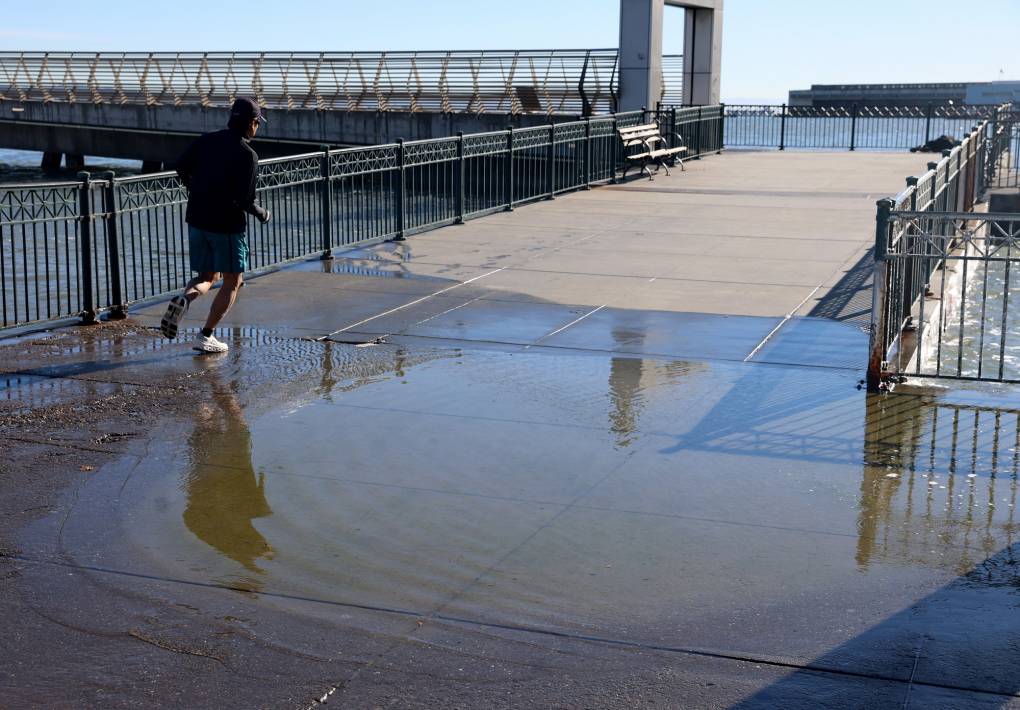
"caption": "A man jogs around overflow from the high king tide at Pier 14 along the Embarcadero in San Francisco, California, on Jan. 11, 2024.",
"credit": "Jane Tyska/Digital First Media/East Bay Times via Getty Images",
"altTag": null,
"description": null,
"imgSizes": {
"medium": {
"file": "https://cdn.kqed.org/wp-content/uploads/sites/10/2024/11/KingTidesSFGetty-800x557.jpg",
"width": 800,
"height": 557,
"mimeType": "image/jpeg"
},
"large": {
"file": "https://cdn.kqed.org/wp-content/uploads/sites/10/2024/11/KingTidesSFGetty-1020x710.jpg",
"width": 1020,
"height": 710,
"mimeType": "image/jpeg"
},
"thumbnail": {
"file": "https://cdn.kqed.org/wp-content/uploads/sites/10/2024/11/KingTidesSFGetty-160x111.jpg",
"width": 160,
"height": 111,
"mimeType": "image/jpeg"
},
"1536x1536": {
"file": "https://cdn.kqed.org/wp-content/uploads/sites/10/2024/11/KingTidesSFGetty-1536x1069.jpg",
"width": 1536,
"height": 1069,
"mimeType": "image/jpeg"
},
"post-thumbnail": {
"file": "https://cdn.kqed.org/wp-content/uploads/sites/10/2024/11/KingTidesSFGetty-672x372.jpg",
"width": 672,
"height": 372,
"mimeType": "image/jpeg"
},
"twentyfourteen-full-width": {
"file": "https://cdn.kqed.org/wp-content/uploads/sites/10/2024/11/KingTidesSFGetty-1038x576.jpg",
"width": 1038,
"height": 576,
"mimeType": "image/jpeg"
},
"full-width": {
"file": "https://cdn.kqed.org/wp-content/uploads/sites/10/2024/11/KingTidesSFGetty-1920x1336.jpg",
"width": 1920,
"height": 1336,
"mimeType": "image/jpeg"
},
"kqedFullSize": {
"file": "https://cdn.kqed.org/wp-content/uploads/sites/10/2024/11/KingTidesSFGetty.jpg",
"width": 2000,
"height": 1392
}
},
"isLoading": false,
"fetchFailed": false
},
"news_12055236": {
"type": "attachments",
"id": "news_12055236",
"meta": {
"index": "attachments_1716263798",
"site": "news",
"id": "12055236",
"found": true
},
"title": "250908-VAILLANCOURTFOUNTAINREMOVAL-05-BL-KQED",
"publishDate": 1757374286,
"status": "inherit",
"parent": 12055275,
"modified": 1757635115,
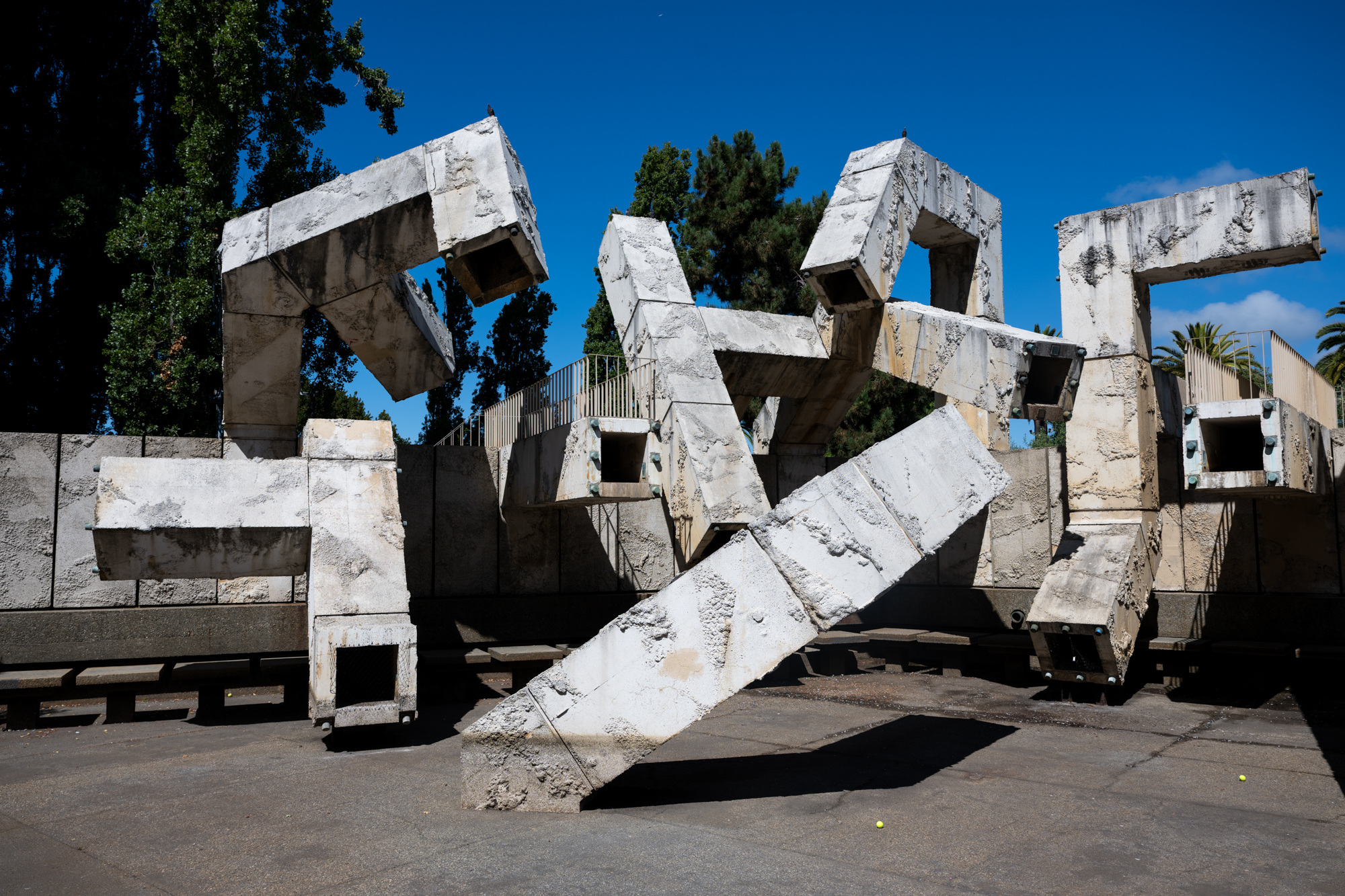
"caption": "The Vaillancourt Fountain in the Embarcadero Plaza in San Francisco on Sept. 8, 2025. The 40-foot concrete fountain was designed by artist Armand Vaillancourt and installed in 1971.",
"credit": "Beth LaBerge/KQED",
"altTag": null,
"description": null,
"imgSizes": {
"thumbnail": {
"file": "https://cdn.kqed.org/wp-content/uploads/sites/10/2025/09/250908-VAILLANCOURTFOUNTAINREMOVAL-05-BL-KQED-160x107.jpg",
"width": 160,
"height": 107,
"mimeType": "image/jpeg"
},
"1536x1536": {
"file": "https://cdn.kqed.org/wp-content/uploads/sites/10/2025/09/250908-VAILLANCOURTFOUNTAINREMOVAL-05-BL-KQED-1536x1024.jpg",
"width": 1536,
"height": 1024,
"mimeType": "image/jpeg"
},
"post-thumbnail": {
"file": "https://cdn.kqed.org/wp-content/uploads/sites/10/2025/09/250908-VAILLANCOURTFOUNTAINREMOVAL-05-BL-KQED-672x372.jpg",
"width": 672,
"height": 372,
"mimeType": "image/jpeg"
},
"twentyfourteen-full-width": {
"file": "https://cdn.kqed.org/wp-content/uploads/sites/10/2025/09/250908-VAILLANCOURTFOUNTAINREMOVAL-05-BL-KQED-1038x576.jpg",
"width": 1038,
"height": 576,
"mimeType": "image/jpeg"
},
"kqedFullSize": {
"file": "https://cdn.kqed.org/wp-content/uploads/sites/10/2025/09/250908-VAILLANCOURTFOUNTAINREMOVAL-05-BL-KQED.jpg",
"width": 2000,
"height": 1333
}
},
"isLoading": false,
"fetchFailed": false
},
"news_12055239": {
"type": "attachments",
"id": "news_12055239",
"meta": {
"index": "attachments_1716263798",
"site": "news",
"id": "12055239",
"found": true
},
"title": "250908-VAILLANCOURTFOUNTAINREMOVAL-12-BL-KQED",
"publishDate": 1757374296,
"status": "inherit",
"parent": 12069424,
"modified": 1768263075,
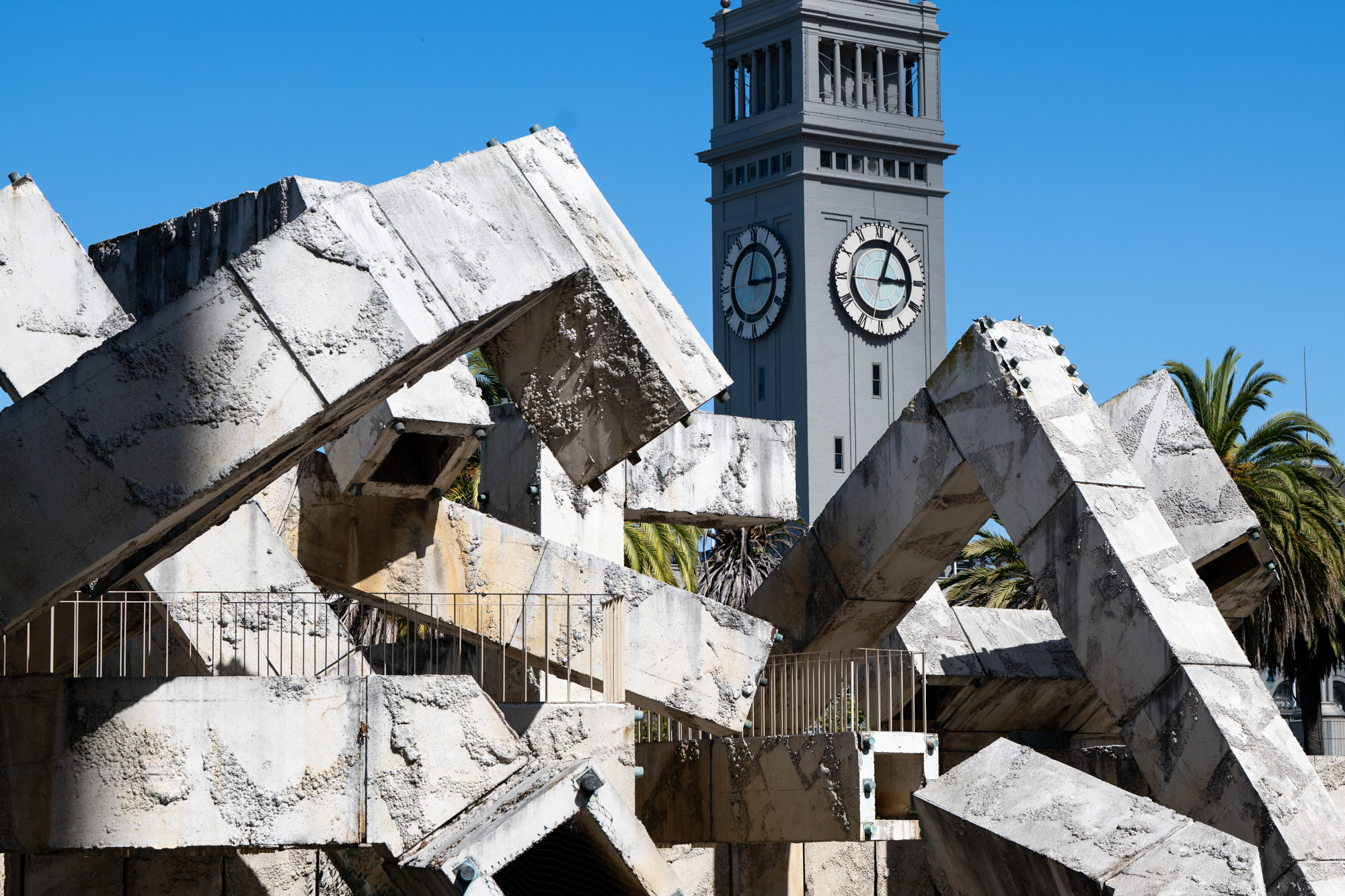
"caption": "The Vaillancourt Fountain in the Embarcadero Plaza in San Francisco on Sept. 8, 2025. The 40-foot concrete fountain was designed by artist Armand Vaillancourt and installed in 1971.",
"credit": "Beth LaBerge/KQED",
"altTag": null,
"description": null,
"imgSizes": {
"thumbnail": {
"file": "https://cdn.kqed.org/wp-content/uploads/sites/10/2025/09/250908-VAILLANCOURTFOUNTAINREMOVAL-12-BL-KQED-160x107.jpg",
"width": 160,
"height": 107,
"mimeType": "image/jpeg"
},
"1536x1536": {
"file": "https://cdn.kqed.org/wp-content/uploads/sites/10/2025/09/250908-VAILLANCOURTFOUNTAINREMOVAL-12-BL-KQED-1536x1024.jpg",
"width": 1536,
"height": 1024,
"mimeType": "image/jpeg"
},
"post-thumbnail": {
"file": "https://cdn.kqed.org/wp-content/uploads/sites/10/2025/09/250908-VAILLANCOURTFOUNTAINREMOVAL-12-BL-KQED-672x372.jpg",
"width": 672,
"height": 372,
"mimeType": "image/jpeg"
},
"twentyfourteen-full-width": {
"file": "https://cdn.kqed.org/wp-content/uploads/sites/10/2025/09/250908-VAILLANCOURTFOUNTAINREMOVAL-12-BL-KQED-1038x576.jpg",
"width": 1038,
"height": 576,
"mimeType": "image/jpeg"
},
"kqedFullSize": {
"file": "https://cdn.kqed.org/wp-content/uploads/sites/10/2025/09/250908-VAILLANCOURTFOUNTAINREMOVAL-12-BL-KQED.jpg",
"width": 2000,
"height": 1333
}
},
"isLoading": false,
"fetchFailed": false
},
"news_12055238": {
"type": "attachments",
"id": "news_12055238",
"meta": {
"index": "attachments_1716263798",
"site": "news",
"id": "12055238",
"found": true
},
"title": "250908-VAILLANCOURTFOUNTAINREMOVAL-10-BL-KQED",
"publishDate": 1757374293,
"status": "inherit",
"parent": 12055275,
"modified": 1757635243,
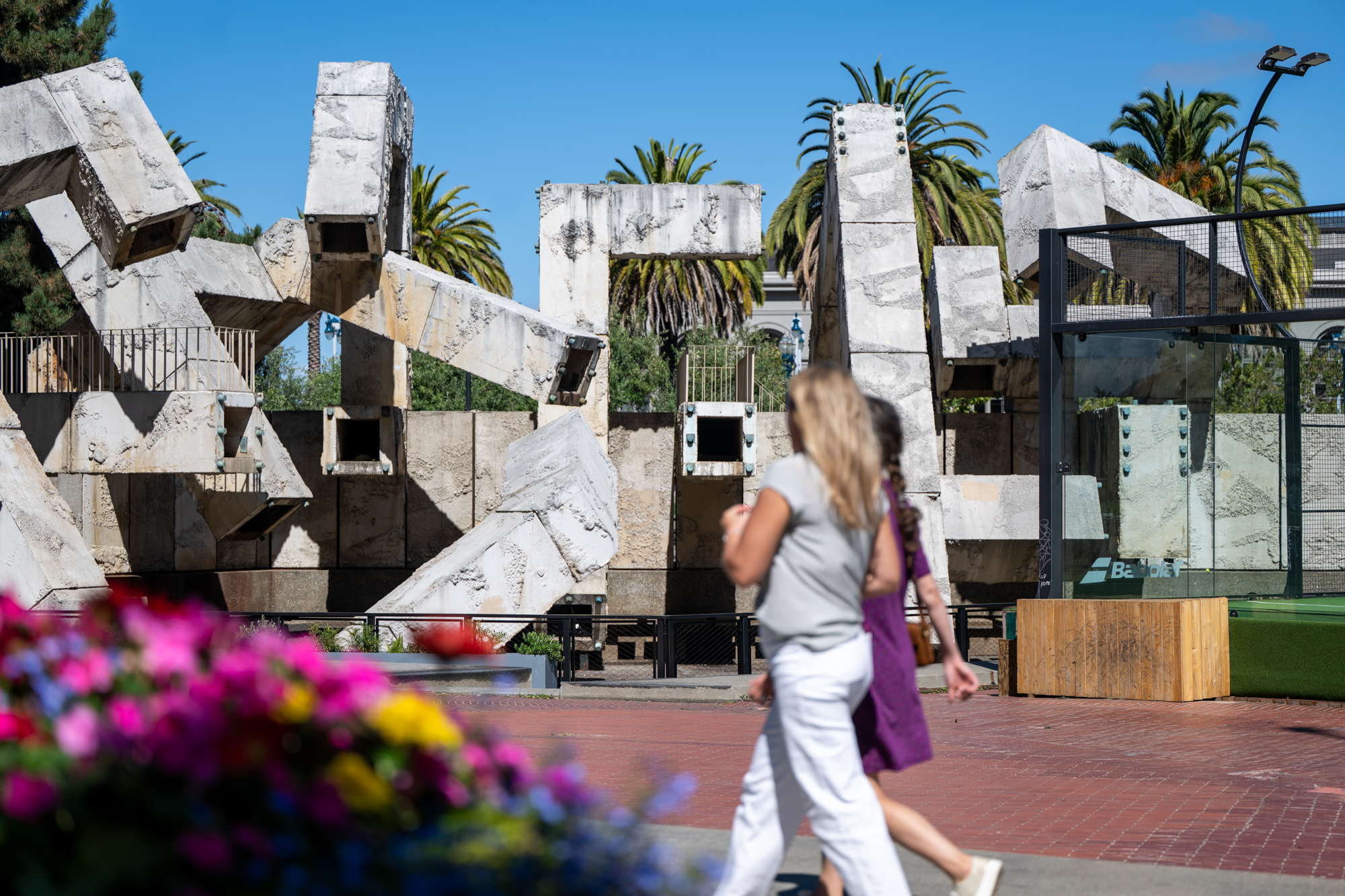
"caption": "The Vaillancourt Fountain in the Embarcadero Plaza in San Francisco on Sept. 8, 2025. ",
"credit": "Beth LaBerge/KQED",
"altTag": null,
"description": null,
"imgSizes": {
"thumbnail": {
"file": "https://cdn.kqed.org/wp-content/uploads/sites/10/2025/09/250908-VAILLANCOURTFOUNTAINREMOVAL-10-BL-KQED-160x107.jpg",
"width": 160,
"height": 107,
"mimeType": "image/jpeg"
},
"1536x1536": {
"file": "https://cdn.kqed.org/wp-content/uploads/sites/10/2025/09/250908-VAILLANCOURTFOUNTAINREMOVAL-10-BL-KQED-1536x1024.jpg",
"width": 1536,
"height": 1024,
"mimeType": "image/jpeg"
},
"post-thumbnail": {
"file": "https://cdn.kqed.org/wp-content/uploads/sites/10/2025/09/250908-VAILLANCOURTFOUNTAINREMOVAL-10-BL-KQED-672x372.jpg",
"width": 672,
"height": 372,
"mimeType": "image/jpeg"
},
"twentyfourteen-full-width": {
"file": "https://cdn.kqed.org/wp-content/uploads/sites/10/2025/09/250908-VAILLANCOURTFOUNTAINREMOVAL-10-BL-KQED-1038x576.jpg",
"width": 1038,
"height": 576,
"mimeType": "image/jpeg"
},
"kqedFullSize": {
"file": "https://cdn.kqed.org/wp-content/uploads/sites/10/2025/09/250908-VAILLANCOURTFOUNTAINREMOVAL-10-BL-KQED.jpg",
"width": 2000,
"height": 1333
}
},
"isLoading": false,
"fetchFailed": false
},
"news_12023482": {
"type": "attachments",
"id": "news_12023482",
"meta": {
"index": "attachments_1716263798",
"site": "news",
"id": "12023482",
"found": true
},
"title": "Two people wait for a train at BART Powell Street station in San Francisco, Calif., on Tuesday, February 11, 2020.",
"publishDate": 1737574272,
"status": "inherit",
"parent": 12023463,
"modified": 1737588181,
"caption": "Two people wait for a train at BART Powell Street station in San Francisco, California, on Tuesday, Feb. 11, 2020. ",
"credit": "Scott Strazzante/San Francisco Chronicle via Getty Images",
"altTag": null,
"description": null,
"imgSizes": {
"medium": {
"file": "https://cdn.kqed.org/wp-content/uploads/sites/10/2025/01/PowellStationSanFranciscoGetty-800x534.jpg",
"width": 800,
"height": 534,
"mimeType": "image/jpeg"
},
"large": {
"file": "https://cdn.kqed.org/wp-content/uploads/sites/10/2025/01/PowellStationSanFranciscoGetty-1020x680.jpg",
"width": 1020,
"height": 680,
"mimeType": "image/jpeg"
},
"thumbnail": {
"file": "https://cdn.kqed.org/wp-content/uploads/sites/10/2025/01/PowellStationSanFranciscoGetty-160x107.jpg",
"width": 160,
"height": 107,
"mimeType": "image/jpeg"
},
"1536x1536": {
"file": "https://cdn.kqed.org/wp-content/uploads/sites/10/2025/01/PowellStationSanFranciscoGetty-1536x1025.jpg",
"width": 1536,
"height": 1025,
"mimeType": "image/jpeg"
},
"post-thumbnail": {
"file": "https://cdn.kqed.org/wp-content/uploads/sites/10/2025/01/PowellStationSanFranciscoGetty-672x372.jpg",
"width": 672,
"height": 372,
"mimeType": "image/jpeg"
},
"twentyfourteen-full-width": {
"file": "https://cdn.kqed.org/wp-content/uploads/sites/10/2025/01/PowellStationSanFranciscoGetty-1038x576.jpg",
"width": 1038,
"height": 576,
"mimeType": "image/jpeg"
},
"full-width": {
"file": "https://cdn.kqed.org/wp-content/uploads/sites/10/2025/01/PowellStationSanFranciscoGetty-1920x1281.jpg",
"width": 1920,
"height": 1281,
"mimeType": "image/jpeg"
},
"kqedFullSize": {
"file": "https://cdn.kqed.org/wp-content/uploads/sites/10/2025/01/PowellStationSanFranciscoGetty.jpg",
"width": 2000,
"height": 1334
}
},
"isLoading": false,
"fetchFailed": false
},
"news_12055479": {
"type": "attachments",
"id": "news_12055479",
"meta": {
"index": "attachments_1716263798",
"site": "news",
"id": "12055479",
"found": true
},
"title": "250910-VAILLANCOURT FOUNTAIN REMOVAL-MD-01-KQED",
"publishDate": 1757537829,
"status": "inherit",
"parent": 0,
"modified": 1757537843,
"caption": "Karl Watson sits on his skateboard in front of the Vaillancourt Fountain in San Francisco on Sept. 10, 2025.",
"credit": "Martin do Nascimento/KQED",
"altTag": null,
"description": null,
"imgSizes": {
"thumbnail": {
"file": "https://cdn.kqed.org/wp-content/uploads/sites/10/2025/09/250910-VAILLANCOURT-FOUNTAIN-REMOVAL-MD-01-KQED-160x107.jpg",
"width": 160,
"height": 107,
"mimeType": "image/jpeg"
},
"1536x1536": {
"file": "https://cdn.kqed.org/wp-content/uploads/sites/10/2025/09/250910-VAILLANCOURT-FOUNTAIN-REMOVAL-MD-01-KQED-1536x1025.jpg",
"width": 1536,
"height": 1025,
"mimeType": "image/jpeg"
},
"post-thumbnail": {
"file": "https://cdn.kqed.org/wp-content/uploads/sites/10/2025/09/250910-VAILLANCOURT-FOUNTAIN-REMOVAL-MD-01-KQED-672x372.jpg",
"width": 672,
"height": 372,
"mimeType": "image/jpeg"
},
"twentyfourteen-full-width": {
"file": "https://cdn.kqed.org/wp-content/uploads/sites/10/2025/09/250910-VAILLANCOURT-FOUNTAIN-REMOVAL-MD-01-KQED-1038x576.jpg",
"width": 1038,
"height": 576,
"mimeType": "image/jpeg"
},
"kqedFullSize": {
"file": "https://cdn.kqed.org/wp-content/uploads/sites/10/2025/09/250910-VAILLANCOURT-FOUNTAIN-REMOVAL-MD-01-KQED.jpg",
"width": 2000,
"height": 1334
}
},
"isLoading": false,
"fetchFailed": false
},
"news_12018232": {
"type": "attachments",
"id": "news_12018232",
"meta": {
"index": "attachments_1716263798",
"site": "news",
"id": "12018232",
"found": true
},
"title": "241213-PortFlood-38",
"publishDate": 1734125577,
"status": "inherit",
"parent": 0,
"modified": 1734126258,
"caption": "Water flows onto the sidewalk during a high king tide at Pier 14 along the Embarcadero in San Francisco on Dec. 13, 2024.",
"credit": "Beth LaBerge/KQED",
"altTag": null,
"description": null,
"imgSizes": {
"medium": {
"file": "https://cdn.kqed.org/wp-content/uploads/sites/10/2024/12/241213-PortFlood-38-800x533.jpg",
"width": 800,
"height": 533,
"mimeType": "image/jpeg"
},
"large": {
"file": "https://cdn.kqed.org/wp-content/uploads/sites/10/2024/12/241213-PortFlood-38-1020x679.jpg",
"width": 1020,
"height": 679,
"mimeType": "image/jpeg"
},
"thumbnail": {
"file": "https://cdn.kqed.org/wp-content/uploads/sites/10/2024/12/241213-PortFlood-38-160x107.jpg",
"width": 160,
"height": 107,
"mimeType": "image/jpeg"
},
"1536x1536": {
"file": "https://cdn.kqed.org/wp-content/uploads/sites/10/2024/12/241213-PortFlood-38-1536x1023.jpg",
"width": 1536,
"height": 1023,
"mimeType": "image/jpeg"
},
"post-thumbnail": {
"file": "https://cdn.kqed.org/wp-content/uploads/sites/10/2024/12/241213-PortFlood-38-672x372.jpg",
"width": 672,
"height": 372,
"mimeType": "image/jpeg"
},
"twentyfourteen-full-width": {
"file": "https://cdn.kqed.org/wp-content/uploads/sites/10/2024/12/241213-PortFlood-38-1038x576.jpg",
"width": 1038,
"height": 576,
"mimeType": "image/jpeg"
},
"full-width": {
"file": "https://cdn.kqed.org/wp-content/uploads/sites/10/2024/12/241213-PortFlood-38-1920x1279.jpg",
"width": 1920,
"height": 1279,
"mimeType": "image/jpeg"
},
"kqedFullSize": {
"file": "https://cdn.kqed.org/wp-content/uploads/sites/10/2024/12/241213-PortFlood-38.jpg",
"width": 2000,
"height": 1332
}
},
"isLoading": false,
"fetchFailed": false
},
"news_12018230": {
"type": "attachments",
"id": "news_12018230",
"meta": {
"index": "attachments_1716263798",
"site": "news",
"id": "12018230",
"found": true
},
"title": "241213-PortFlood-24",
"publishDate": 1734125565,
"status": "inherit",
"parent": 0,
"modified": 1734126031,
"caption": "Water flows onto the sidewalk during a high king tide at Pier 14 along the Embarcadero in San Francisco on Dec. 13, 2024.",
"credit": "Beth LaBerge/KQED",
"altTag": null,
"description": null,
"imgSizes": {
"medium": {
"file": "https://cdn.kqed.org/wp-content/uploads/sites/10/2024/12/241213-PortFlood-24-800x533.jpg",
"width": 800,
"height": 533,
"mimeType": "image/jpeg"
},
"large": {
"file": "https://cdn.kqed.org/wp-content/uploads/sites/10/2024/12/241213-PortFlood-24-1020x679.jpg",
"width": 1020,
"height": 679,
"mimeType": "image/jpeg"
},
"thumbnail": {
"file": "https://cdn.kqed.org/wp-content/uploads/sites/10/2024/12/241213-PortFlood-24-160x107.jpg",
"width": 160,
"height": 107,
"mimeType": "image/jpeg"
},
"1536x1536": {
"file": "https://cdn.kqed.org/wp-content/uploads/sites/10/2024/12/241213-PortFlood-24-1536x1023.jpg",
"width": 1536,
"height": 1023,
"mimeType": "image/jpeg"
},
"post-thumbnail": {
"file": "https://cdn.kqed.org/wp-content/uploads/sites/10/2024/12/241213-PortFlood-24-672x372.jpg",
"width": 672,
"height": 372,
"mimeType": "image/jpeg"
},
"twentyfourteen-full-width": {
"file": "https://cdn.kqed.org/wp-content/uploads/sites/10/2024/12/241213-PortFlood-24-1038x576.jpg",
"width": 1038,
"height": 576,
"mimeType": "image/jpeg"
},
"full-width": {
"file": "https://cdn.kqed.org/wp-content/uploads/sites/10/2024/12/241213-PortFlood-24-1920x1279.jpg",
"width": 1920,
"height": 1279,
"mimeType": "image/jpeg"
},
"kqedFullSize": {
"file": "https://cdn.kqed.org/wp-content/uploads/sites/10/2024/12/241213-PortFlood-24.jpg",
"width": 2000,
"height": 1332
}
},
"isLoading": false,
"fetchFailed": false
},
"news_11872071": {
"type": "attachments",
"id": "news_11872071",
"meta": {
"index": "attachments_1716263798",
"site": "news",
"id": "11872071",
"found": true
},
"parent": 11871628,
"imgSizes": {
"twentyfourteen-full-width": {
"file": "https://ww2.kqed.org/app/uploads/sites/10/2021/05/GettyImages-1032968632-1-1038x576.jpg",
"width": 1038,
"mimeType": "image/jpeg",
"height": 576
},
"thumbnail": {
"file": "https://ww2.kqed.org/app/uploads/sites/10/2021/05/GettyImages-1032968632-1-160x125.jpg",
"width": 160,
"mimeType": "image/jpeg",
"height": 125
},
"post-thumbnail": {
"file": "https://ww2.kqed.org/app/uploads/sites/10/2021/05/GettyImages-1032968632-1-672x372.jpg",
"width": 672,
"mimeType": "image/jpeg",
"height": 372
},
"kqedFullSize": {
"file": "https://ww2.kqed.org/app/uploads/sites/10/2021/05/GettyImages-1032968632-1.jpg",
"width": 1920,
"height": 1494
},
"large": {
"file": "https://ww2.kqed.org/app/uploads/sites/10/2021/05/GettyImages-1032968632-1-1020x794.jpg",
"width": 1020,
"mimeType": "image/jpeg",
"height": 794
},
"1536x1536": {
"file": "https://ww2.kqed.org/app/uploads/sites/10/2021/05/GettyImages-1032968632-1-1536x1195.jpg",
"width": 1536,
"mimeType": "image/jpeg",
"height": 1195
},
"medium": {
"file": "https://ww2.kqed.org/app/uploads/sites/10/2021/05/GettyImages-1032968632-1-800x623.jpg",
"width": 800,
"mimeType": "image/jpeg",
"height": 623
}
},
"publishDate": 1620079231,
"modified": 1620082733,
"caption": "A skateboarder passes by a polar bear statue made out of car hoods during the Global Climate Action Summit in San Francisco on Sept. 13, 2018.",
"description": "A skateboarder passes by a polar bear statue made out of car hoods during the Global Climate Action Summit in San Francisco, California on September 13, 2018.",
"title": "GettyImages-1032968632 (1)",
"credit": "Josh Edelson/AFP via Getty Images",
"status": "inherit",
"altTag": null,
"isLoading": false,
"fetchFailed": false
},
"news_11740472": {
"type": "attachments",
"id": "news_11740472",
"meta": {
"index": "attachments_1716263798",
"site": "news",
"id": "11740472",
"found": true
},
"parent": 11740443,
"imgSizes": {
"apple_news_ca_landscape_5_5": {
"file": "https://ww2.kqed.org/app/uploads/sites/10/2019/04/navigation-center-20190415-1044x783.jpg",
"width": 1044,
"mimeType": "image/jpeg",
"height": 783
},
"apple_news_ca_square_4_0": {
"file": "https://ww2.kqed.org/app/uploads/sites/10/2019/04/navigation-center-20190415-470x470.jpg",
"width": 470,
"mimeType": "image/jpeg",
"height": 470
},
"twentyfourteen-full-width": {
"file": "https://ww2.kqed.org/app/uploads/sites/10/2019/04/navigation-center-20190415-1038x576.jpg",
"width": 1038,
"mimeType": "image/jpeg",
"height": 576
},
"thumbnail": {
"file": "https://ww2.kqed.org/app/uploads/sites/10/2019/04/navigation-center-20190415-160x107.jpg",
"width": 160,
"mimeType": "image/jpeg",
"height": 107
},
"post-thumbnail": {
"file": "https://ww2.kqed.org/app/uploads/sites/10/2019/04/navigation-center-20190415-672x372.jpg",
"width": 672,
"mimeType": "image/jpeg",
"height": 372
},
"kqedFullSize": {
"file": "https://ww2.kqed.org/app/uploads/sites/10/2019/04/navigation-center-20190415.jpg",
"width": 1920,
"height": 1280
},
"apple_news_ca_landscape_4_7": {
"file": "https://ww2.kqed.org/app/uploads/sites/10/2019/04/navigation-center-20190415-632x474.jpg",
"width": 632,
"mimeType": "image/jpeg",
"height": 474
},
"large": {
"file": "https://ww2.kqed.org/app/uploads/sites/10/2019/04/navigation-center-20190415-1020x680.jpg",
"width": 1020,
"mimeType": "image/jpeg",
"height": 680
},
"complete_open_graph": {
"file": "https://ww2.kqed.org/app/uploads/sites/10/2019/04/navigation-center-20190415-1200x800.jpg",
"width": 1200,
"mimeType": "image/jpeg",
"height": 800
},
"apple_news_ca_landscape_4_0": {
"file": "https://ww2.kqed.org/app/uploads/sites/10/2019/04/navigation-center-20190415-536x402.jpg",
"width": 536,
"mimeType": "image/jpeg",
"height": 402
},
"apple_news_ca_portrait_12_9": {
"file": "https://ww2.kqed.org/app/uploads/sites/10/2019/04/navigation-center-20190415-1122x1280.jpg",
"width": 1122,
"mimeType": "image/jpeg",
"height": 1280
},
"medium": {
"file": "https://ww2.kqed.org/app/uploads/sites/10/2019/04/navigation-center-20190415-800x533.jpg",
"width": 800,
"mimeType": "image/jpeg",
"height": 533
},
"apple_news_ca_portrait_4_0": {
"file": "https://ww2.kqed.org/app/uploads/sites/10/2019/04/navigation-center-20190415-354x472.jpg",
"width": 354,
"mimeType": "image/jpeg",
"height": 472
},
"apple_news_ca_portrait_9_7": {
"file": "https://ww2.kqed.org/app/uploads/sites/10/2019/04/navigation-center-20190415-840x1120.jpg",
"width": 840,
"mimeType": "image/jpeg",
"height": 1120
},
"apple_news_ca_landscape_12_9": {
"file": "https://ww2.kqed.org/app/uploads/sites/10/2019/04/navigation-center-20190415-1832x1280.jpg",
"width": 1832,
"mimeType": "image/jpeg",
"height": 1280
},
"apple_news_ca_square_9_7": {
"file": "https://ww2.kqed.org/app/uploads/sites/10/2019/04/navigation-center-20190415-1104x1104.jpg",
"width": 1104,
"mimeType": "image/jpeg",
"height": 1104
},
"apple_news_ca_portrait_4_7": {
"file": "https://ww2.kqed.org/app/uploads/sites/10/2019/04/navigation-center-20190415-414x552.jpg",
"width": 414,
"mimeType": "image/jpeg",
"height": 552
},
"apple_news_ca_square_12_9": {
"file": "https://ww2.kqed.org/app/uploads/sites/10/2019/04/navigation-center-20190415-1472x1280.jpg",
"width": 1472,
"mimeType": "image/jpeg",
"height": 1280
},
"apple_news_ca_portrait_5_5": {
"file": "https://ww2.kqed.org/app/uploads/sites/10/2019/04/navigation-center-20190415-687x916.jpg",
"width": 687,
"mimeType": "image/jpeg",
"height": 916
},
"full-width": {
"file": "https://ww2.kqed.org/app/uploads/sites/10/2019/04/navigation-center-20190415-1920x1280.jpg",
"width": 1920,
"mimeType": "image/jpeg",
"height": 1280
},
"apple_news_ca_square_4_7": {
"file": "https://ww2.kqed.org/app/uploads/sites/10/2019/04/navigation-center-20190415-550x550.jpg",
"width": 550,
"mimeType": "image/jpeg",
"height": 550
},
"apple_news_ca_landscape_9_7": {
"file": "https://ww2.kqed.org/app/uploads/sites/10/2019/04/navigation-center-20190415-1376x1032.jpg",
"width": 1376,
"mimeType": "image/jpeg",
"height": 1032
},
"apple_news_ca_square_5_5": {
"file": "https://ww2.kqed.org/app/uploads/sites/10/2019/04/navigation-center-20190415-912x912.jpg",
"width": 912,
"mimeType": "image/jpeg",
"height": 912
}
},
"publishDate": 1555421889,
"modified": 1562862101,
"caption": "South Beach, Rincon Hill and Mission Bay residents who oppose the proposed Embarcadero navigation center demonstrate at a neighborhood association meeting with city officials on April 15, 2019.",
"description": "South Beach, Rincon and Mission Bay community members hold signs at a meeting their neighborhood association held with city ffficials at the Port Of San Francisco, Bayside Conference Room, Pier 1 on April 15, 2019.",
"title": "navigation-center-20190415",
"credit": "Stephanie Lister/KQED",
"status": "inherit",
"isLoading": false,
"fetchFailed": false
}
},
"audioPlayerReducer": {
"postId": "stream_live",
"isPaused": true,
"isPlaying": false,
"pfsActive": false,
"pledgeModalIsOpen": true,
"playerDrawerIsOpen": false,
"liveAudioPlayStartedAt": 0,
"liveAudioPlayContext": ""
},
"authorsReducer": {
"byline_news_11871628": {
"type": "authors",
"id": "byline_news_11871628",
"meta": {
"override": true
},
"slug": "byline_news_11871628",
"name": "Nate Dolan",
"isLoading": false
},
"matthewgreen": {
"type": "authors",
"id": "1263",
"meta": {
"index": "authors_1716337520",
"id": "1263",
"found": true
},
"name": "Matthew Green",
"firstName": "Matthew",
"lastName": "Green",
"slug": "matthewgreen",
"email": "mgreen@kqed.org",
"display_author_email": false,
"staff_mastheads": [],
"title": "KQED Editor/Reporter",
"bio": "Matthew Green is a digital media producer for KQED News. He previously produced \u003ca href=\"http://www.kqed.org/lowdown\">The Lowdown\u003c/a>, KQED’s multimedia news education blog. Matthew's written for numerous Bay Area publications, including the Oakland Tribune and San Francisco Chronicle. He also taught journalism classes at Fremont High School in East Oakland.\r\n\r\nEmail: mgreen@kqed.org; Twitter: @MGreenKQED",
"avatar": "https://secure.gravatar.com/avatar/3bf498d1267ca02c8494f33d8cfc575e?s=600&d=blank&r=g",
"twitter": "MGreenKQED",
"facebook": null,
"instagram": null,
"linkedin": null,
"sites": [
{
"site": "news",
"roles": []
},
{
"site": "lowdown",
"roles": []
},
{
"site": "science",
"roles": []
},
{
"site": "education",
"roles": []
},
{
"site": "quest",
"roles": []
},
{
"site": "liveblog",
"roles": []
}
],
"headData": {
"title": "Matthew Green | KQED",
"description": "KQED Editor/Reporter",
"ogImgSrc": "https://secure.gravatar.com/avatar/3bf498d1267ca02c8494f33d8cfc575e?s=600&d=blank&r=g",
"twImgSrc": "https://secure.gravatar.com/avatar/3bf498d1267ca02c8494f33d8cfc575e?s=600&d=blank&r=g"
},
"isLoading": false,
"link": "/author/matthewgreen"
},
"carlysevern": {
"type": "authors",
"id": "3243",
"meta": {
"index": "authors_1716337520",
"id": "3243",
"found": true
},
"name": "Carly Severn",
"firstName": "Carly",
"lastName": "Severn",
"slug": "carlysevern",
"email": "csevern@kqed.org",
"display_author_email": false,
"staff_mastheads": [
"news"
],
"title": "Senior Editor, Audience News ",
"bio": "Carly is KQED's Senior Editor of Audience News on the Digital News team, and has reported for the California Report Magazine, Bay Curious and KQED Arts. She's formerly the host of \u003ca href=\"http://ww2.kqed.org/pop/category/the-cooler/\" rel=\"noopener noreferrer\">The Cooler\u003c/a> podcast.",
"avatar": "https://secure.gravatar.com/avatar/54037bf5c128fe678f0ef26cec97a93f2e7f220a22d7285703328f12c42c1b1d?s=600&d=blank&r=g",
"twitter": "teacupinthebay",
"bluesky": null,
"facebook": null,
"instagram": null,
"linkedin": null,
"sites": [
{
"site": "",
"roles": [
"editor"
]
},
{
"site": "arts",
"roles": [
"editor"
]
},
{
"site": "news",
"roles": [
"administrator"
]
},
{
"site": "pop",
"roles": [
"editor"
]
},
{
"site": "futureofyou",
"roles": [
"editor"
]
},
{
"site": "about",
"roles": [
"administrator"
]
},
{
"site": "mindshift",
"roles": [
"editor"
]
},
{
"site": "bayareabites",
"roles": [
"editor"
]
},
{
"site": "stateofhealth",
"roles": [
"editor"
]
},
{
"site": "science",
"roles": [
"editor"
]
},
{
"site": "food",
"roles": [
"contributor"
]
},
{
"site": "forum",
"roles": [
"editor"
]
},
{
"site": "perspectives",
"roles": [
"administrator"
]
},
{
"site": "liveblog",
"roles": [
"editor"
]
}
],
"headData": {
"title": "Carly Severn | KQED",
"description": "Senior Editor, Audience News ",
"ogImgSrc": "https://secure.gravatar.com/avatar/54037bf5c128fe678f0ef26cec97a93f2e7f220a22d7285703328f12c42c1b1d?s=600&d=blank&r=g",
"twImgSrc": "https://secure.gravatar.com/avatar/54037bf5c128fe678f0ef26cec97a93f2e7f220a22d7285703328f12c42c1b1d?s=600&d=blank&r=g"
},
"isLoading": false,
"link": "/author/carlysevern"
},
"dcronin": {
"type": "authors",
"id": "11362",
"meta": {
"index": "authors_1716337520",
"id": "11362",
"found": true
},
"name": "Dana Cronin",
"firstName": "Dana",
"lastName": "Cronin",
"slug": "dcronin",
"email": "dcronin@KQED.org",
"display_author_email": true,
"staff_mastheads": [],
"title": "KQED Contributor",
"bio": "Dana Cronin is a reporter for KQED News. She loves writing stories about climate change, environmental issues, food and agriculture. She's reported across the country, from Colorado to Washington D.C. to Illinois, and has won numerous awards for her coverage. Her work is regularly featured on national broadcasts, including NPR’s Morning Edition, All Things Considered, PBS Newshour and Science Friday. She lives in Oakland and has an avocado tree in her back yard.",
"avatar": "https://secure.gravatar.com/avatar/b242755225e2f85f37c259df1f4cdfa36dc82f17dcf79e697fb392d658d1750b?s=600&d=blank&r=g",
"twitter": "DanaHCronin",
"bluesky": null,
"facebook": null,
"instagram": null,
"linkedin": null,
"sites": [
{
"site": "arts",
"roles": [
"author"
]
},
{
"site": "news",
"roles": [
"editor"
]
},
{
"site": "science",
"roles": [
"author"
]
},
{
"site": "liveblog",
"roles": [
"author"
]
}
],
"headData": {
"title": "Dana Cronin | KQED",
"description": "KQED Contributor",
"ogImgSrc": "https://secure.gravatar.com/avatar/b242755225e2f85f37c259df1f4cdfa36dc82f17dcf79e697fb392d658d1750b?s=600&d=blank&r=g",
"twImgSrc": "https://secure.gravatar.com/avatar/b242755225e2f85f37c259df1f4cdfa36dc82f17dcf79e697fb392d658d1750b?s=600&d=blank&r=g"
},
"isLoading": false,
"link": "/author/dcronin"
},
"smamidanna": {
"type": "authors",
"id": "11581",
"meta": {
"index": "authors_1716337520",
"id": "11581",
"found": true
},
"name": "Sruti Mamidanna",
"firstName": "Sruti",
"lastName": "Mamidanna",
"slug": "smamidanna",
"email": "smamidanna@kqed.org",
"display_author_email": false,
"staff_mastheads": [],
"title": null,
"bio": null,
"avatar": "https://secure.gravatar.com/avatar/b6365bcdef7e2060671a7124aa076048?s=600&d=blank&r=g",
"twitter": null,
"facebook": null,
"instagram": null,
"linkedin": null,
"sites": [
{
"site": "news",
"roles": [
"author"
]
}
],
"headData": {
"title": "Sruti Mamidanna | KQED",
"description": null,
"ogImgSrc": "https://secure.gravatar.com/avatar/b6365bcdef7e2060671a7124aa076048?s=600&d=blank&r=g",
"twImgSrc": "https://secure.gravatar.com/avatar/b6365bcdef7e2060671a7124aa076048?s=600&d=blank&r=g"
},
"isLoading": false,
"link": "/author/smamidanna"
},
"slister": {
"type": "authors",
"id": "11582",
"meta": {
"index": "authors_1716337520",
"id": "11582",
"found": true
},
"name": "Stephanie Lister",
"firstName": "Stephanie",
"lastName": "Lister",
"slug": "slister",
"email": "slister@kqed.org",
"display_author_email": false,
"staff_mastheads": [],
"title": "KQED Contributor",
"bio": null,
"avatar": "https://secure.gravatar.com/avatar/5393644d68259d7bd1c83bcfc9725ca5?s=600&d=blank&r=g",
"twitter": null,
"facebook": null,
"instagram": null,
"linkedin": null,
"sites": [
{
"site": "news",
"roles": [
"subscriber"
]
}
],
"headData": {
"title": "Stephanie Lister | KQED",
"description": "KQED Contributor",
"ogImgSrc": "https://secure.gravatar.com/avatar/5393644d68259d7bd1c83bcfc9725ca5?s=600&d=blank&r=g",
"twImgSrc": "https://secure.gravatar.com/avatar/5393644d68259d7bd1c83bcfc9725ca5?s=600&d=blank&r=g"
},
"isLoading": false,
"link": "/author/slister"
},
"kmizuguchi": {
"type": "authors",
"id": "11739",
"meta": {
"index": "authors_1716337520",
"id": "11739",
"found": true
},
"name": "Keith Mizuguchi",
"firstName": "Keith",
"lastName": "Mizuguchi",
"slug": "kmizuguchi",
"email": "kmizuguchi@kqed.org",
"display_author_email": false,
"staff_mastheads": [],
"title": "KQED Contributor",
"bio": null,
"avatar": "https://secure.gravatar.com/avatar/64d8a7de0723d4099b9fe4e915136103febcc20809abce228ee4415bcb237023?s=600&d=blank&r=g",
"twitter": null,
"bluesky": null,
"facebook": null,
"instagram": null,
"linkedin": null,
"sites": [
{
"site": "news",
"roles": [
"editor"
]
},
{
"site": "science",
"roles": [
"editor"
]
}
],
"headData": {
"title": "Keith Mizuguchi | KQED",
"description": "KQED Contributor",
"ogImgSrc": "https://secure.gravatar.com/avatar/64d8a7de0723d4099b9fe4e915136103febcc20809abce228ee4415bcb237023?s=600&d=blank&r=g",
"twImgSrc": "https://secure.gravatar.com/avatar/64d8a7de0723d4099b9fe4e915136103febcc20809abce228ee4415bcb237023?s=600&d=blank&r=g"
},
"isLoading": false,
"link": "/author/kmizuguchi"
},
"eromero": {
"type": "authors",
"id": "11746",
"meta": {
"index": "authors_1716337520",
"id": "11746",
"found": true
},
"name": "Ezra David Romero",
"firstName": "Ezra David",
"lastName": "Romero",
"slug": "eromero",
"email": "eromero@kqed.org",
"display_author_email": true,
"staff_mastheads": [
"news",
"science"
],
"title": "Climate Reporter",
"bio": "Ezra David Romero is a climate reporter for KQED News. He covers the absence and excess of water in the Bay Area — think sea level rise, flooding and drought. For nearly a decade he’s covered how warming temperatures are altering the lives of Californians. He’s reported on farmers worried their pistachio trees aren’t getting enough sleep, families desperate for water, scientists studying dying giant sequoias, and alongside firefighters containing wildfires. His work has appeared on local stations across California and nationally on public radio shows like Morning Edition, Here and Now, All Things Considered and Science Friday. ",
"avatar": "https://secure.gravatar.com/avatar/c76404d287c10ed40224227551ac36e24352c7306f106632caf6fead76f8801f?s=600&d=blank&r=g",
"twitter": "ezraromero",
"bluesky": null,
"facebook": null,
"instagram": null,
"linkedin": null,
"sites": [
{
"site": "arts",
"roles": [
"editor"
]
},
{
"site": "news",
"roles": [
"editor"
]
},
{
"site": "science",
"roles": [
"editor"
]
},
{
"site": "liveblog",
"roles": [
"author"
]
}
],
"headData": {
"title": "Ezra David Romero | KQED",
"description": "Climate Reporter",
"ogImgSrc": "https://secure.gravatar.com/avatar/c76404d287c10ed40224227551ac36e24352c7306f106632caf6fead76f8801f?s=600&d=blank&r=g",
"twImgSrc": "https://secure.gravatar.com/avatar/c76404d287c10ed40224227551ac36e24352c7306f106632caf6fead76f8801f?s=600&d=blank&r=g"
},
"isLoading": false,
"link": "/author/eromero"
},
"kdebenedetti": {
"type": "authors",
"id": "11913",
"meta": {
"index": "authors_1716337520",
"id": "11913",
"found": true
},
"name": "Katie DeBenedetti",
"firstName": "Katie",
"lastName": "DeBenedetti",
"slug": "kdebenedetti",
"email": "kdebenedetti@kqed.org",
"display_author_email": false,
"staff_mastheads": [
"news",
"science"
],
"title": "KQED Contributor",
"bio": "Katie DeBenedetti is a digital reporter covering daily news for the Express Desk. Prior to joining KQED as a culture reporting intern in January 2024, she covered education and city government for the Napa Valley Register.",
"avatar": "https://secure.gravatar.com/avatar/6e31073cb8f7e4214ab03f42771d0f45?s=600&d=blank&r=g",
"twitter": null,
"facebook": null,
"instagram": null,
"linkedin": null,
"sites": [
{
"site": "news",
"roles": [
"author"
]
},
{
"site": "science",
"roles": [
"author"
]
},
{
"site": "liveblog",
"roles": [
"author"
]
}
],
"headData": {
"title": "Katie DeBenedetti | KQED",
"description": "KQED Contributor",
"ogImgSrc": "https://secure.gravatar.com/avatar/6e31073cb8f7e4214ab03f42771d0f45?s=600&d=blank&r=g",
"twImgSrc": "https://secure.gravatar.com/avatar/6e31073cb8f7e4214ab03f42771d0f45?s=600&d=blank&r=g"
},
"isLoading": false,
"link": "/author/kdebenedetti"
}
},
"pagesReducer": {
"news_tag_embarcadero": {
"type": "terms",
"id": "news_2674",
"meta": {
"index": "terms_1716263798",
"site": "news",
"id": "2674",
"score": 10.404849
},
"featImg": null,
"name": "Embarcadero",
"description": null,
"taxonomy": "tag",
"headData": {
"twImgId": null,
"twTitle": null,
"ogTitle": null,
"ogImgId": null,
"twDescription": null,
"description": null,
"title": "Embarcadero Archives | KQED News",
"ogDescription": null
},
"ttid": 2691,
"slug": "embarcadero",
"isLoading": false,
"title": "Embarcadero",
"pageMeta": {
"site": "news",
"WpPageTemplate": "page-topic-editorial",
"currentPage": 1
},
"blocks": [
{
"blockName": "kqed/post-list",
"attrs": {
"layout": "cardArticle2",
"query": "posts/news?tag=embarcadero",
"seeMore": false,
"paginated": true,
"page": 1
}
},
{
"blockName": "kqed/ad"
}
]
}
},
"pfsSessionReducer": {},
"postsReducer": {
"stream_live": {
"type": "live",
"id": "stream_live",
"audioUrl": "https://streams.kqed.org/kqedradio",
"title": "Live Stream",
"excerpt": "Live Stream information currently unavailable.",
"link": "/radio",
"featImg": "",
"label": {
"name": "KQED Live",
"link": "/"
}
},
"stream_kqedNewscast": {
"type": "posts",
"id": "stream_kqedNewscast",
"audioUrl": "https://www.kqed.org/.stream/anon/radio/RDnews/newscast.mp3?_=1",
"title": "KQED Newscast",
"featImg": "",
"label": {
"name": "88.5 FM",
"link": "/"
}
},
"news_12101113": {
"type": "posts",
"id": "news_12101113",
"meta": {
"index": "posts_1716263798",
"site": "news",
"id": "12101113",
"score": null,
"sort": [
1790184600000
]
},
"guestAuthors": [],
"slug": "tall-ship-san-francisco-mexican-navy-cuauhtemoc-free-public-tours",
"title": "A Tall Ship Is in San Francisco This Week — and You Can Go Aboard for Free",
"publishDate": 1790184600,
"format": "standard",
"headTitle": "A Tall Ship Is in San Francisco This Week — and You Can Go Aboard for Free | KQED",
"labelTerm": {
"site": "news"
},
"content": "\n\u003cp>If you were traveling over \u003ca href=\"https://www.kqed.org/news/tag/golden-gate-bridge\">the Golden Gate Bridge\u003c/a> on Wednesday morning, you’d have been treated to an unexpected sight through the fog: a 300-foot-long “tall ship” passing under the span, flying a giant Mexican flag from its stern.\u003c/p>\n\n\n\n\u003cp>The Mexican Navy’s tall ship Cuauhtémoc will now be berthed on the Embarcadero in San Francisco for the next four days as part of a goodwill visit — where you can go aboard this 120-foot-high ship for free. \u003c/p>\n\n\n\n\u003cp>The ship — full name ARM Cuauhtémoc BE-01 — isn’t the kind of historic tall ship you might be thinking of. Built in Spain in 1981, she functions as a training vessel for the Mexican Navy, where midshipmen learn seamanship.\u003c/p>\n\n\n\n\u003cp>The Cuauhtémoc is visiting San Francisco as part of its 2026 North Pacific Training Cruise: a 92-day trip during which the tall ship is stopping at ports in the United States, Mexico and Canada. \u003c/p>\n\n\n\n\u003cfigure class=\"wp-block-embed is-type-video is-provider-youtube wp-block-embed-youtube wp-embed-aspect-16-9 wp-has-aspect-ratio\">\u003cdiv class=\"wp-block-embed__wrapper\">\nhttps://www.youtube.com/watch?v=ScYg8tb2hmk\n\u003c/div>\u003c/figure>\n\n\n\n\u003cp>And if the Cuauhtémoc’s name is familiar, it’s the same ship that \u003ca href=\"https://abcnews.com/US/ntsb-report-reveals-new-details-deadly-brooklyn-bridge/story?id=123351626\">collided with the Brooklyn Bridge\u003c/a> in 2025, killing two people aboard and injuring multiple other service personnel. \u003c/p>\n\n\n\n\u003cp>The ship spent \u003ca href=\"https://www.nytimes.com/2025/09/26/nyregion/mexican-navy-ship-brooklyn-bridge.html\">four months in a Staten Island shipyard\u003c/a> following the crash, and is now fully repaired. \u003c/p>\n\n\n\n\u003cp>The Cuauhtémoc’s Wednesday morning voyage under the Golden Gate Bridge — which has a much higher clearance than the Brooklyn Bridge — passed without incident.\u003c/p>\n\n\n\n\u003cp>What to know about visiting the Cuauhtémoc this week:\u003c/p>\n\n\n\n\u003ch2 class=\"wp-block-heading\">Where can I visit the Cuauhtémoc?\u003c/h2>\n\n\n\n\u003cp>The Cuauhtémoc will be berthed at Piers 15-17 on the Embarcadero in San Francisco (\u003ca href=\"https://www.google.com/maps/place/Pier+15,+San+Francisco,+CA+94111/@37.8015729,-122.398049,17z/data=!3m1!4b1!4m6!3m5!1s0x8085805f22614207:0xa612268d07dca7f7!8m2!3d37.8015729!4d-122.398049!16s%2Fg%2F11txpnk1l0!5m1!1e1?entry=ttu&g_ep=EgoyMDI2MDkyMC4wIKXMDSoASAFQAw%3D%3D\">see the location on Google Maps\u003c/a>). \u003c/p>\n\n\n\n\u003cp>For context, this is the same location as the Exploratorium, and it’s on Muni’s historic F streetcar line — just request the Embarcadero and Green Street stop on board.\u003c/p>\n\n\n\n\u003ch2 class=\"wp-block-heading\">When is the Cuauhtémoc open to the public?\u003c/h2>\n\n\n\n\u003cp>According to Ocean Alliances, the nonprofit that’s hosting the tall ship’s visit to San Francisco, you’ll be able to step onboard and see the Cuauhtémoc’s decks, mast and rigging up-close — as well as meet its naval crew. \u003c/p>\n\n\n\n\u003cp>Mireya Magaña Galvez, the Mexican Consulate’s deputy consul general, told KQED by email that public tours will go beyond the ship’s deck, but that exact details will likely depend on demand.\u003c/p>\n\n\n\n\u003cfigure class=\"wp-block-image size-full\">\u003cimg loading=\"lazy\" decoding=\"async\" width=\"2000\" height=\"1500\" src=\"https://cdn.kqed.org/wp-content/uploads/sites/10/2026/09/ARM-Cuauhtémoc-Full-Front.jpg\" alt=\"\" class=\"wp-image-12101115\" srcset=\"https://cdn.kqed.org/wp-content/uploads/sites/10/2026/09/ARM-Cuauhtémoc-Full-Front.jpg 2000w, https://cdn.kqed.org/wp-content/uploads/sites/10/2026/09/ARM-Cuauhtémoc-Full-Front-160x120.jpg 160w, https://cdn.kqed.org/wp-content/uploads/sites/10/2026/09/ARM-Cuauhtémoc-Full-Front-1536x1152.jpg 1536w\" sizes=\"auto, (max-width: 2000px) 100vw, 2000px\" />\u003cfigcaption class=\"wp-element-caption\">The Mexican Navy training vessel ARM Cuauhtémoc BE-01 is visiting San Francisco this week. (Courtesy of Ocean Alliances)\u003c/figcaption>\u003c/figure>\n\n\n\n\u003cp>You can board the ship for free during the following times this week:\u003c/p>\n\n\n\n\u003ch3 class=\"wp-block-heading\">\u003cstrong>Wednesday, Sept. 23\u003c/strong>\u003c/h3>\n\n\n\n\u003cul class=\"wp-block-list\">\n\u003cli>12 p.m. to 3:30 p.m.\u003c/li>\n\u003c/ul>\n\n\n\n\u003ch3 class=\"wp-block-heading\">\u003cstrong>Thursday, Sept. 24\u003c/strong>\u003c/h3>\n\n\n\n\u003cul class=\"wp-block-list\">\n\u003cli>10 a.m. to 12 p.m.\u003c/li>\n\n\n\n\u003cli>4 p.m. to 8 p.m.\u003c/li>\n\u003c/ul>\n\n\n\n\u003ch3 class=\"wp-block-heading\">\u003cstrong>Friday, Sept. 25\u003c/strong>\u003c/h3>\n\n\n\n\u003cul class=\"wp-block-list\">\n\u003cli>10 a.m. to 8 p.m.\u003c/li>\n\u003c/ul>\n\n\n\n\u003ch3 class=\"wp-block-heading\">\u003cstrong>Saturday, Sept. 26\u003c/strong>\u003c/h3>\n\n\n\n\u003cul class=\"wp-block-list\">\n\u003cli>10 a.m. to 8 p.m.\u003c/li>\n\u003c/ul>\n\n\n\n\u003cp>Want to see this tall ship in motion instead? On Sunday, Sept. 27, there’ll be a “Farewell at the Dock” ceremony at 9:30 a.m. before the Cuauhtémoc departs San Francisco at 10 a.m.\u003c/p>\n\n\n\n\u003cp>And if you can’t make it to the ship in person, it should be visible from certain parts of the Bay Bridge.\u003c/p>\n",
"blocks": [
{
"blockName": "core/paragraph",
"attrs": {
"dropCap": false
},
"innerHTML": "\n\u003cp>If you were traveling over \u003ca href=\"https://www.kqed.org/news/tag/golden-gate-bridge\">the Golden Gate Bridge\u003c/a> on Wednesday morning, you’d have been treated to an unexpected sight through the fog: a 300-foot-long “tall ship” passing under the span, flying a giant Mexican flag from its stern.\u003c/p>\n",
"innerContent": [
"\n\u003cp>If you were traveling over \u003ca href=\"https://www.kqed.org/news/tag/golden-gate-bridge\">the Golden Gate Bridge\u003c/a> on Wednesday morning, you’d have been treated to an unexpected sight through the fog: a 300-foot-long “tall ship” passing under the span, flying a giant Mexican flag from its stern.\u003c/p>\n"
],
"innerBlocks": []
},
{
"blockName": "core/paragraph",
"attrs": {
"dropCap": false
},
"innerHTML": "\n\u003cp>The Mexican Navy’s tall ship Cuauhtémoc will now be berthed on the Embarcadero in San Francisco for the next four days as part of a goodwill visit — where you can go aboard this 120-foot-high ship for free. \u003c/p>\n",
"innerContent": [
"\n\u003cp>The Mexican Navy’s tall ship Cuauhtémoc will now be berthed on the Embarcadero in San Francisco for the next four days as part of a goodwill visit — where you can go aboard this 120-foot-high ship for free. \u003c/p>\n"
],
"innerBlocks": []
},
{
"blockName": "core/paragraph",
"attrs": {
"dropCap": false
},
"innerHTML": "\n\u003cp>The ship — full name ARM Cuauhtémoc BE-01 — isn’t the kind of historic tall ship you might be thinking of. Built in Spain in 1981, she functions as a training vessel for the Mexican Navy, where midshipmen learn seamanship.\u003c/p>\n",
"innerContent": [
"\n\u003cp>The ship — full name ARM Cuauhtémoc BE-01 — isn’t the kind of historic tall ship you might be thinking of. Built in Spain in 1981, she functions as a training vessel for the Mexican Navy, where midshipmen learn seamanship.\u003c/p>\n"
],
"innerBlocks": []
},
{
"blockName": "core/paragraph",
"attrs": {
"dropCap": false
},
"innerHTML": "\n\u003cp>The Cuauhtémoc is visiting San Francisco as part of its 2026 North Pacific Training Cruise: a 92-day trip during which the tall ship is stopping at ports in the United States, Mexico and Canada. \u003c/p>\n",
"innerContent": [
"\n\u003cp>The Cuauhtémoc is visiting San Francisco as part of its 2026 North Pacific Training Cruise: a 92-day trip during which the tall ship is stopping at ports in the United States, Mexico and Canada. \u003c/p>\n"
],
"innerBlocks": []
},
{
"blockName": "core/embed",
"attrs": {
"url": "https://www.youtube.com/watch?v=ScYg8tb2hmk",
"type": "video",
"providerNameSlug": "youtube",
"responsive": true,
"className": "wp-embed-aspect-16-9 wp-has-aspect-ratio",
"allowResponsive": true,
"previewable": true
},
"innerHTML": "\n\u003cfigure class=\"wp-block-embed is-type-video is-provider-youtube wp-block-embed-youtube wp-embed-aspect-16-9 wp-has-aspect-ratio\">\u003cdiv class=\"wp-block-embed__wrapper\">\nhttps://www.youtube.com/watch?v=ScYg8tb2hmk\n\u003c/div>\u003c/figure>\n",
"innerContent": [
"\n\u003cfigure class=\"wp-block-embed is-type-video is-provider-youtube wp-block-embed-youtube wp-embed-aspect-16-9 wp-has-aspect-ratio\">\u003cdiv class=\"wp-block-embed__wrapper\">\nhttps://www.youtube.com/watch?v=ScYg8tb2hmk\n\u003c/div>\u003c/figure>\n"
],
"innerBlocks": []
},
{
"blockName": "core/paragraph",
"attrs": {
"dropCap": false
},
"innerHTML": "\n\u003cp>And if the Cuauhtémoc’s name is familiar, it’s the same ship that \u003ca href=\"https://abcnews.com/US/ntsb-report-reveals-new-details-deadly-brooklyn-bridge/story?id=123351626\">collided with the Brooklyn Bridge\u003c/a> in 2025, killing two people aboard and injuring multiple other service personnel. \u003c/p>\n",
"innerContent": [
"\n\u003cp>And if the Cuauhtémoc’s name is familiar, it’s the same ship that \u003ca href=\"https://abcnews.com/US/ntsb-report-reveals-new-details-deadly-brooklyn-bridge/story?id=123351626\">collided with the Brooklyn Bridge\u003c/a> in 2025, killing two people aboard and injuring multiple other service personnel. \u003c/p>\n"
],
"innerBlocks": []
},
{
"blockName": "core/paragraph",
"attrs": {
"dropCap": false
},
"innerHTML": "\n\u003cp>The ship spent \u003ca href=\"https://www.nytimes.com/2025/09/26/nyregion/mexican-navy-ship-brooklyn-bridge.html\">four months in a Staten Island shipyard\u003c/a> following the crash, and is now fully repaired. \u003c/p>\n",
"innerContent": [
"\n\u003cp>The ship spent \u003ca href=\"https://www.nytimes.com/2025/09/26/nyregion/mexican-navy-ship-brooklyn-bridge.html\">four months in a Staten Island shipyard\u003c/a> following the crash, and is now fully repaired. \u003c/p>\n"
],
"innerBlocks": []
},
{
"blockName": "core/paragraph",
"attrs": {
"dropCap": false
},
"innerHTML": "\n\u003cp>The Cuauhtémoc’s Wednesday morning voyage under the Golden Gate Bridge — which has a much higher clearance than the Brooklyn Bridge — passed without incident.\u003c/p>\n",
"innerContent": [
"\n\u003cp>The Cuauhtémoc’s Wednesday morning voyage under the Golden Gate Bridge — which has a much higher clearance than the Brooklyn Bridge — passed without incident.\u003c/p>\n"
],
"innerBlocks": []
},
{
"blockName": "core/paragraph",
"attrs": {
"dropCap": false
},
"innerHTML": "\n\u003cp>What to know about visiting the Cuauhtémoc this week:\u003c/p>\n",
"innerContent": [
"\n\u003cp>What to know about visiting the Cuauhtémoc this week:\u003c/p>\n"
],
"innerBlocks": []
},
{
"blockName": "core/heading",
"attrs": {
"text": "Where can I visit the Cuauhtémoc?",
"level": 2
},
"innerHTML": "\n\u003ch2 class=\"wp-block-heading\">Where can I visit the Cuauhtémoc?\u003c/h2>\n",
"innerContent": [
"\n\u003ch2 class=\"wp-block-heading\">Where can I visit the Cuauhtémoc?\u003c/h2>\n"
],
"innerBlocks": []
},
{
"blockName": "core/paragraph",
"attrs": {
"dropCap": false
},
"innerHTML": "\n\u003cp>The Cuauhtémoc will be berthed at Piers 15-17 on the Embarcadero in San Francisco (\u003ca href=\"https://www.google.com/maps/place/Pier+15,+San+Francisco,+CA+94111/@37.8015729,-122.398049,17z/data=!3m1!4b1!4m6!3m5!1s0x8085805f22614207:0xa612268d07dca7f7!8m2!3d37.8015729!4d-122.398049!16s%2Fg%2F11txpnk1l0!5m1!1e1?entry=ttu&g_ep=EgoyMDI2MDkyMC4wIKXMDSoASAFQAw%3D%3D\">see the location on Google Maps\u003c/a>). \u003c/p>\n",
"innerContent": [
"\n\u003cp>The Cuauhtémoc will be berthed at Piers 15-17 on the Embarcadero in San Francisco (\u003ca href=\"https://www.google.com/maps/place/Pier+15,+San+Francisco,+CA+94111/@37.8015729,-122.398049,17z/data=!3m1!4b1!4m6!3m5!1s0x8085805f22614207:0xa612268d07dca7f7!8m2!3d37.8015729!4d-122.398049!16s%2Fg%2F11txpnk1l0!5m1!1e1?entry=ttu&g_ep=EgoyMDI2MDkyMC4wIKXMDSoASAFQAw%3D%3D\">see the location on Google Maps\u003c/a>). \u003c/p>\n"
],
"innerBlocks": []
},
{
"blockName": "core/paragraph",
"attrs": {
"dropCap": false
},
"innerHTML": "\n\u003cp>For context, this is the same location as the Exploratorium, and it’s on Muni’s historic F streetcar line — just request the Embarcadero and Green Street stop on board.\u003c/p>\n",
"innerContent": [
"\n\u003cp>For context, this is the same location as the Exploratorium, and it’s on Muni’s historic F streetcar line — just request the Embarcadero and Green Street stop on board.\u003c/p>\n"
],
"innerBlocks": []
},
{
"blockName": "core/heading",
"attrs": {
"text": "When is the Cuauhtémoc open to the public?",
"level": 2
},
"innerHTML": "\n\u003ch2 class=\"wp-block-heading\">When is the Cuauhtémoc open to the public?\u003c/h2>\n",
"innerContent": [
"\n\u003ch2 class=\"wp-block-heading\">When is the Cuauhtémoc open to the public?\u003c/h2>\n"
],
"innerBlocks": []
},
{
"blockName": "core/paragraph",
"attrs": {
"dropCap": false
},
"innerHTML": "\n\u003cp>According to Ocean Alliances, the nonprofit that’s hosting the tall ship’s visit to San Francisco, you’ll be able to step onboard and see the Cuauhtémoc’s decks, mast and rigging up-close — as well as meet its naval crew. \u003c/p>\n",
"innerContent": [
"\n\u003cp>According to Ocean Alliances, the nonprofit that’s hosting the tall ship’s visit to San Francisco, you’ll be able to step onboard and see the Cuauhtémoc’s decks, mast and rigging up-close — as well as meet its naval crew. \u003c/p>\n"
],
"innerBlocks": []
},
{
"blockName": "core/paragraph",
"attrs": {
"dropCap": false
},
"innerHTML": "\n\u003cp>Mireya Magaña Galvez, the Mexican Consulate’s deputy consul general, told KQED by email that public tours will go beyond the ship’s deck, but that exact details will likely depend on demand.\u003c/p>\n",
"innerContent": [
"\n\u003cp>Mireya Magaña Galvez, the Mexican Consulate’s deputy consul general, told KQED by email that public tours will go beyond the ship’s deck, but that exact details will likely depend on demand.\u003c/p>\n"
],
"innerBlocks": []
},
{
"blockName": "core/image",
"attrs": {
"id": 12101115,
"sizeSlug": "full",
"linkDestination": "none",
"alt": "",
"srcset": "https://cdn.kqed.org/wp-content/uploads/sites/10/2026/09/ARM-Cuauhtémoc-Full-Front.jpg 2000w, https://cdn.kqed.org/wp-content/uploads/sites/10/2026/09/ARM-Cuauhtémoc-Full-Front-160x120.jpg 160w, https://cdn.kqed.org/wp-content/uploads/sites/10/2026/09/ARM-Cuauhtémoc-Full-Front-1536x1152.jpg 1536w",
"sizes": "(min-width: 992px) min(100vw, 1536px), (min-width: 768px) min(100vw, 1280px), min(100vw, 1020px)"
},
"innerHTML": "\n\u003cfigure class=\"wp-block-image size-full\">\u003cimg src=\"https://cdn.kqed.org/wp-content/uploads/sites/10/2026/09/ARM-Cuauhtémoc-Full-Front.jpg\" alt=\"\" class=\"wp-image-12101115\" srcset=\"https://cdn.kqed.org/wp-content/uploads/sites/10/2026/09/ARM-Cuauhtémoc-Full-Front.jpg 2000w, https://cdn.kqed.org/wp-content/uploads/sites/10/2026/09/ARM-Cuauhtémoc-Full-Front-160x120.jpg 160w, https://cdn.kqed.org/wp-content/uploads/sites/10/2026/09/ARM-Cuauhtémoc-Full-Front-1536x1152.jpg 1536w\" sizes=\"(min-width: 992px) min(100vw, 1536px), (min-width: 768px) min(100vw, 1280px), min(100vw, 1020px)\"/>\u003cfigcaption class=\"wp-element-caption\">The Mexican Navy training vessel ARM Cuauhtémoc BE-01 is visiting San Francisco this week.\u003ccite class=\"wp-inline-image-credit\"> (Courtesy of Ocean Alliances)\u003c/cite>\u003c/figcaption>\u003c/figure>\n",
"innerContent": [
"\n\u003cfigure class=\"wp-block-image size-full\">\u003cimg src=\"https://cdn.kqed.org/wp-content/uploads/sites/10/2026/09/ARM-Cuauhtémoc-Full-Front.jpg\" alt=\"\" class=\"wp-image-12101115\"/>\u003cfigcaption class=\"wp-element-caption\">The Mexican Navy training vessel ARM Cuauhtémoc BE-01 is visiting San Francisco this week.\u003ccite class=\"wp-inline-image-credit\"> (Courtesy of Ocean Alliances)\u003c/cite>\u003c/figcaption>\u003c/figure>\n"
],
"innerBlocks": []
},
{
"blockName": "core/paragraph",
"attrs": {
"dropCap": false
},
"innerHTML": "\n\u003cp>You can board the ship for free during the following times this week:\u003c/p>\n",
"innerContent": [
"\n\u003cp>You can board the ship for free during the following times this week:\u003c/p>\n"
],
"innerBlocks": []
},
{
"blockName": "core/heading",
"attrs": {
"level": 3,
"text": "Wednesday, Sept. 23"
},
"innerHTML": "\n\u003ch3 class=\"wp-block-heading\">\u003cstrong>Wednesday, Sept. 23\u003c/strong>\u003c/h3>\n",
"innerContent": [
"\n\u003ch3 class=\"wp-block-heading\">\u003cstrong>Wednesday, Sept. 23\u003c/strong>\u003c/h3>\n"
],
"innerBlocks": []
},
{
"blockName": "core/list",
"attrs": {
"items": [
"12 p.m. to 3:30 p.m."
],
"ordered": false,
"values": ""
},
"innerHTML": "\n\u003cul class=\"wp-block-list\">\u003c/ul>\n",
"innerContent": [
"\n\u003cul class=\"wp-block-list\">",
null,
"\u003c/ul>\n"
],
"innerBlocks": [
{
"blockName": "core/list-item",
"attrs": [],
"innerBlocks": [],
"innerHTML": "\n\u003cli>12 p.m. to 3:30 p.m.\u003c/li>\n",
"innerContent": [
"\n\u003cli>12 p.m. to 3:30 p.m.\u003c/li>\n"
]
}
]
},
{
"blockName": "core/heading",
"attrs": {
"level": 3,
"text": "Thursday, Sept. 24"
},
"innerHTML": "\n\u003ch3 class=\"wp-block-heading\">\u003cstrong>Thursday, Sept. 24\u003c/strong>\u003c/h3>\n",
"innerContent": [
"\n\u003ch3 class=\"wp-block-heading\">\u003cstrong>Thursday, Sept. 24\u003c/strong>\u003c/h3>\n"
],
"innerBlocks": []
},
{
"blockName": "core/list",
"attrs": {
"items": [
"10 a.m. to 12 p.m.",
"4 p.m. to 8 p.m."
],
"ordered": false,
"values": ""
},
"innerHTML": "\n\u003cul class=\"wp-block-list\">\n\n\u003c/ul>\n",
"innerContent": [
"\n\u003cul class=\"wp-block-list\">",
null,
"\n\n",
null,
"\u003c/ul>\n"
],
"innerBlocks": [
{
"blockName": "core/list-item",
"attrs": [],
"innerBlocks": [],
"innerHTML": "\n\u003cli>10 a.m. to 12 p.m.\u003c/li>\n",
"innerContent": [
"\n\u003cli>10 a.m. to 12 p.m.\u003c/li>\n"
]
},
{
"blockName": "core/list-item",
"attrs": [],
"innerBlocks": [],
"innerHTML": "\n\u003cli>4 p.m. to 8 p.m.\u003c/li>\n",
"innerContent": [
"\n\u003cli>4 p.m. to 8 p.m.\u003c/li>\n"
]
}
]
},
{
"blockName": "core/heading",
"attrs": {
"level": 3,
"text": "Friday, Sept. 25"
},
"innerHTML": "\n\u003ch3 class=\"wp-block-heading\">\u003cstrong>Friday, Sept. 25\u003c/strong>\u003c/h3>\n",
"innerContent": [
"\n\u003ch3 class=\"wp-block-heading\">\u003cstrong>Friday, Sept. 25\u003c/strong>\u003c/h3>\n"
],
"innerBlocks": []
},
{
"blockName": "core/list",
"attrs": {
"items": [
"10 a.m. to 8 p.m."
],
"ordered": false,
"values": ""
},
"innerHTML": "\n\u003cul class=\"wp-block-list\">\u003c/ul>\n",
"innerContent": [
"\n\u003cul class=\"wp-block-list\">",
null,
"\u003c/ul>\n"
],
"innerBlocks": [
{
"blockName": "core/list-item",
"attrs": [],
"innerBlocks": [],
"innerHTML": "\n\u003cli>10 a.m. to 8 p.m.\u003c/li>\n",
"innerContent": [
"\n\u003cli>10 a.m. to 8 p.m.\u003c/li>\n"
]
}
]
},
{
"blockName": "core/heading",
"attrs": {
"level": 3,
"text": "Saturday, Sept. 26"
},
"innerHTML": "\n\u003ch3 class=\"wp-block-heading\">\u003cstrong>Saturday, Sept. 26\u003c/strong>\u003c/h3>\n",
"innerContent": [
"\n\u003ch3 class=\"wp-block-heading\">\u003cstrong>Saturday, Sept. 26\u003c/strong>\u003c/h3>\n"
],
"innerBlocks": []
},
{
"blockName": "core/list",
"attrs": {
"items": [
"10 a.m. to 8 p.m."
],
"ordered": false,
"values": ""
},
"innerHTML": "\n\u003cul class=\"wp-block-list\">\u003c/ul>\n",
"innerContent": [
"\n\u003cul class=\"wp-block-list\">",
null,
"\u003c/ul>\n"
],
"innerBlocks": [
{
"blockName": "core/list-item",
"attrs": [],
"innerBlocks": [],
"innerHTML": "\n\u003cli>10 a.m. to 8 p.m.\u003c/li>\n",
"innerContent": [
"\n\u003cli>10 a.m. to 8 p.m.\u003c/li>\n"
]
}
]
},
{
"blockName": "core/paragraph",
"attrs": {
"dropCap": false
},
"innerHTML": "\n\u003cp>Want to see this tall ship in motion instead? On Sunday, Sept. 27, there’ll be a “Farewell at the Dock” ceremony at 9:30 a.m. before the Cuauhtémoc departs San Francisco at 10 a.m.\u003c/p>\n",
"innerContent": [
"\n\u003cp>Want to see this tall ship in motion instead? On Sunday, Sept. 27, there’ll be a “Farewell at the Dock” ceremony at 9:30 a.m. before the Cuauhtémoc departs San Francisco at 10 a.m.\u003c/p>\n"
],
"innerBlocks": []
},
{
"blockName": "core/paragraph",
"attrs": {
"dropCap": false
},
"innerHTML": "\n\u003cp>And if you can’t make it to the ship in person, it should be visible from certain parts of the Bay Bridge.\u003c/p>\n",
"innerContent": [
"\n\u003cp>And if you can’t make it to the ship in person, it should be visible from certain parts of the Bay Bridge.\u003c/p>\n"
],
"innerBlocks": []
}
],
"excerpt": "After passing under the Golden Gate Bridge Wednesday, the Mexican Navy’s tall ship Cuauhtémoc will be at the Embarcadero all week, and you can tour her for free.",
"status": "publish",
"parent": 0,
"modified": 1790266971,
"stats": {
"hasAudio": false,
"hasVideo": false,
"hasChartOrMap": false,
"iframeSrcs": [],
"hasGoogleForm": false,
"hasGallery": false,
"hasHearkenModule": false,
"hasPolis": false,
"paragraphCount": 15,
"wordCount": 542
},
"headData": {
"title": "A Tall Ship Is in San Francisco This Week — and You Can Go Aboard for Free | KQED",
"description": "After passing under the Golden Gate Bridge Wednesday, the Mexican Navy’s tall ship Cuauhtémoc will be at the Embarcadero all week, and you can tour her for free.",
"ogTitle": "",
"ogDescription": "",
"ogImgId": "",
"twTitle": "",
"twDescription": "",
"twImgId": "",
"schema": {
"@context": "https://schema.org",
"@type": "NewsArticle",
"headline": "A Tall Ship Is in San Francisco This Week — and You Can Go Aboard for Free",
"datePublished": "2026-09-23T10:30:00-07:00",
"dateModified": "2026-09-24T09:22:51-07:00",
"image": "https://cdn.kqed.org/wp-content/uploads/2020/02/KQED-OG-Image@1x.png",
"isAccessibleForFree": "True",
"publisher": {
"@type": "NewsMediaOrganization",
"@id": "https://www.kqed.org/#organization",
"name": "KQED",
"logo": "https://cdn.kqed.org/wp-content/uploads/2020/02/KQED-OG-Image@1x.png",
"url": "https://www.kqed.org",
"sameAs": [
"https://www.facebook.com/KQED",
"https://twitter.com/KQED",
"https://www.instagram.com/kqed/",
"https://www.tiktok.com/@kqedofficial",
"https://www.linkedin.com/company/kqed",
"https://www.youtube.com/channel/UCeC0IOo7i1P_61zVUWbJ4nw"
]
}
}
},
"primaryCategory": {
"termId": 34168,
"slug": "guides-and-explainers",
"name": "Guides and Explainers"
},
"sticky": false,
"nprStoryId": "kqed-12101113",
"templateType": "standard",
"featuredImageType": "standard",
"excludeFromSiteSearch": "Include",
"articleAge": "0",
"path": "/news/12101113/tall-ship-san-francisco-mexican-navy-cuauhtemoc-free-public-tours",
"audioTrackLength": null,
"parsedContent": [
{
"type": "contentString",
"content": "\u003cdiv class=\"post-body\">\u003cp>\n\u003cp>If you were traveling over \u003ca href=\"https://www.kqed.org/news/tag/golden-gate-bridge\">the Golden Gate Bridge\u003c/a> on Wednesday morning, you’d have been treated to an unexpected sight through the fog: a 300-foot-long “tall ship” passing under the span, flying a giant Mexican flag from its stern.\u003c/p>\n\n\n\n\u003cp>The Mexican Navy’s tall ship Cuauhtémoc will now be berthed on the Embarcadero in San Francisco for the next four days as part of a goodwill visit — where you can go aboard this 120-foot-high ship for free. \u003c/p>\n\n\n\n\u003cp>The ship — full name ARM Cuauhtémoc BE-01 — isn’t the kind of historic tall ship you might be thinking of. Built in Spain in 1981, she functions as a training vessel for the Mexican Navy, where midshipmen learn seamanship.\u003c/p>\n\n\n\n\u003cp>The Cuauhtémoc is visiting San Francisco as part of its 2026 North Pacific Training Cruise: a 92-day trip during which the tall ship is stopping at ports in the United States, Mexico and Canada. \u003c/p>\n\n\n\n\u003cfigure class=\"wp-block-embed is-type-video is-provider-youtube wp-block-embed-youtube wp-embed-aspect-16-9 wp-has-aspect-ratio\">\u003cdiv class=\"wp-block-embed__wrapper\">\u003c/p>\u003cp>\u003cspan class='utils-parseShortcode-shortcodes-__youtubeShortcode__embedYoutube'>\n \u003cspan class='utils-parseShortcode-shortcodes-__youtubeShortcode__embedYoutubeInside'>\n \u003ciframe\n loading='lazy'\n class='utils-parseShortcode-shortcodes-__youtubeShortcode__youtubePlayer'\n type='text/html'\n src='//www.youtube.com/embed/ScYg8tb2hmk'\n title='//www.youtube.com/embed/ScYg8tb2hmk'\n allowfullscreen='true'\n style='border:0;'>\u003c/iframe>\n \u003c/span>\n \u003c/span>\u003c/p>\u003cp>\u003c/div>\u003c/figure>\n\n\n\n\u003cp>And if the Cuauhtémoc’s name is familiar, it’s the same ship that \u003ca href=\"https://abcnews.com/US/ntsb-report-reveals-new-details-deadly-brooklyn-bridge/story?id=123351626\">collided with the Brooklyn Bridge\u003c/a> in 2025, killing two people aboard and injuring multiple other service personnel. \u003c/p>\n\n\n\n\u003cp>The ship spent \u003ca href=\"https://www.nytimes.com/2025/09/26/nyregion/mexican-navy-ship-brooklyn-bridge.html\">four months in a Staten Island shipyard\u003c/a> following the crash, and is now fully repaired. \u003c/p>\n\n\n\n\u003cp>The Cuauhtémoc’s Wednesday morning voyage under the Golden Gate Bridge — which has a much higher clearance than the Brooklyn Bridge — passed without incident.\u003c/p>\n\n\n\n\u003cp>What to know about visiting the Cuauhtémoc this week:\u003c/p>\n\n\n\n\u003ch2 class=\"wp-block-heading\">Where can I visit the Cuauhtémoc?\u003c/h2>\n\n\n\n\u003cp>The Cuauhtémoc will be berthed at Piers 15-17 on the Embarcadero in San Francisco (\u003ca href=\"https://www.google.com/maps/place/Pier+15,+San+Francisco,+CA+94111/@37.8015729,-122.398049,17z/data=!3m1!4b1!4m6!3m5!1s0x8085805f22614207:0xa612268d07dca7f7!8m2!3d37.8015729!4d-122.398049!16s%2Fg%2F11txpnk1l0!5m1!1e1?entry=ttu&g_ep=EgoyMDI2MDkyMC4wIKXMDSoASAFQAw%3D%3D\">see the location on Google Maps\u003c/a>). \u003c/p>\n\n\n\n\u003cp>For context, this is the same location as the Exploratorium, and it’s on Muni’s historic F streetcar line — just request the Embarcadero and Green Street stop on board.\u003c/p>\n\n\n\n\u003ch2 class=\"wp-block-heading\">When is the Cuauhtémoc open to the public?\u003c/h2>\n\n\n\n\u003cp>According to Ocean Alliances, the nonprofit that’s hosting the tall ship’s visit to San Francisco, you’ll be able to step onboard and see the Cuauhtémoc’s decks, mast and rigging up-close — as well as meet its naval crew. \u003c/p>\n\n\n\n\u003cp>Mireya Magaña Galvez, the Mexican Consulate’s deputy consul general, told KQED by email that public tours will go beyond the ship’s deck, but that exact details will likely depend on demand.\u003c/p>\n\n\n\n\u003cfigure class=\"wp-block-image size-full\">\u003cimg loading=\"lazy\" decoding=\"async\" width=\"2000\" height=\"1500\" src=\"https://cdn.kqed.org/wp-content/uploads/sites/10/2026/09/ARM-Cuauhtémoc-Full-Front.jpg\" alt=\"\" class=\"wp-image-12101115\" srcset=\"https://cdn.kqed.org/wp-content/uploads/sites/10/2026/09/ARM-Cuauhtémoc-Full-Front.jpg 2000w, https://cdn.kqed.org/wp-content/uploads/sites/10/2026/09/ARM-Cuauhtémoc-Full-Front-160x120.jpg 160w, https://cdn.kqed.org/wp-content/uploads/sites/10/2026/09/ARM-Cuauhtémoc-Full-Front-1536x1152.jpg 1536w\" sizes=\"auto, (max-width: 2000px) 100vw, 2000px\" />\u003cfigcaption class=\"wp-element-caption\">The Mexican Navy training vessel ARM Cuauhtémoc BE-01 is visiting San Francisco this week. (Courtesy of Ocean Alliances)\u003c/figcaption>\u003c/figure>\n\n\n\n\u003cp>You can board the ship for free during the following times this week:\u003c/p>\n\n\n\n\u003ch3 class=\"wp-block-heading\">\u003cstrong>Wednesday, Sept. 23\u003c/strong>\u003c/h3>\n\n\n\n\u003cul class=\"wp-block-list\">\n\u003cli>12 p.m. to 3:30 p.m.\u003c/li>\n\u003c/ul>\n\n\n\n\u003ch3 class=\"wp-block-heading\">\u003cstrong>Thursday, Sept. 24\u003c/strong>\u003c/h3>\n\n\n\n\u003cul class=\"wp-block-list\">\n\u003cli>10 a.m. to 12 p.m.\u003c/li>\n\n\n\n\u003cli>4 p.m. to 8 p.m.\u003c/li>\n\u003c/ul>\n\n\n\n\u003ch3 class=\"wp-block-heading\">\u003cstrong>Friday, Sept. 25\u003c/strong>\u003c/h3>\n\n\n\n\u003cul class=\"wp-block-list\">\n\u003cli>10 a.m. to 8 p.m.\u003c/li>\n\u003c/ul>\n\n\n\n\u003ch3 class=\"wp-block-heading\">\u003cstrong>Saturday, Sept. 26\u003c/strong>\u003c/h3>\n\n\n\n\u003cul class=\"wp-block-list\">\n\u003cli>10 a.m. to 8 p.m.\u003c/li>\n\u003c/ul>\n\n\n\n\u003cp>Want to see this tall ship in motion instead? On Sunday, Sept. 27, there’ll be a “Farewell at the Dock” ceremony at 9:30 a.m. before the Cuauhtémoc departs San Francisco at 10 a.m.\u003c/p>\n\n\n\n\u003cp>And if you can’t make it to the ship in person, it should be visible from certain parts of the Bay Bridge.\u003c/p>\n\u003c/div>\u003c/p>",
"attributes": {
"named": {},
"numeric": []
}
}
],
"link": "/news/12101113/tall-ship-san-francisco-mexican-navy-cuauhtemoc-free-public-tours",
"authors": [
"3243"
],
"categories": [
"news_31795",
"news_34168",
"news_28250",
"news_8"
],
"tags": [
"news_32707",
"news_2674",
"news_34081",
"news_1284",
"news_35888",
"news_1276",
"news_1855"
],
"featImg": "news_12101114",
"label": "news"
},
"news_12094522": {
"type": "posts",
"id": "news_12094522",
"meta": {
"index": "posts_1716263798",
"site": "news",
"id": "12094522",
"score": null,
"sort": [
1786486500000
]
},
"guestAuthors": [],
"slug": "san-franciscos-waterfront-could-get-a-17-billion-climate-makeover",
"title": "San Francisco’s Waterfront Could Get a $17 Billion Climate Makeover",
"publishDate": 1786486500,
"format": "standard",
"headTitle": "San Francisco’s Waterfront Could Get a $17 Billion Climate Makeover | KQED",
"labelTerm": {
"site": "news"
},
"content": "\u003cp>San Francisco wants to reinvent its iconic bayside shoreline, lined with tourist spots like Fisherman’s Wharf, towering skyscrapers and industrial areas, thanks to the projected 3.5feet of \u003ca href=\"https://www.kqed.org/forum/2010101912604/as-sea-levels-rise-what-will-it-take-to-protect-the-bay-area-from-flooding\">sea level rise\u003c/a> by the end of the century.\u003c/p>\n\n\n\n\u003cp>The Port of San Francisco and the U.S. Army Corps of Engineers have finished a massive study that would cost more than $17 billion over three decades to implement and render the city’s existing shoreline virtually unrecognizable. \u003c/p>\n\n\n\n\u003cp>Imagine the Ferry Building raised by 7 feet, a taller and wider seawall to hold back the mud that downtown is built upon, and featuring \u003ca href=\"https://www.kqed.org/science/1997729/oysters-snails-and-a-wall-that-protects-against-climate-change-one-tile-at-a-time\">nature-based solutions\u003c/a>, like the addition of living sea walls.\u003c/p>\n\n\n\n\u003cfigure class=\"wp-block-image size-full\">\u003cimg loading=\"lazy\" decoding=\"async\" width=\"2000\" height=\"1332\" src=\"https://cdn.kqed.org/wp-content/uploads/sites/10/2024/12/241213-PortFlood-38.jpg\" alt=\"\" class=\"wp-image-12018232\" srcset=\"https://cdn.kqed.org/wp-content/uploads/sites/10/2024/12/241213-PortFlood-38.jpg 2000w, https://cdn.kqed.org/wp-content/uploads/sites/10/2024/12/241213-PortFlood-38-800x533.jpg 800w, https://cdn.kqed.org/wp-content/uploads/sites/10/2024/12/241213-PortFlood-38-1020x679.jpg 1020w, https://cdn.kqed.org/wp-content/uploads/sites/10/2024/12/241213-PortFlood-38-160x107.jpg 160w, https://cdn.kqed.org/wp-content/uploads/sites/10/2024/12/241213-PortFlood-38-1536x1023.jpg 1536w, https://cdn.kqed.org/wp-content/uploads/sites/10/2024/12/241213-PortFlood-38-1920x1279.jpg 1920w\" sizes=\"auto, (max-width: 2000px) 100vw, 2000px\">\u003cfigcaption class=\"wp-element-caption\">Water flows onto the sidewalk during a high king tide at Pier 14 along the Embarcadero in San Francisco on Dec. 13, 2024. (Beth LaBerge/KQED)\u003c/figcaption>\u003c/figure>\n\n\n\n\u003cp>If the project doesn’t become a reality, the port expects $23 billion in damages over the next century.\u003c/p>\n\n\n\n\u003cp>“We are talking about the part of San Francisco that is internationally, arguably, the most visible part of San Francisco,” said Mark Lubell, a professor of environmental science and policy at UC Davis. “If you created a map of all the tourist destinations that are in San Francisco, and overlaid it with potential flooding, there’s a lot of major tourist destinations that could be potentially flooded regularly in the future.”\u003c/p>\n\n\n\n\u003cp>[ad fullwidth]\u003c/p>\n\u003cp>Published on July 31 in the Federal Register, the \u003ca href=\"https://www.swt.usace.army.mil/Library/Docs-and-Comms/\">San Francisco Waterfront Coastal Flood Study\u003c/a> addresses flood risks along the port’s entire 7.5-mile jurisdiction, touching the Marina District and running southeast all the way to Hunters Point. The study analyzes coastal flood risks from 2040 to well into the next century. \u003c/p>\n\n\n\n\n\n\u003cp>Efforts to fund the project, meanwhile, could be hampered by the Trump administration’s ongoing rollbacks of environmental protections.\u003c/p>\n\n\n\n\u003cp>“It’s definitely going to slow things down,” Lubell said. “It’s forcing them to take more of a piecemeal approach to some of the projects. How much it’s going to slow it down is a question, but it’s not going to be, like, slowing down by months. It’s going to be slowing down for years.”\u003c/p>\n\n\n\n\u003cp>The biggest undertaking calls for the reconstruction of the city’s 1800s-era sea wall that sits on “weak soil and young bay mud,” said Brad Benson, waterfront resilience program director for the port.\u003c/p>\n\n\n\n\u003cp>“Rather than building a wall on the shoreline, we plan on gradually gaining elevation over time so that people can continue to have access to the waterfront,” Benson said. “That means raising nearby infrastructure – historic buildings that intersect the shoreline, like the Ferry Building. It’s a large undertaking.”\u003c/p>\n\n\n\n\u003cp>Before it can take up the project and request funding from Congress, the Army Corps requires actual designs for at least 35% of the plan. \u003c/p>\n\n\n\n\u003cp>To hit that target and show goodwill, Benson said the plan focuses on three key areas: along Fisherman’s Wharf, the Embarcadero between Harrison and Townsend streets, and downtown between Broadway and Harrison streets. \u003c/p>\n\n\n\n\u003cfigure class=\"wp-block-image size-full\">\u003cimg loading=\"lazy\" decoding=\"async\" width=\"2000\" height=\"1332\" src=\"https://cdn.kqed.org/wp-content/uploads/sites/10/2024/12/241213-PortFlood-82.jpg\" alt=\"\" class=\"wp-image-12018233\" srcset=\"https://cdn.kqed.org/wp-content/uploads/sites/10/2024/12/241213-PortFlood-82.jpg 2000w, https://cdn.kqed.org/wp-content/uploads/sites/10/2024/12/241213-PortFlood-82-800x533.jpg 800w, https://cdn.kqed.org/wp-content/uploads/sites/10/2024/12/241213-PortFlood-82-1020x679.jpg 1020w, https://cdn.kqed.org/wp-content/uploads/sites/10/2024/12/241213-PortFlood-82-160x107.jpg 160w, https://cdn.kqed.org/wp-content/uploads/sites/10/2024/12/241213-PortFlood-82-1536x1023.jpg 1536w, https://cdn.kqed.org/wp-content/uploads/sites/10/2024/12/241213-PortFlood-82-1920x1279.jpg 1920w\" sizes=\"auto, (max-width: 2000px) 100vw, 2000px\">\u003cfigcaption class=\"wp-element-caption\">People walk along the Embarcadero during a high king tide in San Francisco on Dec. 13, 2024. (Beth LaBerge/KQED)\u003c/figcaption>\u003c/figure>\n\n\n\n\u003cp>The updates include rebuilding parts of the seawall, raising the shoreline, improving piers and creating shoreline habitat.\u003c/p>\n\n\n\n\u003cp>“It is really a chance to reimagine the waterfront thoughtfully, and now we have sort of a plan to protect it,” said Michael Martin, executive director of the port. “Rising sea levels are really putting a time clock on all this, and we have to get started now to do something as impactful as this.”\u003c/p>\n\n\n\n\u003cp>Once funded, the project will take decades to design and construct. Lubell said he thinks the price tag will only become costlier the longer it takes to get approved, paid for and built. \u003c/p>\n\n\n\n\u003cp>But the plan is achievable, Lubell said, despite its ambitious scope. \u003c/p>\n\n\n\n\u003cp>\u003c/p>\n\u003cp>“It’s not a fantasy plan,” Lubell said. “It’s a real plan that I think is technically feasible. But the time and money involved and the amount of effort is very large.”\u003c/p>\n\n",
"blocks": [
{
"blockName": "core/paragraph",
"attrs": [],
"innerHTML": "\n\u003cp>San Francisco wants to reinvent its iconic bayside shoreline, lined with tourist spots like Fisherman’s Wharf, towering skyscrapers and industrial areas, thanks to the projected 3.5feet of \u003ca href=\"https://www.kqed.org/forum/2010101912604/as-sea-levels-rise-what-will-it-take-to-protect-the-bay-area-from-flooding\">sea level rise\u003c/a> by the end of the century.\u003c/p>\n",
"innerContent": [
"\n\u003cp>San Francisco wants to reinvent its iconic bayside shoreline, lined with tourist spots like Fisherman’s Wharf, towering skyscrapers and industrial areas, thanks to the projected 3.5feet of \u003ca href=\"https://www.kqed.org/forum/2010101912604/as-sea-levels-rise-what-will-it-take-to-protect-the-bay-area-from-flooding\">sea level rise\u003c/a> by the end of the century.\u003c/p>\n"
],
"innerBlocks": []
},
{
"blockName": "core/paragraph",
"attrs": [],
"innerHTML": "\n\u003cp>The Port of San Francisco and the U.S. Army Corps of Engineers have finished a massive study that would cost more than $17 billion over three decades to implement and render the city’s existing shoreline virtually unrecognizable. \u003c/p>\n",
"innerContent": [
"\n\u003cp>The Port of San Francisco and the U.S. Army Corps of Engineers have finished a massive study that would cost more than $17 billion over three decades to implement and render the city’s existing shoreline virtually unrecognizable. \u003c/p>\n"
],
"innerBlocks": []
},
{
"blockName": "core/paragraph",
"attrs": [],
"innerHTML": "\n\u003cp>Imagine the Ferry Building raised by 7 feet, a taller and wider seawall to hold back the mud that downtown is built upon, and featuring \u003ca href=\"https://www.kqed.org/science/1997729/oysters-snails-and-a-wall-that-protects-against-climate-change-one-tile-at-a-time\">nature-based solutions\u003c/a>, like the addition of living sea walls.\u003c/p>\n",
"innerContent": [
"\n\u003cp>Imagine the Ferry Building raised by 7 feet, a taller and wider seawall to hold back the mud that downtown is built upon, and featuring \u003ca href=\"https://www.kqed.org/science/1997729/oysters-snails-and-a-wall-that-protects-against-climate-change-one-tile-at-a-time\">nature-based solutions\u003c/a>, like the addition of living sea walls.\u003c/p>\n"
],
"innerBlocks": []
},
{
"blockName": "core/image",
"attrs": {
"id": 12018232,
"sizeSlug": "full",
"linkDestination": "none",
"imageCredit": "Beth LaBerge/KQED",
"srcset": "https://cdn.kqed.org/wp-content/uploads/sites/10/2024/12/241213-PortFlood-38.jpg 2000w, https://cdn.kqed.org/wp-content/uploads/sites/10/2024/12/241213-PortFlood-38-800x533.jpg 800w, https://cdn.kqed.org/wp-content/uploads/sites/10/2024/12/241213-PortFlood-38-1020x679.jpg 1020w, https://cdn.kqed.org/wp-content/uploads/sites/10/2024/12/241213-PortFlood-38-160x107.jpg 160w, https://cdn.kqed.org/wp-content/uploads/sites/10/2024/12/241213-PortFlood-38-1536x1023.jpg 1536w, https://cdn.kqed.org/wp-content/uploads/sites/10/2024/12/241213-PortFlood-38-1920x1279.jpg 1920w",
"sizes": "(min-width: 992px) min(100vw, 1536px), (min-width: 768px) min(100vw, 1280px), min(100vw, 1020px)"
},
"innerHTML": "\n\u003cfigure class=\"wp-block-image size-full\">\u003cimg src=\"https://cdn.kqed.org/wp-content/uploads/sites/10/2024/12/241213-PortFlood-38.jpg\" alt=\"\" class=\"wp-image-12018232\" srcset=\"https://cdn.kqed.org/wp-content/uploads/sites/10/2024/12/241213-PortFlood-38.jpg 2000w, https://cdn.kqed.org/wp-content/uploads/sites/10/2024/12/241213-PortFlood-38-800x533.jpg 800w, https://cdn.kqed.org/wp-content/uploads/sites/10/2024/12/241213-PortFlood-38-1020x679.jpg 1020w, https://cdn.kqed.org/wp-content/uploads/sites/10/2024/12/241213-PortFlood-38-160x107.jpg 160w, https://cdn.kqed.org/wp-content/uploads/sites/10/2024/12/241213-PortFlood-38-1536x1023.jpg 1536w, https://cdn.kqed.org/wp-content/uploads/sites/10/2024/12/241213-PortFlood-38-1920x1279.jpg 1920w\" sizes=\"(min-width: 992px) min(100vw, 1536px), (min-width: 768px) min(100vw, 1280px), min(100vw, 1020px)\" />\u003cfigcaption class=\"wp-element-caption\">Water flows onto the sidewalk during a high king tide at Pier 14 along the Embarcadero in San Francisco on Dec. 13, 2024.\u003c/figcaption>\u003c/figure>\n",
"innerContent": [
"\n\u003cfigure class=\"wp-block-image size-full\">\u003cimg src=\"https://cdn.kqed.org/wp-content/uploads/sites/10/2024/12/241213-PortFlood-38.jpg\" alt=\"\" class=\"wp-image-12018232\" />\u003cfigcaption class=\"wp-element-caption\">Water flows onto the sidewalk during a high king tide at Pier 14 along the Embarcadero in San Francisco on Dec. 13, 2024.\u003c/figcaption>\u003c/figure>\n"
],
"innerBlocks": []
},
{
"blockName": "core/paragraph",
"attrs": [],
"innerHTML": "\n\u003cp>If the project doesn’t become a reality, the port expects $23 billion in damages over the next century.\u003c/p>\n",
"innerContent": [
"\n\u003cp>If the project doesn’t become a reality, the port expects $23 billion in damages over the next century.\u003c/p>\n"
],
"innerBlocks": []
},
{
"blockName": "core/paragraph",
"attrs": [],
"innerHTML": "\n\u003cp>“We are talking about the part of San Francisco that is internationally, arguably, the most visible part of San Francisco,” said Mark Lubell, a professor of environmental science and policy at UC Davis. “If you created a map of all the tourist destinations that are in San Francisco, and overlaid it with potential flooding, there’s a lot of major tourist destinations that could be potentially flooded regularly in the future.”\u003c/p>\n",
"innerContent": [
"\n\u003cp>“We are talking about the part of San Francisco that is internationally, arguably, the most visible part of San Francisco,” said Mark Lubell, a professor of environmental science and policy at UC Davis. “If you created a map of all the tourist destinations that are in San Francisco, and overlaid it with potential flooding, there’s a lot of major tourist destinations that could be potentially flooded regularly in the future.”\u003c/p>\n"
],
"innerBlocks": []
},
{
"blockName": "kqed/ad",
"attrs": {
"format": "fullwidth"
},
"innerBlocks": [],
"innerHTML": "",
"innerContent": []
},
{
"blockName": "core/paragraph",
"attrs": [],
"innerHTML": "\n\u003cp>Published on July 31 in the Federal Register, the \u003ca href=\"https://www.swt.usace.army.mil/Library/Docs-and-Comms/\">San Francisco Waterfront Coastal Flood Study\u003c/a> addresses flood risks along the port’s entire 7.5-mile jurisdiction, touching the Marina District and running southeast all the way to Hunters Point. The study analyzes coastal flood risks from 2040 to well into the next century. \u003c/p>\n",
"innerContent": [
"\n\u003cp>Published on July 31 in the Federal Register, the \u003ca href=\"https://www.swt.usace.army.mil/Library/Docs-and-Comms/\">San Francisco Waterfront Coastal Flood Study\u003c/a> addresses flood risks along the port’s entire 7.5-mile jurisdiction, touching the Marina District and running southeast all the way to Hunters Point. The study analyzes coastal flood risks from 2040 to well into the next century. \u003c/p>\n"
],
"innerBlocks": []
},
{
"blockName": "kqed-v2/related-articles",
"attrs": {
"postIds": [
"news_12087558"
],
"label": "Related Articles",
"maxPosts": 1,
"showImages": false,
"heroImage": "https://cdn.kqed.org/wp-content/uploads/sites/10/2026/06/061526Flooding_GH_001-KQED.jpg"
},
"innerHTML": "",
"innerContent": [],
"innerBlocks": []
},
{
"blockName": "core/paragraph",
"attrs": [],
"innerHTML": "\n\u003cp>Efforts to fund the project, meanwhile, could be hampered by the Trump administration’s ongoing rollbacks of environmental protections.\u003c/p>\n",
"innerContent": [
"\n\u003cp>Efforts to fund the project, meanwhile, could be hampered by the Trump administration’s ongoing rollbacks of environmental protections.\u003c/p>\n"
],
"innerBlocks": []
},
{
"blockName": "core/paragraph",
"attrs": [],
"innerHTML": "\n\u003cp>“It’s definitely going to slow things down,” Lubell said. “It’s forcing them to take more of a piecemeal approach to some of the projects. How much it’s going to slow it down is a question, but it’s not going to be, like, slowing down by months. It’s going to be slowing down for years.”\u003c/p>\n",
"innerContent": [
"\n\u003cp>“It’s definitely going to slow things down,” Lubell said. “It’s forcing them to take more of a piecemeal approach to some of the projects. How much it’s going to slow it down is a question, but it’s not going to be, like, slowing down by months. It’s going to be slowing down for years.”\u003c/p>\n"
],
"innerBlocks": []
},
{
"blockName": "core/paragraph",
"attrs": [],
"innerHTML": "\n\u003cp>The biggest undertaking calls for the reconstruction of the city’s 1800s-era sea wall that sits on “weak soil and young bay mud,” said Brad Benson, waterfront resilience program director for the port.\u003c/p>\n",
"innerContent": [
"\n\u003cp>The biggest undertaking calls for the reconstruction of the city’s 1800s-era sea wall that sits on “weak soil and young bay mud,” said Brad Benson, waterfront resilience program director for the port.\u003c/p>\n"
],
"innerBlocks": []
},
{
"blockName": "core/paragraph",
"attrs": [],
"innerHTML": "\n\u003cp>“Rather than building a wall on the shoreline, we plan on gradually gaining elevation over time so that people can continue to have access to the waterfront,” Benson said. “That means raising nearby infrastructure – historic buildings that intersect the shoreline, like the Ferry Building. It’s a large undertaking.”\u003c/p>\n",
"innerContent": [
"\n\u003cp>“Rather than building a wall on the shoreline, we plan on gradually gaining elevation over time so that people can continue to have access to the waterfront,” Benson said. “That means raising nearby infrastructure – historic buildings that intersect the shoreline, like the Ferry Building. It’s a large undertaking.”\u003c/p>\n"
],
"innerBlocks": []
},
{
"blockName": "core/paragraph",
"attrs": [],
"innerHTML": "\n\u003cp>Before it can take up the project and request funding from Congress, the Army Corps requires actual designs for at least 35% of the plan. \u003c/p>\n",
"innerContent": [
"\n\u003cp>Before it can take up the project and request funding from Congress, the Army Corps requires actual designs for at least 35% of the plan. \u003c/p>\n"
],
"innerBlocks": []
},
{
"blockName": "core/paragraph",
"attrs": [],
"innerHTML": "\n\u003cp>To hit that target and show goodwill, Benson said the plan focuses on three key areas: along Fisherman’s Wharf, the Embarcadero between Harrison and Townsend streets, and downtown between Broadway and Harrison streets. \u003c/p>\n",
"innerContent": [
"\n\u003cp>To hit that target and show goodwill, Benson said the plan focuses on three key areas: along Fisherman’s Wharf, the Embarcadero between Harrison and Townsend streets, and downtown between Broadway and Harrison streets. \u003c/p>\n"
],
"innerBlocks": []
},
{
"blockName": "core/image",
"attrs": {
"id": 12018233,
"sizeSlug": "full",
"linkDestination": "none",
"imageCredit": "Beth LaBerge/KQED",
"srcset": "https://cdn.kqed.org/wp-content/uploads/sites/10/2024/12/241213-PortFlood-82.jpg 2000w, https://cdn.kqed.org/wp-content/uploads/sites/10/2024/12/241213-PortFlood-82-800x533.jpg 800w, https://cdn.kqed.org/wp-content/uploads/sites/10/2024/12/241213-PortFlood-82-1020x679.jpg 1020w, https://cdn.kqed.org/wp-content/uploads/sites/10/2024/12/241213-PortFlood-82-160x107.jpg 160w, https://cdn.kqed.org/wp-content/uploads/sites/10/2024/12/241213-PortFlood-82-1536x1023.jpg 1536w, https://cdn.kqed.org/wp-content/uploads/sites/10/2024/12/241213-PortFlood-82-1920x1279.jpg 1920w",
"sizes": "(min-width: 992px) min(100vw, 1536px), (min-width: 768px) min(100vw, 1280px), min(100vw, 1020px)"
},
"innerHTML": "\n\u003cfigure class=\"wp-block-image size-full\">\u003cimg src=\"https://cdn.kqed.org/wp-content/uploads/sites/10/2024/12/241213-PortFlood-82.jpg\" alt=\"\" class=\"wp-image-12018233\" srcset=\"https://cdn.kqed.org/wp-content/uploads/sites/10/2024/12/241213-PortFlood-82.jpg 2000w, https://cdn.kqed.org/wp-content/uploads/sites/10/2024/12/241213-PortFlood-82-800x533.jpg 800w, https://cdn.kqed.org/wp-content/uploads/sites/10/2024/12/241213-PortFlood-82-1020x679.jpg 1020w, https://cdn.kqed.org/wp-content/uploads/sites/10/2024/12/241213-PortFlood-82-160x107.jpg 160w, https://cdn.kqed.org/wp-content/uploads/sites/10/2024/12/241213-PortFlood-82-1536x1023.jpg 1536w, https://cdn.kqed.org/wp-content/uploads/sites/10/2024/12/241213-PortFlood-82-1920x1279.jpg 1920w\" sizes=\"(min-width: 992px) min(100vw, 1536px), (min-width: 768px) min(100vw, 1280px), min(100vw, 1020px)\" />\u003cfigcaption class=\"wp-element-caption\">People walk along the Embarcadero during a high king tide in San Francisco on Dec. 13, 2024.\u003c/figcaption>\u003c/figure>\n",
"innerContent": [
"\n\u003cfigure class=\"wp-block-image size-full\">\u003cimg src=\"https://cdn.kqed.org/wp-content/uploads/sites/10/2024/12/241213-PortFlood-82.jpg\" alt=\"\" class=\"wp-image-12018233\" />\u003cfigcaption class=\"wp-element-caption\">People walk along the Embarcadero during a high king tide in San Francisco on Dec. 13, 2024.\u003c/figcaption>\u003c/figure>\n"
],
"innerBlocks": []
},
{
"blockName": "core/paragraph",
"attrs": [],
"innerHTML": "\n\u003cp>The updates include rebuilding parts of the seawall, raising the shoreline, improving piers and creating shoreline habitat.\u003c/p>\n",
"innerContent": [
"\n\u003cp>The updates include rebuilding parts of the seawall, raising the shoreline, improving piers and creating shoreline habitat.\u003c/p>\n"
],
"innerBlocks": []
},
{
"blockName": "core/paragraph",
"attrs": [],
"innerHTML": "\n\u003cp>“It is really a chance to reimagine the waterfront thoughtfully, and now we have sort of a plan to protect it,” said Michael Martin, executive director of the port. “Rising sea levels are really putting a time clock on all this, and we have to get started now to do something as impactful as this.”\u003c/p>\n",
"innerContent": [
"\n\u003cp>“It is really a chance to reimagine the waterfront thoughtfully, and now we have sort of a plan to protect it,” said Michael Martin, executive director of the port. “Rising sea levels are really putting a time clock on all this, and we have to get started now to do something as impactful as this.”\u003c/p>\n"
],
"innerBlocks": []
},
{
"blockName": "core/paragraph",
"attrs": [],
"innerHTML": "\n\u003cp>Once funded, the project will take decades to design and construct. Lubell said he thinks the price tag will only become costlier the longer it takes to get approved, paid for and built. \u003c/p>\n",
"innerContent": [
"\n\u003cp>Once funded, the project will take decades to design and construct. Lubell said he thinks the price tag will only become costlier the longer it takes to get approved, paid for and built. \u003c/p>\n"
],
"innerBlocks": []
},
{
"blockName": "core/paragraph",
"attrs": [],
"innerHTML": "\n\u003cp>But the plan is achievable, Lubell said, despite its ambitious scope. \u003c/p>\n",
"innerContent": [
"\n\u003cp>But the plan is achievable, Lubell said, despite its ambitious scope. \u003c/p>\n"
],
"innerBlocks": []
},
{
"blockName": "kqed/ad",
"attrs": {
"format": "floatright"
},
"innerBlocks": [],
"innerHTML": "",
"innerContent": []
},
{
"blockName": "core/paragraph",
"attrs": [],
"innerHTML": "\n\u003cp>“It’s not a fantasy plan,” Lubell said. “It’s a real plan that I think is technically feasible. But the time and money involved and the amount of effort is very large.”\u003c/p>\n",
"innerContent": [
"\n\u003cp>“It’s not a fantasy plan,” Lubell said. “It’s a real plan that I think is technically feasible. But the time and money involved and the amount of effort is very large.”\u003c/p>\n"
],
"innerBlocks": []
}
],
"excerpt": "San Francisco has a $17 billion plan to save its waterfront from rising seas. Now comes the hard part: funding it. ",
"status": "publish",
"parent": 0,
"modified": 1786386313,
"stats": {
"hasAudio": false,
"hasVideo": false,
"hasChartOrMap": false,
"iframeSrcs": [],
"hasGoogleForm": false,
"hasGallery": false,
"hasHearkenModule": false,
"hasPolis": false,
"paragraphCount": 19,
"wordCount": 717
},
"headData": {
"title": "San Francisco’s Waterfront Could Get a $17 Billion Climate Makeover | KQED",
"description": "San Francisco has a $17 billion plan to save its waterfront from rising seas. Now comes the hard part: funding it. ",
"ogTitle": "",
"ogDescription": "",
"ogImgId": "",
"twTitle": "",
"twDescription": "",
"twImgId": "",
"schema": {
"@context": "https://schema.org",
"@type": "NewsArticle",
"headline": "San Francisco’s Waterfront Could Get a $17 Billion Climate Makeover",
"datePublished": "2026-08-11T15:15:00-07:00",
"dateModified": "2026-08-10T11:25:13-07:00",
"image": "https://cdn.kqed.org/wp-content/uploads/2020/02/KQED-OG-Image@1x.png",
"isAccessibleForFree": "True",
"publisher": {
"@type": "NewsMediaOrganization",
"@id": "https://www.kqed.org/#organization",
"name": "KQED",
"logo": "https://cdn.kqed.org/wp-content/uploads/2020/02/KQED-OG-Image@1x.png",
"url": "https://www.kqed.org",
"sameAs": [
"https://www.facebook.com/KQED",
"https://twitter.com/KQED",
"https://www.instagram.com/kqed/",
"https://www.tiktok.com/@kqedofficial",
"https://www.linkedin.com/company/kqed",
"https://www.youtube.com/channel/UCeC0IOo7i1P_61zVUWbJ4nw"
]
}
}
},
"primaryCategory": {
"termId": 34165,
"slug": "climate",
"name": "Climate"
},
"sticky": false,
"templateType": "standard",
"featuredImageType": "standard",
"excludeFromSiteSearch": "Include",
"articleAge": "0",
"path": "/news/12094522/san-franciscos-waterfront-could-get-a-17-billion-climate-makeover",
"audioTrackLength": null,
"parsedContent": [
{
"type": "contentString",
"content": "\u003cdiv class=\"post-body\">\u003cp>\u003cp>San Francisco wants to reinvent its iconic bayside shoreline, lined with tourist spots like Fisherman’s Wharf, towering skyscrapers and industrial areas, thanks to the projected 3.5feet of \u003ca href=\"https://www.kqed.org/forum/2010101912604/as-sea-levels-rise-what-will-it-take-to-protect-the-bay-area-from-flooding\">sea level rise\u003c/a> by the end of the century.\u003c/p>\n\n\n\n\u003cp>The Port of San Francisco and the U.S. Army Corps of Engineers have finished a massive study that would cost more than $17 billion over three decades to implement and render the city’s existing shoreline virtually unrecognizable. \u003c/p>\n\n\n\n\u003cp>Imagine the Ferry Building raised by 7 feet, a taller and wider seawall to hold back the mud that downtown is built upon, and featuring \u003ca href=\"https://www.kqed.org/science/1997729/oysters-snails-and-a-wall-that-protects-against-climate-change-one-tile-at-a-time\">nature-based solutions\u003c/a>, like the addition of living sea walls.\u003c/p>\n\n\n\n\u003cfigure class=\"wp-block-image size-full\">\u003cimg loading=\"lazy\" decoding=\"async\" width=\"2000\" height=\"1332\" src=\"https://cdn.kqed.org/wp-content/uploads/sites/10/2024/12/241213-PortFlood-38.jpg\" alt=\"\" class=\"wp-image-12018232\" srcset=\"https://cdn.kqed.org/wp-content/uploads/sites/10/2024/12/241213-PortFlood-38.jpg 2000w, https://cdn.kqed.org/wp-content/uploads/sites/10/2024/12/241213-PortFlood-38-800x533.jpg 800w, https://cdn.kqed.org/wp-content/uploads/sites/10/2024/12/241213-PortFlood-38-1020x679.jpg 1020w, https://cdn.kqed.org/wp-content/uploads/sites/10/2024/12/241213-PortFlood-38-160x107.jpg 160w, https://cdn.kqed.org/wp-content/uploads/sites/10/2024/12/241213-PortFlood-38-1536x1023.jpg 1536w, https://cdn.kqed.org/wp-content/uploads/sites/10/2024/12/241213-PortFlood-38-1920x1279.jpg 1920w\" sizes=\"auto, (max-width: 2000px) 100vw, 2000px\">\u003cfigcaption class=\"wp-element-caption\">Water flows onto the sidewalk during a high king tide at Pier 14 along the Embarcadero in San Francisco on Dec. 13, 2024. (Beth LaBerge/KQED)\u003c/figcaption>\u003c/figure>\n\n\n\n\u003cp>If the project doesn’t become a reality, the port expects $23 billion in damages over the next century.\u003c/p>\n\n\n\n\u003cp>“We are talking about the part of San Francisco that is internationally, arguably, the most visible part of San Francisco,” said Mark Lubell, a professor of environmental science and policy at UC Davis. “If you created a map of all the tourist destinations that are in San Francisco, and overlaid it with potential flooding, there’s a lot of major tourist destinations that could be potentially flooded regularly in the future.”\u003c/p>\n\n\n\n\u003cp>\u003c/p>\u003c/div>",
"attributes": {
"named": {},
"numeric": []
}
},
{
"type": "component",
"content": "",
"name": "ad",
"attributes": {
"named": {
"label": "fullwidth"
},
"numeric": [
"fullwidth"
]
}
},
{
"type": "contentString",
"content": "\u003cdiv class=\"post-body\">\u003cp>\u003c/p>\n\u003cp>Published on July 31 in the Federal Register, the \u003ca href=\"https://www.swt.usace.army.mil/Library/Docs-and-Comms/\">San Francisco Waterfront Coastal Flood Study\u003c/a> addresses flood risks along the port’s entire 7.5-mile jurisdiction, touching the Marina District and running southeast all the way to Hunters Point. The study analyzes coastal flood risks from 2040 to well into the next century. \u003c/p>\n\n\n\n\n\n\u003cp>Efforts to fund the project, meanwhile, could be hampered by the Trump administration’s ongoing rollbacks of environmental protections.\u003c/p>\n\n\n\n\u003cp>“It’s definitely going to slow things down,” Lubell said. “It’s forcing them to take more of a piecemeal approach to some of the projects. How much it’s going to slow it down is a question, but it’s not going to be, like, slowing down by months. It’s going to be slowing down for years.”\u003c/p>\n\n\n\n\u003cp>The biggest undertaking calls for the reconstruction of the city’s 1800s-era sea wall that sits on “weak soil and young bay mud,” said Brad Benson, waterfront resilience program director for the port.\u003c/p>\n\n\n\n\u003cp>“Rather than building a wall on the shoreline, we plan on gradually gaining elevation over time so that people can continue to have access to the waterfront,” Benson said. “That means raising nearby infrastructure – historic buildings that intersect the shoreline, like the Ferry Building. It’s a large undertaking.”\u003c/p>\n\n\n\n\u003cp>Before it can take up the project and request funding from Congress, the Army Corps requires actual designs for at least 35% of the plan. \u003c/p>\n\n\n\n\u003cp>To hit that target and show goodwill, Benson said the plan focuses on three key areas: along Fisherman’s Wharf, the Embarcadero between Harrison and Townsend streets, and downtown between Broadway and Harrison streets. \u003c/p>\n\n\n\n\u003cfigure class=\"wp-block-image size-full\">\u003cimg loading=\"lazy\" decoding=\"async\" width=\"2000\" height=\"1332\" src=\"https://cdn.kqed.org/wp-content/uploads/sites/10/2024/12/241213-PortFlood-82.jpg\" alt=\"\" class=\"wp-image-12018233\" srcset=\"https://cdn.kqed.org/wp-content/uploads/sites/10/2024/12/241213-PortFlood-82.jpg 2000w, https://cdn.kqed.org/wp-content/uploads/sites/10/2024/12/241213-PortFlood-82-800x533.jpg 800w, https://cdn.kqed.org/wp-content/uploads/sites/10/2024/12/241213-PortFlood-82-1020x679.jpg 1020w, https://cdn.kqed.org/wp-content/uploads/sites/10/2024/12/241213-PortFlood-82-160x107.jpg 160w, https://cdn.kqed.org/wp-content/uploads/sites/10/2024/12/241213-PortFlood-82-1536x1023.jpg 1536w, https://cdn.kqed.org/wp-content/uploads/sites/10/2024/12/241213-PortFlood-82-1920x1279.jpg 1920w\" sizes=\"auto, (max-width: 2000px) 100vw, 2000px\">\u003cfigcaption class=\"wp-element-caption\">People walk along the Embarcadero during a high king tide in San Francisco on Dec. 13, 2024. (Beth LaBerge/KQED)\u003c/figcaption>\u003c/figure>\n\n\n\n\u003cp>The updates include rebuilding parts of the seawall, raising the shoreline, improving piers and creating shoreline habitat.\u003c/p>\n\n\n\n\u003cp>“It is really a chance to reimagine the waterfront thoughtfully, and now we have sort of a plan to protect it,” said Michael Martin, executive director of the port. “Rising sea levels are really putting a time clock on all this, and we have to get started now to do something as impactful as this.”\u003c/p>\n\n\n\n\u003cp>Once funded, the project will take decades to design and construct. Lubell said he thinks the price tag will only become costlier the longer it takes to get approved, paid for and built. \u003c/p>\n\n\n\n\u003cp>But the plan is achievable, Lubell said, despite its ambitious scope. \u003c/p>\n\n\n\n\u003cp>\u003c/p>\n\u003cp>“It’s not a fantasy plan,” Lubell said. “It’s a real plan that I think is technically feasible. But the time and money involved and the amount of effort is very large.”\u003c/p>\n\n\u003c/div>\u003c/p>",
"attributes": {
"named": {},
"numeric": []
}
}
],
"link": "/news/12094522/san-franciscos-waterfront-could-get-a-17-billion-climate-makeover",
"authors": [
"11746"
],
"categories": [
"news_34165",
"news_8",
"news_356"
],
"tags": [
"news_19204",
"news_1323",
"news_2674",
"news_27626",
"news_28199",
"news_743",
"news_3431",
"news_3187"
],
"featImg": "news_12014620",
"label": "news"
},
"news_12081169": {
"type": "posts",
"id": "news_12081169",
"meta": {
"index": "posts_1716263798",
"site": "news",
"id": "12081169",
"score": null,
"sort": [
1776987076000
]
},
"guestAuthors": [],
"slug": "san-francisco-will-start-dismantling-the-vaillancourt-fountain-on-monday",
"title": "San Francisco Will Start Dismantling the Vaillancourt Fountain on Monday",
"publishDate": 1776987076,
"format": "standard",
"headTitle": "San Francisco Will Start Dismantling the Vaillancourt Fountain on Monday | KQED",
"labelTerm": {
"site": "news"
},
"content": "\u003cp>After a monthslong battle over the fate of \u003ca href=\"https://www.kqed.org/news/12079227/judge-rules-san-francisco-can-remove-embattled-brutalist-fountain\">the Embarcadero’s Vaillancourt Fountain\u003c/a>, San Francisco officials said they will begin disassembly next week.\u003c/p>\n\u003cp>The removal of the \u003ca href=\"https://www.kqed.org/news/12069424/iconic-often-reviled-sf-fountain-is-down-to-its-last-chance-to-stave-off-removal\">embattled public art piece \u003c/a>has been hotly contested since it was approved via an emergency exemption from environmental review last fall, and supporters have a pending legal challenge to keep it in place. But the city’s Recreation and Park Department said workers will begin labeling the fountain’s parts and bringing equipment onsite on Monday, kicking off the removal process.\u003c/p>\n\u003cp>Built by sculptor Armand Vaillancourt in the early 1970s, the Embarcadero Plaza fountain has been controversial since its debut — loved by some art historians and San Francisco skateboarders, while others have compared its appearance to dog poop and dynamited debris.\u003c/p>\n\u003cp>[ad fullwidth]\u003c/p>\n\u003cp>In recent years, the sculpture has suffered from significant corrosion and deterioration, and has been inoperable as a fountain since May 2024. The department said the structure also contains hazardous materials such as asbestos and lead.\u003c/p>\n\u003cp>In October, Rec and Parks declared it an imminent threat to public safety and obtained emergency permission to remove it, bypassing the typical California Environmental Quality Act review needed to remove such a landmark. The San Francisco Arts Commission, which oversees the fountain as part of the city’s civic art collection, also approved the removal.\u003c/p>\n\u003cfigure id=\"attachment_12055238\" class=\"wp-caption aligncenter\" style=\"max-width: 2000px\">\u003cimg loading=\"lazy\" decoding=\"async\" class=\"size-full wp-image-12055238\" src=\"https://cdn.kqed.org/wp-content/uploads/sites/10/2025/09/250908-VAILLANCOURTFOUNTAINREMOVAL-10-BL-KQED.jpg\" alt=\"\" width=\"2000\" height=\"1333\" srcset=\"https://cdn.kqed.org/wp-content/uploads/sites/10/2025/09/250908-VAILLANCOURTFOUNTAINREMOVAL-10-BL-KQED.jpg 2000w, https://cdn.kqed.org/wp-content/uploads/sites/10/2025/09/250908-VAILLANCOURTFOUNTAINREMOVAL-10-BL-KQED-160x107.jpg 160w, https://cdn.kqed.org/wp-content/uploads/sites/10/2025/09/250908-VAILLANCOURTFOUNTAINREMOVAL-10-BL-KQED-1536x1024.jpg 1536w\" sizes=\"auto, (max-width: 2000px) 100vw, 2000px\">\u003cfigcaption class=\"wp-caption-text\">The Vaillancourt Fountain in the Embarcadero Plaza in San Francisco on Sept. 8, 2025. \u003ccite>(Beth LaBerge/KQED)\u003c/cite>\u003c/figcaption>\u003c/figure>\n\u003cp>A coalition of fountain supporters, including nonprofit groups Docomomo US/Northern California and the Cultural Landscape Foundation, along with skateboarders and some art fans, have tried a number of ways to halt the fountain’s removal, first asking the Board of Supervisors in January to require the environmental review process before disassembly can move forward, and later filing a legal complaint with the San Francisco Superior Court asking for the same.\u003c/p>\n\u003cp>Earlier this month, Superior Court Judge Jeffrey Ross denied their preliminary injunction, which would have temporarily halted the removal while the legal case plays out. The hearing date for the legal case is set for August, but following the preliminary ruling, the city attorney’s office said, “There is nothing legal preventing the city from moving forward.”\u003c/p>\n\u003cp>Susan Brandt-Hawley, an attorney representing the fountain’s supporters, has said, though, that there is no emergency, and the city should leave the sculpture in place until the legal case concludes.[aside postID=news_12055275 hero='https://cdn.kqed.org/wp-content/uploads/sites/10/2025/09/250910-VAILLANCOURT-FOUNTAIN-REMOVAL-MD-01-KQED.jpg']“Yes, the fountain’s condition requires action,” she told KQED earlier this month. “The city has conceded that adequate security can keep the public out of the fountain, and then there’s no danger to the public. The legal case can go ahead to see whether public CEQA review is required or not.”\u003c/p>\n\u003cp>Still, the removal process set to begin next week will be led by Silverado Contractors, under the supervision of San Francisco Public Works, Recreation and Parks and in consultation with the Arts Commission.\u003c/p>\n\u003cp>BXP, a real estate development group that is currently working on a larger renovation of the Embarcadero Plaza and neighboring Sue Biermann Park, is also involved.\u003c/p>\n\u003cp>Rec and Parks spokesperson Tamara Aparton said that in May, workers will begin an “exploratory pilot” to study one or two arms of the structure, which she said is necessary since the sculpture doesn’t match its design drawings.\u003c/p>\n\u003cp>“This process allows engineers and preservation experts to study the structure in real time and adjust methods as work progresses,” Aparton said via email.\u003c/p>\n\u003cp>After the initial phase, crews will transition to a more “efficient removal” process, expected to take several months. During that time, Rec and Parks said the Embarcadero Plaza will remain open, and park rangers will provide security in the area.\u003c/p>\n\u003cp>\u003c/p>\n",
"blocks": [],
"excerpt": "The public art piece’s supporters have a pending legal challenge to keep it in place, but workers will start the removal process next week. ",
"status": "publish",
"parent": 0,
"modified": 1778020737,
"stats": {
"hasAudio": false,
"hasVideo": false,
"hasChartOrMap": false,
"iframeSrcs": [],
"hasGoogleForm": false,
"hasGallery": false,
"hasHearkenModule": false,
"hasPolis": false,
"paragraphCount": 15,
"wordCount": 660
},
"headData": {
"title": "San Francisco Will Start Dismantling the Vaillancourt Fountain on Monday | KQED",
"description": "The public art piece’s supporters have a pending legal challenge to keep it in place, but workers will start the removal process next week. ",
"ogTitle": "",
"ogDescription": "",
"ogImgId": "",
"twTitle": "",
"twDescription": "",
"twImgId": "",
"schema": {
"@context": "https://schema.org",
"@type": "NewsArticle",
"headline": "San Francisco Will Start Dismantling the Vaillancourt Fountain on Monday",
"datePublished": "2026-04-23T16:31:16-07:00",
"dateModified": "2026-05-05T15:38:57-07:00",
"image": "https://cdn.kqed.org/wp-content/uploads/2020/02/KQED-OG-Image@1x.png",
"isAccessibleForFree": "True",
"publisher": {
"@type": "NewsMediaOrganization",
"@id": "https://www.kqed.org/#organization",
"name": "KQED",
"logo": "https://cdn.kqed.org/wp-content/uploads/2020/02/KQED-OG-Image@1x.png",
"url": "https://www.kqed.org",
"sameAs": [
"https://www.facebook.com/KQED",
"https://twitter.com/KQED",
"https://www.instagram.com/kqed/",
"https://www.tiktok.com/@kqedofficial",
"https://www.linkedin.com/company/kqed",
"https://www.youtube.com/channel/UCeC0IOo7i1P_61zVUWbJ4nw"
]
}
}
},
"primaryCategory": {
"termId": 28250,
"slug": "local",
"name": "Local"
},
"audioUrl": "https://traffic.omny.fm/d/clips/0af137ef-751e-4b19-a055-aaef00d2d578/ffca7e9f-6831-41c5-bcaf-aaef00f5a073/5293066c-dd25-45aa-b98a-b44101127adb/audio.mp3",
"sticky": false,
"nprStoryId": "kqed-12081169",
"templateType": "standard",
"featuredImageType": "standard",
"excludeFromSiteSearch": "Include",
"articleAge": "0",
"path": "/news/12081169/san-francisco-will-start-dismantling-the-vaillancourt-fountain-on-monday",
"audioTrackLength": null,
"parsedContent": [
{
"type": "contentString",
"content": "\u003cdiv class=\"post-body\">\u003cp>\u003cp>After a monthslong battle over the fate of \u003ca href=\"https://www.kqed.org/news/12079227/judge-rules-san-francisco-can-remove-embattled-brutalist-fountain\">the Embarcadero’s Vaillancourt Fountain\u003c/a>, San Francisco officials said they will begin disassembly next week.\u003c/p>\n\u003cp>The removal of the \u003ca href=\"https://www.kqed.org/news/12069424/iconic-often-reviled-sf-fountain-is-down-to-its-last-chance-to-stave-off-removal\">embattled public art piece \u003c/a>has been hotly contested since it was approved via an emergency exemption from environmental review last fall, and supporters have a pending legal challenge to keep it in place. But the city’s Recreation and Park Department said workers will begin labeling the fountain’s parts and bringing equipment onsite on Monday, kicking off the removal process.\u003c/p>\n\u003cp>Built by sculptor Armand Vaillancourt in the early 1970s, the Embarcadero Plaza fountain has been controversial since its debut — loved by some art historians and San Francisco skateboarders, while others have compared its appearance to dog poop and dynamited debris.\u003c/p>\n\u003cp>\u003c/p>\u003c/div>",
"attributes": {
"named": {},
"numeric": []
}
},
{
"type": "component",
"content": "",
"name": "ad",
"attributes": {
"named": {
"label": "fullwidth"
},
"numeric": [
"fullwidth"
]
}
},
{
"type": "contentString",
"content": "\u003cdiv class=\"post-body\">\u003cp>\u003c/p>\n\u003cp>In recent years, the sculpture has suffered from significant corrosion and deterioration, and has been inoperable as a fountain since May 2024. The department said the structure also contains hazardous materials such as asbestos and lead.\u003c/p>\n\u003cp>In October, Rec and Parks declared it an imminent threat to public safety and obtained emergency permission to remove it, bypassing the typical California Environmental Quality Act review needed to remove such a landmark. The San Francisco Arts Commission, which oversees the fountain as part of the city’s civic art collection, also approved the removal.\u003c/p>\n\u003cfigure id=\"attachment_12055238\" class=\"wp-caption aligncenter\" style=\"max-width: 2000px\">\u003cimg loading=\"lazy\" decoding=\"async\" class=\"size-full wp-image-12055238\" src=\"https://cdn.kqed.org/wp-content/uploads/sites/10/2025/09/250908-VAILLANCOURTFOUNTAINREMOVAL-10-BL-KQED.jpg\" alt=\"\" width=\"2000\" height=\"1333\" srcset=\"https://cdn.kqed.org/wp-content/uploads/sites/10/2025/09/250908-VAILLANCOURTFOUNTAINREMOVAL-10-BL-KQED.jpg 2000w, https://cdn.kqed.org/wp-content/uploads/sites/10/2025/09/250908-VAILLANCOURTFOUNTAINREMOVAL-10-BL-KQED-160x107.jpg 160w, https://cdn.kqed.org/wp-content/uploads/sites/10/2025/09/250908-VAILLANCOURTFOUNTAINREMOVAL-10-BL-KQED-1536x1024.jpg 1536w\" sizes=\"auto, (max-width: 2000px) 100vw, 2000px\">\u003cfigcaption class=\"wp-caption-text\">The Vaillancourt Fountain in the Embarcadero Plaza in San Francisco on Sept. 8, 2025. \u003ccite>(Beth LaBerge/KQED)\u003c/cite>\u003c/figcaption>\u003c/figure>\n\u003cp>A coalition of fountain supporters, including nonprofit groups Docomomo US/Northern California and the Cultural Landscape Foundation, along with skateboarders and some art fans, have tried a number of ways to halt the fountain’s removal, first asking the Board of Supervisors in January to require the environmental review process before disassembly can move forward, and later filing a legal complaint with the San Francisco Superior Court asking for the same.\u003c/p>\n\u003cp>Earlier this month, Superior Court Judge Jeffrey Ross denied their preliminary injunction, which would have temporarily halted the removal while the legal case plays out. The hearing date for the legal case is set for August, but following the preliminary ruling, the city attorney’s office said, “There is nothing legal preventing the city from moving forward.”\u003c/p>\n\u003cp>Susan Brandt-Hawley, an attorney representing the fountain’s supporters, has said, though, that there is no emergency, and the city should leave the sculpture in place until the legal case concludes.\u003c/p>\u003c/div>",
"attributes": {
"named": {},
"numeric": []
}
},
{
"type": "component",
"content": "",
"name": "aside",
"attributes": {
"named": {
"postid": "news_12055275",
"hero": "https://cdn.kqed.org/wp-content/uploads/sites/10/2025/09/250910-VAILLANCOURT-FOUNTAIN-REMOVAL-MD-01-KQED.jpg",
"label": ""
},
"numeric": []
}
},
{
"type": "contentString",
"content": "\u003cdiv class=\"post-body\">\u003cp>“Yes, the fountain’s condition requires action,” she told KQED earlier this month. “The city has conceded that adequate security can keep the public out of the fountain, and then there’s no danger to the public. The legal case can go ahead to see whether public CEQA review is required or not.”\u003c/p>\n\u003cp>Still, the removal process set to begin next week will be led by Silverado Contractors, under the supervision of San Francisco Public Works, Recreation and Parks and in consultation with the Arts Commission.\u003c/p>\n\u003cp>BXP, a real estate development group that is currently working on a larger renovation of the Embarcadero Plaza and neighboring Sue Biermann Park, is also involved.\u003c/p>\n\u003cp>Rec and Parks spokesperson Tamara Aparton said that in May, workers will begin an “exploratory pilot” to study one or two arms of the structure, which she said is necessary since the sculpture doesn’t match its design drawings.\u003c/p>\n\u003cp>“This process allows engineers and preservation experts to study the structure in real time and adjust methods as work progresses,” Aparton said via email.\u003c/p>\n\u003cp>After the initial phase, crews will transition to a more “efficient removal” process, expected to take several months. During that time, Rec and Parks said the Embarcadero Plaza will remain open, and park rangers will provide security in the area.\u003c/p>\n\u003cp>\u003c/p>\n\u003c/div>\u003c/p>",
"attributes": {
"named": {},
"numeric": []
}
}
],
"link": "/news/12081169/san-francisco-will-start-dismantling-the-vaillancourt-fountain-on-monday",
"authors": [
"11913"
],
"categories": [
"news_223",
"news_28250",
"news_8"
],
"tags": [
"news_19133",
"news_32662",
"news_2674",
"news_38"
],
"featImg": "news_12055236",
"label": "news"
},
"news_12079227": {
"type": "posts",
"id": "news_12079227",
"meta": {
"index": "posts_1716263798",
"site": "news",
"id": "12079227",
"score": null,
"sort": [
1775818815000
]
},
"guestAuthors": [],
"slug": "judge-rules-san-francisco-can-remove-embattled-brutalist-fountain",
"title": "Judge Rules San Francisco Can Remove Embattled Brutalist Fountain",
"publishDate": 1775818815,
"format": "standard",
"headTitle": "Judge Rules San Francisco Can Remove Embattled Brutalist Fountain | KQED",
"labelTerm": {
"site": "news"
},
"content": "\u003cp>A judge on Wednesday cleared the San Francisco Recreation and Parks Department’s path to remove the \u003ca href=\"https://www.kqed.org/news/12069424/iconic-often-reviled-sf-fountain-is-down-to-its-last-chance-to-stave-off-removal\">Vaillancourt Fountain\u003c/a>, a controversial public art piece on the Embarcadero that’s been deemed an imminent safety hazard by the city.\u003c/p>\n\u003cp>Superior Court Judge Jeffrey Ross denied a preliminary injunction filed by advocacy group Friends of the Plaza, which asked the court to temporarily halt removal of the fountain until it determines whether it is subject to an environmental review process.\u003c/p>\n\u003cp>“We are pleased the court agreed that the city’s administrative record contains substantial evidence that the fountain poses an imminent public safety hazard,” Jen Kwart, a spokesperson for the City Attorney’s Office, said in a statement.\u003c/p>\n\u003cp>[ad fullwidth]\u003c/p>\n\u003cp>She said the city plans to disassemble and store the fountain offsite, where it will study the deterioration and “evaluate options.”\u003c/p>\n\u003cp>“The project protects the public while preserving options for the fountain’s long-term future,” Kwart said.\u003c/p>\n\u003cp>The suit is the latest effort by a coalition of art historians, landscape architects and skateboarders to keep the embattled fountain in place. They allege that the city “manufactured” an emergency to remove the structure without a full environmental review, as it prepares for a major redevelopment of the Embarcadero Plaza.\u003c/p>\n\u003cfigure id=\"attachment_12055237\" class=\"wp-caption aligncenter\" style=\"max-width: 2000px\">\u003cimg loading=\"lazy\" decoding=\"async\" class=\"size-full wp-image-12055237\" src=\"https://cdn.kqed.org/wp-content/uploads/sites/10/2025/09/250908-VAILLANCOURTFOUNTAINREMOVAL-07-BL-KQED.jpg\" alt=\"\" width=\"2000\" height=\"1333\" srcset=\"https://cdn.kqed.org/wp-content/uploads/sites/10/2025/09/250908-VAILLANCOURTFOUNTAINREMOVAL-07-BL-KQED.jpg 2000w, https://cdn.kqed.org/wp-content/uploads/sites/10/2025/09/250908-VAILLANCOURTFOUNTAINREMOVAL-07-BL-KQED-160x107.jpg 160w, https://cdn.kqed.org/wp-content/uploads/sites/10/2025/09/250908-VAILLANCOURTFOUNTAINREMOVAL-07-BL-KQED-1536x1024.jpg 1536w\" sizes=\"auto, (max-width: 2000px) 100vw, 2000px\">\u003cfigcaption class=\"wp-caption-text\">The Vaillancourt Fountain in the Embarcadero Plaza in San Francisco on Sept. 8, 2025. The 40-foot concrete fountain was designed by artist Armand Vaillancourt and installed in 1971. \u003ccite>(Beth LaBerge/KQED)\u003c/cite>\u003c/figcaption>\u003c/figure>\n\u003cp>“There is no emergency,” said Susan Brandt-Hawley, an attorney who is representing the Friends of the Plaza group. “Yes, the fountain’s condition requires action. But our argument is, the city has conceded that adequate security can keep the public out of the fountain, and then there’s no danger to the public. The legal case can go ahead to see whether public CEQA review is required or not.”\u003c/p>\n\u003cp>During Wednesday’s hearing, Brandt-Hawley argued that disassembly could cause irreparable harm. Instead, she argued, the city could prevent endangering the public through less invasive means, like security by city park rangers.\u003c/p>\n\u003cp>Recreation and Park project manager Eoanna Goodwin estimated in court records that providing such security would cost at least $887,000 over 18 months.[aside postID=news_12069424 hero='https://cdn.kqed.org/wp-content/uploads/sites/10/2025/09/250908-VAILLANCOURTFOUNTAINREMOVAL-10-BL-KQED.jpg']The hulking concrete structure, built in 1971 in the shadow of the towering Embarcadero Freeway, has long been controversial; since its debut, some residents have deemed it an eyesore, while\u003ca href=\"https://www.kqed.org/news/12055275/this-fountain-looms-over-sfs-skateboarding-scene-a-growing-few-are-trying-to-save-it\"> skaters consider it a landmark\u003c/a> of their sport’s history in San Francisco. And historians say it’s long been a destination for civic engagement and an emblem of modernist architecture.\u003c/p>\n\u003cp>“It’s such a good place for gathering — for protests, for shows,” said Pretty Sims, whose punk band False Flag held a performance in front of the fountain, partly in protest of the removal last week. “U2 has played there. There’s been so many protests that have happened in Embarcadero Plaza.”\u003c/p>\n\u003cp>Advocates have been fighting to keep the fountain in place since 2024, when the city first unveiled plans to redevelop the Embarcadero Plaza as a waterfront park — without the structure. Tensions escalated last year, though, after the Recreation and Parks Department was granted an emergency exemption to the California Environmental Quality Act, easing its path to remove the historic fountain without the long and often cumbersome community engagement process usually required.\u003c/p>\n\u003cp>In October, the Recreation and Park Department sought an emergency exception to the CEQA process after an engineering firm it contracted to \u003ca href=\"https://static1.squarespace.com/static/5c806e5734c4e2faa1db54c9/t/68a80fea9a2a9f2b6e2a55e2/1755844586236/20250602+Vaillancourt+Fountain+Conditions+Assessment+Final.pdf\">assess the fountain\u003c/a> found widespread corrosion of the structural steel and concrete, creating a risk of collapse, especially during seismic activity.\u003c/p>\n\u003cp>Based on the report, the fountain was deemed an imminent safety risk and slated for emergency removal. In November, that plan was approved by the city’s Arts Commission, which oversees the fountain as part of the city’s Civic Art Collection.\u003c/p>\n\u003cfigure id=\"attachment_12055236\" class=\"wp-caption aligncenter\" style=\"max-width: 2000px\">\u003cimg loading=\"lazy\" decoding=\"async\" class=\"wp-image-12055236 size-full\" src=\"https://cdn.kqed.org/wp-content/uploads/sites/10/2025/09/250908-VAILLANCOURTFOUNTAINREMOVAL-05-BL-KQED.jpg\" alt=\"\" width=\"2000\" height=\"1333\" srcset=\"https://cdn.kqed.org/wp-content/uploads/sites/10/2025/09/250908-VAILLANCOURTFOUNTAINREMOVAL-05-BL-KQED.jpg 2000w, https://cdn.kqed.org/wp-content/uploads/sites/10/2025/09/250908-VAILLANCOURTFOUNTAINREMOVAL-05-BL-KQED-160x107.jpg 160w, https://cdn.kqed.org/wp-content/uploads/sites/10/2025/09/250908-VAILLANCOURTFOUNTAINREMOVAL-05-BL-KQED-1536x1024.jpg 1536w\" sizes=\"auto, (max-width: 2000px) 100vw, 2000px\">\u003cfigcaption class=\"wp-caption-text\">The Vaillancourt Fountain in the Embarcadero Plaza in San Francisco on Sept. 8, 2025. \u003ccite>(Beth LaBerge/KQED)\u003c/cite>\u003c/figcaption>\u003c/figure>\n\u003cp>Modernist conservation nonprofit Docomomo \u003cspan style=\"font-weight: 400\">US/Northern California\u003c/span> \u003ca href=\"https://www.kqed.org/news/12069424/iconic-often-reviled-sf-fountain-is-down-to-its-last-chance-to-stave-off-removal\">appealed to the Board of Supervisors\u003c/a> to halt the removal and require a full environmental review in January, alleging that city officials invoked the emergency exception to skirt the CEQA process as they prepared for the major transformation of Embarcadero Plaza. After supervisors denied the appeal and backed the plan to disassemble the fountain, advocates escalated to a legal complaint.\u003c/p>\n\u003cp>Wednesday’s ruling gives the city permission to begin disassembling the structure, despite a court hearing set for August on the Friends of the Plaza’s plea for a CEQA review.\u003c/p>\n\u003cp>That disassembly could begin anytime — Rec and Parks previously said it expected to begin removal as soon as March. Kwart said she wasn’t aware of a set timeline for removal, but noted that “there is nothing legal preventing the city from moving forward.”\u003c/p>\n\u003cp>\u003c/p>\n",
"blocks": [],
"excerpt": "Vaillancourt Fountain has been controversial since its construction on the city’s Embarcadero in 1971. The public art piece’s fans have long fought to keep it in place.",
"status": "publish",
"parent": 0,
"modified": 1776097974,
"stats": {
"hasAudio": false,
"hasVideo": false,
"hasChartOrMap": false,
"iframeSrcs": [],
"hasGoogleForm": false,
"hasGallery": false,
"hasHearkenModule": false,
"hasPolis": false,
"paragraphCount": 18,
"wordCount": 853
},
"headData": {
"title": "Judge Rules San Francisco Can Remove Embattled Brutalist Fountain | KQED",
"description": "Vaillancourt Fountain has been controversial since its construction on the city’s Embarcadero in 1971. The public art piece’s fans have long fought to keep it in place.",
"ogTitle": "",
"ogDescription": "",
"ogImgId": "",
"twTitle": "",
"twDescription": "",
"twImgId": "",
"schema": {
"@context": "https://schema.org",
"@type": "NewsArticle",
"headline": "Judge Rules San Francisco Can Remove Embattled Brutalist Fountain",
"datePublished": "2026-04-10T04:00:15-07:00",
"dateModified": "2026-04-13T09:32:54-07:00",
"image": "https://cdn.kqed.org/wp-content/uploads/2020/02/KQED-OG-Image@1x.png",
"isAccessibleForFree": "True",
"publisher": {
"@type": "NewsMediaOrganization",
"@id": "https://www.kqed.org/#organization",
"name": "KQED",
"logo": "https://cdn.kqed.org/wp-content/uploads/2020/02/KQED-OG-Image@1x.png",
"url": "https://www.kqed.org",
"sameAs": [
"https://www.facebook.com/KQED",
"https://twitter.com/KQED",
"https://www.instagram.com/kqed/",
"https://www.tiktok.com/@kqedofficial",
"https://www.linkedin.com/company/kqed",
"https://www.youtube.com/channel/UCeC0IOo7i1P_61zVUWbJ4nw"
]
}
}
},
"primaryCategory": {
"termId": 28250,
"slug": "local",
"name": "Local"
},
"sticky": false,
"nprStoryId": "kqed-12079227",
"templateType": "standard",
"featuredImageType": "standard",
"excludeFromSiteSearch": "Include",
"articleAge": "0",
"path": "/news/12079227/judge-rules-san-francisco-can-remove-embattled-brutalist-fountain",
"audioTrackLength": null,
"parsedContent": [
{
"type": "contentString",
"content": "\u003cdiv class=\"post-body\">\u003cp>\u003cp>A judge on Wednesday cleared the San Francisco Recreation and Parks Department’s path to remove the \u003ca href=\"https://www.kqed.org/news/12069424/iconic-often-reviled-sf-fountain-is-down-to-its-last-chance-to-stave-off-removal\">Vaillancourt Fountain\u003c/a>, a controversial public art piece on the Embarcadero that’s been deemed an imminent safety hazard by the city.\u003c/p>\n\u003cp>Superior Court Judge Jeffrey Ross denied a preliminary injunction filed by advocacy group Friends of the Plaza, which asked the court to temporarily halt removal of the fountain until it determines whether it is subject to an environmental review process.\u003c/p>\n\u003cp>“We are pleased the court agreed that the city’s administrative record contains substantial evidence that the fountain poses an imminent public safety hazard,” Jen Kwart, a spokesperson for the City Attorney’s Office, said in a statement.\u003c/p>\n\u003cp>\u003c/p>\u003c/div>",
"attributes": {
"named": {},
"numeric": []
}
},
{
"type": "component",
"content": "",
"name": "ad",
"attributes": {
"named": {
"label": "fullwidth"
},
"numeric": [
"fullwidth"
]
}
},
{
"type": "contentString",
"content": "\u003cdiv class=\"post-body\">\u003cp>\u003c/p>\n\u003cp>She said the city plans to disassemble and store the fountain offsite, where it will study the deterioration and “evaluate options.”\u003c/p>\n\u003cp>“The project protects the public while preserving options for the fountain’s long-term future,” Kwart said.\u003c/p>\n\u003cp>The suit is the latest effort by a coalition of art historians, landscape architects and skateboarders to keep the embattled fountain in place. They allege that the city “manufactured” an emergency to remove the structure without a full environmental review, as it prepares for a major redevelopment of the Embarcadero Plaza.\u003c/p>\n\u003cfigure id=\"attachment_12055237\" class=\"wp-caption aligncenter\" style=\"max-width: 2000px\">\u003cimg loading=\"lazy\" decoding=\"async\" class=\"size-full wp-image-12055237\" src=\"https://cdn.kqed.org/wp-content/uploads/sites/10/2025/09/250908-VAILLANCOURTFOUNTAINREMOVAL-07-BL-KQED.jpg\" alt=\"\" width=\"2000\" height=\"1333\" srcset=\"https://cdn.kqed.org/wp-content/uploads/sites/10/2025/09/250908-VAILLANCOURTFOUNTAINREMOVAL-07-BL-KQED.jpg 2000w, https://cdn.kqed.org/wp-content/uploads/sites/10/2025/09/250908-VAILLANCOURTFOUNTAINREMOVAL-07-BL-KQED-160x107.jpg 160w, https://cdn.kqed.org/wp-content/uploads/sites/10/2025/09/250908-VAILLANCOURTFOUNTAINREMOVAL-07-BL-KQED-1536x1024.jpg 1536w\" sizes=\"auto, (max-width: 2000px) 100vw, 2000px\">\u003cfigcaption class=\"wp-caption-text\">The Vaillancourt Fountain in the Embarcadero Plaza in San Francisco on Sept. 8, 2025. The 40-foot concrete fountain was designed by artist Armand Vaillancourt and installed in 1971. \u003ccite>(Beth LaBerge/KQED)\u003c/cite>\u003c/figcaption>\u003c/figure>\n\u003cp>“There is no emergency,” said Susan Brandt-Hawley, an attorney who is representing the Friends of the Plaza group. “Yes, the fountain’s condition requires action. But our argument is, the city has conceded that adequate security can keep the public out of the fountain, and then there’s no danger to the public. The legal case can go ahead to see whether public CEQA review is required or not.”\u003c/p>\n\u003cp>During Wednesday’s hearing, Brandt-Hawley argued that disassembly could cause irreparable harm. Instead, she argued, the city could prevent endangering the public through less invasive means, like security by city park rangers.\u003c/p>\n\u003cp>Recreation and Park project manager Eoanna Goodwin estimated in court records that providing such security would cost at least $887,000 over 18 months.\u003c/p>\u003c/div>",
"attributes": {
"named": {},
"numeric": []
}
},
{
"type": "component",
"content": "",
"name": "aside",
"attributes": {
"named": {
"postid": "news_12069424",
"hero": "https://cdn.kqed.org/wp-content/uploads/sites/10/2025/09/250908-VAILLANCOURTFOUNTAINREMOVAL-10-BL-KQED.jpg",
"label": ""
},
"numeric": []
}
},
{
"type": "contentString",
"content": "\u003cdiv class=\"post-body\">\u003cp>The hulking concrete structure, built in 1971 in the shadow of the towering Embarcadero Freeway, has long been controversial; since its debut, some residents have deemed it an eyesore, while\u003ca href=\"https://www.kqed.org/news/12055275/this-fountain-looms-over-sfs-skateboarding-scene-a-growing-few-are-trying-to-save-it\"> skaters consider it a landmark\u003c/a> of their sport’s history in San Francisco. And historians say it’s long been a destination for civic engagement and an emblem of modernist architecture.\u003c/p>\n\u003cp>“It’s such a good place for gathering — for protests, for shows,” said Pretty Sims, whose punk band False Flag held a performance in front of the fountain, partly in protest of the removal last week. “U2 has played there. There’s been so many protests that have happened in Embarcadero Plaza.”\u003c/p>\n\u003cp>Advocates have been fighting to keep the fountain in place since 2024, when the city first unveiled plans to redevelop the Embarcadero Plaza as a waterfront park — without the structure. Tensions escalated last year, though, after the Recreation and Parks Department was granted an emergency exemption to the California Environmental Quality Act, easing its path to remove the historic fountain without the long and often cumbersome community engagement process usually required.\u003c/p>\n\u003cp>In October, the Recreation and Park Department sought an emergency exception to the CEQA process after an engineering firm it contracted to \u003ca href=\"https://static1.squarespace.com/static/5c806e5734c4e2faa1db54c9/t/68a80fea9a2a9f2b6e2a55e2/1755844586236/20250602+Vaillancourt+Fountain+Conditions+Assessment+Final.pdf\">assess the fountain\u003c/a> found widespread corrosion of the structural steel and concrete, creating a risk of collapse, especially during seismic activity.\u003c/p>\n\u003cp>Based on the report, the fountain was deemed an imminent safety risk and slated for emergency removal. In November, that plan was approved by the city’s Arts Commission, which oversees the fountain as part of the city’s Civic Art Collection.\u003c/p>\n\u003cfigure id=\"attachment_12055236\" class=\"wp-caption aligncenter\" style=\"max-width: 2000px\">\u003cimg loading=\"lazy\" decoding=\"async\" class=\"wp-image-12055236 size-full\" src=\"https://cdn.kqed.org/wp-content/uploads/sites/10/2025/09/250908-VAILLANCOURTFOUNTAINREMOVAL-05-BL-KQED.jpg\" alt=\"\" width=\"2000\" height=\"1333\" srcset=\"https://cdn.kqed.org/wp-content/uploads/sites/10/2025/09/250908-VAILLANCOURTFOUNTAINREMOVAL-05-BL-KQED.jpg 2000w, https://cdn.kqed.org/wp-content/uploads/sites/10/2025/09/250908-VAILLANCOURTFOUNTAINREMOVAL-05-BL-KQED-160x107.jpg 160w, https://cdn.kqed.org/wp-content/uploads/sites/10/2025/09/250908-VAILLANCOURTFOUNTAINREMOVAL-05-BL-KQED-1536x1024.jpg 1536w\" sizes=\"auto, (max-width: 2000px) 100vw, 2000px\">\u003cfigcaption class=\"wp-caption-text\">The Vaillancourt Fountain in the Embarcadero Plaza in San Francisco on Sept. 8, 2025. \u003ccite>(Beth LaBerge/KQED)\u003c/cite>\u003c/figcaption>\u003c/figure>\n\u003cp>Modernist conservation nonprofit Docomomo \u003cspan style=\"font-weight: 400\">US/Northern California\u003c/span> \u003ca href=\"https://www.kqed.org/news/12069424/iconic-often-reviled-sf-fountain-is-down-to-its-last-chance-to-stave-off-removal\">appealed to the Board of Supervisors\u003c/a> to halt the removal and require a full environmental review in January, alleging that city officials invoked the emergency exception to skirt the CEQA process as they prepared for the major transformation of Embarcadero Plaza. After supervisors denied the appeal and backed the plan to disassemble the fountain, advocates escalated to a legal complaint.\u003c/p>\n\u003cp>Wednesday’s ruling gives the city permission to begin disassembling the structure, despite a court hearing set for August on the Friends of the Plaza’s plea for a CEQA review.\u003c/p>\n\u003cp>That disassembly could begin anytime — Rec and Parks previously said it expected to begin removal as soon as March. Kwart said she wasn’t aware of a set timeline for removal, but noted that “there is nothing legal preventing the city from moving forward.”\u003c/p>\n\u003cp>\u003c/p>\n\u003c/div>\u003c/p>",
"attributes": {
"named": {},
"numeric": []
}
}
],
"link": "/news/12079227/judge-rules-san-francisco-can-remove-embattled-brutalist-fountain",
"authors": [
"11913"
],
"categories": [
"news_29992",
"news_223",
"news_28250",
"news_8"
],
"tags": [
"news_19133",
"news_32662",
"news_2674",
"news_27626",
"news_38",
"news_30759"
],
"featImg": "news_12055239",
"label": "news"
},
"news_12069424": {
"type": "posts",
"id": "news_12069424",
"meta": {
"index": "posts_1716263798",
"site": "news",
"id": "12069424",
"score": null,
"sort": [
1768305651000
]
},
"guestAuthors": [],
"slug": "iconic-often-reviled-sf-fountain-is-down-to-its-last-chance-to-stave-off-removal",
"title": "Iconic, Often Reviled SF Fountain Is Down to Its Last Chance to Stave Off Removal",
"publishDate": 1768305651,
"format": "standard",
"headTitle": "Iconic, Often Reviled SF Fountain Is Down to Its Last Chance to Stave Off Removal | KQED",
"labelTerm": {
"site": "news"
},
"content": "\u003cp>San Francisco could begin dismantling one of its most controversial public art pieces as soon as next month, unless the Board of Supervisors grants a request by supporters of \u003ca href=\"https://www.kqed.org/news/12055275/this-fountain-looms-over-sfs-skateboarding-scene-a-growing-few-are-trying-to-save-it\">the Vaillancourt Fountain\u003c/a> to halt its emergency removal on Tuesday.\u003c/p>\n\u003cp>The hulking concrete structure, built in 1971 in the shadow of the towering Embarcadero Freeway, has sustained major corrosion and degradation that makes it an imminent safety risk and exempts it from the full California Environmental Quality Act review process, according to the city. In November, the city’s Arts Commission gave the Recreation and Parks Department the go-ahead for an expedited removal of the fountain.\u003c/p>\n\u003cp>Now, a coalition of art historians, landscape architects and skateboarders are down to perhaps their last chance to keep the fountain in place. They are asking supervisors to require the review process before disassembly can move forward.\u003c/p>\n\u003cp>[ad fullwidth]\u003c/p>\n\u003cp>“We feel that as a significant work of landscape architecture and art that is eligible for listing in the National Register of Historic Places, it should be subject to the California Environmental Quality Act,” said Charles Birnbaum, founder of the nonprofit Cultural Landscape Foundation.\u003c/p>\n\u003cp>“There’s a reason why people go through a process to assess and evaluate the historic significance of a place, so we don’t make a knee-jerk reaction. To me, this is no different.”\u003c/p>\n\u003cp>The battle over the 710-ton jumble of blocky concrete tubes, which has been compared to the excrements of a robot dog and “dynamited debris,” comes amid a plan to transform Embarcadero Plaza and nearby Sue Bierman Park into a grassy waterfront park. In 2024, San Francisco’s parks department announced it would partner with real estate developer Boston Properties (BXP) and Downtown SF Partnership on the project.\u003c/p>\n\u003cfigure id=\"attachment_12055237\" class=\"wp-caption aligncenter\" style=\"max-width: 2000px\">\u003cimg loading=\"lazy\" decoding=\"async\" class=\"size-full wp-image-12055237\" src=\"https://cdn.kqed.org/wp-content/uploads/sites/10/2025/09/250908-VAILLANCOURTFOUNTAINREMOVAL-07-BL-KQED.jpg\" alt=\"\" width=\"2000\" height=\"1333\" srcset=\"https://cdn.kqed.org/wp-content/uploads/sites/10/2025/09/250908-VAILLANCOURTFOUNTAINREMOVAL-07-BL-KQED.jpg 2000w, https://cdn.kqed.org/wp-content/uploads/sites/10/2025/09/250908-VAILLANCOURTFOUNTAINREMOVAL-07-BL-KQED-160x107.jpg 160w, https://cdn.kqed.org/wp-content/uploads/sites/10/2025/09/250908-VAILLANCOURTFOUNTAINREMOVAL-07-BL-KQED-1536x1024.jpg 1536w\" sizes=\"auto, (max-width: 2000px) 100vw, 2000px\">\u003cfigcaption class=\"wp-caption-text\">The Vaillancourt Fountain in the Embarcadero Plaza in San Francisco on Sept. 8, 2025. The 40-foot concrete fountain was designed by artist Armand Vaillancourt and installed in 1971. \u003ccite>(Beth LaBerge/KQED)\u003c/cite>\u003c/figcaption>\u003c/figure>\n\u003cp>City officials said at the time that the redevelopment would foster connectivity and community engagement, but Vaillancourt’s supporters worry that the current plans, which don’t include the fountain, abandon the history of the space.\u003c/p>\n\u003cp>The fountain’s rushing waters initially served to drown out the sound of cars on the nearby Embarcadero Freeway. Though the freeway came down after it was destroyed in the Loma Prieta earthquake in 1989, and the fountain itself has run dry periodically over time, it served as the backdrop of numerous protests, a free outdoor U2 concert, and countless photos and videos by street skateboarders in the 1980s and ’90s.\u003c/p>\n\u003cp>“It has always been a destination for everything from happenings to public protests,” said Birnbaum, who called the fountain and brick-lined Embarcadero Plaza significant emblems of modernist architecture and San Francisco’s social and cultural history. “The fountain was the magnetic icon that invited engagement and participation.”\u003c/p>\n\u003cp>There’s been pushback since redevelopment plans were announced in 2024, but tensions have intensified in recent months after the city was granted its emergency exemption from the California Environmental Quality Act process.[aside postID=news_12055275 hero='https://cdn.kqed.org/wp-content/uploads/sites/10/2025/09/250910-VAILLANCOURT-FOUNTAIN-REMOVAL-MD-01-KQED.jpg']In November, Recreation and Parks project manager Eoanna Goodwin told the city’s Arts Commission, which is made up of working art professionals appointed by the mayor and oversees the fountain, that one of the massive arms of the fountain had failed and was bearing weight it was not intended to support. The department put up fencing and mesh screening to prohibit access, she said, but that had been repeatedly breached and could be dangerous to residents and visitors.\u003c/p>\n\u003cp>“This is not a sustainable, long-term solution,” Goodwin told the commission. “Disassembly and secure storage are the appropriate next steps and safe path forward.”\u003c/p>\n\u003cp>An engineering firm contracted to assess the fountain last year \u003ca href=\"https://static1.squarespace.com/static/5c806e5734c4e2faa1db54c9/t/68a80fea9a2a9f2b6e2a55e2/1755844586236/20250602+Vaillancourt+Fountain+Conditions+Assessment+Final.pdf\">found widespread corrosion\u003c/a> of the structural steel and concrete, and the \u003ca href=\"https://sfgov.legistar.com/View.ashx?M=F&ID=15053519&GUID=B66F97F1-DCD9-4C7A-8B4D-55CBF170D2BA\">Planning Department wrote in October\u003c/a> that parts of the structure could be at risk of “progressive or localized collapse” under its own weight, environmental loading or seismic activity.\u003c/p>\n\u003cp>But the fountain’s supporters say that degradation isn’t new. According to Birnbaum, the city has failed to do necessary maintenance work or invest in programming to keep the fountain and surrounding space a vibrant community hub.\u003c/p>\n\u003cp>“We’ve been involved in this site for a decade now, and it was clear the path that this was heading,” he told KQED. “The situation we find ourselves in is not an unexpected occurrence. It’s a predictable result of years of neglect.”\u003c/p>\n\u003cfigure id=\"attachment_12055239\" class=\"wp-caption aligncenter\" style=\"max-width: 2000px\">\u003cimg loading=\"lazy\" decoding=\"async\" class=\"size-full wp-image-12055239\" src=\"https://cdn.kqed.org/wp-content/uploads/sites/10/2025/09/250908-VAILLANCOURTFOUNTAINREMOVAL-12-BL-KQED.jpg\" alt=\"\" width=\"2000\" height=\"1333\" srcset=\"https://cdn.kqed.org/wp-content/uploads/sites/10/2025/09/250908-VAILLANCOURTFOUNTAINREMOVAL-12-BL-KQED.jpg 2000w, https://cdn.kqed.org/wp-content/uploads/sites/10/2025/09/250908-VAILLANCOURTFOUNTAINREMOVAL-12-BL-KQED-160x107.jpg 160w, https://cdn.kqed.org/wp-content/uploads/sites/10/2025/09/250908-VAILLANCOURTFOUNTAINREMOVAL-12-BL-KQED-1536x1024.jpg 1536w\" sizes=\"auto, (max-width: 2000px) 100vw, 2000px\">\u003cfigcaption class=\"wp-caption-text\">The Vaillancourt Fountain in the Embarcadero Plaza in San Francisco on Sept. 8, 2025. The 40-foot concrete fountain was designed by artist Armand Vaillancourt and installed in 1971. \u003ccite>(Beth LaBerge/KQED)\u003c/cite>\u003c/figcaption>\u003c/figure>\n\u003cp>The appeal to the Board of Supervisors, filed by modernist conservation nonprofit Docomomo and supported by Birnbaum’s organization, alleges that parks officials invoked the emergency exemption not to mitigate an imminent risk but to avoid the long and often cumbersome CEQA process.\u003c/p>\n\u003cp>“The administrative record paints a clear picture: the [Recreation and Parks] Department decided to remove the Vaillancourt Fountain in late 2024 to make way for a pre-planned park renovation,” it reads. “Funding was secured for project management along with the explicitly declared strategy to use the removal of the fountain to “avoid an EIR [Environmental Impact Report].”\u003c/p>\n\u003cp>According to the appeal, the Planning Department granted the emergency exemption in November, shortly after it determined that the Vaillancourt Fountain was eligible for the National Register of Historic Places, triggering CEQA protections.\u003c/p>\n\u003cp>“There’s a reason why these procedures are in place,” Birnbaum said. “There’s a reason why people go through a process to assess and evaluate the historic significance of a place, so we don’t make a knee-jerk reaction.”\u003c/p>\n\u003cp>Some city officials and the Recreation and Parks Department, on the other hand, said that the space isn’t being used to its full potential and that the fountain hasn’t operated as it was designed to for years.\u003c/p>\n\u003cfigure id=\"attachment_12027567\" class=\"wp-caption aligncenter\" style=\"max-width: 2000px\">\u003cimg loading=\"lazy\" decoding=\"async\" class=\"wp-image-12027567 size-full\" src=\"https://cdn.kqed.org/wp-content/uploads/sites/10/2025/02/250218-SFDowntown-17-BL.jpg\" alt=\"\" width=\"2000\" height=\"1333\" srcset=\"https://cdn.kqed.org/wp-content/uploads/sites/10/2025/02/250218-SFDowntown-17-BL.jpg 2000w, https://cdn.kqed.org/wp-content/uploads/sites/10/2025/02/250218-SFDowntown-17-BL-800x533.jpg 800w, https://cdn.kqed.org/wp-content/uploads/sites/10/2025/02/250218-SFDowntown-17-BL-1020x680.jpg 1020w, https://cdn.kqed.org/wp-content/uploads/sites/10/2025/02/250218-SFDowntown-17-BL-160x107.jpg 160w, https://cdn.kqed.org/wp-content/uploads/sites/10/2025/02/250218-SFDowntown-17-BL-1536x1024.jpg 1536w, https://cdn.kqed.org/wp-content/uploads/sites/10/2025/02/250218-SFDowntown-17-BL-1920x1280.jpg 1920w\" sizes=\"auto, (max-width: 2000px) 100vw, 2000px\">\u003cfigcaption class=\"wp-caption-text\">District 3 Supervisor Danny Sauter speaks during a press conference in Union Square, San Francisco, on Feb. 18, 2025. \u003ccite>(Beth LaBerge/KQED)\u003c/cite>\u003c/figcaption>\u003c/figure>\n\u003cp>“I think there’s a lot of folks who have fond memories of a fountain, but maybe they have memories that are connected to when the fountain was there with the Embarcadero Freeway or when the fountain was newer and working fully and in better shape,” said Supervisor Danny Sauter, who represents the area. “If you’ve lived in the neighborhood 10, 20, 30 years, you have that memory. I would say some of the newer residents frankly don’t have as much of a connection.”\u003c/p>\n\u003cp>In general, he said, it seems like the groups fighting for the fountain to be maintained are those with an interest in architectural history, not neighbors.\u003c/p>\n\u003cp>“I don’t see that same passion and attachment to it from nearby residents, for example, and neighborhood groups in the Barbary Coast and then into the adjoining neighborhoods,” he said.\u003c/p>\n\u003cp>If the Board of Supervisors does not grant Docomomo’s request and allows the removal of the fountain to go forward, Recreation and Parks could begin disassembly as soon as February. The department said it plans to store the fountain’s pieces in a secure location, where it could further assess its damage and possible repairs.\u003c/p>\n\u003cp>But arts commissioners, and fountain fans, are wary of any path to restoration. Goodwin estimated that the construction to return the fountain to working condition could cost at least $29 million.\u003c/p>\n\u003cp>“My fear is that once it’s removed, it opens the door to never coming back,” Arts Commissioner Patrick Carney said at the November meeting. “If it is temporarily removed without a plan and funds in place beforehand to possibly restore it or move it, then its fate may be sealed.”\u003c/p>\n\u003cp>[ad floatright]\u003c/p>\n",
"blocks": [],
"excerpt": "San Francisco could begin dismantling the Vaillancourt Fountain in Embarcadero Plaza as soon as next month, unless the Board of Supervisors grants a request to halt its expedited removal.",
"status": "publish",
"parent": 0,
"modified": 1768329227,
"stats": {
"hasAudio": false,
"hasVideo": false,
"hasChartOrMap": false,
"iframeSrcs": [],
"hasGoogleForm": false,
"hasGallery": false,
"hasHearkenModule": false,
"hasPolis": false,
"paragraphCount": 27,
"wordCount": 1388
},
"headData": {
"title": "Iconic, Often Reviled SF Fountain Is Down to Its Last Chance to Stave Off Removal | KQED",
"description": "San Francisco could begin dismantling the Vaillancourt Fountain in Embarcadero Plaza as soon as next month, unless the Board of Supervisors grants a request to halt its expedited removal.",
"ogTitle": "",
"ogDescription": "",
"ogImgId": "",
"twTitle": "",
"twDescription": "",
"twImgId": "",
"schema": {
"@context": "https://schema.org",
"@type": "NewsArticle",
"headline": "Iconic, Often Reviled SF Fountain Is Down to Its Last Chance to Stave Off Removal",
"datePublished": "2026-01-13T04:00:51-08:00",
"dateModified": "2026-01-13T10:33:47-08:00",
"image": "https://cdn.kqed.org/wp-content/uploads/2020/02/KQED-OG-Image@1x.png",
"isAccessibleForFree": "True",
"publisher": {
"@type": "NewsMediaOrganization",
"@id": "https://www.kqed.org/#organization",
"name": "KQED",
"logo": "https://cdn.kqed.org/wp-content/uploads/2020/02/KQED-OG-Image@1x.png",
"url": "https://www.kqed.org",
"sameAs": [
"https://www.facebook.com/KQED",
"https://twitter.com/KQED",
"https://www.instagram.com/kqed/",
"https://www.tiktok.com/@kqedofficial",
"https://www.linkedin.com/company/kqed",
"https://www.youtube.com/channel/UCeC0IOo7i1P_61zVUWbJ4nw"
]
}
}
},
"primaryCategory": {
"termId": 28250,
"slug": "local",
"name": "Local"
},
"audioUrl": "https://traffic.omny.fm/d/clips/0af137ef-751e-4b19-a055-aaef00d2d578/ffca7e9f-6831-41c5-bcaf-aaef00f5a073/607e8e2d-5b62-45ae-8cd1-b3d1012203cc/audio.mp3",
"sticky": false,
"nprStoryId": "kqed-12069424",
"templateType": "standard",
"featuredImageType": "standard",
"excludeFromSiteSearch": "Include",
"articleAge": "0",
"path": "/news/12069424/iconic-often-reviled-sf-fountain-is-down-to-its-last-chance-to-stave-off-removal",
"audioTrackLength": null,
"parsedContent": [
{
"type": "contentString",
"content": "\u003cdiv class=\"post-body\">\u003cp>\u003cp>San Francisco could begin dismantling one of its most controversial public art pieces as soon as next month, unless the Board of Supervisors grants a request by supporters of \u003ca href=\"https://www.kqed.org/news/12055275/this-fountain-looms-over-sfs-skateboarding-scene-a-growing-few-are-trying-to-save-it\">the Vaillancourt Fountain\u003c/a> to halt its emergency removal on Tuesday.\u003c/p>\n\u003cp>The hulking concrete structure, built in 1971 in the shadow of the towering Embarcadero Freeway, has sustained major corrosion and degradation that makes it an imminent safety risk and exempts it from the full California Environmental Quality Act review process, according to the city. In November, the city’s Arts Commission gave the Recreation and Parks Department the go-ahead for an expedited removal of the fountain.\u003c/p>\n\u003cp>Now, a coalition of art historians, landscape architects and skateboarders are down to perhaps their last chance to keep the fountain in place. They are asking supervisors to require the review process before disassembly can move forward.\u003c/p>\n\u003cp>\u003c/p>\u003c/div>",
"attributes": {
"named": {},
"numeric": []
}
},
{
"type": "component",
"content": "",
"name": "ad",
"attributes": {
"named": {
"label": "fullwidth"
},
"numeric": [
"fullwidth"
]
}
},
{
"type": "contentString",
"content": "\u003cdiv class=\"post-body\">\u003cp>\u003c/p>\n\u003cp>“We feel that as a significant work of landscape architecture and art that is eligible for listing in the National Register of Historic Places, it should be subject to the California Environmental Quality Act,” said Charles Birnbaum, founder of the nonprofit Cultural Landscape Foundation.\u003c/p>\n\u003cp>“There’s a reason why people go through a process to assess and evaluate the historic significance of a place, so we don’t make a knee-jerk reaction. To me, this is no different.”\u003c/p>\n\u003cp>The battle over the 710-ton jumble of blocky concrete tubes, which has been compared to the excrements of a robot dog and “dynamited debris,” comes amid a plan to transform Embarcadero Plaza and nearby Sue Bierman Park into a grassy waterfront park. In 2024, San Francisco’s parks department announced it would partner with real estate developer Boston Properties (BXP) and Downtown SF Partnership on the project.\u003c/p>\n\u003cfigure id=\"attachment_12055237\" class=\"wp-caption aligncenter\" style=\"max-width: 2000px\">\u003cimg loading=\"lazy\" decoding=\"async\" class=\"size-full wp-image-12055237\" src=\"https://cdn.kqed.org/wp-content/uploads/sites/10/2025/09/250908-VAILLANCOURTFOUNTAINREMOVAL-07-BL-KQED.jpg\" alt=\"\" width=\"2000\" height=\"1333\" srcset=\"https://cdn.kqed.org/wp-content/uploads/sites/10/2025/09/250908-VAILLANCOURTFOUNTAINREMOVAL-07-BL-KQED.jpg 2000w, https://cdn.kqed.org/wp-content/uploads/sites/10/2025/09/250908-VAILLANCOURTFOUNTAINREMOVAL-07-BL-KQED-160x107.jpg 160w, https://cdn.kqed.org/wp-content/uploads/sites/10/2025/09/250908-VAILLANCOURTFOUNTAINREMOVAL-07-BL-KQED-1536x1024.jpg 1536w\" sizes=\"auto, (max-width: 2000px) 100vw, 2000px\">\u003cfigcaption class=\"wp-caption-text\">The Vaillancourt Fountain in the Embarcadero Plaza in San Francisco on Sept. 8, 2025. The 40-foot concrete fountain was designed by artist Armand Vaillancourt and installed in 1971. \u003ccite>(Beth LaBerge/KQED)\u003c/cite>\u003c/figcaption>\u003c/figure>\n\u003cp>City officials said at the time that the redevelopment would foster connectivity and community engagement, but Vaillancourt’s supporters worry that the current plans, which don’t include the fountain, abandon the history of the space.\u003c/p>\n\u003cp>The fountain’s rushing waters initially served to drown out the sound of cars on the nearby Embarcadero Freeway. Though the freeway came down after it was destroyed in the Loma Prieta earthquake in 1989, and the fountain itself has run dry periodically over time, it served as the backdrop of numerous protests, a free outdoor U2 concert, and countless photos and videos by street skateboarders in the 1980s and ’90s.\u003c/p>\n\u003cp>“It has always been a destination for everything from happenings to public protests,” said Birnbaum, who called the fountain and brick-lined Embarcadero Plaza significant emblems of modernist architecture and San Francisco’s social and cultural history. “The fountain was the magnetic icon that invited engagement and participation.”\u003c/p>\n\u003cp>There’s been pushback since redevelopment plans were announced in 2024, but tensions have intensified in recent months after the city was granted its emergency exemption from the California Environmental Quality Act process.\u003c/p>\u003c/div>",
"attributes": {
"named": {},
"numeric": []
}
},
{
"type": "component",
"content": "",
"name": "aside",
"attributes": {
"named": {
"postid": "news_12055275",
"hero": "https://cdn.kqed.org/wp-content/uploads/sites/10/2025/09/250910-VAILLANCOURT-FOUNTAIN-REMOVAL-MD-01-KQED.jpg",
"label": ""
},
"numeric": []
}
},
{
"type": "contentString",
"content": "\u003cdiv class=\"post-body\">\u003cp>In November, Recreation and Parks project manager Eoanna Goodwin told the city’s Arts Commission, which is made up of working art professionals appointed by the mayor and oversees the fountain, that one of the massive arms of the fountain had failed and was bearing weight it was not intended to support. The department put up fencing and mesh screening to prohibit access, she said, but that had been repeatedly breached and could be dangerous to residents and visitors.\u003c/p>\n\u003cp>“This is not a sustainable, long-term solution,” Goodwin told the commission. “Disassembly and secure storage are the appropriate next steps and safe path forward.”\u003c/p>\n\u003cp>An engineering firm contracted to assess the fountain last year \u003ca href=\"https://static1.squarespace.com/static/5c806e5734c4e2faa1db54c9/t/68a80fea9a2a9f2b6e2a55e2/1755844586236/20250602+Vaillancourt+Fountain+Conditions+Assessment+Final.pdf\">found widespread corrosion\u003c/a> of the structural steel and concrete, and the \u003ca href=\"https://sfgov.legistar.com/View.ashx?M=F&ID=15053519&GUID=B66F97F1-DCD9-4C7A-8B4D-55CBF170D2BA\">Planning Department wrote in October\u003c/a> that parts of the structure could be at risk of “progressive or localized collapse” under its own weight, environmental loading or seismic activity.\u003c/p>\n\u003cp>But the fountain’s supporters say that degradation isn’t new. According to Birnbaum, the city has failed to do necessary maintenance work or invest in programming to keep the fountain and surrounding space a vibrant community hub.\u003c/p>\n\u003cp>“We’ve been involved in this site for a decade now, and it was clear the path that this was heading,” he told KQED. “The situation we find ourselves in is not an unexpected occurrence. It’s a predictable result of years of neglect.”\u003c/p>\n\u003cfigure id=\"attachment_12055239\" class=\"wp-caption aligncenter\" style=\"max-width: 2000px\">\u003cimg loading=\"lazy\" decoding=\"async\" class=\"size-full wp-image-12055239\" src=\"https://cdn.kqed.org/wp-content/uploads/sites/10/2025/09/250908-VAILLANCOURTFOUNTAINREMOVAL-12-BL-KQED.jpg\" alt=\"\" width=\"2000\" height=\"1333\" srcset=\"https://cdn.kqed.org/wp-content/uploads/sites/10/2025/09/250908-VAILLANCOURTFOUNTAINREMOVAL-12-BL-KQED.jpg 2000w, https://cdn.kqed.org/wp-content/uploads/sites/10/2025/09/250908-VAILLANCOURTFOUNTAINREMOVAL-12-BL-KQED-160x107.jpg 160w, https://cdn.kqed.org/wp-content/uploads/sites/10/2025/09/250908-VAILLANCOURTFOUNTAINREMOVAL-12-BL-KQED-1536x1024.jpg 1536w\" sizes=\"auto, (max-width: 2000px) 100vw, 2000px\">\u003cfigcaption class=\"wp-caption-text\">The Vaillancourt Fountain in the Embarcadero Plaza in San Francisco on Sept. 8, 2025. The 40-foot concrete fountain was designed by artist Armand Vaillancourt and installed in 1971. \u003ccite>(Beth LaBerge/KQED)\u003c/cite>\u003c/figcaption>\u003c/figure>\n\u003cp>The appeal to the Board of Supervisors, filed by modernist conservation nonprofit Docomomo and supported by Birnbaum’s organization, alleges that parks officials invoked the emergency exemption not to mitigate an imminent risk but to avoid the long and often cumbersome CEQA process.\u003c/p>\n\u003cp>“The administrative record paints a clear picture: the [Recreation and Parks] Department decided to remove the Vaillancourt Fountain in late 2024 to make way for a pre-planned park renovation,” it reads. “Funding was secured for project management along with the explicitly declared strategy to use the removal of the fountain to “avoid an EIR [Environmental Impact Report].”\u003c/p>\n\u003cp>According to the appeal, the Planning Department granted the emergency exemption in November, shortly after it determined that the Vaillancourt Fountain was eligible for the National Register of Historic Places, triggering CEQA protections.\u003c/p>\n\u003cp>“There’s a reason why these procedures are in place,” Birnbaum said. “There’s a reason why people go through a process to assess and evaluate the historic significance of a place, so we don’t make a knee-jerk reaction.”\u003c/p>\n\u003cp>Some city officials and the Recreation and Parks Department, on the other hand, said that the space isn’t being used to its full potential and that the fountain hasn’t operated as it was designed to for years.\u003c/p>\n\u003cfigure id=\"attachment_12027567\" class=\"wp-caption aligncenter\" style=\"max-width: 2000px\">\u003cimg loading=\"lazy\" decoding=\"async\" class=\"wp-image-12027567 size-full\" src=\"https://cdn.kqed.org/wp-content/uploads/sites/10/2025/02/250218-SFDowntown-17-BL.jpg\" alt=\"\" width=\"2000\" height=\"1333\" srcset=\"https://cdn.kqed.org/wp-content/uploads/sites/10/2025/02/250218-SFDowntown-17-BL.jpg 2000w, https://cdn.kqed.org/wp-content/uploads/sites/10/2025/02/250218-SFDowntown-17-BL-800x533.jpg 800w, https://cdn.kqed.org/wp-content/uploads/sites/10/2025/02/250218-SFDowntown-17-BL-1020x680.jpg 1020w, https://cdn.kqed.org/wp-content/uploads/sites/10/2025/02/250218-SFDowntown-17-BL-160x107.jpg 160w, https://cdn.kqed.org/wp-content/uploads/sites/10/2025/02/250218-SFDowntown-17-BL-1536x1024.jpg 1536w, https://cdn.kqed.org/wp-content/uploads/sites/10/2025/02/250218-SFDowntown-17-BL-1920x1280.jpg 1920w\" sizes=\"auto, (max-width: 2000px) 100vw, 2000px\">\u003cfigcaption class=\"wp-caption-text\">District 3 Supervisor Danny Sauter speaks during a press conference in Union Square, San Francisco, on Feb. 18, 2025. \u003ccite>(Beth LaBerge/KQED)\u003c/cite>\u003c/figcaption>\u003c/figure>\n\u003cp>“I think there’s a lot of folks who have fond memories of a fountain, but maybe they have memories that are connected to when the fountain was there with the Embarcadero Freeway or when the fountain was newer and working fully and in better shape,” said Supervisor Danny Sauter, who represents the area. “If you’ve lived in the neighborhood 10, 20, 30 years, you have that memory. I would say some of the newer residents frankly don’t have as much of a connection.”\u003c/p>\n\u003cp>In general, he said, it seems like the groups fighting for the fountain to be maintained are those with an interest in architectural history, not neighbors.\u003c/p>\n\u003cp>“I don’t see that same passion and attachment to it from nearby residents, for example, and neighborhood groups in the Barbary Coast and then into the adjoining neighborhoods,” he said.\u003c/p>\n\u003cp>If the Board of Supervisors does not grant Docomomo’s request and allows the removal of the fountain to go forward, Recreation and Parks could begin disassembly as soon as February. The department said it plans to store the fountain’s pieces in a secure location, where it could further assess its damage and possible repairs.\u003c/p>\n\u003cp>But arts commissioners, and fountain fans, are wary of any path to restoration. Goodwin estimated that the construction to return the fountain to working condition could cost at least $29 million.\u003c/p>\n\u003cp>“My fear is that once it’s removed, it opens the door to never coming back,” Arts Commissioner Patrick Carney said at the November meeting. “If it is temporarily removed without a plan and funds in place beforehand to possibly restore it or move it, then its fate may be sealed.”\u003c/p>\n\u003cp>\u003c/p>\u003c/div>",
"attributes": {
"named": {},
"numeric": []
}
},
{
"type": "component",
"content": "",
"name": "ad",
"attributes": {
"named": {
"label": "floatright"
},
"numeric": [
"floatright"
]
}
},
{
"type": "contentString",
"content": "\u003cdiv class=\"post-body\">\u003cp>\u003c/p>\n\u003c/div>\u003c/p>",
"attributes": {
"named": {},
"numeric": []
}
}
],
"link": "/news/12069424/iconic-often-reviled-sf-fountain-is-down-to-its-last-chance-to-stave-off-removal",
"authors": [
"11913"
],
"categories": [
"news_29992",
"news_223",
"news_28250",
"news_8"
],
"tags": [
"news_19133",
"news_32662",
"news_22973",
"news_2674",
"news_27626",
"news_38",
"news_6627",
"news_6576"
],
"featImg": "news_12055238",
"label": "news"
},
"news_12066354": {
"type": "posts",
"id": "news_12066354",
"meta": {
"index": "posts_1716263798",
"site": "news",
"id": "12066354",
"score": null,
"sort": [
1765220752000
]
},
"guestAuthors": [],
"slug": "bart-service-disrupted-again-after-significant-power-issue",
"title": "BART Service Disrupted Again After Significant Power Issue",
"publishDate": 1765220752,
"format": "standard",
"headTitle": "BART Service Disrupted Again After Significant Power Issue | KQED",
"labelTerm": {
"site": "news"
},
"content": "\u003cp>\u003ca href=\"https://www.kqed.org/news/tag/bart\">BART\u003c/a> experienced major disruptions on Monday morning, with service halted on multiple lines and limited on others, according to the agency.\u003c/p>\n\u003cp>Just after 9 a.m., BART said the major delays, which were prompted by a power issue between San Francisco’s Powell and Embarcadero stations, had been resolved. The agency warned riders that residual delays could continue.\u003c/p>\n\u003cp>During peak commute hours from about 7:30 a.m. to 9 a.m., BART’s Green and Red Line trains, which run from Berryessa to Daly City and Richmond to San Francisco International Airport, were suspended. Service on the Blue Line was limited to the East Bay stations between Dublin/Pleasanton and San Leandro, and all travel through San Francisco was limited during the same time.\u003c/p>\n\u003cp>[ad fullwidth]\u003c/p>\n\u003cp>It wasn’t immediately clear what caused the power issue.\u003c/p>\n\u003cp>On dispatch audio, a train operator reported “a small explosion … and a lot of smoke” along the tracks when his train was approaching Montgomery Street around 6:52 a.m.\u003c/p>\n\u003cp>The disruption is the latest in a series of BART service meltdowns — \u003ca href=\"https://www.kqed.org/news/12039472/bart-shuts-down-entire-train-service-due-to-computer-networking-problem\">since May\u003c/a>, it has experienced \u003ca href=\"https://www.kqed.org/news/12065063/bart-service-halted-from-hayward-to-north-san-jose-by-apparent-vandalism\">at least five\u003c/a> major outages. Over the summer, \u003ca href=\"https://www.kqed.org/news/12046678/bay-area-transit-agencies-open-fare-gates-after-total-clipper-system-outage\">trains ran fare-free\u003c/a> for hours due to a separate Clipper card issue.\u003c/p>\n\u003cp>It also comes as the agency \u003ca href=\"https://www.kqed.org/news/12055129/riders-rally-to-keep-bay-area-transit-loan-running-on-time\">faces a fiscal cliff\u003c/a> and warns that without \u003ca href=\"https://www.bart.gov/about/financials/crisis\">new revenue streams\u003c/a>, it could move to reduce or cut services as soon as next year. Transit advocates are lobbying to put a sales tax on the November 2026 ballot that would generate revenue for BART and other regional transit agencies also on the verge of major budget deficits.\u003c/p>\n\u003cp>\u003c/p>\n",
"blocks": [],
"excerpt": "Major delays were resolved Monday morning after a power issue between San Francisco’s Powell and Embarcadero stations. An operator reported “a small explosion … and a lot of smoke.”",
"status": "publish",
"parent": 0,
"modified": 1765223377,
"stats": {
"hasAudio": false,
"hasVideo": false,
"hasChartOrMap": false,
"iframeSrcs": [],
"hasGoogleForm": false,
"hasGallery": false,
"hasHearkenModule": false,
"hasPolis": false,
"paragraphCount": 9,
"wordCount": 275
},
"headData": {
"title": "BART Service Disrupted Again After Significant Power Issue | KQED",
"description": "Major delays were resolved Monday morning after a power issue between San Francisco’s Powell and Embarcadero stations. An operator reported “a small explosion … and a lot of smoke.”",
"ogTitle": "",
"ogDescription": "",
"ogImgId": "",
"twTitle": "",
"twDescription": "",
"twImgId": "",
"schema": {
"@context": "https://schema.org",
"@type": "NewsArticle",
"headline": "BART Service Disrupted Again After Significant Power Issue",
"datePublished": "2025-12-08T11:05:52-08:00",
"dateModified": "2025-12-08T11:49:37-08:00",
"image": "https://cdn.kqed.org/wp-content/uploads/2020/02/KQED-OG-Image@1x.png",
"isAccessibleForFree": "True",
"publisher": {
"@type": "NewsMediaOrganization",
"@id": "https://www.kqed.org/#organization",
"name": "KQED",
"logo": "https://cdn.kqed.org/wp-content/uploads/2020/02/KQED-OG-Image@1x.png",
"url": "https://www.kqed.org",
"sameAs": [
"https://www.facebook.com/KQED",
"https://twitter.com/KQED",
"https://www.instagram.com/kqed/",
"https://www.tiktok.com/@kqedofficial",
"https://www.linkedin.com/company/kqed",
"https://www.youtube.com/channel/UCeC0IOo7i1P_61zVUWbJ4nw"
]
}
}
},
"primaryCategory": {
"termId": 1397,
"slug": "transportation",
"name": "Transportation"
},
"sticky": false,
"nprStoryId": "kqed-12066354",
"templateType": "standard",
"featuredImageType": "standard",
"excludeFromSiteSearch": "Include",
"articleAge": "0",
"path": "/news/12066354/bart-service-disrupted-again-after-significant-power-issue",
"audioTrackLength": null,
"parsedContent": [
{
"type": "contentString",
"content": "\u003cdiv class=\"post-body\">\u003cp>\u003cp>\u003ca href=\"https://www.kqed.org/news/tag/bart\">BART\u003c/a> experienced major disruptions on Monday morning, with service halted on multiple lines and limited on others, according to the agency.\u003c/p>\n\u003cp>Just after 9 a.m., BART said the major delays, which were prompted by a power issue between San Francisco’s Powell and Embarcadero stations, had been resolved. The agency warned riders that residual delays could continue.\u003c/p>\n\u003cp>During peak commute hours from about 7:30 a.m. to 9 a.m., BART’s Green and Red Line trains, which run from Berryessa to Daly City and Richmond to San Francisco International Airport, were suspended. Service on the Blue Line was limited to the East Bay stations between Dublin/Pleasanton and San Leandro, and all travel through San Francisco was limited during the same time.\u003c/p>\n\u003cp>\u003c/p>\u003c/div>",
"attributes": {
"named": {},
"numeric": []
}
},
{
"type": "component",
"content": "",
"name": "ad",
"attributes": {
"named": {
"label": "fullwidth"
},
"numeric": [
"fullwidth"
]
}
},
{
"type": "contentString",
"content": "\u003cdiv class=\"post-body\">\u003cp>\u003c/p>\n\u003cp>It wasn’t immediately clear what caused the power issue.\u003c/p>\n\u003cp>On dispatch audio, a train operator reported “a small explosion … and a lot of smoke” along the tracks when his train was approaching Montgomery Street around 6:52 a.m.\u003c/p>\n\u003cp>The disruption is the latest in a series of BART service meltdowns — \u003ca href=\"https://www.kqed.org/news/12039472/bart-shuts-down-entire-train-service-due-to-computer-networking-problem\">since May\u003c/a>, it has experienced \u003ca href=\"https://www.kqed.org/news/12065063/bart-service-halted-from-hayward-to-north-san-jose-by-apparent-vandalism\">at least five\u003c/a> major outages. Over the summer, \u003ca href=\"https://www.kqed.org/news/12046678/bay-area-transit-agencies-open-fare-gates-after-total-clipper-system-outage\">trains ran fare-free\u003c/a> for hours due to a separate Clipper card issue.\u003c/p>\n\u003cp>It also comes as the agency \u003ca href=\"https://www.kqed.org/news/12055129/riders-rally-to-keep-bay-area-transit-loan-running-on-time\">faces a fiscal cliff\u003c/a> and warns that without \u003ca href=\"https://www.bart.gov/about/financials/crisis\">new revenue streams\u003c/a>, it could move to reduce or cut services as soon as next year. Transit advocates are lobbying to put a sales tax on the November 2026 ballot that would generate revenue for BART and other regional transit agencies also on the verge of major budget deficits.\u003c/p>\n\u003cp>\u003c/p>\n\u003c/div>\u003c/p>",
"attributes": {
"named": {},
"numeric": []
}
}
],
"link": "/news/12066354/bart-service-disrupted-again-after-significant-power-issue",
"authors": [
"11913"
],
"categories": [
"news_28250",
"news_8",
"news_1397"
],
"tags": [
"news_269",
"news_5226",
"news_1386",
"news_2674",
"news_4080",
"news_1533",
"news_38",
"news_20517"
],
"featImg": "news_12023482",
"label": "news"
},
"news_12055275": {
"type": "posts",
"id": "news_12055275",
"meta": {
"index": "posts_1716263798",
"site": "news",
"id": "12055275",
"score": null,
"sort": [
1757768424000
]
},
"guestAuthors": [],
"slug": "this-fountain-looms-over-sfs-skateboarding-scene-a-growing-few-are-trying-to-save-it",
"title": "This Fountain Looms Over SF's Skateboarding Scene. A Growing Few Are Trying to Save It",
"publishDate": 1757768424,
"format": "standard",
"headTitle": "This Fountain Looms Over SF’s Skateboarding Scene. A Growing Few Are Trying to Save It | KQED",
"labelTerm": {
"site": "news"
},
"content": "\u003cp>Karl Watson remembers the rush of excitement he felt the first time he set eyes on San Francisco’s \u003ca href=\"https://www.kqed.org/news/tag/embarcadero\">Embarcadero\u003c/a> Plaza in 1988.\u003c/p>\n\u003cp>Skateboarding teenagers and obstacles that looked designed just for them filled the expanse of concrete and red brick, now faded and pockmarked after years of failed tricks.\u003c/p>\n\u003cp>“It was like a new world I was entering for the first time,” said Watson, a Bay Area-based professional skateboarder.\u003c/p>\n\u003cp>[ad fullwidth]\u003c/p>\n\u003cp>He jumped on his board, went for a trick that he now admits he didn’t have the skills to pull off, and fell hard.\u003c/p>\n\u003cp>James Kelch, whom Watson described as the leader of the famed “\u003ca href=\"https://www.thrashermagazine.com/articles/emb-30-year-reunion/\">Embarcadero crew,\u003c/a>” approached him, picked him up and sat him on a concave concrete wall the skaters knew affectionately as the “wave.”\u003c/p>\n\u003cp>https://www.youtube.com/watch?v=NoHm1g02iIg\u003c/p>\n\u003cp>“That was my initiation,” Watson said, laughing.\u003c/p>\n\u003cp>The wave itself was torn down decades ago, and now, the city is planning a multimillion-dollar renovation that would destroy another of the plaza’s most iconic features: the Vaillancourt Fountain.\u003c/p>\n\u003cp>Watson is among a growing cohort of skaters, architecture historians and the artist himself who are pushing to preserve the brutalist tangle of boxy concrete pipes that was featured in the background of so many famous skating video parts filmed at the plaza. The fountain, they say, is a part of the city’s history.\u003c/p>\n\u003ch2>A touchstone of street skating\u003c/h2>\n\u003cp>Embarcadero Plaza — or “EMB” to skaters — is already almost unrecognizable from the spot where Watson spent long days as a teenager in the 1980s and ’90s.\u003c/p>\n\u003cp>The public square across from the Ferry Building once featured blocky concrete steps and ledges, a playground for street skateboarders. It’s since been renovated to add uneven cobblestones, grassy patches and metal skate-stoppers on railings. Two pop-up padel courts tower in the center.\u003c/p>\n\u003cfigure id=\"attachment_12055236\" class=\"wp-caption aligncenter\" style=\"max-width: 2000px\">\u003cimg loading=\"lazy\" decoding=\"async\" class=\"size-full wp-image-12055236\" src=\"https://cdn.kqed.org/wp-content/uploads/sites/10/2025/09/250908-VAILLANCOURTFOUNTAINREMOVAL-05-BL-KQED.jpg\" alt=\"\" width=\"2000\" height=\"1333\" srcset=\"https://cdn.kqed.org/wp-content/uploads/sites/10/2025/09/250908-VAILLANCOURTFOUNTAINREMOVAL-05-BL-KQED.jpg 2000w, https://cdn.kqed.org/wp-content/uploads/sites/10/2025/09/250908-VAILLANCOURTFOUNTAINREMOVAL-05-BL-KQED-160x107.jpg 160w, https://cdn.kqed.org/wp-content/uploads/sites/10/2025/09/250908-VAILLANCOURTFOUNTAINREMOVAL-05-BL-KQED-1536x1024.jpg 1536w\" sizes=\"auto, (max-width: 2000px) 100vw, 2000px\">\u003cfigcaption class=\"wp-caption-text\">The Vaillancourt Fountain in the Embarcadero Plaza in San Francisco on Sept. 8, 2025. The 40-foot concrete fountain was designed by artist Armand Vaillancourt and installed in 1971. \u003ccite>(Beth LaBerge/KQED)\u003c/cite>\u003c/figcaption>\u003c/figure>\n\u003cp>The controversial Vaillancourt Fountain has been fenced off since it was deemed a safety hazard in June.\u003c/p>\n\u003cp>EMB hasn’t been as prominent a skate spot for years, Watson said, since the city cracked down in the ’90s and renovations at the turn of the century made the landscape less enticing.\u003c/p>\n\u003cp>And aside from a drop-in stunt by famed skater Zachary Kovacs for the cover of \u003cem>Thrasher Magazine\u003c/em>, the Vaillancourt Fountain wasn’t actually skated in — or even too close to — by most.\u003c/p>\n\u003cp>“If our board went in the water … we’d either leave it in there, or fish it out reluctantly,” Watson said, adding that the recycled water turned from blue to green to brown as it grew algae, was peed in and worse.\u003c/p>\n\u003cfigure id=\"attachment_12055234\" class=\"wp-caption aligncenter\" style=\"max-width: 1200px\">\u003cimg loading=\"lazy\" decoding=\"async\" class=\"size-full wp-image-12055234\" src=\"https://cdn.kqed.org/wp-content/uploads/sites/10/2025/09/Henry-Sanchez-left-and-John-Cardiel-right-at-Embarcadero_1992_Photo-by-Tobin-Yelland.jpg\" alt=\"\" width=\"1200\" height=\"786\" srcset=\"https://cdn.kqed.org/wp-content/uploads/sites/10/2025/09/Henry-Sanchez-left-and-John-Cardiel-right-at-Embarcadero_1992_Photo-by-Tobin-Yelland.jpg 1200w, https://cdn.kqed.org/wp-content/uploads/sites/10/2025/09/Henry-Sanchez-left-and-John-Cardiel-right-at-Embarcadero_1992_Photo-by-Tobin-Yelland-160x105.jpg 160w\" sizes=\"auto, (max-width: 1200px) 100vw, 1200px\">\u003cfigcaption class=\"wp-caption-text\">(L–R) Henry Sanchez and John Cardiel at the Embarcadero, 1992. \u003ccite>(Tobin Yelland; Courtesy Thrasher magazine)\u003c/cite>\u003c/figcaption>\u003c/figure>\n\u003cp>But since city officials began to talk of removing the Vallaincourt Fountain to make way for a \u003ca href=\"https://sfrecpark.org/1819/Embarcadero-Plaza-and-Sue-Bierman-Park-R\">new waterfront park\u003c/a> last year, historical preservationists, landscape architects and art enthusiasts opposed to its teardown have found an unlikely alliance in a skate community that said the fountain is a touchstone of the sport’s history in San Francisco.\u003c/p>\n\u003cp>“That plaza … and the fountain ended up becoming the epicenter of street skateboarding in the late ’80s and early ’90s,” said Ted Barrow, a San Francisco skate and art historian. “At this moment, when the next generation of the best skateboarders in the world were filming video parts and shooting photos at this plaza, all of the surrounding buildings showed up in the background.\u003c/p>\n\u003cp>“Those landmarks made that spot really easy to find for skateboarders who were visiting San Francisco, and skateboarders started to visit San Francisco because of the videos,” he said.\u003c/p>\n\u003ch2>A controversial history\u003c/h2>\n\u003cp>Canadian artist Armand Vaillancourt debuted the public art piece in 1971 to serve as a sort of counterweight to the towering Embarcadero Freeway that cut off the Financial District’s high-rise apartments and office buildings from the city’s eastern waterfront.\u003c/p>\n\u003cp>The 30,000 gallons of rushing water that circulated through the fountain every minute distracted from the din of horns and speeding cars, and its brutalist design brought together the freeway and cityscape, Barrow said.\u003c/p>\n\u003cfigure id=\"attachment_12055238\" class=\"wp-caption aligncenter\" style=\"max-width: 2000px\">\u003cimg loading=\"lazy\" decoding=\"async\" class=\"size-full wp-image-12055238\" src=\"https://cdn.kqed.org/wp-content/uploads/sites/10/2025/09/250908-VAILLANCOURTFOUNTAINREMOVAL-10-BL-KQED.jpg\" alt=\"\" width=\"2000\" height=\"1333\" srcset=\"https://cdn.kqed.org/wp-content/uploads/sites/10/2025/09/250908-VAILLANCOURTFOUNTAINREMOVAL-10-BL-KQED.jpg 2000w, https://cdn.kqed.org/wp-content/uploads/sites/10/2025/09/250908-VAILLANCOURTFOUNTAINREMOVAL-10-BL-KQED-160x107.jpg 160w, https://cdn.kqed.org/wp-content/uploads/sites/10/2025/09/250908-VAILLANCOURTFOUNTAINREMOVAL-10-BL-KQED-1536x1024.jpg 1536w\" sizes=\"auto, (max-width: 2000px) 100vw, 2000px\">\u003cfigcaption class=\"wp-caption-text\">The Vaillancourt Fountain in the Embarcadero Plaza in San Francisco on Sept. 8, 2025. \u003ccite>(Beth LaBerge/KQED)\u003c/cite>\u003c/figcaption>\u003c/figure>\n\u003cp>The fountain has always been mired in controversy — flyers passed out at its opening called it a “\u003ca href=\"https://web.archive.org/web/20250305215947/https:/www.newspapers.com/image/460183168/\">loathesome monstrosity\u003c/a>” and crowds cheered when \u003ca href=\"https://www.sfgate.com/entertainment/article/u2-s-bono-cited-as-graffiti-artist-4023631.php\">Bono defaced it\u003c/a> during an impromptu public concert in 1987 — but since the freeway was torn down in the wake of the 1989 Loma Prieta earthquake, many have deemed the piece obsolete.\u003c/p>\n\u003cp>When the fountain’s water was shut off during California’s energy crisis from 2001 to 2004, then-Supervisor Aaron Peskin introduced a resolution to remove it, saying it looked out of place without the freeway and was too expensive to operate.\u003c/p>\n\u003cp>Questions about its purpose reemerged when it was again drained for years, along with the rest of San Francisco’s public fountains, in 2014 during California’s severe drought.[aside postID=news_11871628 hero='https://ww2.kqed.org/app/uploads/sites/10/2021/05/GettyImages-1032968632-1-1020x794.jpg']Now, it seems plans to demolish the fountain, which ran dry again in June 2024 after its final working pipe gave out, might finally come to fruition.\u003c/p>\n\u003cp>In November, then-Mayor London Breed announced that Embarcadero Plaza would undergo a $25 million transformation, connecting it to the adjacent Sue Bierman Park and creating a 5-acre public square across from the Ferry Building.\u003c/p>\n\u003cp>The news spurred speculation about the fate of the fountain, which wasn’t included in any of the drafted renderings. Vaillancourt, 96, traveled to San Francisco to advocate for his work’s restoration in the spring, but last month, the Recreation and Parks Department confirmed his supporters’ fears, formally requesting permission to remove the fountain from the city’s \u003ca href=\"https://www.sfartscommission.org/our-role-impact/about-commission/policies-guidelines/Public-ArtCivic-Art-Collection\">Civic Art Collection\u003c/a>.\u003c/p>\n\u003cp>In a letter sent to multiple departments last month, Vaillancourt demanded the city cease and desist all efforts to remove his work, and his attorneys say that they — along with a coalition of preservation groups — will take further legal action if needed.\u003c/p>\n\u003cp>Also ready to jump into the fight are skaters such as Barrow, who said the fountain is integral to a history the city shouldn’t be so quick to forget.\u003c/p>\n\u003ch2>The EMB Crew\u003c/h2>\n\u003cp>Barrow remembers watching skate videos featuring Embarcadero Plaza with Vaillaincourt Fountain looming in the background.\u003c/p>\n\u003cp>“I fell in love with San Francisco through those videos, and I’m not alone,” he said. “Every city has these great attractions, and they’re not always what they were intended to be. I think this is one of those things, and it’s kind of appalling to me that they’re even considering destroying this.”\u003c/p>\n\u003cfigure id=\"attachment_12055235\" class=\"wp-caption aligncenter\" style=\"max-width: 1118px\">\u003cimg loading=\"lazy\" decoding=\"async\" class=\"size-full wp-image-12055235\" src=\"https://cdn.kqed.org/wp-content/uploads/sites/10/2025/09/Skaters-at-Embarcadero_January-1992_photo-by-Kevin-Thatcher_419.jpg\" alt=\"\" width=\"1118\" height=\"739\" srcset=\"https://cdn.kqed.org/wp-content/uploads/sites/10/2025/09/Skaters-at-Embarcadero_January-1992_photo-by-Kevin-Thatcher_419.jpg 1118w, https://cdn.kqed.org/wp-content/uploads/sites/10/2025/09/Skaters-at-Embarcadero_January-1992_photo-by-Kevin-Thatcher_419-160x106.jpg 160w\" sizes=\"auto, (max-width: 1118px) 100vw, 1118px\">\u003cfigcaption class=\"wp-caption-text\">Skaters at the Embarcadero, 1992. \u003ccite>(Kevin Thatcher; courtesy Thrasher magazine)\u003c/cite>\u003c/figcaption>\u003c/figure>\n\u003cp>Barrow explained that before the late ’80s, people mostly skated in empty backyard pools, skate parks or on wooden half-pipes.\u003c/p>\n\u003cp>Street skating as a style was developed at EMB.\u003c/p>\n\u003cp>“That is factual,” Watson said.\u003c/p>\n\u003cp>Skaters who had popularized “sidewalk surfing” in the 1950s were aging and retiring. Meanwhile, a younger generation — galvanized in part by \u003ca href=\"https://www.youtube.com/watch?v=qW2syroSQTs\">Michael J. Fox’s skateboard chase in \u003cem>Back to the Future\u003c/em>\u003c/a>\u003cem> —\u003c/em> were arriving on the scene.\u003c/p>\n\u003cp>https://www.youtube.com/watch?v=79rvMDarQ_E\u003c/p>\n\u003cp>“Towards the end of the 1980s, street skating as a way of skateboarding started to develop,” Barrow told KQED. “It embraced the non-purpose-built urban environments — so stairs, ledges, what we call gaps, [or] spaces between two blocks of concrete, and smooth surfaces all started to appeal to skateboarders in a certain way. And Embarcadero had those obstacles.”\u003c/p>\n\u003cp>Jacob Rosenberg, who describes himself as a more talented filmmaker than skater, spent his teenage years at EMB with a camera, recording young skaters as they invented new tricks and nailed elaborate \u003ca href=\"https://www.urbandictionary.com/define.php?term=ON+THE+LINE&page=6\">lines\u003c/a>.\u003c/p>\n\u003cp>Like many Bay Area kids at the time, he said, he didn’t feel connected to mainstream culture of the ’90s. But in skating’s “EMB crew,” he found a sort of unique, welcoming fringe community.\u003c/p>\n\u003cp>“It was really where I felt a sense of purpose with my camera for the first time, where I kept coming back and I kept filming the same people, and I watched the culture and the tricks of skateboarding transform right in front of me … in the lens of my camera,” he said. “Those of us who were a part of Embarcadero in the late ’80s and early ’90s … we felt so connected to each other and to skateboarding there, maybe more than any other time in our lives.”\u003c/p>\n\u003cfigure id=\"attachment_12055271\" class=\"wp-caption aligncenter\" style=\"max-width: 1838px\">\u003cimg loading=\"lazy\" decoding=\"async\" class=\"size-full wp-image-12055271\" src=\"https://cdn.kqed.org/wp-content/uploads/sites/10/2025/09/JOVONTAE_TURNER_1990_JACOBROSENBERG-KQED.jpg\" alt=\"\" width=\"1838\" height=\"2000\" srcset=\"https://cdn.kqed.org/wp-content/uploads/sites/10/2025/09/JOVONTAE_TURNER_1990_JACOBROSENBERG-KQED.jpg 1838w, https://cdn.kqed.org/wp-content/uploads/sites/10/2025/09/JOVONTAE_TURNER_1990_JACOBROSENBERG-KQED-160x174.jpg 160w, https://cdn.kqed.org/wp-content/uploads/sites/10/2025/09/JOVONTAE_TURNER_1990_JACOBROSENBERG-KQED-1412x1536.jpg 1412w\" sizes=\"auto, (max-width: 1838px) 100vw, 1838px\">\u003cfigcaption class=\"wp-caption-text\">Javonte Turner skates at Embarcadero Plaza in 1990. \u003ccite>(Courtesy of Jacob Rosenberg)\u003c/cite>\u003c/figcaption>\u003c/figure>\n\u003cp>Vaillancourt’s brutalist fountain, he said, was the backdrop. Now it’s a relic of that era.\u003c/p>\n\u003cp>“The fountain is this anchor,” he told KQED. “You can’t skate the fountain, but if you were telling someone about the Embarcadero, you’d say, ‘It’s the place with the bricks, with the fountain.’”\u003c/p>\n\u003cp>It was featured in the \u003cem>Tony Hawk’s Pro Skater\u003c/em> video game, and inspired a movement of urban skating that spread as far as Barcelona and Berlin.\u003c/p>\n\u003cp>People from all over the world came to San Francisco to skate the iconic wave, and in the years since, generations of skaters have \u003ca href=\"https://www.kqed.org/news/11871628/teen-rediscovers-san-franciscos-enduring-skate-spot-emb\">returned to the plaza\u003c/a> where spots like Mark Gonzalez’s “\u003ca href=\"https://www.espn.com/espnw/news-commentary/story/_/id/7360682/history-lesson-embarcadero-gonz-gap\">The Gonz Gap\u003c/a>” were made famous.\u003c/p>\n\u003ch2>‘That’s the skateboard experience’\u003c/h2>\n\u003cp>Despite the fountain’s storied history, the skaters say they aren’t really surprised it seems overlooked in the plans for the new plaza.\u003c/p>\n\u003cp>“That’s kind of the skateboard experience,” Rosenberg said. “They’re not taken seriously, they’re sort of looked down upon.\u003c/p>\n\u003cp>“For the city to take something that really is an incredible place to celebrate, a very rich and unique history that San Francisco should really own … to treat that in a dishonest way is a real irony,” he continued. “As a skater, you’re like, ‘Of course that was what was going to happen.’”\u003c/p>\n\u003cfigure id=\"attachment_12055270\" class=\"wp-caption aligncenter\" style=\"max-width: 1852px\">\u003cimg loading=\"lazy\" decoding=\"async\" class=\"size-full wp-image-12055270\" src=\"https://cdn.kqed.org/wp-content/uploads/sites/10/2025/09/FOUNTAIN_1991_JACOBROSENBERG-KQED.jpg\" alt=\"\" width=\"1852\" height=\"2000\" srcset=\"https://cdn.kqed.org/wp-content/uploads/sites/10/2025/09/FOUNTAIN_1991_JACOBROSENBERG-KQED.jpg 1852w, https://cdn.kqed.org/wp-content/uploads/sites/10/2025/09/FOUNTAIN_1991_JACOBROSENBERG-KQED-160x173.jpg 160w, https://cdn.kqed.org/wp-content/uploads/sites/10/2025/09/FOUNTAIN_1991_JACOBROSENBERG-KQED-1422x1536.jpg 1422w\" sizes=\"auto, (max-width: 1852px) 100vw, 1852px\">\u003cfigcaption class=\"wp-caption-text\">The Vaillancourt Fountain in 1991. \u003ccite>(Courtesy of Jacob Rosenberg)\u003c/cite>\u003c/figcaption>\u003c/figure>\n\u003cp>San Francisco’s Arts Commission is expected to consider the Recreation and Parks Department’s request to remove the Vaillancourt Fountain this fall. Rec and Parks officials estimate that to restore it would cost $29 million.\u003c/p>\n\u003cp>If the commission does approve the teardown, it could still be stalled by legal action.\u003c/p>\n\u003cp>Vaillancourt’s son Alexis told KQED his father’s attorneys have gotten no response to the cease and desist letter sent to multiple city departments, as well as BXP, the private development company handling the renovation, on Aug. 29.\u003c/p>\n\u003cp>He believes further litigation, like a request for an injunction, will likely be necessary.\u003c/p>\n\u003cp>The city attorney’s office said departments are still reviewing their next steps and no final decision has been made.\u003c/p>\n\u003cp>https://www.youtube.com/watch?v=k2Djapy5BkA\u003c/p>\n\u003cp>But in an email, office spokesperson Jen Kwart called the fountain “a structurally unsound, hazardous structure with no viable path forward short of a multi-million dollar renovation. That’s before considering its long-term maintenance and seismic vulnerability.”\u003c/p>\n\u003cp>In addition to high renovation and restoration costs, it’s also been maligned as a place unhoused people have used to rest or bathe and is seen by many as an eyesore synonymous with the city’s struggling downtown.\u003c/p>\n\u003cp>Barrow pointed out that that’s not too dissimilar from the context in which it rose to \u003ca href=\"https://www.instagram.com/reel/DOZwbgbCc-3/?utm_source=ig_web_copy_link&igsh=bDJramY4eTdxcGZ4&hl=en\">now-nostalgic fame\u003c/a>.\u003c/p>\n\u003cp>“The early ’90s was a pretty fraught time — just like ours — when it came to fear of cities and fear of youth subcultures,” he said. “Street skating in San Francisco … showed a very diverse group of skateboarders skating in an urban place. Skateboarders had kind of figured out how to be in a city and how to create a community in this era when there was a lot of fear.”\u003c/p>\n\u003cp>[ad floatright]\u003c/p>\n",
"blocks": [],
"excerpt": "San Francisco’s planned overhaul of Embarcadero Plaza would see the controversial Vaillancourt Fountain removed. Generations of street skateboarders know it well.",
"status": "publish",
"parent": 0,
"modified": 1757776435,
"stats": {
"hasAudio": false,
"hasVideo": true,
"hasChartOrMap": false,
"iframeSrcs": [],
"hasGoogleForm": false,
"hasGallery": false,
"hasHearkenModule": false,
"hasPolis": false,
"paragraphCount": 54,
"wordCount": 2140
},
"headData": {
"title": "This Fountain Looms Over SF's Skateboarding Scene. A Growing Few Are Trying to Save It | KQED",
"description": "San Francisco’s planned overhaul of Embarcadero Plaza would see the controversial Vaillancourt Fountain removed. Generations of street skateboarders know it well.",
"ogTitle": "",
"ogDescription": "",
"ogImgId": "",
"twTitle": "",
"twDescription": "",
"twImgId": "",
"schema": {
"@context": "https://schema.org",
"@type": "NewsArticle",
"headline": "This Fountain Looms Over SF's Skateboarding Scene. A Growing Few Are Trying to Save It",
"datePublished": "2025-09-13T06:00:24-07:00",
"dateModified": "2025-09-13T08:13:55-07:00",
"image": "https://cdn.kqed.org/wp-content/uploads/2020/02/KQED-OG-Image@1x.png",
"isAccessibleForFree": "True",
"publisher": {
"@type": "NewsMediaOrganization",
"@id": "https://www.kqed.org/#organization",
"name": "KQED",
"logo": "https://cdn.kqed.org/wp-content/uploads/2020/02/KQED-OG-Image@1x.png",
"url": "https://www.kqed.org",
"sameAs": [
"https://www.facebook.com/KQED",
"https://twitter.com/KQED",
"https://www.instagram.com/kqed/",
"https://www.tiktok.com/@kqedofficial",
"https://www.linkedin.com/company/kqed",
"https://www.youtube.com/channel/UCeC0IOo7i1P_61zVUWbJ4nw"
]
}
}
},
"primaryCategory": {
"termId": 28250,
"slug": "local",
"name": "Local"
},
"sticky": false,
"nprStoryId": "kqed-12055275",
"templateType": "standard",
"featuredImageType": "standard",
"excludeFromSiteSearch": "Include",
"articleAge": "0",
"path": "/news/12055275/this-fountain-looms-over-sfs-skateboarding-scene-a-growing-few-are-trying-to-save-it",
"audioTrackLength": null,
"parsedContent": [
{
"type": "contentString",
"content": "\u003cdiv class=\"post-body\">\u003cp>\u003cp>Karl Watson remembers the rush of excitement he felt the first time he set eyes on San Francisco’s \u003ca href=\"https://www.kqed.org/news/tag/embarcadero\">Embarcadero\u003c/a> Plaza in 1988.\u003c/p>\n\u003cp>Skateboarding teenagers and obstacles that looked designed just for them filled the expanse of concrete and red brick, now faded and pockmarked after years of failed tricks.\u003c/p>\n\u003cp>“It was like a new world I was entering for the first time,” said Watson, a Bay Area-based professional skateboarder.\u003c/p>\n\u003cp>\u003c/p>\u003c/div>",
"attributes": {
"named": {},
"numeric": []
}
},
{
"type": "component",
"content": "",
"name": "ad",
"attributes": {
"named": {
"label": "fullwidth"
},
"numeric": [
"fullwidth"
]
}
},
{
"type": "contentString",
"content": "\u003cdiv class=\"post-body\">\u003cp>\u003c/p>\n\u003cp>He jumped on his board, went for a trick that he now admits he didn’t have the skills to pull off, and fell hard.\u003c/p>\n\u003cp>James Kelch, whom Watson described as the leader of the famed “\u003ca href=\"https://www.thrashermagazine.com/articles/emb-30-year-reunion/\">Embarcadero crew,\u003c/a>” approached him, picked him up and sat him on a concave concrete wall the skaters knew affectionately as the “wave.”\u003c/p>\u003c/p>\u003cp>\u003cspan class='utils-parseShortcode-shortcodes-__youtubeShortcode__embedYoutube'>\n \u003cspan class='utils-parseShortcode-shortcodes-__youtubeShortcode__embedYoutubeInside'>\n \u003ciframe\n loading='lazy'\n class='utils-parseShortcode-shortcodes-__youtubeShortcode__youtubePlayer'\n type='text/html'\n src='//www.youtube.com/embed/NoHm1g02iIg'\n title='//www.youtube.com/embed/NoHm1g02iIg'\n allowfullscreen='true'\n style='border:0;'>\u003c/iframe>\n \u003c/span>\n \u003c/span>\u003c/p>\u003cp>\u003cp>“That was my initiation,” Watson said, laughing.\u003c/p>\n\u003cp>The wave itself was torn down decades ago, and now, the city is planning a multimillion-dollar renovation that would destroy another of the plaza’s most iconic features: the Vaillancourt Fountain.\u003c/p>\n\u003cp>Watson is among a growing cohort of skaters, architecture historians and the artist himself who are pushing to preserve the brutalist tangle of boxy concrete pipes that was featured in the background of so many famous skating video parts filmed at the plaza. The fountain, they say, is a part of the city’s history.\u003c/p>\n\u003ch2>A touchstone of street skating\u003c/h2>\n\u003cp>Embarcadero Plaza — or “EMB” to skaters — is already almost unrecognizable from the spot where Watson spent long days as a teenager in the 1980s and ’90s.\u003c/p>\n\u003cp>The public square across from the Ferry Building once featured blocky concrete steps and ledges, a playground for street skateboarders. It’s since been renovated to add uneven cobblestones, grassy patches and metal skate-stoppers on railings. Two pop-up padel courts tower in the center.\u003c/p>\n\u003cfigure id=\"attachment_12055236\" class=\"wp-caption aligncenter\" style=\"max-width: 2000px\">\u003cimg loading=\"lazy\" decoding=\"async\" class=\"size-full wp-image-12055236\" src=\"https://cdn.kqed.org/wp-content/uploads/sites/10/2025/09/250908-VAILLANCOURTFOUNTAINREMOVAL-05-BL-KQED.jpg\" alt=\"\" width=\"2000\" height=\"1333\" srcset=\"https://cdn.kqed.org/wp-content/uploads/sites/10/2025/09/250908-VAILLANCOURTFOUNTAINREMOVAL-05-BL-KQED.jpg 2000w, https://cdn.kqed.org/wp-content/uploads/sites/10/2025/09/250908-VAILLANCOURTFOUNTAINREMOVAL-05-BL-KQED-160x107.jpg 160w, https://cdn.kqed.org/wp-content/uploads/sites/10/2025/09/250908-VAILLANCOURTFOUNTAINREMOVAL-05-BL-KQED-1536x1024.jpg 1536w\" sizes=\"auto, (max-width: 2000px) 100vw, 2000px\">\u003cfigcaption class=\"wp-caption-text\">The Vaillancourt Fountain in the Embarcadero Plaza in San Francisco on Sept. 8, 2025. The 40-foot concrete fountain was designed by artist Armand Vaillancourt and installed in 1971. \u003ccite>(Beth LaBerge/KQED)\u003c/cite>\u003c/figcaption>\u003c/figure>\n\u003cp>The controversial Vaillancourt Fountain has been fenced off since it was deemed a safety hazard in June.\u003c/p>\n\u003cp>EMB hasn’t been as prominent a skate spot for years, Watson said, since the city cracked down in the ’90s and renovations at the turn of the century made the landscape less enticing.\u003c/p>\n\u003cp>And aside from a drop-in stunt by famed skater Zachary Kovacs for the cover of \u003cem>Thrasher Magazine\u003c/em>, the Vaillancourt Fountain wasn’t actually skated in — or even too close to — by most.\u003c/p>\n\u003cp>“If our board went in the water … we’d either leave it in there, or fish it out reluctantly,” Watson said, adding that the recycled water turned from blue to green to brown as it grew algae, was peed in and worse.\u003c/p>\n\u003cfigure id=\"attachment_12055234\" class=\"wp-caption aligncenter\" style=\"max-width: 1200px\">\u003cimg loading=\"lazy\" decoding=\"async\" class=\"size-full wp-image-12055234\" src=\"https://cdn.kqed.org/wp-content/uploads/sites/10/2025/09/Henry-Sanchez-left-and-John-Cardiel-right-at-Embarcadero_1992_Photo-by-Tobin-Yelland.jpg\" alt=\"\" width=\"1200\" height=\"786\" srcset=\"https://cdn.kqed.org/wp-content/uploads/sites/10/2025/09/Henry-Sanchez-left-and-John-Cardiel-right-at-Embarcadero_1992_Photo-by-Tobin-Yelland.jpg 1200w, https://cdn.kqed.org/wp-content/uploads/sites/10/2025/09/Henry-Sanchez-left-and-John-Cardiel-right-at-Embarcadero_1992_Photo-by-Tobin-Yelland-160x105.jpg 160w\" sizes=\"auto, (max-width: 1200px) 100vw, 1200px\">\u003cfigcaption class=\"wp-caption-text\">(L–R) Henry Sanchez and John Cardiel at the Embarcadero, 1992. \u003ccite>(Tobin Yelland; Courtesy Thrasher magazine)\u003c/cite>\u003c/figcaption>\u003c/figure>\n\u003cp>But since city officials began to talk of removing the Vallaincourt Fountain to make way for a \u003ca href=\"https://sfrecpark.org/1819/Embarcadero-Plaza-and-Sue-Bierman-Park-R\">new waterfront park\u003c/a> last year, historical preservationists, landscape architects and art enthusiasts opposed to its teardown have found an unlikely alliance in a skate community that said the fountain is a touchstone of the sport’s history in San Francisco.\u003c/p>\n\u003cp>“That plaza … and the fountain ended up becoming the epicenter of street skateboarding in the late ’80s and early ’90s,” said Ted Barrow, a San Francisco skate and art historian. “At this moment, when the next generation of the best skateboarders in the world were filming video parts and shooting photos at this plaza, all of the surrounding buildings showed up in the background.\u003c/p>\n\u003cp>“Those landmarks made that spot really easy to find for skateboarders who were visiting San Francisco, and skateboarders started to visit San Francisco because of the videos,” he said.\u003c/p>\n\u003ch2>A controversial history\u003c/h2>\n\u003cp>Canadian artist Armand Vaillancourt debuted the public art piece in 1971 to serve as a sort of counterweight to the towering Embarcadero Freeway that cut off the Financial District’s high-rise apartments and office buildings from the city’s eastern waterfront.\u003c/p>\n\u003cp>The 30,000 gallons of rushing water that circulated through the fountain every minute distracted from the din of horns and speeding cars, and its brutalist design brought together the freeway and cityscape, Barrow said.\u003c/p>\n\u003cfigure id=\"attachment_12055238\" class=\"wp-caption aligncenter\" style=\"max-width: 2000px\">\u003cimg loading=\"lazy\" decoding=\"async\" class=\"size-full wp-image-12055238\" src=\"https://cdn.kqed.org/wp-content/uploads/sites/10/2025/09/250908-VAILLANCOURTFOUNTAINREMOVAL-10-BL-KQED.jpg\" alt=\"\" width=\"2000\" height=\"1333\" srcset=\"https://cdn.kqed.org/wp-content/uploads/sites/10/2025/09/250908-VAILLANCOURTFOUNTAINREMOVAL-10-BL-KQED.jpg 2000w, https://cdn.kqed.org/wp-content/uploads/sites/10/2025/09/250908-VAILLANCOURTFOUNTAINREMOVAL-10-BL-KQED-160x107.jpg 160w, https://cdn.kqed.org/wp-content/uploads/sites/10/2025/09/250908-VAILLANCOURTFOUNTAINREMOVAL-10-BL-KQED-1536x1024.jpg 1536w\" sizes=\"auto, (max-width: 2000px) 100vw, 2000px\">\u003cfigcaption class=\"wp-caption-text\">The Vaillancourt Fountain in the Embarcadero Plaza in San Francisco on Sept. 8, 2025. \u003ccite>(Beth LaBerge/KQED)\u003c/cite>\u003c/figcaption>\u003c/figure>\n\u003cp>The fountain has always been mired in controversy — flyers passed out at its opening called it a “\u003ca href=\"https://web.archive.org/web/20250305215947/https:/www.newspapers.com/image/460183168/\">loathesome monstrosity\u003c/a>” and crowds cheered when \u003ca href=\"https://www.sfgate.com/entertainment/article/u2-s-bono-cited-as-graffiti-artist-4023631.php\">Bono defaced it\u003c/a> during an impromptu public concert in 1987 — but since the freeway was torn down in the wake of the 1989 Loma Prieta earthquake, many have deemed the piece obsolete.\u003c/p>\n\u003cp>When the fountain’s water was shut off during California’s energy crisis from 2001 to 2004, then-Supervisor Aaron Peskin introduced a resolution to remove it, saying it looked out of place without the freeway and was too expensive to operate.\u003c/p>\n\u003cp>Questions about its purpose reemerged when it was again drained for years, along with the rest of San Francisco’s public fountains, in 2014 during California’s severe drought.\u003c/p>\u003c/div>",
"attributes": {
"named": {},
"numeric": []
}
},
{
"type": "component",
"content": "",
"name": "aside",
"attributes": {
"named": {
"postid": "news_11871628",
"hero": "https://ww2.kqed.org/app/uploads/sites/10/2021/05/GettyImages-1032968632-1-1020x794.jpg",
"label": ""
},
"numeric": []
}
},
{
"type": "contentString",
"content": "\u003cdiv class=\"post-body\">\u003cp>Now, it seems plans to demolish the fountain, which ran dry again in June 2024 after its final working pipe gave out, might finally come to fruition.\u003c/p>\n\u003cp>In November, then-Mayor London Breed announced that Embarcadero Plaza would undergo a $25 million transformation, connecting it to the adjacent Sue Bierman Park and creating a 5-acre public square across from the Ferry Building.\u003c/p>\n\u003cp>The news spurred speculation about the fate of the fountain, which wasn’t included in any of the drafted renderings. Vaillancourt, 96, traveled to San Francisco to advocate for his work’s restoration in the spring, but last month, the Recreation and Parks Department confirmed his supporters’ fears, formally requesting permission to remove the fountain from the city’s \u003ca href=\"https://www.sfartscommission.org/our-role-impact/about-commission/policies-guidelines/Public-ArtCivic-Art-Collection\">Civic Art Collection\u003c/a>.\u003c/p>\n\u003cp>In a letter sent to multiple departments last month, Vaillancourt demanded the city cease and desist all efforts to remove his work, and his attorneys say that they — along with a coalition of preservation groups — will take further legal action if needed.\u003c/p>\n\u003cp>Also ready to jump into the fight are skaters such as Barrow, who said the fountain is integral to a history the city shouldn’t be so quick to forget.\u003c/p>\n\u003ch2>The EMB Crew\u003c/h2>\n\u003cp>Barrow remembers watching skate videos featuring Embarcadero Plaza with Vaillaincourt Fountain looming in the background.\u003c/p>\n\u003cp>“I fell in love with San Francisco through those videos, and I’m not alone,” he said. “Every city has these great attractions, and they’re not always what they were intended to be. I think this is one of those things, and it’s kind of appalling to me that they’re even considering destroying this.”\u003c/p>\n\u003cfigure id=\"attachment_12055235\" class=\"wp-caption aligncenter\" style=\"max-width: 1118px\">\u003cimg loading=\"lazy\" decoding=\"async\" class=\"size-full wp-image-12055235\" src=\"https://cdn.kqed.org/wp-content/uploads/sites/10/2025/09/Skaters-at-Embarcadero_January-1992_photo-by-Kevin-Thatcher_419.jpg\" alt=\"\" width=\"1118\" height=\"739\" srcset=\"https://cdn.kqed.org/wp-content/uploads/sites/10/2025/09/Skaters-at-Embarcadero_January-1992_photo-by-Kevin-Thatcher_419.jpg 1118w, https://cdn.kqed.org/wp-content/uploads/sites/10/2025/09/Skaters-at-Embarcadero_January-1992_photo-by-Kevin-Thatcher_419-160x106.jpg 160w\" sizes=\"auto, (max-width: 1118px) 100vw, 1118px\">\u003cfigcaption class=\"wp-caption-text\">Skaters at the Embarcadero, 1992. \u003ccite>(Kevin Thatcher; courtesy Thrasher magazine)\u003c/cite>\u003c/figcaption>\u003c/figure>\n\u003cp>Barrow explained that before the late ’80s, people mostly skated in empty backyard pools, skate parks or on wooden half-pipes.\u003c/p>\n\u003cp>Street skating as a style was developed at EMB.\u003c/p>\n\u003cp>“That is factual,” Watson said.\u003c/p>\n\u003cp>Skaters who had popularized “sidewalk surfing” in the 1950s were aging and retiring. Meanwhile, a younger generation — galvanized in part by \u003ca href=\"https://www.youtube.com/watch?v=qW2syroSQTs\">Michael J. Fox’s skateboard chase in \u003cem>Back to the Future\u003c/em>\u003c/a>\u003cem> —\u003c/em> were arriving on the scene.\u003c/p>\u003c/p>\u003cp>\u003cspan class='utils-parseShortcode-shortcodes-__youtubeShortcode__embedYoutube'>\n \u003cspan class='utils-parseShortcode-shortcodes-__youtubeShortcode__embedYoutubeInside'>\n \u003ciframe\n loading='lazy'\n class='utils-parseShortcode-shortcodes-__youtubeShortcode__youtubePlayer'\n type='text/html'\n src='//www.youtube.com/embed/79rvMDarQ_E'\n title='//www.youtube.com/embed/79rvMDarQ_E'\n allowfullscreen='true'\n style='border:0;'>\u003c/iframe>\n \u003c/span>\n \u003c/span>\u003c/p>\u003cp>\u003cp>“Towards the end of the 1980s, street skating as a way of skateboarding started to develop,” Barrow told KQED. “It embraced the non-purpose-built urban environments — so stairs, ledges, what we call gaps, [or] spaces between two blocks of concrete, and smooth surfaces all started to appeal to skateboarders in a certain way. And Embarcadero had those obstacles.”\u003c/p>\n\u003cp>Jacob Rosenberg, who describes himself as a more talented filmmaker than skater, spent his teenage years at EMB with a camera, recording young skaters as they invented new tricks and nailed elaborate \u003ca href=\"https://www.urbandictionary.com/define.php?term=ON+THE+LINE&page=6\">lines\u003c/a>.\u003c/p>\n\u003cp>Like many Bay Area kids at the time, he said, he didn’t feel connected to mainstream culture of the ’90s. But in skating’s “EMB crew,” he found a sort of unique, welcoming fringe community.\u003c/p>\n\u003cp>“It was really where I felt a sense of purpose with my camera for the first time, where I kept coming back and I kept filming the same people, and I watched the culture and the tricks of skateboarding transform right in front of me … in the lens of my camera,” he said. “Those of us who were a part of Embarcadero in the late ’80s and early ’90s … we felt so connected to each other and to skateboarding there, maybe more than any other time in our lives.”\u003c/p>\n\u003cfigure id=\"attachment_12055271\" class=\"wp-caption aligncenter\" style=\"max-width: 1838px\">\u003cimg loading=\"lazy\" decoding=\"async\" class=\"size-full wp-image-12055271\" src=\"https://cdn.kqed.org/wp-content/uploads/sites/10/2025/09/JOVONTAE_TURNER_1990_JACOBROSENBERG-KQED.jpg\" alt=\"\" width=\"1838\" height=\"2000\" srcset=\"https://cdn.kqed.org/wp-content/uploads/sites/10/2025/09/JOVONTAE_TURNER_1990_JACOBROSENBERG-KQED.jpg 1838w, https://cdn.kqed.org/wp-content/uploads/sites/10/2025/09/JOVONTAE_TURNER_1990_JACOBROSENBERG-KQED-160x174.jpg 160w, https://cdn.kqed.org/wp-content/uploads/sites/10/2025/09/JOVONTAE_TURNER_1990_JACOBROSENBERG-KQED-1412x1536.jpg 1412w\" sizes=\"auto, (max-width: 1838px) 100vw, 1838px\">\u003cfigcaption class=\"wp-caption-text\">Javonte Turner skates at Embarcadero Plaza in 1990. \u003ccite>(Courtesy of Jacob Rosenberg)\u003c/cite>\u003c/figcaption>\u003c/figure>\n\u003cp>Vaillancourt’s brutalist fountain, he said, was the backdrop. Now it’s a relic of that era.\u003c/p>\n\u003cp>“The fountain is this anchor,” he told KQED. “You can’t skate the fountain, but if you were telling someone about the Embarcadero, you’d say, ‘It’s the place with the bricks, with the fountain.’”\u003c/p>\n\u003cp>It was featured in the \u003cem>Tony Hawk’s Pro Skater\u003c/em> video game, and inspired a movement of urban skating that spread as far as Barcelona and Berlin.\u003c/p>\n\u003cp>People from all over the world came to San Francisco to skate the iconic wave, and in the years since, generations of skaters have \u003ca href=\"https://www.kqed.org/news/11871628/teen-rediscovers-san-franciscos-enduring-skate-spot-emb\">returned to the plaza\u003c/a> where spots like Mark Gonzalez’s “\u003ca href=\"https://www.espn.com/espnw/news-commentary/story/_/id/7360682/history-lesson-embarcadero-gonz-gap\">The Gonz Gap\u003c/a>” were made famous.\u003c/p>\n\u003ch2>‘That’s the skateboard experience’\u003c/h2>\n\u003cp>Despite the fountain’s storied history, the skaters say they aren’t really surprised it seems overlooked in the plans for the new plaza.\u003c/p>\n\u003cp>“That’s kind of the skateboard experience,” Rosenberg said. “They’re not taken seriously, they’re sort of looked down upon.\u003c/p>\n\u003cp>“For the city to take something that really is an incredible place to celebrate, a very rich and unique history that San Francisco should really own … to treat that in a dishonest way is a real irony,” he continued. “As a skater, you’re like, ‘Of course that was what was going to happen.’”\u003c/p>\n\u003cfigure id=\"attachment_12055270\" class=\"wp-caption aligncenter\" style=\"max-width: 1852px\">\u003cimg loading=\"lazy\" decoding=\"async\" class=\"size-full wp-image-12055270\" src=\"https://cdn.kqed.org/wp-content/uploads/sites/10/2025/09/FOUNTAIN_1991_JACOBROSENBERG-KQED.jpg\" alt=\"\" width=\"1852\" height=\"2000\" srcset=\"https://cdn.kqed.org/wp-content/uploads/sites/10/2025/09/FOUNTAIN_1991_JACOBROSENBERG-KQED.jpg 1852w, https://cdn.kqed.org/wp-content/uploads/sites/10/2025/09/FOUNTAIN_1991_JACOBROSENBERG-KQED-160x173.jpg 160w, https://cdn.kqed.org/wp-content/uploads/sites/10/2025/09/FOUNTAIN_1991_JACOBROSENBERG-KQED-1422x1536.jpg 1422w\" sizes=\"auto, (max-width: 1852px) 100vw, 1852px\">\u003cfigcaption class=\"wp-caption-text\">The Vaillancourt Fountain in 1991. \u003ccite>(Courtesy of Jacob Rosenberg)\u003c/cite>\u003c/figcaption>\u003c/figure>\n\u003cp>San Francisco’s Arts Commission is expected to consider the Recreation and Parks Department’s request to remove the Vaillancourt Fountain this fall. Rec and Parks officials estimate that to restore it would cost $29 million.\u003c/p>\n\u003cp>If the commission does approve the teardown, it could still be stalled by legal action.\u003c/p>\n\u003cp>Vaillancourt’s son Alexis told KQED his father’s attorneys have gotten no response to the cease and desist letter sent to multiple city departments, as well as BXP, the private development company handling the renovation, on Aug. 29.\u003c/p>\n\u003cp>He believes further litigation, like a request for an injunction, will likely be necessary.\u003c/p>\n\u003cp>The city attorney’s office said departments are still reviewing their next steps and no final decision has been made.\u003c/p>\u003c/p>\u003cp>\u003cspan class='utils-parseShortcode-shortcodes-__youtubeShortcode__embedYoutube'>\n \u003cspan class='utils-parseShortcode-shortcodes-__youtubeShortcode__embedYoutubeInside'>\n \u003ciframe\n loading='lazy'\n class='utils-parseShortcode-shortcodes-__youtubeShortcode__youtubePlayer'\n type='text/html'\n src='//www.youtube.com/embed/k2Djapy5BkA'\n title='//www.youtube.com/embed/k2Djapy5BkA'\n allowfullscreen='true'\n style='border:0;'>\u003c/iframe>\n \u003c/span>\n \u003c/span>\u003c/p>\u003cp>\u003cp>But in an email, office spokesperson Jen Kwart called the fountain “a structurally unsound, hazardous structure with no viable path forward short of a multi-million dollar renovation. That’s before considering its long-term maintenance and seismic vulnerability.”\u003c/p>\n\u003cp>In addition to high renovation and restoration costs, it’s also been maligned as a place unhoused people have used to rest or bathe and is seen by many as an eyesore synonymous with the city’s struggling downtown.\u003c/p>\n\u003cp>Barrow pointed out that that’s not too dissimilar from the context in which it rose to \u003ca href=\"https://www.instagram.com/reel/DOZwbgbCc-3/?utm_source=ig_web_copy_link&igsh=bDJramY4eTdxcGZ4&hl=en\">now-nostalgic fame\u003c/a>.\u003c/p>\n\u003cp>“The early ’90s was a pretty fraught time — just like ours — when it came to fear of cities and fear of youth subcultures,” he said. “Street skating in San Francisco … showed a very diverse group of skateboarders skating in an urban place. Skateboarders had kind of figured out how to be in a city and how to create a community in this era when there was a lot of fear.”\u003c/p>\n\u003cp>\u003c/p>\u003c/div>",
"attributes": {
"named": {},
"numeric": []
}
},
{
"type": "component",
"content": "",
"name": "ad",
"attributes": {
"named": {
"label": "floatright"
},
"numeric": [
"floatright"
]
}
},
{
"type": "contentString",
"content": "\u003cdiv class=\"post-body\">\u003cp>\u003c/p>\n\u003c/div>\u003c/p>",
"attributes": {
"named": {},
"numeric": []
}
}
],
"link": "/news/12055275/this-fountain-looms-over-sfs-skateboarding-scene-a-growing-few-are-trying-to-save-it",
"authors": [
"11913"
],
"categories": [
"news_29992",
"news_28250",
"news_8"
],
"tags": [
"news_19133",
"news_1386",
"news_22973",
"news_2674",
"news_27626",
"news_38",
"news_6576"
],
"featImg": "news_12055479",
"label": "news"
},
"news_12020101": {
"type": "posts",
"id": "news_12020101",
"meta": {
"index": "posts_1716263798",
"site": "news",
"id": "12020101",
"score": null,
"sort": [
1735743621000
]
},
"guestAuthors": [],
"slug": "preparing-for-sea-level-rise-in-the-bay-area",
"title": "Preparing For Sea Level Rise In The Bay Area",
"publishDate": 1735743621,
"format": "audio",
"headTitle": "Preparing For Sea Level Rise In The Bay Area | KQED",
"labelTerm": {},
"content": "\u003cp>\u003cb>Here are the morning’s top stories on Wednesday, January 1, 2025…\u003c/b>\u003c/p>\n\u003cul>\n\u003cli style=\"font-weight: 400\">\u003cspan style=\"font-weight: 400\">Scientists project the Bay Area sea level could rise more than a foot over the next few decades. \u003ca href=\"https://www.kqed.org/news/12018103/king-tides-foreshadow-far-wetter-future-sf-shoreline\">Solutions implemented now\u003c/a> can help communities prepare for a wetter future. This is especially true for the most vulnerable places, like San Francisco’s iconic waterfront. \u003c/span>\u003c/li>\n\u003c/ul>\n\u003ch2 class=\"routes-Site-routes-Post-Title-__Title__title\">\u003ca href=\"https://www.kqed.org/news/12018103/king-tides-foreshadow-far-wetter-future-sf-shoreline\">\u003cstrong>King Tides Foreshadow A Far Wetter Future For San Francisco Shoreline\u003c/strong>\u003c/a>\u003c/h2>\n\u003cp>Every time \u003ca href=\"https://www.kqed.org/news/12017880/bay-area-braces-quadruple-threat-rain-wind-surf-king-tides\">waves from king tides\u003c/a> crash against San Francisco’s hard city edge, officials brace for flooding along the Embarcadero southeast of the Ferry Building. It’s a reminder that as baseline sea levels continue to rise, future floodwaters could inundate a vital part of the city’s transportation infrastructure: commuter rail lines.\u003c/p>\n\u003cp>The city is working on two solutions to cure its bayside flooding woes. The first is a shorter-term plan to raise the shoreline and \u003ca href=\"https://propellerclubnortherncalifornia.org/wp-content/uploads/WRP017_DCRP_Propeller-Club_D1.pdf\">use deployable temporary infrastructure (PDF)\u003c/a> to block water from getting into the train system. The second would take decades: rebuilding a vulnerable stretch of San Francisco’s seawall and raising structures like the Ferry Building.\u003c/p>\n\u003cp>Elaine Forbes, executive director of the Port of San Francisco, said king tides have worsened over the past decade. That makes the flood-resiliency work especially urgent. “We are seeing the impacts of climate change now,” Forbes said. “We have an immediate flood problem that we have to take care of now. We’ve been lucky, but we cannot wait much longer. Time is not on our side.”\u003c/p>\n\u003cp>[ad fullwidth]\u003c/p>\u003cp>\u003c/p>\n",
"blocks": [],
"excerpt": "Officials in San Francisco have plans in place to try to combat the rising sea level.",
"status": "publish",
"parent": 0,
"modified": 1735831027,
"stats": {
"hasAudio": false,
"hasVideo": false,
"hasChartOrMap": false,
"iframeSrcs": [],
"hasGoogleForm": false,
"hasGallery": false,
"hasHearkenModule": false,
"hasPolis": false,
"paragraphCount": 6,
"wordCount": 266
},
"headData": {
"title": "Preparing For Sea Level Rise In The Bay Area | KQED",
"description": "Officials in San Francisco have plans in place to try to combat the rising sea level.",
"ogTitle": "",
"ogDescription": "",
"ogImgId": "",
"twTitle": "",
"twDescription": "",
"twImgId": "",
"schema": {
"@context": "https://schema.org",
"@type": "NewsArticle",
"headline": "Preparing For Sea Level Rise In The Bay Area",
"datePublished": "2025-01-01T07:00:21-08:00",
"dateModified": "2025-01-02T07:17:07-08:00",
"image": "https://cdn.kqed.org/wp-content/uploads/2020/02/KQED-OG-Image@1x.png",
"isAccessibleForFree": "True",
"publisher": {
"@type": "NewsMediaOrganization",
"@id": "https://www.kqed.org/#organization",
"name": "KQED",
"logo": "https://cdn.kqed.org/wp-content/uploads/2020/02/KQED-OG-Image@1x.png",
"url": "https://www.kqed.org",
"sameAs": [
"https://www.facebook.com/KQED",
"https://twitter.com/KQED",
"https://www.instagram.com/kqed/",
"https://www.tiktok.com/@kqedofficial",
"https://www.linkedin.com/company/kqed",
"https://www.youtube.com/channel/UCeC0IOo7i1P_61zVUWbJ4nw"
]
}
}
},
"source": "The California Report",
"sourceUrl": "https://www.kqed.org/news/tag/tcrarchive/",
"audioUrl": "https://www.podtrac.com/pts/redirect.mp3/chrt.fm/track/G6C7C3/traffic.megaphone.fm/KQINC6581830046.mp3?updated=1735829930",
"sticky": false,
"nprStoryId": "kqed-12020101",
"excludeFromSiteSearch": "Include",
"articleAge": "0",
"path": "/news/12020101/preparing-for-sea-level-rise-in-the-bay-area",
"audioTrackLength": null,
"parsedContent": [
{
"type": "contentString",
"content": "\u003cdiv class=\"post-body\">\u003cp>\u003cp>\u003cb>Here are the morning’s top stories on Wednesday, January 1, 2025…\u003c/b>\u003c/p>\n\u003cul>\n\u003cli style=\"font-weight: 400\">\u003cspan style=\"font-weight: 400\">Scientists project the Bay Area sea level could rise more than a foot over the next few decades. \u003ca href=\"https://www.kqed.org/news/12018103/king-tides-foreshadow-far-wetter-future-sf-shoreline\">Solutions implemented now\u003c/a> can help communities prepare for a wetter future. This is especially true for the most vulnerable places, like San Francisco’s iconic waterfront. \u003c/span>\u003c/li>\n\u003c/ul>\n\u003ch2 class=\"routes-Site-routes-Post-Title-__Title__title\">\u003ca href=\"https://www.kqed.org/news/12018103/king-tides-foreshadow-far-wetter-future-sf-shoreline\">\u003cstrong>King Tides Foreshadow A Far Wetter Future For San Francisco Shoreline\u003c/strong>\u003c/a>\u003c/h2>\n\u003cp>Every time \u003ca href=\"https://www.kqed.org/news/12017880/bay-area-braces-quadruple-threat-rain-wind-surf-king-tides\">waves from king tides\u003c/a> crash against San Francisco’s hard city edge, officials brace for flooding along the Embarcadero southeast of the Ferry Building. It’s a reminder that as baseline sea levels continue to rise, future floodwaters could inundate a vital part of the city’s transportation infrastructure: commuter rail lines.\u003c/p>\n\u003cp>The city is working on two solutions to cure its bayside flooding woes. The first is a shorter-term plan to raise the shoreline and \u003ca href=\"https://propellerclubnortherncalifornia.org/wp-content/uploads/WRP017_DCRP_Propeller-Club_D1.pdf\">use deployable temporary infrastructure (PDF)\u003c/a> to block water from getting into the train system. The second would take decades: rebuilding a vulnerable stretch of San Francisco’s seawall and raising structures like the Ferry Building.\u003c/p>\n\u003cp>Elaine Forbes, executive director of the Port of San Francisco, said king tides have worsened over the past decade. That makes the flood-resiliency work especially urgent. “We are seeing the impacts of climate change now,” Forbes said. “We have an immediate flood problem that we have to take care of now. We’ve been lucky, but we cannot wait much longer. Time is not on our side.”\u003c/p>\n\u003cp>\u003c/p>\u003c/div>",
"attributes": {
"named": {},
"numeric": []
}
},
{
"type": "component",
"content": "",
"name": "ad",
"attributes": {
"named": {
"label": "fullwidth"
},
"numeric": [
"fullwidth"
]
}
},
{
"type": "contentString",
"content": "\u003cdiv class=\"post-body\">\u003cp>\u003c/p>\u003cp>\u003c/p>\n\u003c/div>\u003c/p>",
"attributes": {
"named": {},
"numeric": []
}
}
],
"link": "/news/12020101/preparing-for-sea-level-rise-in-the-bay-area",
"authors": [
"11739"
],
"programs": [
"news_72"
],
"categories": [
"news_33520",
"news_34018"
],
"tags": [
"news_255",
"news_2674",
"news_2630",
"news_21998",
"news_21268"
],
"featImg": "news_12018232",
"label": "source_news_12020101"
},
"news_12018103": {
"type": "posts",
"id": "news_12018103",
"meta": {
"index": "posts_1716263798",
"site": "news",
"id": "12018103",
"score": null,
"sort": [
1734126391000
]
},
"guestAuthors": [],
"slug": "king-tides-foreshadow-far-wetter-future-sf-shoreline",
"title": "‘We Cannot Wait Much Longer’: King Tides Foreshadow a Far Wetter Future for SF Shoreline",
"publishDate": 1734126391,
"format": "standard",
"headTitle": "‘We Cannot Wait Much Longer’: King Tides Foreshadow a Far Wetter Future for SF Shoreline | KQED",
"labelTerm": {
"site": "news"
},
"content": "\u003cp>Every time \u003ca href=\"https://www.kqed.org/news/12017880/bay-area-braces-quadruple-threat-rain-wind-surf-king-tides\">waves from king tides\u003c/a> crash against San Francisco’s hard city edge like they did Friday, officials brace for flooding along the Embarcadero southeast of the Ferry Building. It’s a reminder that as baseline sea levels continue to rise, future floodwaters could inundate a vital part of the city’s transportation infrastructure: commuter rail lines.\u003c/p>\n\u003cp>The city is working on two solutions to cure its bayside flooding woes. The first is a shorter-term plan to raise the shoreline and \u003ca href=\"https://propellerclubnortherncalifornia.org/wp-content/uploads/WRP017_DCRP_Propeller-Club_D1.pdf\">use deployable temporary infrastructure (PDF)\u003c/a> to block water from getting into the train system. The second would take decades: rebuilding a vulnerable stretch of San Francisco’s seawall and raising structures like the Ferry Building.\u003c/p>\n\u003cp>Elaine Forbes, executive director of the Port of San Francisco, said king tides have worsened over the past decade. That makes the flood-resiliency work especially urgent.\u003c/p>\n\u003cp>[ad fullwidth]\u003c/p>\n\u003cp>“We are seeing the impacts of climate change now,” Forbes said. “We have an immediate flood problem that we have to take care of now. We’ve been lucky, but we cannot wait much longer. Time is not on our side.”\u003c/p>\n\u003cp>Today, king tides — caused by a stronger-than-normal gravitational pull when the \u003ca href=\"https://www.kqed.org/science/1955598/king-tides-are-here-why-they-happen-and-what-they-teach-us\">sun, moon and Earth align\u003c/a> — mainly cause short-term nuisance flooding. However, they foreshadow a far wetter future for the city on the bay because of sea level rise caused by human-caused climate change.\u003c/p>\n\u003cfigure id=\"attachment_12018232\" class=\"wp-caption aligncenter\" style=\"max-width: 2000px\">\u003cimg loading=\"lazy\" decoding=\"async\" class=\"size-full wp-image-12018232\" src=\"https://cdn.kqed.org/wp-content/uploads/sites/10/2024/12/241213-PortFlood-38.jpg\" alt=\"\" width=\"2000\" height=\"1332\" srcset=\"https://cdn.kqed.org/wp-content/uploads/sites/10/2024/12/241213-PortFlood-38.jpg 2000w, https://cdn.kqed.org/wp-content/uploads/sites/10/2024/12/241213-PortFlood-38-800x533.jpg 800w, https://cdn.kqed.org/wp-content/uploads/sites/10/2024/12/241213-PortFlood-38-1020x679.jpg 1020w, https://cdn.kqed.org/wp-content/uploads/sites/10/2024/12/241213-PortFlood-38-160x107.jpg 160w, https://cdn.kqed.org/wp-content/uploads/sites/10/2024/12/241213-PortFlood-38-1536x1023.jpg 1536w, https://cdn.kqed.org/wp-content/uploads/sites/10/2024/12/241213-PortFlood-38-1920x1279.jpg 1920w\" sizes=\"auto, (max-width: 2000px) 100vw, 2000px\">\u003cfigcaption class=\"wp-caption-text\">Water flows onto the sidewalk during a high king tide at Pier 14 along the Embarcadero in San Francisco on Dec. 13, 2024. \u003ccite>(Beth LaBerge/KQED)\u003c/cite>\u003c/figcaption>\u003c/figure>\n\u003cp>“King tides are a very helpful visual representation of what our shoreline is likely to look like every single day in the not very distant future,” said Annie Kohut Frankel, manager of the California King Tides Project at the California Coastal Commission. “They are a warning more than a problem yet, but hopefully, we will listen to that warning.”\u003c/p>\n\u003cp>On Friday, that warning came in the form of bay water gushing onto the sidewalk on the Embarcadero, forcing people to walk around the waves. The king tides reached around 7.36 feet in San Francisco, according to the commission, which encourages people to \u003ca href=\"https://www.coastal.ca.gov/kingtides/#:~:text=The%20next%20California%20King%20Tide,December%2013%2D15%2C%202024.&text=Sign%20up%20to%20receive%20email,the%20highest%20tides%20of%20today.\">capture and submit photos of flooding\u003c/a> this weekend. But Forbes noted that seas are projected to rise several feet by the end of the century.\u003c/p>\n\u003cp>That means every time a king tide occurs in the not-so-distant future, the impact on the city will be compounded. Plus, Forbes said the flooding could be even worse if tides occur during a flood-inducing atmospheric river or a smaller storm like the one \u003ca href=\"https://www.kqed.org/news/12017880/bay-area-braces-quadruple-threat-rain-wind-surf-king-tides\">bearing down on Northern California\u003c/a> this weekend with heavy rain, strong wind and high surf.\u003c/p>\n\u003cfigure id=\"attachment_12018231\" class=\"wp-caption aligncenter\" style=\"max-width: 2000px\">\u003cimg loading=\"lazy\" decoding=\"async\" class=\"size-full wp-image-12018231\" src=\"https://cdn.kqed.org/wp-content/uploads/sites/10/2024/12/241213-PortFlood-33.jpg\" alt=\"\" width=\"2000\" height=\"1332\" srcset=\"https://cdn.kqed.org/wp-content/uploads/sites/10/2024/12/241213-PortFlood-33.jpg 2000w, https://cdn.kqed.org/wp-content/uploads/sites/10/2024/12/241213-PortFlood-33-800x533.jpg 800w, https://cdn.kqed.org/wp-content/uploads/sites/10/2024/12/241213-PortFlood-33-1020x679.jpg 1020w, https://cdn.kqed.org/wp-content/uploads/sites/10/2024/12/241213-PortFlood-33-160x107.jpg 160w, https://cdn.kqed.org/wp-content/uploads/sites/10/2024/12/241213-PortFlood-33-1536x1023.jpg 1536w, https://cdn.kqed.org/wp-content/uploads/sites/10/2024/12/241213-PortFlood-33-1920x1279.jpg 1920w\" sizes=\"auto, (max-width: 2000px) 100vw, 2000px\">\u003cfigcaption class=\"wp-caption-text\">Water flows onto the sidewalk during a high king tide at Pier 14 along the Embarcadero in San Francisco on Dec. 13, 2024. \u003ccite>(Beth LaBerge/KQED)\u003c/cite>\u003c/figcaption>\u003c/figure>\n\u003cp>“A king tide gives us an idea of what is coming in the future,” she said. “Right now, it’s infrequent flooding, but it will become intermittent to frequent flooding over time.”\u003c/p>\n\u003cp>Since the 1880s, the Pacific Ocean has risen by about 8 inches along the West Coast, but state scientists predict more than a foot of bay rise by 2050 and more than 6 feet by the end of the century in the worst-case scenario.\u003c/p>\n\u003cp>Forbes is particularly worried about the area that floods today. To the naked eye, this area several hundred feet southeast of the Ferry Building looks like a pedestrian path and road next to the bay. But underneath the paved ground is a Muni portal, where trains enter the underground system, including BART.\u003c/p>\n\u003cfigure id=\"attachment_12018233\" class=\"wp-caption aligncenter\" style=\"max-width: 2000px\">\u003cimg loading=\"lazy\" decoding=\"async\" class=\"size-full wp-image-12018233\" src=\"https://cdn.kqed.org/wp-content/uploads/sites/10/2024/12/241213-PortFlood-82.jpg\" alt=\"\" width=\"2000\" height=\"1332\" srcset=\"https://cdn.kqed.org/wp-content/uploads/sites/10/2024/12/241213-PortFlood-82.jpg 2000w, https://cdn.kqed.org/wp-content/uploads/sites/10/2024/12/241213-PortFlood-82-800x533.jpg 800w, https://cdn.kqed.org/wp-content/uploads/sites/10/2024/12/241213-PortFlood-82-1020x679.jpg 1020w, https://cdn.kqed.org/wp-content/uploads/sites/10/2024/12/241213-PortFlood-82-160x107.jpg 160w, https://cdn.kqed.org/wp-content/uploads/sites/10/2024/12/241213-PortFlood-82-1536x1023.jpg 1536w, https://cdn.kqed.org/wp-content/uploads/sites/10/2024/12/241213-PortFlood-82-1920x1279.jpg 1920w\" sizes=\"auto, (max-width: 2000px) 100vw, 2000px\">\u003cfigcaption class=\"wp-caption-text\">People walk along the Embarcadero during a high king tide in San Francisco on Dec. 13, 2024. \u003ccite>(Beth LaBerge/KQED)\u003c/cite>\u003c/figcaption>\u003c/figure>\n\u003cp>This area is the most at-risk segment of the city’s seawall for future sea level rise. As seas rise and storms intensify, the promenade and railing could fail, and flooding could cause regular road shutdowns and damage the train system.\u003c/p>\n\u003cp>“The water would overtop and move right in and over into those tracks and down into the system,” Forbes said.\u003c/p>\n\u003cp>UC Berkeley professor Kristina Hill, a leading sea level rise scientist, said San Francisco’s current seawall is “a joke” because it was built quickly out of rubble, rocks, posts and concrete during the gold rush era.\u003c/p>\n\u003cp>[aside postID=news_12017880 hero='https://cdn.kqed.org/wp-content/uploads/sites/10/2024/11/241122-StormHitsBayArea-21-BL-1020x680.jpg']\u003c/p>\n\u003cp>“It is kind of an unusually fragile seawall for a city of this size,” she said. “There are even ships that were scuttled in it.”\u003c/p>\n\u003cp>The long-term fix from the port and the U.S. Army Corps of Engineers aims to reinvent 7.5 miles of the bayside shoreline at a cost of more than $13 billion. The draft plan for the \u003ca href=\"https://www.sfport.com/wrp/usace\">San Francisco Waterfront Flood Study\u003c/a>, released last year by the port, includes rebuilding the seawall — which would help stop water from harming the train system — and raising structures. The final report is tentatively set for public release in early 2026.\u003c/p>\n\u003cp>In the meantime, the\u003ca href=\"https://www.sfport.com/files/2023-04/Embarcadero%20Early%20Projects_Downtown%20Coastal%20Resilience_2023Q1_Update.pdf\"> Downtown Coastal Resilience Project\u003c/a> could potentially raise the shoreline and put in new protective railings and deployable structures to block water at a cost of more than $250 million.\u003c/p>\n\u003cp>Next year, the port will select a consultant to complete the concept and detailed design. Forbes said construction could start as soon as 2028, and exact renderings of what the solution could look like are yet to be created.\u003c/p>\n\u003cp>“If we do not tackle it early, we will have serious impacts on our transit systems, and that is not something we can allow,” Forbes said. “It’s critical to get the improvements in soon. We can’t wait for the big dig and allow this intermittent flooding to continue to be a risk to the city.”\u003c/p>\n\u003cp>\u003c/p>\n",
"blocks": [],
"excerpt": "King tides are once again causing flooding along San Francisco’s bayshore this week. But as rising seas promise to compound the problem, the city is planning for how to protect key infrastructure like underground trains.",
"status": "publish",
"parent": 0,
"modified": 1738793641,
"stats": {
"hasAudio": false,
"hasVideo": false,
"hasChartOrMap": false,
"iframeSrcs": [],
"hasGoogleForm": false,
"hasGallery": false,
"hasHearkenModule": false,
"hasPolis": false,
"paragraphCount": 22,
"wordCount": 1017
},
"headData": {
"title": "‘We Cannot Wait Much Longer’: King Tides Foreshadow a Far Wetter Future for SF Shoreline | KQED",
"description": "King tides are once again causing flooding along San Francisco’s bayshore this week. But as rising seas promise to compound the problem, the city is planning for how to protect key infrastructure like underground trains.",
"ogTitle": "",
"ogDescription": "",
"ogImgId": "",
"twTitle": "",
"twDescription": "",
"twImgId": "",
"schema": {
"@context": "https://schema.org",
"@type": "NewsArticle",
"headline": "‘We Cannot Wait Much Longer’: King Tides Foreshadow a Far Wetter Future for SF Shoreline",
"datePublished": "2024-12-13T13:46:31-08:00",
"dateModified": "2025-02-05T14:14:01-08:00",
"image": "https://cdn.kqed.org/wp-content/uploads/2020/02/KQED-OG-Image@1x.png",
"isAccessibleForFree": "True",
"publisher": {
"@type": "NewsMediaOrganization",
"@id": "https://www.kqed.org/#organization",
"name": "KQED",
"logo": "https://cdn.kqed.org/wp-content/uploads/2020/02/KQED-OG-Image@1x.png",
"url": "https://www.kqed.org",
"sameAs": [
"https://www.facebook.com/KQED",
"https://twitter.com/KQED",
"https://www.instagram.com/kqed/",
"https://www.tiktok.com/@kqedofficial",
"https://www.linkedin.com/company/kqed",
"https://www.youtube.com/channel/UCeC0IOo7i1P_61zVUWbJ4nw"
]
}
}
},
"sticky": false,
"nprStoryId": "kqed-12018103",
"excludeFromSiteSearch": "Include",
"articleAge": "0",
"path": "/news/12018103/king-tides-foreshadow-far-wetter-future-sf-shoreline",
"audioTrackLength": null,
"parsedContent": [
{
"type": "contentString",
"content": "\u003cdiv class=\"post-body\">\u003cp>\u003cp>Every time \u003ca href=\"https://www.kqed.org/news/12017880/bay-area-braces-quadruple-threat-rain-wind-surf-king-tides\">waves from king tides\u003c/a> crash against San Francisco’s hard city edge like they did Friday, officials brace for flooding along the Embarcadero southeast of the Ferry Building. It’s a reminder that as baseline sea levels continue to rise, future floodwaters could inundate a vital part of the city’s transportation infrastructure: commuter rail lines.\u003c/p>\n\u003cp>The city is working on two solutions to cure its bayside flooding woes. The first is a shorter-term plan to raise the shoreline and \u003ca href=\"https://propellerclubnortherncalifornia.org/wp-content/uploads/WRP017_DCRP_Propeller-Club_D1.pdf\">use deployable temporary infrastructure (PDF)\u003c/a> to block water from getting into the train system. The second would take decades: rebuilding a vulnerable stretch of San Francisco’s seawall and raising structures like the Ferry Building.\u003c/p>\n\u003cp>Elaine Forbes, executive director of the Port of San Francisco, said king tides have worsened over the past decade. That makes the flood-resiliency work especially urgent.\u003c/p>\n\u003cp>\u003c/p>\u003c/div>",
"attributes": {
"named": {},
"numeric": []
}
},
{
"type": "component",
"content": "",
"name": "ad",
"attributes": {
"named": {
"label": "fullwidth"
},
"numeric": [
"fullwidth"
]
}
},
{
"type": "contentString",
"content": "\u003cdiv class=\"post-body\">\u003cp>\u003c/p>\n\u003cp>“We are seeing the impacts of climate change now,” Forbes said. “We have an immediate flood problem that we have to take care of now. We’ve been lucky, but we cannot wait much longer. Time is not on our side.”\u003c/p>\n\u003cp>Today, king tides — caused by a stronger-than-normal gravitational pull when the \u003ca href=\"https://www.kqed.org/science/1955598/king-tides-are-here-why-they-happen-and-what-they-teach-us\">sun, moon and Earth align\u003c/a> — mainly cause short-term nuisance flooding. However, they foreshadow a far wetter future for the city on the bay because of sea level rise caused by human-caused climate change.\u003c/p>\n\u003cfigure id=\"attachment_12018232\" class=\"wp-caption aligncenter\" style=\"max-width: 2000px\">\u003cimg loading=\"lazy\" decoding=\"async\" class=\"size-full wp-image-12018232\" src=\"https://cdn.kqed.org/wp-content/uploads/sites/10/2024/12/241213-PortFlood-38.jpg\" alt=\"\" width=\"2000\" height=\"1332\" srcset=\"https://cdn.kqed.org/wp-content/uploads/sites/10/2024/12/241213-PortFlood-38.jpg 2000w, https://cdn.kqed.org/wp-content/uploads/sites/10/2024/12/241213-PortFlood-38-800x533.jpg 800w, https://cdn.kqed.org/wp-content/uploads/sites/10/2024/12/241213-PortFlood-38-1020x679.jpg 1020w, https://cdn.kqed.org/wp-content/uploads/sites/10/2024/12/241213-PortFlood-38-160x107.jpg 160w, https://cdn.kqed.org/wp-content/uploads/sites/10/2024/12/241213-PortFlood-38-1536x1023.jpg 1536w, https://cdn.kqed.org/wp-content/uploads/sites/10/2024/12/241213-PortFlood-38-1920x1279.jpg 1920w\" sizes=\"auto, (max-width: 2000px) 100vw, 2000px\">\u003cfigcaption class=\"wp-caption-text\">Water flows onto the sidewalk during a high king tide at Pier 14 along the Embarcadero in San Francisco on Dec. 13, 2024. \u003ccite>(Beth LaBerge/KQED)\u003c/cite>\u003c/figcaption>\u003c/figure>\n\u003cp>“King tides are a very helpful visual representation of what our shoreline is likely to look like every single day in the not very distant future,” said Annie Kohut Frankel, manager of the California King Tides Project at the California Coastal Commission. “They are a warning more than a problem yet, but hopefully, we will listen to that warning.”\u003c/p>\n\u003cp>On Friday, that warning came in the form of bay water gushing onto the sidewalk on the Embarcadero, forcing people to walk around the waves. The king tides reached around 7.36 feet in San Francisco, according to the commission, which encourages people to \u003ca href=\"https://www.coastal.ca.gov/kingtides/#:~:text=The%20next%20California%20King%20Tide,December%2013%2D15%2C%202024.&text=Sign%20up%20to%20receive%20email,the%20highest%20tides%20of%20today.\">capture and submit photos of flooding\u003c/a> this weekend. But Forbes noted that seas are projected to rise several feet by the end of the century.\u003c/p>\n\u003cp>That means every time a king tide occurs in the not-so-distant future, the impact on the city will be compounded. Plus, Forbes said the flooding could be even worse if tides occur during a flood-inducing atmospheric river or a smaller storm like the one \u003ca href=\"https://www.kqed.org/news/12017880/bay-area-braces-quadruple-threat-rain-wind-surf-king-tides\">bearing down on Northern California\u003c/a> this weekend with heavy rain, strong wind and high surf.\u003c/p>\n\u003cfigure id=\"attachment_12018231\" class=\"wp-caption aligncenter\" style=\"max-width: 2000px\">\u003cimg loading=\"lazy\" decoding=\"async\" class=\"size-full wp-image-12018231\" src=\"https://cdn.kqed.org/wp-content/uploads/sites/10/2024/12/241213-PortFlood-33.jpg\" alt=\"\" width=\"2000\" height=\"1332\" srcset=\"https://cdn.kqed.org/wp-content/uploads/sites/10/2024/12/241213-PortFlood-33.jpg 2000w, https://cdn.kqed.org/wp-content/uploads/sites/10/2024/12/241213-PortFlood-33-800x533.jpg 800w, https://cdn.kqed.org/wp-content/uploads/sites/10/2024/12/241213-PortFlood-33-1020x679.jpg 1020w, https://cdn.kqed.org/wp-content/uploads/sites/10/2024/12/241213-PortFlood-33-160x107.jpg 160w, https://cdn.kqed.org/wp-content/uploads/sites/10/2024/12/241213-PortFlood-33-1536x1023.jpg 1536w, https://cdn.kqed.org/wp-content/uploads/sites/10/2024/12/241213-PortFlood-33-1920x1279.jpg 1920w\" sizes=\"auto, (max-width: 2000px) 100vw, 2000px\">\u003cfigcaption class=\"wp-caption-text\">Water flows onto the sidewalk during a high king tide at Pier 14 along the Embarcadero in San Francisco on Dec. 13, 2024. \u003ccite>(Beth LaBerge/KQED)\u003c/cite>\u003c/figcaption>\u003c/figure>\n\u003cp>“A king tide gives us an idea of what is coming in the future,” she said. “Right now, it’s infrequent flooding, but it will become intermittent to frequent flooding over time.”\u003c/p>\n\u003cp>Since the 1880s, the Pacific Ocean has risen by about 8 inches along the West Coast, but state scientists predict more than a foot of bay rise by 2050 and more than 6 feet by the end of the century in the worst-case scenario.\u003c/p>\n\u003cp>Forbes is particularly worried about the area that floods today. To the naked eye, this area several hundred feet southeast of the Ferry Building looks like a pedestrian path and road next to the bay. But underneath the paved ground is a Muni portal, where trains enter the underground system, including BART.\u003c/p>\n\u003cfigure id=\"attachment_12018233\" class=\"wp-caption aligncenter\" style=\"max-width: 2000px\">\u003cimg loading=\"lazy\" decoding=\"async\" class=\"size-full wp-image-12018233\" src=\"https://cdn.kqed.org/wp-content/uploads/sites/10/2024/12/241213-PortFlood-82.jpg\" alt=\"\" width=\"2000\" height=\"1332\" srcset=\"https://cdn.kqed.org/wp-content/uploads/sites/10/2024/12/241213-PortFlood-82.jpg 2000w, https://cdn.kqed.org/wp-content/uploads/sites/10/2024/12/241213-PortFlood-82-800x533.jpg 800w, https://cdn.kqed.org/wp-content/uploads/sites/10/2024/12/241213-PortFlood-82-1020x679.jpg 1020w, https://cdn.kqed.org/wp-content/uploads/sites/10/2024/12/241213-PortFlood-82-160x107.jpg 160w, https://cdn.kqed.org/wp-content/uploads/sites/10/2024/12/241213-PortFlood-82-1536x1023.jpg 1536w, https://cdn.kqed.org/wp-content/uploads/sites/10/2024/12/241213-PortFlood-82-1920x1279.jpg 1920w\" sizes=\"auto, (max-width: 2000px) 100vw, 2000px\">\u003cfigcaption class=\"wp-caption-text\">People walk along the Embarcadero during a high king tide in San Francisco on Dec. 13, 2024. \u003ccite>(Beth LaBerge/KQED)\u003c/cite>\u003c/figcaption>\u003c/figure>\n\u003cp>This area is the most at-risk segment of the city’s seawall for future sea level rise. As seas rise and storms intensify, the promenade and railing could fail, and flooding could cause regular road shutdowns and damage the train system.\u003c/p>\n\u003cp>“The water would overtop and move right in and over into those tracks and down into the system,” Forbes said.\u003c/p>\n\u003cp>UC Berkeley professor Kristina Hill, a leading sea level rise scientist, said San Francisco’s current seawall is “a joke” because it was built quickly out of rubble, rocks, posts and concrete during the gold rush era.\u003c/p>\n\u003cp>\u003c/p>\u003c/div>",
"attributes": {
"named": {},
"numeric": []
}
},
{
"type": "component",
"content": "",
"name": "aside",
"attributes": {
"named": {
"postid": "news_12017880",
"hero": "https://cdn.kqed.org/wp-content/uploads/sites/10/2024/11/241122-StormHitsBayArea-21-BL-1020x680.jpg",
"label": ""
},
"numeric": []
}
},
{
"type": "contentString",
"content": "\u003cdiv class=\"post-body\">\u003cp>\u003c/p>\n\u003cp>“It is kind of an unusually fragile seawall for a city of this size,” she said. “There are even ships that were scuttled in it.”\u003c/p>\n\u003cp>The long-term fix from the port and the U.S. Army Corps of Engineers aims to reinvent 7.5 miles of the bayside shoreline at a cost of more than $13 billion. The draft plan for the \u003ca href=\"https://www.sfport.com/wrp/usace\">San Francisco Waterfront Flood Study\u003c/a>, released last year by the port, includes rebuilding the seawall — which would help stop water from harming the train system — and raising structures. The final report is tentatively set for public release in early 2026.\u003c/p>\n\u003cp>In the meantime, the\u003ca href=\"https://www.sfport.com/files/2023-04/Embarcadero%20Early%20Projects_Downtown%20Coastal%20Resilience_2023Q1_Update.pdf\"> Downtown Coastal Resilience Project\u003c/a> could potentially raise the shoreline and put in new protective railings and deployable structures to block water at a cost of more than $250 million.\u003c/p>\n\u003cp>Next year, the port will select a consultant to complete the concept and detailed design. Forbes said construction could start as soon as 2028, and exact renderings of what the solution could look like are yet to be created.\u003c/p>\n\u003cp>“If we do not tackle it early, we will have serious impacts on our transit systems, and that is not something we can allow,” Forbes said. “It’s critical to get the improvements in soon. We can’t wait for the big dig and allow this intermittent flooding to continue to be a risk to the city.”\u003c/p>\n\u003cp>\u003c/p>\n\u003c/div>\u003c/p>",
"attributes": {
"named": {},
"numeric": []
}
}
],
"link": "/news/12018103/king-tides-foreshadow-far-wetter-future-sf-shoreline",
"authors": [
"11746"
],
"categories": [
"news_31795",
"news_34165",
"news_8"
],
"tags": [
"news_19204",
"news_255",
"news_2674",
"news_28199",
"news_3431",
"news_38",
"news_2181"
],
"featImg": "news_12018230",
"label": "news"
},
"news_12014611": {
"type": "posts",
"id": "news_12014611",
"meta": {
"index": "posts_1716263798",
"site": "news",
"id": "12014611",
"score": null,
"sort": [
1731702442000
]
},
"guestAuthors": [],
"slug": "king-tide-back-bay-area-heres-what-you-can-expect",
"title": "The King Tide Is Back in the Bay Area. Here’s What You Can Expect",
"publishDate": 1731702442,
"format": "standard",
"headTitle": "The King Tide Is Back in the Bay Area. Here’s What You Can Expect | KQED",
"labelTerm": {
"site": "news"
},
"content": "\u003cp>\u003cem>Updated 12:52 p.m. Friday\u003c/em>\u003c/p>\n\u003cp>The Bay Area’s first \u003ca href=\"https://www.kqed.org/science/1955598/king-tides-are-here-why-they-happen-and-what-they-teach-us\">king tide\u003c/a> of the season will make an appearance this weekend, prompting advisories for flooding and high surf around the bay and up and down the coast.\u003c/p>\n\u003cp>“King tide” is not a scientific term but a popular one used to describe very high tides followed by very low tides that occur during a new or full moon. In the Bay Area, they occur a couple of times per year, washing up on San Francisco’s Embarcadero and other low-lying spots across the region.\u003c/p>\n\u003cp>In San Francisco, the king tide will be at its most extreme on Saturday, when the National Oceanic and Atmospheric Administration forecasts the high tide will be 7.01 feet at 10:43 a.m., and the low tide will drop down to -1.51 feet at 5:38 p.m.\u003c/p>\n\u003cp>The high tides are expected to last through Sunday and could bring flooding to schools, parks, sidewalks and roads along the shoreline.\u003c/p>\n\u003cp>[ad fullwidth]\u003c/p>\n\u003cp>The National Weather Service has issued a high surf warning for all Pacific Coast beaches until 11 a.m. Saturday. Swimming and surfing are not advised, as large waves can crop up without warning and pull people into the ocean, the agency warned.\u003c/p>\n\u003cp>A coastal flood advisory is in effect until 4 p.m. Monday. Some road closures are expected this weekend, and the weather service advises against travel in lowland areas unless necessary. If you choose to travel, allow for extra time in case of road closures and never drive around barricades.\u003c/p>\n\u003cp>Low-lying areas are particularly at risk during king tides, including cities like San Rafael, which is largely built upon reclaimed wetlands that have subsided over the decades.\u003c/p>\n\u003cp>[aside postID=news_12014403 hero='https://cdn.kqed.org/wp-content/uploads/sites/10/2024/11/TrumpDisasterAidAP-1020x680.jpg']\u003c/p>\n\u003cp>“A lot of this area is now lower than the bay during high tides,” said Kate Hagemann, San Rafael’s climate adaptation and resilience planner. “It has a bowl shape, which creates quite a lot of risk.”\u003c/p>\n\u003cp>The city has physical barriers in place to protect against saltwater flooding during high tides. It also has pump stations designed to get rid of rainwater during big storms. While they’re not designed for high tides, they can help if flooding occurs.\u003c/p>\n\u003cp>Hagemann said some long-time residents are accustomed to the flooding.\u003c/p>\n\u003cp>“We do have those pockets where, unfortunately, they’re seeing pretty frequent high tide flooding,” she said. “They check the tides themselves and also move their cars and things like that, too, to stay out of the salt water.”\u003c/p>\n\u003cp>Scientists say the \u003ca href=\"https://www.kqed.org/science/1977842/bay-area-king-tide-floods-foreshadow-future-climate-risk\">king tide offers a glimpse\u003c/a> into the Bay Area’s future, as climate change drives rising sea levels that bring increased flood risk to the region.\u003c/p>\n\u003cp>“These king tide events really do give us an idea of what we might be seeing in the not-too-distant future,” said Ben Hamlington, NASA’s Sea Level Change Team leader. “This will be our new baseline.”\u003c/p>\n\u003cp>The San Francisco Bay has already risen approximately eight inches since the mid-1800s and could increase by about a foot more over the next few decades, according to scientists.\u003c/p>\n\u003cp>\u003c/p>\n",
"blocks": [],
"excerpt": "The season’s first king tide is expected to bring flooding and high surf this weekend. Scientists say it offers a look at the Bay Area’s future with climate change-driven sea level rise.",
"status": "publish",
"parent": 0,
"modified": 1731708616,
"stats": {
"hasAudio": false,
"hasVideo": false,
"hasChartOrMap": false,
"iframeSrcs": [],
"hasGoogleForm": false,
"hasGallery": false,
"hasHearkenModule": false,
"hasPolis": false,
"paragraphCount": 18,
"wordCount": 557
},
"headData": {
"title": "The King Tide Is Back in the Bay Area. Here’s What You Can Expect | KQED",
"description": "The season’s first king tide is expected to bring flooding and high surf this weekend. Scientists say it offers a look at the Bay Area’s future with climate change-driven sea level rise.",
"ogTitle": "",
"ogDescription": "",
"ogImgId": "",
"twTitle": "",
"twDescription": "",
"twImgId": "",
"schema": {
"@context": "https://schema.org",
"@type": "NewsArticle",
"headline": "The King Tide Is Back in the Bay Area. Here’s What You Can Expect",
"datePublished": "2024-11-15T12:27:22-08:00",
"dateModified": "2024-11-15T14:10:16-08:00",
"image": "https://cdn.kqed.org/wp-content/uploads/2020/02/KQED-OG-Image@1x.png",
"isAccessibleForFree": "True",
"publisher": {
"@type": "NewsMediaOrganization",
"@id": "https://www.kqed.org/#organization",
"name": "KQED",
"logo": "https://cdn.kqed.org/wp-content/uploads/2020/02/KQED-OG-Image@1x.png",
"url": "https://www.kqed.org",
"sameAs": [
"https://www.facebook.com/KQED",
"https://twitter.com/KQED",
"https://www.instagram.com/kqed/",
"https://www.tiktok.com/@kqedofficial",
"https://www.linkedin.com/company/kqed",
"https://www.youtube.com/channel/UCeC0IOo7i1P_61zVUWbJ4nw"
]
}
}
},
"sticky": false,
"nprStoryId": "kqed-12014611",
"excludeFromSiteSearch": "Include",
"articleAge": "0",
"path": "/news/12014611/king-tide-back-bay-area-heres-what-you-can-expect",
"audioTrackLength": null,
"parsedContent": [
{
"type": "contentString",
"content": "\u003cdiv class=\"post-body\">\u003cp>\u003cp>\u003cem>Updated 12:52 p.m. Friday\u003c/em>\u003c/p>\n\u003cp>The Bay Area’s first \u003ca href=\"https://www.kqed.org/science/1955598/king-tides-are-here-why-they-happen-and-what-they-teach-us\">king tide\u003c/a> of the season will make an appearance this weekend, prompting advisories for flooding and high surf around the bay and up and down the coast.\u003c/p>\n\u003cp>“King tide” is not a scientific term but a popular one used to describe very high tides followed by very low tides that occur during a new or full moon. In the Bay Area, they occur a couple of times per year, washing up on San Francisco’s Embarcadero and other low-lying spots across the region.\u003c/p>\n\u003cp>In San Francisco, the king tide will be at its most extreme on Saturday, when the National Oceanic and Atmospheric Administration forecasts the high tide will be 7.01 feet at 10:43 a.m., and the low tide will drop down to -1.51 feet at 5:38 p.m.\u003c/p>\n\u003cp>The high tides are expected to last through Sunday and could bring flooding to schools, parks, sidewalks and roads along the shoreline.\u003c/p>\n\u003cp>\u003c/p>\u003c/div>",
"attributes": {
"named": {},
"numeric": []
}
},
{
"type": "component",
"content": "",
"name": "ad",
"attributes": {
"named": {
"label": "fullwidth"
},
"numeric": [
"fullwidth"
]
}
},
{
"type": "contentString",
"content": "\u003cdiv class=\"post-body\">\u003cp>\u003c/p>\n\u003cp>The National Weather Service has issued a high surf warning for all Pacific Coast beaches until 11 a.m. Saturday. Swimming and surfing are not advised, as large waves can crop up without warning and pull people into the ocean, the agency warned.\u003c/p>\n\u003cp>A coastal flood advisory is in effect until 4 p.m. Monday. Some road closures are expected this weekend, and the weather service advises against travel in lowland areas unless necessary. If you choose to travel, allow for extra time in case of road closures and never drive around barricades.\u003c/p>\n\u003cp>Low-lying areas are particularly at risk during king tides, including cities like San Rafael, which is largely built upon reclaimed wetlands that have subsided over the decades.\u003c/p>\n\u003cp>\u003c/p>\u003c/div>",
"attributes": {
"named": {},
"numeric": []
}
},
{
"type": "component",
"content": "",
"name": "aside",
"attributes": {
"named": {
"postid": "news_12014403",
"hero": "https://cdn.kqed.org/wp-content/uploads/sites/10/2024/11/TrumpDisasterAidAP-1020x680.jpg",
"label": ""
},
"numeric": []
}
},
{
"type": "contentString",
"content": "\u003cdiv class=\"post-body\">\u003cp>\u003c/p>\n\u003cp>“A lot of this area is now lower than the bay during high tides,” said Kate Hagemann, San Rafael’s climate adaptation and resilience planner. “It has a bowl shape, which creates quite a lot of risk.”\u003c/p>\n\u003cp>The city has physical barriers in place to protect against saltwater flooding during high tides. It also has pump stations designed to get rid of rainwater during big storms. While they’re not designed for high tides, they can help if flooding occurs.\u003c/p>\n\u003cp>Hagemann said some long-time residents are accustomed to the flooding.\u003c/p>\n\u003cp>“We do have those pockets where, unfortunately, they’re seeing pretty frequent high tide flooding,” she said. “They check the tides themselves and also move their cars and things like that, too, to stay out of the salt water.”\u003c/p>\n\u003cp>Scientists say the \u003ca href=\"https://www.kqed.org/science/1977842/bay-area-king-tide-floods-foreshadow-future-climate-risk\">king tide offers a glimpse\u003c/a> into the Bay Area’s future, as climate change drives rising sea levels that bring increased flood risk to the region.\u003c/p>\n\u003cp>“These king tide events really do give us an idea of what we might be seeing in the not-too-distant future,” said Ben Hamlington, NASA’s Sea Level Change Team leader. “This will be our new baseline.”\u003c/p>\n\u003cp>The San Francisco Bay has already risen approximately eight inches since the mid-1800s and could increase by about a foot more over the next few decades, according to scientists.\u003c/p>\n\u003cp>\u003c/p>\n\u003c/div>\u003c/p>",
"attributes": {
"named": {},
"numeric": []
}
}
],
"link": "/news/12014611/king-tide-back-bay-area-heres-what-you-can-expect",
"authors": [
"11362"
],
"categories": [
"news_31795",
"news_34165",
"news_8",
"news_356"
],
"tags": [
"news_18538",
"news_19204",
"news_2674",
"news_20023",
"news_27626",
"news_22531",
"news_3"
],
"featImg": "news_12014620",
"label": "news"
},
"news_11871628": {
"type": "posts",
"id": "news_11871628",
"meta": {
"index": "posts_1716263798",
"site": "news",
"id": "11871628",
"score": null,
"sort": [
1620080752000
]
},
"parent": 0,
"labelTerm": {
"site": "news",
"term": 26731
},
"blocks": [],
"publishDate": 1620080752,
"format": "audio",
"disqusTitle": "Teen Rediscovers San Francisco's Enduring Skate Spot: EMB",
"title": "Teen Rediscovers San Francisco's Enduring Skate Spot: EMB",
"headTitle": "The California Report Magazine | KQED News",
"content": "\u003cp>\u003cem>This piece was written and produced by Nate Dolan, a student at El Cerrito High School, for KQED’s \u003ca href=\"https://www.kqed.org/youthtakeover\">Youth Takeover Week\u003c/a>.\u003c/em>\u003c/p>\n\u003cp>I’ve been skateboarding since elementary school. One of the biggest things I’ve missed during the pandemic has been going to one of my favorite skate spots, the EMB at Justin Herman Plaza* in San Francisco.\u003c/p>\n\u003cfigure id=\"attachment_11871661\" class=\"wp-caption alignright\" style=\"max-width: 160px\">\u003cimg class=\"wp-image-11871661 size-thumbnail\" src=\"https://ww2.kqed.org/app/uploads/sites/10/2021/04/Close-up-2-160x162.jpg\" alt=\"\" width=\"160\" height=\"162\" srcset=\"https://ww2.kqed.org/app/uploads/sites/10/2021/04/Close-up-2-160x162.jpg 160w, https://ww2.kqed.org/app/uploads/sites/10/2021/04/Close-up-2-800x808.jpg 800w, https://ww2.kqed.org/app/uploads/sites/10/2021/04/Close-up-2-1020x1030.jpg 1020w, https://ww2.kqed.org/app/uploads/sites/10/2021/04/Close-up-2-1521x1536.jpg 1521w, https://ww2.kqed.org/app/uploads/sites/10/2021/04/Close-up-2-2028x2048.jpg 2028w, https://ww2.kqed.org/app/uploads/sites/10/2021/04/Close-up-2-1920x1939.jpg 1920w\" sizes=\"(max-width: 160px) 100vw, 160px\">\u003cfigcaption class=\"wp-caption-text\">Nate Dolan, a student and skateboarder at El Cerrito High School. \u003ccite>(Courtesy of subject.)\u003c/cite>\u003c/figcaption>\u003c/figure>\n\u003cp>Last year, I took my recorder out to capture the sounds of the Embarcadero skaters. It’s been pretty quiet over there recently, but with the state opening back up, the skateboarding community is bringing it back to life.\u003c/p>\n\u003cp>In 1972, Justin Herman Plaza was built by Don Carter at the East end of the Embarcadero Center in San Francisco. This plaza contains the Vaillancourt Fountain, an ice skating rink in the winter months, and a nice open space for nearby workers to congregate while on breaks. A visitor I spoke with at Justin Herman Plaza said, “You get to be in the middle of the action downtown.”\u003c/p>\n\u003cp>[ad fullwidth]\u003c/p>\n\u003cp>But Justin Herman Plaza is also home to San Francisco's most famous skate spot. “EMB,” as skaters call it, is full of ledges, stair sets and gaps. The spot first gained popularity in the early '90s, and as skateboarding began to grow, people from all over the world came to the Embarcadero to show off their skills.\u003c/p>\n\u003cp>According to another skater visiting the EMB, “It’s a legendary spot to come and skate.\"\u003c/p>\n\u003cfigure id=\"attachment_11871659\" class=\"wp-caption aligncenter\" style=\"max-width: 640px\">\u003cimg class=\"wp-image-11871659 size-large\" src=\"https://ww2.kqed.org/app/uploads/sites/10/2021/04/Manual-1020x765.jpg\" alt=\"\" width=\"640\" height=\"480\" srcset=\"https://ww2.kqed.org/app/uploads/sites/10/2021/04/Manual-1020x765.jpg 1020w, https://ww2.kqed.org/app/uploads/sites/10/2021/04/Manual-800x600.jpg 800w, https://ww2.kqed.org/app/uploads/sites/10/2021/04/Manual-160x120.jpg 160w, https://ww2.kqed.org/app/uploads/sites/10/2021/04/Manual-1536x1152.jpg 1536w, https://ww2.kqed.org/app/uploads/sites/10/2021/04/Manual-2048x1536.jpg 2048w, https://ww2.kqed.org/app/uploads/sites/10/2021/04/Manual-1920x1440.jpg 1920w\" sizes=\"(max-width: 640px) 100vw, 640px\">\u003cfigcaption class=\"wp-caption-text\">Nate performs a 'manual' on his skateboard. \u003ccite>(Courtesy of Nate Dolan)\u003c/cite>\u003c/figcaption>\u003c/figure>\n\u003cp>Through the '90s, EMB remained popular, and new spots in the plaza were discovered. Mark Gonzales, a famous pro skater, created “\u003ca href=\"http://www.xgames.com/action/skateboarding/article/7360682/history-lesson-embarcadero-gonz-gap\">The Gonz Gap\u003c/a>” there.\u003c/p>\n\u003cp>The objective of this trick was to go from the top of one particular wall, ollie off and over a 10-foot gap, and land. There was also the “Hubba Hideout,” a set of six stairs with ledges on either side.\u003c/p>\n\u003cp>These spots were so legendary in the skate world, that they even appeared in Thrasher’s 1999 video game \"Skate and Destroy.\"\u003c/p>\n\u003cp>https://youtu.be/PEbFaOW0EQg\u003c/p>\n\u003cp>Though the skate scene at the plaza has changed since the '90s, you can still find skaters of all ages skating the plaza. Another EMB skater said, “I think it’s just as popular today as it ever has been.”\u003c/p>\n\u003cp>The famous Embarcadero skate spot is a huge part of skateboarding culture, but for skaters, it’s just one part of San Francisco's massive skate scene.\u003c/p>\n\u003cp>\u003cem>*In a November 2017 vote, San Francisco’s Recreation and Park Commission \u003ca href=\"https://www.sfgate.com/politics/article/SF-parks-commission-strips-Justin-Herman-s-name-12363778.php\">voted 4-2 to remove Justin Herman’s name from the plaza\u003c/a>. It is currently known as Embarcadero Plaza.\u003c/em>\u003c/p>\n\u003cp>\u003c/p>\n",
"disqusIdentifier": "11871628 https://ww2.kqed.org/news/?p=11871628",
"disqusUrl": "https://ww2.kqed.org/news/2021/05/03/teen-rediscovers-san-franciscos-enduring-skate-spot-emb/",
"stats": {
"hasVideo": false,
"hasChartOrMap": false,
"hasAudio": false,
"hasPolis": false,
"wordCount": 479,
"hasGoogleForm": false,
"hasGallery": false,
"hasHearkenModule": false,
"iframeSrcs": [],
"paragraphCount": 14
},
"modified": 1620170401,
"excerpt": "The pandemic may have shut down San Francisco's world famous skate scene, but the local skateboarding community is bringing it back to life at EMB, located at the Embarcadero.",
"headData": {
"twImgId": "",
"twTitle": "",
"ogTitle": "",
"ogImgId": "",
"twDescription": "",
"description": "The pandemic may have shut down San Francisco's world famous skate scene, but the local skateboarding community is bringing it back to life at EMB, located at the Embarcadero.",
"title": "Teen Rediscovers San Francisco's Enduring Skate Spot: EMB | KQED",
"ogDescription": "",
"schema": {
"@context": "https://schema.org",
"@type": "NewsArticle",
"headline": "Teen Rediscovers San Francisco's Enduring Skate Spot: EMB",
"datePublished": "2021-05-03T15:25:52-07:00",
"dateModified": "2021-05-04T16:20:01-07:00",
"image": "https://cdn.kqed.org/wp-content/uploads/2020/02/KQED-OG-Image@1x.png",
"isAccessibleForFree": "True",
"publisher": {
"@type": "NewsMediaOrganization",
"@id": "https://www.kqed.org/#organization",
"name": "KQED",
"logo": "https://cdn.kqed.org/wp-content/uploads/2020/02/KQED-OG-Image@1x.png",
"url": "https://www.kqed.org",
"sameAs": [
"https://www.facebook.com/KQED",
"https://twitter.com/KQED",
"https://www.instagram.com/kqed/",
"https://www.tiktok.com/@kqedofficial",
"https://www.linkedin.com/company/kqed",
"https://www.youtube.com/channel/UCeC0IOo7i1P_61zVUWbJ4nw"
]
}
}
},
"guestAuthors": [],
"slug": "teen-rediscovers-san-franciscos-enduring-skate-spot-emb",
"status": "publish",
"audioUrl": "https://www.kqed.org/.stream/anon/radio/tcrmag/2021/05/NateDolanTCRPM.mp3",
"nprByline": "Nate Dolan",
"path": "/news/11871628/teen-rediscovers-san-franciscos-enduring-skate-spot-emb",
"audioTrackLength": null,
"parsedContent": [
{
"type": "contentString",
"content": "\u003cdiv class=\"post-body\">\u003cp>\u003cp>\u003cem>This piece was written and produced by Nate Dolan, a student at El Cerrito High School, for KQED’s \u003ca href=\"https://www.kqed.org/youthtakeover\">Youth Takeover Week\u003c/a>.\u003c/em>\u003c/p>\n\u003cp>I’ve been skateboarding since elementary school. One of the biggest things I’ve missed during the pandemic has been going to one of my favorite skate spots, the EMB at Justin Herman Plaza* in San Francisco.\u003c/p>\n\u003cfigure id=\"attachment_11871661\" class=\"wp-caption alignright\" style=\"max-width: 160px\">\u003cimg class=\"wp-image-11871661 size-thumbnail\" src=\"https://ww2.kqed.org/app/uploads/sites/10/2021/04/Close-up-2-160x162.jpg\" alt=\"\" width=\"160\" height=\"162\" srcset=\"https://ww2.kqed.org/app/uploads/sites/10/2021/04/Close-up-2-160x162.jpg 160w, https://ww2.kqed.org/app/uploads/sites/10/2021/04/Close-up-2-800x808.jpg 800w, https://ww2.kqed.org/app/uploads/sites/10/2021/04/Close-up-2-1020x1030.jpg 1020w, https://ww2.kqed.org/app/uploads/sites/10/2021/04/Close-up-2-1521x1536.jpg 1521w, https://ww2.kqed.org/app/uploads/sites/10/2021/04/Close-up-2-2028x2048.jpg 2028w, https://ww2.kqed.org/app/uploads/sites/10/2021/04/Close-up-2-1920x1939.jpg 1920w\" sizes=\"(max-width: 160px) 100vw, 160px\">\u003cfigcaption class=\"wp-caption-text\">Nate Dolan, a student and skateboarder at El Cerrito High School. \u003ccite>(Courtesy of subject.)\u003c/cite>\u003c/figcaption>\u003c/figure>\n\u003cp>Last year, I took my recorder out to capture the sounds of the Embarcadero skaters. It’s been pretty quiet over there recently, but with the state opening back up, the skateboarding community is bringing it back to life.\u003c/p>\n\u003cp>In 1972, Justin Herman Plaza was built by Don Carter at the East end of the Embarcadero Center in San Francisco. This plaza contains the Vaillancourt Fountain, an ice skating rink in the winter months, and a nice open space for nearby workers to congregate while on breaks. A visitor I spoke with at Justin Herman Plaza said, “You get to be in the middle of the action downtown.”\u003c/p>\n\u003cp>\u003c/p>\u003c/div>",
"attributes": {
"named": {},
"numeric": []
}
},
{
"type": "component",
"content": "",
"name": "ad",
"attributes": {
"named": {
"label": "fullwidth"
},
"numeric": [
"fullwidth"
]
}
},
{
"type": "contentString",
"content": "\u003cdiv class=\"post-body\">\u003cp>\u003c/p>\n\u003cp>But Justin Herman Plaza is also home to San Francisco's most famous skate spot. “EMB,” as skaters call it, is full of ledges, stair sets and gaps. The spot first gained popularity in the early '90s, and as skateboarding began to grow, people from all over the world came to the Embarcadero to show off their skills.\u003c/p>\n\u003cp>According to another skater visiting the EMB, “It’s a legendary spot to come and skate.\"\u003c/p>\n\u003cfigure id=\"attachment_11871659\" class=\"wp-caption aligncenter\" style=\"max-width: 640px\">\u003cimg class=\"wp-image-11871659 size-large\" src=\"https://ww2.kqed.org/app/uploads/sites/10/2021/04/Manual-1020x765.jpg\" alt=\"\" width=\"640\" height=\"480\" srcset=\"https://ww2.kqed.org/app/uploads/sites/10/2021/04/Manual-1020x765.jpg 1020w, https://ww2.kqed.org/app/uploads/sites/10/2021/04/Manual-800x600.jpg 800w, https://ww2.kqed.org/app/uploads/sites/10/2021/04/Manual-160x120.jpg 160w, https://ww2.kqed.org/app/uploads/sites/10/2021/04/Manual-1536x1152.jpg 1536w, https://ww2.kqed.org/app/uploads/sites/10/2021/04/Manual-2048x1536.jpg 2048w, https://ww2.kqed.org/app/uploads/sites/10/2021/04/Manual-1920x1440.jpg 1920w\" sizes=\"(max-width: 640px) 100vw, 640px\">\u003cfigcaption class=\"wp-caption-text\">Nate performs a 'manual' on his skateboard. \u003ccite>(Courtesy of Nate Dolan)\u003c/cite>\u003c/figcaption>\u003c/figure>\n\u003cp>Through the '90s, EMB remained popular, and new spots in the plaza were discovered. Mark Gonzales, a famous pro skater, created “\u003ca href=\"http://www.xgames.com/action/skateboarding/article/7360682/history-lesson-embarcadero-gonz-gap\">The Gonz Gap\u003c/a>” there.\u003c/p>\n\u003cp>The objective of this trick was to go from the top of one particular wall, ollie off and over a 10-foot gap, and land. There was also the “Hubba Hideout,” a set of six stairs with ledges on either side.\u003c/p>\n\u003cp>These spots were so legendary in the skate world, that they even appeared in Thrasher’s 1999 video game \"Skate and Destroy.\"\u003c/p>\u003c/p>\u003cp>\u003cspan class='utils-parseShortcode-shortcodes-__youtubeShortcode__embedYoutube'>\n \u003cspan class='utils-parseShortcode-shortcodes-__youtubeShortcode__embedYoutubeInside'>\n \u003ciframe\n loading='lazy'\n class='utils-parseShortcode-shortcodes-__youtubeShortcode__youtubePlayer'\n type='text/html'\n src='//www.youtube.com/embed/PEbFaOW0EQg'\n title='//www.youtube.com/embed/PEbFaOW0EQg'\n allowfullscreen='true'\n style='border:0;'>\u003c/iframe>\n \u003c/span>\n \u003c/span>\u003c/p>\u003cp>\u003cp>Though the skate scene at the plaza has changed since the '90s, you can still find skaters of all ages skating the plaza. Another EMB skater said, “I think it’s just as popular today as it ever has been.”\u003c/p>\n\u003cp>The famous Embarcadero skate spot is a huge part of skateboarding culture, but for skaters, it’s just one part of San Francisco's massive skate scene.\u003c/p>\n\u003cp>\u003cem>*In a November 2017 vote, San Francisco’s Recreation and Park Commission \u003ca href=\"https://www.sfgate.com/politics/article/SF-parks-commission-strips-Justin-Herman-s-name-12363778.php\">voted 4-2 to remove Justin Herman’s name from the plaza\u003c/a>. It is currently known as Embarcadero Plaza.\u003c/em>\u003c/p>\n\u003cp>\u003c/p>\n\u003c/div>\u003c/p>",
"attributes": {
"named": {},
"numeric": []
}
}
],
"link": "/news/11871628/teen-rediscovers-san-franciscos-enduring-skate-spot-emb",
"authors": [
"byline_news_11871628"
],
"programs": [
"news_26731"
],
"categories": [
"news_25641"
],
"tags": [
"news_2674",
"news_38",
"news_29407",
"news_6131",
"news_6576",
"news_23013"
],
"featImg": "news_11872071",
"label": "news_26731"
},
"news_11740443": {
"type": "posts",
"id": "news_11740443",
"meta": {
"index": "posts_1716263798",
"site": "news",
"id": "11740443",
"score": null,
"sort": [
1555440951000
]
},
"guestAuthors": [],
"slug": "san-francisco-officials-propose-scaled-back-embarcadero-homeless-center-with-increased-police-patrols",
"title": "San Francisco Officials Propose Scaled-Back Embarcadero Homeless Center With Increased Police Patrols",
"publishDate": 1555440951,
"format": "audio",
"headTitle": "San Francisco Officials Propose Scaled-Back Embarcadero Homeless Center With Increased Police Patrols | KQED",
"labelTerm": {
"site": "news"
},
"content": "\u003cp>San Francisco officials presented an updated plan at a community meeting Monday night to address concerns about a proposed Embarcadero navigation center for the homeless, an issue that has become a lightning rod among local residents.\u003c/p>\n\u003cp>[aside postID='news_11737778' label='More Coverage From KQED']\u003c/p>\n\u003cp>In pressing their case for the multiservice homeless shelter, city officials offered a compromise of sorts, in an effort to appease residents from the South Beach, Rincon Hill and Mission Bay neighborhoods, who have ardently opposed the plan. Officials suggested initially scaling back the proposed facility to 130 beds, consistent with the size of other navigation centers, and then gradually ramping up to 200 beds over six months.\u003c/p>\n\u003cp>They also proposed incorporating more community feedback into the facility’s design and ensuring committed police patrols in the area to allay concerns about it transforming the tourist-heavy neighborhood into a dirty, crime-ridden place.\u003c/p>\n\u003cp>“Loitering and encampments are the main problems around other navigation centers,”Jeff Kositsky, director of the San Francisco Department of Homelessness and Supportive Housing, told meeting attendees. “It has been intermittent and has been addressed as quickly as possible. SFPD will provide an extra level of security not available at other centers.”\u003c/p>\n\u003cp>Kositsky stressed that Dogpatch residents have been very happy with the navigation center in their neighborhood and have even asked the city to extend its lease for an additional three years. That detail, though, did little to assuage opponents, who quickly countered that the more industrial Dogpatch neighborhood was innately more conducive to hosting such a facility.\u003c/p>\n\u003cfigure id=\"attachment_11740498\" class=\"wp-caption alignnone\" style=\"max-width: 800px\">\u003cimg loading=\"lazy\" decoding=\"async\" class=\"wp-image-11740498 size-medium\" src=\"https://ww2.kqed.org/news/wp-content/uploads/sites/10/2019/04/navigation-center-20190415a-800x533.jpg\" alt=\"\" width=\"800\" height=\"533\" srcset=\"https://cdn.kqed.org/wp-content/uploads/sites/10/2019/04/navigation-center-20190415a-800x533.jpg 800w, https://cdn.kqed.org/wp-content/uploads/sites/10/2019/04/navigation-center-20190415a-160x107.jpg 160w, https://cdn.kqed.org/wp-content/uploads/sites/10/2019/04/navigation-center-20190415a-1020x680.jpg 1020w, https://cdn.kqed.org/wp-content/uploads/sites/10/2019/04/navigation-center-20190415a-1200x800.jpg 1200w, https://cdn.kqed.org/wp-content/uploads/sites/10/2019/04/navigation-center-20190415a.jpg 1920w\" sizes=\"auto, (max-width: 800px) 100vw, 800px\">\u003cfigcaption class=\"wp-caption-text\">Local resident Bruce Goldetsky asks meeting attendees on April 15, 2019, to raise their hands if they are “still very concerned” about the proposed Embarcadero Navigation center in their neighborhood. A majority of the people in attendance raised their hands. \u003ccite>(Stephanie Lister/KQED)\u003c/cite>\u003c/figcaption>\u003c/figure>\n\u003cp>Kositsky also said a lease with the Port of San Francisco, which owns the 2.3-acre parcel, would last only for two years with a two-year renewal option. At his suggestion that the community might support extending the facility’s operation, attendees laughed and one woman posited, “That’s a joke right? Because we’re not comfortable with it being built in the first place.”\u003c/p>\n\u003cp>Opponents of the proposal made up the vast majority of the roughly 100 people who attended the meeting.\u003c/p>\n\u003cp>The Embarcadero \u003ca href=\"http://hsh.sfgov.org/services/emergencyshelter/safe-navigation-centers/\" target=\"_blank\" rel=\"noopener\">SAFE Navigation Center\u003c/a> would be built in the shadow of the Bay Bridge on the site of Seawall Lot 330, a 2.3-acre parking lot across from Piers 30-32.\u003c/p>\n\u003cp>During a similar meeting earlier this month, San Francisco Mayor London Breed \u003ca href=\"https://www.kqed.org/news/11737778/london-breed-booed-at-heated-meeting-on-proposed-embarcadero-homeless-center\" target=\"_blank\" rel=\"noopener\">appeared unexpectedly and was promptly booed by opponents.\u003c/a>\u003c/p>\n\u003cp>Although first proposed in early March by Breed, controversy over the center erupted only a few weeks ago after a group of neighborhood residents \u003ca href=\"https://www.gofundme.com/safe-embarcadero-for-all\" target=\"_blank\" rel=\"noopener\">started an online fundraiser\u003c/a> to potentially challenge the plan in court.\u003c/p>\n\u003cp>That, in turn, provoked \u003ca href=\"https://www.gofundme.com/safer-embarcadero-for-all\" target=\"_blank\" rel=\"noopener\">a dueling fundraiser\u003c/a> among supporters of the proposal, one that quickly eclipsed its rival and has now raised more than $175,000, including major contributions from several high-profile tech CEOs.\u003c/p>\n\u003cfigure id=\"attachment_11740473\" class=\"wp-caption aligncenter\" style=\"max-width: 800px\">\u003cimg loading=\"lazy\" decoding=\"async\" class=\"wp-image-11740473 size-medium\" src=\"https://ww2.kqed.org/news/wp-content/uploads/sites/10/2019/04/RS36575__M6A0069-qut-800x533.jpg\" alt=\"District 6 Supervisor Matt Haney listens to the grievances of his constituents at the SAFE Embarcadero navigation center community meeting on April 15, 2019.\" width=\"800\" height=\"533\" srcset=\"https://cdn.kqed.org/wp-content/uploads/sites/10/2019/04/RS36575__M6A0069-qut-800x533.jpg 800w, https://cdn.kqed.org/wp-content/uploads/sites/10/2019/04/RS36575__M6A0069-qut-160x107.jpg 160w, https://cdn.kqed.org/wp-content/uploads/sites/10/2019/04/RS36575__M6A0069-qut-1020x680.jpg 1020w, https://cdn.kqed.org/wp-content/uploads/sites/10/2019/04/RS36575__M6A0069-qut-1200x800.jpg 1200w, https://cdn.kqed.org/wp-content/uploads/sites/10/2019/04/RS36575__M6A0069-qut.jpg 1920w\" sizes=\"auto, (max-width: 800px) 100vw, 800px\">\u003cfigcaption class=\"wp-caption-text\">District 6 Supervisor Matt Haney listens to the grievances of his constituents at the Embarcadero SAFE Navigation Center community meeting on April 15, 2019. \u003ccite>(Stephanie Lister/KQED)\u003c/cite>\u003c/figcaption>\u003c/figure>\n\u003cp>The two fundraisers underscore just how divided San Franciscans are on the issue of homelessness and how best to address it. And that makes new legislation, to be introduced Tuesday by San Francisco District 6 Supervisor Matt Haney, all the more controversial.\u003c/p>\n\u003cp>Haney’s legislation \u003ca href=\"https://www.sfchronicle.com/politics/article/Forget-the-excuses-new-proposal-requires-13760947.php\" target=\"_blank\" rel=\"noopener\">would require\u003c/a> every district in the city that doesn’t currently have a navigation center to open one within 30 months.\u003c/p>\n\u003cp>“Everyone in San Francisco knows that homelessness is a citywide crisis,” he told KQED before Monday’s meeting. “We have a solution — navigation centers — which have been around now for about five years and have shown that they can be effective in helping us solve this challenge.”\u003c/p>\n\u003cp>Haney said he supports the proposed Embarcadero facility, which would be located in his district, despite staunch objections from some of his constituents.\u003c/p>\n\u003cp>Diane Deue, who has been a South Beach resident since 2002, said she was disappointed with both Breed and Haney.\u003c/p>\n\u003cp>“He needs to put his feet down and say no more in District 6 until you get one [navigation center] in every other district,” Deue said. “Because I just feel like he’s placating us in working with the mayor and just saying, ‘Well after this law gets passed then we’ll go to the other districts.’ No, we have to put our foot down now and say equal distribution.”\u003c/p>\n\u003cp>San Francisco \u003ca href=\"http://hsh.sfgov.org/services/emergencyshelter/navigation-centers/\">currently operates six navigation centers\u003c/a> but, Haney notes, they’re located in only three city districts, and conspicuously absent in a number of neighborhoods with large homeless populations.\u003c/p>\n\u003cdiv>The five-member Port Commission is tentatively scheduled to vote at its April 23 meeting on whether to lease the land to the city, even though Haney requested that the decision be postponed to allow more time for community members to discuss the issue further, his staff said. There are no additional community meetings scheduled before then.\u003c/div>\n\u003cdiv>\u003c/div>\n\u003cp>“I actually think that it’s more sustainable to have a distribution of these centers and that we’ll be able to meet neighborhood homelessness in a more effective way,” he added. “We have a shared responsibility. … Our city is looking to us to put forward a bold plan that really reflects the situation in our communities, and I think that’s what we’re doing here.”\u003c/p>\n\u003cp>\u003cem>KQED’s Tiffany Camhi and Don Clyde contributed to this report.\u003c/em>\u003c/p>\n\u003cp>[ad fullwidth]\u003c/p>\n\u003cp>\u003c/p>\n",
"blocks": [],
"excerpt": "San Francisco Supervisor Matt Haney, who represents District 6, also plans to introduce a measure Tuesday that would require a navigation center in every district in the city.",
"status": "publish",
"parent": 0,
"modified": 1740517512,
"stats": {
"hasAudio": false,
"hasVideo": false,
"hasChartOrMap": false,
"iframeSrcs": [],
"hasGoogleForm": false,
"hasGallery": false,
"hasHearkenModule": false,
"hasPolis": false,
"paragraphCount": 23,
"wordCount": 974
},
"headData": {
"title": "San Francisco Officials Propose Scaled-Back Embarcadero Homeless Center With Increased Police Patrols | KQED",
"description": "San Francisco Supervisor Matt Haney, who represents District 6, also plans to introduce a measure Tuesday that would require a navigation center in every district in the city.",
"ogTitle": "",
"ogDescription": "",
"ogImgId": "",
"twTitle": "",
"twDescription": "",
"twImgId": "",
"schema": {
"@context": "https://schema.org",
"@type": "NewsArticle",
"headline": "San Francisco Officials Propose Scaled-Back Embarcadero Homeless Center With Increased Police Patrols",
"datePublished": "2019-04-16T11:55:51-07:00",
"dateModified": "2025-02-25T13:05:12-08:00",
"image": "https://cdn.kqed.org/wp-content/uploads/2020/02/KQED-OG-Image@1x.png",
"isAccessibleForFree": "True",
"publisher": {
"@type": "NewsMediaOrganization",
"@id": "https://www.kqed.org/#organization",
"name": "KQED",
"logo": "https://cdn.kqed.org/wp-content/uploads/2020/02/KQED-OG-Image@1x.png",
"url": "https://www.kqed.org",
"sameAs": [
"https://www.facebook.com/KQED",
"https://twitter.com/KQED",
"https://www.instagram.com/kqed/",
"https://www.tiktok.com/@kqedofficial",
"https://www.linkedin.com/company/kqed",
"https://www.youtube.com/channel/UCeC0IOo7i1P_61zVUWbJ4nw"
]
}
}
},
"audioUrl": "https://www.kqed.org/.stream/anon/radio/RDnews/2019/04/Haney2wayNavCenter.mp3",
"sticky": false,
"audioTrackLength": 93,
"path": "/news/11740443/san-francisco-officials-propose-scaled-back-embarcadero-homeless-center-with-increased-police-patrols",
"audioDuration": 196000,
"parsedContent": [
{
"type": "contentString",
"content": "\u003cdiv class=\"post-body\">\u003cp>\u003cp>San Francisco officials presented an updated plan at a community meeting Monday night to address concerns about a proposed Embarcadero navigation center for the homeless, an issue that has become a lightning rod among local residents.\u003c/p>\n\u003cp>\u003c/p>\u003c/div>",
"attributes": {
"named": {},
"numeric": []
}
},
{
"type": "component",
"content": "",
"name": "aside",
"attributes": {
"named": {
"postid": "news_11737778",
"label": "More Coverage From KQED "
},
"numeric": []
}
},
{
"type": "contentString",
"content": "\u003cdiv class=\"post-body\">\u003cp>\u003c/p>\n\u003cp>In pressing their case for the multiservice homeless shelter, city officials offered a compromise of sorts, in an effort to appease residents from the South Beach, Rincon Hill and Mission Bay neighborhoods, who have ardently opposed the plan. Officials suggested initially scaling back the proposed facility to 130 beds, consistent with the size of other navigation centers, and then gradually ramping up to 200 beds over six months.\u003c/p>\n\u003cp>They also proposed incorporating more community feedback into the facility’s design and ensuring committed police patrols in the area to allay concerns about it transforming the tourist-heavy neighborhood into a dirty, crime-ridden place.\u003c/p>\n\u003cp>“Loitering and encampments are the main problems around other navigation centers,”Jeff Kositsky, director of the San Francisco Department of Homelessness and Supportive Housing, told meeting attendees. “It has been intermittent and has been addressed as quickly as possible. SFPD will provide an extra level of security not available at other centers.”\u003c/p>\n\u003cp>Kositsky stressed that Dogpatch residents have been very happy with the navigation center in their neighborhood and have even asked the city to extend its lease for an additional three years. That detail, though, did little to assuage opponents, who quickly countered that the more industrial Dogpatch neighborhood was innately more conducive to hosting such a facility.\u003c/p>\n\u003cfigure id=\"attachment_11740498\" class=\"wp-caption alignnone\" style=\"max-width: 800px\">\u003cimg loading=\"lazy\" decoding=\"async\" class=\"wp-image-11740498 size-medium\" src=\"https://ww2.kqed.org/news/wp-content/uploads/sites/10/2019/04/navigation-center-20190415a-800x533.jpg\" alt=\"\" width=\"800\" height=\"533\" srcset=\"https://cdn.kqed.org/wp-content/uploads/sites/10/2019/04/navigation-center-20190415a-800x533.jpg 800w, https://cdn.kqed.org/wp-content/uploads/sites/10/2019/04/navigation-center-20190415a-160x107.jpg 160w, https://cdn.kqed.org/wp-content/uploads/sites/10/2019/04/navigation-center-20190415a-1020x680.jpg 1020w, https://cdn.kqed.org/wp-content/uploads/sites/10/2019/04/navigation-center-20190415a-1200x800.jpg 1200w, https://cdn.kqed.org/wp-content/uploads/sites/10/2019/04/navigation-center-20190415a.jpg 1920w\" sizes=\"auto, (max-width: 800px) 100vw, 800px\">\u003cfigcaption class=\"wp-caption-text\">Local resident Bruce Goldetsky asks meeting attendees on April 15, 2019, to raise their hands if they are “still very concerned” about the proposed Embarcadero Navigation center in their neighborhood. A majority of the people in attendance raised their hands. \u003ccite>(Stephanie Lister/KQED)\u003c/cite>\u003c/figcaption>\u003c/figure>\n\u003cp>Kositsky also said a lease with the Port of San Francisco, which owns the 2.3-acre parcel, would last only for two years with a two-year renewal option. At his suggestion that the community might support extending the facility’s operation, attendees laughed and one woman posited, “That’s a joke right? Because we’re not comfortable with it being built in the first place.”\u003c/p>\n\u003cp>Opponents of the proposal made up the vast majority of the roughly 100 people who attended the meeting.\u003c/p>\n\u003cp>The Embarcadero \u003ca href=\"http://hsh.sfgov.org/services/emergencyshelter/safe-navigation-centers/\" target=\"_blank\" rel=\"noopener\">SAFE Navigation Center\u003c/a> would be built in the shadow of the Bay Bridge on the site of Seawall Lot 330, a 2.3-acre parking lot across from Piers 30-32.\u003c/p>\n\u003cp>During a similar meeting earlier this month, San Francisco Mayor London Breed \u003ca href=\"https://www.kqed.org/news/11737778/london-breed-booed-at-heated-meeting-on-proposed-embarcadero-homeless-center\" target=\"_blank\" rel=\"noopener\">appeared unexpectedly and was promptly booed by opponents.\u003c/a>\u003c/p>\n\u003cp>Although first proposed in early March by Breed, controversy over the center erupted only a few weeks ago after a group of neighborhood residents \u003ca href=\"https://www.gofundme.com/safe-embarcadero-for-all\" target=\"_blank\" rel=\"noopener\">started an online fundraiser\u003c/a> to potentially challenge the plan in court.\u003c/p>\n\u003cp>That, in turn, provoked \u003ca href=\"https://www.gofundme.com/safer-embarcadero-for-all\" target=\"_blank\" rel=\"noopener\">a dueling fundraiser\u003c/a> among supporters of the proposal, one that quickly eclipsed its rival and has now raised more than $175,000, including major contributions from several high-profile tech CEOs.\u003c/p>\n\u003cfigure id=\"attachment_11740473\" class=\"wp-caption aligncenter\" style=\"max-width: 800px\">\u003cimg loading=\"lazy\" decoding=\"async\" class=\"wp-image-11740473 size-medium\" src=\"https://ww2.kqed.org/news/wp-content/uploads/sites/10/2019/04/RS36575__M6A0069-qut-800x533.jpg\" alt=\"District 6 Supervisor Matt Haney listens to the grievances of his constituents at the SAFE Embarcadero navigation center community meeting on April 15, 2019.\" width=\"800\" height=\"533\" srcset=\"https://cdn.kqed.org/wp-content/uploads/sites/10/2019/04/RS36575__M6A0069-qut-800x533.jpg 800w, https://cdn.kqed.org/wp-content/uploads/sites/10/2019/04/RS36575__M6A0069-qut-160x107.jpg 160w, https://cdn.kqed.org/wp-content/uploads/sites/10/2019/04/RS36575__M6A0069-qut-1020x680.jpg 1020w, https://cdn.kqed.org/wp-content/uploads/sites/10/2019/04/RS36575__M6A0069-qut-1200x800.jpg 1200w, https://cdn.kqed.org/wp-content/uploads/sites/10/2019/04/RS36575__M6A0069-qut.jpg 1920w\" sizes=\"auto, (max-width: 800px) 100vw, 800px\">\u003cfigcaption class=\"wp-caption-text\">District 6 Supervisor Matt Haney listens to the grievances of his constituents at the Embarcadero SAFE Navigation Center community meeting on April 15, 2019. \u003ccite>(Stephanie Lister/KQED)\u003c/cite>\u003c/figcaption>\u003c/figure>\n\u003cp>The two fundraisers underscore just how divided San Franciscans are on the issue of homelessness and how best to address it. And that makes new legislation, to be introduced Tuesday by San Francisco District 6 Supervisor Matt Haney, all the more controversial.\u003c/p>\n\u003cp>Haney’s legislation \u003ca href=\"https://www.sfchronicle.com/politics/article/Forget-the-excuses-new-proposal-requires-13760947.php\" target=\"_blank\" rel=\"noopener\">would require\u003c/a> every district in the city that doesn’t currently have a navigation center to open one within 30 months.\u003c/p>\n\u003cp>“Everyone in San Francisco knows that homelessness is a citywide crisis,” he told KQED before Monday’s meeting. “We have a solution — navigation centers — which have been around now for about five years and have shown that they can be effective in helping us solve this challenge.”\u003c/p>\n\u003cp>Haney said he supports the proposed Embarcadero facility, which would be located in his district, despite staunch objections from some of his constituents.\u003c/p>\n\u003cp>Diane Deue, who has been a South Beach resident since 2002, said she was disappointed with both Breed and Haney.\u003c/p>\n\u003cp>“He needs to put his feet down and say no more in District 6 until you get one [navigation center] in every other district,” Deue said. “Because I just feel like he’s placating us in working with the mayor and just saying, ‘Well after this law gets passed then we’ll go to the other districts.’ No, we have to put our foot down now and say equal distribution.”\u003c/p>\n\u003cp>San Francisco \u003ca href=\"http://hsh.sfgov.org/services/emergencyshelter/navigation-centers/\">currently operates six navigation centers\u003c/a> but, Haney notes, they’re located in only three city districts, and conspicuously absent in a number of neighborhoods with large homeless populations.\u003c/p>\n\u003cdiv>The five-member Port Commission is tentatively scheduled to vote at its April 23 meeting on whether to lease the land to the city, even though Haney requested that the decision be postponed to allow more time for community members to discuss the issue further, his staff said. There are no additional community meetings scheduled before then.\u003c/div>\n\u003cdiv>\u003c/div>\n\u003cp>“I actually think that it’s more sustainable to have a distribution of these centers and that we’ll be able to meet neighborhood homelessness in a more effective way,” he added. “We have a shared responsibility. … Our city is looking to us to put forward a bold plan that really reflects the situation in our communities, and I think that’s what we’re doing here.”\u003c/p>\n\u003cp>\u003cem>KQED’s Tiffany Camhi and Don Clyde contributed to this report.\u003c/em>\u003c/p>\n\u003cp>\u003c/p>\u003c/div>",
"attributes": {
"named": {},
"numeric": []
}
},
{
"type": "component",
"content": "",
"name": "ad",
"attributes": {
"named": {
"label": "fullwidth"
},
"numeric": [
"fullwidth"
]
}
},
{
"type": "contentString",
"content": "\u003cdiv class=\"post-body\">\u003cp>\u003c/p>\n\u003cp>\u003c/p>\n\u003c/div>\u003c/p>",
"attributes": {
"named": {},
"numeric": []
}
}
],
"link": "/news/11740443/san-francisco-officials-propose-scaled-back-embarcadero-homeless-center-with-increased-police-patrols",
"authors": [
"1263",
"11581",
"11582"
],
"categories": [
"news_6266",
"news_8",
"news_13"
],
"tags": [
"news_3921",
"news_2674",
"news_19542",
"news_4020",
"news_21358",
"news_25468",
"news_18229",
"news_38"
],
"featImg": "news_11740472",
"label": "news"
}
},
"podcastsReducer": {
"isFetching": false,
"fetchFailed": false,
"hasFetched": false,
"podcasts": {}
},
"radioProgramsReducer": {
"isFetching": false,
"fetchFailed": false,
"hasFetched": false,
"radioPrograms": {}
},
"radioSearchSegmentsReducer": {},
"programsReducer": {
"all-things-considered": {
"id": "all-things-considered",
"title": "All Things Considered",
"info": "Every weekday, \u003cem>All Things Considered\u003c/em> hosts Robert Siegel, Audie Cornish, Ari Shapiro, and Kelly McEvers present the program's trademark mix of news, interviews, commentaries, reviews, and offbeat features. Michel Martin hosts on the weekends.",
"airtime": "MON-FRI 1pm-2pm, 4:30pm-6:30pm\u003cbr />SAT-SUN 5pm-6pm",
"imageSrc": "https://cdn.kqed.org/wp-content/uploads/2024/04/All-Things-Considered-Podcast-Tile-360x360-1.jpg",
"officialWebsiteLink": "https://www.npr.org/programs/all-things-considered/",
"meta": {
"site": "news",
"source": "npr"
},
"link": "/radio/program/all-things-considered"
},
"american-suburb-podcast": {
"id": "american-suburb-podcast",
"title": "American Suburb: The Podcast",
"tagline": "The flip side of gentrification, told through one town",
"info": "Gentrification is changing cities across America, forcing people from neighborhoods they have long called home. Call them the displaced. Now those priced out of the Bay Area are looking for a better life in an unlikely place. American Suburb follows this migration to one California town along the Delta, 45 miles from San Francisco. But is this once sleepy suburb ready for them?",
"imageSrc": "https://cdn.kqed.org/wp-content/uploads/2024/04/American-Suburb-Podcast-Tile-703x703-1.jpg",
"officialWebsiteLink": "/news/series/american-suburb-podcast",
"meta": {
"site": "news",
"source": "kqed",
"order": 19
},
"link": "/news/series/american-suburb-podcast/",
"subscribe": {
"npr": "https://rpb3r.app.goo.gl/RBrW",
"apple": "https://itunes.apple.com/WebObjects/MZStore.woa/wa/viewPodcast?mt=2&id=1287748328",
"tuneIn": "https://tunein.com/radio/American-Suburb-p1086805/",
"rss": "https://ww2.kqed.org/news/series/american-suburb-podcast/feed/podcast",
"google": "https://podcasts.google.com/feed/aHR0cHM6Ly9mZWVkcy5tZWdhcGhvbmUuZm0vS1FJTkMzMDExODgxNjA5"
}
},
"baycurious": {
"id": "baycurious",
"title": "Bay Curious",
"tagline": "Exploring the Bay Area, one question at a time",
"info": "KQED’s new podcast, Bay Curious, gets to the bottom of the mysteries — both profound and peculiar — that give the Bay Area its unique identity. And we’ll do it with your help! You ask the questions. You decide what Bay Curious investigates. And you join us on the journey to find the answers.",
"imageSrc": "https://cdn.kqed.org/wp-content/uploads/2024/04/Bay-Curious-Podcast-Tile-703x703-1.jpg",
"imageAlt": "KQED Bay Curious",
"officialWebsiteLink": "/news/series/baycurious",
"meta": {
"site": "news",
"source": "kqed",
"order": 3
},
"link": "/podcasts/baycurious",
"subscribe": {
"apple": "https://podcasts.apple.com/us/podcast/bay-curious/id1172473406",
"npr": "https://www.npr.org/podcasts/500557090/bay-curious",
"rss": "https://ww2.kqed.org/news/category/bay-curious-podcast/feed/podcast",
"amazon": "https://music.amazon.com/podcasts/9a90d476-aa04-455d-9a4c-0871ed6216d4/bay-curious",
"stitcher": "https://www.stitcher.com/podcast/kqed/bay-curious",
"spotify": "https://open.spotify.com/show/6O76IdmhixfijmhTZLIJ8k"
}
},
"bbc-world-service": {
"id": "bbc-world-service",
"title": "BBC World Service",
"info": "The day's top stories from BBC News compiled twice daily in the week, once at weekends.",
"airtime": "MON-FRI 9pm-10pm, TUE-FRI 1am-2am",
"imageSrc": "https://cdn.kqed.org/wp-content/uploads/2024/04/BBC-World-Service-Podcast-Tile-360x360-1.jpg",
"officialWebsiteLink": "https://www.bbc.co.uk/sounds/play/live:bbc_world_service",
"meta": {
"site": "news",
"source": "BBC World Service"
},
"link": "/radio/program/bbc-world-service",
"subscribe": {
"apple": "https://itunes.apple.com/us/podcast/global-news-podcast/id135067274?mt=2",
"tuneIn": "https://tunein.com/radio/BBC-World-Service-p455581/",
"rss": "https://podcasts.files.bbci.co.uk/p02nq0gn.rss"
}
},
"californiareport": {
"id": "californiareport",
"title": "The California Report",
"tagline": "California, day by day",
"info": "KQED’s statewide radio news program providing daily coverage of issues, trends and public policy decisions.",
"imageSrc": "https://cdn.kqed.org/wp-content/uploads/2024/04/The-California-Report-Podcast-Tile-703x703-1.jpg",
"imageAlt": "KQED The California Report",
"officialWebsiteLink": "/californiareport",
"meta": {
"site": "news",
"source": "kqed",
"order": 8
},
"link": "/californiareport",
"subscribe": {
"apple": "https://podcasts.apple.com/us/podcast/kqeds-the-california-report/id79681292",
"amazon": "https://music.amazon.com/podcasts/26099305-72af-4542-9dde-ac1807fe36d5/kqed-s-the-california-report",
"npr": "https://www.npr.org/podcasts/432285393/the-california-report",
"stitcher": "https://www.stitcher.com/podcast/kqedfm-kqeds-the-california-report-podcast-8838",
"rss": "https://ww2.kqed.org/news/tag/tcram/feed/podcast"
}
},
"californiareportmagazine": {
"id": "californiareportmagazine",
"title": "The California Report Magazine",
"tagline": "Your state, your stories",
"info": "Every week, The California Report Magazine takes you on a road trip for the ears: to visit the places and meet the people who make California unique. The in-depth storytelling podcast from the California Report.",
"airtime": "FRI 4:30pm-5pm, 6:30pm-7pm, 11pm-11:30pm",
"imageSrc": "https://cdn.kqed.org/wp-content/uploads/2024/04/The-California-Report-Magazine-Podcast-Tile-703x703-1.jpg",
"imageAlt": "KQED The California Report Magazine",
"officialWebsiteLink": "/californiareportmagazine",
"meta": {
"site": "news",
"source": "kqed",
"order": 10
},
"link": "/californiareportmagazine",
"subscribe": {
"apple": "https://podcasts.apple.com/us/podcast/the-california-report-magazine/id1314750545",
"google": "https://podcasts.google.com/feed/aHR0cHM6Ly9mZWVkcy5tZWdhcGhvbmUuZm0vS1FJTkM3NjkwNjk1OTAz",
"npr": "https://www.npr.org/podcasts/564733126/the-california-report-magazine",
"stitcher": "https://www.stitcher.com/podcast/kqed/the-california-report-magazine",
"rss": "https://ww2.kqed.org/news/tag/tcrmag/feed/podcast"
}
},
"city-arts": {
"id": "city-arts",
"title": "City Arts & Lectures",
"info": "A one-hour radio program to hear celebrated writers, artists and thinkers address contemporary ideas and values, often discussing the creative process. Please note: tapes or transcripts are not available",
"imageSrc": "https://ww2.kqed.org/radio/wp-content/uploads/sites/50/2018/05/cityartsandlecture-300x300.jpg",
"officialWebsiteLink": "https://www.cityarts.net/",
"airtime": "SUN 1pm-2pm, TUE 10pm, WED 1am",
"meta": {
"site": "news",
"source": "City Arts & Lectures"
},
"link": "https://www.cityarts.net",
"subscribe": {
"tuneIn": "https://tunein.com/radio/City-Arts-and-Lectures-p692/",
"rss": "https://www.cityarts.net/feed/"
}
},
"closealltabs": {
"id": "closealltabs",
"title": "Close All Tabs",
"tagline": "Your irreverent guide to the trends redefining our world",
"info": "Close All Tabs breaks down how digital culture shapes our world through thoughtful insights and irreverent humor.",
"imageSrc": "https://cdn.kqed.org/wp-content/uploads/2025/02/CAT_2_Tile-scaled.jpg",
"imageAlt": "KQED Close All Tabs",
"officialWebsiteLink": "/podcasts/closealltabs",
"meta": {
"site": "news",
"source": "kqed",
"order": 1
},
"link": "/podcasts/closealltabs",
"subscribe": {
"apple": "https://podcasts.apple.com/us/podcast/close-all-tabs/id214663465",
"rss": "https://feeds.megaphone.fm/KQINC6993880386",
"amazon": "https://music.amazon.com/podcasts/92d9d4ac-67a3-4eed-b10a-fb45d45b1ef2/close-all-tabs",
"spotify": "https://open.spotify.com/show/6LAJFHnGK1pYXYzv6SIol6?si=deb0cae19813417c"
}
},
"code-switch-life-kit": {
"id": "code-switch-life-kit",
"title": "Code Switch / Life Kit",
"info": "\u003cem>Code Switch\u003c/em>, which listeners will hear in the first part of the hour, has fearless and much-needed conversations about race. Hosted by journalists of color, the show tackles the subject of race head-on, exploring how it impacts every part of society — from politics and pop culture to history, sports and more.\u003cbr />\u003cbr />\u003cem>Life Kit\u003c/em>, which will be in the second part of the hour, guides you through spaces and feelings no one prepares you for — from finances to mental health, from workplace microaggressions to imposter syndrome, from relationships to parenting. The show features experts with real world experience and shares their knowledge. Because everyone needs a little help being human.\u003cbr />\u003cbr />\u003ca href=\"https://www.npr.org/podcasts/510312/codeswitch\">\u003cem>Code Switch\u003c/em> offical site and podcast\u003c/a>\u003cbr />\u003ca href=\"https://www.npr.org/lifekit\">\u003cem>Life Kit\u003c/em> offical site and podcast\u003c/a>\u003cbr />",
"airtime": "SUN 9pm-10pm",
"imageSrc": "https://cdn.kqed.org/wp-content/uploads/2024/04/Code-Switch-Life-Kit-Podcast-Tile-360x360-1.jpg",
"meta": {
"site": "radio",
"source": "npr"
},
"link": "/radio/program/code-switch-life-kit",
"subscribe": {
"apple": "https://podcasts.apple.com/podcast/1112190608?mt=2&at=11l79Y&ct=nprdirectory",
"google": "https://podcasts.google.com/feed/aHR0cHM6Ly93d3cubnByLm9yZy9yc3MvcG9kY2FzdC5waHA_aWQ9NTEwMzEy",
"spotify": "https://open.spotify.com/show/3bExJ9JQpkwNhoHvaIIuyV",
"rss": "https://feeds.npr.org/510312/podcast.xml"
}
},
"commonwealth-club": {
"id": "commonwealth-club",
"title": "Commonwealth Club of California Podcast",
"info": "The Commonwealth Club of California is the nation's oldest and largest public affairs forum. As a non-partisan forum, The Club brings to the public airwaves diverse viewpoints on important topics. The Club's weekly radio broadcast - the oldest in the U.S., dating back to 1924 - is carried across the nation on public radio stations and is now podcasting. Our website archive features audio of our recent programs, as well as selected speeches from our long and distinguished history. This podcast feed is usually updated twice a week and is always un-edited.",
"airtime": "THU 10pm, FRI 1am",
"imageSrc": "https://cdn.kqed.org/wp-content/uploads/2024/04/Commonwealth-Club-Podcast-Tile-360x360-1.jpg",
"officialWebsiteLink": "https://www.commonwealthclub.org/podcasts",
"meta": {
"site": "news",
"source": "Commonwealth Club of California"
},
"link": "/radio/program/commonwealth-club",
"subscribe": {
"apple": "https://itunes.apple.com/us/podcast/commonwealth-club-of-california-podcast/id976334034?mt=2",
"google": "https://podcasts.google.com/feed/aHR0cDovL3d3dy5jb21tb253ZWFsdGhjbHViLm9yZy9hdWRpby9wb2RjYXN0L3dlZWtseS54bWw",
"tuneIn": "https://tunein.com/radio/Commonwealth-Club-of-California-p1060/"
}
},
"forum": {
"id": "forum",
"title": "Forum",
"tagline": "The conversation starts here",
"info": "KQED’s live call-in program discussing local, state, national and international issues, as well as in-depth interviews.",
"airtime": "MON-FRI 9am-11am, 10pm-11pm",
"imageSrc": "https://cdn.kqed.org/wp-content/uploads/2024/04/Forum-Podcast-Tile-703x703-1.jpg",
"imageAlt": "KQED Forum with Mina Kim and Alexis Madrigal",
"officialWebsiteLink": "/forum",
"meta": {
"site": "news",
"source": "kqed",
"order": 9
},
"link": "/forum",
"subscribe": {
"apple": "https://podcasts.apple.com/us/podcast/kqeds-forum/id73329719",
"google": "https://podcasts.google.com/feed/aHR0cHM6Ly9mZWVkcy5tZWdhcGhvbmUuZm0vS1FJTkM5NTU3MzgxNjMz",
"npr": "https://www.npr.org/podcasts/432307980/forum",
"stitcher": "https://www.stitcher.com/podcast/kqedfm-kqeds-forum-podcast",
"rss": "https://feeds.megaphone.fm/KQINC9557381633"
}
},
"freakonomics-radio": {
"id": "freakonomics-radio",
"title": "Freakonomics Radio",
"info": "Freakonomics Radio is a one-hour award-winning podcast and public-radio project hosted by Stephen Dubner, with co-author Steve Levitt as a regular guest. It is produced in partnership with WNYC.",
"imageSrc": "https://ww2.kqed.org/news/wp-content/uploads/sites/10/2018/05/freakonomicsRadio.png",
"officialWebsiteLink": "http://freakonomics.com/",
"airtime": "SUN 1am-2am, SAT 3pm-4pm",
"meta": {
"site": "radio",
"source": "WNYC"
},
"link": "/radio/program/freakonomics-radio",
"subscribe": {
"npr": "https://rpb3r.app.goo.gl/4s8b",
"apple": "https://itunes.apple.com/us/podcast/freakonomics-radio/id354668519",
"tuneIn": "https://tunein.com/podcasts/WNYC-Podcasts/Freakonomics-Radio-p272293/",
"rss": "https://feeds.feedburner.com/freakonomicsradio"
}
},
"fresh-air": {
"id": "fresh-air",
"title": "Fresh Air",
"info": "Hosted by Terry Gross, \u003cem>Fresh Air from WHYY\u003c/em> is the Peabody Award-winning weekday magazine of contemporary arts and issues. One of public radio's most popular programs, Fresh Air features intimate conversations with today's biggest luminaries.",
"airtime": "MON-FRI 7pm-8pm",
"imageSrc": "https://cdn.kqed.org/wp-content/uploads/2024/04/Fresh-Air-Podcast-Tile-360x360-1.jpg",
"officialWebsiteLink": "https://www.npr.org/programs/fresh-air/",
"meta": {
"site": "radio",
"source": "npr"
},
"link": "/radio/program/fresh-air",
"subscribe": {
"npr": "https://rpb3r.app.goo.gl/4s8b",
"apple": "https://itunes.apple.com/WebObjects/MZStore.woa/wa/viewPodcast?s=143441&mt=2&id=214089682&at=11l79Y&ct=nprdirectory",
"tuneIn": "https://tunein.com/radio/Fresh-Air-p17/",
"rss": "https://feeds.npr.org/381444908/podcast.xml"
}
},
"here-and-now": {
"id": "here-and-now",
"title": "Here & Now",
"info": "A live production of NPR and WBUR Boston, in collaboration with stations across the country, Here & Now reflects the fluid world of news as it's happening in the middle of the day, with timely, in-depth news, interviews and conversation. Hosted by Robin Young, Jeremy Hobson and Tonya Mosley.",
"airtime": "MON-THU 11am-12pm",
"imageSrc": "https://cdn.kqed.org/wp-content/uploads/2024/04/Here-And-Now-Podcast-Tile-360x360-1.jpg",
"officialWebsiteLink": "http://www.wbur.org/hereandnow",
"meta": {
"site": "news",
"source": "npr"
},
"link": "/radio/program/here-and-now",
"subsdcribe": {
"apple": "https://itunes.apple.com/WebObjects/MZStore.woa/wa/viewPodcast?mt=2&id=426698661",
"tuneIn": "https://tunein.com/radio/Here--Now-p211/",
"rss": "https://feeds.npr.org/510051/podcast.xml"
}
},
"hidden-brain": {
"id": "hidden-brain",
"title": "Hidden Brain",
"info": "Shankar Vedantam uses science and storytelling to reveal the unconscious patterns that drive human behavior, shape our choices and direct our relationships.",
"imageSrc": "https://ww2.kqed.org/radio/wp-content/uploads/sites/50/2018/05/hiddenbrain.jpg",
"officialWebsiteLink": "https://www.npr.org/series/423302056/hidden-brain",
"airtime": "SUN 7pm-8pm",
"meta": {
"site": "news",
"source": "NPR"
},
"link": "/radio/program/hidden-brain",
"subscribe": {
"apple": "https://itunes.apple.com/us/podcast/hidden-brain/id1028908750?mt=2",
"tuneIn": "https://tunein.com/podcasts/Science-Podcasts/Hidden-Brain-p787503/",
"rss": "https://feeds.npr.org/510308/podcast.xml"
}
},
"how-i-built-this": {
"id": "how-i-built-this",
"title": "How I Built This with Guy Raz",
"info": "Guy Raz dives into the stories behind some of the world's best known companies. How I Built This weaves a narrative journey about innovators, entrepreneurs and idealists—and the movements they built.",
"imageSrc": "https://ww2.kqed.org/news/wp-content/uploads/sites/10/2018/05/howIBuiltThis.png",
"officialWebsiteLink": "https://www.npr.org/podcasts/510313/how-i-built-this",
"airtime": "SUN 7:30pm-8pm",
"meta": {
"site": "news",
"source": "npr"
},
"link": "/radio/program/how-i-built-this",
"subscribe": {
"npr": "https://rpb3r.app.goo.gl/3zxy",
"apple": "https://itunes.apple.com/us/podcast/how-i-built-this-with-guy-raz/id1150510297?mt=2",
"tuneIn": "https://tunein.com/podcasts/Arts--Culture-Podcasts/How-I-Built-This-p910896/",
"rss": "https://feeds.npr.org/510313/podcast.xml"
}
},
"hyphenacion": {
"id": "hyphenacion",
"title": "Hyphenación",
"tagline": "Where conversation and cultura meet",
"info": "What kind of no sabo word is Hyphenación? For us, it’s about living within a hyphenation. Like being a third-gen Mexican-American from the Texas border now living that Bay Area Chicano life. Like Xorje! Each week we bring together a couple of hyphenated Latinos to talk all about personal life choices: family, careers, relationships, belonging … everything is on the table. ",
"imageSrc": "https://cdn.kqed.org/wp-content/uploads/2025/03/Hyphenacion_FinalAssets_PodcastTile.png",
"imageAlt": "KQED Hyphenación",
"officialWebsiteLink": "/podcasts/hyphenacion",
"meta": {
"site": "news",
"source": "kqed",
"order": 15
},
"link": "/podcasts/hyphenacion",
"subscribe": {
"apple": "https://podcasts.apple.com/us/podcast/hyphenaci%C3%B3n/id1191591838",
"spotify": "https://open.spotify.com/show/2p3Fifq96nw9BPcmFdIq0o?si=39209f7b25774f38",
"youtube": "https://www.youtube.com/c/kqedarts",
"amazon": "https://music.amazon.com/podcasts/6c3dd23c-93fb-4aab-97ba-1725fa6315f1/hyphenaci%C3%B3n",
"rss": "https://feeds.megaphone.fm/KQINC2275451163"
}
},
"jerrybrown": {
"id": "jerrybrown",
"title": "The Political Mind of Jerry Brown",
"tagline": "Lessons from a lifetime in politics",
"info": "The Political Mind of Jerry Brown brings listeners the wisdom of the former Governor, Mayor, and presidential candidate. Scott Shafer interviewed Brown for more than 40 hours, covering the former governor's life and half-century in the political game – and Brown has some lessons he'd like to share. ",
"imageSrc": "https://cdn.kqed.org/wp-content/uploads/2024/04/The-Political-Mind-of-Jerry-Brown-Podcast-Tile-703x703-1.jpg",
"imageAlt": "KQED The Political Mind of Jerry Brown",
"officialWebsiteLink": "/podcasts/jerrybrown",
"meta": {
"site": "news",
"source": "kqed",
"order": 18
},
"link": "/podcasts/jerrybrown",
"subscribe": {
"npr": "https://www.npr.org/podcasts/790253322/the-political-mind-of-jerry-brown",
"apple": "https://itunes.apple.com/us/podcast/id1492194549",
"rss": "https://ww2.kqed.org/news/series/jerrybrown/feed/podcast/",
"tuneIn": "http://tun.in/pjGcK",
"stitcher": "https://www.stitcher.com/podcast/kqed/the-political-mind-of-jerry-brown",
"spotify": "https://open.spotify.com/show/54C1dmuyFyKMFttY6X2j6r?si=K8SgRCoISNK6ZbjpXrX5-w",
"amazon": "https://music.amazon.com/podcasts/44420f75-3b0e-4301-ab3b-16da6b09e543/the-political-mind-of-jerry-brown"
}
},
"latino-usa": {
"id": "latino-usa",
"title": "Latino USA",
"airtime": "MON 1am-2am, SUN 6pm-7pm",
"info": "Latino USA, the radio journal of news and culture, is the only national, English-language radio program produced from a Latino perspective.",
"imageSrc": "https://ww2.kqed.org/radio/wp-content/uploads/sites/50/2018/04/latinoUsa.jpg",
"officialWebsiteLink": "http://latinousa.org/",
"meta": {
"site": "news",
"source": "npr"
},
"link": "/radio/program/latino-usa",
"subscribe": {
"npr": "https://rpb3r.app.goo.gl/xtTd",
"apple": "https://itunes.apple.com/WebObjects/MZStore.woa/wa/viewPodcast?s=143441&mt=2&id=79681317&at=11l79Y&ct=nprdirectory",
"tuneIn": "https://tunein.com/radio/Latino-USA-p621/",
"rss": "https://feeds.npr.org/510016/podcast.xml"
}
},
"marketplace": {
"id": "marketplace",
"title": "Marketplace",
"info": "Our flagship program, helmed by Kai Ryssdal, examines what the day in money delivered, through stories, conversations, newsworthy numbers and more. Updated Monday through Friday at about 3:30 p.m. PT.",
"airtime": "MON-FRI 4pm-4:30pm, MON-WED 6:30pm-7pm",
"imageSrc": "https://cdn.kqed.org/wp-content/uploads/2024/04/Marketplace-Podcast-Tile-360x360-1.jpg",
"officialWebsiteLink": "https://www.marketplace.org/",
"meta": {
"site": "news",
"source": "American Public Media"
},
"link": "/radio/program/marketplace",
"subscribe": {
"apple": "https://itunes.apple.com/WebObjects/MZStore.woa/wa/viewPodcast?s=143441&mt=2&id=201853034&at=11l79Y&ct=nprdirectory",
"tuneIn": "https://tunein.com/radio/APM-Marketplace-p88/",
"rss": "https://feeds.publicradio.org/public_feeds/marketplace-pm/rss/rss"
}
},
"masters-of-scale": {
"id": "masters-of-scale",
"title": "Masters of Scale",
"info": "Masters of Scale is an original podcast in which LinkedIn co-founder and Greylock Partner Reid Hoffman sets out to describe and prove theories that explain how great entrepreneurs take their companies from zero to a gazillion in ingenious fashion.",
"airtime": "Every other Wednesday June 12 through October 16 at 8pm (repeats Thursdays at 2am)",
"imageSrc": "https://cdn.kqed.org/wp-content/uploads/2024/04/Masters-of-Scale-Podcast-Tile-360x360-1.jpg",
"officialWebsiteLink": "https://mastersofscale.com/",
"meta": {
"site": "radio",
"source": "WaitWhat"
},
"link": "/radio/program/masters-of-scale",
"subscribe": {
"apple": "http://mastersofscale.app.link/",
"rss": "https://rss.art19.com/masters-of-scale"
}
},
"mindshift": {
"id": "mindshift",
"title": "MindShift",
"tagline": "A podcast about the future of learning and how we raise our kids",
"info": "The MindShift podcast explores the innovations in education that are shaping how kids learn. Hosts Ki Sung and Katrina Schwartz introduce listeners to educators, researchers, parents and students who are developing effective ways to improve how kids learn. We cover topics like how fed-up administrators are developing surprising tactics to deal with classroom disruptions; how listening to podcasts are helping kids develop reading skills; the consequences of overparenting; and why interdisciplinary learning can engage students on all ends of the traditional achievement spectrum. This podcast is part of the MindShift education site, a division of KQED News. KQED is an NPR/PBS member station based in San Francisco. You can also visit the MindShift website for episodes and supplemental blog posts or tweet us \u003ca href=\"https://twitter.com/MindShiftKQED\">@MindShiftKQED\u003c/a> or visit us at \u003ca href=\"/mindshift\">MindShift.KQED.org\u003c/a>",
"imageSrc": "https://cdn.kqed.org/wp-content/uploads/2024/04/Mindshift-Podcast-Tile-703x703-1.jpg",
"imageAlt": "KQED MindShift: How We Will Learn",
"officialWebsiteLink": "/mindshift/",
"meta": {
"site": "news",
"source": "kqed",
"order": 12
},
"link": "/podcasts/mindshift",
"subscribe": {
"apple": "https://podcasts.apple.com/us/podcast/mindshift-podcast/id1078765985",
"google": "https://podcasts.google.com/feed/aHR0cHM6Ly9mZWVkcy5tZWdhcGhvbmUuZm0vS1FJTkM1NzY0NjAwNDI5",
"npr": "https://www.npr.org/podcasts/464615685/mind-shift-podcast",
"stitcher": "https://www.stitcher.com/podcast/kqed/stories-teachers-share",
"spotify": "https://open.spotify.com/show/0MxSpNYZKNprFLCl7eEtyx"
}
},
"morning-edition": {
"id": "morning-edition",
"title": "Morning Edition",
"info": "\u003cem>Morning Edition\u003c/em> takes listeners around the country and the world with multi-faceted stories and commentaries every weekday. Hosts Steve Inskeep, David Greene and Rachel Martin bring you the latest breaking news and features to prepare you for the day.",
"airtime": "MON-FRI 3am-9am",
"imageSrc": "https://cdn.kqed.org/wp-content/uploads/2024/04/Morning-Edition-Podcast-Tile-360x360-1.jpg",
"officialWebsiteLink": "https://www.npr.org/programs/morning-edition/",
"meta": {
"site": "news",
"source": "npr"
},
"link": "/radio/program/morning-edition"
},
"onourwatch": {
"id": "onourwatch",
"title": "On Our Watch",
"tagline": "Deeply-reported investigative journalism",
"info": "For decades, the process for how police police themselves has been inconsistent – if not opaque. In some states, like California, these proceedings were completely hidden. After a new police transparency law unsealed scores of internal affairs files, our reporters set out to examine these cases and the shadow world of police discipline. On Our Watch brings listeners into the rooms where officers are questioned and witnesses are interrogated to find out who this system is really protecting. Is it the officers, or the public they've sworn to serve?",
"imageSrc": "https://cdn.kqed.org/wp-content/uploads/2024/04/On-Our-Watch-Podcast-Tile-703x703-1.jpg",
"imageAlt": "On Our Watch from NPR and KQED",
"officialWebsiteLink": "/podcasts/onourwatch",
"meta": {
"site": "news",
"source": "kqed",
"order": 11
},
"link": "/podcasts/onourwatch",
"subscribe": {
"apple": "https://podcasts.apple.com/podcast/id1567098962",
"google": "https://podcasts.google.com/feed/aHR0cHM6Ly9mZWVkcy5ucHIub3JnLzUxMDM2MC9wb2RjYXN0LnhtbD9zYz1nb29nbGVwb2RjYXN0cw",
"npr": "https://rpb3r.app.goo.gl/onourwatch",
"spotify": "https://open.spotify.com/show/0OLWoyizopu6tY1XiuX70x",
"tuneIn": "https://tunein.com/radio/On-Our-Watch-p1436229/",
"stitcher": "https://www.stitcher.com/show/on-our-watch",
"rss": "https://feeds.npr.org/510360/podcast.xml"
}
},
"on-the-media": {
"id": "on-the-media",
"title": "On The Media",
"info": "Our weekly podcast explores how the media 'sausage' is made, casts an incisive eye on fluctuations in the marketplace of ideas, and examines threats to the freedom of information and expression in America and abroad. For one hour a week, the show tries to lift the veil from the process of \"making media,\" especially news media, because it's through that lens that we see the world and the world sees us",
"airtime": "SUN 2pm-3pm, MON 12am-1am",
"imageSrc": "https://ww2.kqed.org/radio/wp-content/uploads/sites/50/2018/04/onTheMedia.png",
"officialWebsiteLink": "https://www.wnycstudios.org/shows/otm",
"meta": {
"site": "news",
"source": "wnyc"
},
"link": "/radio/program/on-the-media",
"subscribe": {
"apple": "https://itunes.apple.com/us/podcast/on-the-media/id73330715?mt=2",
"tuneIn": "https://tunein.com/radio/On-the-Media-p69/",
"rss": "http://feeds.wnyc.org/onthemedia"
}
},
"pbs-newshour": {
"id": "pbs-newshour",
"title": "PBS NewsHour",
"info": "Analysis, background reports and updates from the PBS NewsHour putting today's news in context.",
"airtime": "MON-FRI 3pm-4pm",
"imageSrc": "https://cdn.kqed.org/wp-content/uploads/2024/04/PBS-News-Hour-Podcast-Tile-360x360-1.jpg",
"officialWebsiteLink": "https://www.pbs.org/newshour/",
"meta": {
"site": "news",
"source": "pbs"
},
"link": "/radio/program/pbs-newshour",
"subscribe": {
"apple": "https://itunes.apple.com/us/podcast/pbs-newshour-full-show/id394432287?mt=2",
"tuneIn": "https://tunein.com/radio/PBS-NewsHour---Full-Show-p425698/",
"rss": "https://www.pbs.org/newshour/feeds/rss/podcasts/show"
}
},
"perspectives": {
"id": "perspectives",
"title": "Perspectives",
"tagline": "KQED's series of daily listener commentaries since 1991",
"info": "KQED's series of daily listener commentaries since 1991.",
"imageSrc": "https://cdn.kqed.org/wp-content/uploads/2025/01/Perspectives_Tile_Final.jpg",
"imageAlt": "KQED Perspectives",
"officialWebsiteLink": "/perspectives/",
"meta": {
"site": "radio",
"source": "kqed",
"order": 14
},
"link": "/perspectives",
"subscribe": {
"apple": "https://podcasts.apple.com/us/podcast/id73801135",
"npr": "https://www.npr.org/podcasts/432309616/perspectives",
"rss": "https://ww2.kqed.org/perspectives/category/perspectives/feed/",
"google": "https://podcasts.google.com/feed/aHR0cHM6Ly93dzIua3FlZC5vcmcvcGVyc3BlY3RpdmVzL2NhdGVnb3J5L3BlcnNwZWN0aXZlcy9mZWVkLw"
}
},
"planet-money": {
"id": "planet-money",
"title": "Planet Money",
"info": "The economy explained. Imagine you could call up a friend and say, Meet me at the bar and tell me what's going on with the economy. Now imagine that's actually a fun evening.",
"airtime": "SUN 3pm-4pm",
"imageSrc": "https://ww2.kqed.org/radio/wp-content/uploads/sites/50/2018/04/planetmoney.jpg",
"officialWebsiteLink": "https://www.npr.org/sections/money/",
"meta": {
"site": "news",
"source": "npr"
},
"link": "/radio/program/planet-money",
"subscribe": {
"npr": "https://rpb3r.app.goo.gl/M4f5",
"apple": "https://itunes.apple.com/us/podcast/planet-money/id290783428?mt=2",
"tuneIn": "https://tunein.com/podcasts/Business--Economics-Podcasts/Planet-Money-p164680/",
"rss": "https://feeds.npr.org/510289/podcast.xml"
}
},
"politicalbreakdown": {
"id": "politicalbreakdown",
"title": "Political Breakdown",
"tagline": "Politics from a personal perspective",
"info": "Political Breakdown is a new series that explores the political intersection of California and the nation. Each week hosts Scott Shafer and Marisa Lagos are joined with a new special guest to unpack politics -- with personality — and offer an insider’s glimpse at how politics happens.",
"airtime": "THU 6:30pm-7pm",
"imageSrc": "https://cdn.kqed.org/wp-content/uploads/2024/04/Political-Breakdown-2024-Podcast-Tile-703x703-1.jpg",
"imageAlt": "KQED Political Breakdown",
"officialWebsiteLink": "/podcasts/politicalbreakdown",
"meta": {
"site": "radio",
"source": "kqed",
"order": 5
},
"link": "/podcasts/politicalbreakdown",
"subscribe": {
"apple": "https://podcasts.apple.com/us/podcast/political-breakdown/id1327641087",
"amazon": "https://music.amazon.com/podcasts/e0c2d153-ad36-4c8d-901d-f1da6a724824/political-breakdown",
"npr": "https://www.npr.org/podcasts/572155894/political-breakdown",
"stitcher": "https://www.stitcher.com/podcast/kqed/political-breakdown",
"spotify": "https://open.spotify.com/show/07RVyIjIdk2WDuVehvBMoN",
"rss": "https://ww2.kqed.org/news/tag/political-breakdown/feed/podcast"
}
},
"possible": {
"id": "possible",
"title": "Possible",
"info": "Possible is hosted by entrepreneur Reid Hoffman and writer Aria Finger. Together in Possible, Hoffman and Finger lead enlightening discussions about building a brighter collective future. The show features interviews with visionary guests like Trevor Noah, Sam Altman and Janette Sadik-Khan. Possible paints an optimistic portrait of the world we can create through science, policy, business, art and our shared humanity. It asks: What if everything goes right for once? How can we get there? Each episode also includes a short fiction story generated by advanced AI GPT-4, serving as a thought-provoking springboard to speculate how humanity could leverage technology for good.",
"airtime": "SUN 2pm",
"imageSrc": "https://cdn.kqed.org/wp-content/uploads/2024/04/Possible-Podcast-Tile-360x360-1.jpg",
"officialWebsiteLink": "https://www.possible.fm/",
"meta": {
"site": "news",
"source": "Possible"
},
"link": "/radio/program/possible",
"subscribe": {
"apple": "https://podcasts.apple.com/us/podcast/possible/id1677184070",
"spotify": "https://open.spotify.com/show/730YpdUSNlMyPQwNnyjp4k"
}
},
"pri-the-world": {
"id": "pri-the-world",
"title": "PRI's The World: Latest Edition",
"info": "Each weekday, host Marco Werman and his team of producers bring you the world's most interesting stories in an hour of radio that reminds us just how small our planet really is.",
"airtime": "MON-FRI 2pm-3pm",
"imageSrc": "https://cdn.kqed.org/wp-content/uploads/2024/04/The-World-Podcast-Tile-360x360-1.jpg",
"officialWebsiteLink": "https://www.pri.org/programs/the-world",
"meta": {
"site": "news",
"source": "PRI"
},
"link": "/radio/program/pri-the-world",
"subscribe": {
"apple": "https://itunes.apple.com/us/podcast/pris-the-world-latest-edition/id278196007?mt=2",
"tuneIn": "https://tunein.com/podcasts/News--Politics-Podcasts/PRIs-The-World-p24/",
"rss": "http://feeds.feedburner.com/pri/theworld"
}
},
"radiolab": {
"id": "radiolab",
"title": "Radiolab",
"info": "A two-time Peabody Award-winner, Radiolab is an investigation told through sounds and stories, and centered around one big idea. In the Radiolab world, information sounds like music and science and culture collide. Hosted by Jad Abumrad and Robert Krulwich, the show is designed for listeners who demand skepticism, but appreciate wonder. WNYC Studios is the producer of other leading podcasts including Freakonomics Radio, Death, Sex & Money, On the Media and many more.",
"airtime": "SUN 12am-1am, SAT 2pm-3pm",
"imageSrc": "https://ww2.kqed.org/radio/wp-content/uploads/sites/50/2018/04/radiolab1400.png",
"officialWebsiteLink": "https://www.wnycstudios.org/shows/radiolab/",
"meta": {
"site": "science",
"source": "WNYC"
},
"link": "/radio/program/radiolab",
"subscribe": {
"apple": "https://itunes.apple.com/us/podcast/radiolab/id152249110?mt=2",
"tuneIn": "https://tunein.com/radio/RadioLab-p68032/",
"rss": "https://feeds.wnyc.org/radiolab"
}
},
"reveal": {
"id": "reveal",
"title": "Reveal",
"info": "Created by The Center for Investigative Reporting and PRX, Reveal is public radios first one-hour weekly radio show and podcast dedicated to investigative reporting. Credible, fact based and without a partisan agenda, Reveal combines the power and artistry of driveway moment storytelling with data-rich reporting on critically important issues. The result is stories that inform and inspire, arming our listeners with information to right injustices, hold the powerful accountable and improve lives.Reveal is hosted by Al Letson and showcases the award-winning work of CIR and newsrooms large and small across the nation. In a radio and podcast market crowded with choices, Reveal focuses on important and often surprising stories that illuminate the world for our listeners.",
"airtime": "SAT 4pm-5pm",
"imageSrc": "https://ww2.kqed.org/radio/wp-content/uploads/sites/50/2018/04/reveal300px.png",
"officialWebsiteLink": "https://www.revealnews.org/episodes/",
"meta": {
"site": "news",
"source": "npr"
},
"link": "/radio/program/reveal",
"subscribe": {
"apple": "https://itunes.apple.com/us/podcast/reveal/id886009669",
"tuneIn": "https://tunein.com/radio/Reveal-p679597/",
"rss": "http://feeds.revealradio.org/revealpodcast"
}
},
"rightnowish": {
"id": "rightnowish",
"title": "Rightnowish",
"tagline": "Art is where you find it",
"info": "Rightnowish digs into life in the Bay Area right now… ish. Journalist Pendarvis Harshaw takes us to galleries painted on the sides of liquor stores in West Oakland. We'll dance in warehouses in the Bayview, make smoothies with kids in South Berkeley, and listen to classical music in a 1984 Cutlass Supreme in Richmond. Every week, Pen talks to movers and shakers about how the Bay Area shapes what they create, and how they shape the place we call home.",
"imageSrc": "https://cdn.kqed.org/wp-content/uploads/2024/04/Rightnowish-Podcast-Tile-500x500-1.jpg",
"imageAlt": "KQED Rightnowish with Pendarvis Harshaw",
"officialWebsiteLink": "/podcasts/rightnowish",
"meta": {
"site": "arts",
"source": "kqed",
"order": 16
},
"link": "/podcasts/rightnowish",
"subscribe": {
"npr": "https://www.npr.org/podcasts/721590300/rightnowish",
"rss": "https://ww2.kqed.org/arts/programs/rightnowish/feed/podcast",
"apple": "https://podcasts.apple.com/us/podcast/rightnowish/id1482187648",
"stitcher": "https://www.stitcher.com/podcast/kqed/rightnowish",
"google": "https://podcasts.google.com/feed/aHR0cHM6Ly9mZWVkcy5tZWdhcGhvbmUuZm0vS1FJTkMxMjU5MTY3NDc4",
"spotify": "https://open.spotify.com/show/7kEJuafTzTVan7B78ttz1I"
}
},
"science-friday": {
"id": "science-friday",
"title": "Science Friday",
"info": "Science Friday is a weekly science talk show, broadcast live over public radio stations nationwide. Each week, the show focuses on science topics that are in the news and tries to bring an educated, balanced discussion to bear on the scientific issues at hand. Panels of expert guests join host Ira Flatow, a veteran science journalist, to discuss science and to take questions from listeners during the call-in portion of the program.",
"airtime": "FRI 11am-1pm",
"imageSrc": "https://cdn.kqed.org/wp-content/uploads/2024/04/Science-Friday-Podcast-Tile-360x360-1.jpg",
"officialWebsiteLink": "https://www.wnycstudios.org/shows/science-friday",
"meta": {
"site": "news",
"source": "npr"
},
"link": "/radio/program/science-friday",
"subscribe": {
"apple": "https://itunes.apple.com/WebObjects/MZStore.woa/wa/viewPodcast?s=143441&mt=2&id=73329284&at=11l79Y&ct=nprdirectory",
"tuneIn": "https://tunein.com/radio/Science-Friday-p394/",
"rss": "http://feeds.wnyc.org/science-friday"
}
},
"snap-judgment": {
"id": "snap-judgment",
"title": "Snap Judgment",
"tagline": "Real stories with killer beats",
"info": "The Snap Judgment radio show and podcast mixes real stories with killer beats to produce cinematic, dramatic radio. Snap's musical brand of storytelling dares listeners to see the world through the eyes of another. This is storytelling... with a BEAT!! Snap first aired on public radio stations nationwide in July 2010. Today, Snap Judgment airs on over 450 public radio stations and is brought to the airwaves by KQED & PRX.",
"airtime": "SAT 1pm-2pm, 9pm-10pm",
"imageSrc": "https://cdn.kqed.org/wp-content/uploads/2024/05/Snap-Judgment-Podcast-Tile-703x703-1.jpg",
"imageAlt": "KQED Snap Judgment",
"officialWebsiteLink": "https://snapjudgment.org",
"meta": {
"site": "arts",
"source": "kqed",
"order": 4
},
"link": "https://snapjudgment.org",
"subscribe": {
"apple": "https://podcasts.apple.com/us/podcast/snap-judgment/id283657561",
"npr": "https://www.npr.org/podcasts/449018144/snap-judgment",
"stitcher": "https://www.pandora.com/podcast/snap-judgment/PC:241?source=stitcher-sunset",
"spotify": "https://open.spotify.com/show/3Cct7ZWmxHNAtLgBTqjC5v",
"rss": "https://snap.feed.snapjudgment.org/"
}
},
"soldout": {
"id": "soldout",
"title": "SOLD OUT: Rethinking Housing in America",
"tagline": "A new future for housing",
"info": "Sold Out: Rethinking Housing in America",
"imageSrc": "https://cdn.kqed.org/wp-content/uploads/2024/04/Sold-Out-Podcast-Tile-703x703-1.jpg",
"imageAlt": "KQED Sold Out: Rethinking Housing in America",
"officialWebsiteLink": "/podcasts/soldout",
"meta": {
"site": "news",
"source": "kqed",
"order": 13
},
"link": "/podcasts/soldout",
"subscribe": {
"npr": "https://www.npr.org/podcasts/911586047/s-o-l-d-o-u-t-a-new-future-for-housing",
"apple": "https://podcasts.apple.com/us/podcast/introducing-sold-out-rethinking-housing-in-america/id1531354937",
"rss": "https://feeds.megaphone.fm/soldout",
"spotify": "https://open.spotify.com/show/38dTBSk2ISFoPiyYNoKn1X",
"stitcher": "https://www.stitcher.com/podcast/kqed/sold-out-rethinking-housing-in-america",
"tunein": "https://tunein.com/radio/SOLD-OUT-Rethinking-Housing-in-America-p1365871/"
}
},
"spooked": {
"id": "spooked",
"title": "Spooked",
"tagline": "True-life supernatural stories",
"info": "",
"imageSrc": "https://cdn.kqed.org/wp-content/uploads/2024/10/Spooked-Podcast-Tile-703x703-1.jpg",
"imageAlt": "KQED Spooked",
"officialWebsiteLink": "https://spookedpodcast.org/",
"meta": {
"site": "news",
"source": "kqed",
"order": 7
},
"link": "https://spookedpodcast.org/",
"subscribe": {
"apple": "https://podcasts.apple.com/us/podcast/spooked/id1279361017",
"npr": "https://www.npr.org/podcasts/549547848/snap-judgment-presents-spooked",
"spotify": "https://open.spotify.com/show/76571Rfl3m7PLJQZKQIGCT",
"rss": "https://feeds.simplecast.com/TBotaapn"
}
},
"tech-nation": {
"id": "tech-nation",
"title": "Tech Nation Radio Podcast",
"info": "Tech Nation is a weekly public radio program, hosted by Dr. Moira Gunn. Founded in 1993, it has grown from a simple interview show to a multi-faceted production, featuring conversations with noted technology and science leaders, and a weekly science and technology-related commentary.",
"airtime": "FRI 10pm",
"imageSrc": "https://cdn.kqed.org/wp-content/uploads/2024/04/Tech-Nation-Radio-Podcast-Tile-360x360-1.jpg",
"officialWebsiteLink": "http://technation.podomatic.com/",
"meta": {
"site": "science",
"source": "Tech Nation Media"
},
"link": "/radio/program/tech-nation",
"subscribe": {
"rss": "https://technation.podomatic.com/rss2.xml"
}
},
"ted-radio-hour": {
"id": "ted-radio-hour",
"title": "TED Radio Hour",
"info": "The TED Radio Hour is a journey through fascinating ideas, astonishing inventions, fresh approaches to old problems, and new ways to think and create.",
"airtime": "SUN 3pm-4pm, SAT 10pm-11pm",
"imageSrc": "https://ww2.kqed.org/radio/wp-content/uploads/sites/50/2018/04/tedRadioHour.jpg",
"officialWebsiteLink": "https://www.npr.org/programs/ted-radio-hour/?showDate=2018-06-22",
"meta": {
"site": "news",
"source": "npr"
},
"link": "/radio/program/ted-radio-hour",
"subscribe": {
"npr": "https://rpb3r.app.goo.gl/8vsS",
"apple": "https://itunes.apple.com/WebObjects/MZStore.woa/wa/viewPodcast?s=143441&mt=2&id=523121474&at=11l79Y&ct=nprdirectory",
"tuneIn": "https://tunein.com/radio/TED-Radio-Hour-p418021/",
"rss": "https://feeds.npr.org/510298/podcast.xml"
}
},
"thebay": {
"id": "thebay",
"title": "The Bay",
"tagline": "Local news to keep you rooted",
"info": "Host Devin Katayama walks you through the biggest story of the day with reporters and newsmakers.",
"imageSrc": "https://cdn.kqed.org/wp-content/uploads/2024/04/The-Bay-Podcast-Tile-703x703-1.jpg",
"imageAlt": "KQED The Bay",
"officialWebsiteLink": "/podcasts/thebay",
"meta": {
"site": "radio",
"source": "kqed",
"order": 2
},
"link": "/podcasts/thebay",
"subscribe": {
"apple": "https://podcasts.apple.com/us/podcast/the-bay/id1350043452",
"amazon": "https://music.amazon.com/podcasts/d800ea4c-7a2c-42f2-b861-edaf78a5db0b/the-bay",
"npr": "https://www.npr.org/podcasts/586725995/the-bay",
"stitcher": "https://www.stitcher.com/podcast/kqed/the-bay",
"spotify": "https://open.spotify.com/show/4BIKBKIujizLHlIlBNaAqQ",
"rss": "https://feeds.megaphone.fm/KQINC8259786327"
}
},
"thelatest": {
"id": "thelatest",
"title": "The Latest",
"tagline": "Trusted local news in real time",
"info": "",
"imageSrc": "https://cdn.kqed.org/wp-content/uploads/2025/05/The-Latest-2025-Podcast-Tile-703x703-1.jpg",
"imageAlt": "KQED The Latest",
"officialWebsiteLink": "/thelatest",
"meta": {
"site": "news",
"source": "kqed",
"order": 6
},
"link": "/thelatest",
"subscribe": {
"apple": "https://podcasts.apple.com/us/podcast/the-latest-from-kqed/id1197721799",
"npr": "https://www.npr.org/podcasts/1257949365/the-latest-from-k-q-e-d",
"spotify": "https://open.spotify.com/show/5KIIXMgM9GTi5AepwOYvIZ?si=bd3053fec7244dba",
"rss": "https://feeds.megaphone.fm/KQINC9137121918"
}
},
"theleap": {
"id": "theleap",
"title": "The Leap",
"tagline": "What if you closed your eyes, and jumped?",
"info": "Stories about people making dramatic, risky changes, told by award-winning public radio reporter Judy Campbell.",
"imageSrc": "https://cdn.kqed.org/wp-content/uploads/2024/04/The-Leap-Podcast-Tile-703x703-1.jpg",
"imageAlt": "KQED The Leap",
"officialWebsiteLink": "/podcasts/theleap",
"meta": {
"site": "news",
"source": "kqed",
"order": 17
},
"link": "/podcasts/theleap",
"subscribe": {
"apple": "https://podcasts.apple.com/us/podcast/the-leap/id1046668171",
"npr": "https://www.npr.org/podcasts/447248267/the-leap",
"stitcher": "https://www.stitcher.com/podcast/kqed/the-leap",
"spotify": "https://open.spotify.com/show/3sSlVHHzU0ytLwuGs1SD1U",
"rss": "https://ww2.kqed.org/news/programs/the-leap/feed/podcast"
}
},
"the-moth-radio-hour": {
"id": "the-moth-radio-hour",
"title": "The Moth Radio Hour",
"info": "Since its launch in 1997, The Moth has presented thousands of true stories, told live and without notes, to standing-room-only crowds worldwide. Moth storytellers stand alone, under a spotlight, with only a microphone and a roomful of strangers. The storyteller and the audience embark on a high-wire act of shared experience which is both terrifying and exhilarating. Since 2008, The Moth podcast has featured many of our favorite stories told live on Moth stages around the country. For information on all of our programs and live events, visit themoth.org.",
"airtime": "SAT 8pm-9pm and SUN 11am-12pm",
"imageSrc": "https://ww2.kqed.org/radio/wp-content/uploads/sites/50/2018/04/theMoth.jpg",
"officialWebsiteLink": "https://themoth.org/",
"meta": {
"site": "arts",
"source": "prx"
},
"link": "/radio/program/the-moth-radio-hour",
"subscribe": {
"apple": "https://itunes.apple.com/us/podcast/the-moth-podcast/id275699983?mt=2",
"tuneIn": "https://tunein.com/radio/The-Moth-p273888/",
"rss": "http://feeds.themoth.org/themothpodcast"
}
},
"the-new-yorker-radio-hour": {
"id": "the-new-yorker-radio-hour",
"title": "The New Yorker Radio Hour",
"info": "The New Yorker Radio Hour is a weekly program presented by the magazine's editor, David Remnick, and produced by WNYC Studios and The New Yorker. Each episode features a diverse mix of interviews, profiles, storytelling, and an occasional burst of humor inspired by the magazine, and shaped by its writers, artists, and editors. This isn't a radio version of a magazine, but something all its own, reflecting the rich possibilities of audio storytelling and conversation. Theme music for the show was composed and performed by Merrill Garbus of tUnE-YArDs.",
"airtime": "SAT 10am-11am",
"imageSrc": "https://cdn.kqed.org/wp-content/uploads/2024/04/The-New-Yorker-Podcast-Tile-360x360-1.jpg",
"officialWebsiteLink": "https://www.wnycstudios.org/shows/tnyradiohour",
"meta": {
"site": "arts",
"source": "WNYC"
},
"link": "/radio/program/the-new-yorker-radio-hour",
"subscribe": {
"apple": "https://itunes.apple.com/us/podcast/id1050430296",
"tuneIn": "https://tunein.com/podcasts/WNYC-Podcasts/New-Yorker-Radio-Hour-p803804/",
"rss": "https://feeds.feedburner.com/newyorkerradiohour"
}
},
"the-sam-sanders-show": {
"id": "the-sam-sanders-show",
"title": "The Sam Sanders Show",
"info": "One of public radio's most dynamic voices, Sam Sanders helped launch The NPR Politics Podcast and hosted NPR's hit show It's Been A Minute. Now, the award-winning host returns with something brand new, The Sam Sanders Show. Every week, Sam Sanders and friends dig into the culture that shapes our lives: what's driving the biggest trends, how artists really think, and even the memes you can't stop scrolling past. Sam is beloved for his way of unpacking the world and bringing you up close to fresh currents and engaging conversations. The Sam Sanders Show is smart, funny and always a good time.",
"airtime": "FRI 12-1pm AND SAT 11am-12pm",
"imageSrc": "https://cdn.kqed.org/wp-content/uploads/2025/11/The-Sam-Sanders-Show-Podcast-Tile-400x400-1.jpg",
"officialWebsiteLink": "https://www.kcrw.com/shows/the-sam-sanders-show/latest",
"meta": {
"site": "arts",
"source": "KCRW"
},
"link": "https://www.kcrw.com/shows/the-sam-sanders-show/latest",
"subscribe": {
"rss": "https://feed.cdnstream1.com/zjb/feed/download/ac/28/59/ac28594c-e1d0-4231-8728-61865cdc80e8.xml"
}
},
"the-splendid-table": {
"id": "the-splendid-table",
"title": "The Splendid Table",
"info": "\u003cem>The Splendid Table\u003c/em> hosts our nation's conversations about cooking, sustainability and food culture.",
"imageSrc": "https://cdn.kqed.org/wp-content/uploads/2024/04/The-Splendid-Table-Podcast-Tile-360x360-1.jpg",
"officialWebsiteLink": "https://www.splendidtable.org/",
"airtime": "SUN 10-11 pm",
"meta": {
"site": "radio",
"source": "npr"
},
"link": "/radio/program/the-splendid-table"
},
"this-american-life": {
"id": "this-american-life",
"title": "This American Life",
"info": "This American Life is a weekly public radio show, heard by 2.2 million people on more than 500 stations. Another 2.5 million people download the weekly podcast. It is hosted by Ira Glass, produced in collaboration with Chicago Public Media, delivered to stations by PRX The Public Radio Exchange, and has won all of the major broadcasting awards.",
"airtime": "SAT 12pm-1pm, 7pm-8pm",
"imageSrc": "https://ww2.kqed.org/radio/wp-content/uploads/sites/50/2018/04/thisAmericanLife.png",
"officialWebsiteLink": "https://www.thisamericanlife.org/",
"meta": {
"site": "news",
"source": "wbez"
},
"link": "/radio/program/this-american-life",
"subscribe": {
"apple": "https://itunes.apple.com/WebObjects/MZStore.woa/wa/viewPodcast?s=143441&mt=2&id=201671138&at=11l79Y&ct=nprdirectory",
"rss": "https://www.thisamericanlife.org/podcast/rss.xml"
}
},
"tinydeskradio": {
"id": "tinydeskradio",
"title": "Tiny Desk Radio",
"info": "We're bringing the best of Tiny Desk to the airwaves, only on public radio.",
"airtime": "SUN 8pm and SAT 9pm",
"imageSrc": "https://cdn.kqed.org/wp-content/uploads/2025/04/300x300-For-Member-Station-Logo-Tiny-Desk-Radio-@2x.png",
"officialWebsiteLink": "https://www.npr.org/series/g-s1-52030/tiny-desk-radio",
"meta": {
"site": "news",
"source": "npr"
},
"link": "/radio/program/tinydeskradio",
"subscribe": {
"rss": "https://feeds.npr.org/g-s1-52030/rss.xml"
}
},
"wait-wait-dont-tell-me": {
"id": "wait-wait-dont-tell-me",
"title": "Wait Wait... Don't Tell Me!",
"info": "Peter Sagal and Bill Kurtis host the weekly NPR News quiz show alongside some of the best and brightest news and entertainment personalities.",
"airtime": "SUN 10am-11am, SAT 11am-12pm, SAT 6pm-7pm",
"imageSrc": "https://cdn.kqed.org/wp-content/uploads/2024/04/Wait-Wait-Podcast-Tile-300x300-1.jpg",
"officialWebsiteLink": "https://www.npr.org/programs/wait-wait-dont-tell-me/",
"meta": {
"site": "news",
"source": "npr"
},
"link": "/radio/program/wait-wait-dont-tell-me",
"subscribe": {
"npr": "https://rpb3r.app.goo.gl/Xogv",
"apple": "https://itunes.apple.com/WebObjects/MZStore.woa/wa/viewPodcast?s=143441&mt=2&id=121493804&at=11l79Y&ct=nprdirectory",
"tuneIn": "https://tunein.com/radio/Wait-Wait-Dont-Tell-Me-p46/",
"rss": "https://feeds.npr.org/344098539/podcast.xml"
}
},
"weekend-edition-saturday": {
"id": "weekend-edition-saturday",
"title": "Weekend Edition Saturday",
"info": "Weekend Edition Saturday wraps up the week's news and offers a mix of analysis and features on a wide range of topics, including arts, sports, entertainment, and human interest stories. The two-hour program is hosted by NPR's Peabody Award-winning Scott Simon.",
"airtime": "SAT 5am-10am",
"imageSrc": "https://cdn.kqed.org/wp-content/uploads/2024/04/Weekend-Edition-Podcast-Tile-360x360-1.jpg",
"officialWebsiteLink": "https://www.npr.org/programs/weekend-edition-saturday/",
"meta": {
"site": "news",
"source": "npr"
},
"link": "/radio/program/weekend-edition-saturday"
},
"weekend-edition-sunday": {
"id": "weekend-edition-sunday",
"title": "Weekend Edition Sunday",
"info": "Weekend Edition Sunday features interviews with newsmakers, artists, scientists, politicians, musicians, writers, theologians and historians. The program has covered news events from Nelson Mandela's 1990 release from a South African prison to the capture of Saddam Hussein.",
"airtime": "SUN 5am-10am",
"imageSrc": "https://cdn.kqed.org/wp-content/uploads/2024/04/Weekend-Edition-Podcast-Tile-360x360-1.jpg",
"officialWebsiteLink": "https://www.npr.org/programs/weekend-edition-sunday/",
"meta": {
"site": "news",
"source": "npr"
},
"link": "/radio/program/weekend-edition-sunday"
}
},
"racesReducer": {},
"racesGenElectionReducer": {},
"racesGenElection2026Reducer": {},
"racesGenElection2026PresidentialReducer": {},
"radioSchedulesReducer": {},
"listsReducer": {
"posts/news?tag=embarcadero": {
"isFetching": false,
"latestQuery": {
"from": 0,
"size": 12
},
"vitalsOnly": false,
"totalRequested": 12,
"isLoading": false,
"isLoadingMore": true,
"total": {
"value": 19,
"relation": "eq"
},
"items": [
"news_12101113",
"news_12094522",
"news_12081169",
"news_12079227",
"news_12069424",
"news_12066354",
"news_12055275",
"news_12020101",
"news_12018103",
"news_12014611",
"news_11871628",
"news_11740443"
],
"complete": true
}
},
"recallGuideReducer": {
"intros": {},
"policy": {},
"candidates": {}
},
"savedArticleReducer": {
"articles": [],
"status": {}
},
"newslettersReducer": {
"isFetching": false,
"fetchFailed": false,
"hasFetched": false,
"newsletters": {},
"isSubscribing": false,
"isUnsubscribing": false,
"subscribedNewsletters": {}
},
"termsReducer": {
"about": {
"name": "About",
"type": "terms",
"id": "about",
"slug": "about",
"link": "/about",
"taxonomy": "site"
},
"arts": {
"name": "Arts & Culture",
"grouping": [
"arts",
"pop",
"trulyca"
],
"description": "KQED Arts provides daily in-depth coverage of the Bay Area's music, art, film, performing arts, literature and arts news, as well as cultural commentary and criticism.",
"type": "terms",
"id": "arts",
"slug": "arts",
"link": "/arts",
"taxonomy": "site"
},
"artschool": {
"name": "Art School",
"parent": "arts",
"type": "terms",
"id": "artschool",
"slug": "artschool",
"link": "/artschool",
"taxonomy": "site"
},
"bayareabites": {
"name": "KQED food",
"grouping": [
"food",
"bayareabites",
"checkplease"
],
"parent": "food",
"type": "terms",
"id": "bayareabites",
"slug": "bayareabites",
"link": "/food",
"taxonomy": "site"
},
"bayareahiphop": {
"name": "Bay Area Hiphop",
"type": "terms",
"id": "bayareahiphop",
"slug": "bayareahiphop",
"link": "/bayareahiphop",
"taxonomy": "site"
},
"campaign21": {
"name": "Campaign 21",
"type": "terms",
"id": "campaign21",
"slug": "campaign21",
"link": "/campaign21",
"taxonomy": "site"
},
"careers": {
"name": "Careers",
"type": "terms",
"id": "careers",
"slug": "careers",
"link": "/careers",
"taxonomy": "site"
},
"checkplease": {
"name": "KQED food",
"grouping": [
"food",
"bayareabites",
"checkplease"
],
"parent": "food",
"type": "terms",
"id": "checkplease",
"slug": "checkplease",
"link": "/food",
"taxonomy": "site"
},
"education": {
"name": "Education",
"grouping": [
"education"
],
"type": "terms",
"id": "education",
"slug": "education",
"link": "/education",
"taxonomy": "site"
},
"elections": {
"name": "Elections",
"type": "terms",
"id": "elections",
"slug": "elections",
"link": "/elections",
"taxonomy": "site"
},
"events": {
"name": "Events",
"type": "terms",
"id": "events",
"slug": "events",
"link": "/events",
"taxonomy": "site"
},
"event": {
"name": "Event",
"alias": "events",
"type": "terms",
"id": "event",
"slug": "event",
"link": "/event",
"taxonomy": "site"
},
"filmschoolshorts": {
"name": "Film School Shorts",
"type": "terms",
"id": "filmschoolshorts",
"slug": "filmschoolshorts",
"link": "/filmschoolshorts",
"taxonomy": "site"
},
"food": {
"name": "KQED food",
"grouping": [
"food",
"bayareabites",
"checkplease"
],
"type": "terms",
"id": "food",
"slug": "food",
"link": "/food",
"taxonomy": "site"
},
"forum": {
"name": "Forum",
"relatedContentQuery": "posts/forum?",
"parent": "news",
"type": "terms",
"id": "forum",
"slug": "forum",
"link": "/forum",
"taxonomy": "site"
},
"futureofyou": {
"name": "Future of You",
"grouping": [
"science",
"futureofyou"
],
"parent": "science",
"type": "terms",
"id": "futureofyou",
"slug": "futureofyou",
"link": "/futureofyou",
"taxonomy": "site"
},
"jpepinheart": {
"name": "KQED food",
"relatedContentQuery": "posts/food,bayareabites,checkplease",
"parent": "food",
"type": "terms",
"id": "jpepinheart",
"slug": "jpepinheart",
"link": "/food",
"taxonomy": "site"
},
"liveblog": {
"name": "Live Blog",
"type": "terms",
"id": "liveblog",
"slug": "liveblog",
"link": "/liveblog",
"taxonomy": "site"
},
"livetv": {
"name": "Live TV",
"parent": "tv",
"type": "terms",
"id": "livetv",
"slug": "livetv",
"link": "/livetv",
"taxonomy": "site"
},
"lowdown": {
"name": "The Lowdown",
"relatedContentQuery": "posts/lowdown?",
"parent": "news",
"type": "terms",
"id": "lowdown",
"slug": "lowdown",
"link": "/lowdown",
"taxonomy": "site"
},
"mindshift": {
"name": "Mindshift",
"parent": "news",
"description": "MindShift explores the future of education by highlighting the innovative – and sometimes counterintuitive – ways educators and parents are helping all children succeed.",
"type": "terms",
"id": "mindshift",
"slug": "mindshift",
"link": "/mindshift",
"taxonomy": "site"
},
"news": {
"name": "News",
"grouping": [
"news",
"forum"
],
"type": "terms",
"id": "news",
"slug": "news",
"link": "/news",
"taxonomy": "site"
},
"newsletters": {
"name": "newsletters",
"type": "terms",
"id": "newsletters",
"slug": "newsletters",
"link": "/newsletters",
"taxonomy": "site"
},
"perspectives": {
"name": "Perspectives",
"parent": "radio",
"type": "terms",
"id": "perspectives",
"slug": "perspectives",
"link": "/perspectives",
"taxonomy": "site"
},
"podcasts": {
"name": "Podcasts",
"type": "terms",
"id": "podcasts",
"slug": "podcasts",
"link": "/podcasts",
"taxonomy": "site"
},
"pop": {
"name": "Pop",
"parent": "arts",
"type": "terms",
"id": "pop",
"slug": "pop",
"link": "/pop",
"taxonomy": "site"
},
"pressroom": {
"name": "Pressroom",
"type": "terms",
"id": "pressroom",
"slug": "pressroom",
"link": "/pressroom",
"taxonomy": "site"
},
"quest": {
"name": "Quest",
"parent": "science",
"type": "terms",
"id": "quest",
"slug": "quest",
"link": "/quest",
"taxonomy": "site"
},
"radio": {
"name": "Radio",
"grouping": [
"forum",
"perspectives"
],
"description": "Listen to KQED Public Radio – home of Forum and The California Report – on 88.5 FM in San Francisco, 89.3 FM in Sacramento, 88.3 FM in Santa Rosa and 88.1 FM in Martinez.",
"type": "terms",
"id": "radio",
"slug": "radio",
"link": "/radio",
"taxonomy": "site"
},
"root": {
"name": "KQED",
"image": "https://ww2.kqed.org/app/uploads/2020/02/KQED-OG-Image@1x.png",
"imageWidth": 1200,
"imageHeight": 630,
"headData": {
"title": "KQED | News, Radio, Podcasts, TV | Public Media for Northern California",
"description": "KQED provides public radio, television, and independent reporting on issues that matter to the Bay Area. We’re the NPR and PBS member station for Northern California."
},
"type": "terms",
"id": "root",
"slug": "root",
"link": "/root",
"taxonomy": "site"
},
"science": {
"name": "Science",
"grouping": [
"science",
"futureofyou"
],
"description": "KQED Science brings you award-winning science and environment coverage from the Bay Area and beyond.",
"type": "terms",
"id": "science",
"slug": "science",
"link": "/science",
"taxonomy": "site"
},
"stateofhealth": {
"name": "State of Health",
"parent": "science",
"type": "terms",
"id": "stateofhealth",
"slug": "stateofhealth",
"link": "/stateofhealth",
"taxonomy": "site"
},
"support": {
"name": "Support",
"type": "terms",
"id": "support",
"slug": "support",
"link": "/support",
"taxonomy": "site"
},
"thedolist": {
"name": "The Do List",
"parent": "arts",
"type": "terms",
"id": "thedolist",
"slug": "thedolist",
"link": "/thedolist",
"taxonomy": "site"
},
"trulyca": {
"name": "Truly CA",
"grouping": [
"arts",
"pop",
"trulyca"
],
"parent": "arts",
"type": "terms",
"id": "trulyca",
"slug": "trulyca",
"link": "/trulyca",
"taxonomy": "site"
},
"tv": {
"name": "TV",
"type": "terms",
"id": "tv",
"slug": "tv",
"link": "/tv",
"taxonomy": "site"
},
"voterguide": {
"name": "Voter Guide",
"parent": "elections",
"alias": "elections",
"type": "terms",
"id": "voterguide",
"slug": "voterguide",
"link": "/voterguide",
"taxonomy": "site"
},
"guiaelectoral": {
"name": "Guia Electoral",
"parent": "elections",
"alias": "elections",
"type": "terms",
"id": "guiaelectoral",
"slug": "guiaelectoral",
"link": "/guiaelectoral",
"taxonomy": "site"
},
"news_tag_embarcadero": {
"isLoading": true
},
"news_2674": {
"type": "terms",
"id": "news_2674",
"meta": {
"index": "terms_1716263798",
"site": "news",
"id": "2674",
"found": true
},
"relationships": {},
"featImg": null,
"name": "Embarcadero",
"description": null,
"taxonomy": "tag",
"headData": {
"twImgId": null,
"twTitle": null,
"ogTitle": null,
"ogImgId": null,
"twDescription": null,
"description": null,
"title": "Embarcadero Archives | KQED News",
"ogDescription": null
},
"ttid": 2691,
"slug": "embarcadero",
"isLoading": false,
"link": "/news/tag/embarcadero"
},
"source_news_12020101": {
"type": "terms",
"id": "source_news_12020101",
"meta": {
"override": true
},
"name": "The California Report",
"link": "https://www.kqed.org/news/tag/tcrarchive/",
"isLoading": false
},
"news_31795": {
"type": "terms",
"id": "news_31795",
"meta": {
"index": "terms_1716263798",
"site": "news",
"id": "31795",
"found": true
},
"relationships": {},
"featImg": null,
"name": "California",
"description": null,
"taxonomy": "category",
"headData": {
"twImgId": null,
"twTitle": null,
"ogTitle": null,
"ogImgId": null,
"twDescription": null,
"description": null,
"title": "California Archives | KQED News",
"ogDescription": null
},
"ttid": 31812,
"slug": "california",
"isLoading": false,
"link": "/news/category/california"
},
"news_34168": {
"type": "terms",
"id": "news_34168",
"meta": {
"index": "terms_1716263798",
"site": "news",
"id": "34168",
"found": true
},
"relationships": {},
"name": "Guides and Explainers",
"slug": "guides-and-explainers",
"taxonomy": "category",
"description": null,
"featImg": null,
"headData": {
"title": "Guides and Explainers Archives | KQED News",
"description": null,
"ogTitle": null,
"ogDescription": null,
"ogImgId": null,
"twTitle": null,
"twDescription": null,
"twImgId": null
},
"ttid": 34185,
"isLoading": false,
"link": "/news/category/guides-and-explainers"
},
"news_28250": {
"type": "terms",
"id": "news_28250",
"meta": {
"index": "terms_1716263798",
"site": "news",
"id": "28250",
"found": true
},
"relationships": {},
"featImg": null,
"name": "Local",
"description": null,
"taxonomy": "category",
"headData": {
"twImgId": null,
"twTitle": null,
"ogTitle": null,
"ogImgId": null,
"twDescription": null,
"description": null,
"title": "Local Archives | KQED News",
"ogDescription": null
},
"ttid": 28267,
"slug": "local",
"isLoading": false,
"link": "/news/category/local"
},
"news_8": {
"type": "terms",
"id": "news_8",
"meta": {
"index": "terms_1716263798",
"site": "news",
"id": "8",
"found": true
},
"relationships": {},
"featImg": null,
"name": "News",
"description": null,
"taxonomy": "category",
"headData": {
"twImgId": null,
"twTitle": null,
"ogTitle": null,
"ogImgId": null,
"twDescription": null,
"description": null,
"title": "News Archives | KQED News",
"ogDescription": null
},
"ttid": 8,
"slug": "news",
"isLoading": false,
"link": "/news/category/news"
},
"news_32707": {
"type": "terms",
"id": "news_32707",
"meta": {
"index": "terms_1716263798",
"site": "news",
"id": "32707",
"found": true
},
"relationships": {},
"featImg": null,
"name": "audience-news",
"description": null,
"taxonomy": "tag",
"headData": {
"twImgId": null,
"twTitle": null,
"ogTitle": null,
"ogImgId": null,
"twDescription": null,
"description": null,
"title": "audience-news Archives | KQED News",
"ogDescription": null
},
"ttid": 32724,
"slug": "audience-news",
"isLoading": false,
"link": "/news/tag/audience-news"
},
"news_34081": {
"type": "terms",
"id": "news_34081",
"meta": {
"index": "terms_1716263798",
"site": "news",
"id": "34081",
"found": true
},
"relationships": {},
"featImg": null,
"name": "events",
"description": null,
"taxonomy": "tag",
"headData": {
"twImgId": null,
"twTitle": null,
"ogTitle": null,
"ogImgId": null,
"twDescription": null,
"description": null,
"title": "events Archives | KQED News",
"ogDescription": null
},
"ttid": 34098,
"slug": "events",
"isLoading": false,
"link": "/news/tag/events"
},
"news_1284": {
"type": "terms",
"id": "news_1284",
"meta": {
"index": "terms_1716263798",
"site": "news",
"id": "1284",
"found": true
},
"relationships": {},
"featImg": null,
"name": "Exploratorium",
"description": null,
"taxonomy": "tag",
"headData": {
"twImgId": null,
"twTitle": null,
"ogTitle": null,
"ogImgId": null,
"twDescription": null,
"description": null,
"title": "Exploratorium Archives | KQED News",
"ogDescription": null
},
"ttid": 1296,
"slug": "exploratorium",
"isLoading": false,
"link": "/news/tag/exploratorium"
},
"news_35888": {
"type": "terms",
"id": "news_35888",
"meta": {
"index": "terms_1716263798",
"site": "news",
"id": "35888",
"found": true
},
"relationships": {},
"name": "featured-audience-news",
"slug": "featured-audience-news",
"taxonomy": "tag",
"description": null,
"featImg": null,
"headData": {
"title": "featured-audience-news | KQED News",
"description": null,
"ogTitle": null,
"ogDescription": null,
"ogImgId": null,
"twTitle": null,
"twDescription": null,
"twImgId": null
},
"ttid": 35905,
"isLoading": false,
"link": "/news/tag/featured-audience-news"
},
"news_1276": {
"type": "terms",
"id": "news_1276",
"meta": {
"index": "terms_1716263798",
"site": "news",
"id": "1276",
"found": true
},
"relationships": {},
"featImg": null,
"name": "Golden Gate Bridge",
"description": null,
"taxonomy": "tag",
"headData": {
"twImgId": null,
"twTitle": null,
"ogTitle": null,
"ogImgId": null,
"twDescription": null,
"description": null,
"title": "Golden Gate Bridge Archives | KQED News",
"ogDescription": null
},
"ttid": 1288,
"slug": "golden-gate-bridge",
"isLoading": false,
"link": "/news/tag/golden-gate-bridge"
},
"news_1855": {
"type": "terms",
"id": "news_1855",
"meta": {
"index": "terms_1716263798",
"site": "news",
"id": "1855",
"found": true
},
"relationships": {},
"featImg": null,
"name": "travel",
"description": null,
"taxonomy": "tag",
"headData": {
"twImgId": null,
"twTitle": null,
"ogTitle": null,
"ogImgId": null,
"twDescription": null,
"description": null,
"title": "travel Archives | KQED News",
"ogDescription": null
},
"ttid": 1870,
"slug": "travel",
"isLoading": false,
"link": "/news/tag/travel"
},
"news_33733": {
"type": "terms",
"id": "news_33733",
"meta": {
"index": "terms_1716263798",
"site": "news",
"id": "33733",
"found": true
},
"relationships": {},
"featImg": null,
"name": "News",
"description": null,
"taxonomy": "interest",
"headData": {
"twImgId": null,
"twTitle": null,
"ogTitle": null,
"ogImgId": null,
"twDescription": null,
"description": null,
"title": "News Archives | KQED News",
"ogDescription": null
},
"ttid": 33750,
"slug": "news",
"isLoading": false,
"link": "/news/interest/news"
},
"news_33729": {
"type": "terms",
"id": "news_33729",
"meta": {
"index": "terms_1716263798",
"site": "news",
"id": "33729",
"found": true
},
"relationships": {},
"featImg": null,
"name": "San Francisco",
"description": null,
"taxonomy": "interest",
"headData": {
"twImgId": null,
"twTitle": null,
"ogTitle": null,
"ogImgId": null,
"twDescription": null,
"description": null,
"title": "San Francisco Archives | KQED News",
"ogDescription": null
},
"ttid": 33746,
"slug": "san-francisco",
"isLoading": false,
"link": "/news/interest/san-francisco"
},
"news_34165": {
"type": "terms",
"id": "news_34165",
"meta": {
"index": "terms_1716263798",
"site": "news",
"id": "34165",
"found": true
},
"relationships": {},
"name": "Climate",
"slug": "climate",
"taxonomy": "category",
"description": null,
"featImg": null,
"headData": {
"title": "Climate Archives | KQED News",
"description": null,
"ogTitle": null,
"ogDescription": null,
"ogImgId": null,
"twTitle": null,
"twDescription": null,
"twImgId": null
},
"ttid": 34182,
"isLoading": false,
"link": "/news/category/climate"
},
"news_356": {
"type": "terms",
"id": "news_356",
"meta": {
"index": "terms_1716263798",
"site": "news",
"id": "356",
"found": true
},
"relationships": {},
"featImg": null,
"name": "Science",
"description": null,
"taxonomy": "category",
"headData": {
"twImgId": null,
"twTitle": null,
"ogTitle": null,
"ogImgId": null,
"twDescription": null,
"description": null,
"title": "Science Archives | KQED News",
"ogDescription": null
},
"ttid": 364,
"slug": "science",
"isLoading": false,
"link": "/news/category/science"
},
"news_19204": {
"type": "terms",
"id": "news_19204",
"meta": {
"index": "terms_1716263798",
"site": "news",
"id": "19204",
"found": true
},
"relationships": {},
"featImg": null,
"name": "climate",
"description": null,
"taxonomy": "tag",
"headData": {
"twImgId": null,
"twTitle": null,
"ogTitle": null,
"ogImgId": null,
"twDescription": null,
"description": null,
"title": "climate Archives | KQED News",
"ogDescription": null
},
"ttid": 19221,
"slug": "climate",
"isLoading": false,
"link": "/news/tag/climate"
},
"news_1323": {
"type": "terms",
"id": "news_1323",
"meta": {
"index": "terms_1716263798",
"site": "news",
"id": "1323",
"found": true
},
"relationships": {},
"featImg": null,
"name": "Donald Trump",
"description": null,
"taxonomy": "tag",
"headData": {
"twImgId": null,
"twTitle": null,
"ogTitle": null,
"ogImgId": null,
"twDescription": null,
"description": null,
"title": "Donald Trump Archives | KQED News",
"ogDescription": null
},
"ttid": 1335,
"slug": "donald-trump",
"isLoading": false,
"link": "/news/tag/donald-trump"
},
"news_27626": {
"type": "terms",
"id": "news_27626",
"meta": {
"index": "terms_1716263798",
"site": "news",
"id": "27626",
"found": true
},
"relationships": {},
"featImg": null,
"name": "featured-news",
"description": null,
"taxonomy": "tag",
"headData": {
"twImgId": null,
"twTitle": null,
"ogTitle": null,
"ogImgId": null,
"twDescription": null,
"description": null,
"title": "featured-news Archives | KQED News",
"ogDescription": null
},
"ttid": 27643,
"slug": "featured-news",
"isLoading": false,
"link": "/news/tag/featured-news"
},
"news_28199": {
"type": "terms",
"id": "news_28199",
"meta": {
"index": "terms_1716263798",
"site": "news",
"id": "28199",
"found": true
},
"relationships": {},
"featImg": null,
"name": "featured-science",
"description": null,
"taxonomy": "tag",
"headData": {
"twImgId": null,
"twTitle": null,
"ogTitle": null,
"ogImgId": null,
"twDescription": null,
"description": null,
"title": "featured-science Archives | KQED News",
"ogDescription": null
},
"ttid": 28216,
"slug": "featured-science",
"isLoading": false,
"link": "/news/tag/featured-science"
},
"news_743": {
"type": "terms",
"id": "news_743",
"meta": {
"index": "terms_1716263798",
"site": "news",
"id": "743",
"found": true
},
"relationships": {},
"featImg": null,
"name": "Fisherman's Wharf",
"description": null,
"taxonomy": "tag",
"headData": {
"twImgId": null,
"twTitle": null,
"ogTitle": null,
"ogImgId": null,
"twDescription": null,
"description": null,
"title": "Fisherman's Wharf Archives | KQED News",
"ogDescription": null
},
"ttid": 752,
"slug": "fishermans-wharf",
"isLoading": false,
"link": "/news/tag/fishermans-wharf"
},
"news_3431": {
"type": "terms",
"id": "news_3431",
"meta": {
"index": "terms_1716263798",
"site": "news",
"id": "3431",
"found": true
},
"relationships": {},
"name": "Flooding",
"slug": "flooding",
"taxonomy": "tag",
"description": null,
"featImg": null,
"headData": {
"title": "Flooding | KQED News",
"description": null,
"ogTitle": null,
"ogDescription": null,
"ogImgId": null,
"twTitle": null,
"twDescription": null,
"twImgId": null
},
"ttid": 3449,
"isLoading": false,
"link": "/news/tag/flooding"
},
"news_3187": {
"type": "terms",
"id": "news_3187",
"meta": {
"index": "terms_1716263798",
"site": "news",
"id": "3187",
"found": true
},
"relationships": {},
"featImg": null,
"name": "science",
"description": null,
"taxonomy": "tag",
"headData": {
"twImgId": null,
"twTitle": null,
"ogTitle": null,
"ogImgId": null,
"twDescription": null,
"description": null,
"title": "science Archives | KQED News",
"ogDescription": null
},
"ttid": 3205,
"slug": "science-2",
"isLoading": false,
"link": "/news/tag/science-2"
},
"news_33750": {
"type": "terms",
"id": "news_33750",
"meta": {
"index": "terms_1716263798",
"site": "news",
"id": "33750",
"found": true
},
"relationships": {},
"featImg": null,
"name": "Climate",
"description": null,
"taxonomy": "interest",
"headData": {
"twImgId": null,
"twTitle": null,
"ogTitle": null,
"ogImgId": null,
"twDescription": null,
"description": null,
"title": "Climate Archives | KQED News",
"ogDescription": null
},
"ttid": 33767,
"slug": "climate",
"isLoading": false,
"link": "/news/interest/climate"
},
"news_223": {
"type": "terms",
"id": "news_223",
"meta": {
"index": "terms_1716263798",
"site": "news",
"id": "223",
"found": true
},
"relationships": {},
"featImg": null,
"name": "Arts and Culture",
"description": null,
"taxonomy": "category",
"headData": {
"twImgId": null,
"twTitle": null,
"ogTitle": null,
"ogImgId": null,
"twDescription": null,
"description": null,
"title": "Arts and Culture Archives | KQED News",
"ogDescription": null
},
"ttid": 231,
"slug": "arts-and-culture",
"isLoading": false,
"link": "/news/category/arts-and-culture"
},
"news_19133": {
"type": "terms",
"id": "news_19133",
"meta": {
"index": "terms_1716263798",
"site": "news",
"id": "19133",
"found": true
},
"relationships": {},
"featImg": null,
"name": "Arts",
"description": null,
"taxonomy": "tag",
"headData": {
"twImgId": null,
"twTitle": null,
"ogTitle": null,
"ogImgId": null,
"twDescription": null,
"description": null,
"title": "Arts Archives | KQED News",
"ogDescription": null
},
"ttid": 19150,
"slug": "arts",
"isLoading": false,
"link": "/news/tag/arts"
},
"news_32662": {
"type": "terms",
"id": "news_32662",
"meta": {
"index": "terms_1716263798",
"site": "news",
"id": "32662",
"found": true
},
"relationships": {},
"featImg": null,
"name": "arts and culture",
"description": null,
"taxonomy": "tag",
"headData": {
"twImgId": null,
"twTitle": null,
"ogTitle": null,
"ogImgId": null,
"twDescription": null,
"description": null,
"title": "arts and culture Archives | KQED News",
"ogDescription": null
},
"ttid": 32679,
"slug": "arts-and-culture",
"isLoading": false,
"link": "/news/tag/arts-and-culture"
},
"news_38": {
"type": "terms",
"id": "news_38",
"meta": {
"index": "terms_1716263798",
"site": "news",
"id": "38",
"found": true
},
"relationships": {},
"featImg": null,
"name": "San Francisco",
"description": null,
"taxonomy": "tag",
"headData": {
"twImgId": null,
"twTitle": null,
"ogTitle": null,
"ogImgId": null,
"twDescription": null,
"description": null,
"title": "San Francisco Archives | KQED News",
"ogDescription": null
},
"ttid": 58,
"slug": "san-francisco",
"isLoading": false,
"link": "/news/tag/san-francisco"
},
"news_33736": {
"type": "terms",
"id": "news_33736",
"meta": {
"index": "terms_1716263798",
"site": "news",
"id": "33736",
"found": true
},
"relationships": {},
"featImg": null,
"name": "Arts and Culture",
"description": null,
"taxonomy": "interest",
"headData": {
"twImgId": null,
"twTitle": null,
"ogTitle": null,
"ogImgId": null,
"twDescription": null,
"description": null,
"title": "Arts and Culture Archives | KQED News",
"ogDescription": null
},
"ttid": 33753,
"slug": "arts-and-culture",
"isLoading": false,
"link": "/news/interest/arts-and-culture"
},
"news_29992": {
"type": "terms",
"id": "news_29992",
"meta": {
"index": "terms_1716263798",
"site": "news",
"id": "29992",
"found": true
},
"relationships": {},
"featImg": null,
"name": "Arts",
"description": null,
"taxonomy": "category",
"headData": {
"twImgId": null,
"twTitle": null,
"ogTitle": null,
"ogImgId": null,
"twDescription": null,
"description": null,
"title": "Arts Archives | KQED News",
"ogDescription": null
},
"ttid": 30009,
"slug": "arts",
"isLoading": false,
"link": "/news/category/arts"
},
"news_30759": {
"type": "terms",
"id": "news_30759",
"meta": {
"index": "terms_1716263798",
"site": "news",
"id": "30759",
"found": true
},
"relationships": {},
"name": "San Francisco Superior Court",
"slug": "san-francisco-superior-court",
"taxonomy": "tag",
"description": null,
"featImg": null,
"headData": {
"title": "San Francisco Superior Court | KQED News",
"description": null,
"ogTitle": null,
"ogDescription": null,
"ogImgId": null,
"twTitle": null,
"twDescription": null,
"twImgId": null,
"metaRobotsNoIndex": "noindex"
},
"ttid": 30776,
"isLoading": false,
"link": "/news/tag/san-francisco-superior-court"
},
"news_22973": {
"type": "terms",
"id": "news_22973",
"meta": {
"index": "terms_1716263798",
"site": "news",
"id": "22973",
"found": true
},
"relationships": {},
"featImg": null,
"name": "culture",
"description": null,
"taxonomy": "tag",
"headData": {
"twImgId": null,
"twTitle": null,
"ogTitle": null,
"ogImgId": null,
"twDescription": null,
"description": null,
"title": "culture Archives | KQED News",
"ogDescription": null
},
"ttid": 22990,
"slug": "culture",
"isLoading": false,
"link": "/news/tag/culture"
},
"news_6627": {
"type": "terms",
"id": "news_6627",
"meta": {
"index": "terms_1716263798",
"site": "news",
"id": "6627",
"found": true
},
"relationships": {},
"featImg": null,
"name": "San Francisco history",
"description": null,
"taxonomy": "tag",
"headData": {
"twImgId": null,
"twTitle": null,
"ogTitle": null,
"ogImgId": null,
"twDescription": null,
"description": null,
"title": "San Francisco history Archives | KQED News",
"ogDescription": null
},
"ttid": 6651,
"slug": "san-francisco-history",
"isLoading": false,
"link": "/news/tag/san-francisco-history"
},
"news_6576": {
"type": "terms",
"id": "news_6576",
"meta": {
"index": "terms_1716263798",
"site": "news",
"id": "6576",
"found": true
},
"relationships": {},
"featImg": null,
"name": "skateboarding",
"description": null,
"taxonomy": "tag",
"headData": {
"twImgId": null,
"twTitle": null,
"ogTitle": null,
"ogImgId": null,
"twDescription": null,
"description": null,
"title": "skateboarding Archives | KQED News",
"ogDescription": null
},
"ttid": 6600,
"slug": "skateboarding",
"isLoading": false,
"link": "/news/tag/skateboarding"
},
"news_1397": {
"type": "terms",
"id": "news_1397",
"meta": {
"index": "terms_1716263798",
"site": "news",
"id": "1397",
"found": true
},
"relationships": {},
"featImg": null,
"name": "Transportation",
"description": null,
"taxonomy": "category",
"headData": {
"twImgId": null,
"twTitle": null,
"ogTitle": null,
"ogImgId": null,
"twDescription": null,
"description": null,
"title": "Transportation Archives | KQED News",
"ogDescription": null
},
"ttid": 1409,
"slug": "transportation",
"isLoading": false,
"link": "/news/category/transportation"
},
"news_269": {
"type": "terms",
"id": "news_269",
"meta": {
"index": "terms_1716263798",
"site": "news",
"id": "269",
"found": true
},
"relationships": {},
"featImg": null,
"name": "BART",
"description": null,
"taxonomy": "tag",
"headData": {
"twImgId": null,
"twTitle": null,
"ogTitle": null,
"ogImgId": null,
"twDescription": null,
"description": null,
"title": "BART Archives | KQED News",
"ogDescription": null
},
"ttid": 277,
"slug": "bart",
"isLoading": false,
"link": "/news/tag/bart"
},
"news_5226": {
"type": "terms",
"id": "news_5226",
"meta": {
"index": "terms_1716263798",
"site": "news",
"id": "5226",
"found": true
},
"relationships": {},
"featImg": null,
"name": "BART delays",
"description": null,
"taxonomy": "tag",
"headData": {
"twImgId": null,
"twTitle": null,
"ogTitle": null,
"ogImgId": null,
"twDescription": null,
"description": null,
"title": "BART delays Archives | KQED News",
"ogDescription": null
},
"ttid": 5247,
"slug": "bart-delays",
"isLoading": false,
"link": "/news/tag/bart-delays"
},
"news_1386": {
"type": "terms",
"id": "news_1386",
"meta": {
"index": "terms_1716263798",
"site": "news",
"id": "1386",
"found": true
},
"relationships": {},
"featImg": null,
"name": "Bay Area",
"description": null,
"taxonomy": "tag",
"headData": {
"twImgId": null,
"twTitle": null,
"ogTitle": null,
"ogImgId": null,
"twDescription": null,
"description": null,
"title": "Bay Area Archives | KQED News",
"ogDescription": null
},
"ttid": 1398,
"slug": "bay-area",
"isLoading": false,
"link": "/news/tag/bay-area"
},
"news_4080": {
"type": "terms",
"id": "news_4080",
"meta": {
"index": "terms_1716263798",
"site": "news",
"id": "4080",
"found": true
},
"relationships": {},
"featImg": null,
"name": "Powell",
"description": null,
"taxonomy": "tag",
"headData": {
"twImgId": null,
"twTitle": null,
"ogTitle": null,
"ogImgId": null,
"twDescription": null,
"description": null,
"title": "Powell Archives | KQED News",
"ogDescription": null
},
"ttid": 4099,
"slug": "powell",
"isLoading": false,
"link": "/news/tag/powell"
},
"news_1533": {
"type": "terms",
"id": "news_1533",
"meta": {
"index": "terms_1716263798",
"site": "news",
"id": "1533",
"found": true
},
"relationships": {},
"featImg": null,
"name": "public transportation",
"description": null,
"taxonomy": "tag",
"headData": {
"twImgId": null,
"twTitle": null,
"ogTitle": null,
"ogImgId": null,
"twDescription": null,
"description": null,
"title": "public transportation Archives | KQED News",
"ogDescription": null
},
"ttid": 1545,
"slug": "public-transportation",
"isLoading": false,
"link": "/news/tag/public-transportation"
},
"news_20517": {
"type": "terms",
"id": "news_20517",
"meta": {
"index": "terms_1716263798",
"site": "news",
"id": "20517",
"found": true
},
"relationships": {},
"featImg": null,
"name": "transportation",
"description": null,
"taxonomy": "tag",
"headData": {
"twImgId": null,
"twTitle": null,
"ogTitle": null,
"ogImgId": null,
"twDescription": null,
"description": null,
"title": "transportation Archives | KQED News",
"ogDescription": null
},
"ttid": 20534,
"slug": "transportation",
"isLoading": false,
"link": "/news/tag/transportation"
},
"news_72": {
"type": "terms",
"id": "news_72",
"meta": {
"index": "terms_1716263798",
"site": "news",
"id": "72",
"found": true
},
"relationships": {},
"featImg": "https://ww2.kqed.org/app/uploads/sites/10/2014/10/TCR-2-Logo-Web-Banners-03.png",
"name": "The California Report",
"description": null,
"taxonomy": "program",
"headData": {
"twImgId": null,
"twTitle": null,
"ogTitle": null,
"ogImgId": null,
"twDescription": null,
"description": null,
"title": "The California Report Archives | KQED News",
"ogDescription": null
},
"ttid": 6969,
"slug": "the-california-report",
"isLoading": false,
"link": "/news/program/the-california-report"
},
"news_33520": {
"type": "terms",
"id": "news_33520",
"meta": {
"index": "terms_1716263798",
"site": "news",
"id": "33520",
"found": true
},
"relationships": {},
"featImg": null,
"name": "Podcast",
"description": null,
"taxonomy": "category",
"headData": {
"twImgId": null,
"twTitle": null,
"ogTitle": null,
"ogImgId": null,
"twDescription": null,
"description": null,
"title": "Podcast Archives | KQED News",
"ogDescription": null
},
"ttid": 33537,
"slug": "podcast",
"isLoading": false,
"link": "/news/category/podcast"
},
"news_34018": {
"type": "terms",
"id": "news_34018",
"meta": {
"index": "terms_1716263798",
"site": "news",
"id": "34018",
"found": true
},
"relationships": {},
"featImg": null,
"name": "tcr",
"description": null,
"taxonomy": "category",
"headData": {
"twImgId": null,
"twTitle": null,
"ogTitle": null,
"ogImgId": null,
"twDescription": null,
"description": null,
"title": "tcr Archives | KQED News",
"ogDescription": null
},
"ttid": 34035,
"slug": "tcr",
"isLoading": false,
"link": "/news/category/tcr"
},
"news_255": {
"type": "terms",
"id": "news_255",
"meta": {
"index": "terms_1716263798",
"site": "news",
"id": "255",
"found": true
},
"relationships": {},
"featImg": null,
"name": "climate change",
"description": null,
"taxonomy": "tag",
"headData": {
"twImgId": null,
"twTitle": null,
"ogTitle": null,
"ogImgId": null,
"twDescription": null,
"description": null,
"title": "climate change Archives | KQED News",
"ogDescription": null
},
"ttid": 263,
"slug": "climate-change",
"isLoading": false,
"link": "/news/tag/climate-change"
},
"news_2630": {
"type": "terms",
"id": "news_2630",
"meta": {
"index": "terms_1716263798",
"site": "news",
"id": "2630",
"found": true
},
"relationships": {},
"featImg": null,
"name": "sea level",
"description": null,
"taxonomy": "tag",
"headData": {
"twImgId": null,
"twTitle": null,
"ogTitle": null,
"ogImgId": null,
"twDescription": null,
"description": null,
"title": "sea level Archives | KQED News",
"ogDescription": null
},
"ttid": 2646,
"slug": "sea-level",
"isLoading": false,
"link": "/news/tag/sea-level"
},
"news_21998": {
"type": "terms",
"id": "news_21998",
"meta": {
"index": "terms_1716263798",
"site": "news",
"id": "21998",
"found": true
},
"relationships": {},
"featImg": null,
"name": "TCRAM",
"description": null,
"taxonomy": "tag",
"headData": {
"twImgId": null,
"twTitle": null,
"ogTitle": null,
"ogImgId": null,
"twDescription": null,
"description": null,
"title": "TCRAM Archives | KQED News",
"ogDescription": null
},
"ttid": 22015,
"slug": "tcram",
"isLoading": false,
"link": "/news/tag/tcram"
},
"news_21268": {
"type": "terms",
"id": "news_21268",
"meta": {
"index": "terms_1716263798",
"site": "news",
"id": "21268",
"found": true
},
"relationships": {},
"featImg": null,
"name": "tcrarchive",
"description": null,
"taxonomy": "tag",
"headData": {
"twImgId": null,
"twTitle": null,
"ogTitle": null,
"ogImgId": null,
"twDescription": null,
"description": null,
"title": "tcrarchive Archives | KQED News",
"ogDescription": null
},
"ttid": 21285,
"slug": "tcrarchive",
"isLoading": false,
"link": "/news/tag/tcrarchive"
},
"news_2181": {
"type": "terms",
"id": "news_2181",
"meta": {
"index": "terms_1716263798",
"site": "news",
"id": "2181",
"found": true
},
"relationships": {},
"featImg": null,
"name": "sea-level rise",
"description": null,
"taxonomy": "tag",
"headData": {
"twImgId": null,
"twTitle": null,
"ogTitle": null,
"ogImgId": null,
"twDescription": null,
"description": null,
"title": "sea-level rise Archives | KQED News",
"ogDescription": null
},
"ttid": 2196,
"slug": "sea-level-rise",
"isLoading": false,
"link": "/news/tag/sea-level-rise"
},
"news_18538": {
"type": "terms",
"id": "news_18538",
"meta": {
"index": "terms_1716263798",
"site": "news",
"id": "18538",
"found": true
},
"relationships": {},
"featImg": null,
"name": "California",
"description": null,
"taxonomy": "tag",
"headData": {
"twImgId": null,
"twTitle": null,
"ogTitle": null,
"ogImgId": null,
"twDescription": null,
"description": null,
"title": "California Archives | KQED News",
"ogDescription": null
},
"ttid": 31,
"slug": "california",
"isLoading": false,
"link": "/news/tag/california"
},
"news_20023": {
"type": "terms",
"id": "news_20023",
"meta": {
"index": "terms_1716263798",
"site": "news",
"id": "20023",
"found": true
},
"relationships": {},
"featImg": null,
"name": "environment",
"description": null,
"taxonomy": "tag",
"headData": {
"twImgId": null,
"twTitle": null,
"ogTitle": null,
"ogImgId": null,
"twDescription": null,
"description": null,
"title": "environment Archives | KQED News",
"ogDescription": null
},
"ttid": 20040,
"slug": "environment",
"isLoading": false,
"link": "/news/tag/environment"
},
"news_22531": {
"type": "terms",
"id": "news_22531",
"meta": {
"index": "terms_1716263798",
"site": "news",
"id": "22531",
"found": true
},
"relationships": {},
"featImg": null,
"name": "oceans",
"description": null,
"taxonomy": "tag",
"headData": {
"twImgId": null,
"twTitle": null,
"ogTitle": null,
"ogImgId": null,
"twDescription": null,
"description": null,
"title": "oceans Archives | KQED News",
"ogDescription": null
},
"ttid": 22548,
"slug": "oceans",
"isLoading": false,
"link": "/news/tag/oceans"
},
"news_3": {
"type": "terms",
"id": "news_3",
"meta": {
"index": "terms_1716263798",
"site": "news",
"id": "3",
"found": true
},
"relationships": {},
"featImg": null,
"name": "weather",
"description": null,
"taxonomy": "tag",
"headData": {
"twImgId": null,
"twTitle": null,
"ogTitle": null,
"ogImgId": null,
"twDescription": null,
"description": null,
"title": "weather Archives | KQED News",
"ogDescription": null
},
"ttid": 3,
"slug": "weather",
"isLoading": false,
"link": "/news/tag/weather"
},
"news_33738": {
"type": "terms",
"id": "news_33738",
"meta": {
"index": "terms_1716263798",
"site": "news",
"id": "33738",
"found": true
},
"relationships": {},
"featImg": null,
"name": "California",
"description": null,
"taxonomy": "interest",
"headData": {
"twImgId": null,
"twTitle": null,
"ogTitle": null,
"ogImgId": null,
"twDescription": null,
"description": null,
"title": "California Archives | KQED News",
"ogDescription": null
},
"ttid": 33755,
"slug": "california",
"isLoading": false,
"link": "/news/interest/california"
},
"news_26731": {
"type": "terms",
"id": "news_26731",
"meta": {
"index": "terms_1716263798",
"site": "news",
"id": "26731",
"found": true
},
"relationships": {},
"featImg": null,
"name": "The California Report Magazine",
"description": null,
"taxonomy": "program",
"headData": {
"twImgId": null,
"twTitle": null,
"ogTitle": null,
"ogImgId": null,
"twDescription": null,
"description": null,
"title": "The California Report Magazine Archives | KQED News",
"ogDescription": null
},
"ttid": 26748,
"slug": "the-california-report-magazine",
"isLoading": false,
"link": "/news/program/the-california-report-magazine"
},
"news_25641": {
"type": "terms",
"id": "news_25641",
"meta": {
"index": "terms_1716263798",
"site": "news",
"id": "25641",
"found": true
},
"relationships": {},
"featImg": null,
"name": "Youth Takeover",
"description": null,
"taxonomy": "category",
"headData": {
"twImgId": null,
"twTitle": null,
"ogTitle": null,
"ogImgId": null,
"twDescription": null,
"description": null,
"title": "Youth Takeover Archives | KQED News",
"ogDescription": null
},
"ttid": 25658,
"slug": "youth-takeover",
"isLoading": false,
"link": "/news/category/youth-takeover"
},
"news_6131": {
"type": "terms",
"id": "news_6131",
"meta": {
"index": "terms_1716263798",
"site": "news",
"id": "6131",
"found": true
},
"relationships": {},
"featImg": null,
"name": "skate park",
"description": null,
"taxonomy": "tag",
"headData": {
"twImgId": null,
"twTitle": null,
"ogTitle": null,
"ogImgId": null,
"twDescription": null,
"description": null,
"title": "skate park Archives | KQED News",
"ogDescription": null
},
"ttid": 6155,
"slug": "skate-park",
"isLoading": false,
"link": "/news/tag/skate-park"
},
"news_23013": {
"type": "terms",
"id": "news_23013",
"meta": {
"index": "terms_1716263798",
"site": "news",
"id": "23013",
"found": true
},
"relationships": {},
"featImg": null,
"name": "Youth Takeover",
"description": null,
"taxonomy": "tag",
"headData": {
"twImgId": null,
"twTitle": null,
"ogTitle": null,
"ogImgId": null,
"twDescription": null,
"description": null,
"title": "Youth Takeover Archives | KQED News",
"ogDescription": null
},
"ttid": 23030,
"slug": "youth-takeover",
"isLoading": false,
"link": "/news/tag/youth-takeover"
},
"news_6266": {
"type": "terms",
"id": "news_6266",
"meta": {
"index": "terms_1716263798",
"site": "news",
"id": "6266",
"found": true
},
"relationships": {},
"featImg": null,
"name": "Housing",
"description": null,
"taxonomy": "category",
"headData": {
"twImgId": null,
"twTitle": null,
"ogTitle": null,
"ogImgId": null,
"twDescription": null,
"description": null,
"title": "Housing Archives | KQED News",
"ogDescription": null
},
"ttid": 6290,
"slug": "housing",
"isLoading": false,
"link": "/news/category/housing"
},
"news_13": {
"type": "terms",
"id": "news_13",
"meta": {
"index": "terms_1716263798",
"site": "news",
"id": "13",
"found": true
},
"relationships": {},
"name": "Politics",
"slug": "politics",
"taxonomy": "category",
"description": null,
"featImg": null,
"headData": {
"title": "Politics | KQED News",
"description": null,
"ogTitle": null,
"ogDescription": null,
"ogImgId": null,
"twTitle": null,
"twDescription": null,
"twImgId": null
},
"ttid": 13,
"isLoading": false,
"link": "/news/category/politics"
},
"news_3921": {
"type": "terms",
"id": "news_3921",
"meta": {
"index": "terms_1716263798",
"site": "news",
"id": "3921",
"found": true
},
"relationships": {},
"featImg": null,
"name": "affordable housing",
"description": null,
"taxonomy": "tag",
"headData": {
"twImgId": null,
"twTitle": null,
"ogTitle": null,
"ogImgId": null,
"twDescription": null,
"description": null,
"title": "affordable housing Archives | KQED News",
"ogDescription": null
},
"ttid": 3940,
"slug": "affordable-housing",
"isLoading": false,
"link": "/news/tag/affordable-housing"
},
"news_19542": {
"type": "terms",
"id": "news_19542",
"meta": {
"index": "terms_1716263798",
"site": "news",
"id": "19542",
"found": true
},
"relationships": {},
"featImg": null,
"name": "featured",
"description": null,
"taxonomy": "tag",
"headData": {
"twImgId": null,
"twTitle": null,
"ogTitle": null,
"ogImgId": null,
"twDescription": null,
"description": null,
"title": "featured Archives | KQED News",
"ogDescription": null
},
"ttid": 19559,
"slug": "featured",
"isLoading": false,
"link": "/news/tag/featured"
},
"news_4020": {
"type": "terms",
"id": "news_4020",
"meta": {
"index": "terms_1716263798",
"site": "news",
"id": "4020",
"found": true
},
"relationships": {},
"name": "Homelessness",
"slug": "homelessness",
"taxonomy": "tag",
"description": null,
"featImg": null,
"headData": {
"title": "Homelessness | KQED News",
"description": null,
"ogTitle": null,
"ogDescription": null,
"ogImgId": null,
"twTitle": null,
"twDescription": null,
"twImgId": null,
"metaRobotsNoIndex": "index"
},
"ttid": 4039,
"isLoading": false,
"link": "/news/tag/homelessness"
},
"news_21358": {
"type": "terms",
"id": "news_21358",
"meta": {
"index": "terms_1716263798",
"site": "news",
"id": "21358",
"found": true
},
"relationships": {},
"featImg": null,
"name": "housing crisis",
"description": null,
"taxonomy": "tag",
"headData": {
"twImgId": null,
"twTitle": null,
"ogTitle": null,
"ogImgId": null,
"twDescription": null,
"description": null,
"title": "housing crisis Archives | KQED News",
"ogDescription": null
},
"ttid": 21375,
"slug": "housing-crisis",
"isLoading": false,
"link": "/news/tag/housing-crisis"
},
"news_25468": {
"type": "terms",
"id": "news_25468",
"meta": {
"index": "terms_1716263798",
"site": "news",
"id": "25468",
"found": true
},
"relationships": {},
"featImg": null,
"name": "Matt Haney",
"description": null,
"taxonomy": "tag",
"headData": {
"twImgId": null,
"twTitle": null,
"ogTitle": null,
"ogImgId": null,
"twDescription": null,
"description": null,
"title": "Matt Haney Archives | KQED News",
"ogDescription": null
},
"ttid": 25485,
"slug": "matt-haney",
"isLoading": false,
"link": "/news/tag/matt-haney"
},
"news_18229": {
"type": "terms",
"id": "news_18229",
"meta": {
"index": "terms_1716263798",
"site": "news",
"id": "18229",
"found": true
},
"relationships": {},
"featImg": null,
"name": "Navigation Center",
"description": null,
"taxonomy": "tag",
"headData": {
"twImgId": null,
"twTitle": null,
"ogTitle": null,
"ogImgId": null,
"twDescription": null,
"description": null,
"title": "Navigation Center Archives | KQED News",
"ogDescription": null
},
"ttid": 18263,
"slug": "navigation-center",
"isLoading": false,
"link": "/news/tag/navigation-center"
}
},
"userPermissionsReducer": {
"wpLoggedIn": false
},
"eventsReducer": {},
"fssReducer": {},
"tvDailyScheduleReducer": {},
"tvWeeklyScheduleReducer": {},
"tvPrimetimeScheduleReducer": {},
"tvMonthlyScheduleReducer": {},
"userAccountReducer": {
"user": {
"email": null,
"emailStatus": "EMAIL_UNVALIDATED",
"loggedStatus": "LOGGED_OUT",
"loggingChecked": false,
"articles": [],
"firstName": null,
"lastName": null,
"phoneNumber": null,
"fetchingMembership": false,
"membershipError": false,
"memberships": [
{
"id": null,
"startDate": null,
"firstName": null,
"lastName": null,
"familyNumber": null,
"memberNumber": null,
"memberSince": null,
"expirationDate": null,
"pfsEligible": false,
"isSustaining": false,
"membershipLevel": "Prospect",
"membershipStatus": "Non Member",
"lastGiftDate": null,
"renewalDate": null,
"lastDonationAmount": null
}
]
},
"authModal": {
"isOpen": false,
"view": "LANDING_VIEW"
},
"error": null
},
"youthMediaReducer": {},
"checkPleaseReducer": {
"filterData": {
"region": {
"key": "Restaurant Region",
"filters": [
"Any Region"
]
},
"cuisine": {
"key": "Restaurant Cuisine",
"filters": [
"Any Cuisine"
]
}
},
"restaurantDataById": {},
"restaurantIdsSorted": [],
"error": null
},
"userAgentReducer": {
"userAgent": "Mozilla/5.0 AppleWebKit/537.36 (KHTML, like Gecko; compatible; ClaudeBot/1.0; +claudebot@anthropic.com)",
"isBot": true
},
"requestOutcomesReducer": {
"notFound": []
}
}