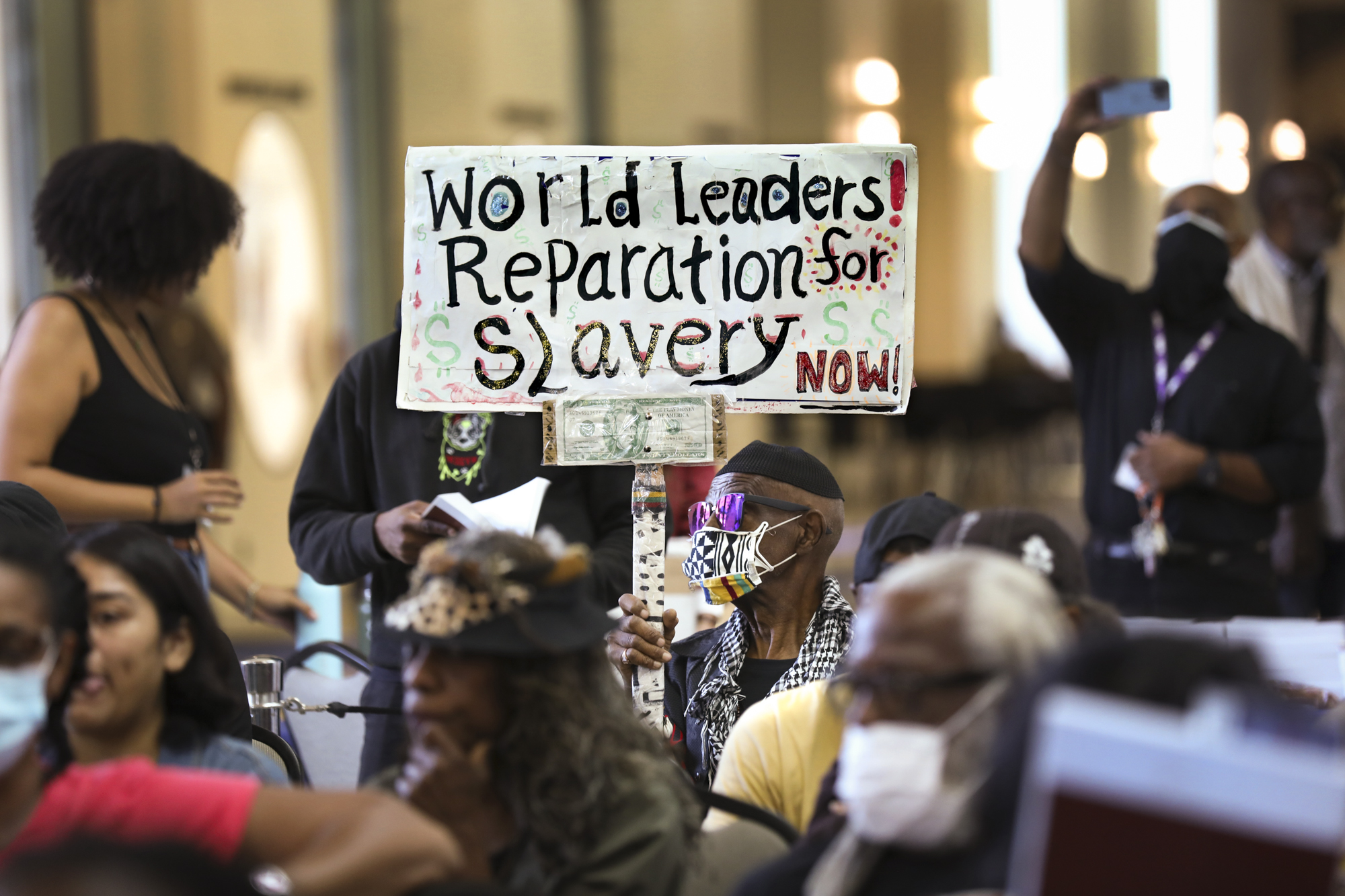
Reparations Bills Establish Foundation to Turn California’s Vision Into Reality
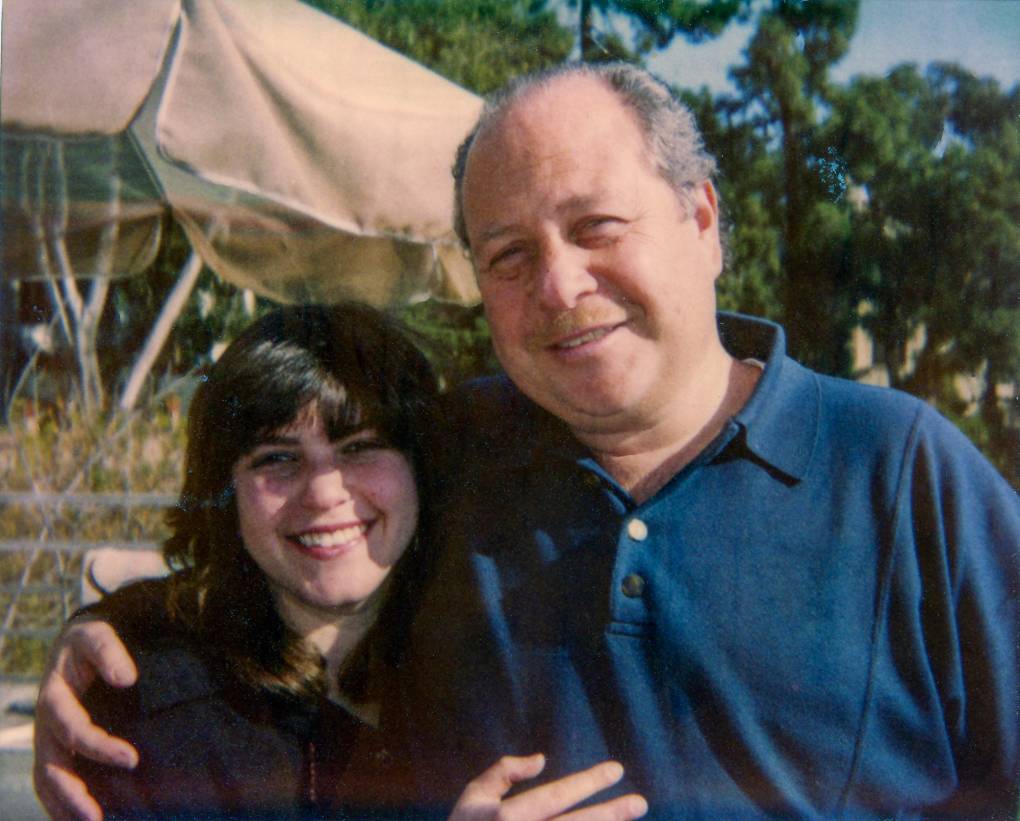
How a 1957 Vintage Radio Rekindled a Daughter’s Bond With Her Dad
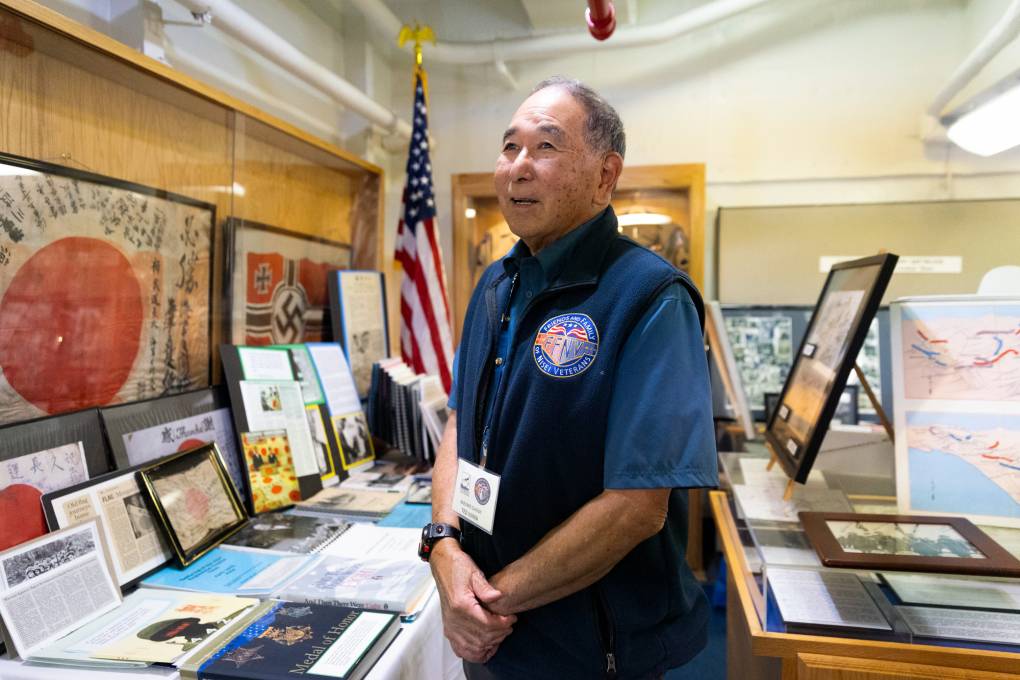
A Japanese American Legacy: How a Bay Area Resident’s Family Inspired My Patriotism
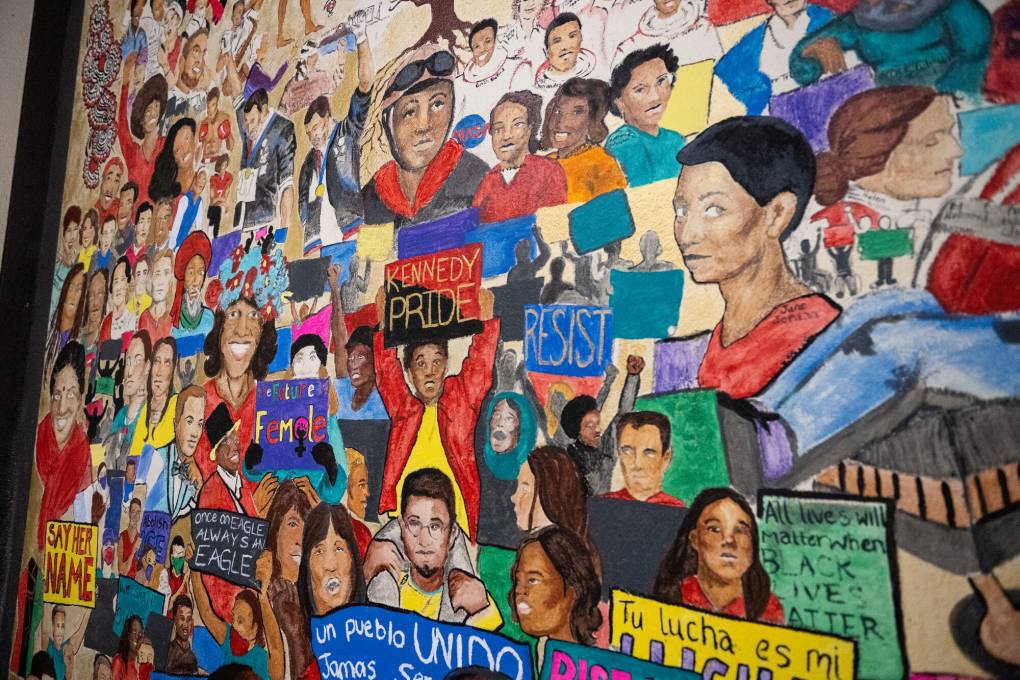
Embracing Identity: How Intersectionality Reveals the Full Story
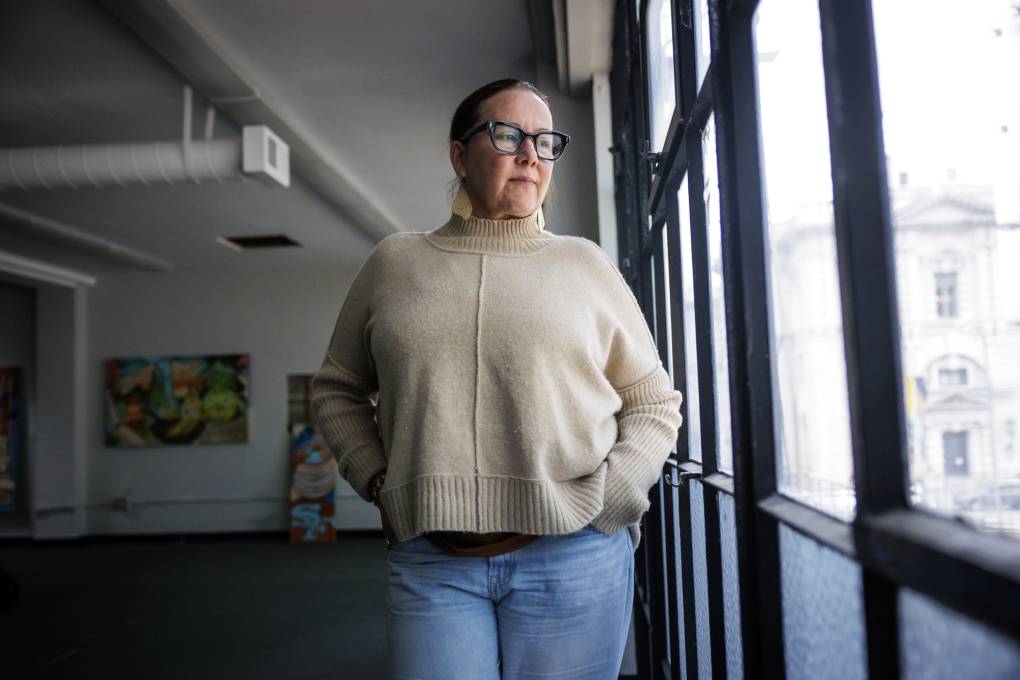
CARECEN SF Uses Arts and Advocacy to Empower Bay Area Immigrant Youth
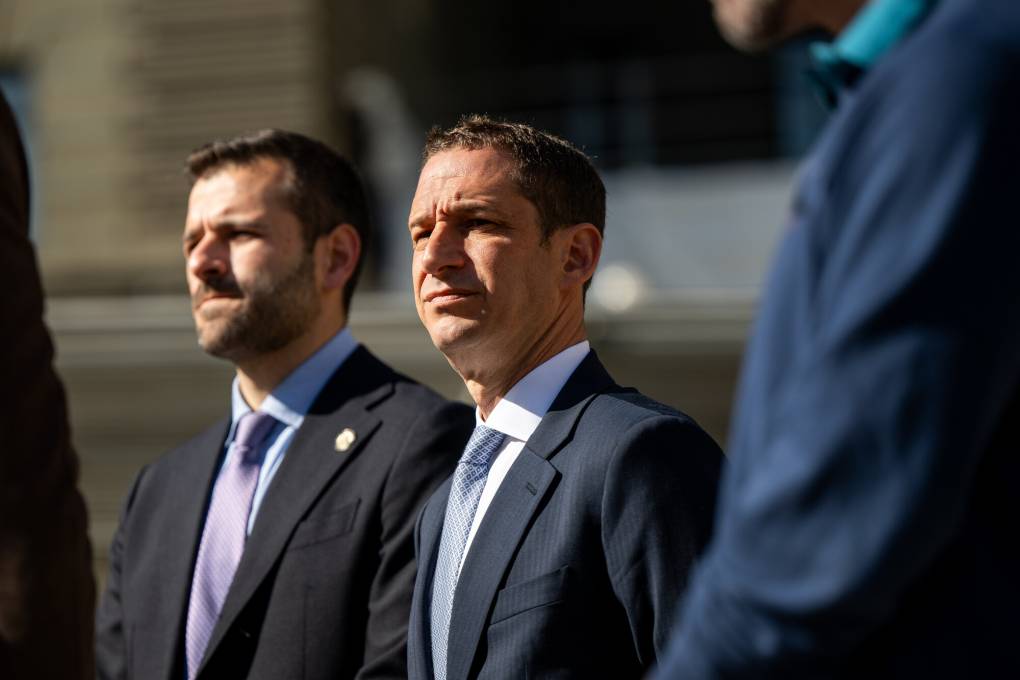
SF Mayor Lurie Seeks to Reset Tense Ties With Board of Supervisors
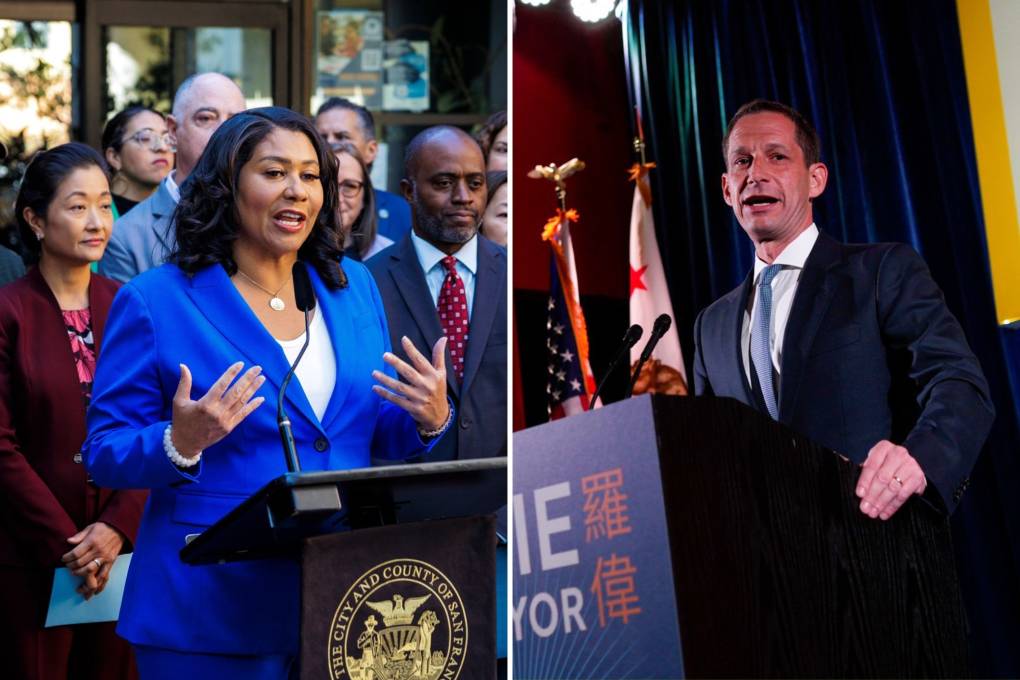
A Lot Can Go Wrong in a San Francisco Mayoral Transition. I Would Know
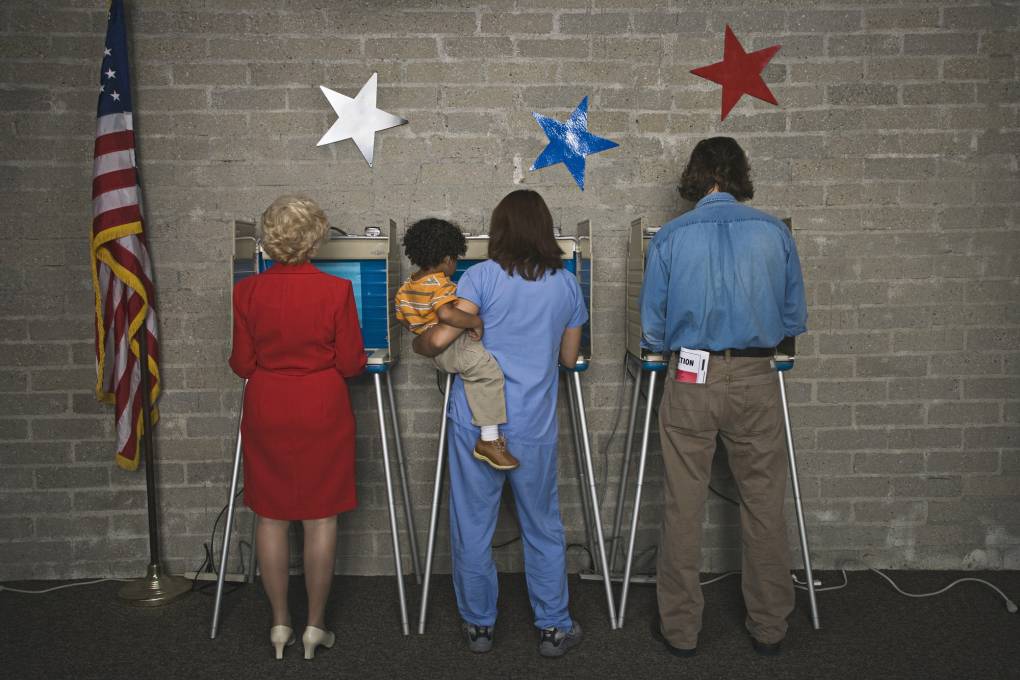
California Moms Wrestle With What a Trump Victory Teaches Children
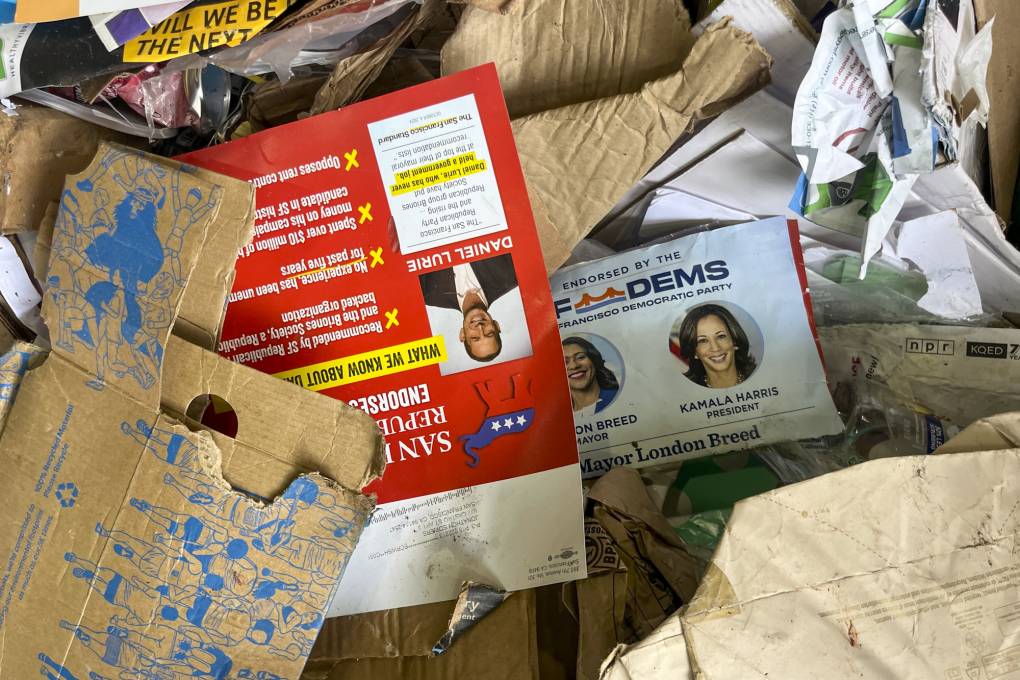
San Francisco Is Buried in Campaign Mailers. Here’s Where They End Up
Player sponsored by
window.__IS_SSR__=true
window.__INITIAL_STATE__={
"attachmentsReducer": {
"audio_0": {
"type": "attachments",
"id": "audio_0",
"imgSizes": {
"kqedFullSize": {
"file": "https://ww2.kqed.org/news/wp-content/themes/KQED-unified/img/audio_bgs/background0.jpg"
}
}
},
"audio_1": {
"type": "attachments",
"id": "audio_1",
"imgSizes": {
"kqedFullSize": {
"file": "https://ww2.kqed.org/news/wp-content/themes/KQED-unified/img/audio_bgs/background1.jpg"
}
}
},
"audio_2": {
"type": "attachments",
"id": "audio_2",
"imgSizes": {
"kqedFullSize": {
"file": "https://ww2.kqed.org/news/wp-content/themes/KQED-unified/img/audio_bgs/background2.jpg"
}
}
},
"audio_3": {
"type": "attachments",
"id": "audio_3",
"imgSizes": {
"kqedFullSize": {
"file": "https://ww2.kqed.org/news/wp-content/themes/KQED-unified/img/audio_bgs/background3.jpg"
}
}
},
"audio_4": {
"type": "attachments",
"id": "audio_4",
"imgSizes": {
"kqedFullSize": {
"file": "https://ww2.kqed.org/news/wp-content/themes/KQED-unified/img/audio_bgs/background4.jpg"
}
}
},
"placeholder": {
"type": "attachments",
"id": "placeholder",
"imgSizes": {
"thumbnail": {
"file": "https://cdn.kqed.org/wp-content/uploads/2024/12/KQED-Default-Image-816638274-2000x1333-1-160x107.jpg",
"width": 160,
"height": 107,
"mimeType": "image/jpeg"
},
"medium": {
"file": "https://cdn.kqed.org/wp-content/uploads/2024/12/KQED-Default-Image-816638274-2000x1333-1-800x533.jpg",
"width": 800,
"height": 533,
"mimeType": "image/jpeg"
},
"medium_large": {
"file": "https://cdn.kqed.org/wp-content/uploads/2024/12/KQED-Default-Image-816638274-2000x1333-1-768x512.jpg",
"width": 768,
"height": 512,
"mimeType": "image/jpeg"
},
"large": {
"file": "https://cdn.kqed.org/wp-content/uploads/2024/12/KQED-Default-Image-816638274-2000x1333-1-1020x680.jpg",
"width": 1020,
"height": 680,
"mimeType": "image/jpeg"
},
"1536x1536": {
"file": "https://cdn.kqed.org/wp-content/uploads/2024/12/KQED-Default-Image-816638274-2000x1333-1-1536x1024.jpg",
"width": 1536,
"height": 1024,
"mimeType": "image/jpeg"
},
"fd-lrg": {
"file": "https://cdn.kqed.org/wp-content/uploads/2024/12/KQED-Default-Image-816638274-2000x1333-1-1536x1024.jpg",
"width": 1536,
"height": 1024,
"mimeType": "image/jpeg"
},
"fd-med": {
"file": "https://cdn.kqed.org/wp-content/uploads/2024/12/KQED-Default-Image-816638274-2000x1333-1-1020x680.jpg",
"width": 1020,
"height": 680,
"mimeType": "image/jpeg"
},
"fd-sm": {
"file": "https://cdn.kqed.org/wp-content/uploads/2024/12/KQED-Default-Image-816638274-2000x1333-1-800x533.jpg",
"width": 800,
"height": 533,
"mimeType": "image/jpeg"
},
"post-thumbnail": {
"file": "https://cdn.kqed.org/wp-content/uploads/2024/12/KQED-Default-Image-816638274-2000x1333-1-672x372.jpg",
"width": 672,
"height": 372,
"mimeType": "image/jpeg"
},
"twentyfourteen-full-width": {
"file": "https://cdn.kqed.org/wp-content/uploads/2024/12/KQED-Default-Image-816638274-2000x1333-1-1038x576.jpg",
"width": 1038,
"height": 576,
"mimeType": "image/jpeg"
},
"xxsmall": {
"file": "https://cdn.kqed.org/wp-content/uploads/2024/12/KQED-Default-Image-816638274-2000x1333-1-160x107.jpg",
"width": 160,
"height": 107,
"mimeType": "image/jpeg"
},
"xsmall": {
"file": "https://cdn.kqed.org/wp-content/uploads/2024/12/KQED-Default-Image-816638274-2000x1333-1-672x372.jpg",
"width": 672,
"height": 372,
"mimeType": "image/jpeg"
},
"small": {
"file": "https://cdn.kqed.org/wp-content/uploads/2024/12/KQED-Default-Image-816638274-2000x1333-1-672x372.jpg",
"width": 672,
"height": 372,
"mimeType": "image/jpeg"
},
"xlarge": {
"file": "https://cdn.kqed.org/wp-content/uploads/2024/12/KQED-Default-Image-816638274-2000x1333-1-1020x680.jpg",
"width": 1020,
"height": 680,
"mimeType": "image/jpeg"
},
"full-width": {
"file": "https://cdn.kqed.org/wp-content/uploads/2024/12/KQED-Default-Image-816638274-2000x1333-1-1920x1280.jpg",
"width": 1920,
"height": 1280,
"mimeType": "image/jpeg"
},
"guest-author-32": {
"file": "https://cdn.kqed.org/wp-content/uploads/2025/01/KQED-Default-Image-816638274-1333x1333-1-160x160.jpg",
"width": 32,
"height": 32,
"mimeType": "image/jpeg"
},
"guest-author-50": {
"file": "https://cdn.kqed.org/wp-content/uploads/2025/01/KQED-Default-Image-816638274-1333x1333-1-160x160.jpg",
"width": 50,
"height": 50,
"mimeType": "image/jpeg"
},
"guest-author-64": {
"file": "https://cdn.kqed.org/wp-content/uploads/2025/01/KQED-Default-Image-816638274-1333x1333-1-160x160.jpg",
"width": 64,
"height": 64,
"mimeType": "image/jpeg"
},
"guest-author-96": {
"file": "https://cdn.kqed.org/wp-content/uploads/2025/01/KQED-Default-Image-816638274-1333x1333-1-160x160.jpg",
"width": 96,
"height": 96,
"mimeType": "image/jpeg"
},
"guest-author-128": {
"file": "https://cdn.kqed.org/wp-content/uploads/2025/01/KQED-Default-Image-816638274-1333x1333-1-160x160.jpg",
"width": 128,
"height": 128,
"mimeType": "image/jpeg"
},
"detail": {
"file": "https://cdn.kqed.org/wp-content/uploads/2025/01/KQED-Default-Image-816638274-1333x1333-1-160x160.jpg",
"width": 160,
"height": 160,
"mimeType": "image/jpeg"
},
"kqedFullSize": {
"file": "https://cdn.kqed.org/wp-content/uploads/2024/12/KQED-Default-Image-816638274-2000x1333-1.jpg",
"width": 2000,
"height": 1333
}
}
},
"news_12060430": {
"type": "attachments",
"id": "news_12060430",
"meta": {
"index": "attachments_1716263798",
"site": "news",
"id": "12060430",
"found": true
},
"title": "California Reparations Task Force meets to hear public input on reparations at the California Science Center in Los Angeles on Sept. 22, 2022.",
"publishDate": 1760737868,
"status": "inherit",
"parent": 0,
"modified": 1760737909,
"caption": "Los Angeles long-time resident Walter Foster holds up a sign as the Reparations Task Force meets to hear public input on reparations at the California Science Center in Los Angeles on Sept. 22, 2022. California's new laws strengthen the state's commitment to repair the harms of slavery, signaling a long-term effort that’s gaining power and purpose.",
"credit": "Carolyn Cole/Los Angeles Times via Getty Images",
"altTag": null,
"description": null,
"imgSizes": {
"thumbnail": {
"file": "https://cdn.kqed.org/wp-content/uploads/sites/10/2025/10/GETTYIMAGES-1243475910-KQED-160x107.jpg",
"width": 160,
"height": 107,
"mimeType": "image/jpeg"
},
"1536x1536": {
"file": "https://cdn.kqed.org/wp-content/uploads/sites/10/2025/10/GETTYIMAGES-1243475910-KQED-1536x1024.jpg",
"width": 1536,
"height": 1024,
"mimeType": "image/jpeg"
},
"post-thumbnail": {
"file": "https://cdn.kqed.org/wp-content/uploads/sites/10/2025/10/GETTYIMAGES-1243475910-KQED-672x372.jpg",
"width": 672,
"height": 372,
"mimeType": "image/jpeg"
},
"twentyfourteen-full-width": {
"file": "https://cdn.kqed.org/wp-content/uploads/sites/10/2025/10/GETTYIMAGES-1243475910-KQED-1038x576.jpg",
"width": 1038,
"height": 576,
"mimeType": "image/jpeg"
},
"kqedFullSize": {
"file": "https://cdn.kqed.org/wp-content/uploads/sites/10/2025/10/GETTYIMAGES-1243475910-KQED.jpg",
"width": 2000,
"height": 1333
}
},
"isLoading": false,
"fetchFailed": false
},
"news_12041339": {
"type": "attachments",
"id": "news_12041339",
"meta": {
"index": "attachments_1716263798",
"site": "news",
"id": "12041339",
"found": true
},
"title": "250522-RADIO RADIO-RM-01-KQED",
"publishDate": 1747950041,
"status": "inherit",
"parent": 0,
"modified": 1752000851,
"caption": "Rachael Myrow and her father, Fred Myrow, in a photo taken in the 1990s in Los Angeles. He died a few years later, leaving her to sort through a personal museum of audio technologies in his home music studio. ",
"credit": "Rachael Myrow/KQED",
"altTag": "A middle-aged man smiles at the camera with his arm draped around a smiling young woman, his daughter.",
"description": "Rachael Myrow and her father Fred Myrow in a photo taken in the 1990s in Los Angeles. ",
"imgSizes": {
"medium": {
"file": "https://cdn.kqed.org/wp-content/uploads/sites/10/2025/05/250522-RADIO-RADIO-RM-01-KQED-800x644.jpg",
"width": 800,
"height": 644,
"mimeType": "image/jpeg"
},
"large": {
"file": "https://cdn.kqed.org/wp-content/uploads/sites/10/2025/05/250522-RADIO-RADIO-RM-01-KQED-1020x821.jpg",
"width": 1020,
"height": 821,
"mimeType": "image/jpeg"
},
"thumbnail": {
"file": "https://cdn.kqed.org/wp-content/uploads/sites/10/2025/05/250522-RADIO-RADIO-RM-01-KQED-160x129.jpg",
"width": 160,
"height": 129,
"mimeType": "image/jpeg"
},
"1536x1536": {
"file": "https://cdn.kqed.org/wp-content/uploads/sites/10/2025/05/250522-RADIO-RADIO-RM-01-KQED-1536x1236.jpg",
"width": 1536,
"height": 1236,
"mimeType": "image/jpeg"
},
"post-thumbnail": {
"file": "https://cdn.kqed.org/wp-content/uploads/sites/10/2025/05/250522-RADIO-RADIO-RM-01-KQED-672x372.jpg",
"width": 672,
"height": 372,
"mimeType": "image/jpeg"
},
"twentyfourteen-full-width": {
"file": "https://cdn.kqed.org/wp-content/uploads/sites/10/2025/05/250522-RADIO-RADIO-RM-01-KQED-1038x576.jpg",
"width": 1038,
"height": 576,
"mimeType": "image/jpeg"
},
"full-width": {
"file": "https://cdn.kqed.org/wp-content/uploads/sites/10/2025/05/250522-RADIO-RADIO-RM-01-KQED-1920x1546.jpg",
"width": 1920,
"height": 1546,
"mimeType": "image/jpeg"
},
"kqedFullSize": {
"file": "https://cdn.kqed.org/wp-content/uploads/sites/10/2025/05/250522-RADIO-RADIO-RM-01-KQED.jpg",
"width": 2000,
"height": 1610
}
},
"isLoading": false,
"fetchFailed": false
},
"news_12039001": {
"type": "attachments",
"id": "news_12039001",
"meta": {
"index": "attachments_1716263798",
"site": "news",
"id": "12039001",
"found": true
},
"title": "20250505_YTCOMMENTARY_GC-6-KQED-2",
"publishDate": 1746573028,
"status": "inherit",
"parent": 0,
"modified": 1746573081,
"caption": "Ted Iijima, 75, stands in the Nisei exhibit at the USS Hornet Museum in Alameda on May 5, 2025.",
"credit": "Gina Castro/KQED",
"altTag": null,
"description": null,
"imgSizes": {
"medium": {
"file": "https://cdn.kqed.org/wp-content/uploads/sites/10/2025/05/20250505_YTCOMMENTARY_GC-6-KQED-2-800x533.jpg",
"width": 800,
"height": 533,
"mimeType": "image/jpeg"
},
"large": {
"file": "https://cdn.kqed.org/wp-content/uploads/sites/10/2025/05/20250505_YTCOMMENTARY_GC-6-KQED-2-1020x680.jpg",
"width": 1020,
"height": 680,
"mimeType": "image/jpeg"
},
"thumbnail": {
"file": "https://cdn.kqed.org/wp-content/uploads/sites/10/2025/05/20250505_YTCOMMENTARY_GC-6-KQED-2-160x107.jpg",
"width": 160,
"height": 107,
"mimeType": "image/jpeg"
},
"1536x1536": {
"file": "https://cdn.kqed.org/wp-content/uploads/sites/10/2025/05/20250505_YTCOMMENTARY_GC-6-KQED-2-1536x1024.jpg",
"width": 1536,
"height": 1024,
"mimeType": "image/jpeg"
},
"post-thumbnail": {
"file": "https://cdn.kqed.org/wp-content/uploads/sites/10/2025/05/20250505_YTCOMMENTARY_GC-6-KQED-2-672x372.jpg",
"width": 672,
"height": 372,
"mimeType": "image/jpeg"
},
"twentyfourteen-full-width": {
"file": "https://cdn.kqed.org/wp-content/uploads/sites/10/2025/05/20250505_YTCOMMENTARY_GC-6-KQED-2-1038x576.jpg",
"width": 1038,
"height": 576,
"mimeType": "image/jpeg"
},
"full-width": {
"file": "https://cdn.kqed.org/wp-content/uploads/sites/10/2025/05/20250505_YTCOMMENTARY_GC-6-KQED-2-1920x1280.jpg",
"width": 1920,
"height": 1280,
"mimeType": "image/jpeg"
},
"kqedFullSize": {
"file": "https://cdn.kqed.org/wp-content/uploads/sites/10/2025/05/20250505_YTCOMMENTARY_GC-6-KQED-2.jpg",
"width": 2000,
"height": 1333
}
},
"isLoading": false,
"fetchFailed": false
},
"news_12037278": {
"type": "attachments",
"id": "news_12037278",
"meta": {
"index": "attachments_1716263798",
"site": "news",
"id": "12037278",
"found": true
},
"title": "A mural at John F. Kennedy High School in Richmond on May 18, 2023.",
"publishDate": 1745429717,
"status": "inherit",
"parent": 12037263,
"modified": 1745429760,
"caption": "A mural at John F. Kennedy High School in Richmond on May 18, 2023.",
"credit": "Beth LaBerge/KQED",
"altTag": null,
"description": null,
"imgSizes": {
"medium": {
"file": "https://cdn.kqed.org/wp-content/uploads/sites/10/2025/04/030_KQED_JFKHighSchoolRichmond_05182023_qed-800x533.jpg",
"width": 800,
"height": 533,
"mimeType": "image/jpeg"
},
"large": {
"file": "https://cdn.kqed.org/wp-content/uploads/sites/10/2025/04/030_KQED_JFKHighSchoolRichmond_05182023_qed-1020x680.jpg",
"width": 1020,
"height": 680,
"mimeType": "image/jpeg"
},
"thumbnail": {
"file": "https://cdn.kqed.org/wp-content/uploads/sites/10/2025/04/030_KQED_JFKHighSchoolRichmond_05182023_qed-160x107.jpg",
"width": 160,
"height": 107,
"mimeType": "image/jpeg"
},
"1536x1536": {
"file": "https://cdn.kqed.org/wp-content/uploads/sites/10/2025/04/030_KQED_JFKHighSchoolRichmond_05182023_qed-1536x1024.jpg",
"width": 1536,
"height": 1024,
"mimeType": "image/jpeg"
},
"post-thumbnail": {
"file": "https://cdn.kqed.org/wp-content/uploads/sites/10/2025/04/030_KQED_JFKHighSchoolRichmond_05182023_qed-672x372.jpg",
"width": 672,
"height": 372,
"mimeType": "image/jpeg"
},
"twentyfourteen-full-width": {
"file": "https://cdn.kqed.org/wp-content/uploads/sites/10/2025/04/030_KQED_JFKHighSchoolRichmond_05182023_qed-1038x576.jpg",
"width": 1038,
"height": 576,
"mimeType": "image/jpeg"
},
"full-width": {
"file": "https://cdn.kqed.org/wp-content/uploads/sites/10/2025/04/030_KQED_JFKHighSchoolRichmond_05182023_qed-1920x1280.jpg",
"width": 1920,
"height": 1280,
"mimeType": "image/jpeg"
},
"kqedFullSize": {
"file": "https://cdn.kqed.org/wp-content/uploads/sites/10/2025/04/030_KQED_JFKHighSchoolRichmond_05182023_qed.jpg",
"width": 2000,
"height": 1333
}
},
"isLoading": false,
"fetchFailed": false
},
"news_12030005": {
"type": "attachments",
"id": "news_12030005",
"meta": {
"index": "attachments_1716263798",
"site": "news",
"id": "12030005",
"found": true
},
"title": "250305-Lariza Dugan-Cuadra-MD-07",
"publishDate": 1741261280,
"status": "inherit",
"parent": 0,
"modified": 1741267613,
"caption": "Lariza Dugan-Cuadra, Executive Director of CARECEN SF, looks out of the windows at the CARECEN SF offices in San Francisco on March 5, 2025.",
"credit": "Martin do Nascimento/KQED",
"altTag": null,
"description": null,
"imgSizes": {
"medium": {
"file": "https://cdn.kqed.org/wp-content/uploads/sites/10/2025/03/250305-Lariza-Dugan-Cuadra-MD-07-800x533.jpg",
"width": 800,
"height": 533,
"mimeType": "image/jpeg"
},
"large": {
"file": "https://cdn.kqed.org/wp-content/uploads/sites/10/2025/03/250305-Lariza-Dugan-Cuadra-MD-07-1020x680.jpg",
"width": 1020,
"height": 680,
"mimeType": "image/jpeg"
},
"thumbnail": {
"file": "https://cdn.kqed.org/wp-content/uploads/sites/10/2025/03/250305-Lariza-Dugan-Cuadra-MD-07-160x107.jpg",
"width": 160,
"height": 107,
"mimeType": "image/jpeg"
},
"1536x1536": {
"file": "https://cdn.kqed.org/wp-content/uploads/sites/10/2025/03/250305-Lariza-Dugan-Cuadra-MD-07-1536x1024.jpg",
"width": 1536,
"height": 1024,
"mimeType": "image/jpeg"
},
"post-thumbnail": {
"file": "https://cdn.kqed.org/wp-content/uploads/sites/10/2025/03/250305-Lariza-Dugan-Cuadra-MD-07-672x372.jpg",
"width": 672,
"height": 372,
"mimeType": "image/jpeg"
},
"twentyfourteen-full-width": {
"file": "https://cdn.kqed.org/wp-content/uploads/sites/10/2025/03/250305-Lariza-Dugan-Cuadra-MD-07-1038x576.jpg",
"width": 1038,
"height": 576,
"mimeType": "image/jpeg"
},
"full-width": {
"file": "https://cdn.kqed.org/wp-content/uploads/sites/10/2025/03/250305-Lariza-Dugan-Cuadra-MD-07-1920x1280.jpg",
"width": 1920,
"height": 1280,
"mimeType": "image/jpeg"
},
"kqedFullSize": {
"file": "https://cdn.kqed.org/wp-content/uploads/sites/10/2025/03/250305-Lariza-Dugan-Cuadra-MD-07.jpg",
"width": 2000,
"height": 1333
}
},
"isLoading": false,
"fetchFailed": false
},
"news_12028707": {
"type": "attachments",
"id": "news_12028707",
"meta": {
"index": "attachments_1716263798",
"site": "news",
"id": "12028707",
"found": true
},
"title": "250218-SFDowntown-16-BL_qed",
"publishDate": 1740591027,
"status": "inherit",
"parent": 12028703,
"modified": 1740591048,
"caption": "Mayor Daniel Lurie listens to speakers during a press conference in Union Square, San Francisco, on Feb. 18, 2025, announcing legislation to increase nightlife in Downtown San Francisco to help the recovery of the neighborhood.",
"credit": "Beth LaBerge/KQED",
"altTag": null,
"description": null,
"imgSizes": {
"medium": {
"file": "https://cdn.kqed.org/wp-content/uploads/sites/10/2025/02/250218-SFDowntown-16-BL_qed-800x533.jpg",
"width": 800,
"height": 533,
"mimeType": "image/jpeg"
},
"large": {
"file": "https://cdn.kqed.org/wp-content/uploads/sites/10/2025/02/250218-SFDowntown-16-BL_qed-1020x680.jpg",
"width": 1020,
"height": 680,
"mimeType": "image/jpeg"
},
"thumbnail": {
"file": "https://cdn.kqed.org/wp-content/uploads/sites/10/2025/02/250218-SFDowntown-16-BL_qed-160x107.jpg",
"width": 160,
"height": 107,
"mimeType": "image/jpeg"
},
"1536x1536": {
"file": "https://cdn.kqed.org/wp-content/uploads/sites/10/2025/02/250218-SFDowntown-16-BL_qed-1536x1024.jpg",
"width": 1536,
"height": 1024,
"mimeType": "image/jpeg"
},
"post-thumbnail": {
"file": "https://cdn.kqed.org/wp-content/uploads/sites/10/2025/02/250218-SFDowntown-16-BL_qed-672x372.jpg",
"width": 672,
"height": 372,
"mimeType": "image/jpeg"
},
"twentyfourteen-full-width": {
"file": "https://cdn.kqed.org/wp-content/uploads/sites/10/2025/02/250218-SFDowntown-16-BL_qed-1038x576.jpg",
"width": 1038,
"height": 576,
"mimeType": "image/jpeg"
},
"full-width": {
"file": "https://cdn.kqed.org/wp-content/uploads/sites/10/2025/02/250218-SFDowntown-16-BL_qed-1920x1280.jpg",
"width": 1920,
"height": 1280,
"mimeType": "image/jpeg"
},
"kqedFullSize": {
"file": "https://cdn.kqed.org/wp-content/uploads/sites/10/2025/02/250218-SFDowntown-16-BL_qed.jpg",
"width": 2000,
"height": 1333
}
},
"isLoading": false,
"fetchFailed": false
},
"news_12013502": {
"type": "attachments",
"id": "news_12013502",
"meta": {
"index": "attachments_1716263798",
"site": "news",
"id": "12013502",
"found": true
},
"title": "BreedLurie02",
"publishDate": 1731016763,
"status": "inherit",
"parent": 0,
"modified": 1731016963,
"caption": "San Francisco Mayor London Breed (left) and mayoral candidate Daniel Lurie.",
"credit": "Martin do Nascimento, Aryk Copley/KQED",
"altTag": null,
"description": null,
"imgSizes": {
"medium": {
"file": "https://cdn.kqed.org/wp-content/uploads/sites/10/2024/11/BreedLurie02-800x533.jpg",
"width": 800,
"height": 533,
"mimeType": "image/jpeg"
},
"large": {
"file": "https://cdn.kqed.org/wp-content/uploads/sites/10/2024/11/BreedLurie02-1020x680.jpg",
"width": 1020,
"height": 680,
"mimeType": "image/jpeg"
},
"thumbnail": {
"file": "https://cdn.kqed.org/wp-content/uploads/sites/10/2024/11/BreedLurie02-160x107.jpg",
"width": 160,
"height": 107,
"mimeType": "image/jpeg"
},
"1536x1536": {
"file": "https://cdn.kqed.org/wp-content/uploads/sites/10/2024/11/BreedLurie02-1536x1024.jpg",
"width": 1536,
"height": 1024,
"mimeType": "image/jpeg"
},
"post-thumbnail": {
"file": "https://cdn.kqed.org/wp-content/uploads/sites/10/2024/11/BreedLurie02-672x372.jpg",
"width": 672,
"height": 372,
"mimeType": "image/jpeg"
},
"twentyfourteen-full-width": {
"file": "https://cdn.kqed.org/wp-content/uploads/sites/10/2024/11/BreedLurie02-1038x576.jpg",
"width": 1038,
"height": 576,
"mimeType": "image/jpeg"
},
"full-width": {
"file": "https://cdn.kqed.org/wp-content/uploads/sites/10/2024/11/BreedLurie02-1920x1280.jpg",
"width": 1920,
"height": 1280,
"mimeType": "image/jpeg"
},
"kqedFullSize": {
"file": "https://cdn.kqed.org/wp-content/uploads/sites/10/2024/11/BreedLurie02.jpg",
"width": 2000,
"height": 1333
}
},
"isLoading": false,
"fetchFailed": false
},
"news_12013394": {
"type": "attachments",
"id": "news_12013394",
"meta": {
"index": "attachments_1716263798",
"site": "news",
"id": "12013394",
"found": true
},
"title": "Back view of voters and child at voting booths",
"publishDate": 1731000746,
"status": "inherit",
"parent": 12013300,
"modified": 1731000833,
"caption": "Bay Area moms who are devastated by the results of the 2024 election spoke to KQED about what it means for their daughters. ",
"credit": "Jupiter Images via Getty Images",
"altTag": null,
"description": null,
"imgSizes": {
"medium": {
"file": "https://cdn.kqed.org/wp-content/uploads/sites/10/2024/11/MomFollowElection-800x533.jpg",
"width": 800,
"height": 533,
"mimeType": "image/jpeg"
},
"large": {
"file": "https://cdn.kqed.org/wp-content/uploads/sites/10/2024/11/MomFollowElection-1020x680.jpg",
"width": 1020,
"height": 680,
"mimeType": "image/jpeg"
},
"thumbnail": {
"file": "https://cdn.kqed.org/wp-content/uploads/sites/10/2024/11/MomFollowElection-160x107.jpg",
"width": 160,
"height": 107,
"mimeType": "image/jpeg"
},
"1536x1536": {
"file": "https://cdn.kqed.org/wp-content/uploads/sites/10/2024/11/MomFollowElection-1536x1024.jpg",
"width": 1536,
"height": 1024,
"mimeType": "image/jpeg"
},
"post-thumbnail": {
"file": "https://cdn.kqed.org/wp-content/uploads/sites/10/2024/11/MomFollowElection-672x372.jpg",
"width": 672,
"height": 372,
"mimeType": "image/jpeg"
},
"twentyfourteen-full-width": {
"file": "https://cdn.kqed.org/wp-content/uploads/sites/10/2024/11/MomFollowElection-1038x576.jpg",
"width": 1038,
"height": 576,
"mimeType": "image/jpeg"
},
"full-width": {
"file": "https://cdn.kqed.org/wp-content/uploads/sites/10/2024/11/MomFollowElection-1920x1280.jpg",
"width": 1920,
"height": 1280,
"mimeType": "image/jpeg"
},
"kqedFullSize": {
"file": "https://cdn.kqed.org/wp-content/uploads/sites/10/2024/11/MomFollowElection.jpg",
"width": 2000,
"height": 1333
}
},
"isLoading": false,
"fetchFailed": false
},
"news_12011991": {
"type": "attachments",
"id": "news_12011991",
"meta": {
"index": "attachments_1716263798",
"site": "news",
"id": "12011991",
"found": true
},
"title": "241031-Recycling Campaign Flyers-JCL-02-KQED",
"publishDate": 1730409414,
"status": "inherit",
"parent": 0,
"modified": 1730483288,
"caption": "Campaigns and political groups are sending out tons of these mailers. Where do they end up?",
"credit": "Juan Carlos Lara/KQED",
"altTag": null,
"description": null,
"imgSizes": {
"medium": {
"file": "https://cdn.kqed.org/wp-content/uploads/sites/10/2024/10/241031-Recycling-Campaign-Flyers-JCL-02-KQED-1-800x533.jpg",
"width": 800,
"height": 533,
"mimeType": "image/jpeg"
},
"large": {
"file": "https://cdn.kqed.org/wp-content/uploads/sites/10/2024/10/241031-Recycling-Campaign-Flyers-JCL-02-KQED-1-1020x680.jpg",
"width": 1020,
"height": 680,
"mimeType": "image/jpeg"
},
"thumbnail": {
"file": "https://cdn.kqed.org/wp-content/uploads/sites/10/2024/10/241031-Recycling-Campaign-Flyers-JCL-02-KQED-1-160x107.jpg",
"width": 160,
"height": 107,
"mimeType": "image/jpeg"
},
"1536x1536": {
"file": "https://cdn.kqed.org/wp-content/uploads/sites/10/2024/10/241031-Recycling-Campaign-Flyers-JCL-02-KQED-1-1536x1024.jpg",
"width": 1536,
"height": 1024,
"mimeType": "image/jpeg"
},
"post-thumbnail": {
"file": "https://cdn.kqed.org/wp-content/uploads/sites/10/2024/10/241031-Recycling-Campaign-Flyers-JCL-02-KQED-1-672x372.jpg",
"width": 672,
"height": 372,
"mimeType": "image/jpeg"
},
"twentyfourteen-full-width": {
"file": "https://cdn.kqed.org/wp-content/uploads/sites/10/2024/10/241031-Recycling-Campaign-Flyers-JCL-02-KQED-1-1038x576.jpg",
"width": 1038,
"height": 576,
"mimeType": "image/jpeg"
},
"full-width": {
"file": "https://cdn.kqed.org/wp-content/uploads/sites/10/2024/10/241031-Recycling-Campaign-Flyers-JCL-02-KQED-1-1920x1280.jpg",
"width": 1920,
"height": 1280,
"mimeType": "image/jpeg"
},
"kqedFullSize": {
"file": "https://cdn.kqed.org/wp-content/uploads/sites/10/2024/10/241031-Recycling-Campaign-Flyers-JCL-02-KQED-1.jpg",
"width": 2000,
"height": 1333
}
},
"isLoading": false,
"fetchFailed": false
}
},
"audioPlayerReducer": {
"postId": "stream_live",
"isPaused": true,
"isPlaying": false,
"pfsActive": false,
"pledgeModalIsOpen": true,
"playerDrawerIsOpen": false
},
"authorsReducer": {
"byline_news_12060403": {
"type": "authors",
"id": "byline_news_12060403",
"meta": {
"override": true
},
"slug": "byline_news_12060403",
"name": "Virginie Ladisch",
"isLoading": false
},
"byline_news_12038879": {
"type": "authors",
"id": "byline_news_12038879",
"meta": {
"override": true
},
"slug": "byline_news_12038879",
"name": "Kayla Ling",
"isLoading": false
},
"byline_news_12037263": {
"type": "authors",
"id": "byline_news_12037263",
"meta": {
"override": true
},
"slug": "byline_news_12037263",
"name": "Guleed Allen",
"isLoading": false
},
"rachael-myrow": {
"type": "authors",
"id": "251",
"meta": {
"index": "authors_1716337520",
"id": "251",
"found": true
},
"name": "Rachael Myrow",
"firstName": "Rachael",
"lastName": "Myrow",
"slug": "rachael-myrow",
"email": "rmyrow@kqed.org",
"display_author_email": true,
"staff_mastheads": [
"news"
],
"title": "Senior Editor of KQED's Silicon Valley News Desk",
"bio": "• I write and edit stories about how Silicon Valley power and policies shape everyday life in California. I’m also passionate about making Bay Area history and culture more accessible to a broad public. • I’ve been a journalist for most of my life, starting in high school with The Franklin Press in Los Angeles, where I grew up. While earning my first degree in English at UC Berkeley, I got my start in public radio at KALX-FM. After completing a second degree in journalism at Cal, I landed my first professional job at Marketplace, then moved on to KPCC (now LAist), and then KQED, where I hosted The California Report for more than seven years. • My reporting has appeared on NPR, The World, WBUR’s \u003ci>Here & Now\u003c/i>, and the BBC. I also guest host for KQED’s \u003ci>Forum\u003c/i>, as well as the Commonwealth Club in San Francisco. • I speak periodically on media, democracy and technology issues, and do voiceover work for documentaries and educational video projects. • Outside of the studio, you'll find me hiking Bay Area trails and whipping up Insta-ready meals in my kitchen. • I do not accept gifts, money, or favors from anyone connected to my reporting, I don't pay people for information, and I do not support or donate to political causes. • I strive to treat the people I report on with fairness, honesty, and respect. I also recognize there are often multiple sides to a story and work to verify information through multiple sources and documentation. If I get something wrong, I correct it.",
"avatar": "https://secure.gravatar.com/avatar/87bf8cb5874e045cdff430523a6d48b1?s=600&d=blank&r=g",
"twitter": "rachaelmyrow",
"facebook": null,
"instagram": null,
"linkedin": "https://www.linkedin.com/in/rachaelmyrow/",
"sites": [
{
"site": "arts",
"roles": [
"administrator"
]
},
{
"site": "news",
"roles": [
"edit_others_posts",
"editor"
]
},
{
"site": "futureofyou",
"roles": [
"editor"
]
},
{
"site": "bayareabites",
"roles": [
"editor"
]
},
{
"site": "stateofhealth",
"roles": [
"editor"
]
},
{
"site": "science",
"roles": [
"editor"
]
},
{
"site": "food",
"roles": [
"editor"
]
},
{
"site": "forum",
"roles": [
"editor"
]
},
{
"site": "liveblog",
"roles": [
"author"
]
}
],
"headData": {
"title": "Rachael Myrow | KQED",
"description": "Senior Editor of KQED's Silicon Valley News Desk",
"ogImgSrc": "https://secure.gravatar.com/avatar/87bf8cb5874e045cdff430523a6d48b1?s=600&d=blank&r=g",
"twImgSrc": "https://secure.gravatar.com/avatar/87bf8cb5874e045cdff430523a6d48b1?s=600&d=blank&r=g"
},
"isLoading": false,
"link": "/author/rachael-myrow"
},
"scottshafer": {
"type": "authors",
"id": "255",
"meta": {
"index": "authors_1716337520",
"id": "255",
"found": true
},
"name": "Scott Shafer",
"firstName": "Scott",
"lastName": "Shafer",
"slug": "scottshafer",
"email": "sshafer@kqed.org",
"display_author_email": false,
"staff_mastheads": [
"news"
],
"title": "KQED Contributor",
"bio": "Scott Shafer is a senior editor with the KQED Politics and Government desk. He is co-host of Political Breakdown, the award-winning radio show and podcast with a personal take on the world of politics. Scott came to KQED in 1998 to host the statewide\u003cem> California Report\u003c/em>. Prior to that he had extended stints in politics and government\u003cem>.\u003c/em> He uses that inside experience at KQED in his, reporting, hosting and analysis for the politics desk. Scott collaborated \u003cem>Political Breakdown a\u003c/em>nd on \u003cem>The Political Mind of Jerry Brown, \u003c/em>an eight-part series about the life and extraordinary political career of the former governor. For fun, he plays water polo with the San Francisco Tsunami.",
"avatar": "https://secure.gravatar.com/avatar/a62ebae45b79d7aed1a39a0e3bf68104?s=600&d=blank&r=g",
"twitter": "scottshafer",
"bluesky": null,
"facebook": null,
"instagram": null,
"linkedin": null,
"sites": [
{
"site": "news",
"roles": [
"editor"
]
},
{
"site": "stateofhealth",
"roles": [
"author"
]
},
{
"site": "science",
"roles": [
"author"
]
},
{
"site": "forum",
"roles": [
"subscriber"
]
},
{
"site": "liveblog",
"roles": [
"author"
]
}
],
"headData": {
"title": "Scott Shafer | KQED",
"description": "KQED Contributor",
"ogImgSrc": "https://secure.gravatar.com/avatar/a62ebae45b79d7aed1a39a0e3bf68104?s=600&d=blank&r=g",
"twImgSrc": "https://secure.gravatar.com/avatar/a62ebae45b79d7aed1a39a0e3bf68104?s=600&d=blank&r=g"
},
"isLoading": false,
"link": "/author/scottshafer"
},
"lesleymcclurg": {
"type": "authors",
"id": "11229",
"meta": {
"index": "authors_1716337520",
"id": "11229",
"found": true
},
"name": "Lesley McClurg",
"firstName": "Lesley",
"lastName": "McClurg",
"slug": "lesleymcclurg",
"email": "lmcclurg@KQED.org",
"display_author_email": false,
"staff_mastheads": [
"news",
"science"
],
"title": "KQED Health Correspondent",
"bio": "Lesley McClurg is a health correspondent and fill-in host whose work is regularly rebroadcast on NPR and PBS programs. She’s earned multiple regional Emmy awards, a national and a regional Edward R. Murrow award, and was named Best Beat Reporter by the Association of Health Care Journalists. The Society of Professional Journalists has recognized her work several times, and the Society of Environmental Journalists spotlighted her coverage of California’s historic drought.\r\n\r\nBefore joining KQED in 2016, Lesley covered food and sustainability for Capital Public Radio, environmental issues for Colorado Public Radio, and reported for KUOW and KCTS 9 in Seattle. Away from the newsroom, she loves skiing with her daughter, mountain biking with her partner, and playing with Ollie, the family’s goldendoodle. On deadline, she runs almost entirely on chocolate chips.\r\n\r\n ",
"avatar": "https://secure.gravatar.com/avatar/3fb78e873af3312f34d0bc1d60a07c7f?s=600&d=blank&r=g",
"twitter": "lesleywmcclurg",
"bluesky": null,
"facebook": null,
"instagram": null,
"linkedin": null,
"sites": [
{
"site": "arts",
"roles": [
"author"
]
},
{
"site": "news",
"roles": [
"editor"
]
},
{
"site": "futureofyou",
"roles": [
"editor"
]
},
{
"site": "stateofhealth",
"roles": [
"author"
]
},
{
"site": "science",
"roles": [
"editor"
]
},
{
"site": "quest",
"roles": [
"subscriber"
]
},
{
"site": "forum",
"roles": [
"administrator"
]
},
{
"site": "liveblog",
"roles": [
"author"
]
}
],
"headData": {
"title": "Lesley McClurg | KQED",
"description": "KQED Health Correspondent",
"ogImgSrc": "https://secure.gravatar.com/avatar/3fb78e873af3312f34d0bc1d60a07c7f?s=600&d=blank&r=g",
"twImgSrc": "https://secure.gravatar.com/avatar/3fb78e873af3312f34d0bc1d60a07c7f?s=600&d=blank&r=g"
},
"isLoading": false,
"link": "/author/lesleymcclurg"
},
"btorres": {
"type": "authors",
"id": "11666",
"meta": {
"index": "authors_1716337520",
"id": "11666",
"found": true
},
"name": "Blanca Torres",
"firstName": "Blanca",
"lastName": "Torres",
"slug": "btorres",
"email": "btorres@kqed.org",
"display_author_email": true,
"staff_mastheads": [
"news"
],
"title": "Producer, Forum",
"bio": "Blanca Torres brings sharp news judgement and keen sense of lively conversation to her work as producer for Forum. She loves producing shows that leave listeners feeling like they heard distinctive voices, learned something new and gained a fresh perspective.\r\n\r\nShe joined KQED in January of 2020 after 16 years of working as a newspaper reporter most recently at the \u003cem>San Francisco Business Times,\u003c/em> where she wrote about real estate and economic development. Before that, she covered a variety of beats including crime, education, retail, workplace, the economy, consumer issues, and small business for the \u003cem>Contra Costa Times, Baltimore Sun\u003c/em> and\u003cem> The Seattle Times\u003c/em>. In addition to reporting, she worked as an editorial writer and columnist for the \u003cem>Seattle Times\u003c/em>. From 2017 to 2020, Blanca won a total of ten awards from the National Association of Real Estate Editors and won first place for land use reporting from the California News Publishers Association two years in a row. She is also a member and former board member for the National Association of Hispanic Journalists.\r\n\r\nA native of the Pacific Northwest, Blanca earned her bachelor's degree from Vanderbilt University in Nashville and a master's in fine arts in creative writing at Mills College. She lives in the East Bay with her family.",
"avatar": "https://secure.gravatar.com/avatar/f2322ff46076d337f7ba731ee6068cb1?s=600&d=blank&r=g",
"twitter": "@blancawrites",
"facebook": null,
"instagram": null,
"linkedin": null,
"sites": [
{
"site": "arts",
"roles": [
"editor"
]
},
{
"site": "news",
"roles": [
"editor"
]
},
{
"site": "forum",
"roles": [
"editor"
]
}
],
"headData": {
"title": "Blanca Torres | KQED",
"description": "Producer, Forum",
"ogImgSrc": "https://secure.gravatar.com/avatar/f2322ff46076d337f7ba731ee6068cb1?s=600&d=blank&r=g",
"twImgSrc": "https://secure.gravatar.com/avatar/f2322ff46076d337f7ba731ee6068cb1?s=600&d=blank&r=g"
},
"isLoading": false,
"link": "/author/btorres"
},
"jlara": {
"type": "authors",
"id": "11761",
"meta": {
"index": "authors_1716337520",
"id": "11761",
"found": true
},
"name": "Juan Carlos Lara",
"firstName": "Juan Carlos",
"lastName": "Lara",
"slug": "jlara",
"email": "jlara@kqed.org",
"display_author_email": false,
"staff_mastheads": [],
"title": "KQED Contributor",
"bio": null,
"avatar": "https://secure.gravatar.com/avatar/19e2052b9b05657c5ff2af2121846e9c?s=600&d=blank&r=g",
"twitter": null,
"facebook": null,
"instagram": null,
"linkedin": null,
"sites": [
{
"site": "arts",
"roles": [
"editor"
]
},
{
"site": "news",
"roles": [
"editor"
]
},
{
"site": "forum",
"roles": [
"editor"
]
},
{
"site": "liveblog",
"roles": [
"contributor"
]
}
],
"headData": {
"title": "Juan Carlos Lara | KQED",
"description": "KQED Contributor",
"ogImgSrc": "https://secure.gravatar.com/avatar/19e2052b9b05657c5ff2af2121846e9c?s=600&d=blank&r=g",
"twImgSrc": "https://secure.gravatar.com/avatar/19e2052b9b05657c5ff2af2121846e9c?s=600&d=blank&r=g"
},
"isLoading": false,
"link": "/author/jlara"
},
"sjohnson": {
"type": "authors",
"id": "11840",
"meta": {
"index": "authors_1716337520",
"id": "11840",
"found": true
},
"name": "Sydney Johnson",
"firstName": "Sydney",
"lastName": "Johnson",
"slug": "sjohnson",
"email": "sjohnson@kqed.org",
"display_author_email": false,
"staff_mastheads": [
"news"
],
"title": "KQED Reporter",
"bio": "Sydney Johnson is a general assignment reporter at KQED. She previously reported on public health and city government at the San Francisco Examiner, and before that, she covered statewide education policy for EdSource. Her reporting has won multiple local, state and national awards. Sydney is a graduate of the University of California, Berkeley and lives in San Francisco.",
"avatar": "https://secure.gravatar.com/avatar/97855f2719b72ad6190b7c535fe642c8?s=600&d=blank&r=g",
"twitter": "sydneyfjohnson",
"facebook": null,
"instagram": null,
"linkedin": null,
"sites": [
{
"site": "news",
"roles": [
"editor"
]
}
],
"headData": {
"title": "Sydney Johnson | KQED",
"description": "KQED Reporter",
"ogImgSrc": "https://secure.gravatar.com/avatar/97855f2719b72ad6190b7c535fe642c8?s=600&d=blank&r=g",
"twImgSrc": "https://secure.gravatar.com/avatar/97855f2719b72ad6190b7c535fe642c8?s=600&d=blank&r=g"
},
"isLoading": false,
"link": "/author/sjohnson"
}
},
"breakingNewsReducer": {},
"pagesReducer": {},
"postsReducer": {
"stream_live": {
"type": "live",
"id": "stream_live",
"audioUrl": "https://streams.kqed.org/kqedradio",
"title": "Live Stream",
"excerpt": "Live Stream information currently unavailable.",
"link": "/radio",
"featImg": "",
"label": {
"name": "KQED Live",
"link": "/"
}
},
"stream_kqedNewscast": {
"type": "posts",
"id": "stream_kqedNewscast",
"audioUrl": "https://www.kqed.org/.stream/anon/radio/RDnews/newscast.mp3?_=1",
"title": "KQED Newscast",
"featImg": "",
"label": {
"name": "88.5 FM",
"link": "/"
}
},
"news_12060403": {
"type": "posts",
"id": "news_12060403",
"meta": {
"index": "posts_1716263798",
"site": "news",
"id": "12060403",
"score": null,
"sort": [
1760896807000
]
},
"guestAuthors": [],
"slug": "reparations-bills-establish-foundation-to-turn-californias-vision-into-reality",
"title": "Reparations Bills Establish Foundation to Turn California’s Vision Into Reality",
"publishDate": 1760896807,
"format": "standard",
"headTitle": "Reparations Bills Establish Foundation to Turn California’s Vision Into Reality | KQED",
"labelTerm": {},
"content": "\u003cp>Gov. Gavin Newsom \u003ca href=\"https://www.kqed.org/news/12059600/newsom-vetoes-stall-californias-reparations-push-for-black-descendants\">advanced California’s reparations efforts\u003c/a> by signing five bills from the Legislative Black Caucus’ Road to Repair 2025 \u003ca href=\"https://blackcaucus.legislature.ca.gov/news/california-legislative-black-caucus-announces-signing-several-key-legislative-priorities\">package\u003c/a> into law, with additional measures to be revisited next legislative cycle.\u003c/p>\n\u003cp>Key among them is SB 518 (Weber‑Pierson), which creates the Bureau for Descendants of American Slavery and lays the foundation needed to move reparations from theory to reality. Too many news outlets have framed this as a loss, but the outcome should be seen in the context of many wins already achieved in California — another step forward in this journey.\u003c/p>\n\u003cp>Cities and states across the nation are taking inspiration from California, the first state to establish a reparations task force to address the legacy of slavery and its enduring consequences. While progress may seem slow, California’s advances are groundbreaking. They align with established global practices in international law, where states provide reparations for violations committed against their citizens or for failing to protect them from harm.\u003c/p>\n\u003cp>[ad fullwidth]\u003c/p>\n\u003cp>From my work listening to harmed communities around the globe collectively tell their stories, I’ve learned that reparations are about the journey — not just the destination.\u003c/p>\n\u003cp>At the highest level, “reparations” is the process of the state making amends for harm. While many people think of reparations solely as compensation, it also includes a broader range of material, systemic and symbolic repair for victims, their families and society at large.\u003c/p>\n\u003cp>Following the \u003ca href=\"https://www.ohchr.org/en/instruments-mechanisms/instruments/basic-principles-and-guidelines-right-remedy-and-reparation\">United Nations Guidelines on the Right to a Remedy and Reparation,\u003c/a> these bills are part of the comprehensive reparations package clearly articulated in the California Reparations Task Force’s final report, including restitution, compensation, satisfaction (stopping violations, revealing the truth, public apology), rehabilitation (medical and psychological care as well as legal and social services) and guarantees of non-recurrence.\u003c/p>\n\u003cfigure id=\"attachment_11976639\" class=\"wp-caption aligncenter\" style=\"max-width: 2000px\">\u003cimg loading=\"lazy\" decoding=\"async\" class=\"size-full wp-image-11976639\" src=\"https://cdn.kqed.org/wp-content/uploads/sites/10/2024/02/AP24032786348814-scaled-e1760735466495.jpg\" alt=\"A group of men and women pose for a photo onstage.\" width=\"2000\" height=\"1334\">\u003cfigcaption class=\"wp-caption-text\">From left, state Sen. Steven Bradford, Secretary of State Shirley Weber, task force member Lisa Holder and Assemblymember Reggie Jones-Sawyer hold up a final report of the California Task Force to Study and Develop Reparation Proposals for African Americans during a hearing in Sacramento on June 29, 2023. \u003ccite>(Haven Daley/AP)\u003c/cite>\u003c/figcaption>\u003c/figure>\n\u003cp>A multi-generational, multi-racial coalition of lawyers, advocates and academics — called The Alliance for Reparations, Reconciliation and Truth (ARRT) — is the driving force behind this long-term strategy towards full repair.\u003c/p>\n\u003cp>As highlighted in a recent \u003ca href=\"https://drive.google.com/file/d/1vAdD6ctYmAMGWEhblWLoE2xXNrJVlC1w/view\">poll\u003c/a> from \u003ca href=\"https://www.liberationventures.org/\">Liberation Ventures\u003c/a>, a nonprofit dedicated to racial repair, 45% of Californians express support for comprehensive reparations that include direct payments alongside an apology, healing services and other investments in Black communities, while another 18% are neutral. Over half of respondents support investments in education, healthcare, land restitution, and economic development targeted to Black communities.\u003c/p>\n\u003cp>This growing public support mirrors significant legislative and public policy advances. Last year, Newsom signed \u003ca href=\"https://www.gov.ca.gov/2024/09/26/governor-newsom-signs-california-legislative-black-caucus-priority-bills-including-a-formal-bipartisan-apology-for-the-states-role-in-slavery/\">10 bills\u003c/a> as part of the “Road to Repair” package. Key among them was a public \u003ca href=\"https://www.gov.ca.gov/wp-content/uploads/2024/09/9.26.24-California-Apology.pdf\">apology\u003c/a> in which the state of California recognized and accepted responsibility for the harms of slavery and its enduring legacy, including systemic structures of discrimination, and pledged to restore and repair affected communities with actions beyond the apology itself.[aside postID=news_12059600 hero='https://cdn.kqed.org/wp-content/uploads/sites/10/2025/10/CaliforniaReparationsGetty.jpg']This acknowledgment is an essential step towards reparations, signaling the state’s commitment to taking concrete actions to make things right.\u003c/p>\n\u003cp>Globally, we have seen the crucial role apologies play in paving the way for comprehensive reparations. In Canada, for example, standing outside the Parliament building in June 2008 when Prime Minister Stephen Harper \u003ca href=\"https://nctr.ca/exhibits/indian-residential-school-apology/\">apologized\u003c/a> for Indian Residential Schools and its assimilationist policy designed to “kill the Indian in the child,” I witnessed the impact it had on the members of different tribal nations present — and how it spurred the Truth and Reconciliation Commission, and ongoing efforts to achieve comprehensive reparations for Indigenous Canadians.\u003c/p>\n\u003cp>Looking beyond our borders underscores that reparations require many steps and iterations. In Chile, it took over 30 years of negotiations and several rounds of legislation to implement reparations through health care benefits, pension plans, educational scholarships and other measures.\u003c/p>\n\u003cp>In the U.S., it took nearly 50 years of advocacy for reparations for Japanese Americans to become a reality. After Congress and President Jimmy Carter established the Commission on Wartime Relocation and Internment in 1980, it took almost a decade before President Ronald Reagan signed the Civil Liberties Act in 1988, leading to the first payment being issued in 1990.\u003c/p>\n\u003cfigure id=\"attachment_12037638\" class=\"wp-caption aligncenter\" style=\"max-width: 2000px\">\u003cimg loading=\"lazy\" decoding=\"async\" class=\"size-full wp-image-12037638\" src=\"https://cdn.kqed.org/wp-content/uploads/sites/10/2025/04/011_Oakland_ReparationsMarch_10162021_qed.jpg\" alt=\"\" width=\"2000\" height=\"1333\" srcset=\"https://cdn.kqed.org/wp-content/uploads/sites/10/2025/04/011_Oakland_ReparationsMarch_10162021_qed.jpg 2000w, https://cdn.kqed.org/wp-content/uploads/sites/10/2025/04/011_Oakland_ReparationsMarch_10162021_qed-800x533.jpg 800w, https://cdn.kqed.org/wp-content/uploads/sites/10/2025/04/011_Oakland_ReparationsMarch_10162021_qed-1020x680.jpg 1020w, https://cdn.kqed.org/wp-content/uploads/sites/10/2025/04/011_Oakland_ReparationsMarch_10162021_qed-160x107.jpg 160w, https://cdn.kqed.org/wp-content/uploads/sites/10/2025/04/011_Oakland_ReparationsMarch_10162021_qed-1536x1024.jpg 1536w, https://cdn.kqed.org/wp-content/uploads/sites/10/2025/04/011_Oakland_ReparationsMarch_10162021_qed-1920x1280.jpg 1920w\" sizes=\"auto, (max-width: 2000px) 100vw, 2000px\">\u003cfigcaption class=\"wp-caption-text\">Demonstrators march in support of reparations for African people in Oakland on Oct. 16, 2021, organized by the Uhuru Movement. \u003ccite>(Beth LaBerge/KQED)\u003c/cite>\u003c/figcaption>\u003c/figure>\n\u003cp>Considering that the country’s violations against Black Americans spanned more than 400 years, it will take more than one or two legislative cycles to redress and repair these harms.\u003c/p>\n\u003cp>While this work takes time, those whose rights have been and continue to be violated deserve to see meaningful changes now. We all share a responsibility to make this journey — this process — reparatory itself by staying unified, respectful and focused on progress. In this political landscape, all eyes are on California and Newsom. His follow-through on the commitment he made in 2021 when he convened the task force is pivotal to the process.\u003c/p>\n\u003cp>By leading by example, he can continue to distinguish himself by guiding a reparatory process that unites and makes reparations both common sense and commonplace. Together, we can — and we will — build a more just and equitable society for all.\u003c/p>\n\u003cfigure id=\"attachment_12060425\" class=\"wp-caption alignleft\" style=\"max-width: 250px\">\u003cimg loading=\"lazy\" decoding=\"async\" class=\"size-full wp-image-12060425\" src=\"https://cdn.kqed.org/wp-content/uploads/sites/10/2025/10/Virginie-Ladisch-head-shot.jpg.jpeg\" alt=\"\" width=\"250\" height=\"250\" srcset=\"https://cdn.kqed.org/wp-content/uploads/sites/10/2025/10/Virginie-Ladisch-head-shot.jpg.jpeg 250w, https://cdn.kqed.org/wp-content/uploads/sites/10/2025/10/Virginie-Ladisch-head-shot.jpg-160x160.jpeg 160w\" sizes=\"auto, (max-width: 250px) 100vw, 250px\">\u003cfigcaption class=\"wp-caption-text\">Virginie Ladisch\u003c/figcaption>\u003c/figure>\n\u003cp>\u003cem>Virginie Ladisch is senior director of state and local initiatives at \u003ca href=\"https://www.liberationventures.org/\">Liberation Ventures\u003c/a>, a field catalyst in the U.S. movement for reparations for slavery and its legacies. She has over 20 years of experience supporting truth-telling and reparations processes around the world, including in Australia, Canada, Chile, Colombia, Côte d’Ivoire, The Gambia, Kenya, Tunisia and Uganda.\u003c/em>\u003c/p>\n\u003cp>\u003c/p>\n",
"blocks": [],
"excerpt": "The new laws strengthen California’s commitment to repairing the harms of slavery, signaling a long-term effort that’s gaining power and purpose.",
"status": "publish",
"parent": 0,
"modified": 1760903877,
"stats": {
"hasAudio": false,
"hasVideo": false,
"hasChartOrMap": false,
"iframeSrcs": [],
"hasGoogleForm": false,
"hasGallery": false,
"hasHearkenModule": false,
"hasPolis": false,
"paragraphCount": 18,
"wordCount": 986
},
"headData": {
"title": "Reparations Bills Establish Foundation to Turn California’s Vision Into Reality | KQED",
"description": "The new laws strengthen California’s commitment to repairing the harms of slavery, signaling a long-term effort that’s gaining power and purpose.",
"ogTitle": "",
"ogDescription": "",
"ogImgId": "",
"twTitle": "",
"twDescription": "",
"twImgId": "",
"schema": {
"@context": "https://schema.org",
"@type": "NewsArticle",
"headline": "Reparations Bills Establish Foundation to Turn California’s Vision Into Reality",
"datePublished": "2025-10-19T11:00:07-07:00",
"dateModified": "2025-10-19T12:57:57-07:00",
"image": "https://cdn.kqed.org/wp-content/uploads/2020/02/KQED-OG-Image@1x.png",
"isAccessibleForFree": "True",
"publisher": {
"@type": "NewsMediaOrganization",
"@id": "https://www.kqed.org/#organization",
"name": "KQED",
"logo": "https://cdn.kqed.org/wp-content/uploads/2020/02/KQED-OG-Image@1x.png",
"url": "https://www.kqed.org",
"sameAs": [
"https://www.facebook.com/KQED",
"https://twitter.com/KQED",
"https://www.instagram.com/kqed/",
"https://www.tiktok.com/@kqedofficial",
"https://www.linkedin.com/company/kqed",
"https://www.youtube.com/channel/UCeC0IOo7i1P_61zVUWbJ4nw"
]
}
}
},
"primaryCategory": {
"termId": 34199,
"slug": "reparations",
"name": "Reparations"
},
"source": "Commentary",
"sticky": false,
"nprByline": "Virginie Ladisch",
"nprStoryId": "kqed-12060403",
"templateType": "standard",
"featuredImageType": "standard",
"excludeFromSiteSearch": "Include",
"showOnAuthorArchivePages": "No",
"articleAge": "0",
"path": "/news/12060403/reparations-bills-establish-foundation-to-turn-californias-vision-into-reality",
"audioTrackLength": null,
"parsedContent": [
{
"type": "contentString",
"content": "\u003cdiv class=\"post-body\">\u003cp>\u003cp>Gov. Gavin Newsom \u003ca href=\"https://www.kqed.org/news/12059600/newsom-vetoes-stall-californias-reparations-push-for-black-descendants\">advanced California’s reparations efforts\u003c/a> by signing five bills from the Legislative Black Caucus’ Road to Repair 2025 \u003ca href=\"https://blackcaucus.legislature.ca.gov/news/california-legislative-black-caucus-announces-signing-several-key-legislative-priorities\">package\u003c/a> into law, with additional measures to be revisited next legislative cycle.\u003c/p>\n\u003cp>Key among them is SB 518 (Weber‑Pierson), which creates the Bureau for Descendants of American Slavery and lays the foundation needed to move reparations from theory to reality. Too many news outlets have framed this as a loss, but the outcome should be seen in the context of many wins already achieved in California — another step forward in this journey.\u003c/p>\n\u003cp>Cities and states across the nation are taking inspiration from California, the first state to establish a reparations task force to address the legacy of slavery and its enduring consequences. While progress may seem slow, California’s advances are groundbreaking. They align with established global practices in international law, where states provide reparations for violations committed against their citizens or for failing to protect them from harm.\u003c/p>\n\u003cp>\u003c/p>\u003c/div>",
"attributes": {
"named": {},
"numeric": []
}
},
{
"type": "component",
"content": "",
"name": "ad",
"attributes": {
"named": {
"label": "fullwidth"
},
"numeric": [
"fullwidth"
]
}
},
{
"type": "contentString",
"content": "\u003cdiv class=\"post-body\">\u003cp>\u003c/p>\n\u003cp>From my work listening to harmed communities around the globe collectively tell their stories, I’ve learned that reparations are about the journey — not just the destination.\u003c/p>\n\u003cp>At the highest level, “reparations” is the process of the state making amends for harm. While many people think of reparations solely as compensation, it also includes a broader range of material, systemic and symbolic repair for victims, their families and society at large.\u003c/p>\n\u003cp>Following the \u003ca href=\"https://www.ohchr.org/en/instruments-mechanisms/instruments/basic-principles-and-guidelines-right-remedy-and-reparation\">United Nations Guidelines on the Right to a Remedy and Reparation,\u003c/a> these bills are part of the comprehensive reparations package clearly articulated in the California Reparations Task Force’s final report, including restitution, compensation, satisfaction (stopping violations, revealing the truth, public apology), rehabilitation (medical and psychological care as well as legal and social services) and guarantees of non-recurrence.\u003c/p>\n\u003cfigure id=\"attachment_11976639\" class=\"wp-caption aligncenter\" style=\"max-width: 2000px\">\u003cimg loading=\"lazy\" decoding=\"async\" class=\"size-full wp-image-11976639\" src=\"https://cdn.kqed.org/wp-content/uploads/sites/10/2024/02/AP24032786348814-scaled-e1760735466495.jpg\" alt=\"A group of men and women pose for a photo onstage.\" width=\"2000\" height=\"1334\">\u003cfigcaption class=\"wp-caption-text\">From left, state Sen. Steven Bradford, Secretary of State Shirley Weber, task force member Lisa Holder and Assemblymember Reggie Jones-Sawyer hold up a final report of the California Task Force to Study and Develop Reparation Proposals for African Americans during a hearing in Sacramento on June 29, 2023. \u003ccite>(Haven Daley/AP)\u003c/cite>\u003c/figcaption>\u003c/figure>\n\u003cp>A multi-generational, multi-racial coalition of lawyers, advocates and academics — called The Alliance for Reparations, Reconciliation and Truth (ARRT) — is the driving force behind this long-term strategy towards full repair.\u003c/p>\n\u003cp>As highlighted in a recent \u003ca href=\"https://drive.google.com/file/d/1vAdD6ctYmAMGWEhblWLoE2xXNrJVlC1w/view\">poll\u003c/a> from \u003ca href=\"https://www.liberationventures.org/\">Liberation Ventures\u003c/a>, a nonprofit dedicated to racial repair, 45% of Californians express support for comprehensive reparations that include direct payments alongside an apology, healing services and other investments in Black communities, while another 18% are neutral. Over half of respondents support investments in education, healthcare, land restitution, and economic development targeted to Black communities.\u003c/p>\n\u003cp>This growing public support mirrors significant legislative and public policy advances. Last year, Newsom signed \u003ca href=\"https://www.gov.ca.gov/2024/09/26/governor-newsom-signs-california-legislative-black-caucus-priority-bills-including-a-formal-bipartisan-apology-for-the-states-role-in-slavery/\">10 bills\u003c/a> as part of the “Road to Repair” package. Key among them was a public \u003ca href=\"https://www.gov.ca.gov/wp-content/uploads/2024/09/9.26.24-California-Apology.pdf\">apology\u003c/a> in which the state of California recognized and accepted responsibility for the harms of slavery and its enduring legacy, including systemic structures of discrimination, and pledged to restore and repair affected communities with actions beyond the apology itself.\u003c/p>\u003c/div>",
"attributes": {
"named": {},
"numeric": []
}
},
{
"type": "component",
"content": "",
"name": "aside",
"attributes": {
"named": {
"postid": "news_12059600",
"hero": "https://cdn.kqed.org/wp-content/uploads/sites/10/2025/10/CaliforniaReparationsGetty.jpg",
"label": ""
},
"numeric": []
}
},
{
"type": "contentString",
"content": "\u003cdiv class=\"post-body\">\u003cp>This acknowledgment is an essential step towards reparations, signaling the state’s commitment to taking concrete actions to make things right.\u003c/p>\n\u003cp>Globally, we have seen the crucial role apologies play in paving the way for comprehensive reparations. In Canada, for example, standing outside the Parliament building in June 2008 when Prime Minister Stephen Harper \u003ca href=\"https://nctr.ca/exhibits/indian-residential-school-apology/\">apologized\u003c/a> for Indian Residential Schools and its assimilationist policy designed to “kill the Indian in the child,” I witnessed the impact it had on the members of different tribal nations present — and how it spurred the Truth and Reconciliation Commission, and ongoing efforts to achieve comprehensive reparations for Indigenous Canadians.\u003c/p>\n\u003cp>Looking beyond our borders underscores that reparations require many steps and iterations. In Chile, it took over 30 years of negotiations and several rounds of legislation to implement reparations through health care benefits, pension plans, educational scholarships and other measures.\u003c/p>\n\u003cp>In the U.S., it took nearly 50 years of advocacy for reparations for Japanese Americans to become a reality. After Congress and President Jimmy Carter established the Commission on Wartime Relocation and Internment in 1980, it took almost a decade before President Ronald Reagan signed the Civil Liberties Act in 1988, leading to the first payment being issued in 1990.\u003c/p>\n\u003cfigure id=\"attachment_12037638\" class=\"wp-caption aligncenter\" style=\"max-width: 2000px\">\u003cimg loading=\"lazy\" decoding=\"async\" class=\"size-full wp-image-12037638\" src=\"https://cdn.kqed.org/wp-content/uploads/sites/10/2025/04/011_Oakland_ReparationsMarch_10162021_qed.jpg\" alt=\"\" width=\"2000\" height=\"1333\" srcset=\"https://cdn.kqed.org/wp-content/uploads/sites/10/2025/04/011_Oakland_ReparationsMarch_10162021_qed.jpg 2000w, https://cdn.kqed.org/wp-content/uploads/sites/10/2025/04/011_Oakland_ReparationsMarch_10162021_qed-800x533.jpg 800w, https://cdn.kqed.org/wp-content/uploads/sites/10/2025/04/011_Oakland_ReparationsMarch_10162021_qed-1020x680.jpg 1020w, https://cdn.kqed.org/wp-content/uploads/sites/10/2025/04/011_Oakland_ReparationsMarch_10162021_qed-160x107.jpg 160w, https://cdn.kqed.org/wp-content/uploads/sites/10/2025/04/011_Oakland_ReparationsMarch_10162021_qed-1536x1024.jpg 1536w, https://cdn.kqed.org/wp-content/uploads/sites/10/2025/04/011_Oakland_ReparationsMarch_10162021_qed-1920x1280.jpg 1920w\" sizes=\"auto, (max-width: 2000px) 100vw, 2000px\">\u003cfigcaption class=\"wp-caption-text\">Demonstrators march in support of reparations for African people in Oakland on Oct. 16, 2021, organized by the Uhuru Movement. \u003ccite>(Beth LaBerge/KQED)\u003c/cite>\u003c/figcaption>\u003c/figure>\n\u003cp>Considering that the country’s violations against Black Americans spanned more than 400 years, it will take more than one or two legislative cycles to redress and repair these harms.\u003c/p>\n\u003cp>While this work takes time, those whose rights have been and continue to be violated deserve to see meaningful changes now. We all share a responsibility to make this journey — this process — reparatory itself by staying unified, respectful and focused on progress. In this political landscape, all eyes are on California and Newsom. His follow-through on the commitment he made in 2021 when he convened the task force is pivotal to the process.\u003c/p>\n\u003cp>By leading by example, he can continue to distinguish himself by guiding a reparatory process that unites and makes reparations both common sense and commonplace. Together, we can — and we will — build a more just and equitable society for all.\u003c/p>\n\u003cfigure id=\"attachment_12060425\" class=\"wp-caption alignleft\" style=\"max-width: 250px\">\u003cimg loading=\"lazy\" decoding=\"async\" class=\"size-full wp-image-12060425\" src=\"https://cdn.kqed.org/wp-content/uploads/sites/10/2025/10/Virginie-Ladisch-head-shot.jpg.jpeg\" alt=\"\" width=\"250\" height=\"250\" srcset=\"https://cdn.kqed.org/wp-content/uploads/sites/10/2025/10/Virginie-Ladisch-head-shot.jpg.jpeg 250w, https://cdn.kqed.org/wp-content/uploads/sites/10/2025/10/Virginie-Ladisch-head-shot.jpg-160x160.jpeg 160w\" sizes=\"auto, (max-width: 250px) 100vw, 250px\">\u003cfigcaption class=\"wp-caption-text\">Virginie Ladisch\u003c/figcaption>\u003c/figure>\n\u003cp>\u003cem>Virginie Ladisch is senior director of state and local initiatives at \u003ca href=\"https://www.liberationventures.org/\">Liberation Ventures\u003c/a>, a field catalyst in the U.S. movement for reparations for slavery and its legacies. She has over 20 years of experience supporting truth-telling and reparations processes around the world, including in Australia, Canada, Chile, Colombia, Côte d’Ivoire, The Gambia, Kenya, Tunisia and Uganda.\u003c/em>\u003c/p>\n\u003cp>\u003c/p>\n\u003c/div>\u003c/p>",
"attributes": {
"named": {},
"numeric": []
}
}
],
"link": "/news/12060403/reparations-bills-establish-foundation-to-turn-californias-vision-into-reality",
"authors": [
"byline_news_12060403"
],
"categories": [
"news_31795",
"news_8",
"news_13",
"news_34199"
],
"tags": [
"news_18538",
"news_30652",
"news_31116",
"news_33935",
"news_27626",
"news_34377",
"news_34512",
"news_17968",
"news_2923"
],
"featImg": "news_12060430",
"label": "source_news_12060403"
},
"news_12047317": {
"type": "posts",
"id": "news_12047317",
"meta": {
"index": "posts_1716263798",
"site": "news",
"id": "12047317",
"score": null,
"sort": [
1752069611000
]
},
"guestAuthors": [],
"slug": "how-a-1957-vintage-radio-rekindled-a-daughters-bond-with-her-dad",
"title": "How a 1957 Vintage Radio Rekindled a Daughter’s Bond With Her Dad",
"publishDate": 1752069611,
"format": "standard",
"headTitle": "How a 1957 Vintage Radio Rekindled a Daughter’s Bond With Her Dad | KQED",
"labelTerm": {},
"content": "\u003cp>Not long after my dad’s death in January of 1999, I was tasked with the inventorying and selling of his vast and varied collection of \u003ca href=\"https://www.kqed.org/news/10559298/at-cupertinos-electronics-flea-market-yesterdays-high-tech-is-todays-treasure\">audio equipment\u003c/a>. While in a state of shock — he was only 59, I was only 29 — I surveyed his former audio domain: a garage studio that still smelled of his cigars.\u003c/p>\n\u003cp>It was the age of synthesizers, and a huge mixing board dominated the room. Below it, an array of equipment racks blinked at me. Above, two black speakers the size of file drawers perched like sentinels of the advancing era of digital music production.\u003c/p>\n\u003cp>My father, Fred Myrow, was a talented composer following in the footsteps of multiple generations of talented musicians. He wrote avant-garde music. He was briefly the composer-in-residence at the New York Philharmonic (\u003ca href=\"https://medium.com/@rmyrow20/ashes-ashes-we-all-fall-down-ddf305a74003\">until he met my mom\u003c/a> and blew a deadline by failing to finish a composition for which posters had already been put up around the city).\u003c/p>\n\u003cp>[ad fullwidth]\u003c/p>\n\u003cp>Later, he wrote\u003ca href=\"https://www.youtube.com/watch?v=sdVb9jC_El0\"> soundtracks\u003c/a> for movies like\u003ca href=\"https://www.imdb.com/title/tt0079714/\"> \u003cem>Phantasm\u003c/em>\u003c/a> and\u003ca href=\"https://www.imdb.com/title/tt0070723/?ref_=fn_al_tt_1\"> \u003cem>Soylent Green\u003c/em>\u003c/a>. (I know, I know: “Soylent Green is people!”) He also wrote music for the theater; my favorites were his collaborations with the adventurous — and also gone-from-us-too-soon —\u003ca href=\"https://en.wikipedia.org/wiki/Reza_Abdoh\"> Reza Abdoh\u003c/a>.\u003c/p>\n\u003cp>My father’s four-decade career spanned multiple technologies. Some he borrowed, like the foot-pedal-powered\u003ca href=\"blank\"> Movieolas\u003c/a> that Hollywood studios lent him to support his soundtrack writing. When I was a small girl in the early 1970s, he would call me over to watch a silent scene with him on a Movieola’s tiny screen, singing out a melody in falsetto before marking the notes on score paper with colored pencils.\u003c/p>\n\u003cfigure id=\"attachment_12041340\" class=\"wp-caption aligncenter\" style=\"max-width: 2000px\">\u003cimg loading=\"lazy\" decoding=\"async\" class=\"size-full wp-image-12041340\" src=\"https://cdn.kqed.org/wp-content/uploads/sites/10/2025/05/250522-RADIO-RADIO-RM-02-KQED.jpg\" alt=\"A 1950s era West German radio features a wood cabinet and grille.\" width=\"2000\" height=\"1500\" srcset=\"https://cdn.kqed.org/wp-content/uploads/sites/10/2025/05/250522-RADIO-RADIO-RM-02-KQED.jpg 2000w, https://cdn.kqed.org/wp-content/uploads/sites/10/2025/05/250522-RADIO-RADIO-RM-02-KQED-800x600.jpg 800w, https://cdn.kqed.org/wp-content/uploads/sites/10/2025/05/250522-RADIO-RADIO-RM-02-KQED-1020x765.jpg 1020w, https://cdn.kqed.org/wp-content/uploads/sites/10/2025/05/250522-RADIO-RADIO-RM-02-KQED-160x120.jpg 160w, https://cdn.kqed.org/wp-content/uploads/sites/10/2025/05/250522-RADIO-RADIO-RM-02-KQED-1536x1152.jpg 1536w, https://cdn.kqed.org/wp-content/uploads/sites/10/2025/05/250522-RADIO-RADIO-RM-02-KQED-1920x1440.jpg 1920w\" sizes=\"auto, (max-width: 2000px) 100vw, 2000px\">\u003cfigcaption class=\"wp-caption-text\">In 1999, KQED’s Rachael Myrow discovered her father’s Telefunken Opus 7. She wiped off decades of dust and plugged it in. After a slight delay, an orchestra filled the room with a warm, rich sound that took her breath away. Seconds later, the radio died and the air filled with the smell of burning dust. \u003ccite>(Rachael Myrow/KQED)\u003c/cite>\u003c/figcaption>\u003c/figure>\n\u003cp>As the years passed, he bought other machines — and inevitably stored them as they became obsolete, including three \u003ca href=\"https://www.kqed.org/arts/12198994/how-bing-crosby-and-silicon-valley-revolutionized-radio-and-tv\">reel-to-reel tape machines\u003c/a> widely used for high-fidelity audio work from the 1940s through the end of the 20th century.\u003c/p>\n\u003cp>I used them myself at the beginning of my career in public radio at \u003cem>Marketplace\u003c/em>. Why he needed three of them, I’ll never know. Obviously, he had a hoarding problem.\u003c/p>\n\u003cp>But of all the machines I found in that overstuffed garage, the most marvelous was a 1957 tabletop Telefunken Opus 7, a vintage radio covered in thick dust and buried in the back of a loft.\u003c/p>\n\u003cp>Like so many radios in the mid-20th century, it was housed in a handsomely crafted wooden cabinet, with a gorgeous grille above a glass panel featuring gold-painted tuning options — AM and FM, of course, but also shortwave, with helpful markers for Munich, Stuttgart, New York, Paris, Rome, even\u003ca href=\"https://www.vaticannews.va/en.html\"> Vatican Radio\u003c/a>.[aside postID=news_12043312 hero='https://cdn.kqed.org/wp-content/uploads/sites/10/2025/06/CLAIRE-SCHWARTZ-L-AND-NINA-RAJ-WITH-A-CHILD_S-DRAWING-RECOVERED-BY-RAJ-AFTER-THE-EATON-FIRE-KQED-1020x765.jpg']I hauled the Opus 7 down, wiped off the surface dust and plugged it in. The lights behind its panel glowed softly and yellow. After a slight delay, an orchestra filled the room with a warm, rich sound. It took my breath away. Seconds later, the sound faded, followed by a crackle — and then the air filled with the smell of burning dust.\u003c/p>\n\u003cp>Whoops.\u003c/p>\n\u003cp>I opened the back of the Opus 7 and stared at the dust-covered metallic innards. I was a radio reporter, but I’d never seen the inside of a radio. To my untrained eye, the vacuum tubes looked burned out. So I’d need to replace them? I put them in a little box, but I didn’t have the vaguest idea where to find new tubes — nor the money or time.\u003c/p>\n\u003cp>That is to say, I had a lot to deal with after my dad died. Each time I moved in the years that followed — and I moved many times — I’d haul the radio with me, thinking, “I really should get this thing fixed.” The radio became a psychologically fraught loose end, one of many gathering dust in the recesses of my subconscious.\u003c/p>\n\u003cp>Seven years after his death, my career brought me from Los Angeles, where I grew up, to the San Francisco Bay Area. The radio sat in storage until I moved into a home with more space. So much time had passed — 16 years! — I’d forgotten all about it. Perched silently on top of a bureau, the radio seemed to rebuke me: “When will you fix me? When will my sound fill a room again?”\u003c/p>\n\u003cfigure id=\"attachment_12041347\" class=\"wp-caption aligncenter\" style=\"max-width: 2000px\">\u003cimg loading=\"lazy\" decoding=\"async\" class=\"size-full wp-image-12041347\" src=\"https://cdn.kqed.org/wp-content/uploads/sites/10/2025/05/250522-RADIO-RADIO-RM-09-KQED.jpg\" alt=\"A museum display of vacuum tubes from the 20th century.\" width=\"2000\" height=\"1500\" srcset=\"https://cdn.kqed.org/wp-content/uploads/sites/10/2025/05/250522-RADIO-RADIO-RM-09-KQED.jpg 2000w, https://cdn.kqed.org/wp-content/uploads/sites/10/2025/05/250522-RADIO-RADIO-RM-09-KQED-800x600.jpg 800w, https://cdn.kqed.org/wp-content/uploads/sites/10/2025/05/250522-RADIO-RADIO-RM-09-KQED-1020x765.jpg 1020w, https://cdn.kqed.org/wp-content/uploads/sites/10/2025/05/250522-RADIO-RADIO-RM-09-KQED-160x120.jpg 160w, https://cdn.kqed.org/wp-content/uploads/sites/10/2025/05/250522-RADIO-RADIO-RM-09-KQED-1536x1152.jpg 1536w, https://cdn.kqed.org/wp-content/uploads/sites/10/2025/05/250522-RADIO-RADIO-RM-09-KQED-1920x1440.jpg 1920w\" sizes=\"auto, (max-width: 2000px) 100vw, 2000px\">\u003cfigcaption class=\"wp-caption-text\">In the early days of radio, vacuum tubes, like these on display at the California Historical Radio Society in Alameda, California, amplified weak electromagnetic signals picked up by the antenna. \u003ccite>(Rachael Myrow/KQED)\u003c/cite>\u003c/figcaption>\u003c/figure>\n\u003cp>On the recommendation of colleagues at KQED, I found the repair directory for the\u003ca href=\"https://californiahistoricalradio.com/repair-directory/\"> California Historical Radio Society\u003c/a> and got in touch with\u003ca href=\"https://www.simonsvintagerepair.com\"> Simon Favre\u003c/a>. I visited the retired Silicon Valley engineer in his Milpitas living room, which was filled with cabinet radios in various stages of repair.\u003c/p>\n\u003cp>“I like the style of the early-to-mid-20th-century radios,” he told me. “I guess it’s kind of nostalgia. There was a certain style to that era, you know, the 20s up to the 50s. It’s kind of my sweet spot for fixing things.”\u003c/p>\n\u003cp>The 72-year-old Favre, who worked in various roles for Silicon Valley companies, has been a “hardware guy” and a “tinkerer” since childhood. He diagnosed the problems with my Opus 7 and, for $200, replaced some capacitors, mended a plastic tuning wheel with super glue and baking soda, and yes, replaced the vacuum tubes.\u003c/p>\n\u003cp>When I plugged the radio in at home, there was a pause, then a rush of static. I turned the dial slightly, and orchestral strings once again filled the air. I jumped up and down with delight. If only Dad could see it — and hear it.\u003c/p>\n\u003cfigure id=\"attachment_12041341\" class=\"wp-caption aligncenter\" style=\"max-width: 2000px\">\u003cimg loading=\"lazy\" decoding=\"async\" class=\"size-full wp-image-12041341\" src=\"https://cdn.kqed.org/wp-content/uploads/sites/10/2025/05/250522-RADIO-RADIO-RM-03-KQED.jpg\" alt=\"A framed photograph of a young, smiling man.\" width=\"2000\" height=\"1500\" srcset=\"https://cdn.kqed.org/wp-content/uploads/sites/10/2025/05/250522-RADIO-RADIO-RM-03-KQED.jpg 2000w, https://cdn.kqed.org/wp-content/uploads/sites/10/2025/05/250522-RADIO-RADIO-RM-03-KQED-800x600.jpg 800w, https://cdn.kqed.org/wp-content/uploads/sites/10/2025/05/250522-RADIO-RADIO-RM-03-KQED-1020x765.jpg 1020w, https://cdn.kqed.org/wp-content/uploads/sites/10/2025/05/250522-RADIO-RADIO-RM-03-KQED-160x120.jpg 160w, https://cdn.kqed.org/wp-content/uploads/sites/10/2025/05/250522-RADIO-RADIO-RM-03-KQED-1536x1152.jpg 1536w, https://cdn.kqed.org/wp-content/uploads/sites/10/2025/05/250522-RADIO-RADIO-RM-03-KQED-1920x1440.jpg 1920w\" sizes=\"auto, (max-width: 2000px) 100vw, 2000px\">\u003cfigcaption class=\"wp-caption-text\">Fred Myrow as a young man, full of hope and confidence for his life and career. \u003ccite>(Rachael Myrow/KQED)\u003c/cite>\u003c/figcaption>\u003c/figure>\n\u003cp>It was surprisingly easy to restore the physical radio. But the radio’s backstory remained a mystery. Did my father purchase it when he studied in the early 1960s at the\u003ca href=\"http://www.santacecilia.it/en/chi_siamo/accademia/storia.html\"> Santa Cecilia Academy of Music\u003c/a> in Rome? Was it a gift to him from my grandparents? A nostalgic find bought from a secondhand store?\u003c/p>\n\u003cp>Time tears at the wiring that connects us to the people who fix us in space and time. As we age and those around us die, the connections and the stories burn out, one by one. Just a handful of people who knew my dad are still around — people, I thought, who just might know.\u003c/p>\n\u003cp>I texted a photo of the radio to my godfather, the magnificent composer and arranger\u003ca href=\"https://flypaper.soundfly.com/discover/inimitable-legacy-van-dyke-parks-journey-song/\"> Van Dyke Parks\u003c/a>. He and my dad were like two peas in a pod, similar in talent and outlook. Van Dyke texted back to remind me that he didn’t meet my dad until 1967 or ’68. But remarkably, Van Dyke had bought that exact radio model in 1957 when he was a boy, while acting in a \u003cem>Heidi\u003c/em> film for RKO in Munich.\u003c/p>\n\u003cp>Van Dyke rang me on the phone, his mind racing with memories. “You hit the heartstrings with that particular picture. So beautiful to behold,” he said. While he didn’t know the particulars of my dad’s radio or how he acquired it, Van Dyke recalled what the Opus 7 meant in a time before satellites and the internet accustomed us to tinny, compressed music on demand.\u003c/p>\n\u003cfigure id=\"attachment_12041346\" class=\"wp-caption aligncenter\" style=\"max-width: 2000px\">\u003cimg loading=\"lazy\" decoding=\"async\" class=\"size-full wp-image-12041346\" src=\"https://cdn.kqed.org/wp-content/uploads/sites/10/2025/05/250522-RADIO-RADIO-RM-08-KQED.jpg\" alt=\"The insides of a 1957 radio feature dust covered speakers above a dust covered chassis of other radio parts.\" width=\"2000\" height=\"1500\" srcset=\"https://cdn.kqed.org/wp-content/uploads/sites/10/2025/05/250522-RADIO-RADIO-RM-08-KQED.jpg 2000w, https://cdn.kqed.org/wp-content/uploads/sites/10/2025/05/250522-RADIO-RADIO-RM-08-KQED-800x600.jpg 800w, https://cdn.kqed.org/wp-content/uploads/sites/10/2025/05/250522-RADIO-RADIO-RM-08-KQED-1020x765.jpg 1020w, https://cdn.kqed.org/wp-content/uploads/sites/10/2025/05/250522-RADIO-RADIO-RM-08-KQED-160x120.jpg 160w, https://cdn.kqed.org/wp-content/uploads/sites/10/2025/05/250522-RADIO-RADIO-RM-08-KQED-1536x1152.jpg 1536w, https://cdn.kqed.org/wp-content/uploads/sites/10/2025/05/250522-RADIO-RADIO-RM-08-KQED-1920x1440.jpg 1920w\" sizes=\"auto, (max-width: 2000px) 100vw, 2000px\">\u003cfigcaption class=\"wp-caption-text\">A view inside the unrepaired Telefunken Opus 7. \u003ccite>(Rachael Myrow/KQED)\u003c/cite>\u003c/figcaption>\u003c/figure>\n\u003cp>“This was a big deal, shortwave,” he sighed, thinking back to happy hours spent listening to great European conductors like\u003ca href=\"https://www.nytimes.com/2023/11/03/arts/music/otto-klemperer-conductor.html\"> Otto Klemperer\u003c/a>. Then, being the strings specialist he is, Van Dyke praised the way tube amps make partials (higher-frequency vibrations) that you get from a rosin bow “really available.”\u003c/p>\n\u003cp>I know what he means, even without having his classical training. In that brief moment back in 1999, when my dad’s radio surged to life, I responded most to the harmonic thrum of the string instruments. A quarter-century later, the memory of that sound rushed back, twinned with grief and nostalgia for my father and his music.\u003c/p>\n\u003cp>The internet has afforded my father some posthumous appreciation, especially in the comments sections on YouTube clips of his soundtracks. I wish he were alive to read them, given how much he struggled when alive for his music to be heard.\u003c/p>\n\u003cp>Many of the people we love die before we do, leaving us \u003ca href=\"https://www.kqed.org/arts/13824126/the-dead-will-talk-to-you-now-or-at-least-listen-in-santa-cruz\">helplessly nostalgic\u003c/a>. My own nostalgia comes attached to the music my father left as his legacy, along with the equipment that fostered his creativity.\u003c/p>\n\u003cp>I still have a number of microcassette tapes on which my dad recorded many notes to himself. A quarter-century later, it’s still too painful for me to listen to the sound of his voice, especially from the last years of his life. The white-hot grief I felt in 1999 comes rushing up, and I have to hit the stop button. The tapes sit in a box on a high shelf in my own home studio now, gathering their own dust.\u003c/p>\n\u003cp>But when I turn on that Telefunken Opus 7, with the dial set to the Bay Area’s classical station, KDFC, the panel glows with that warm, yellow light, the vacuum tubes engage, and an orchestra fills my room.\u003c/p>\n\u003cp>My heart grows full as the music swells, and I can feel my dad wink at me from across an otherwise unbreachable expanse of space and time.\u003c/p>\n\u003cp>[ad floatright]\u003c/p>\n",
"blocks": [],
"excerpt": "A 1957 Telefunken Opus 7 radio traveled with a daughter from Los Angeles to the Bay Area — sitting in silence and collecting dust for 25 years — before she finally had it restored, rekindling her connection to her late father’s musical legacy.",
"status": "publish",
"parent": 0,
"modified": 1752082259,
"stats": {
"hasAudio": false,
"hasVideo": false,
"hasChartOrMap": false,
"iframeSrcs": [],
"hasGoogleForm": false,
"hasGallery": false,
"hasHearkenModule": false,
"hasPolis": false,
"paragraphCount": 30,
"wordCount": 1716
},
"headData": {
"title": "How a 1957 Vintage Radio Rekindled a Daughter’s Bond With Her Dad | KQED",
"description": "A 1957 Telefunken Opus 7 radio traveled with a daughter from Los Angeles to the Bay Area — sitting in silence and collecting dust for 25 years — before she finally had it restored, rekindling her connection to her late father’s musical legacy.",
"ogTitle": "",
"ogDescription": "",
"ogImgId": "",
"twTitle": "",
"twDescription": "",
"twImgId": "",
"schema": {
"@context": "https://schema.org",
"@type": "NewsArticle",
"headline": "How a 1957 Vintage Radio Rekindled a Daughter’s Bond With Her Dad",
"datePublished": "2025-07-09T07:00:11-07:00",
"dateModified": "2025-07-09T10:30:59-07:00",
"image": "https://cdn.kqed.org/wp-content/uploads/2020/02/KQED-OG-Image@1x.png",
"isAccessibleForFree": "True",
"publisher": {
"@type": "NewsMediaOrganization",
"@id": "https://www.kqed.org/#organization",
"name": "KQED",
"logo": "https://cdn.kqed.org/wp-content/uploads/2020/02/KQED-OG-Image@1x.png",
"url": "https://www.kqed.org",
"sameAs": [
"https://www.facebook.com/KQED",
"https://twitter.com/KQED",
"https://www.instagram.com/kqed/",
"https://www.tiktok.com/@kqedofficial",
"https://www.linkedin.com/company/kqed",
"https://www.youtube.com/channel/UCeC0IOo7i1P_61zVUWbJ4nw"
]
}
}
},
"primaryCategory": {
"termId": 8,
"slug": "news",
"name": "News"
},
"source": "Commentary",
"audioUrl": "https://traffic.omny.fm/d/clips/0af137ef-751e-4b19-a055-aaef00d2d578/ffca7e9f-6831-41c5-bcaf-aaef00f5a073/630692e8-4e97-4b4a-8711-b3150115e833/audio.mp3",
"sticky": false,
"nprStoryId": "kqed-12047317",
"templateType": "standard",
"featuredImageType": "standard",
"excludeFromSiteSearch": "Include",
"articleAge": "0",
"path": "/news/12047317/how-a-1957-vintage-radio-rekindled-a-daughters-bond-with-her-dad",
"audioTrackLength": null,
"parsedContent": [
{
"type": "contentString",
"content": "\u003cdiv class=\"post-body\">\u003cp>\u003cp>Not long after my dad’s death in January of 1999, I was tasked with the inventorying and selling of his vast and varied collection of \u003ca href=\"https://www.kqed.org/news/10559298/at-cupertinos-electronics-flea-market-yesterdays-high-tech-is-todays-treasure\">audio equipment\u003c/a>. While in a state of shock — he was only 59, I was only 29 — I surveyed his former audio domain: a garage studio that still smelled of his cigars.\u003c/p>\n\u003cp>It was the age of synthesizers, and a huge mixing board dominated the room. Below it, an array of equipment racks blinked at me. Above, two black speakers the size of file drawers perched like sentinels of the advancing era of digital music production.\u003c/p>\n\u003cp>My father, Fred Myrow, was a talented composer following in the footsteps of multiple generations of talented musicians. He wrote avant-garde music. He was briefly the composer-in-residence at the New York Philharmonic (\u003ca href=\"https://medium.com/@rmyrow20/ashes-ashes-we-all-fall-down-ddf305a74003\">until he met my mom\u003c/a> and blew a deadline by failing to finish a composition for which posters had already been put up around the city).\u003c/p>\n\u003cp>\u003c/p>\u003c/div>",
"attributes": {
"named": {},
"numeric": []
}
},
{
"type": "component",
"content": "",
"name": "ad",
"attributes": {
"named": {
"label": "fullwidth"
},
"numeric": [
"fullwidth"
]
}
},
{
"type": "contentString",
"content": "\u003cdiv class=\"post-body\">\u003cp>\u003c/p>\n\u003cp>Later, he wrote\u003ca href=\"https://www.youtube.com/watch?v=sdVb9jC_El0\"> soundtracks\u003c/a> for movies like\u003ca href=\"https://www.imdb.com/title/tt0079714/\"> \u003cem>Phantasm\u003c/em>\u003c/a> and\u003ca href=\"https://www.imdb.com/title/tt0070723/?ref_=fn_al_tt_1\"> \u003cem>Soylent Green\u003c/em>\u003c/a>. (I know, I know: “Soylent Green is people!”) He also wrote music for the theater; my favorites were his collaborations with the adventurous — and also gone-from-us-too-soon —\u003ca href=\"https://en.wikipedia.org/wiki/Reza_Abdoh\"> Reza Abdoh\u003c/a>.\u003c/p>\n\u003cp>My father’s four-decade career spanned multiple technologies. Some he borrowed, like the foot-pedal-powered\u003ca href=\"blank\"> Movieolas\u003c/a> that Hollywood studios lent him to support his soundtrack writing. When I was a small girl in the early 1970s, he would call me over to watch a silent scene with him on a Movieola’s tiny screen, singing out a melody in falsetto before marking the notes on score paper with colored pencils.\u003c/p>\n\u003cfigure id=\"attachment_12041340\" class=\"wp-caption aligncenter\" style=\"max-width: 2000px\">\u003cimg loading=\"lazy\" decoding=\"async\" class=\"size-full wp-image-12041340\" src=\"https://cdn.kqed.org/wp-content/uploads/sites/10/2025/05/250522-RADIO-RADIO-RM-02-KQED.jpg\" alt=\"A 1950s era West German radio features a wood cabinet and grille.\" width=\"2000\" height=\"1500\" srcset=\"https://cdn.kqed.org/wp-content/uploads/sites/10/2025/05/250522-RADIO-RADIO-RM-02-KQED.jpg 2000w, https://cdn.kqed.org/wp-content/uploads/sites/10/2025/05/250522-RADIO-RADIO-RM-02-KQED-800x600.jpg 800w, https://cdn.kqed.org/wp-content/uploads/sites/10/2025/05/250522-RADIO-RADIO-RM-02-KQED-1020x765.jpg 1020w, https://cdn.kqed.org/wp-content/uploads/sites/10/2025/05/250522-RADIO-RADIO-RM-02-KQED-160x120.jpg 160w, https://cdn.kqed.org/wp-content/uploads/sites/10/2025/05/250522-RADIO-RADIO-RM-02-KQED-1536x1152.jpg 1536w, https://cdn.kqed.org/wp-content/uploads/sites/10/2025/05/250522-RADIO-RADIO-RM-02-KQED-1920x1440.jpg 1920w\" sizes=\"auto, (max-width: 2000px) 100vw, 2000px\">\u003cfigcaption class=\"wp-caption-text\">In 1999, KQED’s Rachael Myrow discovered her father’s Telefunken Opus 7. She wiped off decades of dust and plugged it in. After a slight delay, an orchestra filled the room with a warm, rich sound that took her breath away. Seconds later, the radio died and the air filled with the smell of burning dust. \u003ccite>(Rachael Myrow/KQED)\u003c/cite>\u003c/figcaption>\u003c/figure>\n\u003cp>As the years passed, he bought other machines — and inevitably stored them as they became obsolete, including three \u003ca href=\"https://www.kqed.org/arts/12198994/how-bing-crosby-and-silicon-valley-revolutionized-radio-and-tv\">reel-to-reel tape machines\u003c/a> widely used for high-fidelity audio work from the 1940s through the end of the 20th century.\u003c/p>\n\u003cp>I used them myself at the beginning of my career in public radio at \u003cem>Marketplace\u003c/em>. Why he needed three of them, I’ll never know. Obviously, he had a hoarding problem.\u003c/p>\n\u003cp>But of all the machines I found in that overstuffed garage, the most marvelous was a 1957 tabletop Telefunken Opus 7, a vintage radio covered in thick dust and buried in the back of a loft.\u003c/p>\n\u003cp>Like so many radios in the mid-20th century, it was housed in a handsomely crafted wooden cabinet, with a gorgeous grille above a glass panel featuring gold-painted tuning options — AM and FM, of course, but also shortwave, with helpful markers for Munich, Stuttgart, New York, Paris, Rome, even\u003ca href=\"https://www.vaticannews.va/en.html\"> Vatican Radio\u003c/a>.\u003c/p>\u003c/div>",
"attributes": {
"named": {},
"numeric": []
}
},
{
"type": "component",
"content": "",
"name": "aside",
"attributes": {
"named": {
"postid": "news_12043312",
"hero": "https://cdn.kqed.org/wp-content/uploads/sites/10/2025/06/CLAIRE-SCHWARTZ-L-AND-NINA-RAJ-WITH-A-CHILD_S-DRAWING-RECOVERED-BY-RAJ-AFTER-THE-EATON-FIRE-KQED-1020x765.jpg",
"label": ""
},
"numeric": []
}
},
{
"type": "contentString",
"content": "\u003cdiv class=\"post-body\">\u003cp>I hauled the Opus 7 down, wiped off the surface dust and plugged it in. The lights behind its panel glowed softly and yellow. After a slight delay, an orchestra filled the room with a warm, rich sound. It took my breath away. Seconds later, the sound faded, followed by a crackle — and then the air filled with the smell of burning dust.\u003c/p>\n\u003cp>Whoops.\u003c/p>\n\u003cp>I opened the back of the Opus 7 and stared at the dust-covered metallic innards. I was a radio reporter, but I’d never seen the inside of a radio. To my untrained eye, the vacuum tubes looked burned out. So I’d need to replace them? I put them in a little box, but I didn’t have the vaguest idea where to find new tubes — nor the money or time.\u003c/p>\n\u003cp>That is to say, I had a lot to deal with after my dad died. Each time I moved in the years that followed — and I moved many times — I’d haul the radio with me, thinking, “I really should get this thing fixed.” The radio became a psychologically fraught loose end, one of many gathering dust in the recesses of my subconscious.\u003c/p>\n\u003cp>Seven years after his death, my career brought me from Los Angeles, where I grew up, to the San Francisco Bay Area. The radio sat in storage until I moved into a home with more space. So much time had passed — 16 years! — I’d forgotten all about it. Perched silently on top of a bureau, the radio seemed to rebuke me: “When will you fix me? When will my sound fill a room again?”\u003c/p>\n\u003cfigure id=\"attachment_12041347\" class=\"wp-caption aligncenter\" style=\"max-width: 2000px\">\u003cimg loading=\"lazy\" decoding=\"async\" class=\"size-full wp-image-12041347\" src=\"https://cdn.kqed.org/wp-content/uploads/sites/10/2025/05/250522-RADIO-RADIO-RM-09-KQED.jpg\" alt=\"A museum display of vacuum tubes from the 20th century.\" width=\"2000\" height=\"1500\" srcset=\"https://cdn.kqed.org/wp-content/uploads/sites/10/2025/05/250522-RADIO-RADIO-RM-09-KQED.jpg 2000w, https://cdn.kqed.org/wp-content/uploads/sites/10/2025/05/250522-RADIO-RADIO-RM-09-KQED-800x600.jpg 800w, https://cdn.kqed.org/wp-content/uploads/sites/10/2025/05/250522-RADIO-RADIO-RM-09-KQED-1020x765.jpg 1020w, https://cdn.kqed.org/wp-content/uploads/sites/10/2025/05/250522-RADIO-RADIO-RM-09-KQED-160x120.jpg 160w, https://cdn.kqed.org/wp-content/uploads/sites/10/2025/05/250522-RADIO-RADIO-RM-09-KQED-1536x1152.jpg 1536w, https://cdn.kqed.org/wp-content/uploads/sites/10/2025/05/250522-RADIO-RADIO-RM-09-KQED-1920x1440.jpg 1920w\" sizes=\"auto, (max-width: 2000px) 100vw, 2000px\">\u003cfigcaption class=\"wp-caption-text\">In the early days of radio, vacuum tubes, like these on display at the California Historical Radio Society in Alameda, California, amplified weak electromagnetic signals picked up by the antenna. \u003ccite>(Rachael Myrow/KQED)\u003c/cite>\u003c/figcaption>\u003c/figure>\n\u003cp>On the recommendation of colleagues at KQED, I found the repair directory for the\u003ca href=\"https://californiahistoricalradio.com/repair-directory/\"> California Historical Radio Society\u003c/a> and got in touch with\u003ca href=\"https://www.simonsvintagerepair.com\"> Simon Favre\u003c/a>. I visited the retired Silicon Valley engineer in his Milpitas living room, which was filled with cabinet radios in various stages of repair.\u003c/p>\n\u003cp>“I like the style of the early-to-mid-20th-century radios,” he told me. “I guess it’s kind of nostalgia. There was a certain style to that era, you know, the 20s up to the 50s. It’s kind of my sweet spot for fixing things.”\u003c/p>\n\u003cp>The 72-year-old Favre, who worked in various roles for Silicon Valley companies, has been a “hardware guy” and a “tinkerer” since childhood. He diagnosed the problems with my Opus 7 and, for $200, replaced some capacitors, mended a plastic tuning wheel with super glue and baking soda, and yes, replaced the vacuum tubes.\u003c/p>\n\u003cp>When I plugged the radio in at home, there was a pause, then a rush of static. I turned the dial slightly, and orchestral strings once again filled the air. I jumped up and down with delight. If only Dad could see it — and hear it.\u003c/p>\n\u003cfigure id=\"attachment_12041341\" class=\"wp-caption aligncenter\" style=\"max-width: 2000px\">\u003cimg loading=\"lazy\" decoding=\"async\" class=\"size-full wp-image-12041341\" src=\"https://cdn.kqed.org/wp-content/uploads/sites/10/2025/05/250522-RADIO-RADIO-RM-03-KQED.jpg\" alt=\"A framed photograph of a young, smiling man.\" width=\"2000\" height=\"1500\" srcset=\"https://cdn.kqed.org/wp-content/uploads/sites/10/2025/05/250522-RADIO-RADIO-RM-03-KQED.jpg 2000w, https://cdn.kqed.org/wp-content/uploads/sites/10/2025/05/250522-RADIO-RADIO-RM-03-KQED-800x600.jpg 800w, https://cdn.kqed.org/wp-content/uploads/sites/10/2025/05/250522-RADIO-RADIO-RM-03-KQED-1020x765.jpg 1020w, https://cdn.kqed.org/wp-content/uploads/sites/10/2025/05/250522-RADIO-RADIO-RM-03-KQED-160x120.jpg 160w, https://cdn.kqed.org/wp-content/uploads/sites/10/2025/05/250522-RADIO-RADIO-RM-03-KQED-1536x1152.jpg 1536w, https://cdn.kqed.org/wp-content/uploads/sites/10/2025/05/250522-RADIO-RADIO-RM-03-KQED-1920x1440.jpg 1920w\" sizes=\"auto, (max-width: 2000px) 100vw, 2000px\">\u003cfigcaption class=\"wp-caption-text\">Fred Myrow as a young man, full of hope and confidence for his life and career. \u003ccite>(Rachael Myrow/KQED)\u003c/cite>\u003c/figcaption>\u003c/figure>\n\u003cp>It was surprisingly easy to restore the physical radio. But the radio’s backstory remained a mystery. Did my father purchase it when he studied in the early 1960s at the\u003ca href=\"http://www.santacecilia.it/en/chi_siamo/accademia/storia.html\"> Santa Cecilia Academy of Music\u003c/a> in Rome? Was it a gift to him from my grandparents? A nostalgic find bought from a secondhand store?\u003c/p>\n\u003cp>Time tears at the wiring that connects us to the people who fix us in space and time. As we age and those around us die, the connections and the stories burn out, one by one. Just a handful of people who knew my dad are still around — people, I thought, who just might know.\u003c/p>\n\u003cp>I texted a photo of the radio to my godfather, the magnificent composer and arranger\u003ca href=\"https://flypaper.soundfly.com/discover/inimitable-legacy-van-dyke-parks-journey-song/\"> Van Dyke Parks\u003c/a>. He and my dad were like two peas in a pod, similar in talent and outlook. Van Dyke texted back to remind me that he didn’t meet my dad until 1967 or ’68. But remarkably, Van Dyke had bought that exact radio model in 1957 when he was a boy, while acting in a \u003cem>Heidi\u003c/em> film for RKO in Munich.\u003c/p>\n\u003cp>Van Dyke rang me on the phone, his mind racing with memories. “You hit the heartstrings with that particular picture. So beautiful to behold,” he said. While he didn’t know the particulars of my dad’s radio or how he acquired it, Van Dyke recalled what the Opus 7 meant in a time before satellites and the internet accustomed us to tinny, compressed music on demand.\u003c/p>\n\u003cfigure id=\"attachment_12041346\" class=\"wp-caption aligncenter\" style=\"max-width: 2000px\">\u003cimg loading=\"lazy\" decoding=\"async\" class=\"size-full wp-image-12041346\" src=\"https://cdn.kqed.org/wp-content/uploads/sites/10/2025/05/250522-RADIO-RADIO-RM-08-KQED.jpg\" alt=\"The insides of a 1957 radio feature dust covered speakers above a dust covered chassis of other radio parts.\" width=\"2000\" height=\"1500\" srcset=\"https://cdn.kqed.org/wp-content/uploads/sites/10/2025/05/250522-RADIO-RADIO-RM-08-KQED.jpg 2000w, https://cdn.kqed.org/wp-content/uploads/sites/10/2025/05/250522-RADIO-RADIO-RM-08-KQED-800x600.jpg 800w, https://cdn.kqed.org/wp-content/uploads/sites/10/2025/05/250522-RADIO-RADIO-RM-08-KQED-1020x765.jpg 1020w, https://cdn.kqed.org/wp-content/uploads/sites/10/2025/05/250522-RADIO-RADIO-RM-08-KQED-160x120.jpg 160w, https://cdn.kqed.org/wp-content/uploads/sites/10/2025/05/250522-RADIO-RADIO-RM-08-KQED-1536x1152.jpg 1536w, https://cdn.kqed.org/wp-content/uploads/sites/10/2025/05/250522-RADIO-RADIO-RM-08-KQED-1920x1440.jpg 1920w\" sizes=\"auto, (max-width: 2000px) 100vw, 2000px\">\u003cfigcaption class=\"wp-caption-text\">A view inside the unrepaired Telefunken Opus 7. \u003ccite>(Rachael Myrow/KQED)\u003c/cite>\u003c/figcaption>\u003c/figure>\n\u003cp>“This was a big deal, shortwave,” he sighed, thinking back to happy hours spent listening to great European conductors like\u003ca href=\"https://www.nytimes.com/2023/11/03/arts/music/otto-klemperer-conductor.html\"> Otto Klemperer\u003c/a>. Then, being the strings specialist he is, Van Dyke praised the way tube amps make partials (higher-frequency vibrations) that you get from a rosin bow “really available.”\u003c/p>\n\u003cp>I know what he means, even without having his classical training. In that brief moment back in 1999, when my dad’s radio surged to life, I responded most to the harmonic thrum of the string instruments. A quarter-century later, the memory of that sound rushed back, twinned with grief and nostalgia for my father and his music.\u003c/p>\n\u003cp>The internet has afforded my father some posthumous appreciation, especially in the comments sections on YouTube clips of his soundtracks. I wish he were alive to read them, given how much he struggled when alive for his music to be heard.\u003c/p>\n\u003cp>Many of the people we love die before we do, leaving us \u003ca href=\"https://www.kqed.org/arts/13824126/the-dead-will-talk-to-you-now-or-at-least-listen-in-santa-cruz\">helplessly nostalgic\u003c/a>. My own nostalgia comes attached to the music my father left as his legacy, along with the equipment that fostered his creativity.\u003c/p>\n\u003cp>I still have a number of microcassette tapes on which my dad recorded many notes to himself. A quarter-century later, it’s still too painful for me to listen to the sound of his voice, especially from the last years of his life. The white-hot grief I felt in 1999 comes rushing up, and I have to hit the stop button. The tapes sit in a box on a high shelf in my own home studio now, gathering their own dust.\u003c/p>\n\u003cp>But when I turn on that Telefunken Opus 7, with the dial set to the Bay Area’s classical station, KDFC, the panel glows with that warm, yellow light, the vacuum tubes engage, and an orchestra fills my room.\u003c/p>\n\u003cp>My heart grows full as the music swells, and I can feel my dad wink at me from across an otherwise unbreachable expanse of space and time.\u003c/p>\n\u003cp>\u003c/p>\u003c/div>",
"attributes": {
"named": {},
"numeric": []
}
},
{
"type": "component",
"content": "",
"name": "ad",
"attributes": {
"named": {
"label": "floatright"
},
"numeric": [
"floatright"
]
}
},
{
"type": "contentString",
"content": "\u003cdiv class=\"post-body\">\u003cp>\u003c/p>\n\u003c/div>\u003c/p>",
"attributes": {
"named": {},
"numeric": []
}
}
],
"link": "/news/12047317/how-a-1957-vintage-radio-rekindled-a-daughters-bond-with-her-dad",
"authors": [
"251"
],
"categories": [
"news_29992",
"news_223",
"news_31795",
"news_34169",
"news_28250",
"news_8"
],
"tags": [
"news_19133",
"news_32662",
"news_1386",
"news_18538",
"news_31116",
"news_27626",
"news_4",
"news_21795",
"news_38",
"news_34586"
],
"featImg": "news_12041339",
"label": "source_news_12047317"
},
"news_12038879": {
"type": "posts",
"id": "news_12038879",
"meta": {
"index": "posts_1716263798",
"site": "news",
"id": "12038879",
"score": null,
"sort": [
1747314043000
]
},
"guestAuthors": [],
"slug": "a-japanese-american-legacy-how-a-bay-area-residents-family-inspired-my-patriotism",
"title": "A Japanese American Legacy: How a Bay Area Resident’s Family Inspired My Patriotism",
"publishDate": 1747314043,
"format": "standard",
"headTitle": "A Japanese American Legacy: How a Bay Area Resident’s Family Inspired My Patriotism | KQED",
"labelTerm": {},
"content": "\u003cp>\u003cstrong>\u003cem>Editor’s note:\u003c/em>\u003c/strong>\u003cem> This story is part of \u003c/em>\u003ca href=\"https://www.kqed.org/youthtakeover\">\u003cem>KQED’s Youth Takeover\u003c/em>\u003c/a>\u003cem>. Throughout the month, we’re publishing content by high school students from all over the Bay Area.\u003c/em>\u003c/p>\n\u003cp>Ted Iijima presented me with two of the best gifts of my life in December.\u003c/p>\n\u003cp>First, a Ziploc bag of six \u003cem>hoshigaki,\u003c/em> which are candy-sweet, Japanese-style dried persimmons. Second, a rich history about how his Japanese American family has lived in — and served — the United States for generations.\u003c/p>\n\u003cp>Iijima is a third-generation Japanese American and son of Shori Iijima, a World War II veteran who served in the 442nd Regimental Combat Team, an infantry unit made up almost entirely of American-born sons of Japanese immigrants.\u003c/p>\n\u003cp>[ad fullwidth]\u003c/p>\n\u003cp>Four of Iijima’s uncles also served in the 442nd, and a fifth served in the top-secret \u003ca href=\"https://www.nationalww2museum.org/war/articles/military-intelligence-service-translators-interpreters\">Military Intelligence Service\u003c/a>. Iijima honors their service by volunteering as a docent at the USS Hornet’s 442nd Nisei Exhibit in Alameda.\u003c/p>\n\u003cp>Iijima, 75, guided me through the exhibit’s diverse artifacts. For example, the back room of the museum boasts six garlands of origami cranes folded from paper American flags. In Japanese culture, origami cranes came to symbolize peace, resilience and healing after a young survivor of the World War II atomic bombing developed leukemia and folded 1,300 paper birds before her death.\u003c/p>\n\u003cp>Sitting near the cranes for our interview, Iijima was decked out in an American battleship baseball cap and his Friends and Family of Nisei Veterans sweater vest. He spoke passionately about his family’s history with the 442nd Regimental Combat Team and the 100th Infantry Battalion that preceded it.\u003c/p>\n\u003cfigure id=\"attachment_12038997\" class=\"wp-caption aligncenter\" style=\"max-width: 2000px\">\u003cimg loading=\"lazy\" decoding=\"async\" class=\"size-full wp-image-12038997\" src=\"https://cdn.kqed.org/wp-content/uploads/sites/10/2025/05/20250505_YTCOMMENTARY_GC-34-KQED.jpg\" alt=\"\" width=\"2000\" height=\"1333\" srcset=\"https://cdn.kqed.org/wp-content/uploads/sites/10/2025/05/20250505_YTCOMMENTARY_GC-34-KQED.jpg 2000w, https://cdn.kqed.org/wp-content/uploads/sites/10/2025/05/20250505_YTCOMMENTARY_GC-34-KQED-800x533.jpg 800w, https://cdn.kqed.org/wp-content/uploads/sites/10/2025/05/20250505_YTCOMMENTARY_GC-34-KQED-1020x680.jpg 1020w, https://cdn.kqed.org/wp-content/uploads/sites/10/2025/05/20250505_YTCOMMENTARY_GC-34-KQED-160x107.jpg 160w, https://cdn.kqed.org/wp-content/uploads/sites/10/2025/05/20250505_YTCOMMENTARY_GC-34-KQED-1536x1024.jpg 1536w, https://cdn.kqed.org/wp-content/uploads/sites/10/2025/05/20250505_YTCOMMENTARY_GC-34-KQED-1920x1280.jpg 1920w\" sizes=\"auto, (max-width: 2000px) 100vw, 2000px\">\u003cfigcaption class=\"wp-caption-text\">The USS Hornet Museum in Alameda on May 5, 2025. \u003ccite>(Gina Castro/KQED)\u003c/cite>\u003c/figcaption>\u003c/figure>\n\u003cp>As he spoke and I listened, I was stunned to learn that 14,000 men became the most highly decorated military unit in U.S. history — according to the Army — in just four years.\u003c/p>\n\u003cp>The soldiers, who averaged 5-foot-3 and 125 pounds, were swift fighters and emerged victorious from battles once thought impossible.\u003c/p>\n\u003cp>Japanese American families like Iijima’s inspired me to create a documentary film that explored the unique past of the 100th and 442nd soldiers. I learned that the 100th was originally a segregated unit of second-generation Japanese American men, or \u003cem>Nisei\u003c/em>, from Hawaii.[aside postID=news_12021919 hero='https://cdn.kqed.org/wp-content/uploads/sites/10/2025/01/20250115_JapaneseAmericanActivism_GC-47-1020x680.jpg']After witnessing the success of the 100th, then-President Franklin Delano Roosevelt announced the formation of the 442nd, a larger unit of Nisei soldiers. As the Nisei fought, \u003ca href=\"https://www.kqed.org/news/12021919/bay-area-japanese-americans-draw-on-wwii-trauma-resist-deportation-threats\">over 120,000 people with Japanese ancestry were incarcerated\u003c/a>, mainly on the West Coast in remote camps with harsh climes.\u003c/p>\n\u003cp>Iijima’s Oakland-born father, as well as other Japanese Americans, were accused of spying for the Japanese Empire.\u003c/p>\n\u003cp>“The reality was all these places were terrible. They were miles from the closest town. It was below freezing in the winter. It was near 100 every day in the summertime, and there was dust everywhere,” Iijima said, describing what his parents had shared with him.\u003c/p>\n\u003cp>Many Japanese Americans felt blindsided and developed complex feelings about patriotism. Few Japanese American men initially volunteered for the 442nd Regimental Combat Team, so the U.S. military issued a loyalty questionnaire to second-generation Nisei.\u003c/p>\n\u003cp>“Are you willing to serve in the armed forces of the United States on combat duty, wherever ordered?” was question No. 27 on the survey. The subsequent question: “Will you swear unqualified allegiance to the United States of America and faithfully defend the United States from any and all attacks by foreign and domestic forces, and forswear any form of allegiance or disobedience to the Japanese Emperor, or any other foreign government, power, or organization?”\u003c/p>\n\u003cfigure id=\"attachment_12038994\" class=\"wp-caption aligncenter\" style=\"max-width: 2000px\">\u003cimg loading=\"lazy\" decoding=\"async\" class=\"size-full wp-image-12038994\" src=\"https://cdn.kqed.org/wp-content/uploads/sites/10/2025/05/20250505_YTCOMMENTARY_GC-16-KQED.jpg\" alt=\"\" width=\"2000\" height=\"1333\" srcset=\"https://cdn.kqed.org/wp-content/uploads/sites/10/2025/05/20250505_YTCOMMENTARY_GC-16-KQED.jpg 2000w, https://cdn.kqed.org/wp-content/uploads/sites/10/2025/05/20250505_YTCOMMENTARY_GC-16-KQED-800x533.jpg 800w, https://cdn.kqed.org/wp-content/uploads/sites/10/2025/05/20250505_YTCOMMENTARY_GC-16-KQED-1020x680.jpg 1020w, https://cdn.kqed.org/wp-content/uploads/sites/10/2025/05/20250505_YTCOMMENTARY_GC-16-KQED-160x107.jpg 160w, https://cdn.kqed.org/wp-content/uploads/sites/10/2025/05/20250505_YTCOMMENTARY_GC-16-KQED-1536x1024.jpg 1536w, https://cdn.kqed.org/wp-content/uploads/sites/10/2025/05/20250505_YTCOMMENTARY_GC-16-KQED-1920x1280.jpg 1920w\" sizes=\"auto, (max-width: 2000px) 100vw, 2000px\">\u003cfigcaption class=\"wp-caption-text\">Ted Iijima, 75, holds a photo of four out of the eight remaining soldiers of World War II’s 442nd Regimental Combat Team, a segregated Japanese American unit, in the Nisei exhibit at the USS Hornet Museum in Alameda on May 5, 2025. \u003ccite>(Gina Castro/KQED)\u003c/cite>\u003c/figcaption>\u003c/figure>\n\u003cp>According to Iijima, most Nisei were unaware of who the emperor of Japan even was.\u003c/p>\n\u003cp>Young men who answered “no” to questions No. 27 and 28 on the survey were dubbed the “\u003ca href=\"https://encyclopedia.densho.org/No-no_boys/\">no-no boys\u003c/a>” and sent to the Tule Lake Segregation Center, while those who answered “yes” were drafted into the military.\u003c/p>\n\u003cp>The 100th and 442nd fought with great intensity, demonstrating their loyalty and patriotism. Many, tragically, sacrificed their lives, earning the 100th the title of “The Purple Heart Battalion.”[aside postID=news_12037263 hero='https://cdn.kqed.org/wp-content/uploads/sites/10/2025/04/030_KQED_JFKHighSchoolRichmond_05182023_qed-1020x680.jpg']“Many of [the Japanese American soldiers] came back with either mental injuries or physical injuries that prevented them from living a full life. Today, we call it PTSD. Many of them [had] missing legs, arms, eyesight, ears, whatever the case may be,” Iijima told me.\u003c/p>\n\u003cp>“But that’s what it took to prove their loyalty.”\u003c/p>\n\u003cp>While working on my documentary, I interviewed several descendants of 100th Infantry Battalion and 442nd Regimental Combat Team soldiers. The Nisei soldiers’ service and sacrifice should be an inspirational story for all Americans.\u003c/p>\n\u003cp>But just days after finishing the first draft of my 10-minute film, President Donald Trump’s \u003ca href=\"https://www.kqed.org/news/12034699/racial-justice-advocates-stay-course-dei-faces-mounting-attacks\">anti-DEI executive order\u003c/a> resulted in the United States Army removing the Asian Americans & Pacific Islanders Heritage page from its website. The story of the 442nd seemed to have vanished from America’s official military history, including images and video clips that I had included in my film that were suddenly inaccessible online.\u003c/p>\n\u003cp>Thankfully, after advocacy work from Japanese American organizations and politicians from Hawaii, the page was restored a day later.\u003c/p>\n\u003cfigure id=\"attachment_12038999\" class=\"wp-caption aligncenter\" style=\"max-width: 2000px\">\u003cimg loading=\"lazy\" decoding=\"async\" class=\"wp-image-12038999 size-full\" src=\"https://cdn.kqed.org/wp-content/uploads/sites/10/2025/05/20250505_YTCOMMENTARY_GC-1-KQED-1.jpg\" alt=\"\" width=\"2000\" height=\"1333\" srcset=\"https://cdn.kqed.org/wp-content/uploads/sites/10/2025/05/20250505_YTCOMMENTARY_GC-1-KQED-1.jpg 2000w, https://cdn.kqed.org/wp-content/uploads/sites/10/2025/05/20250505_YTCOMMENTARY_GC-1-KQED-1-800x533.jpg 800w, https://cdn.kqed.org/wp-content/uploads/sites/10/2025/05/20250505_YTCOMMENTARY_GC-1-KQED-1-1020x680.jpg 1020w, https://cdn.kqed.org/wp-content/uploads/sites/10/2025/05/20250505_YTCOMMENTARY_GC-1-KQED-1-160x107.jpg 160w, https://cdn.kqed.org/wp-content/uploads/sites/10/2025/05/20250505_YTCOMMENTARY_GC-1-KQED-1-1536x1024.jpg 1536w, https://cdn.kqed.org/wp-content/uploads/sites/10/2025/05/20250505_YTCOMMENTARY_GC-1-KQED-1-1920x1280.jpg 1920w\" sizes=\"auto, (max-width: 2000px) 100vw, 2000px\">\u003cfigcaption class=\"wp-caption-text\">Ted Iijima, a docent with the Friends and Family of Nisei Veterans, walks onto the USS Hornet Museum in Alameda on May 5, 2025. \u003ccite>(Gina Castro/KQED)\u003c/cite>\u003c/figcaption>\u003c/figure>\n\u003cp>Deleting important history \u003cem>was\u003c/em> harmful — not just for Japanese Americans, but for all Americans. Not many know about the Nisei soldiers. As I worked on the documentary, I would tell people at my high school about my research, and just one person knew about the 100th or 442nd before I explained it to them.\u003c/p>\n\u003cp>It was my U.S. history teacher.\u003c/p>\n\u003cp>Because of how important diverse stories are for our nation, I am concerned about Trump’s attempt to criminalize and demonize DEI initiatives.\u003c/p>\n\u003cp>Though Trump has asserted that diversity, equity and inclusion efforts are discriminatory and problematic, I believe that my experience learning about the 442nd provides a counterexample.\u003c/p>\n\u003cp>Because of this story, I realized that being an American is more than waving a flag. As a young, third-generation American of Taiwanese descent, I sometimes feel disconnected from my American nationality. Yet, the 100th and 442nd have inspired me to demonstrate my deep love for my country by dedicating myself to tangible, serious actions that uplift my fellow citizens.\u003c/p>\n\u003cfigure id=\"attachment_12038990\" class=\"wp-caption aligncenter\" style=\"max-width: 2000px\">\u003cimg loading=\"lazy\" decoding=\"async\" class=\"size-full wp-image-12038990\" src=\"https://cdn.kqed.org/wp-content/uploads/sites/10/2025/05/20250505_YTCOMMENTARY_GC-5-KQED.jpg\" alt=\"\" width=\"2000\" height=\"1333\" srcset=\"https://cdn.kqed.org/wp-content/uploads/sites/10/2025/05/20250505_YTCOMMENTARY_GC-5-KQED.jpg 2000w, https://cdn.kqed.org/wp-content/uploads/sites/10/2025/05/20250505_YTCOMMENTARY_GC-5-KQED-800x533.jpg 800w, https://cdn.kqed.org/wp-content/uploads/sites/10/2025/05/20250505_YTCOMMENTARY_GC-5-KQED-1020x680.jpg 1020w, https://cdn.kqed.org/wp-content/uploads/sites/10/2025/05/20250505_YTCOMMENTARY_GC-5-KQED-160x107.jpg 160w, https://cdn.kqed.org/wp-content/uploads/sites/10/2025/05/20250505_YTCOMMENTARY_GC-5-KQED-1536x1024.jpg 1536w, https://cdn.kqed.org/wp-content/uploads/sites/10/2025/05/20250505_YTCOMMENTARY_GC-5-KQED-1920x1280.jpg 1920w\" sizes=\"auto, (max-width: 2000px) 100vw, 2000px\">\u003cfigcaption class=\"wp-caption-text\">Uniforms of soldiers with World War II’s 442nd Regimental Combat Team, a segregated Japanese American unit, are displayed at the Nisei exhibit inside the USS Hornet Museum in Alameda on May 5, 2025. \u003ccite>(Gina Castro/KQED)\u003c/cite>\u003c/figcaption>\u003c/figure>\n\u003cp>The most patriotic action, I have learned, is fighting for the American ideals of liberty and justice for all. For Iijima’s relatives, this fight meant physically putting themselves on the battlefields of Italy, France and Germany. Today, pursuing this task can take many forms — from volunteering and voting to self-education and social activism.\u003c/p>\n\u003cp>The men of the 100th and 442nd — and their families who stayed behind — remind me to love my country even when it doesn’t love me back, to serve when its leaders fail my loved ones and to trust that future generations may learn about today’s fight for social progress in a museum exhibit.\u003c/p>\n\u003cp>Iijima told me that his relatives dedicated themselves to defending America in spite of being stripped of their freedoms back home.\u003c/p>\n\u003cp>“You’re fighting for America, even if you don’t like what America has done to your people or to you personally,” he said. “You’re an American, and so you’re going to fight for America even if you don’t like [it]. It’s the only country that you have.”\u003c/p>\n\u003cp>[ad floatright]\u003c/p>\n",
"blocks": [],
"excerpt": "High school student Kayla Ling was inspired to create a documentary film by Japanese American families like that of Ted Iijima, a descendant of World War II veterans.\r\n",
"status": "publish",
"parent": 0,
"modified": 1750189929,
"stats": {
"hasAudio": false,
"hasVideo": false,
"hasChartOrMap": false,
"iframeSrcs": [],
"hasGoogleForm": false,
"hasGallery": false,
"hasHearkenModule": false,
"hasPolis": false,
"paragraphCount": 32,
"wordCount": 1425
},
"headData": {
"title": "A Japanese American Legacy: How a Bay Area Resident’s Family Inspired My Patriotism | KQED",
"description": "High school student Kayla Ling was inspired to create a documentary film by Japanese American families like that of Ted Iijima, a descendant of World War II veterans.\r\n",
"ogTitle": "",
"ogDescription": "",
"ogImgId": "",
"twTitle": "",
"twDescription": "",
"twImgId": "",
"schema": {
"@context": "https://schema.org",
"@type": "NewsArticle",
"headline": "A Japanese American Legacy: How a Bay Area Resident’s Family Inspired My Patriotism",
"datePublished": "2025-05-15T06:00:43-07:00",
"dateModified": "2025-06-17T12:52:09-07:00",
"image": "https://cdn.kqed.org/wp-content/uploads/2020/02/KQED-OG-Image@1x.png",
"isAccessibleForFree": "True",
"publisher": {
"@type": "NewsMediaOrganization",
"@id": "https://www.kqed.org/#organization",
"name": "KQED",
"logo": "https://cdn.kqed.org/wp-content/uploads/2020/02/KQED-OG-Image@1x.png",
"url": "https://www.kqed.org",
"sameAs": [
"https://www.facebook.com/KQED",
"https://twitter.com/KQED",
"https://www.instagram.com/kqed/",
"https://www.tiktok.com/@kqedofficial",
"https://www.linkedin.com/company/kqed",
"https://www.youtube.com/channel/UCeC0IOo7i1P_61zVUWbJ4nw"
]
}
}
},
"source": "Commentary",
"sticky": false,
"nprByline": "Kayla Ling",
"nprStoryId": "kqed-12038879",
"templateType": "standard",
"featuredImageType": "standard",
"excludeFromSiteSearch": "Include",
"showOnAuthorArchivePages": "No",
"articleAge": "0",
"path": "/news/12038879/a-japanese-american-legacy-how-a-bay-area-residents-family-inspired-my-patriotism",
"audioTrackLength": null,
"parsedContent": [
{
"type": "contentString",
"content": "\u003cdiv class=\"post-body\">\u003cp>\u003cp>\u003cstrong>\u003cem>Editor’s note:\u003c/em>\u003c/strong>\u003cem> This story is part of \u003c/em>\u003ca href=\"https://www.kqed.org/youthtakeover\">\u003cem>KQED’s Youth Takeover\u003c/em>\u003c/a>\u003cem>. Throughout the month, we’re publishing content by high school students from all over the Bay Area.\u003c/em>\u003c/p>\n\u003cp>Ted Iijima presented me with two of the best gifts of my life in December.\u003c/p>\n\u003cp>First, a Ziploc bag of six \u003cem>hoshigaki,\u003c/em> which are candy-sweet, Japanese-style dried persimmons. Second, a rich history about how his Japanese American family has lived in — and served — the United States for generations.\u003c/p>\n\u003cp>Iijima is a third-generation Japanese American and son of Shori Iijima, a World War II veteran who served in the 442nd Regimental Combat Team, an infantry unit made up almost entirely of American-born sons of Japanese immigrants.\u003c/p>\n\u003cp>\u003c/p>\u003c/div>",
"attributes": {
"named": {},
"numeric": []
}
},
{
"type": "component",
"content": "",
"name": "ad",
"attributes": {
"named": {
"label": "fullwidth"
},
"numeric": [
"fullwidth"
]
}
},
{
"type": "contentString",
"content": "\u003cdiv class=\"post-body\">\u003cp>\u003c/p>\n\u003cp>Four of Iijima’s uncles also served in the 442nd, and a fifth served in the top-secret \u003ca href=\"https://www.nationalww2museum.org/war/articles/military-intelligence-service-translators-interpreters\">Military Intelligence Service\u003c/a>. Iijima honors their service by volunteering as a docent at the USS Hornet’s 442nd Nisei Exhibit in Alameda.\u003c/p>\n\u003cp>Iijima, 75, guided me through the exhibit’s diverse artifacts. For example, the back room of the museum boasts six garlands of origami cranes folded from paper American flags. In Japanese culture, origami cranes came to symbolize peace, resilience and healing after a young survivor of the World War II atomic bombing developed leukemia and folded 1,300 paper birds before her death.\u003c/p>\n\u003cp>Sitting near the cranes for our interview, Iijima was decked out in an American battleship baseball cap and his Friends and Family of Nisei Veterans sweater vest. He spoke passionately about his family’s history with the 442nd Regimental Combat Team and the 100th Infantry Battalion that preceded it.\u003c/p>\n\u003cfigure id=\"attachment_12038997\" class=\"wp-caption aligncenter\" style=\"max-width: 2000px\">\u003cimg loading=\"lazy\" decoding=\"async\" class=\"size-full wp-image-12038997\" src=\"https://cdn.kqed.org/wp-content/uploads/sites/10/2025/05/20250505_YTCOMMENTARY_GC-34-KQED.jpg\" alt=\"\" width=\"2000\" height=\"1333\" srcset=\"https://cdn.kqed.org/wp-content/uploads/sites/10/2025/05/20250505_YTCOMMENTARY_GC-34-KQED.jpg 2000w, https://cdn.kqed.org/wp-content/uploads/sites/10/2025/05/20250505_YTCOMMENTARY_GC-34-KQED-800x533.jpg 800w, https://cdn.kqed.org/wp-content/uploads/sites/10/2025/05/20250505_YTCOMMENTARY_GC-34-KQED-1020x680.jpg 1020w, https://cdn.kqed.org/wp-content/uploads/sites/10/2025/05/20250505_YTCOMMENTARY_GC-34-KQED-160x107.jpg 160w, https://cdn.kqed.org/wp-content/uploads/sites/10/2025/05/20250505_YTCOMMENTARY_GC-34-KQED-1536x1024.jpg 1536w, https://cdn.kqed.org/wp-content/uploads/sites/10/2025/05/20250505_YTCOMMENTARY_GC-34-KQED-1920x1280.jpg 1920w\" sizes=\"auto, (max-width: 2000px) 100vw, 2000px\">\u003cfigcaption class=\"wp-caption-text\">The USS Hornet Museum in Alameda on May 5, 2025. \u003ccite>(Gina Castro/KQED)\u003c/cite>\u003c/figcaption>\u003c/figure>\n\u003cp>As he spoke and I listened, I was stunned to learn that 14,000 men became the most highly decorated military unit in U.S. history — according to the Army — in just four years.\u003c/p>\n\u003cp>The soldiers, who averaged 5-foot-3 and 125 pounds, were swift fighters and emerged victorious from battles once thought impossible.\u003c/p>\n\u003cp>Japanese American families like Iijima’s inspired me to create a documentary film that explored the unique past of the 100th and 442nd soldiers. I learned that the 100th was originally a segregated unit of second-generation Japanese American men, or \u003cem>Nisei\u003c/em>, from Hawaii.\u003c/p>\u003c/div>",
"attributes": {
"named": {},
"numeric": []
}
},
{
"type": "component",
"content": "",
"name": "aside",
"attributes": {
"named": {
"postid": "news_12021919",
"hero": "https://cdn.kqed.org/wp-content/uploads/sites/10/2025/01/20250115_JapaneseAmericanActivism_GC-47-1020x680.jpg",
"label": ""
},
"numeric": []
}
},
{
"type": "contentString",
"content": "\u003cdiv class=\"post-body\">\u003cp>After witnessing the success of the 100th, then-President Franklin Delano Roosevelt announced the formation of the 442nd, a larger unit of Nisei soldiers. As the Nisei fought, \u003ca href=\"https://www.kqed.org/news/12021919/bay-area-japanese-americans-draw-on-wwii-trauma-resist-deportation-threats\">over 120,000 people with Japanese ancestry were incarcerated\u003c/a>, mainly on the West Coast in remote camps with harsh climes.\u003c/p>\n\u003cp>Iijima’s Oakland-born father, as well as other Japanese Americans, were accused of spying for the Japanese Empire.\u003c/p>\n\u003cp>“The reality was all these places were terrible. They were miles from the closest town. It was below freezing in the winter. It was near 100 every day in the summertime, and there was dust everywhere,” Iijima said, describing what his parents had shared with him.\u003c/p>\n\u003cp>Many Japanese Americans felt blindsided and developed complex feelings about patriotism. Few Japanese American men initially volunteered for the 442nd Regimental Combat Team, so the U.S. military issued a loyalty questionnaire to second-generation Nisei.\u003c/p>\n\u003cp>“Are you willing to serve in the armed forces of the United States on combat duty, wherever ordered?” was question No. 27 on the survey. The subsequent question: “Will you swear unqualified allegiance to the United States of America and faithfully defend the United States from any and all attacks by foreign and domestic forces, and forswear any form of allegiance or disobedience to the Japanese Emperor, or any other foreign government, power, or organization?”\u003c/p>\n\u003cfigure id=\"attachment_12038994\" class=\"wp-caption aligncenter\" style=\"max-width: 2000px\">\u003cimg loading=\"lazy\" decoding=\"async\" class=\"size-full wp-image-12038994\" src=\"https://cdn.kqed.org/wp-content/uploads/sites/10/2025/05/20250505_YTCOMMENTARY_GC-16-KQED.jpg\" alt=\"\" width=\"2000\" height=\"1333\" srcset=\"https://cdn.kqed.org/wp-content/uploads/sites/10/2025/05/20250505_YTCOMMENTARY_GC-16-KQED.jpg 2000w, https://cdn.kqed.org/wp-content/uploads/sites/10/2025/05/20250505_YTCOMMENTARY_GC-16-KQED-800x533.jpg 800w, https://cdn.kqed.org/wp-content/uploads/sites/10/2025/05/20250505_YTCOMMENTARY_GC-16-KQED-1020x680.jpg 1020w, https://cdn.kqed.org/wp-content/uploads/sites/10/2025/05/20250505_YTCOMMENTARY_GC-16-KQED-160x107.jpg 160w, https://cdn.kqed.org/wp-content/uploads/sites/10/2025/05/20250505_YTCOMMENTARY_GC-16-KQED-1536x1024.jpg 1536w, https://cdn.kqed.org/wp-content/uploads/sites/10/2025/05/20250505_YTCOMMENTARY_GC-16-KQED-1920x1280.jpg 1920w\" sizes=\"auto, (max-width: 2000px) 100vw, 2000px\">\u003cfigcaption class=\"wp-caption-text\">Ted Iijima, 75, holds a photo of four out of the eight remaining soldiers of World War II’s 442nd Regimental Combat Team, a segregated Japanese American unit, in the Nisei exhibit at the USS Hornet Museum in Alameda on May 5, 2025. \u003ccite>(Gina Castro/KQED)\u003c/cite>\u003c/figcaption>\u003c/figure>\n\u003cp>According to Iijima, most Nisei were unaware of who the emperor of Japan even was.\u003c/p>\n\u003cp>Young men who answered “no” to questions No. 27 and 28 on the survey were dubbed the “\u003ca href=\"https://encyclopedia.densho.org/No-no_boys/\">no-no boys\u003c/a>” and sent to the Tule Lake Segregation Center, while those who answered “yes” were drafted into the military.\u003c/p>\n\u003cp>The 100th and 442nd fought with great intensity, demonstrating their loyalty and patriotism. Many, tragically, sacrificed their lives, earning the 100th the title of “The Purple Heart Battalion.”\u003c/p>\u003c/div>",
"attributes": {
"named": {},
"numeric": []
}
},
{
"type": "component",
"content": "",
"name": "aside",
"attributes": {
"named": {
"postid": "news_12037263",
"hero": "https://cdn.kqed.org/wp-content/uploads/sites/10/2025/04/030_KQED_JFKHighSchoolRichmond_05182023_qed-1020x680.jpg",
"label": ""
},
"numeric": []
}
},
{
"type": "contentString",
"content": "\u003cdiv class=\"post-body\">\u003cp>“Many of [the Japanese American soldiers] came back with either mental injuries or physical injuries that prevented them from living a full life. Today, we call it PTSD. Many of them [had] missing legs, arms, eyesight, ears, whatever the case may be,” Iijima told me.\u003c/p>\n\u003cp>“But that’s what it took to prove their loyalty.”\u003c/p>\n\u003cp>While working on my documentary, I interviewed several descendants of 100th Infantry Battalion and 442nd Regimental Combat Team soldiers. The Nisei soldiers’ service and sacrifice should be an inspirational story for all Americans.\u003c/p>\n\u003cp>But just days after finishing the first draft of my 10-minute film, President Donald Trump’s \u003ca href=\"https://www.kqed.org/news/12034699/racial-justice-advocates-stay-course-dei-faces-mounting-attacks\">anti-DEI executive order\u003c/a> resulted in the United States Army removing the Asian Americans & Pacific Islanders Heritage page from its website. The story of the 442nd seemed to have vanished from America’s official military history, including images and video clips that I had included in my film that were suddenly inaccessible online.\u003c/p>\n\u003cp>Thankfully, after advocacy work from Japanese American organizations and politicians from Hawaii, the page was restored a day later.\u003c/p>\n\u003cfigure id=\"attachment_12038999\" class=\"wp-caption aligncenter\" style=\"max-width: 2000px\">\u003cimg loading=\"lazy\" decoding=\"async\" class=\"wp-image-12038999 size-full\" src=\"https://cdn.kqed.org/wp-content/uploads/sites/10/2025/05/20250505_YTCOMMENTARY_GC-1-KQED-1.jpg\" alt=\"\" width=\"2000\" height=\"1333\" srcset=\"https://cdn.kqed.org/wp-content/uploads/sites/10/2025/05/20250505_YTCOMMENTARY_GC-1-KQED-1.jpg 2000w, https://cdn.kqed.org/wp-content/uploads/sites/10/2025/05/20250505_YTCOMMENTARY_GC-1-KQED-1-800x533.jpg 800w, https://cdn.kqed.org/wp-content/uploads/sites/10/2025/05/20250505_YTCOMMENTARY_GC-1-KQED-1-1020x680.jpg 1020w, https://cdn.kqed.org/wp-content/uploads/sites/10/2025/05/20250505_YTCOMMENTARY_GC-1-KQED-1-160x107.jpg 160w, https://cdn.kqed.org/wp-content/uploads/sites/10/2025/05/20250505_YTCOMMENTARY_GC-1-KQED-1-1536x1024.jpg 1536w, https://cdn.kqed.org/wp-content/uploads/sites/10/2025/05/20250505_YTCOMMENTARY_GC-1-KQED-1-1920x1280.jpg 1920w\" sizes=\"auto, (max-width: 2000px) 100vw, 2000px\">\u003cfigcaption class=\"wp-caption-text\">Ted Iijima, a docent with the Friends and Family of Nisei Veterans, walks onto the USS Hornet Museum in Alameda on May 5, 2025. \u003ccite>(Gina Castro/KQED)\u003c/cite>\u003c/figcaption>\u003c/figure>\n\u003cp>Deleting important history \u003cem>was\u003c/em> harmful — not just for Japanese Americans, but for all Americans. Not many know about the Nisei soldiers. As I worked on the documentary, I would tell people at my high school about my research, and just one person knew about the 100th or 442nd before I explained it to them.\u003c/p>\n\u003cp>It was my U.S. history teacher.\u003c/p>\n\u003cp>Because of how important diverse stories are for our nation, I am concerned about Trump’s attempt to criminalize and demonize DEI initiatives.\u003c/p>\n\u003cp>Though Trump has asserted that diversity, equity and inclusion efforts are discriminatory and problematic, I believe that my experience learning about the 442nd provides a counterexample.\u003c/p>\n\u003cp>Because of this story, I realized that being an American is more than waving a flag. As a young, third-generation American of Taiwanese descent, I sometimes feel disconnected from my American nationality. Yet, the 100th and 442nd have inspired me to demonstrate my deep love for my country by dedicating myself to tangible, serious actions that uplift my fellow citizens.\u003c/p>\n\u003cfigure id=\"attachment_12038990\" class=\"wp-caption aligncenter\" style=\"max-width: 2000px\">\u003cimg loading=\"lazy\" decoding=\"async\" class=\"size-full wp-image-12038990\" src=\"https://cdn.kqed.org/wp-content/uploads/sites/10/2025/05/20250505_YTCOMMENTARY_GC-5-KQED.jpg\" alt=\"\" width=\"2000\" height=\"1333\" srcset=\"https://cdn.kqed.org/wp-content/uploads/sites/10/2025/05/20250505_YTCOMMENTARY_GC-5-KQED.jpg 2000w, https://cdn.kqed.org/wp-content/uploads/sites/10/2025/05/20250505_YTCOMMENTARY_GC-5-KQED-800x533.jpg 800w, https://cdn.kqed.org/wp-content/uploads/sites/10/2025/05/20250505_YTCOMMENTARY_GC-5-KQED-1020x680.jpg 1020w, https://cdn.kqed.org/wp-content/uploads/sites/10/2025/05/20250505_YTCOMMENTARY_GC-5-KQED-160x107.jpg 160w, https://cdn.kqed.org/wp-content/uploads/sites/10/2025/05/20250505_YTCOMMENTARY_GC-5-KQED-1536x1024.jpg 1536w, https://cdn.kqed.org/wp-content/uploads/sites/10/2025/05/20250505_YTCOMMENTARY_GC-5-KQED-1920x1280.jpg 1920w\" sizes=\"auto, (max-width: 2000px) 100vw, 2000px\">\u003cfigcaption class=\"wp-caption-text\">Uniforms of soldiers with World War II’s 442nd Regimental Combat Team, a segregated Japanese American unit, are displayed at the Nisei exhibit inside the USS Hornet Museum in Alameda on May 5, 2025. \u003ccite>(Gina Castro/KQED)\u003c/cite>\u003c/figcaption>\u003c/figure>\n\u003cp>The most patriotic action, I have learned, is fighting for the American ideals of liberty and justice for all. For Iijima’s relatives, this fight meant physically putting themselves on the battlefields of Italy, France and Germany. Today, pursuing this task can take many forms — from volunteering and voting to self-education and social activism.\u003c/p>\n\u003cp>The men of the 100th and 442nd — and their families who stayed behind — remind me to love my country even when it doesn’t love me back, to serve when its leaders fail my loved ones and to trust that future generations may learn about today’s fight for social progress in a museum exhibit.\u003c/p>\n\u003cp>Iijima told me that his relatives dedicated themselves to defending America in spite of being stripped of their freedoms back home.\u003c/p>\n\u003cp>“You’re fighting for America, even if you don’t like what America has done to your people or to you personally,” he said. “You’re an American, and so you’re going to fight for America even if you don’t like [it]. It’s the only country that you have.”\u003c/p>\n\u003cp>\u003c/p>\u003c/div>",
"attributes": {
"named": {},
"numeric": []
}
},
{
"type": "component",
"content": "",
"name": "ad",
"attributes": {
"named": {
"label": "floatright"
},
"numeric": [
"floatright"
]
}
},
{
"type": "contentString",
"content": "\u003cdiv class=\"post-body\">\u003cp>\u003c/p>\n\u003c/div>\u003c/p>",
"attributes": {
"named": {},
"numeric": []
}
}
],
"link": "/news/12038879/a-japanese-american-legacy-how-a-bay-area-residents-family-inspired-my-patriotism",
"authors": [
"byline_news_12038879"
],
"categories": [
"news_34169",
"news_8",
"news_25641"
],
"tags": [
"news_18848",
"news_260",
"news_31116",
"news_17708",
"news_20202",
"news_17856",
"news_236",
"news_23013"
],
"featImg": "news_12039001",
"label": "source_news_12038879"
},
"news_12037263": {
"type": "posts",
"id": "news_12037263",
"meta": {
"index": "posts_1716263798",
"site": "news",
"id": "12037263",
"score": null,
"sort": [
1745506801000
]
},
"guestAuthors": [],
"slug": "embracing-identity-how-intersectionality-reveals-the-full-story",
"title": "Embracing Identity: How Intersectionality Reveals the Full Story",
"publishDate": 1745506801,
"format": "standard",
"headTitle": "Embracing Identity: How Intersectionality Reveals the Full Story | KQED",
"labelTerm": {},
"content": "\u003cp>\u003cem>\u003cstrong>Editor’s note:\u003c/strong> This story is part of KQED’s Youth Takeover. Throughout the week, we’re publishing content by high school students from all over the Bay Area.\u003c/em>\u003c/p>\n\u003cp>Each of us is shaped by a unique mix of experiences, backgrounds and ways of being. Society often defines us by aspects like our culture, beliefs, gender or how we move through the world. Over time, we may begin to define ourselves through those same lenses.\u003c/p>\n\u003cp>These identity markers shape not only how we see ourselves but also how society treats us. Sometimes, overlapping identities create unique challenges or advantages that aren’t visible when looking at a single aspect. But what happens when those identities collide?\u003c/p>\n\u003cp>Intersectionality, a term coined in 1989 by Kimberlé Crenshaw, a professor at the UCLA School of Law and Columbia Law School, helps us understand how markers of identity combine to give unique experiences of discrimination or privilege. It’s a framework that helps us understand how multiple social identities influence one another.\u003c/p>\n\u003cp>[ad fullwidth]\u003c/p>\n\u003cp>But sometimes we focus on a single dimension of identity, such as race or gender, without considering how those aspects intersect and interact.\u003c/p>\n\u003cp>Some critics argue that focusing on intersectionality makes it harder to address social issues because of its complex layers of identity. They say that efforts to tackle multiple forms of oppression at once can dilute the effectiveness of social movements. However, intersectionality remains a powerful tool for addressing the lived realities of marginalized communities.\u003c/p>\n\u003cp>When struggles are simplified into isolated categories, we fail to capture the full scope of people’s lives. For instance, feminist movements that focus primarily on gender equality without acknowledging the racial disparities within them often overlook the unique challenges faced by women of color.\u003c/p>\n\u003cp>Growing up, I found myself navigating the complexities of my identity. I was keenly aware of how race impacted my interactions with the world. At the same time, being male came with its own set of societal expectations.[aside postID=perspectives_201601145804 hero='https://cdn.kqed.org/wp-content/uploads/sites/44/2025/04/Guleed-Allen-Headshot-1020x987.jpg']The combination of these two factors created unique experiences. For example, when I walked into a room, I wasn’t just seen as a Black person or as a male; I was seen through both lenses, which could lead to a complex set of assumptions about my personality, intelligence and behavior.\u003c/p>\n\u003cp>Over time, I realized that the way people treated me wasn’t just about my race or my gender, but about how the two identities worked together. In certain situations, I had to be mindful of how I expressed myself, learning that confidence could be mistaken for aggression, or simply existing in a space could make others uncomfortable. Recognizing these overlapping identities helped me understand the importance of intersectionality.\u003c/p>\n\u003cp>To consider race, gender or other identity markers separately — or in isolation — overlooks what they reveal when examined in relation to one another. By acknowledging these intersections, we can have more meaningful conversations about identity, bias and how to create spaces where people are understood for their full selves, not just a single part of who they are.\u003c/p>\n\u003cp>When we recognize the fullness of our identities, we begin to see the strength in our complexity — not as something to hide or downplay, but as something to embrace. By embracing our full selves and listening to the stories of others, we move closer to a society that values people as whole beings.\u003c/p>\n\u003cp>Intersectionality is more than just a concept; it’s a critical lens through which we can understand and address inequality. By recognizing that people’s identities are multifaceted and shaped by multiple forces, we can create better solutions that consider all aspects of someone’s experience.\u003c/p>\n\u003cp>If we are serious about creating a fairer and more just society, we must look beyond simple labels and embrace the complexity of human identity. Understanding intersectionality will help us break down the barriers that oppress groups and move toward a world where every experience is valued.\u003c/p>\n\u003cp>The next time you engage in a conversation about justice or equality, ask yourself: What dimensions of identity are we overlooking? By considering those intersections, we can begin to build a truly inclusive society.\u003c/p>\n\u003cp>\u003cem>Guleed Allen is a high school junior who enjoys hiking and playing basketball for fun. He attends a public charter school in the Bay Area.\u003c/em>\u003c/p>\n\u003cp>\u003c/p>\n",
"blocks": [],
"excerpt": "Youth Takeover Week gives KQED’s audiences a chance to hear directly from local students about how they experience the world — and how they see the challenges before us.",
"status": "publish",
"parent": 0,
"modified": 1745441020,
"stats": {
"hasAudio": false,
"hasVideo": false,
"hasChartOrMap": false,
"iframeSrcs": [],
"hasGoogleForm": false,
"hasGallery": false,
"hasHearkenModule": false,
"hasPolis": false,
"paragraphCount": 17,
"wordCount": 748
},
"headData": {
"title": "Embracing Identity: How Intersectionality Reveals the Full Story | KQED",
"description": "Youth Takeover Week gives KQED’s audiences a chance to hear directly from local students about how they experience the world — and how they see the challenges before us.",
"ogTitle": "",
"ogDescription": "",
"ogImgId": "",
"twTitle": "",
"twDescription": "",
"twImgId": "",
"schema": {
"@context": "https://schema.org",
"@type": "NewsArticle",
"headline": "Embracing Identity: How Intersectionality Reveals the Full Story",
"datePublished": "2025-04-24T08:00:01-07:00",
"dateModified": "2025-04-23T13:43:40-07:00",
"image": "https://cdn.kqed.org/wp-content/uploads/2020/02/KQED-OG-Image@1x.png",
"isAccessibleForFree": "True",
"publisher": {
"@type": "NewsMediaOrganization",
"@id": "https://www.kqed.org/#organization",
"name": "KQED",
"logo": "https://cdn.kqed.org/wp-content/uploads/2020/02/KQED-OG-Image@1x.png",
"url": "https://www.kqed.org",
"sameAs": [
"https://www.facebook.com/KQED",
"https://twitter.com/KQED",
"https://www.instagram.com/kqed/",
"https://www.tiktok.com/@kqedofficial",
"https://www.linkedin.com/company/kqed",
"https://www.youtube.com/channel/UCeC0IOo7i1P_61zVUWbJ4nw"
]
}
}
},
"source": "Commentary",
"sticky": false,
"nprByline": "Guleed Allen",
"templateType": "standard",
"featuredImageType": "standard",
"excludeFromSiteSearch": "Include",
"showOnAuthorArchivePages": "No",
"articleAge": "0",
"path": "/news/12037263/embracing-identity-how-intersectionality-reveals-the-full-story",
"audioTrackLength": null,
"parsedContent": [
{
"type": "contentString",
"content": "\u003cdiv class=\"post-body\">\u003cp>\u003cp>\u003cem>\u003cstrong>Editor’s note:\u003c/strong> This story is part of KQED’s Youth Takeover. Throughout the week, we’re publishing content by high school students from all over the Bay Area.\u003c/em>\u003c/p>\n\u003cp>Each of us is shaped by a unique mix of experiences, backgrounds and ways of being. Society often defines us by aspects like our culture, beliefs, gender or how we move through the world. Over time, we may begin to define ourselves through those same lenses.\u003c/p>\n\u003cp>These identity markers shape not only how we see ourselves but also how society treats us. Sometimes, overlapping identities create unique challenges or advantages that aren’t visible when looking at a single aspect. But what happens when those identities collide?\u003c/p>\n\u003cp>Intersectionality, a term coined in 1989 by Kimberlé Crenshaw, a professor at the UCLA School of Law and Columbia Law School, helps us understand how markers of identity combine to give unique experiences of discrimination or privilege. It’s a framework that helps us understand how multiple social identities influence one another.\u003c/p>\n\u003cp>\u003c/p>\u003c/div>",
"attributes": {
"named": {},
"numeric": []
}
},
{
"type": "component",
"content": "",
"name": "ad",
"attributes": {
"named": {
"label": "fullwidth"
},
"numeric": [
"fullwidth"
]
}
},
{
"type": "contentString",
"content": "\u003cdiv class=\"post-body\">\u003cp>\u003c/p>\n\u003cp>But sometimes we focus on a single dimension of identity, such as race or gender, without considering how those aspects intersect and interact.\u003c/p>\n\u003cp>Some critics argue that focusing on intersectionality makes it harder to address social issues because of its complex layers of identity. They say that efforts to tackle multiple forms of oppression at once can dilute the effectiveness of social movements. However, intersectionality remains a powerful tool for addressing the lived realities of marginalized communities.\u003c/p>\n\u003cp>When struggles are simplified into isolated categories, we fail to capture the full scope of people’s lives. For instance, feminist movements that focus primarily on gender equality without acknowledging the racial disparities within them often overlook the unique challenges faced by women of color.\u003c/p>\n\u003cp>Growing up, I found myself navigating the complexities of my identity. I was keenly aware of how race impacted my interactions with the world. At the same time, being male came with its own set of societal expectations.\u003c/p>\u003c/div>",
"attributes": {
"named": {},
"numeric": []
}
},
{
"type": "component",
"content": "",
"name": "aside",
"attributes": {
"named": {
"postid": "perspectives_201601145804",
"hero": "https://cdn.kqed.org/wp-content/uploads/sites/44/2025/04/Guleed-Allen-Headshot-1020x987.jpg",
"label": ""
},
"numeric": []
}
},
{
"type": "contentString",
"content": "\u003cdiv class=\"post-body\">\u003cp>The combination of these two factors created unique experiences. For example, when I walked into a room, I wasn’t just seen as a Black person or as a male; I was seen through both lenses, which could lead to a complex set of assumptions about my personality, intelligence and behavior.\u003c/p>\n\u003cp>Over time, I realized that the way people treated me wasn’t just about my race or my gender, but about how the two identities worked together. In certain situations, I had to be mindful of how I expressed myself, learning that confidence could be mistaken for aggression, or simply existing in a space could make others uncomfortable. Recognizing these overlapping identities helped me understand the importance of intersectionality.\u003c/p>\n\u003cp>To consider race, gender or other identity markers separately — or in isolation — overlooks what they reveal when examined in relation to one another. By acknowledging these intersections, we can have more meaningful conversations about identity, bias and how to create spaces where people are understood for their full selves, not just a single part of who they are.\u003c/p>\n\u003cp>When we recognize the fullness of our identities, we begin to see the strength in our complexity — not as something to hide or downplay, but as something to embrace. By embracing our full selves and listening to the stories of others, we move closer to a society that values people as whole beings.\u003c/p>\n\u003cp>Intersectionality is more than just a concept; it’s a critical lens through which we can understand and address inequality. By recognizing that people’s identities are multifaceted and shaped by multiple forces, we can create better solutions that consider all aspects of someone’s experience.\u003c/p>\n\u003cp>If we are serious about creating a fairer and more just society, we must look beyond simple labels and embrace the complexity of human identity. Understanding intersectionality will help us break down the barriers that oppress groups and move toward a world where every experience is valued.\u003c/p>\n\u003cp>The next time you engage in a conversation about justice or equality, ask yourself: What dimensions of identity are we overlooking? By considering those intersections, we can begin to build a truly inclusive society.\u003c/p>\n\u003cp>\u003cem>Guleed Allen is a high school junior who enjoys hiking and playing basketball for fun. He attends a public charter school in the Bay Area.\u003c/em>\u003c/p>\n\u003cp>\u003c/p>\n\u003c/div>\u003c/p>",
"attributes": {
"named": {},
"numeric": []
}
}
],
"link": "/news/12037263/embracing-identity-how-intersectionality-reveals-the-full-story",
"authors": [
"byline_news_12037263"
],
"categories": [
"news_34169",
"news_8",
"news_25641"
],
"tags": [
"news_1386",
"news_31116",
"news_34948",
"news_28094",
"news_20219",
"news_23013",
"news_33987"
],
"featImg": "news_12037278",
"label": "source_news_12037263"
},
"news_12030170": {
"type": "posts",
"id": "news_12030170",
"meta": {
"index": "posts_1716263798",
"site": "news",
"id": "12030170",
"score": null,
"sort": [
1741698001000
]
},
"guestAuthors": [],
"slug": "carecen-sf-uses-arts-advocacy-empower-bay-area-immigrant-youth",
"title": "CARECEN SF Uses Arts and Advocacy to Empower Bay Area Immigrant Youth",
"publishDate": 1741698001,
"format": "standard",
"headTitle": "CARECEN SF Uses Arts and Advocacy to Empower Bay Area Immigrant Youth | KQED",
"labelTerm": {},
"content": "\u003cp>\u003cem>This story was reported for K Onda KQED, a monthly newsletter focused on the Bay Area’s Latinx community. \u003c/em>\u003ca href=\"https://www.kqed.org/newsletters/k-onda\">\u003cem>Click here to subscribe.\u003c/em>\u003c/a>\u003c/p>\n\u003cp>On Thursdays after school, a group of teenagers arrives at the Mid-Market headquarters of the Central American Resource Center of Northern California, or CARECEN SF, a social services organization for the \u003ca href=\"https://www.kqed.org/forum/2010101885738/system-challenges-ever-present-for-central-american-asylum-seekers\">Bay Area’s Central American communities\u003c/a>.\u003c/p>\n\u003cp>They participate in a drum circle with instructor Victorino Cartagena, who leads them in learning a song inspired by Afro-Brazilian rhythms. Some are experienced drummers who have studied music for years, while others are picking it up for the first time.\u003c/p>\n\u003cp>One student described playing the drums as therapy. Others said it was an escape from daily life and a chance to connect with other musicians.\u003c/p>\n\u003cp>[ad fullwidth]\u003c/p>\n\u003cp>The students typically share a meal, catch up on homework and socialize before they start playing. One student said he discovered CARECEN SF through the drum circle and now views it as a support system.\u003c/p>\n\u003cp>Lariza Dugan-Cuadra, CARECEN SF’s executive director, told me that supporting young people is at the heart of the organization. The mission is more important with an anti-immigrant \u003ca href=\"https://www.kqed.org/news/tag/donald-trump\">Trump administration\u003c/a>.\u003c/p>\n\u003cfigure id=\"attachment_12030653\" class=\"wp-caption aligncenter\" style=\"max-width: 2000px\">\u003cimg loading=\"lazy\" decoding=\"async\" class=\"size-full wp-image-12030653\" src=\"https://cdn.kqed.org/wp-content/uploads/sites/10/2025/03/K-ONDA-CARECEN-01-KQED.jpg\" alt=\"\" width=\"2000\" height=\"1333\" srcset=\"https://cdn.kqed.org/wp-content/uploads/sites/10/2025/03/K-ONDA-CARECEN-01-KQED.jpg 2000w, https://cdn.kqed.org/wp-content/uploads/sites/10/2025/03/K-ONDA-CARECEN-01-KQED-800x533.jpg 800w, https://cdn.kqed.org/wp-content/uploads/sites/10/2025/03/K-ONDA-CARECEN-01-KQED-1020x680.jpg 1020w, https://cdn.kqed.org/wp-content/uploads/sites/10/2025/03/K-ONDA-CARECEN-01-KQED-160x107.jpg 160w, https://cdn.kqed.org/wp-content/uploads/sites/10/2025/03/K-ONDA-CARECEN-01-KQED-1536x1024.jpg 1536w, https://cdn.kqed.org/wp-content/uploads/sites/10/2025/03/K-ONDA-CARECEN-01-KQED-1920x1280.jpg 1920w\" sizes=\"auto, (max-width: 2000px) 100vw, 2000px\">\u003cfigcaption class=\"wp-caption-text\">CARECEN SF runs various arts programs for youth with the goal of affirming culture and identity. \u003ccite>(Courtesy of CARECEN SF)\u003c/cite>\u003c/figcaption>\u003c/figure>\n\u003cp>“We’re really, one, recognizing that there’s fear and there’s pain,” she said. “Second, I’m really trying to create spaces and activities and outlets for young people to harness their power and transform them to action. And so we do that through a lot of culture, and the arts are critical to resilience.”\u003c/p>\n\u003cp>Immigrants come to CARECEN SF seeking legal help to gain residency or citizenship. They come for the organization’s mental health, physical health and wellness programs. Many times, the organization’s clients are struggling with necessities.\u003c/p>\n\u003cp>CARECEN SF takes an intergenerational approach, supporting everyone from recent arrivals to second- and third-generation Americans seeking guidance, community and cultural connection, Dugan-Cuadra said. The organization was founded in 1986 to assist waves of Central American migrants fleeing civil wars and dictatorships with their asylum cases.\u003c/p>\n\u003cp>[aside postID=forum_2010101885738 hero='https://ww2.kqed.org/app/uploads/sites/43/2021/09/GettyImages-1235130060-RESIZED-1020x574.jpg']\u003c/p>\n\u003cp>“The bottom line is that people who migrate from any corner of the globe have continuously faced barriers to access our legal system, our immigration legal system,” Dugan-Cuadra said. “So that has remained the same across different administrations, whether it was Democrats or Republicans.”\u003c/p>\n\u003cp>“What feels very different now is this very overt xenophobic, criminalizing, dehumanizing narrative and speech that just strips people who migrate from their humanity, and it feels really like a psychological warfare,” she continued. “The way politicians talk about immigrants is void of any context other than strict hate. That’s been incredibly damaging to our community.”\u003c/p>\n\u003cp>Dugan-Cuadra said the organization provides youth mental health counseling, summer field trips around the Bay Area to learn about the region, a travel program to connect young with their ancestral homelands and a mentorship program for youth who have had experiences with the criminal justice system.\u003c/p>\n\u003cp>I met with Dugan-Cuadra at CARECEN SF’s Market Street building, which is undergoing a major renovation to transform the 1908 office space into a modern, 20,000-square-foot community center spanning five floors and a basement. The center, near the Civic Center Station, will include meeting rooms, staff offices, event spaces and lounge areas.\u003c/p>\n\u003cp>Dugan-Cuadra said supporting young people is crucial to creating a stronger community. She was born in Connecticut to an Irish father and a Nicaraguan mother who decided to raise her and her sister in Nicaragua. Her mother sent her back to San Francisco at 16, when the civil war made it too dangerous for her to stay in the country.\u003c/p>\n\u003cfigure id=\"attachment_12030654\" class=\"wp-caption aligncenter\" style=\"max-width: 2000px\">\u003cimg loading=\"lazy\" decoding=\"async\" class=\"wp-image-12030654 size-full\" src=\"https://cdn.kqed.org/wp-content/uploads/sites/10/2025/03/K-ONDA-CARECEN-02-KQED.jpg\" alt=\"\" width=\"2000\" height=\"1333\" srcset=\"https://cdn.kqed.org/wp-content/uploads/sites/10/2025/03/K-ONDA-CARECEN-02-KQED.jpg 2000w, https://cdn.kqed.org/wp-content/uploads/sites/10/2025/03/K-ONDA-CARECEN-02-KQED-800x533.jpg 800w, https://cdn.kqed.org/wp-content/uploads/sites/10/2025/03/K-ONDA-CARECEN-02-KQED-1020x680.jpg 1020w, https://cdn.kqed.org/wp-content/uploads/sites/10/2025/03/K-ONDA-CARECEN-02-KQED-160x107.jpg 160w, https://cdn.kqed.org/wp-content/uploads/sites/10/2025/03/K-ONDA-CARECEN-02-KQED-1536x1024.jpg 1536w, https://cdn.kqed.org/wp-content/uploads/sites/10/2025/03/K-ONDA-CARECEN-02-KQED-1920x1280.jpg 1920w\" sizes=\"auto, (max-width: 2000px) 100vw, 2000px\">\u003cfigcaption class=\"wp-caption-text\">CARECEN SF’s executive director, Lariza Dugan-Cuadra, says supporting young people is at the heart of the organization. \u003ccite>(Courtesy of CARECEN SF)\u003c/cite>\u003c/figcaption>\u003c/figure>\n\u003cp>She recalled not speaking English when she arrived in San Francisco, where she met other refugees from Latin America who had fled their countries and ended up in the Mission district.\u003c/p>\n\u003cp>“That was just like a home, in the sense of people who were very social justice-minded and who had sacrificed a lot in their personal lifetimes for these visions of justice,” she said.\u003c/p>\n\u003cp>Before coming to the United States, she thought of it as a place of abundance “where everybody’s happy.”\u003c/p>\n\u003cp>[aside postID=news_12026423 hero='https://cdn.kqed.org/wp-content/uploads/sites/10/2025/02/20250127_K-ONDA_DB_00057-KQED-1020x680.jpg']\u003c/p>\n\u003cp>“And then I came to San Francisco and learned that there was poverty and that there was racism, and that there was social injustice and police brutality,” Dugan-Cuadra said. “And I was like, ‘OK, well, there’s work to be done here.’”\u003c/p>\n\u003cp>Dugan-Cuadra came to CARECEN SF in 2012 after working for the Mayor’s Office of Housing and Community Development managing programs. She also previously worked for KQED on media literacy programs and outreach to the Latino community. The throughline in her career has been a focus on strengthening community and giving people resources to better themselves.\u003c/p>\n\u003cp>At the drumming circle last week, students were concerned about Trump’s threats of mass deportations because, even if they were not directly affected, someone in their family or community might be. One student, who said he doesn’t follow political news, shared that he has seen reports on social media about federal agents \u003ca href=\"https://www.kqed.org/news/12028303/ice-arrest-left-bay-area-man-hospitalized-struggling-breathe-attorney-says\">arresting immigrants in the Bay Area\u003c/a>.\u003c/p>\n\u003cp>“Even though I’m here legally, my parents just got their citizenship,” said one 16-year-old girl whose parents are originally from El Salvador. “It’s still important to stand up for our community and for others, even if it’s not affecting us because one day something could be affecting us, and then there’s no one else standing up for us.\u003c/p>\n\u003cp>“We have to stand up for each other.”\u003c/p>\n\u003cp>CARECEN SF has focused on educating adults and young people on their legal rights to help subdue the fear, anger and confusion many of them are feeling.\u003c/p>\n\u003cp>“We’re trying to build community and bridges and create a space where all young people feel included. They feel seen, they feel welcome,” Dugan-Cuadra said. “We want to offer a place where they can safely explore the challenges that they face, connect to services and then really affirm their vision of what a healthy, thriving adulthood looks like.”\u003c/p>\n\u003cp>[ad floatright]\u003c/p>\n",
"blocks": [],
"excerpt": "Lariza Dugan-Cuadra, CARECEN SF’s executive director, says supporting young people is at the heart of the organization. The mission is more important with an anti-immigrant Trump administration.",
"status": "publish",
"parent": 0,
"modified": 1741795079,
"stats": {
"hasAudio": false,
"hasVideo": false,
"hasChartOrMap": false,
"iframeSrcs": [],
"hasGoogleForm": false,
"hasGallery": false,
"hasHearkenModule": false,
"hasPolis": false,
"paragraphCount": 28,
"wordCount": 1144
},
"headData": {
"title": "CARECEN SF Uses Arts and Advocacy to Empower Bay Area Immigrant Youth | KQED",
"description": "Lariza Dugan-Cuadra, CARECEN SF’s executive director, says supporting young people is at the heart of the organization. The mission is more important with an anti-immigrant Trump administration.",
"ogTitle": "",
"ogDescription": "",
"ogImgId": "",
"twTitle": "",
"twDescription": "",
"twImgId": "",
"schema": {
"@context": "https://schema.org",
"@type": "NewsArticle",
"headline": "CARECEN SF Uses Arts and Advocacy to Empower Bay Area Immigrant Youth",
"datePublished": "2025-03-11T06:00:01-07:00",
"dateModified": "2025-03-12T08:57:59-07:00",
"image": "https://cdn.kqed.org/wp-content/uploads/2020/02/KQED-OG-Image@1x.png",
"isAccessibleForFree": "True",
"publisher": {
"@type": "NewsMediaOrganization",
"@id": "https://www.kqed.org/#organization",
"name": "KQED",
"logo": "https://cdn.kqed.org/wp-content/uploads/2020/02/KQED-OG-Image@1x.png",
"url": "https://www.kqed.org",
"sameAs": [
"https://www.facebook.com/KQED",
"https://twitter.com/KQED",
"https://www.instagram.com/kqed/",
"https://www.tiktok.com/@kqedofficial",
"https://www.linkedin.com/company/kqed",
"https://www.youtube.com/channel/UCeC0IOo7i1P_61zVUWbJ4nw"
]
}
}
},
"source": "Commentary",
"sticky": false,
"nprStoryId": "kqed-12030170",
"templateType": "standard",
"featuredImageType": "standard",
"excludeFromSiteSearch": "Include",
"showOnAuthorArchivePages": "No",
"articleAge": "0",
"path": "/news/12030170/carecen-sf-uses-arts-advocacy-empower-bay-area-immigrant-youth",
"audioTrackLength": null,
"parsedContent": [
{
"type": "contentString",
"content": "\u003cdiv class=\"post-body\">\u003cp>\u003cp>\u003cem>This story was reported for K Onda KQED, a monthly newsletter focused on the Bay Area’s Latinx community. \u003c/em>\u003ca href=\"https://www.kqed.org/newsletters/k-onda\">\u003cem>Click here to subscribe.\u003c/em>\u003c/a>\u003c/p>\n\u003cp>On Thursdays after school, a group of teenagers arrives at the Mid-Market headquarters of the Central American Resource Center of Northern California, or CARECEN SF, a social services organization for the \u003ca href=\"https://www.kqed.org/forum/2010101885738/system-challenges-ever-present-for-central-american-asylum-seekers\">Bay Area’s Central American communities\u003c/a>.\u003c/p>\n\u003cp>They participate in a drum circle with instructor Victorino Cartagena, who leads them in learning a song inspired by Afro-Brazilian rhythms. Some are experienced drummers who have studied music for years, while others are picking it up for the first time.\u003c/p>\n\u003cp>One student described playing the drums as therapy. Others said it was an escape from daily life and a chance to connect with other musicians.\u003c/p>\n\u003cp>\u003c/p>\u003c/div>",
"attributes": {
"named": {},
"numeric": []
}
},
{
"type": "component",
"content": "",
"name": "ad",
"attributes": {
"named": {
"label": "fullwidth"
},
"numeric": [
"fullwidth"
]
}
},
{
"type": "contentString",
"content": "\u003cdiv class=\"post-body\">\u003cp>\u003c/p>\n\u003cp>The students typically share a meal, catch up on homework and socialize before they start playing. One student said he discovered CARECEN SF through the drum circle and now views it as a support system.\u003c/p>\n\u003cp>Lariza Dugan-Cuadra, CARECEN SF’s executive director, told me that supporting young people is at the heart of the organization. The mission is more important with an anti-immigrant \u003ca href=\"https://www.kqed.org/news/tag/donald-trump\">Trump administration\u003c/a>.\u003c/p>\n\u003cfigure id=\"attachment_12030653\" class=\"wp-caption aligncenter\" style=\"max-width: 2000px\">\u003cimg loading=\"lazy\" decoding=\"async\" class=\"size-full wp-image-12030653\" src=\"https://cdn.kqed.org/wp-content/uploads/sites/10/2025/03/K-ONDA-CARECEN-01-KQED.jpg\" alt=\"\" width=\"2000\" height=\"1333\" srcset=\"https://cdn.kqed.org/wp-content/uploads/sites/10/2025/03/K-ONDA-CARECEN-01-KQED.jpg 2000w, https://cdn.kqed.org/wp-content/uploads/sites/10/2025/03/K-ONDA-CARECEN-01-KQED-800x533.jpg 800w, https://cdn.kqed.org/wp-content/uploads/sites/10/2025/03/K-ONDA-CARECEN-01-KQED-1020x680.jpg 1020w, https://cdn.kqed.org/wp-content/uploads/sites/10/2025/03/K-ONDA-CARECEN-01-KQED-160x107.jpg 160w, https://cdn.kqed.org/wp-content/uploads/sites/10/2025/03/K-ONDA-CARECEN-01-KQED-1536x1024.jpg 1536w, https://cdn.kqed.org/wp-content/uploads/sites/10/2025/03/K-ONDA-CARECEN-01-KQED-1920x1280.jpg 1920w\" sizes=\"auto, (max-width: 2000px) 100vw, 2000px\">\u003cfigcaption class=\"wp-caption-text\">CARECEN SF runs various arts programs for youth with the goal of affirming culture and identity. \u003ccite>(Courtesy of CARECEN SF)\u003c/cite>\u003c/figcaption>\u003c/figure>\n\u003cp>“We’re really, one, recognizing that there’s fear and there’s pain,” she said. “Second, I’m really trying to create spaces and activities and outlets for young people to harness their power and transform them to action. And so we do that through a lot of culture, and the arts are critical to resilience.”\u003c/p>\n\u003cp>Immigrants come to CARECEN SF seeking legal help to gain residency or citizenship. They come for the organization’s mental health, physical health and wellness programs. Many times, the organization’s clients are struggling with necessities.\u003c/p>\n\u003cp>CARECEN SF takes an intergenerational approach, supporting everyone from recent arrivals to second- and third-generation Americans seeking guidance, community and cultural connection, Dugan-Cuadra said. The organization was founded in 1986 to assist waves of Central American migrants fleeing civil wars and dictatorships with their asylum cases.\u003c/p>\n\u003cp>\u003c/p>\u003c/div>",
"attributes": {
"named": {},
"numeric": []
}
},
{
"type": "component",
"content": "",
"name": "aside",
"attributes": {
"named": {
"postid": "forum_2010101885738",
"hero": "https://ww2.kqed.org/app/uploads/sites/43/2021/09/GettyImages-1235130060-RESIZED-1020x574.jpg",
"label": ""
},
"numeric": []
}
},
{
"type": "contentString",
"content": "\u003cdiv class=\"post-body\">\u003cp>\u003c/p>\n\u003cp>“The bottom line is that people who migrate from any corner of the globe have continuously faced barriers to access our legal system, our immigration legal system,” Dugan-Cuadra said. “So that has remained the same across different administrations, whether it was Democrats or Republicans.”\u003c/p>\n\u003cp>“What feels very different now is this very overt xenophobic, criminalizing, dehumanizing narrative and speech that just strips people who migrate from their humanity, and it feels really like a psychological warfare,” she continued. “The way politicians talk about immigrants is void of any context other than strict hate. That’s been incredibly damaging to our community.”\u003c/p>\n\u003cp>Dugan-Cuadra said the organization provides youth mental health counseling, summer field trips around the Bay Area to learn about the region, a travel program to connect young with their ancestral homelands and a mentorship program for youth who have had experiences with the criminal justice system.\u003c/p>\n\u003cp>I met with Dugan-Cuadra at CARECEN SF’s Market Street building, which is undergoing a major renovation to transform the 1908 office space into a modern, 20,000-square-foot community center spanning five floors and a basement. The center, near the Civic Center Station, will include meeting rooms, staff offices, event spaces and lounge areas.\u003c/p>\n\u003cp>Dugan-Cuadra said supporting young people is crucial to creating a stronger community. She was born in Connecticut to an Irish father and a Nicaraguan mother who decided to raise her and her sister in Nicaragua. Her mother sent her back to San Francisco at 16, when the civil war made it too dangerous for her to stay in the country.\u003c/p>\n\u003cfigure id=\"attachment_12030654\" class=\"wp-caption aligncenter\" style=\"max-width: 2000px\">\u003cimg loading=\"lazy\" decoding=\"async\" class=\"wp-image-12030654 size-full\" src=\"https://cdn.kqed.org/wp-content/uploads/sites/10/2025/03/K-ONDA-CARECEN-02-KQED.jpg\" alt=\"\" width=\"2000\" height=\"1333\" srcset=\"https://cdn.kqed.org/wp-content/uploads/sites/10/2025/03/K-ONDA-CARECEN-02-KQED.jpg 2000w, https://cdn.kqed.org/wp-content/uploads/sites/10/2025/03/K-ONDA-CARECEN-02-KQED-800x533.jpg 800w, https://cdn.kqed.org/wp-content/uploads/sites/10/2025/03/K-ONDA-CARECEN-02-KQED-1020x680.jpg 1020w, https://cdn.kqed.org/wp-content/uploads/sites/10/2025/03/K-ONDA-CARECEN-02-KQED-160x107.jpg 160w, https://cdn.kqed.org/wp-content/uploads/sites/10/2025/03/K-ONDA-CARECEN-02-KQED-1536x1024.jpg 1536w, https://cdn.kqed.org/wp-content/uploads/sites/10/2025/03/K-ONDA-CARECEN-02-KQED-1920x1280.jpg 1920w\" sizes=\"auto, (max-width: 2000px) 100vw, 2000px\">\u003cfigcaption class=\"wp-caption-text\">CARECEN SF’s executive director, Lariza Dugan-Cuadra, says supporting young people is at the heart of the organization. \u003ccite>(Courtesy of CARECEN SF)\u003c/cite>\u003c/figcaption>\u003c/figure>\n\u003cp>She recalled not speaking English when she arrived in San Francisco, where she met other refugees from Latin America who had fled their countries and ended up in the Mission district.\u003c/p>\n\u003cp>“That was just like a home, in the sense of people who were very social justice-minded and who had sacrificed a lot in their personal lifetimes for these visions of justice,” she said.\u003c/p>\n\u003cp>Before coming to the United States, she thought of it as a place of abundance “where everybody’s happy.”\u003c/p>\n\u003cp>\u003c/p>\u003c/div>",
"attributes": {
"named": {},
"numeric": []
}
},
{
"type": "component",
"content": "",
"name": "aside",
"attributes": {
"named": {
"postid": "news_12026423",
"hero": "https://cdn.kqed.org/wp-content/uploads/sites/10/2025/02/20250127_K-ONDA_DB_00057-KQED-1020x680.jpg",
"label": ""
},
"numeric": []
}
},
{
"type": "contentString",
"content": "\u003cdiv class=\"post-body\">\u003cp>\u003c/p>\n\u003cp>“And then I came to San Francisco and learned that there was poverty and that there was racism, and that there was social injustice and police brutality,” Dugan-Cuadra said. “And I was like, ‘OK, well, there’s work to be done here.’”\u003c/p>\n\u003cp>Dugan-Cuadra came to CARECEN SF in 2012 after working for the Mayor’s Office of Housing and Community Development managing programs. She also previously worked for KQED on media literacy programs and outreach to the Latino community. The throughline in her career has been a focus on strengthening community and giving people resources to better themselves.\u003c/p>\n\u003cp>At the drumming circle last week, students were concerned about Trump’s threats of mass deportations because, even if they were not directly affected, someone in their family or community might be. One student, who said he doesn’t follow political news, shared that he has seen reports on social media about federal agents \u003ca href=\"https://www.kqed.org/news/12028303/ice-arrest-left-bay-area-man-hospitalized-struggling-breathe-attorney-says\">arresting immigrants in the Bay Area\u003c/a>.\u003c/p>\n\u003cp>“Even though I’m here legally, my parents just got their citizenship,” said one 16-year-old girl whose parents are originally from El Salvador. “It’s still important to stand up for our community and for others, even if it’s not affecting us because one day something could be affecting us, and then there’s no one else standing up for us.\u003c/p>\n\u003cp>“We have to stand up for each other.”\u003c/p>\n\u003cp>CARECEN SF has focused on educating adults and young people on their legal rights to help subdue the fear, anger and confusion many of them are feeling.\u003c/p>\n\u003cp>“We’re trying to build community and bridges and create a space where all young people feel included. They feel seen, they feel welcome,” Dugan-Cuadra said. “We want to offer a place where they can safely explore the challenges that they face, connect to services and then really affirm their vision of what a healthy, thriving adulthood looks like.”\u003c/p>\n\u003cp>\u003c/p>\u003c/div>",
"attributes": {
"named": {},
"numeric": []
}
},
{
"type": "component",
"content": "",
"name": "ad",
"attributes": {
"named": {
"label": "floatright"
},
"numeric": [
"floatright"
]
}
},
{
"type": "contentString",
"content": "\u003cdiv class=\"post-body\">\u003cp>\u003c/p>\n\u003c/div>\u003c/p>",
"attributes": {
"named": {},
"numeric": []
}
}
],
"link": "/news/12030170/carecen-sf-uses-arts-advocacy-empower-bay-area-immigrant-youth",
"authors": [
"11666"
],
"categories": [
"news_1169",
"news_8",
"news_13"
],
"tags": [
"news_1386",
"news_18538",
"news_31116",
"news_22973",
"news_1323",
"news_20202",
"news_18142",
"news_25409",
"news_17968",
"news_38",
"news_98"
],
"featImg": "news_12030005",
"label": "source_news_12030170"
},
"news_12028703": {
"type": "posts",
"id": "news_12028703",
"meta": {
"index": "posts_1716263798",
"site": "news",
"id": "12028703",
"score": null,
"sort": [
1740668454000
]
},
"guestAuthors": [],
"slug": "political-breakdown",
"title": "SF Mayor Lurie Seeks to Reset Tense Ties With Board of Supervisors",
"publishDate": 1740668454,
"format": "standard",
"headTitle": "SF Mayor Lurie Seeks to Reset Tense Ties With Board of Supervisors | KQED",
"labelTerm": {},
"content": "\u003cp>\u003cstrong>\u003cem>This column was reported for Political Breakdown, a bi-monthly newsletter offering analysis and context on Bay Area and California political news. \u003ca href=\"https://www.kqed.org/newsletters/political-breakdown\">Click here to subscribe\u003c/a>\u003c/em>\u003c/strong>.\u003c/p>\n\u003cp>Mayor Daniel Lurie pledged on the campaign trail that, as an \u003ca href=\"https://www.kqed.org/news/12019956/how-daniel-lurie-will-balance-the-need-for-insider-knowledge-with-outsider-perspective-2\">outsider with no government experience\u003c/a>, he could help San Francisco finally break free from the city’s notorious political infighting.\u003c/p>\n\u003cp>With fewer than two months in office, supervisors from different sides of the political spectrum say Lurie has so far shown good faith in working across ideological lines.\u003c/p>\n\u003cp>That has included passing his \u003ca href=\"https://www.kqed.org/news/12025495/luries-fentanyl-response-clears-san-francisco-board-of-supervisors\">first major piece of legislation\u003c/a>, a law giving Lurie expanded authority to cut through red tape on programs and services related to the city’s drug and homelessness challenges. Supervisor Connie Chan expressed hesitation about the extended powers and requested amendments, after which the ordinance passed easily. However, the ordinance lacks specific plans for how Lurie will leverage it.\u003c/p>\n\u003cp>[ad fullwidth]\u003c/p>\n\u003cp>It’s also taken the form of smaller gestures, like stopping by supervisors’ offices regularly to check in and discuss policy. That’s a shift from Lurie’s predecessor, former Mayor London Breed, current and former supervisors said.\u003c/p>\n\u003cp>“Breed made the decision that it was in her political interest to disagree and fight with the board, while Lurie wants to produce and solve problems with the city and sees it in his interest to work together and find areas where they can compromise and solve problems,” political consultant Jim Ross said.\u003c/p>\n\u003cp>Supervisor Jackie Fielder, a Democratic socialist who oversees the Mission District, said she and Lurie, a moderate Democrat, have gone on several walks together since they both started their positions in January.\u003c/p>\n\u003cp>“I have a pretty good relationship with the mayor and his office. They’re very responsive to my calls,” Fielder said. “I would say we’re off to a good start, and that’s the kind of cooperation I think San Francisco’s have been wanting and certainly what they deserve.”\u003c/p>\n\u003cfigure id=\"attachment_12024435\" class=\"wp-caption aligncenter\" style=\"max-width: 2000px\">\u003cimg loading=\"lazy\" decoding=\"async\" class=\"size-full wp-image-12024435\" src=\"https://cdn.kqed.org/wp-content/uploads/sites/10/2025/01/250128-SFImmigration-30-BL.jpg\" alt=\"\" width=\"2000\" height=\"1333\" srcset=\"https://cdn.kqed.org/wp-content/uploads/sites/10/2025/01/250128-SFImmigration-30-BL.jpg 2000w, https://cdn.kqed.org/wp-content/uploads/sites/10/2025/01/250128-SFImmigration-30-BL-800x533.jpg 800w, https://cdn.kqed.org/wp-content/uploads/sites/10/2025/01/250128-SFImmigration-30-BL-1020x680.jpg 1020w, https://cdn.kqed.org/wp-content/uploads/sites/10/2025/01/250128-SFImmigration-30-BL-160x107.jpg 160w, https://cdn.kqed.org/wp-content/uploads/sites/10/2025/01/250128-SFImmigration-30-BL-1536x1024.jpg 1536w, https://cdn.kqed.org/wp-content/uploads/sites/10/2025/01/250128-SFImmigration-30-BL-1920x1280.jpg 1920w\" sizes=\"auto, (max-width: 2000px) 100vw, 2000px\">\u003cfigcaption class=\"wp-caption-text\">San Francisco Supervisor Jackie Fielder speaks during a press conference with elected and public safety officials and labor leaders in front of City Hall in San Francisco on Tuesday, Jan. 28, 2025, to reaffirm San Francisco’s commitment to being a Sanctuary City. \u003ccite>(Beth LaBerge/KQED)\u003c/cite>\u003c/figcaption>\u003c/figure>\n\u003cp>Other supervisors said they’ve noticed a shift in alignment on public safety issues. But Breed and the board did \u003ca href=\"https://www.kqed.org/news/11992130/sf-political-rivals-breed-and-peskin-unite-behind-major-infrastructure-bond\">come to agreement\u003c/a> on a number of issues, such as on an \u003ca href=\"https://www.kqed.org/news/11976959/proposition-a-why-sf-is-asking-voters-for-a-300-million-affordable-housing-bond\">affordable housing bond\u003c/a> and other business and tax legislation.\u003c/p>\n\u003cp>“It’s good for people to remember that politics is cyclical, and the tables can turn pretty quickly. I’ve seen that happen in the time that I’ve been on the board,” Board President Rafael Mandelman said. “And I do think that the external threat from the Trump administration is also a factor that keeps people trying to work together internally as effectively as we can.”\u003c/p>\n\u003cp>Another notable difference, former Supervisor Aaron Peskin said, is Lurie’s distance from the billionaire-backed political organizing groups that \u003ca href=\"https://www.kqed.org/news/12017551/is-san-francisco-a-bellwether-for-cryptocurrency-influence-on-local-elections\">flooded the city’s election cycle in 2024\u003c/a>, such as GrowSF, Neighbors for a Better San Francisco and TogetherSF. The last of those groups shut down after its preferred candidates and measures were defeated in November.\u003c/p>\n\u003cp>“One of the things that really poisoned politics at City Hall was the very aggressive, toxic behavior of some of these tech oligarch groups and some of the billionaires like Gary Tan, who were making really horrible, violent comments,” Peskin said. “They have receded under Lurie, I think in part because Mr. Lurie has really put out a tone that is not tolerant or embracing of this behavior that they exhibited for the last four years that London Breed embraced with open arms.”\u003c/p>\n\u003cp>Lurie is listening closely to some of the city’s tech and business elite. \u003ca href=\"https://www.kqed.org/news/12014714/san-francisco-mayor-elect-daniel-lurie-taps-openai-founder-transition-team\">OpenAI CEO Sam Altman\u003c/a>, who donated $1 million to President Donald Trump’s inaugural fund, was on Lurie’s transition team. \u003ca href=\"https://www.kqed.org/news/12023569/lurie-tiptoes-around-trump-as-sf-leaders-challenge-executive-orders\">Lurie has been quiet on Trump\u003c/a>, raising questions from residents and supervisors concerned about the executive orders targeting immigration crackdowns, transgender identity and public funding.[aside postID=news_12028726 hero='https://cdn.kqed.org/wp-content/uploads/sites/10/2025/02/250224-SFPD-POLICE-COMMISSIONER-PROTEST-MD-13.jpg']\u003c/p>\n\u003cp>This week, supervisors agreed to pass Lurie’s motion to \u003ca href=\"https://www.kqed.org/news/12028726/reformist-sf-police-commissioner-is-ousted-giving-lurie-greater-control-of-oversight\">remove police commissioner Max Carter-Oberstone\u003c/a>, a police reform advocate appointed by Breed. The vote passed 9–2, with Supervisors Fielder and Myrna Melgar in opposition.\u003c/p>\n\u003cp>“Commissioner Carter-Oberstone has been a steadfast advocate for reforms and oversight. His leadership has been smart, principled and moral,” Fielder told KQED. “He represents the kind of principled, uncorrupt, independent governance San Franciscans want, and he should be rewarded for his service, not punished.”\u003c/p>\n\u003cp>Fielder said she and Lurie will be in opposition on more issues, such as how to fund housing initiatives.\u003c/p>\n\u003cp>“The mayor knows I’m going to be on this side, and he’s going to be over there on a lot of the important issues,” Fielder said. “But we’re very honest about that, and it just makes everything easier.”\u003c/p>\n\u003cp>Many difficult decisions around the city’s now nearly \u003ca href=\"https://www.kqed.org/news/12021378/sf-mayor-daniel-lurie-freezes-most-city-hiring-on-day-1-in-office\">$900 million budget shortfall\u003c/a> lie ahead.\u003c/p>\n\u003cp>“We are in a honeymoon, so it likely won’t go on like this forever,” Mandelman said. “But the mayor and his team are trying to keep it going as long as possible.”\u003c/p>\n\u003cp>\u003c/p>\n",
"blocks": [],
"excerpt": "Mayor Daniel Lurie and members of the Board of Supervisors are trying to work across ideological lines to address some of the city’s most pressing problems. ",
"status": "publish",
"parent": 0,
"modified": 1740679207,
"stats": {
"hasAudio": false,
"hasVideo": false,
"hasChartOrMap": false,
"iframeSrcs": [],
"hasGoogleForm": false,
"hasGallery": false,
"hasHearkenModule": false,
"hasPolis": false,
"paragraphCount": 21,
"wordCount": 943
},
"headData": {
"title": "SF Mayor Lurie Seeks to Reset Tense Ties With Board of Supervisors | KQED",
"description": "Mayor Daniel Lurie and members of the Board of Supervisors are trying to work across ideological lines to address some of the city’s most pressing problems. ",
"ogTitle": "",
"ogDescription": "",
"ogImgId": "",
"twTitle": "",
"twDescription": "",
"twImgId": "",
"schema": {
"@context": "https://schema.org",
"@type": "NewsArticle",
"headline": "SF Mayor Lurie Seeks to Reset Tense Ties With Board of Supervisors",
"datePublished": "2025-02-27T07:00:54-08:00",
"dateModified": "2025-02-27T10:00:07-08:00",
"image": "https://cdn.kqed.org/wp-content/uploads/2020/02/KQED-OG-Image@1x.png",
"isAccessibleForFree": "True",
"publisher": {
"@type": "NewsMediaOrganization",
"@id": "https://www.kqed.org/#organization",
"name": "KQED",
"logo": "https://cdn.kqed.org/wp-content/uploads/2020/02/KQED-OG-Image@1x.png",
"url": "https://www.kqed.org",
"sameAs": [
"https://www.facebook.com/KQED",
"https://twitter.com/KQED",
"https://www.instagram.com/kqed/",
"https://www.tiktok.com/@kqedofficial",
"https://www.linkedin.com/company/kqed",
"https://www.youtube.com/channel/UCeC0IOo7i1P_61zVUWbJ4nw"
]
}
}
},
"source": "Commentary",
"sticky": false,
"nprStoryId": "kqed-12028703",
"excludeFromSiteSearch": "Include",
"articleAge": "0",
"path": "/news/12028703/political-breakdown",
"audioTrackLength": null,
"parsedContent": [
{
"type": "contentString",
"content": "\u003cdiv class=\"post-body\">\u003cp>\u003cp>\u003cstrong>\u003cem>This column was reported for Political Breakdown, a bi-monthly newsletter offering analysis and context on Bay Area and California political news. \u003ca href=\"https://www.kqed.org/newsletters/political-breakdown\">Click here to subscribe\u003c/a>\u003c/em>\u003c/strong>.\u003c/p>\n\u003cp>Mayor Daniel Lurie pledged on the campaign trail that, as an \u003ca href=\"https://www.kqed.org/news/12019956/how-daniel-lurie-will-balance-the-need-for-insider-knowledge-with-outsider-perspective-2\">outsider with no government experience\u003c/a>, he could help San Francisco finally break free from the city’s notorious political infighting.\u003c/p>\n\u003cp>With fewer than two months in office, supervisors from different sides of the political spectrum say Lurie has so far shown good faith in working across ideological lines.\u003c/p>\n\u003cp>That has included passing his \u003ca href=\"https://www.kqed.org/news/12025495/luries-fentanyl-response-clears-san-francisco-board-of-supervisors\">first major piece of legislation\u003c/a>, a law giving Lurie expanded authority to cut through red tape on programs and services related to the city’s drug and homelessness challenges. Supervisor Connie Chan expressed hesitation about the extended powers and requested amendments, after which the ordinance passed easily. However, the ordinance lacks specific plans for how Lurie will leverage it.\u003c/p>\n\u003cp>\u003c/p>\u003c/div>",
"attributes": {
"named": {},
"numeric": []
}
},
{
"type": "component",
"content": "",
"name": "ad",
"attributes": {
"named": {
"label": "fullwidth"
},
"numeric": [
"fullwidth"
]
}
},
{
"type": "contentString",
"content": "\u003cdiv class=\"post-body\">\u003cp>\u003c/p>\n\u003cp>It’s also taken the form of smaller gestures, like stopping by supervisors’ offices regularly to check in and discuss policy. That’s a shift from Lurie’s predecessor, former Mayor London Breed, current and former supervisors said.\u003c/p>\n\u003cp>“Breed made the decision that it was in her political interest to disagree and fight with the board, while Lurie wants to produce and solve problems with the city and sees it in his interest to work together and find areas where they can compromise and solve problems,” political consultant Jim Ross said.\u003c/p>\n\u003cp>Supervisor Jackie Fielder, a Democratic socialist who oversees the Mission District, said she and Lurie, a moderate Democrat, have gone on several walks together since they both started their positions in January.\u003c/p>\n\u003cp>“I have a pretty good relationship with the mayor and his office. They’re very responsive to my calls,” Fielder said. “I would say we’re off to a good start, and that’s the kind of cooperation I think San Francisco’s have been wanting and certainly what they deserve.”\u003c/p>\n\u003cfigure id=\"attachment_12024435\" class=\"wp-caption aligncenter\" style=\"max-width: 2000px\">\u003cimg loading=\"lazy\" decoding=\"async\" class=\"size-full wp-image-12024435\" src=\"https://cdn.kqed.org/wp-content/uploads/sites/10/2025/01/250128-SFImmigration-30-BL.jpg\" alt=\"\" width=\"2000\" height=\"1333\" srcset=\"https://cdn.kqed.org/wp-content/uploads/sites/10/2025/01/250128-SFImmigration-30-BL.jpg 2000w, https://cdn.kqed.org/wp-content/uploads/sites/10/2025/01/250128-SFImmigration-30-BL-800x533.jpg 800w, https://cdn.kqed.org/wp-content/uploads/sites/10/2025/01/250128-SFImmigration-30-BL-1020x680.jpg 1020w, https://cdn.kqed.org/wp-content/uploads/sites/10/2025/01/250128-SFImmigration-30-BL-160x107.jpg 160w, https://cdn.kqed.org/wp-content/uploads/sites/10/2025/01/250128-SFImmigration-30-BL-1536x1024.jpg 1536w, https://cdn.kqed.org/wp-content/uploads/sites/10/2025/01/250128-SFImmigration-30-BL-1920x1280.jpg 1920w\" sizes=\"auto, (max-width: 2000px) 100vw, 2000px\">\u003cfigcaption class=\"wp-caption-text\">San Francisco Supervisor Jackie Fielder speaks during a press conference with elected and public safety officials and labor leaders in front of City Hall in San Francisco on Tuesday, Jan. 28, 2025, to reaffirm San Francisco’s commitment to being a Sanctuary City. \u003ccite>(Beth LaBerge/KQED)\u003c/cite>\u003c/figcaption>\u003c/figure>\n\u003cp>Other supervisors said they’ve noticed a shift in alignment on public safety issues. But Breed and the board did \u003ca href=\"https://www.kqed.org/news/11992130/sf-political-rivals-breed-and-peskin-unite-behind-major-infrastructure-bond\">come to agreement\u003c/a> on a number of issues, such as on an \u003ca href=\"https://www.kqed.org/news/11976959/proposition-a-why-sf-is-asking-voters-for-a-300-million-affordable-housing-bond\">affordable housing bond\u003c/a> and other business and tax legislation.\u003c/p>\n\u003cp>“It’s good for people to remember that politics is cyclical, and the tables can turn pretty quickly. I’ve seen that happen in the time that I’ve been on the board,” Board President Rafael Mandelman said. “And I do think that the external threat from the Trump administration is also a factor that keeps people trying to work together internally as effectively as we can.”\u003c/p>\n\u003cp>Another notable difference, former Supervisor Aaron Peskin said, is Lurie’s distance from the billionaire-backed political organizing groups that \u003ca href=\"https://www.kqed.org/news/12017551/is-san-francisco-a-bellwether-for-cryptocurrency-influence-on-local-elections\">flooded the city’s election cycle in 2024\u003c/a>, such as GrowSF, Neighbors for a Better San Francisco and TogetherSF. The last of those groups shut down after its preferred candidates and measures were defeated in November.\u003c/p>\n\u003cp>“One of the things that really poisoned politics at City Hall was the very aggressive, toxic behavior of some of these tech oligarch groups and some of the billionaires like Gary Tan, who were making really horrible, violent comments,” Peskin said. “They have receded under Lurie, I think in part because Mr. Lurie has really put out a tone that is not tolerant or embracing of this behavior that they exhibited for the last four years that London Breed embraced with open arms.”\u003c/p>\n\u003cp>Lurie is listening closely to some of the city’s tech and business elite. \u003ca href=\"https://www.kqed.org/news/12014714/san-francisco-mayor-elect-daniel-lurie-taps-openai-founder-transition-team\">OpenAI CEO Sam Altman\u003c/a>, who donated $1 million to President Donald Trump’s inaugural fund, was on Lurie’s transition team. \u003ca href=\"https://www.kqed.org/news/12023569/lurie-tiptoes-around-trump-as-sf-leaders-challenge-executive-orders\">Lurie has been quiet on Trump\u003c/a>, raising questions from residents and supervisors concerned about the executive orders targeting immigration crackdowns, transgender identity and public funding.\u003c/p>\u003c/div>",
"attributes": {
"named": {},
"numeric": []
}
},
{
"type": "component",
"content": "",
"name": "aside",
"attributes": {
"named": {
"postid": "news_12028726",
"hero": "https://cdn.kqed.org/wp-content/uploads/sites/10/2025/02/250224-SFPD-POLICE-COMMISSIONER-PROTEST-MD-13.jpg",
"label": ""
},
"numeric": []
}
},
{
"type": "contentString",
"content": "\u003cdiv class=\"post-body\">\u003cp>\u003c/p>\n\u003cp>This week, supervisors agreed to pass Lurie’s motion to \u003ca href=\"https://www.kqed.org/news/12028726/reformist-sf-police-commissioner-is-ousted-giving-lurie-greater-control-of-oversight\">remove police commissioner Max Carter-Oberstone\u003c/a>, a police reform advocate appointed by Breed. The vote passed 9–2, with Supervisors Fielder and Myrna Melgar in opposition.\u003c/p>\n\u003cp>“Commissioner Carter-Oberstone has been a steadfast advocate for reforms and oversight. His leadership has been smart, principled and moral,” Fielder told KQED. “He represents the kind of principled, uncorrupt, independent governance San Franciscans want, and he should be rewarded for his service, not punished.”\u003c/p>\n\u003cp>Fielder said she and Lurie will be in opposition on more issues, such as how to fund housing initiatives.\u003c/p>\n\u003cp>“The mayor knows I’m going to be on this side, and he’s going to be over there on a lot of the important issues,” Fielder said. “But we’re very honest about that, and it just makes everything easier.”\u003c/p>\n\u003cp>Many difficult decisions around the city’s now nearly \u003ca href=\"https://www.kqed.org/news/12021378/sf-mayor-daniel-lurie-freezes-most-city-hiring-on-day-1-in-office\">$900 million budget shortfall\u003c/a> lie ahead.\u003c/p>\n\u003cp>“We are in a honeymoon, so it likely won’t go on like this forever,” Mandelman said. “But the mayor and his team are trying to keep it going as long as possible.”\u003c/p>\n\u003cp>\u003c/p>\n\u003c/div>\u003c/p>",
"attributes": {
"named": {},
"numeric": []
}
}
],
"link": "/news/12028703/political-breakdown",
"authors": [
"11840"
],
"categories": [
"news_28250",
"news_8",
"news_13"
],
"tags": [
"news_31116",
"news_34055",
"news_34377",
"news_17968",
"news_38",
"news_196"
],
"featImg": "news_12028707",
"label": "source_news_12028703"
},
"news_12020409": {
"type": "posts",
"id": "news_12020409",
"meta": {
"index": "posts_1716263798",
"site": "news",
"id": "12020409",
"score": null,
"sort": [
1736286031000
]
},
"guestAuthors": [],
"slug": "a-lot-can-go-wrong-san-francisco-mayoral-transition-i-would-know",
"title": "A Lot Can Go Wrong in a San Francisco Mayoral Transition. I Would Know",
"publishDate": 1736286031,
"format": "standard",
"headTitle": "A Lot Can Go Wrong in a San Francisco Mayoral Transition. I Would Know | KQED",
"labelTerm": {},
"content": "\u003cp>\u003ca href=\"https://www.kqed.org/news/tag/daniel-lurie\">Daniel Lurie\u003c/a> ran a successful campaign for San Francisco mayor by leaning into his status as an outsider, going so far as to say of Mayor \u003ca href=\"https://www.kqed.org/news/tag/london-breed\">London Breed\u003c/a> and his other opponents, “Look where all their experience has gotten us.”\u003c/p>\n\u003cp>But when Lurie takes the oath of office Wednesday afternoon, he will \u003ca href=\"https://www.kqed.org/news/12013667/daniel-lurie-san-franciscos-next-mayor-what-will-that-look-like\">be the \u003cem>chief insider\u003c/em>\u003c/a> — inheriting responsibility for a city government with a $16 billion budget and sprawling bureaucracy with some 34,000 employees.\u003c/p>\n\u003cp>It means firing department heads who don’t align with your priorities — or inviting them \u003ca href=\"https://www.kqed.org/news/12018056/san-francisco-public-transit-boss-jeffrey-tumlin-to-resign\">to leave\u003c/a>, hiring new ones, filling dozens of city commissions, meeting with new and old members of the Board of Supervisors and just plain getting to know the people who will be reporting to you.\u003c/p>\n\u003cp>[ad fullwidth]\u003c/p>\n\u003cp>In recent decades, transitions from one mayor to the next in San Francisco have happened following assassinations, the election of a mayor to higher office, the sudden death of a mayor and the removal of the acting mayor for someone else.\u003c/p>\n\u003cp>\u003cem>This \u003c/em>transition is pretty orderly by comparison. But even routine transitions can be rocky.\u003c/p>\n\u003cfigure id=\"attachment_10741235\" class=\"wp-caption aligncenter\" style=\"max-width: 1920px\">\u003cimg loading=\"lazy\" decoding=\"async\" class=\"size-full wp-image-10741235\" src=\"https://cdn.kqed.org/wp-content/uploads/sites/10/2015/10/7323_transform.jpg\" alt=\"\" width=\"1920\" height=\"1278\" srcset=\"https://cdn.kqed.org/wp-content/uploads/sites/10/2015/10/7323_transform.jpg 1920w, https://cdn.kqed.org/wp-content/uploads/sites/10/2015/10/7323_transform-400x266.jpg 400w, https://cdn.kqed.org/wp-content/uploads/sites/10/2015/10/7323_transform-800x533.jpg 800w, https://cdn.kqed.org/wp-content/uploads/sites/10/2015/10/7323_transform-1440x959.jpg 1440w, https://cdn.kqed.org/wp-content/uploads/sites/10/2015/10/7323_transform-1180x785.jpg 1180w, https://cdn.kqed.org/wp-content/uploads/sites/10/2015/10/7323_transform-960x639.jpg 960w\" sizes=\"auto, (max-width: 1920px) 100vw, 1920px\">\u003cfigcaption class=\"wp-caption-text\">Former San Francisco Mayor Art Agnos. \u003ccite>(Monica Lam/KQED)\u003c/cite>\u003c/figcaption>\u003c/figure>\n\u003cp>In 1988, I worked for Art Agnos when he took over as mayor for \u003ca href=\"https://www.kqed.org/news/tag/dianne-feinstein\">Dianne Feinstein\u003c/a>, who somewhat reluctantly left office due to term limits. Agnos and Feinstein were not allies or even friendly, and it showed in the transition.\u003c/p>\n\u003cp>“She really had a tough time with it,” Agnos said this week. “And she cleared out the office. All the furniture was gone when we got there.”\u003c/p>\n\u003cp>No desk. No conference table. Fortunately, Agnos kept some Feinstein staffers, like unpaid protocol chief Charlotte Mailliard-Swig, who helped Agnos find furniture.\u003c/p>\n\u003cp>For months, Feinstein and Agnos had a very public argument about the $180 million deficit he inherited from her. That was not helpful.\u003c/p>\n\u003cp>Lurie will have a place to sit in his new office, but almost immediately, he’ll face \u003ca href=\"https://www.kqed.org/news/11998404/breed-signs-15-9-billion-sf-budget-that-boosts-police-funding-cuts-from-public-health\">a massive city budget deficit\u003c/a> of more than $800 million — and he’ll be working with the people in charge of his predecessor’s spending plan.\u003c/p>\n\u003cfigure id=\"attachment_12002541\" class=\"wp-caption aligncenter\" style=\"max-width: 2000px\">\u003cimg loading=\"lazy\" decoding=\"async\" class=\"size-full wp-image-12002541\" src=\"https://cdn.kqed.org/wp-content/uploads/sites/10/2024/08/240722-SFKamalaHarrisRally-08-BL_qed-1.jpg\" alt=\"\" width=\"2000\" height=\"1333\" srcset=\"https://cdn.kqed.org/wp-content/uploads/sites/10/2024/08/240722-SFKamalaHarrisRally-08-BL_qed-1.jpg 2000w, https://cdn.kqed.org/wp-content/uploads/sites/10/2024/08/240722-SFKamalaHarrisRally-08-BL_qed-1-800x533.jpg 800w, https://cdn.kqed.org/wp-content/uploads/sites/10/2024/08/240722-SFKamalaHarrisRally-08-BL_qed-1-1020x680.jpg 1020w, https://cdn.kqed.org/wp-content/uploads/sites/10/2024/08/240722-SFKamalaHarrisRally-08-BL_qed-1-160x107.jpg 160w, https://cdn.kqed.org/wp-content/uploads/sites/10/2024/08/240722-SFKamalaHarrisRally-08-BL_qed-1-1536x1024.jpg 1536w, https://cdn.kqed.org/wp-content/uploads/sites/10/2024/08/240722-SFKamalaHarrisRally-08-BL_qed-1-1920x1280.jpg 1920w\" sizes=\"auto, (max-width: 2000px) 100vw, 2000px\">\u003cfigcaption class=\"wp-caption-text\">San Francisco Mayor London Breed speaks during a rally at City Hall in San Francisco on July 22, 2024. \u003ccite>(Beth LaBerge/KQED)\u003c/cite>\u003c/figcaption>\u003c/figure>\n\u003cp>“They kept all of Mayor Breed’s budget staff, including her budget director,” said Sean Elsbernd, Breed’s chief of staff. “And I think it would have been a disaster to try to bring in someone new this fiscal year. Hiring, budgeting analysts — just through the regular process ain’t easy.”\u003c/p>\n\u003cp>That may well change once the new mayor submits his first city budget to the Board of Supervisors. But for now, that continuity will save time and minimize disruption.\u003c/p>\n\u003cp>Meanwhile, Lurie will certainly put his own imprint on the city government he leads. He’ll do that by his appointments, staff, public comments and visibility, and simply responding to inevitable crises.\u003c/p>\n\u003cp>But there’s an old expression in politics that “you campaign in poetry and govern in prose.” It suggests that running for office requires inspirational speeches and grand ideas that captivate voters, while actually running something requires less exciting qualities like practicality, compromise and accountability.\u003c/p>\n\u003cfigure id=\"attachment_11986424\" class=\"wp-caption aligncenter\" style=\"max-width: 2000px\">\u003cimg loading=\"lazy\" decoding=\"async\" class=\"size-full wp-image-11986424\" src=\"https://cdn.kqed.org/wp-content/uploads/sites/10/2024/05/230926-DANIEL-LURIE-MD-13-KQED.jpg\" alt=\"\" width=\"2000\" height=\"1333\" srcset=\"https://cdn.kqed.org/wp-content/uploads/sites/10/2024/05/230926-DANIEL-LURIE-MD-13-KQED.jpg 2000w, https://cdn.kqed.org/wp-content/uploads/sites/10/2024/05/230926-DANIEL-LURIE-MD-13-KQED-800x533.jpg 800w, https://cdn.kqed.org/wp-content/uploads/sites/10/2024/05/230926-DANIEL-LURIE-MD-13-KQED-1020x680.jpg 1020w, https://cdn.kqed.org/wp-content/uploads/sites/10/2024/05/230926-DANIEL-LURIE-MD-13-KQED-160x107.jpg 160w, https://cdn.kqed.org/wp-content/uploads/sites/10/2024/05/230926-DANIEL-LURIE-MD-13-KQED-1536x1024.jpg 1536w, https://cdn.kqed.org/wp-content/uploads/sites/10/2024/05/230926-DANIEL-LURIE-MD-13-KQED-1920x1280.jpg 1920w\" sizes=\"auto, (max-width: 2000px) 100vw, 2000px\">\u003cfigcaption class=\"wp-caption-text\">Daniel Lurie when he announced his candidacy for Mayor of San Francisco at the Potrero Hill Neighborhood House in San Francisco on Sept. 26, 2023. \u003ccite>(Martin do Nascimento/KQED)\u003c/cite>\u003c/figcaption>\u003c/figure>\n\u003cp>Candidates can make promises or policy plans — as Lurie did — without knowing the limitations they’ll face from pending litigation they don’t have knowledge of due to attorney/client privilege.\u003c/p>\n\u003cp>For example, Lurie said he wanted to increase the use of ankle monitors to keep tabs on people awaiting trial for \u003ca href=\"https://www.kqed.org/news/12008970/its-maddening-addiction-experts-cry-foul-at-mayoral-candidates-push-for-drug-arrests\">drug-related charges\u003c/a>. “I mean, that’s, in concept, a wonderful idea,” Elsbernd said. “But there is a whole load of litigation about those right now that are significantly hampering Sheriff [Paul] Miyamoto, who’s responsible for that. The mayor is not. The sheriff is. And the judges of the Superior Court are.”\u003c/p>\n\u003cp>New mayors can make all the plans they want, but as Agnos often said, “When you’re mayor, you don’t choose the issues. The issues choose you.”\u003c/p>\n\u003cp>An obvious example: earthquakes or some other natural disaster that strikes unexpectedly. Lurie’s \u003ca href=\"https://www.kqed.org/news/12014714/san-francisco-mayor-elect-daniel-lurie-taps-openai-founder-transition-team\">transition chief\u003c/a>, Sara Fenske Bahat, said they’ve been in touch with the Department of Emergency Management for weeks “to make sure that the team going in is connected to that team before tomorrow.”\u003c/p>\n\u003cfigure id=\"attachment_12020497\" class=\"wp-caption aligncenter\" style=\"max-width: 2000px\">\u003cimg loading=\"lazy\" decoding=\"async\" class=\"size-full wp-image-12020497\" src=\"https://cdn.kqed.org/wp-content/uploads/sites/10/2025/01/250105-LurieInaugurationCleanup-17.jpg\" alt=\"\" width=\"2000\" height=\"1333\" srcset=\"https://cdn.kqed.org/wp-content/uploads/sites/10/2025/01/250105-LurieInaugurationCleanup-17.jpg 2000w, https://cdn.kqed.org/wp-content/uploads/sites/10/2025/01/250105-LurieInaugurationCleanup-17-800x533.jpg 800w, https://cdn.kqed.org/wp-content/uploads/sites/10/2025/01/250105-LurieInaugurationCleanup-17-1020x680.jpg 1020w, https://cdn.kqed.org/wp-content/uploads/sites/10/2025/01/250105-LurieInaugurationCleanup-17-160x107.jpg 160w, https://cdn.kqed.org/wp-content/uploads/sites/10/2025/01/250105-LurieInaugurationCleanup-17-1536x1024.jpg 1536w, https://cdn.kqed.org/wp-content/uploads/sites/10/2025/01/250105-LurieInaugurationCleanup-17-1920x1280.jpg 1920w\" sizes=\"auto, (max-width: 2000px) 100vw, 2000px\">\u003cfigcaption class=\"wp-caption-text\">San Francisco Mayor-elect Daniel Lurie speaks at Manny’s, a restaurant and events space in San Francisco, on Jan. 5, 2025, before a trash pickup in the Mission District, part of a weekend of service before his inauguration on Wednesday. \u003ccite>(Beth LaBerge/KQED)\u003c/cite>\u003c/figcaption>\u003c/figure>\n\u003cp>Fenske Bahat was working under New York City Mayor Rudy Giuliani when Michael Bloomberg took over. She says it’s important for change, which Lurie is promising, to be “in the spirit of the culture of this place, right? This is a place that embraces change. This is a place that embraces outsiders. That wants to innovate. This is a place that wants to be respected for the uniqueness of the city.”\u003c/p>\n\u003cp>Jeff Cretan, Mayor Breed’s press secretary, noted that the \u003ca href=\"https://www.kqed.org/news/12019956/how-daniel-lurie-will-balance-the-need-for-insider-knowledge-with-outsider-perspective-2\">push for change\u003c/a> should be balanced with continuity for the sake of the thousands of civil servants who will continue working with the city once Breed leaves.\u003c/p>\n\u003cp>“There will be pushes for new ideas,” Cretan said. “But the key thing is to make sure that the incoming administration understands all the things that are happening in the city … and so a lot of that [transition] work is making sure people are set up for that work to continue.”\u003c/p>\n\u003cp>Cretan said a lot of the transition is making sure Lurie is “aware of what he will be facing and what his team will be facing. But I don’t think it’s our job to be like, ‘This is how you need to do your job.’”\u003c/p>\n\u003cp>[aside postID=news_12020118 hero='https://cdn.kqed.org/wp-content/uploads/sites/10/2025/01/240819-DanielLuriePresser-03-BL_qed-1020x680.jpg']\u003c/p>\n\u003cp>Being a relative outsider to city government comes with one big advantage.\u003c/p>\n\u003cp>“I don’t owe anybody anything,” Lurie told KQED. “And so, I walk into that office unencumbered.”\u003c/p>\n\u003cp>That’s a mixed bag.\u003c/p>\n\u003cp>It means he can balance the budget by touching sacred cows that, for example, city unions might not want to see cut. At the same time, Elsbernd said, there are downsides that come with that fresh set of eyes.\u003c/p>\n\u003cp>“The benefit of being inside the building,” he said, “it’s not only do you see around corners, but you see around corners … and you see where the land mines are because you’ve landed on those land mines of the past.”\u003c/p>\n\u003cp>And as former Mayor Agnos notes, the toughest issues will find you “like heat-seeking missiles.”\u003c/p>\n\u003cp>“If it’s bad news, everybody ducks, and it comes straight into the mayor’s office and Room 200 [the mayor’s office at City Hall] and hits you right between the eyes.”\u003c/p>\n\u003cp>Lurie may or may not enjoy a honeymoon in the coming months, but either way, he’ll soon be held accountable for all the issues he promised to fix, including homelessness, drug overdoses and revitalizing downtown. He’ll need all the luck and goodwill he can get.\u003c/p>\n\u003cp>\u003cem>Jan. 8: A previous version of this story misstated the year that Art Agnos took office as San Francisco mayor.\u003c/em>\u003c/p>\n\u003cp>[ad floatright]\u003c/p>\n",
"blocks": [],
"excerpt": "Daniel Lurie, who ran as a City Hall outsider, will soon find himself the chief insider. He’ll have a lot on his plate, writes KQED’s Scott Shafer, who worked for Mayor Art Agnos when he took office.",
"status": "publish",
"parent": 0,
"modified": 1736375087,
"stats": {
"hasAudio": false,
"hasVideo": false,
"hasChartOrMap": false,
"iframeSrcs": [],
"hasGoogleForm": false,
"hasGallery": false,
"hasHearkenModule": false,
"hasPolis": false,
"paragraphCount": 34,
"wordCount": 1322
},
"headData": {
"title": "A Lot Can Go Wrong in a San Francisco Mayoral Transition. I Would Know | KQED",
"description": "Daniel Lurie, who ran as a City Hall outsider, will soon find himself the chief insider. He’ll have a lot on his plate, writes KQED’s Scott Shafer, who worked for Mayor Art Agnos when he took office.",
"ogTitle": "",
"ogDescription": "",
"ogImgId": "",
"twTitle": "",
"twDescription": "",
"twImgId": "",
"schema": {
"@context": "https://schema.org",
"@type": "NewsArticle",
"headline": "A Lot Can Go Wrong in a San Francisco Mayoral Transition. I Would Know",
"datePublished": "2025-01-07T13:40:31-08:00",
"dateModified": "2025-01-08T14:24:47-08:00",
"image": "https://cdn.kqed.org/wp-content/uploads/2020/02/KQED-OG-Image@1x.png",
"isAccessibleForFree": "True",
"publisher": {
"@type": "NewsMediaOrganization",
"@id": "https://www.kqed.org/#organization",
"name": "KQED",
"logo": "https://cdn.kqed.org/wp-content/uploads/2020/02/KQED-OG-Image@1x.png",
"url": "https://www.kqed.org",
"sameAs": [
"https://www.facebook.com/KQED",
"https://twitter.com/KQED",
"https://www.instagram.com/kqed/",
"https://www.tiktok.com/@kqedofficial",
"https://www.linkedin.com/company/kqed",
"https://www.youtube.com/channel/UCeC0IOo7i1P_61zVUWbJ4nw"
]
}
}
},
"source": "Commentary",
"sticky": false,
"nprStoryId": "kqed-12020409",
"excludeFromSiteSearch": "Include",
"articleAge": "0",
"path": "/news/12020409/a-lot-can-go-wrong-san-francisco-mayoral-transition-i-would-know",
"audioTrackLength": null,
"parsedContent": [
{
"type": "contentString",
"content": "\u003cdiv class=\"post-body\">\u003cp>\u003cp>\u003ca href=\"https://www.kqed.org/news/tag/daniel-lurie\">Daniel Lurie\u003c/a> ran a successful campaign for San Francisco mayor by leaning into his status as an outsider, going so far as to say of Mayor \u003ca href=\"https://www.kqed.org/news/tag/london-breed\">London Breed\u003c/a> and his other opponents, “Look where all their experience has gotten us.”\u003c/p>\n\u003cp>But when Lurie takes the oath of office Wednesday afternoon, he will \u003ca href=\"https://www.kqed.org/news/12013667/daniel-lurie-san-franciscos-next-mayor-what-will-that-look-like\">be the \u003cem>chief insider\u003c/em>\u003c/a> — inheriting responsibility for a city government with a $16 billion budget and sprawling bureaucracy with some 34,000 employees.\u003c/p>\n\u003cp>It means firing department heads who don’t align with your priorities — or inviting them \u003ca href=\"https://www.kqed.org/news/12018056/san-francisco-public-transit-boss-jeffrey-tumlin-to-resign\">to leave\u003c/a>, hiring new ones, filling dozens of city commissions, meeting with new and old members of the Board of Supervisors and just plain getting to know the people who will be reporting to you.\u003c/p>\n\u003cp>\u003c/p>\u003c/div>",
"attributes": {
"named": {},
"numeric": []
}
},
{
"type": "component",
"content": "",
"name": "ad",
"attributes": {
"named": {
"label": "fullwidth"
},
"numeric": [
"fullwidth"
]
}
},
{
"type": "contentString",
"content": "\u003cdiv class=\"post-body\">\u003cp>\u003c/p>\n\u003cp>In recent decades, transitions from one mayor to the next in San Francisco have happened following assassinations, the election of a mayor to higher office, the sudden death of a mayor and the removal of the acting mayor for someone else.\u003c/p>\n\u003cp>\u003cem>This \u003c/em>transition is pretty orderly by comparison. But even routine transitions can be rocky.\u003c/p>\n\u003cfigure id=\"attachment_10741235\" class=\"wp-caption aligncenter\" style=\"max-width: 1920px\">\u003cimg loading=\"lazy\" decoding=\"async\" class=\"size-full wp-image-10741235\" src=\"https://cdn.kqed.org/wp-content/uploads/sites/10/2015/10/7323_transform.jpg\" alt=\"\" width=\"1920\" height=\"1278\" srcset=\"https://cdn.kqed.org/wp-content/uploads/sites/10/2015/10/7323_transform.jpg 1920w, https://cdn.kqed.org/wp-content/uploads/sites/10/2015/10/7323_transform-400x266.jpg 400w, https://cdn.kqed.org/wp-content/uploads/sites/10/2015/10/7323_transform-800x533.jpg 800w, https://cdn.kqed.org/wp-content/uploads/sites/10/2015/10/7323_transform-1440x959.jpg 1440w, https://cdn.kqed.org/wp-content/uploads/sites/10/2015/10/7323_transform-1180x785.jpg 1180w, https://cdn.kqed.org/wp-content/uploads/sites/10/2015/10/7323_transform-960x639.jpg 960w\" sizes=\"auto, (max-width: 1920px) 100vw, 1920px\">\u003cfigcaption class=\"wp-caption-text\">Former San Francisco Mayor Art Agnos. \u003ccite>(Monica Lam/KQED)\u003c/cite>\u003c/figcaption>\u003c/figure>\n\u003cp>In 1988, I worked for Art Agnos when he took over as mayor for \u003ca href=\"https://www.kqed.org/news/tag/dianne-feinstein\">Dianne Feinstein\u003c/a>, who somewhat reluctantly left office due to term limits. Agnos and Feinstein were not allies or even friendly, and it showed in the transition.\u003c/p>\n\u003cp>“She really had a tough time with it,” Agnos said this week. “And she cleared out the office. All the furniture was gone when we got there.”\u003c/p>\n\u003cp>No desk. No conference table. Fortunately, Agnos kept some Feinstein staffers, like unpaid protocol chief Charlotte Mailliard-Swig, who helped Agnos find furniture.\u003c/p>\n\u003cp>For months, Feinstein and Agnos had a very public argument about the $180 million deficit he inherited from her. That was not helpful.\u003c/p>\n\u003cp>Lurie will have a place to sit in his new office, but almost immediately, he’ll face \u003ca href=\"https://www.kqed.org/news/11998404/breed-signs-15-9-billion-sf-budget-that-boosts-police-funding-cuts-from-public-health\">a massive city budget deficit\u003c/a> of more than $800 million — and he’ll be working with the people in charge of his predecessor’s spending plan.\u003c/p>\n\u003cfigure id=\"attachment_12002541\" class=\"wp-caption aligncenter\" style=\"max-width: 2000px\">\u003cimg loading=\"lazy\" decoding=\"async\" class=\"size-full wp-image-12002541\" src=\"https://cdn.kqed.org/wp-content/uploads/sites/10/2024/08/240722-SFKamalaHarrisRally-08-BL_qed-1.jpg\" alt=\"\" width=\"2000\" height=\"1333\" srcset=\"https://cdn.kqed.org/wp-content/uploads/sites/10/2024/08/240722-SFKamalaHarrisRally-08-BL_qed-1.jpg 2000w, https://cdn.kqed.org/wp-content/uploads/sites/10/2024/08/240722-SFKamalaHarrisRally-08-BL_qed-1-800x533.jpg 800w, https://cdn.kqed.org/wp-content/uploads/sites/10/2024/08/240722-SFKamalaHarrisRally-08-BL_qed-1-1020x680.jpg 1020w, https://cdn.kqed.org/wp-content/uploads/sites/10/2024/08/240722-SFKamalaHarrisRally-08-BL_qed-1-160x107.jpg 160w, https://cdn.kqed.org/wp-content/uploads/sites/10/2024/08/240722-SFKamalaHarrisRally-08-BL_qed-1-1536x1024.jpg 1536w, https://cdn.kqed.org/wp-content/uploads/sites/10/2024/08/240722-SFKamalaHarrisRally-08-BL_qed-1-1920x1280.jpg 1920w\" sizes=\"auto, (max-width: 2000px) 100vw, 2000px\">\u003cfigcaption class=\"wp-caption-text\">San Francisco Mayor London Breed speaks during a rally at City Hall in San Francisco on July 22, 2024. \u003ccite>(Beth LaBerge/KQED)\u003c/cite>\u003c/figcaption>\u003c/figure>\n\u003cp>“They kept all of Mayor Breed’s budget staff, including her budget director,” said Sean Elsbernd, Breed’s chief of staff. “And I think it would have been a disaster to try to bring in someone new this fiscal year. Hiring, budgeting analysts — just through the regular process ain’t easy.”\u003c/p>\n\u003cp>That may well change once the new mayor submits his first city budget to the Board of Supervisors. But for now, that continuity will save time and minimize disruption.\u003c/p>\n\u003cp>Meanwhile, Lurie will certainly put his own imprint on the city government he leads. He’ll do that by his appointments, staff, public comments and visibility, and simply responding to inevitable crises.\u003c/p>\n\u003cp>But there’s an old expression in politics that “you campaign in poetry and govern in prose.” It suggests that running for office requires inspirational speeches and grand ideas that captivate voters, while actually running something requires less exciting qualities like practicality, compromise and accountability.\u003c/p>\n\u003cfigure id=\"attachment_11986424\" class=\"wp-caption aligncenter\" style=\"max-width: 2000px\">\u003cimg loading=\"lazy\" decoding=\"async\" class=\"size-full wp-image-11986424\" src=\"https://cdn.kqed.org/wp-content/uploads/sites/10/2024/05/230926-DANIEL-LURIE-MD-13-KQED.jpg\" alt=\"\" width=\"2000\" height=\"1333\" srcset=\"https://cdn.kqed.org/wp-content/uploads/sites/10/2024/05/230926-DANIEL-LURIE-MD-13-KQED.jpg 2000w, https://cdn.kqed.org/wp-content/uploads/sites/10/2024/05/230926-DANIEL-LURIE-MD-13-KQED-800x533.jpg 800w, https://cdn.kqed.org/wp-content/uploads/sites/10/2024/05/230926-DANIEL-LURIE-MD-13-KQED-1020x680.jpg 1020w, https://cdn.kqed.org/wp-content/uploads/sites/10/2024/05/230926-DANIEL-LURIE-MD-13-KQED-160x107.jpg 160w, https://cdn.kqed.org/wp-content/uploads/sites/10/2024/05/230926-DANIEL-LURIE-MD-13-KQED-1536x1024.jpg 1536w, https://cdn.kqed.org/wp-content/uploads/sites/10/2024/05/230926-DANIEL-LURIE-MD-13-KQED-1920x1280.jpg 1920w\" sizes=\"auto, (max-width: 2000px) 100vw, 2000px\">\u003cfigcaption class=\"wp-caption-text\">Daniel Lurie when he announced his candidacy for Mayor of San Francisco at the Potrero Hill Neighborhood House in San Francisco on Sept. 26, 2023. \u003ccite>(Martin do Nascimento/KQED)\u003c/cite>\u003c/figcaption>\u003c/figure>\n\u003cp>Candidates can make promises or policy plans — as Lurie did — without knowing the limitations they’ll face from pending litigation they don’t have knowledge of due to attorney/client privilege.\u003c/p>\n\u003cp>For example, Lurie said he wanted to increase the use of ankle monitors to keep tabs on people awaiting trial for \u003ca href=\"https://www.kqed.org/news/12008970/its-maddening-addiction-experts-cry-foul-at-mayoral-candidates-push-for-drug-arrests\">drug-related charges\u003c/a>. “I mean, that’s, in concept, a wonderful idea,” Elsbernd said. “But there is a whole load of litigation about those right now that are significantly hampering Sheriff [Paul] Miyamoto, who’s responsible for that. The mayor is not. The sheriff is. And the judges of the Superior Court are.”\u003c/p>\n\u003cp>New mayors can make all the plans they want, but as Agnos often said, “When you’re mayor, you don’t choose the issues. The issues choose you.”\u003c/p>\n\u003cp>An obvious example: earthquakes or some other natural disaster that strikes unexpectedly. Lurie’s \u003ca href=\"https://www.kqed.org/news/12014714/san-francisco-mayor-elect-daniel-lurie-taps-openai-founder-transition-team\">transition chief\u003c/a>, Sara Fenske Bahat, said they’ve been in touch with the Department of Emergency Management for weeks “to make sure that the team going in is connected to that team before tomorrow.”\u003c/p>\n\u003cfigure id=\"attachment_12020497\" class=\"wp-caption aligncenter\" style=\"max-width: 2000px\">\u003cimg loading=\"lazy\" decoding=\"async\" class=\"size-full wp-image-12020497\" src=\"https://cdn.kqed.org/wp-content/uploads/sites/10/2025/01/250105-LurieInaugurationCleanup-17.jpg\" alt=\"\" width=\"2000\" height=\"1333\" srcset=\"https://cdn.kqed.org/wp-content/uploads/sites/10/2025/01/250105-LurieInaugurationCleanup-17.jpg 2000w, https://cdn.kqed.org/wp-content/uploads/sites/10/2025/01/250105-LurieInaugurationCleanup-17-800x533.jpg 800w, https://cdn.kqed.org/wp-content/uploads/sites/10/2025/01/250105-LurieInaugurationCleanup-17-1020x680.jpg 1020w, https://cdn.kqed.org/wp-content/uploads/sites/10/2025/01/250105-LurieInaugurationCleanup-17-160x107.jpg 160w, https://cdn.kqed.org/wp-content/uploads/sites/10/2025/01/250105-LurieInaugurationCleanup-17-1536x1024.jpg 1536w, https://cdn.kqed.org/wp-content/uploads/sites/10/2025/01/250105-LurieInaugurationCleanup-17-1920x1280.jpg 1920w\" sizes=\"auto, (max-width: 2000px) 100vw, 2000px\">\u003cfigcaption class=\"wp-caption-text\">San Francisco Mayor-elect Daniel Lurie speaks at Manny’s, a restaurant and events space in San Francisco, on Jan. 5, 2025, before a trash pickup in the Mission District, part of a weekend of service before his inauguration on Wednesday. \u003ccite>(Beth LaBerge/KQED)\u003c/cite>\u003c/figcaption>\u003c/figure>\n\u003cp>Fenske Bahat was working under New York City Mayor Rudy Giuliani when Michael Bloomberg took over. She says it’s important for change, which Lurie is promising, to be “in the spirit of the culture of this place, right? This is a place that embraces change. This is a place that embraces outsiders. That wants to innovate. This is a place that wants to be respected for the uniqueness of the city.”\u003c/p>\n\u003cp>Jeff Cretan, Mayor Breed’s press secretary, noted that the \u003ca href=\"https://www.kqed.org/news/12019956/how-daniel-lurie-will-balance-the-need-for-insider-knowledge-with-outsider-perspective-2\">push for change\u003c/a> should be balanced with continuity for the sake of the thousands of civil servants who will continue working with the city once Breed leaves.\u003c/p>\n\u003cp>“There will be pushes for new ideas,” Cretan said. “But the key thing is to make sure that the incoming administration understands all the things that are happening in the city … and so a lot of that [transition] work is making sure people are set up for that work to continue.”\u003c/p>\n\u003cp>Cretan said a lot of the transition is making sure Lurie is “aware of what he will be facing and what his team will be facing. But I don’t think it’s our job to be like, ‘This is how you need to do your job.’”\u003c/p>\n\u003cp>\u003c/p>\u003c/div>",
"attributes": {
"named": {},
"numeric": []
}
},
{
"type": "component",
"content": "",
"name": "aside",
"attributes": {
"named": {
"postid": "news_12020118",
"hero": "https://cdn.kqed.org/wp-content/uploads/sites/10/2025/01/240819-DanielLuriePresser-03-BL_qed-1020x680.jpg",
"label": ""
},
"numeric": []
}
},
{
"type": "contentString",
"content": "\u003cdiv class=\"post-body\">\u003cp>\u003c/p>\n\u003cp>Being a relative outsider to city government comes with one big advantage.\u003c/p>\n\u003cp>“I don’t owe anybody anything,” Lurie told KQED. “And so, I walk into that office unencumbered.”\u003c/p>\n\u003cp>That’s a mixed bag.\u003c/p>\n\u003cp>It means he can balance the budget by touching sacred cows that, for example, city unions might not want to see cut. At the same time, Elsbernd said, there are downsides that come with that fresh set of eyes.\u003c/p>\n\u003cp>“The benefit of being inside the building,” he said, “it’s not only do you see around corners, but you see around corners … and you see where the land mines are because you’ve landed on those land mines of the past.”\u003c/p>\n\u003cp>And as former Mayor Agnos notes, the toughest issues will find you “like heat-seeking missiles.”\u003c/p>\n\u003cp>“If it’s bad news, everybody ducks, and it comes straight into the mayor’s office and Room 200 [the mayor’s office at City Hall] and hits you right between the eyes.”\u003c/p>\n\u003cp>Lurie may or may not enjoy a honeymoon in the coming months, but either way, he’ll soon be held accountable for all the issues he promised to fix, including homelessness, drug overdoses and revitalizing downtown. He’ll need all the luck and goodwill he can get.\u003c/p>\n\u003cp>\u003cem>Jan. 8: A previous version of this story misstated the year that Art Agnos took office as San Francisco mayor.\u003c/em>\u003c/p>\n\u003cp>\u003c/p>\u003c/div>",
"attributes": {
"named": {},
"numeric": []
}
},
{
"type": "component",
"content": "",
"name": "ad",
"attributes": {
"named": {
"label": "floatright"
},
"numeric": [
"floatright"
]
}
},
{
"type": "contentString",
"content": "\u003cdiv class=\"post-body\">\u003cp>\u003c/p>\n\u003c/div>\u003c/p>",
"attributes": {
"named": {},
"numeric": []
}
}
],
"link": "/news/12020409/a-lot-can-go-wrong-san-francisco-mayoral-transition-i-would-know",
"authors": [
"255"
],
"categories": [
"news_34169",
"news_8",
"news_13"
],
"tags": [
"news_31116",
"news_34055",
"news_32839",
"news_27626",
"news_34377",
"news_6931",
"news_17968",
"news_38",
"news_34371"
],
"featImg": "news_12013502",
"label": "source_news_12020409"
},
"news_12013300": {
"type": "posts",
"id": "news_12013300",
"meta": {
"index": "posts_1716263798",
"site": "news",
"id": "12013300",
"score": null,
"sort": [
1731002431000
]
},
"guestAuthors": [],
"slug": "bay-area-moms-what-trump-victory-teaches-children",
"title": "California Moms Wrestle With What a Trump Victory Teaches Children",
"publishDate": 1731002431,
"format": "audio",
"headTitle": "California Moms Wrestle With What a Trump Victory Teaches Children | KQED",
"labelTerm": {
"site": "news"
},
"content": "\u003cp>As election results pointed to \u003ca href=\"https://www.kqed.org/news/tag/donald-trump\">Donald Trump\u003c/a>‘s victory, Berkeley mother Katie Brooks found herself wrestling with both her toddler’s bedtime routine and her own rising panic. When tears overtook her, 5-year-old daughter Lucia crawled into her lap, offering the kind of comfort that \u003ca href=\"https://www.kqed.org/news/tag/kamala-harris\">Kamala Harris\u003c/a> supporters across the Bay Area ached for on election night.\u003c/p>\n\u003cp>“When I told Lucia ‘everything would be all right,’ I was lying,” Brooks admits, her voice catching. She says that Lucia was captivated by the historical possibilities of this election. When Brooks explained that a woman had never been president before, her daughter’s disbelief reflected the hopes of many who saw Harris’ candidacy as a chance to finally shatter the highest glass ceiling.\u003c/p>\n\u003cp>As \u003ca href=\"https://www.kqed.org/news/12013186/san-franciscans-react-trumps-win\">defeat crystallized into reality\u003c/a>, progressive mothers across the region not only mourned the unrealized prospect of a female president — they also confronted their growing fears that Trump will deliver on campaign promises to accelerate deportations, roll back environmental protections amid a climate crisis, and potentially dismantle LGBTQ+ rights. Now, on top of explaining an election loss, parents must also translate what they view as an existential threat to their communities’ core values.\u003c/p>\n\u003cp>[ad fullwidth]\u003c/p>\n\u003cp>Gail Cornwall, who is raising five children in a blended San Francisco family, finds herself grappling with how Harris’ loss sends a gut-punching message to her daughters.\u003c/p>\n\u003cp>“With Hillary’s run, I felt like the prevailing message to girls was, ‘You can be president one day,’” Cornwall says. “Now, they are hearing, ‘You can try to be president, but you’ll never win, no matter how knowledgeable, or experienced, or hardworking or charismatic you are.'”\u003c/p>\n\u003cp>[aside label=\"Live 2024 Election Results\" link1='https://www.kqed.org/elections/results/president,Follow the results of the U.S. Presidential Election' hero=https://cdn.kqed.org/wp-content/uploads/sites/80/2024/10/Aside-Results-Presidential-2024-General-Election-1200x1200-1.png]\u003c/p>\n\u003cp>Cornwall admits she’s walking a tricky line with her children. “I want the kids to know they’re safe, and not much will likely change in their lives, but also to recognize what a privilege that is,” she says.\u003c/p>\n\u003cp>She’s trying to help them grasp that other children’s lives will change dramatically and that their family has a responsibility to “help minimize the impact of a Trump presidency on marginalized communities.”\u003c/p>\n\u003cp>Christina Balch, a Berkeley educator and mother of a 6-year-old, carries a double burden: “What do I tell my high school students? How do I guide my son?” She’s terrified to raise a boy in an environment where divisive “xenophobic, toxic, sexist” rhetoric may become increasingly normalized. “Everything I stand for as an anti-racist, feminist, ally and educator feels under threat,” she says.\u003c/p>\n\u003cp>Perhaps no one embodies this complex dance between fear and determination more than Kathie Moehlig, mother of a 24-year-old transgender son. Her initial spiral into shock and defeat gave way to a middle-of-the-night revelation: Her son needs her now more than ever.\u003c/p>\n\u003cp>“When my son transitioned 13 years ago, most people didn’t even know what that word meant. Now that is not the case,” Moehlig says, finding hope in the progress already made while acknowledging the battles ahead. “This new government hates transgender kids like mine. I have to teach my son how to thrive in the world anyway.”\u003c/p>\n\u003cfigure id=\"attachment_12013391\" class=\"wp-caption alignleft\" style=\"max-width: 800px\">\u003cimg loading=\"lazy\" decoding=\"async\" class=\"size-medium wp-image-12013391\" src=\"https://cdn.kqed.org/wp-content/uploads/sites/10/2024/11/MomReaction01-800x1067.jpg\" alt=\"\" width=\"800\" height=\"1067\" srcset=\"https://cdn.kqed.org/wp-content/uploads/sites/10/2024/11/MomReaction01-800x1067.jpg 800w, https://cdn.kqed.org/wp-content/uploads/sites/10/2024/11/MomReaction01-1020x1360.jpg 1020w, https://cdn.kqed.org/wp-content/uploads/sites/10/2024/11/MomReaction01-160x213.jpg 160w, https://cdn.kqed.org/wp-content/uploads/sites/10/2024/11/MomReaction01-1152x1536.jpg 1152w, https://cdn.kqed.org/wp-content/uploads/sites/10/2024/11/MomReaction01.jpg 1500w\" sizes=\"(max-width: 800px) 100vw, 800px\">\u003cfigcaption class=\"wp-caption-text\">Rose Medellín (right) voted alongside her 15-year-old son in San Francisco on Nov. 4, 2024. \u003ccite>(Courtesy of Rose Medellín)\u003c/cite>\u003c/figcaption>\u003c/figure>\n\u003cp>In San Francisco, Rose Medellin couldn’t bring herself to get out of bed Wednesday morning, listening to her 15-year-old son’s television playing the news in the next room. Just the night before, she had stood proudly beside him at the polls. Now, less than 12 hours later, she struggled to find words of comfort. How could she explain a world that rewards the very behavior she had taught her three sons to reject?\u003c/p>\n\u003cp>But in a touching role reversal, it was her son who comforted her as she limped to his room and crawled into bed with him. “It’s going to be OK, Mom,” he whispered, hugging her tight. “We live in California.” His attempt to find hope — to push back his mother’s tears — reflected both the weight children now carry and their youthful optimism.\u003c/p>\n\u003cp>In Sacramento, Erin Gabel was speechless when her 10-year-old asked: “Why is it called a blue wall if it falls?” While her mind glitched on Humpty Dumpty references, all she could manage was, “I don’t know, buddy, but we need to figure that out for the next election.”\u003c/p>\n\u003cp>These parents (and kids) are obviously grieving but not in retreat. They are teaching their children that sometimes the most important thing isn’t winning but standing up for what’s right — even when, especially when, it feels like you’ve lost.\u003c/p>\n\u003cp>“I will rear adults who respect the bodies and hearts of others, treat their contemporaries with respect, and above all love who they are as humans,” says Christie Cooksey, mother of two boys in a blended Berkeley family.\u003c/p>\n\u003cp>It’s not the victory speech many hoped to hear this week, but it might be the one children need most.\u003c/p>\n\u003cp>\u003c/p>\n",
"blocks": [],
"excerpt": "When tears overtook Berkeley mother, Katie Brooks, her 5-year-old daughter Lucia crawled into her lap, offering the kind of comfort that adults across the Bay Area ached for on election night.",
"status": "publish",
"parent": 0,
"modified": 1731087438,
"stats": {
"hasAudio": false,
"hasVideo": false,
"hasChartOrMap": false,
"iframeSrcs": [],
"hasGoogleForm": false,
"hasGallery": false,
"hasHearkenModule": false,
"hasPolis": false,
"paragraphCount": 19,
"wordCount": 944
},
"headData": {
"title": "California Moms Wrestle With What a Trump Victory Teaches Children | KQED",
"description": "When tears overtook Berkeley mother, Katie Brooks, her 5-year-old daughter Lucia crawled into her lap, offering the kind of comfort that adults across the Bay Area ached for on election night.",
"ogTitle": "",
"ogDescription": "",
"ogImgId": "",
"twTitle": "",
"twDescription": "",
"twImgId": "",
"schema": {
"@context": "https://schema.org",
"@type": "NewsArticle",
"headline": "California Moms Wrestle With What a Trump Victory Teaches Children",
"datePublished": "2024-11-07T10:00:31-08:00",
"dateModified": "2024-11-08T09:37:18-08:00",
"image": "https://cdn.kqed.org/wp-content/uploads/2020/02/KQED-OG-Image@1x.png",
"isAccessibleForFree": "True",
"publisher": {
"@type": "NewsMediaOrganization",
"@id": "https://www.kqed.org/#organization",
"name": "KQED",
"logo": "https://cdn.kqed.org/wp-content/uploads/2020/02/KQED-OG-Image@1x.png",
"url": "https://www.kqed.org",
"sameAs": [
"https://www.facebook.com/KQED",
"https://twitter.com/KQED",
"https://www.instagram.com/kqed/",
"https://www.tiktok.com/@kqedofficial",
"https://www.linkedin.com/company/kqed",
"https://www.youtube.com/channel/UCeC0IOo7i1P_61zVUWbJ4nw"
]
}
}
},
"audioUrl": "https://traffic.omny.fm/d/clips/0af137ef-751e-4b19-a055-aaef00d2d578/ffca7e9f-6831-4[…]f-aaef00f5a073/2d39e5b7-22de-4a54-b3d1-b22201124443/audio.mp3",
"sticky": false,
"nprStoryId": "kqed-12013300",
"excludeFromSiteSearch": "Include",
"articleAge": "0",
"path": "/news/12013300/bay-area-moms-what-trump-victory-teaches-children",
"audioTrackLength": null,
"parsedContent": [
{
"type": "contentString",
"content": "\u003cdiv class=\"post-body\">\u003cp>\u003cp>As election results pointed to \u003ca href=\"https://www.kqed.org/news/tag/donald-trump\">Donald Trump\u003c/a>‘s victory, Berkeley mother Katie Brooks found herself wrestling with both her toddler’s bedtime routine and her own rising panic. When tears overtook her, 5-year-old daughter Lucia crawled into her lap, offering the kind of comfort that \u003ca href=\"https://www.kqed.org/news/tag/kamala-harris\">Kamala Harris\u003c/a> supporters across the Bay Area ached for on election night.\u003c/p>\n\u003cp>“When I told Lucia ‘everything would be all right,’ I was lying,” Brooks admits, her voice catching. She says that Lucia was captivated by the historical possibilities of this election. When Brooks explained that a woman had never been president before, her daughter’s disbelief reflected the hopes of many who saw Harris’ candidacy as a chance to finally shatter the highest glass ceiling.\u003c/p>\n\u003cp>As \u003ca href=\"https://www.kqed.org/news/12013186/san-franciscans-react-trumps-win\">defeat crystallized into reality\u003c/a>, progressive mothers across the region not only mourned the unrealized prospect of a female president — they also confronted their growing fears that Trump will deliver on campaign promises to accelerate deportations, roll back environmental protections amid a climate crisis, and potentially dismantle LGBTQ+ rights. Now, on top of explaining an election loss, parents must also translate what they view as an existential threat to their communities’ core values.\u003c/p>\n\u003cp>\u003c/p>\u003c/div>",
"attributes": {
"named": {},
"numeric": []
}
},
{
"type": "component",
"content": "",
"name": "ad",
"attributes": {
"named": {
"label": "fullwidth"
},
"numeric": [
"fullwidth"
]
}
},
{
"type": "contentString",
"content": "\u003cdiv class=\"post-body\">\u003cp>\u003c/p>\n\u003cp>Gail Cornwall, who is raising five children in a blended San Francisco family, finds herself grappling with how Harris’ loss sends a gut-punching message to her daughters.\u003c/p>\n\u003cp>“With Hillary’s run, I felt like the prevailing message to girls was, ‘You can be president one day,’” Cornwall says. “Now, they are hearing, ‘You can try to be president, but you’ll never win, no matter how knowledgeable, or experienced, or hardworking or charismatic you are.'”\u003c/p>\n\u003cp>\u003c/p>\u003c/div>",
"attributes": {
"named": {},
"numeric": []
}
},
{
"type": "component",
"content": "",
"name": "aside",
"attributes": {
"named": {
"label": "Live 2024 Election Results ",
"link1": "https://www.kqed.org/elections/results/president,Follow the results of the U.S. Presidential Election",
"hero": "https://cdn.kqed.org/wp-content/uploads/sites/80/2024/10/Aside-Results-Presidential-2024-General-Election-1200x1200-1.png"
},
"numeric": []
}
},
{
"type": "contentString",
"content": "\u003cdiv class=\"post-body\">\u003cp>\u003c/p>\n\u003cp>Cornwall admits she’s walking a tricky line with her children. “I want the kids to know they’re safe, and not much will likely change in their lives, but also to recognize what a privilege that is,” she says.\u003c/p>\n\u003cp>She’s trying to help them grasp that other children’s lives will change dramatically and that their family has a responsibility to “help minimize the impact of a Trump presidency on marginalized communities.”\u003c/p>\n\u003cp>Christina Balch, a Berkeley educator and mother of a 6-year-old, carries a double burden: “What do I tell my high school students? How do I guide my son?” She’s terrified to raise a boy in an environment where divisive “xenophobic, toxic, sexist” rhetoric may become increasingly normalized. “Everything I stand for as an anti-racist, feminist, ally and educator feels under threat,” she says.\u003c/p>\n\u003cp>Perhaps no one embodies this complex dance between fear and determination more than Kathie Moehlig, mother of a 24-year-old transgender son. Her initial spiral into shock and defeat gave way to a middle-of-the-night revelation: Her son needs her now more than ever.\u003c/p>\n\u003cp>“When my son transitioned 13 years ago, most people didn’t even know what that word meant. Now that is not the case,” Moehlig says, finding hope in the progress already made while acknowledging the battles ahead. “This new government hates transgender kids like mine. I have to teach my son how to thrive in the world anyway.”\u003c/p>\n\u003cfigure id=\"attachment_12013391\" class=\"wp-caption alignleft\" style=\"max-width: 800px\">\u003cimg loading=\"lazy\" decoding=\"async\" class=\"size-medium wp-image-12013391\" src=\"https://cdn.kqed.org/wp-content/uploads/sites/10/2024/11/MomReaction01-800x1067.jpg\" alt=\"\" width=\"800\" height=\"1067\" srcset=\"https://cdn.kqed.org/wp-content/uploads/sites/10/2024/11/MomReaction01-800x1067.jpg 800w, https://cdn.kqed.org/wp-content/uploads/sites/10/2024/11/MomReaction01-1020x1360.jpg 1020w, https://cdn.kqed.org/wp-content/uploads/sites/10/2024/11/MomReaction01-160x213.jpg 160w, https://cdn.kqed.org/wp-content/uploads/sites/10/2024/11/MomReaction01-1152x1536.jpg 1152w, https://cdn.kqed.org/wp-content/uploads/sites/10/2024/11/MomReaction01.jpg 1500w\" sizes=\"(max-width: 800px) 100vw, 800px\">\u003cfigcaption class=\"wp-caption-text\">Rose Medellín (right) voted alongside her 15-year-old son in San Francisco on Nov. 4, 2024. \u003ccite>(Courtesy of Rose Medellín)\u003c/cite>\u003c/figcaption>\u003c/figure>\n\u003cp>In San Francisco, Rose Medellin couldn’t bring herself to get out of bed Wednesday morning, listening to her 15-year-old son’s television playing the news in the next room. Just the night before, she had stood proudly beside him at the polls. Now, less than 12 hours later, she struggled to find words of comfort. How could she explain a world that rewards the very behavior she had taught her three sons to reject?\u003c/p>\n\u003cp>But in a touching role reversal, it was her son who comforted her as she limped to his room and crawled into bed with him. “It’s going to be OK, Mom,” he whispered, hugging her tight. “We live in California.” His attempt to find hope — to push back his mother’s tears — reflected both the weight children now carry and their youthful optimism.\u003c/p>\n\u003cp>In Sacramento, Erin Gabel was speechless when her 10-year-old asked: “Why is it called a blue wall if it falls?” While her mind glitched on Humpty Dumpty references, all she could manage was, “I don’t know, buddy, but we need to figure that out for the next election.”\u003c/p>\n\u003cp>These parents (and kids) are obviously grieving but not in retreat. They are teaching their children that sometimes the most important thing isn’t winning but standing up for what’s right — even when, especially when, it feels like you’ve lost.\u003c/p>\n\u003cp>“I will rear adults who respect the bodies and hearts of others, treat their contemporaries with respect, and above all love who they are as humans,” says Christie Cooksey, mother of two boys in a blended Berkeley family.\u003c/p>\n\u003cp>It’s not the victory speech many hoped to hear this week, but it might be the one children need most.\u003c/p>\n\u003cp>\u003c/p>\n\u003c/div>\u003c/p>",
"attributes": {
"named": {},
"numeric": []
}
}
],
"link": "/news/12013300/bay-area-moms-what-trump-victory-teaches-children",
"authors": [
"11229"
],
"categories": [
"news_31795",
"news_8",
"news_13"
],
"tags": [
"news_2043",
"news_31116",
"news_27626",
"news_34377",
"news_18543",
"news_19743",
"news_17968"
],
"featImg": "news_12013394",
"label": "news"
},
"news_12011896": {
"type": "posts",
"id": "news_12011896",
"meta": {
"index": "posts_1716263798",
"site": "news",
"id": "12011896",
"score": null,
"sort": [
1730484155000
]
},
"guestAuthors": [],
"slug": "san-francisco-is-buried-in-campaign-mailers-heres-where-they-end-up",
"title": "San Francisco Is Buried in Campaign Mailers. Here’s Where They End Up",
"publishDate": 1730484155,
"format": "standard",
"headTitle": "San Francisco Is Buried in Campaign Mailers. Here’s Where They End Up | KQED",
"labelTerm": {},
"content": "\u003cp>The end of the \u003ca href=\"https://www.kqed.org/voterguide\">2024 election season\u003c/a> is just days away, bringing — for better or worse — a conclusion to the uncertainty over who will hold the offices of power come next year.\u003c/p>\n\u003cp>Another ray of light awaits us just beyond the horizon: the unceasing avalanche of campaign flyers will finally stop. But in the meantime, where do they all end up?\u003c/p>\n\u003cp>When I check my mail lately, I’m confronted by a mass of colorful ads praising one candidate or measure or condemning another. And although I already know who I’m voting for, the flyers keep coming. They clog my mailbox and litter the streets.\u003c/p>\n\u003cp>And I know I’m not alone in this. Campaigns and political groups are sending out tons of these mailers, especially in San Francisco, where a contentious \u003ca href=\"https://www.kqed.org/news/tag/san-francisco-mayor-election\">mayoral race\u003c/a> has become the \u003ca href=\"https://www.kqed.org/news/12010904/whos-pouring-millions-into-san-franciscos-expensive-mayors-race\">city’s most expensive in recent history\u003c/a>.\u003c/p>\n\u003cp>In the last two weeks of October alone, Supervisor \u003ca href=\"https://www.kqed.org/news/12012016/aaron-peskin-sees-boost-in-final-stretch-for-sf-mayor-can-he-keep-momentum-up\">Aaron Peskin’s mayoral campaign\u003c/a> sent out over 225,000 mailers, according to public filings with the San Francisco Ethics Commission. They cost his campaign roughly $175,000.\u003c/p>\n\u003cp>[ad fullwidth]\u003c/p>\n\u003cp>“Aaron Peskin gets things done,” reads the mailer, showing the Board of Supervisors president shaking hands and smiling. The flip side includes quotes from notable supporters singing his praises.\u003c/p>\n\u003cp>For those who live with roommates, as I do, it’s common to see duplicates of the same flyer addressed to each voting-age member of the household.\u003c/p>\n\u003cp>Needless to say, all of the mailers I receive end up in the recycling bin, off to parts unknown.\u003c/p>\n\u003cp>Enter Robert Reed, spokesperson for Recology, San Francisco’s recycling company.\u003c/p>\n\u003cp>“This is the biggest season for campaign mailers … so, yes, we’re seeing more of them here,” Reed said during a recent tour of Recycle Central, a processing facility on Pier 96.\u003c/p>\n\u003cfigure id=\"attachment_12011992\" class=\"wp-caption aligncenter\" style=\"max-width: 2000px\">\u003cimg loading=\"lazy\" decoding=\"async\" class=\"size-full wp-image-12011992\" src=\"https://cdn.kqed.org/wp-content/uploads/sites/10/2024/10/241031-Recycling-Campaign-Flyers-JCL-03-KQED.jpg\" alt=\"\" width=\"2000\" height=\"1500\" srcset=\"https://cdn.kqed.org/wp-content/uploads/sites/10/2024/10/241031-Recycling-Campaign-Flyers-JCL-03-KQED.jpg 2000w, https://cdn.kqed.org/wp-content/uploads/sites/10/2024/10/241031-Recycling-Campaign-Flyers-JCL-03-KQED-800x600.jpg 800w, https://cdn.kqed.org/wp-content/uploads/sites/10/2024/10/241031-Recycling-Campaign-Flyers-JCL-03-KQED-1020x765.jpg 1020w, https://cdn.kqed.org/wp-content/uploads/sites/10/2024/10/241031-Recycling-Campaign-Flyers-JCL-03-KQED-160x120.jpg 160w, https://cdn.kqed.org/wp-content/uploads/sites/10/2024/10/241031-Recycling-Campaign-Flyers-JCL-03-KQED-1536x1152.jpg 1536w, https://cdn.kqed.org/wp-content/uploads/sites/10/2024/10/241031-Recycling-Campaign-Flyers-JCL-03-KQED-1920x1440.jpg 1920w\" sizes=\"(max-width: 2000px) 100vw, 2000px\">\u003cfigcaption class=\"wp-caption-text\">At Recology, hundreds of tons of recycling is loaded daily onto conveyor belts where the materials are sorted. \u003ccite>(Juan Carlos Lara/KQED)\u003c/cite>\u003c/figcaption>\u003c/figure>\n\u003cp>Every day, Recology trucks bring roughly 450 tons of recycling to the site. Those materials are then loaded onto conveyor belts, where nonrecyclable materials are pulled out, and the rest are separated into categories through a mix of by-hand and machine sorting.\u003c/p>\n\u003cp>On the conveyor belt, the boldly colored mailers stood out, dotting the blur of moving waste.\u003c/p>\n\u003cp>Reed explained that, as far as paper goes, recyclers are happy to get campaign mailers because they’re printed on high-grade stuff.\u003c/p>\n\u003cp>“These oversized postcards are printed on a paper called cardstock, and it has a long fiber, and it’s a heavy paper,” Reed said. “You can feel the quality of it. It is high-quality paper, and we want to make sure that it gets recycled.”[aside label=\"From the 2024 Voter Guide\" link1='https://www.kqed.org/voterguide/sanfrancisco,San Francisco: Your Voter Guide to Navigate the Candidates and Issues on Your Ballot' hero=https://cdn.kqed.org/wp-content/uploads/sites/80/2024/02/Aside-Voter-Guide-Local-Elections-San-Francisco-1200x1200-1.png]\u003c/p>\n\u003cp>Reed reached into the bunch and quickly plucked out a few.\u003c/p>\n\u003cp>They included one supporting \u003ca href=\"https://www.kqed.org/news/12001601/city-hall-outsider-daniel-lurie-wants-to-clean-up-local-government\">Daniel Lurie’s campaign for mayor\u003c/a>, another denouncing Lurie as the “trust fund guy” — referencing the fact that he is heir to the Levi Strauss fortune — and another in support of Supervisor Catherine Stefani’s run for the California Assembly.\u003c/p>\n\u003cp>After the paper products are isolated, they’re compressed into large bales and moved by forklift onto shipping containers.\u003c/p>\n\u003cp>“We sort and bale over 100 bales of mixed paper here at Recycle Central every day. On a good day, it’s 130 bales,” Reed said. “They then go to a paper mill where they’re made into new paper products like cereal boxes. And that’s good. That saves trees.”\u003c/p>\n\u003cp>\u003c/p>\n\u003cp>And who knows, maybe after a few cycles of paper reincarnation, that discarded paper will come back as a new mailer for the next election.\u003c/p>\n\n",
"blocks": [],
"excerpt": "As Election Day nears, hundreds of thousands of political ads have stuffed San Franciscans’ mailboxes. It makes for a busy time for the city’s recycling company.",
"status": "publish",
"parent": 0,
"modified": 1730493365,
"stats": {
"hasAudio": false,
"hasVideo": false,
"hasChartOrMap": false,
"iframeSrcs": [],
"hasGoogleForm": false,
"hasGallery": false,
"hasHearkenModule": false,
"hasPolis": false,
"paragraphCount": 21,
"wordCount": 688
},
"headData": {
"title": "San Francisco Is Buried in Campaign Mailers. Here’s Where They End Up | KQED",
"description": "As Election Day nears, hundreds of thousands of political ads have stuffed San Franciscans’ mailboxes. It makes for a busy time for the city’s recycling company.",
"ogTitle": "",
"ogDescription": "",
"ogImgId": "",
"twTitle": "",
"twDescription": "",
"twImgId": "",
"schema": {
"@context": "https://schema.org",
"@type": "NewsArticle",
"headline": "San Francisco Is Buried in Campaign Mailers. Here’s Where They End Up",
"datePublished": "2024-11-01T11:02:35-07:00",
"dateModified": "2024-11-01T13:36:05-07:00",
"image": "https://cdn.kqed.org/wp-content/uploads/2020/02/KQED-OG-Image@1x.png",
"isAccessibleForFree": "True",
"publisher": {
"@type": "NewsMediaOrganization",
"@id": "https://www.kqed.org/#organization",
"name": "KQED",
"logo": "https://cdn.kqed.org/wp-content/uploads/2020/02/KQED-OG-Image@1x.png",
"url": "https://www.kqed.org",
"sameAs": [
"https://www.facebook.com/KQED",
"https://twitter.com/KQED",
"https://www.instagram.com/kqed/",
"https://www.tiktok.com/@kqedofficial",
"https://www.linkedin.com/company/kqed",
"https://www.youtube.com/channel/UCeC0IOo7i1P_61zVUWbJ4nw"
]
}
}
},
"source": "Commentary",
"audioUrl": "https://traffic.omny.fm/d/clips/0af137ef-751e-4b19-a055-aaef00d2d578/ffca7e9f-6831-41c5-bcaf-aaef00f5a073/ef5ff8c8-d6c9-45a9-8b2b-b21a013b2428/audio.mp3",
"sticky": false,
"nprStoryId": "kqed-12011896",
"excludeFromSiteSearch": "Include",
"articleAge": "0",
"path": "/news/12011896/san-francisco-is-buried-in-campaign-mailers-heres-where-they-end-up",
"audioTrackLength": null,
"parsedContent": [
{
"type": "contentString",
"content": "\u003cdiv class=\"post-body\">\u003cp>\u003cp>The end of the \u003ca href=\"https://www.kqed.org/voterguide\">2024 election season\u003c/a> is just days away, bringing — for better or worse — a conclusion to the uncertainty over who will hold the offices of power come next year.\u003c/p>\n\u003cp>Another ray of light awaits us just beyond the horizon: the unceasing avalanche of campaign flyers will finally stop. But in the meantime, where do they all end up?\u003c/p>\n\u003cp>When I check my mail lately, I’m confronted by a mass of colorful ads praising one candidate or measure or condemning another. And although I already know who I’m voting for, the flyers keep coming. They clog my mailbox and litter the streets.\u003c/p>\n\u003cp>And I know I’m not alone in this. Campaigns and political groups are sending out tons of these mailers, especially in San Francisco, where a contentious \u003ca href=\"https://www.kqed.org/news/tag/san-francisco-mayor-election\">mayoral race\u003c/a> has become the \u003ca href=\"https://www.kqed.org/news/12010904/whos-pouring-millions-into-san-franciscos-expensive-mayors-race\">city’s most expensive in recent history\u003c/a>.\u003c/p>\n\u003cp>In the last two weeks of October alone, Supervisor \u003ca href=\"https://www.kqed.org/news/12012016/aaron-peskin-sees-boost-in-final-stretch-for-sf-mayor-can-he-keep-momentum-up\">Aaron Peskin’s mayoral campaign\u003c/a> sent out over 225,000 mailers, according to public filings with the San Francisco Ethics Commission. They cost his campaign roughly $175,000.\u003c/p>\n\u003cp>\u003c/p>\u003c/div>",
"attributes": {
"named": {},
"numeric": []
}
},
{
"type": "component",
"content": "",
"name": "ad",
"attributes": {
"named": {
"label": "fullwidth"
},
"numeric": [
"fullwidth"
]
}
},
{
"type": "contentString",
"content": "\u003cdiv class=\"post-body\">\u003cp>\u003c/p>\n\u003cp>“Aaron Peskin gets things done,” reads the mailer, showing the Board of Supervisors president shaking hands and smiling. The flip side includes quotes from notable supporters singing his praises.\u003c/p>\n\u003cp>For those who live with roommates, as I do, it’s common to see duplicates of the same flyer addressed to each voting-age member of the household.\u003c/p>\n\u003cp>Needless to say, all of the mailers I receive end up in the recycling bin, off to parts unknown.\u003c/p>\n\u003cp>Enter Robert Reed, spokesperson for Recology, San Francisco’s recycling company.\u003c/p>\n\u003cp>“This is the biggest season for campaign mailers … so, yes, we’re seeing more of them here,” Reed said during a recent tour of Recycle Central, a processing facility on Pier 96.\u003c/p>\n\u003cfigure id=\"attachment_12011992\" class=\"wp-caption aligncenter\" style=\"max-width: 2000px\">\u003cimg loading=\"lazy\" decoding=\"async\" class=\"size-full wp-image-12011992\" src=\"https://cdn.kqed.org/wp-content/uploads/sites/10/2024/10/241031-Recycling-Campaign-Flyers-JCL-03-KQED.jpg\" alt=\"\" width=\"2000\" height=\"1500\" srcset=\"https://cdn.kqed.org/wp-content/uploads/sites/10/2024/10/241031-Recycling-Campaign-Flyers-JCL-03-KQED.jpg 2000w, https://cdn.kqed.org/wp-content/uploads/sites/10/2024/10/241031-Recycling-Campaign-Flyers-JCL-03-KQED-800x600.jpg 800w, https://cdn.kqed.org/wp-content/uploads/sites/10/2024/10/241031-Recycling-Campaign-Flyers-JCL-03-KQED-1020x765.jpg 1020w, https://cdn.kqed.org/wp-content/uploads/sites/10/2024/10/241031-Recycling-Campaign-Flyers-JCL-03-KQED-160x120.jpg 160w, https://cdn.kqed.org/wp-content/uploads/sites/10/2024/10/241031-Recycling-Campaign-Flyers-JCL-03-KQED-1536x1152.jpg 1536w, https://cdn.kqed.org/wp-content/uploads/sites/10/2024/10/241031-Recycling-Campaign-Flyers-JCL-03-KQED-1920x1440.jpg 1920w\" sizes=\"(max-width: 2000px) 100vw, 2000px\">\u003cfigcaption class=\"wp-caption-text\">At Recology, hundreds of tons of recycling is loaded daily onto conveyor belts where the materials are sorted. \u003ccite>(Juan Carlos Lara/KQED)\u003c/cite>\u003c/figcaption>\u003c/figure>\n\u003cp>Every day, Recology trucks bring roughly 450 tons of recycling to the site. Those materials are then loaded onto conveyor belts, where nonrecyclable materials are pulled out, and the rest are separated into categories through a mix of by-hand and machine sorting.\u003c/p>\n\u003cp>On the conveyor belt, the boldly colored mailers stood out, dotting the blur of moving waste.\u003c/p>\n\u003cp>Reed explained that, as far as paper goes, recyclers are happy to get campaign mailers because they’re printed on high-grade stuff.\u003c/p>\n\u003cp>“These oversized postcards are printed on a paper called cardstock, and it has a long fiber, and it’s a heavy paper,” Reed said. “You can feel the quality of it. It is high-quality paper, and we want to make sure that it gets recycled.”\u003c/p>\u003c/div>",
"attributes": {
"named": {},
"numeric": []
}
},
{
"type": "component",
"content": "",
"name": "aside",
"attributes": {
"named": {
"label": "From the 2024 Voter Guide ",
"link1": "https://www.kqed.org/voterguide/sanfrancisco,San Francisco: Your Voter Guide to Navigate the Candidates and Issues on Your Ballot",
"hero": "https://cdn.kqed.org/wp-content/uploads/sites/80/2024/02/Aside-Voter-Guide-Local-Elections-San-Francisco-1200x1200-1.png"
},
"numeric": []
}
},
{
"type": "contentString",
"content": "\u003cdiv class=\"post-body\">\u003cp>\u003c/p>\n\u003cp>Reed reached into the bunch and quickly plucked out a few.\u003c/p>\n\u003cp>They included one supporting \u003ca href=\"https://www.kqed.org/news/12001601/city-hall-outsider-daniel-lurie-wants-to-clean-up-local-government\">Daniel Lurie’s campaign for mayor\u003c/a>, another denouncing Lurie as the “trust fund guy” — referencing the fact that he is heir to the Levi Strauss fortune — and another in support of Supervisor Catherine Stefani’s run for the California Assembly.\u003c/p>\n\u003cp>After the paper products are isolated, they’re compressed into large bales and moved by forklift onto shipping containers.\u003c/p>\n\u003cp>“We sort and bale over 100 bales of mixed paper here at Recycle Central every day. On a good day, it’s 130 bales,” Reed said. “They then go to a paper mill where they’re made into new paper products like cereal boxes. And that’s good. That saves trees.”\u003c/p>\n\u003cp>\u003c/p>\n\u003cp>And who knows, maybe after a few cycles of paper reincarnation, that discarded paper will come back as a new mailer for the next election.\u003c/p>\n\n\u003c/div>\u003c/p>",
"attributes": {
"named": {},
"numeric": []
}
}
],
"link": "/news/12011896/san-francisco-is-buried-in-campaign-mailers-heres-where-they-end-up",
"authors": [
"11761"
],
"categories": [
"news_31795",
"news_28250",
"news_8",
"news_13"
],
"tags": [
"news_34647",
"news_31116",
"news_23394",
"news_34377",
"news_17968",
"news_903",
"news_382"
],
"featImg": "news_12011991",
"label": "source_news_12011896"
}
},
"programsReducer": {
"all-things-considered": {
"id": "all-things-considered",
"title": "All Things Considered",
"info": "Every weekday, \u003cem>All Things Considered\u003c/em> hosts Robert Siegel, Audie Cornish, Ari Shapiro, and Kelly McEvers present the program's trademark mix of news, interviews, commentaries, reviews, and offbeat features. Michel Martin hosts on the weekends.",
"airtime": "MON-FRI 1pm-2pm, 4:30pm-6:30pm\u003cbr />SAT-SUN 5pm-6pm",
"imageSrc": "https://cdn.kqed.org/wp-content/uploads/2024/04/All-Things-Considered-Podcast-Tile-360x360-1.jpg",
"officialWebsiteLink": "https://www.npr.org/programs/all-things-considered/",
"meta": {
"site": "news",
"source": "npr"
},
"link": "/radio/program/all-things-considered"
},
"american-suburb-podcast": {
"id": "american-suburb-podcast",
"title": "American Suburb: The Podcast",
"tagline": "The flip side of gentrification, told through one town",
"info": "Gentrification is changing cities across America, forcing people from neighborhoods they have long called home. Call them the displaced. Now those priced out of the Bay Area are looking for a better life in an unlikely place. American Suburb follows this migration to one California town along the Delta, 45 miles from San Francisco. But is this once sleepy suburb ready for them?",
"imageSrc": "https://cdn.kqed.org/wp-content/uploads/2024/04/American-Suburb-Podcast-Tile-703x703-1.jpg",
"officialWebsiteLink": "/news/series/american-suburb-podcast",
"meta": {
"site": "news",
"source": "kqed",
"order": 19
},
"link": "/news/series/american-suburb-podcast/",
"subscribe": {
"npr": "https://rpb3r.app.goo.gl/RBrW",
"apple": "https://itunes.apple.com/WebObjects/MZStore.woa/wa/viewPodcast?mt=2&id=1287748328",
"tuneIn": "https://tunein.com/radio/American-Suburb-p1086805/",
"rss": "https://ww2.kqed.org/news/series/american-suburb-podcast/feed/podcast",
"google": "https://podcasts.google.com/feed/aHR0cHM6Ly9mZWVkcy5tZWdhcGhvbmUuZm0vS1FJTkMzMDExODgxNjA5"
}
},
"baycurious": {
"id": "baycurious",
"title": "Bay Curious",
"tagline": "Exploring the Bay Area, one question at a time",
"info": "KQED’s new podcast, Bay Curious, gets to the bottom of the mysteries — both profound and peculiar — that give the Bay Area its unique identity. And we’ll do it with your help! You ask the questions. You decide what Bay Curious investigates. And you join us on the journey to find the answers.",
"imageSrc": "https://cdn.kqed.org/wp-content/uploads/2024/04/Bay-Curious-Podcast-Tile-703x703-1.jpg",
"imageAlt": "KQED Bay Curious",
"officialWebsiteLink": "/news/series/baycurious",
"meta": {
"site": "news",
"source": "kqed",
"order": 3
},
"link": "/podcasts/baycurious",
"subscribe": {
"apple": "https://podcasts.apple.com/us/podcast/bay-curious/id1172473406",
"npr": "https://www.npr.org/podcasts/500557090/bay-curious",
"rss": "https://ww2.kqed.org/news/category/bay-curious-podcast/feed/podcast",
"amazon": "https://music.amazon.com/podcasts/9a90d476-aa04-455d-9a4c-0871ed6216d4/bay-curious",
"stitcher": "https://www.stitcher.com/podcast/kqed/bay-curious",
"spotify": "https://open.spotify.com/show/6O76IdmhixfijmhTZLIJ8k"
}
},
"bbc-world-service": {
"id": "bbc-world-service",
"title": "BBC World Service",
"info": "The day's top stories from BBC News compiled twice daily in the week, once at weekends.",
"airtime": "MON-FRI 9pm-10pm, TUE-FRI 1am-2am",
"imageSrc": "https://cdn.kqed.org/wp-content/uploads/2024/04/BBC-World-Service-Podcast-Tile-360x360-1.jpg",
"officialWebsiteLink": "https://www.bbc.co.uk/sounds/play/live:bbc_world_service",
"meta": {
"site": "news",
"source": "BBC World Service"
},
"link": "/radio/program/bbc-world-service",
"subscribe": {
"apple": "https://itunes.apple.com/us/podcast/global-news-podcast/id135067274?mt=2",
"tuneIn": "https://tunein.com/radio/BBC-World-Service-p455581/",
"rss": "https://podcasts.files.bbci.co.uk/p02nq0gn.rss"
}
},
"californiareport": {
"id": "californiareport",
"title": "The California Report",
"tagline": "California, day by day",
"info": "KQED’s statewide radio news program providing daily coverage of issues, trends and public policy decisions.",
"imageSrc": "https://cdn.kqed.org/wp-content/uploads/2024/04/The-California-Report-Podcast-Tile-703x703-1.jpg",
"imageAlt": "KQED The California Report",
"officialWebsiteLink": "/californiareport",
"meta": {
"site": "news",
"source": "kqed",
"order": 8
},
"link": "/californiareport",
"subscribe": {
"apple": "https://podcasts.apple.com/us/podcast/kqeds-the-california-report/id79681292",
"amazon": "https://music.amazon.com/podcasts/26099305-72af-4542-9dde-ac1807fe36d5/kqed-s-the-california-report",
"npr": "https://www.npr.org/podcasts/432285393/the-california-report",
"stitcher": "https://www.stitcher.com/podcast/kqedfm-kqeds-the-california-report-podcast-8838",
"rss": "https://ww2.kqed.org/news/tag/tcram/feed/podcast"
}
},
"californiareportmagazine": {
"id": "californiareportmagazine",
"title": "The California Report Magazine",
"tagline": "Your state, your stories",
"info": "Every week, The California Report Magazine takes you on a road trip for the ears: to visit the places and meet the people who make California unique. The in-depth storytelling podcast from the California Report.",
"airtime": "FRI 4:30pm-5pm, 6:30pm-7pm, 11pm-11:30pm",
"imageSrc": "https://cdn.kqed.org/wp-content/uploads/2024/04/The-California-Report-Magazine-Podcast-Tile-703x703-1.jpg",
"imageAlt": "KQED The California Report Magazine",
"officialWebsiteLink": "/californiareportmagazine",
"meta": {
"site": "news",
"source": "kqed",
"order": 10
},
"link": "/californiareportmagazine",
"subscribe": {
"apple": "https://podcasts.apple.com/us/podcast/the-california-report-magazine/id1314750545",
"google": "https://podcasts.google.com/feed/aHR0cHM6Ly9mZWVkcy5tZWdhcGhvbmUuZm0vS1FJTkM3NjkwNjk1OTAz",
"npr": "https://www.npr.org/podcasts/564733126/the-california-report-magazine",
"stitcher": "https://www.stitcher.com/podcast/kqed/the-california-report-magazine",
"rss": "https://ww2.kqed.org/news/tag/tcrmag/feed/podcast"
}
},
"city-arts": {
"id": "city-arts",
"title": "City Arts & Lectures",
"info": "A one-hour radio program to hear celebrated writers, artists and thinkers address contemporary ideas and values, often discussing the creative process. Please note: tapes or transcripts are not available",
"imageSrc": "https://ww2.kqed.org/radio/wp-content/uploads/sites/50/2018/05/cityartsandlecture-300x300.jpg",
"officialWebsiteLink": "https://www.cityarts.net/",
"airtime": "SUN 1pm-2pm, TUE 10pm, WED 1am",
"meta": {
"site": "news",
"source": "City Arts & Lectures"
},
"link": "https://www.cityarts.net",
"subscribe": {
"tuneIn": "https://tunein.com/radio/City-Arts-and-Lectures-p692/",
"rss": "https://www.cityarts.net/feed/"
}
},
"closealltabs": {
"id": "closealltabs",
"title": "Close All Tabs",
"tagline": "Your irreverent guide to the trends redefining our world",
"info": "Close All Tabs breaks down how digital culture shapes our world through thoughtful insights and irreverent humor.",
"imageSrc": "https://cdn.kqed.org/wp-content/uploads/2025/02/CAT_2_Tile-scaled.jpg",
"imageAlt": "KQED Close All Tabs",
"officialWebsiteLink": "/podcasts/closealltabs",
"meta": {
"site": "news",
"source": "kqed",
"order": 1
},
"link": "/podcasts/closealltabs",
"subscribe": {
"apple": "https://podcasts.apple.com/us/podcast/close-all-tabs/id214663465",
"rss": "https://feeds.megaphone.fm/KQINC6993880386",
"amazon": "https://music.amazon.com/podcasts/92d9d4ac-67a3-4eed-b10a-fb45d45b1ef2/close-all-tabs",
"spotify": "https://open.spotify.com/show/6LAJFHnGK1pYXYzv6SIol6?si=deb0cae19813417c"
}
},
"code-switch-life-kit": {
"id": "code-switch-life-kit",
"title": "Code Switch / Life Kit",
"info": "\u003cem>Code Switch\u003c/em>, which listeners will hear in the first part of the hour, has fearless and much-needed conversations about race. Hosted by journalists of color, the show tackles the subject of race head-on, exploring how it impacts every part of society — from politics and pop culture to history, sports and more.\u003cbr />\u003cbr />\u003cem>Life Kit\u003c/em>, which will be in the second part of the hour, guides you through spaces and feelings no one prepares you for — from finances to mental health, from workplace microaggressions to imposter syndrome, from relationships to parenting. The show features experts with real world experience and shares their knowledge. Because everyone needs a little help being human.\u003cbr />\u003cbr />\u003ca href=\"https://www.npr.org/podcasts/510312/codeswitch\">\u003cem>Code Switch\u003c/em> offical site and podcast\u003c/a>\u003cbr />\u003ca href=\"https://www.npr.org/lifekit\">\u003cem>Life Kit\u003c/em> offical site and podcast\u003c/a>\u003cbr />",
"airtime": "SUN 9pm-10pm",
"imageSrc": "https://cdn.kqed.org/wp-content/uploads/2024/04/Code-Switch-Life-Kit-Podcast-Tile-360x360-1.jpg",
"meta": {
"site": "radio",
"source": "npr"
},
"link": "/radio/program/code-switch-life-kit",
"subscribe": {
"apple": "https://podcasts.apple.com/podcast/1112190608?mt=2&at=11l79Y&ct=nprdirectory",
"google": "https://podcasts.google.com/feed/aHR0cHM6Ly93d3cubnByLm9yZy9yc3MvcG9kY2FzdC5waHA_aWQ9NTEwMzEy",
"spotify": "https://open.spotify.com/show/3bExJ9JQpkwNhoHvaIIuyV",
"rss": "https://feeds.npr.org/510312/podcast.xml"
}
},
"commonwealth-club": {
"id": "commonwealth-club",
"title": "Commonwealth Club of California Podcast",
"info": "The Commonwealth Club of California is the nation's oldest and largest public affairs forum. As a non-partisan forum, The Club brings to the public airwaves diverse viewpoints on important topics. The Club's weekly radio broadcast - the oldest in the U.S., dating back to 1924 - is carried across the nation on public radio stations and is now podcasting. Our website archive features audio of our recent programs, as well as selected speeches from our long and distinguished history. This podcast feed is usually updated twice a week and is always un-edited.",
"airtime": "THU 10pm, FRI 1am",
"imageSrc": "https://cdn.kqed.org/wp-content/uploads/2024/04/Commonwealth-Club-Podcast-Tile-360x360-1.jpg",
"officialWebsiteLink": "https://www.commonwealthclub.org/podcasts",
"meta": {
"site": "news",
"source": "Commonwealth Club of California"
},
"link": "/radio/program/commonwealth-club",
"subscribe": {
"apple": "https://itunes.apple.com/us/podcast/commonwealth-club-of-california-podcast/id976334034?mt=2",
"google": "https://podcasts.google.com/feed/aHR0cDovL3d3dy5jb21tb253ZWFsdGhjbHViLm9yZy9hdWRpby9wb2RjYXN0L3dlZWtseS54bWw",
"tuneIn": "https://tunein.com/radio/Commonwealth-Club-of-California-p1060/"
}
},
"forum": {
"id": "forum",
"title": "Forum",
"tagline": "The conversation starts here",
"info": "KQED’s live call-in program discussing local, state, national and international issues, as well as in-depth interviews.",
"airtime": "MON-FRI 9am-11am, 10pm-11pm",
"imageSrc": "https://cdn.kqed.org/wp-content/uploads/2024/04/Forum-Podcast-Tile-703x703-1.jpg",
"imageAlt": "KQED Forum with Mina Kim and Alexis Madrigal",
"officialWebsiteLink": "/forum",
"meta": {
"site": "news",
"source": "kqed",
"order": 9
},
"link": "/forum",
"subscribe": {
"apple": "https://podcasts.apple.com/us/podcast/kqeds-forum/id73329719",
"google": "https://podcasts.google.com/feed/aHR0cHM6Ly9mZWVkcy5tZWdhcGhvbmUuZm0vS1FJTkM5NTU3MzgxNjMz",
"npr": "https://www.npr.org/podcasts/432307980/forum",
"stitcher": "https://www.stitcher.com/podcast/kqedfm-kqeds-forum-podcast",
"rss": "https://feeds.megaphone.fm/KQINC9557381633"
}
},
"freakonomics-radio": {
"id": "freakonomics-radio",
"title": "Freakonomics Radio",
"info": "Freakonomics Radio is a one-hour award-winning podcast and public-radio project hosted by Stephen Dubner, with co-author Steve Levitt as a regular guest. It is produced in partnership with WNYC.",
"imageSrc": "https://ww2.kqed.org/news/wp-content/uploads/sites/10/2018/05/freakonomicsRadio.png",
"officialWebsiteLink": "http://freakonomics.com/",
"airtime": "SUN 1am-2am, SAT 3pm-4pm",
"meta": {
"site": "radio",
"source": "WNYC"
},
"link": "/radio/program/freakonomics-radio",
"subscribe": {
"npr": "https://rpb3r.app.goo.gl/4s8b",
"apple": "https://itunes.apple.com/us/podcast/freakonomics-radio/id354668519",
"tuneIn": "https://tunein.com/podcasts/WNYC-Podcasts/Freakonomics-Radio-p272293/",
"rss": "https://feeds.feedburner.com/freakonomicsradio"
}
},
"fresh-air": {
"id": "fresh-air",
"title": "Fresh Air",
"info": "Hosted by Terry Gross, \u003cem>Fresh Air from WHYY\u003c/em> is the Peabody Award-winning weekday magazine of contemporary arts and issues. One of public radio's most popular programs, Fresh Air features intimate conversations with today's biggest luminaries.",
"airtime": "MON-FRI 7pm-8pm",
"imageSrc": "https://cdn.kqed.org/wp-content/uploads/2024/04/Fresh-Air-Podcast-Tile-360x360-1.jpg",
"officialWebsiteLink": "https://www.npr.org/programs/fresh-air/",
"meta": {
"site": "radio",
"source": "npr"
},
"link": "/radio/program/fresh-air",
"subscribe": {
"npr": "https://rpb3r.app.goo.gl/4s8b",
"apple": "https://itunes.apple.com/WebObjects/MZStore.woa/wa/viewPodcast?s=143441&mt=2&id=214089682&at=11l79Y&ct=nprdirectory",
"tuneIn": "https://tunein.com/radio/Fresh-Air-p17/",
"rss": "https://feeds.npr.org/381444908/podcast.xml"
}
},
"here-and-now": {
"id": "here-and-now",
"title": "Here & Now",
"info": "A live production of NPR and WBUR Boston, in collaboration with stations across the country, Here & Now reflects the fluid world of news as it's happening in the middle of the day, with timely, in-depth news, interviews and conversation. Hosted by Robin Young, Jeremy Hobson and Tonya Mosley.",
"airtime": "MON-THU 11am-12pm",
"imageSrc": "https://cdn.kqed.org/wp-content/uploads/2024/04/Here-And-Now-Podcast-Tile-360x360-1.jpg",
"officialWebsiteLink": "http://www.wbur.org/hereandnow",
"meta": {
"site": "news",
"source": "npr"
},
"link": "/radio/program/here-and-now",
"subsdcribe": {
"apple": "https://itunes.apple.com/WebObjects/MZStore.woa/wa/viewPodcast?mt=2&id=426698661",
"tuneIn": "https://tunein.com/radio/Here--Now-p211/",
"rss": "https://feeds.npr.org/510051/podcast.xml"
}
},
"hidden-brain": {
"id": "hidden-brain",
"title": "Hidden Brain",
"info": "Shankar Vedantam uses science and storytelling to reveal the unconscious patterns that drive human behavior, shape our choices and direct our relationships.",
"imageSrc": "https://ww2.kqed.org/radio/wp-content/uploads/sites/50/2018/05/hiddenbrain.jpg",
"officialWebsiteLink": "https://www.npr.org/series/423302056/hidden-brain",
"airtime": "SUN 7pm-8pm",
"meta": {
"site": "news",
"source": "NPR"
},
"link": "/radio/program/hidden-brain",
"subscribe": {
"apple": "https://itunes.apple.com/us/podcast/hidden-brain/id1028908750?mt=2",
"tuneIn": "https://tunein.com/podcasts/Science-Podcasts/Hidden-Brain-p787503/",
"rss": "https://feeds.npr.org/510308/podcast.xml"
}
},
"how-i-built-this": {
"id": "how-i-built-this",
"title": "How I Built This with Guy Raz",
"info": "Guy Raz dives into the stories behind some of the world's best known companies. How I Built This weaves a narrative journey about innovators, entrepreneurs and idealists—and the movements they built.",
"imageSrc": "https://ww2.kqed.org/news/wp-content/uploads/sites/10/2018/05/howIBuiltThis.png",
"officialWebsiteLink": "https://www.npr.org/podcasts/510313/how-i-built-this",
"airtime": "SUN 7:30pm-8pm",
"meta": {
"site": "news",
"source": "npr"
},
"link": "/radio/program/how-i-built-this",
"subscribe": {
"npr": "https://rpb3r.app.goo.gl/3zxy",
"apple": "https://itunes.apple.com/us/podcast/how-i-built-this-with-guy-raz/id1150510297?mt=2",
"tuneIn": "https://tunein.com/podcasts/Arts--Culture-Podcasts/How-I-Built-This-p910896/",
"rss": "https://feeds.npr.org/510313/podcast.xml"
}
},
"hyphenacion": {
"id": "hyphenacion",
"title": "Hyphenación",
"tagline": "Where conversation and cultura meet",
"info": "What kind of no sabo word is Hyphenación? For us, it’s about living within a hyphenation. Like being a third-gen Mexican-American from the Texas border now living that Bay Area Chicano life. Like Xorje! Each week we bring together a couple of hyphenated Latinos to talk all about personal life choices: family, careers, relationships, belonging … everything is on the table. ",
"imageSrc": "https://cdn.kqed.org/wp-content/uploads/2025/03/Hyphenacion_FinalAssets_PodcastTile.png",
"imageAlt": "KQED Hyphenación",
"officialWebsiteLink": "/podcasts/hyphenacion",
"meta": {
"site": "news",
"source": "kqed",
"order": 15
},
"link": "/podcasts/hyphenacion",
"subscribe": {
"apple": "https://podcasts.apple.com/us/podcast/hyphenaci%C3%B3n/id1191591838",
"spotify": "https://open.spotify.com/show/2p3Fifq96nw9BPcmFdIq0o?si=39209f7b25774f38",
"youtube": "https://www.youtube.com/c/kqedarts",
"amazon": "https://music.amazon.com/podcasts/6c3dd23c-93fb-4aab-97ba-1725fa6315f1/hyphenaci%C3%B3n",
"rss": "https://feeds.megaphone.fm/KQINC2275451163"
}
},
"jerrybrown": {
"id": "jerrybrown",
"title": "The Political Mind of Jerry Brown",
"tagline": "Lessons from a lifetime in politics",
"info": "The Political Mind of Jerry Brown brings listeners the wisdom of the former Governor, Mayor, and presidential candidate. Scott Shafer interviewed Brown for more than 40 hours, covering the former governor's life and half-century in the political game – and Brown has some lessons he'd like to share. ",
"imageSrc": "https://cdn.kqed.org/wp-content/uploads/2024/04/The-Political-Mind-of-Jerry-Brown-Podcast-Tile-703x703-1.jpg",
"imageAlt": "KQED The Political Mind of Jerry Brown",
"officialWebsiteLink": "/podcasts/jerrybrown",
"meta": {
"site": "news",
"source": "kqed",
"order": 18
},
"link": "/podcasts/jerrybrown",
"subscribe": {
"npr": "https://www.npr.org/podcasts/790253322/the-political-mind-of-jerry-brown",
"apple": "https://itunes.apple.com/us/podcast/id1492194549",
"rss": "https://ww2.kqed.org/news/series/jerrybrown/feed/podcast/",
"tuneIn": "http://tun.in/pjGcK",
"stitcher": "https://www.stitcher.com/podcast/kqed/the-political-mind-of-jerry-brown",
"spotify": "https://open.spotify.com/show/54C1dmuyFyKMFttY6X2j6r?si=K8SgRCoISNK6ZbjpXrX5-w",
"amazon": "https://music.amazon.com/podcasts/44420f75-3b0e-4301-ab3b-16da6b09e543/the-political-mind-of-jerry-brown"
}
},
"latino-usa": {
"id": "latino-usa",
"title": "Latino USA",
"airtime": "MON 1am-2am, SUN 6pm-7pm",
"info": "Latino USA, the radio journal of news and culture, is the only national, English-language radio program produced from a Latino perspective.",
"imageSrc": "https://ww2.kqed.org/radio/wp-content/uploads/sites/50/2018/04/latinoUsa.jpg",
"officialWebsiteLink": "http://latinousa.org/",
"meta": {
"site": "news",
"source": "npr"
},
"link": "/radio/program/latino-usa",
"subscribe": {
"npr": "https://rpb3r.app.goo.gl/xtTd",
"apple": "https://itunes.apple.com/WebObjects/MZStore.woa/wa/viewPodcast?s=143441&mt=2&id=79681317&at=11l79Y&ct=nprdirectory",
"tuneIn": "https://tunein.com/radio/Latino-USA-p621/",
"rss": "https://feeds.npr.org/510016/podcast.xml"
}
},
"marketplace": {
"id": "marketplace",
"title": "Marketplace",
"info": "Our flagship program, helmed by Kai Ryssdal, examines what the day in money delivered, through stories, conversations, newsworthy numbers and more. Updated Monday through Friday at about 3:30 p.m. PT.",
"airtime": "MON-FRI 4pm-4:30pm, MON-WED 6:30pm-7pm",
"imageSrc": "https://cdn.kqed.org/wp-content/uploads/2024/04/Marketplace-Podcast-Tile-360x360-1.jpg",
"officialWebsiteLink": "https://www.marketplace.org/",
"meta": {
"site": "news",
"source": "American Public Media"
},
"link": "/radio/program/marketplace",
"subscribe": {
"apple": "https://itunes.apple.com/WebObjects/MZStore.woa/wa/viewPodcast?s=143441&mt=2&id=201853034&at=11l79Y&ct=nprdirectory",
"tuneIn": "https://tunein.com/radio/APM-Marketplace-p88/",
"rss": "https://feeds.publicradio.org/public_feeds/marketplace-pm/rss/rss"
}
},
"masters-of-scale": {
"id": "masters-of-scale",
"title": "Masters of Scale",
"info": "Masters of Scale is an original podcast in which LinkedIn co-founder and Greylock Partner Reid Hoffman sets out to describe and prove theories that explain how great entrepreneurs take their companies from zero to a gazillion in ingenious fashion.",
"airtime": "Every other Wednesday June 12 through October 16 at 8pm (repeats Thursdays at 2am)",
"imageSrc": "https://cdn.kqed.org/wp-content/uploads/2024/04/Masters-of-Scale-Podcast-Tile-360x360-1.jpg",
"officialWebsiteLink": "https://mastersofscale.com/",
"meta": {
"site": "radio",
"source": "WaitWhat"
},
"link": "/radio/program/masters-of-scale",
"subscribe": {
"apple": "http://mastersofscale.app.link/",
"rss": "https://rss.art19.com/masters-of-scale"
}
},
"mindshift": {
"id": "mindshift",
"title": "MindShift",
"tagline": "A podcast about the future of learning and how we raise our kids",
"info": "The MindShift podcast explores the innovations in education that are shaping how kids learn. Hosts Ki Sung and Katrina Schwartz introduce listeners to educators, researchers, parents and students who are developing effective ways to improve how kids learn. We cover topics like how fed-up administrators are developing surprising tactics to deal with classroom disruptions; how listening to podcasts are helping kids develop reading skills; the consequences of overparenting; and why interdisciplinary learning can engage students on all ends of the traditional achievement spectrum. This podcast is part of the MindShift education site, a division of KQED News. KQED is an NPR/PBS member station based in San Francisco. You can also visit the MindShift website for episodes and supplemental blog posts or tweet us \u003ca href=\"https://twitter.com/MindShiftKQED\">@MindShiftKQED\u003c/a> or visit us at \u003ca href=\"/mindshift\">MindShift.KQED.org\u003c/a>",
"imageSrc": "https://cdn.kqed.org/wp-content/uploads/2024/04/Mindshift-Podcast-Tile-703x703-1.jpg",
"imageAlt": "KQED MindShift: How We Will Learn",
"officialWebsiteLink": "/mindshift/",
"meta": {
"site": "news",
"source": "kqed",
"order": 12
},
"link": "/podcasts/mindshift",
"subscribe": {
"apple": "https://podcasts.apple.com/us/podcast/mindshift-podcast/id1078765985",
"google": "https://podcasts.google.com/feed/aHR0cHM6Ly9mZWVkcy5tZWdhcGhvbmUuZm0vS1FJTkM1NzY0NjAwNDI5",
"npr": "https://www.npr.org/podcasts/464615685/mind-shift-podcast",
"stitcher": "https://www.stitcher.com/podcast/kqed/stories-teachers-share",
"spotify": "https://open.spotify.com/show/0MxSpNYZKNprFLCl7eEtyx"
}
},
"morning-edition": {
"id": "morning-edition",
"title": "Morning Edition",
"info": "\u003cem>Morning Edition\u003c/em> takes listeners around the country and the world with multi-faceted stories and commentaries every weekday. Hosts Steve Inskeep, David Greene and Rachel Martin bring you the latest breaking news and features to prepare you for the day.",
"airtime": "MON-FRI 3am-9am",
"imageSrc": "https://cdn.kqed.org/wp-content/uploads/2024/04/Morning-Edition-Podcast-Tile-360x360-1.jpg",
"officialWebsiteLink": "https://www.npr.org/programs/morning-edition/",
"meta": {
"site": "news",
"source": "npr"
},
"link": "/radio/program/morning-edition"
},
"onourwatch": {
"id": "onourwatch",
"title": "On Our Watch",
"tagline": "Deeply-reported investigative journalism",
"info": "For decades, the process for how police police themselves has been inconsistent – if not opaque. In some states, like California, these proceedings were completely hidden. After a new police transparency law unsealed scores of internal affairs files, our reporters set out to examine these cases and the shadow world of police discipline. On Our Watch brings listeners into the rooms where officers are questioned and witnesses are interrogated to find out who this system is really protecting. Is it the officers, or the public they've sworn to serve?",
"imageSrc": "https://cdn.kqed.org/wp-content/uploads/2024/04/On-Our-Watch-Podcast-Tile-703x703-1.jpg",
"imageAlt": "On Our Watch from NPR and KQED",
"officialWebsiteLink": "/podcasts/onourwatch",
"meta": {
"site": "news",
"source": "kqed",
"order": 11
},
"link": "/podcasts/onourwatch",
"subscribe": {
"apple": "https://podcasts.apple.com/podcast/id1567098962",
"google": "https://podcasts.google.com/feed/aHR0cHM6Ly9mZWVkcy5ucHIub3JnLzUxMDM2MC9wb2RjYXN0LnhtbD9zYz1nb29nbGVwb2RjYXN0cw",
"npr": "https://rpb3r.app.goo.gl/onourwatch",
"spotify": "https://open.spotify.com/show/0OLWoyizopu6tY1XiuX70x",
"tuneIn": "https://tunein.com/radio/On-Our-Watch-p1436229/",
"stitcher": "https://www.stitcher.com/show/on-our-watch",
"rss": "https://feeds.npr.org/510360/podcast.xml"
}
},
"on-the-media": {
"id": "on-the-media",
"title": "On The Media",
"info": "Our weekly podcast explores how the media 'sausage' is made, casts an incisive eye on fluctuations in the marketplace of ideas, and examines threats to the freedom of information and expression in America and abroad. For one hour a week, the show tries to lift the veil from the process of \"making media,\" especially news media, because it's through that lens that we see the world and the world sees us",
"airtime": "SUN 2pm-3pm, MON 12am-1am",
"imageSrc": "https://ww2.kqed.org/radio/wp-content/uploads/sites/50/2018/04/onTheMedia.png",
"officialWebsiteLink": "https://www.wnycstudios.org/shows/otm",
"meta": {
"site": "news",
"source": "wnyc"
},
"link": "/radio/program/on-the-media",
"subscribe": {
"apple": "https://itunes.apple.com/us/podcast/on-the-media/id73330715?mt=2",
"tuneIn": "https://tunein.com/radio/On-the-Media-p69/",
"rss": "http://feeds.wnyc.org/onthemedia"
}
},
"pbs-newshour": {
"id": "pbs-newshour",
"title": "PBS NewsHour",
"info": "Analysis, background reports and updates from the PBS NewsHour putting today's news in context.",
"airtime": "MON-FRI 3pm-4pm",
"imageSrc": "https://cdn.kqed.org/wp-content/uploads/2024/04/PBS-News-Hour-Podcast-Tile-360x360-1.jpg",
"officialWebsiteLink": "https://www.pbs.org/newshour/",
"meta": {
"site": "news",
"source": "pbs"
},
"link": "/radio/program/pbs-newshour",
"subscribe": {
"apple": "https://itunes.apple.com/us/podcast/pbs-newshour-full-show/id394432287?mt=2",
"tuneIn": "https://tunein.com/radio/PBS-NewsHour---Full-Show-p425698/",
"rss": "https://www.pbs.org/newshour/feeds/rss/podcasts/show"
}
},
"perspectives": {
"id": "perspectives",
"title": "Perspectives",
"tagline": "KQED's series of daily listener commentaries since 1991",
"info": "KQED's series of daily listener commentaries since 1991.",
"imageSrc": "https://cdn.kqed.org/wp-content/uploads/2025/01/Perspectives_Tile_Final.jpg",
"imageAlt": "KQED Perspectives",
"officialWebsiteLink": "/perspectives/",
"meta": {
"site": "radio",
"source": "kqed",
"order": 14
},
"link": "/perspectives",
"subscribe": {
"apple": "https://podcasts.apple.com/us/podcast/id73801135",
"npr": "https://www.npr.org/podcasts/432309616/perspectives",
"rss": "https://ww2.kqed.org/perspectives/category/perspectives/feed/",
"google": "https://podcasts.google.com/feed/aHR0cHM6Ly93dzIua3FlZC5vcmcvcGVyc3BlY3RpdmVzL2NhdGVnb3J5L3BlcnNwZWN0aXZlcy9mZWVkLw"
}
},
"planet-money": {
"id": "planet-money",
"title": "Planet Money",
"info": "The economy explained. Imagine you could call up a friend and say, Meet me at the bar and tell me what's going on with the economy. Now imagine that's actually a fun evening.",
"airtime": "SUN 3pm-4pm",
"imageSrc": "https://ww2.kqed.org/radio/wp-content/uploads/sites/50/2018/04/planetmoney.jpg",
"officialWebsiteLink": "https://www.npr.org/sections/money/",
"meta": {
"site": "news",
"source": "npr"
},
"link": "/radio/program/planet-money",
"subscribe": {
"npr": "https://rpb3r.app.goo.gl/M4f5",
"apple": "https://itunes.apple.com/us/podcast/planet-money/id290783428?mt=2",
"tuneIn": "https://tunein.com/podcasts/Business--Economics-Podcasts/Planet-Money-p164680/",
"rss": "https://feeds.npr.org/510289/podcast.xml"
}
},
"politicalbreakdown": {
"id": "politicalbreakdown",
"title": "Political Breakdown",
"tagline": "Politics from a personal perspective",
"info": "Political Breakdown is a new series that explores the political intersection of California and the nation. Each week hosts Scott Shafer and Marisa Lagos are joined with a new special guest to unpack politics -- with personality — and offer an insider’s glimpse at how politics happens.",
"airtime": "THU 6:30pm-7pm",
"imageSrc": "https://cdn.kqed.org/wp-content/uploads/2024/04/Political-Breakdown-2024-Podcast-Tile-703x703-1.jpg",
"imageAlt": "KQED Political Breakdown",
"officialWebsiteLink": "/podcasts/politicalbreakdown",
"meta": {
"site": "radio",
"source": "kqed",
"order": 5
},
"link": "/podcasts/politicalbreakdown",
"subscribe": {
"apple": "https://podcasts.apple.com/us/podcast/political-breakdown/id1327641087",
"amazon": "https://music.amazon.com/podcasts/e0c2d153-ad36-4c8d-901d-f1da6a724824/political-breakdown",
"npr": "https://www.npr.org/podcasts/572155894/political-breakdown",
"stitcher": "https://www.stitcher.com/podcast/kqed/political-breakdown",
"spotify": "https://open.spotify.com/show/07RVyIjIdk2WDuVehvBMoN",
"rss": "https://ww2.kqed.org/news/tag/political-breakdown/feed/podcast"
}
},
"possible": {
"id": "possible",
"title": "Possible",
"info": "Possible is hosted by entrepreneur Reid Hoffman and writer Aria Finger. Together in Possible, Hoffman and Finger lead enlightening discussions about building a brighter collective future. The show features interviews with visionary guests like Trevor Noah, Sam Altman and Janette Sadik-Khan. Possible paints an optimistic portrait of the world we can create through science, policy, business, art and our shared humanity. It asks: What if everything goes right for once? How can we get there? Each episode also includes a short fiction story generated by advanced AI GPT-4, serving as a thought-provoking springboard to speculate how humanity could leverage technology for good.",
"airtime": "SUN 2pm",
"imageSrc": "https://cdn.kqed.org/wp-content/uploads/2024/04/Possible-Podcast-Tile-360x360-1.jpg",
"officialWebsiteLink": "https://www.possible.fm/",
"meta": {
"site": "news",
"source": "Possible"
},
"link": "/radio/program/possible",
"subscribe": {
"apple": "https://podcasts.apple.com/us/podcast/possible/id1677184070",
"spotify": "https://open.spotify.com/show/730YpdUSNlMyPQwNnyjp4k"
}
},
"pri-the-world": {
"id": "pri-the-world",
"title": "PRI's The World: Latest Edition",
"info": "Each weekday, host Marco Werman and his team of producers bring you the world's most interesting stories in an hour of radio that reminds us just how small our planet really is.",
"airtime": "MON-FRI 2pm-3pm",
"imageSrc": "https://cdn.kqed.org/wp-content/uploads/2024/04/The-World-Podcast-Tile-360x360-1.jpg",
"officialWebsiteLink": "https://www.pri.org/programs/the-world",
"meta": {
"site": "news",
"source": "PRI"
},
"link": "/radio/program/pri-the-world",
"subscribe": {
"apple": "https://itunes.apple.com/us/podcast/pris-the-world-latest-edition/id278196007?mt=2",
"tuneIn": "https://tunein.com/podcasts/News--Politics-Podcasts/PRIs-The-World-p24/",
"rss": "http://feeds.feedburner.com/pri/theworld"
}
},
"radiolab": {
"id": "radiolab",
"title": "Radiolab",
"info": "A two-time Peabody Award-winner, Radiolab is an investigation told through sounds and stories, and centered around one big idea. In the Radiolab world, information sounds like music and science and culture collide. Hosted by Jad Abumrad and Robert Krulwich, the show is designed for listeners who demand skepticism, but appreciate wonder. WNYC Studios is the producer of other leading podcasts including Freakonomics Radio, Death, Sex & Money, On the Media and many more.",
"airtime": "SUN 12am-1am, SAT 2pm-3pm",
"imageSrc": "https://ww2.kqed.org/radio/wp-content/uploads/sites/50/2018/04/radiolab1400.png",
"officialWebsiteLink": "https://www.wnycstudios.org/shows/radiolab/",
"meta": {
"site": "science",
"source": "WNYC"
},
"link": "/radio/program/radiolab",
"subscribe": {
"apple": "https://itunes.apple.com/us/podcast/radiolab/id152249110?mt=2",
"tuneIn": "https://tunein.com/radio/RadioLab-p68032/",
"rss": "https://feeds.wnyc.org/radiolab"
}
},
"reveal": {
"id": "reveal",
"title": "Reveal",
"info": "Created by The Center for Investigative Reporting and PRX, Reveal is public radios first one-hour weekly radio show and podcast dedicated to investigative reporting. Credible, fact based and without a partisan agenda, Reveal combines the power and artistry of driveway moment storytelling with data-rich reporting on critically important issues. The result is stories that inform and inspire, arming our listeners with information to right injustices, hold the powerful accountable and improve lives.Reveal is hosted by Al Letson and showcases the award-winning work of CIR and newsrooms large and small across the nation. In a radio and podcast market crowded with choices, Reveal focuses on important and often surprising stories that illuminate the world for our listeners.",
"airtime": "SAT 4pm-5pm",
"imageSrc": "https://ww2.kqed.org/radio/wp-content/uploads/sites/50/2018/04/reveal300px.png",
"officialWebsiteLink": "https://www.revealnews.org/episodes/",
"meta": {
"site": "news",
"source": "npr"
},
"link": "/radio/program/reveal",
"subscribe": {
"apple": "https://itunes.apple.com/us/podcast/reveal/id886009669",
"tuneIn": "https://tunein.com/radio/Reveal-p679597/",
"rss": "http://feeds.revealradio.org/revealpodcast"
}
},
"rightnowish": {
"id": "rightnowish",
"title": "Rightnowish",
"tagline": "Art is where you find it",
"info": "Rightnowish digs into life in the Bay Area right now… ish. Journalist Pendarvis Harshaw takes us to galleries painted on the sides of liquor stores in West Oakland. We'll dance in warehouses in the Bayview, make smoothies with kids in South Berkeley, and listen to classical music in a 1984 Cutlass Supreme in Richmond. Every week, Pen talks to movers and shakers about how the Bay Area shapes what they create, and how they shape the place we call home.",
"imageSrc": "https://cdn.kqed.org/wp-content/uploads/2024/04/Rightnowish-Podcast-Tile-500x500-1.jpg",
"imageAlt": "KQED Rightnowish with Pendarvis Harshaw",
"officialWebsiteLink": "/podcasts/rightnowish",
"meta": {
"site": "arts",
"source": "kqed",
"order": 16
},
"link": "/podcasts/rightnowish",
"subscribe": {
"npr": "https://www.npr.org/podcasts/721590300/rightnowish",
"rss": "https://ww2.kqed.org/arts/programs/rightnowish/feed/podcast",
"apple": "https://podcasts.apple.com/us/podcast/rightnowish/id1482187648",
"stitcher": "https://www.stitcher.com/podcast/kqed/rightnowish",
"google": "https://podcasts.google.com/feed/aHR0cHM6Ly9mZWVkcy5tZWdhcGhvbmUuZm0vS1FJTkMxMjU5MTY3NDc4",
"spotify": "https://open.spotify.com/show/7kEJuafTzTVan7B78ttz1I"
}
},
"science-friday": {
"id": "science-friday",
"title": "Science Friday",
"info": "Science Friday is a weekly science talk show, broadcast live over public radio stations nationwide. Each week, the show focuses on science topics that are in the news and tries to bring an educated, balanced discussion to bear on the scientific issues at hand. Panels of expert guests join host Ira Flatow, a veteran science journalist, to discuss science and to take questions from listeners during the call-in portion of the program.",
"airtime": "FRI 11am-1pm",
"imageSrc": "https://cdn.kqed.org/wp-content/uploads/2024/04/Science-Friday-Podcast-Tile-360x360-1.jpg",
"officialWebsiteLink": "https://www.wnycstudios.org/shows/science-friday",
"meta": {
"site": "news",
"source": "npr"
},
"link": "/radio/program/science-friday",
"subscribe": {
"apple": "https://itunes.apple.com/WebObjects/MZStore.woa/wa/viewPodcast?s=143441&mt=2&id=73329284&at=11l79Y&ct=nprdirectory",
"tuneIn": "https://tunein.com/radio/Science-Friday-p394/",
"rss": "http://feeds.wnyc.org/science-friday"
}
},
"snap-judgment": {
"id": "snap-judgment",
"title": "Snap Judgment",
"tagline": "Real stories with killer beats",
"info": "The Snap Judgment radio show and podcast mixes real stories with killer beats to produce cinematic, dramatic radio. Snap's musical brand of storytelling dares listeners to see the world through the eyes of another. This is storytelling... with a BEAT!! Snap first aired on public radio stations nationwide in July 2010. Today, Snap Judgment airs on over 450 public radio stations and is brought to the airwaves by KQED & PRX.",
"airtime": "SAT 1pm-2pm, 9pm-10pm",
"imageSrc": "https://cdn.kqed.org/wp-content/uploads/2024/05/Snap-Judgment-Podcast-Tile-703x703-1.jpg",
"imageAlt": "KQED Snap Judgment",
"officialWebsiteLink": "https://snapjudgment.org",
"meta": {
"site": "arts",
"source": "kqed",
"order": 4
},
"link": "https://snapjudgment.org",
"subscribe": {
"apple": "https://podcasts.apple.com/us/podcast/snap-judgment/id283657561",
"npr": "https://www.npr.org/podcasts/449018144/snap-judgment",
"stitcher": "https://www.pandora.com/podcast/snap-judgment/PC:241?source=stitcher-sunset",
"spotify": "https://open.spotify.com/show/3Cct7ZWmxHNAtLgBTqjC5v",
"rss": "https://snap.feed.snapjudgment.org/"
}
},
"soldout": {
"id": "soldout",
"title": "SOLD OUT: Rethinking Housing in America",
"tagline": "A new future for housing",
"info": "Sold Out: Rethinking Housing in America",
"imageSrc": "https://cdn.kqed.org/wp-content/uploads/2024/04/Sold-Out-Podcast-Tile-703x703-1.jpg",
"imageAlt": "KQED Sold Out: Rethinking Housing in America",
"officialWebsiteLink": "/podcasts/soldout",
"meta": {
"site": "news",
"source": "kqed",
"order": 13
},
"link": "/podcasts/soldout",
"subscribe": {
"npr": "https://www.npr.org/podcasts/911586047/s-o-l-d-o-u-t-a-new-future-for-housing",
"apple": "https://podcasts.apple.com/us/podcast/introducing-sold-out-rethinking-housing-in-america/id1531354937",
"rss": "https://feeds.megaphone.fm/soldout",
"spotify": "https://open.spotify.com/show/38dTBSk2ISFoPiyYNoKn1X",
"stitcher": "https://www.stitcher.com/podcast/kqed/sold-out-rethinking-housing-in-america",
"tunein": "https://tunein.com/radio/SOLD-OUT-Rethinking-Housing-in-America-p1365871/"
}
},
"spooked": {
"id": "spooked",
"title": "Spooked",
"tagline": "True-life supernatural stories",
"info": "",
"imageSrc": "https://cdn.kqed.org/wp-content/uploads/2024/10/Spooked-Podcast-Tile-703x703-1.jpg",
"imageAlt": "KQED Spooked",
"officialWebsiteLink": "https://spookedpodcast.org/",
"meta": {
"site": "news",
"source": "kqed",
"order": 7
},
"link": "https://spookedpodcast.org/",
"subscribe": {
"apple": "https://podcasts.apple.com/us/podcast/spooked/id1279361017",
"npr": "https://www.npr.org/podcasts/549547848/snap-judgment-presents-spooked",
"spotify": "https://open.spotify.com/show/76571Rfl3m7PLJQZKQIGCT",
"rss": "https://feeds.simplecast.com/TBotaapn"
}
},
"tech-nation": {
"id": "tech-nation",
"title": "Tech Nation Radio Podcast",
"info": "Tech Nation is a weekly public radio program, hosted by Dr. Moira Gunn. Founded in 1993, it has grown from a simple interview show to a multi-faceted production, featuring conversations with noted technology and science leaders, and a weekly science and technology-related commentary.",
"airtime": "FRI 10pm",
"imageSrc": "https://cdn.kqed.org/wp-content/uploads/2024/04/Tech-Nation-Radio-Podcast-Tile-360x360-1.jpg",
"officialWebsiteLink": "http://technation.podomatic.com/",
"meta": {
"site": "science",
"source": "Tech Nation Media"
},
"link": "/radio/program/tech-nation",
"subscribe": {
"rss": "https://technation.podomatic.com/rss2.xml"
}
},
"ted-radio-hour": {
"id": "ted-radio-hour",
"title": "TED Radio Hour",
"info": "The TED Radio Hour is a journey through fascinating ideas, astonishing inventions, fresh approaches to old problems, and new ways to think and create.",
"airtime": "SUN 3pm-4pm, SAT 10pm-11pm",
"imageSrc": "https://ww2.kqed.org/radio/wp-content/uploads/sites/50/2018/04/tedRadioHour.jpg",
"officialWebsiteLink": "https://www.npr.org/programs/ted-radio-hour/?showDate=2018-06-22",
"meta": {
"site": "news",
"source": "npr"
},
"link": "/radio/program/ted-radio-hour",
"subscribe": {
"npr": "https://rpb3r.app.goo.gl/8vsS",
"apple": "https://itunes.apple.com/WebObjects/MZStore.woa/wa/viewPodcast?s=143441&mt=2&id=523121474&at=11l79Y&ct=nprdirectory",
"tuneIn": "https://tunein.com/radio/TED-Radio-Hour-p418021/",
"rss": "https://feeds.npr.org/510298/podcast.xml"
}
},
"thebay": {
"id": "thebay",
"title": "The Bay",
"tagline": "Local news to keep you rooted",
"info": "Host Devin Katayama walks you through the biggest story of the day with reporters and newsmakers.",
"imageSrc": "https://cdn.kqed.org/wp-content/uploads/2024/04/The-Bay-Podcast-Tile-703x703-1.jpg",
"imageAlt": "KQED The Bay",
"officialWebsiteLink": "/podcasts/thebay",
"meta": {
"site": "radio",
"source": "kqed",
"order": 2
},
"link": "/podcasts/thebay",
"subscribe": {
"apple": "https://podcasts.apple.com/us/podcast/the-bay/id1350043452",
"amazon": "https://music.amazon.com/podcasts/d800ea4c-7a2c-42f2-b861-edaf78a5db0b/the-bay",
"npr": "https://www.npr.org/podcasts/586725995/the-bay",
"stitcher": "https://www.stitcher.com/podcast/kqed/the-bay",
"spotify": "https://open.spotify.com/show/4BIKBKIujizLHlIlBNaAqQ",
"rss": "https://feeds.megaphone.fm/KQINC8259786327"
}
},
"thelatest": {
"id": "thelatest",
"title": "The Latest",
"tagline": "Trusted local news in real time",
"info": "",
"imageSrc": "https://cdn.kqed.org/wp-content/uploads/2025/05/The-Latest-2025-Podcast-Tile-703x703-1.jpg",
"imageAlt": "KQED The Latest",
"officialWebsiteLink": "/thelatest",
"meta": {
"site": "news",
"source": "kqed",
"order": 6
},
"link": "/thelatest",
"subscribe": {
"apple": "https://podcasts.apple.com/us/podcast/the-latest-from-kqed/id1197721799",
"npr": "https://www.npr.org/podcasts/1257949365/the-latest-from-k-q-e-d",
"spotify": "https://open.spotify.com/show/5KIIXMgM9GTi5AepwOYvIZ?si=bd3053fec7244dba",
"rss": "https://feeds.megaphone.fm/KQINC9137121918"
}
},
"theleap": {
"id": "theleap",
"title": "The Leap",
"tagline": "What if you closed your eyes, and jumped?",
"info": "Stories about people making dramatic, risky changes, told by award-winning public radio reporter Judy Campbell.",
"imageSrc": "https://cdn.kqed.org/wp-content/uploads/2024/04/The-Leap-Podcast-Tile-703x703-1.jpg",
"imageAlt": "KQED The Leap",
"officialWebsiteLink": "/podcasts/theleap",
"meta": {
"site": "news",
"source": "kqed",
"order": 17
},
"link": "/podcasts/theleap",
"subscribe": {
"apple": "https://podcasts.apple.com/us/podcast/the-leap/id1046668171",
"npr": "https://www.npr.org/podcasts/447248267/the-leap",
"stitcher": "https://www.stitcher.com/podcast/kqed/the-leap",
"spotify": "https://open.spotify.com/show/3sSlVHHzU0ytLwuGs1SD1U",
"rss": "https://ww2.kqed.org/news/programs/the-leap/feed/podcast"
}
},
"the-moth-radio-hour": {
"id": "the-moth-radio-hour",
"title": "The Moth Radio Hour",
"info": "Since its launch in 1997, The Moth has presented thousands of true stories, told live and without notes, to standing-room-only crowds worldwide. Moth storytellers stand alone, under a spotlight, with only a microphone and a roomful of strangers. The storyteller and the audience embark on a high-wire act of shared experience which is both terrifying and exhilarating. Since 2008, The Moth podcast has featured many of our favorite stories told live on Moth stages around the country. For information on all of our programs and live events, visit themoth.org.",
"airtime": "SAT 8pm-9pm and SUN 11am-12pm",
"imageSrc": "https://ww2.kqed.org/radio/wp-content/uploads/sites/50/2018/04/theMoth.jpg",
"officialWebsiteLink": "https://themoth.org/",
"meta": {
"site": "arts",
"source": "prx"
},
"link": "/radio/program/the-moth-radio-hour",
"subscribe": {
"apple": "https://itunes.apple.com/us/podcast/the-moth-podcast/id275699983?mt=2",
"tuneIn": "https://tunein.com/radio/The-Moth-p273888/",
"rss": "http://feeds.themoth.org/themothpodcast"
}
},
"the-new-yorker-radio-hour": {
"id": "the-new-yorker-radio-hour",
"title": "The New Yorker Radio Hour",
"info": "The New Yorker Radio Hour is a weekly program presented by the magazine's editor, David Remnick, and produced by WNYC Studios and The New Yorker. Each episode features a diverse mix of interviews, profiles, storytelling, and an occasional burst of humor inspired by the magazine, and shaped by its writers, artists, and editors. This isn't a radio version of a magazine, but something all its own, reflecting the rich possibilities of audio storytelling and conversation. Theme music for the show was composed and performed by Merrill Garbus of tUnE-YArDs.",
"airtime": "SAT 10am-11am",
"imageSrc": "https://cdn.kqed.org/wp-content/uploads/2024/04/The-New-Yorker-Podcast-Tile-360x360-1.jpg",
"officialWebsiteLink": "https://www.wnycstudios.org/shows/tnyradiohour",
"meta": {
"site": "arts",
"source": "WNYC"
},
"link": "/radio/program/the-new-yorker-radio-hour",
"subscribe": {
"apple": "https://itunes.apple.com/us/podcast/id1050430296",
"tuneIn": "https://tunein.com/podcasts/WNYC-Podcasts/New-Yorker-Radio-Hour-p803804/",
"rss": "https://feeds.feedburner.com/newyorkerradiohour"
}
},
"the-sam-sanders-show": {
"id": "the-sam-sanders-show",
"title": "The Sam Sanders Show",
"info": "One of public radio's most dynamic voices, Sam Sanders helped launch The NPR Politics Podcast and hosted NPR's hit show It's Been A Minute. Now, the award-winning host returns with something brand new, The Sam Sanders Show. Every week, Sam Sanders and friends dig into the culture that shapes our lives: what's driving the biggest trends, how artists really think, and even the memes you can't stop scrolling past. Sam is beloved for his way of unpacking the world and bringing you up close to fresh currents and engaging conversations. The Sam Sanders Show is smart, funny and always a good time.",
"airtime": "FRI 12-1pm AND SAT 11am-12pm",
"imageSrc": "https://cdn.kqed.org/wp-content/uploads/2025/11/The-Sam-Sanders-Show-Podcast-Tile-400x400-1.jpg",
"officialWebsiteLink": "https://www.kcrw.com/shows/the-sam-sanders-show/latest",
"meta": {
"site": "arts",
"source": "KCRW"
},
"link": "https://www.kcrw.com/shows/the-sam-sanders-show/latest",
"subscribe": {
"rss": "https://feed.cdnstream1.com/zjb/feed/download/ac/28/59/ac28594c-e1d0-4231-8728-61865cdc80e8.xml"
}
},
"the-splendid-table": {
"id": "the-splendid-table",
"title": "The Splendid Table",
"info": "\u003cem>The Splendid Table\u003c/em> hosts our nation's conversations about cooking, sustainability and food culture.",
"imageSrc": "https://cdn.kqed.org/wp-content/uploads/2024/04/The-Splendid-Table-Podcast-Tile-360x360-1.jpg",
"officialWebsiteLink": "https://www.splendidtable.org/",
"airtime": "SUN 10-11 pm",
"meta": {
"site": "radio",
"source": "npr"
},
"link": "/radio/program/the-splendid-table"
},
"this-american-life": {
"id": "this-american-life",
"title": "This American Life",
"info": "This American Life is a weekly public radio show, heard by 2.2 million people on more than 500 stations. Another 2.5 million people download the weekly podcast. It is hosted by Ira Glass, produced in collaboration with Chicago Public Media, delivered to stations by PRX The Public Radio Exchange, and has won all of the major broadcasting awards.",
"airtime": "SAT 12pm-1pm, 7pm-8pm",
"imageSrc": "https://ww2.kqed.org/radio/wp-content/uploads/sites/50/2018/04/thisAmericanLife.png",
"officialWebsiteLink": "https://www.thisamericanlife.org/",
"meta": {
"site": "news",
"source": "wbez"
},
"link": "/radio/program/this-american-life",
"subscribe": {
"apple": "https://itunes.apple.com/WebObjects/MZStore.woa/wa/viewPodcast?s=143441&mt=2&id=201671138&at=11l79Y&ct=nprdirectory",
"rss": "https://www.thisamericanlife.org/podcast/rss.xml"
}
},
"tinydeskradio": {
"id": "tinydeskradio",
"title": "Tiny Desk Radio",
"info": "We're bringing the best of Tiny Desk to the airwaves, only on public radio.",
"airtime": "SUN 8pm and SAT 9pm",
"imageSrc": "https://cdn.kqed.org/wp-content/uploads/2025/04/300x300-For-Member-Station-Logo-Tiny-Desk-Radio-@2x.png",
"officialWebsiteLink": "https://www.npr.org/series/g-s1-52030/tiny-desk-radio",
"meta": {
"site": "news",
"source": "npr"
},
"link": "/radio/program/tinydeskradio",
"subscribe": {
"rss": "https://feeds.npr.org/g-s1-52030/rss.xml"
}
},
"wait-wait-dont-tell-me": {
"id": "wait-wait-dont-tell-me",
"title": "Wait Wait... Don't Tell Me!",
"info": "Peter Sagal and Bill Kurtis host the weekly NPR News quiz show alongside some of the best and brightest news and entertainment personalities.",
"airtime": "SUN 10am-11am, SAT 11am-12pm, SAT 6pm-7pm",
"imageSrc": "https://cdn.kqed.org/wp-content/uploads/2024/04/Wait-Wait-Podcast-Tile-300x300-1.jpg",
"officialWebsiteLink": "https://www.npr.org/programs/wait-wait-dont-tell-me/",
"meta": {
"site": "news",
"source": "npr"
},
"link": "/radio/program/wait-wait-dont-tell-me",
"subscribe": {
"npr": "https://rpb3r.app.goo.gl/Xogv",
"apple": "https://itunes.apple.com/WebObjects/MZStore.woa/wa/viewPodcast?s=143441&mt=2&id=121493804&at=11l79Y&ct=nprdirectory",
"tuneIn": "https://tunein.com/radio/Wait-Wait-Dont-Tell-Me-p46/",
"rss": "https://feeds.npr.org/344098539/podcast.xml"
}
},
"weekend-edition-saturday": {
"id": "weekend-edition-saturday",
"title": "Weekend Edition Saturday",
"info": "Weekend Edition Saturday wraps up the week's news and offers a mix of analysis and features on a wide range of topics, including arts, sports, entertainment, and human interest stories. The two-hour program is hosted by NPR's Peabody Award-winning Scott Simon.",
"airtime": "SAT 5am-10am",
"imageSrc": "https://cdn.kqed.org/wp-content/uploads/2024/04/Weekend-Edition-Podcast-Tile-360x360-1.jpg",
"officialWebsiteLink": "https://www.npr.org/programs/weekend-edition-saturday/",
"meta": {
"site": "news",
"source": "npr"
},
"link": "/radio/program/weekend-edition-saturday"
},
"weekend-edition-sunday": {
"id": "weekend-edition-sunday",
"title": "Weekend Edition Sunday",
"info": "Weekend Edition Sunday features interviews with newsmakers, artists, scientists, politicians, musicians, writers, theologians and historians. The program has covered news events from Nelson Mandela's 1990 release from a South African prison to the capture of Saddam Hussein.",
"airtime": "SUN 5am-10am",
"imageSrc": "https://cdn.kqed.org/wp-content/uploads/2024/04/Weekend-Edition-Podcast-Tile-360x360-1.jpg",
"officialWebsiteLink": "https://www.npr.org/programs/weekend-edition-sunday/",
"meta": {
"site": "news",
"source": "npr"
},
"link": "/radio/program/weekend-edition-sunday"
}
},
"racesReducer": {},
"racesGenElectionReducer": {},
"radioSchedulesReducer": {},
"listsReducer": {
"posts/news?tag=commentary": {
"isFetching": false,
"latestQuery": {
"from": 0,
"postsToRender": 9
},
"tag": null,
"vitalsOnly": true,
"totalRequested": 9,
"isLoading": false,
"isLoadingMore": true,
"total": {
"value": 21,
"relation": "eq"
},
"items": [
"news_12060403",
"news_12047317",
"news_12038879",
"news_12037263",
"news_12030170",
"news_12028703",
"news_12020409",
"news_12013300",
"news_12011896"
]
}
},
"recallGuideReducer": {
"intros": {},
"policy": {},
"candidates": {}
},
"savedArticleReducer": {
"articles": [],
"status": {}
},
"pfsSessionReducer": {},
"subscriptionsReducer": {},
"termsReducer": {
"about": {
"name": "About",
"type": "terms",
"id": "about",
"slug": "about",
"link": "/about",
"taxonomy": "site"
},
"arts": {
"name": "Arts & Culture",
"grouping": [
"arts",
"pop",
"trulyca"
],
"description": "KQED Arts provides daily in-depth coverage of the Bay Area's music, art, film, performing arts, literature and arts news, as well as cultural commentary and criticism.",
"type": "terms",
"id": "arts",
"slug": "arts",
"link": "/arts",
"taxonomy": "site"
},
"artschool": {
"name": "Art School",
"parent": "arts",
"type": "terms",
"id": "artschool",
"slug": "artschool",
"link": "/artschool",
"taxonomy": "site"
},
"bayareabites": {
"name": "KQED food",
"grouping": [
"food",
"bayareabites",
"checkplease"
],
"parent": "food",
"type": "terms",
"id": "bayareabites",
"slug": "bayareabites",
"link": "/food",
"taxonomy": "site"
},
"bayareahiphop": {
"name": "Bay Area Hiphop",
"type": "terms",
"id": "bayareahiphop",
"slug": "bayareahiphop",
"link": "/bayareahiphop",
"taxonomy": "site"
},
"campaign21": {
"name": "Campaign 21",
"type": "terms",
"id": "campaign21",
"slug": "campaign21",
"link": "/campaign21",
"taxonomy": "site"
},
"checkplease": {
"name": "KQED food",
"grouping": [
"food",
"bayareabites",
"checkplease"
],
"parent": "food",
"type": "terms",
"id": "checkplease",
"slug": "checkplease",
"link": "/food",
"taxonomy": "site"
},
"education": {
"name": "Education",
"grouping": [
"education"
],
"type": "terms",
"id": "education",
"slug": "education",
"link": "/education",
"taxonomy": "site"
},
"elections": {
"name": "Elections",
"type": "terms",
"id": "elections",
"slug": "elections",
"link": "/elections",
"taxonomy": "site"
},
"events": {
"name": "Events",
"type": "terms",
"id": "events",
"slug": "events",
"link": "/events",
"taxonomy": "site"
},
"event": {
"name": "Event",
"alias": "events",
"type": "terms",
"id": "event",
"slug": "event",
"link": "/event",
"taxonomy": "site"
},
"filmschoolshorts": {
"name": "Film School Shorts",
"type": "terms",
"id": "filmschoolshorts",
"slug": "filmschoolshorts",
"link": "/filmschoolshorts",
"taxonomy": "site"
},
"food": {
"name": "KQED food",
"grouping": [
"food",
"bayareabites",
"checkplease"
],
"type": "terms",
"id": "food",
"slug": "food",
"link": "/food",
"taxonomy": "site"
},
"forum": {
"name": "Forum",
"relatedContentQuery": "posts/forum?",
"parent": "news",
"type": "terms",
"id": "forum",
"slug": "forum",
"link": "/forum",
"taxonomy": "site"
},
"futureofyou": {
"name": "Future of You",
"grouping": [
"science",
"futureofyou"
],
"parent": "science",
"type": "terms",
"id": "futureofyou",
"slug": "futureofyou",
"link": "/futureofyou",
"taxonomy": "site"
},
"jpepinheart": {
"name": "KQED food",
"relatedContentQuery": "posts/food,bayareabites,checkplease",
"parent": "food",
"type": "terms",
"id": "jpepinheart",
"slug": "jpepinheart",
"link": "/food",
"taxonomy": "site"
},
"liveblog": {
"name": "Live Blog",
"type": "terms",
"id": "liveblog",
"slug": "liveblog",
"link": "/liveblog",
"taxonomy": "site"
},
"livetv": {
"name": "Live TV",
"parent": "tv",
"type": "terms",
"id": "livetv",
"slug": "livetv",
"link": "/livetv",
"taxonomy": "site"
},
"lowdown": {
"name": "The Lowdown",
"relatedContentQuery": "posts/lowdown?",
"parent": "news",
"type": "terms",
"id": "lowdown",
"slug": "lowdown",
"link": "/lowdown",
"taxonomy": "site"
},
"mindshift": {
"name": "Mindshift",
"parent": "news",
"description": "MindShift explores the future of education by highlighting the innovative – and sometimes counterintuitive – ways educators and parents are helping all children succeed.",
"type": "terms",
"id": "mindshift",
"slug": "mindshift",
"link": "/mindshift",
"taxonomy": "site"
},
"news": {
"name": "News",
"grouping": [
"news",
"forum"
],
"type": "terms",
"id": "news",
"slug": "news",
"link": "/news",
"taxonomy": "site"
},
"perspectives": {
"name": "Perspectives",
"parent": "radio",
"type": "terms",
"id": "perspectives",
"slug": "perspectives",
"link": "/perspectives",
"taxonomy": "site"
},
"podcasts": {
"name": "Podcasts",
"type": "terms",
"id": "podcasts",
"slug": "podcasts",
"link": "/podcasts",
"taxonomy": "site"
},
"pop": {
"name": "Pop",
"parent": "arts",
"type": "terms",
"id": "pop",
"slug": "pop",
"link": "/pop",
"taxonomy": "site"
},
"pressroom": {
"name": "Pressroom",
"type": "terms",
"id": "pressroom",
"slug": "pressroom",
"link": "/pressroom",
"taxonomy": "site"
},
"quest": {
"name": "Quest",
"parent": "science",
"type": "terms",
"id": "quest",
"slug": "quest",
"link": "/quest",
"taxonomy": "site"
},
"radio": {
"name": "Radio",
"grouping": [
"forum",
"perspectives"
],
"description": "Listen to KQED Public Radio – home of Forum and The California Report – on 88.5 FM in San Francisco, 89.3 FM in Sacramento, 88.3 FM in Santa Rosa and 88.1 FM in Martinez.",
"type": "terms",
"id": "radio",
"slug": "radio",
"link": "/radio",
"taxonomy": "site"
},
"root": {
"name": "KQED",
"image": "https://ww2.kqed.org/app/uploads/2020/02/KQED-OG-Image@1x.png",
"imageWidth": 1200,
"imageHeight": 630,
"headData": {
"title": "KQED | News, Radio, Podcasts, TV | Public Media for Northern California",
"description": "KQED provides public radio, television, and independent reporting on issues that matter to the Bay Area. We’re the NPR and PBS member station for Northern California."
},
"type": "terms",
"id": "root",
"slug": "root",
"link": "/root",
"taxonomy": "site"
},
"science": {
"name": "Science",
"grouping": [
"science",
"futureofyou"
],
"description": "KQED Science brings you award-winning science and environment coverage from the Bay Area and beyond.",
"type": "terms",
"id": "science",
"slug": "science",
"link": "/science",
"taxonomy": "site"
},
"stateofhealth": {
"name": "State of Health",
"parent": "science",
"type": "terms",
"id": "stateofhealth",
"slug": "stateofhealth",
"link": "/stateofhealth",
"taxonomy": "site"
},
"support": {
"name": "Support",
"type": "terms",
"id": "support",
"slug": "support",
"link": "/support",
"taxonomy": "site"
},
"thedolist": {
"name": "The Do List",
"parent": "arts",
"type": "terms",
"id": "thedolist",
"slug": "thedolist",
"link": "/thedolist",
"taxonomy": "site"
},
"trulyca": {
"name": "Truly CA",
"grouping": [
"arts",
"pop",
"trulyca"
],
"parent": "arts",
"type": "terms",
"id": "trulyca",
"slug": "trulyca",
"link": "/trulyca",
"taxonomy": "site"
},
"tv": {
"name": "TV",
"type": "terms",
"id": "tv",
"slug": "tv",
"link": "/tv",
"taxonomy": "site"
},
"voterguide": {
"name": "Voter Guide",
"parent": "elections",
"alias": "elections",
"type": "terms",
"id": "voterguide",
"slug": "voterguide",
"link": "/voterguide",
"taxonomy": "site"
},
"guiaelectoral": {
"name": "Guia Electoral",
"parent": "elections",
"alias": "elections",
"type": "terms",
"id": "guiaelectoral",
"slug": "guiaelectoral",
"link": "/guiaelectoral",
"taxonomy": "site"
},
"news_31116": {
"type": "terms",
"id": "news_31116",
"meta": {
"index": "terms_1716263798",
"site": "news",
"id": "31116",
"found": true
},
"relationships": {},
"featImg": null,
"name": "commentary",
"description": null,
"taxonomy": "tag",
"headData": {
"twImgId": null,
"twTitle": null,
"ogTitle": null,
"ogImgId": null,
"twDescription": null,
"description": null,
"title": "commentary Archives | KQED News",
"ogDescription": null,
"imageData": {
"ogImageSize": {
"file": "https://cdn.kqed.org/wp-content/uploads/2020/02/KQED-OG-Image@1x.png",
"width": 1200,
"height": 630
},
"twImageSize": {
"file": "https://cdn.kqed.org/wp-content/uploads/2020/02/KQED-OG-Image@1x.png"
},
"twitterCard": "summary_large_image"
}
},
"ttid": 31133,
"slug": "commentary",
"isLoading": false,
"link": "/news/tag/commentary"
},
"source_news_12060403": {
"type": "terms",
"id": "source_news_12060403",
"meta": {
"override": true
},
"name": "Commentary",
"isLoading": false
},
"source_news_12047317": {
"type": "terms",
"id": "source_news_12047317",
"meta": {
"override": true
},
"name": "Commentary",
"isLoading": false
},
"source_news_12038879": {
"type": "terms",
"id": "source_news_12038879",
"meta": {
"override": true
},
"name": "Commentary",
"isLoading": false
},
"source_news_12037263": {
"type": "terms",
"id": "source_news_12037263",
"meta": {
"override": true
},
"name": "Commentary",
"isLoading": false
},
"source_news_12030170": {
"type": "terms",
"id": "source_news_12030170",
"meta": {
"override": true
},
"name": "Commentary",
"isLoading": false
},
"source_news_12028703": {
"type": "terms",
"id": "source_news_12028703",
"meta": {
"override": true
},
"name": "Commentary",
"isLoading": false
},
"source_news_12020409": {
"type": "terms",
"id": "source_news_12020409",
"meta": {
"override": true
},
"name": "Commentary",
"isLoading": false
},
"source_news_12011896": {
"type": "terms",
"id": "source_news_12011896",
"meta": {
"override": true
},
"name": "Commentary",
"isLoading": false
},
"news_31795": {
"type": "terms",
"id": "news_31795",
"meta": {
"index": "terms_1716263798",
"site": "news",
"id": "31795",
"found": true
},
"relationships": {},
"featImg": null,
"name": "California",
"description": null,
"taxonomy": "category",
"headData": {
"twImgId": null,
"twTitle": null,
"ogTitle": null,
"ogImgId": null,
"twDescription": null,
"description": null,
"title": "California Archives | KQED News",
"ogDescription": null
},
"ttid": 31812,
"slug": "california",
"isLoading": false,
"link": "/news/category/california"
},
"news_8": {
"type": "terms",
"id": "news_8",
"meta": {
"index": "terms_1716263798",
"site": "news",
"id": "8",
"found": true
},
"relationships": {},
"featImg": null,
"name": "News",
"description": null,
"taxonomy": "category",
"headData": {
"twImgId": null,
"twTitle": null,
"ogTitle": null,
"ogImgId": null,
"twDescription": null,
"description": null,
"title": "News Archives | KQED News",
"ogDescription": null
},
"ttid": 8,
"slug": "news",
"isLoading": false,
"link": "/news/category/news"
},
"news_13": {
"type": "terms",
"id": "news_13",
"meta": {
"index": "terms_1716263798",
"site": "news",
"id": "13",
"found": true
},
"relationships": {},
"name": "Politics",
"slug": "politics",
"taxonomy": "category",
"description": null,
"featImg": null,
"headData": {
"title": "Politics | KQED News",
"description": null,
"ogTitle": null,
"ogDescription": null,
"ogImgId": null,
"twTitle": null,
"twDescription": null,
"twImgId": null
},
"ttid": 13,
"isLoading": false,
"link": "/news/category/politics"
},
"news_34199": {
"type": "terms",
"id": "news_34199",
"meta": {
"index": "terms_1716263798",
"site": "news",
"id": "34199",
"found": true
},
"relationships": {},
"name": "Reparations",
"slug": "reparations",
"taxonomy": "category",
"description": null,
"featImg": null,
"headData": {
"title": "Reparations Archives | KQED News",
"description": null,
"ogTitle": null,
"ogDescription": null,
"ogImgId": null,
"twTitle": null,
"twDescription": null,
"twImgId": null
},
"ttid": 34216,
"isLoading": false,
"link": "/news/category/reparations"
},
"news_18538": {
"type": "terms",
"id": "news_18538",
"meta": {
"index": "terms_1716263798",
"site": "news",
"id": "18538",
"found": true
},
"relationships": {},
"featImg": null,
"name": "California",
"description": null,
"taxonomy": "tag",
"headData": {
"twImgId": null,
"twTitle": null,
"ogTitle": null,
"ogImgId": null,
"twDescription": null,
"description": null,
"title": "California Archives | KQED News",
"ogDescription": null
},
"ttid": 31,
"slug": "california",
"isLoading": false,
"link": "/news/tag/california"
},
"news_30652": {
"type": "terms",
"id": "news_30652",
"meta": {
"index": "terms_1716263798",
"site": "news",
"id": "30652",
"found": true
},
"relationships": {},
"featImg": null,
"name": "california-reparations",
"description": null,
"taxonomy": "tag",
"headData": {
"twImgId": null,
"twTitle": null,
"ogTitle": null,
"ogImgId": null,
"twDescription": null,
"description": null,
"title": "california-reparations Archives | KQED News",
"ogDescription": null
},
"ttid": 30669,
"slug": "california-reparations",
"isLoading": false,
"link": "/news/tag/california-reparations"
},
"news_33935": {
"type": "terms",
"id": "news_33935",
"meta": {
"index": "terms_1716263798",
"site": "news",
"id": "33935",
"found": true
},
"relationships": {},
"featImg": null,
"name": "featured-california-reparations",
"description": null,
"taxonomy": "tag",
"headData": {
"twImgId": null,
"twTitle": null,
"ogTitle": null,
"ogImgId": null,
"twDescription": null,
"description": null,
"title": "featured-california-reparations Archives | KQED News",
"ogDescription": null
},
"ttid": 33952,
"slug": "featured-california-reparations",
"isLoading": false,
"link": "/news/tag/featured-california-reparations"
},
"news_27626": {
"type": "terms",
"id": "news_27626",
"meta": {
"index": "terms_1716263798",
"site": "news",
"id": "27626",
"found": true
},
"relationships": {},
"featImg": null,
"name": "featured-news",
"description": null,
"taxonomy": "tag",
"headData": {
"twImgId": null,
"twTitle": null,
"ogTitle": null,
"ogImgId": null,
"twDescription": null,
"description": null,
"title": "featured-news Archives | KQED News",
"ogDescription": null
},
"ttid": 27643,
"slug": "featured-news",
"isLoading": false,
"link": "/news/tag/featured-news"
},
"news_34377": {
"type": "terms",
"id": "news_34377",
"meta": {
"index": "terms_1716263798",
"site": "news",
"id": "34377",
"found": true
},
"relationships": {},
"name": "featured-politics",
"slug": "featured-politics",
"taxonomy": "tag",
"description": null,
"featImg": null,
"headData": {
"title": "featured-politics Archives | KQED News",
"description": null,
"ogTitle": null,
"ogDescription": null,
"ogImgId": null,
"twTitle": null,
"twDescription": null,
"twImgId": null
},
"ttid": 34394,
"isLoading": false,
"link": "/news/tag/featured-politics"
},
"news_34512": {
"type": "terms",
"id": "news_34512",
"meta": {
"index": "terms_1716263798",
"site": "news",
"id": "34512",
"found": true
},
"relationships": {},
"name": "featured-reparations",
"slug": "featured-reparations",
"taxonomy": "tag",
"description": null,
"featImg": null,
"headData": {
"title": "featured-reparations | KQED News",
"description": null,
"ogTitle": null,
"ogDescription": null,
"ogImgId": null,
"twTitle": null,
"twDescription": null,
"twImgId": null
},
"ttid": 34529,
"isLoading": false,
"link": "/news/tag/featured-reparations"
},
"news_17968": {
"type": "terms",
"id": "news_17968",
"meta": {
"index": "terms_1716263798",
"site": "news",
"id": "17968",
"found": true
},
"relationships": {},
"name": "Politics",
"slug": "politics",
"taxonomy": "tag",
"description": null,
"featImg": null,
"headData": {
"title": "Politics | KQED News",
"description": null,
"ogTitle": null,
"ogDescription": null,
"ogImgId": null,
"twTitle": null,
"twDescription": null,
"twImgId": null
},
"ttid": 18002,
"isLoading": false,
"link": "/news/tag/politics"
},
"news_2923": {
"type": "terms",
"id": "news_2923",
"meta": {
"index": "terms_1716263798",
"site": "news",
"id": "2923",
"found": true
},
"relationships": {},
"featImg": null,
"name": "reparations",
"description": null,
"taxonomy": "tag",
"headData": {
"twImgId": null,
"twTitle": null,
"ogTitle": null,
"ogImgId": null,
"twDescription": null,
"description": null,
"title": "reparations Archives | KQED News",
"ogDescription": null
},
"ttid": 2941,
"slug": "reparations",
"isLoading": false,
"link": "/news/tag/reparations"
},
"news_33738": {
"type": "terms",
"id": "news_33738",
"meta": {
"index": "terms_1716263798",
"site": "news",
"id": "33738",
"found": true
},
"relationships": {},
"featImg": null,
"name": "California",
"description": null,
"taxonomy": "interest",
"headData": {
"twImgId": null,
"twTitle": null,
"ogTitle": null,
"ogImgId": null,
"twDescription": null,
"description": null,
"title": "California Archives | KQED News",
"ogDescription": null
},
"ttid": 33755,
"slug": "california",
"isLoading": false,
"link": "/news/interest/california"
},
"news_33734": {
"type": "terms",
"id": "news_33734",
"meta": {
"index": "terms_1716263798",
"site": "news",
"id": "33734",
"found": true
},
"relationships": {},
"featImg": null,
"name": "Local Politics",
"description": null,
"taxonomy": "interest",
"headData": {
"twImgId": null,
"twTitle": null,
"ogTitle": null,
"ogImgId": null,
"twDescription": null,
"description": null,
"title": "Local Politics Archives | KQED News",
"ogDescription": null
},
"ttid": 33751,
"slug": "local-politics",
"isLoading": false,
"link": "/news/interest/local-politics"
},
"news_33733": {
"type": "terms",
"id": "news_33733",
"meta": {
"index": "terms_1716263798",
"site": "news",
"id": "33733",
"found": true
},
"relationships": {},
"featImg": null,
"name": "News",
"description": null,
"taxonomy": "interest",
"headData": {
"twImgId": null,
"twTitle": null,
"ogTitle": null,
"ogImgId": null,
"twDescription": null,
"description": null,
"title": "News Archives | KQED News",
"ogDescription": null
},
"ttid": 33750,
"slug": "news",
"isLoading": false,
"link": "/news/interest/news"
},
"news_29992": {
"type": "terms",
"id": "news_29992",
"meta": {
"index": "terms_1716263798",
"site": "news",
"id": "29992",
"found": true
},
"relationships": {},
"featImg": null,
"name": "Arts",
"description": null,
"taxonomy": "category",
"headData": {
"twImgId": null,
"twTitle": null,
"ogTitle": null,
"ogImgId": null,
"twDescription": null,
"description": null,
"title": "Arts Archives | KQED News",
"ogDescription": null
},
"ttid": 30009,
"slug": "arts",
"isLoading": false,
"link": "/news/category/arts"
},
"news_223": {
"type": "terms",
"id": "news_223",
"meta": {
"index": "terms_1716263798",
"site": "news",
"id": "223",
"found": true
},
"relationships": {},
"featImg": null,
"name": "Arts and Culture",
"description": null,
"taxonomy": "category",
"headData": {
"twImgId": null,
"twTitle": null,
"ogTitle": null,
"ogImgId": null,
"twDescription": null,
"description": null,
"title": "Arts and Culture Archives | KQED News",
"ogDescription": null
},
"ttid": 231,
"slug": "arts-and-culture",
"isLoading": false,
"link": "/news/category/arts-and-culture"
},
"news_34169": {
"type": "terms",
"id": "news_34169",
"meta": {
"index": "terms_1716263798",
"site": "news",
"id": "34169",
"found": true
},
"relationships": {},
"name": "Cultural Commentary",
"slug": "cultural-commentary",
"taxonomy": "category",
"description": null,
"featImg": null,
"headData": {
"title": "Cultural Commentary Archives | KQED News",
"description": null,
"ogTitle": null,
"ogDescription": null,
"ogImgId": null,
"twTitle": null,
"twDescription": null,
"twImgId": null
},
"ttid": 34186,
"isLoading": false,
"link": "/news/category/cultural-commentary"
},
"news_28250": {
"type": "terms",
"id": "news_28250",
"meta": {
"index": "terms_1716263798",
"site": "news",
"id": "28250",
"found": true
},
"relationships": {},
"featImg": null,
"name": "Local",
"description": null,
"taxonomy": "category",
"headData": {
"twImgId": null,
"twTitle": null,
"ogTitle": null,
"ogImgId": null,
"twDescription": null,
"description": null,
"title": "Local Archives | KQED News",
"ogDescription": null
},
"ttid": 28267,
"slug": "local",
"isLoading": false,
"link": "/news/category/local"
},
"news_19133": {
"type": "terms",
"id": "news_19133",
"meta": {
"index": "terms_1716263798",
"site": "news",
"id": "19133",
"found": true
},
"relationships": {},
"featImg": null,
"name": "Arts",
"description": null,
"taxonomy": "tag",
"headData": {
"twImgId": null,
"twTitle": null,
"ogTitle": null,
"ogImgId": null,
"twDescription": null,
"description": null,
"title": "Arts Archives | KQED News",
"ogDescription": null
},
"ttid": 19150,
"slug": "arts",
"isLoading": false,
"link": "/news/tag/arts"
},
"news_32662": {
"type": "terms",
"id": "news_32662",
"meta": {
"index": "terms_1716263798",
"site": "news",
"id": "32662",
"found": true
},
"relationships": {},
"featImg": null,
"name": "arts and culture",
"description": null,
"taxonomy": "tag",
"headData": {
"twImgId": null,
"twTitle": null,
"ogTitle": null,
"ogImgId": null,
"twDescription": null,
"description": null,
"title": "arts and culture Archives | KQED News",
"ogDescription": null
},
"ttid": 32679,
"slug": "arts-and-culture",
"isLoading": false,
"link": "/news/tag/arts-and-culture"
},
"news_1386": {
"type": "terms",
"id": "news_1386",
"meta": {
"index": "terms_1716263798",
"site": "news",
"id": "1386",
"found": true
},
"relationships": {},
"featImg": null,
"name": "Bay Area",
"description": null,
"taxonomy": "tag",
"headData": {
"twImgId": null,
"twTitle": null,
"ogTitle": null,
"ogImgId": null,
"twDescription": null,
"description": null,
"title": "Bay Area Archives | KQED News",
"ogDescription": null
},
"ttid": 1398,
"slug": "bay-area",
"isLoading": false,
"link": "/news/tag/bay-area"
},
"news_4": {
"type": "terms",
"id": "news_4",
"meta": {
"index": "terms_1716263798",
"site": "news",
"id": "4",
"found": true
},
"relationships": {},
"featImg": null,
"name": "los angeles",
"description": null,
"taxonomy": "tag",
"headData": {
"twImgId": null,
"twTitle": null,
"ogTitle": null,
"ogImgId": null,
"twDescription": null,
"description": null,
"title": "los angeles Archives | KQED News",
"ogDescription": null
},
"ttid": 4,
"slug": "los-angeles",
"isLoading": false,
"link": "/news/tag/los-angeles"
},
"news_21795": {
"type": "terms",
"id": "news_21795",
"meta": {
"index": "terms_1716263798",
"site": "news",
"id": "21795",
"found": true
},
"relationships": {},
"featImg": null,
"name": "Radio",
"description": null,
"taxonomy": "tag",
"headData": {
"twImgId": null,
"twTitle": null,
"ogTitle": null,
"ogImgId": null,
"twDescription": null,
"description": null,
"title": "Radio Archives | KQED News",
"ogDescription": null
},
"ttid": 21812,
"slug": "radio",
"isLoading": false,
"link": "/news/tag/radio"
},
"news_38": {
"type": "terms",
"id": "news_38",
"meta": {
"index": "terms_1716263798",
"site": "news",
"id": "38",
"found": true
},
"relationships": {},
"featImg": null,
"name": "San Francisco",
"description": null,
"taxonomy": "tag",
"headData": {
"twImgId": null,
"twTitle": null,
"ogTitle": null,
"ogImgId": null,
"twDescription": null,
"description": null,
"title": "San Francisco Archives | KQED News",
"ogDescription": null
},
"ttid": 58,
"slug": "san-francisco",
"isLoading": false,
"link": "/news/tag/san-francisco"
},
"news_34586": {
"type": "terms",
"id": "news_34586",
"meta": {
"index": "terms_1716263798",
"site": "news",
"id": "34586",
"found": true
},
"relationships": {},
"name": "Silicon Valley",
"slug": "silicon-valley",
"taxonomy": "tag",
"description": null,
"featImg": null,
"headData": {
"title": "Silicon Valley | KQED News",
"description": null,
"ogTitle": null,
"ogDescription": null,
"ogImgId": null,
"twTitle": null,
"twDescription": null,
"twImgId": null
},
"ttid": 34603,
"isLoading": false,
"link": "/news/tag/silicon-valley"
},
"news_33736": {
"type": "terms",
"id": "news_33736",
"meta": {
"index": "terms_1716263798",
"site": "news",
"id": "33736",
"found": true
},
"relationships": {},
"featImg": null,
"name": "Arts and Culture",
"description": null,
"taxonomy": "interest",
"headData": {
"twImgId": null,
"twTitle": null,
"ogTitle": null,
"ogImgId": null,
"twDescription": null,
"description": null,
"title": "Arts and Culture Archives | KQED News",
"ogDescription": null
},
"ttid": 33753,
"slug": "arts-and-culture",
"isLoading": false,
"link": "/news/interest/arts-and-culture"
},
"news_25641": {
"type": "terms",
"id": "news_25641",
"meta": {
"index": "terms_1716263798",
"site": "news",
"id": "25641",
"found": true
},
"relationships": {},
"featImg": null,
"name": "Youth Takeover",
"description": null,
"taxonomy": "category",
"headData": {
"twImgId": null,
"twTitle": null,
"ogTitle": null,
"ogImgId": null,
"twDescription": null,
"description": null,
"title": "Youth Takeover Archives | KQED News",
"ogDescription": null
},
"ttid": 25658,
"slug": "youth-takeover",
"isLoading": false,
"link": "/news/category/youth-takeover"
},
"news_18848": {
"type": "terms",
"id": "news_18848",
"meta": {
"index": "terms_1716263798",
"site": "news",
"id": "18848",
"found": true
},
"relationships": {},
"featImg": null,
"name": "Alameda",
"description": null,
"taxonomy": "tag",
"headData": {
"twImgId": null,
"twTitle": null,
"ogTitle": null,
"ogImgId": null,
"twDescription": null,
"description": null,
"title": "Alameda Archives | KQED News",
"ogDescription": null
},
"ttid": 18865,
"slug": "alameda",
"isLoading": false,
"link": "/news/tag/alameda"
},
"news_260": {
"type": "terms",
"id": "news_260",
"meta": {
"index": "terms_1716263798",
"site": "news",
"id": "260",
"found": true
},
"relationships": {},
"featImg": null,
"name": "Alameda County",
"description": null,
"taxonomy": "tag",
"headData": {
"twImgId": null,
"twTitle": null,
"ogTitle": null,
"ogImgId": null,
"twDescription": null,
"description": null,
"title": "Alameda County Archives | KQED News",
"ogDescription": null
},
"ttid": 268,
"slug": "alameda-county",
"isLoading": false,
"link": "/news/tag/alameda-county"
},
"news_17708": {
"type": "terms",
"id": "news_17708",
"meta": {
"index": "terms_1716263798",
"site": "news",
"id": "17708",
"found": true
},
"relationships": {},
"featImg": null,
"name": "immigrants",
"description": null,
"taxonomy": "tag",
"headData": {
"twImgId": null,
"twTitle": null,
"ogTitle": null,
"ogImgId": null,
"twDescription": null,
"description": null,
"title": "immigrants Archives | KQED News",
"ogDescription": null
},
"ttid": 17742,
"slug": "immigrants",
"isLoading": false,
"link": "/news/tag/immigrants"
},
"news_20202": {
"type": "terms",
"id": "news_20202",
"meta": {
"index": "terms_1716263798",
"site": "news",
"id": "20202",
"found": true
},
"relationships": {},
"featImg": null,
"name": "immigration",
"description": null,
"taxonomy": "tag",
"headData": {
"twImgId": null,
"twTitle": null,
"ogTitle": null,
"ogImgId": null,
"twDescription": null,
"description": null,
"title": "immigration Archives | KQED News",
"ogDescription": null
},
"ttid": 20219,
"slug": "immigration",
"isLoading": false,
"link": "/news/tag/immigration"
},
"news_17856": {
"type": "terms",
"id": "news_17856",
"meta": {
"index": "terms_1716263798",
"site": "news",
"id": "17856",
"found": true
},
"relationships": {},
"featImg": null,
"name": "Japanese Americans",
"description": null,
"taxonomy": "tag",
"headData": {
"twImgId": null,
"twTitle": null,
"ogTitle": null,
"ogImgId": null,
"twDescription": null,
"description": null,
"title": "Japanese Americans Archives | KQED News",
"ogDescription": null
},
"ttid": 17890,
"slug": "japanese-americans",
"isLoading": false,
"link": "/news/tag/japanese-americans"
},
"news_236": {
"type": "terms",
"id": "news_236",
"meta": {
"index": "terms_1716263798",
"site": "news",
"id": "236",
"found": true
},
"relationships": {},
"featImg": null,
"name": "World War II",
"description": null,
"taxonomy": "tag",
"headData": {
"twImgId": null,
"twTitle": null,
"ogTitle": null,
"ogImgId": null,
"twDescription": null,
"description": null,
"title": "World War II Archives | KQED News",
"ogDescription": null
},
"ttid": 244,
"slug": "world-war-ii",
"isLoading": false,
"link": "/news/tag/world-war-ii"
},
"news_23013": {
"type": "terms",
"id": "news_23013",
"meta": {
"index": "terms_1716263798",
"site": "news",
"id": "23013",
"found": true
},
"relationships": {},
"featImg": null,
"name": "Youth Takeover",
"description": null,
"taxonomy": "tag",
"headData": {
"twImgId": null,
"twTitle": null,
"ogTitle": null,
"ogImgId": null,
"twDescription": null,
"description": null,
"title": "Youth Takeover Archives | KQED News",
"ogDescription": null
},
"ttid": 23030,
"slug": "youth-takeover",
"isLoading": false,
"link": "/news/tag/youth-takeover"
},
"news_33741": {
"type": "terms",
"id": "news_33741",
"meta": {
"index": "terms_1716263798",
"site": "news",
"id": "33741",
"found": true
},
"relationships": {},
"featImg": null,
"name": "East Bay",
"description": null,
"taxonomy": "interest",
"headData": {
"twImgId": null,
"twTitle": null,
"ogTitle": null,
"ogImgId": null,
"twDescription": null,
"description": null,
"title": "East Bay Archives | KQED News",
"ogDescription": null
},
"ttid": 33758,
"slug": "east-bay",
"isLoading": false,
"link": "/news/interest/east-bay"
},
"news_34948": {
"type": "terms",
"id": "news_34948",
"meta": {
"index": "terms_1716263798",
"site": "news",
"id": "34948",
"found": true
},
"relationships": {},
"name": "gender",
"slug": "gender",
"taxonomy": "tag",
"description": null,
"featImg": null,
"headData": {
"title": "gender | KQED News",
"description": null,
"ogTitle": null,
"ogDescription": null,
"ogImgId": null,
"twTitle": null,
"twDescription": null,
"twImgId": null
},
"ttid": 34965,
"isLoading": false,
"link": "/news/tag/gender"
},
"news_28094": {
"type": "terms",
"id": "news_28094",
"meta": {
"index": "terms_1716263798",
"site": "news",
"id": "28094",
"found": true
},
"relationships": {},
"featImg": null,
"name": "identity",
"description": null,
"taxonomy": "tag",
"headData": {
"twImgId": null,
"twTitle": null,
"ogTitle": null,
"ogImgId": null,
"twDescription": null,
"description": null,
"title": "identity Archives | KQED News",
"ogDescription": null
},
"ttid": 28111,
"slug": "identity",
"isLoading": false,
"link": "/news/tag/identity"
},
"news_20219": {
"type": "terms",
"id": "news_20219",
"meta": {
"index": "terms_1716263798",
"site": "news",
"id": "20219",
"found": true
},
"relationships": {},
"featImg": null,
"name": "race",
"description": null,
"taxonomy": "tag",
"headData": {
"twImgId": null,
"twTitle": null,
"ogTitle": null,
"ogImgId": null,
"twDescription": null,
"description": null,
"title": "race Archives | KQED News",
"ogDescription": null
},
"ttid": 20236,
"slug": "race",
"isLoading": false,
"link": "/news/tag/race"
},
"news_33987": {
"type": "terms",
"id": "news_33987",
"meta": {
"index": "terms_1716263798",
"site": "news",
"id": "33987",
"found": true
},
"relationships": {},
"featImg": null,
"name": "youthtakeover",
"description": null,
"taxonomy": "tag",
"headData": {
"twImgId": null,
"twTitle": null,
"ogTitle": null,
"ogImgId": null,
"twDescription": null,
"description": null,
"title": "youthtakeover Archives | KQED News",
"ogDescription": null
},
"ttid": 34004,
"slug": "youthtakeover",
"isLoading": false,
"link": "/news/tag/youthtakeover"
},
"news_33729": {
"type": "terms",
"id": "news_33729",
"meta": {
"index": "terms_1716263798",
"site": "news",
"id": "33729",
"found": true
},
"relationships": {},
"featImg": null,
"name": "San Francisco",
"description": null,
"taxonomy": "interest",
"headData": {
"twImgId": null,
"twTitle": null,
"ogTitle": null,
"ogImgId": null,
"twDescription": null,
"description": null,
"title": "San Francisco Archives | KQED News",
"ogDescription": null
},
"ttid": 33746,
"slug": "san-francisco",
"isLoading": false,
"link": "/news/interest/san-francisco"
},
"news_1169": {
"type": "terms",
"id": "news_1169",
"meta": {
"index": "terms_1716263798",
"site": "news",
"id": "1169",
"found": true
},
"relationships": {},
"featImg": null,
"name": "Immigration",
"description": null,
"taxonomy": "category",
"headData": {
"twImgId": null,
"twTitle": null,
"ogTitle": null,
"ogImgId": null,
"twDescription": null,
"description": null,
"title": "Immigration Archives | KQED News",
"ogDescription": null
},
"ttid": 1180,
"slug": "immigration",
"isLoading": false,
"link": "/news/category/immigration"
},
"news_22973": {
"type": "terms",
"id": "news_22973",
"meta": {
"index": "terms_1716263798",
"site": "news",
"id": "22973",
"found": true
},
"relationships": {},
"featImg": null,
"name": "culture",
"description": null,
"taxonomy": "tag",
"headData": {
"twImgId": null,
"twTitle": null,
"ogTitle": null,
"ogImgId": null,
"twDescription": null,
"description": null,
"title": "culture Archives | KQED News",
"ogDescription": null
},
"ttid": 22990,
"slug": "culture",
"isLoading": false,
"link": "/news/tag/culture"
},
"news_1323": {
"type": "terms",
"id": "news_1323",
"meta": {
"index": "terms_1716263798",
"site": "news",
"id": "1323",
"found": true
},
"relationships": {},
"featImg": null,
"name": "Donald Trump",
"description": null,
"taxonomy": "tag",
"headData": {
"twImgId": null,
"twTitle": null,
"ogTitle": null,
"ogImgId": null,
"twDescription": null,
"description": null,
"title": "Donald Trump Archives | KQED News",
"ogDescription": null
},
"ttid": 1335,
"slug": "donald-trump",
"isLoading": false,
"link": "/news/tag/donald-trump"
},
"news_18142": {
"type": "terms",
"id": "news_18142",
"meta": {
"index": "terms_1716263798",
"site": "news",
"id": "18142",
"found": true
},
"relationships": {},
"featImg": null,
"name": "Latinos",
"description": null,
"taxonomy": "tag",
"headData": {
"twImgId": null,
"twTitle": null,
"ogTitle": null,
"ogImgId": null,
"twDescription": null,
"description": null,
"title": "Latinos Archives | KQED News",
"ogDescription": null
},
"ttid": 18176,
"slug": "latinos",
"isLoading": false,
"link": "/news/tag/latinos"
},
"news_25409": {
"type": "terms",
"id": "news_25409",
"meta": {
"index": "terms_1716263798",
"site": "news",
"id": "25409",
"found": true
},
"relationships": {},
"featImg": null,
"name": "Latinx",
"description": null,
"taxonomy": "tag",
"headData": {
"twImgId": null,
"twTitle": null,
"ogTitle": null,
"ogImgId": null,
"twDescription": null,
"description": null,
"title": "Latinx Archives | KQED News",
"ogDescription": null
},
"ttid": 25426,
"slug": "latinx",
"isLoading": false,
"link": "/news/tag/latinx"
},
"news_98": {
"type": "terms",
"id": "news_98",
"meta": {
"index": "terms_1716263798",
"site": "news",
"id": "98",
"found": true
},
"relationships": {},
"featImg": null,
"name": "Youth",
"description": null,
"taxonomy": "tag",
"headData": {
"twImgId": null,
"twTitle": null,
"ogTitle": null,
"ogImgId": null,
"twDescription": null,
"description": null,
"title": "Youth Archives | KQED News",
"ogDescription": null
},
"ttid": 101,
"slug": "youth",
"isLoading": false,
"link": "/news/tag/youth"
},
"news_33748": {
"type": "terms",
"id": "news_33748",
"meta": {
"index": "terms_1716263798",
"site": "news",
"id": "33748",
"found": true
},
"relationships": {},
"featImg": null,
"name": "Immigration",
"description": null,
"taxonomy": "interest",
"headData": {
"twImgId": null,
"twTitle": null,
"ogTitle": null,
"ogImgId": null,
"twDescription": null,
"description": null,
"title": "Immigration Archives | KQED News",
"ogDescription": null
},
"ttid": 33765,
"slug": "immigration",
"isLoading": false,
"link": "/news/interest/immigration"
},
"news_34055": {
"type": "terms",
"id": "news_34055",
"meta": {
"index": "terms_1716263798",
"site": "news",
"id": "34055",
"found": true
},
"relationships": {},
"name": "Daniel Lurie",
"slug": "daniel-lurie",
"taxonomy": "tag",
"description": null,
"featImg": null,
"headData": {
"title": "Daniel Lurie | KQED News",
"description": null,
"ogTitle": null,
"ogDescription": null,
"ogImgId": null,
"twTitle": null,
"twDescription": null,
"twImgId": null
},
"ttid": 34072,
"isLoading": false,
"link": "/news/tag/daniel-lurie"
},
"news_196": {
"type": "terms",
"id": "news_196",
"meta": {
"index": "terms_1716263798",
"site": "news",
"id": "196",
"found": true
},
"relationships": {},
"featImg": null,
"name": "San Francisco Board of Supervisors",
"description": null,
"taxonomy": "tag",
"headData": {
"twImgId": null,
"twTitle": null,
"ogTitle": null,
"ogImgId": null,
"twDescription": null,
"description": null,
"title": "San Francisco Board of Supervisors Archives | KQED News",
"ogDescription": null
},
"ttid": 204,
"slug": "san-francisco-board-of-supervisors",
"isLoading": false,
"link": "/news/tag/san-francisco-board-of-supervisors"
},
"news_32839": {
"type": "terms",
"id": "news_32839",
"meta": {
"index": "terms_1716263798",
"site": "news",
"id": "32839",
"found": true
},
"relationships": {},
"featImg": null,
"name": "Election 2024",
"description": null,
"taxonomy": "tag",
"headData": {
"twImgId": null,
"twTitle": null,
"ogTitle": null,
"ogImgId": null,
"twDescription": null,
"description": null,
"title": "Election 2024 Archives | KQED News",
"ogDescription": null
},
"ttid": 32856,
"slug": "election-2024",
"isLoading": false,
"link": "/news/tag/election-2024"
},
"news_6931": {
"type": "terms",
"id": "news_6931",
"meta": {
"index": "terms_1716263798",
"site": "news",
"id": "6931",
"found": true
},
"relationships": {},
"featImg": null,
"name": "London Breed",
"description": null,
"taxonomy": "tag",
"headData": {
"twImgId": null,
"twTitle": null,
"ogTitle": null,
"ogImgId": null,
"twDescription": null,
"description": null,
"title": "London Breed Archives | KQED News",
"ogDescription": null
},
"ttid": 6955,
"slug": "london-breed",
"isLoading": false,
"link": "/news/tag/london-breed"
},
"news_34371": {
"type": "terms",
"id": "news_34371",
"meta": {
"index": "terms_1716263798",
"site": "news",
"id": "34371",
"found": true
},
"relationships": {},
"name": "San Francisco Mayor Election",
"slug": "san-francisco-mayor-election",
"taxonomy": "tag",
"description": null,
"featImg": null,
"headData": {
"title": "San Francisco Mayor Election Archives | KQED News",
"description": null,
"ogTitle": null,
"ogDescription": null,
"ogImgId": null,
"twTitle": null,
"twDescription": null,
"twImgId": null
},
"ttid": 34388,
"isLoading": false,
"link": "/news/tag/san-francisco-mayor-election"
},
"news_2043": {
"type": "terms",
"id": "news_2043",
"meta": {
"index": "terms_1716263798",
"site": "news",
"id": "2043",
"found": true
},
"relationships": {},
"featImg": null,
"name": "children",
"description": null,
"taxonomy": "tag",
"headData": {
"twImgId": null,
"twTitle": null,
"ogTitle": null,
"ogImgId": null,
"twDescription": null,
"description": null,
"title": "children Archives | KQED News",
"ogDescription": null
},
"ttid": 2058,
"slug": "children",
"isLoading": false,
"link": "/news/tag/children"
},
"news_18543": {
"type": "terms",
"id": "news_18543",
"meta": {
"index": "terms_1716263798",
"site": "news",
"id": "18543",
"found": true
},
"relationships": {},
"featImg": null,
"name": "Health",
"description": null,
"taxonomy": "tag",
"headData": {
"twImgId": null,
"twTitle": null,
"ogTitle": null,
"ogImgId": null,
"twDescription": null,
"description": null,
"title": "Health Archives | KQED News",
"ogDescription": null
},
"ttid": 466,
"slug": "health",
"isLoading": false,
"link": "/news/tag/health"
},
"news_19743": {
"type": "terms",
"id": "news_19743",
"meta": {
"index": "terms_1716263798",
"site": "news",
"id": "19743",
"found": true
},
"relationships": {},
"featImg": null,
"name": "motherhood",
"description": null,
"taxonomy": "tag",
"headData": {
"twImgId": null,
"twTitle": null,
"ogTitle": null,
"ogImgId": null,
"twDescription": null,
"description": null,
"title": "motherhood Archives | KQED News",
"ogDescription": null
},
"ttid": 19760,
"slug": "motherhood",
"isLoading": false,
"link": "/news/tag/motherhood"
},
"news_34647": {
"type": "terms",
"id": "news_34647",
"meta": {
"index": "terms_1716263798",
"site": "news",
"id": "34647",
"found": true
},
"relationships": {},
"name": "campaign",
"slug": "campaign",
"taxonomy": "tag",
"description": null,
"featImg": null,
"headData": {
"title": "campaign | KQED News",
"description": null,
"ogTitle": null,
"ogDescription": null,
"ogImgId": null,
"twTitle": null,
"twDescription": null,
"twImgId": null,
"metaRobotsNoIndex": "noindex"
},
"ttid": 34664,
"isLoading": false,
"link": "/news/tag/campaign"
},
"news_23394": {
"type": "terms",
"id": "news_23394",
"meta": {
"index": "terms_1716263798",
"site": "news",
"id": "23394",
"found": true
},
"relationships": {},
"featImg": null,
"name": "elections",
"description": null,
"taxonomy": "tag",
"headData": {
"twImgId": null,
"twTitle": null,
"ogTitle": null,
"ogImgId": null,
"twDescription": null,
"description": null,
"title": "elections Archives | KQED News",
"ogDescription": null
},
"ttid": 23411,
"slug": "elections",
"isLoading": false,
"link": "/news/tag/elections"
},
"news_903": {
"type": "terms",
"id": "news_903",
"meta": {
"index": "terms_1716263798",
"site": "news",
"id": "903",
"found": true
},
"relationships": {},
"featImg": null,
"name": "Recology",
"description": null,
"taxonomy": "tag",
"headData": {
"twImgId": null,
"twTitle": null,
"ogTitle": null,
"ogImgId": null,
"twDescription": null,
"description": null,
"title": "Recology Archives | KQED News",
"ogDescription": null
},
"ttid": 913,
"slug": "recology",
"isLoading": false,
"link": "/news/tag/recology"
},
"news_382": {
"type": "terms",
"id": "news_382",
"meta": {
"index": "terms_1716263798",
"site": "news",
"id": "382",
"found": true
},
"relationships": {},
"featImg": null,
"name": "recycling",
"description": null,
"taxonomy": "tag",
"headData": {
"twImgId": null,
"twTitle": null,
"ogTitle": null,
"ogImgId": null,
"twDescription": null,
"description": null,
"title": "recycling Archives | KQED News",
"ogDescription": null
},
"ttid": 390,
"slug": "recycling",
"isLoading": false,
"link": "/news/tag/recycling"
},
"news_33743": {
"type": "terms",
"id": "news_33743",
"meta": {
"index": "terms_1716263798",
"site": "news",
"id": "33743",
"found": true
},
"relationships": {},
"featImg": null,
"name": "North Bay",
"description": null,
"taxonomy": "interest",
"headData": {
"twImgId": null,
"twTitle": null,
"ogTitle": null,
"ogImgId": null,
"twDescription": null,
"description": null,
"title": "North Bay Archives | KQED News",
"ogDescription": null
},
"ttid": 33760,
"slug": "north-bay",
"isLoading": false,
"link": "/news/interest/north-bay"
},
"news_33730": {
"type": "terms",
"id": "news_33730",
"meta": {
"index": "terms_1716263798",
"site": "news",
"id": "33730",
"found": true
},
"relationships": {},
"featImg": null,
"name": "Oakland",
"description": null,
"taxonomy": "interest",
"headData": {
"twImgId": null,
"twTitle": null,
"ogTitle": null,
"ogImgId": null,
"twDescription": null,
"description": null,
"title": "Oakland Archives | KQED News",
"ogDescription": null
},
"ttid": 33747,
"slug": "oakland",
"isLoading": false,
"link": "/news/interest/oakland"
},
"news_33744": {
"type": "terms",
"id": "news_33744",
"meta": {
"index": "terms_1716263798",
"site": "news",
"id": "33744",
"found": true
},
"relationships": {},
"featImg": null,
"name": "Peninsula",
"description": null,
"taxonomy": "interest",
"headData": {
"twImgId": null,
"twTitle": null,
"ogTitle": null,
"ogImgId": null,
"twDescription": null,
"description": null,
"title": "Peninsula Archives | KQED News",
"ogDescription": null
},
"ttid": 33761,
"slug": "peninsula",
"isLoading": false,
"link": "/news/interest/peninsula"
}
},
"userAgentReducer": {
"userAgent": "Mozilla/5.0 AppleWebKit/537.36 (KHTML, like Gecko; compatible; ClaudeBot/1.0; +claudebot@anthropic.com)",
"isBot": true
},
"userPermissionsReducer": {
"wpLoggedIn": false
},
"localStorageReducer": {},
"browserHistoryReducer": [],
"eventsReducer": {},
"fssReducer": {},
"tvDailyScheduleReducer": {},
"tvWeeklyScheduleReducer": {},
"tvPrimetimeScheduleReducer": {},
"tvMonthlyScheduleReducer": {},
"userAccountReducer": {
"user": {
"email": null,
"emailStatus": "EMAIL_UNVALIDATED",
"loggedStatus": "LOGGED_OUT",
"loggingChecked": false,
"articles": [],
"firstName": null,
"lastName": null,
"phoneNumber": null,
"fetchingMembership": false,
"membershipError": false,
"memberships": [
{
"id": null,
"startDate": null,
"firstName": null,
"lastName": null,
"familyNumber": null,
"memberNumber": null,
"memberSince": null,
"expirationDate": null,
"pfsEligible": false,
"isSustaining": false,
"membershipLevel": "Prospect",
"membershipStatus": "Non Member",
"lastGiftDate": null,
"renewalDate": null,
"lastDonationAmount": null
}
]
},
"authModal": {
"isOpen": false,
"view": "LANDING_VIEW"
},
"error": null
},
"youthMediaReducer": {},
"checkPleaseReducer": {
"filterData": {
"region": {
"key": "Restaurant Region",
"filters": [
"Any Region"
]
},
"cuisine": {
"key": "Restaurant Cuisine",
"filters": [
"Any Cuisine"
]
}
},
"restaurantDataById": {},
"restaurantIdsSorted": [],
"error": null
},
"location": {
"pathname": "/news/tag/commentary",
"previousPathname": "/"
}
}