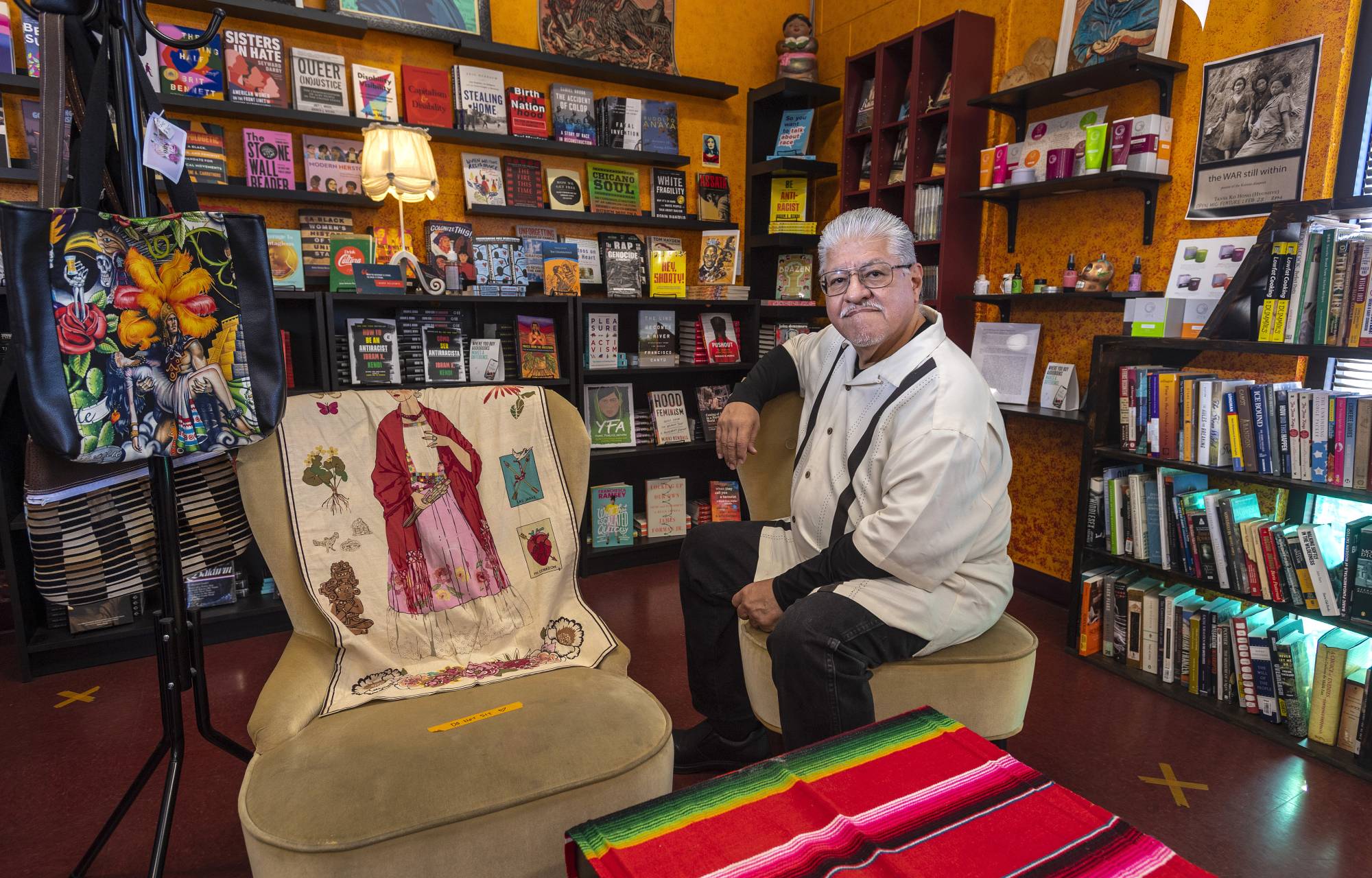
From Barrio to Bookstore: LA’s Former Poet Laureate on Survival and Storytelling
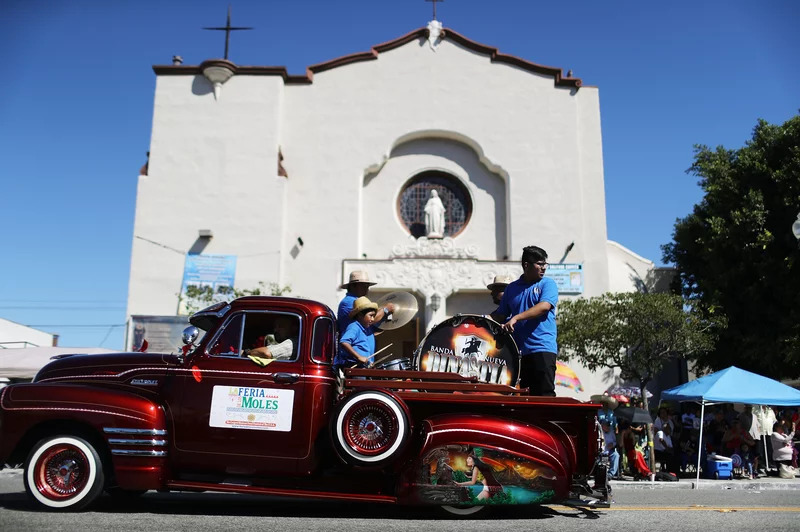
California Lawmakers Aim to Remove Lowrider, Cruising Restrictions Statewide
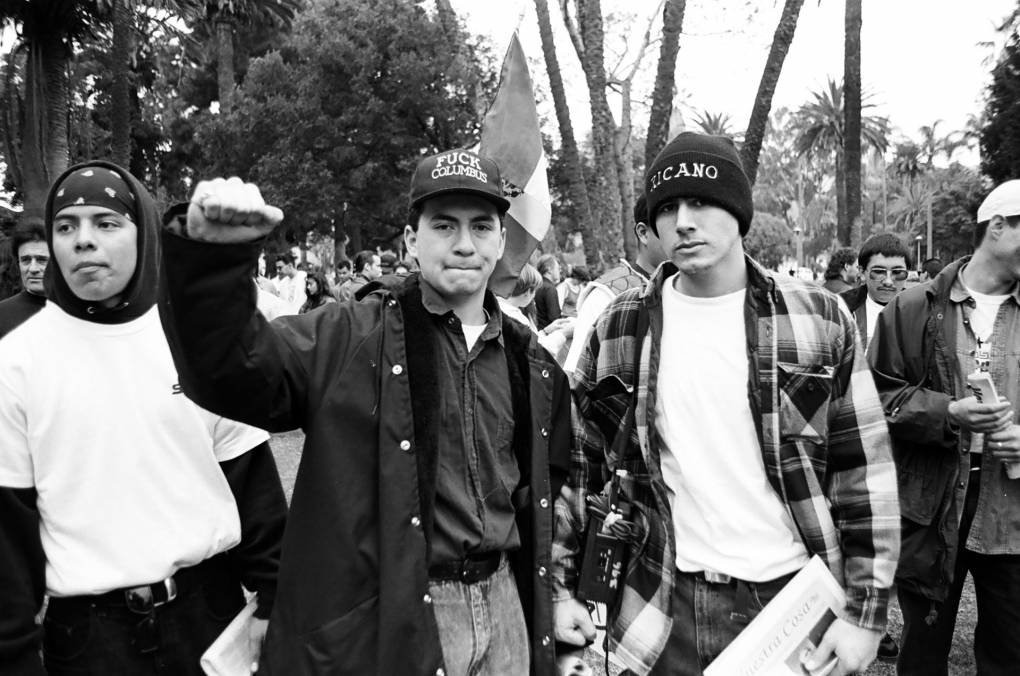
I Told the Story of a Forgotten Chicano Revolutionary in a Podcast. Turns Out It Was My Story, Too
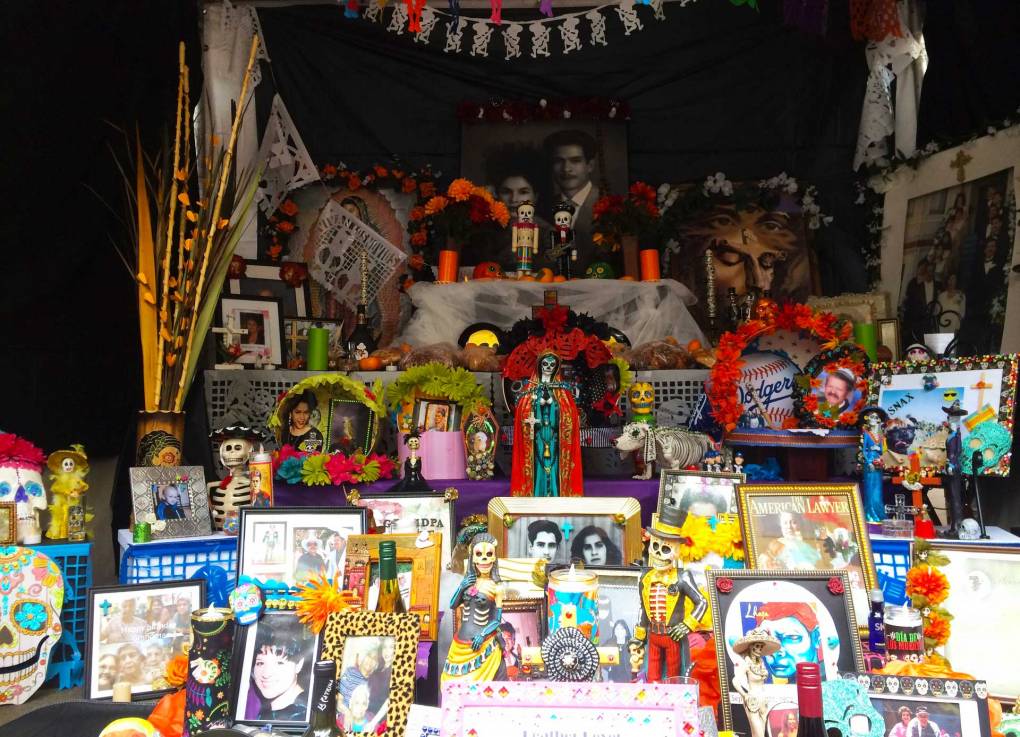
'We Have a Lot to Grieve About': Día de los Muertos in 2020
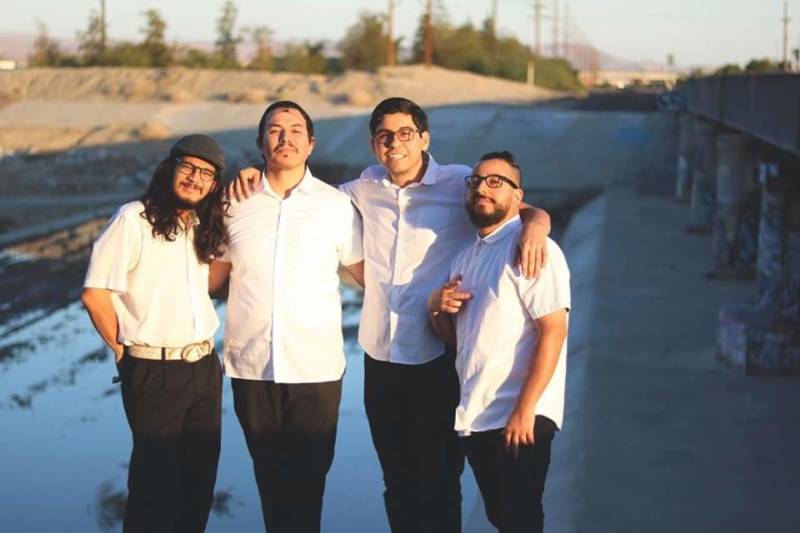
Music From the 'Other' Coachella: Meet Psychedelic Cumbia Band ‘Ocho Ojos’
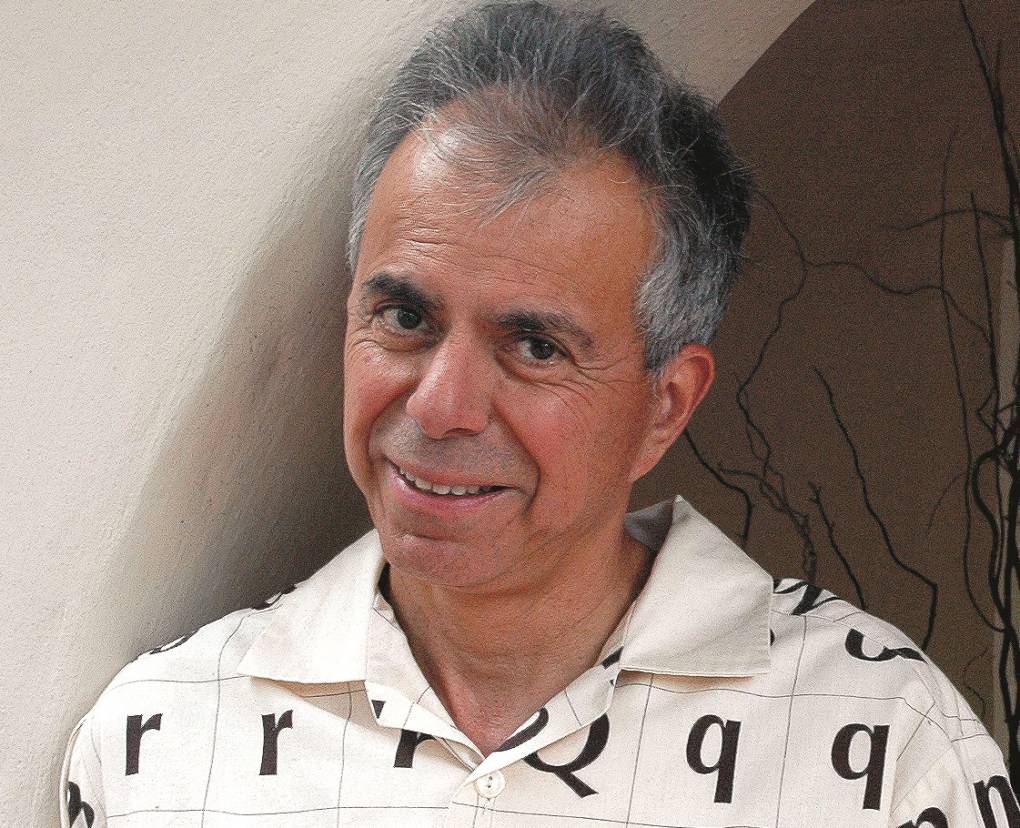
Salt, Dirt and Ants: Gary Soto's Poetry of Farm Work
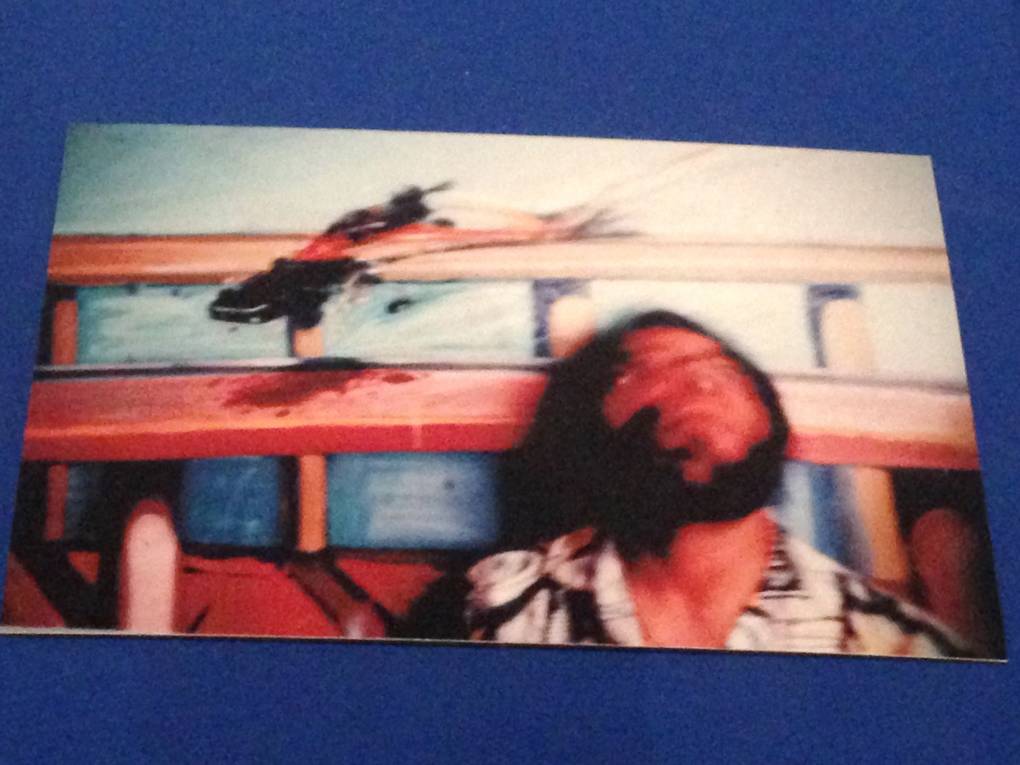
The 'Fiery' Visions of Iconic L.A. Artist Carlos Almaráz
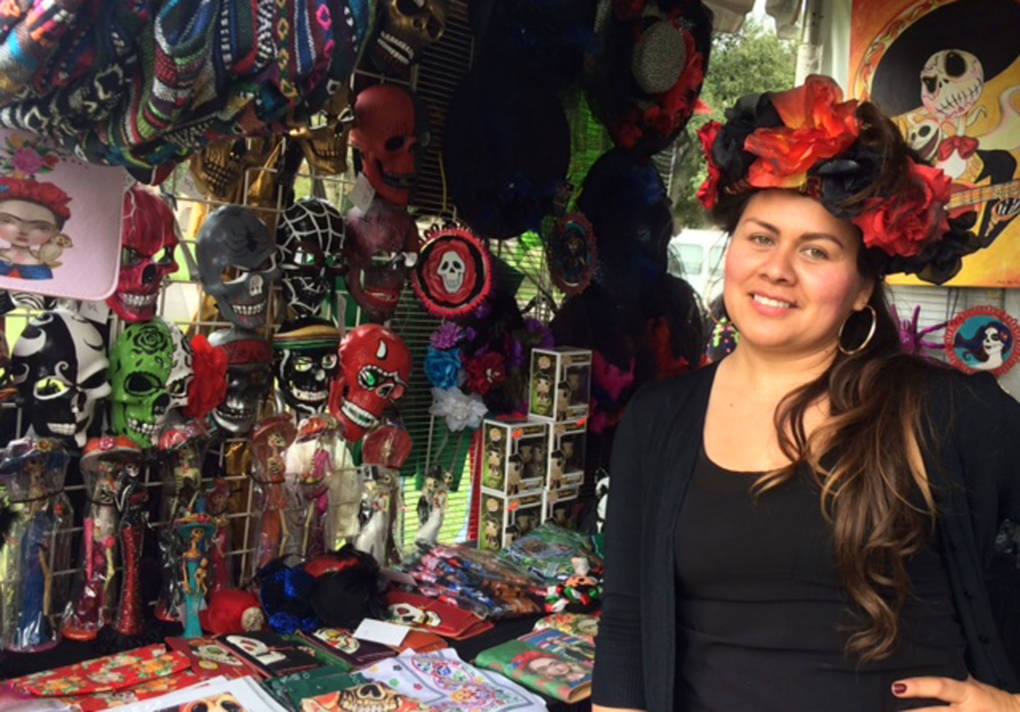
Dia de los Muertos Celebrations Embrace Life and Death
Sponsored
Player sponsored by
window.__IS_SSR__=true
window.__INITIAL_STATE__={
"attachmentsReducer": {
"audio_0": {
"type": "attachments",
"id": "audio_0",
"imgSizes": {
"kqedFullSize": {
"file": "https://ww2.kqed.org/news/wp-content/themes/KQED-unified/img/audio_bgs/background0.jpg"
}
}
},
"audio_1": {
"type": "attachments",
"id": "audio_1",
"imgSizes": {
"kqedFullSize": {
"file": "https://ww2.kqed.org/news/wp-content/themes/KQED-unified/img/audio_bgs/background1.jpg"
}
}
},
"audio_2": {
"type": "attachments",
"id": "audio_2",
"imgSizes": {
"kqedFullSize": {
"file": "https://ww2.kqed.org/news/wp-content/themes/KQED-unified/img/audio_bgs/background2.jpg"
}
}
},
"audio_3": {
"type": "attachments",
"id": "audio_3",
"imgSizes": {
"kqedFullSize": {
"file": "https://ww2.kqed.org/news/wp-content/themes/KQED-unified/img/audio_bgs/background3.jpg"
}
}
},
"audio_4": {
"type": "attachments",
"id": "audio_4",
"imgSizes": {
"kqedFullSize": {
"file": "https://ww2.kqed.org/news/wp-content/themes/KQED-unified/img/audio_bgs/background4.jpg"
}
}
},
"placeholder": {
"type": "attachments",
"id": "placeholder",
"imgSizes": {
"thumbnail": {
"file": "https://cdn.kqed.org/wp-content/uploads/2024/12/KQED-Default-Image-816638274-2000x1333-1-160x107.jpg",
"width": 160,
"height": 107,
"mimeType": "image/jpeg"
},
"medium": {
"file": "https://cdn.kqed.org/wp-content/uploads/2024/12/KQED-Default-Image-816638274-2000x1333-1-800x533.jpg",
"width": 800,
"height": 533,
"mimeType": "image/jpeg"
},
"medium_large": {
"file": "https://cdn.kqed.org/wp-content/uploads/2024/12/KQED-Default-Image-816638274-2000x1333-1-768x512.jpg",
"width": 768,
"height": 512,
"mimeType": "image/jpeg"
},
"large": {
"file": "https://cdn.kqed.org/wp-content/uploads/2024/12/KQED-Default-Image-816638274-2000x1333-1-1020x680.jpg",
"width": 1020,
"height": 680,
"mimeType": "image/jpeg"
},
"1536x1536": {
"file": "https://cdn.kqed.org/wp-content/uploads/2024/12/KQED-Default-Image-816638274-2000x1333-1-1536x1024.jpg",
"width": 1536,
"height": 1024,
"mimeType": "image/jpeg"
},
"fd-lrg": {
"file": "https://cdn.kqed.org/wp-content/uploads/2024/12/KQED-Default-Image-816638274-2000x1333-1-1536x1024.jpg",
"width": 1536,
"height": 1024,
"mimeType": "image/jpeg"
},
"fd-med": {
"file": "https://cdn.kqed.org/wp-content/uploads/2024/12/KQED-Default-Image-816638274-2000x1333-1-1020x680.jpg",
"width": 1020,
"height": 680,
"mimeType": "image/jpeg"
},
"fd-sm": {
"file": "https://cdn.kqed.org/wp-content/uploads/2024/12/KQED-Default-Image-816638274-2000x1333-1-800x533.jpg",
"width": 800,
"height": 533,
"mimeType": "image/jpeg"
},
"post-thumbnail": {
"file": "https://cdn.kqed.org/wp-content/uploads/2024/12/KQED-Default-Image-816638274-2000x1333-1-672x372.jpg",
"width": 672,
"height": 372,
"mimeType": "image/jpeg"
},
"twentyfourteen-full-width": {
"file": "https://cdn.kqed.org/wp-content/uploads/2024/12/KQED-Default-Image-816638274-2000x1333-1-1038x576.jpg",
"width": 1038,
"height": 576,
"mimeType": "image/jpeg"
},
"xxsmall": {
"file": "https://cdn.kqed.org/wp-content/uploads/2024/12/KQED-Default-Image-816638274-2000x1333-1-160x107.jpg",
"width": 160,
"height": 107,
"mimeType": "image/jpeg"
},
"xsmall": {
"file": "https://cdn.kqed.org/wp-content/uploads/2024/12/KQED-Default-Image-816638274-2000x1333-1-672x372.jpg",
"width": 672,
"height": 372,
"mimeType": "image/jpeg"
},
"small": {
"file": "https://cdn.kqed.org/wp-content/uploads/2024/12/KQED-Default-Image-816638274-2000x1333-1-672x372.jpg",
"width": 672,
"height": 372,
"mimeType": "image/jpeg"
},
"xlarge": {
"file": "https://cdn.kqed.org/wp-content/uploads/2024/12/KQED-Default-Image-816638274-2000x1333-1-1020x680.jpg",
"width": 1020,
"height": 680,
"mimeType": "image/jpeg"
},
"full-width": {
"file": "https://cdn.kqed.org/wp-content/uploads/2024/12/KQED-Default-Image-816638274-2000x1333-1-1920x1280.jpg",
"width": 1920,
"height": 1280,
"mimeType": "image/jpeg"
},
"guest-author-32": {
"file": "https://cdn.kqed.org/wp-content/uploads/2025/01/KQED-Default-Image-816638274-1333x1333-1-160x160.jpg",
"width": 32,
"height": 32,
"mimeType": "image/jpeg"
},
"guest-author-50": {
"file": "https://cdn.kqed.org/wp-content/uploads/2025/01/KQED-Default-Image-816638274-1333x1333-1-160x160.jpg",
"width": 50,
"height": 50,
"mimeType": "image/jpeg"
},
"guest-author-64": {
"file": "https://cdn.kqed.org/wp-content/uploads/2025/01/KQED-Default-Image-816638274-1333x1333-1-160x160.jpg",
"width": 64,
"height": 64,
"mimeType": "image/jpeg"
},
"guest-author-96": {
"file": "https://cdn.kqed.org/wp-content/uploads/2025/01/KQED-Default-Image-816638274-1333x1333-1-160x160.jpg",
"width": 96,
"height": 96,
"mimeType": "image/jpeg"
},
"guest-author-128": {
"file": "https://cdn.kqed.org/wp-content/uploads/2025/01/KQED-Default-Image-816638274-1333x1333-1-160x160.jpg",
"width": 128,
"height": 128,
"mimeType": "image/jpeg"
},
"detail": {
"file": "https://cdn.kqed.org/wp-content/uploads/2025/01/KQED-Default-Image-816638274-1333x1333-1-160x160.jpg",
"width": 160,
"height": 160,
"mimeType": "image/jpeg"
},
"kqedFullSize": {
"file": "https://cdn.kqed.org/wp-content/uploads/2024/12/KQED-Default-Image-816638274-2000x1333-1.jpg",
"width": 2000,
"height": 1333
}
}
},
"news_12049548": {
"type": "attachments",
"id": "news_12049548",
"meta": {
"index": "attachments_1716263798",
"site": "news",
"id": "12049548",
"found": true
},
"title": "Poets laureate from California to New Hampshire use their art form to comfort families grappling with pandemic fears, racial justice and social upheaval.",
"publishDate": 1753378389,
"status": "inherit",
"parent": 12049545,
"modified": 1753471406,
"caption": "Author Luis J. Rodriguez sits at Tía Chucha's Centro Cultural in Sylmar, which Rodriguez co-founded, on Saturday, November 28, 2020. His book of essays, From Our Land to Our Land, came out in February 2020. ",
"credit": "Mark Rightmire/MediaNews Group/Orange County Register via Getty Images",
"altTag": null,
"description": null,
"imgSizes": {
"medium": {
"file": "https://cdn.kqed.org/wp-content/uploads/sites/10/2025/07/GettyImages-1290177307-2000x1280.jpg",
"width": 2000,
"height": 1280,
"mimeType": "image/jpeg"
},
"large": {
"file": "https://cdn.kqed.org/wp-content/uploads/sites/10/2025/07/GettyImages-1290177307-2000x1280.jpg",
"width": 2000,
"height": 1280,
"mimeType": "image/jpeg"
},
"thumbnail": {
"file": "https://cdn.kqed.org/wp-content/uploads/sites/10/2025/07/GettyImages-1290177307-160x102.jpg",
"width": 160,
"height": 102,
"mimeType": "image/jpeg"
},
"1536x1536": {
"file": "https://cdn.kqed.org/wp-content/uploads/sites/10/2025/07/GettyImages-1290177307-1536x983.jpg",
"width": 1536,
"height": 983,
"mimeType": "image/jpeg"
},
"2048x2048": {
"file": "https://cdn.kqed.org/wp-content/uploads/sites/10/2025/07/GettyImages-1290177307-2048x1311.jpg",
"width": 2048,
"height": 1311,
"mimeType": "image/jpeg"
},
"post-thumbnail": {
"file": "https://cdn.kqed.org/wp-content/uploads/sites/10/2025/07/GettyImages-1290177307-672x372.jpg",
"width": 672,
"height": 372,
"mimeType": "image/jpeg"
},
"twentyfourteen-full-width": {
"file": "https://cdn.kqed.org/wp-content/uploads/sites/10/2025/07/GettyImages-1290177307-1038x576.jpg",
"width": 1038,
"height": 576,
"mimeType": "image/jpeg"
},
"full-width": {
"file": "https://cdn.kqed.org/wp-content/uploads/sites/10/2025/07/GettyImages-1290177307-2000x1280.jpg",
"width": 2000,
"height": 1280,
"mimeType": "image/jpeg"
},
"kqedFullSize": {
"file": "https://cdn.kqed.org/wp-content/uploads/sites/10/2025/07/GettyImages-1290177307-scaled-e1753378415984.jpg",
"width": 2000,
"height": 1280
}
},
"fetchFailed": false,
"isLoading": false
},
"news_11941396": {
"type": "attachments",
"id": "news_11941396",
"meta": {
"index": "attachments_1716263798",
"site": "news",
"id": "11941396",
"found": true
},
"parent": 11941385,
"imgSizes": {
"thumbnail": {
"file": "https://ww2.kqed.org/app/uploads/sites/10/2023/02/Lowriders-160x106.jpg",
"width": 160,
"mimeType": "image/jpeg",
"height": 106
},
"post-thumbnail": {
"file": "https://ww2.kqed.org/app/uploads/sites/10/2023/02/Lowriders-672x372.jpg",
"width": 672,
"mimeType": "image/jpeg",
"height": 372
},
"kqedFullSize": {
"file": "https://ww2.kqed.org/app/uploads/sites/10/2023/02/Lowriders.jpg",
"width": 800,
"height": 532
}
},
"publishDate": 1676845385,
"modified": 1676845485,
"caption": "A lowrider cruises through the 72nd annual East LA Mexican Independence Day Parade on Sept. 16, 2018, in Los Angeles.",
"description": null,
"title": "Lowriders",
"credit": "Mario Tama/Getty Images",
"status": "inherit",
"altTag": "A dark red lowrider truck is almost center frame, with a group of percussionists standing in the truck's bed. In the background, a church.",
"fetchFailed": false,
"isLoading": false
},
"news_11919713": {
"type": "attachments",
"id": "news_11919713",
"meta": {
"index": "attachments_1716263798",
"site": "news",
"id": "11919713",
"found": true
},
"parent": 11919649,
"imgSizes": {
"twentyfourteen-full-width": {
"file": "https://ww2.kqed.org/app/uploads/sites/10/2022/07/00080012OscarFeatured-1038x576.jpg",
"width": 1038,
"mimeType": "image/jpeg",
"height": 576
},
"thumbnail": {
"file": "https://ww2.kqed.org/app/uploads/sites/10/2022/07/00080012OscarFeatured-160x106.jpg",
"width": 160,
"mimeType": "image/jpeg",
"height": 106
},
"post-thumbnail": {
"file": "https://ww2.kqed.org/app/uploads/sites/10/2022/07/00080012OscarFeatured-672x372.jpg",
"width": 672,
"mimeType": "image/jpeg",
"height": 372
},
"kqedFullSize": {
"file": "https://ww2.kqed.org/app/uploads/sites/10/2022/07/00080012OscarFeatured.jpg",
"width": 1920,
"height": 1273
},
"large": {
"file": "https://ww2.kqed.org/app/uploads/sites/10/2022/07/00080012OscarFeatured-1020x676.jpg",
"width": 1020,
"mimeType": "image/jpeg",
"height": 676
},
"1536x1536": {
"file": "https://ww2.kqed.org/app/uploads/sites/10/2022/07/00080012OscarFeatured-1536x1018.jpg",
"width": 1536,
"mimeType": "image/jpeg",
"height": 1018
},
"medium": {
"file": "https://ww2.kqed.org/app/uploads/sites/10/2022/07/00080012OscarFeatured-800x530.jpg",
"width": 800,
"mimeType": "image/jpeg",
"height": 530
}
},
"publishDate": 1657925357,
"modified": 1657925481,
"caption": "Oscar Gomez (right) and his childhood friend Juan Gonzalez attend a protest in Santa Barbara on Feb. 1, 1992. The protest was in support of CSU Northridge Chicano studies scholar Rudy Acuña, who had been turned down for a faculty position at UC Santa Barbara and was challenging the decision.",
"description": null,
"title": "00080012OscarFeatured",
"credit": "Courtesy Gene Chavira",
"status": "inherit",
"altTag": "black and white photo showing two young men at a rally, one of them raising his fist in solidarity, wearing a black cap reading 'fuck Columbus'",
"fetchFailed": false,
"isLoading": false
},
"news_11844739": {
"type": "attachments",
"id": "news_11844739",
"meta": {
"index": "attachments_1716263798",
"site": "news",
"id": "11844739",
"found": true
},
"parent": 11844598,
"imgSizes": {
"apple_news_ca_landscape_5_5": {
"file": "https://ww2.kqed.org/app/uploads/sites/10/2020/10/ddlm-1-1044x783.jpg",
"width": 1044,
"mimeType": "image/jpeg",
"height": 783
},
"apple_news_ca_square_4_0": {
"file": "https://ww2.kqed.org/app/uploads/sites/10/2020/10/ddlm-1-470x470.jpg",
"width": 470,
"mimeType": "image/jpeg",
"height": 470
},
"twentyfourteen-full-width": {
"file": "https://ww2.kqed.org/app/uploads/sites/10/2020/10/ddlm-1-1038x576.jpg",
"width": 1038,
"mimeType": "image/jpeg",
"height": 576
},
"thumbnail": {
"file": "https://ww2.kqed.org/app/uploads/sites/10/2020/10/ddlm-1-160x116.jpg",
"width": 160,
"mimeType": "image/jpeg",
"height": 116
},
"post-thumbnail": {
"file": "https://ww2.kqed.org/app/uploads/sites/10/2020/10/ddlm-1-672x372.jpg",
"width": 672,
"mimeType": "image/jpeg",
"height": 372
},
"kqedFullSize": {
"file": "https://ww2.kqed.org/app/uploads/sites/10/2020/10/ddlm-1.jpg",
"width": 1920,
"height": 1388
},
"apple_news_ca_landscape_4_7": {
"file": "https://ww2.kqed.org/app/uploads/sites/10/2020/10/ddlm-1-632x474.jpg",
"width": 632,
"mimeType": "image/jpeg",
"height": 474
},
"large": {
"file": "https://ww2.kqed.org/app/uploads/sites/10/2020/10/ddlm-1-1020x737.jpg",
"width": 1020,
"mimeType": "image/jpeg",
"height": 737
},
"apple_news_ca_landscape_4_0": {
"file": "https://ww2.kqed.org/app/uploads/sites/10/2020/10/ddlm-1-536x402.jpg",
"width": 536,
"mimeType": "image/jpeg",
"height": 402
},
"apple_news_ca_portrait_12_9": {
"file": "https://ww2.kqed.org/app/uploads/sites/10/2020/10/ddlm-1-1122x1388.jpg",
"width": 1122,
"mimeType": "image/jpeg",
"height": 1388
},
"medium": {
"file": "https://ww2.kqed.org/app/uploads/sites/10/2020/10/ddlm-1-800x578.jpg",
"width": 800,
"mimeType": "image/jpeg",
"height": 578
},
"apple_news_ca_portrait_4_0": {
"file": "https://ww2.kqed.org/app/uploads/sites/10/2020/10/ddlm-1-354x472.jpg",
"width": 354,
"mimeType": "image/jpeg",
"height": 472
},
"apple_news_ca_portrait_9_7": {
"file": "https://ww2.kqed.org/app/uploads/sites/10/2020/10/ddlm-1-840x1120.jpg",
"width": 840,
"mimeType": "image/jpeg",
"height": 1120
},
"apple_news_ca_landscape_12_9": {
"file": "https://ww2.kqed.org/app/uploads/sites/10/2020/10/ddlm-1-1832x1374.jpg",
"width": 1832,
"mimeType": "image/jpeg",
"height": 1374
},
"apple_news_ca_square_9_7": {
"file": "https://ww2.kqed.org/app/uploads/sites/10/2020/10/ddlm-1-1104x1104.jpg",
"width": 1104,
"mimeType": "image/jpeg",
"height": 1104
},
"1536x1536": {
"file": "https://ww2.kqed.org/app/uploads/sites/10/2020/10/ddlm-1-1536x1110.jpg",
"width": 1536,
"mimeType": "image/jpeg",
"height": 1110
},
"apple_news_ca_portrait_4_7": {
"file": "https://ww2.kqed.org/app/uploads/sites/10/2020/10/ddlm-1-414x552.jpg",
"width": 414,
"mimeType": "image/jpeg",
"height": 552
},
"apple_news_ca_square_12_9": {
"file": "https://ww2.kqed.org/app/uploads/sites/10/2020/10/ddlm-1-1472x1388.jpg",
"width": 1472,
"mimeType": "image/jpeg",
"height": 1388
},
"apple_news_ca_portrait_5_5": {
"file": "https://ww2.kqed.org/app/uploads/sites/10/2020/10/ddlm-1-687x916.jpg",
"width": 687,
"mimeType": "image/jpeg",
"height": 916
},
"apple_news_ca_square_4_7": {
"file": "https://ww2.kqed.org/app/uploads/sites/10/2020/10/ddlm-1-550x550.jpg",
"width": 550,
"mimeType": "image/jpeg",
"height": 550
},
"apple_news_ca_landscape_9_7": {
"file": "https://ww2.kqed.org/app/uploads/sites/10/2020/10/ddlm-1-1376x1032.jpg",
"width": 1376,
"mimeType": "image/jpeg",
"height": 1032
},
"apple_news_ca_square_5_5": {
"file": "https://ww2.kqed.org/app/uploads/sites/10/2020/10/ddlm-1-912x912.jpg",
"width": 912,
"mimeType": "image/jpeg",
"height": 912
}
},
"publishDate": 1604097524,
"modified": 1604101149,
"caption": "Ofrenda made by Lilia Olsen called \"Memories\" in Fruitvale 2019. ",
"description": "Ofrenda made by Lilia Olsen called \"Memories\" in Fruitvale 2019. ",
"title": "ddlm-1",
"credit": "Tiffany Camhi/KQED",
"status": "inherit",
"fetchFailed": false,
"isLoading": false
},
"news_11738507": {
"type": "attachments",
"id": "news_11738507",
"meta": {
"index": "attachments_1716263798",
"site": "news",
"id": "11738507",
"found": true
},
"parent": 11738458,
"imgSizes": {
"apple_news_ca_square_4_0": {
"file": "https://ww2.kqed.org/app/uploads/sites/10/2019/04/RS36444_IMG_0895-qut-470x470.jpg",
"width": 470,
"mimeType": "image/jpeg",
"height": 470
},
"twentyfourteen-full-width": {
"file": "https://ww2.kqed.org/app/uploads/sites/10/2019/04/RS36444_IMG_0895-qut-960x576.jpg",
"width": 960,
"mimeType": "image/jpeg",
"height": 576
},
"thumbnail": {
"file": "https://ww2.kqed.org/app/uploads/sites/10/2019/04/RS36444_IMG_0895-qut-160x107.jpg",
"width": 160,
"mimeType": "image/jpeg",
"height": 107
},
"post-thumbnail": {
"file": "https://ww2.kqed.org/app/uploads/sites/10/2019/04/RS36444_IMG_0895-qut-672x372.jpg",
"width": 672,
"mimeType": "image/jpeg",
"height": 372
},
"kqedFullSize": {
"file": "https://ww2.kqed.org/app/uploads/sites/10/2019/04/RS36444_IMG_0895-qut.jpg",
"width": 960,
"height": 640
},
"apple_news_ca_landscape_4_7": {
"file": "https://ww2.kqed.org/app/uploads/sites/10/2019/04/RS36444_IMG_0895-qut-632x474.jpg",
"width": 632,
"mimeType": "image/jpeg",
"height": 474
},
"guest-author-50": {
"file": "https://ww2.kqed.org/app/uploads/sites/10/2019/04/RS36444_IMG_0895-qut-50x50.jpg",
"width": 50,
"mimeType": "image/jpeg",
"height": 50
},
"guest-author-96": {
"file": "https://ww2.kqed.org/app/uploads/sites/10/2019/04/RS36444_IMG_0895-qut-96x96.jpg",
"width": 96,
"mimeType": "image/jpeg",
"height": 96
},
"apple_news_ca_landscape_4_0": {
"file": "https://ww2.kqed.org/app/uploads/sites/10/2019/04/RS36444_IMG_0895-qut-536x402.jpg",
"width": 536,
"mimeType": "image/jpeg",
"height": 402
},
"medium": {
"file": "https://ww2.kqed.org/app/uploads/sites/10/2019/04/RS36444_IMG_0895-qut-800x533.jpg",
"width": 800,
"mimeType": "image/jpeg",
"height": 533
},
"guest-author-64": {
"file": "https://ww2.kqed.org/app/uploads/sites/10/2019/04/RS36444_IMG_0895-qut-64x64.jpg",
"width": 64,
"mimeType": "image/jpeg",
"height": 64
},
"guest-author-32": {
"file": "https://ww2.kqed.org/app/uploads/sites/10/2019/04/RS36444_IMG_0895-qut-32x32.jpg",
"width": 32,
"mimeType": "image/jpeg",
"height": 32
},
"apple_news_ca_portrait_4_0": {
"file": "https://ww2.kqed.org/app/uploads/sites/10/2019/04/RS36444_IMG_0895-qut-354x472.jpg",
"width": 354,
"mimeType": "image/jpeg",
"height": 472
},
"apple_news_ca_portrait_9_7": {
"file": "https://ww2.kqed.org/app/uploads/sites/10/2019/04/RS36444_IMG_0895-qut-840x640.jpg",
"width": 840,
"mimeType": "image/jpeg",
"height": 640
},
"apple_news_ca_portrait_4_7": {
"file": "https://ww2.kqed.org/app/uploads/sites/10/2019/04/RS36444_IMG_0895-qut-414x552.jpg",
"width": 414,
"mimeType": "image/jpeg",
"height": 552
},
"apple_news_ca_portrait_5_5": {
"file": "https://ww2.kqed.org/app/uploads/sites/10/2019/04/RS36444_IMG_0895-qut-687x640.jpg",
"width": 687,
"mimeType": "image/jpeg",
"height": 640
},
"apple_news_ca_square_4_7": {
"file": "https://ww2.kqed.org/app/uploads/sites/10/2019/04/RS36444_IMG_0895-qut-550x550.jpg",
"width": 550,
"mimeType": "image/jpeg",
"height": 550
},
"guest-author-128": {
"file": "https://ww2.kqed.org/app/uploads/sites/10/2019/04/RS36444_IMG_0895-qut-128x128.jpg",
"width": 128,
"mimeType": "image/jpeg",
"height": 128
},
"apple_news_ca_square_5_5": {
"file": "https://ww2.kqed.org/app/uploads/sites/10/2019/04/RS36444_IMG_0895-qut-912x640.jpg",
"width": 912,
"mimeType": "image/jpeg",
"height": 640
}
},
"publishDate": 1554745317,
"modified": 1554745799,
"caption": "From left to right the members of Ocho Ojos: Cesar Flores, Rafael Rodriguez, James Gastelum, Danny Torres",
"description": null,
"title": "RS36444_IMG_0895-qut",
"credit": "Courtesy of Richard Morales",
"status": "inherit",
"fetchFailed": false,
"isLoading": false
},
"news_11663915": {
"type": "attachments",
"id": "news_11663915",
"meta": {
"index": "attachments_1716263798",
"site": "news",
"id": "11663915",
"found": true
},
"parent": 11663440,
"imgSizes": {
"small": {
"file": "https://ww2.kqed.org/app/uploads/sites/10/2018/04/RS30544_GarySoto-1-520x422.jpg",
"width": 520,
"mimeType": "image/jpeg",
"height": 422
},
"twentyfourteen-full-width": {
"file": "https://ww2.kqed.org/app/uploads/sites/10/2018/04/RS30544_GarySoto-1-1038x576.jpg",
"width": 1038,
"mimeType": "image/jpeg",
"height": 576
},
"thumbnail": {
"file": "https://ww2.kqed.org/app/uploads/sites/10/2018/04/RS30544_GarySoto-1-160x130.jpg",
"width": 160,
"mimeType": "image/jpeg",
"height": 130
},
"fd-sm": {
"file": "https://ww2.kqed.org/app/uploads/sites/10/2018/04/RS30544_GarySoto-1-960x779.jpg",
"width": 960,
"mimeType": "image/jpeg",
"height": 779
},
"post-thumbnail": {
"file": "https://ww2.kqed.org/app/uploads/sites/10/2018/04/RS30544_GarySoto-1-672x372.jpg",
"width": 672,
"mimeType": "image/jpeg",
"height": 372
},
"xsmall": {
"file": "https://ww2.kqed.org/app/uploads/sites/10/2018/04/RS30544_GarySoto-1-375x304.jpg",
"width": 375,
"mimeType": "image/jpeg",
"height": 304
},
"kqedFullSize": {
"file": "https://ww2.kqed.org/app/uploads/sites/10/2018/04/RS30544_GarySoto-1.jpg",
"width": 1121,
"height": 910
},
"large": {
"file": "https://ww2.kqed.org/app/uploads/sites/10/2018/04/RS30544_GarySoto-1-1020x828.jpg",
"width": 1020,
"mimeType": "image/jpeg",
"height": 828
},
"guest-author-50": {
"file": "https://ww2.kqed.org/app/uploads/sites/10/2018/04/RS30544_GarySoto-1-50x50.jpg",
"width": 50,
"mimeType": "image/jpeg",
"height": 50
},
"guest-author-96": {
"file": "https://ww2.kqed.org/app/uploads/sites/10/2018/04/RS30544_GarySoto-1-96x96.jpg",
"width": 96,
"mimeType": "image/jpeg",
"height": 96
},
"medium": {
"file": "https://ww2.kqed.org/app/uploads/sites/10/2018/04/RS30544_GarySoto-1-800x649.jpg",
"width": 800,
"mimeType": "image/jpeg",
"height": 649
},
"guest-author-64": {
"file": "https://ww2.kqed.org/app/uploads/sites/10/2018/04/RS30544_GarySoto-1-64x64.jpg",
"width": 64,
"mimeType": "image/jpeg",
"height": 64
},
"guest-author-32": {
"file": "https://ww2.kqed.org/app/uploads/sites/10/2018/04/RS30544_GarySoto-1-32x32.jpg",
"width": 32,
"mimeType": "image/jpeg",
"height": 32
},
"detail": {
"file": "https://ww2.kqed.org/app/uploads/sites/10/2018/04/RS30544_GarySoto-1-150x150.jpg",
"width": 150,
"mimeType": "image/jpeg",
"height": 150
},
"guest-author-128": {
"file": "https://ww2.kqed.org/app/uploads/sites/10/2018/04/RS30544_GarySoto-1-128x128.jpg",
"width": 128,
"mimeType": "image/jpeg",
"height": 128
},
"xxsmall": {
"file": "https://ww2.kqed.org/app/uploads/sites/10/2018/04/RS30544_GarySoto-1-240x195.jpg",
"width": 240,
"mimeType": "image/jpeg",
"height": 195
}
},
"publishDate": 1524342311,
"modified": 1524342346,
"caption": "Gary Soto is an award-winning poet and author based in Fresno and Berkeley. His poem \"Oranges\" is one of the most anthologized poems in U.S. literature. ",
"description": "Gary Soto is an award-winning poet and author based in Fresno and Berkeley. His poem \"Oranges\" is one of the most anthologized poems in U.S. literature. ",
"title": "RS30544_GarySoto (1)",
"credit": "Courtesy Chronicle Books",
"status": "inherit",
"fetchFailed": false,
"isLoading": false
},
"news_11616103": {
"type": "attachments",
"id": "news_11616103",
"meta": {
"index": "attachments_1716263798",
"site": "news",
"id": "11616103",
"found": true
},
"parent": 11616098,
"imgSizes": {
"small": {
"file": "https://ww2.kqed.org/app/uploads/sites/10/2017/09/Carlos-w-painting-520x390.jpg",
"width": 520,
"mimeType": "image/jpeg",
"height": 390
},
"twentyfourteen-full-width": {
"file": "https://ww2.kqed.org/app/uploads/sites/10/2017/09/Carlos-w-painting-1038x576.jpg",
"width": 1038,
"mimeType": "image/jpeg",
"height": 576
},
"thumbnail": {
"file": "https://ww2.kqed.org/app/uploads/sites/10/2017/09/Carlos-w-painting-160x120.jpg",
"width": 160,
"mimeType": "image/jpeg",
"height": 120
},
"fd-sm": {
"file": "https://ww2.kqed.org/app/uploads/sites/10/2017/09/Carlos-w-painting-960x720.jpg",
"width": 960,
"mimeType": "image/jpeg",
"height": 720
},
"post-thumbnail": {
"file": "https://ww2.kqed.org/app/uploads/sites/10/2017/09/Carlos-w-painting-672x372.jpg",
"width": 672,
"mimeType": "image/jpeg",
"height": 372
},
"xsmall": {
"file": "https://ww2.kqed.org/app/uploads/sites/10/2017/09/Carlos-w-painting-375x281.jpg",
"width": 375,
"mimeType": "image/jpeg",
"height": 281
},
"kqedFullSize": {
"file": "https://ww2.kqed.org/app/uploads/sites/10/2017/09/Carlos-w-painting.jpg",
"width": 1920,
"height": 1440
},
"large": {
"file": "https://ww2.kqed.org/app/uploads/sites/10/2017/09/Carlos-w-painting-1020x765.jpg",
"width": 1020,
"mimeType": "image/jpeg",
"height": 765
},
"xlarge": {
"file": "https://ww2.kqed.org/app/uploads/sites/10/2017/09/Carlos-w-painting-1180x885.jpg",
"width": 1180,
"mimeType": "image/jpeg",
"height": 885
},
"guest-author-50": {
"file": "https://ww2.kqed.org/app/uploads/sites/10/2017/09/Carlos-w-painting-50x50.jpg",
"width": 50,
"mimeType": "image/jpeg",
"height": 50
},
"guest-author-96": {
"file": "https://ww2.kqed.org/app/uploads/sites/10/2017/09/Carlos-w-painting-96x96.jpg",
"width": 96,
"mimeType": "image/jpeg",
"height": 96
},
"medium": {
"file": "https://ww2.kqed.org/app/uploads/sites/10/2017/09/Carlos-w-painting-800x600.jpg",
"width": 800,
"mimeType": "image/jpeg",
"height": 600
},
"guest-author-64": {
"file": "https://ww2.kqed.org/app/uploads/sites/10/2017/09/Carlos-w-painting-64x64.jpg",
"width": 64,
"mimeType": "image/jpeg",
"height": 64
},
"guest-author-32": {
"file": "https://ww2.kqed.org/app/uploads/sites/10/2017/09/Carlos-w-painting-32x32.jpg",
"width": 32,
"mimeType": "image/jpeg",
"height": 32
},
"fd-lrg": {
"file": "https://ww2.kqed.org/app/uploads/sites/10/2017/09/Carlos-w-painting-1920x1440.jpg",
"width": 1920,
"mimeType": "image/jpeg",
"height": 1440
},
"fd-med": {
"file": "https://ww2.kqed.org/app/uploads/sites/10/2017/09/Carlos-w-painting-1180x885.jpg",
"width": 1180,
"mimeType": "image/jpeg",
"height": 885
},
"full-width": {
"file": "https://ww2.kqed.org/app/uploads/sites/10/2017/09/Carlos-w-painting-1920x1440.jpg",
"width": 1920,
"mimeType": "image/jpeg",
"height": 1440
},
"detail": {
"file": "https://ww2.kqed.org/app/uploads/sites/10/2017/09/Carlos-w-painting-150x150.jpg",
"width": 150,
"mimeType": "image/jpeg",
"height": 150
},
"guest-author-128": {
"file": "https://ww2.kqed.org/app/uploads/sites/10/2017/09/Carlos-w-painting-128x128.jpg",
"width": 128,
"mimeType": "image/jpeg",
"height": 128
},
"xxsmall": {
"file": "https://ww2.kqed.org/app/uploads/sites/10/2017/09/Carlos-w-painting-240x180.jpg",
"width": 240,
"mimeType": "image/jpeg",
"height": 180
}
},
"publishDate": 1504905963,
"modified": 1504906067,
"caption": "Snapshot of Carlos Almaráz with one of his freeway car crash paintings. ",
"description": null,
"title": "Carlos w painting",
"credit": "Los Angeles County Museum of Art / Steven Cuevas (KQED)",
"status": "inherit",
"fetchFailed": false,
"isLoading": false
},
"news_11156525": {
"type": "attachments",
"id": "news_11156525",
"meta": {
"index": "attachments_1716263798",
"site": "news",
"id": "11156525",
"found": true
},
"parent": 11155304,
"imgSizes": {
"small": {
"file": "https://ww2.kqed.org/app/uploads/sites/10/2016/11/GladisAlejandre-520x363.jpg",
"width": 520,
"mimeType": "image/jpeg",
"height": 363
},
"twentyfourteen-full-width": {
"file": "https://ww2.kqed.org/app/uploads/sites/10/2016/11/GladisAlejandre-1038x576.jpg",
"width": 1038,
"mimeType": "image/jpeg",
"height": 576
},
"thumbnail": {
"file": "https://ww2.kqed.org/app/uploads/sites/10/2016/11/GladisAlejandre-160x112.jpg",
"width": 160,
"mimeType": "image/jpeg",
"height": 112
},
"fd-sm": {
"file": "https://ww2.kqed.org/app/uploads/sites/10/2016/11/GladisAlejandre-960x671.jpg",
"width": 960,
"mimeType": "image/jpeg",
"height": 671
},
"post-thumbnail": {
"file": "https://ww2.kqed.org/app/uploads/sites/10/2016/11/GladisAlejandre-672x372.jpg",
"width": 672,
"mimeType": "image/jpeg",
"height": 372
},
"xsmall": {
"file": "https://ww2.kqed.org/app/uploads/sites/10/2016/11/GladisAlejandre-375x262.jpg",
"width": 375,
"mimeType": "image/jpeg",
"height": 262
},
"kqedFullSize": {
"file": "https://ww2.kqed.org/app/uploads/sites/10/2016/11/GladisAlejandre.jpg",
"width": 1920,
"height": 1341
},
"large": {
"file": "https://ww2.kqed.org/app/uploads/sites/10/2016/11/GladisAlejandre-1020x712.jpg",
"width": 1020,
"mimeType": "image/jpeg",
"height": 712
},
"xlarge": {
"file": "https://ww2.kqed.org/app/uploads/sites/10/2016/11/GladisAlejandre-1180x824.jpg",
"width": 1180,
"mimeType": "image/jpeg",
"height": 824
},
"guest-author-50": {
"file": "https://ww2.kqed.org/app/uploads/sites/10/2016/11/GladisAlejandre-50x50.jpg",
"width": 50,
"mimeType": "image/jpeg",
"height": 50
},
"guest-author-96": {
"file": "https://ww2.kqed.org/app/uploads/sites/10/2016/11/GladisAlejandre-96x96.jpg",
"width": 96,
"mimeType": "image/jpeg",
"height": 96
},
"medium": {
"file": "https://ww2.kqed.org/app/uploads/sites/10/2016/11/GladisAlejandre-800x559.jpg",
"width": 800,
"mimeType": "image/jpeg",
"height": 559
},
"guest-author-64": {
"file": "https://ww2.kqed.org/app/uploads/sites/10/2016/11/GladisAlejandre-64x64.jpg",
"width": 64,
"mimeType": "image/jpeg",
"height": 64
},
"guest-author-32": {
"file": "https://ww2.kqed.org/app/uploads/sites/10/2016/11/GladisAlejandre-32x32.jpg",
"width": 32,
"mimeType": "image/jpeg",
"height": 32
},
"jmtc-small-thumb": {
"file": "https://ww2.kqed.org/app/uploads/sites/10/2016/11/GladisAlejandre-280x150.jpg",
"width": 280,
"mimeType": "image/jpeg",
"height": 150
},
"fd-lrg": {
"file": "https://ww2.kqed.org/app/uploads/sites/10/2016/11/GladisAlejandre-1920x1341.jpg",
"width": 1920,
"mimeType": "image/jpeg",
"height": 1341
},
"fd-med": {
"file": "https://ww2.kqed.org/app/uploads/sites/10/2016/11/GladisAlejandre-1180x824.jpg",
"width": 1180,
"mimeType": "image/jpeg",
"height": 824
},
"full-width": {
"file": "https://ww2.kqed.org/app/uploads/sites/10/2016/11/GladisAlejandre-1920x1341.jpg",
"width": 1920,
"mimeType": "image/jpeg",
"height": 1341
},
"detail": {
"file": "https://ww2.kqed.org/app/uploads/sites/10/2016/11/GladisAlejandre-150x150.jpg",
"width": 150,
"mimeType": "image/jpeg",
"height": 150
},
"guest-author-128": {
"file": "https://ww2.kqed.org/app/uploads/sites/10/2016/11/GladisAlejandre-128x128.jpg",
"width": 128,
"mimeType": "image/jpeg",
"height": 128
},
"xxsmall": {
"file": "https://ww2.kqed.org/app/uploads/sites/10/2016/11/GladisAlejandre-240x168.jpg",
"width": 240,
"mimeType": "image/jpeg",
"height": 168
}
},
"publishDate": 1478111373,
"modified": 1478111399,
"caption": "Artist Gladis Alejandre stands with her Dia de los Muertos artwork during the Day of the Dead festival at Oakdale Memorial Park in Glendora. ",
"description": "Artist Gladis Alejandre stands with her Dia de los Muertos artwork during the Day of the Dead festival at Oakdale Memorial Park in Glendora. ",
"title": "gladisalejandre",
"credit": "Tena Rubio/KQED",
"status": "inherit",
"fetchFailed": false,
"isLoading": false
}
},
"audioPlayerReducer": {
"postId": "stream_live",
"isPaused": true,
"isPlaying": false,
"pfsActive": false,
"pledgeModalIsOpen": true,
"playerDrawerIsOpen": false
},
"authorsReducer": {
"byline_news_12049545": {
"type": "authors",
"id": "byline_news_12049545",
"meta": {
"override": true
},
"slug": "byline_news_12049545",
"name": "Srishti Prabha",
"isLoading": false
},
"byline_news_11941385": {
"type": "authors",
"id": "byline_news_11941385",
"meta": {
"override": true
},
"slug": "byline_news_11941385",
"name": "Joe Hernandez",
"isLoading": false
},
"byline_news_11919649": {
"type": "authors",
"id": "byline_news_11919649",
"meta": {
"override": true
},
"slug": "byline_news_11919649",
"name": "\u003ca href=\"https://laist.com/people/adolfo-guzman-lopez\">Adolfo Guzman-Lopez\u003c/a>",
"isLoading": false
},
"byline_news_11155304": {
"type": "authors",
"id": "byline_news_11155304",
"meta": {
"override": true
},
"slug": "byline_news_11155304",
"name": "Tena Rubio",
"isLoading": false
},
"sasha-khokha": {
"type": "authors",
"id": "254",
"meta": {
"index": "authors_1716337520",
"id": "254",
"found": true
},
"name": "Sasha Khokha",
"firstName": "Sasha",
"lastName": "Khokha",
"slug": "sasha-khokha",
"email": "skhokha@kqed.org",
"display_author_email": true,
"staff_mastheads": [
"news"
],
"title": "Host, The California Report Magazine",
"bio": "Sasha Khokha is the host of \u003cem>The California Report's \u003c/em> weekly magazine program, which takes listeners on sound-rich excursions to meet the people that make the Golden State unique -- through audio documentaries and long-form stories. As \u003cem>The California Report's\u003c/em> Central Valley Bureau Chief based in Fresno for nearly a dozen years, Sasha brought the lives and concerns of rural Californians to listeners around the state. Her reporting helped expose the hidden price immigrant women janitors and farmworkers may pay to keep their jobs: sexual assault at work. It inspired two new California laws to protect them from sexual harassment. She was a key member of the reporting team for the Frontline film \u003cem>Rape on the Night Shift, \u003c/em>which was nominated for two national Emmys. Sasha has also won a national Edward R. Murrow and a national PRNDI award for investigative reporting, as well as multiple prizes from the Society for Professional Journalists. Sasha is a proud alum of the UC Berkeley Graduate School of Journalism and Brown University and a member of the South Asian Journalists Association.",
"avatar": "https://secure.gravatar.com/avatar/e4b5e1541aaeea2aa356aa1fb2a68950?s=600&d=blank&r=g",
"twitter": "KQEDSashaKhokha",
"facebook": null,
"instagram": null,
"linkedin": null,
"sites": [
{
"site": "news",
"roles": [
"editor"
]
},
{
"site": "stateofhealth",
"roles": [
"author"
]
},
{
"site": "science",
"roles": [
"author"
]
},
{
"site": "quest",
"roles": [
"subscriber"
]
}
],
"headData": {
"title": "Sasha Khokha | KQED",
"description": "Host, The California Report Magazine",
"ogImgSrc": "https://secure.gravatar.com/avatar/e4b5e1541aaeea2aa356aa1fb2a68950?s=600&d=blank&r=g",
"twImgSrc": "https://secure.gravatar.com/avatar/e4b5e1541aaeea2aa356aa1fb2a68950?s=600&d=blank&r=g"
},
"isLoading": false,
"link": "/author/sasha-khokha"
},
"scuevas": {
"type": "authors",
"id": "2600",
"meta": {
"index": "authors_1716337520",
"id": "2600",
"found": true
},
"name": "Steven Cuevas",
"firstName": "Steven",
"lastName": "Cuevas",
"slug": "scuevas",
"email": "scuevas@kqed.org",
"display_author_email": false,
"staff_mastheads": [],
"title": "KQED Contributor",
"bio": "Steven is a former Los Angeles bureau chief for The California Report.\r\n\r\nHe reports on an array of issues across the Southland, from immigration and regional politics to religion, the performing arts and pop culture.\r\n\r\nPrior to joining KQED in 2012, Steven covered Inland southern California for KPCC in Pasadena. He also helped establish the first newsroom at \u003ca href=\"http://kut.org/\">KUT\u003c/a> in Austin, Texas where he was a general assignment reporter.\r\n\r\nSteven has received numerous awards for his reporting including an RTNDA Edward R. Murrow Award for investigative reporting in addition to awards from the LA Press Club, the Associated Press and the Society for Professional Journalists.\r\n\r\nSteven grew up in and around San Francisco and now lives in Pasadena just a short jog from the foot of the San Gabriel Mountains.",
"avatar": "https://secure.gravatar.com/avatar/bbb0bb7b496f83ab350e23ad0dc7c81c?s=600&d=blank&r=g",
"twitter": null,
"facebook": null,
"instagram": null,
"linkedin": null,
"sites": [
{
"site": "news",
"roles": [
"contributor"
]
},
{
"site": "stateofhealth",
"roles": [
"author"
]
}
],
"headData": {
"title": "Steven Cuevas | KQED",
"description": "KQED Contributor",
"ogImgSrc": "https://secure.gravatar.com/avatar/bbb0bb7b496f83ab350e23ad0dc7c81c?s=600&d=blank&r=g",
"twImgSrc": "https://secure.gravatar.com/avatar/bbb0bb7b496f83ab350e23ad0dc7c81c?s=600&d=blank&r=g"
},
"isLoading": false,
"link": "/author/scuevas"
},
"carlysevern": {
"type": "authors",
"id": "3243",
"meta": {
"index": "authors_1716337520",
"id": "3243",
"found": true
},
"name": "Carly Severn",
"firstName": "Carly",
"lastName": "Severn",
"slug": "carlysevern",
"email": "csevern@kqed.org",
"display_author_email": false,
"staff_mastheads": [
"news"
],
"title": "Senior Editor, Audience News ",
"bio": "Carly is KQED's Senior Editor of Audience News on the Digital News team, and has reported for the California Report Magazine, Bay Curious and KQED Arts. She's formerly the host of \u003ca href=\"http://ww2.kqed.org/pop/category/the-cooler/\" rel=\"noopener noreferrer\">The Cooler\u003c/a> podcast.",
"avatar": "https://secure.gravatar.com/avatar/2d8d6765f186e64c798cf7f0c8088a41?s=600&d=blank&r=g",
"twitter": "teacupinthebay",
"facebook": null,
"instagram": null,
"linkedin": null,
"sites": [
{
"site": "",
"roles": [
"editor"
]
},
{
"site": "arts",
"roles": [
"editor"
]
},
{
"site": "news",
"roles": [
"administrator"
]
},
{
"site": "pop",
"roles": [
"editor"
]
},
{
"site": "futureofyou",
"roles": [
"editor"
]
},
{
"site": "about",
"roles": [
"administrator"
]
},
{
"site": "mindshift",
"roles": [
"editor"
]
},
{
"site": "bayareabites",
"roles": [
"editor"
]
},
{
"site": "stateofhealth",
"roles": [
"editor"
]
},
{
"site": "science",
"roles": [
"editor"
]
},
{
"site": "food",
"roles": [
"contributor"
]
},
{
"site": "forum",
"roles": [
"editor"
]
},
{
"site": "perspectives",
"roles": [
"administrator"
]
},
{
"site": "liveblog",
"roles": [
"editor"
]
}
],
"headData": {
"title": "Carly Severn | KQED",
"description": "Senior Editor, Audience News ",
"ogImgSrc": "https://secure.gravatar.com/avatar/2d8d6765f186e64c798cf7f0c8088a41?s=600&d=blank&r=g",
"twImgSrc": "https://secure.gravatar.com/avatar/2d8d6765f186e64c798cf7f0c8088a41?s=600&d=blank&r=g"
},
"isLoading": false,
"link": "/author/carlysevern"
},
"lblanco": {
"type": "authors",
"id": "11357",
"meta": {
"index": "authors_1716337520",
"id": "11357",
"found": true
},
"name": "Lina Blanco",
"firstName": "Lina",
"lastName": "Blanco",
"slug": "lblanco",
"email": "lblanco@kqed.org",
"display_author_email": false,
"staff_mastheads": [],
"title": null,
"bio": "Lina was a Senior Engagement Platforms Manager for KQED News, producing engagement strategies on social media at \u003ca href=\"https://twitter.com/KQEDnews\">@KQEDNews, \u003c/a>via \u003ca href=\"https://www.kqed.org/about/newsletters/\">KQED's daily newsletter\u003c/a> as well as texting campaigns with KQED readers and listeners. She also co-produces for KQED's bilingual news hub \u003ca href=\"https://www.instagram.com/kqedenespanol/\">KQED en Español\u003c/a>.\r\n\r\nLina previously worked for \u003ca href=\"https://kqed.org/arts\">KQED Arts\u003c/a> — supporting audience engagement efforts on the weekly \u003ca href=\"https://www.kqed.org/podcasts/rightnowish\">\u003cem>Rightnowish\u003c/em> \u003c/a>podcast, Webby-winning video series \u003ca href=\"https://www.kqed.org/if-cities-could-dance\">\u003cem>If Cities Could Dance\u003c/em>\u003c/a>, and daily Arts & Culture reporting. She won a \u003ca href=\"https://www.kqed.org/pressroom/10884/murrow\">National 2019 Edward R. Murrow Award for Excellence in Social Media\u003c/a> for KQED's series \u003cem>The Hustle\u003c/em>.\r\n\r\nBefore KQED, Lina worked as a graphic designer and digital storytelling facilitator at the \u003ca href=\"https://www.nativehealth.org/\">Native American Health Center\u003c/a>.\r\n\r\nShe's mom to a senior Chihuahua (plus one black cat) and lives in West Sonoma County on a small farmstead.",
"avatar": "https://secure.gravatar.com/avatar/77ec326d67223c38a436b87bcfd2a2e8?s=600&d=mm&r=g",
"twitter": "LinaBlanco",
"facebook": null,
"instagram": null,
"linkedin": null,
"sites": [
{
"site": "arts",
"roles": [
"subscriber"
]
},
{
"site": "news",
"roles": [
"subscriber"
]
},
{
"site": "pop",
"roles": [
"administrator"
]
},
{
"site": "about",
"roles": [
"administrator"
]
},
{
"site": "bayareabites",
"roles": [
"editor"
]
},
{
"site": "science",
"roles": [
"editor"
]
},
{
"site": "checkplease",
"roles": [
"editor"
]
},
{
"site": "food",
"roles": []
},
{
"site": "perspectives",
"roles": [
"editor"
]
}
],
"headData": {
"title": "Lina Blanco | KQED",
"description": null,
"ogImgSrc": "https://secure.gravatar.com/avatar/77ec326d67223c38a436b87bcfd2a2e8?s=600&d=mm&r=g",
"twImgSrc": "https://secure.gravatar.com/avatar/77ec326d67223c38a436b87bcfd2a2e8?s=600&d=mm&r=g"
},
"isLoading": false,
"link": "/author/lblanco"
},
"mmedina": {
"type": "authors",
"id": "11528",
"meta": {
"index": "authors_1716337520",
"id": "11528",
"found": true
},
"name": "Marisol Medina-Cadena",
"firstName": "Marisol",
"lastName": "Medina-Cadena",
"slug": "mmedina",
"email": "mmedina@KQED.org",
"display_author_email": true,
"staff_mastheads": [],
"title": "Producer, Rightnowish Podcast",
"bio": "Marisol Medina-Cadena is a radio reporter and podcast producer. Before working at KQED, she produced for PBS member station, KCET, in Los Angeles. In 2017, Marisol won an Emmy Award for her work on the televised documentary, \u003cem>City Rising\u003c/em>, examining California's affordable housing crisis and the historical roots of gentrification.",
"avatar": "https://secure.gravatar.com/avatar/6c3db46a1cabb5e1fe9a365b5f4e681e?s=600&d=blank&r=g",
"twitter": "marisolreports",
"facebook": null,
"instagram": null,
"linkedin": null,
"sites": [
{
"site": "arts",
"roles": []
},
{
"site": "news",
"roles": [
"edit_others_posts"
]
}
],
"headData": {
"title": "Marisol Medina-Cadena | KQED",
"description": "Producer, Rightnowish Podcast",
"ogImgSrc": "https://secure.gravatar.com/avatar/6c3db46a1cabb5e1fe9a365b5f4e681e?s=600&d=blank&r=g",
"twImgSrc": "https://secure.gravatar.com/avatar/6c3db46a1cabb5e1fe9a365b5f4e681e?s=600&d=blank&r=g"
},
"isLoading": false,
"link": "/author/mmedina"
}
},
"breakingNewsReducer": {},
"pagesReducer": {},
"postsReducer": {
"stream_live": {
"type": "live",
"id": "stream_live",
"audioUrl": "https://streams.kqed.org/kqedradio",
"title": "Live Stream",
"excerpt": "Live Stream information currently unavailable.",
"link": "/radio",
"featImg": "",
"label": {
"name": "KQED Live",
"link": "/"
}
},
"stream_kqedNewscast": {
"type": "posts",
"id": "stream_kqedNewscast",
"audioUrl": "https://www.kqed.org/.stream/anon/radio/RDnews/newscast.mp3?_=1",
"title": "KQED Newscast",
"featImg": "",
"label": {
"name": "88.5 FM",
"link": "/"
}
},
"news_12049545": {
"type": "posts",
"id": "news_12049545",
"meta": {
"index": "posts_1716263798",
"site": "news",
"id": "12049545",
"score": null,
"sort": [
1753459219000
]
},
"guestAuthors": [],
"slug": "from-the-barrio-to-the-bookstore-las-former-poet-laureate-on-survival-and-storytelling",
"title": "From Barrio to Bookstore: LA’s Former Poet Laureate on Survival and Storytelling",
"publishDate": 1753459219,
"format": "standard",
"headTitle": "From Barrio to Bookstore: LA’s Former Poet Laureate on Survival and Storytelling | KQED",
"labelTerm": {
"term": 26731,
"site": "news"
},
"content": "\u003cp>\u003cem>This story is part of The California Report Magazine’s \u003ca href=\"https://www.kqed.org/news/tag/resilience\">series about resilient Californians\u003c/a>, and what lessons they may have for the rest of us.\u003c/em>\u003c/p>\n\u003cp>Luis Rodriguez grew up in South San Gabriel in \u003ca href=\"https://www.kqed.org/news/tag/los-angeles-county\">Los Angeles County\u003c/a> during the 1960s, in a largely Mexican immigrant neighborhood that he said embodies resilience.\u003c/p>\n\u003cp>He joined a gang at 11, was using heroin by 12, and was kicked out of his home by 15. But amidst the violence, addiction and housing insecurity, Rodriguez found a lifeline in books, and eventually became a celebrated writer, activist and L.A.’s poet laureate.\u003c/p>\n\u003cp>The American Library Association \u003ca href=\"https://www.ala.org/bbooks/frequentlychallengedbooks/decade2009\">listed\u003c/a> his 1993 memoir \u003cem>Always Running: La Vida Loca: Gang Days in L.A.\u003c/em> as one of the top banned books in the country. The book detailed how police brutality helped fuel gang culture, addressed drug use, explored sexual themes and traced the revolutionary ideals of the Chicano movement.\u003c/p>\n\u003cp>[ad fullwidth]\u003c/p>\n\u003cp>The memoir reflected Rodriguez’s drive to cultivate creative, empowering spaces — a vision he carried into his later work. In 2003, he founded \u003ca href=\"https://www.tiachucha.org/\">Tía Chucha’s Centro Cultural\u003c/a> in Sylmar to create a space for arts, literacy and creative engagement.\u003c/p>\n\u003cp>He joined \u003ca href=\"https://www.kqed.org/californiareportmagazine\">The California Report Magazine\u003c/a> \u003ca href=\"https://www.kqed.org/author/sasha-khokha\">host Sasha Khokha\u003c/a> for a conversation about how reading and writing helped him survive, breaking cycles of trauma and why, in the wake of violent raids and enforcement \u003ca href=\"https://www.kqed.org/news/12049326/as-ice-operations-expand-how-are-immigrant-allies-responding\">targeting L.A.’s immigrant communities\u003c/a>, creativity is key to resilience.\u003c/p>\n\u003cfigure id=\"attachment_12049570\" class=\"wp-caption aligncenter\" style=\"max-width: 2560px\">\u003cimg loading=\"lazy\" decoding=\"async\" class=\"size-full wp-image-12049570\" src=\"https://cdn.kqed.org/wp-content/uploads/sites/10/2025/07/GettyImages-567417339-scaled.jpg\" alt=\"\" width=\"2560\" height=\"1707\" srcset=\"https://cdn.kqed.org/wp-content/uploads/sites/10/2025/07/GettyImages-567417339-scaled.jpg 2560w, https://cdn.kqed.org/wp-content/uploads/sites/10/2025/07/GettyImages-567417339-2000x1333.jpg 2000w, https://cdn.kqed.org/wp-content/uploads/sites/10/2025/07/GettyImages-567417339-160x107.jpg 160w, https://cdn.kqed.org/wp-content/uploads/sites/10/2025/07/GettyImages-567417339-1536x1024.jpg 1536w, https://cdn.kqed.org/wp-content/uploads/sites/10/2025/07/GettyImages-567417339-2048x1365.jpg 2048w\" sizes=\"auto, (max-width: 2560px) 100vw, 2560px\">\u003cfigcaption class=\"wp-caption-text\">Poet, author, activist Luis Rodriguez reads a poem from his book ‘Poems Across the Pavement,’ at ‘Alivio,’ an open mic night in the garage of Eric Contreras. \u003ccite>(Robert Gauthier/Los Angeles Times via Getty Images)\u003c/cite>\u003c/figcaption>\u003c/figure>\n\u003cp>Below are excerpts from their conversation, edited for brevity and clarity. For the full interview, listen to the audio linked at the top of this story.\u003c/p>\n\u003ch2>On growing up voiceless:\u003c/h2>\n\u003cp>When I first went to school, I couldn’t speak English … I uttered some Spanish words in the classroom and the teacher slapped me across the face in front of the class. That impacts a six-year-old kid tremendously.\u003c/p>\n\u003cp>I had nowhere to go with it. I didn’t talk to anybody about it.[aside postID=news_12039743 hero='https://cdn.kqed.org/wp-content/uploads/sites/10/2025/05/Kid-Poems-Resilience_2--1020x659.jpg']It kept me voiceless for many, many years. I was a very shy — I would have to say a broken-down — kid. So self-contained, a very sensitive young man.\u003c/p>\n\u003cp>When we moved to South San Gabriel … it was one of the poorest neighborhoods in all of L.A. County. Dirt roads, no street lamps, little shacks surrounded by well-off white neighborhoods.\u003c/p>\n\u003cp>We were at war not just with poverty, but with a community that was watching us. The sheriff’s deputies — like an army — were used against us.\u003c/p>\n\u003cp>So that slap continued by other means: beaten by cops, harassed by teachers. And some of us joined a gang — I joined a gang at 11.\u003c/p>\n\u003ch2>On living and dying for the neighborhood:\u003c/h2>\n\u003cp>I didn’t think I was gonna make it. I never thought about what I was going to be. When you joined the barrio, the gang — we didn’t call it a gang — some of us dedicated everything for it. And that meant that we were going to live and die and if we had to, we were gonna kill for the neighborhood.\u003c/p>\n\u003cp>We were so tied into this web …. la vida loca [“the crazy life”]. It’s a web that holds you. But you’re not a fly in that web. You’re actually the spider. You’re putting yourself deeper and deeper in it.\u003c/p>\n\u003cp>Our sense was we were prepared to die if we had to. We were gonna die in a blaze of glory that, to us, was for the neighborhood, for the barrio.\u003c/p>\n\u003ch2>On being kicked out and finding books:\u003c/h2>\n\u003cp>I was 15 years old when my parents threw me out. I was already on drugs by 12, getting arrested, stealing, never coming home. I don’t blame them.\u003c/p>\n\u003cp>My mom would say, “Eres veneno,” you’re poison — “and I don’t want you to poison the rest of the family.”\u003c/p>\n\u003cfigure id=\"attachment_12049591\" class=\"wp-caption aligncenter\" style=\"max-width: 1280px\">\u003cimg loading=\"lazy\" decoding=\"async\" class=\"size-full wp-image-12049591\" src=\"https://cdn.kqed.org/wp-content/uploads/sites/10/2025/07/GettyImages-72160164.jpg\" alt=\"\" width=\"1280\" height=\"858\" srcset=\"https://cdn.kqed.org/wp-content/uploads/sites/10/2025/07/GettyImages-72160164.jpg 1280w, https://cdn.kqed.org/wp-content/uploads/sites/10/2025/07/GettyImages-72160164-160x107.jpg 160w\" sizes=\"auto, (max-width: 1280px) 100vw, 1280px\">\u003cfigcaption class=\"wp-caption-text\">Two young Chicano men ride on the hood of a car and raise their fist during a National Chicano Moratorium Committee march in opposition to the war in Vietnam, Los Angeles, Feb. 28, 1970. \u003ccite>(David Fenton/Getty Images)\u003c/cite>\u003c/figcaption>\u003c/figure>\n\u003cp>But they didn’t know that I would love books … that I’d spend hours in the library. It opened up my imagination. It brought out that sensitive kid again.\u003c/p>\n\u003cp>Once you’re tough, I don’t think you lose that toughness. But you can get multidimensional. Emotional balance, emotional threads — that normally get denied. And I was getting back to some of that with those books.\u003c/p>\n\u003ch2>On the library as salvation:\u003c/h2>\n\u003cp>When I was homeless in the streets of L.A., my favorite refuge was the library. That was really a saving grace.\u003c/p>\n\u003cp>I started reading the books I couldn’t even get in schools. From Ray Bradbury and Raymond Chandler to \u003cem>Charlotte’s Web\u003c/em> and Black Power books — Eldridge Cleaver, George Jackson, James Baldwin, Malcolm X — I ate all those books up.\u003c/p>\n\u003cp>There was a librarian — her name was Helene. She saw this rundown kid, saw that I was reading. She introduced me to a lot of books I wouldn’t have read. Librarians were open to a homeless Cholo and realized there’s a dream that could be made there in a world of nightmare.\u003c/p>\n\u003ch2>On how he was arrested during the Chicano Moratorium, a series of protests against the Vietnam War:\u003c/h2>\n\u003cp>They were gonna charge me for murder of three people during the so-called “East L.A. riots.”\u003c/p>\n\u003cp>The sheriff’s deputy said, “You guys started this, and three people died, you’re gonna be charged for this.”[aside postID=news_12040453 hero='https://cdn.kqed.org/wp-content/uploads/sites/10/2025/05/250509-JOHN-POWELL-MD-02-KQED-3-1020x680.jpg']In fact, all three people were killed by sheriff’s deputies or police, LAPD. The idea was, we were the impetus for them to attack the 30,000 people that had gathered against the Vietnam War in East L.A., the largest anti-war protest in a community of color at the time.\u003c/p>\n\u003cp>I saw terrible things. Deputies maced us in the bus while we were shackled. I saw one guy’s arm get broken. And I began to realize the power of the Chicano movement and how important it was.\u003c/p>\n\u003cp>Maybe I didn’t want to be fighting other barrios. Maybe I wanted to be a revolutionary, conscious soldier for change.\u003c/p>\n\u003cp>I was there for several days and nights. They’re not supposed to do more than 72 hours without being arraigned. [Then] they said, “Well, no charges, he’s out.”\u003c/p>\n\u003cp>I came in there as a gangster, and it politicized me.\u003c/p>\n\u003ch2>On discovering his voice in a jail cell:\u003c/h2>\n\u003cp>Somebody had a piece of paper and a pencil. Everybody was drawing or playing cards. I started to write.\u003c/p>\n\u003cp>I didn’t know what I was doing. I was just writing my thoughts.\u003c/p>\n\u003cfigure id=\"attachment_12049592\" class=\"wp-caption aligncenter\" style=\"max-width: 2000px\">\u003cimg loading=\"lazy\" decoding=\"async\" class=\"size-full wp-image-12049592\" src=\"https://cdn.kqed.org/wp-content/uploads/sites/10/2025/07/GettyImages-1290177311-scaled-e1753385339580.jpg\" alt=\"\" width=\"2000\" height=\"1299\">\u003cfigcaption class=\"wp-caption-text\">Kimberly Zuniga, left, of Panorama City, has author Luis J. Rodriguez, right, sign a book of his that she purchased at Tia Chucha’s Centro Cultural in Sylmar, on Saturday, Nov. 28, 2020. \u003ccite>(Mark Rightmire/MediaNews Group/Orange County Register via Getty Images)\u003c/cite>\u003c/figcaption>\u003c/figure>\n\u003cp>I had read enough books … maybe I had a little bit of language. Some of the writings I did there ended up in two poems in my books. That was the first idea I had — maybe I could be a writer, not just a reader.\u003c/p>\n\u003ch2>On fatherhood and generational healing:\u003c/h2>\n\u003cp>Whatever I went through, I never wanted my kids to go through it. But I couldn’t keep my son away from the gang.\u003c/p>\n\u003cp>We were living in Chicago at the time, in Humboldt Park. Rough, gang-ridden. He joined in. I tried to pull him out — and I realized, that’s me at 15 years old running away. And he was reliving my life. So I decided to dedicate myself to helping him, just not leave him, unlike my parents.\u003c/p>\n\u003cp>I told him, “Mijo, we’re gonna go on this roller coaster through hell, you and me. I’m going with you.”\u003c/p>\n\u003cp>I stood by him through all his imprisonment. When I got clean — it’s been 32 years now — he did too. He got out of prison 14 or 15 years ago.\u003c/p>\n\u003ch2>On collective change, shared struggle and resilience:\u003c/h2>\n\u003cp>The only way to break through the madness that we’re going through right now is for us to see the commonality we have and begin to think about how we can empower ourselves to begin to run things to have governance with our agency, our own ideas and our own interests.[aside postID=news_12039754 hero='https://cdn.kqed.org/wp-content/uploads/sites/10/2024/11/20241029_CAREGIVINGPOETS_GC-11-KQED-1020x680.jpg']I think resiliency has to be centered around creativity more than anything, and it keeps you intact.\u003c/p>\n\u003cp>To me, resiliency is keeping intact in the midst of chaos, in the midst of fire, in the midst of a lot of pain, a lot of trauma, that you’re still intact.\u003c/p>\n\u003cp>And what keeps you intact as a human being is that you have an imagination and that it’s abundant.\u003c/p>\n\u003cp>It’s inexhaustible, this beautiful well that we carry. And then if we can keep that intact, anything’s possible.\u003c/p>\n\u003ch2>On opening Tía Chucha’s Centro Cultural in Sylmar:\u003c/h2>\n\u003cp>We have a bookstore, but we also have a performance space. We also have workshop centers where we teach art, dance, theater, writing, painting, all kinds of things. And we also have an art gallery.\u003c/p>\n\u003cp>This is in a community of half a million people, which is about the size of Oakland — one of the largest Mexican and Central American communities in the U.S.\u003c/p>\n\u003cfigure id=\"attachment_12044826\" class=\"wp-caption aligncenter\" style=\"max-width: 2000px\">\u003ca href=\"https://cdn.kqed.org/wp-content/uploads/sites/10/2025/06/GettyImages-2219434485-scaled-e1753393070287.jpg\">\u003cimg loading=\"lazy\" decoding=\"async\" class=\"size-full wp-image-12044826\" src=\"https://cdn.kqed.org/wp-content/uploads/sites/10/2025/06/GettyImages-2219434485-scaled-e1753393070287.jpg\" alt=\"\" width=\"2000\" height=\"1334\">\u003c/a>\u003cfigcaption class=\"wp-caption-text\">A police officer holds a less lethal rifle as protesters confront California National Guard soldiers and police outside of a federal building as protests continue in Los Angeles following 3 days of clashes with police after a series of immigration raids on June 9, 2025. \u003ccite>(David McNew/Getty Images)\u003c/cite>\u003c/figcaption>\u003c/figure>\n\u003cp>There [were] no bookstores, no movie houses, no cultural cafes, no art galleries. We created a space. We’re the only ones doing it. It’s like any of these barrio neighborhoods. You can get liquor stores everywhere. You can buy guns anywhere. You can buy drugs anywhere, but you can’t buy a book.\u003c/p>\n\u003ch2>On what is happening with ICE raids in LA:\u003c/h2>\n\u003cp>There have been many peaceful, disciplined and creative protests in Los Angeles and surrounding areas, often with music, dance, poetry and more.\u003c/p>\n\u003cp>Communities have used apps to track ICE presence in the communities to warn undocumented people to stay away, but to also provide protestors locations they can go to. We’ve had defense teams, and even teams to go door-to-door to find out who needs food, since many people are not even going shopping. People have stepped up to work food carts for those who can no longer work the streets.\u003c/p>\n\u003ch2>On misconceptions he hopes to dispel about his community:\u003c/h2>\n\u003cp>Mexicans and Central Americans have roots in this land as deep as anyone who has ever been here. We are not immigrants. We have the DNA of Mexica (Aztec), Maya, Inca, but also Purepecha, Raramuri, Yoeme, Zapoteco, Mixteco, Otomi, Pipil, Lenca and many more, all related to the Shoshone, Paiute, Lakota, Ojibwa, Cherokee, Cheyenne and more.\u003c/p>\n\u003cp>While we may also have Spanish/Iberian and African [ancestry] after more than 500 years of conquest, colonization [and] slavery, we are not “foreigners” or “strangers.” We all belong, borders or no borders. We need to reexamine and realign to the real origins and histories of Mexicans/Central Americans.\u003c/p>\n\u003cp>[ad floatright]\u003c/p>\n",
"blocks": [],
"excerpt": "Luis Rodriguez grew up in South San Gabriel in Los Angeles County during the 1960s, in a largely Mexican immigrant neighborhood that he says embodies resilience.",
"status": "publish",
"parent": 0,
"modified": 1758141602,
"stats": {
"hasAudio": false,
"hasVideo": false,
"hasChartOrMap": false,
"iframeSrcs": [],
"hasGoogleForm": false,
"hasGallery": false,
"hasHearkenModule": false,
"hasPolis": false,
"paragraphCount": 48,
"wordCount": 2086
},
"headData": {
"title": "From Barrio to Bookstore: LA’s Former Poet Laureate on Survival and Storytelling | KQED",
"description": "Luis Rodriguez grew up in South San Gabriel in Los Angeles County during the 1960s, in a largely Mexican immigrant neighborhood that he says embodies resilience.",
"ogTitle": "",
"ogDescription": "",
"ogImgId": "",
"twTitle": "",
"twDescription": "",
"twImgId": "",
"schema": {
"@context": "https://schema.org",
"@type": "NewsArticle",
"headline": "From Barrio to Bookstore: LA’s Former Poet Laureate on Survival and Storytelling",
"datePublished": "2025-07-25T09:00:19-07:00",
"dateModified": "2025-09-17T13:40:02-07:00",
"image": "https://cdn.kqed.org/wp-content/uploads/2020/02/KQED-OG-Image@1x.png",
"isAccessibleForFree": "True",
"publisher": {
"@type": "NewsMediaOrganization",
"@id": "https://www.kqed.org/#organization",
"name": "KQED",
"logo": "https://cdn.kqed.org/wp-content/uploads/2020/02/KQED-OG-Image@1x.png",
"url": "https://www.kqed.org",
"sameAs": [
"https://www.facebook.com/KQED",
"https://twitter.com/KQED",
"https://www.instagram.com/kqed/",
"https://www.tiktok.com/@kqedofficial",
"https://www.linkedin.com/company/kqed",
"https://www.youtube.com/channel/UCeC0IOo7i1P_61zVUWbJ4nw"
]
}
}
},
"primaryCategory": {
"termId": 8,
"slug": "news",
"name": "News"
},
"audioUrl": "https://dcs-spotify.megaphone.fm/KQINC1496525070.mp3?key=648c672fc18afb6a2e3699721802f003&request_event_id=3c5ab878-8c4f-4cd4-a879-c6e3ba32c98f&session_id=3c5ab878-8c4f-4cd4-a879-c6e3ba32c98f&timetoken=1753398818_5CBBB15561C1577397FCEF42766EE582",
"sticky": false,
"WpOldSlug": "the-eaton-fire-hit-caltech-scientists-close-to-home-now-theyre-studying-the-toxic-aftermath-2",
"nprByline": "Srishti Prabha",
"nprStoryId": "kqed-12049545",
"templateType": "standard",
"featuredImageType": "standard",
"excludeFromSiteSearch": "Include",
"showOnAuthorArchivePages": "No",
"articleAge": "0",
"path": "/news/12049545/from-the-barrio-to-the-bookstore-las-former-poet-laureate-on-survival-and-storytelling",
"audioTrackLength": null,
"parsedContent": [
{
"type": "contentString",
"content": "\u003cdiv class=\"post-body\">\u003cp>\u003cp>\u003cem>This story is part of The California Report Magazine’s \u003ca href=\"https://www.kqed.org/news/tag/resilience\">series about resilient Californians\u003c/a>, and what lessons they may have for the rest of us.\u003c/em>\u003c/p>\n\u003cp>Luis Rodriguez grew up in South San Gabriel in \u003ca href=\"https://www.kqed.org/news/tag/los-angeles-county\">Los Angeles County\u003c/a> during the 1960s, in a largely Mexican immigrant neighborhood that he said embodies resilience.\u003c/p>\n\u003cp>He joined a gang at 11, was using heroin by 12, and was kicked out of his home by 15. But amidst the violence, addiction and housing insecurity, Rodriguez found a lifeline in books, and eventually became a celebrated writer, activist and L.A.’s poet laureate.\u003c/p>\n\u003cp>The American Library Association \u003ca href=\"https://www.ala.org/bbooks/frequentlychallengedbooks/decade2009\">listed\u003c/a> his 1993 memoir \u003cem>Always Running: La Vida Loca: Gang Days in L.A.\u003c/em> as one of the top banned books in the country. The book detailed how police brutality helped fuel gang culture, addressed drug use, explored sexual themes and traced the revolutionary ideals of the Chicano movement.\u003c/p>\n\u003cp>\u003c/p>\u003c/div>",
"attributes": {
"named": {},
"numeric": []
}
},
{
"type": "component",
"content": "",
"name": "ad",
"attributes": {
"named": {
"label": "fullwidth"
},
"numeric": [
"fullwidth"
]
}
},
{
"type": "contentString",
"content": "\u003cdiv class=\"post-body\">\u003cp>\u003c/p>\n\u003cp>The memoir reflected Rodriguez’s drive to cultivate creative, empowering spaces — a vision he carried into his later work. In 2003, he founded \u003ca href=\"https://www.tiachucha.org/\">Tía Chucha’s Centro Cultural\u003c/a> in Sylmar to create a space for arts, literacy and creative engagement.\u003c/p>\n\u003cp>He joined \u003ca href=\"https://www.kqed.org/californiareportmagazine\">The California Report Magazine\u003c/a> \u003ca href=\"https://www.kqed.org/author/sasha-khokha\">host Sasha Khokha\u003c/a> for a conversation about how reading and writing helped him survive, breaking cycles of trauma and why, in the wake of violent raids and enforcement \u003ca href=\"https://www.kqed.org/news/12049326/as-ice-operations-expand-how-are-immigrant-allies-responding\">targeting L.A.’s immigrant communities\u003c/a>, creativity is key to resilience.\u003c/p>\n\u003cfigure id=\"attachment_12049570\" class=\"wp-caption aligncenter\" style=\"max-width: 2560px\">\u003cimg loading=\"lazy\" decoding=\"async\" class=\"size-full wp-image-12049570\" src=\"https://cdn.kqed.org/wp-content/uploads/sites/10/2025/07/GettyImages-567417339-scaled.jpg\" alt=\"\" width=\"2560\" height=\"1707\" srcset=\"https://cdn.kqed.org/wp-content/uploads/sites/10/2025/07/GettyImages-567417339-scaled.jpg 2560w, https://cdn.kqed.org/wp-content/uploads/sites/10/2025/07/GettyImages-567417339-2000x1333.jpg 2000w, https://cdn.kqed.org/wp-content/uploads/sites/10/2025/07/GettyImages-567417339-160x107.jpg 160w, https://cdn.kqed.org/wp-content/uploads/sites/10/2025/07/GettyImages-567417339-1536x1024.jpg 1536w, https://cdn.kqed.org/wp-content/uploads/sites/10/2025/07/GettyImages-567417339-2048x1365.jpg 2048w\" sizes=\"auto, (max-width: 2560px) 100vw, 2560px\">\u003cfigcaption class=\"wp-caption-text\">Poet, author, activist Luis Rodriguez reads a poem from his book ‘Poems Across the Pavement,’ at ‘Alivio,’ an open mic night in the garage of Eric Contreras. \u003ccite>(Robert Gauthier/Los Angeles Times via Getty Images)\u003c/cite>\u003c/figcaption>\u003c/figure>\n\u003cp>Below are excerpts from their conversation, edited for brevity and clarity. For the full interview, listen to the audio linked at the top of this story.\u003c/p>\n\u003ch2>On growing up voiceless:\u003c/h2>\n\u003cp>When I first went to school, I couldn’t speak English … I uttered some Spanish words in the classroom and the teacher slapped me across the face in front of the class. That impacts a six-year-old kid tremendously.\u003c/p>\n\u003cp>I had nowhere to go with it. I didn’t talk to anybody about it.\u003c/p>\u003c/div>",
"attributes": {
"named": {},
"numeric": []
}
},
{
"type": "component",
"content": "",
"name": "aside",
"attributes": {
"named": {
"postid": "news_12039743",
"hero": "https://cdn.kqed.org/wp-content/uploads/sites/10/2025/05/Kid-Poems-Resilience_2--1020x659.jpg",
"label": ""
},
"numeric": []
}
},
{
"type": "contentString",
"content": "\u003cdiv class=\"post-body\">\u003cp>It kept me voiceless for many, many years. I was a very shy — I would have to say a broken-down — kid. So self-contained, a very sensitive young man.\u003c/p>\n\u003cp>When we moved to South San Gabriel … it was one of the poorest neighborhoods in all of L.A. County. Dirt roads, no street lamps, little shacks surrounded by well-off white neighborhoods.\u003c/p>\n\u003cp>We were at war not just with poverty, but with a community that was watching us. The sheriff’s deputies — like an army — were used against us.\u003c/p>\n\u003cp>So that slap continued by other means: beaten by cops, harassed by teachers. And some of us joined a gang — I joined a gang at 11.\u003c/p>\n\u003ch2>On living and dying for the neighborhood:\u003c/h2>\n\u003cp>I didn’t think I was gonna make it. I never thought about what I was going to be. When you joined the barrio, the gang — we didn’t call it a gang — some of us dedicated everything for it. And that meant that we were going to live and die and if we had to, we were gonna kill for the neighborhood.\u003c/p>\n\u003cp>We were so tied into this web …. la vida loca [“the crazy life”]. It’s a web that holds you. But you’re not a fly in that web. You’re actually the spider. You’re putting yourself deeper and deeper in it.\u003c/p>\n\u003cp>Our sense was we were prepared to die if we had to. We were gonna die in a blaze of glory that, to us, was for the neighborhood, for the barrio.\u003c/p>\n\u003ch2>On being kicked out and finding books:\u003c/h2>\n\u003cp>I was 15 years old when my parents threw me out. I was already on drugs by 12, getting arrested, stealing, never coming home. I don’t blame them.\u003c/p>\n\u003cp>My mom would say, “Eres veneno,” you’re poison — “and I don’t want you to poison the rest of the family.”\u003c/p>\n\u003cfigure id=\"attachment_12049591\" class=\"wp-caption aligncenter\" style=\"max-width: 1280px\">\u003cimg loading=\"lazy\" decoding=\"async\" class=\"size-full wp-image-12049591\" src=\"https://cdn.kqed.org/wp-content/uploads/sites/10/2025/07/GettyImages-72160164.jpg\" alt=\"\" width=\"1280\" height=\"858\" srcset=\"https://cdn.kqed.org/wp-content/uploads/sites/10/2025/07/GettyImages-72160164.jpg 1280w, https://cdn.kqed.org/wp-content/uploads/sites/10/2025/07/GettyImages-72160164-160x107.jpg 160w\" sizes=\"auto, (max-width: 1280px) 100vw, 1280px\">\u003cfigcaption class=\"wp-caption-text\">Two young Chicano men ride on the hood of a car and raise their fist during a National Chicano Moratorium Committee march in opposition to the war in Vietnam, Los Angeles, Feb. 28, 1970. \u003ccite>(David Fenton/Getty Images)\u003c/cite>\u003c/figcaption>\u003c/figure>\n\u003cp>But they didn’t know that I would love books … that I’d spend hours in the library. It opened up my imagination. It brought out that sensitive kid again.\u003c/p>\n\u003cp>Once you’re tough, I don’t think you lose that toughness. But you can get multidimensional. Emotional balance, emotional threads — that normally get denied. And I was getting back to some of that with those books.\u003c/p>\n\u003ch2>On the library as salvation:\u003c/h2>\n\u003cp>When I was homeless in the streets of L.A., my favorite refuge was the library. That was really a saving grace.\u003c/p>\n\u003cp>I started reading the books I couldn’t even get in schools. From Ray Bradbury and Raymond Chandler to \u003cem>Charlotte’s Web\u003c/em> and Black Power books — Eldridge Cleaver, George Jackson, James Baldwin, Malcolm X — I ate all those books up.\u003c/p>\n\u003cp>There was a librarian — her name was Helene. She saw this rundown kid, saw that I was reading. She introduced me to a lot of books I wouldn’t have read. Librarians were open to a homeless Cholo and realized there’s a dream that could be made there in a world of nightmare.\u003c/p>\n\u003ch2>On how he was arrested during the Chicano Moratorium, a series of protests against the Vietnam War:\u003c/h2>\n\u003cp>They were gonna charge me for murder of three people during the so-called “East L.A. riots.”\u003c/p>\n\u003cp>The sheriff’s deputy said, “You guys started this, and three people died, you’re gonna be charged for this.”\u003c/p>\u003c/div>",
"attributes": {
"named": {},
"numeric": []
}
},
{
"type": "component",
"content": "",
"name": "aside",
"attributes": {
"named": {
"postid": "news_12040453",
"hero": "https://cdn.kqed.org/wp-content/uploads/sites/10/2025/05/250509-JOHN-POWELL-MD-02-KQED-3-1020x680.jpg",
"label": ""
},
"numeric": []
}
},
{
"type": "contentString",
"content": "\u003cdiv class=\"post-body\">\u003cp>In fact, all three people were killed by sheriff’s deputies or police, LAPD. The idea was, we were the impetus for them to attack the 30,000 people that had gathered against the Vietnam War in East L.A., the largest anti-war protest in a community of color at the time.\u003c/p>\n\u003cp>I saw terrible things. Deputies maced us in the bus while we were shackled. I saw one guy’s arm get broken. And I began to realize the power of the Chicano movement and how important it was.\u003c/p>\n\u003cp>Maybe I didn’t want to be fighting other barrios. Maybe I wanted to be a revolutionary, conscious soldier for change.\u003c/p>\n\u003cp>I was there for several days and nights. They’re not supposed to do more than 72 hours without being arraigned. [Then] they said, “Well, no charges, he’s out.”\u003c/p>\n\u003cp>I came in there as a gangster, and it politicized me.\u003c/p>\n\u003ch2>On discovering his voice in a jail cell:\u003c/h2>\n\u003cp>Somebody had a piece of paper and a pencil. Everybody was drawing or playing cards. I started to write.\u003c/p>\n\u003cp>I didn’t know what I was doing. I was just writing my thoughts.\u003c/p>\n\u003cfigure id=\"attachment_12049592\" class=\"wp-caption aligncenter\" style=\"max-width: 2000px\">\u003cimg loading=\"lazy\" decoding=\"async\" class=\"size-full wp-image-12049592\" src=\"https://cdn.kqed.org/wp-content/uploads/sites/10/2025/07/GettyImages-1290177311-scaled-e1753385339580.jpg\" alt=\"\" width=\"2000\" height=\"1299\">\u003cfigcaption class=\"wp-caption-text\">Kimberly Zuniga, left, of Panorama City, has author Luis J. Rodriguez, right, sign a book of his that she purchased at Tia Chucha’s Centro Cultural in Sylmar, on Saturday, Nov. 28, 2020. \u003ccite>(Mark Rightmire/MediaNews Group/Orange County Register via Getty Images)\u003c/cite>\u003c/figcaption>\u003c/figure>\n\u003cp>I had read enough books … maybe I had a little bit of language. Some of the writings I did there ended up in two poems in my books. That was the first idea I had — maybe I could be a writer, not just a reader.\u003c/p>\n\u003ch2>On fatherhood and generational healing:\u003c/h2>\n\u003cp>Whatever I went through, I never wanted my kids to go through it. But I couldn’t keep my son away from the gang.\u003c/p>\n\u003cp>We were living in Chicago at the time, in Humboldt Park. Rough, gang-ridden. He joined in. I tried to pull him out — and I realized, that’s me at 15 years old running away. And he was reliving my life. So I decided to dedicate myself to helping him, just not leave him, unlike my parents.\u003c/p>\n\u003cp>I told him, “Mijo, we’re gonna go on this roller coaster through hell, you and me. I’m going with you.”\u003c/p>\n\u003cp>I stood by him through all his imprisonment. When I got clean — it’s been 32 years now — he did too. He got out of prison 14 or 15 years ago.\u003c/p>\n\u003ch2>On collective change, shared struggle and resilience:\u003c/h2>\n\u003cp>The only way to break through the madness that we’re going through right now is for us to see the commonality we have and begin to think about how we can empower ourselves to begin to run things to have governance with our agency, our own ideas and our own interests.\u003c/p>\u003c/div>",
"attributes": {
"named": {},
"numeric": []
}
},
{
"type": "component",
"content": "",
"name": "aside",
"attributes": {
"named": {
"postid": "news_12039754",
"hero": "https://cdn.kqed.org/wp-content/uploads/sites/10/2024/11/20241029_CAREGIVINGPOETS_GC-11-KQED-1020x680.jpg",
"label": ""
},
"numeric": []
}
},
{
"type": "contentString",
"content": "\u003cdiv class=\"post-body\">\u003cp>I think resiliency has to be centered around creativity more than anything, and it keeps you intact.\u003c/p>\n\u003cp>To me, resiliency is keeping intact in the midst of chaos, in the midst of fire, in the midst of a lot of pain, a lot of trauma, that you’re still intact.\u003c/p>\n\u003cp>And what keeps you intact as a human being is that you have an imagination and that it’s abundant.\u003c/p>\n\u003cp>It’s inexhaustible, this beautiful well that we carry. And then if we can keep that intact, anything’s possible.\u003c/p>\n\u003ch2>On opening Tía Chucha’s Centro Cultural in Sylmar:\u003c/h2>\n\u003cp>We have a bookstore, but we also have a performance space. We also have workshop centers where we teach art, dance, theater, writing, painting, all kinds of things. And we also have an art gallery.\u003c/p>\n\u003cp>This is in a community of half a million people, which is about the size of Oakland — one of the largest Mexican and Central American communities in the U.S.\u003c/p>\n\u003cfigure id=\"attachment_12044826\" class=\"wp-caption aligncenter\" style=\"max-width: 2000px\">\u003ca href=\"https://cdn.kqed.org/wp-content/uploads/sites/10/2025/06/GettyImages-2219434485-scaled-e1753393070287.jpg\">\u003cimg loading=\"lazy\" decoding=\"async\" class=\"size-full wp-image-12044826\" src=\"https://cdn.kqed.org/wp-content/uploads/sites/10/2025/06/GettyImages-2219434485-scaled-e1753393070287.jpg\" alt=\"\" width=\"2000\" height=\"1334\">\u003c/a>\u003cfigcaption class=\"wp-caption-text\">A police officer holds a less lethal rifle as protesters confront California National Guard soldiers and police outside of a federal building as protests continue in Los Angeles following 3 days of clashes with police after a series of immigration raids on June 9, 2025. \u003ccite>(David McNew/Getty Images)\u003c/cite>\u003c/figcaption>\u003c/figure>\n\u003cp>There [were] no bookstores, no movie houses, no cultural cafes, no art galleries. We created a space. We’re the only ones doing it. It’s like any of these barrio neighborhoods. You can get liquor stores everywhere. You can buy guns anywhere. You can buy drugs anywhere, but you can’t buy a book.\u003c/p>\n\u003ch2>On what is happening with ICE raids in LA:\u003c/h2>\n\u003cp>There have been many peaceful, disciplined and creative protests in Los Angeles and surrounding areas, often with music, dance, poetry and more.\u003c/p>\n\u003cp>Communities have used apps to track ICE presence in the communities to warn undocumented people to stay away, but to also provide protestors locations they can go to. We’ve had defense teams, and even teams to go door-to-door to find out who needs food, since many people are not even going shopping. People have stepped up to work food carts for those who can no longer work the streets.\u003c/p>\n\u003ch2>On misconceptions he hopes to dispel about his community:\u003c/h2>\n\u003cp>Mexicans and Central Americans have roots in this land as deep as anyone who has ever been here. We are not immigrants. We have the DNA of Mexica (Aztec), Maya, Inca, but also Purepecha, Raramuri, Yoeme, Zapoteco, Mixteco, Otomi, Pipil, Lenca and many more, all related to the Shoshone, Paiute, Lakota, Ojibwa, Cherokee, Cheyenne and more.\u003c/p>\n\u003cp>While we may also have Spanish/Iberian and African [ancestry] after more than 500 years of conquest, colonization [and] slavery, we are not “foreigners” or “strangers.” We all belong, borders or no borders. We need to reexamine and realign to the real origins and histories of Mexicans/Central Americans.\u003c/p>\n\u003cp>\u003c/p>\u003c/div>",
"attributes": {
"named": {},
"numeric": []
}
},
{
"type": "component",
"content": "",
"name": "ad",
"attributes": {
"named": {
"label": "floatright"
},
"numeric": [
"floatright"
]
}
},
{
"type": "contentString",
"content": "\u003cdiv class=\"post-body\">\u003cp>\u003c/p>\n\u003c/div>\u003c/p>",
"attributes": {
"named": {},
"numeric": []
}
}
],
"link": "/news/12049545/from-the-barrio-to-the-bookstore-las-former-poet-laureate-on-survival-and-storytelling",
"authors": [
"byline_news_12049545"
],
"programs": [
"news_72",
"news_26731"
],
"categories": [
"news_31795",
"news_8",
"news_34018"
],
"tags": [
"news_32662",
"news_18538",
"news_20135",
"news_27626",
"news_86",
"news_20202",
"news_20857",
"news_4",
"news_21238",
"news_17996",
"news_1222",
"news_35872",
"news_35871",
"news_20851",
"news_30162"
],
"featImg": "news_12049548",
"label": "news_26731"
},
"news_11941385": {
"type": "posts",
"id": "news_11941385",
"meta": {
"index": "posts_1716263798",
"site": "news",
"id": "11941385",
"score": null,
"sort": [
1676847256000
]
},
"parent": 0,
"labelTerm": {
"site": "news",
"term": 253
},
"blocks": [],
"publishDate": 1676847256,
"format": "standard",
"title": "California Lawmakers Aim to Remove Lowrider, Cruising Restrictions Statewide",
"headTitle": "NPR | KQED News",
"content": "\u003cp>California is the birthplace of lowrider culture. Modifying cars with advanced hydraulics systems and elaborate paint jobs and then taking them on a slow cruise down a main drag is a decades-old tradition.\u003c/p>\n\u003cp>But certain lowrider vehicles are illegal in California, and many cities still have bans on cruising.\u003c/p>\n\u003cp>Some Golden State lawmakers want to change that with a new bill that would end restrictions on lowriders and effectively legalize cruising across the state.\u003c/p>\n\u003cp>\"Our tagline is, 'cruising is not a crime,' \" Assemblymember David Alvarez, who sponsored the legislation, told NPR.\u003c/p>\n\u003cp>\u003ca href=\"https://leginfo.legislature.ca.gov/faces/billTextClient.xhtml?bill_id=202320240AB436\">The proposal\u003c/a> would do two things. First, it would end restrictions on lowrider vehicles in California state law. Right now, owners are barred from modifying their passenger vehicles so that the body of the car is closer to the ground than the bottom of the rims.\u003c/p>\n\u003cp>[ad fullwidth]\u003c/p>\n\u003cp>Second, it would end any limits on cruising on California streets. Cities and towns across California are currently permitted to pass their own cruising bans, which several have done.\u003c/p>\n\u003cp>Jovita Arellano, with the United Lowrider Coalition, \u003ca href=\"https://www.youtube.com/watch?v=viRWdKZIwYs\">said at a press conference\u003c/a> that she's been cruising since she was a young girl and supports lifting the limits on the pastime.\u003c/p>\n\u003cp>\"The passion for cruising has never left my heart. It's a part of who we are. And unfortunately, right now, on the books, it's being criminalized,\" Arellano said. \"We can't do that. We can't criminalize our culture.\"[aside label=\"Related Stories\" postID=\"arts_13923205,arts_13904550,news_11885160\"]Cruising and lowriders both have their roots in postwar Southern California, where Chicanos made an art form out of car customization and turned to driving as a means of socializing and community organizing.\u003c/p>\n\u003cp>But among outsiders, lowriding developed a reputation for clogging traffic and having links to gang activity.\u003c/p>\n\u003cp>In the late 1950s, California enacted a state law regulating lowriders. And in the late 1980s, the state began permitting cities and towns to put in place cruising bans over fears of traffic congestion and crime, lawmakers said. Lowriders have long argued that the ordinances designed to curb cruising unfairly targeted Latinos.\u003c/p>\n\u003cp>Last year both houses of the California Legislature unanimously approved a resolution urging towns and cities across the state to drop their bans on cruising, but it didn't force any municipalities to do so.\u003c/p>\n\u003cp>A number of California cities have recently scrapped their bans on cruising, from \u003ca href=\"https://ca.news.yahoo.com/sacramento-officials-voted-unanimously-repeal-051422241.html?guccounter=1&guce_referrer=aHR0cHM6Ly93d3cubnByLm9yZy8yMDIzLzAyLzE2LzExNTcyNzg3NjYvY2FsaWZvcm5pYS1sb3dyaWRlci1sYXctY3J1aXNpbmc&guce_referrer_sig=AQAAALe7bqSP1n6szKvHEvcX9skpn0UwQAF0pivx-Uu87AiofcPJtZQSZs5EHhGIjW00_NA181BjuFbA7vKHnYGcbUD_UdQ78Jf49ucsQqPhC53fYLIDIXhOhNJitPdO2CyX2FEuxbuPawo4dIuv9C3O5R5uGCXkvjJIOfOxKylcjIV5\">Sacramento\u003c/a> to \u003ca href=\"https://www.capradio.org/news/npr/story?storyid=1111771311\">San Jose\u003c/a>. And in several cities where cruising is outlawed in certain areas, such as \u003ca href=\"https://voiceofsandiego.org/2022/10/31/why-national-city-is-still-stuck-with-its-cruising-ban/\">National City\u003c/a> and \u003ca href=\"https://www.capradio.org/articles/2022/12/19/cruising-has-been-banned-in-modesto-for-30-years-one-group-is-trying-to-change-that/\">Modesto\u003c/a>, there are efforts underway to repeal the decades-old rules.\u003c/p>\n\u003cp>But bans remain on the books in places such as Los Angeles, Fresno and Santa Ana.\u003c/p>\n\u003cp>Alvarez said the bill has broad support and he expects it to become law, which would help undo stereotypes about cruising and lowriding and allow people to enjoy the custom legally.\u003c/p>\n\u003cp>\"The reality is that people who are spending their time and their money — and these cars can be very expensive — they're not individuals who are looking to do any harm,\" Alvarez said.\u003c/p>\n\u003cp>\u003c/p>\n\u003cp>\"Acknowledging that this activity is part of our culture and not trying to erase that from our culture is important, especially when it's a positive activity,\" he added.\u003c/p>\n\n",
"stats": {
"hasVideo": false,
"hasChartOrMap": false,
"hasAudio": false,
"hasPolis": false,
"wordCount": 540,
"hasGoogleForm": false,
"hasGallery": false,
"hasHearkenModule": false,
"iframeSrcs": [],
"paragraphCount": 18
},
"modified": 1677020886,
"excerpt": "State law bars some modified vehicles and lets cities enact cruising bans. Lowrider advocates and Californian legislators say it criminalizes cultural traditions.",
"headData": {
"twImgId": "",
"twTitle": "",
"ogTitle": "",
"ogImgId": "",
"twDescription": "",
"description": "State law bars some modified vehicles and lets cities enact cruising bans. Lowrider advocates and Californian legislators say it criminalizes cultural traditions.",
"title": "California Lawmakers Aim to Remove Lowrider, Cruising Restrictions Statewide | KQED",
"ogDescription": "",
"schema": {
"@context": "https://schema.org",
"@type": "NewsArticle",
"headline": "California Lawmakers Aim to Remove Lowrider, Cruising Restrictions Statewide",
"datePublished": "2023-02-19T14:54:16-08:00",
"dateModified": "2023-02-21T15:08:06-08:00",
"image": "https://cdn.kqed.org/wp-content/uploads/2020/02/KQED-OG-Image@1x.png",
"isAccessibleForFree": "True",
"publisher": {
"@type": "NewsMediaOrganization",
"@id": "https://www.kqed.org/#organization",
"name": "KQED",
"logo": "https://cdn.kqed.org/wp-content/uploads/2020/02/KQED-OG-Image@1x.png",
"url": "https://www.kqed.org",
"sameAs": [
"https://www.facebook.com/KQED",
"https://twitter.com/KQED",
"https://www.instagram.com/kqed/",
"https://www.tiktok.com/@kqedofficial",
"https://www.linkedin.com/company/kqed",
"https://www.youtube.com/channel/UCeC0IOo7i1P_61zVUWbJ4nw"
]
}
}
},
"guestAuthors": [],
"slug": "california-lawmakers-aim-to-remove-lowrider-cruising-restrictions-statewide",
"status": "publish",
"nprByline": "Joe Hernandez",
"excludeFromSiteSearch": "Include",
"showOnAuthorArchivePages": "No",
"articleAge": "0",
"path": "/news/11941385/california-lawmakers-aim-to-remove-lowrider-cruising-restrictions-statewide",
"audioTrackLength": null,
"parsedContent": [
{
"type": "contentString",
"content": "\u003cdiv class=\"post-body\">\u003cp>\u003cp>California is the birthplace of lowrider culture. Modifying cars with advanced hydraulics systems and elaborate paint jobs and then taking them on a slow cruise down a main drag is a decades-old tradition.\u003c/p>\n\u003cp>But certain lowrider vehicles are illegal in California, and many cities still have bans on cruising.\u003c/p>\n\u003cp>Some Golden State lawmakers want to change that with a new bill that would end restrictions on lowriders and effectively legalize cruising across the state.\u003c/p>\n\u003cp>\"Our tagline is, 'cruising is not a crime,' \" Assemblymember David Alvarez, who sponsored the legislation, told NPR.\u003c/p>\n\u003cp>\u003ca href=\"https://leginfo.legislature.ca.gov/faces/billTextClient.xhtml?bill_id=202320240AB436\">The proposal\u003c/a> would do two things. First, it would end restrictions on lowrider vehicles in California state law. Right now, owners are barred from modifying their passenger vehicles so that the body of the car is closer to the ground than the bottom of the rims.\u003c/p>\n\u003cp>\u003c/p>\u003c/div>",
"attributes": {
"named": {},
"numeric": []
}
},
{
"type": "component",
"content": "",
"name": "ad",
"attributes": {
"named": {
"label": "fullwidth"
},
"numeric": [
"fullwidth"
]
}
},
{
"type": "contentString",
"content": "\u003cdiv class=\"post-body\">\u003cp>\u003c/p>\n\u003cp>Second, it would end any limits on cruising on California streets. Cities and towns across California are currently permitted to pass their own cruising bans, which several have done.\u003c/p>\n\u003cp>Jovita Arellano, with the United Lowrider Coalition, \u003ca href=\"https://www.youtube.com/watch?v=viRWdKZIwYs\">said at a press conference\u003c/a> that she's been cruising since she was a young girl and supports lifting the limits on the pastime.\u003c/p>\n\u003cp>\"The passion for cruising has never left my heart. It's a part of who we are. And unfortunately, right now, on the books, it's being criminalized,\" Arellano said. \"We can't do that. We can't criminalize our culture.\"\u003c/p>\u003c/div>",
"attributes": {
"named": {},
"numeric": []
}
},
{
"type": "component",
"content": "",
"name": "aside",
"attributes": {
"named": {
"label": "Related Stories ",
"postid": "arts_13923205,arts_13904550,news_11885160"
},
"numeric": []
}
},
{
"type": "contentString",
"content": "\u003cdiv class=\"post-body\">\u003cp>Cruising and lowriders both have their roots in postwar Southern California, where Chicanos made an art form out of car customization and turned to driving as a means of socializing and community organizing.\u003c/p>\n\u003cp>But among outsiders, lowriding developed a reputation for clogging traffic and having links to gang activity.\u003c/p>\n\u003cp>In the late 1950s, California enacted a state law regulating lowriders. And in the late 1980s, the state began permitting cities and towns to put in place cruising bans over fears of traffic congestion and crime, lawmakers said. Lowriders have long argued that the ordinances designed to curb cruising unfairly targeted Latinos.\u003c/p>\n\u003cp>Last year both houses of the California Legislature unanimously approved a resolution urging towns and cities across the state to drop their bans on cruising, but it didn't force any municipalities to do so.\u003c/p>\n\u003cp>A number of California cities have recently scrapped their bans on cruising, from \u003ca href=\"https://ca.news.yahoo.com/sacramento-officials-voted-unanimously-repeal-051422241.html?guccounter=1&guce_referrer=aHR0cHM6Ly93d3cubnByLm9yZy8yMDIzLzAyLzE2LzExNTcyNzg3NjYvY2FsaWZvcm5pYS1sb3dyaWRlci1sYXctY3J1aXNpbmc&guce_referrer_sig=AQAAALe7bqSP1n6szKvHEvcX9skpn0UwQAF0pivx-Uu87AiofcPJtZQSZs5EHhGIjW00_NA181BjuFbA7vKHnYGcbUD_UdQ78Jf49ucsQqPhC53fYLIDIXhOhNJitPdO2CyX2FEuxbuPawo4dIuv9C3O5R5uGCXkvjJIOfOxKylcjIV5\">Sacramento\u003c/a> to \u003ca href=\"https://www.capradio.org/news/npr/story?storyid=1111771311\">San Jose\u003c/a>. And in several cities where cruising is outlawed in certain areas, such as \u003ca href=\"https://voiceofsandiego.org/2022/10/31/why-national-city-is-still-stuck-with-its-cruising-ban/\">National City\u003c/a> and \u003ca href=\"https://www.capradio.org/articles/2022/12/19/cruising-has-been-banned-in-modesto-for-30-years-one-group-is-trying-to-change-that/\">Modesto\u003c/a>, there are efforts underway to repeal the decades-old rules.\u003c/p>\n\u003cp>But bans remain on the books in places such as Los Angeles, Fresno and Santa Ana.\u003c/p>\n\u003cp>Alvarez said the bill has broad support and he expects it to become law, which would help undo stereotypes about cruising and lowriding and allow people to enjoy the custom legally.\u003c/p>\n\u003cp>\"The reality is that people who are spending their time and their money — and these cars can be very expensive — they're not individuals who are looking to do any harm,\" Alvarez said.\u003c/p>\n\u003cp>\u003c/p>\n\u003cp>\"Acknowledging that this activity is part of our culture and not trying to erase that from our culture is important, especially when it's a positive activity,\" he added.\u003c/p>\n\n\u003c/div>\u003c/p>",
"attributes": {
"named": {},
"numeric": []
}
}
],
"link": "/news/11941385/california-lawmakers-aim-to-remove-lowrider-cruising-restrictions-statewide",
"authors": [
"byline_news_11941385"
],
"categories": [
"news_8"
],
"tags": [
"news_2704",
"news_20135",
"news_29792"
],
"affiliates": [
"news_253"
],
"featImg": "news_11941396",
"label": "news_253"
},
"news_11919649": {
"type": "posts",
"id": "news_11919649",
"meta": {
"index": "posts_1716263798",
"site": "news",
"id": "11919649",
"score": null,
"sort": [
1657930763000
]
},
"guestAuthors": [],
"slug": "i-told-the-story-of-a-forgotten-chicano-revolutionary-in-a-podcast-turns-out-it-was-my-story-too",
"title": "I Told the Story of a Forgotten Chicano Revolutionary in a Podcast. Turns Out It Was My Story, Too",
"publishDate": 1657930763,
"format": "standard",
"headTitle": "I Told the Story of a Forgotten Chicano Revolutionary in a Podcast. Turns Out It Was My Story, Too | KQED",
"labelTerm": {},
"content": "\u003cp>\u003cem>This week, \u003ca href=\"https://www.kqed.org/news/tag/tcrmag/\">The California Report Magazine\u003c/a> teamed up with LAist Studios to share an episode from the new season of their podcast “\u003ca href=\"https://podcasts.apple.com/us/podcast/1604648881\">Imperfect Paradise: The Forgotten Revolutionary\u003c/a>.” It’s the story of Oscar Gomez, a radio DJ and Chicano student leader during a time of explosive anti-immigrant political rhetoric in the early 1990s. Some people thought Gomez was going to be the next Cesar Chavez. But then he died near the UC Santa Barbara campus, under mysterious circumstances. \u003c/em>\u003c/p>\n\u003cp>\u003cem>KPCC reporter \u003ca href=\"https://laist.com/people/adolfo-guzman-lopez\">Adolfo Guzman-Lopez\u003c/a> first started digging into Gomez’s life and death back in 2019, when UC Davis awarded Gomez a posthumous degree. The new podcast investigates Gomez’s death and delves into his legacy — and reporting it prompted Guzman-Lopez to examine his own life, activism and journalism. \u003c/em>\u003c/p>\n\u003cp>[dropcap]I[/dropcap]n September of 2021, I and a team of producers set out to find answers to the mysterious death of a 1990s Chicano college activist and college radio DJ. Over the next 10 months, as we interviewed people and looked for documents, I came to the realization that three-decade-old activism fundamentally shaped my three-decade-long journalism career.\u003c/p>\n\u003cp>It’s certainly not what I expected to find when I first introduced our audience to Oscar Gomez in 2019. Oscar was a scholar-athlete at Baldwin Park High School who graduated in the spring of 1990, then enrolled at UC Davis that fall. In that same year California was entering a red-hot political climate driven by a backlash against increased immigration.\u003c/p>\n\u003cp>On Nov. 17, 1994, four years after Oscar’s freshman year, he was found dead on a Santa Barbara beach, apparently after a fall from a bluff near the UC Santa Barbara campus. My story \u003ca href=\"https://laist.com/news/25-years-after-his-tragic-death-oscar-gomez-gets-his-college-degree\">detailed how he was awarded a posthumous degree\u003c/a> by UC Davis 25 years after his death.\u003c/p>\n\u003cp>[pullquote size=\"medium\" align=\"right\" citation=\"Ralph Armbruster-Sandoval, professor of Chicana and Chicano studies, UCSB\"]‘I don’t think we’re at where we’re at today without these sacrifices and activism of the folks in the ’90s.’[/pullquote]I could have left the story there. I could have moved on. And I was about to move on. But the people I interviewed, Oscar’s activist friends, recounted stories of how Chicano college students resisted and reacted to the state’s politics, sometimes putting their own lives on the line, and that dislodged my own memories of my own activism in those years. In the past 30 years I’ve rarely talked publicly about how I was part of the early ’90s Chicano student movement, leading a student newspaper, producing a campus public affairs show and attending protests in California, some of the same protests that Oscar attended.\u003c/p>\n\u003cp>Those personal connections led me to dig deeper. I spent months searching for documents and engaging in a deep process of thinking about how the activist and journalism work I did back then affects me today. I similarly dug deep into Oscar’s college activism and found overlaps between Oscar’s work and mine. The results are in the eight-episode LAist Studios podcast “\u003ca href=\"https://laist.com/podcasts/imperfectparadise\">Imperfect Paradise: The Forgotten Revolutionary\u003c/a>.”\u003c/p>\n\u003ch2>Time traveling back to the early ’90s\u003c/h2>\n\u003cp>Doing this work has made me feel like I’ve been living in the years 1990-1994. Judith Segura-Mora was one of the people who triggered a waterfall of memories. She was the UC Davis student who recruited Oscar to a Chicano student organization on campus in 1990. We put two and two together and I recalled having seen her speak at the National Chicano Student Conference in Albuquerque in 1992. I paid my way there to write a story for Voz Fronteriza, the Chicano newspaper at UC San Diego. It was the first out-of-town reporting assignment in my fledgling reporting career.\u003c/p>\n\u003cp>I talked to Judith at a reception for the Gomez family a day before Oscar’s degree ceremony. She introduced me to Eddie Salas, who was DJing at the reception. He helped on Oscar’s Chicano public affairs radio show, “\u003ca href=\"https://soundcloud.com/user-532477086\">La Onda Xicana\u003c/a>” (also known as “La Onda Chicana”), and had many late-night conversations with Oscar about a variety of musicians. Hearing Eddie’s stories about “La Onda Chicana” took me back to my own public affairs college radio show, “Radio Califas.” My show sparked an interest in the new rock bands coming out of Mexico and Latin America, an interest that would lead me to write music and concert reviews for many years.\u003c/p>\n\u003cfigure id=\"attachment_11919735\" class=\"wp-caption aligncenter\" style=\"max-width: 1172px\">\u003cimg loading=\"lazy\" decoding=\"async\" class=\"size-full wp-image-11919735\" src=\"https://ww2.kqed.org/app/uploads/sites/10/2022/07/Adolfo-Guzman-Lopez-producing-Radio-Califas-at-UCSDs-station.jpg\" alt=\"young man behind a DJ booth wearing a leather jacket and glasses smiles into the camera as a record sits on a turntable in the foreground\" width=\"1172\" height=\"922\" srcset=\"https://cdn.kqed.org/wp-content/uploads/sites/10/2022/07/Adolfo-Guzman-Lopez-producing-Radio-Califas-at-UCSDs-station.jpg 1172w, https://cdn.kqed.org/wp-content/uploads/sites/10/2022/07/Adolfo-Guzman-Lopez-producing-Radio-Califas-at-UCSDs-station-800x629.jpg 800w, https://cdn.kqed.org/wp-content/uploads/sites/10/2022/07/Adolfo-Guzman-Lopez-producing-Radio-Califas-at-UCSDs-station-1020x802.jpg 1020w, https://cdn.kqed.org/wp-content/uploads/sites/10/2022/07/Adolfo-Guzman-Lopez-producing-Radio-Califas-at-UCSDs-station-160x126.jpg 160w\" sizes=\"(max-width: 1172px) 100vw, 1172px\">\u003cfigcaption class=\"wp-caption-text\">Adolfo Guzman-Lopez producing ‘Radio Califas’ at UCSD’s station, KSDT. \u003ccite>(Courtesy Adolfo Guzman-Lopez)\u003c/cite>\u003c/figcaption>\u003c/figure>\n\u003cp>I found a box of cassettes of my show. I was surprised at the list of interviews: the film director Robert Rodriguez talking about his first film, the LA poet Marisela Norte, the renowned Chicana journalist Elizabeth Martínez, ethnic studies scholar George Lipsitz guest-DJing while he talked about 1960s and ’70s music. And I remembered that I convinced UC San Diego ethnic studies professor Jorge Mariscal to give me and the other students working on the show academic credit for our efforts.\u003c/p>\n\u003cp>The class was Lit/Writing 121 Reportage. Its four units and the A grade I earned raised my grade-point average enough to allow me to graduate from UC San Diego in 1993. Looking at the diversity of Latino arts, culture and politics on the show, I’d say our Radio Califas production team delivered.\u003c/p>\n\u003cp>As the podcast production team and I tried to find out what happened to Oscar for “Forgotten Revolutionary,” we heard many more stories of 1990s activism.\u003c/p>\n\u003cp>[ad fullwidth]\u003cbr>\nValentino Gutierrez, now a high school teacher in Pico Rivera, told us of going on hunger strike to expand Chicano studies while he was an undergrad at UC Santa Barbara. Margarita Berta-Avila, a fellow student and friend of Oscar’s at UC Davis, told us how strongly she felt about the Chicano movement despite not being Mexican American (her parents are from El Salvador and Peru). Other friends of Oscar’s, like Sabrina Enrique, talked of the sexism of the 1990s movement that I believed then was a thing of the past.\u003c/p>\n\u003ch2>The emotional toll of activism\u003c/h2>\n\u003cp>I heard former activists, including Judith, talk about the emotional toll so much activism took on her and her fellow student activists. She said her grades and mental health suffered. Mining my own feelings and looking at my academic transcript, I remembered how mine did, too.\u003c/p>\n\u003cp>“I don’t think we’re at where we’re at today without these sacrifices and activism of the folks in the ’90s,” said Ralph Armbruster-Sandoval, a professor of Chicana and Chicano studies at UCSB.\u003c/p>\n\u003cp>“I don’t feel like they’ve always been properly recognized.”\u003c/p>\n\u003cp>The activism of 1990s college students survives in memories and on mostly analog platforms. These students’ newspapers, film print photographs and cassette audio recordings remain in dusty boxes in attics and garages, and in some university archives, if they’ve survived at all.\u003c/p>\n\u003cp>And that contributes, Ambruster-Sandoval said, to 1990s Chicano student activism being a “lost period.”\u003c/p>\n\u003cfigure id=\"attachment_11919727\" class=\"wp-caption aligncenter\" style=\"max-width: 1920px\">\u003cimg loading=\"lazy\" decoding=\"async\" class=\"size-full wp-image-11919727\" src=\"https://ww2.kqed.org/app/uploads/sites/10/2022/07/San-Ysidro-Anti-Columbus-protest-October-10-1992-Photo-by-Gene-Chavira.jpg\" alt=\"aerial black and white photo of young activists holding signs reading 'Columbus had no green card' and 'Chicano power' and 'brown is beautiful'\" width=\"1920\" height=\"1273\" srcset=\"https://cdn.kqed.org/wp-content/uploads/sites/10/2022/07/San-Ysidro-Anti-Columbus-protest-October-10-1992-Photo-by-Gene-Chavira.jpg 1920w, https://cdn.kqed.org/wp-content/uploads/sites/10/2022/07/San-Ysidro-Anti-Columbus-protest-October-10-1992-Photo-by-Gene-Chavira-800x530.jpg 800w, https://cdn.kqed.org/wp-content/uploads/sites/10/2022/07/San-Ysidro-Anti-Columbus-protest-October-10-1992-Photo-by-Gene-Chavira-1020x676.jpg 1020w, https://cdn.kqed.org/wp-content/uploads/sites/10/2022/07/San-Ysidro-Anti-Columbus-protest-October-10-1992-Photo-by-Gene-Chavira-160x106.jpg 160w, https://cdn.kqed.org/wp-content/uploads/sites/10/2022/07/San-Ysidro-Anti-Columbus-protest-October-10-1992-Photo-by-Gene-Chavira-1536x1018.jpg 1536w\" sizes=\"(max-width: 1920px) 100vw, 1920px\">\u003cfigcaption class=\"wp-caption-text\">Activists hold signs at an anti-Columbus protest on Oct. 10, 1992, in San Ysidro. \u003ccite>(Courtesy Gene Chavira)\u003c/cite>\u003c/figcaption>\u003c/figure>\n\u003cp>For about 25 years, that’s what the early 1990s college activist experience felt like to me. Every time I take out copies of the UC San Diego newspaper, Voz Fronteriza, that contain my writings, the pages seem to be more yellow and more brittle. I have cassette copies of my radio shows that need to be digitized before time erases their content.\u003c/p>\n\u003cp>As I began a mainstream journalism career in the late 1990s, I heard people in my first newsroom say journalism that came out of activism and even ethnic journalism fell into the category of “advocacy journalism.” There is some truth to that. But the comments left a chilling effect that led me to put away my college journalism experiences and lock them up in favor of a traditional “objective” approach. I was at the very beginning of a paid journalism career and I didn’t want another target on my back.\u003c/p>\n\u003cp>But to tell Oscar’s story for the podcast, I had to tell my own story as a 1990s activist because he and I moved in some of the same activist circles and attended some of the same marches, including the protest in downtown Santa Barbara to support Chicano Studies Professor Rudy Acuña on Feb. 1, 1992. Acuña had been turned down for a faculty position in Chicano studies at UC Santa Barbara the year before and \u003ca href=\"https://www.latimes.com/archives/la-xpm-1992-09-26-me-1047-story.html\">would sue the university\u003c/a>, alleging bias against him for his activism, race and age. Acuña’s 1972 book, “\u003ca href=\"https://www.zinnedproject.org/materials/occupied-america-history-of-chicanos\">Occupied America: A History of Chicanos\u003c/a>,” and subsequent scholarship led many to consider him a founder of Chicano studies.\u003c/p>\n\u003cp>That’s where I met Oscar and talked to him briefly.\u003c/p>\n\u003cp>California’s red-hot politics brought Oscar, me and thousands of other students to those Santa Barbara streets.\u003c/p>\n\u003cfigure id=\"attachment_11919724\" class=\"wp-caption aligncenter\" style=\"max-width: 1920px\">\u003cimg loading=\"lazy\" decoding=\"async\" class=\"size-full wp-image-11919724\" src=\"https://ww2.kqed.org/app/uploads/sites/10/2022/07/Adolfo-Guzman-Lopez-Voz.jpg\" alt=\"black and white photo of smiling students holding large banner reading 'voz fronteriza'\" width=\"1920\" height=\"1273\" srcset=\"https://cdn.kqed.org/wp-content/uploads/sites/10/2022/07/Adolfo-Guzman-Lopez-Voz.jpg 1920w, https://cdn.kqed.org/wp-content/uploads/sites/10/2022/07/Adolfo-Guzman-Lopez-Voz-800x530.jpg 800w, https://cdn.kqed.org/wp-content/uploads/sites/10/2022/07/Adolfo-Guzman-Lopez-Voz-1020x676.jpg 1020w, https://cdn.kqed.org/wp-content/uploads/sites/10/2022/07/Adolfo-Guzman-Lopez-Voz-160x106.jpg 160w, https://cdn.kqed.org/wp-content/uploads/sites/10/2022/07/Adolfo-Guzman-Lopez-Voz-1536x1018.jpg 1536w\" sizes=\"(max-width: 1920px) 100vw, 1920px\">\u003cfigcaption class=\"wp-caption-text\">Adolfo Guzman-Lopez (second from right, in vest) and other San Diego college students who collaborated on the UC San Diego Chicano student newspaper, Voz Fronteriza, attend a rally in Santa Barbara on Feb. 1, 1992. The tall man in the center is Arnulfo Casillas, a Chicano education and cultural activist in Los Angeles and Santa Barbara who had worked on Voz Fronteriza in the late 1970s. \u003ccite>(Courtesy Gene Chavira)\u003c/cite>\u003c/figcaption>\u003c/figure>\n\u003cp>The state’s institutions were being stretched to the limit after large numbers of people immigrated to the U.S. in the late 1980s to escape \u003ca href=\"https://www.federalreservehistory.org/essays/latin-american-debt-crisis#:~:text=The%20spark%20for%20the%20crisis,at%20that%20point%20totaled%20%2480\">economic crisis in Mexico\u003c/a> and violent civil wars in Central America, both situations stoked by U.S. policies. Anti-immigrant groups responded with nativist proposals to take away the civil rights of immigrants. They successfully proposed ballot measures like \u003ca href=\"https://laist.com/news/proposition-187-what-you-need-to-know\">Proposition 187\u003c/a> that targeted undocumented immigrants and their kids. (A federal judge ruled in 1997 that \u003ca href=\"https://www.latimes.com/archives/la-xpm-1997-nov-15-mn-54053-story.html\">Prop. 187 was unconstitutional\u003c/a>.)\u003c/p>\n\u003cp>Those anti-immigrant sentiments led me, Oscar and many other Chicano students to feel like we each had a target on our backs. And that environment spilled onto campuses, too, as Agustín Orozco, my friend from UC San Diego, describes\u003ca href=\"https://www.sandiegouniontribune.com/opinion/commentary/story/2022-07-07/opinion-agustin-orozco-activism?fbclid=IwAR1kOhMJRMLU5L0uLSdABE1qxNyIxZJLDV4d1B5wltj8F6De93gQORvBZwM\"> in this essay\u003c/a>.\u003c/p>\n\u003ch2>Our shared, yet different, backgrounds\u003c/h2>\n\u003cp>Oscar and I were both Chicanos but different in many ways. He was a middle-class U.S. citizen raised in the suburbs of LA County. My mother cleaned houses for a living. She and I moved to San Diego when I was 7 years old. We overstayed our tourist visas and only received the authorization to stay permanently about a decade later, when the Immigration Reform and Control Act of 1986, most often described as amnesty, became law in my senior year of high school.\u003c/p>\n\u003cp>Oscar responded to the xenophobia by joining the Chicano student organization on campus, then producing a weekly college radio show that mixed various types of music with in-studio interviews and field recordings from protests and marches he attended in different parts of the state.\u003c/p>\n\u003cp>Before this podcast, my identity as a Chicano felt stuck in the 1990s. But I’ve adopted a fuller understanding of what Chicano, Chicana, Chicanx, Latino and Latinx activism has led to. I now see how the student activism of the 1990s helped lead to the intersectional coalition building of current times, and the exploration of Indigenous philosophy.\u003c/p>\n\u003cp>“The more that we could find out about these people and what they went through and, you know, even in this case, how they passed away or were killed, you know, the more we can share truth with people,” said Israel Calderon, a history teacher at Oscar’s alma mater, Baldwin Park High School, and a childhood friend of Oscar.\u003c/p>\n\u003ch2>‘Liberate your mind’\u003c/h2>\n\u003cp>That’s one of the reasons Calderon and some of \u003ca href=\"https://www.facebook.com/luchascholar/\">Oscar’s friends and relatives created a foundation in Oscar’s name\u003c/a> to raise money and hand out scholarships to Baldwin Park area high school students.\u003c/p>\n\u003cp>They’re more interested in promoting Oscar’s message to “liberate your mind” and help those who need help than they are to mythologize Oscar.\u003c/p>\n\u003cfigure id=\"attachment_11919737\" class=\"wp-caption aligncenter\" style=\"max-width: 800px\">\u003cimg loading=\"lazy\" decoding=\"async\" class=\"size-full wp-image-11919737\" src=\"https://ww2.kqed.org/app/uploads/sites/10/2022/07/OscarGomezProfileCrouching.jpg\" alt=\"A black and white photo of a young man in a white shirt and black cap crouches on an empty roadway\" width=\"800\" height=\"559\" srcset=\"https://cdn.kqed.org/wp-content/uploads/sites/10/2022/07/OscarGomezProfileCrouching.jpg 800w, https://cdn.kqed.org/wp-content/uploads/sites/10/2022/07/OscarGomezProfileCrouching-160x112.jpg 160w\" sizes=\"(max-width: 800px) 100vw, 800px\">\u003cfigcaption class=\"wp-caption-text\">Oscar Gomez in an undated photo, circa 1992. \u003ccite>(Courtesy KCSB)\u003c/cite>\u003c/figcaption>\u003c/figure>\n\u003cp>A story that aired last year on NPR reminded me to keep my reporting focused on the human experience. It was a story about then-NPR host Lulu Garcia-Navarro leaving the network. The reporter described how Garcia-Navarro had \u003ca href=\"https://www.npr.org/sections/publiceditor/2006/06/05/5452082/are-npr-reporters-too-involved-in-their-stories\">defended her deeply personal interviewing and reporting approaches\u003c/a>.\u003c/p>\n\u003cp>“As journalists we do not check our humanity at the door. What we must do is try and give an accurate representation of what is happening before us to the best of our ability, leaving aside our prejudices,” she said.\u003c/p>\n\u003cp>How and whether I compartmentalize my humanity in the work I do is a question this podcast has raised for me and for others.\u003c/p>\n\u003cp>“Am I doing what we had set out to? Have I compromised?” said Margarita Berta-Avila, who’s now a leader with the California Faculty Association, the union for California State University professors.\u003c/p>\n\u003cp>She said thinking of Oscar, 28 years after his death, has been an opportunity to check her ideals from her college years and ask whether she’s become jaded.\u003c/p>\n\u003cp>I have spent 21 years telling people’s stories at Southern California Public Radio. I have, to the best of my ability, tried to tell stories about people living deep moments in their lives, and of policies that would affect people in one way or another.\u003c/p>\n\u003cp>I feel like I’ve kept a part of my humanity checked at the door at times, fearing that some kind of bias would creep in. There is no bias in connecting deeply with human experiences and letting my own humanity live in that moment, too.\u003c/p>\n\u003cp>For that insight, I have El Bandido de Aztlan, Oscar Gomez, to thank.\u003c/p>\n\u003cp>[ad floatright]\u003c/p>\n",
"blocks": [],
"excerpt": "Reporter Adolfo Guzman-Lopez first started digging into Oscar Gomez's life and death back in 2019, when UC Davis awarded Gomez a posthumous degree. Guzman-Lopez's reporting for the LAist podcast 'Imperfect Paradise: The Forgotten Revolutionary' prompted him to examine his own life, activism and journalism.",
"status": "publish",
"parent": 0,
"modified": 1721157604,
"stats": {
"hasAudio": false,
"hasVideo": false,
"hasChartOrMap": false,
"iframeSrcs": [],
"hasGoogleForm": false,
"hasGallery": false,
"hasHearkenModule": false,
"hasPolis": false,
"paragraphCount": 40,
"wordCount": 2406
},
"headData": {
"title": "I Told the Story of a Forgotten Chicano Revolutionary in a Podcast. Turns Out It Was My Story, Too | KQED",
"description": "Reporter Adolfo Guzman-Lopez first started digging into Oscar Gomez's life and death back in 2019, when UC Davis awarded Gomez a posthumous degree. Guzman-Lopez's reporting for the LAist podcast 'Imperfect Paradise: The Forgotten Revolutionary' prompted him to examine his own life, activism and journalism.",
"ogTitle": "",
"ogDescription": "",
"ogImgId": "",
"twTitle": "",
"twDescription": "",
"twImgId": "",
"schema": {
"@context": "https://schema.org",
"@type": "NewsArticle",
"headline": "I Told the Story of a Forgotten Chicano Revolutionary in a Podcast. Turns Out It Was My Story, Too",
"datePublished": "2022-07-15T17:19:23-07:00",
"dateModified": "2024-07-16T12:20:04-07:00",
"image": "https://cdn.kqed.org/wp-content/uploads/2020/02/KQED-OG-Image@1x.png",
"isAccessibleForFree": "True",
"publisher": {
"@type": "NewsMediaOrganization",
"@id": "https://www.kqed.org/#organization",
"name": "KQED",
"logo": "https://cdn.kqed.org/wp-content/uploads/2020/02/KQED-OG-Image@1x.png",
"url": "https://www.kqed.org",
"sameAs": [
"https://www.facebook.com/KQED",
"https://twitter.com/KQED",
"https://www.instagram.com/kqed/",
"https://www.tiktok.com/@kqedofficial",
"https://www.linkedin.com/company/kqed",
"https://www.youtube.com/channel/UCeC0IOo7i1P_61zVUWbJ4nw"
]
}
}
},
"source": "The California Report Magazine",
"sourceUrl": "https://www.kqed.org/californiareportmagazine",
"audioUrl": "https://www.podtrac.com/pts/redirect.mp3/traffic.megaphone.fm/KQINC6907931232.mp3?updated=1657838195",
"sticky": false,
"nprByline": "\u003ca href=\"https://laist.com/people/adolfo-guzman-lopez\">Adolfo Guzman-Lopez\u003c/a>",
"excludeFromSiteSearch": "Include",
"showOnAuthorArchivePages": "No",
"path": "/news/11919649/i-told-the-story-of-a-forgotten-chicano-revolutionary-in-a-podcast-turns-out-it-was-my-story-too",
"audioTrackLength": null,
"parsedContent": [
{
"type": "contentString",
"content": "\u003cdiv class=\"post-body\">\u003cp>\u003cp>\u003cem>This week, \u003ca href=\"https://www.kqed.org/news/tag/tcrmag/\">The California Report Magazine\u003c/a> teamed up with LAist Studios to share an episode from the new season of their podcast “\u003ca href=\"https://podcasts.apple.com/us/podcast/1604648881\">Imperfect Paradise: The Forgotten Revolutionary\u003c/a>.” It’s the story of Oscar Gomez, a radio DJ and Chicano student leader during a time of explosive anti-immigrant political rhetoric in the early 1990s. Some people thought Gomez was going to be the next Cesar Chavez. But then he died near the UC Santa Barbara campus, under mysterious circumstances. \u003c/em>\u003c/p>\n\u003cp>\u003cem>KPCC reporter \u003ca href=\"https://laist.com/people/adolfo-guzman-lopez\">Adolfo Guzman-Lopez\u003c/a> first started digging into Gomez’s life and death back in 2019, when UC Davis awarded Gomez a posthumous degree. The new podcast investigates Gomez’s death and delves into his legacy — and reporting it prompted Guzman-Lopez to examine his own life, activism and journalism. \u003c/em>\u003c/p>\n\u003cp>\u003c/p>\u003cp>\u003cspan class=\"utils-parseShortcode-shortcodes-__dropcapShortcode__dropcap\">I\u003c/span>\u003c/p>\u003cp>n September of 2021, I and a team of producers set out to find answers to the mysterious death of a 1990s Chicano college activist and college radio DJ. Over the next 10 months, as we interviewed people and looked for documents, I came to the realization that three-decade-old activism fundamentally shaped my three-decade-long journalism career.\u003c/p>\n\u003cp>It’s certainly not what I expected to find when I first introduced our audience to Oscar Gomez in 2019. Oscar was a scholar-athlete at Baldwin Park High School who graduated in the spring of 1990, then enrolled at UC Davis that fall. In that same year California was entering a red-hot political climate driven by a backlash against increased immigration.\u003c/p>\n\u003cp>On Nov. 17, 1994, four years after Oscar’s freshman year, he was found dead on a Santa Barbara beach, apparently after a fall from a bluff near the UC Santa Barbara campus. My story \u003ca href=\"https://laist.com/news/25-years-after-his-tragic-death-oscar-gomez-gets-his-college-degree\">detailed how he was awarded a posthumous degree\u003c/a> by UC Davis 25 years after his death.\u003c/p>\n\u003cp>\u003c/p>\u003c/div>",
"attributes": {
"named": {},
"numeric": []
}
},
{
"type": "component",
"content": "‘I don’t think we’re at where we’re at today without these sacrifices and activism of the folks in the ’90s.’",
"name": "pullquote",
"attributes": {
"named": {
"size": "medium",
"align": "right",
"citation": "Ralph Armbruster-Sandoval, professor of Chicana and Chicano studies, UCSB",
"label": ""
},
"numeric": []
}
},
{
"type": "contentString",
"content": "\u003cdiv class=\"post-body\">\u003cp>I could have left the story there. I could have moved on. And I was about to move on. But the people I interviewed, Oscar’s activist friends, recounted stories of how Chicano college students resisted and reacted to the state’s politics, sometimes putting their own lives on the line, and that dislodged my own memories of my own activism in those years. In the past 30 years I’ve rarely talked publicly about how I was part of the early ’90s Chicano student movement, leading a student newspaper, producing a campus public affairs show and attending protests in California, some of the same protests that Oscar attended.\u003c/p>\n\u003cp>Those personal connections led me to dig deeper. I spent months searching for documents and engaging in a deep process of thinking about how the activist and journalism work I did back then affects me today. I similarly dug deep into Oscar’s college activism and found overlaps between Oscar’s work and mine. The results are in the eight-episode LAist Studios podcast “\u003ca href=\"https://laist.com/podcasts/imperfectparadise\">Imperfect Paradise: The Forgotten Revolutionary\u003c/a>.”\u003c/p>\n\u003ch2>Time traveling back to the early ’90s\u003c/h2>\n\u003cp>Doing this work has made me feel like I’ve been living in the years 1990-1994. Judith Segura-Mora was one of the people who triggered a waterfall of memories. She was the UC Davis student who recruited Oscar to a Chicano student organization on campus in 1990. We put two and two together and I recalled having seen her speak at the National Chicano Student Conference in Albuquerque in 1992. I paid my way there to write a story for Voz Fronteriza, the Chicano newspaper at UC San Diego. It was the first out-of-town reporting assignment in my fledgling reporting career.\u003c/p>\n\u003cp>I talked to Judith at a reception for the Gomez family a day before Oscar’s degree ceremony. She introduced me to Eddie Salas, who was DJing at the reception. He helped on Oscar’s Chicano public affairs radio show, “\u003ca href=\"https://soundcloud.com/user-532477086\">La Onda Xicana\u003c/a>” (also known as “La Onda Chicana”), and had many late-night conversations with Oscar about a variety of musicians. Hearing Eddie’s stories about “La Onda Chicana” took me back to my own public affairs college radio show, “Radio Califas.” My show sparked an interest in the new rock bands coming out of Mexico and Latin America, an interest that would lead me to write music and concert reviews for many years.\u003c/p>\n\u003cfigure id=\"attachment_11919735\" class=\"wp-caption aligncenter\" style=\"max-width: 1172px\">\u003cimg loading=\"lazy\" decoding=\"async\" class=\"size-full wp-image-11919735\" src=\"https://ww2.kqed.org/app/uploads/sites/10/2022/07/Adolfo-Guzman-Lopez-producing-Radio-Califas-at-UCSDs-station.jpg\" alt=\"young man behind a DJ booth wearing a leather jacket and glasses smiles into the camera as a record sits on a turntable in the foreground\" width=\"1172\" height=\"922\" srcset=\"https://cdn.kqed.org/wp-content/uploads/sites/10/2022/07/Adolfo-Guzman-Lopez-producing-Radio-Califas-at-UCSDs-station.jpg 1172w, https://cdn.kqed.org/wp-content/uploads/sites/10/2022/07/Adolfo-Guzman-Lopez-producing-Radio-Califas-at-UCSDs-station-800x629.jpg 800w, https://cdn.kqed.org/wp-content/uploads/sites/10/2022/07/Adolfo-Guzman-Lopez-producing-Radio-Califas-at-UCSDs-station-1020x802.jpg 1020w, https://cdn.kqed.org/wp-content/uploads/sites/10/2022/07/Adolfo-Guzman-Lopez-producing-Radio-Califas-at-UCSDs-station-160x126.jpg 160w\" sizes=\"(max-width: 1172px) 100vw, 1172px\">\u003cfigcaption class=\"wp-caption-text\">Adolfo Guzman-Lopez producing ‘Radio Califas’ at UCSD’s station, KSDT. \u003ccite>(Courtesy Adolfo Guzman-Lopez)\u003c/cite>\u003c/figcaption>\u003c/figure>\n\u003cp>I found a box of cassettes of my show. I was surprised at the list of interviews: the film director Robert Rodriguez talking about his first film, the LA poet Marisela Norte, the renowned Chicana journalist Elizabeth Martínez, ethnic studies scholar George Lipsitz guest-DJing while he talked about 1960s and ’70s music. And I remembered that I convinced UC San Diego ethnic studies professor Jorge Mariscal to give me and the other students working on the show academic credit for our efforts.\u003c/p>\n\u003cp>The class was Lit/Writing 121 Reportage. Its four units and the A grade I earned raised my grade-point average enough to allow me to graduate from UC San Diego in 1993. Looking at the diversity of Latino arts, culture and politics on the show, I’d say our Radio Califas production team delivered.\u003c/p>\n\u003cp>As the podcast production team and I tried to find out what happened to Oscar for “Forgotten Revolutionary,” we heard many more stories of 1990s activism.\u003c/p>\n\u003cp>\u003c/p>\u003c/div>",
"attributes": {
"named": {},
"numeric": []
}
},
{
"type": "component",
"content": "",
"name": "ad",
"attributes": {
"named": {
"label": "fullwidth"
},
"numeric": [
"fullwidth"
]
}
},
{
"type": "contentString",
"content": "\u003cdiv class=\"post-body\">\u003cp>\u003cbr>\nValentino Gutierrez, now a high school teacher in Pico Rivera, told us of going on hunger strike to expand Chicano studies while he was an undergrad at UC Santa Barbara. Margarita Berta-Avila, a fellow student and friend of Oscar’s at UC Davis, told us how strongly she felt about the Chicano movement despite not being Mexican American (her parents are from El Salvador and Peru). Other friends of Oscar’s, like Sabrina Enrique, talked of the sexism of the 1990s movement that I believed then was a thing of the past.\u003c/p>\n\u003ch2>The emotional toll of activism\u003c/h2>\n\u003cp>I heard former activists, including Judith, talk about the emotional toll so much activism took on her and her fellow student activists. She said her grades and mental health suffered. Mining my own feelings and looking at my academic transcript, I remembered how mine did, too.\u003c/p>\n\u003cp>“I don’t think we’re at where we’re at today without these sacrifices and activism of the folks in the ’90s,” said Ralph Armbruster-Sandoval, a professor of Chicana and Chicano studies at UCSB.\u003c/p>\n\u003cp>“I don’t feel like they’ve always been properly recognized.”\u003c/p>\n\u003cp>The activism of 1990s college students survives in memories and on mostly analog platforms. These students’ newspapers, film print photographs and cassette audio recordings remain in dusty boxes in attics and garages, and in some university archives, if they’ve survived at all.\u003c/p>\n\u003cp>And that contributes, Ambruster-Sandoval said, to 1990s Chicano student activism being a “lost period.”\u003c/p>\n\u003cfigure id=\"attachment_11919727\" class=\"wp-caption aligncenter\" style=\"max-width: 1920px\">\u003cimg loading=\"lazy\" decoding=\"async\" class=\"size-full wp-image-11919727\" src=\"https://ww2.kqed.org/app/uploads/sites/10/2022/07/San-Ysidro-Anti-Columbus-protest-October-10-1992-Photo-by-Gene-Chavira.jpg\" alt=\"aerial black and white photo of young activists holding signs reading 'Columbus had no green card' and 'Chicano power' and 'brown is beautiful'\" width=\"1920\" height=\"1273\" srcset=\"https://cdn.kqed.org/wp-content/uploads/sites/10/2022/07/San-Ysidro-Anti-Columbus-protest-October-10-1992-Photo-by-Gene-Chavira.jpg 1920w, https://cdn.kqed.org/wp-content/uploads/sites/10/2022/07/San-Ysidro-Anti-Columbus-protest-October-10-1992-Photo-by-Gene-Chavira-800x530.jpg 800w, https://cdn.kqed.org/wp-content/uploads/sites/10/2022/07/San-Ysidro-Anti-Columbus-protest-October-10-1992-Photo-by-Gene-Chavira-1020x676.jpg 1020w, https://cdn.kqed.org/wp-content/uploads/sites/10/2022/07/San-Ysidro-Anti-Columbus-protest-October-10-1992-Photo-by-Gene-Chavira-160x106.jpg 160w, https://cdn.kqed.org/wp-content/uploads/sites/10/2022/07/San-Ysidro-Anti-Columbus-protest-October-10-1992-Photo-by-Gene-Chavira-1536x1018.jpg 1536w\" sizes=\"(max-width: 1920px) 100vw, 1920px\">\u003cfigcaption class=\"wp-caption-text\">Activists hold signs at an anti-Columbus protest on Oct. 10, 1992, in San Ysidro. \u003ccite>(Courtesy Gene Chavira)\u003c/cite>\u003c/figcaption>\u003c/figure>\n\u003cp>For about 25 years, that’s what the early 1990s college activist experience felt like to me. Every time I take out copies of the UC San Diego newspaper, Voz Fronteriza, that contain my writings, the pages seem to be more yellow and more brittle. I have cassette copies of my radio shows that need to be digitized before time erases their content.\u003c/p>\n\u003cp>As I began a mainstream journalism career in the late 1990s, I heard people in my first newsroom say journalism that came out of activism and even ethnic journalism fell into the category of “advocacy journalism.” There is some truth to that. But the comments left a chilling effect that led me to put away my college journalism experiences and lock them up in favor of a traditional “objective” approach. I was at the very beginning of a paid journalism career and I didn’t want another target on my back.\u003c/p>\n\u003cp>But to tell Oscar’s story for the podcast, I had to tell my own story as a 1990s activist because he and I moved in some of the same activist circles and attended some of the same marches, including the protest in downtown Santa Barbara to support Chicano Studies Professor Rudy Acuña on Feb. 1, 1992. Acuña had been turned down for a faculty position in Chicano studies at UC Santa Barbara the year before and \u003ca href=\"https://www.latimes.com/archives/la-xpm-1992-09-26-me-1047-story.html\">would sue the university\u003c/a>, alleging bias against him for his activism, race and age. Acuña’s 1972 book, “\u003ca href=\"https://www.zinnedproject.org/materials/occupied-america-history-of-chicanos\">Occupied America: A History of Chicanos\u003c/a>,” and subsequent scholarship led many to consider him a founder of Chicano studies.\u003c/p>\n\u003cp>That’s where I met Oscar and talked to him briefly.\u003c/p>\n\u003cp>California’s red-hot politics brought Oscar, me and thousands of other students to those Santa Barbara streets.\u003c/p>\n\u003cfigure id=\"attachment_11919724\" class=\"wp-caption aligncenter\" style=\"max-width: 1920px\">\u003cimg loading=\"lazy\" decoding=\"async\" class=\"size-full wp-image-11919724\" src=\"https://ww2.kqed.org/app/uploads/sites/10/2022/07/Adolfo-Guzman-Lopez-Voz.jpg\" alt=\"black and white photo of smiling students holding large banner reading 'voz fronteriza'\" width=\"1920\" height=\"1273\" srcset=\"https://cdn.kqed.org/wp-content/uploads/sites/10/2022/07/Adolfo-Guzman-Lopez-Voz.jpg 1920w, https://cdn.kqed.org/wp-content/uploads/sites/10/2022/07/Adolfo-Guzman-Lopez-Voz-800x530.jpg 800w, https://cdn.kqed.org/wp-content/uploads/sites/10/2022/07/Adolfo-Guzman-Lopez-Voz-1020x676.jpg 1020w, https://cdn.kqed.org/wp-content/uploads/sites/10/2022/07/Adolfo-Guzman-Lopez-Voz-160x106.jpg 160w, https://cdn.kqed.org/wp-content/uploads/sites/10/2022/07/Adolfo-Guzman-Lopez-Voz-1536x1018.jpg 1536w\" sizes=\"(max-width: 1920px) 100vw, 1920px\">\u003cfigcaption class=\"wp-caption-text\">Adolfo Guzman-Lopez (second from right, in vest) and other San Diego college students who collaborated on the UC San Diego Chicano student newspaper, Voz Fronteriza, attend a rally in Santa Barbara on Feb. 1, 1992. The tall man in the center is Arnulfo Casillas, a Chicano education and cultural activist in Los Angeles and Santa Barbara who had worked on Voz Fronteriza in the late 1970s. \u003ccite>(Courtesy Gene Chavira)\u003c/cite>\u003c/figcaption>\u003c/figure>\n\u003cp>The state’s institutions were being stretched to the limit after large numbers of people immigrated to the U.S. in the late 1980s to escape \u003ca href=\"https://www.federalreservehistory.org/essays/latin-american-debt-crisis#:~:text=The%20spark%20for%20the%20crisis,at%20that%20point%20totaled%20%2480\">economic crisis in Mexico\u003c/a> and violent civil wars in Central America, both situations stoked by U.S. policies. Anti-immigrant groups responded with nativist proposals to take away the civil rights of immigrants. They successfully proposed ballot measures like \u003ca href=\"https://laist.com/news/proposition-187-what-you-need-to-know\">Proposition 187\u003c/a> that targeted undocumented immigrants and their kids. (A federal judge ruled in 1997 that \u003ca href=\"https://www.latimes.com/archives/la-xpm-1997-nov-15-mn-54053-story.html\">Prop. 187 was unconstitutional\u003c/a>.)\u003c/p>\n\u003cp>Those anti-immigrant sentiments led me, Oscar and many other Chicano students to feel like we each had a target on our backs. And that environment spilled onto campuses, too, as Agustín Orozco, my friend from UC San Diego, describes\u003ca href=\"https://www.sandiegouniontribune.com/opinion/commentary/story/2022-07-07/opinion-agustin-orozco-activism?fbclid=IwAR1kOhMJRMLU5L0uLSdABE1qxNyIxZJLDV4d1B5wltj8F6De93gQORvBZwM\"> in this essay\u003c/a>.\u003c/p>\n\u003ch2>Our shared, yet different, backgrounds\u003c/h2>\n\u003cp>Oscar and I were both Chicanos but different in many ways. He was a middle-class U.S. citizen raised in the suburbs of LA County. My mother cleaned houses for a living. She and I moved to San Diego when I was 7 years old. We overstayed our tourist visas and only received the authorization to stay permanently about a decade later, when the Immigration Reform and Control Act of 1986, most often described as amnesty, became law in my senior year of high school.\u003c/p>\n\u003cp>Oscar responded to the xenophobia by joining the Chicano student organization on campus, then producing a weekly college radio show that mixed various types of music with in-studio interviews and field recordings from protests and marches he attended in different parts of the state.\u003c/p>\n\u003cp>Before this podcast, my identity as a Chicano felt stuck in the 1990s. But I’ve adopted a fuller understanding of what Chicano, Chicana, Chicanx, Latino and Latinx activism has led to. I now see how the student activism of the 1990s helped lead to the intersectional coalition building of current times, and the exploration of Indigenous philosophy.\u003c/p>\n\u003cp>“The more that we could find out about these people and what they went through and, you know, even in this case, how they passed away or were killed, you know, the more we can share truth with people,” said Israel Calderon, a history teacher at Oscar’s alma mater, Baldwin Park High School, and a childhood friend of Oscar.\u003c/p>\n\u003ch2>‘Liberate your mind’\u003c/h2>\n\u003cp>That’s one of the reasons Calderon and some of \u003ca href=\"https://www.facebook.com/luchascholar/\">Oscar’s friends and relatives created a foundation in Oscar’s name\u003c/a> to raise money and hand out scholarships to Baldwin Park area high school students.\u003c/p>\n\u003cp>They’re more interested in promoting Oscar’s message to “liberate your mind” and help those who need help than they are to mythologize Oscar.\u003c/p>\n\u003cfigure id=\"attachment_11919737\" class=\"wp-caption aligncenter\" style=\"max-width: 800px\">\u003cimg loading=\"lazy\" decoding=\"async\" class=\"size-full wp-image-11919737\" src=\"https://ww2.kqed.org/app/uploads/sites/10/2022/07/OscarGomezProfileCrouching.jpg\" alt=\"A black and white photo of a young man in a white shirt and black cap crouches on an empty roadway\" width=\"800\" height=\"559\" srcset=\"https://cdn.kqed.org/wp-content/uploads/sites/10/2022/07/OscarGomezProfileCrouching.jpg 800w, https://cdn.kqed.org/wp-content/uploads/sites/10/2022/07/OscarGomezProfileCrouching-160x112.jpg 160w\" sizes=\"(max-width: 800px) 100vw, 800px\">\u003cfigcaption class=\"wp-caption-text\">Oscar Gomez in an undated photo, circa 1992. \u003ccite>(Courtesy KCSB)\u003c/cite>\u003c/figcaption>\u003c/figure>\n\u003cp>A story that aired last year on NPR reminded me to keep my reporting focused on the human experience. It was a story about then-NPR host Lulu Garcia-Navarro leaving the network. The reporter described how Garcia-Navarro had \u003ca href=\"https://www.npr.org/sections/publiceditor/2006/06/05/5452082/are-npr-reporters-too-involved-in-their-stories\">defended her deeply personal interviewing and reporting approaches\u003c/a>.\u003c/p>\n\u003cp>“As journalists we do not check our humanity at the door. What we must do is try and give an accurate representation of what is happening before us to the best of our ability, leaving aside our prejudices,” she said.\u003c/p>\n\u003cp>How and whether I compartmentalize my humanity in the work I do is a question this podcast has raised for me and for others.\u003c/p>\n\u003cp>“Am I doing what we had set out to? Have I compromised?” said Margarita Berta-Avila, who’s now a leader with the California Faculty Association, the union for California State University professors.\u003c/p>\n\u003cp>She said thinking of Oscar, 28 years after his death, has been an opportunity to check her ideals from her college years and ask whether she’s become jaded.\u003c/p>\n\u003cp>I have spent 21 years telling people’s stories at Southern California Public Radio. I have, to the best of my ability, tried to tell stories about people living deep moments in their lives, and of policies that would affect people in one way or another.\u003c/p>\n\u003cp>I feel like I’ve kept a part of my humanity checked at the door at times, fearing that some kind of bias would creep in. There is no bias in connecting deeply with human experiences and letting my own humanity live in that moment, too.\u003c/p>\n\u003cp>For that insight, I have El Bandido de Aztlan, Oscar Gomez, to thank.\u003c/p>\n\u003cp>\u003c/p>\u003c/div>",
"attributes": {
"named": {},
"numeric": []
}
},
{
"type": "component",
"content": "",
"name": "ad",
"attributes": {
"named": {
"label": "floatright"
},
"numeric": [
"floatright"
]
}
},
{
"type": "contentString",
"content": "\u003cdiv class=\"post-body\">\u003cp>\u003c/p>\n\u003c/div>\u003c/p>",
"attributes": {
"named": {},
"numeric": []
}
}
],
"link": "/news/11919649/i-told-the-story-of-a-forgotten-chicano-revolutionary-in-a-podcast-turns-out-it-was-my-story-too",
"authors": [
"byline_news_11919649"
],
"programs": [
"news_72",
"news_26731"
],
"categories": [
"news_223",
"news_8"
],
"tags": [
"news_21077",
"news_18538",
"news_20397",
"news_20135",
"news_27626",
"news_160",
"news_20605",
"news_18142",
"news_25409",
"news_697"
],
"affiliates": [
"news_7055",
"news_24117"
],
"featImg": "news_11919713",
"label": "source_news_11919649"
},
"news_11844598": {
"type": "posts",
"id": "news_11844598",
"meta": {
"index": "posts_1716263798",
"site": "news",
"id": "11844598",
"score": null,
"sort": [
1604101361000
]
},
"guestAuthors": [],
"slug": "we-have-a-lot-to-grieve-about-dia-de-los-muertos-in-2020",
"title": "'We Have a Lot to Grieve About': Día de los Muertos in 2020",
"publishDate": 1604101361,
"format": "standard",
"headTitle": "‘We Have a Lot to Grieve About’: Día de los Muertos in 2020 | KQED",
"labelTerm": {
"term": 18537,
"site": "news"
},
"content": "\u003cp>In a year marked heavily by grief — whether wrought by the COVID-19 pandemic, police brutality or state violence — Día de los Muertos carries a renewed power for community healing.\u003c/p>\n\u003cp>And while public officials this fall are discouraging public gatherings, many are encouraging families to find ways to honor loved ones safely from home, like building an altar, sharing stories and playing music in memory of the dead.\u003c/p>\n\u003cp>\u003ca href=\"https://www.kqed.org/forum/2010101880489/pandemic-amplifies-meaning-of-dia-de-los-muertos-this-year\">KQED Forum spoke to Lara Medina\u003c/a>, professor of Chicana and Chicano studies at California State University, Northridge about how many events are finding safe sanctuary from COVID-19 online this year, how the pandemic is sharpening the experience of loss for so many in the Latinx community, and why a society that often prefers to neglect feelings of grief can draw lessons from Día de los Muertos in how to heal, cope and understand death.\u003c/p>\n\u003cp>\u003cem>This interview has been lightly edited for length and clarity.\u003c/em>\u003c/p>\n\u003ch3>Carrying Forth Día de los Muertos in 2020\u003c/h3>\n\u003cp>The majority of us in this society are experiencing grief either from the pandemic or from police and state violence on brown and Black bodies. So we have a lot to grieve about.\u003c/p>\n\u003cp>And even if we’re not going to be involved in an event, virtually, it’s really important that we do this in our living spaces. Even if we’re \u003cem>alone\u003c/em>, we can do it.\u003c/p>\n\u003cp>[pullquote size='medium' align='right' citation='Lara Medina, professor of Chicana and Chicano studies, California State University, Northridge']‘We have a lot to grieve about … it’s really important that we do this in our living spaces. Even if we’re alone, we can do it.’[/pullquote]But creating art is [also] a big part of this tradition. It’s really easy now to just go out to commercial stores and buy ready-made products representing the dead. That really robs us of the practice of creating art for our dead. So I highly recommend that we create art. Simple things. There are so many online resources now, but also [we should] support our independent artists who are making art for the dead.\u003c/p>\n\u003cp>What most organizations and schools are doing — and universities — is doing it virtually, so that their members in their organization or public members are able to actually show their ofrendas through Zoom events. So that we can still have this communal experience. And seeing the ofrendas more up close to the camera, it’s going to be really exciting.\u003c/p>\n\u003cp>UC Berkeley’s Latinx Research Center is going to be doing a virtual event. [Community Arts Center] Self Help Graphics in Los Angeles will be doing a virtual event. At my university, we’re starting with what’s called a noche de ofrenda, where it is a more intimate experience of showing the ofrendas, but also telling a bit of the stories, called testimonials, about who we’re remembering.\u003c/p>\n\u003cp>So, the pandemic is not preventing us from practicing this tradition.\u003c/p>\n\u003ch3>On How Día de los Muertos Brings the Living Closer to the Dead\u003c/h3>\n\u003cp>That is what offers healing: that it allows us to remain in relationship with our dead. I often say it allows us to continue to \u003cem>commune\u003c/em> with our dead. Because through the ofrenda, it’s like a bridge between the living and the dead.\u003c/p>\n\u003cp>The healing that happens as we cross that bridge, or as the dead cross that bridge? That’s ongoing. It just doesn’t last the few days that we call Día de los Muertos. That continues on throughout the year and then annually. We renew it; we renew that relationship; we strengthen the communication. And that’s what makes this healing ongoing.\u003c/p>\n\u003cp>[pullquote size='medium' align='right' citation='Lara Medina, professor of Chicana and Chicano studies, California State University, Northridge']‘The healing that happens as we cross that bridge, or as the dead cross that bridge? That’s ongoing. It just doesn’t last the few days that we call Día de los Muertos.’[/pullquote]It’s a beautiful way to teach family history, particularly to young ones who might not have known those who are being remembered in our families. And so through the photographs or the symbols, we can teach that family history to our young ones.\u003c/p>\n\u003cp>If we have a beautiful ofrenda in our homes or in our communal spaces, the next important part of this tradition is to tell the stories about who we’re remembering in front of the ofrenda. And even if you’re alone, you can do this by recalling the memories.\u003c/p>\n\u003cp>https://twitter.com/ChroniclesOfAzu/status/1320520128748945409\u003c/p>\n\u003cp> \u003c/p>\n\u003ch3>On the Commercialization and Appropriation of Día de los Muertos\u003c/h3>\n\u003cp>This is \u003cem>not\u003c/em> a Mexican Halloween. And it’s really important to state that, because still so many people are confused because of the shared image of the skeleton … yes, all people of all ethnicities can participate in this tradition, and receive its healing properties if they really understand what this tradition is about. And the essential aspects of it, the celebrations for Día de los Muertos, are fine or beautiful — but there has to be a more meditative and reflective aspect to what we do.\u003c/p>\n\u003cp>[pullquote size='medium' align='right' citation='Lara Medina, professor of Chicana and Chicano studies, California State University, Northridge']‘You really have to be careful how this mission is being commercialized. We’re not falling for that.’[/pullquote]I often say one of the biggest challenges right now [around Día de los Muertos] is to retain its authenticity. That doesn’t mean it has to stay the same, or look the same every year. But we have to keep the spiritual essence of it.\u003c/p>\n\u003cp>In terms of a time to raise other political issues, it can be used that way … Rent control, gentrification, police violence, [a statement] can be done through an ofrenda. But you really have to be careful how this mission is being commercialized. We’re not falling for that.\u003c/p>\n\u003cp>[ad fullwidth]\u003c/p>\n\u003cp>\u003c/p>\n",
"blocks": [],
"excerpt": "In a year marked by grief and loss, Día de los Muertos carries renewed power, leaving lessons for individual and collective healing.",
"status": "publish",
"parent": 0,
"modified": 1721156353,
"stats": {
"hasAudio": false,
"hasVideo": false,
"hasChartOrMap": false,
"iframeSrcs": [],
"hasGoogleForm": false,
"hasGallery": false,
"hasHearkenModule": false,
"hasPolis": false,
"paragraphCount": 19,
"wordCount": 1049
},
"headData": {
"title": "'We Have a Lot to Grieve About': Día de los Muertos in 2020 | KQED",
"description": "In a year marked by grief and loss, Día de los Muertos carries renewed power, leaving lessons for individual and collective healing.",
"ogTitle": "",
"ogDescription": "",
"ogImgId": "",
"twTitle": "",
"twDescription": "",
"twImgId": "",
"schema": {
"@context": "https://schema.org",
"@type": "NewsArticle",
"headline": "'We Have a Lot to Grieve About': Día de los Muertos in 2020",
"datePublished": "2020-10-30T16:42:41-07:00",
"dateModified": "2024-07-16T11:59:13-07:00",
"image": "https://cdn.kqed.org/wp-content/uploads/2020/02/KQED-OG-Image@1x.png",
"isAccessibleForFree": "True",
"publisher": {
"@type": "NewsMediaOrganization",
"@id": "https://www.kqed.org/#organization",
"name": "KQED",
"logo": "https://cdn.kqed.org/wp-content/uploads/2020/02/KQED-OG-Image@1x.png",
"url": "https://www.kqed.org",
"sameAs": [
"https://www.facebook.com/KQED",
"https://twitter.com/KQED",
"https://www.instagram.com/kqed/",
"https://www.tiktok.com/@kqedofficial",
"https://www.linkedin.com/company/kqed",
"https://www.youtube.com/channel/UCeC0IOo7i1P_61zVUWbJ4nw"
]
}
}
},
"sticky": false,
"path": "/news/11844598/we-have-a-lot-to-grieve-about-dia-de-los-muertos-in-2020",
"audioTrackLength": null,
"parsedContent": [
{
"type": "contentString",
"content": "\u003cdiv class=\"post-body\">\u003cp>\u003cp>In a year marked heavily by grief — whether wrought by the COVID-19 pandemic, police brutality or state violence — Día de los Muertos carries a renewed power for community healing.\u003c/p>\n\u003cp>And while public officials this fall are discouraging public gatherings, many are encouraging families to find ways to honor loved ones safely from home, like building an altar, sharing stories and playing music in memory of the dead.\u003c/p>\n\u003cp>\u003ca href=\"https://www.kqed.org/forum/2010101880489/pandemic-amplifies-meaning-of-dia-de-los-muertos-this-year\">KQED Forum spoke to Lara Medina\u003c/a>, professor of Chicana and Chicano studies at California State University, Northridge about how many events are finding safe sanctuary from COVID-19 online this year, how the pandemic is sharpening the experience of loss for so many in the Latinx community, and why a society that often prefers to neglect feelings of grief can draw lessons from Día de los Muertos in how to heal, cope and understand death.\u003c/p>\n\u003cp>\u003cem>This interview has been lightly edited for length and clarity.\u003c/em>\u003c/p>\n\u003ch3>Carrying Forth Día de los Muertos in 2020\u003c/h3>\n\u003cp>The majority of us in this society are experiencing grief either from the pandemic or from police and state violence on brown and Black bodies. So we have a lot to grieve about.\u003c/p>\n\u003cp>And even if we’re not going to be involved in an event, virtually, it’s really important that we do this in our living spaces. Even if we’re \u003cem>alone\u003c/em>, we can do it.\u003c/p>\n\u003cp>\u003c/p>\u003c/div>",
"attributes": {
"named": {},
"numeric": []
}
},
{
"type": "component",
"content": "‘We have a lot to grieve about … it’s really important that we do this in our living spaces. Even if we’re alone, we can do it.’",
"name": "pullquote",
"attributes": {
"named": {
"size": "medium",
"align": "right",
"citation": "Lara Medina, professor of Chicana and Chicano studies, California State University, Northridge",
"label": ""
},
"numeric": []
}
},
{
"type": "contentString",
"content": "\u003cdiv class=\"post-body\">\u003cp>But creating art is [also] a big part of this tradition. It’s really easy now to just go out to commercial stores and buy ready-made products representing the dead. That really robs us of the practice of creating art for our dead. So I highly recommend that we create art. Simple things. There are so many online resources now, but also [we should] support our independent artists who are making art for the dead.\u003c/p>\n\u003cp>What most organizations and schools are doing — and universities — is doing it virtually, so that their members in their organization or public members are able to actually show their ofrendas through Zoom events. So that we can still have this communal experience. And seeing the ofrendas more up close to the camera, it’s going to be really exciting.\u003c/p>\n\u003cp>UC Berkeley’s Latinx Research Center is going to be doing a virtual event. [Community Arts Center] Self Help Graphics in Los Angeles will be doing a virtual event. At my university, we’re starting with what’s called a noche de ofrenda, where it is a more intimate experience of showing the ofrendas, but also telling a bit of the stories, called testimonials, about who we’re remembering.\u003c/p>\n\u003cp>So, the pandemic is not preventing us from practicing this tradition.\u003c/p>\n\u003ch3>On How Día de los Muertos Brings the Living Closer to the Dead\u003c/h3>\n\u003cp>That is what offers healing: that it allows us to remain in relationship with our dead. I often say it allows us to continue to \u003cem>commune\u003c/em> with our dead. Because through the ofrenda, it’s like a bridge between the living and the dead.\u003c/p>\n\u003cp>The healing that happens as we cross that bridge, or as the dead cross that bridge? That’s ongoing. It just doesn’t last the few days that we call Día de los Muertos. That continues on throughout the year and then annually. We renew it; we renew that relationship; we strengthen the communication. And that’s what makes this healing ongoing.\u003c/p>\n\u003cp>\u003c/p>\u003c/div>",
"attributes": {
"named": {},
"numeric": []
}
},
{
"type": "component",
"content": "‘The healing that happens as we cross that bridge, or as the dead cross that bridge? That’s ongoing. It just doesn’t last the few days that we call Día de los Muertos.’",
"name": "pullquote",
"attributes": {
"named": {
"size": "medium",
"align": "right",
"citation": "Lara Medina, professor of Chicana and Chicano studies, California State University, Northridge",
"label": ""
},
"numeric": []
}
},
{
"type": "contentString",
"content": "\u003cdiv class=\"post-body\">\u003cp>It’s a beautiful way to teach family history, particularly to young ones who might not have known those who are being remembered in our families. And so through the photographs or the symbols, we can teach that family history to our young ones.\u003c/p>\n\u003cp>If we have a beautiful ofrenda in our homes or in our communal spaces, the next important part of this tradition is to tell the stories about who we’re remembering in front of the ofrenda. And even if you’re alone, you can do this by recalling the memories.\u003c/p>\u003c/p>\u003c/div>",
"attributes": {
"named": {},
"numeric": []
}
},
{
"type": "component",
"content": "",
"name": "singleTwitterStatus",
"attributes": {
"named": {
"id": "1320520128748945409"
},
"numeric": []
}
},
{
"type": "contentString",
"content": "\u003cdiv class=\"post-body\">\u003cp>\n\u003cp> \u003c/p>\n\u003ch3>On the Commercialization and Appropriation of Día de los Muertos\u003c/h3>\n\u003cp>This is \u003cem>not\u003c/em> a Mexican Halloween. And it’s really important to state that, because still so many people are confused because of the shared image of the skeleton … yes, all people of all ethnicities can participate in this tradition, and receive its healing properties if they really understand what this tradition is about. And the essential aspects of it, the celebrations for Día de los Muertos, are fine or beautiful — but there has to be a more meditative and reflective aspect to what we do.\u003c/p>\n\u003cp>\u003c/p>\u003c/div>",
"attributes": {
"named": {},
"numeric": []
}
},
{
"type": "component",
"content": "‘You really have to be careful how this mission is being commercialized. We’re not falling for that.’",
"name": "pullquote",
"attributes": {
"named": {
"size": "medium",
"align": "right",
"citation": "Lara Medina, professor of Chicana and Chicano studies, California State University, Northridge",
"label": ""
},
"numeric": []
}
},
{
"type": "contentString",
"content": "\u003cdiv class=\"post-body\">\u003cp>I often say one of the biggest challenges right now [around Día de los Muertos] is to retain its authenticity. That doesn’t mean it has to stay the same, or look the same every year. But we have to keep the spiritual essence of it.\u003c/p>\n\u003cp>In terms of a time to raise other political issues, it can be used that way … Rent control, gentrification, police violence, [a statement] can be done through an ofrenda. But you really have to be careful how this mission is being commercialized. We’re not falling for that.\u003c/p>\n\u003cp>\u003c/p>\u003c/div>",
"attributes": {
"named": {},
"numeric": []
}
},
{
"type": "component",
"content": "",
"name": "ad",
"attributes": {
"named": {
"label": "fullwidth"
},
"numeric": [
"fullwidth"
]
}
},
{
"type": "contentString",
"content": "\u003cdiv class=\"post-body\">\u003cp>\u003c/p>\n\u003cp>\u003c/p>\n\u003c/div>\u003c/p>",
"attributes": {
"named": {},
"numeric": []
}
}
],
"link": "/news/11844598/we-have-a-lot-to-grieve-about-dia-de-los-muertos-in-2020",
"authors": [
"11357",
"3243"
],
"programs": [
"news_18537"
],
"categories": [
"news_223",
"news_8"
],
"tags": [
"news_20135",
"news_20131",
"news_20132",
"news_25409",
"news_28736"
],
"featImg": "news_11844739",
"label": "news_18537"
},
"news_11738458": {
"type": "posts",
"id": "news_11738458",
"meta": {
"index": "posts_1716263798",
"site": "news",
"id": "11738458",
"score": null,
"sort": [
1555178347000
]
},
"guestAuthors": [],
"slug": "music-from-the-other-coachella-meet-psychedelic-cumbia-band-ocho-ojos",
"title": "Music From the 'Other' Coachella: Meet Psychedelic Cumbia Band ‘Ocho Ojos’",
"publishDate": 1555178347,
"format": "audio",
"headTitle": "Music From the ‘Other’ Coachella: Meet Psychedelic Cumbia Band ‘Ocho Ojos’ | KQED",
"labelTerm": {
"term": 72,
"site": "news"
},
"content": "\u003cp>As thousands of concertgoers pour into Southern California’s desert this weekend for the Coachella Valley Music and Arts Festival, the \u003ca href=\"https://www.coachella.com/\" target=\"_blank\" rel=\"noopener\">all-star lineup \u003c/a>will include Ocho Ojos, a homegrown band from the Eastern Coachella Valley that has long been a part of the region’s own underground music scene.\u003c/p>\n\u003cp>Although the band played the festival in 2017 as a last-minute fill-in, they’re now officially part of the event alongside world-famous acts like Ariana Grande and Bad Bunny.\u003c/p>\n\u003cp>[aside postID='news_11737874,news_11737834,news_11737988' label='The Coachella You Might Not Have Heard About']\u003c/p>\n\u003cp>But locals have known and loved the guys behind \u003ca href=\"https://open.spotify.com/artist/0VWkKhev4sWYKb2ZO7CgpR\" target=\"_blank\" rel=\"noopener\">Ocho Ojos\u003c/a> for years. On a warm Friday night, hundreds filled a local bar to see the band headline a live cumbia dance party called ‘Baile Trankis.’\u003c/p>\n\u003cp>“We’re desert people. We like the night time. When it’s fresh, we all come out and play,” partygoer Max Lopez tells me while waiting for the band to start.\u003c/p>\n\u003cp>The festival’s name may be ubiquitous, but many Californians don’t realize that the Coachella Valley is an actual place people call home, not just a world-famous music event near Palm Springs with long lines and expensive ticket prices.\u003c/p>\n\u003cp>The band behind the party is steeped in local vibes. Born and raised in the Eastern Coachella Valley, guitarist Cesar Flores and synth player Danny Torres started off as a duo in 2016 performing at community centers and house shows. They named themselves Ocho Ojos, Spanish for eight eyes, to jokingly reference the thick black glasses they both wear.\u003c/p>\n\u003cp>Three years later, the band expanded to a four-piece and is busy keeping up with the numerous requests to play shows throughout the Coachella Valley.\u003c/p>\n\u003cfigure id=\"attachment_11738477\" class=\"wp-caption aligncenter\" style=\"max-width: 1920px\">\u003cimg loading=\"lazy\" decoding=\"async\" class=\"wp-image-11738477 size-full\" src=\"https://ww2.kqed.org/news/wp-content/uploads/sites/10/2019/04/RS36440_2018_1110_21440500-qut.jpg\" alt=\"\" width=\"1920\" height=\"1080\" srcset=\"https://cdn.kqed.org/wp-content/uploads/sites/10/2019/04/RS36440_2018_1110_21440500-qut.jpg 1920w, https://cdn.kqed.org/wp-content/uploads/sites/10/2019/04/RS36440_2018_1110_21440500-qut-160x90.jpg 160w, https://cdn.kqed.org/wp-content/uploads/sites/10/2019/04/RS36440_2018_1110_21440500-qut-800x450.jpg 800w, https://cdn.kqed.org/wp-content/uploads/sites/10/2019/04/RS36440_2018_1110_21440500-qut-1020x574.jpg 1020w, https://cdn.kqed.org/wp-content/uploads/sites/10/2019/04/RS36440_2018_1110_21440500-qut-1200x675.jpg 1200w\" sizes=\"(max-width: 1920px) 100vw, 1920px\">\u003cfigcaption class=\"wp-caption-text\">Cesar Flores serenades the crowd with lyrics that reflect hometown pride. \u003ccite>(Bryan Mendez)\u003c/cite>\u003c/figcaption>\u003c/figure>\n\u003cp>Like many traditional Mexican bands, Ocho Ojos wear matching outfits, and their signature style includes white patent leather shoes, like the kind \u003cem>chambelanes\u003c/em> wear for a \u003cem>quinceanera\u003c/em>.\u003c/p>\n\u003cp>“If you look good, you feel good. And if you feel good, you play good,” explains Torres, about their \u003cem>rasquatche\u003c/em> style.\u003c/p>\n\u003cp>The Chicano aesthetic of \u003cem>rasquatche\u003c/em> is all about making do and repurposing what you have, so when Flores found a rack of white dress shoes at a local Goodwill, the look came together.\u003c/p>\n\u003cfigure id=\"attachment_11738476\" class=\"wp-caption aligncenter\" style=\"max-width: 1920px\">\u003cimg loading=\"lazy\" decoding=\"async\" class=\"wp-image-11738476 size-full\" src=\"https://ww2.kqed.org/news/wp-content/uploads/sites/10/2019/04/RS36439_2018_1110_220441003-qut.jpg\" alt=\"\" width=\"1920\" height=\"1080\" srcset=\"https://cdn.kqed.org/wp-content/uploads/sites/10/2019/04/RS36439_2018_1110_220441003-qut.jpg 1920w, https://cdn.kqed.org/wp-content/uploads/sites/10/2019/04/RS36439_2018_1110_220441003-qut-160x90.jpg 160w, https://cdn.kqed.org/wp-content/uploads/sites/10/2019/04/RS36439_2018_1110_220441003-qut-800x450.jpg 800w, https://cdn.kqed.org/wp-content/uploads/sites/10/2019/04/RS36439_2018_1110_220441003-qut-1020x574.jpg 1020w, https://cdn.kqed.org/wp-content/uploads/sites/10/2019/04/RS36439_2018_1110_220441003-qut-1200x675.jpg 1200w\" sizes=\"(max-width: 1920px) 100vw, 1920px\">\u003cfigcaption class=\"wp-caption-text\">White patent leather shoes are part of Ocho Ojos signature look. \u003ccite>(Bryan Mendez)\u003c/cite>\u003c/figcaption>\u003c/figure>\n\u003cp>As the four members of Ocho Ojos take the stage and welcome the crowd, shouting “Are ya’ll feeling \u003cem>trankis\u003c/em> (chill)? ” the audience responds with a collective roar of yeses and whistles.\u003c/p>\n\u003cp>Nancy Osegueda, wearing bell-bottom jeans and platformed boots, executes spins and fancy footwork to the music. Osegueda says she’s a “devout follower” because Ocho Ojos shows are a “nice break” from the usual nightlife that caters to Palm Spring tourists.\u003c/p>\n\u003cfigure id=\"attachment_11738478\" class=\"wp-caption aligncenter\" style=\"max-width: 1920px\">\u003cimg loading=\"lazy\" decoding=\"async\" class=\"wp-image-11738478 size-full\" src=\"https://ww2.kqed.org/news/wp-content/uploads/sites/10/2019/04/RS36438_DSCF7425-qut.jpg\" alt=\"\" width=\"1920\" height=\"1080\" srcset=\"https://cdn.kqed.org/wp-content/uploads/sites/10/2019/04/RS36438_DSCF7425-qut.jpg 1920w, https://cdn.kqed.org/wp-content/uploads/sites/10/2019/04/RS36438_DSCF7425-qut-160x90.jpg 160w, https://cdn.kqed.org/wp-content/uploads/sites/10/2019/04/RS36438_DSCF7425-qut-800x450.jpg 800w, https://cdn.kqed.org/wp-content/uploads/sites/10/2019/04/RS36438_DSCF7425-qut-1020x574.jpg 1020w, https://cdn.kqed.org/wp-content/uploads/sites/10/2019/04/RS36438_DSCF7425-qut-1200x675.jpg 1200w\" sizes=\"(max-width: 1920px) 100vw, 1920px\">\u003cfigcaption class=\"wp-caption-text\">Danny Torres keeps the crowd hyped with Spanglish saludos [shout-outs] \u003ccite>(Bryan Mendez)\u003c/cite>\u003c/figcaption>\u003c/figure>\n\u003cp>Gritty bass lines and hard hitting drums from their track “\u003ca href=\"https://ocho-ojos.bandcamp.com/track/tlaloc\" target=\"_blank\" rel=\"noopener\">Tlaloc\u003c/a>” compel the crowd — myself included — to sway our bodies in sync. It’s as if we are listening to a futuristic rainstorm pour down from Tlaloc, the \u003cem>Mexica\u003c/em> (Aztec) deity of water.\u003c/p>\n\u003cp>Ocho Ojos’s trippy hybrid sound created with a wah pedal, synthesizer, and a Rollan SP 404 sets them apart from their peers in Coachella’s alternative music scene, where indie rock, desert rock and punk thrive.\u003c/p>\n\u003cblockquote>\n\u003cp style=\"text-align: left\">“I’m a psychedelic \u003cem>vato\u003c/em> you know with a cumbia background. I was like [I’ll] give this [music] a try. And I loved it!” -Max Lopez\u003c/p>\n\u003c/blockquote>\n\u003cp>Concertgoer Max Lopez is a hardcore rocker type wearing all black and a t-shirt that features a local death metal band. While he’s more into metal, he says he can rock out to Ocho Ojos because of their psychedelic sound.\u003c/p>\n\u003cp>“I’m a psychedelic \u003cem>vato,\u003c/em> you know, with a cumbia background. I was like, I’ll give this music a try. And I loved it,” says Lopez. “I really felt that I flowed with it.”\u003c/p>\n\u003cp>[ad fullwidth]\u003c/p>\n\u003cp>Ocho Ojos gets their psychedelic sound from Chicha, a style of cumbia that originated in the Peruvian Amazon in the late 1960s and 1970s. Chichi evolved into a soundtrack of empowerment for indigenous migrants who moved to Peru’s urban cities during the oil boom.\u003c/p>\n\u003cblockquote>\n\u003cp style=\"text-align: left\">“[Ocho Ojos] brings a little bit of a flashback. Our parents used to play cumbia so now it’s our turn to listen to cumbia, but in our style.” – Chris Villalta.\u003c/p>\n\u003c/blockquote>\n\u003cp>While upper and middle class Peruvians have historically dismissed the\u003ca href=\"https://www.npr.org/sections/goatsandsoda/2015/07/07/420267088/peruvians-love-their-chicha-street-art-the-government-not-so-much\" target=\"_blank\" rel=\"noopener\"> working class Chicha scene\u003c/a>, today this music, rooted in migration, is inspiring \u003ca href=\"https://www.laweekly.com/music/an-obscure-compilation-called-the-roots-of-chichas-far-reaching-influence-in-los-angeles-8900124\" target=\"_blank\" rel=\"noopener\">a new wave\u003c/a> of young Latinx bands across Southern California.\u003c/p>\n\u003cp>“[Ocho Ojos] brings a little bit of a flashback. Our parents used to play cumbia, now it’s our turn to listen to cumbia, but in our style,” says Christopher Villalta, a local photographer and fan.\u003c/p>\n\u003cp>Like Peru’s Chicha musicians who write about working-class struggle and triumph mixed with hometown pride, so too do Coachella’s Ocho Ojos. Their song “Avenida 52” references the main drag that goes from La Quinta all the way to the city of Coachella, a street their admirers know so well.\u003c/p>\n\u003cfigure id=\"attachment_11738479\" class=\"wp-caption alignright\" style=\"max-width: 800px\">\u003cimg loading=\"lazy\" decoding=\"async\" class=\"wp-image-11738479 size-medium\" src=\"https://ww2.kqed.org/news/wp-content/uploads/sites/10/2019/04/RS36441_2018_1110_220151002-qut-800x450.jpg\" alt=\"\" width=\"800\" height=\"450\" srcset=\"https://cdn.kqed.org/wp-content/uploads/sites/10/2019/04/RS36441_2018_1110_220151002-qut-800x450.jpg 800w, https://cdn.kqed.org/wp-content/uploads/sites/10/2019/04/RS36441_2018_1110_220151002-qut-160x90.jpg 160w, https://cdn.kqed.org/wp-content/uploads/sites/10/2019/04/RS36441_2018_1110_220151002-qut-1020x574.jpg 1020w, https://cdn.kqed.org/wp-content/uploads/sites/10/2019/04/RS36441_2018_1110_220151002-qut-1200x675.jpg 1200w, https://cdn.kqed.org/wp-content/uploads/sites/10/2019/04/RS36441_2018_1110_220151002-qut.jpg 1920w\" sizes=\"(max-width: 800px) 100vw, 800px\">\u003cfigcaption class=\"wp-caption-text\">Ocho Ojos take inspiration from Chica, a style of Cumbia from Peru. \u003ccite>(Bryan Mendez)\u003c/cite>\u003c/figcaption>\u003c/figure>\n\u003cp>Fans like Antonio Duran say they can hear their own family’s story in Ocho Ojos’ psychedelic cumbia.\u003c/p>\n\u003cp>“Our parents have worked hard for us to be where we are: to be musicians, to be artists, to be whatever the heck we want to be,” exclaims Duran. “And that is the most important part of being from Coachella: that your parents paved the way.”\u003c/p>\n\u003cp>Making something out of nothing is a lesson the band and their fans didn’t just learn from Coachella Valley’s D.I.Y. music scene, but from their parents’ hustle, born out of necessity.\u003c/p>\n\u003cp>“Our ancestors did survive. And they keep surviving,” says drummer Rafael Rodriguez. “Like they say in Spanish, \u003cem>No hay de\u003c/em> \u003cem>otra. \u003c/em>There’s no other way. We just have to keep on going.”\u003c/p>\n\u003cblockquote>\n\u003cp style=\"text-align: left\">“Our parents have worked hard for us to be where we are: to be musicians, to be artists, to be whatever the heck we want to be. And that is the most important part of being from Coachella, is that your parents paved the way.” – Antonio Duran\u003c/p>\n\u003c/blockquote>\n\u003cp>It’s an ethos that not only speaks to millennials but to older generations in the community as well.\u003c/p>\n\u003cp>“A few times on our social media, people have tagged us and they’ll comment ‘Look my mom is dancing to your cumbia while she’s cleaning!‘ That feels good. ” says Torres.\u003c/p>\n\u003cp>But tonight, no one in this twenty and thirty something crowd is Instagramming the moment. No one has their phones out. All attention is to the stage.\u003c/p>\n\u003cfigure id=\"attachment_11738508\" class=\"wp-caption aligncenter\" style=\"max-width: 1334px\">\u003cimg loading=\"lazy\" decoding=\"async\" class=\"wp-image-11738508 size-full\" src=\"https://ww2.kqed.org/news/wp-content/uploads/sites/10/2019/04/IMG_1532.png\" alt=\"\" width=\"1334\" height=\"750\" srcset=\"https://cdn.kqed.org/wp-content/uploads/sites/10/2019/04/IMG_1532.png 1334w, https://cdn.kqed.org/wp-content/uploads/sites/10/2019/04/IMG_1532-160x90.png 160w, https://cdn.kqed.org/wp-content/uploads/sites/10/2019/04/IMG_1532-800x450.png 800w, https://cdn.kqed.org/wp-content/uploads/sites/10/2019/04/IMG_1532-1020x573.png 1020w, https://cdn.kqed.org/wp-content/uploads/sites/10/2019/04/IMG_1532-1200x675.png 1200w\" sizes=\"(max-width: 1334px) 100vw, 1334px\">\u003cfigcaption class=\"wp-caption-text\">Ocho Ojos’s hybrid sound sets them apart from their peers in Coachella’s alternative music scene – where indie rock, desert rock and punk thrive. \u003ccite>(Melinda Vida)\u003c/cite>\u003c/figcaption>\u003c/figure>\n\u003cp>When I ask a number of people in this crowd how they feel about the Coachella Music Festival sharing the same name as their city, many tell me it’s pretty “sweet” to hear world-famous musicians practically play in their backyard… but more should be done to benefit the residents who live nearby.\u003c/p>\n\u003cp>“The city of Coachella is the namesake, but we do not get as much recognition as the city of Indio. They get all the hotels and the commerce,” says crowd member Duran.\u003c/p>\n\u003cp>Others also expressed a desire for Goldenvoice, which operates Coachella, to invest in infrastructure beyond Indio’s polo grounds (where the festival takes place) and to spotlight more Latinx musicians from the Eastern Coachella Valley, not just the affluent Palm Springs area.\u003c/p>\n\u003cblockquote>\u003cp>“Every time I go out of town, people ask me where I’m from.. They’re like ‘Oh what? I didn’t know the Coachella Valley is a real place.’ They think it’s just a festival. ” – Christopher Villalta\u003c/p>\u003c/blockquote>\n\u003cp>With Ocho Ojos representing their hometown on the big festival stage this year, festival-goers will get a chance to hear from the ‘real’ Coachella music scene, not just imported talent.\u003c/p>\n\u003cp>“They’re listening to us, that’s the beautiful part about it!” says Lopez about the band.\u003c/p>\n\u003cp>\u003ciframe loading=\"lazy\" title=\"Ocho Ojos - Cumbia De Este Valle\" width=\"500\" height=\"281\" src=\"https://www.youtube.com/embed/euWaKrakGbw?feature=oembed\" frameborder=\"0\" allow=\"accelerometer; autoplay; clipboard-write; encrypted-media; gyroscope; picture-in-picture; web-share\" referrerpolicy=\"strict-origin-when-cross-origin\" allowfullscreen>\u003c/iframe>\u003c/p>\n\u003cp>Ocho Ojos close their set with a crowd favorite “Cumbia De Este Valle.” It’s an ode to the desert back roads, agricultural fields, and the Salton Sea, the fertile grounds that have shaped this psychedelic cumbia band into who they are today.\u003c/p>\n\u003cp>[ad floatright]\u003c/p>\n",
"blocks": [],
"excerpt": "A homegrown Eastern Coachella Valley band brings their unique flavor (and a local following) to the Coachella Music Festival.",
"status": "publish",
"parent": 0,
"modified": 1721154600,
"stats": {
"hasAudio": false,
"hasVideo": true,
"hasChartOrMap": false,
"iframeSrcs": [],
"hasGoogleForm": false,
"hasGallery": false,
"hasHearkenModule": false,
"hasPolis": false,
"paragraphCount": 38,
"wordCount": 1541
},
"headData": {
"title": "Music From the 'Other' Coachella: Meet Psychedelic Cumbia Band ‘Ocho Ojos’ | KQED",
"description": "A homegrown Eastern Coachella Valley band brings their unique flavor (and a local following) to the Coachella Music Festival.",
"ogTitle": "",
"ogDescription": "",
"ogImgId": "",
"twTitle": "",
"twDescription": "",
"twImgId": "",
"schema": {
"@context": "https://schema.org",
"@type": "NewsArticle",
"headline": "Music From the 'Other' Coachella: Meet Psychedelic Cumbia Band ‘Ocho Ojos’",
"datePublished": "2019-04-13T10:59:07-07:00",
"dateModified": "2024-07-16T11:30:00-07:00",
"image": "https://cdn.kqed.org/wp-content/uploads/2020/02/KQED-OG-Image@1x.png",
"isAccessibleForFree": "True",
"publisher": {
"@type": "NewsMediaOrganization",
"@id": "https://www.kqed.org/#organization",
"name": "KQED",
"logo": "https://cdn.kqed.org/wp-content/uploads/2020/02/KQED-OG-Image@1x.png",
"url": "https://www.kqed.org",
"sameAs": [
"https://www.facebook.com/KQED",
"https://twitter.com/KQED",
"https://www.instagram.com/kqed/",
"https://www.tiktok.com/@kqedofficial",
"https://www.linkedin.com/company/kqed",
"https://www.youtube.com/channel/UCeC0IOo7i1P_61zVUWbJ4nw"
]
}
}
},
"audioUrl": "https://www.kqed.org/.stream/anon/radio/tcrmag/2019/04/MedinaCadenaOchoOjos.mp3",
"sticky": false,
"audioTrackLength": 390,
"path": "/news/11738458/music-from-the-other-coachella-meet-psychedelic-cumbia-band-ocho-ojos",
"parsedContent": [
{
"type": "contentString",
"content": "\u003cdiv class=\"post-body\">\u003cp>\u003cp>As thousands of concertgoers pour into Southern California’s desert this weekend for the Coachella Valley Music and Arts Festival, the \u003ca href=\"https://www.coachella.com/\" target=\"_blank\" rel=\"noopener\">all-star lineup \u003c/a>will include Ocho Ojos, a homegrown band from the Eastern Coachella Valley that has long been a part of the region’s own underground music scene.\u003c/p>\n\u003cp>Although the band played the festival in 2017 as a last-minute fill-in, they’re now officially part of the event alongside world-famous acts like Ariana Grande and Bad Bunny.\u003c/p>\n\u003cp>\u003c/p>\u003c/div>",
"attributes": {
"named": {},
"numeric": []
}
},
{
"type": "component",
"content": "",
"name": "aside",
"attributes": {
"named": {
"postid": "news_11737874,news_11737834,news_11737988",
"label": "The Coachella You Might Not Have Heard About "
},
"numeric": []
}
},
{
"type": "contentString",
"content": "\u003cdiv class=\"post-body\">\u003cp>\u003c/p>\n\u003cp>But locals have known and loved the guys behind \u003ca href=\"https://open.spotify.com/artist/0VWkKhev4sWYKb2ZO7CgpR\" target=\"_blank\" rel=\"noopener\">Ocho Ojos\u003c/a> for years. On a warm Friday night, hundreds filled a local bar to see the band headline a live cumbia dance party called ‘Baile Trankis.’\u003c/p>\n\u003cp>“We’re desert people. We like the night time. When it’s fresh, we all come out and play,” partygoer Max Lopez tells me while waiting for the band to start.\u003c/p>\n\u003cp>The festival’s name may be ubiquitous, but many Californians don’t realize that the Coachella Valley is an actual place people call home, not just a world-famous music event near Palm Springs with long lines and expensive ticket prices.\u003c/p>\n\u003cp>The band behind the party is steeped in local vibes. Born and raised in the Eastern Coachella Valley, guitarist Cesar Flores and synth player Danny Torres started off as a duo in 2016 performing at community centers and house shows. They named themselves Ocho Ojos, Spanish for eight eyes, to jokingly reference the thick black glasses they both wear.\u003c/p>\n\u003cp>Three years later, the band expanded to a four-piece and is busy keeping up with the numerous requests to play shows throughout the Coachella Valley.\u003c/p>\n\u003cfigure id=\"attachment_11738477\" class=\"wp-caption aligncenter\" style=\"max-width: 1920px\">\u003cimg loading=\"lazy\" decoding=\"async\" class=\"wp-image-11738477 size-full\" src=\"https://ww2.kqed.org/news/wp-content/uploads/sites/10/2019/04/RS36440_2018_1110_21440500-qut.jpg\" alt=\"\" width=\"1920\" height=\"1080\" srcset=\"https://cdn.kqed.org/wp-content/uploads/sites/10/2019/04/RS36440_2018_1110_21440500-qut.jpg 1920w, https://cdn.kqed.org/wp-content/uploads/sites/10/2019/04/RS36440_2018_1110_21440500-qut-160x90.jpg 160w, https://cdn.kqed.org/wp-content/uploads/sites/10/2019/04/RS36440_2018_1110_21440500-qut-800x450.jpg 800w, https://cdn.kqed.org/wp-content/uploads/sites/10/2019/04/RS36440_2018_1110_21440500-qut-1020x574.jpg 1020w, https://cdn.kqed.org/wp-content/uploads/sites/10/2019/04/RS36440_2018_1110_21440500-qut-1200x675.jpg 1200w\" sizes=\"(max-width: 1920px) 100vw, 1920px\">\u003cfigcaption class=\"wp-caption-text\">Cesar Flores serenades the crowd with lyrics that reflect hometown pride. \u003ccite>(Bryan Mendez)\u003c/cite>\u003c/figcaption>\u003c/figure>\n\u003cp>Like many traditional Mexican bands, Ocho Ojos wear matching outfits, and their signature style includes white patent leather shoes, like the kind \u003cem>chambelanes\u003c/em> wear for a \u003cem>quinceanera\u003c/em>.\u003c/p>\n\u003cp>“If you look good, you feel good. And if you feel good, you play good,” explains Torres, about their \u003cem>rasquatche\u003c/em> style.\u003c/p>\n\u003cp>The Chicano aesthetic of \u003cem>rasquatche\u003c/em> is all about making do and repurposing what you have, so when Flores found a rack of white dress shoes at a local Goodwill, the look came together.\u003c/p>\n\u003cfigure id=\"attachment_11738476\" class=\"wp-caption aligncenter\" style=\"max-width: 1920px\">\u003cimg loading=\"lazy\" decoding=\"async\" class=\"wp-image-11738476 size-full\" src=\"https://ww2.kqed.org/news/wp-content/uploads/sites/10/2019/04/RS36439_2018_1110_220441003-qut.jpg\" alt=\"\" width=\"1920\" height=\"1080\" srcset=\"https://cdn.kqed.org/wp-content/uploads/sites/10/2019/04/RS36439_2018_1110_220441003-qut.jpg 1920w, https://cdn.kqed.org/wp-content/uploads/sites/10/2019/04/RS36439_2018_1110_220441003-qut-160x90.jpg 160w, https://cdn.kqed.org/wp-content/uploads/sites/10/2019/04/RS36439_2018_1110_220441003-qut-800x450.jpg 800w, https://cdn.kqed.org/wp-content/uploads/sites/10/2019/04/RS36439_2018_1110_220441003-qut-1020x574.jpg 1020w, https://cdn.kqed.org/wp-content/uploads/sites/10/2019/04/RS36439_2018_1110_220441003-qut-1200x675.jpg 1200w\" sizes=\"(max-width: 1920px) 100vw, 1920px\">\u003cfigcaption class=\"wp-caption-text\">White patent leather shoes are part of Ocho Ojos signature look. \u003ccite>(Bryan Mendez)\u003c/cite>\u003c/figcaption>\u003c/figure>\n\u003cp>As the four members of Ocho Ojos take the stage and welcome the crowd, shouting “Are ya’ll feeling \u003cem>trankis\u003c/em> (chill)? ” the audience responds with a collective roar of yeses and whistles.\u003c/p>\n\u003cp>Nancy Osegueda, wearing bell-bottom jeans and platformed boots, executes spins and fancy footwork to the music. Osegueda says she’s a “devout follower” because Ocho Ojos shows are a “nice break” from the usual nightlife that caters to Palm Spring tourists.\u003c/p>\n\u003cfigure id=\"attachment_11738478\" class=\"wp-caption aligncenter\" style=\"max-width: 1920px\">\u003cimg loading=\"lazy\" decoding=\"async\" class=\"wp-image-11738478 size-full\" src=\"https://ww2.kqed.org/news/wp-content/uploads/sites/10/2019/04/RS36438_DSCF7425-qut.jpg\" alt=\"\" width=\"1920\" height=\"1080\" srcset=\"https://cdn.kqed.org/wp-content/uploads/sites/10/2019/04/RS36438_DSCF7425-qut.jpg 1920w, https://cdn.kqed.org/wp-content/uploads/sites/10/2019/04/RS36438_DSCF7425-qut-160x90.jpg 160w, https://cdn.kqed.org/wp-content/uploads/sites/10/2019/04/RS36438_DSCF7425-qut-800x450.jpg 800w, https://cdn.kqed.org/wp-content/uploads/sites/10/2019/04/RS36438_DSCF7425-qut-1020x574.jpg 1020w, https://cdn.kqed.org/wp-content/uploads/sites/10/2019/04/RS36438_DSCF7425-qut-1200x675.jpg 1200w\" sizes=\"(max-width: 1920px) 100vw, 1920px\">\u003cfigcaption class=\"wp-caption-text\">Danny Torres keeps the crowd hyped with Spanglish saludos [shout-outs] \u003ccite>(Bryan Mendez)\u003c/cite>\u003c/figcaption>\u003c/figure>\n\u003cp>Gritty bass lines and hard hitting drums from their track “\u003ca href=\"https://ocho-ojos.bandcamp.com/track/tlaloc\" target=\"_blank\" rel=\"noopener\">Tlaloc\u003c/a>” compel the crowd — myself included — to sway our bodies in sync. It’s as if we are listening to a futuristic rainstorm pour down from Tlaloc, the \u003cem>Mexica\u003c/em> (Aztec) deity of water.\u003c/p>\n\u003cp>Ocho Ojos’s trippy hybrid sound created with a wah pedal, synthesizer, and a Rollan SP 404 sets them apart from their peers in Coachella’s alternative music scene, where indie rock, desert rock and punk thrive.\u003c/p>\n\u003cblockquote>\n\u003cp style=\"text-align: left\">“I’m a psychedelic \u003cem>vato\u003c/em> you know with a cumbia background. I was like [I’ll] give this [music] a try. And I loved it!” -Max Lopez\u003c/p>\n\u003c/blockquote>\n\u003cp>Concertgoer Max Lopez is a hardcore rocker type wearing all black and a t-shirt that features a local death metal band. While he’s more into metal, he says he can rock out to Ocho Ojos because of their psychedelic sound.\u003c/p>\n\u003cp>“I’m a psychedelic \u003cem>vato,\u003c/em> you know, with a cumbia background. I was like, I’ll give this music a try. And I loved it,” says Lopez. “I really felt that I flowed with it.”\u003c/p>\n\u003cp>\u003c/p>\u003c/div>",
"attributes": {
"named": {},
"numeric": []
}
},
{
"type": "component",
"content": "",
"name": "ad",
"attributes": {
"named": {
"label": "fullwidth"
},
"numeric": [
"fullwidth"
]
}
},
{
"type": "contentString",
"content": "\u003cdiv class=\"post-body\">\u003cp>\u003c/p>\n\u003cp>Ocho Ojos gets their psychedelic sound from Chicha, a style of cumbia that originated in the Peruvian Amazon in the late 1960s and 1970s. Chichi evolved into a soundtrack of empowerment for indigenous migrants who moved to Peru’s urban cities during the oil boom.\u003c/p>\n\u003cblockquote>\n\u003cp style=\"text-align: left\">“[Ocho Ojos] brings a little bit of a flashback. Our parents used to play cumbia so now it’s our turn to listen to cumbia, but in our style.” – Chris Villalta.\u003c/p>\n\u003c/blockquote>\n\u003cp>While upper and middle class Peruvians have historically dismissed the\u003ca href=\"https://www.npr.org/sections/goatsandsoda/2015/07/07/420267088/peruvians-love-their-chicha-street-art-the-government-not-so-much\" target=\"_blank\" rel=\"noopener\"> working class Chicha scene\u003c/a>, today this music, rooted in migration, is inspiring \u003ca href=\"https://www.laweekly.com/music/an-obscure-compilation-called-the-roots-of-chichas-far-reaching-influence-in-los-angeles-8900124\" target=\"_blank\" rel=\"noopener\">a new wave\u003c/a> of young Latinx bands across Southern California.\u003c/p>\n\u003cp>“[Ocho Ojos] brings a little bit of a flashback. Our parents used to play cumbia, now it’s our turn to listen to cumbia, but in our style,” says Christopher Villalta, a local photographer and fan.\u003c/p>\n\u003cp>Like Peru’s Chicha musicians who write about working-class struggle and triumph mixed with hometown pride, so too do Coachella’s Ocho Ojos. Their song “Avenida 52” references the main drag that goes from La Quinta all the way to the city of Coachella, a street their admirers know so well.\u003c/p>\n\u003cfigure id=\"attachment_11738479\" class=\"wp-caption alignright\" style=\"max-width: 800px\">\u003cimg loading=\"lazy\" decoding=\"async\" class=\"wp-image-11738479 size-medium\" src=\"https://ww2.kqed.org/news/wp-content/uploads/sites/10/2019/04/RS36441_2018_1110_220151002-qut-800x450.jpg\" alt=\"\" width=\"800\" height=\"450\" srcset=\"https://cdn.kqed.org/wp-content/uploads/sites/10/2019/04/RS36441_2018_1110_220151002-qut-800x450.jpg 800w, https://cdn.kqed.org/wp-content/uploads/sites/10/2019/04/RS36441_2018_1110_220151002-qut-160x90.jpg 160w, https://cdn.kqed.org/wp-content/uploads/sites/10/2019/04/RS36441_2018_1110_220151002-qut-1020x574.jpg 1020w, https://cdn.kqed.org/wp-content/uploads/sites/10/2019/04/RS36441_2018_1110_220151002-qut-1200x675.jpg 1200w, https://cdn.kqed.org/wp-content/uploads/sites/10/2019/04/RS36441_2018_1110_220151002-qut.jpg 1920w\" sizes=\"(max-width: 800px) 100vw, 800px\">\u003cfigcaption class=\"wp-caption-text\">Ocho Ojos take inspiration from Chica, a style of Cumbia from Peru. \u003ccite>(Bryan Mendez)\u003c/cite>\u003c/figcaption>\u003c/figure>\n\u003cp>Fans like Antonio Duran say they can hear their own family’s story in Ocho Ojos’ psychedelic cumbia.\u003c/p>\n\u003cp>“Our parents have worked hard for us to be where we are: to be musicians, to be artists, to be whatever the heck we want to be,” exclaims Duran. “And that is the most important part of being from Coachella: that your parents paved the way.”\u003c/p>\n\u003cp>Making something out of nothing is a lesson the band and their fans didn’t just learn from Coachella Valley’s D.I.Y. music scene, but from their parents’ hustle, born out of necessity.\u003c/p>\n\u003cp>“Our ancestors did survive. And they keep surviving,” says drummer Rafael Rodriguez. “Like they say in Spanish, \u003cem>No hay de\u003c/em> \u003cem>otra. \u003c/em>There’s no other way. We just have to keep on going.”\u003c/p>\n\u003cblockquote>\n\u003cp style=\"text-align: left\">“Our parents have worked hard for us to be where we are: to be musicians, to be artists, to be whatever the heck we want to be. And that is the most important part of being from Coachella, is that your parents paved the way.” – Antonio Duran\u003c/p>\n\u003c/blockquote>\n\u003cp>It’s an ethos that not only speaks to millennials but to older generations in the community as well.\u003c/p>\n\u003cp>“A few times on our social media, people have tagged us and they’ll comment ‘Look my mom is dancing to your cumbia while she’s cleaning!‘ That feels good. ” says Torres.\u003c/p>\n\u003cp>But tonight, no one in this twenty and thirty something crowd is Instagramming the moment. No one has their phones out. All attention is to the stage.\u003c/p>\n\u003cfigure id=\"attachment_11738508\" class=\"wp-caption aligncenter\" style=\"max-width: 1334px\">\u003cimg loading=\"lazy\" decoding=\"async\" class=\"wp-image-11738508 size-full\" src=\"https://ww2.kqed.org/news/wp-content/uploads/sites/10/2019/04/IMG_1532.png\" alt=\"\" width=\"1334\" height=\"750\" srcset=\"https://cdn.kqed.org/wp-content/uploads/sites/10/2019/04/IMG_1532.png 1334w, https://cdn.kqed.org/wp-content/uploads/sites/10/2019/04/IMG_1532-160x90.png 160w, https://cdn.kqed.org/wp-content/uploads/sites/10/2019/04/IMG_1532-800x450.png 800w, https://cdn.kqed.org/wp-content/uploads/sites/10/2019/04/IMG_1532-1020x573.png 1020w, https://cdn.kqed.org/wp-content/uploads/sites/10/2019/04/IMG_1532-1200x675.png 1200w\" sizes=\"(max-width: 1334px) 100vw, 1334px\">\u003cfigcaption class=\"wp-caption-text\">Ocho Ojos’s hybrid sound sets them apart from their peers in Coachella’s alternative music scene – where indie rock, desert rock and punk thrive. \u003ccite>(Melinda Vida)\u003c/cite>\u003c/figcaption>\u003c/figure>\n\u003cp>When I ask a number of people in this crowd how they feel about the Coachella Music Festival sharing the same name as their city, many tell me it’s pretty “sweet” to hear world-famous musicians practically play in their backyard… but more should be done to benefit the residents who live nearby.\u003c/p>\n\u003cp>“The city of Coachella is the namesake, but we do not get as much recognition as the city of Indio. They get all the hotels and the commerce,” says crowd member Duran.\u003c/p>\n\u003cp>Others also expressed a desire for Goldenvoice, which operates Coachella, to invest in infrastructure beyond Indio’s polo grounds (where the festival takes place) and to spotlight more Latinx musicians from the Eastern Coachella Valley, not just the affluent Palm Springs area.\u003c/p>\n\u003cblockquote>\u003cp>“Every time I go out of town, people ask me where I’m from.. They’re like ‘Oh what? I didn’t know the Coachella Valley is a real place.’ They think it’s just a festival. ” – Christopher Villalta\u003c/p>\u003c/blockquote>\n\u003cp>With Ocho Ojos representing their hometown on the big festival stage this year, festival-goers will get a chance to hear from the ‘real’ Coachella music scene, not just imported talent.\u003c/p>\n\u003cp>“They’re listening to us, that’s the beautiful part about it!” says Lopez about the band.\u003c/p>\n\u003cp>\u003ciframe loading=\"lazy\" title=\"Ocho Ojos - Cumbia De Este Valle\" width=\"500\" height=\"281\" src=\"https://www.youtube.com/embed/euWaKrakGbw?feature=oembed\" frameborder=\"0\" allow=\"accelerometer; autoplay; clipboard-write; encrypted-media; gyroscope; picture-in-picture; web-share\" referrerpolicy=\"strict-origin-when-cross-origin\" allowfullscreen>\u003c/iframe>\u003c/p>\n\u003cp>Ocho Ojos close their set with a crowd favorite “Cumbia De Este Valle.” It’s an ode to the desert back roads, agricultural fields, and the Salton Sea, the fertile grounds that have shaped this psychedelic cumbia band into who they are today.\u003c/p>\n\u003cp>\u003c/p>\u003c/div>",
"attributes": {
"named": {},
"numeric": []
}
},
{
"type": "component",
"content": "",
"name": "ad",
"attributes": {
"named": {
"label": "floatright"
},
"numeric": [
"floatright"
]
}
},
{
"type": "contentString",
"content": "\u003cdiv class=\"post-body\">\u003cp>\u003c/p>\n\u003c/div>\u003c/p>",
"attributes": {
"named": {},
"numeric": []
}
}
],
"link": "/news/11738458/music-from-the-other-coachella-meet-psychedelic-cumbia-band-ocho-ojos",
"authors": [
"11528"
],
"programs": [
"news_72"
],
"categories": [
"news_223",
"news_8"
],
"tags": [
"news_20135",
"news_23000",
"news_20000",
"news_25381",
"news_20605",
"news_25409",
"news_23121",
"news_20086"
],
"featImg": "news_11738507",
"label": "news_72"
},
"news_11663440": {
"type": "posts",
"id": "news_11663440",
"meta": {
"index": "posts_1716263798",
"site": "news",
"id": "11663440",
"score": null,
"sort": [
1524616250000
]
},
"parent": 0,
"labelTerm": {
"site": "news",
"term": 72
},
"blocks": [],
"publishDate": 1524616250,
"format": "audio",
"disqusTitle": "Salt, Dirt and Ants: Gary Soto's Poetry of Farm Work",
"title": "Salt, Dirt and Ants: Gary Soto's Poetry of Farm Work",
"headTitle": "The California Report | KQED News",
"content": "\u003cp>Gary Soto is one of California's most prolific Chicano poets and writers. He's published some 40 books, including children's books, novels and musicals, and has been a finalist for the National Book Award, and a Pulitzer. But his roots are as a poet, writing about his experience in the fields near Fresno.\u003c/p>\n\u003caside class=\"pullquote alignright\">'Gary Soto’s poems are fast, funny, heartening, and achingly believable, like Polaroid love letters, or snatches of music heard out of a passing car; patches of beauty like patches of sunlight; the very pulse of a life.'\u003ccite>Joyce Carol Oates\u003c/cite>\u003c/aside>\n\u003cp>He was just 23 years old when he released his first book, \"The Elements of San Joaquin,\" back in 1977. Some critics have said it changed the course of Chicano literature: making it less rhetorical, more specific. Now, more than 40 years later, Chronicle Books has re-released \"The Elements of San Joaquin,\" with some new poems Soto found in his garage, and some reflections for a 2018 audience.\u003c/p>\n\u003cp>Soto talked to The California Report Magazine's host, Sasha Khokha. This interview was edited for brevity and clarity.\u003c/p>\n\u003cp>\u003cstrong>These poems include such specific images from your childhood, like licking salt or playing with ants, or things your grandmother said. How do you dredge up those memories when you're writing?\u003c/strong>\u003c/p>\n\u003cp>I was trying to provide a portrait of these places that surrounded me and the small things from ants to cans to bottle caps embedded in asphalt. As a poet I thought, 'Well I better show this territory that I live in,' either the neighborhood, playground, the fields, the factories around, the house where we grew up. I really wanted to present that world. For one it meant something to me, and it might mean something to someone else as well.\u003c/p>\n\u003cp>[ad fullwidth]\u003c/p>\n\u003cp>\u003cstrong>Fresno now has this famous poetry scene that really was scratched out of the dirt there, with a groundbreaking writing program at Fresno State that still serves a lot of kids from farmworker families like you. Kids whose parents may be pressuring them to earn money, not become a writer.\u003c/strong>\u003c/p>\n\u003cp>It's true. I think that my parents really had no notion that I would ever go to college. Having graduated from high school with a 1.6 GPA, my mom would tell me, 'As long as you stayed out of jail you'll be okay.' That was a low-level expectation. [When you've got] young people coming from small towns outside of Fresno, agricultural towns, towns that are isolated, there's a lot of self-doubt. And that self-doubt can be cured when you find other people who are doing the same thing [like writing poetry.]\u003c/p>\n\u003cfigure class=\"wp-caption aligncenter\" style=\"max-width: 800px\">\u003cimg class=\"size-medium wp-image-11663762\" src=\"https://ww2.kqed.org/news/wp-content/uploads/sites/10/2018/04/RS30545_9781452170138-qut-800x1201.jpg\" alt=\"\" width=\"800\" height=\"1201\" srcset=\"https://ww2.kqed.org/app/uploads/sites/10/2018/04/RS30545_9781452170138-qut-800x1200.jpg 800w, https://ww2.kqed.org/app/uploads/sites/10/2018/04/RS30545_9781452170138-qut-160x240.jpg 160w, https://ww2.kqed.org/app/uploads/sites/10/2018/04/RS30545_9781452170138-qut-1020x1531.jpg 1020w, https://ww2.kqed.org/app/uploads/sites/10/2018/04/RS30545_9781452170138-qut-1180x1771.jpg 1180w, https://ww2.kqed.org/app/uploads/sites/10/2018/04/RS30545_9781452170138-qut-960x1441.jpg 960w, https://ww2.kqed.org/app/uploads/sites/10/2018/04/RS30545_9781452170138-qut-240x360.jpg 240w, https://ww2.kqed.org/app/uploads/sites/10/2018/04/RS30545_9781452170138-qut-375x563.jpg 375w, https://ww2.kqed.org/app/uploads/sites/10/2018/04/RS30545_9781452170138-qut-520x780.jpg 520w, https://ww2.kqed.org/app/uploads/sites/10/2018/04/RS30545_9781452170138-qut.jpg 1799w\" sizes=\"(max-width: 800px) 100vw, 800px\">\u003cfigcaption class=\"wp-caption-text\">Gary Soto's 1977 book has been credited with changing the course of Chicano poetry. The newly-released edition features new poems he found in his garage.\u003c/figcaption>\u003c/figure>\n\u003cp>\u003cstrong>Having lived in Fresno myself, I love that you write not only about the rural parts of the Central Valley but also about the very urban grittiness of some of its neighborhoods. You grew up on the west side of Fresno. It's always been a very multiracial place. It's grappled with poverty. It's now very industrial.\u003c/strong>\u003c/p>\n\u003cp>People have certain notions about Fresno, and it's a lot richer in people-life and complexities. It's a wonderful place. My wife is from there. I'm from there and I do speak honorably of Fresno at all times.\u003c/p>\n\u003cp>\u003cstrong>What's it like to look back on this work you produced in your early 20s, nearly four decades later?\u003c/strong>\u003c/p>\n\u003cp>I'm surprised. I was awed how serious I was as a young man. I finished the book when I was 22. My attitude was certainly serious. Over the years, my work would lighten and brighten with comedy, and love angles. I looked at this and I thought, this is a very broody young man.\u003c/p>\n\u003cp>\u003cstrong>From the title poem \"Elements of San Joaquin\"\u003c/strong>\u003c/p>\n\u003cp>\u003cem>The wind sprays pale dirt into my mouth\u003cbr>\nThe small, almost invisible scars\u003cbr>\nOn my hands.\u003c/em>\u003c/p>\n\u003cp>The pores in my throat and elbows\u003cbr>\nHave taken in a seed of dirt of their own.\u003c/p>\n\u003cp>After a day in the grape fields near Rolinda\u003cbr>\nA fine silt, washed by sweat,\u003cbr>\nHas settled into the lines\u003cbr>\nOn my wrists and palms.\u003c/p>\n\u003cp>Already I am becoming the valley,\u003cbr>\nA soil that sprouts nothing\u003cbr>\nFor any of us.\u003c/p>\n\u003cp>\u003cstrong>From \"Fresno's Westside Blues\"\u003c/strong>\u003c/p>\n\u003cp>\u003cem>There's the tinkle of a bell on a store door.\u003cbr>\nThere's laughter coming from Suki's Nails and Feet.\u003cbr>\nAnd look at Javier, with glue and paper,\u003cbr>\nMaking \u003cem>pinatas\u003c/em> behind a chain link fence --\u003cbr>\nThe beer-bellied Superman will take a birthday beating.\u003c/em>\u003c/p>\n\u003cp>A breeze twists through the trees,\u003cbr>\nOne jammed meter throws up its expired red flag.\u003cbr>\nWhen the bell at the Mexican Baptist Church sounds,\u003cbr>\nHuge black birds feed on dropped \u003cem>churros\u003c/em>\u003cbr>\nThey bow their heads and cast shadows over feral cats.\u003c/p>\n\u003cp>What is meant by escape?\u003cbr>\nYou could be any dog hugging an ancient building for shade.\u003cbr>\nWhen you turn the corner, the knife-bright sun ruthlessly cuts\u003cbr>\nThe shadow from your already mangy body.\u003c/p>\n\u003cp>\u003c/p>\n\u003cp>\u003cem>\u003ca href=\"http://itunes.apple.com/us/podcast/the-california-report-magazine/id1314750545?mt=2\" rel=\"noopener\" target=\"_blank\">Listen to this and more in-depth storytelling by subscribing to The California Report Magazine podcast.\u003c/a>\u003c/em>\u003c/p>\n\n",
"disqusIdentifier": "11663440 https://ww2.kqed.org/news/?p=11663440",
"disqusUrl": "https://ww2.kqed.org/news/2018/04/24/salt-dirt-and-ants-gary-sotos-poetry-of-farm-work/",
"stats": {
"hasVideo": false,
"hasChartOrMap": false,
"hasAudio": false,
"hasPolis": false,
"wordCount": 885,
"hasGoogleForm": false,
"hasGallery": false,
"hasHearkenModule": false,
"iframeSrcs": [],
"paragraphCount": 23
},
"modified": 1524600689,
"excerpt": "Gary Soto reflects on working the fields as a college student and why his 1977 poems resonate today. ",
"headData": {
"twImgId": "",
"twTitle": "",
"ogTitle": "",
"ogImgId": "",
"twDescription": "",
"description": "Gary Soto reflects on working the fields as a college student and why his 1977 poems resonate today. ",
"title": "Salt, Dirt and Ants: Gary Soto's Poetry of Farm Work | KQED",
"ogDescription": "",
"schema": {
"@context": "https://schema.org",
"@type": "NewsArticle",
"headline": "Salt, Dirt and Ants: Gary Soto's Poetry of Farm Work",
"datePublished": "2018-04-24T17:30:50-07:00",
"dateModified": "2018-04-24T13:11:29-07:00",
"image": "https://cdn.kqed.org/wp-content/uploads/2020/02/KQED-OG-Image@1x.png",
"isAccessibleForFree": "True",
"publisher": {
"@type": "NewsMediaOrganization",
"@id": "https://www.kqed.org/#organization",
"name": "KQED",
"logo": "https://cdn.kqed.org/wp-content/uploads/2020/02/KQED-OG-Image@1x.png",
"url": "https://www.kqed.org",
"sameAs": [
"https://www.facebook.com/KQED",
"https://twitter.com/KQED",
"https://www.instagram.com/kqed/",
"https://www.tiktok.com/@kqedofficial",
"https://www.linkedin.com/company/kqed",
"https://www.youtube.com/channel/UCeC0IOo7i1P_61zVUWbJ4nw"
]
}
}
},
"guestAuthors": [],
"slug": "salt-dirt-and-ants-gary-sotos-poetry-of-farm-work",
"status": "publish",
"audioUrl": "https://www.kqed.org/.stream/anon/radio/tcrmag/2018/04/KhokhaGarySoto.mp3",
"path": "/news/11663440/salt-dirt-and-ants-gary-sotos-poetry-of-farm-work",
"audioDuration": 400000,
"audioTrackLength": null,
"parsedContent": [
{
"type": "contentString",
"content": "\u003cdiv class=\"post-body\">\u003cp>\u003cp>Gary Soto is one of California's most prolific Chicano poets and writers. He's published some 40 books, including children's books, novels and musicals, and has been a finalist for the National Book Award, and a Pulitzer. But his roots are as a poet, writing about his experience in the fields near Fresno.\u003c/p>\n\u003caside class=\"pullquote alignright\">'Gary Soto’s poems are fast, funny, heartening, and achingly believable, like Polaroid love letters, or snatches of music heard out of a passing car; patches of beauty like patches of sunlight; the very pulse of a life.'\u003ccite>Joyce Carol Oates\u003c/cite>\u003c/aside>\n\u003cp>He was just 23 years old when he released his first book, \"The Elements of San Joaquin,\" back in 1977. Some critics have said it changed the course of Chicano literature: making it less rhetorical, more specific. Now, more than 40 years later, Chronicle Books has re-released \"The Elements of San Joaquin,\" with some new poems Soto found in his garage, and some reflections for a 2018 audience.\u003c/p>\n\u003cp>Soto talked to The California Report Magazine's host, Sasha Khokha. This interview was edited for brevity and clarity.\u003c/p>\n\u003cp>\u003cstrong>These poems include such specific images from your childhood, like licking salt or playing with ants, or things your grandmother said. How do you dredge up those memories when you're writing?\u003c/strong>\u003c/p>\n\u003cp>I was trying to provide a portrait of these places that surrounded me and the small things from ants to cans to bottle caps embedded in asphalt. As a poet I thought, 'Well I better show this territory that I live in,' either the neighborhood, playground, the fields, the factories around, the house where we grew up. I really wanted to present that world. For one it meant something to me, and it might mean something to someone else as well.\u003c/p>\n\u003cp>\u003c/p>\u003c/div>",
"attributes": {
"named": {},
"numeric": []
}
},
{
"type": "component",
"content": "",
"name": "ad",
"attributes": {
"named": {
"label": "fullwidth"
},
"numeric": [
"fullwidth"
]
}
},
{
"type": "contentString",
"content": "\u003cdiv class=\"post-body\">\u003cp>\u003c/p>\n\u003cp>\u003cstrong>Fresno now has this famous poetry scene that really was scratched out of the dirt there, with a groundbreaking writing program at Fresno State that still serves a lot of kids from farmworker families like you. Kids whose parents may be pressuring them to earn money, not become a writer.\u003c/strong>\u003c/p>\n\u003cp>It's true. I think that my parents really had no notion that I would ever go to college. Having graduated from high school with a 1.6 GPA, my mom would tell me, 'As long as you stayed out of jail you'll be okay.' That was a low-level expectation. [When you've got] young people coming from small towns outside of Fresno, agricultural towns, towns that are isolated, there's a lot of self-doubt. And that self-doubt can be cured when you find other people who are doing the same thing [like writing poetry.]\u003c/p>\n\u003cfigure class=\"wp-caption aligncenter\" style=\"max-width: 800px\">\u003cimg class=\"size-medium wp-image-11663762\" src=\"https://ww2.kqed.org/news/wp-content/uploads/sites/10/2018/04/RS30545_9781452170138-qut-800x1201.jpg\" alt=\"\" width=\"800\" height=\"1201\" srcset=\"https://ww2.kqed.org/app/uploads/sites/10/2018/04/RS30545_9781452170138-qut-800x1200.jpg 800w, https://ww2.kqed.org/app/uploads/sites/10/2018/04/RS30545_9781452170138-qut-160x240.jpg 160w, https://ww2.kqed.org/app/uploads/sites/10/2018/04/RS30545_9781452170138-qut-1020x1531.jpg 1020w, https://ww2.kqed.org/app/uploads/sites/10/2018/04/RS30545_9781452170138-qut-1180x1771.jpg 1180w, https://ww2.kqed.org/app/uploads/sites/10/2018/04/RS30545_9781452170138-qut-960x1441.jpg 960w, https://ww2.kqed.org/app/uploads/sites/10/2018/04/RS30545_9781452170138-qut-240x360.jpg 240w, https://ww2.kqed.org/app/uploads/sites/10/2018/04/RS30545_9781452170138-qut-375x563.jpg 375w, https://ww2.kqed.org/app/uploads/sites/10/2018/04/RS30545_9781452170138-qut-520x780.jpg 520w, https://ww2.kqed.org/app/uploads/sites/10/2018/04/RS30545_9781452170138-qut.jpg 1799w\" sizes=\"(max-width: 800px) 100vw, 800px\">\u003cfigcaption class=\"wp-caption-text\">Gary Soto's 1977 book has been credited with changing the course of Chicano poetry. The newly-released edition features new poems he found in his garage.\u003c/figcaption>\u003c/figure>\n\u003cp>\u003cstrong>Having lived in Fresno myself, I love that you write not only about the rural parts of the Central Valley but also about the very urban grittiness of some of its neighborhoods. You grew up on the west side of Fresno. It's always been a very multiracial place. It's grappled with poverty. It's now very industrial.\u003c/strong>\u003c/p>\n\u003cp>People have certain notions about Fresno, and it's a lot richer in people-life and complexities. It's a wonderful place. My wife is from there. I'm from there and I do speak honorably of Fresno at all times.\u003c/p>\n\u003cp>\u003cstrong>What's it like to look back on this work you produced in your early 20s, nearly four decades later?\u003c/strong>\u003c/p>\n\u003cp>I'm surprised. I was awed how serious I was as a young man. I finished the book when I was 22. My attitude was certainly serious. Over the years, my work would lighten and brighten with comedy, and love angles. I looked at this and I thought, this is a very broody young man.\u003c/p>\n\u003cp>\u003cstrong>From the title poem \"Elements of San Joaquin\"\u003c/strong>\u003c/p>\n\u003cp>\u003cem>The wind sprays pale dirt into my mouth\u003cbr>\nThe small, almost invisible scars\u003cbr>\nOn my hands.\u003c/em>\u003c/p>\n\u003cp>The pores in my throat and elbows\u003cbr>\nHave taken in a seed of dirt of their own.\u003c/p>\n\u003cp>After a day in the grape fields near Rolinda\u003cbr>\nA fine silt, washed by sweat,\u003cbr>\nHas settled into the lines\u003cbr>\nOn my wrists and palms.\u003c/p>\n\u003cp>Already I am becoming the valley,\u003cbr>\nA soil that sprouts nothing\u003cbr>\nFor any of us.\u003c/p>\n\u003cp>\u003cstrong>From \"Fresno's Westside Blues\"\u003c/strong>\u003c/p>\n\u003cp>\u003cem>There's the tinkle of a bell on a store door.\u003cbr>\nThere's laughter coming from Suki's Nails and Feet.\u003cbr>\nAnd look at Javier, with glue and paper,\u003cbr>\nMaking \u003cem>pinatas\u003c/em> behind a chain link fence --\u003cbr>\nThe beer-bellied Superman will take a birthday beating.\u003c/em>\u003c/p>\n\u003cp>A breeze twists through the trees,\u003cbr>\nOne jammed meter throws up its expired red flag.\u003cbr>\nWhen the bell at the Mexican Baptist Church sounds,\u003cbr>\nHuge black birds feed on dropped \u003cem>churros\u003c/em>\u003cbr>\nThey bow their heads and cast shadows over feral cats.\u003c/p>\n\u003cp>What is meant by escape?\u003cbr>\nYou could be any dog hugging an ancient building for shade.\u003cbr>\nWhen you turn the corner, the knife-bright sun ruthlessly cuts\u003cbr>\nThe shadow from your already mangy body.\u003c/p>\n\u003cp>\u003c/p>\n\u003cp>\u003cem>\u003ca href=\"http://itunes.apple.com/us/podcast/the-california-report-magazine/id1314750545?mt=2\" rel=\"noopener\" target=\"_blank\">Listen to this and more in-depth storytelling by subscribing to The California Report Magazine podcast.\u003c/a>\u003c/em>\u003c/p>\n\n\u003c/div>\u003c/p>",
"attributes": {
"named": {},
"numeric": []
}
}
],
"link": "/news/11663440/salt-dirt-and-ants-gary-sotos-poetry-of-farm-work",
"authors": [
"254"
],
"programs": [
"news_72"
],
"categories": [
"news_223",
"news_1169",
"news_8"
],
"tags": [
"news_20135",
"news_18269",
"news_37",
"news_279",
"news_1222"
],
"featImg": "news_11663915",
"label": "news_72"
},
"news_11616098": {
"type": "posts",
"id": "news_11616098",
"meta": {
"index": "posts_1716263798",
"site": "news",
"id": "11616098",
"score": null,
"sort": [
1505435451000
]
},
"parent": 0,
"labelTerm": {
"site": "news",
"term": 72
},
"blocks": [],
"publishDate": 1505435451,
"format": "audio",
"disqusTitle": "The 'Fiery' Visions of Iconic L.A. Artist Carlos Almaráz",
"title": "The 'Fiery' Visions of Iconic L.A. Artist Carlos Almaráz",
"headTitle": "The California Report | KQED News",
"content": "\u003cp>Actor, comedian and \u003ca href=\"http://cheechmarin.com/chicano-art/\" target=\"_blank\" rel=\"noopener noreferrer\">art collector Cheech Marin \u003c/a>calls \u003ca href=\"https://www.visualaids.org/artists/detail/carlos-almaraz\" target=\"_blank\" rel=\"noopener noreferrer\">Carlos Almaráz \u003c/a>the John Coltrane of Chicano art.\u003c/p>\n\u003cp>Like Coltrane, Almaráz’s life was cut short by illness before he was able to reach his full potential. But in his 48 years, he created dozens of paintings, \u003ca href=\"http://www.muralconservancy.org/\" target=\"_blank\" rel=\"noopener noreferrer\">street murals\u003c/a> and other works.\u003c/p>\n\u003cfigure id=\"attachment_11616108\" class=\"wp-caption aligncenter\" style=\"max-width: 800px\">\u003cimg class=\"size-medium wp-image-11616108\" src=\"https://ww2.kqed.org/news/wp-content/uploads/sites/10/2017/09/ECHO-1-4-800x600.jpg\" alt=\"\" width=\"800\" height=\"600\" srcset=\"https://ww2.kqed.org/app/uploads/sites/10/2017/09/ECHO-1-4-800x600.jpg 800w, https://ww2.kqed.org/app/uploads/sites/10/2017/09/ECHO-1-4-160x120.jpg 160w, https://ww2.kqed.org/app/uploads/sites/10/2017/09/ECHO-1-4-1020x765.jpg 1020w, https://ww2.kqed.org/app/uploads/sites/10/2017/09/ECHO-1-4.jpg 1920w, https://ww2.kqed.org/app/uploads/sites/10/2017/09/ECHO-1-4-1180x885.jpg 1180w, https://ww2.kqed.org/app/uploads/sites/10/2017/09/ECHO-1-4-960x720.jpg 960w, https://ww2.kqed.org/app/uploads/sites/10/2017/09/ECHO-1-4-240x180.jpg 240w, https://ww2.kqed.org/app/uploads/sites/10/2017/09/ECHO-1-4-375x281.jpg 375w, https://ww2.kqed.org/app/uploads/sites/10/2017/09/ECHO-1-4-520x390.jpg 520w\" sizes=\"(max-width: 800px) 100vw, 800px\">\u003cfigcaption class=\"wp-caption-text\">‘Echo Park nos 1-4’ (1982), a 24-foot long, four-panel work by Carlos Almaráz. Each panel is owned by a different collector. This is the first time the complete work has been available for public view in years. \u003ccite>(Steven Cuevas / KQED)\u003c/cite>\u003c/figcaption>\u003c/figure>\n\u003cp>More than 60 paintings, sketches, notebooks and other ephemera are collected in \u003ca href=\"http://www.lacma.org/art/exhibition/playing-fire-paintings-carlos-almaraz\" target=\"_blank\" rel=\"noopener noreferrer\">‘Playing With Fire: Paintings by Carlos Almaráz’ \u003c/a>at the Los Angeles County Museum of Art. It’s the first comprehensive retrospective of the Mexican-born artist’s work in decades.\u003c/p>\n\u003cp>Almaráz’s formative years in Los Angeles were as a founding member of \u003ca href=\"https://latinomurals.wordpress.com/2014/05/27/losfour/\" target=\"_blank\" rel=\"noopener noreferrer\">Los Four\u003c/a>, a Chicano artists collective that also included Frank Romero, Beto de la Rocha and Gilbert Luján. Los Four formed in the early 1970s to create art for the people, for \u003cem>la lucha\u003c/em>; the struggle.\u003c/p>\n\u003cfigure id=\"attachment_11616116\" class=\"wp-caption alignright\" style=\"max-width: 550px\">\u003cimg class=\"size-full wp-image-11616116\" src=\"https://ww2.kqed.org/news/wp-content/uploads/sites/10/2017/09/Artist_Carlos_Almaraz_1974_Los_Angeles.jpg\" alt=\"\" width=\"550\" height=\"550\" srcset=\"https://ww2.kqed.org/app/uploads/sites/10/2017/09/Artist_Carlos_Almaraz_1974_Los_Angeles.jpg 550w, https://ww2.kqed.org/app/uploads/sites/10/2017/09/Artist_Carlos_Almaraz_1974_Los_Angeles-160x160.jpg 160w, https://ww2.kqed.org/app/uploads/sites/10/2017/09/Artist_Carlos_Almaraz_1974_Los_Angeles-240x240.jpg 240w, https://ww2.kqed.org/app/uploads/sites/10/2017/09/Artist_Carlos_Almaraz_1974_Los_Angeles-375x375.jpg 375w, https://ww2.kqed.org/app/uploads/sites/10/2017/09/Artist_Carlos_Almaraz_1974_Los_Angeles-520x520.jpg 520w, https://ww2.kqed.org/app/uploads/sites/10/2017/09/Artist_Carlos_Almaraz_1974_Los_Angeles-32x32.jpg 32w, https://ww2.kqed.org/app/uploads/sites/10/2017/09/Artist_Carlos_Almaraz_1974_Los_Angeles-50x50.jpg 50w, https://ww2.kqed.org/app/uploads/sites/10/2017/09/Artist_Carlos_Almaraz_1974_Los_Angeles-64x64.jpg 64w, https://ww2.kqed.org/app/uploads/sites/10/2017/09/Artist_Carlos_Almaraz_1974_Los_Angeles-96x96.jpg 96w, https://ww2.kqed.org/app/uploads/sites/10/2017/09/Artist_Carlos_Almaraz_1974_Los_Angeles-128x128.jpg 128w, https://ww2.kqed.org/app/uploads/sites/10/2017/09/Artist_Carlos_Almaraz_1974_Los_Angeles-150x150.jpg 150w\" sizes=\"(max-width: 550px) 100vw, 550px\">\u003cfigcaption class=\"wp-caption-text\">Carlos Almaraz in 1974 during the installation of the \"Los Four\" exhibition at LACMA, Los Angeles CA. \u003ccite>(Wikipedia )\u003c/cite>\u003c/figcaption>\u003c/figure>\n\u003cp>“They had some pretty grandiose ideas with Chicano art at the center,” explains actor, comedian and filmmaker Richard Montoya. He’s wrapping up a documentary of the artist called\u003ca href=\"https://www.indiegogo.com/projects/carlos-almaraz-documentary-film-project--2#/\" target=\"_blank\" rel=\"noopener noreferrer\"> “Carlos in Wonderland.\"\u003c/a>\u003c/p>\n\u003cp>[ad fullwidth]\u003c/p>\n\u003cp>“These were big personalities to maintain in kind of healthy, sometimes unhealthy competition.”\u003c/p>\n\u003cp>Almaráz began to chafe within the rigid ideological frame of the collective. He wanted to take his art further, says Montoya. And he wanted more control.\u003c/p>\n\u003cp>“Carlos kind of takes off as an individual artist. There’s a need for him to pull away from movement identity politics and into the studio for much more personal and private work.”\u003c/p>\n\u003cp>Work that reflected more universal if very personal themes; his own bisexuality, the metaphysical, Mexican mythology. But the L.A. neighborhoods he knew and loved best -- Boyle Heights, Echo Park, East L.A. -- were never too far away.\u003c/p>\n\u003cp>You catch glimpses of them throughout \"Playing with Fire.\"\u003c/p>\n\u003cfigure id=\"attachment_11616121\" class=\"wp-caption aligncenter\" style=\"max-width: 800px\">\u003cimg class=\"size-medium wp-image-11616121\" src=\"https://ww2.kqed.org/news/wp-content/uploads/sites/10/2017/09/ECHO-Lake-detail-w-bridge-800x600.jpg\" alt=\"\" width=\"800\" height=\"600\" srcset=\"https://ww2.kqed.org/app/uploads/sites/10/2017/09/ECHO-Lake-detail-w-bridge-800x600.jpg 800w, https://ww2.kqed.org/app/uploads/sites/10/2017/09/ECHO-Lake-detail-w-bridge-160x120.jpg 160w, https://ww2.kqed.org/app/uploads/sites/10/2017/09/ECHO-Lake-detail-w-bridge-1020x765.jpg 1020w, https://ww2.kqed.org/app/uploads/sites/10/2017/09/ECHO-Lake-detail-w-bridge.jpg 1920w, https://ww2.kqed.org/app/uploads/sites/10/2017/09/ECHO-Lake-detail-w-bridge-1180x885.jpg 1180w, https://ww2.kqed.org/app/uploads/sites/10/2017/09/ECHO-Lake-detail-w-bridge-960x720.jpg 960w, https://ww2.kqed.org/app/uploads/sites/10/2017/09/ECHO-Lake-detail-w-bridge-240x180.jpg 240w, https://ww2.kqed.org/app/uploads/sites/10/2017/09/ECHO-Lake-detail-w-bridge-375x281.jpg 375w, https://ww2.kqed.org/app/uploads/sites/10/2017/09/ECHO-Lake-detail-w-bridge-520x390.jpg 520w\" sizes=\"(max-width: 800px) 100vw, 800px\">\u003cfigcaption class=\"wp-caption-text\">Detail of another Carlos Almaraz painting depicting L.A.'s Echo Park Lake. \u003ccite>(Steven Cuevas / KQED)\u003c/cite>\u003c/figcaption>\u003c/figure>\n\u003cp>I spent an afternoon with Montoya and exhibit curator Howard Fox at LACMA. Here’s some highlights of our conversation.\u003c/p>\n\u003cp>\u003cstrong>On Almaráz's L.A. urban landscapes and his iconic freeway car crash paintings, arguably his most well-known paintings:\u003c/strong>\u003c/p>\n\u003cp>Fox: “We respond to the imagery almost viscerally like you would if you saw an actual car crash, you can’t not look at it. But with the thick buttery impasto that he paints these desperate images with, it’s almost as if you want to go up and lick the painting, but don’t do that please!”\u003c/p>\n\u003cfigure id=\"attachment_11616124\" class=\"wp-caption aligncenter\" style=\"max-width: 800px\">\u003cimg class=\"size-medium wp-image-11616124\" src=\"https://ww2.kqed.org/news/wp-content/uploads/sites/10/2017/09/FREEWAY-CAR-CRASH-2-cars-800x600.jpg\" alt=\"\" width=\"800\" height=\"600\" srcset=\"https://ww2.kqed.org/app/uploads/sites/10/2017/09/FREEWAY-CAR-CRASH-2-cars-800x600.jpg 800w, https://ww2.kqed.org/app/uploads/sites/10/2017/09/FREEWAY-CAR-CRASH-2-cars-160x120.jpg 160w, https://ww2.kqed.org/app/uploads/sites/10/2017/09/FREEWAY-CAR-CRASH-2-cars-1020x765.jpg 1020w, https://ww2.kqed.org/app/uploads/sites/10/2017/09/FREEWAY-CAR-CRASH-2-cars.jpg 1920w, https://ww2.kqed.org/app/uploads/sites/10/2017/09/FREEWAY-CAR-CRASH-2-cars-1180x885.jpg 1180w, https://ww2.kqed.org/app/uploads/sites/10/2017/09/FREEWAY-CAR-CRASH-2-cars-960x720.jpg 960w, https://ww2.kqed.org/app/uploads/sites/10/2017/09/FREEWAY-CAR-CRASH-2-cars-240x180.jpg 240w, https://ww2.kqed.org/app/uploads/sites/10/2017/09/FREEWAY-CAR-CRASH-2-cars-375x281.jpg 375w, https://ww2.kqed.org/app/uploads/sites/10/2017/09/FREEWAY-CAR-CRASH-2-cars-520x390.jpg 520w\" sizes=\"(max-width: 800px) 100vw, 800px\">\u003cfigcaption class=\"wp-caption-text\">One in a series of freeway car crash paintings from the 1980’s by Carlos Almaráz. \u003ccite>(Steven Cuevas / KQED)\u003c/cite>\u003c/figcaption>\u003c/figure>\n\u003cfigure id=\"attachment_11616127\" class=\"wp-caption aligncenter\" style=\"max-width: 800px\">\u003cimg class=\"size-medium wp-image-11616127\" src=\"https://ww2.kqed.org/news/wp-content/uploads/sites/10/2017/09/FREEWAY-CAR-CRASH-detail-800x600.jpg\" alt=\"\" width=\"800\" height=\"600\" srcset=\"https://ww2.kqed.org/app/uploads/sites/10/2017/09/FREEWAY-CAR-CRASH-detail-800x600.jpg 800w, https://ww2.kqed.org/app/uploads/sites/10/2017/09/FREEWAY-CAR-CRASH-detail-160x120.jpg 160w, https://ww2.kqed.org/app/uploads/sites/10/2017/09/FREEWAY-CAR-CRASH-detail-1020x765.jpg 1020w, https://ww2.kqed.org/app/uploads/sites/10/2017/09/FREEWAY-CAR-CRASH-detail.jpg 1920w, https://ww2.kqed.org/app/uploads/sites/10/2017/09/FREEWAY-CAR-CRASH-detail-1180x885.jpg 1180w, https://ww2.kqed.org/app/uploads/sites/10/2017/09/FREEWAY-CAR-CRASH-detail-960x720.jpg 960w, https://ww2.kqed.org/app/uploads/sites/10/2017/09/FREEWAY-CAR-CRASH-detail-240x180.jpg 240w, https://ww2.kqed.org/app/uploads/sites/10/2017/09/FREEWAY-CAR-CRASH-detail-375x281.jpg 375w, https://ww2.kqed.org/app/uploads/sites/10/2017/09/FREEWAY-CAR-CRASH-detail-520x390.jpg 520w\" sizes=\"(max-width: 800px) 100vw, 800px\">\u003cfigcaption class=\"wp-caption-text\">Detail of one of Carlos Almaraz’s freeway car crash paintings from the 1980’s. \u003ccite>(Steven Cuevas / KQED)\u003c/cite>\u003c/figcaption>\u003c/figure>\n\u003cp>Montoya: “It’s got these Disney colors too, so he’s drinking in California; the open sky, the things he couldn’t see in Mexico City as a kid. But he comes to L.A. and my God there’s these things called freeways that rise over the barrios and there are these skies and these colors.”\u003c/p>\n\u003cp>Fox: “You’ll see grand cityscapes featuring naked people cavorting in the streets, freeways zooming and zigzagging all over the place and buildings themselves are wagging like puppy dogs tails, it’s visually in your face.”\u003c/p>\n\u003cfigure id=\"attachment_11616130\" class=\"wp-caption aligncenter\" style=\"max-width: 800px\">\u003cimg class=\"size-medium wp-image-11616130\" src=\"https://ww2.kqed.org/news/wp-content/uploads/sites/10/2017/09/ECHO-1-4-detail-2-800x656.jpg\" alt=\"\" width=\"800\" height=\"656\" srcset=\"https://ww2.kqed.org/app/uploads/sites/10/2017/09/ECHO-1-4-detail-2-800x656.jpg 800w, https://ww2.kqed.org/app/uploads/sites/10/2017/09/ECHO-1-4-detail-2-160x131.jpg 160w, https://ww2.kqed.org/app/uploads/sites/10/2017/09/ECHO-1-4-detail-2-1020x836.jpg 1020w, https://ww2.kqed.org/app/uploads/sites/10/2017/09/ECHO-1-4-detail-2.jpg 1920w, https://ww2.kqed.org/app/uploads/sites/10/2017/09/ECHO-1-4-detail-2-1180x967.jpg 1180w, https://ww2.kqed.org/app/uploads/sites/10/2017/09/ECHO-1-4-detail-2-960x787.jpg 960w, https://ww2.kqed.org/app/uploads/sites/10/2017/09/ECHO-1-4-detail-2-240x197.jpg 240w, https://ww2.kqed.org/app/uploads/sites/10/2017/09/ECHO-1-4-detail-2-375x307.jpg 375w, https://ww2.kqed.org/app/uploads/sites/10/2017/09/ECHO-1-4-detail-2-520x426.jpg 520w\" sizes=\"(max-width: 800px) 100vw, 800px\">\u003cfigcaption class=\"wp-caption-text\">‘Echo Park nos 1-4’ (detail) \u003ccite>(Steven Cuevas / KQED)\u003c/cite>\u003c/figcaption>\u003c/figure>\n\u003cp>\u003cstrong>On his role in Los Four, the Chicano art-collective:\u003c/strong>\u003c/p>\n\u003cp>Montoya: “It was a movement that demanded to know how militant you were, how Chicano you were, how authentic you were. It wasn’t the place to explore one’s gender or spirituality. Carlos was one of the first, but not the only artist, to retreat from that — for much more personal and private work, exploring gender for example. That’s a heartbreak for a Chicano artist such as myself. But the good news for me, the thank you I feel I owe to Almaráz is that he leaves the movement, but that he leaves the art and the conversation in a better place than where he found it.”\u003c/p>\n\u003cp>\u003cstrong>On whether Almaráz would embrace or resist the title of 'Chicano artist':\u003c/strong>\u003c/p>\n\u003cp>Fox: “Carlos said, \u003cem>I’m an American artist [who] also happens to be a Chicano.\u003c/em> So he acknowledges the heritage, he embraces it, but he does not typify himself, he does not specify or pigeonhole himself.”\u003c/p>\n\u003cfigure id=\"attachment_11616141\" class=\"wp-caption alignright\" style=\"max-width: 421px\">\u003cimg class=\"size-full wp-image-11616141\" src=\"https://ww2.kqed.org/news/wp-content/uploads/sites/10/2017/09/Mujeres-MURAL.jpg\" alt=\"\" width=\"421\" height=\"330\" srcset=\"https://ww2.kqed.org/app/uploads/sites/10/2017/09/Mujeres-MURAL.jpg 421w, https://ww2.kqed.org/app/uploads/sites/10/2017/09/Mujeres-MURAL-160x125.jpg 160w, https://ww2.kqed.org/app/uploads/sites/10/2017/09/Mujeres-MURAL-240x188.jpg 240w, https://ww2.kqed.org/app/uploads/sites/10/2017/09/Mujeres-MURAL-375x294.jpg 375w\" sizes=\"(max-width: 421px) 100vw, 421px\">\u003cfigcaption class=\"wp-caption-text\">Detail of ‘La Mujer de Aztlan’ street mural at Ramona Housing project in L.A.’s Boyle Heights, created by Judith Hernandez and Carlos Almaráz in 1976. \u003ccite>(Mural Conservancy of Los Angeles)\u003c/cite>\u003c/figcaption>\u003c/figure>\n\u003cp>Montoya: “I’ve never felt that \u003cem>Chicanismo \u003c/em>was something that needed to be transcended. Or that we grow to a greater appreciation of art. For me, his genius is taking the best of all these things, and I felt that Howard [Fox] wasn’t taking any of that away. There’s a moment in the show, in a room that carefully looks at the gay aspect of Carlos’ life. That’s super important to so many of our transgender kids, our LGBT youngsters, our undocumented kids. He was an immigrant. Each one of those things has tremendous value.\"\u003c/p>\n\u003cp>\u003cstrong>On Almaráz living on the border of multiple identities: Mexican/American, bisexual:\u003c/strong>\u003c/p>\n\u003cp>Fox: “One of his paintings, titled “Europe and the Jaguar,” I was really entranced by that because it showed a half-man half-jaguar -- a symbol right out of Mesoamerican mythology -- juxtaposed with a classical female nude, right out of European old master paintings. And between those two promenading figures, there’s this dapper young man, in a blue suit and a blue fedora. I realized, intuitively, that this was a self-portrait of the artist paying homage to the Mesoamerican mythology, modern and traditional European art.\"\u003c/p>\n\u003cfigure id=\"attachment_11616138\" class=\"wp-caption alignright\" style=\"max-width: 800px\">\u003cimg class=\"size-medium wp-image-11616138\" src=\"https://ww2.kqed.org/news/wp-content/uploads/sites/10/2017/09/Llorona-800x600.jpg\" alt=\"\" width=\"800\" height=\"600\" srcset=\"https://ww2.kqed.org/app/uploads/sites/10/2017/09/Llorona-800x600.jpg 800w, https://ww2.kqed.org/app/uploads/sites/10/2017/09/Llorona-160x120.jpg 160w, https://ww2.kqed.org/app/uploads/sites/10/2017/09/Llorona-1020x765.jpg 1020w, https://ww2.kqed.org/app/uploads/sites/10/2017/09/Llorona.jpg 1920w, https://ww2.kqed.org/app/uploads/sites/10/2017/09/Llorona-1180x885.jpg 1180w, https://ww2.kqed.org/app/uploads/sites/10/2017/09/Llorona-960x720.jpg 960w, https://ww2.kqed.org/app/uploads/sites/10/2017/09/Llorona-240x180.jpg 240w, https://ww2.kqed.org/app/uploads/sites/10/2017/09/Llorona-375x281.jpg 375w, https://ww2.kqed.org/app/uploads/sites/10/2017/09/Llorona-520x390.jpg 520w\" sizes=\"(max-width: 800px) 100vw, 800px\">\u003cfigcaption class=\"wp-caption-text\">A vision of La Llorona, the crying woman, by Carlos Almaraz. La Llorona is a popular character in Latino folklore. \u003ccite>(Steven Cuevas / KQED)\u003c/cite>\u003c/figcaption>\u003c/figure>\n\u003cp>Fox: \"A lot of people thought you could not combine them successfully, that the juxtaposition would be too much of a clangorous rupture. But Almaráz embraced those traditions in a really interesting hybrid way.”\u003c/p>\n\u003cp>\u003cstrong>On why it took 30 years for a major Los Angeles museum to stage a Carlos Almaráz retrospective, despite many art critics considering him one of the most important California artists of the 20\u003csup>th\u003c/sup> Century. \u003c/strong>\u003c/p>\n\u003cp>Fox: “That’s a very good question and I’m afraid that any of the answers would point to curatorial neglect.\"\u003c/p>\n\u003cp>Montoya: “It’s not just that we’re in an “Oscars-So-White” town. The battle now moves into the large museums and into the theaters as well. We’re keeping it up because Carlos is kind of shoving open a door for us. And now that we’re in, with help of the curators and the third-tier allies, we’re in a tremendously exciting time. But there can be no let-up. We must continue to push forward.”\u003c/p>\n\u003cp>[ad floatright]\u003c/p>\n\u003cp>\u003cem>Special thanks to Oscar Garza and Jonathan Shifflett of KPCC’s The Frame for their production help on this story.\u003c/em>\u003c/p>\n\n",
"disqusIdentifier": "11616098 https://ww2.kqed.org/news/?p=11616098",
"disqusUrl": "https://ww2.kqed.org/news/2017/09/14/the-fiery-visions-of-iconic-l-a-artist-carlos-almaraz/",
"stats": {
"hasVideo": false,
"hasChartOrMap": false,
"hasAudio": false,
"hasPolis": false,
"wordCount": 1327,
"hasGoogleForm": false,
"hasGallery": false,
"hasHearkenModule": false,
"iframeSrcs": [],
"paragraphCount": 29
},
"modified": 1505458580,
"excerpt": "The L.A. County Museum of Art is showcasing the first comprehensive retrospective of his work in decades.",
"headData": {
"twImgId": "",
"twTitle": "",
"ogTitle": "",
"ogImgId": "",
"twDescription": "",
"description": "The L.A. County Museum of Art is showcasing the first comprehensive retrospective of his work in decades.",
"title": "The 'Fiery' Visions of Iconic L.A. Artist Carlos Almaráz | KQED",
"ogDescription": "",
"schema": {
"@context": "https://schema.org",
"@type": "NewsArticle",
"headline": "The 'Fiery' Visions of Iconic L.A. Artist Carlos Almaráz",
"datePublished": "2017-09-14T17:30:51-07:00",
"dateModified": "2017-09-14T23:56:20-07:00",
"image": "https://cdn.kqed.org/wp-content/uploads/2020/02/KQED-OG-Image@1x.png",
"isAccessibleForFree": "True",
"publisher": {
"@type": "NewsMediaOrganization",
"@id": "https://www.kqed.org/#organization",
"name": "KQED",
"logo": "https://cdn.kqed.org/wp-content/uploads/2020/02/KQED-OG-Image@1x.png",
"url": "https://www.kqed.org",
"sameAs": [
"https://www.facebook.com/KQED",
"https://twitter.com/KQED",
"https://www.instagram.com/kqed/",
"https://www.tiktok.com/@kqedofficial",
"https://www.linkedin.com/company/kqed",
"https://www.youtube.com/channel/UCeC0IOo7i1P_61zVUWbJ4nw"
]
}
}
},
"guestAuthors": [],
"slug": "the-fiery-visions-of-iconic-l-a-artist-carlos-almaraz",
"status": "publish",
"audioUrl": "https://www.kqed.org/.stream/anon/radio/tcrmag/2017/09/TCRPM20170908CarlosAlmaraz.mp3",
"path": "/news/11616098/the-fiery-visions-of-iconic-l-a-artist-carlos-almaraz",
"audioDuration": null,
"audioTrackLength": null,
"parsedContent": [
{
"type": "contentString",
"content": "\u003cdiv class=\"post-body\">\u003cp>\u003cp>Actor, comedian and \u003ca href=\"http://cheechmarin.com/chicano-art/\" target=\"_blank\" rel=\"noopener noreferrer\">art collector Cheech Marin \u003c/a>calls \u003ca href=\"https://www.visualaids.org/artists/detail/carlos-almaraz\" target=\"_blank\" rel=\"noopener noreferrer\">Carlos Almaráz \u003c/a>the John Coltrane of Chicano art.\u003c/p>\n\u003cp>Like Coltrane, Almaráz’s life was cut short by illness before he was able to reach his full potential. But in his 48 years, he created dozens of paintings, \u003ca href=\"http://www.muralconservancy.org/\" target=\"_blank\" rel=\"noopener noreferrer\">street murals\u003c/a> and other works.\u003c/p>\n\u003cfigure id=\"attachment_11616108\" class=\"wp-caption aligncenter\" style=\"max-width: 800px\">\u003cimg class=\"size-medium wp-image-11616108\" src=\"https://ww2.kqed.org/news/wp-content/uploads/sites/10/2017/09/ECHO-1-4-800x600.jpg\" alt=\"\" width=\"800\" height=\"600\" srcset=\"https://ww2.kqed.org/app/uploads/sites/10/2017/09/ECHO-1-4-800x600.jpg 800w, https://ww2.kqed.org/app/uploads/sites/10/2017/09/ECHO-1-4-160x120.jpg 160w, https://ww2.kqed.org/app/uploads/sites/10/2017/09/ECHO-1-4-1020x765.jpg 1020w, https://ww2.kqed.org/app/uploads/sites/10/2017/09/ECHO-1-4.jpg 1920w, https://ww2.kqed.org/app/uploads/sites/10/2017/09/ECHO-1-4-1180x885.jpg 1180w, https://ww2.kqed.org/app/uploads/sites/10/2017/09/ECHO-1-4-960x720.jpg 960w, https://ww2.kqed.org/app/uploads/sites/10/2017/09/ECHO-1-4-240x180.jpg 240w, https://ww2.kqed.org/app/uploads/sites/10/2017/09/ECHO-1-4-375x281.jpg 375w, https://ww2.kqed.org/app/uploads/sites/10/2017/09/ECHO-1-4-520x390.jpg 520w\" sizes=\"(max-width: 800px) 100vw, 800px\">\u003cfigcaption class=\"wp-caption-text\">‘Echo Park nos 1-4’ (1982), a 24-foot long, four-panel work by Carlos Almaráz. Each panel is owned by a different collector. This is the first time the complete work has been available for public view in years. \u003ccite>(Steven Cuevas / KQED)\u003c/cite>\u003c/figcaption>\u003c/figure>\n\u003cp>More than 60 paintings, sketches, notebooks and other ephemera are collected in \u003ca href=\"http://www.lacma.org/art/exhibition/playing-fire-paintings-carlos-almaraz\" target=\"_blank\" rel=\"noopener noreferrer\">‘Playing With Fire: Paintings by Carlos Almaráz’ \u003c/a>at the Los Angeles County Museum of Art. It’s the first comprehensive retrospective of the Mexican-born artist’s work in decades.\u003c/p>\n\u003cp>Almaráz’s formative years in Los Angeles were as a founding member of \u003ca href=\"https://latinomurals.wordpress.com/2014/05/27/losfour/\" target=\"_blank\" rel=\"noopener noreferrer\">Los Four\u003c/a>, a Chicano artists collective that also included Frank Romero, Beto de la Rocha and Gilbert Luján. Los Four formed in the early 1970s to create art for the people, for \u003cem>la lucha\u003c/em>; the struggle.\u003c/p>\n\u003cfigure id=\"attachment_11616116\" class=\"wp-caption alignright\" style=\"max-width: 550px\">\u003cimg class=\"size-full wp-image-11616116\" src=\"https://ww2.kqed.org/news/wp-content/uploads/sites/10/2017/09/Artist_Carlos_Almaraz_1974_Los_Angeles.jpg\" alt=\"\" width=\"550\" height=\"550\" srcset=\"https://ww2.kqed.org/app/uploads/sites/10/2017/09/Artist_Carlos_Almaraz_1974_Los_Angeles.jpg 550w, https://ww2.kqed.org/app/uploads/sites/10/2017/09/Artist_Carlos_Almaraz_1974_Los_Angeles-160x160.jpg 160w, https://ww2.kqed.org/app/uploads/sites/10/2017/09/Artist_Carlos_Almaraz_1974_Los_Angeles-240x240.jpg 240w, https://ww2.kqed.org/app/uploads/sites/10/2017/09/Artist_Carlos_Almaraz_1974_Los_Angeles-375x375.jpg 375w, https://ww2.kqed.org/app/uploads/sites/10/2017/09/Artist_Carlos_Almaraz_1974_Los_Angeles-520x520.jpg 520w, https://ww2.kqed.org/app/uploads/sites/10/2017/09/Artist_Carlos_Almaraz_1974_Los_Angeles-32x32.jpg 32w, https://ww2.kqed.org/app/uploads/sites/10/2017/09/Artist_Carlos_Almaraz_1974_Los_Angeles-50x50.jpg 50w, https://ww2.kqed.org/app/uploads/sites/10/2017/09/Artist_Carlos_Almaraz_1974_Los_Angeles-64x64.jpg 64w, https://ww2.kqed.org/app/uploads/sites/10/2017/09/Artist_Carlos_Almaraz_1974_Los_Angeles-96x96.jpg 96w, https://ww2.kqed.org/app/uploads/sites/10/2017/09/Artist_Carlos_Almaraz_1974_Los_Angeles-128x128.jpg 128w, https://ww2.kqed.org/app/uploads/sites/10/2017/09/Artist_Carlos_Almaraz_1974_Los_Angeles-150x150.jpg 150w\" sizes=\"(max-width: 550px) 100vw, 550px\">\u003cfigcaption class=\"wp-caption-text\">Carlos Almaraz in 1974 during the installation of the \"Los Four\" exhibition at LACMA, Los Angeles CA. \u003ccite>(Wikipedia )\u003c/cite>\u003c/figcaption>\u003c/figure>\n\u003cp>“They had some pretty grandiose ideas with Chicano art at the center,” explains actor, comedian and filmmaker Richard Montoya. He’s wrapping up a documentary of the artist called\u003ca href=\"https://www.indiegogo.com/projects/carlos-almaraz-documentary-film-project--2#/\" target=\"_blank\" rel=\"noopener noreferrer\"> “Carlos in Wonderland.\"\u003c/a>\u003c/p>\n\u003cp>\u003c/p>\u003c/div>",
"attributes": {
"named": {},
"numeric": []
}
},
{
"type": "component",
"content": "",
"name": "ad",
"attributes": {
"named": {
"label": "fullwidth"
},
"numeric": [
"fullwidth"
]
}
},
{
"type": "contentString",
"content": "\u003cdiv class=\"post-body\">\u003cp>\u003c/p>\n\u003cp>“These were big personalities to maintain in kind of healthy, sometimes unhealthy competition.”\u003c/p>\n\u003cp>Almaráz began to chafe within the rigid ideological frame of the collective. He wanted to take his art further, says Montoya. And he wanted more control.\u003c/p>\n\u003cp>“Carlos kind of takes off as an individual artist. There’s a need for him to pull away from movement identity politics and into the studio for much more personal and private work.”\u003c/p>\n\u003cp>Work that reflected more universal if very personal themes; his own bisexuality, the metaphysical, Mexican mythology. But the L.A. neighborhoods he knew and loved best -- Boyle Heights, Echo Park, East L.A. -- were never too far away.\u003c/p>\n\u003cp>You catch glimpses of them throughout \"Playing with Fire.\"\u003c/p>\n\u003cfigure id=\"attachment_11616121\" class=\"wp-caption aligncenter\" style=\"max-width: 800px\">\u003cimg class=\"size-medium wp-image-11616121\" src=\"https://ww2.kqed.org/news/wp-content/uploads/sites/10/2017/09/ECHO-Lake-detail-w-bridge-800x600.jpg\" alt=\"\" width=\"800\" height=\"600\" srcset=\"https://ww2.kqed.org/app/uploads/sites/10/2017/09/ECHO-Lake-detail-w-bridge-800x600.jpg 800w, https://ww2.kqed.org/app/uploads/sites/10/2017/09/ECHO-Lake-detail-w-bridge-160x120.jpg 160w, https://ww2.kqed.org/app/uploads/sites/10/2017/09/ECHO-Lake-detail-w-bridge-1020x765.jpg 1020w, https://ww2.kqed.org/app/uploads/sites/10/2017/09/ECHO-Lake-detail-w-bridge.jpg 1920w, https://ww2.kqed.org/app/uploads/sites/10/2017/09/ECHO-Lake-detail-w-bridge-1180x885.jpg 1180w, https://ww2.kqed.org/app/uploads/sites/10/2017/09/ECHO-Lake-detail-w-bridge-960x720.jpg 960w, https://ww2.kqed.org/app/uploads/sites/10/2017/09/ECHO-Lake-detail-w-bridge-240x180.jpg 240w, https://ww2.kqed.org/app/uploads/sites/10/2017/09/ECHO-Lake-detail-w-bridge-375x281.jpg 375w, https://ww2.kqed.org/app/uploads/sites/10/2017/09/ECHO-Lake-detail-w-bridge-520x390.jpg 520w\" sizes=\"(max-width: 800px) 100vw, 800px\">\u003cfigcaption class=\"wp-caption-text\">Detail of another Carlos Almaraz painting depicting L.A.'s Echo Park Lake. \u003ccite>(Steven Cuevas / KQED)\u003c/cite>\u003c/figcaption>\u003c/figure>\n\u003cp>I spent an afternoon with Montoya and exhibit curator Howard Fox at LACMA. Here’s some highlights of our conversation.\u003c/p>\n\u003cp>\u003cstrong>On Almaráz's L.A. urban landscapes and his iconic freeway car crash paintings, arguably his most well-known paintings:\u003c/strong>\u003c/p>\n\u003cp>Fox: “We respond to the imagery almost viscerally like you would if you saw an actual car crash, you can’t not look at it. But with the thick buttery impasto that he paints these desperate images with, it’s almost as if you want to go up and lick the painting, but don’t do that please!”\u003c/p>\n\u003cfigure id=\"attachment_11616124\" class=\"wp-caption aligncenter\" style=\"max-width: 800px\">\u003cimg class=\"size-medium wp-image-11616124\" src=\"https://ww2.kqed.org/news/wp-content/uploads/sites/10/2017/09/FREEWAY-CAR-CRASH-2-cars-800x600.jpg\" alt=\"\" width=\"800\" height=\"600\" srcset=\"https://ww2.kqed.org/app/uploads/sites/10/2017/09/FREEWAY-CAR-CRASH-2-cars-800x600.jpg 800w, https://ww2.kqed.org/app/uploads/sites/10/2017/09/FREEWAY-CAR-CRASH-2-cars-160x120.jpg 160w, https://ww2.kqed.org/app/uploads/sites/10/2017/09/FREEWAY-CAR-CRASH-2-cars-1020x765.jpg 1020w, https://ww2.kqed.org/app/uploads/sites/10/2017/09/FREEWAY-CAR-CRASH-2-cars.jpg 1920w, https://ww2.kqed.org/app/uploads/sites/10/2017/09/FREEWAY-CAR-CRASH-2-cars-1180x885.jpg 1180w, https://ww2.kqed.org/app/uploads/sites/10/2017/09/FREEWAY-CAR-CRASH-2-cars-960x720.jpg 960w, https://ww2.kqed.org/app/uploads/sites/10/2017/09/FREEWAY-CAR-CRASH-2-cars-240x180.jpg 240w, https://ww2.kqed.org/app/uploads/sites/10/2017/09/FREEWAY-CAR-CRASH-2-cars-375x281.jpg 375w, https://ww2.kqed.org/app/uploads/sites/10/2017/09/FREEWAY-CAR-CRASH-2-cars-520x390.jpg 520w\" sizes=\"(max-width: 800px) 100vw, 800px\">\u003cfigcaption class=\"wp-caption-text\">One in a series of freeway car crash paintings from the 1980’s by Carlos Almaráz. \u003ccite>(Steven Cuevas / KQED)\u003c/cite>\u003c/figcaption>\u003c/figure>\n\u003cfigure id=\"attachment_11616127\" class=\"wp-caption aligncenter\" style=\"max-width: 800px\">\u003cimg class=\"size-medium wp-image-11616127\" src=\"https://ww2.kqed.org/news/wp-content/uploads/sites/10/2017/09/FREEWAY-CAR-CRASH-detail-800x600.jpg\" alt=\"\" width=\"800\" height=\"600\" srcset=\"https://ww2.kqed.org/app/uploads/sites/10/2017/09/FREEWAY-CAR-CRASH-detail-800x600.jpg 800w, https://ww2.kqed.org/app/uploads/sites/10/2017/09/FREEWAY-CAR-CRASH-detail-160x120.jpg 160w, https://ww2.kqed.org/app/uploads/sites/10/2017/09/FREEWAY-CAR-CRASH-detail-1020x765.jpg 1020w, https://ww2.kqed.org/app/uploads/sites/10/2017/09/FREEWAY-CAR-CRASH-detail.jpg 1920w, https://ww2.kqed.org/app/uploads/sites/10/2017/09/FREEWAY-CAR-CRASH-detail-1180x885.jpg 1180w, https://ww2.kqed.org/app/uploads/sites/10/2017/09/FREEWAY-CAR-CRASH-detail-960x720.jpg 960w, https://ww2.kqed.org/app/uploads/sites/10/2017/09/FREEWAY-CAR-CRASH-detail-240x180.jpg 240w, https://ww2.kqed.org/app/uploads/sites/10/2017/09/FREEWAY-CAR-CRASH-detail-375x281.jpg 375w, https://ww2.kqed.org/app/uploads/sites/10/2017/09/FREEWAY-CAR-CRASH-detail-520x390.jpg 520w\" sizes=\"(max-width: 800px) 100vw, 800px\">\u003cfigcaption class=\"wp-caption-text\">Detail of one of Carlos Almaraz’s freeway car crash paintings from the 1980’s. \u003ccite>(Steven Cuevas / KQED)\u003c/cite>\u003c/figcaption>\u003c/figure>\n\u003cp>Montoya: “It’s got these Disney colors too, so he’s drinking in California; the open sky, the things he couldn’t see in Mexico City as a kid. But he comes to L.A. and my God there’s these things called freeways that rise over the barrios and there are these skies and these colors.”\u003c/p>\n\u003cp>Fox: “You’ll see grand cityscapes featuring naked people cavorting in the streets, freeways zooming and zigzagging all over the place and buildings themselves are wagging like puppy dogs tails, it’s visually in your face.”\u003c/p>\n\u003cfigure id=\"attachment_11616130\" class=\"wp-caption aligncenter\" style=\"max-width: 800px\">\u003cimg class=\"size-medium wp-image-11616130\" src=\"https://ww2.kqed.org/news/wp-content/uploads/sites/10/2017/09/ECHO-1-4-detail-2-800x656.jpg\" alt=\"\" width=\"800\" height=\"656\" srcset=\"https://ww2.kqed.org/app/uploads/sites/10/2017/09/ECHO-1-4-detail-2-800x656.jpg 800w, https://ww2.kqed.org/app/uploads/sites/10/2017/09/ECHO-1-4-detail-2-160x131.jpg 160w, https://ww2.kqed.org/app/uploads/sites/10/2017/09/ECHO-1-4-detail-2-1020x836.jpg 1020w, https://ww2.kqed.org/app/uploads/sites/10/2017/09/ECHO-1-4-detail-2.jpg 1920w, https://ww2.kqed.org/app/uploads/sites/10/2017/09/ECHO-1-4-detail-2-1180x967.jpg 1180w, https://ww2.kqed.org/app/uploads/sites/10/2017/09/ECHO-1-4-detail-2-960x787.jpg 960w, https://ww2.kqed.org/app/uploads/sites/10/2017/09/ECHO-1-4-detail-2-240x197.jpg 240w, https://ww2.kqed.org/app/uploads/sites/10/2017/09/ECHO-1-4-detail-2-375x307.jpg 375w, https://ww2.kqed.org/app/uploads/sites/10/2017/09/ECHO-1-4-detail-2-520x426.jpg 520w\" sizes=\"(max-width: 800px) 100vw, 800px\">\u003cfigcaption class=\"wp-caption-text\">‘Echo Park nos 1-4’ (detail) \u003ccite>(Steven Cuevas / KQED)\u003c/cite>\u003c/figcaption>\u003c/figure>\n\u003cp>\u003cstrong>On his role in Los Four, the Chicano art-collective:\u003c/strong>\u003c/p>\n\u003cp>Montoya: “It was a movement that demanded to know how militant you were, how Chicano you were, how authentic you were. It wasn’t the place to explore one’s gender or spirituality. Carlos was one of the first, but not the only artist, to retreat from that — for much more personal and private work, exploring gender for example. That’s a heartbreak for a Chicano artist such as myself. But the good news for me, the thank you I feel I owe to Almaráz is that he leaves the movement, but that he leaves the art and the conversation in a better place than where he found it.”\u003c/p>\n\u003cp>\u003cstrong>On whether Almaráz would embrace or resist the title of 'Chicano artist':\u003c/strong>\u003c/p>\n\u003cp>Fox: “Carlos said, \u003cem>I’m an American artist [who] also happens to be a Chicano.\u003c/em> So he acknowledges the heritage, he embraces it, but he does not typify himself, he does not specify or pigeonhole himself.”\u003c/p>\n\u003cfigure id=\"attachment_11616141\" class=\"wp-caption alignright\" style=\"max-width: 421px\">\u003cimg class=\"size-full wp-image-11616141\" src=\"https://ww2.kqed.org/news/wp-content/uploads/sites/10/2017/09/Mujeres-MURAL.jpg\" alt=\"\" width=\"421\" height=\"330\" srcset=\"https://ww2.kqed.org/app/uploads/sites/10/2017/09/Mujeres-MURAL.jpg 421w, https://ww2.kqed.org/app/uploads/sites/10/2017/09/Mujeres-MURAL-160x125.jpg 160w, https://ww2.kqed.org/app/uploads/sites/10/2017/09/Mujeres-MURAL-240x188.jpg 240w, https://ww2.kqed.org/app/uploads/sites/10/2017/09/Mujeres-MURAL-375x294.jpg 375w\" sizes=\"(max-width: 421px) 100vw, 421px\">\u003cfigcaption class=\"wp-caption-text\">Detail of ‘La Mujer de Aztlan’ street mural at Ramona Housing project in L.A.’s Boyle Heights, created by Judith Hernandez and Carlos Almaráz in 1976. \u003ccite>(Mural Conservancy of Los Angeles)\u003c/cite>\u003c/figcaption>\u003c/figure>\n\u003cp>Montoya: “I’ve never felt that \u003cem>Chicanismo \u003c/em>was something that needed to be transcended. Or that we grow to a greater appreciation of art. For me, his genius is taking the best of all these things, and I felt that Howard [Fox] wasn’t taking any of that away. There’s a moment in the show, in a room that carefully looks at the gay aspect of Carlos’ life. That’s super important to so many of our transgender kids, our LGBT youngsters, our undocumented kids. He was an immigrant. Each one of those things has tremendous value.\"\u003c/p>\n\u003cp>\u003cstrong>On Almaráz living on the border of multiple identities: Mexican/American, bisexual:\u003c/strong>\u003c/p>\n\u003cp>Fox: “One of his paintings, titled “Europe and the Jaguar,” I was really entranced by that because it showed a half-man half-jaguar -- a symbol right out of Mesoamerican mythology -- juxtaposed with a classical female nude, right out of European old master paintings. And between those two promenading figures, there’s this dapper young man, in a blue suit and a blue fedora. I realized, intuitively, that this was a self-portrait of the artist paying homage to the Mesoamerican mythology, modern and traditional European art.\"\u003c/p>\n\u003cfigure id=\"attachment_11616138\" class=\"wp-caption alignright\" style=\"max-width: 800px\">\u003cimg class=\"size-medium wp-image-11616138\" src=\"https://ww2.kqed.org/news/wp-content/uploads/sites/10/2017/09/Llorona-800x600.jpg\" alt=\"\" width=\"800\" height=\"600\" srcset=\"https://ww2.kqed.org/app/uploads/sites/10/2017/09/Llorona-800x600.jpg 800w, https://ww2.kqed.org/app/uploads/sites/10/2017/09/Llorona-160x120.jpg 160w, https://ww2.kqed.org/app/uploads/sites/10/2017/09/Llorona-1020x765.jpg 1020w, https://ww2.kqed.org/app/uploads/sites/10/2017/09/Llorona.jpg 1920w, https://ww2.kqed.org/app/uploads/sites/10/2017/09/Llorona-1180x885.jpg 1180w, https://ww2.kqed.org/app/uploads/sites/10/2017/09/Llorona-960x720.jpg 960w, https://ww2.kqed.org/app/uploads/sites/10/2017/09/Llorona-240x180.jpg 240w, https://ww2.kqed.org/app/uploads/sites/10/2017/09/Llorona-375x281.jpg 375w, https://ww2.kqed.org/app/uploads/sites/10/2017/09/Llorona-520x390.jpg 520w\" sizes=\"(max-width: 800px) 100vw, 800px\">\u003cfigcaption class=\"wp-caption-text\">A vision of La Llorona, the crying woman, by Carlos Almaraz. La Llorona is a popular character in Latino folklore. \u003ccite>(Steven Cuevas / KQED)\u003c/cite>\u003c/figcaption>\u003c/figure>\n\u003cp>Fox: \"A lot of people thought you could not combine them successfully, that the juxtaposition would be too much of a clangorous rupture. But Almaráz embraced those traditions in a really interesting hybrid way.”\u003c/p>\n\u003cp>\u003cstrong>On why it took 30 years for a major Los Angeles museum to stage a Carlos Almaráz retrospective, despite many art critics considering him one of the most important California artists of the 20\u003csup>th\u003c/sup> Century. \u003c/strong>\u003c/p>\n\u003cp>Fox: “That’s a very good question and I’m afraid that any of the answers would point to curatorial neglect.\"\u003c/p>\n\u003cp>Montoya: “It’s not just that we’re in an “Oscars-So-White” town. The battle now moves into the large museums and into the theaters as well. We’re keeping it up because Carlos is kind of shoving open a door for us. And now that we’re in, with help of the curators and the third-tier allies, we’re in a tremendously exciting time. But there can be no let-up. We must continue to push forward.”\u003c/p>\n\u003cp>\u003c/p>\u003c/div>",
"attributes": {
"named": {},
"numeric": []
}
},
{
"type": "component",
"content": "",
"name": "ad",
"attributes": {
"named": {
"label": "floatright"
},
"numeric": [
"floatright"
]
}
},
{
"type": "contentString",
"content": "\u003cdiv class=\"post-body\">\u003cp>\u003c/p>\n\u003cp>\u003cem>Special thanks to Oscar Garza and Jonathan Shifflett of KPCC’s The Frame for their production help on this story.\u003c/em>\u003c/p>\n\n\u003c/div>\u003c/p>",
"attributes": {
"named": {},
"numeric": []
}
}
],
"link": "/news/11616098/the-fiery-visions-of-iconic-l-a-artist-carlos-almaraz",
"authors": [
"2600"
],
"programs": [
"news_72"
],
"categories": [
"news_223",
"news_8"
],
"tags": [
"news_20257",
"news_20135",
"news_4",
"news_17286"
],
"featImg": "news_11616103",
"label": "news_72"
},
"news_11155304": {
"type": "posts",
"id": "news_11155304",
"meta": {
"index": "posts_1716263798",
"site": "news",
"id": "11155304",
"score": null,
"sort": [
1478115036000
]
},
"guestAuthors": [],
"slug": "dia-de-los-muertos-celebrations-embrace-life-and-death",
"title": "Dia de los Muertos Celebrations Embrace Life and Death",
"publishDate": 1478115036,
"format": "standard",
"headTitle": "Dia de los Muertos Celebrations Embrace Life and Death | KQED",
"labelTerm": {
"term": 72,
"site": "news"
},
"content": "\u003cp>At \u003ca href=\"https://www.facebook.com/pages/Oakdale-Memorial-Park-Mortuary/117609474932667\" target=\"_blank\" rel=\"noopener\">Oakdale Memorial Park\u003c/a> things are a little different on Nov. 1 — All Saints’ Day for many Christians.\u003c/p>\n\u003cp>This place of rest in \u003ca href=\"http://www.ci.glendora.ca.us/\" target=\"_blank\" rel=\"noopener\">Glendora\u003c/a>, east of Los Angeles, comes alive with the joyful strum and blaring brass of live mariachi music. The color and beauty of Mexican folkloric dance sweeps across the grounds. Sweet and savory aromas rise from a small army of food trucks nearby. And vendors sit at display tables and beneath tents, selling handmade arts and crafts.\u003c/p>\n\u003cp>Hundreds of people have come to celebrate \u003ca href=\"http://nationalgeographic.org/media/dia-de-los-muertos/\" target=\"_blank\" rel=\"noopener\">Dia de Los Muertos\u003c/a>, the indigenous Mexican festival also known as Day of the Dead.\u003c/p>\n\u003cp>Rosie Kaiban came with her daughter, Stephanie, and her granddaughter, Lauren.\u003c/p>\n\u003cp>“We’re here to enjoy all the people and enjoy everything that Dia de Los Muertos stands for,” says Kaiban.\u003c/p>\n\u003cp>[ad fullwidth]\u003c/p>\n\u003cp>And what it stands for is getting a little harder to tell, in part because the festival’s cultural icons are beginning to appear on everything — from beer bottles to T-shirts, tennis shoes and dog collars. Even \u003ca href=\"http://www.starbucks.com/menu/food/bakery/dia-de-los-muertos-cookie\" target=\"_blank\" rel=\"noopener\">Starbucks features Dia de los Muertos skull cookies \u003c/a>in their pastry cases.\u003c/p>\n\u003caside class=\"pullquote alignright\">‘Building of the altar is a way that we intentionally and mindfully create something beautiful.’\u003ccite>Gilbert Cadena, professor at Cal Poly Pomona\u003c/cite>\u003c/aside>\n\u003cp>But as the scene at Oakdale Memorial Park demonstrates, the day means much more. People are here to commemorate a tradition that dates back thousands of years. The central cultural experience is about family and remembrance.\u003c/p>\n\u003cp>\u003ca href=\"http://www.artbyhectorsilva.com/\" target=\"_blank\" rel=\"noopener\">Los Angeles-based Chicano artist Hector Silva\u003c/a> stands next to his work — a stunning collection of intricate and ornate pencil art sketches, incredible for their precision and depth. Silva has celebrated the day since he was a kid in Jalisco, Mexico.\u003c/p>\n\u003cp>“It’s significant,” says Silva. “Celebrating our people that are passed on. And just remember them and to keep loving them. I do a lot of Dia de Los Muertos art because I want to keep that tradition alive.”\u003c/p>\n\u003cfigure id=\"attachment_11156533\" class=\"wp-caption aligncenter\" style=\"max-width: 800px\">\u003cimg loading=\"lazy\" decoding=\"async\" class=\"size-medium wp-image-11156533\" src=\"http://ww2.kqed.org/news/wp-content/uploads/sites/10/2016/11/Hector-800x574.jpg\" alt=\"Los Angeles-based Chicano artist Hector Silva stands next to his ornate pencil sketches at Oakdale Memorial Park in Glendora for Dia de los Muertos Celebration.\" width=\"800\" height=\"574\" srcset=\"https://cdn.kqed.org/wp-content/uploads/sites/10/2016/11/Hector-800x574.jpg 800w, https://cdn.kqed.org/wp-content/uploads/sites/10/2016/11/Hector-160x115.jpg 160w, https://cdn.kqed.org/wp-content/uploads/sites/10/2016/11/Hector-1020x732.jpg 1020w, https://cdn.kqed.org/wp-content/uploads/sites/10/2016/11/Hector.jpg 1920w, https://cdn.kqed.org/wp-content/uploads/sites/10/2016/11/Hector-1180x846.jpg 1180w, https://cdn.kqed.org/wp-content/uploads/sites/10/2016/11/Hector-960x689.jpg 960w, https://cdn.kqed.org/wp-content/uploads/sites/10/2016/11/Hector-240x172.jpg 240w, https://cdn.kqed.org/wp-content/uploads/sites/10/2016/11/Hector-375x269.jpg 375w, https://cdn.kqed.org/wp-content/uploads/sites/10/2016/11/Hector-520x373.jpg 520w\" sizes=\"(max-width: 800px) 100vw, 800px\">\u003cfigcaption class=\"wp-caption-text\">Los Angeles-based Chicano artist Hector Silva stands next to his ornate pencil sketches at Oakdale Memorial Park in Glendora for Dia de los Muertos Celebration. \u003ccite>(Tena Rubio/KQED)\u003c/cite>\u003c/figcaption>\u003c/figure>\n\u003cp>And the tradition is elaborate. Celebrants \u003ca href=\"http://www.mexicansugarskull.com/support/dodhistory.html\" target=\"_blank\" rel=\"noopener\">paint their faces as skulls \u003c/a>to represent the veil between life and death. Altars are adorned with marigolds, sugar skulls and photographs of loved ones.\u003c/p>\n\u003cp>Gilbert Cadena teaches ethnic and women’s studies at Cal Poly Pomona, and hopes the focus of Dia de los Muertos remains on the deep familial and cultural ties that the day represents.\u003c/p>\n\u003cp>“Building of the altar is a way that we intentionally and mindfully create something beautiful,” Cadena says. “It’s a way your story and your life will be passed on to your children and family.”\u003c/p>\n\u003cp>Everything on the altar has meaning. Each sugar skull bears the name of a loved one. The bright and pungent marigolds are said to guide the spirits home. Bright burning candles light the way.\u003c/p>\n\u003cp>And then there are the personal touches.\u003c/p>\n\u003cp>“If your mother or father likes tamales, you can bring tamales. If they like to smoke, you bring a pipe. If they like to drink, you can bring a shot of tequila,” explains Cadena. “Something to remember them by.”\u003c/p>\n\u003cp>Dia de los Muertos is a tradition that embraces life and death — a hopeful and meaningful common bond we all share. Standing next to her family’s grave, Rosie Kaiban says it best.\u003c/p>\n\u003cp>\u003c/p>\n\u003cp>“My mother-in-law. My sister-in-law. And, someday, we’ll be buried here, too.”\u003c/p>\n\n",
"blocks": [],
"excerpt": "Indigenous Mexican festival is a chance to gather family and to honor and remember those who have passed on.",
"status": "publish",
"parent": 0,
"modified": 1721151530,
"stats": {
"hasAudio": false,
"hasVideo": false,
"hasChartOrMap": false,
"iframeSrcs": [],
"hasGoogleForm": false,
"hasGallery": false,
"hasHearkenModule": false,
"hasPolis": false,
"paragraphCount": 19,
"wordCount": 613
},
"headData": {
"title": "Dia de los Muertos Celebrations Embrace Life and Death | KQED",
"description": "Indigenous Mexican festival is a chance to gather family and to honor and remember those who have passed on.",
"ogTitle": "",
"ogDescription": "",
"ogImgId": "",
"twTitle": "",
"twDescription": "",
"twImgId": "",
"schema": {
"@context": "https://schema.org",
"@type": "NewsArticle",
"headline": "Dia de los Muertos Celebrations Embrace Life and Death",
"datePublished": "2016-11-02T12:30:36-07:00",
"dateModified": "2024-07-16T10:38:50-07:00",
"image": "https://cdn.kqed.org/wp-content/uploads/2020/02/KQED-OG-Image@1x.png",
"isAccessibleForFree": "True",
"publisher": {
"@type": "NewsMediaOrganization",
"@id": "https://www.kqed.org/#organization",
"name": "KQED",
"logo": "https://cdn.kqed.org/wp-content/uploads/2020/02/KQED-OG-Image@1x.png",
"url": "https://www.kqed.org",
"sameAs": [
"https://www.facebook.com/KQED",
"https://twitter.com/KQED",
"https://www.instagram.com/kqed/",
"https://www.tiktok.com/@kqedofficial",
"https://www.linkedin.com/company/kqed",
"https://www.youtube.com/channel/UCeC0IOo7i1P_61zVUWbJ4nw"
]
}
}
},
"audioUrl": "https://traffic.omny.fm/d/clips/0af137ef-751e-4b19-a055-aaef00d2d578/ffca7e9f-6831-41c5-bcaf-aaef00f5a073/0026bee1-2748-456d-94ef-b13701692b39/audio.mp3",
"sticky": false,
"nprByline": "Tena Rubio",
"excludeFromSiteSearch": "Include",
"showOnAuthorArchivePages": "No",
"articleAge": "0",
"path": "/news/11155304/dia-de-los-muertos-celebrations-embrace-life-and-death",
"audioTrackLength": null,
"parsedContent": [
{
"type": "contentString",
"content": "\u003cdiv class=\"post-body\">\u003cp>\u003cp>At \u003ca href=\"https://www.facebook.com/pages/Oakdale-Memorial-Park-Mortuary/117609474932667\" target=\"_blank\" rel=\"noopener\">Oakdale Memorial Park\u003c/a> things are a little different on Nov. 1 — All Saints’ Day for many Christians.\u003c/p>\n\u003cp>This place of rest in \u003ca href=\"http://www.ci.glendora.ca.us/\" target=\"_blank\" rel=\"noopener\">Glendora\u003c/a>, east of Los Angeles, comes alive with the joyful strum and blaring brass of live mariachi music. The color and beauty of Mexican folkloric dance sweeps across the grounds. Sweet and savory aromas rise from a small army of food trucks nearby. And vendors sit at display tables and beneath tents, selling handmade arts and crafts.\u003c/p>\n\u003cp>Hundreds of people have come to celebrate \u003ca href=\"http://nationalgeographic.org/media/dia-de-los-muertos/\" target=\"_blank\" rel=\"noopener\">Dia de Los Muertos\u003c/a>, the indigenous Mexican festival also known as Day of the Dead.\u003c/p>\n\u003cp>Rosie Kaiban came with her daughter, Stephanie, and her granddaughter, Lauren.\u003c/p>\n\u003cp>“We’re here to enjoy all the people and enjoy everything that Dia de Los Muertos stands for,” says Kaiban.\u003c/p>\n\u003cp>\u003c/p>\u003c/div>",
"attributes": {
"named": {},
"numeric": []
}
},
{
"type": "component",
"content": "",
"name": "ad",
"attributes": {
"named": {
"label": "fullwidth"
},
"numeric": [
"fullwidth"
]
}
},
{
"type": "contentString",
"content": "\u003cdiv class=\"post-body\">\u003cp>\u003c/p>\n\u003cp>And what it stands for is getting a little harder to tell, in part because the festival’s cultural icons are beginning to appear on everything — from beer bottles to T-shirts, tennis shoes and dog collars. Even \u003ca href=\"http://www.starbucks.com/menu/food/bakery/dia-de-los-muertos-cookie\" target=\"_blank\" rel=\"noopener\">Starbucks features Dia de los Muertos skull cookies \u003c/a>in their pastry cases.\u003c/p>\n\u003caside class=\"pullquote alignright\">‘Building of the altar is a way that we intentionally and mindfully create something beautiful.’\u003ccite>Gilbert Cadena, professor at Cal Poly Pomona\u003c/cite>\u003c/aside>\n\u003cp>But as the scene at Oakdale Memorial Park demonstrates, the day means much more. People are here to commemorate a tradition that dates back thousands of years. The central cultural experience is about family and remembrance.\u003c/p>\n\u003cp>\u003ca href=\"http://www.artbyhectorsilva.com/\" target=\"_blank\" rel=\"noopener\">Los Angeles-based Chicano artist Hector Silva\u003c/a> stands next to his work — a stunning collection of intricate and ornate pencil art sketches, incredible for their precision and depth. Silva has celebrated the day since he was a kid in Jalisco, Mexico.\u003c/p>\n\u003cp>“It’s significant,” says Silva. “Celebrating our people that are passed on. And just remember them and to keep loving them. I do a lot of Dia de Los Muertos art because I want to keep that tradition alive.”\u003c/p>\n\u003cfigure id=\"attachment_11156533\" class=\"wp-caption aligncenter\" style=\"max-width: 800px\">\u003cimg loading=\"lazy\" decoding=\"async\" class=\"size-medium wp-image-11156533\" src=\"http://ww2.kqed.org/news/wp-content/uploads/sites/10/2016/11/Hector-800x574.jpg\" alt=\"Los Angeles-based Chicano artist Hector Silva stands next to his ornate pencil sketches at Oakdale Memorial Park in Glendora for Dia de los Muertos Celebration.\" width=\"800\" height=\"574\" srcset=\"https://cdn.kqed.org/wp-content/uploads/sites/10/2016/11/Hector-800x574.jpg 800w, https://cdn.kqed.org/wp-content/uploads/sites/10/2016/11/Hector-160x115.jpg 160w, https://cdn.kqed.org/wp-content/uploads/sites/10/2016/11/Hector-1020x732.jpg 1020w, https://cdn.kqed.org/wp-content/uploads/sites/10/2016/11/Hector.jpg 1920w, https://cdn.kqed.org/wp-content/uploads/sites/10/2016/11/Hector-1180x846.jpg 1180w, https://cdn.kqed.org/wp-content/uploads/sites/10/2016/11/Hector-960x689.jpg 960w, https://cdn.kqed.org/wp-content/uploads/sites/10/2016/11/Hector-240x172.jpg 240w, https://cdn.kqed.org/wp-content/uploads/sites/10/2016/11/Hector-375x269.jpg 375w, https://cdn.kqed.org/wp-content/uploads/sites/10/2016/11/Hector-520x373.jpg 520w\" sizes=\"(max-width: 800px) 100vw, 800px\">\u003cfigcaption class=\"wp-caption-text\">Los Angeles-based Chicano artist Hector Silva stands next to his ornate pencil sketches at Oakdale Memorial Park in Glendora for Dia de los Muertos Celebration. \u003ccite>(Tena Rubio/KQED)\u003c/cite>\u003c/figcaption>\u003c/figure>\n\u003cp>And the tradition is elaborate. Celebrants \u003ca href=\"http://www.mexicansugarskull.com/support/dodhistory.html\" target=\"_blank\" rel=\"noopener\">paint their faces as skulls \u003c/a>to represent the veil between life and death. Altars are adorned with marigolds, sugar skulls and photographs of loved ones.\u003c/p>\n\u003cp>Gilbert Cadena teaches ethnic and women’s studies at Cal Poly Pomona, and hopes the focus of Dia de los Muertos remains on the deep familial and cultural ties that the day represents.\u003c/p>\n\u003cp>“Building of the altar is a way that we intentionally and mindfully create something beautiful,” Cadena says. “It’s a way your story and your life will be passed on to your children and family.”\u003c/p>\n\u003cp>Everything on the altar has meaning. Each sugar skull bears the name of a loved one. The bright and pungent marigolds are said to guide the spirits home. Bright burning candles light the way.\u003c/p>\n\u003cp>And then there are the personal touches.\u003c/p>\n\u003cp>“If your mother or father likes tamales, you can bring tamales. If they like to smoke, you bring a pipe. If they like to drink, you can bring a shot of tequila,” explains Cadena. “Something to remember them by.”\u003c/p>\n\u003cp>Dia de los Muertos is a tradition that embraces life and death — a hopeful and meaningful common bond we all share. Standing next to her family’s grave, Rosie Kaiban says it best.\u003c/p>\n\u003cp>\u003c/p>\n\u003cp>“My mother-in-law. My sister-in-law. And, someday, we’ll be buried here, too.”\u003c/p>\n\n\u003c/div>\u003c/p>",
"attributes": {
"named": {},
"numeric": []
}
}
],
"link": "/news/11155304/dia-de-los-muertos-celebrations-embrace-life-and-death",
"authors": [
"byline_news_11155304"
],
"programs": [
"news_72"
],
"categories": [
"news_223"
],
"tags": [
"news_20135",
"news_20131",
"news_20132",
"news_2403",
"news_17286"
],
"featImg": "news_11156525",
"label": "news_72"
}
},
"programsReducer": {
"all-things-considered": {
"id": "all-things-considered",
"title": "All Things Considered",
"info": "Every weekday, \u003cem>All Things Considered\u003c/em> hosts Robert Siegel, Audie Cornish, Ari Shapiro, and Kelly McEvers present the program's trademark mix of news, interviews, commentaries, reviews, and offbeat features. Michel Martin hosts on the weekends.",
"airtime": "MON-FRI 1pm-2pm, 4:30pm-6:30pm\u003cbr />SAT-SUN 5pm-6pm",
"imageSrc": "https://cdn.kqed.org/wp-content/uploads/2024/04/All-Things-Considered-Podcast-Tile-360x360-1.jpg",
"officialWebsiteLink": "https://www.npr.org/programs/all-things-considered/",
"meta": {
"site": "news",
"source": "npr"
},
"link": "/radio/program/all-things-considered"
},
"american-suburb-podcast": {
"id": "american-suburb-podcast",
"title": "American Suburb: The Podcast",
"tagline": "The flip side of gentrification, told through one town",
"info": "Gentrification is changing cities across America, forcing people from neighborhoods they have long called home. Call them the displaced. Now those priced out of the Bay Area are looking for a better life in an unlikely place. American Suburb follows this migration to one California town along the Delta, 45 miles from San Francisco. But is this once sleepy suburb ready for them?",
"imageSrc": "https://cdn.kqed.org/wp-content/uploads/2024/04/American-Suburb-Podcast-Tile-703x703-1.jpg",
"officialWebsiteLink": "/news/series/american-suburb-podcast",
"meta": {
"site": "news",
"source": "kqed",
"order": 19
},
"link": "/news/series/american-suburb-podcast/",
"subscribe": {
"npr": "https://rpb3r.app.goo.gl/RBrW",
"apple": "https://itunes.apple.com/WebObjects/MZStore.woa/wa/viewPodcast?mt=2&id=1287748328",
"tuneIn": "https://tunein.com/radio/American-Suburb-p1086805/",
"rss": "https://ww2.kqed.org/news/series/american-suburb-podcast/feed/podcast",
"google": "https://podcasts.google.com/feed/aHR0cHM6Ly9mZWVkcy5tZWdhcGhvbmUuZm0vS1FJTkMzMDExODgxNjA5"
}
},
"baycurious": {
"id": "baycurious",
"title": "Bay Curious",
"tagline": "Exploring the Bay Area, one question at a time",
"info": "KQED’s new podcast, Bay Curious, gets to the bottom of the mysteries — both profound and peculiar — that give the Bay Area its unique identity. And we’ll do it with your help! You ask the questions. You decide what Bay Curious investigates. And you join us on the journey to find the answers.",
"imageSrc": "https://cdn.kqed.org/wp-content/uploads/2024/04/Bay-Curious-Podcast-Tile-703x703-1.jpg",
"imageAlt": "\"KQED Bay Curious",
"officialWebsiteLink": "/news/series/baycurious",
"meta": {
"site": "news",
"source": "kqed",
"order": 3
},
"link": "/podcasts/baycurious",
"subscribe": {
"apple": "https://podcasts.apple.com/us/podcast/bay-curious/id1172473406",
"npr": "https://www.npr.org/podcasts/500557090/bay-curious",
"rss": "https://ww2.kqed.org/news/category/bay-curious-podcast/feed/podcast",
"google": "https://podcasts.google.com/feed/aHR0cHM6Ly93dzIua3FlZC5vcmcvbmV3cy9jYXRlZ29yeS9iYXktY3VyaW91cy1wb2RjYXN0L2ZlZWQvcG9kY2FzdA",
"stitcher": "https://www.stitcher.com/podcast/kqed/bay-curious",
"spotify": "https://open.spotify.com/show/6O76IdmhixfijmhTZLIJ8k"
}
},
"bbc-world-service": {
"id": "bbc-world-service",
"title": "BBC World Service",
"info": "The day's top stories from BBC News compiled twice daily in the week, once at weekends.",
"airtime": "MON-FRI 9pm-10pm, TUE-FRI 1am-2am",
"imageSrc": "https://cdn.kqed.org/wp-content/uploads/2024/04/BBC-World-Service-Podcast-Tile-360x360-1.jpg",
"officialWebsiteLink": "https://www.bbc.co.uk/sounds/play/live:bbc_world_service",
"meta": {
"site": "news",
"source": "BBC World Service"
},
"link": "/radio/program/bbc-world-service",
"subscribe": {
"apple": "https://itunes.apple.com/us/podcast/global-news-podcast/id135067274?mt=2",
"tuneIn": "https://tunein.com/radio/BBC-World-Service-p455581/",
"rss": "https://podcasts.files.bbci.co.uk/p02nq0gn.rss"
}
},
"californiareport": {
"id": "californiareport",
"title": "The California Report",
"tagline": "California, day by day",
"info": "KQED’s statewide radio news program providing daily coverage of issues, trends and public policy decisions.",
"imageSrc": "https://cdn.kqed.org/wp-content/uploads/2024/04/The-California-Report-Podcast-Tile-703x703-1.jpg",
"imageAlt": "KQED The California Report",
"officialWebsiteLink": "/californiareport",
"meta": {
"site": "news",
"source": "kqed",
"order": 8
},
"link": "/californiareport",
"subscribe": {
"apple": "https://podcasts.apple.com/us/podcast/kqeds-the-california-report/id79681292",
"google": "https://podcasts.google.com/feed/aHR0cHM6Ly9mZWVkcy5tZWdhcGhvbmUuZm0vS1FJTkM1MDAyODE4NTgz",
"npr": "https://www.npr.org/podcasts/432285393/the-california-report",
"stitcher": "https://www.stitcher.com/podcast/kqedfm-kqeds-the-california-report-podcast-8838",
"rss": "https://ww2.kqed.org/news/tag/tcram/feed/podcast"
}
},
"californiareportmagazine": {
"id": "californiareportmagazine",
"title": "The California Report Magazine",
"tagline": "Your state, your stories",
"info": "Every week, The California Report Magazine takes you on a road trip for the ears: to visit the places and meet the people who make California unique. The in-depth storytelling podcast from the California Report.",
"airtime": "FRI 4:30pm-5pm, 6:30pm-7pm, 11pm-11:30pm",
"imageSrc": "https://cdn.kqed.org/wp-content/uploads/2024/04/The-California-Report-Magazine-Podcast-Tile-703x703-1.jpg",
"imageAlt": "KQED The California Report Magazine",
"officialWebsiteLink": "/californiareportmagazine",
"meta": {
"site": "news",
"source": "kqed",
"order": 10
},
"link": "/californiareportmagazine",
"subscribe": {
"apple": "https://podcasts.apple.com/us/podcast/the-california-report-magazine/id1314750545",
"google": "https://podcasts.google.com/feed/aHR0cHM6Ly9mZWVkcy5tZWdhcGhvbmUuZm0vS1FJTkM3NjkwNjk1OTAz",
"npr": "https://www.npr.org/podcasts/564733126/the-california-report-magazine",
"stitcher": "https://www.stitcher.com/podcast/kqed/the-california-report-magazine",
"rss": "https://ww2.kqed.org/news/tag/tcrmag/feed/podcast"
}
},
"city-arts": {
"id": "city-arts",
"title": "City Arts & Lectures",
"info": "A one-hour radio program to hear celebrated writers, artists and thinkers address contemporary ideas and values, often discussing the creative process. Please note: tapes or transcripts are not available",
"imageSrc": "https://ww2.kqed.org/radio/wp-content/uploads/sites/50/2018/05/cityartsandlecture-300x300.jpg",
"officialWebsiteLink": "https://www.cityarts.net/",
"airtime": "SUN 1pm-2pm, TUE 10pm, WED 1am",
"meta": {
"site": "news",
"source": "City Arts & Lectures"
},
"link": "https://www.cityarts.net",
"subscribe": {
"tuneIn": "https://tunein.com/radio/City-Arts-and-Lectures-p692/",
"rss": "https://www.cityarts.net/feed/"
}
},
"closealltabs": {
"id": "closealltabs",
"title": "Close All Tabs",
"tagline": "Your irreverent guide to the trends redefining our world",
"info": "Close All Tabs breaks down how digital culture shapes our world through thoughtful insights and irreverent humor.",
"imageSrc": "https://cdn.kqed.org/wp-content/uploads/2025/02/CAT_2_Tile-scaled.jpg",
"imageAlt": "\"KQED Close All Tabs",
"officialWebsiteLink": "/podcasts/closealltabs",
"meta": {
"site": "news",
"source": "kqed",
"order": 1
},
"link": "/podcasts/closealltabs",
"subscribe": {
"apple": "https://podcasts.apple.com/us/podcast/close-all-tabs/id214663465",
"rss": "https://feeds.megaphone.fm/KQINC6993880386",
"amazon": "https://music.amazon.com/podcasts/92d9d4ac-67a3-4eed-b10a-fb45d45b1ef2/close-all-tabs",
"spotify": "https://open.spotify.com/show/6LAJFHnGK1pYXYzv6SIol6?si=deb0cae19813417c"
}
},
"code-switch-life-kit": {
"id": "code-switch-life-kit",
"title": "Code Switch / Life Kit",
"info": "\u003cem>Code Switch\u003c/em>, which listeners will hear in the first part of the hour, has fearless and much-needed conversations about race. Hosted by journalists of color, the show tackles the subject of race head-on, exploring how it impacts every part of society — from politics and pop culture to history, sports and more.\u003cbr />\u003cbr />\u003cem>Life Kit\u003c/em>, which will be in the second part of the hour, guides you through spaces and feelings no one prepares you for — from finances to mental health, from workplace microaggressions to imposter syndrome, from relationships to parenting. The show features experts with real world experience and shares their knowledge. Because everyone needs a little help being human.\u003cbr />\u003cbr />\u003ca href=\"https://www.npr.org/podcasts/510312/codeswitch\">\u003cem>Code Switch\u003c/em> offical site and podcast\u003c/a>\u003cbr />\u003ca href=\"https://www.npr.org/lifekit\">\u003cem>Life Kit\u003c/em> offical site and podcast\u003c/a>\u003cbr />",
"airtime": "SUN 9pm-10pm",
"imageSrc": "https://cdn.kqed.org/wp-content/uploads/2024/04/Code-Switch-Life-Kit-Podcast-Tile-360x360-1.jpg",
"meta": {
"site": "radio",
"source": "npr"
},
"link": "/radio/program/code-switch-life-kit",
"subscribe": {
"apple": "https://podcasts.apple.com/podcast/1112190608?mt=2&at=11l79Y&ct=nprdirectory",
"google": "https://podcasts.google.com/feed/aHR0cHM6Ly93d3cubnByLm9yZy9yc3MvcG9kY2FzdC5waHA_aWQ9NTEwMzEy",
"spotify": "https://open.spotify.com/show/3bExJ9JQpkwNhoHvaIIuyV",
"rss": "https://feeds.npr.org/510312/podcast.xml"
}
},
"commonwealth-club": {
"id": "commonwealth-club",
"title": "Commonwealth Club of California Podcast",
"info": "The Commonwealth Club of California is the nation's oldest and largest public affairs forum. As a non-partisan forum, The Club brings to the public airwaves diverse viewpoints on important topics. The Club's weekly radio broadcast - the oldest in the U.S., dating back to 1924 - is carried across the nation on public radio stations and is now podcasting. Our website archive features audio of our recent programs, as well as selected speeches from our long and distinguished history. This podcast feed is usually updated twice a week and is always un-edited.",
"airtime": "THU 10pm, FRI 1am",
"imageSrc": "https://cdn.kqed.org/wp-content/uploads/2024/04/Commonwealth-Club-Podcast-Tile-360x360-1.jpg",
"officialWebsiteLink": "https://www.commonwealthclub.org/podcasts",
"meta": {
"site": "news",
"source": "Commonwealth Club of California"
},
"link": "/radio/program/commonwealth-club",
"subscribe": {
"apple": "https://itunes.apple.com/us/podcast/commonwealth-club-of-california-podcast/id976334034?mt=2",
"google": "https://podcasts.google.com/feed/aHR0cDovL3d3dy5jb21tb253ZWFsdGhjbHViLm9yZy9hdWRpby9wb2RjYXN0L3dlZWtseS54bWw",
"tuneIn": "https://tunein.com/radio/Commonwealth-Club-of-California-p1060/"
}
},
"forum": {
"id": "forum",
"title": "Forum",
"tagline": "The conversation starts here",
"info": "KQED’s live call-in program discussing local, state, national and international issues, as well as in-depth interviews.",
"airtime": "MON-FRI 9am-11am, 10pm-11pm",
"imageSrc": "https://cdn.kqed.org/wp-content/uploads/2024/04/Forum-Podcast-Tile-703x703-1.jpg",
"imageAlt": "KQED Forum with Mina Kim and Alexis Madrigal",
"officialWebsiteLink": "/forum",
"meta": {
"site": "news",
"source": "kqed",
"order": 9
},
"link": "/forum",
"subscribe": {
"apple": "https://podcasts.apple.com/us/podcast/kqeds-forum/id73329719",
"google": "https://podcasts.google.com/feed/aHR0cHM6Ly9mZWVkcy5tZWdhcGhvbmUuZm0vS1FJTkM5NTU3MzgxNjMz",
"npr": "https://www.npr.org/podcasts/432307980/forum",
"stitcher": "https://www.stitcher.com/podcast/kqedfm-kqeds-forum-podcast",
"rss": "https://feeds.megaphone.fm/KQINC9557381633"
}
},
"freakonomics-radio": {
"id": "freakonomics-radio",
"title": "Freakonomics Radio",
"info": "Freakonomics Radio is a one-hour award-winning podcast and public-radio project hosted by Stephen Dubner, with co-author Steve Levitt as a regular guest. It is produced in partnership with WNYC.",
"imageSrc": "https://ww2.kqed.org/news/wp-content/uploads/sites/10/2018/05/freakonomicsRadio.png",
"officialWebsiteLink": "http://freakonomics.com/",
"airtime": "SUN 1am-2am, SAT 3pm-4pm",
"meta": {
"site": "radio",
"source": "WNYC"
},
"link": "/radio/program/freakonomics-radio",
"subscribe": {
"npr": "https://rpb3r.app.goo.gl/4s8b",
"apple": "https://itunes.apple.com/us/podcast/freakonomics-radio/id354668519",
"tuneIn": "https://tunein.com/podcasts/WNYC-Podcasts/Freakonomics-Radio-p272293/",
"rss": "https://feeds.feedburner.com/freakonomicsradio"
}
},
"fresh-air": {
"id": "fresh-air",
"title": "Fresh Air",
"info": "Hosted by Terry Gross, \u003cem>Fresh Air from WHYY\u003c/em> is the Peabody Award-winning weekday magazine of contemporary arts and issues. One of public radio's most popular programs, Fresh Air features intimate conversations with today's biggest luminaries.",
"airtime": "MON-FRI 7pm-8pm",
"imageSrc": "https://cdn.kqed.org/wp-content/uploads/2024/04/Fresh-Air-Podcast-Tile-360x360-1.jpg",
"officialWebsiteLink": "https://www.npr.org/programs/fresh-air/",
"meta": {
"site": "radio",
"source": "npr"
},
"link": "/radio/program/fresh-air",
"subscribe": {
"npr": "https://rpb3r.app.goo.gl/4s8b",
"apple": "https://itunes.apple.com/WebObjects/MZStore.woa/wa/viewPodcast?s=143441&mt=2&id=214089682&at=11l79Y&ct=nprdirectory",
"tuneIn": "https://tunein.com/radio/Fresh-Air-p17/",
"rss": "https://feeds.npr.org/381444908/podcast.xml"
}
},
"here-and-now": {
"id": "here-and-now",
"title": "Here & Now",
"info": "A live production of NPR and WBUR Boston, in collaboration with stations across the country, Here & Now reflects the fluid world of news as it's happening in the middle of the day, with timely, in-depth news, interviews and conversation. Hosted by Robin Young, Jeremy Hobson and Tonya Mosley.",
"airtime": "MON-THU 11am-12pm",
"imageSrc": "https://cdn.kqed.org/wp-content/uploads/2024/04/Here-And-Now-Podcast-Tile-360x360-1.jpg",
"officialWebsiteLink": "http://www.wbur.org/hereandnow",
"meta": {
"site": "news",
"source": "npr"
},
"link": "/radio/program/here-and-now",
"subsdcribe": {
"apple": "https://itunes.apple.com/WebObjects/MZStore.woa/wa/viewPodcast?mt=2&id=426698661",
"tuneIn": "https://tunein.com/radio/Here--Now-p211/",
"rss": "https://feeds.npr.org/510051/podcast.xml"
}
},
"hidden-brain": {
"id": "hidden-brain",
"title": "Hidden Brain",
"info": "Shankar Vedantam uses science and storytelling to reveal the unconscious patterns that drive human behavior, shape our choices and direct our relationships.",
"imageSrc": "https://ww2.kqed.org/radio/wp-content/uploads/sites/50/2018/05/hiddenbrain.jpg",
"officialWebsiteLink": "https://www.npr.org/series/423302056/hidden-brain",
"airtime": "SUN 7pm-8pm",
"meta": {
"site": "news",
"source": "NPR"
},
"link": "/radio/program/hidden-brain",
"subscribe": {
"apple": "https://itunes.apple.com/us/podcast/hidden-brain/id1028908750?mt=2",
"tuneIn": "https://tunein.com/podcasts/Science-Podcasts/Hidden-Brain-p787503/",
"rss": "https://feeds.npr.org/510308/podcast.xml"
}
},
"how-i-built-this": {
"id": "how-i-built-this",
"title": "How I Built This with Guy Raz",
"info": "Guy Raz dives into the stories behind some of the world's best known companies. How I Built This weaves a narrative journey about innovators, entrepreneurs and idealists—and the movements they built.",
"imageSrc": "https://ww2.kqed.org/news/wp-content/uploads/sites/10/2018/05/howIBuiltThis.png",
"officialWebsiteLink": "https://www.npr.org/podcasts/510313/how-i-built-this",
"airtime": "SUN 7:30pm-8pm",
"meta": {
"site": "news",
"source": "npr"
},
"link": "/radio/program/how-i-built-this",
"subscribe": {
"npr": "https://rpb3r.app.goo.gl/3zxy",
"apple": "https://itunes.apple.com/us/podcast/how-i-built-this-with-guy-raz/id1150510297?mt=2",
"tuneIn": "https://tunein.com/podcasts/Arts--Culture-Podcasts/How-I-Built-This-p910896/",
"rss": "https://feeds.npr.org/510313/podcast.xml"
}
},
"hyphenacion": {
"id": "hyphenacion",
"title": "Hyphenación",
"tagline": "Where conversation and cultura meet",
"info": "What kind of no sabo word is Hyphenación? For us, it’s about living within a hyphenation. Like being a third-gen Mexican-American from the Texas border now living that Bay Area Chicano life. Like Xorje! Each week we bring together a couple of hyphenated Latinos to talk all about personal life choices: family, careers, relationships, belonging … everything is on the table. ",
"imageSrc": "https://cdn.kqed.org/wp-content/uploads/2025/03/Hyphenacion_FinalAssets_PodcastTile.png",
"imageAlt": "KQED Hyphenación",
"officialWebsiteLink": "/podcasts/hyphenacion",
"meta": {
"site": "news",
"source": "kqed",
"order": 15
},
"link": "/podcasts/hyphenacion",
"subscribe": {
"apple": "https://podcasts.apple.com/us/podcast/hyphenaci%C3%B3n/id1191591838",
"spotify": "https://open.spotify.com/show/2p3Fifq96nw9BPcmFdIq0o?si=39209f7b25774f38",
"youtube": "https://www.youtube.com/c/kqedarts",
"amazon": "https://music.amazon.com/podcasts/6c3dd23c-93fb-4aab-97ba-1725fa6315f1/hyphenaci%C3%B3n",
"rss": "https://feeds.megaphone.fm/KQINC2275451163"
}
},
"jerrybrown": {
"id": "jerrybrown",
"title": "The Political Mind of Jerry Brown",
"tagline": "Lessons from a lifetime in politics",
"info": "The Political Mind of Jerry Brown brings listeners the wisdom of the former Governor, Mayor, and presidential candidate. Scott Shafer interviewed Brown for more than 40 hours, covering the former governor's life and half-century in the political game – and Brown has some lessons he'd like to share. ",
"imageSrc": "https://cdn.kqed.org/wp-content/uploads/2024/04/The-Political-Mind-of-Jerry-Brown-Podcast-Tile-703x703-1.jpg",
"imageAlt": "KQED The Political Mind of Jerry Brown",
"officialWebsiteLink": "/podcasts/jerrybrown",
"meta": {
"site": "news",
"source": "kqed",
"order": 18
},
"link": "/podcasts/jerrybrown",
"subscribe": {
"npr": "https://www.npr.org/podcasts/790253322/the-political-mind-of-jerry-brown",
"apple": "https://itunes.apple.com/us/podcast/id1492194549",
"rss": "https://ww2.kqed.org/news/series/jerrybrown/feed/podcast/",
"tuneIn": "http://tun.in/pjGcK",
"stitcher": "https://www.stitcher.com/podcast/kqed/the-political-mind-of-jerry-brown",
"spotify": "https://open.spotify.com/show/54C1dmuyFyKMFttY6X2j6r?si=K8SgRCoISNK6ZbjpXrX5-w",
"google": "https://podcasts.google.com/feed/aHR0cHM6Ly93dzIua3FlZC5vcmcvbmV3cy9zZXJpZXMvamVycnlicm93bi9mZWVkL3BvZGNhc3Qv"
}
},
"latino-usa": {
"id": "latino-usa",
"title": "Latino USA",
"airtime": "MON 1am-2am, SUN 6pm-7pm",
"info": "Latino USA, the radio journal of news and culture, is the only national, English-language radio program produced from a Latino perspective.",
"imageSrc": "https://ww2.kqed.org/radio/wp-content/uploads/sites/50/2018/04/latinoUsa.jpg",
"officialWebsiteLink": "http://latinousa.org/",
"meta": {
"site": "news",
"source": "npr"
},
"link": "/radio/program/latino-usa",
"subscribe": {
"npr": "https://rpb3r.app.goo.gl/xtTd",
"apple": "https://itunes.apple.com/WebObjects/MZStore.woa/wa/viewPodcast?s=143441&mt=2&id=79681317&at=11l79Y&ct=nprdirectory",
"tuneIn": "https://tunein.com/radio/Latino-USA-p621/",
"rss": "https://feeds.npr.org/510016/podcast.xml"
}
},
"marketplace": {
"id": "marketplace",
"title": "Marketplace",
"info": "Our flagship program, helmed by Kai Ryssdal, examines what the day in money delivered, through stories, conversations, newsworthy numbers and more. Updated Monday through Friday at about 3:30 p.m. PT.",
"airtime": "MON-FRI 4pm-4:30pm, MON-WED 6:30pm-7pm",
"imageSrc": "https://cdn.kqed.org/wp-content/uploads/2024/04/Marketplace-Podcast-Tile-360x360-1.jpg",
"officialWebsiteLink": "https://www.marketplace.org/",
"meta": {
"site": "news",
"source": "American Public Media"
},
"link": "/radio/program/marketplace",
"subscribe": {
"apple": "https://itunes.apple.com/WebObjects/MZStore.woa/wa/viewPodcast?s=143441&mt=2&id=201853034&at=11l79Y&ct=nprdirectory",
"tuneIn": "https://tunein.com/radio/APM-Marketplace-p88/",
"rss": "https://feeds.publicradio.org/public_feeds/marketplace-pm/rss/rss"
}
},
"masters-of-scale": {
"id": "masters-of-scale",
"title": "Masters of Scale",
"info": "Masters of Scale is an original podcast in which LinkedIn co-founder and Greylock Partner Reid Hoffman sets out to describe and prove theories that explain how great entrepreneurs take their companies from zero to a gazillion in ingenious fashion.",
"airtime": "Every other Wednesday June 12 through October 16 at 8pm (repeats Thursdays at 2am)",
"imageSrc": "https://cdn.kqed.org/wp-content/uploads/2024/04/Masters-of-Scale-Podcast-Tile-360x360-1.jpg",
"officialWebsiteLink": "https://mastersofscale.com/",
"meta": {
"site": "radio",
"source": "WaitWhat"
},
"link": "/radio/program/masters-of-scale",
"subscribe": {
"apple": "http://mastersofscale.app.link/",
"rss": "https://rss.art19.com/masters-of-scale"
}
},
"mindshift": {
"id": "mindshift",
"title": "MindShift",
"tagline": "A podcast about the future of learning and how we raise our kids",
"info": "The MindShift podcast explores the innovations in education that are shaping how kids learn. Hosts Ki Sung and Katrina Schwartz introduce listeners to educators, researchers, parents and students who are developing effective ways to improve how kids learn. We cover topics like how fed-up administrators are developing surprising tactics to deal with classroom disruptions; how listening to podcasts are helping kids develop reading skills; the consequences of overparenting; and why interdisciplinary learning can engage students on all ends of the traditional achievement spectrum. This podcast is part of the MindShift education site, a division of KQED News. KQED is an NPR/PBS member station based in San Francisco. You can also visit the MindShift website for episodes and supplemental blog posts or tweet us \u003ca href=\"https://twitter.com/MindShiftKQED\">@MindShiftKQED\u003c/a> or visit us at \u003ca href=\"/mindshift\">MindShift.KQED.org\u003c/a>",
"imageSrc": "https://cdn.kqed.org/wp-content/uploads/2024/04/Mindshift-Podcast-Tile-703x703-1.jpg",
"imageAlt": "KQED MindShift: How We Will Learn",
"officialWebsiteLink": "/mindshift/",
"meta": {
"site": "news",
"source": "kqed",
"order": 12
},
"link": "/podcasts/mindshift",
"subscribe": {
"apple": "https://podcasts.apple.com/us/podcast/mindshift-podcast/id1078765985",
"google": "https://podcasts.google.com/feed/aHR0cHM6Ly9mZWVkcy5tZWdhcGhvbmUuZm0vS1FJTkM1NzY0NjAwNDI5",
"npr": "https://www.npr.org/podcasts/464615685/mind-shift-podcast",
"stitcher": "https://www.stitcher.com/podcast/kqed/stories-teachers-share",
"spotify": "https://open.spotify.com/show/0MxSpNYZKNprFLCl7eEtyx"
}
},
"morning-edition": {
"id": "morning-edition",
"title": "Morning Edition",
"info": "\u003cem>Morning Edition\u003c/em> takes listeners around the country and the world with multi-faceted stories and commentaries every weekday. Hosts Steve Inskeep, David Greene and Rachel Martin bring you the latest breaking news and features to prepare you for the day.",
"airtime": "MON-FRI 3am-9am",
"imageSrc": "https://cdn.kqed.org/wp-content/uploads/2024/04/Morning-Edition-Podcast-Tile-360x360-1.jpg",
"officialWebsiteLink": "https://www.npr.org/programs/morning-edition/",
"meta": {
"site": "news",
"source": "npr"
},
"link": "/radio/program/morning-edition"
},
"onourwatch": {
"id": "onourwatch",
"title": "On Our Watch",
"tagline": "Deeply-reported investigative journalism",
"info": "For decades, the process for how police police themselves has been inconsistent – if not opaque. In some states, like California, these proceedings were completely hidden. After a new police transparency law unsealed scores of internal affairs files, our reporters set out to examine these cases and the shadow world of police discipline. On Our Watch brings listeners into the rooms where officers are questioned and witnesses are interrogated to find out who this system is really protecting. Is it the officers, or the public they've sworn to serve?",
"imageSrc": "https://cdn.kqed.org/wp-content/uploads/2024/04/On-Our-Watch-Podcast-Tile-703x703-1.jpg",
"imageAlt": "On Our Watch from NPR and KQED",
"officialWebsiteLink": "/podcasts/onourwatch",
"meta": {
"site": "news",
"source": "kqed",
"order": 11
},
"link": "/podcasts/onourwatch",
"subscribe": {
"apple": "https://podcasts.apple.com/podcast/id1567098962",
"google": "https://podcasts.google.com/feed/aHR0cHM6Ly9mZWVkcy5ucHIub3JnLzUxMDM2MC9wb2RjYXN0LnhtbD9zYz1nb29nbGVwb2RjYXN0cw",
"npr": "https://rpb3r.app.goo.gl/onourwatch",
"spotify": "https://open.spotify.com/show/0OLWoyizopu6tY1XiuX70x",
"tuneIn": "https://tunein.com/radio/On-Our-Watch-p1436229/",
"stitcher": "https://www.stitcher.com/show/on-our-watch",
"rss": "https://feeds.npr.org/510360/podcast.xml"
}
},
"on-the-media": {
"id": "on-the-media",
"title": "On The Media",
"info": "Our weekly podcast explores how the media 'sausage' is made, casts an incisive eye on fluctuations in the marketplace of ideas, and examines threats to the freedom of information and expression in America and abroad. For one hour a week, the show tries to lift the veil from the process of \"making media,\" especially news media, because it's through that lens that we see the world and the world sees us",
"airtime": "SUN 2pm-3pm, MON 12am-1am",
"imageSrc": "https://ww2.kqed.org/radio/wp-content/uploads/sites/50/2018/04/onTheMedia.png",
"officialWebsiteLink": "https://www.wnycstudios.org/shows/otm",
"meta": {
"site": "news",
"source": "wnyc"
},
"link": "/radio/program/on-the-media",
"subscribe": {
"apple": "https://itunes.apple.com/us/podcast/on-the-media/id73330715?mt=2",
"tuneIn": "https://tunein.com/radio/On-the-Media-p69/",
"rss": "http://feeds.wnyc.org/onthemedia"
}
},
"pbs-newshour": {
"id": "pbs-newshour",
"title": "PBS NewsHour",
"info": "Analysis, background reports and updates from the PBS NewsHour putting today's news in context.",
"airtime": "MON-FRI 3pm-4pm",
"imageSrc": "https://cdn.kqed.org/wp-content/uploads/2024/04/PBS-News-Hour-Podcast-Tile-360x360-1.jpg",
"officialWebsiteLink": "https://www.pbs.org/newshour/",
"meta": {
"site": "news",
"source": "pbs"
},
"link": "/radio/program/pbs-newshour",
"subscribe": {
"apple": "https://itunes.apple.com/us/podcast/pbs-newshour-full-show/id394432287?mt=2",
"tuneIn": "https://tunein.com/radio/PBS-NewsHour---Full-Show-p425698/",
"rss": "https://www.pbs.org/newshour/feeds/rss/podcasts/show"
}
},
"perspectives": {
"id": "perspectives",
"title": "Perspectives",
"tagline": "KQED's series of daily listener commentaries since 1991",
"info": "KQED's series of daily listener commentaries since 1991.",
"imageSrc": "https://cdn.kqed.org/wp-content/uploads/2025/01/Perspectives_Tile_Final.jpg",
"officialWebsiteLink": "/perspectives/",
"meta": {
"site": "radio",
"source": "kqed",
"order": 14
},
"link": "/perspectives",
"subscribe": {
"apple": "https://podcasts.apple.com/us/podcast/id73801135",
"npr": "https://www.npr.org/podcasts/432309616/perspectives",
"rss": "https://ww2.kqed.org/perspectives/category/perspectives/feed/",
"google": "https://podcasts.google.com/feed/aHR0cHM6Ly93dzIua3FlZC5vcmcvcGVyc3BlY3RpdmVzL2NhdGVnb3J5L3BlcnNwZWN0aXZlcy9mZWVkLw"
}
},
"planet-money": {
"id": "planet-money",
"title": "Planet Money",
"info": "The economy explained. Imagine you could call up a friend and say, Meet me at the bar and tell me what's going on with the economy. Now imagine that's actually a fun evening.",
"airtime": "SUN 3pm-4pm",
"imageSrc": "https://ww2.kqed.org/radio/wp-content/uploads/sites/50/2018/04/planetmoney.jpg",
"officialWebsiteLink": "https://www.npr.org/sections/money/",
"meta": {
"site": "news",
"source": "npr"
},
"link": "/radio/program/planet-money",
"subscribe": {
"npr": "https://rpb3r.app.goo.gl/M4f5",
"apple": "https://itunes.apple.com/us/podcast/planet-money/id290783428?mt=2",
"tuneIn": "https://tunein.com/podcasts/Business--Economics-Podcasts/Planet-Money-p164680/",
"rss": "https://feeds.npr.org/510289/podcast.xml"
}
},
"politicalbreakdown": {
"id": "politicalbreakdown",
"title": "Political Breakdown",
"tagline": "Politics from a personal perspective",
"info": "Political Breakdown is a new series that explores the political intersection of California and the nation. Each week hosts Scott Shafer and Marisa Lagos are joined with a new special guest to unpack politics -- with personality — and offer an insider’s glimpse at how politics happens.",
"airtime": "THU 6:30pm-7pm",
"imageSrc": "https://cdn.kqed.org/wp-content/uploads/2024/04/Political-Breakdown-2024-Podcast-Tile-703x703-1.jpg",
"imageAlt": "KQED Political Breakdown",
"officialWebsiteLink": "/podcasts/politicalbreakdown",
"meta": {
"site": "radio",
"source": "kqed",
"order": 5
},
"link": "/podcasts/politicalbreakdown",
"subscribe": {
"apple": "https://podcasts.apple.com/us/podcast/political-breakdown/id1327641087",
"google": "https://podcasts.google.com/feed/aHR0cHM6Ly9mZWVkcy5tZWdhcGhvbmUuZm0vS1FJTkM5Nzk2MzI2MTEx",
"npr": "https://www.npr.org/podcasts/572155894/political-breakdown",
"stitcher": "https://www.stitcher.com/podcast/kqed/political-breakdown",
"spotify": "https://open.spotify.com/show/07RVyIjIdk2WDuVehvBMoN",
"rss": "https://ww2.kqed.org/news/tag/political-breakdown/feed/podcast"
}
},
"possible": {
"id": "possible",
"title": "Possible",
"info": "Possible is hosted by entrepreneur Reid Hoffman and writer Aria Finger. Together in Possible, Hoffman and Finger lead enlightening discussions about building a brighter collective future. The show features interviews with visionary guests like Trevor Noah, Sam Altman and Janette Sadik-Khan. Possible paints an optimistic portrait of the world we can create through science, policy, business, art and our shared humanity. It asks: What if everything goes right for once? How can we get there? Each episode also includes a short fiction story generated by advanced AI GPT-4, serving as a thought-provoking springboard to speculate how humanity could leverage technology for good.",
"airtime": "SUN 2pm",
"imageSrc": "https://cdn.kqed.org/wp-content/uploads/2024/04/Possible-Podcast-Tile-360x360-1.jpg",
"officialWebsiteLink": "https://www.possible.fm/",
"meta": {
"site": "news",
"source": "Possible"
},
"link": "/radio/program/possible",
"subscribe": {
"apple": "https://podcasts.apple.com/us/podcast/possible/id1677184070",
"spotify": "https://open.spotify.com/show/730YpdUSNlMyPQwNnyjp4k"
}
},
"pri-the-world": {
"id": "pri-the-world",
"title": "PRI's The World: Latest Edition",
"info": "Each weekday, host Marco Werman and his team of producers bring you the world's most interesting stories in an hour of radio that reminds us just how small our planet really is.",
"airtime": "MON-FRI 2pm-3pm",
"imageSrc": "https://cdn.kqed.org/wp-content/uploads/2024/04/The-World-Podcast-Tile-360x360-1.jpg",
"officialWebsiteLink": "https://www.pri.org/programs/the-world",
"meta": {
"site": "news",
"source": "PRI"
},
"link": "/radio/program/pri-the-world",
"subscribe": {
"apple": "https://itunes.apple.com/us/podcast/pris-the-world-latest-edition/id278196007?mt=2",
"tuneIn": "https://tunein.com/podcasts/News--Politics-Podcasts/PRIs-The-World-p24/",
"rss": "http://feeds.feedburner.com/pri/theworld"
}
},
"radiolab": {
"id": "radiolab",
"title": "Radiolab",
"info": "A two-time Peabody Award-winner, Radiolab is an investigation told through sounds and stories, and centered around one big idea. In the Radiolab world, information sounds like music and science and culture collide. Hosted by Jad Abumrad and Robert Krulwich, the show is designed for listeners who demand skepticism, but appreciate wonder. WNYC Studios is the producer of other leading podcasts including Freakonomics Radio, Death, Sex & Money, On the Media and many more.",
"airtime": "SUN 12am-1am, SAT 2pm-3pm",
"imageSrc": "https://ww2.kqed.org/radio/wp-content/uploads/sites/50/2018/04/radiolab1400.png",
"officialWebsiteLink": "https://www.wnycstudios.org/shows/radiolab/",
"meta": {
"site": "science",
"source": "WNYC"
},
"link": "/radio/program/radiolab",
"subscribe": {
"apple": "https://itunes.apple.com/us/podcast/radiolab/id152249110?mt=2",
"tuneIn": "https://tunein.com/radio/RadioLab-p68032/",
"rss": "https://feeds.wnyc.org/radiolab"
}
},
"reveal": {
"id": "reveal",
"title": "Reveal",
"info": "Created by The Center for Investigative Reporting and PRX, Reveal is public radios first one-hour weekly radio show and podcast dedicated to investigative reporting. Credible, fact based and without a partisan agenda, Reveal combines the power and artistry of driveway moment storytelling with data-rich reporting on critically important issues. The result is stories that inform and inspire, arming our listeners with information to right injustices, hold the powerful accountable and improve lives.Reveal is hosted by Al Letson and showcases the award-winning work of CIR and newsrooms large and small across the nation. In a radio and podcast market crowded with choices, Reveal focuses on important and often surprising stories that illuminate the world for our listeners.",
"airtime": "SAT 4pm-5pm",
"imageSrc": "https://ww2.kqed.org/radio/wp-content/uploads/sites/50/2018/04/reveal300px.png",
"officialWebsiteLink": "https://www.revealnews.org/episodes/",
"meta": {
"site": "news",
"source": "npr"
},
"link": "/radio/program/reveal",
"subscribe": {
"apple": "https://itunes.apple.com/us/podcast/reveal/id886009669",
"tuneIn": "https://tunein.com/radio/Reveal-p679597/",
"rss": "http://feeds.revealradio.org/revealpodcast"
}
},
"rightnowish": {
"id": "rightnowish",
"title": "Rightnowish",
"tagline": "Art is where you find it",
"info": "Rightnowish digs into life in the Bay Area right now… ish. Journalist Pendarvis Harshaw takes us to galleries painted on the sides of liquor stores in West Oakland. We'll dance in warehouses in the Bayview, make smoothies with kids in South Berkeley, and listen to classical music in a 1984 Cutlass Supreme in Richmond. Every week, Pen talks to movers and shakers about how the Bay Area shapes what they create, and how they shape the place we call home.",
"imageSrc": "https://cdn.kqed.org/wp-content/uploads/2024/04/Rightnowish-Podcast-Tile-500x500-1.jpg",
"imageAlt": "KQED Rightnowish with Pendarvis Harshaw",
"officialWebsiteLink": "/podcasts/rightnowish",
"meta": {
"site": "arts",
"source": "kqed",
"order": 16
},
"link": "/podcasts/rightnowish",
"subscribe": {
"npr": "https://www.npr.org/podcasts/721590300/rightnowish",
"rss": "https://ww2.kqed.org/arts/programs/rightnowish/feed/podcast",
"apple": "https://podcasts.apple.com/us/podcast/rightnowish/id1482187648",
"stitcher": "https://www.stitcher.com/podcast/kqed/rightnowish",
"google": "https://podcasts.google.com/feed/aHR0cHM6Ly9mZWVkcy5tZWdhcGhvbmUuZm0vS1FJTkMxMjU5MTY3NDc4",
"spotify": "https://open.spotify.com/show/7kEJuafTzTVan7B78ttz1I"
}
},
"science-friday": {
"id": "science-friday",
"title": "Science Friday",
"info": "Science Friday is a weekly science talk show, broadcast live over public radio stations nationwide. Each week, the show focuses on science topics that are in the news and tries to bring an educated, balanced discussion to bear on the scientific issues at hand. Panels of expert guests join host Ira Flatow, a veteran science journalist, to discuss science and to take questions from listeners during the call-in portion of the program.",
"airtime": "FRI 11am-1pm",
"imageSrc": "https://cdn.kqed.org/wp-content/uploads/2024/04/Science-Friday-Podcast-Tile-360x360-1.jpg",
"officialWebsiteLink": "https://www.wnycstudios.org/shows/science-friday",
"meta": {
"site": "news",
"source": "npr"
},
"link": "/radio/program/science-friday",
"subscribe": {
"apple": "https://itunes.apple.com/WebObjects/MZStore.woa/wa/viewPodcast?s=143441&mt=2&id=73329284&at=11l79Y&ct=nprdirectory",
"tuneIn": "https://tunein.com/radio/Science-Friday-p394/",
"rss": "http://feeds.wnyc.org/science-friday"
}
},
"snap-judgment": {
"id": "snap-judgment",
"title": "Snap Judgment",
"tagline": "Real stories with killer beats",
"info": "The Snap Judgment radio show and podcast mixes real stories with killer beats to produce cinematic, dramatic radio. Snap's musical brand of storytelling dares listeners to see the world through the eyes of another. This is storytelling... with a BEAT!! Snap first aired on public radio stations nationwide in July 2010. Today, Snap Judgment airs on over 450 public radio stations and is brought to the airwaves by KQED & PRX.",
"airtime": "SAT 1pm-2pm, 9pm-10pm",
"imageSrc": "https://cdn.kqed.org/wp-content/uploads/2024/05/Snap-Judgment-Podcast-Tile-703x703-1.jpg",
"officialWebsiteLink": "https://snapjudgment.org",
"meta": {
"site": "arts",
"source": "kqed",
"order": 4
},
"link": "https://snapjudgment.org",
"subscribe": {
"apple": "https://podcasts.apple.com/us/podcast/snap-judgment/id283657561",
"npr": "https://www.npr.org/podcasts/449018144/snap-judgment",
"stitcher": "https://www.pandora.com/podcast/snap-judgment/PC:241?source=stitcher-sunset",
"spotify": "https://open.spotify.com/show/3Cct7ZWmxHNAtLgBTqjC5v",
"rss": "https://snap.feed.snapjudgment.org/"
}
},
"soldout": {
"id": "soldout",
"title": "SOLD OUT: Rethinking Housing in America",
"tagline": "A new future for housing",
"info": "Sold Out: Rethinking Housing in America",
"imageSrc": "https://cdn.kqed.org/wp-content/uploads/2024/04/Sold-Out-Podcast-Tile-703x703-1.jpg",
"imageAlt": "KQED Sold Out: Rethinking Housing in America",
"officialWebsiteLink": "/podcasts/soldout",
"meta": {
"site": "news",
"source": "kqed",
"order": 13
},
"link": "/podcasts/soldout",
"subscribe": {
"npr": "https://www.npr.org/podcasts/911586047/s-o-l-d-o-u-t-a-new-future-for-housing",
"apple": "https://podcasts.apple.com/us/podcast/introducing-sold-out-rethinking-housing-in-america/id1531354937",
"rss": "https://feeds.megaphone.fm/soldout",
"spotify": "https://open.spotify.com/show/38dTBSk2ISFoPiyYNoKn1X",
"stitcher": "https://www.stitcher.com/podcast/kqed/sold-out-rethinking-housing-in-america",
"tunein": "https://tunein.com/radio/SOLD-OUT-Rethinking-Housing-in-America-p1365871/",
"google": "https://podcasts.google.com/feed/aHR0cHM6Ly9mZWVkcy5tZWdhcGhvbmUuZm0vc29sZG91dA"
}
},
"spooked": {
"id": "spooked",
"title": "Spooked",
"tagline": "True-life supernatural stories",
"info": "",
"imageSrc": "https://cdn.kqed.org/wp-content/uploads/2024/10/Spooked-Podcast-Tile-703x703-1.jpg",
"imageAlt": "",
"officialWebsiteLink": "https://spookedpodcast.org/",
"meta": {
"site": "news",
"source": "kqed",
"order": 7
},
"link": "https://spookedpodcast.org/",
"subscribe": {
"apple": "https://podcasts.apple.com/us/podcast/spooked/id1279361017",
"npr": "https://www.npr.org/podcasts/549547848/snap-judgment-presents-spooked",
"spotify": "https://open.spotify.com/show/76571Rfl3m7PLJQZKQIGCT",
"rss": "https://feeds.simplecast.com/TBotaapn"
}
},
"tech-nation": {
"id": "tech-nation",
"title": "Tech Nation Radio Podcast",
"info": "Tech Nation is a weekly public radio program, hosted by Dr. Moira Gunn. Founded in 1993, it has grown from a simple interview show to a multi-faceted production, featuring conversations with noted technology and science leaders, and a weekly science and technology-related commentary.",
"airtime": "FRI 10pm",
"imageSrc": "https://cdn.kqed.org/wp-content/uploads/2024/04/Tech-Nation-Radio-Podcast-Tile-360x360-1.jpg",
"officialWebsiteLink": "http://technation.podomatic.com/",
"meta": {
"site": "science",
"source": "Tech Nation Media"
},
"link": "/radio/program/tech-nation",
"subscribe": {
"rss": "https://technation.podomatic.com/rss2.xml"
}
},
"ted-radio-hour": {
"id": "ted-radio-hour",
"title": "TED Radio Hour",
"info": "The TED Radio Hour is a journey through fascinating ideas, astonishing inventions, fresh approaches to old problems, and new ways to think and create.",
"airtime": "SUN 3pm-4pm, SAT 10pm-11pm",
"imageSrc": "https://ww2.kqed.org/radio/wp-content/uploads/sites/50/2018/04/tedRadioHour.jpg",
"officialWebsiteLink": "https://www.npr.org/programs/ted-radio-hour/?showDate=2018-06-22",
"meta": {
"site": "news",
"source": "npr"
},
"link": "/radio/program/ted-radio-hour",
"subscribe": {
"npr": "https://rpb3r.app.goo.gl/8vsS",
"apple": "https://itunes.apple.com/WebObjects/MZStore.woa/wa/viewPodcast?s=143441&mt=2&id=523121474&at=11l79Y&ct=nprdirectory",
"tuneIn": "https://tunein.com/radio/TED-Radio-Hour-p418021/",
"rss": "https://feeds.npr.org/510298/podcast.xml"
}
},
"thebay": {
"id": "thebay",
"title": "The Bay",
"tagline": "Local news to keep you rooted",
"info": "Host Devin Katayama walks you through the biggest story of the day with reporters and newsmakers.",
"imageSrc": "https://cdn.kqed.org/wp-content/uploads/2024/04/The-Bay-Podcast-Tile-703x703-1.jpg",
"imageAlt": "KQED The Bay",
"officialWebsiteLink": "/podcasts/thebay",
"meta": {
"site": "radio",
"source": "kqed",
"order": 2
},
"link": "/podcasts/thebay",
"subscribe": {
"apple": "https://podcasts.apple.com/us/podcast/the-bay/id1350043452",
"google": "https://podcasts.google.com/feed/aHR0cHM6Ly9mZWVkcy5tZWdhcGhvbmUuZm0vS1FJTkM4MjU5Nzg2MzI3",
"npr": "https://www.npr.org/podcasts/586725995/the-bay",
"stitcher": "https://www.stitcher.com/podcast/kqed/the-bay",
"spotify": "https://open.spotify.com/show/4BIKBKIujizLHlIlBNaAqQ",
"rss": "https://feeds.megaphone.fm/KQINC8259786327"
}
},
"thelatest": {
"id": "thelatest",
"title": "The Latest",
"tagline": "Trusted local news in real time",
"info": "",
"imageSrc": "https://cdn.kqed.org/wp-content/uploads/2025/05/The-Latest-2025-Podcast-Tile-703x703-1.jpg",
"imageAlt": "KQED The Latest",
"officialWebsiteLink": "/thelatest",
"meta": {
"site": "news",
"source": "kqed",
"order": 6
},
"link": "/thelatest",
"subscribe": {
"apple": "https://podcasts.apple.com/us/podcast/the-latest-from-kqed/id1197721799",
"npr": "https://www.npr.org/podcasts/1257949365/the-latest-from-k-q-e-d",
"spotify": "https://open.spotify.com/show/5KIIXMgM9GTi5AepwOYvIZ?si=bd3053fec7244dba",
"rss": "https://feeds.megaphone.fm/KQINC9137121918"
}
},
"theleap": {
"id": "theleap",
"title": "The Leap",
"tagline": "What if you closed your eyes, and jumped?",
"info": "Stories about people making dramatic, risky changes, told by award-winning public radio reporter Judy Campbell.",
"imageSrc": "https://cdn.kqed.org/wp-content/uploads/2024/04/The-Leap-Podcast-Tile-703x703-1.jpg",
"imageAlt": "KQED The Leap",
"officialWebsiteLink": "/podcasts/theleap",
"meta": {
"site": "news",
"source": "kqed",
"order": 17
},
"link": "/podcasts/theleap",
"subscribe": {
"apple": "https://podcasts.apple.com/us/podcast/the-leap/id1046668171",
"google": "https://podcasts.google.com/feed/aHR0cHM6Ly9mZWVkcy5tZWdhcGhvbmUuZm0vS1FJTkM0NTcwODQ2MjY2",
"npr": "https://www.npr.org/podcasts/447248267/the-leap",
"stitcher": "https://www.stitcher.com/podcast/kqed/the-leap",
"spotify": "https://open.spotify.com/show/3sSlVHHzU0ytLwuGs1SD1U",
"rss": "https://ww2.kqed.org/news/programs/the-leap/feed/podcast"
}
},
"the-moth-radio-hour": {
"id": "the-moth-radio-hour",
"title": "The Moth Radio Hour",
"info": "Since its launch in 1997, The Moth has presented thousands of true stories, told live and without notes, to standing-room-only crowds worldwide. Moth storytellers stand alone, under a spotlight, with only a microphone and a roomful of strangers. The storyteller and the audience embark on a high-wire act of shared experience which is both terrifying and exhilarating. Since 2008, The Moth podcast has featured many of our favorite stories told live on Moth stages around the country. For information on all of our programs and live events, visit themoth.org.",
"airtime": "SAT 8pm-9pm and SUN 11am-12pm",
"imageSrc": "https://ww2.kqed.org/radio/wp-content/uploads/sites/50/2018/04/theMoth.jpg",
"officialWebsiteLink": "https://themoth.org/",
"meta": {
"site": "arts",
"source": "prx"
},
"link": "/radio/program/the-moth-radio-hour",
"subscribe": {
"apple": "https://itunes.apple.com/us/podcast/the-moth-podcast/id275699983?mt=2",
"tuneIn": "https://tunein.com/radio/The-Moth-p273888/",
"rss": "http://feeds.themoth.org/themothpodcast"
}
},
"the-new-yorker-radio-hour": {
"id": "the-new-yorker-radio-hour",
"title": "The New Yorker Radio Hour",
"info": "The New Yorker Radio Hour is a weekly program presented by the magazine's editor, David Remnick, and produced by WNYC Studios and The New Yorker. Each episode features a diverse mix of interviews, profiles, storytelling, and an occasional burst of humor inspired by the magazine, and shaped by its writers, artists, and editors. This isn't a radio version of a magazine, but something all its own, reflecting the rich possibilities of audio storytelling and conversation. Theme music for the show was composed and performed by Merrill Garbus of tUnE-YArDs.",
"airtime": "SAT 10am-11am",
"imageSrc": "https://cdn.kqed.org/wp-content/uploads/2024/04/The-New-Yorker-Podcast-Tile-360x360-1.jpg",
"officialWebsiteLink": "https://www.wnycstudios.org/shows/tnyradiohour",
"meta": {
"site": "arts",
"source": "WNYC"
},
"link": "/radio/program/the-new-yorker-radio-hour",
"subscribe": {
"apple": "https://itunes.apple.com/us/podcast/id1050430296",
"tuneIn": "https://tunein.com/podcasts/WNYC-Podcasts/New-Yorker-Radio-Hour-p803804/",
"rss": "https://feeds.feedburner.com/newyorkerradiohour"
}
},
"the-sam-sanders-show": {
"id": "the-sam-sanders-show",
"title": "The Sam Sanders Show",
"info": "One of public radio's most dynamic voices, Sam Sanders helped launch The NPR Politics Podcast and hosted NPR's hit show It's Been A Minute. Now, the award-winning host returns with something brand new, The Sam Sanders Show. Every week, Sam Sanders and friends dig into the culture that shapes our lives: what's driving the biggest trends, how artists really think, and even the memes you can't stop scrolling past. Sam is beloved for his way of unpacking the world and bringing you up close to fresh currents and engaging conversations. The Sam Sanders Show is smart, funny and always a good time.",
"airtime": "FRI 12-1pm AND SAT 11am-12pm",
"imageSrc": "https://cdn.kqed.org/wp-content/uploads/2025/11/The-Sam-Sanders-Show-Podcast-Tile-400x400-1.jpg",
"officialWebsiteLink": "https://www.kcrw.com/shows/the-sam-sanders-show/latest",
"meta": {
"site": "arts",
"source": "KCRW"
},
"link": "https://www.kcrw.com/shows/the-sam-sanders-show/latest",
"subscribe": {
"rss": "https://feed.cdnstream1.com/zjb/feed/download/ac/28/59/ac28594c-e1d0-4231-8728-61865cdc80e8.xml"
}
},
"the-splendid-table": {
"id": "the-splendid-table",
"title": "The Splendid Table",
"info": "\u003cem>The Splendid Table\u003c/em> hosts our nation's conversations about cooking, sustainability and food culture.",
"imageSrc": "https://cdn.kqed.org/wp-content/uploads/2024/04/The-Splendid-Table-Podcast-Tile-360x360-1.jpg",
"officialWebsiteLink": "https://www.splendidtable.org/",
"airtime": "SUN 10-11 pm",
"meta": {
"site": "radio",
"source": "npr"
},
"link": "/radio/program/the-splendid-table"
},
"this-american-life": {
"id": "this-american-life",
"title": "This American Life",
"info": "This American Life is a weekly public radio show, heard by 2.2 million people on more than 500 stations. Another 2.5 million people download the weekly podcast. It is hosted by Ira Glass, produced in collaboration with Chicago Public Media, delivered to stations by PRX The Public Radio Exchange, and has won all of the major broadcasting awards.",
"airtime": "SAT 12pm-1pm, 7pm-8pm",
"imageSrc": "https://ww2.kqed.org/radio/wp-content/uploads/sites/50/2018/04/thisAmericanLife.png",
"officialWebsiteLink": "https://www.thisamericanlife.org/",
"meta": {
"site": "news",
"source": "wbez"
},
"link": "/radio/program/this-american-life",
"subscribe": {
"apple": "https://itunes.apple.com/WebObjects/MZStore.woa/wa/viewPodcast?s=143441&mt=2&id=201671138&at=11l79Y&ct=nprdirectory",
"rss": "https://www.thisamericanlife.org/podcast/rss.xml"
}
},
"tinydeskradio": {
"id": "tinydeskradio",
"title": "Tiny Desk Radio",
"info": "We're bringing the best of Tiny Desk to the airwaves, only on public radio.",
"airtime": "SUN 8pm and SAT 9pm",
"imageSrc": "https://cdn.kqed.org/wp-content/uploads/2025/04/300x300-For-Member-Station-Logo-Tiny-Desk-Radio-@2x.png",
"officialWebsiteLink": "https://www.npr.org/series/g-s1-52030/tiny-desk-radio",
"meta": {
"site": "news",
"source": "npr"
},
"link": "/radio/program/tinydeskradio",
"subscribe": {
"rss": "https://feeds.npr.org/g-s1-52030/rss.xml"
}
},
"wait-wait-dont-tell-me": {
"id": "wait-wait-dont-tell-me",
"title": "Wait Wait... Don't Tell Me!",
"info": "Peter Sagal and Bill Kurtis host the weekly NPR News quiz show alongside some of the best and brightest news and entertainment personalities.",
"airtime": "SUN 10am-11am, SAT 11am-12pm, SAT 6pm-7pm",
"imageSrc": "https://cdn.kqed.org/wp-content/uploads/2024/04/Wait-Wait-Podcast-Tile-300x300-1.jpg",
"officialWebsiteLink": "https://www.npr.org/programs/wait-wait-dont-tell-me/",
"meta": {
"site": "news",
"source": "npr"
},
"link": "/radio/program/wait-wait-dont-tell-me",
"subscribe": {
"npr": "https://rpb3r.app.goo.gl/Xogv",
"apple": "https://itunes.apple.com/WebObjects/MZStore.woa/wa/viewPodcast?s=143441&mt=2&id=121493804&at=11l79Y&ct=nprdirectory",
"tuneIn": "https://tunein.com/radio/Wait-Wait-Dont-Tell-Me-p46/",
"rss": "https://feeds.npr.org/344098539/podcast.xml"
}
},
"weekend-edition-saturday": {
"id": "weekend-edition-saturday",
"title": "Weekend Edition Saturday",
"info": "Weekend Edition Saturday wraps up the week's news and offers a mix of analysis and features on a wide range of topics, including arts, sports, entertainment, and human interest stories. The two-hour program is hosted by NPR's Peabody Award-winning Scott Simon.",
"airtime": "SAT 5am-10am",
"imageSrc": "https://cdn.kqed.org/wp-content/uploads/2024/04/Weekend-Edition-Podcast-Tile-360x360-1.jpg",
"officialWebsiteLink": "https://www.npr.org/programs/weekend-edition-saturday/",
"meta": {
"site": "news",
"source": "npr"
},
"link": "/radio/program/weekend-edition-saturday"
},
"weekend-edition-sunday": {
"id": "weekend-edition-sunday",
"title": "Weekend Edition Sunday",
"info": "Weekend Edition Sunday features interviews with newsmakers, artists, scientists, politicians, musicians, writers, theologians and historians. The program has covered news events from Nelson Mandela's 1990 release from a South African prison to the capture of Saddam Hussein.",
"airtime": "SUN 5am-10am",
"imageSrc": "https://cdn.kqed.org/wp-content/uploads/2024/04/Weekend-Edition-Podcast-Tile-360x360-1.jpg",
"officialWebsiteLink": "https://www.npr.org/programs/weekend-edition-sunday/",
"meta": {
"site": "news",
"source": "npr"
},
"link": "/radio/program/weekend-edition-sunday"
}
},
"racesReducer": {},
"racesGenElectionReducer": {},
"radioSchedulesReducer": {},
"listsReducer": {
"posts/news?tag=chicano": {
"isFetching": false,
"latestQuery": {
"from": 0,
"postsToRender": 9
},
"tag": null,
"vitalsOnly": true,
"totalRequested": 8,
"isLoading": false,
"isLoadingMore": true,
"total": {
"value": 8,
"relation": "eq"
},
"items": [
"news_12049545",
"news_11941385",
"news_11919649",
"news_11844598",
"news_11738458",
"news_11663440",
"news_11616098",
"news_11155304"
]
}
},
"recallGuideReducer": {
"intros": {},
"policy": {},
"candidates": {}
},
"savedArticleReducer": {
"articles": [],
"status": {}
},
"pfsSessionReducer": {},
"subscriptionsReducer": {},
"termsReducer": {
"about": {
"name": "About",
"type": "terms",
"id": "about",
"slug": "about",
"link": "/about",
"taxonomy": "site"
},
"arts": {
"name": "Arts & Culture",
"grouping": [
"arts",
"pop",
"trulyca"
],
"description": "KQED Arts provides daily in-depth coverage of the Bay Area's music, art, film, performing arts, literature and arts news, as well as cultural commentary and criticism.",
"type": "terms",
"id": "arts",
"slug": "arts",
"link": "/arts",
"taxonomy": "site"
},
"artschool": {
"name": "Art School",
"parent": "arts",
"type": "terms",
"id": "artschool",
"slug": "artschool",
"link": "/artschool",
"taxonomy": "site"
},
"bayareabites": {
"name": "KQED food",
"grouping": [
"food",
"bayareabites",
"checkplease"
],
"parent": "food",
"type": "terms",
"id": "bayareabites",
"slug": "bayareabites",
"link": "/food",
"taxonomy": "site"
},
"bayareahiphop": {
"name": "Bay Area Hiphop",
"type": "terms",
"id": "bayareahiphop",
"slug": "bayareahiphop",
"link": "/bayareahiphop",
"taxonomy": "site"
},
"campaign21": {
"name": "Campaign 21",
"type": "terms",
"id": "campaign21",
"slug": "campaign21",
"link": "/campaign21",
"taxonomy": "site"
},
"checkplease": {
"name": "KQED food",
"grouping": [
"food",
"bayareabites",
"checkplease"
],
"parent": "food",
"type": "terms",
"id": "checkplease",
"slug": "checkplease",
"link": "/food",
"taxonomy": "site"
},
"education": {
"name": "Education",
"grouping": [
"education"
],
"type": "terms",
"id": "education",
"slug": "education",
"link": "/education",
"taxonomy": "site"
},
"elections": {
"name": "Elections",
"type": "terms",
"id": "elections",
"slug": "elections",
"link": "/elections",
"taxonomy": "site"
},
"events": {
"name": "Events",
"type": "terms",
"id": "events",
"slug": "events",
"link": "/events",
"taxonomy": "site"
},
"event": {
"name": "Event",
"alias": "events",
"type": "terms",
"id": "event",
"slug": "event",
"link": "/event",
"taxonomy": "site"
},
"filmschoolshorts": {
"name": "Film School Shorts",
"type": "terms",
"id": "filmschoolshorts",
"slug": "filmschoolshorts",
"link": "/filmschoolshorts",
"taxonomy": "site"
},
"food": {
"name": "KQED food",
"grouping": [
"food",
"bayareabites",
"checkplease"
],
"type": "terms",
"id": "food",
"slug": "food",
"link": "/food",
"taxonomy": "site"
},
"forum": {
"name": "Forum",
"relatedContentQuery": "posts/forum?",
"parent": "news",
"type": "terms",
"id": "forum",
"slug": "forum",
"link": "/forum",
"taxonomy": "site"
},
"futureofyou": {
"name": "Future of You",
"grouping": [
"science",
"futureofyou"
],
"parent": "science",
"type": "terms",
"id": "futureofyou",
"slug": "futureofyou",
"link": "/futureofyou",
"taxonomy": "site"
},
"jpepinheart": {
"name": "KQED food",
"relatedContentQuery": "posts/food,bayareabites,checkplease",
"parent": "food",
"type": "terms",
"id": "jpepinheart",
"slug": "jpepinheart",
"link": "/food",
"taxonomy": "site"
},
"liveblog": {
"name": "Live Blog",
"type": "terms",
"id": "liveblog",
"slug": "liveblog",
"link": "/liveblog",
"taxonomy": "site"
},
"livetv": {
"name": "Live TV",
"parent": "tv",
"type": "terms",
"id": "livetv",
"slug": "livetv",
"link": "/livetv",
"taxonomy": "site"
},
"lowdown": {
"name": "The Lowdown",
"relatedContentQuery": "posts/lowdown?",
"parent": "news",
"type": "terms",
"id": "lowdown",
"slug": "lowdown",
"link": "/lowdown",
"taxonomy": "site"
},
"mindshift": {
"name": "Mindshift",
"parent": "news",
"description": "MindShift explores the future of education by highlighting the innovative – and sometimes counterintuitive – ways educators and parents are helping all children succeed.",
"type": "terms",
"id": "mindshift",
"slug": "mindshift",
"link": "/mindshift",
"taxonomy": "site"
},
"news": {
"name": "News",
"grouping": [
"news",
"forum"
],
"type": "terms",
"id": "news",
"slug": "news",
"link": "/news",
"taxonomy": "site"
},
"perspectives": {
"name": "Perspectives",
"parent": "radio",
"type": "terms",
"id": "perspectives",
"slug": "perspectives",
"link": "/perspectives",
"taxonomy": "site"
},
"podcasts": {
"name": "Podcasts",
"type": "terms",
"id": "podcasts",
"slug": "podcasts",
"link": "/podcasts",
"taxonomy": "site"
},
"pop": {
"name": "Pop",
"parent": "arts",
"type": "terms",
"id": "pop",
"slug": "pop",
"link": "/pop",
"taxonomy": "site"
},
"pressroom": {
"name": "Pressroom",
"type": "terms",
"id": "pressroom",
"slug": "pressroom",
"link": "/pressroom",
"taxonomy": "site"
},
"quest": {
"name": "Quest",
"parent": "science",
"type": "terms",
"id": "quest",
"slug": "quest",
"link": "/quest",
"taxonomy": "site"
},
"radio": {
"name": "Radio",
"grouping": [
"forum",
"perspectives"
],
"description": "Listen to KQED Public Radio – home of Forum and The California Report – on 88.5 FM in San Francisco, 89.3 FM in Sacramento, 88.3 FM in Santa Rosa and 88.1 FM in Martinez.",
"type": "terms",
"id": "radio",
"slug": "radio",
"link": "/radio",
"taxonomy": "site"
},
"root": {
"name": "KQED",
"image": "https://ww2.kqed.org/app/uploads/2020/02/KQED-OG-Image@1x.png",
"imageWidth": 1200,
"imageHeight": 630,
"headData": {
"title": "KQED | News, Radio, Podcasts, TV | Public Media for Northern California",
"description": "KQED provides public radio, television, and independent reporting on issues that matter to the Bay Area. We’re the NPR and PBS member station for Northern California."
},
"type": "terms",
"id": "root",
"slug": "root",
"link": "/root",
"taxonomy": "site"
},
"science": {
"name": "Science",
"grouping": [
"science",
"futureofyou"
],
"description": "KQED Science brings you award-winning science and environment coverage from the Bay Area and beyond.",
"type": "terms",
"id": "science",
"slug": "science",
"link": "/science",
"taxonomy": "site"
},
"stateofhealth": {
"name": "State of Health",
"parent": "science",
"type": "terms",
"id": "stateofhealth",
"slug": "stateofhealth",
"link": "/stateofhealth",
"taxonomy": "site"
},
"support": {
"name": "Support",
"type": "terms",
"id": "support",
"slug": "support",
"link": "/support",
"taxonomy": "site"
},
"thedolist": {
"name": "The Do List",
"parent": "arts",
"type": "terms",
"id": "thedolist",
"slug": "thedolist",
"link": "/thedolist",
"taxonomy": "site"
},
"trulyca": {
"name": "Truly CA",
"grouping": [
"arts",
"pop",
"trulyca"
],
"parent": "arts",
"type": "terms",
"id": "trulyca",
"slug": "trulyca",
"link": "/trulyca",
"taxonomy": "site"
},
"tv": {
"name": "TV",
"type": "terms",
"id": "tv",
"slug": "tv",
"link": "/tv",
"taxonomy": "site"
},
"voterguide": {
"name": "Voter Guide",
"parent": "elections",
"alias": "elections",
"type": "terms",
"id": "voterguide",
"slug": "voterguide",
"link": "/voterguide",
"taxonomy": "site"
},
"guiaelectoral": {
"name": "Guia Electoral",
"parent": "elections",
"alias": "elections",
"type": "terms",
"id": "guiaelectoral",
"slug": "guiaelectoral",
"link": "/guiaelectoral",
"taxonomy": "site"
},
"news_20135": {
"type": "terms",
"id": "news_20135",
"meta": {
"index": "terms_1716263798",
"site": "news",
"id": "20135",
"found": true
},
"relationships": {},
"featImg": null,
"name": "Chicano",
"description": null,
"taxonomy": "tag",
"headData": {
"twImgId": null,
"twTitle": null,
"ogTitle": null,
"ogImgId": null,
"twDescription": null,
"description": null,
"title": "Chicano Archives | KQED News",
"ogDescription": null,
"imageData": {
"ogImageSize": {
"file": "https://cdn.kqed.org/wp-content/uploads/2020/02/KQED-OG-Image@1x.png",
"width": 1200,
"height": 630
},
"twImageSize": {
"file": "https://cdn.kqed.org/wp-content/uploads/2020/02/KQED-OG-Image@1x.png"
},
"twitterCard": "summary_large_image"
}
},
"ttid": 20152,
"slug": "chicano",
"isLoading": false,
"link": "/news/tag/chicano"
},
"source_news_11919649": {
"type": "terms",
"id": "source_news_11919649",
"meta": {
"override": true
},
"name": "The California Report Magazine",
"link": "https://www.kqed.org/californiareportmagazine",
"isLoading": false
},
"news_72": {
"type": "terms",
"id": "news_72",
"meta": {
"index": "terms_1716263798",
"site": "news",
"id": "72",
"found": true
},
"relationships": {},
"featImg": "https://ww2.kqed.org/app/uploads/sites/10/2014/10/TCR-2-Logo-Web-Banners-03.png",
"name": "The California Report",
"description": null,
"taxonomy": "program",
"headData": {
"twImgId": null,
"twTitle": null,
"ogTitle": null,
"ogImgId": null,
"twDescription": null,
"description": null,
"title": "The California Report Archives | KQED News",
"ogDescription": null
},
"ttid": 6969,
"slug": "the-california-report",
"isLoading": false,
"link": "/news/program/the-california-report"
},
"news_26731": {
"type": "terms",
"id": "news_26731",
"meta": {
"index": "terms_1716263798",
"site": "news",
"id": "26731",
"found": true
},
"relationships": {},
"featImg": null,
"name": "The California Report Magazine",
"description": null,
"taxonomy": "program",
"headData": {
"twImgId": null,
"twTitle": null,
"ogTitle": null,
"ogImgId": null,
"twDescription": null,
"description": null,
"title": "The California Report Magazine Archives | KQED News",
"ogDescription": null
},
"ttid": 26748,
"slug": "the-california-report-magazine",
"isLoading": false,
"link": "/news/program/the-california-report-magazine"
},
"news_31795": {
"type": "terms",
"id": "news_31795",
"meta": {
"index": "terms_1716263798",
"site": "news",
"id": "31795",
"found": true
},
"relationships": {},
"featImg": null,
"name": "California",
"description": null,
"taxonomy": "category",
"headData": {
"twImgId": null,
"twTitle": null,
"ogTitle": null,
"ogImgId": null,
"twDescription": null,
"description": null,
"title": "California Archives | KQED News",
"ogDescription": null
},
"ttid": 31812,
"slug": "california",
"isLoading": false,
"link": "/news/category/california"
},
"news_8": {
"type": "terms",
"id": "news_8",
"meta": {
"index": "terms_1716263798",
"site": "news",
"id": "8",
"found": true
},
"relationships": {},
"featImg": null,
"name": "News",
"description": null,
"taxonomy": "category",
"headData": {
"twImgId": null,
"twTitle": null,
"ogTitle": null,
"ogImgId": null,
"twDescription": null,
"description": null,
"title": "News Archives | KQED News",
"ogDescription": null
},
"ttid": 8,
"slug": "news",
"isLoading": false,
"link": "/news/category/news"
},
"news_34018": {
"type": "terms",
"id": "news_34018",
"meta": {
"index": "terms_1716263798",
"site": "news",
"id": "34018",
"found": true
},
"relationships": {},
"featImg": null,
"name": "tcr",
"description": null,
"taxonomy": "category",
"headData": {
"twImgId": null,
"twTitle": null,
"ogTitle": null,
"ogImgId": null,
"twDescription": null,
"description": null,
"title": "tcr Archives | KQED News",
"ogDescription": null
},
"ttid": 34035,
"slug": "tcr",
"isLoading": false,
"link": "/news/category/tcr"
},
"news_32662": {
"type": "terms",
"id": "news_32662",
"meta": {
"index": "terms_1716263798",
"site": "news",
"id": "32662",
"found": true
},
"relationships": {},
"featImg": null,
"name": "arts and culture",
"description": null,
"taxonomy": "tag",
"headData": {
"twImgId": null,
"twTitle": null,
"ogTitle": null,
"ogImgId": null,
"twDescription": null,
"description": null,
"title": "arts and culture Archives | KQED News",
"ogDescription": null
},
"ttid": 32679,
"slug": "arts-and-culture",
"isLoading": false,
"link": "/news/tag/arts-and-culture"
},
"news_18538": {
"type": "terms",
"id": "news_18538",
"meta": {
"index": "terms_1716263798",
"site": "news",
"id": "18538",
"found": true
},
"relationships": {},
"featImg": null,
"name": "California",
"description": null,
"taxonomy": "tag",
"headData": {
"twImgId": null,
"twTitle": null,
"ogTitle": null,
"ogImgId": null,
"twDescription": null,
"description": null,
"title": "California Archives | KQED News",
"ogDescription": null
},
"ttid": 31,
"slug": "california",
"isLoading": false,
"link": "/news/tag/california"
},
"news_27626": {
"type": "terms",
"id": "news_27626",
"meta": {
"index": "terms_1716263798",
"site": "news",
"id": "27626",
"found": true
},
"relationships": {},
"featImg": null,
"name": "featured-news",
"description": null,
"taxonomy": "tag",
"headData": {
"twImgId": null,
"twTitle": null,
"ogTitle": null,
"ogImgId": null,
"twDescription": null,
"description": null,
"title": "featured-news Archives | KQED News",
"ogDescription": null
},
"ttid": 27643,
"slug": "featured-news",
"isLoading": false,
"link": "/news/tag/featured-news"
},
"news_86": {
"type": "terms",
"id": "news_86",
"meta": {
"index": "terms_1716263798",
"site": "news",
"id": "86",
"found": true
},
"relationships": {},
"featImg": null,
"name": "gangs",
"description": null,
"taxonomy": "tag",
"headData": {
"twImgId": null,
"twTitle": null,
"ogTitle": null,
"ogImgId": null,
"twDescription": null,
"description": null,
"title": "gangs Archives | KQED News",
"ogDescription": null
},
"ttid": 88,
"slug": "gangs",
"isLoading": false,
"link": "/news/tag/gangs"
},
"news_20202": {
"type": "terms",
"id": "news_20202",
"meta": {
"index": "terms_1716263798",
"site": "news",
"id": "20202",
"found": true
},
"relationships": {},
"featImg": null,
"name": "immigration",
"description": null,
"taxonomy": "tag",
"headData": {
"twImgId": null,
"twTitle": null,
"ogTitle": null,
"ogImgId": null,
"twDescription": null,
"description": null,
"title": "immigration Archives | KQED News",
"ogDescription": null
},
"ttid": 20219,
"slug": "immigration",
"isLoading": false,
"link": "/news/tag/immigration"
},
"news_20857": {
"type": "terms",
"id": "news_20857",
"meta": {
"index": "terms_1716263798",
"site": "news",
"id": "20857",
"found": true
},
"relationships": {},
"featImg": null,
"name": "Immigration Customs and Enforcement",
"description": null,
"taxonomy": "tag",
"headData": {
"twImgId": null,
"twTitle": null,
"ogTitle": null,
"ogImgId": null,
"twDescription": null,
"description": null,
"title": "Immigration Customs and Enforcement Archives | KQED News",
"ogDescription": null
},
"ttid": 20874,
"slug": "immigration-customs-and-enforcement",
"isLoading": false,
"link": "/news/tag/immigration-customs-and-enforcement"
},
"news_4": {
"type": "terms",
"id": "news_4",
"meta": {
"index": "terms_1716263798",
"site": "news",
"id": "4",
"found": true
},
"relationships": {},
"featImg": null,
"name": "los angeles",
"description": null,
"taxonomy": "tag",
"headData": {
"twImgId": null,
"twTitle": null,
"ogTitle": null,
"ogImgId": null,
"twDescription": null,
"description": null,
"title": "los angeles Archives | KQED News",
"ogDescription": null
},
"ttid": 4,
"slug": "los-angeles",
"isLoading": false,
"link": "/news/tag/los-angeles"
},
"news_21238": {
"type": "terms",
"id": "news_21238",
"meta": {
"index": "terms_1716263798",
"site": "news",
"id": "21238",
"found": true
},
"relationships": {},
"featImg": null,
"name": "Los Angeles County",
"description": null,
"taxonomy": "tag",
"headData": {
"twImgId": null,
"twTitle": null,
"ogTitle": null,
"ogImgId": null,
"twDescription": null,
"description": null,
"title": "Los Angeles County Archives | KQED News",
"ogDescription": null
},
"ttid": 21255,
"slug": "los-angeles-county",
"isLoading": false,
"link": "/news/tag/los-angeles-county"
},
"news_17996": {
"type": "terms",
"id": "news_17996",
"meta": {
"index": "terms_1716263798",
"site": "news",
"id": "17996",
"found": true
},
"relationships": {},
"featImg": null,
"name": "News",
"description": null,
"taxonomy": "tag",
"headData": {
"twImgId": null,
"twTitle": null,
"ogTitle": null,
"ogImgId": null,
"twDescription": null,
"description": null,
"title": "News Archives | KQED News",
"ogDescription": null
},
"ttid": 18030,
"slug": "news",
"isLoading": false,
"link": "/news/tag/news"
},
"news_1222": {
"type": "terms",
"id": "news_1222",
"meta": {
"index": "terms_1716263798",
"site": "news",
"id": "1222",
"found": true
},
"relationships": {},
"featImg": null,
"name": "poetry",
"description": null,
"taxonomy": "tag",
"headData": {
"twImgId": null,
"twTitle": null,
"ogTitle": null,
"ogImgId": null,
"twDescription": null,
"description": null,
"title": "poetry Archives | KQED News",
"ogDescription": null
},
"ttid": 1234,
"slug": "poetry",
"isLoading": false,
"link": "/news/tag/poetry"
},
"news_35872": {
"type": "terms",
"id": "news_35872",
"meta": {
"index": "terms_1716263798",
"site": "news",
"id": "35872",
"found": true
},
"relationships": {},
"name": "Resilience",
"slug": "resilience",
"taxonomy": "tag",
"description": "This story is part of The California Report Magazine’s series about resilient Californians, and what lessons they may have for the rest of us.",
"featImg": null,
"headData": {
"title": "Resilience | KQED News",
"description": "This story is part of The California Report Magazine’s series about resilient Californians, and what lessons they may have for the rest of us.",
"ogTitle": null,
"ogDescription": null,
"ogImgId": null,
"twTitle": null,
"twDescription": null,
"twImgId": null
},
"ttid": 35889,
"isLoading": false,
"link": "/news/tag/resilience"
},
"news_35871": {
"type": "terms",
"id": "news_35871",
"meta": {
"index": "terms_1716263798",
"site": "news",
"id": "35871",
"found": true
},
"relationships": {},
"name": "ResilientCA",
"slug": "resilientca",
"taxonomy": "tag",
"description": null,
"featImg": null,
"headData": {
"title": "ResilientCA | KQED News",
"description": null,
"ogTitle": null,
"ogDescription": null,
"ogImgId": null,
"twTitle": null,
"twDescription": null,
"twImgId": null
},
"ttid": 35888,
"isLoading": false,
"link": "/news/tag/resilientca"
},
"news_20851": {
"type": "terms",
"id": "news_20851",
"meta": {
"index": "terms_1716263798",
"site": "news",
"id": "20851",
"found": true
},
"relationships": {},
"featImg": null,
"name": "The California Report",
"description": null,
"taxonomy": "tag",
"headData": {
"twImgId": null,
"twTitle": null,
"ogTitle": null,
"ogImgId": null,
"twDescription": null,
"description": null,
"title": "The California Report Archives | KQED News",
"ogDescription": null
},
"ttid": 20868,
"slug": "the-california-report",
"isLoading": false,
"link": "/news/tag/the-california-report"
},
"news_30162": {
"type": "terms",
"id": "news_30162",
"meta": {
"index": "terms_1716263798",
"site": "news",
"id": "30162",
"found": true
},
"relationships": {},
"featImg": null,
"name": "The California Report Magazine",
"description": null,
"taxonomy": "tag",
"headData": {
"twImgId": null,
"twTitle": null,
"ogTitle": null,
"ogImgId": null,
"twDescription": null,
"description": null,
"title": "The California Report Magazine Archives | KQED News",
"ogDescription": null
},
"ttid": 30179,
"slug": "the-california-report-magazine",
"isLoading": false,
"link": "/news/tag/the-california-report-magazine"
},
"news_33738": {
"type": "terms",
"id": "news_33738",
"meta": {
"index": "terms_1716263798",
"site": "news",
"id": "33738",
"found": true
},
"relationships": {},
"featImg": null,
"name": "California",
"description": null,
"taxonomy": "interest",
"headData": {
"twImgId": null,
"twTitle": null,
"ogTitle": null,
"ogImgId": null,
"twDescription": null,
"description": null,
"title": "California Archives | KQED News",
"ogDescription": null
},
"ttid": 33755,
"slug": "california",
"isLoading": false,
"link": "/news/interest/california"
},
"news_33733": {
"type": "terms",
"id": "news_33733",
"meta": {
"index": "terms_1716263798",
"site": "news",
"id": "33733",
"found": true
},
"relationships": {},
"featImg": null,
"name": "News",
"description": null,
"taxonomy": "interest",
"headData": {
"twImgId": null,
"twTitle": null,
"ogTitle": null,
"ogImgId": null,
"twDescription": null,
"description": null,
"title": "News Archives | KQED News",
"ogDescription": null
},
"ttid": 33750,
"slug": "news",
"isLoading": false,
"link": "/news/interest/news"
},
"news_2704": {
"type": "terms",
"id": "news_2704",
"meta": {
"index": "terms_1716263798",
"site": "news",
"id": "2704",
"found": true
},
"relationships": {},
"featImg": null,
"name": "California Legislature",
"description": null,
"taxonomy": "tag",
"headData": {
"twImgId": null,
"twTitle": null,
"ogTitle": null,
"ogImgId": null,
"twDescription": null,
"description": null,
"title": "California Legislature Archives | KQED News",
"ogDescription": null
},
"ttid": 2722,
"slug": "california-legislature",
"isLoading": false,
"link": "/news/tag/california-legislature"
},
"news_29792": {
"type": "terms",
"id": "news_29792",
"meta": {
"index": "terms_1716263798",
"site": "news",
"id": "29792",
"found": true
},
"relationships": {},
"name": "lowrider",
"slug": "lowrider",
"taxonomy": "tag",
"description": null,
"featImg": null,
"headData": {
"title": "lowrider | KQED News",
"description": null,
"ogTitle": null,
"ogDescription": null,
"ogImgId": null,
"twTitle": null,
"twDescription": null,
"twImgId": null,
"metaRobotsNoIndex": "noindex"
},
"ttid": 29809,
"isLoading": false,
"link": "/news/tag/lowrider"
},
"news_253": {
"type": "terms",
"id": "news_253",
"meta": {
"index": "terms_1716263798",
"site": "news",
"id": "253",
"found": true
},
"relationships": {},
"featImg": null,
"name": "NPR",
"description": null,
"taxonomy": "affiliate",
"headData": {
"twImgId": null,
"twTitle": null,
"ogTitle": null,
"ogImgId": null,
"twDescription": null,
"description": "KQED is the NPR station for the Bay Area, providing award-winning news, programming, and community engagement.",
"title": "NPR Archives - Get the Latest News and Reports from California | KQED",
"ogDescription": null
},
"ttid": 7083,
"slug": "npr",
"isLoading": false,
"link": "/news/affiliate/npr"
},
"news_223": {
"type": "terms",
"id": "news_223",
"meta": {
"index": "terms_1716263798",
"site": "news",
"id": "223",
"found": true
},
"relationships": {},
"featImg": null,
"name": "Arts and Culture",
"description": null,
"taxonomy": "category",
"headData": {
"twImgId": null,
"twTitle": null,
"ogTitle": null,
"ogImgId": null,
"twDescription": null,
"description": null,
"title": "Arts and Culture Archives | KQED News",
"ogDescription": null
},
"ttid": 231,
"slug": "arts-and-culture",
"isLoading": false,
"link": "/news/category/arts-and-culture"
},
"news_21077": {
"type": "terms",
"id": "news_21077",
"meta": {
"index": "terms_1716263798",
"site": "news",
"id": "21077",
"found": true
},
"relationships": {},
"featImg": null,
"name": "activism",
"description": null,
"taxonomy": "tag",
"headData": {
"twImgId": null,
"twTitle": null,
"ogTitle": null,
"ogImgId": null,
"twDescription": null,
"description": null,
"title": "activism Archives | KQED News",
"ogDescription": null
},
"ttid": 21094,
"slug": "activism",
"isLoading": false,
"link": "/news/tag/activism"
},
"news_20397": {
"type": "terms",
"id": "news_20397",
"meta": {
"index": "terms_1716263798",
"site": "news",
"id": "20397",
"found": true
},
"relationships": {},
"featImg": null,
"name": "California history",
"description": null,
"taxonomy": "tag",
"headData": {
"twImgId": null,
"twTitle": null,
"ogTitle": null,
"ogImgId": null,
"twDescription": null,
"description": null,
"title": "California history Archives | KQED News",
"ogDescription": null
},
"ttid": 20414,
"slug": "california-history",
"isLoading": false,
"link": "/news/tag/california-history"
},
"news_160": {
"type": "terms",
"id": "news_160",
"meta": {
"index": "terms_1716263798",
"site": "news",
"id": "160",
"found": true
},
"relationships": {},
"featImg": null,
"name": "history",
"description": null,
"taxonomy": "tag",
"headData": {
"twImgId": null,
"twTitle": null,
"ogTitle": null,
"ogImgId": null,
"twDescription": null,
"description": null,
"title": "history Archives | KQED News",
"ogDescription": null
},
"ttid": 167,
"slug": "history",
"isLoading": false,
"link": "/news/tag/history"
},
"news_20605": {
"type": "terms",
"id": "news_20605",
"meta": {
"index": "terms_1716263798",
"site": "news",
"id": "20605",
"found": true
},
"relationships": {},
"featImg": null,
"name": "Latino",
"description": null,
"taxonomy": "tag",
"headData": {
"twImgId": null,
"twTitle": null,
"ogTitle": null,
"ogImgId": null,
"twDescription": null,
"description": null,
"title": "Latino Archives | KQED News",
"ogDescription": null
},
"ttid": 20622,
"slug": "latino",
"isLoading": false,
"link": "/news/tag/latino"
},
"news_18142": {
"type": "terms",
"id": "news_18142",
"meta": {
"index": "terms_1716263798",
"site": "news",
"id": "18142",
"found": true
},
"relationships": {},
"featImg": null,
"name": "Latinos",
"description": null,
"taxonomy": "tag",
"headData": {
"twImgId": null,
"twTitle": null,
"ogTitle": null,
"ogImgId": null,
"twDescription": null,
"description": null,
"title": "Latinos Archives | KQED News",
"ogDescription": null
},
"ttid": 18176,
"slug": "latinos",
"isLoading": false,
"link": "/news/tag/latinos"
},
"news_25409": {
"type": "terms",
"id": "news_25409",
"meta": {
"index": "terms_1716263798",
"site": "news",
"id": "25409",
"found": true
},
"relationships": {},
"featImg": null,
"name": "Latinx",
"description": null,
"taxonomy": "tag",
"headData": {
"twImgId": null,
"twTitle": null,
"ogTitle": null,
"ogImgId": null,
"twDescription": null,
"description": null,
"title": "Latinx Archives | KQED News",
"ogDescription": null
},
"ttid": 25426,
"slug": "latinx",
"isLoading": false,
"link": "/news/tag/latinx"
},
"news_697": {
"type": "terms",
"id": "news_697",
"meta": {
"index": "terms_1716263798",
"site": "news",
"id": "697",
"found": true
},
"relationships": {},
"featImg": null,
"name": "UC Davis",
"description": null,
"taxonomy": "tag",
"headData": {
"twImgId": null,
"twTitle": null,
"ogTitle": null,
"ogImgId": null,
"twDescription": null,
"description": null,
"title": "UC Davis Archives | KQED News",
"ogDescription": null
},
"ttid": 706,
"slug": "uc-davis",
"isLoading": false,
"link": "/news/tag/uc-davis"
},
"news_7055": {
"type": "terms",
"id": "news_7055",
"meta": {
"index": "terms_1716263798",
"site": "news",
"id": "7055",
"found": true
},
"relationships": {},
"featImg": null,
"name": "KPCC",
"description": null,
"taxonomy": "affiliate",
"headData": {
"twImgId": null,
"twTitle": null,
"ogTitle": null,
"ogImgId": null,
"twDescription": null,
"description": null,
"title": "KPCC Archives | KQED Arts",
"ogDescription": null
},
"ttid": 7082,
"slug": "kpcc",
"isLoading": false,
"link": "/news/affiliate/kpcc"
},
"news_24117": {
"type": "terms",
"id": "news_24117",
"meta": {
"index": "terms_1716263798",
"site": "news",
"id": "24117",
"found": true
},
"relationships": {},
"featImg": null,
"name": "LAist",
"description": null,
"taxonomy": "affiliate",
"headData": {
"twImgId": null,
"twTitle": null,
"ogTitle": null,
"ogImgId": null,
"twDescription": null,
"description": null,
"title": "LAist Archives | KQED Arts",
"ogDescription": null
},
"ttid": 24134,
"slug": "laist",
"isLoading": false,
"link": "/news/affiliate/laist"
},
"news_18537": {
"type": "terms",
"id": "news_18537",
"meta": {
"index": "terms_1716263798",
"site": "news",
"id": "18537",
"found": true
},
"relationships": {},
"featImg": "https://ww2.kqed.org/app/uploads/sites/10/2014/10/Forum-Logo-Web-Banners-06.png",
"name": "Forum",
"description": null,
"taxonomy": "program",
"headData": {
"twImgId": null,
"twTitle": null,
"ogTitle": null,
"ogImgId": null,
"twDescription": null,
"description": null,
"title": "Forum Archives | KQED News",
"ogDescription": null
},
"ttid": 7076,
"slug": "forum",
"isLoading": false,
"link": "/news/program/forum"
},
"news_20131": {
"type": "terms",
"id": "news_20131",
"meta": {
"index": "terms_1716263798",
"site": "news",
"id": "20131",
"found": true
},
"relationships": {},
"featImg": null,
"name": "Day of the Dead",
"description": null,
"taxonomy": "tag",
"headData": {
"twImgId": null,
"twTitle": null,
"ogTitle": null,
"ogImgId": null,
"twDescription": null,
"description": null,
"title": "Day of the Dead Archives | KQED News",
"ogDescription": null
},
"ttid": 20148,
"slug": "day-of-the-dead",
"isLoading": false,
"link": "/news/tag/day-of-the-dead"
},
"news_20132": {
"type": "terms",
"id": "news_20132",
"meta": {
"index": "terms_1716263798",
"site": "news",
"id": "20132",
"found": true
},
"relationships": {},
"featImg": null,
"name": "Dia de Los Muertos",
"description": null,
"taxonomy": "tag",
"headData": {
"twImgId": null,
"twTitle": null,
"ogTitle": null,
"ogImgId": null,
"twDescription": null,
"description": null,
"title": "Dia de Los Muertos Archives | KQED News",
"ogDescription": null
},
"ttid": 20149,
"slug": "dia-de-los-muertos",
"isLoading": false,
"link": "/news/tag/dia-de-los-muertos"
},
"news_28736": {
"type": "terms",
"id": "news_28736",
"meta": {
"index": "terms_1716263798",
"site": "news",
"id": "28736",
"found": true
},
"relationships": {},
"name": "marigolds",
"slug": "marigolds",
"taxonomy": "tag",
"description": null,
"featImg": null,
"headData": {
"title": "marigolds | KQED News",
"description": null,
"ogTitle": null,
"ogDescription": null,
"ogImgId": null,
"twTitle": null,
"twDescription": null,
"twImgId": null,
"metaRobotsNoIndex": "noindex"
},
"ttid": 28753,
"isLoading": false,
"link": "/news/tag/marigolds"
},
"news_23000": {
"type": "terms",
"id": "news_23000",
"meta": {
"index": "terms_1716263798",
"site": "news",
"id": "23000",
"found": true
},
"relationships": {},
"featImg": null,
"name": "Coachella",
"description": null,
"taxonomy": "tag",
"headData": {
"twImgId": null,
"twTitle": null,
"ogTitle": null,
"ogImgId": null,
"twDescription": null,
"description": null,
"title": "Coachella Archives | KQED News",
"ogDescription": null
},
"ttid": 23017,
"slug": "coachella",
"isLoading": false,
"link": "/news/tag/coachella"
},
"news_20000": {
"type": "terms",
"id": "news_20000",
"meta": {
"index": "terms_1716263798",
"site": "news",
"id": "20000",
"found": true
},
"relationships": {},
"featImg": null,
"name": "coachella valley",
"description": null,
"taxonomy": "tag",
"headData": {
"twImgId": null,
"twTitle": null,
"ogTitle": null,
"ogImgId": null,
"twDescription": null,
"description": null,
"title": "coachella valley Archives | KQED News",
"ogDescription": null
},
"ttid": 20017,
"slug": "coachella-valley",
"isLoading": false,
"link": "/news/tag/coachella-valley"
},
"news_25381": {
"type": "terms",
"id": "news_25381",
"meta": {
"index": "terms_1716263798",
"site": "news",
"id": "25381",
"found": true
},
"relationships": {},
"name": "Eastern Coachella Valley",
"slug": "eastern-coachella-valley",
"taxonomy": "tag",
"description": null,
"featImg": null,
"headData": {
"title": "Eastern Coachella Valley | KQED News",
"description": null,
"ogTitle": null,
"ogDescription": null,
"ogImgId": null,
"twTitle": null,
"twDescription": null,
"twImgId": null,
"metaRobotsNoIndex": "noindex"
},
"ttid": 25398,
"isLoading": false,
"link": "/news/tag/eastern-coachella-valley"
},
"news_23121": {
"type": "terms",
"id": "news_23121",
"meta": {
"index": "terms_1716263798",
"site": "news",
"id": "23121",
"found": true
},
"relationships": {},
"featImg": null,
"name": "Mexican Americans",
"description": null,
"taxonomy": "tag",
"headData": {
"twImgId": null,
"twTitle": null,
"ogTitle": null,
"ogImgId": null,
"twDescription": null,
"description": null,
"title": "Mexican Americans Archives | KQED News",
"ogDescription": null
},
"ttid": 23138,
"slug": "mexican-americans",
"isLoading": false,
"link": "/news/tag/mexican-americans"
},
"news_20086": {
"type": "terms",
"id": "news_20086",
"meta": {
"index": "terms_1716263798",
"site": "news",
"id": "20086",
"found": true
},
"relationships": {},
"featImg": null,
"name": "Palm Springs",
"description": null,
"taxonomy": "tag",
"headData": {
"twImgId": null,
"twTitle": null,
"ogTitle": null,
"ogImgId": null,
"twDescription": null,
"description": null,
"title": "Palm Springs Archives | KQED News",
"ogDescription": null
},
"ttid": 20103,
"slug": "palm-springs",
"isLoading": false,
"link": "/news/tag/palm-springs"
},
"news_1169": {
"type": "terms",
"id": "news_1169",
"meta": {
"index": "terms_1716263798",
"site": "news",
"id": "1169",
"found": true
},
"relationships": {},
"featImg": null,
"name": "Immigration",
"description": null,
"taxonomy": "category",
"headData": {
"twImgId": null,
"twTitle": null,
"ogTitle": null,
"ogImgId": null,
"twDescription": null,
"description": null,
"title": "Immigration Archives | KQED News",
"ogDescription": null
},
"ttid": 1180,
"slug": "immigration",
"isLoading": false,
"link": "/news/category/immigration"
},
"news_18269": {
"type": "terms",
"id": "news_18269",
"meta": {
"index": "terms_1716263798",
"site": "news",
"id": "18269",
"found": true
},
"relationships": {},
"featImg": null,
"name": "farmworkers",
"description": null,
"taxonomy": "tag",
"headData": {
"twImgId": null,
"twTitle": null,
"ogTitle": null,
"ogImgId": null,
"twDescription": null,
"description": null,
"title": "farmworkers Archives | KQED News",
"ogDescription": null
},
"ttid": 18303,
"slug": "farmworkers",
"isLoading": false,
"link": "/news/tag/farmworkers"
},
"news_37": {
"type": "terms",
"id": "news_37",
"meta": {
"index": "terms_1716263798",
"site": "news",
"id": "37",
"found": true
},
"relationships": {},
"featImg": null,
"name": "Fresno",
"description": null,
"taxonomy": "tag",
"headData": {
"twImgId": null,
"twTitle": null,
"ogTitle": null,
"ogImgId": null,
"twDescription": null,
"description": null,
"title": "Fresno Archives | KQED News",
"ogDescription": null
},
"ttid": 37,
"slug": "fresno",
"isLoading": false,
"link": "/news/tag/fresno"
},
"news_279": {
"type": "terms",
"id": "news_279",
"meta": {
"index": "terms_1716263798",
"site": "news",
"id": "279",
"found": true
},
"relationships": {},
"featImg": null,
"name": "Fresno State",
"description": null,
"taxonomy": "tag",
"headData": {
"twImgId": null,
"twTitle": null,
"ogTitle": null,
"ogImgId": null,
"twDescription": null,
"description": null,
"title": "Fresno State Archives | KQED News",
"ogDescription": null
},
"ttid": 287,
"slug": "fresno-state",
"isLoading": false,
"link": "/news/tag/fresno-state"
},
"news_20257": {
"type": "terms",
"id": "news_20257",
"meta": {
"index": "terms_1716263798",
"site": "news",
"id": "20257",
"found": true
},
"relationships": {},
"featImg": null,
"name": "art",
"description": null,
"taxonomy": "tag",
"headData": {
"twImgId": null,
"twTitle": null,
"ogTitle": null,
"ogImgId": null,
"twDescription": null,
"description": null,
"title": "art Archives | KQED News",
"ogDescription": null
},
"ttid": 20274,
"slug": "art",
"isLoading": false,
"link": "/news/tag/art"
},
"news_17286": {
"type": "terms",
"id": "news_17286",
"meta": {
"index": "terms_1716263798",
"site": "news",
"id": "17286",
"found": true
},
"relationships": {},
"featImg": null,
"name": "tcr",
"description": null,
"taxonomy": "tag",
"headData": {
"twImgId": null,
"twTitle": null,
"ogTitle": null,
"ogImgId": null,
"twDescription": null,
"description": null,
"title": "tcr Archives | KQED News",
"ogDescription": null
},
"ttid": 17318,
"slug": "tcr",
"isLoading": false,
"link": "/news/tag/tcr"
},
"news_2403": {
"type": "terms",
"id": "news_2403",
"meta": {
"index": "terms_1716263798",
"site": "news",
"id": "2403",
"found": true
},
"relationships": {},
"featImg": null,
"name": "Mexico",
"description": null,
"taxonomy": "tag",
"headData": {
"twImgId": null,
"twTitle": null,
"ogTitle": null,
"ogImgId": null,
"twDescription": null,
"description": null,
"title": "Mexico Archives | KQED News",
"ogDescription": null
},
"ttid": 2418,
"slug": "mexico",
"isLoading": false,
"link": "/news/tag/mexico"
}
},
"userAgentReducer": {
"userAgent": "Mozilla/5.0 AppleWebKit/537.36 (KHTML, like Gecko; compatible; ClaudeBot/1.0; +claudebot@anthropic.com)",
"isBot": true
},
"userPermissionsReducer": {
"wpLoggedIn": false
},
"localStorageReducer": {},
"browserHistoryReducer": [],
"eventsReducer": {},
"fssReducer": {},
"tvDailyScheduleReducer": {},
"tvWeeklyScheduleReducer": {},
"tvPrimetimeScheduleReducer": {},
"tvMonthlyScheduleReducer": {},
"userAccountReducer": {
"user": {
"email": null,
"emailStatus": "EMAIL_UNVALIDATED",
"loggedStatus": "LOGGED_OUT",
"loggingChecked": false,
"articles": [],
"firstName": null,
"lastName": null,
"phoneNumber": null,
"fetchingMembership": false,
"membershipError": false,
"memberships": [
{
"id": null,
"startDate": null,
"firstName": null,
"lastName": null,
"familyNumber": null,
"memberNumber": null,
"memberSince": null,
"expirationDate": null,
"pfsEligible": false,
"isSustaining": false,
"membershipLevel": "Prospect",
"membershipStatus": "Non Member",
"lastGiftDate": null,
"renewalDate": null,
"lastDonationAmount": null
}
]
},
"authModal": {
"isOpen": false,
"view": "LANDING_VIEW"
},
"error": null
},
"youthMediaReducer": {},
"checkPleaseReducer": {
"filterData": {},
"restaurantData": []
},
"location": {
"pathname": "/news/tag/chicano",
"previousPathname": "/"
}
}