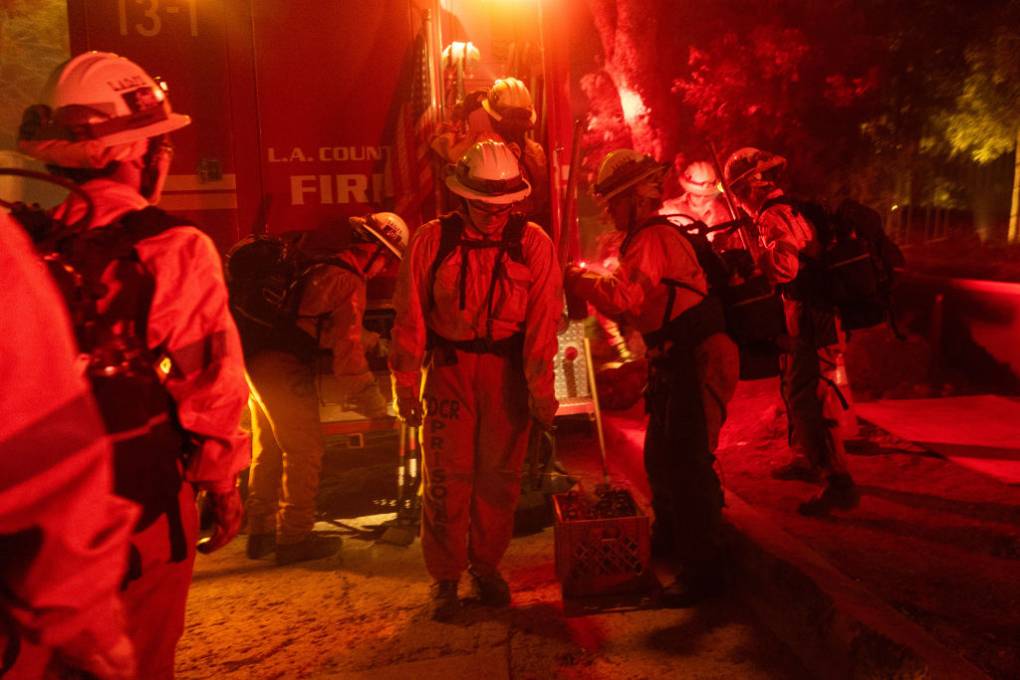
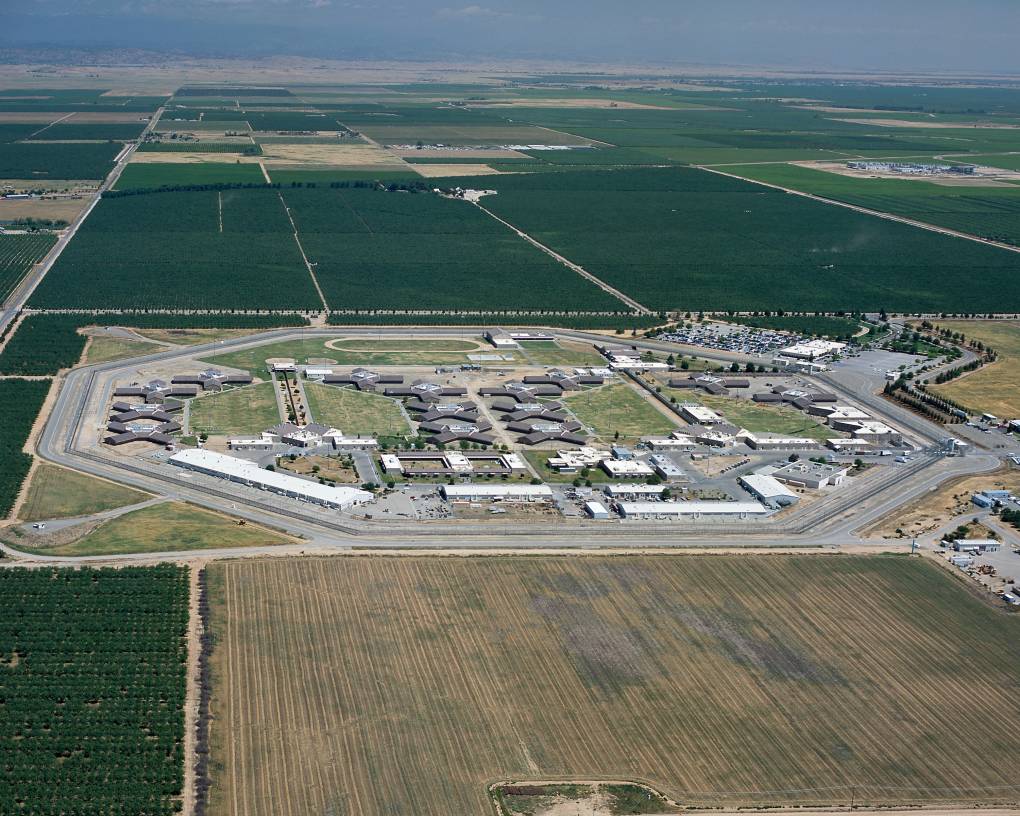
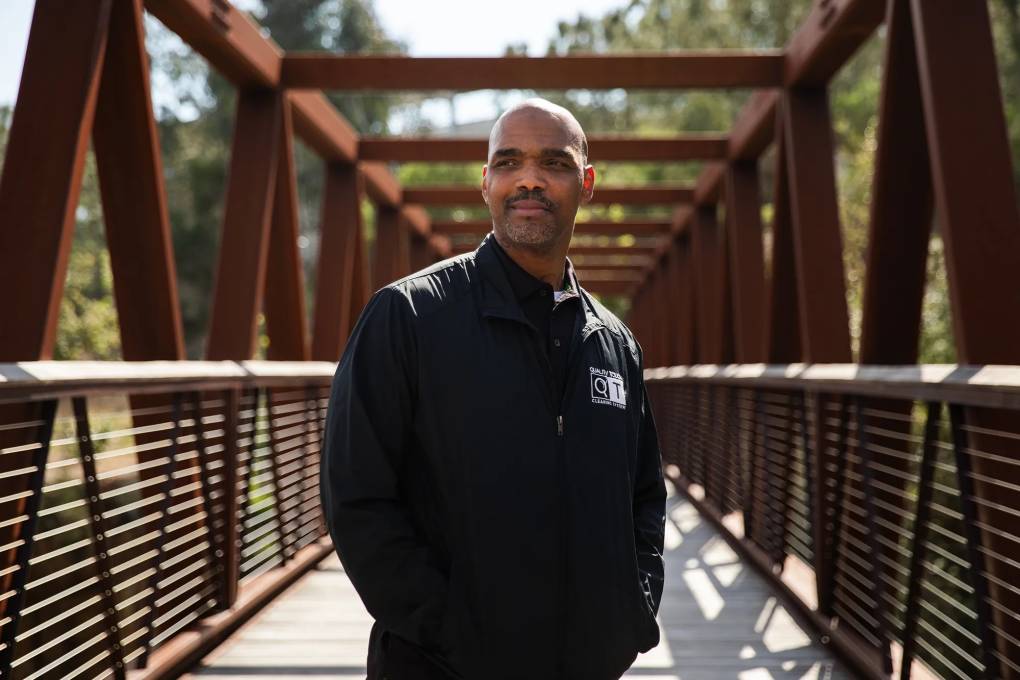
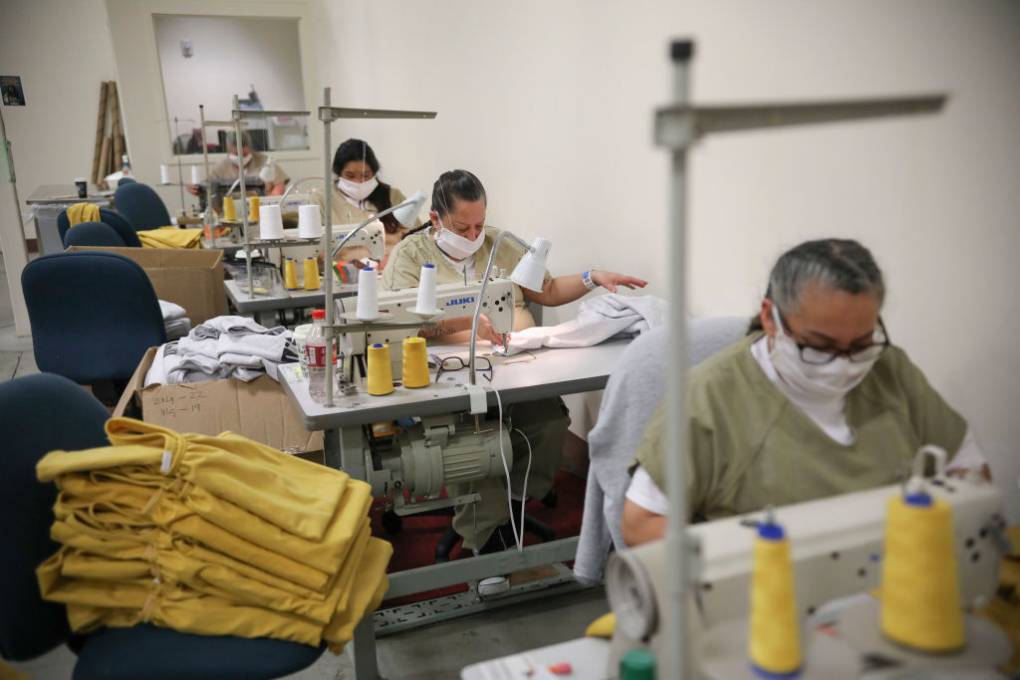
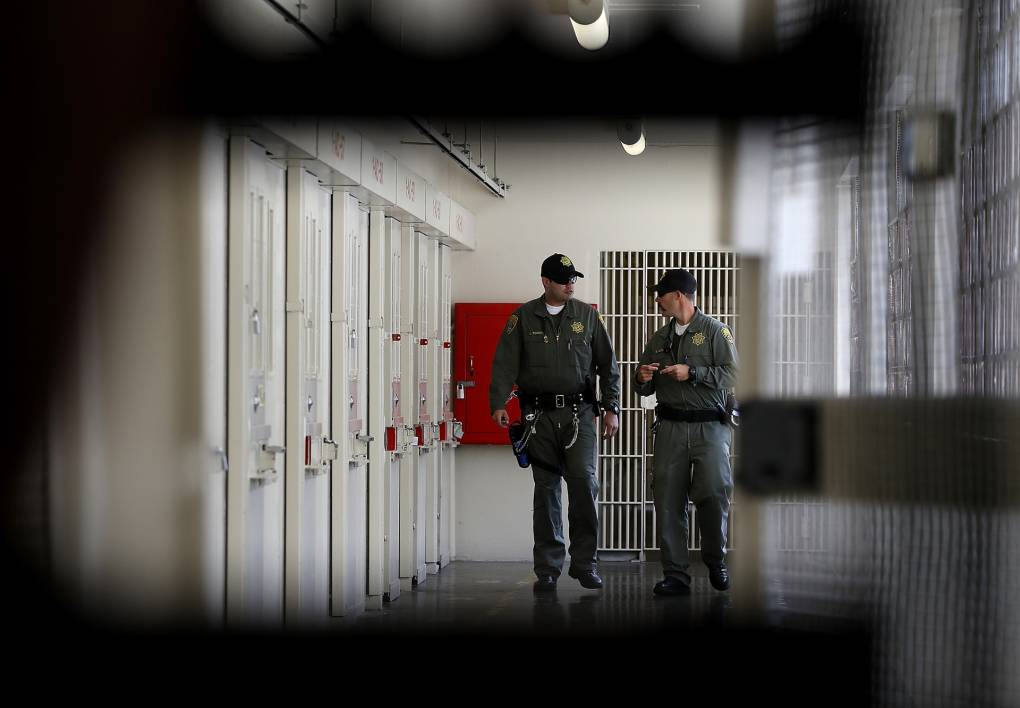
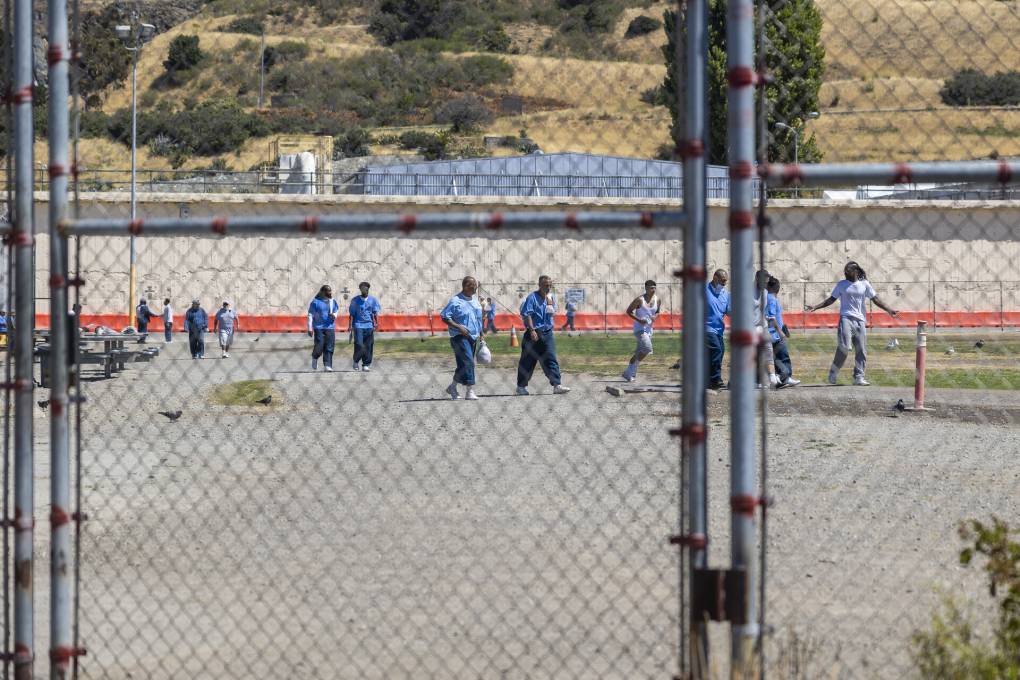
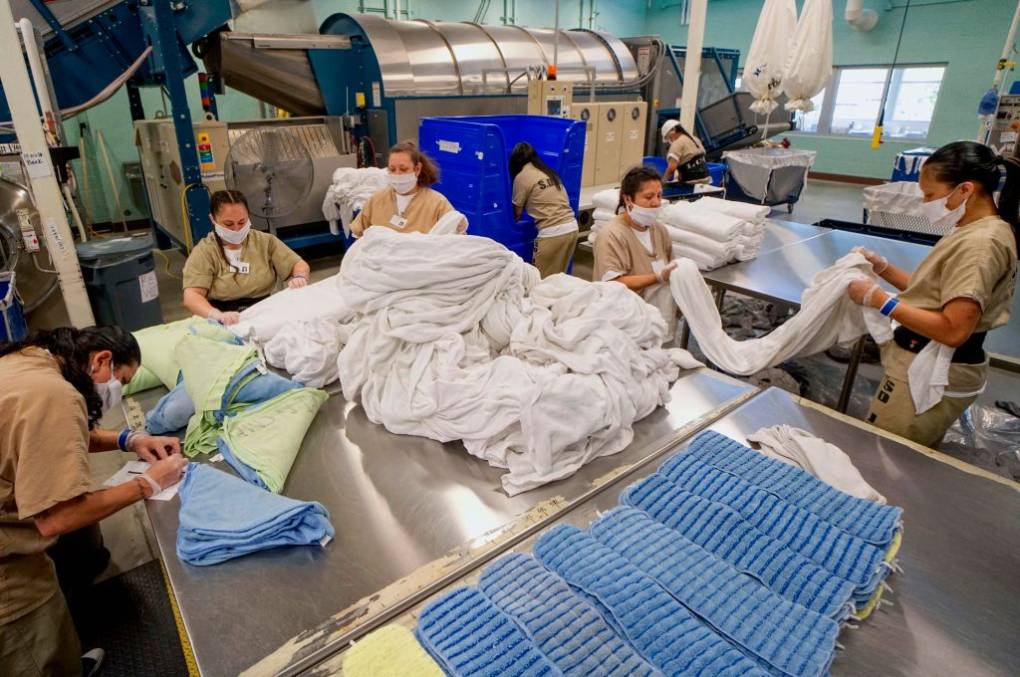
California's Reliance on Incarcerated Firefighters Sparks Debate Over Low Pay and Dangerous Work
'Like a War Zone': Prison Officers Used Unprecedented Force in August Attack, Incarcerated Women Say
They Earned Parole. A Court Order Keeps Them From Returning Home
Closure of California Federal Prison Was Poorly Planned, Judge Says, Ordering Further Monitoring
'It’s Got to Start on the Inside': How a Business-Training Program for People in Prison Aims to Keep Them From Returning
State Prisons Offset New Inmate Wage Hikes by Cutting Hours for Some Workers
KQED Wins Legal Victory Against California Department of Corrections Over Public Records
Hundreds of Californians Released From Prison Could Receive $2,400 Under New State Program
California Prison Officials Aim to Raise Hourly Minimum Wage for Incarcerated Workers — to at Least 16 Cents
Sponsored
Player sponsored by
window.__IS_SSR__=true
window.__INITIAL_STATE__={
"attachmentsReducer": {
"audio_0": {
"type": "attachments",
"id": "audio_0",
"imgSizes": {
"kqedFullSize": {
"file": "https://ww2.kqed.org/news/wp-content/themes/KQED-unified/img/audio_bgs/background0.jpg"
}
}
},
"audio_1": {
"type": "attachments",
"id": "audio_1",
"imgSizes": {
"kqedFullSize": {
"file": "https://ww2.kqed.org/news/wp-content/themes/KQED-unified/img/audio_bgs/background1.jpg"
}
}
},
"audio_2": {
"type": "attachments",
"id": "audio_2",
"imgSizes": {
"kqedFullSize": {
"file": "https://ww2.kqed.org/news/wp-content/themes/KQED-unified/img/audio_bgs/background2.jpg"
}
}
},
"audio_3": {
"type": "attachments",
"id": "audio_3",
"imgSizes": {
"kqedFullSize": {
"file": "https://ww2.kqed.org/news/wp-content/themes/KQED-unified/img/audio_bgs/background3.jpg"
}
}
},
"audio_4": {
"type": "attachments",
"id": "audio_4",
"imgSizes": {
"kqedFullSize": {
"file": "https://ww2.kqed.org/news/wp-content/themes/KQED-unified/img/audio_bgs/background4.jpg"
}
}
},
"placeholder": {
"type": "attachments",
"id": "placeholder",
"imgSizes": {
"thumbnail": {
"file": "https://cdn.kqed.org/wp-content/uploads/2024/12/KQED-Default-Image-816638274-2000x1333-1-160x107.jpg",
"width": 160,
"height": 107,
"mimeType": "image/jpeg"
},
"medium": {
"file": "https://cdn.kqed.org/wp-content/uploads/2024/12/KQED-Default-Image-816638274-2000x1333-1-800x533.jpg",
"width": 800,
"height": 533,
"mimeType": "image/jpeg"
},
"medium_large": {
"file": "https://cdn.kqed.org/wp-content/uploads/2024/12/KQED-Default-Image-816638274-2000x1333-1-768x512.jpg",
"width": 768,
"height": 512,
"mimeType": "image/jpeg"
},
"large": {
"file": "https://cdn.kqed.org/wp-content/uploads/2024/12/KQED-Default-Image-816638274-2000x1333-1-1020x680.jpg",
"width": 1020,
"height": 680,
"mimeType": "image/jpeg"
},
"1536x1536": {
"file": "https://cdn.kqed.org/wp-content/uploads/2024/12/KQED-Default-Image-816638274-2000x1333-1-1536x1024.jpg",
"width": 1536,
"height": 1024,
"mimeType": "image/jpeg"
},
"fd-lrg": {
"file": "https://cdn.kqed.org/wp-content/uploads/2024/12/KQED-Default-Image-816638274-2000x1333-1-1536x1024.jpg",
"width": 1536,
"height": 1024,
"mimeType": "image/jpeg"
},
"fd-med": {
"file": "https://cdn.kqed.org/wp-content/uploads/2024/12/KQED-Default-Image-816638274-2000x1333-1-1020x680.jpg",
"width": 1020,
"height": 680,
"mimeType": "image/jpeg"
},
"fd-sm": {
"file": "https://cdn.kqed.org/wp-content/uploads/2024/12/KQED-Default-Image-816638274-2000x1333-1-800x533.jpg",
"width": 800,
"height": 533,
"mimeType": "image/jpeg"
},
"post-thumbnail": {
"file": "https://cdn.kqed.org/wp-content/uploads/2024/12/KQED-Default-Image-816638274-2000x1333-1-672x372.jpg",
"width": 672,
"height": 372,
"mimeType": "image/jpeg"
},
"twentyfourteen-full-width": {
"file": "https://cdn.kqed.org/wp-content/uploads/2024/12/KQED-Default-Image-816638274-2000x1333-1-1038x576.jpg",
"width": 1038,
"height": 576,
"mimeType": "image/jpeg"
},
"xxsmall": {
"file": "https://cdn.kqed.org/wp-content/uploads/2024/12/KQED-Default-Image-816638274-2000x1333-1-160x107.jpg",
"width": 160,
"height": 107,
"mimeType": "image/jpeg"
},
"xsmall": {
"file": "https://cdn.kqed.org/wp-content/uploads/2024/12/KQED-Default-Image-816638274-2000x1333-1-672x372.jpg",
"width": 672,
"height": 372,
"mimeType": "image/jpeg"
},
"small": {
"file": "https://cdn.kqed.org/wp-content/uploads/2024/12/KQED-Default-Image-816638274-2000x1333-1-672x372.jpg",
"width": 672,
"height": 372,
"mimeType": "image/jpeg"
},
"xlarge": {
"file": "https://cdn.kqed.org/wp-content/uploads/2024/12/KQED-Default-Image-816638274-2000x1333-1-1020x680.jpg",
"width": 1020,
"height": 680,
"mimeType": "image/jpeg"
},
"full-width": {
"file": "https://cdn.kqed.org/wp-content/uploads/2024/12/KQED-Default-Image-816638274-2000x1333-1-1920x1280.jpg",
"width": 1920,
"height": 1280,
"mimeType": "image/jpeg"
},
"guest-author-32": {
"file": "https://cdn.kqed.org/wp-content/uploads/2025/01/KQED-Default-Image-816638274-1333x1333-1-160x160.jpg",
"width": 32,
"height": 32,
"mimeType": "image/jpeg"
},
"guest-author-50": {
"file": "https://cdn.kqed.org/wp-content/uploads/2025/01/KQED-Default-Image-816638274-1333x1333-1-160x160.jpg",
"width": 50,
"height": 50,
"mimeType": "image/jpeg"
},
"guest-author-64": {
"file": "https://cdn.kqed.org/wp-content/uploads/2025/01/KQED-Default-Image-816638274-1333x1333-1-160x160.jpg",
"width": 64,
"height": 64,
"mimeType": "image/jpeg"
},
"guest-author-96": {
"file": "https://cdn.kqed.org/wp-content/uploads/2025/01/KQED-Default-Image-816638274-1333x1333-1-160x160.jpg",
"width": 96,
"height": 96,
"mimeType": "image/jpeg"
},
"guest-author-128": {
"file": "https://cdn.kqed.org/wp-content/uploads/2025/01/KQED-Default-Image-816638274-1333x1333-1-160x160.jpg",
"width": 128,
"height": 128,
"mimeType": "image/jpeg"
},
"detail": {
"file": "https://cdn.kqed.org/wp-content/uploads/2025/01/KQED-Default-Image-816638274-1333x1333-1-160x160.jpg",
"width": 160,
"height": 160,
"mimeType": "image/jpeg"
},
"kqedFullSize": {
"file": "https://cdn.kqed.org/wp-content/uploads/2024/12/KQED-Default-Image-816638274-2000x1333-1.jpg",
"width": 2000,
"height": 1333
}
}
},
"news_12021731": {
"type": "attachments",
"id": "news_12021731",
"meta": {
"index": "attachments_1716263798",
"site": "news",
"id": "12021731",
"found": true
},
"title": "Sunset fire on Vista street",
"publishDate": 1736630808,
"status": "inherit",
"parent": 12021720,
"modified": 1736630881,
"caption": "Incarcerated firefighters at the Sunset Fire on Vista Street on Wednesday, Jan. 8, 2025 in Los Angeles. ",
"credit": "Jason Armond/Los Angeles Times via Getty Images",
"altTag": "Firefighters prepare beside a firetruck amid a red, hazy glow.",
"description": null,
"imgSizes": {
"medium": {
"file": "https://cdn.kqed.org/wp-content/uploads/sites/10/2025/01/GettyImages-2192478140-800x534.jpg",
"width": 800,
"height": 534,
"mimeType": "image/jpeg"
},
"large": {
"file": "https://cdn.kqed.org/wp-content/uploads/sites/10/2025/01/GettyImages-2192478140-1020x680.jpg",
"width": 1020,
"height": 680,
"mimeType": "image/jpeg"
},
"thumbnail": {
"file": "https://cdn.kqed.org/wp-content/uploads/sites/10/2025/01/GettyImages-2192478140-160x107.jpg",
"width": 160,
"height": 107,
"mimeType": "image/jpeg"
},
"post-thumbnail": {
"file": "https://cdn.kqed.org/wp-content/uploads/sites/10/2025/01/GettyImages-2192478140-672x372.jpg",
"width": 672,
"height": 372,
"mimeType": "image/jpeg"
},
"twentyfourteen-full-width": {
"file": "https://cdn.kqed.org/wp-content/uploads/sites/10/2025/01/GettyImages-2192478140-1024x576.jpg",
"width": 1024,
"height": 576,
"mimeType": "image/jpeg"
},
"kqedFullSize": {
"file": "https://cdn.kqed.org/wp-content/uploads/sites/10/2025/01/GettyImages-2192478140.jpg",
"width": 1024,
"height": 683
}
},
"fetchFailed": false,
"isLoading": false
},
"news_12004391": {
"type": "attachments",
"id": "news_12004391",
"meta": {
"index": "attachments_1716263798",
"site": "news",
"id": "12004391",
"found": true
},
"title": null,
"publishDate": 1726086686,
"status": "inherit",
"parent": 12004368,
"modified": 1726091610,
"caption": "Women incarcerated at the Central California Women’s facility in Chowchilla say officers used pepper spray, tear gas and rubber bullets on them, including while they were restrained.",
"credit": "Wikimedia Commons",
"altTag": null,
"description": null,
"imgSizes": {
"medium": {
"file": "https://cdn.kqed.org/wp-content/uploads/sites/10/2024/09/CentralCaliforniaWomensFacility-800x640.jpg",
"width": 800,
"height": 640,
"mimeType": "image/jpeg"
},
"large": {
"file": "https://cdn.kqed.org/wp-content/uploads/sites/10/2024/09/CentralCaliforniaWomensFacility-1020x816.jpg",
"width": 1020,
"height": 816,
"mimeType": "image/jpeg"
},
"thumbnail": {
"file": "https://cdn.kqed.org/wp-content/uploads/sites/10/2024/09/CentralCaliforniaWomensFacility-160x128.jpg",
"width": 160,
"height": 128,
"mimeType": "image/jpeg"
},
"1536x1536": {
"file": "https://cdn.kqed.org/wp-content/uploads/sites/10/2024/09/CentralCaliforniaWomensFacility-1536x1229.jpg",
"width": 1536,
"height": 1229,
"mimeType": "image/jpeg"
},
"2048x2048": {
"file": "https://cdn.kqed.org/wp-content/uploads/sites/10/2024/09/CentralCaliforniaWomensFacility-2048x1638.jpg",
"width": 2048,
"height": 1638,
"mimeType": "image/jpeg"
},
"post-thumbnail": {
"file": "https://cdn.kqed.org/wp-content/uploads/sites/10/2024/09/CentralCaliforniaWomensFacility-672x372.jpg",
"width": 672,
"height": 372,
"mimeType": "image/jpeg"
},
"twentyfourteen-full-width": {
"file": "https://cdn.kqed.org/wp-content/uploads/sites/10/2024/09/CentralCaliforniaWomensFacility-1038x576.jpg",
"width": 1038,
"height": 576,
"mimeType": "image/jpeg"
},
"full-width": {
"file": "https://cdn.kqed.org/wp-content/uploads/sites/10/2024/09/CentralCaliforniaWomensFacility-1920x1536.jpg",
"width": 1920,
"height": 1536,
"mimeType": "image/jpeg"
},
"kqedFullSize": {
"file": "https://cdn.kqed.org/wp-content/uploads/sites/10/2024/09/CentralCaliforniaWomensFacility-scaled-e1736960985623.jpg",
"width": 2000,
"height": 1600
}
},
"fetchFailed": false,
"isLoading": false
},
"news_12001636": {
"type": "attachments",
"id": "news_12001636",
"meta": {
"index": "attachments_1716263798",
"site": "news",
"id": "12001636",
"found": true
},
"title": "IMG_0745",
"publishDate": 1724440814,
"status": "inherit",
"parent": 12001595,
"modified": 1724440838,
"caption": null,
"credit": "Illustration by Anna Vignet/KQED",
"altTag": null,
"description": null,
"imgSizes": {
"medium": {
"file": "https://cdn.kqed.org/wp-content/uploads/sites/10/2024/08/IMG_0745-800x600.jpg",
"width": 800,
"height": 600,
"mimeType": "image/jpeg"
},
"large": {
"file": "https://cdn.kqed.org/wp-content/uploads/sites/10/2024/08/IMG_0745-1020x765.jpg",
"width": 1020,
"height": 765,
"mimeType": "image/jpeg"
},
"thumbnail": {
"file": "https://cdn.kqed.org/wp-content/uploads/sites/10/2024/08/IMG_0745-160x120.jpg",
"width": 160,
"height": 120,
"mimeType": "image/jpeg"
},
"1536x1536": {
"file": "https://cdn.kqed.org/wp-content/uploads/sites/10/2024/08/IMG_0745-1536x1152.jpg",
"width": 1536,
"height": 1152,
"mimeType": "image/jpeg"
},
"2048x2048": {
"file": "https://cdn.kqed.org/wp-content/uploads/sites/10/2024/08/IMG_0745-2048x1536.jpg",
"width": 2048,
"height": 1536,
"mimeType": "image/jpeg"
},
"post-thumbnail": {
"file": "https://cdn.kqed.org/wp-content/uploads/sites/10/2024/08/IMG_0745-672x372.jpg",
"width": 672,
"height": 372,
"mimeType": "image/jpeg"
},
"twentyfourteen-full-width": {
"file": "https://cdn.kqed.org/wp-content/uploads/sites/10/2024/08/IMG_0745-1038x576.jpg",
"width": 1038,
"height": 576,
"mimeType": "image/jpeg"
},
"full-width": {
"file": "https://cdn.kqed.org/wp-content/uploads/sites/10/2024/08/IMG_0745-1920x1440.jpg",
"width": 1920,
"height": 1440,
"mimeType": "image/jpeg"
},
"kqedFullSize": {
"file": "https://cdn.kqed.org/wp-content/uploads/sites/10/2024/08/IMG_0745.jpg",
"width": 2560,
"height": 1920
}
},
"fetchFailed": false,
"isLoading": false
},
"news_11985654": {
"type": "attachments",
"id": "news_11985654",
"meta": {
"index": "attachments_1716263798",
"site": "news",
"id": "11985654",
"found": true
},
"parent": 11985645,
"imgSizes": {
"twentyfourteen-full-width": {
"file": "https://cdn.kqed.org/wp-content/uploads/sites/10/2024/05/GettyImages-1181905632-1024x576.jpg",
"width": 1024,
"mimeType": "image/jpeg",
"height": 576
},
"thumbnail": {
"file": "https://cdn.kqed.org/wp-content/uploads/sites/10/2024/05/GettyImages-1181905632-160x107.jpg",
"width": 160,
"mimeType": "image/jpeg",
"height": 107
},
"post-thumbnail": {
"file": "https://cdn.kqed.org/wp-content/uploads/sites/10/2024/05/GettyImages-1181905632-672x372.jpg",
"width": 672,
"mimeType": "image/jpeg",
"height": 372
},
"kqedFullSize": {
"file": "https://cdn.kqed.org/wp-content/uploads/sites/10/2024/05/GettyImages-1181905632.jpg",
"width": 1024,
"height": 683
},
"large": {
"file": "https://cdn.kqed.org/wp-content/uploads/sites/10/2024/05/GettyImages-1181905632-1020x680.jpg",
"width": 1020,
"mimeType": "image/jpeg",
"height": 680
},
"medium": {
"file": "https://cdn.kqed.org/wp-content/uploads/sites/10/2024/05/GettyImages-1181905632-800x534.jpg",
"width": 800,
"mimeType": "image/jpeg",
"height": 534
}
},
"publishDate": 1715299970,
"modified": 1715301716,
"caption": "The Dublin Federal Correctional Institution is photographed in Dublin, Alameda County, on Sept. 13, 2019. ",
"description": null,
"title": "Dublin Federal Correctional Institution",
"credit": "Anda Chu/MediaNews Group/The Mercury News via Getty Images",
"status": "inherit",
"altTag": "A stone sign that reads 'Federal Correctional Institution.'",
"fetchFailed": false,
"isLoading": false
},
"news_11983897": {
"type": "attachments",
"id": "news_11983897",
"meta": {
"index": "attachments_1716263798",
"site": "news",
"id": "11983897",
"found": true
},
"parent": 11983896,
"imgSizes": {
"twentyfourteen-full-width": {
"file": "https://cdn.kqed.org/wp-content/uploads/sites/10/2024/04/031524_Timothy-Jackson_AH_CM_02-1038x576.jpg",
"width": 1038,
"mimeType": "image/jpeg",
"height": 576
},
"thumbnail": {
"file": "https://cdn.kqed.org/wp-content/uploads/sites/10/2024/04/031524_Timothy-Jackson_AH_CM_02-160x107.jpg",
"width": 160,
"mimeType": "image/jpeg",
"height": 107
},
"post-thumbnail": {
"file": "https://cdn.kqed.org/wp-content/uploads/sites/10/2024/04/031524_Timothy-Jackson_AH_CM_02-672x372.jpg",
"width": 672,
"mimeType": "image/jpeg",
"height": 372
},
"kqedFullSize": {
"file": "https://cdn.kqed.org/wp-content/uploads/sites/10/2024/04/031524_Timothy-Jackson_AH_CM_02.jpg",
"width": 2000,
"height": 1333
},
"large": {
"file": "https://cdn.kqed.org/wp-content/uploads/sites/10/2024/04/031524_Timothy-Jackson_AH_CM_02-1020x680.jpg",
"width": 1020,
"mimeType": "image/jpeg",
"height": 680
},
"1536x1536": {
"file": "https://cdn.kqed.org/wp-content/uploads/sites/10/2024/04/031524_Timothy-Jackson_AH_CM_02-1536x1024.jpg",
"width": 1536,
"mimeType": "image/jpeg",
"height": 1024
},
"full-width": {
"file": "https://cdn.kqed.org/wp-content/uploads/sites/10/2024/04/031524_Timothy-Jackson_AH_CM_02-1920x1280.jpg",
"width": 1920,
"mimeType": "image/jpeg",
"height": 1280
},
"medium": {
"file": "https://cdn.kqed.org/wp-content/uploads/sites/10/2024/04/031524_Timothy-Jackson_AH_CM_02-800x533.jpg",
"width": 800,
"mimeType": "image/jpeg",
"height": 533
}
},
"publishDate": 1713980740,
"modified": 1713986795,
"caption": "Timothy Jackson at Torrey Pines Science Park in San Diego on March 15, 2024. Jackson started his own cleaning business after taking entrepreneurship training while incarcerated.",
"description": null,
"title": "031524_Timothy-Jackson_AH_CM_02",
"credit": "Adriana Heldiz/CalMatters",
"status": "inherit",
"altTag": "A Black man in a cleaning uniform stands on a bridge.",
"fetchFailed": false,
"isLoading": false
},
"news_11983401": {
"type": "attachments",
"id": "news_11983401",
"meta": {
"index": "attachments_1716263798",
"site": "news",
"id": "11983401",
"found": true
},
"parent": 11983396,
"imgSizes": {
"twentyfourteen-full-width": {
"file": "https://cdn.kqed.org/wp-content/uploads/sites/10/2024/04/GettyImages-1210676401-1024x576.jpg",
"width": 1024,
"mimeType": "image/jpeg",
"height": 576
},
"thumbnail": {
"file": "https://cdn.kqed.org/wp-content/uploads/sites/10/2024/04/GettyImages-1210676401-160x107.jpg",
"width": 160,
"mimeType": "image/jpeg",
"height": 107
},
"post-thumbnail": {
"file": "https://cdn.kqed.org/wp-content/uploads/sites/10/2024/04/GettyImages-1210676401-672x372.jpg",
"width": 672,
"mimeType": "image/jpeg",
"height": 372
},
"kqedFullSize": {
"file": "https://cdn.kqed.org/wp-content/uploads/sites/10/2024/04/GettyImages-1210676401.jpg",
"width": 1024,
"height": 683
},
"large": {
"file": "https://cdn.kqed.org/wp-content/uploads/sites/10/2024/04/GettyImages-1210676401-1020x680.jpg",
"width": 1020,
"mimeType": "image/jpeg",
"height": 680
},
"medium": {
"file": "https://cdn.kqed.org/wp-content/uploads/sites/10/2024/04/GettyImages-1210676401-800x534.jpg",
"width": 800,
"mimeType": "image/jpeg",
"height": 534
}
},
"publishDate": 1713480720,
"modified": 1713908390,
"caption": "Incarcerated women sew protective masks at Las Colinas Women's Detention Facility in Santee, San Diego County, on April 22, 2020. ",
"description": null,
"title": "US-HEALTH-VIRUS-PRISON",
"credit": "Sandy Huffaker/AFP via Getty Images",
"status": "inherit",
"altTag": "Incarcerated women in beige outfits work at sewing tables.",
"fetchFailed": false,
"isLoading": false
},
"news_11982294": {
"type": "attachments",
"id": "news_11982294",
"meta": {
"index": "attachments_1716263798",
"site": "news",
"id": "11982294",
"found": true
},
"parent": 11982270,
"imgSizes": {
"twentyfourteen-full-width": {
"file": "https://cdn.kqed.org/wp-content/uploads/sites/10/2024/04/GettyImages-589929454_qut-1038x576.jpg",
"width": 1038,
"mimeType": "image/jpeg",
"height": 576
},
"thumbnail": {
"file": "https://cdn.kqed.org/wp-content/uploads/sites/10/2024/04/GettyImages-589929454_qut-160x111.jpg",
"width": 160,
"mimeType": "image/jpeg",
"height": 111
},
"post-thumbnail": {
"file": "https://cdn.kqed.org/wp-content/uploads/sites/10/2024/04/GettyImages-589929454_qut-672x372.jpg",
"width": 672,
"mimeType": "image/jpeg",
"height": 372
},
"kqedFullSize": {
"file": "https://cdn.kqed.org/wp-content/uploads/sites/10/2024/04/GettyImages-589929454_qut.jpg",
"width": 1920,
"height": 1332
},
"large": {
"file": "https://cdn.kqed.org/wp-content/uploads/sites/10/2024/04/GettyImages-589929454_qut-1020x708.jpg",
"width": 1020,
"mimeType": "image/jpeg",
"height": 708
},
"1536x1536": {
"file": "https://cdn.kqed.org/wp-content/uploads/sites/10/2024/04/GettyImages-589929454_qut-1536x1066.jpg",
"width": 1536,
"mimeType": "image/jpeg",
"height": 1066
},
"medium": {
"file": "https://cdn.kqed.org/wp-content/uploads/sites/10/2024/04/GettyImages-589929454_qut-800x555.jpg",
"width": 800,
"mimeType": "image/jpeg",
"height": 555
}
},
"publishDate": 1712617016,
"modified": 1712621906,
"caption": "California Department of Corrections and Rehabilitation officers patrol San Quentin State Prison's death row adjustment center on Aug. 15, 2016 in San Quentin, Marin County.",
"description": null,
"title": "GettyImages-589929454_qut",
"credit": "Justin Sullivan/Getty Images",
"status": "inherit",
"altTag": "The hallway of a prison with two guards seen through the frame of bars.",
"fetchFailed": false,
"isLoading": false
},
"news_11969362": {
"type": "attachments",
"id": "news_11969362",
"meta": {
"index": "attachments_1716263798",
"site": "news",
"id": "11969362",
"found": true
},
"parent": 11969359,
"imgSizes": {
"twentyfourteen-full-width": {
"file": "https://cdn.kqed.org/wp-content/uploads/sites/10/2023/12/230726-SAN-QUENTIN-MHN-12-qut-1038x576.jpg",
"width": 1038,
"mimeType": "image/jpeg",
"height": 576
},
"thumbnail": {
"file": "https://cdn.kqed.org/wp-content/uploads/sites/10/2023/12/230726-SAN-QUENTIN-MHN-12-qut-160x107.jpg",
"width": 160,
"mimeType": "image/jpeg",
"height": 107
},
"post-thumbnail": {
"file": "https://cdn.kqed.org/wp-content/uploads/sites/10/2023/12/230726-SAN-QUENTIN-MHN-12-qut-672x372.jpg",
"width": 672,
"mimeType": "image/jpeg",
"height": 372
},
"kqedFullSize": {
"file": "https://cdn.kqed.org/wp-content/uploads/sites/10/2023/12/230726-SAN-QUENTIN-MHN-12-qut.jpg",
"width": 1920,
"height": 1280
},
"large": {
"file": "https://cdn.kqed.org/wp-content/uploads/sites/10/2023/12/230726-SAN-QUENTIN-MHN-12-qut-1020x680.jpg",
"width": 1020,
"mimeType": "image/jpeg",
"height": 680
},
"1536x1536": {
"file": "https://cdn.kqed.org/wp-content/uploads/sites/10/2023/12/230726-SAN-QUENTIN-MHN-12-qut-1536x1024.jpg",
"width": 1536,
"mimeType": "image/jpeg",
"height": 1024
},
"medium": {
"file": "https://cdn.kqed.org/wp-content/uploads/sites/10/2023/12/230726-SAN-QUENTIN-MHN-12-qut-800x533.jpg",
"width": 800,
"mimeType": "image/jpeg",
"height": 533
}
},
"publishDate": 1701998597,
"modified": 1702060032,
"caption": "Incarcerated people walk around a track at San Quentin State Prison in Marin County on July 26, 2023. ",
"description": null,
"title": "230726-SAN QUENTIN-MHN-12-qut",
"credit": "Martin do Nascimento",
"status": "inherit",
"altTag": "Men in blue uniforms walk around a large asphalt yard behind a locked fence.",
"fetchFailed": false,
"isLoading": false
},
"news_11967747": {
"type": "attachments",
"id": "news_11967747",
"meta": {
"index": "attachments_1716263798",
"site": "news",
"id": "11967747",
"found": true
},
"parent": 11967728,
"imgSizes": {
"twentyfourteen-full-width": {
"file": "https://ww2.kqed.org/app/uploads/sites/10/2023/11/GettyImages-1210676459-1024x576.jpg",
"width": 1024,
"mimeType": "image/jpeg",
"height": 576
},
"thumbnail": {
"file": "https://ww2.kqed.org/app/uploads/sites/10/2023/11/GettyImages-1210676459-160x106.jpg",
"width": 160,
"mimeType": "image/jpeg",
"height": 106
},
"post-thumbnail": {
"file": "https://ww2.kqed.org/app/uploads/sites/10/2023/11/GettyImages-1210676459-672x372.jpg",
"width": 672,
"mimeType": "image/jpeg",
"height": 372
},
"kqedFullSize": {
"file": "https://ww2.kqed.org/app/uploads/sites/10/2023/11/GettyImages-1210676459.jpg",
"width": 1024,
"height": 680
},
"large": {
"file": "https://ww2.kqed.org/app/uploads/sites/10/2023/11/GettyImages-1210676459-1020x677.jpg",
"width": 1020,
"mimeType": "image/jpeg",
"height": 677
},
"medium": {
"file": "https://ww2.kqed.org/app/uploads/sites/10/2023/11/GettyImages-1210676459-800x531.jpg",
"width": 800,
"mimeType": "image/jpeg",
"height": 531
}
},
"publishDate": 1700182063,
"modified": 1700253743,
"caption": "Incarcerated women work in the laundry room at Las Colinas Women's Detention Facility in Santee, California, on April 22, 2020.",
"description": null,
"title": "US-HEALTH-VIRUS-PRISON",
"credit": "Sandy Huffaker/AFP via Getty Images",
"status": "inherit",
"altTag": "A group of female workers, in prison uniforms, fold sheets in an industrial laundry facility.",
"fetchFailed": false,
"isLoading": false
}
},
"audioPlayerReducer": {
"postId": "stream_live",
"isPaused": true,
"isPlaying": false,
"pfsActive": false,
"pledgeModalIsOpen": true,
"playerDrawerIsOpen": false
},
"authorsReducer": {
"byline_news_12001595": {
"type": "authors",
"id": "byline_news_12001595",
"meta": {
"override": true
},
"slug": "byline_news_12001595",
"name": "Cayla Mihalovich",
"isLoading": false
},
"byline_news_11985645": {
"type": "authors",
"id": "byline_news_11985645",
"meta": {
"override": true
},
"slug": "byline_news_11985645",
"name": "Christopher Weber\u003cbr>Associated Press",
"isLoading": false
},
"byline_news_11983896": {
"type": "authors",
"id": "byline_news_11983896",
"meta": {
"override": true
},
"slug": "byline_news_11983896",
"name": "\u003ca href=\"https://calmatters.org/author/levi-sumagaysay/\">Levi Sumagaysay\u003c/a>",
"isLoading": false
},
"byline_news_11969359": {
"type": "authors",
"id": "byline_news_11969359",
"meta": {
"override": true
},
"slug": "byline_news_11969359",
"name": "Christopher Weber\u003cbr>Associated Press",
"isLoading": false
},
"fjhabvala": {
"type": "authors",
"id": "8659",
"meta": {
"index": "authors_1716337520",
"id": "8659",
"found": true
},
"name": "Farida Jhabvala Romero",
"firstName": "Farida",
"lastName": "Jhabvala Romero",
"slug": "fjhabvala",
"email": "fjhabvala@kqed.org",
"display_author_email": true,
"staff_mastheads": [
"news"
],
"title": "KQED Contributor",
"bio": "\u003cspan style=\"font-weight: 400;\">Farida Jhabvala Romero is a Labor Correspondent for KQED. She previously covered immigration. Farida was \u003ca href=\"https://www.ccnma.org/2022-most-influential-latina-journalists\">named\u003c/a> one of the 10 Most Influential Latina Journalists in California in 2022 by the California Chicano News Media Association. Her work has won awards from the Society of Professional Journalists (Northern California), as well as a national and regional Edward M. Murrow Award for the collaborative reporting projects “Dangerous Air” and “Graying California.” \u003c/span>\u003cspan style=\"font-weight: 400;\">Before joining KQED, Farida worked as a producer at Radio Bilingüe, a national public radio network. Farida earned her master’s degree in journalism from Stanford University.\u003c/span>",
"avatar": "https://secure.gravatar.com/avatar/c3ab27c5554b67b478f80971e515aa02?s=600&d=blank&r=g",
"twitter": "FaridaJhabvala",
"facebook": null,
"instagram": null,
"linkedin": "https://www.linkedin.com/in/faridajhabvala/",
"sites": [
{
"site": "news",
"roles": [
"editor"
]
},
{
"site": "stateofhealth",
"roles": [
"author"
]
}
],
"headData": {
"title": "Farida Jhabvala Romero | KQED",
"description": "KQED Contributor",
"ogImgSrc": "https://secure.gravatar.com/avatar/c3ab27c5554b67b478f80971e515aa02?s=600&d=blank&r=g",
"twImgSrc": "https://secure.gravatar.com/avatar/c3ab27c5554b67b478f80971e515aa02?s=600&d=blank&r=g"
},
"isLoading": false,
"link": "/author/fjhabvala"
},
"slewis": {
"type": "authors",
"id": "8676",
"meta": {
"index": "authors_1716337520",
"id": "8676",
"found": true
},
"name": "Sukey Lewis",
"firstName": "Sukey",
"lastName": "Lewis",
"slug": "slewis",
"email": "slewis@kqed.org",
"display_author_email": true,
"staff_mastheads": [
"news"
],
"title": "KQED Contributor",
"bio": "Sukey Lewis is a criminal justice reporter and host of \u003cem>On Our Watch\u003c/em>, a new podcast from NPR and KQED about the shadow world of police discipline. In 2018, she co-founded the California Reporting Project, a coalition of newsrooms across the state focused on obtaining previously sealed internal affairs records from law enforcement. In addition to her reporting on police accountability, Sukey has investigated the bail bonds industry, California's wildfires and the high cost of prison phone calls. Sukey earned a master's degree in journalism from the University of California at Berkeley. Send news tips to slewis@kqed.org.",
"avatar": "https://secure.gravatar.com/avatar/03fd6b21024f99d8b0a1966654586de7?s=600&d=blank&r=g",
"twitter": "SukeyLewis",
"facebook": null,
"instagram": null,
"linkedin": null,
"sites": [
{
"site": "news",
"roles": [
"author",
"edit_others_posts"
]
}
],
"headData": {
"title": "Sukey Lewis | KQED",
"description": "KQED Contributor",
"ogImgSrc": "https://secure.gravatar.com/avatar/03fd6b21024f99d8b0a1966654586de7?s=600&d=blank&r=g",
"twImgSrc": "https://secure.gravatar.com/avatar/03fd6b21024f99d8b0a1966654586de7?s=600&d=blank&r=g"
},
"isLoading": false,
"link": "/author/slewis"
},
"mbolanos": {
"type": "authors",
"id": "11895",
"meta": {
"index": "authors_1716337520",
"id": "11895",
"found": true
},
"name": "Madi Bolaños",
"firstName": "Madi",
"lastName": "Bolaños",
"slug": "mbolanos",
"email": "mbolanos@kqed.org",
"display_author_email": false,
"staff_mastheads": [],
"title": "KQED Contributor",
"bio": null,
"avatar": "https://secure.gravatar.com/avatar/e6df5601c1f2d951e46a3fb42764330f?s=600&d=blank&r=g",
"twitter": null,
"facebook": null,
"instagram": null,
"linkedin": null,
"sites": [
{
"site": "news",
"roles": [
"author"
]
}
],
"headData": {
"title": "Madi Bolaños | KQED",
"description": "KQED Contributor",
"ogImgSrc": "https://secure.gravatar.com/avatar/e6df5601c1f2d951e46a3fb42764330f?s=600&d=blank&r=g",
"twImgSrc": "https://secure.gravatar.com/avatar/e6df5601c1f2d951e46a3fb42764330f?s=600&d=blank&r=g"
},
"isLoading": false,
"link": "/author/mbolanos"
},
"slim": {
"type": "authors",
"id": "11920",
"meta": {
"index": "authors_1716337520",
"id": "11920",
"found": true
},
"name": "Samantha Lim",
"firstName": "Samantha",
"lastName": "Lim",
"slug": "slim",
"email": "slim@KQED.org",
"display_author_email": false,
"staff_mastheads": [],
"title": "KQED Contributor",
"bio": null,
"avatar": "https://secure.gravatar.com/avatar/82e592e6c15fe1a04d385e8ad0fb0b4e?s=600&d=blank&r=g",
"twitter": null,
"facebook": null,
"instagram": null,
"linkedin": null,
"sites": [
{
"site": "news",
"roles": []
}
],
"headData": {
"title": "Samantha Lim | KQED",
"description": "KQED Contributor",
"ogImgSrc": "https://secure.gravatar.com/avatar/82e592e6c15fe1a04d385e8ad0fb0b4e?s=600&d=blank&r=g",
"twImgSrc": "https://secure.gravatar.com/avatar/82e592e6c15fe1a04d385e8ad0fb0b4e?s=600&d=blank&r=g"
},
"isLoading": false,
"link": "/author/slim"
}
},
"breakingNewsReducer": {},
"pagesReducer": {},
"postsReducer": {
"stream_live": {
"type": "live",
"id": "stream_live",
"audioUrl": "https://streams.kqed.org/kqedradio",
"title": "Live Stream",
"excerpt": "Live Stream information currently unavailable.",
"link": "/radio",
"featImg": "",
"label": {
"name": "KQED Live",
"link": "/"
}
},
"stream_kqedNewscast": {
"type": "posts",
"id": "stream_kqedNewscast",
"audioUrl": "https://www.kqed.org/.stream/anon/radio/RDnews/newscast.mp3?_=1",
"title": "KQED Newscast",
"featImg": "",
"label": {
"name": "88.5 FM",
"link": "/"
}
},
"news_12021720": {
"type": "posts",
"id": "news_12021720",
"meta": {
"index": "posts_1716263798",
"site": "news",
"id": "12021720",
"score": null,
"sort": [
1736690404000
]
},
"guestAuthors": [],
"slug": "californias-reliance-on-incarcerated-firefighters-sparks-debate-over-low-pay-and-dangerous-work",
"title": "California's Reliance on Incarcerated Firefighters Sparks Debate Over Low Pay and Dangerous Work",
"publishDate": 1736690404,
"format": "standard",
"headTitle": "California’s Reliance on Incarcerated Firefighters Sparks Debate Over Low Pay and Dangerous Work | KQED",
"labelTerm": {
"site": "news"
},
"content": "\u003cp>About 800 incarcerated firefighters are working with emergency responders to battle the \u003ca href=\"https://www.kqed.org/news/tag/wildfire\">Los Angeles wildfires\u003c/a> as part of the California Department of Corrections and Rehabilitation’s Fire Camp Program.\u003c/p>\n\u003cp>Nearly 2,000 incarcerated people regularly take part in the program, which trains incarcerees to work with the California Department of Forestry to respond to fire-related emergencies like the deadly fires that have burned more than 9,000 structures this week.\u003c/p>\n\u003cp>According to CDCR, 783 Fire Camp firefighters have been cutting fire lines and removing fuel from behind structures to slow fire spread. Participants in the \u003ca href=\"https://www.cdcr.ca.gov/facility-locator/conservation-camps/faq-conservation-fire-camp-program/\">firefighting program\u003c/a> are paid between $5.80 and $10.24 per day. On days when the firefighters are participating in an active emergency, the rate goes up by $1.[aside postID=news_12021019 hero='https://cdn.kqed.org/wp-content/uploads/sites/10/2025/01/CAWildfireSoCal4AP-1020x680.jpg']California has relied on incarcerated firefighters to combat wildfires \u003ca href=\"https://www.smithsonianmag.com/history/the-history-of-californias-inmate-firefighter-program-180980662/\">since the mid-1900s\u003c/a>, especially during World War II when many professional firefighters and fire crew members were serving in the war. The state has received criticism in the past for taking advantage of cheap, \u003ca href=\"https://www.kqed.org/news/12013392/californians-voted-against-outlawing-slavery-why-is-prop-6-failing\">incarcerated labor\u003c/a>. Proposition 6, which would have banned the use of forced prison labor, failed in November, with 53.8% of voters opposed.\u003c/p>\n\u003cp>“You can’t turn and say the prison system is providing this labor that we need because there are so many wildfires, and so it must remain that way,” Lindsey Feldman, an associate professor of anthropology at the University of Memphis, said. “Instead, we should be asking why are there so many fires and why have we as a society all agreed that prison labor is the effective way to stop it.”\u003c/p>\n\u003cp>CDCR’s firefighting program, in particular, has come under scrutiny due to the dangers associated with wildfires, which can quickly change direction. Incarcerated firefighters are more likely to get injured on the job compared to their professional counterparts, according to a report released by \u003ca href=\"https://time.com/5457637/inmate-firefighters-injuries-death/\">\u003cem>Time\u003c/em>\u003c/a> in 2018.\u003c/p>\n\u003cp>Feldman, who specializes in identity, labor and incarceration, said the use of incarcerated labor in California and in other states will always be exploitative.\u003c/p>\n\u003cfigure id=\"attachment_12021733\" class=\"wp-caption aligncenter\" style=\"max-width: 1024px\">\u003cimg loading=\"lazy\" decoding=\"async\" class=\"size-full wp-image-12021733\" src=\"https://cdn.kqed.org/wp-content/uploads/sites/10/2025/01/GettyImages-2193449391.jpg\" alt=\"Firefighters work through dirt and dust as they frantically dig a containment line to hold off a fire.\" width=\"1024\" height=\"733\" srcset=\"https://cdn.kqed.org/wp-content/uploads/sites/10/2025/01/GettyImages-2193449391.jpg 1024w, https://cdn.kqed.org/wp-content/uploads/sites/10/2025/01/GettyImages-2193449391-800x573.jpg 800w, https://cdn.kqed.org/wp-content/uploads/sites/10/2025/01/GettyImages-2193449391-1020x730.jpg 1020w, https://cdn.kqed.org/wp-content/uploads/sites/10/2025/01/GettyImages-2193449391-160x115.jpg 160w\" sizes=\"auto, (max-width: 1024px) 100vw, 1024px\">\u003cfigcaption class=\"wp-caption-text\">Inmate firefighters dig a containment line as they battle the Palisades Fire on Jan. 10, 2025 in Los Angeles. \u003ccite>(Justin Sullivan/Getty Images)\u003c/cite>\u003c/figcaption>\u003c/figure>\n\u003cp>“There is no justification for the pay being as little as it is for the work that is being performed,” Feldman said. “There’s no question that this is risky work — dangerous — and people in prison tend to be more at risk of workplace injury than non-incarcerated people just because oversight in general is less than it is out of prison.”\u003c/p>\n\u003cp>Participants in CDCR’s program must meet certain security requirements before going through an extensive training program. The firefighters are stationed across 35 minimum-security facilities.\u003c/p>\n\u003cp>“I never knew anything about wildland fires until I actually went to Fire Camp, and I grew to love it,” said Royal Ramey, cofounder and chief executive officer of The Forestry and Fire Recruitment Program, a nonprofit that helps formerly incarcerated people find work as firefighters.[aside label=\"Related Stories\" postID=\"news_12017770,news_12021125,science_1965575\"]“It was a lot of camaraderie and we did gain the knowledge, skills and abilities to do it, but we didn’t know how we could move forward in terms of pursuing a career in it. It was definitely difficult.”\u003c/p>\n\u003cp>Ramey was 20 when he was sentenced to six years at the California Correctional Institution. Ramey decided to volunteer with the Fire Camp, a decision that changed his life, he said.\u003c/p>\n\u003cp>He said serving as a firefighter gave him and others a sense of purpose, as well as the skills that California needs in order to combat climate change-related disasters such as wildfires. But it is difficult for formerly incarcerated firefighters to find jobs in forestry and fire management because of their convictions.\u003c/p>\n\u003cp>While California officials have recently passed \u003ca href=\"https://www.kqed.org/news/11837644/newsom-signs-law-paving-way-for-former-inmates-to-become-professional-firefighters\">reforms\u003c/a> expanding opportunities for former inmates, Ramey noted that barriers to employment persist, a struggle which inspired his nonprofit. He argued that Fire Camp could be part of the solution, and said that many people who went through fire training are equipped to help in emergencies once their sentences are finished.\u003c/p>\n\u003cp>“They can contribute to the labor shortage we have here, and why not give them the opportunity to become wildland firefighters to support the state and to be able to get a family and a career,” he said.\u003c/p>\n\u003cp>[ad fullwidth]\u003c/p>\n\u003cp>\u003c/p>\n",
"blocks": [],
"excerpt": "Hundreds of incarcerated firefighters are risking their lives battling Los Angeles wildfires, raising questions about California’s low wages, tough conditions and post-release hardships.",
"status": "publish",
"parent": 0,
"modified": 1736631092,
"stats": {
"hasAudio": false,
"hasVideo": false,
"hasChartOrMap": false,
"iframeSrcs": [],
"hasGoogleForm": false,
"hasGallery": false,
"hasHearkenModule": false,
"hasPolis": false,
"paragraphCount": 15,
"wordCount": 761
},
"headData": {
"title": "California's Reliance on Incarcerated Firefighters Sparks Debate Over Low Pay and Dangerous Work | KQED",
"description": "Hundreds of incarcerated firefighters are risking their lives battling Los Angeles wildfires, raising questions about California’s low wages, tough conditions and post-release hardships.",
"ogTitle": "",
"ogDescription": "",
"ogImgId": "",
"twTitle": "",
"twDescription": "",
"twImgId": "",
"schema": {
"@context": "https://schema.org",
"@type": "NewsArticle",
"headline": "California's Reliance on Incarcerated Firefighters Sparks Debate Over Low Pay and Dangerous Work",
"datePublished": "2025-01-12T06:00:04-08:00",
"dateModified": "2025-01-11T13:31:32-08:00",
"image": "https://cdn.kqed.org/wp-content/uploads/2020/02/KQED-OG-Image@1x.png",
"isAccessibleForFree": "True",
"publisher": {
"@type": "NewsMediaOrganization",
"@id": "https://www.kqed.org/#organization",
"name": "KQED",
"logo": "https://cdn.kqed.org/wp-content/uploads/2020/02/KQED-OG-Image@1x.png",
"url": "https://www.kqed.org",
"sameAs": [
"https://www.facebook.com/KQED",
"https://twitter.com/KQED",
"https://www.instagram.com/kqed/",
"https://www.tiktok.com/@kqedofficial",
"https://www.linkedin.com/company/kqed",
"https://www.youtube.com/channel/UCeC0IOo7i1P_61zVUWbJ4nw"
]
}
}
},
"sticky": false,
"excludeFromSiteSearch": "Include",
"articleAge": "0",
"path": "/news/12021720/californias-reliance-on-incarcerated-firefighters-sparks-debate-over-low-pay-and-dangerous-work",
"audioTrackLength": null,
"parsedContent": [
{
"type": "contentString",
"content": "\u003cdiv class=\"post-body\">\u003cp>\u003cp>About 800 incarcerated firefighters are working with emergency responders to battle the \u003ca href=\"https://www.kqed.org/news/tag/wildfire\">Los Angeles wildfires\u003c/a> as part of the California Department of Corrections and Rehabilitation’s Fire Camp Program.\u003c/p>\n\u003cp>Nearly 2,000 incarcerated people regularly take part in the program, which trains incarcerees to work with the California Department of Forestry to respond to fire-related emergencies like the deadly fires that have burned more than 9,000 structures this week.\u003c/p>\n\u003cp>According to CDCR, 783 Fire Camp firefighters have been cutting fire lines and removing fuel from behind structures to slow fire spread. Participants in the \u003ca href=\"https://www.cdcr.ca.gov/facility-locator/conservation-camps/faq-conservation-fire-camp-program/\">firefighting program\u003c/a> are paid between $5.80 and $10.24 per day. On days when the firefighters are participating in an active emergency, the rate goes up by $1.\u003c/p>\u003c/div>",
"attributes": {
"named": {},
"numeric": []
}
},
{
"type": "component",
"content": "",
"name": "aside",
"attributes": {
"named": {
"postid": "news_12021019",
"hero": "https://cdn.kqed.org/wp-content/uploads/sites/10/2025/01/CAWildfireSoCal4AP-1020x680.jpg",
"label": ""
},
"numeric": []
}
},
{
"type": "contentString",
"content": "\u003cdiv class=\"post-body\">\u003cp>California has relied on incarcerated firefighters to combat wildfires \u003ca href=\"https://www.smithsonianmag.com/history/the-history-of-californias-inmate-firefighter-program-180980662/\">since the mid-1900s\u003c/a>, especially during World War II when many professional firefighters and fire crew members were serving in the war. The state has received criticism in the past for taking advantage of cheap, \u003ca href=\"https://www.kqed.org/news/12013392/californians-voted-against-outlawing-slavery-why-is-prop-6-failing\">incarcerated labor\u003c/a>. Proposition 6, which would have banned the use of forced prison labor, failed in November, with 53.8% of voters opposed.\u003c/p>\n\u003cp>“You can’t turn and say the prison system is providing this labor that we need because there are so many wildfires, and so it must remain that way,” Lindsey Feldman, an associate professor of anthropology at the University of Memphis, said. “Instead, we should be asking why are there so many fires and why have we as a society all agreed that prison labor is the effective way to stop it.”\u003c/p>\n\u003cp>CDCR’s firefighting program, in particular, has come under scrutiny due to the dangers associated with wildfires, which can quickly change direction. Incarcerated firefighters are more likely to get injured on the job compared to their professional counterparts, according to a report released by \u003ca href=\"https://time.com/5457637/inmate-firefighters-injuries-death/\">\u003cem>Time\u003c/em>\u003c/a> in 2018.\u003c/p>\n\u003cp>Feldman, who specializes in identity, labor and incarceration, said the use of incarcerated labor in California and in other states will always be exploitative.\u003c/p>\n\u003cfigure id=\"attachment_12021733\" class=\"wp-caption aligncenter\" style=\"max-width: 1024px\">\u003cimg loading=\"lazy\" decoding=\"async\" class=\"size-full wp-image-12021733\" src=\"https://cdn.kqed.org/wp-content/uploads/sites/10/2025/01/GettyImages-2193449391.jpg\" alt=\"Firefighters work through dirt and dust as they frantically dig a containment line to hold off a fire.\" width=\"1024\" height=\"733\" srcset=\"https://cdn.kqed.org/wp-content/uploads/sites/10/2025/01/GettyImages-2193449391.jpg 1024w, https://cdn.kqed.org/wp-content/uploads/sites/10/2025/01/GettyImages-2193449391-800x573.jpg 800w, https://cdn.kqed.org/wp-content/uploads/sites/10/2025/01/GettyImages-2193449391-1020x730.jpg 1020w, https://cdn.kqed.org/wp-content/uploads/sites/10/2025/01/GettyImages-2193449391-160x115.jpg 160w\" sizes=\"auto, (max-width: 1024px) 100vw, 1024px\">\u003cfigcaption class=\"wp-caption-text\">Inmate firefighters dig a containment line as they battle the Palisades Fire on Jan. 10, 2025 in Los Angeles. \u003ccite>(Justin Sullivan/Getty Images)\u003c/cite>\u003c/figcaption>\u003c/figure>\n\u003cp>“There is no justification for the pay being as little as it is for the work that is being performed,” Feldman said. “There’s no question that this is risky work — dangerous — and people in prison tend to be more at risk of workplace injury than non-incarcerated people just because oversight in general is less than it is out of prison.”\u003c/p>\n\u003cp>Participants in CDCR’s program must meet certain security requirements before going through an extensive training program. The firefighters are stationed across 35 minimum-security facilities.\u003c/p>\n\u003cp>“I never knew anything about wildland fires until I actually went to Fire Camp, and I grew to love it,” said Royal Ramey, cofounder and chief executive officer of The Forestry and Fire Recruitment Program, a nonprofit that helps formerly incarcerated people find work as firefighters.\u003c/p>\u003c/div>",
"attributes": {
"named": {},
"numeric": []
}
},
{
"type": "component",
"content": "",
"name": "aside",
"attributes": {
"named": {
"label": "Related Stories ",
"postid": "news_12017770,news_12021125,science_1965575"
},
"numeric": []
}
},
{
"type": "contentString",
"content": "\u003cdiv class=\"post-body\">\u003cp>“It was a lot of camaraderie and we did gain the knowledge, skills and abilities to do it, but we didn’t know how we could move forward in terms of pursuing a career in it. It was definitely difficult.”\u003c/p>\n\u003cp>Ramey was 20 when he was sentenced to six years at the California Correctional Institution. Ramey decided to volunteer with the Fire Camp, a decision that changed his life, he said.\u003c/p>\n\u003cp>He said serving as a firefighter gave him and others a sense of purpose, as well as the skills that California needs in order to combat climate change-related disasters such as wildfires. But it is difficult for formerly incarcerated firefighters to find jobs in forestry and fire management because of their convictions.\u003c/p>\n\u003cp>While California officials have recently passed \u003ca href=\"https://www.kqed.org/news/11837644/newsom-signs-law-paving-way-for-former-inmates-to-become-professional-firefighters\">reforms\u003c/a> expanding opportunities for former inmates, Ramey noted that barriers to employment persist, a struggle which inspired his nonprofit. He argued that Fire Camp could be part of the solution, and said that many people who went through fire training are equipped to help in emergencies once their sentences are finished.\u003c/p>\n\u003cp>“They can contribute to the labor shortage we have here, and why not give them the opportunity to become wildland firefighters to support the state and to be able to get a family and a career,” he said.\u003c/p>\n\u003cp>\u003c/p>\u003c/div>",
"attributes": {
"named": {},
"numeric": []
}
},
{
"type": "component",
"content": "",
"name": "ad",
"attributes": {
"named": {
"label": "fullwidth"
},
"numeric": [
"fullwidth"
]
}
},
{
"type": "contentString",
"content": "\u003cdiv class=\"post-body\">\u003cp>\u003c/p>\n\u003cp>\u003c/p>\n\u003c/div>\u003c/p>",
"attributes": {
"named": {},
"numeric": []
}
}
],
"link": "/news/12021720/californias-reliance-on-incarcerated-firefighters-sparks-debate-over-low-pay-and-dangerous-work",
"authors": [
"11920"
],
"categories": [
"news_31795",
"news_34165",
"news_34167",
"news_19906",
"news_6188",
"news_8"
],
"tags": [
"news_1629",
"news_27626",
"news_18512",
"news_28654",
"news_24207",
"news_4463"
],
"featImg": "news_12021731",
"label": "news"
},
"news_12004368": {
"type": "posts",
"id": "news_12004368",
"meta": {
"index": "posts_1716263798",
"site": "news",
"id": "12004368",
"score": null,
"sort": [
1726138886000
]
},
"guestAuthors": [],
"slug": "like-a-war-zone-prison-officers-used-unprecedented-force-in-august-attack-incarcerated-women-say",
"title": "'Like a War Zone': Prison Officers Used Unprecedented Force in August Attack, Incarcerated Women Say",
"publishDate": 1726138886,
"format": "standard",
"headTitle": "‘Like a War Zone’: Prison Officers Used Unprecedented Force in August Attack, Incarcerated Women Say | KQED",
"labelTerm": {
"term": 72,
"site": "news"
},
"content": "\u003cp>[dropcap]I[/dropcap]ncarcerated women at the Central California Women’s facility in Chowchilla say correctional officers used pepper spray, tear gas and rubber bullets on them after forcing them into a cafeteria with no food, water or medication for more than four hours.\u003c/p>\n\u003cp>Four women told KQED they were left injured, had difficulty breathing and were traumatized by the incident that occurred last month on Aug. 2.\u003c/p>\n\u003cp>Three incarcerated people had difficulty breathing and were transported to an offsite medical facility, according to an emailed statement from the California Department of Corrections and Rehabilitation.\u003c/p>\n\u003cp>In its statement, CDCR said officials have “identified concerning information about the handling of the Aug. 2 incident at the Central California Women’s Facility (CCWF) and are taking swift action.” The statement adds that a fight between two inmates prompted the incident and that approximately 100 others became “disruptive,” requiring staff to “quell the incident.”\u003c/p>\n\u003cp>Sources told KQED that a fight had broken out earlier, well before the alleged use of force by officers, whose later behavior was unprovoked.\u003c/p>\n\u003cp>[ad fullwidth]\u003c/p>\n\u003cp>The Central California Women’s Facility is the largest female institution in the state. It houses over 2,000 incarcerated people at all security levels, \u003ca href=\"https://www.oig.ca.gov/wp-content/uploads/2019/05/Warden-Mary-Lattimore-One-Year-Audit-Central-California-Womens-Facility.pdf\">according to a report\u003c/a> by the California Office of the Inspector General.\u003c/p>\n\u003ch2>‘People were screaming for help’\u003c/h2>\n\u003cp>On Aug. 2, correctional officers informed the women in one of the units that they were going to conduct a contraband search of the entire building, according to half a dozen formerly and currently incarcerated women who spoke to KQED.\u003c/p>\n\u003cp>Antoinette Yancey said she is a member of the Inmate Advisory Council, which communicates with prison staff about prisoners’ needs. She said everyone who was there that day complied with the order from officers to file into the cafeteria, also known as the chow hall.\u003c/p>\n\u003cp>Yancey said that after nearly four hours inside the cafeteria, the women had missed their state-issued lunch and others had not been given their medication. She said she asked to speak to Sergeant Fernando Arroyo, the officer she believed to be in charge that day. Meanwhile, another woman was seen having a seizure, according to Yancey and other witnesses. Yancey told KQED that a guard called a “medical code.” Moments later, she said, 30 to 40 officers entered the cafeteria, including Sgt. Arroyo.\u003c/p>\n\u003cp>“When I saw Sergeant Arroyo, I assumed that he was coming in to talk to us about lunches, food, water and things like that,” she said. Yancey said Arroyo did not address the women.\u003c/p>\n\u003cp>The officers then formed a skirmish line around them, according to three of the women. Yancey said she saw Sergeant Arroyo tap officers on the shoulder before officers started screaming “Get back!” at the women, who, she said, posed no threat. Officers began to spray pepper spray and tear gas at the women, according to four accounts.\u003c/p>\n\u003cp>“Some of the inmates ran away from the [chemical] bomb. Officers chased them, body slamming people who had walkers and couldn’t get down,” Yancey said, “Snatching shirts off people’s faces and [pepper] spraying them directly in the face.”\u003c/p>\n\u003cp>As the chaos unfolded, Elaine De Leon Guerrero, an Iraq war veteran, said she immediately threw herself to the ground.\u003c/p>\n\u003cp>“I ended up getting trampled on. People were screaming for help, crying, asking to please stop,” she said. “There were multiple orders being sent by different staff. Some were screaming at us, saying, get down. Others were saying, ‘Get up and file.’”\u003c/p>\n\u003cp>De Leon Guerrero said she saw two women have seizures.\u003c/p>\n\u003cp>In the statement, CDCR officials acknowledged that correctional officers used chemical weapons but would not provide any more details; the agency said no rubber bullets were used and maintained that the incident did not amount to excessive force. CDCR declined to specify whether other projectiles were used.\u003c/p>\n\u003cp>The agency also declined to confirm whether a Sgt. Fernando Arroyo works at the Chowchilla facility or was in charge that day. \u003ca href=\"https://openpayrolls.com/employee/fernando-arroyo-9571\">Public records show\u003c/a> that a Sgt. Fernando Arroyo worked at the Chowchilla facility until at least 2023. A Chowchilla prison employee named Fernando Arroyo is listed as one of several defendants in an \u003ca href=\"https://www.courthousenews.com/wp-content/uploads/2024/09/roe-vs-cdcr-complaint-sacramento.pdf\">ongoing civil suit filed by 144 plaintiffs\u003c/a> in Sacramento County alleging sexual assault and sexual battery at the Chowchilla facility. Arroyo could not be reached by phone; CDCR did not respond to KQED’s request to make Arroyo available for an interview.\u003c/p>\n\u003ch2>‘They just wouldn’t stop. It was like a war zone’\u003c/h2>\n\u003cp>Witnesses interviewed by KQED said that eventually, officers zip-tied all the women’s hands and escorted them outside to the yard, where they were made to sit.\u003c/p>\n\u003cp>“We’re thinking, okay, we’re sitting, we’re defenseless, now we’re going to get answers,” inmate Johnnyne Ramirez said. Instead, Ramirez said the officers continued another round of pepper spraying and tear gas bombing. Yancey and De Leon Guerrero gave KQED a matching account of the events.\u003c/p>\n\u003cp>“I really thought I was going to die that day because they were shooting. They were throwing [tear gas] grenades. They just wouldn’t stop. It was like a war zone,” Ramirez said.\u003c/p>\n\u003cp>[aside postID=news_12003230 hero='https://cdn.kqed.org/wp-content/uploads/sites/10/2024/09/USDeptofJusticeGetty-1020x680.jpg']\u003c/p>\n\u003cp>Witnesses told KQED that the unrest in the yard went on for another hour before prison staff escorted the women back to their cells.\u003c/p>\n\u003cp>“But they didn’t decontaminate us after using the chemical agents, which they’re supposed to do,” De Leon Guerrero said. “They just sent us, little at a time, back to the cells.”\u003c/p>\n\u003cp>A CDCR spokesperson declined to comment on specific allegations following the system’s written statement, citing an active investigation.\u003c/p>\n\u003cp>Staff at the facility began an immediate week-long intensive training on appropriate incident response, according to the statement from CDRC.\u003c/p>\n\u003ch2>An unprecedented use of force\u003c/h2>\n\u003cp>When told about the incident, Deputy Director for the ACLU National Prison Project Corene Kendrick said she had never seen this level of force at a women’s prison.\u003c/p>\n\u003cp>“I’ve never heard of anything this severe of an overreaction, especially when it’s in the context of something like a property search. And the women were just asking ‘what’s going on? And how much longer is this going to take?’” she said.\u003c/p>\n\u003cp>She pointed to a CDCR policy that states chemical agents should not be used once a person is restrained.\u003c/p>\n\u003cp>Sara Norman, an attorney who monitors jails and prisons, said the alleged violence by CDCR staff is disturbing but not surprising. In 2020, staff at the men’s correctional facility in Soledad rounded up incarcerated Black men and locked them in a cafeteria for hours at a time.\u003c/p>\n\u003cp>“They were zip-tied and they were interrogated about involvement with Black Lives Matter,” Norman said. “So these sorts of things tend to burst out in the current culture at CDCR.”\u003c/p>\n\u003ch2>History of alleged abuse at the Chowchilla Facility\u003c/h2>\n\u003cp>The U.S. Department of Justice \u003ca href=\"https://www.kqed.org/news/12003230/feds-investigate-california-prisons-where-women-say-culture-of-impunity-surrounded-abuse\">announced last week\u003c/a> that it is investigating the CDCR’s handling of sexual abuse allegations at the state women’s prisons in Chowchilla and Chino.\u003c/p>\n\u003cp>\u003ca href=\"https://www.justice.gov/opa/pr/justice-department-announces-civil-rights-investigation-correctional-staff-sexual-abuse-two\">In a statement\u003c/a>, the DOJ said it found significant justification to open the investigation, including “hundreds of private lawsuits” and reports alleging sexual abuse by correctional officers. Last year a correctional officer at the Chowchilla facility was charged with \u003ca href=\"https://www.theguardian.com/us-news/2023/oct/25/gregory-rodriguez-california-correctional-officer-accused-sexual-assault-womens-prison\">96 criminal counts\u003c/a>, including rape, sodomy and sexual battery over a 13-year period.\u003c/p>\n\u003cp>The DOJ’s investigation is appropriate given the charges brought against the correctional officer, said state Sen. Nancy Skinner, the chair of the Women’s Legislative Caucus.\u003c/p>\n\u003cp>“It’s hard to imagine that that individual was able to get away with that without other officials knowing. And it really puts a spotlight on what is happening there,” the East Bay lawmaker told KQED.\u003c/p>\n\u003cp>The women who were in the chow hall at the Central California Women’s Facility on Aug. 2 said they hope the CDCR’s investigation leads to transparency and accountability. All of the women said they were traumatized by the alleged attack.\u003c/p>\n\u003cp>“I don’t like being around a lot of people now, so I kind of stay secluded,” De Leon Guerrero said. “I cannot go into the chow hall. I’ve tried it. I start[ed] getting anxiety and a panic attack.”\u003c/p>\n\u003cp>[ad floatright]\u003c/p>\n\u003cp>\u003cem>This story has been updated.\u003c/em>\u003c/p>\n\n",
"blocks": [],
"excerpt": "Women incarcerated at a Chowchilla state prison say officers used pepper spray and tear gas on them after forcing them into a cafeteria with no food, water or medication for more than four hours.",
"status": "publish",
"parent": 0,
"modified": 1726164627,
"stats": {
"hasAudio": false,
"hasVideo": false,
"hasChartOrMap": false,
"iframeSrcs": [],
"hasGoogleForm": false,
"hasGallery": false,
"hasHearkenModule": false,
"hasPolis": false,
"paragraphCount": 39,
"wordCount": 1474
},
"headData": {
"title": "'Like a War Zone': Prison Officers Used Unprecedented Force in August Attack, Incarcerated Women Say | KQED",
"description": "Women incarcerated at a Chowchilla state prison say officers used pepper spray and tear gas on them after forcing them into a cafeteria with no food, water or medication for more than four hours.",
"ogTitle": "",
"ogDescription": "",
"ogImgId": "",
"twTitle": "",
"twDescription": "",
"twImgId": "",
"schema": {
"@context": "https://schema.org",
"@type": "NewsArticle",
"headline": "'Like a War Zone': Prison Officers Used Unprecedented Force in August Attack, Incarcerated Women Say",
"datePublished": "2024-09-12T04:01:26-07:00",
"dateModified": "2024-09-12T11:10:27-07:00",
"image": "https://cdn.kqed.org/wp-content/uploads/2020/02/KQED-OG-Image@1x.png",
"isAccessibleForFree": "True",
"publisher": {
"@type": "NewsMediaOrganization",
"@id": "https://www.kqed.org/#organization",
"name": "KQED",
"logo": "https://cdn.kqed.org/wp-content/uploads/2020/02/KQED-OG-Image@1x.png",
"url": "https://www.kqed.org",
"sameAs": [
"https://www.facebook.com/KQED",
"https://twitter.com/KQED",
"https://www.instagram.com/kqed/",
"https://www.tiktok.com/@kqedofficial",
"https://www.linkedin.com/company/kqed",
"https://www.youtube.com/channel/UCeC0IOo7i1P_61zVUWbJ4nw"
]
}
}
},
"audioUrl": "https://traffic.omny.fm/d/clips/0af137ef-751e-4b19-a055-aaef00d2d578/ffca7e9f-6831-41c5-bcaf-aaef00f5a073/0f7adbbf-feaa-48cc-bf14-b1e90107f085/audio.mp3",
"sticky": false,
"nprStoryId": "kqed-12004368",
"excludeFromSiteSearch": "Include",
"articleAge": "0",
"path": "/news/12004368/like-a-war-zone-prison-officers-used-unprecedented-force-in-august-attack-incarcerated-women-say",
"audioTrackLength": null,
"parsedContent": [
{
"type": "contentString",
"content": "\u003cdiv class=\"post-body\">\u003cp>\u003cp>\u003c/p>\u003cp>\u003cspan class=\"utils-parseShortcode-shortcodes-__dropcapShortcode__dropcap\">I\u003c/span>\u003c/p>\u003cp>ncarcerated women at the Central California Women’s facility in Chowchilla say correctional officers used pepper spray, tear gas and rubber bullets on them after forcing them into a cafeteria with no food, water or medication for more than four hours.\u003c/p>\n\u003cp>Four women told KQED they were left injured, had difficulty breathing and were traumatized by the incident that occurred last month on Aug. 2.\u003c/p>\n\u003cp>Three incarcerated people had difficulty breathing and were transported to an offsite medical facility, according to an emailed statement from the California Department of Corrections and Rehabilitation.\u003c/p>\n\u003cp>In its statement, CDCR said officials have “identified concerning information about the handling of the Aug. 2 incident at the Central California Women’s Facility (CCWF) and are taking swift action.” The statement adds that a fight between two inmates prompted the incident and that approximately 100 others became “disruptive,” requiring staff to “quell the incident.”\u003c/p>\n\u003cp>Sources told KQED that a fight had broken out earlier, well before the alleged use of force by officers, whose later behavior was unprovoked.\u003c/p>\n\u003cp>\u003c/p>\u003c/div>",
"attributes": {
"named": {},
"numeric": []
}
},
{
"type": "component",
"content": "",
"name": "ad",
"attributes": {
"named": {
"label": "fullwidth"
},
"numeric": [
"fullwidth"
]
}
},
{
"type": "contentString",
"content": "\u003cdiv class=\"post-body\">\u003cp>\u003c/p>\n\u003cp>The Central California Women’s Facility is the largest female institution in the state. It houses over 2,000 incarcerated people at all security levels, \u003ca href=\"https://www.oig.ca.gov/wp-content/uploads/2019/05/Warden-Mary-Lattimore-One-Year-Audit-Central-California-Womens-Facility.pdf\">according to a report\u003c/a> by the California Office of the Inspector General.\u003c/p>\n\u003ch2>‘People were screaming for help’\u003c/h2>\n\u003cp>On Aug. 2, correctional officers informed the women in one of the units that they were going to conduct a contraband search of the entire building, according to half a dozen formerly and currently incarcerated women who spoke to KQED.\u003c/p>\n\u003cp>Antoinette Yancey said she is a member of the Inmate Advisory Council, which communicates with prison staff about prisoners’ needs. She said everyone who was there that day complied with the order from officers to file into the cafeteria, also known as the chow hall.\u003c/p>\n\u003cp>Yancey said that after nearly four hours inside the cafeteria, the women had missed their state-issued lunch and others had not been given their medication. She said she asked to speak to Sergeant Fernando Arroyo, the officer she believed to be in charge that day. Meanwhile, another woman was seen having a seizure, according to Yancey and other witnesses. Yancey told KQED that a guard called a “medical code.” Moments later, she said, 30 to 40 officers entered the cafeteria, including Sgt. Arroyo.\u003c/p>\n\u003cp>“When I saw Sergeant Arroyo, I assumed that he was coming in to talk to us about lunches, food, water and things like that,” she said. Yancey said Arroyo did not address the women.\u003c/p>\n\u003cp>The officers then formed a skirmish line around them, according to three of the women. Yancey said she saw Sergeant Arroyo tap officers on the shoulder before officers started screaming “Get back!” at the women, who, she said, posed no threat. Officers began to spray pepper spray and tear gas at the women, according to four accounts.\u003c/p>\n\u003cp>“Some of the inmates ran away from the [chemical] bomb. Officers chased them, body slamming people who had walkers and couldn’t get down,” Yancey said, “Snatching shirts off people’s faces and [pepper] spraying them directly in the face.”\u003c/p>\n\u003cp>As the chaos unfolded, Elaine De Leon Guerrero, an Iraq war veteran, said she immediately threw herself to the ground.\u003c/p>\n\u003cp>“I ended up getting trampled on. People were screaming for help, crying, asking to please stop,” she said. “There were multiple orders being sent by different staff. Some were screaming at us, saying, get down. Others were saying, ‘Get up and file.’”\u003c/p>\n\u003cp>De Leon Guerrero said she saw two women have seizures.\u003c/p>\n\u003cp>In the statement, CDCR officials acknowledged that correctional officers used chemical weapons but would not provide any more details; the agency said no rubber bullets were used and maintained that the incident did not amount to excessive force. CDCR declined to specify whether other projectiles were used.\u003c/p>\n\u003cp>The agency also declined to confirm whether a Sgt. Fernando Arroyo works at the Chowchilla facility or was in charge that day. \u003ca href=\"https://openpayrolls.com/employee/fernando-arroyo-9571\">Public records show\u003c/a> that a Sgt. Fernando Arroyo worked at the Chowchilla facility until at least 2023. A Chowchilla prison employee named Fernando Arroyo is listed as one of several defendants in an \u003ca href=\"https://www.courthousenews.com/wp-content/uploads/2024/09/roe-vs-cdcr-complaint-sacramento.pdf\">ongoing civil suit filed by 144 plaintiffs\u003c/a> in Sacramento County alleging sexual assault and sexual battery at the Chowchilla facility. Arroyo could not be reached by phone; CDCR did not respond to KQED’s request to make Arroyo available for an interview.\u003c/p>\n\u003ch2>‘They just wouldn’t stop. It was like a war zone’\u003c/h2>\n\u003cp>Witnesses interviewed by KQED said that eventually, officers zip-tied all the women’s hands and escorted them outside to the yard, where they were made to sit.\u003c/p>\n\u003cp>“We’re thinking, okay, we’re sitting, we’re defenseless, now we’re going to get answers,” inmate Johnnyne Ramirez said. Instead, Ramirez said the officers continued another round of pepper spraying and tear gas bombing. Yancey and De Leon Guerrero gave KQED a matching account of the events.\u003c/p>\n\u003cp>“I really thought I was going to die that day because they were shooting. They were throwing [tear gas] grenades. They just wouldn’t stop. It was like a war zone,” Ramirez said.\u003c/p>\n\u003cp>\u003c/p>\u003c/div>",
"attributes": {
"named": {},
"numeric": []
}
},
{
"type": "component",
"content": "",
"name": "aside",
"attributes": {
"named": {
"postid": "news_12003230",
"hero": "https://cdn.kqed.org/wp-content/uploads/sites/10/2024/09/USDeptofJusticeGetty-1020x680.jpg",
"label": ""
},
"numeric": []
}
},
{
"type": "contentString",
"content": "\u003cdiv class=\"post-body\">\u003cp>\u003c/p>\n\u003cp>Witnesses told KQED that the unrest in the yard went on for another hour before prison staff escorted the women back to their cells.\u003c/p>\n\u003cp>“But they didn’t decontaminate us after using the chemical agents, which they’re supposed to do,” De Leon Guerrero said. “They just sent us, little at a time, back to the cells.”\u003c/p>\n\u003cp>A CDCR spokesperson declined to comment on specific allegations following the system’s written statement, citing an active investigation.\u003c/p>\n\u003cp>Staff at the facility began an immediate week-long intensive training on appropriate incident response, according to the statement from CDRC.\u003c/p>\n\u003ch2>An unprecedented use of force\u003c/h2>\n\u003cp>When told about the incident, Deputy Director for the ACLU National Prison Project Corene Kendrick said she had never seen this level of force at a women’s prison.\u003c/p>\n\u003cp>“I’ve never heard of anything this severe of an overreaction, especially when it’s in the context of something like a property search. And the women were just asking ‘what’s going on? And how much longer is this going to take?’” she said.\u003c/p>\n\u003cp>She pointed to a CDCR policy that states chemical agents should not be used once a person is restrained.\u003c/p>\n\u003cp>Sara Norman, an attorney who monitors jails and prisons, said the alleged violence by CDCR staff is disturbing but not surprising. In 2020, staff at the men’s correctional facility in Soledad rounded up incarcerated Black men and locked them in a cafeteria for hours at a time.\u003c/p>\n\u003cp>“They were zip-tied and they were interrogated about involvement with Black Lives Matter,” Norman said. “So these sorts of things tend to burst out in the current culture at CDCR.”\u003c/p>\n\u003ch2>History of alleged abuse at the Chowchilla Facility\u003c/h2>\n\u003cp>The U.S. Department of Justice \u003ca href=\"https://www.kqed.org/news/12003230/feds-investigate-california-prisons-where-women-say-culture-of-impunity-surrounded-abuse\">announced last week\u003c/a> that it is investigating the CDCR’s handling of sexual abuse allegations at the state women’s prisons in Chowchilla and Chino.\u003c/p>\n\u003cp>\u003ca href=\"https://www.justice.gov/opa/pr/justice-department-announces-civil-rights-investigation-correctional-staff-sexual-abuse-two\">In a statement\u003c/a>, the DOJ said it found significant justification to open the investigation, including “hundreds of private lawsuits” and reports alleging sexual abuse by correctional officers. Last year a correctional officer at the Chowchilla facility was charged with \u003ca href=\"https://www.theguardian.com/us-news/2023/oct/25/gregory-rodriguez-california-correctional-officer-accused-sexual-assault-womens-prison\">96 criminal counts\u003c/a>, including rape, sodomy and sexual battery over a 13-year period.\u003c/p>\n\u003cp>The DOJ’s investigation is appropriate given the charges brought against the correctional officer, said state Sen. Nancy Skinner, the chair of the Women’s Legislative Caucus.\u003c/p>\n\u003cp>“It’s hard to imagine that that individual was able to get away with that without other officials knowing. And it really puts a spotlight on what is happening there,” the East Bay lawmaker told KQED.\u003c/p>\n\u003cp>The women who were in the chow hall at the Central California Women’s Facility on Aug. 2 said they hope the CDCR’s investigation leads to transparency and accountability. All of the women said they were traumatized by the alleged attack.\u003c/p>\n\u003cp>“I don’t like being around a lot of people now, so I kind of stay secluded,” De Leon Guerrero said. “I cannot go into the chow hall. I’ve tried it. I start[ed] getting anxiety and a panic attack.”\u003c/p>\n\u003cp>\u003c/p>\u003c/div>",
"attributes": {
"named": {},
"numeric": []
}
},
{
"type": "component",
"content": "",
"name": "ad",
"attributes": {
"named": {
"label": "floatright"
},
"numeric": [
"floatright"
]
}
},
{
"type": "contentString",
"content": "\u003cdiv class=\"post-body\">\u003cp>\u003c/p>\n\u003cp>\u003cem>This story has been updated.\u003c/em>\u003c/p>\n\n\u003c/div>\u003c/p>",
"attributes": {
"named": {},
"numeric": []
}
}
],
"link": "/news/12004368/like-a-war-zone-prison-officers-used-unprecedented-force-in-august-attack-incarcerated-women-say",
"authors": [
"11895"
],
"programs": [
"news_72"
],
"categories": [
"news_34167",
"news_6188",
"news_8"
],
"tags": [
"news_616",
"news_1629",
"news_22050",
"news_1471",
"news_32043"
],
"featImg": "news_12004391",
"label": "news_72"
},
"news_12001595": {
"type": "posts",
"id": "news_12001595",
"meta": {
"index": "posts_1716263798",
"site": "news",
"id": "12001595",
"score": null,
"sort": [
1724605245000
]
},
"guestAuthors": [],
"slug": "they-earned-parole-a-court-order-keeps-them-from-returning-home",
"title": "They Earned Parole. A Court Order Keeps Them From Returning Home",
"publishDate": 1724605245,
"format": "standard",
"headTitle": "They Earned Parole. A Court Order Keeps Them From Returning Home | KQED",
"labelTerm": {
"site": "news"
},
"content": "\u003cp>[dropcap]L[/dropcap]ance Gonzalez spent months planning with his wife where to go for breakfast on June 26, the day he was scheduled to be released from Ironwood State Prison after 16 years.\u003c/p>\n\u003cp>Gonzalez and his wife, Cristal, were deciding between iHop or Denny’s in Palm Springs, roughly 100 miles from the prison. It didn’t matter to Gonzalez where they ate because he’d be with his two teenage daughters and Cristal, his wife of five years.\u003c/p>\n\u003cp>After breakfast, the family was going to drive home to Los Angeles, where Gonzalez, 38, dreamed of starting a nonprofit organization to help at-risk youth. He would teach them how to build confidence and empathy, skills he developed over a decade through courses he took in prison. In L.A., he was going to take care of his aging parents. He and Cristal, who he’s known since he was 13, wanted to renew their vows, have more kids and build generational wealth, Gonzalez said.\u003c/p>\n\u003cp>His stomach dropped when he learned his dreams would have to be put on hold.\u003c/p>\n\u003cp>In an attempt to unwind \u003ca href=\"https://www.kqed.org/news/11114572/jerry-brown-pushes-earlier-release-of-felons-under-proposition-57\">Proposition 57\u003c/a>, a 2016 voter-approved ballot measure aimed to incentivize rehabilitation, promote public safety and reduce prison overcrowding, a lawsuit filed against the California Department of Corrections and Rehabilitation halted his release. Gonzalez is one of at least 100 people whose release date has been delayed as CDCR’s credit-earning regulations are disputed, according to court records. The regulations were challenged by the Criminal Justice Legal Foundation, a public interest law organization that filed the lawsuit.\u003c/p>\n\u003cp>[ad fullwidth]\u003c/p>\n\u003cp>On May 29, Sacramento County Superior Court Judge Jennifer Rockwell ordered CDCR not to release many people serving a life sentence with the possibility of parole who had earned a slim chance to go home, including Gonzalez. CDCR appealed the ruling.\u003c/p>\n\u003cp>Now Gonzalez, who was sentenced to 21 years to life, said he likely won’t have breakfast with his family until 2028.\u003c/p>\n\u003cp>Gonzalez said he learned about Rockwell’s order from a friend who was scheduled to be released days before him. The friend, who had family waiting outside the gates of the prison in Blythe, CA, had already changed into his civilian clothes. He was taken back to his cell.\u003c/p>\n\u003cp>That’s when Gonzalez understood that it would be years — not days — before he’d be reunited with his family.\u003c/p>\n\u003cp>“This is the equivalent to the loss of a loved one,” Gonzalez, a Mexican American, said.\u003c/p>\n\u003cp>The court order has a far-reaching impact on people serving life sentences with the possibility of parole. According to a \u003ca href=\"https://www.sentencingproject.org/app/uploads/2022/08/No-End-in-Sight-Americas-Enduring-Reliance-on-Life-Imprisonment.pdf\">2021 report by The Sentencing Project\u003c/a>, a research and advocacy center, roughly one-third of California’s prison population is serving life sentences with the possibility of parole. The majority of those 34,000 incarcerated are Black or Latinx.\u003c/p>\n\u003cp>“Unfortunately, the court order punishes the people who have done the most to rehabilitate,” Heather MacKay, an attorney at the Prison Law Office, a Berkeley-based nonprofit that advocates for policy and law changes, said.\u003c/p>\n\u003cp>Her concern was echoed by other legal experts who spoke with KQED.\u003c/p>\n\u003cp>“This order is affecting the people who are actually the safest to release,” said Heidi Rummel, director of the Post-Conviction Justice Project at the University of Southern California Gould School of Law.\u003c/p>\n\u003cp>According to a \u003ca href=\"https://s3.documentcloud.org/documents/25059572/2023-significant-events-for-publication-032024.pdf\">2023 report by the Board of Parole Hearings\u003c/a>, roughly 5,200 people serving a life sentence were granted parole between 2011 and 2019. Recidivism rates are less than 3% within three years of release.\u003c/p>\n\u003cp>In reporting this story, KQED spoke with five people impacted by the order. Some said they received letters from CDCR that they weren’t being released. Others, like Gonzalez, heard through word of mouth. Each person said they were devastated and confused.\u003c/p>\n\u003cfigure id=\"attachment_12001658\" class=\"wp-caption aligncenter\" style=\"max-width: 2200px\">\u003cimg loading=\"lazy\" decoding=\"async\" class=\"size-full wp-image-12001658\" src=\"https://cdn.kqed.org/wp-content/uploads/sites/10/2024/08/GettyImages-564030163.jpg\" alt=\"\" width=\"2200\" height=\"1337\" srcset=\"https://cdn.kqed.org/wp-content/uploads/sites/10/2024/08/GettyImages-564030163.jpg 2200w, https://cdn.kqed.org/wp-content/uploads/sites/10/2024/08/GettyImages-564030163-800x486.jpg 800w, https://cdn.kqed.org/wp-content/uploads/sites/10/2024/08/GettyImages-564030163-1020x620.jpg 1020w, https://cdn.kqed.org/wp-content/uploads/sites/10/2024/08/GettyImages-564030163-160x97.jpg 160w, https://cdn.kqed.org/wp-content/uploads/sites/10/2024/08/GettyImages-564030163-1536x933.jpg 1536w, https://cdn.kqed.org/wp-content/uploads/sites/10/2024/08/GettyImages-564030163-2048x1245.jpg 2048w, https://cdn.kqed.org/wp-content/uploads/sites/10/2024/08/GettyImages-564030163-1920x1167.jpg 1920w\" sizes=\"(max-width: 2200px) 100vw, 2200px\">\u003cfigcaption class=\"wp-caption-text\">Beds fill a gymnasium converted into a temporary ’emergency’ sleeping area at California State Prison, Los Angeles County, in 2007. Voters passed Proposition 57 in 2016 in part to reduce prison overcrowding like this. \u003ccite>(Spencer Weiner/Los Angeles Times via Getty Images)\u003c/cite>\u003c/figcaption>\u003c/figure>\n\u003cp>In an Aug. 9 statement to KQED, Mary Xjimenez, a CDCR’s spokesperson, said, “Prop. 57 created a durable solution to reduce the prison population.\u003c/p>\n\u003cp>“Under Prop. 57, CDCR has the constitutional authority to make credit changes to encourage incarcerated people to more actively participate in rehabilitative and educational programming as well as to sustain good behavior,” she wrote in the statement. “This is a critical incentive and a powerful tool to promote public safety by increasing the likelihood that incarcerated people will reenter successfully into our communities.”\u003c/p>\n\u003cp>According to CDCR, roughly 100 people are granted parole every month. Of those, the agency anticipates roughly 20 people per month will be impacted by the court order.\u003c/p>\n\u003ch2>‘I’ve worked tremendously hard to change the person who I am’\u003c/h2>\n\u003cp>Gonzalez grew up in a low-income neighborhood in East Los Angeles. From third grade until high school, he played sports, including basketball, football and baseball. But at 16, he said he joined a gang. After high school, he attended community college to pursue a degree in criminal justice, hoping to find work in a juvenile hall when he graduated.\u003c/p>\n\u003cp>In 2008, when Gonzalez was 22, he and a friend, Jessie Ramirez, went to a house party. According to court records, they were asked to leave but refused. Gonzalez argued with partygoers. He struck someone in the face with a bottle and a brawl ensued.\u003c/p>\n\u003cp>Gonzalez and Ramirez ran from the house. On their way out, according to court records, Ramirez shot and injured three people, one of whom was paralyzed from the waist down. Gonzalez was arrested and charged with attempted murder and assault with a deadly weapon. In 2011, he was sentenced to 96 years to life in prison. The sentence was reduced to 21 years to life on appeal, Gonzalez said.\u003c/p>\n\u003cp>After sentencing, Gonzalez’s earliest date to be considered for release by the parole board was 2028.\u003c/p>\n\u003cp>In 2016, Proposition 57 passed, and the California constitution was amended.\u003c/p>\n\u003cp>The measure was divided into three distinct components. The first component gave discretion to juvenile court judges, rather than district attorneys, regarding whether youth could be tried in an adult court. The second created a parole consideration process for people who committed a nonviolent crime, and the third gave CDCR “authority to award credits to inmates for good behavior and approved rehabilitative or educational achievements,” according to the amended state constitution.\u003c/p>\n\u003cp>After Proposition 57 passed, CDCR updated its regulations through a regulatory process that expanded credit-earning opportunities for most incarcerated people, including those serving life sentences. In December 2018, the regulations were further revised.\u003c/p>\n\u003cp>Gonzalez was eligible to earn more credits, which allowed him to have an earlier parole board hearing.\u003c/p>\n\u003cp>“When I found out that they were changing laws, it felt liberating,” he said.\u003c/p>\n\u003cp>[aside postID=news_11999300]\u003c/p>\n\u003cp>He said he poured hundreds of hours into self-help groups, including courses on victim impact and cognitive behavior. He led groups on coping mechanisms and overcoming adversity, and he earned seven associate degrees, as well as good conduct credits. On top of that, he worked as a peer literacy mentor and masonry technician.\u003c/p>\n\u003cp>“I owe it to my victims,” Gonzalez said. “That’s why I’ve worked tremendously hard to change the person who I am today. It’s been an ever-evolving, everlasting journey of self-discovery and self-growth.”\u003c/p>\n\u003cp>The credits advanced his initial parole hearing by roughly five and a half years. In November 2023, Gonzalez appeared before the board with over 160 pages of handwritten notes, the sixth draft of his parole packet. In 2023, according to a \u003ca href=\"https://drive.google.com/file/d/1QTUkpeajeUeXJLMqYSf56CRldcLTVAGj/view\">report\u003c/a> by the Board of Parole Hearings, of the 4,078 people who were scheduled for an initial parole hearing, only 10% were approved for release.\u003c/p>\n\u003cp>Gonzalez beat the odds.\u003c/p>\n\u003cp>“Many people don’t go home on their first parole suitability hearing,” Rummel said. “Some go home on their third. Some go home on their tenth. Some never go home. Some die in prison. So it’s not [that they’re] released under Prop. 57. It’s the ability to make their case to the board.”\u003c/p>\n\u003ch2>Blocking releases ‘A huge step in the wrong direction’\u003c/h2>\n\u003cp>Steve Berinti was released from Valley State Prison about 10 months ago after serving 21 years. Since then, he has secured a job, moved into a one-bedroom apartment in the Bay Area and enrolled at San Francisco State University, where he’s pursuing a psychology degree.\u003c/p>\n\u003cp>Berinti attributed much of his success to Proposition 57, which he said had a positive impact on prison culture.\u003c/p>\n\u003cp>“Prop. 57 decreased the violence and increased hope,” he said. “Once it started kicking in, the prison was almost like a college campus. Nothing else like this had ever happened before.”\u003c/p>\n\u003cp>He said he managed a packed schedule — working prison jobs, attending classes and self-help groups — all of which motivated him to invest in living a life with purpose and honor those he had harmed. Berinti, who was sentenced to 25 years to life, earned enough credits to advance his initial parole hearing by roughly four years.\u003c/p>\n\u003cp>“It made transitioning into parole life so much easier,” Berinti, 47, said. “I feel like I started to live free while I was incarcerated.”\u003c/p>\n\u003cp>When he learned about the court order blocking the release of people like Gonzalez, he said his heart sank.\u003c/p>\n\u003cp>“It’s a huge step in the wrong direction,” he said.\u003c/p>\n\u003cp>[aside postID=news_11934758]\u003c/p>\n\u003cp>The Criminal Justice Legal Foundation filed its lawsuit in January 2022. It’s had the effect of stalling part of Proposition 57’s promise to reduce overcrowding, which has been driven by decades of harsh sentencing in California.\u003c/p>\n\u003cp>CJLF’s board includes former Republican California Gov. Pete Wilson, who signed the “three strikes” law in 1994. It is one of California’s most significant sentencing laws, which disproportionately harms Black and brown families and communities. According to Stanford University’s Three Strikes Project, more than 45% of people serving life sentences under the Three Strikes law are Black.\u003c/p>\n\u003cp>Kent Scheidegger, legal director of CJLF, previously served as chairman for the Criminal Law and Procedure Practice Group of the Federalist Society, an organization that describes itself as “a group of conservatives and libertarians interested in the current state of the legal order.”\u003c/p>\n\u003cp>“Conservative groups have been trying to fight back at all of the criminal justice reform that’s happened in the last 10 years in California and this is part of that,” MacKay said.\u003c/p>\n\u003cp>In a recent interview with KQED, Scheidegger, who led the lawsuit against CDCR, said that the agency’s regulations hurt crime victims and contradict the law.\u003c/p>\n\u003cp>“The result of this is to put a lot more criminals back on the street and shorten their sentences to considerably less than what they deserve,” Scheidegger said.\u003c/p>\n\u003cp>The lawsuit alleges that CDCR was using “dictatorial power to abrogate statutes and even constitutional provisions by mere regulation,” including overriding laws that limit credit earning for people serving life sentences.\u003c/p>\n\u003cp>Attorneys representing the state of California and CDCR pushed back in court filings.\u003c/p>\n\u003cp>“The intent of the [Prop. 57] constitutional amendment is to grant CDCR broad authority to issue credit-earning regulations,” attorneys for the state Department of Justice wrote.\u003c/p>\n\u003cp>In other words, to achieve its duties set forth by Proposition 57, the agency has argued that it has the discretion to award and apply credits in a way it sees fit.\u003c/p>\n\u003cp>But Rockwell was not convinced. In December 2023, she ruled that CDCR has no authority to advance parole eligibility for lifers based on credits earned.\u003c/p>\n\u003cp>In her ruling, Rockwell said CDCR’s regulations couldn’t trump an older statute that limits the application of credits for lifers. She also wrote that neither the text of Proposition 57 nor the ballot materials discuss the application of credits for lifers, specifically. As such, she “[could not] conclude” that voters intended to give CDCR the authority it claimed.\u003c/p>\n\u003cp>MacKay and two other legal experts interviewed by KQED said the ruling was flawed. Specifically, they believe Rockwell curbed CDCR’s discretion by conflating language directed at the nonviolent parole component of Proposition 57 with the credit-earning component, which, according to the state constitution, gave CDCR “authority to award credits” despite existing laws. MacKay said those components are “completely separate clauses.”\u003c/p>\n\u003cp>“I think the judge overreached beyond either the language of Prop. 57 or whatever’s possible to discern from the voters’ intent from the ballot materials, which is always a tricky undertaking,” she said.\u003c/p>\n\u003cp>CDCR appealed the case in January. Until the current litigation is resolved, the agency said it is required to advance parole hearings for lifers who have earned Proposition 57 credits. But even if they are found suitable for release, CDCR’s hands are shackled.\u003c/p>\n\u003cp>According to Rummel, the court’s decision involves major constitutional questions that the 3rd District Court of Appeal will have to address, a process that could take up to two years.\u003c/p>\n\u003cp>“By continuing to incarcerate people who have been determined not to pose a danger and fall within the lowest risk of recidivism is to contradict what the electorate was choosing when they voted for Prop. 57,” Rummel said.\u003c/p>\n\u003cp>Keith Wattley, the founder and executive director of Uncommon Law, an Oakland-based law firm, called the ruling an insult.\u003c/p>\n\u003cp>“This is a horrible decision that is devastating to incarcerated people and their families who have worked very hard under extremely difficult circumstances to change their lives and demonstrate their readiness to return to the community,” he said. “It is an insult to the ‘California Model,’ which is supposed to recognize and reward the kinds of personal transformation being dismissed with this ruling.”\u003c/p>\n\u003cp>[aside label='Related Coverage' tag='cdcr']\u003c/p>\n\u003cp>On July 29, over 250 legal advocates and organizations called on Gov. Gavin Newsom, CDCR Secretary Jeff Macomber and Board of Parole Hearings Executive Officer Jennifer Shaffer to exercise their authority to release people like Gonzalez. The letter noted the financial implication of the court order, estimating that it would cost the state more than $13 million per year to continue incarcerating people impacted by the court order.\u003c/p>\n\u003cp>“In the face of a severe budget crisis that threatens critical resources and social services for Californians, it is unacceptable to incur such exorbitant costs to keep incarcerating people who the parole board has found no longer pose a threat to public safety and can be safely released,” advocates wrote.\u003c/p>\n\u003cp>Gonzalez said it’s difficult to keep moving forward. He packed up everything in his prison cell while preparing for his release — the photos of his wife and children, cutouts of cars and pictures of successful people, what he referred to as his “manifestation chart.”\u003c/p>\n\u003cp>The walls are empty now, save the calendar he looks at every morning when he wakes up. It’s a reminder of the days he would have been free.\u003c/p>\n\u003cp>“I want to start my new life,” he said. “I’m always going to be making amends for what I did. I know nothing is deserved, but I do feel strongly that I earned at least a chance to go back out into society.”\u003c/p>\n\u003cp>\u003cem>\u003ca href=\"https://caylamihalovich.com/\">Cayla Mihalovich\u003c/a> is a post-graduate fellow at the Investigative Reporting Program at the UC Berkeley Graduate School of Journalism. For KQED, she has \u003ca href=\"https://www.kqed.org/news/11982828/forced-sterilization-survivors-undertake-own-healing-after-feeling-silenced-again-by-state\">reported\u003c/a> on California’s implementation of a 2021 reparations law intended to make amends for a shameful chapter of the state’s history.\u003c/em>\u003c/p>\n\u003cp>[ad floatright]\u003c/p>\n",
"blocks": [],
"excerpt": "A lawsuit halted the release of at least 100 incarcerated people in California. Advocates for reducing incarceration believe the judge made a mistake.",
"status": "publish",
"parent": 0,
"modified": 1724456064,
"stats": {
"hasAudio": false,
"hasVideo": false,
"hasChartOrMap": false,
"iframeSrcs": [],
"hasGoogleForm": false,
"hasGallery": false,
"hasHearkenModule": false,
"hasPolis": false,
"paragraphCount": 70,
"wordCount": 2704
},
"headData": {
"title": "They Earned Parole. A Court Order Keeps Them From Returning Home | KQED",
"description": "A lawsuit halted the release of at least 100 incarcerated people in California. Advocates for reducing incarceration believe the judge made a mistake.",
"ogTitle": "",
"ogDescription": "",
"ogImgId": "",
"twTitle": "",
"twDescription": "",
"twImgId": "",
"schema": {
"@context": "https://schema.org",
"@type": "NewsArticle",
"headline": "They Earned Parole. A Court Order Keeps Them From Returning Home",
"datePublished": "2024-08-25T10:00:45-07:00",
"dateModified": "2024-08-23T16:34:24-07:00",
"image": "https://cdn.kqed.org/wp-content/uploads/2020/02/KQED-OG-Image@1x.png",
"isAccessibleForFree": "True",
"publisher": {
"@type": "NewsMediaOrganization",
"@id": "https://www.kqed.org/#organization",
"name": "KQED",
"logo": "https://cdn.kqed.org/wp-content/uploads/2020/02/KQED-OG-Image@1x.png",
"url": "https://www.kqed.org",
"sameAs": [
"https://www.facebook.com/KQED",
"https://twitter.com/KQED",
"https://www.instagram.com/kqed/",
"https://www.tiktok.com/@kqedofficial",
"https://www.linkedin.com/company/kqed",
"https://www.youtube.com/channel/UCeC0IOo7i1P_61zVUWbJ4nw"
]
}
}
},
"sticky": false,
"nprByline": "Cayla Mihalovich",
"excludeFromSiteSearch": "Include",
"showOnAuthorArchivePages": "No",
"articleAge": "0",
"path": "/news/12001595/they-earned-parole-a-court-order-keeps-them-from-returning-home",
"audioTrackLength": null,
"parsedContent": [
{
"type": "contentString",
"content": "\u003cdiv class=\"post-body\">\u003cp>\u003cp>\u003c/p>\u003cp>\u003cspan class=\"utils-parseShortcode-shortcodes-__dropcapShortcode__dropcap\">L\u003c/span>\u003c/p>\u003cp>ance Gonzalez spent months planning with his wife where to go for breakfast on June 26, the day he was scheduled to be released from Ironwood State Prison after 16 years.\u003c/p>\n\u003cp>Gonzalez and his wife, Cristal, were deciding between iHop or Denny’s in Palm Springs, roughly 100 miles from the prison. It didn’t matter to Gonzalez where they ate because he’d be with his two teenage daughters and Cristal, his wife of five years.\u003c/p>\n\u003cp>After breakfast, the family was going to drive home to Los Angeles, where Gonzalez, 38, dreamed of starting a nonprofit organization to help at-risk youth. He would teach them how to build confidence and empathy, skills he developed over a decade through courses he took in prison. In L.A., he was going to take care of his aging parents. He and Cristal, who he’s known since he was 13, wanted to renew their vows, have more kids and build generational wealth, Gonzalez said.\u003c/p>\n\u003cp>His stomach dropped when he learned his dreams would have to be put on hold.\u003c/p>\n\u003cp>In an attempt to unwind \u003ca href=\"https://www.kqed.org/news/11114572/jerry-brown-pushes-earlier-release-of-felons-under-proposition-57\">Proposition 57\u003c/a>, a 2016 voter-approved ballot measure aimed to incentivize rehabilitation, promote public safety and reduce prison overcrowding, a lawsuit filed against the California Department of Corrections and Rehabilitation halted his release. Gonzalez is one of at least 100 people whose release date has been delayed as CDCR’s credit-earning regulations are disputed, according to court records. The regulations were challenged by the Criminal Justice Legal Foundation, a public interest law organization that filed the lawsuit.\u003c/p>\n\u003cp>\u003c/p>\u003c/div>",
"attributes": {
"named": {},
"numeric": []
}
},
{
"type": "component",
"content": "",
"name": "ad",
"attributes": {
"named": {
"label": "fullwidth"
},
"numeric": [
"fullwidth"
]
}
},
{
"type": "contentString",
"content": "\u003cdiv class=\"post-body\">\u003cp>\u003c/p>\n\u003cp>On May 29, Sacramento County Superior Court Judge Jennifer Rockwell ordered CDCR not to release many people serving a life sentence with the possibility of parole who had earned a slim chance to go home, including Gonzalez. CDCR appealed the ruling.\u003c/p>\n\u003cp>Now Gonzalez, who was sentenced to 21 years to life, said he likely won’t have breakfast with his family until 2028.\u003c/p>\n\u003cp>Gonzalez said he learned about Rockwell’s order from a friend who was scheduled to be released days before him. The friend, who had family waiting outside the gates of the prison in Blythe, CA, had already changed into his civilian clothes. He was taken back to his cell.\u003c/p>\n\u003cp>That’s when Gonzalez understood that it would be years — not days — before he’d be reunited with his family.\u003c/p>\n\u003cp>“This is the equivalent to the loss of a loved one,” Gonzalez, a Mexican American, said.\u003c/p>\n\u003cp>The court order has a far-reaching impact on people serving life sentences with the possibility of parole. According to a \u003ca href=\"https://www.sentencingproject.org/app/uploads/2022/08/No-End-in-Sight-Americas-Enduring-Reliance-on-Life-Imprisonment.pdf\">2021 report by The Sentencing Project\u003c/a>, a research and advocacy center, roughly one-third of California’s prison population is serving life sentences with the possibility of parole. The majority of those 34,000 incarcerated are Black or Latinx.\u003c/p>\n\u003cp>“Unfortunately, the court order punishes the people who have done the most to rehabilitate,” Heather MacKay, an attorney at the Prison Law Office, a Berkeley-based nonprofit that advocates for policy and law changes, said.\u003c/p>\n\u003cp>Her concern was echoed by other legal experts who spoke with KQED.\u003c/p>\n\u003cp>“This order is affecting the people who are actually the safest to release,” said Heidi Rummel, director of the Post-Conviction Justice Project at the University of Southern California Gould School of Law.\u003c/p>\n\u003cp>According to a \u003ca href=\"https://s3.documentcloud.org/documents/25059572/2023-significant-events-for-publication-032024.pdf\">2023 report by the Board of Parole Hearings\u003c/a>, roughly 5,200 people serving a life sentence were granted parole between 2011 and 2019. Recidivism rates are less than 3% within three years of release.\u003c/p>\n\u003cp>In reporting this story, KQED spoke with five people impacted by the order. Some said they received letters from CDCR that they weren’t being released. Others, like Gonzalez, heard through word of mouth. Each person said they were devastated and confused.\u003c/p>\n\u003cfigure id=\"attachment_12001658\" class=\"wp-caption aligncenter\" style=\"max-width: 2200px\">\u003cimg loading=\"lazy\" decoding=\"async\" class=\"size-full wp-image-12001658\" src=\"https://cdn.kqed.org/wp-content/uploads/sites/10/2024/08/GettyImages-564030163.jpg\" alt=\"\" width=\"2200\" height=\"1337\" srcset=\"https://cdn.kqed.org/wp-content/uploads/sites/10/2024/08/GettyImages-564030163.jpg 2200w, https://cdn.kqed.org/wp-content/uploads/sites/10/2024/08/GettyImages-564030163-800x486.jpg 800w, https://cdn.kqed.org/wp-content/uploads/sites/10/2024/08/GettyImages-564030163-1020x620.jpg 1020w, https://cdn.kqed.org/wp-content/uploads/sites/10/2024/08/GettyImages-564030163-160x97.jpg 160w, https://cdn.kqed.org/wp-content/uploads/sites/10/2024/08/GettyImages-564030163-1536x933.jpg 1536w, https://cdn.kqed.org/wp-content/uploads/sites/10/2024/08/GettyImages-564030163-2048x1245.jpg 2048w, https://cdn.kqed.org/wp-content/uploads/sites/10/2024/08/GettyImages-564030163-1920x1167.jpg 1920w\" sizes=\"(max-width: 2200px) 100vw, 2200px\">\u003cfigcaption class=\"wp-caption-text\">Beds fill a gymnasium converted into a temporary ’emergency’ sleeping area at California State Prison, Los Angeles County, in 2007. Voters passed Proposition 57 in 2016 in part to reduce prison overcrowding like this. \u003ccite>(Spencer Weiner/Los Angeles Times via Getty Images)\u003c/cite>\u003c/figcaption>\u003c/figure>\n\u003cp>In an Aug. 9 statement to KQED, Mary Xjimenez, a CDCR’s spokesperson, said, “Prop. 57 created a durable solution to reduce the prison population.\u003c/p>\n\u003cp>“Under Prop. 57, CDCR has the constitutional authority to make credit changes to encourage incarcerated people to more actively participate in rehabilitative and educational programming as well as to sustain good behavior,” she wrote in the statement. “This is a critical incentive and a powerful tool to promote public safety by increasing the likelihood that incarcerated people will reenter successfully into our communities.”\u003c/p>\n\u003cp>According to CDCR, roughly 100 people are granted parole every month. Of those, the agency anticipates roughly 20 people per month will be impacted by the court order.\u003c/p>\n\u003ch2>‘I’ve worked tremendously hard to change the person who I am’\u003c/h2>\n\u003cp>Gonzalez grew up in a low-income neighborhood in East Los Angeles. From third grade until high school, he played sports, including basketball, football and baseball. But at 16, he said he joined a gang. After high school, he attended community college to pursue a degree in criminal justice, hoping to find work in a juvenile hall when he graduated.\u003c/p>\n\u003cp>In 2008, when Gonzalez was 22, he and a friend, Jessie Ramirez, went to a house party. According to court records, they were asked to leave but refused. Gonzalez argued with partygoers. He struck someone in the face with a bottle and a brawl ensued.\u003c/p>\n\u003cp>Gonzalez and Ramirez ran from the house. On their way out, according to court records, Ramirez shot and injured three people, one of whom was paralyzed from the waist down. Gonzalez was arrested and charged with attempted murder and assault with a deadly weapon. In 2011, he was sentenced to 96 years to life in prison. The sentence was reduced to 21 years to life on appeal, Gonzalez said.\u003c/p>\n\u003cp>After sentencing, Gonzalez’s earliest date to be considered for release by the parole board was 2028.\u003c/p>\n\u003cp>In 2016, Proposition 57 passed, and the California constitution was amended.\u003c/p>\n\u003cp>The measure was divided into three distinct components. The first component gave discretion to juvenile court judges, rather than district attorneys, regarding whether youth could be tried in an adult court. The second created a parole consideration process for people who committed a nonviolent crime, and the third gave CDCR “authority to award credits to inmates for good behavior and approved rehabilitative or educational achievements,” according to the amended state constitution.\u003c/p>\n\u003cp>After Proposition 57 passed, CDCR updated its regulations through a regulatory process that expanded credit-earning opportunities for most incarcerated people, including those serving life sentences. In December 2018, the regulations were further revised.\u003c/p>\n\u003cp>Gonzalez was eligible to earn more credits, which allowed him to have an earlier parole board hearing.\u003c/p>\n\u003cp>“When I found out that they were changing laws, it felt liberating,” he said.\u003c/p>\n\u003cp>\u003c/p>\u003c/div>",
"attributes": {
"named": {},
"numeric": []
}
},
{
"type": "component",
"content": "",
"name": "aside",
"attributes": {
"named": {
"postid": "news_11999300",
"label": ""
},
"numeric": []
}
},
{
"type": "contentString",
"content": "\u003cdiv class=\"post-body\">\u003cp>\u003c/p>\n\u003cp>He said he poured hundreds of hours into self-help groups, including courses on victim impact and cognitive behavior. He led groups on coping mechanisms and overcoming adversity, and he earned seven associate degrees, as well as good conduct credits. On top of that, he worked as a peer literacy mentor and masonry technician.\u003c/p>\n\u003cp>“I owe it to my victims,” Gonzalez said. “That’s why I’ve worked tremendously hard to change the person who I am today. It’s been an ever-evolving, everlasting journey of self-discovery and self-growth.”\u003c/p>\n\u003cp>The credits advanced his initial parole hearing by roughly five and a half years. In November 2023, Gonzalez appeared before the board with over 160 pages of handwritten notes, the sixth draft of his parole packet. In 2023, according to a \u003ca href=\"https://drive.google.com/file/d/1QTUkpeajeUeXJLMqYSf56CRldcLTVAGj/view\">report\u003c/a> by the Board of Parole Hearings, of the 4,078 people who were scheduled for an initial parole hearing, only 10% were approved for release.\u003c/p>\n\u003cp>Gonzalez beat the odds.\u003c/p>\n\u003cp>“Many people don’t go home on their first parole suitability hearing,” Rummel said. “Some go home on their third. Some go home on their tenth. Some never go home. Some die in prison. So it’s not [that they’re] released under Prop. 57. It’s the ability to make their case to the board.”\u003c/p>\n\u003ch2>Blocking releases ‘A huge step in the wrong direction’\u003c/h2>\n\u003cp>Steve Berinti was released from Valley State Prison about 10 months ago after serving 21 years. Since then, he has secured a job, moved into a one-bedroom apartment in the Bay Area and enrolled at San Francisco State University, where he’s pursuing a psychology degree.\u003c/p>\n\u003cp>Berinti attributed much of his success to Proposition 57, which he said had a positive impact on prison culture.\u003c/p>\n\u003cp>“Prop. 57 decreased the violence and increased hope,” he said. “Once it started kicking in, the prison was almost like a college campus. Nothing else like this had ever happened before.”\u003c/p>\n\u003cp>He said he managed a packed schedule — working prison jobs, attending classes and self-help groups — all of which motivated him to invest in living a life with purpose and honor those he had harmed. Berinti, who was sentenced to 25 years to life, earned enough credits to advance his initial parole hearing by roughly four years.\u003c/p>\n\u003cp>“It made transitioning into parole life so much easier,” Berinti, 47, said. “I feel like I started to live free while I was incarcerated.”\u003c/p>\n\u003cp>When he learned about the court order blocking the release of people like Gonzalez, he said his heart sank.\u003c/p>\n\u003cp>“It’s a huge step in the wrong direction,” he said.\u003c/p>\n\u003cp>\u003c/p>\u003c/div>",
"attributes": {
"named": {},
"numeric": []
}
},
{
"type": "component",
"content": "",
"name": "aside",
"attributes": {
"named": {
"postid": "news_11934758",
"label": ""
},
"numeric": []
}
},
{
"type": "contentString",
"content": "\u003cdiv class=\"post-body\">\u003cp>\u003c/p>\n\u003cp>The Criminal Justice Legal Foundation filed its lawsuit in January 2022. It’s had the effect of stalling part of Proposition 57’s promise to reduce overcrowding, which has been driven by decades of harsh sentencing in California.\u003c/p>\n\u003cp>CJLF’s board includes former Republican California Gov. Pete Wilson, who signed the “three strikes” law in 1994. It is one of California’s most significant sentencing laws, which disproportionately harms Black and brown families and communities. According to Stanford University’s Three Strikes Project, more than 45% of people serving life sentences under the Three Strikes law are Black.\u003c/p>\n\u003cp>Kent Scheidegger, legal director of CJLF, previously served as chairman for the Criminal Law and Procedure Practice Group of the Federalist Society, an organization that describes itself as “a group of conservatives and libertarians interested in the current state of the legal order.”\u003c/p>\n\u003cp>“Conservative groups have been trying to fight back at all of the criminal justice reform that’s happened in the last 10 years in California and this is part of that,” MacKay said.\u003c/p>\n\u003cp>In a recent interview with KQED, Scheidegger, who led the lawsuit against CDCR, said that the agency’s regulations hurt crime victims and contradict the law.\u003c/p>\n\u003cp>“The result of this is to put a lot more criminals back on the street and shorten their sentences to considerably less than what they deserve,” Scheidegger said.\u003c/p>\n\u003cp>The lawsuit alleges that CDCR was using “dictatorial power to abrogate statutes and even constitutional provisions by mere regulation,” including overriding laws that limit credit earning for people serving life sentences.\u003c/p>\n\u003cp>Attorneys representing the state of California and CDCR pushed back in court filings.\u003c/p>\n\u003cp>“The intent of the [Prop. 57] constitutional amendment is to grant CDCR broad authority to issue credit-earning regulations,” attorneys for the state Department of Justice wrote.\u003c/p>\n\u003cp>In other words, to achieve its duties set forth by Proposition 57, the agency has argued that it has the discretion to award and apply credits in a way it sees fit.\u003c/p>\n\u003cp>But Rockwell was not convinced. In December 2023, she ruled that CDCR has no authority to advance parole eligibility for lifers based on credits earned.\u003c/p>\n\u003cp>In her ruling, Rockwell said CDCR’s regulations couldn’t trump an older statute that limits the application of credits for lifers. She also wrote that neither the text of Proposition 57 nor the ballot materials discuss the application of credits for lifers, specifically. As such, she “[could not] conclude” that voters intended to give CDCR the authority it claimed.\u003c/p>\n\u003cp>MacKay and two other legal experts interviewed by KQED said the ruling was flawed. Specifically, they believe Rockwell curbed CDCR’s discretion by conflating language directed at the nonviolent parole component of Proposition 57 with the credit-earning component, which, according to the state constitution, gave CDCR “authority to award credits” despite existing laws. MacKay said those components are “completely separate clauses.”\u003c/p>\n\u003cp>“I think the judge overreached beyond either the language of Prop. 57 or whatever’s possible to discern from the voters’ intent from the ballot materials, which is always a tricky undertaking,” she said.\u003c/p>\n\u003cp>CDCR appealed the case in January. Until the current litigation is resolved, the agency said it is required to advance parole hearings for lifers who have earned Proposition 57 credits. But even if they are found suitable for release, CDCR’s hands are shackled.\u003c/p>\n\u003cp>According to Rummel, the court’s decision involves major constitutional questions that the 3rd District Court of Appeal will have to address, a process that could take up to two years.\u003c/p>\n\u003cp>“By continuing to incarcerate people who have been determined not to pose a danger and fall within the lowest risk of recidivism is to contradict what the electorate was choosing when they voted for Prop. 57,” Rummel said.\u003c/p>\n\u003cp>Keith Wattley, the founder and executive director of Uncommon Law, an Oakland-based law firm, called the ruling an insult.\u003c/p>\n\u003cp>“This is a horrible decision that is devastating to incarcerated people and their families who have worked very hard under extremely difficult circumstances to change their lives and demonstrate their readiness to return to the community,” he said. “It is an insult to the ‘California Model,’ which is supposed to recognize and reward the kinds of personal transformation being dismissed with this ruling.”\u003c/p>\n\u003cp>\u003c/p>\u003c/div>",
"attributes": {
"named": {},
"numeric": []
}
},
{
"type": "component",
"content": "",
"name": "aside",
"attributes": {
"named": {
"label": "Related Coverage ",
"tag": "cdcr"
},
"numeric": []
}
},
{
"type": "contentString",
"content": "\u003cdiv class=\"post-body\">\u003cp>\u003c/p>\n\u003cp>On July 29, over 250 legal advocates and organizations called on Gov. Gavin Newsom, CDCR Secretary Jeff Macomber and Board of Parole Hearings Executive Officer Jennifer Shaffer to exercise their authority to release people like Gonzalez. The letter noted the financial implication of the court order, estimating that it would cost the state more than $13 million per year to continue incarcerating people impacted by the court order.\u003c/p>\n\u003cp>“In the face of a severe budget crisis that threatens critical resources and social services for Californians, it is unacceptable to incur such exorbitant costs to keep incarcerating people who the parole board has found no longer pose a threat to public safety and can be safely released,” advocates wrote.\u003c/p>\n\u003cp>Gonzalez said it’s difficult to keep moving forward. He packed up everything in his prison cell while preparing for his release — the photos of his wife and children, cutouts of cars and pictures of successful people, what he referred to as his “manifestation chart.”\u003c/p>\n\u003cp>The walls are empty now, save the calendar he looks at every morning when he wakes up. It’s a reminder of the days he would have been free.\u003c/p>\n\u003cp>“I want to start my new life,” he said. “I’m always going to be making amends for what I did. I know nothing is deserved, but I do feel strongly that I earned at least a chance to go back out into society.”\u003c/p>\n\u003cp>\u003cem>\u003ca href=\"https://caylamihalovich.com/\">Cayla Mihalovich\u003c/a> is a post-graduate fellow at the Investigative Reporting Program at the UC Berkeley Graduate School of Journalism. For KQED, she has \u003ca href=\"https://www.kqed.org/news/11982828/forced-sterilization-survivors-undertake-own-healing-after-feeling-silenced-again-by-state\">reported\u003c/a> on California’s implementation of a 2021 reparations law intended to make amends for a shameful chapter of the state’s history.\u003c/em>\u003c/p>\n\u003cp>\u003c/p>\u003c/div>",
"attributes": {
"named": {},
"numeric": []
}
},
{
"type": "component",
"content": "",
"name": "ad",
"attributes": {
"named": {
"label": "floatright"
},
"numeric": [
"floatright"
]
}
},
{
"type": "contentString",
"content": "\u003cdiv class=\"post-body\">\u003cp>\u003c/p>\n\u003c/div>\u003c/p>",
"attributes": {
"named": {},
"numeric": []
}
}
],
"link": "/news/12001595/they-earned-parole-a-court-order-keeps-them-from-returning-home",
"authors": [
"byline_news_12001595"
],
"categories": [
"news_31795",
"news_34167",
"news_8",
"news_13"
],
"tags": [
"news_1629",
"news_27626",
"news_34449",
"news_2842",
"news_17835",
"news_17968"
],
"featImg": "news_12001636",
"label": "news"
},
"news_11985645": {
"type": "posts",
"id": "news_11985645",
"meta": {
"index": "posts_1716263798",
"site": "news",
"id": "11985645",
"score": null,
"sort": [
1715301558000
]
},
"guestAuthors": [],
"slug": "closure-of-california-federal-prison-was-poorly-planned-judge-says-ordering-further-monitoring",
"title": "Closure of California Federal Prison Was Poorly Planned, Judge Says, Ordering Further Monitoring",
"publishDate": 1715301558,
"format": "standard",
"headTitle": "Closure of California Federal Prison Was Poorly Planned, Judge Says, Ordering Further Monitoring | KQED",
"labelTerm": {
"site": "news"
},
"content": "\u003cp>The \u003ca href=\"https://apnews.com/article/federal-prison-dublin-california-sexual-abuse-bureau-of-prisons-17731ecb5d0a14adf6011e853bf7e05d\">plan to close a troubled prison\u003c/a> in California where female inmates suffered sexual abuse by guards was “ill-conceived,” a judge said while ordering close monitoring and care of the incarcerated women who were moved to other federal facilities across the country.\u003c/p>\n\u003cp>U.S. District Court Judge Yvonne Gonzalez Rogers said in Wednesday’s order that last month’s decision by the Bureau of Prisons, or BOP, to shut down FCI Dublin “created serious concerns” for the well-being of more than 600 women who were transferred out.\u003c/p>\n\u003cp>The prisons bureau announced on April 15 that it would shutter FCI Dublin despite attempts to reform the beleaguered facility after \u003ca href=\"https://apnews.com/article/prisons-california-united-states-sexual-abuse-only-on-ap-d321ae51fe93dfd9d6e5754383a95801\">an \u003cem>Associated Press\u003c/em> investigation\u003c/a> exposed rampant staff-on-inmate abuse. Just 10 days before the closure announcement, the judge took the unprecedented step of \u003ca href=\"https://apnews.com/article/california-prison-sexual-abuse-special-master-dublin-3398d7ffdd6f0e7e31ed229404f725e1\">appointing a special master to oversee the prison\u003c/a> near Oakland.\u003c/p>\n\u003cp>[ad fullwidth]\u003c/p>\n\u003cp>“Although it had as much time as needed to prepare, BOP’s operational plan for closure of FCI Dublin was ill-conceived and, like Swiss cheese, full of holes,” the judge wrote Wednesday.\u003c/p>\n\u003cp>Gonzalez Rogers ordered the bureau to provide a weekly status update for each transfer to the judge, the special master and attorneys for the incarcerated women who are suing the bureau.\u003c/p>\n\u003cp>In addition, federal officials must submit a monthly staffing report for each prison where the incarcerated women ended up, along with details of the mental health and medical health care the inmates are receiving.\u003c/p>\n\u003cp>Late last month, members of the Senate Judiciary Committee sent a letter to the BOP expressing concern over claims of a chaotic transfer process during which FCI Dublin inmates on buses and planes didn’t receive proper medical care and were reportedly subjected to “mistreatment, harassment, neglect, and abuse while in transit.”\u003c/p>\n\u003cp>Gonzalez Rogers emphasized those concerns and said that “BOP ignored other operational issues,” including the proper movement of inmates’ property.\u003c/p>\n\u003cp>[aside label=\"Related Stories\" postID=\"news_11982973,news_11984115,news_11982014\"]The BOP said Thursday that it doesn’t comment on matters pending before the court. However, the bureau reiterated that its closure plan had been carefully considered for months.\u003c/p>\n\u003cp>“The process involved careful planning and coordination to ensure the safe transfer of women to other facilities, with special attention given to their unique programming, medical, and mental health requirements,” the BOP statement said. “We continue to expect that the women’s needs are addressed with compassion and respect, providing ongoing support as needed.”\u003c/p>\n\u003cp>Gonzalez Rogers on Wednesday also denied a recent motion filed by the BOP questioning the authority of the special master. The judge scheduled a May 16 hearing on that issue.\u003c/p>\n\u003cp>A 2021\u003cem> Associated Press\u003c/em> investigation exposed a \u003ca href=\"https://apnews.com/article/prisons-california-united-states-sexual-abuse-only-on-ap-d321ae51fe93dfd9d6e5754383a95801\">“rape club”\u003c/a> culture at the prison where a pattern of abuse and mismanagement went back years, even decades. The bureau repeatedly promised to improve the culture and environment — but the decision to shutter the facility represented an extraordinary acknowledgment that reform efforts have failed.\u003c/p>\n\u003cp>\u003c/p>\n",
"blocks": [],
"excerpt": "U.S. District Court Judge Yvonne Gonzalez Rogers says a plan to close the troubled prison in Dublin where female inmates suffered sexual abuse by guards was 'ill-conceived and, like Swiss cheese, full of holes.'",
"status": "publish",
"parent": 0,
"modified": 1738778009,
"stats": {
"hasAudio": false,
"hasVideo": false,
"hasChartOrMap": false,
"iframeSrcs": [],
"hasGoogleForm": false,
"hasGallery": false,
"hasHearkenModule": false,
"hasPolis": false,
"paragraphCount": 14,
"wordCount": 519
},
"headData": {
"title": "Closure of California Federal Prison Was Poorly Planned, Judge Says, Ordering Further Monitoring | KQED",
"description": "U.S. District Court Judge Yvonne Gonzalez Rogers says a plan to close the troubled prison in Dublin where female inmates suffered sexual abuse by guards was 'ill-conceived and, like Swiss cheese, full of holes.'",
"ogTitle": "",
"ogDescription": "",
"ogImgId": "",
"twTitle": "",
"twDescription": "",
"twImgId": "",
"schema": {
"@context": "https://schema.org",
"@type": "NewsArticle",
"headline": "Closure of California Federal Prison Was Poorly Planned, Judge Says, Ordering Further Monitoring",
"datePublished": "2024-05-09T17:39:18-07:00",
"dateModified": "2025-02-05T09:53:29-08:00",
"image": "https://cdn.kqed.org/wp-content/uploads/2020/02/KQED-OG-Image@1x.png",
"isAccessibleForFree": "True",
"publisher": {
"@type": "NewsMediaOrganization",
"@id": "https://www.kqed.org/#organization",
"name": "KQED",
"logo": "https://cdn.kqed.org/wp-content/uploads/2020/02/KQED-OG-Image@1x.png",
"url": "https://www.kqed.org",
"sameAs": [
"https://www.facebook.com/KQED",
"https://twitter.com/KQED",
"https://www.instagram.com/kqed/",
"https://www.tiktok.com/@kqedofficial",
"https://www.linkedin.com/company/kqed",
"https://www.youtube.com/channel/UCeC0IOo7i1P_61zVUWbJ4nw"
]
}
}
},
"sticky": false,
"nprByline": "Christopher Weber\u003cbr>Associated Press",
"nprStoryId": "kqed-11985645",
"excludeFromSiteSearch": "Include",
"showOnAuthorArchivePages": "No",
"articleAge": "0",
"path": "/news/11985645/closure-of-california-federal-prison-was-poorly-planned-judge-says-ordering-further-monitoring",
"audioTrackLength": null,
"parsedContent": [
{
"type": "contentString",
"content": "\u003cdiv class=\"post-body\">\u003cp>\u003cp>The \u003ca href=\"https://apnews.com/article/federal-prison-dublin-california-sexual-abuse-bureau-of-prisons-17731ecb5d0a14adf6011e853bf7e05d\">plan to close a troubled prison\u003c/a> in California where female inmates suffered sexual abuse by guards was “ill-conceived,” a judge said while ordering close monitoring and care of the incarcerated women who were moved to other federal facilities across the country.\u003c/p>\n\u003cp>U.S. District Court Judge Yvonne Gonzalez Rogers said in Wednesday’s order that last month’s decision by the Bureau of Prisons, or BOP, to shut down FCI Dublin “created serious concerns” for the well-being of more than 600 women who were transferred out.\u003c/p>\n\u003cp>The prisons bureau announced on April 15 that it would shutter FCI Dublin despite attempts to reform the beleaguered facility after \u003ca href=\"https://apnews.com/article/prisons-california-united-states-sexual-abuse-only-on-ap-d321ae51fe93dfd9d6e5754383a95801\">an \u003cem>Associated Press\u003c/em> investigation\u003c/a> exposed rampant staff-on-inmate abuse. Just 10 days before the closure announcement, the judge took the unprecedented step of \u003ca href=\"https://apnews.com/article/california-prison-sexual-abuse-special-master-dublin-3398d7ffdd6f0e7e31ed229404f725e1\">appointing a special master to oversee the prison\u003c/a> near Oakland.\u003c/p>\n\u003cp>\u003c/p>\u003c/div>",
"attributes": {
"named": {},
"numeric": []
}
},
{
"type": "component",
"content": "",
"name": "ad",
"attributes": {
"named": {
"label": "fullwidth"
},
"numeric": [
"fullwidth"
]
}
},
{
"type": "contentString",
"content": "\u003cdiv class=\"post-body\">\u003cp>\u003c/p>\n\u003cp>“Although it had as much time as needed to prepare, BOP’s operational plan for closure of FCI Dublin was ill-conceived and, like Swiss cheese, full of holes,” the judge wrote Wednesday.\u003c/p>\n\u003cp>Gonzalez Rogers ordered the bureau to provide a weekly status update for each transfer to the judge, the special master and attorneys for the incarcerated women who are suing the bureau.\u003c/p>\n\u003cp>In addition, federal officials must submit a monthly staffing report for each prison where the incarcerated women ended up, along with details of the mental health and medical health care the inmates are receiving.\u003c/p>\n\u003cp>Late last month, members of the Senate Judiciary Committee sent a letter to the BOP expressing concern over claims of a chaotic transfer process during which FCI Dublin inmates on buses and planes didn’t receive proper medical care and were reportedly subjected to “mistreatment, harassment, neglect, and abuse while in transit.”\u003c/p>\n\u003cp>Gonzalez Rogers emphasized those concerns and said that “BOP ignored other operational issues,” including the proper movement of inmates’ property.\u003c/p>\n\u003cp>\u003c/p>\u003c/div>",
"attributes": {
"named": {},
"numeric": []
}
},
{
"type": "component",
"content": "",
"name": "aside",
"attributes": {
"named": {
"label": "Related Stories ",
"postid": "news_11982973,news_11984115,news_11982014"
},
"numeric": []
}
},
{
"type": "contentString",
"content": "\u003cdiv class=\"post-body\">\u003cp>The BOP said Thursday that it doesn’t comment on matters pending before the court. However, the bureau reiterated that its closure plan had been carefully considered for months.\u003c/p>\n\u003cp>“The process involved careful planning and coordination to ensure the safe transfer of women to other facilities, with special attention given to their unique programming, medical, and mental health requirements,” the BOP statement said. “We continue to expect that the women’s needs are addressed with compassion and respect, providing ongoing support as needed.”\u003c/p>\n\u003cp>Gonzalez Rogers on Wednesday also denied a recent motion filed by the BOP questioning the authority of the special master. The judge scheduled a May 16 hearing on that issue.\u003c/p>\n\u003cp>A 2021\u003cem> Associated Press\u003c/em> investigation exposed a \u003ca href=\"https://apnews.com/article/prisons-california-united-states-sexual-abuse-only-on-ap-d321ae51fe93dfd9d6e5754383a95801\">“rape club”\u003c/a> culture at the prison where a pattern of abuse and mismanagement went back years, even decades. The bureau repeatedly promised to improve the culture and environment — but the decision to shutter the facility represented an extraordinary acknowledgment that reform efforts have failed.\u003c/p>\n\u003cp>\u003c/p>\n\u003c/div>\u003c/p>",
"attributes": {
"named": {},
"numeric": []
}
}
],
"link": "/news/11985645/closure-of-california-federal-prison-was-poorly-planned-judge-says-ordering-further-monitoring",
"authors": [
"byline_news_11985645"
],
"categories": [
"news_6188",
"news_8"
],
"tags": [
"news_1629",
"news_33723",
"news_1471"
],
"featImg": "news_11985654",
"label": "news"
},
"news_11983896": {
"type": "posts",
"id": "news_11983896",
"meta": {
"index": "posts_1716263798",
"site": "news",
"id": "11983896",
"score": null,
"sort": [
1713992432000
]
},
"guestAuthors": [],
"slug": "its-got-to-start-on-the-inside-how-this-training-program-for-people-in-prison-aims-to-keep-them-from-returning",
"title": "'It’s Got to Start on the Inside': How a Business-Training Program for People in Prison Aims to Keep Them From Returning",
"publishDate": 1713992432,
"format": "standard",
"headTitle": "‘It’s Got to Start on the Inside’: How a Business-Training Program for People in Prison Aims to Keep Them From Returning | KQED",
"labelTerm": {
"term": 18481,
"site": "news"
},
"content": "\u003cp>Timothy Jackson never thought about becoming an entrepreneur until he spent 12 years in prison.\u003c/p>\n\u003cp>That’s where he came across and got inspired by other formerly incarcerated people who had started their own businesses. He then enrolled in a training program that gave him the skills and confidence to do the same.\u003c/p>\n\u003cp>“I saw people come back from the program empowered — they were changed,” Jackson said.\u003c/p>\n\u003cp>Now, he owns and runs Quality Touch Cleaning Systems, a San Diego-area business he started mostly to keep himself employed. He oversees five employees plus a couple of independent contractors and has clients in biotech, health care and other industries.\u003c/p>\n\u003cp>Jackson, 43, marveled at how far he’s come since he got out of prison in 2017 and started his business a year later. “Five, six years later, and I’m signing checks,” he said. “This is crazy.”\u003c/p>\n\u003cp>[ad fullwidth]\u003c/p>\n\u003cp>Defy Ventures is a national nonprofit organization that runs the program that helped Jackson eventually launch his business. Its chief executive, Andrew Glazier, said the six- to nine-month program teaches employment-readiness and business skills to people in prison.\u003c/p>\n\u003cp>The program also addresses “self-limiting beliefs,” he said. “It’s about coming to terms with past trauma and creating a new narrative for yourself that isn’t based on liabilities of your past.”\u003c/p>\n\u003cp>The organization is one of many around the nation trying to minimize recidivism rates through its in-prison and community programs. Defy’s definition of recidivism aligns with the federal one: a return to prison if convicted of a crime or because of a parole violation. Defy — which is funded with public and private money — said its graduates have a 10% recidivism rate at the one-year mark and 15% at the three-year mark, compared with the U.S. rate of 20% and 39%, respectively, according to the most recent \u003ca href=\"https://bjs.ojp.gov/library/publications/recidivism-prisoners-released-34-states-2012-5-year-follow-period-2012-2017\">federal data\u003c/a>.\u003c/p>\n\u003cp>Jackson, who was among a cohort of almost 100 people who went through the program, placed second in a business-pitch competition. Defy awarded him a $7,000 grant to help start his business and connected him with a mentor, who Jackson said “was there every step of the way” and who has become like family to him.\u003c/p>\n\u003ch2 id=\"h-california-an-outlier\" class=\"wp-block-heading\">California an ‘outlier’\u003c/h2>\n\u003cp>Defy’s programs operate in 11 prisons in California and nearly a dozen in eight other states. Glazier said California and Wisconsin are the only two states that help provide grants for its programs, and the rest of its funding comes from corporations and foundations. Last year, 18% of the organization’s funding, or about $245,000, came from the California Department of Corrections and Rehabilitation, the California Community Reinvestment Grants Program and federal funds.\u003c/p>\n\u003cp>Glazier said California is an outlier not just because it provides funding but also because of its openness to programs like Defy’s. “Access and space are just as important as the funding,” he said.\u003c/p>\n\u003cp>“It’s got to start on the inside,” Glazier added, saying programs like Defy’s end up saving state money in the long run, given that the cost of housing a prisoner in California is \u003ca href=\"https://calmatters.org/justice/2024/01/california-prison-cost-per-inmate/#:~:text=The%20cost%20of%20imprisoning%20one,according%20to%20state%20finance%20documents.\">now more than $132,000 a year\u003c/a>. “If you wait till people come home, by and large, it’s too late.”[aside label=\"related coverage\" tag=\"recidivism\"]A total of 936 people took part in Defy’s prison programs last year, 497 of them in California. The organization helped an additional 168 people nationwide with career and re-entry services after they were released from prison, 123 of whom were in the state. And 19 of its graduates launched businesses last year, 10 in California.\u003c/p>\n\u003cp>Among Defy’s funders is Checkr, a San Francisco-based software company that does background checks for employers. Checkr advocates for fair-chance hiring and says its workforce is 5% formerly incarcerated people. In California, the Fair Chance Act prohibits employers with five or more employees from asking about potential employees’ conviction history before making them a job offer. And \u003ca href=\"https://calmatters.org/justice/2024/03/california-criminal-records-expungement-law/\">a new state law\u003c/a> that took effect last year allows for most people with felony convictions to ask for their records to be cleared.\u003c/p>\n\u003cp>Checkr Foundation, the company’s fledgling philanthropic arm, recently awarded Defy a $25,000 grant. The foundation’s executive director is Ken Oliver, who \u003ca href=\"https://www.reuters.com/legal/government/prisoner-philanthropist-remarkable-journey-ken-oliver-2021-12-09/\">spent more than two decades in prison\u003c/a> and has been advocating for formerly incarcerated people since he got out in 2019.\u003c/p>\n\u003cp>Oliver said Checkr just launched an apprenticeship program, bringing in nine men and women at “all levels of the business, giving them nice salaries for being fresh out of prison, and benefits.”\u003c/p>\n\u003cp>He said that kind of support can do wonders for formerly incarcerated people since society tends to “judge” them — a sentiment echoed by several such people who spoke with CalMatters, all of whom faced challenges getting a job when they first got out of jail or prison.\u003c/p>\n\u003cp>“Give people a job for $80,000, all of a sudden they’re model citizens,” Oliver said.\u003c/p>\n\u003ch2 id=\"h-post-prison-success-stories\" class=\"wp-block-heading\">Post-prison success stories\u003c/h2>\n\u003cp>Other Defy graduates already have jobs at Checkr.\u003c/p>\n\u003cp>They include Jaylene Leslie of Contra Costa County, who went through Defy’s training program after she got out of Santa Rita County Jail in Dublin and had trouble finding a job because of her record. After she finished Defy’s program, she won some grants to start a catering business and did that for a while. Then, she landed a job at Checkr, where she has been for the past six years, most recently on the customer-success team.\u003c/p>\n\u003cp>Leslie, who is 55, said that at one point, she had lost “everything — job, house, car.” But getting a job at Checkr helped her get those things back. “If I didn’t have the compensation from a full-time tech position, I don’t think I’d be able to live in the Bay Area,” she said.\u003c/p>\n\u003cp>Adam Garcia, who lives near Grass Valley, an hour northeast of Sacramento, has similar feelings about Defy — and Checkr. That’s why, despite completing an almost 20-year prison sentence in 2019, he returns to prison to volunteer and try to inspire others. Garcia, 43, went through Defy’s program, then eventually got a job at Checkr, where he is on the talent team and will soon be a recruiter.\u003c/p>\n\u003cp>About 10 years into his sentence, Garcia said, “I didn’t want to hurt my family anymore.”\u003c/p>\n\u003cp>So he thought, “If I get a whole bunch of certificates, let me do the song and dance for the [parole] board so I can get out of prison.” But after the various programs and group sessions he attended, he said his mindset genuinely began to change.\u003c/p>\n\u003cp>All of that prepared him for Defy’s program. Garcia likened its “very intensive curriculum” to a semester in college. The program only has a 65% graduation rate, according to Glazier, its CEO.\u003c/p>\n\u003cp>Garcia, who entered the program with about a year to go in his sentence, said it also provided him with a laptop and a gift card to Men’s Wearhouse when he got out of prison.\u003c/p>\n\u003cp>Now, at Checkr, he is doing some of the things he was previously volunteering to do “and getting paid for it,” Garcia said. “I was excited for myself and excited that the company was investing in me and people like me.”\u003c/p>\n\u003cp>[ad floatright]\u003c/p>\n\u003cp>Jackson, the cleaning business owner, is similarly enthusiastic about how his life has changed. He said going through the Defy program helped him “transition from hope to transformation.”\u003c/p>\n\n",
"blocks": [],
"excerpt": "The program, run by a national nonprofit, offers intensive multi-month training on employment readiness and business skills for people in prison.",
"status": "publish",
"parent": 0,
"modified": 1721125968,
"stats": {
"hasAudio": false,
"hasVideo": false,
"hasChartOrMap": false,
"iframeSrcs": [],
"hasGoogleForm": false,
"hasGallery": false,
"hasHearkenModule": false,
"hasPolis": false,
"paragraphCount": 29,
"wordCount": 1333
},
"headData": {
"title": "'It’s Got to Start on the Inside': How a Business-Training Program for People in Prison Aims to Keep Them From Returning | KQED",
"description": "The program, run by a national nonprofit, offers intensive multi-month training on employment readiness and business skills for people in prison.",
"ogTitle": "",
"ogDescription": "",
"ogImgId": "",
"twTitle": "",
"twDescription": "",
"twImgId": "",
"schema": {
"@context": "https://schema.org",
"@type": "NewsArticle",
"headline": "'It’s Got to Start on the Inside': How a Business-Training Program for People in Prison Aims to Keep Them From Returning",
"datePublished": "2024-04-24T14:00:32-07:00",
"dateModified": "2024-07-16T03:32:48-07:00",
"image": "https://cdn.kqed.org/wp-content/uploads/2020/02/KQED-OG-Image@1x.png",
"isAccessibleForFree": "True",
"publisher": {
"@type": "NewsMediaOrganization",
"@id": "https://www.kqed.org/#organization",
"name": "KQED",
"logo": "https://cdn.kqed.org/wp-content/uploads/2020/02/KQED-OG-Image@1x.png",
"url": "https://www.kqed.org",
"sameAs": [
"https://www.facebook.com/KQED",
"https://twitter.com/KQED",
"https://www.instagram.com/kqed/",
"https://www.tiktok.com/@kqedofficial",
"https://www.linkedin.com/company/kqed",
"https://www.youtube.com/channel/UCeC0IOo7i1P_61zVUWbJ4nw"
]
}
}
},
"sticky": false,
"nprByline": "\u003ca href=\"https://calmatters.org/author/levi-sumagaysay/\">Levi Sumagaysay\u003c/a>",
"excludeFromSiteSearch": "Include",
"showOnAuthorArchivePages": "No",
"articleAge": "0",
"path": "/news/11983896/its-got-to-start-on-the-inside-how-this-training-program-for-people-in-prison-aims-to-keep-them-from-returning",
"audioTrackLength": null,
"parsedContent": [
{
"type": "contentString",
"content": "\u003cdiv class=\"post-body\">\u003cp>\u003cp>Timothy Jackson never thought about becoming an entrepreneur until he spent 12 years in prison.\u003c/p>\n\u003cp>That’s where he came across and got inspired by other formerly incarcerated people who had started their own businesses. He then enrolled in a training program that gave him the skills and confidence to do the same.\u003c/p>\n\u003cp>“I saw people come back from the program empowered — they were changed,” Jackson said.\u003c/p>\n\u003cp>Now, he owns and runs Quality Touch Cleaning Systems, a San Diego-area business he started mostly to keep himself employed. He oversees five employees plus a couple of independent contractors and has clients in biotech, health care and other industries.\u003c/p>\n\u003cp>Jackson, 43, marveled at how far he’s come since he got out of prison in 2017 and started his business a year later. “Five, six years later, and I’m signing checks,” he said. “This is crazy.”\u003c/p>\n\u003cp>\u003c/p>\u003c/div>",
"attributes": {
"named": {},
"numeric": []
}
},
{
"type": "component",
"content": "",
"name": "ad",
"attributes": {
"named": {
"label": "fullwidth"
},
"numeric": [
"fullwidth"
]
}
},
{
"type": "contentString",
"content": "\u003cdiv class=\"post-body\">\u003cp>\u003c/p>\n\u003cp>Defy Ventures is a national nonprofit organization that runs the program that helped Jackson eventually launch his business. Its chief executive, Andrew Glazier, said the six- to nine-month program teaches employment-readiness and business skills to people in prison.\u003c/p>\n\u003cp>The program also addresses “self-limiting beliefs,” he said. “It’s about coming to terms with past trauma and creating a new narrative for yourself that isn’t based on liabilities of your past.”\u003c/p>\n\u003cp>The organization is one of many around the nation trying to minimize recidivism rates through its in-prison and community programs. Defy’s definition of recidivism aligns with the federal one: a return to prison if convicted of a crime or because of a parole violation. Defy — which is funded with public and private money — said its graduates have a 10% recidivism rate at the one-year mark and 15% at the three-year mark, compared with the U.S. rate of 20% and 39%, respectively, according to the most recent \u003ca href=\"https://bjs.ojp.gov/library/publications/recidivism-prisoners-released-34-states-2012-5-year-follow-period-2012-2017\">federal data\u003c/a>.\u003c/p>\n\u003cp>Jackson, who was among a cohort of almost 100 people who went through the program, placed second in a business-pitch competition. Defy awarded him a $7,000 grant to help start his business and connected him with a mentor, who Jackson said “was there every step of the way” and who has become like family to him.\u003c/p>\n\u003ch2 id=\"h-california-an-outlier\" class=\"wp-block-heading\">California an ‘outlier’\u003c/h2>\n\u003cp>Defy’s programs operate in 11 prisons in California and nearly a dozen in eight other states. Glazier said California and Wisconsin are the only two states that help provide grants for its programs, and the rest of its funding comes from corporations and foundations. Last year, 18% of the organization’s funding, or about $245,000, came from the California Department of Corrections and Rehabilitation, the California Community Reinvestment Grants Program and federal funds.\u003c/p>\n\u003cp>Glazier said California is an outlier not just because it provides funding but also because of its openness to programs like Defy’s. “Access and space are just as important as the funding,” he said.\u003c/p>\n\u003cp>“It’s got to start on the inside,” Glazier added, saying programs like Defy’s end up saving state money in the long run, given that the cost of housing a prisoner in California is \u003ca href=\"https://calmatters.org/justice/2024/01/california-prison-cost-per-inmate/#:~:text=The%20cost%20of%20imprisoning%20one,according%20to%20state%20finance%20documents.\">now more than $132,000 a year\u003c/a>. “If you wait till people come home, by and large, it’s too late.”\u003c/p>\u003c/div>",
"attributes": {
"named": {},
"numeric": []
}
},
{
"type": "component",
"content": "",
"name": "aside",
"attributes": {
"named": {
"label": "related coverage ",
"tag": "recidivism"
},
"numeric": []
}
},
{
"type": "contentString",
"content": "\u003cdiv class=\"post-body\">\u003cp>A total of 936 people took part in Defy’s prison programs last year, 497 of them in California. The organization helped an additional 168 people nationwide with career and re-entry services after they were released from prison, 123 of whom were in the state. And 19 of its graduates launched businesses last year, 10 in California.\u003c/p>\n\u003cp>Among Defy’s funders is Checkr, a San Francisco-based software company that does background checks for employers. Checkr advocates for fair-chance hiring and says its workforce is 5% formerly incarcerated people. In California, the Fair Chance Act prohibits employers with five or more employees from asking about potential employees’ conviction history before making them a job offer. And \u003ca href=\"https://calmatters.org/justice/2024/03/california-criminal-records-expungement-law/\">a new state law\u003c/a> that took effect last year allows for most people with felony convictions to ask for their records to be cleared.\u003c/p>\n\u003cp>Checkr Foundation, the company’s fledgling philanthropic arm, recently awarded Defy a $25,000 grant. The foundation’s executive director is Ken Oliver, who \u003ca href=\"https://www.reuters.com/legal/government/prisoner-philanthropist-remarkable-journey-ken-oliver-2021-12-09/\">spent more than two decades in prison\u003c/a> and has been advocating for formerly incarcerated people since he got out in 2019.\u003c/p>\n\u003cp>Oliver said Checkr just launched an apprenticeship program, bringing in nine men and women at “all levels of the business, giving them nice salaries for being fresh out of prison, and benefits.”\u003c/p>\n\u003cp>He said that kind of support can do wonders for formerly incarcerated people since society tends to “judge” them — a sentiment echoed by several such people who spoke with CalMatters, all of whom faced challenges getting a job when they first got out of jail or prison.\u003c/p>\n\u003cp>“Give people a job for $80,000, all of a sudden they’re model citizens,” Oliver said.\u003c/p>\n\u003ch2 id=\"h-post-prison-success-stories\" class=\"wp-block-heading\">Post-prison success stories\u003c/h2>\n\u003cp>Other Defy graduates already have jobs at Checkr.\u003c/p>\n\u003cp>They include Jaylene Leslie of Contra Costa County, who went through Defy’s training program after she got out of Santa Rita County Jail in Dublin and had trouble finding a job because of her record. After she finished Defy’s program, she won some grants to start a catering business and did that for a while. Then, she landed a job at Checkr, where she has been for the past six years, most recently on the customer-success team.\u003c/p>\n\u003cp>Leslie, who is 55, said that at one point, she had lost “everything — job, house, car.” But getting a job at Checkr helped her get those things back. “If I didn’t have the compensation from a full-time tech position, I don’t think I’d be able to live in the Bay Area,” she said.\u003c/p>\n\u003cp>Adam Garcia, who lives near Grass Valley, an hour northeast of Sacramento, has similar feelings about Defy — and Checkr. That’s why, despite completing an almost 20-year prison sentence in 2019, he returns to prison to volunteer and try to inspire others. Garcia, 43, went through Defy’s program, then eventually got a job at Checkr, where he is on the talent team and will soon be a recruiter.\u003c/p>\n\u003cp>About 10 years into his sentence, Garcia said, “I didn’t want to hurt my family anymore.”\u003c/p>\n\u003cp>So he thought, “If I get a whole bunch of certificates, let me do the song and dance for the [parole] board so I can get out of prison.” But after the various programs and group sessions he attended, he said his mindset genuinely began to change.\u003c/p>\n\u003cp>All of that prepared him for Defy’s program. Garcia likened its “very intensive curriculum” to a semester in college. The program only has a 65% graduation rate, according to Glazier, its CEO.\u003c/p>\n\u003cp>Garcia, who entered the program with about a year to go in his sentence, said it also provided him with a laptop and a gift card to Men’s Wearhouse when he got out of prison.\u003c/p>\n\u003cp>Now, at Checkr, he is doing some of the things he was previously volunteering to do “and getting paid for it,” Garcia said. “I was excited for myself and excited that the company was investing in me and people like me.”\u003c/p>\n\u003cp>\u003c/p>\u003c/div>",
"attributes": {
"named": {},
"numeric": []
}
},
{
"type": "component",
"content": "",
"name": "ad",
"attributes": {
"named": {
"label": "floatright"
},
"numeric": [
"floatright"
]
}
},
{
"type": "contentString",
"content": "\u003cdiv class=\"post-body\">\u003cp>\u003c/p>\n\u003cp>Jackson, the cleaning business owner, is similarly enthusiastic about how his life has changed. He said going through the Defy program helped him “transition from hope to transformation.”\u003c/p>\n\n\u003c/div>\u003c/p>",
"attributes": {
"named": {},
"numeric": []
}
}
],
"link": "/news/11983896/its-got-to-start-on-the-inside-how-this-training-program-for-people-in-prison-aims-to-keep-them-from-returning",
"authors": [
"byline_news_11983896"
],
"categories": [
"news_8"
],
"tags": [
"news_26658",
"news_616",
"news_1629",
"news_17725",
"news_2842"
],
"affiliates": [
"news_18481"
],
"featImg": "news_11983897",
"label": "news_18481"
},
"news_11983846": {
"type": "posts",
"id": "news_11983846",
"meta": {
"index": "posts_1716263798",
"site": "news",
"id": "11983846",
"score": null,
"sort": [
1713909559000
]
},
"parent": 0,
"labelTerm": {
"site": "news"
},
"blocks": [],
"publishDate": 1713909559,
"format": "standard",
"title": "State Prisons Offset New Inmate Wage Hikes by Cutting Hours for Some Workers",
"headTitle": "State Prisons Offset New Inmate Wage Hikes by Cutting Hours for Some Workers | KQED",
"content": "\u003cp>California prison officials recently boosted wages for tens of thousands of incarcerated workers. Most, however, will still make less than $1 per hour, and many may not see an increase in total earnings because their hours will be cut.\u003c/p>\n\u003cp>Pay rates now generally range from $0.16 to $0.74 per hour, depending on skill levels, double the previous decades-old rate, according to \u003ca href=\"https://www.cdcr.ca.gov/regulations/wp-content/uploads/sites/171/2024/04/Inmate-Pay_Approval.pdf\">new regulations\u003c/a> that went into effect on April 16.\u003c/p>\n\u003cp>The increase is intended to incentivize incarcerated people to take jobs for their own rehabilitation, said the California Department of Corrections and Rehabilitation, which also eliminated all unpaid job assignments.\u003c/p>\n\u003cp>“New wages will also help workers meet restitution payments for crime victims and save more money in preparation for release,” Tessa Outhyse, a CDCR spokesperson, said in a statement. “In addition to a paycheck, work assignments build technical and social skills, instill accountability and responsibility, and prepare incarcerated people for careers after release.”\u003c/p>\n\u003cp>Nearly 39,000 incarcerated people have job assignments in state prisons, doing everything from construction and maintenance to custodial and food services.\u003c/p>\n\u003cp>[ad fullwidth]\u003c/p>\n\u003cp>About 1,200 incarcerated firefighters, who are on a separate pay scale, will also now make anywhere from $5.80 to $10.24 a day, a significant increase over the previous daily range of $2.90 to $5.13. Cal Fire also pays an additional $1 per hour for crews battling active fires.\u003c/p>\n\u003cp>[aside label=\"more on California prisons\" tag=\"cdcr\"]However, an overall pay increase may not materialize for many incarcerated workers. Outhyse confirmed that as CDCR boosts wages, it also plans to reduce up to three-quarters of its full-time job offerings to half-time — although it said it is “not conducting a wholesale reduction.”\u003c/p>\n\u003cp>“CDCR is exploring the introduction of some flexibility in this area to accommodate institution budget requirements as well as the possibility of increasing inmates’ flexibility to participate in rehabilitative program assignments,” the agency wrote in response to public comment concerns.\u003c/p>\n\u003cp>Prisoner rights advocates \u003ca href=\"https://www.kqed.org/news/11967728/california-prison-officials-aim-to-raise-hourly-minimum-wage-to-at-least-16-cents\">pushed for a much higher pay increase\u003c/a>, one closer to California’s minimum wage of $16 an hour, without reductions in full-time jobs.\u003c/p>\n\u003cp>Jacob Hutt, an attorney with the Prison Law Office, said the new wages are not setting up people in custody to succeed when released.\u003c/p>\n\u003cp>“By paying people a slave wage right now, they are all but ensuring that people are going to end up in poverty once they leave custody,” he said.\u003c/p>\n\u003cp>In addition, CDCR often \u003ca href=\"https://www.cdcr.ca.gov/family-resources/send-money/\">deducts up to 55%\u003c/a> of an incarcerated workers’ wages for administrative costs and restitution fees for crime victims, Hutt added, further reducing their net pay and ability to purchase canteen items.\u003c/p>\n\u003cp>\u003c/p>\n\u003cp>“Even when you don’t consider the fact that so many of these workers are actually not going to receive any pay increase because they’re being forced from full-time to half-time, the minimum pay raise is just so ridiculously low,” he said.\u003c/p>\n\n",
"stats": {
"hasVideo": false,
"hasChartOrMap": false,
"hasAudio": false,
"hasPolis": false,
"wordCount": 503,
"hasGoogleForm": false,
"hasGallery": false,
"hasHearkenModule": false,
"iframeSrcs": [],
"paragraphCount": 15
},
"modified": 1714152949,
"excerpt": "Starting this month, pay rates will now generally range from $0.16 to $0.74 per hour, double the previous decades-old rate. But many full-time jobs will be cut to half-time.",
"headData": {
"twImgId": "",
"twTitle": "",
"ogTitle": "",
"ogImgId": "",
"twDescription": "",
"description": "Starting this month, pay rates will now generally range from $0.16 to $0.74 per hour, double the previous decades-old rate. But many full-time jobs will be cut to half-time.",
"title": "State Prisons Offset New Inmate Wage Hikes by Cutting Hours for Some Workers | KQED",
"ogDescription": "",
"schema": {
"@context": "https://schema.org",
"@type": "NewsArticle",
"headline": "State Prisons Offset New Inmate Wage Hikes by Cutting Hours for Some Workers",
"datePublished": "2024-04-23T14:59:19-07:00",
"dateModified": "2024-04-26T10:35:49-07:00",
"image": "https://cdn.kqed.org/wp-content/uploads/2020/02/KQED-OG-Image@1x.png",
"isAccessibleForFree": "True",
"publisher": {
"@type": "NewsMediaOrganization",
"@id": "https://www.kqed.org/#organization",
"name": "KQED",
"logo": "https://cdn.kqed.org/wp-content/uploads/2020/02/KQED-OG-Image@1x.png",
"url": "https://www.kqed.org",
"sameAs": [
"https://www.facebook.com/KQED",
"https://twitter.com/KQED",
"https://www.instagram.com/kqed/",
"https://www.tiktok.com/@kqedofficial",
"https://www.linkedin.com/company/kqed",
"https://www.youtube.com/channel/UCeC0IOo7i1P_61zVUWbJ4nw"
]
}
}
},
"guestAuthors": [],
"slug": "state-prisons-offset-new-inmate-wage-hikes-by-cutting-hours-for-some-workers",
"status": "publish",
"audioUrl": "https://traffic.omny.fm/d/clips/0af137ef-751e-4b19-a055-aaef00d2d578/ffca7e9f-6831-41c5-bcaf-aaef00f5a073/d363e635-0274-4e10-aea0-b15a00f64069/audio.mp3",
"excludeFromSiteSearch": "Include",
"sticky": false,
"WpOldSlug": "state-prisons-offset-new-inmate-wage-hikes-by-cutting-hours-for-workers",
"articleAge": "0",
"path": "/news/11983846/state-prisons-offset-new-inmate-wage-hikes-by-cutting-hours-for-some-workers",
"audioTrackLength": null,
"parsedContent": [
{
"type": "contentString",
"content": "\u003cdiv class=\"post-body\">\u003cp>\u003cp>California prison officials recently boosted wages for tens of thousands of incarcerated workers. Most, however, will still make less than $1 per hour, and many may not see an increase in total earnings because their hours will be cut.\u003c/p>\n\u003cp>Pay rates now generally range from $0.16 to $0.74 per hour, depending on skill levels, double the previous decades-old rate, according to \u003ca href=\"https://www.cdcr.ca.gov/regulations/wp-content/uploads/sites/171/2024/04/Inmate-Pay_Approval.pdf\">new regulations\u003c/a> that went into effect on April 16.\u003c/p>\n\u003cp>The increase is intended to incentivize incarcerated people to take jobs for their own rehabilitation, said the California Department of Corrections and Rehabilitation, which also eliminated all unpaid job assignments.\u003c/p>\n\u003cp>“New wages will also help workers meet restitution payments for crime victims and save more money in preparation for release,” Tessa Outhyse, a CDCR spokesperson, said in a statement. “In addition to a paycheck, work assignments build technical and social skills, instill accountability and responsibility, and prepare incarcerated people for careers after release.”\u003c/p>\n\u003cp>Nearly 39,000 incarcerated people have job assignments in state prisons, doing everything from construction and maintenance to custodial and food services.\u003c/p>\n\u003cp>\u003c/p>\u003c/div>",
"attributes": {
"named": {},
"numeric": []
}
},
{
"type": "component",
"content": "",
"name": "ad",
"attributes": {
"named": {
"label": "fullwidth"
},
"numeric": [
"fullwidth"
]
}
},
{
"type": "contentString",
"content": "\u003cdiv class=\"post-body\">\u003cp>\u003c/p>\n\u003cp>About 1,200 incarcerated firefighters, who are on a separate pay scale, will also now make anywhere from $5.80 to $10.24 a day, a significant increase over the previous daily range of $2.90 to $5.13. Cal Fire also pays an additional $1 per hour for crews battling active fires.\u003c/p>\n\u003cp>\u003c/p>\u003c/div>",
"attributes": {
"named": {},
"numeric": []
}
},
{
"type": "component",
"content": "",
"name": "aside",
"attributes": {
"named": {
"label": "more on California prisons ",
"tag": "cdcr"
},
"numeric": []
}
},
{
"type": "contentString",
"content": "\u003cdiv class=\"post-body\">\u003cp>However, an overall pay increase may not materialize for many incarcerated workers. Outhyse confirmed that as CDCR boosts wages, it also plans to reduce up to three-quarters of its full-time job offerings to half-time — although it said it is “not conducting a wholesale reduction.”\u003c/p>\n\u003cp>“CDCR is exploring the introduction of some flexibility in this area to accommodate institution budget requirements as well as the possibility of increasing inmates’ flexibility to participate in rehabilitative program assignments,” the agency wrote in response to public comment concerns.\u003c/p>\n\u003cp>Prisoner rights advocates \u003ca href=\"https://www.kqed.org/news/11967728/california-prison-officials-aim-to-raise-hourly-minimum-wage-to-at-least-16-cents\">pushed for a much higher pay increase\u003c/a>, one closer to California’s minimum wage of $16 an hour, without reductions in full-time jobs.\u003c/p>\n\u003cp>Jacob Hutt, an attorney with the Prison Law Office, said the new wages are not setting up people in custody to succeed when released.\u003c/p>\n\u003cp>“By paying people a slave wage right now, they are all but ensuring that people are going to end up in poverty once they leave custody,” he said.\u003c/p>\n\u003cp>In addition, CDCR often \u003ca href=\"https://www.cdcr.ca.gov/family-resources/send-money/\">deducts up to 55%\u003c/a> of an incarcerated workers’ wages for administrative costs and restitution fees for crime victims, Hutt added, further reducing their net pay and ability to purchase canteen items.\u003c/p>\n\u003cp>\u003c/p>\n\u003cp>“Even when you don’t consider the fact that so many of these workers are actually not going to receive any pay increase because they’re being forced from full-time to half-time, the minimum pay raise is just so ridiculously low,” he said.\u003c/p>\n\n\u003c/div>\u003c/p>",
"attributes": {
"named": {},
"numeric": []
}
}
],
"link": "/news/11983846/state-prisons-offset-new-inmate-wage-hikes-by-cutting-hours-for-some-workers",
"authors": [
"8659"
],
"categories": [
"news_8"
],
"tags": [
"news_26658",
"news_616",
"news_1629",
"news_17725",
"news_27626"
],
"featImg": "news_11983401",
"label": "news"
},
"news_11982270": {
"type": "posts",
"id": "news_11982270",
"meta": {
"index": "posts_1716263798",
"site": "news",
"id": "11982270",
"score": null,
"sort": [
1712673016000
]
},
"parent": 0,
"labelTerm": {
"site": "news"
},
"blocks": [],
"publishDate": 1712673016,
"format": "standard",
"title": "KQED Wins Legal Victory Against California Department of Corrections Over Public Records",
"headTitle": "KQED Wins Legal Victory Against California Department of Corrections Over Public Records | KQED",
"content": "\u003cp>Sacramento Superior Court Judge James Arguelles has \u003ca href=\"https://medialaw.org/wp-content/uploads/2024/04/04.08.24kqed.pdf\">granted (PDF)\u003c/a> KQED’s petition to compel the California Department of Corrections and Rehabilitation to disclose peace officer personnel records in a timely fashion.\u003c/p>\n\u003cp>The petition was the latest action in KQED’s ongoing lawsuit against the prison agency over peace officer disciplinary and use-of-force records that were made public six years ago by the \u003ca href=\"https://www.kqed.org/news/11695714/new-state-laws-reduce-secrecy-around-police-misconduct-shootings\">Right to Know\u003c/a> Act. The landmark transparency law unsealed internal affairs files for the first time in 40 years. This is the fifth case in which KQED has sued or intervened to secure public access to law enforcement disciplinary records in the wake of the 2019 law.\u003c/p>\n\u003cp>[aside tag=\"justice, law\" label=\"More Related Stories\"]“KQED is impressed and gratified with the Superior Court’s ruling that the California Department of Corrections and Rehabilitation was moving too slowly,” said Ethan Toven-Lindsey, vice president of news at KQED. “We continue to believe that agencies that refuse or unreasonably delay their compliance with state law must be held accountable.”\u003c/p>\n\u003cp>In early 2019, as part of a \u003ca href=\"https://www.kqed.org/policerecords\">coalition\u003c/a> of news organizations, KQED filed requests with more than 700 law enforcement agencies including CDCR, which employs about 30,000 peace officers, making it the largest in the state. In 2021, after the Legislature \u003ca href=\"https://www.kqed.org/news/11890615/newsom-signs-law-to-strip-badges-from-bad-officers\">expanded access\u003c/a> to police disciplinary records to include cases of discrimination and excessive force, KQED asked for \u003ca href=\"https://www.kqed.org/news/11908340/documents-show-how-california-dept-of-corrections-handles-racism-among-officers\">those records\u003c/a> as well.\u003c/p>\n\u003cp>KQED \u003ca href=\"https://www.kqed.org/news/11927577/kqed-sues-california-department-of-corrections-for-staff-use-of-force-and-misconduct-records\">sued\u003c/a> the prison agency in 2022, after it became apparent that at the rate it was going, it would take more than 25 years for CDCR to turn over disclosable peace officer records. In the past year and a half, the agency has sped things up. However, in its most recent motion, the prison agency estimated that it still needs more than nine years to produce an additional 925 incidents that are responsive to KQED’s requests. The agency also stated that it is constrained by an agreement with the California Correctional Peace Officers Association to notify officers before any records are released.\u003c/p>\n\u003cp>[pullquote size=\"medium\" align=\"right\" citation=\"Ethan Toven-Lindsey, vice president of news, KQED\"]‘We continue to believe that agencies that refuse or unreasonably delay their compliance with state law must be held accountable.’[/pullquote]In his ruling Friday, Arguelles said that CDCR must release all responsive records by 2027 and 40 of KQED’s top priority cases by August.\u003c/p>\n\u003cp>“CDCR appreciates the court’s acknowledgment of the Department’s efforts to work with KQED to prioritize cases and increase staffing to meet its obligations,” the agency’s press secretary Terri Hardy wrote in an email. “CDCR receives a large number of Public Records Act requests each year and remains committed to transparency and refining its process.”\u003c/p>\n\u003cp>So far, the prison agency has released complete records for around 300 use-of-force and misconduct cases that span 2014 through 2021, and partial records for about 80 cases involving officer discrimination.\u003c/p>\n\u003cp>Out of those records, KQED had produced a second season of its award-winning podcast \u003ca href=\"https://www.kqed.org/podcasts/onourwatch\">On Our Watch\u003c/a>. The first season was based on internal police records obtained under the Right to Know Act. The second season focuses on use of force at the state’s most violent prison, California State Prison-Sacramento, also known as New Folsom.\u003c/p>\n\u003cp>KQED found that this prison had three times the rate of serious use-of-force incidents — in which officers seriously injure or shoot at incarcerated people — of any other state prison. The final episode of the series, which traces the footsteps of two whistleblowers who died after reporting misconduct in the prison publishes today.\u003c/p>\n\u003cp>[ad fullwidth]\u003c/p>\n\u003cp>\u003c/p>\n",
"stats": {
"hasVideo": false,
"hasChartOrMap": false,
"hasAudio": false,
"hasPolis": false,
"wordCount": 626,
"hasGoogleForm": false,
"hasGallery": false,
"hasHearkenModule": false,
"iframeSrcs": [],
"paragraphCount": 12
},
"modified": 1712623275,
"excerpt": "The petition was the latest action in KQED’s ongoing lawsuit against the prison agency over peace officer disciplinary and use-of-force records that were made public 6 years ago by the 'Right to Know' Act.",
"headData": {
"twImgId": "",
"twTitle": "",
"ogTitle": "",
"ogImgId": "",
"twDescription": "",
"description": "The petition was the latest action in KQED’s ongoing lawsuit against the prison agency over peace officer disciplinary and use-of-force records that were made public 6 years ago by the 'Right to Know' Act.",
"title": "KQED Wins Legal Victory Against California Department of Corrections Over Public Records | KQED",
"ogDescription": "",
"schema": {
"@context": "https://schema.org",
"@type": "NewsArticle",
"headline": "KQED Wins Legal Victory Against California Department of Corrections Over Public Records",
"datePublished": "2024-04-09T07:30:16-07:00",
"dateModified": "2024-04-08T17:41:15-07:00",
"image": "https://cdn.kqed.org/wp-content/uploads/2020/02/KQED-OG-Image@1x.png",
"isAccessibleForFree": "True",
"publisher": {
"@type": "NewsMediaOrganization",
"@id": "https://www.kqed.org/#organization",
"name": "KQED",
"logo": "https://cdn.kqed.org/wp-content/uploads/2020/02/KQED-OG-Image@1x.png",
"url": "https://www.kqed.org",
"sameAs": [
"https://www.facebook.com/KQED",
"https://twitter.com/KQED",
"https://www.instagram.com/kqed/",
"https://www.tiktok.com/@kqedofficial",
"https://www.linkedin.com/company/kqed",
"https://www.youtube.com/channel/UCeC0IOo7i1P_61zVUWbJ4nw"
]
}
}
},
"guestAuthors": [],
"slug": "kqed-wins-legal-victory-against-california-department-of-corrections-over-public-records",
"status": "publish",
"excludeFromSiteSearch": "Include",
"sticky": false,
"articleAge": "0",
"path": "/news/11982270/kqed-wins-legal-victory-against-california-department-of-corrections-over-public-records",
"audioTrackLength": null,
"parsedContent": [
{
"type": "contentString",
"content": "\u003cdiv class=\"post-body\">\u003cp>\u003cp>Sacramento Superior Court Judge James Arguelles has \u003ca href=\"https://medialaw.org/wp-content/uploads/2024/04/04.08.24kqed.pdf\">granted (PDF)\u003c/a> KQED’s petition to compel the California Department of Corrections and Rehabilitation to disclose peace officer personnel records in a timely fashion.\u003c/p>\n\u003cp>The petition was the latest action in KQED’s ongoing lawsuit against the prison agency over peace officer disciplinary and use-of-force records that were made public six years ago by the \u003ca href=\"https://www.kqed.org/news/11695714/new-state-laws-reduce-secrecy-around-police-misconduct-shootings\">Right to Know\u003c/a> Act. The landmark transparency law unsealed internal affairs files for the first time in 40 years. This is the fifth case in which KQED has sued or intervened to secure public access to law enforcement disciplinary records in the wake of the 2019 law.\u003c/p>\n\u003cp>\u003c/p>\u003c/div>",
"attributes": {
"named": {},
"numeric": []
}
},
{
"type": "component",
"content": "",
"name": "aside",
"attributes": {
"named": {
"tag": "justice, law",
"label": "More Related Stories "
},
"numeric": []
}
},
{
"type": "contentString",
"content": "\u003cdiv class=\"post-body\">\u003cp>“KQED is impressed and gratified with the Superior Court’s ruling that the California Department of Corrections and Rehabilitation was moving too slowly,” said Ethan Toven-Lindsey, vice president of news at KQED. “We continue to believe that agencies that refuse or unreasonably delay their compliance with state law must be held accountable.”\u003c/p>\n\u003cp>In early 2019, as part of a \u003ca href=\"https://www.kqed.org/policerecords\">coalition\u003c/a> of news organizations, KQED filed requests with more than 700 law enforcement agencies including CDCR, which employs about 30,000 peace officers, making it the largest in the state. In 2021, after the Legislature \u003ca href=\"https://www.kqed.org/news/11890615/newsom-signs-law-to-strip-badges-from-bad-officers\">expanded access\u003c/a> to police disciplinary records to include cases of discrimination and excessive force, KQED asked for \u003ca href=\"https://www.kqed.org/news/11908340/documents-show-how-california-dept-of-corrections-handles-racism-among-officers\">those records\u003c/a> as well.\u003c/p>\n\u003cp>KQED \u003ca href=\"https://www.kqed.org/news/11927577/kqed-sues-california-department-of-corrections-for-staff-use-of-force-and-misconduct-records\">sued\u003c/a> the prison agency in 2022, after it became apparent that at the rate it was going, it would take more than 25 years for CDCR to turn over disclosable peace officer records. In the past year and a half, the agency has sped things up. However, in its most recent motion, the prison agency estimated that it still needs more than nine years to produce an additional 925 incidents that are responsive to KQED’s requests. The agency also stated that it is constrained by an agreement with the California Correctional Peace Officers Association to notify officers before any records are released.\u003c/p>\n\u003cp>\u003c/p>\u003c/div>",
"attributes": {
"named": {},
"numeric": []
}
},
{
"type": "component",
"content": "‘We continue to believe that agencies that refuse or unreasonably delay their compliance with state law must be held accountable.’",
"name": "pullquote",
"attributes": {
"named": {
"size": "medium",
"align": "right",
"citation": "Ethan Toven-Lindsey, vice president of news, KQED",
"label": ""
},
"numeric": []
}
},
{
"type": "contentString",
"content": "\u003cdiv class=\"post-body\">\u003cp>In his ruling Friday, Arguelles said that CDCR must release all responsive records by 2027 and 40 of KQED’s top priority cases by August.\u003c/p>\n\u003cp>“CDCR appreciates the court’s acknowledgment of the Department’s efforts to work with KQED to prioritize cases and increase staffing to meet its obligations,” the agency’s press secretary Terri Hardy wrote in an email. “CDCR receives a large number of Public Records Act requests each year and remains committed to transparency and refining its process.”\u003c/p>\n\u003cp>So far, the prison agency has released complete records for around 300 use-of-force and misconduct cases that span 2014 through 2021, and partial records for about 80 cases involving officer discrimination.\u003c/p>\n\u003cp>Out of those records, KQED had produced a second season of its award-winning podcast \u003ca href=\"https://www.kqed.org/podcasts/onourwatch\">On Our Watch\u003c/a>. The first season was based on internal police records obtained under the Right to Know Act. The second season focuses on use of force at the state’s most violent prison, California State Prison-Sacramento, also known as New Folsom.\u003c/p>\n\u003cp>KQED found that this prison had three times the rate of serious use-of-force incidents — in which officers seriously injure or shoot at incarcerated people — of any other state prison. The final episode of the series, which traces the footsteps of two whistleblowers who died after reporting misconduct in the prison publishes today.\u003c/p>\n\u003cp>\u003c/p>\u003c/div>",
"attributes": {
"named": {},
"numeric": []
}
},
{
"type": "component",
"content": "",
"name": "ad",
"attributes": {
"named": {
"label": "fullwidth"
},
"numeric": [
"fullwidth"
]
}
},
{
"type": "contentString",
"content": "\u003cdiv class=\"post-body\">\u003cp>\u003c/p>\n\u003cp>\u003c/p>\n\u003c/div>\u003c/p>",
"attributes": {
"named": {},
"numeric": []
}
}
],
"link": "/news/11982270/kqed-wins-legal-victory-against-california-department-of-corrections-over-public-records",
"authors": [
"8676"
],
"categories": [
"news_6188",
"news_28250",
"news_8"
],
"tags": [
"news_1629",
"news_27626",
"news_2997",
"news_9",
"news_20199",
"news_33963",
"news_116"
],
"featImg": "news_11982294",
"label": "news"
},
"news_11969359": {
"type": "posts",
"id": "news_11969359",
"meta": {
"index": "posts_1716263798",
"site": "news",
"id": "11969359",
"score": null,
"sort": [
1702060214000
]
},
"guestAuthors": [],
"slug": "hundred-of-californians-released-from-prison-could-receive-2400-under-new-state-program",
"title": "Hundreds of Californians Released From Prison Could Receive $2,400 Under New State Program",
"publishDate": 1702060214,
"format": "standard",
"headTitle": "Hundreds of Californians Released From Prison Could Receive $2,400 Under New State Program | KQED",
"labelTerm": {
"site": "news"
},
"content": "\u003cp>Hundreds of Californians released from prisons could receive direct cash payments of $2,400 — along with counseling, job search assistance and other support — under a first-in-the-nation program aimed at easing the transition out of incarceration and reducing recidivism.\u003c/p>\n\u003cp>Recipients will get the money over a series of payments after meeting certain milestones, such as showing progress in finding places to live and work, according to an announcement this week by the Center for Employment Opportunities, which will run the program.\u003c/p>\n\u003cp>The goal is to give people a chance “to cover their most essential needs” like bus fare and food during the crucial early days after exiting incarceration, said Samuel Schaeffer, CEO of the national nonprofit that helps those leaving lockups find jobs and achieve financial security.\u003c/p>\n\u003cp>“The first three to six months are the riskiest when many people end up back in prison,” Schaeffer said Thursday. “We want to take advantage of this moment to immediately connect people with services, with financial support, to avoid recidivism.”[aside label=\"More on California Prisons\" tag=\"california-prisons\"]The governor’s Workforce Development Board, devoted to improving the state’s labor pool, is providing a $6.9 million grant to boost community-based organizations and expand so-called re-entry services for the formerly incarcerated.\u003c/p>\n\u003cp>About $2 million of that will go directly to formerly incarcerated people through cash payments totaling about $2,400 each. Schaeffer’s group said the money will be paid incrementally upon reaching milestones like participating in employment interview preparation meetings with a jobs coach, making progress toward earning an industry credential or certificate; and creating a budget and opening a bank account.\u003c/p>\n\u003cp>Schaeffer said the new program is a “game changer” and the first of its kind in the nation, one he hopes other states will copy.\u003c/p>\n\u003cp>He said his group distributes money and coordinates services with local groups that provide career training and mental health counseling, among other resources. The program got a sort of test run at the height of the COVID-19 pandemic when the Center for Employment Opportunities was tasked with distributing direct payments to about 10,000 formerly incarcerated people struggling financially.\u003c/p>\n\u003cp>Schaeffer said that to promote equitable access to the funds, the center recommends its partners impose limited eligibility criteria for receiving payments. And there are no rules for how the money can be spent.\u003c/p>\n\u003cp>Advocates say people returning from incarceration often struggle to find places to live and work as they try to reintegrate back into their communities. Around 60% of formerly incarcerated individuals remain unemployed within the first year of being home, the center estimates.\u003cbr>\n[ad fullwidth]\u003cbr>\nState Assemblyman Tom Lackey, a Republican from Palmdale who often focuses on justice system issues, said he applauds any attempt to reduce recidivism. But he worries this new program lacks a way to track progress and ensure taxpayers are getting their money’s worth.\u003c/p>\n\u003cp>“If we are going to issue stipends without parameters for accountability, I worry about the return on our investment as it relates to outcomes and community safety,” Lackey said in a statement on Thursday.\u003c/p>\n\u003cp>Schaeffer said he expects his organization to be flexible as the program rolls out, “to keep on refining it and keep on getting smarter on how to use it” and ensure every dollar counts.\u003c/p>\n\u003cp>“I wish this partnership had existed while I was in re-entry,” said Carmen Garcia, who was formerly incarcerated and is now director of the Root & Rebound, a nonprofit offering legal advocacy for people leaving prison.\u003c/p>\n\u003cp>He said the expanded program will allow groups like his to “offer these expanded services to more people who are working to rebuild their lives after incarceration.”\u003c/p>\n\u003cp>\u003c/p>\n",
"blocks": [],
"excerpt": "Aimed at easing the transition out of incarceration and reducing recidivism, the first-in-the-nation initiative will also include counseling, job-search assistance and other support. ",
"status": "publish",
"parent": 0,
"modified": 1721125973,
"stats": {
"hasAudio": false,
"hasVideo": false,
"hasChartOrMap": false,
"iframeSrcs": [],
"hasGoogleForm": false,
"hasGallery": false,
"hasHearkenModule": false,
"hasPolis": false,
"paragraphCount": 14,
"wordCount": 638
},
"headData": {
"title": "Hundreds of Californians Released From Prison Could Receive $2,400 Under New State Program | KQED",
"description": "Aimed at easing the transition out of incarceration and reducing recidivism, the first-in-the-nation initiative will also include counseling, job-search assistance and other support. ",
"ogTitle": "",
"ogDescription": "",
"ogImgId": "",
"twTitle": "",
"twDescription": "",
"twImgId": "",
"schema": {
"@context": "https://schema.org",
"@type": "NewsArticle",
"headline": "Hundreds of Californians Released From Prison Could Receive $2,400 Under New State Program",
"datePublished": "2023-12-08T10:30:14-08:00",
"dateModified": "2024-07-16T03:32:53-07:00",
"image": "https://cdn.kqed.org/wp-content/uploads/2020/02/KQED-OG-Image@1x.png",
"isAccessibleForFree": "True",
"publisher": {
"@type": "NewsMediaOrganization",
"@id": "https://www.kqed.org/#organization",
"name": "KQED",
"logo": "https://cdn.kqed.org/wp-content/uploads/2020/02/KQED-OG-Image@1x.png",
"url": "https://www.kqed.org",
"sameAs": [
"https://www.facebook.com/KQED",
"https://twitter.com/KQED",
"https://www.instagram.com/kqed/",
"https://www.tiktok.com/@kqedofficial",
"https://www.linkedin.com/company/kqed",
"https://www.youtube.com/channel/UCeC0IOo7i1P_61zVUWbJ4nw"
]
}
}
},
"sticky": false,
"nprByline": "Christopher Weber\u003cbr>Associated Press",
"excludeFromSiteSearch": "Include",
"showOnAuthorArchivePages": "No",
"articleAge": "0",
"path": "/news/11969359/hundred-of-californians-released-from-prison-could-receive-2400-under-new-state-program",
"audioTrackLength": null,
"parsedContent": [
{
"type": "contentString",
"content": "\u003cdiv class=\"post-body\">\u003cp>\u003cp>Hundreds of Californians released from prisons could receive direct cash payments of $2,400 — along with counseling, job search assistance and other support — under a first-in-the-nation program aimed at easing the transition out of incarceration and reducing recidivism.\u003c/p>\n\u003cp>Recipients will get the money over a series of payments after meeting certain milestones, such as showing progress in finding places to live and work, according to an announcement this week by the Center for Employment Opportunities, which will run the program.\u003c/p>\n\u003cp>The goal is to give people a chance “to cover their most essential needs” like bus fare and food during the crucial early days after exiting incarceration, said Samuel Schaeffer, CEO of the national nonprofit that helps those leaving lockups find jobs and achieve financial security.\u003c/p>\n\u003cp>“The first three to six months are the riskiest when many people end up back in prison,” Schaeffer said Thursday. “We want to take advantage of this moment to immediately connect people with services, with financial support, to avoid recidivism.”\u003c/p>\u003c/div>",
"attributes": {
"named": {},
"numeric": []
}
},
{
"type": "component",
"content": "",
"name": "aside",
"attributes": {
"named": {
"label": "More on California Prisons ",
"tag": "california-prisons"
},
"numeric": []
}
},
{
"type": "contentString",
"content": "\u003cdiv class=\"post-body\">\u003cp>The governor’s Workforce Development Board, devoted to improving the state’s labor pool, is providing a $6.9 million grant to boost community-based organizations and expand so-called re-entry services for the formerly incarcerated.\u003c/p>\n\u003cp>About $2 million of that will go directly to formerly incarcerated people through cash payments totaling about $2,400 each. Schaeffer’s group said the money will be paid incrementally upon reaching milestones like participating in employment interview preparation meetings with a jobs coach, making progress toward earning an industry credential or certificate; and creating a budget and opening a bank account.\u003c/p>\n\u003cp>Schaeffer said the new program is a “game changer” and the first of its kind in the nation, one he hopes other states will copy.\u003c/p>\n\u003cp>He said his group distributes money and coordinates services with local groups that provide career training and mental health counseling, among other resources. The program got a sort of test run at the height of the COVID-19 pandemic when the Center for Employment Opportunities was tasked with distributing direct payments to about 10,000 formerly incarcerated people struggling financially.\u003c/p>\n\u003cp>Schaeffer said that to promote equitable access to the funds, the center recommends its partners impose limited eligibility criteria for receiving payments. And there are no rules for how the money can be spent.\u003c/p>\n\u003cp>Advocates say people returning from incarceration often struggle to find places to live and work as they try to reintegrate back into their communities. Around 60% of formerly incarcerated individuals remain unemployed within the first year of being home, the center estimates.\u003cbr>\n\u003c/p>\u003c/div>",
"attributes": {
"named": {},
"numeric": []
}
},
{
"type": "component",
"content": "",
"name": "ad",
"attributes": {
"named": {
"label": "fullwidth"
},
"numeric": [
"fullwidth"
]
}
},
{
"type": "contentString",
"content": "\u003cdiv class=\"post-body\">\u003cp>\u003cbr>\nState Assemblyman Tom Lackey, a Republican from Palmdale who often focuses on justice system issues, said he applauds any attempt to reduce recidivism. But he worries this new program lacks a way to track progress and ensure taxpayers are getting their money’s worth.\u003c/p>\n\u003cp>“If we are going to issue stipends without parameters for accountability, I worry about the return on our investment as it relates to outcomes and community safety,” Lackey said in a statement on Thursday.\u003c/p>\n\u003cp>Schaeffer said he expects his organization to be flexible as the program rolls out, “to keep on refining it and keep on getting smarter on how to use it” and ensure every dollar counts.\u003c/p>\n\u003cp>“I wish this partnership had existed while I was in re-entry,” said Carmen Garcia, who was formerly incarcerated and is now director of the Root & Rebound, a nonprofit offering legal advocacy for people leaving prison.\u003c/p>\n\u003cp>He said the expanded program will allow groups like his to “offer these expanded services to more people who are working to rebuild their lives after incarceration.”\u003c/p>\n\u003cp>\u003c/p>\n\u003c/div>\u003c/p>",
"attributes": {
"named": {},
"numeric": []
}
}
],
"link": "/news/11969359/hundred-of-californians-released-from-prison-could-receive-2400-under-new-state-program",
"authors": [
"byline_news_11969359"
],
"categories": [
"news_8"
],
"tags": [
"news_26658",
"news_616",
"news_1629",
"news_17725",
"news_27626",
"news_23"
],
"featImg": "news_11969362",
"label": "news"
},
"news_11967728": {
"type": "posts",
"id": "news_11967728",
"meta": {
"index": "posts_1716263798",
"site": "news",
"id": "11967728",
"score": null,
"sort": [
1700258457000
]
},
"parent": 0,
"labelTerm": {
"site": "news"
},
"blocks": [],
"publishDate": 1700258457,
"format": "standard",
"title": "California Prison Officials Aim to Raise Hourly Minimum Wage for Incarcerated Workers — to at Least 16 Cents",
"headTitle": "California Prison Officials Aim to Raise Hourly Minimum Wage for Incarcerated Workers — to at Least 16 Cents | KQED",
"content": "\u003cp>\u003cem>\u003ca href=\"#correction\">This story contains a correction.\u003c/a>\u003c/em>\u003c/p>\n\u003cp>Over the seven years Lawrence Cox worked as an inmate in California state prisons, he washed kitchen dishes and pans and cleaned urinals and dormitories.\u003c/p>\n\u003cp>Cox said he was never paid more than 18 cents an hour and was not paid at all for some work assignments.\u003c/p>\n\u003cp>California’s Department of Corrections and Rehabilitation then deducted about half of his meager earnings to cover court-imposed restitution fines.\u003c/p>\n\u003cp>When Cox was eventually released last year, he was entitled under \u003ca href=\"https://law.justia.com/codes/california/2007/pen/2700-2717.html\">state law\u003c/a> to collect $200, but received no additional compensation for his many years of labor.\u003c/p>\n\u003cp>[ad fullwidth]\u003c/p>\n\u003cp>“Like a lot of people, I got out with really nothing,” said Cox, 39. He said he was lucky to get financial help from loved ones, but it was still difficult for him to afford housing, transportation and other basic services as he tried to reestablish himself after serving time.\u003c/p>\n\u003cp>\u003ca href=\"https://www.cdcr.ca.gov/regulations/wp-content/uploads/sites/171/2023/10/NCR-23-11-Inmate-Pay-Rates-Schedules-and-Exceptions.pdf\">Under a recent CDCR proposal\u003c/a>, tens of thousands of incarcerated workers in state prisons would get marginal wage increases, but most would still earn well under $1 per hour.\u003c/p>\n\u003cp>The plan calls for doubling the minimum wage — from its current rate of just 8 cents an hour to 16 cents. Incarcerated people with the highest skill levels or in lead positions would earn as much as 74 cents an hour, up from 37 cents.\u003c/p>\n\u003cp>The agency is seeking public comment on the proposed changes through Nov. 22.\u003c/p>\n\u003cp>Nearly 39,000 incarcerated people have job assignments in state prisons, doing everything from construction and maintenance work to custodial, food and clerical services, among a host of other \u003ca href=\"https://calmatters.org/wp-content/uploads/2022/06/202120220ACA3_Senate-Appropriations-4.pdf\">jobs\u003c/a>. Some also \u003ca href=\"https://www.calpia.ca.gov/about/\">manufacture\u003c/a> products like office furniture, license plates, cell phone equipment and eyewear.\u003c/p>\n\u003cp>[aside label=\"related coverage\" tag=\"prisons\"]More than 1,000 incarcerated firefighters across the state would also receive a pay hike. Under the new proposal, they would earn a maximum daily rate ranging between $5.80 to $10.24, about double their current daily rate of $2.90 to $5.13 — which includes an additional $1 per hour when battling active fires.\u003c/p>\n\u003cp>CDCR said these wage increases would incentivize incarcerated workers to retain jobs that support their rehabilitation and would give them greater “buying power” for canteen hygiene and food items. It would also provide the state with more firefighting personnel, the agency noted.\u003c/p>\n\u003cp>“It is the responsibility of CDCR to ensure its inmate population is treated with dignity and has the resources and skills needed to transition back to society. This responsibility extends to fair compensation for jobs performed while incarcerated,” CDCR said in its \u003ca href=\"https://www.cdcr.ca.gov/regulations/wp-content/uploads/sites/171/2023/10/NCR-23-11-Inmate-Pay-Rates-Schedules-and-Exceptions.pdf\">notice\u003c/a> of the regulation changes.\u003c/p>\n\u003cp>Increased compensation will also help workers meet restitution-payment requirements for crime victims and save more money for after their release, Tessa Outhyse, a CDCR spokesperson, said in an email to KQED.\u003c/p>\n\u003cp>The proposed regulations would additionally eliminate all unpaid work assignments, Outhyse added, although it would also reduce a majority of full-time job assignments to half-time.\u003c/p>\n\u003cp>“CDCR values the contributions of its incarcerated workers and is committed to its mission to prepare people in its custody to successfully return to their communities,” Outhyse said.\u003c/p>\n\u003cp>But some living wage advocates have slammed CDCR’s proposed pay increases, calling them grossly insufficient.\u003c/p>\n\u003cp>Members of the \u003ca href=\"https://onefairwage.site/wp-content/uploads/2023/04/CA_NeedsLivingWage_2304.pdf\">California Living Wage For All Coalition \u003c/a>have questioned how incarcerated people will make more money, even with a wage hike, if their total hours are cut. They also argue that subminimum wages contribute to recidivism, as incarcerated people are often released into abject poverty.\u003c/p>\n\u003cp>“It’s shameful,” said Cox, who now works as a policy and organizing associate at \u003ca href=\"https://prisonerswithchildren.org\">Legal Services for Prisoners with Children\u003c/a>, an Oakland-based nonprofit. “To continue the practice of exploiting individuals is just deplorable. An increase to 16 cents … I still can’t do anything with it.”\u003c/p>\n\u003cp>California’s pay schedule for incarcerated workers has remained largely unchanged for the last 30 years. The state’s hourly pay rate is well below the national average, which was 39 cents in 2017, according to CDCR.\u003c/p>\n\u003cp>Advocates argue the state has the ability to pay incarcerated workers higher wages. They point to the California Prison Industry Authority’s \u003ca href=\"https://jointventureprogram.calpia.ca.gov/workers-wages/\">Joint Venture Program\u003c/a>, which offers incarcerated workers comparable wages to those outside prison. The program boasts \u003ca href=\"https://jointventureprogram.calpia.ca.gov/benefits/\">a 9% recidivism rate\u003c/a>, drastically lower than for CDCR’s general population, although only 13 incarcerated workers are currently participating in it.\u003c/p>\n\u003cp>The Thirteenth Amendment of the U.S. Constitution forbids slavery and involuntary servitude except to punish crime. California’s law contains that \u003ca href=\"https://law.justia.com/constitution/california/article-i/section-6/#:~:text=SEC.,prohibited%20except%20to%20punish%20crime.\">same exemption\u003c/a>, which allows CDCR to compel incarcerated people to work, regardless of the wages.\u003c/p>\n\u003cp>Voters in several states, including Oregon and Alabama, recently approved measures removing\u003ca href=\"https://apnews.com/article/politics-united-states-government-california-nevada-constitutions-cd220ed1abfd63c5971ee1394756c7e7\"> involuntary servitude\u003c/a> from their constitutions. However, a proposed \u003ca href=\"https://leginfo.legislature.ca.gov/faces/billHistoryClient.xhtml?bill_id=202320240ACA8\">constitutional amendment\u003c/a> in California to prohibit involuntary servitude as a punishment to a crime is being considered in the state Legislature.\u003c/p>\n\u003cp>Additionally, a \u003ca href=\"https://leginfo.legislature.ca.gov/faces/billNavClient.xhtml?bill_id=202120220SB1371\">bill\u003c/a> to require CDCR to adopt a five-year plan to increase incarcerated workers’ wages was vetoed by Gov. Gavin Newsom last year because of its fiscal impact, estimated at more than $400 million per year.\u003c/p>\n\u003cp>Newsom \u003ca href=\"https://www.gov.ca.gov/wp-content/uploads/2022/09/SB-1371-VETO.pdf?emrc=bdd649\">argued\u003c/a> that with lower-than-expected revenues, the state must prioritize existing obligations and priorities, such as education and health care.\u003c/p>\n\u003cp>\u003c/p>\n\u003cp>\u003cem>\u003ca id=\"correction\">\u003c/a>January 29: An earlier version of this story incorrectly stated that a California constitutional amendment to prohibit all forms of involuntary servitude died in the state Legislature last year. This story has been edited to correct the inaccuracy that the measure is still being considered by the state Legislature.\u003c/em>\u003c/p>\n\n",
"stats": {
"hasVideo": false,
"hasChartOrMap": false,
"hasAudio": false,
"hasPolis": false,
"wordCount": 943,
"hasGoogleForm": false,
"hasGallery": false,
"hasHearkenModule": false,
"iframeSrcs": [],
"paragraphCount": 28
},
"modified": 1706553825,
"excerpt": "Tens of thousands of incarcerated workers in California could soon get a slight wage increase, but most would still earn well under $1 an hour.",
"headData": {
"twImgId": "",
"twTitle": "",
"ogTitle": "",
"ogImgId": "",
"twDescription": "",
"description": "Tens of thousands of incarcerated workers in California could soon get a slight wage increase, but most would still earn well under $1 an hour.",
"title": "California Prison Officials Aim to Raise Hourly Minimum Wage for Incarcerated Workers — to at Least 16 Cents | KQED",
"ogDescription": "",
"schema": {
"@context": "https://schema.org",
"@type": "NewsArticle",
"headline": "California Prison Officials Aim to Raise Hourly Minimum Wage for Incarcerated Workers — to at Least 16 Cents",
"datePublished": "2023-11-17T14:00:57-08:00",
"dateModified": "2024-01-29T10:43:45-08:00",
"image": "https://cdn.kqed.org/wp-content/uploads/2020/02/KQED-OG-Image@1x.png",
"isAccessibleForFree": "True",
"publisher": {
"@type": "NewsMediaOrganization",
"@id": "https://www.kqed.org/#organization",
"name": "KQED",
"logo": "https://cdn.kqed.org/wp-content/uploads/2020/02/KQED-OG-Image@1x.png",
"url": "https://www.kqed.org",
"sameAs": [
"https://www.facebook.com/KQED",
"https://twitter.com/KQED",
"https://www.instagram.com/kqed/",
"https://www.tiktok.com/@kqedofficial",
"https://www.linkedin.com/company/kqed",
"https://www.youtube.com/channel/UCeC0IOo7i1P_61zVUWbJ4nw"
]
}
}
},
"guestAuthors": [],
"slug": "california-prison-officials-aim-to-raise-hourly-minimum-wage-to-at-least-16-cents",
"status": "publish",
"excludeFromSiteSearch": "Include",
"sticky": false,
"articleAge": "0",
"path": "/news/11967728/california-prison-officials-aim-to-raise-hourly-minimum-wage-to-at-least-16-cents",
"audioTrackLength": null,
"parsedContent": [
{
"type": "contentString",
"content": "\u003cdiv class=\"post-body\">\u003cp>\u003cp>\u003cem>\u003ca href=\"#correction\">This story contains a correction.\u003c/a>\u003c/em>\u003c/p>\n\u003cp>Over the seven years Lawrence Cox worked as an inmate in California state prisons, he washed kitchen dishes and pans and cleaned urinals and dormitories.\u003c/p>\n\u003cp>Cox said he was never paid more than 18 cents an hour and was not paid at all for some work assignments.\u003c/p>\n\u003cp>California’s Department of Corrections and Rehabilitation then deducted about half of his meager earnings to cover court-imposed restitution fines.\u003c/p>\n\u003cp>When Cox was eventually released last year, he was entitled under \u003ca href=\"https://law.justia.com/codes/california/2007/pen/2700-2717.html\">state law\u003c/a> to collect $200, but received no additional compensation for his many years of labor.\u003c/p>\n\u003cp>\u003c/p>\u003c/div>",
"attributes": {
"named": {},
"numeric": []
}
},
{
"type": "component",
"content": "",
"name": "ad",
"attributes": {
"named": {
"label": "fullwidth"
},
"numeric": [
"fullwidth"
]
}
},
{
"type": "contentString",
"content": "\u003cdiv class=\"post-body\">\u003cp>\u003c/p>\n\u003cp>“Like a lot of people, I got out with really nothing,” said Cox, 39. He said he was lucky to get financial help from loved ones, but it was still difficult for him to afford housing, transportation and other basic services as he tried to reestablish himself after serving time.\u003c/p>\n\u003cp>\u003ca href=\"https://www.cdcr.ca.gov/regulations/wp-content/uploads/sites/171/2023/10/NCR-23-11-Inmate-Pay-Rates-Schedules-and-Exceptions.pdf\">Under a recent CDCR proposal\u003c/a>, tens of thousands of incarcerated workers in state prisons would get marginal wage increases, but most would still earn well under $1 per hour.\u003c/p>\n\u003cp>The plan calls for doubling the minimum wage — from its current rate of just 8 cents an hour to 16 cents. Incarcerated people with the highest skill levels or in lead positions would earn as much as 74 cents an hour, up from 37 cents.\u003c/p>\n\u003cp>The agency is seeking public comment on the proposed changes through Nov. 22.\u003c/p>\n\u003cp>Nearly 39,000 incarcerated people have job assignments in state prisons, doing everything from construction and maintenance work to custodial, food and clerical services, among a host of other \u003ca href=\"https://calmatters.org/wp-content/uploads/2022/06/202120220ACA3_Senate-Appropriations-4.pdf\">jobs\u003c/a>. Some also \u003ca href=\"https://www.calpia.ca.gov/about/\">manufacture\u003c/a> products like office furniture, license plates, cell phone equipment and eyewear.\u003c/p>\n\u003cp>\u003c/p>\u003c/div>",
"attributes": {
"named": {},
"numeric": []
}
},
{
"type": "component",
"content": "",
"name": "aside",
"attributes": {
"named": {
"label": "related coverage ",
"tag": "prisons"
},
"numeric": []
}
},
{
"type": "contentString",
"content": "\u003cdiv class=\"post-body\">\u003cp>More than 1,000 incarcerated firefighters across the state would also receive a pay hike. Under the new proposal, they would earn a maximum daily rate ranging between $5.80 to $10.24, about double their current daily rate of $2.90 to $5.13 — which includes an additional $1 per hour when battling active fires.\u003c/p>\n\u003cp>CDCR said these wage increases would incentivize incarcerated workers to retain jobs that support their rehabilitation and would give them greater “buying power” for canteen hygiene and food items. It would also provide the state with more firefighting personnel, the agency noted.\u003c/p>\n\u003cp>“It is the responsibility of CDCR to ensure its inmate population is treated with dignity and has the resources and skills needed to transition back to society. This responsibility extends to fair compensation for jobs performed while incarcerated,” CDCR said in its \u003ca href=\"https://www.cdcr.ca.gov/regulations/wp-content/uploads/sites/171/2023/10/NCR-23-11-Inmate-Pay-Rates-Schedules-and-Exceptions.pdf\">notice\u003c/a> of the regulation changes.\u003c/p>\n\u003cp>Increased compensation will also help workers meet restitution-payment requirements for crime victims and save more money for after their release, Tessa Outhyse, a CDCR spokesperson, said in an email to KQED.\u003c/p>\n\u003cp>The proposed regulations would additionally eliminate all unpaid work assignments, Outhyse added, although it would also reduce a majority of full-time job assignments to half-time.\u003c/p>\n\u003cp>“CDCR values the contributions of its incarcerated workers and is committed to its mission to prepare people in its custody to successfully return to their communities,” Outhyse said.\u003c/p>\n\u003cp>But some living wage advocates have slammed CDCR’s proposed pay increases, calling them grossly insufficient.\u003c/p>\n\u003cp>Members of the \u003ca href=\"https://onefairwage.site/wp-content/uploads/2023/04/CA_NeedsLivingWage_2304.pdf\">California Living Wage For All Coalition \u003c/a>have questioned how incarcerated people will make more money, even with a wage hike, if their total hours are cut. They also argue that subminimum wages contribute to recidivism, as incarcerated people are often released into abject poverty.\u003c/p>\n\u003cp>“It’s shameful,” said Cox, who now works as a policy and organizing associate at \u003ca href=\"https://prisonerswithchildren.org\">Legal Services for Prisoners with Children\u003c/a>, an Oakland-based nonprofit. “To continue the practice of exploiting individuals is just deplorable. An increase to 16 cents … I still can’t do anything with it.”\u003c/p>\n\u003cp>California’s pay schedule for incarcerated workers has remained largely unchanged for the last 30 years. The state’s hourly pay rate is well below the national average, which was 39 cents in 2017, according to CDCR.\u003c/p>\n\u003cp>Advocates argue the state has the ability to pay incarcerated workers higher wages. They point to the California Prison Industry Authority’s \u003ca href=\"https://jointventureprogram.calpia.ca.gov/workers-wages/\">Joint Venture Program\u003c/a>, which offers incarcerated workers comparable wages to those outside prison. The program boasts \u003ca href=\"https://jointventureprogram.calpia.ca.gov/benefits/\">a 9% recidivism rate\u003c/a>, drastically lower than for CDCR’s general population, although only 13 incarcerated workers are currently participating in it.\u003c/p>\n\u003cp>The Thirteenth Amendment of the U.S. Constitution forbids slavery and involuntary servitude except to punish crime. California’s law contains that \u003ca href=\"https://law.justia.com/constitution/california/article-i/section-6/#:~:text=SEC.,prohibited%20except%20to%20punish%20crime.\">same exemption\u003c/a>, which allows CDCR to compel incarcerated people to work, regardless of the wages.\u003c/p>\n\u003cp>Voters in several states, including Oregon and Alabama, recently approved measures removing\u003ca href=\"https://apnews.com/article/politics-united-states-government-california-nevada-constitutions-cd220ed1abfd63c5971ee1394756c7e7\"> involuntary servitude\u003c/a> from their constitutions. However, a proposed \u003ca href=\"https://leginfo.legislature.ca.gov/faces/billHistoryClient.xhtml?bill_id=202320240ACA8\">constitutional amendment\u003c/a> in California to prohibit involuntary servitude as a punishment to a crime is being considered in the state Legislature.\u003c/p>\n\u003cp>Additionally, a \u003ca href=\"https://leginfo.legislature.ca.gov/faces/billNavClient.xhtml?bill_id=202120220SB1371\">bill\u003c/a> to require CDCR to adopt a five-year plan to increase incarcerated workers’ wages was vetoed by Gov. Gavin Newsom last year because of its fiscal impact, estimated at more than $400 million per year.\u003c/p>\n\u003cp>Newsom \u003ca href=\"https://www.gov.ca.gov/wp-content/uploads/2022/09/SB-1371-VETO.pdf?emrc=bdd649\">argued\u003c/a> that with lower-than-expected revenues, the state must prioritize existing obligations and priorities, such as education and health care.\u003c/p>\n\u003cp>\u003c/p>\n\u003cp>\u003cem>\u003ca id=\"correction\">\u003c/a>January 29: An earlier version of this story incorrectly stated that a California constitutional amendment to prohibit all forms of involuntary servitude died in the state Legislature last year. This story has been edited to correct the inaccuracy that the measure is still being considered by the state Legislature.\u003c/em>\u003c/p>\n\n\u003c/div>\u003c/p>",
"attributes": {
"named": {},
"numeric": []
}
}
],
"link": "/news/11967728/california-prison-officials-aim-to-raise-hourly-minimum-wage-to-at-least-16-cents",
"authors": [
"8659"
],
"categories": [
"news_8"
],
"tags": [
"news_1628",
"news_616",
"news_1629",
"news_27626",
"news_33501",
"news_19904",
"news_33502",
"news_33500"
],
"featImg": "news_11967747",
"label": "news"
}
},
"programsReducer": {
"all-things-considered": {
"id": "all-things-considered",
"title": "All Things Considered",
"info": "Every weekday, \u003cem>All Things Considered\u003c/em> hosts Robert Siegel, Audie Cornish, Ari Shapiro, and Kelly McEvers present the program's trademark mix of news, interviews, commentaries, reviews, and offbeat features. Michel Martin hosts on the weekends.",
"airtime": "MON-FRI 1pm-2pm, 4:30pm-6:30pm\u003cbr />SAT-SUN 5pm-6pm",
"imageSrc": "https://cdn.kqed.org/wp-content/uploads/2024/04/All-Things-Considered-Podcast-Tile-360x360-1.jpg",
"officialWebsiteLink": "https://www.npr.org/programs/all-things-considered/",
"meta": {
"site": "news",
"source": "npr"
},
"link": "/radio/program/all-things-considered"
},
"american-suburb-podcast": {
"id": "american-suburb-podcast",
"title": "American Suburb: The Podcast",
"tagline": "The flip side of gentrification, told through one town",
"info": "Gentrification is changing cities across America, forcing people from neighborhoods they have long called home. Call them the displaced. Now those priced out of the Bay Area are looking for a better life in an unlikely place. American Suburb follows this migration to one California town along the Delta, 45 miles from San Francisco. But is this once sleepy suburb ready for them?",
"imageSrc": "https://cdn.kqed.org/wp-content/uploads/2024/04/American-Suburb-Podcast-Tile-703x703-1.jpg",
"officialWebsiteLink": "/news/series/american-suburb-podcast",
"meta": {
"site": "news",
"source": "kqed",
"order": 19
},
"link": "/news/series/american-suburb-podcast/",
"subscribe": {
"npr": "https://rpb3r.app.goo.gl/RBrW",
"apple": "https://itunes.apple.com/WebObjects/MZStore.woa/wa/viewPodcast?mt=2&id=1287748328",
"tuneIn": "https://tunein.com/radio/American-Suburb-p1086805/",
"rss": "https://ww2.kqed.org/news/series/american-suburb-podcast/feed/podcast",
"google": "https://podcasts.google.com/feed/aHR0cHM6Ly9mZWVkcy5tZWdhcGhvbmUuZm0vS1FJTkMzMDExODgxNjA5"
}
},
"baycurious": {
"id": "baycurious",
"title": "Bay Curious",
"tagline": "Exploring the Bay Area, one question at a time",
"info": "KQED’s new podcast, Bay Curious, gets to the bottom of the mysteries — both profound and peculiar — that give the Bay Area its unique identity. And we’ll do it with your help! You ask the questions. You decide what Bay Curious investigates. And you join us on the journey to find the answers.",
"imageSrc": "https://cdn.kqed.org/wp-content/uploads/2024/04/Bay-Curious-Podcast-Tile-703x703-1.jpg",
"imageAlt": "\"KQED Bay Curious",
"officialWebsiteLink": "/news/series/baycurious",
"meta": {
"site": "news",
"source": "kqed",
"order": 3
},
"link": "/podcasts/baycurious",
"subscribe": {
"apple": "https://podcasts.apple.com/us/podcast/bay-curious/id1172473406",
"npr": "https://www.npr.org/podcasts/500557090/bay-curious",
"rss": "https://ww2.kqed.org/news/category/bay-curious-podcast/feed/podcast",
"google": "https://podcasts.google.com/feed/aHR0cHM6Ly93dzIua3FlZC5vcmcvbmV3cy9jYXRlZ29yeS9iYXktY3VyaW91cy1wb2RjYXN0L2ZlZWQvcG9kY2FzdA",
"stitcher": "https://www.stitcher.com/podcast/kqed/bay-curious",
"spotify": "https://open.spotify.com/show/6O76IdmhixfijmhTZLIJ8k"
}
},
"bbc-world-service": {
"id": "bbc-world-service",
"title": "BBC World Service",
"info": "The day's top stories from BBC News compiled twice daily in the week, once at weekends.",
"airtime": "MON-FRI 9pm-10pm, TUE-FRI 1am-2am",
"imageSrc": "https://cdn.kqed.org/wp-content/uploads/2024/04/BBC-World-Service-Podcast-Tile-360x360-1.jpg",
"officialWebsiteLink": "https://www.bbc.co.uk/sounds/play/live:bbc_world_service",
"meta": {
"site": "news",
"source": "BBC World Service"
},
"link": "/radio/program/bbc-world-service",
"subscribe": {
"apple": "https://itunes.apple.com/us/podcast/global-news-podcast/id135067274?mt=2",
"tuneIn": "https://tunein.com/radio/BBC-World-Service-p455581/",
"rss": "https://podcasts.files.bbci.co.uk/p02nq0gn.rss"
}
},
"californiareport": {
"id": "californiareport",
"title": "The California Report",
"tagline": "California, day by day",
"info": "KQED’s statewide radio news program providing daily coverage of issues, trends and public policy decisions.",
"imageSrc": "https://cdn.kqed.org/wp-content/uploads/2024/04/The-California-Report-Podcast-Tile-703x703-1.jpg",
"imageAlt": "KQED The California Report",
"officialWebsiteLink": "/californiareport",
"meta": {
"site": "news",
"source": "kqed",
"order": 8
},
"link": "/californiareport",
"subscribe": {
"apple": "https://podcasts.apple.com/us/podcast/kqeds-the-california-report/id79681292",
"google": "https://podcasts.google.com/feed/aHR0cHM6Ly9mZWVkcy5tZWdhcGhvbmUuZm0vS1FJTkM1MDAyODE4NTgz",
"npr": "https://www.npr.org/podcasts/432285393/the-california-report",
"stitcher": "https://www.stitcher.com/podcast/kqedfm-kqeds-the-california-report-podcast-8838",
"rss": "https://ww2.kqed.org/news/tag/tcram/feed/podcast"
}
},
"californiareportmagazine": {
"id": "californiareportmagazine",
"title": "The California Report Magazine",
"tagline": "Your state, your stories",
"info": "Every week, The California Report Magazine takes you on a road trip for the ears: to visit the places and meet the people who make California unique. The in-depth storytelling podcast from the California Report.",
"airtime": "FRI 4:30pm-5pm, 6:30pm-7pm, 11pm-11:30pm",
"imageSrc": "https://cdn.kqed.org/wp-content/uploads/2024/04/The-California-Report-Magazine-Podcast-Tile-703x703-1.jpg",
"imageAlt": "KQED The California Report Magazine",
"officialWebsiteLink": "/californiareportmagazine",
"meta": {
"site": "news",
"source": "kqed",
"order": 10
},
"link": "/californiareportmagazine",
"subscribe": {
"apple": "https://podcasts.apple.com/us/podcast/the-california-report-magazine/id1314750545",
"google": "https://podcasts.google.com/feed/aHR0cHM6Ly9mZWVkcy5tZWdhcGhvbmUuZm0vS1FJTkM3NjkwNjk1OTAz",
"npr": "https://www.npr.org/podcasts/564733126/the-california-report-magazine",
"stitcher": "https://www.stitcher.com/podcast/kqed/the-california-report-magazine",
"rss": "https://ww2.kqed.org/news/tag/tcrmag/feed/podcast"
}
},
"city-arts": {
"id": "city-arts",
"title": "City Arts & Lectures",
"info": "A one-hour radio program to hear celebrated writers, artists and thinkers address contemporary ideas and values, often discussing the creative process. Please note: tapes or transcripts are not available",
"imageSrc": "https://ww2.kqed.org/radio/wp-content/uploads/sites/50/2018/05/cityartsandlecture-300x300.jpg",
"officialWebsiteLink": "https://www.cityarts.net/",
"airtime": "SUN 1pm-2pm, TUE 10pm, WED 1am",
"meta": {
"site": "news",
"source": "City Arts & Lectures"
},
"link": "https://www.cityarts.net",
"subscribe": {
"tuneIn": "https://tunein.com/radio/City-Arts-and-Lectures-p692/",
"rss": "https://www.cityarts.net/feed/"
}
},
"closealltabs": {
"id": "closealltabs",
"title": "Close All Tabs",
"tagline": "Your irreverent guide to the trends redefining our world",
"info": "Close All Tabs breaks down how digital culture shapes our world through thoughtful insights and irreverent humor.",
"imageSrc": "https://cdn.kqed.org/wp-content/uploads/2025/02/CAT_2_Tile-scaled.jpg",
"imageAlt": "\"KQED Close All Tabs",
"officialWebsiteLink": "/podcasts/closealltabs",
"meta": {
"site": "news",
"source": "kqed",
"order": 1
},
"link": "/podcasts/closealltabs",
"subscribe": {
"apple": "https://podcasts.apple.com/us/podcast/close-all-tabs/id214663465",
"rss": "https://feeds.megaphone.fm/KQINC6993880386",
"amazon": "https://music.amazon.com/podcasts/92d9d4ac-67a3-4eed-b10a-fb45d45b1ef2/close-all-tabs",
"spotify": "https://open.spotify.com/show/6LAJFHnGK1pYXYzv6SIol6?si=deb0cae19813417c"
}
},
"code-switch-life-kit": {
"id": "code-switch-life-kit",
"title": "Code Switch / Life Kit",
"info": "\u003cem>Code Switch\u003c/em>, which listeners will hear in the first part of the hour, has fearless and much-needed conversations about race. Hosted by journalists of color, the show tackles the subject of race head-on, exploring how it impacts every part of society — from politics and pop culture to history, sports and more.\u003cbr />\u003cbr />\u003cem>Life Kit\u003c/em>, which will be in the second part of the hour, guides you through spaces and feelings no one prepares you for — from finances to mental health, from workplace microaggressions to imposter syndrome, from relationships to parenting. The show features experts with real world experience and shares their knowledge. Because everyone needs a little help being human.\u003cbr />\u003cbr />\u003ca href=\"https://www.npr.org/podcasts/510312/codeswitch\">\u003cem>Code Switch\u003c/em> offical site and podcast\u003c/a>\u003cbr />\u003ca href=\"https://www.npr.org/lifekit\">\u003cem>Life Kit\u003c/em> offical site and podcast\u003c/a>\u003cbr />",
"airtime": "SUN 9pm-10pm",
"imageSrc": "https://cdn.kqed.org/wp-content/uploads/2024/04/Code-Switch-Life-Kit-Podcast-Tile-360x360-1.jpg",
"meta": {
"site": "radio",
"source": "npr"
},
"link": "/radio/program/code-switch-life-kit",
"subscribe": {
"apple": "https://podcasts.apple.com/podcast/1112190608?mt=2&at=11l79Y&ct=nprdirectory",
"google": "https://podcasts.google.com/feed/aHR0cHM6Ly93d3cubnByLm9yZy9yc3MvcG9kY2FzdC5waHA_aWQ9NTEwMzEy",
"spotify": "https://open.spotify.com/show/3bExJ9JQpkwNhoHvaIIuyV",
"rss": "https://feeds.npr.org/510312/podcast.xml"
}
},
"commonwealth-club": {
"id": "commonwealth-club",
"title": "Commonwealth Club of California Podcast",
"info": "The Commonwealth Club of California is the nation's oldest and largest public affairs forum. As a non-partisan forum, The Club brings to the public airwaves diverse viewpoints on important topics. The Club's weekly radio broadcast - the oldest in the U.S., dating back to 1924 - is carried across the nation on public radio stations and is now podcasting. Our website archive features audio of our recent programs, as well as selected speeches from our long and distinguished history. This podcast feed is usually updated twice a week and is always un-edited.",
"airtime": "THU 10pm, FRI 1am",
"imageSrc": "https://cdn.kqed.org/wp-content/uploads/2024/04/Commonwealth-Club-Podcast-Tile-360x360-1.jpg",
"officialWebsiteLink": "https://www.commonwealthclub.org/podcasts",
"meta": {
"site": "news",
"source": "Commonwealth Club of California"
},
"link": "/radio/program/commonwealth-club",
"subscribe": {
"apple": "https://itunes.apple.com/us/podcast/commonwealth-club-of-california-podcast/id976334034?mt=2",
"google": "https://podcasts.google.com/feed/aHR0cDovL3d3dy5jb21tb253ZWFsdGhjbHViLm9yZy9hdWRpby9wb2RjYXN0L3dlZWtseS54bWw",
"tuneIn": "https://tunein.com/radio/Commonwealth-Club-of-California-p1060/"
}
},
"forum": {
"id": "forum",
"title": "Forum",
"tagline": "The conversation starts here",
"info": "KQED’s live call-in program discussing local, state, national and international issues, as well as in-depth interviews.",
"airtime": "MON-FRI 9am-11am, 10pm-11pm",
"imageSrc": "https://cdn.kqed.org/wp-content/uploads/2024/04/Forum-Podcast-Tile-703x703-1.jpg",
"imageAlt": "KQED Forum with Mina Kim and Alexis Madrigal",
"officialWebsiteLink": "/forum",
"meta": {
"site": "news",
"source": "kqed",
"order": 9
},
"link": "/forum",
"subscribe": {
"apple": "https://podcasts.apple.com/us/podcast/kqeds-forum/id73329719",
"google": "https://podcasts.google.com/feed/aHR0cHM6Ly9mZWVkcy5tZWdhcGhvbmUuZm0vS1FJTkM5NTU3MzgxNjMz",
"npr": "https://www.npr.org/podcasts/432307980/forum",
"stitcher": "https://www.stitcher.com/podcast/kqedfm-kqeds-forum-podcast",
"rss": "https://feeds.megaphone.fm/KQINC9557381633"
}
},
"freakonomics-radio": {
"id": "freakonomics-radio",
"title": "Freakonomics Radio",
"info": "Freakonomics Radio is a one-hour award-winning podcast and public-radio project hosted by Stephen Dubner, with co-author Steve Levitt as a regular guest. It is produced in partnership with WNYC.",
"imageSrc": "https://ww2.kqed.org/news/wp-content/uploads/sites/10/2018/05/freakonomicsRadio.png",
"officialWebsiteLink": "http://freakonomics.com/",
"airtime": "SUN 1am-2am, SAT 3pm-4pm",
"meta": {
"site": "radio",
"source": "WNYC"
},
"link": "/radio/program/freakonomics-radio",
"subscribe": {
"npr": "https://rpb3r.app.goo.gl/4s8b",
"apple": "https://itunes.apple.com/us/podcast/freakonomics-radio/id354668519",
"tuneIn": "https://tunein.com/podcasts/WNYC-Podcasts/Freakonomics-Radio-p272293/",
"rss": "https://feeds.feedburner.com/freakonomicsradio"
}
},
"fresh-air": {
"id": "fresh-air",
"title": "Fresh Air",
"info": "Hosted by Terry Gross, \u003cem>Fresh Air from WHYY\u003c/em> is the Peabody Award-winning weekday magazine of contemporary arts and issues. One of public radio's most popular programs, Fresh Air features intimate conversations with today's biggest luminaries.",
"airtime": "MON-FRI 7pm-8pm",
"imageSrc": "https://cdn.kqed.org/wp-content/uploads/2024/04/Fresh-Air-Podcast-Tile-360x360-1.jpg",
"officialWebsiteLink": "https://www.npr.org/programs/fresh-air/",
"meta": {
"site": "radio",
"source": "npr"
},
"link": "/radio/program/fresh-air",
"subscribe": {
"npr": "https://rpb3r.app.goo.gl/4s8b",
"apple": "https://itunes.apple.com/WebObjects/MZStore.woa/wa/viewPodcast?s=143441&mt=2&id=214089682&at=11l79Y&ct=nprdirectory",
"tuneIn": "https://tunein.com/radio/Fresh-Air-p17/",
"rss": "https://feeds.npr.org/381444908/podcast.xml"
}
},
"here-and-now": {
"id": "here-and-now",
"title": "Here & Now",
"info": "A live production of NPR and WBUR Boston, in collaboration with stations across the country, Here & Now reflects the fluid world of news as it's happening in the middle of the day, with timely, in-depth news, interviews and conversation. Hosted by Robin Young, Jeremy Hobson and Tonya Mosley.",
"airtime": "MON-THU 11am-12pm",
"imageSrc": "https://cdn.kqed.org/wp-content/uploads/2024/04/Here-And-Now-Podcast-Tile-360x360-1.jpg",
"officialWebsiteLink": "http://www.wbur.org/hereandnow",
"meta": {
"site": "news",
"source": "npr"
},
"link": "/radio/program/here-and-now",
"subsdcribe": {
"apple": "https://itunes.apple.com/WebObjects/MZStore.woa/wa/viewPodcast?mt=2&id=426698661",
"tuneIn": "https://tunein.com/radio/Here--Now-p211/",
"rss": "https://feeds.npr.org/510051/podcast.xml"
}
},
"hidden-brain": {
"id": "hidden-brain",
"title": "Hidden Brain",
"info": "Shankar Vedantam uses science and storytelling to reveal the unconscious patterns that drive human behavior, shape our choices and direct our relationships.",
"imageSrc": "https://ww2.kqed.org/radio/wp-content/uploads/sites/50/2018/05/hiddenbrain.jpg",
"officialWebsiteLink": "https://www.npr.org/series/423302056/hidden-brain",
"airtime": "SUN 7pm-8pm",
"meta": {
"site": "news",
"source": "NPR"
},
"link": "/radio/program/hidden-brain",
"subscribe": {
"apple": "https://itunes.apple.com/us/podcast/hidden-brain/id1028908750?mt=2",
"tuneIn": "https://tunein.com/podcasts/Science-Podcasts/Hidden-Brain-p787503/",
"rss": "https://feeds.npr.org/510308/podcast.xml"
}
},
"how-i-built-this": {
"id": "how-i-built-this",
"title": "How I Built This with Guy Raz",
"info": "Guy Raz dives into the stories behind some of the world's best known companies. How I Built This weaves a narrative journey about innovators, entrepreneurs and idealists—and the movements they built.",
"imageSrc": "https://ww2.kqed.org/news/wp-content/uploads/sites/10/2018/05/howIBuiltThis.png",
"officialWebsiteLink": "https://www.npr.org/podcasts/510313/how-i-built-this",
"airtime": "SUN 7:30pm-8pm",
"meta": {
"site": "news",
"source": "npr"
},
"link": "/radio/program/how-i-built-this",
"subscribe": {
"npr": "https://rpb3r.app.goo.gl/3zxy",
"apple": "https://itunes.apple.com/us/podcast/how-i-built-this-with-guy-raz/id1150510297?mt=2",
"tuneIn": "https://tunein.com/podcasts/Arts--Culture-Podcasts/How-I-Built-This-p910896/",
"rss": "https://feeds.npr.org/510313/podcast.xml"
}
},
"hyphenacion": {
"id": "hyphenacion",
"title": "Hyphenación",
"tagline": "Where conversation and cultura meet",
"info": "What kind of no sabo word is Hyphenación? For us, it’s about living within a hyphenation. Like being a third-gen Mexican-American from the Texas border now living that Bay Area Chicano life. Like Xorje! Each week we bring together a couple of hyphenated Latinos to talk all about personal life choices: family, careers, relationships, belonging … everything is on the table. ",
"imageSrc": "https://cdn.kqed.org/wp-content/uploads/2025/03/Hyphenacion_FinalAssets_PodcastTile.png",
"imageAlt": "KQED Hyphenación",
"officialWebsiteLink": "/podcasts/hyphenacion",
"meta": {
"site": "news",
"source": "kqed",
"order": 15
},
"link": "/podcasts/hyphenacion",
"subscribe": {
"apple": "https://podcasts.apple.com/us/podcast/hyphenaci%C3%B3n/id1191591838",
"spotify": "https://open.spotify.com/show/2p3Fifq96nw9BPcmFdIq0o?si=39209f7b25774f38",
"youtube": "https://www.youtube.com/c/kqedarts",
"amazon": "https://music.amazon.com/podcasts/6c3dd23c-93fb-4aab-97ba-1725fa6315f1/hyphenaci%C3%B3n",
"rss": "https://feeds.megaphone.fm/KQINC2275451163"
}
},
"jerrybrown": {
"id": "jerrybrown",
"title": "The Political Mind of Jerry Brown",
"tagline": "Lessons from a lifetime in politics",
"info": "The Political Mind of Jerry Brown brings listeners the wisdom of the former Governor, Mayor, and presidential candidate. Scott Shafer interviewed Brown for more than 40 hours, covering the former governor's life and half-century in the political game – and Brown has some lessons he'd like to share. ",
"imageSrc": "https://cdn.kqed.org/wp-content/uploads/2024/04/The-Political-Mind-of-Jerry-Brown-Podcast-Tile-703x703-1.jpg",
"imageAlt": "KQED The Political Mind of Jerry Brown",
"officialWebsiteLink": "/podcasts/jerrybrown",
"meta": {
"site": "news",
"source": "kqed",
"order": 18
},
"link": "/podcasts/jerrybrown",
"subscribe": {
"npr": "https://www.npr.org/podcasts/790253322/the-political-mind-of-jerry-brown",
"apple": "https://itunes.apple.com/us/podcast/id1492194549",
"rss": "https://ww2.kqed.org/news/series/jerrybrown/feed/podcast/",
"tuneIn": "http://tun.in/pjGcK",
"stitcher": "https://www.stitcher.com/podcast/kqed/the-political-mind-of-jerry-brown",
"spotify": "https://open.spotify.com/show/54C1dmuyFyKMFttY6X2j6r?si=K8SgRCoISNK6ZbjpXrX5-w",
"google": "https://podcasts.google.com/feed/aHR0cHM6Ly93dzIua3FlZC5vcmcvbmV3cy9zZXJpZXMvamVycnlicm93bi9mZWVkL3BvZGNhc3Qv"
}
},
"latino-usa": {
"id": "latino-usa",
"title": "Latino USA",
"airtime": "MON 1am-2am, SUN 6pm-7pm",
"info": "Latino USA, the radio journal of news and culture, is the only national, English-language radio program produced from a Latino perspective.",
"imageSrc": "https://ww2.kqed.org/radio/wp-content/uploads/sites/50/2018/04/latinoUsa.jpg",
"officialWebsiteLink": "http://latinousa.org/",
"meta": {
"site": "news",
"source": "npr"
},
"link": "/radio/program/latino-usa",
"subscribe": {
"npr": "https://rpb3r.app.goo.gl/xtTd",
"apple": "https://itunes.apple.com/WebObjects/MZStore.woa/wa/viewPodcast?s=143441&mt=2&id=79681317&at=11l79Y&ct=nprdirectory",
"tuneIn": "https://tunein.com/radio/Latino-USA-p621/",
"rss": "https://feeds.npr.org/510016/podcast.xml"
}
},
"marketplace": {
"id": "marketplace",
"title": "Marketplace",
"info": "Our flagship program, helmed by Kai Ryssdal, examines what the day in money delivered, through stories, conversations, newsworthy numbers and more. Updated Monday through Friday at about 3:30 p.m. PT.",
"airtime": "MON-FRI 4pm-4:30pm, MON-WED 6:30pm-7pm",
"imageSrc": "https://cdn.kqed.org/wp-content/uploads/2024/04/Marketplace-Podcast-Tile-360x360-1.jpg",
"officialWebsiteLink": "https://www.marketplace.org/",
"meta": {
"site": "news",
"source": "American Public Media"
},
"link": "/radio/program/marketplace",
"subscribe": {
"apple": "https://itunes.apple.com/WebObjects/MZStore.woa/wa/viewPodcast?s=143441&mt=2&id=201853034&at=11l79Y&ct=nprdirectory",
"tuneIn": "https://tunein.com/radio/APM-Marketplace-p88/",
"rss": "https://feeds.publicradio.org/public_feeds/marketplace-pm/rss/rss"
}
},
"masters-of-scale": {
"id": "masters-of-scale",
"title": "Masters of Scale",
"info": "Masters of Scale is an original podcast in which LinkedIn co-founder and Greylock Partner Reid Hoffman sets out to describe and prove theories that explain how great entrepreneurs take their companies from zero to a gazillion in ingenious fashion.",
"airtime": "Every other Wednesday June 12 through October 16 at 8pm (repeats Thursdays at 2am)",
"imageSrc": "https://cdn.kqed.org/wp-content/uploads/2024/04/Masters-of-Scale-Podcast-Tile-360x360-1.jpg",
"officialWebsiteLink": "https://mastersofscale.com/",
"meta": {
"site": "radio",
"source": "WaitWhat"
},
"link": "/radio/program/masters-of-scale",
"subscribe": {
"apple": "http://mastersofscale.app.link/",
"rss": "https://rss.art19.com/masters-of-scale"
}
},
"mindshift": {
"id": "mindshift",
"title": "MindShift",
"tagline": "A podcast about the future of learning and how we raise our kids",
"info": "The MindShift podcast explores the innovations in education that are shaping how kids learn. Hosts Ki Sung and Katrina Schwartz introduce listeners to educators, researchers, parents and students who are developing effective ways to improve how kids learn. We cover topics like how fed-up administrators are developing surprising tactics to deal with classroom disruptions; how listening to podcasts are helping kids develop reading skills; the consequences of overparenting; and why interdisciplinary learning can engage students on all ends of the traditional achievement spectrum. This podcast is part of the MindShift education site, a division of KQED News. KQED is an NPR/PBS member station based in San Francisco. You can also visit the MindShift website for episodes and supplemental blog posts or tweet us \u003ca href=\"https://twitter.com/MindShiftKQED\">@MindShiftKQED\u003c/a> or visit us at \u003ca href=\"/mindshift\">MindShift.KQED.org\u003c/a>",
"imageSrc": "https://cdn.kqed.org/wp-content/uploads/2024/04/Mindshift-Podcast-Tile-703x703-1.jpg",
"imageAlt": "KQED MindShift: How We Will Learn",
"officialWebsiteLink": "/mindshift/",
"meta": {
"site": "news",
"source": "kqed",
"order": 12
},
"link": "/podcasts/mindshift",
"subscribe": {
"apple": "https://podcasts.apple.com/us/podcast/mindshift-podcast/id1078765985",
"google": "https://podcasts.google.com/feed/aHR0cHM6Ly9mZWVkcy5tZWdhcGhvbmUuZm0vS1FJTkM1NzY0NjAwNDI5",
"npr": "https://www.npr.org/podcasts/464615685/mind-shift-podcast",
"stitcher": "https://www.stitcher.com/podcast/kqed/stories-teachers-share",
"spotify": "https://open.spotify.com/show/0MxSpNYZKNprFLCl7eEtyx"
}
},
"morning-edition": {
"id": "morning-edition",
"title": "Morning Edition",
"info": "\u003cem>Morning Edition\u003c/em> takes listeners around the country and the world with multi-faceted stories and commentaries every weekday. Hosts Steve Inskeep, David Greene and Rachel Martin bring you the latest breaking news and features to prepare you for the day.",
"airtime": "MON-FRI 3am-9am",
"imageSrc": "https://cdn.kqed.org/wp-content/uploads/2024/04/Morning-Edition-Podcast-Tile-360x360-1.jpg",
"officialWebsiteLink": "https://www.npr.org/programs/morning-edition/",
"meta": {
"site": "news",
"source": "npr"
},
"link": "/radio/program/morning-edition"
},
"onourwatch": {
"id": "onourwatch",
"title": "On Our Watch",
"tagline": "Deeply-reported investigative journalism",
"info": "For decades, the process for how police police themselves has been inconsistent – if not opaque. In some states, like California, these proceedings were completely hidden. After a new police transparency law unsealed scores of internal affairs files, our reporters set out to examine these cases and the shadow world of police discipline. On Our Watch brings listeners into the rooms where officers are questioned and witnesses are interrogated to find out who this system is really protecting. Is it the officers, or the public they've sworn to serve?",
"imageSrc": "https://cdn.kqed.org/wp-content/uploads/2024/04/On-Our-Watch-Podcast-Tile-703x703-1.jpg",
"imageAlt": "On Our Watch from NPR and KQED",
"officialWebsiteLink": "/podcasts/onourwatch",
"meta": {
"site": "news",
"source": "kqed",
"order": 11
},
"link": "/podcasts/onourwatch",
"subscribe": {
"apple": "https://podcasts.apple.com/podcast/id1567098962",
"google": "https://podcasts.google.com/feed/aHR0cHM6Ly9mZWVkcy5ucHIub3JnLzUxMDM2MC9wb2RjYXN0LnhtbD9zYz1nb29nbGVwb2RjYXN0cw",
"npr": "https://rpb3r.app.goo.gl/onourwatch",
"spotify": "https://open.spotify.com/show/0OLWoyizopu6tY1XiuX70x",
"tuneIn": "https://tunein.com/radio/On-Our-Watch-p1436229/",
"stitcher": "https://www.stitcher.com/show/on-our-watch",
"rss": "https://feeds.npr.org/510360/podcast.xml"
}
},
"on-the-media": {
"id": "on-the-media",
"title": "On The Media",
"info": "Our weekly podcast explores how the media 'sausage' is made, casts an incisive eye on fluctuations in the marketplace of ideas, and examines threats to the freedom of information and expression in America and abroad. For one hour a week, the show tries to lift the veil from the process of \"making media,\" especially news media, because it's through that lens that we see the world and the world sees us",
"airtime": "SUN 2pm-3pm, MON 12am-1am",
"imageSrc": "https://ww2.kqed.org/radio/wp-content/uploads/sites/50/2018/04/onTheMedia.png",
"officialWebsiteLink": "https://www.wnycstudios.org/shows/otm",
"meta": {
"site": "news",
"source": "wnyc"
},
"link": "/radio/program/on-the-media",
"subscribe": {
"apple": "https://itunes.apple.com/us/podcast/on-the-media/id73330715?mt=2",
"tuneIn": "https://tunein.com/radio/On-the-Media-p69/",
"rss": "http://feeds.wnyc.org/onthemedia"
}
},
"pbs-newshour": {
"id": "pbs-newshour",
"title": "PBS NewsHour",
"info": "Analysis, background reports and updates from the PBS NewsHour putting today's news in context.",
"airtime": "MON-FRI 3pm-4pm",
"imageSrc": "https://cdn.kqed.org/wp-content/uploads/2024/04/PBS-News-Hour-Podcast-Tile-360x360-1.jpg",
"officialWebsiteLink": "https://www.pbs.org/newshour/",
"meta": {
"site": "news",
"source": "pbs"
},
"link": "/radio/program/pbs-newshour",
"subscribe": {
"apple": "https://itunes.apple.com/us/podcast/pbs-newshour-full-show/id394432287?mt=2",
"tuneIn": "https://tunein.com/radio/PBS-NewsHour---Full-Show-p425698/",
"rss": "https://www.pbs.org/newshour/feeds/rss/podcasts/show"
}
},
"perspectives": {
"id": "perspectives",
"title": "Perspectives",
"tagline": "KQED's series of daily listener commentaries since 1991",
"info": "KQED's series of daily listener commentaries since 1991.",
"imageSrc": "https://cdn.kqed.org/wp-content/uploads/2025/01/Perspectives_Tile_Final.jpg",
"officialWebsiteLink": "/perspectives/",
"meta": {
"site": "radio",
"source": "kqed",
"order": 14
},
"link": "/perspectives",
"subscribe": {
"apple": "https://podcasts.apple.com/us/podcast/id73801135",
"npr": "https://www.npr.org/podcasts/432309616/perspectives",
"rss": "https://ww2.kqed.org/perspectives/category/perspectives/feed/",
"google": "https://podcasts.google.com/feed/aHR0cHM6Ly93dzIua3FlZC5vcmcvcGVyc3BlY3RpdmVzL2NhdGVnb3J5L3BlcnNwZWN0aXZlcy9mZWVkLw"
}
},
"planet-money": {
"id": "planet-money",
"title": "Planet Money",
"info": "The economy explained. Imagine you could call up a friend and say, Meet me at the bar and tell me what's going on with the economy. Now imagine that's actually a fun evening.",
"airtime": "SUN 3pm-4pm",
"imageSrc": "https://ww2.kqed.org/radio/wp-content/uploads/sites/50/2018/04/planetmoney.jpg",
"officialWebsiteLink": "https://www.npr.org/sections/money/",
"meta": {
"site": "news",
"source": "npr"
},
"link": "/radio/program/planet-money",
"subscribe": {
"npr": "https://rpb3r.app.goo.gl/M4f5",
"apple": "https://itunes.apple.com/us/podcast/planet-money/id290783428?mt=2",
"tuneIn": "https://tunein.com/podcasts/Business--Economics-Podcasts/Planet-Money-p164680/",
"rss": "https://feeds.npr.org/510289/podcast.xml"
}
},
"politicalbreakdown": {
"id": "politicalbreakdown",
"title": "Political Breakdown",
"tagline": "Politics from a personal perspective",
"info": "Political Breakdown is a new series that explores the political intersection of California and the nation. Each week hosts Scott Shafer and Marisa Lagos are joined with a new special guest to unpack politics -- with personality — and offer an insider’s glimpse at how politics happens.",
"airtime": "THU 6:30pm-7pm",
"imageSrc": "https://cdn.kqed.org/wp-content/uploads/2024/04/Political-Breakdown-2024-Podcast-Tile-703x703-1.jpg",
"imageAlt": "KQED Political Breakdown",
"officialWebsiteLink": "/podcasts/politicalbreakdown",
"meta": {
"site": "radio",
"source": "kqed",
"order": 5
},
"link": "/podcasts/politicalbreakdown",
"subscribe": {
"apple": "https://podcasts.apple.com/us/podcast/political-breakdown/id1327641087",
"google": "https://podcasts.google.com/feed/aHR0cHM6Ly9mZWVkcy5tZWdhcGhvbmUuZm0vS1FJTkM5Nzk2MzI2MTEx",
"npr": "https://www.npr.org/podcasts/572155894/political-breakdown",
"stitcher": "https://www.stitcher.com/podcast/kqed/political-breakdown",
"spotify": "https://open.spotify.com/show/07RVyIjIdk2WDuVehvBMoN",
"rss": "https://ww2.kqed.org/news/tag/political-breakdown/feed/podcast"
}
},
"possible": {
"id": "possible",
"title": "Possible",
"info": "Possible is hosted by entrepreneur Reid Hoffman and writer Aria Finger. Together in Possible, Hoffman and Finger lead enlightening discussions about building a brighter collective future. The show features interviews with visionary guests like Trevor Noah, Sam Altman and Janette Sadik-Khan. Possible paints an optimistic portrait of the world we can create through science, policy, business, art and our shared humanity. It asks: What if everything goes right for once? How can we get there? Each episode also includes a short fiction story generated by advanced AI GPT-4, serving as a thought-provoking springboard to speculate how humanity could leverage technology for good.",
"airtime": "SUN 2pm",
"imageSrc": "https://cdn.kqed.org/wp-content/uploads/2024/04/Possible-Podcast-Tile-360x360-1.jpg",
"officialWebsiteLink": "https://www.possible.fm/",
"meta": {
"site": "news",
"source": "Possible"
},
"link": "/radio/program/possible",
"subscribe": {
"apple": "https://podcasts.apple.com/us/podcast/possible/id1677184070",
"spotify": "https://open.spotify.com/show/730YpdUSNlMyPQwNnyjp4k"
}
},
"pri-the-world": {
"id": "pri-the-world",
"title": "PRI's The World: Latest Edition",
"info": "Each weekday, host Marco Werman and his team of producers bring you the world's most interesting stories in an hour of radio that reminds us just how small our planet really is.",
"airtime": "MON-FRI 2pm-3pm",
"imageSrc": "https://cdn.kqed.org/wp-content/uploads/2024/04/The-World-Podcast-Tile-360x360-1.jpg",
"officialWebsiteLink": "https://www.pri.org/programs/the-world",
"meta": {
"site": "news",
"source": "PRI"
},
"link": "/radio/program/pri-the-world",
"subscribe": {
"apple": "https://itunes.apple.com/us/podcast/pris-the-world-latest-edition/id278196007?mt=2",
"tuneIn": "https://tunein.com/podcasts/News--Politics-Podcasts/PRIs-The-World-p24/",
"rss": "http://feeds.feedburner.com/pri/theworld"
}
},
"radiolab": {
"id": "radiolab",
"title": "Radiolab",
"info": "A two-time Peabody Award-winner, Radiolab is an investigation told through sounds and stories, and centered around one big idea. In the Radiolab world, information sounds like music and science and culture collide. Hosted by Jad Abumrad and Robert Krulwich, the show is designed for listeners who demand skepticism, but appreciate wonder. WNYC Studios is the producer of other leading podcasts including Freakonomics Radio, Death, Sex & Money, On the Media and many more.",
"airtime": "SUN 12am-1am, SAT 2pm-3pm",
"imageSrc": "https://ww2.kqed.org/radio/wp-content/uploads/sites/50/2018/04/radiolab1400.png",
"officialWebsiteLink": "https://www.wnycstudios.org/shows/radiolab/",
"meta": {
"site": "science",
"source": "WNYC"
},
"link": "/radio/program/radiolab",
"subscribe": {
"apple": "https://itunes.apple.com/us/podcast/radiolab/id152249110?mt=2",
"tuneIn": "https://tunein.com/radio/RadioLab-p68032/",
"rss": "https://feeds.wnyc.org/radiolab"
}
},
"reveal": {
"id": "reveal",
"title": "Reveal",
"info": "Created by The Center for Investigative Reporting and PRX, Reveal is public radios first one-hour weekly radio show and podcast dedicated to investigative reporting. Credible, fact based and without a partisan agenda, Reveal combines the power and artistry of driveway moment storytelling with data-rich reporting on critically important issues. The result is stories that inform and inspire, arming our listeners with information to right injustices, hold the powerful accountable and improve lives.Reveal is hosted by Al Letson and showcases the award-winning work of CIR and newsrooms large and small across the nation. In a radio and podcast market crowded with choices, Reveal focuses on important and often surprising stories that illuminate the world for our listeners.",
"airtime": "SAT 4pm-5pm",
"imageSrc": "https://ww2.kqed.org/radio/wp-content/uploads/sites/50/2018/04/reveal300px.png",
"officialWebsiteLink": "https://www.revealnews.org/episodes/",
"meta": {
"site": "news",
"source": "npr"
},
"link": "/radio/program/reveal",
"subscribe": {
"apple": "https://itunes.apple.com/us/podcast/reveal/id886009669",
"tuneIn": "https://tunein.com/radio/Reveal-p679597/",
"rss": "http://feeds.revealradio.org/revealpodcast"
}
},
"rightnowish": {
"id": "rightnowish",
"title": "Rightnowish",
"tagline": "Art is where you find it",
"info": "Rightnowish digs into life in the Bay Area right now… ish. Journalist Pendarvis Harshaw takes us to galleries painted on the sides of liquor stores in West Oakland. We'll dance in warehouses in the Bayview, make smoothies with kids in South Berkeley, and listen to classical music in a 1984 Cutlass Supreme in Richmond. Every week, Pen talks to movers and shakers about how the Bay Area shapes what they create, and how they shape the place we call home.",
"imageSrc": "https://cdn.kqed.org/wp-content/uploads/2024/04/Rightnowish-Podcast-Tile-500x500-1.jpg",
"imageAlt": "KQED Rightnowish with Pendarvis Harshaw",
"officialWebsiteLink": "/podcasts/rightnowish",
"meta": {
"site": "arts",
"source": "kqed",
"order": 16
},
"link": "/podcasts/rightnowish",
"subscribe": {
"npr": "https://www.npr.org/podcasts/721590300/rightnowish",
"rss": "https://ww2.kqed.org/arts/programs/rightnowish/feed/podcast",
"apple": "https://podcasts.apple.com/us/podcast/rightnowish/id1482187648",
"stitcher": "https://www.stitcher.com/podcast/kqed/rightnowish",
"google": "https://podcasts.google.com/feed/aHR0cHM6Ly9mZWVkcy5tZWdhcGhvbmUuZm0vS1FJTkMxMjU5MTY3NDc4",
"spotify": "https://open.spotify.com/show/7kEJuafTzTVan7B78ttz1I"
}
},
"science-friday": {
"id": "science-friday",
"title": "Science Friday",
"info": "Science Friday is a weekly science talk show, broadcast live over public radio stations nationwide. Each week, the show focuses on science topics that are in the news and tries to bring an educated, balanced discussion to bear on the scientific issues at hand. Panels of expert guests join host Ira Flatow, a veteran science journalist, to discuss science and to take questions from listeners during the call-in portion of the program.",
"airtime": "FRI 11am-1pm",
"imageSrc": "https://cdn.kqed.org/wp-content/uploads/2024/04/Science-Friday-Podcast-Tile-360x360-1.jpg",
"officialWebsiteLink": "https://www.wnycstudios.org/shows/science-friday",
"meta": {
"site": "news",
"source": "npr"
},
"link": "/radio/program/science-friday",
"subscribe": {
"apple": "https://itunes.apple.com/WebObjects/MZStore.woa/wa/viewPodcast?s=143441&mt=2&id=73329284&at=11l79Y&ct=nprdirectory",
"tuneIn": "https://tunein.com/radio/Science-Friday-p394/",
"rss": "http://feeds.wnyc.org/science-friday"
}
},
"snap-judgment": {
"id": "snap-judgment",
"title": "Snap Judgment",
"tagline": "Real stories with killer beats",
"info": "The Snap Judgment radio show and podcast mixes real stories with killer beats to produce cinematic, dramatic radio. Snap's musical brand of storytelling dares listeners to see the world through the eyes of another. This is storytelling... with a BEAT!! Snap first aired on public radio stations nationwide in July 2010. Today, Snap Judgment airs on over 450 public radio stations and is brought to the airwaves by KQED & PRX.",
"airtime": "SAT 1pm-2pm, 9pm-10pm",
"imageSrc": "https://cdn.kqed.org/wp-content/uploads/2024/05/Snap-Judgment-Podcast-Tile-703x703-1.jpg",
"officialWebsiteLink": "https://snapjudgment.org",
"meta": {
"site": "arts",
"source": "kqed",
"order": 4
},
"link": "https://snapjudgment.org",
"subscribe": {
"apple": "https://podcasts.apple.com/us/podcast/snap-judgment/id283657561",
"npr": "https://www.npr.org/podcasts/449018144/snap-judgment",
"stitcher": "https://www.pandora.com/podcast/snap-judgment/PC:241?source=stitcher-sunset",
"spotify": "https://open.spotify.com/show/3Cct7ZWmxHNAtLgBTqjC5v",
"rss": "https://snap.feed.snapjudgment.org/"
}
},
"soldout": {
"id": "soldout",
"title": "SOLD OUT: Rethinking Housing in America",
"tagline": "A new future for housing",
"info": "Sold Out: Rethinking Housing in America",
"imageSrc": "https://cdn.kqed.org/wp-content/uploads/2024/04/Sold-Out-Podcast-Tile-703x703-1.jpg",
"imageAlt": "KQED Sold Out: Rethinking Housing in America",
"officialWebsiteLink": "/podcasts/soldout",
"meta": {
"site": "news",
"source": "kqed",
"order": 13
},
"link": "/podcasts/soldout",
"subscribe": {
"npr": "https://www.npr.org/podcasts/911586047/s-o-l-d-o-u-t-a-new-future-for-housing",
"apple": "https://podcasts.apple.com/us/podcast/introducing-sold-out-rethinking-housing-in-america/id1531354937",
"rss": "https://feeds.megaphone.fm/soldout",
"spotify": "https://open.spotify.com/show/38dTBSk2ISFoPiyYNoKn1X",
"stitcher": "https://www.stitcher.com/podcast/kqed/sold-out-rethinking-housing-in-america",
"tunein": "https://tunein.com/radio/SOLD-OUT-Rethinking-Housing-in-America-p1365871/",
"google": "https://podcasts.google.com/feed/aHR0cHM6Ly9mZWVkcy5tZWdhcGhvbmUuZm0vc29sZG91dA"
}
},
"spooked": {
"id": "spooked",
"title": "Spooked",
"tagline": "True-life supernatural stories",
"info": "",
"imageSrc": "https://cdn.kqed.org/wp-content/uploads/2024/10/Spooked-Podcast-Tile-703x703-1.jpg",
"imageAlt": "",
"officialWebsiteLink": "https://spookedpodcast.org/",
"meta": {
"site": "news",
"source": "kqed",
"order": 7
},
"link": "https://spookedpodcast.org/",
"subscribe": {
"apple": "https://podcasts.apple.com/us/podcast/spooked/id1279361017",
"npr": "https://www.npr.org/podcasts/549547848/snap-judgment-presents-spooked",
"spotify": "https://open.spotify.com/show/76571Rfl3m7PLJQZKQIGCT",
"rss": "https://feeds.simplecast.com/TBotaapn"
}
},
"tech-nation": {
"id": "tech-nation",
"title": "Tech Nation Radio Podcast",
"info": "Tech Nation is a weekly public radio program, hosted by Dr. Moira Gunn. Founded in 1993, it has grown from a simple interview show to a multi-faceted production, featuring conversations with noted technology and science leaders, and a weekly science and technology-related commentary.",
"airtime": "FRI 10pm",
"imageSrc": "https://cdn.kqed.org/wp-content/uploads/2024/04/Tech-Nation-Radio-Podcast-Tile-360x360-1.jpg",
"officialWebsiteLink": "http://technation.podomatic.com/",
"meta": {
"site": "science",
"source": "Tech Nation Media"
},
"link": "/radio/program/tech-nation",
"subscribe": {
"rss": "https://technation.podomatic.com/rss2.xml"
}
},
"ted-radio-hour": {
"id": "ted-radio-hour",
"title": "TED Radio Hour",
"info": "The TED Radio Hour is a journey through fascinating ideas, astonishing inventions, fresh approaches to old problems, and new ways to think and create.",
"airtime": "SUN 3pm-4pm, SAT 10pm-11pm",
"imageSrc": "https://ww2.kqed.org/radio/wp-content/uploads/sites/50/2018/04/tedRadioHour.jpg",
"officialWebsiteLink": "https://www.npr.org/programs/ted-radio-hour/?showDate=2018-06-22",
"meta": {
"site": "news",
"source": "npr"
},
"link": "/radio/program/ted-radio-hour",
"subscribe": {
"npr": "https://rpb3r.app.goo.gl/8vsS",
"apple": "https://itunes.apple.com/WebObjects/MZStore.woa/wa/viewPodcast?s=143441&mt=2&id=523121474&at=11l79Y&ct=nprdirectory",
"tuneIn": "https://tunein.com/radio/TED-Radio-Hour-p418021/",
"rss": "https://feeds.npr.org/510298/podcast.xml"
}
},
"thebay": {
"id": "thebay",
"title": "The Bay",
"tagline": "Local news to keep you rooted",
"info": "Host Devin Katayama walks you through the biggest story of the day with reporters and newsmakers.",
"imageSrc": "https://cdn.kqed.org/wp-content/uploads/2024/04/The-Bay-Podcast-Tile-703x703-1.jpg",
"imageAlt": "KQED The Bay",
"officialWebsiteLink": "/podcasts/thebay",
"meta": {
"site": "radio",
"source": "kqed",
"order": 2
},
"link": "/podcasts/thebay",
"subscribe": {
"apple": "https://podcasts.apple.com/us/podcast/the-bay/id1350043452",
"google": "https://podcasts.google.com/feed/aHR0cHM6Ly9mZWVkcy5tZWdhcGhvbmUuZm0vS1FJTkM4MjU5Nzg2MzI3",
"npr": "https://www.npr.org/podcasts/586725995/the-bay",
"stitcher": "https://www.stitcher.com/podcast/kqed/the-bay",
"spotify": "https://open.spotify.com/show/4BIKBKIujizLHlIlBNaAqQ",
"rss": "https://feeds.megaphone.fm/KQINC8259786327"
}
},
"thelatest": {
"id": "thelatest",
"title": "The Latest",
"tagline": "Trusted local news in real time",
"info": "",
"imageSrc": "https://cdn.kqed.org/wp-content/uploads/2025/05/The-Latest-2025-Podcast-Tile-703x703-1.jpg",
"imageAlt": "KQED The Latest",
"officialWebsiteLink": "/thelatest",
"meta": {
"site": "news",
"source": "kqed",
"order": 6
},
"link": "/thelatest",
"subscribe": {
"apple": "https://podcasts.apple.com/us/podcast/the-latest-from-kqed/id1197721799",
"npr": "https://www.npr.org/podcasts/1257949365/the-latest-from-k-q-e-d",
"spotify": "https://open.spotify.com/show/5KIIXMgM9GTi5AepwOYvIZ?si=bd3053fec7244dba",
"rss": "https://feeds.megaphone.fm/KQINC9137121918"
}
},
"theleap": {
"id": "theleap",
"title": "The Leap",
"tagline": "What if you closed your eyes, and jumped?",
"info": "Stories about people making dramatic, risky changes, told by award-winning public radio reporter Judy Campbell.",
"imageSrc": "https://cdn.kqed.org/wp-content/uploads/2024/04/The-Leap-Podcast-Tile-703x703-1.jpg",
"imageAlt": "KQED The Leap",
"officialWebsiteLink": "/podcasts/theleap",
"meta": {
"site": "news",
"source": "kqed",
"order": 17
},
"link": "/podcasts/theleap",
"subscribe": {
"apple": "https://podcasts.apple.com/us/podcast/the-leap/id1046668171",
"google": "https://podcasts.google.com/feed/aHR0cHM6Ly9mZWVkcy5tZWdhcGhvbmUuZm0vS1FJTkM0NTcwODQ2MjY2",
"npr": "https://www.npr.org/podcasts/447248267/the-leap",
"stitcher": "https://www.stitcher.com/podcast/kqed/the-leap",
"spotify": "https://open.spotify.com/show/3sSlVHHzU0ytLwuGs1SD1U",
"rss": "https://ww2.kqed.org/news/programs/the-leap/feed/podcast"
}
},
"the-moth-radio-hour": {
"id": "the-moth-radio-hour",
"title": "The Moth Radio Hour",
"info": "Since its launch in 1997, The Moth has presented thousands of true stories, told live and without notes, to standing-room-only crowds worldwide. Moth storytellers stand alone, under a spotlight, with only a microphone and a roomful of strangers. The storyteller and the audience embark on a high-wire act of shared experience which is both terrifying and exhilarating. Since 2008, The Moth podcast has featured many of our favorite stories told live on Moth stages around the country. For information on all of our programs and live events, visit themoth.org.",
"airtime": "SAT 8pm-9pm and SUN 11am-12pm",
"imageSrc": "https://ww2.kqed.org/radio/wp-content/uploads/sites/50/2018/04/theMoth.jpg",
"officialWebsiteLink": "https://themoth.org/",
"meta": {
"site": "arts",
"source": "prx"
},
"link": "/radio/program/the-moth-radio-hour",
"subscribe": {
"apple": "https://itunes.apple.com/us/podcast/the-moth-podcast/id275699983?mt=2",
"tuneIn": "https://tunein.com/radio/The-Moth-p273888/",
"rss": "http://feeds.themoth.org/themothpodcast"
}
},
"the-new-yorker-radio-hour": {
"id": "the-new-yorker-radio-hour",
"title": "The New Yorker Radio Hour",
"info": "The New Yorker Radio Hour is a weekly program presented by the magazine's editor, David Remnick, and produced by WNYC Studios and The New Yorker. Each episode features a diverse mix of interviews, profiles, storytelling, and an occasional burst of humor inspired by the magazine, and shaped by its writers, artists, and editors. This isn't a radio version of a magazine, but something all its own, reflecting the rich possibilities of audio storytelling and conversation. Theme music for the show was composed and performed by Merrill Garbus of tUnE-YArDs.",
"airtime": "SAT 10am-11am",
"imageSrc": "https://cdn.kqed.org/wp-content/uploads/2024/04/The-New-Yorker-Podcast-Tile-360x360-1.jpg",
"officialWebsiteLink": "https://www.wnycstudios.org/shows/tnyradiohour",
"meta": {
"site": "arts",
"source": "WNYC"
},
"link": "/radio/program/the-new-yorker-radio-hour",
"subscribe": {
"apple": "https://itunes.apple.com/us/podcast/id1050430296",
"tuneIn": "https://tunein.com/podcasts/WNYC-Podcasts/New-Yorker-Radio-Hour-p803804/",
"rss": "https://feeds.feedburner.com/newyorkerradiohour"
}
},
"the-sam-sanders-show": {
"id": "the-sam-sanders-show",
"title": "The Sam Sanders Show",
"info": "One of public radio's most dynamic voices, Sam Sanders helped launch The NPR Politics Podcast and hosted NPR's hit show It's Been A Minute. Now, the award-winning host returns with something brand new, The Sam Sanders Show. Every week, Sam Sanders and friends dig into the culture that shapes our lives: what's driving the biggest trends, how artists really think, and even the memes you can't stop scrolling past. Sam is beloved for his way of unpacking the world and bringing you up close to fresh currents and engaging conversations. The Sam Sanders Show is smart, funny and always a good time.",
"airtime": "FRI 12-1pm AND SAT 11am-12pm",
"imageSrc": "https://cdn.kqed.org/wp-content/uploads/2025/11/The-Sam-Sanders-Show-Podcast-Tile-400x400-1.jpg",
"officialWebsiteLink": "https://www.kcrw.com/shows/the-sam-sanders-show/latest",
"meta": {
"site": "arts",
"source": "KCRW"
},
"link": "https://www.kcrw.com/shows/the-sam-sanders-show/latest",
"subscribe": {
"rss": "https://feed.cdnstream1.com/zjb/feed/download/ac/28/59/ac28594c-e1d0-4231-8728-61865cdc80e8.xml"
}
},
"the-splendid-table": {
"id": "the-splendid-table",
"title": "The Splendid Table",
"info": "\u003cem>The Splendid Table\u003c/em> hosts our nation's conversations about cooking, sustainability and food culture.",
"imageSrc": "https://cdn.kqed.org/wp-content/uploads/2024/04/The-Splendid-Table-Podcast-Tile-360x360-1.jpg",
"officialWebsiteLink": "https://www.splendidtable.org/",
"airtime": "SUN 10-11 pm",
"meta": {
"site": "radio",
"source": "npr"
},
"link": "/radio/program/the-splendid-table"
},
"this-american-life": {
"id": "this-american-life",
"title": "This American Life",
"info": "This American Life is a weekly public radio show, heard by 2.2 million people on more than 500 stations. Another 2.5 million people download the weekly podcast. It is hosted by Ira Glass, produced in collaboration with Chicago Public Media, delivered to stations by PRX The Public Radio Exchange, and has won all of the major broadcasting awards.",
"airtime": "SAT 12pm-1pm, 7pm-8pm",
"imageSrc": "https://ww2.kqed.org/radio/wp-content/uploads/sites/50/2018/04/thisAmericanLife.png",
"officialWebsiteLink": "https://www.thisamericanlife.org/",
"meta": {
"site": "news",
"source": "wbez"
},
"link": "/radio/program/this-american-life",
"subscribe": {
"apple": "https://itunes.apple.com/WebObjects/MZStore.woa/wa/viewPodcast?s=143441&mt=2&id=201671138&at=11l79Y&ct=nprdirectory",
"rss": "https://www.thisamericanlife.org/podcast/rss.xml"
}
},
"tinydeskradio": {
"id": "tinydeskradio",
"title": "Tiny Desk Radio",
"info": "We're bringing the best of Tiny Desk to the airwaves, only on public radio.",
"airtime": "SUN 8pm and SAT 9pm",
"imageSrc": "https://cdn.kqed.org/wp-content/uploads/2025/04/300x300-For-Member-Station-Logo-Tiny-Desk-Radio-@2x.png",
"officialWebsiteLink": "https://www.npr.org/series/g-s1-52030/tiny-desk-radio",
"meta": {
"site": "news",
"source": "npr"
},
"link": "/radio/program/tinydeskradio",
"subscribe": {
"rss": "https://feeds.npr.org/g-s1-52030/rss.xml"
}
},
"wait-wait-dont-tell-me": {
"id": "wait-wait-dont-tell-me",
"title": "Wait Wait... Don't Tell Me!",
"info": "Peter Sagal and Bill Kurtis host the weekly NPR News quiz show alongside some of the best and brightest news and entertainment personalities.",
"airtime": "SUN 10am-11am, SAT 11am-12pm, SAT 6pm-7pm",
"imageSrc": "https://cdn.kqed.org/wp-content/uploads/2024/04/Wait-Wait-Podcast-Tile-300x300-1.jpg",
"officialWebsiteLink": "https://www.npr.org/programs/wait-wait-dont-tell-me/",
"meta": {
"site": "news",
"source": "npr"
},
"link": "/radio/program/wait-wait-dont-tell-me",
"subscribe": {
"npr": "https://rpb3r.app.goo.gl/Xogv",
"apple": "https://itunes.apple.com/WebObjects/MZStore.woa/wa/viewPodcast?s=143441&mt=2&id=121493804&at=11l79Y&ct=nprdirectory",
"tuneIn": "https://tunein.com/radio/Wait-Wait-Dont-Tell-Me-p46/",
"rss": "https://feeds.npr.org/344098539/podcast.xml"
}
},
"weekend-edition-saturday": {
"id": "weekend-edition-saturday",
"title": "Weekend Edition Saturday",
"info": "Weekend Edition Saturday wraps up the week's news and offers a mix of analysis and features on a wide range of topics, including arts, sports, entertainment, and human interest stories. The two-hour program is hosted by NPR's Peabody Award-winning Scott Simon.",
"airtime": "SAT 5am-10am",
"imageSrc": "https://cdn.kqed.org/wp-content/uploads/2024/04/Weekend-Edition-Podcast-Tile-360x360-1.jpg",
"officialWebsiteLink": "https://www.npr.org/programs/weekend-edition-saturday/",
"meta": {
"site": "news",
"source": "npr"
},
"link": "/radio/program/weekend-edition-saturday"
},
"weekend-edition-sunday": {
"id": "weekend-edition-sunday",
"title": "Weekend Edition Sunday",
"info": "Weekend Edition Sunday features interviews with newsmakers, artists, scientists, politicians, musicians, writers, theologians and historians. The program has covered news events from Nelson Mandela's 1990 release from a South African prison to the capture of Saddam Hussein.",
"airtime": "SUN 5am-10am",
"imageSrc": "https://cdn.kqed.org/wp-content/uploads/2024/04/Weekend-Edition-Podcast-Tile-360x360-1.jpg",
"officialWebsiteLink": "https://www.npr.org/programs/weekend-edition-sunday/",
"meta": {
"site": "news",
"source": "npr"
},
"link": "/radio/program/weekend-edition-sunday"
}
},
"racesReducer": {},
"racesGenElectionReducer": {},
"radioSchedulesReducer": {},
"listsReducer": {
"posts/news?tag=cdcr": {
"isFetching": false,
"latestQuery": {
"from": 0,
"postsToRender": 9
},
"tag": null,
"vitalsOnly": true,
"totalRequested": 9,
"isLoading": false,
"isLoadingMore": true,
"total": {
"value": 73,
"relation": "eq"
},
"items": [
"news_12021720",
"news_12004368",
"news_12001595",
"news_11985645",
"news_11983896",
"news_11983846",
"news_11982270",
"news_11969359",
"news_11967728"
]
}
},
"recallGuideReducer": {
"intros": {},
"policy": {},
"candidates": {}
},
"savedArticleReducer": {
"articles": [],
"status": {}
},
"pfsSessionReducer": {},
"subscriptionsReducer": {},
"termsReducer": {
"about": {
"name": "About",
"type": "terms",
"id": "about",
"slug": "about",
"link": "/about",
"taxonomy": "site"
},
"arts": {
"name": "Arts & Culture",
"grouping": [
"arts",
"pop",
"trulyca"
],
"description": "KQED Arts provides daily in-depth coverage of the Bay Area's music, art, film, performing arts, literature and arts news, as well as cultural commentary and criticism.",
"type": "terms",
"id": "arts",
"slug": "arts",
"link": "/arts",
"taxonomy": "site"
},
"artschool": {
"name": "Art School",
"parent": "arts",
"type": "terms",
"id": "artschool",
"slug": "artschool",
"link": "/artschool",
"taxonomy": "site"
},
"bayareabites": {
"name": "KQED food",
"grouping": [
"food",
"bayareabites",
"checkplease"
],
"parent": "food",
"type": "terms",
"id": "bayareabites",
"slug": "bayareabites",
"link": "/food",
"taxonomy": "site"
},
"bayareahiphop": {
"name": "Bay Area Hiphop",
"type": "terms",
"id": "bayareahiphop",
"slug": "bayareahiphop",
"link": "/bayareahiphop",
"taxonomy": "site"
},
"campaign21": {
"name": "Campaign 21",
"type": "terms",
"id": "campaign21",
"slug": "campaign21",
"link": "/campaign21",
"taxonomy": "site"
},
"checkplease": {
"name": "KQED food",
"grouping": [
"food",
"bayareabites",
"checkplease"
],
"parent": "food",
"type": "terms",
"id": "checkplease",
"slug": "checkplease",
"link": "/food",
"taxonomy": "site"
},
"education": {
"name": "Education",
"grouping": [
"education"
],
"type": "terms",
"id": "education",
"slug": "education",
"link": "/education",
"taxonomy": "site"
},
"elections": {
"name": "Elections",
"type": "terms",
"id": "elections",
"slug": "elections",
"link": "/elections",
"taxonomy": "site"
},
"events": {
"name": "Events",
"type": "terms",
"id": "events",
"slug": "events",
"link": "/events",
"taxonomy": "site"
},
"event": {
"name": "Event",
"alias": "events",
"type": "terms",
"id": "event",
"slug": "event",
"link": "/event",
"taxonomy": "site"
},
"filmschoolshorts": {
"name": "Film School Shorts",
"type": "terms",
"id": "filmschoolshorts",
"slug": "filmschoolshorts",
"link": "/filmschoolshorts",
"taxonomy": "site"
},
"food": {
"name": "KQED food",
"grouping": [
"food",
"bayareabites",
"checkplease"
],
"type": "terms",
"id": "food",
"slug": "food",
"link": "/food",
"taxonomy": "site"
},
"forum": {
"name": "Forum",
"relatedContentQuery": "posts/forum?",
"parent": "news",
"type": "terms",
"id": "forum",
"slug": "forum",
"link": "/forum",
"taxonomy": "site"
},
"futureofyou": {
"name": "Future of You",
"grouping": [
"science",
"futureofyou"
],
"parent": "science",
"type": "terms",
"id": "futureofyou",
"slug": "futureofyou",
"link": "/futureofyou",
"taxonomy": "site"
},
"jpepinheart": {
"name": "KQED food",
"relatedContentQuery": "posts/food,bayareabites,checkplease",
"parent": "food",
"type": "terms",
"id": "jpepinheart",
"slug": "jpepinheart",
"link": "/food",
"taxonomy": "site"
},
"liveblog": {
"name": "Live Blog",
"type": "terms",
"id": "liveblog",
"slug": "liveblog",
"link": "/liveblog",
"taxonomy": "site"
},
"livetv": {
"name": "Live TV",
"parent": "tv",
"type": "terms",
"id": "livetv",
"slug": "livetv",
"link": "/livetv",
"taxonomy": "site"
},
"lowdown": {
"name": "The Lowdown",
"relatedContentQuery": "posts/lowdown?",
"parent": "news",
"type": "terms",
"id": "lowdown",
"slug": "lowdown",
"link": "/lowdown",
"taxonomy": "site"
},
"mindshift": {
"name": "Mindshift",
"parent": "news",
"description": "MindShift explores the future of education by highlighting the innovative – and sometimes counterintuitive – ways educators and parents are helping all children succeed.",
"type": "terms",
"id": "mindshift",
"slug": "mindshift",
"link": "/mindshift",
"taxonomy": "site"
},
"news": {
"name": "News",
"grouping": [
"news",
"forum"
],
"type": "terms",
"id": "news",
"slug": "news",
"link": "/news",
"taxonomy": "site"
},
"perspectives": {
"name": "Perspectives",
"parent": "radio",
"type": "terms",
"id": "perspectives",
"slug": "perspectives",
"link": "/perspectives",
"taxonomy": "site"
},
"podcasts": {
"name": "Podcasts",
"type": "terms",
"id": "podcasts",
"slug": "podcasts",
"link": "/podcasts",
"taxonomy": "site"
},
"pop": {
"name": "Pop",
"parent": "arts",
"type": "terms",
"id": "pop",
"slug": "pop",
"link": "/pop",
"taxonomy": "site"
},
"pressroom": {
"name": "Pressroom",
"type": "terms",
"id": "pressroom",
"slug": "pressroom",
"link": "/pressroom",
"taxonomy": "site"
},
"quest": {
"name": "Quest",
"parent": "science",
"type": "terms",
"id": "quest",
"slug": "quest",
"link": "/quest",
"taxonomy": "site"
},
"radio": {
"name": "Radio",
"grouping": [
"forum",
"perspectives"
],
"description": "Listen to KQED Public Radio – home of Forum and The California Report – on 88.5 FM in San Francisco, 89.3 FM in Sacramento, 88.3 FM in Santa Rosa and 88.1 FM in Martinez.",
"type": "terms",
"id": "radio",
"slug": "radio",
"link": "/radio",
"taxonomy": "site"
},
"root": {
"name": "KQED",
"image": "https://ww2.kqed.org/app/uploads/2020/02/KQED-OG-Image@1x.png",
"imageWidth": 1200,
"imageHeight": 630,
"headData": {
"title": "KQED | News, Radio, Podcasts, TV | Public Media for Northern California",
"description": "KQED provides public radio, television, and independent reporting on issues that matter to the Bay Area. We’re the NPR and PBS member station for Northern California."
},
"type": "terms",
"id": "root",
"slug": "root",
"link": "/root",
"taxonomy": "site"
},
"science": {
"name": "Science",
"grouping": [
"science",
"futureofyou"
],
"description": "KQED Science brings you award-winning science and environment coverage from the Bay Area and beyond.",
"type": "terms",
"id": "science",
"slug": "science",
"link": "/science",
"taxonomy": "site"
},
"stateofhealth": {
"name": "State of Health",
"parent": "science",
"type": "terms",
"id": "stateofhealth",
"slug": "stateofhealth",
"link": "/stateofhealth",
"taxonomy": "site"
},
"support": {
"name": "Support",
"type": "terms",
"id": "support",
"slug": "support",
"link": "/support",
"taxonomy": "site"
},
"thedolist": {
"name": "The Do List",
"parent": "arts",
"type": "terms",
"id": "thedolist",
"slug": "thedolist",
"link": "/thedolist",
"taxonomy": "site"
},
"trulyca": {
"name": "Truly CA",
"grouping": [
"arts",
"pop",
"trulyca"
],
"parent": "arts",
"type": "terms",
"id": "trulyca",
"slug": "trulyca",
"link": "/trulyca",
"taxonomy": "site"
},
"tv": {
"name": "TV",
"type": "terms",
"id": "tv",
"slug": "tv",
"link": "/tv",
"taxonomy": "site"
},
"voterguide": {
"name": "Voter Guide",
"parent": "elections",
"alias": "elections",
"type": "terms",
"id": "voterguide",
"slug": "voterguide",
"link": "/voterguide",
"taxonomy": "site"
},
"guiaelectoral": {
"name": "Guia Electoral",
"parent": "elections",
"alias": "elections",
"type": "terms",
"id": "guiaelectoral",
"slug": "guiaelectoral",
"link": "/guiaelectoral",
"taxonomy": "site"
},
"news_1629": {
"type": "terms",
"id": "news_1629",
"meta": {
"index": "terms_1716263798",
"site": "news",
"id": "1629",
"found": true
},
"relationships": {},
"featImg": null,
"name": "CDCR",
"description": null,
"taxonomy": "tag",
"headData": {
"twImgId": null,
"twTitle": null,
"ogTitle": null,
"ogImgId": null,
"twDescription": null,
"description": null,
"title": "CDCR Archives | KQED News",
"ogDescription": null,
"imageData": {
"ogImageSize": {
"file": "https://cdn.kqed.org/wp-content/uploads/2020/02/KQED-OG-Image@1x.png",
"width": 1200,
"height": 630
},
"twImageSize": {
"file": "https://cdn.kqed.org/wp-content/uploads/2020/02/KQED-OG-Image@1x.png"
},
"twitterCard": "summary_large_image"
}
},
"ttid": 1641,
"slug": "cdcr",
"isLoading": false,
"link": "/news/tag/cdcr"
},
"news_31795": {
"type": "terms",
"id": "news_31795",
"meta": {
"index": "terms_1716263798",
"site": "news",
"id": "31795",
"found": true
},
"relationships": {},
"featImg": null,
"name": "California",
"description": null,
"taxonomy": "category",
"headData": {
"twImgId": null,
"twTitle": null,
"ogTitle": null,
"ogImgId": null,
"twDescription": null,
"description": null,
"title": "California Archives | KQED News",
"ogDescription": null
},
"ttid": 31812,
"slug": "california",
"isLoading": false,
"link": "/news/category/california"
},
"news_34165": {
"type": "terms",
"id": "news_34165",
"meta": {
"index": "terms_1716263798",
"site": "news",
"id": "34165",
"found": true
},
"relationships": {},
"name": "Climate",
"slug": "climate",
"taxonomy": "category",
"description": null,
"featImg": null,
"headData": {
"title": "Climate Archives | KQED News",
"description": null,
"ogTitle": null,
"ogDescription": null,
"ogImgId": null,
"twTitle": null,
"twDescription": null,
"twImgId": null
},
"ttid": 34182,
"isLoading": false,
"link": "/news/category/climate"
},
"news_34167": {
"type": "terms",
"id": "news_34167",
"meta": {
"index": "terms_1716263798",
"site": "news",
"id": "34167",
"found": true
},
"relationships": {},
"name": "Criminal Justice",
"slug": "criminal-justice",
"taxonomy": "category",
"description": null,
"featImg": null,
"headData": {
"title": "Criminal Justice Archives | KQED News",
"description": null,
"ogTitle": null,
"ogDescription": null,
"ogImgId": null,
"twTitle": null,
"twDescription": null,
"twImgId": null
},
"ttid": 34184,
"isLoading": false,
"link": "/news/category/criminal-justice"
},
"news_19906": {
"type": "terms",
"id": "news_19906",
"meta": {
"index": "terms_1716263798",
"site": "news",
"id": "19906",
"found": true
},
"relationships": {},
"featImg": null,
"name": "Environment",
"description": null,
"taxonomy": "category",
"headData": {
"twImgId": null,
"twTitle": null,
"ogTitle": null,
"ogImgId": null,
"twDescription": null,
"description": null,
"title": "Environment Archives | KQED News",
"ogDescription": null
},
"ttid": 19923,
"slug": "environment",
"isLoading": false,
"link": "/news/category/environment"
},
"news_6188": {
"type": "terms",
"id": "news_6188",
"meta": {
"index": "terms_1716263798",
"site": "news",
"id": "6188",
"found": true
},
"relationships": {},
"featImg": null,
"name": "Law and Justice",
"description": null,
"taxonomy": "category",
"headData": {
"twImgId": null,
"twTitle": null,
"ogTitle": null,
"ogImgId": null,
"twDescription": null,
"description": null,
"title": "Law and Justice Archives | KQED News",
"ogDescription": null
},
"ttid": 6212,
"slug": "law-and-justice",
"isLoading": false,
"link": "/news/category/law-and-justice"
},
"news_8": {
"type": "terms",
"id": "news_8",
"meta": {
"index": "terms_1716263798",
"site": "news",
"id": "8",
"found": true
},
"relationships": {},
"featImg": null,
"name": "News",
"description": null,
"taxonomy": "category",
"headData": {
"twImgId": null,
"twTitle": null,
"ogTitle": null,
"ogImgId": null,
"twDescription": null,
"description": null,
"title": "News Archives | KQED News",
"ogDescription": null
},
"ttid": 8,
"slug": "news",
"isLoading": false,
"link": "/news/category/news"
},
"news_27626": {
"type": "terms",
"id": "news_27626",
"meta": {
"index": "terms_1716263798",
"site": "news",
"id": "27626",
"found": true
},
"relationships": {},
"featImg": null,
"name": "featured-news",
"description": null,
"taxonomy": "tag",
"headData": {
"twImgId": null,
"twTitle": null,
"ogTitle": null,
"ogImgId": null,
"twDescription": null,
"description": null,
"title": "featured-news Archives | KQED News",
"ogDescription": null
},
"ttid": 27643,
"slug": "featured-news",
"isLoading": false,
"link": "/news/tag/featured-news"
},
"news_18512": {
"type": "terms",
"id": "news_18512",
"meta": {
"index": "terms_1716263798",
"site": "news",
"id": "18512",
"found": true
},
"relationships": {},
"featImg": null,
"name": "firefighters",
"description": null,
"taxonomy": "tag",
"headData": {
"twImgId": null,
"twTitle": null,
"ogTitle": null,
"ogImgId": null,
"twDescription": null,
"description": null,
"title": "firefighters Archives | KQED News",
"ogDescription": null
},
"ttid": 18546,
"slug": "firefighters",
"isLoading": false,
"link": "/news/tag/firefighters"
},
"news_28654": {
"type": "terms",
"id": "news_28654",
"meta": {
"index": "terms_1716263798",
"site": "news",
"id": "28654",
"found": true
},
"relationships": {},
"featImg": null,
"name": "incarcerated",
"description": null,
"taxonomy": "tag",
"headData": {
"twImgId": null,
"twTitle": null,
"ogTitle": null,
"ogImgId": null,
"twDescription": null,
"description": null,
"title": "incarcerated Archives | KQED News",
"ogDescription": null
},
"ttid": 28671,
"slug": "incarcerated",
"isLoading": false,
"link": "/news/tag/incarcerated"
},
"news_24207": {
"type": "terms",
"id": "news_24207",
"meta": {
"index": "terms_1716263798",
"site": "news",
"id": "24207",
"found": true
},
"relationships": {},
"featImg": null,
"name": "proposition 6",
"description": null,
"taxonomy": "tag",
"headData": {
"twImgId": null,
"twTitle": null,
"ogTitle": null,
"ogImgId": null,
"twDescription": null,
"description": null,
"title": "proposition 6 Archives | KQED News",
"ogDescription": null
},
"ttid": 24224,
"slug": "proposition-6",
"isLoading": false,
"link": "/news/tag/proposition-6"
},
"news_4463": {
"type": "terms",
"id": "news_4463",
"meta": {
"index": "terms_1716263798",
"site": "news",
"id": "4463",
"found": true
},
"relationships": {},
"featImg": null,
"name": "wildfires",
"description": null,
"taxonomy": "tag",
"headData": {
"twImgId": null,
"twTitle": null,
"ogTitle": null,
"ogImgId": null,
"twDescription": null,
"description": null,
"title": "wildfires Archives | KQED News",
"ogDescription": null
},
"ttid": 4482,
"slug": "wildfires",
"isLoading": false,
"link": "/news/tag/wildfires"
},
"news_33738": {
"type": "terms",
"id": "news_33738",
"meta": {
"index": "terms_1716263798",
"site": "news",
"id": "33738",
"found": true
},
"relationships": {},
"featImg": null,
"name": "California",
"description": null,
"taxonomy": "interest",
"headData": {
"twImgId": null,
"twTitle": null,
"ogTitle": null,
"ogImgId": null,
"twDescription": null,
"description": null,
"title": "California Archives | KQED News",
"ogDescription": null
},
"ttid": 33755,
"slug": "california",
"isLoading": false,
"link": "/news/interest/california"
},
"news_33750": {
"type": "terms",
"id": "news_33750",
"meta": {
"index": "terms_1716263798",
"site": "news",
"id": "33750",
"found": true
},
"relationships": {},
"featImg": null,
"name": "Climate",
"description": null,
"taxonomy": "interest",
"headData": {
"twImgId": null,
"twTitle": null,
"ogTitle": null,
"ogImgId": null,
"twDescription": null,
"description": null,
"title": "Climate Archives | KQED News",
"ogDescription": null
},
"ttid": 33767,
"slug": "climate",
"isLoading": false,
"link": "/news/interest/climate"
},
"news_33745": {
"type": "terms",
"id": "news_33745",
"meta": {
"index": "terms_1716263798",
"site": "news",
"id": "33745",
"found": true
},
"relationships": {},
"featImg": null,
"name": "Criminal Justice",
"description": null,
"taxonomy": "interest",
"headData": {
"twImgId": null,
"twTitle": null,
"ogTitle": null,
"ogImgId": null,
"twDescription": null,
"description": null,
"title": "Criminal Justice Archives | KQED News",
"ogDescription": null
},
"ttid": 33762,
"slug": "criminal-justice",
"isLoading": false,
"link": "/news/interest/criminal-justice"
},
"news_33733": {
"type": "terms",
"id": "news_33733",
"meta": {
"index": "terms_1716263798",
"site": "news",
"id": "33733",
"found": true
},
"relationships": {},
"featImg": null,
"name": "News",
"description": null,
"taxonomy": "interest",
"headData": {
"twImgId": null,
"twTitle": null,
"ogTitle": null,
"ogImgId": null,
"twDescription": null,
"description": null,
"title": "News Archives | KQED News",
"ogDescription": null
},
"ttid": 33750,
"slug": "news",
"isLoading": false,
"link": "/news/interest/news"
},
"news_72": {
"type": "terms",
"id": "news_72",
"meta": {
"index": "terms_1716263798",
"site": "news",
"id": "72",
"found": true
},
"relationships": {},
"featImg": "https://ww2.kqed.org/app/uploads/sites/10/2014/10/TCR-2-Logo-Web-Banners-03.png",
"name": "The California Report",
"description": null,
"taxonomy": "program",
"headData": {
"twImgId": null,
"twTitle": null,
"ogTitle": null,
"ogImgId": null,
"twDescription": null,
"description": null,
"title": "The California Report Archives | KQED News",
"ogDescription": null
},
"ttid": 6969,
"slug": "the-california-report",
"isLoading": false,
"link": "/news/program/the-california-report"
},
"news_616": {
"type": "terms",
"id": "news_616",
"meta": {
"index": "terms_1716263798",
"site": "news",
"id": "616",
"found": true
},
"relationships": {},
"featImg": null,
"name": "California prisons",
"description": null,
"taxonomy": "tag",
"headData": {
"twImgId": null,
"twTitle": null,
"ogTitle": null,
"ogImgId": null,
"twDescription": null,
"description": null,
"title": "California prisons Archives | KQED News",
"ogDescription": null
},
"ttid": 625,
"slug": "california-prisons",
"isLoading": false,
"link": "/news/tag/california-prisons"
},
"news_22050": {
"type": "terms",
"id": "news_22050",
"meta": {
"index": "terms_1716263798",
"site": "news",
"id": "22050",
"found": true
},
"relationships": {},
"featImg": null,
"name": "police brutality",
"description": null,
"taxonomy": "tag",
"headData": {
"twImgId": null,
"twTitle": null,
"ogTitle": null,
"ogImgId": null,
"twDescription": null,
"description": null,
"title": "police brutality Archives | KQED News",
"ogDescription": null
},
"ttid": 22067,
"slug": "police-brutality",
"isLoading": false,
"link": "/news/tag/police-brutality"
},
"news_1471": {
"type": "terms",
"id": "news_1471",
"meta": {
"index": "terms_1716263798",
"site": "news",
"id": "1471",
"found": true
},
"relationships": {},
"featImg": null,
"name": "prisons",
"description": null,
"taxonomy": "tag",
"headData": {
"twImgId": null,
"twTitle": null,
"ogTitle": null,
"ogImgId": null,
"twDescription": null,
"description": null,
"title": "prisons Archives | KQED News",
"ogDescription": null
},
"ttid": 1483,
"slug": "prisons",
"isLoading": false,
"link": "/news/tag/prisons"
},
"news_32043": {
"type": "terms",
"id": "news_32043",
"meta": {
"index": "terms_1716263798",
"site": "news",
"id": "32043",
"found": true
},
"relationships": {},
"featImg": null,
"name": "women's prison",
"description": null,
"taxonomy": "tag",
"headData": {
"twImgId": null,
"twTitle": null,
"ogTitle": null,
"ogImgId": null,
"twDescription": null,
"description": null,
"title": "women's prison Archives | KQED News",
"ogDescription": null
},
"ttid": 32060,
"slug": "womens-prison",
"isLoading": false,
"link": "/news/tag/womens-prison"
},
"news_13": {
"type": "terms",
"id": "news_13",
"meta": {
"index": "terms_1716263798",
"site": "news",
"id": "13",
"found": true
},
"relationships": {},
"name": "Politics",
"slug": "politics",
"taxonomy": "category",
"description": null,
"featImg": null,
"headData": {
"title": "Politics | KQED News",
"description": null,
"ogTitle": null,
"ogDescription": null,
"ogImgId": null,
"twTitle": null,
"twDescription": null,
"twImgId": null
},
"ttid": 13,
"isLoading": false,
"link": "/news/category/politics"
},
"news_34449": {
"type": "terms",
"id": "news_34449",
"meta": {
"index": "terms_1716263798",
"site": "news",
"id": "34449",
"found": true
},
"relationships": {},
"name": "incar",
"slug": "incar",
"taxonomy": "tag",
"description": null,
"featImg": null,
"headData": {
"title": "incar | KQED News",
"description": null,
"ogTitle": null,
"ogDescription": null,
"ogImgId": null,
"twTitle": null,
"twDescription": null,
"twImgId": null,
"metaRobotsNoIndex": "noindex"
},
"ttid": 34466,
"isLoading": false,
"link": "/news/tag/incar"
},
"news_2842": {
"type": "terms",
"id": "news_2842",
"meta": {
"index": "terms_1716263798",
"site": "news",
"id": "2842",
"found": true
},
"relationships": {},
"featImg": null,
"name": "incarceration",
"description": null,
"taxonomy": "tag",
"headData": {
"twImgId": null,
"twTitle": null,
"ogTitle": null,
"ogImgId": null,
"twDescription": null,
"description": null,
"title": "incarceration Archives | KQED News",
"ogDescription": null
},
"ttid": 2860,
"slug": "incarceration",
"isLoading": false,
"link": "/news/tag/incarceration"
},
"news_17835": {
"type": "terms",
"id": "news_17835",
"meta": {
"index": "terms_1716263798",
"site": "news",
"id": "17835",
"found": true
},
"relationships": {},
"featImg": null,
"name": "parole",
"description": null,
"taxonomy": "tag",
"headData": {
"twImgId": null,
"twTitle": null,
"ogTitle": null,
"ogImgId": null,
"twDescription": null,
"description": null,
"title": "parole Archives | KQED News",
"ogDescription": null
},
"ttid": 17869,
"slug": "parole",
"isLoading": false,
"link": "/news/tag/parole"
},
"news_17968": {
"type": "terms",
"id": "news_17968",
"meta": {
"index": "terms_1716263798",
"site": "news",
"id": "17968",
"found": true
},
"relationships": {},
"name": "Politics",
"slug": "politics",
"taxonomy": "tag",
"description": null,
"featImg": null,
"headData": {
"title": "Politics | KQED News",
"description": null,
"ogTitle": null,
"ogDescription": null,
"ogImgId": null,
"twTitle": null,
"twDescription": null,
"twImgId": null
},
"ttid": 18002,
"isLoading": false,
"link": "/news/tag/politics"
},
"news_33723": {
"type": "terms",
"id": "news_33723",
"meta": {
"index": "terms_1716263798",
"site": "news",
"id": "33723",
"found": true
},
"relationships": {},
"featImg": null,
"name": "fci dublin",
"description": null,
"taxonomy": "tag",
"headData": {
"twImgId": null,
"twTitle": null,
"ogTitle": null,
"ogImgId": null,
"twDescription": null,
"description": null,
"title": "fci dublin Archives | KQED News",
"ogDescription": null
},
"ttid": 33740,
"slug": "fci-dublin",
"isLoading": false,
"link": "/news/tag/fci-dublin"
},
"news_33741": {
"type": "terms",
"id": "news_33741",
"meta": {
"index": "terms_1716263798",
"site": "news",
"id": "33741",
"found": true
},
"relationships": {},
"featImg": null,
"name": "East Bay",
"description": null,
"taxonomy": "interest",
"headData": {
"twImgId": null,
"twTitle": null,
"ogTitle": null,
"ogImgId": null,
"twDescription": null,
"description": null,
"title": "East Bay Archives | KQED News",
"ogDescription": null
},
"ttid": 33758,
"slug": "east-bay",
"isLoading": false,
"link": "/news/interest/east-bay"
},
"news_26658": {
"type": "terms",
"id": "news_26658",
"meta": {
"index": "terms_1716263798",
"site": "news",
"id": "26658",
"found": true
},
"relationships": {},
"featImg": null,
"name": "California Department of Correction and Rehabilitation",
"description": null,
"taxonomy": "tag",
"headData": {
"twImgId": null,
"twTitle": null,
"ogTitle": null,
"ogImgId": null,
"twDescription": null,
"description": null,
"title": "California Department of Correction and Rehabilitation Archives | KQED News",
"ogDescription": null
},
"ttid": 26675,
"slug": "california-department-of-correction-and-rehabilitation",
"isLoading": false,
"link": "/news/tag/california-department-of-correction-and-rehabilitation"
},
"news_17725": {
"type": "terms",
"id": "news_17725",
"meta": {
"index": "terms_1716263798",
"site": "news",
"id": "17725",
"found": true
},
"relationships": {},
"featImg": null,
"name": "criminal justice",
"description": null,
"taxonomy": "tag",
"headData": {
"twImgId": null,
"twTitle": null,
"ogTitle": null,
"ogImgId": null,
"twDescription": null,
"description": null,
"title": "criminal justice Archives | KQED News",
"ogDescription": null
},
"ttid": 17759,
"slug": "criminal-justice",
"isLoading": false,
"link": "/news/tag/criminal-justice"
},
"news_18481": {
"type": "terms",
"id": "news_18481",
"meta": {
"index": "terms_1716263798",
"site": "news",
"id": "18481",
"found": true
},
"relationships": {},
"featImg": null,
"name": "CALmatters",
"description": null,
"taxonomy": "affiliate",
"headData": {
"twImgId": null,
"twTitle": null,
"ogTitle": null,
"ogImgId": null,
"twDescription": null,
"description": null,
"title": "CALmatters Archives | KQED Arts",
"ogDescription": null
},
"ttid": 18515,
"slug": "calmatters",
"isLoading": false,
"link": "/news/affiliate/calmatters"
},
"news_28250": {
"type": "terms",
"id": "news_28250",
"meta": {
"index": "terms_1716263798",
"site": "news",
"id": "28250",
"found": true
},
"relationships": {},
"featImg": null,
"name": "Local",
"description": null,
"taxonomy": "category",
"headData": {
"twImgId": null,
"twTitle": null,
"ogTitle": null,
"ogImgId": null,
"twDescription": null,
"description": null,
"title": "Local Archives | KQED News",
"ogDescription": null
},
"ttid": 28267,
"slug": "local",
"isLoading": false,
"link": "/news/category/local"
},
"news_2997": {
"type": "terms",
"id": "news_2997",
"meta": {
"index": "terms_1716263798",
"site": "news",
"id": "2997",
"found": true
},
"relationships": {},
"featImg": null,
"name": "justice",
"description": null,
"taxonomy": "tag",
"headData": {
"twImgId": null,
"twTitle": null,
"ogTitle": null,
"ogImgId": null,
"twDescription": null,
"description": null,
"title": "justice Archives | KQED News",
"ogDescription": null
},
"ttid": 3015,
"slug": "justice",
"isLoading": false,
"link": "/news/tag/justice"
},
"news_9": {
"type": "terms",
"id": "news_9",
"meta": {
"index": "terms_1716263798",
"site": "news",
"id": "9",
"found": true
},
"relationships": {},
"featImg": null,
"name": "KQED",
"description": null,
"taxonomy": "tag",
"headData": {
"twImgId": null,
"twTitle": null,
"ogTitle": null,
"ogImgId": null,
"twDescription": null,
"description": null,
"title": "KQED Archives | KQED News",
"ogDescription": null
},
"ttid": 150,
"slug": "kqed",
"isLoading": false,
"link": "/news/tag/kqed"
},
"news_20199": {
"type": "terms",
"id": "news_20199",
"meta": {
"index": "terms_1716263798",
"site": "news",
"id": "20199",
"found": true
},
"relationships": {},
"featImg": null,
"name": "lawsuit",
"description": null,
"taxonomy": "tag",
"headData": {
"twImgId": null,
"twTitle": null,
"ogTitle": null,
"ogImgId": null,
"twDescription": null,
"description": null,
"title": "lawsuit Archives | KQED News",
"ogDescription": null
},
"ttid": 20216,
"slug": "lawsuit",
"isLoading": false,
"link": "/news/tag/lawsuit"
},
"news_33963": {
"type": "terms",
"id": "news_33963",
"meta": {
"index": "terms_1716263798",
"site": "news",
"id": "33963",
"found": true
},
"relationships": {},
"name": "on our watch",
"slug": "on-our-watch",
"taxonomy": "tag",
"description": null,
"featImg": null,
"headData": {
"title": "on our watch | KQED News",
"description": null,
"ogTitle": null,
"ogDescription": null,
"ogImgId": null,
"twTitle": null,
"twDescription": null,
"twImgId": null,
"metaRobotsNoIndex": "noindex"
},
"ttid": 33980,
"isLoading": false,
"link": "/news/tag/on-our-watch"
},
"news_116": {
"type": "terms",
"id": "news_116",
"meta": {
"index": "terms_1716263798",
"site": "news",
"id": "116",
"found": true
},
"relationships": {},
"featImg": null,
"name": "police",
"description": null,
"taxonomy": "tag",
"headData": {
"twImgId": null,
"twTitle": null,
"ogTitle": null,
"ogImgId": null,
"twDescription": null,
"description": null,
"title": "police Archives | KQED News",
"ogDescription": null
},
"ttid": 120,
"slug": "police",
"isLoading": false,
"link": "/news/tag/police"
},
"news_23": {
"type": "terms",
"id": "news_23",
"meta": {
"index": "terms_1716263798",
"site": "news",
"id": "23",
"found": true
},
"relationships": {},
"featImg": null,
"name": "San Quentin State Prison",
"description": null,
"taxonomy": "tag",
"headData": {
"twImgId": null,
"twTitle": null,
"ogTitle": null,
"ogImgId": null,
"twDescription": null,
"description": null,
"title": "San Quentin State Prison Archives | KQED News",
"ogDescription": null
},
"ttid": 23,
"slug": "san-quentin-state-prison",
"isLoading": false,
"link": "/news/tag/san-quentin-state-prison"
},
"news_1628": {
"type": "terms",
"id": "news_1628",
"meta": {
"index": "terms_1716263798",
"site": "news",
"id": "1628",
"found": true
},
"relationships": {},
"featImg": null,
"name": "California Department of Corrections and Rehabilitation",
"description": null,
"taxonomy": "tag",
"headData": {
"twImgId": null,
"twTitle": null,
"ogTitle": null,
"ogImgId": null,
"twDescription": null,
"description": null,
"title": "California Department of Corrections and Rehabilitation Archives | KQED News",
"ogDescription": null
},
"ttid": 1640,
"slug": "california-department-of-corrections-and-rehabilitation",
"isLoading": false,
"link": "/news/tag/california-department-of-corrections-and-rehabilitation"
},
"news_19904": {
"type": "terms",
"id": "news_19904",
"meta": {
"index": "terms_1716263798",
"site": "news",
"id": "19904",
"found": true
},
"relationships": {},
"name": "Labor",
"slug": "labor",
"taxonomy": "tag",
"description": null,
"featImg": null,
"headData": {
"title": "Labor | KQED News",
"description": null,
"ogTitle": null,
"ogDescription": null,
"ogImgId": null,
"twTitle": null,
"twDescription": null,
"twImgId": null
},
"ttid": 19921,
"isLoading": false,
"link": "/news/tag/labor"
}
},
"userAgentReducer": {
"userAgent": "Mozilla/5.0 AppleWebKit/537.36 (KHTML, like Gecko; compatible; ClaudeBot/1.0; +claudebot@anthropic.com)",
"isBot": true
},
"userPermissionsReducer": {
"wpLoggedIn": false
},
"localStorageReducer": {},
"browserHistoryReducer": [],
"eventsReducer": {},
"fssReducer": {},
"tvDailyScheduleReducer": {},
"tvWeeklyScheduleReducer": {},
"tvPrimetimeScheduleReducer": {},
"tvMonthlyScheduleReducer": {},
"userAccountReducer": {
"user": {
"email": null,
"emailStatus": "EMAIL_UNVALIDATED",
"loggedStatus": "LOGGED_OUT",
"loggingChecked": false,
"articles": [],
"firstName": null,
"lastName": null,
"phoneNumber": null,
"fetchingMembership": false,
"membershipError": false,
"memberships": [
{
"id": null,
"startDate": null,
"firstName": null,
"lastName": null,
"familyNumber": null,
"memberNumber": null,
"memberSince": null,
"expirationDate": null,
"pfsEligible": false,
"isSustaining": false,
"membershipLevel": "Prospect",
"membershipStatus": "Non Member",
"lastGiftDate": null,
"renewalDate": null,
"lastDonationAmount": null
}
]
},
"authModal": {
"isOpen": false,
"view": "LANDING_VIEW"
},
"error": null
},
"youthMediaReducer": {},
"checkPleaseReducer": {
"filterData": {},
"restaurantData": []
},
"location": {
"pathname": "/news/tag/cdcr",
"previousPathname": "/"
}
}