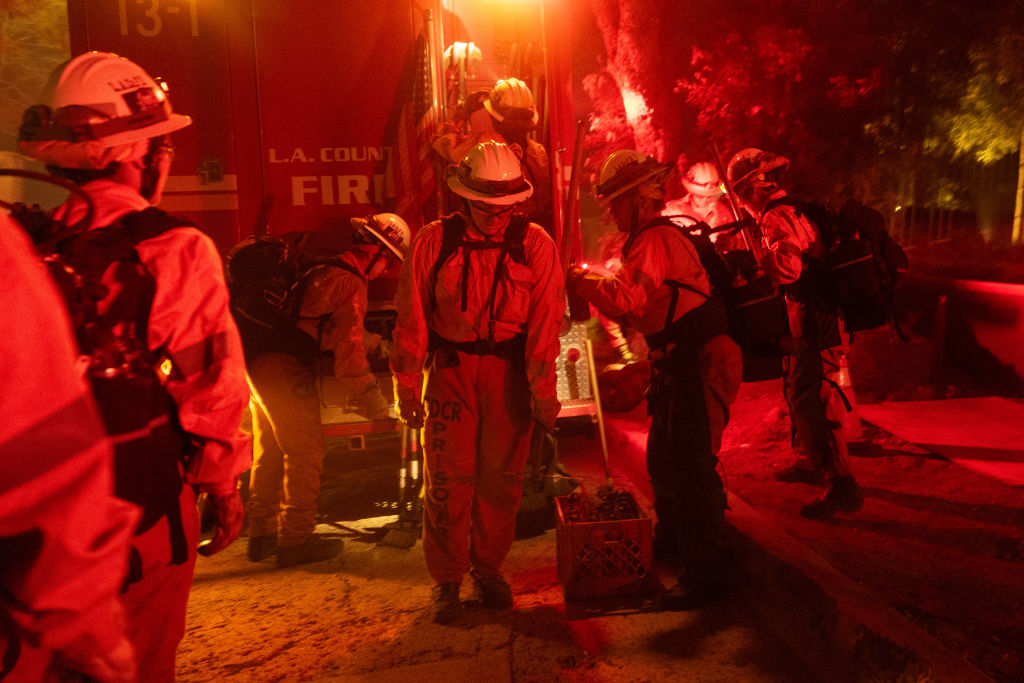
About 800 incarcerated firefighters are working with emergency responders to battle the Los Angeles wildfires as part of the California Department of Corrections and Rehabilitation’s Fire Camp Program.
Nearly 2,000 incarcerated people regularly take part in the program, which trains incarcerees to work with the California Department of Forestry to respond to fire-related emergencies like the deadly fires that have burned more than 9,000 structures this week.
According to CDCR, 783 Fire Camp firefighters have been cutting fire lines and removing fuel from behind structures to slow fire spread. Participants in the firefighting program are paid between $5.80 and $10.24 per day. On days when the firefighters are participating in an active emergency, the rate goes up by $1.
California has relied on incarcerated firefighters to combat wildfires since the mid-1900s, especially during World War II when many professional firefighters and fire crew members were serving in the war. The state has received criticism in the past for taking advantage of cheap, incarcerated labor. Proposition 6, which would have banned the use of forced prison labor, failed in November, with 53.8% of voters opposed.
“You can’t turn and say the prison system is providing this labor that we need because there are so many wildfires, and so it must remain that way,” Lindsey Feldman, an associate professor of anthropology at the University of Memphis, said. “Instead, we should be asking why are there so many fires and why have we as a society all agreed that prison labor is the effective way to stop it.”
CDCR’s firefighting program, in particular, has come under scrutiny due to the dangers associated with wildfires, which can quickly change direction. Incarcerated firefighters are more likely to get injured on the job compared to their professional counterparts, according to a report released by Time in 2018.
Feldman, who specializes in identity, labor and incarceration, said the use of incarcerated labor in California and in other states will always be exploitative.
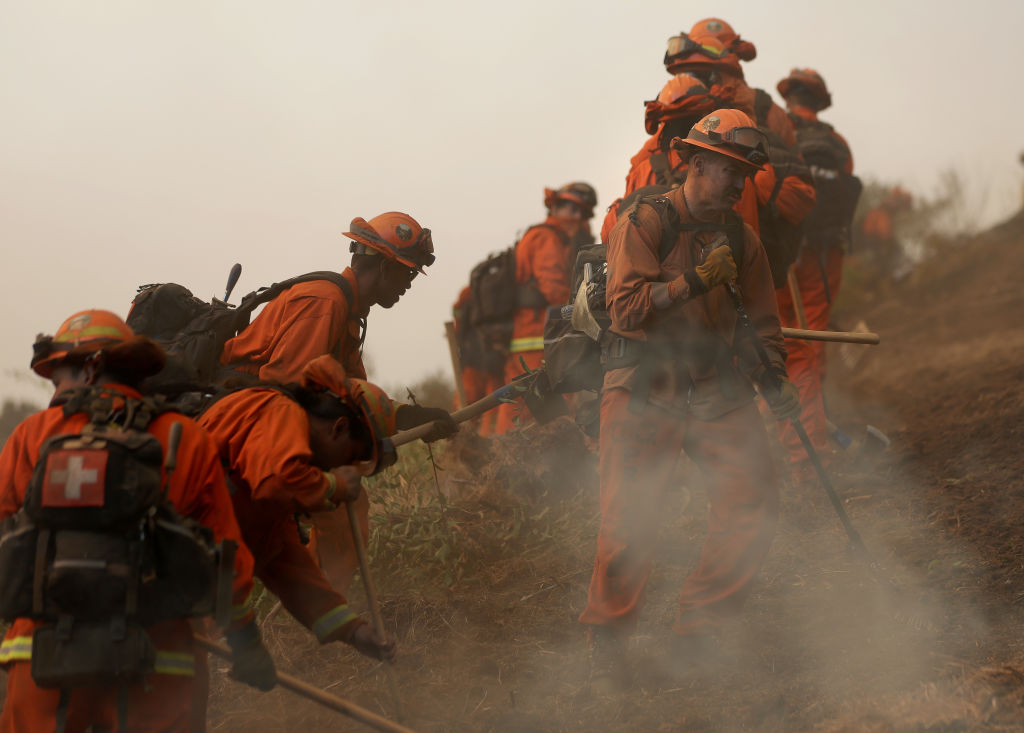
“There is no justification for the pay being as little as it is for the work that is being performed,” Feldman said. “There’s no question that this is risky work — dangerous — and people in prison tend to be more at risk of workplace injury than non-incarcerated people just because oversight in general is less than it is out of prison.”
Participants in CDCR’s program must meet certain security requirements before going through an extensive training program. The firefighters are stationed across 35 minimum-security facilities.
“I never knew anything about wildland fires until I actually went to Fire Camp, and I grew to love it,” said Royal Ramey, cofounder and chief executive officer of The Forestry and Fire Recruitment Program, a nonprofit that helps formerly incarcerated people find work as firefighters.