Affordability Concerns at Center of Cap-and-Trade Renewal Debate
Trump DOJ Sues California Over Clean Truck Deal, Saying It Seeks to Undermine US Law
California Abandons Diesel Truck Ban and 3 Other Clean-Air Rules Before Trump Is Sworn In
Newsom Vows to Bring Back California EV Rebates if Trump Cuts Federal Credit
California Air Regulators Approve Changes to Climate Program That Could Raise Gas Prices
Are Zero-Emission Vehicles Making a Dent in California's Air Pollution?
Tech Boom? What About A Carbon Removal Boom?
Electric Cars Remain Out of Reach for Many Lower-Income Californians as State Incentive Programs Run Dry
Automakers Side With Trump Administration in Legal Fight With California
Sponsored
Player sponsored by
window.__IS_SSR__=true
window.__INITIAL_STATE__={
"attachmentsReducer": {
"audio_0": {
"type": "attachments",
"id": "audio_0",
"imgSizes": {
"kqedFullSize": {
"file": "https://ww2.kqed.org/news/wp-content/themes/KQED-unified/img/audio_bgs/background0.jpg"
}
}
},
"audio_1": {
"type": "attachments",
"id": "audio_1",
"imgSizes": {
"kqedFullSize": {
"file": "https://ww2.kqed.org/news/wp-content/themes/KQED-unified/img/audio_bgs/background1.jpg"
}
}
},
"audio_2": {
"type": "attachments",
"id": "audio_2",
"imgSizes": {
"kqedFullSize": {
"file": "https://ww2.kqed.org/news/wp-content/themes/KQED-unified/img/audio_bgs/background2.jpg"
}
}
},
"audio_3": {
"type": "attachments",
"id": "audio_3",
"imgSizes": {
"kqedFullSize": {
"file": "https://ww2.kqed.org/news/wp-content/themes/KQED-unified/img/audio_bgs/background3.jpg"
}
}
},
"audio_4": {
"type": "attachments",
"id": "audio_4",
"imgSizes": {
"kqedFullSize": {
"file": "https://ww2.kqed.org/news/wp-content/themes/KQED-unified/img/audio_bgs/background4.jpg"
}
}
},
"placeholder": {
"type": "attachments",
"id": "placeholder",
"imgSizes": {
"thumbnail": {
"file": "https://cdn.kqed.org/wp-content/uploads/2024/12/KQED-Default-Image-816638274-2000x1333-1-160x107.jpg",
"width": 160,
"height": 107,
"mimeType": "image/jpeg"
},
"medium": {
"file": "https://cdn.kqed.org/wp-content/uploads/2024/12/KQED-Default-Image-816638274-2000x1333-1-800x533.jpg",
"width": 800,
"height": 533,
"mimeType": "image/jpeg"
},
"medium_large": {
"file": "https://cdn.kqed.org/wp-content/uploads/2024/12/KQED-Default-Image-816638274-2000x1333-1-768x512.jpg",
"width": 768,
"height": 512,
"mimeType": "image/jpeg"
},
"large": {
"file": "https://cdn.kqed.org/wp-content/uploads/2024/12/KQED-Default-Image-816638274-2000x1333-1-1020x680.jpg",
"width": 1020,
"height": 680,
"mimeType": "image/jpeg"
},
"1536x1536": {
"file": "https://cdn.kqed.org/wp-content/uploads/2024/12/KQED-Default-Image-816638274-2000x1333-1-1536x1024.jpg",
"width": 1536,
"height": 1024,
"mimeType": "image/jpeg"
},
"fd-lrg": {
"file": "https://cdn.kqed.org/wp-content/uploads/2024/12/KQED-Default-Image-816638274-2000x1333-1-1536x1024.jpg",
"width": 1536,
"height": 1024,
"mimeType": "image/jpeg"
},
"fd-med": {
"file": "https://cdn.kqed.org/wp-content/uploads/2024/12/KQED-Default-Image-816638274-2000x1333-1-1020x680.jpg",
"width": 1020,
"height": 680,
"mimeType": "image/jpeg"
},
"fd-sm": {
"file": "https://cdn.kqed.org/wp-content/uploads/2024/12/KQED-Default-Image-816638274-2000x1333-1-800x533.jpg",
"width": 800,
"height": 533,
"mimeType": "image/jpeg"
},
"post-thumbnail": {
"file": "https://cdn.kqed.org/wp-content/uploads/2024/12/KQED-Default-Image-816638274-2000x1333-1-672x372.jpg",
"width": 672,
"height": 372,
"mimeType": "image/jpeg"
},
"twentyfourteen-full-width": {
"file": "https://cdn.kqed.org/wp-content/uploads/2024/12/KQED-Default-Image-816638274-2000x1333-1-1038x576.jpg",
"width": 1038,
"height": 576,
"mimeType": "image/jpeg"
},
"xxsmall": {
"file": "https://cdn.kqed.org/wp-content/uploads/2024/12/KQED-Default-Image-816638274-2000x1333-1-160x107.jpg",
"width": 160,
"height": 107,
"mimeType": "image/jpeg"
},
"xsmall": {
"file": "https://cdn.kqed.org/wp-content/uploads/2024/12/KQED-Default-Image-816638274-2000x1333-1-672x372.jpg",
"width": 672,
"height": 372,
"mimeType": "image/jpeg"
},
"small": {
"file": "https://cdn.kqed.org/wp-content/uploads/2024/12/KQED-Default-Image-816638274-2000x1333-1-672x372.jpg",
"width": 672,
"height": 372,
"mimeType": "image/jpeg"
},
"xlarge": {
"file": "https://cdn.kqed.org/wp-content/uploads/2024/12/KQED-Default-Image-816638274-2000x1333-1-1020x680.jpg",
"width": 1020,
"height": 680,
"mimeType": "image/jpeg"
},
"full-width": {
"file": "https://cdn.kqed.org/wp-content/uploads/2024/12/KQED-Default-Image-816638274-2000x1333-1-1920x1280.jpg",
"width": 1920,
"height": 1280,
"mimeType": "image/jpeg"
},
"guest-author-32": {
"file": "https://cdn.kqed.org/wp-content/uploads/2025/01/KQED-Default-Image-816638274-1333x1333-1-160x160.jpg",
"width": 32,
"height": 32,
"mimeType": "image/jpeg"
},
"guest-author-50": {
"file": "https://cdn.kqed.org/wp-content/uploads/2025/01/KQED-Default-Image-816638274-1333x1333-1-160x160.jpg",
"width": 50,
"height": 50,
"mimeType": "image/jpeg"
},
"guest-author-64": {
"file": "https://cdn.kqed.org/wp-content/uploads/2025/01/KQED-Default-Image-816638274-1333x1333-1-160x160.jpg",
"width": 64,
"height": 64,
"mimeType": "image/jpeg"
},
"guest-author-96": {
"file": "https://cdn.kqed.org/wp-content/uploads/2025/01/KQED-Default-Image-816638274-1333x1333-1-160x160.jpg",
"width": 96,
"height": 96,
"mimeType": "image/jpeg"
},
"guest-author-128": {
"file": "https://cdn.kqed.org/wp-content/uploads/2025/01/KQED-Default-Image-816638274-1333x1333-1-160x160.jpg",
"width": 128,
"height": 128,
"mimeType": "image/jpeg"
},
"detail": {
"file": "https://cdn.kqed.org/wp-content/uploads/2025/01/KQED-Default-Image-816638274-1333x1333-1-160x160.jpg",
"width": 160,
"height": 160,
"mimeType": "image/jpeg"
},
"kqedFullSize": {
"file": "https://cdn.kqed.org/wp-content/uploads/2024/12/KQED-Default-Image-816638274-2000x1333-1.jpg",
"width": 2000,
"height": 1333
}
}
},
"news_12054067": {
"type": "attachments",
"id": "news_12054067",
"meta": {
"index": "attachments_1716263798",
"site": "news",
"id": "12054067",
"found": true
},
"title": "The Valero refinery in Benicia on Sept. 21, 2023.",
"publishDate": 1756404762,
"status": "inherit",
"parent": 12053867,
"modified": 1756404775,
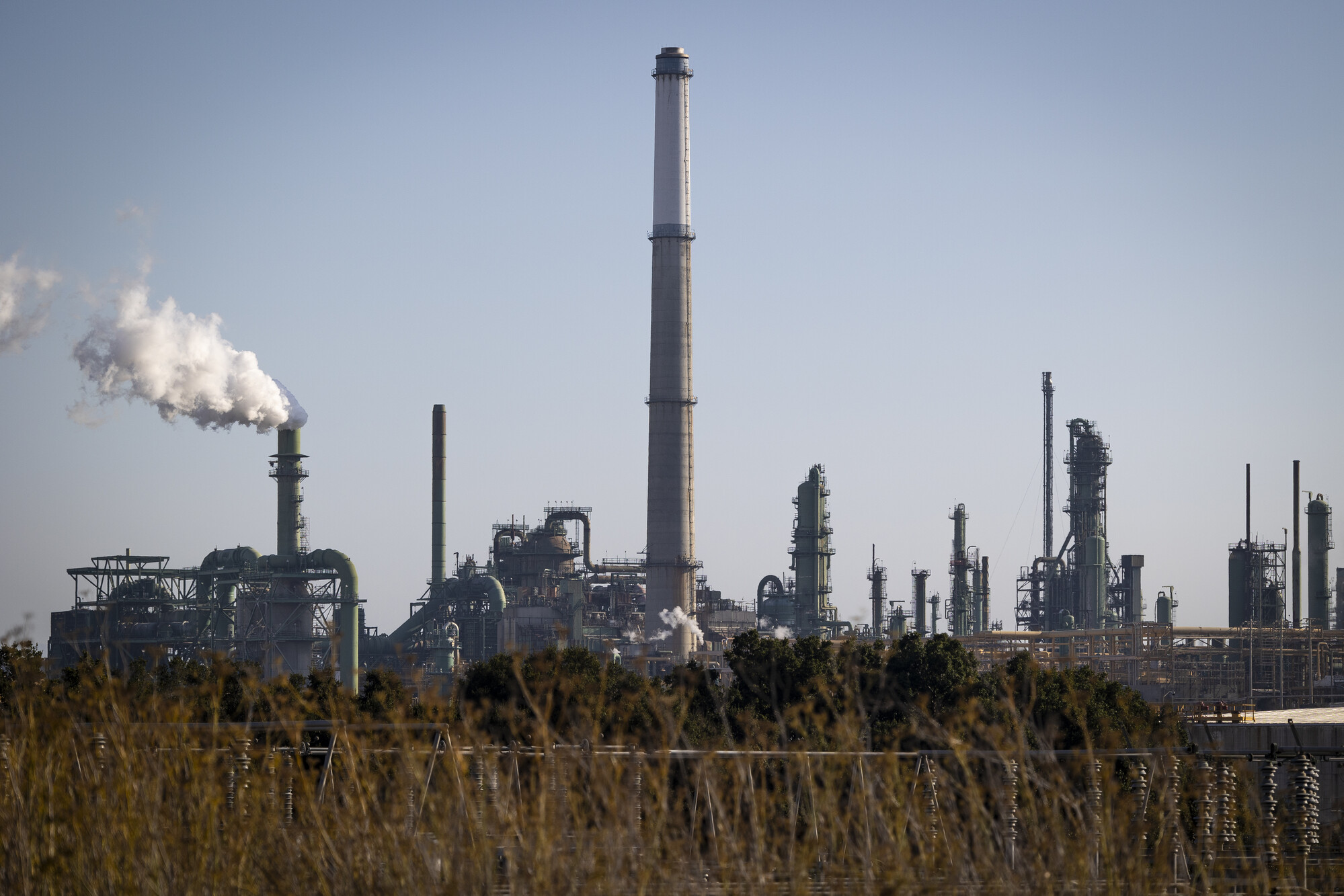
"caption": "The Valero refinery in Benicia on Sept. 21, 2023. Rising climate costs — and Democrats’ avowed focus on the cost of living — have added a new layer of complexity to the climate negotiations in the final weeks of session. ",
"credit": "Martin do Nascimento/KQED",
"altTag": null,
"description": null,
"imgSizes": {
"thumbnail": {
"file": "https://cdn.kqed.org/wp-content/uploads/sites/10/2025/08/230921-VALERO-BENICIA-REFINERY-MD-01_qed-160x107.jpg",
"width": 160,
"height": 107,
"mimeType": "image/jpeg"
},
"1536x1536": {
"file": "https://cdn.kqed.org/wp-content/uploads/sites/10/2025/08/230921-VALERO-BENICIA-REFINERY-MD-01_qed-1536x1024.jpg",
"width": 1536,
"height": 1024,
"mimeType": "image/jpeg"
},
"post-thumbnail": {
"file": "https://cdn.kqed.org/wp-content/uploads/sites/10/2025/08/230921-VALERO-BENICIA-REFINERY-MD-01_qed-672x372.jpg",
"width": 672,
"height": 372,
"mimeType": "image/jpeg"
},
"twentyfourteen-full-width": {
"file": "https://cdn.kqed.org/wp-content/uploads/sites/10/2025/08/230921-VALERO-BENICIA-REFINERY-MD-01_qed-1038x576.jpg",
"width": 1038,
"height": 576,
"mimeType": "image/jpeg"
},
"kqedFullSize": {
"file": "https://cdn.kqed.org/wp-content/uploads/sites/10/2025/08/230921-VALERO-BENICIA-REFINERY-MD-01_qed.jpg",
"width": 1999,
"height": 1333
}
},
"fetchFailed": false,
"isLoading": false
},
"news_12052396": {
"type": "attachments",
"id": "news_12052396",
"meta": {
"index": "attachments_1716263798",
"site": "news",
"id": "12052396",
"found": true
},
"title": "Trucks leave the Port of Oakland on Sept. 28, 2023.",
"publishDate": 1755283879,
"status": "inherit",
"parent": 12052390,
"modified": 1755283892,
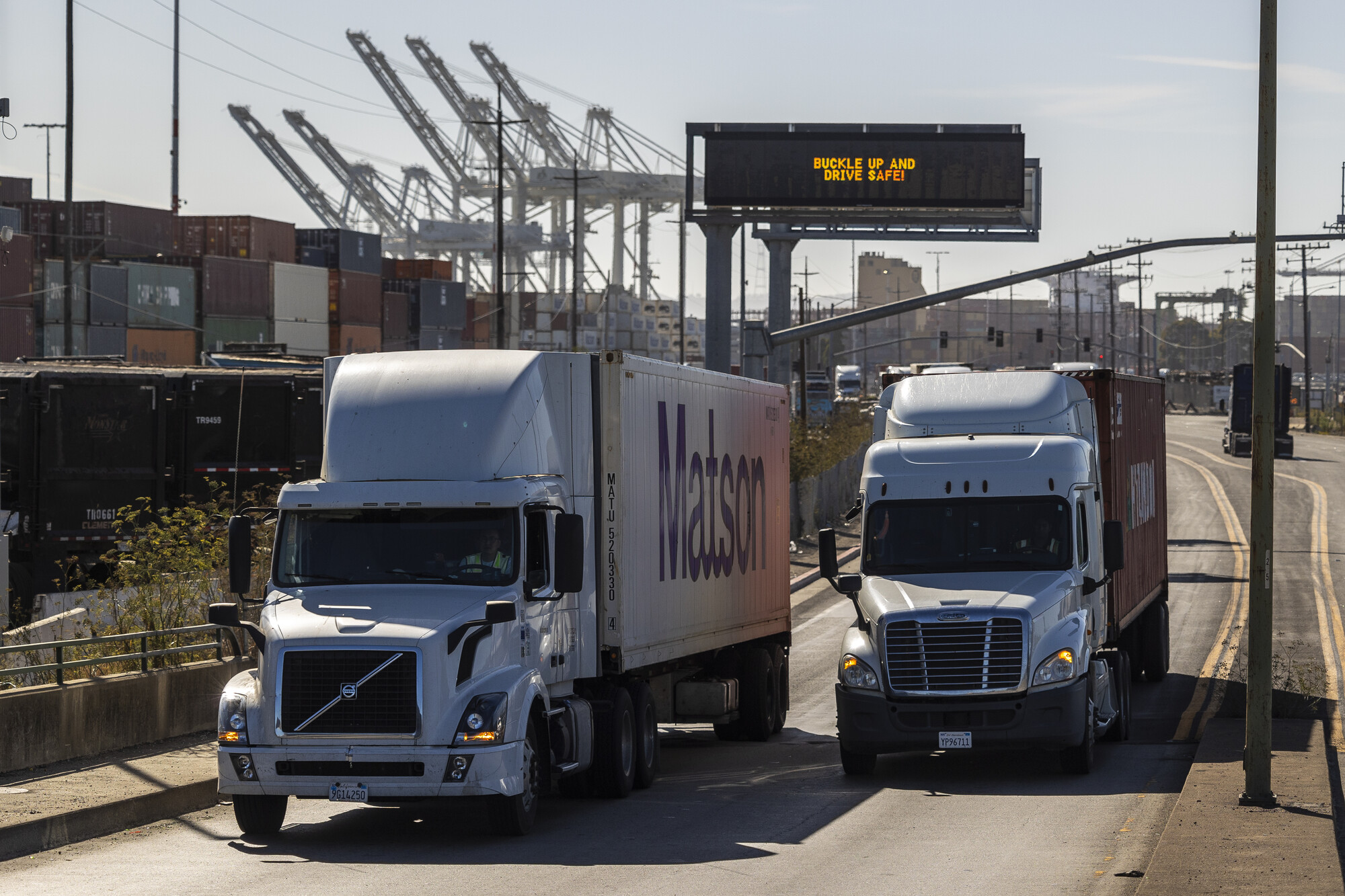
"caption": "Trucks leave the Port of Oakland on Sept. 28, 2023.",
"credit": "Martin do Nascimento/KQED",
"altTag": null,
"description": null,
"imgSizes": {
"thumbnail": {
"file": "https://cdn.kqed.org/wp-content/uploads/sites/10/2025/08/230928-EAGLE-ROCK-SETTLE-MD-07_qed-160x107.jpg",
"width": 160,
"height": 107,
"mimeType": "image/jpeg"
},
"1536x1536": {
"file": "https://cdn.kqed.org/wp-content/uploads/sites/10/2025/08/230928-EAGLE-ROCK-SETTLE-MD-07_qed-1536x1024.jpg",
"width": 1536,
"height": 1024,
"mimeType": "image/jpeg"
},
"post-thumbnail": {
"file": "https://cdn.kqed.org/wp-content/uploads/sites/10/2025/08/230928-EAGLE-ROCK-SETTLE-MD-07_qed-672x372.jpg",
"width": 672,
"height": 372,
"mimeType": "image/jpeg"
},
"twentyfourteen-full-width": {
"file": "https://cdn.kqed.org/wp-content/uploads/sites/10/2025/08/230928-EAGLE-ROCK-SETTLE-MD-07_qed-1038x576.jpg",
"width": 1038,
"height": 576,
"mimeType": "image/jpeg"
},
"kqedFullSize": {
"file": "https://cdn.kqed.org/wp-content/uploads/sites/10/2025/08/230928-EAGLE-ROCK-SETTLE-MD-07_qed.jpg",
"width": 2000,
"height": 1333
}
},
"fetchFailed": false,
"isLoading": false
},
"news_12022315": {
"type": "attachments",
"id": "news_12022315",
"meta": {
"index": "attachments_1716263798",
"site": "news",
"id": "12022315",
"found": true
},
"title": "120224_Drumm-Avenue_CS_CM_02 copy",
"publishDate": 1736966399,
"status": "inherit",
"parent": 12022313,
"modified": 1736966447,
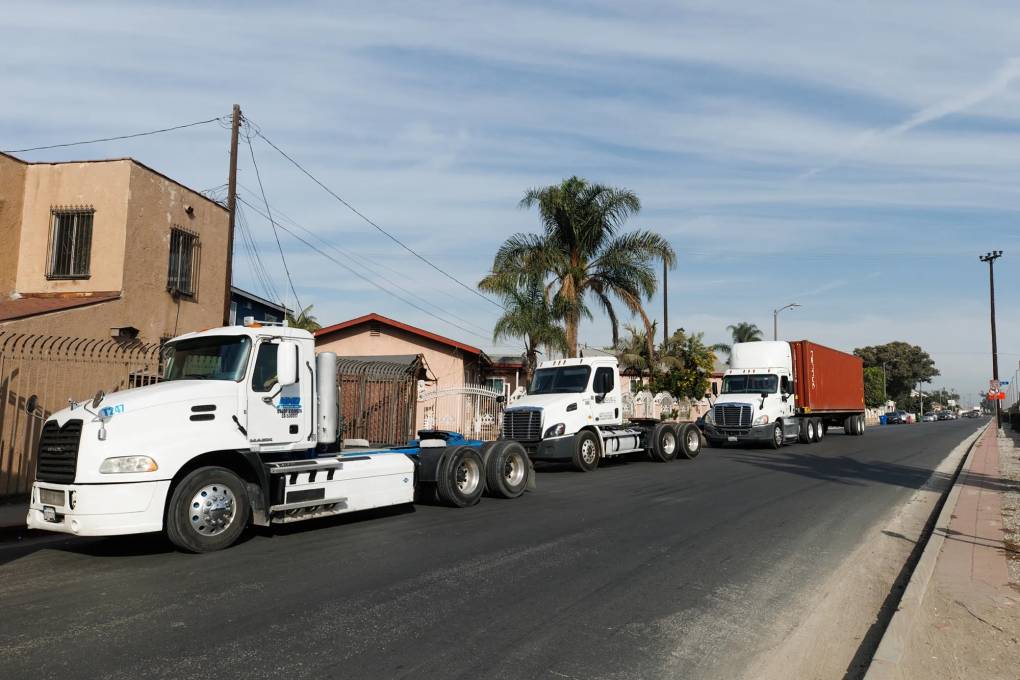
"caption": "Commercial trucks line up in front of a residential neighborhood in the Wilmington area of Los Angeles on Dec. 2, 2024. California has withdrawn its clean-air rule phasing out diesel trucks. ",
"credit": "Carlin Stiehl for CalMatters",
"altTag": "Diesel trucks parked by the side of a road in a residential area.",
"description": null,
"imgSizes": {
"medium": {
"file": "https://cdn.kqed.org/wp-content/uploads/sites/10/2025/01/120224_Drumm-Avenue_CS_CM_02-copy-800x533.jpg",
"width": 800,
"height": 533,
"mimeType": "image/jpeg"
},
"large": {
"file": "https://cdn.kqed.org/wp-content/uploads/sites/10/2025/01/120224_Drumm-Avenue_CS_CM_02-copy-1020x680.jpg",
"width": 1020,
"height": 680,
"mimeType": "image/jpeg"
},
"thumbnail": {
"file": "https://cdn.kqed.org/wp-content/uploads/sites/10/2025/01/120224_Drumm-Avenue_CS_CM_02-copy-160x107.jpg",
"width": 160,
"height": 107,
"mimeType": "image/jpeg"
},
"1536x1536": {
"file": "https://cdn.kqed.org/wp-content/uploads/sites/10/2025/01/120224_Drumm-Avenue_CS_CM_02-copy-1536x1024.jpg",
"width": 1536,
"height": 1024,
"mimeType": "image/jpeg"
},
"post-thumbnail": {
"file": "https://cdn.kqed.org/wp-content/uploads/sites/10/2025/01/120224_Drumm-Avenue_CS_CM_02-copy-672x372.jpg",
"width": 672,
"height": 372,
"mimeType": "image/jpeg"
},
"twentyfourteen-full-width": {
"file": "https://cdn.kqed.org/wp-content/uploads/sites/10/2025/01/120224_Drumm-Avenue_CS_CM_02-copy-1038x576.jpg",
"width": 1038,
"height": 576,
"mimeType": "image/jpeg"
},
"full-width": {
"file": "https://cdn.kqed.org/wp-content/uploads/sites/10/2025/01/120224_Drumm-Avenue_CS_CM_02-copy-1920x1280.jpg",
"width": 1920,
"height": 1280,
"mimeType": "image/jpeg"
},
"kqedFullSize": {
"file": "https://cdn.kqed.org/wp-content/uploads/sites/10/2025/01/120224_Drumm-Avenue_CS_CM_02-copy.jpg",
"width": 2000,
"height": 1333
}
},
"fetchFailed": false,
"isLoading": false
},
"news_12007166": {
"type": "attachments",
"id": "news_12007166",
"meta": {
"index": "attachments_1716263798",
"site": "news",
"id": "12007166",
"found": true
},
"title": "Gavin Newsom",
"publishDate": 1727724857,
"status": "inherit",
"parent": 12007157,
"modified": 1727725501,
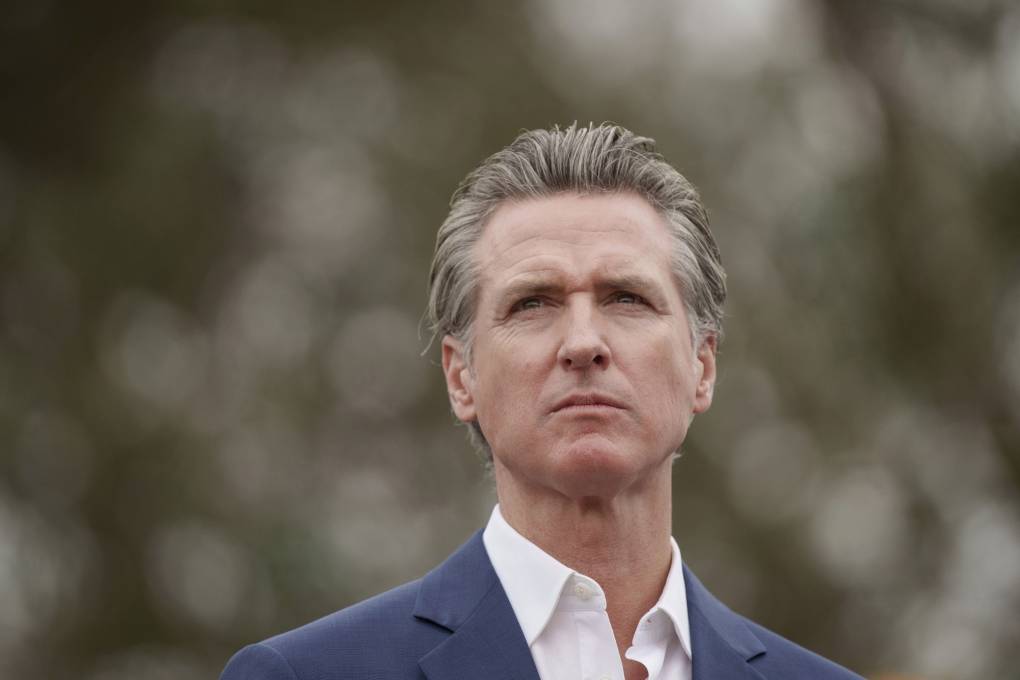
"caption": "Gov. Gavin Newsom speaks during a press conference in Los Angeles on Sept. 25, 2024. Gov. Gavin Newsom vetoed a bill on Monday that would have allowed California to block private equity acquisitions of healthcare facilities. ",
"credit": "Eric Thayer/AP Photo",
"altTag": null,
"description": null,
"imgSizes": {
"medium": {
"file": "https://cdn.kqed.org/wp-content/uploads/sites/10/2024/09/GavinNewsomAP2-800x533.jpg",
"width": 800,
"height": 533,
"mimeType": "image/jpeg"
},
"large": {
"file": "https://cdn.kqed.org/wp-content/uploads/sites/10/2024/09/GavinNewsomAP2-1020x680.jpg",
"width": 1020,
"height": 680,
"mimeType": "image/jpeg"
},
"thumbnail": {
"file": "https://cdn.kqed.org/wp-content/uploads/sites/10/2024/09/GavinNewsomAP2-160x107.jpg",
"width": 160,
"height": 107,
"mimeType": "image/jpeg"
},
"1536x1536": {
"file": "https://cdn.kqed.org/wp-content/uploads/sites/10/2024/09/GavinNewsomAP2-1536x1024.jpg",
"width": 1536,
"height": 1024,
"mimeType": "image/jpeg"
},
"post-thumbnail": {
"file": "https://cdn.kqed.org/wp-content/uploads/sites/10/2024/09/GavinNewsomAP2-672x372.jpg",
"width": 672,
"height": 372,
"mimeType": "image/jpeg"
},
"twentyfourteen-full-width": {
"file": "https://cdn.kqed.org/wp-content/uploads/sites/10/2024/09/GavinNewsomAP2-1038x576.jpg",
"width": 1038,
"height": 576,
"mimeType": "image/jpeg"
},
"full-width": {
"file": "https://cdn.kqed.org/wp-content/uploads/sites/10/2024/09/GavinNewsomAP2-1920x1280.jpg",
"width": 1920,
"height": 1280,
"mimeType": "image/jpeg"
},
"kqedFullSize": {
"file": "https://cdn.kqed.org/wp-content/uploads/sites/10/2024/09/GavinNewsomAP2.jpg",
"width": 2000,
"height": 1333
}
},
"fetchFailed": false,
"isLoading": false
},
"news_12013895": {
"type": "attachments",
"id": "news_12013895",
"meta": {
"index": "attachments_1716263798",
"site": "news",
"id": "12013895",
"found": true
},
"title": "240129-EVFILE-KSM-26_qed",
"publishDate": 1731189616,
"status": "inherit",
"parent": 12013891,
"modified": 1731189653,
"caption": "Electric vehicles charge at an EVgo Fast Chargins station in Oakland on Jan 29, 2024.",
"credit": "Kathryn Styer Martínez/KQED",
"altTag": null,
"description": null,
"imgSizes": {
"medium": {
"file": "https://cdn.kqed.org/wp-content/uploads/sites/10/2024/11/240129-EVFILE-KSM-26_qed-800x533.jpg",
"width": 800,
"height": 533,
"mimeType": "image/jpeg"
},
"large": {
"file": "https://cdn.kqed.org/wp-content/uploads/sites/10/2024/11/240129-EVFILE-KSM-26_qed-1020x680.jpg",
"width": 1020,
"height": 680,
"mimeType": "image/jpeg"
},
"thumbnail": {
"file": "https://cdn.kqed.org/wp-content/uploads/sites/10/2024/11/240129-EVFILE-KSM-26_qed-160x107.jpg",
"width": 160,
"height": 107,
"mimeType": "image/jpeg"
},
"1536x1536": {
"file": "https://cdn.kqed.org/wp-content/uploads/sites/10/2024/11/240129-EVFILE-KSM-26_qed-1536x1024.jpg",
"width": 1536,
"height": 1024,
"mimeType": "image/jpeg"
},
"post-thumbnail": {
"file": "https://cdn.kqed.org/wp-content/uploads/sites/10/2024/11/240129-EVFILE-KSM-26_qed-672x372.jpg",
"width": 672,
"height": 372,
"mimeType": "image/jpeg"
},
"twentyfourteen-full-width": {
"file": "https://cdn.kqed.org/wp-content/uploads/sites/10/2024/11/240129-EVFILE-KSM-26_qed-1038x576.jpg",
"width": 1038,
"height": 576,
"mimeType": "image/jpeg"
},
"full-width": {
"file": "https://cdn.kqed.org/wp-content/uploads/sites/10/2024/11/240129-EVFILE-KSM-26_qed-1920x1280.jpg",
"width": 1920,
"height": 1280,
"mimeType": "image/jpeg"
},
"kqedFullSize": {
"file": "https://cdn.kqed.org/wp-content/uploads/sites/10/2024/11/240129-EVFILE-KSM-26_qed.jpg",
"width": 2000,
"height": 1333
}
},
"fetchFailed": false,
"isLoading": false
},
"news_11951887": {
"type": "attachments",
"id": "news_11951887",
"meta": {
"index": "attachments_1716263798",
"site": "news",
"id": "11951887",
"found": true
},
"parent": 11951866,
"imgSizes": {
"twentyfourteen-full-width": {
"file": "https://ww2.kqed.org/app/uploads/sites/10/2023/06/RS32605_ElectricCars_AW_10-qut-1038x576.jpg",
"width": 1038,
"mimeType": "image/jpeg",
"height": 576
},
"thumbnail": {
"file": "https://ww2.kqed.org/app/uploads/sites/10/2023/06/RS32605_ElectricCars_AW_10-qut-160x107.jpg",
"width": 160,
"mimeType": "image/jpeg",
"height": 107
},
"post-thumbnail": {
"file": "https://ww2.kqed.org/app/uploads/sites/10/2023/06/RS32605_ElectricCars_AW_10-qut-672x372.jpg",
"width": 672,
"mimeType": "image/jpeg",
"height": 372
},
"kqedFullSize": {
"file": "https://ww2.kqed.org/app/uploads/sites/10/2023/06/RS32605_ElectricCars_AW_10-qut.jpg",
"width": 1920,
"height": 1280
},
"large": {
"file": "https://ww2.kqed.org/app/uploads/sites/10/2023/06/RS32605_ElectricCars_AW_10-qut-1020x680.jpg",
"width": 1020,
"mimeType": "image/jpeg",
"height": 680
},
"1536x1536": {
"file": "https://ww2.kqed.org/app/uploads/sites/10/2023/06/RS32605_ElectricCars_AW_10-qut-1536x1024.jpg",
"width": 1536,
"mimeType": "image/jpeg",
"height": 1024
},
"medium": {
"file": "https://ww2.kqed.org/app/uploads/sites/10/2023/06/RS32605_ElectricCars_AW_10-qut-800x533.jpg",
"width": 800,
"mimeType": "image/jpeg",
"height": 533
}
},
"publishDate": 1685573972,
"modified": 1685576249,
"caption": "A public charging station for electric vehicles in the Potrero neighborhood of San Francisco.",
"description": null,
"title": "RS32605_ElectricCars_AW_10-qut",
"credit": "Anne Wernikoff/KQED",
"status": "inherit",
"altTag": null,
"fetchFailed": false,
"isLoading": false
},
"news_11945364": {
"type": "attachments",
"id": "news_11945364",
"meta": {
"index": "attachments_1716263798",
"site": "news",
"id": "11945364",
"found": true
},
"parent": 11945363,
"imgSizes": {
"twentyfourteen-full-width": {
"file": "https://ww2.kqed.org/app/uploads/sites/10/2023/03/RS63891_012_KQED_CharmIndustrial_03282023-qut-1038x576.jpg",
"width": 1038,
"mimeType": "image/jpeg",
"height": 576
},
"thumbnail": {
"file": "https://ww2.kqed.org/app/uploads/sites/10/2023/03/RS63891_012_KQED_CharmIndustrial_03282023-qut-160x107.jpg",
"width": 160,
"mimeType": "image/jpeg",
"height": 107
},
"post-thumbnail": {
"file": "https://ww2.kqed.org/app/uploads/sites/10/2023/03/RS63891_012_KQED_CharmIndustrial_03282023-qut-672x372.jpg",
"width": 672,
"mimeType": "image/jpeg",
"height": 372
},
"kqedFullSize": {
"file": "https://ww2.kqed.org/app/uploads/sites/10/2023/03/RS63891_012_KQED_CharmIndustrial_03282023-qut.jpg",
"width": 1920,
"height": 1280
},
"large": {
"file": "https://ww2.kqed.org/app/uploads/sites/10/2023/03/RS63891_012_KQED_CharmIndustrial_03282023-qut-1020x680.jpg",
"width": 1020,
"mimeType": "image/jpeg",
"height": 680
},
"1536x1536": {
"file": "https://ww2.kqed.org/app/uploads/sites/10/2023/03/RS63891_012_KQED_CharmIndustrial_03282023-qut-1536x1024.jpg",
"width": 1536,
"mimeType": "image/jpeg",
"height": 1024
},
"medium": {
"file": "https://ww2.kqed.org/app/uploads/sites/10/2023/03/RS63891_012_KQED_CharmIndustrial_03282023-qut-800x533.jpg",
"width": 800,
"mimeType": "image/jpeg",
"height": 533
}
},
"publishDate": 1680296607,
"modified": 1680296637,
"caption": "Andrew Radbel, a mechanical engineer, works on a cyclone test skid at Charm Industrial in San Francisco on March 28, 2023. The machine tests particulate filtration before the pyrolyzer.",
"description": null,
"title": "RS63891_012_KQED_CharmIndustrial_03282023-qut",
"credit": "Beth LaBerge/KQED",
"status": "inherit",
"altTag": null,
"fetchFailed": false,
"isLoading": false
},
"news_11921319": {
"type": "attachments",
"id": "news_11921319",
"meta": {
"index": "attachments_1716263798",
"site": "news",
"id": "11921319",
"found": true
},
"parent": 11921266,
"imgSizes": {
"twentyfourteen-full-width": {
"file": "https://ww2.kqed.org/app/uploads/sites/10/2022/08/GettyImages-1286630563-1038x576.jpg",
"width": 1038,
"mimeType": "image/jpeg",
"height": 576
},
"thumbnail": {
"file": "https://ww2.kqed.org/app/uploads/sites/10/2022/08/GettyImages-1286630563-160x107.jpg",
"width": 160,
"mimeType": "image/jpeg",
"height": 107
},
"post-thumbnail": {
"file": "https://ww2.kqed.org/app/uploads/sites/10/2022/08/GettyImages-1286630563-672x372.jpg",
"width": 672,
"mimeType": "image/jpeg",
"height": 372
},
"kqedFullSize": {
"file": "https://ww2.kqed.org/app/uploads/sites/10/2022/08/GettyImages-1286630563-scaled.jpg",
"width": 2560,
"height": 1707
},
"2048x2048": {
"file": "https://ww2.kqed.org/app/uploads/sites/10/2022/08/GettyImages-1286630563-2048x1365.jpg",
"width": 2048,
"mimeType": "image/jpeg",
"height": 1365
},
"large": {
"file": "https://ww2.kqed.org/app/uploads/sites/10/2022/08/GettyImages-1286630563-1020x680.jpg",
"width": 1020,
"mimeType": "image/jpeg",
"height": 680
},
"1536x1536": {
"file": "https://ww2.kqed.org/app/uploads/sites/10/2022/08/GettyImages-1286630563-1536x1024.jpg",
"width": 1536,
"mimeType": "image/jpeg",
"height": 1024
},
"full-width": {
"file": "https://ww2.kqed.org/app/uploads/sites/10/2022/08/GettyImages-1286630563-1920x1280.jpg",
"width": 1920,
"mimeType": "image/jpeg",
"height": 1280
},
"medium": {
"file": "https://ww2.kqed.org/app/uploads/sites/10/2022/08/GettyImages-1286630563-800x533.jpg",
"width": 800,
"mimeType": "image/jpeg",
"height": 533
}
},
"publishDate": 1659474458,
"modified": 1661522244,
"caption": null,
"description": "Maya Katz-Ali charges her electric car at a station along Lakeshore Avenue in Oakland. Katz-Ali bought the car in 2020 with the help of an incentive through the state's Clean Cars for All program, designed to help lower-income Californians purchase zero-emissions vehicles. But experts say the programs have been plagued by such long wait lists — and, in some cases, inadequate funding — that many who want to take advantage of the subsidies cannot.",
"title": "SFChronicleElectricCars",
"credit": "Santiago Mejia/The San Francisco Chronicle via Getty Images",
"status": "inherit",
"altTag": "a person fuels an electric car",
"fetchFailed": false,
"isLoading": false
},
"news_11783582": {
"type": "attachments",
"id": "news_11783582",
"meta": {
"index": "attachments_1716263798",
"site": "news",
"id": "11783582",
"found": true
},
"parent": 11783572,
"imgSizes": {
"apple_news_ca_landscape_5_5": {
"file": "https://ww2.kqed.org/app/uploads/sites/10/2019/10/los-angeles-traffic-1044x783.jpg",
"width": 1044,
"mimeType": "image/jpeg",
"height": 783
},
"apple_news_ca_square_4_0": {
"file": "https://ww2.kqed.org/app/uploads/sites/10/2019/10/los-angeles-traffic-470x470.jpg",
"width": 470,
"mimeType": "image/jpeg",
"height": 470
},
"twentyfourteen-full-width": {
"file": "https://ww2.kqed.org/app/uploads/sites/10/2019/10/los-angeles-traffic-1038x576.jpg",
"width": 1038,
"mimeType": "image/jpeg",
"height": 576
},
"thumbnail": {
"file": "https://ww2.kqed.org/app/uploads/sites/10/2019/10/los-angeles-traffic-160x107.jpg",
"width": 160,
"mimeType": "image/jpeg",
"height": 107
},
"post-thumbnail": {
"file": "https://ww2.kqed.org/app/uploads/sites/10/2019/10/los-angeles-traffic-672x372.jpg",
"width": 672,
"mimeType": "image/jpeg",
"height": 372
},
"kqedFullSize": {
"file": "https://ww2.kqed.org/app/uploads/sites/10/2019/10/los-angeles-traffic.jpg",
"width": 1920,
"height": 1278
},
"apple_news_ca_landscape_4_7": {
"file": "https://ww2.kqed.org/app/uploads/sites/10/2019/10/los-angeles-traffic-632x474.jpg",
"width": 632,
"mimeType": "image/jpeg",
"height": 474
},
"large": {
"file": "https://ww2.kqed.org/app/uploads/sites/10/2019/10/los-angeles-traffic-1020x679.jpg",
"width": 1020,
"mimeType": "image/jpeg",
"height": 679
},
"complete_open_graph": {
"file": "https://ww2.kqed.org/app/uploads/sites/10/2019/10/los-angeles-traffic-1200x799.jpg",
"width": 1200,
"mimeType": "image/jpeg",
"height": 799
},
"apple_news_ca_landscape_4_0": {
"file": "https://ww2.kqed.org/app/uploads/sites/10/2019/10/los-angeles-traffic-536x402.jpg",
"width": 536,
"mimeType": "image/jpeg",
"height": 402
},
"apple_news_ca_portrait_12_9": {
"file": "https://ww2.kqed.org/app/uploads/sites/10/2019/10/los-angeles-traffic-1122x1278.jpg",
"width": 1122,
"mimeType": "image/jpeg",
"height": 1278
},
"medium": {
"file": "https://ww2.kqed.org/app/uploads/sites/10/2019/10/los-angeles-traffic-800x533.jpg",
"width": 800,
"mimeType": "image/jpeg",
"height": 533
},
"apple_news_ca_portrait_4_0": {
"file": "https://ww2.kqed.org/app/uploads/sites/10/2019/10/los-angeles-traffic-354x472.jpg",
"width": 354,
"mimeType": "image/jpeg",
"height": 472
},
"apple_news_ca_portrait_9_7": {
"file": "https://ww2.kqed.org/app/uploads/sites/10/2019/10/los-angeles-traffic-840x1120.jpg",
"width": 840,
"mimeType": "image/jpeg",
"height": 1120
},
"apple_news_ca_landscape_12_9": {
"file": "https://ww2.kqed.org/app/uploads/sites/10/2019/10/los-angeles-traffic-1832x1278.jpg",
"width": 1832,
"mimeType": "image/jpeg",
"height": 1278
},
"apple_news_ca_square_9_7": {
"file": "https://ww2.kqed.org/app/uploads/sites/10/2019/10/los-angeles-traffic-1104x1104.jpg",
"width": 1104,
"mimeType": "image/jpeg",
"height": 1104
},
"apple_news_ca_portrait_4_7": {
"file": "https://ww2.kqed.org/app/uploads/sites/10/2019/10/los-angeles-traffic-414x552.jpg",
"width": 414,
"mimeType": "image/jpeg",
"height": 552
},
"apple_news_ca_square_12_9": {
"file": "https://ww2.kqed.org/app/uploads/sites/10/2019/10/los-angeles-traffic-1472x1278.jpg",
"width": 1472,
"mimeType": "image/jpeg",
"height": 1278
},
"apple_news_ca_portrait_5_5": {
"file": "https://ww2.kqed.org/app/uploads/sites/10/2019/10/los-angeles-traffic-687x916.jpg",
"width": 687,
"mimeType": "image/jpeg",
"height": 916
},
"full-width": {
"file": "https://ww2.kqed.org/app/uploads/sites/10/2019/10/los-angeles-traffic-1920x1278.jpg",
"width": 1920,
"mimeType": "image/jpeg",
"height": 1278
},
"apple_news_ca_square_4_7": {
"file": "https://ww2.kqed.org/app/uploads/sites/10/2019/10/los-angeles-traffic-550x550.jpg",
"width": 550,
"mimeType": "image/jpeg",
"height": 550
},
"apple_news_ca_landscape_9_7": {
"file": "https://ww2.kqed.org/app/uploads/sites/10/2019/10/los-angeles-traffic-1376x1032.jpg",
"width": 1376,
"mimeType": "image/jpeg",
"height": 1032
},
"apple_news_ca_square_5_5": {
"file": "https://ww2.kqed.org/app/uploads/sites/10/2019/10/los-angeles-traffic-912x912.jpg",
"width": 912,
"mimeType": "image/jpeg",
"height": 912
}
},
"publishDate": 1572372880,
"modified": 1572385203,
"caption": "Vehicles on the 101 freeway in Los Angeles on Sept. 17, 2019.",
"description": "Vehicles on the 101 freeway in Los Angeles on Sept. 17, 2019.",
"title": "los-angeles-traffic",
"credit": "Robyn Beck/AFP/Getty Images",
"status": "inherit",
"fetchFailed": false,
"isLoading": false
}
},
"audioPlayerReducer": {
"postId": "stream_live",
"isPaused": true,
"isPlaying": false,
"pfsActive": false,
"pledgeModalIsOpen": true,
"playerDrawerIsOpen": false
},
"authorsReducer": {
"byline_news_12022313": {
"type": "authors",
"id": "byline_news_12022313",
"meta": {
"override": true
},
"slug": "byline_news_12022313",
"name": "\u003ca href=\"https://calmatters.org/author/alejandro-lazo/\">Alejandro Lazo\u003c/a>, CalMatters",
"isLoading": false
},
"byline_news_12013891": {
"type": "authors",
"id": "byline_news_12013891",
"meta": {
"override": true
},
"slug": "byline_news_12013891",
"name": "Sophie Austin, Associated Press",
"isLoading": false
},
"byline_news_11921266": {
"type": "authors",
"id": "byline_news_11921266",
"meta": {
"override": true
},
"slug": "byline_news_11921266",
"name": "Nadia Lopez",
"isLoading": false
},
"byline_news_11783572": {
"type": "authors",
"id": "byline_news_11783572",
"meta": {
"override": true
},
"slug": "byline_news_11783572",
"name": "\u003cstrong>Tom Krisher and Ellen Knickmeyer\u003cbr />Associated Press\u003c/strong>",
"isLoading": false
},
"gmarzorati": {
"type": "authors",
"id": "227",
"meta": {
"index": "authors_1716337520",
"id": "227",
"found": true
},
"name": "Guy Marzorati",
"firstName": "Guy",
"lastName": "Marzorati",
"slug": "gmarzorati",
"email": "gmarzorati@KQED.org",
"display_author_email": true,
"staff_mastheads": [
"news"
],
"title": "Correspondent",
"bio": "Guy Marzorati is a correspondent on KQED's California Politics and Government Desk, based in San Jose. A graduate of Santa Clara University, Guy joined KQED in 2013. He reports on state and local politics and produces KQED's digital voter guide.",
"avatar": "https://secure.gravatar.com/avatar/e7038b8dbfd55b104369b76b1cd0b9de?s=600&d=blank&r=g",
"twitter": "guymarzorati",
"facebook": null,
"instagram": null,
"linkedin": null,
"sites": [
{
"site": "",
"roles": [
"editor"
]
},
{
"site": "news",
"roles": [
"editor"
]
},
{
"site": "science",
"roles": [
"editor"
]
},
{
"site": "forum",
"roles": [
"editor"
]
},
{
"site": "elections",
"roles": [
"editor"
]
},
{
"site": "liveblog",
"roles": [
"editor"
]
}
],
"headData": {
"title": "Guy Marzorati | KQED",
"description": "Correspondent",
"ogImgSrc": "https://secure.gravatar.com/avatar/e7038b8dbfd55b104369b76b1cd0b9de?s=600&d=blank&r=g",
"twImgSrc": "https://secure.gravatar.com/avatar/e7038b8dbfd55b104369b76b1cd0b9de?s=600&d=blank&r=g"
},
"isLoading": false,
"link": "/author/gmarzorati"
},
"lklivans": {
"type": "authors",
"id": "8648",
"meta": {
"index": "authors_1716337520",
"id": "8648",
"found": true
},
"name": "Laura Klivans",
"firstName": "Laura",
"lastName": "Klivans",
"slug": "lklivans",
"email": "lklivans@kqed.org",
"display_author_email": true,
"staff_mastheads": [
"news",
"science"
],
"title": "Reporter",
"bio": "Laura Klivans is an award-winning science reporter for KQED News, where she covers climate change with an eye on both groundbreaking progress and gaps in action. She is the former host of KQED's blockbuster video series about tiny, amazing animals, \u003cem>Deep Look\u003c/em>. Her work reaches national audiences through NPR, \u003cem>Here & Now, \u003c/em>PRI, and other major outlets. \r\n\r\nLaura’s won five Northern California Area Emmy Awards for Deep Look and First Place in the Greater Bay Area Journalism Awards for a podcast exploring how one Oakland neighborhood teamed up to reduce planet-heating pollution.\r\n\r\nBeyond her reporting, she hosts and moderates events. In the past, she taught audio storytelling at the UC Berkeley Graduate School of Journalism, led international education programs, worked with immigrants and refugees along the Thai-Burmese border, taught high schoolers sex ed, and was an actress. \r\n\r\nShe's a former UC Berkeley Human Rights Fellow, USC Center for Health Journalism's California Fellow and Coro Fellow in Public Affairs. Laura has a master’s in journalism from UC Berkeley, a master’s in education from Harvard, and an undergraduate degree from Northwestern University.\r\n\r\nShe loves trying to riddle the meaning out of vanity license plates.",
"avatar": "https://secure.gravatar.com/avatar/af8e757bb8ce7b7fee6160ba66e37327?s=600&d=blank&r=g",
"twitter": "lauraklivans",
"facebook": null,
"instagram": null,
"linkedin": null,
"sites": [
{
"site": "news",
"roles": [
"editor"
]
},
{
"site": "stateofhealth",
"roles": [
"contributor",
"editor"
]
},
{
"site": "science",
"roles": [
"editor"
]
},
{
"site": "forum",
"roles": [
"editor"
]
}
],
"headData": {
"title": "Laura Klivans | KQED",
"description": "Reporter",
"ogImgSrc": "https://secure.gravatar.com/avatar/af8e757bb8ce7b7fee6160ba66e37327?s=600&d=blank&r=g",
"twImgSrc": "https://secure.gravatar.com/avatar/af8e757bb8ce7b7fee6160ba66e37327?s=600&d=blank&r=g"
},
"isLoading": false,
"link": "/author/lklivans"
},
"ecruzguevarra": {
"type": "authors",
"id": "8654",
"meta": {
"index": "authors_1716337520",
"id": "8654",
"found": true
},
"name": "Ericka Cruz Guevarra",
"firstName": "Ericka",
"lastName": "Cruz Guevarra",
"slug": "ecruzguevarra",
"email": "ecruzguevarra@kqed.org",
"display_author_email": true,
"staff_mastheads": [
"news"
],
"title": "Producer, The Bay Podcast",
"bio": "Ericka Cruz Guevarra is host of \u003ca href=\"https://www.kqed.org/podcasts/thebay\">\u003cem>The Bay\u003c/em>\u003c/a> podcast at KQED. Before host, she was the show’s producer. Her work in that capacity includes a three-part reported series on policing in Vallejo, which won a 2020 excellence in journalism award from the Society of Professional Journalists. Ericka has worked as a breaking news reporter at Oregon Public Broadcasting, helped produce the Code Switch podcast, and was KQED’s inaugural Raul Ramirez Diversity Fund intern. She’s also an alumna of NPR’s Next Generation Radio program. Send her an email if you have strong feelings about whether Fairfield and Suisun City are the Bay. Ericka is represented by SAG-AFTRA.",
"avatar": "https://secure.gravatar.com/avatar/25e5ab8d3d53fad2dcc7bb2b5c506b1a?s=600&d=blank&r=g",
"twitter": "NotoriousECG",
"facebook": null,
"instagram": null,
"linkedin": null,
"sites": [
{
"site": "arts",
"roles": [
"subscriber"
]
},
{
"site": "news",
"roles": [
"editor",
"manage_categories"
]
},
{
"site": "futureofyou",
"roles": [
"subscriber"
]
},
{
"site": "stateofhealth",
"roles": [
"subscriber"
]
},
{
"site": "science",
"roles": [
"editor"
]
},
{
"site": "forum",
"roles": [
"subscriber"
]
}
],
"headData": {
"title": "Ericka Cruz Guevarra | KQED",
"description": "Producer, The Bay Podcast",
"ogImgSrc": "https://secure.gravatar.com/avatar/25e5ab8d3d53fad2dcc7bb2b5c506b1a?s=600&d=blank&r=g",
"twImgSrc": "https://secure.gravatar.com/avatar/25e5ab8d3d53fad2dcc7bb2b5c506b1a?s=600&d=blank&r=g"
},
"isLoading": false,
"link": "/author/ecruzguevarra"
},
"hmcdede": {
"type": "authors",
"id": "11635",
"meta": {
"index": "authors_1716337520",
"id": "11635",
"found": true
},
"name": "Holly McDede",
"firstName": "Holly",
"lastName": "McDede",
"slug": "hmcdede",
"email": "hmcdede@KQED.org",
"display_author_email": false,
"staff_mastheads": [],
"title": "KQED Contributor",
"bio": null,
"avatar": "https://secure.gravatar.com/avatar/999d9bf31bb3a2f0511932d99526cb3e?s=600&d=blank&r=g",
"twitter": null,
"facebook": null,
"instagram": null,
"linkedin": null,
"sites": [
{
"site": "arts",
"roles": [
"editor"
]
},
{
"site": "news",
"roles": [
"edit_others_posts",
"editor"
]
},
{
"site": "science",
"roles": [
"editor"
]
},
{
"site": "forum",
"roles": [
"editor"
]
},
{
"site": "perspectives",
"roles": [
"administrator"
]
}
],
"headData": {
"title": "Holly McDede | KQED",
"description": "KQED Contributor",
"ogImgSrc": "https://secure.gravatar.com/avatar/999d9bf31bb3a2f0511932d99526cb3e?s=600&d=blank&r=g",
"twImgSrc": "https://secure.gravatar.com/avatar/999d9bf31bb3a2f0511932d99526cb3e?s=600&d=blank&r=g"
},
"isLoading": false,
"link": "/author/hmcdede"
},
"amontecillo": {
"type": "authors",
"id": "11649",
"meta": {
"index": "authors_1716337520",
"id": "11649",
"found": true
},
"name": "Alan Montecillo",
"firstName": "Alan",
"lastName": "Montecillo",
"slug": "amontecillo",
"email": "amontecillo@kqed.org",
"display_author_email": false,
"staff_mastheads": [
"news"
],
"title": "KQED Contributor",
"bio": "Alan Montecillo is the senior editor of \u003cem>\u003ca href=\"http://kqed.org/thebay\">The Bay\u003c/a>, \u003c/em> KQED's local news podcast. Before moving to the Bay Area, he worked as a senior talk show producer for WILL in Champaign-Urbana, Illinois and at Oregon Public Broadcasting in Portland, Oregon. He has won journalism awards from the Society of Professional Journalists Northern California, the Public Media Journalists Association, The Signal Awards, and has also received a regional Edward R. Murrow award. Alan is a Filipino American from Hong Kong and a graduate of Reed College.",
"avatar": "https://secure.gravatar.com/avatar/d5e4e7a76481969ccba76f4e2b5ccabc?s=600&d=blank&r=g",
"twitter": "alanmontecillo",
"facebook": null,
"instagram": null,
"linkedin": null,
"sites": [
{
"site": "",
"roles": [
"editor"
]
},
{
"site": "news",
"roles": [
"editor",
"manage_categories"
]
}
],
"headData": {
"title": "Alan Montecillo | KQED",
"description": "KQED Contributor",
"ogImgSrc": "https://secure.gravatar.com/avatar/d5e4e7a76481969ccba76f4e2b5ccabc?s=600&d=blank&r=g",
"twImgSrc": "https://secure.gravatar.com/avatar/d5e4e7a76481969ccba76f4e2b5ccabc?s=600&d=blank&r=g"
},
"isLoading": false,
"link": "/author/amontecillo"
},
"eromero": {
"type": "authors",
"id": "11746",
"meta": {
"index": "authors_1716337520",
"id": "11746",
"found": true
},
"name": "Ezra David Romero",
"firstName": "Ezra David",
"lastName": "Romero",
"slug": "eromero",
"email": "eromero@kqed.org",
"display_author_email": true,
"staff_mastheads": [
"news",
"science"
],
"title": "Climate Reporter",
"bio": "Ezra David Romero is a climate reporter for KQED News. He covers the absence and excess of water in the Bay Area — think sea level rise, flooding and drought. For nearly a decade he’s covered how warming temperatures are altering the lives of Californians. He’s reported on farmers worried their pistachio trees aren’t getting enough sleep, families desperate for water, scientists studying dying giant sequoias, and alongside firefighters containing wildfires. His work has appeared on local stations across California and nationally on public radio shows like Morning Edition, Here and Now, All Things Considered and Science Friday. ",
"avatar": "https://secure.gravatar.com/avatar/9c15bb8bab267e058708a9eeaeef16bf?s=600&d=blank&r=g",
"twitter": "ezraromero",
"facebook": null,
"instagram": null,
"linkedin": null,
"sites": [
{
"site": "arts",
"roles": [
"editor"
]
},
{
"site": "news",
"roles": [
"editor"
]
},
{
"site": "science",
"roles": [
"editor"
]
},
{
"site": "liveblog",
"roles": [
"author"
]
}
],
"headData": {
"title": "Ezra David Romero | KQED",
"description": "Climate Reporter",
"ogImgSrc": "https://secure.gravatar.com/avatar/9c15bb8bab267e058708a9eeaeef16bf?s=600&d=blank&r=g",
"twImgSrc": "https://secure.gravatar.com/avatar/9c15bb8bab267e058708a9eeaeef16bf?s=600&d=blank&r=g"
},
"isLoading": false,
"link": "/author/eromero"
},
"mesquinca": {
"type": "authors",
"id": "11802",
"meta": {
"index": "authors_1716337520",
"id": "11802",
"found": true
},
"name": "Maria Esquinca",
"firstName": "Maria",
"lastName": "Esquinca",
"slug": "mesquinca",
"email": "mesquinca@kqed.org",
"display_author_email": false,
"staff_mastheads": [],
"title": "Producer, The Bay",
"bio": "María Esquinca is a producer of The Bay. Before that, she was a New York Women’s Foundation IGNITE Fellow at Latino USA. She worked at Radio Bilingue where she covered the San Joaquin Valley. Maria has interned at WLRN, News 21, The New York Times Student Journalism Institute and at Crain’s Detroit Business as a Dow Jones News Fund Business Reporting Intern. She is an MFA graduate from the University of Miami. In 2017, she graduated from the Walter Cronkite School of Journalism and Mass Communication with a Master of Mass Communication. A fronteriza, she was born in Ciudad Juárez, Chihuahua, Mexico and grew up in El Paso, Texas.",
"avatar": "https://secure.gravatar.com/avatar/77cedba18aae91da775038ba06dcd8d0?s=600&d=blank&r=g",
"twitter": "@m_esquinca",
"facebook": null,
"instagram": null,
"linkedin": null,
"sites": [
{
"site": "news",
"roles": []
}
],
"headData": {
"title": "Maria Esquinca | KQED",
"description": "Producer, The Bay",
"ogImgSrc": "https://secure.gravatar.com/avatar/77cedba18aae91da775038ba06dcd8d0?s=600&d=blank&r=g",
"twImgSrc": "https://secure.gravatar.com/avatar/77cedba18aae91da775038ba06dcd8d0?s=600&d=blank&r=g"
},
"isLoading": false,
"link": "/author/mesquinca"
},
"pbartolone": {
"type": "authors",
"id": "11879",
"meta": {
"index": "authors_1716337520",
"id": "11879",
"found": true
},
"name": "Pauline Bartolone",
"firstName": "Pauline",
"lastName": "Bartolone",
"slug": "pbartolone",
"email": "pbartolone@kqed.org",
"display_author_email": false,
"staff_mastheads": [],
"title": "KQED Contributor",
"bio": "Pauline Bartolone has been a journalist for two decades, specializing in longform audio storytelling. Before editing and producing for podcasts like Bay Curious, she was a health care journalist for public radio and print outlets such as CalMatters and Kaiser Health News. Her reporting has won several regional Edward R. Murrow awards, national recognition from the Society of Professional Journalists and a first-place prize from the Association of Health Care Journalists.\r\n\r\nPauline’s work has aired frequently on National Public Radio, and bylines have appeared in The Los Angeles Times, CNN.com, Washingtonpost.com, USA Today and Scientific American.\r\n\r\nPauline has lived in Northern California for 20 years. Her other passions are crafts (now done in collaboration with her daughter) and the Brazilian martial art of capoeira.",
"avatar": "https://secure.gravatar.com/avatar/95001c30374b0d3878007af9cf1e120a?s=600&d=blank&r=g",
"twitter": "pbartolone",
"facebook": null,
"instagram": null,
"linkedin": null,
"sites": [
{
"site": "news",
"roles": [
"editor"
]
},
{
"site": "podcasts",
"roles": [
"subscriber"
]
}
],
"headData": {
"title": "Pauline Bartolone | KQED",
"description": "KQED Contributor",
"ogImgSrc": "https://secure.gravatar.com/avatar/95001c30374b0d3878007af9cf1e120a?s=600&d=blank&r=g",
"twImgSrc": "https://secure.gravatar.com/avatar/95001c30374b0d3878007af9cf1e120a?s=600&d=blank&r=g"
},
"isLoading": false,
"link": "/author/pbartolone"
}
},
"breakingNewsReducer": {},
"pagesReducer": {},
"postsReducer": {
"stream_live": {
"type": "live",
"id": "stream_live",
"audioUrl": "https://streams.kqed.org/kqedradio",
"title": "Live Stream",
"excerpt": "Live Stream information currently unavailable.",
"link": "/radio",
"featImg": "",
"label": {
"name": "KQED Live",
"link": "/"
}
},
"stream_kqedNewscast": {
"type": "posts",
"id": "stream_kqedNewscast",
"audioUrl": "https://www.kqed.org/.stream/anon/radio/RDnews/newscast.mp3?_=1",
"title": "KQED Newscast",
"featImg": "",
"label": {
"name": "88.5 FM",
"link": "/"
}
},
"news_12053867": {
"type": "posts",
"id": "news_12053867",
"meta": {
"index": "posts_1716263798",
"site": "news",
"id": "12053867",
"score": null,
"sort": [
1756407654000
]
},
"guestAuthors": [],
"slug": "affordability-concerns-at-center-of-cap-and-trade-renewal-debate",
"title": "Affordability Concerns at Center of Cap-and-Trade Renewal Debate",
"publishDate": 1756407654,
"format": "standard",
"headTitle": "Affordability Concerns at Center of Cap-and-Trade Renewal Debate | KQED",
"labelTerm": {
"site": "news"
},
"content": "\u003cp>When California’s flagship climate program was last \u003ca href=\"https://www.kqed.org/news/11573588/california-lawmakers-approve-plan-to-extend-cap-and-trade-system\">reauthorized\u003c/a> in 2017, the biggest champions of cap-and-trade were \u003ca href=\"https://www.kqed.org/news/11593491/brown-schwarzenegger-celebrate-extension-of-cap-and-trade\">looking to\u003c/a> the future.\u003c/p>\n\u003cp>“This isn’t for me, I’ll be dead,” then-Gov. Jerry Brown \u003ca href=\"https://www.kqed.org/news/11566229/governor-brown-on-cap-and-trade-its-for-you-and-its-damn-real\">thundered\u003c/a> at a panel of state senators, as negotiations intensified that summer.\u003c/p>\n\u003cp>Brown’s goal was to forge a bipartisan coalition to limit planet-warming emissions, balancing the concerns of environmentalists and industry to solidify California’s global leadership and avoid the worst climate damages he foresaw: vector disease, mass migrations, and “Southern California burning up.”\u003c/p>\n\u003cp>[ad fullwidth]\u003c/p>\n\u003cp>Eight years later, the costs of climate change have arrived. Intense wildfires are driving up the price of \u003ca href=\"https://www.kqed.org/news/12051850/as-californias-electricity-rates-rise-parents-struggle-to-pay-their-bills\">electricity\u003c/a> and \u003ca href=\"https://www.kqed.org/news/12021019/la-fires-threaten-california-insurance-market-stability-housing-costs\">home insurance\u003c/a> for Californians already struggling with affordability.\u003c/p>\n\u003cp>\u003ca href=\"https://www.kqed.org/news/12023129/how-climate-change-complicating-california-democrats-affordability-agenda\">Climate-fueled costs\u003c/a> have injected a new dynamic into negotiations over extending cap-and-trade before the legislative session ends Sept. 12. The program raises billions of dollars every year from polluters, and Gov. Gavin Newsom and state lawmakers are debating ways to use that money to lower the costs of a warming state and follow through on their \u003ca href=\"https://www.kqed.org/news/12016294/california-democrats-prepare-for-trump-vow-renewed-focus-affordability\">post-election promises\u003c/a> to prioritize affordability.\u003c/p>\n\u003cp>“This is a policy that has driven down greenhouse gas emissions, but really for Californians to really experience it, they want to see something that is much more readily salient in their everyday lives,” said Kyle Meng, an economics professor at UC Santa Barbara.\u003c/p>\n\u003cfigure id=\"attachment_12054070\" class=\"wp-caption aligncenter\" style=\"max-width: 2000px\">\u003cimg loading=\"lazy\" decoding=\"async\" class=\"size-full wp-image-12054070\" src=\"https://cdn.kqed.org/wp-content/uploads/sites/10/2025/08/240109-CAWindStorm-075_qed-1.jpg\" alt=\"\" width=\"2000\" height=\"1333\" srcset=\"https://cdn.kqed.org/wp-content/uploads/sites/10/2025/08/240109-CAWindStorm-075_qed-1.jpg 2000w, https://cdn.kqed.org/wp-content/uploads/sites/10/2025/08/240109-CAWindStorm-075_qed-1-160x107.jpg 160w, https://cdn.kqed.org/wp-content/uploads/sites/10/2025/08/240109-CAWindStorm-075_qed-1-1536x1024.jpg 1536w\" sizes=\"auto, (max-width: 2000px) 100vw, 2000px\">\u003cfigcaption class=\"wp-caption-text\">The remains of a house in Altadena, California, after the Eaton Fire swept through the area northeast of Los Angeles, California, on Thursday, Jan. 9, 2025. \u003ccite>(Beth LaBerge/KQED)\u003c/cite>\u003c/figcaption>\u003c/figure>\n\u003cp>Cap-and-trade, first authorized in 2006 under Republican Gov. Arnold Schwarzenegger, sets a declining cap on greenhouse gas emissions for refineries, power plants and various manufacturers covered by the program. Companies must stay under the cap either by reducing emissions, purchasing pollution allowances at quarterly auctions or using free allowances, which the state grants to prevent job loss.\u003c/p>\n\u003cp>In July of 2017, Brown signed legislation extending the program until 2030.\u003c/p>\n\u003cp>Less than three months later, dozens of fires broke out across the North Bay, eventually killing 44 people and burning more than 21,000 homes.\u003c/p>\n\u003cp>The North Bay fires marked the start of a new era: wildfires no longer smoldered in rural forestland but tore through neighborhoods from Santa Rosa to Paradise, claiming lives and homes. The \u003ca href=\"https://www.kqed.org/science/1997904/californians-are-worried-about-wildfire-and-growing-costs-of-climate-change\">costs\u003c/a> of those blazes are piling up even outside fire zones. Home insurers are raising premiums on all policyholders as the market teeters under the weight of massive fire payouts. Electric utilities, found guilty of starting some fires and desperate to avoid future ignitions, are passing liability and safety costs to ratepayers, driving up energy bills.[aside postID=news_12040286 hero='https://cdn.kqed.org/wp-content/uploads/sites/10/2025/05/20250203_MartinezRefineryFolo_GC-26_qed-1020x680.jpg']An \u003ca href=\"https://seuc.senate.ca.gov/system/files/2025-02/02-19-25-cec-presentation.pdf\">analysis\u003c/a> from the California Energy Commission found that average residential electricity rates spiked in the years after the 2017 wildfires. California now has the second-highest electricity rates in the nation.\u003c/p>\n\u003cp>The auctions for pollution allowances have brought in $31.4 billion since they began in 2012.\u003c/p>\n\u003cp>Lawmakers are now eyeing that money to pay for wildfire prevention or to offset the costs those blazes are adding to Californians’ pocketbooks.\u003c/p>\n\u003cp>“If you’re facing not just the need to mitigate climate change but also very large climate change adaptation costs called ‘wildfire,’ you might be tempted to say we need to invest the money,” said Michael Wara, director of Stanford’s climate and energy policy program.\u003c/p>\n\u003cp>“At the same time, if you’re concerned about electricity affordability, or energy affordability — or just affordability full stop — you might say the best thing is to give people money in one way or another to help them afford the energy services that they need in California, be it transportation or electricity,” he added. “It’s a big decision.”\u003c/p>\n\u003cp>Negotiations to extend cap-and-trade to 2045 have moved slowly behind closed doors for much of the year. The program is complex, and just 21 of the state’s 120 legislators were in office for the last reauthorization vote. But the talks have become more urgent as auction returns earlier this year faltered, reflecting uncertainty about the future of the program.\u003c/p>\n\u003cfigure id=\"attachment_11943199\" class=\"wp-caption aligncenter\" style=\"max-width: 1920px\">\u003cimg loading=\"lazy\" decoding=\"async\" class=\"size-full wp-image-11943199\" src=\"https://cdn.kqed.org/wp-content/uploads/sites/10/2023/03/RS34908_P1100952-qut.jpg\" alt=\"Blue trucks with 'pg and e' logo on them sit parked in a lot with the white and black blurry pattern of a fence in the foreground\" width=\"1920\" height=\"1280\" srcset=\"https://cdn.kqed.org/wp-content/uploads/sites/10/2023/03/RS34908_P1100952-qut.jpg 1920w, https://cdn.kqed.org/wp-content/uploads/sites/10/2023/03/RS34908_P1100952-qut-800x533.jpg 800w, https://cdn.kqed.org/wp-content/uploads/sites/10/2023/03/RS34908_P1100952-qut-1020x680.jpg 1020w, https://cdn.kqed.org/wp-content/uploads/sites/10/2023/03/RS34908_P1100952-qut-160x107.jpg 160w, https://cdn.kqed.org/wp-content/uploads/sites/10/2023/03/RS34908_P1100952-qut-1536x1024.jpg 1536w\" sizes=\"auto, (max-width: 1920px) 100vw, 1920px\">\u003cfigcaption class=\"wp-caption-text\">PG&E trucks sit inside a Mission District facility owned by the utility. \u003ccite>(Sheraz Sadiq/KQED)\u003c/cite>\u003c/figcaption>\u003c/figure>\n\u003cp>Last week, Assemblymember Jacqui Irwin, a Democrat from Ventura County, introduced a plan from Assembly Democrats to extend the program. To make electricity more affordable, Irwin is proposing a revamp of the California Climate Credit.\u003c/p>\n\u003cp>The credit is currently paid to utility ratepayers twice a year, typically in April and October. PG&E customers, for example, receive two credits of $58.23 this year, regardless of power usage. Utilities pay for the program by auctioning off free cap-and-trade allowances granted by the state.\u003c/p>\n\u003cp>Irwin’s plan would shift the credit to the hotter summer months, when Californians run air conditioning. The proposal would also integrate the credit directly into bills based on usage rather than providing lump-sum payments.\u003c/p>\n\u003cp>“People that have the highest utility bills, people that are in hot areas that don’t necessarily have solar or battery backup, people that have lower incomes are going to see the biggest decrease in their bills during those summer months,” Irwin said.[aside postID=news_12023129 hero='https://cdn.kqed.org/wp-content/uploads/sites/10/2025/01/240116-OaklandHillsHouseFire-30-1020x680.jpg']The expansion would be funded by reducing the allowances the state currently grants to natural gas providers and giving them instead to electric utilities.\u003c/p>\n\u003cp>Affordability concerns are also informing the debate over how to spend the $4 billion to $5 billion raised annually in the state’s Greenhouse Gas Reduction Fund.\u003c/p>\n\u003cp>Irwin said her bill would set up “baskets” of funding priorities, such as transportation, clean air and wildfire prevention — and create a more rigorous process of evaluating programs for their effectiveness.\u003c/p>\n\u003cp>“It should be spent to reduce emissions at the lowest cost, but we also need to look at vulnerable communities that have suffered the most because of climate change, and we need to invest in those communities too,” Irwin said.\u003c/p>\n\u003cp>Historically, 25% of the fund has gone toward constructing the state’s high-speed rail system. Another 20% has been earmarked for building housing near transit, while 15% funds local buses and rail operations — all projects aimed at reducing future vehicle emissions.\u003c/p>\n\u003cp>“There was this notion for a long time that, well, what do you do with the money from the cap-and-trade? You use it to drive down greenhouse gas emissions,” said Meng, who previously served on the White House Council of Economic Advisors during the Biden administration. “And my view of that as an economist is like — that’s not quite right.”\u003c/p>\n\u003cp>The carbon cap and auction price, Meng argued, already exists as a forcing function for businesses to drive down emissions in a cost-effective manner. As companies make investments and adaptations to get below the cap, revenue from the auctions could be spent on other problems, such as reducing the cost of residential energy bills.\u003c/p>\n\u003cfigure id=\"attachment_12054074\" class=\"wp-caption aligncenter\" style=\"max-width: 1999px\">\u003cimg loading=\"lazy\" decoding=\"async\" class=\"size-full wp-image-12054074\" src=\"https://cdn.kqed.org/wp-content/uploads/sites/10/2025/08/Chevron032714-JoshC-5177_qed.jpg\" alt=\"\" width=\"1999\" height=\"1333\" srcset=\"https://cdn.kqed.org/wp-content/uploads/sites/10/2025/08/Chevron032714-JoshC-5177_qed.jpg 1999w, https://cdn.kqed.org/wp-content/uploads/sites/10/2025/08/Chevron032714-JoshC-5177_qed-160x107.jpg 160w, https://cdn.kqed.org/wp-content/uploads/sites/10/2025/08/Chevron032714-JoshC-5177_qed-1536x1024.jpg 1536w\" sizes=\"auto, (max-width: 1999px) 100vw, 1999px\">\u003cfigcaption class=\"wp-caption-text\">The Chevron Refinery in Richmond, California, on March 27, 2014. \u003ccite>(Josh Cassidy/KQED)\u003c/cite>\u003c/figcaption>\u003c/figure>\n\u003cp>“[Lowering] electricity prices is certainly one of those big items that could make it much more visible and maybe allow the program to endure,” Meng said.\u003c/p>\n\u003cp>With the cost of living still a \u003ca href=\"https://www.ppic.org/publication/ppic-statewide-survey-californians-and-their-government-june-2025/survey-0625-key-findings-figure2-top-issues-chosen-california/\">top\u003c/a> concern for California voters, many lawmakers believe cap-and-trade’s long-term political survival hinges on whether residents see tangible benefits from the program.\u003c/p>\n\u003cp>Sen. Josh Becker, a Peninsula Democrat, pointed to the example of Washington state, where voters overwhelmingly rejected a measure to \u003ca href=\"https://www.kuow.org/stories/will-washington-do-away-with-cap-and-trade-voices-for-and-against-initiative-2117\">repeal\u003c/a> its cap-and-trade program last year.\u003c/p>\n\u003cp>“They made sure that the revenues from the program helped people every day — things like free transit for people under 18,” Becker said. “So when they had a ballot measure to challenge their cap-and-trade program, the cap-and-trade program won with over 60%, because people could feel the impact.”[aside postID=news_12050096 hero='https://cdn.kqed.org/wp-content/uploads/sites/10/2025/08/250808-CAP-AND-TRADE-ENVIRO-JUSTICE-MD-04-KQED.jpg']Becker has written Senate Bill 254, which would not only shift the credit to warmer summer months but also increase the payment to low-income households.\u003c/p>\n\u003cp>“Making that clear, getting to the times when they need it most, increasing it, that’s one of the things that will make people say: ‘Oh okay, this is the benefit of this program,’” Becker added.\u003c/p>\n\u003cp>Newsom has his own ideas for spending cap-and-trade revenue.\u003c/p>\n\u003cp>The governor and a handful of legislators want to set aside $1 billion every year from the cap-and-trade fund for high-speed rail. Newsom also convinced lawmakers this year to allocate another $1 billion from the fund for CAL FIRE, the state’s firefighting force.\u003c/p>\n\u003cp>Wade Crowfoot, Newsom’s secretary of natural resources, told \u003ca href=\"https://www.kqed.org/forum/2010101910935/balancing-need-for-growth-with-environmental-protection-how-will-california-set-environmental-agenda\">\u003cem>KQED Forum\u003c/em>\u003c/a> that protecting communities from catastrophic wildfires is crucial for addressing the costs of climate change.\u003c/p>\n\u003cp>“There’s a really strong argument that some of that funding for cap-and-trade can go to things that will limit our pollution — but also protect our people,” Crowfoot said. “Wildfire resilience is a great example, because the fact is, catastrophic wildfire not only threatens our communities and is really scary and dangerous — it’s a huge source of emissions.”\u003c/p>\n\u003cfigure id=\"attachment_12046572\" class=\"wp-caption aligncenter\" style=\"max-width: 2000px\">\u003cimg loading=\"lazy\" decoding=\"async\" class=\"size-full wp-image-12046572\" src=\"https://cdn.kqed.org/wp-content/uploads/sites/10/2025/06/GavinNewsomAP3.jpg\" alt=\"\" width=\"2000\" height=\"1333\" srcset=\"https://cdn.kqed.org/wp-content/uploads/sites/10/2025/06/GavinNewsomAP3.jpg 2000w, https://cdn.kqed.org/wp-content/uploads/sites/10/2025/06/GavinNewsomAP3-160x107.jpg 160w, https://cdn.kqed.org/wp-content/uploads/sites/10/2025/06/GavinNewsomAP3-1536x1024.jpg 1536w\" sizes=\"auto, (max-width: 2000px) 100vw, 2000px\">\u003cfigcaption class=\"wp-caption-text\">Gov. Gavin Newsom presents his revised state budget during a news conference in Sacramento, California, on Wednesday, May 14, 2025. \u003ccite>(Rich Pedroncelli/AP Photo)\u003c/cite>\u003c/figcaption>\u003c/figure>\n\u003cp>Oil and gas executives have also seized on the call to prioritize affordability in the cap-and-trade talks.\u003c/p>\n\u003cp>They note the program already adds an estimated 23 cents to the cost of every gallon of gas, citing a \u003ca href=\"https://lao.ca.gov/Publications/Report/5042\">report \u003c/a>from the Legislative Analyst’s Office. And with two refinery closure announcements in the last year, one in Los Angeles and another in Benicia, industry leaders are warning that the costs of complying with an even stricter cap could drive more refineries out of business.\u003c/p>\n\u003cp>“I think cap-and-trade…[has] to be paused for a minimum of 10 or 15 or 20 years,” Andy Walz, Chevron’s president of downstream, midstream and chemicals, told \u003ca href=\"https://www.politico.com/newsletters/california-climate/2025/08/01/chevrons-andy-walz-isnt-satisfied-00490144\">POLITICO\u003c/a>. “They need to just pause it and see what happens to the market.”\u003c/p>\n\u003cp>Irwin said Walz is going “completely down the wrong track,” but she acknowledged it would be difficult to completely eliminate free allowances granted to oil and gas companies. Her bill would increase the use of offsets, letting polluters pay for climate investments to compensate for emissions.\u003c/p>\n\u003cp>“We really cannot afford to lose more refineries in California,” Irwin said. “Because in the end, we could work very hard on affordability on our utility bills, and if we see that people’s gas bills are going up…every time they fill their car, that is really problematic.”\u003c/p>\n\u003cp>But the price at the pump could be dwarfed by the mounting climate costs. A report from consumer information site ClaimGuide \u003ca href=\"https://claimguide.org/disaster-preparedness/\">projected\u003c/a> over $16.3 billion in expected annual losses from climate disasters in California, the highest price tag in the nation.\u003c/p>\n\u003cp>Taking a cue from the state of Washington, Newsom is proposing to rename California’s program “Cap-and-Invest,” in hopes of showcasing the financial benefits that can flow to residents from the emissions cap.\u003c/p>\n\u003cp>“We think it’s very important that people understand that we have this cap-and-invest program,” Irwin said. “And part of it is being used to lower their bills.”\u003c/p>\n\u003cp>[ad floatright]\u003c/p>\n",
"blocks": [],
"excerpt": "Rising climate costs — and Democrats’ avowed focus on the cost of living — have added a new layer of complexity to the climate negotiations in the final weeks of session. ",
"status": "publish",
"parent": 0,
"modified": 1757012484,
"stats": {
"hasAudio": false,
"hasVideo": false,
"hasChartOrMap": false,
"iframeSrcs": [],
"hasGoogleForm": false,
"hasGallery": false,
"hasHearkenModule": false,
"hasPolis": false,
"paragraphCount": 44,
"wordCount": 2017
},
"headData": {
"title": "Affordability Concerns at Center of Cap-and-Trade Renewal Debate | KQED",
"description": "Rising climate costs — and Democrats’ avowed focus on the cost of living — have added a new layer of complexity to the climate negotiations in the final weeks of session. ",
"ogTitle": "",
"ogDescription": "",
"ogImgId": "",
"twTitle": "",
"twDescription": "",
"twImgId": "",
"schema": {
"@context": "https://schema.org",
"@type": "NewsArticle",
"headline": "Affordability Concerns at Center of Cap-and-Trade Renewal Debate",
"datePublished": "2025-08-28T12:00:54-07:00",
"dateModified": "2025-09-04T12:01:24-07:00",
"image": "https://cdn.kqed.org/wp-content/uploads/2020/02/KQED-OG-Image@1x.png",
"isAccessibleForFree": "True",
"publisher": {
"@type": "NewsMediaOrganization",
"@id": "https://www.kqed.org/#organization",
"name": "KQED",
"logo": "https://cdn.kqed.org/wp-content/uploads/2020/02/KQED-OG-Image@1x.png",
"url": "https://www.kqed.org",
"sameAs": [
"https://www.facebook.com/KQED",
"https://twitter.com/KQED",
"https://www.instagram.com/kqed/",
"https://www.tiktok.com/@kqedofficial",
"https://www.linkedin.com/company/kqed",
"https://www.youtube.com/channel/UCeC0IOo7i1P_61zVUWbJ4nw"
]
}
}
},
"primaryCategory": {
"termId": 8,
"slug": "news",
"name": "News"
},
"audioUrl": "https://traffic.omny.fm/d/clips/0af137ef-751e-4b19-a055-aaef00d2d578/ffca7e9f-6831-41c5-bcaf-aaef00f5a073/b8375b05-1eab-46d2-896e-b34e011276ac/audio.mp3",
"sticky": false,
"nprStoryId": "kqed-12053867",
"templateType": "standard",
"featuredImageType": "standard",
"excludeFromSiteSearch": "Include",
"articleAge": "0",
"path": "/news/12053867/affordability-concerns-at-center-of-cap-and-trade-renewal-debate",
"audioTrackLength": null,
"parsedContent": [
{
"type": "contentString",
"content": "\u003cdiv class=\"post-body\">\u003cp>\u003cp>When California’s flagship climate program was last \u003ca href=\"https://www.kqed.org/news/11573588/california-lawmakers-approve-plan-to-extend-cap-and-trade-system\">reauthorized\u003c/a> in 2017, the biggest champions of cap-and-trade were \u003ca href=\"https://www.kqed.org/news/11593491/brown-schwarzenegger-celebrate-extension-of-cap-and-trade\">looking to\u003c/a> the future.\u003c/p>\n\u003cp>“This isn’t for me, I’ll be dead,” then-Gov. Jerry Brown \u003ca href=\"https://www.kqed.org/news/11566229/governor-brown-on-cap-and-trade-its-for-you-and-its-damn-real\">thundered\u003c/a> at a panel of state senators, as negotiations intensified that summer.\u003c/p>\n\u003cp>Brown’s goal was to forge a bipartisan coalition to limit planet-warming emissions, balancing the concerns of environmentalists and industry to solidify California’s global leadership and avoid the worst climate damages he foresaw: vector disease, mass migrations, and “Southern California burning up.”\u003c/p>\n\u003cp>\u003c/p>\u003c/div>",
"attributes": {
"named": {},
"numeric": []
}
},
{
"type": "component",
"content": "",
"name": "ad",
"attributes": {
"named": {
"label": "fullwidth"
},
"numeric": [
"fullwidth"
]
}
},
{
"type": "contentString",
"content": "\u003cdiv class=\"post-body\">\u003cp>\u003c/p>\n\u003cp>Eight years later, the costs of climate change have arrived. Intense wildfires are driving up the price of \u003ca href=\"https://www.kqed.org/news/12051850/as-californias-electricity-rates-rise-parents-struggle-to-pay-their-bills\">electricity\u003c/a> and \u003ca href=\"https://www.kqed.org/news/12021019/la-fires-threaten-california-insurance-market-stability-housing-costs\">home insurance\u003c/a> for Californians already struggling with affordability.\u003c/p>\n\u003cp>\u003ca href=\"https://www.kqed.org/news/12023129/how-climate-change-complicating-california-democrats-affordability-agenda\">Climate-fueled costs\u003c/a> have injected a new dynamic into negotiations over extending cap-and-trade before the legislative session ends Sept. 12. The program raises billions of dollars every year from polluters, and Gov. Gavin Newsom and state lawmakers are debating ways to use that money to lower the costs of a warming state and follow through on their \u003ca href=\"https://www.kqed.org/news/12016294/california-democrats-prepare-for-trump-vow-renewed-focus-affordability\">post-election promises\u003c/a> to prioritize affordability.\u003c/p>\n\u003cp>“This is a policy that has driven down greenhouse gas emissions, but really for Californians to really experience it, they want to see something that is much more readily salient in their everyday lives,” said Kyle Meng, an economics professor at UC Santa Barbara.\u003c/p>\n\u003cfigure id=\"attachment_12054070\" class=\"wp-caption aligncenter\" style=\"max-width: 2000px\">\u003cimg loading=\"lazy\" decoding=\"async\" class=\"size-full wp-image-12054070\" src=\"https://cdn.kqed.org/wp-content/uploads/sites/10/2025/08/240109-CAWindStorm-075_qed-1.jpg\" alt=\"\" width=\"2000\" height=\"1333\" srcset=\"https://cdn.kqed.org/wp-content/uploads/sites/10/2025/08/240109-CAWindStorm-075_qed-1.jpg 2000w, https://cdn.kqed.org/wp-content/uploads/sites/10/2025/08/240109-CAWindStorm-075_qed-1-160x107.jpg 160w, https://cdn.kqed.org/wp-content/uploads/sites/10/2025/08/240109-CAWindStorm-075_qed-1-1536x1024.jpg 1536w\" sizes=\"auto, (max-width: 2000px) 100vw, 2000px\">\u003cfigcaption class=\"wp-caption-text\">The remains of a house in Altadena, California, after the Eaton Fire swept through the area northeast of Los Angeles, California, on Thursday, Jan. 9, 2025. \u003ccite>(Beth LaBerge/KQED)\u003c/cite>\u003c/figcaption>\u003c/figure>\n\u003cp>Cap-and-trade, first authorized in 2006 under Republican Gov. Arnold Schwarzenegger, sets a declining cap on greenhouse gas emissions for refineries, power plants and various manufacturers covered by the program. Companies must stay under the cap either by reducing emissions, purchasing pollution allowances at quarterly auctions or using free allowances, which the state grants to prevent job loss.\u003c/p>\n\u003cp>In July of 2017, Brown signed legislation extending the program until 2030.\u003c/p>\n\u003cp>Less than three months later, dozens of fires broke out across the North Bay, eventually killing 44 people and burning more than 21,000 homes.\u003c/p>\n\u003cp>The North Bay fires marked the start of a new era: wildfires no longer smoldered in rural forestland but tore through neighborhoods from Santa Rosa to Paradise, claiming lives and homes. The \u003ca href=\"https://www.kqed.org/science/1997904/californians-are-worried-about-wildfire-and-growing-costs-of-climate-change\">costs\u003c/a> of those blazes are piling up even outside fire zones. Home insurers are raising premiums on all policyholders as the market teeters under the weight of massive fire payouts. Electric utilities, found guilty of starting some fires and desperate to avoid future ignitions, are passing liability and safety costs to ratepayers, driving up energy bills.\u003c/p>\u003c/div>",
"attributes": {
"named": {},
"numeric": []
}
},
{
"type": "component",
"content": "",
"name": "aside",
"attributes": {
"named": {
"postid": "news_12040286",
"hero": "https://cdn.kqed.org/wp-content/uploads/sites/10/2025/05/20250203_MartinezRefineryFolo_GC-26_qed-1020x680.jpg",
"label": ""
},
"numeric": []
}
},
{
"type": "contentString",
"content": "\u003cdiv class=\"post-body\">\u003cp>An \u003ca href=\"https://seuc.senate.ca.gov/system/files/2025-02/02-19-25-cec-presentation.pdf\">analysis\u003c/a> from the California Energy Commission found that average residential electricity rates spiked in the years after the 2017 wildfires. California now has the second-highest electricity rates in the nation.\u003c/p>\n\u003cp>The auctions for pollution allowances have brought in $31.4 billion since they began in 2012.\u003c/p>\n\u003cp>Lawmakers are now eyeing that money to pay for wildfire prevention or to offset the costs those blazes are adding to Californians’ pocketbooks.\u003c/p>\n\u003cp>“If you’re facing not just the need to mitigate climate change but also very large climate change adaptation costs called ‘wildfire,’ you might be tempted to say we need to invest the money,” said Michael Wara, director of Stanford’s climate and energy policy program.\u003c/p>\n\u003cp>“At the same time, if you’re concerned about electricity affordability, or energy affordability — or just affordability full stop — you might say the best thing is to give people money in one way or another to help them afford the energy services that they need in California, be it transportation or electricity,” he added. “It’s a big decision.”\u003c/p>\n\u003cp>Negotiations to extend cap-and-trade to 2045 have moved slowly behind closed doors for much of the year. The program is complex, and just 21 of the state’s 120 legislators were in office for the last reauthorization vote. But the talks have become more urgent as auction returns earlier this year faltered, reflecting uncertainty about the future of the program.\u003c/p>\n\u003cfigure id=\"attachment_11943199\" class=\"wp-caption aligncenter\" style=\"max-width: 1920px\">\u003cimg loading=\"lazy\" decoding=\"async\" class=\"size-full wp-image-11943199\" src=\"https://cdn.kqed.org/wp-content/uploads/sites/10/2023/03/RS34908_P1100952-qut.jpg\" alt=\"Blue trucks with 'pg and e' logo on them sit parked in a lot with the white and black blurry pattern of a fence in the foreground\" width=\"1920\" height=\"1280\" srcset=\"https://cdn.kqed.org/wp-content/uploads/sites/10/2023/03/RS34908_P1100952-qut.jpg 1920w, https://cdn.kqed.org/wp-content/uploads/sites/10/2023/03/RS34908_P1100952-qut-800x533.jpg 800w, https://cdn.kqed.org/wp-content/uploads/sites/10/2023/03/RS34908_P1100952-qut-1020x680.jpg 1020w, https://cdn.kqed.org/wp-content/uploads/sites/10/2023/03/RS34908_P1100952-qut-160x107.jpg 160w, https://cdn.kqed.org/wp-content/uploads/sites/10/2023/03/RS34908_P1100952-qut-1536x1024.jpg 1536w\" sizes=\"auto, (max-width: 1920px) 100vw, 1920px\">\u003cfigcaption class=\"wp-caption-text\">PG&E trucks sit inside a Mission District facility owned by the utility. \u003ccite>(Sheraz Sadiq/KQED)\u003c/cite>\u003c/figcaption>\u003c/figure>\n\u003cp>Last week, Assemblymember Jacqui Irwin, a Democrat from Ventura County, introduced a plan from Assembly Democrats to extend the program. To make electricity more affordable, Irwin is proposing a revamp of the California Climate Credit.\u003c/p>\n\u003cp>The credit is currently paid to utility ratepayers twice a year, typically in April and October. PG&E customers, for example, receive two credits of $58.23 this year, regardless of power usage. Utilities pay for the program by auctioning off free cap-and-trade allowances granted by the state.\u003c/p>\n\u003cp>Irwin’s plan would shift the credit to the hotter summer months, when Californians run air conditioning. The proposal would also integrate the credit directly into bills based on usage rather than providing lump-sum payments.\u003c/p>\n\u003cp>“People that have the highest utility bills, people that are in hot areas that don’t necessarily have solar or battery backup, people that have lower incomes are going to see the biggest decrease in their bills during those summer months,” Irwin said.\u003c/p>\u003c/div>",
"attributes": {
"named": {},
"numeric": []
}
},
{
"type": "component",
"content": "",
"name": "aside",
"attributes": {
"named": {
"postid": "news_12023129",
"hero": "https://cdn.kqed.org/wp-content/uploads/sites/10/2025/01/240116-OaklandHillsHouseFire-30-1020x680.jpg",
"label": ""
},
"numeric": []
}
},
{
"type": "contentString",
"content": "\u003cdiv class=\"post-body\">\u003cp>The expansion would be funded by reducing the allowances the state currently grants to natural gas providers and giving them instead to electric utilities.\u003c/p>\n\u003cp>Affordability concerns are also informing the debate over how to spend the $4 billion to $5 billion raised annually in the state’s Greenhouse Gas Reduction Fund.\u003c/p>\n\u003cp>Irwin said her bill would set up “baskets” of funding priorities, such as transportation, clean air and wildfire prevention — and create a more rigorous process of evaluating programs for their effectiveness.\u003c/p>\n\u003cp>“It should be spent to reduce emissions at the lowest cost, but we also need to look at vulnerable communities that have suffered the most because of climate change, and we need to invest in those communities too,” Irwin said.\u003c/p>\n\u003cp>Historically, 25% of the fund has gone toward constructing the state’s high-speed rail system. Another 20% has been earmarked for building housing near transit, while 15% funds local buses and rail operations — all projects aimed at reducing future vehicle emissions.\u003c/p>\n\u003cp>“There was this notion for a long time that, well, what do you do with the money from the cap-and-trade? You use it to drive down greenhouse gas emissions,” said Meng, who previously served on the White House Council of Economic Advisors during the Biden administration. “And my view of that as an economist is like — that’s not quite right.”\u003c/p>\n\u003cp>The carbon cap and auction price, Meng argued, already exists as a forcing function for businesses to drive down emissions in a cost-effective manner. As companies make investments and adaptations to get below the cap, revenue from the auctions could be spent on other problems, such as reducing the cost of residential energy bills.\u003c/p>\n\u003cfigure id=\"attachment_12054074\" class=\"wp-caption aligncenter\" style=\"max-width: 1999px\">\u003cimg loading=\"lazy\" decoding=\"async\" class=\"size-full wp-image-12054074\" src=\"https://cdn.kqed.org/wp-content/uploads/sites/10/2025/08/Chevron032714-JoshC-5177_qed.jpg\" alt=\"\" width=\"1999\" height=\"1333\" srcset=\"https://cdn.kqed.org/wp-content/uploads/sites/10/2025/08/Chevron032714-JoshC-5177_qed.jpg 1999w, https://cdn.kqed.org/wp-content/uploads/sites/10/2025/08/Chevron032714-JoshC-5177_qed-160x107.jpg 160w, https://cdn.kqed.org/wp-content/uploads/sites/10/2025/08/Chevron032714-JoshC-5177_qed-1536x1024.jpg 1536w\" sizes=\"auto, (max-width: 1999px) 100vw, 1999px\">\u003cfigcaption class=\"wp-caption-text\">The Chevron Refinery in Richmond, California, on March 27, 2014. \u003ccite>(Josh Cassidy/KQED)\u003c/cite>\u003c/figcaption>\u003c/figure>\n\u003cp>“[Lowering] electricity prices is certainly one of those big items that could make it much more visible and maybe allow the program to endure,” Meng said.\u003c/p>\n\u003cp>With the cost of living still a \u003ca href=\"https://www.ppic.org/publication/ppic-statewide-survey-californians-and-their-government-june-2025/survey-0625-key-findings-figure2-top-issues-chosen-california/\">top\u003c/a> concern for California voters, many lawmakers believe cap-and-trade’s long-term political survival hinges on whether residents see tangible benefits from the program.\u003c/p>\n\u003cp>Sen. Josh Becker, a Peninsula Democrat, pointed to the example of Washington state, where voters overwhelmingly rejected a measure to \u003ca href=\"https://www.kuow.org/stories/will-washington-do-away-with-cap-and-trade-voices-for-and-against-initiative-2117\">repeal\u003c/a> its cap-and-trade program last year.\u003c/p>\n\u003cp>“They made sure that the revenues from the program helped people every day — things like free transit for people under 18,” Becker said. “So when they had a ballot measure to challenge their cap-and-trade program, the cap-and-trade program won with over 60%, because people could feel the impact.”\u003c/p>\u003c/div>",
"attributes": {
"named": {},
"numeric": []
}
},
{
"type": "component",
"content": "",
"name": "aside",
"attributes": {
"named": {
"postid": "news_12050096",
"hero": "https://cdn.kqed.org/wp-content/uploads/sites/10/2025/08/250808-CAP-AND-TRADE-ENVIRO-JUSTICE-MD-04-KQED.jpg",
"label": ""
},
"numeric": []
}
},
{
"type": "contentString",
"content": "\u003cdiv class=\"post-body\">\u003cp>Becker has written Senate Bill 254, which would not only shift the credit to warmer summer months but also increase the payment to low-income households.\u003c/p>\n\u003cp>“Making that clear, getting to the times when they need it most, increasing it, that’s one of the things that will make people say: ‘Oh okay, this is the benefit of this program,’” Becker added.\u003c/p>\n\u003cp>Newsom has his own ideas for spending cap-and-trade revenue.\u003c/p>\n\u003cp>The governor and a handful of legislators want to set aside $1 billion every year from the cap-and-trade fund for high-speed rail. Newsom also convinced lawmakers this year to allocate another $1 billion from the fund for CAL FIRE, the state’s firefighting force.\u003c/p>\n\u003cp>Wade Crowfoot, Newsom’s secretary of natural resources, told \u003ca href=\"https://www.kqed.org/forum/2010101910935/balancing-need-for-growth-with-environmental-protection-how-will-california-set-environmental-agenda\">\u003cem>KQED Forum\u003c/em>\u003c/a> that protecting communities from catastrophic wildfires is crucial for addressing the costs of climate change.\u003c/p>\n\u003cp>“There’s a really strong argument that some of that funding for cap-and-trade can go to things that will limit our pollution — but also protect our people,” Crowfoot said. “Wildfire resilience is a great example, because the fact is, catastrophic wildfire not only threatens our communities and is really scary and dangerous — it’s a huge source of emissions.”\u003c/p>\n\u003cfigure id=\"attachment_12046572\" class=\"wp-caption aligncenter\" style=\"max-width: 2000px\">\u003cimg loading=\"lazy\" decoding=\"async\" class=\"size-full wp-image-12046572\" src=\"https://cdn.kqed.org/wp-content/uploads/sites/10/2025/06/GavinNewsomAP3.jpg\" alt=\"\" width=\"2000\" height=\"1333\" srcset=\"https://cdn.kqed.org/wp-content/uploads/sites/10/2025/06/GavinNewsomAP3.jpg 2000w, https://cdn.kqed.org/wp-content/uploads/sites/10/2025/06/GavinNewsomAP3-160x107.jpg 160w, https://cdn.kqed.org/wp-content/uploads/sites/10/2025/06/GavinNewsomAP3-1536x1024.jpg 1536w\" sizes=\"auto, (max-width: 2000px) 100vw, 2000px\">\u003cfigcaption class=\"wp-caption-text\">Gov. Gavin Newsom presents his revised state budget during a news conference in Sacramento, California, on Wednesday, May 14, 2025. \u003ccite>(Rich Pedroncelli/AP Photo)\u003c/cite>\u003c/figcaption>\u003c/figure>\n\u003cp>Oil and gas executives have also seized on the call to prioritize affordability in the cap-and-trade talks.\u003c/p>\n\u003cp>They note the program already adds an estimated 23 cents to the cost of every gallon of gas, citing a \u003ca href=\"https://lao.ca.gov/Publications/Report/5042\">report \u003c/a>from the Legislative Analyst’s Office. And with two refinery closure announcements in the last year, one in Los Angeles and another in Benicia, industry leaders are warning that the costs of complying with an even stricter cap could drive more refineries out of business.\u003c/p>\n\u003cp>“I think cap-and-trade…[has] to be paused for a minimum of 10 or 15 or 20 years,” Andy Walz, Chevron’s president of downstream, midstream and chemicals, told \u003ca href=\"https://www.politico.com/newsletters/california-climate/2025/08/01/chevrons-andy-walz-isnt-satisfied-00490144\">POLITICO\u003c/a>. “They need to just pause it and see what happens to the market.”\u003c/p>\n\u003cp>Irwin said Walz is going “completely down the wrong track,” but she acknowledged it would be difficult to completely eliminate free allowances granted to oil and gas companies. Her bill would increase the use of offsets, letting polluters pay for climate investments to compensate for emissions.\u003c/p>\n\u003cp>“We really cannot afford to lose more refineries in California,” Irwin said. “Because in the end, we could work very hard on affordability on our utility bills, and if we see that people’s gas bills are going up…every time they fill their car, that is really problematic.”\u003c/p>\n\u003cp>But the price at the pump could be dwarfed by the mounting climate costs. A report from consumer information site ClaimGuide \u003ca href=\"https://claimguide.org/disaster-preparedness/\">projected\u003c/a> over $16.3 billion in expected annual losses from climate disasters in California, the highest price tag in the nation.\u003c/p>\n\u003cp>Taking a cue from the state of Washington, Newsom is proposing to rename California’s program “Cap-and-Invest,” in hopes of showcasing the financial benefits that can flow to residents from the emissions cap.\u003c/p>\n\u003cp>“We think it’s very important that people understand that we have this cap-and-invest program,” Irwin said. “And part of it is being used to lower their bills.”\u003c/p>\n\u003cp>\u003c/p>\u003c/div>",
"attributes": {
"named": {},
"numeric": []
}
},
{
"type": "component",
"content": "",
"name": "ad",
"attributes": {
"named": {
"label": "floatright"
},
"numeric": [
"floatright"
]
}
},
{
"type": "contentString",
"content": "\u003cdiv class=\"post-body\">\u003cp>\u003c/p>\n\u003c/div>\u003c/p>",
"attributes": {
"named": {},
"numeric": []
}
}
],
"link": "/news/12053867/affordability-concerns-at-center-of-cap-and-trade-renewal-debate",
"authors": [
"227"
],
"categories": [
"news_31795",
"news_457",
"news_8",
"news_13"
],
"tags": [
"news_18538",
"news_782",
"news_21693",
"news_23716",
"news_1323",
"news_27626",
"news_34377",
"news_16",
"news_17968",
"news_19960",
"news_35271"
],
"featImg": "news_12054067",
"label": "news"
},
"news_12052390": {
"type": "posts",
"id": "news_12052390",
"meta": {
"index": "posts_1716263798",
"site": "news",
"id": "12052390",
"score": null,
"sort": [
1755293483000
]
},
"guestAuthors": [],
"slug": "trump-doj-sues-california-over-clean-truck-deal-saying-it-seeks-to-undermine-us-law",
"title": "Trump DOJ Sues California Over Clean Truck Deal, Saying It Seeks to Undermine US Law",
"publishDate": 1755293483,
"format": "standard",
"headTitle": "Trump DOJ Sues California Over Clean Truck Deal, Saying It Seeks to Undermine US Law | KQED",
"labelTerm": {
"site": "news"
},
"content": "\u003cp>The U.S. Department of Justice announced on Friday that it is suing California over its emission standards for trucks, escalating the battle over the state’s authority to set its own \u003ca href=\"https://www.kqed.org/science/1997300/trump-blocks-californias-ev-rules-state-sues-in-response\">clean air standards\u003c/a>.\u003c/p>\n\u003cp>The DOJ filed two complaints in federal courts against the California Air Resources Board over a partnership the state inked with heavy-duty truck and engine manufacturers.\u003c/p>\n\u003cp>Through the \u003ca href=\"https://ww2.arb.ca.gov/clean-truck-partnership-home\">Clean Truck Partnership\u003c/a>, the Truck and Engine Manufacturers Association and other major truck manufacturers agreed in 2023 to meet the state’s vehicle standards that require the sale and adoption of zero-emissions technology. The manufacturers pledged to do so regardless of any legal challenges that might arise to the state’s authority to set more stringent emission standards.\u003c/p>\n\u003cp>[ad fullwidth]\u003c/p>\n\u003cp>In exchange, CARB agreed to work with manufacturers and provide more lead time to meet regulatory requirements before imposing new regulations.\u003c/p>\n\u003cp>The DOJ argues in its \u003ca href=\"https://www.justice.gov/opa/pr/justice-department-sues-california-end-enforcement-unlawful-emissions-standards-trucks\">press release\u003c/a> that the federal Clean Air Act preempts state regulations of vehicle emissions unless the Environmental Protection Agency grants California a waiver. In June, President Donald Trump signed into law congressional resolutions to invalidate waivers previously adopted by the Biden administration, including the state’s \u003ca href=\"https://www.kqed.org/science/1997300/trump-blocks-californias-ev-rules-state-sues-in-response\">ban on the sale of new gasoline-powered cars beginning by 2035\u003c/a>.\u003c/p>\n\u003cfigure id=\"attachment_12047614\" class=\"wp-caption aligncenter\" style=\"max-width: 2000px\">\u003cimg loading=\"lazy\" decoding=\"async\" class=\"size-full wp-image-12047614\" src=\"https://cdn.kqed.org/wp-content/uploads/sites/10/2025/07/Highway101SanMateoGetty.jpg\" alt=\"\" width=\"2000\" height=\"1346\" srcset=\"https://cdn.kqed.org/wp-content/uploads/sites/10/2025/07/Highway101SanMateoGetty.jpg 2000w, https://cdn.kqed.org/wp-content/uploads/sites/10/2025/07/Highway101SanMateoGetty-160x108.jpg 160w, https://cdn.kqed.org/wp-content/uploads/sites/10/2025/07/Highway101SanMateoGetty-1536x1034.jpg 1536w\" sizes=\"auto, (max-width: 2000px) 100vw, 2000px\">\u003cfigcaption class=\"wp-caption-text\">Traffic is congested in both directions during the peak morning commute on Highway 101 at the southbound Poplar Avenue exit in San Mateo, California, on July 13, 2016. \u003ccite>(Paul Chinn/The San Francisco Chronicle via Getty Images)\u003c/cite>\u003c/figcaption>\u003c/figure>\n\u003cp>“Agreement, contract, partnership, mandate — whatever California wants to call it, this unlawful action attempts to undermine federal law,” Adam Gustafson, acting assistant attorney general for the Environment and Natural Resources Division at the DOJ, wrote in a statement.\u003c/p>\n\u003cp>CARB declined to comment, citing pending litigation.\u003c/p>\n\u003cp>Brian Beveridge, executive director of the West Oakland Environmental Indicators Project, said he is not surprised because the Trump administration has been “committed to rolling back environmental standards on every front.”\u003c/p>\n\u003cp>“We’re awash in diesel emissions and this administration doesn’t care,” Beveridge said. “It’s been amazing to me how the minute the administration took on this kind of a fight, all of these industries just decided, ‘The gloves are off, we don’t have to do any of that stuff.’”[aside postID=news_12050096 hero='https://cdn.kqed.org/wp-content/uploads/sites/10/2025/08/250808-CAP-AND-TRADE-ENVIRO-JUSTICE-MD-04-KQED.jpg']The DOJ complaints come after four truck manufacturers filed a lawsuit against CARB this week over its zero-emission vehicle plan, stating the manufacturers were “caught in the crossfire” between California’s demands and the federal government.\u003c/p>\n\u003cp>Andrea Issod, a senior attorney with the Sierra Club’s Environmental Law Program, said she doesn’t buy that argument.\u003c/p>\n\u003cp>“They’re painting this story that they’re caught between the federal and state regulators and the trucking companies are the victims,” Issod said. “It’s apparent they’ve been working with the Trump administration to back out of the obligations that they made with California.”\u003c/p>\n\u003cp>The Federal Trade Commission, earlier this week, \u003ca href=\"https://www.ftc.gov/news-events/news/press-releases/2025/08/ftc-resolves-antitrust-concerns-arising-clean-truck-partnership\">closed its investigation\u003c/a> into whether truck and engine manufacturers and their trade association violated antitrust laws by entering the partnership. The commission wrote that the “agreement forced manufacturers to produce ‘zero emissions’ engines rather than internal combustion engines, and these output restrictions remained in place even if the CARB regulations were later invalidated.”\u003c/p>\n\u003cp>Issod said California has been clear that the state needs to reduce pollution to meet its obligations under the Clean Air Act and protect its residents.\u003c/p>\n\u003cp>“If these trucking companies want to back out of this agreement, California is going to be creative in other ways to get those reductions it needs,” Issod said.\u003c/p>\n\u003cp>\u003c/p>\n",
"blocks": [],
"excerpt": "The complaints from the Department of Justice are the latest attempt by the Trump administration to prevent California from enforcing its own clean-air standards.",
"status": "publish",
"parent": 0,
"modified": 1755294802,
"stats": {
"hasAudio": false,
"hasVideo": false,
"hasChartOrMap": false,
"iframeSrcs": [],
"hasGoogleForm": false,
"hasGallery": false,
"hasHearkenModule": false,
"hasPolis": false,
"paragraphCount": 16,
"wordCount": 654
},
"headData": {
"title": "Trump DOJ Sues California Over Clean Truck Deal, Saying It Seeks to Undermine US Law | KQED",
"description": "The complaints from the Department of Justice are the latest attempt by the Trump administration to prevent California from enforcing its own clean-air standards.",
"ogTitle": "",
"ogDescription": "",
"ogImgId": "",
"twTitle": "",
"twDescription": "",
"twImgId": "",
"schema": {
"@context": "https://schema.org",
"@type": "NewsArticle",
"headline": "Trump DOJ Sues California Over Clean Truck Deal, Saying It Seeks to Undermine US Law",
"datePublished": "2025-08-15T14:31:23-07:00",
"dateModified": "2025-08-15T14:53:22-07:00",
"image": "https://cdn.kqed.org/wp-content/uploads/2020/02/KQED-OG-Image@1x.png",
"isAccessibleForFree": "True",
"publisher": {
"@type": "NewsMediaOrganization",
"@id": "https://www.kqed.org/#organization",
"name": "KQED",
"logo": "https://cdn.kqed.org/wp-content/uploads/2020/02/KQED-OG-Image@1x.png",
"url": "https://www.kqed.org",
"sameAs": [
"https://www.facebook.com/KQED",
"https://twitter.com/KQED",
"https://www.instagram.com/kqed/",
"https://www.tiktok.com/@kqedofficial",
"https://www.linkedin.com/company/kqed",
"https://www.youtube.com/channel/UCeC0IOo7i1P_61zVUWbJ4nw"
]
}
}
},
"primaryCategory": {
"termId": 8,
"slug": "news",
"name": "News"
},
"sticky": false,
"nprStoryId": "kqed-12052390",
"templateType": "standard",
"featuredImageType": "standard",
"excludeFromSiteSearch": "Include",
"articleAge": "0",
"path": "/news/12052390/trump-doj-sues-california-over-clean-truck-deal-saying-it-seeks-to-undermine-us-law",
"audioTrackLength": null,
"parsedContent": [
{
"type": "contentString",
"content": "\u003cdiv class=\"post-body\">\u003cp>\u003cp>The U.S. Department of Justice announced on Friday that it is suing California over its emission standards for trucks, escalating the battle over the state’s authority to set its own \u003ca href=\"https://www.kqed.org/science/1997300/trump-blocks-californias-ev-rules-state-sues-in-response\">clean air standards\u003c/a>.\u003c/p>\n\u003cp>The DOJ filed two complaints in federal courts against the California Air Resources Board over a partnership the state inked with heavy-duty truck and engine manufacturers.\u003c/p>\n\u003cp>Through the \u003ca href=\"https://ww2.arb.ca.gov/clean-truck-partnership-home\">Clean Truck Partnership\u003c/a>, the Truck and Engine Manufacturers Association and other major truck manufacturers agreed in 2023 to meet the state’s vehicle standards that require the sale and adoption of zero-emissions technology. The manufacturers pledged to do so regardless of any legal challenges that might arise to the state’s authority to set more stringent emission standards.\u003c/p>\n\u003cp>\u003c/p>\u003c/div>",
"attributes": {
"named": {},
"numeric": []
}
},
{
"type": "component",
"content": "",
"name": "ad",
"attributes": {
"named": {
"label": "fullwidth"
},
"numeric": [
"fullwidth"
]
}
},
{
"type": "contentString",
"content": "\u003cdiv class=\"post-body\">\u003cp>\u003c/p>\n\u003cp>In exchange, CARB agreed to work with manufacturers and provide more lead time to meet regulatory requirements before imposing new regulations.\u003c/p>\n\u003cp>The DOJ argues in its \u003ca href=\"https://www.justice.gov/opa/pr/justice-department-sues-california-end-enforcement-unlawful-emissions-standards-trucks\">press release\u003c/a> that the federal Clean Air Act preempts state regulations of vehicle emissions unless the Environmental Protection Agency grants California a waiver. In June, President Donald Trump signed into law congressional resolutions to invalidate waivers previously adopted by the Biden administration, including the state’s \u003ca href=\"https://www.kqed.org/science/1997300/trump-blocks-californias-ev-rules-state-sues-in-response\">ban on the sale of new gasoline-powered cars beginning by 2035\u003c/a>.\u003c/p>\n\u003cfigure id=\"attachment_12047614\" class=\"wp-caption aligncenter\" style=\"max-width: 2000px\">\u003cimg loading=\"lazy\" decoding=\"async\" class=\"size-full wp-image-12047614\" src=\"https://cdn.kqed.org/wp-content/uploads/sites/10/2025/07/Highway101SanMateoGetty.jpg\" alt=\"\" width=\"2000\" height=\"1346\" srcset=\"https://cdn.kqed.org/wp-content/uploads/sites/10/2025/07/Highway101SanMateoGetty.jpg 2000w, https://cdn.kqed.org/wp-content/uploads/sites/10/2025/07/Highway101SanMateoGetty-160x108.jpg 160w, https://cdn.kqed.org/wp-content/uploads/sites/10/2025/07/Highway101SanMateoGetty-1536x1034.jpg 1536w\" sizes=\"auto, (max-width: 2000px) 100vw, 2000px\">\u003cfigcaption class=\"wp-caption-text\">Traffic is congested in both directions during the peak morning commute on Highway 101 at the southbound Poplar Avenue exit in San Mateo, California, on July 13, 2016. \u003ccite>(Paul Chinn/The San Francisco Chronicle via Getty Images)\u003c/cite>\u003c/figcaption>\u003c/figure>\n\u003cp>“Agreement, contract, partnership, mandate — whatever California wants to call it, this unlawful action attempts to undermine federal law,” Adam Gustafson, acting assistant attorney general for the Environment and Natural Resources Division at the DOJ, wrote in a statement.\u003c/p>\n\u003cp>CARB declined to comment, citing pending litigation.\u003c/p>\n\u003cp>Brian Beveridge, executive director of the West Oakland Environmental Indicators Project, said he is not surprised because the Trump administration has been “committed to rolling back environmental standards on every front.”\u003c/p>\n\u003cp>“We’re awash in diesel emissions and this administration doesn’t care,” Beveridge said. “It’s been amazing to me how the minute the administration took on this kind of a fight, all of these industries just decided, ‘The gloves are off, we don’t have to do any of that stuff.’”\u003c/p>\u003c/div>",
"attributes": {
"named": {},
"numeric": []
}
},
{
"type": "component",
"content": "",
"name": "aside",
"attributes": {
"named": {
"postid": "news_12050096",
"hero": "https://cdn.kqed.org/wp-content/uploads/sites/10/2025/08/250808-CAP-AND-TRADE-ENVIRO-JUSTICE-MD-04-KQED.jpg",
"label": ""
},
"numeric": []
}
},
{
"type": "contentString",
"content": "\u003cdiv class=\"post-body\">\u003cp>The DOJ complaints come after four truck manufacturers filed a lawsuit against CARB this week over its zero-emission vehicle plan, stating the manufacturers were “caught in the crossfire” between California’s demands and the federal government.\u003c/p>\n\u003cp>Andrea Issod, a senior attorney with the Sierra Club’s Environmental Law Program, said she doesn’t buy that argument.\u003c/p>\n\u003cp>“They’re painting this story that they’re caught between the federal and state regulators and the trucking companies are the victims,” Issod said. “It’s apparent they’ve been working with the Trump administration to back out of the obligations that they made with California.”\u003c/p>\n\u003cp>The Federal Trade Commission, earlier this week, \u003ca href=\"https://www.ftc.gov/news-events/news/press-releases/2025/08/ftc-resolves-antitrust-concerns-arising-clean-truck-partnership\">closed its investigation\u003c/a> into whether truck and engine manufacturers and their trade association violated antitrust laws by entering the partnership. The commission wrote that the “agreement forced manufacturers to produce ‘zero emissions’ engines rather than internal combustion engines, and these output restrictions remained in place even if the CARB regulations were later invalidated.”\u003c/p>\n\u003cp>Issod said California has been clear that the state needs to reduce pollution to meet its obligations under the Clean Air Act and protect its residents.\u003c/p>\n\u003cp>“If these trucking companies want to back out of this agreement, California is going to be creative in other ways to get those reductions it needs,” Issod said.\u003c/p>\n\u003cp>\u003c/p>\n\u003c/div>\u003c/p>",
"attributes": {
"named": {},
"numeric": []
}
}
],
"link": "/news/12052390/trump-doj-sues-california-over-clean-truck-deal-saying-it-seeks-to-undermine-us-law",
"authors": [
"11635"
],
"categories": [
"news_31795",
"news_34165",
"news_457",
"news_8",
"news_13",
"news_1397"
],
"tags": [
"news_2928",
"news_18538",
"news_246",
"news_21693",
"news_23716",
"news_27626",
"news_2240",
"news_17968",
"news_20517"
],
"featImg": "news_12052396",
"label": "news"
},
"news_12022313": {
"type": "posts",
"id": "news_12022313",
"meta": {
"index": "posts_1716263798",
"site": "news",
"id": "12022313",
"score": null,
"sort": [
1736967629000
]
},
"guestAuthors": [],
"slug": "california-abandons-diesel-truck-ban-and-3-other-clean-air-rules-before-trump-is-sworn-in",
"title": "California Abandons Diesel Truck Ban and 3 Other Clean-Air Rules Before Trump Is Sworn In",
"publishDate": 1736967629,
"format": "standard",
"headTitle": "California Abandons Diesel Truck Ban and 3 Other Clean-Air Rules Before Trump Is Sworn In | KQED",
"labelTerm": {
"term": 18481,
"site": "news"
},
"content": "\u003cp>California has decided to abandon its groundbreaking regulations phasing out diesel trucks and requiring cleaner locomotives because the incoming Trump administration is unlikely to allow the state to implement them.\u003c/p>\n\u003cp>State officials have long considered the rules regulating diesel vehicles essential to cleaning up California’s severe air pollution and combating climate change.\u003c/p>\n\u003cp>The withdrawal comes after the Biden administration recently approved the California Air Resources Board’s \u003ca href=\"https://ww2.arb.ca.gov/news/california-moves-accelerate-100-new-zero-emission-vehicle-sales-2035\">mandate phasing out new gas-powered cars\u003c/a> by 2035 but had not yet approved other waivers for four diesel vehicle standards that the state has adopted.\u003c/p>\n\u003cp>[ad fullwidth]\u003c/p>\n\u003cp>President-elect Donald J. Trump has threatened to revoke or challenge all zero-emission vehicle rules and California’s other clean-air standards. By withdrawing its requests for U.S. Environmental Protection Agency approval, the Newsom administration is signaling a dramatic step back as the state recalibrates in anticipation of the new Trump era.\u003c/p>\n\u003cp>“California has withdrawn its pending waiver and authorization requests that U.S. EPA has not yet acted on,” Air Resources Board Chair Liane Randolph said in a statement. “While we are disappointed that U.S. EPA was unable to act on all the requests in time, the withdrawal is an important step given the uncertainty presented by the incoming administration that previously attacked California’s programs to protect public health and the climate and has said will continue to oppose those programs.”\u003c/p>\n\u003cp>Environmentalists were distressed, saying it puts communities at risk and dismantles key programs.\u003c/p>\n\u003cp>“To meet basic standards for healthy air, California has to shift to zero-emissions trucks and trains in the coming years. Diesel is one of the most dangerous kinds of air pollution for human health, and California’s diesel problem is big enough to cast its own shadow,” Paul Cort, director of the group Earthjustice’s Right To Zero campaign, said in a statement. The group called on “Governor (Gavin) Newsom, state legislators, and our air quality regulators to join us — to clean up our freight system and fix the mess EPA’s inaction has created.”\u003c/p>\n\u003cp>California’s \u003ca href=\"https://ww2.arb.ca.gov/our-work/programs/advanced-clean-fleets\">Advanced Clean Fleet\u003c/a> rule, which phases out diesel trucks, was one of the most far-reaching and controversial rules that California has enacted in recent years to reduce air pollution and greenhouse gases. It would have ended the sale of new fossil-fuel trucks in 2036 and required large trucking companies to convert their medium and heavy-duty fleets to electric or hydrogen models by 2042.\u003c/p>\n\u003cp>The truck fleet rule was \u003ca href=\"https://calmatters.org/environment/2022/08/electric-cars-california-to-phase-out-gas-cars/#:~:text=This%20regulation%20will%20essentially%20end,and%20100%25%20for%202035%20models.\">approved in 2022\u003c/a> after years of analysis, public hearings and discussions with industries and experts. It would have ended diesel’s stronghold on goods movement in the state, with potentially profound effects on the state’s environment and economy.\u003c/p>\n\u003cp>Trucking companies had already sued the state to stop the measure, saying electric and hydrogen big rigs are not practical for long-haul uses and that it would destroy the state’s economy.\u003c/p>\n\u003cp>“The California Trucking Association has consistently stated the Advanced Clean Fleets Rule was unachievable,” Eric Sauer, chief executive of the association, said in a statement. He said the industry would work with the state air board and EPA “to further reduce emissions in a technologically feasible and\u003cstrong> \u003c/strong>cost-effective manner that preserves our State and the Nation’s critical supply chain.”\u003c/p>\n\u003cp>Diesel exhaust has been linked to cancer and contains fine particles that can trigger asthma and heart attacks, as well as gases that form smog. \u003ca href=\"https://calmatters.org/environment/2024/12/california-diesel-truck-ban-zero-emission/\">Lower-income, disadvantaged communities of color near ports, freeways and \u003c/a>warehouses, especially in the Los Angeles and Long Beach area, have long complained about noxious and dangerous diesel exhaust.\u003c/p>\n\u003cp>The state withdrew three other measures regulating emissions from diesel-powered \u003ca href=\"https://ww2.arb.ca.gov/our-work/programs/reducing-rail-emissions-california\">locomotives\u003c/a>, \u003ca href=\"https://ww2.arb.ca.gov/news/carb-passes-amendments-commercial-harbor-craft-regulation\">commercial harbor craft\u003c/a> and \u003ca href=\"https://ww2.arb.ca.gov/our-work/programs/transport-refrigeration-unit\">refrigeration unit engines\u003c/a> that are hauled by trucks and rail cars.\u003c/p>\n\u003cp>Under the railroad rule, only locomotives less than 23 years old would have been allowed in California beginning in 2030, unless they were zero emissions. The rule also limited how long they could idle. People living in communities with trains and rail yards have long complained that the emissions are making them sick. \u003ca href=\"https://www.aar.org/news/chorus-of-diverse-voices-railroads-urge-epa-denial-of-california-locomotive-authorization/\">Railroads said\u003c/a> no zero-emission locomotive technology exists yet, so the rule’s “timeline is impossible” and that it would prematurely retire viable equipment and disrupt goods movement.\u003c/p>\n\u003cp>Under the Clean Air Act, Congress more than a half-century ago granted California the unique ability to set its own aggressive emission standards for cars, trucks and other vehicles because of its severe smog. However, the federal EPA must grant California a waiver to implement them.\u003c/p>\n\u003cp>For decades, the EPA has granted California the waivers. Only one waiver was initially denied — a 2008 rule setting greenhouse gas emission standards for cars — and that decision \u003ca href=\"https://ww2.arb.ca.gov/sites/default/files/2019-09/California-Waiver-Background-Legal-091719A.pdf\">was quickly reversed and the waiver granted\u003c/a>.\u003c/p>\n\u003cp>But when Trump was last in office, his administration took aim at the state’s \u003ca href=\"https://calmatters.org/explainers/california-auto-emissions-standards-fight-with-donald-trump-explained/\">special status\u003c/a> to enact stricter rules — one of the more significant environmental clashes of the first Trump era. The Biden administration in 2022 \u003ca href=\"https://www.epa.gov/regulations-emissions-vehicles-and-engines/notice-decision-reconsideration-previous-withdrawal\">reversed\u003c/a> those efforts.\u003c/p>\n\u003cp>California air-quality officials have been waiting for years for the Biden administration’s EPA to approve the last four rules, hoping that time wouldn’t run out. However, the EPA failed to act in time.\u003c/p>\n\u003cp>Randolph told CalMatters that Biden’s EPA had informed California that it did not have time to complete the four waivers, prompting the air board to withdraw them.\u003c/p>\n\u003cp>“Once we knew that, we realized that we needed to deploy an offensive strategy to make sure that we maintained control of the waivers, and so we pulled them back,” Randolph said. “The Trump administration has not indicated a lot of support for our clean air and climate strategy, right? So our concern was that if we leave them hanging out there, we don’t know what they’re going to do with them. So we thought it would be better to maintain control.”[aside label=\"Related Stories\" postID=\"news_12016258,news_12017428,news_12017611\"]What’s more, Randolph said litigation will be increasingly likely under the incoming Trump administration, so it was time to “protect and defend the work that we’ve already done.” Some business groups have already sued to try to block the mandate banning sales of gas-powered cars in 2035.\u003c/p>\n\u003cp>“We know there’s going to be a lot of litigation in the offing, whether it’s entities suing us or us going on the offense and trying to protect our ability to move forward to address both air quality and climate change,” she said.\u003c/p>\n\u003cp>California may have to suspend any future rule-making for vehicles over the next four years of the Trump administration and rely instead on voluntary agreements with engine manufacturers, trucking companies, railroads and other industries.\u003c/p>\n\u003cp>“The California Air Resources Board is assessing its option to continue its progress as part of its commitment to move forward the important work of improving the state’s air quality and reducing harmful pollutants that contribute to poor health outcomes and worsen climate change,” Randolph said in the statement.\u003c/p>\n\u003cp>“It’s clear that the public health, air quality, and climate challenges that California faces require urgent action. We are ready and committed to continuing the important work of building a clean-air future.”\u003c/p>\n\u003cp>The truck fleet rule would have affected about 1.8 million medium and heavy-duty trucks on California roads, including delivery trucks used by FedEx, UPS and Amazon. The trucking industry had cited the high costs of zero-emission vehicles, limited charging and fueling infrastructure, and the financial burden on small operators.\u003c/p>\n\u003cp>Some provisions, for drayage trucks that serve ports, were supposed to be implemented already, but the air board put them on hold pending the outcome of the Biden administration’s approval.\u003c/p>\n\u003cp>Some companies, including \u003ca href=\"https://www.pepsico.com/our-stories/press-release/pepsico-beverage-s-sacramento-based-electric-fleet-is-driving-progress-toward-pepsico-s-net-zero-emissions-goal-in-nacfe-run-on-less-trucking-event\">Pepsi\u003c/a>, have already rolled out electric and hydrogen fleets. Amazon has deployed 50 heavy-duty electric trucks in Southern California as well as hundreds of \u003ca href=\"https://www.aboutamazon.com/news/transportation/everything-you-need-to-know-about-amazons-electric-delivery-vans-from-rivian\">electric vans\u003c/a> nationally. Sales of zero-emissions trucks have increased despite no deadlines having kicked in. In 2023, \u003ca href=\"https://ww2.arb.ca.gov/resources/fact-sheets/ACT-Credits-Summary%202023\">one out of every six trucks sold in the state\u003c/a> — more than 18,000 — were zero emissions.\u003c/p>\n\u003cp>[ad floatright]\u003c/p>\n",
"blocks": [],
"excerpt": "Because Trump is unlikely to approve them, California has no choice but to abandon its groundbreaking rules for zero-emission trucks and cleaner locomotives.",
"status": "publish",
"parent": 0,
"modified": 1736974374,
"stats": {
"hasAudio": false,
"hasVideo": false,
"hasChartOrMap": false,
"iframeSrcs": [],
"hasGoogleForm": false,
"hasGallery": false,
"hasHearkenModule": false,
"hasPolis": false,
"paragraphCount": 29,
"wordCount": 1431
},
"headData": {
"title": "California Abandons Diesel Truck Ban and 3 Other Clean-Air Rules Before Trump Is Sworn In | KQED",
"description": "Because Trump is unlikely to approve them, California has no choice but to abandon its groundbreaking rules for zero-emission trucks and cleaner locomotives.",
"ogTitle": "",
"ogDescription": "",
"ogImgId": "",
"twTitle": "",
"twDescription": "",
"twImgId": "",
"schema": {
"@context": "https://schema.org",
"@type": "NewsArticle",
"headline": "California Abandons Diesel Truck Ban and 3 Other Clean-Air Rules Before Trump Is Sworn In",
"datePublished": "2025-01-15T11:00:29-08:00",
"dateModified": "2025-01-15T12:52:54-08:00",
"image": "https://cdn.kqed.org/wp-content/uploads/2020/02/KQED-OG-Image@1x.png",
"isAccessibleForFree": "True",
"publisher": {
"@type": "NewsMediaOrganization",
"@id": "https://www.kqed.org/#organization",
"name": "KQED",
"logo": "https://cdn.kqed.org/wp-content/uploads/2020/02/KQED-OG-Image@1x.png",
"url": "https://www.kqed.org",
"sameAs": [
"https://www.facebook.com/KQED",
"https://twitter.com/KQED",
"https://www.instagram.com/kqed/",
"https://www.tiktok.com/@kqedofficial",
"https://www.linkedin.com/company/kqed",
"https://www.youtube.com/channel/UCeC0IOo7i1P_61zVUWbJ4nw"
]
}
}
},
"sticky": false,
"nprByline": "\u003ca href=\"https://calmatters.org/author/alejandro-lazo/\">Alejandro Lazo\u003c/a>, CalMatters",
"nprStoryId": "kqed-12022313",
"excludeFromSiteSearch": "Include",
"showOnAuthorArchivePages": "No",
"articleAge": "0",
"path": "/news/12022313/california-abandons-diesel-truck-ban-and-3-other-clean-air-rules-before-trump-is-sworn-in",
"audioTrackLength": null,
"parsedContent": [
{
"type": "contentString",
"content": "\u003cdiv class=\"post-body\">\u003cp>\u003cp>California has decided to abandon its groundbreaking regulations phasing out diesel trucks and requiring cleaner locomotives because the incoming Trump administration is unlikely to allow the state to implement them.\u003c/p>\n\u003cp>State officials have long considered the rules regulating diesel vehicles essential to cleaning up California’s severe air pollution and combating climate change.\u003c/p>\n\u003cp>The withdrawal comes after the Biden administration recently approved the California Air Resources Board’s \u003ca href=\"https://ww2.arb.ca.gov/news/california-moves-accelerate-100-new-zero-emission-vehicle-sales-2035\">mandate phasing out new gas-powered cars\u003c/a> by 2035 but had not yet approved other waivers for four diesel vehicle standards that the state has adopted.\u003c/p>\n\u003cp>\u003c/p>\u003c/div>",
"attributes": {
"named": {},
"numeric": []
}
},
{
"type": "component",
"content": "",
"name": "ad",
"attributes": {
"named": {
"label": "fullwidth"
},
"numeric": [
"fullwidth"
]
}
},
{
"type": "contentString",
"content": "\u003cdiv class=\"post-body\">\u003cp>\u003c/p>\n\u003cp>President-elect Donald J. Trump has threatened to revoke or challenge all zero-emission vehicle rules and California’s other clean-air standards. By withdrawing its requests for U.S. Environmental Protection Agency approval, the Newsom administration is signaling a dramatic step back as the state recalibrates in anticipation of the new Trump era.\u003c/p>\n\u003cp>“California has withdrawn its pending waiver and authorization requests that U.S. EPA has not yet acted on,” Air Resources Board Chair Liane Randolph said in a statement. “While we are disappointed that U.S. EPA was unable to act on all the requests in time, the withdrawal is an important step given the uncertainty presented by the incoming administration that previously attacked California’s programs to protect public health and the climate and has said will continue to oppose those programs.”\u003c/p>\n\u003cp>Environmentalists were distressed, saying it puts communities at risk and dismantles key programs.\u003c/p>\n\u003cp>“To meet basic standards for healthy air, California has to shift to zero-emissions trucks and trains in the coming years. Diesel is one of the most dangerous kinds of air pollution for human health, and California’s diesel problem is big enough to cast its own shadow,” Paul Cort, director of the group Earthjustice’s Right To Zero campaign, said in a statement. The group called on “Governor (Gavin) Newsom, state legislators, and our air quality regulators to join us — to clean up our freight system and fix the mess EPA’s inaction has created.”\u003c/p>\n\u003cp>California’s \u003ca href=\"https://ww2.arb.ca.gov/our-work/programs/advanced-clean-fleets\">Advanced Clean Fleet\u003c/a> rule, which phases out diesel trucks, was one of the most far-reaching and controversial rules that California has enacted in recent years to reduce air pollution and greenhouse gases. It would have ended the sale of new fossil-fuel trucks in 2036 and required large trucking companies to convert their medium and heavy-duty fleets to electric or hydrogen models by 2042.\u003c/p>\n\u003cp>The truck fleet rule was \u003ca href=\"https://calmatters.org/environment/2022/08/electric-cars-california-to-phase-out-gas-cars/#:~:text=This%20regulation%20will%20essentially%20end,and%20100%25%20for%202035%20models.\">approved in 2022\u003c/a> after years of analysis, public hearings and discussions with industries and experts. It would have ended diesel’s stronghold on goods movement in the state, with potentially profound effects on the state’s environment and economy.\u003c/p>\n\u003cp>Trucking companies had already sued the state to stop the measure, saying electric and hydrogen big rigs are not practical for long-haul uses and that it would destroy the state’s economy.\u003c/p>\n\u003cp>“The California Trucking Association has consistently stated the Advanced Clean Fleets Rule was unachievable,” Eric Sauer, chief executive of the association, said in a statement. He said the industry would work with the state air board and EPA “to further reduce emissions in a technologically feasible and\u003cstrong> \u003c/strong>cost-effective manner that preserves our State and the Nation’s critical supply chain.”\u003c/p>\n\u003cp>Diesel exhaust has been linked to cancer and contains fine particles that can trigger asthma and heart attacks, as well as gases that form smog. \u003ca href=\"https://calmatters.org/environment/2024/12/california-diesel-truck-ban-zero-emission/\">Lower-income, disadvantaged communities of color near ports, freeways and \u003c/a>warehouses, especially in the Los Angeles and Long Beach area, have long complained about noxious and dangerous diesel exhaust.\u003c/p>\n\u003cp>The state withdrew three other measures regulating emissions from diesel-powered \u003ca href=\"https://ww2.arb.ca.gov/our-work/programs/reducing-rail-emissions-california\">locomotives\u003c/a>, \u003ca href=\"https://ww2.arb.ca.gov/news/carb-passes-amendments-commercial-harbor-craft-regulation\">commercial harbor craft\u003c/a> and \u003ca href=\"https://ww2.arb.ca.gov/our-work/programs/transport-refrigeration-unit\">refrigeration unit engines\u003c/a> that are hauled by trucks and rail cars.\u003c/p>\n\u003cp>Under the railroad rule, only locomotives less than 23 years old would have been allowed in California beginning in 2030, unless they were zero emissions. The rule also limited how long they could idle. People living in communities with trains and rail yards have long complained that the emissions are making them sick. \u003ca href=\"https://www.aar.org/news/chorus-of-diverse-voices-railroads-urge-epa-denial-of-california-locomotive-authorization/\">Railroads said\u003c/a> no zero-emission locomotive technology exists yet, so the rule’s “timeline is impossible” and that it would prematurely retire viable equipment and disrupt goods movement.\u003c/p>\n\u003cp>Under the Clean Air Act, Congress more than a half-century ago granted California the unique ability to set its own aggressive emission standards for cars, trucks and other vehicles because of its severe smog. However, the federal EPA must grant California a waiver to implement them.\u003c/p>\n\u003cp>For decades, the EPA has granted California the waivers. Only one waiver was initially denied — a 2008 rule setting greenhouse gas emission standards for cars — and that decision \u003ca href=\"https://ww2.arb.ca.gov/sites/default/files/2019-09/California-Waiver-Background-Legal-091719A.pdf\">was quickly reversed and the waiver granted\u003c/a>.\u003c/p>\n\u003cp>But when Trump was last in office, his administration took aim at the state’s \u003ca href=\"https://calmatters.org/explainers/california-auto-emissions-standards-fight-with-donald-trump-explained/\">special status\u003c/a> to enact stricter rules — one of the more significant environmental clashes of the first Trump era. The Biden administration in 2022 \u003ca href=\"https://www.epa.gov/regulations-emissions-vehicles-and-engines/notice-decision-reconsideration-previous-withdrawal\">reversed\u003c/a> those efforts.\u003c/p>\n\u003cp>California air-quality officials have been waiting for years for the Biden administration’s EPA to approve the last four rules, hoping that time wouldn’t run out. However, the EPA failed to act in time.\u003c/p>\n\u003cp>Randolph told CalMatters that Biden’s EPA had informed California that it did not have time to complete the four waivers, prompting the air board to withdraw them.\u003c/p>\n\u003cp>“Once we knew that, we realized that we needed to deploy an offensive strategy to make sure that we maintained control of the waivers, and so we pulled them back,” Randolph said. “The Trump administration has not indicated a lot of support for our clean air and climate strategy, right? So our concern was that if we leave them hanging out there, we don’t know what they’re going to do with them. So we thought it would be better to maintain control.”\u003c/p>\u003c/div>",
"attributes": {
"named": {},
"numeric": []
}
},
{
"type": "component",
"content": "",
"name": "aside",
"attributes": {
"named": {
"label": "Related Stories ",
"postid": "news_12016258,news_12017428,news_12017611"
},
"numeric": []
}
},
{
"type": "contentString",
"content": "\u003cdiv class=\"post-body\">\u003cp>What’s more, Randolph said litigation will be increasingly likely under the incoming Trump administration, so it was time to “protect and defend the work that we’ve already done.” Some business groups have already sued to try to block the mandate banning sales of gas-powered cars in 2035.\u003c/p>\n\u003cp>“We know there’s going to be a lot of litigation in the offing, whether it’s entities suing us or us going on the offense and trying to protect our ability to move forward to address both air quality and climate change,” she said.\u003c/p>\n\u003cp>California may have to suspend any future rule-making for vehicles over the next four years of the Trump administration and rely instead on voluntary agreements with engine manufacturers, trucking companies, railroads and other industries.\u003c/p>\n\u003cp>“The California Air Resources Board is assessing its option to continue its progress as part of its commitment to move forward the important work of improving the state’s air quality and reducing harmful pollutants that contribute to poor health outcomes and worsen climate change,” Randolph said in the statement.\u003c/p>\n\u003cp>“It’s clear that the public health, air quality, and climate challenges that California faces require urgent action. We are ready and committed to continuing the important work of building a clean-air future.”\u003c/p>\n\u003cp>The truck fleet rule would have affected about 1.8 million medium and heavy-duty trucks on California roads, including delivery trucks used by FedEx, UPS and Amazon. The trucking industry had cited the high costs of zero-emission vehicles, limited charging and fueling infrastructure, and the financial burden on small operators.\u003c/p>\n\u003cp>Some provisions, for drayage trucks that serve ports, were supposed to be implemented already, but the air board put them on hold pending the outcome of the Biden administration’s approval.\u003c/p>\n\u003cp>Some companies, including \u003ca href=\"https://www.pepsico.com/our-stories/press-release/pepsico-beverage-s-sacramento-based-electric-fleet-is-driving-progress-toward-pepsico-s-net-zero-emissions-goal-in-nacfe-run-on-less-trucking-event\">Pepsi\u003c/a>, have already rolled out electric and hydrogen fleets. Amazon has deployed 50 heavy-duty electric trucks in Southern California as well as hundreds of \u003ca href=\"https://www.aboutamazon.com/news/transportation/everything-you-need-to-know-about-amazons-electric-delivery-vans-from-rivian\">electric vans\u003c/a> nationally. Sales of zero-emissions trucks have increased despite no deadlines having kicked in. In 2023, \u003ca href=\"https://ww2.arb.ca.gov/resources/fact-sheets/ACT-Credits-Summary%202023\">one out of every six trucks sold in the state\u003c/a> — more than 18,000 — were zero emissions.\u003c/p>\n\u003cp>\u003c/p>\u003c/div>",
"attributes": {
"named": {},
"numeric": []
}
},
{
"type": "component",
"content": "",
"name": "ad",
"attributes": {
"named": {
"label": "floatright"
},
"numeric": [
"floatright"
]
}
},
{
"type": "contentString",
"content": "\u003cdiv class=\"post-body\">\u003cp>\u003c/p>\n\u003c/div>\u003c/p>",
"attributes": {
"named": {},
"numeric": []
}
}
],
"link": "/news/12022313/california-abandons-diesel-truck-ban-and-3-other-clean-air-rules-before-trump-is-sworn-in",
"authors": [
"byline_news_12022313"
],
"categories": [
"news_31795",
"news_34165",
"news_1758",
"news_19906",
"news_8",
"news_13",
"news_248",
"news_1397"
],
"tags": [
"news_18538",
"news_246",
"news_21693",
"news_23716",
"news_1323",
"news_31926",
"news_21348",
"news_16"
],
"affiliates": [
"news_18481"
],
"featImg": "news_12022315",
"label": "news_18481"
},
"news_12015764": {
"type": "posts",
"id": "news_12015764",
"meta": {
"index": "posts_1716263798",
"site": "news",
"id": "12015764",
"score": null,
"sort": [
1732576804000
]
},
"guestAuthors": [],
"slug": "newsom-vows-bring-back-california-ev-rebates-trump-cuts-federal-credit",
"title": "Newsom Vows to Bring Back California EV Rebates if Trump Cuts Federal Credit",
"publishDate": 1732576804,
"format": "standard",
"headTitle": "Newsom Vows to Bring Back California EV Rebates if Trump Cuts Federal Credit | KQED",
"labelTerm": {
"site": "news"
},
"content": "\u003cp>Gov. Gavin Newsom announced Monday that he plans to \u003ca href=\"https://www.kqed.org/news/11960500/california-will-end-electric-car-rebates-to-subsidize-lower-income-car-buyers\">resurrect California’s Clean Vehicle Rebate Program\u003c/a> if President-elect Donald Trump cuts the federal tax credit for zero-emission vehicles.\u003c/p>\n\u003cp>Trump had promised on the campaign trail to end the credit — which the Inflation Reduction Act of 2022 expanded — and the right-wing policy agenda laid out in \u003ca href=\"https://static.project2025.org/2025_MandateForLeadership_FULL.pdf\">Project 2025\u003c/a> urges the next Republican administration to “end federal mandates and subsidies of electric vehicles” as part of ending “the war on fossil fuels.”\u003c/p>\n\u003cp>However, California is pushing to have zero-emission vehicles \u003ca href=\"https://www.kqed.org/science/1985611/is-california-still-on-track-to-meet-its-goal-of-100-clean-power-by-2045\">make up 100% of in-state sales of new vehicles by 2035\u003c/a> — a goal that would be complicated by the possible fight from the Trump administration and a potential state deficit of nearly $2 billion. In the third quarter of this year, 26.4% of all new cars, vans and trucks sold in the state were zero-emission vehicles.\u003c/p>\n\u003cp>[ad fullwidth]\u003c/p>\n\u003cp>“Consumers continue to prove the skeptics wrong — zero-emission vehicles are here to stay,” Newsom said in a statement. “We’re not turning back on a clean transportation future — we’re going to make it more affordable for people to drive vehicles that don’t pollute.”\u003c/p>\n\u003cp>The Alliance for Automotive Innovation — representing automakers like General Motors, Ford and Toyota — asked Trump in a letter earlier this month not to cut the federal program, under which people who buy or lease a new electric vehicle could qualify for \u003ca href=\"https://www.irs.gov/credits-deductions/credits-for-new-clean-vehicles-purchased-in-2023-or-after\">a credit of up to $7,500\u003c/a>, depending on household income. “This is a pro-growth recipe for American leadership and competitiveness will preserve consumer choice,” the alliance wrote.\u003c/p>\n\u003cfigure id=\"attachment_12003260\" class=\"wp-caption aligncenter\" style=\"max-width: 1920px\">\u003cimg loading=\"lazy\" decoding=\"async\" class=\"size-full wp-image-12003260\" src=\"https://cdn.kqed.org/wp-content/uploads/sites/10/2024/09/GettyImages-1938578486.jpg\" alt=\"\" width=\"1920\" height=\"1298\" srcset=\"https://cdn.kqed.org/wp-content/uploads/sites/10/2024/09/GettyImages-1938578486.jpg 1920w, https://cdn.kqed.org/wp-content/uploads/sites/10/2024/09/GettyImages-1938578486-800x541.jpg 800w, https://cdn.kqed.org/wp-content/uploads/sites/10/2024/09/GettyImages-1938578486-1020x690.jpg 1020w, https://cdn.kqed.org/wp-content/uploads/sites/10/2024/09/GettyImages-1938578486-160x108.jpg 160w, https://cdn.kqed.org/wp-content/uploads/sites/10/2024/09/GettyImages-1938578486-1536x1038.jpg 1536w\" sizes=\"(max-width: 1920px) 100vw, 1920px\">\u003cfigcaption class=\"wp-caption-text\">An aerial view, cars travel along Interstate 80 on Jan. 16, 2024, in Berkeley, California. \u003ccite>(Justin Sullivan/Getty Images)\u003c/cite>\u003c/figcaption>\u003c/figure>\n\u003cp>California’s program began in 2010 and ended last year. It \u003ca href=\"https://ww2.arb.ca.gov/our-work/programs/clean-vehicle-rebate-project\">offered car buyers up to $7,500\u003c/a>, funded nearly 600,000 vehicles and saved more than 456 million gallons of fuel.\u003c/p>\n\u003cp>Funding for the revamped state program could come from the Greenhouse Gas Reduction Fund through the state’s cap-and-trade program.\u003c/p>\n\u003cp>However, bringing the program back will require the Legislature’s approval. Even though Newsom has vowed to fight Trump’s climate change-denying policies, the reality is that the state will simultaneously be dealing with a budget deficit that could limit how California pushes back. Though the estimated deficit is significantly smaller than in recent years, the \u003ca href=\"https://lao.ca.gov/Publications/Report/4939\">Legislative’s Analyst Office projects\u003c/a> that “revenues are unlikely to grow fast enough to catch up to atypically high spending growth.”\u003c/p>\n\u003cp>[aside postID=news_12014817 hero='https://cdn.kqed.org/wp-content/uploads/sites/10/2024/11/240111-TransitFile-11-BL_qed-1020x680.jpg']\u003c/p>\n\u003cp>If Newsom does bring back the state rebate program, Scott Moura, associate professor of civil and environmental engineering at UC Berkeley, hopes it will be available to people who want to lease a car.\u003c/p>\n\u003cp>“In the United States, more people lease cars than buy them outright,” he said. “That’s a loophole, a back door where people who don’t meet the income requirements can still gain access to an electric vehicle if they lease the vehicle.”\u003c/p>\n\u003cp>Moura said Newsom’s decision about electric vehicles must benefit all Californians because the rebates have “disproportionately gone to people with higher incomes.”\u003c/p>\n\u003cp>“If the goal is to impact societally on health and climate, we need strong policies so that the lower 50% in terms of wealth distribution can access or use emission vehicles,” Moura said.\u003c/p>\n\u003cp>He’s also unsure how Trump’s alliance with Elon Musk, CEO of Tesla, will fare for electric vehicle sales. Moura thinks Musk might be more “in the ear of Trump” around a national standard for autonomous vehicles.\u003c/p>\n\u003cp>“I’m expecting more action at the federal level to make vehicles like Waymo more common across the U.S.,” Moura said.\u003c/p>\n\u003cp>\u003c/p>\n",
"blocks": [],
"excerpt": "If President-elect Donald Trump cuts the federal tax credit for zero-emission vehicles, Gov. Gavin Newsom said he plans to resurrect California’s Clean Vehicle Rebate Program.",
"status": "publish",
"parent": 0,
"modified": 1732584797,
"stats": {
"hasAudio": false,
"hasVideo": false,
"hasChartOrMap": false,
"iframeSrcs": [],
"hasGoogleForm": false,
"hasGallery": false,
"hasHearkenModule": false,
"hasPolis": false,
"paragraphCount": 17,
"wordCount": 680
},
"headData": {
"title": "Newsom Vows to Bring Back California EV Rebates if Trump Cuts Federal Credit | KQED",
"description": "If President-elect Donald Trump cuts the federal tax credit for zero-emission vehicles, Gov. Gavin Newsom said he plans to resurrect California’s Clean Vehicle Rebate Program.",
"ogTitle": "",
"ogDescription": "",
"ogImgId": "",
"twTitle": "",
"twDescription": "",
"twImgId": "",
"schema": {
"@context": "https://schema.org",
"@type": "NewsArticle",
"headline": "Newsom Vows to Bring Back California EV Rebates if Trump Cuts Federal Credit",
"datePublished": "2024-11-25T15:20:04-08:00",
"dateModified": "2024-11-25T17:33:17-08:00",
"image": "https://cdn.kqed.org/wp-content/uploads/2020/02/KQED-OG-Image@1x.png",
"isAccessibleForFree": "True",
"publisher": {
"@type": "NewsMediaOrganization",
"@id": "https://www.kqed.org/#organization",
"name": "KQED",
"logo": "https://cdn.kqed.org/wp-content/uploads/2020/02/KQED-OG-Image@1x.png",
"url": "https://www.kqed.org",
"sameAs": [
"https://www.facebook.com/KQED",
"https://twitter.com/KQED",
"https://www.instagram.com/kqed/",
"https://www.tiktok.com/@kqedofficial",
"https://www.linkedin.com/company/kqed",
"https://www.youtube.com/channel/UCeC0IOo7i1P_61zVUWbJ4nw"
]
}
}
},
"sticky": false,
"nprStoryId": "kqed-12015764",
"excludeFromSiteSearch": "Include",
"articleAge": "0",
"path": "/news/12015764/newsom-vows-bring-back-california-ev-rebates-trump-cuts-federal-credit",
"audioTrackLength": null,
"parsedContent": [
{
"type": "contentString",
"content": "\u003cdiv class=\"post-body\">\u003cp>\u003cp>Gov. Gavin Newsom announced Monday that he plans to \u003ca href=\"https://www.kqed.org/news/11960500/california-will-end-electric-car-rebates-to-subsidize-lower-income-car-buyers\">resurrect California’s Clean Vehicle Rebate Program\u003c/a> if President-elect Donald Trump cuts the federal tax credit for zero-emission vehicles.\u003c/p>\n\u003cp>Trump had promised on the campaign trail to end the credit — which the Inflation Reduction Act of 2022 expanded — and the right-wing policy agenda laid out in \u003ca href=\"https://static.project2025.org/2025_MandateForLeadership_FULL.pdf\">Project 2025\u003c/a> urges the next Republican administration to “end federal mandates and subsidies of electric vehicles” as part of ending “the war on fossil fuels.”\u003c/p>\n\u003cp>However, California is pushing to have zero-emission vehicles \u003ca href=\"https://www.kqed.org/science/1985611/is-california-still-on-track-to-meet-its-goal-of-100-clean-power-by-2045\">make up 100% of in-state sales of new vehicles by 2035\u003c/a> — a goal that would be complicated by the possible fight from the Trump administration and a potential state deficit of nearly $2 billion. In the third quarter of this year, 26.4% of all new cars, vans and trucks sold in the state were zero-emission vehicles.\u003c/p>\n\u003cp>\u003c/p>\u003c/div>",
"attributes": {
"named": {},
"numeric": []
}
},
{
"type": "component",
"content": "",
"name": "ad",
"attributes": {
"named": {
"label": "fullwidth"
},
"numeric": [
"fullwidth"
]
}
},
{
"type": "contentString",
"content": "\u003cdiv class=\"post-body\">\u003cp>\u003c/p>\n\u003cp>“Consumers continue to prove the skeptics wrong — zero-emission vehicles are here to stay,” Newsom said in a statement. “We’re not turning back on a clean transportation future — we’re going to make it more affordable for people to drive vehicles that don’t pollute.”\u003c/p>\n\u003cp>The Alliance for Automotive Innovation — representing automakers like General Motors, Ford and Toyota — asked Trump in a letter earlier this month not to cut the federal program, under which people who buy or lease a new electric vehicle could qualify for \u003ca href=\"https://www.irs.gov/credits-deductions/credits-for-new-clean-vehicles-purchased-in-2023-or-after\">a credit of up to $7,500\u003c/a>, depending on household income. “This is a pro-growth recipe for American leadership and competitiveness will preserve consumer choice,” the alliance wrote.\u003c/p>\n\u003cfigure id=\"attachment_12003260\" class=\"wp-caption aligncenter\" style=\"max-width: 1920px\">\u003cimg loading=\"lazy\" decoding=\"async\" class=\"size-full wp-image-12003260\" src=\"https://cdn.kqed.org/wp-content/uploads/sites/10/2024/09/GettyImages-1938578486.jpg\" alt=\"\" width=\"1920\" height=\"1298\" srcset=\"https://cdn.kqed.org/wp-content/uploads/sites/10/2024/09/GettyImages-1938578486.jpg 1920w, https://cdn.kqed.org/wp-content/uploads/sites/10/2024/09/GettyImages-1938578486-800x541.jpg 800w, https://cdn.kqed.org/wp-content/uploads/sites/10/2024/09/GettyImages-1938578486-1020x690.jpg 1020w, https://cdn.kqed.org/wp-content/uploads/sites/10/2024/09/GettyImages-1938578486-160x108.jpg 160w, https://cdn.kqed.org/wp-content/uploads/sites/10/2024/09/GettyImages-1938578486-1536x1038.jpg 1536w\" sizes=\"(max-width: 1920px) 100vw, 1920px\">\u003cfigcaption class=\"wp-caption-text\">An aerial view, cars travel along Interstate 80 on Jan. 16, 2024, in Berkeley, California. \u003ccite>(Justin Sullivan/Getty Images)\u003c/cite>\u003c/figcaption>\u003c/figure>\n\u003cp>California’s program began in 2010 and ended last year. It \u003ca href=\"https://ww2.arb.ca.gov/our-work/programs/clean-vehicle-rebate-project\">offered car buyers up to $7,500\u003c/a>, funded nearly 600,000 vehicles and saved more than 456 million gallons of fuel.\u003c/p>\n\u003cp>Funding for the revamped state program could come from the Greenhouse Gas Reduction Fund through the state’s cap-and-trade program.\u003c/p>\n\u003cp>However, bringing the program back will require the Legislature’s approval. Even though Newsom has vowed to fight Trump’s climate change-denying policies, the reality is that the state will simultaneously be dealing with a budget deficit that could limit how California pushes back. Though the estimated deficit is significantly smaller than in recent years, the \u003ca href=\"https://lao.ca.gov/Publications/Report/4939\">Legislative’s Analyst Office projects\u003c/a> that “revenues are unlikely to grow fast enough to catch up to atypically high spending growth.”\u003c/p>\n\u003cp>\u003c/p>\u003c/div>",
"attributes": {
"named": {},
"numeric": []
}
},
{
"type": "component",
"content": "",
"name": "aside",
"attributes": {
"named": {
"postid": "news_12014817",
"hero": "https://cdn.kqed.org/wp-content/uploads/sites/10/2024/11/240111-TransitFile-11-BL_qed-1020x680.jpg",
"label": ""
},
"numeric": []
}
},
{
"type": "contentString",
"content": "\u003cdiv class=\"post-body\">\u003cp>\u003c/p>\n\u003cp>If Newsom does bring back the state rebate program, Scott Moura, associate professor of civil and environmental engineering at UC Berkeley, hopes it will be available to people who want to lease a car.\u003c/p>\n\u003cp>“In the United States, more people lease cars than buy them outright,” he said. “That’s a loophole, a back door where people who don’t meet the income requirements can still gain access to an electric vehicle if they lease the vehicle.”\u003c/p>\n\u003cp>Moura said Newsom’s decision about electric vehicles must benefit all Californians because the rebates have “disproportionately gone to people with higher incomes.”\u003c/p>\n\u003cp>“If the goal is to impact societally on health and climate, we need strong policies so that the lower 50% in terms of wealth distribution can access or use emission vehicles,” Moura said.\u003c/p>\n\u003cp>He’s also unsure how Trump’s alliance with Elon Musk, CEO of Tesla, will fare for electric vehicle sales. Moura thinks Musk might be more “in the ear of Trump” around a national standard for autonomous vehicles.\u003c/p>\n\u003cp>“I’m expecting more action at the federal level to make vehicles like Waymo more common across the U.S.,” Moura said.\u003c/p>\n\u003cp>\u003c/p>\n\u003c/div>\u003c/p>",
"attributes": {
"named": {},
"numeric": []
}
}
],
"link": "/news/12015764/newsom-vows-bring-back-california-ev-rebates-trump-cuts-federal-credit",
"authors": [
"11746"
],
"categories": [
"news_31795",
"news_8",
"news_356"
],
"tags": [
"news_2036",
"news_18538",
"news_21693",
"news_34368",
"news_21349",
"news_255",
"news_1323",
"news_22457",
"news_21348",
"news_20023",
"news_31830",
"news_34146",
"news_16"
],
"featImg": "news_12007166",
"label": "news"
},
"news_12013891": {
"type": "posts",
"id": "news_12013891",
"meta": {
"index": "posts_1716263798",
"site": "news",
"id": "12013891",
"score": null,
"sort": [
1731189753000
]
},
"guestAuthors": [],
"slug": "california-air-regulators-approve-changes-to-climate-program-that-could-raise-gas-prices",
"title": "California Air Regulators Approve Changes to Climate Program That Could Raise Gas Prices",
"publishDate": 1731189753,
"format": "standard",
"headTitle": "California Air Regulators Approve Changes to Climate Program That Could Raise Gas Prices | KQED",
"labelTerm": {
"site": "news"
},
"content": "\u003cp>California air regulators voted to approve changes to a key climate program aimed at reducing planet-warming emissions that has a wide swath of critics and could increase gas prices statewide.\u003c/p>\n\u003cp>The California Air Resources Board voted to make significant updates to the low carbon fuel standard, or LCFS, which requires the state to reduce the environmental impact of gas and other transportation fuels by incentivizing producers to cut emissions.\u003c/p>\n\u003cp>The plan approved late Friday at the end of a 12-hour meeting will increase the state’s emission reduction targets and fund charging infrastructure for zero-emission vehicles. It also will phase out incentives for capturing methane emissions from dairy farms to \u003ca href=\"https://apnews.com/article/dairies-digesters-methane-c4c39b3519fce4219d76d17332e4aa8a\">turn into fuel\u003c/a>.\u003c/p>\n\u003cp>[ad fullwidth]\u003c/p>\n\u003cp>Environmental groups have criticized the program for stimulating the production of biofuels, which are derived from sources including plants and animal waste, when they say the state should focus more on supporting power for electric vehicles. They argue the proposal fails to adequately address those concerns.\u003c/p>\n\u003cp>The oil industry, state lawmakers and others have said the agency hasn’t been transparent about how the proposed updates could increase gas prices.\u003c/p>\n\u003cp>Agency staff released a cost-benefit analysis last year estimating the initial proposal could have led to an increase in gas prices by 47 cents per gallon by 2025. But the staff has not repeated the analysis since later updating the proposal and the agency contends it cannot accurately predict gas prices.\u003c/p>\n\u003cp>“If you’re going to ask drivers to pay a lot, which is what this program proposal is going to do, I think you need to be able to make the case that it’s worth paying for,” said Danny Cullenward, a climate economist with the University of Pennsylvania’s Kleinman Center for Energy Policy. “What concerns me most about this is I think a lot of the things that are being credited do not actually help the climate.”\u003c/p>\n\u003cp>Gas prices could increase by as high as 85 cents per gallon by 2030 and $1.50 per gallon by 2035 under the proposal, according to an estimate from Cullenward. Cullenward said his figures and the estimates initially released by board staff are not an apples-to-apples comparison, in part because his projection uses 2023 dollars and the board staff used 2021 dollars.\u003c/p>\n\u003cp>State Assemblymember Tom Lackey, a Republican representing Palmdale in Southern California, said at the meeting that his constituents cannot afford an increase in gas prices.\u003c/p>\n\u003cp>“On behalf of the people of the 34th Assembly District, I ask you to not approve this rulemaking and find other alternatives that won’t cost us quite that much,” he said.\u003c/p>\n\u003cp>The California Air Resources Board says the program will ultimately lower the cost of sustainable transportation fuels.\u003c/p>\n\u003cp>The agency first approved the low carbon fuel standard in 2009, the first of its kind in the nation. It is part of California’s overall plan to achieve so-called \u003ca href=\"https://apnews.com/article/california-agriculture-climate-and-environment-2591f7c60f1a143e08b599610dc49fce\">carbon neutrality by 2045\u003c/a>, meaning the state will remove as many carbon emissions from the atmosphere as it emits. The state has passed policies in recent years to phase out the sale of new fossil-fuel powered \u003ca href=\"https://apnews.com/article/technology-california-air-resources-board-climate-and-environment-dc75c11280f85a8ab134cf392497be68\">cars\u003c/a>, \u003ca href=\"https://apnews.com/article/california-truck-drayage-emissions-climate-change-ab703c7f6274e35d408e020c7a1a823e\">trucks\u003c/a>, \u003ca href=\"https://apnews.com/article/california-rail-train-emissions-climate-change-1b3e39ea4731422bc630a07c08c6a826\">trains\u003c/a> and \u003ca href=\"https://apnews.com/article/business-gavin-newsom-california-pollution-environment-and-nature-a0110d773785d920558134c0009ba694\">lawn mowers\u003c/a>.\u003c/p>\n\u003cp>“The low carbon fuel standard has already successfully created lower-cost, lower-carbon alternatives, and the benefits of the proposal vastly outweigh those costs,” Steven Cliff, the agency’s executive officer, said last month.[aside label=\"Related Stories\" postID=\"science_1991185,science_1992222,news_11980088\"]Suncheth Bhat, chief commercial officer for EV Realty, an electric vehicle infrastructure company, called the program “one of the most powerful, transformational policies” to speed up the transition to electric vehicles.\u003c/p>\n\u003cp>The vote comes a day after Democratic Gov. Gavin Newsom called the state Legislature into a \u003ca href=\"https://apnews.com/article/california-donald-trump-gavin-newsom-special-session-32511d5887409d68d692e094ed50a272\">special session\u003c/a> to protect some of California’s environmental and other liberal policies ahead of former President Donald Trump’s second term in office.\u003c/p>\n\u003cp>“CARB’s justification for this version of the LCFS as a bridge for combustion fuels while we transition to zero-emissions needs to be reconsidered in light of the profoundly altered landscape we suddenly landed in this week,” Adrian Martinez, deputy managing attorney at environmental nonprofit Earthjustice, said of Trump’s election win.\u003c/p>\n\u003cp>The Trump administration in 2019 \u003ca href=\"https://apnews.com/article/a4f50324410e45f9b28907c48270ce95\">revoked California’s ability\u003c/a> to enforce its own tailpipe emissions standards. President Joe Biden later \u003ca href=\"https://apnews.com/article/climate-technology-business-donald-trump-environment-5934e806a1f72f8010780bb8fd922c0c\">restored the state’s authority\u003c/a>, which was \u003ca href=\"https://apnews.com/article/california-climate-vehicle-emissions-rules-b649b3fe05a97876a51b55a52af7ea1e\">upheld in federal court\u003c/a>.\u003c/p>\n\u003cp>Future challenges from the Trump administration could lead to long court battles, said David Pettit, a senior attorney with the Center for Biological Diversity’s Climate Law Institute.\u003c/p>\n\u003cp>“In the meantime, I think we still need something … to enhance the development of electric vehicles and the electric vehicle infrastructure,” Pettit said. “The LCFS is a way that we might be able to do that.”\u003c/p>\n\u003cp>\u003c/p>\n",
"blocks": [],
"excerpt": null,
"status": "publish",
"parent": 0,
"modified": 1731189927,
"stats": {
"hasAudio": false,
"hasVideo": false,
"hasChartOrMap": false,
"iframeSrcs": [],
"hasGoogleForm": false,
"hasGallery": false,
"hasHearkenModule": false,
"hasPolis": false,
"paragraphCount": 20,
"wordCount": 837
},
"headData": {
"title": "California Air Regulators Approve Changes to Climate Program That Could Raise Gas Prices | KQED",
"description": "California air regulators voted to approve changes to a key climate program aimed at reducing planet-warming emissions that has a wide swath of critics and could increase gas prices statewide. The California Air Resources Board voted to make significant updates to the low carbon fuel standard, or LCFS, which requires the state to reduce the environmental impact of gas and other transportation fuels by incentivizing producers to cut emissions. The plan approved late Friday at the end of a 12-hour meeting will increase the state’s emission reduction targets and fund charging infrastructure for zero-emission vehicles. It also will phase out",
"ogTitle": "",
"ogDescription": "",
"ogImgId": "",
"twTitle": "",
"twDescription": "",
"twImgId": "",
"schema": {
"@context": "https://schema.org",
"@type": "NewsArticle",
"headline": "California Air Regulators Approve Changes to Climate Program That Could Raise Gas Prices",
"datePublished": "2024-11-09T14:02:33-08:00",
"dateModified": "2024-11-09T14:05:27-08:00",
"image": "https://cdn.kqed.org/wp-content/uploads/2020/02/KQED-OG-Image@1x.png",
"isAccessibleForFree": "True",
"publisher": {
"@type": "NewsMediaOrganization",
"@id": "https://www.kqed.org/#organization",
"name": "KQED",
"logo": "https://cdn.kqed.org/wp-content/uploads/2020/02/KQED-OG-Image@1x.png",
"url": "https://www.kqed.org",
"sameAs": [
"https://www.facebook.com/KQED",
"https://twitter.com/KQED",
"https://www.instagram.com/kqed/",
"https://www.tiktok.com/@kqedofficial",
"https://www.linkedin.com/company/kqed",
"https://www.youtube.com/channel/UCeC0IOo7i1P_61zVUWbJ4nw"
]
}
}
},
"sticky": false,
"nprByline": "Sophie Austin, Associated Press",
"nprStoryId": "kqed-12013891",
"excludeFromSiteSearch": "Include",
"showOnAuthorArchivePages": "No",
"articleAge": "0",
"path": "/news/12013891/california-air-regulators-approve-changes-to-climate-program-that-could-raise-gas-prices",
"audioTrackLength": null,
"parsedContent": [
{
"type": "contentString",
"content": "\u003cdiv class=\"post-body\">\u003cp>\u003cp>California air regulators voted to approve changes to a key climate program aimed at reducing planet-warming emissions that has a wide swath of critics and could increase gas prices statewide.\u003c/p>\n\u003cp>The California Air Resources Board voted to make significant updates to the low carbon fuel standard, or LCFS, which requires the state to reduce the environmental impact of gas and other transportation fuels by incentivizing producers to cut emissions.\u003c/p>\n\u003cp>The plan approved late Friday at the end of a 12-hour meeting will increase the state’s emission reduction targets and fund charging infrastructure for zero-emission vehicles. It also will phase out incentives for capturing methane emissions from dairy farms to \u003ca href=\"https://apnews.com/article/dairies-digesters-methane-c4c39b3519fce4219d76d17332e4aa8a\">turn into fuel\u003c/a>.\u003c/p>\n\u003cp>\u003c/p>\u003c/div>",
"attributes": {
"named": {},
"numeric": []
}
},
{
"type": "component",
"content": "",
"name": "ad",
"attributes": {
"named": {
"label": "fullwidth"
},
"numeric": [
"fullwidth"
]
}
},
{
"type": "contentString",
"content": "\u003cdiv class=\"post-body\">\u003cp>\u003c/p>\n\u003cp>Environmental groups have criticized the program for stimulating the production of biofuels, which are derived from sources including plants and animal waste, when they say the state should focus more on supporting power for electric vehicles. They argue the proposal fails to adequately address those concerns.\u003c/p>\n\u003cp>The oil industry, state lawmakers and others have said the agency hasn’t been transparent about how the proposed updates could increase gas prices.\u003c/p>\n\u003cp>Agency staff released a cost-benefit analysis last year estimating the initial proposal could have led to an increase in gas prices by 47 cents per gallon by 2025. But the staff has not repeated the analysis since later updating the proposal and the agency contends it cannot accurately predict gas prices.\u003c/p>\n\u003cp>“If you’re going to ask drivers to pay a lot, which is what this program proposal is going to do, I think you need to be able to make the case that it’s worth paying for,” said Danny Cullenward, a climate economist with the University of Pennsylvania’s Kleinman Center for Energy Policy. “What concerns me most about this is I think a lot of the things that are being credited do not actually help the climate.”\u003c/p>\n\u003cp>Gas prices could increase by as high as 85 cents per gallon by 2030 and $1.50 per gallon by 2035 under the proposal, according to an estimate from Cullenward. Cullenward said his figures and the estimates initially released by board staff are not an apples-to-apples comparison, in part because his projection uses 2023 dollars and the board staff used 2021 dollars.\u003c/p>\n\u003cp>State Assemblymember Tom Lackey, a Republican representing Palmdale in Southern California, said at the meeting that his constituents cannot afford an increase in gas prices.\u003c/p>\n\u003cp>“On behalf of the people of the 34th Assembly District, I ask you to not approve this rulemaking and find other alternatives that won’t cost us quite that much,” he said.\u003c/p>\n\u003cp>The California Air Resources Board says the program will ultimately lower the cost of sustainable transportation fuels.\u003c/p>\n\u003cp>The agency first approved the low carbon fuel standard in 2009, the first of its kind in the nation. It is part of California’s overall plan to achieve so-called \u003ca href=\"https://apnews.com/article/california-agriculture-climate-and-environment-2591f7c60f1a143e08b599610dc49fce\">carbon neutrality by 2045\u003c/a>, meaning the state will remove as many carbon emissions from the atmosphere as it emits. The state has passed policies in recent years to phase out the sale of new fossil-fuel powered \u003ca href=\"https://apnews.com/article/technology-california-air-resources-board-climate-and-environment-dc75c11280f85a8ab134cf392497be68\">cars\u003c/a>, \u003ca href=\"https://apnews.com/article/california-truck-drayage-emissions-climate-change-ab703c7f6274e35d408e020c7a1a823e\">trucks\u003c/a>, \u003ca href=\"https://apnews.com/article/california-rail-train-emissions-climate-change-1b3e39ea4731422bc630a07c08c6a826\">trains\u003c/a> and \u003ca href=\"https://apnews.com/article/business-gavin-newsom-california-pollution-environment-and-nature-a0110d773785d920558134c0009ba694\">lawn mowers\u003c/a>.\u003c/p>\n\u003cp>“The low carbon fuel standard has already successfully created lower-cost, lower-carbon alternatives, and the benefits of the proposal vastly outweigh those costs,” Steven Cliff, the agency’s executive officer, said last month.\u003c/p>\u003c/div>",
"attributes": {
"named": {},
"numeric": []
}
},
{
"type": "component",
"content": "",
"name": "aside",
"attributes": {
"named": {
"label": "Related Stories ",
"postid": "science_1991185,science_1992222,news_11980088"
},
"numeric": []
}
},
{
"type": "contentString",
"content": "\u003cdiv class=\"post-body\">\u003cp>Suncheth Bhat, chief commercial officer for EV Realty, an electric vehicle infrastructure company, called the program “one of the most powerful, transformational policies” to speed up the transition to electric vehicles.\u003c/p>\n\u003cp>The vote comes a day after Democratic Gov. Gavin Newsom called the state Legislature into a \u003ca href=\"https://apnews.com/article/california-donald-trump-gavin-newsom-special-session-32511d5887409d68d692e094ed50a272\">special session\u003c/a> to protect some of California’s environmental and other liberal policies ahead of former President Donald Trump’s second term in office.\u003c/p>\n\u003cp>“CARB’s justification for this version of the LCFS as a bridge for combustion fuels while we transition to zero-emissions needs to be reconsidered in light of the profoundly altered landscape we suddenly landed in this week,” Adrian Martinez, deputy managing attorney at environmental nonprofit Earthjustice, said of Trump’s election win.\u003c/p>\n\u003cp>The Trump administration in 2019 \u003ca href=\"https://apnews.com/article/a4f50324410e45f9b28907c48270ce95\">revoked California’s ability\u003c/a> to enforce its own tailpipe emissions standards. President Joe Biden later \u003ca href=\"https://apnews.com/article/climate-technology-business-donald-trump-environment-5934e806a1f72f8010780bb8fd922c0c\">restored the state’s authority\u003c/a>, which was \u003ca href=\"https://apnews.com/article/california-climate-vehicle-emissions-rules-b649b3fe05a97876a51b55a52af7ea1e\">upheld in federal court\u003c/a>.\u003c/p>\n\u003cp>Future challenges from the Trump administration could lead to long court battles, said David Pettit, a senior attorney with the Center for Biological Diversity’s Climate Law Institute.\u003c/p>\n\u003cp>“In the meantime, I think we still need something … to enhance the development of electric vehicles and the electric vehicle infrastructure,” Pettit said. “The LCFS is a way that we might be able to do that.”\u003c/p>\n\u003cp>\u003c/p>\n\u003c/div>\u003c/p>",
"attributes": {
"named": {},
"numeric": []
}
}
],
"link": "/news/12013891/california-air-regulators-approve-changes-to-climate-program-that-could-raise-gas-prices",
"authors": [
"byline_news_12013891"
],
"categories": [
"news_31795",
"news_34165",
"news_1758",
"news_19906",
"news_8",
"news_356",
"news_1397"
],
"tags": [
"news_21693",
"news_23716",
"news_22457",
"news_34146",
"news_6402"
],
"featImg": "news_12013895",
"label": "news"
},
"news_11951866": {
"type": "posts",
"id": "news_11951866",
"meta": {
"index": "posts_1716263798",
"site": "news",
"id": "11951866",
"score": null,
"sort": [
1685613605000
]
},
"guestAuthors": [],
"slug": "are-zero-emissions-vehicles-making-a-dent-in-californias-air-pollution",
"title": "Are Zero-Emission Vehicles Making a Dent in California's Air Pollution?",
"publishDate": 1685613605,
"format": "audio",
"headTitle": "Are Zero-Emission Vehicles Making a Dent in California’s Air Pollution? | KQED",
"labelTerm": {},
"content": "\u003cp>\u003cem>\u003ca href=\"https://bit.ly/3MDo218\">Read a transcript of this episode.\u003c/a>\u003c/em>\u003c/p>\n\u003cp>Last October, \u003ca href=\"https://www.kqed.org/podcasts/baycurious\">Bay Curious\u003c/a> listener Scott Mitchell got his first electric vehicle.\u003c/p>\n\u003cp>It was exciting for him — not just because he got a shiny new car, but because he now felt part of the bigger social project of creating a fleet of zero-emission vehicles on the roads.\u003c/p>\n\u003cp>“I equate it to when we switched from horse-drawn carriages to internal combustion engine cars. It’s that big of a revolution and it’s happening,” said Mitchell, a chemist living in San Carlos.\u003c/p>\n\u003cp>But simultaneously, Mitchell, an outdoorsy kind of guy, says he regularly gets grossed out looking at the air quality on hot summer days. He runs a trail in the Rancho San Antonio hills near Los Altos, and says the view from the top can be brown and smoggy.\u003c/p>\n\u003cp>[ad fullwidth]\u003c/p>\n\u003cp>“You get to the very top of the ridge, and you’re thinking you’ll see the skyline of San José. Instead, you see this smudgy view of the city that’s kind of blurry, and just looks gross,” said Mitchell. [baycuriouspodcastinfo]\u003c/p>\n\u003cp>Mitchell wants to know just how quickly California has absorbed zero-emission cars, and whether it’s significant enough to make a tangible difference in air quality.\u003c/p>\n\u003cp>“We should take some pride in that and celebrate it if we’re doing good,” said Mitchell.\u003c/p>\n\u003cp>As far as the fossil fuel-free car trend, there’s no question there’s been exponential growth in California.\u003c/p>\n\u003cp>In 2010, there were fewer than 800 zero-emission consumer vehicles on California roads, according to \u003ca href=\"https://www.energy.ca.gov/data-reports/energy-almanac/zero-emission-vehicle-and-infrastructure-statistics/light-duty-vehicle\">this dashboard put out by the California Energy Commission\u003c/a>.\u003c/p>\n\u003cp>By the end of last year, the number of zero-emission vehicles Californians used in their everyday lives shot up to more than 1.1 million. And that’s not even counting gasoline hybrid cars.\u003c/p>\n\u003cp>Not surprisingly, the counties with the highest number of zero-emission cars are the more urban ones; Los Angeles County has the most, then Orange County, then San Diego and the Bay Area counties of Santa Clara and Alameda.\u003c/p>\n\u003cp>Now time for a little math. There are about 29 million cars on California roads right now, and only 1.1 million of them are zero-emission vehicles. Is that enough to clean up the air?\u003c/p>\n\u003cp>“From a big-picture perspective, yes,” said Michael Benjamin, chief of air quality planning and science at the California Air Resources Board, or CARB, the state agency that tracks these things. “The sale of electric vehicles in California, which is increasing, is contributing to improvements in air quality that we’re seeing.”\u003c/p>\n\u003cp>Over the past 20 years, the air quality in the Bay Area and statewide has improved. CARB data shows a clear downward trend in the number of days where air quality has exceeded limits set by the federal Clean Air Act.\u003c/p>\n\u003cp>“If you ask people in Southern California who have lived there for 20 or 30 years or longer, ‘Could you see the mountains 20 years ago?,’ the answer would be no. Now it’s very common to see the mountains. And that’s a really good indicator of air pollution,” said Benjamin.\u003c/p>\n\u003cp>According to CARB, the improvements are in the two main kinds of pollution: ozone and particulate matter. Ozone is a main component in smog, and it can cause respiratory problems in people who live where pollution is high. Small-particle pollution comes from dust, soot and smoke.\u003c/p>\n\u003cp>For example, in the year 2000 in the Bay Area, there were 29 days where particle pollution exceeded standards. In 2021, there were just two days.\u003c/p>\n\u003cp>On average, the improvements in the Bay Area have been more significant than in the state as a whole.\u003c/p>\n\u003cp>When it comes to how much zero-emission cars have contributed to those air improvements, CARB says it’s hard to quantify, but in the Bay Area, it could be about 3% to 4%. Those numbers may sound low, but Benjamin says they’re sure to grow as more people phase out combustion engines.\u003c/p>\n\u003cp>Vehicle emissions are just one piece of a larger air-quality puzzle. There are hundreds of sources of air pollution, such as lawnmowers, factories and trucks — and they’re also much cleaner than they used to be, according to the state air resources agency.\u003c/p>\n\u003cp>But as usual with science, air quality is complex, and there’s a lot of variability year to year, so that downward trend in bad air days is not a straight line. With recent large wildfires in California, the number of bad air days has crept back up in certain years.\u003c/p>\n\u003cp>For example, in 2020 in the Bay Area, there were 25 days where particle pollution exceeded standards, and that year, according to CARB, was the worst wildfire year in California history. Those levels put us right back to the pollution we were seeing 20 years ago.\u003c/p>\n\u003cfigure id=\"attachment_11951886\" class=\"wp-caption aligncenter\" style=\"max-width: 800px\">\u003ca href=\"https://ww2.kqed.org/app/uploads/sites/10/2023/06/RS44792_006_KQED_SanFrancisco_OrangeSky_09092020-qut.jpg\">\u003cimg loading=\"lazy\" decoding=\"async\" class=\"size-medium wp-image-11951886\" src=\"https://ww2.kqed.org/app/uploads/sites/10/2023/06/RS44792_006_KQED_SanFrancisco_OrangeSky_09092020-qut-800x533.jpg\" alt=\"The deep, dark orange glow of thick smoke surrounds an urban skyline. \" width=\"800\" height=\"533\" srcset=\"https://cdn.kqed.org/wp-content/uploads/sites/10/2023/06/RS44792_006_KQED_SanFrancisco_OrangeSky_09092020-qut-800x533.jpg 800w, https://cdn.kqed.org/wp-content/uploads/sites/10/2023/06/RS44792_006_KQED_SanFrancisco_OrangeSky_09092020-qut-1020x680.jpg 1020w, https://cdn.kqed.org/wp-content/uploads/sites/10/2023/06/RS44792_006_KQED_SanFrancisco_OrangeSky_09092020-qut-160x107.jpg 160w, https://cdn.kqed.org/wp-content/uploads/sites/10/2023/06/RS44792_006_KQED_SanFrancisco_OrangeSky_09092020-qut-1536x1024.jpg 1536w, https://cdn.kqed.org/wp-content/uploads/sites/10/2023/06/RS44792_006_KQED_SanFrancisco_OrangeSky_09092020-qut.jpg 1920w\" sizes=\"(max-width: 800px) 100vw, 800px\">\u003c/a>\u003cfigcaption class=\"wp-caption-text\">A view of the San Francisco skyline from Dolores Park in San Francisco on Sept. 9, 2020. \u003ccite>(Beth LaBerge/KQED)\u003c/cite>\u003c/figcaption>\u003c/figure>\n\u003cp>Air quality is also very much related to where we are in space on a particular day, and to meteorological conditions. The air we breathe is different if we are standing near a highway or in a park. And weather conditions such as wind, rain and sunlight affect air quality, not just sources of pollution like car exhaust.\u003c/p>\n\u003cp>Michael Benjamin said there is reason to celebrate ways clean air efforts have been successful, but there’s still a lot more work to do to address the inequalities people experience with pollution on a neighborhood level.\u003c/p>\n\u003cp>And he says wildfires, which have been getting bigger and more frequent, really put us in danger of reversing the air quality improvements we’ve made in recent decades.\u003c/p>\n\u003cp>“We are very happy with the improvements that we’ve seen over time in regional air pollution. But our job is only half done,” he said. “We need to transition again away from fossil fuel combustion as quickly as we can.”\u003c/p>\n\u003cp>\u003c/p>\n\u003cp>[baycuriousquestion]\u003c/p>\n\n",
"blocks": [],
"excerpt": "Zero-emission vehicles have become much more popular over the last decade. How much have they done to improve air quality?",
"status": "publish",
"parent": 0,
"modified": 1721132546,
"stats": {
"hasAudio": false,
"hasVideo": false,
"hasChartOrMap": false,
"iframeSrcs": [],
"hasGoogleForm": false,
"hasGallery": false,
"hasHearkenModule": true,
"hasPolis": false,
"paragraphCount": 30,
"wordCount": 1039
},
"headData": {
"title": "Are Zero-Emission Vehicles Making a Dent in California's Air Pollution? | KQED",
"description": "Zero-emission vehicles have become much more popular over the last decade. How much have they done to improve air quality?",
"ogTitle": "",
"ogDescription": "",
"ogImgId": "",
"twTitle": "",
"twDescription": "",
"twImgId": "",
"schema": {
"@context": "https://schema.org",
"@type": "NewsArticle",
"headline": "Are Zero-Emission Vehicles Making a Dent in California's Air Pollution?",
"datePublished": "2023-06-01T03:00:05-07:00",
"dateModified": "2024-07-16T05:22:26-07:00",
"image": "https://cdn.kqed.org/wp-content/uploads/2020/02/KQED-OG-Image@1x.png",
"isAccessibleForFree": "True",
"publisher": {
"@type": "NewsMediaOrganization",
"@id": "https://www.kqed.org/#organization",
"name": "KQED",
"logo": "https://cdn.kqed.org/wp-content/uploads/2020/02/KQED-OG-Image@1x.png",
"url": "https://www.kqed.org",
"sameAs": [
"https://www.facebook.com/KQED",
"https://twitter.com/KQED",
"https://www.instagram.com/kqed/",
"https://www.tiktok.com/@kqedofficial",
"https://www.linkedin.com/company/kqed",
"https://www.youtube.com/channel/UCeC0IOo7i1P_61zVUWbJ4nw"
]
}
}
},
"source": "Bay Curious",
"sourceUrl": "https://www.kqed.org/podcasts/baycurious",
"audioUrl": "https://www.podtrac.com/pts/redirect.mp3/pdst.fm/e/chrt.fm/track/G6C7C3/traffic.megaphone.fm/KQINC8987379119.mp3?updated=1685574563",
"sticky": false,
"excludeFromSiteSearch": "Include",
"showOnAuthorArchivePages": "No",
"articleAge": "0",
"path": "/news/11951866/are-zero-emissions-vehicles-making-a-dent-in-californias-air-pollution",
"audioTrackLength": null,
"parsedContent": [
{
"type": "contentString",
"content": "\u003cdiv class=\"post-body\">\u003cp>\u003cp>\u003cem>\u003ca href=\"https://bit.ly/3MDo218\">Read a transcript of this episode.\u003c/a>\u003c/em>\u003c/p>\n\u003cp>Last October, \u003ca href=\"https://www.kqed.org/podcasts/baycurious\">Bay Curious\u003c/a> listener Scott Mitchell got his first electric vehicle.\u003c/p>\n\u003cp>It was exciting for him — not just because he got a shiny new car, but because he now felt part of the bigger social project of creating a fleet of zero-emission vehicles on the roads.\u003c/p>\n\u003cp>“I equate it to when we switched from horse-drawn carriages to internal combustion engine cars. It’s that big of a revolution and it’s happening,” said Mitchell, a chemist living in San Carlos.\u003c/p>\n\u003cp>But simultaneously, Mitchell, an outdoorsy kind of guy, says he regularly gets grossed out looking at the air quality on hot summer days. He runs a trail in the Rancho San Antonio hills near Los Altos, and says the view from the top can be brown and smoggy.\u003c/p>\n\u003cp>\u003c/p>\u003c/div>",
"attributes": {
"named": {},
"numeric": []
}
},
{
"type": "component",
"content": "",
"name": "ad",
"attributes": {
"named": {
"label": "fullwidth"
},
"numeric": [
"fullwidth"
]
}
},
{
"type": "contentString",
"content": "\u003cdiv class=\"post-body\">\u003cp>\u003c/p>\n\u003cp>“You get to the very top of the ridge, and you’re thinking you’ll see the skyline of San José. Instead, you see this smudgy view of the city that’s kind of blurry, and just looks gross,” said Mitchell. \u003c/p>\u003cp>\u003caside class=\"alignleft utils-parseShortcode-shortcodes-__bayCuriousPodcastShortcode__bayCurious\">\u003cimg src=https://cdn.kqed.org/wp-content/uploads/2023/02/bayCuriousLogo.png alt=\"Bay Curious Podcast\" loading=\"lazy\" />\n \u003ca href=\"/news/series/baycurious\">Bay Curious\u003c/a> is a podcast that answers your questions about the Bay Area.\n Subscribe on \u003ca href=\"https://itunes.apple.com/us/podcast/bay-curious/id1172473406\" target=\"_blank\" rel=\"noopener noreferrer\">Apple Podcasts\u003c/a>,\n \u003ca href=\"http://www.npr.org/podcasts/500557090/bay-curious\" target=\"_blank\" rel=\"noopener noreferrer\">NPR One\u003c/a> or your favorite podcast platform.\u003c/aside>\u003c/p>\u003cp>\u003c/p>\n\u003cp>Mitchell wants to know just how quickly California has absorbed zero-emission cars, and whether it’s significant enough to make a tangible difference in air quality.\u003c/p>\n\u003cp>“We should take some pride in that and celebrate it if we’re doing good,” said Mitchell.\u003c/p>\n\u003cp>As far as the fossil fuel-free car trend, there’s no question there’s been exponential growth in California.\u003c/p>\n\u003cp>In 2010, there were fewer than 800 zero-emission consumer vehicles on California roads, according to \u003ca href=\"https://www.energy.ca.gov/data-reports/energy-almanac/zero-emission-vehicle-and-infrastructure-statistics/light-duty-vehicle\">this dashboard put out by the California Energy Commission\u003c/a>.\u003c/p>\n\u003cp>By the end of last year, the number of zero-emission vehicles Californians used in their everyday lives shot up to more than 1.1 million. And that’s not even counting gasoline hybrid cars.\u003c/p>\n\u003cp>Not surprisingly, the counties with the highest number of zero-emission cars are the more urban ones; Los Angeles County has the most, then Orange County, then San Diego and the Bay Area counties of Santa Clara and Alameda.\u003c/p>\n\u003cp>Now time for a little math. There are about 29 million cars on California roads right now, and only 1.1 million of them are zero-emission vehicles. Is that enough to clean up the air?\u003c/p>\n\u003cp>“From a big-picture perspective, yes,” said Michael Benjamin, chief of air quality planning and science at the California Air Resources Board, or CARB, the state agency that tracks these things. “The sale of electric vehicles in California, which is increasing, is contributing to improvements in air quality that we’re seeing.”\u003c/p>\n\u003cp>Over the past 20 years, the air quality in the Bay Area and statewide has improved. CARB data shows a clear downward trend in the number of days where air quality has exceeded limits set by the federal Clean Air Act.\u003c/p>\n\u003cp>“If you ask people in Southern California who have lived there for 20 or 30 years or longer, ‘Could you see the mountains 20 years ago?,’ the answer would be no. Now it’s very common to see the mountains. And that’s a really good indicator of air pollution,” said Benjamin.\u003c/p>\n\u003cp>According to CARB, the improvements are in the two main kinds of pollution: ozone and particulate matter. Ozone is a main component in smog, and it can cause respiratory problems in people who live where pollution is high. Small-particle pollution comes from dust, soot and smoke.\u003c/p>\n\u003cp>For example, in the year 2000 in the Bay Area, there were 29 days where particle pollution exceeded standards. In 2021, there were just two days.\u003c/p>\n\u003cp>On average, the improvements in the Bay Area have been more significant than in the state as a whole.\u003c/p>\n\u003cp>When it comes to how much zero-emission cars have contributed to those air improvements, CARB says it’s hard to quantify, but in the Bay Area, it could be about 3% to 4%. Those numbers may sound low, but Benjamin says they’re sure to grow as more people phase out combustion engines.\u003c/p>\n\u003cp>Vehicle emissions are just one piece of a larger air-quality puzzle. There are hundreds of sources of air pollution, such as lawnmowers, factories and trucks — and they’re also much cleaner than they used to be, according to the state air resources agency.\u003c/p>\n\u003cp>But as usual with science, air quality is complex, and there’s a lot of variability year to year, so that downward trend in bad air days is not a straight line. With recent large wildfires in California, the number of bad air days has crept back up in certain years.\u003c/p>\n\u003cp>For example, in 2020 in the Bay Area, there were 25 days where particle pollution exceeded standards, and that year, according to CARB, was the worst wildfire year in California history. Those levels put us right back to the pollution we were seeing 20 years ago.\u003c/p>\n\u003cfigure id=\"attachment_11951886\" class=\"wp-caption aligncenter\" style=\"max-width: 800px\">\u003ca href=\"https://ww2.kqed.org/app/uploads/sites/10/2023/06/RS44792_006_KQED_SanFrancisco_OrangeSky_09092020-qut.jpg\">\u003cimg loading=\"lazy\" decoding=\"async\" class=\"size-medium wp-image-11951886\" src=\"https://ww2.kqed.org/app/uploads/sites/10/2023/06/RS44792_006_KQED_SanFrancisco_OrangeSky_09092020-qut-800x533.jpg\" alt=\"The deep, dark orange glow of thick smoke surrounds an urban skyline. \" width=\"800\" height=\"533\" srcset=\"https://cdn.kqed.org/wp-content/uploads/sites/10/2023/06/RS44792_006_KQED_SanFrancisco_OrangeSky_09092020-qut-800x533.jpg 800w, https://cdn.kqed.org/wp-content/uploads/sites/10/2023/06/RS44792_006_KQED_SanFrancisco_OrangeSky_09092020-qut-1020x680.jpg 1020w, https://cdn.kqed.org/wp-content/uploads/sites/10/2023/06/RS44792_006_KQED_SanFrancisco_OrangeSky_09092020-qut-160x107.jpg 160w, https://cdn.kqed.org/wp-content/uploads/sites/10/2023/06/RS44792_006_KQED_SanFrancisco_OrangeSky_09092020-qut-1536x1024.jpg 1536w, https://cdn.kqed.org/wp-content/uploads/sites/10/2023/06/RS44792_006_KQED_SanFrancisco_OrangeSky_09092020-qut.jpg 1920w\" sizes=\"(max-width: 800px) 100vw, 800px\">\u003c/a>\u003cfigcaption class=\"wp-caption-text\">A view of the San Francisco skyline from Dolores Park in San Francisco on Sept. 9, 2020. \u003ccite>(Beth LaBerge/KQED)\u003c/cite>\u003c/figcaption>\u003c/figure>\n\u003cp>Air quality is also very much related to where we are in space on a particular day, and to meteorological conditions. The air we breathe is different if we are standing near a highway or in a park. And weather conditions such as wind, rain and sunlight affect air quality, not just sources of pollution like car exhaust.\u003c/p>\n\u003cp>Michael Benjamin said there is reason to celebrate ways clean air efforts have been successful, but there’s still a lot more work to do to address the inequalities people experience with pollution on a neighborhood level.\u003c/p>\n\u003cp>And he says wildfires, which have been getting bigger and more frequent, really put us in danger of reversing the air quality improvements we’ve made in recent decades.\u003c/p>\n\u003cp>“We are very happy with the improvements that we’ve seen over time in regional air pollution. But our job is only half done,” he said. “We need to transition again away from fossil fuel combustion as quickly as we can.”\u003c/p>\n\u003cp>\u003c/p>\n\u003cp>\u003c/p>\u003c/div>",
"attributes": {
"named": {},
"numeric": []
}
},
{
"type": "component",
"content": "",
"name": "baycuriousquestion",
"attributes": {
"named": {
"label": ""
},
"numeric": []
}
},
{
"type": "contentString",
"content": "\u003cdiv class=\"post-body\">\u003cp>\u003c/p>\n\n\u003c/div>\u003c/p>",
"attributes": {
"named": {},
"numeric": []
}
}
],
"link": "/news/11951866/are-zero-emissions-vehicles-making-a-dent-in-californias-air-pollution",
"authors": [
"11879"
],
"programs": [
"news_33523"
],
"series": [
"news_17986"
],
"categories": [
"news_8",
"news_33520"
],
"tags": [
"news_2036",
"news_2928",
"news_21693",
"news_20517"
],
"featImg": "news_11951887",
"label": "source_news_11951866"
},
"news_11945363": {
"type": "posts",
"id": "news_11945363",
"meta": {
"index": "posts_1716263798",
"site": "news",
"id": "11945363",
"score": null,
"sort": [
1680516017000
]
},
"guestAuthors": [],
"slug": "tech-boom-what-about-a-carbon-removal-boom",
"title": "Tech Boom? What About A Carbon Removal Boom?",
"publishDate": 1680516017,
"format": "audio",
"headTitle": "Tech Boom? What About A Carbon Removal Boom? | KQED",
"labelTerm": {},
"content": "\u003cp>\u003cspan style=\"font-weight: 400\">We’ve delayed action on climate change for so long that scientists say eliminating greenhouse gas emissions isn’t enough anymore — we also need to explore ways of \u003c/span>\u003ci>\u003cspan style=\"font-weight: 400\">removing\u003c/span>\u003c/i>\u003cspan style=\"font-weight: 400\"> carbon from the atmosphere.\u003c/span>\u003c/p>\n\u003cp>\u003cspan style=\"font-weight: 400\">One potential method is carbon removal, which is exactly what it sounds like. Forests and wetlands can naturally do this, and engineered approaches are starting to take shape as well. And some of these new climate technology companies have been formed here in the Bay Area.\u003c/span>\u003c/p>\n\u003cp>\u003cspan style=\"font-weight: 400\">How to do it fast, and safely, is a big question. But some lawmakers are hopeful that carbon removal can not only help fight climate change, but create an economic boom at the same time.\u003c/span>\u003c/p>\n\u003cp>\u003ca href=\"https://drive.google.com/file/d/1_97Sa-JrI0IuR_B71ynTv1oFpQ3xQo-3/view?usp=share_link\">\u003cem>Episode transcript\u003c/em>\u003c/a>\u003c/p>\n\u003cp>\u003cb>Guest: \u003c/b>\u003cspan style=\"font-weight: 400\">Laura Klivans,\u003c/span> \u003cspan style=\"font-weight: 400\">climate reporter and host of \u003c/span>\u003ci>\u003cspan style=\"font-weight: 400\">Deep Look\u003c/span>\u003c/i>\u003c/p>\n\u003cp>[ad fullwidth]\u003c/p>\n\u003cp>\u003c/p>\n\u003cp>\u003c!-- iframe plugin v.4.3 wordpress.org/plugins/iframe/ -->\u003cbr>\n\u003ciframe loading=\"lazy\" frameborder=\"0\" height=\"200\" scrolling=\"no\" src=\"https://playlist.megaphone.fm/?e=KQINC8330266344\" width=\"100%\" class=\"iframe-class\">\u003c/iframe>\u003c/p>\n\n",
"blocks": [],
"excerpt": "Scientists say eliminating greenhouse gas emissions isn’t enough anymore — we also need to explore ways of removing carbon from the atmosphere.",
"status": "publish",
"parent": 0,
"modified": 1721132424,
"stats": {
"hasAudio": true,
"hasVideo": false,
"hasChartOrMap": false,
"iframeSrcs": [],
"hasGoogleForm": false,
"hasGallery": false,
"hasHearkenModule": false,
"hasPolis": false,
"paragraphCount": 8,
"wordCount": 131
},
"headData": {
"title": "Tech Boom? What About A Carbon Removal Boom? | KQED",
"description": "Scientists say eliminating greenhouse gas emissions isn’t enough anymore — we also need to explore ways of removing carbon from the atmosphere.",
"ogTitle": "",
"ogDescription": "",
"ogImgId": "",
"twTitle": "",
"twDescription": "",
"twImgId": "",
"schema": {
"@context": "https://schema.org",
"@type": "NewsArticle",
"headline": "Tech Boom? What About A Carbon Removal Boom?",
"datePublished": "2023-04-03T03:00:17-07:00",
"dateModified": "2024-07-16T05:20:24-07:00",
"image": "https://cdn.kqed.org/wp-content/uploads/2020/02/KQED-OG-Image@1x.png",
"isAccessibleForFree": "True",
"publisher": {
"@type": "NewsMediaOrganization",
"@id": "https://www.kqed.org/#organization",
"name": "KQED",
"logo": "https://cdn.kqed.org/wp-content/uploads/2020/02/KQED-OG-Image@1x.png",
"url": "https://www.kqed.org",
"sameAs": [
"https://www.facebook.com/KQED",
"https://twitter.com/KQED",
"https://www.instagram.com/kqed/",
"https://www.tiktok.com/@kqedofficial",
"https://www.linkedin.com/company/kqed",
"https://www.youtube.com/channel/UCeC0IOo7i1P_61zVUWbJ4nw"
]
}
}
},
"source": "The Bay",
"sourceUrl": "https://www.kqed.org/podcasts/thebay",
"audioUrl": "https://www.podtrac.com/pts/redirect.mp3/chrt.fm/track/A511B8/traffic.megaphone.fm/KQINC8330266344.mp3?updated=1680296780",
"sticky": false,
"excludeFromSiteSearch": "Include",
"articleAge": "0",
"path": "/news/11945363/tech-boom-what-about-a-carbon-removal-boom",
"audioTrackLength": null,
"parsedContent": [
{
"type": "contentString",
"content": "\u003cdiv class=\"post-body\">\u003cp>\u003cp>\u003cspan style=\"font-weight: 400\">We’ve delayed action on climate change for so long that scientists say eliminating greenhouse gas emissions isn’t enough anymore — we also need to explore ways of \u003c/span>\u003ci>\u003cspan style=\"font-weight: 400\">removing\u003c/span>\u003c/i>\u003cspan style=\"font-weight: 400\"> carbon from the atmosphere.\u003c/span>\u003c/p>\n\u003cp>\u003cspan style=\"font-weight: 400\">One potential method is carbon removal, which is exactly what it sounds like. Forests and wetlands can naturally do this, and engineered approaches are starting to take shape as well. And some of these new climate technology companies have been formed here in the Bay Area.\u003c/span>\u003c/p>\n\u003cp>\u003cspan style=\"font-weight: 400\">How to do it fast, and safely, is a big question. But some lawmakers are hopeful that carbon removal can not only help fight climate change, but create an economic boom at the same time.\u003c/span>\u003c/p>\n\u003cp>\u003ca href=\"https://drive.google.com/file/d/1_97Sa-JrI0IuR_B71ynTv1oFpQ3xQo-3/view?usp=share_link\">\u003cem>Episode transcript\u003c/em>\u003c/a>\u003c/p>\n\u003cp>\u003cb>Guest: \u003c/b>\u003cspan style=\"font-weight: 400\">Laura Klivans,\u003c/span> \u003cspan style=\"font-weight: 400\">climate reporter and host of \u003c/span>\u003ci>\u003cspan style=\"font-weight: 400\">Deep Look\u003c/span>\u003c/i>\u003c/p>\n\u003cp>\u003c/p>\u003c/div>",
"attributes": {
"named": {},
"numeric": []
}
},
{
"type": "component",
"content": "",
"name": "ad",
"attributes": {
"named": {
"label": "fullwidth"
},
"numeric": [
"fullwidth"
]
}
},
{
"type": "contentString",
"content": "\u003cdiv class=\"post-body\">\u003cp>\u003c/p>\n\u003cp>\u003c/p>\n\u003cp>\u003c!-- iframe plugin v.4.3 wordpress.org/plugins/iframe/ -->\u003cbr>\n\u003ciframe loading=\"lazy\" frameborder=\"0\" height=\"200\" scrolling=\"no\" src=\"https://playlist.megaphone.fm/?e=KQINC8330266344\" width=\"100%\" class=\"iframe-class\">\u003c/iframe>\u003c/p>\n\n\u003c/div>\u003c/p>",
"attributes": {
"named": {},
"numeric": []
}
}
],
"link": "/news/11945363/tech-boom-what-about-a-carbon-removal-boom",
"authors": [
"8654",
"8648",
"11649",
"11802"
],
"programs": [
"news_28779"
],
"categories": [
"news_8",
"news_33520"
],
"tags": [
"news_21693",
"news_3111",
"news_22598"
],
"featImg": "news_11945364",
"label": "source_news_11945363"
},
"news_11921266": {
"type": "posts",
"id": "news_11921266",
"meta": {
"index": "posts_1716263798",
"site": "news",
"id": "11921266",
"score": null,
"sort": [
1659484090000
]
},
"parent": 0,
"labelTerm": {
"site": "news",
"term": 18481
},
"blocks": [],
"publishDate": 1659484090,
"format": "standard",
"disqusTitle": "Electric Cars Remain Out of Reach for Many Lower-Income Californians as State Incentive Programs Run Dry",
"title": "Electric Cars Remain Out of Reach for Many Lower-Income Californians as State Incentive Programs Run Dry",
"headTitle": "CALmatters | KQED News",
"content": "\u003cp>When Tulare resident Quentin Nelms heard California was offering a hefty state subsidy to help lower-income residents buy electric cars, he applied right away.\u003c/p>\n\u003cp>But it wasn’t as easy as he thought it would be.\u003c/p>\n\u003cp>Nelms spent four months on a waitlist before he was accepted into one of the state’s clean-car incentive programs in January. He qualified for $9,500 that he planned to use to buy a 2022 Ford Mustang Mach-E. But after discovering that several dealerships had raised the car’s price by more than $10,000 during the time it took to get the grant, he could no longer afford the roughly $53,000 cost.\u003c/p>\n\u003cp>“We got into this program and it’s not helping like it’s supposed to,” Nelms said. “It’s useless at this time because there’s nothing out there, and the cars that you do find, everything’s gone up in price.”\u003c/p>\n\u003cp>Affordable and efficient electric vehicles are critical to California’s efforts to tackle climate change and clean up its polluted air — by 2035, the state plans to \u003ca href=\"https://calmatters.org/environment/2022/06/electric-car-mandate-california/\">ban all new sales of gas-powered cars\u003c/a>.\u003c/p>\n\u003cp>[ad fullwidth]\u003c/p>\n\u003cp>But the state’s incentives and rebates for lower-income people who purchase electric cars have suffered from inconsistent and inadequate funding.\u003c/p>\n\u003cp>This year’s funding for some of the programs ran out in April — the waitlists have been shut down because of the backlogs. And even for the rebates that are still available, the obstacles are substantial: Program administrators are inundated with requests for the money, resulting in months-long waits — at the same time that prices are surging and electric cars are in short supply.\u003c/p>\n\u003cp>The troubled state subsidy programs raise a crucial question: Can California enact a mandate that requires 100% of all new cars to be zero emissions when a large portion of the population can’t buy them?[aside label=\"Related Stories\" postID=\"science_1947909,science_1919070\"]If most Californians can’t afford to replace their old, higher-polluting gas-powered cars, many of Gov. Gavin Newsom’s climate goals are in jeopardy, along with statewide efforts to clean up the nation’s worst air pollution.\u003c/p>\n\u003cp>New electric cars \u003ca href=\"https://ev.pge.com/vehicles/\">range in price from $25,000 to $180,000\u003c/a>. Many models, including Ford’s popular Mustang and F150 Lightning electric truck, are \u003ca href=\"https://www.ford.com/trucks/f150/f150-lightning-electric-truck/\">sold out\u003c/a>, with long waiting lists.\u003c/p>\n\u003cp>“As California transitions to an electric future, these vehicle markups are definitely pricing our clients out,” said Maria Ruiz, a supervisor at the \u003ca href=\"https://evequity.com/\">EV Equity Program\u003c/a>, which was launched by a Central Valley coalition of clean-air advocacy organizations. “We’ve seen markups as high as $15,000. So that sadly has been a big challenge.”\u003c/p>\n\u003cp>So far, it’s unclear how successful the state’s subsidy programs have been in cutting greenhouse gases because the Air Resources Board has failed to adequately measure it, \u003ca href=\"http://auditor.ca.gov/reports/2020-114/summary.html\">according to an audit\u003c/a> by the state’s Legislative Analyst’s Office.[pullquote align=\"right\" size=\"medium\" citation=\"Maria Ruiz, the EV Equity Program\"]'As California transitions to an electric future, these vehicle markups are definitely pricing our clients out. We’ve seen markups as high as $15,000.'[/pullquote]Since 2010, California has allocated more than $1.84 billion to a hodgepodge of three programs: the \u003ca href=\"http://ww2.arb.ca.gov/sites/default/files/movingca/vehiclescrap.html\">Clean Cars 4 All Program\u003c/a>, the \u003ca href=\"https://cleanvehiclerebate.org/en\">Clean Vehicle Rebate Project\u003c/a> and the \u003ca href=\"https://cleanvehiclegrants.org/\">Clean Vehicle Assistance Program\u003c/a>, according to Air Resources Board data. In exchange, over those 12 years, about half a million Californians have received grants or rebates for buying cleaner cars or replacing older cars.\u003c/p>\n\u003cp>The Clean Vehicle Rebate Project, which receives the bulk of the state’s funding, has distributed 478,364 rebates since its launch in 2010, while the Clean Vehicle Assistance program has assisted buyers in purchasing 4,438 clean vehicles since 2018. Clean Cars 4 All, which only serves residents in the state’s most polluted regions, has taken 12,800 pre-2007 model year cars off the road since its launch in 2015.\u003c/p>\n\u003cp>All of the programs, which award up to $7,000 or $9,500 toward the purchase of an electric car, have income limits. The rebate project is for residents with incomes up to $135,000. Clean Vehicle Assistance and most Clean Cars 4 All programs accept applications from residents with incomes at or below 400% of the federal poverty level — equivalent to $54,360 for an individual. (The U.S. Senate also \u003ca href=\"https://www.democrats.senate.gov/imo/media/doc/inflation_reduction_act_of_2022.pdf\">appears poised to enact\u003c/a> a $7,500 federal tax credit for individuals with incomes less than $150,000.)\u003c/p>\n\u003cp>“Before the pandemic and the rise in prices, we do have evidence that these (state) programs were sort of effective and encouraged people to buy electric vehicles,” said \u003ca href=\"https://economics.ucdavis.edu/people/emuehleg\">Erich Muehlegger\u003c/a>, an associate professor of economics at University of California, Davis. “But the challenge right now is that these programs are facing really, really strong headwinds because of the high prices of electric vehicles.”\u003cbr>\n\u003c!-- iframe plugin v.4.3 wordpress.org/plugins/iframe/ -->\u003cbr>\n\u003ciframe src=\"https://e.infogram.com/d1630aca-7cf7-4bca-9865-963d13435c5e?src=embed\" title=\"Low-income EV programs\" width=\"800\" height=\"680\" scrolling=\"no\" frameborder=\"0\" style=\"border:none;\" allowfullscreen=\"allowfullscreen\" class=\"iframe-class\">\u003c/iframe>\u003cbr>\nMuehlegger said supply chain delays and high demand have triggered a widespread shortage of new and used cars.\u003c/p>\n\u003cp>While pandemic-induced price hikes have hit both gas-powered and electric cars, he said the sticker shock is likely most extreme in the electric vehicle market due to higher demand and shortages of components, like microchips. Fewer electric cars are in supply, straining the market, creating long wait lists for new models and driving up prices for the new and used vehicles that remain on dealers’ lots.\u003c/p>\n\u003cp>“We have to make sure there’s a whole range of vehicles that are zero emission, and we’ve essentially got just a little over a decade to try to get there,” said \u003ca href=\"https://www.law.berkeley.edu/research/clee/about/people/ethan-elkind/\">Ethan Elkind\u003c/a>, an attorney who directs the climate program at the Center for Law, Energy and the Environment at UC Berkeley Law.\u003c/p>\n\u003cp>The lack of inventory and high prices have forced some program participants like Nelms to give up the state money they qualified for. Nelms is no longer planning to buy a car anytime soon; he will keep using his 2016 Honda Civic for now — which means California lost the opportunity to replace a higher-polluting car with a zero-emission one.\u003c/p>\n\u003cfigure id=\"attachment_11921312\" class=\"wp-caption aligncenter\" style=\"max-width: 800px\">\u003ca href=\"https://ww2.kqed.org/app/uploads/sites/10/2022/08/072622_EVPortrait_LV_CM_002-1.jpg\">\u003cimg class=\"size-medium wp-image-11921312\" src=\"https://ww2.kqed.org/app/uploads/sites/10/2022/08/072622_EVPortrait_LV_CM_002-1-800x533.jpg\" alt=\"A young Latino man in a white t-shirt stands for a portrait in front of green trees\" width=\"800\" height=\"533\" srcset=\"https://ww2.kqed.org/app/uploads/sites/10/2022/08/072622_EVPortrait_LV_CM_002-1-800x533.jpg 800w, https://ww2.kqed.org/app/uploads/sites/10/2022/08/072622_EVPortrait_LV_CM_002-1-1020x680.jpg 1020w, https://ww2.kqed.org/app/uploads/sites/10/2022/08/072622_EVPortrait_LV_CM_002-1-160x107.jpg 160w, https://ww2.kqed.org/app/uploads/sites/10/2022/08/072622_EVPortrait_LV_CM_002-1-1536x1024.jpg 1536w, https://ww2.kqed.org/app/uploads/sites/10/2022/08/072622_EVPortrait_LV_CM_002-1-1920x1280.jpg 1920w, https://ww2.kqed.org/app/uploads/sites/10/2022/08/072622_EVPortrait_LV_CM_002-1.jpg 2000w\" sizes=\"(max-width: 800px) 100vw, 800px\">\u003c/a>\u003cfigcaption class=\"wp-caption-text\">Quentin Nelms, who lives in Tulare, qualified for a state subsidy but the electric car's cost rose too fast. \u003ccite>(Larry Valenzuela, CalMatters/CatchLight Local)\u003c/cite>\u003c/figcaption>\u003c/figure>\n\u003cp>“This program is what I was hoping to count on, but once all the prices were going up, that hope just kind of disappeared,” Nelms said. “Right now I’m not able to do anything, so I just had to let the grant go.”\u003c/p>\n\u003cp>In addition to the $9,500 in state money that would have gone to a dealer, Nelms knew he needed to scrape together other funds to afford the roughly $800 in monthly payments for a Mach-E. He was approved for a loan and planned on applying for another federal rebate program. His 20-year-old son also picked up a part-time job to help with the payments.\u003c/p>\n\u003cp>But the dealership markups quickly changed Nelms’ mind. He didn’t want to risk having negative equity — when the amount of money owed on a car is more than the amount that it’s worth.\u003c/p>\n\u003cp>Though he had to forfeit the grant, he said he’d consider applying to the Clean Vehicle Assistance program again when the car market stabilizes.\u003c/p>\n\u003cp>For now, he said, he’ll have to pay high gas prices.\u003c/p>\n\u003cp>“Inflation, it’s never been this bad,” Nelms said. “There’s always things that happen in life that can hold you back, but that’s what growth is, having to work harder and push yourself and get through these tough things.”\u003c/p>\n\u003ch2>Programs run out of funding\u003c/h2>\n\u003cp>Following a 2020 executive order from Newsom, the Air Resources Board has drafted a \u003ca href=\"https://ww2.arb.ca.gov/rulemaking/2022/advanced-clean-cars-ii?utm_medium=email&utm_source=govdelivery\">proposed regulation\u003c/a> that would phase out gas cars, beginning with 35% of 2026 models. The aim is to put 5 million zero-emission cars on California’s roads by 2030 and slash tailpipe emissions, California’s largest source of planet-warming pollutants.\u003c/p>\n\u003cp>But one of the biggest challenges with the transition to electrification is the financial obstacles faced by lower-income households.\u003c/p>\n\u003cp>The state’s programs designed to help them have been plagued with inconsistent and inadequate funding ever since they were launched years ago.\u003c/p>\n\u003cp>Most of the funding — $1.27 billion of the total $1.84 billion over the past decade — has come from the state’s cap-and-trade program, a market for buying and selling greenhouse gas credits that fluctuates in quarterly earnings. The rest is supplied in the state budget, which is approved by the Legislature and governor.\u003c/p>\n\u003cp>Lisa Macumber, an Air Resources Board official who oversees vehicle incentive programs, said insufficient funding has shut down the programs several times throughout the years. Some years, there are so many applicants that there’s barely enough money to keep the programs open for six months, let alone an entire year, she said.\u003c/p>\n\u003cp>While applications for the Clean Vehicle Rebate Project, the biggest of the programs, are still being accepted, the volumes are high and the delays substantial: People must wait on average more than two months to be notified if they’re selected or rejected, and then they must wait longer to receive the money.\u003c/p>\n\u003cp>Last fall and winter, it was even worse because of the pandemic. People were waiting an average of eight months before their requests were processed, Macumber said.\u003c/p>\n\u003cp>Another program, Clean Vehicle Assistance, closed in April because funds ran out; the waitlist is closed to new applicants due to backlogs. The San Joaquin Valley’s and San Diego’s Clean Cars 4 All programs also are shut down due to depleted funds, although those programs in the Los Angeles basin, Bay Area and Sacramento recently reopened for applications.\u003c/p>\n\u003cp>Macumber said more funding from a \u003ca href=\"https://www.gov.ca.gov/2022/01/26/governor-newsom-outlines-historic-10-billion-zero-emission-vehicle-package-to-lead-the-worlds-transition-to-clean-energy-combat-climate-change/\">$10 billion zero-emission vehicle investment\u003c/a> in the state budget is on the way, but it’s unclear when that money will come through.\u003c/p>\n\u003cp>“It’s a very challenging landscape,” Macumber said. “Our programs have to be able to adjust based on the funding we receive each year.” That leads to confusion for residents, she said.\u003c/p>\n\u003cp>Californians who need the funds the most — those with incomes below 225% of the federal poverty level — are not accessing the program as quickly as other income groups. (The \u003ca href=\"https://www.cdph.ca.gov/Programs/CID/DOA/Pages/OA_ADAP_Federal_Poverty_Guideline_Chart.aspx\">federal poverty level\u003c/a> is $13,590 for an individual.)\u003c/p>\n\u003cp>“Higher income groups were able to go through the process and purchase new zero emission vehicles faster, resulting in depleting funds quickly,” Macumber said. “The majority of very low-income consumers need help through the application process and need more time to find proper, mostly used, vehicles. By the time they’re at the point to purchase their vehicles, funds are not available.”\u003c/p>\n\u003ch2>Efforts to streamline subsidies\u003c/h2>\n\u003cp>Some lawmakers worry that these problems are standing in the way of making cars accessible to those who would benefit the most because they live in regions with some of the poorest air quality.\u003c/p>\n\u003cp>State Sen. Monique Limón, a Democrat from Santa Barbara, said a bureaucratic application process is creating obstacles for the state’s neediest residents.\u003c/p>\n\u003cp>This year, Limón introduced a bill, \u003ca href=\"https://leginfo.legislature.ca.gov/faces/billTextClient.xhtml?bill_id=202120220SB1230\">SB 1230\u003c/a>, that would streamline the application process and expand Clean Cars 4 All to residents who don’t live in the participating regional air districts. An online portal would allow people to submit one application for all of the programs.\u003c/p>\n\u003cp>The bill will be heard by the Assembly Appropriations Committee on Aug. 3.\u003c/p>\n\u003cp>“Often people will have an urgent need for a new vehicle and it can take up to several weeks or months to get approved through some of these programs,” Limón said. “We are trying to speed up that application process. Getting more zero emission vehicles on the road will help us equitably reach our climate goals while also correcting systemic problems that have allowed communities of color to bear the brunt of the climate crisis.”\u003c/p>\n\u003cfigure id=\"attachment_11921334\" class=\"wp-caption aligncenter\" style=\"max-width: 2560px\">\u003ca href=\"https://ww2.kqed.org/app/uploads/sites/10/2022/08/GettyImages-1405480814-scaled.jpg\">\u003cimg class=\"size-full wp-image-11921334\" src=\"https://ww2.kqed.org/app/uploads/sites/10/2022/08/GettyImages-1405480814-scaled.jpg\" alt=\"electric cars parked in a parking lot\" width=\"2560\" height=\"1707\" srcset=\"https://ww2.kqed.org/app/uploads/sites/10/2022/08/GettyImages-1405480814-scaled.jpg 2560w, https://ww2.kqed.org/app/uploads/sites/10/2022/08/GettyImages-1405480814-800x533.jpg 800w, https://ww2.kqed.org/app/uploads/sites/10/2022/08/GettyImages-1405480814-1020x680.jpg 1020w, https://ww2.kqed.org/app/uploads/sites/10/2022/08/GettyImages-1405480814-160x107.jpg 160w, https://ww2.kqed.org/app/uploads/sites/10/2022/08/GettyImages-1405480814-1536x1024.jpg 1536w, https://ww2.kqed.org/app/uploads/sites/10/2022/08/GettyImages-1405480814-2048x1365.jpg 2048w, https://ww2.kqed.org/app/uploads/sites/10/2022/08/GettyImages-1405480814-1920x1280.jpg 1920w\" sizes=\"(max-width: 2560px) 100vw, 2560px\">\u003c/a>\u003cfigcaption class=\"wp-caption-text\">Brand new Tesla cars sit in a parking lot at a Tesla showroom in Corte Madera. The average price for a new electric car has surged 22% in the past year. \u003ccite>(Justin Sullivan/Getty Images)\u003c/cite>\u003c/figcaption>\u003c/figure>\n\u003cp>The air board also is working on combining the Clean Vehicle Assistance and Clean Cars 4 All programs and \u003ca href=\"https://ww2.arb.ca.gov/sites/default/files/2022-06/CC4A%20Website%20FAQs-060322%20Final_MAP.pdf\">expanding them statewide\u003c/a> to provide access to 4 million more residents in or near low-income communities outside of the regions that already participate.\u003c/p>\n\u003cp>Eligibility criteria also will change. They currently operate on a first-come, first-served basis for income-eligible residents in ZIP codes considered disadvantaged. The board plans to change to a “needs-based” approach that also prioritizes applicants who qualify for public assistance programs, such as Medicaid, Supplemental Security Income, CalWorks or Section 8 housing.\u003c/p>\n\u003cp>“There are so many low-income consumers that don’t reside in a disadvantaged community,” Macumber said. “If you live in a disadvantaged community, you’re immediately prioritized. It’s also important to ensure that low-income consumers that reside right outside still have opportunities to access these funds.”\u003c/p>\n\u003cp>The statewide program will not replace the regional Clean Cars 4 All programs and instead work in tandem with them, she said.[pullquote align=\"right\" size=\"medium\" citation=\"Jessica James, General Motors\"]'We know now that when you move really fast … there’s a lot of opportunity for people to slip through the cracks or for certain populations to get left behind.'[/pullquote]However, environmentalists and community grassroots organizations worry it could harm their efforts to assist people in disadvantaged areas and create more confusion.\u003c/p>\n\u003cp>“The number one priority for us is making sure that we’re not disrupting and not overriding the community partnerships that are currently in place,” said Chris Chavez, deputy policy director at the Coalition for Clean Air, an environmental advocacy group. “What we want to make sure is, as we’re expanding throughout the state, that we don’t lose sight and don’t lose focus on disadvantaged communities because those are the ones with the greatest burdens, the greatest vulnerabilities and greatest barriers to clean transportation.”\u003c/p>\n\u003cp>Chavez worries that the statewide program could “compete” with regional incentive programs. If that happens, he said the regional programs could potentially lose funding and no longer be able to operate in the areas that they’re currently serving.\u003c/p>\n\u003ch2>Charging is a big obstacle, too\u003c/h2>\n\u003cp>The lack of rebates and long waitlists aren’t the only obstacles in getting Californians to universally buy electric vehicles. For many, a lack of charging infrastructure in their homes and communities is a big hurdle.\u003c/p>\n\u003cp>Most public charging stations are clustered in urban, coastal areas. About 1.2 million chargers will be needed for the 8 million zero-emission cars expected by 2030. State data shows that currently there are only about 80,000 with another 123,000 on the way — falling far short.\u003c/p>\n\u003cp>Elkind, of UC Berkeley Law, said the lack of available charging stations is particularly tough for renters and people in rural areas.\u003c/p>\n\u003cp>“It’s a huge advantage to have an electric vehicle, especially with the rising gas prices,” he said. “It’s just a question of what public charging infrastructure is out there.”\u003c/p>\n\u003cfigure id=\"attachment_11921344\" class=\"wp-caption aligncenter\" style=\"max-width: 2560px\">\u003ca href=\"https://ww2.kqed.org/app/uploads/sites/10/2022/08/GettyImages-1383559844-scaled.jpg\">\u003cimg class=\"size-full wp-image-11921344\" src=\"https://ww2.kqed.org/app/uploads/sites/10/2022/08/GettyImages-1383559844-scaled.jpg\" alt=\"an electric car charges at a charging station \" width=\"2560\" height=\"1707\" srcset=\"https://ww2.kqed.org/app/uploads/sites/10/2022/08/GettyImages-1383559844-scaled.jpg 2560w, https://ww2.kqed.org/app/uploads/sites/10/2022/08/GettyImages-1383559844-800x533.jpg 800w, https://ww2.kqed.org/app/uploads/sites/10/2022/08/GettyImages-1383559844-1020x680.jpg 1020w, https://ww2.kqed.org/app/uploads/sites/10/2022/08/GettyImages-1383559844-160x107.jpg 160w, https://ww2.kqed.org/app/uploads/sites/10/2022/08/GettyImages-1383559844-1536x1024.jpg 1536w, https://ww2.kqed.org/app/uploads/sites/10/2022/08/GettyImages-1383559844-2048x1365.jpg 2048w, https://ww2.kqed.org/app/uploads/sites/10/2022/08/GettyImages-1383559844-1920x1280.jpg 1920w\" sizes=\"(max-width: 2560px) 100vw, 2560px\">\u003c/a>\u003cfigcaption class=\"wp-caption-text\">An electric vehicle recharges its battery at the East Crissy Field charge station in San Francisco. Experts say a lack of public charging infrastructure is making it more challenging for many Californians to switch to electric cars. \u003ccite>(Justin Sullivan/Getty Images)\u003c/cite>\u003c/figcaption>\u003c/figure>\n\u003cp>Many renters don’t have a dedicated place to park their vehicle and plug it in, especially if they’re in an apartment building without a parking garage, Elkind said. He said more chargers at workplaces and more superchargers in communities could be a good alternative for people who lack home chargers.\u003c/p>\n\u003cp>Building more charging infrastructure in rural areas is especially important because residents tend to drive many more miles than people in suburban or urban areas. They need longer-range vehicles with powerful chargers.\u003c/p>\n\u003ch2>Lack of inventory at dealerships\u003c/h2>\n\u003cp>Jessica James, General Motors’ program manager of its climate equity fund, said the automaker has made it a priority to eliminate gas cars in the next decade, but acknowledged that the rapid move towards electrification could leave many vulnerable communities behind. Though General Motors is trying to expand its fleet of new vehicles, supply chain problems are making it difficult.\u003c/p>\n\u003cp>“We know now that when you move really fast — or take an entire industry and kind of rebuild it — that there’s a lot of opportunity for people to slip through the cracks or for certain populations to get left behind,” James said. “We’re doing everything we can to bring new EV products to market as fast as we possibly can, but those product development timelines are a little longer than we all wish they were.”\u003c/p>\n\u003cp>Tom Knox, executive director of Valley Clean Air Now, works with the region’s air district to help low-income and disadvantaged residents like Nelms apply for state rebates. Some nonprofit organizations are negotiating with dealers to lower used car prices for people who qualify for state incentives. But dealerships struggled during the pandemic and their supplies of electric cars are low.\u003c/p>\n\u003cp>[ad floatright]\u003c/p>\n\u003cp>“Solving the inventory problem is the single most valuable thing that could happen within the equity programs,” he said, adding that he’s optimistic that the market will improve in 12 to 18 months. “It’s starting to head in the right direction, but it’s still an enormous challenge for our customers.”\u003c/p>\n\n",
"disqusIdentifier": "11921266 https://ww2.kqed.org/news/?p=11921266",
"disqusUrl": "https://ww2.kqed.org/news/2022/08/02/electric-cars-remain-out-of-reach-for-many-lower-income-californians-as-state-incentive-programs-run-dry/",
"stats": {
"hasVideo": false,
"hasChartOrMap": true,
"hasAudio": false,
"hasPolis": false,
"wordCount": 3053,
"hasGoogleForm": false,
"hasGallery": false,
"hasHearkenModule": false,
"iframeSrcs": [
"https://e.infogram.com/d1630aca-7cf7-4bca-9865-963d13435c5e"
],
"paragraphCount": 58
},
"modified": 1661206721,
"excerpt": "With a zero-emissions mandate on the horizon, state subsidies to make electric cars more affordable been plagued by long wait lists, and some have run out of funding. ",
"headData": {
"twImgId": "",
"twTitle": "",
"ogTitle": "",
"ogImgId": "",
"twDescription": "",
"description": "With a zero-emissions mandate on the horizon, state subsidies to make electric cars more affordable been plagued by long wait lists, and some have run out of funding. ",
"title": "Electric Cars Remain Out of Reach for Many Lower-Income Californians as State Incentive Programs Run Dry | KQED",
"ogDescription": "",
"schema": {
"@context": "https://schema.org",
"@type": "NewsArticle",
"headline": "Electric Cars Remain Out of Reach for Many Lower-Income Californians as State Incentive Programs Run Dry",
"datePublished": "2022-08-02T16:48:10-07:00",
"dateModified": "2022-08-22T15:18:41-07:00",
"image": "https://cdn.kqed.org/wp-content/uploads/2020/02/KQED-OG-Image@1x.png",
"isAccessibleForFree": "True",
"publisher": {
"@type": "NewsMediaOrganization",
"@id": "https://www.kqed.org/#organization",
"name": "KQED",
"logo": "https://cdn.kqed.org/wp-content/uploads/2020/02/KQED-OG-Image@1x.png",
"url": "https://www.kqed.org",
"sameAs": [
"https://www.facebook.com/KQED",
"https://twitter.com/KQED",
"https://www.instagram.com/kqed/",
"https://www.tiktok.com/@kqedofficial",
"https://www.linkedin.com/company/kqed",
"https://www.youtube.com/channel/UCeC0IOo7i1P_61zVUWbJ4nw"
]
}
}
},
"guestAuthors": [],
"slug": "electric-cars-remain-out-of-reach-for-many-lower-income-californians-as-state-incentive-programs-run-dry",
"status": "publish",
"nprByline": "Nadia Lopez",
"excludeFromSiteSearch": "Include",
"showOnAuthorArchivePages": "No",
"path": "/news/11921266/electric-cars-remain-out-of-reach-for-many-lower-income-californians-as-state-incentive-programs-run-dry",
"audioTrackLength": null,
"parsedContent": [
{
"type": "contentString",
"content": "\u003cdiv class=\"post-body\">\u003cp>\u003cp>When Tulare resident Quentin Nelms heard California was offering a hefty state subsidy to help lower-income residents buy electric cars, he applied right away.\u003c/p>\n\u003cp>But it wasn’t as easy as he thought it would be.\u003c/p>\n\u003cp>Nelms spent four months on a waitlist before he was accepted into one of the state’s clean-car incentive programs in January. He qualified for $9,500 that he planned to use to buy a 2022 Ford Mustang Mach-E. But after discovering that several dealerships had raised the car’s price by more than $10,000 during the time it took to get the grant, he could no longer afford the roughly $53,000 cost.\u003c/p>\n\u003cp>“We got into this program and it’s not helping like it’s supposed to,” Nelms said. “It’s useless at this time because there’s nothing out there, and the cars that you do find, everything’s gone up in price.”\u003c/p>\n\u003cp>Affordable and efficient electric vehicles are critical to California’s efforts to tackle climate change and clean up its polluted air — by 2035, the state plans to \u003ca href=\"https://calmatters.org/environment/2022/06/electric-car-mandate-california/\">ban all new sales of gas-powered cars\u003c/a>.\u003c/p>\n\u003cp>\u003c/p>\u003c/div>",
"attributes": {
"named": {},
"numeric": []
}
},
{
"type": "component",
"content": "",
"name": "ad",
"attributes": {
"named": {
"label": "fullwidth"
},
"numeric": [
"fullwidth"
]
}
},
{
"type": "contentString",
"content": "\u003cdiv class=\"post-body\">\u003cp>\u003c/p>\n\u003cp>But the state’s incentives and rebates for lower-income people who purchase electric cars have suffered from inconsistent and inadequate funding.\u003c/p>\n\u003cp>This year’s funding for some of the programs ran out in April — the waitlists have been shut down because of the backlogs. And even for the rebates that are still available, the obstacles are substantial: Program administrators are inundated with requests for the money, resulting in months-long waits — at the same time that prices are surging and electric cars are in short supply.\u003c/p>\n\u003cp>The troubled state subsidy programs raise a crucial question: Can California enact a mandate that requires 100% of all new cars to be zero emissions when a large portion of the population can’t buy them?\u003c/p>\u003c/div>",
"attributes": {
"named": {},
"numeric": []
}
},
{
"type": "component",
"content": "",
"name": "aside",
"attributes": {
"named": {
"label": "Related Stories ",
"postid": "science_1947909,science_1919070"
},
"numeric": []
}
},
{
"type": "contentString",
"content": "\u003cdiv class=\"post-body\">\u003cp>If most Californians can’t afford to replace their old, higher-polluting gas-powered cars, many of Gov. Gavin Newsom’s climate goals are in jeopardy, along with statewide efforts to clean up the nation’s worst air pollution.\u003c/p>\n\u003cp>New electric cars \u003ca href=\"https://ev.pge.com/vehicles/\">range in price from $25,000 to $180,000\u003c/a>. Many models, including Ford’s popular Mustang and F150 Lightning electric truck, are \u003ca href=\"https://www.ford.com/trucks/f150/f150-lightning-electric-truck/\">sold out\u003c/a>, with long waiting lists.\u003c/p>\n\u003cp>“As California transitions to an electric future, these vehicle markups are definitely pricing our clients out,” said Maria Ruiz, a supervisor at the \u003ca href=\"https://evequity.com/\">EV Equity Program\u003c/a>, which was launched by a Central Valley coalition of clean-air advocacy organizations. “We’ve seen markups as high as $15,000. So that sadly has been a big challenge.”\u003c/p>\n\u003cp>So far, it’s unclear how successful the state’s subsidy programs have been in cutting greenhouse gases because the Air Resources Board has failed to adequately measure it, \u003ca href=\"http://auditor.ca.gov/reports/2020-114/summary.html\">according to an audit\u003c/a> by the state’s Legislative Analyst’s Office.\u003c/p>\u003c/div>",
"attributes": {
"named": {},
"numeric": []
}
},
{
"type": "component",
"content": "'As California transitions to an electric future, these vehicle markups are definitely pricing our clients out. We’ve seen markups as high as $15,000.'",
"name": "pullquote",
"attributes": {
"named": {
"align": "right",
"size": "medium",
"citation": "Maria Ruiz, the EV Equity Program",
"label": ""
},
"numeric": []
}
},
{
"type": "contentString",
"content": "\u003cdiv class=\"post-body\">\u003cp>Since 2010, California has allocated more than $1.84 billion to a hodgepodge of three programs: the \u003ca href=\"http://ww2.arb.ca.gov/sites/default/files/movingca/vehiclescrap.html\">Clean Cars 4 All Program\u003c/a>, the \u003ca href=\"https://cleanvehiclerebate.org/en\">Clean Vehicle Rebate Project\u003c/a> and the \u003ca href=\"https://cleanvehiclegrants.org/\">Clean Vehicle Assistance Program\u003c/a>, according to Air Resources Board data. In exchange, over those 12 years, about half a million Californians have received grants or rebates for buying cleaner cars or replacing older cars.\u003c/p>\n\u003cp>The Clean Vehicle Rebate Project, which receives the bulk of the state’s funding, has distributed 478,364 rebates since its launch in 2010, while the Clean Vehicle Assistance program has assisted buyers in purchasing 4,438 clean vehicles since 2018. Clean Cars 4 All, which only serves residents in the state’s most polluted regions, has taken 12,800 pre-2007 model year cars off the road since its launch in 2015.\u003c/p>\n\u003cp>All of the programs, which award up to $7,000 or $9,500 toward the purchase of an electric car, have income limits. The rebate project is for residents with incomes up to $135,000. Clean Vehicle Assistance and most Clean Cars 4 All programs accept applications from residents with incomes at or below 400% of the federal poverty level — equivalent to $54,360 for an individual. (The U.S. Senate also \u003ca href=\"https://www.democrats.senate.gov/imo/media/doc/inflation_reduction_act_of_2022.pdf\">appears poised to enact\u003c/a> a $7,500 federal tax credit for individuals with incomes less than $150,000.)\u003c/p>\n\u003cp>“Before the pandemic and the rise in prices, we do have evidence that these (state) programs were sort of effective and encouraged people to buy electric vehicles,” said \u003ca href=\"https://economics.ucdavis.edu/people/emuehleg\">Erich Muehlegger\u003c/a>, an associate professor of economics at University of California, Davis. “But the challenge right now is that these programs are facing really, really strong headwinds because of the high prices of electric vehicles.”\u003cbr>\n\u003c!-- iframe plugin v.4.3 wordpress.org/plugins/iframe/ -->\u003cbr>\n\u003ciframe src=\"https://e.infogram.com/d1630aca-7cf7-4bca-9865-963d13435c5e?src=embed\" title=\"Low-income EV programs\" width=\"800\" height=\"680\" scrolling=\"no\" frameborder=\"0\" style=\"border:none;\" allowfullscreen=\"allowfullscreen\" class=\"iframe-class\">\u003c/iframe>\u003cbr>\nMuehlegger said supply chain delays and high demand have triggered a widespread shortage of new and used cars.\u003c/p>\n\u003cp>While pandemic-induced price hikes have hit both gas-powered and electric cars, he said the sticker shock is likely most extreme in the electric vehicle market due to higher demand and shortages of components, like microchips. Fewer electric cars are in supply, straining the market, creating long wait lists for new models and driving up prices for the new and used vehicles that remain on dealers’ lots.\u003c/p>\n\u003cp>“We have to make sure there’s a whole range of vehicles that are zero emission, and we’ve essentially got just a little over a decade to try to get there,” said \u003ca href=\"https://www.law.berkeley.edu/research/clee/about/people/ethan-elkind/\">Ethan Elkind\u003c/a>, an attorney who directs the climate program at the Center for Law, Energy and the Environment at UC Berkeley Law.\u003c/p>\n\u003cp>The lack of inventory and high prices have forced some program participants like Nelms to give up the state money they qualified for. Nelms is no longer planning to buy a car anytime soon; he will keep using his 2016 Honda Civic for now — which means California lost the opportunity to replace a higher-polluting car with a zero-emission one.\u003c/p>\n\u003cfigure id=\"attachment_11921312\" class=\"wp-caption aligncenter\" style=\"max-width: 800px\">\u003ca href=\"https://ww2.kqed.org/app/uploads/sites/10/2022/08/072622_EVPortrait_LV_CM_002-1.jpg\">\u003cimg class=\"size-medium wp-image-11921312\" src=\"https://ww2.kqed.org/app/uploads/sites/10/2022/08/072622_EVPortrait_LV_CM_002-1-800x533.jpg\" alt=\"A young Latino man in a white t-shirt stands for a portrait in front of green trees\" width=\"800\" height=\"533\" srcset=\"https://ww2.kqed.org/app/uploads/sites/10/2022/08/072622_EVPortrait_LV_CM_002-1-800x533.jpg 800w, https://ww2.kqed.org/app/uploads/sites/10/2022/08/072622_EVPortrait_LV_CM_002-1-1020x680.jpg 1020w, https://ww2.kqed.org/app/uploads/sites/10/2022/08/072622_EVPortrait_LV_CM_002-1-160x107.jpg 160w, https://ww2.kqed.org/app/uploads/sites/10/2022/08/072622_EVPortrait_LV_CM_002-1-1536x1024.jpg 1536w, https://ww2.kqed.org/app/uploads/sites/10/2022/08/072622_EVPortrait_LV_CM_002-1-1920x1280.jpg 1920w, https://ww2.kqed.org/app/uploads/sites/10/2022/08/072622_EVPortrait_LV_CM_002-1.jpg 2000w\" sizes=\"(max-width: 800px) 100vw, 800px\">\u003c/a>\u003cfigcaption class=\"wp-caption-text\">Quentin Nelms, who lives in Tulare, qualified for a state subsidy but the electric car's cost rose too fast. \u003ccite>(Larry Valenzuela, CalMatters/CatchLight Local)\u003c/cite>\u003c/figcaption>\u003c/figure>\n\u003cp>“This program is what I was hoping to count on, but once all the prices were going up, that hope just kind of disappeared,” Nelms said. “Right now I’m not able to do anything, so I just had to let the grant go.”\u003c/p>\n\u003cp>In addition to the $9,500 in state money that would have gone to a dealer, Nelms knew he needed to scrape together other funds to afford the roughly $800 in monthly payments for a Mach-E. He was approved for a loan and planned on applying for another federal rebate program. His 20-year-old son also picked up a part-time job to help with the payments.\u003c/p>\n\u003cp>But the dealership markups quickly changed Nelms’ mind. He didn’t want to risk having negative equity — when the amount of money owed on a car is more than the amount that it’s worth.\u003c/p>\n\u003cp>Though he had to forfeit the grant, he said he’d consider applying to the Clean Vehicle Assistance program again when the car market stabilizes.\u003c/p>\n\u003cp>For now, he said, he’ll have to pay high gas prices.\u003c/p>\n\u003cp>“Inflation, it’s never been this bad,” Nelms said. “There’s always things that happen in life that can hold you back, but that’s what growth is, having to work harder and push yourself and get through these tough things.”\u003c/p>\n\u003ch2>Programs run out of funding\u003c/h2>\n\u003cp>Following a 2020 executive order from Newsom, the Air Resources Board has drafted a \u003ca href=\"https://ww2.arb.ca.gov/rulemaking/2022/advanced-clean-cars-ii?utm_medium=email&utm_source=govdelivery\">proposed regulation\u003c/a> that would phase out gas cars, beginning with 35% of 2026 models. The aim is to put 5 million zero-emission cars on California’s roads by 2030 and slash tailpipe emissions, California’s largest source of planet-warming pollutants.\u003c/p>\n\u003cp>But one of the biggest challenges with the transition to electrification is the financial obstacles faced by lower-income households.\u003c/p>\n\u003cp>The state’s programs designed to help them have been plagued with inconsistent and inadequate funding ever since they were launched years ago.\u003c/p>\n\u003cp>Most of the funding — $1.27 billion of the total $1.84 billion over the past decade — has come from the state’s cap-and-trade program, a market for buying and selling greenhouse gas credits that fluctuates in quarterly earnings. The rest is supplied in the state budget, which is approved by the Legislature and governor.\u003c/p>\n\u003cp>Lisa Macumber, an Air Resources Board official who oversees vehicle incentive programs, said insufficient funding has shut down the programs several times throughout the years. Some years, there are so many applicants that there’s barely enough money to keep the programs open for six months, let alone an entire year, she said.\u003c/p>\n\u003cp>While applications for the Clean Vehicle Rebate Project, the biggest of the programs, are still being accepted, the volumes are high and the delays substantial: People must wait on average more than two months to be notified if they’re selected or rejected, and then they must wait longer to receive the money.\u003c/p>\n\u003cp>Last fall and winter, it was even worse because of the pandemic. People were waiting an average of eight months before their requests were processed, Macumber said.\u003c/p>\n\u003cp>Another program, Clean Vehicle Assistance, closed in April because funds ran out; the waitlist is closed to new applicants due to backlogs. The San Joaquin Valley’s and San Diego’s Clean Cars 4 All programs also are shut down due to depleted funds, although those programs in the Los Angeles basin, Bay Area and Sacramento recently reopened for applications.\u003c/p>\n\u003cp>Macumber said more funding from a \u003ca href=\"https://www.gov.ca.gov/2022/01/26/governor-newsom-outlines-historic-10-billion-zero-emission-vehicle-package-to-lead-the-worlds-transition-to-clean-energy-combat-climate-change/\">$10 billion zero-emission vehicle investment\u003c/a> in the state budget is on the way, but it’s unclear when that money will come through.\u003c/p>\n\u003cp>“It’s a very challenging landscape,” Macumber said. “Our programs have to be able to adjust based on the funding we receive each year.” That leads to confusion for residents, she said.\u003c/p>\n\u003cp>Californians who need the funds the most — those with incomes below 225% of the federal poverty level — are not accessing the program as quickly as other income groups. (The \u003ca href=\"https://www.cdph.ca.gov/Programs/CID/DOA/Pages/OA_ADAP_Federal_Poverty_Guideline_Chart.aspx\">federal poverty level\u003c/a> is $13,590 for an individual.)\u003c/p>\n\u003cp>“Higher income groups were able to go through the process and purchase new zero emission vehicles faster, resulting in depleting funds quickly,” Macumber said. “The majority of very low-income consumers need help through the application process and need more time to find proper, mostly used, vehicles. By the time they’re at the point to purchase their vehicles, funds are not available.”\u003c/p>\n\u003ch2>Efforts to streamline subsidies\u003c/h2>\n\u003cp>Some lawmakers worry that these problems are standing in the way of making cars accessible to those who would benefit the most because they live in regions with some of the poorest air quality.\u003c/p>\n\u003cp>State Sen. Monique Limón, a Democrat from Santa Barbara, said a bureaucratic application process is creating obstacles for the state’s neediest residents.\u003c/p>\n\u003cp>This year, Limón introduced a bill, \u003ca href=\"https://leginfo.legislature.ca.gov/faces/billTextClient.xhtml?bill_id=202120220SB1230\">SB 1230\u003c/a>, that would streamline the application process and expand Clean Cars 4 All to residents who don’t live in the participating regional air districts. An online portal would allow people to submit one application for all of the programs.\u003c/p>\n\u003cp>The bill will be heard by the Assembly Appropriations Committee on Aug. 3.\u003c/p>\n\u003cp>“Often people will have an urgent need for a new vehicle and it can take up to several weeks or months to get approved through some of these programs,” Limón said. “We are trying to speed up that application process. Getting more zero emission vehicles on the road will help us equitably reach our climate goals while also correcting systemic problems that have allowed communities of color to bear the brunt of the climate crisis.”\u003c/p>\n\u003cfigure id=\"attachment_11921334\" class=\"wp-caption aligncenter\" style=\"max-width: 2560px\">\u003ca href=\"https://ww2.kqed.org/app/uploads/sites/10/2022/08/GettyImages-1405480814-scaled.jpg\">\u003cimg class=\"size-full wp-image-11921334\" src=\"https://ww2.kqed.org/app/uploads/sites/10/2022/08/GettyImages-1405480814-scaled.jpg\" alt=\"electric cars parked in a parking lot\" width=\"2560\" height=\"1707\" srcset=\"https://ww2.kqed.org/app/uploads/sites/10/2022/08/GettyImages-1405480814-scaled.jpg 2560w, https://ww2.kqed.org/app/uploads/sites/10/2022/08/GettyImages-1405480814-800x533.jpg 800w, https://ww2.kqed.org/app/uploads/sites/10/2022/08/GettyImages-1405480814-1020x680.jpg 1020w, https://ww2.kqed.org/app/uploads/sites/10/2022/08/GettyImages-1405480814-160x107.jpg 160w, https://ww2.kqed.org/app/uploads/sites/10/2022/08/GettyImages-1405480814-1536x1024.jpg 1536w, https://ww2.kqed.org/app/uploads/sites/10/2022/08/GettyImages-1405480814-2048x1365.jpg 2048w, https://ww2.kqed.org/app/uploads/sites/10/2022/08/GettyImages-1405480814-1920x1280.jpg 1920w\" sizes=\"(max-width: 2560px) 100vw, 2560px\">\u003c/a>\u003cfigcaption class=\"wp-caption-text\">Brand new Tesla cars sit in a parking lot at a Tesla showroom in Corte Madera. The average price for a new electric car has surged 22% in the past year. \u003ccite>(Justin Sullivan/Getty Images)\u003c/cite>\u003c/figcaption>\u003c/figure>\n\u003cp>The air board also is working on combining the Clean Vehicle Assistance and Clean Cars 4 All programs and \u003ca href=\"https://ww2.arb.ca.gov/sites/default/files/2022-06/CC4A%20Website%20FAQs-060322%20Final_MAP.pdf\">expanding them statewide\u003c/a> to provide access to 4 million more residents in or near low-income communities outside of the regions that already participate.\u003c/p>\n\u003cp>Eligibility criteria also will change. They currently operate on a first-come, first-served basis for income-eligible residents in ZIP codes considered disadvantaged. The board plans to change to a “needs-based” approach that also prioritizes applicants who qualify for public assistance programs, such as Medicaid, Supplemental Security Income, CalWorks or Section 8 housing.\u003c/p>\n\u003cp>“There are so many low-income consumers that don’t reside in a disadvantaged community,” Macumber said. “If you live in a disadvantaged community, you’re immediately prioritized. It’s also important to ensure that low-income consumers that reside right outside still have opportunities to access these funds.”\u003c/p>\n\u003cp>The statewide program will not replace the regional Clean Cars 4 All programs and instead work in tandem with them, she said.\u003c/p>\u003c/div>",
"attributes": {
"named": {},
"numeric": []
}
},
{
"type": "component",
"content": "'We know now that when you move really fast … there’s a lot of opportunity for people to slip through the cracks or for certain populations to get left behind.'",
"name": "pullquote",
"attributes": {
"named": {
"align": "right",
"size": "medium",
"citation": "Jessica James, General Motors",
"label": ""
},
"numeric": []
}
},
{
"type": "contentString",
"content": "\u003cdiv class=\"post-body\">\u003cp>However, environmentalists and community grassroots organizations worry it could harm their efforts to assist people in disadvantaged areas and create more confusion.\u003c/p>\n\u003cp>“The number one priority for us is making sure that we’re not disrupting and not overriding the community partnerships that are currently in place,” said Chris Chavez, deputy policy director at the Coalition for Clean Air, an environmental advocacy group. “What we want to make sure is, as we’re expanding throughout the state, that we don’t lose sight and don’t lose focus on disadvantaged communities because those are the ones with the greatest burdens, the greatest vulnerabilities and greatest barriers to clean transportation.”\u003c/p>\n\u003cp>Chavez worries that the statewide program could “compete” with regional incentive programs. If that happens, he said the regional programs could potentially lose funding and no longer be able to operate in the areas that they’re currently serving.\u003c/p>\n\u003ch2>Charging is a big obstacle, too\u003c/h2>\n\u003cp>The lack of rebates and long waitlists aren’t the only obstacles in getting Californians to universally buy electric vehicles. For many, a lack of charging infrastructure in their homes and communities is a big hurdle.\u003c/p>\n\u003cp>Most public charging stations are clustered in urban, coastal areas. About 1.2 million chargers will be needed for the 8 million zero-emission cars expected by 2030. State data shows that currently there are only about 80,000 with another 123,000 on the way — falling far short.\u003c/p>\n\u003cp>Elkind, of UC Berkeley Law, said the lack of available charging stations is particularly tough for renters and people in rural areas.\u003c/p>\n\u003cp>“It’s a huge advantage to have an electric vehicle, especially with the rising gas prices,” he said. “It’s just a question of what public charging infrastructure is out there.”\u003c/p>\n\u003cfigure id=\"attachment_11921344\" class=\"wp-caption aligncenter\" style=\"max-width: 2560px\">\u003ca href=\"https://ww2.kqed.org/app/uploads/sites/10/2022/08/GettyImages-1383559844-scaled.jpg\">\u003cimg class=\"size-full wp-image-11921344\" src=\"https://ww2.kqed.org/app/uploads/sites/10/2022/08/GettyImages-1383559844-scaled.jpg\" alt=\"an electric car charges at a charging station \" width=\"2560\" height=\"1707\" srcset=\"https://ww2.kqed.org/app/uploads/sites/10/2022/08/GettyImages-1383559844-scaled.jpg 2560w, https://ww2.kqed.org/app/uploads/sites/10/2022/08/GettyImages-1383559844-800x533.jpg 800w, https://ww2.kqed.org/app/uploads/sites/10/2022/08/GettyImages-1383559844-1020x680.jpg 1020w, https://ww2.kqed.org/app/uploads/sites/10/2022/08/GettyImages-1383559844-160x107.jpg 160w, https://ww2.kqed.org/app/uploads/sites/10/2022/08/GettyImages-1383559844-1536x1024.jpg 1536w, https://ww2.kqed.org/app/uploads/sites/10/2022/08/GettyImages-1383559844-2048x1365.jpg 2048w, https://ww2.kqed.org/app/uploads/sites/10/2022/08/GettyImages-1383559844-1920x1280.jpg 1920w\" sizes=\"(max-width: 2560px) 100vw, 2560px\">\u003c/a>\u003cfigcaption class=\"wp-caption-text\">An electric vehicle recharges its battery at the East Crissy Field charge station in San Francisco. Experts say a lack of public charging infrastructure is making it more challenging for many Californians to switch to electric cars. \u003ccite>(Justin Sullivan/Getty Images)\u003c/cite>\u003c/figcaption>\u003c/figure>\n\u003cp>Many renters don’t have a dedicated place to park their vehicle and plug it in, especially if they’re in an apartment building without a parking garage, Elkind said. He said more chargers at workplaces and more superchargers in communities could be a good alternative for people who lack home chargers.\u003c/p>\n\u003cp>Building more charging infrastructure in rural areas is especially important because residents tend to drive many more miles than people in suburban or urban areas. They need longer-range vehicles with powerful chargers.\u003c/p>\n\u003ch2>Lack of inventory at dealerships\u003c/h2>\n\u003cp>Jessica James, General Motors’ program manager of its climate equity fund, said the automaker has made it a priority to eliminate gas cars in the next decade, but acknowledged that the rapid move towards electrification could leave many vulnerable communities behind. Though General Motors is trying to expand its fleet of new vehicles, supply chain problems are making it difficult.\u003c/p>\n\u003cp>“We know now that when you move really fast — or take an entire industry and kind of rebuild it — that there’s a lot of opportunity for people to slip through the cracks or for certain populations to get left behind,” James said. “We’re doing everything we can to bring new EV products to market as fast as we possibly can, but those product development timelines are a little longer than we all wish they were.”\u003c/p>\n\u003cp>Tom Knox, executive director of Valley Clean Air Now, works with the region’s air district to help low-income and disadvantaged residents like Nelms apply for state rebates. Some nonprofit organizations are negotiating with dealers to lower used car prices for people who qualify for state incentives. But dealerships struggled during the pandemic and their supplies of electric cars are low.\u003c/p>\n\u003cp>\u003c/p>\u003c/div>",
"attributes": {
"named": {},
"numeric": []
}
},
{
"type": "component",
"content": "",
"name": "ad",
"attributes": {
"named": {
"label": "floatright"
},
"numeric": [
"floatright"
]
}
},
{
"type": "contentString",
"content": "\u003cdiv class=\"post-body\">\u003cp>\u003c/p>\n\u003cp>“Solving the inventory problem is the single most valuable thing that could happen within the equity programs,” he said, adding that he’s optimistic that the market will improve in 12 to 18 months. “It’s starting to head in the right direction, but it’s still an enormous challenge for our customers.”\u003c/p>\n\n\u003c/div>\u003c/p>",
"attributes": {
"named": {},
"numeric": []
}
}
],
"link": "/news/11921266/electric-cars-remain-out-of-reach-for-many-lower-income-californians-as-state-incentive-programs-run-dry",
"authors": [
"byline_news_11921266"
],
"categories": [
"news_8"
],
"tags": [
"news_18538",
"news_21693",
"news_22457",
"news_21348"
],
"affiliates": [
"news_18481"
],
"featImg": "news_11921319",
"label": "news_18481"
},
"news_11783572": {
"type": "posts",
"id": "news_11783572",
"meta": {
"index": "posts_1716263798",
"site": "news",
"id": "11783572",
"score": null,
"sort": [
1572376973000
]
},
"guestAuthors": [],
"slug": "automakers-side-with-trump-administration-in-legal-fight-with-california",
"title": "Automakers Side With Trump Administration in Legal Fight With California",
"publishDate": 1572376973,
"format": "standard",
"headTitle": "Automakers Side With Trump Administration in Legal Fight With California | KQED",
"labelTerm": {
"term": 72,
"site": "news"
},
"content": "\u003cp>WASHINGTON — General Motors, Fiat Chrysler, Toyota and many others in the auto industry are siding with the Trump administration in a lawsuit over whether California has the right to set its own greenhouse gas emissions and fuel economy standards.\u003c/p>\n\u003cp>The three companies, plus a trade association called the Association of Global Automakers, said Monday they plan to intervene in a lawsuit filed by the Environmental Defense Fund against the administration, which is planning to roll back national pollution and gas mileage standards enacted under the Obama administration.\u003c/p>\n\u003cp>In the past, most of the industry had taken the stance that it wanted one standard, and it preferred that California and the Trump administration work out differences to develop it. Negotiations haven’t gone anywhere, and in September, President Trump announced his administration would seek to revoke California’s congressionally granted authority to set standards that are stricter than those issued by federal regulators.\u003c/p>\n\u003cp>[aside postID='news_11772675' label='Related Coverage']\u003c/p>\n\u003cp>The automakers decided to intervene in the lawsuit over the issue of California’s right to set standards. By intervening, the automakers changed their stance to siding with the Trump administration against the state. The automakers’ group, called the Coalition for Sustainable Automotive Regulation, also includes Nissan, Hyundai, Kia, Isuzu, Maserati, McLaren, Aston-Martin and Ferrari.\u003c/p>\n\u003cp>“The certainty of one national program, with reasonable, achievable standards, is the surest way to reduce emissions in the timeliest manner,” said John Bozzella, CEO of Global Automakers and spokesman for the coalition. “With our industry facing the possibility of multiple, overlapping and inconsistent standards that drive up costs and penalize consumers, we had an obligation to intervene.”\u003c/p>\n\u003cp>The group made the decision to intervene on how the standards should be applied, Bozzella said, even though the group wanted more environmentally friendly standards than the only proposal released so far by the Trump administration. “There’s a middle ground that supports year-over-year increases in fuel economy,” and promotes electric cars and innovation, he said.\u003c/p>\n\u003cp>[pullquote size='medium' align='right' citation='John Bozzella, CEO of Global Automakers']‘The certainty of one national program, with reasonable, achievable standards, is the surest way to reduce emissions in the timeliest manner. With our industry facing the possibility of multiple, overlapping and inconsistent standards that drive up costs and penalize consumers, we had an obligation to intervene.’[/pullquote]\u003c/p>\n\u003cp>Four other major automakers — Ford, BMW, Honda and Volkswagen — reached a deal with California in July to toughen the gas mileage and greenhouse gas emissions standards, bypassing the Trump administration’s push to relax them nationwide.\u003c/p>\n\u003cp>Ford, BMW, Honda and Volkswagen signed the deal with the California Air Resources Board, the state’s air pollution regulator, which had been at odds with the Trump administration for months.\u003c/p>\n\u003cp>The Trump administration has proposed freezing the standards at 2021 levels through 2025. A final proposal is expected by the end of the year. Many automakers have said they support increasing the standards, but not as much as those affirmed in the waning days of the Obama administration in 2016.\u003c/p>\n\u003cp>Under the Obama administration requirements, the fleet of new vehicles would have to average 30 mpg in real-world driving by 2021, rising to 36 mpg in 2025. Currently the standard is 26 mpg.\u003c/p>\n\u003cp>[ad fullwidth]\u003c/p>\n\u003cp>The Trump administration contends that freezing the fuel economy standards will reduce the average sticker price of new vehicles by about $2,700 by 2025, though that predicted savings is disputed by environmental groups and is more than double the EPA estimates from the prior administration. The administration says the freeze would make the roads safer by making newer, safer cars more affordable.\u003c/p>\n\u003cp>Environmental groups say the figures don’t include money consumers would save at the gas pump if cars got better mileage. A study released by Consumer Reports in August found that the owner of a 2026 vehicle will pay over $3,300 more for gasoline during the life of a vehicle if the standards are frozen at 2021 levels.\u003c/p>\n\u003cp>California’s authority to set its own, tougher emissions standards goes back to a waiver issued by Congress during passage of the Clean Air Act in 1970. In 2007, when Republican Arnold Schwarzenegger was governor, President George W. Bush’s administration denied California’s bid to place first-in-the-nation greenhouse gas limits on cars and trucks. But the state asked the EPA to reconsider its decision, and in 2009 — when Democratic President Barack Obama took office — the feds granted California’s request.\u003c/p>\n\u003cp>California has 35 million registered vehicles, the most of any state. A dozen other states and the District of Columbia also follow California’s fuel economy standards.\u003c/p>\n\u003cp>\u003cem>Tom Krisher reported from Detroit.\u003c/em>\u003c/p>\n\u003cp>\u003c/p>\n",
"blocks": [],
"excerpt": "The automakers decided to intervene in the lawsuit over the issue of California's right to set standards.",
"status": "publish",
"parent": 0,
"modified": 1738180066,
"stats": {
"hasAudio": false,
"hasVideo": false,
"hasChartOrMap": false,
"iframeSrcs": [],
"hasGoogleForm": false,
"hasGallery": false,
"hasHearkenModule": false,
"hasPolis": false,
"paragraphCount": 19,
"wordCount": 806
},
"headData": {
"title": "Automakers Side With Trump Administration in Legal Fight With California | KQED",
"description": "The automakers decided to intervene in the lawsuit over the issue of California's right to set standards.",
"ogTitle": "",
"ogDescription": "",
"ogImgId": "",
"twTitle": "",
"twDescription": "",
"twImgId": "",
"schema": {
"@context": "https://schema.org",
"@type": "NewsArticle",
"headline": "Automakers Side With Trump Administration in Legal Fight With California",
"datePublished": "2019-10-29T12:22:53-07:00",
"dateModified": "2025-01-29T11:47:46-08:00",
"image": "https://cdn.kqed.org/wp-content/uploads/2020/02/KQED-OG-Image@1x.png",
"isAccessibleForFree": "True",
"publisher": {
"@type": "NewsMediaOrganization",
"@id": "https://www.kqed.org/#organization",
"name": "KQED",
"logo": "https://cdn.kqed.org/wp-content/uploads/2020/02/KQED-OG-Image@1x.png",
"url": "https://www.kqed.org",
"sameAs": [
"https://www.facebook.com/KQED",
"https://twitter.com/KQED",
"https://www.instagram.com/kqed/",
"https://www.tiktok.com/@kqedofficial",
"https://www.linkedin.com/company/kqed",
"https://www.youtube.com/channel/UCeC0IOo7i1P_61zVUWbJ4nw"
]
}
}
},
"sticky": false,
"nprByline": "\u003cstrong>Tom Krisher and Ellen Knickmeyer\u003cbr />Associated Press\u003c/strong>",
"path": "/news/11783572/automakers-side-with-trump-administration-in-legal-fight-with-california",
"audioTrackLength": null,
"parsedContent": [
{
"type": "contentString",
"content": "\u003cdiv class=\"post-body\">\u003cp>\u003cp>WASHINGTON — General Motors, Fiat Chrysler, Toyota and many others in the auto industry are siding with the Trump administration in a lawsuit over whether California has the right to set its own greenhouse gas emissions and fuel economy standards.\u003c/p>\n\u003cp>The three companies, plus a trade association called the Association of Global Automakers, said Monday they plan to intervene in a lawsuit filed by the Environmental Defense Fund against the administration, which is planning to roll back national pollution and gas mileage standards enacted under the Obama administration.\u003c/p>\n\u003cp>In the past, most of the industry had taken the stance that it wanted one standard, and it preferred that California and the Trump administration work out differences to develop it. Negotiations haven’t gone anywhere, and in September, President Trump announced his administration would seek to revoke California’s congressionally granted authority to set standards that are stricter than those issued by federal regulators.\u003c/p>\n\u003cp>\u003c/p>\u003c/div>",
"attributes": {
"named": {},
"numeric": []
}
},
{
"type": "component",
"content": "",
"name": "aside",
"attributes": {
"named": {
"postid": "news_11772675",
"label": "Related Coverage "
},
"numeric": []
}
},
{
"type": "contentString",
"content": "\u003cdiv class=\"post-body\">\u003cp>\u003c/p>\n\u003cp>The automakers decided to intervene in the lawsuit over the issue of California’s right to set standards. By intervening, the automakers changed their stance to siding with the Trump administration against the state. The automakers’ group, called the Coalition for Sustainable Automotive Regulation, also includes Nissan, Hyundai, Kia, Isuzu, Maserati, McLaren, Aston-Martin and Ferrari.\u003c/p>\n\u003cp>“The certainty of one national program, with reasonable, achievable standards, is the surest way to reduce emissions in the timeliest manner,” said John Bozzella, CEO of Global Automakers and spokesman for the coalition. “With our industry facing the possibility of multiple, overlapping and inconsistent standards that drive up costs and penalize consumers, we had an obligation to intervene.”\u003c/p>\n\u003cp>The group made the decision to intervene on how the standards should be applied, Bozzella said, even though the group wanted more environmentally friendly standards than the only proposal released so far by the Trump administration. “There’s a middle ground that supports year-over-year increases in fuel economy,” and promotes electric cars and innovation, he said.\u003c/p>\n\u003cp>\u003c/p>\u003c/div>",
"attributes": {
"named": {},
"numeric": []
}
},
{
"type": "component",
"content": "‘The certainty of one national program, with reasonable, achievable standards, is the surest way to reduce emissions in the timeliest manner. With our industry facing the possibility of multiple, overlapping and inconsistent standards that drive up costs and penalize consumers, we had an obligation to intervene.’",
"name": "pullquote",
"attributes": {
"named": {
"size": "medium",
"align": "right",
"citation": "John Bozzella, CEO of Global Automakers",
"label": ""
},
"numeric": []
}
},
{
"type": "contentString",
"content": "\u003cdiv class=\"post-body\">\u003cp>\u003c/p>\n\u003cp>Four other major automakers — Ford, BMW, Honda and Volkswagen — reached a deal with California in July to toughen the gas mileage and greenhouse gas emissions standards, bypassing the Trump administration’s push to relax them nationwide.\u003c/p>\n\u003cp>Ford, BMW, Honda and Volkswagen signed the deal with the California Air Resources Board, the state’s air pollution regulator, which had been at odds with the Trump administration for months.\u003c/p>\n\u003cp>The Trump administration has proposed freezing the standards at 2021 levels through 2025. A final proposal is expected by the end of the year. Many automakers have said they support increasing the standards, but not as much as those affirmed in the waning days of the Obama administration in 2016.\u003c/p>\n\u003cp>Under the Obama administration requirements, the fleet of new vehicles would have to average 30 mpg in real-world driving by 2021, rising to 36 mpg in 2025. Currently the standard is 26 mpg.\u003c/p>\n\u003cp>\u003c/p>\u003c/div>",
"attributes": {
"named": {},
"numeric": []
}
},
{
"type": "component",
"content": "",
"name": "ad",
"attributes": {
"named": {
"label": "fullwidth"
},
"numeric": [
"fullwidth"
]
}
},
{
"type": "contentString",
"content": "\u003cdiv class=\"post-body\">\u003cp>\u003c/p>\n\u003cp>The Trump administration contends that freezing the fuel economy standards will reduce the average sticker price of new vehicles by about $2,700 by 2025, though that predicted savings is disputed by environmental groups and is more than double the EPA estimates from the prior administration. The administration says the freeze would make the roads safer by making newer, safer cars more affordable.\u003c/p>\n\u003cp>Environmental groups say the figures don’t include money consumers would save at the gas pump if cars got better mileage. A study released by Consumer Reports in August found that the owner of a 2026 vehicle will pay over $3,300 more for gasoline during the life of a vehicle if the standards are frozen at 2021 levels.\u003c/p>\n\u003cp>California’s authority to set its own, tougher emissions standards goes back to a waiver issued by Congress during passage of the Clean Air Act in 1970. In 2007, when Republican Arnold Schwarzenegger was governor, President George W. Bush’s administration denied California’s bid to place first-in-the-nation greenhouse gas limits on cars and trucks. But the state asked the EPA to reconsider its decision, and in 2009 — when Democratic President Barack Obama took office — the feds granted California’s request.\u003c/p>\n\u003cp>California has 35 million registered vehicles, the most of any state. A dozen other states and the District of Columbia also follow California’s fuel economy standards.\u003c/p>\n\u003cp>\u003cem>Tom Krisher reported from Detroit.\u003c/em>\u003c/p>\n\u003cp>\u003c/p>\n\u003c/div>\u003c/p>",
"attributes": {
"named": {},
"numeric": []
}
}
],
"link": "/news/11783572/automakers-side-with-trump-administration-in-legal-fight-with-california",
"authors": [
"byline_news_11783572"
],
"programs": [
"news_72"
],
"categories": [
"news_19906",
"news_8",
"news_33520",
"news_356",
"news_1397"
],
"tags": [
"news_21693",
"news_1323"
],
"featImg": "news_11783582",
"label": "news_72"
}
},
"programsReducer": {
"all-things-considered": {
"id": "all-things-considered",
"title": "All Things Considered",
"info": "Every weekday, \u003cem>All Things Considered\u003c/em> hosts Robert Siegel, Audie Cornish, Ari Shapiro, and Kelly McEvers present the program's trademark mix of news, interviews, commentaries, reviews, and offbeat features. Michel Martin hosts on the weekends.",
"airtime": "MON-FRI 1pm-2pm, 4:30pm-6:30pm\u003cbr />SAT-SUN 5pm-6pm",
"imageSrc": "https://cdn.kqed.org/wp-content/uploads/2024/04/All-Things-Considered-Podcast-Tile-360x360-1.jpg",
"officialWebsiteLink": "https://www.npr.org/programs/all-things-considered/",
"meta": {
"site": "news",
"source": "npr"
},
"link": "/radio/program/all-things-considered"
},
"american-suburb-podcast": {
"id": "american-suburb-podcast",
"title": "American Suburb: The Podcast",
"tagline": "The flip side of gentrification, told through one town",
"info": "Gentrification is changing cities across America, forcing people from neighborhoods they have long called home. Call them the displaced. Now those priced out of the Bay Area are looking for a better life in an unlikely place. American Suburb follows this migration to one California town along the Delta, 45 miles from San Francisco. But is this once sleepy suburb ready for them?",
"imageSrc": "https://cdn.kqed.org/wp-content/uploads/2024/04/American-Suburb-Podcast-Tile-703x703-1.jpg",
"officialWebsiteLink": "/news/series/american-suburb-podcast",
"meta": {
"site": "news",
"source": "kqed",
"order": 19
},
"link": "/news/series/american-suburb-podcast/",
"subscribe": {
"npr": "https://rpb3r.app.goo.gl/RBrW",
"apple": "https://itunes.apple.com/WebObjects/MZStore.woa/wa/viewPodcast?mt=2&id=1287748328",
"tuneIn": "https://tunein.com/radio/American-Suburb-p1086805/",
"rss": "https://ww2.kqed.org/news/series/american-suburb-podcast/feed/podcast",
"google": "https://podcasts.google.com/feed/aHR0cHM6Ly9mZWVkcy5tZWdhcGhvbmUuZm0vS1FJTkMzMDExODgxNjA5"
}
},
"baycurious": {
"id": "baycurious",
"title": "Bay Curious",
"tagline": "Exploring the Bay Area, one question at a time",
"info": "KQED’s new podcast, Bay Curious, gets to the bottom of the mysteries — both profound and peculiar — that give the Bay Area its unique identity. And we’ll do it with your help! You ask the questions. You decide what Bay Curious investigates. And you join us on the journey to find the answers.",
"imageSrc": "https://cdn.kqed.org/wp-content/uploads/2024/04/Bay-Curious-Podcast-Tile-703x703-1.jpg",
"imageAlt": "\"KQED Bay Curious",
"officialWebsiteLink": "/news/series/baycurious",
"meta": {
"site": "news",
"source": "kqed",
"order": 3
},
"link": "/podcasts/baycurious",
"subscribe": {
"apple": "https://podcasts.apple.com/us/podcast/bay-curious/id1172473406",
"npr": "https://www.npr.org/podcasts/500557090/bay-curious",
"rss": "https://ww2.kqed.org/news/category/bay-curious-podcast/feed/podcast",
"google": "https://podcasts.google.com/feed/aHR0cHM6Ly93dzIua3FlZC5vcmcvbmV3cy9jYXRlZ29yeS9iYXktY3VyaW91cy1wb2RjYXN0L2ZlZWQvcG9kY2FzdA",
"stitcher": "https://www.stitcher.com/podcast/kqed/bay-curious",
"spotify": "https://open.spotify.com/show/6O76IdmhixfijmhTZLIJ8k"
}
},
"bbc-world-service": {
"id": "bbc-world-service",
"title": "BBC World Service",
"info": "The day's top stories from BBC News compiled twice daily in the week, once at weekends.",
"airtime": "MON-FRI 9pm-10pm, TUE-FRI 1am-2am",
"imageSrc": "https://cdn.kqed.org/wp-content/uploads/2024/04/BBC-World-Service-Podcast-Tile-360x360-1.jpg",
"officialWebsiteLink": "https://www.bbc.co.uk/sounds/play/live:bbc_world_service",
"meta": {
"site": "news",
"source": "BBC World Service"
},
"link": "/radio/program/bbc-world-service",
"subscribe": {
"apple": "https://itunes.apple.com/us/podcast/global-news-podcast/id135067274?mt=2",
"tuneIn": "https://tunein.com/radio/BBC-World-Service-p455581/",
"rss": "https://podcasts.files.bbci.co.uk/p02nq0gn.rss"
}
},
"californiareport": {
"id": "californiareport",
"title": "The California Report",
"tagline": "California, day by day",
"info": "KQED’s statewide radio news program providing daily coverage of issues, trends and public policy decisions.",
"imageSrc": "https://cdn.kqed.org/wp-content/uploads/2024/04/The-California-Report-Podcast-Tile-703x703-1.jpg",
"imageAlt": "KQED The California Report",
"officialWebsiteLink": "/californiareport",
"meta": {
"site": "news",
"source": "kqed",
"order": 8
},
"link": "/californiareport",
"subscribe": {
"apple": "https://podcasts.apple.com/us/podcast/kqeds-the-california-report/id79681292",
"google": "https://podcasts.google.com/feed/aHR0cHM6Ly9mZWVkcy5tZWdhcGhvbmUuZm0vS1FJTkM1MDAyODE4NTgz",
"npr": "https://www.npr.org/podcasts/432285393/the-california-report",
"stitcher": "https://www.stitcher.com/podcast/kqedfm-kqeds-the-california-report-podcast-8838",
"rss": "https://ww2.kqed.org/news/tag/tcram/feed/podcast"
}
},
"californiareportmagazine": {
"id": "californiareportmagazine",
"title": "The California Report Magazine",
"tagline": "Your state, your stories",
"info": "Every week, The California Report Magazine takes you on a road trip for the ears: to visit the places and meet the people who make California unique. The in-depth storytelling podcast from the California Report.",
"airtime": "FRI 4:30pm-5pm, 6:30pm-7pm, 11pm-11:30pm",
"imageSrc": "https://cdn.kqed.org/wp-content/uploads/2024/04/The-California-Report-Magazine-Podcast-Tile-703x703-1.jpg",
"imageAlt": "KQED The California Report Magazine",
"officialWebsiteLink": "/californiareportmagazine",
"meta": {
"site": "news",
"source": "kqed",
"order": 10
},
"link": "/californiareportmagazine",
"subscribe": {
"apple": "https://podcasts.apple.com/us/podcast/the-california-report-magazine/id1314750545",
"google": "https://podcasts.google.com/feed/aHR0cHM6Ly9mZWVkcy5tZWdhcGhvbmUuZm0vS1FJTkM3NjkwNjk1OTAz",
"npr": "https://www.npr.org/podcasts/564733126/the-california-report-magazine",
"stitcher": "https://www.stitcher.com/podcast/kqed/the-california-report-magazine",
"rss": "https://ww2.kqed.org/news/tag/tcrmag/feed/podcast"
}
},
"city-arts": {
"id": "city-arts",
"title": "City Arts & Lectures",
"info": "A one-hour radio program to hear celebrated writers, artists and thinkers address contemporary ideas and values, often discussing the creative process. Please note: tapes or transcripts are not available",
"imageSrc": "https://ww2.kqed.org/radio/wp-content/uploads/sites/50/2018/05/cityartsandlecture-300x300.jpg",
"officialWebsiteLink": "https://www.cityarts.net/",
"airtime": "SUN 1pm-2pm, TUE 10pm, WED 1am",
"meta": {
"site": "news",
"source": "City Arts & Lectures"
},
"link": "https://www.cityarts.net",
"subscribe": {
"tuneIn": "https://tunein.com/radio/City-Arts-and-Lectures-p692/",
"rss": "https://www.cityarts.net/feed/"
}
},
"closealltabs": {
"id": "closealltabs",
"title": "Close All Tabs",
"tagline": "Your irreverent guide to the trends redefining our world",
"info": "Close All Tabs breaks down how digital culture shapes our world through thoughtful insights and irreverent humor.",
"imageSrc": "https://cdn.kqed.org/wp-content/uploads/2025/02/CAT_2_Tile-scaled.jpg",
"imageAlt": "\"KQED Close All Tabs",
"officialWebsiteLink": "/podcasts/closealltabs",
"meta": {
"site": "news",
"source": "kqed",
"order": 1
},
"link": "/podcasts/closealltabs",
"subscribe": {
"apple": "https://podcasts.apple.com/us/podcast/close-all-tabs/id214663465",
"rss": "https://feeds.megaphone.fm/KQINC6993880386",
"amazon": "https://music.amazon.com/podcasts/92d9d4ac-67a3-4eed-b10a-fb45d45b1ef2/close-all-tabs",
"spotify": "https://open.spotify.com/show/6LAJFHnGK1pYXYzv6SIol6?si=deb0cae19813417c"
}
},
"code-switch-life-kit": {
"id": "code-switch-life-kit",
"title": "Code Switch / Life Kit",
"info": "\u003cem>Code Switch\u003c/em>, which listeners will hear in the first part of the hour, has fearless and much-needed conversations about race. Hosted by journalists of color, the show tackles the subject of race head-on, exploring how it impacts every part of society — from politics and pop culture to history, sports and more.\u003cbr />\u003cbr />\u003cem>Life Kit\u003c/em>, which will be in the second part of the hour, guides you through spaces and feelings no one prepares you for — from finances to mental health, from workplace microaggressions to imposter syndrome, from relationships to parenting. The show features experts with real world experience and shares their knowledge. Because everyone needs a little help being human.\u003cbr />\u003cbr />\u003ca href=\"https://www.npr.org/podcasts/510312/codeswitch\">\u003cem>Code Switch\u003c/em> offical site and podcast\u003c/a>\u003cbr />\u003ca href=\"https://www.npr.org/lifekit\">\u003cem>Life Kit\u003c/em> offical site and podcast\u003c/a>\u003cbr />",
"airtime": "SUN 9pm-10pm",
"imageSrc": "https://cdn.kqed.org/wp-content/uploads/2024/04/Code-Switch-Life-Kit-Podcast-Tile-360x360-1.jpg",
"meta": {
"site": "radio",
"source": "npr"
},
"link": "/radio/program/code-switch-life-kit",
"subscribe": {
"apple": "https://podcasts.apple.com/podcast/1112190608?mt=2&at=11l79Y&ct=nprdirectory",
"google": "https://podcasts.google.com/feed/aHR0cHM6Ly93d3cubnByLm9yZy9yc3MvcG9kY2FzdC5waHA_aWQ9NTEwMzEy",
"spotify": "https://open.spotify.com/show/3bExJ9JQpkwNhoHvaIIuyV",
"rss": "https://feeds.npr.org/510312/podcast.xml"
}
},
"commonwealth-club": {
"id": "commonwealth-club",
"title": "Commonwealth Club of California Podcast",
"info": "The Commonwealth Club of California is the nation's oldest and largest public affairs forum. As a non-partisan forum, The Club brings to the public airwaves diverse viewpoints on important topics. The Club's weekly radio broadcast - the oldest in the U.S., dating back to 1924 - is carried across the nation on public radio stations and is now podcasting. Our website archive features audio of our recent programs, as well as selected speeches from our long and distinguished history. This podcast feed is usually updated twice a week and is always un-edited.",
"airtime": "THU 10pm, FRI 1am",
"imageSrc": "https://cdn.kqed.org/wp-content/uploads/2024/04/Commonwealth-Club-Podcast-Tile-360x360-1.jpg",
"officialWebsiteLink": "https://www.commonwealthclub.org/podcasts",
"meta": {
"site": "news",
"source": "Commonwealth Club of California"
},
"link": "/radio/program/commonwealth-club",
"subscribe": {
"apple": "https://itunes.apple.com/us/podcast/commonwealth-club-of-california-podcast/id976334034?mt=2",
"google": "https://podcasts.google.com/feed/aHR0cDovL3d3dy5jb21tb253ZWFsdGhjbHViLm9yZy9hdWRpby9wb2RjYXN0L3dlZWtseS54bWw",
"tuneIn": "https://tunein.com/radio/Commonwealth-Club-of-California-p1060/"
}
},
"forum": {
"id": "forum",
"title": "Forum",
"tagline": "The conversation starts here",
"info": "KQED’s live call-in program discussing local, state, national and international issues, as well as in-depth interviews.",
"airtime": "MON-FRI 9am-11am, 10pm-11pm",
"imageSrc": "https://cdn.kqed.org/wp-content/uploads/2024/04/Forum-Podcast-Tile-703x703-1.jpg",
"imageAlt": "KQED Forum with Mina Kim and Alexis Madrigal",
"officialWebsiteLink": "/forum",
"meta": {
"site": "news",
"source": "kqed",
"order": 9
},
"link": "/forum",
"subscribe": {
"apple": "https://podcasts.apple.com/us/podcast/kqeds-forum/id73329719",
"google": "https://podcasts.google.com/feed/aHR0cHM6Ly9mZWVkcy5tZWdhcGhvbmUuZm0vS1FJTkM5NTU3MzgxNjMz",
"npr": "https://www.npr.org/podcasts/432307980/forum",
"stitcher": "https://www.stitcher.com/podcast/kqedfm-kqeds-forum-podcast",
"rss": "https://feeds.megaphone.fm/KQINC9557381633"
}
},
"freakonomics-radio": {
"id": "freakonomics-radio",
"title": "Freakonomics Radio",
"info": "Freakonomics Radio is a one-hour award-winning podcast and public-radio project hosted by Stephen Dubner, with co-author Steve Levitt as a regular guest. It is produced in partnership with WNYC.",
"imageSrc": "https://ww2.kqed.org/news/wp-content/uploads/sites/10/2018/05/freakonomicsRadio.png",
"officialWebsiteLink": "http://freakonomics.com/",
"airtime": "SUN 1am-2am, SAT 3pm-4pm",
"meta": {
"site": "radio",
"source": "WNYC"
},
"link": "/radio/program/freakonomics-radio",
"subscribe": {
"npr": "https://rpb3r.app.goo.gl/4s8b",
"apple": "https://itunes.apple.com/us/podcast/freakonomics-radio/id354668519",
"tuneIn": "https://tunein.com/podcasts/WNYC-Podcasts/Freakonomics-Radio-p272293/",
"rss": "https://feeds.feedburner.com/freakonomicsradio"
}
},
"fresh-air": {
"id": "fresh-air",
"title": "Fresh Air",
"info": "Hosted by Terry Gross, \u003cem>Fresh Air from WHYY\u003c/em> is the Peabody Award-winning weekday magazine of contemporary arts and issues. One of public radio's most popular programs, Fresh Air features intimate conversations with today's biggest luminaries.",
"airtime": "MON-FRI 7pm-8pm",
"imageSrc": "https://cdn.kqed.org/wp-content/uploads/2024/04/Fresh-Air-Podcast-Tile-360x360-1.jpg",
"officialWebsiteLink": "https://www.npr.org/programs/fresh-air/",
"meta": {
"site": "radio",
"source": "npr"
},
"link": "/radio/program/fresh-air",
"subscribe": {
"npr": "https://rpb3r.app.goo.gl/4s8b",
"apple": "https://itunes.apple.com/WebObjects/MZStore.woa/wa/viewPodcast?s=143441&mt=2&id=214089682&at=11l79Y&ct=nprdirectory",
"tuneIn": "https://tunein.com/radio/Fresh-Air-p17/",
"rss": "https://feeds.npr.org/381444908/podcast.xml"
}
},
"here-and-now": {
"id": "here-and-now",
"title": "Here & Now",
"info": "A live production of NPR and WBUR Boston, in collaboration with stations across the country, Here & Now reflects the fluid world of news as it's happening in the middle of the day, with timely, in-depth news, interviews and conversation. Hosted by Robin Young, Jeremy Hobson and Tonya Mosley.",
"airtime": "MON-THU 11am-12pm",
"imageSrc": "https://cdn.kqed.org/wp-content/uploads/2024/04/Here-And-Now-Podcast-Tile-360x360-1.jpg",
"officialWebsiteLink": "http://www.wbur.org/hereandnow",
"meta": {
"site": "news",
"source": "npr"
},
"link": "/radio/program/here-and-now",
"subsdcribe": {
"apple": "https://itunes.apple.com/WebObjects/MZStore.woa/wa/viewPodcast?mt=2&id=426698661",
"tuneIn": "https://tunein.com/radio/Here--Now-p211/",
"rss": "https://feeds.npr.org/510051/podcast.xml"
}
},
"hidden-brain": {
"id": "hidden-brain",
"title": "Hidden Brain",
"info": "Shankar Vedantam uses science and storytelling to reveal the unconscious patterns that drive human behavior, shape our choices and direct our relationships.",
"imageSrc": "https://ww2.kqed.org/radio/wp-content/uploads/sites/50/2018/05/hiddenbrain.jpg",
"officialWebsiteLink": "https://www.npr.org/series/423302056/hidden-brain",
"airtime": "SUN 7pm-8pm",
"meta": {
"site": "news",
"source": "NPR"
},
"link": "/radio/program/hidden-brain",
"subscribe": {
"apple": "https://itunes.apple.com/us/podcast/hidden-brain/id1028908750?mt=2",
"tuneIn": "https://tunein.com/podcasts/Science-Podcasts/Hidden-Brain-p787503/",
"rss": "https://feeds.npr.org/510308/podcast.xml"
}
},
"how-i-built-this": {
"id": "how-i-built-this",
"title": "How I Built This with Guy Raz",
"info": "Guy Raz dives into the stories behind some of the world's best known companies. How I Built This weaves a narrative journey about innovators, entrepreneurs and idealists—and the movements they built.",
"imageSrc": "https://ww2.kqed.org/news/wp-content/uploads/sites/10/2018/05/howIBuiltThis.png",
"officialWebsiteLink": "https://www.npr.org/podcasts/510313/how-i-built-this",
"airtime": "SUN 7:30pm-8pm",
"meta": {
"site": "news",
"source": "npr"
},
"link": "/radio/program/how-i-built-this",
"subscribe": {
"npr": "https://rpb3r.app.goo.gl/3zxy",
"apple": "https://itunes.apple.com/us/podcast/how-i-built-this-with-guy-raz/id1150510297?mt=2",
"tuneIn": "https://tunein.com/podcasts/Arts--Culture-Podcasts/How-I-Built-This-p910896/",
"rss": "https://feeds.npr.org/510313/podcast.xml"
}
},
"hyphenacion": {
"id": "hyphenacion",
"title": "Hyphenación",
"tagline": "Where conversation and cultura meet",
"info": "What kind of no sabo word is Hyphenación? For us, it’s about living within a hyphenation. Like being a third-gen Mexican-American from the Texas border now living that Bay Area Chicano life. Like Xorje! Each week we bring together a couple of hyphenated Latinos to talk all about personal life choices: family, careers, relationships, belonging … everything is on the table. ",
"imageSrc": "https://cdn.kqed.org/wp-content/uploads/2025/03/Hyphenacion_FinalAssets_PodcastTile.png",
"imageAlt": "KQED Hyphenación",
"officialWebsiteLink": "/podcasts/hyphenacion",
"meta": {
"site": "news",
"source": "kqed",
"order": 15
},
"link": "/podcasts/hyphenacion",
"subscribe": {
"apple": "https://podcasts.apple.com/us/podcast/hyphenaci%C3%B3n/id1191591838",
"spotify": "https://open.spotify.com/show/2p3Fifq96nw9BPcmFdIq0o?si=39209f7b25774f38",
"youtube": "https://www.youtube.com/c/kqedarts",
"amazon": "https://music.amazon.com/podcasts/6c3dd23c-93fb-4aab-97ba-1725fa6315f1/hyphenaci%C3%B3n",
"rss": "https://feeds.megaphone.fm/KQINC2275451163"
}
},
"jerrybrown": {
"id": "jerrybrown",
"title": "The Political Mind of Jerry Brown",
"tagline": "Lessons from a lifetime in politics",
"info": "The Political Mind of Jerry Brown brings listeners the wisdom of the former Governor, Mayor, and presidential candidate. Scott Shafer interviewed Brown for more than 40 hours, covering the former governor's life and half-century in the political game – and Brown has some lessons he'd like to share. ",
"imageSrc": "https://cdn.kqed.org/wp-content/uploads/2024/04/The-Political-Mind-of-Jerry-Brown-Podcast-Tile-703x703-1.jpg",
"imageAlt": "KQED The Political Mind of Jerry Brown",
"officialWebsiteLink": "/podcasts/jerrybrown",
"meta": {
"site": "news",
"source": "kqed",
"order": 18
},
"link": "/podcasts/jerrybrown",
"subscribe": {
"npr": "https://www.npr.org/podcasts/790253322/the-political-mind-of-jerry-brown",
"apple": "https://itunes.apple.com/us/podcast/id1492194549",
"rss": "https://ww2.kqed.org/news/series/jerrybrown/feed/podcast/",
"tuneIn": "http://tun.in/pjGcK",
"stitcher": "https://www.stitcher.com/podcast/kqed/the-political-mind-of-jerry-brown",
"spotify": "https://open.spotify.com/show/54C1dmuyFyKMFttY6X2j6r?si=K8SgRCoISNK6ZbjpXrX5-w",
"google": "https://podcasts.google.com/feed/aHR0cHM6Ly93dzIua3FlZC5vcmcvbmV3cy9zZXJpZXMvamVycnlicm93bi9mZWVkL3BvZGNhc3Qv"
}
},
"latino-usa": {
"id": "latino-usa",
"title": "Latino USA",
"airtime": "MON 1am-2am, SUN 6pm-7pm",
"info": "Latino USA, the radio journal of news and culture, is the only national, English-language radio program produced from a Latino perspective.",
"imageSrc": "https://ww2.kqed.org/radio/wp-content/uploads/sites/50/2018/04/latinoUsa.jpg",
"officialWebsiteLink": "http://latinousa.org/",
"meta": {
"site": "news",
"source": "npr"
},
"link": "/radio/program/latino-usa",
"subscribe": {
"npr": "https://rpb3r.app.goo.gl/xtTd",
"apple": "https://itunes.apple.com/WebObjects/MZStore.woa/wa/viewPodcast?s=143441&mt=2&id=79681317&at=11l79Y&ct=nprdirectory",
"tuneIn": "https://tunein.com/radio/Latino-USA-p621/",
"rss": "https://feeds.npr.org/510016/podcast.xml"
}
},
"marketplace": {
"id": "marketplace",
"title": "Marketplace",
"info": "Our flagship program, helmed by Kai Ryssdal, examines what the day in money delivered, through stories, conversations, newsworthy numbers and more. Updated Monday through Friday at about 3:30 p.m. PT.",
"airtime": "MON-FRI 4pm-4:30pm, MON-WED 6:30pm-7pm",
"imageSrc": "https://cdn.kqed.org/wp-content/uploads/2024/04/Marketplace-Podcast-Tile-360x360-1.jpg",
"officialWebsiteLink": "https://www.marketplace.org/",
"meta": {
"site": "news",
"source": "American Public Media"
},
"link": "/radio/program/marketplace",
"subscribe": {
"apple": "https://itunes.apple.com/WebObjects/MZStore.woa/wa/viewPodcast?s=143441&mt=2&id=201853034&at=11l79Y&ct=nprdirectory",
"tuneIn": "https://tunein.com/radio/APM-Marketplace-p88/",
"rss": "https://feeds.publicradio.org/public_feeds/marketplace-pm/rss/rss"
}
},
"masters-of-scale": {
"id": "masters-of-scale",
"title": "Masters of Scale",
"info": "Masters of Scale is an original podcast in which LinkedIn co-founder and Greylock Partner Reid Hoffman sets out to describe and prove theories that explain how great entrepreneurs take their companies from zero to a gazillion in ingenious fashion.",
"airtime": "Every other Wednesday June 12 through October 16 at 8pm (repeats Thursdays at 2am)",
"imageSrc": "https://cdn.kqed.org/wp-content/uploads/2024/04/Masters-of-Scale-Podcast-Tile-360x360-1.jpg",
"officialWebsiteLink": "https://mastersofscale.com/",
"meta": {
"site": "radio",
"source": "WaitWhat"
},
"link": "/radio/program/masters-of-scale",
"subscribe": {
"apple": "http://mastersofscale.app.link/",
"rss": "https://rss.art19.com/masters-of-scale"
}
},
"mindshift": {
"id": "mindshift",
"title": "MindShift",
"tagline": "A podcast about the future of learning and how we raise our kids",
"info": "The MindShift podcast explores the innovations in education that are shaping how kids learn. Hosts Ki Sung and Katrina Schwartz introduce listeners to educators, researchers, parents and students who are developing effective ways to improve how kids learn. We cover topics like how fed-up administrators are developing surprising tactics to deal with classroom disruptions; how listening to podcasts are helping kids develop reading skills; the consequences of overparenting; and why interdisciplinary learning can engage students on all ends of the traditional achievement spectrum. This podcast is part of the MindShift education site, a division of KQED News. KQED is an NPR/PBS member station based in San Francisco. You can also visit the MindShift website for episodes and supplemental blog posts or tweet us \u003ca href=\"https://twitter.com/MindShiftKQED\">@MindShiftKQED\u003c/a> or visit us at \u003ca href=\"/mindshift\">MindShift.KQED.org\u003c/a>",
"imageSrc": "https://cdn.kqed.org/wp-content/uploads/2024/04/Mindshift-Podcast-Tile-703x703-1.jpg",
"imageAlt": "KQED MindShift: How We Will Learn",
"officialWebsiteLink": "/mindshift/",
"meta": {
"site": "news",
"source": "kqed",
"order": 12
},
"link": "/podcasts/mindshift",
"subscribe": {
"apple": "https://podcasts.apple.com/us/podcast/mindshift-podcast/id1078765985",
"google": "https://podcasts.google.com/feed/aHR0cHM6Ly9mZWVkcy5tZWdhcGhvbmUuZm0vS1FJTkM1NzY0NjAwNDI5",
"npr": "https://www.npr.org/podcasts/464615685/mind-shift-podcast",
"stitcher": "https://www.stitcher.com/podcast/kqed/stories-teachers-share",
"spotify": "https://open.spotify.com/show/0MxSpNYZKNprFLCl7eEtyx"
}
},
"morning-edition": {
"id": "morning-edition",
"title": "Morning Edition",
"info": "\u003cem>Morning Edition\u003c/em> takes listeners around the country and the world with multi-faceted stories and commentaries every weekday. Hosts Steve Inskeep, David Greene and Rachel Martin bring you the latest breaking news and features to prepare you for the day.",
"airtime": "MON-FRI 3am-9am",
"imageSrc": "https://cdn.kqed.org/wp-content/uploads/2024/04/Morning-Edition-Podcast-Tile-360x360-1.jpg",
"officialWebsiteLink": "https://www.npr.org/programs/morning-edition/",
"meta": {
"site": "news",
"source": "npr"
},
"link": "/radio/program/morning-edition"
},
"onourwatch": {
"id": "onourwatch",
"title": "On Our Watch",
"tagline": "Deeply-reported investigative journalism",
"info": "For decades, the process for how police police themselves has been inconsistent – if not opaque. In some states, like California, these proceedings were completely hidden. After a new police transparency law unsealed scores of internal affairs files, our reporters set out to examine these cases and the shadow world of police discipline. On Our Watch brings listeners into the rooms where officers are questioned and witnesses are interrogated to find out who this system is really protecting. Is it the officers, or the public they've sworn to serve?",
"imageSrc": "https://cdn.kqed.org/wp-content/uploads/2024/04/On-Our-Watch-Podcast-Tile-703x703-1.jpg",
"imageAlt": "On Our Watch from NPR and KQED",
"officialWebsiteLink": "/podcasts/onourwatch",
"meta": {
"site": "news",
"source": "kqed",
"order": 11
},
"link": "/podcasts/onourwatch",
"subscribe": {
"apple": "https://podcasts.apple.com/podcast/id1567098962",
"google": "https://podcasts.google.com/feed/aHR0cHM6Ly9mZWVkcy5ucHIub3JnLzUxMDM2MC9wb2RjYXN0LnhtbD9zYz1nb29nbGVwb2RjYXN0cw",
"npr": "https://rpb3r.app.goo.gl/onourwatch",
"spotify": "https://open.spotify.com/show/0OLWoyizopu6tY1XiuX70x",
"tuneIn": "https://tunein.com/radio/On-Our-Watch-p1436229/",
"stitcher": "https://www.stitcher.com/show/on-our-watch",
"rss": "https://feeds.npr.org/510360/podcast.xml"
}
},
"on-the-media": {
"id": "on-the-media",
"title": "On The Media",
"info": "Our weekly podcast explores how the media 'sausage' is made, casts an incisive eye on fluctuations in the marketplace of ideas, and examines threats to the freedom of information and expression in America and abroad. For one hour a week, the show tries to lift the veil from the process of \"making media,\" especially news media, because it's through that lens that we see the world and the world sees us",
"airtime": "SUN 2pm-3pm, MON 12am-1am",
"imageSrc": "https://ww2.kqed.org/radio/wp-content/uploads/sites/50/2018/04/onTheMedia.png",
"officialWebsiteLink": "https://www.wnycstudios.org/shows/otm",
"meta": {
"site": "news",
"source": "wnyc"
},
"link": "/radio/program/on-the-media",
"subscribe": {
"apple": "https://itunes.apple.com/us/podcast/on-the-media/id73330715?mt=2",
"tuneIn": "https://tunein.com/radio/On-the-Media-p69/",
"rss": "http://feeds.wnyc.org/onthemedia"
}
},
"pbs-newshour": {
"id": "pbs-newshour",
"title": "PBS NewsHour",
"info": "Analysis, background reports and updates from the PBS NewsHour putting today's news in context.",
"airtime": "MON-FRI 3pm-4pm",
"imageSrc": "https://cdn.kqed.org/wp-content/uploads/2024/04/PBS-News-Hour-Podcast-Tile-360x360-1.jpg",
"officialWebsiteLink": "https://www.pbs.org/newshour/",
"meta": {
"site": "news",
"source": "pbs"
},
"link": "/radio/program/pbs-newshour",
"subscribe": {
"apple": "https://itunes.apple.com/us/podcast/pbs-newshour-full-show/id394432287?mt=2",
"tuneIn": "https://tunein.com/radio/PBS-NewsHour---Full-Show-p425698/",
"rss": "https://www.pbs.org/newshour/feeds/rss/podcasts/show"
}
},
"perspectives": {
"id": "perspectives",
"title": "Perspectives",
"tagline": "KQED's series of daily listener commentaries since 1991",
"info": "KQED's series of daily listener commentaries since 1991.",
"imageSrc": "https://cdn.kqed.org/wp-content/uploads/2025/01/Perspectives_Tile_Final.jpg",
"officialWebsiteLink": "/perspectives/",
"meta": {
"site": "radio",
"source": "kqed",
"order": 14
},
"link": "/perspectives",
"subscribe": {
"apple": "https://podcasts.apple.com/us/podcast/id73801135",
"npr": "https://www.npr.org/podcasts/432309616/perspectives",
"rss": "https://ww2.kqed.org/perspectives/category/perspectives/feed/",
"google": "https://podcasts.google.com/feed/aHR0cHM6Ly93dzIua3FlZC5vcmcvcGVyc3BlY3RpdmVzL2NhdGVnb3J5L3BlcnNwZWN0aXZlcy9mZWVkLw"
}
},
"planet-money": {
"id": "planet-money",
"title": "Planet Money",
"info": "The economy explained. Imagine you could call up a friend and say, Meet me at the bar and tell me what's going on with the economy. Now imagine that's actually a fun evening.",
"airtime": "SUN 3pm-4pm",
"imageSrc": "https://ww2.kqed.org/radio/wp-content/uploads/sites/50/2018/04/planetmoney.jpg",
"officialWebsiteLink": "https://www.npr.org/sections/money/",
"meta": {
"site": "news",
"source": "npr"
},
"link": "/radio/program/planet-money",
"subscribe": {
"npr": "https://rpb3r.app.goo.gl/M4f5",
"apple": "https://itunes.apple.com/us/podcast/planet-money/id290783428?mt=2",
"tuneIn": "https://tunein.com/podcasts/Business--Economics-Podcasts/Planet-Money-p164680/",
"rss": "https://feeds.npr.org/510289/podcast.xml"
}
},
"politicalbreakdown": {
"id": "politicalbreakdown",
"title": "Political Breakdown",
"tagline": "Politics from a personal perspective",
"info": "Political Breakdown is a new series that explores the political intersection of California and the nation. Each week hosts Scott Shafer and Marisa Lagos are joined with a new special guest to unpack politics -- with personality — and offer an insider’s glimpse at how politics happens.",
"airtime": "THU 6:30pm-7pm",
"imageSrc": "https://cdn.kqed.org/wp-content/uploads/2024/04/Political-Breakdown-2024-Podcast-Tile-703x703-1.jpg",
"imageAlt": "KQED Political Breakdown",
"officialWebsiteLink": "/podcasts/politicalbreakdown",
"meta": {
"site": "radio",
"source": "kqed",
"order": 5
},
"link": "/podcasts/politicalbreakdown",
"subscribe": {
"apple": "https://podcasts.apple.com/us/podcast/political-breakdown/id1327641087",
"google": "https://podcasts.google.com/feed/aHR0cHM6Ly9mZWVkcy5tZWdhcGhvbmUuZm0vS1FJTkM5Nzk2MzI2MTEx",
"npr": "https://www.npr.org/podcasts/572155894/political-breakdown",
"stitcher": "https://www.stitcher.com/podcast/kqed/political-breakdown",
"spotify": "https://open.spotify.com/show/07RVyIjIdk2WDuVehvBMoN",
"rss": "https://ww2.kqed.org/news/tag/political-breakdown/feed/podcast"
}
},
"possible": {
"id": "possible",
"title": "Possible",
"info": "Possible is hosted by entrepreneur Reid Hoffman and writer Aria Finger. Together in Possible, Hoffman and Finger lead enlightening discussions about building a brighter collective future. The show features interviews with visionary guests like Trevor Noah, Sam Altman and Janette Sadik-Khan. Possible paints an optimistic portrait of the world we can create through science, policy, business, art and our shared humanity. It asks: What if everything goes right for once? How can we get there? Each episode also includes a short fiction story generated by advanced AI GPT-4, serving as a thought-provoking springboard to speculate how humanity could leverage technology for good.",
"airtime": "SUN 2pm",
"imageSrc": "https://cdn.kqed.org/wp-content/uploads/2024/04/Possible-Podcast-Tile-360x360-1.jpg",
"officialWebsiteLink": "https://www.possible.fm/",
"meta": {
"site": "news",
"source": "Possible"
},
"link": "/radio/program/possible",
"subscribe": {
"apple": "https://podcasts.apple.com/us/podcast/possible/id1677184070",
"spotify": "https://open.spotify.com/show/730YpdUSNlMyPQwNnyjp4k"
}
},
"pri-the-world": {
"id": "pri-the-world",
"title": "PRI's The World: Latest Edition",
"info": "Each weekday, host Marco Werman and his team of producers bring you the world's most interesting stories in an hour of radio that reminds us just how small our planet really is.",
"airtime": "MON-FRI 2pm-3pm",
"imageSrc": "https://cdn.kqed.org/wp-content/uploads/2024/04/The-World-Podcast-Tile-360x360-1.jpg",
"officialWebsiteLink": "https://www.pri.org/programs/the-world",
"meta": {
"site": "news",
"source": "PRI"
},
"link": "/radio/program/pri-the-world",
"subscribe": {
"apple": "https://itunes.apple.com/us/podcast/pris-the-world-latest-edition/id278196007?mt=2",
"tuneIn": "https://tunein.com/podcasts/News--Politics-Podcasts/PRIs-The-World-p24/",
"rss": "http://feeds.feedburner.com/pri/theworld"
}
},
"radiolab": {
"id": "radiolab",
"title": "Radiolab",
"info": "A two-time Peabody Award-winner, Radiolab is an investigation told through sounds and stories, and centered around one big idea. In the Radiolab world, information sounds like music and science and culture collide. Hosted by Jad Abumrad and Robert Krulwich, the show is designed for listeners who demand skepticism, but appreciate wonder. WNYC Studios is the producer of other leading podcasts including Freakonomics Radio, Death, Sex & Money, On the Media and many more.",
"airtime": "SUN 12am-1am, SAT 2pm-3pm",
"imageSrc": "https://ww2.kqed.org/radio/wp-content/uploads/sites/50/2018/04/radiolab1400.png",
"officialWebsiteLink": "https://www.wnycstudios.org/shows/radiolab/",
"meta": {
"site": "science",
"source": "WNYC"
},
"link": "/radio/program/radiolab",
"subscribe": {
"apple": "https://itunes.apple.com/us/podcast/radiolab/id152249110?mt=2",
"tuneIn": "https://tunein.com/radio/RadioLab-p68032/",
"rss": "https://feeds.wnyc.org/radiolab"
}
},
"reveal": {
"id": "reveal",
"title": "Reveal",
"info": "Created by The Center for Investigative Reporting and PRX, Reveal is public radios first one-hour weekly radio show and podcast dedicated to investigative reporting. Credible, fact based and without a partisan agenda, Reveal combines the power and artistry of driveway moment storytelling with data-rich reporting on critically important issues. The result is stories that inform and inspire, arming our listeners with information to right injustices, hold the powerful accountable and improve lives.Reveal is hosted by Al Letson and showcases the award-winning work of CIR and newsrooms large and small across the nation. In a radio and podcast market crowded with choices, Reveal focuses on important and often surprising stories that illuminate the world for our listeners.",
"airtime": "SAT 4pm-5pm",
"imageSrc": "https://ww2.kqed.org/radio/wp-content/uploads/sites/50/2018/04/reveal300px.png",
"officialWebsiteLink": "https://www.revealnews.org/episodes/",
"meta": {
"site": "news",
"source": "npr"
},
"link": "/radio/program/reveal",
"subscribe": {
"apple": "https://itunes.apple.com/us/podcast/reveal/id886009669",
"tuneIn": "https://tunein.com/radio/Reveal-p679597/",
"rss": "http://feeds.revealradio.org/revealpodcast"
}
},
"rightnowish": {
"id": "rightnowish",
"title": "Rightnowish",
"tagline": "Art is where you find it",
"info": "Rightnowish digs into life in the Bay Area right now… ish. Journalist Pendarvis Harshaw takes us to galleries painted on the sides of liquor stores in West Oakland. We'll dance in warehouses in the Bayview, make smoothies with kids in South Berkeley, and listen to classical music in a 1984 Cutlass Supreme in Richmond. Every week, Pen talks to movers and shakers about how the Bay Area shapes what they create, and how they shape the place we call home.",
"imageSrc": "https://cdn.kqed.org/wp-content/uploads/2024/04/Rightnowish-Podcast-Tile-500x500-1.jpg",
"imageAlt": "KQED Rightnowish with Pendarvis Harshaw",
"officialWebsiteLink": "/podcasts/rightnowish",
"meta": {
"site": "arts",
"source": "kqed",
"order": 16
},
"link": "/podcasts/rightnowish",
"subscribe": {
"npr": "https://www.npr.org/podcasts/721590300/rightnowish",
"rss": "https://ww2.kqed.org/arts/programs/rightnowish/feed/podcast",
"apple": "https://podcasts.apple.com/us/podcast/rightnowish/id1482187648",
"stitcher": "https://www.stitcher.com/podcast/kqed/rightnowish",
"google": "https://podcasts.google.com/feed/aHR0cHM6Ly9mZWVkcy5tZWdhcGhvbmUuZm0vS1FJTkMxMjU5MTY3NDc4",
"spotify": "https://open.spotify.com/show/7kEJuafTzTVan7B78ttz1I"
}
},
"science-friday": {
"id": "science-friday",
"title": "Science Friday",
"info": "Science Friday is a weekly science talk show, broadcast live over public radio stations nationwide. Each week, the show focuses on science topics that are in the news and tries to bring an educated, balanced discussion to bear on the scientific issues at hand. Panels of expert guests join host Ira Flatow, a veteran science journalist, to discuss science and to take questions from listeners during the call-in portion of the program.",
"airtime": "FRI 11am-1pm",
"imageSrc": "https://cdn.kqed.org/wp-content/uploads/2024/04/Science-Friday-Podcast-Tile-360x360-1.jpg",
"officialWebsiteLink": "https://www.wnycstudios.org/shows/science-friday",
"meta": {
"site": "news",
"source": "npr"
},
"link": "/radio/program/science-friday",
"subscribe": {
"apple": "https://itunes.apple.com/WebObjects/MZStore.woa/wa/viewPodcast?s=143441&mt=2&id=73329284&at=11l79Y&ct=nprdirectory",
"tuneIn": "https://tunein.com/radio/Science-Friday-p394/",
"rss": "http://feeds.wnyc.org/science-friday"
}
},
"snap-judgment": {
"id": "snap-judgment",
"title": "Snap Judgment",
"tagline": "Real stories with killer beats",
"info": "The Snap Judgment radio show and podcast mixes real stories with killer beats to produce cinematic, dramatic radio. Snap's musical brand of storytelling dares listeners to see the world through the eyes of another. This is storytelling... with a BEAT!! Snap first aired on public radio stations nationwide in July 2010. Today, Snap Judgment airs on over 450 public radio stations and is brought to the airwaves by KQED & PRX.",
"airtime": "SAT 1pm-2pm, 9pm-10pm",
"imageSrc": "https://cdn.kqed.org/wp-content/uploads/2024/05/Snap-Judgment-Podcast-Tile-703x703-1.jpg",
"officialWebsiteLink": "https://snapjudgment.org",
"meta": {
"site": "arts",
"source": "kqed",
"order": 4
},
"link": "https://snapjudgment.org",
"subscribe": {
"apple": "https://podcasts.apple.com/us/podcast/snap-judgment/id283657561",
"npr": "https://www.npr.org/podcasts/449018144/snap-judgment",
"stitcher": "https://www.pandora.com/podcast/snap-judgment/PC:241?source=stitcher-sunset",
"spotify": "https://open.spotify.com/show/3Cct7ZWmxHNAtLgBTqjC5v",
"rss": "https://snap.feed.snapjudgment.org/"
}
},
"soldout": {
"id": "soldout",
"title": "SOLD OUT: Rethinking Housing in America",
"tagline": "A new future for housing",
"info": "Sold Out: Rethinking Housing in America",
"imageSrc": "https://cdn.kqed.org/wp-content/uploads/2024/04/Sold-Out-Podcast-Tile-703x703-1.jpg",
"imageAlt": "KQED Sold Out: Rethinking Housing in America",
"officialWebsiteLink": "/podcasts/soldout",
"meta": {
"site": "news",
"source": "kqed",
"order": 13
},
"link": "/podcasts/soldout",
"subscribe": {
"npr": "https://www.npr.org/podcasts/911586047/s-o-l-d-o-u-t-a-new-future-for-housing",
"apple": "https://podcasts.apple.com/us/podcast/introducing-sold-out-rethinking-housing-in-america/id1531354937",
"rss": "https://feeds.megaphone.fm/soldout",
"spotify": "https://open.spotify.com/show/38dTBSk2ISFoPiyYNoKn1X",
"stitcher": "https://www.stitcher.com/podcast/kqed/sold-out-rethinking-housing-in-america",
"tunein": "https://tunein.com/radio/SOLD-OUT-Rethinking-Housing-in-America-p1365871/",
"google": "https://podcasts.google.com/feed/aHR0cHM6Ly9mZWVkcy5tZWdhcGhvbmUuZm0vc29sZG91dA"
}
},
"spooked": {
"id": "spooked",
"title": "Spooked",
"tagline": "True-life supernatural stories",
"info": "",
"imageSrc": "https://cdn.kqed.org/wp-content/uploads/2024/10/Spooked-Podcast-Tile-703x703-1.jpg",
"imageAlt": "",
"officialWebsiteLink": "https://spookedpodcast.org/",
"meta": {
"site": "news",
"source": "kqed",
"order": 7
},
"link": "https://spookedpodcast.org/",
"subscribe": {
"apple": "https://podcasts.apple.com/us/podcast/spooked/id1279361017",
"npr": "https://www.npr.org/podcasts/549547848/snap-judgment-presents-spooked",
"spotify": "https://open.spotify.com/show/76571Rfl3m7PLJQZKQIGCT",
"rss": "https://feeds.simplecast.com/TBotaapn"
}
},
"tech-nation": {
"id": "tech-nation",
"title": "Tech Nation Radio Podcast",
"info": "Tech Nation is a weekly public radio program, hosted by Dr. Moira Gunn. Founded in 1993, it has grown from a simple interview show to a multi-faceted production, featuring conversations with noted technology and science leaders, and a weekly science and technology-related commentary.",
"airtime": "FRI 10pm",
"imageSrc": "https://cdn.kqed.org/wp-content/uploads/2024/04/Tech-Nation-Radio-Podcast-Tile-360x360-1.jpg",
"officialWebsiteLink": "http://technation.podomatic.com/",
"meta": {
"site": "science",
"source": "Tech Nation Media"
},
"link": "/radio/program/tech-nation",
"subscribe": {
"rss": "https://technation.podomatic.com/rss2.xml"
}
},
"ted-radio-hour": {
"id": "ted-radio-hour",
"title": "TED Radio Hour",
"info": "The TED Radio Hour is a journey through fascinating ideas, astonishing inventions, fresh approaches to old problems, and new ways to think and create.",
"airtime": "SUN 3pm-4pm, SAT 10pm-11pm",
"imageSrc": "https://ww2.kqed.org/radio/wp-content/uploads/sites/50/2018/04/tedRadioHour.jpg",
"officialWebsiteLink": "https://www.npr.org/programs/ted-radio-hour/?showDate=2018-06-22",
"meta": {
"site": "news",
"source": "npr"
},
"link": "/radio/program/ted-radio-hour",
"subscribe": {
"npr": "https://rpb3r.app.goo.gl/8vsS",
"apple": "https://itunes.apple.com/WebObjects/MZStore.woa/wa/viewPodcast?s=143441&mt=2&id=523121474&at=11l79Y&ct=nprdirectory",
"tuneIn": "https://tunein.com/radio/TED-Radio-Hour-p418021/",
"rss": "https://feeds.npr.org/510298/podcast.xml"
}
},
"thebay": {
"id": "thebay",
"title": "The Bay",
"tagline": "Local news to keep you rooted",
"info": "Host Devin Katayama walks you through the biggest story of the day with reporters and newsmakers.",
"imageSrc": "https://cdn.kqed.org/wp-content/uploads/2024/04/The-Bay-Podcast-Tile-703x703-1.jpg",
"imageAlt": "KQED The Bay",
"officialWebsiteLink": "/podcasts/thebay",
"meta": {
"site": "radio",
"source": "kqed",
"order": 2
},
"link": "/podcasts/thebay",
"subscribe": {
"apple": "https://podcasts.apple.com/us/podcast/the-bay/id1350043452",
"google": "https://podcasts.google.com/feed/aHR0cHM6Ly9mZWVkcy5tZWdhcGhvbmUuZm0vS1FJTkM4MjU5Nzg2MzI3",
"npr": "https://www.npr.org/podcasts/586725995/the-bay",
"stitcher": "https://www.stitcher.com/podcast/kqed/the-bay",
"spotify": "https://open.spotify.com/show/4BIKBKIujizLHlIlBNaAqQ",
"rss": "https://feeds.megaphone.fm/KQINC8259786327"
}
},
"thelatest": {
"id": "thelatest",
"title": "The Latest",
"tagline": "Trusted local news in real time",
"info": "",
"imageSrc": "https://cdn.kqed.org/wp-content/uploads/2025/05/The-Latest-2025-Podcast-Tile-703x703-1.jpg",
"imageAlt": "KQED The Latest",
"officialWebsiteLink": "/thelatest",
"meta": {
"site": "news",
"source": "kqed",
"order": 6
},
"link": "/thelatest",
"subscribe": {
"apple": "https://podcasts.apple.com/us/podcast/the-latest-from-kqed/id1197721799",
"npr": "https://www.npr.org/podcasts/1257949365/the-latest-from-k-q-e-d",
"spotify": "https://open.spotify.com/show/5KIIXMgM9GTi5AepwOYvIZ?si=bd3053fec7244dba",
"rss": "https://feeds.megaphone.fm/KQINC9137121918"
}
},
"theleap": {
"id": "theleap",
"title": "The Leap",
"tagline": "What if you closed your eyes, and jumped?",
"info": "Stories about people making dramatic, risky changes, told by award-winning public radio reporter Judy Campbell.",
"imageSrc": "https://cdn.kqed.org/wp-content/uploads/2024/04/The-Leap-Podcast-Tile-703x703-1.jpg",
"imageAlt": "KQED The Leap",
"officialWebsiteLink": "/podcasts/theleap",
"meta": {
"site": "news",
"source": "kqed",
"order": 17
},
"link": "/podcasts/theleap",
"subscribe": {
"apple": "https://podcasts.apple.com/us/podcast/the-leap/id1046668171",
"google": "https://podcasts.google.com/feed/aHR0cHM6Ly9mZWVkcy5tZWdhcGhvbmUuZm0vS1FJTkM0NTcwODQ2MjY2",
"npr": "https://www.npr.org/podcasts/447248267/the-leap",
"stitcher": "https://www.stitcher.com/podcast/kqed/the-leap",
"spotify": "https://open.spotify.com/show/3sSlVHHzU0ytLwuGs1SD1U",
"rss": "https://ww2.kqed.org/news/programs/the-leap/feed/podcast"
}
},
"the-moth-radio-hour": {
"id": "the-moth-radio-hour",
"title": "The Moth Radio Hour",
"info": "Since its launch in 1997, The Moth has presented thousands of true stories, told live and without notes, to standing-room-only crowds worldwide. Moth storytellers stand alone, under a spotlight, with only a microphone and a roomful of strangers. The storyteller and the audience embark on a high-wire act of shared experience which is both terrifying and exhilarating. Since 2008, The Moth podcast has featured many of our favorite stories told live on Moth stages around the country. For information on all of our programs and live events, visit themoth.org.",
"airtime": "SAT 8pm-9pm and SUN 11am-12pm",
"imageSrc": "https://ww2.kqed.org/radio/wp-content/uploads/sites/50/2018/04/theMoth.jpg",
"officialWebsiteLink": "https://themoth.org/",
"meta": {
"site": "arts",
"source": "prx"
},
"link": "/radio/program/the-moth-radio-hour",
"subscribe": {
"apple": "https://itunes.apple.com/us/podcast/the-moth-podcast/id275699983?mt=2",
"tuneIn": "https://tunein.com/radio/The-Moth-p273888/",
"rss": "http://feeds.themoth.org/themothpodcast"
}
},
"the-new-yorker-radio-hour": {
"id": "the-new-yorker-radio-hour",
"title": "The New Yorker Radio Hour",
"info": "The New Yorker Radio Hour is a weekly program presented by the magazine's editor, David Remnick, and produced by WNYC Studios and The New Yorker. Each episode features a diverse mix of interviews, profiles, storytelling, and an occasional burst of humor inspired by the magazine, and shaped by its writers, artists, and editors. This isn't a radio version of a magazine, but something all its own, reflecting the rich possibilities of audio storytelling and conversation. Theme music for the show was composed and performed by Merrill Garbus of tUnE-YArDs.",
"airtime": "SAT 10am-11am",
"imageSrc": "https://cdn.kqed.org/wp-content/uploads/2024/04/The-New-Yorker-Podcast-Tile-360x360-1.jpg",
"officialWebsiteLink": "https://www.wnycstudios.org/shows/tnyradiohour",
"meta": {
"site": "arts",
"source": "WNYC"
},
"link": "/radio/program/the-new-yorker-radio-hour",
"subscribe": {
"apple": "https://itunes.apple.com/us/podcast/id1050430296",
"tuneIn": "https://tunein.com/podcasts/WNYC-Podcasts/New-Yorker-Radio-Hour-p803804/",
"rss": "https://feeds.feedburner.com/newyorkerradiohour"
}
},
"the-sam-sanders-show": {
"id": "the-sam-sanders-show",
"title": "The Sam Sanders Show",
"info": "One of public radio's most dynamic voices, Sam Sanders helped launch The NPR Politics Podcast and hosted NPR's hit show It's Been A Minute. Now, the award-winning host returns with something brand new, The Sam Sanders Show. Every week, Sam Sanders and friends dig into the culture that shapes our lives: what's driving the biggest trends, how artists really think, and even the memes you can't stop scrolling past. Sam is beloved for his way of unpacking the world and bringing you up close to fresh currents and engaging conversations. The Sam Sanders Show is smart, funny and always a good time.",
"airtime": "FRI 12-1pm AND SAT 11am-12pm",
"imageSrc": "https://cdn.kqed.org/wp-content/uploads/2025/11/The-Sam-Sanders-Show-Podcast-Tile-400x400-1.jpg",
"officialWebsiteLink": "https://www.kcrw.com/shows/the-sam-sanders-show/latest",
"meta": {
"site": "arts",
"source": "KCRW"
},
"link": "https://www.kcrw.com/shows/the-sam-sanders-show/latest",
"subscribe": {
"rss": "https://feed.cdnstream1.com/zjb/feed/download/ac/28/59/ac28594c-e1d0-4231-8728-61865cdc80e8.xml"
}
},
"the-splendid-table": {
"id": "the-splendid-table",
"title": "The Splendid Table",
"info": "\u003cem>The Splendid Table\u003c/em> hosts our nation's conversations about cooking, sustainability and food culture.",
"imageSrc": "https://cdn.kqed.org/wp-content/uploads/2024/04/The-Splendid-Table-Podcast-Tile-360x360-1.jpg",
"officialWebsiteLink": "https://www.splendidtable.org/",
"airtime": "SUN 10-11 pm",
"meta": {
"site": "radio",
"source": "npr"
},
"link": "/radio/program/the-splendid-table"
},
"this-american-life": {
"id": "this-american-life",
"title": "This American Life",
"info": "This American Life is a weekly public radio show, heard by 2.2 million people on more than 500 stations. Another 2.5 million people download the weekly podcast. It is hosted by Ira Glass, produced in collaboration with Chicago Public Media, delivered to stations by PRX The Public Radio Exchange, and has won all of the major broadcasting awards.",
"airtime": "SAT 12pm-1pm, 7pm-8pm",
"imageSrc": "https://ww2.kqed.org/radio/wp-content/uploads/sites/50/2018/04/thisAmericanLife.png",
"officialWebsiteLink": "https://www.thisamericanlife.org/",
"meta": {
"site": "news",
"source": "wbez"
},
"link": "/radio/program/this-american-life",
"subscribe": {
"apple": "https://itunes.apple.com/WebObjects/MZStore.woa/wa/viewPodcast?s=143441&mt=2&id=201671138&at=11l79Y&ct=nprdirectory",
"rss": "https://www.thisamericanlife.org/podcast/rss.xml"
}
},
"tinydeskradio": {
"id": "tinydeskradio",
"title": "Tiny Desk Radio",
"info": "We're bringing the best of Tiny Desk to the airwaves, only on public radio.",
"airtime": "SUN 8pm and SAT 9pm",
"imageSrc": "https://cdn.kqed.org/wp-content/uploads/2025/04/300x300-For-Member-Station-Logo-Tiny-Desk-Radio-@2x.png",
"officialWebsiteLink": "https://www.npr.org/series/g-s1-52030/tiny-desk-radio",
"meta": {
"site": "news",
"source": "npr"
},
"link": "/radio/program/tinydeskradio",
"subscribe": {
"rss": "https://feeds.npr.org/g-s1-52030/rss.xml"
}
},
"wait-wait-dont-tell-me": {
"id": "wait-wait-dont-tell-me",
"title": "Wait Wait... Don't Tell Me!",
"info": "Peter Sagal and Bill Kurtis host the weekly NPR News quiz show alongside some of the best and brightest news and entertainment personalities.",
"airtime": "SUN 10am-11am, SAT 11am-12pm, SAT 6pm-7pm",
"imageSrc": "https://cdn.kqed.org/wp-content/uploads/2024/04/Wait-Wait-Podcast-Tile-300x300-1.jpg",
"officialWebsiteLink": "https://www.npr.org/programs/wait-wait-dont-tell-me/",
"meta": {
"site": "news",
"source": "npr"
},
"link": "/radio/program/wait-wait-dont-tell-me",
"subscribe": {
"npr": "https://rpb3r.app.goo.gl/Xogv",
"apple": "https://itunes.apple.com/WebObjects/MZStore.woa/wa/viewPodcast?s=143441&mt=2&id=121493804&at=11l79Y&ct=nprdirectory",
"tuneIn": "https://tunein.com/radio/Wait-Wait-Dont-Tell-Me-p46/",
"rss": "https://feeds.npr.org/344098539/podcast.xml"
}
},
"weekend-edition-saturday": {
"id": "weekend-edition-saturday",
"title": "Weekend Edition Saturday",
"info": "Weekend Edition Saturday wraps up the week's news and offers a mix of analysis and features on a wide range of topics, including arts, sports, entertainment, and human interest stories. The two-hour program is hosted by NPR's Peabody Award-winning Scott Simon.",
"airtime": "SAT 5am-10am",
"imageSrc": "https://cdn.kqed.org/wp-content/uploads/2024/04/Weekend-Edition-Podcast-Tile-360x360-1.jpg",
"officialWebsiteLink": "https://www.npr.org/programs/weekend-edition-saturday/",
"meta": {
"site": "news",
"source": "npr"
},
"link": "/radio/program/weekend-edition-saturday"
},
"weekend-edition-sunday": {
"id": "weekend-edition-sunday",
"title": "Weekend Edition Sunday",
"info": "Weekend Edition Sunday features interviews with newsmakers, artists, scientists, politicians, musicians, writers, theologians and historians. The program has covered news events from Nelson Mandela's 1990 release from a South African prison to the capture of Saddam Hussein.",
"airtime": "SUN 5am-10am",
"imageSrc": "https://cdn.kqed.org/wp-content/uploads/2024/04/Weekend-Edition-Podcast-Tile-360x360-1.jpg",
"officialWebsiteLink": "https://www.npr.org/programs/weekend-edition-sunday/",
"meta": {
"site": "news",
"source": "npr"
},
"link": "/radio/program/weekend-edition-sunday"
}
},
"racesReducer": {},
"racesGenElectionReducer": {},
"radioSchedulesReducer": {},
"listsReducer": {
"posts/news?tag=car-emissions": {
"isFetching": false,
"latestQuery": {
"from": 0,
"postsToRender": 9
},
"tag": null,
"vitalsOnly": true,
"totalRequested": 9,
"isLoading": false,
"isLoadingMore": true,
"total": {
"value": 12,
"relation": "eq"
},
"items": [
"news_12053867",
"news_12052390",
"news_12022313",
"news_12015764",
"news_12013891",
"news_11951866",
"news_11945363",
"news_11921266",
"news_11783572"
]
}
},
"recallGuideReducer": {
"intros": {},
"policy": {},
"candidates": {}
},
"savedArticleReducer": {
"articles": [],
"status": {}
},
"pfsSessionReducer": {},
"subscriptionsReducer": {},
"termsReducer": {
"about": {
"name": "About",
"type": "terms",
"id": "about",
"slug": "about",
"link": "/about",
"taxonomy": "site"
},
"arts": {
"name": "Arts & Culture",
"grouping": [
"arts",
"pop",
"trulyca"
],
"description": "KQED Arts provides daily in-depth coverage of the Bay Area's music, art, film, performing arts, literature and arts news, as well as cultural commentary and criticism.",
"type": "terms",
"id": "arts",
"slug": "arts",
"link": "/arts",
"taxonomy": "site"
},
"artschool": {
"name": "Art School",
"parent": "arts",
"type": "terms",
"id": "artschool",
"slug": "artschool",
"link": "/artschool",
"taxonomy": "site"
},
"bayareabites": {
"name": "KQED food",
"grouping": [
"food",
"bayareabites",
"checkplease"
],
"parent": "food",
"type": "terms",
"id": "bayareabites",
"slug": "bayareabites",
"link": "/food",
"taxonomy": "site"
},
"bayareahiphop": {
"name": "Bay Area Hiphop",
"type": "terms",
"id": "bayareahiphop",
"slug": "bayareahiphop",
"link": "/bayareahiphop",
"taxonomy": "site"
},
"campaign21": {
"name": "Campaign 21",
"type": "terms",
"id": "campaign21",
"slug": "campaign21",
"link": "/campaign21",
"taxonomy": "site"
},
"checkplease": {
"name": "KQED food",
"grouping": [
"food",
"bayareabites",
"checkplease"
],
"parent": "food",
"type": "terms",
"id": "checkplease",
"slug": "checkplease",
"link": "/food",
"taxonomy": "site"
},
"education": {
"name": "Education",
"grouping": [
"education"
],
"type": "terms",
"id": "education",
"slug": "education",
"link": "/education",
"taxonomy": "site"
},
"elections": {
"name": "Elections",
"type": "terms",
"id": "elections",
"slug": "elections",
"link": "/elections",
"taxonomy": "site"
},
"events": {
"name": "Events",
"type": "terms",
"id": "events",
"slug": "events",
"link": "/events",
"taxonomy": "site"
},
"event": {
"name": "Event",
"alias": "events",
"type": "terms",
"id": "event",
"slug": "event",
"link": "/event",
"taxonomy": "site"
},
"filmschoolshorts": {
"name": "Film School Shorts",
"type": "terms",
"id": "filmschoolshorts",
"slug": "filmschoolshorts",
"link": "/filmschoolshorts",
"taxonomy": "site"
},
"food": {
"name": "KQED food",
"grouping": [
"food",
"bayareabites",
"checkplease"
],
"type": "terms",
"id": "food",
"slug": "food",
"link": "/food",
"taxonomy": "site"
},
"forum": {
"name": "Forum",
"relatedContentQuery": "posts/forum?",
"parent": "news",
"type": "terms",
"id": "forum",
"slug": "forum",
"link": "/forum",
"taxonomy": "site"
},
"futureofyou": {
"name": "Future of You",
"grouping": [
"science",
"futureofyou"
],
"parent": "science",
"type": "terms",
"id": "futureofyou",
"slug": "futureofyou",
"link": "/futureofyou",
"taxonomy": "site"
},
"jpepinheart": {
"name": "KQED food",
"relatedContentQuery": "posts/food,bayareabites,checkplease",
"parent": "food",
"type": "terms",
"id": "jpepinheart",
"slug": "jpepinheart",
"link": "/food",
"taxonomy": "site"
},
"liveblog": {
"name": "Live Blog",
"type": "terms",
"id": "liveblog",
"slug": "liveblog",
"link": "/liveblog",
"taxonomy": "site"
},
"livetv": {
"name": "Live TV",
"parent": "tv",
"type": "terms",
"id": "livetv",
"slug": "livetv",
"link": "/livetv",
"taxonomy": "site"
},
"lowdown": {
"name": "The Lowdown",
"relatedContentQuery": "posts/lowdown?",
"parent": "news",
"type": "terms",
"id": "lowdown",
"slug": "lowdown",
"link": "/lowdown",
"taxonomy": "site"
},
"mindshift": {
"name": "Mindshift",
"parent": "news",
"description": "MindShift explores the future of education by highlighting the innovative – and sometimes counterintuitive – ways educators and parents are helping all children succeed.",
"type": "terms",
"id": "mindshift",
"slug": "mindshift",
"link": "/mindshift",
"taxonomy": "site"
},
"news": {
"name": "News",
"grouping": [
"news",
"forum"
],
"type": "terms",
"id": "news",
"slug": "news",
"link": "/news",
"taxonomy": "site"
},
"perspectives": {
"name": "Perspectives",
"parent": "radio",
"type": "terms",
"id": "perspectives",
"slug": "perspectives",
"link": "/perspectives",
"taxonomy": "site"
},
"podcasts": {
"name": "Podcasts",
"type": "terms",
"id": "podcasts",
"slug": "podcasts",
"link": "/podcasts",
"taxonomy": "site"
},
"pop": {
"name": "Pop",
"parent": "arts",
"type": "terms",
"id": "pop",
"slug": "pop",
"link": "/pop",
"taxonomy": "site"
},
"pressroom": {
"name": "Pressroom",
"type": "terms",
"id": "pressroom",
"slug": "pressroom",
"link": "/pressroom",
"taxonomy": "site"
},
"quest": {
"name": "Quest",
"parent": "science",
"type": "terms",
"id": "quest",
"slug": "quest",
"link": "/quest",
"taxonomy": "site"
},
"radio": {
"name": "Radio",
"grouping": [
"forum",
"perspectives"
],
"description": "Listen to KQED Public Radio – home of Forum and The California Report – on 88.5 FM in San Francisco, 89.3 FM in Sacramento, 88.3 FM in Santa Rosa and 88.1 FM in Martinez.",
"type": "terms",
"id": "radio",
"slug": "radio",
"link": "/radio",
"taxonomy": "site"
},
"root": {
"name": "KQED",
"image": "https://ww2.kqed.org/app/uploads/2020/02/KQED-OG-Image@1x.png",
"imageWidth": 1200,
"imageHeight": 630,
"headData": {
"title": "KQED | News, Radio, Podcasts, TV | Public Media for Northern California",
"description": "KQED provides public radio, television, and independent reporting on issues that matter to the Bay Area. We’re the NPR and PBS member station for Northern California."
},
"type": "terms",
"id": "root",
"slug": "root",
"link": "/root",
"taxonomy": "site"
},
"science": {
"name": "Science",
"grouping": [
"science",
"futureofyou"
],
"description": "KQED Science brings you award-winning science and environment coverage from the Bay Area and beyond.",
"type": "terms",
"id": "science",
"slug": "science",
"link": "/science",
"taxonomy": "site"
},
"stateofhealth": {
"name": "State of Health",
"parent": "science",
"type": "terms",
"id": "stateofhealth",
"slug": "stateofhealth",
"link": "/stateofhealth",
"taxonomy": "site"
},
"support": {
"name": "Support",
"type": "terms",
"id": "support",
"slug": "support",
"link": "/support",
"taxonomy": "site"
},
"thedolist": {
"name": "The Do List",
"parent": "arts",
"type": "terms",
"id": "thedolist",
"slug": "thedolist",
"link": "/thedolist",
"taxonomy": "site"
},
"trulyca": {
"name": "Truly CA",
"grouping": [
"arts",
"pop",
"trulyca"
],
"parent": "arts",
"type": "terms",
"id": "trulyca",
"slug": "trulyca",
"link": "/trulyca",
"taxonomy": "site"
},
"tv": {
"name": "TV",
"type": "terms",
"id": "tv",
"slug": "tv",
"link": "/tv",
"taxonomy": "site"
},
"voterguide": {
"name": "Voter Guide",
"parent": "elections",
"alias": "elections",
"type": "terms",
"id": "voterguide",
"slug": "voterguide",
"link": "/voterguide",
"taxonomy": "site"
},
"guiaelectoral": {
"name": "Guia Electoral",
"parent": "elections",
"alias": "elections",
"type": "terms",
"id": "guiaelectoral",
"slug": "guiaelectoral",
"link": "/guiaelectoral",
"taxonomy": "site"
},
"news_21693": {
"type": "terms",
"id": "news_21693",
"meta": {
"index": "terms_1716263798",
"site": "news",
"id": "21693",
"found": true
},
"relationships": {},
"featImg": null,
"name": "Car emissions",
"description": null,
"taxonomy": "tag",
"headData": {
"twImgId": null,
"twTitle": null,
"ogTitle": null,
"ogImgId": null,
"twDescription": null,
"description": null,
"title": "Car emissions Archives | KQED News",
"ogDescription": null,
"imageData": {
"ogImageSize": {
"file": "https://cdn.kqed.org/wp-content/uploads/2020/02/KQED-OG-Image@1x.png",
"width": 1200,
"height": 630
},
"twImageSize": {
"file": "https://cdn.kqed.org/wp-content/uploads/2020/02/KQED-OG-Image@1x.png"
},
"twitterCard": "summary_large_image"
}
},
"ttid": 21710,
"slug": "car-emissions",
"isLoading": false,
"link": "/news/tag/car-emissions"
},
"source_news_11951866": {
"type": "terms",
"id": "source_news_11951866",
"meta": {
"override": true
},
"name": "Bay Curious",
"link": "https://www.kqed.org/podcasts/baycurious",
"isLoading": false
},
"source_news_11945363": {
"type": "terms",
"id": "source_news_11945363",
"meta": {
"override": true
},
"name": "The Bay",
"link": "https://www.kqed.org/podcasts/thebay",
"isLoading": false
},
"news_31795": {
"type": "terms",
"id": "news_31795",
"meta": {
"index": "terms_1716263798",
"site": "news",
"id": "31795",
"found": true
},
"relationships": {},
"featImg": null,
"name": "California",
"description": null,
"taxonomy": "category",
"headData": {
"twImgId": null,
"twTitle": null,
"ogTitle": null,
"ogImgId": null,
"twDescription": null,
"description": null,
"title": "California Archives | KQED News",
"ogDescription": null
},
"ttid": 31812,
"slug": "california",
"isLoading": false,
"link": "/news/category/california"
},
"news_457": {
"type": "terms",
"id": "news_457",
"meta": {
"index": "terms_1716263798",
"site": "news",
"id": "457",
"found": true
},
"relationships": {},
"featImg": null,
"name": "Health",
"description": null,
"taxonomy": "category",
"headData": {
"twImgId": null,
"twTitle": null,
"ogTitle": null,
"ogImgId": null,
"twDescription": null,
"description": null,
"title": "Health Archives | KQED News",
"ogDescription": null
},
"ttid": 16998,
"slug": "health",
"isLoading": false,
"link": "/news/category/health"
},
"news_8": {
"type": "terms",
"id": "news_8",
"meta": {
"index": "terms_1716263798",
"site": "news",
"id": "8",
"found": true
},
"relationships": {},
"featImg": null,
"name": "News",
"description": null,
"taxonomy": "category",
"headData": {
"twImgId": null,
"twTitle": null,
"ogTitle": null,
"ogImgId": null,
"twDescription": null,
"description": null,
"title": "News Archives | KQED News",
"ogDescription": null
},
"ttid": 8,
"slug": "news",
"isLoading": false,
"link": "/news/category/news"
},
"news_13": {
"type": "terms",
"id": "news_13",
"meta": {
"index": "terms_1716263798",
"site": "news",
"id": "13",
"found": true
},
"relationships": {},
"name": "Politics",
"slug": "politics",
"taxonomy": "category",
"description": null,
"featImg": null,
"headData": {
"title": "Politics | KQED News",
"description": null,
"ogTitle": null,
"ogDescription": null,
"ogImgId": null,
"twTitle": null,
"twDescription": null,
"twImgId": null
},
"ttid": 13,
"isLoading": false,
"link": "/news/category/politics"
},
"news_18538": {
"type": "terms",
"id": "news_18538",
"meta": {
"index": "terms_1716263798",
"site": "news",
"id": "18538",
"found": true
},
"relationships": {},
"featImg": null,
"name": "California",
"description": null,
"taxonomy": "tag",
"headData": {
"twImgId": null,
"twTitle": null,
"ogTitle": null,
"ogImgId": null,
"twDescription": null,
"description": null,
"title": "California Archives | KQED News",
"ogDescription": null
},
"ttid": 31,
"slug": "california",
"isLoading": false,
"link": "/news/tag/california"
},
"news_782": {
"type": "terms",
"id": "news_782",
"meta": {
"index": "terms_1716263798",
"site": "news",
"id": "782",
"found": true
},
"relationships": {},
"featImg": null,
"name": "cap and trade",
"description": null,
"taxonomy": "tag",
"headData": {
"twImgId": null,
"twTitle": null,
"ogTitle": null,
"ogImgId": null,
"twDescription": null,
"description": null,
"title": "cap and trade Archives | KQED News",
"ogDescription": null
},
"ttid": 791,
"slug": "cap-and-trade",
"isLoading": false,
"link": "/news/tag/cap-and-trade"
},
"news_23716": {
"type": "terms",
"id": "news_23716",
"meta": {
"index": "terms_1716263798",
"site": "news",
"id": "23716",
"found": true
},
"relationships": {},
"featImg": null,
"name": "carbon emissions",
"description": null,
"taxonomy": "tag",
"headData": {
"twImgId": null,
"twTitle": null,
"ogTitle": null,
"ogImgId": null,
"twDescription": null,
"description": null,
"title": "carbon emissions Archives | KQED News",
"ogDescription": null
},
"ttid": 23733,
"slug": "carbon-emissions",
"isLoading": false,
"link": "/news/tag/carbon-emissions"
},
"news_1323": {
"type": "terms",
"id": "news_1323",
"meta": {
"index": "terms_1716263798",
"site": "news",
"id": "1323",
"found": true
},
"relationships": {},
"featImg": null,
"name": "Donald Trump",
"description": null,
"taxonomy": "tag",
"headData": {
"twImgId": null,
"twTitle": null,
"ogTitle": null,
"ogImgId": null,
"twDescription": null,
"description": null,
"title": "Donald Trump Archives | KQED News",
"ogDescription": null
},
"ttid": 1335,
"slug": "donald-trump",
"isLoading": false,
"link": "/news/tag/donald-trump"
},
"news_27626": {
"type": "terms",
"id": "news_27626",
"meta": {
"index": "terms_1716263798",
"site": "news",
"id": "27626",
"found": true
},
"relationships": {},
"featImg": null,
"name": "featured-news",
"description": null,
"taxonomy": "tag",
"headData": {
"twImgId": null,
"twTitle": null,
"ogTitle": null,
"ogImgId": null,
"twDescription": null,
"description": null,
"title": "featured-news Archives | KQED News",
"ogDescription": null
},
"ttid": 27643,
"slug": "featured-news",
"isLoading": false,
"link": "/news/tag/featured-news"
},
"news_34377": {
"type": "terms",
"id": "news_34377",
"meta": {
"index": "terms_1716263798",
"site": "news",
"id": "34377",
"found": true
},
"relationships": {},
"name": "featured-politics",
"slug": "featured-politics",
"taxonomy": "tag",
"description": null,
"featImg": null,
"headData": {
"title": "featured-politics Archives | KQED News",
"description": null,
"ogTitle": null,
"ogDescription": null,
"ogImgId": null,
"twTitle": null,
"twDescription": null,
"twImgId": null
},
"ttid": 34394,
"isLoading": false,
"link": "/news/tag/featured-politics"
},
"news_16": {
"type": "terms",
"id": "news_16",
"meta": {
"index": "terms_1716263798",
"site": "news",
"id": "16",
"found": true
},
"relationships": {},
"featImg": null,
"name": "Gavin Newsom",
"description": null,
"taxonomy": "tag",
"headData": {
"twImgId": null,
"twTitle": null,
"ogTitle": null,
"ogImgId": null,
"twDescription": null,
"description": null,
"title": "Gavin Newsom Archives | KQED News",
"ogDescription": null
},
"ttid": 16,
"slug": "gavin-newsom",
"isLoading": false,
"link": "/news/tag/gavin-newsom"
},
"news_17968": {
"type": "terms",
"id": "news_17968",
"meta": {
"index": "terms_1716263798",
"site": "news",
"id": "17968",
"found": true
},
"relationships": {},
"name": "Politics",
"slug": "politics",
"taxonomy": "tag",
"description": null,
"featImg": null,
"headData": {
"title": "Politics | KQED News",
"description": null,
"ogTitle": null,
"ogDescription": null,
"ogImgId": null,
"twTitle": null,
"twDescription": null,
"twImgId": null
},
"ttid": 18002,
"isLoading": false,
"link": "/news/tag/politics"
},
"news_19960": {
"type": "terms",
"id": "news_19960",
"meta": {
"index": "terms_1716263798",
"site": "news",
"id": "19960",
"found": true
},
"relationships": {},
"featImg": null,
"name": "public health",
"description": null,
"taxonomy": "tag",
"headData": {
"twImgId": null,
"twTitle": null,
"ogTitle": null,
"ogImgId": null,
"twDescription": null,
"description": null,
"title": "public health Archives | KQED News",
"ogDescription": null
},
"ttid": 19977,
"slug": "public-health",
"isLoading": false,
"link": "/news/tag/public-health"
},
"news_35271": {
"type": "terms",
"id": "news_35271",
"meta": {
"index": "terms_1716263798",
"site": "news",
"id": "35271",
"found": true
},
"relationships": {},
"name": "Zero Emissions",
"slug": "zero-emissions",
"taxonomy": "tag",
"description": null,
"featImg": null,
"headData": {
"title": "Zero Emissions | KQED News",
"description": null,
"ogTitle": null,
"ogDescription": null,
"ogImgId": null,
"twTitle": null,
"twDescription": null,
"twImgId": null
},
"ttid": 35288,
"isLoading": false,
"link": "/news/tag/zero-emissions"
},
"news_33738": {
"type": "terms",
"id": "news_33738",
"meta": {
"index": "terms_1716263798",
"site": "news",
"id": "33738",
"found": true
},
"relationships": {},
"featImg": null,
"name": "California",
"description": null,
"taxonomy": "interest",
"headData": {
"twImgId": null,
"twTitle": null,
"ogTitle": null,
"ogImgId": null,
"twDescription": null,
"description": null,
"title": "California Archives | KQED News",
"ogDescription": null
},
"ttid": 33755,
"slug": "california",
"isLoading": false,
"link": "/news/interest/california"
},
"news_33734": {
"type": "terms",
"id": "news_33734",
"meta": {
"index": "terms_1716263798",
"site": "news",
"id": "33734",
"found": true
},
"relationships": {},
"featImg": null,
"name": "Local Politics",
"description": null,
"taxonomy": "interest",
"headData": {
"twImgId": null,
"twTitle": null,
"ogTitle": null,
"ogImgId": null,
"twDescription": null,
"description": null,
"title": "Local Politics Archives | KQED News",
"ogDescription": null
},
"ttid": 33751,
"slug": "local-politics",
"isLoading": false,
"link": "/news/interest/local-politics"
},
"news_33733": {
"type": "terms",
"id": "news_33733",
"meta": {
"index": "terms_1716263798",
"site": "news",
"id": "33733",
"found": true
},
"relationships": {},
"featImg": null,
"name": "News",
"description": null,
"taxonomy": "interest",
"headData": {
"twImgId": null,
"twTitle": null,
"ogTitle": null,
"ogImgId": null,
"twDescription": null,
"description": null,
"title": "News Archives | KQED News",
"ogDescription": null
},
"ttid": 33750,
"slug": "news",
"isLoading": false,
"link": "/news/interest/news"
},
"news_34165": {
"type": "terms",
"id": "news_34165",
"meta": {
"index": "terms_1716263798",
"site": "news",
"id": "34165",
"found": true
},
"relationships": {},
"name": "Climate",
"slug": "climate",
"taxonomy": "category",
"description": null,
"featImg": null,
"headData": {
"title": "Climate Archives | KQED News",
"description": null,
"ogTitle": null,
"ogDescription": null,
"ogImgId": null,
"twTitle": null,
"twDescription": null,
"twImgId": null
},
"ttid": 34182,
"isLoading": false,
"link": "/news/category/climate"
},
"news_1397": {
"type": "terms",
"id": "news_1397",
"meta": {
"index": "terms_1716263798",
"site": "news",
"id": "1397",
"found": true
},
"relationships": {},
"featImg": null,
"name": "Transportation",
"description": null,
"taxonomy": "category",
"headData": {
"twImgId": null,
"twTitle": null,
"ogTitle": null,
"ogImgId": null,
"twDescription": null,
"description": null,
"title": "Transportation Archives | KQED News",
"ogDescription": null
},
"ttid": 1409,
"slug": "transportation",
"isLoading": false,
"link": "/news/category/transportation"
},
"news_2928": {
"type": "terms",
"id": "news_2928",
"meta": {
"index": "terms_1716263798",
"site": "news",
"id": "2928",
"found": true
},
"relationships": {},
"featImg": null,
"name": "air quality",
"description": null,
"taxonomy": "tag",
"headData": {
"twImgId": null,
"twTitle": null,
"ogTitle": null,
"ogImgId": null,
"twDescription": null,
"description": null,
"title": "air quality Archives | KQED News",
"ogDescription": null
},
"ttid": 2946,
"slug": "air-quality",
"isLoading": false,
"link": "/news/tag/air-quality"
},
"news_246": {
"type": "terms",
"id": "news_246",
"meta": {
"index": "terms_1716263798",
"site": "news",
"id": "246",
"found": true
},
"relationships": {},
"featImg": null,
"name": "California Air Resources Board",
"description": null,
"taxonomy": "tag",
"headData": {
"twImgId": null,
"twTitle": null,
"ogTitle": null,
"ogImgId": null,
"twDescription": null,
"description": null,
"title": "California Air Resources Board Archives | KQED News",
"ogDescription": null
},
"ttid": 254,
"slug": "california-air-resources-board",
"isLoading": false,
"link": "/news/tag/california-air-resources-board"
},
"news_2240": {
"type": "terms",
"id": "news_2240",
"meta": {
"index": "terms_1716263798",
"site": "news",
"id": "2240",
"found": true
},
"relationships": {},
"featImg": null,
"name": "Justice Department",
"description": null,
"taxonomy": "tag",
"headData": {
"twImgId": null,
"twTitle": null,
"ogTitle": null,
"ogImgId": null,
"twDescription": null,
"description": null,
"title": "Justice Department Archives | KQED News",
"ogDescription": null
},
"ttid": 2255,
"slug": "justice-department",
"isLoading": false,
"link": "/news/tag/justice-department"
},
"news_20517": {
"type": "terms",
"id": "news_20517",
"meta": {
"index": "terms_1716263798",
"site": "news",
"id": "20517",
"found": true
},
"relationships": {},
"featImg": null,
"name": "transportation",
"description": null,
"taxonomy": "tag",
"headData": {
"twImgId": null,
"twTitle": null,
"ogTitle": null,
"ogImgId": null,
"twDescription": null,
"description": null,
"title": "transportation Archives | KQED News",
"ogDescription": null
},
"ttid": 20534,
"slug": "transportation",
"isLoading": false,
"link": "/news/tag/transportation"
},
"news_1758": {
"type": "terms",
"id": "news_1758",
"meta": {
"index": "terms_1716263798",
"site": "news",
"id": "1758",
"found": true
},
"relationships": {},
"featImg": null,
"name": "Economy",
"description": null,
"taxonomy": "category",
"headData": {
"twImgId": null,
"twTitle": null,
"ogTitle": null,
"ogImgId": null,
"twDescription": null,
"description": "Full coverage of the economy",
"title": "Economy Archives | KQED News",
"ogDescription": null
},
"ttid": 2648,
"slug": "economy",
"isLoading": false,
"link": "/news/category/economy"
},
"news_19906": {
"type": "terms",
"id": "news_19906",
"meta": {
"index": "terms_1716263798",
"site": "news",
"id": "19906",
"found": true
},
"relationships": {},
"featImg": null,
"name": "Environment",
"description": null,
"taxonomy": "category",
"headData": {
"twImgId": null,
"twTitle": null,
"ogTitle": null,
"ogImgId": null,
"twDescription": null,
"description": null,
"title": "Environment Archives | KQED News",
"ogDescription": null
},
"ttid": 19923,
"slug": "environment",
"isLoading": false,
"link": "/news/category/environment"
},
"news_248": {
"type": "terms",
"id": "news_248",
"meta": {
"index": "terms_1716263798",
"site": "news",
"id": "248",
"found": true
},
"relationships": {},
"featImg": null,
"name": "Technology",
"description": null,
"taxonomy": "category",
"headData": {
"twImgId": null,
"twTitle": null,
"ogTitle": null,
"ogImgId": null,
"twDescription": null,
"description": null,
"title": "Technology Archives | KQED News",
"ogDescription": null
},
"ttid": 256,
"slug": "technology",
"isLoading": false,
"link": "/news/category/technology"
},
"news_31926": {
"type": "terms",
"id": "news_31926",
"meta": {
"index": "terms_1716263798",
"site": "news",
"id": "31926",
"found": true
},
"relationships": {},
"featImg": null,
"name": "electric trucks",
"description": null,
"taxonomy": "tag",
"headData": {
"twImgId": null,
"twTitle": null,
"ogTitle": null,
"ogImgId": null,
"twDescription": null,
"description": null,
"title": "electric trucks Archives | KQED News",
"ogDescription": null
},
"ttid": 31943,
"slug": "electric-trucks",
"isLoading": false,
"link": "/news/tag/electric-trucks"
},
"news_21348": {
"type": "terms",
"id": "news_21348",
"meta": {
"index": "terms_1716263798",
"site": "news",
"id": "21348",
"found": true
},
"relationships": {},
"featImg": null,
"name": "electric vehicles;",
"description": null,
"taxonomy": "tag",
"headData": {
"twImgId": null,
"twTitle": null,
"ogTitle": null,
"ogImgId": null,
"twDescription": null,
"description": null,
"title": "electric vehicles; Archives | KQED News",
"ogDescription": null
},
"ttid": 21365,
"slug": "electric-vehicles",
"isLoading": false,
"link": "/news/tag/electric-vehicles"
},
"news_18481": {
"type": "terms",
"id": "news_18481",
"meta": {
"index": "terms_1716263798",
"site": "news",
"id": "18481",
"found": true
},
"relationships": {},
"featImg": null,
"name": "CALmatters",
"description": null,
"taxonomy": "affiliate",
"headData": {
"twImgId": null,
"twTitle": null,
"ogTitle": null,
"ogImgId": null,
"twDescription": null,
"description": null,
"title": "CALmatters Archives | KQED Arts",
"ogDescription": null
},
"ttid": 18515,
"slug": "calmatters",
"isLoading": false,
"link": "/news/affiliate/calmatters"
},
"news_33750": {
"type": "terms",
"id": "news_33750",
"meta": {
"index": "terms_1716263798",
"site": "news",
"id": "33750",
"found": true
},
"relationships": {},
"featImg": null,
"name": "Climate",
"description": null,
"taxonomy": "interest",
"headData": {
"twImgId": null,
"twTitle": null,
"ogTitle": null,
"ogImgId": null,
"twDescription": null,
"description": null,
"title": "Climate Archives | KQED News",
"ogDescription": null
},
"ttid": 33767,
"slug": "climate",
"isLoading": false,
"link": "/news/interest/climate"
},
"news_33732": {
"type": "terms",
"id": "news_33732",
"meta": {
"index": "terms_1716263798",
"site": "news",
"id": "33732",
"found": true
},
"relationships": {},
"featImg": null,
"name": "Technology",
"description": null,
"taxonomy": "interest",
"headData": {
"twImgId": null,
"twTitle": null,
"ogTitle": null,
"ogImgId": null,
"twDescription": null,
"description": null,
"title": "Technology Archives | KQED News",
"ogDescription": null
},
"ttid": 33749,
"slug": "technology",
"isLoading": false,
"link": "/news/interest/technology"
},
"news_356": {
"type": "terms",
"id": "news_356",
"meta": {
"index": "terms_1716263798",
"site": "news",
"id": "356",
"found": true
},
"relationships": {},
"featImg": null,
"name": "Science",
"description": null,
"taxonomy": "category",
"headData": {
"twImgId": null,
"twTitle": null,
"ogTitle": null,
"ogImgId": null,
"twDescription": null,
"description": null,
"title": "Science Archives | KQED News",
"ogDescription": null
},
"ttid": 364,
"slug": "science",
"isLoading": false,
"link": "/news/category/science"
},
"news_2036": {
"type": "terms",
"id": "news_2036",
"meta": {
"index": "terms_1716263798",
"site": "news",
"id": "2036",
"found": true
},
"relationships": {},
"featImg": null,
"name": "air pollution",
"description": null,
"taxonomy": "tag",
"headData": {
"twImgId": null,
"twTitle": null,
"ogTitle": null,
"ogImgId": null,
"twDescription": null,
"description": null,
"title": "air pollution Archives | KQED News",
"ogDescription": null
},
"ttid": 2051,
"slug": "air-pollution",
"isLoading": false,
"link": "/news/tag/air-pollution"
},
"news_34368": {
"type": "terms",
"id": "news_34368",
"meta": {
"index": "terms_1716263798",
"site": "news",
"id": "34368",
"found": true
},
"relationships": {},
"name": "Clean California",
"slug": "clean-california",
"taxonomy": "tag",
"description": null,
"featImg": null,
"headData": {
"title": "Clean California | KQED News",
"description": null,
"ogTitle": null,
"ogDescription": null,
"ogImgId": null,
"twTitle": null,
"twDescription": null,
"twImgId": null,
"metaRobotsNoIndex": "noindex"
},
"ttid": 34385,
"isLoading": false,
"link": "/news/tag/clean-california"
},
"news_21349": {
"type": "terms",
"id": "news_21349",
"meta": {
"index": "terms_1716263798",
"site": "news",
"id": "21349",
"found": true
},
"relationships": {},
"featImg": null,
"name": "clean energy",
"description": null,
"taxonomy": "tag",
"headData": {
"twImgId": null,
"twTitle": null,
"ogTitle": null,
"ogImgId": null,
"twDescription": null,
"description": null,
"title": "clean energy Archives | KQED News",
"ogDescription": null
},
"ttid": 21366,
"slug": "clean-energy",
"isLoading": false,
"link": "/news/tag/clean-energy"
},
"news_255": {
"type": "terms",
"id": "news_255",
"meta": {
"index": "terms_1716263798",
"site": "news",
"id": "255",
"found": true
},
"relationships": {},
"featImg": null,
"name": "climate change",
"description": null,
"taxonomy": "tag",
"headData": {
"twImgId": null,
"twTitle": null,
"ogTitle": null,
"ogImgId": null,
"twDescription": null,
"description": null,
"title": "climate change Archives | KQED News",
"ogDescription": null
},
"ttid": 263,
"slug": "climate-change",
"isLoading": false,
"link": "/news/tag/climate-change"
},
"news_22457": {
"type": "terms",
"id": "news_22457",
"meta": {
"index": "terms_1716263798",
"site": "news",
"id": "22457",
"found": true
},
"relationships": {},
"featImg": null,
"name": "electric cars",
"description": null,
"taxonomy": "tag",
"headData": {
"twImgId": null,
"twTitle": null,
"ogTitle": null,
"ogImgId": null,
"twDescription": null,
"description": null,
"title": "electric cars Archives | KQED News",
"ogDescription": null
},
"ttid": 22474,
"slug": "electric-cars",
"isLoading": false,
"link": "/news/tag/electric-cars"
},
"news_20023": {
"type": "terms",
"id": "news_20023",
"meta": {
"index": "terms_1716263798",
"site": "news",
"id": "20023",
"found": true
},
"relationships": {},
"featImg": null,
"name": "environment",
"description": null,
"taxonomy": "tag",
"headData": {
"twImgId": null,
"twTitle": null,
"ogTitle": null,
"ogImgId": null,
"twDescription": null,
"description": null,
"title": "environment Archives | KQED News",
"ogDescription": null
},
"ttid": 20040,
"slug": "environment",
"isLoading": false,
"link": "/news/tag/environment"
},
"news_31830": {
"type": "terms",
"id": "news_31830",
"meta": {
"index": "terms_1716263798",
"site": "news",
"id": "31830",
"found": true
},
"relationships": {},
"featImg": null,
"name": "environmental pollution",
"description": null,
"taxonomy": "tag",
"headData": {
"twImgId": null,
"twTitle": null,
"ogTitle": null,
"ogImgId": null,
"twDescription": null,
"description": null,
"title": "environmental pollution Archives | KQED News",
"ogDescription": null
},
"ttid": 31847,
"slug": "environmental-pollution",
"isLoading": false,
"link": "/news/tag/environmental-pollution"
},
"news_34146": {
"type": "terms",
"id": "news_34146",
"meta": {
"index": "terms_1716263798",
"site": "news",
"id": "34146",
"found": true
},
"relationships": {},
"name": "EVs",
"slug": "evs",
"taxonomy": "tag",
"description": null,
"featImg": null,
"headData": {
"title": "EVs Archives | KQED News",
"description": null,
"ogTitle": null,
"ogDescription": null,
"ogImgId": null,
"twTitle": null,
"twDescription": null,
"twImgId": null
},
"ttid": 34163,
"isLoading": false,
"link": "/news/tag/evs"
},
"news_6402": {
"type": "terms",
"id": "news_6402",
"meta": {
"index": "terms_1716263798",
"site": "news",
"id": "6402",
"found": true
},
"relationships": {},
"featImg": null,
"name": "greenhouse emissions",
"description": null,
"taxonomy": "tag",
"headData": {
"twImgId": null,
"twTitle": null,
"ogTitle": null,
"ogImgId": null,
"twDescription": null,
"description": null,
"title": "greenhouse emissions Archives | KQED News",
"ogDescription": null
},
"ttid": 6426,
"slug": "greenhouse-emissions",
"isLoading": false,
"link": "/news/tag/greenhouse-emissions"
},
"news_33737": {
"type": "terms",
"id": "news_33737",
"meta": {
"index": "terms_1716263798",
"site": "news",
"id": "33737",
"found": true
},
"relationships": {},
"featImg": null,
"name": "Science",
"description": null,
"taxonomy": "interest",
"headData": {
"twImgId": null,
"twTitle": null,
"ogTitle": null,
"ogImgId": null,
"twDescription": null,
"description": null,
"title": "Science Archives | KQED News",
"ogDescription": null
},
"ttid": 33754,
"slug": "science",
"isLoading": false,
"link": "/news/interest/science"
},
"news_33523": {
"type": "terms",
"id": "news_33523",
"meta": {
"index": "terms_1716263798",
"site": "news",
"id": "33523",
"found": true
},
"relationships": {},
"featImg": null,
"name": "Bay Curious",
"description": null,
"taxonomy": "program",
"headData": {
"twImgId": null,
"twTitle": null,
"ogTitle": null,
"ogImgId": null,
"twDescription": null,
"description": null,
"title": "Bay Curious Archives | KQED News",
"ogDescription": null
},
"ttid": 33540,
"slug": "bay-curious",
"isLoading": false,
"link": "/news/program/bay-curious"
},
"news_17986": {
"type": "terms",
"id": "news_17986",
"meta": {
"index": "terms_1716263798",
"site": "news",
"id": "17986",
"found": true
},
"relationships": {},
"featImg": "https://ww2.kqed.org/app/uploads/sites/10/2016/11/BayCuriousLogoFinal01-e1493662037229.png",
"name": "Bay Curious",
"description": "\u003ch2>A podcast exploring the Bay Area one question at a time\u003c/h2>\r\n\r\n\u003caside>\r\n\u003cdiv style=\"width: 100%; padding-right: 20px;\">\r\n\r\nKQED’s \u003cstrong>Bay Curious\u003c/strong> gets to the bottom of the mysteries — both profound and peculiar — that give the Bay Area its unique identity. And we’ll do it with your help! You ask the questions. You decide what Bay Curious investigates. And you join us on the journey to find the answers.\r\n\u003cbr />\r\n\u003cspan class=\"alignleft\">\u003ca href=\"https://itunes.apple.com/us/podcast/id1172473406\">\u003cimg width=\"75px\" src=\"https://ww2.kqed.org/news/wp-content/uploads/sites/10/2016/11/DownloadOniTunes_100x100.png\">\u003c/a> \u003ca href=\"https://goo.gl/app/playmusic?ibi=com.google.PlayMusic&isi=691797987&ius=googleplaymusic&link=https://play.google.com/music/m/Ipi2mc5aqfen4nr2daayiziiyuy?t%3DBay_Curious\">\u003cimg width=\"75px\" src=\"https://ww2.kqed.org/news/wp-content/uploads/sites/10/2016/11/Google_Play_100x100.png\">\u003c/a>\u003c/span>\u003c/div>\r\n\u003c/aside> \r\n\u003ch2>What's your question?\u003c/h2>\r\n\u003cdiv id=\"huxq6\" class=\"curiosity-module\" data-pym-src=\"//modules.wearehearken.com/kqed/curiosity_modules/133\">\u003c/div>\r\n\u003cscript src=\"//assets.wearehearken.com/production/thirdparty/p.m.js\">\u003c/script>\r\n\u003ch2>Bay Curious monthly newsletter\u003c/h2>\r\nWe're launching it soon! \u003ca href=\"https://docs.google.com/forms/d/e/1FAIpQLSdEtzbyNbSQkRHCCAkKhoGiAl3Bd0zWxhk0ZseJ1KH_o_ZDjQ/viewform\" target=\"_blank\">Sign up\u003c/a> so you don't miss it when it drops.\r\n",
"taxonomy": "series",
"headData": {
"twImgId": null,
"twTitle": null,
"ogTitle": null,
"ogImgId": null,
"twDescription": null,
"description": "A podcast exploring the Bay Area one question at a time KQED’s Bay Curious gets to the bottom of the mysteries — both profound and peculiar — that give the Bay Area its unique identity. And we’ll do it with your help! You ask the questions. You decide what Bay Curious investigates. And you join us on the journey to find the answers. What's your question? Bay Curious monthly newsletter We're launching it soon! Sign up so you don't miss it when it drops.",
"title": "Bay Curious Archives | KQED News",
"ogDescription": null
},
"ttid": 18020,
"slug": "baycurious",
"isLoading": false,
"link": "/news/series/baycurious"
},
"news_33520": {
"type": "terms",
"id": "news_33520",
"meta": {
"index": "terms_1716263798",
"site": "news",
"id": "33520",
"found": true
},
"relationships": {},
"featImg": null,
"name": "Podcast",
"description": null,
"taxonomy": "category",
"headData": {
"twImgId": null,
"twTitle": null,
"ogTitle": null,
"ogImgId": null,
"twDescription": null,
"description": null,
"title": "Podcast Archives | KQED News",
"ogDescription": null
},
"ttid": 33537,
"slug": "podcast",
"isLoading": false,
"link": "/news/category/podcast"
},
"news_28779": {
"type": "terms",
"id": "news_28779",
"meta": {
"index": "terms_1716263798",
"site": "news",
"id": "28779",
"found": true
},
"relationships": {},
"featImg": null,
"name": "The Bay",
"description": null,
"taxonomy": "program",
"headData": {
"twImgId": null,
"twTitle": null,
"ogTitle": null,
"ogImgId": null,
"twDescription": null,
"description": "The Bay is a daily news and culture program from KQED that covers the latest headlines, trends, and stories that matter to the Bay Area.",
"title": "The Bay Area Archives | KQED",
"ogDescription": null
},
"ttid": 28796,
"slug": "the-bay",
"isLoading": false,
"link": "/news/program/the-bay"
},
"news_3111": {
"type": "terms",
"id": "news_3111",
"meta": {
"index": "terms_1716263798",
"site": "news",
"id": "3111",
"found": true
},
"relationships": {},
"featImg": null,
"name": "oil",
"description": null,
"taxonomy": "tag",
"headData": {
"twImgId": null,
"twTitle": null,
"ogTitle": null,
"ogImgId": null,
"twDescription": null,
"description": null,
"title": "oil Archives | KQED News",
"ogDescription": null
},
"ttid": 3129,
"slug": "oil",
"isLoading": false,
"link": "/news/tag/oil"
},
"news_22598": {
"type": "terms",
"id": "news_22598",
"meta": {
"index": "terms_1716263798",
"site": "news",
"id": "22598",
"found": true
},
"relationships": {},
"featImg": null,
"name": "The Bay",
"description": "\u003cimg class=\"alignnone size-medium wp-image-11638190\" src=\"https://ww2.kqed.org/news/wp-content/uploads/sites/10/2018/02/TheBay_1200x6301.png\" alt=\"\" />\r\n\u003cbr/>\r\n\r\nEvery good story starts local. So that’s where we start. \u003ci>The Bay\u003c/i> is storytelling for daily news. KQED host Devin Katayama talks with reporters to help us make sense of what’s happening in the Bay Area. One story. One conversation. One idea.\r\n\r\n\u003cstrong>Subscribe to The Bay:\u003c/strong>\r\n\r\n\u003ca href=\"https://itunes.apple.com/us/podcast/the-bay/id1350043452?mt=2\">\u003cimg src=\"https://ww2.kqed.org/news/wp-content/uploads/sites/10/2018/01/Listen_on_Apple_Podcasts_sRGB_US-e1515635079510.png\" />\u003c/a>",
"taxonomy": "tag",
"headData": {
"twImgId": null,
"twTitle": null,
"ogTitle": null,
"ogImgId": null,
"twDescription": null,
"description": "Every good story starts local. So that’s where we start. The Bay is storytelling for daily news. KQED host Devin Katayama talks with reporters to help us make sense of what’s happening in the Bay Area. One story. One conversation. One idea. Subscribe to The Bay:",
"title": "The Bay Archives | KQED News",
"ogDescription": null
},
"ttid": 22615,
"slug": "the-bay",
"isLoading": false,
"link": "/news/tag/the-bay"
},
"news_72": {
"type": "terms",
"id": "news_72",
"meta": {
"index": "terms_1716263798",
"site": "news",
"id": "72",
"found": true
},
"relationships": {},
"featImg": "https://ww2.kqed.org/app/uploads/sites/10/2014/10/TCR-2-Logo-Web-Banners-03.png",
"name": "The California Report",
"description": null,
"taxonomy": "program",
"headData": {
"twImgId": null,
"twTitle": null,
"ogTitle": null,
"ogImgId": null,
"twDescription": null,
"description": null,
"title": "The California Report Archives | KQED News",
"ogDescription": null
},
"ttid": 6969,
"slug": "the-california-report",
"isLoading": false,
"link": "/news/program/the-california-report"
}
},
"userAgentReducer": {
"userAgent": "Mozilla/5.0 AppleWebKit/537.36 (KHTML, like Gecko; compatible; ClaudeBot/1.0; +claudebot@anthropic.com)",
"isBot": true
},
"userPermissionsReducer": {
"wpLoggedIn": false
},
"localStorageReducer": {},
"browserHistoryReducer": [],
"eventsReducer": {},
"fssReducer": {},
"tvDailyScheduleReducer": {},
"tvWeeklyScheduleReducer": {},
"tvPrimetimeScheduleReducer": {},
"tvMonthlyScheduleReducer": {},
"userAccountReducer": {
"user": {
"email": null,
"emailStatus": "EMAIL_UNVALIDATED",
"loggedStatus": "LOGGED_OUT",
"loggingChecked": false,
"articles": [],
"firstName": null,
"lastName": null,
"phoneNumber": null,
"fetchingMembership": false,
"membershipError": false,
"memberships": [
{
"id": null,
"startDate": null,
"firstName": null,
"lastName": null,
"familyNumber": null,
"memberNumber": null,
"memberSince": null,
"expirationDate": null,
"pfsEligible": false,
"isSustaining": false,
"membershipLevel": "Prospect",
"membershipStatus": "Non Member",
"lastGiftDate": null,
"renewalDate": null,
"lastDonationAmount": null
}
]
},
"authModal": {
"isOpen": false,
"view": "LANDING_VIEW"
},
"error": null
},
"youthMediaReducer": {},
"checkPleaseReducer": {
"filterData": {},
"restaurantData": []
},
"location": {
"pathname": "/news/tag/car-emissions",
"previousPathname": "/"
}
}