California Lawmakers Approve Major Overhaul of Landmark Environmental Law
Bill to Reform Controversial California Environmental Law Clears First Legislative Hurdle
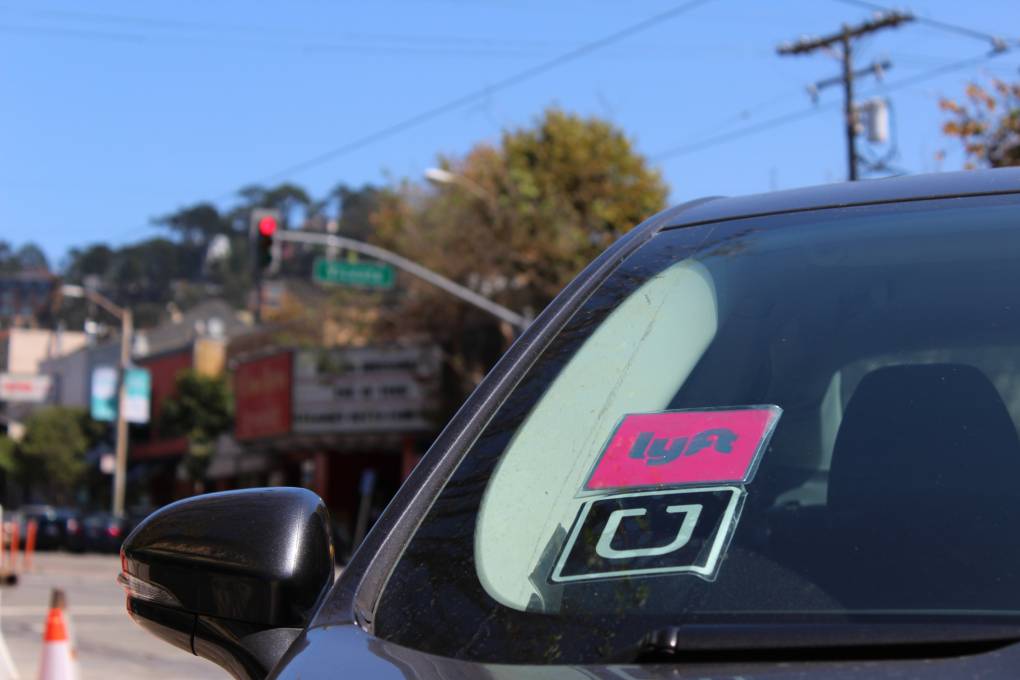
California Bill Would Allow Uber, Lyft Drivers to Bargain Collectively
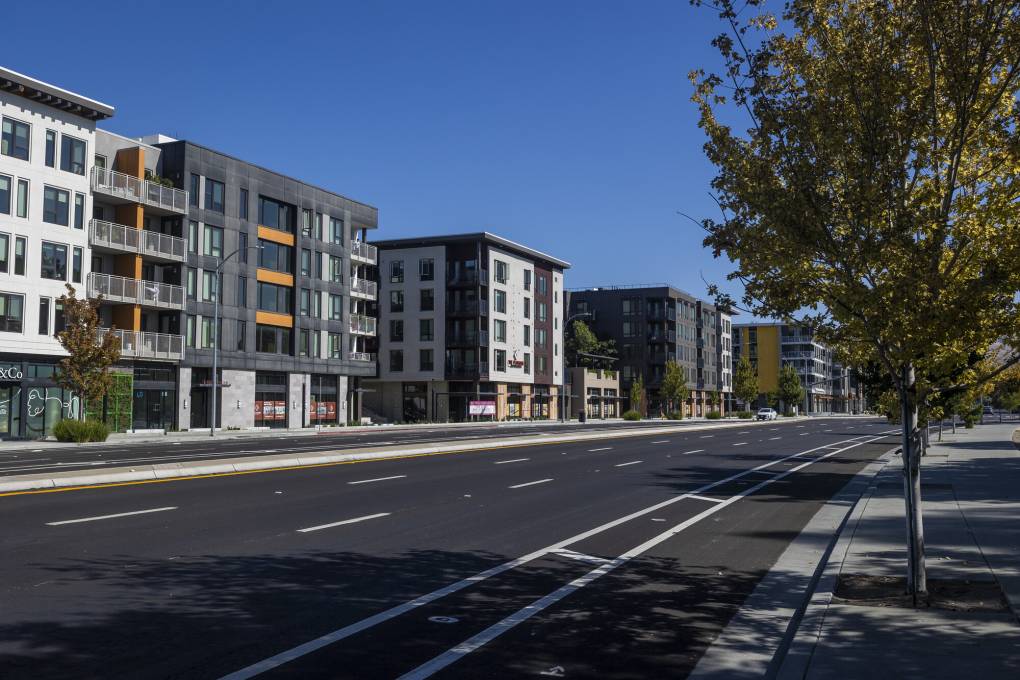
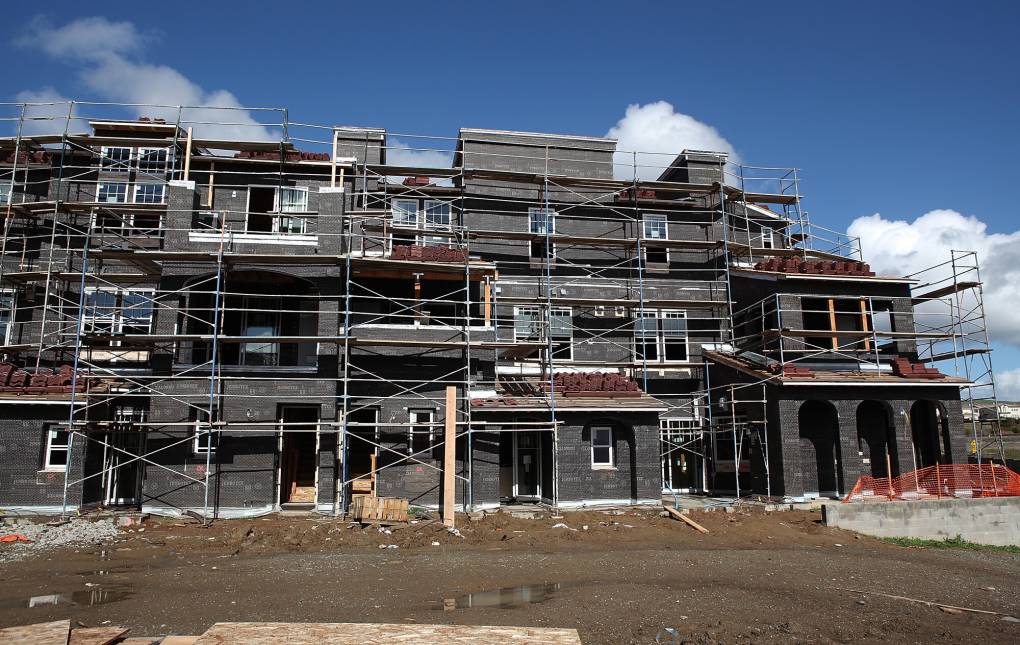
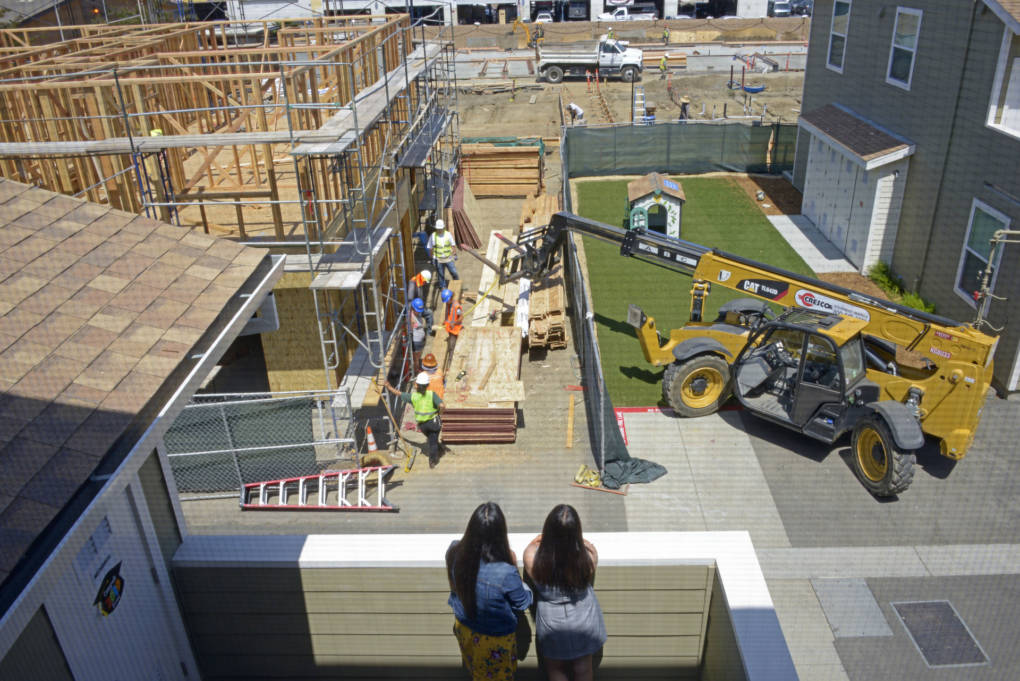
Progress By 1,000 Cuts? Housing Legislation Snips Away at California’s Red Tape
California's Deal With Big Tech on Newsroom Funding Kills Revenue-Sharing Legislation
Why a $10 Billion California Housing Bond Won’t be on November’s Ballot
Controversial California Law Meant to Spur New Housing Could Get More Teeth
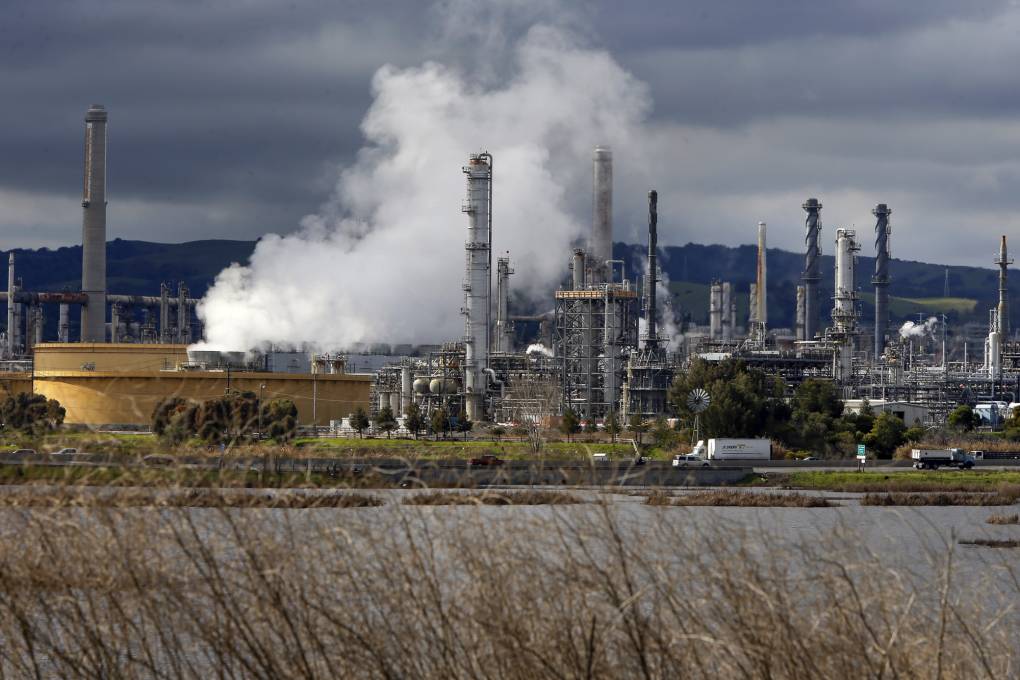
Oil Industry Blocks Effort to Increase Fines Against Polluting California Refineries … Again
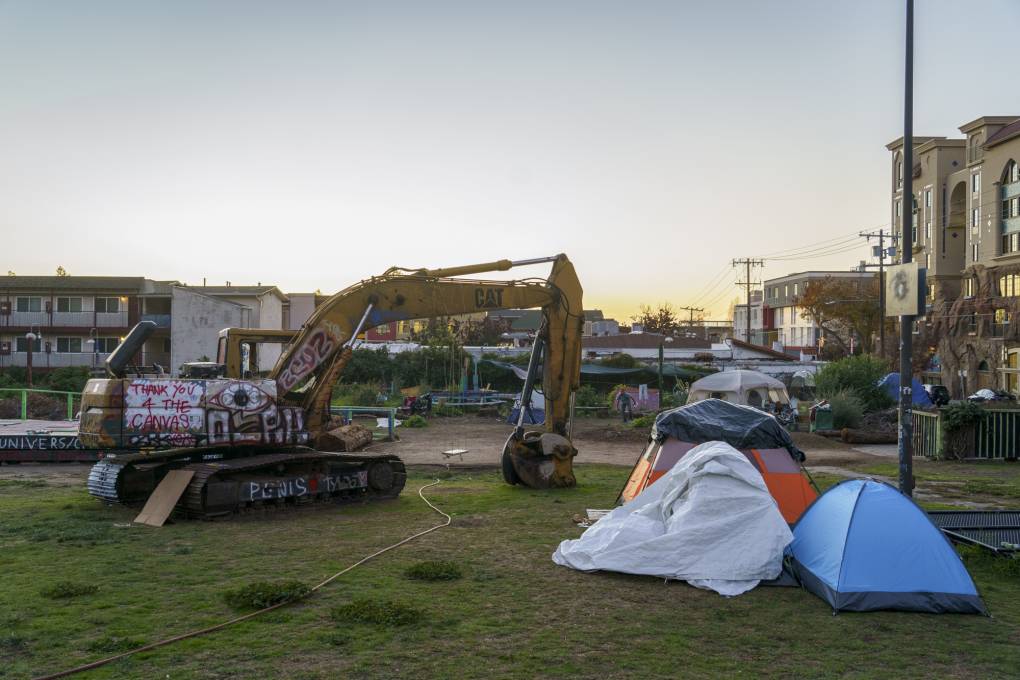
Newsom Signs Bill Paving Way to Build New Student Housing at People's Park in Berkeley
Sponsored
Player sponsored by
window.__IS_SSR__=true
window.__INITIAL_STATE__={
"attachmentsReducer": {
"audio_0": {
"type": "attachments",
"id": "audio_0",
"imgSizes": {
"kqedFullSize": {
"file": "https://ww2.kqed.org/news/wp-content/themes/KQED-unified/img/audio_bgs/background0.jpg"
}
}
},
"audio_1": {
"type": "attachments",
"id": "audio_1",
"imgSizes": {
"kqedFullSize": {
"file": "https://ww2.kqed.org/news/wp-content/themes/KQED-unified/img/audio_bgs/background1.jpg"
}
}
},
"audio_2": {
"type": "attachments",
"id": "audio_2",
"imgSizes": {
"kqedFullSize": {
"file": "https://ww2.kqed.org/news/wp-content/themes/KQED-unified/img/audio_bgs/background2.jpg"
}
}
},
"audio_3": {
"type": "attachments",
"id": "audio_3",
"imgSizes": {
"kqedFullSize": {
"file": "https://ww2.kqed.org/news/wp-content/themes/KQED-unified/img/audio_bgs/background3.jpg"
}
}
},
"audio_4": {
"type": "attachments",
"id": "audio_4",
"imgSizes": {
"kqedFullSize": {
"file": "https://ww2.kqed.org/news/wp-content/themes/KQED-unified/img/audio_bgs/background4.jpg"
}
}
},
"placeholder": {
"type": "attachments",
"id": "placeholder",
"imgSizes": {
"thumbnail": {
"file": "https://cdn.kqed.org/wp-content/uploads/2024/12/KQED-Default-Image-816638274-2000x1333-1-160x107.jpg",
"width": 160,
"height": 107,
"mimeType": "image/jpeg"
},
"medium": {
"file": "https://cdn.kqed.org/wp-content/uploads/2024/12/KQED-Default-Image-816638274-2000x1333-1-800x533.jpg",
"width": 800,
"height": 533,
"mimeType": "image/jpeg"
},
"medium_large": {
"file": "https://cdn.kqed.org/wp-content/uploads/2024/12/KQED-Default-Image-816638274-2000x1333-1-768x512.jpg",
"width": 768,
"height": 512,
"mimeType": "image/jpeg"
},
"large": {
"file": "https://cdn.kqed.org/wp-content/uploads/2024/12/KQED-Default-Image-816638274-2000x1333-1-1020x680.jpg",
"width": 1020,
"height": 680,
"mimeType": "image/jpeg"
},
"1536x1536": {
"file": "https://cdn.kqed.org/wp-content/uploads/2024/12/KQED-Default-Image-816638274-2000x1333-1-1536x1024.jpg",
"width": 1536,
"height": 1024,
"mimeType": "image/jpeg"
},
"fd-lrg": {
"file": "https://cdn.kqed.org/wp-content/uploads/2024/12/KQED-Default-Image-816638274-2000x1333-1-1536x1024.jpg",
"width": 1536,
"height": 1024,
"mimeType": "image/jpeg"
},
"fd-med": {
"file": "https://cdn.kqed.org/wp-content/uploads/2024/12/KQED-Default-Image-816638274-2000x1333-1-1020x680.jpg",
"width": 1020,
"height": 680,
"mimeType": "image/jpeg"
},
"fd-sm": {
"file": "https://cdn.kqed.org/wp-content/uploads/2024/12/KQED-Default-Image-816638274-2000x1333-1-800x533.jpg",
"width": 800,
"height": 533,
"mimeType": "image/jpeg"
},
"post-thumbnail": {
"file": "https://cdn.kqed.org/wp-content/uploads/2024/12/KQED-Default-Image-816638274-2000x1333-1-672x372.jpg",
"width": 672,
"height": 372,
"mimeType": "image/jpeg"
},
"twentyfourteen-full-width": {
"file": "https://cdn.kqed.org/wp-content/uploads/2024/12/KQED-Default-Image-816638274-2000x1333-1-1038x576.jpg",
"width": 1038,
"height": 576,
"mimeType": "image/jpeg"
},
"xxsmall": {
"file": "https://cdn.kqed.org/wp-content/uploads/2024/12/KQED-Default-Image-816638274-2000x1333-1-160x107.jpg",
"width": 160,
"height": 107,
"mimeType": "image/jpeg"
},
"xsmall": {
"file": "https://cdn.kqed.org/wp-content/uploads/2024/12/KQED-Default-Image-816638274-2000x1333-1-672x372.jpg",
"width": 672,
"height": 372,
"mimeType": "image/jpeg"
},
"small": {
"file": "https://cdn.kqed.org/wp-content/uploads/2024/12/KQED-Default-Image-816638274-2000x1333-1-672x372.jpg",
"width": 672,
"height": 372,
"mimeType": "image/jpeg"
},
"xlarge": {
"file": "https://cdn.kqed.org/wp-content/uploads/2024/12/KQED-Default-Image-816638274-2000x1333-1-1020x680.jpg",
"width": 1020,
"height": 680,
"mimeType": "image/jpeg"
},
"full-width": {
"file": "https://cdn.kqed.org/wp-content/uploads/2024/12/KQED-Default-Image-816638274-2000x1333-1-1920x1280.jpg",
"width": 1920,
"height": 1280,
"mimeType": "image/jpeg"
},
"guest-author-32": {
"file": "https://cdn.kqed.org/wp-content/uploads/2025/01/KQED-Default-Image-816638274-1333x1333-1-160x160.jpg",
"width": 32,
"height": 32,
"mimeType": "image/jpeg"
},
"guest-author-50": {
"file": "https://cdn.kqed.org/wp-content/uploads/2025/01/KQED-Default-Image-816638274-1333x1333-1-160x160.jpg",
"width": 50,
"height": 50,
"mimeType": "image/jpeg"
},
"guest-author-64": {
"file": "https://cdn.kqed.org/wp-content/uploads/2025/01/KQED-Default-Image-816638274-1333x1333-1-160x160.jpg",
"width": 64,
"height": 64,
"mimeType": "image/jpeg"
},
"guest-author-96": {
"file": "https://cdn.kqed.org/wp-content/uploads/2025/01/KQED-Default-Image-816638274-1333x1333-1-160x160.jpg",
"width": 96,
"height": 96,
"mimeType": "image/jpeg"
},
"guest-author-128": {
"file": "https://cdn.kqed.org/wp-content/uploads/2025/01/KQED-Default-Image-816638274-1333x1333-1-160x160.jpg",
"width": 128,
"height": 128,
"mimeType": "image/jpeg"
},
"detail": {
"file": "https://cdn.kqed.org/wp-content/uploads/2025/01/KQED-Default-Image-816638274-1333x1333-1-160x160.jpg",
"width": 160,
"height": 160,
"mimeType": "image/jpeg"
},
"kqedFullSize": {
"file": "https://cdn.kqed.org/wp-content/uploads/2024/12/KQED-Default-Image-816638274-2000x1333-1.jpg",
"width": 2000,
"height": 1333
}
}
},
"news_12046572": {
"type": "attachments",
"id": "news_12046572",
"meta": {
"index": "attachments_1716263798",
"site": "news",
"id": "12046572",
"found": true
},
"title": "Immigration Governors",
"publishDate": 1751307765,
"status": "inherit",
"parent": 12046558,
"modified": 1751330600,
"caption": "Gov. Gavin Newsom presents his revised state budget during a news conference in Sacramento, California, on Wednesday, May 14, 2025. Gov. Newsom threatened to repeal the state’s budget if lawmakers did not include two bills that aim to streamline environmental reviews for housing.",
"credit": "Rich Pedroncelli/AP Photo",
"altTag": null,
"description": null,
"imgSizes": {
"thumbnail": {
"file": "https://cdn.kqed.org/wp-content/uploads/sites/10/2025/06/GavinNewsomAP3-160x107.jpg",
"width": 160,
"height": 107,
"mimeType": "image/jpeg"
},
"1536x1536": {
"file": "https://cdn.kqed.org/wp-content/uploads/sites/10/2025/06/GavinNewsomAP3-1536x1024.jpg",
"width": 1536,
"height": 1024,
"mimeType": "image/jpeg"
},
"post-thumbnail": {
"file": "https://cdn.kqed.org/wp-content/uploads/sites/10/2025/06/GavinNewsomAP3-672x372.jpg",
"width": 672,
"height": 372,
"mimeType": "image/jpeg"
},
"twentyfourteen-full-width": {
"file": "https://cdn.kqed.org/wp-content/uploads/sites/10/2025/06/GavinNewsomAP3-1038x576.jpg",
"width": 1038,
"height": 576,
"mimeType": "image/jpeg"
},
"kqedFullSize": {
"file": "https://cdn.kqed.org/wp-content/uploads/sites/10/2025/06/GavinNewsomAP3.jpg",
"width": 2000,
"height": 1333
}
},
"fetchFailed": false,
"isLoading": false
},
"news_12036938": {
"type": "attachments",
"id": "news_12036938",
"meta": {
"index": "attachments_1716263798",
"site": "news",
"id": "12036938",
"found": true
},
"title": "230906-BERRYESSA BART URBAN VILLAGE-MD-06_qed",
"publishDate": 1745258541,
"status": "inherit",
"parent": 12036917,
"modified": 1745258577,
"caption": "Recently built housing developments along Berryessa Road near the Berryessa BART station in San José on Sept. 6, 2023.",
"credit": "Martin do Nascimento/KQED",
"altTag": null,
"description": null,
"imgSizes": {
"medium": {
"file": "https://cdn.kqed.org/wp-content/uploads/sites/10/2025/04/230906-BERRYESSA-BART-URBAN-VILLAGE-MD-06_qed-800x533.jpg",
"width": 800,
"height": 533,
"mimeType": "image/jpeg"
},
"large": {
"file": "https://cdn.kqed.org/wp-content/uploads/sites/10/2025/04/230906-BERRYESSA-BART-URBAN-VILLAGE-MD-06_qed-1020x680.jpg",
"width": 1020,
"height": 680,
"mimeType": "image/jpeg"
},
"thumbnail": {
"file": "https://cdn.kqed.org/wp-content/uploads/sites/10/2025/04/230906-BERRYESSA-BART-URBAN-VILLAGE-MD-06_qed-160x107.jpg",
"width": 160,
"height": 107,
"mimeType": "image/jpeg"
},
"1536x1536": {
"file": "https://cdn.kqed.org/wp-content/uploads/sites/10/2025/04/230906-BERRYESSA-BART-URBAN-VILLAGE-MD-06_qed-1536x1024.jpg",
"width": 1536,
"height": 1024,
"mimeType": "image/jpeg"
},
"post-thumbnail": {
"file": "https://cdn.kqed.org/wp-content/uploads/sites/10/2025/04/230906-BERRYESSA-BART-URBAN-VILLAGE-MD-06_qed-672x372.jpg",
"width": 672,
"height": 372,
"mimeType": "image/jpeg"
},
"twentyfourteen-full-width": {
"file": "https://cdn.kqed.org/wp-content/uploads/sites/10/2025/04/230906-BERRYESSA-BART-URBAN-VILLAGE-MD-06_qed-1038x576.jpg",
"width": 1038,
"height": 576,
"mimeType": "image/jpeg"
},
"full-width": {
"file": "https://cdn.kqed.org/wp-content/uploads/sites/10/2025/04/230906-BERRYESSA-BART-URBAN-VILLAGE-MD-06_qed-1920x1280.jpg",
"width": 1920,
"height": 1280,
"mimeType": "image/jpeg"
},
"kqedFullSize": {
"file": "https://cdn.kqed.org/wp-content/uploads/sites/10/2025/04/230906-BERRYESSA-BART-URBAN-VILLAGE-MD-06_qed.jpg",
"width": 2000,
"height": 1333
}
},
"fetchFailed": false,
"isLoading": false
},
"news_11944379": {
"type": "attachments",
"id": "news_11944379",
"meta": {
"index": "attachments_1716263798",
"site": "news",
"id": "11944379",
"found": true
},
"title": "RS16535_IMG_0443.JPG",
"publishDate": 1679513384,
"status": "inherit",
"parent": 11944344,
"modified": 1744144959,
"caption": "Proposition 22 allows gig companies such as Uber, Lyft and the like to classify their drivers as independent contractors rather than employees. ",
"credit": "Ericka Cruz Guevarra/KQED",
"altTag": "A closeup shot of a black vehicle with a pink Lyft sticker and a black and white Uber sticker on the left side of its windshield. The vehicle sits idle, waiting to pick up a customer.",
"description": null,
"imgSizes": {
"medium": {
"file": "https://cdn.kqed.org/wp-content/uploads/sites/10/2023/03/RS16535_IMG_0443.JPG-800x533.jpg",
"width": 800,
"height": 533,
"mimeType": "image/jpeg"
},
"large": {
"file": "https://cdn.kqed.org/wp-content/uploads/sites/10/2023/03/RS16535_IMG_0443.JPG-1020x680.jpg",
"width": 1020,
"height": 680,
"mimeType": "image/jpeg"
},
"thumbnail": {
"file": "https://cdn.kqed.org/wp-content/uploads/sites/10/2023/03/RS16535_IMG_0443.JPG-160x107.jpg",
"width": 160,
"height": 107,
"mimeType": "image/jpeg"
},
"1536x1536": {
"file": "https://cdn.kqed.org/wp-content/uploads/sites/10/2023/03/RS16535_IMG_0443.JPG-1536x1024.jpg",
"width": 1536,
"height": 1024,
"mimeType": "image/jpeg"
},
"2048x2048": {
"file": "https://cdn.kqed.org/wp-content/uploads/sites/10/2023/03/RS16535_IMG_0443.JPG-2048x1365.jpg",
"width": 2048,
"height": 1365,
"mimeType": "image/jpeg"
},
"post-thumbnail": {
"file": "https://cdn.kqed.org/wp-content/uploads/sites/10/2023/03/RS16535_IMG_0443.JPG-672x372.jpg",
"width": 672,
"height": 372,
"mimeType": "image/jpeg"
},
"twentyfourteen-full-width": {
"file": "https://cdn.kqed.org/wp-content/uploads/sites/10/2023/03/RS16535_IMG_0443.JPG-1038x576.jpg",
"width": 1038,
"height": 576,
"mimeType": "image/jpeg"
},
"full-width": {
"file": "https://cdn.kqed.org/wp-content/uploads/sites/10/2023/03/RS16535_IMG_0443.JPG-1920x1280.jpg",
"width": 1920,
"height": 1280,
"mimeType": "image/jpeg"
},
"kqedFullSize": {
"file": "https://cdn.kqed.org/wp-content/uploads/sites/10/2023/03/RS16535_IMG_0443.JPG-scaled-e1764810192572.jpg",
"width": 2000,
"height": 1334
}
},
"fetchFailed": false,
"isLoading": false
},
"news_12033317": {
"type": "attachments",
"id": "news_12033317",
"meta": {
"index": "attachments_1716263798",
"site": "news",
"id": "12033317",
"found": true
},
"title": "New Housing Starts Rise Higher Than Expected In January",
"publishDate": 1743098021,
"status": "inherit",
"parent": 12033092,
"modified": 1743098104,
"caption": "A condo complex takes shape in a growing housing development under construction on Feb. 16, 2011, in Dublin, California.",
"credit": "Justin Sullivan/Getty Images",
"altTag": null,
"description": null,
"imgSizes": {
"medium": {
"file": "https://cdn.kqed.org/wp-content/uploads/sites/10/2025/03/construction072011_qed-800x506.jpg",
"width": 800,
"height": 506,
"mimeType": "image/jpeg"
},
"large": {
"file": "https://cdn.kqed.org/wp-content/uploads/sites/10/2025/03/construction072011_qed-1020x645.jpg",
"width": 1020,
"height": 645,
"mimeType": "image/jpeg"
},
"thumbnail": {
"file": "https://cdn.kqed.org/wp-content/uploads/sites/10/2025/03/construction072011_qed-160x101.jpg",
"width": 160,
"height": 101,
"mimeType": "image/jpeg"
},
"1536x1536": {
"file": "https://cdn.kqed.org/wp-content/uploads/sites/10/2025/03/construction072011_qed-1536x971.jpg",
"width": 1536,
"height": 971,
"mimeType": "image/jpeg"
},
"post-thumbnail": {
"file": "https://cdn.kqed.org/wp-content/uploads/sites/10/2025/03/construction072011_qed-672x372.jpg",
"width": 672,
"height": 372,
"mimeType": "image/jpeg"
},
"twentyfourteen-full-width": {
"file": "https://cdn.kqed.org/wp-content/uploads/sites/10/2025/03/construction072011_qed-1038x576.jpg",
"width": 1038,
"height": 576,
"mimeType": "image/jpeg"
},
"full-width": {
"file": "https://cdn.kqed.org/wp-content/uploads/sites/10/2025/03/construction072011_qed-1920x1213.jpg",
"width": 1920,
"height": 1213,
"mimeType": "image/jpeg"
},
"kqedFullSize": {
"file": "https://cdn.kqed.org/wp-content/uploads/sites/10/2025/03/construction072011_qed.jpg",
"width": 2000,
"height": 1264
}
},
"fetchFailed": false,
"isLoading": false
},
"news_12001241": {
"type": "attachments",
"id": "news_12001241",
"meta": {
"index": "attachments_1716263798",
"site": "news",
"id": "12001241",
"found": true
},
"title": "Google's Bay View Campus In Silicon Valley",
"publishDate": 1724277349,
"status": "inherit",
"parent": 12055854,
"modified": 1757720142,
"caption": "Google's Bay View campus in Mountain View on June 16, 2022.",
"credit": "Zhang Yi/VCG via Getty Images",
"altTag": null,
"description": null,
"imgSizes": {
"medium": {
"file": "https://cdn.kqed.org/wp-content/uploads/sites/10/2024/08/GETTYIMAGES-1411232503-KQED-800x533.jpg",
"width": 800,
"height": 533,
"mimeType": "image/jpeg"
},
"large": {
"file": "https://cdn.kqed.org/wp-content/uploads/sites/10/2024/08/GETTYIMAGES-1411232503-KQED-1020x680.jpg",
"width": 1020,
"height": 680,
"mimeType": "image/jpeg"
},
"thumbnail": {
"file": "https://cdn.kqed.org/wp-content/uploads/sites/10/2024/08/GETTYIMAGES-1411232503-KQED-160x107.jpg",
"width": 160,
"height": 107,
"mimeType": "image/jpeg"
},
"1536x1536": {
"file": "https://cdn.kqed.org/wp-content/uploads/sites/10/2024/08/GETTYIMAGES-1411232503-KQED-1536x1024.jpg",
"width": 1536,
"height": 1024,
"mimeType": "image/jpeg"
},
"post-thumbnail": {
"file": "https://cdn.kqed.org/wp-content/uploads/sites/10/2024/08/GETTYIMAGES-1411232503-KQED-672x372.jpg",
"width": 672,
"height": 372,
"mimeType": "image/jpeg"
},
"twentyfourteen-full-width": {
"file": "https://cdn.kqed.org/wp-content/uploads/sites/10/2024/08/GETTYIMAGES-1411232503-KQED-1038x576.jpg",
"width": 1038,
"height": 576,
"mimeType": "image/jpeg"
},
"full-width": {
"file": "https://cdn.kqed.org/wp-content/uploads/sites/10/2024/08/GETTYIMAGES-1411232503-KQED-1920x1280.jpg",
"width": 1920,
"height": 1280,
"mimeType": "image/jpeg"
},
"kqedFullSize": {
"file": "https://cdn.kqed.org/wp-content/uploads/sites/10/2024/08/GETTYIMAGES-1411232503-KQED.jpg",
"width": 2000,
"height": 1333
}
},
"fetchFailed": false,
"isLoading": false
},
"news_11993188": {
"type": "attachments",
"id": "news_11993188",
"meta": {
"index": "attachments_1716263798",
"site": "news",
"id": "11993188",
"found": true
},
"title": "230615-brooklyn basin-239-ks.NEF-04-ks_qed",
"publishDate": 1720461011,
"status": "inherit",
"parent": 11993185,
"modified": 1720461039,
"caption": "The view from at an affordable housing complex in Brooklyn Basin in Oakland, California on June 15, 2023. MidPen Housing has added nearly 1,000 homes to the new neighborhood along the city’s waterfront and plans to put in 3,000 more.",
"credit": "Kori Suzuki/KQED",
"altTag": null,
"description": null,
"imgSizes": {
"medium": {
"file": "https://cdn.kqed.org/wp-content/uploads/sites/10/2024/07/230615-brooklyn-basin-239-ks.NEF-04-ks_qed-800x532.jpg",
"width": 800,
"height": 532,
"mimeType": "image/jpeg"
},
"large": {
"file": "https://cdn.kqed.org/wp-content/uploads/sites/10/2024/07/230615-brooklyn-basin-239-ks.NEF-04-ks_qed-1020x679.jpg",
"width": 1020,
"height": 679,
"mimeType": "image/jpeg"
},
"thumbnail": {
"file": "https://cdn.kqed.org/wp-content/uploads/sites/10/2024/07/230615-brooklyn-basin-239-ks.NEF-04-ks_qed-160x106.jpg",
"width": 160,
"height": 106,
"mimeType": "image/jpeg"
},
"1536x1536": {
"file": "https://cdn.kqed.org/wp-content/uploads/sites/10/2024/07/230615-brooklyn-basin-239-ks.NEF-04-ks_qed-1536x1022.jpg",
"width": 1536,
"height": 1022,
"mimeType": "image/jpeg"
},
"post-thumbnail": {
"file": "https://cdn.kqed.org/wp-content/uploads/sites/10/2024/07/230615-brooklyn-basin-239-ks.NEF-04-ks_qed-672x372.jpg",
"width": 672,
"height": 372,
"mimeType": "image/jpeg"
},
"twentyfourteen-full-width": {
"file": "https://cdn.kqed.org/wp-content/uploads/sites/10/2024/07/230615-brooklyn-basin-239-ks.NEF-04-ks_qed-1038x576.jpg",
"width": 1038,
"height": 576,
"mimeType": "image/jpeg"
},
"full-width": {
"file": "https://cdn.kqed.org/wp-content/uploads/sites/10/2024/07/230615-brooklyn-basin-239-ks.NEF-04-ks_qed-1920x1278.jpg",
"width": 1920,
"height": 1278,
"mimeType": "image/jpeg"
},
"kqedFullSize": {
"file": "https://cdn.kqed.org/wp-content/uploads/sites/10/2024/07/230615-brooklyn-basin-239-ks.NEF-04-ks_qed.jpg",
"width": 2000,
"height": 1331
}
},
"fetchFailed": false,
"isLoading": false
},
"news_11767898": {
"type": "attachments",
"id": "news_11767898",
"meta": {
"index": "attachments_1716263798",
"site": "news",
"id": "11767898",
"found": true
},
"parent": 11767538,
"imgSizes": {
"apple_news_ca_landscape_5_5": {
"file": "https://cdn.kqed.org/wp-content/uploads/sites/10/2019/08/RS37791__DSC0888-qut-1044x783.jpg",
"width": 1044,
"mimeType": "image/jpeg",
"height": 783
},
"apple_news_ca_square_4_0": {
"file": "https://cdn.kqed.org/wp-content/uploads/sites/10/2019/08/RS37791__DSC0888-qut-470x470.jpg",
"width": 470,
"mimeType": "image/jpeg",
"height": 470
},
"twentyfourteen-full-width": {
"file": "https://cdn.kqed.org/wp-content/uploads/sites/10/2019/08/RS37791__DSC0888-qut-1038x576.jpg",
"width": 1038,
"mimeType": "image/jpeg",
"height": 576
},
"thumbnail": {
"file": "https://cdn.kqed.org/wp-content/uploads/sites/10/2019/08/RS37791__DSC0888-qut-160x107.jpg",
"width": 160,
"mimeType": "image/jpeg",
"height": 107
},
"post-thumbnail": {
"file": "https://cdn.kqed.org/wp-content/uploads/sites/10/2019/08/RS37791__DSC0888-qut-672x372.jpg",
"width": 672,
"mimeType": "image/jpeg",
"height": 372
},
"kqedFullSize": {
"file": "https://cdn.kqed.org/wp-content/uploads/sites/10/2019/08/RS37791__DSC0888-qut.jpg",
"width": 1920,
"height": 1281
},
"apple_news_ca_landscape_4_7": {
"file": "https://cdn.kqed.org/wp-content/uploads/sites/10/2019/08/RS37791__DSC0888-qut-632x474.jpg",
"width": 632,
"mimeType": "image/jpeg",
"height": 474
},
"large": {
"file": "https://cdn.kqed.org/wp-content/uploads/sites/10/2019/08/RS37791__DSC0888-qut-1020x681.jpg",
"width": 1020,
"mimeType": "image/jpeg",
"height": 681
},
"complete_open_graph": {
"file": "https://cdn.kqed.org/wp-content/uploads/sites/10/2019/08/RS37791__DSC0888-qut-1200x801.jpg",
"width": 1200,
"mimeType": "image/jpeg",
"height": 801
},
"apple_news_ca_landscape_4_0": {
"file": "https://cdn.kqed.org/wp-content/uploads/sites/10/2019/08/RS37791__DSC0888-qut-536x402.jpg",
"width": 536,
"mimeType": "image/jpeg",
"height": 402
},
"apple_news_ca_portrait_12_9": {
"file": "https://cdn.kqed.org/wp-content/uploads/sites/10/2019/08/RS37791__DSC0888-qut-1122x1281.jpg",
"width": 1122,
"mimeType": "image/jpeg",
"height": 1281
},
"medium": {
"file": "https://cdn.kqed.org/wp-content/uploads/sites/10/2019/08/RS37791__DSC0888-qut-800x534.jpg",
"width": 800,
"mimeType": "image/jpeg",
"height": 534
},
"apple_news_ca_portrait_4_0": {
"file": "https://cdn.kqed.org/wp-content/uploads/sites/10/2019/08/RS37791__DSC0888-qut-354x472.jpg",
"width": 354,
"mimeType": "image/jpeg",
"height": 472
},
"apple_news_ca_portrait_9_7": {
"file": "https://cdn.kqed.org/wp-content/uploads/sites/10/2019/08/RS37791__DSC0888-qut-840x1120.jpg",
"width": 840,
"mimeType": "image/jpeg",
"height": 1120
},
"apple_news_ca_landscape_12_9": {
"file": "https://cdn.kqed.org/wp-content/uploads/sites/10/2019/08/RS37791__DSC0888-qut-1832x1281.jpg",
"width": 1832,
"mimeType": "image/jpeg",
"height": 1281
},
"apple_news_ca_square_9_7": {
"file": "https://cdn.kqed.org/wp-content/uploads/sites/10/2019/08/RS37791__DSC0888-qut-1104x1104.jpg",
"width": 1104,
"mimeType": "image/jpeg",
"height": 1104
},
"apple_news_ca_portrait_4_7": {
"file": "https://cdn.kqed.org/wp-content/uploads/sites/10/2019/08/RS37791__DSC0888-qut-414x552.jpg",
"width": 414,
"mimeType": "image/jpeg",
"height": 552
},
"apple_news_ca_square_12_9": {
"file": "https://cdn.kqed.org/wp-content/uploads/sites/10/2019/08/RS37791__DSC0888-qut-1472x1281.jpg",
"width": 1472,
"mimeType": "image/jpeg",
"height": 1281
},
"apple_news_ca_portrait_5_5": {
"file": "https://cdn.kqed.org/wp-content/uploads/sites/10/2019/08/RS37791__DSC0888-qut-687x916.jpg",
"width": 687,
"mimeType": "image/jpeg",
"height": 916
},
"full-width": {
"file": "https://cdn.kqed.org/wp-content/uploads/sites/10/2019/08/RS37791__DSC0888-qut-1920x1281.jpg",
"width": 1920,
"mimeType": "image/jpeg",
"height": 1281
},
"apple_news_ca_square_4_7": {
"file": "https://cdn.kqed.org/wp-content/uploads/sites/10/2019/08/RS37791__DSC0888-qut-550x550.jpg",
"width": 550,
"mimeType": "image/jpeg",
"height": 550
},
"apple_news_ca_landscape_9_7": {
"file": "https://cdn.kqed.org/wp-content/uploads/sites/10/2019/08/RS37791__DSC0888-qut-1376x1032.jpg",
"width": 1376,
"mimeType": "image/jpeg",
"height": 1032
},
"apple_news_ca_square_5_5": {
"file": "https://cdn.kqed.org/wp-content/uploads/sites/10/2019/08/RS37791__DSC0888-qut-912x912.jpg",
"width": 912,
"mimeType": "image/jpeg",
"height": 912
}
},
"publishDate": 1565915711,
"modified": 1712080479,
"caption": "Julieta Aquino and her daughter Alexys on the balcony of their new home, watching a construction crew build additional affordable units.",
"description": null,
"title": "RS37791__DSC0888-qut",
"credit": "Stephanie Lister/KQED",
"status": "inherit",
"altTag": "An overhead view of two women watching housing construction from their balcony.",
"fetchFailed": false,
"isLoading": false
},
"news_11960719": {
"type": "attachments",
"id": "news_11960719",
"meta": {
"index": "attachments_1716263798",
"site": "news",
"id": "11960719",
"found": true
},
"parent": 0,
"imgSizes": {
"twentyfourteen-full-width": {
"file": "https://ww2.kqed.org/app/uploads/sites/10/2023/09/230911-MARTINEZ-REFINERY-Getty-MM-KQED-1038x576.jpg",
"width": 1038,
"mimeType": "image/jpeg",
"height": 576
},
"thumbnail": {
"file": "https://ww2.kqed.org/app/uploads/sites/10/2023/09/230911-MARTINEZ-REFINERY-Getty-MM-KQED-160x107.jpg",
"width": 160,
"mimeType": "image/jpeg",
"height": 107
},
"post-thumbnail": {
"file": "https://ww2.kqed.org/app/uploads/sites/10/2023/09/230911-MARTINEZ-REFINERY-Getty-MM-KQED-672x372.jpg",
"width": 672,
"mimeType": "image/jpeg",
"height": 372
},
"kqedFullSize": {
"file": "https://ww2.kqed.org/app/uploads/sites/10/2023/09/230911-MARTINEZ-REFINERY-Getty-MM-KQED.jpg",
"width": 2000,
"height": 1333
},
"large": {
"file": "https://ww2.kqed.org/app/uploads/sites/10/2023/09/230911-MARTINEZ-REFINERY-Getty-MM-KQED-1020x680.jpg",
"width": 1020,
"mimeType": "image/jpeg",
"height": 680
},
"1536x1536": {
"file": "https://ww2.kqed.org/app/uploads/sites/10/2023/09/230911-MARTINEZ-REFINERY-Getty-MM-KQED-1536x1024.jpg",
"width": 1536,
"mimeType": "image/jpeg",
"height": 1024
},
"full-width": {
"file": "https://ww2.kqed.org/app/uploads/sites/10/2023/09/230911-MARTINEZ-REFINERY-Getty-MM-KQED-1920x1280.jpg",
"width": 1920,
"mimeType": "image/jpeg",
"height": 1280
},
"medium": {
"file": "https://ww2.kqed.org/app/uploads/sites/10/2023/09/230911-MARTINEZ-REFINERY-Getty-MM-KQED-800x533.jpg",
"width": 800,
"mimeType": "image/jpeg",
"height": 533
}
},
"publishDate": 1694475541,
"modified": 1694475819,
"caption": "The PBF Energy refinery in Martinez on Jan. 24, 2017.",
"description": null,
"title": "The Shell refinery in seen on Tuesday Jan. 24, 2017, in Martinez, Ca.",
"credit": "Michael Macor/The San Francisco Chronicle via Getty Images",
"status": "inherit",
"altTag": "A large industrial facility set alongside a body of water with emissions emanating from it.",
"fetchFailed": false,
"isLoading": false
},
"news_11959527": {
"type": "attachments",
"id": "news_11959527",
"meta": {
"index": "attachments_1716263798",
"site": "news",
"id": "11959527",
"found": true
},
"parent": 0,
"imgSizes": {
"twentyfourteen-full-width": {
"file": "https://ww2.kqed.org/app/uploads/sites/10/2023/08/RS61468_DSC09292-KQED-1038x576.jpg",
"width": 1038,
"mimeType": "image/jpeg",
"height": 576
},
"thumbnail": {
"file": "https://ww2.kqed.org/app/uploads/sites/10/2023/08/RS61468_DSC09292-KQED-160x107.jpg",
"width": 160,
"mimeType": "image/jpeg",
"height": 107
},
"post-thumbnail": {
"file": "https://ww2.kqed.org/app/uploads/sites/10/2023/08/RS61468_DSC09292-KQED-672x372.jpg",
"width": 672,
"mimeType": "image/jpeg",
"height": 372
},
"kqedFullSize": {
"file": "https://ww2.kqed.org/app/uploads/sites/10/2023/08/RS61468_DSC09292-KQED.jpg",
"width": 2000,
"height": 1333
},
"large": {
"file": "https://ww2.kqed.org/app/uploads/sites/10/2023/08/RS61468_DSC09292-KQED-1020x680.jpg",
"width": 1020,
"mimeType": "image/jpeg",
"height": 680
},
"1536x1536": {
"file": "https://ww2.kqed.org/app/uploads/sites/10/2023/08/RS61468_DSC09292-KQED-1536x1024.jpg",
"width": 1536,
"mimeType": "image/jpeg",
"height": 1024
},
"full-width": {
"file": "https://ww2.kqed.org/app/uploads/sites/10/2023/08/RS61468_DSC09292-KQED-1920x1280.jpg",
"width": 1920,
"mimeType": "image/jpeg",
"height": 1280
},
"medium": {
"file": "https://ww2.kqed.org/app/uploads/sites/10/2023/08/RS61468_DSC09292-KQED-800x533.jpg",
"width": 800,
"mimeType": "image/jpeg",
"height": 533
}
},
"publishDate": 1693351681,
"modified": 1693359134,
"caption": "People's Park in Berkeley, November 2022.",
"description": null,
"title": "RS61468_DSC09292-KQED",
"credit": "Aryk Copley/KQED",
"status": "inherit",
"altTag": "A large open outdoor space with an excavator and some tents in it.",
"fetchFailed": false,
"isLoading": false
}
},
"audioPlayerReducer": {
"postId": "stream_live",
"isPaused": true,
"isPlaying": false,
"pfsActive": false,
"pledgeModalIsOpen": true,
"playerDrawerIsOpen": false
},
"authorsReducer": {
"kqed": {
"type": "authors",
"id": "236",
"meta": {
"index": "authors_1716337520",
"id": "236",
"found": true
},
"name": "KQED News Staff",
"firstName": "KQED News Staff",
"lastName": null,
"slug": "kqed",
"email": "faq@kqed.org",
"display_author_email": false,
"staff_mastheads": [],
"title": null,
"bio": null,
"avatar": "https://secure.gravatar.com/avatar/ef0e801a68c4c54afa9180db14084167?s=600&d=blank&r=g",
"twitter": null,
"facebook": null,
"instagram": null,
"linkedin": null,
"sites": [
{
"site": "arts",
"roles": [
"contributor"
]
},
{
"site": "news",
"roles": [
"editor"
]
},
{
"site": "futureofyou",
"roles": [
"author"
]
}
],
"headData": {
"title": "KQED News Staff | KQED",
"description": null,
"ogImgSrc": "https://secure.gravatar.com/avatar/ef0e801a68c4c54afa9180db14084167?s=600&d=blank&r=g",
"twImgSrc": "https://secure.gravatar.com/avatar/ef0e801a68c4c54afa9180db14084167?s=600&d=blank&r=g"
},
"isLoading": false,
"link": "/author/kqed"
},
"rachael-myrow": {
"type": "authors",
"id": "251",
"meta": {
"index": "authors_1716337520",
"id": "251",
"found": true
},
"name": "Rachael Myrow",
"firstName": "Rachael",
"lastName": "Myrow",
"slug": "rachael-myrow",
"email": "rmyrow@kqed.org",
"display_author_email": false,
"staff_mastheads": [
"news"
],
"title": "Senior Editor of KQED's Silicon Valley News Desk",
"bio": "Rachael Myrow is Senior Editor of KQED's Silicon Valley News Desk, reporting on topics like \u003ca href=\"https://www.kqed.org/news/12023367/what-big-tech-sees-in-donald-trump\">what Big Tech sees in President Trump\u003c/a>, \u003ca href=\"https://www.kqed.org/news/12020857/california-lawmaker-ready-revive-fight-regulating-ai\">California's many, many AI bills\u003c/a>, and the \u003ca href=\"https://www.kqed.org/news/12017713/lost-sounds-of-san-francisco\">lost sounds of San Francisco\u003c/a>. You can hear her work on \u003ca href=\"https://www.npr.org/search?query=Rachael%20Myrow&page=1\">NPR\u003c/a>, \u003ca href=\"https://theworld.org/people/rachael-myrow\">The World\u003c/a>, WBUR's \u003ca href=\"https://www.wbur.org/search?q=Rachael%20Myrow\">\u003ci>Here & Now\u003c/i>\u003c/a> and the BBC. \u003c/i>She also guest hosts for KQED's \u003ci>\u003ca href=\"https://www.kqed.org/forum/tag/rachael-myrow\">Forum\u003c/a>\u003c/i>. Over the years, she's talked with Kamau Bell, David Byrne, Kamala Harris, Tony Kushner, Armistead Maupin, Van Dyke Parks, Arnold Schwarzenegger and Tommie Smith, among others.\r\n\r\nBefore all this, she hosted \u003cem>The California Report\u003c/em> for 7+ years.\r\n\r\nAwards? Sure: Peabody, Edward R. Murrow, Regional Edward R. Murrow, RTNDA, Northern California RTNDA, SPJ Northern California Chapter, LA Press Club, Golden Mic. Prior to joining KQED, Rachael worked in Los Angeles at KPCC and Marketplace. She holds degrees in English and journalism from UC Berkeley (where she got her start in public radio on KALX-FM).\r\n\r\nOutside of the studio, you'll find Rachael hiking Bay Area trails and whipping up Instagram-ready meals in her kitchen. More recently, she's taken up native-forward gardening.",
"avatar": "https://secure.gravatar.com/avatar/87bf8cb5874e045cdff430523a6d48b1?s=600&d=blank&r=g",
"twitter": "rachaelmyrow",
"facebook": null,
"instagram": null,
"linkedin": "https://www.linkedin.com/in/rachaelmyrow/",
"sites": [
{
"site": "arts",
"roles": [
"administrator"
]
},
{
"site": "news",
"roles": [
"edit_others_posts",
"editor"
]
},
{
"site": "futureofyou",
"roles": [
"editor"
]
},
{
"site": "bayareabites",
"roles": [
"editor"
]
},
{
"site": "stateofhealth",
"roles": [
"editor"
]
},
{
"site": "science",
"roles": [
"editor"
]
},
{
"site": "food",
"roles": [
"editor"
]
},
{
"site": "forum",
"roles": [
"editor"
]
},
{
"site": "liveblog",
"roles": [
"author"
]
}
],
"headData": {
"title": "Rachael Myrow | KQED",
"description": "Senior Editor of KQED's Silicon Valley News Desk",
"ogImgSrc": "https://secure.gravatar.com/avatar/87bf8cb5874e045cdff430523a6d48b1?s=600&d=blank&r=g",
"twImgSrc": "https://secure.gravatar.com/avatar/87bf8cb5874e045cdff430523a6d48b1?s=600&d=blank&r=g"
},
"isLoading": false,
"link": "/author/rachael-myrow"
},
"tgoldberg": {
"type": "authors",
"id": "258",
"meta": {
"index": "authors_1716337520",
"id": "258",
"found": true
},
"name": "Ted Goldberg",
"firstName": "Ted",
"lastName": "Goldberg",
"slug": "tgoldberg",
"email": "tgoldberg@kqed.org",
"display_author_email": true,
"staff_mastheads": [
"news"
],
"title": "KQED Managing Editor, News and Newscasts",
"bio": "Ted Goldberg is Managing Editor of News and Newscasts at KQED. His main reporting beat is the Bay Area's oil refining industry.\r\n\r\nPrior to joining KQED in 2014, Ted worked at CBS News and WCBS AM in New York and Bay City News and KCBS Radio in San Francisco. He graduated from Oberlin College in Ohio in 1998.",
"avatar": "https://secure.gravatar.com/avatar/16d702c9ec5f696d78dbfb76b592cf0a?s=600&d=blank&r=g",
"twitter": "TedrickG",
"facebook": null,
"instagram": null,
"linkedin": null,
"sites": [
{
"site": "news",
"roles": [
"editor"
]
},
{
"site": "science",
"roles": [
"editor"
]
}
],
"headData": {
"title": "Ted Goldberg | KQED",
"description": "KQED Managing Editor, News and Newscasts",
"ogImgSrc": "https://secure.gravatar.com/avatar/16d702c9ec5f696d78dbfb76b592cf0a?s=600&d=blank&r=g",
"twImgSrc": "https://secure.gravatar.com/avatar/16d702c9ec5f696d78dbfb76b592cf0a?s=600&d=blank&r=g"
},
"isLoading": false,
"link": "/author/tgoldberg"
},
"fjhabvala": {
"type": "authors",
"id": "8659",
"meta": {
"index": "authors_1716337520",
"id": "8659",
"found": true
},
"name": "Farida Jhabvala Romero",
"firstName": "Farida",
"lastName": "Jhabvala Romero",
"slug": "fjhabvala",
"email": "fjhabvala@kqed.org",
"display_author_email": true,
"staff_mastheads": [
"news"
],
"title": "KQED Contributor",
"bio": "\u003cspan style=\"font-weight: 400;\">Farida Jhabvala Romero is a Labor Correspondent for KQED. She previously covered immigration. Farida was \u003ca href=\"https://www.ccnma.org/2022-most-influential-latina-journalists\">named\u003c/a> one of the 10 Most Influential Latina Journalists in California in 2022 by the California Chicano News Media Association. Her work has won awards from the Society of Professional Journalists (Northern California), as well as a national and regional Edward M. Murrow Award for the collaborative reporting projects “Dangerous Air” and “Graying California.” \u003c/span>\u003cspan style=\"font-weight: 400;\">Before joining KQED, Farida worked as a producer at Radio Bilingüe, a national public radio network. Farida earned her master’s degree in journalism from Stanford University.\u003c/span>",
"avatar": "https://secure.gravatar.com/avatar/c3ab27c5554b67b478f80971e515aa02?s=600&d=blank&r=g",
"twitter": "FaridaJhabvala",
"facebook": null,
"instagram": null,
"linkedin": "https://www.linkedin.com/in/faridajhabvala/",
"sites": [
{
"site": "news",
"roles": [
"editor"
]
},
{
"site": "stateofhealth",
"roles": [
"author"
]
}
],
"headData": {
"title": "Farida Jhabvala Romero | KQED",
"description": "KQED Contributor",
"ogImgSrc": "https://secure.gravatar.com/avatar/c3ab27c5554b67b478f80971e515aa02?s=600&d=blank&r=g",
"twImgSrc": "https://secure.gravatar.com/avatar/c3ab27c5554b67b478f80971e515aa02?s=600&d=blank&r=g"
},
"isLoading": false,
"link": "/author/fjhabvala"
},
"ebaldassari": {
"type": "authors",
"id": "11652",
"meta": {
"index": "authors_1716337520",
"id": "11652",
"found": true
},
"name": "Erin Baldassari",
"firstName": "Erin",
"lastName": "Baldassari",
"slug": "ebaldassari",
"email": "ebaldassari@KQED.org",
"display_author_email": true,
"staff_mastheads": [
"news"
],
"title": "Staff Writer",
"bio": "Erin Baldassari covers housing for KQED. She's a former print journalist and most recently worked as the transportation reporter for the \u003cem>Mercury News\u003c/em> and \u003cem>East Bay Times. \u003c/em>There, she focused on how the Bay Area’s housing shortage has changed the way people move around the region. She also served on the \u003cem>East Bay Times\u003c/em>’ 2017 Pulitzer Prize-winning team for coverage of the Ghost Ship Fire in Oakland. Prior to that, Erin worked as a breaking news and general assignment reporter for a variety of outlets in the Bay Area and the greater Boston area. A Tufts University alumna, Erin grew up in the foothills of the Sierra Nevada mountains and in Sonoma County. She is a life-long KQED listener.",
"avatar": "https://secure.gravatar.com/avatar/660ce35d088ca54ad606d7e941abc652?s=600&d=mm&r=g",
"twitter": "e_baldi",
"facebook": null,
"instagram": null,
"linkedin": null,
"sites": [
{
"site": "news",
"roles": [
"edit_others_posts",
"editor"
]
},
{
"site": "science",
"roles": [
"editor"
]
},
{
"site": "liveblog",
"roles": [
"editor"
]
}
],
"headData": {
"title": "Erin Baldassari | KQED",
"description": "Staff Writer",
"ogImgSrc": "https://secure.gravatar.com/avatar/660ce35d088ca54ad606d7e941abc652?s=600&d=mm&r=g",
"twImgSrc": "https://secure.gravatar.com/avatar/660ce35d088ca54ad606d7e941abc652?s=600&d=mm&r=g"
},
"isLoading": false,
"link": "/author/ebaldassari"
},
"abandlamudi": {
"type": "authors",
"id": "11672",
"meta": {
"index": "authors_1716337520",
"id": "11672",
"found": true
},
"name": "Adhiti Bandlamudi",
"firstName": "Adhiti",
"lastName": "Bandlamudi",
"slug": "abandlamudi",
"email": "abandlamudi@kqed.org",
"display_author_email": false,
"staff_mastheads": [
"news"
],
"title": "KQED Housing Reporter",
"bio": "Adhiti Bandlamudi reports for KQED's Housing desk. She focuses on how housing gets built across the Bay Area. Before joining KQED in 2020, she reported for WUNC in Durham, North Carolina, WABE in Atlanta, Georgia and Capital Public Radio in Sacramento. In 2017, she was awarded a Kroc Fellowship at NPR where she reported on everything from sprinkles to the Golden State Killer's arrest. When she's not reporting, she's baking new recipes in her kitchen or watching movies with friends and family. She's originally from Georgia and has strong opinions about Great British Bake Off.",
"avatar": "https://secure.gravatar.com/avatar/868129c8b257bb99a3500e2c86a65400?s=600&d=mm&r=g",
"twitter": "oddity_adhiti",
"facebook": null,
"instagram": null,
"linkedin": null,
"sites": [
{
"site": "arts",
"roles": [
"author"
]
},
{
"site": "news",
"roles": [
"editor"
]
},
{
"site": "liveblog",
"roles": [
"author"
]
}
],
"headData": {
"title": "Adhiti Bandlamudi | KQED",
"description": "KQED Housing Reporter",
"ogImgSrc": "https://secure.gravatar.com/avatar/868129c8b257bb99a3500e2c86a65400?s=600&d=mm&r=g",
"twImgSrc": "https://secure.gravatar.com/avatar/868129c8b257bb99a3500e2c86a65400?s=600&d=mm&r=g"
},
"isLoading": false,
"link": "/author/abandlamudi"
}
},
"breakingNewsReducer": {},
"pagesReducer": {},
"postsReducer": {
"stream_live": {
"type": "live",
"id": "stream_live",
"audioUrl": "https://streams.kqed.org/kqedradio",
"title": "Live Stream",
"excerpt": "Live Stream information currently unavailable.",
"link": "/radio",
"featImg": "",
"label": {
"name": "KQED Live",
"link": "/"
}
},
"stream_kqedNewscast": {
"type": "posts",
"id": "stream_kqedNewscast",
"audioUrl": "https://www.kqed.org/.stream/anon/radio/RDnews/newscast.mp3?_=1",
"title": "KQED Newscast",
"featImg": "",
"label": {
"name": "88.5 FM",
"link": "/"
}
},
"news_12046558": {
"type": "posts",
"id": "news_12046558",
"meta": {
"index": "posts_1716263798",
"site": "news",
"id": "12046558",
"score": null,
"sort": [
1751330325000
]
},
"guestAuthors": [],
"slug": "california-lawmakers-approve-major-overhaul-of-landmark-environmental-law",
"title": "California Lawmakers Approve Major Overhaul of Landmark Environmental Law",
"publishDate": 1751330325,
"format": "standard",
"headTitle": "California Lawmakers Approve Major Overhaul of Landmark Environmental Law | KQED",
"labelTerm": {
"site": "news"
},
"content": "\u003cp>After weeks of tense negotiations with California lawmakers, Gov. Gavin Newsom on Monday signed legislation that \u003ca href=\"https://www.kqed.org/news/12036917/bill-reform-controversial-environmental-law-faces-first-legislative-hurdle\">promises to make big changes\u003c/a> to the state’s landmark environmental law, calling it the “most consequential housing reform we’ve seen in modern history.”\u003c/p>\n\u003cp>The two bills — AB 609 from Asm. Buffy Wicks, D-Oakland, and SB 607, by Sen. Scott Wiener, D-San Francisco — were folded into addendums to the state budget, which was \u003ca href=\"https://www.gov.ca.gov/2025/06/27/budget/\">approved Friday\u003c/a>. They both take aim at the \u003ca href=\"https://oag.ca.gov/environment/ceqa\">1970 California Environmental Quality Act\u003c/a>, known as CEQA (pronounced “see-kwah” in state legislative parlance), which has been the ire of \u003ca href=\"https://calmatters.org/housing/2025/03/ceqa-infill-housing-wicks/\">housing\u003c/a> \u003ca href=\"https://calmatters.org/commentary/2025/06/ceqa-environmental-law-reform/\">advocates\u003c/a> and \u003ca href=\"https://lhc.ca.gov/report/california-environmental-quality-act-ceqa/\">oversight agencies\u003c/a> for years. Critics claim its ever-broadening scope and lengthy review process have slowed development and made it too expensive to build.\u003c/p>\n\u003cp>“This budget that is connected to [those reforms] is a budget that builds,” Newsom said Monday. “It’s not just a housing package, it’s also about infrastructure, it’s also about high speed rail.”\u003c/p>\n\u003cp>For years, however, reforming CEQA has been a divisive issue among state Democrats, due to its ardent support among labor, \u003ca href=\"https://ceja.org/what-we-do/green-zones/ceqa-case-studies/\">environmental\u003c/a> \u003ca href=\"https://ceqaworks.org/\">groups\u003c/a> and others, who have heralded it as one of the \u003ca href=\"https://w.ecovote.org/california-environmental-quality-act-the-myths-vs-the-facts/\">most important tools\u003c/a> to fight pollution and sprawl. And they often point to \u003ca href=\"https://papers.ssrn.com/sol3/papers.cfm?abstract_id=3956250\">studies \u003c/a>\u003ca href=\"https://www.cp-dr.com/articles/how-long-can-the-swiss-cheese-approach-ceqa-go/b24c31e081204b8eb4cbbf4f6313f2db\">calling into question\u003c/a> whether it truly stops development from moving forward.\u003c/p>\n\u003cp>[ad fullwidth]\u003c/p>\n\u003cp>Matt Baker, state policy director for the Planning and Conservation League, an environmental advocacy group, said he was particularly concerned with the provisions in SB 607, which he called “the worst rollback of environmental and public health protections” the state has seen in decades.\u003c/p>\n\u003cp>“Side-stepping the legislative process in a fast-track budget deal that has had zero transparency for such significant changes to the one law that gives our communities voice in the planning decisions that affect them is just simply a disgrace to our democracy,” he said. “This is the way you do bad things.”\u003c/p>\n\u003cfigure id=\"attachment_12046617\" class=\"wp-caption aligncenter\" style=\"max-width: 2000px\">\u003cimg loading=\"lazy\" decoding=\"async\" class=\"size-full wp-image-12046617\" src=\"https://cdn.kqed.org/wp-content/uploads/sites/10/2025/06/250519-AffordableHousingFile-13-BL_qed.jpg\" alt=\"\" width=\"2000\" height=\"1333\" srcset=\"https://cdn.kqed.org/wp-content/uploads/sites/10/2025/06/250519-AffordableHousingFile-13-BL_qed.jpg 2000w, https://cdn.kqed.org/wp-content/uploads/sites/10/2025/06/250519-AffordableHousingFile-13-BL_qed-160x107.jpg 160w, https://cdn.kqed.org/wp-content/uploads/sites/10/2025/06/250519-AffordableHousingFile-13-BL_qed-1536x1024.jpg 1536w\" sizes=\"auto, (max-width: 2000px) 100vw, 2000px\">\u003cfigcaption class=\"wp-caption-text\">Construction is underway on an affordable housing apartment building at 2550 Irving Street in San Francisco’s Sunset District on May 19, 2025. \u003ccite>(Beth LaBerge/KQED)\u003c/cite>\u003c/figcaption>\u003c/figure>\n\u003cp>But as the state seeks to make housing more affordable and meet its energy goals, Wiener said it needs to be easier for projects to get approved and built.\u003c/p>\n\u003cp>“The high costs devastating our communities stem directly from our extreme shortage of housing, childcare, affordable healthcare, and so many of the other things families need to thrive,” he said in a statement shortly after the Legislature’s vote. “These bills get red tape and major process hurdles out of the way, allowing us to finally start addressing these shortages and securing an affordable California and a brighter future.”\u003c/p>\n\u003cp>For years, legislators have taken a “\u003ca href=\"https://www.cp-dr.com/articles/how-long-can-the-swiss-cheese-approach-ceqa-go/b24c31e081204b8eb4cbbf4f6313f2db\">Swiss cheese\u003c/a>” approach to CEQA reform, bypassing the more onerous requirements by exempting \u003ca href=\"https://www.scag.ca.gov/sites/default/files/2024-05/ceqa_exemptions_for_housing_projects_-_project_eligibility_review_matrix.pdf\">certain kinds of development\u003c/a>, or \u003ca href=\"https://www.latimes.com/california/story/2024-06-27/california-lawmakers-ceqa-exemption-environmental-law-capitol-annex-renovation\">even\u003c/a> \u003ca href=\"https://www.kqed.org/news/11959483/legislation-that-could-push-peoples-park-student-housing-project-forward-heads-to-newsom\">specific\u003c/a> \u003ca href=\"https://www.latimes.com/politics/la-pol-sac-stadium-bills-failures-20170411-story.html\">projects\u003c/a>. But the two bills included in this year’s budget aim to make bolder moves: AB 609 exempts all urban housing development from individually going through the review process, while SB 607 exempts another nine categories of projects from review under the law, if they meet certain criteria, and narrows its scope for a variety of projects by avoiding what Wiener described as “repetitive” studies.\u003c/p>\n\u003cp>Newsom \u003ca href=\"https://www.latimes.com/california/story/2025-05-14/newsom-announces-support-for-ceqa-exemption-bills\">publicly supported these bills\u003c/a> when he included them in his revised budget in May, but his strongest endorsement came last week, when he \u003ca href=\"https://leginfo.legislature.ca.gov/faces/billTextClient.xhtml?bill_id=202520260AB102\">required\u003c/a> the bills to be included in two “trailer bills” — AB 130 and SB 131 — and approved, or the budget would be repealed entirely.[aside postID=news_12046283 hero='https://cdn.kqed.org/wp-content/uploads/sites/10/2025/06/240718-BerkeleyMissingMiddleHousing-24-BL_qed.jpg']“It was too urgent, too important to allow the process to unfold as it has for the last generation, invariably falling prey to all kinds of pratfall and I was too concerned that that would indeed occur again if we allowed this process to unfold in the traditional way,” Newsom said, addressing criticism that the bills were fast-tracked. “If we can’t address this issue, we’re going to lose trust, and that’s just the truth.”\u003c/p>\n\u003cp>Chris Elmendorf, a land-use and housing law expert at the UC Davis School of Law, called the maneuver “pretty bold.” The governor typically remains on the sidelines during legislative battles, he said, especially those involving controversial housing bills.\u003c/p>\n\u003cp>“He doesn’t really get involved in arm-twisting in the legislature, [but he] did the most intensive form of arm-twisting which is available to him,” Elmendorf said. “Because we need a budget. And in fact, if the budget isn’t passed on time, legislators don’t get paid.”\u003c/p>\n\u003cp>That arm-twisting is partly what concerns environmental groups that wanted more public discussion about what these bills would do before they got signed into law. Asha Sharma, state policy manager for the Leadership Counsel for Justice and Accountability, said she wanted to see Newsom taking a stronger stance to uphold environmental protections in California, especially amidst \u003ca href=\"https://www.epa.gov/newsreleases/epa-launches-biggest-deregulatory-action-us-history\">federal\u003c/a> rollbacks.\u003c/p>\n\u003cp>“CEQA is really the only way that we have any type of voice or say in what these projects look like,” she said. “It is really concerning that that is where [Newsom’s] priorities are, especially in such a precarious moment at a federal level.”\u003c/p>\n\u003cfigure id=\"attachment_12046618\" class=\"wp-caption aligncenter\" style=\"max-width: 1997px\">\u003cimg loading=\"lazy\" decoding=\"async\" class=\"size-full wp-image-12046618\" src=\"https://cdn.kqed.org/wp-content/uploads/sites/10/2025/06/DSC0888_qed.jpg\" alt=\"\" width=\"1997\" height=\"1333\" srcset=\"https://cdn.kqed.org/wp-content/uploads/sites/10/2025/06/DSC0888_qed.jpg 1997w, https://cdn.kqed.org/wp-content/uploads/sites/10/2025/06/DSC0888_qed-160x107.jpg 160w, https://cdn.kqed.org/wp-content/uploads/sites/10/2025/06/DSC0888_qed-1536x1025.jpg 1536w\" sizes=\"auto, (max-width: 1997px) 100vw, 1997px\">\u003cfigcaption class=\"wp-caption-text\">A mother and daughter watch the construction from the balcony of their new home, which they helped to build in the Central Commons development in Fremont, California, on June 17, 2019. \u003ccite>(Stephanie Lister/KQED)\u003c/cite>\u003c/figcaption>\u003c/figure>\n\u003cp>But housing advocates argue that protecting the environment is at the heart of the two bills featured in the budget.\u003c/p>\n\u003cp>Language from Wick’s bill is included in trailer bill \u003ca href=\"https://leginfo.legislature.ca.gov/faces/billNavClient.xhtml?bill_id=202520260AB130\">AB 130\u003c/a>, which exempts infill housing — homes built within an existing city — from lengthy CEQA reviews. If it’s easier for developers to build homes in denser areas, Wicks argues it could help reduce greenhouse gas emissions caused by longer commutes to \u003ca href=\"https://news.berkeley.edu/2014/01/06/suburban-sprawl-cancels-carbon-footprint-savings-of-dense-urban-cores/\">far-off\u003c/a> \u003ca href=\"https://unu.edu/article/suburban-living-worst-carbon-emissions-new-research\">suburbs\u003c/a>. Apartments also tend to \u003ca href=\"https://www.eia.gov/todayinenergy/detail.php?id=11731\">use less energy\u003c/a> than detached homes, according to the US Energy Information Administration.\u003c/p>\n\u003cp>“All these places that are already urban, already developed, already have infrastructure … that type of housing development is by far the most environmentally beneficial,” said Matthew Lewis, spokesperson for the housing lobbying group, CA YIMBY. “What these bills do is they basically codify that by saying, we recognize that these types of homes are good for the environment and therefore do not have to go through these extensive environmental processes.”[aside postID=news_12011579 hero='https://cdn.kqed.org/wp-content/uploads/sites/10/2024/10/20240930_CEQACHILDCARE_GC-45-KQED.jpg']Trailer bill \u003ca href=\"https://leginfo.legislature.ca.gov/faces/billNavClient.xhtml?bill_id=202520260SB131\">SB 131\u003c/a>, which includes Wiener’s bill, makes more technical changes to CEQA reviews, but ultimately tries to avoid redundancies in the process. Among other provisions, the bill includes a number of CEQA exemptions for certain categories of development, including high-speed rail, trails and wildfire mitigation projects.\u003c/p>\n\u003cp>It also exempts advanced manufacturing facilities in industrial areas, a feature Wiener hopes will spur the production of electronics and semiconductors in the state.\u003c/p>\n\u003cp>“We’re seeing a new kind of manufacturing that we’re trying to reshore into the US, whether it’s semiconductors, electronics, other kinds of advanced technology that we want to be produced here,” Wiener told KQED. “And the last thing we want is for California to get skipped over.”\u003c/p>\n\u003cp>But environmental groups say this exemption is precisely what concerns them about the bill. Semiconductor factories often require significant amounts of water to fabricate microchips and can release hazardous chemicals into the air and water supplies.\u003c/p>\n\u003cfigure id=\"attachment_12046616\" class=\"wp-caption aligncenter\" style=\"max-width: 2000px\">\u003cimg loading=\"lazy\" decoding=\"async\" class=\"size-full wp-image-12046616\" src=\"https://cdn.kqed.org/wp-content/uploads/sites/10/2025/06/250618-NewTeacherHousing-19-BL_qed.jpg\" alt=\"\" width=\"2000\" height=\"1333\" srcset=\"https://cdn.kqed.org/wp-content/uploads/sites/10/2025/06/250618-NewTeacherHousing-19-BL_qed.jpg 2000w, https://cdn.kqed.org/wp-content/uploads/sites/10/2025/06/250618-NewTeacherHousing-19-BL_qed-160x107.jpg 160w, https://cdn.kqed.org/wp-content/uploads/sites/10/2025/06/250618-NewTeacherHousing-19-BL_qed-1536x1024.jpg 1536w\" sizes=\"auto, (max-width: 2000px) 100vw, 2000px\">\u003cfigcaption class=\"wp-caption-text\">Construction workers build at 750 Golden Gate Avenue in San Francisco on June 18, 2025, during a groundbreaking ceremony marking the start of two affordable housing projects. One will deliver 75 units prioritized for SFUSD and City College educators, and the other at 850 Turk will add 92 family apartments. \u003ccite>(Beth LaBerge/KQED)\u003c/cite>\u003c/figcaption>\u003c/figure>\n\u003cp>Silicon Valley garnered international esteem for its semiconductor and microprocessor facilities, but now has \u003ca href=\"https://www.epa.gov/superfund/search-superfund-sites-where-you-live\">23 toxic Superfund sites,\u003c/a> a designation the Environmental Protection Agency gives to the worst hazardous waste sites in the United States.\u003c/p>\n\u003cp>“There are examples across the state of how the communities surrounding these facilities have just really experienced a lot of health harm,” Raquel Mason, senior legislative manager with the California Environmental Justice Alliance, said at a press conference opposing the bill. “This is why CEQA [was created], so that we can have this review and make sure that there’s safety and health considerations for projects exactly like that.”\u003c/p>\n\u003cp>When it comes to housing, however, some advocates argue those reviews can result in more process than progress. They have criticized \u003ca href=\"https://www.kqed.org/news/12002905/it-was-a-sleepy-year-for-housing-legislation-here-are-some-that-made-it-through\">recent legislation as being ineffective\u003c/a> because they made too many concessions to environmental groups and often fell into an \u003ca href=\"https://www.nytimes.com/2023/04/02/opinion/democrats-liberalism.html\">everything bagel black hole\u003c/a> of qualifications — an idea central to the burgeoning \u003ca href=\"https://www.abundancenetwork.com/the-movement/\">Abundance\u003c/a> movement. That Newsom fought to get Wicks’ and Wiener’s bills passed so quickly is telling, Lewis said.\u003c/p>\n\u003cp>CEQA has been the third rail of California politics for decades, but Lewis argued the state no longer has the luxury to delay the housing it needs.\u003c/p>\n\u003cp>“It is just fundamentally irresponsible to be blocking homes in California cities in 2025 when we’re seeing the incredible heat waves across the country. We’re seeing wildfires, we’re seeing flooding, we’re seeing storms destroy entire communities, all because of the pollution caused from sprawl and traffic and other pollution,” he said. “It’s time to get over that.”\u003c/p>\n\u003cp>[ad floatright]\u003c/p>\n",
"blocks": [],
"excerpt": "Gov. Gavin Newsom threatened to repeal the state’s budget if lawmakers did not include two bills that aim to streamline environmental reviews for housing.",
"status": "publish",
"parent": 0,
"modified": 1751388580,
"stats": {
"hasAudio": false,
"hasVideo": false,
"hasChartOrMap": false,
"iframeSrcs": [],
"hasGoogleForm": false,
"hasGallery": false,
"hasHearkenModule": false,
"hasPolis": false,
"paragraphCount": 27,
"wordCount": 1660
},
"headData": {
"title": "California Lawmakers Approve Major Overhaul of Landmark Environmental Law | KQED",
"description": "Gov. Gavin Newsom threatened to repeal the state’s budget if lawmakers did not include two bills that aim to streamline environmental reviews for housing.",
"ogTitle": "",
"ogDescription": "",
"ogImgId": "",
"twTitle": "",
"twDescription": "",
"twImgId": "",
"schema": {
"@context": "https://schema.org",
"@type": "NewsArticle",
"headline": "California Lawmakers Approve Major Overhaul of Landmark Environmental Law",
"datePublished": "2025-06-30T17:38:45-07:00",
"dateModified": "2025-07-01T09:49:40-07:00",
"image": "https://cdn.kqed.org/wp-content/uploads/2020/02/KQED-OG-Image@1x.png",
"isAccessibleForFree": "True",
"publisher": {
"@type": "NewsMediaOrganization",
"@id": "https://www.kqed.org/#organization",
"name": "KQED",
"logo": "https://cdn.kqed.org/wp-content/uploads/2020/02/KQED-OG-Image@1x.png",
"url": "https://www.kqed.org",
"sameAs": [
"https://www.facebook.com/KQED",
"https://twitter.com/KQED",
"https://www.instagram.com/kqed/",
"https://www.tiktok.com/@kqedofficial",
"https://www.linkedin.com/company/kqed",
"https://www.youtube.com/channel/UCeC0IOo7i1P_61zVUWbJ4nw"
]
}
}
},
"primaryCategory": {
"termId": 8,
"slug": "news",
"name": "News"
},
"sticky": false,
"nprStoryId": "kqed-12046558",
"templateType": "standard",
"featuredImageType": "standard",
"excludeFromSiteSearch": "Include",
"articleAge": "0",
"path": "/news/12046558/california-lawmakers-approve-major-overhaul-of-landmark-environmental-law",
"audioTrackLength": null,
"parsedContent": [
{
"type": "contentString",
"content": "\u003cdiv class=\"post-body\">\u003cp>\u003cp>After weeks of tense negotiations with California lawmakers, Gov. Gavin Newsom on Monday signed legislation that \u003ca href=\"https://www.kqed.org/news/12036917/bill-reform-controversial-environmental-law-faces-first-legislative-hurdle\">promises to make big changes\u003c/a> to the state’s landmark environmental law, calling it the “most consequential housing reform we’ve seen in modern history.”\u003c/p>\n\u003cp>The two bills — AB 609 from Asm. Buffy Wicks, D-Oakland, and SB 607, by Sen. Scott Wiener, D-San Francisco — were folded into addendums to the state budget, which was \u003ca href=\"https://www.gov.ca.gov/2025/06/27/budget/\">approved Friday\u003c/a>. They both take aim at the \u003ca href=\"https://oag.ca.gov/environment/ceqa\">1970 California Environmental Quality Act\u003c/a>, known as CEQA (pronounced “see-kwah” in state legislative parlance), which has been the ire of \u003ca href=\"https://calmatters.org/housing/2025/03/ceqa-infill-housing-wicks/\">housing\u003c/a> \u003ca href=\"https://calmatters.org/commentary/2025/06/ceqa-environmental-law-reform/\">advocates\u003c/a> and \u003ca href=\"https://lhc.ca.gov/report/california-environmental-quality-act-ceqa/\">oversight agencies\u003c/a> for years. Critics claim its ever-broadening scope and lengthy review process have slowed development and made it too expensive to build.\u003c/p>\n\u003cp>“This budget that is connected to [those reforms] is a budget that builds,” Newsom said Monday. “It’s not just a housing package, it’s also about infrastructure, it’s also about high speed rail.”\u003c/p>\n\u003cp>For years, however, reforming CEQA has been a divisive issue among state Democrats, due to its ardent support among labor, \u003ca href=\"https://ceja.org/what-we-do/green-zones/ceqa-case-studies/\">environmental\u003c/a> \u003ca href=\"https://ceqaworks.org/\">groups\u003c/a> and others, who have heralded it as one of the \u003ca href=\"https://w.ecovote.org/california-environmental-quality-act-the-myths-vs-the-facts/\">most important tools\u003c/a> to fight pollution and sprawl. And they often point to \u003ca href=\"https://papers.ssrn.com/sol3/papers.cfm?abstract_id=3956250\">studies \u003c/a>\u003ca href=\"https://www.cp-dr.com/articles/how-long-can-the-swiss-cheese-approach-ceqa-go/b24c31e081204b8eb4cbbf4f6313f2db\">calling into question\u003c/a> whether it truly stops development from moving forward.\u003c/p>\n\u003cp>\u003c/p>\u003c/div>",
"attributes": {
"named": {},
"numeric": []
}
},
{
"type": "component",
"content": "",
"name": "ad",
"attributes": {
"named": {
"label": "fullwidth"
},
"numeric": [
"fullwidth"
]
}
},
{
"type": "contentString",
"content": "\u003cdiv class=\"post-body\">\u003cp>\u003c/p>\n\u003cp>Matt Baker, state policy director for the Planning and Conservation League, an environmental advocacy group, said he was particularly concerned with the provisions in SB 607, which he called “the worst rollback of environmental and public health protections” the state has seen in decades.\u003c/p>\n\u003cp>“Side-stepping the legislative process in a fast-track budget deal that has had zero transparency for such significant changes to the one law that gives our communities voice in the planning decisions that affect them is just simply a disgrace to our democracy,” he said. “This is the way you do bad things.”\u003c/p>\n\u003cfigure id=\"attachment_12046617\" class=\"wp-caption aligncenter\" style=\"max-width: 2000px\">\u003cimg loading=\"lazy\" decoding=\"async\" class=\"size-full wp-image-12046617\" src=\"https://cdn.kqed.org/wp-content/uploads/sites/10/2025/06/250519-AffordableHousingFile-13-BL_qed.jpg\" alt=\"\" width=\"2000\" height=\"1333\" srcset=\"https://cdn.kqed.org/wp-content/uploads/sites/10/2025/06/250519-AffordableHousingFile-13-BL_qed.jpg 2000w, https://cdn.kqed.org/wp-content/uploads/sites/10/2025/06/250519-AffordableHousingFile-13-BL_qed-160x107.jpg 160w, https://cdn.kqed.org/wp-content/uploads/sites/10/2025/06/250519-AffordableHousingFile-13-BL_qed-1536x1024.jpg 1536w\" sizes=\"auto, (max-width: 2000px) 100vw, 2000px\">\u003cfigcaption class=\"wp-caption-text\">Construction is underway on an affordable housing apartment building at 2550 Irving Street in San Francisco’s Sunset District on May 19, 2025. \u003ccite>(Beth LaBerge/KQED)\u003c/cite>\u003c/figcaption>\u003c/figure>\n\u003cp>But as the state seeks to make housing more affordable and meet its energy goals, Wiener said it needs to be easier for projects to get approved and built.\u003c/p>\n\u003cp>“The high costs devastating our communities stem directly from our extreme shortage of housing, childcare, affordable healthcare, and so many of the other things families need to thrive,” he said in a statement shortly after the Legislature’s vote. “These bills get red tape and major process hurdles out of the way, allowing us to finally start addressing these shortages and securing an affordable California and a brighter future.”\u003c/p>\n\u003cp>For years, legislators have taken a “\u003ca href=\"https://www.cp-dr.com/articles/how-long-can-the-swiss-cheese-approach-ceqa-go/b24c31e081204b8eb4cbbf4f6313f2db\">Swiss cheese\u003c/a>” approach to CEQA reform, bypassing the more onerous requirements by exempting \u003ca href=\"https://www.scag.ca.gov/sites/default/files/2024-05/ceqa_exemptions_for_housing_projects_-_project_eligibility_review_matrix.pdf\">certain kinds of development\u003c/a>, or \u003ca href=\"https://www.latimes.com/california/story/2024-06-27/california-lawmakers-ceqa-exemption-environmental-law-capitol-annex-renovation\">even\u003c/a> \u003ca href=\"https://www.kqed.org/news/11959483/legislation-that-could-push-peoples-park-student-housing-project-forward-heads-to-newsom\">specific\u003c/a> \u003ca href=\"https://www.latimes.com/politics/la-pol-sac-stadium-bills-failures-20170411-story.html\">projects\u003c/a>. But the two bills included in this year’s budget aim to make bolder moves: AB 609 exempts all urban housing development from individually going through the review process, while SB 607 exempts another nine categories of projects from review under the law, if they meet certain criteria, and narrows its scope for a variety of projects by avoiding what Wiener described as “repetitive” studies.\u003c/p>\n\u003cp>Newsom \u003ca href=\"https://www.latimes.com/california/story/2025-05-14/newsom-announces-support-for-ceqa-exemption-bills\">publicly supported these bills\u003c/a> when he included them in his revised budget in May, but his strongest endorsement came last week, when he \u003ca href=\"https://leginfo.legislature.ca.gov/faces/billTextClient.xhtml?bill_id=202520260AB102\">required\u003c/a> the bills to be included in two “trailer bills” — AB 130 and SB 131 — and approved, or the budget would be repealed entirely.\u003c/p>\u003c/div>",
"attributes": {
"named": {},
"numeric": []
}
},
{
"type": "component",
"content": "",
"name": "aside",
"attributes": {
"named": {
"postid": "news_12046283",
"hero": "https://cdn.kqed.org/wp-content/uploads/sites/10/2025/06/240718-BerkeleyMissingMiddleHousing-24-BL_qed.jpg",
"label": ""
},
"numeric": []
}
},
{
"type": "contentString",
"content": "\u003cdiv class=\"post-body\">\u003cp>“It was too urgent, too important to allow the process to unfold as it has for the last generation, invariably falling prey to all kinds of pratfall and I was too concerned that that would indeed occur again if we allowed this process to unfold in the traditional way,” Newsom said, addressing criticism that the bills were fast-tracked. “If we can’t address this issue, we’re going to lose trust, and that’s just the truth.”\u003c/p>\n\u003cp>Chris Elmendorf, a land-use and housing law expert at the UC Davis School of Law, called the maneuver “pretty bold.” The governor typically remains on the sidelines during legislative battles, he said, especially those involving controversial housing bills.\u003c/p>\n\u003cp>“He doesn’t really get involved in arm-twisting in the legislature, [but he] did the most intensive form of arm-twisting which is available to him,” Elmendorf said. “Because we need a budget. And in fact, if the budget isn’t passed on time, legislators don’t get paid.”\u003c/p>\n\u003cp>That arm-twisting is partly what concerns environmental groups that wanted more public discussion about what these bills would do before they got signed into law. Asha Sharma, state policy manager for the Leadership Counsel for Justice and Accountability, said she wanted to see Newsom taking a stronger stance to uphold environmental protections in California, especially amidst \u003ca href=\"https://www.epa.gov/newsreleases/epa-launches-biggest-deregulatory-action-us-history\">federal\u003c/a> rollbacks.\u003c/p>\n\u003cp>“CEQA is really the only way that we have any type of voice or say in what these projects look like,” she said. “It is really concerning that that is where [Newsom’s] priorities are, especially in such a precarious moment at a federal level.”\u003c/p>\n\u003cfigure id=\"attachment_12046618\" class=\"wp-caption aligncenter\" style=\"max-width: 1997px\">\u003cimg loading=\"lazy\" decoding=\"async\" class=\"size-full wp-image-12046618\" src=\"https://cdn.kqed.org/wp-content/uploads/sites/10/2025/06/DSC0888_qed.jpg\" alt=\"\" width=\"1997\" height=\"1333\" srcset=\"https://cdn.kqed.org/wp-content/uploads/sites/10/2025/06/DSC0888_qed.jpg 1997w, https://cdn.kqed.org/wp-content/uploads/sites/10/2025/06/DSC0888_qed-160x107.jpg 160w, https://cdn.kqed.org/wp-content/uploads/sites/10/2025/06/DSC0888_qed-1536x1025.jpg 1536w\" sizes=\"auto, (max-width: 1997px) 100vw, 1997px\">\u003cfigcaption class=\"wp-caption-text\">A mother and daughter watch the construction from the balcony of their new home, which they helped to build in the Central Commons development in Fremont, California, on June 17, 2019. \u003ccite>(Stephanie Lister/KQED)\u003c/cite>\u003c/figcaption>\u003c/figure>\n\u003cp>But housing advocates argue that protecting the environment is at the heart of the two bills featured in the budget.\u003c/p>\n\u003cp>Language from Wick’s bill is included in trailer bill \u003ca href=\"https://leginfo.legislature.ca.gov/faces/billNavClient.xhtml?bill_id=202520260AB130\">AB 130\u003c/a>, which exempts infill housing — homes built within an existing city — from lengthy CEQA reviews. If it’s easier for developers to build homes in denser areas, Wicks argues it could help reduce greenhouse gas emissions caused by longer commutes to \u003ca href=\"https://news.berkeley.edu/2014/01/06/suburban-sprawl-cancels-carbon-footprint-savings-of-dense-urban-cores/\">far-off\u003c/a> \u003ca href=\"https://unu.edu/article/suburban-living-worst-carbon-emissions-new-research\">suburbs\u003c/a>. Apartments also tend to \u003ca href=\"https://www.eia.gov/todayinenergy/detail.php?id=11731\">use less energy\u003c/a> than detached homes, according to the US Energy Information Administration.\u003c/p>\n\u003cp>“All these places that are already urban, already developed, already have infrastructure … that type of housing development is by far the most environmentally beneficial,” said Matthew Lewis, spokesperson for the housing lobbying group, CA YIMBY. “What these bills do is they basically codify that by saying, we recognize that these types of homes are good for the environment and therefore do not have to go through these extensive environmental processes.”\u003c/p>\u003c/div>",
"attributes": {
"named": {},
"numeric": []
}
},
{
"type": "component",
"content": "",
"name": "aside",
"attributes": {
"named": {
"postid": "news_12011579",
"hero": "https://cdn.kqed.org/wp-content/uploads/sites/10/2024/10/20240930_CEQACHILDCARE_GC-45-KQED.jpg",
"label": ""
},
"numeric": []
}
},
{
"type": "contentString",
"content": "\u003cdiv class=\"post-body\">\u003cp>Trailer bill \u003ca href=\"https://leginfo.legislature.ca.gov/faces/billNavClient.xhtml?bill_id=202520260SB131\">SB 131\u003c/a>, which includes Wiener’s bill, makes more technical changes to CEQA reviews, but ultimately tries to avoid redundancies in the process. Among other provisions, the bill includes a number of CEQA exemptions for certain categories of development, including high-speed rail, trails and wildfire mitigation projects.\u003c/p>\n\u003cp>It also exempts advanced manufacturing facilities in industrial areas, a feature Wiener hopes will spur the production of electronics and semiconductors in the state.\u003c/p>\n\u003cp>“We’re seeing a new kind of manufacturing that we’re trying to reshore into the US, whether it’s semiconductors, electronics, other kinds of advanced technology that we want to be produced here,” Wiener told KQED. “And the last thing we want is for California to get skipped over.”\u003c/p>\n\u003cp>But environmental groups say this exemption is precisely what concerns them about the bill. Semiconductor factories often require significant amounts of water to fabricate microchips and can release hazardous chemicals into the air and water supplies.\u003c/p>\n\u003cfigure id=\"attachment_12046616\" class=\"wp-caption aligncenter\" style=\"max-width: 2000px\">\u003cimg loading=\"lazy\" decoding=\"async\" class=\"size-full wp-image-12046616\" src=\"https://cdn.kqed.org/wp-content/uploads/sites/10/2025/06/250618-NewTeacherHousing-19-BL_qed.jpg\" alt=\"\" width=\"2000\" height=\"1333\" srcset=\"https://cdn.kqed.org/wp-content/uploads/sites/10/2025/06/250618-NewTeacherHousing-19-BL_qed.jpg 2000w, https://cdn.kqed.org/wp-content/uploads/sites/10/2025/06/250618-NewTeacherHousing-19-BL_qed-160x107.jpg 160w, https://cdn.kqed.org/wp-content/uploads/sites/10/2025/06/250618-NewTeacherHousing-19-BL_qed-1536x1024.jpg 1536w\" sizes=\"auto, (max-width: 2000px) 100vw, 2000px\">\u003cfigcaption class=\"wp-caption-text\">Construction workers build at 750 Golden Gate Avenue in San Francisco on June 18, 2025, during a groundbreaking ceremony marking the start of two affordable housing projects. One will deliver 75 units prioritized for SFUSD and City College educators, and the other at 850 Turk will add 92 family apartments. \u003ccite>(Beth LaBerge/KQED)\u003c/cite>\u003c/figcaption>\u003c/figure>\n\u003cp>Silicon Valley garnered international esteem for its semiconductor and microprocessor facilities, but now has \u003ca href=\"https://www.epa.gov/superfund/search-superfund-sites-where-you-live\">23 toxic Superfund sites,\u003c/a> a designation the Environmental Protection Agency gives to the worst hazardous waste sites in the United States.\u003c/p>\n\u003cp>“There are examples across the state of how the communities surrounding these facilities have just really experienced a lot of health harm,” Raquel Mason, senior legislative manager with the California Environmental Justice Alliance, said at a press conference opposing the bill. “This is why CEQA [was created], so that we can have this review and make sure that there’s safety and health considerations for projects exactly like that.”\u003c/p>\n\u003cp>When it comes to housing, however, some advocates argue those reviews can result in more process than progress. They have criticized \u003ca href=\"https://www.kqed.org/news/12002905/it-was-a-sleepy-year-for-housing-legislation-here-are-some-that-made-it-through\">recent legislation as being ineffective\u003c/a> because they made too many concessions to environmental groups and often fell into an \u003ca href=\"https://www.nytimes.com/2023/04/02/opinion/democrats-liberalism.html\">everything bagel black hole\u003c/a> of qualifications — an idea central to the burgeoning \u003ca href=\"https://www.abundancenetwork.com/the-movement/\">Abundance\u003c/a> movement. That Newsom fought to get Wicks’ and Wiener’s bills passed so quickly is telling, Lewis said.\u003c/p>\n\u003cp>CEQA has been the third rail of California politics for decades, but Lewis argued the state no longer has the luxury to delay the housing it needs.\u003c/p>\n\u003cp>“It is just fundamentally irresponsible to be blocking homes in California cities in 2025 when we’re seeing the incredible heat waves across the country. We’re seeing wildfires, we’re seeing flooding, we’re seeing storms destroy entire communities, all because of the pollution caused from sprawl and traffic and other pollution,” he said. “It’s time to get over that.”\u003c/p>\n\u003cp>\u003c/p>\u003c/div>",
"attributes": {
"named": {},
"numeric": []
}
},
{
"type": "component",
"content": "",
"name": "ad",
"attributes": {
"named": {
"label": "floatright"
},
"numeric": [
"floatright"
]
}
},
{
"type": "contentString",
"content": "\u003cdiv class=\"post-body\">\u003cp>\u003c/p>\n\u003c/div>\u003c/p>",
"attributes": {
"named": {},
"numeric": []
}
}
],
"link": "/news/12046558/california-lawmakers-approve-major-overhaul-of-landmark-environmental-law",
"authors": [
"11672"
],
"categories": [
"news_31795",
"news_6266",
"news_8"
],
"tags": [
"news_3921",
"news_20179",
"news_18538",
"news_22307",
"news_4248",
"news_20023",
"news_27626",
"news_34377",
"news_16",
"news_1775",
"news_17968",
"news_19960",
"news_1217"
],
"featImg": "news_12046572",
"label": "news"
},
"news_12036917": {
"type": "posts",
"id": "news_12036917",
"meta": {
"index": "posts_1716263798",
"site": "news",
"id": "12036917",
"score": null,
"sort": [
1745341084000
]
},
"guestAuthors": [],
"slug": "bill-reform-controversial-environmental-law-faces-first-legislative-hurdle",
"title": "Bill to Reform Controversial California Environmental Law Clears First Legislative Hurdle",
"publishDate": 1745341084,
"format": "standard",
"headTitle": "Bill to Reform Controversial California Environmental Law Clears First Legislative Hurdle | KQED",
"labelTerm": {
"site": "news"
},
"content": "\u003cp>\u003cem>Updated 9:57 a.m. Tuesday\u003c/em>\u003c/p>\n\u003cp>A bill to exempt some housing projects from a controversial California law that \u003ca href=\"https://www.kqed.org/news/12033092/housing-legislation-snips-away-californias-red-tape\">pro-building activists blame for slowing down development\u003c/a> cleared its first legislative hurdle this week.\u003c/p>\n\u003cp>On Monday, the State Assembly’s Natural Resources Committee approved AB 609, introduced by Assemblymember Buffy Wicks (D-Berkeley), which would exempt infill housing projects built within existing cities from review under the California Environmental Quality Act.\u003c/p>\n\u003cp>“Why does it take so long to build housing in California? CEQA, the California Environmental Quality Act, America’s premier environmental protection law, which for over 50 years has helped slow or stall countless bad projects that would have harmed the environment,” Wicks said during the hearing. “But it’s a very blunt tool. And in that time, it has also helped slow or stall countless good projects as well.”\u003c/p>\n\u003cp>[ad fullwidth]\u003c/p>\n\u003cp>Originally passed in 1970, the landmark law requires developers to study any potential impact their project might have on the environment.\u003c/p>\n\u003cp>But in recent years, CEQA has become a political lightning rod as housing activists have \u003ca href=\"https://cayimby.org/blog/how-nimbys-hijacked-ceqa/\">argued it has been used to slow or stop housing projects\u003c/a> from moving forward, while defenders \u003ca href=\"https://ceqaworks.org/ceqa-and-housing/\">say it hasn’t played a major role in deterring housing production\u003c/a> in California.\u003c/p>\n\u003cfigure id=\"attachment_12037002\" class=\"wp-caption aligncenter\" style=\"max-width: 2000px\">\u003cimg loading=\"lazy\" decoding=\"async\" class=\"wp-image-12037002 size-full\" src=\"https://cdn.kqed.org/wp-content/uploads/sites/10/2025/04/saccapitoldome090911_qed.jpg\" alt=\"\" width=\"2000\" height=\"1333\" srcset=\"https://cdn.kqed.org/wp-content/uploads/sites/10/2025/04/saccapitoldome090911_qed.jpg 2000w, https://cdn.kqed.org/wp-content/uploads/sites/10/2025/04/saccapitoldome090911_qed-800x533.jpg 800w, https://cdn.kqed.org/wp-content/uploads/sites/10/2025/04/saccapitoldome090911_qed-1020x680.jpg 1020w, https://cdn.kqed.org/wp-content/uploads/sites/10/2025/04/saccapitoldome090911_qed-160x107.jpg 160w, https://cdn.kqed.org/wp-content/uploads/sites/10/2025/04/saccapitoldome090911_qed-1536x1024.jpg 1536w, https://cdn.kqed.org/wp-content/uploads/sites/10/2025/04/saccapitoldome090911_qed-1920x1280.jpg 1920w\" sizes=\"auto, (max-width: 2000px) 100vw, 2000px\">\u003cfigcaption class=\"wp-caption-text\">The California State Capitol on Feb. 19, 2009, in Sacramento. \u003ccite>(Justin Sullivan/Getty Images)\u003c/cite>\u003c/figcaption>\u003c/figure>\n\u003cp>AB 609 is part of a package of bills authored by several legislators seeking to remove red tape at almost every step of the housing development process. SB 607, authored by Sen. Scott Wiener, would remove some of the work required by CEQA that proponents say is redundant.\u003c/p>\n\u003cp>But not everyone is on board with the proposed changes.\u003c/p>\n\u003cp>“We just have blinders on in terms of how much good CEQA — and looking at the environmental reviews — has done to preserve safety and safety for water and safety from fire,” said Susan Kirsch, president of Catalysts for Local Control.[aside postID=news_12033092 hero='https://cdn.kqed.org/wp-content/uploads/sites/10/2025/03/construction072011_qed-1020x645.jpg']Her group argues that local communities should have a say in what gets built in their neighborhoods. She said the bills from Wicks and Wiener take away power from local residents and give it to the state.\u003c/p>\n\u003cp>“The danger we’re running into is that the state is continuing to try to do things from the top-down, one-size-fits-all point of view and that some of these things should be left to local decision-making with local zoning and local wisdom and stewardship,” she said.\u003c/p>\n\u003cp>AB 609 now heads to the Assembly Committee on Housing and Community Development for its next hearing.\u003c/p>\n\u003cp>Matthew Lewis, a spokesperson for pro-housing group California YIMBY, said he felt optimistic about AB 609, but that any effort to reform CEQA would face strong opposition.\u003c/p>\n\u003cp>“Former Gov. Jerry Brown called CEQA reform ‘the lord’s work’ and there’s a reason that he framed it that way,” he said. “I would anticipate that, while this first hurdle is important, I don’t think it’s going to be the last one.”\u003c/p>\n\u003cp>\u003c/p>\n",
"blocks": [],
"excerpt": "The proposed legislation exempts certain housing projects from some of the rules laid out by the California Environmental Quality Act, known as CEQA. ",
"status": "publish",
"parent": 0,
"modified": 1745354887,
"stats": {
"hasAudio": false,
"hasVideo": false,
"hasChartOrMap": false,
"iframeSrcs": [],
"hasGoogleForm": false,
"hasGallery": false,
"hasHearkenModule": false,
"hasPolis": false,
"paragraphCount": 15,
"wordCount": 543
},
"headData": {
"title": "Bill to Reform Controversial California Environmental Law Clears First Legislative Hurdle | KQED",
"description": "The proposed legislation exempts certain housing projects from some of the rules laid out by the California Environmental Quality Act, known as CEQA. ",
"ogTitle": "",
"ogDescription": "",
"ogImgId": "",
"twTitle": "",
"twDescription": "",
"twImgId": "",
"schema": {
"@context": "https://schema.org",
"@type": "NewsArticle",
"headline": "Bill to Reform Controversial California Environmental Law Clears First Legislative Hurdle",
"datePublished": "2025-04-22T09:58:04-07:00",
"dateModified": "2025-04-22T13:48:07-07:00",
"image": "https://cdn.kqed.org/wp-content/uploads/2020/02/KQED-OG-Image@1x.png",
"isAccessibleForFree": "True",
"publisher": {
"@type": "NewsMediaOrganization",
"@id": "https://www.kqed.org/#organization",
"name": "KQED",
"logo": "https://cdn.kqed.org/wp-content/uploads/2020/02/KQED-OG-Image@1x.png",
"url": "https://www.kqed.org",
"sameAs": [
"https://www.facebook.com/KQED",
"https://twitter.com/KQED",
"https://www.instagram.com/kqed/",
"https://www.tiktok.com/@kqedofficial",
"https://www.linkedin.com/company/kqed",
"https://www.youtube.com/channel/UCeC0IOo7i1P_61zVUWbJ4nw"
]
}
}
},
"sticky": false,
"nprStoryId": "kqed-12036917",
"templateType": "standard",
"featuredImageType": "standard",
"excludeFromSiteSearch": "Include",
"articleAge": "0",
"path": "/news/12036917/bill-reform-controversial-environmental-law-faces-first-legislative-hurdle",
"audioTrackLength": null,
"parsedContent": [
{
"type": "contentString",
"content": "\u003cdiv class=\"post-body\">\u003cp>\u003cp>\u003cem>Updated 9:57 a.m. Tuesday\u003c/em>\u003c/p>\n\u003cp>A bill to exempt some housing projects from a controversial California law that \u003ca href=\"https://www.kqed.org/news/12033092/housing-legislation-snips-away-californias-red-tape\">pro-building activists blame for slowing down development\u003c/a> cleared its first legislative hurdle this week.\u003c/p>\n\u003cp>On Monday, the State Assembly’s Natural Resources Committee approved AB 609, introduced by Assemblymember Buffy Wicks (D-Berkeley), which would exempt infill housing projects built within existing cities from review under the California Environmental Quality Act.\u003c/p>\n\u003cp>“Why does it take so long to build housing in California? CEQA, the California Environmental Quality Act, America’s premier environmental protection law, which for over 50 years has helped slow or stall countless bad projects that would have harmed the environment,” Wicks said during the hearing. “But it’s a very blunt tool. And in that time, it has also helped slow or stall countless good projects as well.”\u003c/p>\n\u003cp>\u003c/p>\u003c/div>",
"attributes": {
"named": {},
"numeric": []
}
},
{
"type": "component",
"content": "",
"name": "ad",
"attributes": {
"named": {
"label": "fullwidth"
},
"numeric": [
"fullwidth"
]
}
},
{
"type": "contentString",
"content": "\u003cdiv class=\"post-body\">\u003cp>\u003c/p>\n\u003cp>Originally passed in 1970, the landmark law requires developers to study any potential impact their project might have on the environment.\u003c/p>\n\u003cp>But in recent years, CEQA has become a political lightning rod as housing activists have \u003ca href=\"https://cayimby.org/blog/how-nimbys-hijacked-ceqa/\">argued it has been used to slow or stop housing projects\u003c/a> from moving forward, while defenders \u003ca href=\"https://ceqaworks.org/ceqa-and-housing/\">say it hasn’t played a major role in deterring housing production\u003c/a> in California.\u003c/p>\n\u003cfigure id=\"attachment_12037002\" class=\"wp-caption aligncenter\" style=\"max-width: 2000px\">\u003cimg loading=\"lazy\" decoding=\"async\" class=\"wp-image-12037002 size-full\" src=\"https://cdn.kqed.org/wp-content/uploads/sites/10/2025/04/saccapitoldome090911_qed.jpg\" alt=\"\" width=\"2000\" height=\"1333\" srcset=\"https://cdn.kqed.org/wp-content/uploads/sites/10/2025/04/saccapitoldome090911_qed.jpg 2000w, https://cdn.kqed.org/wp-content/uploads/sites/10/2025/04/saccapitoldome090911_qed-800x533.jpg 800w, https://cdn.kqed.org/wp-content/uploads/sites/10/2025/04/saccapitoldome090911_qed-1020x680.jpg 1020w, https://cdn.kqed.org/wp-content/uploads/sites/10/2025/04/saccapitoldome090911_qed-160x107.jpg 160w, https://cdn.kqed.org/wp-content/uploads/sites/10/2025/04/saccapitoldome090911_qed-1536x1024.jpg 1536w, https://cdn.kqed.org/wp-content/uploads/sites/10/2025/04/saccapitoldome090911_qed-1920x1280.jpg 1920w\" sizes=\"auto, (max-width: 2000px) 100vw, 2000px\">\u003cfigcaption class=\"wp-caption-text\">The California State Capitol on Feb. 19, 2009, in Sacramento. \u003ccite>(Justin Sullivan/Getty Images)\u003c/cite>\u003c/figcaption>\u003c/figure>\n\u003cp>AB 609 is part of a package of bills authored by several legislators seeking to remove red tape at almost every step of the housing development process. SB 607, authored by Sen. Scott Wiener, would remove some of the work required by CEQA that proponents say is redundant.\u003c/p>\n\u003cp>But not everyone is on board with the proposed changes.\u003c/p>\n\u003cp>“We just have blinders on in terms of how much good CEQA — and looking at the environmental reviews — has done to preserve safety and safety for water and safety from fire,” said Susan Kirsch, president of Catalysts for Local Control.\u003c/p>\u003c/div>",
"attributes": {
"named": {},
"numeric": []
}
},
{
"type": "component",
"content": "",
"name": "aside",
"attributes": {
"named": {
"postid": "news_12033092",
"hero": "https://cdn.kqed.org/wp-content/uploads/sites/10/2025/03/construction072011_qed-1020x645.jpg",
"label": ""
},
"numeric": []
}
},
{
"type": "contentString",
"content": "\u003cdiv class=\"post-body\">\u003cp>Her group argues that local communities should have a say in what gets built in their neighborhoods. She said the bills from Wicks and Wiener take away power from local residents and give it to the state.\u003c/p>\n\u003cp>“The danger we’re running into is that the state is continuing to try to do things from the top-down, one-size-fits-all point of view and that some of these things should be left to local decision-making with local zoning and local wisdom and stewardship,” she said.\u003c/p>\n\u003cp>AB 609 now heads to the Assembly Committee on Housing and Community Development for its next hearing.\u003c/p>\n\u003cp>Matthew Lewis, a spokesperson for pro-housing group California YIMBY, said he felt optimistic about AB 609, but that any effort to reform CEQA would face strong opposition.\u003c/p>\n\u003cp>“Former Gov. Jerry Brown called CEQA reform ‘the lord’s work’ and there’s a reason that he framed it that way,” he said. “I would anticipate that, while this first hurdle is important, I don’t think it’s going to be the last one.”\u003c/p>\n\u003cp>\u003c/p>\n\u003c/div>\u003c/p>",
"attributes": {
"named": {},
"numeric": []
}
}
],
"link": "/news/12036917/bill-reform-controversial-environmental-law-faces-first-legislative-hurdle",
"authors": [
"11672"
],
"categories": [
"news_31795",
"news_6266",
"news_8"
],
"tags": [
"news_3921",
"news_20179",
"news_18538",
"news_22307",
"news_4248",
"news_31830",
"news_27626",
"news_1775",
"news_34502",
"news_34417",
"news_1217"
],
"featImg": "news_12036938",
"label": "news"
},
"news_12034860": {
"type": "posts",
"id": "news_12034860",
"meta": {
"index": "posts_1716263798",
"site": "news",
"id": "12034860",
"score": null,
"sort": [
1744144281000
]
},
"guestAuthors": [],
"slug": "california-bill-would-allow-uber-lyft-drivers-bargain-collectively",
"title": "California Bill Would Allow Uber, Lyft Drivers to Bargain Collectively",
"publishDate": 1744144281,
"format": "standard",
"headTitle": "California Bill Would Allow Uber, Lyft Drivers to Bargain Collectively | KQED",
"labelTerm": {
"site": "news"
},
"content": "\u003cp>\u003cem>Updated 2:23 p.m. Tuesday\u003c/em>\u003c/p>\n\u003cp>California lawmakers are introducing a bill that would allow drivers for ride-hailing apps to bargain collectively over pay and working conditions, even as they remain classified as independent contractors for companies such as \u003ca href=\"https://www.kqed.org/news/12033648/uber-lyft-withheld-billions-in-pay-california-alleges-settlement-talks-are-underway\">Uber and Lyft\u003c/a>.\u003c/p>\n\u003cp>Under the measure, announced Tuesday at a rally with dozens of drivers near the state Capitol, unions that are certified by the state would be able to negotiate with app-based transportation companies on behalf of drivers to resolve disputes and improve working conditions. The California Labor and Workforce Development Agency would enforce the provisions, though details on the process have not yet been worked out, according to a draft of the bill reviewed by KQED.\u003c/p>\n\u003cp>Independent contractors are not entitled to employee benefits such as minimum wage and overtime. They are also excluded from the National Labor Relations Act, a federal law that grants most private-sector employees the right to collectively bargain.\u003c/p>\n\u003cp>[ad fullwidth]\u003c/p>\n\u003cp>The proposed legislation, AB 1340, would not cover delivery drivers.\u003c/p>\n\u003cp>Assemblymembers Buffy Wicks (D-Oakland) and Marc Berman (D-Menlo Park), who are among several Democratic co-authors of the bill, spoke at Tuesday’s rally.\u003c/p>\n\u003cp>“We stand for the right of every worker to truly have a voice,” Wicks told the crowd of people holding signs that read “Gig Drivers Union Now.” “We’re here today to talk about respecting the voices of our rideshare drivers and offering you the choice to build power in your union. To build power for better wages, to build power for better working conditions, to build power for financial stability in your homes.”\u003c/p>\n\u003cfigure id=\"attachment_12033651\" class=\"wp-caption aligncenter\" style=\"max-width: 2000px\">\u003cimg loading=\"lazy\" decoding=\"async\" class=\"size-full wp-image-12033651\" src=\"https://cdn.kqed.org/wp-content/uploads/sites/10/2025/03/240625-UBERSANJOSE-JG-1-1.jpg\" alt=\"\" width=\"2000\" height=\"1333\" srcset=\"https://cdn.kqed.org/wp-content/uploads/sites/10/2025/03/240625-UBERSANJOSE-JG-1-1.jpg 2000w, https://cdn.kqed.org/wp-content/uploads/sites/10/2025/03/240625-UBERSANJOSE-JG-1-1-800x533.jpg 800w, https://cdn.kqed.org/wp-content/uploads/sites/10/2025/03/240625-UBERSANJOSE-JG-1-1-1020x680.jpg 1020w, https://cdn.kqed.org/wp-content/uploads/sites/10/2025/03/240625-UBERSANJOSE-JG-1-1-160x107.jpg 160w, https://cdn.kqed.org/wp-content/uploads/sites/10/2025/03/240625-UBERSANJOSE-JG-1-1-1536x1024.jpg 1536w, https://cdn.kqed.org/wp-content/uploads/sites/10/2025/03/240625-UBERSANJOSE-JG-1-1-1920x1280.jpg 1920w\" sizes=\"auto, (max-width: 2000px) 100vw, 2000px\">\u003cfigcaption class=\"wp-caption-text\">Uber drivers and advocates rally outside the company’s driver support center in South San José on June 25, 2024. \u003ccite>(Joseph Geha/KQED)\u003c/cite>\u003c/figcaption>\u003c/figure>\n\u003cp>The Service Employees International Union, which supports AB 1340, backed a similar initiative in Massachusetts that \u003ca href=\"https://www.reuters.com/business/autos-transportation/massachusetts-voters-allow-uber-lyft-drivers-unionize-2024-11-06/#:~:text=BOSTON%2C%20Nov%206%20(Reuters),based%20companies%20like%20Uber%20(UBER.\">voters approved\u003c/a> last fall.\u003c/p>\n\u003cp>In California, Uber, Lyft and other gig companies spent more than $200 million to back \u003ca href=\"https://www.kqed.org/news/12002988/some-gig-workers-say-they-are-seeing-little-of-prop-22-promises-and-lack-of-enforcement-from-state\">Proposition 22\u003c/a>, a 2020 ballot initiative that exempted them from having to classify their drivers as employees. Studies show employers often save money by hiring independent contractors, as they generally avoid paying for payroll taxes and employee benefits.\u003c/p>\n\u003cp>“Drivers overwhelmingly voted for and continue to support Prop. 22 because it is their preferred way to structure benefits and protections,” a Lyft spokesperson said in a statement. “And for years, we’ve been building upon this framework to roll out new products and features designed to improve the driver experience.”[aside postID=news_12034478 hero='https://cdn.kqed.org/wp-content/uploads/sites/10/2025/04/FederalEmployeeLayoffsGetty-1020x680.jpg']As part of Proposition 22, the gig companies promised that drivers would receive at least 120% of the local minimum wage while giving a ride or doing a delivery, a health care stipend of up to $426 for those that qualified, and accident insurance.\u003c/p>\n\u003cp>An Uber spokesperson said AB 1340, if implemented, would end up increasing the price of rides and suggested that most drivers’ voices may be left out of a union process because only a small proportion work a significant number of hours.\u003c/p>\n\u003cp>They pointed to \u003ca href=\"https://protectdriversandservices.com/wp-content/uploads/2025/01/BRG-Economic-Impact-Analysis_FINAL_1.21.25.pdf\" target=\"_blank\" rel=\"noopener noreferrer\">a report (PDF)\u003c/a> by the Berkeley Research Group, a consulting firm, that found only 7% of drivers for app-based ride and delivery platforms worked more than 20 hours per week. The research was commissioned by Protect App-Based Drivers & Services, a group that counts Uber and Lyft among its members.\u003c/p>\n\u003cp>“Californians are already feeling the squeeze — and this proposal would drive up rideshare costs even more while threatening the flexible jobs thousands depend on,” the Uber spokesperson said. “Drivers have been clear: they want to stay independent and keep the freedom to choose when and how they work, with access to meaningful benefits.”\u003c/p>\n\u003cp>However, at the Sacramento rally, several drivers said their payment for rides has dropped as Uber and Lyft keep a greater share of what customers pay. A \u003ca href=\"https://laborcenter.berkeley.edu/gig-passenger-and-delivery-driver-pay-in-five-metro-areas/\">report by the UC Berkeley Labor Center\u003c/a> last year found that ride-hail drivers in the San Francisco Bay and four other metro areas made less than minimum wage after taking into account expenses and wait times.\u003c/p>\n\u003cfigure id=\"attachment_11770515\" class=\"wp-caption aligncenter\" style=\"max-width: 1920px\">\u003cimg loading=\"lazy\" decoding=\"async\" class=\"size-full wp-image-11770515\" src=\"https://cdn.kqed.org/wp-content/uploads/sites/10/2019/08/RS38759__M6A2447-qut.jpg\" alt=\"\" width=\"1920\" height=\"1457\" srcset=\"https://cdn.kqed.org/wp-content/uploads/sites/10/2019/08/RS38759__M6A2447-qut.jpg 1920w, https://cdn.kqed.org/wp-content/uploads/sites/10/2019/08/RS38759__M6A2447-qut-160x121.jpg 160w, https://cdn.kqed.org/wp-content/uploads/sites/10/2019/08/RS38759__M6A2447-qut-800x607.jpg 800w, https://cdn.kqed.org/wp-content/uploads/sites/10/2019/08/RS38759__M6A2447-qut-1020x774.jpg 1020w, https://cdn.kqed.org/wp-content/uploads/sites/10/2019/08/RS38759__M6A2447-qut-1200x911.jpg 1200w\" sizes=\"auto, (max-width: 1920px) 100vw, 1920px\">\u003cfigcaption class=\"wp-caption-text\">Uber and Lyft drivers rallied at Uber headquarters in San Francisco in August 2019 before heading to Sacramento to push for legislation classifying them as employees. \u003ccite>(Sruti Mamidanna/KQED)\u003c/cite>\u003c/figcaption>\u003c/figure>\n\u003cp>Nick Calabar Jr. of Stockton said that when he started driving for Uber and Lyft 16 years ago, the pay was decent, but now it’s a struggle to survive. During a ride last week that cost the customer $60, Lyft only paid him $14, he said.\u003c/p>\n\u003cp>“How is that fair? I do all the work, pay for the cost of my car payment each month, cost of charging my vehicle, and not to mention taking all the risks,” Calabar said. “Like thousands of rideshare drivers, working for Uber or Lyft isn’t just a side gig, it’s our job.”\u003c/p>\n\u003cp>The effort to carve a new path for ride-hail drivers to collectively bargain in California comes as attorneys for the state and the cities of San Francisco, Los Angeles and San Diego are meeting Tuesday for a closed-door \u003ca href=\"https://www.kqed.org/news/12033648/uber-lyft-withheld-billions-in-pay-california-alleges-settlement-talks-are-underway\">mediation session\u003c/a> with Lyft. Another is planned with Uber for next month.[aside postID=news_12033648 hero='https://cdn.kqed.org/wp-content/uploads/sites/10/2025/03/240625-UBERSANJOSE-JG-1-1-1020x680.jpg']The negotiations stem from yearslong lawsuits by the California labor commissioner’s office, as well as the attorney general’s office and the three cities. Those legal challenges allege Uber and Lyft owe potentially billions of dollars in wages and damages to drivers misclassified as independent contractors before Proposition 22 passed.\u003c/p>\n\u003cp>Last fall, Massachusetts \u003ca href=\"https://www.reuters.com/business/autos-transportation/massachusetts-voters-allow-uber-lyft-drivers-unionize-2024-11-06/#:~:text=BOSTON%2C%20Nov%206%20(Reuters),based%20companies%20like%20Uber%20(UBER.\">became the first state\u003c/a> to allow ride-hail drivers to unionize as independent contractors. The companies did not formally oppose that measure.\u003c/p>\n\u003cp>The Massachusetts Department of Labor is drafting regulations on the nuts and bolts of how the measure will work, including what happens if negotiations break down or what behavior constitutes as an unfair labor practice, said Maria O’Brien, who teaches employment law at Boston University.\u003c/p>\n\u003cp>“Even though Uber and Lyft did not formally oppose this, I would be very surprised if they simply rolled over once the regs are issued,” O’Brien said, pointing to companies’ track record of fighting policies they perceived as threats to their revenue and profits. “It wouldn’t surprise me, depending on what the regulations say, if you were to see lawsuits from Uber and Lyft.”\u003c/p>\n\u003cp>For the estimated 70,000 ride-hail drivers in that state, an option to engage in collective negotiations could build on gains achieved through a \u003ca href=\"https://www.mass.gov/info-details/uber-and-lyft-settlement-information-and-frequently-asked-questions\">settlement \u003c/a>between the Massachusetts attorney general’s office and Uber and Lyft last year, she said.\u003c/p>\n\u003cp>In that deal, the companies agreed to pay a combined total of $175 million, most of it in restitution to drivers who were underpaid. Uber and Lyft must also compensate drivers at least $33.48 per hour for time spent picking up and driving a customer, an amount that will be adjusted annually for inflation.\u003c/p>\n\u003cp>“I think that the drivers themselves view the settlement as a promising first step, but view the union as a mechanism by which they’re going to get increases going forward,” O’Brien said.\u003c/p>\n\u003cp>[ad floatright]\u003c/p>\n",
"blocks": [],
"excerpt": "Under AB 1340, drivers for ride-hailing apps would be able to bargain collectively over pay and working conditions, even as they remain classified as independent contractors.",
"status": "publish",
"parent": 0,
"modified": 1744244222,
"stats": {
"hasAudio": false,
"hasVideo": false,
"hasChartOrMap": false,
"iframeSrcs": [],
"hasGoogleForm": false,
"hasGallery": false,
"hasHearkenModule": false,
"hasPolis": false,
"paragraphCount": 25,
"wordCount": 1258
},
"headData": {
"title": "California Bill Would Allow Uber, Lyft Drivers to Bargain Collectively | KQED",
"description": "Under AB 1340, drivers for ride-hailing apps would be able to bargain collectively over pay and working conditions, even as they remain classified as independent contractors.",
"ogTitle": "",
"ogDescription": "",
"ogImgId": "",
"twTitle": "",
"twDescription": "",
"twImgId": "",
"schema": {
"@context": "https://schema.org",
"@type": "NewsArticle",
"headline": "California Bill Would Allow Uber, Lyft Drivers to Bargain Collectively",
"datePublished": "2025-04-08T13:31:21-07:00",
"dateModified": "2025-04-09T17:17:02-07:00",
"image": "https://cdn.kqed.org/wp-content/uploads/2020/02/KQED-OG-Image@1x.png",
"isAccessibleForFree": "True",
"publisher": {
"@type": "NewsMediaOrganization",
"@id": "https://www.kqed.org/#organization",
"name": "KQED",
"logo": "https://cdn.kqed.org/wp-content/uploads/2020/02/KQED-OG-Image@1x.png",
"url": "https://www.kqed.org",
"sameAs": [
"https://www.facebook.com/KQED",
"https://twitter.com/KQED",
"https://www.instagram.com/kqed/",
"https://www.tiktok.com/@kqedofficial",
"https://www.linkedin.com/company/kqed",
"https://www.youtube.com/channel/UCeC0IOo7i1P_61zVUWbJ4nw"
]
}
}
},
"audioUrl": "https://traffic.omny.fm/d/clips/0af137ef-751e-4b19-a055-aaef00d2d578/ffca7e9f-6831-4[…]f-aaef00f5a073/37ac7ea5-4090-4725-ac3c-b2ba0105a3a2/audio.mp3",
"sticky": false,
"nprStoryId": "kqed-12034860",
"templateType": "standard",
"featuredImageType": "standard",
"excludeFromSiteSearch": "Include",
"articleAge": "0",
"path": "/news/12034860/california-bill-would-allow-uber-lyft-drivers-bargain-collectively",
"audioTrackLength": null,
"parsedContent": [
{
"type": "contentString",
"content": "\u003cdiv class=\"post-body\">\u003cp>\u003cp>\u003cem>Updated 2:23 p.m. Tuesday\u003c/em>\u003c/p>\n\u003cp>California lawmakers are introducing a bill that would allow drivers for ride-hailing apps to bargain collectively over pay and working conditions, even as they remain classified as independent contractors for companies such as \u003ca href=\"https://www.kqed.org/news/12033648/uber-lyft-withheld-billions-in-pay-california-alleges-settlement-talks-are-underway\">Uber and Lyft\u003c/a>.\u003c/p>\n\u003cp>Under the measure, announced Tuesday at a rally with dozens of drivers near the state Capitol, unions that are certified by the state would be able to negotiate with app-based transportation companies on behalf of drivers to resolve disputes and improve working conditions. The California Labor and Workforce Development Agency would enforce the provisions, though details on the process have not yet been worked out, according to a draft of the bill reviewed by KQED.\u003c/p>\n\u003cp>Independent contractors are not entitled to employee benefits such as minimum wage and overtime. They are also excluded from the National Labor Relations Act, a federal law that grants most private-sector employees the right to collectively bargain.\u003c/p>\n\u003cp>\u003c/p>\u003c/div>",
"attributes": {
"named": {},
"numeric": []
}
},
{
"type": "component",
"content": "",
"name": "ad",
"attributes": {
"named": {
"label": "fullwidth"
},
"numeric": [
"fullwidth"
]
}
},
{
"type": "contentString",
"content": "\u003cdiv class=\"post-body\">\u003cp>\u003c/p>\n\u003cp>The proposed legislation, AB 1340, would not cover delivery drivers.\u003c/p>\n\u003cp>Assemblymembers Buffy Wicks (D-Oakland) and Marc Berman (D-Menlo Park), who are among several Democratic co-authors of the bill, spoke at Tuesday’s rally.\u003c/p>\n\u003cp>“We stand for the right of every worker to truly have a voice,” Wicks told the crowd of people holding signs that read “Gig Drivers Union Now.” “We’re here today to talk about respecting the voices of our rideshare drivers and offering you the choice to build power in your union. To build power for better wages, to build power for better working conditions, to build power for financial stability in your homes.”\u003c/p>\n\u003cfigure id=\"attachment_12033651\" class=\"wp-caption aligncenter\" style=\"max-width: 2000px\">\u003cimg loading=\"lazy\" decoding=\"async\" class=\"size-full wp-image-12033651\" src=\"https://cdn.kqed.org/wp-content/uploads/sites/10/2025/03/240625-UBERSANJOSE-JG-1-1.jpg\" alt=\"\" width=\"2000\" height=\"1333\" srcset=\"https://cdn.kqed.org/wp-content/uploads/sites/10/2025/03/240625-UBERSANJOSE-JG-1-1.jpg 2000w, https://cdn.kqed.org/wp-content/uploads/sites/10/2025/03/240625-UBERSANJOSE-JG-1-1-800x533.jpg 800w, https://cdn.kqed.org/wp-content/uploads/sites/10/2025/03/240625-UBERSANJOSE-JG-1-1-1020x680.jpg 1020w, https://cdn.kqed.org/wp-content/uploads/sites/10/2025/03/240625-UBERSANJOSE-JG-1-1-160x107.jpg 160w, https://cdn.kqed.org/wp-content/uploads/sites/10/2025/03/240625-UBERSANJOSE-JG-1-1-1536x1024.jpg 1536w, https://cdn.kqed.org/wp-content/uploads/sites/10/2025/03/240625-UBERSANJOSE-JG-1-1-1920x1280.jpg 1920w\" sizes=\"auto, (max-width: 2000px) 100vw, 2000px\">\u003cfigcaption class=\"wp-caption-text\">Uber drivers and advocates rally outside the company’s driver support center in South San José on June 25, 2024. \u003ccite>(Joseph Geha/KQED)\u003c/cite>\u003c/figcaption>\u003c/figure>\n\u003cp>The Service Employees International Union, which supports AB 1340, backed a similar initiative in Massachusetts that \u003ca href=\"https://www.reuters.com/business/autos-transportation/massachusetts-voters-allow-uber-lyft-drivers-unionize-2024-11-06/#:~:text=BOSTON%2C%20Nov%206%20(Reuters),based%20companies%20like%20Uber%20(UBER.\">voters approved\u003c/a> last fall.\u003c/p>\n\u003cp>In California, Uber, Lyft and other gig companies spent more than $200 million to back \u003ca href=\"https://www.kqed.org/news/12002988/some-gig-workers-say-they-are-seeing-little-of-prop-22-promises-and-lack-of-enforcement-from-state\">Proposition 22\u003c/a>, a 2020 ballot initiative that exempted them from having to classify their drivers as employees. Studies show employers often save money by hiring independent contractors, as they generally avoid paying for payroll taxes and employee benefits.\u003c/p>\n\u003cp>“Drivers overwhelmingly voted for and continue to support Prop. 22 because it is their preferred way to structure benefits and protections,” a Lyft spokesperson said in a statement. “And for years, we’ve been building upon this framework to roll out new products and features designed to improve the driver experience.”\u003c/p>\u003c/div>",
"attributes": {
"named": {},
"numeric": []
}
},
{
"type": "component",
"content": "",
"name": "aside",
"attributes": {
"named": {
"postid": "news_12034478",
"hero": "https://cdn.kqed.org/wp-content/uploads/sites/10/2025/04/FederalEmployeeLayoffsGetty-1020x680.jpg",
"label": ""
},
"numeric": []
}
},
{
"type": "contentString",
"content": "\u003cdiv class=\"post-body\">\u003cp>As part of Proposition 22, the gig companies promised that drivers would receive at least 120% of the local minimum wage while giving a ride or doing a delivery, a health care stipend of up to $426 for those that qualified, and accident insurance.\u003c/p>\n\u003cp>An Uber spokesperson said AB 1340, if implemented, would end up increasing the price of rides and suggested that most drivers’ voices may be left out of a union process because only a small proportion work a significant number of hours.\u003c/p>\n\u003cp>They pointed to \u003ca href=\"https://protectdriversandservices.com/wp-content/uploads/2025/01/BRG-Economic-Impact-Analysis_FINAL_1.21.25.pdf\" target=\"_blank\" rel=\"noopener noreferrer\">a report (PDF)\u003c/a> by the Berkeley Research Group, a consulting firm, that found only 7% of drivers for app-based ride and delivery platforms worked more than 20 hours per week. The research was commissioned by Protect App-Based Drivers & Services, a group that counts Uber and Lyft among its members.\u003c/p>\n\u003cp>“Californians are already feeling the squeeze — and this proposal would drive up rideshare costs even more while threatening the flexible jobs thousands depend on,” the Uber spokesperson said. “Drivers have been clear: they want to stay independent and keep the freedom to choose when and how they work, with access to meaningful benefits.”\u003c/p>\n\u003cp>However, at the Sacramento rally, several drivers said their payment for rides has dropped as Uber and Lyft keep a greater share of what customers pay. A \u003ca href=\"https://laborcenter.berkeley.edu/gig-passenger-and-delivery-driver-pay-in-five-metro-areas/\">report by the UC Berkeley Labor Center\u003c/a> last year found that ride-hail drivers in the San Francisco Bay and four other metro areas made less than minimum wage after taking into account expenses and wait times.\u003c/p>\n\u003cfigure id=\"attachment_11770515\" class=\"wp-caption aligncenter\" style=\"max-width: 1920px\">\u003cimg loading=\"lazy\" decoding=\"async\" class=\"size-full wp-image-11770515\" src=\"https://cdn.kqed.org/wp-content/uploads/sites/10/2019/08/RS38759__M6A2447-qut.jpg\" alt=\"\" width=\"1920\" height=\"1457\" srcset=\"https://cdn.kqed.org/wp-content/uploads/sites/10/2019/08/RS38759__M6A2447-qut.jpg 1920w, https://cdn.kqed.org/wp-content/uploads/sites/10/2019/08/RS38759__M6A2447-qut-160x121.jpg 160w, https://cdn.kqed.org/wp-content/uploads/sites/10/2019/08/RS38759__M6A2447-qut-800x607.jpg 800w, https://cdn.kqed.org/wp-content/uploads/sites/10/2019/08/RS38759__M6A2447-qut-1020x774.jpg 1020w, https://cdn.kqed.org/wp-content/uploads/sites/10/2019/08/RS38759__M6A2447-qut-1200x911.jpg 1200w\" sizes=\"auto, (max-width: 1920px) 100vw, 1920px\">\u003cfigcaption class=\"wp-caption-text\">Uber and Lyft drivers rallied at Uber headquarters in San Francisco in August 2019 before heading to Sacramento to push for legislation classifying them as employees. \u003ccite>(Sruti Mamidanna/KQED)\u003c/cite>\u003c/figcaption>\u003c/figure>\n\u003cp>Nick Calabar Jr. of Stockton said that when he started driving for Uber and Lyft 16 years ago, the pay was decent, but now it’s a struggle to survive. During a ride last week that cost the customer $60, Lyft only paid him $14, he said.\u003c/p>\n\u003cp>“How is that fair? I do all the work, pay for the cost of my car payment each month, cost of charging my vehicle, and not to mention taking all the risks,” Calabar said. “Like thousands of rideshare drivers, working for Uber or Lyft isn’t just a side gig, it’s our job.”\u003c/p>\n\u003cp>The effort to carve a new path for ride-hail drivers to collectively bargain in California comes as attorneys for the state and the cities of San Francisco, Los Angeles and San Diego are meeting Tuesday for a closed-door \u003ca href=\"https://www.kqed.org/news/12033648/uber-lyft-withheld-billions-in-pay-california-alleges-settlement-talks-are-underway\">mediation session\u003c/a> with Lyft. Another is planned with Uber for next month.\u003c/p>\u003c/div>",
"attributes": {
"named": {},
"numeric": []
}
},
{
"type": "component",
"content": "",
"name": "aside",
"attributes": {
"named": {
"postid": "news_12033648",
"hero": "https://cdn.kqed.org/wp-content/uploads/sites/10/2025/03/240625-UBERSANJOSE-JG-1-1-1020x680.jpg",
"label": ""
},
"numeric": []
}
},
{
"type": "contentString",
"content": "\u003cdiv class=\"post-body\">\u003cp>The negotiations stem from yearslong lawsuits by the California labor commissioner’s office, as well as the attorney general’s office and the three cities. Those legal challenges allege Uber and Lyft owe potentially billions of dollars in wages and damages to drivers misclassified as independent contractors before Proposition 22 passed.\u003c/p>\n\u003cp>Last fall, Massachusetts \u003ca href=\"https://www.reuters.com/business/autos-transportation/massachusetts-voters-allow-uber-lyft-drivers-unionize-2024-11-06/#:~:text=BOSTON%2C%20Nov%206%20(Reuters),based%20companies%20like%20Uber%20(UBER.\">became the first state\u003c/a> to allow ride-hail drivers to unionize as independent contractors. The companies did not formally oppose that measure.\u003c/p>\n\u003cp>The Massachusetts Department of Labor is drafting regulations on the nuts and bolts of how the measure will work, including what happens if negotiations break down or what behavior constitutes as an unfair labor practice, said Maria O’Brien, who teaches employment law at Boston University.\u003c/p>\n\u003cp>“Even though Uber and Lyft did not formally oppose this, I would be very surprised if they simply rolled over once the regs are issued,” O’Brien said, pointing to companies’ track record of fighting policies they perceived as threats to their revenue and profits. “It wouldn’t surprise me, depending on what the regulations say, if you were to see lawsuits from Uber and Lyft.”\u003c/p>\n\u003cp>For the estimated 70,000 ride-hail drivers in that state, an option to engage in collective negotiations could build on gains achieved through a \u003ca href=\"https://www.mass.gov/info-details/uber-and-lyft-settlement-information-and-frequently-asked-questions\">settlement \u003c/a>between the Massachusetts attorney general’s office and Uber and Lyft last year, she said.\u003c/p>\n\u003cp>In that deal, the companies agreed to pay a combined total of $175 million, most of it in restitution to drivers who were underpaid. Uber and Lyft must also compensate drivers at least $33.48 per hour for time spent picking up and driving a customer, an amount that will be adjusted annually for inflation.\u003c/p>\n\u003cp>“I think that the drivers themselves view the settlement as a promising first step, but view the union as a mechanism by which they’re going to get increases going forward,” O’Brien said.\u003c/p>\n\u003cp>\u003c/p>\u003c/div>",
"attributes": {
"named": {},
"numeric": []
}
},
{
"type": "component",
"content": "",
"name": "ad",
"attributes": {
"named": {
"label": "floatright"
},
"numeric": [
"floatright"
]
}
},
{
"type": "contentString",
"content": "\u003cdiv class=\"post-body\">\u003cp>\u003c/p>\n\u003c/div>\u003c/p>",
"attributes": {
"named": {},
"numeric": []
}
}
],
"link": "/news/12034860/california-bill-would-allow-uber-lyft-drivers-bargain-collectively",
"authors": [
"8659"
],
"categories": [
"news_31795",
"news_34551",
"news_8"
],
"tags": [
"news_20179",
"news_18538",
"news_34164",
"news_26585",
"news_19904",
"news_4524",
"news_35207",
"news_23667",
"news_4523"
],
"featImg": "news_11944379",
"label": "news"
},
"news_12033092": {
"type": "posts",
"id": "news_12033092",
"meta": {
"index": "posts_1716263798",
"site": "news",
"id": "12033092",
"score": null,
"sort": [
1743098816000
]
},
"guestAuthors": [],
"slug": "housing-legislation-snips-away-californias-red-tape",
"title": "Progress By 1,000 Cuts? Housing Legislation Snips Away at California’s Red Tape",
"publishDate": 1743098816,
"format": "standard",
"headTitle": "Progress By 1,000 Cuts? Housing Legislation Snips Away at California’s Red Tape | KQED",
"labelTerm": {
"site": "news"
},
"content": "\u003cp>When it comes to building California out of its \u003ca href=\"https://lao.ca.gov/LAOEconTax/Article/Detail/793\">housing shortage\u003c/a>, some lawmakers say the devil is most often in the details.\u003c/p>\n\u003cp>To begin untangling what they describe as a knotted web of regulation, Assemblymember Buffy Wicks, D-Oakland, on Thursday announced an ambitious and wide-ranging package of more than 20 bills from over a dozen authors. Together, the package seeks to surgically remove red tape at nearly every stage of the permitting journey, from application through construction.\u003c/p>\n\u003cp>The goal, Wicks said, is “clearer rules when it comes to housing, faster timelines and fewer bureaucratic hoops.”\u003c/p>\n\u003cp>[ad fullwidth]\u003c/p>\n\u003cp>The package, which includes at least one Republican-authored bill, is mostly technical in nature: cleaning up or extending prior legislation, expanding existing law to additional agencies and closing loopholes. However, it also includes several proposals that touch on third-rail topics in California, including bills to streamline or exempt certain housing projects from environmental or Coastal Commission review.\u003c/p>\n\u003cp>“This bill package represents iteration,” Wicks said of the overall vision. “Taking a deep dive into the weeds and trying to understand what have been the hurdles? Why has this been so hard? Why is it so difficult to actually permit housing and entitle housing and get it up and running?”\u003c/p>\n\u003cp>Wicks led that deep dive last year, when she helmed an \u003ca href=\"https://calmatters.digitaldemocracy.org/committees/1470#bills-and-hearings\">Assembly Select Committee\u003c/a> that invited practitioners, experts and others to share their experiences and describe the barriers that come with building new housing, transit and clean energy projects.\u003c/p>\n\u003cfigure id=\"attachment_11914459\" class=\"wp-caption aligncenter\" style=\"max-width: 1920px\">\u003cimg loading=\"lazy\" decoding=\"async\" class=\"size-full wp-image-11914459\" src=\"https://cdn.kqed.org/wp-content/uploads/sites/10/2022/05/Buffy-Wicks-scaled-e1652831452424.jpg\" alt=\"\" width=\"1920\" height=\"1371\">\u003cfigcaption class=\"wp-caption-text\">Assemblymember Buffy Wicks speaks on the floor of the state Assembly in January 2020. \u003ccite>(Krishnia Parker/California State Assembly Democratic Caucus)\u003c/cite>\u003c/figcaption>\u003c/figure>\n\u003cp>Wicks’ report on the committee’s findings, released \u003ca href=\"https://a14.asmdc.org/sites/a14.asmdc.org/files/2025-02/assemblyselectcommitteeonpermittingreform-finalreportwithoutappendices-march2025.pdf\">earlier this month\u003c/a>, outlined a goal: that permitting — any “decision point” where a government must give permission for a new project to proceed — should be timely, transparent and consistently applied.\u003c/p>\n\u003cp>But, perhaps above all, the report noted, it should result in actually getting the project built.\u003c/p>\n\u003cp>“We’ve become victims in California of making the process the objective; the process is sacred,” said Matt Regan, a policy lead at the business-oriented Bay Area Council, which helped facilitate the hearings, tours and interviews that informed the committee’s white paper. “What [Wicks is] saying is maybe, the end product is more important.”\u003c/p>\n\u003cp>Republican Asm. Josh Hoover, of Folsom, said there’s a lot in the package with which people in his party can agree. Hoover pins some of the blame for California’s spiraling home costs on an “anti-housing majority” that overregulated the industry into gridlock and said this bill package is a welcome retreat from that trend.\u003c/p>\n\u003cp>“So, I’ve actually really appreciated the work Asm. Wicks is doing because she really is pushing back against a lot of that,” he said. “The only way we’re actually going to build the homes that we need in California is by reforming a lot of these things and getting rid of a lot of these barriers.”\u003c/p>\n\u003ch2>Third-rail politics\u003c/h2>\n\u003cp>While many of the bills in the package are more narrowly focused on the minutiae of the state’s permitting labyrinths, others take aim at issues long seen as sacrosanct.\u003c/p>\n\u003cp>One of Wicks’ own bills, \u003ca href=\"https://leginfo.legislature.ca.gov/faces/billNavClient.xhtml?bill_id=202520260AB609\">AB 609\u003c/a>, would exempt infill housing projects, if they’re consistent with local regulations, from review under the California Environmental Quality Act (CEQA). Another bill, \u003ca href=\"https://leginfo.legislature.ca.gov/faces/billNavClient.xhtml?bill_id=202520260SB607\">SB 607\u003c/a> from Democratic San Francisco state Sen. Scott Wiener, removes what proponents describe as duplicative work that’s currently required under CEQA.\u003c/p>\n\u003cfigure id=\"attachment_12033318\" class=\"wp-caption aligncenter\" style=\"max-width: 2000px\">\u003cimg loading=\"lazy\" decoding=\"async\" class=\"wp-image-12033318 size-full\" src=\"https://cdn.kqed.org/wp-content/uploads/sites/10/2025/03/Bay-Meadows-Sales-Sign.jpg\" alt=\"\" width=\"2000\" height=\"1500\" srcset=\"https://cdn.kqed.org/wp-content/uploads/sites/10/2025/03/Bay-Meadows-Sales-Sign.jpg 2000w, https://cdn.kqed.org/wp-content/uploads/sites/10/2025/03/Bay-Meadows-Sales-Sign-800x600.jpg 800w, https://cdn.kqed.org/wp-content/uploads/sites/10/2025/03/Bay-Meadows-Sales-Sign-1020x765.jpg 1020w, https://cdn.kqed.org/wp-content/uploads/sites/10/2025/03/Bay-Meadows-Sales-Sign-160x120.jpg 160w, https://cdn.kqed.org/wp-content/uploads/sites/10/2025/03/Bay-Meadows-Sales-Sign-1536x1152.jpg 1536w, https://cdn.kqed.org/wp-content/uploads/sites/10/2025/03/Bay-Meadows-Sales-Sign-1920x1440.jpg 1920w\" sizes=\"auto, (max-width: 2000px) 100vw, 2000px\">\u003cfigcaption class=\"wp-caption-text\">Bay Meadows, San Mateo’s largest new development, is transforming a former racetrack into a vibrant community with 1,100 new housing units, commercial spaces, parks and a high school — all still under construction — on Jan. 20, 2015. \u003ccite>(Rachael Myrow/KQED)\u003c/cite>\u003c/figcaption>\u003c/figure>\n\u003cp>The landmark \u003ca href=\"https://www.sierraclub.org/sites/www.sierraclub.org/files/sce/sierra-club-california/PDFs/CEQA_Fact_Sheet.pdf\">1970 environmental regulation\u003c/a>, pronounced \u003cem>sea-kwah\u003c/em> in the state’s housing parlance, requires developers to study potential negative impacts for all kinds of projects.\u003c/p>\n\u003cp>But in the half-century since its passage, it’s become a lightning rod in the \u003ca href=\"https://www.califaep.org/docs/CEQA_and_Housing_Report_1-30-19.pdf\">housing debate\u003c/a> — fiercely defended by those who say it has \u003ca href=\"https://ceja.org/what-we-do/green-zones/ceqa-and-housing-development/#:~:text=While%20CEQA%20%E2%80%9Cstreamlining%E2%80%9D%20policies%20have,state's%20housing%20and%20affordability%20crisis.\">very little impact on development\u003c/a> and blasted by those who claim it’s been \u003ca href=\"https://cayimby.org/blog/how-nimbys-hijacked-ceqa/\">hijacked and distorted\u003c/a> to NIMBYists’ ends.\u003c/p>\n\u003cp>Regan described Wicks’ bill as a “blanket exemption” from the hotly-debated law that gives infill development — housing built within existing urban areas — a “fighting chance to get through the process.”[aside postID=news_12031813 hero='https://cdn.kqed.org/wp-content/uploads/sites/10/2025/03/240409-SJEncampmentBan-045-BL_qed-1020x680.jpg']A representative of the California Environmental Justice Alliance, which \u003ca href=\"https://ceja.org/what-we-do/green-zones/ceqa-case-studies/\">supports robust CEQA protections\u003c/a>, said the organization was still digesting the bill package and deferred comment to a later date.\u003c/p>\n\u003cp>Debates over those two bills, however, will likely be rivaled by discussions over a separate yet \u003ca href=\"https://calmatters.org/housing/2024/03/california-coastal-commission-protections/\">equally\u003c/a> \u003ca href=\"https://calmatters.org/commentary/2024/06/coastal-housing-protections-california-debate/\">contentious\u003c/a> subject within California housing politics: the Coastal Commission. \u003ca href=\"https://leginfo.legislature.ca.gov/faces/billNavClient.xhtml?bill_id=202520260AB357\">AB 357\u003c/a> by Asm. David Alvarez, D-Chula Vista, would allow public colleges and universities to forgo commission approval before building student or faculty and staff housing on its properties.\u003c/p>\n\u003cp>Alvarez anticipates there’ll be pushback but said the proposal was “the minimum” policymakers could do to address \u003ca href=\"https://www.insidehighered.com/news/2022/03/29/housing-demand-far-exceeds-supply-california-colleges#:~:text=In%20California%2C%20where%20public%20in,year%20institution%20or%20graduate%20school.\">rising student\u003c/a> \u003ca href=\"https://hechingerreport.org/the-fastest-growing-college-expense-may-not-be-what-people-think/#:~:text=Yet%20neighborhood%20opposition%2C%20zoning%20restrictions,per%20year%20to%203%2C500%20students.&text=%E2%80%9CI%20expect%20you're%20going,monthly%20rent%20there%20is%20%242%2C299.\">housing costs\u003c/a>.\u003c/p>\n\u003cp>“Nobody’s saying that you don’t have to go through a process, you do,” Alvarez said of his bill. “Go through the regular process that everybody else goes through, but not the additional process of review by the Coastal Commission.”\u003c/p>\n\u003cp>There will likely be dissent from both state and local governments, too, over bills that impact them, Wicks said, but she welcomed it. “We’re gonna have some really important conversations this year that may touch on some third-rail politics in California,” Wicks said, “but I think it’s time that we have them.”\u003c/p>\n\u003ch2>Improving the process\u003c/h2>\n\u003cp>The bulk of the bills are less likely to draw the same kind of attention and are focused on reforming the state’s byzantine permitting processes, which vary from city to city and agency to agency.\u003c/p>\n\u003cp>\u003ca href=\"https://leginfo.legislature.ca.gov/faces/billNavClient.xhtml?bill_id=202520260AB1294\">AB 1294\u003c/a>, from San Francisco Democratic Asm. Matt Haney seeks to smooth some of that variability by requiring the state’s housing department to craft a simplified, universal application, making it easier for developers to operate in a wider range of jurisdictions.\u003c/p>\n\u003cfigure id=\"attachment_12027566\" class=\"wp-caption aligncenter\" style=\"max-width: 2000px\">\u003cimg loading=\"lazy\" decoding=\"async\" class=\"size-full wp-image-12027566\" src=\"https://cdn.kqed.org/wp-content/uploads/sites/10/2025/02/250218-SFDowntown-14-BL.jpg\" alt=\"\" width=\"2000\" height=\"1333\" srcset=\"https://cdn.kqed.org/wp-content/uploads/sites/10/2025/02/250218-SFDowntown-14-BL.jpg 2000w, https://cdn.kqed.org/wp-content/uploads/sites/10/2025/02/250218-SFDowntown-14-BL-800x533.jpg 800w, https://cdn.kqed.org/wp-content/uploads/sites/10/2025/02/250218-SFDowntown-14-BL-1020x680.jpg 1020w, https://cdn.kqed.org/wp-content/uploads/sites/10/2025/02/250218-SFDowntown-14-BL-160x107.jpg 160w, https://cdn.kqed.org/wp-content/uploads/sites/10/2025/02/250218-SFDowntown-14-BL-1536x1024.jpg 1536w, https://cdn.kqed.org/wp-content/uploads/sites/10/2025/02/250218-SFDowntown-14-BL-1920x1280.jpg 1920w\" sizes=\"auto, (max-width: 2000px) 100vw, 2000px\">\u003cfigcaption class=\"wp-caption-text\">Assemblymember Matt Haney speaks during a press conference announcing legislation to increase nightlife in Downtown San Francisco to help the recovery of the neighborhood, in Union Square, San Francisco, on Tuesday, Feb. 18, 2025. \u003ccite>(Beth LaBerge/KQED)\u003c/cite>\u003c/figcaption>\u003c/figure>\n\u003cp>“We have far too complex of a system for folks who want to build new homes in California,” Haney said. “There are still many cities and counties across the state that ask you for all sorts of things up front that cost huge sums of money, take a ton of time and make it very complex and complicated to build new homes.”\u003c/p>\n\u003cp>A spokesperson for the League of California Cities declined to comment, saying the organization is “still reviewing the bill package in its totality and considering its potential impact on local governments.”\u003c/p>\n\u003cp>Fifteen of the bills aim to improve two other crucial steps in the permitting process: the entitlement and post-entitlement phases, when government agencies give developers the green light to move forward with a proposed project and then supply them with the permits to actually begin building.[aside postID=news_12032734 hero='https://cdn.kqed.org/wp-content/uploads/sites/10/2025/03/005_KQED_WoodStreet_12162022_qed-1020x680.jpg']Within that cadre, there are two bills — \u003ca href=\"https://leginfo.legislature.ca.gov/faces/billNavClient.xhtml?bill_id=202520260AB920\">AB 920\u003c/a> and \u003ca href=\"https://leginfo.legislature.ca.gov/faces/billNavClient.xhtml?bill_id=202520260SB489\">SB 489\u003c/a> — that require either larger cities or state agencies, respectively, to post certain information online.\u003c/p>\n\u003cp>Others — such as \u003ca href=\"https://leginfo.legislature.ca.gov/faces/billNavClient.xhtml?bill_id=202520260AB1007\">AB 1007\u003c/a> and \u003ca href=\"https://leginfo.legislature.ca.gov/faces/billNavClient.xhtml?bill_id=202520260AB1026\">AB 1026\u003c/a> — shorten the time it takes to approve or deny housing applications or building permits for local governments or investor-owned utilities, respectively.\u003c/p>\n\u003cp>Corey Smith, executive director of the pro-housing lobbying group, Housing Action Coalition, which is sponsoring AB 1026, described the bill as a “good governance measure” aimed at “getting parity across the board for permit reviews.”\u003c/p>\n\u003cp>\u003ca href=\"https://leginfo.legislature.ca.gov/faces/billNavClient.xhtml?bill_id=202520260AB557\">AB 557\u003c/a> expedites factory-built housing by allowing the state, which already conducts building inspections on modular homes, to also oversee installations.\u003c/p>\n\u003cp>All told, Dan Dunmoyer, president and CEO of the California Building Industry Association, which is sponsoring at least seven bills in the package, said most are not “rock-the-world” bills.\u003c/p>\n\u003cp>“We are chipping away at all the different layers that local governments in the state and others have added,” he said. “There isn’t an omnibus fix-it bill, but there are a collection of measures to, in fact, improve the overarching process.”\u003c/p>\n\u003cp>\u003cem>KQED housing reporter \u003c/em>\u003ca href=\"https://www.kqed.org/author/abandlamudi\">\u003cem>Adhiti Bandlamudi\u003c/em>\u003c/a>\u003cem> contributed to this report. \u003c/em>\u003c/p>\n\u003cp>https://docs.google.com/forms/d/e/1FAIpQLSfZ-ZKtuSHdeWqxooQwfEcr-oiOpdpJcf2RLZInU7aqjjQlRQ/viewform?embedded=true\u003c/p>\n\u003cp>[ad floatright]\u003c/p>\n",
"blocks": [],
"excerpt": "California currently permits around a third of the homes that leaders say are needed to stop home prices from continuing to skyrocket. This slate of bills aims to help.",
"status": "publish",
"parent": 0,
"modified": 1743454967,
"stats": {
"hasAudio": false,
"hasVideo": false,
"hasChartOrMap": false,
"iframeSrcs": [],
"hasGoogleForm": true,
"hasGallery": false,
"hasHearkenModule": false,
"hasPolis": false,
"paragraphCount": 33,
"wordCount": 1522
},
"headData": {
"title": "Progress By 1,000 Cuts? Housing Legislation Snips Away at California’s Red Tape | KQED",
"description": "California currently permits around a third of the homes that leaders say are needed to stop home prices from continuing to skyrocket. This slate of bills aims to help.",
"ogTitle": "",
"ogDescription": "",
"ogImgId": "",
"twTitle": "",
"twDescription": "",
"twImgId": "",
"schema": {
"@context": "https://schema.org",
"@type": "NewsArticle",
"headline": "Progress By 1,000 Cuts? Housing Legislation Snips Away at California’s Red Tape",
"datePublished": "2025-03-27T11:06:56-07:00",
"dateModified": "2025-03-31T14:02:47-07:00",
"image": "https://cdn.kqed.org/wp-content/uploads/2020/02/KQED-OG-Image@1x.png",
"isAccessibleForFree": "True",
"publisher": {
"@type": "NewsMediaOrganization",
"@id": "https://www.kqed.org/#organization",
"name": "KQED",
"logo": "https://cdn.kqed.org/wp-content/uploads/2020/02/KQED-OG-Image@1x.png",
"url": "https://www.kqed.org",
"sameAs": [
"https://www.facebook.com/KQED",
"https://twitter.com/KQED",
"https://www.instagram.com/kqed/",
"https://www.tiktok.com/@kqedofficial",
"https://www.linkedin.com/company/kqed",
"https://www.youtube.com/channel/UCeC0IOo7i1P_61zVUWbJ4nw"
]
}
}
},
"audioUrl": "https://traffic.omny.fm/d/clips/0af137ef-751e-4b19-a055-aaef00d2d578/ffca7e9f-6831-41c5-bcaf-aaef00f5a073/f62312d3-9909-4f27-be1d-b2ae01085f87/audio.mp3",
"sticky": false,
"nprStoryId": "kqed-12033092",
"templateType": "standard",
"featuredImageType": "standard",
"excludeFromSiteSearch": "Include",
"articleAge": "0",
"path": "/news/12033092/housing-legislation-snips-away-californias-red-tape",
"audioTrackLength": null,
"parsedContent": [
{
"type": "contentString",
"content": "\u003cdiv class=\"post-body\">\u003cp>\u003cp>When it comes to building California out of its \u003ca href=\"https://lao.ca.gov/LAOEconTax/Article/Detail/793\">housing shortage\u003c/a>, some lawmakers say the devil is most often in the details.\u003c/p>\n\u003cp>To begin untangling what they describe as a knotted web of regulation, Assemblymember Buffy Wicks, D-Oakland, on Thursday announced an ambitious and wide-ranging package of more than 20 bills from over a dozen authors. Together, the package seeks to surgically remove red tape at nearly every stage of the permitting journey, from application through construction.\u003c/p>\n\u003cp>The goal, Wicks said, is “clearer rules when it comes to housing, faster timelines and fewer bureaucratic hoops.”\u003c/p>\n\u003cp>\u003c/p>\u003c/div>",
"attributes": {
"named": {},
"numeric": []
}
},
{
"type": "component",
"content": "",
"name": "ad",
"attributes": {
"named": {
"label": "fullwidth"
},
"numeric": [
"fullwidth"
]
}
},
{
"type": "contentString",
"content": "\u003cdiv class=\"post-body\">\u003cp>\u003c/p>\n\u003cp>The package, which includes at least one Republican-authored bill, is mostly technical in nature: cleaning up or extending prior legislation, expanding existing law to additional agencies and closing loopholes. However, it also includes several proposals that touch on third-rail topics in California, including bills to streamline or exempt certain housing projects from environmental or Coastal Commission review.\u003c/p>\n\u003cp>“This bill package represents iteration,” Wicks said of the overall vision. “Taking a deep dive into the weeds and trying to understand what have been the hurdles? Why has this been so hard? Why is it so difficult to actually permit housing and entitle housing and get it up and running?”\u003c/p>\n\u003cp>Wicks led that deep dive last year, when she helmed an \u003ca href=\"https://calmatters.digitaldemocracy.org/committees/1470#bills-and-hearings\">Assembly Select Committee\u003c/a> that invited practitioners, experts and others to share their experiences and describe the barriers that come with building new housing, transit and clean energy projects.\u003c/p>\n\u003cfigure id=\"attachment_11914459\" class=\"wp-caption aligncenter\" style=\"max-width: 1920px\">\u003cimg loading=\"lazy\" decoding=\"async\" class=\"size-full wp-image-11914459\" src=\"https://cdn.kqed.org/wp-content/uploads/sites/10/2022/05/Buffy-Wicks-scaled-e1652831452424.jpg\" alt=\"\" width=\"1920\" height=\"1371\">\u003cfigcaption class=\"wp-caption-text\">Assemblymember Buffy Wicks speaks on the floor of the state Assembly in January 2020. \u003ccite>(Krishnia Parker/California State Assembly Democratic Caucus)\u003c/cite>\u003c/figcaption>\u003c/figure>\n\u003cp>Wicks’ report on the committee’s findings, released \u003ca href=\"https://a14.asmdc.org/sites/a14.asmdc.org/files/2025-02/assemblyselectcommitteeonpermittingreform-finalreportwithoutappendices-march2025.pdf\">earlier this month\u003c/a>, outlined a goal: that permitting — any “decision point” where a government must give permission for a new project to proceed — should be timely, transparent and consistently applied.\u003c/p>\n\u003cp>But, perhaps above all, the report noted, it should result in actually getting the project built.\u003c/p>\n\u003cp>“We’ve become victims in California of making the process the objective; the process is sacred,” said Matt Regan, a policy lead at the business-oriented Bay Area Council, which helped facilitate the hearings, tours and interviews that informed the committee’s white paper. “What [Wicks is] saying is maybe, the end product is more important.”\u003c/p>\n\u003cp>Republican Asm. Josh Hoover, of Folsom, said there’s a lot in the package with which people in his party can agree. Hoover pins some of the blame for California’s spiraling home costs on an “anti-housing majority” that overregulated the industry into gridlock and said this bill package is a welcome retreat from that trend.\u003c/p>\n\u003cp>“So, I’ve actually really appreciated the work Asm. Wicks is doing because she really is pushing back against a lot of that,” he said. “The only way we’re actually going to build the homes that we need in California is by reforming a lot of these things and getting rid of a lot of these barriers.”\u003c/p>\n\u003ch2>Third-rail politics\u003c/h2>\n\u003cp>While many of the bills in the package are more narrowly focused on the minutiae of the state’s permitting labyrinths, others take aim at issues long seen as sacrosanct.\u003c/p>\n\u003cp>One of Wicks’ own bills, \u003ca href=\"https://leginfo.legislature.ca.gov/faces/billNavClient.xhtml?bill_id=202520260AB609\">AB 609\u003c/a>, would exempt infill housing projects, if they’re consistent with local regulations, from review under the California Environmental Quality Act (CEQA). Another bill, \u003ca href=\"https://leginfo.legislature.ca.gov/faces/billNavClient.xhtml?bill_id=202520260SB607\">SB 607\u003c/a> from Democratic San Francisco state Sen. Scott Wiener, removes what proponents describe as duplicative work that’s currently required under CEQA.\u003c/p>\n\u003cfigure id=\"attachment_12033318\" class=\"wp-caption aligncenter\" style=\"max-width: 2000px\">\u003cimg loading=\"lazy\" decoding=\"async\" class=\"wp-image-12033318 size-full\" src=\"https://cdn.kqed.org/wp-content/uploads/sites/10/2025/03/Bay-Meadows-Sales-Sign.jpg\" alt=\"\" width=\"2000\" height=\"1500\" srcset=\"https://cdn.kqed.org/wp-content/uploads/sites/10/2025/03/Bay-Meadows-Sales-Sign.jpg 2000w, https://cdn.kqed.org/wp-content/uploads/sites/10/2025/03/Bay-Meadows-Sales-Sign-800x600.jpg 800w, https://cdn.kqed.org/wp-content/uploads/sites/10/2025/03/Bay-Meadows-Sales-Sign-1020x765.jpg 1020w, https://cdn.kqed.org/wp-content/uploads/sites/10/2025/03/Bay-Meadows-Sales-Sign-160x120.jpg 160w, https://cdn.kqed.org/wp-content/uploads/sites/10/2025/03/Bay-Meadows-Sales-Sign-1536x1152.jpg 1536w, https://cdn.kqed.org/wp-content/uploads/sites/10/2025/03/Bay-Meadows-Sales-Sign-1920x1440.jpg 1920w\" sizes=\"auto, (max-width: 2000px) 100vw, 2000px\">\u003cfigcaption class=\"wp-caption-text\">Bay Meadows, San Mateo’s largest new development, is transforming a former racetrack into a vibrant community with 1,100 new housing units, commercial spaces, parks and a high school — all still under construction — on Jan. 20, 2015. \u003ccite>(Rachael Myrow/KQED)\u003c/cite>\u003c/figcaption>\u003c/figure>\n\u003cp>The landmark \u003ca href=\"https://www.sierraclub.org/sites/www.sierraclub.org/files/sce/sierra-club-california/PDFs/CEQA_Fact_Sheet.pdf\">1970 environmental regulation\u003c/a>, pronounced \u003cem>sea-kwah\u003c/em> in the state’s housing parlance, requires developers to study potential negative impacts for all kinds of projects.\u003c/p>\n\u003cp>But in the half-century since its passage, it’s become a lightning rod in the \u003ca href=\"https://www.califaep.org/docs/CEQA_and_Housing_Report_1-30-19.pdf\">housing debate\u003c/a> — fiercely defended by those who say it has \u003ca href=\"https://ceja.org/what-we-do/green-zones/ceqa-and-housing-development/#:~:text=While%20CEQA%20%E2%80%9Cstreamlining%E2%80%9D%20policies%20have,state's%20housing%20and%20affordability%20crisis.\">very little impact on development\u003c/a> and blasted by those who claim it’s been \u003ca href=\"https://cayimby.org/blog/how-nimbys-hijacked-ceqa/\">hijacked and distorted\u003c/a> to NIMBYists’ ends.\u003c/p>\n\u003cp>Regan described Wicks’ bill as a “blanket exemption” from the hotly-debated law that gives infill development — housing built within existing urban areas — a “fighting chance to get through the process.”\u003c/p>\u003c/div>",
"attributes": {
"named": {},
"numeric": []
}
},
{
"type": "component",
"content": "",
"name": "aside",
"attributes": {
"named": {
"postid": "news_12031813",
"hero": "https://cdn.kqed.org/wp-content/uploads/sites/10/2025/03/240409-SJEncampmentBan-045-BL_qed-1020x680.jpg",
"label": ""
},
"numeric": []
}
},
{
"type": "contentString",
"content": "\u003cdiv class=\"post-body\">\u003cp>A representative of the California Environmental Justice Alliance, which \u003ca href=\"https://ceja.org/what-we-do/green-zones/ceqa-case-studies/\">supports robust CEQA protections\u003c/a>, said the organization was still digesting the bill package and deferred comment to a later date.\u003c/p>\n\u003cp>Debates over those two bills, however, will likely be rivaled by discussions over a separate yet \u003ca href=\"https://calmatters.org/housing/2024/03/california-coastal-commission-protections/\">equally\u003c/a> \u003ca href=\"https://calmatters.org/commentary/2024/06/coastal-housing-protections-california-debate/\">contentious\u003c/a> subject within California housing politics: the Coastal Commission. \u003ca href=\"https://leginfo.legislature.ca.gov/faces/billNavClient.xhtml?bill_id=202520260AB357\">AB 357\u003c/a> by Asm. David Alvarez, D-Chula Vista, would allow public colleges and universities to forgo commission approval before building student or faculty and staff housing on its properties.\u003c/p>\n\u003cp>Alvarez anticipates there’ll be pushback but said the proposal was “the minimum” policymakers could do to address \u003ca href=\"https://www.insidehighered.com/news/2022/03/29/housing-demand-far-exceeds-supply-california-colleges#:~:text=In%20California%2C%20where%20public%20in,year%20institution%20or%20graduate%20school.\">rising student\u003c/a> \u003ca href=\"https://hechingerreport.org/the-fastest-growing-college-expense-may-not-be-what-people-think/#:~:text=Yet%20neighborhood%20opposition%2C%20zoning%20restrictions,per%20year%20to%203%2C500%20students.&text=%E2%80%9CI%20expect%20you're%20going,monthly%20rent%20there%20is%20%242%2C299.\">housing costs\u003c/a>.\u003c/p>\n\u003cp>“Nobody’s saying that you don’t have to go through a process, you do,” Alvarez said of his bill. “Go through the regular process that everybody else goes through, but not the additional process of review by the Coastal Commission.”\u003c/p>\n\u003cp>There will likely be dissent from both state and local governments, too, over bills that impact them, Wicks said, but she welcomed it. “We’re gonna have some really important conversations this year that may touch on some third-rail politics in California,” Wicks said, “but I think it’s time that we have them.”\u003c/p>\n\u003ch2>Improving the process\u003c/h2>\n\u003cp>The bulk of the bills are less likely to draw the same kind of attention and are focused on reforming the state’s byzantine permitting processes, which vary from city to city and agency to agency.\u003c/p>\n\u003cp>\u003ca href=\"https://leginfo.legislature.ca.gov/faces/billNavClient.xhtml?bill_id=202520260AB1294\">AB 1294\u003c/a>, from San Francisco Democratic Asm. Matt Haney seeks to smooth some of that variability by requiring the state’s housing department to craft a simplified, universal application, making it easier for developers to operate in a wider range of jurisdictions.\u003c/p>\n\u003cfigure id=\"attachment_12027566\" class=\"wp-caption aligncenter\" style=\"max-width: 2000px\">\u003cimg loading=\"lazy\" decoding=\"async\" class=\"size-full wp-image-12027566\" src=\"https://cdn.kqed.org/wp-content/uploads/sites/10/2025/02/250218-SFDowntown-14-BL.jpg\" alt=\"\" width=\"2000\" height=\"1333\" srcset=\"https://cdn.kqed.org/wp-content/uploads/sites/10/2025/02/250218-SFDowntown-14-BL.jpg 2000w, https://cdn.kqed.org/wp-content/uploads/sites/10/2025/02/250218-SFDowntown-14-BL-800x533.jpg 800w, https://cdn.kqed.org/wp-content/uploads/sites/10/2025/02/250218-SFDowntown-14-BL-1020x680.jpg 1020w, https://cdn.kqed.org/wp-content/uploads/sites/10/2025/02/250218-SFDowntown-14-BL-160x107.jpg 160w, https://cdn.kqed.org/wp-content/uploads/sites/10/2025/02/250218-SFDowntown-14-BL-1536x1024.jpg 1536w, https://cdn.kqed.org/wp-content/uploads/sites/10/2025/02/250218-SFDowntown-14-BL-1920x1280.jpg 1920w\" sizes=\"auto, (max-width: 2000px) 100vw, 2000px\">\u003cfigcaption class=\"wp-caption-text\">Assemblymember Matt Haney speaks during a press conference announcing legislation to increase nightlife in Downtown San Francisco to help the recovery of the neighborhood, in Union Square, San Francisco, on Tuesday, Feb. 18, 2025. \u003ccite>(Beth LaBerge/KQED)\u003c/cite>\u003c/figcaption>\u003c/figure>\n\u003cp>“We have far too complex of a system for folks who want to build new homes in California,” Haney said. “There are still many cities and counties across the state that ask you for all sorts of things up front that cost huge sums of money, take a ton of time and make it very complex and complicated to build new homes.”\u003c/p>\n\u003cp>A spokesperson for the League of California Cities declined to comment, saying the organization is “still reviewing the bill package in its totality and considering its potential impact on local governments.”\u003c/p>\n\u003cp>Fifteen of the bills aim to improve two other crucial steps in the permitting process: the entitlement and post-entitlement phases, when government agencies give developers the green light to move forward with a proposed project and then supply them with the permits to actually begin building.\u003c/p>\u003c/div>",
"attributes": {
"named": {},
"numeric": []
}
},
{
"type": "component",
"content": "",
"name": "aside",
"attributes": {
"named": {
"postid": "news_12032734",
"hero": "https://cdn.kqed.org/wp-content/uploads/sites/10/2025/03/005_KQED_WoodStreet_12162022_qed-1020x680.jpg",
"label": ""
},
"numeric": []
}
},
{
"type": "contentString",
"content": "\u003cdiv class=\"post-body\">\u003cp>Within that cadre, there are two bills — \u003ca href=\"https://leginfo.legislature.ca.gov/faces/billNavClient.xhtml?bill_id=202520260AB920\">AB 920\u003c/a> and \u003ca href=\"https://leginfo.legislature.ca.gov/faces/billNavClient.xhtml?bill_id=202520260SB489\">SB 489\u003c/a> — that require either larger cities or state agencies, respectively, to post certain information online.\u003c/p>\n\u003cp>Others — such as \u003ca href=\"https://leginfo.legislature.ca.gov/faces/billNavClient.xhtml?bill_id=202520260AB1007\">AB 1007\u003c/a> and \u003ca href=\"https://leginfo.legislature.ca.gov/faces/billNavClient.xhtml?bill_id=202520260AB1026\">AB 1026\u003c/a> — shorten the time it takes to approve or deny housing applications or building permits for local governments or investor-owned utilities, respectively.\u003c/p>\n\u003cp>Corey Smith, executive director of the pro-housing lobbying group, Housing Action Coalition, which is sponsoring AB 1026, described the bill as a “good governance measure” aimed at “getting parity across the board for permit reviews.”\u003c/p>\n\u003cp>\u003ca href=\"https://leginfo.legislature.ca.gov/faces/billNavClient.xhtml?bill_id=202520260AB557\">AB 557\u003c/a> expedites factory-built housing by allowing the state, which already conducts building inspections on modular homes, to also oversee installations.\u003c/p>\n\u003cp>All told, Dan Dunmoyer, president and CEO of the California Building Industry Association, which is sponsoring at least seven bills in the package, said most are not “rock-the-world” bills.\u003c/p>\n\u003cp>“We are chipping away at all the different layers that local governments in the state and others have added,” he said. “There isn’t an omnibus fix-it bill, but there are a collection of measures to, in fact, improve the overarching process.”\u003c/p>\n\u003cp>\u003cem>KQED housing reporter \u003c/em>\u003ca href=\"https://www.kqed.org/author/abandlamudi\">\u003cem>Adhiti Bandlamudi\u003c/em>\u003c/a>\u003cem> contributed to this report. \u003c/em>\u003c/p>\u003c/p>\u003cp>\u003cdiv class='utils-parseShortcode-shortcodes-__shortcodes__shortcodeWrapper'>\n \u003ciframe\n src='https://docs.google.com/forms/d/e/1FAIpQLSfZ-ZKtuSHdeWqxooQwfEcr-oiOpdpJcf2RLZInU7aqjjQlRQ/viewform?embedded=true?embedded=true'\n title='https://docs.google.com/forms/d/e/1FAIpQLSfZ-ZKtuSHdeWqxooQwfEcr-oiOpdpJcf2RLZInU7aqjjQlRQ/viewform?embedded=true'\n width='760' height='500'\n frameborder='0'\n marginheight='0' marginwidth='0'>\u003c/iframe>\u003c/div>\u003c/p>\u003cp>\u003cp>\u003c/p>\u003c/div>",
"attributes": {
"named": {},
"numeric": []
}
},
{
"type": "component",
"content": "",
"name": "ad",
"attributes": {
"named": {
"label": "floatright"
},
"numeric": [
"floatright"
]
}
},
{
"type": "contentString",
"content": "\u003cdiv class=\"post-body\">\u003cp>\u003c/p>\n\u003c/div>\u003c/p>",
"attributes": {
"named": {},
"numeric": []
}
}
],
"link": "/news/12033092/housing-legislation-snips-away-californias-red-tape",
"authors": [
"11652"
],
"categories": [
"news_31795",
"news_6266",
"news_8"
],
"tags": [
"news_3921",
"news_20179",
"news_18538",
"news_32695",
"news_4020",
"news_1775",
"news_34417",
"news_25468"
],
"featImg": "news_12033317",
"label": "news"
},
"news_12001227": {
"type": "posts",
"id": "news_12001227",
"meta": {
"index": "posts_1716263798",
"site": "news",
"id": "12001227",
"score": null,
"sort": [
1724283393000
]
},
"guestAuthors": [],
"slug": "newsom-strikes-deal-with-google-and-openai-to-support-california-newsrooms",
"title": "California's Deal With Big Tech on Newsroom Funding Kills Revenue-Sharing Legislation",
"publishDate": 1724283393,
"format": "standard",
"headTitle": "California’s Deal With Big Tech on Newsroom Funding Kills Revenue-Sharing Legislation | KQED",
"labelTerm": {
"site": "news"
},
"content": "\u003cp>The Newsom administration, news publishers and major tech players, most notably Google and OpenAI, have reached a deal that will kill two state bills that would have forced tech platforms to share ad revenues with news organizations.\u003c/p>\n\u003cp>The $250 million agreement promises to provide funding over the next five years to newsrooms across California and launch a “National AI Innovation Accelerator.” The accelerator would provide financial resources “and other support” to enable newsrooms to experiment with AI to bolster their work.\u003c/p>\n\u003cp>In a statement, Gov. Gavin Newsom wrote the agreement leverages “substantial tech industry resources without imposing new taxes on Californians.” As part of the deal, the Newsom administration is committing $70 million from the state’s general fund.\u003c/p>\n\u003cp>“You know, politics is about the art of the possible,” said Assemblymember Buffy Wicks (D-Oakland), whose bill, \u003ca href=\"https://leginfo.legislature.ca.gov/faces/billNavClient.xhtml?bill_id=202320240AB886\">AB 886\u003c/a>, would have forced large tech platforms to pay California newsrooms a portion of their online advertising revenues in exchange for using their content. \u003ca href=\"https://leginfo.legislature.ca.gov/faces/billNavClient.xhtml?bill_id=202320240SB1327\">SB 1327\u003c/a>, by state Sen. Steve Glazer (D-East Bay), would have levied a 7.25% tax on digital advertising revenue to create a tax credit for newsrooms. This deal effectively tables both bills less than two weeks before the deadline for both to make it to the governor’s desk.\u003c/p>\n\u003cp>“I did not want to do something that was going to spend five years in the courts being litigated,” Wicks told KQED. “I’ve taken on tech before, and I’ve had other bills sit in court cases for a long time and in the court system.” \u003c/p>\n\u003cp>[ad fullwidth]\u003c/p>\n\u003cp>She added that the state of California is losing newsrooms “every single day. We don’t have time for that. This really, I think, will enable us to get resources into newsrooms quickly.”\u003c/p>\n\u003cp>But Glazer was less conciliatory. “This agreement, unfortunately, seriously undercuts our work toward a long term solution to rescue independent journalism,” he wrote in a statement. “There is a stark absence in this announcement of any support for journalism from Meta and Amazon. These platforms have captured the intimate data from Californians without paying for it. Their use of that data in advertising is the harm to news outlets that this agreement should mitigate.”\u003c/p>\n\u003cp>The “News Transformation Fund” established by the deal will be administered by the UC Berkeley School of Journalism, which would distribute funding to California-based state and local news organizations, particularly those serving “news deserts” and underserved and underrepresented communities. “The University and specifically the UC Berkeley School of Journalism stand ready to support this endeavor,” UC President Michael V. Drake said.\u003c/p>\n\u003cp>In the first year, Google will deposit $15 million into the new journalism fund, $5 million into the AI accelerator and $10 million toward existing journalism grants.\u003c/p>\n\u003cp>In a statement, Kent Walker, president of global affairs and chief legal officer for Alphabet, the umbrella company that owns Google, wrote, “California lawmakers have worked with the tech and news sectors to develop a collaborative framework to accelerate AI innovation and support local and national businesses and nonprofit organizations.”\u003c/p>\n\u003cp>Google ran an aggressive lobbying campaign against both bills in Sacramento and\u003ca href=\"https://www.kqed.org/news/11983333/why-is-google-removing-news-links-for-some-californians\"> even temporarily removed news links\u003c/a> from its search engine in California in reaction to AB 886.\u003c/p>\n\u003cp>The company made similar threats in both \u003ca href=\"https://apnews.com/article/google-news-canada-0c12334603bad9d150e6a7ade7002eb1\">Canada\u003c/a> and \u003ca href=\"https://www.bbc.com/news/world-australia-55760673#\">Australia\u003c/a> before coming to agreements to contribute to news organizations in both countries.\u003c/p>\n\u003cp>Meta followed through on threats to remove news links in both Australia and Canada in response to specific legislative actions in order to influence the terms of legislation. Meta did not respond to a request for comment.\u003c/p>\n\u003cp>The agreement has the support of the California News Publishers Association, which represents 700-plus member newsrooms. “This is a first step toward what we hope will become a comprehensive program to sustain local news in the long term, and we will push to see it grow in future years,” CEO Chuck Champion and Board Chair Julie Makinen wrote.\u003c/p>\n\u003cp>But the deal has critics, including Free Press Action Co-CEO Jessica J. Gonzàlez, who wrote: “We are disappointed in this outcome and this process. Good policy is made out in the open, where people can see and participate in the democratic process.” \u003c/p>\n\u003cp>The group said the agreement fails to address the harms Silicon Valley has done to journalism in California, noting that “Since 2004, the state has lost 25 percent of its newspapers, total news circulation has plummeted more than 50 percent, and many ethnic media outlets and nonprofit newsrooms have struggled to survive.”\u003c/p>\n\u003cp>\u003c/p>\n\u003cp>Work will begin immediately to set up the AI accelerator and the UC Berkeley-administered fund, with plans to go live in 2025.\u003c/p>\n\n",
"blocks": [],
"excerpt": "The agreement effectively tables two legislative efforts that would have forced Silicon Valley to offset the damage done to journalism in the state by the loss of ad revenue.",
"status": "publish",
"parent": 0,
"modified": 1729027022,
"stats": {
"hasAudio": false,
"hasVideo": false,
"hasChartOrMap": false,
"iframeSrcs": [],
"hasGoogleForm": false,
"hasGallery": false,
"hasHearkenModule": false,
"hasPolis": false,
"paragraphCount": 19,
"wordCount": 812
},
"headData": {
"title": "California's Deal With Big Tech on Newsroom Funding Kills Revenue-Sharing Legislation | KQED",
"description": "The agreement effectively tables two legislative efforts that would have forced Silicon Valley to offset the damage done to journalism in the state by the loss of ad revenue.",
"ogTitle": "",
"ogDescription": "",
"ogImgId": "",
"twTitle": "",
"twDescription": "",
"twImgId": "",
"schema": {
"@context": "https://schema.org",
"@type": "NewsArticle",
"headline": "California's Deal With Big Tech on Newsroom Funding Kills Revenue-Sharing Legislation",
"datePublished": "2024-08-21T16:36:33-07:00",
"dateModified": "2024-10-15T14:17:02-07:00",
"image": "https://cdn.kqed.org/wp-content/uploads/2020/02/KQED-OG-Image@1x.png",
"isAccessibleForFree": "True",
"publisher": {
"@type": "NewsMediaOrganization",
"@id": "https://www.kqed.org/#organization",
"name": "KQED",
"logo": "https://cdn.kqed.org/wp-content/uploads/2020/02/KQED-OG-Image@1x.png",
"url": "https://www.kqed.org",
"sameAs": [
"https://www.facebook.com/KQED",
"https://twitter.com/KQED",
"https://www.instagram.com/kqed/",
"https://www.tiktok.com/@kqedofficial",
"https://www.linkedin.com/company/kqed",
"https://www.youtube.com/channel/UCeC0IOo7i1P_61zVUWbJ4nw"
]
}
}
},
"sticky": false,
"nprStoryId": "kqed-12001227",
"excludeFromSiteSearch": "Include",
"articleAge": "0",
"path": "/news/12001227/newsom-strikes-deal-with-google-and-openai-to-support-california-newsrooms",
"audioTrackLength": null,
"parsedContent": [
{
"type": "contentString",
"content": "\u003cdiv class=\"post-body\">\u003cp>\u003cp>The Newsom administration, news publishers and major tech players, most notably Google and OpenAI, have reached a deal that will kill two state bills that would have forced tech platforms to share ad revenues with news organizations.\u003c/p>\n\u003cp>The $250 million agreement promises to provide funding over the next five years to newsrooms across California and launch a “National AI Innovation Accelerator.” The accelerator would provide financial resources “and other support” to enable newsrooms to experiment with AI to bolster their work.\u003c/p>\n\u003cp>In a statement, Gov. Gavin Newsom wrote the agreement leverages “substantial tech industry resources without imposing new taxes on Californians.” As part of the deal, the Newsom administration is committing $70 million from the state’s general fund.\u003c/p>\n\u003cp>“You know, politics is about the art of the possible,” said Assemblymember Buffy Wicks (D-Oakland), whose bill, \u003ca href=\"https://leginfo.legislature.ca.gov/faces/billNavClient.xhtml?bill_id=202320240AB886\">AB 886\u003c/a>, would have forced large tech platforms to pay California newsrooms a portion of their online advertising revenues in exchange for using their content. \u003ca href=\"https://leginfo.legislature.ca.gov/faces/billNavClient.xhtml?bill_id=202320240SB1327\">SB 1327\u003c/a>, by state Sen. Steve Glazer (D-East Bay), would have levied a 7.25% tax on digital advertising revenue to create a tax credit for newsrooms. This deal effectively tables both bills less than two weeks before the deadline for both to make it to the governor’s desk.\u003c/p>\n\u003cp>“I did not want to do something that was going to spend five years in the courts being litigated,” Wicks told KQED. “I’ve taken on tech before, and I’ve had other bills sit in court cases for a long time and in the court system.” \u003c/p>\n\u003cp>\u003c/p>\u003c/div>",
"attributes": {
"named": {},
"numeric": []
}
},
{
"type": "component",
"content": "",
"name": "ad",
"attributes": {
"named": {
"label": "fullwidth"
},
"numeric": [
"fullwidth"
]
}
},
{
"type": "contentString",
"content": "\u003cdiv class=\"post-body\">\u003cp>\u003c/p>\n\u003cp>She added that the state of California is losing newsrooms “every single day. We don’t have time for that. This really, I think, will enable us to get resources into newsrooms quickly.”\u003c/p>\n\u003cp>But Glazer was less conciliatory. “This agreement, unfortunately, seriously undercuts our work toward a long term solution to rescue independent journalism,” he wrote in a statement. “There is a stark absence in this announcement of any support for journalism from Meta and Amazon. These platforms have captured the intimate data from Californians without paying for it. Their use of that data in advertising is the harm to news outlets that this agreement should mitigate.”\u003c/p>\n\u003cp>The “News Transformation Fund” established by the deal will be administered by the UC Berkeley School of Journalism, which would distribute funding to California-based state and local news organizations, particularly those serving “news deserts” and underserved and underrepresented communities. “The University and specifically the UC Berkeley School of Journalism stand ready to support this endeavor,” UC President Michael V. Drake said.\u003c/p>\n\u003cp>In the first year, Google will deposit $15 million into the new journalism fund, $5 million into the AI accelerator and $10 million toward existing journalism grants.\u003c/p>\n\u003cp>In a statement, Kent Walker, president of global affairs and chief legal officer for Alphabet, the umbrella company that owns Google, wrote, “California lawmakers have worked with the tech and news sectors to develop a collaborative framework to accelerate AI innovation and support local and national businesses and nonprofit organizations.”\u003c/p>\n\u003cp>Google ran an aggressive lobbying campaign against both bills in Sacramento and\u003ca href=\"https://www.kqed.org/news/11983333/why-is-google-removing-news-links-for-some-californians\"> even temporarily removed news links\u003c/a> from its search engine in California in reaction to AB 886.\u003c/p>\n\u003cp>The company made similar threats in both \u003ca href=\"https://apnews.com/article/google-news-canada-0c12334603bad9d150e6a7ade7002eb1\">Canada\u003c/a> and \u003ca href=\"https://www.bbc.com/news/world-australia-55760673#\">Australia\u003c/a> before coming to agreements to contribute to news organizations in both countries.\u003c/p>\n\u003cp>Meta followed through on threats to remove news links in both Australia and Canada in response to specific legislative actions in order to influence the terms of legislation. Meta did not respond to a request for comment.\u003c/p>\n\u003cp>The agreement has the support of the California News Publishers Association, which represents 700-plus member newsrooms. “This is a first step toward what we hope will become a comprehensive program to sustain local news in the long term, and we will push to see it grow in future years,” CEO Chuck Champion and Board Chair Julie Makinen wrote.\u003c/p>\n\u003cp>But the deal has critics, including Free Press Action Co-CEO Jessica J. Gonzàlez, who wrote: “We are disappointed in this outcome and this process. Good policy is made out in the open, where people can see and participate in the democratic process.” \u003c/p>\n\u003cp>The group said the agreement fails to address the harms Silicon Valley has done to journalism in California, noting that “Since 2004, the state has lost 25 percent of its newspapers, total news circulation has plummeted more than 50 percent, and many ethnic media outlets and nonprofit newsrooms have struggled to survive.”\u003c/p>\n\u003cp>\u003c/p>\n\u003cp>Work will begin immediately to set up the AI accelerator and the UC Berkeley-administered fund, with plans to go live in 2025.\u003c/p>\n\n\u003c/div>\u003c/p>",
"attributes": {
"named": {},
"numeric": []
}
}
],
"link": "/news/12001227/newsom-strikes-deal-with-google-and-openai-to-support-california-newsrooms",
"authors": [
"251"
],
"categories": [
"news_31795",
"news_8",
"news_248"
],
"tags": [
"news_20179",
"news_16",
"news_93",
"news_2670",
"news_33542",
"news_1631"
],
"featImg": "news_12001241",
"label": "news"
},
"news_11993185": {
"type": "posts",
"id": "news_11993185",
"meta": {
"index": "posts_1716263798",
"site": "news",
"id": "11993185",
"score": null,
"sort": [
1720468060000
]
},
"guestAuthors": [],
"slug": "why-a-10-billion-california-housing-bond-wont-be-on-novembers-ballot",
"title": "Why a $10 Billion California Housing Bond Won’t be on November’s Ballot",
"publishDate": 1720468060,
"format": "standard",
"headTitle": "Why a $10 Billion California Housing Bond Won’t be on November’s Ballot | KQED",
"labelTerm": {
"site": "news"
},
"content": "\u003cp>A $10 billion statewide affordable housing bond has failed to make it to \u003ca href=\"https://www.kqed.org/news/11992997/here-are-the-state-ballot-measures-californians-will-vote-on-in-november\">the November ballot\u003c/a>, raising worries from housing advocates about funding after the state cut more than a billion dollars from such programs.\u003c/p>\n\u003cp>AB 1657, introduced by Assemblymember Buffy Wicks (D-Berkeley), was poised to be the largest housing-related bond in decades and was widely supported by housing advocates and city officials across California. It would have authorized general obligation bonds to be used for affordable rental housing programs for lower income families and supportive housing for people experiencing homelessness, among other uses.\u003c/p>\n\u003cp>But the Legislature had other bonds to consider and a limited capacity for authorizing new borrowing as the state faces a multibillion-dollar budget deficit. Ultimately, two measures dedicating $10 billion each for supporting the renovation of K-12 schools and helping the state \u003ca href=\"https://www.kqed.org/science/1991836/can-californias-climate-bond-weather-the-storm-of-state-deficits\">prepare for climate change\u003c/a> won spots on the November ballot, and AB 1657 died in the appropriations committee last week.\u003c/p>\n\u003cp>Corey Smith, executive director of advocacy group Housing Action Coalition, said his organization supported the affordable housing bond.\u003c/p>\n\u003cp>“I would argue housing is a climate issue,” he said to KQED. “It’s a bummer for housing advocates but frankly understandable that the Legislature did need to make tough decisions.”\u003c/p>\n\u003cp>[ad fullwidth]\u003c/p>\n\u003cp>He said his organization is still hopeful to get much-needed funding for affordable housing through a $20 billion \u003ca href=\"https://www.kqed.org/news/11992046/20-billion-affordable-housing-bond-heads-to-bay-area-voters\">regional bond measure\u003c/a> that will appear on the November ballot after a unanimous vote in late June by the Bay Area Housing Finance Authority. In San Francisco alone, there are hundreds of units already entitled and ready to build but without the funding to start construction.\u003c/p>\n\u003cp>“We don’t have a pipeline problem; we just need more money [to build the] housing,” he said. “I fully expect the queue of projects to go faster than the dollars will come in.”\u003c/p>\n\u003cp>[aside label='Related Coverage' tag='affordable-housing']\u003c/p>\n\u003cp>The potential bond borrowing comes as the state faces a \u003ca href=\"https://calmatters.org/politics/capitol/2024/06/california-budget-deal-4/\">$56 billion revenue gap\u003c/a>, expected to last over the next two years. Gov. Gavin Newsom’s recently signed budget deal cut about $1.1 billion in funding for affordable housing programs and $500 million for student housing.\u003c/p>\n\u003cp>In November, Bay Area voters will also vote on whether to make it easier for local municipalities to pass bonds and taxes that fund affordable housing and infrastructure. Right now, those kinds of measures require a two-thirds supermajority, or 66% of residents voting in favor, to pass. Proposition 5 would lower that threshold to 55%.\u003c/p>\n\u003cp>\u003c/p>\n\u003cp>Proposition 33, also appearing in November, would ask voters to decide on expanding rent control. Many local governments are prevented from enacting rent control measures on single family homes and units built after 1955, thanks to the controversial Costa-Hawkins Rental Housing Act. Voters have already rejected attempts to appeal this act twice in 2018 and 2020, but the AIDS Healthcare Foundation is hoping the third time’s the charm.\u003c/p>\n\n",
"blocks": [],
"excerpt": "A $10 billion statewide affordable housing bond with wide support died in committee as California faces cuts to affordable housing programs while managing a multibillion-dollar budget deficit.\r\n",
"status": "publish",
"parent": 0,
"modified": 1720476562,
"stats": {
"hasAudio": false,
"hasVideo": false,
"hasChartOrMap": false,
"iframeSrcs": [],
"hasGoogleForm": false,
"hasGallery": false,
"hasHearkenModule": false,
"hasPolis": false,
"paragraphCount": 13,
"wordCount": 502
},
"headData": {
"title": "Why a $10 Billion California Housing Bond Won’t be on November’s Ballot | KQED",
"description": "A $10 billion statewide affordable housing bond with wide support died in committee as California faces cuts to affordable housing programs while managing a multibillion-dollar budget deficit.\r\n",
"ogTitle": "",
"ogDescription": "",
"ogImgId": "",
"twTitle": "",
"twDescription": "",
"twImgId": "",
"schema": {
"@context": "https://schema.org",
"@type": "NewsArticle",
"headline": "Why a $10 Billion California Housing Bond Won’t be on November’s Ballot",
"datePublished": "2024-07-08T12:47:40-07:00",
"dateModified": "2024-07-08T15:09:22-07:00",
"image": "https://cdn.kqed.org/wp-content/uploads/2020/02/KQED-OG-Image@1x.png",
"isAccessibleForFree": "True",
"publisher": {
"@type": "NewsMediaOrganization",
"@id": "https://www.kqed.org/#organization",
"name": "KQED",
"logo": "https://cdn.kqed.org/wp-content/uploads/2020/02/KQED-OG-Image@1x.png",
"url": "https://www.kqed.org",
"sameAs": [
"https://www.facebook.com/KQED",
"https://twitter.com/KQED",
"https://www.instagram.com/kqed/",
"https://www.tiktok.com/@kqedofficial",
"https://www.linkedin.com/company/kqed",
"https://www.youtube.com/channel/UCeC0IOo7i1P_61zVUWbJ4nw"
]
}
}
},
"sticky": false,
"nprStoryId": "kqed-11993185",
"excludeFromSiteSearch": "Include",
"articleAge": "0",
"path": "/news/11993185/why-a-10-billion-california-housing-bond-wont-be-on-novembers-ballot",
"audioTrackLength": null,
"parsedContent": [
{
"type": "contentString",
"content": "\u003cdiv class=\"post-body\">\u003cp>\u003cp>A $10 billion statewide affordable housing bond has failed to make it to \u003ca href=\"https://www.kqed.org/news/11992997/here-are-the-state-ballot-measures-californians-will-vote-on-in-november\">the November ballot\u003c/a>, raising worries from housing advocates about funding after the state cut more than a billion dollars from such programs.\u003c/p>\n\u003cp>AB 1657, introduced by Assemblymember Buffy Wicks (D-Berkeley), was poised to be the largest housing-related bond in decades and was widely supported by housing advocates and city officials across California. It would have authorized general obligation bonds to be used for affordable rental housing programs for lower income families and supportive housing for people experiencing homelessness, among other uses.\u003c/p>\n\u003cp>But the Legislature had other bonds to consider and a limited capacity for authorizing new borrowing as the state faces a multibillion-dollar budget deficit. Ultimately, two measures dedicating $10 billion each for supporting the renovation of K-12 schools and helping the state \u003ca href=\"https://www.kqed.org/science/1991836/can-californias-climate-bond-weather-the-storm-of-state-deficits\">prepare for climate change\u003c/a> won spots on the November ballot, and AB 1657 died in the appropriations committee last week.\u003c/p>\n\u003cp>Corey Smith, executive director of advocacy group Housing Action Coalition, said his organization supported the affordable housing bond.\u003c/p>\n\u003cp>“I would argue housing is a climate issue,” he said to KQED. “It’s a bummer for housing advocates but frankly understandable that the Legislature did need to make tough decisions.”\u003c/p>\n\u003cp>\u003c/p>\u003c/div>",
"attributes": {
"named": {},
"numeric": []
}
},
{
"type": "component",
"content": "",
"name": "ad",
"attributes": {
"named": {
"label": "fullwidth"
},
"numeric": [
"fullwidth"
]
}
},
{
"type": "contentString",
"content": "\u003cdiv class=\"post-body\">\u003cp>\u003c/p>\n\u003cp>He said his organization is still hopeful to get much-needed funding for affordable housing through a $20 billion \u003ca href=\"https://www.kqed.org/news/11992046/20-billion-affordable-housing-bond-heads-to-bay-area-voters\">regional bond measure\u003c/a> that will appear on the November ballot after a unanimous vote in late June by the Bay Area Housing Finance Authority. In San Francisco alone, there are hundreds of units already entitled and ready to build but without the funding to start construction.\u003c/p>\n\u003cp>“We don’t have a pipeline problem; we just need more money [to build the] housing,” he said. “I fully expect the queue of projects to go faster than the dollars will come in.”\u003c/p>\n\u003cp>\u003c/p>\u003c/div>",
"attributes": {
"named": {},
"numeric": []
}
},
{
"type": "component",
"content": "",
"name": "aside",
"attributes": {
"named": {
"label": "Related Coverage ",
"tag": "affordable-housing"
},
"numeric": []
}
},
{
"type": "contentString",
"content": "\u003cdiv class=\"post-body\">\u003cp>\u003c/p>\n\u003cp>The potential bond borrowing comes as the state faces a \u003ca href=\"https://calmatters.org/politics/capitol/2024/06/california-budget-deal-4/\">$56 billion revenue gap\u003c/a>, expected to last over the next two years. Gov. Gavin Newsom’s recently signed budget deal cut about $1.1 billion in funding for affordable housing programs and $500 million for student housing.\u003c/p>\n\u003cp>In November, Bay Area voters will also vote on whether to make it easier for local municipalities to pass bonds and taxes that fund affordable housing and infrastructure. Right now, those kinds of measures require a two-thirds supermajority, or 66% of residents voting in favor, to pass. Proposition 5 would lower that threshold to 55%.\u003c/p>\n\u003cp>\u003c/p>\n\u003cp>Proposition 33, also appearing in November, would ask voters to decide on expanding rent control. Many local governments are prevented from enacting rent control measures on single family homes and units built after 1955, thanks to the controversial Costa-Hawkins Rental Housing Act. Voters have already rejected attempts to appeal this act twice in 2018 and 2020, but the AIDS Healthcare Foundation is hoping the third time’s the charm.\u003c/p>\n\n\u003c/div>\u003c/p>",
"attributes": {
"named": {},
"numeric": []
}
}
],
"link": "/news/11993185/why-a-10-billion-california-housing-bond-wont-be-on-novembers-ballot",
"authors": [
"11672"
],
"categories": [
"news_6266",
"news_28250",
"news_8"
],
"tags": [
"news_20179",
"news_27626",
"news_1775",
"news_17968"
],
"featImg": "news_11993188",
"label": "news"
},
"news_11981595": {
"type": "posts",
"id": "news_11981595",
"meta": {
"index": "posts_1716263798",
"site": "news",
"id": "11981595",
"score": null,
"sort": [
1712081713000
]
},
"guestAuthors": [],
"slug": "controversial-california-law-meant-to-spur-new-housing-could-get-more-teeth",
"title": "Controversial California Law Meant to Spur New Housing Could Get More Teeth",
"publishDate": 1712081713,
"format": "standard",
"headTitle": "Controversial California Law Meant to Spur New Housing Could Get More Teeth | KQED",
"labelTerm": {
"site": "news"
},
"content": "\u003cp>A controversial California law meant to scare cities into allowing more housing could grow a few more teeth.\u003c/p>\n\u003cp>Attorney General Rob Bonta announced Tuesday that he is sponsoring AB 1893, a bill by Assemblymember Buffy Wicks (D-Oakland) that would update the builder’s remedy. The law allows developers to bypass local building rules and receive automatic approval for dense housing developments in jurisdictions that are out of compliance with state housing law.\u003c/p>\n\u003cp>\u003ca href=\"https://leginfo.legislature.ca.gov/faces/billNavClient.xhtml?bill_id=202320240AB1893\">AB 1893\u003c/a> updates the original law to reduce the amount of affordable housing required for builder’s remedy projects — from 20% to 10% — and exempt developments with 10 or fewer units from providing any affordable housing at all. It also clarifies where the projects can be located and establishes standards for how large they can be, among other changes.[pullquote size=\"medium\" align=\"right\" citation=\"Adam Mayberry, architect\"]‘A bill like this would lessen the uncertainty and the risk that developers that have submitted projects are going through.’[/pullquote]\u003c/p>\n\u003cp>Bonta said the bill clarifies “how the builder’s remedy will work in different situations.\u003c/p>\n\u003cp>“It provides clear and objective standards, to provide greater guidance, more clarity, more certainty as to when the builder’s remedy applies and when projects must be approved,” he said.\u003c/p>\n\u003cp>[ad fullwidth]\u003c/p>\n\u003cp>By reducing the bill’s requirements and providing legal clarity on a law filled with ambiguities could empower more developers to use the law. And since the builder’s remedy only applies to cities or counties that don’t comply with state housing law, Wicks said the bill should further incentivize those jurisdictions to get in line.\u003c/p>\n\u003cp>“The message to local jurisdictions is very clear: The days of shirking your responsibility to your neighbors are over,” she said. “This bill is not about taking away local control. It’s about creating consequences for ignoring the law.”\u003c/p>\n\u003cp>[aside postID=\"news_11945744,news_11938267\" label=\"Related Stories\"]Though the builder’s remedy has been on the books since 1990, developers have only recently been willing to use it. That changed, in part, due to a bevy of new housing laws that have been approved over the past half-decade as the state seeks to spur the construction of some \u003ca href=\"https://statewide-housing-plan-cahcd.hub.arcgis.com/\">2.5 million new homes by 2031\u003c/a>.\u003c/p>\n\u003cp>In particular, jurisdictions are required to submit plans to the state every eight years detailing where developers can build new housing. But, because of those recent changes to state law, cities and counties not only have to plan for more housing than ever before, they also have to locate more of that housing in neighborhoods with access to highly-rated schools, grocery stores and transportation.\u003c/p>\n\u003cp>That’s meant that cities and counties have often had to resubmit plans multiple times.\u003c/p>\n\u003cp>As of Tuesday, 40% of cities and counties across the state were \u003ca href=\"https://www.hcd.ca.gov/planning-and-community-development/housing-open-data-tools/housing-element-review-and-compliance-report\">out of compliance\u003c/a> with state housing law, and in the Bay Area, 37% were out of compliance — making them potentially vulnerable to builder’s remedy projects.\u003c/p>\n\u003cp>In the past two years, \u003ca href=\"https://airtable.com/app9RDx8iUzQMybXB/shrOu16SXIFWr5Bsy/tblCmd5iq08cbtxR8/viwdVopcBuGou2AfK?backgroundColor=green\">at least 93 builder’s remedy projects\u003c/a>, representing 17,000 potential new homes or apartments, have been proposed across California, according to the pro-housing advocacy organization, YIMBY Law, which keeps a running tally — though Sonja Trauss, the organization’s executive director, admits the tally is an undercount.\u003c/p>\n\u003cp>“When a jurisdiction is in compliance with housing element law, that means they’ve made it possible to build the housing that we need,” Wicks said. “That means that they have zoned to ensure there’s enough land where it’s legal to build housing. They’ve removed constraints so that their approval process is more efficient and objective.”\u003c/p>\n\u003cp>Even without the update proposed under AB 1893, Trauss said the law has been successful “at motivating cities to get in compliance” with state housing laws.\u003c/p>\n\u003cp>“We’re looking forward to continuing to see positive results in the courts on projects using the existing program, and also looking forward to the improvements this bill promises in making the builder’s remedy even easier to use to build housing faster,” she wrote in an email.\u003c/p>\n\u003cp>The projects, however, have faced opposition from cities that have sought to block approvals under the builder’s remedy. In the wealthy Los Angeles-area city of La Cañada Flintridge, for instance, city officials denied an application for a project with 80 mixed-income apartment units, along with hotel and office space, arguing it had “self-certified” its own housing plan, making it immune to the law. Last month, a court \u003ca href=\"https://oag.ca.gov/news/press-releases/attorney-general-bonta-court-orders-la-ca%C3%B1ada-flintridge-follow-state-housing#:~:text=OAKLAND%20%E2%80%94%20California%20Attorney%20General%20Rob,did%20not%20have%20a%20compliant\">ruled against the city\u003c/a>, forcing it to proceed with processing the application.\u003c/p>\n\u003cp>AB 1893 clarifies where housing could be built, designating sites already used for housing, retail or office as appropriate and prohibiting projects on or adjacent to industrial sites. It also provides clearer objective standards for development, allowing projects to more than double or sometimes triple the density of housing the jurisdiction currently allows.\u003c/p>\n\u003cp>All of which should make it easier for developers to make sure their projects can’t be challenged in court, said Muhammad Alameldin, a policy associate with the Terner Center for Housing Innovation at UC Berkeley.\u003c/p>\n\u003cp>“It establishes a definitive objective standard,” he said. “This also diminishes the ability for local governments to disapprove projects by adding onerous standards or refusing to process applications.”\u003c/p>\n\u003cp>Alameldin said the projects are more likely to be financially feasible by lowering the requirements to provide affordable housing.\u003c/p>\n\u003cp>“So what the bill hopes to do is that by lowering the threshold, more projects will be proposed,” he said. “By making [the affordable housing requirement] 10%, then projects could start penciling across the state.”\u003c/p>\n\u003cp>One developer, Sasha Zbrozek, wasted no time submitting an application to build a five-unit townhouse on his property in the Bay Area’s Los Altos Hills. But just a month after he submitted it, city officials found it incomplete.\u003c/p>\n\u003cp>A year later, his project still hasn’t broken ground — a result, he said, of a combination of factors, including high-interest rates and regulatory hurdles. Even with the changes proposed to the builder’s remedy, Zbrozek said it’s unlikely to spur enough housing to make a dent in the state’s affordability crisis.\u003c/p>\n\u003cp>[ad floatright]\u003c/p>\n\u003cp>“I’ve realized that if I want to build homes, that it will need to be in a different state that has fewer and more favorable laws,” he said.\u003c/p>\n\n",
"blocks": [],
"excerpt": "California Attorney General Rob Bonta is partnering with Assemblymember Buffy Wicks on a bill that would update a controversial housing measure known as the 'builder's remedy' meant to get more homes built — and scare cities into following state housing law.",
"status": "publish",
"parent": 0,
"modified": 1727136733,
"stats": {
"hasAudio": false,
"hasVideo": false,
"hasChartOrMap": false,
"iframeSrcs": [],
"hasGoogleForm": false,
"hasGallery": false,
"hasHearkenModule": false,
"hasPolis": false,
"paragraphCount": 26,
"wordCount": 1119
},
"headData": {
"title": "Controversial California Law Meant to Spur New Housing Could Get More Teeth | KQED",
"description": "California Attorney General Rob Bonta is partnering with Assemblymember Buffy Wicks on a bill that would update a controversial housing measure known as the 'builder's remedy' meant to get more homes built — and scare cities into following state housing law.",
"ogTitle": "",
"ogDescription": "",
"ogImgId": "",
"twTitle": "",
"twDescription": "",
"twImgId": "",
"schema": {
"@context": "https://schema.org",
"@type": "NewsArticle",
"headline": "Controversial California Law Meant to Spur New Housing Could Get More Teeth",
"datePublished": "2024-04-02T11:15:13-07:00",
"dateModified": "2024-09-23T17:12:13-07:00",
"image": "https://cdn.kqed.org/wp-content/uploads/2020/02/KQED-OG-Image@1x.png",
"isAccessibleForFree": "True",
"publisher": {
"@type": "NewsMediaOrganization",
"@id": "https://www.kqed.org/#organization",
"name": "KQED",
"logo": "https://cdn.kqed.org/wp-content/uploads/2020/02/KQED-OG-Image@1x.png",
"url": "https://www.kqed.org",
"sameAs": [
"https://www.facebook.com/KQED",
"https://twitter.com/KQED",
"https://www.instagram.com/kqed/",
"https://www.tiktok.com/@kqedofficial",
"https://www.linkedin.com/company/kqed",
"https://www.youtube.com/channel/UCeC0IOo7i1P_61zVUWbJ4nw"
]
}
}
},
"sticky": false,
"excludeFromSiteSearch": "Include",
"articleAge": "0",
"path": "/news/11981595/controversial-california-law-meant-to-spur-new-housing-could-get-more-teeth",
"audioTrackLength": null,
"parsedContent": [
{
"type": "contentString",
"content": "\u003cdiv class=\"post-body\">\u003cp>\u003cp>A controversial California law meant to scare cities into allowing more housing could grow a few more teeth.\u003c/p>\n\u003cp>Attorney General Rob Bonta announced Tuesday that he is sponsoring AB 1893, a bill by Assemblymember Buffy Wicks (D-Oakland) that would update the builder’s remedy. The law allows developers to bypass local building rules and receive automatic approval for dense housing developments in jurisdictions that are out of compliance with state housing law.\u003c/p>\n\u003cp>\u003ca href=\"https://leginfo.legislature.ca.gov/faces/billNavClient.xhtml?bill_id=202320240AB1893\">AB 1893\u003c/a> updates the original law to reduce the amount of affordable housing required for builder’s remedy projects — from 20% to 10% — and exempt developments with 10 or fewer units from providing any affordable housing at all. It also clarifies where the projects can be located and establishes standards for how large they can be, among other changes.\u003c/p>\u003c/div>",
"attributes": {
"named": {},
"numeric": []
}
},
{
"type": "component",
"content": "‘A bill like this would lessen the uncertainty and the risk that developers that have submitted projects are going through.’",
"name": "pullquote",
"attributes": {
"named": {
"size": "medium",
"align": "right",
"citation": "Adam Mayberry, architect",
"label": ""
},
"numeric": []
}
},
{
"type": "contentString",
"content": "\u003cdiv class=\"post-body\">\u003cp>\u003c/p>\n\u003cp>Bonta said the bill clarifies “how the builder’s remedy will work in different situations.\u003c/p>\n\u003cp>“It provides clear and objective standards, to provide greater guidance, more clarity, more certainty as to when the builder’s remedy applies and when projects must be approved,” he said.\u003c/p>\n\u003cp>\u003c/p>\u003c/div>",
"attributes": {
"named": {},
"numeric": []
}
},
{
"type": "component",
"content": "",
"name": "ad",
"attributes": {
"named": {
"label": "fullwidth"
},
"numeric": [
"fullwidth"
]
}
},
{
"type": "contentString",
"content": "\u003cdiv class=\"post-body\">\u003cp>\u003c/p>\n\u003cp>By reducing the bill’s requirements and providing legal clarity on a law filled with ambiguities could empower more developers to use the law. And since the builder’s remedy only applies to cities or counties that don’t comply with state housing law, Wicks said the bill should further incentivize those jurisdictions to get in line.\u003c/p>\n\u003cp>“The message to local jurisdictions is very clear: The days of shirking your responsibility to your neighbors are over,” she said. “This bill is not about taking away local control. It’s about creating consequences for ignoring the law.”\u003c/p>\n\u003cp>\u003c/p>\u003c/div>",
"attributes": {
"named": {},
"numeric": []
}
},
{
"type": "component",
"content": "",
"name": "aside",
"attributes": {
"named": {
"postid": "news_11945744,news_11938267",
"label": "Related Stories "
},
"numeric": []
}
},
{
"type": "contentString",
"content": "\u003cdiv class=\"post-body\">\u003cp>Though the builder’s remedy has been on the books since 1990, developers have only recently been willing to use it. That changed, in part, due to a bevy of new housing laws that have been approved over the past half-decade as the state seeks to spur the construction of some \u003ca href=\"https://statewide-housing-plan-cahcd.hub.arcgis.com/\">2.5 million new homes by 2031\u003c/a>.\u003c/p>\n\u003cp>In particular, jurisdictions are required to submit plans to the state every eight years detailing where developers can build new housing. But, because of those recent changes to state law, cities and counties not only have to plan for more housing than ever before, they also have to locate more of that housing in neighborhoods with access to highly-rated schools, grocery stores and transportation.\u003c/p>\n\u003cp>That’s meant that cities and counties have often had to resubmit plans multiple times.\u003c/p>\n\u003cp>As of Tuesday, 40% of cities and counties across the state were \u003ca href=\"https://www.hcd.ca.gov/planning-and-community-development/housing-open-data-tools/housing-element-review-and-compliance-report\">out of compliance\u003c/a> with state housing law, and in the Bay Area, 37% were out of compliance — making them potentially vulnerable to builder’s remedy projects.\u003c/p>\n\u003cp>In the past two years, \u003ca href=\"https://airtable.com/app9RDx8iUzQMybXB/shrOu16SXIFWr5Bsy/tblCmd5iq08cbtxR8/viwdVopcBuGou2AfK?backgroundColor=green\">at least 93 builder’s remedy projects\u003c/a>, representing 17,000 potential new homes or apartments, have been proposed across California, according to the pro-housing advocacy organization, YIMBY Law, which keeps a running tally — though Sonja Trauss, the organization’s executive director, admits the tally is an undercount.\u003c/p>\n\u003cp>“When a jurisdiction is in compliance with housing element law, that means they’ve made it possible to build the housing that we need,” Wicks said. “That means that they have zoned to ensure there’s enough land where it’s legal to build housing. They’ve removed constraints so that their approval process is more efficient and objective.”\u003c/p>\n\u003cp>Even without the update proposed under AB 1893, Trauss said the law has been successful “at motivating cities to get in compliance” with state housing laws.\u003c/p>\n\u003cp>“We’re looking forward to continuing to see positive results in the courts on projects using the existing program, and also looking forward to the improvements this bill promises in making the builder’s remedy even easier to use to build housing faster,” she wrote in an email.\u003c/p>\n\u003cp>The projects, however, have faced opposition from cities that have sought to block approvals under the builder’s remedy. In the wealthy Los Angeles-area city of La Cañada Flintridge, for instance, city officials denied an application for a project with 80 mixed-income apartment units, along with hotel and office space, arguing it had “self-certified” its own housing plan, making it immune to the law. Last month, a court \u003ca href=\"https://oag.ca.gov/news/press-releases/attorney-general-bonta-court-orders-la-ca%C3%B1ada-flintridge-follow-state-housing#:~:text=OAKLAND%20%E2%80%94%20California%20Attorney%20General%20Rob,did%20not%20have%20a%20compliant\">ruled against the city\u003c/a>, forcing it to proceed with processing the application.\u003c/p>\n\u003cp>AB 1893 clarifies where housing could be built, designating sites already used for housing, retail or office as appropriate and prohibiting projects on or adjacent to industrial sites. It also provides clearer objective standards for development, allowing projects to more than double or sometimes triple the density of housing the jurisdiction currently allows.\u003c/p>\n\u003cp>All of which should make it easier for developers to make sure their projects can’t be challenged in court, said Muhammad Alameldin, a policy associate with the Terner Center for Housing Innovation at UC Berkeley.\u003c/p>\n\u003cp>“It establishes a definitive objective standard,” he said. “This also diminishes the ability for local governments to disapprove projects by adding onerous standards or refusing to process applications.”\u003c/p>\n\u003cp>Alameldin said the projects are more likely to be financially feasible by lowering the requirements to provide affordable housing.\u003c/p>\n\u003cp>“So what the bill hopes to do is that by lowering the threshold, more projects will be proposed,” he said. “By making [the affordable housing requirement] 10%, then projects could start penciling across the state.”\u003c/p>\n\u003cp>One developer, Sasha Zbrozek, wasted no time submitting an application to build a five-unit townhouse on his property in the Bay Area’s Los Altos Hills. But just a month after he submitted it, city officials found it incomplete.\u003c/p>\n\u003cp>A year later, his project still hasn’t broken ground — a result, he said, of a combination of factors, including high-interest rates and regulatory hurdles. Even with the changes proposed to the builder’s remedy, Zbrozek said it’s unlikely to spur enough housing to make a dent in the state’s affordability crisis.\u003c/p>\n\u003cp>\u003c/p>\u003c/div>",
"attributes": {
"named": {},
"numeric": []
}
},
{
"type": "component",
"content": "",
"name": "ad",
"attributes": {
"named": {
"label": "floatright"
},
"numeric": [
"floatright"
]
}
},
{
"type": "contentString",
"content": "\u003cdiv class=\"post-body\">\u003cp>\u003c/p>\n\u003cp>“I’ve realized that if I want to build homes, that it will need to be in a different state that has fewer and more favorable laws,” he said.\u003c/p>\n\n\u003c/div>\u003c/p>",
"attributes": {
"named": {},
"numeric": []
}
}
],
"link": "/news/11981595/controversial-california-law-meant-to-spur-new-housing-could-get-more-teeth",
"authors": [
"11652",
"11672"
],
"categories": [
"news_6266",
"news_8"
],
"tags": [
"news_3921",
"news_1386",
"news_20179",
"news_18538",
"news_27626",
"news_1775",
"news_27208",
"news_21358",
"news_3674"
],
"featImg": "news_11767898",
"label": "news"
},
"news_11960699": {
"type": "posts",
"id": "news_11960699",
"meta": {
"index": "posts_1716263798",
"site": "news",
"id": "11960699",
"score": null,
"sort": [
1694516429000
]
},
"guestAuthors": [],
"slug": "oil-industry-sets-back-efforts-to-increase-fines-against-polluting-california-refineries-yet-again",
"title": "Oil Industry Blocks Effort to Increase Fines Against Polluting California Refineries … Again",
"publishDate": 1694516429,
"format": "standard",
"headTitle": "Oil Industry Blocks Effort to Increase Fines Against Polluting California Refineries … Again | KQED",
"labelTerm": {
"site": "news"
},
"content": "\u003cp>California’s oil industry has once again quashed an attempt in the state Capitol to increase penalties on refineries that violate air quality laws.\u003c/p>\n\u003cp>It’s the fourth time in a decade that the industry has successfully killed or delayed such an endeavor.\u003c/p>\n\u003cp>The latest proposal was put on hold last week, just days before the Legislature finishes its work for the year on Sept. 14. Assemblymember Buffy Wicks (D-Oakland), who authored the \u003ca href=\"https://legiscan.com/CA/bill/AB1465/2023\">bill\u003c/a>, said the move was prompted by concerns some lawmakers would vote against it because it wasn’t weakened enough to satisfy California’s main oil industry group, the Western States Petroleum Association (WSPA).\u003c/p>\n\u003cp>“It became apparent that we were going to need more time to work on AB 1465 with our sponsor, the Bay Area Air Quality Management District, and with opposition groups who engaged us on the possibility of additional amendments,” Wicks said in an email on Friday.\u003c/p>\n\u003cp>WSPA represents the oil companies that own all of the Bay Area’s petroleum refineries. The region’s Chevron, Valero, PBF, Marathon and Phillips 66 plants have for decades produced gasoline and jet fuels that have powered major components of the region’s transportation sector. But they have also received \u003ca href=\"https://www.baaqmd.gov/rules-and-compliance/compliance-assistance/notices-of-violations/novs-issued\">hundreds of notices of violations\u003c/a> from local air regulators in recent years, stemming from minor flaring incidents to severe accidents that forced nearby residents to stay indoors.\u003c/p>\n\u003cp>Those incidents prompted Wicks to propose tripling the maximum penalty amounts oil companies would pay when their refineries violate air quality regulations.\u003c/p>\n\u003cp>[pullquote size=\"medium\" align=\"right\" citation=\"Asm. Buffy Wicks at a July 11 hearing\"]‘This morning in Martinez, which I drive through on my way here, there was a toxic dust release. This is happening in our communities all the time.’[/pullquote]There are a variety of fine amounts refineries can face, but the general limit on those fines is currently $10,000. Environmentalists and some Bay Area elected leaders have described those penalties as part of the mere cost of doing business for companies like \u003ca href=\"https://chevroncorp.gcs-web.com/static-files/359d5f9b-5519-476e-976c-8ace50143c49\">Chevron, which earned $6 billion in the second quarter of this year\u003c/a>.\u003c/p>\n\u003cp>Wicks’ bill would increase the ceiling on fines to $30,000 per violation.\u003c/p>\n\u003cp>But WSPA has opposed any attempts to crack down on air quality violations.\u003c/p>\n\u003cp>And even before Wicks sidelined the bill last week, the industry group had already convinced legislators to significantly change the proposal several months ago by expanding its scope. Under the changes, the fines would also apply to dozens of industrial facilities that release chemicals into the air, including refineries, that are covered by Title V of the federal Clean Air Act. In the Bay Area there are \u003ca href=\"https://www.baaqmd.gov/permits/major-facility-review-title-v/title-v-permits\">dozens of such sites\u003c/a>.\u003c/p>\n\u003cp>“There is no public policy rationale for singling out refineries,” wrote Shant Apekian, vice president of California policy and strategic affairs at WSPA, in a letter to Wicks in April.\u003c/p>\n\u003cp>[ad fullwidth]\u003c/p>\n\u003cp>While that complaint arose this spring, lawmakers did not amend the bill until June — and not everyone was happy with the change. Several industry and public agency associations, including the California Association of Sanitation Agencies, urged legislators to vote “no” on the bill.\u003c/p>\n\u003cp>“Unlike refineries, which are privately held for-profit corporations, public wastewater agencies provide an essential public service and all costs to the agency, including penalties, are borne by the rate-paying public,” the group wrote to legislators.\u003c/p>\n\u003cp>But even though lawmakers in the Senate approved the change, WSPA continued to fight against the bill. It’s a debate that has taken place behind closed doors — not in public committees.\u003c/p>\n\u003cp>In fact, the bill has \u003ca href=\"https://leginfo.legislature.ca.gov/faces/billVotesClient.xhtml?bill_id=202320240AB1465\">sailed through all of its legislative votes\u003c/a> and was headed for a full vote in the state Senate when, last week, Wicks abruptly asked that the proposal be moved to the “inactive file,” essentially scuttling any debate or votes until next year.\u003c/p>\n\u003cp>Those involved in conversations with Wicks and WSPA say that decision was driven by a push by the petroleum association to make the proposal effective only in rare cases — in WSPA’s words, only when “discharge results in a significant increase in hospitalizations, residential displacement, shelter in place, evacuation or destruction of property.”\u003c/p>\n\u003cp>But air district officials say that definition is too narrow, because refineries often violate air regulations in less extreme incidents that are still dangerous to human health. They argue the standard the industry is arguing for won’t actually provide a deterrent or change how refineries do business.\u003c/p>\n\u003cp>[aside label='Related Stories' tag='refineries']For example, last November the PBF refinery in Martinez \u003ca href=\"https://www.kqed.org/news/11952517/martinez-refinery-chemical-release-poses-no-long-term-hazard-tests-find\">released nearly 50,000 pounds of powdered, industrial chemicals, much of it landing on residential neighborhoods\u003c/a>. The accident led to investigations by the EPA, FBI, Contra Costa County regulators and the air district.\u003c/p>\n\u003cp>Under the changes the oil industry wants to make, that release would not be covered by the proposed fine increases, local air regulators said.\u003c/p>\n\u003cp>“In our view, the purpose of the bill is to strengthen penalties for those types of events, not to protect them,” said air district spokeswoman Kristine Roselius, adding that the changes proposed by WSPA “would have provided an economic incentive to large facilities such as refineries, to downplay events as they were happening if they felt they could avoid higher penalties.”\u003c/p>\n\u003cp>If this kind of successful pushback sounds similar, that’s because it has happened every time a refinery fine increase proposal has emerged in Sacramento over the last decade.\u003c/p>\n\u003cp>Last year, just as another Wicks bill to do something similar was about to get a vote in the state Senate, \u003ca href=\"https://www.kqed.org/news/11923242/watered-down-state-bill-to-punish-refinery-pollution-gets-scrapped-after-oil-industry-pushback\">she killed it because it was watered down so much\u003c/a> that even the industry dropped its opposition.\u003c/p>\n\u003cp>In 2018, Sen. Bill Dodd (D-Napa) proposed tripling some of the most serious penalties for refineries. Amid opposition from the oil industry — and, on the other side, pushback from environmentalists and the mayors of Richmond and Benicia, who said the proposal wasn’t strong enough — \u003ca href=\"https://www.kqed.org/news/11660005/facing-widespread-opposition-lawmaker-ends-effort-to-increase-refinery-penalties\">that bill never even got a hearing\u003c/a>.\u003c/p>\n\u003cp>In 2013, then state Sen. Loni Hancock (D-Berkeley) introduced legislation to raise such penalties on the heels of a major fire at Richmond’s Chevron refinery, the worst refinery accident in the Bay Area in the last few decades. That bill died on the Assembly floor, also after opposition from oil companies.\u003c/p>\n\u003cp>But even as the debate rages on in Sacramento, the problem for communities around these refineries persists. The day Wicks presented this year’s bill — at its final hearing before a Senate committee — the Contra Costa County refinery owned by PBF Energy released petroleum coke dust. Some residents described the dust as a “flaky ash.” The pollution came eight months after a \u003ca href=\"https://www.kqed.org/news/11952517/martinez-refinery-chemical-release-poses-no-long-term-hazard-tests-find\">much more severe chemical release from the same facility\u003c/a>.\u003c/p>\n\u003cp>“This morning in Martinez, which I drive through on my way here, there was a toxic dust release,” Wicks said at the July 11 hearing. “This is happening in our communities all the time.”\u003c/p>\n\u003cp>[ad floatright]\u003c/p>\n",
"blocks": [],
"excerpt": "It’s the 4th time in a decade that the industry has successfully killed or delayed an attempt in the state Capitol to increase penalties on refineries that violate air quality laws.",
"status": "publish",
"parent": 0,
"modified": 1726004866,
"stats": {
"hasAudio": false,
"hasVideo": false,
"hasChartOrMap": false,
"iframeSrcs": [],
"hasGoogleForm": false,
"hasGallery": false,
"hasHearkenModule": false,
"hasPolis": false,
"paragraphCount": 28,
"wordCount": 1199
},
"headData": {
"title": "Oil Industry Blocks Effort to Increase Fines Against Polluting California Refineries … Again | KQED",
"description": "It’s the 4th time in a decade that the industry has successfully killed or delayed an attempt in the state Capitol to increase penalties on refineries that violate air quality laws.",
"ogTitle": "",
"ogDescription": "",
"ogImgId": "",
"twTitle": "",
"twDescription": "",
"twImgId": "",
"schema": {
"@context": "https://schema.org",
"@type": "NewsArticle",
"headline": "Oil Industry Blocks Effort to Increase Fines Against Polluting California Refineries … Again",
"datePublished": "2023-09-12T04:00:29-07:00",
"dateModified": "2024-09-10T14:47:46-07:00",
"image": "https://cdn.kqed.org/wp-content/uploads/2020/02/KQED-OG-Image@1x.png",
"isAccessibleForFree": "True",
"publisher": {
"@type": "NewsMediaOrganization",
"@id": "https://www.kqed.org/#organization",
"name": "KQED",
"logo": "https://cdn.kqed.org/wp-content/uploads/2020/02/KQED-OG-Image@1x.png",
"url": "https://www.kqed.org",
"sameAs": [
"https://www.facebook.com/KQED",
"https://twitter.com/KQED",
"https://www.instagram.com/kqed/",
"https://www.tiktok.com/@kqedofficial",
"https://www.linkedin.com/company/kqed",
"https://www.youtube.com/channel/UCeC0IOo7i1P_61zVUWbJ4nw"
]
}
}
},
"sticky": false,
"excludeFromSiteSearch": "Include",
"articleAge": "0",
"path": "/news/11960699/oil-industry-sets-back-efforts-to-increase-fines-against-polluting-california-refineries-yet-again",
"audioTrackLength": null,
"parsedContent": [
{
"type": "contentString",
"content": "\u003cdiv class=\"post-body\">\u003cp>\u003cp>California’s oil industry has once again quashed an attempt in the state Capitol to increase penalties on refineries that violate air quality laws.\u003c/p>\n\u003cp>It’s the fourth time in a decade that the industry has successfully killed or delayed such an endeavor.\u003c/p>\n\u003cp>The latest proposal was put on hold last week, just days before the Legislature finishes its work for the year on Sept. 14. Assemblymember Buffy Wicks (D-Oakland), who authored the \u003ca href=\"https://legiscan.com/CA/bill/AB1465/2023\">bill\u003c/a>, said the move was prompted by concerns some lawmakers would vote against it because it wasn’t weakened enough to satisfy California’s main oil industry group, the Western States Petroleum Association (WSPA).\u003c/p>\n\u003cp>“It became apparent that we were going to need more time to work on AB 1465 with our sponsor, the Bay Area Air Quality Management District, and with opposition groups who engaged us on the possibility of additional amendments,” Wicks said in an email on Friday.\u003c/p>\n\u003cp>WSPA represents the oil companies that own all of the Bay Area’s petroleum refineries. The region’s Chevron, Valero, PBF, Marathon and Phillips 66 plants have for decades produced gasoline and jet fuels that have powered major components of the region’s transportation sector. But they have also received \u003ca href=\"https://www.baaqmd.gov/rules-and-compliance/compliance-assistance/notices-of-violations/novs-issued\">hundreds of notices of violations\u003c/a> from local air regulators in recent years, stemming from minor flaring incidents to severe accidents that forced nearby residents to stay indoors.\u003c/p>\n\u003cp>Those incidents prompted Wicks to propose tripling the maximum penalty amounts oil companies would pay when their refineries violate air quality regulations.\u003c/p>\n\u003cp>\u003c/p>\u003c/div>",
"attributes": {
"named": {},
"numeric": []
}
},
{
"type": "component",
"content": "‘This morning in Martinez, which I drive through on my way here, there was a toxic dust release. This is happening in our communities all the time.’",
"name": "pullquote",
"attributes": {
"named": {
"size": "medium",
"align": "right",
"citation": "Asm. Buffy Wicks at a July 11 hearing",
"label": ""
},
"numeric": []
}
},
{
"type": "contentString",
"content": "\u003cdiv class=\"post-body\">\u003cp>There are a variety of fine amounts refineries can face, but the general limit on those fines is currently $10,000. Environmentalists and some Bay Area elected leaders have described those penalties as part of the mere cost of doing business for companies like \u003ca href=\"https://chevroncorp.gcs-web.com/static-files/359d5f9b-5519-476e-976c-8ace50143c49\">Chevron, which earned $6 billion in the second quarter of this year\u003c/a>.\u003c/p>\n\u003cp>Wicks’ bill would increase the ceiling on fines to $30,000 per violation.\u003c/p>\n\u003cp>But WSPA has opposed any attempts to crack down on air quality violations.\u003c/p>\n\u003cp>And even before Wicks sidelined the bill last week, the industry group had already convinced legislators to significantly change the proposal several months ago by expanding its scope. Under the changes, the fines would also apply to dozens of industrial facilities that release chemicals into the air, including refineries, that are covered by Title V of the federal Clean Air Act. In the Bay Area there are \u003ca href=\"https://www.baaqmd.gov/permits/major-facility-review-title-v/title-v-permits\">dozens of such sites\u003c/a>.\u003c/p>\n\u003cp>“There is no public policy rationale for singling out refineries,” wrote Shant Apekian, vice president of California policy and strategic affairs at WSPA, in a letter to Wicks in April.\u003c/p>\n\u003cp>\u003c/p>\u003c/div>",
"attributes": {
"named": {},
"numeric": []
}
},
{
"type": "component",
"content": "",
"name": "ad",
"attributes": {
"named": {
"label": "fullwidth"
},
"numeric": [
"fullwidth"
]
}
},
{
"type": "contentString",
"content": "\u003cdiv class=\"post-body\">\u003cp>\u003c/p>\n\u003cp>While that complaint arose this spring, lawmakers did not amend the bill until June — and not everyone was happy with the change. Several industry and public agency associations, including the California Association of Sanitation Agencies, urged legislators to vote “no” on the bill.\u003c/p>\n\u003cp>“Unlike refineries, which are privately held for-profit corporations, public wastewater agencies provide an essential public service and all costs to the agency, including penalties, are borne by the rate-paying public,” the group wrote to legislators.\u003c/p>\n\u003cp>But even though lawmakers in the Senate approved the change, WSPA continued to fight against the bill. It’s a debate that has taken place behind closed doors — not in public committees.\u003c/p>\n\u003cp>In fact, the bill has \u003ca href=\"https://leginfo.legislature.ca.gov/faces/billVotesClient.xhtml?bill_id=202320240AB1465\">sailed through all of its legislative votes\u003c/a> and was headed for a full vote in the state Senate when, last week, Wicks abruptly asked that the proposal be moved to the “inactive file,” essentially scuttling any debate or votes until next year.\u003c/p>\n\u003cp>Those involved in conversations with Wicks and WSPA say that decision was driven by a push by the petroleum association to make the proposal effective only in rare cases — in WSPA’s words, only when “discharge results in a significant increase in hospitalizations, residential displacement, shelter in place, evacuation or destruction of property.”\u003c/p>\n\u003cp>But air district officials say that definition is too narrow, because refineries often violate air regulations in less extreme incidents that are still dangerous to human health. They argue the standard the industry is arguing for won’t actually provide a deterrent or change how refineries do business.\u003c/p>\n\u003cp>\u003c/p>\u003c/div>",
"attributes": {
"named": {},
"numeric": []
}
},
{
"type": "component",
"content": "",
"name": "aside",
"attributes": {
"named": {
"label": "Related Stories ",
"tag": "refineries"
},
"numeric": []
}
},
{
"type": "contentString",
"content": "\u003cdiv class=\"post-body\">\u003cp>For example, last November the PBF refinery in Martinez \u003ca href=\"https://www.kqed.org/news/11952517/martinez-refinery-chemical-release-poses-no-long-term-hazard-tests-find\">released nearly 50,000 pounds of powdered, industrial chemicals, much of it landing on residential neighborhoods\u003c/a>. The accident led to investigations by the EPA, FBI, Contra Costa County regulators and the air district.\u003c/p>\n\u003cp>Under the changes the oil industry wants to make, that release would not be covered by the proposed fine increases, local air regulators said.\u003c/p>\n\u003cp>“In our view, the purpose of the bill is to strengthen penalties for those types of events, not to protect them,” said air district spokeswoman Kristine Roselius, adding that the changes proposed by WSPA “would have provided an economic incentive to large facilities such as refineries, to downplay events as they were happening if they felt they could avoid higher penalties.”\u003c/p>\n\u003cp>If this kind of successful pushback sounds similar, that’s because it has happened every time a refinery fine increase proposal has emerged in Sacramento over the last decade.\u003c/p>\n\u003cp>Last year, just as another Wicks bill to do something similar was about to get a vote in the state Senate, \u003ca href=\"https://www.kqed.org/news/11923242/watered-down-state-bill-to-punish-refinery-pollution-gets-scrapped-after-oil-industry-pushback\">she killed it because it was watered down so much\u003c/a> that even the industry dropped its opposition.\u003c/p>\n\u003cp>In 2018, Sen. Bill Dodd (D-Napa) proposed tripling some of the most serious penalties for refineries. Amid opposition from the oil industry — and, on the other side, pushback from environmentalists and the mayors of Richmond and Benicia, who said the proposal wasn’t strong enough — \u003ca href=\"https://www.kqed.org/news/11660005/facing-widespread-opposition-lawmaker-ends-effort-to-increase-refinery-penalties\">that bill never even got a hearing\u003c/a>.\u003c/p>\n\u003cp>In 2013, then state Sen. Loni Hancock (D-Berkeley) introduced legislation to raise such penalties on the heels of a major fire at Richmond’s Chevron refinery, the worst refinery accident in the Bay Area in the last few decades. That bill died on the Assembly floor, also after opposition from oil companies.\u003c/p>\n\u003cp>But even as the debate rages on in Sacramento, the problem for communities around these refineries persists. The day Wicks presented this year’s bill — at its final hearing before a Senate committee — the Contra Costa County refinery owned by PBF Energy released petroleum coke dust. Some residents described the dust as a “flaky ash.” The pollution came eight months after a \u003ca href=\"https://www.kqed.org/news/11952517/martinez-refinery-chemical-release-poses-no-long-term-hazard-tests-find\">much more severe chemical release from the same facility\u003c/a>.\u003c/p>\n\u003cp>“This morning in Martinez, which I drive through on my way here, there was a toxic dust release,” Wicks said at the July 11 hearing. “This is happening in our communities all the time.”\u003c/p>\n\u003cp>\u003c/p>\u003c/div>",
"attributes": {
"named": {},
"numeric": []
}
},
{
"type": "component",
"content": "",
"name": "ad",
"attributes": {
"named": {
"label": "floatright"
},
"numeric": [
"floatright"
]
}
},
{
"type": "contentString",
"content": "\u003cdiv class=\"post-body\">\u003cp>\u003c/p>\n\u003c/div>\u003c/p>",
"attributes": {
"named": {},
"numeric": []
}
}
],
"link": "/news/11960699/oil-industry-sets-back-efforts-to-increase-fines-against-polluting-california-refineries-yet-again",
"authors": [
"258"
],
"categories": [
"news_19906",
"news_457",
"news_28250",
"news_8",
"news_13"
],
"tags": [
"news_2928",
"news_20628",
"news_20389",
"news_20179",
"news_20962",
"news_27626",
"news_18543",
"news_3111",
"news_21107",
"news_26179",
"news_579"
],
"featImg": "news_11960719",
"label": "news"
},
"news_11959483": {
"type": "posts",
"id": "news_11959483",
"meta": {
"index": "posts_1716263798",
"site": "news",
"id": "11959483",
"score": null,
"sort": [
1694214036000
]
},
"guestAuthors": [],
"slug": "legislation-that-could-push-peoples-park-student-housing-project-forward-heads-to-newsom",
"title": "Newsom Signs Bill Paving Way to Build New Student Housing at People's Park in Berkeley",
"publishDate": 1694214036,
"format": "standard",
"headTitle": "Newsom Signs Bill Paving Way to Build New Student Housing at People’s Park in Berkeley | KQED",
"labelTerm": {
"site": "news"
},
"content": "\u003cp>\u003cem>This story was first published Aug. 30 and updated Friday, Sept. 8 at 3:45 p.m.\u003c/em>\u003c/p>\n\u003cp>Gov. Gavin Newsom signed a bill this week aimed at clearing the way for construction of a controversial UC Berkeley \u003ca href=\"https://apnews.com/article/health-california-berkeley-university-of-c0b263490acde542c3a67a656a56d02e\">student housing project in Berkeley’s historic People’s Park\u003c/a>.\u003c/p>\n\u003cp>\u003ca href=\"https://leginfo.legislature.ca.gov/faces/billVotesClient.xhtml?bill_id=202320240AB1307\">AB 1307\u003c/a>, which takes effect immediately, amends California’s sweeping Environmental Quality Act (CEQA) by no longer requiring housing developers to first study potential noise levels generated by future tenants.\u003c/p>\n\u003cp>“California will not allow NIMBYism to take hold, blocking critically needed housing for years and even decades,” Newsom said in a statement about the new law, which both houses of the state Legislature unanimously approved last month.\u003c/p>\n\u003cp>The bill, introduced by Assemblymember Buffy Wicks (D-Oakland), whose district includes Berkeley, also eliminates the need for universities to prepare an environmental impact report that considers alternative housing sites for residential or mixed-use housing projects.\u003c/p>\n\u003cp>The law makes it clear that “people are not pollution,” Wicks said in a statement.\u003c/p>\n\u003cp>https://youtu.be/W6X3EI70U5g\u003c/p>\n\u003cp> \u003c/p>\n\u003cp>Wicks authored the legislation after an appeals court in February blocked the university from breaking ground on the project, ruling that it had failed to study potential noise issues and consider alternative sites. The state Supreme Court in May agreed to hear the case and will make the final ruling on whether the university can resume construction.\u003c/p>\n\u003cp>The controversial $312 million project would create sorely needed housing for some 1,100 UC Berkeley students. A separate facility would also house roughly 125 of the unhoused people that currently live on the 2.8-acre site south of campus that is owned by the university.\u003c/p>\n\u003cp>Newsom filed an amicus brief in April urging the state Supreme Court to allow UC Berkeley to continue with the housing project.\u003c/p>\n\u003cp>A UC Berkeley spokesperson said the university will ask the Supreme Court to consider the new law in its ruling.\u003c/p>\n\u003cp>“The campus will resume construction of the People’s Park project when the lawsuit is resolved and hopes that the new law will substantially hasten the resolution of the lawsuit,” UC spokesperson Dan Mogulof said in a statement.\u003c/p>\n\u003cp>Last month, Berkeley Mayor Jesse Arreguín called the passage of the bill a big win.\u003c/p>\n\u003cp>“This is a victory for affordable housing and that means it’s a victory in our ongoing efforts to tackle homelessness,” he said in a press release on Aug. 28. “These laws were designed to protect the environment, but they’re most often used to stop dense, infill projects which add affordable housing while reducing sprawl and pollution. These are the types of projects which, at scale, help fight the housing crisis which has been a leading cause of homelessness.”[aside label=\"more people's park coverage\" tag=\"peoples-park\"]But opponents of the project say the bill effectively rewards UC Berkeley for its failure to comply with longstanding state environmental regulations.\u003c/p>\n\u003cp>“People’s Park is a National Register of Historic Places site and deserves individual and special attention, and therefore this should be required in an analysis of alternative sites, which would not in any conceivable way obstruct California’s housing needs — needs that we acknowledge to be real,” leaders of the People’s Park Historic District Advocacy Group and the Make UC A Good Neighbor, the two main opposition groups that have been embroiled in ongoing litigation with the university over the project, wrote in a letter to the state Assembly.\u003c/p>\n\u003cp>In the letter, the two groups argue that the university has identified other locations for student housing that would provide more units than what is currently proposed for the park. They also emphasize that, despite their opposition to the project, they support the development of more housing for students.\u003c/p>\n\u003cp>“There is no need for this legislation since there is a path forward for UCB to build the much-needed student and supportive housing on a site other than People’s Park, thus preserving a nationally recognized historical resource and a valuable public open space,” the groups stated.\u003c/p>\n\u003cp>The university has tried for decades to build housing at the park, but those efforts have been met with fierce resistance from opponents. The latest failed attempt to break ground, \u003ca href=\"https://www.kqed.org/news/11921415/protesters-block-construction-at-berkeleys-peoples-park-after-standoff-with-police\">last August\u003c/a>, spurred major protests, including several violent clashes with law enforcement and the wholesale destruction of major construction equipment that had been brought onto the site.\u003c/p>\n\u003cp>“While CEQA was a groundbreaking law developed to protect the environment at the time of its passage in 1970, in recent decades the process has been used to block projects for non-environmental reasons,” the city said in a statement.\u003c/p>\n\u003cp>\u003cem>This story includes reporting from Bay City News, The Associated Press and KQED’s Marnette Federis.\u003c/em>\u003cbr>\n[ad fullwidth]\u003c/p>\n\u003cp>\u003c/p>\n",
"blocks": [],
"excerpt": "The proposed development in the park, which is owned by UC Berkeley, has been fiercely contested by opponents for years, and was most recently placed on hold after a court in February ruled the university must mitigate potential noise issues and consider alternative sites.",
"status": "publish",
"parent": 0,
"modified": 1725922358,
"stats": {
"hasAudio": false,
"hasVideo": false,
"hasChartOrMap": false,
"iframeSrcs": [],
"hasGoogleForm": false,
"hasGallery": false,
"hasHearkenModule": false,
"hasPolis": false,
"paragraphCount": 20,
"wordCount": 815
},
"headData": {
"title": "Newsom Signs Bill Paving Way to Build New Student Housing at People's Park in Berkeley | KQED",
"description": "The proposed development in the park, which is owned by UC Berkeley, has been fiercely contested by opponents for years, and was most recently placed on hold after a court in February ruled the university must mitigate potential noise issues and consider alternative sites.",
"ogTitle": "",
"ogDescription": "",
"ogImgId": "",
"twTitle": "",
"twDescription": "",
"twImgId": "",
"schema": {
"@context": "https://schema.org",
"@type": "NewsArticle",
"headline": "Newsom Signs Bill Paving Way to Build New Student Housing at People's Park in Berkeley",
"datePublished": "2023-09-08T16:00:36-07:00",
"dateModified": "2024-09-09T15:52:38-07:00",
"image": "https://cdn.kqed.org/wp-content/uploads/2020/02/KQED-OG-Image@1x.png",
"isAccessibleForFree": "True",
"publisher": {
"@type": "NewsMediaOrganization",
"@id": "https://www.kqed.org/#organization",
"name": "KQED",
"logo": "https://cdn.kqed.org/wp-content/uploads/2020/02/KQED-OG-Image@1x.png",
"url": "https://www.kqed.org",
"sameAs": [
"https://www.facebook.com/KQED",
"https://twitter.com/KQED",
"https://www.instagram.com/kqed/",
"https://www.tiktok.com/@kqedofficial",
"https://www.linkedin.com/company/kqed",
"https://www.youtube.com/channel/UCeC0IOo7i1P_61zVUWbJ4nw"
]
}
}
},
"sticky": false,
"excludeFromSiteSearch": "Include",
"articleAge": "0",
"path": "/news/11959483/legislation-that-could-push-peoples-park-student-housing-project-forward-heads-to-newsom",
"audioTrackLength": null,
"parsedContent": [
{
"type": "contentString",
"content": "\u003cdiv class=\"post-body\">\u003cp>\u003cp>\u003cem>This story was first published Aug. 30 and updated Friday, Sept. 8 at 3:45 p.m.\u003c/em>\u003c/p>\n\u003cp>Gov. Gavin Newsom signed a bill this week aimed at clearing the way for construction of a controversial UC Berkeley \u003ca href=\"https://apnews.com/article/health-california-berkeley-university-of-c0b263490acde542c3a67a656a56d02e\">student housing project in Berkeley’s historic People’s Park\u003c/a>.\u003c/p>\n\u003cp>\u003ca href=\"https://leginfo.legislature.ca.gov/faces/billVotesClient.xhtml?bill_id=202320240AB1307\">AB 1307\u003c/a>, which takes effect immediately, amends California’s sweeping Environmental Quality Act (CEQA) by no longer requiring housing developers to first study potential noise levels generated by future tenants.\u003c/p>\n\u003cp>“California will not allow NIMBYism to take hold, blocking critically needed housing for years and even decades,” Newsom said in a statement about the new law, which both houses of the state Legislature unanimously approved last month.\u003c/p>\n\u003cp>The bill, introduced by Assemblymember Buffy Wicks (D-Oakland), whose district includes Berkeley, also eliminates the need for universities to prepare an environmental impact report that considers alternative housing sites for residential or mixed-use housing projects.\u003c/p>\n\u003cp>The law makes it clear that “people are not pollution,” Wicks said in a statement.\u003c/p>\u003c/p>\u003cp>\u003cspan class='utils-parseShortcode-shortcodes-__youtubeShortcode__embedYoutube'>\n \u003cspan class='utils-parseShortcode-shortcodes-__youtubeShortcode__embedYoutubeInside'>\n \u003ciframe\n loading='lazy'\n class='utils-parseShortcode-shortcodes-__youtubeShortcode__youtubePlayer'\n type='text/html'\n src='//www.youtube.com/embed/W6X3EI70U5g'\n title='//www.youtube.com/embed/W6X3EI70U5g'\n allowfullscreen='true'\n style='border:0;'>\u003c/iframe>\n \u003c/span>\n \u003c/span>\u003c/p>\u003cp>\u003cp> \u003c/p>\n\u003cp>Wicks authored the legislation after an appeals court in February blocked the university from breaking ground on the project, ruling that it had failed to study potential noise issues and consider alternative sites. The state Supreme Court in May agreed to hear the case and will make the final ruling on whether the university can resume construction.\u003c/p>\n\u003cp>The controversial $312 million project would create sorely needed housing for some 1,100 UC Berkeley students. A separate facility would also house roughly 125 of the unhoused people that currently live on the 2.8-acre site south of campus that is owned by the university.\u003c/p>\n\u003cp>Newsom filed an amicus brief in April urging the state Supreme Court to allow UC Berkeley to continue with the housing project.\u003c/p>\n\u003cp>A UC Berkeley spokesperson said the university will ask the Supreme Court to consider the new law in its ruling.\u003c/p>\n\u003cp>“The campus will resume construction of the People’s Park project when the lawsuit is resolved and hopes that the new law will substantially hasten the resolution of the lawsuit,” UC spokesperson Dan Mogulof said in a statement.\u003c/p>\n\u003cp>Last month, Berkeley Mayor Jesse Arreguín called the passage of the bill a big win.\u003c/p>\n\u003cp>“This is a victory for affordable housing and that means it’s a victory in our ongoing efforts to tackle homelessness,” he said in a press release on Aug. 28. “These laws were designed to protect the environment, but they’re most often used to stop dense, infill projects which add affordable housing while reducing sprawl and pollution. These are the types of projects which, at scale, help fight the housing crisis which has been a leading cause of homelessness.”\u003c/p>\u003c/div>",
"attributes": {
"named": {},
"numeric": []
}
},
{
"type": "component",
"content": "",
"name": "aside",
"attributes": {
"named": {
"label": "more people's park coverage ",
"tag": "peoples-park"
},
"numeric": []
}
},
{
"type": "contentString",
"content": "\u003cdiv class=\"post-body\">\u003cp>But opponents of the project say the bill effectively rewards UC Berkeley for its failure to comply with longstanding state environmental regulations.\u003c/p>\n\u003cp>“People’s Park is a National Register of Historic Places site and deserves individual and special attention, and therefore this should be required in an analysis of alternative sites, which would not in any conceivable way obstruct California’s housing needs — needs that we acknowledge to be real,” leaders of the People’s Park Historic District Advocacy Group and the Make UC A Good Neighbor, the two main opposition groups that have been embroiled in ongoing litigation with the university over the project, wrote in a letter to the state Assembly.\u003c/p>\n\u003cp>In the letter, the two groups argue that the university has identified other locations for student housing that would provide more units than what is currently proposed for the park. They also emphasize that, despite their opposition to the project, they support the development of more housing for students.\u003c/p>\n\u003cp>“There is no need for this legislation since there is a path forward for UCB to build the much-needed student and supportive housing on a site other than People’s Park, thus preserving a nationally recognized historical resource and a valuable public open space,” the groups stated.\u003c/p>\n\u003cp>The university has tried for decades to build housing at the park, but those efforts have been met with fierce resistance from opponents. The latest failed attempt to break ground, \u003ca href=\"https://www.kqed.org/news/11921415/protesters-block-construction-at-berkeleys-peoples-park-after-standoff-with-police\">last August\u003c/a>, spurred major protests, including several violent clashes with law enforcement and the wholesale destruction of major construction equipment that had been brought onto the site.\u003c/p>\n\u003cp>“While CEQA was a groundbreaking law developed to protect the environment at the time of its passage in 1970, in recent decades the process has been used to block projects for non-environmental reasons,” the city said in a statement.\u003c/p>\n\u003cp>\u003cem>This story includes reporting from Bay City News, The Associated Press and KQED’s Marnette Federis.\u003c/em>\u003cbr>\n\u003c/p>\u003c/div>",
"attributes": {
"named": {},
"numeric": []
}
},
{
"type": "component",
"content": "",
"name": "ad",
"attributes": {
"named": {
"label": "fullwidth"
},
"numeric": [
"fullwidth"
]
}
},
{
"type": "contentString",
"content": "\u003cdiv class=\"post-body\">\u003cp>\u003c/p>\n\u003cp>\u003c/p>\n\u003c/div>\u003c/p>",
"attributes": {
"named": {},
"numeric": []
}
}
],
"link": "/news/11959483/legislation-that-could-push-peoples-park-student-housing-project-forward-heads-to-newsom",
"authors": [
"236"
],
"categories": [
"news_6266",
"news_8"
],
"tags": [
"news_129",
"news_20179",
"news_1775",
"news_29198",
"news_17597"
],
"featImg": "news_11959527",
"label": "news"
}
},
"programsReducer": {
"all-things-considered": {
"id": "all-things-considered",
"title": "All Things Considered",
"info": "Every weekday, \u003cem>All Things Considered\u003c/em> hosts Robert Siegel, Audie Cornish, Ari Shapiro, and Kelly McEvers present the program's trademark mix of news, interviews, commentaries, reviews, and offbeat features. Michel Martin hosts on the weekends.",
"airtime": "MON-FRI 1pm-2pm, 4:30pm-6:30pm\u003cbr />SAT-SUN 5pm-6pm",
"imageSrc": "https://cdn.kqed.org/wp-content/uploads/2024/04/All-Things-Considered-Podcast-Tile-360x360-1.jpg",
"officialWebsiteLink": "https://www.npr.org/programs/all-things-considered/",
"meta": {
"site": "news",
"source": "npr"
},
"link": "/radio/program/all-things-considered"
},
"american-suburb-podcast": {
"id": "american-suburb-podcast",
"title": "American Suburb: The Podcast",
"tagline": "The flip side of gentrification, told through one town",
"info": "Gentrification is changing cities across America, forcing people from neighborhoods they have long called home. Call them the displaced. Now those priced out of the Bay Area are looking for a better life in an unlikely place. American Suburb follows this migration to one California town along the Delta, 45 miles from San Francisco. But is this once sleepy suburb ready for them?",
"imageSrc": "https://cdn.kqed.org/wp-content/uploads/2024/04/American-Suburb-Podcast-Tile-703x703-1.jpg",
"officialWebsiteLink": "/news/series/american-suburb-podcast",
"meta": {
"site": "news",
"source": "kqed",
"order": 19
},
"link": "/news/series/american-suburb-podcast/",
"subscribe": {
"npr": "https://rpb3r.app.goo.gl/RBrW",
"apple": "https://itunes.apple.com/WebObjects/MZStore.woa/wa/viewPodcast?mt=2&id=1287748328",
"tuneIn": "https://tunein.com/radio/American-Suburb-p1086805/",
"rss": "https://ww2.kqed.org/news/series/american-suburb-podcast/feed/podcast",
"google": "https://podcasts.google.com/feed/aHR0cHM6Ly9mZWVkcy5tZWdhcGhvbmUuZm0vS1FJTkMzMDExODgxNjA5"
}
},
"baycurious": {
"id": "baycurious",
"title": "Bay Curious",
"tagline": "Exploring the Bay Area, one question at a time",
"info": "KQED’s new podcast, Bay Curious, gets to the bottom of the mysteries — both profound and peculiar — that give the Bay Area its unique identity. And we’ll do it with your help! You ask the questions. You decide what Bay Curious investigates. And you join us on the journey to find the answers.",
"imageSrc": "https://cdn.kqed.org/wp-content/uploads/2024/04/Bay-Curious-Podcast-Tile-703x703-1.jpg",
"imageAlt": "\"KQED Bay Curious",
"officialWebsiteLink": "/news/series/baycurious",
"meta": {
"site": "news",
"source": "kqed",
"order": 3
},
"link": "/podcasts/baycurious",
"subscribe": {
"apple": "https://podcasts.apple.com/us/podcast/bay-curious/id1172473406",
"npr": "https://www.npr.org/podcasts/500557090/bay-curious",
"rss": "https://ww2.kqed.org/news/category/bay-curious-podcast/feed/podcast",
"google": "https://podcasts.google.com/feed/aHR0cHM6Ly93dzIua3FlZC5vcmcvbmV3cy9jYXRlZ29yeS9iYXktY3VyaW91cy1wb2RjYXN0L2ZlZWQvcG9kY2FzdA",
"stitcher": "https://www.stitcher.com/podcast/kqed/bay-curious",
"spotify": "https://open.spotify.com/show/6O76IdmhixfijmhTZLIJ8k"
}
},
"bbc-world-service": {
"id": "bbc-world-service",
"title": "BBC World Service",
"info": "The day's top stories from BBC News compiled twice daily in the week, once at weekends.",
"airtime": "MON-FRI 9pm-10pm, TUE-FRI 1am-2am",
"imageSrc": "https://cdn.kqed.org/wp-content/uploads/2024/04/BBC-World-Service-Podcast-Tile-360x360-1.jpg",
"officialWebsiteLink": "https://www.bbc.co.uk/sounds/play/live:bbc_world_service",
"meta": {
"site": "news",
"source": "BBC World Service"
},
"link": "/radio/program/bbc-world-service",
"subscribe": {
"apple": "https://itunes.apple.com/us/podcast/global-news-podcast/id135067274?mt=2",
"tuneIn": "https://tunein.com/radio/BBC-World-Service-p455581/",
"rss": "https://podcasts.files.bbci.co.uk/p02nq0gn.rss"
}
},
"californiareport": {
"id": "californiareport",
"title": "The California Report",
"tagline": "California, day by day",
"info": "KQED’s statewide radio news program providing daily coverage of issues, trends and public policy decisions.",
"imageSrc": "https://cdn.kqed.org/wp-content/uploads/2024/04/The-California-Report-Podcast-Tile-703x703-1.jpg",
"imageAlt": "KQED The California Report",
"officialWebsiteLink": "/californiareport",
"meta": {
"site": "news",
"source": "kqed",
"order": 8
},
"link": "/californiareport",
"subscribe": {
"apple": "https://podcasts.apple.com/us/podcast/kqeds-the-california-report/id79681292",
"google": "https://podcasts.google.com/feed/aHR0cHM6Ly9mZWVkcy5tZWdhcGhvbmUuZm0vS1FJTkM1MDAyODE4NTgz",
"npr": "https://www.npr.org/podcasts/432285393/the-california-report",
"stitcher": "https://www.stitcher.com/podcast/kqedfm-kqeds-the-california-report-podcast-8838",
"rss": "https://ww2.kqed.org/news/tag/tcram/feed/podcast"
}
},
"californiareportmagazine": {
"id": "californiareportmagazine",
"title": "The California Report Magazine",
"tagline": "Your state, your stories",
"info": "Every week, The California Report Magazine takes you on a road trip for the ears: to visit the places and meet the people who make California unique. The in-depth storytelling podcast from the California Report.",
"airtime": "FRI 4:30pm-5pm, 6:30pm-7pm, 11pm-11:30pm",
"imageSrc": "https://cdn.kqed.org/wp-content/uploads/2024/04/The-California-Report-Magazine-Podcast-Tile-703x703-1.jpg",
"imageAlt": "KQED The California Report Magazine",
"officialWebsiteLink": "/californiareportmagazine",
"meta": {
"site": "news",
"source": "kqed",
"order": 10
},
"link": "/californiareportmagazine",
"subscribe": {
"apple": "https://podcasts.apple.com/us/podcast/the-california-report-magazine/id1314750545",
"google": "https://podcasts.google.com/feed/aHR0cHM6Ly9mZWVkcy5tZWdhcGhvbmUuZm0vS1FJTkM3NjkwNjk1OTAz",
"npr": "https://www.npr.org/podcasts/564733126/the-california-report-magazine",
"stitcher": "https://www.stitcher.com/podcast/kqed/the-california-report-magazine",
"rss": "https://ww2.kqed.org/news/tag/tcrmag/feed/podcast"
}
},
"city-arts": {
"id": "city-arts",
"title": "City Arts & Lectures",
"info": "A one-hour radio program to hear celebrated writers, artists and thinkers address contemporary ideas and values, often discussing the creative process. Please note: tapes or transcripts are not available",
"imageSrc": "https://ww2.kqed.org/radio/wp-content/uploads/sites/50/2018/05/cityartsandlecture-300x300.jpg",
"officialWebsiteLink": "https://www.cityarts.net/",
"airtime": "SUN 1pm-2pm, TUE 10pm, WED 1am",
"meta": {
"site": "news",
"source": "City Arts & Lectures"
},
"link": "https://www.cityarts.net",
"subscribe": {
"tuneIn": "https://tunein.com/radio/City-Arts-and-Lectures-p692/",
"rss": "https://www.cityarts.net/feed/"
}
},
"closealltabs": {
"id": "closealltabs",
"title": "Close All Tabs",
"tagline": "Your irreverent guide to the trends redefining our world",
"info": "Close All Tabs breaks down how digital culture shapes our world through thoughtful insights and irreverent humor.",
"imageSrc": "https://cdn.kqed.org/wp-content/uploads/2025/02/CAT_2_Tile-scaled.jpg",
"imageAlt": "\"KQED Close All Tabs",
"officialWebsiteLink": "/podcasts/closealltabs",
"meta": {
"site": "news",
"source": "kqed",
"order": 1
},
"link": "/podcasts/closealltabs",
"subscribe": {
"apple": "https://podcasts.apple.com/us/podcast/close-all-tabs/id214663465",
"rss": "https://feeds.megaphone.fm/KQINC6993880386",
"amazon": "https://music.amazon.com/podcasts/92d9d4ac-67a3-4eed-b10a-fb45d45b1ef2/close-all-tabs",
"spotify": "https://open.spotify.com/show/6LAJFHnGK1pYXYzv6SIol6?si=deb0cae19813417c"
}
},
"code-switch-life-kit": {
"id": "code-switch-life-kit",
"title": "Code Switch / Life Kit",
"info": "\u003cem>Code Switch\u003c/em>, which listeners will hear in the first part of the hour, has fearless and much-needed conversations about race. Hosted by journalists of color, the show tackles the subject of race head-on, exploring how it impacts every part of society — from politics and pop culture to history, sports and more.\u003cbr />\u003cbr />\u003cem>Life Kit\u003c/em>, which will be in the second part of the hour, guides you through spaces and feelings no one prepares you for — from finances to mental health, from workplace microaggressions to imposter syndrome, from relationships to parenting. The show features experts with real world experience and shares their knowledge. Because everyone needs a little help being human.\u003cbr />\u003cbr />\u003ca href=\"https://www.npr.org/podcasts/510312/codeswitch\">\u003cem>Code Switch\u003c/em> offical site and podcast\u003c/a>\u003cbr />\u003ca href=\"https://www.npr.org/lifekit\">\u003cem>Life Kit\u003c/em> offical site and podcast\u003c/a>\u003cbr />",
"airtime": "SUN 9pm-10pm",
"imageSrc": "https://cdn.kqed.org/wp-content/uploads/2024/04/Code-Switch-Life-Kit-Podcast-Tile-360x360-1.jpg",
"meta": {
"site": "radio",
"source": "npr"
},
"link": "/radio/program/code-switch-life-kit",
"subscribe": {
"apple": "https://podcasts.apple.com/podcast/1112190608?mt=2&at=11l79Y&ct=nprdirectory",
"google": "https://podcasts.google.com/feed/aHR0cHM6Ly93d3cubnByLm9yZy9yc3MvcG9kY2FzdC5waHA_aWQ9NTEwMzEy",
"spotify": "https://open.spotify.com/show/3bExJ9JQpkwNhoHvaIIuyV",
"rss": "https://feeds.npr.org/510312/podcast.xml"
}
},
"commonwealth-club": {
"id": "commonwealth-club",
"title": "Commonwealth Club of California Podcast",
"info": "The Commonwealth Club of California is the nation's oldest and largest public affairs forum. As a non-partisan forum, The Club brings to the public airwaves diverse viewpoints on important topics. The Club's weekly radio broadcast - the oldest in the U.S., dating back to 1924 - is carried across the nation on public radio stations and is now podcasting. Our website archive features audio of our recent programs, as well as selected speeches from our long and distinguished history. This podcast feed is usually updated twice a week and is always un-edited.",
"airtime": "THU 10pm, FRI 1am",
"imageSrc": "https://cdn.kqed.org/wp-content/uploads/2024/04/Commonwealth-Club-Podcast-Tile-360x360-1.jpg",
"officialWebsiteLink": "https://www.commonwealthclub.org/podcasts",
"meta": {
"site": "news",
"source": "Commonwealth Club of California"
},
"link": "/radio/program/commonwealth-club",
"subscribe": {
"apple": "https://itunes.apple.com/us/podcast/commonwealth-club-of-california-podcast/id976334034?mt=2",
"google": "https://podcasts.google.com/feed/aHR0cDovL3d3dy5jb21tb253ZWFsdGhjbHViLm9yZy9hdWRpby9wb2RjYXN0L3dlZWtseS54bWw",
"tuneIn": "https://tunein.com/radio/Commonwealth-Club-of-California-p1060/"
}
},
"forum": {
"id": "forum",
"title": "Forum",
"tagline": "The conversation starts here",
"info": "KQED’s live call-in program discussing local, state, national and international issues, as well as in-depth interviews.",
"airtime": "MON-FRI 9am-11am, 10pm-11pm",
"imageSrc": "https://cdn.kqed.org/wp-content/uploads/2024/04/Forum-Podcast-Tile-703x703-1.jpg",
"imageAlt": "KQED Forum with Mina Kim and Alexis Madrigal",
"officialWebsiteLink": "/forum",
"meta": {
"site": "news",
"source": "kqed",
"order": 9
},
"link": "/forum",
"subscribe": {
"apple": "https://podcasts.apple.com/us/podcast/kqeds-forum/id73329719",
"google": "https://podcasts.google.com/feed/aHR0cHM6Ly9mZWVkcy5tZWdhcGhvbmUuZm0vS1FJTkM5NTU3MzgxNjMz",
"npr": "https://www.npr.org/podcasts/432307980/forum",
"stitcher": "https://www.stitcher.com/podcast/kqedfm-kqeds-forum-podcast",
"rss": "https://feeds.megaphone.fm/KQINC9557381633"
}
},
"freakonomics-radio": {
"id": "freakonomics-radio",
"title": "Freakonomics Radio",
"info": "Freakonomics Radio is a one-hour award-winning podcast and public-radio project hosted by Stephen Dubner, with co-author Steve Levitt as a regular guest. It is produced in partnership with WNYC.",
"imageSrc": "https://ww2.kqed.org/news/wp-content/uploads/sites/10/2018/05/freakonomicsRadio.png",
"officialWebsiteLink": "http://freakonomics.com/",
"airtime": "SUN 1am-2am, SAT 3pm-4pm",
"meta": {
"site": "radio",
"source": "WNYC"
},
"link": "/radio/program/freakonomics-radio",
"subscribe": {
"npr": "https://rpb3r.app.goo.gl/4s8b",
"apple": "https://itunes.apple.com/us/podcast/freakonomics-radio/id354668519",
"tuneIn": "https://tunein.com/podcasts/WNYC-Podcasts/Freakonomics-Radio-p272293/",
"rss": "https://feeds.feedburner.com/freakonomicsradio"
}
},
"fresh-air": {
"id": "fresh-air",
"title": "Fresh Air",
"info": "Hosted by Terry Gross, \u003cem>Fresh Air from WHYY\u003c/em> is the Peabody Award-winning weekday magazine of contemporary arts and issues. One of public radio's most popular programs, Fresh Air features intimate conversations with today's biggest luminaries.",
"airtime": "MON-FRI 7pm-8pm",
"imageSrc": "https://cdn.kqed.org/wp-content/uploads/2024/04/Fresh-Air-Podcast-Tile-360x360-1.jpg",
"officialWebsiteLink": "https://www.npr.org/programs/fresh-air/",
"meta": {
"site": "radio",
"source": "npr"
},
"link": "/radio/program/fresh-air",
"subscribe": {
"npr": "https://rpb3r.app.goo.gl/4s8b",
"apple": "https://itunes.apple.com/WebObjects/MZStore.woa/wa/viewPodcast?s=143441&mt=2&id=214089682&at=11l79Y&ct=nprdirectory",
"tuneIn": "https://tunein.com/radio/Fresh-Air-p17/",
"rss": "https://feeds.npr.org/381444908/podcast.xml"
}
},
"here-and-now": {
"id": "here-and-now",
"title": "Here & Now",
"info": "A live production of NPR and WBUR Boston, in collaboration with stations across the country, Here & Now reflects the fluid world of news as it's happening in the middle of the day, with timely, in-depth news, interviews and conversation. Hosted by Robin Young, Jeremy Hobson and Tonya Mosley.",
"airtime": "MON-THU 11am-12pm",
"imageSrc": "https://cdn.kqed.org/wp-content/uploads/2024/04/Here-And-Now-Podcast-Tile-360x360-1.jpg",
"officialWebsiteLink": "http://www.wbur.org/hereandnow",
"meta": {
"site": "news",
"source": "npr"
},
"link": "/radio/program/here-and-now",
"subsdcribe": {
"apple": "https://itunes.apple.com/WebObjects/MZStore.woa/wa/viewPodcast?mt=2&id=426698661",
"tuneIn": "https://tunein.com/radio/Here--Now-p211/",
"rss": "https://feeds.npr.org/510051/podcast.xml"
}
},
"hidden-brain": {
"id": "hidden-brain",
"title": "Hidden Brain",
"info": "Shankar Vedantam uses science and storytelling to reveal the unconscious patterns that drive human behavior, shape our choices and direct our relationships.",
"imageSrc": "https://ww2.kqed.org/radio/wp-content/uploads/sites/50/2018/05/hiddenbrain.jpg",
"officialWebsiteLink": "https://www.npr.org/series/423302056/hidden-brain",
"airtime": "SUN 7pm-8pm",
"meta": {
"site": "news",
"source": "NPR"
},
"link": "/radio/program/hidden-brain",
"subscribe": {
"apple": "https://itunes.apple.com/us/podcast/hidden-brain/id1028908750?mt=2",
"tuneIn": "https://tunein.com/podcasts/Science-Podcasts/Hidden-Brain-p787503/",
"rss": "https://feeds.npr.org/510308/podcast.xml"
}
},
"how-i-built-this": {
"id": "how-i-built-this",
"title": "How I Built This with Guy Raz",
"info": "Guy Raz dives into the stories behind some of the world's best known companies. How I Built This weaves a narrative journey about innovators, entrepreneurs and idealists—and the movements they built.",
"imageSrc": "https://ww2.kqed.org/news/wp-content/uploads/sites/10/2018/05/howIBuiltThis.png",
"officialWebsiteLink": "https://www.npr.org/podcasts/510313/how-i-built-this",
"airtime": "SUN 7:30pm-8pm",
"meta": {
"site": "news",
"source": "npr"
},
"link": "/radio/program/how-i-built-this",
"subscribe": {
"npr": "https://rpb3r.app.goo.gl/3zxy",
"apple": "https://itunes.apple.com/us/podcast/how-i-built-this-with-guy-raz/id1150510297?mt=2",
"tuneIn": "https://tunein.com/podcasts/Arts--Culture-Podcasts/How-I-Built-This-p910896/",
"rss": "https://feeds.npr.org/510313/podcast.xml"
}
},
"hyphenacion": {
"id": "hyphenacion",
"title": "Hyphenación",
"tagline": "Where conversation and cultura meet",
"info": "What kind of no sabo word is Hyphenación? For us, it’s about living within a hyphenation. Like being a third-gen Mexican-American from the Texas border now living that Bay Area Chicano life. Like Xorje! Each week we bring together a couple of hyphenated Latinos to talk all about personal life choices: family, careers, relationships, belonging … everything is on the table. ",
"imageSrc": "https://cdn.kqed.org/wp-content/uploads/2025/03/Hyphenacion_FinalAssets_PodcastTile.png",
"imageAlt": "KQED Hyphenación",
"officialWebsiteLink": "/podcasts/hyphenacion",
"meta": {
"site": "news",
"source": "kqed",
"order": 15
},
"link": "/podcasts/hyphenacion",
"subscribe": {
"apple": "https://podcasts.apple.com/us/podcast/hyphenaci%C3%B3n/id1191591838",
"spotify": "https://open.spotify.com/show/2p3Fifq96nw9BPcmFdIq0o?si=39209f7b25774f38",
"youtube": "https://www.youtube.com/c/kqedarts",
"amazon": "https://music.amazon.com/podcasts/6c3dd23c-93fb-4aab-97ba-1725fa6315f1/hyphenaci%C3%B3n",
"rss": "https://feeds.megaphone.fm/KQINC2275451163"
}
},
"jerrybrown": {
"id": "jerrybrown",
"title": "The Political Mind of Jerry Brown",
"tagline": "Lessons from a lifetime in politics",
"info": "The Political Mind of Jerry Brown brings listeners the wisdom of the former Governor, Mayor, and presidential candidate. Scott Shafer interviewed Brown for more than 40 hours, covering the former governor's life and half-century in the political game – and Brown has some lessons he'd like to share. ",
"imageSrc": "https://cdn.kqed.org/wp-content/uploads/2024/04/The-Political-Mind-of-Jerry-Brown-Podcast-Tile-703x703-1.jpg",
"imageAlt": "KQED The Political Mind of Jerry Brown",
"officialWebsiteLink": "/podcasts/jerrybrown",
"meta": {
"site": "news",
"source": "kqed",
"order": 18
},
"link": "/podcasts/jerrybrown",
"subscribe": {
"npr": "https://www.npr.org/podcasts/790253322/the-political-mind-of-jerry-brown",
"apple": "https://itunes.apple.com/us/podcast/id1492194549",
"rss": "https://ww2.kqed.org/news/series/jerrybrown/feed/podcast/",
"tuneIn": "http://tun.in/pjGcK",
"stitcher": "https://www.stitcher.com/podcast/kqed/the-political-mind-of-jerry-brown",
"spotify": "https://open.spotify.com/show/54C1dmuyFyKMFttY6X2j6r?si=K8SgRCoISNK6ZbjpXrX5-w",
"google": "https://podcasts.google.com/feed/aHR0cHM6Ly93dzIua3FlZC5vcmcvbmV3cy9zZXJpZXMvamVycnlicm93bi9mZWVkL3BvZGNhc3Qv"
}
},
"latino-usa": {
"id": "latino-usa",
"title": "Latino USA",
"airtime": "MON 1am-2am, SUN 6pm-7pm",
"info": "Latino USA, the radio journal of news and culture, is the only national, English-language radio program produced from a Latino perspective.",
"imageSrc": "https://ww2.kqed.org/radio/wp-content/uploads/sites/50/2018/04/latinoUsa.jpg",
"officialWebsiteLink": "http://latinousa.org/",
"meta": {
"site": "news",
"source": "npr"
},
"link": "/radio/program/latino-usa",
"subscribe": {
"npr": "https://rpb3r.app.goo.gl/xtTd",
"apple": "https://itunes.apple.com/WebObjects/MZStore.woa/wa/viewPodcast?s=143441&mt=2&id=79681317&at=11l79Y&ct=nprdirectory",
"tuneIn": "https://tunein.com/radio/Latino-USA-p621/",
"rss": "https://feeds.npr.org/510016/podcast.xml"
}
},
"marketplace": {
"id": "marketplace",
"title": "Marketplace",
"info": "Our flagship program, helmed by Kai Ryssdal, examines what the day in money delivered, through stories, conversations, newsworthy numbers and more. Updated Monday through Friday at about 3:30 p.m. PT.",
"airtime": "MON-FRI 4pm-4:30pm, MON-WED 6:30pm-7pm",
"imageSrc": "https://cdn.kqed.org/wp-content/uploads/2024/04/Marketplace-Podcast-Tile-360x360-1.jpg",
"officialWebsiteLink": "https://www.marketplace.org/",
"meta": {
"site": "news",
"source": "American Public Media"
},
"link": "/radio/program/marketplace",
"subscribe": {
"apple": "https://itunes.apple.com/WebObjects/MZStore.woa/wa/viewPodcast?s=143441&mt=2&id=201853034&at=11l79Y&ct=nprdirectory",
"tuneIn": "https://tunein.com/radio/APM-Marketplace-p88/",
"rss": "https://feeds.publicradio.org/public_feeds/marketplace-pm/rss/rss"
}
},
"masters-of-scale": {
"id": "masters-of-scale",
"title": "Masters of Scale",
"info": "Masters of Scale is an original podcast in which LinkedIn co-founder and Greylock Partner Reid Hoffman sets out to describe and prove theories that explain how great entrepreneurs take their companies from zero to a gazillion in ingenious fashion.",
"airtime": "Every other Wednesday June 12 through October 16 at 8pm (repeats Thursdays at 2am)",
"imageSrc": "https://cdn.kqed.org/wp-content/uploads/2024/04/Masters-of-Scale-Podcast-Tile-360x360-1.jpg",
"officialWebsiteLink": "https://mastersofscale.com/",
"meta": {
"site": "radio",
"source": "WaitWhat"
},
"link": "/radio/program/masters-of-scale",
"subscribe": {
"apple": "http://mastersofscale.app.link/",
"rss": "https://rss.art19.com/masters-of-scale"
}
},
"mindshift": {
"id": "mindshift",
"title": "MindShift",
"tagline": "A podcast about the future of learning and how we raise our kids",
"info": "The MindShift podcast explores the innovations in education that are shaping how kids learn. Hosts Ki Sung and Katrina Schwartz introduce listeners to educators, researchers, parents and students who are developing effective ways to improve how kids learn. We cover topics like how fed-up administrators are developing surprising tactics to deal with classroom disruptions; how listening to podcasts are helping kids develop reading skills; the consequences of overparenting; and why interdisciplinary learning can engage students on all ends of the traditional achievement spectrum. This podcast is part of the MindShift education site, a division of KQED News. KQED is an NPR/PBS member station based in San Francisco. You can also visit the MindShift website for episodes and supplemental blog posts or tweet us \u003ca href=\"https://twitter.com/MindShiftKQED\">@MindShiftKQED\u003c/a> or visit us at \u003ca href=\"/mindshift\">MindShift.KQED.org\u003c/a>",
"imageSrc": "https://cdn.kqed.org/wp-content/uploads/2024/04/Mindshift-Podcast-Tile-703x703-1.jpg",
"imageAlt": "KQED MindShift: How We Will Learn",
"officialWebsiteLink": "/mindshift/",
"meta": {
"site": "news",
"source": "kqed",
"order": 12
},
"link": "/podcasts/mindshift",
"subscribe": {
"apple": "https://podcasts.apple.com/us/podcast/mindshift-podcast/id1078765985",
"google": "https://podcasts.google.com/feed/aHR0cHM6Ly9mZWVkcy5tZWdhcGhvbmUuZm0vS1FJTkM1NzY0NjAwNDI5",
"npr": "https://www.npr.org/podcasts/464615685/mind-shift-podcast",
"stitcher": "https://www.stitcher.com/podcast/kqed/stories-teachers-share",
"spotify": "https://open.spotify.com/show/0MxSpNYZKNprFLCl7eEtyx"
}
},
"morning-edition": {
"id": "morning-edition",
"title": "Morning Edition",
"info": "\u003cem>Morning Edition\u003c/em> takes listeners around the country and the world with multi-faceted stories and commentaries every weekday. Hosts Steve Inskeep, David Greene and Rachel Martin bring you the latest breaking news and features to prepare you for the day.",
"airtime": "MON-FRI 3am-9am",
"imageSrc": "https://cdn.kqed.org/wp-content/uploads/2024/04/Morning-Edition-Podcast-Tile-360x360-1.jpg",
"officialWebsiteLink": "https://www.npr.org/programs/morning-edition/",
"meta": {
"site": "news",
"source": "npr"
},
"link": "/radio/program/morning-edition"
},
"onourwatch": {
"id": "onourwatch",
"title": "On Our Watch",
"tagline": "Deeply-reported investigative journalism",
"info": "For decades, the process for how police police themselves has been inconsistent – if not opaque. In some states, like California, these proceedings were completely hidden. After a new police transparency law unsealed scores of internal affairs files, our reporters set out to examine these cases and the shadow world of police discipline. On Our Watch brings listeners into the rooms where officers are questioned and witnesses are interrogated to find out who this system is really protecting. Is it the officers, or the public they've sworn to serve?",
"imageSrc": "https://cdn.kqed.org/wp-content/uploads/2024/04/On-Our-Watch-Podcast-Tile-703x703-1.jpg",
"imageAlt": "On Our Watch from NPR and KQED",
"officialWebsiteLink": "/podcasts/onourwatch",
"meta": {
"site": "news",
"source": "kqed",
"order": 11
},
"link": "/podcasts/onourwatch",
"subscribe": {
"apple": "https://podcasts.apple.com/podcast/id1567098962",
"google": "https://podcasts.google.com/feed/aHR0cHM6Ly9mZWVkcy5ucHIub3JnLzUxMDM2MC9wb2RjYXN0LnhtbD9zYz1nb29nbGVwb2RjYXN0cw",
"npr": "https://rpb3r.app.goo.gl/onourwatch",
"spotify": "https://open.spotify.com/show/0OLWoyizopu6tY1XiuX70x",
"tuneIn": "https://tunein.com/radio/On-Our-Watch-p1436229/",
"stitcher": "https://www.stitcher.com/show/on-our-watch",
"rss": "https://feeds.npr.org/510360/podcast.xml"
}
},
"on-the-media": {
"id": "on-the-media",
"title": "On The Media",
"info": "Our weekly podcast explores how the media 'sausage' is made, casts an incisive eye on fluctuations in the marketplace of ideas, and examines threats to the freedom of information and expression in America and abroad. For one hour a week, the show tries to lift the veil from the process of \"making media,\" especially news media, because it's through that lens that we see the world and the world sees us",
"airtime": "SUN 2pm-3pm, MON 12am-1am",
"imageSrc": "https://ww2.kqed.org/radio/wp-content/uploads/sites/50/2018/04/onTheMedia.png",
"officialWebsiteLink": "https://www.wnycstudios.org/shows/otm",
"meta": {
"site": "news",
"source": "wnyc"
},
"link": "/radio/program/on-the-media",
"subscribe": {
"apple": "https://itunes.apple.com/us/podcast/on-the-media/id73330715?mt=2",
"tuneIn": "https://tunein.com/radio/On-the-Media-p69/",
"rss": "http://feeds.wnyc.org/onthemedia"
}
},
"pbs-newshour": {
"id": "pbs-newshour",
"title": "PBS NewsHour",
"info": "Analysis, background reports and updates from the PBS NewsHour putting today's news in context.",
"airtime": "MON-FRI 3pm-4pm",
"imageSrc": "https://cdn.kqed.org/wp-content/uploads/2024/04/PBS-News-Hour-Podcast-Tile-360x360-1.jpg",
"officialWebsiteLink": "https://www.pbs.org/newshour/",
"meta": {
"site": "news",
"source": "pbs"
},
"link": "/radio/program/pbs-newshour",
"subscribe": {
"apple": "https://itunes.apple.com/us/podcast/pbs-newshour-full-show/id394432287?mt=2",
"tuneIn": "https://tunein.com/radio/PBS-NewsHour---Full-Show-p425698/",
"rss": "https://www.pbs.org/newshour/feeds/rss/podcasts/show"
}
},
"perspectives": {
"id": "perspectives",
"title": "Perspectives",
"tagline": "KQED's series of daily listener commentaries since 1991",
"info": "KQED's series of daily listener commentaries since 1991.",
"imageSrc": "https://cdn.kqed.org/wp-content/uploads/2025/01/Perspectives_Tile_Final.jpg",
"officialWebsiteLink": "/perspectives/",
"meta": {
"site": "radio",
"source": "kqed",
"order": 14
},
"link": "/perspectives",
"subscribe": {
"apple": "https://podcasts.apple.com/us/podcast/id73801135",
"npr": "https://www.npr.org/podcasts/432309616/perspectives",
"rss": "https://ww2.kqed.org/perspectives/category/perspectives/feed/",
"google": "https://podcasts.google.com/feed/aHR0cHM6Ly93dzIua3FlZC5vcmcvcGVyc3BlY3RpdmVzL2NhdGVnb3J5L3BlcnNwZWN0aXZlcy9mZWVkLw"
}
},
"planet-money": {
"id": "planet-money",
"title": "Planet Money",
"info": "The economy explained. Imagine you could call up a friend and say, Meet me at the bar and tell me what's going on with the economy. Now imagine that's actually a fun evening.",
"airtime": "SUN 3pm-4pm",
"imageSrc": "https://ww2.kqed.org/radio/wp-content/uploads/sites/50/2018/04/planetmoney.jpg",
"officialWebsiteLink": "https://www.npr.org/sections/money/",
"meta": {
"site": "news",
"source": "npr"
},
"link": "/radio/program/planet-money",
"subscribe": {
"npr": "https://rpb3r.app.goo.gl/M4f5",
"apple": "https://itunes.apple.com/us/podcast/planet-money/id290783428?mt=2",
"tuneIn": "https://tunein.com/podcasts/Business--Economics-Podcasts/Planet-Money-p164680/",
"rss": "https://feeds.npr.org/510289/podcast.xml"
}
},
"politicalbreakdown": {
"id": "politicalbreakdown",
"title": "Political Breakdown",
"tagline": "Politics from a personal perspective",
"info": "Political Breakdown is a new series that explores the political intersection of California and the nation. Each week hosts Scott Shafer and Marisa Lagos are joined with a new special guest to unpack politics -- with personality — and offer an insider’s glimpse at how politics happens.",
"airtime": "THU 6:30pm-7pm",
"imageSrc": "https://cdn.kqed.org/wp-content/uploads/2024/04/Political-Breakdown-2024-Podcast-Tile-703x703-1.jpg",
"imageAlt": "KQED Political Breakdown",
"officialWebsiteLink": "/podcasts/politicalbreakdown",
"meta": {
"site": "radio",
"source": "kqed",
"order": 5
},
"link": "/podcasts/politicalbreakdown",
"subscribe": {
"apple": "https://podcasts.apple.com/us/podcast/political-breakdown/id1327641087",
"google": "https://podcasts.google.com/feed/aHR0cHM6Ly9mZWVkcy5tZWdhcGhvbmUuZm0vS1FJTkM5Nzk2MzI2MTEx",
"npr": "https://www.npr.org/podcasts/572155894/political-breakdown",
"stitcher": "https://www.stitcher.com/podcast/kqed/political-breakdown",
"spotify": "https://open.spotify.com/show/07RVyIjIdk2WDuVehvBMoN",
"rss": "https://ww2.kqed.org/news/tag/political-breakdown/feed/podcast"
}
},
"possible": {
"id": "possible",
"title": "Possible",
"info": "Possible is hosted by entrepreneur Reid Hoffman and writer Aria Finger. Together in Possible, Hoffman and Finger lead enlightening discussions about building a brighter collective future. The show features interviews with visionary guests like Trevor Noah, Sam Altman and Janette Sadik-Khan. Possible paints an optimistic portrait of the world we can create through science, policy, business, art and our shared humanity. It asks: What if everything goes right for once? How can we get there? Each episode also includes a short fiction story generated by advanced AI GPT-4, serving as a thought-provoking springboard to speculate how humanity could leverage technology for good.",
"airtime": "SUN 2pm",
"imageSrc": "https://cdn.kqed.org/wp-content/uploads/2024/04/Possible-Podcast-Tile-360x360-1.jpg",
"officialWebsiteLink": "https://www.possible.fm/",
"meta": {
"site": "news",
"source": "Possible"
},
"link": "/radio/program/possible",
"subscribe": {
"apple": "https://podcasts.apple.com/us/podcast/possible/id1677184070",
"spotify": "https://open.spotify.com/show/730YpdUSNlMyPQwNnyjp4k"
}
},
"pri-the-world": {
"id": "pri-the-world",
"title": "PRI's The World: Latest Edition",
"info": "Each weekday, host Marco Werman and his team of producers bring you the world's most interesting stories in an hour of radio that reminds us just how small our planet really is.",
"airtime": "MON-FRI 2pm-3pm",
"imageSrc": "https://cdn.kqed.org/wp-content/uploads/2024/04/The-World-Podcast-Tile-360x360-1.jpg",
"officialWebsiteLink": "https://www.pri.org/programs/the-world",
"meta": {
"site": "news",
"source": "PRI"
},
"link": "/radio/program/pri-the-world",
"subscribe": {
"apple": "https://itunes.apple.com/us/podcast/pris-the-world-latest-edition/id278196007?mt=2",
"tuneIn": "https://tunein.com/podcasts/News--Politics-Podcasts/PRIs-The-World-p24/",
"rss": "http://feeds.feedburner.com/pri/theworld"
}
},
"radiolab": {
"id": "radiolab",
"title": "Radiolab",
"info": "A two-time Peabody Award-winner, Radiolab is an investigation told through sounds and stories, and centered around one big idea. In the Radiolab world, information sounds like music and science and culture collide. Hosted by Jad Abumrad and Robert Krulwich, the show is designed for listeners who demand skepticism, but appreciate wonder. WNYC Studios is the producer of other leading podcasts including Freakonomics Radio, Death, Sex & Money, On the Media and many more.",
"airtime": "SUN 12am-1am, SAT 2pm-3pm",
"imageSrc": "https://ww2.kqed.org/radio/wp-content/uploads/sites/50/2018/04/radiolab1400.png",
"officialWebsiteLink": "https://www.wnycstudios.org/shows/radiolab/",
"meta": {
"site": "science",
"source": "WNYC"
},
"link": "/radio/program/radiolab",
"subscribe": {
"apple": "https://itunes.apple.com/us/podcast/radiolab/id152249110?mt=2",
"tuneIn": "https://tunein.com/radio/RadioLab-p68032/",
"rss": "https://feeds.wnyc.org/radiolab"
}
},
"reveal": {
"id": "reveal",
"title": "Reveal",
"info": "Created by The Center for Investigative Reporting and PRX, Reveal is public radios first one-hour weekly radio show and podcast dedicated to investigative reporting. Credible, fact based and without a partisan agenda, Reveal combines the power and artistry of driveway moment storytelling with data-rich reporting on critically important issues. The result is stories that inform and inspire, arming our listeners with information to right injustices, hold the powerful accountable and improve lives.Reveal is hosted by Al Letson and showcases the award-winning work of CIR and newsrooms large and small across the nation. In a radio and podcast market crowded with choices, Reveal focuses on important and often surprising stories that illuminate the world for our listeners.",
"airtime": "SAT 4pm-5pm",
"imageSrc": "https://ww2.kqed.org/radio/wp-content/uploads/sites/50/2018/04/reveal300px.png",
"officialWebsiteLink": "https://www.revealnews.org/episodes/",
"meta": {
"site": "news",
"source": "npr"
},
"link": "/radio/program/reveal",
"subscribe": {
"apple": "https://itunes.apple.com/us/podcast/reveal/id886009669",
"tuneIn": "https://tunein.com/radio/Reveal-p679597/",
"rss": "http://feeds.revealradio.org/revealpodcast"
}
},
"rightnowish": {
"id": "rightnowish",
"title": "Rightnowish",
"tagline": "Art is where you find it",
"info": "Rightnowish digs into life in the Bay Area right now… ish. Journalist Pendarvis Harshaw takes us to galleries painted on the sides of liquor stores in West Oakland. We'll dance in warehouses in the Bayview, make smoothies with kids in South Berkeley, and listen to classical music in a 1984 Cutlass Supreme in Richmond. Every week, Pen talks to movers and shakers about how the Bay Area shapes what they create, and how they shape the place we call home.",
"imageSrc": "https://cdn.kqed.org/wp-content/uploads/2024/04/Rightnowish-Podcast-Tile-500x500-1.jpg",
"imageAlt": "KQED Rightnowish with Pendarvis Harshaw",
"officialWebsiteLink": "/podcasts/rightnowish",
"meta": {
"site": "arts",
"source": "kqed",
"order": 16
},
"link": "/podcasts/rightnowish",
"subscribe": {
"npr": "https://www.npr.org/podcasts/721590300/rightnowish",
"rss": "https://ww2.kqed.org/arts/programs/rightnowish/feed/podcast",
"apple": "https://podcasts.apple.com/us/podcast/rightnowish/id1482187648",
"stitcher": "https://www.stitcher.com/podcast/kqed/rightnowish",
"google": "https://podcasts.google.com/feed/aHR0cHM6Ly9mZWVkcy5tZWdhcGhvbmUuZm0vS1FJTkMxMjU5MTY3NDc4",
"spotify": "https://open.spotify.com/show/7kEJuafTzTVan7B78ttz1I"
}
},
"science-friday": {
"id": "science-friday",
"title": "Science Friday",
"info": "Science Friday is a weekly science talk show, broadcast live over public radio stations nationwide. Each week, the show focuses on science topics that are in the news and tries to bring an educated, balanced discussion to bear on the scientific issues at hand. Panels of expert guests join host Ira Flatow, a veteran science journalist, to discuss science and to take questions from listeners during the call-in portion of the program.",
"airtime": "FRI 11am-1pm",
"imageSrc": "https://cdn.kqed.org/wp-content/uploads/2024/04/Science-Friday-Podcast-Tile-360x360-1.jpg",
"officialWebsiteLink": "https://www.wnycstudios.org/shows/science-friday",
"meta": {
"site": "news",
"source": "npr"
},
"link": "/radio/program/science-friday",
"subscribe": {
"apple": "https://itunes.apple.com/WebObjects/MZStore.woa/wa/viewPodcast?s=143441&mt=2&id=73329284&at=11l79Y&ct=nprdirectory",
"tuneIn": "https://tunein.com/radio/Science-Friday-p394/",
"rss": "http://feeds.wnyc.org/science-friday"
}
},
"snap-judgment": {
"id": "snap-judgment",
"title": "Snap Judgment",
"tagline": "Real stories with killer beats",
"info": "The Snap Judgment radio show and podcast mixes real stories with killer beats to produce cinematic, dramatic radio. Snap's musical brand of storytelling dares listeners to see the world through the eyes of another. This is storytelling... with a BEAT!! Snap first aired on public radio stations nationwide in July 2010. Today, Snap Judgment airs on over 450 public radio stations and is brought to the airwaves by KQED & PRX.",
"airtime": "SAT 1pm-2pm, 9pm-10pm",
"imageSrc": "https://cdn.kqed.org/wp-content/uploads/2024/05/Snap-Judgment-Podcast-Tile-703x703-1.jpg",
"officialWebsiteLink": "https://snapjudgment.org",
"meta": {
"site": "arts",
"source": "kqed",
"order": 4
},
"link": "https://snapjudgment.org",
"subscribe": {
"apple": "https://podcasts.apple.com/us/podcast/snap-judgment/id283657561",
"npr": "https://www.npr.org/podcasts/449018144/snap-judgment",
"stitcher": "https://www.pandora.com/podcast/snap-judgment/PC:241?source=stitcher-sunset",
"spotify": "https://open.spotify.com/show/3Cct7ZWmxHNAtLgBTqjC5v",
"rss": "https://snap.feed.snapjudgment.org/"
}
},
"soldout": {
"id": "soldout",
"title": "SOLD OUT: Rethinking Housing in America",
"tagline": "A new future for housing",
"info": "Sold Out: Rethinking Housing in America",
"imageSrc": "https://cdn.kqed.org/wp-content/uploads/2024/04/Sold-Out-Podcast-Tile-703x703-1.jpg",
"imageAlt": "KQED Sold Out: Rethinking Housing in America",
"officialWebsiteLink": "/podcasts/soldout",
"meta": {
"site": "news",
"source": "kqed",
"order": 13
},
"link": "/podcasts/soldout",
"subscribe": {
"npr": "https://www.npr.org/podcasts/911586047/s-o-l-d-o-u-t-a-new-future-for-housing",
"apple": "https://podcasts.apple.com/us/podcast/introducing-sold-out-rethinking-housing-in-america/id1531354937",
"rss": "https://feeds.megaphone.fm/soldout",
"spotify": "https://open.spotify.com/show/38dTBSk2ISFoPiyYNoKn1X",
"stitcher": "https://www.stitcher.com/podcast/kqed/sold-out-rethinking-housing-in-america",
"tunein": "https://tunein.com/radio/SOLD-OUT-Rethinking-Housing-in-America-p1365871/",
"google": "https://podcasts.google.com/feed/aHR0cHM6Ly9mZWVkcy5tZWdhcGhvbmUuZm0vc29sZG91dA"
}
},
"spooked": {
"id": "spooked",
"title": "Spooked",
"tagline": "True-life supernatural stories",
"info": "",
"imageSrc": "https://cdn.kqed.org/wp-content/uploads/2024/10/Spooked-Podcast-Tile-703x703-1.jpg",
"imageAlt": "",
"officialWebsiteLink": "https://spookedpodcast.org/",
"meta": {
"site": "news",
"source": "kqed",
"order": 7
},
"link": "https://spookedpodcast.org/",
"subscribe": {
"apple": "https://podcasts.apple.com/us/podcast/spooked/id1279361017",
"npr": "https://www.npr.org/podcasts/549547848/snap-judgment-presents-spooked",
"spotify": "https://open.spotify.com/show/76571Rfl3m7PLJQZKQIGCT",
"rss": "https://feeds.simplecast.com/TBotaapn"
}
},
"tech-nation": {
"id": "tech-nation",
"title": "Tech Nation Radio Podcast",
"info": "Tech Nation is a weekly public radio program, hosted by Dr. Moira Gunn. Founded in 1993, it has grown from a simple interview show to a multi-faceted production, featuring conversations with noted technology and science leaders, and a weekly science and technology-related commentary.",
"airtime": "FRI 10pm",
"imageSrc": "https://cdn.kqed.org/wp-content/uploads/2024/04/Tech-Nation-Radio-Podcast-Tile-360x360-1.jpg",
"officialWebsiteLink": "http://technation.podomatic.com/",
"meta": {
"site": "science",
"source": "Tech Nation Media"
},
"link": "/radio/program/tech-nation",
"subscribe": {
"rss": "https://technation.podomatic.com/rss2.xml"
}
},
"ted-radio-hour": {
"id": "ted-radio-hour",
"title": "TED Radio Hour",
"info": "The TED Radio Hour is a journey through fascinating ideas, astonishing inventions, fresh approaches to old problems, and new ways to think and create.",
"airtime": "SUN 3pm-4pm, SAT 10pm-11pm",
"imageSrc": "https://ww2.kqed.org/radio/wp-content/uploads/sites/50/2018/04/tedRadioHour.jpg",
"officialWebsiteLink": "https://www.npr.org/programs/ted-radio-hour/?showDate=2018-06-22",
"meta": {
"site": "news",
"source": "npr"
},
"link": "/radio/program/ted-radio-hour",
"subscribe": {
"npr": "https://rpb3r.app.goo.gl/8vsS",
"apple": "https://itunes.apple.com/WebObjects/MZStore.woa/wa/viewPodcast?s=143441&mt=2&id=523121474&at=11l79Y&ct=nprdirectory",
"tuneIn": "https://tunein.com/radio/TED-Radio-Hour-p418021/",
"rss": "https://feeds.npr.org/510298/podcast.xml"
}
},
"thebay": {
"id": "thebay",
"title": "The Bay",
"tagline": "Local news to keep you rooted",
"info": "Host Devin Katayama walks you through the biggest story of the day with reporters and newsmakers.",
"imageSrc": "https://cdn.kqed.org/wp-content/uploads/2024/04/The-Bay-Podcast-Tile-703x703-1.jpg",
"imageAlt": "KQED The Bay",
"officialWebsiteLink": "/podcasts/thebay",
"meta": {
"site": "radio",
"source": "kqed",
"order": 2
},
"link": "/podcasts/thebay",
"subscribe": {
"apple": "https://podcasts.apple.com/us/podcast/the-bay/id1350043452",
"google": "https://podcasts.google.com/feed/aHR0cHM6Ly9mZWVkcy5tZWdhcGhvbmUuZm0vS1FJTkM4MjU5Nzg2MzI3",
"npr": "https://www.npr.org/podcasts/586725995/the-bay",
"stitcher": "https://www.stitcher.com/podcast/kqed/the-bay",
"spotify": "https://open.spotify.com/show/4BIKBKIujizLHlIlBNaAqQ",
"rss": "https://feeds.megaphone.fm/KQINC8259786327"
}
},
"thelatest": {
"id": "thelatest",
"title": "The Latest",
"tagline": "Trusted local news in real time",
"info": "",
"imageSrc": "https://cdn.kqed.org/wp-content/uploads/2025/05/The-Latest-2025-Podcast-Tile-703x703-1.jpg",
"imageAlt": "KQED The Latest",
"officialWebsiteLink": "/thelatest",
"meta": {
"site": "news",
"source": "kqed",
"order": 6
},
"link": "/thelatest",
"subscribe": {
"apple": "https://podcasts.apple.com/us/podcast/the-latest-from-kqed/id1197721799",
"npr": "https://www.npr.org/podcasts/1257949365/the-latest-from-k-q-e-d",
"spotify": "https://open.spotify.com/show/5KIIXMgM9GTi5AepwOYvIZ?si=bd3053fec7244dba",
"rss": "https://feeds.megaphone.fm/KQINC9137121918"
}
},
"theleap": {
"id": "theleap",
"title": "The Leap",
"tagline": "What if you closed your eyes, and jumped?",
"info": "Stories about people making dramatic, risky changes, told by award-winning public radio reporter Judy Campbell.",
"imageSrc": "https://cdn.kqed.org/wp-content/uploads/2024/04/The-Leap-Podcast-Tile-703x703-1.jpg",
"imageAlt": "KQED The Leap",
"officialWebsiteLink": "/podcasts/theleap",
"meta": {
"site": "news",
"source": "kqed",
"order": 17
},
"link": "/podcasts/theleap",
"subscribe": {
"apple": "https://podcasts.apple.com/us/podcast/the-leap/id1046668171",
"google": "https://podcasts.google.com/feed/aHR0cHM6Ly9mZWVkcy5tZWdhcGhvbmUuZm0vS1FJTkM0NTcwODQ2MjY2",
"npr": "https://www.npr.org/podcasts/447248267/the-leap",
"stitcher": "https://www.stitcher.com/podcast/kqed/the-leap",
"spotify": "https://open.spotify.com/show/3sSlVHHzU0ytLwuGs1SD1U",
"rss": "https://ww2.kqed.org/news/programs/the-leap/feed/podcast"
}
},
"the-moth-radio-hour": {
"id": "the-moth-radio-hour",
"title": "The Moth Radio Hour",
"info": "Since its launch in 1997, The Moth has presented thousands of true stories, told live and without notes, to standing-room-only crowds worldwide. Moth storytellers stand alone, under a spotlight, with only a microphone and a roomful of strangers. The storyteller and the audience embark on a high-wire act of shared experience which is both terrifying and exhilarating. Since 2008, The Moth podcast has featured many of our favorite stories told live on Moth stages around the country. For information on all of our programs and live events, visit themoth.org.",
"airtime": "SAT 8pm-9pm and SUN 11am-12pm",
"imageSrc": "https://ww2.kqed.org/radio/wp-content/uploads/sites/50/2018/04/theMoth.jpg",
"officialWebsiteLink": "https://themoth.org/",
"meta": {
"site": "arts",
"source": "prx"
},
"link": "/radio/program/the-moth-radio-hour",
"subscribe": {
"apple": "https://itunes.apple.com/us/podcast/the-moth-podcast/id275699983?mt=2",
"tuneIn": "https://tunein.com/radio/The-Moth-p273888/",
"rss": "http://feeds.themoth.org/themothpodcast"
}
},
"the-new-yorker-radio-hour": {
"id": "the-new-yorker-radio-hour",
"title": "The New Yorker Radio Hour",
"info": "The New Yorker Radio Hour is a weekly program presented by the magazine's editor, David Remnick, and produced by WNYC Studios and The New Yorker. Each episode features a diverse mix of interviews, profiles, storytelling, and an occasional burst of humor inspired by the magazine, and shaped by its writers, artists, and editors. This isn't a radio version of a magazine, but something all its own, reflecting the rich possibilities of audio storytelling and conversation. Theme music for the show was composed and performed by Merrill Garbus of tUnE-YArDs.",
"airtime": "SAT 10am-11am",
"imageSrc": "https://cdn.kqed.org/wp-content/uploads/2024/04/The-New-Yorker-Podcast-Tile-360x360-1.jpg",
"officialWebsiteLink": "https://www.wnycstudios.org/shows/tnyradiohour",
"meta": {
"site": "arts",
"source": "WNYC"
},
"link": "/radio/program/the-new-yorker-radio-hour",
"subscribe": {
"apple": "https://itunes.apple.com/us/podcast/id1050430296",
"tuneIn": "https://tunein.com/podcasts/WNYC-Podcasts/New-Yorker-Radio-Hour-p803804/",
"rss": "https://feeds.feedburner.com/newyorkerradiohour"
}
},
"the-sam-sanders-show": {
"id": "the-sam-sanders-show",
"title": "The Sam Sanders Show",
"info": "One of public radio's most dynamic voices, Sam Sanders helped launch The NPR Politics Podcast and hosted NPR's hit show It's Been A Minute. Now, the award-winning host returns with something brand new, The Sam Sanders Show. Every week, Sam Sanders and friends dig into the culture that shapes our lives: what's driving the biggest trends, how artists really think, and even the memes you can't stop scrolling past. Sam is beloved for his way of unpacking the world and bringing you up close to fresh currents and engaging conversations. The Sam Sanders Show is smart, funny and always a good time.",
"airtime": "FRI 12-1pm AND SAT 11am-12pm",
"imageSrc": "https://cdn.kqed.org/wp-content/uploads/2025/11/The-Sam-Sanders-Show-Podcast-Tile-400x400-1.jpg",
"officialWebsiteLink": "https://www.kcrw.com/shows/the-sam-sanders-show/latest",
"meta": {
"site": "arts",
"source": "KCRW"
},
"link": "https://www.kcrw.com/shows/the-sam-sanders-show/latest",
"subscribe": {
"rss": "https://feed.cdnstream1.com/zjb/feed/download/ac/28/59/ac28594c-e1d0-4231-8728-61865cdc80e8.xml"
}
},
"the-splendid-table": {
"id": "the-splendid-table",
"title": "The Splendid Table",
"info": "\u003cem>The Splendid Table\u003c/em> hosts our nation's conversations about cooking, sustainability and food culture.",
"imageSrc": "https://cdn.kqed.org/wp-content/uploads/2024/04/The-Splendid-Table-Podcast-Tile-360x360-1.jpg",
"officialWebsiteLink": "https://www.splendidtable.org/",
"airtime": "SUN 10-11 pm",
"meta": {
"site": "radio",
"source": "npr"
},
"link": "/radio/program/the-splendid-table"
},
"this-american-life": {
"id": "this-american-life",
"title": "This American Life",
"info": "This American Life is a weekly public radio show, heard by 2.2 million people on more than 500 stations. Another 2.5 million people download the weekly podcast. It is hosted by Ira Glass, produced in collaboration with Chicago Public Media, delivered to stations by PRX The Public Radio Exchange, and has won all of the major broadcasting awards.",
"airtime": "SAT 12pm-1pm, 7pm-8pm",
"imageSrc": "https://ww2.kqed.org/radio/wp-content/uploads/sites/50/2018/04/thisAmericanLife.png",
"officialWebsiteLink": "https://www.thisamericanlife.org/",
"meta": {
"site": "news",
"source": "wbez"
},
"link": "/radio/program/this-american-life",
"subscribe": {
"apple": "https://itunes.apple.com/WebObjects/MZStore.woa/wa/viewPodcast?s=143441&mt=2&id=201671138&at=11l79Y&ct=nprdirectory",
"rss": "https://www.thisamericanlife.org/podcast/rss.xml"
}
},
"tinydeskradio": {
"id": "tinydeskradio",
"title": "Tiny Desk Radio",
"info": "We're bringing the best of Tiny Desk to the airwaves, only on public radio.",
"airtime": "SUN 8pm and SAT 9pm",
"imageSrc": "https://cdn.kqed.org/wp-content/uploads/2025/04/300x300-For-Member-Station-Logo-Tiny-Desk-Radio-@2x.png",
"officialWebsiteLink": "https://www.npr.org/series/g-s1-52030/tiny-desk-radio",
"meta": {
"site": "news",
"source": "npr"
},
"link": "/radio/program/tinydeskradio",
"subscribe": {
"rss": "https://feeds.npr.org/g-s1-52030/rss.xml"
}
},
"wait-wait-dont-tell-me": {
"id": "wait-wait-dont-tell-me",
"title": "Wait Wait... Don't Tell Me!",
"info": "Peter Sagal and Bill Kurtis host the weekly NPR News quiz show alongside some of the best and brightest news and entertainment personalities.",
"airtime": "SUN 10am-11am, SAT 11am-12pm, SAT 6pm-7pm",
"imageSrc": "https://cdn.kqed.org/wp-content/uploads/2024/04/Wait-Wait-Podcast-Tile-300x300-1.jpg",
"officialWebsiteLink": "https://www.npr.org/programs/wait-wait-dont-tell-me/",
"meta": {
"site": "news",
"source": "npr"
},
"link": "/radio/program/wait-wait-dont-tell-me",
"subscribe": {
"npr": "https://rpb3r.app.goo.gl/Xogv",
"apple": "https://itunes.apple.com/WebObjects/MZStore.woa/wa/viewPodcast?s=143441&mt=2&id=121493804&at=11l79Y&ct=nprdirectory",
"tuneIn": "https://tunein.com/radio/Wait-Wait-Dont-Tell-Me-p46/",
"rss": "https://feeds.npr.org/344098539/podcast.xml"
}
},
"weekend-edition-saturday": {
"id": "weekend-edition-saturday",
"title": "Weekend Edition Saturday",
"info": "Weekend Edition Saturday wraps up the week's news and offers a mix of analysis and features on a wide range of topics, including arts, sports, entertainment, and human interest stories. The two-hour program is hosted by NPR's Peabody Award-winning Scott Simon.",
"airtime": "SAT 5am-10am",
"imageSrc": "https://cdn.kqed.org/wp-content/uploads/2024/04/Weekend-Edition-Podcast-Tile-360x360-1.jpg",
"officialWebsiteLink": "https://www.npr.org/programs/weekend-edition-saturday/",
"meta": {
"site": "news",
"source": "npr"
},
"link": "/radio/program/weekend-edition-saturday"
},
"weekend-edition-sunday": {
"id": "weekend-edition-sunday",
"title": "Weekend Edition Sunday",
"info": "Weekend Edition Sunday features interviews with newsmakers, artists, scientists, politicians, musicians, writers, theologians and historians. The program has covered news events from Nelson Mandela's 1990 release from a South African prison to the capture of Saddam Hussein.",
"airtime": "SUN 5am-10am",
"imageSrc": "https://cdn.kqed.org/wp-content/uploads/2024/04/Weekend-Edition-Podcast-Tile-360x360-1.jpg",
"officialWebsiteLink": "https://www.npr.org/programs/weekend-edition-sunday/",
"meta": {
"site": "news",
"source": "npr"
},
"link": "/radio/program/weekend-edition-sunday"
}
},
"racesReducer": {},
"racesGenElectionReducer": {},
"radioSchedulesReducer": {},
"listsReducer": {
"posts/news?tag=buffy-wicks": {
"isFetching": false,
"latestQuery": {
"from": 0,
"postsToRender": 9
},
"tag": null,
"vitalsOnly": true,
"totalRequested": 9,
"isLoading": false,
"isLoadingMore": true,
"total": {
"value": 24,
"relation": "eq"
},
"items": [
"news_12046558",
"news_12036917",
"news_12034860",
"news_12033092",
"news_12001227",
"news_11993185",
"news_11981595",
"news_11960699",
"news_11959483"
]
}
},
"recallGuideReducer": {
"intros": {},
"policy": {},
"candidates": {}
},
"savedArticleReducer": {
"articles": [],
"status": {}
},
"pfsSessionReducer": {},
"subscriptionsReducer": {},
"termsReducer": {
"about": {
"name": "About",
"type": "terms",
"id": "about",
"slug": "about",
"link": "/about",
"taxonomy": "site"
},
"arts": {
"name": "Arts & Culture",
"grouping": [
"arts",
"pop",
"trulyca"
],
"description": "KQED Arts provides daily in-depth coverage of the Bay Area's music, art, film, performing arts, literature and arts news, as well as cultural commentary and criticism.",
"type": "terms",
"id": "arts",
"slug": "arts",
"link": "/arts",
"taxonomy": "site"
},
"artschool": {
"name": "Art School",
"parent": "arts",
"type": "terms",
"id": "artschool",
"slug": "artschool",
"link": "/artschool",
"taxonomy": "site"
},
"bayareabites": {
"name": "KQED food",
"grouping": [
"food",
"bayareabites",
"checkplease"
],
"parent": "food",
"type": "terms",
"id": "bayareabites",
"slug": "bayareabites",
"link": "/food",
"taxonomy": "site"
},
"bayareahiphop": {
"name": "Bay Area Hiphop",
"type": "terms",
"id": "bayareahiphop",
"slug": "bayareahiphop",
"link": "/bayareahiphop",
"taxonomy": "site"
},
"campaign21": {
"name": "Campaign 21",
"type": "terms",
"id": "campaign21",
"slug": "campaign21",
"link": "/campaign21",
"taxonomy": "site"
},
"checkplease": {
"name": "KQED food",
"grouping": [
"food",
"bayareabites",
"checkplease"
],
"parent": "food",
"type": "terms",
"id": "checkplease",
"slug": "checkplease",
"link": "/food",
"taxonomy": "site"
},
"education": {
"name": "Education",
"grouping": [
"education"
],
"type": "terms",
"id": "education",
"slug": "education",
"link": "/education",
"taxonomy": "site"
},
"elections": {
"name": "Elections",
"type": "terms",
"id": "elections",
"slug": "elections",
"link": "/elections",
"taxonomy": "site"
},
"events": {
"name": "Events",
"type": "terms",
"id": "events",
"slug": "events",
"link": "/events",
"taxonomy": "site"
},
"event": {
"name": "Event",
"alias": "events",
"type": "terms",
"id": "event",
"slug": "event",
"link": "/event",
"taxonomy": "site"
},
"filmschoolshorts": {
"name": "Film School Shorts",
"type": "terms",
"id": "filmschoolshorts",
"slug": "filmschoolshorts",
"link": "/filmschoolshorts",
"taxonomy": "site"
},
"food": {
"name": "KQED food",
"grouping": [
"food",
"bayareabites",
"checkplease"
],
"type": "terms",
"id": "food",
"slug": "food",
"link": "/food",
"taxonomy": "site"
},
"forum": {
"name": "Forum",
"relatedContentQuery": "posts/forum?",
"parent": "news",
"type": "terms",
"id": "forum",
"slug": "forum",
"link": "/forum",
"taxonomy": "site"
},
"futureofyou": {
"name": "Future of You",
"grouping": [
"science",
"futureofyou"
],
"parent": "science",
"type": "terms",
"id": "futureofyou",
"slug": "futureofyou",
"link": "/futureofyou",
"taxonomy": "site"
},
"jpepinheart": {
"name": "KQED food",
"relatedContentQuery": "posts/food,bayareabites,checkplease",
"parent": "food",
"type": "terms",
"id": "jpepinheart",
"slug": "jpepinheart",
"link": "/food",
"taxonomy": "site"
},
"liveblog": {
"name": "Live Blog",
"type": "terms",
"id": "liveblog",
"slug": "liveblog",
"link": "/liveblog",
"taxonomy": "site"
},
"livetv": {
"name": "Live TV",
"parent": "tv",
"type": "terms",
"id": "livetv",
"slug": "livetv",
"link": "/livetv",
"taxonomy": "site"
},
"lowdown": {
"name": "The Lowdown",
"relatedContentQuery": "posts/lowdown?",
"parent": "news",
"type": "terms",
"id": "lowdown",
"slug": "lowdown",
"link": "/lowdown",
"taxonomy": "site"
},
"mindshift": {
"name": "Mindshift",
"parent": "news",
"description": "MindShift explores the future of education by highlighting the innovative – and sometimes counterintuitive – ways educators and parents are helping all children succeed.",
"type": "terms",
"id": "mindshift",
"slug": "mindshift",
"link": "/mindshift",
"taxonomy": "site"
},
"news": {
"name": "News",
"grouping": [
"news",
"forum"
],
"type": "terms",
"id": "news",
"slug": "news",
"link": "/news",
"taxonomy": "site"
},
"perspectives": {
"name": "Perspectives",
"parent": "radio",
"type": "terms",
"id": "perspectives",
"slug": "perspectives",
"link": "/perspectives",
"taxonomy": "site"
},
"podcasts": {
"name": "Podcasts",
"type": "terms",
"id": "podcasts",
"slug": "podcasts",
"link": "/podcasts",
"taxonomy": "site"
},
"pop": {
"name": "Pop",
"parent": "arts",
"type": "terms",
"id": "pop",
"slug": "pop",
"link": "/pop",
"taxonomy": "site"
},
"pressroom": {
"name": "Pressroom",
"type": "terms",
"id": "pressroom",
"slug": "pressroom",
"link": "/pressroom",
"taxonomy": "site"
},
"quest": {
"name": "Quest",
"parent": "science",
"type": "terms",
"id": "quest",
"slug": "quest",
"link": "/quest",
"taxonomy": "site"
},
"radio": {
"name": "Radio",
"grouping": [
"forum",
"perspectives"
],
"description": "Listen to KQED Public Radio – home of Forum and The California Report – on 88.5 FM in San Francisco, 89.3 FM in Sacramento, 88.3 FM in Santa Rosa and 88.1 FM in Martinez.",
"type": "terms",
"id": "radio",
"slug": "radio",
"link": "/radio",
"taxonomy": "site"
},
"root": {
"name": "KQED",
"image": "https://ww2.kqed.org/app/uploads/2020/02/KQED-OG-Image@1x.png",
"imageWidth": 1200,
"imageHeight": 630,
"headData": {
"title": "KQED | News, Radio, Podcasts, TV | Public Media for Northern California",
"description": "KQED provides public radio, television, and independent reporting on issues that matter to the Bay Area. We’re the NPR and PBS member station for Northern California."
},
"type": "terms",
"id": "root",
"slug": "root",
"link": "/root",
"taxonomy": "site"
},
"science": {
"name": "Science",
"grouping": [
"science",
"futureofyou"
],
"description": "KQED Science brings you award-winning science and environment coverage from the Bay Area and beyond.",
"type": "terms",
"id": "science",
"slug": "science",
"link": "/science",
"taxonomy": "site"
},
"stateofhealth": {
"name": "State of Health",
"parent": "science",
"type": "terms",
"id": "stateofhealth",
"slug": "stateofhealth",
"link": "/stateofhealth",
"taxonomy": "site"
},
"support": {
"name": "Support",
"type": "terms",
"id": "support",
"slug": "support",
"link": "/support",
"taxonomy": "site"
},
"thedolist": {
"name": "The Do List",
"parent": "arts",
"type": "terms",
"id": "thedolist",
"slug": "thedolist",
"link": "/thedolist",
"taxonomy": "site"
},
"trulyca": {
"name": "Truly CA",
"grouping": [
"arts",
"pop",
"trulyca"
],
"parent": "arts",
"type": "terms",
"id": "trulyca",
"slug": "trulyca",
"link": "/trulyca",
"taxonomy": "site"
},
"tv": {
"name": "TV",
"type": "terms",
"id": "tv",
"slug": "tv",
"link": "/tv",
"taxonomy": "site"
},
"voterguide": {
"name": "Voter Guide",
"parent": "elections",
"alias": "elections",
"type": "terms",
"id": "voterguide",
"slug": "voterguide",
"link": "/voterguide",
"taxonomy": "site"
},
"guiaelectoral": {
"name": "Guia Electoral",
"parent": "elections",
"alias": "elections",
"type": "terms",
"id": "guiaelectoral",
"slug": "guiaelectoral",
"link": "/guiaelectoral",
"taxonomy": "site"
},
"news_20179": {
"type": "terms",
"id": "news_20179",
"meta": {
"index": "terms_1716263798",
"site": "news",
"id": "20179",
"found": true
},
"relationships": {},
"featImg": null,
"name": "Buffy Wicks",
"description": null,
"taxonomy": "tag",
"headData": {
"twImgId": null,
"twTitle": null,
"ogTitle": null,
"ogImgId": null,
"twDescription": null,
"description": null,
"title": "Buffy Wicks Archives | KQED News",
"ogDescription": null,
"imageData": {
"ogImageSize": {
"file": "https://cdn.kqed.org/wp-content/uploads/2020/02/KQED-OG-Image@1x.png",
"width": 1200,
"height": 630
},
"twImageSize": {
"file": "https://cdn.kqed.org/wp-content/uploads/2020/02/KQED-OG-Image@1x.png"
},
"twitterCard": "summary_large_image"
}
},
"ttid": 20196,
"slug": "buffy-wicks",
"isLoading": false,
"link": "/news/tag/buffy-wicks"
},
"news_31795": {
"type": "terms",
"id": "news_31795",
"meta": {
"index": "terms_1716263798",
"site": "news",
"id": "31795",
"found": true
},
"relationships": {},
"featImg": null,
"name": "California",
"description": null,
"taxonomy": "category",
"headData": {
"twImgId": null,
"twTitle": null,
"ogTitle": null,
"ogImgId": null,
"twDescription": null,
"description": null,
"title": "California Archives | KQED News",
"ogDescription": null
},
"ttid": 31812,
"slug": "california",
"isLoading": false,
"link": "/news/category/california"
},
"news_6266": {
"type": "terms",
"id": "news_6266",
"meta": {
"index": "terms_1716263798",
"site": "news",
"id": "6266",
"found": true
},
"relationships": {},
"featImg": null,
"name": "Housing",
"description": null,
"taxonomy": "category",
"headData": {
"twImgId": null,
"twTitle": null,
"ogTitle": null,
"ogImgId": null,
"twDescription": null,
"description": null,
"title": "Housing Archives | KQED News",
"ogDescription": null
},
"ttid": 6290,
"slug": "housing",
"isLoading": false,
"link": "/news/category/housing"
},
"news_8": {
"type": "terms",
"id": "news_8",
"meta": {
"index": "terms_1716263798",
"site": "news",
"id": "8",
"found": true
},
"relationships": {},
"featImg": null,
"name": "News",
"description": null,
"taxonomy": "category",
"headData": {
"twImgId": null,
"twTitle": null,
"ogTitle": null,
"ogImgId": null,
"twDescription": null,
"description": null,
"title": "News Archives | KQED News",
"ogDescription": null
},
"ttid": 8,
"slug": "news",
"isLoading": false,
"link": "/news/category/news"
},
"news_3921": {
"type": "terms",
"id": "news_3921",
"meta": {
"index": "terms_1716263798",
"site": "news",
"id": "3921",
"found": true
},
"relationships": {},
"featImg": null,
"name": "affordable housing",
"description": null,
"taxonomy": "tag",
"headData": {
"twImgId": null,
"twTitle": null,
"ogTitle": null,
"ogImgId": null,
"twDescription": null,
"description": null,
"title": "affordable housing Archives | KQED News",
"ogDescription": null
},
"ttid": 3940,
"slug": "affordable-housing",
"isLoading": false,
"link": "/news/tag/affordable-housing"
},
"news_18538": {
"type": "terms",
"id": "news_18538",
"meta": {
"index": "terms_1716263798",
"site": "news",
"id": "18538",
"found": true
},
"relationships": {},
"featImg": null,
"name": "California",
"description": null,
"taxonomy": "tag",
"headData": {
"twImgId": null,
"twTitle": null,
"ogTitle": null,
"ogImgId": null,
"twDescription": null,
"description": null,
"title": "California Archives | KQED News",
"ogDescription": null
},
"ttid": 31,
"slug": "california",
"isLoading": false,
"link": "/news/tag/california"
},
"news_22307": {
"type": "terms",
"id": "news_22307",
"meta": {
"index": "terms_1716263798",
"site": "news",
"id": "22307",
"found": true
},
"relationships": {},
"featImg": null,
"name": "california laws",
"description": null,
"taxonomy": "tag",
"headData": {
"twImgId": null,
"twTitle": null,
"ogTitle": null,
"ogImgId": null,
"twDescription": null,
"description": null,
"title": "california laws Archives | KQED News",
"ogDescription": null
},
"ttid": 22324,
"slug": "california-laws",
"isLoading": false,
"link": "/news/tag/california-laws"
},
"news_4248": {
"type": "terms",
"id": "news_4248",
"meta": {
"index": "terms_1716263798",
"site": "news",
"id": "4248",
"found": true
},
"relationships": {},
"featImg": null,
"name": "ceqa",
"description": null,
"taxonomy": "tag",
"headData": {
"twImgId": null,
"twTitle": null,
"ogTitle": null,
"ogImgId": null,
"twDescription": null,
"description": null,
"title": "ceqa Archives | KQED News",
"ogDescription": null
},
"ttid": 4267,
"slug": "ceqa",
"isLoading": false,
"link": "/news/tag/ceqa"
},
"news_20023": {
"type": "terms",
"id": "news_20023",
"meta": {
"index": "terms_1716263798",
"site": "news",
"id": "20023",
"found": true
},
"relationships": {},
"featImg": null,
"name": "environment",
"description": null,
"taxonomy": "tag",
"headData": {
"twImgId": null,
"twTitle": null,
"ogTitle": null,
"ogImgId": null,
"twDescription": null,
"description": null,
"title": "environment Archives | KQED News",
"ogDescription": null
},
"ttid": 20040,
"slug": "environment",
"isLoading": false,
"link": "/news/tag/environment"
},
"news_27626": {
"type": "terms",
"id": "news_27626",
"meta": {
"index": "terms_1716263798",
"site": "news",
"id": "27626",
"found": true
},
"relationships": {},
"featImg": null,
"name": "featured-news",
"description": null,
"taxonomy": "tag",
"headData": {
"twImgId": null,
"twTitle": null,
"ogTitle": null,
"ogImgId": null,
"twDescription": null,
"description": null,
"title": "featured-news Archives | KQED News",
"ogDescription": null
},
"ttid": 27643,
"slug": "featured-news",
"isLoading": false,
"link": "/news/tag/featured-news"
},
"news_34377": {
"type": "terms",
"id": "news_34377",
"meta": {
"index": "terms_1716263798",
"site": "news",
"id": "34377",
"found": true
},
"relationships": {},
"name": "featured-politics",
"slug": "featured-politics",
"taxonomy": "tag",
"description": null,
"featImg": null,
"headData": {
"title": "featured-politics Archives | KQED News",
"description": null,
"ogTitle": null,
"ogDescription": null,
"ogImgId": null,
"twTitle": null,
"twDescription": null,
"twImgId": null
},
"ttid": 34394,
"isLoading": false,
"link": "/news/tag/featured-politics"
},
"news_16": {
"type": "terms",
"id": "news_16",
"meta": {
"index": "terms_1716263798",
"site": "news",
"id": "16",
"found": true
},
"relationships": {},
"featImg": null,
"name": "Gavin Newsom",
"description": null,
"taxonomy": "tag",
"headData": {
"twImgId": null,
"twTitle": null,
"ogTitle": null,
"ogImgId": null,
"twDescription": null,
"description": null,
"title": "Gavin Newsom Archives | KQED News",
"ogDescription": null
},
"ttid": 16,
"slug": "gavin-newsom",
"isLoading": false,
"link": "/news/tag/gavin-newsom"
},
"news_1775": {
"type": "terms",
"id": "news_1775",
"meta": {
"index": "terms_1716263798",
"site": "news",
"id": "1775",
"found": true
},
"relationships": {},
"featImg": null,
"name": "housing",
"description": null,
"taxonomy": "tag",
"headData": {
"twImgId": null,
"twTitle": null,
"ogTitle": null,
"ogImgId": null,
"twDescription": null,
"description": null,
"title": "housing Archives | KQED News",
"ogDescription": null
},
"ttid": 1790,
"slug": "housing",
"isLoading": false,
"link": "/news/tag/housing"
},
"news_17968": {
"type": "terms",
"id": "news_17968",
"meta": {
"index": "terms_1716263798",
"site": "news",
"id": "17968",
"found": true
},
"relationships": {},
"name": "Politics",
"slug": "politics",
"taxonomy": "tag",
"description": null,
"featImg": null,
"headData": {
"title": "Politics | KQED News",
"description": null,
"ogTitle": null,
"ogDescription": null,
"ogImgId": null,
"twTitle": null,
"twDescription": null,
"twImgId": null
},
"ttid": 18002,
"isLoading": false,
"link": "/news/tag/politics"
},
"news_19960": {
"type": "terms",
"id": "news_19960",
"meta": {
"index": "terms_1716263798",
"site": "news",
"id": "19960",
"found": true
},
"relationships": {},
"featImg": null,
"name": "public health",
"description": null,
"taxonomy": "tag",
"headData": {
"twImgId": null,
"twTitle": null,
"ogTitle": null,
"ogImgId": null,
"twDescription": null,
"description": null,
"title": "public health Archives | KQED News",
"ogDescription": null
},
"ttid": 19977,
"slug": "public-health",
"isLoading": false,
"link": "/news/tag/public-health"
},
"news_1217": {
"type": "terms",
"id": "news_1217",
"meta": {
"index": "terms_1716263798",
"site": "news",
"id": "1217",
"found": true
},
"relationships": {},
"featImg": null,
"name": "Scott Wiener",
"description": null,
"taxonomy": "tag",
"headData": {
"twImgId": null,
"twTitle": null,
"ogTitle": null,
"ogImgId": null,
"twDescription": null,
"description": null,
"title": "Scott Wiener Archives | KQED News",
"ogDescription": null
},
"ttid": 1229,
"slug": "scott-wiener",
"isLoading": false,
"link": "/news/tag/scott-wiener"
},
"news_33738": {
"type": "terms",
"id": "news_33738",
"meta": {
"index": "terms_1716263798",
"site": "news",
"id": "33738",
"found": true
},
"relationships": {},
"featImg": null,
"name": "California",
"description": null,
"taxonomy": "interest",
"headData": {
"twImgId": null,
"twTitle": null,
"ogTitle": null,
"ogImgId": null,
"twDescription": null,
"description": null,
"title": "California Archives | KQED News",
"ogDescription": null
},
"ttid": 33755,
"slug": "california",
"isLoading": false,
"link": "/news/interest/california"
},
"news_33739": {
"type": "terms",
"id": "news_33739",
"meta": {
"index": "terms_1716263798",
"site": "news",
"id": "33739",
"found": true
},
"relationships": {},
"featImg": null,
"name": "Housing",
"description": null,
"taxonomy": "interest",
"headData": {
"twImgId": null,
"twTitle": null,
"ogTitle": null,
"ogImgId": null,
"twDescription": null,
"description": null,
"title": "Housing Archives | KQED News",
"ogDescription": null
},
"ttid": 33756,
"slug": "housing",
"isLoading": false,
"link": "/news/interest/housing"
},
"news_33733": {
"type": "terms",
"id": "news_33733",
"meta": {
"index": "terms_1716263798",
"site": "news",
"id": "33733",
"found": true
},
"relationships": {},
"featImg": null,
"name": "News",
"description": null,
"taxonomy": "interest",
"headData": {
"twImgId": null,
"twTitle": null,
"ogTitle": null,
"ogImgId": null,
"twDescription": null,
"description": null,
"title": "News Archives | KQED News",
"ogDescription": null
},
"ttid": 33750,
"slug": "news",
"isLoading": false,
"link": "/news/interest/news"
},
"news_31830": {
"type": "terms",
"id": "news_31830",
"meta": {
"index": "terms_1716263798",
"site": "news",
"id": "31830",
"found": true
},
"relationships": {},
"featImg": null,
"name": "environmental pollution",
"description": null,
"taxonomy": "tag",
"headData": {
"twImgId": null,
"twTitle": null,
"ogTitle": null,
"ogImgId": null,
"twDescription": null,
"description": null,
"title": "environmental pollution Archives | KQED News",
"ogDescription": null
},
"ttid": 31847,
"slug": "environmental-pollution",
"isLoading": false,
"link": "/news/tag/environmental-pollution"
},
"news_34502": {
"type": "terms",
"id": "news_34502",
"meta": {
"index": "terms_1716263798",
"site": "news",
"id": "34502",
"found": true
},
"relationships": {},
"name": "housing laws",
"slug": "housing-laws",
"taxonomy": "tag",
"description": null,
"featImg": null,
"headData": {
"title": "housing laws | KQED News",
"description": null,
"ogTitle": null,
"ogDescription": null,
"ogImgId": null,
"twTitle": null,
"twDescription": null,
"twImgId": null
},
"ttid": 34519,
"isLoading": false,
"link": "/news/tag/housing-laws"
},
"news_34417": {
"type": "terms",
"id": "news_34417",
"meta": {
"index": "terms_1716263798",
"site": "news",
"id": "34417",
"found": true
},
"relationships": {},
"name": "housing shortage",
"slug": "housing-shortage",
"taxonomy": "tag",
"description": null,
"featImg": null,
"headData": {
"title": "housing shortage | KQED News",
"description": null,
"ogTitle": null,
"ogDescription": null,
"ogImgId": null,
"twTitle": null,
"twDescription": null,
"twImgId": null
},
"ttid": 34434,
"isLoading": false,
"link": "/news/tag/housing-shortage"
},
"news_34551": {
"type": "terms",
"id": "news_34551",
"meta": {
"index": "terms_1716263798",
"site": "news",
"id": "34551",
"found": true
},
"relationships": {},
"name": "Labor",
"slug": "labor",
"taxonomy": "category",
"description": "We examine worker safety, workplace regulation, employment trends and union organizing.",
"featImg": null,
"headData": {
"title": "Labor | KQED News",
"description": "We examine worker safety, workplace regulation, employment trends and union organizing.",
"ogTitle": null,
"ogDescription": null,
"ogImgId": null,
"twTitle": null,
"twDescription": null,
"twImgId": null
},
"ttid": 34568,
"isLoading": false,
"link": "/news/category/labor"
},
"news_34164": {
"type": "terms",
"id": "news_34164",
"meta": {
"index": "terms_1716263798",
"site": "news",
"id": "34164",
"found": true
},
"relationships": {},
"name": "gig companies",
"slug": "gig-companies",
"taxonomy": "tag",
"description": null,
"featImg": null,
"headData": {
"title": "gig companies Archives | KQED News",
"description": null,
"ogTitle": null,
"ogDescription": null,
"ogImgId": null,
"twTitle": null,
"twDescription": null,
"twImgId": null
},
"ttid": 34181,
"isLoading": false,
"link": "/news/tag/gig-companies"
},
"news_26585": {
"type": "terms",
"id": "news_26585",
"meta": {
"index": "terms_1716263798",
"site": "news",
"id": "26585",
"found": true
},
"relationships": {},
"featImg": null,
"name": "gig workers",
"description": null,
"taxonomy": "tag",
"headData": {
"twImgId": null,
"twTitle": null,
"ogTitle": null,
"ogImgId": null,
"twDescription": null,
"description": null,
"title": "gig workers Archives | KQED News",
"ogDescription": null
},
"ttid": 26602,
"slug": "gig-workers",
"isLoading": false,
"link": "/news/tag/gig-workers"
},
"news_19904": {
"type": "terms",
"id": "news_19904",
"meta": {
"index": "terms_1716263798",
"site": "news",
"id": "19904",
"found": true
},
"relationships": {},
"name": "Labor",
"slug": "labor",
"taxonomy": "tag",
"description": null,
"featImg": null,
"headData": {
"title": "Labor | KQED News",
"description": null,
"ogTitle": null,
"ogDescription": null,
"ogImgId": null,
"twTitle": null,
"twDescription": null,
"twImgId": null
},
"ttid": 19921,
"isLoading": false,
"link": "/news/tag/labor"
},
"news_4524": {
"type": "terms",
"id": "news_4524",
"meta": {
"index": "terms_1716263798",
"site": "news",
"id": "4524",
"found": true
},
"relationships": {},
"featImg": null,
"name": "Lyft",
"description": null,
"taxonomy": "tag",
"headData": {
"twImgId": null,
"twTitle": null,
"ogTitle": null,
"ogImgId": null,
"twDescription": null,
"description": null,
"title": "Lyft Archives | KQED News",
"ogDescription": null
},
"ttid": 4543,
"slug": "lyft",
"isLoading": false,
"link": "/news/tag/lyft"
},
"news_35207": {
"type": "terms",
"id": "news_35207",
"meta": {
"index": "terms_1716263798",
"site": "news",
"id": "35207",
"found": true
},
"relationships": {},
"name": "ride hail drivers",
"slug": "ride-hail-drivers",
"taxonomy": "tag",
"description": null,
"featImg": null,
"headData": {
"title": "ride hail drivers | KQED News",
"description": null,
"ogTitle": null,
"ogDescription": null,
"ogImgId": null,
"twTitle": null,
"twDescription": null,
"twImgId": null
},
"ttid": 35224,
"isLoading": false,
"link": "/news/tag/ride-hail-drivers"
},
"news_23667": {
"type": "terms",
"id": "news_23667",
"meta": {
"index": "terms_1716263798",
"site": "news",
"id": "23667",
"found": true
},
"relationships": {},
"featImg": null,
"name": "ride-hailing",
"description": null,
"taxonomy": "tag",
"headData": {
"twImgId": null,
"twTitle": null,
"ogTitle": null,
"ogImgId": null,
"twDescription": null,
"description": null,
"title": "ride-hailing Archives | KQED News",
"ogDescription": null
},
"ttid": 23684,
"slug": "ride-hailing",
"isLoading": false,
"link": "/news/tag/ride-hailing"
},
"news_4523": {
"type": "terms",
"id": "news_4523",
"meta": {
"index": "terms_1716263798",
"site": "news",
"id": "4523",
"found": true
},
"relationships": {},
"featImg": null,
"name": "Uber",
"description": null,
"taxonomy": "tag",
"headData": {
"twImgId": null,
"twTitle": null,
"ogTitle": null,
"ogImgId": null,
"twDescription": null,
"description": null,
"title": "Uber Archives | KQED News",
"ogDescription": null
},
"ttid": 4542,
"slug": "uber",
"isLoading": false,
"link": "/news/tag/uber"
},
"news_33731": {
"type": "terms",
"id": "news_33731",
"meta": {
"index": "terms_1716263798",
"site": "news",
"id": "33731",
"found": true
},
"relationships": {},
"featImg": null,
"name": "South Bay",
"description": null,
"taxonomy": "interest",
"headData": {
"twImgId": null,
"twTitle": null,
"ogTitle": null,
"ogImgId": null,
"twDescription": null,
"description": null,
"title": "South Bay Archives | KQED News",
"ogDescription": null
},
"ttid": 33748,
"slug": "south-bay",
"isLoading": false,
"link": "/news/interest/south-bay"
},
"news_32695": {
"type": "terms",
"id": "news_32695",
"meta": {
"index": "terms_1716263798",
"site": "news",
"id": "32695",
"found": true
},
"relationships": {},
"featImg": null,
"name": "construction",
"description": null,
"taxonomy": "tag",
"headData": {
"twImgId": null,
"twTitle": null,
"ogTitle": null,
"ogImgId": null,
"twDescription": null,
"description": null,
"title": "construction Archives | KQED News",
"ogDescription": null
},
"ttid": 32712,
"slug": "construction",
"isLoading": false,
"link": "/news/tag/construction"
},
"news_4020": {
"type": "terms",
"id": "news_4020",
"meta": {
"index": "terms_1716263798",
"site": "news",
"id": "4020",
"found": true
},
"relationships": {},
"name": "Homelessness",
"slug": "homelessness",
"taxonomy": "tag",
"description": null,
"featImg": null,
"headData": {
"title": "Homelessness | KQED News",
"description": null,
"ogTitle": null,
"ogDescription": null,
"ogImgId": null,
"twTitle": null,
"twDescription": null,
"twImgId": null,
"metaRobotsNoIndex": "index"
},
"ttid": 4039,
"isLoading": false,
"link": "/news/tag/homelessness"
},
"news_25468": {
"type": "terms",
"id": "news_25468",
"meta": {
"index": "terms_1716263798",
"site": "news",
"id": "25468",
"found": true
},
"relationships": {},
"featImg": null,
"name": "Matt Haney",
"description": null,
"taxonomy": "tag",
"headData": {
"twImgId": null,
"twTitle": null,
"ogTitle": null,
"ogImgId": null,
"twDescription": null,
"description": null,
"title": "Matt Haney Archives | KQED News",
"ogDescription": null
},
"ttid": 25485,
"slug": "matt-haney",
"isLoading": false,
"link": "/news/tag/matt-haney"
},
"news_248": {
"type": "terms",
"id": "news_248",
"meta": {
"index": "terms_1716263798",
"site": "news",
"id": "248",
"found": true
},
"relationships": {},
"featImg": null,
"name": "Technology",
"description": null,
"taxonomy": "category",
"headData": {
"twImgId": null,
"twTitle": null,
"ogTitle": null,
"ogImgId": null,
"twDescription": null,
"description": null,
"title": "Technology Archives | KQED News",
"ogDescription": null
},
"ttid": 256,
"slug": "technology",
"isLoading": false,
"link": "/news/category/technology"
},
"news_93": {
"type": "terms",
"id": "news_93",
"meta": {
"index": "terms_1716263798",
"site": "news",
"id": "93",
"found": true
},
"relationships": {},
"featImg": null,
"name": "Google",
"description": null,
"taxonomy": "tag",
"headData": {
"twImgId": null,
"twTitle": null,
"ogTitle": null,
"ogImgId": null,
"twDescription": null,
"description": null,
"title": "Google Archives | KQED News",
"ogDescription": null
},
"ttid": 96,
"slug": "google",
"isLoading": false,
"link": "/news/tag/google"
},
"news_2670": {
"type": "terms",
"id": "news_2670",
"meta": {
"index": "terms_1716263798",
"site": "news",
"id": "2670",
"found": true
},
"relationships": {},
"featImg": null,
"name": "journalism",
"description": null,
"taxonomy": "tag",
"headData": {
"twImgId": null,
"twTitle": null,
"ogTitle": null,
"ogImgId": null,
"twDescription": null,
"description": null,
"title": "journalism Archives | KQED News",
"ogDescription": null
},
"ttid": 2687,
"slug": "journalism",
"isLoading": false,
"link": "/news/tag/journalism"
},
"news_33542": {
"type": "terms",
"id": "news_33542",
"meta": {
"index": "terms_1716263798",
"site": "news",
"id": "33542",
"found": true
},
"relationships": {},
"featImg": null,
"name": "OpenAI",
"description": null,
"taxonomy": "tag",
"headData": {
"twImgId": null,
"twTitle": null,
"ogTitle": null,
"ogImgId": null,
"twDescription": null,
"description": null,
"title": "OpenAI Archives | KQED News",
"ogDescription": null
},
"ttid": 33559,
"slug": "openai",
"isLoading": false,
"link": "/news/tag/openai"
},
"news_1631": {
"type": "terms",
"id": "news_1631",
"meta": {
"index": "terms_1716263798",
"site": "news",
"id": "1631",
"found": true
},
"relationships": {},
"name": "Technology",
"slug": "technology",
"taxonomy": "tag",
"description": null,
"featImg": null,
"headData": {
"title": "Technology | KQED News",
"description": null,
"ogTitle": null,
"ogDescription": null,
"ogImgId": null,
"twTitle": null,
"twDescription": null,
"twImgId": null
},
"ttid": 1643,
"isLoading": false,
"link": "/news/tag/technology"
},
"news_33732": {
"type": "terms",
"id": "news_33732",
"meta": {
"index": "terms_1716263798",
"site": "news",
"id": "33732",
"found": true
},
"relationships": {},
"featImg": null,
"name": "Technology",
"description": null,
"taxonomy": "interest",
"headData": {
"twImgId": null,
"twTitle": null,
"ogTitle": null,
"ogImgId": null,
"twDescription": null,
"description": null,
"title": "Technology Archives | KQED News",
"ogDescription": null
},
"ttid": 33749,
"slug": "technology",
"isLoading": false,
"link": "/news/interest/technology"
},
"news_28250": {
"type": "terms",
"id": "news_28250",
"meta": {
"index": "terms_1716263798",
"site": "news",
"id": "28250",
"found": true
},
"relationships": {},
"featImg": null,
"name": "Local",
"description": null,
"taxonomy": "category",
"headData": {
"twImgId": null,
"twTitle": null,
"ogTitle": null,
"ogImgId": null,
"twDescription": null,
"description": null,
"title": "Local Archives | KQED News",
"ogDescription": null
},
"ttid": 28267,
"slug": "local",
"isLoading": false,
"link": "/news/category/local"
},
"news_33734": {
"type": "terms",
"id": "news_33734",
"meta": {
"index": "terms_1716263798",
"site": "news",
"id": "33734",
"found": true
},
"relationships": {},
"featImg": null,
"name": "Local Politics",
"description": null,
"taxonomy": "interest",
"headData": {
"twImgId": null,
"twTitle": null,
"ogTitle": null,
"ogImgId": null,
"twDescription": null,
"description": null,
"title": "Local Politics Archives | KQED News",
"ogDescription": null
},
"ttid": 33751,
"slug": "local-politics",
"isLoading": false,
"link": "/news/interest/local-politics"
},
"news_1386": {
"type": "terms",
"id": "news_1386",
"meta": {
"index": "terms_1716263798",
"site": "news",
"id": "1386",
"found": true
},
"relationships": {},
"featImg": null,
"name": "Bay Area",
"description": null,
"taxonomy": "tag",
"headData": {
"twImgId": null,
"twTitle": null,
"ogTitle": null,
"ogImgId": null,
"twDescription": null,
"description": null,
"title": "Bay Area Archives | KQED News",
"ogDescription": null
},
"ttid": 1398,
"slug": "bay-area",
"isLoading": false,
"link": "/news/tag/bay-area"
},
"news_27208": {
"type": "terms",
"id": "news_27208",
"meta": {
"index": "terms_1716263798",
"site": "news",
"id": "27208",
"found": true
},
"relationships": {},
"featImg": null,
"name": "housing affordability",
"description": null,
"taxonomy": "tag",
"headData": {
"twImgId": null,
"twTitle": null,
"ogTitle": null,
"ogImgId": null,
"twDescription": null,
"description": null,
"title": "housing affordability Archives | KQED News",
"ogDescription": null
},
"ttid": 27225,
"slug": "housing-affordability",
"isLoading": false,
"link": "/news/tag/housing-affordability"
},
"news_21358": {
"type": "terms",
"id": "news_21358",
"meta": {
"index": "terms_1716263798",
"site": "news",
"id": "21358",
"found": true
},
"relationships": {},
"featImg": null,
"name": "housing crisis",
"description": null,
"taxonomy": "tag",
"headData": {
"twImgId": null,
"twTitle": null,
"ogTitle": null,
"ogImgId": null,
"twDescription": null,
"description": null,
"title": "housing crisis Archives | KQED News",
"ogDescription": null
},
"ttid": 21375,
"slug": "housing-crisis",
"isLoading": false,
"link": "/news/tag/housing-crisis"
},
"news_3674": {
"type": "terms",
"id": "news_3674",
"meta": {
"index": "terms_1716263798",
"site": "news",
"id": "3674",
"found": true
},
"relationships": {},
"featImg": null,
"name": "Rob Bonta",
"description": null,
"taxonomy": "tag",
"headData": {
"twImgId": null,
"twTitle": null,
"ogTitle": null,
"ogImgId": null,
"twDescription": null,
"description": null,
"title": "Rob Bonta Archives | KQED News",
"ogDescription": null
},
"ttid": 3692,
"slug": "rob-bonta",
"isLoading": false,
"link": "/news/tag/rob-bonta"
},
"news_19906": {
"type": "terms",
"id": "news_19906",
"meta": {
"index": "terms_1716263798",
"site": "news",
"id": "19906",
"found": true
},
"relationships": {},
"featImg": null,
"name": "Environment",
"description": null,
"taxonomy": "category",
"headData": {
"twImgId": null,
"twTitle": null,
"ogTitle": null,
"ogImgId": null,
"twDescription": null,
"description": null,
"title": "Environment Archives | KQED News",
"ogDescription": null
},
"ttid": 19923,
"slug": "environment",
"isLoading": false,
"link": "/news/category/environment"
},
"news_457": {
"type": "terms",
"id": "news_457",
"meta": {
"index": "terms_1716263798",
"site": "news",
"id": "457",
"found": true
},
"relationships": {},
"featImg": null,
"name": "Health",
"description": null,
"taxonomy": "category",
"headData": {
"twImgId": null,
"twTitle": null,
"ogTitle": null,
"ogImgId": null,
"twDescription": null,
"description": null,
"title": "Health Archives | KQED News",
"ogDescription": null
},
"ttid": 16998,
"slug": "health",
"isLoading": false,
"link": "/news/category/health"
},
"news_13": {
"type": "terms",
"id": "news_13",
"meta": {
"index": "terms_1716263798",
"site": "news",
"id": "13",
"found": true
},
"relationships": {},
"name": "Politics",
"slug": "politics",
"taxonomy": "category",
"description": null,
"featImg": null,
"headData": {
"title": "Politics | KQED News",
"description": null,
"ogTitle": null,
"ogDescription": null,
"ogImgId": null,
"twTitle": null,
"twDescription": null,
"twImgId": null
},
"ttid": 13,
"isLoading": false,
"link": "/news/category/politics"
},
"news_2928": {
"type": "terms",
"id": "news_2928",
"meta": {
"index": "terms_1716263798",
"site": "news",
"id": "2928",
"found": true
},
"relationships": {},
"featImg": null,
"name": "air quality",
"description": null,
"taxonomy": "tag",
"headData": {
"twImgId": null,
"twTitle": null,
"ogTitle": null,
"ogImgId": null,
"twDescription": null,
"description": null,
"title": "air quality Archives | KQED News",
"ogDescription": null
},
"ttid": 2946,
"slug": "air-quality",
"isLoading": false,
"link": "/news/tag/air-quality"
},
"news_20628": {
"type": "terms",
"id": "news_20628",
"meta": {
"index": "terms_1716263798",
"site": "news",
"id": "20628",
"found": true
},
"relationships": {},
"featImg": null,
"name": "Bay Area Air Quality Management District",
"description": null,
"taxonomy": "tag",
"headData": {
"twImgId": null,
"twTitle": null,
"ogTitle": null,
"ogImgId": null,
"twDescription": null,
"description": null,
"title": "Bay Area Air Quality Management District Archives | KQED News",
"ogDescription": null
},
"ttid": 20645,
"slug": "bay-area-air-quality-management-district",
"isLoading": false,
"link": "/news/tag/bay-area-air-quality-management-district"
},
"news_20389": {
"type": "terms",
"id": "news_20389",
"meta": {
"index": "terms_1716263798",
"site": "news",
"id": "20389",
"found": true
},
"relationships": {},
"featImg": null,
"name": "Bay Area refineries",
"description": null,
"taxonomy": "tag",
"headData": {
"twImgId": null,
"twTitle": null,
"ogTitle": null,
"ogImgId": null,
"twDescription": null,
"description": null,
"title": "Bay Area refineries Archives | KQED News",
"ogDescription": null
},
"ttid": 20406,
"slug": "bay-area-refineries",
"isLoading": false,
"link": "/news/tag/bay-area-refineries"
},
"news_20962": {
"type": "terms",
"id": "news_20962",
"meta": {
"index": "terms_1716263798",
"site": "news",
"id": "20962",
"found": true
},
"relationships": {},
"featImg": null,
"name": "Clean Air Act",
"description": null,
"taxonomy": "tag",
"headData": {
"twImgId": null,
"twTitle": null,
"ogTitle": null,
"ogImgId": null,
"twDescription": null,
"description": null,
"title": "Clean Air Act Archives | KQED News",
"ogDescription": null
},
"ttid": 20979,
"slug": "clean-air-act",
"isLoading": false,
"link": "/news/tag/clean-air-act"
},
"news_18543": {
"type": "terms",
"id": "news_18543",
"meta": {
"index": "terms_1716263798",
"site": "news",
"id": "18543",
"found": true
},
"relationships": {},
"featImg": null,
"name": "Health",
"description": null,
"taxonomy": "tag",
"headData": {
"twImgId": null,
"twTitle": null,
"ogTitle": null,
"ogImgId": null,
"twDescription": null,
"description": null,
"title": "Health Archives | KQED News",
"ogDescription": null
},
"ttid": 466,
"slug": "health",
"isLoading": false,
"link": "/news/tag/health"
},
"news_3111": {
"type": "terms",
"id": "news_3111",
"meta": {
"index": "terms_1716263798",
"site": "news",
"id": "3111",
"found": true
},
"relationships": {},
"featImg": null,
"name": "oil",
"description": null,
"taxonomy": "tag",
"headData": {
"twImgId": null,
"twTitle": null,
"ogTitle": null,
"ogImgId": null,
"twDescription": null,
"description": null,
"title": "oil Archives | KQED News",
"ogDescription": null
},
"ttid": 3129,
"slug": "oil",
"isLoading": false,
"link": "/news/tag/oil"
},
"news_21107": {
"type": "terms",
"id": "news_21107",
"meta": {
"index": "terms_1716263798",
"site": "news",
"id": "21107",
"found": true
},
"relationships": {},
"featImg": null,
"name": "oil refineries",
"description": null,
"taxonomy": "tag",
"headData": {
"twImgId": null,
"twTitle": null,
"ogTitle": null,
"ogImgId": null,
"twDescription": null,
"description": null,
"title": "oil refineries Archives | KQED News",
"ogDescription": null
},
"ttid": 21124,
"slug": "oil-refineries",
"isLoading": false,
"link": "/news/tag/oil-refineries"
},
"news_26179": {
"type": "terms",
"id": "news_26179",
"meta": {
"index": "terms_1716263798",
"site": "news",
"id": "26179",
"found": true
},
"relationships": {},
"featImg": null,
"name": "refineries",
"description": null,
"taxonomy": "tag",
"headData": {
"twImgId": null,
"twTitle": null,
"ogTitle": null,
"ogImgId": null,
"twDescription": null,
"description": null,
"title": "refineries Archives | KQED News",
"ogDescription": null
},
"ttid": 26196,
"slug": "refineries",
"isLoading": false,
"link": "/news/tag/refineries"
},
"news_579": {
"type": "terms",
"id": "news_579",
"meta": {
"index": "terms_1716263798",
"site": "news",
"id": "579",
"found": true
},
"relationships": {},
"featImg": null,
"name": "Richmond",
"description": null,
"taxonomy": "tag",
"headData": {
"twImgId": null,
"twTitle": null,
"ogTitle": null,
"ogImgId": null,
"twDescription": null,
"description": null,
"title": "Richmond Archives | KQED News",
"ogDescription": null
},
"ttid": 2717,
"slug": "richmond",
"isLoading": false,
"link": "/news/tag/richmond"
},
"news_129": {
"type": "terms",
"id": "news_129",
"meta": {
"index": "terms_1716263798",
"site": "news",
"id": "129",
"found": true
},
"relationships": {},
"featImg": null,
"name": "Berkeley",
"description": null,
"taxonomy": "tag",
"headData": {
"twImgId": null,
"twTitle": null,
"ogTitle": null,
"ogImgId": null,
"twDescription": null,
"description": null,
"title": "Berkeley Archives | KQED News",
"ogDescription": null
},
"ttid": 133,
"slug": "berkeley",
"isLoading": false,
"link": "/news/tag/berkeley"
},
"news_29198": {
"type": "terms",
"id": "news_29198",
"meta": {
"index": "terms_1716263798",
"site": "news",
"id": "29198",
"found": true
},
"relationships": {},
"featImg": null,
"name": "people's park",
"description": null,
"taxonomy": "tag",
"headData": {
"twImgId": null,
"twTitle": null,
"ogTitle": null,
"ogImgId": null,
"twDescription": null,
"description": null,
"title": "people's park Archives | KQED News",
"ogDescription": null
},
"ttid": 29215,
"slug": "peoples-park",
"isLoading": false,
"link": "/news/tag/peoples-park"
},
"news_17597": {
"type": "terms",
"id": "news_17597",
"meta": {
"index": "terms_1716263798",
"site": "news",
"id": "17597",
"found": true
},
"relationships": {},
"featImg": null,
"name": "UC Berkeley",
"description": null,
"taxonomy": "tag",
"headData": {
"twImgId": null,
"twTitle": null,
"ogTitle": null,
"ogImgId": null,
"twDescription": null,
"description": null,
"title": "UC Berkeley Archives | KQED News",
"ogDescription": null
},
"ttid": 17631,
"slug": "uc-berkeley",
"isLoading": false,
"link": "/news/tag/uc-berkeley"
}
},
"userAgentReducer": {
"userAgent": "Mozilla/5.0 AppleWebKit/537.36 (KHTML, like Gecko; compatible; ClaudeBot/1.0; +claudebot@anthropic.com)",
"isBot": true
},
"userPermissionsReducer": {
"wpLoggedIn": false
},
"localStorageReducer": {},
"browserHistoryReducer": [],
"eventsReducer": {},
"fssReducer": {},
"tvDailyScheduleReducer": {},
"tvWeeklyScheduleReducer": {},
"tvPrimetimeScheduleReducer": {},
"tvMonthlyScheduleReducer": {},
"userAccountReducer": {
"user": {
"email": null,
"emailStatus": "EMAIL_UNVALIDATED",
"loggedStatus": "LOGGED_OUT",
"loggingChecked": false,
"articles": [],
"firstName": null,
"lastName": null,
"phoneNumber": null,
"fetchingMembership": false,
"membershipError": false,
"memberships": [
{
"id": null,
"startDate": null,
"firstName": null,
"lastName": null,
"familyNumber": null,
"memberNumber": null,
"memberSince": null,
"expirationDate": null,
"pfsEligible": false,
"isSustaining": false,
"membershipLevel": "Prospect",
"membershipStatus": "Non Member",
"lastGiftDate": null,
"renewalDate": null,
"lastDonationAmount": null
}
]
},
"authModal": {
"isOpen": false,
"view": "LANDING_VIEW"
},
"error": null
},
"youthMediaReducer": {},
"checkPleaseReducer": {
"filterData": {},
"restaurantData": []
},
"location": {
"pathname": "/news/tag/buffy-wicks",
"previousPathname": "/"
}
}