window.__IS_SSR__=true
window.__INITIAL_STATE__={
"attachmentsReducer": {
"audio_0": {
"type": "attachments",
"id": "audio_0",
"imgSizes": {
"kqedFullSize": {
"file": "https://ww2.kqed.org/news/wp-content/themes/KQED-unified/img/audio_bgs/background0.jpg"
}
}
},
"audio_1": {
"type": "attachments",
"id": "audio_1",
"imgSizes": {
"kqedFullSize": {
"file": "https://ww2.kqed.org/news/wp-content/themes/KQED-unified/img/audio_bgs/background1.jpg"
}
}
},
"audio_2": {
"type": "attachments",
"id": "audio_2",
"imgSizes": {
"kqedFullSize": {
"file": "https://ww2.kqed.org/news/wp-content/themes/KQED-unified/img/audio_bgs/background2.jpg"
}
}
},
"audio_3": {
"type": "attachments",
"id": "audio_3",
"imgSizes": {
"kqedFullSize": {
"file": "https://ww2.kqed.org/news/wp-content/themes/KQED-unified/img/audio_bgs/background3.jpg"
}
}
},
"audio_4": {
"type": "attachments",
"id": "audio_4",
"imgSizes": {
"kqedFullSize": {
"file": "https://ww2.kqed.org/news/wp-content/themes/KQED-unified/img/audio_bgs/background4.jpg"
}
}
},
"placeholder": {
"type": "attachments",
"id": "placeholder",
"imgSizes": {
"thumbnail": {
"file": "https://cdn.kqed.org/wp-content/uploads/2024/12/KQED-Default-Image-816638274-2000x1333-1-160x107.jpg",
"width": 160,
"height": 107,
"mimeType": "image/jpeg"
},
"medium": {
"file": "https://cdn.kqed.org/wp-content/uploads/2024/12/KQED-Default-Image-816638274-2000x1333-1-800x533.jpg",
"width": 800,
"height": 533,
"mimeType": "image/jpeg"
},
"medium_large": {
"file": "https://cdn.kqed.org/wp-content/uploads/2024/12/KQED-Default-Image-816638274-2000x1333-1-768x512.jpg",
"width": 768,
"height": 512,
"mimeType": "image/jpeg"
},
"large": {
"file": "https://cdn.kqed.org/wp-content/uploads/2024/12/KQED-Default-Image-816638274-2000x1333-1-1020x680.jpg",
"width": 1020,
"height": 680,
"mimeType": "image/jpeg"
},
"1536x1536": {
"file": "https://cdn.kqed.org/wp-content/uploads/2024/12/KQED-Default-Image-816638274-2000x1333-1-1536x1024.jpg",
"width": 1536,
"height": 1024,
"mimeType": "image/jpeg"
},
"fd-lrg": {
"file": "https://cdn.kqed.org/wp-content/uploads/2024/12/KQED-Default-Image-816638274-2000x1333-1-1536x1024.jpg",
"width": 1536,
"height": 1024,
"mimeType": "image/jpeg"
},
"fd-med": {
"file": "https://cdn.kqed.org/wp-content/uploads/2024/12/KQED-Default-Image-816638274-2000x1333-1-1020x680.jpg",
"width": 1020,
"height": 680,
"mimeType": "image/jpeg"
},
"fd-sm": {
"file": "https://cdn.kqed.org/wp-content/uploads/2024/12/KQED-Default-Image-816638274-2000x1333-1-800x533.jpg",
"width": 800,
"height": 533,
"mimeType": "image/jpeg"
},
"post-thumbnail": {
"file": "https://cdn.kqed.org/wp-content/uploads/2024/12/KQED-Default-Image-816638274-2000x1333-1-672x372.jpg",
"width": 672,
"height": 372,
"mimeType": "image/jpeg"
},
"twentyfourteen-full-width": {
"file": "https://cdn.kqed.org/wp-content/uploads/2024/12/KQED-Default-Image-816638274-2000x1333-1-1038x576.jpg",
"width": 1038,
"height": 576,
"mimeType": "image/jpeg"
},
"xxsmall": {
"file": "https://cdn.kqed.org/wp-content/uploads/2024/12/KQED-Default-Image-816638274-2000x1333-1-160x107.jpg",
"width": 160,
"height": 107,
"mimeType": "image/jpeg"
},
"xsmall": {
"file": "https://cdn.kqed.org/wp-content/uploads/2024/12/KQED-Default-Image-816638274-2000x1333-1-672x372.jpg",
"width": 672,
"height": 372,
"mimeType": "image/jpeg"
},
"small": {
"file": "https://cdn.kqed.org/wp-content/uploads/2024/12/KQED-Default-Image-816638274-2000x1333-1-672x372.jpg",
"width": 672,
"height": 372,
"mimeType": "image/jpeg"
},
"xlarge": {
"file": "https://cdn.kqed.org/wp-content/uploads/2024/12/KQED-Default-Image-816638274-2000x1333-1-1020x680.jpg",
"width": 1020,
"height": 680,
"mimeType": "image/jpeg"
},
"full-width": {
"file": "https://cdn.kqed.org/wp-content/uploads/2024/12/KQED-Default-Image-816638274-2000x1333-1-1920x1280.jpg",
"width": 1920,
"height": 1280,
"mimeType": "image/jpeg"
},
"guest-author-32": {
"file": "https://cdn.kqed.org/wp-content/uploads/2025/01/KQED-Default-Image-816638274-1333x1333-1-160x160.jpg",
"width": 32,
"height": 32,
"mimeType": "image/jpeg"
},
"guest-author-50": {
"file": "https://cdn.kqed.org/wp-content/uploads/2025/01/KQED-Default-Image-816638274-1333x1333-1-160x160.jpg",
"width": 50,
"height": 50,
"mimeType": "image/jpeg"
},
"guest-author-64": {
"file": "https://cdn.kqed.org/wp-content/uploads/2025/01/KQED-Default-Image-816638274-1333x1333-1-160x160.jpg",
"width": 64,
"height": 64,
"mimeType": "image/jpeg"
},
"guest-author-96": {
"file": "https://cdn.kqed.org/wp-content/uploads/2025/01/KQED-Default-Image-816638274-1333x1333-1-160x160.jpg",
"width": 96,
"height": 96,
"mimeType": "image/jpeg"
},
"guest-author-128": {
"file": "https://cdn.kqed.org/wp-content/uploads/2025/01/KQED-Default-Image-816638274-1333x1333-1-160x160.jpg",
"width": 128,
"height": 128,
"mimeType": "image/jpeg"
},
"detail": {
"file": "https://cdn.kqed.org/wp-content/uploads/2025/01/KQED-Default-Image-816638274-1333x1333-1-160x160.jpg",
"width": 160,
"height": 160,
"mimeType": "image/jpeg"
},
"kqedFullSize": {
"file": "https://cdn.kqed.org/wp-content/uploads/2024/12/KQED-Default-Image-816638274-2000x1333-1.jpg",
"width": 2000,
"height": 1333
}
}
},
"news_12059821": {
"type": "attachments",
"id": "news_12059821",
"meta": {
"index": "attachments_1716263798",
"site": "news",
"id": "12059821",
"found": true
},
"title": "044_KQED_SheriffPressConference_06082023_qed",
"publishDate": 1760459135,
"status": "inherit",
"parent": 12059818,
"modified": 1760459169,
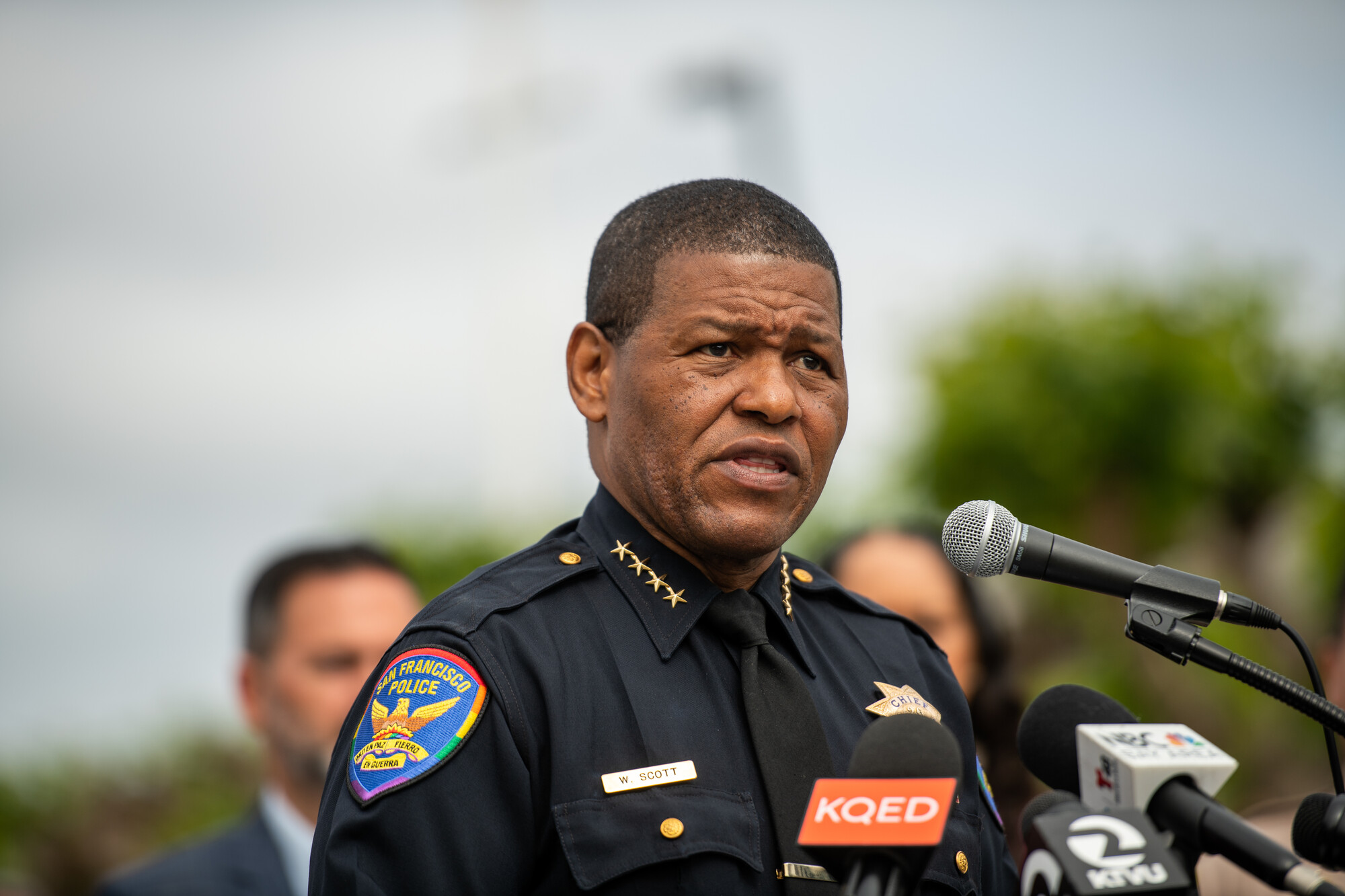
"caption": "San Francisco Police Department Chief William Scott speaks during a news conference in Civic Center in San Francisco on June 8, 2023. The San Francisco Police Commission will present three finalists to Mayor Daniel Lurie for the city’s next chief of police Tuesday morning, a choice that could define his time as mayor amid difficulties for the SFPD and concerns around federal enforcement.",
"credit": "Beth LaBerge/KQED",
"altTag": null,
"description": null,
"imgSizes": {
"thumbnail": {
"file": "https://cdn.kqed.org/wp-content/uploads/sites/10/2025/10/044_KQED_SheriffPressConference_06082023_qed-160x107.jpg",
"width": 160,
"height": 107,
"mimeType": "image/jpeg"
},
"1536x1536": {
"file": "https://cdn.kqed.org/wp-content/uploads/sites/10/2025/10/044_KQED_SheriffPressConference_06082023_qed-1536x1024.jpg",
"width": 1536,
"height": 1024,
"mimeType": "image/jpeg"
},
"post-thumbnail": {
"file": "https://cdn.kqed.org/wp-content/uploads/sites/10/2025/10/044_KQED_SheriffPressConference_06082023_qed-672x372.jpg",
"width": 672,
"height": 372,
"mimeType": "image/jpeg"
},
"twentyfourteen-full-width": {
"file": "https://cdn.kqed.org/wp-content/uploads/sites/10/2025/10/044_KQED_SheriffPressConference_06082023_qed-1038x576.jpg",
"width": 1038,
"height": 576,
"mimeType": "image/jpeg"
},
"kqedFullSize": {
"file": "https://cdn.kqed.org/wp-content/uploads/sites/10/2025/10/044_KQED_SheriffPressConference_06082023_qed.jpg",
"width": 2000,
"height": 1333
}
},
"isLoading": false,
"fetchFailed": false
},
"news_12043368": {
"type": "attachments",
"id": "news_12043368",
"meta": {
"index": "attachments_1716263798",
"site": "news",
"id": "12043368",
"found": true
},
"title": "250609-LURIEPRESSER-04-BL-KQED",
"publishDate": 1749495050,
"status": "inherit",
"parent": 12043333,
"modified": 1749503975,
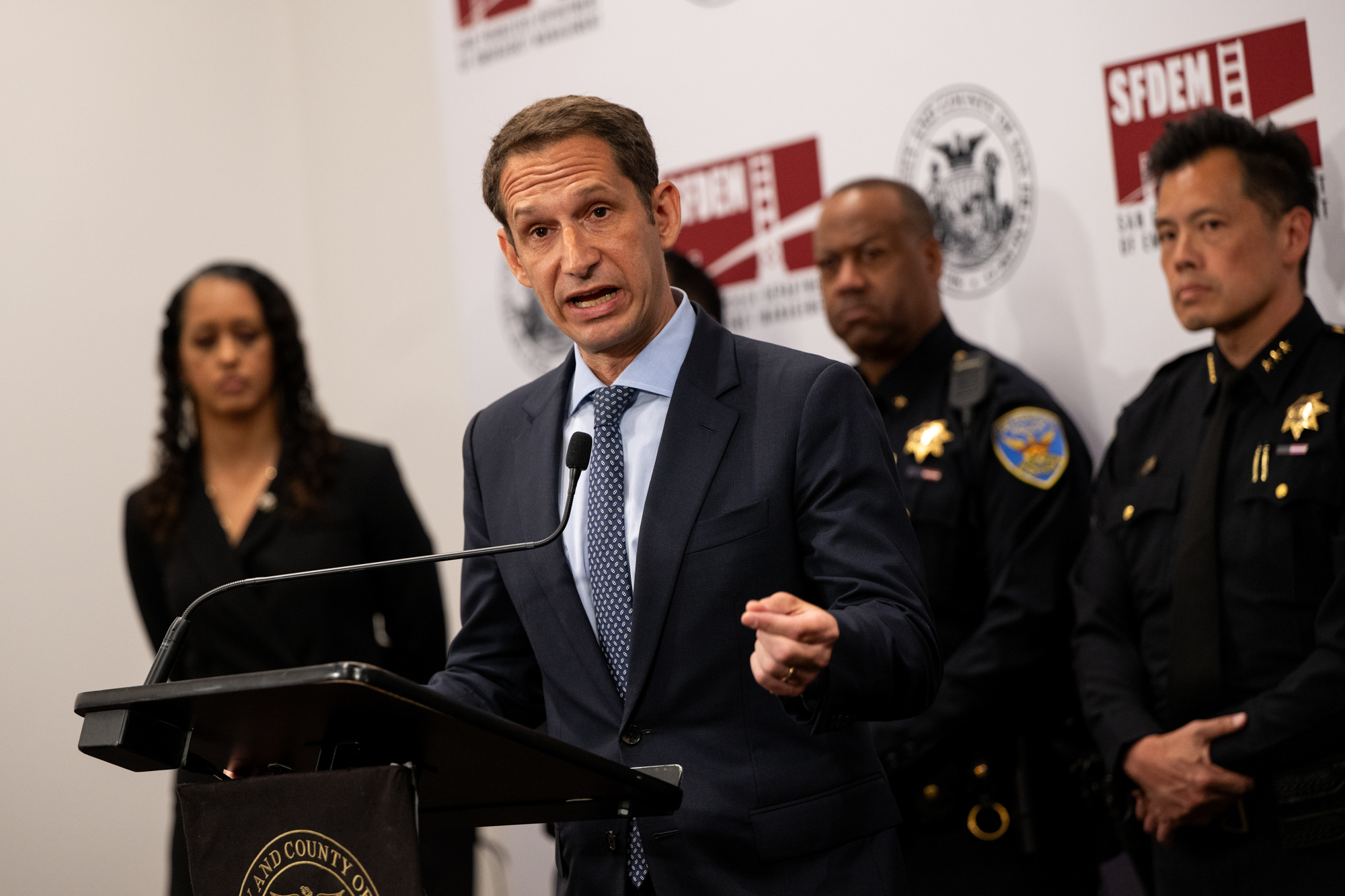
"caption": "Mayor Daniel Lurie speaks at a press conference with public safety leaders in San Francisco on June 9, 2025.",
"credit": "Beth LaBerge/KQED",
"altTag": null,
"description": null,
"imgSizes": {
"thumbnail": {
"file": "https://cdn.kqed.org/wp-content/uploads/sites/10/2025/06/250609-LURIEPRESSER-04-BL-KQED-160x107.jpg",
"width": 160,
"height": 107,
"mimeType": "image/jpeg"
},
"1536x1536": {
"file": "https://cdn.kqed.org/wp-content/uploads/sites/10/2025/06/250609-LURIEPRESSER-04-BL-KQED-1536x1024.jpg",
"width": 1536,
"height": 1024,
"mimeType": "image/jpeg"
},
"post-thumbnail": {
"file": "https://cdn.kqed.org/wp-content/uploads/sites/10/2025/06/250609-LURIEPRESSER-04-BL-KQED-672x372.jpg",
"width": 672,
"height": 372,
"mimeType": "image/jpeg"
},
"twentyfourteen-full-width": {
"file": "https://cdn.kqed.org/wp-content/uploads/sites/10/2025/06/250609-LURIEPRESSER-04-BL-KQED-1038x576.jpg",
"width": 1038,
"height": 576,
"mimeType": "image/jpeg"
},
"kqedFullSize": {
"file": "https://cdn.kqed.org/wp-content/uploads/sites/10/2025/06/250609-LURIEPRESSER-04-BL-KQED.jpg",
"width": 2000,
"height": 1333
}
},
"isLoading": false,
"fetchFailed": false
},
"news_11749940": {
"type": "attachments",
"id": "news_11749940",
"meta": {
"index": "attachments_1716263798",
"site": "news",
"id": "11749940",
"found": true
},
"title": "San Francisco Police Department Chief William Scott Holds News Conference With Homeland Security Officials",
"publishDate": 1558815145,
"status": "inherit",
"parent": 11749934,
"modified": 1746636051,
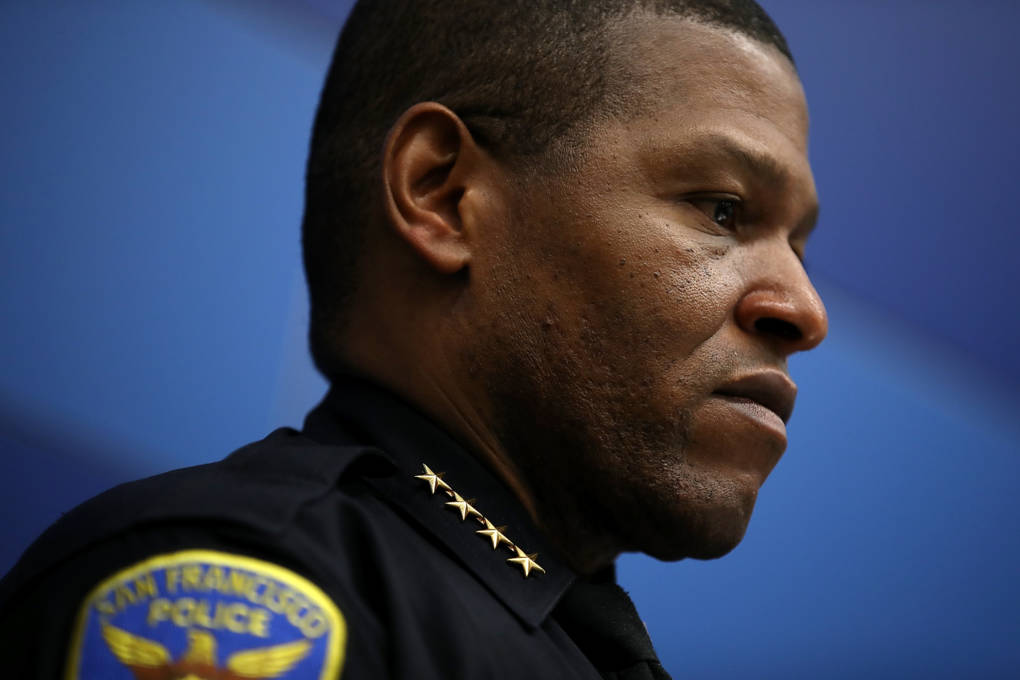
"caption": "San Francisco police chief William Scott looks on during a press conference at San Francisco police headquarters on April 6, 2018 in San Francisco, California. ",
"credit": "Justin Sullivan/Getty Images",
"altTag": null,
"description": null,
"imgSizes": {
"thumbnail": {
"file": "https://cdn.kqed.org/wp-content/uploads/sites/10/2019/05/GettyImages-942761860-160x107.jpg",
"width": 160,
"height": 107,
"mimeType": "image/jpeg"
},
"medium": {
"file": "https://cdn.kqed.org/wp-content/uploads/sites/10/2019/05/GettyImages-942761860-800x533.jpg",
"width": 800,
"height": 533,
"mimeType": "image/jpeg"
},
"large": {
"file": "https://cdn.kqed.org/wp-content/uploads/sites/10/2019/05/GettyImages-942761860-1020x680.jpg",
"width": 1020,
"height": 680,
"mimeType": "image/jpeg"
},
"complete_open_graph": {
"file": "https://cdn.kqed.org/wp-content/uploads/sites/10/2019/05/GettyImages-942761860-1200x800.jpg",
"width": 1200,
"height": 800,
"mimeType": "image/jpeg"
},
"post-thumbnail": {
"file": "https://cdn.kqed.org/wp-content/uploads/sites/10/2019/05/GettyImages-942761860-672x372.jpg",
"width": 672,
"height": 372,
"mimeType": "image/jpeg"
},
"twentyfourteen-full-width": {
"file": "https://cdn.kqed.org/wp-content/uploads/sites/10/2019/05/GettyImages-942761860-1038x576.jpg",
"width": 1038,
"height": 576,
"mimeType": "image/jpeg"
},
"full-width": {
"file": "https://cdn.kqed.org/wp-content/uploads/sites/10/2019/05/GettyImages-942761860-1920x1280.jpg",
"width": 1920,
"height": 1280,
"mimeType": "image/jpeg"
},
"apple_news_ca_landscape_12_9": {
"file": "https://cdn.kqed.org/wp-content/uploads/sites/10/2019/05/GettyImages-942761860-1832x1374.jpg",
"width": 1832,
"height": 1374,
"mimeType": "image/jpeg"
},
"apple_news_ca_landscape_9_7": {
"file": "https://cdn.kqed.org/wp-content/uploads/sites/10/2019/05/GettyImages-942761860-1376x1032.jpg",
"width": 1376,
"height": 1032,
"mimeType": "image/jpeg"
},
"apple_news_ca_landscape_5_5": {
"file": "https://cdn.kqed.org/wp-content/uploads/sites/10/2019/05/GettyImages-942761860-1044x783.jpg",
"width": 1044,
"height": 783,
"mimeType": "image/jpeg"
},
"apple_news_ca_landscape_4_7": {
"file": "https://cdn.kqed.org/wp-content/uploads/sites/10/2019/05/GettyImages-942761860-632x474.jpg",
"width": 632,
"height": 474,
"mimeType": "image/jpeg"
},
"apple_news_ca_landscape_4_0": {
"file": "https://cdn.kqed.org/wp-content/uploads/sites/10/2019/05/GettyImages-942761860-536x402.jpg",
"width": 536,
"height": 402,
"mimeType": "image/jpeg"
},
"apple_news_ca_portrait_12_9": {
"file": "https://cdn.kqed.org/wp-content/uploads/sites/10/2019/05/GettyImages-942761860-1122x1496.jpg",
"width": 1122,
"height": 1496,
"mimeType": "image/jpeg"
},
"apple_news_ca_portrait_9_7": {
"file": "https://cdn.kqed.org/wp-content/uploads/sites/10/2019/05/GettyImages-942761860-840x1120.jpg",
"width": 840,
"height": 1120,
"mimeType": "image/jpeg"
},
"apple_news_ca_portrait_5_5": {
"file": "https://cdn.kqed.org/wp-content/uploads/sites/10/2019/05/GettyImages-942761860-687x916.jpg",
"width": 687,
"height": 916,
"mimeType": "image/jpeg"
},
"apple_news_ca_portrait_4_7": {
"file": "https://cdn.kqed.org/wp-content/uploads/sites/10/2019/05/GettyImages-942761860-414x552.jpg",
"width": 414,
"height": 552,
"mimeType": "image/jpeg"
},
"apple_news_ca_portrait_4_0": {
"file": "https://cdn.kqed.org/wp-content/uploads/sites/10/2019/05/GettyImages-942761860-354x472.jpg",
"width": 354,
"height": 472,
"mimeType": "image/jpeg"
},
"apple_news_ca_square_12_9": {
"file": "https://cdn.kqed.org/wp-content/uploads/sites/10/2019/05/GettyImages-942761860-1472x1472.jpg",
"width": 1472,
"height": 1472,
"mimeType": "image/jpeg"
},
"apple_news_ca_square_9_7": {
"file": "https://cdn.kqed.org/wp-content/uploads/sites/10/2019/05/GettyImages-942761860-1104x1104.jpg",
"width": 1104,
"height": 1104,
"mimeType": "image/jpeg"
},
"apple_news_ca_square_5_5": {
"file": "https://cdn.kqed.org/wp-content/uploads/sites/10/2019/05/GettyImages-942761860-912x912.jpg",
"width": 912,
"height": 912,
"mimeType": "image/jpeg"
},
"apple_news_ca_square_4_7": {
"file": "https://cdn.kqed.org/wp-content/uploads/sites/10/2019/05/GettyImages-942761860-550x550.jpg",
"width": 550,
"height": 550,
"mimeType": "image/jpeg"
},
"apple_news_ca_square_4_0": {
"file": "https://cdn.kqed.org/wp-content/uploads/sites/10/2019/05/GettyImages-942761860-470x470.jpg",
"width": 470,
"height": 470,
"mimeType": "image/jpeg"
},
"kqedFullSize": {
"file": "https://cdn.kqed.org/wp-content/uploads/sites/10/2019/05/GettyImages-942761860-e1558815255426.jpg",
"width": 1920,
"height": 1280
}
},
"isLoading": false,
"fetchFailed": false
},
"news_12030103": {
"type": "attachments",
"id": "news_12030103",
"meta": {
"index": "attachments_1716263798",
"site": "news",
"id": "12030103",
"found": true
},
"title": "240830-SFSideshowLegislation-21-BL_qed",
"publishDate": 1741289167,
"status": "inherit",
"parent": 12030060,
"modified": 1741289846,
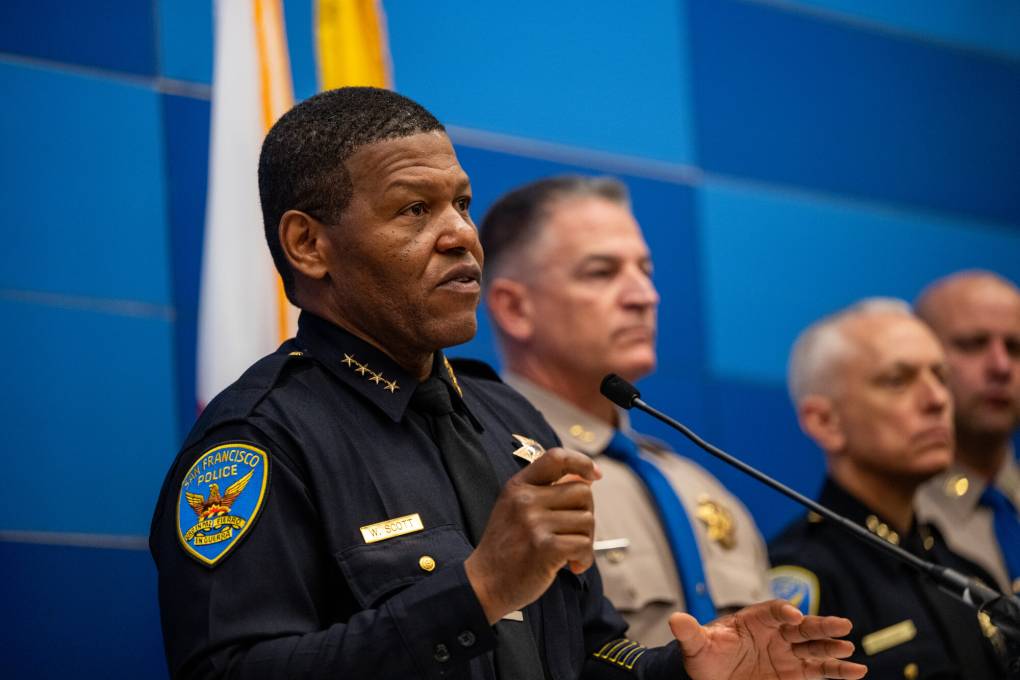
"caption": "Chief of Police Bill Scott speaks during a press conference regarding sideshows in the Bay Area at the San Francisco Police Department headquarters on Aug. 30, 2024.",
"credit": "Beth LaBerge/KQED",
"altTag": null,
"description": null,
"imgSizes": {
"medium": {
"file": "https://cdn.kqed.org/wp-content/uploads/sites/10/2025/03/240830-SFSideshowLegislation-21-BL_qed-800x533.jpg",
"width": 800,
"height": 533,
"mimeType": "image/jpeg"
},
"large": {
"file": "https://cdn.kqed.org/wp-content/uploads/sites/10/2025/03/240830-SFSideshowLegislation-21-BL_qed-1020x680.jpg",
"width": 1020,
"height": 680,
"mimeType": "image/jpeg"
},
"thumbnail": {
"file": "https://cdn.kqed.org/wp-content/uploads/sites/10/2025/03/240830-SFSideshowLegislation-21-BL_qed-160x107.jpg",
"width": 160,
"height": 107,
"mimeType": "image/jpeg"
},
"1536x1536": {
"file": "https://cdn.kqed.org/wp-content/uploads/sites/10/2025/03/240830-SFSideshowLegislation-21-BL_qed-1536x1024.jpg",
"width": 1536,
"height": 1024,
"mimeType": "image/jpeg"
},
"post-thumbnail": {
"file": "https://cdn.kqed.org/wp-content/uploads/sites/10/2025/03/240830-SFSideshowLegislation-21-BL_qed-672x372.jpg",
"width": 672,
"height": 372,
"mimeType": "image/jpeg"
},
"twentyfourteen-full-width": {
"file": "https://cdn.kqed.org/wp-content/uploads/sites/10/2025/03/240830-SFSideshowLegislation-21-BL_qed-1038x576.jpg",
"width": 1038,
"height": 576,
"mimeType": "image/jpeg"
},
"full-width": {
"file": "https://cdn.kqed.org/wp-content/uploads/sites/10/2025/03/240830-SFSideshowLegislation-21-BL_qed-1920x1280.jpg",
"width": 1920,
"height": 1280,
"mimeType": "image/jpeg"
},
"kqedFullSize": {
"file": "https://cdn.kqed.org/wp-content/uploads/sites/10/2025/03/240830-SFSideshowLegislation-21-BL_qed.jpg",
"width": 2000,
"height": 1333
}
},
"isLoading": false,
"fetchFailed": false
},
"news_12004902": {
"type": "attachments",
"id": "news_12004902",
"meta": {
"index": "attachments_1716263798",
"site": "news",
"id": "12004902",
"found": true
},
"title": "LondonBreedSFPDTech",
"publishDate": 1726519477,
"status": "inherit",
"parent": 12004882,
"modified": 1726600671,
"caption": "Mayor London Breed speaks at the San Francisco Police Department press conference alongside District Attorney Brooke Jenkins and SFPD Chief of Police William Scott, discussing new AI surveillance structures to be installed across the city.",
"credit": "Gilare Zada/KQED",
"altTag": null,
"description": null,
"imgSizes": {
"medium": {
"file": "https://cdn.kqed.org/wp-content/uploads/sites/10/2024/09/LondonBreedSFPDTech-800x575.jpg",
"width": 800,
"height": 575,
"mimeType": "image/jpeg"
},
"large": {
"file": "https://cdn.kqed.org/wp-content/uploads/sites/10/2024/09/LondonBreedSFPDTech-1020x733.jpg",
"width": 1020,
"height": 733,
"mimeType": "image/jpeg"
},
"thumbnail": {
"file": "https://cdn.kqed.org/wp-content/uploads/sites/10/2024/09/LondonBreedSFPDTech-160x115.jpg",
"width": 160,
"height": 115,
"mimeType": "image/jpeg"
},
"1536x1536": {
"file": "https://cdn.kqed.org/wp-content/uploads/sites/10/2024/09/LondonBreedSFPDTech-1536x1104.jpg",
"width": 1536,
"height": 1104,
"mimeType": "image/jpeg"
},
"post-thumbnail": {
"file": "https://cdn.kqed.org/wp-content/uploads/sites/10/2024/09/LondonBreedSFPDTech-672x372.jpg",
"width": 672,
"height": 372,
"mimeType": "image/jpeg"
},
"twentyfourteen-full-width": {
"file": "https://cdn.kqed.org/wp-content/uploads/sites/10/2024/09/LondonBreedSFPDTech-1038x576.jpg",
"width": 1038,
"height": 576,
"mimeType": "image/jpeg"
},
"full-width": {
"file": "https://cdn.kqed.org/wp-content/uploads/sites/10/2024/09/LondonBreedSFPDTech-1920x1380.jpg",
"width": 1920,
"height": 1380,
"mimeType": "image/jpeg"
},
"kqedFullSize": {
"file": "https://cdn.kqed.org/wp-content/uploads/sites/10/2024/09/LondonBreedSFPDTech.jpg",
"width": 2000,
"height": 1437
}
},
"isLoading": false,
"fetchFailed": false
},
"news_11956080": {
"type": "attachments",
"id": "news_11956080",
"meta": {
"index": "attachments_1716263798",
"site": "news",
"id": "11956080",
"found": true
},
"parent": 11956110,
"imgSizes": {
"twentyfourteen-full-width": {
"file": "https://ww2.kqed.org/app/uploads/sites/10/2023/07/RS67115_20230719-cityhallrally-10-JY-KQED-1038x576.jpg",
"width": 1038,
"mimeType": "image/jpeg",
"height": 576
},
"thumbnail": {
"file": "https://ww2.kqed.org/app/uploads/sites/10/2023/07/RS67115_20230719-cityhallrally-10-JY-KQED-160x107.jpg",
"width": 160,
"mimeType": "image/jpeg",
"height": 107
},
"post-thumbnail": {
"file": "https://ww2.kqed.org/app/uploads/sites/10/2023/07/RS67115_20230719-cityhallrally-10-JY-KQED-672x372.jpg",
"width": 672,
"mimeType": "image/jpeg",
"height": 372
},
"kqedFullSize": {
"file": "https://ww2.kqed.org/app/uploads/sites/10/2023/07/RS67115_20230719-cityhallrally-10-JY-KQED.jpg",
"width": 2000,
"height": 1334
},
"large": {
"file": "https://ww2.kqed.org/app/uploads/sites/10/2023/07/RS67115_20230719-cityhallrally-10-JY-KQED-1020x680.jpg",
"width": 1020,
"mimeType": "image/jpeg",
"height": 680
},
"1536x1536": {
"file": "https://ww2.kqed.org/app/uploads/sites/10/2023/07/RS67115_20230719-cityhallrally-10-JY-KQED-1536x1025.jpg",
"width": 1536,
"mimeType": "image/jpeg",
"height": 1025
},
"full-width": {
"file": "https://ww2.kqed.org/app/uploads/sites/10/2023/07/RS67115_20230719-cityhallrally-10-JY-KQED-1920x1281.jpg",
"width": 1920,
"mimeType": "image/jpeg",
"height": 1281
},
"medium": {
"file": "https://ww2.kqed.org/app/uploads/sites/10/2023/07/RS67115_20230719-cityhallrally-10-JY-KQED-800x534.jpg",
"width": 800,
"mimeType": "image/jpeg",
"height": 534
}
},
"publishDate": 1689868590,
"modified": 1697071565,
"caption": "Police Chief William Scott speaks during a Police Commission meeting at City Hall in San Francisco on Wednesday, July 19, 2023.",
"description": null,
"title": "RS67115_20230719-cityhallrally-10-JY-KQED",
"credit": "Juliana Yamada/KQED",
"status": "inherit",
"altTag": "A man with glasses and wearing a police uniform speaks into a microphone.",
"isLoading": false,
"fetchFailed": false
},
"news_11961411": {
"type": "attachments",
"id": "news_11961411",
"meta": {
"index": "attachments_1716263798",
"site": "news",
"id": "11961411",
"found": true
},
"title": "230913-SFPDStaff-011-BL-KQED",
"publishDate": 1694810146,
"status": "inherit",
"parent": 12063157,
"modified": 1762466664,
"caption": "Edward Siu, president of the Chinatown Merchants United Association, stands on a busy corner of Stockton Street in San Francisco's Chinatown neighborhood on Sept. 13, 2023. He says SFPD command turnover is so fast that he can't remember all the names of the police leaders he's given community tours to.",
"credit": "Beth LaBerge/KQED",
"altTag": "A person with glasses is photographed as other people pass on a busy city sidewalk.",
"description": null,
"imgSizes": {
"medium": {
"file": "https://cdn.kqed.org/wp-content/uploads/sites/10/2023/09/230913-SFPDStaff-011-BL-KQED-800x533.jpg",
"width": 800,
"height": 533,
"mimeType": "image/jpeg"
},
"large": {
"file": "https://cdn.kqed.org/wp-content/uploads/sites/10/2023/09/230913-SFPDStaff-011-BL-KQED-1020x680.jpg",
"width": 1020,
"height": 680,
"mimeType": "image/jpeg"
},
"thumbnail": {
"file": "https://cdn.kqed.org/wp-content/uploads/sites/10/2023/09/230913-SFPDStaff-011-BL-KQED-160x107.jpg",
"width": 160,
"height": 107,
"mimeType": "image/jpeg"
},
"1536x1536": {
"file": "https://cdn.kqed.org/wp-content/uploads/sites/10/2023/09/230913-SFPDStaff-011-BL-KQED-1536x1024.jpg",
"width": 1536,
"height": 1024,
"mimeType": "image/jpeg"
},
"post-thumbnail": {
"file": "https://cdn.kqed.org/wp-content/uploads/sites/10/2023/09/230913-SFPDStaff-011-BL-KQED-672x372.jpg",
"width": 672,
"height": 372,
"mimeType": "image/jpeg"
},
"twentyfourteen-full-width": {
"file": "https://cdn.kqed.org/wp-content/uploads/sites/10/2023/09/230913-SFPDStaff-011-BL-KQED-1038x576.jpg",
"width": 1038,
"height": 576,
"mimeType": "image/jpeg"
},
"full-width": {
"file": "https://cdn.kqed.org/wp-content/uploads/sites/10/2023/09/230913-SFPDStaff-011-BL-KQED-1920x1280.jpg",
"width": 1920,
"height": 1280,
"mimeType": "image/jpeg"
},
"kqedFullSize": {
"file": "https://cdn.kqed.org/wp-content/uploads/sites/10/2023/09/230913-SFPDStaff-011-BL-KQED.jpg",
"width": 2000,
"height": 1333
}
},
"isLoading": false,
"fetchFailed": false
},
"news_11959900": {
"type": "attachments",
"id": "news_11959900",
"meta": {
"index": "attachments_1716263798",
"site": "news",
"id": "11959900",
"found": true
},
"parent": 0,
"imgSizes": {
"twentyfourteen-full-width": {
"file": "https://ww2.kqed.org/app/uploads/sites/10/2023/09/230901-CARS-SAN-FRANCISCO-Getty-JE-KQED-1038x576.jpg",
"width": 1038,
"mimeType": "image/jpeg",
"height": 576
},
"thumbnail": {
"file": "https://ww2.kqed.org/app/uploads/sites/10/2023/09/230901-CARS-SAN-FRANCISCO-Getty-JE-KQED-160x102.jpg",
"width": 160,
"mimeType": "image/jpeg",
"height": 102
},
"post-thumbnail": {
"file": "https://ww2.kqed.org/app/uploads/sites/10/2023/09/230901-CARS-SAN-FRANCISCO-Getty-JE-KQED-672x372.jpg",
"width": 672,
"mimeType": "image/jpeg",
"height": 372
},
"kqedFullSize": {
"file": "https://ww2.kqed.org/app/uploads/sites/10/2023/09/230901-CARS-SAN-FRANCISCO-Getty-JE-KQED.jpg",
"width": 2000,
"height": 1276
},
"large": {
"file": "https://ww2.kqed.org/app/uploads/sites/10/2023/09/230901-CARS-SAN-FRANCISCO-Getty-JE-KQED-1020x651.jpg",
"width": 1020,
"mimeType": "image/jpeg",
"height": 651
},
"1536x1536": {
"file": "https://ww2.kqed.org/app/uploads/sites/10/2023/09/230901-CARS-SAN-FRANCISCO-Getty-JE-KQED-1536x980.jpg",
"width": 1536,
"mimeType": "image/jpeg",
"height": 980
},
"full-width": {
"file": "https://ww2.kqed.org/app/uploads/sites/10/2023/09/230901-CARS-SAN-FRANCISCO-Getty-JE-KQED-1920x1225.jpg",
"width": 1920,
"mimeType": "image/jpeg",
"height": 1225
},
"medium": {
"file": "https://ww2.kqed.org/app/uploads/sites/10/2023/09/230901-CARS-SAN-FRANCISCO-Getty-JE-KQED-800x510.jpg",
"width": 800,
"mimeType": "image/jpeg",
"height": 510
}
},
"publishDate": 1693592501,
"modified": 1693592584,
"caption": "Cars parked along Washington Street in San Francisco on March 17, 2020.",
"description": null,
"title": "US-VIRUS-HEALTH-EPIDEMIC",
"credit": "Josh Edelson/AFP via Getty Images",
"status": "inherit",
"altTag": "Cars parked along a city street.",
"isLoading": false,
"fetchFailed": false
},
"news_11959817": {
"type": "attachments",
"id": "news_11959817",
"meta": {
"index": "attachments_1716263798",
"site": "news",
"id": "11959817",
"found": true
},
"title": "Car break-ins in San Francisco",
"publishDate": 1693520828,
"status": "inherit",
"parent": 11959799,
"modified": 1770323243,
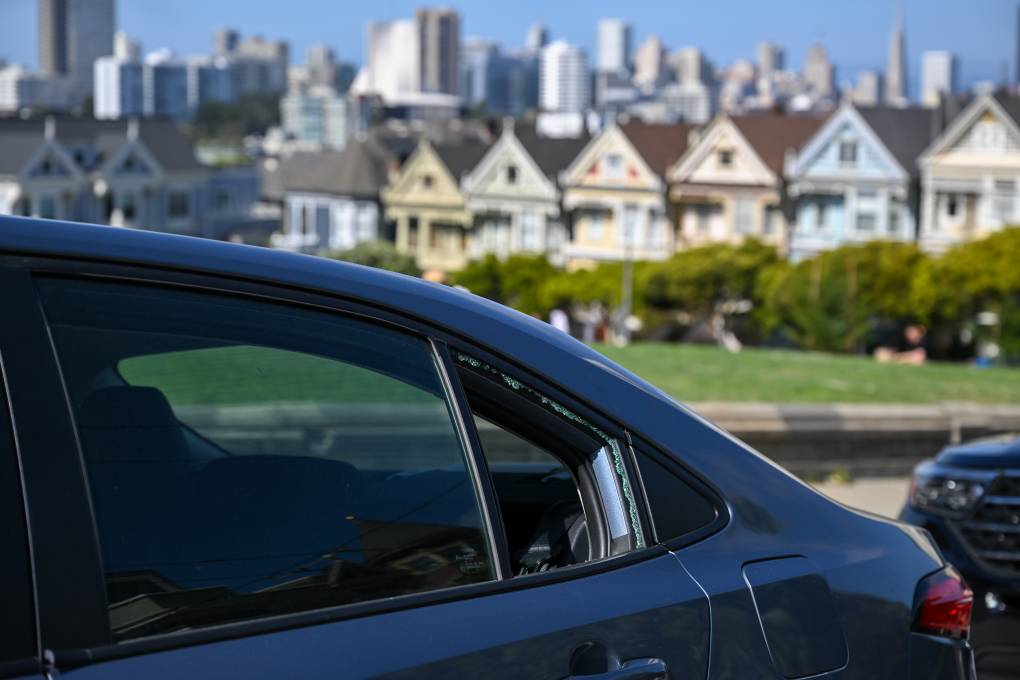
"caption": "A car with a broken window at San Francisco's Alamo Square on June 16, 2023. According to law enforcement, sightseeing areas like Alamo Square, along with Lombard Street and Fisherman's Wharf, see a lot of car break-ins — informally known by many residents as \"bipping.\"",
"credit": "Tayfun Coskun/Anadolu Agency via Getty Images",
"altTag": "A car is parked next to a large park with a view of the San Francisco skyline. The rear window on the left side of the car has been shattered.",
"description": null,
"imgSizes": {
"medium": {
"file": "https://cdn.kqed.org/wp-content/uploads/sites/10/2023/08/GettyImages-1258762861-1-1-800x533.jpg",
"width": 800,
"height": 533,
"mimeType": "image/jpeg"
},
"large": {
"file": "https://cdn.kqed.org/wp-content/uploads/sites/10/2023/08/GettyImages-1258762861-1-1-1020x680.jpg",
"width": 1020,
"height": 680,
"mimeType": "image/jpeg"
},
"thumbnail": {
"file": "https://cdn.kqed.org/wp-content/uploads/sites/10/2023/08/GettyImages-1258762861-1-1-160x107.jpg",
"width": 160,
"height": 107,
"mimeType": "image/jpeg"
},
"1536x1536": {
"file": "https://cdn.kqed.org/wp-content/uploads/sites/10/2023/08/GettyImages-1258762861-1-1-1536x1024.jpg",
"width": 1536,
"height": 1024,
"mimeType": "image/jpeg"
},
"2048x2048": {
"file": "https://cdn.kqed.org/wp-content/uploads/sites/10/2023/08/GettyImages-1258762861-1-1-2048x1365.jpg",
"width": 2048,
"height": 1365,
"mimeType": "image/jpeg"
},
"post-thumbnail": {
"file": "https://cdn.kqed.org/wp-content/uploads/sites/10/2023/08/GettyImages-1258762861-1-1-672x372.jpg",
"width": 672,
"height": 372,
"mimeType": "image/jpeg"
},
"twentyfourteen-full-width": {
"file": "https://cdn.kqed.org/wp-content/uploads/sites/10/2023/08/GettyImages-1258762861-1-1-1038x576.jpg",
"width": 1038,
"height": 576,
"mimeType": "image/jpeg"
},
"full-width": {
"file": "https://cdn.kqed.org/wp-content/uploads/sites/10/2023/08/GettyImages-1258762861-1-1-1920x1280.jpg",
"width": 1920,
"height": 1280,
"mimeType": "image/jpeg"
},
"kqedFullSize": {
"file": "https://cdn.kqed.org/wp-content/uploads/sites/10/2023/08/GettyImages-1258762861-1-1-scaled-e1770323218973.jpg",
"width": 2000,
"height": 1334
}
},
"isLoading": false,
"fetchFailed": false
},
"news_11907421": {
"type": "attachments",
"id": "news_11907421",
"meta": {
"index": "attachments_1716263798",
"site": "news",
"id": "11907421",
"found": true
},
"parent": 11907396,
"imgSizes": {
"twentyfourteen-full-width": {
"file": "https://ww2.kqed.org/app/uploads/sites/10/2022/03/GettyImages-1369474163-1024x576.jpg",
"width": 1024,
"mimeType": "image/jpeg",
"height": 576
},
"thumbnail": {
"file": "https://ww2.kqed.org/app/uploads/sites/10/2022/03/GettyImages-1369474163-160x107.jpg",
"width": 160,
"mimeType": "image/jpeg",
"height": 107
},
"post-thumbnail": {
"file": "https://ww2.kqed.org/app/uploads/sites/10/2022/03/GettyImages-1369474163-672x372.jpg",
"width": 672,
"mimeType": "image/jpeg",
"height": 372
},
"kqedFullSize": {
"file": "https://ww2.kqed.org/app/uploads/sites/10/2022/03/GettyImages-1369474163.jpg",
"width": 1024,
"height": 683
},
"large": {
"file": "https://ww2.kqed.org/app/uploads/sites/10/2022/03/GettyImages-1369474163-1020x680.jpg",
"width": 1020,
"mimeType": "image/jpeg",
"height": 680
},
"medium": {
"file": "https://ww2.kqed.org/app/uploads/sites/10/2022/03/GettyImages-1369474163-800x534.jpg",
"width": 800,
"mimeType": "image/jpeg",
"height": 534
}
},
"publishDate": 1646703121,
"modified": 1646704146,
"caption": "San Francisco Police Officer Terrance Stangel (center) and lawyer Nicole Pifari (right) walk into the courtroom at the San Francisco Hall of Justice on Feb. 8, 2022. Stangel, who faced assault and battery charges, was found not guilty on March 7, 2022.",
"description": null,
"title": "SFChronicleNews",
"credit": "Gabrielle Lurie/San Francisco Chronicle via Getty Images",
"status": "inherit",
"altTag": "A man and a woman wearing face masks walk into a courtroom.",
"isLoading": false,
"fetchFailed": false
},
"news_11904741": {
"type": "attachments",
"id": "news_11904741",
"meta": {
"index": "attachments_1716263798",
"site": "news",
"id": "11904741",
"found": true
},
"parent": 11904694,
"imgSizes": {
"twentyfourteen-full-width": {
"file": "https://ww2.kqed.org/app/uploads/sites/10/2022/02/Scott-Pic-1038x576.jpg",
"width": 1038,
"mimeType": "image/jpeg",
"height": 576
},
"thumbnail": {
"file": "https://ww2.kqed.org/app/uploads/sites/10/2022/02/Scott-Pic-160x116.jpg",
"width": 160,
"mimeType": "image/jpeg",
"height": 116
},
"post-thumbnail": {
"file": "https://ww2.kqed.org/app/uploads/sites/10/2022/02/Scott-Pic-672x372.jpg",
"width": 672,
"mimeType": "image/jpeg",
"height": 372
},
"kqedFullSize": {
"file": "https://ww2.kqed.org/app/uploads/sites/10/2022/02/Scott-Pic.jpg",
"width": 1920,
"height": 1387
},
"large": {
"file": "https://ww2.kqed.org/app/uploads/sites/10/2022/02/Scott-Pic-1020x737.jpg",
"width": 1020,
"mimeType": "image/jpeg",
"height": 737
},
"1536x1536": {
"file": "https://ww2.kqed.org/app/uploads/sites/10/2022/02/Scott-Pic-1536x1110.jpg",
"width": 1536,
"mimeType": "image/jpeg",
"height": 1110
},
"medium": {
"file": "https://ww2.kqed.org/app/uploads/sites/10/2022/02/Scott-Pic-800x578.jpg",
"width": 800,
"mimeType": "image/jpeg",
"height": 578
}
},
"publishDate": 1644532115,
"modified": 1644538015,
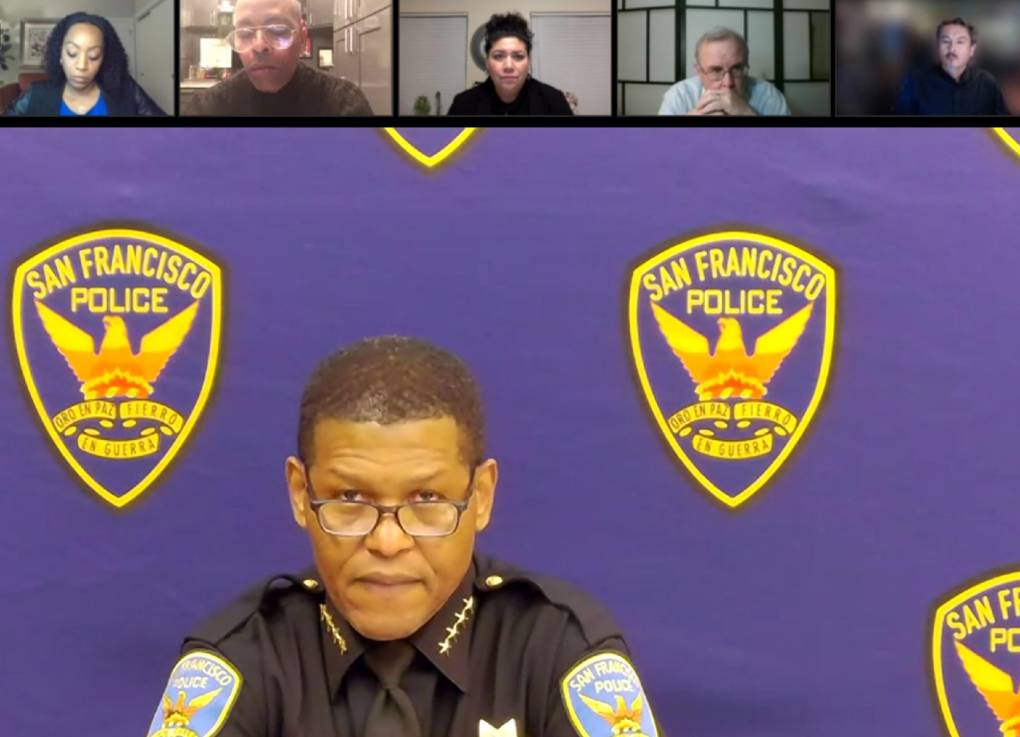
"caption": "A screenshot of Police Chief William Scott from the police commission meeting on a Zoom call on Feb. 9, 2022.",
"description": null,
"title": "Scott Pic",
"credit": "Alex Emslie/KQED",
"status": "inherit",
"altTag": "A screen cap from a Zoom call showing a man wearing glasses and police uniform with the \"San Francisco Police\" logo in the background and other people listening in separate boxes above him.",
"isLoading": false,
"fetchFailed": false
},
"news_11899110": {
"type": "attachments",
"id": "news_11899110",
"meta": {
"index": "attachments_1716263798",
"site": "news",
"id": "11899110",
"found": true
},
"parent": 11899060,
"imgSizes": {
"twentyfourteen-full-width": {
"file": "https://ww2.kqed.org/app/uploads/sites/10/2021/12/20211214_115252-1038x576.jpg",
"width": 1038,
"mimeType": "image/jpeg",
"height": 576
},
"thumbnail": {
"file": "https://ww2.kqed.org/app/uploads/sites/10/2021/12/20211214_115252-160x121.jpg",
"width": 160,
"mimeType": "image/jpeg",
"height": 121
},
"post-thumbnail": {
"file": "https://ww2.kqed.org/app/uploads/sites/10/2021/12/20211214_115252-672x372.jpg",
"width": 672,
"mimeType": "image/jpeg",
"height": 372
},
"kqedFullSize": {
"file": "https://ww2.kqed.org/app/uploads/sites/10/2021/12/20211214_115252-scaled.jpg",
"width": 2560,
"height": 1934
},
"2048x2048": {
"file": "https://ww2.kqed.org/app/uploads/sites/10/2021/12/20211214_115252-2048x1547.jpg",
"width": 2048,
"mimeType": "image/jpeg",
"height": 1547
},
"large": {
"file": "https://ww2.kqed.org/app/uploads/sites/10/2021/12/20211214_115252-1020x771.jpg",
"width": 1020,
"mimeType": "image/jpeg",
"height": 771
},
"1536x1536": {
"file": "https://ww2.kqed.org/app/uploads/sites/10/2021/12/20211214_115252-1536x1161.jpg",
"width": 1536,
"mimeType": "image/jpeg",
"height": 1161
},
"full-width": {
"file": "https://ww2.kqed.org/app/uploads/sites/10/2021/12/20211214_115252-1920x1451.jpg",
"width": 1920,
"mimeType": "image/jpeg",
"height": 1451
},
"medium": {
"file": "https://ww2.kqed.org/app/uploads/sites/10/2021/12/20211214_115252-800x604.jpg",
"width": 800,
"mimeType": "image/jpeg",
"height": 604
}
},
"publishDate": 1639532879,
"modified": 1639599075,
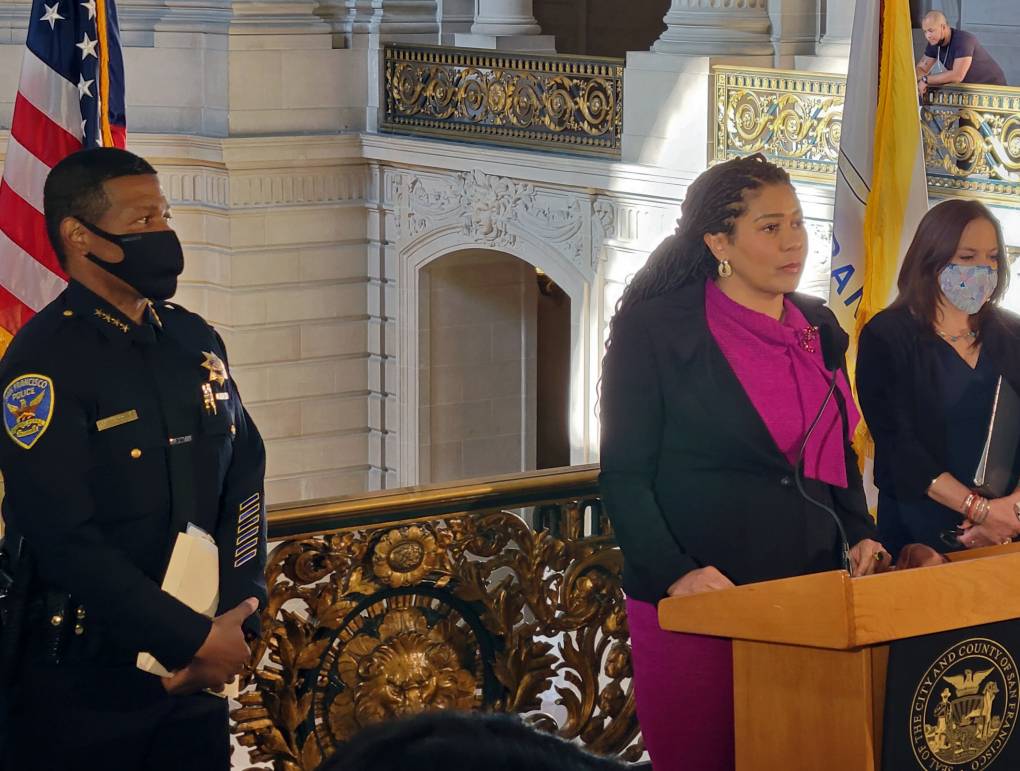
"caption": "San Francisco Mayor London Breed, flanked by Police Chief Bill Scott, left, on the balcony of City Hall on Dec. 14, 2021, announcing a plan to combat crime in the city's Tenderloin neighborhood.",
"description": null,
"title": "20211214_115252",
"credit": "Alex Emslie/KQED",
"status": "inherit",
"altTag": "SF Mayor London Breed stands at a lectern on a balcony at City Hall.",
"isLoading": false,
"fetchFailed": false
}
},
"audioPlayerReducer": {
"postId": "stream_live",
"isPaused": true,
"isPlaying": false,
"pfsActive": false,
"pledgeModalIsOpen": true,
"playerDrawerIsOpen": false,
"liveAudioPlayStartedAt": 0,
"liveAudioPlayContext": ""
},
"authorsReducer": {
"shotchkiss": {
"type": "authors",
"id": "61",
"meta": {
"index": "authors_1716337520",
"id": "61",
"found": true
},
"name": "Sarah Hotchkiss",
"firstName": "Sarah",
"lastName": "Hotchkiss",
"slug": "shotchkiss",
"email": "shotchkiss@kqed.org",
"display_author_email": true,
"staff_mastheads": [
"arts"
],
"title": "Senior Editor",
"bio": "Sarah Hotchkiss is a San Francisco \u003ca href=\"http://www.sarahhotchkiss.com\">artist\u003c/a> and arts writer. In 2019, she received the Dorothea & Leo Rabkin Foundation grant for visual art journalism and in 2020 she received a Society of Professional Journalists, Northern California award for excellence in arts and culture reporting.",
"avatar": "https://secure.gravatar.com/avatar/bc662df144b3d27fd8b1b6f1c2a420d34e91e53154d411bb7ad353cc8b6cea8d?s=600&d=blank&r=g",
"twitter": null,
"bluesky": null,
"facebook": null,
"instagram": null,
"linkedin": null,
"sites": [
{
"site": "",
"roles": [
"editor"
]
},
{
"site": "arts",
"roles": [
"Contributor",
"administrator"
]
},
{
"site": "artschool",
"roles": [
"administrator"
]
},
{
"site": "news",
"roles": [
"editor"
]
},
{
"site": "pop",
"roles": [
"administrator"
]
},
{
"site": "bayareabites",
"roles": [
"editor"
]
},
{
"site": "spark",
"roles": [
"editor"
]
},
{
"site": "checkplease",
"roles": [
"editor"
]
}
],
"headData": {
"title": "Sarah Hotchkiss | KQED",
"description": "Senior Editor",
"ogImgSrc": "https://secure.gravatar.com/avatar/bc662df144b3d27fd8b1b6f1c2a420d34e91e53154d411bb7ad353cc8b6cea8d?s=600&d=blank&r=g",
"twImgSrc": "https://secure.gravatar.com/avatar/bc662df144b3d27fd8b1b6f1c2a420d34e91e53154d411bb7ad353cc8b6cea8d?s=600&d=blank&r=g"
},
"isLoading": false,
"link": "/author/shotchkiss"
},
"kqednewsstaffandwires": {
"type": "authors",
"id": "237",
"meta": {
"index": "authors_1716337520",
"id": "237",
"found": true
},
"name": "KQED News Staff and Wires",
"firstName": "KQED News Staff and Wires",
"lastName": null,
"slug": "kqednewsstaffandwires",
"email": "onlinenewsstaff@kqed.org",
"display_author_email": false,
"staff_mastheads": [],
"title": null,
"bio": null,
"avatar": "https://secure.gravatar.com/avatar/72295af8ebbfbd19a4948f5271285664?s=600&d=blank&r=g",
"twitter": null,
"facebook": null,
"instagram": null,
"linkedin": null,
"sites": [
{
"site": "arts",
"roles": [
"contributor"
]
},
{
"site": "news",
"roles": [
"contributor"
]
},
{
"site": "lowdown",
"roles": [
"author"
]
},
{
"site": "stateofhealth",
"roles": [
"contributor"
]
},
{
"site": "food",
"roles": [
"author"
]
}
],
"headData": {
"title": "KQED News Staff and Wires | KQED",
"description": null,
"ogImgSrc": "https://secure.gravatar.com/avatar/72295af8ebbfbd19a4948f5271285664?s=600&d=blank&r=g",
"twImgSrc": "https://secure.gravatar.com/avatar/72295af8ebbfbd19a4948f5271285664?s=600&d=blank&r=g"
},
"isLoading": false,
"link": "/author/kqednewsstaffandwires"
},
"scottshafer": {
"type": "authors",
"id": "255",
"meta": {
"index": "authors_1716337520",
"id": "255",
"found": true
},
"name": "Scott Shafer",
"firstName": "Scott",
"lastName": "Shafer",
"slug": "scottshafer",
"email": "sshafer@kqed.org",
"display_author_email": false,
"staff_mastheads": [
"news"
],
"title": "KQED Contributor",
"bio": "Scott Shafer is a senior editor with the KQED Politics and Government desk. He is co-host of Political Breakdown, the award-winning radio show and podcast with a personal take on the world of politics. Scott came to KQED in 1998 to host the statewide\u003cem> California Report\u003c/em>. Prior to that he had extended stints in politics and government\u003cem>.\u003c/em> He uses that inside experience at KQED in his, reporting, hosting and analysis for the politics desk. Scott collaborated \u003cem>Political Breakdown a\u003c/em>nd on \u003cem>The Political Mind of Jerry Brown, \u003c/em>an eight-part series about the life and extraordinary political career of the former governor. For fun, he plays water polo with the San Francisco Tsunami.",
"avatar": "https://secure.gravatar.com/avatar/a62ebae45b79d7aed1a39a0e3bf68104?s=600&d=blank&r=g",
"twitter": "scottshafer",
"bluesky": null,
"facebook": null,
"instagram": null,
"linkedin": null,
"sites": [
{
"site": "news",
"roles": [
"editor"
]
},
{
"site": "stateofhealth",
"roles": [
"author"
]
},
{
"site": "science",
"roles": [
"author"
]
},
{
"site": "forum",
"roles": [
"subscriber"
]
},
{
"site": "liveblog",
"roles": [
"author"
]
}
],
"headData": {
"title": "Scott Shafer | KQED",
"description": "KQED Contributor",
"ogImgSrc": "https://secure.gravatar.com/avatar/a62ebae45b79d7aed1a39a0e3bf68104?s=600&d=blank&r=g",
"twImgSrc": "https://secure.gravatar.com/avatar/a62ebae45b79d7aed1a39a0e3bf68104?s=600&d=blank&r=g"
},
"isLoading": false,
"link": "/author/scottshafer"
},
"aemslie": {
"type": "authors",
"id": "3206",
"meta": {
"index": "authors_1716337520",
"id": "3206",
"found": true
},
"name": "Alex Emslie",
"firstName": "Alex",
"lastName": "Emslie",
"slug": "aemslie",
"email": "aemslie@kqed.org",
"display_author_email": true,
"staff_mastheads": [
"news"
],
"title": "KQED Senior Editor",
"bio": "Alex Emslie is senior editor of talent and development at KQED, where he manages dozens of early career journalists and oversees news department internships.\r\n\r\nHe is a former carpenter and proud graduate of City College of San Francisco and San Francisco State University, where he studied journalism and criminal justice before joining KQED in 2013.\r\n\r\nAlex produced investigative journalism focused on \u003ca href=\"https://www.kqed.org/news/11667594/the-trials-of-marvin-mutch-video\">criminal justice\u003c/a> and policing for most of a decade. He has broken major stories about \u003ca href=\"https://www.kqed.org/news/135682/amid-a-series-of-vallejo-police-shootings-one-officers-name-stands-out\">police use of deadly force\u003c/a>, \u003ca href=\"https://www.kqed.org/news/10454955/racist-texts-prompt-sfpd-internal-investigation\">officer misconduct\u003c/a> and \u003ca href=\"https://www.kqed.org/news/11712239/terrorist-or-troll-judge-to-weigh-whether-oakland-man-really-intended-to-attack-bay-area\">other\u003c/a> \u003ca href=\"https://www.kqed.org/news/11221414/hayward-paid-159000-to-husband-of-retired-police-chief-documents-show\">high\u003c/a>-\u003ca href=\"https://www.kqed.org/news/10622762/the-forgotten-tracking-two-homicides-in-san-francisco-public-housing\">profile\u003c/a> \u003ca href=\"https://www.kqed.org/news/11624516/federal-agency-promoted-ranger-just-months-after-his-gun-was-stolen-and-used-in-steinle-killing\">cases\u003c/a>. He co-founded the \u003ca href=\"https://projects.scpr.org/california-reporting-project/\">California Reporting Project\u003c/a> in 2019 to obtain and report on previously confidential police internal investigations. The effort produced well over 100 original stories and changed the course of multiple criminal cases.\r\n\r\nHis work has been recognized with numerous journalism awards, including a national Edward R. Murrow award for several years of \u003ca href=\"https://www.kqed.org/news/11688481/sfpd-officers-in-mario-woods-case-recount-shooting-in-newly-filed-depositions\">reporting\u003c/a> on the San Francisco Police shooting of Mario Woods. His \u003ca href=\"https://www.kqed.org/news/147854/half-of-those-killed-by-san-francisco-police-are-mentally-ill\">reporting\u003c/a> on police killings of people in psychiatric crisis was cited in amicus briefs before the U.S. Supreme Court.\r\n\r\nAlex now enjoys mentoring the next generation of journalists at KQED.",
"avatar": "https://secure.gravatar.com/avatar/e691e65209f20e9da202bd730ead5663?s=600&d=blank&r=g",
"twitter": "SFNewsReporter",
"facebook": null,
"instagram": null,
"linkedin": null,
"sites": [
{
"site": "arts",
"roles": [
"editor"
]
},
{
"site": "news",
"roles": [
"editor"
]
},
{
"site": "mindshift",
"roles": [
"editor"
]
},
{
"site": "stateofhealth",
"roles": [
"editor"
]
},
{
"site": "science",
"roles": [
"administrator"
]
}
],
"headData": {
"title": "Alex Emslie | KQED",
"description": "KQED Senior Editor",
"ogImgSrc": "https://secure.gravatar.com/avatar/e691e65209f20e9da202bd730ead5663?s=600&d=blank&r=g",
"twImgSrc": "https://secure.gravatar.com/avatar/e691e65209f20e9da202bd730ead5663?s=600&d=blank&r=g"
},
"isLoading": false,
"link": "/author/aemslie"
},
"carlysevern": {
"type": "authors",
"id": "3243",
"meta": {
"index": "authors_1716337520",
"id": "3243",
"found": true
},
"name": "Carly Severn",
"firstName": "Carly",
"lastName": "Severn",
"slug": "carlysevern",
"email": "csevern@kqed.org",
"display_author_email": false,
"staff_mastheads": [
"news"
],
"title": "Senior Editor, Audience News ",
"bio": "Carly is KQED's Senior Editor of Audience News on the Digital News team, and has reported for the California Report Magazine, Bay Curious and KQED Arts. She's formerly the host of \u003ca href=\"http://ww2.kqed.org/pop/category/the-cooler/\" rel=\"noopener noreferrer\">The Cooler\u003c/a> podcast.",
"avatar": "https://secure.gravatar.com/avatar/54037bf5c128fe678f0ef26cec97a93f2e7f220a22d7285703328f12c42c1b1d?s=600&d=blank&r=g",
"twitter": "teacupinthebay",
"bluesky": null,
"facebook": null,
"instagram": null,
"linkedin": null,
"sites": [
{
"site": "",
"roles": [
"editor"
]
},
{
"site": "arts",
"roles": [
"editor"
]
},
{
"site": "news",
"roles": [
"administrator"
]
},
{
"site": "pop",
"roles": [
"editor"
]
},
{
"site": "futureofyou",
"roles": [
"editor"
]
},
{
"site": "about",
"roles": [
"administrator"
]
},
{
"site": "mindshift",
"roles": [
"editor"
]
},
{
"site": "bayareabites",
"roles": [
"editor"
]
},
{
"site": "stateofhealth",
"roles": [
"editor"
]
},
{
"site": "science",
"roles": [
"editor"
]
},
{
"site": "food",
"roles": [
"contributor"
]
},
{
"site": "forum",
"roles": [
"editor"
]
},
{
"site": "perspectives",
"roles": [
"administrator"
]
},
{
"site": "liveblog",
"roles": [
"editor"
]
}
],
"headData": {
"title": "Carly Severn | KQED",
"description": "Senior Editor, Audience News ",
"ogImgSrc": "https://secure.gravatar.com/avatar/54037bf5c128fe678f0ef26cec97a93f2e7f220a22d7285703328f12c42c1b1d?s=600&d=blank&r=g",
"twImgSrc": "https://secure.gravatar.com/avatar/54037bf5c128fe678f0ef26cec97a93f2e7f220a22d7285703328f12c42c1b1d?s=600&d=blank&r=g"
},
"isLoading": false,
"link": "/author/carlysevern"
},
"jrodriguez": {
"type": "authors",
"id": "11690",
"meta": {
"index": "authors_1716337520",
"id": "11690",
"found": true
},
"name": "Joe Fitzgerald Rodriguez",
"firstName": "Joe",
"lastName": "Fitzgerald Rodriguez",
"slug": "jrodriguez",
"email": "jrodriguez@kqed.org",
"display_author_email": true,
"staff_mastheads": [
"news"
],
"title": "Reporter and Producer",
"bio": "Joe Fitzgerald Rodriguez is a reporter and digital producer for KQED covering politics. Joe most recently wrote for the \u003cem>San Francisco Examiner\u003c/em> as a political columnist covering The City. He was raised in San Francisco and has spent his reporting career in his beloved, foggy, city by the bay. Joe was 12-years-old when he conducted his first interview in journalism, grilling former San Francisco Mayor Willie Brown for the Marina Middle School newspaper, \u003cem>The Penguin Press, \u003c/em>and he continues to report on the San Francisco Bay Area to this day.",
"avatar": "https://secure.gravatar.com/avatar/2247beb0564c1e9c62228d5649d2edac?s=600&d=blank&r=g",
"twitter": "FitztheReporter",
"facebook": null,
"instagram": "https://www.instagram.com/fitzthereporter/",
"linkedin": null,
"sites": [
{
"site": "",
"roles": [
"editor"
]
},
{
"site": "arts",
"roles": [
"editor"
]
},
{
"site": "news",
"roles": [
"editor"
]
},
{
"site": "science",
"roles": [
"editor"
]
},
{
"site": "elections",
"roles": [
"editor"
]
},
{
"site": "liveblog",
"roles": [
"editor"
]
}
],
"headData": {
"title": "Joe Fitzgerald Rodriguez | KQED",
"description": "Reporter and Producer",
"ogImgSrc": "https://secure.gravatar.com/avatar/2247beb0564c1e9c62228d5649d2edac?s=600&d=blank&r=g",
"twImgSrc": "https://secure.gravatar.com/avatar/2247beb0564c1e9c62228d5649d2edac?s=600&d=blank&r=g"
},
"isLoading": false,
"link": "/author/jrodriguez"
},
"swhitney": {
"type": "authors",
"id": "11784",
"meta": {
"index": "authors_1716337520",
"id": "11784",
"found": true
},
"name": "Spencer Whitney",
"firstName": "Spencer",
"lastName": "Whitney",
"slug": "swhitney",
"email": "swhitney@kqed.org",
"display_author_email": false,
"staff_mastheads": [],
"title": "KQED Digital Editor",
"bio": "Spencer Whitney is currently a Digital Editor for KQED News. Prior to joining KQED News, Spencer worked as the Multimedia Editor at the Oakland Post and an Assistant Editor in the Editorial department at the San Francisco Chronicle. He attended Howard University as an undergraduate and interned with SiriusXM. He also attended UC Berkeley's Graduate School of Journalism and had the opportunity to write for the hyperlocal news sites Richmond Confidential and Oakland North.",
"avatar": "https://secure.gravatar.com/avatar/e33ff4fd8b8f0d2796f36472fb32607ca8fc46ef5e537dcfdbdee688d8ea5b80?s=600&d=mm&r=g",
"twitter": null,
"bluesky": null,
"facebook": null,
"instagram": null,
"linkedin": null,
"sites": [
{
"site": "arts",
"roles": [
"editor"
]
},
{
"site": "news",
"roles": [
"editor"
]
},
{
"site": "science",
"roles": [
"editor"
]
},
{
"site": "perspectives",
"roles": [
"editor"
]
}
],
"headData": {
"title": "Spencer Whitney | KQED",
"description": "KQED Digital Editor",
"ogImgSrc": "https://secure.gravatar.com/avatar/e33ff4fd8b8f0d2796f36472fb32607ca8fc46ef5e537dcfdbdee688d8ea5b80?s=600&d=mm&r=g",
"twImgSrc": "https://secure.gravatar.com/avatar/e33ff4fd8b8f0d2796f36472fb32607ca8fc46ef5e537dcfdbdee688d8ea5b80?s=600&d=mm&r=g"
},
"isLoading": false,
"link": "/author/swhitney"
},
"sjohnson": {
"type": "authors",
"id": "11840",
"meta": {
"index": "authors_1716337520",
"id": "11840",
"found": true
},
"name": "Sydney Johnson",
"firstName": "Sydney",
"lastName": "Johnson",
"slug": "sjohnson",
"email": "sjohnson@kqed.org",
"display_author_email": false,
"staff_mastheads": [
"news"
],
"title": "KQED Reporter",
"bio": "Sydney Johnson is a general assignment reporter at KQED. She previously reported on public health and city government at the San Francisco Examiner, and before that, she covered statewide education policy for EdSource. Her reporting has won multiple local, state and national awards. Sydney is a graduate of the University of California, Berkeley and lives in San Francisco.",
"avatar": "https://secure.gravatar.com/avatar/97855f2719b72ad6190b7c535fe642c8?s=600&d=blank&r=g",
"twitter": "sydneyfjohnson",
"facebook": null,
"instagram": null,
"linkedin": null,
"sites": [
{
"site": "news",
"roles": [
"editor"
]
}
],
"headData": {
"title": "Sydney Johnson | KQED",
"description": "KQED Reporter",
"ogImgSrc": "https://secure.gravatar.com/avatar/97855f2719b72ad6190b7c535fe642c8?s=600&d=blank&r=g",
"twImgSrc": "https://secure.gravatar.com/avatar/97855f2719b72ad6190b7c535fe642c8?s=600&d=blank&r=g"
},
"isLoading": false,
"link": "/author/sjohnson"
},
"nkhan": {
"type": "authors",
"id": "11867",
"meta": {
"index": "authors_1716337520",
"id": "11867",
"found": true
},
"name": "Nisa Khan",
"firstName": "Nisa",
"lastName": "Khan",
"slug": "nkhan",
"email": "nkhan@kqed.org",
"display_author_email": false,
"staff_mastheads": [],
"title": "KQED Contributor",
"bio": "Nisa Khan is a reporter for KQED's Audience News Desk. She was formerly a data reporter at Michigan Radio. She earned a Bachelor of Science in Information from the University of Michigan and a Master of Arts in Communication from Stanford University.",
"avatar": "https://secure.gravatar.com/avatar/8720459eef081ff64582b3506b124d58523e80e120704a0cbd9892533c914991?s=600&d=blank&r=g",
"twitter": "mnisakhan",
"bluesky": null,
"facebook": null,
"instagram": null,
"linkedin": null,
"sites": [
{
"site": "arts",
"roles": [
"editor"
]
},
{
"site": "news",
"roles": [
"editor"
]
},
{
"site": "science",
"roles": [
"editor",
"author"
]
},
{
"site": "forum",
"roles": [
"editor"
]
},
{
"site": "liveblog",
"roles": [
"contributor"
]
}
],
"headData": {
"title": "Nisa Khan | KQED",
"description": "KQED Contributor",
"ogImgSrc": "https://secure.gravatar.com/avatar/8720459eef081ff64582b3506b124d58523e80e120704a0cbd9892533c914991?s=600&d=blank&r=g",
"twImgSrc": "https://secure.gravatar.com/avatar/8720459eef081ff64582b3506b124d58523e80e120704a0cbd9892533c914991?s=600&d=blank&r=g"
},
"isLoading": false,
"link": "/author/nkhan"
},
"kdebenedetti": {
"type": "authors",
"id": "11913",
"meta": {
"index": "authors_1716337520",
"id": "11913",
"found": true
},
"name": "Katie DeBenedetti",
"firstName": "Katie",
"lastName": "DeBenedetti",
"slug": "kdebenedetti",
"email": "kdebenedetti@kqed.org",
"display_author_email": false,
"staff_mastheads": [
"news",
"science"
],
"title": "KQED Contributor",
"bio": "Katie DeBenedetti is a digital reporter covering daily news for the Express Desk. Prior to joining KQED as a culture reporting intern in January 2024, she covered education and city government for the Napa Valley Register.",
"avatar": "https://secure.gravatar.com/avatar/6e31073cb8f7e4214ab03f42771d0f45?s=600&d=blank&r=g",
"twitter": null,
"facebook": null,
"instagram": null,
"linkedin": null,
"sites": [
{
"site": "news",
"roles": [
"author"
]
},
{
"site": "science",
"roles": [
"author"
]
},
{
"site": "liveblog",
"roles": [
"author"
]
}
],
"headData": {
"title": "Katie DeBenedetti | KQED",
"description": "KQED Contributor",
"ogImgSrc": "https://secure.gravatar.com/avatar/6e31073cb8f7e4214ab03f42771d0f45?s=600&d=blank&r=g",
"twImgSrc": "https://secure.gravatar.com/avatar/6e31073cb8f7e4214ab03f42771d0f45?s=600&d=blank&r=g"
},
"isLoading": false,
"link": "/author/kdebenedetti"
},
"gzada": {
"type": "authors",
"id": "11929",
"meta": {
"index": "authors_1716337520",
"id": "11929",
"found": true
},
"name": "Gilare Zada",
"firstName": "Gilare",
"lastName": "Zada",
"slug": "gzada",
"email": "gzada@kqed.org",
"display_author_email": true,
"staff_mastheads": [
"news"
],
"title": null,
"bio": "Gilare Zada is a Kurdish-American from San Diego, CA. Storytelling, fitness, and binge reading are some of her passions outside of news reporting. Her work has appeared in Mission Local, the Peninsula Press, the San Francisco Press Club, and more. She also writes as a class correspondent for the Stanford Magazine - go Card!",
"avatar": "https://secure.gravatar.com/avatar/33a75f2b947669a488a805edec3fbf3838c1cedaedda710e983770633b4d6a75?s=600&d=blank&r=g",
"twitter": null,
"bluesky": null,
"facebook": null,
"instagram": null,
"linkedin": null,
"sites": [
{
"site": "",
"roles": [
"editor"
]
},
{
"site": "arts",
"roles": [
"editor"
]
},
{
"site": "news",
"roles": [
"administrator"
]
},
{
"site": "science",
"roles": [
"editor"
]
}
],
"headData": {
"title": "Gilare Zada | KQED",
"description": null,
"ogImgSrc": "https://secure.gravatar.com/avatar/33a75f2b947669a488a805edec3fbf3838c1cedaedda710e983770633b4d6a75?s=600&d=blank&r=g",
"twImgSrc": "https://secure.gravatar.com/avatar/33a75f2b947669a488a805edec3fbf3838c1cedaedda710e983770633b4d6a75?s=600&d=blank&r=g"
},
"isLoading": false,
"link": "/author/gzada"
},
"skennedy": {
"type": "authors",
"id": "11935",
"meta": {
"index": "authors_1716337520",
"id": "11935",
"found": true
},
"name": "Samantha Kennedy",
"firstName": "Samantha",
"lastName": "Kennedy",
"slug": "skennedy",
"email": "SKennedy@kqed.org",
"display_author_email": false,
"staff_mastheads": [],
"title": "KQED Contributor",
"bio": null,
"avatar": "https://secure.gravatar.com/avatar/adc7b14bf1e801793202a156ecc864d4ad505b0fd63162a2f3da0e5ba57222d0?s=600&d=blank&r=g",
"twitter": null,
"bluesky": null,
"facebook": null,
"instagram": null,
"linkedin": null,
"sites": [
{
"site": "arts",
"roles": [
"author"
]
},
{
"site": "news",
"roles": [
"editor"
]
},
{
"site": "science",
"roles": [
"editor"
]
}
],
"headData": {
"title": "Samantha Kennedy | KQED",
"description": "KQED Contributor",
"ogImgSrc": "https://secure.gravatar.com/avatar/adc7b14bf1e801793202a156ecc864d4ad505b0fd63162a2f3da0e5ba57222d0?s=600&d=blank&r=g",
"twImgSrc": "https://secure.gravatar.com/avatar/adc7b14bf1e801793202a156ecc864d4ad505b0fd63162a2f3da0e5ba57222d0?s=600&d=blank&r=g"
},
"isLoading": false,
"link": "/author/skennedy"
}
},
"pagesReducer": {
"news_tag_bill-scott": {
"type": "terms",
"id": "news_25782",
"meta": {
"index": "terms_1716263798",
"site": "news",
"id": "25782",
"score": 10.40499
},
"featImg": null,
"name": "Bill Scott",
"description": null,
"taxonomy": "tag",
"headData": {
"twImgId": null,
"twTitle": null,
"ogTitle": null,
"ogImgId": null,
"twDescription": null,
"description": null,
"title": "Bill Scott Archives | KQED News",
"ogDescription": null
},
"ttid": 25799,
"slug": "bill-scott",
"isLoading": false,
"title": "Bill Scott",
"pageMeta": {
"site": "news",
"WpPageTemplate": "page-topic-editorial",
"currentPage": 1
},
"blocks": [
{
"blockName": "kqed/post-list",
"attrs": {
"layout": "cardArticle2",
"query": "posts/news?tag=bill-scott",
"seeMore": false,
"paginated": true,
"page": 1
}
},
{
"blockName": "kqed/ad"
}
]
}
},
"pfsSessionReducer": {},
"postsReducer": {
"stream_live": {
"type": "live",
"id": "stream_live",
"audioUrl": "https://streams.kqed.org/kqedradio",
"title": "Live Stream",
"excerpt": "Live Stream information currently unavailable.",
"link": "/radio",
"featImg": "",
"label": {
"name": "KQED Live",
"link": "/"
}
},
"stream_kqedNewscast": {
"type": "posts",
"id": "stream_kqedNewscast",
"audioUrl": "https://www.kqed.org/.stream/anon/radio/RDnews/newscast.mp3?_=1",
"title": "KQED Newscast",
"featImg": "",
"label": {
"name": "88.5 FM",
"link": "/"
}
},
"news_12059818": {
"type": "posts",
"id": "news_12059818",
"meta": {
"index": "posts_1716263798",
"site": "news",
"id": "12059818",
"score": null,
"sort": [
1760461110000
]
},
"guestAuthors": [],
"slug": "san-francisco-police-commission-begins-interviews-for-next-sfpd-chief-at-a-pivotal-time",
"title": "San Francisco Police Commission Begins Interviews for Next SFPD Chief at a Pivotal Time",
"publishDate": 1760461110,
"format": "standard",
"headTitle": "San Francisco Police Commission Begins Interviews for Next SFPD Chief at a Pivotal Time | KQED",
"labelTerm": {
"site": "news"
},
"content": "\u003cp>The San Francisco Police Commission will begin interviews for the city’s next chief of police on Tuesday morning, kicking off a process that will lead to a critical choice for Mayor \u003ca href=\"https://www.kqed.org/news/tag/daniel-lurie\">Daniel Lurie\u003c/a>.\u003c/p>\n\u003cp>The position has been vacant since May, when former chief Bill Scott \u003ca href=\"https://www.kqed.org/news/12039092/san-franciscos-police-chief-stepping-down\">announced his departure\u003c/a> after eight years in the role.\u003c/p>\n\u003cp>The city’s seven-member Police Commission, a group of volunteers appointed by the mayor and Board of Supervisors, will enter into a closed session on Tuesday morning to interview candidates over the next one to two weeks.\u003c/p>\n\u003cp>[ad fullwidth]\u003c/p>\n\u003cp>“We have a self-imposed deadline of Nov. 12 to present the finalists to Lurie,” commission Vice President Kevin Benedicto told KQED.\u003c/p>\n\u003cp>Ultimately, the mayor will select the next chief from three commission-selected candidates. Who Lurie picks could define his time as mayor.\u003c/p>\n\u003cp>Lurie’s chief of public safety, Paul Yep, has served as interim chief in the months since Scott’s departure. Despite speculation that he was auditioning to take on the permanent role, Yep did not apply.\u003c/p>\n\u003cfigure id=\"attachment_12020121\" class=\"wp-caption aligncenter\" style=\"max-width: 1999px\">\u003cimg loading=\"lazy\" decoding=\"async\" class=\"size-full wp-image-12020121\" src=\"https://cdn.kqed.org/wp-content/uploads/sites/10/2025/01/240819-DanielLuriePresser-03-BL_qed.jpg\" alt=\"\" width=\"1999\" height=\"1333\" srcset=\"https://cdn.kqed.org/wp-content/uploads/sites/10/2025/01/240819-DanielLuriePresser-03-BL_qed.jpg 1999w, https://cdn.kqed.org/wp-content/uploads/sites/10/2025/01/240819-DanielLuriePresser-03-BL_qed-800x533.jpg 800w, https://cdn.kqed.org/wp-content/uploads/sites/10/2025/01/240819-DanielLuriePresser-03-BL_qed-1020x680.jpg 1020w, https://cdn.kqed.org/wp-content/uploads/sites/10/2025/01/240819-DanielLuriePresser-03-BL_qed-160x107.jpg 160w, https://cdn.kqed.org/wp-content/uploads/sites/10/2025/01/240819-DanielLuriePresser-03-BL_qed-1536x1024.jpg 1536w, https://cdn.kqed.org/wp-content/uploads/sites/10/2025/01/240819-DanielLuriePresser-03-BL_qed-1920x1280.jpg 1920w\" sizes=\"auto, (max-width: 1999px) 100vw, 1999px\">\u003cfigcaption class=\"wp-caption-text\">Former San Francisco Police Commander Paul Yep speaks during a press conference supporting mayoral candidate Daniel Lurie in San Francisco on Aug. 19, 2024. \u003ccite>(Beth LaBerge/KQED)\u003c/cite>\u003c/figcaption>\u003c/figure>\n\u003cp>There were 34 applicants for the job; only Steven Ford, who served at the SFPD for 31 years and briefly led the Antioch Police Department, \u003ca href=\"https://www.sfchronicle.com/sf/article/one-popular-cop-not-among-applicants-police-chief-21044775.php\">publicly stated that he applied\u003c/a>.\u003c/p>\n\u003cp>Lurie currently has two appointees on the Police Commission. Former federal prosecutor Wilson Leung filled a vacant seat at the beginning of Lurie’s term. And Lurie selected anti-violence activist Mattie Scott to serve after \u003ca href=\"https://www.kqed.org/news/12028726/reformist-sf-police-commissioner-is-ousted-giving-lurie-greater-control-of-oversight\">removing progressive police commissioner Max Carter-Oberstone\u003c/a>. (The mayor appoints four members to the commission; the Board of Supervisors selects three.)\u003c/p>\n\u003cp>While reported crime is low in San Francisco — Lurie recently stated \u003ca href=\"https://www.kqed.org/news/12059728/salesforce-ceo-marc-benioff-sf-mayor-scrap-event-after-national-guard-comment\">crime is down 30% citywide\u003c/a> compared to last year — the new chief will inherit an understaffed police force, calls for more community policing and millions in overtime spending. Low-level crimes and open-air drug use are a persistent problem.[aside postID=news_12042755 hero='https://cdn.kqed.org/wp-content/uploads/sites/10/2025/06/250609-LURIEPRESSER-04-BL-KQED.jpg']Community meetings organized between August and September by Ralph Andersen & Associates, the agency leading the search for candidates, gathered responses from 227 people about what they were looking for in the role. The \u003ca href=\"https://media.api.sf.gov/documents/PoliceCommission10825_-_RAA_Summary_Results_for_Community_Input.pdf\">report\u003c/a>, presented to the Police Commission at their Oct. 8 meeting, found that respondents were looking for a police chief “who embodies integrity, openness, and courage, while also being firmly grounded in the unique needs of San Francisco.”\u003c/p>\n\u003cp>Benedicto said the community meetings, along with conversations with police officers and other department employees, have already shaped some of the commission’s decision-making and will continue to help them winnow down the candidates.\u003c/p>\n\u003cp>According to community input, one of the chief’s key priorities should be “preparedness around federal immigration enforcement activity.” Protesters have faced off against Immigration and Customs Enforcement officers outside San Francisco’s immigration court. In cities like Los Angeles, Chicago, Washington, D.C., and Memphis, Tennessee, similar protests have been used by the Trump administration as a rationale for sending in the National Guard.\u003c/p>\n\u003cp>Trump has \u003ca href=\"https://www.npr.org/2025/10/10/nx-s1-5567177/national-guard-map-chicago-california-oregon\">suggested sending troops to San Francisco and Oakland\u003c/a>, a plan Lurie has refrained from commenting on. “We have work to do, there is no doubt about that,” he said at the Italian Heritage Festival on Sunday. “We need more SFPD.”\u003c/p>\n\u003cfigure id=\"attachment_12047757\" class=\"wp-caption aligncenter\" style=\"max-width: 2000px\">\u003cimg loading=\"lazy\" decoding=\"async\" class=\"size-full wp-image-12047757\" src=\"https://cdn.kqed.org/wp-content/uploads/sites/10/2025/07/250418-SFPDFile-39-BL_qed-1.jpg\" alt=\"\" width=\"2000\" height=\"1333\" srcset=\"https://cdn.kqed.org/wp-content/uploads/sites/10/2025/07/250418-SFPDFile-39-BL_qed-1.jpg 2000w, https://cdn.kqed.org/wp-content/uploads/sites/10/2025/07/250418-SFPDFile-39-BL_qed-1-160x107.jpg 160w, https://cdn.kqed.org/wp-content/uploads/sites/10/2025/07/250418-SFPDFile-39-BL_qed-1-1536x1024.jpg 1536w\" sizes=\"auto, (max-width: 2000px) 100vw, 2000px\">\u003cfigcaption class=\"wp-caption-text\">A San Francisco Police Department officer in San Francisco on April 18, 2025. \u003ccite>(Beth LaBerge/KQED)\u003c/cite>\u003c/figcaption>\u003c/figure>\n\u003cp>Whoever Lurie picks for the job will face a host of challenges — just as Scott did eight years ago. The former chief was appointed by then-Mayor Ed Lee in 2016 after two years of high-profile police shootings and calls for accountability. Scott’s mandate from Lee was to transform the SFPD into a “21st-century police force.”\u003c/p>\n\u003cp>Just this January, the SFPD announced it had completed \u003ca href=\"https://www.kqed.org/news/12020778/state-ends-oversight-sfpd-after-long-reform-effort-followed-fatal-shootings\">an eight-year reform process\u003c/a> with the Department of Justice. During Scott’s time as chief, the department implemented more than 270 recommended reforms.\u003c/p>\n\u003cp>His tenure was also marked by the pandemic, an increase in fentanyl overdoses, and a rise in car break-ins and property crime. Dissatisfaction with policing led in part to the 2022 recall of District Attorney Chesa Boudin, which in turn hampered former Mayor London Breed’s bid for reelection.\u003c/p>\n\u003cp>Lurie’s choice could similarly make or break his burgeoning political career. The city hopes to have the position filled by the end of this year.\u003c/p>\n\u003cp>\u003c/p>\n",
"blocks": [],
"excerpt": "The board will present three finalists to Mayor Daniel Lurie, a choice that could define his time as mayor amid difficulties for the SFPD and concerns around federal enforcement.",
"status": "publish",
"parent": 0,
"modified": 1760465567,
"stats": {
"hasAudio": false,
"hasVideo": false,
"hasChartOrMap": false,
"iframeSrcs": [],
"hasGoogleForm": false,
"hasGallery": false,
"hasHearkenModule": false,
"hasPolis": false,
"paragraphCount": 18,
"wordCount": 786
},
"headData": {
"title": "San Francisco Police Commission Begins Interviews for Next SFPD Chief at a Pivotal Time | KQED",
"description": "The board will present three finalists to Mayor Daniel Lurie, a choice that could define his time as mayor amid difficulties for the SFPD and concerns around federal enforcement.",
"ogTitle": "",
"ogDescription": "",
"ogImgId": "",
"twTitle": "",
"twDescription": "",
"twImgId": "",
"schema": {
"@context": "https://schema.org",
"@type": "NewsArticle",
"headline": "San Francisco Police Commission Begins Interviews for Next SFPD Chief at a Pivotal Time",
"datePublished": "2025-10-14T09:58:30-07:00",
"dateModified": "2025-10-14T11:12:47-07:00",
"image": "https://cdn.kqed.org/wp-content/uploads/2020/02/KQED-OG-Image@1x.png",
"isAccessibleForFree": "True",
"publisher": {
"@type": "NewsMediaOrganization",
"@id": "https://www.kqed.org/#organization",
"name": "KQED",
"logo": "https://cdn.kqed.org/wp-content/uploads/2020/02/KQED-OG-Image@1x.png",
"url": "https://www.kqed.org",
"sameAs": [
"https://www.facebook.com/KQED",
"https://twitter.com/KQED",
"https://www.instagram.com/kqed/",
"https://www.tiktok.com/@kqedofficial",
"https://www.linkedin.com/company/kqed",
"https://www.youtube.com/channel/UCeC0IOo7i1P_61zVUWbJ4nw"
]
}
}
},
"primaryCategory": {
"termId": 8,
"slug": "news",
"name": "News"
},
"sticky": false,
"nprStoryId": "kqed-12059818",
"templateType": "standard",
"featuredImageType": "standard",
"excludeFromSiteSearch": "Include",
"articleAge": "0",
"path": "/news/12059818/san-francisco-police-commission-begins-interviews-for-next-sfpd-chief-at-a-pivotal-time",
"audioTrackLength": null,
"parsedContent": [
{
"type": "contentString",
"content": "\u003cdiv class=\"post-body\">\u003cp>\u003cp>The San Francisco Police Commission will begin interviews for the city’s next chief of police on Tuesday morning, kicking off a process that will lead to a critical choice for Mayor \u003ca href=\"https://www.kqed.org/news/tag/daniel-lurie\">Daniel Lurie\u003c/a>.\u003c/p>\n\u003cp>The position has been vacant since May, when former chief Bill Scott \u003ca href=\"https://www.kqed.org/news/12039092/san-franciscos-police-chief-stepping-down\">announced his departure\u003c/a> after eight years in the role.\u003c/p>\n\u003cp>The city’s seven-member Police Commission, a group of volunteers appointed by the mayor and Board of Supervisors, will enter into a closed session on Tuesday morning to interview candidates over the next one to two weeks.\u003c/p>\n\u003cp>\u003c/p>\u003c/div>",
"attributes": {
"named": {},
"numeric": []
}
},
{
"type": "component",
"content": "",
"name": "ad",
"attributes": {
"named": {
"label": "fullwidth"
},
"numeric": [
"fullwidth"
]
}
},
{
"type": "contentString",
"content": "\u003cdiv class=\"post-body\">\u003cp>\u003c/p>\n\u003cp>“We have a self-imposed deadline of Nov. 12 to present the finalists to Lurie,” commission Vice President Kevin Benedicto told KQED.\u003c/p>\n\u003cp>Ultimately, the mayor will select the next chief from three commission-selected candidates. Who Lurie picks could define his time as mayor.\u003c/p>\n\u003cp>Lurie’s chief of public safety, Paul Yep, has served as interim chief in the months since Scott’s departure. Despite speculation that he was auditioning to take on the permanent role, Yep did not apply.\u003c/p>\n\u003cfigure id=\"attachment_12020121\" class=\"wp-caption aligncenter\" style=\"max-width: 1999px\">\u003cimg loading=\"lazy\" decoding=\"async\" class=\"size-full wp-image-12020121\" src=\"https://cdn.kqed.org/wp-content/uploads/sites/10/2025/01/240819-DanielLuriePresser-03-BL_qed.jpg\" alt=\"\" width=\"1999\" height=\"1333\" srcset=\"https://cdn.kqed.org/wp-content/uploads/sites/10/2025/01/240819-DanielLuriePresser-03-BL_qed.jpg 1999w, https://cdn.kqed.org/wp-content/uploads/sites/10/2025/01/240819-DanielLuriePresser-03-BL_qed-800x533.jpg 800w, https://cdn.kqed.org/wp-content/uploads/sites/10/2025/01/240819-DanielLuriePresser-03-BL_qed-1020x680.jpg 1020w, https://cdn.kqed.org/wp-content/uploads/sites/10/2025/01/240819-DanielLuriePresser-03-BL_qed-160x107.jpg 160w, https://cdn.kqed.org/wp-content/uploads/sites/10/2025/01/240819-DanielLuriePresser-03-BL_qed-1536x1024.jpg 1536w, https://cdn.kqed.org/wp-content/uploads/sites/10/2025/01/240819-DanielLuriePresser-03-BL_qed-1920x1280.jpg 1920w\" sizes=\"auto, (max-width: 1999px) 100vw, 1999px\">\u003cfigcaption class=\"wp-caption-text\">Former San Francisco Police Commander Paul Yep speaks during a press conference supporting mayoral candidate Daniel Lurie in San Francisco on Aug. 19, 2024. \u003ccite>(Beth LaBerge/KQED)\u003c/cite>\u003c/figcaption>\u003c/figure>\n\u003cp>There were 34 applicants for the job; only Steven Ford, who served at the SFPD for 31 years and briefly led the Antioch Police Department, \u003ca href=\"https://www.sfchronicle.com/sf/article/one-popular-cop-not-among-applicants-police-chief-21044775.php\">publicly stated that he applied\u003c/a>.\u003c/p>\n\u003cp>Lurie currently has two appointees on the Police Commission. Former federal prosecutor Wilson Leung filled a vacant seat at the beginning of Lurie’s term. And Lurie selected anti-violence activist Mattie Scott to serve after \u003ca href=\"https://www.kqed.org/news/12028726/reformist-sf-police-commissioner-is-ousted-giving-lurie-greater-control-of-oversight\">removing progressive police commissioner Max Carter-Oberstone\u003c/a>. (The mayor appoints four members to the commission; the Board of Supervisors selects three.)\u003c/p>\n\u003cp>While reported crime is low in San Francisco — Lurie recently stated \u003ca href=\"https://www.kqed.org/news/12059728/salesforce-ceo-marc-benioff-sf-mayor-scrap-event-after-national-guard-comment\">crime is down 30% citywide\u003c/a> compared to last year — the new chief will inherit an understaffed police force, calls for more community policing and millions in overtime spending. Low-level crimes and open-air drug use are a persistent problem.\u003c/p>\u003c/div>",
"attributes": {
"named": {},
"numeric": []
}
},
{
"type": "component",
"content": "",
"name": "aside",
"attributes": {
"named": {
"postid": "news_12042755",
"hero": "https://cdn.kqed.org/wp-content/uploads/sites/10/2025/06/250609-LURIEPRESSER-04-BL-KQED.jpg",
"label": ""
},
"numeric": []
}
},
{
"type": "contentString",
"content": "\u003cdiv class=\"post-body\">\u003cp>Community meetings organized between August and September by Ralph Andersen & Associates, the agency leading the search for candidates, gathered responses from 227 people about what they were looking for in the role. The \u003ca href=\"https://media.api.sf.gov/documents/PoliceCommission10825_-_RAA_Summary_Results_for_Community_Input.pdf\">report\u003c/a>, presented to the Police Commission at their Oct. 8 meeting, found that respondents were looking for a police chief “who embodies integrity, openness, and courage, while also being firmly grounded in the unique needs of San Francisco.”\u003c/p>\n\u003cp>Benedicto said the community meetings, along with conversations with police officers and other department employees, have already shaped some of the commission’s decision-making and will continue to help them winnow down the candidates.\u003c/p>\n\u003cp>According to community input, one of the chief’s key priorities should be “preparedness around federal immigration enforcement activity.” Protesters have faced off against Immigration and Customs Enforcement officers outside San Francisco’s immigration court. In cities like Los Angeles, Chicago, Washington, D.C., and Memphis, Tennessee, similar protests have been used by the Trump administration as a rationale for sending in the National Guard.\u003c/p>\n\u003cp>Trump has \u003ca href=\"https://www.npr.org/2025/10/10/nx-s1-5567177/national-guard-map-chicago-california-oregon\">suggested sending troops to San Francisco and Oakland\u003c/a>, a plan Lurie has refrained from commenting on. “We have work to do, there is no doubt about that,” he said at the Italian Heritage Festival on Sunday. “We need more SFPD.”\u003c/p>\n\u003cfigure id=\"attachment_12047757\" class=\"wp-caption aligncenter\" style=\"max-width: 2000px\">\u003cimg loading=\"lazy\" decoding=\"async\" class=\"size-full wp-image-12047757\" src=\"https://cdn.kqed.org/wp-content/uploads/sites/10/2025/07/250418-SFPDFile-39-BL_qed-1.jpg\" alt=\"\" width=\"2000\" height=\"1333\" srcset=\"https://cdn.kqed.org/wp-content/uploads/sites/10/2025/07/250418-SFPDFile-39-BL_qed-1.jpg 2000w, https://cdn.kqed.org/wp-content/uploads/sites/10/2025/07/250418-SFPDFile-39-BL_qed-1-160x107.jpg 160w, https://cdn.kqed.org/wp-content/uploads/sites/10/2025/07/250418-SFPDFile-39-BL_qed-1-1536x1024.jpg 1536w\" sizes=\"auto, (max-width: 2000px) 100vw, 2000px\">\u003cfigcaption class=\"wp-caption-text\">A San Francisco Police Department officer in San Francisco on April 18, 2025. \u003ccite>(Beth LaBerge/KQED)\u003c/cite>\u003c/figcaption>\u003c/figure>\n\u003cp>Whoever Lurie picks for the job will face a host of challenges — just as Scott did eight years ago. The former chief was appointed by then-Mayor Ed Lee in 2016 after two years of high-profile police shootings and calls for accountability. Scott’s mandate from Lee was to transform the SFPD into a “21st-century police force.”\u003c/p>\n\u003cp>Just this January, the SFPD announced it had completed \u003ca href=\"https://www.kqed.org/news/12020778/state-ends-oversight-sfpd-after-long-reform-effort-followed-fatal-shootings\">an eight-year reform process\u003c/a> with the Department of Justice. During Scott’s time as chief, the department implemented more than 270 recommended reforms.\u003c/p>\n\u003cp>His tenure was also marked by the pandemic, an increase in fentanyl overdoses, and a rise in car break-ins and property crime. Dissatisfaction with policing led in part to the 2022 recall of District Attorney Chesa Boudin, which in turn hampered former Mayor London Breed’s bid for reelection.\u003c/p>\n\u003cp>Lurie’s choice could similarly make or break his burgeoning political career. The city hopes to have the position filled by the end of this year.\u003c/p>\n\u003cp>\u003c/p>\n\u003c/div>\u003c/p>",
"attributes": {
"named": {},
"numeric": []
}
}
],
"link": "/news/12059818/san-francisco-police-commission-begins-interviews-for-next-sfpd-chief-at-a-pivotal-time",
"authors": [
"61"
],
"categories": [
"news_28250",
"news_8",
"news_13"
],
"tags": [
"news_1386",
"news_25782",
"news_34055",
"news_34377",
"news_17968",
"news_22456",
"news_38",
"news_545",
"news_20331",
"news_20441"
],
"featImg": "news_12059821",
"label": "news"
},
"news_12042755": {
"type": "posts",
"id": "news_12042755",
"meta": {
"index": "posts_1716263798",
"site": "news",
"id": "12042755",
"score": null,
"sort": [
1750082426000
]
},
"guestAuthors": [],
"slug": "protests-over-trump-underscore-sf-mayors-new-police-chief-decision",
"title": "Protests Over Trump Underscore SF Mayor’s New Police Chief Decision",
"publishDate": 1750082426,
"format": "standard",
"headTitle": "Protests Over Trump Underscore SF Mayor’s New Police Chief Decision | KQED",
"labelTerm": {
"site": "news"
},
"content": "\u003cp>A tense week of protests and confrontations between police and anti-ICE demonstrators in \u003ca href=\"https://www.kqed.org/news/12043515/more-protests-held-across-southern-california-as-trump-administration-orders-more-national-guard-to-la\">Los Angeles\u003c/a>, \u003ca href=\"https://www.kqed.org/news/12043445/a-moment-people-have-been-waiting-for-ice-arrests-fuel-sf-protests\">San Francisco\u003c/a> and \u003ca href=\"https://www.kqed.org/news/12043653/hundreds-rally-in-oakland-to-protest-ice-raids-support-immigrant-communities\">Oakland\u003c/a> underscores the importance of a decision facing Mayor Daniel Lurie: Who will lead the San Francisco Police Department now that \u003ca href=\"https://www.kqed.org/news/12039092/san-franciscos-police-chief-stepping-down\">Chief Bill Scott has departed\u003c/a>?\u003c/p>\n\u003cp>The department is currently under interim leadership, with former SFPD commander Paul Yep serving as acting police chief while the search for a permanent replacement is underway.\u003c/p>\n\u003cp>In Los Angeles, Mayor Karen Bass and local law enforcement agencies have the nation’s attention after President Donald Trump activated the California National Guard and mobilized more than 700 U.S. Marines \u003ca href=\"https://www.kqed.org/news/12043314/california-to-sue-trump-for-sending-national-guard-troops-into-la-after-ice-protests\">against the wishes of Gov. Gavin Newsom\u003c/a> and Bass. The city remains on edge after increased enforcement actions by federal Immigration and Customs Enforcement agents throughout the region.\u003c/p>\n\u003cp>[ad fullwidth]\u003c/p>\n\u003cp>The moment reminds many of 1992, when the National Guard was sent in at the request of then-Gov. Pete Wilson to quell civil unrest following the acquittal of police officers who beat motorist Rodney King.\u003c/p>\n\u003cp>In San Francisco, recent protests \u003ca href=\"https://www.kqed.org/news/12043544/dozens-more-arrested-in-calmer-night-of-san-francisco-ice-protests\">resulted in around 250 arrests\u003c/a>, mostly for violence or destroying property. The demonstrations over immigration raids highlight the challenge facing any new police chief in a city with a long history of progressive activism.\u003c/p>\n\u003cfigure id=\"attachment_12043273\" class=\"wp-caption aligncenter\" style=\"max-width: 2000px\">\u003cimg loading=\"lazy\" decoding=\"async\" class=\"size-full wp-image-12043273\" src=\"https://cdn.kqed.org/wp-content/uploads/sites/10/2025/06/250608-ICE-OUT-OF-THE-BAY-AC-13-KQED.jpg\" alt=\"\" width=\"2000\" height=\"1333\" srcset=\"https://cdn.kqed.org/wp-content/uploads/sites/10/2025/06/250608-ICE-OUT-OF-THE-BAY-AC-13-KQED.jpg 2000w, https://cdn.kqed.org/wp-content/uploads/sites/10/2025/06/250608-ICE-OUT-OF-THE-BAY-AC-13-KQED-160x107.jpg 160w, https://cdn.kqed.org/wp-content/uploads/sites/10/2025/06/250608-ICE-OUT-OF-THE-BAY-AC-13-KQED-1536x1024.jpg 1536w\" sizes=\"auto, (max-width: 2000px) 100vw, 2000px\">\u003cfigcaption class=\"wp-caption-text\">San Francisco police officers face off with protesters during an anti-ICE protest on June 8, 2025. \u003ccite>(Aryk Copley for KQED)\u003c/cite>\u003c/figcaption>\u003c/figure>\n\u003cp>Mayor Lurie condemned the attacks, saying in a statement that “violence directed at law enforcement or public servants is never acceptable.”[aside postID=news_12044426 hero='https://cdn.kqed.org/wp-content/uploads/sites/10/2025/06/250614-NO-KINGS-SF-MD-11-KQED.jpg']\u003c/p>\n\u003cp>Saturday’s “No Kings” demonstration \u003ca href=\"https://www.kqed.org/news/12044426/no-kings-protests-draw-thousands-across-the-bay-area-to-rally-against-president-trump\">attracted large crowds throughout the Bay Area\u003c/a>, stressing law enforcement resources. It all costs money at a time San Francisco is facing a nearly $800 million budget deficit.\u003c/p>\n\u003cp>It is in this moment of political peril that Lurie must select a new police chief. Even under the best of circumstances, selecting a police chief can be a fraught decision for mayors, who have to balance competing demands of several constituencies.\u003c/p>\n\u003ch2>Lessons from history\u003c/h2>\n\u003cp>In 1988, newly elected Mayor Art Agnos — who \u003cem>this \u003c/em>reporter was working for at the time — faced a similar challenge. That September, United Farm Workers leader Dolores Huerta — a friend and political ally of Agnos — was attending a protest outside the St. Francis Hotel, where Vice President George H. W. Bush was giving a speech. Bush was also the Republican nominee for president at the time.\u003c/p>\n\u003cp>During a scuffle with SFPD, the 58-year-old \u003ca href=\"https://www.sfgate.com/entertainment/article/dolores-huerta-hurt-at-protest-sept-16-1988-4809592.php\">Huerta was hit by a police officer’s baton\u003c/a>, rupturing her spleen and fracturing two ribs. It brought the department’s crowd control tactics into sharp focus.\u003c/p>\n\u003cfigure id=\"attachment_12044395\" class=\"wp-caption aligncenter\" style=\"max-width: 2000px\">\u003cimg loading=\"lazy\" decoding=\"async\" class=\"size-full wp-image-12044395\" src=\"https://cdn.kqed.org/wp-content/uploads/sites/10/2025/06/DoloresHuertaHistoricPortraitGetty.jpg\" alt=\"\" width=\"2000\" height=\"1393\" srcset=\"https://cdn.kqed.org/wp-content/uploads/sites/10/2025/06/DoloresHuertaHistoricPortraitGetty.jpg 2000w, https://cdn.kqed.org/wp-content/uploads/sites/10/2025/06/DoloresHuertaHistoricPortraitGetty-160x111.jpg 160w, https://cdn.kqed.org/wp-content/uploads/sites/10/2025/06/DoloresHuertaHistoricPortraitGetty-1536x1070.jpg 1536w\" sizes=\"auto, (max-width: 2000px) 100vw, 2000px\">\u003cfigcaption class=\"wp-caption-text\">Portrait of labor activist Dolores Huerta, co-founder of the United Farm Workers group, with a union flag that reads ‘Viva La Causa,’ circa 1970s. \u003ccite>(Cathy Murphy/Getty Images)\u003c/cite>\u003c/figcaption>\u003c/figure>\n\u003cp>“I will not tolerate anything that is not part of authorized crowd control tactics,” Agnos said after reviewing videotapes of the event. \u003ca href=\"https://www.latimes.com/archives/la-xpm-1988-09-16-mn-2389-story.html\">He ordered police chief Frank Jordan to investigate\u003c/a> the incident and recommend changes to crowd control policies.\u003c/p>\n\u003cp>Jordan, distancing himself from the mayor ever so slightly, contended that the 85 or so officers dressed in riot gear acted within department policy.\u003c/p>\n\u003cp>The following year, in a historic twist reverberating today, Agnos signed San Francisco’s Sanctuary City policy, placing sharp limits on local law enforcement agencies’ cooperation with federal immigration authorities.\u003c/p>\n\u003cp>One of Agnos’ first decisions after getting elected was keeping Jordan as police chief — a holdover from his predecessor, Dianne Feinstein, despite Agnos’ frosty relationship with her. It was a fateful decision.\u003c/p>\n\u003cp>Jordan was an amiable, non-threatening sort of chief, but he was never “Agnos’ guy.” When Agnos’ main opponent promised to fire Jordan if elected, Agnos said he would keep him, a political calculation to gain support in more conservative westside neighborhoods.\u003c/p>\n\u003cp>Jordan later resigned and ran for mayor, defeating Agnos in 1991 in a campaign dominated by concerns over homelessness, crime and drug use.\u003c/p>\n\u003ch2>Insider vs. outsider?\u003c/h2>\n\u003cp>Max Carter-Oberstone is a progressive attorney \u003ca href=\"https://www.kqed.org/news/12028726/reformist-sf-police-commissioner-is-ousted-giving-lurie-greater-control-of-oversight\">recently ousted from the Police Commission by Lurie\u003c/a>. The mayor didn’t give a reason, but Carter-Oberstone had publicly clashed with former Mayor London Breed — something most mayors don’t appreciate in their appointees.\u003c/p>\n\u003cp>He says whoever is chief in San Francisco must deal with several politically engaged constituencies.\u003c/p>\n\u003cp>“You’ve got the mayor, you’ve got the police commission, you have the police officers union, the rank-and-file, the command staff, and then of course various constituencies among the residents of the city who each have their own views,” he said.\u003c/p>\n\u003cfigure id=\"attachment_12028391\" class=\"wp-caption aligncenter\" style=\"max-width: 2000px\">\u003cimg loading=\"lazy\" decoding=\"async\" class=\"size-full wp-image-12028391\" src=\"https://cdn.kqed.org/wp-content/uploads/sites/10/2025/02/250224-SFPD-POLICE-COMMISSIONER-PROTEST-MD-16.jpg\" alt=\"\" width=\"2000\" height=\"1333\" srcset=\"https://cdn.kqed.org/wp-content/uploads/sites/10/2025/02/250224-SFPD-POLICE-COMMISSIONER-PROTEST-MD-16.jpg 2000w, https://cdn.kqed.org/wp-content/uploads/sites/10/2025/02/250224-SFPD-POLICE-COMMISSIONER-PROTEST-MD-16-800x533.jpg 800w, https://cdn.kqed.org/wp-content/uploads/sites/10/2025/02/250224-SFPD-POLICE-COMMISSIONER-PROTEST-MD-16-1020x680.jpg 1020w, https://cdn.kqed.org/wp-content/uploads/sites/10/2025/02/250224-SFPD-POLICE-COMMISSIONER-PROTEST-MD-16-160x107.jpg 160w, https://cdn.kqed.org/wp-content/uploads/sites/10/2025/02/250224-SFPD-POLICE-COMMISSIONER-PROTEST-MD-16-1536x1024.jpg 1536w, https://cdn.kqed.org/wp-content/uploads/sites/10/2025/02/250224-SFPD-POLICE-COMMISSIONER-PROTEST-MD-16-1920x1280.jpg 1920w\" sizes=\"auto, (max-width: 2000px) 100vw, 2000px\">\u003cfigcaption class=\"wp-caption-text\">SFPD Police Commissioner Max Carter-Oberstone listens to speakers at a rally protesting Mayor Daniel Lurie’s attempt to remove Carter-Oberstone from the Police Commission on the steps of San Francisco City Hall, on Monday, Feb. 24, 2025. \u003ccite>(Martin do Nascimento/KQED)\u003c/cite>\u003c/figcaption>\u003c/figure>\n\u003cp>Former SFPD police chief George Gascón, who was appointed by then-Mayor Gavin Newsom after leading the department in Mesa, Arizona, said understanding local politics is essential.\u003c/p>\n\u003cp>“You cannot be a chief of police if you don’t understand local politics,\u003cem>” \u003c/em>Gascón said.\u003c/p>\n\u003cp>He added that rank-and-file cops are often wary of someone from outside the department becoming chief.\u003c/p>\n\u003cp>“You’re going to find people wanting an outsider when there’s a perception that the internal structure is not addressing the needs of the organization and the people it serves,” Gascón said. “Generally, outside chiefs don’t last long\u003cem>.\u003c/em>”\u003c/p>\n\u003cp>Scott, who came to San Francisco from the Los Angeles Police Department in 2017, broke that mold.[aside postID=news_12042515 hero='https://cdn.kqed.org/wp-content/uploads/sites/10/2025/04/250418-SFPDFILE-29-BL-KQED.jpg']“I credit his ability to navigate a very complex political environment,” Gascón noted. “He’s a political survivor and that’s good for him.”\u003c/p>\n\u003cp>Gascón says that being an outsider has its pros and cons.\u003c/p>\n\u003cp>“It was easier in the sense that I didn’t owe anybody anything,” Gascón said. “I had no allegiances.”\u003c/p>\n\u003cp>The disadvantage to being an outsider, Gascón said, is that he often didn’t know where the internal alliances were.\u003c/p>\n\u003cp>Now with Scott gone, Lurie must weigh what kind of leader the department, and his administration, need.\u003c/p>\n\u003cp>“Every mayor wants to have who they want as the police chief. They just can’t hire them themselves. There’s a process to it,” said Tracy McCray, president of the San Francisco Police Officers Association.\u003c/p>\n\u003cp>Under the city charter, the San Francisco Police Commission forwards three candidates to the mayor. He can accept one, or request a new search.\u003c/p>\n\u003cp>McCray, who was recently \u003ca href=\"https://www.sfchronicle.com/sf/article/acting-police-chief-paul-yep-picks-command-staff-20376502.php\">promoted\u003c/a> from lieutenant to commander, worked under 11 different police chiefs during her 31 years on the force and notes that being chief “is unlike any other type of police job.”\u003c/p>\n\u003cp>“You have to be a little bit of a chameleon,” she said, referring to keeping multiple factions and interest groups happy in a city where politics is a blood sport. “You have to be able to kind of move and groove as things are thrown at you.”\u003c/p>\n\u003ch2>More protests could test next chief\u003c/h2>\n\u003cp>Today, facing a severe shortage of officers and a wave of retirements, the SFPD is at a critical juncture.\u003c/p>\n\u003cp>Jack Glaser, who studies policing trends and best practices at the UC Berkeley Goldman School of Public Policy, said the next chief should be someone who can remain calm under pressure and conflict, as recent protests suggest.\u003c/p>\n\u003cp>“I think that the city would be wise to think about somebody who’s going to be able to weather future storms, and I do think that we’re going to see a ramping up of protests in the months and years to come, partly related to the political environment and partly related to the situation in the Middle East,” Glaser said.\u003c/p>\n\u003cfigure id=\"attachment_12042524\" class=\"wp-caption aligncenter\" style=\"max-width: 2000px\">\u003cimg loading=\"lazy\" decoding=\"async\" class=\"size-full wp-image-12042524\" src=\"https://cdn.kqed.org/wp-content/uploads/sites/10/2025/06/250418-SFPDFile-45-BL_qed.jpg\" alt=\"\" width=\"2000\" height=\"1333\" srcset=\"https://cdn.kqed.org/wp-content/uploads/sites/10/2025/06/250418-SFPDFile-45-BL_qed.jpg 2000w, https://cdn.kqed.org/wp-content/uploads/sites/10/2025/06/250418-SFPDFile-45-BL_qed-800x533.jpg 800w, https://cdn.kqed.org/wp-content/uploads/sites/10/2025/06/250418-SFPDFile-45-BL_qed-1020x680.jpg 1020w, https://cdn.kqed.org/wp-content/uploads/sites/10/2025/06/250418-SFPDFile-45-BL_qed-160x107.jpg 160w, https://cdn.kqed.org/wp-content/uploads/sites/10/2025/06/250418-SFPDFile-45-BL_qed-1536x1024.jpg 1536w, https://cdn.kqed.org/wp-content/uploads/sites/10/2025/06/250418-SFPDFile-45-BL_qed-1920x1280.jpg 1920w\" sizes=\"auto, (max-width: 2000px) 100vw, 2000px\">\u003cfigcaption class=\"wp-caption-text\">Mayor Daniel Lurie walks with Captain Liza Johansen, from the Mission Police Station, and Santiago Lerma, with the Department of Emergency Management, during a public safety walk in San Francisco’s Mission District on April 18, 2025. \u003ccite>(Beth LaBerge/KQED)\u003c/cite>\u003c/figcaption>\u003c/figure>\n\u003cp>He added that research shows that managing protests effectively requires a “lighter touch” and good communication with protest organizers.\u003c/p>\n\u003cp>“You need a lot of restraint on the part of the chief and the ability of the chief to convey restraint to his rank and file,” Glaser said.\u003c/p>\n\u003cp>When Lurie announced Scott’s departure, he called him a friend, adding, \u003cstrong>“\u003c/strong>I cannot thank you enough for what you’ve given to me.”\u003c/p>\n\u003cp>\u003ca href=\"https://www.kqed.org/news/12036408/sf-mayor-daniel-lurie-touts-progress-crime-homelessness-first-100-days\">Crime rates in the city remain historically low\u003c/a>, including a significant drop in property crimes compared to 2023, when Lurie made public safety a centerpiece of his campaign.\u003c/p>\n\u003cp>On Monday, the Board of Supervisors Rules Committee will consider nominating one of seven candidates to fill a vacancy on the Police Commission, the body that will ultimately help choose Scott’s successor.\u003c/p>\n\u003cp>Scott’s record is a tough act to follow. And if the new chief fails to live up to expectations, it’s Lurie who will take the political hit.\u003c/p>\n\u003cp>[ad floatright]\u003c/p>\n",
"blocks": [],
"excerpt": "Recent demonstrations in San Francisco against immigration enforcement underscore the importance of a decision facing Mayor Daniel Lurie: Who will lead the San Francisco Police Department?",
"status": "publish",
"parent": 0,
"modified": 1750092081,
"stats": {
"hasAudio": false,
"hasVideo": false,
"hasChartOrMap": false,
"iframeSrcs": [],
"hasGoogleForm": false,
"hasGallery": false,
"hasHearkenModule": false,
"hasPolis": false,
"paragraphCount": 43,
"wordCount": 1615
},
"headData": {
"title": "Protests Over Trump Underscore SF Mayor’s New Police Chief Decision | KQED",
"description": "Recent demonstrations in San Francisco against immigration enforcement underscore the importance of a decision facing Mayor Daniel Lurie: Who will lead the San Francisco Police Department?",
"ogTitle": "",
"ogDescription": "",
"ogImgId": "",
"twTitle": "",
"twDescription": "",
"twImgId": "",
"schema": {
"@context": "https://schema.org",
"@type": "NewsArticle",
"headline": "Protests Over Trump Underscore SF Mayor’s New Police Chief Decision",
"datePublished": "2025-06-16T07:00:26-07:00",
"dateModified": "2025-06-16T09:41:21-07:00",
"image": "https://cdn.kqed.org/wp-content/uploads/2020/02/KQED-OG-Image@1x.png",
"isAccessibleForFree": "True",
"publisher": {
"@type": "NewsMediaOrganization",
"@id": "https://www.kqed.org/#organization",
"name": "KQED",
"logo": "https://cdn.kqed.org/wp-content/uploads/2020/02/KQED-OG-Image@1x.png",
"url": "https://www.kqed.org",
"sameAs": [
"https://www.facebook.com/KQED",
"https://twitter.com/KQED",
"https://www.instagram.com/kqed/",
"https://www.tiktok.com/@kqedofficial",
"https://www.linkedin.com/company/kqed",
"https://www.youtube.com/channel/UCeC0IOo7i1P_61zVUWbJ4nw"
]
}
}
},
"audioUrl": "https://traffic.omny.fm/d/clips/0af137ef-751e-4b19-a055-aaef00d2d578/ffca7e9f-6831-41c5-bcaf-aaef00f5a073/07828d45-498f-4184-93ce-b2fb01095b47/audio.mp3",
"sticky": false,
"nprStoryId": "kqed-12042755",
"templateType": "standard",
"featuredImageType": "standard",
"excludeFromSiteSearch": "Include",
"articleAge": "0",
"path": "/news/12042755/protests-over-trump-underscore-sf-mayors-new-police-chief-decision",
"audioTrackLength": null,
"parsedContent": [
{
"type": "contentString",
"content": "\u003cdiv class=\"post-body\">\u003cp>\u003cp>A tense week of protests and confrontations between police and anti-ICE demonstrators in \u003ca href=\"https://www.kqed.org/news/12043515/more-protests-held-across-southern-california-as-trump-administration-orders-more-national-guard-to-la\">Los Angeles\u003c/a>, \u003ca href=\"https://www.kqed.org/news/12043445/a-moment-people-have-been-waiting-for-ice-arrests-fuel-sf-protests\">San Francisco\u003c/a> and \u003ca href=\"https://www.kqed.org/news/12043653/hundreds-rally-in-oakland-to-protest-ice-raids-support-immigrant-communities\">Oakland\u003c/a> underscores the importance of a decision facing Mayor Daniel Lurie: Who will lead the San Francisco Police Department now that \u003ca href=\"https://www.kqed.org/news/12039092/san-franciscos-police-chief-stepping-down\">Chief Bill Scott has departed\u003c/a>?\u003c/p>\n\u003cp>The department is currently under interim leadership, with former SFPD commander Paul Yep serving as acting police chief while the search for a permanent replacement is underway.\u003c/p>\n\u003cp>In Los Angeles, Mayor Karen Bass and local law enforcement agencies have the nation’s attention after President Donald Trump activated the California National Guard and mobilized more than 700 U.S. Marines \u003ca href=\"https://www.kqed.org/news/12043314/california-to-sue-trump-for-sending-national-guard-troops-into-la-after-ice-protests\">against the wishes of Gov. Gavin Newsom\u003c/a> and Bass. The city remains on edge after increased enforcement actions by federal Immigration and Customs Enforcement agents throughout the region.\u003c/p>\n\u003cp>\u003c/p>\u003c/div>",
"attributes": {
"named": {},
"numeric": []
}
},
{
"type": "component",
"content": "",
"name": "ad",
"attributes": {
"named": {
"label": "fullwidth"
},
"numeric": [
"fullwidth"
]
}
},
{
"type": "contentString",
"content": "\u003cdiv class=\"post-body\">\u003cp>\u003c/p>\n\u003cp>The moment reminds many of 1992, when the National Guard was sent in at the request of then-Gov. Pete Wilson to quell civil unrest following the acquittal of police officers who beat motorist Rodney King.\u003c/p>\n\u003cp>In San Francisco, recent protests \u003ca href=\"https://www.kqed.org/news/12043544/dozens-more-arrested-in-calmer-night-of-san-francisco-ice-protests\">resulted in around 250 arrests\u003c/a>, mostly for violence or destroying property. The demonstrations over immigration raids highlight the challenge facing any new police chief in a city with a long history of progressive activism.\u003c/p>\n\u003cfigure id=\"attachment_12043273\" class=\"wp-caption aligncenter\" style=\"max-width: 2000px\">\u003cimg loading=\"lazy\" decoding=\"async\" class=\"size-full wp-image-12043273\" src=\"https://cdn.kqed.org/wp-content/uploads/sites/10/2025/06/250608-ICE-OUT-OF-THE-BAY-AC-13-KQED.jpg\" alt=\"\" width=\"2000\" height=\"1333\" srcset=\"https://cdn.kqed.org/wp-content/uploads/sites/10/2025/06/250608-ICE-OUT-OF-THE-BAY-AC-13-KQED.jpg 2000w, https://cdn.kqed.org/wp-content/uploads/sites/10/2025/06/250608-ICE-OUT-OF-THE-BAY-AC-13-KQED-160x107.jpg 160w, https://cdn.kqed.org/wp-content/uploads/sites/10/2025/06/250608-ICE-OUT-OF-THE-BAY-AC-13-KQED-1536x1024.jpg 1536w\" sizes=\"auto, (max-width: 2000px) 100vw, 2000px\">\u003cfigcaption class=\"wp-caption-text\">San Francisco police officers face off with protesters during an anti-ICE protest on June 8, 2025. \u003ccite>(Aryk Copley for KQED)\u003c/cite>\u003c/figcaption>\u003c/figure>\n\u003cp>Mayor Lurie condemned the attacks, saying in a statement that “violence directed at law enforcement or public servants is never acceptable.”\u003c/p>\u003c/div>",
"attributes": {
"named": {},
"numeric": []
}
},
{
"type": "component",
"content": "",
"name": "aside",
"attributes": {
"named": {
"postid": "news_12044426",
"hero": "https://cdn.kqed.org/wp-content/uploads/sites/10/2025/06/250614-NO-KINGS-SF-MD-11-KQED.jpg",
"label": ""
},
"numeric": []
}
},
{
"type": "contentString",
"content": "\u003cdiv class=\"post-body\">\u003cp>\u003c/p>\n\u003cp>Saturday’s “No Kings” demonstration \u003ca href=\"https://www.kqed.org/news/12044426/no-kings-protests-draw-thousands-across-the-bay-area-to-rally-against-president-trump\">attracted large crowds throughout the Bay Area\u003c/a>, stressing law enforcement resources. It all costs money at a time San Francisco is facing a nearly $800 million budget deficit.\u003c/p>\n\u003cp>It is in this moment of political peril that Lurie must select a new police chief. Even under the best of circumstances, selecting a police chief can be a fraught decision for mayors, who have to balance competing demands of several constituencies.\u003c/p>\n\u003ch2>Lessons from history\u003c/h2>\n\u003cp>In 1988, newly elected Mayor Art Agnos — who \u003cem>this \u003c/em>reporter was working for at the time — faced a similar challenge. That September, United Farm Workers leader Dolores Huerta — a friend and political ally of Agnos — was attending a protest outside the St. Francis Hotel, where Vice President George H. W. Bush was giving a speech. Bush was also the Republican nominee for president at the time.\u003c/p>\n\u003cp>During a scuffle with SFPD, the 58-year-old \u003ca href=\"https://www.sfgate.com/entertainment/article/dolores-huerta-hurt-at-protest-sept-16-1988-4809592.php\">Huerta was hit by a police officer’s baton\u003c/a>, rupturing her spleen and fracturing two ribs. It brought the department’s crowd control tactics into sharp focus.\u003c/p>\n\u003cfigure id=\"attachment_12044395\" class=\"wp-caption aligncenter\" style=\"max-width: 2000px\">\u003cimg loading=\"lazy\" decoding=\"async\" class=\"size-full wp-image-12044395\" src=\"https://cdn.kqed.org/wp-content/uploads/sites/10/2025/06/DoloresHuertaHistoricPortraitGetty.jpg\" alt=\"\" width=\"2000\" height=\"1393\" srcset=\"https://cdn.kqed.org/wp-content/uploads/sites/10/2025/06/DoloresHuertaHistoricPortraitGetty.jpg 2000w, https://cdn.kqed.org/wp-content/uploads/sites/10/2025/06/DoloresHuertaHistoricPortraitGetty-160x111.jpg 160w, https://cdn.kqed.org/wp-content/uploads/sites/10/2025/06/DoloresHuertaHistoricPortraitGetty-1536x1070.jpg 1536w\" sizes=\"auto, (max-width: 2000px) 100vw, 2000px\">\u003cfigcaption class=\"wp-caption-text\">Portrait of labor activist Dolores Huerta, co-founder of the United Farm Workers group, with a union flag that reads ‘Viva La Causa,’ circa 1970s. \u003ccite>(Cathy Murphy/Getty Images)\u003c/cite>\u003c/figcaption>\u003c/figure>\n\u003cp>“I will not tolerate anything that is not part of authorized crowd control tactics,” Agnos said after reviewing videotapes of the event. \u003ca href=\"https://www.latimes.com/archives/la-xpm-1988-09-16-mn-2389-story.html\">He ordered police chief Frank Jordan to investigate\u003c/a> the incident and recommend changes to crowd control policies.\u003c/p>\n\u003cp>Jordan, distancing himself from the mayor ever so slightly, contended that the 85 or so officers dressed in riot gear acted within department policy.\u003c/p>\n\u003cp>The following year, in a historic twist reverberating today, Agnos signed San Francisco’s Sanctuary City policy, placing sharp limits on local law enforcement agencies’ cooperation with federal immigration authorities.\u003c/p>\n\u003cp>One of Agnos’ first decisions after getting elected was keeping Jordan as police chief — a holdover from his predecessor, Dianne Feinstein, despite Agnos’ frosty relationship with her. It was a fateful decision.\u003c/p>\n\u003cp>Jordan was an amiable, non-threatening sort of chief, but he was never “Agnos’ guy.” When Agnos’ main opponent promised to fire Jordan if elected, Agnos said he would keep him, a political calculation to gain support in more conservative westside neighborhoods.\u003c/p>\n\u003cp>Jordan later resigned and ran for mayor, defeating Agnos in 1991 in a campaign dominated by concerns over homelessness, crime and drug use.\u003c/p>\n\u003ch2>Insider vs. outsider?\u003c/h2>\n\u003cp>Max Carter-Oberstone is a progressive attorney \u003ca href=\"https://www.kqed.org/news/12028726/reformist-sf-police-commissioner-is-ousted-giving-lurie-greater-control-of-oversight\">recently ousted from the Police Commission by Lurie\u003c/a>. The mayor didn’t give a reason, but Carter-Oberstone had publicly clashed with former Mayor London Breed — something most mayors don’t appreciate in their appointees.\u003c/p>\n\u003cp>He says whoever is chief in San Francisco must deal with several politically engaged constituencies.\u003c/p>\n\u003cp>“You’ve got the mayor, you’ve got the police commission, you have the police officers union, the rank-and-file, the command staff, and then of course various constituencies among the residents of the city who each have their own views,” he said.\u003c/p>\n\u003cfigure id=\"attachment_12028391\" class=\"wp-caption aligncenter\" style=\"max-width: 2000px\">\u003cimg loading=\"lazy\" decoding=\"async\" class=\"size-full wp-image-12028391\" src=\"https://cdn.kqed.org/wp-content/uploads/sites/10/2025/02/250224-SFPD-POLICE-COMMISSIONER-PROTEST-MD-16.jpg\" alt=\"\" width=\"2000\" height=\"1333\" srcset=\"https://cdn.kqed.org/wp-content/uploads/sites/10/2025/02/250224-SFPD-POLICE-COMMISSIONER-PROTEST-MD-16.jpg 2000w, https://cdn.kqed.org/wp-content/uploads/sites/10/2025/02/250224-SFPD-POLICE-COMMISSIONER-PROTEST-MD-16-800x533.jpg 800w, https://cdn.kqed.org/wp-content/uploads/sites/10/2025/02/250224-SFPD-POLICE-COMMISSIONER-PROTEST-MD-16-1020x680.jpg 1020w, https://cdn.kqed.org/wp-content/uploads/sites/10/2025/02/250224-SFPD-POLICE-COMMISSIONER-PROTEST-MD-16-160x107.jpg 160w, https://cdn.kqed.org/wp-content/uploads/sites/10/2025/02/250224-SFPD-POLICE-COMMISSIONER-PROTEST-MD-16-1536x1024.jpg 1536w, https://cdn.kqed.org/wp-content/uploads/sites/10/2025/02/250224-SFPD-POLICE-COMMISSIONER-PROTEST-MD-16-1920x1280.jpg 1920w\" sizes=\"auto, (max-width: 2000px) 100vw, 2000px\">\u003cfigcaption class=\"wp-caption-text\">SFPD Police Commissioner Max Carter-Oberstone listens to speakers at a rally protesting Mayor Daniel Lurie’s attempt to remove Carter-Oberstone from the Police Commission on the steps of San Francisco City Hall, on Monday, Feb. 24, 2025. \u003ccite>(Martin do Nascimento/KQED)\u003c/cite>\u003c/figcaption>\u003c/figure>\n\u003cp>Former SFPD police chief George Gascón, who was appointed by then-Mayor Gavin Newsom after leading the department in Mesa, Arizona, said understanding local politics is essential.\u003c/p>\n\u003cp>“You cannot be a chief of police if you don’t understand local politics,\u003cem>” \u003c/em>Gascón said.\u003c/p>\n\u003cp>He added that rank-and-file cops are often wary of someone from outside the department becoming chief.\u003c/p>\n\u003cp>“You’re going to find people wanting an outsider when there’s a perception that the internal structure is not addressing the needs of the organization and the people it serves,” Gascón said. “Generally, outside chiefs don’t last long\u003cem>.\u003c/em>”\u003c/p>\n\u003cp>Scott, who came to San Francisco from the Los Angeles Police Department in 2017, broke that mold.\u003c/p>\u003c/div>",
"attributes": {
"named": {},
"numeric": []
}
},
{
"type": "component",
"content": "",
"name": "aside",
"attributes": {
"named": {
"postid": "news_12042515",
"hero": "https://cdn.kqed.org/wp-content/uploads/sites/10/2025/04/250418-SFPDFILE-29-BL-KQED.jpg",
"label": ""
},
"numeric": []
}
},
{
"type": "contentString",
"content": "\u003cdiv class=\"post-body\">\u003cp>“I credit his ability to navigate a very complex political environment,” Gascón noted. “He’s a political survivor and that’s good for him.”\u003c/p>\n\u003cp>Gascón says that being an outsider has its pros and cons.\u003c/p>\n\u003cp>“It was easier in the sense that I didn’t owe anybody anything,” Gascón said. “I had no allegiances.”\u003c/p>\n\u003cp>The disadvantage to being an outsider, Gascón said, is that he often didn’t know where the internal alliances were.\u003c/p>\n\u003cp>Now with Scott gone, Lurie must weigh what kind of leader the department, and his administration, need.\u003c/p>\n\u003cp>“Every mayor wants to have who they want as the police chief. They just can’t hire them themselves. There’s a process to it,” said Tracy McCray, president of the San Francisco Police Officers Association.\u003c/p>\n\u003cp>Under the city charter, the San Francisco Police Commission forwards three candidates to the mayor. He can accept one, or request a new search.\u003c/p>\n\u003cp>McCray, who was recently \u003ca href=\"https://www.sfchronicle.com/sf/article/acting-police-chief-paul-yep-picks-command-staff-20376502.php\">promoted\u003c/a> from lieutenant to commander, worked under 11 different police chiefs during her 31 years on the force and notes that being chief “is unlike any other type of police job.”\u003c/p>\n\u003cp>“You have to be a little bit of a chameleon,” she said, referring to keeping multiple factions and interest groups happy in a city where politics is a blood sport. “You have to be able to kind of move and groove as things are thrown at you.”\u003c/p>\n\u003ch2>More protests could test next chief\u003c/h2>\n\u003cp>Today, facing a severe shortage of officers and a wave of retirements, the SFPD is at a critical juncture.\u003c/p>\n\u003cp>Jack Glaser, who studies policing trends and best practices at the UC Berkeley Goldman School of Public Policy, said the next chief should be someone who can remain calm under pressure and conflict, as recent protests suggest.\u003c/p>\n\u003cp>“I think that the city would be wise to think about somebody who’s going to be able to weather future storms, and I do think that we’re going to see a ramping up of protests in the months and years to come, partly related to the political environment and partly related to the situation in the Middle East,” Glaser said.\u003c/p>\n\u003cfigure id=\"attachment_12042524\" class=\"wp-caption aligncenter\" style=\"max-width: 2000px\">\u003cimg loading=\"lazy\" decoding=\"async\" class=\"size-full wp-image-12042524\" src=\"https://cdn.kqed.org/wp-content/uploads/sites/10/2025/06/250418-SFPDFile-45-BL_qed.jpg\" alt=\"\" width=\"2000\" height=\"1333\" srcset=\"https://cdn.kqed.org/wp-content/uploads/sites/10/2025/06/250418-SFPDFile-45-BL_qed.jpg 2000w, https://cdn.kqed.org/wp-content/uploads/sites/10/2025/06/250418-SFPDFile-45-BL_qed-800x533.jpg 800w, https://cdn.kqed.org/wp-content/uploads/sites/10/2025/06/250418-SFPDFile-45-BL_qed-1020x680.jpg 1020w, https://cdn.kqed.org/wp-content/uploads/sites/10/2025/06/250418-SFPDFile-45-BL_qed-160x107.jpg 160w, https://cdn.kqed.org/wp-content/uploads/sites/10/2025/06/250418-SFPDFile-45-BL_qed-1536x1024.jpg 1536w, https://cdn.kqed.org/wp-content/uploads/sites/10/2025/06/250418-SFPDFile-45-BL_qed-1920x1280.jpg 1920w\" sizes=\"auto, (max-width: 2000px) 100vw, 2000px\">\u003cfigcaption class=\"wp-caption-text\">Mayor Daniel Lurie walks with Captain Liza Johansen, from the Mission Police Station, and Santiago Lerma, with the Department of Emergency Management, during a public safety walk in San Francisco’s Mission District on April 18, 2025. \u003ccite>(Beth LaBerge/KQED)\u003c/cite>\u003c/figcaption>\u003c/figure>\n\u003cp>He added that research shows that managing protests effectively requires a “lighter touch” and good communication with protest organizers.\u003c/p>\n\u003cp>“You need a lot of restraint on the part of the chief and the ability of the chief to convey restraint to his rank and file,” Glaser said.\u003c/p>\n\u003cp>When Lurie announced Scott’s departure, he called him a friend, adding, \u003cstrong>“\u003c/strong>I cannot thank you enough for what you’ve given to me.”\u003c/p>\n\u003cp>\u003ca href=\"https://www.kqed.org/news/12036408/sf-mayor-daniel-lurie-touts-progress-crime-homelessness-first-100-days\">Crime rates in the city remain historically low\u003c/a>, including a significant drop in property crimes compared to 2023, when Lurie made public safety a centerpiece of his campaign.\u003c/p>\n\u003cp>On Monday, the Board of Supervisors Rules Committee will consider nominating one of seven candidates to fill a vacancy on the Police Commission, the body that will ultimately help choose Scott’s successor.\u003c/p>\n\u003cp>Scott’s record is a tough act to follow. And if the new chief fails to live up to expectations, it’s Lurie who will take the political hit.\u003c/p>\n\u003cp>\u003c/p>\u003c/div>",
"attributes": {
"named": {},
"numeric": []
}
},
{
"type": "component",
"content": "",
"name": "ad",
"attributes": {
"named": {
"label": "floatright"
},
"numeric": [
"floatright"
]
}
},
{
"type": "contentString",
"content": "\u003cdiv class=\"post-body\">\u003cp>\u003c/p>\n\u003c/div>\u003c/p>",
"attributes": {
"named": {},
"numeric": []
}
}
],
"link": "/news/12042755/protests-over-trump-underscore-sf-mayors-new-police-chief-decision",
"authors": [
"255"
],
"categories": [
"news_28250",
"news_8",
"news_13"
],
"tags": [
"news_25782",
"news_34055",
"news_34377",
"news_17968",
"news_38",
"news_545",
"news_20441"
],
"featImg": "news_12043368",
"label": "news"
},
"news_12039092": {
"type": "posts",
"id": "news_12039092",
"meta": {
"index": "posts_1716263798",
"site": "news",
"id": "12039092",
"score": null,
"sort": [
1746639427000
]
},
"guestAuthors": [],
"slug": "san-franciscos-police-chief-stepping-down",
"title": "San Francisco’s Police Chief is Stepping Down",
"publishDate": 1746639427,
"format": "standard",
"headTitle": "San Francisco’s Police Chief is Stepping Down | KQED",
"labelTerm": {
"site": "news"
},
"content": "\u003cp>\u003cem>Updated 3:16 p.m. Wednesday\u003c/em>\u003c/p>\n\u003cp>One of \u003ca href=\"https://www.kqed.org/news/tag/san-francisco\">San Francisco\u003c/a>’s longest-serving police chiefs is stepping down from the job, Mayor Daniel Lurie announced Wednesday morning.\u003c/p>\n\u003cp>Bill Scott, who has led the \u003ca href=\"https://www.kqed.org/news/tag/san-francisco-police-department\">police force\u003c/a> for more than eight years, will depart after assisting in a six-week transition and search for a replacement. He is moving to the newly formed Los Angeles Metro Transit Community Public Safety Department, \u003ca href=\"https://missionlocal.org/2025/05/police-chief-bill-scott-resigns-from-sfpd/\">\u003cem>Mission Local\u003c/em> reports\u003c/a>. Paul Yep will serve as interim chief beginning next week.\u003c/p>\n\u003cp>“On behalf of the city, I want to thank you, Chief Scott, for your steady leadership, your commitment to reform, and your dedicated service to the people of San Francisco,” Lurie said, announcing the news at City Hall.\u003c/p>\n\u003cp>[ad fullwidth]\u003c/p>\n\u003cp>Scott was selected to lead the department in 2016, after two years riled by a \u003ca href=\"https://www.kqed.org/news/11621361/s-f-district-attorney-clears-three-police-shootings-two-of-them-fatal\">series of high-profile police shootings\u003c/a>, including the \u003ca href=\"https://www.kqed.org/news/11752153/san-francisco-to-pay-400000-to-settle-lawsuit-over-police-killing-of-mario-woods\">death of Mario Woods\u003c/a> and increased community scrutiny. Then-Mayor Ed Lee tapped Scott to undertake reforms and transform the department into a “21st Century police force,” he said at the time.\u003c/p>\n\u003cp>Scott, who also led the department throughout Mayor London Breed’s time in office, came to the Bay Area after 27 years with the Los Angeles Police Department, where he had most recently served as deputy chief. He arrived in San Francisco planning to make changes within the department — similar to reforms he spearheaded in Los Angeles — but his tenure has been tumultuous.\u003c/p>\n\u003cp>Throughout the pandemic and the rise of the fentanyl crisis, Scott was blamed in part for increasing overdose deaths and public drug use, as well as rising car break-ins and property crime.\u003c/p>\n\u003cfigure id=\"attachment_12039124\" class=\"wp-caption aligncenter\" style=\"max-width: 1999px\">\u003cimg loading=\"lazy\" decoding=\"async\" class=\"size-full wp-image-12039124\" src=\"https://cdn.kqed.org/wp-content/uploads/sites/10/2025/05/240830-SFSideshowLegislation-28-BL_qed.jpg\" alt=\"\" width=\"1999\" height=\"1333\" srcset=\"https://cdn.kqed.org/wp-content/uploads/sites/10/2025/05/240830-SFSideshowLegislation-28-BL_qed.jpg 1999w, https://cdn.kqed.org/wp-content/uploads/sites/10/2025/05/240830-SFSideshowLegislation-28-BL_qed-800x533.jpg 800w, https://cdn.kqed.org/wp-content/uploads/sites/10/2025/05/240830-SFSideshowLegislation-28-BL_qed-1020x680.jpg 1020w, https://cdn.kqed.org/wp-content/uploads/sites/10/2025/05/240830-SFSideshowLegislation-28-BL_qed-160x107.jpg 160w, https://cdn.kqed.org/wp-content/uploads/sites/10/2025/05/240830-SFSideshowLegislation-28-BL_qed-1536x1024.jpg 1536w, https://cdn.kqed.org/wp-content/uploads/sites/10/2025/05/240830-SFSideshowLegislation-28-BL_qed-1920x1280.jpg 1920w\" sizes=\"auto, (max-width: 1999px) 100vw, 1999px\">\u003cfigcaption class=\"wp-caption-text\">Chief of Police William Scott speaks during a press conference regarding sideshows in the Bay Area at the San Francisco Police Department headquarters on Aug. 30, 2024. \u003ccite>(Beth LaBerge/KQED)\u003c/cite>\u003c/figcaption>\u003c/figure>\n\u003cp>“Chief Scott, by all accounts, is an honorable and hardworking police chief, but he was not a very effective police chief. Under his watch, the productivity and the efficacy of our police department continued to decline,” said veteran San Francisco political consultant Eric Jaye. “We have, at this point, one of the least productive police forces in California, if not America. And that was happening before he arrived, but that accelerated under his leadership.”\u003c/p>\n\u003cp>Dissatisfaction with the department and city leadership culminated in the 2022 recall of District Attorney Chesa Boudin \u003cspan style=\"font-weight: 400;\">—\u003c/span> and was a key factor in Breed’s \u003ca href=\"https://www.kqed.org/news/12017844/exit-interview-london-breed-reflects-on-more-than-6-years-as-san-franciscos-mayor\">failed 2024 mayoral reelection bid\u003c/a>.\u003c/p>\n\u003cp>However, over the last year, San Francisco has seen a \u003ca href=\"https://www.kqed.org/news/12036408/sf-mayor-daniel-lurie-touts-progress-crime-homelessness-first-100-days\">dramatic drop in crime\u003c/a>, and just this January, the department announced that it had completed an \u003ca href=\"https://www.kqed.org/news/12020778/state-ends-oversight-sfpd-after-long-reform-effort-followed-fatal-shootings\">eight-year-long reform\u003c/a> process in collaboration with the Department of Justice. In 2016, SFPD began a review of its practices following the series of police shootings and intensifying dissatisfaction, and throughout Scott’s tenure, it has worked with the DOJ to implement more than 270 recommended reforms.[aside postID=news_12037898 hero='https://cdn.kqed.org/wp-content/uploads/sites/10/2025/04/20250428_WARRANTLESSSEARCHES_GC-19-KQED-1020x680.jpg']“The accomplishments demonstrate that the SFPD can be a national model for policing in the 21st century, showing that reform efforts build community trust, which improves public safety,” the department announced in January.\u003c/p>\n\u003cp>San Francisco’s chapter of the NAACP acknowledged Scott led the department through difficult times, including protests following the killing of George Floyd, and thanked him for his service to the community.\u003c/p>\n\u003cp>“Chief Scott served our city with distinction, compassion, and consistency,” Jonathan Butler, NAACP San Francisco Branch President, said in a statement. “Importantly, Chief Scott consistently demonstrated his commitment to the work of the NAACP San Francisco Branch — participating in many of our meetings and showing up as a partner in our shared pursuit of justice and equity.”\u003c/p>\n\u003cp>Despite efforts to reform, the city’s over-policing of Black residents, including disproportionate pretextual stops, persisted under Scott, said James Taylor, a professor of politics at the University of San Francisco.\u003c/p>\n\u003cp>“Chief Scott largely came in response to the Mario Woods movement, and it is significant that he was in the position during Mayor London Breed’s administration if, for nothing else, the symbolic importance that he represented as an African-American chief of police,” Taylor said. “But having a Black person as the head of SFPD did absolutely nothing to curtail the disproportionate minority contact SFPD has, and it’s worse than any police department in the state of California on police stops.”\u003c/p>\n\u003cfigure id=\"attachment_12037951\" class=\"wp-caption aligncenter\" style=\"max-width: 2000px\">\u003cimg loading=\"lazy\" decoding=\"async\" class=\"size-full wp-image-12037951\" src=\"https://cdn.kqed.org/wp-content/uploads/sites/10/2025/04/20250428_WARRANTLESSSEARCHES_GC-27-KQED.jpg\" alt=\"\" width=\"2000\" height=\"1333\" srcset=\"https://cdn.kqed.org/wp-content/uploads/sites/10/2025/04/20250428_WARRANTLESSSEARCHES_GC-27-KQED.jpg 2000w, https://cdn.kqed.org/wp-content/uploads/sites/10/2025/04/20250428_WARRANTLESSSEARCHES_GC-27-KQED-800x533.jpg 800w, https://cdn.kqed.org/wp-content/uploads/sites/10/2025/04/20250428_WARRANTLESSSEARCHES_GC-27-KQED-1020x680.jpg 1020w, https://cdn.kqed.org/wp-content/uploads/sites/10/2025/04/20250428_WARRANTLESSSEARCHES_GC-27-KQED-160x107.jpg 160w, https://cdn.kqed.org/wp-content/uploads/sites/10/2025/04/20250428_WARRANTLESSSEARCHES_GC-27-KQED-1536x1024.jpg 1536w, https://cdn.kqed.org/wp-content/uploads/sites/10/2025/04/20250428_WARRANTLESSSEARCHES_GC-27-KQED-1920x1280.jpg 1920w\" sizes=\"auto, (max-width: 2000px) 100vw, 2000px\">\u003cfigcaption class=\"wp-caption-text\">Mayor Daniel Lurie attends a press conference announcing the San Francisco Sheriff’s Office’s plan to resume warrantless searches of criminal defendants who have been released and awaiting trial, outside of City Hall on April 28, 2025. \u003ccite>(Gina Castro/KQED)\u003c/cite>\u003c/figcaption>\u003c/figure>\n\u003cp>The San Francisco Police Officers’ Association and Scott have also clashed at times over certain policing policies, like avoiding seating handcuffed suspects on the ground. But in a statement on Wednesday, the group thanked him for his service.\u003c/p>\n\u003cp>“While we may not have always agreed on issues, we valued and respected each other’s roles,” said SFPOA President Tracy McCray. “We always believed that each of us was doing what we felt was best for public safety and best for our officers, and that we were committed to hiring and retaining the best officers for the SFPD. We wish him well.”\u003c/p>\n\u003cp>Lurie said that Scott will aid him in a six-week transition as he selects a new chief, who will be chosen from a list of options proposed by the citizen Police Commission.[aside postID=news_12038968 hero='https://cdn.kqed.org/wp-content/uploads/sites/10/2025/05/20230521_ksuzuki_baytobreakers-599_qed-1020x681.jpg']“I am committed to building a leadership team in SFPD that builds on our early progress, strengthens and deepens the ranks of our officers and command staff, and uses all the tools available to continue our comeback,” Lurie said. “And I look forward to working with the Commission, the Board of Supervisors, our officers, and communities across the city to do just that.”\u003c/p>\n\u003cp>Throughout the selection process, \u003ca href=\"https://www.kqed.org/news/12020118/lurie-names-sf-first-chief-public-safety-tapping-former-police-commander\">Paul Yep\u003c/a>, who has been serving as City Hall’s public safety czar for the last four months, will return to SFPD as interim chief. He previously served in the department for 28 years, including as captain of Central Station, overseeing parts of Chinatown and the city’s downtown.\u003c/p>\n\u003cp>Yep resigned from his post as captain in 2018, shortly after a civil lawsuit alleged he rear-ended someone in Burlingame while driving under the influence in a city-owned vehicle and used his position to intimidate the other motorist. In court filings, Yep vehemently denied the allegations.\u003c/p>\n\u003cp>In 2024, Yep, who grew up in San Francisco and now lives in San Mateo, campaigned alongside Lurie and has become a close ally to the mayor.\u003c/p>\n\u003cp>While Yep is serving as interim chief, Lurie said on Wednesday, “at City Hall, we have an experienced, capable team that will continue the work Paul has been doing” as policy chief.\u003c/p>\n\u003cp>[ad floatright]\u003c/p>\n",
"blocks": [],
"excerpt": "After leading the department for more than eight years, SFPD Chief Bill Scott will transition out of the role over the next six weeks, Mayor Daniel Lurie announced Wednesday morning.",
"status": "publish",
"parent": 0,
"modified": 1746656351,
"stats": {
"hasAudio": false,
"hasVideo": false,
"hasChartOrMap": false,
"iframeSrcs": [],
"hasGoogleForm": false,
"hasGallery": false,
"hasHearkenModule": false,
"hasPolis": false,
"paragraphCount": 23,
"wordCount": 1203
},
"headData": {
"title": "San Francisco’s Police Chief is Stepping Down | KQED",
"description": "After leading the department for more than eight years, SFPD Chief Bill Scott will transition out of the role over the next six weeks, Mayor Daniel Lurie announced Wednesday morning.",
"ogTitle": "",
"ogDescription": "",
"ogImgId": "",
"twTitle": "",
"twDescription": "",
"twImgId": "",
"schema": {
"@context": "https://schema.org",
"@type": "NewsArticle",
"headline": "San Francisco’s Police Chief is Stepping Down",
"datePublished": "2025-05-07T10:37:07-07:00",
"dateModified": "2025-05-07T15:19:11-07:00",
"image": "https://cdn.kqed.org/wp-content/uploads/2020/02/KQED-OG-Image@1x.png",
"isAccessibleForFree": "True",
"publisher": {
"@type": "NewsMediaOrganization",
"@id": "https://www.kqed.org/#organization",
"name": "KQED",
"logo": "https://cdn.kqed.org/wp-content/uploads/2020/02/KQED-OG-Image@1x.png",
"url": "https://www.kqed.org",
"sameAs": [
"https://www.facebook.com/KQED",
"https://twitter.com/KQED",
"https://www.instagram.com/kqed/",
"https://www.tiktok.com/@kqedofficial",
"https://www.linkedin.com/company/kqed",
"https://www.youtube.com/channel/UCeC0IOo7i1P_61zVUWbJ4nw"
]
}
}
},
"sticky": false,
"nprStoryId": "kqed-12039092",
"templateType": "standard",
"featuredImageType": "standard",
"excludeFromSiteSearch": "Include",
"articleAge": "0",
"path": "/news/12039092/san-franciscos-police-chief-stepping-down",
"audioTrackLength": null,
"parsedContent": [
{
"type": "contentString",
"content": "\u003cdiv class=\"post-body\">\u003cp>\u003cp>\u003cem>Updated 3:16 p.m. Wednesday\u003c/em>\u003c/p>\n\u003cp>One of \u003ca href=\"https://www.kqed.org/news/tag/san-francisco\">San Francisco\u003c/a>’s longest-serving police chiefs is stepping down from the job, Mayor Daniel Lurie announced Wednesday morning.\u003c/p>\n\u003cp>Bill Scott, who has led the \u003ca href=\"https://www.kqed.org/news/tag/san-francisco-police-department\">police force\u003c/a> for more than eight years, will depart after assisting in a six-week transition and search for a replacement. He is moving to the newly formed Los Angeles Metro Transit Community Public Safety Department, \u003ca href=\"https://missionlocal.org/2025/05/police-chief-bill-scott-resigns-from-sfpd/\">\u003cem>Mission Local\u003c/em> reports\u003c/a>. Paul Yep will serve as interim chief beginning next week.\u003c/p>\n\u003cp>“On behalf of the city, I want to thank you, Chief Scott, for your steady leadership, your commitment to reform, and your dedicated service to the people of San Francisco,” Lurie said, announcing the news at City Hall.\u003c/p>\n\u003cp>\u003c/p>\u003c/div>",
"attributes": {
"named": {},
"numeric": []
}
},
{
"type": "component",
"content": "",
"name": "ad",
"attributes": {
"named": {
"label": "fullwidth"
},
"numeric": [
"fullwidth"
]
}
},
{
"type": "contentString",
"content": "\u003cdiv class=\"post-body\">\u003cp>\u003c/p>\n\u003cp>Scott was selected to lead the department in 2016, after two years riled by a \u003ca href=\"https://www.kqed.org/news/11621361/s-f-district-attorney-clears-three-police-shootings-two-of-them-fatal\">series of high-profile police shootings\u003c/a>, including the \u003ca href=\"https://www.kqed.org/news/11752153/san-francisco-to-pay-400000-to-settle-lawsuit-over-police-killing-of-mario-woods\">death of Mario Woods\u003c/a> and increased community scrutiny. Then-Mayor Ed Lee tapped Scott to undertake reforms and transform the department into a “21st Century police force,” he said at the time.\u003c/p>\n\u003cp>Scott, who also led the department throughout Mayor London Breed’s time in office, came to the Bay Area after 27 years with the Los Angeles Police Department, where he had most recently served as deputy chief. He arrived in San Francisco planning to make changes within the department — similar to reforms he spearheaded in Los Angeles — but his tenure has been tumultuous.\u003c/p>\n\u003cp>Throughout the pandemic and the rise of the fentanyl crisis, Scott was blamed in part for increasing overdose deaths and public drug use, as well as rising car break-ins and property crime.\u003c/p>\n\u003cfigure id=\"attachment_12039124\" class=\"wp-caption aligncenter\" style=\"max-width: 1999px\">\u003cimg loading=\"lazy\" decoding=\"async\" class=\"size-full wp-image-12039124\" src=\"https://cdn.kqed.org/wp-content/uploads/sites/10/2025/05/240830-SFSideshowLegislation-28-BL_qed.jpg\" alt=\"\" width=\"1999\" height=\"1333\" srcset=\"https://cdn.kqed.org/wp-content/uploads/sites/10/2025/05/240830-SFSideshowLegislation-28-BL_qed.jpg 1999w, https://cdn.kqed.org/wp-content/uploads/sites/10/2025/05/240830-SFSideshowLegislation-28-BL_qed-800x533.jpg 800w, https://cdn.kqed.org/wp-content/uploads/sites/10/2025/05/240830-SFSideshowLegislation-28-BL_qed-1020x680.jpg 1020w, https://cdn.kqed.org/wp-content/uploads/sites/10/2025/05/240830-SFSideshowLegislation-28-BL_qed-160x107.jpg 160w, https://cdn.kqed.org/wp-content/uploads/sites/10/2025/05/240830-SFSideshowLegislation-28-BL_qed-1536x1024.jpg 1536w, https://cdn.kqed.org/wp-content/uploads/sites/10/2025/05/240830-SFSideshowLegislation-28-BL_qed-1920x1280.jpg 1920w\" sizes=\"auto, (max-width: 1999px) 100vw, 1999px\">\u003cfigcaption class=\"wp-caption-text\">Chief of Police William Scott speaks during a press conference regarding sideshows in the Bay Area at the San Francisco Police Department headquarters on Aug. 30, 2024. \u003ccite>(Beth LaBerge/KQED)\u003c/cite>\u003c/figcaption>\u003c/figure>\n\u003cp>“Chief Scott, by all accounts, is an honorable and hardworking police chief, but he was not a very effective police chief. Under his watch, the productivity and the efficacy of our police department continued to decline,” said veteran San Francisco political consultant Eric Jaye. “We have, at this point, one of the least productive police forces in California, if not America. And that was happening before he arrived, but that accelerated under his leadership.”\u003c/p>\n\u003cp>Dissatisfaction with the department and city leadership culminated in the 2022 recall of District Attorney Chesa Boudin \u003cspan style=\"font-weight: 400;\">—\u003c/span> and was a key factor in Breed’s \u003ca href=\"https://www.kqed.org/news/12017844/exit-interview-london-breed-reflects-on-more-than-6-years-as-san-franciscos-mayor\">failed 2024 mayoral reelection bid\u003c/a>.\u003c/p>\n\u003cp>However, over the last year, San Francisco has seen a \u003ca href=\"https://www.kqed.org/news/12036408/sf-mayor-daniel-lurie-touts-progress-crime-homelessness-first-100-days\">dramatic drop in crime\u003c/a>, and just this January, the department announced that it had completed an \u003ca href=\"https://www.kqed.org/news/12020778/state-ends-oversight-sfpd-after-long-reform-effort-followed-fatal-shootings\">eight-year-long reform\u003c/a> process in collaboration with the Department of Justice. In 2016, SFPD began a review of its practices following the series of police shootings and intensifying dissatisfaction, and throughout Scott’s tenure, it has worked with the DOJ to implement more than 270 recommended reforms.\u003c/p>\u003c/div>",
"attributes": {
"named": {},
"numeric": []
}
},
{
"type": "component",
"content": "",
"name": "aside",
"attributes": {
"named": {
"postid": "news_12037898",
"hero": "https://cdn.kqed.org/wp-content/uploads/sites/10/2025/04/20250428_WARRANTLESSSEARCHES_GC-19-KQED-1020x680.jpg",
"label": ""
},
"numeric": []
}
},
{
"type": "contentString",
"content": "\u003cdiv class=\"post-body\">\u003cp>“The accomplishments demonstrate that the SFPD can be a national model for policing in the 21st century, showing that reform efforts build community trust, which improves public safety,” the department announced in January.\u003c/p>\n\u003cp>San Francisco’s chapter of the NAACP acknowledged Scott led the department through difficult times, including protests following the killing of George Floyd, and thanked him for his service to the community.\u003c/p>\n\u003cp>“Chief Scott served our city with distinction, compassion, and consistency,” Jonathan Butler, NAACP San Francisco Branch President, said in a statement. “Importantly, Chief Scott consistently demonstrated his commitment to the work of the NAACP San Francisco Branch — participating in many of our meetings and showing up as a partner in our shared pursuit of justice and equity.”\u003c/p>\n\u003cp>Despite efforts to reform, the city’s over-policing of Black residents, including disproportionate pretextual stops, persisted under Scott, said James Taylor, a professor of politics at the University of San Francisco.\u003c/p>\n\u003cp>“Chief Scott largely came in response to the Mario Woods movement, and it is significant that he was in the position during Mayor London Breed’s administration if, for nothing else, the symbolic importance that he represented as an African-American chief of police,” Taylor said. “But having a Black person as the head of SFPD did absolutely nothing to curtail the disproportionate minority contact SFPD has, and it’s worse than any police department in the state of California on police stops.”\u003c/p>\n\u003cfigure id=\"attachment_12037951\" class=\"wp-caption aligncenter\" style=\"max-width: 2000px\">\u003cimg loading=\"lazy\" decoding=\"async\" class=\"size-full wp-image-12037951\" src=\"https://cdn.kqed.org/wp-content/uploads/sites/10/2025/04/20250428_WARRANTLESSSEARCHES_GC-27-KQED.jpg\" alt=\"\" width=\"2000\" height=\"1333\" srcset=\"https://cdn.kqed.org/wp-content/uploads/sites/10/2025/04/20250428_WARRANTLESSSEARCHES_GC-27-KQED.jpg 2000w, https://cdn.kqed.org/wp-content/uploads/sites/10/2025/04/20250428_WARRANTLESSSEARCHES_GC-27-KQED-800x533.jpg 800w, https://cdn.kqed.org/wp-content/uploads/sites/10/2025/04/20250428_WARRANTLESSSEARCHES_GC-27-KQED-1020x680.jpg 1020w, https://cdn.kqed.org/wp-content/uploads/sites/10/2025/04/20250428_WARRANTLESSSEARCHES_GC-27-KQED-160x107.jpg 160w, https://cdn.kqed.org/wp-content/uploads/sites/10/2025/04/20250428_WARRANTLESSSEARCHES_GC-27-KQED-1536x1024.jpg 1536w, https://cdn.kqed.org/wp-content/uploads/sites/10/2025/04/20250428_WARRANTLESSSEARCHES_GC-27-KQED-1920x1280.jpg 1920w\" sizes=\"auto, (max-width: 2000px) 100vw, 2000px\">\u003cfigcaption class=\"wp-caption-text\">Mayor Daniel Lurie attends a press conference announcing the San Francisco Sheriff’s Office’s plan to resume warrantless searches of criminal defendants who have been released and awaiting trial, outside of City Hall on April 28, 2025. \u003ccite>(Gina Castro/KQED)\u003c/cite>\u003c/figcaption>\u003c/figure>\n\u003cp>The San Francisco Police Officers’ Association and Scott have also clashed at times over certain policing policies, like avoiding seating handcuffed suspects on the ground. But in a statement on Wednesday, the group thanked him for his service.\u003c/p>\n\u003cp>“While we may not have always agreed on issues, we valued and respected each other’s roles,” said SFPOA President Tracy McCray. “We always believed that each of us was doing what we felt was best for public safety and best for our officers, and that we were committed to hiring and retaining the best officers for the SFPD. We wish him well.”\u003c/p>\n\u003cp>Lurie said that Scott will aid him in a six-week transition as he selects a new chief, who will be chosen from a list of options proposed by the citizen Police Commission.\u003c/p>\u003c/div>",
"attributes": {
"named": {},
"numeric": []
}
},
{
"type": "component",
"content": "",
"name": "aside",
"attributes": {
"named": {
"postid": "news_12038968",
"hero": "https://cdn.kqed.org/wp-content/uploads/sites/10/2025/05/20230521_ksuzuki_baytobreakers-599_qed-1020x681.jpg",
"label": ""
},
"numeric": []
}
},
{
"type": "contentString",
"content": "\u003cdiv class=\"post-body\">\u003cp>“I am committed to building a leadership team in SFPD that builds on our early progress, strengthens and deepens the ranks of our officers and command staff, and uses all the tools available to continue our comeback,” Lurie said. “And I look forward to working with the Commission, the Board of Supervisors, our officers, and communities across the city to do just that.”\u003c/p>\n\u003cp>Throughout the selection process, \u003ca href=\"https://www.kqed.org/news/12020118/lurie-names-sf-first-chief-public-safety-tapping-former-police-commander\">Paul Yep\u003c/a>, who has been serving as City Hall’s public safety czar for the last four months, will return to SFPD as interim chief. He previously served in the department for 28 years, including as captain of Central Station, overseeing parts of Chinatown and the city’s downtown.\u003c/p>\n\u003cp>Yep resigned from his post as captain in 2018, shortly after a civil lawsuit alleged he rear-ended someone in Burlingame while driving under the influence in a city-owned vehicle and used his position to intimidate the other motorist. In court filings, Yep vehemently denied the allegations.\u003c/p>\n\u003cp>In 2024, Yep, who grew up in San Francisco and now lives in San Mateo, campaigned alongside Lurie and has become a close ally to the mayor.\u003c/p>\n\u003cp>While Yep is serving as interim chief, Lurie said on Wednesday, “at City Hall, we have an experienced, capable team that will continue the work Paul has been doing” as policy chief.\u003c/p>\n\u003cp>\u003c/p>\u003c/div>",
"attributes": {
"named": {},
"numeric": []
}
},
{
"type": "component",
"content": "",
"name": "ad",
"attributes": {
"named": {
"label": "floatright"
},
"numeric": [
"floatright"
]
}
},
{
"type": "contentString",
"content": "\u003cdiv class=\"post-body\">\u003cp>\u003c/p>\n\u003c/div>\u003c/p>",
"attributes": {
"named": {},
"numeric": []
}
}
],
"link": "/news/12039092/san-franciscos-police-chief-stepping-down",
"authors": [
"11913",
"11840"
],
"categories": [
"news_28250",
"news_8",
"news_13"
],
"tags": [
"news_25782",
"news_17968",
"news_38",
"news_545",
"news_20441"
],
"featImg": "news_11749940",
"label": "news"
},
"news_12030060": {
"type": "posts",
"id": "news_12030060",
"meta": {
"index": "posts_1716263798",
"site": "news",
"id": "12030060",
"score": null,
"sort": [
1741377114000
]
},
"guestAuthors": [],
"slug": "after-2-raids-sf-police-say-theyll-follow-drug-markets-from-block-to-block",
"title": "After 2 Raids, SF Police Say They’ll Follow Drug Markets From Block to Block",
"publishDate": 1741377114,
"format": "standard",
"headTitle": "After 2 Raids, SF Police Say They’ll Follow Drug Markets From Block to Block | KQED",
"labelTerm": {
"site": "news"
},
"content": "\u003cp>After two late-night \u003ca href=\"https://www.kqed.org/news/tag/san-francisco-police-department\">San Francisco police\u003c/a> raids in recent days targeting drug users and dealers in public places, Police Chief Bill Scott said his officers will follow the problem where it’s the worst.\u003c/p>\n\u003cp>The raids netted nearly 90 arrests combined — most of them for non-drug-related violations — at Jefferson Square Park and the BART plaza at 16th and Mission streets. Both locations have had more people selling and using drugs as police \u003ca href=\"https://www.kqed.org/news/12026575/a-new-triage-center-opened-in-san-francisco-but-questions-remain\">cracked down on the Tenderloin\u003c/a>, raising criticism from some residents and elected officials that the issue was merely being shuffled from one area to another.\u003c/p>\n\u003cp>Scott acknowledged the shifting nature of the issue but said the SFPD’s plan is to be consistent in arrests from neighborhood to neighborhood.\u003c/p>\n\u003cp>“Our strategy is to go where the problem is and try to prevent the problem from becoming a bigger problem,” he said at a Thursday evening public safety town hall meeting. “We cannot allow what happened in the Tenderloin to happen anywhere else in the city, where we had 20, 30, 40 drug dealers on multiple corners just having their way.”\u003c/p>\n\u003cp>[ad fullwidth]\u003c/p>\n\u003cp>The comments come over a week after \u003ca href=\"https://www.kqed.org/news/12028996/san-francisco-police-arrest-84-people-in-overnight-drug-market-raid-at-city-park\">84 people were arrested\u003c/a> in the raid at Jefferson Square Park in the Western Addition. Most of those were cited for loitering, according to Police Department data, and only three were arrested on suspicion of dealing drugs.\u003c/p>\n\u003cp>Supervisor Stephen Sherrill, whose district borders the park, called the operation “pretty amazing” at Thursday’s town hall.\u003c/p>\n\u003cfigure id=\"attachment_12029050\" class=\"wp-caption alignnone\" style=\"max-width: 2000px\">\u003ca href=\"https://cdn.kqed.org/wp-content/uploads/sites/10/2025/02/123_1-2-scaled-e1740693709582.jpeg\">\u003cimg loading=\"lazy\" decoding=\"async\" class=\"size-full wp-image-12029050\" src=\"https://cdn.kqed.org/wp-content/uploads/sites/10/2025/02/123_1-2-scaled-e1740693709582.jpeg\" alt=\"\" width=\"2000\" height=\"900\">\u003c/a>\u003cfigcaption class=\"wp-caption-text\">San Francisco police arrested 84 people during a massive overnight raid at Jefferson Square Park on Feb. 26, 2025. \u003ccite>(Sebastian Luke)\u003c/cite>\u003c/figcaption>\u003c/figure>\n\u003cp>The raid at 16th and Mission streets on Wednesday night only resulted in four arrests and the seizure of 28.5 grams of narcotics, according to the SFPD.\u003c/p>\n\u003cp>The two raids are part of a multi-agency effort between the Sheriff’s Department, the Police Department and the Department of Public Works.\u003c/p>\n\u003cp>But the operation’s efficacy — and the SFPD’s overall block-by-block approach to drug market enforcement — has raised concerns. Supervisor Jackie Fielder said this week that she plans to call a hearing at next week’s Board of Supervisors meeting \u003ca href=\"https://www.kqed.org/news/12029456/supervisors-probe-san-franciscos-crackdown-outdoor-drug-use-dealing\">to reassess the city’s approach\u003c/a>. She is urging the use of Zurich’s “Four Pillars Strategy,” which makes use of law enforcement, drug prevention, treatment and harm reduction.\u003c/p>\n\u003cp>“People have been displaced because of enforcement actions around the city to the Mission. And [residents] want to see people get help and connected to treatment. They want to see the end of public drug use,” Fielder told KQED. “That’s why I’m calling for this hearing because we can’t take a neighborhood-by-neighborhood approach. That’s exactly how we got here. We need something comprehensive so that we’re not continuing this cat-and-mouse game.”\u003c/p>\n\u003cp>[aside postID=news_12029643 hero='https://cdn.kqed.org/wp-content/uploads/sites/10/2025/03/IMG_5881-KQED-1020x574.jpg']\u003c/p>\n\u003cp>The Jefferson Square Park raid came after “a lot of people” who were selling or doing drugs in the Tenderloin and SoMa neighborhoods moved following pressure from law enforcement, Scott \u003ca href=\"https://www.kqed.org/news/12028996/san-francisco-police-arrest-84-people-in-overnight-drug-market-raid-at-city-park\">said last week\u003c/a>.\u003c/p>\n\u003cp>“It just became untenable,” he said then.\u003c/p>\n\u003cp>Scott said increased coordination between departments, including the district attorney’s office, is part of the reason why some areas have gotten under control over the years and has helped the city deal with those who are displaced.\u003c/p>\n\u003cp>“The city’s coordination is better than it’s been in probably ever with all of us working together,” he said.\u003c/p>\n\u003cp>Scott also credited District Attorney Brooke Jenkins’ office for its part in prosecuting offenders.\u003c/p>\n\u003cp>“These cases are being prosecuted. When they go to jury trials, her and her team are getting jury verdicts,” he said Thursday. “It sends a message that we’re not going to tolerate this in our city,”\u003c/p>\n\u003cp>In 2021, San Francisco had only three felony convictions for drug dealing cases, Jenkins said at Thursday’s town hall.\u003c/p>\n\u003cp>“We are up to about 70% of our convictions for drug dealing that are felonies,” she said. “We are not backing down.”\u003c/p>\n\u003cp>\u003c/p>\n",
"blocks": [],
"excerpt": "San Francisco’s police chief said the strategy is “to go where the problem is,” but some residents and supervisors say the approach is only moving the problem from place to place.",
"status": "publish",
"parent": 0,
"modified": 1741378244,
"stats": {
"hasAudio": false,
"hasVideo": false,
"hasChartOrMap": false,
"iframeSrcs": [],
"hasGoogleForm": false,
"hasGallery": false,
"hasHearkenModule": false,
"hasPolis": false,
"paragraphCount": 21,
"wordCount": 734
},
"headData": {
"title": "After 2 Raids, SF Police Say They’ll Follow Drug Markets From Block to Block | KQED",
"description": "San Francisco’s police chief said the strategy is “to go where the problem is,” but some residents and supervisors say the approach is only moving the problem from place to place.",
"ogTitle": "",
"ogDescription": "",
"ogImgId": "",
"twTitle": "",
"twDescription": "",
"twImgId": "",
"schema": {
"@context": "https://schema.org",
"@type": "NewsArticle",
"headline": "After 2 Raids, SF Police Say They’ll Follow Drug Markets From Block to Block",
"datePublished": "2025-03-07T11:51:54-08:00",
"dateModified": "2025-03-07T12:10:44-08:00",
"image": "https://cdn.kqed.org/wp-content/uploads/2020/02/KQED-OG-Image@1x.png",
"isAccessibleForFree": "True",
"publisher": {
"@type": "NewsMediaOrganization",
"@id": "https://www.kqed.org/#organization",
"name": "KQED",
"logo": "https://cdn.kqed.org/wp-content/uploads/2020/02/KQED-OG-Image@1x.png",
"url": "https://www.kqed.org",
"sameAs": [
"https://www.facebook.com/KQED",
"https://twitter.com/KQED",
"https://www.instagram.com/kqed/",
"https://www.tiktok.com/@kqedofficial",
"https://www.linkedin.com/company/kqed",
"https://www.youtube.com/channel/UCeC0IOo7i1P_61zVUWbJ4nw"
]
}
}
},
"sticky": false,
"nprStoryId": "kqed-12030060",
"templateType": "standard",
"featuredImageType": "standard",
"excludeFromSiteSearch": "Include",
"articleAge": "0",
"path": "/news/12030060/after-2-raids-sf-police-say-theyll-follow-drug-markets-from-block-to-block",
"audioTrackLength": null,
"parsedContent": [
{
"type": "contentString",
"content": "\u003cdiv class=\"post-body\">\u003cp>\u003cp>After two late-night \u003ca href=\"https://www.kqed.org/news/tag/san-francisco-police-department\">San Francisco police\u003c/a> raids in recent days targeting drug users and dealers in public places, Police Chief Bill Scott said his officers will follow the problem where it’s the worst.\u003c/p>\n\u003cp>The raids netted nearly 90 arrests combined — most of them for non-drug-related violations — at Jefferson Square Park and the BART plaza at 16th and Mission streets. Both locations have had more people selling and using drugs as police \u003ca href=\"https://www.kqed.org/news/12026575/a-new-triage-center-opened-in-san-francisco-but-questions-remain\">cracked down on the Tenderloin\u003c/a>, raising criticism from some residents and elected officials that the issue was merely being shuffled from one area to another.\u003c/p>\n\u003cp>Scott acknowledged the shifting nature of the issue but said the SFPD’s plan is to be consistent in arrests from neighborhood to neighborhood.\u003c/p>\n\u003cp>“Our strategy is to go where the problem is and try to prevent the problem from becoming a bigger problem,” he said at a Thursday evening public safety town hall meeting. “We cannot allow what happened in the Tenderloin to happen anywhere else in the city, where we had 20, 30, 40 drug dealers on multiple corners just having their way.”\u003c/p>\n\u003cp>\u003c/p>\u003c/div>",
"attributes": {
"named": {},
"numeric": []
}
},
{
"type": "component",
"content": "",
"name": "ad",
"attributes": {
"named": {
"label": "fullwidth"
},
"numeric": [
"fullwidth"
]
}
},
{
"type": "contentString",
"content": "\u003cdiv class=\"post-body\">\u003cp>\u003c/p>\n\u003cp>The comments come over a week after \u003ca href=\"https://www.kqed.org/news/12028996/san-francisco-police-arrest-84-people-in-overnight-drug-market-raid-at-city-park\">84 people were arrested\u003c/a> in the raid at Jefferson Square Park in the Western Addition. Most of those were cited for loitering, according to Police Department data, and only three were arrested on suspicion of dealing drugs.\u003c/p>\n\u003cp>Supervisor Stephen Sherrill, whose district borders the park, called the operation “pretty amazing” at Thursday’s town hall.\u003c/p>\n\u003cfigure id=\"attachment_12029050\" class=\"wp-caption alignnone\" style=\"max-width: 2000px\">\u003ca href=\"https://cdn.kqed.org/wp-content/uploads/sites/10/2025/02/123_1-2-scaled-e1740693709582.jpeg\">\u003cimg loading=\"lazy\" decoding=\"async\" class=\"size-full wp-image-12029050\" src=\"https://cdn.kqed.org/wp-content/uploads/sites/10/2025/02/123_1-2-scaled-e1740693709582.jpeg\" alt=\"\" width=\"2000\" height=\"900\">\u003c/a>\u003cfigcaption class=\"wp-caption-text\">San Francisco police arrested 84 people during a massive overnight raid at Jefferson Square Park on Feb. 26, 2025. \u003ccite>(Sebastian Luke)\u003c/cite>\u003c/figcaption>\u003c/figure>\n\u003cp>The raid at 16th and Mission streets on Wednesday night only resulted in four arrests and the seizure of 28.5 grams of narcotics, according to the SFPD.\u003c/p>\n\u003cp>The two raids are part of a multi-agency effort between the Sheriff’s Department, the Police Department and the Department of Public Works.\u003c/p>\n\u003cp>But the operation’s efficacy — and the SFPD’s overall block-by-block approach to drug market enforcement — has raised concerns. Supervisor Jackie Fielder said this week that she plans to call a hearing at next week’s Board of Supervisors meeting \u003ca href=\"https://www.kqed.org/news/12029456/supervisors-probe-san-franciscos-crackdown-outdoor-drug-use-dealing\">to reassess the city’s approach\u003c/a>. She is urging the use of Zurich’s “Four Pillars Strategy,” which makes use of law enforcement, drug prevention, treatment and harm reduction.\u003c/p>\n\u003cp>“People have been displaced because of enforcement actions around the city to the Mission. And [residents] want to see people get help and connected to treatment. They want to see the end of public drug use,” Fielder told KQED. “That’s why I’m calling for this hearing because we can’t take a neighborhood-by-neighborhood approach. That’s exactly how we got here. We need something comprehensive so that we’re not continuing this cat-and-mouse game.”\u003c/p>\n\u003cp>\u003c/p>\u003c/div>",
"attributes": {
"named": {},
"numeric": []
}
},
{
"type": "component",
"content": "",
"name": "aside",
"attributes": {
"named": {
"postid": "news_12029643",
"hero": "https://cdn.kqed.org/wp-content/uploads/sites/10/2025/03/IMG_5881-KQED-1020x574.jpg",
"label": ""
},
"numeric": []
}
},
{
"type": "contentString",
"content": "\u003cdiv class=\"post-body\">\u003cp>\u003c/p>\n\u003cp>The Jefferson Square Park raid came after “a lot of people” who were selling or doing drugs in the Tenderloin and SoMa neighborhoods moved following pressure from law enforcement, Scott \u003ca href=\"https://www.kqed.org/news/12028996/san-francisco-police-arrest-84-people-in-overnight-drug-market-raid-at-city-park\">said last week\u003c/a>.\u003c/p>\n\u003cp>“It just became untenable,” he said then.\u003c/p>\n\u003cp>Scott said increased coordination between departments, including the district attorney’s office, is part of the reason why some areas have gotten under control over the years and has helped the city deal with those who are displaced.\u003c/p>\n\u003cp>“The city’s coordination is better than it’s been in probably ever with all of us working together,” he said.\u003c/p>\n\u003cp>Scott also credited District Attorney Brooke Jenkins’ office for its part in prosecuting offenders.\u003c/p>\n\u003cp>“These cases are being prosecuted. When they go to jury trials, her and her team are getting jury verdicts,” he said Thursday. “It sends a message that we’re not going to tolerate this in our city,”\u003c/p>\n\u003cp>In 2021, San Francisco had only three felony convictions for drug dealing cases, Jenkins said at Thursday’s town hall.\u003c/p>\n\u003cp>“We are up to about 70% of our convictions for drug dealing that are felonies,” she said. “We are not backing down.”\u003c/p>\n\u003cp>\u003c/p>\n\u003c/div>\u003c/p>",
"attributes": {
"named": {},
"numeric": []
}
}
],
"link": "/news/12030060/after-2-raids-sf-police-say-theyll-follow-drug-markets-from-block-to-block",
"authors": [
"11935"
],
"categories": [
"news_31795",
"news_8",
"news_13"
],
"tags": [
"news_25782",
"news_31298",
"news_34055",
"news_25703",
"news_25968",
"news_34377",
"news_32906",
"news_22774",
"news_34583",
"news_17968",
"news_22456",
"news_35108",
"news_38",
"news_33251"
],
"featImg": "news_12030103",
"label": "news"
},
"news_12004882": {
"type": "posts",
"id": "news_12004882",
"meta": {
"index": "posts_1716263798",
"site": "news",
"id": "12004882",
"score": null,
"sort": [
1726600448000
]
},
"guestAuthors": [],
"slug": "san-francisco-to-deploy-mobile-surveillance-units-in-latest-expansion-of-police-tech",
"title": "San Francisco to Deploy Mobile Surveillance Units in Latest Expansion of Police Tech",
"publishDate": 1726600448,
"format": "standard",
"headTitle": "San Francisco to Deploy Mobile Surveillance Units in Latest Expansion of Police Tech | KQED",
"labelTerm": {
"site": "news"
},
"content": "\u003cp>\u003ca href=\"https://www.kqed.org/news/tag/san-francisco\">San Francisco\u003c/a> is set to continue its expansion of police technology by rolling out automated surveillance cameras across the city as part of a new public safety program.\u003c/p>\n\u003cp>The announcement comes as San Francisco supervisors are set to vote Tuesday afternoon on whether to allow police to keep using privately owned surveillance cameras and expand the use of drones for investigations after \u003ca href=\"https://www.kqed.org/news/11978236/propositions-e-and-f-in-san-francisco-appear-headed-for-victory\">voters granted police expanded powers\u003c/a> in March.\u003c/p>\n\u003cp>Mayor London Breed joined District Attorney Brooke Jenkins and other city officials at a press conference on Monday on the Embarcadero to introduce the new round-the-clock surveillance units, which they said will start to launch in the next few weeks.\u003c/p>\n\u003cp>[ad fullwidth]\u003c/p>\n\u003cp>The mobile units include a 22-foot mast with three cameras, a speaker, floodlights and strobes, similar to those that have been placed in some grocery store parking lots and work sites. They will first be deployed to the Mission District, where residents have complained about illegal sex work and related problems, and to the Mid-Market area downtown, where the city has aimed to \u003ca href=\"https://www.kqed.org/news/11989112/can-san-francisco-arrest-its-way-out-of-tenderloins-drug-crisis\">crack down on open-air drug markets\u003c/a>.\u003c/p>\n\u003cp>Those locations were chosen based on community feedback, according to Police Chief Bill Scott, who said that law enforcement has “been really relentless in addressing open-air drug use and drug sales.”\u003c/p>\n\u003cp>The developments follow \u003ca href=\"https://www.kqed.org/news/11978707/san-francisco-moderates-win-big\">the passage of Proposition E\u003c/a>, which gave San Francisco law enforcement officers more access to technological tools such as drones, automated license plate readers and surveillance and facial recognition cameras.\u003c/p>\n\u003cp>“We are in the tech capital of the world here in Silicon Valley, and we have to make sure that we are not behind the curve in using technology to our full advantage,” Jenkins said.\u003c/p>\n\u003cp>However, the fleet of mobile units could spark \u003ca href=\"https://www.kqed.org/news/11977185/police-want-drones-in-car-chases-how-sfs-prop-e-could-affect-that\">further backlash\u003c/a> over the potential repercussions of Proposition E, whose critics questioned the implications it could hold for privacy violations and predictive policing among communities of color.\u003c/p>\n\u003cp>[aside postID=news_12002515 hero='https://cdn.kqed.org/wp-content/uploads/sites/10/2024/08/240830-SFSIDESHOWLEGISLATION-07-BL-KQED-1020x680.jpg']\u003c/p>\n\u003cp>“Subjecting some of the most vulnerable populations in San Francisco to this dragnet surveillance is a ‘kitchen sink’ approach to public safety that capitalizes on residents’ fear of crime,” Matthew Guariglia, senior policy analyst at the Electronic Frontier Foundation, said in a statement. “The city must be clear about how it plans to use these technologies and the protections it will give residents.”\u003c/p>\n\u003cp>Nicole Ozer, technology and civil liberties director for the ACLU of Northern California, echoed Guariglia’s sentiments, calling for the city to “stop rolling out expensive and invasive surveillance gadgets and instead get serious about improving the services that actually get people healthy and housed.”\u003c/p>\n\u003cp>Police and city officials said they believe the surveillance units and other technology will help to suppress crime rates and support the work of patrol officers.\u003c/p>\n\u003cp>“This is yet another piece of technology, another tool for our officers that we can use in the spirit of having our officers identify crime when it happens — sometimes before it happens — so we can go out and be proactive,” Scott said.\u003c/p>\n\u003cp>LiveView Technologies will supply the units. The company’s Chief Revenue Officer Mark Cranny gave a live demonstration of how the units work, emphasizing their cloud-based capacity for 24/7 recording, live streaming, and use of artificial intelligence to monitor and report suspicious activity.\u003c/p>\n\u003cp>Cranny added that law enforcement would be readily able to access the cameras in real-time and retrieve “evidence of a crime or incident that’s been committed during or after it’s taken place.” Operators can also talk remotely through the units’ speakers, which could be used to deescalate a situation before police are dispatched, Cranny said.\u003c/p>\n\u003cp>Scott invited feedback from residents and others about the plan.\u003c/p>\n\u003cp>“Please get in touch with us. We want to do this right, and we want to make this right,” he said.\u003c/p>\n\u003cp>\u003c/p>\n",
"blocks": [],
"excerpt": "The announcement comes as supervisors are set to vote on whether to allow SFPD to keep using privately owned surveillance cameras and expand the use of drones.",
"status": "publish",
"parent": 0,
"modified": 1729709670,
"stats": {
"hasAudio": false,
"hasVideo": false,
"hasChartOrMap": false,
"iframeSrcs": [],
"hasGoogleForm": false,
"hasGallery": false,
"hasHearkenModule": false,
"hasPolis": false,
"paragraphCount": 19,
"wordCount": 678
},
"headData": {
"title": "San Francisco to Deploy Mobile Surveillance Units in Latest Expansion of Police Tech | KQED",
"description": "The announcement comes as supervisors are set to vote on whether to allow SFPD to keep using privately owned surveillance cameras and expand the use of drones.",
"ogTitle": "",
"ogDescription": "",
"ogImgId": "",
"twTitle": "",
"twDescription": "",
"twImgId": "",
"schema": {
"@context": "https://schema.org",
"@type": "NewsArticle",
"headline": "San Francisco to Deploy Mobile Surveillance Units in Latest Expansion of Police Tech",
"datePublished": "2024-09-17T12:14:08-07:00",
"dateModified": "2024-10-23T11:54:30-07:00",
"image": "https://cdn.kqed.org/wp-content/uploads/2020/02/KQED-OG-Image@1x.png",
"isAccessibleForFree": "True",
"publisher": {
"@type": "NewsMediaOrganization",
"@id": "https://www.kqed.org/#organization",
"name": "KQED",
"logo": "https://cdn.kqed.org/wp-content/uploads/2020/02/KQED-OG-Image@1x.png",
"url": "https://www.kqed.org",
"sameAs": [
"https://www.facebook.com/KQED",
"https://twitter.com/KQED",
"https://www.instagram.com/kqed/",
"https://www.tiktok.com/@kqedofficial",
"https://www.linkedin.com/company/kqed",
"https://www.youtube.com/channel/UCeC0IOo7i1P_61zVUWbJ4nw"
]
}
}
},
"sticky": false,
"nprStoryId": "kqed-12004882",
"excludeFromSiteSearch": "Include",
"showOnAuthorArchivePages": "No",
"articleAge": "0",
"path": "/news/12004882/san-francisco-to-deploy-mobile-surveillance-units-in-latest-expansion-of-police-tech",
"audioTrackLength": null,
"parsedContent": [
{
"type": "contentString",
"content": "\u003cdiv class=\"post-body\">\u003cp>\u003cp>\u003ca href=\"https://www.kqed.org/news/tag/san-francisco\">San Francisco\u003c/a> is set to continue its expansion of police technology by rolling out automated surveillance cameras across the city as part of a new public safety program.\u003c/p>\n\u003cp>The announcement comes as San Francisco supervisors are set to vote Tuesday afternoon on whether to allow police to keep using privately owned surveillance cameras and expand the use of drones for investigations after \u003ca href=\"https://www.kqed.org/news/11978236/propositions-e-and-f-in-san-francisco-appear-headed-for-victory\">voters granted police expanded powers\u003c/a> in March.\u003c/p>\n\u003cp>Mayor London Breed joined District Attorney Brooke Jenkins and other city officials at a press conference on Monday on the Embarcadero to introduce the new round-the-clock surveillance units, which they said will start to launch in the next few weeks.\u003c/p>\n\u003cp>\u003c/p>\u003c/div>",
"attributes": {
"named": {},
"numeric": []
}
},
{
"type": "component",
"content": "",
"name": "ad",
"attributes": {
"named": {
"label": "fullwidth"
},
"numeric": [
"fullwidth"
]
}
},
{
"type": "contentString",
"content": "\u003cdiv class=\"post-body\">\u003cp>\u003c/p>\n\u003cp>The mobile units include a 22-foot mast with three cameras, a speaker, floodlights and strobes, similar to those that have been placed in some grocery store parking lots and work sites. They will first be deployed to the Mission District, where residents have complained about illegal sex work and related problems, and to the Mid-Market area downtown, where the city has aimed to \u003ca href=\"https://www.kqed.org/news/11989112/can-san-francisco-arrest-its-way-out-of-tenderloins-drug-crisis\">crack down on open-air drug markets\u003c/a>.\u003c/p>\n\u003cp>Those locations were chosen based on community feedback, according to Police Chief Bill Scott, who said that law enforcement has “been really relentless in addressing open-air drug use and drug sales.”\u003c/p>\n\u003cp>The developments follow \u003ca href=\"https://www.kqed.org/news/11978707/san-francisco-moderates-win-big\">the passage of Proposition E\u003c/a>, which gave San Francisco law enforcement officers more access to technological tools such as drones, automated license plate readers and surveillance and facial recognition cameras.\u003c/p>\n\u003cp>“We are in the tech capital of the world here in Silicon Valley, and we have to make sure that we are not behind the curve in using technology to our full advantage,” Jenkins said.\u003c/p>\n\u003cp>However, the fleet of mobile units could spark \u003ca href=\"https://www.kqed.org/news/11977185/police-want-drones-in-car-chases-how-sfs-prop-e-could-affect-that\">further backlash\u003c/a> over the potential repercussions of Proposition E, whose critics questioned the implications it could hold for privacy violations and predictive policing among communities of color.\u003c/p>\n\u003cp>\u003c/p>\u003c/div>",
"attributes": {
"named": {},
"numeric": []
}
},
{
"type": "component",
"content": "",
"name": "aside",
"attributes": {
"named": {
"postid": "news_12002515",
"hero": "https://cdn.kqed.org/wp-content/uploads/sites/10/2024/08/240830-SFSIDESHOWLEGISLATION-07-BL-KQED-1020x680.jpg",
"label": ""
},
"numeric": []
}
},
{
"type": "contentString",
"content": "\u003cdiv class=\"post-body\">\u003cp>\u003c/p>\n\u003cp>“Subjecting some of the most vulnerable populations in San Francisco to this dragnet surveillance is a ‘kitchen sink’ approach to public safety that capitalizes on residents’ fear of crime,” Matthew Guariglia, senior policy analyst at the Electronic Frontier Foundation, said in a statement. “The city must be clear about how it plans to use these technologies and the protections it will give residents.”\u003c/p>\n\u003cp>Nicole Ozer, technology and civil liberties director for the ACLU of Northern California, echoed Guariglia’s sentiments, calling for the city to “stop rolling out expensive and invasive surveillance gadgets and instead get serious about improving the services that actually get people healthy and housed.”\u003c/p>\n\u003cp>Police and city officials said they believe the surveillance units and other technology will help to suppress crime rates and support the work of patrol officers.\u003c/p>\n\u003cp>“This is yet another piece of technology, another tool for our officers that we can use in the spirit of having our officers identify crime when it happens — sometimes before it happens — so we can go out and be proactive,” Scott said.\u003c/p>\n\u003cp>LiveView Technologies will supply the units. The company’s Chief Revenue Officer Mark Cranny gave a live demonstration of how the units work, emphasizing their cloud-based capacity for 24/7 recording, live streaming, and use of artificial intelligence to monitor and report suspicious activity.\u003c/p>\n\u003cp>Cranny added that law enforcement would be readily able to access the cameras in real-time and retrieve “evidence of a crime or incident that’s been committed during or after it’s taken place.” Operators can also talk remotely through the units’ speakers, which could be used to deescalate a situation before police are dispatched, Cranny said.\u003c/p>\n\u003cp>Scott invited feedback from residents and others about the plan.\u003c/p>\n\u003cp>“Please get in touch with us. We want to do this right, and we want to make this right,” he said.\u003c/p>\n\u003cp>\u003c/p>\n\u003c/div>\u003c/p>",
"attributes": {
"named": {},
"numeric": []
}
}
],
"link": "/news/12004882/san-francisco-to-deploy-mobile-surveillance-units-in-latest-expansion-of-police-tech",
"authors": [
"11929"
],
"categories": [
"news_34167",
"news_8",
"news_248"
],
"tags": [
"news_25782",
"news_27626",
"news_6931",
"news_116",
"news_22456",
"news_38",
"news_545",
"news_1631",
"news_20441"
],
"featImg": "news_12004902",
"label": "news"
},
"news_11964200": {
"type": "posts",
"id": "news_11964200",
"meta": {
"index": "posts_1716263798",
"site": "news",
"id": "11964200",
"score": null,
"sort": [
1697072597000
]
},
"guestAuthors": [],
"slug": "sf-supervisors-advance-plan-to-shrink-top-brass-by-cutting-2-command-staff-positions",
"title": "SF Supervisors Advance Plan to Thin the Ranks of Police Department Top Brass",
"publishDate": 1697072597,
"format": "standard",
"headTitle": "SF Supervisors Advance Plan to Thin the Ranks of Police Department Top Brass | KQED",
"labelTerm": {
"site": "news"
},
"content": "\u003cp>Two top-brass positions in the San Francisco Police Department may soon be eliminated in a bid to thin the department’s highest-paid administrative ranks, and slow the revolving door of station captains who abandon their posts to climb the ladder.\u003c/p>\n\u003cp>Legislation to cut the department’s command staff from 16 to 14 was approved by the Board of Supervisors Budget and Finance Committee on Wednesday, and now heads to the full board for a final vote.\u003c/p>\n\u003cp>There are currently 16 sworn members of SFPD’s command staff, including the chief, two assistant chiefs, five deputy chiefs and eight commanders. The proposal, introduced by board President Aaron Peskin, would eliminate an assistant chief and a commander position.\u003c/p>\n\u003cp>Speaking at Wednesday’s committee hearing, Peskin said the move was a “step in the right direction.”\u003c/p>\n\u003cp>“The emphasis here also is on trying to retain district captains at the captain level for longer periods of time,” he said.\u003c/p>\n\u003cp>[ad fullwidth]\u003c/p>\n\u003cp>Peskin had initially called for the elimination of four command staff positions, but that target was later halved as part of a compromise with Police Chief Bill Scott, who opposed the cuts. Additionally, under the current proposal, the positions would be cut only after two of the current command staff retire.\u003c/p>\n\u003cp>The eventual savings from those cuts would then be reallocated to fund four additional police officer positions.\u003c/p>\n\u003cp>[aside label=\"related coverage\" tag=\"sfpd\"]Police captains are a vital link to the neighborhoods and communities they serve, Peskin said. But the department’s large command staff, which Peskin said has doubled since he first took office in 2001, has created ample opportunities for advancement, increasingly luring police captains away from their districts, he said.\u003c/p>\n\u003cp>Peskin points to Central Station, which serves the Chinatown and North Beach neighborhoods in his district, and which he said has had eight different captains in the last 11 years, making it challenging for communities to \u003ca href=\"https://www.kqed.org/news/11961640/will-a-plan-to-cut-sfpd-command-staff-stop-revolving-door-of-top-brass-aaron-peskin\">form strong bonds with the station’s leadership\u003c/a>.\u003c/p>\n\u003cp>Supervisor Ahsha Safaí underscored that concern during a hearing on the issue last month, arguing that such turnover “undermines confidence” communities have in the police.\u003c/p>\n\u003cp>“I’ve had some great captains over the course of time,” he said. “But the fact that they stay for a very short period of time doesn’t allow for there to be consistency.”\u003c/p>\n\u003cp>And as the department’s command staff has grown, \u003ca href=\"https://sfgov.legistar.com/View.ashx?M=F&ID=12310528&GUID=F1655421-C7E4-4207-9EE1-D842C51F8004\">so too has its pension liabilities\u003c/a>. According to SFPD data, the command staff’s total salary was just over $3 million in 2016, but is projected to grow to $7.5 million by 2025. Eliminating two of those positions would save the city as much as $8 million in pension liability over time, according to the board’s \u003ca href=\"https://sfgov.legistar.com/View.ashx?M=F&ID=12350582&GUID=F4835C18-50B5-4314-A1C0-381910A31BD4\">Budget and Legislative Analyst\u003c/a>.\u003c/p>\n\u003cp>Peskin on Wednesday told KQED that the move to trim from the top “sets the tone and gives policy direction to the mayor and Board of Supervisors going forward as we enter a period of more fiscal stringency.”\u003c/p>\n\u003cp>But Chief Scott has argued that cutting too many command staff members will impede the department’s ability to institute comprehensive police reforms\u003ca href=\"https://www.sanfranciscopolice.org/sites/default/files/2018-11/DOJ_COPS%20CRI_SFPD%20OCT%202016%20Assessment.pdf\"> called for by the U.S. Department of Justice (PDF)\u003c/a>, and to effectively manage the burgeoning fentanyl crisis.\u003c/p>\n\u003cp>“I know a lot has been said on costs and pensions and all that, but we have to talk about the work that has been thrust upon this department, and we are glad to do it. But we need the people to do it,” Scott said at last month’s hearing.\u003c/p>\n\u003cp>Speaking to those concerns, Diana Oliva-Aroche, SFPD’s policy and public affairs director, told the budget committee on Wednesday that having additional time to prepare for the cuts, as this current proposal offers, will make for a smoother transition.\u003c/p>\n\u003cp>\u003c/p>\n\u003cp>“Those are two large positions that end up carrying a lot of responsibilities,” she said. “And so the time will allow us to be able to figure out the duties and responsibilities in a responsible way for the organization.”\u003c/p>\n\n",
"blocks": [],
"excerpt": "Board President Aaron Peskin initially sought to eliminate 4 of 16 command staff positions, but that target was later reduced by half. The proposal now heads to the full board for a final vote.",
"status": "publish",
"parent": 0,
"modified": 1721125454,
"stats": {
"hasAudio": false,
"hasVideo": false,
"hasChartOrMap": false,
"iframeSrcs": [],
"hasGoogleForm": false,
"hasGallery": false,
"hasHearkenModule": false,
"hasPolis": false,
"paragraphCount": 19,
"wordCount": 699
},
"headData": {
"title": "SF Supervisors Advance Plan to Thin the Ranks of Police Department Top Brass | KQED",
"description": "Board President Aaron Peskin initially sought to eliminate 4 of 16 command staff positions, but that target was later reduced by half. The proposal now heads to the full board for a final vote.",
"ogTitle": "",
"ogDescription": "",
"ogImgId": "",
"twTitle": "",
"twDescription": "",
"twImgId": "",
"schema": {
"@context": "https://schema.org",
"@type": "NewsArticle",
"headline": "SF Supervisors Advance Plan to Thin the Ranks of Police Department Top Brass",
"datePublished": "2023-10-11T18:03:17-07:00",
"dateModified": "2024-07-16T03:24:14-07:00",
"image": "https://cdn.kqed.org/wp-content/uploads/2020/02/KQED-OG-Image@1x.png",
"isAccessibleForFree": "True",
"publisher": {
"@type": "NewsMediaOrganization",
"@id": "https://www.kqed.org/#organization",
"name": "KQED",
"logo": "https://cdn.kqed.org/wp-content/uploads/2020/02/KQED-OG-Image@1x.png",
"url": "https://www.kqed.org",
"sameAs": [
"https://www.facebook.com/KQED",
"https://twitter.com/KQED",
"https://www.instagram.com/kqed/",
"https://www.tiktok.com/@kqedofficial",
"https://www.linkedin.com/company/kqed",
"https://www.youtube.com/channel/UCeC0IOo7i1P_61zVUWbJ4nw"
]
}
}
},
"sticky": false,
"excludeFromSiteSearch": "Include",
"articleAge": "0",
"path": "/news/11964200/sf-supervisors-advance-plan-to-shrink-top-brass-by-cutting-2-command-staff-positions",
"audioTrackLength": null,
"parsedContent": [
{
"type": "contentString",
"content": "\u003cdiv class=\"post-body\">\u003cp>\u003cp>Two top-brass positions in the San Francisco Police Department may soon be eliminated in a bid to thin the department’s highest-paid administrative ranks, and slow the revolving door of station captains who abandon their posts to climb the ladder.\u003c/p>\n\u003cp>Legislation to cut the department’s command staff from 16 to 14 was approved by the Board of Supervisors Budget and Finance Committee on Wednesday, and now heads to the full board for a final vote.\u003c/p>\n\u003cp>There are currently 16 sworn members of SFPD’s command staff, including the chief, two assistant chiefs, five deputy chiefs and eight commanders. The proposal, introduced by board President Aaron Peskin, would eliminate an assistant chief and a commander position.\u003c/p>\n\u003cp>Speaking at Wednesday’s committee hearing, Peskin said the move was a “step in the right direction.”\u003c/p>\n\u003cp>“The emphasis here also is on trying to retain district captains at the captain level for longer periods of time,” he said.\u003c/p>\n\u003cp>\u003c/p>\u003c/div>",
"attributes": {
"named": {},
"numeric": []
}
},
{
"type": "component",
"content": "",
"name": "ad",
"attributes": {
"named": {
"label": "fullwidth"
},
"numeric": [
"fullwidth"
]
}
},
{
"type": "contentString",
"content": "\u003cdiv class=\"post-body\">\u003cp>\u003c/p>\n\u003cp>Peskin had initially called for the elimination of four command staff positions, but that target was later halved as part of a compromise with Police Chief Bill Scott, who opposed the cuts. Additionally, under the current proposal, the positions would be cut only after two of the current command staff retire.\u003c/p>\n\u003cp>The eventual savings from those cuts would then be reallocated to fund four additional police officer positions.\u003c/p>\n\u003cp>\u003c/p>\u003c/div>",
"attributes": {
"named": {},
"numeric": []
}
},
{
"type": "component",
"content": "",
"name": "aside",
"attributes": {
"named": {
"label": "related coverage ",
"tag": "sfpd"
},
"numeric": []
}
},
{
"type": "contentString",
"content": "\u003cdiv class=\"post-body\">\u003cp>Police captains are a vital link to the neighborhoods and communities they serve, Peskin said. But the department’s large command staff, which Peskin said has doubled since he first took office in 2001, has created ample opportunities for advancement, increasingly luring police captains away from their districts, he said.\u003c/p>\n\u003cp>Peskin points to Central Station, which serves the Chinatown and North Beach neighborhoods in his district, and which he said has had eight different captains in the last 11 years, making it challenging for communities to \u003ca href=\"https://www.kqed.org/news/11961640/will-a-plan-to-cut-sfpd-command-staff-stop-revolving-door-of-top-brass-aaron-peskin\">form strong bonds with the station’s leadership\u003c/a>.\u003c/p>\n\u003cp>Supervisor Ahsha Safaí underscored that concern during a hearing on the issue last month, arguing that such turnover “undermines confidence” communities have in the police.\u003c/p>\n\u003cp>“I’ve had some great captains over the course of time,” he said. “But the fact that they stay for a very short period of time doesn’t allow for there to be consistency.”\u003c/p>\n\u003cp>And as the department’s command staff has grown, \u003ca href=\"https://sfgov.legistar.com/View.ashx?M=F&ID=12310528&GUID=F1655421-C7E4-4207-9EE1-D842C51F8004\">so too has its pension liabilities\u003c/a>. According to SFPD data, the command staff’s total salary was just over $3 million in 2016, but is projected to grow to $7.5 million by 2025. Eliminating two of those positions would save the city as much as $8 million in pension liability over time, according to the board’s \u003ca href=\"https://sfgov.legistar.com/View.ashx?M=F&ID=12350582&GUID=F4835C18-50B5-4314-A1C0-381910A31BD4\">Budget and Legislative Analyst\u003c/a>.\u003c/p>\n\u003cp>Peskin on Wednesday told KQED that the move to trim from the top “sets the tone and gives policy direction to the mayor and Board of Supervisors going forward as we enter a period of more fiscal stringency.”\u003c/p>\n\u003cp>But Chief Scott has argued that cutting too many command staff members will impede the department’s ability to institute comprehensive police reforms\u003ca href=\"https://www.sanfranciscopolice.org/sites/default/files/2018-11/DOJ_COPS%20CRI_SFPD%20OCT%202016%20Assessment.pdf\"> called for by the U.S. Department of Justice (PDF)\u003c/a>, and to effectively manage the burgeoning fentanyl crisis.\u003c/p>\n\u003cp>“I know a lot has been said on costs and pensions and all that, but we have to talk about the work that has been thrust upon this department, and we are glad to do it. But we need the people to do it,” Scott said at last month’s hearing.\u003c/p>\n\u003cp>Speaking to those concerns, Diana Oliva-Aroche, SFPD’s policy and public affairs director, told the budget committee on Wednesday that having additional time to prepare for the cuts, as this current proposal offers, will make for a smoother transition.\u003c/p>\n\u003cp>\u003c/p>\n\u003cp>“Those are two large positions that end up carrying a lot of responsibilities,” she said. “And so the time will allow us to be able to figure out the duties and responsibilities in a responsible way for the organization.”\u003c/p>\n\n\u003c/div>\u003c/p>",
"attributes": {
"named": {},
"numeric": []
}
}
],
"link": "/news/11964200/sf-supervisors-advance-plan-to-shrink-top-brass-by-cutting-2-command-staff-positions",
"authors": [
"11690"
],
"categories": [
"news_8"
],
"tags": [
"news_195",
"news_25782",
"news_27626",
"news_116",
"news_196",
"news_20331"
],
"featImg": "news_11956080",
"label": "news"
},
"news_11961640": {
"type": "posts",
"id": "news_11961640",
"meta": {
"index": "posts_1716263798",
"site": "news",
"id": "11961640",
"score": null,
"sort": [
1695121308000
]
},
"guestAuthors": [],
"slug": "will-a-plan-to-cut-sfpd-command-staff-stop-revolving-door-of-top-brass-aaron-peskin",
"title": "Will a Plan to Cut SFPD Command Staff Stop 'Revolving Door' of Top Brass?",
"publishDate": 1695121308,
"format": "standard",
"headTitle": "Will a Plan to Cut SFPD Command Staff Stop ‘Revolving Door’ of Top Brass? | KQED",
"labelTerm": {
"site": "news"
},
"content": "\u003cp>Ed Siu is a pro at giving Central Station police captains tours of Chinatown.\u003c/p>\n\u003cp>But at this point, the chairman of the \u003ca href=\"https://www.cmuasf.org/%E9%97%9C%E6%96%BC-about-us\">Chinatown Merchants United Association of San Francisco\u003c/a> thinks he’s given too many.\u003c/p>\n\u003cp>In San Francisco, district police captains serve as public figures and tacticians for clusters of neighborhoods. Central Station, a six-story gray slab at the edge of North Beach, oversees Chinatown as well as the Financial District, Fisherman’s Wharf, Telegraph Hill, Nob Hill and Russian Hill.\u003c/p>\n\u003cp>Hoping to ensure captains learn the safety needs of Chinatown merchants, Siu will walk them down bustling Stockton Street, jockeying between thick crowds of shoppers to arrive at the door of New Golden Daisy, one of those restaurants with ducks hanging in the window.\u003c/p>\n\u003cp>[ad fullwidth]\u003c/p>\n\u003cp>Siu and the captain may amble over to the Sweetheart Florist, \u003ca href=\"https://sweetheartfloristsf.com/collections/blanketofferings\">which also offers traditional Chinese silk blankets\u003c/a>, before going down to Kearny Street, the heart of the neighborhood’s tourist offerings, to Hon’s Wun-Tun House for soup.\u003c/p>\n\u003cp>[pullquote size=\"medium\" align=\"right\" citation=\"Ed Siu, chairman, Chinatown Merchants United Association of San Francisco\"]‘I mention it to the captains, the turnover is too fast. They should help us by knowing about Chinatown and the district.’[/pullquote]Siu has led tours for so many new police leaders that he can’t remember all of their names. The expansion of the San Francisco Police Department’s command staff has led to high turnover among captains.\u003c/p>\n\u003cp>“I mention it to the captains, the turnover is too fast,” said Siu, who has owned a Chinatown travel agency for more than four decades. “They should help us by knowing about Chinatown and the district.”\u003c/p>\n\u003cp>It’s not just a Central Station dilemma. Anecdotally, some San Francisco supervisors have long complained of turnover among station police captains, saying that as soon as they’ve got good footing in a neighborhood they’re already out the door, oftentimes by way of promotion.\u003c/p>\n\u003cp>Eight captains have led Central Station in the past 11 years, an average of just over a year per captain. The swelling of SFPD’s leadership has also led to the swelling of salaries and pensions. According to SFPD data, the command staff’s total salary was just over $3 million in 2016, but is projected to grow to $7.5 million by 2025.\u003c/p>\n\u003cfigure id=\"attachment_11961412\" class=\"wp-caption aligncenter\" style=\"max-width: 2000px\">\u003cimg loading=\"lazy\" decoding=\"async\" class=\"wp-image-11961412 size-full\" src=\"https://ww2.kqed.org/app/uploads/sites/10/2023/09/230913-SFPDStaff-022-BL-KQED.jpg\" alt=\"People cross the street at a city intersection.\" width=\"2000\" height=\"1333\" srcset=\"https://cdn.kqed.org/wp-content/uploads/sites/10/2023/09/230913-SFPDStaff-022-BL-KQED.jpg 2000w, https://cdn.kqed.org/wp-content/uploads/sites/10/2023/09/230913-SFPDStaff-022-BL-KQED-800x533.jpg 800w, https://cdn.kqed.org/wp-content/uploads/sites/10/2023/09/230913-SFPDStaff-022-BL-KQED-1020x680.jpg 1020w, https://cdn.kqed.org/wp-content/uploads/sites/10/2023/09/230913-SFPDStaff-022-BL-KQED-160x107.jpg 160w, https://cdn.kqed.org/wp-content/uploads/sites/10/2023/09/230913-SFPDStaff-022-BL-KQED-1536x1024.jpg 1536w, https://cdn.kqed.org/wp-content/uploads/sites/10/2023/09/230913-SFPDStaff-022-BL-KQED-1920x1280.jpg 1920w\" sizes=\"(max-width: 2000px) 100vw, 2000px\">\u003cfigcaption class=\"wp-caption-text\">People cross Stockton Street in San Francisco’s Chinatown neighborhood on Sept. 13, 2023. \u003ccite>(Beth LaBerge/KQED)\u003c/cite>\u003c/figcaption>\u003c/figure>\n\u003cp>Board of Supervisors President Aaron Peskin, who represents neighborhoods served by Central Station, wants to stop the speedy promotions by eliminating four positions in the upper echelons of SFPD, \u003ca href=\"https://www.sanfranciscopolice.org/your-sfpd/leadership\">winnowing its size\u003c/a> and redirecting funds to pay for eight police officers to walk city beats. Peskin’s budget adjustment is set to be considered at a \u003ca href=\"https://sfbos.org/committees\">Board of Supervisors Budget & Appropriations Committee hearing\u003c/a> on Wednesday.\u003c/p>\n\u003cp>“A top-heavy, bloated command staff has grown exponentially in recent years,” Peskin told KQED. “This is something that I think makes policy sense. It makes economic sense and will lead to better policing in San Francisco.”\u003c/p>\n\u003cp>While the move sounds like a simple budget cut, it may significantly hamper police reform efforts in San Francisco, Chief Bill Scott said at an August Board of Supervisors meeting. He admitted SFPD had staffing problems, but said the force needs administrative support as it balances the competing demands of reform and public safety concerns in the Tenderloin and surrounding neighborhoods.\u003c/p>\n\u003cp>[pullquote size=\"medium\" align=\"right\" citation=\"San Francisco Board of Supervisors President Aaron Peskin\"]‘A top-heavy, bloated command staff has grown exponentially in recent years. This is something that I think makes policy sense. It makes economic sense and will lead to better policing in San Francisco.’[/pullquote]One of the more recently minted commander positions, for instance, coordinates the rollout of information to the public when an officer shoots a person. That transparency is a key part of the \u003ca href=\"https://www.sanfranciscopolice.org/your-sfpd/police-reform/cri-current-status\">U.S. Department of Justice’s reform recommendations to SFPD\u003c/a> in 2016, Scott said.\u003c/p>\n\u003cp>He also said that goes for many of the newer command staff roles, arguing to Peskin that the department can’t just lop off a swath of commanders without consequences to that work.\u003c/p>\n\u003cp>Decades ago, there were only a handful of people who reported directly to the chief, according to Jim Wunderman, the \u003ca href=\"https://www.bayareacouncil.org/staff/jim-wunderman/\">CEO of the Bay Area Council\u003c/a>, a nonprofit representing business interests across the region. Wunderman served in a number of roles in then-Mayor Dianne Feinstein’s administration and as chief of staff for Mayor Frank Jordan, a former chief of police.\u003c/p>\n\u003cp>Back in the late 1970s and early 1980s, many police captains stayed at that rank longer, even until retirement. But Wunderman recalled when Feinstein was first urged to expand the command.\u003c/p>\n\u003cp>“Dianne’s first reaction to it was pretty negative,” he said. “Why do we want to add more administrative staff? Don’t we want to put more cops out in the stations where crime actually occurs?”\u003c/p>\n\u003cp>Eventually, Feinstein was convinced. Jordan was promoted in 1978 from lieutenant to a newly created commander position. Three decades later, there are 16 sworn members of SFPD’s command staff: two assistant chiefs, five deputy chiefs and nine commanders.\u003c/p>\n\u003cfigure id=\"attachment_11961410\" class=\"wp-caption aligncenter\" style=\"max-width: 2000px\">\u003cimg loading=\"lazy\" decoding=\"async\" class=\"wp-image-11961410 size-full\" src=\"https://ww2.kqed.org/app/uploads/sites/10/2023/09/230913-SFPDStaff-005-BL-KQED.jpg\" alt=\"A person with glasses speaks to someone with long hair inside a store.\" width=\"2000\" height=\"1333\" srcset=\"https://cdn.kqed.org/wp-content/uploads/sites/10/2023/09/230913-SFPDStaff-005-BL-KQED.jpg 2000w, https://cdn.kqed.org/wp-content/uploads/sites/10/2023/09/230913-SFPDStaff-005-BL-KQED-800x533.jpg 800w, https://cdn.kqed.org/wp-content/uploads/sites/10/2023/09/230913-SFPDStaff-005-BL-KQED-1020x680.jpg 1020w, https://cdn.kqed.org/wp-content/uploads/sites/10/2023/09/230913-SFPDStaff-005-BL-KQED-160x107.jpg 160w, https://cdn.kqed.org/wp-content/uploads/sites/10/2023/09/230913-SFPDStaff-005-BL-KQED-1536x1024.jpg 1536w, https://cdn.kqed.org/wp-content/uploads/sites/10/2023/09/230913-SFPDStaff-005-BL-KQED-1920x1280.jpg 1920w\" sizes=\"(max-width: 2000px) 100vw, 2000px\">\u003cfigcaption class=\"wp-caption-text\">Store owner Tracy Liu (left) speaks with Edward Siu, president of the Chinatown Merchants United Association, at her shop in San Francisco’s Chinatown neighborhood on Sept. 13, 2023. Liu worries about the safety of tourists affecting business at her shop. \u003ccite>(Beth LaBerge/KQED)\u003c/cite>\u003c/figcaption>\u003c/figure>\n\u003cp>Wunderman said that when there’s leadership bloat “in any organization, whether it’s business or government for that matter, you end up with a loss of accountability. There’s too many people trying to talk to too many people and nothing gets done.”\u003c/p>\n\u003cp>Some former Central Station captains include David Lazar, who now serves as an assistant chief and Julian Ng, who is now a deputy chief. Paul Yep is commander of the administration bureau and Garret Tom, who was the Central Station captain 10 years ago, is retired.\u003c/p>\n\u003cp>“I can tell you as a district supervisor for most of the last quarter century that my go-to person on virtually a daily basis is the captain of Central Station,” Peskin said. “And we haven’t had a captain at all for two months, until last week, and had an acting captain for almost two years before that because of the misplaced priorities of the leadership of the department.”\u003c/p>\n\u003cp>[aside label='More on San Francsisco Police Department' tag='san-francisco-police-department']And just like station captains, most command staff don’t stay in their roles for long, either. Data shows they don’t spend longer than three years in the positions before they’re promoted or retire. San Francisco’s pension liability for SFPD command staff has grown from under $100,000 a month in 2017 to a monthly cost of nearly $500,000 just this year.\u003c/p>\n\u003cp>“You don’t want a revolving door” of top staff, Peskin said. “A revolving door is pension spiking, and yes, there is some of that.”\u003c/p>\n\u003cp>Lily Lo, the founder of \u003ca href=\"https://bechinatown.com/\">BeChinatown\u003c/a>, a group that helps small businesses in the neighborhood, would like to see funding redirected to beat cops in Chinatown and other neighborhoods.\u003c/p>\n\u003cp>“It’s good to have more police patrolling,” she said.\u003c/p>\n\u003cp>As for Chief Scott’s concerns over implementing hard-won police reforms, retired Judge LaDoris Cordell wonders if some roles could be taken on by less-expensive civilian staff. From 2010-2015, Cordell served as an independent police auditor for San José, a civilian position. That police auditor’s job was to make recommendations to the chief, like creating a new policy on chokeholds. In 2015, she served on the Blue Ribbon Panel that made reform recommendations to SFPD \u003ca href=\"https://www.kqed.org/news/10454955/racist-texts-prompt-sfpd-internal-investigation\">after its racist texting scandal.\u003c/a>\u003c/p>\n\u003cp>While implementing reforms is important, a strong part of creating better bonds between police and Black and brown communities is true community policing, Cordell said. A key recommendation to SFPD by the Department of Justice was to craft a strategic plan for community policing. SFPD’s website shows this goal is still “in progress.”\u003c/p>\n\u003cp>[pullquote size=\"medium\" align=\"right\" citation=\"California Superior Court Judge LaDoris Cordell, retired\"]‘I don’t know that any of these are contradictory. They can all be done. But it’s hard to do it in a system that says your best reward is being promoted and moving up as fast as you can.’[/pullquote]That was also a recommendation of the Blue Ribbon Panel Cordell served on, which \u003ca href=\"https://www.sfdistrictattorney.org/wp-content/uploads/2020/08/BRP_report.pdf\">noted that community members desired (PDF)\u003c/a> police to serve “long-term assignments in a community to get to know and build trust with residents.”\u003c/p>\n\u003cp>People “get to know them, then they get to trust them,” Cordell said. “And then, when issues come up regarding crime, they’re willing to go and talk to these officers because the officers have gotten to know them. And that is the key.”\u003c/p>\n\u003cp>According to Cordell, it’s not impossible for a police force to balance promotions and to provide longevity for neighborhoods. Cordell said SFPD may need to think more creatively, like offering incentive pay or other benefits if police stay in communities longer.\u003c/p>\n\u003cp>“I don’t know that any of these are contradictory. They can all be done,” she said. “But it’s hard to do it in a system that says your best reward is being promoted and moving up as fast as you can.”\u003c/p>\n\u003cp>[ad floatright]\u003c/p>\n",
"blocks": [],
"excerpt": "Sup. Aaron Peskin's effort to axe 4 SFPD top-brass positions aims to slow the pace of promotions and keep station captains in neighborhoods longer.",
"status": "publish",
"parent": 0,
"modified": 1721125459,
"stats": {
"hasAudio": false,
"hasVideo": false,
"hasChartOrMap": false,
"iframeSrcs": [],
"hasGoogleForm": false,
"hasGallery": false,
"hasHearkenModule": false,
"hasPolis": false,
"paragraphCount": 33,
"wordCount": 1659
},
"headData": {
"title": "Will a Plan to Cut SFPD Command Staff Stop 'Revolving Door' of Top Brass? | KQED",
"description": "Sup. Aaron Peskin's effort to axe 4 SFPD top-brass positions aims to slow the pace of promotions and keep station captains in neighborhoods longer.",
"ogTitle": "",
"ogDescription": "",
"ogImgId": "",
"twTitle": "",
"twDescription": "",
"twImgId": "",
"schema": {
"@context": "https://schema.org",
"@type": "NewsArticle",
"headline": "Will a Plan to Cut SFPD Command Staff Stop 'Revolving Door' of Top Brass?",
"datePublished": "2023-09-19T04:01:48-07:00",
"dateModified": "2024-07-16T03:24:19-07:00",
"image": "https://cdn.kqed.org/wp-content/uploads/2020/02/KQED-OG-Image@1x.png",
"isAccessibleForFree": "True",
"publisher": {
"@type": "NewsMediaOrganization",
"@id": "https://www.kqed.org/#organization",
"name": "KQED",
"logo": "https://cdn.kqed.org/wp-content/uploads/2020/02/KQED-OG-Image@1x.png",
"url": "https://www.kqed.org",
"sameAs": [
"https://www.facebook.com/KQED",
"https://twitter.com/KQED",
"https://www.instagram.com/kqed/",
"https://www.tiktok.com/@kqedofficial",
"https://www.linkedin.com/company/kqed",
"https://www.youtube.com/channel/UCeC0IOo7i1P_61zVUWbJ4nw"
]
}
}
},
"sticky": false,
"excludeFromSiteSearch": "Include",
"articleAge": "0",
"path": "/news/11961640/will-a-plan-to-cut-sfpd-command-staff-stop-revolving-door-of-top-brass-aaron-peskin",
"audioTrackLength": null,
"parsedContent": [
{
"type": "contentString",
"content": "\u003cdiv class=\"post-body\">\u003cp>\u003cp>Ed Siu is a pro at giving Central Station police captains tours of Chinatown.\u003c/p>\n\u003cp>But at this point, the chairman of the \u003ca href=\"https://www.cmuasf.org/%E9%97%9C%E6%96%BC-about-us\">Chinatown Merchants United Association of San Francisco\u003c/a> thinks he’s given too many.\u003c/p>\n\u003cp>In San Francisco, district police captains serve as public figures and tacticians for clusters of neighborhoods. Central Station, a six-story gray slab at the edge of North Beach, oversees Chinatown as well as the Financial District, Fisherman’s Wharf, Telegraph Hill, Nob Hill and Russian Hill.\u003c/p>\n\u003cp>Hoping to ensure captains learn the safety needs of Chinatown merchants, Siu will walk them down bustling Stockton Street, jockeying between thick crowds of shoppers to arrive at the door of New Golden Daisy, one of those restaurants with ducks hanging in the window.\u003c/p>\n\u003cp>\u003c/p>\u003c/div>",
"attributes": {
"named": {},
"numeric": []
}
},
{
"type": "component",
"content": "",
"name": "ad",
"attributes": {
"named": {
"label": "fullwidth"
},
"numeric": [
"fullwidth"
]
}
},
{
"type": "contentString",
"content": "\u003cdiv class=\"post-body\">\u003cp>\u003c/p>\n\u003cp>Siu and the captain may amble over to the Sweetheart Florist, \u003ca href=\"https://sweetheartfloristsf.com/collections/blanketofferings\">which also offers traditional Chinese silk blankets\u003c/a>, before going down to Kearny Street, the heart of the neighborhood’s tourist offerings, to Hon’s Wun-Tun House for soup.\u003c/p>\n\u003cp>\u003c/p>\u003c/div>",
"attributes": {
"named": {},
"numeric": []
}
},
{
"type": "component",
"content": "‘I mention it to the captains, the turnover is too fast. They should help us by knowing about Chinatown and the district.’",
"name": "pullquote",
"attributes": {
"named": {
"size": "medium",
"align": "right",
"citation": "Ed Siu, chairman, Chinatown Merchants United Association of San Francisco",
"label": ""
},
"numeric": []
}
},
{
"type": "contentString",
"content": "\u003cdiv class=\"post-body\">\u003cp>Siu has led tours for so many new police leaders that he can’t remember all of their names. The expansion of the San Francisco Police Department’s command staff has led to high turnover among captains.\u003c/p>\n\u003cp>“I mention it to the captains, the turnover is too fast,” said Siu, who has owned a Chinatown travel agency for more than four decades. “They should help us by knowing about Chinatown and the district.”\u003c/p>\n\u003cp>It’s not just a Central Station dilemma. Anecdotally, some San Francisco supervisors have long complained of turnover among station police captains, saying that as soon as they’ve got good footing in a neighborhood they’re already out the door, oftentimes by way of promotion.\u003c/p>\n\u003cp>Eight captains have led Central Station in the past 11 years, an average of just over a year per captain. The swelling of SFPD’s leadership has also led to the swelling of salaries and pensions. According to SFPD data, the command staff’s total salary was just over $3 million in 2016, but is projected to grow to $7.5 million by 2025.\u003c/p>\n\u003cfigure id=\"attachment_11961412\" class=\"wp-caption aligncenter\" style=\"max-width: 2000px\">\u003cimg loading=\"lazy\" decoding=\"async\" class=\"wp-image-11961412 size-full\" src=\"https://ww2.kqed.org/app/uploads/sites/10/2023/09/230913-SFPDStaff-022-BL-KQED.jpg\" alt=\"People cross the street at a city intersection.\" width=\"2000\" height=\"1333\" srcset=\"https://cdn.kqed.org/wp-content/uploads/sites/10/2023/09/230913-SFPDStaff-022-BL-KQED.jpg 2000w, https://cdn.kqed.org/wp-content/uploads/sites/10/2023/09/230913-SFPDStaff-022-BL-KQED-800x533.jpg 800w, https://cdn.kqed.org/wp-content/uploads/sites/10/2023/09/230913-SFPDStaff-022-BL-KQED-1020x680.jpg 1020w, https://cdn.kqed.org/wp-content/uploads/sites/10/2023/09/230913-SFPDStaff-022-BL-KQED-160x107.jpg 160w, https://cdn.kqed.org/wp-content/uploads/sites/10/2023/09/230913-SFPDStaff-022-BL-KQED-1536x1024.jpg 1536w, https://cdn.kqed.org/wp-content/uploads/sites/10/2023/09/230913-SFPDStaff-022-BL-KQED-1920x1280.jpg 1920w\" sizes=\"(max-width: 2000px) 100vw, 2000px\">\u003cfigcaption class=\"wp-caption-text\">People cross Stockton Street in San Francisco’s Chinatown neighborhood on Sept. 13, 2023. \u003ccite>(Beth LaBerge/KQED)\u003c/cite>\u003c/figcaption>\u003c/figure>\n\u003cp>Board of Supervisors President Aaron Peskin, who represents neighborhoods served by Central Station, wants to stop the speedy promotions by eliminating four positions in the upper echelons of SFPD, \u003ca href=\"https://www.sanfranciscopolice.org/your-sfpd/leadership\">winnowing its size\u003c/a> and redirecting funds to pay for eight police officers to walk city beats. Peskin’s budget adjustment is set to be considered at a \u003ca href=\"https://sfbos.org/committees\">Board of Supervisors Budget & Appropriations Committee hearing\u003c/a> on Wednesday.\u003c/p>\n\u003cp>“A top-heavy, bloated command staff has grown exponentially in recent years,” Peskin told KQED. “This is something that I think makes policy sense. It makes economic sense and will lead to better policing in San Francisco.”\u003c/p>\n\u003cp>While the move sounds like a simple budget cut, it may significantly hamper police reform efforts in San Francisco, Chief Bill Scott said at an August Board of Supervisors meeting. He admitted SFPD had staffing problems, but said the force needs administrative support as it balances the competing demands of reform and public safety concerns in the Tenderloin and surrounding neighborhoods.\u003c/p>\n\u003cp>\u003c/p>\u003c/div>",
"attributes": {
"named": {},
"numeric": []
}
},
{
"type": "component",
"content": "‘A top-heavy, bloated command staff has grown exponentially in recent years. This is something that I think makes policy sense. It makes economic sense and will lead to better policing in San Francisco.’",
"name": "pullquote",
"attributes": {
"named": {
"size": "medium",
"align": "right",
"citation": "San Francisco Board of Supervisors President Aaron Peskin",
"label": ""
},
"numeric": []
}
},
{
"type": "contentString",
"content": "\u003cdiv class=\"post-body\">\u003cp>One of the more recently minted commander positions, for instance, coordinates the rollout of information to the public when an officer shoots a person. That transparency is a key part of the \u003ca href=\"https://www.sanfranciscopolice.org/your-sfpd/police-reform/cri-current-status\">U.S. Department of Justice’s reform recommendations to SFPD\u003c/a> in 2016, Scott said.\u003c/p>\n\u003cp>He also said that goes for many of the newer command staff roles, arguing to Peskin that the department can’t just lop off a swath of commanders without consequences to that work.\u003c/p>\n\u003cp>Decades ago, there were only a handful of people who reported directly to the chief, according to Jim Wunderman, the \u003ca href=\"https://www.bayareacouncil.org/staff/jim-wunderman/\">CEO of the Bay Area Council\u003c/a>, a nonprofit representing business interests across the region. Wunderman served in a number of roles in then-Mayor Dianne Feinstein’s administration and as chief of staff for Mayor Frank Jordan, a former chief of police.\u003c/p>\n\u003cp>Back in the late 1970s and early 1980s, many police captains stayed at that rank longer, even until retirement. But Wunderman recalled when Feinstein was first urged to expand the command.\u003c/p>\n\u003cp>“Dianne’s first reaction to it was pretty negative,” he said. “Why do we want to add more administrative staff? Don’t we want to put more cops out in the stations where crime actually occurs?”\u003c/p>\n\u003cp>Eventually, Feinstein was convinced. Jordan was promoted in 1978 from lieutenant to a newly created commander position. Three decades later, there are 16 sworn members of SFPD’s command staff: two assistant chiefs, five deputy chiefs and nine commanders.\u003c/p>\n\u003cfigure id=\"attachment_11961410\" class=\"wp-caption aligncenter\" style=\"max-width: 2000px\">\u003cimg loading=\"lazy\" decoding=\"async\" class=\"wp-image-11961410 size-full\" src=\"https://ww2.kqed.org/app/uploads/sites/10/2023/09/230913-SFPDStaff-005-BL-KQED.jpg\" alt=\"A person with glasses speaks to someone with long hair inside a store.\" width=\"2000\" height=\"1333\" srcset=\"https://cdn.kqed.org/wp-content/uploads/sites/10/2023/09/230913-SFPDStaff-005-BL-KQED.jpg 2000w, https://cdn.kqed.org/wp-content/uploads/sites/10/2023/09/230913-SFPDStaff-005-BL-KQED-800x533.jpg 800w, https://cdn.kqed.org/wp-content/uploads/sites/10/2023/09/230913-SFPDStaff-005-BL-KQED-1020x680.jpg 1020w, https://cdn.kqed.org/wp-content/uploads/sites/10/2023/09/230913-SFPDStaff-005-BL-KQED-160x107.jpg 160w, https://cdn.kqed.org/wp-content/uploads/sites/10/2023/09/230913-SFPDStaff-005-BL-KQED-1536x1024.jpg 1536w, https://cdn.kqed.org/wp-content/uploads/sites/10/2023/09/230913-SFPDStaff-005-BL-KQED-1920x1280.jpg 1920w\" sizes=\"(max-width: 2000px) 100vw, 2000px\">\u003cfigcaption class=\"wp-caption-text\">Store owner Tracy Liu (left) speaks with Edward Siu, president of the Chinatown Merchants United Association, at her shop in San Francisco’s Chinatown neighborhood on Sept. 13, 2023. Liu worries about the safety of tourists affecting business at her shop. \u003ccite>(Beth LaBerge/KQED)\u003c/cite>\u003c/figcaption>\u003c/figure>\n\u003cp>Wunderman said that when there’s leadership bloat “in any organization, whether it’s business or government for that matter, you end up with a loss of accountability. There’s too many people trying to talk to too many people and nothing gets done.”\u003c/p>\n\u003cp>Some former Central Station captains include David Lazar, who now serves as an assistant chief and Julian Ng, who is now a deputy chief. Paul Yep is commander of the administration bureau and Garret Tom, who was the Central Station captain 10 years ago, is retired.\u003c/p>\n\u003cp>“I can tell you as a district supervisor for most of the last quarter century that my go-to person on virtually a daily basis is the captain of Central Station,” Peskin said. “And we haven’t had a captain at all for two months, until last week, and had an acting captain for almost two years before that because of the misplaced priorities of the leadership of the department.”\u003c/p>\n\u003cp>\u003c/p>\u003c/div>",
"attributes": {
"named": {},
"numeric": []
}
},
{
"type": "component",
"content": "",
"name": "aside",
"attributes": {
"named": {
"label": "More on San Francsisco Police Department ",
"tag": "san-francisco-police-department"
},
"numeric": []
}
},
{
"type": "contentString",
"content": "\u003cdiv class=\"post-body\">\u003cp>And just like station captains, most command staff don’t stay in their roles for long, either. Data shows they don’t spend longer than three years in the positions before they’re promoted or retire. San Francisco’s pension liability for SFPD command staff has grown from under $100,000 a month in 2017 to a monthly cost of nearly $500,000 just this year.\u003c/p>\n\u003cp>“You don’t want a revolving door” of top staff, Peskin said. “A revolving door is pension spiking, and yes, there is some of that.”\u003c/p>\n\u003cp>Lily Lo, the founder of \u003ca href=\"https://bechinatown.com/\">BeChinatown\u003c/a>, a group that helps small businesses in the neighborhood, would like to see funding redirected to beat cops in Chinatown and other neighborhoods.\u003c/p>\n\u003cp>“It’s good to have more police patrolling,” she said.\u003c/p>\n\u003cp>As for Chief Scott’s concerns over implementing hard-won police reforms, retired Judge LaDoris Cordell wonders if some roles could be taken on by less-expensive civilian staff. From 2010-2015, Cordell served as an independent police auditor for San José, a civilian position. That police auditor’s job was to make recommendations to the chief, like creating a new policy on chokeholds. In 2015, she served on the Blue Ribbon Panel that made reform recommendations to SFPD \u003ca href=\"https://www.kqed.org/news/10454955/racist-texts-prompt-sfpd-internal-investigation\">after its racist texting scandal.\u003c/a>\u003c/p>\n\u003cp>While implementing reforms is important, a strong part of creating better bonds between police and Black and brown communities is true community policing, Cordell said. A key recommendation to SFPD by the Department of Justice was to craft a strategic plan for community policing. SFPD’s website shows this goal is still “in progress.”\u003c/p>\n\u003cp>\u003c/p>\u003c/div>",
"attributes": {
"named": {},
"numeric": []
}
},
{
"type": "component",
"content": "‘I don’t know that any of these are contradictory. They can all be done. But it’s hard to do it in a system that says your best reward is being promoted and moving up as fast as you can.’",
"name": "pullquote",
"attributes": {
"named": {
"size": "medium",
"align": "right",
"citation": "California Superior Court Judge LaDoris Cordell, retired",
"label": ""
},
"numeric": []
}
},
{
"type": "contentString",
"content": "\u003cdiv class=\"post-body\">\u003cp>That was also a recommendation of the Blue Ribbon Panel Cordell served on, which \u003ca href=\"https://www.sfdistrictattorney.org/wp-content/uploads/2020/08/BRP_report.pdf\">noted that community members desired (PDF)\u003c/a> police to serve “long-term assignments in a community to get to know and build trust with residents.”\u003c/p>\n\u003cp>People “get to know them, then they get to trust them,” Cordell said. “And then, when issues come up regarding crime, they’re willing to go and talk to these officers because the officers have gotten to know them. And that is the key.”\u003c/p>\n\u003cp>According to Cordell, it’s not impossible for a police force to balance promotions and to provide longevity for neighborhoods. Cordell said SFPD may need to think more creatively, like offering incentive pay or other benefits if police stay in communities longer.\u003c/p>\n\u003cp>“I don’t know that any of these are contradictory. They can all be done,” she said. “But it’s hard to do it in a system that says your best reward is being promoted and moving up as fast as you can.”\u003c/p>\n\u003cp>\u003c/p>\u003c/div>",
"attributes": {
"named": {},
"numeric": []
}
},
{
"type": "component",
"content": "",
"name": "ad",
"attributes": {
"named": {
"label": "floatright"
},
"numeric": [
"floatright"
]
}
},
{
"type": "contentString",
"content": "\u003cdiv class=\"post-body\">\u003cp>\u003c/p>\n\u003c/div>\u003c/p>",
"attributes": {
"named": {},
"numeric": []
}
}
],
"link": "/news/11961640/will-a-plan-to-cut-sfpd-command-staff-stop-revolving-door-of-top-brass-aaron-peskin",
"authors": [
"11690"
],
"categories": [
"news_8",
"news_13"
],
"tags": [
"news_195",
"news_25782",
"news_393",
"news_28242",
"news_27626",
"news_1333",
"news_116",
"news_20625",
"news_17968",
"news_38",
"news_196",
"news_30076",
"news_545",
"news_20331",
"news_28135"
],
"featImg": "news_11961411",
"label": "news"
},
"news_11959352": {
"type": "posts",
"id": "news_11959352",
"meta": {
"index": "posts_1716263798",
"site": "news",
"id": "11959352",
"score": null,
"sort": [
1693600172000
]
},
"guestAuthors": [],
"slug": "is-sfpds-bait-car-plan-the-answer-to-stop-over-13000-vehicle-break-ins",
"title": "Is SFPD's 'Bait Car' Plan the Answer to Stop Over 13,000 Vehicle Break-Ins?",
"publishDate": 1693600172,
"format": "standard",
"headTitle": "Is SFPD’s ‘Bait Car’ Plan the Answer to Stop Over 13,000 Vehicle Break-Ins? | KQED",
"labelTerm": {
"site": "news"
},
"content": "\u003cp>A week after the San Francisco Police Department announced new plans to increase its patrols in areas where car burglaries are highest — and to deploy new strategies to catch those committing crimes — questions remain about how effective those efforts will be.\u003c/p>\n\u003cp>District Attorney Brooke Jenkins, Supervisor Catherine Stefani and police Chief Bill Scott held a press conference in front of the Palace of Fine Arts last week, citing a plan for police to stop getaway cars by using spike strips as well as stationing bait cars equipped with cameras and GPS to catch thieves.\u003c/p>\n\u003cp>“Tourism deployment was something that we did a couple of years ago,” said Scott, during the press conference. “We saw all kinds of property crimes go down — and then due to funding, due to staffing shortages — we weren’t able to sustain that well. We have staffed those units back up and we plan to do that.”\u003c/p>\n\u003cp>[ad fullwidth]\u003c/p>\n\u003cp>With over 13,000 car break-ins reported in San Francisco this year so far, according to SFPD, the public outcry for police to combat theft has steadily grown.\u003c/p>\n\u003cp>Reports of auto break-ins have become a common discussion among residents and one of the most visible signs of property crimes that have plagued the city in recent years.\u003c/p>\n\u003cp>According to \u003ca href=\"https://www.sanfranciscopolice.org/sites/default/files/2023-01/SFPDCompstat-Dec2022-20230111.pdf\">SFPD data (PDF)\u003c/a>, there were 22,700 car break-ins reported in 2022. The highest number of break-ins was in 2017 with 31,000. Those figures could potentially be higher, in part, because not all crimes are reported.\u003c/p>\n\u003cp>According to San Francisco resident Marina Greenwood, car break-ins near the Palace of Fine Arts happen at least five times a day.[pullquote size=\"medium\" align=\"right\" citation=\"Marina Greenwood, San Francisco resident\"]‘I can’t tell you how many times I’ve had a tourist come to my house and [ask] if we have video surveillance because all of their passports have been stolen.’[/pullquote]“People are just shaking their heads in disbelief that it will take, not even two minutes, to go take a quick picture [and when] they come back … the back [of the] car is totally broken,” she said. “I can’t tell you how many times I’ve had a tourist come to my house and [ask] if we have video surveillance because all of their passports have been stolen and they’re on their way to the airport.”\u003c/p>\n\u003cp>Local law enforcement’s announcement comes months before San Francisco’s busy tourist seasons in October and November, with concerns over the frequency that rental cars and vehicles with out-of-state plates are targeted.\u003c/p>\n\u003cp>Police Chief Scott added that the department plans to deploy more officers in major tourist areas such as Lombard Street and Fisherman’s Wharf. Kevin Benedicto, a member of the commission, helped draft a policy that the chief will introduce in September.\u003c/p>\n\u003cp>“It can actually work as a de-escalation tactic because it prevents suspects from fleeing at high speeds,” Benedicto said in reference to deploying spike strips.[aside postID=news_11959477 hero='https://ww2.kqed.org/app/uploads/sites/10/2023/08/081723-CAR-BREAK-IN-BIPPED-AV-KQED-1020x680.jpg']Yet, Lara Bazelon, a law professor at the University of San Francisco, said it’s an expensive tactic.\u003c/p>\n\u003cp>“You’ve gotta actually have the vehicle outfitted and then you have to stock it with all of this stuff that can be traced. Then, you have to actually trace it and you have to do it in significant numbers such that car thieves are going to be deterred,” Bazelon said.\u003c/p>\n\u003cp>She said the strategy is unlikely to be successful, especially when over 80% of San Francisco’s auto burglaries are currently unsolved.\u003c/p>\n\u003cp>Bazelon noted that it is very difficult to get statistics for how well bait-car programs work, partly because only a small number of vehicles are used. This makes it harder to track.\u003c/p>\n\u003cp>She noted that the public perception and conversation around car break-ins began to ramp up during the pandemic and has only gotten worse since.\u003c/p>\n\u003cp>“I think part of it is that it’s now part of an organized crime ring where it’s gotten incredibly sophisticated,” Bazelon said. “People smash and grab in a very efficient way.”[pullquote size=\"medium\" align=\"right\" citation=\"Lara Bazelon, law professor, University of San Francisco\"]‘ … It’s now part of an organized crime ring where it’s gotten incredibly sophisticated. People smash and grab in a very efficient way.’[/pullquote]Bazelon said the other problem is that people committing car break-ins in the city are not deterred from stopping partly because of the low clearance rates, which include the initial arrest, prosecution and conviction of a crime.\u003c/p>\n\u003cp>“At one point, [the clearance rate] was hovering around 9%,” she said. “So, if you have a 91% chance of getting away with a crime, you’re not going to be deterred by the police.”\u003c/p>\n\u003cp>Scott, however, said he is confident that with additional funding from the city budget and two police academies graduating this fall, SFPD will be ready to use these new tools.\u003c/p>\n\u003cp>He added that the department plans to use bait cars immediately, but didn’t specify the details of the operation to ensure would-be car thieves aren’t privy to the information.\u003c/p>\n\u003cp>\u003cem>KQED’s Annelise Finney and Azul Dahlstrom-Eckman contributed reporting to this story.\u003c/em>\u003c/p>\n\u003cp>\u003c/p>\n",
"blocks": [],
"excerpt": "In San Francisco, 80% of auto burglaries are currently unsolved. SFPD announced new plans to increase its patrols in areas where incidents are highest.",
"status": "publish",
"parent": 0,
"modified": 1721114177,
"stats": {
"hasAudio": false,
"hasVideo": false,
"hasChartOrMap": false,
"iframeSrcs": [],
"hasGoogleForm": false,
"hasGallery": false,
"hasHearkenModule": false,
"hasPolis": false,
"paragraphCount": 21,
"wordCount": 944
},
"headData": {
"title": "Is SFPD's 'Bait Car' Plan the Answer to Stop Over 13,000 Vehicle Break-Ins? | KQED",
"description": "In San Francisco, 80% of auto burglaries are currently unsolved. SFPD announced new plans to increase its patrols in areas where incidents are highest.",
"ogTitle": "",
"ogDescription": "",
"ogImgId": "",
"twTitle": "",
"twDescription": "",
"twImgId": "",
"schema": {
"@context": "https://schema.org",
"@type": "NewsArticle",
"headline": "Is SFPD's 'Bait Car' Plan the Answer to Stop Over 13,000 Vehicle Break-Ins?",
"datePublished": "2023-09-01T13:29:32-07:00",
"dateModified": "2024-07-16T00:16:17-07:00",
"image": "https://cdn.kqed.org/wp-content/uploads/2020/02/KQED-OG-Image@1x.png",
"isAccessibleForFree": "True",
"publisher": {
"@type": "NewsMediaOrganization",
"@id": "https://www.kqed.org/#organization",
"name": "KQED",
"logo": "https://cdn.kqed.org/wp-content/uploads/2020/02/KQED-OG-Image@1x.png",
"url": "https://www.kqed.org",
"sameAs": [
"https://www.facebook.com/KQED",
"https://twitter.com/KQED",
"https://www.instagram.com/kqed/",
"https://www.tiktok.com/@kqedofficial",
"https://www.linkedin.com/company/kqed",
"https://www.youtube.com/channel/UCeC0IOo7i1P_61zVUWbJ4nw"
]
}
}
},
"sticky": false,
"excludeFromSiteSearch": "Include",
"articleAge": "0",
"path": "/news/11959352/is-sfpds-bait-car-plan-the-answer-to-stop-over-13000-vehicle-break-ins",
"audioTrackLength": null,
"parsedContent": [
{
"type": "contentString",
"content": "\u003cdiv class=\"post-body\">\u003cp>\u003cp>A week after the San Francisco Police Department announced new plans to increase its patrols in areas where car burglaries are highest — and to deploy new strategies to catch those committing crimes — questions remain about how effective those efforts will be.\u003c/p>\n\u003cp>District Attorney Brooke Jenkins, Supervisor Catherine Stefani and police Chief Bill Scott held a press conference in front of the Palace of Fine Arts last week, citing a plan for police to stop getaway cars by using spike strips as well as stationing bait cars equipped with cameras and GPS to catch thieves.\u003c/p>\n\u003cp>“Tourism deployment was something that we did a couple of years ago,” said Scott, during the press conference. “We saw all kinds of property crimes go down — and then due to funding, due to staffing shortages — we weren’t able to sustain that well. We have staffed those units back up and we plan to do that.”\u003c/p>\n\u003cp>\u003c/p>\u003c/div>",
"attributes": {
"named": {},
"numeric": []
}
},
{
"type": "component",
"content": "",
"name": "ad",
"attributes": {
"named": {
"label": "fullwidth"
},
"numeric": [
"fullwidth"
]
}
},
{
"type": "contentString",
"content": "\u003cdiv class=\"post-body\">\u003cp>\u003c/p>\n\u003cp>With over 13,000 car break-ins reported in San Francisco this year so far, according to SFPD, the public outcry for police to combat theft has steadily grown.\u003c/p>\n\u003cp>Reports of auto break-ins have become a common discussion among residents and one of the most visible signs of property crimes that have plagued the city in recent years.\u003c/p>\n\u003cp>According to \u003ca href=\"https://www.sanfranciscopolice.org/sites/default/files/2023-01/SFPDCompstat-Dec2022-20230111.pdf\">SFPD data (PDF)\u003c/a>, there were 22,700 car break-ins reported in 2022. The highest number of break-ins was in 2017 with 31,000. Those figures could potentially be higher, in part, because not all crimes are reported.\u003c/p>\n\u003cp>According to San Francisco resident Marina Greenwood, car break-ins near the Palace of Fine Arts happen at least five times a day.\u003c/p>\u003c/div>",
"attributes": {
"named": {},
"numeric": []
}
},
{
"type": "component",
"content": "‘I can’t tell you how many times I’ve had a tourist come to my house and [ask] if we have video surveillance because all of their passports have been stolen.’",
"name": "pullquote",
"attributes": {
"named": {
"size": "medium",
"align": "right",
"citation": "Marina Greenwood, San Francisco resident",
"label": ""
},
"numeric": []
}
},
{
"type": "contentString",
"content": "\u003cdiv class=\"post-body\">\u003cp>“People are just shaking their heads in disbelief that it will take, not even two minutes, to go take a quick picture [and when] they come back … the back [of the] car is totally broken,” she said. “I can’t tell you how many times I’ve had a tourist come to my house and [ask] if we have video surveillance because all of their passports have been stolen and they’re on their way to the airport.”\u003c/p>\n\u003cp>Local law enforcement’s announcement comes months before San Francisco’s busy tourist seasons in October and November, with concerns over the frequency that rental cars and vehicles with out-of-state plates are targeted.\u003c/p>\n\u003cp>Police Chief Scott added that the department plans to deploy more officers in major tourist areas such as Lombard Street and Fisherman’s Wharf. Kevin Benedicto, a member of the commission, helped draft a policy that the chief will introduce in September.\u003c/p>\n\u003cp>“It can actually work as a de-escalation tactic because it prevents suspects from fleeing at high speeds,” Benedicto said in reference to deploying spike strips.\u003c/p>\u003c/div>",
"attributes": {
"named": {},
"numeric": []
}
},
{
"type": "component",
"content": "",
"name": "aside",
"attributes": {
"named": {
"postid": "news_11959477",
"hero": "https://ww2.kqed.org/app/uploads/sites/10/2023/08/081723-CAR-BREAK-IN-BIPPED-AV-KQED-1020x680.jpg",
"label": ""
},
"numeric": []
}
},
{
"type": "contentString",
"content": "\u003cdiv class=\"post-body\">\u003cp>Yet, Lara Bazelon, a law professor at the University of San Francisco, said it’s an expensive tactic.\u003c/p>\n\u003cp>“You’ve gotta actually have the vehicle outfitted and then you have to stock it with all of this stuff that can be traced. Then, you have to actually trace it and you have to do it in significant numbers such that car thieves are going to be deterred,” Bazelon said.\u003c/p>\n\u003cp>She said the strategy is unlikely to be successful, especially when over 80% of San Francisco’s auto burglaries are currently unsolved.\u003c/p>\n\u003cp>Bazelon noted that it is very difficult to get statistics for how well bait-car programs work, partly because only a small number of vehicles are used. This makes it harder to track.\u003c/p>\n\u003cp>She noted that the public perception and conversation around car break-ins began to ramp up during the pandemic and has only gotten worse since.\u003c/p>\n\u003cp>“I think part of it is that it’s now part of an organized crime ring where it’s gotten incredibly sophisticated,” Bazelon said. “People smash and grab in a very efficient way.”\u003c/p>\u003c/div>",
"attributes": {
"named": {},
"numeric": []
}
},
{
"type": "component",
"content": "‘ … It’s now part of an organized crime ring where it’s gotten incredibly sophisticated. People smash and grab in a very efficient way.’",
"name": "pullquote",
"attributes": {
"named": {
"size": "medium",
"align": "right",
"citation": "Lara Bazelon, law professor, University of San Francisco",
"label": ""
},
"numeric": []
}
},
{
"type": "contentString",
"content": "\u003cdiv class=\"post-body\">\u003cp>Bazelon said the other problem is that people committing car break-ins in the city are not deterred from stopping partly because of the low clearance rates, which include the initial arrest, prosecution and conviction of a crime.\u003c/p>\n\u003cp>“At one point, [the clearance rate] was hovering around 9%,” she said. “So, if you have a 91% chance of getting away with a crime, you’re not going to be deterred by the police.”\u003c/p>\n\u003cp>Scott, however, said he is confident that with additional funding from the city budget and two police academies graduating this fall, SFPD will be ready to use these new tools.\u003c/p>\n\u003cp>He added that the department plans to use bait cars immediately, but didn’t specify the details of the operation to ensure would-be car thieves aren’t privy to the information.\u003c/p>\n\u003cp>\u003cem>KQED’s Annelise Finney and Azul Dahlstrom-Eckman contributed reporting to this story.\u003c/em>\u003c/p>\n\u003cp>\u003c/p>\n\u003c/div>\u003c/p>",
"attributes": {
"named": {},
"numeric": []
}
}
],
"link": "/news/11959352/is-sfpds-bait-car-plan-the-answer-to-stop-over-13000-vehicle-break-ins",
"authors": [
"11784"
],
"categories": [
"news_8"
],
"tags": [
"news_30101",
"news_32949",
"news_25782",
"news_31298",
"news_17725",
"news_6931",
"news_38",
"news_545"
],
"featImg": "news_11959900",
"label": "news"
},
"news_11959799": {
"type": "posts",
"id": "news_11959799",
"meta": {
"index": "posts_1716263798",
"site": "news",
"id": "11959799",
"score": null,
"sort": [
1693566058000
]
},
"guestAuthors": [],
"slug": "how-to-avoid-a-car-break-in-bay-area",
"title": "How to Avoid Car Break-Ins in the Bay Area: Expert Tips to Reduce Risk",
"publishDate": 1693566058,
"format": "standard",
"headTitle": "How to Avoid Car Break-Ins in the Bay Area: Expert Tips to Reduce Risk | KQED",
"labelTerm": {
"site": "news"
},
"content": "\u003cp>It’s the fear that looms large over every person who drives a vehicle in the San Francisco Bay Area. You leave your car — perhaps only for a few minutes — \u003ca href=\"https://www.kqed.org/news/11959477/car-break-ins-bay-area-glass-repair-what-to-do\">and return to a smashed window and your important belongings gone\u003c/a>.\u003c/p>\n\u003cp>Auto break-ins, \u003ca href=\"https://kmel.iheart.com/featured/g-biz/content/2022-10-27-this-is-what-it-looks-like-when-your-car-has-been-bipped-too-many-times/\">unofficially referred to as “getting bipped” by many in the Bay Area\u003c/a>, are frustratingly common in the region — so common that KQED has already published \u003ca href=\"https://www.kqed.org/news/11959477/car-break-ins-bay-area-glass-repair-what-to-do\">a step-by-step guide to what to do if your car is broken into\u003c/a>.[aside postID=\"news_11959477\" hero=\"https://ww2.kqed.org/app/uploads/sites/10/2023/08/081723-CAR-BREAK-IN-BIPPED-AV-KQED-1020x680.jpg\"]And now, in the second of our two-part series on coping with car break-ins, we’re looking at possible strategies for reducing your chances of getting bipped in the Bay Area. But let’s get one thing out of the way first. …\u003c/p>\n\u003ch2>You can do everything ‘right’ and still get bipped\u003c/h2>\n\u003cp>Unfortunately, a person can do \u003cem>everything\u003c/em> they can to reduce their risk of a break-in, and still suffer one in the Bay Area.\u003c/p>\n\u003cp>The amount of “smash and grab” break-ins that happen all over the Bay Area — many times in very busy places in broad daylight — show that bipping doesn’t just happen in dark alleyways or to careless drivers. Nor do break-ins only happen to newer or expensive-looking cars.\u003c/p>\n\u003cp>Opportunistic thieves can still target people who purposefully park in well-lit, crowded areas and who strip their cars of anything that looks remotely valuable in an attempt to foil a break-in. And break-ins happen to people who’ve lived in the Bay Area all their lives as well as first-time tourists. Sometimes, all your effort just doesn’t pay off — and it’s not your fault.\u003c/p>\n\u003cp>“It’s not ‘if’, it’s ‘when’ you’ll get your car broken into if you live in the Bay Area,” said Ladan Sobhani, co-owner of Berkeley repair shop Auto Glass Express. Sobhani spoke to KQED to share advice on how to prevent getting bipped and she has also written \u003ca href=\"https://bayareaautoglassexpress.com/6-tips-on-preventing-auto-break-ins/\">a list of tips to reduce your risks of a break-in\u003c/a>.\u003c/p>\n\u003cp>Sobhani estimates that “somewhere between 50% to 25%” of the work her shop does is related to auto break-ins. “As a South Berkeley resident who has experienced her share of break-ins,” she writes in \u003ca href=\"https://bayareaautoglassexpress.com/6-tips-on-preventing-auto-break-ins/\">her list of tips\u003c/a>, “I know that no matter how careful you are you can still be a victim of car vandalism.”\u003c/p>\n\u003cp>But that doesn’t mean you can’t still try. And we hope the following tips might help you even lower your risks.\u003c/p>\n\u003ch2>Be on guard in the areas — and tourist hotspots — most at risk for break-ins\u003c/h2>\n\u003cp>Some cities and neighborhoods see more auto break-ins than others — and San Francisco has become particularly notorious among tourists and residents alike.\u003c/p>\n\u003cp>The San Francisco Standard reported that from July 2022 to July 2023, \u003ca href=\"https://sfstandard.com/2023/07/17/san-francisco-car-break-in-epicenter-north-beach-tourists/\">there were 2,432 thefts from vehicles in the city’s North Beach neighborhood alone\u003c/a> — a 51% rise from the same 2018–2019 time period. The city’s Japantown neighborhood registered the second-highest number of break-ins, followed by the Presidio. You can also check out the \u003cem>San Francisco Chronicle\u003c/em>’s \u003ca href=\"https://www.sfchronicle.com/projects/sf-car-breakins/\">SF Car Break-In Tracker tool\u003c/a>, which shows the number of bips in any given neighborhood with data going as far back as 2018.\u003c/p>\n\u003cp>[ad fullwidth]\u003c/p>\n\u003ch2>Be especially wary around SFO or OAK airports — or on the way\u003c/h2>\n\u003cp>Car thieves are especially vigilant around airports, says Sobhani, because they know that cars stopping in this vicinity may contain luggage headed to or from a flight.\u003c/p>\n\u003cp>So if you’re catching a flight, she urges you to be particularly careful stopping off and leaving your car at coffee shops or fast food restaurants closest to the airport. “People get broken into there multiple times a day,” said Sobhani. Back in March, NBC Bay Area reported \u003ca href=\"https://www.nbcbayarea.com/news/local/east-bay/oakland-car-break-ins/3195436/\">the story of a couple who suffered two break-ins on the same day\u003c/a>, in the same parking lot of an In-N-Out near Oakland International Airport.\u003c/p>\n\u003cul>\n\u003cli>\u003cstrong>\u003ca href=\"#tellus\">Tell us: What else do you need an explainer on right now?\u003c/a>\u003c/strong>\u003c/li>\n\u003c/ul>\n\u003cp>Even if you’re not close to the airport, but you’re on the way there, stay vigilant in tourist areas and local beauty spots where you or your visitors might be stopping off on the way to the airport. Marina Greenwood, a Marina resident of five years, told KQED that break-ins near the Palace of Fine Arts, where tourists often stop for one last picture before heading out of the city, were commonplace.\u003c/p>\n\u003cp>“I can’t tell you how many times I’ve had a tourist come to my house asking if we have video surveillance because all of their passports have been stolen, and they’re on their way to the airport,” said Greenwood.\u003c/p>\n\u003cfigure id=\"attachment_11959822\" class=\"wp-caption aligncenter\" style=\"max-width: 2560px\">\u003cimg loading=\"lazy\" decoding=\"async\" class=\"size-full wp-image-11959822\" src=\"https://ww2.kqed.org/app/uploads/sites/10/2023/08/GettyImages-1258763135-scaled.jpg\" alt=\"The rear window of a car that is completely shattered.\" width=\"2560\" height=\"1707\" srcset=\"https://cdn.kqed.org/wp-content/uploads/sites/10/2023/08/GettyImages-1258763135-scaled.jpg 2560w, https://cdn.kqed.org/wp-content/uploads/sites/10/2023/08/GettyImages-1258763135-800x533.jpg 800w, https://cdn.kqed.org/wp-content/uploads/sites/10/2023/08/GettyImages-1258763135-1020x680.jpg 1020w, https://cdn.kqed.org/wp-content/uploads/sites/10/2023/08/GettyImages-1258763135-160x107.jpg 160w, https://cdn.kqed.org/wp-content/uploads/sites/10/2023/08/GettyImages-1258763135-1536x1024.jpg 1536w, https://cdn.kqed.org/wp-content/uploads/sites/10/2023/08/GettyImages-1258763135-2048x1365.jpg 2048w, https://cdn.kqed.org/wp-content/uploads/sites/10/2023/08/GettyImages-1258763135-1920x1280.jpg 1920w\" sizes=\"auto, (max-width: 2560px) 100vw, 2560px\">\u003cfigcaption class=\"wp-caption-text\">Even if you just leave behind a bag in your car that is completely empty, that bag could still be a reason for a thief to break your windows. \u003ccite>(ayfun Coskun/Anadolu Agency via Getty Images)\u003c/cite>\u003c/figcaption>\u003c/figure>\n\u003ch2>Never leave electronics in your car — even if you think they’re hidden\u003c/h2>\n\u003cp>One strategy used by many Bay Area residents is hiding important electronics somewhere inside the car where they are out of sight — but leaving anything in your car unattended still runs the risk of being stolen.\u003c/p>\n\u003cp>Both journalists and industry experts point out that \u003ca href=\"https://www.sfchronicle.com/bayarea/article/bluetooth-car-break-in-18257966.php\">thieves targeting cars now have access to technology that can detect Bluetooth devices in your car\u003c/a>, even if they’re hidden way out of sight.\u003c/p>\n\u003cp>In 2019, \u003ca href=\"https://www.wired.com/story/bluetooth-scanner-car-thefts/\">\u003cem>WIRED\u003c/em> magazine looked into this phenomenon and talked to security firm founder Jake Williams\u003c/a>, who said some devices emit a Bluetooth signal even when in sleep mode.\u003c/p>\n\u003cp>“A lot of that has to do with power savings; it depends on what sleep mode different laptops go into when the lid is closed,” Williams told \u003cem>WIRED\u003c/em>. “But I have little doubt that some thieves are using Bluetooth scanners to target devices. It’s trivial to use one, so it’s not like technical knowledge is a limiting factor.”\u003c/p>\n\u003cp>However, car security researcher Tim Strazzere also told \u003cem>WIRED\u003c/em> that he’s more likely to attribute such electronic thefts to a thief’s eyesight rather than their technology. “If I’m sitting in a parking lot and going to break into a car,” said Strazzere, “and I see someone get out of their car and put something in their trunk, then walk away, would I bother checking my iPhone to see if a Bluetooth beacon is beaconing from that trunk?”\u003c/p>\n\u003cp>“No. I’m going to smash the window two seconds after they’re out of view, take the bag, walk away, and look at it when I’m out of sight again. Save the time, go fast, grab everything.”\u003c/p>\n\u003cp>Why run the risk and leave any electronics in your car at all?\u003c/p>\n\u003ch2>Pay attention to what you leave in view — and don’t\u003c/h2>\n\u003cp>So you’ve taken out all your expensive electronics from your car. Should that cover you?\u003c/p>\n\u003cp>Sadly not. Auto shop owner Sobhani says you shouldn’t assume that thieves will only be tempted by expensive-looking stuff. In her \u003ca href=\"https://bayareaautoglassexpress.com/6-tips-on-preventing-auto-break-ins/\">list of tips for reducing your risks of a break-in\u003c/a>, Sobhani writes how “a bag with stinky gym clothes cost one customer the expensive back glass on her Prius,” and warns that a bag on display with nothing of value inside it is still a bag that a thief will deem worth breaking your window for.[aside label='More Guides from KQED' tag='audience-news']At a press conference held at San Francisco’s Palace of Fine Arts — a particular hotspot for bipping — on Aug. 24, SFPD Chief Bill Scott also warned against leaving luggage in your car, “even for a minute.” Many visitors (and residents chaperoning visitors) will leave their car for a moment to snap a photo, “and they get back and they [were] 50 yards away, and their stuff is gone.”\u003c/p>\n\u003cp>“This is not about victim shaming at all,” he said, “this is about just being smart. … when there’s nothing there, it makes it harder for crooks to do what they do.”\u003c/p>\n\u003cp>Leaving aux cables and other jacks on display can also signal to thieves that an electronic device could be close by in the car, Sobhani warns — even if it isn’t.\u003c/p>\n\u003cp>If you have a hatchback or station wagon, Sobhani advises you to keep your cargo cover open (or you can remove the cover entirely), and the trunk visibly empty. That’s because “one of the most commonly broken windows” she sees in her industry is the small quarter glass on hatchbacks, which thieves will break to be able to pull down a car’s back seat and see what’s in the cargo area.\u003c/p>\n\u003ch2>Assume you and your car are being watched\u003c/h2>\n\u003cp>Often, people will “go out of their way” to lock a purse and a bag in their trunk before leaving their car, says Sobhani — not realizing that someone was watching them do just this.\u003c/p>\n\u003cp>“Even if you don’t see anyone around (the suspicious look behind you doesn’t help), you should assume that someone with nefarious intentions saw you stash that purse in the trunk,” writes Sobhani, who also mentions that she’s seen this happen to hikers visiting spots like the Berkeley Marina, Tilden Park and other East Bay Regional Parks.\u003c/p>\n\u003cp>And don’t assume that just because you’re leaving your car for just a minute or two that this isn’t enough time for a thief to strike, and make off with your stuff. It absolutely is.\u003c/p>\n\u003cfigure id=\"attachment_11959823\" class=\"wp-caption aligncenter\" style=\"max-width: 2560px\">\u003cimg loading=\"lazy\" decoding=\"async\" class=\"size-full wp-image-11959823\" src=\"https://ww2.kqed.org/app/uploads/sites/10/2023/08/GettyImages-1258762975-scaled.jpg\" alt=\"Shattered glass from a car window covers a street sidewalk. There are two electric scooters parked nearby.\" width=\"2560\" height=\"1707\" srcset=\"https://cdn.kqed.org/wp-content/uploads/sites/10/2023/08/GettyImages-1258762975-scaled.jpg 2560w, https://cdn.kqed.org/wp-content/uploads/sites/10/2023/08/GettyImages-1258762975-800x533.jpg 800w, https://cdn.kqed.org/wp-content/uploads/sites/10/2023/08/GettyImages-1258762975-1020x680.jpg 1020w, https://cdn.kqed.org/wp-content/uploads/sites/10/2023/08/GettyImages-1258762975-160x107.jpg 160w, https://cdn.kqed.org/wp-content/uploads/sites/10/2023/08/GettyImages-1258762975-1536x1024.jpg 1536w, https://cdn.kqed.org/wp-content/uploads/sites/10/2023/08/GettyImages-1258762975-2048x1365.jpg 2048w, https://cdn.kqed.org/wp-content/uploads/sites/10/2023/08/GettyImages-1258762975-1920x1280.jpg 1920w\" sizes=\"auto, (max-width: 2560px) 100vw, 2560px\">\u003cfigcaption class=\"wp-caption-text\">Broken car-window-glass pieces are seen by a curb at San Francisco’s Alamo Square on June 16, 2023. Experts also warn that some thieves keep track of what vehicle owners place in their trunk after they park. ‘You should assume that someone with nefarious intentions saw you stash that purse in the trunk,’ writes car-shop owner Ladan Sobhani. \u003ccite>(Photo by Tayfun Coskun/Anadolu Agency via Getty Images)\u003c/cite>\u003c/figcaption>\u003c/figure>\n\u003ch2>Don’t let any ‘anti-theft’ measures make your car itself more steal-able\u003c/h2>\n\u003cp>Start asking around how folks in the Bay Area try to protect their own car from a robbery, and you might hear things like leaving your windows rolled down or car doors deliberately unlocked — in the hope that a thief might choose to rifle through an open car without breaking a window.\u003c/p>\n\u003cp>But Janet Ruiz, director of strategic communications at the \u003ca href=\"https://www.iii.org/\">Insurance Information Institute\u003c/a>, warns that, leaving your car essentially open could also just increase the likelihood that your car might get outright stolen instead.\u003c/p>\n\u003cp>“You really want to protect your car from being stolen,” said Ruiz who also recommends installing a car alarm “and maybe even cameras outside your home that point to your car, as well as keeping your doors and windows locked.” If you have a garage, she says, you’re better off parking your car inside that space — or in a well-lit area in front of your home, if you don’t have a garage.\u003c/p>\n\u003ch2>What is law enforcement doing to reduce car break-ins?\u003c/h2>\n\u003cp>At an Aug. 24 press conference held at San Francisco’s Palace of Fine Arts, police Chief Bill Scott shared that his department plans to increase the number of police officers — both in uniform and plain clothes — across the city to deter break-ins and catch thieves in the act. Popular sightseeing spots like Alamo Square, Lombard Street and Fisherman’s Wharf will now have more of what he referred to as “tourism deployment” of on-duty officers.\u003c/p>\n\u003cp>What new strategies will SFPD employ to counter thieves? Scott made it clear that he wasn’t “going to go into a whole lot of details, because by design we want the people who are breaking into cars to be caught.”[aside postID=\"news_11954507\" hero=\"https://ww2.kqed.org/app/uploads/sites/10/2023/06/RS66630_GettyImages-1369841386-qut-1020x680.jpg\"]But he did mention that the department will be using “bait cars” owned by SFPD that contain police property in order to catch burglars “Our best chance of making this problem get better is catching people, because these are very, very difficult crimes to solve,” said Scott.\u003c/p>\n\u003cp>Scott also encouraged residents who have been victims of a break-in \u003ca href=\"https://www.kqed.org/news/11959477/car-break-ins-bay-area-glass-repair-what-to-do\">to report what happened to the police\u003c/a>. Doing so gives authorities “an idea of where to put our resources,” he said. “We can’t solve problems that we don’t know about.”\u003c/p>\n\u003cp>And despite the presence of police officers in the area, the \u003cem>San Francisco Chronicle\u003c/em> reported that \u003ca href=\"https://www.sfchronicle.com/sf/article/car-break-ins-san-francisco-tourism-police-18328516.php\">a tourist’s rental car was broken into just around the corner from where the SFPD conference was held\u003c/a> — moments before officials were due to speak.\u003c/p>\n\u003cp>\u003cem>KQED’s Azul Dahlstrom-Eckman and Joe Fitzgerald Rodriguez contributed (\u003ca href=\"https://twitter.com/FitzTheReporter/status/1680715754872934400\">after the latter’s car got bipped\u003c/a> — sorry Joe!) to this story.\u003c/em>\u003c/p>\n\u003ch2>\u003ca id=\"tellus\">\u003c/a>Tell us: What else do you need information about?\u003c/h2>\n\u003cp>At KQED News, we know that it can sometimes be hard to track down the answers to navigate life in the Bay Area in 2023. We’ve published \u003ca href=\"https://www.kqed.org/news/tag/coronavirus-resources-and-explainers\">clear, practical explainers and guides about COVID\u003c/a>, \u003ca href=\"https://www.kqed.org/news/11936674/how-to-prepare-for-this-weeks-atmospheric-river-storm-sandbags-emergency-kits-and-more\">how to cope with intense winter weather\u003c/a> and \u003ca href=\"https://www.kqed.org/news/11821950/how-to-safely-attend-a-protest-in-the-bay-area\">how to exercise your right to protest safely\u003c/a>.\u003c/p>\n\u003cp>So tell us: What do you need to know more about? Tell us, and you could see your question answered online or on social media. What you submit will make our reporting stronger, and help us decide what to cover here on our site, and on KQED Public Radio, too.\u003c/p>\n\u003cp>[hearken id=\"10483\" src=\"https://modules.wearehearken.com/kqed/embed/10483.js\"]\u003c/p>\n\u003cp> \u003c/p>\n\u003cp>[ad floatright]\u003c/p>\n",
"blocks": [],
"excerpt": "The Bay Area, along with the rest of California, has seen a spike in car break-ins, also known as 'bipping.' Here are some strategies to hopefully reduce the risk of this happening to you.",
"status": "publish",
"parent": 0,
"modified": 1746622267,
"stats": {
"hasAudio": false,
"hasVideo": false,
"hasChartOrMap": false,
"iframeSrcs": [],
"hasGoogleForm": false,
"hasGallery": false,
"hasHearkenModule": true,
"hasPolis": false,
"paragraphCount": 42,
"wordCount": 2447
},
"headData": {
"title": "Car Break-Ins: Tips That Could Keep Your Vehicle Safe | KQED",
"description": "Car break-ins are a growing issue in the Bay Area. Find out what precautions can help reduce your risk and keep your vehicle secure.",
"ogTitle": "",
"ogDescription": "",
"ogImgId": "",
"twTitle": "",
"twDescription": "",
"twImgId": "",
"socialTitle": "Car Break-Ins: Tips That Could Keep Your Vehicle Safe | KQED",
"socialDescription": "Car break-ins are a growing issue in the Bay Area. Find out what precautions can help reduce your risk and keep your vehicle secure.",
"schema": {
"@context": "https://schema.org",
"@type": "NewsArticle",
"headline": "How to Avoid Car Break-Ins in the Bay Area: Expert Tips to Reduce Risk",
"datePublished": "2023-09-01T04:00:58-07:00",
"dateModified": "2025-05-07T05:51:07-07:00",
"image": "https://cdn.kqed.org/wp-content/uploads/2020/02/KQED-OG-Image@1x.png",
"isAccessibleForFree": "True",
"publisher": {
"@type": "NewsMediaOrganization",
"@id": "https://www.kqed.org/#organization",
"name": "KQED",
"logo": "https://cdn.kqed.org/wp-content/uploads/2020/02/KQED-OG-Image@1x.png",
"url": "https://www.kqed.org",
"sameAs": [
"https://www.facebook.com/KQED",
"https://twitter.com/KQED",
"https://www.instagram.com/kqed/",
"https://www.tiktok.com/@kqedofficial",
"https://www.linkedin.com/company/kqed",
"https://www.youtube.com/channel/UCeC0IOo7i1P_61zVUWbJ4nw"
]
}
}
},
"sticky": false,
"templateType": "standard",
"featuredImageType": "standard",
"excludeFromSiteSearch": "Include",
"articleAge": "0",
"path": "/news/11959799/how-to-avoid-a-car-break-in-bay-area",
"audioTrackLength": null,
"parsedContent": [
{
"type": "contentString",
"content": "\u003cdiv class=\"post-body\">\u003cp>\u003cp>It’s the fear that looms large over every person who drives a vehicle in the San Francisco Bay Area. You leave your car — perhaps only for a few minutes — \u003ca href=\"https://www.kqed.org/news/11959477/car-break-ins-bay-area-glass-repair-what-to-do\">and return to a smashed window and your important belongings gone\u003c/a>.\u003c/p>\n\u003cp>Auto break-ins, \u003ca href=\"https://kmel.iheart.com/featured/g-biz/content/2022-10-27-this-is-what-it-looks-like-when-your-car-has-been-bipped-too-many-times/\">unofficially referred to as “getting bipped” by many in the Bay Area\u003c/a>, are frustratingly common in the region — so common that KQED has already published \u003ca href=\"https://www.kqed.org/news/11959477/car-break-ins-bay-area-glass-repair-what-to-do\">a step-by-step guide to what to do if your car is broken into\u003c/a>.\u003c/p>\u003c/div>",
"attributes": {
"named": {},
"numeric": []
}
},
{
"type": "component",
"content": "",
"name": "aside",
"attributes": {
"named": {
"postid": "news_11959477",
"hero": "https://ww2.kqed.org/app/uploads/sites/10/2023/08/081723-CAR-BREAK-IN-BIPPED-AV-KQED-1020x680.jpg",
"label": ""
},
"numeric": []
}
},
{
"type": "contentString",
"content": "\u003cdiv class=\"post-body\">\u003cp>And now, in the second of our two-part series on coping with car break-ins, we’re looking at possible strategies for reducing your chances of getting bipped in the Bay Area. But let’s get one thing out of the way first. …\u003c/p>\n\u003ch2>You can do everything ‘right’ and still get bipped\u003c/h2>\n\u003cp>Unfortunately, a person can do \u003cem>everything\u003c/em> they can to reduce their risk of a break-in, and still suffer one in the Bay Area.\u003c/p>\n\u003cp>The amount of “smash and grab” break-ins that happen all over the Bay Area — many times in very busy places in broad daylight — show that bipping doesn’t just happen in dark alleyways or to careless drivers. Nor do break-ins only happen to newer or expensive-looking cars.\u003c/p>\n\u003cp>Opportunistic thieves can still target people who purposefully park in well-lit, crowded areas and who strip their cars of anything that looks remotely valuable in an attempt to foil a break-in. And break-ins happen to people who’ve lived in the Bay Area all their lives as well as first-time tourists. Sometimes, all your effort just doesn’t pay off — and it’s not your fault.\u003c/p>\n\u003cp>“It’s not ‘if’, it’s ‘when’ you’ll get your car broken into if you live in the Bay Area,” said Ladan Sobhani, co-owner of Berkeley repair shop Auto Glass Express. Sobhani spoke to KQED to share advice on how to prevent getting bipped and she has also written \u003ca href=\"https://bayareaautoglassexpress.com/6-tips-on-preventing-auto-break-ins/\">a list of tips to reduce your risks of a break-in\u003c/a>.\u003c/p>\n\u003cp>Sobhani estimates that “somewhere between 50% to 25%” of the work her shop does is related to auto break-ins. “As a South Berkeley resident who has experienced her share of break-ins,” she writes in \u003ca href=\"https://bayareaautoglassexpress.com/6-tips-on-preventing-auto-break-ins/\">her list of tips\u003c/a>, “I know that no matter how careful you are you can still be a victim of car vandalism.”\u003c/p>\n\u003cp>But that doesn’t mean you can’t still try. And we hope the following tips might help you even lower your risks.\u003c/p>\n\u003ch2>Be on guard in the areas — and tourist hotspots — most at risk for break-ins\u003c/h2>\n\u003cp>Some cities and neighborhoods see more auto break-ins than others — and San Francisco has become particularly notorious among tourists and residents alike.\u003c/p>\n\u003cp>The San Francisco Standard reported that from July 2022 to July 2023, \u003ca href=\"https://sfstandard.com/2023/07/17/san-francisco-car-break-in-epicenter-north-beach-tourists/\">there were 2,432 thefts from vehicles in the city’s North Beach neighborhood alone\u003c/a> — a 51% rise from the same 2018–2019 time period. The city’s Japantown neighborhood registered the second-highest number of break-ins, followed by the Presidio. You can also check out the \u003cem>San Francisco Chronicle\u003c/em>’s \u003ca href=\"https://www.sfchronicle.com/projects/sf-car-breakins/\">SF Car Break-In Tracker tool\u003c/a>, which shows the number of bips in any given neighborhood with data going as far back as 2018.\u003c/p>\n\u003cp>\u003c/p>\u003c/div>",
"attributes": {
"named": {},
"numeric": []
}
},
{
"type": "component",
"content": "",
"name": "ad",
"attributes": {
"named": {
"label": "fullwidth"
},
"numeric": [
"fullwidth"
]
}
},
{
"type": "contentString",
"content": "\u003cdiv class=\"post-body\">\u003cp>\u003c/p>\n\u003ch2>Be especially wary around SFO or OAK airports — or on the way\u003c/h2>\n\u003cp>Car thieves are especially vigilant around airports, says Sobhani, because they know that cars stopping in this vicinity may contain luggage headed to or from a flight.\u003c/p>\n\u003cp>So if you’re catching a flight, she urges you to be particularly careful stopping off and leaving your car at coffee shops or fast food restaurants closest to the airport. “People get broken into there multiple times a day,” said Sobhani. Back in March, NBC Bay Area reported \u003ca href=\"https://www.nbcbayarea.com/news/local/east-bay/oakland-car-break-ins/3195436/\">the story of a couple who suffered two break-ins on the same day\u003c/a>, in the same parking lot of an In-N-Out near Oakland International Airport.\u003c/p>\n\u003cul>\n\u003cli>\u003cstrong>\u003ca href=\"#tellus\">Tell us: What else do you need an explainer on right now?\u003c/a>\u003c/strong>\u003c/li>\n\u003c/ul>\n\u003cp>Even if you’re not close to the airport, but you’re on the way there, stay vigilant in tourist areas and local beauty spots where you or your visitors might be stopping off on the way to the airport. Marina Greenwood, a Marina resident of five years, told KQED that break-ins near the Palace of Fine Arts, where tourists often stop for one last picture before heading out of the city, were commonplace.\u003c/p>\n\u003cp>“I can’t tell you how many times I’ve had a tourist come to my house asking if we have video surveillance because all of their passports have been stolen, and they’re on their way to the airport,” said Greenwood.\u003c/p>\n\u003cfigure id=\"attachment_11959822\" class=\"wp-caption aligncenter\" style=\"max-width: 2560px\">\u003cimg loading=\"lazy\" decoding=\"async\" class=\"size-full wp-image-11959822\" src=\"https://ww2.kqed.org/app/uploads/sites/10/2023/08/GettyImages-1258763135-scaled.jpg\" alt=\"The rear window of a car that is completely shattered.\" width=\"2560\" height=\"1707\" srcset=\"https://cdn.kqed.org/wp-content/uploads/sites/10/2023/08/GettyImages-1258763135-scaled.jpg 2560w, https://cdn.kqed.org/wp-content/uploads/sites/10/2023/08/GettyImages-1258763135-800x533.jpg 800w, https://cdn.kqed.org/wp-content/uploads/sites/10/2023/08/GettyImages-1258763135-1020x680.jpg 1020w, https://cdn.kqed.org/wp-content/uploads/sites/10/2023/08/GettyImages-1258763135-160x107.jpg 160w, https://cdn.kqed.org/wp-content/uploads/sites/10/2023/08/GettyImages-1258763135-1536x1024.jpg 1536w, https://cdn.kqed.org/wp-content/uploads/sites/10/2023/08/GettyImages-1258763135-2048x1365.jpg 2048w, https://cdn.kqed.org/wp-content/uploads/sites/10/2023/08/GettyImages-1258763135-1920x1280.jpg 1920w\" sizes=\"auto, (max-width: 2560px) 100vw, 2560px\">\u003cfigcaption class=\"wp-caption-text\">Even if you just leave behind a bag in your car that is completely empty, that bag could still be a reason for a thief to break your windows. \u003ccite>(ayfun Coskun/Anadolu Agency via Getty Images)\u003c/cite>\u003c/figcaption>\u003c/figure>\n\u003ch2>Never leave electronics in your car — even if you think they’re hidden\u003c/h2>\n\u003cp>One strategy used by many Bay Area residents is hiding important electronics somewhere inside the car where they are out of sight — but leaving anything in your car unattended still runs the risk of being stolen.\u003c/p>\n\u003cp>Both journalists and industry experts point out that \u003ca href=\"https://www.sfchronicle.com/bayarea/article/bluetooth-car-break-in-18257966.php\">thieves targeting cars now have access to technology that can detect Bluetooth devices in your car\u003c/a>, even if they’re hidden way out of sight.\u003c/p>\n\u003cp>In 2019, \u003ca href=\"https://www.wired.com/story/bluetooth-scanner-car-thefts/\">\u003cem>WIRED\u003c/em> magazine looked into this phenomenon and talked to security firm founder Jake Williams\u003c/a>, who said some devices emit a Bluetooth signal even when in sleep mode.\u003c/p>\n\u003cp>“A lot of that has to do with power savings; it depends on what sleep mode different laptops go into when the lid is closed,” Williams told \u003cem>WIRED\u003c/em>. “But I have little doubt that some thieves are using Bluetooth scanners to target devices. It’s trivial to use one, so it’s not like technical knowledge is a limiting factor.”\u003c/p>\n\u003cp>However, car security researcher Tim Strazzere also told \u003cem>WIRED\u003c/em> that he’s more likely to attribute such electronic thefts to a thief’s eyesight rather than their technology. “If I’m sitting in a parking lot and going to break into a car,” said Strazzere, “and I see someone get out of their car and put something in their trunk, then walk away, would I bother checking my iPhone to see if a Bluetooth beacon is beaconing from that trunk?”\u003c/p>\n\u003cp>“No. I’m going to smash the window two seconds after they’re out of view, take the bag, walk away, and look at it when I’m out of sight again. Save the time, go fast, grab everything.”\u003c/p>\n\u003cp>Why run the risk and leave any electronics in your car at all?\u003c/p>\n\u003ch2>Pay attention to what you leave in view — and don’t\u003c/h2>\n\u003cp>So you’ve taken out all your expensive electronics from your car. Should that cover you?\u003c/p>\n\u003cp>Sadly not. Auto shop owner Sobhani says you shouldn’t assume that thieves will only be tempted by expensive-looking stuff. In her \u003ca href=\"https://bayareaautoglassexpress.com/6-tips-on-preventing-auto-break-ins/\">list of tips for reducing your risks of a break-in\u003c/a>, Sobhani writes how “a bag with stinky gym clothes cost one customer the expensive back glass on her Prius,” and warns that a bag on display with nothing of value inside it is still a bag that a thief will deem worth breaking your window for.\u003c/p>\u003c/div>",
"attributes": {
"named": {},
"numeric": []
}
},
{
"type": "component",
"content": "",
"name": "aside",
"attributes": {
"named": {
"label": "More Guides from KQED ",
"tag": "audience-news"
},
"numeric": []
}
},
{
"type": "contentString",
"content": "\u003cdiv class=\"post-body\">\u003cp>At a press conference held at San Francisco’s Palace of Fine Arts — a particular hotspot for bipping — on Aug. 24, SFPD Chief Bill Scott also warned against leaving luggage in your car, “even for a minute.” Many visitors (and residents chaperoning visitors) will leave their car for a moment to snap a photo, “and they get back and they [were] 50 yards away, and their stuff is gone.”\u003c/p>\n\u003cp>“This is not about victim shaming at all,” he said, “this is about just being smart. … when there’s nothing there, it makes it harder for crooks to do what they do.”\u003c/p>\n\u003cp>Leaving aux cables and other jacks on display can also signal to thieves that an electronic device could be close by in the car, Sobhani warns — even if it isn’t.\u003c/p>\n\u003cp>If you have a hatchback or station wagon, Sobhani advises you to keep your cargo cover open (or you can remove the cover entirely), and the trunk visibly empty. That’s because “one of the most commonly broken windows” she sees in her industry is the small quarter glass on hatchbacks, which thieves will break to be able to pull down a car’s back seat and see what’s in the cargo area.\u003c/p>\n\u003ch2>Assume you and your car are being watched\u003c/h2>\n\u003cp>Often, people will “go out of their way” to lock a purse and a bag in their trunk before leaving their car, says Sobhani — not realizing that someone was watching them do just this.\u003c/p>\n\u003cp>“Even if you don’t see anyone around (the suspicious look behind you doesn’t help), you should assume that someone with nefarious intentions saw you stash that purse in the trunk,” writes Sobhani, who also mentions that she’s seen this happen to hikers visiting spots like the Berkeley Marina, Tilden Park and other East Bay Regional Parks.\u003c/p>\n\u003cp>And don’t assume that just because you’re leaving your car for just a minute or two that this isn’t enough time for a thief to strike, and make off with your stuff. It absolutely is.\u003c/p>\n\u003cfigure id=\"attachment_11959823\" class=\"wp-caption aligncenter\" style=\"max-width: 2560px\">\u003cimg loading=\"lazy\" decoding=\"async\" class=\"size-full wp-image-11959823\" src=\"https://ww2.kqed.org/app/uploads/sites/10/2023/08/GettyImages-1258762975-scaled.jpg\" alt=\"Shattered glass from a car window covers a street sidewalk. There are two electric scooters parked nearby.\" width=\"2560\" height=\"1707\" srcset=\"https://cdn.kqed.org/wp-content/uploads/sites/10/2023/08/GettyImages-1258762975-scaled.jpg 2560w, https://cdn.kqed.org/wp-content/uploads/sites/10/2023/08/GettyImages-1258762975-800x533.jpg 800w, https://cdn.kqed.org/wp-content/uploads/sites/10/2023/08/GettyImages-1258762975-1020x680.jpg 1020w, https://cdn.kqed.org/wp-content/uploads/sites/10/2023/08/GettyImages-1258762975-160x107.jpg 160w, https://cdn.kqed.org/wp-content/uploads/sites/10/2023/08/GettyImages-1258762975-1536x1024.jpg 1536w, https://cdn.kqed.org/wp-content/uploads/sites/10/2023/08/GettyImages-1258762975-2048x1365.jpg 2048w, https://cdn.kqed.org/wp-content/uploads/sites/10/2023/08/GettyImages-1258762975-1920x1280.jpg 1920w\" sizes=\"auto, (max-width: 2560px) 100vw, 2560px\">\u003cfigcaption class=\"wp-caption-text\">Broken car-window-glass pieces are seen by a curb at San Francisco’s Alamo Square on June 16, 2023. Experts also warn that some thieves keep track of what vehicle owners place in their trunk after they park. ‘You should assume that someone with nefarious intentions saw you stash that purse in the trunk,’ writes car-shop owner Ladan Sobhani. \u003ccite>(Photo by Tayfun Coskun/Anadolu Agency via Getty Images)\u003c/cite>\u003c/figcaption>\u003c/figure>\n\u003ch2>Don’t let any ‘anti-theft’ measures make your car itself more steal-able\u003c/h2>\n\u003cp>Start asking around how folks in the Bay Area try to protect their own car from a robbery, and you might hear things like leaving your windows rolled down or car doors deliberately unlocked — in the hope that a thief might choose to rifle through an open car without breaking a window.\u003c/p>\n\u003cp>But Janet Ruiz, director of strategic communications at the \u003ca href=\"https://www.iii.org/\">Insurance Information Institute\u003c/a>, warns that, leaving your car essentially open could also just increase the likelihood that your car might get outright stolen instead.\u003c/p>\n\u003cp>“You really want to protect your car from being stolen,” said Ruiz who also recommends installing a car alarm “and maybe even cameras outside your home that point to your car, as well as keeping your doors and windows locked.” If you have a garage, she says, you’re better off parking your car inside that space — or in a well-lit area in front of your home, if you don’t have a garage.\u003c/p>\n\u003ch2>What is law enforcement doing to reduce car break-ins?\u003c/h2>\n\u003cp>At an Aug. 24 press conference held at San Francisco’s Palace of Fine Arts, police Chief Bill Scott shared that his department plans to increase the number of police officers — both in uniform and plain clothes — across the city to deter break-ins and catch thieves in the act. Popular sightseeing spots like Alamo Square, Lombard Street and Fisherman’s Wharf will now have more of what he referred to as “tourism deployment” of on-duty officers.\u003c/p>\n\u003cp>What new strategies will SFPD employ to counter thieves? Scott made it clear that he wasn’t “going to go into a whole lot of details, because by design we want the people who are breaking into cars to be caught.”\u003c/p>\u003c/div>",
"attributes": {
"named": {},
"numeric": []
}
},
{
"type": "component",
"content": "",
"name": "aside",
"attributes": {
"named": {
"postid": "news_11954507",
"hero": "https://ww2.kqed.org/app/uploads/sites/10/2023/06/RS66630_GettyImages-1369841386-qut-1020x680.jpg",
"label": ""
},
"numeric": []
}
},
{
"type": "contentString",
"content": "\u003cdiv class=\"post-body\">\u003cp>But he did mention that the department will be using “bait cars” owned by SFPD that contain police property in order to catch burglars “Our best chance of making this problem get better is catching people, because these are very, very difficult crimes to solve,” said Scott.\u003c/p>\n\u003cp>Scott also encouraged residents who have been victims of a break-in \u003ca href=\"https://www.kqed.org/news/11959477/car-break-ins-bay-area-glass-repair-what-to-do\">to report what happened to the police\u003c/a>. Doing so gives authorities “an idea of where to put our resources,” he said. “We can’t solve problems that we don’t know about.”\u003c/p>\n\u003cp>And despite the presence of police officers in the area, the \u003cem>San Francisco Chronicle\u003c/em> reported that \u003ca href=\"https://www.sfchronicle.com/sf/article/car-break-ins-san-francisco-tourism-police-18328516.php\">a tourist’s rental car was broken into just around the corner from where the SFPD conference was held\u003c/a> — moments before officials were due to speak.\u003c/p>\n\u003cp>\u003cem>KQED’s Azul Dahlstrom-Eckman and Joe Fitzgerald Rodriguez contributed (\u003ca href=\"https://twitter.com/FitzTheReporter/status/1680715754872934400\">after the latter’s car got bipped\u003c/a> — sorry Joe!) to this story.\u003c/em>\u003c/p>\n\u003ch2>\u003ca id=\"tellus\">\u003c/a>Tell us: What else do you need information about?\u003c/h2>\n\u003cp>At KQED News, we know that it can sometimes be hard to track down the answers to navigate life in the Bay Area in 2023. We’ve published \u003ca href=\"https://www.kqed.org/news/tag/coronavirus-resources-and-explainers\">clear, practical explainers and guides about COVID\u003c/a>, \u003ca href=\"https://www.kqed.org/news/11936674/how-to-prepare-for-this-weeks-atmospheric-river-storm-sandbags-emergency-kits-and-more\">how to cope with intense winter weather\u003c/a> and \u003ca href=\"https://www.kqed.org/news/11821950/how-to-safely-attend-a-protest-in-the-bay-area\">how to exercise your right to protest safely\u003c/a>.\u003c/p>\n\u003cp>So tell us: What do you need to know more about? Tell us, and you could see your question answered online or on social media. What you submit will make our reporting stronger, and help us decide what to cover here on our site, and on KQED Public Radio, too.\u003c/p>\n\u003cp>\u003c/p>\u003c/div>",
"attributes": {
"named": {},
"numeric": []
}
},
{
"type": "component",
"content": "",
"name": "hearken",
"attributes": {
"named": {
"id": "10483",
"src": "https://modules.wearehearken.com/kqed/embed/10483.js",
"label": ""
},
"numeric": []
}
},
{
"type": "contentString",
"content": "\u003cdiv class=\"post-body\">\u003cp>\u003c/p>\n\u003cp> \u003c/p>\n\u003cp>\u003c/p>\u003c/div>",
"attributes": {
"named": {},
"numeric": []
}
},
{
"type": "component",
"content": "",
"name": "ad",
"attributes": {
"named": {
"label": "floatright"
},
"numeric": [
"floatright"
]
}
},
{
"type": "contentString",
"content": "\u003cdiv class=\"post-body\">\u003cp>\u003c/p>\n\u003c/div>\u003c/p>",
"attributes": {
"named": {},
"numeric": []
}
}
],
"link": "/news/11959799/how-to-avoid-a-car-break-in-bay-area",
"authors": [
"3243",
"11867"
],
"categories": [
"news_34167",
"news_6188",
"news_8"
],
"tags": [
"news_32707",
"news_32949",
"news_25782",
"news_33102",
"news_33101",
"news_33105",
"news_33104",
"news_17626",
"news_17725",
"news_27626",
"news_26702",
"news_20331",
"news_4500"
],
"featImg": "news_11959817",
"label": "news"
},
"news_11907396": {
"type": "posts",
"id": "news_11907396",
"meta": {
"index": "posts_1716263798",
"site": "news",
"id": "11907396",
"score": null,
"sort": [
1646703354000
]
},
"parent": 0,
"labelTerm": {
"site": "news"
},
"blocks": [],
"publishDate": 1646703354,
"format": "standard",
"disqusTitle": "San Francisco Officer Not Guilty of Using Excessive Force",
"title": "San Francisco Officer Not Guilty of Using Excessive Force",
"headTitle": "KQED News",
"content": "\u003cp>A San Francisco police officer was found not guilty in the 2019 beating of a man with a baton in what’s believed to be the city’s first trial against an officer over excessive force allegations while on duty.\u003c/p>\n\u003cp>A jury on Monday found Terrance Stangel not guilty of three charges of assault and battery he faced after striking Dacari Spiers with his baton several times, breaking his wrist and leg.\u003c/p>\n\u003cp>The jury deadlocked on a fourth charge of unlawfully beating Spiers under color of authority.\u003c/p>\n\u003cp>Stangel and his partner, Officer Cuauhtémoc Martínez, were responding to 911 calls about a man choking and dragging a woman near Fisherman’s Wharf when they encountered Spiers and his then-girlfriend on Oct. 7, 2019.\u003c/p>\n\u003cp>Martínez, who was not charged in the case, immediately grabbed Spiers while ordering him to get against the wall. Neither officer gave him reasonable commands before Stangel started beating him with his baton, landing at least seven blows, prosecutors said.\u003c/p>\n\u003cp>[ad fullwidth]\u003c/p>\n\u003cp>“Five strikes when he’s lying on the ground, in the fetal position, writhing in pain, is proof beyond a reasonable doubt of assault and battery,” Assistant District Attorney Rebecca Young said during closing arguments in the three-week trial.\u003c/p>\n\u003cp>Stangel was charged with four felonies, including battery causing serious bodily injury, assault with a deadly weapon, assault with force likely to cause great bodily injury and assault under the color of authority.\u003c/p>\n\u003cp>Spiers was never charged with any crime and later received a $700,000 civil settlement from the city.\u003c/p>\n\u003cp>[aside label=\"Related Coverage\" tag=\"sfpd\"]“This case was sabotaged from day one by police officers and investigators who simply will not allow police officers to be held accountable for perpetrating violence,” Curtis Briggs, Spiers's attorney, said in a statement. “The system for investigating police misconduct is completely dysfunctional and broken. This case has highlighted that.”\u003c/p>\n\u003cp>Stangel testified that his aim was to protect his partner from a violent man after the interaction between Martínez and Spiers quickly turned into a melee.\u003c/p>\n\u003cp>“I was trying to get him to stop fighting my partner and I was trying to get us out of the situation without getting hurt,” Stangel said.\u003c/p>\n\u003cp>His defense attorney, Nicole Pifari, said Stangel used necessary force to control a violent situation created by Spiers. She called the case politically motivated.\u003c/p>\n\u003cp>”We are thankful that the jury was able to see through the dishonesty of the DA’s office in this case and see it for what it was—unjust and unsupported,” she said in a statement. “Everyone should be deeply concerned about this case, about this District Attorney, and about the rule of law in San Francisco. It doesn’t matter if the DA is from the right or the left, he or she should apply the law fairly and honestly, without tipping the scales of justice to meet a political agenda.”\u003c/p>\n\u003cp>Stangel is one of six officers who have been charged by San Francisco District Attorney Chesa Boudin, a former public defender who was elected DA in 2019 as part of a national wave of progressive prosecutors opposed to mass incarceration.\u003c/p>\n\u003cp>The prosecution became a flashpoint between Boudin and San Francisco Police Chief William Scott amid competing claims that both agencies had withheld evidence.\u003c/p>\n\u003cp>A district attorney’s office investigator testified that she felt pressured to sign an affidavit against Stangel that left out evidence that could possibly have helped him, but U.S. District Court Judge Jacqueline Scott Corley ruled that the evidence would not have affected the case. The judge also fined the city, saying that the police department failed to disclose three interviews with officers who were involved, \u003ca href=\"https://missionlocal.org/2022/03/sfpd-sanctioned-for-withholding-evidence-in-dacari-spiers-sfpd-beating-case/\">Mission Local first reported\u003c/a>.\u003c/p>\n\u003cp>During the trial, Scott terminated an agreement that allows the district attorney’s office to investigate police shootings, excessive use of force and in-custody deaths, citing serious concerns over the office’s impartiality. Both agreed to let the agreement stand for another two months \u003ca href=\"https://www.usnews.com/news/best-states/california/articles/2022-02-14/california-ag-others-to-help-with-new-sf-investigation-pact\">after the state attorney general’s office intervened\u003c/a>.\u003c/p>\n\u003cp>After the verdict was announced, the San Francisco Police Officers Association said it was satisfied with the trial's outcome and that the focus should be on keeping San Francisco safe.\u003c/p>\n\u003cp>“We are pleased that this jury focused on the facts, evidence, and the law and was not distracted by other factors in reaching their not guilty verdicts on three of the four charges before them,” Tracy McCray, the association's acting president, said in a statement.\u003c/p>\n\u003cp>But Rachel Marshall, a spokesperson for the San Francisco District Attorney's Office, said the trial underscored the myriad challenges of holding police accountable.\u003c/p>\n\u003cp>“We've seen the ways in which a victim of police violence, as often is the case, is really dirtied up by the defense and has tried to be criminalized and be dehumanized,” she said. “Dacari Spiers was the victim of a brutal beating that resulted in a $700,000 settlement. And at the same time, just throughout this trial, the defense tried to criminalize him and tried to put him on trial as they dragged him through the mud.”\u003c/p>\n\u003cp>\u003c/p>\n\u003cp>\u003cem>This article includes reporting from The Associated Press and KQED's Alex Emslie.\u003c/em>\u003c/p>\n\n",
"disqusIdentifier": "11907396 https://ww2.kqed.org/news/?p=11907396",
"disqusUrl": "https://ww2.kqed.org/news/2022/03/07/san-francisco-officer-not-guilty-of-using-excessive-force/",
"stats": {
"hasVideo": false,
"hasChartOrMap": false,
"hasAudio": false,
"hasPolis": false,
"wordCount": 900,
"hasGoogleForm": false,
"hasGallery": false,
"hasHearkenModule": false,
"iframeSrcs": [],
"paragraphCount": 24
},
"modified": 1646764801,
"excerpt": "A jury on Monday found Terrance Stangel not guilty of three charges of assault and battery he faced after striking Dacari Spiers with his baton several times in 2019, breaking his wrist and leg.",
"headData": {
"twImgId": "",
"twTitle": "",
"ogTitle": "",
"ogImgId": "",
"twDescription": "",
"description": "A jury on Monday found Terrance Stangel not guilty of three charges of assault and battery he faced after striking Dacari Spiers with his baton several times in 2019, breaking his wrist and leg.",
"title": "San Francisco Officer Not Guilty of Using Excessive Force | KQED",
"ogDescription": "",
"schema": {
"@context": "https://schema.org",
"@type": "NewsArticle",
"headline": "San Francisco Officer Not Guilty of Using Excessive Force",
"datePublished": "2022-03-07T17:35:54-08:00",
"dateModified": "2022-03-08T10:40:01-08:00",
"image": "https://cdn.kqed.org/wp-content/uploads/2020/02/KQED-OG-Image@1x.png",
"isAccessibleForFree": "True",
"publisher": {
"@type": "NewsMediaOrganization",
"@id": "https://www.kqed.org/#organization",
"name": "KQED",
"logo": "https://cdn.kqed.org/wp-content/uploads/2020/02/KQED-OG-Image@1x.png",
"url": "https://www.kqed.org",
"sameAs": [
"https://www.facebook.com/KQED",
"https://twitter.com/KQED",
"https://www.instagram.com/kqed/",
"https://www.tiktok.com/@kqedofficial",
"https://www.linkedin.com/company/kqed",
"https://www.youtube.com/channel/UCeC0IOo7i1P_61zVUWbJ4nw"
]
}
}
},
"guestAuthors": [],
"slug": "san-francisco-officer-not-guilty-of-using-excessive-force",
"status": "publish",
"excludeFromSiteSearch": "Include",
"showOnAuthorArchivePages": "No",
"path": "/news/11907396/san-francisco-officer-not-guilty-of-using-excessive-force",
"audioTrackLength": null,
"parsedContent": [
{
"type": "contentString",
"content": "\u003cdiv class=\"post-body\">\u003cp>\u003cp>A San Francisco police officer was found not guilty in the 2019 beating of a man with a baton in what’s believed to be the city’s first trial against an officer over excessive force allegations while on duty.\u003c/p>\n\u003cp>A jury on Monday found Terrance Stangel not guilty of three charges of assault and battery he faced after striking Dacari Spiers with his baton several times, breaking his wrist and leg.\u003c/p>\n\u003cp>The jury deadlocked on a fourth charge of unlawfully beating Spiers under color of authority.\u003c/p>\n\u003cp>Stangel and his partner, Officer Cuauhtémoc Martínez, were responding to 911 calls about a man choking and dragging a woman near Fisherman’s Wharf when they encountered Spiers and his then-girlfriend on Oct. 7, 2019.\u003c/p>\n\u003cp>Martínez, who was not charged in the case, immediately grabbed Spiers while ordering him to get against the wall. Neither officer gave him reasonable commands before Stangel started beating him with his baton, landing at least seven blows, prosecutors said.\u003c/p>\n\u003cp>\u003c/p>\u003c/div>",
"attributes": {
"named": {},
"numeric": []
}
},
{
"type": "component",
"content": "",
"name": "ad",
"attributes": {
"named": {
"label": "fullwidth"
},
"numeric": [
"fullwidth"
]
}
},
{
"type": "contentString",
"content": "\u003cdiv class=\"post-body\">\u003cp>\u003c/p>\n\u003cp>“Five strikes when he’s lying on the ground, in the fetal position, writhing in pain, is proof beyond a reasonable doubt of assault and battery,” Assistant District Attorney Rebecca Young said during closing arguments in the three-week trial.\u003c/p>\n\u003cp>Stangel was charged with four felonies, including battery causing serious bodily injury, assault with a deadly weapon, assault with force likely to cause great bodily injury and assault under the color of authority.\u003c/p>\n\u003cp>Spiers was never charged with any crime and later received a $700,000 civil settlement from the city.\u003c/p>\n\u003cp>\u003c/p>\u003c/div>",
"attributes": {
"named": {},
"numeric": []
}
},
{
"type": "component",
"content": "",
"name": "aside",
"attributes": {
"named": {
"label": "Related Coverage ",
"tag": "sfpd"
},
"numeric": []
}
},
{
"type": "contentString",
"content": "\u003cdiv class=\"post-body\">\u003cp>“This case was sabotaged from day one by police officers and investigators who simply will not allow police officers to be held accountable for perpetrating violence,” Curtis Briggs, Spiers's attorney, said in a statement. “The system for investigating police misconduct is completely dysfunctional and broken. This case has highlighted that.”\u003c/p>\n\u003cp>Stangel testified that his aim was to protect his partner from a violent man after the interaction between Martínez and Spiers quickly turned into a melee.\u003c/p>\n\u003cp>“I was trying to get him to stop fighting my partner and I was trying to get us out of the situation without getting hurt,” Stangel said.\u003c/p>\n\u003cp>His defense attorney, Nicole Pifari, said Stangel used necessary force to control a violent situation created by Spiers. She called the case politically motivated.\u003c/p>\n\u003cp>”We are thankful that the jury was able to see through the dishonesty of the DA’s office in this case and see it for what it was—unjust and unsupported,” she said in a statement. “Everyone should be deeply concerned about this case, about this District Attorney, and about the rule of law in San Francisco. It doesn’t matter if the DA is from the right or the left, he or she should apply the law fairly and honestly, without tipping the scales of justice to meet a political agenda.”\u003c/p>\n\u003cp>Stangel is one of six officers who have been charged by San Francisco District Attorney Chesa Boudin, a former public defender who was elected DA in 2019 as part of a national wave of progressive prosecutors opposed to mass incarceration.\u003c/p>\n\u003cp>The prosecution became a flashpoint between Boudin and San Francisco Police Chief William Scott amid competing claims that both agencies had withheld evidence.\u003c/p>\n\u003cp>A district attorney’s office investigator testified that she felt pressured to sign an affidavit against Stangel that left out evidence that could possibly have helped him, but U.S. District Court Judge Jacqueline Scott Corley ruled that the evidence would not have affected the case. The judge also fined the city, saying that the police department failed to disclose three interviews with officers who were involved, \u003ca href=\"https://missionlocal.org/2022/03/sfpd-sanctioned-for-withholding-evidence-in-dacari-spiers-sfpd-beating-case/\">Mission Local first reported\u003c/a>.\u003c/p>\n\u003cp>During the trial, Scott terminated an agreement that allows the district attorney’s office to investigate police shootings, excessive use of force and in-custody deaths, citing serious concerns over the office’s impartiality. Both agreed to let the agreement stand for another two months \u003ca href=\"https://www.usnews.com/news/best-states/california/articles/2022-02-14/california-ag-others-to-help-with-new-sf-investigation-pact\">after the state attorney general’s office intervened\u003c/a>.\u003c/p>\n\u003cp>After the verdict was announced, the San Francisco Police Officers Association said it was satisfied with the trial's outcome and that the focus should be on keeping San Francisco safe.\u003c/p>\n\u003cp>“We are pleased that this jury focused on the facts, evidence, and the law and was not distracted by other factors in reaching their not guilty verdicts on three of the four charges before them,” Tracy McCray, the association's acting president, said in a statement.\u003c/p>\n\u003cp>But Rachel Marshall, a spokesperson for the San Francisco District Attorney's Office, said the trial underscored the myriad challenges of holding police accountable.\u003c/p>\n\u003cp>“We've seen the ways in which a victim of police violence, as often is the case, is really dirtied up by the defense and has tried to be criminalized and be dehumanized,” she said. “Dacari Spiers was the victim of a brutal beating that resulted in a $700,000 settlement. And at the same time, just throughout this trial, the defense tried to criminalize him and tried to put him on trial as they dragged him through the mud.”\u003c/p>\n\u003cp>\u003c/p>\n\u003cp>\u003cem>This article includes reporting from The Associated Press and KQED's Alex Emslie.\u003c/em>\u003c/p>\n\n\u003c/div>\u003c/p>",
"attributes": {
"named": {},
"numeric": []
}
}
],
"link": "/news/11907396/san-francisco-officer-not-guilty-of-using-excessive-force",
"authors": [
"237"
],
"categories": [
"news_6188",
"news_8"
],
"tags": [
"news_25782",
"news_24162",
"news_27626",
"news_27858",
"news_545",
"news_20331"
],
"featImg": "news_11907421",
"label": "news"
},
"news_11904694": {
"type": "posts",
"id": "news_11904694",
"meta": {
"index": "posts_1716263798",
"site": "news",
"id": "11904694",
"score": null,
"sort": [
1644534127000
]
},
"guestAuthors": [],
"slug": "sf-police-commission-grills-police-chief-resolution-in-fight-with-da-remains-out-of-reach",
"title": "SF Police Commission Grills Police Chief, as Resolution in Fight With DA Remains Out of Reach",
"publishDate": 1644534127,
"format": "audio",
"headTitle": "SF Police Commission Grills Police Chief, as Resolution in Fight With DA Remains Out of Reach | KQED",
"labelTerm": {
"site": "news"
},
"content": "\u003cp>A widening rift made public last week between the San Francisco Police Department and district attorney over who leads investigations into officers’ shootings and other serious uses of force did not appear to narrow despite prolonged debate at the city’s police commission meeting Wednesday night that stretched into Thursday morning.\u003c/p>\n\u003cp>The meeting was the first opportunity for the oversight commission to address, in its agenda, the controversy since Police Chief William Scott announced canceling a groundbreaking three-year-old agreement he helped craft that puts the district attorney’s office in charge of controversial investigations.\u003c/p>\n\u003cp>“We need to find a way to come back to the table,” Commission President Malia Cohen said at the outset of the debate. “It’s been a week. I’m hopeful that cooler heads will prevail.”\u003c/p>\n\u003cp>Scott reiterated his reasoning, which he said over and over has nothing to do with influencing the ongoing jury trial in which SFPD Officer Terrance Stangel faces assault, battery and other felony charges for the 2019 beating of a Black man in response to 911 calls reporting domestic violence. Pretrial testimony in that case from a district attorney’s investigator, however, led to what the police chief described as a “collapse in trust” that reached a “breaking point” that has “catastrophically damaged the confidence” of city police officers in the district attorney’s investigations. [pullquote size=\"medium\" align=\"right\" citation=\"Police Chief William Scott\"]‘The men and women of this department and the nonbinary members of this department, when they’re telling me that this is a crisis, when they’re telling me that our faith in this system, this investigative process is shaken, I think that should be listened to.’[/pullquote]\u003c/p>\n\u003cp>Scott was referring only in part to the explosive Jan. 27 testimony from district attorney investigator Magen Hayashi that she felt pressured to omit information and leave police out of a follow-up interview of a 911 caller who reported domestic violence in the Stangel case. The chief pointed to a litany of other alleged violations of the memorandum of understanding, or MOU, that included delayed information in other cases and the failure of the district attorney to coordinate with police when charging an officer that led to a scramble to disarm and remove officers from public contact after they were facing felonies.\u003c/p>\n\u003cp>“The men and women of this department and the nonbinary members of this department, when they’re telling me that this is a crisis, when they’re telling me that our faith in this system, this investigative process is shaken, I think that should be listened to,” Scott said. “I think that is important.”\u003c/p>\n\u003cp>The police chief also referenced a wrongful termination lawsuit brought in November by Hayashi’s former boss, former district attorney’s independent investigations bureau Lieutenant Jeffrey Pailet. The lawsuit alleges Pailet was fired after he pushed back against attorneys in the office for pressuring investigators to “include false, misleading and/or misrepresented information and/or exclude relevant information, in its search warrants and supporting warrant affidavits to be attested to by SFDA investigators in violation of law.”\u003c/p>\n\u003cp>That allegedly happened not only in the Terrance Stangel prosecution, but also in a pending case charging SFPD Officer Kenneth Cha with manslaughter for the 2017 shooting of Sean Moore.\u003c/p>\n\u003cp>Commissioners did not appear convinced by Scott’s expanded list of grievances, though.\u003c/p>\n\u003cp>“You blindsided us,” Commissioner John Hamasaki said of Scott’s sudden press release announcing he would cancel the agreement with the DA’s office last week. “You’re again blindsiding us.”\u003c/p>\n\u003cp>[ad fullwidth]\u003cbr>\nHamasaki and other commissioners said that the chief’s allegations appeared to target only technical violations, if any, of the agreement. Pointing to a judge’s ruling that no evidence was withheld in the Stangel case, multiple commissioners said repeatedly that they didn’t see how any investigation was substantively derailed by the district attorney’s alleged violations of the agreement.\u003c/p>\n\u003cp>District Attorney Chesa Boundin called in to public comment as the meeting stretched past 11 p.m.\u003c/p>\n\u003cp>“The decision to withdraw is a massive violation of public trust and a huge step backwards in police reform and police accountability,” Boudin said, repeating his response from last week that the police department regularly violated parts of the agreement.\u003c/p>\n\u003cp>“I don’t pick up my ball, walk off the field and go home,” Boudin said. “I don’t go to the press. I call the chief to try to work it out. And we’ve had a really good open channel of communication until last week.”\u003c/p>\n\u003cp>Scott and Boudin met Wednesday, both officials said, to discuss the dispute, but they have not reached a resolution. State Attorney General Rob Bonta has put a toe into the fight, writing in a letter to both Wednesday that he would do “all I can to assist both parties in resolving any issues that have recently been identified as challenges to the progress achieved to date.”\u003c/p>\n\u003cp>The carefully worded statement indicates two things: First, the attorney general is not yet consenting to take over these investigations directly, which Scott asked for when he announced plans to cancel the agreement with the district attorney.\u003c/p>\n\u003cp>Second, the state attorney general’s office has an interest in maintaining independent investigations of San Francisco police shootings. As noted by several commissioners as well as residents who called into public comment, the agreement Scott says he’ll cancel is a crucial piece of ongoing reform of the SFPD that’s overseen by the state Department of Justice.\u003c/p>\n\u003cp>Beyond the politics and sour grapes, Commissioner Max Carter-Oberstone summarized the concern going forward.\u003c/p>\n\u003cp>“If you’re going to take the extreme step of tearing up the MOU, how could we do that without having a plan in place?” Carter-Oberstone asked Scott. “What is going to happen if, God forbid, an officer shoots someone one month from now and this MOU has lapsed? This was not, in my view, the most responsible course if you thought that it was necessary to pull out of this.”\u003c/p>\n\u003cp>“Does anybody care what the workforce who has to do the work, how they see this?” Scott said in response. “Regardless of whether a plan is in place or not, what I’m hearing from you and this commission is to stay in a situation that your entire police department does not trust. And that has an impact on everything that we do.”\u003c/p>\n\u003cp>The public battle and what it represents for police reform and San Francisco’s embattled district attorney, who faces a recall election in June, has stirred massive public concern, evidenced by the dozens of city residents who called in to the meeting to comment.\u003c/p>\n\u003cp>“What Chief Scott did was right, and he’s looking to the attorney general’s office for support and options as part of his plan,” said one caller who identified themself as a resident of San Francisco. “This is why this city is so messed up because you’re on the wrong side of the equation.”\u003c/p>\n\u003cp>“For the first time in history there are charges in San Francisco against police officers who have murdered Black men,” another caller who did not identify themself said. “This is Scott’s obvious last-ditch effort to keep cops from ever going to jail in San Francisco.”\u003c/p>\n\u003cp>There’s no indication that the standoff will end in the coming days, but there is a deadline. The police chief’s decision to cancel the agreement could become final as early as Feb. 17.\u003c/p>\n\u003cp>[ad floatright]\u003c/p>\n",
"blocks": [],
"excerpt": "The San Francisco police department and district attorney are at odds over who leads investigations into officers' shootings and other serious uses of force after Police Chief William Scott announced he would cancel an agreement that puts the district attorney's office in charge of controversial investigations.",
"status": "publish",
"parent": 0,
"modified": 1721109199,
"stats": {
"hasAudio": false,
"hasVideo": false,
"hasChartOrMap": false,
"iframeSrcs": [],
"hasGoogleForm": false,
"hasGallery": false,
"hasHearkenModule": false,
"hasPolis": false,
"paragraphCount": 25,
"wordCount": 1337
},
"headData": {
"title": "SF Police Commission Grills Police Chief, as Resolution in Fight With DA Remains Out of Reach | KQED",
"description": "The San Francisco police department and district attorney are at odds over who leads investigations into officers' shootings and other serious uses of force after Police Chief William Scott announced he would cancel an agreement that puts the district attorney's office in charge of controversial investigations.",
"ogTitle": "",
"ogDescription": "",
"ogImgId": "",
"twTitle": "",
"twDescription": "",
"twImgId": "",
"schema": {
"@context": "https://schema.org",
"@type": "NewsArticle",
"headline": "SF Police Commission Grills Police Chief, as Resolution in Fight With DA Remains Out of Reach",
"datePublished": "2022-02-10T15:02:07-08:00",
"dateModified": "2024-07-15T22:53:19-07:00",
"image": "https://cdn.kqed.org/wp-content/uploads/2020/02/KQED-OG-Image@1x.png",
"isAccessibleForFree": "True",
"publisher": {
"@type": "NewsMediaOrganization",
"@id": "https://www.kqed.org/#organization",
"name": "KQED",
"logo": "https://cdn.kqed.org/wp-content/uploads/2020/02/KQED-OG-Image@1x.png",
"url": "https://www.kqed.org",
"sameAs": [
"https://www.facebook.com/KQED",
"https://twitter.com/KQED",
"https://www.instagram.com/kqed/",
"https://www.tiktok.com/@kqedofficial",
"https://www.linkedin.com/company/kqed",
"https://www.youtube.com/channel/UCeC0IOo7i1P_61zVUWbJ4nw"
]
}
}
},
"audioUrl": "https://traffic.omny.fm/d/clips/0af137ef-751e-4b19-a055-aaef00d2d578/ffca7e9f-6831-41c5-bcaf-aaef00f5a073/313351df-de97-4e6c-bc2d-ae39000ce754/audio.mp3",
"sticky": false,
"excludeFromSiteSearch": "Include",
"path": "/news/11904694/sf-police-commission-grills-police-chief-resolution-in-fight-with-da-remains-out-of-reach",
"audioTrackLength": null,
"parsedContent": [
{
"type": "contentString",
"content": "\u003cdiv class=\"post-body\">\u003cp>\u003cp>A widening rift made public last week between the San Francisco Police Department and district attorney over who leads investigations into officers’ shootings and other serious uses of force did not appear to narrow despite prolonged debate at the city’s police commission meeting Wednesday night that stretched into Thursday morning.\u003c/p>\n\u003cp>The meeting was the first opportunity for the oversight commission to address, in its agenda, the controversy since Police Chief William Scott announced canceling a groundbreaking three-year-old agreement he helped craft that puts the district attorney’s office in charge of controversial investigations.\u003c/p>\n\u003cp>“We need to find a way to come back to the table,” Commission President Malia Cohen said at the outset of the debate. “It’s been a week. I’m hopeful that cooler heads will prevail.”\u003c/p>\n\u003cp>Scott reiterated his reasoning, which he said over and over has nothing to do with influencing the ongoing jury trial in which SFPD Officer Terrance Stangel faces assault, battery and other felony charges for the 2019 beating of a Black man in response to 911 calls reporting domestic violence. Pretrial testimony in that case from a district attorney’s investigator, however, led to what the police chief described as a “collapse in trust” that reached a “breaking point” that has “catastrophically damaged the confidence” of city police officers in the district attorney’s investigations. \u003c/p>\u003c/div>",
"attributes": {
"named": {},
"numeric": []
}
},
{
"type": "component",
"content": "‘The men and women of this department and the nonbinary members of this department, when they’re telling me that this is a crisis, when they’re telling me that our faith in this system, this investigative process is shaken, I think that should be listened to.’",
"name": "pullquote",
"attributes": {
"named": {
"size": "medium",
"align": "right",
"citation": "Police Chief William Scott",
"label": ""
},
"numeric": []
}
},
{
"type": "contentString",
"content": "\u003cdiv class=\"post-body\">\u003cp>\u003c/p>\n\u003cp>Scott was referring only in part to the explosive Jan. 27 testimony from district attorney investigator Magen Hayashi that she felt pressured to omit information and leave police out of a follow-up interview of a 911 caller who reported domestic violence in the Stangel case. The chief pointed to a litany of other alleged violations of the memorandum of understanding, or MOU, that included delayed information in other cases and the failure of the district attorney to coordinate with police when charging an officer that led to a scramble to disarm and remove officers from public contact after they were facing felonies.\u003c/p>\n\u003cp>“The men and women of this department and the nonbinary members of this department, when they’re telling me that this is a crisis, when they’re telling me that our faith in this system, this investigative process is shaken, I think that should be listened to,” Scott said. “I think that is important.”\u003c/p>\n\u003cp>The police chief also referenced a wrongful termination lawsuit brought in November by Hayashi’s former boss, former district attorney’s independent investigations bureau Lieutenant Jeffrey Pailet. The lawsuit alleges Pailet was fired after he pushed back against attorneys in the office for pressuring investigators to “include false, misleading and/or misrepresented information and/or exclude relevant information, in its search warrants and supporting warrant affidavits to be attested to by SFDA investigators in violation of law.”\u003c/p>\n\u003cp>That allegedly happened not only in the Terrance Stangel prosecution, but also in a pending case charging SFPD Officer Kenneth Cha with manslaughter for the 2017 shooting of Sean Moore.\u003c/p>\n\u003cp>Commissioners did not appear convinced by Scott’s expanded list of grievances, though.\u003c/p>\n\u003cp>“You blindsided us,” Commissioner John Hamasaki said of Scott’s sudden press release announcing he would cancel the agreement with the DA’s office last week. “You’re again blindsiding us.”\u003c/p>\n\u003cp>\u003c/p>\u003c/div>",
"attributes": {
"named": {},
"numeric": []
}
},
{
"type": "component",
"content": "",
"name": "ad",
"attributes": {
"named": {
"label": "fullwidth"
},
"numeric": [
"fullwidth"
]
}
},
{
"type": "contentString",
"content": "\u003cdiv class=\"post-body\">\u003cp>\u003cbr>\nHamasaki and other commissioners said that the chief’s allegations appeared to target only technical violations, if any, of the agreement. Pointing to a judge’s ruling that no evidence was withheld in the Stangel case, multiple commissioners said repeatedly that they didn’t see how any investigation was substantively derailed by the district attorney’s alleged violations of the agreement.\u003c/p>\n\u003cp>District Attorney Chesa Boundin called in to public comment as the meeting stretched past 11 p.m.\u003c/p>\n\u003cp>“The decision to withdraw is a massive violation of public trust and a huge step backwards in police reform and police accountability,” Boudin said, repeating his response from last week that the police department regularly violated parts of the agreement.\u003c/p>\n\u003cp>“I don’t pick up my ball, walk off the field and go home,” Boudin said. “I don’t go to the press. I call the chief to try to work it out. And we’ve had a really good open channel of communication until last week.”\u003c/p>\n\u003cp>Scott and Boudin met Wednesday, both officials said, to discuss the dispute, but they have not reached a resolution. State Attorney General Rob Bonta has put a toe into the fight, writing in a letter to both Wednesday that he would do “all I can to assist both parties in resolving any issues that have recently been identified as challenges to the progress achieved to date.”\u003c/p>\n\u003cp>The carefully worded statement indicates two things: First, the attorney general is not yet consenting to take over these investigations directly, which Scott asked for when he announced plans to cancel the agreement with the district attorney.\u003c/p>\n\u003cp>Second, the state attorney general’s office has an interest in maintaining independent investigations of San Francisco police shootings. As noted by several commissioners as well as residents who called into public comment, the agreement Scott says he’ll cancel is a crucial piece of ongoing reform of the SFPD that’s overseen by the state Department of Justice.\u003c/p>\n\u003cp>Beyond the politics and sour grapes, Commissioner Max Carter-Oberstone summarized the concern going forward.\u003c/p>\n\u003cp>“If you’re going to take the extreme step of tearing up the MOU, how could we do that without having a plan in place?” Carter-Oberstone asked Scott. “What is going to happen if, God forbid, an officer shoots someone one month from now and this MOU has lapsed? This was not, in my view, the most responsible course if you thought that it was necessary to pull out of this.”\u003c/p>\n\u003cp>“Does anybody care what the workforce who has to do the work, how they see this?” Scott said in response. “Regardless of whether a plan is in place or not, what I’m hearing from you and this commission is to stay in a situation that your entire police department does not trust. And that has an impact on everything that we do.”\u003c/p>\n\u003cp>The public battle and what it represents for police reform and San Francisco’s embattled district attorney, who faces a recall election in June, has stirred massive public concern, evidenced by the dozens of city residents who called in to the meeting to comment.\u003c/p>\n\u003cp>“What Chief Scott did was right, and he’s looking to the attorney general’s office for support and options as part of his plan,” said one caller who identified themself as a resident of San Francisco. “This is why this city is so messed up because you’re on the wrong side of the equation.”\u003c/p>\n\u003cp>“For the first time in history there are charges in San Francisco against police officers who have murdered Black men,” another caller who did not identify themself said. “This is Scott’s obvious last-ditch effort to keep cops from ever going to jail in San Francisco.”\u003c/p>\n\u003cp>There’s no indication that the standoff will end in the coming days, but there is a deadline. The police chief’s decision to cancel the agreement could become final as early as Feb. 17.\u003c/p>\n\u003cp>\u003c/p>\u003c/div>",
"attributes": {
"named": {},
"numeric": []
}
},
{
"type": "component",
"content": "",
"name": "ad",
"attributes": {
"named": {
"label": "floatright"
},
"numeric": [
"floatright"
]
}
},
{
"type": "contentString",
"content": "\u003cdiv class=\"post-body\">\u003cp>\u003c/p>\n\u003c/div>\u003c/p>",
"attributes": {
"named": {},
"numeric": []
}
}
],
"link": "/news/11904694/sf-police-commission-grills-police-chief-resolution-in-fight-with-da-remains-out-of-reach",
"authors": [
"3206"
],
"categories": [
"news_6188",
"news_8"
],
"tags": [
"news_25782",
"news_24162",
"news_116",
"news_27858",
"news_20625",
"news_545",
"news_20331",
"news_25418",
"news_20441"
],
"featImg": "news_11904741",
"label": "news"
},
"news_11899060": {
"type": "posts",
"id": "news_11899060",
"meta": {
"index": "posts_1716263798",
"site": "news",
"id": "11899060",
"score": null,
"sort": [
1639533413000
]
},
"guestAuthors": [],
"slug": "vowing-to-end-reign-of-criminals-destroying-our-city-sf-mayor-breed-announces-latest-tenderloin-crackdown",
"title": "SF Mayor Breed Announces Latest Tenderloin Crackdown, Vows to End 'Reign of Criminals Destroying Our City'",
"publishDate": 1639533413,
"format": "standard",
"headTitle": "SF Mayor Breed Announces Latest Tenderloin Crackdown, Vows to End ‘Reign of Criminals Destroying Our City’ | KQED",
"labelTerm": {
"site": "news"
},
"content": "\u003cp>San Francisco Mayor London Breed announced a new public safety strategy on Tuesday, calling for a “tough love” approach to the city’s Tenderloin neighborhood.\u003c/p>\n\u003cp>“It’s time that the reign of criminals who are destroying our city, it is time for it to come to an end,” Breed, flanked by San Francisco Police Chief Bill Scott, told a bank of news cameras and reporters on the balcony of City Hall. “It comes to an end when we take the steps to be more aggressive with law enforcement, more aggressive with the changes in our policies and less tolerant of all the bulls— that has destroyed our city.”\u003c/p>\n\u003cp>The mayor \u003ca href=\"https://www.kqed.org/news/11889586/dont-take-our-kindness-for-weakness-sfpd-unveils-strategy-to-reduce-retail-shoplifting\" target=\"_blank\" rel=\"noopener noreferrer\">paraphrased a statement she made just a few months earlier\u003c/a>, when her rhetoric began to shift away from championing policing alternatives and criminal justice reforms, as the prevalence of property crime in the city drew increased attention: “Our compassion should not be mistaken for weakness or indifference,” Breed reiterated on Tuesday.\u003c/p>\n\u003cp>“What I’m proposing today and what I will be proposing in the future will make a lot of people uncomfortable,” she said. “And I don’t care. At the end of the day, the safety of the people of San Francisco is the most important thing to me, and we are past the point where what we see is even remotely acceptable.”\u003c/p>\n\u003cp>The San Francisco Police Department has been vague about the costs of stepped-up enforcement in Union Square, the shopping and tourist destination neighboring the Tenderloin that was \u003ca href=\"https://www.kqed.org/news/11897148/rash-of-organized-weekend-robberies-target-luxury-stores-across-the-bay-area\">the target of an organized mass shoplifting operation last month\u003c/a>, an incident that garnered national headlines — much to the consternation of city leaders. A surge of cops in the area since then has driven down thefts some 80%, according to SFPD, and racked up some 8,000 hours in officer overtime.\u003c/p>\n\u003cp>[ad fullwidth]\u003c/p>\n\u003cp>One aspect of the \u003ca href=\"https://londonbreed.medium.com/a-safer-san-francisco-eb40d9d502e4\">crime-fighting plan\u003c/a> that Breed and Scott are proposing for the Tenderloin, as holiday shopping shifts into high gear, aims to employ a similar strategy. Put simply: more cops on the ground.\u003c/p>\n\u003cp>“There are areas in this city that need constant, 24-hour police presence while we make those arrests,” Scott said, portraying a chaotic environment of rampant open-air drug use and street crime.[aside label=\"Related Stories\" postID=\"news_11892879,news_11892123,news_11889586\"]If Breed’s budget request for more officers goes through, one thing is likely to change, Scott said: The police will stop ignoring open-air drug use.\u003c/p>\n\u003cp>“People will not be allowed to smoke meth, to smoke fentanyl, to inject heroin in their arms in public spaces,” he said. “And it’s very important that we are consistent and that we sustain this effort, because to do it for two weeks is not going to help us long-term.”\u003c/p>\n\u003cp>But more police officers on the street will require significantly more funding, a move that comes roughly a year and a half since Breed championed a much different plan to \u003ca href=\"https://www.kqed.org/news/11862094/sf-mayor-breed-unveils-plan-for-reinvesting-120-million-from-police-into-black-communities\" target=\"_blank\" rel=\"noopener noreferrer\">divert $120 million\u003c/a> away from law enforcement. But she said her intention to ask San Francisco’s Board of Supervisors for supplemental police funding does not represent a reversal.\u003c/p>\n\u003cp>“I would say that things have changed as it related to our significant need for law enforcement, and so an investment is necessary as a result,” Breed said.\u003c/p>\n\u003cp>More officers on the beat is just one part of San Francisco’s latest Tenderloin crackdown. The mayor has also tasked the city’s Department of Emergency Management to coordinate a holistic response, which includes expanding housing resources, cleaning the streets and improving lighting and physical conditions in the neighborhood.\u003c/p>\n\u003cp>Additionally, the plan includes two pieces of legislation: One, likely to be introduced in January, would amend the city’s surveillance ordinance to allow police to access camera systems in real time — a move sure to stoke controversy. A separate ordinance would crack down on illegal street vending in an effort to stem the resale of stolen goods.\u003c/p>\n\u003cp>While some city leaders were quick to support the plan, others expressed serious doubts about its efficacy.\u003c/p>\n\u003cp>San Francisco Police Commissioner John Hamasaki \u003ca href=\"https://twitter.com/HamasakiLaw/status/1470866635149897728?s=20\" target=\"_blank\" rel=\"noopener noreferrer\">pointed out on Twitter\u003c/a> that tough-on-crime tactics have come to the Tenderloin before.\u003c/p>\n\u003cp>\u003c/p>\n\u003cp>“The myth that we just need to ‘prosecute harder’ is garbage,” he said, referencing the most recent federal crackdown targeting the Tenderloin that brought stiff prison sentences for drug dealing. “Dealing has gone up, supply has gotten bigger, violence increased. Is that success? Why are we doing the same thing and expecting a different result?”\u003c/p>\n\n",
"blocks": [],
"excerpt": "The mayor is seeking additional funding to hire more officers to patrol the neighborhood, while pushing for expanded police surveillance and other controversial measures aimed at deterring crime.",
"status": "publish",
"parent": 0,
"modified": 1721131072,
"stats": {
"hasAudio": false,
"hasVideo": false,
"hasChartOrMap": false,
"iframeSrcs": [],
"hasGoogleForm": false,
"hasGallery": false,
"hasHearkenModule": false,
"hasPolis": false,
"paragraphCount": 17,
"wordCount": 788
},
"headData": {
"title": "SF Mayor Breed Announces Latest Tenderloin Crackdown, Vows to End 'Reign of Criminals Destroying Our City' | KQED",
"description": "The mayor is seeking additional funding to hire more officers to patrol the neighborhood, while pushing for expanded police surveillance and other controversial measures aimed at deterring crime.",
"ogTitle": "",
"ogDescription": "",
"ogImgId": "",
"twTitle": "",
"twDescription": "",
"twImgId": "",
"schema": {
"@context": "https://schema.org",
"@type": "NewsArticle",
"headline": "SF Mayor Breed Announces Latest Tenderloin Crackdown, Vows to End 'Reign of Criminals Destroying Our City'",
"datePublished": "2021-12-14T17:56:53-08:00",
"dateModified": "2024-07-16T04:57:52-07:00",
"image": "https://cdn.kqed.org/wp-content/uploads/2020/02/KQED-OG-Image@1x.png",
"isAccessibleForFree": "True",
"publisher": {
"@type": "NewsMediaOrganization",
"@id": "https://www.kqed.org/#organization",
"name": "KQED",
"logo": "https://cdn.kqed.org/wp-content/uploads/2020/02/KQED-OG-Image@1x.png",
"url": "https://www.kqed.org",
"sameAs": [
"https://www.facebook.com/KQED",
"https://twitter.com/KQED",
"https://www.instagram.com/kqed/",
"https://www.tiktok.com/@kqedofficial",
"https://www.linkedin.com/company/kqed",
"https://www.youtube.com/channel/UCeC0IOo7i1P_61zVUWbJ4nw"
]
}
}
},
"sticky": false,
"excludeFromSiteSearch": "Include",
"path": "/news/11899060/vowing-to-end-reign-of-criminals-destroying-our-city-sf-mayor-breed-announces-latest-tenderloin-crackdown",
"audioTrackLength": null,
"parsedContent": [
{
"type": "contentString",
"content": "\u003cdiv class=\"post-body\">\u003cp>\u003cp>San Francisco Mayor London Breed announced a new public safety strategy on Tuesday, calling for a “tough love” approach to the city’s Tenderloin neighborhood.\u003c/p>\n\u003cp>“It’s time that the reign of criminals who are destroying our city, it is time for it to come to an end,” Breed, flanked by San Francisco Police Chief Bill Scott, told a bank of news cameras and reporters on the balcony of City Hall. “It comes to an end when we take the steps to be more aggressive with law enforcement, more aggressive with the changes in our policies and less tolerant of all the bulls— that has destroyed our city.”\u003c/p>\n\u003cp>The mayor \u003ca href=\"https://www.kqed.org/news/11889586/dont-take-our-kindness-for-weakness-sfpd-unveils-strategy-to-reduce-retail-shoplifting\" target=\"_blank\" rel=\"noopener noreferrer\">paraphrased a statement she made just a few months earlier\u003c/a>, when her rhetoric began to shift away from championing policing alternatives and criminal justice reforms, as the prevalence of property crime in the city drew increased attention: “Our compassion should not be mistaken for weakness or indifference,” Breed reiterated on Tuesday.\u003c/p>\n\u003cp>“What I’m proposing today and what I will be proposing in the future will make a lot of people uncomfortable,” she said. “And I don’t care. At the end of the day, the safety of the people of San Francisco is the most important thing to me, and we are past the point where what we see is even remotely acceptable.”\u003c/p>\n\u003cp>The San Francisco Police Department has been vague about the costs of stepped-up enforcement in Union Square, the shopping and tourist destination neighboring the Tenderloin that was \u003ca href=\"https://www.kqed.org/news/11897148/rash-of-organized-weekend-robberies-target-luxury-stores-across-the-bay-area\">the target of an organized mass shoplifting operation last month\u003c/a>, an incident that garnered national headlines — much to the consternation of city leaders. A surge of cops in the area since then has driven down thefts some 80%, according to SFPD, and racked up some 8,000 hours in officer overtime.\u003c/p>\n\u003cp>\u003c/p>\u003c/div>",
"attributes": {
"named": {},
"numeric": []
}
},
{
"type": "component",
"content": "",
"name": "ad",
"attributes": {
"named": {
"label": "fullwidth"
},
"numeric": [
"fullwidth"
]
}
},
{
"type": "contentString",
"content": "\u003cdiv class=\"post-body\">\u003cp>\u003c/p>\n\u003cp>One aspect of the \u003ca href=\"https://londonbreed.medium.com/a-safer-san-francisco-eb40d9d502e4\">crime-fighting plan\u003c/a> that Breed and Scott are proposing for the Tenderloin, as holiday shopping shifts into high gear, aims to employ a similar strategy. Put simply: more cops on the ground.\u003c/p>\n\u003cp>“There are areas in this city that need constant, 24-hour police presence while we make those arrests,” Scott said, portraying a chaotic environment of rampant open-air drug use and street crime.\u003c/p>\u003c/div>",
"attributes": {
"named": {},
"numeric": []
}
},
{
"type": "component",
"content": "",
"name": "aside",
"attributes": {
"named": {
"label": "Related Stories ",
"postid": "news_11892879,news_11892123,news_11889586"
},
"numeric": []
}
},
{
"type": "contentString",
"content": "\u003cdiv class=\"post-body\">\u003cp>If Breed’s budget request for more officers goes through, one thing is likely to change, Scott said: The police will stop ignoring open-air drug use.\u003c/p>\n\u003cp>“People will not be allowed to smoke meth, to smoke fentanyl, to inject heroin in their arms in public spaces,” he said. “And it’s very important that we are consistent and that we sustain this effort, because to do it for two weeks is not going to help us long-term.”\u003c/p>\n\u003cp>But more police officers on the street will require significantly more funding, a move that comes roughly a year and a half since Breed championed a much different plan to \u003ca href=\"https://www.kqed.org/news/11862094/sf-mayor-breed-unveils-plan-for-reinvesting-120-million-from-police-into-black-communities\" target=\"_blank\" rel=\"noopener noreferrer\">divert $120 million\u003c/a> away from law enforcement. But she said her intention to ask San Francisco’s Board of Supervisors for supplemental police funding does not represent a reversal.\u003c/p>\n\u003cp>“I would say that things have changed as it related to our significant need for law enforcement, and so an investment is necessary as a result,” Breed said.\u003c/p>\n\u003cp>More officers on the beat is just one part of San Francisco’s latest Tenderloin crackdown. The mayor has also tasked the city’s Department of Emergency Management to coordinate a holistic response, which includes expanding housing resources, cleaning the streets and improving lighting and physical conditions in the neighborhood.\u003c/p>\n\u003cp>Additionally, the plan includes two pieces of legislation: One, likely to be introduced in January, would amend the city’s surveillance ordinance to allow police to access camera systems in real time — a move sure to stoke controversy. A separate ordinance would crack down on illegal street vending in an effort to stem the resale of stolen goods.\u003c/p>\n\u003cp>While some city leaders were quick to support the plan, others expressed serious doubts about its efficacy.\u003c/p>\n\u003cp>San Francisco Police Commissioner John Hamasaki \u003ca href=\"https://twitter.com/HamasakiLaw/status/1470866635149897728?s=20\" target=\"_blank\" rel=\"noopener noreferrer\">pointed out on Twitter\u003c/a> that tough-on-crime tactics have come to the Tenderloin before.\u003c/p>\n\u003cp>\u003c/p>\n\u003cp>“The myth that we just need to ‘prosecute harder’ is garbage,” he said, referencing the most recent federal crackdown targeting the Tenderloin that brought stiff prison sentences for drug dealing. “Dealing has gone up, supply has gotten bigger, violence increased. Is that success? Why are we doing the same thing and expecting a different result?”\u003c/p>\n\n\u003c/div>\u003c/p>",
"attributes": {
"named": {},
"numeric": []
}
}
],
"link": "/news/11899060/vowing-to-end-reign-of-criminals-destroying-our-city-sf-mayor-breed-announces-latest-tenderloin-crackdown",
"authors": [
"3206"
],
"categories": [
"news_6188",
"news_8"
],
"tags": [
"news_25782",
"news_17725",
"news_27626",
"news_6931",
"news_38",
"news_545",
"news_20331",
"news_3181",
"news_20441"
],
"featImg": "news_11899110",
"label": "news"
}
},
"podcastsReducer": {
"isFetching": false,
"fetchFailed": false,
"hasFetched": false,
"podcasts": {}
},
"radioProgramsReducer": {
"isFetching": false,
"fetchFailed": false,
"hasFetched": false,
"radioPrograms": {}
},
"radioSearchSegmentsReducer": {},
"programsReducer": {
"all-things-considered": {
"id": "all-things-considered",
"title": "All Things Considered",
"info": "Every weekday, \u003cem>All Things Considered\u003c/em> hosts Robert Siegel, Audie Cornish, Ari Shapiro, and Kelly McEvers present the program's trademark mix of news, interviews, commentaries, reviews, and offbeat features. Michel Martin hosts on the weekends.",
"airtime": "MON-FRI 1pm-2pm, 4:30pm-6:30pm\u003cbr />SAT-SUN 5pm-6pm",
"imageSrc": "https://cdn.kqed.org/wp-content/uploads/2024/04/All-Things-Considered-Podcast-Tile-360x360-1.jpg",
"officialWebsiteLink": "https://www.npr.org/programs/all-things-considered/",
"meta": {
"site": "news",
"source": "npr"
},
"link": "/radio/program/all-things-considered"
},
"american-suburb-podcast": {
"id": "american-suburb-podcast",
"title": "American Suburb: The Podcast",
"tagline": "The flip side of gentrification, told through one town",
"info": "Gentrification is changing cities across America, forcing people from neighborhoods they have long called home. Call them the displaced. Now those priced out of the Bay Area are looking for a better life in an unlikely place. American Suburb follows this migration to one California town along the Delta, 45 miles from San Francisco. But is this once sleepy suburb ready for them?",
"imageSrc": "https://cdn.kqed.org/wp-content/uploads/2024/04/American-Suburb-Podcast-Tile-703x703-1.jpg",
"officialWebsiteLink": "/news/series/american-suburb-podcast",
"meta": {
"site": "news",
"source": "kqed",
"order": 19
},
"link": "/news/series/american-suburb-podcast/",
"subscribe": {
"npr": "https://rpb3r.app.goo.gl/RBrW",
"apple": "https://itunes.apple.com/WebObjects/MZStore.woa/wa/viewPodcast?mt=2&id=1287748328",
"tuneIn": "https://tunein.com/radio/American-Suburb-p1086805/",
"rss": "https://ww2.kqed.org/news/series/american-suburb-podcast/feed/podcast",
"google": "https://podcasts.google.com/feed/aHR0cHM6Ly9mZWVkcy5tZWdhcGhvbmUuZm0vS1FJTkMzMDExODgxNjA5"
}
},
"baycurious": {
"id": "baycurious",
"title": "Bay Curious",
"tagline": "Exploring the Bay Area, one question at a time",
"info": "KQED’s new podcast, Bay Curious, gets to the bottom of the mysteries — both profound and peculiar — that give the Bay Area its unique identity. And we’ll do it with your help! You ask the questions. You decide what Bay Curious investigates. And you join us on the journey to find the answers.",
"imageSrc": "https://cdn.kqed.org/wp-content/uploads/2024/04/Bay-Curious-Podcast-Tile-703x703-1.jpg",
"imageAlt": "KQED Bay Curious",
"officialWebsiteLink": "/news/series/baycurious",
"meta": {
"site": "news",
"source": "kqed",
"order": 3
},
"link": "/podcasts/baycurious",
"subscribe": {
"apple": "https://podcasts.apple.com/us/podcast/bay-curious/id1172473406",
"npr": "https://www.npr.org/podcasts/500557090/bay-curious",
"rss": "https://ww2.kqed.org/news/category/bay-curious-podcast/feed/podcast",
"amazon": "https://music.amazon.com/podcasts/9a90d476-aa04-455d-9a4c-0871ed6216d4/bay-curious",
"stitcher": "https://www.stitcher.com/podcast/kqed/bay-curious",
"spotify": "https://open.spotify.com/show/6O76IdmhixfijmhTZLIJ8k"
}
},
"bbc-world-service": {
"id": "bbc-world-service",
"title": "BBC World Service",
"info": "The day's top stories from BBC News compiled twice daily in the week, once at weekends.",
"airtime": "MON-FRI 9pm-10pm, TUE-FRI 1am-2am",
"imageSrc": "https://cdn.kqed.org/wp-content/uploads/2024/04/BBC-World-Service-Podcast-Tile-360x360-1.jpg",
"officialWebsiteLink": "https://www.bbc.co.uk/sounds/play/live:bbc_world_service",
"meta": {
"site": "news",
"source": "BBC World Service"
},
"link": "/radio/program/bbc-world-service",
"subscribe": {
"apple": "https://itunes.apple.com/us/podcast/global-news-podcast/id135067274?mt=2",
"tuneIn": "https://tunein.com/radio/BBC-World-Service-p455581/",
"rss": "https://podcasts.files.bbci.co.uk/p02nq0gn.rss"
}
},
"californiareport": {
"id": "californiareport",
"title": "The California Report",
"tagline": "California, day by day",
"info": "KQED’s statewide radio news program providing daily coverage of issues, trends and public policy decisions.",
"imageSrc": "https://cdn.kqed.org/wp-content/uploads/2024/04/The-California-Report-Podcast-Tile-703x703-1.jpg",
"imageAlt": "KQED The California Report",
"officialWebsiteLink": "/californiareport",
"meta": {
"site": "news",
"source": "kqed",
"order": 8
},
"link": "/californiareport",
"subscribe": {
"apple": "https://podcasts.apple.com/us/podcast/kqeds-the-california-report/id79681292",
"amazon": "https://music.amazon.com/podcasts/26099305-72af-4542-9dde-ac1807fe36d5/kqed-s-the-california-report",
"npr": "https://www.npr.org/podcasts/432285393/the-california-report",
"stitcher": "https://www.stitcher.com/podcast/kqedfm-kqeds-the-california-report-podcast-8838",
"rss": "https://ww2.kqed.org/news/tag/tcram/feed/podcast"
}
},
"californiareportmagazine": {
"id": "californiareportmagazine",
"title": "The California Report Magazine",
"tagline": "Your state, your stories",
"info": "Every week, The California Report Magazine takes you on a road trip for the ears: to visit the places and meet the people who make California unique. The in-depth storytelling podcast from the California Report.",
"airtime": "FRI 4:30pm-5pm, 6:30pm-7pm, 11pm-11:30pm",
"imageSrc": "https://cdn.kqed.org/wp-content/uploads/2024/04/The-California-Report-Magazine-Podcast-Tile-703x703-1.jpg",
"imageAlt": "KQED The California Report Magazine",
"officialWebsiteLink": "/californiareportmagazine",
"meta": {
"site": "news",
"source": "kqed",
"order": 10
},
"link": "/californiareportmagazine",
"subscribe": {
"apple": "https://podcasts.apple.com/us/podcast/the-california-report-magazine/id1314750545",
"google": "https://podcasts.google.com/feed/aHR0cHM6Ly9mZWVkcy5tZWdhcGhvbmUuZm0vS1FJTkM3NjkwNjk1OTAz",
"npr": "https://www.npr.org/podcasts/564733126/the-california-report-magazine",
"stitcher": "https://www.stitcher.com/podcast/kqed/the-california-report-magazine",
"rss": "https://ww2.kqed.org/news/tag/tcrmag/feed/podcast"
}
},
"city-arts": {
"id": "city-arts",
"title": "City Arts & Lectures",
"info": "A one-hour radio program to hear celebrated writers, artists and thinkers address contemporary ideas and values, often discussing the creative process. Please note: tapes or transcripts are not available",
"imageSrc": "https://ww2.kqed.org/radio/wp-content/uploads/sites/50/2018/05/cityartsandlecture-300x300.jpg",
"officialWebsiteLink": "https://www.cityarts.net/",
"airtime": "SUN 1pm-2pm, TUE 10pm, WED 1am",
"meta": {
"site": "news",
"source": "City Arts & Lectures"
},
"link": "https://www.cityarts.net",
"subscribe": {
"tuneIn": "https://tunein.com/radio/City-Arts-and-Lectures-p692/",
"rss": "https://www.cityarts.net/feed/"
}
},
"closealltabs": {
"id": "closealltabs",
"title": "Close All Tabs",
"tagline": "Your irreverent guide to the trends redefining our world",
"info": "Close All Tabs breaks down how digital culture shapes our world through thoughtful insights and irreverent humor.",
"imageSrc": "https://cdn.kqed.org/wp-content/uploads/2025/02/CAT_2_Tile-scaled.jpg",
"imageAlt": "KQED Close All Tabs",
"officialWebsiteLink": "/podcasts/closealltabs",
"meta": {
"site": "news",
"source": "kqed",
"order": 1
},
"link": "/podcasts/closealltabs",
"subscribe": {
"apple": "https://podcasts.apple.com/us/podcast/close-all-tabs/id214663465",
"rss": "https://feeds.megaphone.fm/KQINC6993880386",
"amazon": "https://music.amazon.com/podcasts/92d9d4ac-67a3-4eed-b10a-fb45d45b1ef2/close-all-tabs",
"spotify": "https://open.spotify.com/show/6LAJFHnGK1pYXYzv6SIol6?si=deb0cae19813417c"
}
},
"code-switch-life-kit": {
"id": "code-switch-life-kit",
"title": "Code Switch / Life Kit",
"info": "\u003cem>Code Switch\u003c/em>, which listeners will hear in the first part of the hour, has fearless and much-needed conversations about race. Hosted by journalists of color, the show tackles the subject of race head-on, exploring how it impacts every part of society — from politics and pop culture to history, sports and more.\u003cbr />\u003cbr />\u003cem>Life Kit\u003c/em>, which will be in the second part of the hour, guides you through spaces and feelings no one prepares you for — from finances to mental health, from workplace microaggressions to imposter syndrome, from relationships to parenting. The show features experts with real world experience and shares their knowledge. Because everyone needs a little help being human.\u003cbr />\u003cbr />\u003ca href=\"https://www.npr.org/podcasts/510312/codeswitch\">\u003cem>Code Switch\u003c/em> offical site and podcast\u003c/a>\u003cbr />\u003ca href=\"https://www.npr.org/lifekit\">\u003cem>Life Kit\u003c/em> offical site and podcast\u003c/a>\u003cbr />",
"airtime": "SUN 9pm-10pm",
"imageSrc": "https://cdn.kqed.org/wp-content/uploads/2024/04/Code-Switch-Life-Kit-Podcast-Tile-360x360-1.jpg",
"meta": {
"site": "radio",
"source": "npr"
},
"link": "/radio/program/code-switch-life-kit",
"subscribe": {
"apple": "https://podcasts.apple.com/podcast/1112190608?mt=2&at=11l79Y&ct=nprdirectory",
"google": "https://podcasts.google.com/feed/aHR0cHM6Ly93d3cubnByLm9yZy9yc3MvcG9kY2FzdC5waHA_aWQ9NTEwMzEy",
"spotify": "https://open.spotify.com/show/3bExJ9JQpkwNhoHvaIIuyV",
"rss": "https://feeds.npr.org/510312/podcast.xml"
}
},
"commonwealth-club": {
"id": "commonwealth-club",
"title": "Commonwealth Club of California Podcast",
"info": "The Commonwealth Club of California is the nation's oldest and largest public affairs forum. As a non-partisan forum, The Club brings to the public airwaves diverse viewpoints on important topics. The Club's weekly radio broadcast - the oldest in the U.S., dating back to 1924 - is carried across the nation on public radio stations and is now podcasting. Our website archive features audio of our recent programs, as well as selected speeches from our long and distinguished history. This podcast feed is usually updated twice a week and is always un-edited.",
"airtime": "THU 10pm, FRI 1am",
"imageSrc": "https://cdn.kqed.org/wp-content/uploads/2024/04/Commonwealth-Club-Podcast-Tile-360x360-1.jpg",
"officialWebsiteLink": "https://www.commonwealthclub.org/podcasts",
"meta": {
"site": "news",
"source": "Commonwealth Club of California"
},
"link": "/radio/program/commonwealth-club",
"subscribe": {
"apple": "https://itunes.apple.com/us/podcast/commonwealth-club-of-california-podcast/id976334034?mt=2",
"google": "https://podcasts.google.com/feed/aHR0cDovL3d3dy5jb21tb253ZWFsdGhjbHViLm9yZy9hdWRpby9wb2RjYXN0L3dlZWtseS54bWw",
"tuneIn": "https://tunein.com/radio/Commonwealth-Club-of-California-p1060/"
}
},
"forum": {
"id": "forum",
"title": "Forum",
"tagline": "The conversation starts here",
"info": "KQED’s live call-in program discussing local, state, national and international issues, as well as in-depth interviews.",
"airtime": "MON-FRI 9am-11am, 10pm-11pm",
"imageSrc": "https://cdn.kqed.org/wp-content/uploads/2024/04/Forum-Podcast-Tile-703x703-1.jpg",
"imageAlt": "KQED Forum with Mina Kim and Alexis Madrigal",
"officialWebsiteLink": "/forum",
"meta": {
"site": "news",
"source": "kqed",
"order": 9
},
"link": "/forum",
"subscribe": {
"apple": "https://podcasts.apple.com/us/podcast/kqeds-forum/id73329719",
"google": "https://podcasts.google.com/feed/aHR0cHM6Ly9mZWVkcy5tZWdhcGhvbmUuZm0vS1FJTkM5NTU3MzgxNjMz",
"npr": "https://www.npr.org/podcasts/432307980/forum",
"stitcher": "https://www.stitcher.com/podcast/kqedfm-kqeds-forum-podcast",
"rss": "https://feeds.megaphone.fm/KQINC9557381633"
}
},
"freakonomics-radio": {
"id": "freakonomics-radio",
"title": "Freakonomics Radio",
"info": "Freakonomics Radio is a one-hour award-winning podcast and public-radio project hosted by Stephen Dubner, with co-author Steve Levitt as a regular guest. It is produced in partnership with WNYC.",
"imageSrc": "https://ww2.kqed.org/news/wp-content/uploads/sites/10/2018/05/freakonomicsRadio.png",
"officialWebsiteLink": "http://freakonomics.com/",
"airtime": "SUN 1am-2am, SAT 3pm-4pm",
"meta": {
"site": "radio",
"source": "WNYC"
},
"link": "/radio/program/freakonomics-radio",
"subscribe": {
"npr": "https://rpb3r.app.goo.gl/4s8b",
"apple": "https://itunes.apple.com/us/podcast/freakonomics-radio/id354668519",
"tuneIn": "https://tunein.com/podcasts/WNYC-Podcasts/Freakonomics-Radio-p272293/",
"rss": "https://feeds.feedburner.com/freakonomicsradio"
}
},
"fresh-air": {
"id": "fresh-air",
"title": "Fresh Air",
"info": "Hosted by Terry Gross, \u003cem>Fresh Air from WHYY\u003c/em> is the Peabody Award-winning weekday magazine of contemporary arts and issues. One of public radio's most popular programs, Fresh Air features intimate conversations with today's biggest luminaries.",
"airtime": "MON-FRI 7pm-8pm",
"imageSrc": "https://cdn.kqed.org/wp-content/uploads/2024/04/Fresh-Air-Podcast-Tile-360x360-1.jpg",
"officialWebsiteLink": "https://www.npr.org/programs/fresh-air/",
"meta": {
"site": "radio",
"source": "npr"
},
"link": "/radio/program/fresh-air",
"subscribe": {
"npr": "https://rpb3r.app.goo.gl/4s8b",
"apple": "https://itunes.apple.com/WebObjects/MZStore.woa/wa/viewPodcast?s=143441&mt=2&id=214089682&at=11l79Y&ct=nprdirectory",
"tuneIn": "https://tunein.com/radio/Fresh-Air-p17/",
"rss": "https://feeds.npr.org/381444908/podcast.xml"
}
},
"here-and-now": {
"id": "here-and-now",
"title": "Here & Now",
"info": "A live production of NPR and WBUR Boston, in collaboration with stations across the country, Here & Now reflects the fluid world of news as it's happening in the middle of the day, with timely, in-depth news, interviews and conversation. Hosted by Robin Young, Jeremy Hobson and Tonya Mosley.",
"airtime": "MON-THU 11am-12pm",
"imageSrc": "https://cdn.kqed.org/wp-content/uploads/2024/04/Here-And-Now-Podcast-Tile-360x360-1.jpg",
"officialWebsiteLink": "http://www.wbur.org/hereandnow",
"meta": {
"site": "news",
"source": "npr"
},
"link": "/radio/program/here-and-now",
"subsdcribe": {
"apple": "https://itunes.apple.com/WebObjects/MZStore.woa/wa/viewPodcast?mt=2&id=426698661",
"tuneIn": "https://tunein.com/radio/Here--Now-p211/",
"rss": "https://feeds.npr.org/510051/podcast.xml"
}
},
"hidden-brain": {
"id": "hidden-brain",
"title": "Hidden Brain",
"info": "Shankar Vedantam uses science and storytelling to reveal the unconscious patterns that drive human behavior, shape our choices and direct our relationships.",
"imageSrc": "https://ww2.kqed.org/radio/wp-content/uploads/sites/50/2018/05/hiddenbrain.jpg",
"officialWebsiteLink": "https://www.npr.org/series/423302056/hidden-brain",
"airtime": "SUN 7pm-8pm",
"meta": {
"site": "news",
"source": "NPR"
},
"link": "/radio/program/hidden-brain",
"subscribe": {
"apple": "https://itunes.apple.com/us/podcast/hidden-brain/id1028908750?mt=2",
"tuneIn": "https://tunein.com/podcasts/Science-Podcasts/Hidden-Brain-p787503/",
"rss": "https://feeds.npr.org/510308/podcast.xml"
}
},
"how-i-built-this": {
"id": "how-i-built-this",
"title": "How I Built This with Guy Raz",
"info": "Guy Raz dives into the stories behind some of the world's best known companies. How I Built This weaves a narrative journey about innovators, entrepreneurs and idealists—and the movements they built.",
"imageSrc": "https://ww2.kqed.org/news/wp-content/uploads/sites/10/2018/05/howIBuiltThis.png",
"officialWebsiteLink": "https://www.npr.org/podcasts/510313/how-i-built-this",
"airtime": "SUN 7:30pm-8pm",
"meta": {
"site": "news",
"source": "npr"
},
"link": "/radio/program/how-i-built-this",
"subscribe": {
"npr": "https://rpb3r.app.goo.gl/3zxy",
"apple": "https://itunes.apple.com/us/podcast/how-i-built-this-with-guy-raz/id1150510297?mt=2",
"tuneIn": "https://tunein.com/podcasts/Arts--Culture-Podcasts/How-I-Built-This-p910896/",
"rss": "https://feeds.npr.org/510313/podcast.xml"
}
},
"hyphenacion": {
"id": "hyphenacion",
"title": "Hyphenación",
"tagline": "Where conversation and cultura meet",
"info": "What kind of no sabo word is Hyphenación? For us, it’s about living within a hyphenation. Like being a third-gen Mexican-American from the Texas border now living that Bay Area Chicano life. Like Xorje! Each week we bring together a couple of hyphenated Latinos to talk all about personal life choices: family, careers, relationships, belonging … everything is on the table. ",
"imageSrc": "https://cdn.kqed.org/wp-content/uploads/2025/03/Hyphenacion_FinalAssets_PodcastTile.png",
"imageAlt": "KQED Hyphenación",
"officialWebsiteLink": "/podcasts/hyphenacion",
"meta": {
"site": "news",
"source": "kqed",
"order": 15
},
"link": "/podcasts/hyphenacion",
"subscribe": {
"apple": "https://podcasts.apple.com/us/podcast/hyphenaci%C3%B3n/id1191591838",
"spotify": "https://open.spotify.com/show/2p3Fifq96nw9BPcmFdIq0o?si=39209f7b25774f38",
"youtube": "https://www.youtube.com/c/kqedarts",
"amazon": "https://music.amazon.com/podcasts/6c3dd23c-93fb-4aab-97ba-1725fa6315f1/hyphenaci%C3%B3n",
"rss": "https://feeds.megaphone.fm/KQINC2275451163"
}
},
"jerrybrown": {
"id": "jerrybrown",
"title": "The Political Mind of Jerry Brown",
"tagline": "Lessons from a lifetime in politics",
"info": "The Political Mind of Jerry Brown brings listeners the wisdom of the former Governor, Mayor, and presidential candidate. Scott Shafer interviewed Brown for more than 40 hours, covering the former governor's life and half-century in the political game – and Brown has some lessons he'd like to share. ",
"imageSrc": "https://cdn.kqed.org/wp-content/uploads/2024/04/The-Political-Mind-of-Jerry-Brown-Podcast-Tile-703x703-1.jpg",
"imageAlt": "KQED The Political Mind of Jerry Brown",
"officialWebsiteLink": "/podcasts/jerrybrown",
"meta": {
"site": "news",
"source": "kqed",
"order": 18
},
"link": "/podcasts/jerrybrown",
"subscribe": {
"npr": "https://www.npr.org/podcasts/790253322/the-political-mind-of-jerry-brown",
"apple": "https://itunes.apple.com/us/podcast/id1492194549",
"rss": "https://ww2.kqed.org/news/series/jerrybrown/feed/podcast/",
"tuneIn": "http://tun.in/pjGcK",
"stitcher": "https://www.stitcher.com/podcast/kqed/the-political-mind-of-jerry-brown",
"spotify": "https://open.spotify.com/show/54C1dmuyFyKMFttY6X2j6r?si=K8SgRCoISNK6ZbjpXrX5-w",
"amazon": "https://music.amazon.com/podcasts/44420f75-3b0e-4301-ab3b-16da6b09e543/the-political-mind-of-jerry-brown"
}
},
"latino-usa": {
"id": "latino-usa",
"title": "Latino USA",
"airtime": "MON 1am-2am, SUN 6pm-7pm",
"info": "Latino USA, the radio journal of news and culture, is the only national, English-language radio program produced from a Latino perspective.",
"imageSrc": "https://ww2.kqed.org/radio/wp-content/uploads/sites/50/2018/04/latinoUsa.jpg",
"officialWebsiteLink": "http://latinousa.org/",
"meta": {
"site": "news",
"source": "npr"
},
"link": "/radio/program/latino-usa",
"subscribe": {
"npr": "https://rpb3r.app.goo.gl/xtTd",
"apple": "https://itunes.apple.com/WebObjects/MZStore.woa/wa/viewPodcast?s=143441&mt=2&id=79681317&at=11l79Y&ct=nprdirectory",
"tuneIn": "https://tunein.com/radio/Latino-USA-p621/",
"rss": "https://feeds.npr.org/510016/podcast.xml"
}
},
"marketplace": {
"id": "marketplace",
"title": "Marketplace",
"info": "Our flagship program, helmed by Kai Ryssdal, examines what the day in money delivered, through stories, conversations, newsworthy numbers and more. Updated Monday through Friday at about 3:30 p.m. PT.",
"airtime": "MON-FRI 4pm-4:30pm, MON-WED 6:30pm-7pm",
"imageSrc": "https://cdn.kqed.org/wp-content/uploads/2024/04/Marketplace-Podcast-Tile-360x360-1.jpg",
"officialWebsiteLink": "https://www.marketplace.org/",
"meta": {
"site": "news",
"source": "American Public Media"
},
"link": "/radio/program/marketplace",
"subscribe": {
"apple": "https://itunes.apple.com/WebObjects/MZStore.woa/wa/viewPodcast?s=143441&mt=2&id=201853034&at=11l79Y&ct=nprdirectory",
"tuneIn": "https://tunein.com/radio/APM-Marketplace-p88/",
"rss": "https://feeds.publicradio.org/public_feeds/marketplace-pm/rss/rss"
}
},
"masters-of-scale": {
"id": "masters-of-scale",
"title": "Masters of Scale",
"info": "Masters of Scale is an original podcast in which LinkedIn co-founder and Greylock Partner Reid Hoffman sets out to describe and prove theories that explain how great entrepreneurs take their companies from zero to a gazillion in ingenious fashion.",
"airtime": "Every other Wednesday June 12 through October 16 at 8pm (repeats Thursdays at 2am)",
"imageSrc": "https://cdn.kqed.org/wp-content/uploads/2024/04/Masters-of-Scale-Podcast-Tile-360x360-1.jpg",
"officialWebsiteLink": "https://mastersofscale.com/",
"meta": {
"site": "radio",
"source": "WaitWhat"
},
"link": "/radio/program/masters-of-scale",
"subscribe": {
"apple": "http://mastersofscale.app.link/",
"rss": "https://rss.art19.com/masters-of-scale"
}
},
"mindshift": {
"id": "mindshift",
"title": "MindShift",
"tagline": "A podcast about the future of learning and how we raise our kids",
"info": "The MindShift podcast explores the innovations in education that are shaping how kids learn. Hosts Ki Sung and Katrina Schwartz introduce listeners to educators, researchers, parents and students who are developing effective ways to improve how kids learn. We cover topics like how fed-up administrators are developing surprising tactics to deal with classroom disruptions; how listening to podcasts are helping kids develop reading skills; the consequences of overparenting; and why interdisciplinary learning can engage students on all ends of the traditional achievement spectrum. This podcast is part of the MindShift education site, a division of KQED News. KQED is an NPR/PBS member station based in San Francisco. You can also visit the MindShift website for episodes and supplemental blog posts or tweet us \u003ca href=\"https://twitter.com/MindShiftKQED\">@MindShiftKQED\u003c/a> or visit us at \u003ca href=\"/mindshift\">MindShift.KQED.org\u003c/a>",
"imageSrc": "https://cdn.kqed.org/wp-content/uploads/2024/04/Mindshift-Podcast-Tile-703x703-1.jpg",
"imageAlt": "KQED MindShift: How We Will Learn",
"officialWebsiteLink": "/mindshift/",
"meta": {
"site": "news",
"source": "kqed",
"order": 12
},
"link": "/podcasts/mindshift",
"subscribe": {
"apple": "https://podcasts.apple.com/us/podcast/mindshift-podcast/id1078765985",
"google": "https://podcasts.google.com/feed/aHR0cHM6Ly9mZWVkcy5tZWdhcGhvbmUuZm0vS1FJTkM1NzY0NjAwNDI5",
"npr": "https://www.npr.org/podcasts/464615685/mind-shift-podcast",
"stitcher": "https://www.stitcher.com/podcast/kqed/stories-teachers-share",
"spotify": "https://open.spotify.com/show/0MxSpNYZKNprFLCl7eEtyx"
}
},
"morning-edition": {
"id": "morning-edition",
"title": "Morning Edition",
"info": "\u003cem>Morning Edition\u003c/em> takes listeners around the country and the world with multi-faceted stories and commentaries every weekday. Hosts Steve Inskeep, David Greene and Rachel Martin bring you the latest breaking news and features to prepare you for the day.",
"airtime": "MON-FRI 3am-9am",
"imageSrc": "https://cdn.kqed.org/wp-content/uploads/2024/04/Morning-Edition-Podcast-Tile-360x360-1.jpg",
"officialWebsiteLink": "https://www.npr.org/programs/morning-edition/",
"meta": {
"site": "news",
"source": "npr"
},
"link": "/radio/program/morning-edition"
},
"onourwatch": {
"id": "onourwatch",
"title": "On Our Watch",
"tagline": "Deeply-reported investigative journalism",
"info": "For decades, the process for how police police themselves has been inconsistent – if not opaque. In some states, like California, these proceedings were completely hidden. After a new police transparency law unsealed scores of internal affairs files, our reporters set out to examine these cases and the shadow world of police discipline. On Our Watch brings listeners into the rooms where officers are questioned and witnesses are interrogated to find out who this system is really protecting. Is it the officers, or the public they've sworn to serve?",
"imageSrc": "https://cdn.kqed.org/wp-content/uploads/2024/04/On-Our-Watch-Podcast-Tile-703x703-1.jpg",
"imageAlt": "On Our Watch from NPR and KQED",
"officialWebsiteLink": "/podcasts/onourwatch",
"meta": {
"site": "news",
"source": "kqed",
"order": 11
},
"link": "/podcasts/onourwatch",
"subscribe": {
"apple": "https://podcasts.apple.com/podcast/id1567098962",
"google": "https://podcasts.google.com/feed/aHR0cHM6Ly9mZWVkcy5ucHIub3JnLzUxMDM2MC9wb2RjYXN0LnhtbD9zYz1nb29nbGVwb2RjYXN0cw",
"npr": "https://rpb3r.app.goo.gl/onourwatch",
"spotify": "https://open.spotify.com/show/0OLWoyizopu6tY1XiuX70x",
"tuneIn": "https://tunein.com/radio/On-Our-Watch-p1436229/",
"stitcher": "https://www.stitcher.com/show/on-our-watch",
"rss": "https://feeds.npr.org/510360/podcast.xml"
}
},
"on-the-media": {
"id": "on-the-media",
"title": "On The Media",
"info": "Our weekly podcast explores how the media 'sausage' is made, casts an incisive eye on fluctuations in the marketplace of ideas, and examines threats to the freedom of information and expression in America and abroad. For one hour a week, the show tries to lift the veil from the process of \"making media,\" especially news media, because it's through that lens that we see the world and the world sees us",
"airtime": "SUN 2pm-3pm, MON 12am-1am",
"imageSrc": "https://ww2.kqed.org/radio/wp-content/uploads/sites/50/2018/04/onTheMedia.png",
"officialWebsiteLink": "https://www.wnycstudios.org/shows/otm",
"meta": {
"site": "news",
"source": "wnyc"
},
"link": "/radio/program/on-the-media",
"subscribe": {
"apple": "https://itunes.apple.com/us/podcast/on-the-media/id73330715?mt=2",
"tuneIn": "https://tunein.com/radio/On-the-Media-p69/",
"rss": "http://feeds.wnyc.org/onthemedia"
}
},
"pbs-newshour": {
"id": "pbs-newshour",
"title": "PBS NewsHour",
"info": "Analysis, background reports and updates from the PBS NewsHour putting today's news in context.",
"airtime": "MON-FRI 3pm-4pm",
"imageSrc": "https://cdn.kqed.org/wp-content/uploads/2024/04/PBS-News-Hour-Podcast-Tile-360x360-1.jpg",
"officialWebsiteLink": "https://www.pbs.org/newshour/",
"meta": {
"site": "news",
"source": "pbs"
},
"link": "/radio/program/pbs-newshour",
"subscribe": {
"apple": "https://itunes.apple.com/us/podcast/pbs-newshour-full-show/id394432287?mt=2",
"tuneIn": "https://tunein.com/radio/PBS-NewsHour---Full-Show-p425698/",
"rss": "https://www.pbs.org/newshour/feeds/rss/podcasts/show"
}
},
"perspectives": {
"id": "perspectives",
"title": "Perspectives",
"tagline": "KQED's series of daily listener commentaries since 1991",
"info": "KQED's series of daily listener commentaries since 1991.",
"imageSrc": "https://cdn.kqed.org/wp-content/uploads/2025/01/Perspectives_Tile_Final.jpg",
"imageAlt": "KQED Perspectives",
"officialWebsiteLink": "/perspectives/",
"meta": {
"site": "radio",
"source": "kqed",
"order": 14
},
"link": "/perspectives",
"subscribe": {
"apple": "https://podcasts.apple.com/us/podcast/id73801135",
"npr": "https://www.npr.org/podcasts/432309616/perspectives",
"rss": "https://ww2.kqed.org/perspectives/category/perspectives/feed/",
"google": "https://podcasts.google.com/feed/aHR0cHM6Ly93dzIua3FlZC5vcmcvcGVyc3BlY3RpdmVzL2NhdGVnb3J5L3BlcnNwZWN0aXZlcy9mZWVkLw"
}
},
"planet-money": {
"id": "planet-money",
"title": "Planet Money",
"info": "The economy explained. Imagine you could call up a friend and say, Meet me at the bar and tell me what's going on with the economy. Now imagine that's actually a fun evening.",
"airtime": "SUN 3pm-4pm",
"imageSrc": "https://ww2.kqed.org/radio/wp-content/uploads/sites/50/2018/04/planetmoney.jpg",
"officialWebsiteLink": "https://www.npr.org/sections/money/",
"meta": {
"site": "news",
"source": "npr"
},
"link": "/radio/program/planet-money",
"subscribe": {
"npr": "https://rpb3r.app.goo.gl/M4f5",
"apple": "https://itunes.apple.com/us/podcast/planet-money/id290783428?mt=2",
"tuneIn": "https://tunein.com/podcasts/Business--Economics-Podcasts/Planet-Money-p164680/",
"rss": "https://feeds.npr.org/510289/podcast.xml"
}
},
"politicalbreakdown": {
"id": "politicalbreakdown",
"title": "Political Breakdown",
"tagline": "Politics from a personal perspective",
"info": "Political Breakdown is a new series that explores the political intersection of California and the nation. Each week hosts Scott Shafer and Marisa Lagos are joined with a new special guest to unpack politics -- with personality — and offer an insider’s glimpse at how politics happens.",
"airtime": "THU 6:30pm-7pm",
"imageSrc": "https://cdn.kqed.org/wp-content/uploads/2024/04/Political-Breakdown-2024-Podcast-Tile-703x703-1.jpg",
"imageAlt": "KQED Political Breakdown",
"officialWebsiteLink": "/podcasts/politicalbreakdown",
"meta": {
"site": "radio",
"source": "kqed",
"order": 5
},
"link": "/podcasts/politicalbreakdown",
"subscribe": {
"apple": "https://podcasts.apple.com/us/podcast/political-breakdown/id1327641087",
"amazon": "https://music.amazon.com/podcasts/e0c2d153-ad36-4c8d-901d-f1da6a724824/political-breakdown",
"npr": "https://www.npr.org/podcasts/572155894/political-breakdown",
"stitcher": "https://www.stitcher.com/podcast/kqed/political-breakdown",
"spotify": "https://open.spotify.com/show/07RVyIjIdk2WDuVehvBMoN",
"rss": "https://ww2.kqed.org/news/tag/political-breakdown/feed/podcast"
}
},
"possible": {
"id": "possible",
"title": "Possible",
"info": "Possible is hosted by entrepreneur Reid Hoffman and writer Aria Finger. Together in Possible, Hoffman and Finger lead enlightening discussions about building a brighter collective future. The show features interviews with visionary guests like Trevor Noah, Sam Altman and Janette Sadik-Khan. Possible paints an optimistic portrait of the world we can create through science, policy, business, art and our shared humanity. It asks: What if everything goes right for once? How can we get there? Each episode also includes a short fiction story generated by advanced AI GPT-4, serving as a thought-provoking springboard to speculate how humanity could leverage technology for good.",
"airtime": "SUN 2pm",
"imageSrc": "https://cdn.kqed.org/wp-content/uploads/2024/04/Possible-Podcast-Tile-360x360-1.jpg",
"officialWebsiteLink": "https://www.possible.fm/",
"meta": {
"site": "news",
"source": "Possible"
},
"link": "/radio/program/possible",
"subscribe": {
"apple": "https://podcasts.apple.com/us/podcast/possible/id1677184070",
"spotify": "https://open.spotify.com/show/730YpdUSNlMyPQwNnyjp4k"
}
},
"pri-the-world": {
"id": "pri-the-world",
"title": "PRI's The World: Latest Edition",
"info": "Each weekday, host Marco Werman and his team of producers bring you the world's most interesting stories in an hour of radio that reminds us just how small our planet really is.",
"airtime": "MON-FRI 2pm-3pm",
"imageSrc": "https://cdn.kqed.org/wp-content/uploads/2024/04/The-World-Podcast-Tile-360x360-1.jpg",
"officialWebsiteLink": "https://www.pri.org/programs/the-world",
"meta": {
"site": "news",
"source": "PRI"
},
"link": "/radio/program/pri-the-world",
"subscribe": {
"apple": "https://itunes.apple.com/us/podcast/pris-the-world-latest-edition/id278196007?mt=2",
"tuneIn": "https://tunein.com/podcasts/News--Politics-Podcasts/PRIs-The-World-p24/",
"rss": "http://feeds.feedburner.com/pri/theworld"
}
},
"radiolab": {
"id": "radiolab",
"title": "Radiolab",
"info": "A two-time Peabody Award-winner, Radiolab is an investigation told through sounds and stories, and centered around one big idea. In the Radiolab world, information sounds like music and science and culture collide. Hosted by Jad Abumrad and Robert Krulwich, the show is designed for listeners who demand skepticism, but appreciate wonder. WNYC Studios is the producer of other leading podcasts including Freakonomics Radio, Death, Sex & Money, On the Media and many more.",
"airtime": "SUN 12am-1am, SAT 2pm-3pm",
"imageSrc": "https://ww2.kqed.org/radio/wp-content/uploads/sites/50/2018/04/radiolab1400.png",
"officialWebsiteLink": "https://www.wnycstudios.org/shows/radiolab/",
"meta": {
"site": "science",
"source": "WNYC"
},
"link": "/radio/program/radiolab",
"subscribe": {
"apple": "https://itunes.apple.com/us/podcast/radiolab/id152249110?mt=2",
"tuneIn": "https://tunein.com/radio/RadioLab-p68032/",
"rss": "https://feeds.wnyc.org/radiolab"
}
},
"reveal": {
"id": "reveal",
"title": "Reveal",
"info": "Created by The Center for Investigative Reporting and PRX, Reveal is public radios first one-hour weekly radio show and podcast dedicated to investigative reporting. Credible, fact based and without a partisan agenda, Reveal combines the power and artistry of driveway moment storytelling with data-rich reporting on critically important issues. The result is stories that inform and inspire, arming our listeners with information to right injustices, hold the powerful accountable and improve lives.Reveal is hosted by Al Letson and showcases the award-winning work of CIR and newsrooms large and small across the nation. In a radio and podcast market crowded with choices, Reveal focuses on important and often surprising stories that illuminate the world for our listeners.",
"airtime": "SAT 4pm-5pm",
"imageSrc": "https://ww2.kqed.org/radio/wp-content/uploads/sites/50/2018/04/reveal300px.png",
"officialWebsiteLink": "https://www.revealnews.org/episodes/",
"meta": {
"site": "news",
"source": "npr"
},
"link": "/radio/program/reveal",
"subscribe": {
"apple": "https://itunes.apple.com/us/podcast/reveal/id886009669",
"tuneIn": "https://tunein.com/radio/Reveal-p679597/",
"rss": "http://feeds.revealradio.org/revealpodcast"
}
},
"rightnowish": {
"id": "rightnowish",
"title": "Rightnowish",
"tagline": "Art is where you find it",
"info": "Rightnowish digs into life in the Bay Area right now… ish. Journalist Pendarvis Harshaw takes us to galleries painted on the sides of liquor stores in West Oakland. We'll dance in warehouses in the Bayview, make smoothies with kids in South Berkeley, and listen to classical music in a 1984 Cutlass Supreme in Richmond. Every week, Pen talks to movers and shakers about how the Bay Area shapes what they create, and how they shape the place we call home.",
"imageSrc": "https://cdn.kqed.org/wp-content/uploads/2024/04/Rightnowish-Podcast-Tile-500x500-1.jpg",
"imageAlt": "KQED Rightnowish with Pendarvis Harshaw",
"officialWebsiteLink": "/podcasts/rightnowish",
"meta": {
"site": "arts",
"source": "kqed",
"order": 16
},
"link": "/podcasts/rightnowish",
"subscribe": {
"npr": "https://www.npr.org/podcasts/721590300/rightnowish",
"rss": "https://ww2.kqed.org/arts/programs/rightnowish/feed/podcast",
"apple": "https://podcasts.apple.com/us/podcast/rightnowish/id1482187648",
"stitcher": "https://www.stitcher.com/podcast/kqed/rightnowish",
"google": "https://podcasts.google.com/feed/aHR0cHM6Ly9mZWVkcy5tZWdhcGhvbmUuZm0vS1FJTkMxMjU5MTY3NDc4",
"spotify": "https://open.spotify.com/show/7kEJuafTzTVan7B78ttz1I"
}
},
"science-friday": {
"id": "science-friday",
"title": "Science Friday",
"info": "Science Friday is a weekly science talk show, broadcast live over public radio stations nationwide. Each week, the show focuses on science topics that are in the news and tries to bring an educated, balanced discussion to bear on the scientific issues at hand. Panels of expert guests join host Ira Flatow, a veteran science journalist, to discuss science and to take questions from listeners during the call-in portion of the program.",
"airtime": "FRI 11am-1pm",
"imageSrc": "https://cdn.kqed.org/wp-content/uploads/2024/04/Science-Friday-Podcast-Tile-360x360-1.jpg",
"officialWebsiteLink": "https://www.wnycstudios.org/shows/science-friday",
"meta": {
"site": "news",
"source": "npr"
},
"link": "/radio/program/science-friday",
"subscribe": {
"apple": "https://itunes.apple.com/WebObjects/MZStore.woa/wa/viewPodcast?s=143441&mt=2&id=73329284&at=11l79Y&ct=nprdirectory",
"tuneIn": "https://tunein.com/radio/Science-Friday-p394/",
"rss": "http://feeds.wnyc.org/science-friday"
}
},
"snap-judgment": {
"id": "snap-judgment",
"title": "Snap Judgment",
"tagline": "Real stories with killer beats",
"info": "The Snap Judgment radio show and podcast mixes real stories with killer beats to produce cinematic, dramatic radio. Snap's musical brand of storytelling dares listeners to see the world through the eyes of another. This is storytelling... with a BEAT!! Snap first aired on public radio stations nationwide in July 2010. Today, Snap Judgment airs on over 450 public radio stations and is brought to the airwaves by KQED & PRX.",
"airtime": "SAT 1pm-2pm, 9pm-10pm",
"imageSrc": "https://cdn.kqed.org/wp-content/uploads/2024/05/Snap-Judgment-Podcast-Tile-703x703-1.jpg",
"imageAlt": "KQED Snap Judgment",
"officialWebsiteLink": "https://snapjudgment.org",
"meta": {
"site": "arts",
"source": "kqed",
"order": 4
},
"link": "https://snapjudgment.org",
"subscribe": {
"apple": "https://podcasts.apple.com/us/podcast/snap-judgment/id283657561",
"npr": "https://www.npr.org/podcasts/449018144/snap-judgment",
"stitcher": "https://www.pandora.com/podcast/snap-judgment/PC:241?source=stitcher-sunset",
"spotify": "https://open.spotify.com/show/3Cct7ZWmxHNAtLgBTqjC5v",
"rss": "https://snap.feed.snapjudgment.org/"
}
},
"soldout": {
"id": "soldout",
"title": "SOLD OUT: Rethinking Housing in America",
"tagline": "A new future for housing",
"info": "Sold Out: Rethinking Housing in America",
"imageSrc": "https://cdn.kqed.org/wp-content/uploads/2024/04/Sold-Out-Podcast-Tile-703x703-1.jpg",
"imageAlt": "KQED Sold Out: Rethinking Housing in America",
"officialWebsiteLink": "/podcasts/soldout",
"meta": {
"site": "news",
"source": "kqed",
"order": 13
},
"link": "/podcasts/soldout",
"subscribe": {
"npr": "https://www.npr.org/podcasts/911586047/s-o-l-d-o-u-t-a-new-future-for-housing",
"apple": "https://podcasts.apple.com/us/podcast/introducing-sold-out-rethinking-housing-in-america/id1531354937",
"rss": "https://feeds.megaphone.fm/soldout",
"spotify": "https://open.spotify.com/show/38dTBSk2ISFoPiyYNoKn1X",
"stitcher": "https://www.stitcher.com/podcast/kqed/sold-out-rethinking-housing-in-america",
"tunein": "https://tunein.com/radio/SOLD-OUT-Rethinking-Housing-in-America-p1365871/"
}
},
"spooked": {
"id": "spooked",
"title": "Spooked",
"tagline": "True-life supernatural stories",
"info": "",
"imageSrc": "https://cdn.kqed.org/wp-content/uploads/2024/10/Spooked-Podcast-Tile-703x703-1.jpg",
"imageAlt": "KQED Spooked",
"officialWebsiteLink": "https://spookedpodcast.org/",
"meta": {
"site": "news",
"source": "kqed",
"order": 7
},
"link": "https://spookedpodcast.org/",
"subscribe": {
"apple": "https://podcasts.apple.com/us/podcast/spooked/id1279361017",
"npr": "https://www.npr.org/podcasts/549547848/snap-judgment-presents-spooked",
"spotify": "https://open.spotify.com/show/76571Rfl3m7PLJQZKQIGCT",
"rss": "https://feeds.simplecast.com/TBotaapn"
}
},
"tech-nation": {
"id": "tech-nation",
"title": "Tech Nation Radio Podcast",
"info": "Tech Nation is a weekly public radio program, hosted by Dr. Moira Gunn. Founded in 1993, it has grown from a simple interview show to a multi-faceted production, featuring conversations with noted technology and science leaders, and a weekly science and technology-related commentary.",
"airtime": "FRI 10pm",
"imageSrc": "https://cdn.kqed.org/wp-content/uploads/2024/04/Tech-Nation-Radio-Podcast-Tile-360x360-1.jpg",
"officialWebsiteLink": "http://technation.podomatic.com/",
"meta": {
"site": "science",
"source": "Tech Nation Media"
},
"link": "/radio/program/tech-nation",
"subscribe": {
"rss": "https://technation.podomatic.com/rss2.xml"
}
},
"ted-radio-hour": {
"id": "ted-radio-hour",
"title": "TED Radio Hour",
"info": "The TED Radio Hour is a journey through fascinating ideas, astonishing inventions, fresh approaches to old problems, and new ways to think and create.",
"airtime": "SUN 3pm-4pm, SAT 10pm-11pm",
"imageSrc": "https://ww2.kqed.org/radio/wp-content/uploads/sites/50/2018/04/tedRadioHour.jpg",
"officialWebsiteLink": "https://www.npr.org/programs/ted-radio-hour/?showDate=2018-06-22",
"meta": {
"site": "news",
"source": "npr"
},
"link": "/radio/program/ted-radio-hour",
"subscribe": {
"npr": "https://rpb3r.app.goo.gl/8vsS",
"apple": "https://itunes.apple.com/WebObjects/MZStore.woa/wa/viewPodcast?s=143441&mt=2&id=523121474&at=11l79Y&ct=nprdirectory",
"tuneIn": "https://tunein.com/radio/TED-Radio-Hour-p418021/",
"rss": "https://feeds.npr.org/510298/podcast.xml"
}
},
"thebay": {
"id": "thebay",
"title": "The Bay",
"tagline": "Local news to keep you rooted",
"info": "Host Devin Katayama walks you through the biggest story of the day with reporters and newsmakers.",
"imageSrc": "https://cdn.kqed.org/wp-content/uploads/2024/04/The-Bay-Podcast-Tile-703x703-1.jpg",
"imageAlt": "KQED The Bay",
"officialWebsiteLink": "/podcasts/thebay",
"meta": {
"site": "radio",
"source": "kqed",
"order": 2
},
"link": "/podcasts/thebay",
"subscribe": {
"apple": "https://podcasts.apple.com/us/podcast/the-bay/id1350043452",
"amazon": "https://music.amazon.com/podcasts/d800ea4c-7a2c-42f2-b861-edaf78a5db0b/the-bay",
"npr": "https://www.npr.org/podcasts/586725995/the-bay",
"stitcher": "https://www.stitcher.com/podcast/kqed/the-bay",
"spotify": "https://open.spotify.com/show/4BIKBKIujizLHlIlBNaAqQ",
"rss": "https://feeds.megaphone.fm/KQINC8259786327"
}
},
"thelatest": {
"id": "thelatest",
"title": "The Latest",
"tagline": "Trusted local news in real time",
"info": "",
"imageSrc": "https://cdn.kqed.org/wp-content/uploads/2025/05/The-Latest-2025-Podcast-Tile-703x703-1.jpg",
"imageAlt": "KQED The Latest",
"officialWebsiteLink": "/thelatest",
"meta": {
"site": "news",
"source": "kqed",
"order": 6
},
"link": "/thelatest",
"subscribe": {
"apple": "https://podcasts.apple.com/us/podcast/the-latest-from-kqed/id1197721799",
"npr": "https://www.npr.org/podcasts/1257949365/the-latest-from-k-q-e-d",
"spotify": "https://open.spotify.com/show/5KIIXMgM9GTi5AepwOYvIZ?si=bd3053fec7244dba",
"rss": "https://feeds.megaphone.fm/KQINC9137121918"
}
},
"theleap": {
"id": "theleap",
"title": "The Leap",
"tagline": "What if you closed your eyes, and jumped?",
"info": "Stories about people making dramatic, risky changes, told by award-winning public radio reporter Judy Campbell.",
"imageSrc": "https://cdn.kqed.org/wp-content/uploads/2024/04/The-Leap-Podcast-Tile-703x703-1.jpg",
"imageAlt": "KQED The Leap",
"officialWebsiteLink": "/podcasts/theleap",
"meta": {
"site": "news",
"source": "kqed",
"order": 17
},
"link": "/podcasts/theleap",
"subscribe": {
"apple": "https://podcasts.apple.com/us/podcast/the-leap/id1046668171",
"npr": "https://www.npr.org/podcasts/447248267/the-leap",
"stitcher": "https://www.stitcher.com/podcast/kqed/the-leap",
"spotify": "https://open.spotify.com/show/3sSlVHHzU0ytLwuGs1SD1U",
"rss": "https://ww2.kqed.org/news/programs/the-leap/feed/podcast"
}
},
"the-moth-radio-hour": {
"id": "the-moth-radio-hour",
"title": "The Moth Radio Hour",
"info": "Since its launch in 1997, The Moth has presented thousands of true stories, told live and without notes, to standing-room-only crowds worldwide. Moth storytellers stand alone, under a spotlight, with only a microphone and a roomful of strangers. The storyteller and the audience embark on a high-wire act of shared experience which is both terrifying and exhilarating. Since 2008, The Moth podcast has featured many of our favorite stories told live on Moth stages around the country. For information on all of our programs and live events, visit themoth.org.",
"airtime": "SAT 8pm-9pm and SUN 11am-12pm",
"imageSrc": "https://ww2.kqed.org/radio/wp-content/uploads/sites/50/2018/04/theMoth.jpg",
"officialWebsiteLink": "https://themoth.org/",
"meta": {
"site": "arts",
"source": "prx"
},
"link": "/radio/program/the-moth-radio-hour",
"subscribe": {
"apple": "https://itunes.apple.com/us/podcast/the-moth-podcast/id275699983?mt=2",
"tuneIn": "https://tunein.com/radio/The-Moth-p273888/",
"rss": "http://feeds.themoth.org/themothpodcast"
}
},
"the-new-yorker-radio-hour": {
"id": "the-new-yorker-radio-hour",
"title": "The New Yorker Radio Hour",
"info": "The New Yorker Radio Hour is a weekly program presented by the magazine's editor, David Remnick, and produced by WNYC Studios and The New Yorker. Each episode features a diverse mix of interviews, profiles, storytelling, and an occasional burst of humor inspired by the magazine, and shaped by its writers, artists, and editors. This isn't a radio version of a magazine, but something all its own, reflecting the rich possibilities of audio storytelling and conversation. Theme music for the show was composed and performed by Merrill Garbus of tUnE-YArDs.",
"airtime": "SAT 10am-11am",
"imageSrc": "https://cdn.kqed.org/wp-content/uploads/2024/04/The-New-Yorker-Podcast-Tile-360x360-1.jpg",
"officialWebsiteLink": "https://www.wnycstudios.org/shows/tnyradiohour",
"meta": {
"site": "arts",
"source": "WNYC"
},
"link": "/radio/program/the-new-yorker-radio-hour",
"subscribe": {
"apple": "https://itunes.apple.com/us/podcast/id1050430296",
"tuneIn": "https://tunein.com/podcasts/WNYC-Podcasts/New-Yorker-Radio-Hour-p803804/",
"rss": "https://feeds.feedburner.com/newyorkerradiohour"
}
},
"the-sam-sanders-show": {
"id": "the-sam-sanders-show",
"title": "The Sam Sanders Show",
"info": "One of public radio's most dynamic voices, Sam Sanders helped launch The NPR Politics Podcast and hosted NPR's hit show It's Been A Minute. Now, the award-winning host returns with something brand new, The Sam Sanders Show. Every week, Sam Sanders and friends dig into the culture that shapes our lives: what's driving the biggest trends, how artists really think, and even the memes you can't stop scrolling past. Sam is beloved for his way of unpacking the world and bringing you up close to fresh currents and engaging conversations. The Sam Sanders Show is smart, funny and always a good time.",
"airtime": "FRI 12-1pm AND SAT 11am-12pm",
"imageSrc": "https://cdn.kqed.org/wp-content/uploads/2025/11/The-Sam-Sanders-Show-Podcast-Tile-400x400-1.jpg",
"officialWebsiteLink": "https://www.kcrw.com/shows/the-sam-sanders-show/latest",
"meta": {
"site": "arts",
"source": "KCRW"
},
"link": "https://www.kcrw.com/shows/the-sam-sanders-show/latest",
"subscribe": {
"rss": "https://feed.cdnstream1.com/zjb/feed/download/ac/28/59/ac28594c-e1d0-4231-8728-61865cdc80e8.xml"
}
},
"the-splendid-table": {
"id": "the-splendid-table",
"title": "The Splendid Table",
"info": "\u003cem>The Splendid Table\u003c/em> hosts our nation's conversations about cooking, sustainability and food culture.",
"imageSrc": "https://cdn.kqed.org/wp-content/uploads/2024/04/The-Splendid-Table-Podcast-Tile-360x360-1.jpg",
"officialWebsiteLink": "https://www.splendidtable.org/",
"airtime": "SUN 10-11 pm",
"meta": {
"site": "radio",
"source": "npr"
},
"link": "/radio/program/the-splendid-table"
},
"this-american-life": {
"id": "this-american-life",
"title": "This American Life",
"info": "This American Life is a weekly public radio show, heard by 2.2 million people on more than 500 stations. Another 2.5 million people download the weekly podcast. It is hosted by Ira Glass, produced in collaboration with Chicago Public Media, delivered to stations by PRX The Public Radio Exchange, and has won all of the major broadcasting awards.",
"airtime": "SAT 12pm-1pm, 7pm-8pm",
"imageSrc": "https://ww2.kqed.org/radio/wp-content/uploads/sites/50/2018/04/thisAmericanLife.png",
"officialWebsiteLink": "https://www.thisamericanlife.org/",
"meta": {
"site": "news",
"source": "wbez"
},
"link": "/radio/program/this-american-life",
"subscribe": {
"apple": "https://itunes.apple.com/WebObjects/MZStore.woa/wa/viewPodcast?s=143441&mt=2&id=201671138&at=11l79Y&ct=nprdirectory",
"rss": "https://www.thisamericanlife.org/podcast/rss.xml"
}
},
"tinydeskradio": {
"id": "tinydeskradio",
"title": "Tiny Desk Radio",
"info": "We're bringing the best of Tiny Desk to the airwaves, only on public radio.",
"airtime": "SUN 8pm and SAT 9pm",
"imageSrc": "https://cdn.kqed.org/wp-content/uploads/2025/04/300x300-For-Member-Station-Logo-Tiny-Desk-Radio-@2x.png",
"officialWebsiteLink": "https://www.npr.org/series/g-s1-52030/tiny-desk-radio",
"meta": {
"site": "news",
"source": "npr"
},
"link": "/radio/program/tinydeskradio",
"subscribe": {
"rss": "https://feeds.npr.org/g-s1-52030/rss.xml"
}
},
"wait-wait-dont-tell-me": {
"id": "wait-wait-dont-tell-me",
"title": "Wait Wait... Don't Tell Me!",
"info": "Peter Sagal and Bill Kurtis host the weekly NPR News quiz show alongside some of the best and brightest news and entertainment personalities.",
"airtime": "SUN 10am-11am, SAT 11am-12pm, SAT 6pm-7pm",
"imageSrc": "https://cdn.kqed.org/wp-content/uploads/2024/04/Wait-Wait-Podcast-Tile-300x300-1.jpg",
"officialWebsiteLink": "https://www.npr.org/programs/wait-wait-dont-tell-me/",
"meta": {
"site": "news",
"source": "npr"
},
"link": "/radio/program/wait-wait-dont-tell-me",
"subscribe": {
"npr": "https://rpb3r.app.goo.gl/Xogv",
"apple": "https://itunes.apple.com/WebObjects/MZStore.woa/wa/viewPodcast?s=143441&mt=2&id=121493804&at=11l79Y&ct=nprdirectory",
"tuneIn": "https://tunein.com/radio/Wait-Wait-Dont-Tell-Me-p46/",
"rss": "https://feeds.npr.org/344098539/podcast.xml"
}
},
"weekend-edition-saturday": {
"id": "weekend-edition-saturday",
"title": "Weekend Edition Saturday",
"info": "Weekend Edition Saturday wraps up the week's news and offers a mix of analysis and features on a wide range of topics, including arts, sports, entertainment, and human interest stories. The two-hour program is hosted by NPR's Peabody Award-winning Scott Simon.",
"airtime": "SAT 5am-10am",
"imageSrc": "https://cdn.kqed.org/wp-content/uploads/2024/04/Weekend-Edition-Podcast-Tile-360x360-1.jpg",
"officialWebsiteLink": "https://www.npr.org/programs/weekend-edition-saturday/",
"meta": {
"site": "news",
"source": "npr"
},
"link": "/radio/program/weekend-edition-saturday"
},
"weekend-edition-sunday": {
"id": "weekend-edition-sunday",
"title": "Weekend Edition Sunday",
"info": "Weekend Edition Sunday features interviews with newsmakers, artists, scientists, politicians, musicians, writers, theologians and historians. The program has covered news events from Nelson Mandela's 1990 release from a South African prison to the capture of Saddam Hussein.",
"airtime": "SUN 5am-10am",
"imageSrc": "https://cdn.kqed.org/wp-content/uploads/2024/04/Weekend-Edition-Podcast-Tile-360x360-1.jpg",
"officialWebsiteLink": "https://www.npr.org/programs/weekend-edition-sunday/",
"meta": {
"site": "news",
"source": "npr"
},
"link": "/radio/program/weekend-edition-sunday"
}
},
"racesReducer": {},
"racesGenElectionReducer": {},
"racesGenElection2026Reducer": {},
"racesGenElection2026PresidentialReducer": {},
"radioSchedulesReducer": {},
"listsReducer": {
"posts/news?tag=bill-scott": {
"isFetching": false,
"latestQuery": {
"from": 0,
"size": 12
},
"vitalsOnly": false,
"totalRequested": 12,
"isLoading": false,
"isLoadingMore": true,
"total": {
"value": 16,
"relation": "eq"
},
"items": [
"news_12059818",
"news_12042755",
"news_12039092",
"news_12030060",
"news_12004882",
"news_11964200",
"news_11961640",
"news_11959352",
"news_11959799",
"news_11907396",
"news_11904694",
"news_11899060"
],
"complete": true
}
},
"recallGuideReducer": {
"intros": {},
"policy": {},
"candidates": {}
},
"savedArticleReducer": {
"articles": [],
"status": {}
},
"newslettersReducer": {
"isFetching": false,
"fetchFailed": false,
"hasFetched": false,
"newsletters": {},
"isSubscribing": false,
"isUnsubscribing": false,
"subscribedNewsletters": {}
},
"termsReducer": {
"about": {
"name": "About",
"type": "terms",
"id": "about",
"slug": "about",
"link": "/about",
"taxonomy": "site"
},
"arts": {
"name": "Arts & Culture",
"grouping": [
"arts",
"pop",
"trulyca"
],
"description": "KQED Arts provides daily in-depth coverage of the Bay Area's music, art, film, performing arts, literature and arts news, as well as cultural commentary and criticism.",
"type": "terms",
"id": "arts",
"slug": "arts",
"link": "/arts",
"taxonomy": "site"
},
"artschool": {
"name": "Art School",
"parent": "arts",
"type": "terms",
"id": "artschool",
"slug": "artschool",
"link": "/artschool",
"taxonomy": "site"
},
"bayareabites": {
"name": "KQED food",
"grouping": [
"food",
"bayareabites",
"checkplease"
],
"parent": "food",
"type": "terms",
"id": "bayareabites",
"slug": "bayareabites",
"link": "/food",
"taxonomy": "site"
},
"bayareahiphop": {
"name": "Bay Area Hiphop",
"type": "terms",
"id": "bayareahiphop",
"slug": "bayareahiphop",
"link": "/bayareahiphop",
"taxonomy": "site"
},
"campaign21": {
"name": "Campaign 21",
"type": "terms",
"id": "campaign21",
"slug": "campaign21",
"link": "/campaign21",
"taxonomy": "site"
},
"careers": {
"name": "Careers",
"type": "terms",
"id": "careers",
"slug": "careers",
"link": "/careers",
"taxonomy": "site"
},
"checkplease": {
"name": "KQED food",
"grouping": [
"food",
"bayareabites",
"checkplease"
],
"parent": "food",
"type": "terms",
"id": "checkplease",
"slug": "checkplease",
"link": "/food",
"taxonomy": "site"
},
"education": {
"name": "Education",
"grouping": [
"education"
],
"type": "terms",
"id": "education",
"slug": "education",
"link": "/education",
"taxonomy": "site"
},
"elections": {
"name": "Elections",
"type": "terms",
"id": "elections",
"slug": "elections",
"link": "/elections",
"taxonomy": "site"
},
"events": {
"name": "Events",
"type": "terms",
"id": "events",
"slug": "events",
"link": "/events",
"taxonomy": "site"
},
"event": {
"name": "Event",
"alias": "events",
"type": "terms",
"id": "event",
"slug": "event",
"link": "/event",
"taxonomy": "site"
},
"filmschoolshorts": {
"name": "Film School Shorts",
"type": "terms",
"id": "filmschoolshorts",
"slug": "filmschoolshorts",
"link": "/filmschoolshorts",
"taxonomy": "site"
},
"food": {
"name": "KQED food",
"grouping": [
"food",
"bayareabites",
"checkplease"
],
"type": "terms",
"id": "food",
"slug": "food",
"link": "/food",
"taxonomy": "site"
},
"forum": {
"name": "Forum",
"relatedContentQuery": "posts/forum?",
"parent": "news",
"type": "terms",
"id": "forum",
"slug": "forum",
"link": "/forum",
"taxonomy": "site"
},
"futureofyou": {
"name": "Future of You",
"grouping": [
"science",
"futureofyou"
],
"parent": "science",
"type": "terms",
"id": "futureofyou",
"slug": "futureofyou",
"link": "/futureofyou",
"taxonomy": "site"
},
"jpepinheart": {
"name": "KQED food",
"relatedContentQuery": "posts/food,bayareabites,checkplease",
"parent": "food",
"type": "terms",
"id": "jpepinheart",
"slug": "jpepinheart",
"link": "/food",
"taxonomy": "site"
},
"liveblog": {
"name": "Live Blog",
"type": "terms",
"id": "liveblog",
"slug": "liveblog",
"link": "/liveblog",
"taxonomy": "site"
},
"livetv": {
"name": "Live TV",
"parent": "tv",
"type": "terms",
"id": "livetv",
"slug": "livetv",
"link": "/livetv",
"taxonomy": "site"
},
"lowdown": {
"name": "The Lowdown",
"relatedContentQuery": "posts/lowdown?",
"parent": "news",
"type": "terms",
"id": "lowdown",
"slug": "lowdown",
"link": "/lowdown",
"taxonomy": "site"
},
"mindshift": {
"name": "Mindshift",
"parent": "news",
"description": "MindShift explores the future of education by highlighting the innovative – and sometimes counterintuitive – ways educators and parents are helping all children succeed.",
"type": "terms",
"id": "mindshift",
"slug": "mindshift",
"link": "/mindshift",
"taxonomy": "site"
},
"news": {
"name": "News",
"grouping": [
"news",
"forum"
],
"type": "terms",
"id": "news",
"slug": "news",
"link": "/news",
"taxonomy": "site"
},
"newsletters": {
"name": "newsletters",
"type": "terms",
"id": "newsletters",
"slug": "newsletters",
"link": "/newsletters",
"taxonomy": "site"
},
"perspectives": {
"name": "Perspectives",
"parent": "radio",
"type": "terms",
"id": "perspectives",
"slug": "perspectives",
"link": "/perspectives",
"taxonomy": "site"
},
"podcasts": {
"name": "Podcasts",
"type": "terms",
"id": "podcasts",
"slug": "podcasts",
"link": "/podcasts",
"taxonomy": "site"
},
"pop": {
"name": "Pop",
"parent": "arts",
"type": "terms",
"id": "pop",
"slug": "pop",
"link": "/pop",
"taxonomy": "site"
},
"pressroom": {
"name": "Pressroom",
"type": "terms",
"id": "pressroom",
"slug": "pressroom",
"link": "/pressroom",
"taxonomy": "site"
},
"quest": {
"name": "Quest",
"parent": "science",
"type": "terms",
"id": "quest",
"slug": "quest",
"link": "/quest",
"taxonomy": "site"
},
"radio": {
"name": "Radio",
"grouping": [
"forum",
"perspectives"
],
"description": "Listen to KQED Public Radio – home of Forum and The California Report – on 88.5 FM in San Francisco, 89.3 FM in Sacramento, 88.3 FM in Santa Rosa and 88.1 FM in Martinez.",
"type": "terms",
"id": "radio",
"slug": "radio",
"link": "/radio",
"taxonomy": "site"
},
"root": {
"name": "KQED",
"image": "https://ww2.kqed.org/app/uploads/2020/02/KQED-OG-Image@1x.png",
"imageWidth": 1200,
"imageHeight": 630,
"headData": {
"title": "KQED | News, Radio, Podcasts, TV | Public Media for Northern California",
"description": "KQED provides public radio, television, and independent reporting on issues that matter to the Bay Area. We’re the NPR and PBS member station for Northern California."
},
"type": "terms",
"id": "root",
"slug": "root",
"link": "/root",
"taxonomy": "site"
},
"science": {
"name": "Science",
"grouping": [
"science",
"futureofyou"
],
"description": "KQED Science brings you award-winning science and environment coverage from the Bay Area and beyond.",
"type": "terms",
"id": "science",
"slug": "science",
"link": "/science",
"taxonomy": "site"
},
"stateofhealth": {
"name": "State of Health",
"parent": "science",
"type": "terms",
"id": "stateofhealth",
"slug": "stateofhealth",
"link": "/stateofhealth",
"taxonomy": "site"
},
"support": {
"name": "Support",
"type": "terms",
"id": "support",
"slug": "support",
"link": "/support",
"taxonomy": "site"
},
"thedolist": {
"name": "The Do List",
"parent": "arts",
"type": "terms",
"id": "thedolist",
"slug": "thedolist",
"link": "/thedolist",
"taxonomy": "site"
},
"trulyca": {
"name": "Truly CA",
"grouping": [
"arts",
"pop",
"trulyca"
],
"parent": "arts",
"type": "terms",
"id": "trulyca",
"slug": "trulyca",
"link": "/trulyca",
"taxonomy": "site"
},
"tv": {
"name": "TV",
"type": "terms",
"id": "tv",
"slug": "tv",
"link": "/tv",
"taxonomy": "site"
},
"voterguide": {
"name": "Voter Guide",
"parent": "elections",
"alias": "elections",
"type": "terms",
"id": "voterguide",
"slug": "voterguide",
"link": "/voterguide",
"taxonomy": "site"
},
"guiaelectoral": {
"name": "Guia Electoral",
"parent": "elections",
"alias": "elections",
"type": "terms",
"id": "guiaelectoral",
"slug": "guiaelectoral",
"link": "/guiaelectoral",
"taxonomy": "site"
},
"news_tag_bill-scott": {
"isLoading": true
},
"news_25782": {
"type": "terms",
"id": "news_25782",
"meta": {
"index": "terms_1716263798",
"site": "news",
"id": "25782",
"found": true
},
"relationships": {},
"featImg": null,
"name": "Bill Scott",
"description": null,
"taxonomy": "tag",
"headData": {
"twImgId": null,
"twTitle": null,
"ogTitle": null,
"ogImgId": null,
"twDescription": null,
"description": null,
"title": "Bill Scott Archives | KQED News",
"ogDescription": null
},
"ttid": 25799,
"slug": "bill-scott",
"isLoading": false,
"link": "/news/tag/bill-scott"
},
"news_28250": {
"type": "terms",
"id": "news_28250",
"meta": {
"index": "terms_1716263798",
"site": "news",
"id": "28250",
"found": true
},
"relationships": {},
"featImg": null,
"name": "Local",
"description": null,
"taxonomy": "category",
"headData": {
"twImgId": null,
"twTitle": null,
"ogTitle": null,
"ogImgId": null,
"twDescription": null,
"description": null,
"title": "Local Archives | KQED News",
"ogDescription": null
},
"ttid": 28267,
"slug": "local",
"isLoading": false,
"link": "/news/category/local"
},
"news_8": {
"type": "terms",
"id": "news_8",
"meta": {
"index": "terms_1716263798",
"site": "news",
"id": "8",
"found": true
},
"relationships": {},
"featImg": null,
"name": "News",
"description": null,
"taxonomy": "category",
"headData": {
"twImgId": null,
"twTitle": null,
"ogTitle": null,
"ogImgId": null,
"twDescription": null,
"description": null,
"title": "News Archives | KQED News",
"ogDescription": null
},
"ttid": 8,
"slug": "news",
"isLoading": false,
"link": "/news/category/news"
},
"news_13": {
"type": "terms",
"id": "news_13",
"meta": {
"index": "terms_1716263798",
"site": "news",
"id": "13",
"found": true
},
"relationships": {},
"name": "Politics",
"slug": "politics",
"taxonomy": "category",
"description": null,
"featImg": null,
"headData": {
"title": "Politics | KQED News",
"description": null,
"ogTitle": null,
"ogDescription": null,
"ogImgId": null,
"twTitle": null,
"twDescription": null,
"twImgId": null
},
"ttid": 13,
"isLoading": false,
"link": "/news/category/politics"
},
"news_1386": {
"type": "terms",
"id": "news_1386",
"meta": {
"index": "terms_1716263798",
"site": "news",
"id": "1386",
"found": true
},
"relationships": {},
"featImg": null,
"name": "Bay Area",
"description": null,
"taxonomy": "tag",
"headData": {
"twImgId": null,
"twTitle": null,
"ogTitle": null,
"ogImgId": null,
"twDescription": null,
"description": null,
"title": "Bay Area Archives | KQED News",
"ogDescription": null
},
"ttid": 1398,
"slug": "bay-area",
"isLoading": false,
"link": "/news/tag/bay-area"
},
"news_34055": {
"type": "terms",
"id": "news_34055",
"meta": {
"index": "terms_1716263798",
"site": "news",
"id": "34055",
"found": true
},
"relationships": {},
"name": "Daniel Lurie",
"slug": "daniel-lurie",
"taxonomy": "tag",
"description": null,
"featImg": null,
"headData": {
"title": "Daniel Lurie | KQED News",
"description": null,
"ogTitle": null,
"ogDescription": null,
"ogImgId": null,
"twTitle": null,
"twDescription": null,
"twImgId": null
},
"ttid": 34072,
"isLoading": false,
"link": "/news/tag/daniel-lurie"
},
"news_34377": {
"type": "terms",
"id": "news_34377",
"meta": {
"index": "terms_1716263798",
"site": "news",
"id": "34377",
"found": true
},
"relationships": {},
"name": "featured-politics",
"slug": "featured-politics",
"taxonomy": "tag",
"description": null,
"featImg": null,
"headData": {
"title": "featured-politics Archives | KQED News",
"description": null,
"ogTitle": null,
"ogDescription": null,
"ogImgId": null,
"twTitle": null,
"twDescription": null,
"twImgId": null
},
"ttid": 34394,
"isLoading": false,
"link": "/news/tag/featured-politics"
},
"news_17968": {
"type": "terms",
"id": "news_17968",
"meta": {
"index": "terms_1716263798",
"site": "news",
"id": "17968",
"found": true
},
"relationships": {},
"name": "Politics",
"slug": "politics",
"taxonomy": "tag",
"description": null,
"featImg": null,
"headData": {
"title": "Politics | KQED News",
"description": null,
"ogTitle": null,
"ogDescription": null,
"ogImgId": null,
"twTitle": null,
"twDescription": null,
"twImgId": null
},
"ttid": 18002,
"isLoading": false,
"link": "/news/tag/politics"
},
"news_22456": {
"type": "terms",
"id": "news_22456",
"meta": {
"index": "terms_1716263798",
"site": "news",
"id": "22456",
"found": true
},
"relationships": {},
"featImg": null,
"name": "public safety",
"description": null,
"taxonomy": "tag",
"headData": {
"twImgId": null,
"twTitle": null,
"ogTitle": null,
"ogImgId": null,
"twDescription": null,
"description": null,
"title": "public safety Archives | KQED News",
"ogDescription": null
},
"ttid": 22473,
"slug": "public-safety",
"isLoading": false,
"link": "/news/tag/public-safety"
},
"news_38": {
"type": "terms",
"id": "news_38",
"meta": {
"index": "terms_1716263798",
"site": "news",
"id": "38",
"found": true
},
"relationships": {},
"featImg": null,
"name": "San Francisco",
"description": null,
"taxonomy": "tag",
"headData": {
"twImgId": null,
"twTitle": null,
"ogTitle": null,
"ogImgId": null,
"twDescription": null,
"description": null,
"title": "San Francisco Archives | KQED News",
"ogDescription": null
},
"ttid": 58,
"slug": "san-francisco",
"isLoading": false,
"link": "/news/tag/san-francisco"
},
"news_545": {
"type": "terms",
"id": "news_545",
"meta": {
"index": "terms_1716263798",
"site": "news",
"id": "545",
"found": true
},
"relationships": {},
"featImg": null,
"name": "San Francisco Police Department",
"description": null,
"taxonomy": "tag",
"headData": {
"twImgId": null,
"twTitle": null,
"ogTitle": null,
"ogImgId": null,
"twDescription": null,
"description": null,
"title": "San Francisco Police Department Archives | KQED News",
"ogDescription": null
},
"ttid": 554,
"slug": "san-francisco-police-department",
"isLoading": false,
"link": "/news/tag/san-francisco-police-department"
},
"news_20331": {
"type": "terms",
"id": "news_20331",
"meta": {
"index": "terms_1716263798",
"site": "news",
"id": "20331",
"found": true
},
"relationships": {},
"featImg": null,
"name": "SFPD",
"description": null,
"taxonomy": "tag",
"headData": {
"twImgId": null,
"twTitle": null,
"ogTitle": null,
"ogImgId": null,
"twDescription": null,
"description": null,
"title": "SFPD Archives | KQED News",
"ogDescription": null
},
"ttid": 20348,
"slug": "sfpd",
"isLoading": false,
"link": "/news/tag/sfpd"
},
"news_20441": {
"type": "terms",
"id": "news_20441",
"meta": {
"index": "terms_1716263798",
"site": "news",
"id": "20441",
"found": true
},
"relationships": {},
"featImg": null,
"name": "William Scott",
"description": null,
"taxonomy": "tag",
"headData": {
"twImgId": null,
"twTitle": null,
"ogTitle": null,
"ogImgId": null,
"twDescription": null,
"description": null,
"title": "William Scott Archives | KQED News",
"ogDescription": null
},
"ttid": 20458,
"slug": "william-scott",
"isLoading": false,
"link": "/news/tag/william-scott"
},
"news_33734": {
"type": "terms",
"id": "news_33734",
"meta": {
"index": "terms_1716263798",
"site": "news",
"id": "33734",
"found": true
},
"relationships": {},
"featImg": null,
"name": "Local Politics",
"description": null,
"taxonomy": "interest",
"headData": {
"twImgId": null,
"twTitle": null,
"ogTitle": null,
"ogImgId": null,
"twDescription": null,
"description": null,
"title": "Local Politics Archives | KQED News",
"ogDescription": null
},
"ttid": 33751,
"slug": "local-politics",
"isLoading": false,
"link": "/news/interest/local-politics"
},
"news_33733": {
"type": "terms",
"id": "news_33733",
"meta": {
"index": "terms_1716263798",
"site": "news",
"id": "33733",
"found": true
},
"relationships": {},
"featImg": null,
"name": "News",
"description": null,
"taxonomy": "interest",
"headData": {
"twImgId": null,
"twTitle": null,
"ogTitle": null,
"ogImgId": null,
"twDescription": null,
"description": null,
"title": "News Archives | KQED News",
"ogDescription": null
},
"ttid": 33750,
"slug": "news",
"isLoading": false,
"link": "/news/interest/news"
},
"news_33729": {
"type": "terms",
"id": "news_33729",
"meta": {
"index": "terms_1716263798",
"site": "news",
"id": "33729",
"found": true
},
"relationships": {},
"featImg": null,
"name": "San Francisco",
"description": null,
"taxonomy": "interest",
"headData": {
"twImgId": null,
"twTitle": null,
"ogTitle": null,
"ogImgId": null,
"twDescription": null,
"description": null,
"title": "San Francisco Archives | KQED News",
"ogDescription": null
},
"ttid": 33746,
"slug": "san-francisco",
"isLoading": false,
"link": "/news/interest/san-francisco"
},
"news_31795": {
"type": "terms",
"id": "news_31795",
"meta": {
"index": "terms_1716263798",
"site": "news",
"id": "31795",
"found": true
},
"relationships": {},
"featImg": null,
"name": "California",
"description": null,
"taxonomy": "category",
"headData": {
"twImgId": null,
"twTitle": null,
"ogTitle": null,
"ogImgId": null,
"twDescription": null,
"description": null,
"title": "California Archives | KQED News",
"ogDescription": null
},
"ttid": 31812,
"slug": "california",
"isLoading": false,
"link": "/news/category/california"
},
"news_31298": {
"type": "terms",
"id": "news_31298",
"meta": {
"index": "terms_1716263798",
"site": "news",
"id": "31298",
"found": true
},
"relationships": {},
"name": "Brooke Jenkins",
"slug": "brooke-jenkins",
"taxonomy": "tag",
"description": null,
"featImg": null,
"headData": {
"title": "Brooke Jenkins | KQED News",
"description": null,
"ogTitle": null,
"ogDescription": null,
"ogImgId": null,
"twTitle": null,
"twDescription": null,
"twImgId": null,
"metaRobotsNoIndex": "index"
},
"ttid": 31315,
"isLoading": false,
"link": "/news/tag/brooke-jenkins"
},
"news_25703": {
"type": "terms",
"id": "news_25703",
"meta": {
"index": "terms_1716263798",
"site": "news",
"id": "25703",
"found": true
},
"relationships": {},
"featImg": null,
"name": "drug abuse",
"description": null,
"taxonomy": "tag",
"headData": {
"twImgId": null,
"twTitle": null,
"ogTitle": null,
"ogImgId": null,
"twDescription": null,
"description": null,
"title": "drug abuse Archives | KQED News",
"ogDescription": null
},
"ttid": 25720,
"slug": "drug-abuse",
"isLoading": false,
"link": "/news/tag/drug-abuse"
},
"news_25968": {
"type": "terms",
"id": "news_25968",
"meta": {
"index": "terms_1716263798",
"site": "news",
"id": "25968",
"found": true
},
"relationships": {},
"featImg": null,
"name": "drug addiction",
"description": null,
"taxonomy": "tag",
"headData": {
"twImgId": null,
"twTitle": null,
"ogTitle": null,
"ogImgId": null,
"twDescription": null,
"description": null,
"title": "drug addiction Archives | KQED News",
"ogDescription": null
},
"ttid": 25985,
"slug": "drug-addiction",
"isLoading": false,
"link": "/news/tag/drug-addiction"
},
"news_32906": {
"type": "terms",
"id": "news_32906",
"meta": {
"index": "terms_1716263798",
"site": "news",
"id": "32906",
"found": true
},
"relationships": {},
"featImg": null,
"name": "mass arrests",
"description": null,
"taxonomy": "tag",
"headData": {
"twImgId": null,
"twTitle": null,
"ogTitle": null,
"ogImgId": null,
"twDescription": null,
"description": null,
"title": "mass arrests Archives | KQED News",
"ogDescription": null
},
"ttid": 32923,
"slug": "mass-arrests",
"isLoading": false,
"link": "/news/tag/mass-arrests"
},
"news_22774": {
"type": "terms",
"id": "news_22774",
"meta": {
"index": "terms_1716263798",
"site": "news",
"id": "22774",
"found": true
},
"relationships": {},
"featImg": null,
"name": "opioids",
"description": null,
"taxonomy": "tag",
"headData": {
"twImgId": null,
"twTitle": null,
"ogTitle": null,
"ogImgId": null,
"twDescription": null,
"description": null,
"title": "opioids Archives | KQED News",
"ogDescription": null
},
"ttid": 22791,
"slug": "opioids",
"isLoading": false,
"link": "/news/tag/opioids"
},
"news_34583": {
"type": "terms",
"id": "news_34583",
"meta": {
"index": "terms_1716263798",
"site": "news",
"id": "34583",
"found": true
},
"relationships": {},
"name": "paul miyamoto",
"slug": "paul-miyamoto",
"taxonomy": "tag",
"description": null,
"featImg": null,
"headData": {
"title": "paul miyamoto | KQED News",
"description": null,
"ogTitle": null,
"ogDescription": null,
"ogImgId": null,
"twTitle": null,
"twDescription": null,
"twImgId": null
},
"ttid": 34600,
"isLoading": false,
"link": "/news/tag/paul-miyamoto"
},
"news_35108": {
"type": "terms",
"id": "news_35108",
"meta": {
"index": "terms_1716263798",
"site": "news",
"id": "35108",
"found": true
},
"relationships": {},
"name": "raids",
"slug": "raids",
"taxonomy": "tag",
"description": null,
"featImg": null,
"headData": {
"title": "raids | KQED News",
"description": null,
"ogTitle": null,
"ogDescription": null,
"ogImgId": null,
"twTitle": null,
"twDescription": null,
"twImgId": null
},
"ttid": 35125,
"isLoading": false,
"link": "/news/tag/raids"
},
"news_33251": {
"type": "terms",
"id": "news_33251",
"meta": {
"index": "terms_1716263798",
"site": "news",
"id": "33251",
"found": true
},
"relationships": {},
"featImg": null,
"name": "san francisco drug use",
"description": null,
"taxonomy": "tag",
"headData": {
"twImgId": null,
"twTitle": null,
"ogTitle": null,
"ogImgId": null,
"twDescription": null,
"description": null,
"title": "san francisco drug use Archives | KQED News",
"ogDescription": null
},
"ttid": 33268,
"slug": "san-francisco-drug-use",
"isLoading": false,
"link": "/news/tag/san-francisco-drug-use"
},
"news_34167": {
"type": "terms",
"id": "news_34167",
"meta": {
"index": "terms_1716263798",
"site": "news",
"id": "34167",
"found": true
},
"relationships": {},
"name": "Criminal Justice",
"slug": "criminal-justice",
"taxonomy": "category",
"description": null,
"featImg": null,
"headData": {
"title": "Criminal Justice Archives | KQED News",
"description": null,
"ogTitle": null,
"ogDescription": null,
"ogImgId": null,
"twTitle": null,
"twDescription": null,
"twImgId": null
},
"ttid": 34184,
"isLoading": false,
"link": "/news/category/criminal-justice"
},
"news_248": {
"type": "terms",
"id": "news_248",
"meta": {
"index": "terms_1716263798",
"site": "news",
"id": "248",
"found": true
},
"relationships": {},
"featImg": null,
"name": "Technology",
"description": null,
"taxonomy": "category",
"headData": {
"twImgId": null,
"twTitle": null,
"ogTitle": null,
"ogImgId": null,
"twDescription": null,
"description": null,
"title": "Technology Archives | KQED News",
"ogDescription": null
},
"ttid": 256,
"slug": "technology",
"isLoading": false,
"link": "/news/category/technology"
},
"news_27626": {
"type": "terms",
"id": "news_27626",
"meta": {
"index": "terms_1716263798",
"site": "news",
"id": "27626",
"found": true
},
"relationships": {},
"featImg": null,
"name": "featured-news",
"description": null,
"taxonomy": "tag",
"headData": {
"twImgId": null,
"twTitle": null,
"ogTitle": null,
"ogImgId": null,
"twDescription": null,
"description": null,
"title": "featured-news Archives | KQED News",
"ogDescription": null
},
"ttid": 27643,
"slug": "featured-news",
"isLoading": false,
"link": "/news/tag/featured-news"
},
"news_6931": {
"type": "terms",
"id": "news_6931",
"meta": {
"index": "terms_1716263798",
"site": "news",
"id": "6931",
"found": true
},
"relationships": {},
"featImg": null,
"name": "London Breed",
"description": null,
"taxonomy": "tag",
"headData": {
"twImgId": null,
"twTitle": null,
"ogTitle": null,
"ogImgId": null,
"twDescription": null,
"description": null,
"title": "London Breed Archives | KQED News",
"ogDescription": null
},
"ttid": 6955,
"slug": "london-breed",
"isLoading": false,
"link": "/news/tag/london-breed"
},
"news_116": {
"type": "terms",
"id": "news_116",
"meta": {
"index": "terms_1716263798",
"site": "news",
"id": "116",
"found": true
},
"relationships": {},
"featImg": null,
"name": "police",
"description": null,
"taxonomy": "tag",
"headData": {
"twImgId": null,
"twTitle": null,
"ogTitle": null,
"ogImgId": null,
"twDescription": null,
"description": null,
"title": "police Archives | KQED News",
"ogDescription": null
},
"ttid": 120,
"slug": "police",
"isLoading": false,
"link": "/news/tag/police"
},
"news_1631": {
"type": "terms",
"id": "news_1631",
"meta": {
"index": "terms_1716263798",
"site": "news",
"id": "1631",
"found": true
},
"relationships": {},
"name": "Technology",
"slug": "technology",
"taxonomy": "tag",
"description": null,
"featImg": null,
"headData": {
"title": "Technology | KQED News",
"description": null,
"ogTitle": null,
"ogDescription": null,
"ogImgId": null,
"twTitle": null,
"twDescription": null,
"twImgId": null
},
"ttid": 1643,
"isLoading": false,
"link": "/news/tag/technology"
},
"news_33745": {
"type": "terms",
"id": "news_33745",
"meta": {
"index": "terms_1716263798",
"site": "news",
"id": "33745",
"found": true
},
"relationships": {},
"featImg": null,
"name": "Criminal Justice",
"description": null,
"taxonomy": "interest",
"headData": {
"twImgId": null,
"twTitle": null,
"ogTitle": null,
"ogImgId": null,
"twDescription": null,
"description": null,
"title": "Criminal Justice Archives | KQED News",
"ogDescription": null
},
"ttid": 33762,
"slug": "criminal-justice",
"isLoading": false,
"link": "/news/interest/criminal-justice"
},
"news_195": {
"type": "terms",
"id": "news_195",
"meta": {
"index": "terms_1716263798",
"site": "news",
"id": "195",
"found": true
},
"relationships": {},
"featImg": null,
"name": "Aaron Peskin",
"description": null,
"taxonomy": "tag",
"headData": {
"twImgId": null,
"twTitle": null,
"ogTitle": null,
"ogImgId": null,
"twDescription": null,
"description": null,
"title": "Aaron Peskin Archives | KQED News",
"ogDescription": null
},
"ttid": 203,
"slug": "aaron-peskin",
"isLoading": false,
"link": "/news/tag/aaron-peskin"
},
"news_196": {
"type": "terms",
"id": "news_196",
"meta": {
"index": "terms_1716263798",
"site": "news",
"id": "196",
"found": true
},
"relationships": {},
"featImg": null,
"name": "San Francisco Board of Supervisors",
"description": null,
"taxonomy": "tag",
"headData": {
"twImgId": null,
"twTitle": null,
"ogTitle": null,
"ogImgId": null,
"twDescription": null,
"description": null,
"title": "San Francisco Board of Supervisors Archives | KQED News",
"ogDescription": null
},
"ttid": 204,
"slug": "san-francisco-board-of-supervisors",
"isLoading": false,
"link": "/news/tag/san-francisco-board-of-supervisors"
},
"news_393": {
"type": "terms",
"id": "news_393",
"meta": {
"index": "terms_1716263798",
"site": "news",
"id": "393",
"found": true
},
"relationships": {},
"featImg": null,
"name": "Chinatown",
"description": null,
"taxonomy": "tag",
"headData": {
"twImgId": null,
"twTitle": null,
"ogTitle": null,
"ogImgId": null,
"twDescription": null,
"description": null,
"title": "Chinatown Archives | KQED News",
"ogDescription": null
},
"ttid": 401,
"slug": "chinatown",
"isLoading": false,
"link": "/news/tag/chinatown"
},
"news_28242": {
"type": "terms",
"id": "news_28242",
"meta": {
"index": "terms_1716263798",
"site": "news",
"id": "28242",
"found": true
},
"relationships": {},
"name": "community policing",
"slug": "community-policing",
"taxonomy": "tag",
"description": null,
"featImg": null,
"headData": {
"title": "community policing | KQED News",
"description": null,
"ogTitle": null,
"ogDescription": null,
"ogImgId": null,
"twTitle": null,
"twDescription": null,
"twImgId": null,
"metaRobotsNoIndex": "noindex"
},
"ttid": 28259,
"isLoading": false,
"link": "/news/tag/community-policing"
},
"news_1333": {
"type": "terms",
"id": "news_1333",
"meta": {
"index": "terms_1716263798",
"site": "news",
"id": "1333",
"found": true
},
"relationships": {},
"featImg": null,
"name": "LaDoris Cordell",
"description": null,
"taxonomy": "tag",
"headData": {
"twImgId": null,
"twTitle": null,
"ogTitle": null,
"ogImgId": null,
"twDescription": null,
"description": null,
"title": "LaDoris Cordell Archives | KQED News",
"ogDescription": null
},
"ttid": 1345,
"slug": "ladoris-cordell",
"isLoading": false,
"link": "/news/tag/ladoris-cordell"
},
"news_20625": {
"type": "terms",
"id": "news_20625",
"meta": {
"index": "terms_1716263798",
"site": "news",
"id": "20625",
"found": true
},
"relationships": {},
"featImg": null,
"name": "policing",
"description": null,
"taxonomy": "tag",
"headData": {
"twImgId": null,
"twTitle": null,
"ogTitle": null,
"ogImgId": null,
"twDescription": null,
"description": null,
"title": "policing Archives | KQED News",
"ogDescription": null
},
"ttid": 20642,
"slug": "policing",
"isLoading": false,
"link": "/news/tag/policing"
},
"news_30076": {
"type": "terms",
"id": "news_30076",
"meta": {
"index": "terms_1716263798",
"site": "news",
"id": "30076",
"found": true
},
"relationships": {},
"featImg": null,
"name": "San Francisco Chinatown",
"description": null,
"taxonomy": "tag",
"headData": {
"twImgId": null,
"twTitle": null,
"ogTitle": null,
"ogImgId": null,
"twDescription": null,
"description": null,
"title": "San Francisco Chinatown Archives | KQED News",
"ogDescription": null
},
"ttid": 30093,
"slug": "san-francisco-chinatown",
"isLoading": false,
"link": "/news/tag/san-francisco-chinatown"
},
"news_28135": {
"type": "terms",
"id": "news_28135",
"meta": {
"index": "terms_1716263798",
"site": "news",
"id": "28135",
"found": true
},
"relationships": {},
"name": "Telegraph hill",
"slug": "telegraph-hill",
"taxonomy": "tag",
"description": null,
"featImg": null,
"headData": {
"title": "Telegraph hill | KQED News",
"description": null,
"ogTitle": null,
"ogDescription": null,
"ogImgId": null,
"twTitle": null,
"twDescription": null,
"twImgId": null,
"metaRobotsNoIndex": "noindex"
},
"ttid": 28152,
"isLoading": false,
"link": "/news/tag/telegraph-hill"
},
"news_30101": {
"type": "terms",
"id": "news_30101",
"meta": {
"index": "terms_1716263798",
"site": "news",
"id": "30101",
"found": true
},
"relationships": {},
"name": "auto burglaries",
"slug": "auto-burglaries",
"taxonomy": "tag",
"description": null,
"featImg": null,
"headData": {
"title": "auto burglaries | KQED News",
"description": null,
"ogTitle": null,
"ogDescription": null,
"ogImgId": null,
"twTitle": null,
"twDescription": null,
"twImgId": null,
"metaRobotsNoIndex": "noindex"
},
"ttid": 30118,
"isLoading": false,
"link": "/news/tag/auto-burglaries"
},
"news_32949": {
"type": "terms",
"id": "news_32949",
"meta": {
"index": "terms_1716263798",
"site": "news",
"id": "32949",
"found": true
},
"relationships": {},
"featImg": null,
"name": "auto theft",
"description": null,
"taxonomy": "tag",
"headData": {
"twImgId": null,
"twTitle": null,
"ogTitle": null,
"ogImgId": null,
"twDescription": null,
"description": null,
"title": "auto theft Archives | KQED News",
"ogDescription": null
},
"ttid": 32966,
"slug": "auto-theft",
"isLoading": false,
"link": "/news/tag/auto-theft"
},
"news_17725": {
"type": "terms",
"id": "news_17725",
"meta": {
"index": "terms_1716263798",
"site": "news",
"id": "17725",
"found": true
},
"relationships": {},
"featImg": null,
"name": "criminal justice",
"description": null,
"taxonomy": "tag",
"headData": {
"twImgId": null,
"twTitle": null,
"ogTitle": null,
"ogImgId": null,
"twDescription": null,
"description": null,
"title": "criminal justice Archives | KQED News",
"ogDescription": null
},
"ttid": 17759,
"slug": "criminal-justice",
"isLoading": false,
"link": "/news/tag/criminal-justice"
},
"news_6188": {
"type": "terms",
"id": "news_6188",
"meta": {
"index": "terms_1716263798",
"site": "news",
"id": "6188",
"found": true
},
"relationships": {},
"featImg": null,
"name": "Law and Justice",
"description": null,
"taxonomy": "category",
"headData": {
"twImgId": null,
"twTitle": null,
"ogTitle": null,
"ogImgId": null,
"twDescription": null,
"description": null,
"title": "Law and Justice Archives | KQED News",
"ogDescription": null
},
"ttid": 6212,
"slug": "law-and-justice",
"isLoading": false,
"link": "/news/category/law-and-justice"
},
"news_32707": {
"type": "terms",
"id": "news_32707",
"meta": {
"index": "terms_1716263798",
"site": "news",
"id": "32707",
"found": true
},
"relationships": {},
"featImg": null,
"name": "audience-news",
"description": null,
"taxonomy": "tag",
"headData": {
"twImgId": null,
"twTitle": null,
"ogTitle": null,
"ogImgId": null,
"twDescription": null,
"description": null,
"title": "audience-news Archives | KQED News",
"ogDescription": null
},
"ttid": 32724,
"slug": "audience-news",
"isLoading": false,
"link": "/news/tag/audience-news"
},
"news_33102": {
"type": "terms",
"id": "news_33102",
"meta": {
"index": "terms_1716263798",
"site": "news",
"id": "33102",
"found": true
},
"relationships": {},
"name": "bippers",
"slug": "bippers",
"taxonomy": "tag",
"description": null,
"featImg": null,
"headData": {
"title": "bippers | KQED News",
"description": null,
"ogTitle": null,
"ogDescription": null,
"ogImgId": null,
"twTitle": null,
"twDescription": null,
"twImgId": null,
"metaRobotsNoIndex": "noindex"
},
"ttid": 33119,
"isLoading": false,
"link": "/news/tag/bippers"
},
"news_33101": {
"type": "terms",
"id": "news_33101",
"meta": {
"index": "terms_1716263798",
"site": "news",
"id": "33101",
"found": true
},
"relationships": {},
"name": "bipping",
"slug": "bipping",
"taxonomy": "tag",
"description": null,
"featImg": null,
"headData": {
"title": "bipping | KQED News",
"description": null,
"ogTitle": null,
"ogDescription": null,
"ogImgId": null,
"twTitle": null,
"twDescription": null,
"twImgId": null,
"metaRobotsNoIndex": "noindex"
},
"ttid": 33118,
"isLoading": false,
"link": "/news/tag/bipping"
},
"news_33105": {
"type": "terms",
"id": "news_33105",
"meta": {
"index": "terms_1716263798",
"site": "news",
"id": "33105",
"found": true
},
"relationships": {},
"name": "broken windows",
"slug": "broken-windows",
"taxonomy": "tag",
"description": null,
"featImg": null,
"headData": {
"title": "broken windows | KQED News",
"description": null,
"ogTitle": null,
"ogDescription": null,
"ogImgId": null,
"twTitle": null,
"twDescription": null,
"twImgId": null,
"metaRobotsNoIndex": "noindex"
},
"ttid": 33122,
"isLoading": false,
"link": "/news/tag/broken-windows"
},
"news_33104": {
"type": "terms",
"id": "news_33104",
"meta": {
"index": "terms_1716263798",
"site": "news",
"id": "33104",
"found": true
},
"relationships": {},
"name": "car robberies",
"slug": "car-robberies",
"taxonomy": "tag",
"description": null,
"featImg": null,
"headData": {
"title": "car robberies | KQED News",
"description": null,
"ogTitle": null,
"ogDescription": null,
"ogImgId": null,
"twTitle": null,
"twDescription": null,
"twImgId": null,
"metaRobotsNoIndex": "noindex"
},
"ttid": 33121,
"isLoading": false,
"link": "/news/tag/car-robberies"
},
"news_17626": {
"type": "terms",
"id": "news_17626",
"meta": {
"index": "terms_1716263798",
"site": "news",
"id": "17626",
"found": true
},
"relationships": {},
"featImg": null,
"name": "crime",
"description": null,
"taxonomy": "tag",
"headData": {
"twImgId": null,
"twTitle": null,
"ogTitle": null,
"ogImgId": null,
"twDescription": null,
"description": null,
"title": "crime Archives | KQED News",
"ogDescription": null
},
"ttid": 17660,
"slug": "crime",
"isLoading": false,
"link": "/news/tag/crime"
},
"news_26702": {
"type": "terms",
"id": "news_26702",
"meta": {
"index": "terms_1716263798",
"site": "news",
"id": "26702",
"found": true
},
"relationships": {},
"featImg": null,
"name": "KQED guides",
"description": null,
"taxonomy": "tag",
"headData": {
"twImgId": null,
"twTitle": null,
"ogTitle": null,
"ogImgId": null,
"twDescription": null,
"description": null,
"title": "KQED guides Archives | KQED News",
"ogDescription": null
},
"ttid": 26719,
"slug": "kqed-guides",
"isLoading": false,
"link": "/news/tag/kqed-guides"
},
"news_4500": {
"type": "terms",
"id": "news_4500",
"meta": {
"index": "terms_1716263798",
"site": "news",
"id": "4500",
"found": true
},
"relationships": {},
"featImg": null,
"name": "theft",
"description": null,
"taxonomy": "tag",
"headData": {
"twImgId": null,
"twTitle": null,
"ogTitle": null,
"ogImgId": null,
"twDescription": null,
"description": null,
"title": "theft Archives | KQED News",
"ogDescription": null
},
"ttid": 4519,
"slug": "theft",
"isLoading": false,
"link": "/news/tag/theft"
},
"news_24162": {
"type": "terms",
"id": "news_24162",
"meta": {
"index": "terms_1716263798",
"site": "news",
"id": "24162",
"found": true
},
"relationships": {},
"featImg": null,
"name": "Chesa Boudin",
"description": null,
"taxonomy": "tag",
"headData": {
"twImgId": null,
"twTitle": null,
"ogTitle": null,
"ogImgId": null,
"twDescription": null,
"description": null,
"title": "Chesa Boudin Archives | KQED News",
"ogDescription": null
},
"ttid": 24179,
"slug": "chesa-boudin",
"isLoading": false,
"link": "/news/tag/chesa-boudin"
},
"news_27858": {
"type": "terms",
"id": "news_27858",
"meta": {
"index": "terms_1716263798",
"site": "news",
"id": "27858",
"found": true
},
"relationships": {},
"featImg": null,
"name": "police use of force",
"description": null,
"taxonomy": "tag",
"headData": {
"twImgId": null,
"twTitle": null,
"ogTitle": null,
"ogImgId": null,
"twDescription": null,
"description": null,
"title": "police use of force Archives | KQED News",
"ogDescription": null
},
"ttid": 27875,
"slug": "police-use-of-force",
"isLoading": false,
"link": "/news/tag/police-use-of-force"
},
"news_25418": {
"type": "terms",
"id": "news_25418",
"meta": {
"index": "terms_1716263798",
"site": "news",
"id": "25418",
"found": true
},
"relationships": {},
"featImg": null,
"name": "Use of Force",
"description": null,
"taxonomy": "tag",
"headData": {
"twImgId": null,
"twTitle": null,
"ogTitle": null,
"ogImgId": null,
"twDescription": null,
"description": null,
"title": "Use of Force Archives | KQED News",
"ogDescription": null
},
"ttid": 25435,
"slug": "use-of-force",
"isLoading": false,
"link": "/news/tag/use-of-force"
},
"news_3181": {
"type": "terms",
"id": "news_3181",
"meta": {
"index": "terms_1716263798",
"site": "news",
"id": "3181",
"found": true
},
"relationships": {},
"featImg": null,
"name": "Tenderloin",
"description": null,
"taxonomy": "tag",
"headData": {
"twImgId": null,
"twTitle": null,
"ogTitle": null,
"ogImgId": null,
"twDescription": null,
"description": null,
"title": "Tenderloin Archives | KQED News",
"ogDescription": null
},
"ttid": 3199,
"slug": "tenderloin",
"isLoading": false,
"link": "/news/tag/tenderloin"
}
},
"userPermissionsReducer": {
"wpLoggedIn": false
},
"eventsReducer": {},
"fssReducer": {},
"tvDailyScheduleReducer": {},
"tvWeeklyScheduleReducer": {},
"tvPrimetimeScheduleReducer": {},
"tvMonthlyScheduleReducer": {},
"userAccountReducer": {
"user": {
"email": null,
"emailStatus": "EMAIL_UNVALIDATED",
"loggedStatus": "LOGGED_OUT",
"loggingChecked": false,
"articles": [],
"firstName": null,
"lastName": null,
"phoneNumber": null,
"fetchingMembership": false,
"membershipError": false,
"memberships": [
{
"id": null,
"startDate": null,
"firstName": null,
"lastName": null,
"familyNumber": null,
"memberNumber": null,
"memberSince": null,
"expirationDate": null,
"pfsEligible": false,
"isSustaining": false,
"membershipLevel": "Prospect",
"membershipStatus": "Non Member",
"lastGiftDate": null,
"renewalDate": null,
"lastDonationAmount": null
}
]
},
"authModal": {
"isOpen": false,
"view": "LANDING_VIEW"
},
"error": null
},
"youthMediaReducer": {},
"checkPleaseReducer": {
"filterData": {
"region": {
"key": "Restaurant Region",
"filters": [
"Any Region"
]
},
"cuisine": {
"key": "Restaurant Cuisine",
"filters": [
"Any Cuisine"
]
}
},
"restaurantDataById": {},
"restaurantIdsSorted": [],
"error": null
},
"userAgentReducer": {
"userAgent": "Mozilla/5.0 AppleWebKit/537.36 (KHTML, like Gecko; compatible; ClaudeBot/1.0; +claudebot@anthropic.com)",
"isBot": true
},
"requestOutcomesReducer": {
"notFound": []
}
}