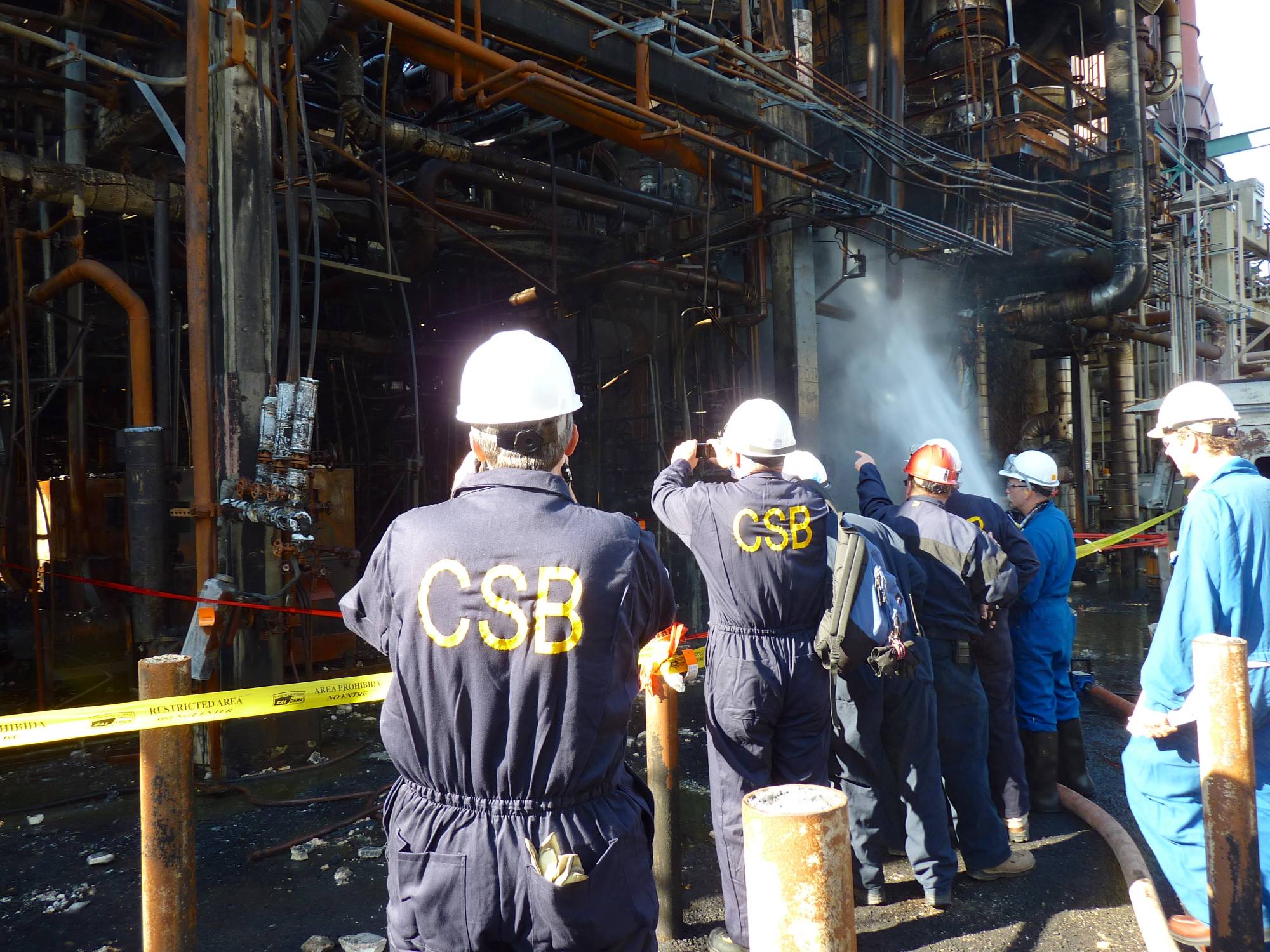
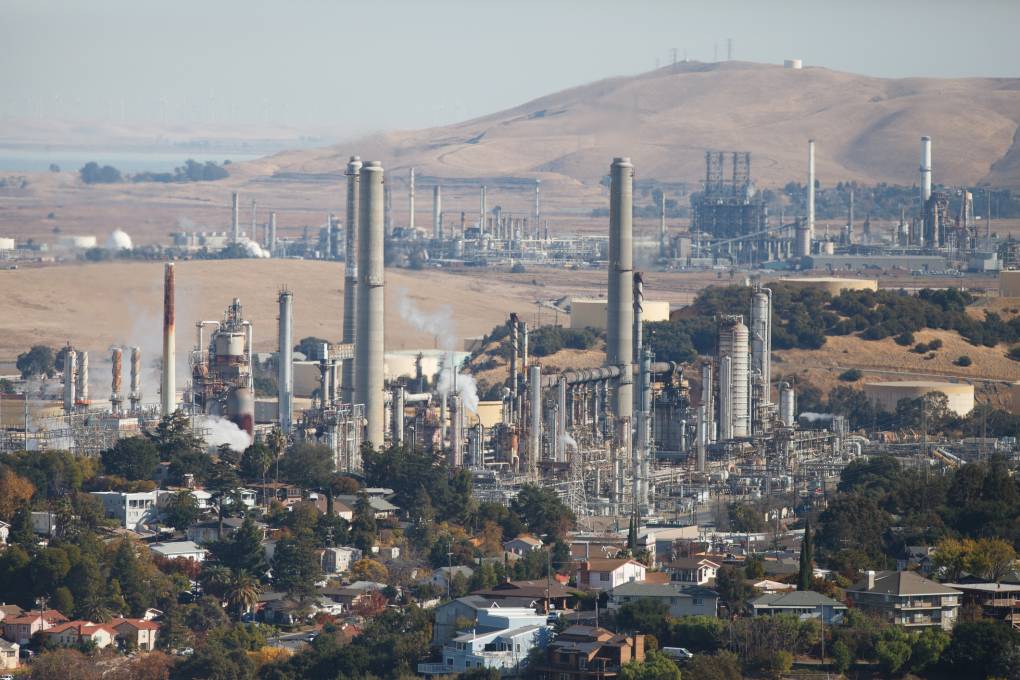
Bay Area Lawmaker Takes on Trump Over Federal Chemical Safety Agency, Again
Benicia Takes First Steps Toward Future Without Valero Refinery
A Bay Area Refinery Town Contemplates a Future Without Big Oil
Valero Refinery Fire in Benicia Is Under Control After Warnings to Stay Indoors
Potential Valero Refinery Closure Leaves Benicia, State Officials Scrambling for Alternatives
‘Secret Deal’ in California Would Weaken Regulations for Oil Refineries
Oil Giant Valero Looks to Shutter Troubled Bay Area Refinery. It’s ‘a Big Surprise’
Contra Costa County Residents Could Soon Get More Alerts for Refinery Incidents
Federal Agency Probes Marathon’s Martinez Refinery After Two Large Fires Last Month
Sponsored
Player sponsored by
window.__IS_SSR__=true
window.__INITIAL_STATE__={
"attachmentsReducer": {
"audio_0": {
"type": "attachments",
"id": "audio_0",
"imgSizes": {
"kqedFullSize": {
"file": "https://ww2.kqed.org/news/wp-content/themes/KQED-unified/img/audio_bgs/background0.jpg"
}
}
},
"audio_1": {
"type": "attachments",
"id": "audio_1",
"imgSizes": {
"kqedFullSize": {
"file": "https://ww2.kqed.org/news/wp-content/themes/KQED-unified/img/audio_bgs/background1.jpg"
}
}
},
"audio_2": {
"type": "attachments",
"id": "audio_2",
"imgSizes": {
"kqedFullSize": {
"file": "https://ww2.kqed.org/news/wp-content/themes/KQED-unified/img/audio_bgs/background2.jpg"
}
}
},
"audio_3": {
"type": "attachments",
"id": "audio_3",
"imgSizes": {
"kqedFullSize": {
"file": "https://ww2.kqed.org/news/wp-content/themes/KQED-unified/img/audio_bgs/background3.jpg"
}
}
},
"audio_4": {
"type": "attachments",
"id": "audio_4",
"imgSizes": {
"kqedFullSize": {
"file": "https://ww2.kqed.org/news/wp-content/themes/KQED-unified/img/audio_bgs/background4.jpg"
}
}
},
"placeholder": {
"type": "attachments",
"id": "placeholder",
"imgSizes": {
"thumbnail": {
"file": "https://cdn.kqed.org/wp-content/uploads/2024/12/KQED-Default-Image-816638274-2000x1333-1-160x107.jpg",
"width": 160,
"height": 107,
"mimeType": "image/jpeg"
},
"medium": {
"file": "https://cdn.kqed.org/wp-content/uploads/2024/12/KQED-Default-Image-816638274-2000x1333-1-800x533.jpg",
"width": 800,
"height": 533,
"mimeType": "image/jpeg"
},
"medium_large": {
"file": "https://cdn.kqed.org/wp-content/uploads/2024/12/KQED-Default-Image-816638274-2000x1333-1-768x512.jpg",
"width": 768,
"height": 512,
"mimeType": "image/jpeg"
},
"large": {
"file": "https://cdn.kqed.org/wp-content/uploads/2024/12/KQED-Default-Image-816638274-2000x1333-1-1020x680.jpg",
"width": 1020,
"height": 680,
"mimeType": "image/jpeg"
},
"1536x1536": {
"file": "https://cdn.kqed.org/wp-content/uploads/2024/12/KQED-Default-Image-816638274-2000x1333-1-1536x1024.jpg",
"width": 1536,
"height": 1024,
"mimeType": "image/jpeg"
},
"fd-lrg": {
"file": "https://cdn.kqed.org/wp-content/uploads/2024/12/KQED-Default-Image-816638274-2000x1333-1-1536x1024.jpg",
"width": 1536,
"height": 1024,
"mimeType": "image/jpeg"
},
"fd-med": {
"file": "https://cdn.kqed.org/wp-content/uploads/2024/12/KQED-Default-Image-816638274-2000x1333-1-1020x680.jpg",
"width": 1020,
"height": 680,
"mimeType": "image/jpeg"
},
"fd-sm": {
"file": "https://cdn.kqed.org/wp-content/uploads/2024/12/KQED-Default-Image-816638274-2000x1333-1-800x533.jpg",
"width": 800,
"height": 533,
"mimeType": "image/jpeg"
},
"post-thumbnail": {
"file": "https://cdn.kqed.org/wp-content/uploads/2024/12/KQED-Default-Image-816638274-2000x1333-1-672x372.jpg",
"width": 672,
"height": 372,
"mimeType": "image/jpeg"
},
"twentyfourteen-full-width": {
"file": "https://cdn.kqed.org/wp-content/uploads/2024/12/KQED-Default-Image-816638274-2000x1333-1-1038x576.jpg",
"width": 1038,
"height": 576,
"mimeType": "image/jpeg"
},
"xxsmall": {
"file": "https://cdn.kqed.org/wp-content/uploads/2024/12/KQED-Default-Image-816638274-2000x1333-1-160x107.jpg",
"width": 160,
"height": 107,
"mimeType": "image/jpeg"
},
"xsmall": {
"file": "https://cdn.kqed.org/wp-content/uploads/2024/12/KQED-Default-Image-816638274-2000x1333-1-672x372.jpg",
"width": 672,
"height": 372,
"mimeType": "image/jpeg"
},
"small": {
"file": "https://cdn.kqed.org/wp-content/uploads/2024/12/KQED-Default-Image-816638274-2000x1333-1-672x372.jpg",
"width": 672,
"height": 372,
"mimeType": "image/jpeg"
},
"xlarge": {
"file": "https://cdn.kqed.org/wp-content/uploads/2024/12/KQED-Default-Image-816638274-2000x1333-1-1020x680.jpg",
"width": 1020,
"height": 680,
"mimeType": "image/jpeg"
},
"full-width": {
"file": "https://cdn.kqed.org/wp-content/uploads/2024/12/KQED-Default-Image-816638274-2000x1333-1-1920x1280.jpg",
"width": 1920,
"height": 1280,
"mimeType": "image/jpeg"
},
"guest-author-32": {
"file": "https://cdn.kqed.org/wp-content/uploads/2025/01/KQED-Default-Image-816638274-1333x1333-1-160x160.jpg",
"width": 32,
"height": 32,
"mimeType": "image/jpeg"
},
"guest-author-50": {
"file": "https://cdn.kqed.org/wp-content/uploads/2025/01/KQED-Default-Image-816638274-1333x1333-1-160x160.jpg",
"width": 50,
"height": 50,
"mimeType": "image/jpeg"
},
"guest-author-64": {
"file": "https://cdn.kqed.org/wp-content/uploads/2025/01/KQED-Default-Image-816638274-1333x1333-1-160x160.jpg",
"width": 64,
"height": 64,
"mimeType": "image/jpeg"
},
"guest-author-96": {
"file": "https://cdn.kqed.org/wp-content/uploads/2025/01/KQED-Default-Image-816638274-1333x1333-1-160x160.jpg",
"width": 96,
"height": 96,
"mimeType": "image/jpeg"
},
"guest-author-128": {
"file": "https://cdn.kqed.org/wp-content/uploads/2025/01/KQED-Default-Image-816638274-1333x1333-1-160x160.jpg",
"width": 128,
"height": 128,
"mimeType": "image/jpeg"
},
"detail": {
"file": "https://cdn.kqed.org/wp-content/uploads/2025/01/KQED-Default-Image-816638274-1333x1333-1-160x160.jpg",
"width": 160,
"height": 160,
"mimeType": "image/jpeg"
},
"kqedFullSize": {
"file": "https://cdn.kqed.org/wp-content/uploads/2024/12/KQED-Default-Image-816638274-2000x1333-1.jpg",
"width": 2000,
"height": 1333
}
}
},
"news_73755": {
"type": "attachments",
"id": "news_73755",
"meta": {
"index": "attachments_1716263798",
"site": "news",
"id": "73755",
"found": true
},
"title": "BurnedOut4",
"publishDate": 1345568113,
"status": "inherit",
"parent": 73746,
"modified": 1749071404,
"caption": "The U.S. Chemical Safety Board released this photo of the aftermath of the Chevron refinery fire in Richmond. The Chemical Safety Board, which investigates the causes of major chemical and refinery accidents, is slated to be unlimited under the Trump administration's budget plan.",
"credit": "Courtesy of Fototaker.net",
"altTag": "The U.S. Chemical Safety Board released this photo of the aftermath of the Chevron refinery fire in Richmond. Photo by Fototaker.net.",
"description": null,
"imgSizes": {
"kqedFullSize": {
"file": "https://cdn.kqed.org/wp-content/uploads/sites/10/2012/08/BurnedOut4-e1749071369737.jpeg",
"width": 2000,
"height": 1500
}
},
"fetchFailed": false,
"isLoading": false
},
"news_12040943": {
"type": "attachments",
"id": "news_12040943",
"meta": {
"index": "attachments_1716263798",
"site": "news",
"id": "12040943",
"found": true
},
"title": "250509-BeniciaRefinery-30-BL_qed",
"publishDate": 1747770634,
"status": "inherit",
"parent": 12040941,
"modified": 1747783605,
"caption": "The Valero Benicia Refinery in Benicia, on May 8, 2025, processes up to 170,000 barrels of oil a day, making gasoline, diesel, and other fuels for California. Valero plans to shut down the Benicia refinery by April 2026, citing high costs and strict environmental rules.",
"credit": "Beth LaBerge/KQED",
"altTag": null,
"description": null,
"imgSizes": {
"medium": {
"file": "https://cdn.kqed.org/wp-content/uploads/sites/10/2025/05/250509-BeniciaRefinery-30-BL_qed-800x533.jpg",
"width": 800,
"height": 533,
"mimeType": "image/jpeg"
},
"large": {
"file": "https://cdn.kqed.org/wp-content/uploads/sites/10/2025/05/250509-BeniciaRefinery-30-BL_qed-1020x680.jpg",
"width": 1020,
"height": 680,
"mimeType": "image/jpeg"
},
"thumbnail": {
"file": "https://cdn.kqed.org/wp-content/uploads/sites/10/2025/05/250509-BeniciaRefinery-30-BL_qed-160x107.jpg",
"width": 160,
"height": 107,
"mimeType": "image/jpeg"
},
"1536x1536": {
"file": "https://cdn.kqed.org/wp-content/uploads/sites/10/2025/05/250509-BeniciaRefinery-30-BL_qed-1536x1024.jpg",
"width": 1536,
"height": 1024,
"mimeType": "image/jpeg"
},
"post-thumbnail": {
"file": "https://cdn.kqed.org/wp-content/uploads/sites/10/2025/05/250509-BeniciaRefinery-30-BL_qed-672x372.jpg",
"width": 672,
"height": 372,
"mimeType": "image/jpeg"
},
"twentyfourteen-full-width": {
"file": "https://cdn.kqed.org/wp-content/uploads/sites/10/2025/05/250509-BeniciaRefinery-30-BL_qed-1038x576.jpg",
"width": 1038,
"height": 576,
"mimeType": "image/jpeg"
},
"full-width": {
"file": "https://cdn.kqed.org/wp-content/uploads/sites/10/2025/05/250509-BeniciaRefinery-30-BL_qed-1920x1280.jpg",
"width": 1920,
"height": 1280,
"mimeType": "image/jpeg"
},
"kqedFullSize": {
"file": "https://cdn.kqed.org/wp-content/uploads/sites/10/2025/05/250509-BeniciaRefinery-30-BL_qed.jpg",
"width": 1999,
"height": 1333
}
},
"fetchFailed": false,
"isLoading": false
},
"news_12039652": {
"type": "attachments",
"id": "news_12039652",
"meta": {
"index": "attachments_1716263798",
"site": "news",
"id": "12039652",
"found": true
},
"title": "250509-BENICIAREFINERY-52-BL-KQED",
"publishDate": 1746831568,
"status": "inherit",
"parent": 12040941,
"modified": 1747782846,
"caption": "Benicia mayor Steve Young drives by the Valero Benicia Refinery in Benicia on May 8, 2025, which processes up to 170,000 barrels of oil a day, making gasoline, diesel, and other fuels for California. Valero plans to shut down the Benicia refinery by April 2026, citing high costs and strict environmental rules.",
"credit": "Beth LaBerge/KQED",
"altTag": null,
"description": null,
"imgSizes": {
"medium": {
"file": "https://cdn.kqed.org/wp-content/uploads/sites/10/2025/05/250509-BENICIAREFINERY-52-BL-KQED-800x533.jpg",
"width": 800,
"height": 533,
"mimeType": "image/jpeg"
},
"large": {
"file": "https://cdn.kqed.org/wp-content/uploads/sites/10/2025/05/250509-BENICIAREFINERY-52-BL-KQED-1020x680.jpg",
"width": 1020,
"height": 680,
"mimeType": "image/jpeg"
},
"thumbnail": {
"file": "https://cdn.kqed.org/wp-content/uploads/sites/10/2025/05/250509-BENICIAREFINERY-52-BL-KQED-160x107.jpg",
"width": 160,
"height": 107,
"mimeType": "image/jpeg"
},
"1536x1536": {
"file": "https://cdn.kqed.org/wp-content/uploads/sites/10/2025/05/250509-BENICIAREFINERY-52-BL-KQED-1536x1024.jpg",
"width": 1536,
"height": 1024,
"mimeType": "image/jpeg"
},
"post-thumbnail": {
"file": "https://cdn.kqed.org/wp-content/uploads/sites/10/2025/05/250509-BENICIAREFINERY-52-BL-KQED-672x372.jpg",
"width": 672,
"height": 372,
"mimeType": "image/jpeg"
},
"twentyfourteen-full-width": {
"file": "https://cdn.kqed.org/wp-content/uploads/sites/10/2025/05/250509-BENICIAREFINERY-52-BL-KQED-1038x576.jpg",
"width": 1038,
"height": 576,
"mimeType": "image/jpeg"
},
"full-width": {
"file": "https://cdn.kqed.org/wp-content/uploads/sites/10/2025/05/250509-BENICIAREFINERY-52-BL-KQED-1920x1280.jpg",
"width": 1920,
"height": 1280,
"mimeType": "image/jpeg"
},
"kqedFullSize": {
"file": "https://cdn.kqed.org/wp-content/uploads/sites/10/2025/05/250509-BENICIAREFINERY-52-BL-KQED.jpg",
"width": 2000,
"height": 1333
}
},
"fetchFailed": false,
"isLoading": false
},
"news_12038710": {
"type": "attachments",
"id": "news_12038710",
"meta": {
"index": "attachments_1716263798",
"site": "news",
"id": "12038710",
"found": true
},
"title": "Air District Valero Benicia",
"publishDate": 1746466964,
"status": "inherit",
"parent": 12038707,
"modified": 1747853652,
"caption": "A fire at the Valero Oil Refinery in Benicia, California. The fire comes just weeks after Valero executives announced they were considering closing the sprawling refinery by next April. ",
"credit": "Courtesy of Bay Area Air District",
"altTag": null,
"description": null,
"imgSizes": {
"medium": {
"file": "https://cdn.kqed.org/wp-content/uploads/sites/10/2025/05/Air-District-Valero-Benicia-800x600.jpg",
"width": 800,
"height": 600,
"mimeType": "image/jpeg"
},
"large": {
"file": "https://cdn.kqed.org/wp-content/uploads/sites/10/2025/05/Air-District-Valero-Benicia-1020x765.jpg",
"width": 1020,
"height": 765,
"mimeType": "image/jpeg"
},
"thumbnail": {
"file": "https://cdn.kqed.org/wp-content/uploads/sites/10/2025/05/Air-District-Valero-Benicia-160x120.jpg",
"width": 160,
"height": 120,
"mimeType": "image/jpeg"
},
"1536x1536": {
"file": "https://cdn.kqed.org/wp-content/uploads/sites/10/2025/05/Air-District-Valero-Benicia-1536x1152.jpg",
"width": 1536,
"height": 1152,
"mimeType": "image/jpeg"
},
"post-thumbnail": {
"file": "https://cdn.kqed.org/wp-content/uploads/sites/10/2025/05/Air-District-Valero-Benicia-672x372.jpg",
"width": 672,
"height": 372,
"mimeType": "image/jpeg"
},
"twentyfourteen-full-width": {
"file": "https://cdn.kqed.org/wp-content/uploads/sites/10/2025/05/Air-District-Valero-Benicia-1038x576.jpg",
"width": 1038,
"height": 576,
"mimeType": "image/jpeg"
},
"full-width": {
"file": "https://cdn.kqed.org/wp-content/uploads/sites/10/2025/05/Air-District-Valero-Benicia-1920x1440.jpg",
"width": 1920,
"height": 1440,
"mimeType": "image/jpeg"
},
"kqedFullSize": {
"file": "https://cdn.kqed.org/wp-content/uploads/sites/10/2025/05/Air-District-Valero-Benicia-e1746467055636.jpg",
"width": 2000,
"height": 1500
}
},
"fetchFailed": false,
"isLoading": false
},
"news_12037800": {
"type": "attachments",
"id": "news_12037800",
"meta": {
"index": "attachments_1716263798",
"site": "news",
"id": "12037800",
"found": true
},
"title": "The Valero refinery in Benicia on Sept. 21, 2023.",
"publishDate": 1745627579,
"status": "inherit",
"parent": 12037668,
"modified": 1745627596,
"caption": "The Valero refinery in Benicia on Sept. 21, 2023.",
"credit": "Martin do Nascimento/KQED",
"altTag": null,
"description": null,
"imgSizes": {
"medium": {
"file": "https://cdn.kqed.org/wp-content/uploads/sites/10/2025/04/230921-VALERO-BENICIA-REFINERY-MD-01_qed-800x533.jpg",
"width": 800,
"height": 533,
"mimeType": "image/jpeg"
},
"large": {
"file": "https://cdn.kqed.org/wp-content/uploads/sites/10/2025/04/230921-VALERO-BENICIA-REFINERY-MD-01_qed-1020x680.jpg",
"width": 1020,
"height": 680,
"mimeType": "image/jpeg"
},
"thumbnail": {
"file": "https://cdn.kqed.org/wp-content/uploads/sites/10/2025/04/230921-VALERO-BENICIA-REFINERY-MD-01_qed-160x107.jpg",
"width": 160,
"height": 107,
"mimeType": "image/jpeg"
},
"1536x1536": {
"file": "https://cdn.kqed.org/wp-content/uploads/sites/10/2025/04/230921-VALERO-BENICIA-REFINERY-MD-01_qed-1536x1024.jpg",
"width": 1536,
"height": 1024,
"mimeType": "image/jpeg"
},
"post-thumbnail": {
"file": "https://cdn.kqed.org/wp-content/uploads/sites/10/2025/04/230921-VALERO-BENICIA-REFINERY-MD-01_qed-672x372.jpg",
"width": 672,
"height": 372,
"mimeType": "image/jpeg"
},
"twentyfourteen-full-width": {
"file": "https://cdn.kqed.org/wp-content/uploads/sites/10/2025/04/230921-VALERO-BENICIA-REFINERY-MD-01_qed-1038x576.jpg",
"width": 1038,
"height": 576,
"mimeType": "image/jpeg"
},
"full-width": {
"file": "https://cdn.kqed.org/wp-content/uploads/sites/10/2025/04/230921-VALERO-BENICIA-REFINERY-MD-01_qed-1920x1280.jpg",
"width": 1920,
"height": 1280,
"mimeType": "image/jpeg"
},
"kqedFullSize": {
"file": "https://cdn.kqed.org/wp-content/uploads/sites/10/2025/04/230921-VALERO-BENICIA-REFINERY-MD-01_qed.jpg",
"width": 1999,
"height": 1333
}
},
"fetchFailed": false,
"isLoading": false
},
"news_11861743": {
"type": "attachments",
"id": "news_11861743",
"meta": {
"index": "attachments_1716263798",
"site": "news",
"id": "11861743",
"found": true
},
"title": "RS1901_Chevron_Vapor_Cloud_010",
"publishDate": 1614118776,
"status": "inherit",
"parent": 11861741,
"modified": 1745279510,
"caption": "A cracked pipe at Chevron’s oil refinery in Richmond, California, released a flammable white vapor that quickly ignited, sending a large cloud of black smoke across surrounding communities on August 6, 2012. The eruption led to stricter state safety rules for refineries, but now state officials are considering rolling back some of those provisions.",
"credit": "Courtesy of U.S. Chemical Safety Board",
"altTag": null,
"description": null,
"imgSizes": {
"medium": {
"file": "https://cdn.kqed.org/wp-content/uploads/sites/10/2021/02/RS1901_Chevron_Vapor_Cloud_010-800x533.jpeg",
"width": 800,
"height": 533,
"mimeType": "image/jpeg"
},
"large": {
"file": "https://cdn.kqed.org/wp-content/uploads/sites/10/2021/02/RS1901_Chevron_Vapor_Cloud_010-1020x680.jpeg",
"width": 1020,
"height": 680,
"mimeType": "image/jpeg"
},
"thumbnail": {
"file": "https://cdn.kqed.org/wp-content/uploads/sites/10/2021/02/RS1901_Chevron_Vapor_Cloud_010-160x107.jpeg",
"width": 160,
"height": 107,
"mimeType": "image/jpeg"
},
"1536x1536": {
"file": "https://cdn.kqed.org/wp-content/uploads/sites/10/2021/02/RS1901_Chevron_Vapor_Cloud_010-1536x1024.jpeg",
"width": 1536,
"height": 1024,
"mimeType": "image/jpeg"
},
"2048x2048": {
"file": "https://cdn.kqed.org/wp-content/uploads/sites/10/2021/02/RS1901_Chevron_Vapor_Cloud_010-2048x1365.jpeg",
"width": 2048,
"height": 1365,
"mimeType": "image/jpeg"
},
"post-thumbnail": {
"file": "https://cdn.kqed.org/wp-content/uploads/sites/10/2021/02/RS1901_Chevron_Vapor_Cloud_010-672x372.jpeg",
"width": 672,
"height": 372,
"mimeType": "image/jpeg"
},
"twentyfourteen-full-width": {
"file": "https://cdn.kqed.org/wp-content/uploads/sites/10/2021/02/RS1901_Chevron_Vapor_Cloud_010-1038x576.jpeg",
"width": 1038,
"height": 576,
"mimeType": "image/jpeg"
},
"full-width": {
"file": "https://cdn.kqed.org/wp-content/uploads/sites/10/2021/02/RS1901_Chevron_Vapor_Cloud_010-1920x1280.jpeg",
"width": 1920,
"height": 1280,
"mimeType": "image/jpeg"
},
"apple_news_ca_landscape_12_9": {
"file": "https://cdn.kqed.org/wp-content/uploads/sites/10/2021/02/RS1901_Chevron_Vapor_Cloud_010-1832x1374.jpeg",
"width": 1832,
"height": 1374,
"mimeType": "image/jpeg"
},
"apple_news_ca_landscape_9_7": {
"file": "https://cdn.kqed.org/wp-content/uploads/sites/10/2021/02/RS1901_Chevron_Vapor_Cloud_010-1376x1032.jpeg",
"width": 1376,
"height": 1032,
"mimeType": "image/jpeg"
},
"apple_news_ca_landscape_5_5": {
"file": "https://cdn.kqed.org/wp-content/uploads/sites/10/2021/02/RS1901_Chevron_Vapor_Cloud_010-1044x783.jpeg",
"width": 1044,
"height": 783,
"mimeType": "image/jpeg"
},
"apple_news_ca_landscape_4_7": {
"file": "https://cdn.kqed.org/wp-content/uploads/sites/10/2021/02/RS1901_Chevron_Vapor_Cloud_010-632x474.jpeg",
"width": 632,
"height": 474,
"mimeType": "image/jpeg"
},
"apple_news_ca_landscape_4_0": {
"file": "https://cdn.kqed.org/wp-content/uploads/sites/10/2021/02/RS1901_Chevron_Vapor_Cloud_010-536x402.jpeg",
"width": 536,
"height": 402,
"mimeType": "image/jpeg"
},
"apple_news_ca_portrait_12_9": {
"file": "https://cdn.kqed.org/wp-content/uploads/sites/10/2021/02/RS1901_Chevron_Vapor_Cloud_010-1122x1496.jpeg",
"width": 1122,
"height": 1496,
"mimeType": "image/jpeg"
},
"apple_news_ca_portrait_9_7": {
"file": "https://cdn.kqed.org/wp-content/uploads/sites/10/2021/02/RS1901_Chevron_Vapor_Cloud_010-840x1120.jpeg",
"width": 840,
"height": 1120,
"mimeType": "image/jpeg"
},
"apple_news_ca_portrait_5_5": {
"file": "https://cdn.kqed.org/wp-content/uploads/sites/10/2021/02/RS1901_Chevron_Vapor_Cloud_010-687x916.jpeg",
"width": 687,
"height": 916,
"mimeType": "image/jpeg"
},
"apple_news_ca_portrait_4_7": {
"file": "https://cdn.kqed.org/wp-content/uploads/sites/10/2021/02/RS1901_Chevron_Vapor_Cloud_010-414x552.jpeg",
"width": 414,
"height": 552,
"mimeType": "image/jpeg"
},
"apple_news_ca_portrait_4_0": {
"file": "https://cdn.kqed.org/wp-content/uploads/sites/10/2021/02/RS1901_Chevron_Vapor_Cloud_010-354x472.jpeg",
"width": 354,
"height": 472,
"mimeType": "image/jpeg"
},
"apple_news_ca_square_12_9": {
"file": "https://cdn.kqed.org/wp-content/uploads/sites/10/2021/02/RS1901_Chevron_Vapor_Cloud_010-1472x1472.jpeg",
"width": 1472,
"height": 1472,
"mimeType": "image/jpeg"
},
"apple_news_ca_square_9_7": {
"file": "https://cdn.kqed.org/wp-content/uploads/sites/10/2021/02/RS1901_Chevron_Vapor_Cloud_010-1104x1104.jpeg",
"width": 1104,
"height": 1104,
"mimeType": "image/jpeg"
},
"apple_news_ca_square_5_5": {
"file": "https://cdn.kqed.org/wp-content/uploads/sites/10/2021/02/RS1901_Chevron_Vapor_Cloud_010-912x912.jpeg",
"width": 912,
"height": 912,
"mimeType": "image/jpeg"
},
"apple_news_ca_square_4_7": {
"file": "https://cdn.kqed.org/wp-content/uploads/sites/10/2021/02/RS1901_Chevron_Vapor_Cloud_010-550x550.jpeg",
"width": 550,
"height": 550,
"mimeType": "image/jpeg"
},
"apple_news_ca_square_4_0": {
"file": "https://cdn.kqed.org/wp-content/uploads/sites/10/2021/02/RS1901_Chevron_Vapor_Cloud_010-470x470.jpeg",
"width": 470,
"height": 470,
"mimeType": "image/jpeg"
},
"kqedFullSize": {
"file": "https://cdn.kqed.org/wp-content/uploads/sites/10/2021/02/RS1901_Chevron_Vapor_Cloud_010-scaled-e1745279433555.jpeg",
"width": 2000,
"height": 1334
}
},
"fetchFailed": false,
"isLoading": false
},
"news_12029847": {
"type": "attachments",
"id": "news_12029847",
"meta": {
"index": "attachments_1716263798",
"site": "news",
"id": "12029847",
"found": true
},
"title": "ValeroBenicia",
"publishDate": 1741204189,
"status": "inherit",
"parent": 12029845,
"modified": 1741204226,
"caption": "San Antonio-based Valero Corp. is the nation's biggest refiner. The Benicia refinery is one of two the company operates in California.",
"credit": "Craig Miller/KQED",
"altTag": null,
"description": null,
"imgSizes": {
"medium": {
"file": "https://cdn.kqed.org/wp-content/uploads/sites/10/2025/03/ValeroBenicia-800x600.jpg",
"width": 800,
"height": 600,
"mimeType": "image/jpeg"
},
"large": {
"file": "https://cdn.kqed.org/wp-content/uploads/sites/10/2025/03/ValeroBenicia-1020x765.jpg",
"width": 1020,
"height": 765,
"mimeType": "image/jpeg"
},
"thumbnail": {
"file": "https://cdn.kqed.org/wp-content/uploads/sites/10/2025/03/ValeroBenicia-160x120.jpg",
"width": 160,
"height": 120,
"mimeType": "image/jpeg"
},
"1536x1536": {
"file": "https://cdn.kqed.org/wp-content/uploads/sites/10/2025/03/ValeroBenicia-1536x1152.jpg",
"width": 1536,
"height": 1152,
"mimeType": "image/jpeg"
},
"post-thumbnail": {
"file": "https://cdn.kqed.org/wp-content/uploads/sites/10/2025/03/ValeroBenicia-672x372.jpg",
"width": 672,
"height": 372,
"mimeType": "image/jpeg"
},
"twentyfourteen-full-width": {
"file": "https://cdn.kqed.org/wp-content/uploads/sites/10/2025/03/ValeroBenicia-1038x576.jpg",
"width": 1038,
"height": 576,
"mimeType": "image/jpeg"
},
"full-width": {
"file": "https://cdn.kqed.org/wp-content/uploads/sites/10/2025/03/ValeroBenicia-1920x1440.jpg",
"width": 1920,
"height": 1440,
"mimeType": "image/jpeg"
},
"kqedFullSize": {
"file": "https://cdn.kqed.org/wp-content/uploads/sites/10/2025/03/ValeroBenicia.jpg",
"width": 2000,
"height": 1500
}
},
"fetchFailed": false,
"isLoading": false
},
"news_11998985": {
"type": "attachments",
"id": "news_11998985",
"meta": {
"index": "attachments_1716263798",
"site": "news",
"id": "11998985",
"found": true
},
"title": "ShellRefineryMartinez",
"publishDate": 1722962948,
"status": "inherit",
"parent": 11998887,
"modified": 1722963031,
"caption": "Shell's refinery and marine terminal is seen from across the Carquinez Strait, in Benicia.",
"credit": "Craig Alan Miller/KQED",
"altTag": null,
"description": null,
"imgSizes": {
"medium": {
"file": "https://cdn.kqed.org/wp-content/uploads/sites/10/2024/08/ShellRefineryMartinez-800x600.jpg",
"width": 800,
"height": 600,
"mimeType": "image/jpeg"
},
"large": {
"file": "https://cdn.kqed.org/wp-content/uploads/sites/10/2024/08/ShellRefineryMartinez-1020x765.jpg",
"width": 1020,
"height": 765,
"mimeType": "image/jpeg"
},
"thumbnail": {
"file": "https://cdn.kqed.org/wp-content/uploads/sites/10/2024/08/ShellRefineryMartinez-160x120.jpg",
"width": 160,
"height": 120,
"mimeType": "image/jpeg"
},
"1536x1536": {
"file": "https://cdn.kqed.org/wp-content/uploads/sites/10/2024/08/ShellRefineryMartinez-1536x1152.jpg",
"width": 1536,
"height": 1152,
"mimeType": "image/jpeg"
},
"post-thumbnail": {
"file": "https://cdn.kqed.org/wp-content/uploads/sites/10/2024/08/ShellRefineryMartinez-672x372.jpg",
"width": 672,
"height": 372,
"mimeType": "image/jpeg"
},
"twentyfourteen-full-width": {
"file": "https://cdn.kqed.org/wp-content/uploads/sites/10/2024/08/ShellRefineryMartinez-1038x576.jpg",
"width": 1038,
"height": 576,
"mimeType": "image/jpeg"
},
"full-width": {
"file": "https://cdn.kqed.org/wp-content/uploads/sites/10/2024/08/ShellRefineryMartinez-1920x1440.jpg",
"width": 1920,
"height": 1440,
"mimeType": "image/jpeg"
},
"kqedFullSize": {
"file": "https://cdn.kqed.org/wp-content/uploads/sites/10/2024/08/ShellRefineryMartinez.jpg",
"width": 2000,
"height": 1500
}
},
"fetchFailed": false,
"isLoading": false
},
"news_11968800": {
"type": "attachments",
"id": "news_11968800",
"meta": {
"index": "attachments_1716263798",
"site": "news",
"id": "11968800",
"found": true
},
"title": "Martinez Refining Company and the Marathon Refinery",
"publishDate": 1701461685,
"status": "inherit",
"parent": 11968786,
"modified": 1738620833,
"caption": "A view of the Martinez Refining Company in the foreground and the Marathon Refinery in the background, on Nov. 24, 2019, in Martinez, California.",
"credit": "Michael R. Lopez/Getty Images",
"altTag": "A view of two large industrial facilities — both refineries — each with many smokestacks - with hills in the background.",
"description": null,
"imgSizes": {
"medium": {
"file": "https://cdn.kqed.org/wp-content/uploads/sites/10/2023/12/GettyImages-1467777894-800x533.jpg",
"width": 800,
"height": 533,
"mimeType": "image/jpeg"
},
"large": {
"file": "https://cdn.kqed.org/wp-content/uploads/sites/10/2023/12/GettyImages-1467777894-1020x680.jpg",
"width": 1020,
"height": 680,
"mimeType": "image/jpeg"
},
"thumbnail": {
"file": "https://cdn.kqed.org/wp-content/uploads/sites/10/2023/12/GettyImages-1467777894-160x107.jpg",
"width": 160,
"height": 107,
"mimeType": "image/jpeg"
},
"1536x1536": {
"file": "https://cdn.kqed.org/wp-content/uploads/sites/10/2023/12/GettyImages-1467777894-1536x1024.jpg",
"width": 1536,
"height": 1024,
"mimeType": "image/jpeg"
},
"2048x2048": {
"file": "https://cdn.kqed.org/wp-content/uploads/sites/10/2023/12/GettyImages-1467777894-2048x1365.jpg",
"width": 2048,
"height": 1365,
"mimeType": "image/jpeg"
},
"post-thumbnail": {
"file": "https://cdn.kqed.org/wp-content/uploads/sites/10/2023/12/GettyImages-1467777894-672x372.jpg",
"width": 672,
"height": 372,
"mimeType": "image/jpeg"
},
"twentyfourteen-full-width": {
"file": "https://cdn.kqed.org/wp-content/uploads/sites/10/2023/12/GettyImages-1467777894-1038x576.jpg",
"width": 1038,
"height": 576,
"mimeType": "image/jpeg"
},
"full-width": {
"file": "https://cdn.kqed.org/wp-content/uploads/sites/10/2023/12/GettyImages-1467777894-1920x1280.jpg",
"width": 1920,
"height": 1280,
"mimeType": "image/jpeg"
},
"kqedFullSize": {
"file": "https://cdn.kqed.org/wp-content/uploads/sites/10/2023/12/GettyImages-1467777894-e1738620843534.jpg",
"width": 2000,
"height": 1333
}
},
"fetchFailed": false,
"isLoading": false
}
},
"audioPlayerReducer": {
"postId": "stream_live",
"isPaused": true,
"isPlaying": false,
"pfsActive": false,
"pledgeModalIsOpen": true,
"playerDrawerIsOpen": false
},
"authorsReducer": {
"byline_news_12036965": {
"type": "authors",
"id": "byline_news_12036965",
"meta": {
"override": true
},
"slug": "byline_news_12036965",
"name": "\u003ca href=\"https://publichealthwatch.org/author/jimmorris/\" target=\"_blank\" rel=\"noopener noreferrer\"> Jim Morris \u003c/a> and \u003ca href=\"https://publichealthwatch.org/author/mollypeterson/\" target=\"_blank\" rel=\"noopener noreferrer\"> Molly Peterson\u003c/a>, Public Health Watch ",
"isLoading": false
},
"ninathorsen": {
"type": "authors",
"id": "246",
"meta": {
"index": "authors_1716337520",
"id": "246",
"found": true
},
"name": "Nina Thorsen",
"firstName": "Nina",
"lastName": "Thorsen",
"slug": "ninathorsen",
"email": "nthorsen@kqed.org",
"display_author_email": false,
"staff_mastheads": [
"news"
],
"title": "Producer, Radio",
"bio": "\u003cspan style=\"color: #000000;\">Nina Thorsen is a KQED radio producer, and frequently reports on sports and culture. \u003c/span>\u003cspan style=\"color: #000000;\">She co-created and produced KQED's \u003cem>Pacific Time, \u003c/em> a weekly radio program on Asian and Asian American issues that aired from 2000 to 2007. Before coming to KQED, Thorsen was the deputy foreign editor for \u003cem>Marketplace, \u003c/em>and in her home state of Minnesota, worked for \u003cem>A Prairie Home Companion\u003c/em> and for Public Radio International. \u003c/span>",
"avatar": "https://secure.gravatar.com/avatar/e13dc7282cec33c15d973ebb56d57ead?s=600&d=blank&r=g",
"twitter": "NinaKQED",
"facebook": null,
"instagram": null,
"linkedin": null,
"sites": [
{
"site": "news",
"roles": [
"editor"
]
},
{
"site": "podcasts",
"roles": [
"editor"
]
}
],
"headData": {
"title": "Nina Thorsen | KQED",
"description": "Producer, Radio",
"ogImgSrc": "https://secure.gravatar.com/avatar/e13dc7282cec33c15d973ebb56d57ead?s=600&d=blank&r=g",
"twImgSrc": "https://secure.gravatar.com/avatar/e13dc7282cec33c15d973ebb56d57ead?s=600&d=blank&r=g"
},
"isLoading": false,
"link": "/author/ninathorsen"
},
"tgoldberg": {
"type": "authors",
"id": "258",
"meta": {
"index": "authors_1716337520",
"id": "258",
"found": true
},
"name": "Ted Goldberg",
"firstName": "Ted",
"lastName": "Goldberg",
"slug": "tgoldberg",
"email": "tgoldberg@kqed.org",
"display_author_email": true,
"staff_mastheads": [
"news"
],
"title": "KQED Managing Editor, News and Newscasts",
"bio": "Ted Goldberg is Managing Editor of News and Newscasts at KQED. His main reporting beat is the Bay Area's oil refining industry.\r\n\r\nPrior to joining KQED in 2014, Ted worked at CBS News and WCBS AM in New York and Bay City News and KCBS Radio in San Francisco. He graduated from Oberlin College in Ohio in 1998.",
"avatar": "https://secure.gravatar.com/avatar/16d702c9ec5f696d78dbfb76b592cf0a?s=600&d=blank&r=g",
"twitter": "TedrickG",
"facebook": null,
"instagram": null,
"linkedin": null,
"sites": [
{
"site": "news",
"roles": [
"editor"
]
},
{
"site": "science",
"roles": [
"editor"
]
}
],
"headData": {
"title": "Ted Goldberg | KQED",
"description": "KQED Managing Editor, News and Newscasts",
"ogImgSrc": "https://secure.gravatar.com/avatar/16d702c9ec5f696d78dbfb76b592cf0a?s=600&d=blank&r=g",
"twImgSrc": "https://secure.gravatar.com/avatar/16d702c9ec5f696d78dbfb76b592cf0a?s=600&d=blank&r=g"
},
"isLoading": false,
"link": "/author/tgoldberg"
},
"matthewgreen": {
"type": "authors",
"id": "1263",
"meta": {
"index": "authors_1716337520",
"id": "1263",
"found": true
},
"name": "Matthew Green",
"firstName": "Matthew",
"lastName": "Green",
"slug": "matthewgreen",
"email": "mgreen@kqed.org",
"display_author_email": false,
"staff_mastheads": [],
"title": "KQED Editor/Reporter",
"bio": "Matthew Green is a digital media producer for KQED News. He previously produced \u003ca href=\"http://www.kqed.org/lowdown\">The Lowdown\u003c/a>, KQED’s multimedia news education blog. Matthew's written for numerous Bay Area publications, including the Oakland Tribune and San Francisco Chronicle. He also taught journalism classes at Fremont High School in East Oakland.\r\n\r\nEmail: mgreen@kqed.org; Twitter: @MGreenKQED",
"avatar": "https://secure.gravatar.com/avatar/3bf498d1267ca02c8494f33d8cfc575e?s=600&d=blank&r=g",
"twitter": "MGreenKQED",
"facebook": null,
"instagram": null,
"linkedin": null,
"sites": [
{
"site": "news",
"roles": []
},
{
"site": "lowdown",
"roles": []
},
{
"site": "science",
"roles": []
},
{
"site": "education",
"roles": []
},
{
"site": "quest",
"roles": []
},
{
"site": "liveblog",
"roles": []
}
],
"headData": {
"title": "Matthew Green | KQED",
"description": "KQED Editor/Reporter",
"ogImgSrc": "https://secure.gravatar.com/avatar/3bf498d1267ca02c8494f33d8cfc575e?s=600&d=blank&r=g",
"twImgSrc": "https://secure.gravatar.com/avatar/3bf498d1267ca02c8494f33d8cfc575e?s=600&d=blank&r=g"
},
"isLoading": false,
"link": "/author/matthewgreen"
},
"bkrans": {
"type": "authors",
"id": "11923",
"meta": {
"index": "authors_1716337520",
"id": "11923",
"found": true
},
"name": "Brian Krans",
"firstName": "Brian",
"lastName": "Krans",
"slug": "bkrans",
"email": "bkrans@kqed.org",
"display_author_email": false,
"staff_mastheads": [
"news"
],
"title": "KQED Contributing Reporter",
"bio": "Brian Krans is an award-winning local news and investigative reporter who has been proudly working as a general assignment reporter for KQED since August 2023. He lives in Richmond, where he also reports on air pollution for Richmondside. He is also a founding member of the Vallejo Sun.",
"avatar": "https://secure.gravatar.com/avatar/d1014d604089314a94807d2c4f2d3e06?s=600&d=blank&r=g",
"twitter": "citizenkrans",
"facebook": null,
"instagram": null,
"linkedin": null,
"sites": [
{
"site": "news",
"roles": [
"editor"
]
}
],
"headData": {
"title": "Brian Krans | KQED",
"description": "KQED Contributing Reporter",
"ogImgSrc": "https://secure.gravatar.com/avatar/d1014d604089314a94807d2c4f2d3e06?s=600&d=blank&r=g",
"twImgSrc": "https://secure.gravatar.com/avatar/d1014d604089314a94807d2c4f2d3e06?s=600&d=blank&r=g"
},
"isLoading": false,
"link": "/author/bkrans"
}
},
"breakingNewsReducer": {},
"pagesReducer": {},
"postsReducer": {
"stream_live": {
"type": "live",
"id": "stream_live",
"audioUrl": "https://streams.kqed.org/kqedradio",
"title": "Live Stream",
"excerpt": "Live Stream information currently unavailable.",
"link": "/radio",
"featImg": "",
"label": {
"name": "KQED Live",
"link": "/"
}
},
"stream_kqedNewscast": {
"type": "posts",
"id": "stream_kqedNewscast",
"audioUrl": "https://www.kqed.org/.stream/anon/radio/RDnews/newscast.mp3?_=1",
"title": "KQED Newscast",
"featImg": "",
"label": {
"name": "88.5 FM",
"link": "/"
}
},
"news_12042758": {
"type": "posts",
"id": "news_12042758",
"meta": {
"index": "posts_1716263798",
"site": "news",
"id": "12042758",
"score": null,
"sort": [
1749143270000
]
},
"guestAuthors": [],
"slug": "bay-area-lawmaker-takes-on-trump-over-federal-chemical-safety-agency-again",
"title": "Bay Area Lawmaker Takes on Trump Over Federal Chemical Safety Agency, Again",
"publishDate": 1749143270,
"format": "standard",
"headTitle": "Bay Area Lawmaker Takes on Trump Over Federal Chemical Safety Agency, Again | KQED",
"labelTerm": {
"site": "news"
},
"content": "\u003cp>One of the Bay Area’s leading proponents of oil refinery oversight is pushing back against the Trump administration’s\u003ca href=\"https://www.kqed.org/news/12014622/trump-tried-cut-agency-investigates-oil-gas-accidents-will-he-do-it-again\"> latest effort to scrap the federal agency\u003c/a> that investigates chemical disasters, including fires and explosions.\u003c/p>\n\u003cp>\u003ca href=\"https://www.kqed.org/news/tag/mark-desaulnier\">Democratic Rep. Mark DeSaulnier\u003c/a>, whose Contra Costa County district includes three major refineries, said the U.S. Chemical Safety and Hazard Investigation Board — known as CSB — serves a critical role in protecting the public health and safety of communities that live and work near refineries and chemical plants.\u003c/p>\n\u003cp>The independent oversight board “has people who are dedicated to understanding these very complex facilities, and go in and provide the best information to make sure that they’re safe,” DeSaulnier told KQED. “This is a small but mighty agency that we have helped create in the Bay Area.”\u003c/p>\n\u003cp>[ad fullwidth]\u003c/p>\n\u003cp>But under easily overlooked language in the partial budget proposal the Trump administration \u003ca href=\"https://www.washingtonpost.com/business/2025/05/30/trump-administration-budget-proposal/\">released Friday\u003c/a>, the agency would be shuttered by October 2026, as “part of the Administration’s plans to move the Nation towards fiscal responsibility and to redefine the proper role of the Federal Government.”\u003c/p>\n\u003cp>The administration, which has staunchly advocated for unfettered oil and gas production, has consistently sought to reduce or outright eliminate oversight of fossil fuel and chemical industries, arguing they can adequately police themselves.\u003c/p>\n\u003cp>DeSaulnier, a former member of California’s Air Resources Board, said that notion flies in the face of basic human nature.\u003c/p>\n\u003cfigure id=\"attachment_12014671\" class=\"wp-caption aligncenter\" style=\"max-width: 2000px\">\u003cimg loading=\"lazy\" decoding=\"async\" class=\"size-full wp-image-12014671\" src=\"https://cdn.kqed.org/wp-content/uploads/sites/10/2024/11/MarkDeSaulnierGetty.jpg\" alt=\"\" width=\"2000\" height=\"1333\" srcset=\"https://cdn.kqed.org/wp-content/uploads/sites/10/2024/11/MarkDeSaulnierGetty.jpg 2000w, https://cdn.kqed.org/wp-content/uploads/sites/10/2024/11/MarkDeSaulnierGetty-800x533.jpg 800w, https://cdn.kqed.org/wp-content/uploads/sites/10/2024/11/MarkDeSaulnierGetty-1020x680.jpg 1020w, https://cdn.kqed.org/wp-content/uploads/sites/10/2024/11/MarkDeSaulnierGetty-160x107.jpg 160w, https://cdn.kqed.org/wp-content/uploads/sites/10/2024/11/MarkDeSaulnierGetty-1536x1024.jpg 1536w, https://cdn.kqed.org/wp-content/uploads/sites/10/2024/11/MarkDeSaulnierGetty-1920x1280.jpg 1920w\" sizes=\"auto, (max-width: 2000px) 100vw, 2000px\">\u003cfigcaption class=\"wp-caption-text\">Rep. Mark DeSaulnier, D-CA, speaks during a House Rules Committee hearing on the impeachment against President Donald Trump on Dec. 17, 2019, in Washington, D.C. \u003ccite>(Patrick Semansky-Pool/Getty Images)\u003c/cite>\u003c/figcaption>\u003c/figure>\n\u003cp>“If you have a vested interest in [something], there’s a conflict of interest when it comes to the greater good,” he said. “We’ve had instances in the Bay Area where refineries were self-regulating, and we had explosions and people died, and the economy and the price of gasoline changed.\u003c/p>\n\u003cp>Desaulnier noted that the board was targeted for elimination during the first Trump administration as well, but was saved after lawmakers on both sides of the aisle supported an amendment he authored to preserve its funding.\u003c/p>\n\u003cp>“I went to Republican colleagues and to the industry, and we actually not only saved it, but we put more money back into it,” he said. “So I’m hopeful that will happen again.”[aside postID=news_12014622 hero='https://cdn.kqed.org/wp-content/uploads/sites/10/2024/11/TrumpOilGasRegulationsAP-1020x680.jpg']But in contrast with his first term, Trump is now attempting to establish greater control over independent agencies, a move the Supreme Court appears to at least partially accept. Last month, a divided Court \u003ca href=\"https://www.washingtonpost.com/politics/2025/05/22/supreme-court-commissioners-independent-officials/\">declined to\u003c/a> immediately reinstate two independent regulators who were fired by the administration, arguing that doing so may be within the president’s authority.\u003c/p>\n\u003cp>DeSaulnier said he’s confident the agency can once again be rescued from Trump’s hatchet, and expects some of his Republican colleagues to again stand up for it. But he also acknowledged that it’s “a very, very strange time here in D.C. with this administration.”\u003c/p>\n\u003cp>“They are doing damage to lots of institutions,” he said. “Everybody can always be looked at for greater efficiencies, and Republicans and Democrats should do this together, and I endeavor to do that. But just eliminating organizations without analyzing them is a horrible, horrible practice. And unfortunately, that’s the atmosphere right now.”\u003c/p>\n\u003cp>Established by Congress in 1990, the board has no regulatory authority, and last year operated on only a modest budget of just over \u003ca href=\"https://www.csb.gov/assets/1/6/final_-_fy25_csb_congressional_budget_justification.pdf\">$14 million\u003c/a>.\u003c/p>\n\u003cfigure id=\"attachment_11988027\" class=\"wp-caption aligncenter\" style=\"max-width: 1920px\">\u003cimg loading=\"lazy\" decoding=\"async\" class=\"size-full wp-image-11988027\" src=\"https://cdn.kqed.org/wp-content/uploads/sites/10/2024/05/231228-MARATHON-REFINERY-MD-04_qut.jpg\" alt=\"\" width=\"1920\" height=\"1280\" srcset=\"https://cdn.kqed.org/wp-content/uploads/sites/10/2024/05/231228-MARATHON-REFINERY-MD-04_qut.jpg 1920w, https://cdn.kqed.org/wp-content/uploads/sites/10/2024/05/231228-MARATHON-REFINERY-MD-04_qut-800x533.jpg 800w, https://cdn.kqed.org/wp-content/uploads/sites/10/2024/05/231228-MARATHON-REFINERY-MD-04_qut-1020x680.jpg 1020w, https://cdn.kqed.org/wp-content/uploads/sites/10/2024/05/231228-MARATHON-REFINERY-MD-04_qut-160x107.jpg 160w, https://cdn.kqed.org/wp-content/uploads/sites/10/2024/05/231228-MARATHON-REFINERY-MD-04_qut-1536x1024.jpg 1536w\" sizes=\"auto, (max-width: 1920px) 100vw, 1920px\">\u003cfigcaption class=\"wp-caption-text\">Marathon Petroleum Corporation’s refinery in Martinez. \u003ccite>(Martin do Nascimento/KQED)\u003c/cite>\u003c/figcaption>\u003c/figure>\n\u003cp>But it has nonetheless played a key role in investigating the root causes of some of the nation’s most catastrophic chemical accidents, including \u003ca href=\"https://www.nytimes.com/2020/04/19/climate/deepwater-horizon-anniversary.html\">the Deepwater Horizon\u003c/a> offshore drilling explosion in 2010 and the \u003ca href=\"https://www.csb.gov/bio-lab-inc-conyers-fire-and-chemical-release-/\">Bio-Lab explosion\u003c/a> in Georgia last year that forced thousands of residents to shelter in place for weeks.\u003c/p>\n\u003cp>In the Bay Area, the CSB investigated the explosion and fire at\u003ca href=\"https://www.kqed.org/news/11665999/chevron-richmond-move-to-settle-lawsuit-over-2012-refinery-fire-that-sickened-thousands\"> Chevron’s Richmond refinery in 2012\u003c/a> that sent 15,000 people to hospitals, most of them with respiratory problems. More recently, it investigated safety violations that resulted in a fire that \u003ca href=\"https://www.kqed.org/news/11988025/marathons-martinez-refinery-hit-with-state-fines-over-fire-that-burned-worker\">injured a worker last year at Marathon Petroleum’s\u003c/a> Martinez Renewable Fuels refinery.\u003c/p>\n\u003cp>The board’s safety recommendations have also prompted new federal environmental and workforce safety regulations that have prevented countless disasters, DeSaulnier said.\u003c/p>\n\u003cp>“A lot of the actual operators [of the facilities] understand that there’s value to having these people come in and make sure that they are not missing anything,” he said. “So just eliminating [the agency] will be detrimental to everyone, including the people who are in the industry.”\u003c/p>\n\u003cp>\u003cem>KQED’s \u003c/em>\u003ca href=\"https://www.kqed.org/author/bkrans\">\u003cem>Brian Krans\u003c/em>\u003c/a>\u003cem> contributed to this report.\u003c/em>\u003c/p>\n\u003cp>\u003c/p>\n",
"blocks": [],
"excerpt": "The Chemical Safety Board, which investigates the causes of major chemical and refinery accidents, is slated to be unlimited under the Trump administration's budget plan.",
"status": "publish",
"parent": 0,
"modified": 1749145534,
"stats": {
"hasAudio": false,
"hasVideo": false,
"hasChartOrMap": false,
"iframeSrcs": [],
"hasGoogleForm": false,
"hasGallery": false,
"hasHearkenModule": false,
"hasPolis": false,
"paragraphCount": 19,
"wordCount": 834
},
"headData": {
"title": "Bay Area Lawmaker Takes on Trump Over Federal Chemical Safety Agency, Again | KQED",
"description": "The Chemical Safety Board, which investigates the causes of major chemical and refinery accidents, is slated to be unlimited under the Trump administration's budget plan.",
"ogTitle": "",
"ogDescription": "",
"ogImgId": "",
"twTitle": "",
"twDescription": "",
"twImgId": "",
"schema": {
"@context": "https://schema.org",
"@type": "NewsArticle",
"headline": "Bay Area Lawmaker Takes on Trump Over Federal Chemical Safety Agency, Again",
"datePublished": "2025-06-05T10:07:50-07:00",
"dateModified": "2025-06-05T10:45:34-07:00",
"image": "https://cdn.kqed.org/wp-content/uploads/2020/02/KQED-OG-Image@1x.png",
"isAccessibleForFree": "True",
"publisher": {
"@type": "NewsMediaOrganization",
"@id": "https://www.kqed.org/#organization",
"name": "KQED",
"logo": "https://cdn.kqed.org/wp-content/uploads/2020/02/KQED-OG-Image@1x.png",
"url": "https://www.kqed.org",
"sameAs": [
"https://www.facebook.com/KQED",
"https://twitter.com/KQED",
"https://www.instagram.com/kqed/",
"https://www.tiktok.com/@kqedofficial",
"https://www.linkedin.com/company/kqed",
"https://www.youtube.com/channel/UCeC0IOo7i1P_61zVUWbJ4nw"
]
}
}
},
"sticky": false,
"nprStoryId": "kqed-12042758",
"templateType": "standard",
"featuredImageType": "standard",
"excludeFromSiteSearch": "Include",
"articleAge": "0",
"path": "/news/12042758/bay-area-lawmaker-takes-on-trump-over-federal-chemical-safety-agency-again",
"audioTrackLength": null,
"parsedContent": [
{
"type": "contentString",
"content": "\u003cdiv class=\"post-body\">\u003cp>\u003cp>One of the Bay Area’s leading proponents of oil refinery oversight is pushing back against the Trump administration’s\u003ca href=\"https://www.kqed.org/news/12014622/trump-tried-cut-agency-investigates-oil-gas-accidents-will-he-do-it-again\"> latest effort to scrap the federal agency\u003c/a> that investigates chemical disasters, including fires and explosions.\u003c/p>\n\u003cp>\u003ca href=\"https://www.kqed.org/news/tag/mark-desaulnier\">Democratic Rep. Mark DeSaulnier\u003c/a>, whose Contra Costa County district includes three major refineries, said the U.S. Chemical Safety and Hazard Investigation Board — known as CSB — serves a critical role in protecting the public health and safety of communities that live and work near refineries and chemical plants.\u003c/p>\n\u003cp>The independent oversight board “has people who are dedicated to understanding these very complex facilities, and go in and provide the best information to make sure that they’re safe,” DeSaulnier told KQED. “This is a small but mighty agency that we have helped create in the Bay Area.”\u003c/p>\n\u003cp>\u003c/p>\u003c/div>",
"attributes": {
"named": {},
"numeric": []
}
},
{
"type": "component",
"content": "",
"name": "ad",
"attributes": {
"named": {
"label": "fullwidth"
},
"numeric": [
"fullwidth"
]
}
},
{
"type": "contentString",
"content": "\u003cdiv class=\"post-body\">\u003cp>\u003c/p>\n\u003cp>But under easily overlooked language in the partial budget proposal the Trump administration \u003ca href=\"https://www.washingtonpost.com/business/2025/05/30/trump-administration-budget-proposal/\">released Friday\u003c/a>, the agency would be shuttered by October 2026, as “part of the Administration’s plans to move the Nation towards fiscal responsibility and to redefine the proper role of the Federal Government.”\u003c/p>\n\u003cp>The administration, which has staunchly advocated for unfettered oil and gas production, has consistently sought to reduce or outright eliminate oversight of fossil fuel and chemical industries, arguing they can adequately police themselves.\u003c/p>\n\u003cp>DeSaulnier, a former member of California’s Air Resources Board, said that notion flies in the face of basic human nature.\u003c/p>\n\u003cfigure id=\"attachment_12014671\" class=\"wp-caption aligncenter\" style=\"max-width: 2000px\">\u003cimg loading=\"lazy\" decoding=\"async\" class=\"size-full wp-image-12014671\" src=\"https://cdn.kqed.org/wp-content/uploads/sites/10/2024/11/MarkDeSaulnierGetty.jpg\" alt=\"\" width=\"2000\" height=\"1333\" srcset=\"https://cdn.kqed.org/wp-content/uploads/sites/10/2024/11/MarkDeSaulnierGetty.jpg 2000w, https://cdn.kqed.org/wp-content/uploads/sites/10/2024/11/MarkDeSaulnierGetty-800x533.jpg 800w, https://cdn.kqed.org/wp-content/uploads/sites/10/2024/11/MarkDeSaulnierGetty-1020x680.jpg 1020w, https://cdn.kqed.org/wp-content/uploads/sites/10/2024/11/MarkDeSaulnierGetty-160x107.jpg 160w, https://cdn.kqed.org/wp-content/uploads/sites/10/2024/11/MarkDeSaulnierGetty-1536x1024.jpg 1536w, https://cdn.kqed.org/wp-content/uploads/sites/10/2024/11/MarkDeSaulnierGetty-1920x1280.jpg 1920w\" sizes=\"auto, (max-width: 2000px) 100vw, 2000px\">\u003cfigcaption class=\"wp-caption-text\">Rep. Mark DeSaulnier, D-CA, speaks during a House Rules Committee hearing on the impeachment against President Donald Trump on Dec. 17, 2019, in Washington, D.C. \u003ccite>(Patrick Semansky-Pool/Getty Images)\u003c/cite>\u003c/figcaption>\u003c/figure>\n\u003cp>“If you have a vested interest in [something], there’s a conflict of interest when it comes to the greater good,” he said. “We’ve had instances in the Bay Area where refineries were self-regulating, and we had explosions and people died, and the economy and the price of gasoline changed.\u003c/p>\n\u003cp>Desaulnier noted that the board was targeted for elimination during the first Trump administration as well, but was saved after lawmakers on both sides of the aisle supported an amendment he authored to preserve its funding.\u003c/p>\n\u003cp>“I went to Republican colleagues and to the industry, and we actually not only saved it, but we put more money back into it,” he said. “So I’m hopeful that will happen again.”\u003c/p>\u003c/div>",
"attributes": {
"named": {},
"numeric": []
}
},
{
"type": "component",
"content": "",
"name": "aside",
"attributes": {
"named": {
"postid": "news_12014622",
"hero": "https://cdn.kqed.org/wp-content/uploads/sites/10/2024/11/TrumpOilGasRegulationsAP-1020x680.jpg",
"label": ""
},
"numeric": []
}
},
{
"type": "contentString",
"content": "\u003cdiv class=\"post-body\">\u003cp>But in contrast with his first term, Trump is now attempting to establish greater control over independent agencies, a move the Supreme Court appears to at least partially accept. Last month, a divided Court \u003ca href=\"https://www.washingtonpost.com/politics/2025/05/22/supreme-court-commissioners-independent-officials/\">declined to\u003c/a> immediately reinstate two independent regulators who were fired by the administration, arguing that doing so may be within the president’s authority.\u003c/p>\n\u003cp>DeSaulnier said he’s confident the agency can once again be rescued from Trump’s hatchet, and expects some of his Republican colleagues to again stand up for it. But he also acknowledged that it’s “a very, very strange time here in D.C. with this administration.”\u003c/p>\n\u003cp>“They are doing damage to lots of institutions,” he said. “Everybody can always be looked at for greater efficiencies, and Republicans and Democrats should do this together, and I endeavor to do that. But just eliminating organizations without analyzing them is a horrible, horrible practice. And unfortunately, that’s the atmosphere right now.”\u003c/p>\n\u003cp>Established by Congress in 1990, the board has no regulatory authority, and last year operated on only a modest budget of just over \u003ca href=\"https://www.csb.gov/assets/1/6/final_-_fy25_csb_congressional_budget_justification.pdf\">$14 million\u003c/a>.\u003c/p>\n\u003cfigure id=\"attachment_11988027\" class=\"wp-caption aligncenter\" style=\"max-width: 1920px\">\u003cimg loading=\"lazy\" decoding=\"async\" class=\"size-full wp-image-11988027\" src=\"https://cdn.kqed.org/wp-content/uploads/sites/10/2024/05/231228-MARATHON-REFINERY-MD-04_qut.jpg\" alt=\"\" width=\"1920\" height=\"1280\" srcset=\"https://cdn.kqed.org/wp-content/uploads/sites/10/2024/05/231228-MARATHON-REFINERY-MD-04_qut.jpg 1920w, https://cdn.kqed.org/wp-content/uploads/sites/10/2024/05/231228-MARATHON-REFINERY-MD-04_qut-800x533.jpg 800w, https://cdn.kqed.org/wp-content/uploads/sites/10/2024/05/231228-MARATHON-REFINERY-MD-04_qut-1020x680.jpg 1020w, https://cdn.kqed.org/wp-content/uploads/sites/10/2024/05/231228-MARATHON-REFINERY-MD-04_qut-160x107.jpg 160w, https://cdn.kqed.org/wp-content/uploads/sites/10/2024/05/231228-MARATHON-REFINERY-MD-04_qut-1536x1024.jpg 1536w\" sizes=\"auto, (max-width: 1920px) 100vw, 1920px\">\u003cfigcaption class=\"wp-caption-text\">Marathon Petroleum Corporation’s refinery in Martinez. \u003ccite>(Martin do Nascimento/KQED)\u003c/cite>\u003c/figcaption>\u003c/figure>\n\u003cp>But it has nonetheless played a key role in investigating the root causes of some of the nation’s most catastrophic chemical accidents, including \u003ca href=\"https://www.nytimes.com/2020/04/19/climate/deepwater-horizon-anniversary.html\">the Deepwater Horizon\u003c/a> offshore drilling explosion in 2010 and the \u003ca href=\"https://www.csb.gov/bio-lab-inc-conyers-fire-and-chemical-release-/\">Bio-Lab explosion\u003c/a> in Georgia last year that forced thousands of residents to shelter in place for weeks.\u003c/p>\n\u003cp>In the Bay Area, the CSB investigated the explosion and fire at\u003ca href=\"https://www.kqed.org/news/11665999/chevron-richmond-move-to-settle-lawsuit-over-2012-refinery-fire-that-sickened-thousands\"> Chevron’s Richmond refinery in 2012\u003c/a> that sent 15,000 people to hospitals, most of them with respiratory problems. More recently, it investigated safety violations that resulted in a fire that \u003ca href=\"https://www.kqed.org/news/11988025/marathons-martinez-refinery-hit-with-state-fines-over-fire-that-burned-worker\">injured a worker last year at Marathon Petroleum’s\u003c/a> Martinez Renewable Fuels refinery.\u003c/p>\n\u003cp>The board’s safety recommendations have also prompted new federal environmental and workforce safety regulations that have prevented countless disasters, DeSaulnier said.\u003c/p>\n\u003cp>“A lot of the actual operators [of the facilities] understand that there’s value to having these people come in and make sure that they are not missing anything,” he said. “So just eliminating [the agency] will be detrimental to everyone, including the people who are in the industry.”\u003c/p>\n\u003cp>\u003cem>KQED’s \u003c/em>\u003ca href=\"https://www.kqed.org/author/bkrans\">\u003cem>Brian Krans\u003c/em>\u003c/a>\u003cem> contributed to this report.\u003c/em>\u003c/p>\n\u003cp>\u003c/p>\n\u003c/div>\u003c/p>",
"attributes": {
"named": {},
"numeric": []
}
}
],
"link": "/news/12042758/bay-area-lawmaker-takes-on-trump-over-federal-chemical-safety-agency-again",
"authors": [
"1263",
"246"
],
"categories": [
"news_28250",
"news_8",
"news_13"
],
"tags": [
"news_1386",
"news_20389",
"news_18538",
"news_1323",
"news_18543",
"news_21729",
"news_17968",
"news_19960",
"news_22456"
],
"featImg": "news_73755",
"label": "news"
},
"news_12040941": {
"type": "posts",
"id": "news_12040941",
"meta": {
"index": "posts_1716263798",
"site": "news",
"id": "12040941",
"score": null,
"sort": [
1747853704000
]
},
"guestAuthors": [],
"slug": "benicia-takes-first-steps-toward-future-without-valero-refinery",
"title": "Benicia Takes First Steps Toward Future Without Valero Refinery",
"publishDate": 1747853704,
"format": "standard",
"headTitle": "Benicia Takes First Steps Toward Future Without Valero Refinery | KQED",
"labelTerm": {
"site": "news"
},
"content": "\u003cp>\u003cem>Updated 11:55 a.m. Wednesday\u003c/em>\u003c/p>\n\u003cp>Benicia city leaders are taking initial steps to prepare for the\u003ca href=\"https://www.kqed.org/news/12037668/potential-valero-refinery-closure-leaves-benicia-state-officials-scrambling-to-pick-up-pieces\"> likely closure of the Valero refinery\u003c/a>, a month after the oil giant \u003ca href=\"https://www.kqed.org/news/12036242/oil-giant-valero-announces-plans-to-shutter-troubled-benicia-refinery\">announced plans\u003c/a> to cease operations at its sprawling Solano County facility within a year.\u003c/p>\n\u003cp>The City Council on Tuesday unanimously approved the mayor’s proposal to \u003ca href=\"https://legistarweb-production.s3.amazonaws.com/uploads/attachment/pdf/3344895/Staff_Report_-_ACT_Task_Force_Groups.pdf\">create four economic and community-focused task forces\u003c/a> to “understand potential economic impacts, develop strategies to mitigate those impacts and plan for the future.”\u003c/p>\n\u003cp>The groups are intended to ready the small North Bay city for the potentially seismic fallout if Valero makes good on its intent to cease operations at the refinery by April 2026.\u003c/p>\n\u003cp>[ad fullwidth]\u003c/p>\n\u003cp>Valero is Benicia’s largest employer and accounts for almost 20% of its tax base.\u003c/p>\n\u003cp>“I think we are taking some serious steps trying to address as many of the known and unknown facts that we have,” said Mayor Steve Young, who tapped specific council members to head each of the groups, and said no one attending the meeting voiced any opposition to the plan. “We’re basically trying to utilize the respective strengths of the council members, all of whom have significant things that they can bring to the table.”\u003c/p>\n\u003cfigure id=\"attachment_12039648\" class=\"wp-caption aligncenter\" style=\"max-width: 2000px\">\u003cimg loading=\"lazy\" decoding=\"async\" class=\"size-full wp-image-12039648\" src=\"https://cdn.kqed.org/wp-content/uploads/sites/10/2025/05/250509-BENICIAREFINERY-56-BL-KQED.jpg\" alt=\"\" width=\"2000\" height=\"1333\" srcset=\"https://cdn.kqed.org/wp-content/uploads/sites/10/2025/05/250509-BENICIAREFINERY-56-BL-KQED.jpg 2000w, https://cdn.kqed.org/wp-content/uploads/sites/10/2025/05/250509-BENICIAREFINERY-56-BL-KQED-800x533.jpg 800w, https://cdn.kqed.org/wp-content/uploads/sites/10/2025/05/250509-BENICIAREFINERY-56-BL-KQED-1020x680.jpg 1020w, https://cdn.kqed.org/wp-content/uploads/sites/10/2025/05/250509-BENICIAREFINERY-56-BL-KQED-160x107.jpg 160w, https://cdn.kqed.org/wp-content/uploads/sites/10/2025/05/250509-BENICIAREFINERY-56-BL-KQED-1536x1024.jpg 1536w, https://cdn.kqed.org/wp-content/uploads/sites/10/2025/05/250509-BENICIAREFINERY-56-BL-KQED-1920x1280.jpg 1920w\" sizes=\"auto, (max-width: 2000px) 100vw, 2000px\">\u003cfigcaption class=\"wp-caption-text\">Benicia Mayor Steve Young sits in the City Hall offices in Benicia on May 8, 2025. \u003ccite>(Beth LaBerge/KQED)\u003c/cite>\u003c/figcaption>\u003c/figure>\n\u003cp>That includes a group to address economic recovery options for the city as it braces for a massive budget shortfall, and another to collaborate with nonprofits, schools and local sports leagues that have long relied on Valero’s donations, and now face losing their primary funding source.\u003c/p>\n\u003cp>“We’re in a situation where we’re going to have $10 [million] to $12 million less than last year,” Young said. “The hit on the community is going to be severe. My main job is to ease that transition as much as we can.”\u003c/p>\n\u003cp>A third group would map out next steps for the city’s port and the many businesses in its industrial park that for decades have supplied equipment and services to Valero, while a fourth would tackle plans to redevelop the 930 acres of land the company owns.\u003c/p>\n\u003cp>Oakland-based Signature Development Group recently announced it was \u003ca href=\"https://www.cbsnews.com/sanfrancisco/news/valero-benicia-refinery-signature-development-group-consulted-site-future/\">in talks with Valero\u003c/a> to redevelop the land on the eastern side of the city into housing and commercial property.[aside postID=news_12039505 hero='https://cdn.kqed.org/wp-content/uploads/sites/10/2025/05/250509-BENICIAREFINERY-52-BL-KQED-1020x680.jpg']Doing so, however, would require a costly remediation effort — one Valero is legally required to undertake— that would likely take a decade to complete before any development takes place. During that time, the city would receive no revenue, Young said.\u003c/p>\n\u003cp>Valero has taken the land off the market, which implies that it’s given Signature the exclusive right to negotiate for it, he said.\u003c/p>\n\u003cp>“So [Signature’s] got a year to sort of do their due diligence, look at redeveloping options and then at the end of that year presumably buy the site and then move forward with who knows what kind of development options,” Young said.\u003c/p>\n\u003cp>He noted, however, “there are so many unknowns that probably things will pivot a month from now, three months from now. Six months from now, we might be doing something different.”\u003c/p>\n\u003cp>Councilmember Terry Scott, whom Young asked to help lead the redevelopment group, said his priority is to focus on the 400 acres of the Valero property that haven’t been used for manufacturing and processing operations. That land wouldn’t require the same degree of remediation, and could potentially be turned into housing and other uses within several years.\u003c/p>\n\u003cp>As for the refinery property, he said, the city would need to court industries that could operate on land that will remain fairly contaminated, even after the remediation process.\u003c/p>\n\u003cfigure id=\"attachment_12038710\" class=\"wp-caption aligncenter\" style=\"max-width: 2000px\">\u003cimg loading=\"lazy\" decoding=\"async\" class=\"size-full wp-image-12038710\" src=\"https://cdn.kqed.org/wp-content/uploads/sites/10/2025/05/Air-District-Valero-Benicia-e1746467055636.jpg\" alt=\"\" width=\"2000\" height=\"1500\">\u003cfigcaption class=\"wp-caption-text\">A fire at the Valero Oil Refinery in Benicia, California. The fire comes just weeks after Valero executives announced they were considering closing the sprawling refinery by next April. \u003ccite>(Courtesy of Bay Area Air District)\u003c/cite>\u003c/figcaption>\u003c/figure>\n\u003cp>“There’s gonna be some pretty bad brown spots there,” said Scott, who is hoping to attract less-polluting industries to replace the refinery. “This will not be growing gardens, and having front lawns and having kids running across it.”\u003c/p>\n\u003cp>\u003ca href=\"https://www.kqed.org/news/12036242/oil-giant-valero-announces-plans-to-shutter-troubled-benicia-refinery\">Valero’s announcement in mid-April\u003c/a> to “idle, restructure or cease” operations at the refinery that it’s operated since 2000, caught Young and other city officials completely off guard. The company cited California’s tough “regulatory and enforcement environment” as the main driver behind its move to consider closing the sixth-largest refinery in the state, which makes up about 9% of the state’s total crude oil capacity.\u003c/p>\n\u003cp>The news dropped less than two weeks after the City Council unanimously approved modest rules to increase their oversight of the refinery, and some six months since regional and state air regulators fined the company \u003ca href=\"https://www.kqed.org/news/12011785/bay-area-air-district-hits-valeros-benicia-refinery-with-historic-82-million-fine\">a record $82 million\u003c/a> for secretly exceeding toxic emissions standards for more than 15 years.[aside postID=forum_2010101909783 hero='https://cdn.kqed.org/wp-content/uploads/sites/43/2025/05/230921-VALERO-BENICIA-REFINERY-MD-02_qed-1020x680.jpg']Although that money is reserved for future public health initiatives, Young said he is pressing regulators to consider “a lenient and liberal” interpretation of what they mean by public health, so that Benicia leaders may use those funds “to offset some of the losses that the city’s going to see.”\u003c/p>\n\u003cp>Young also hopes he can help broker a deal with Valero and state officials to convince the company to continue operating the refinery for at least a few more years. He additionally intends to make the case that closing the facility next year could pose a serious national security threat, as it’s currently the sole provider of roughly 50 million gallons of jet fuel to nearby Travis Air Force Base, which it delivers via a direct pipeline.\u003c/p>\n\u003cp>“The threat of no jet fuel for Travis potentially puts the future of the whole base at risk,” he said. “If we could get three years instead of one year, that certainly eases the transition period for the city and gives us a little bit of breathing room to try to stabilize the financial hit that we’re going to see, and at the same time, plan for the eventual closure.”\u003c/p>\n\u003cp>Young said members of the City Council and community leaders have so far been generally supportive of the proposal to form task forces as part of the city’s abrupt effort to begin processing and planning for an uncertain future. People, he said, are glad to see that the city is at least trying to create a blueprint.\u003c/p>\n\u003cp>“Even though a lot of it is out of our hands, we are addressing it to the best of our ability so far,” he said.\u003c/p>\n\u003cp>Scott called Valero’s announcement last month “a warning shot” that he hopes will galvanize the community into action.\u003c/p>\n\u003cp>“We cannot let weeks or months go by without really looking at the future and saying, what are the things that we can do?” he said.\u003c/p>\n\u003cp>[ad floatright]\u003c/p>\n",
"blocks": [],
"excerpt": "The Solano County city’s leaders voted to form task forces to address the fallout from the potential Valero refinery closure. ",
"status": "publish",
"parent": 0,
"modified": 1747853724,
"stats": {
"hasAudio": false,
"hasVideo": false,
"hasChartOrMap": false,
"iframeSrcs": [],
"hasGoogleForm": false,
"hasGallery": false,
"hasHearkenModule": false,
"hasPolis": false,
"paragraphCount": 26,
"wordCount": 1246
},
"headData": {
"title": "Benicia Takes First Steps Toward Future Without Valero Refinery | KQED",
"description": "The Solano County city’s leaders voted to form task forces to address the fallout from the potential Valero refinery closure. ",
"ogTitle": "",
"ogDescription": "",
"ogImgId": "",
"twTitle": "",
"twDescription": "",
"twImgId": "",
"schema": {
"@context": "https://schema.org",
"@type": "NewsArticle",
"headline": "Benicia Takes First Steps Toward Future Without Valero Refinery",
"datePublished": "2025-05-21T11:55:04-07:00",
"dateModified": "2025-05-21T11:55:24-07:00",
"image": "https://cdn.kqed.org/wp-content/uploads/2020/02/KQED-OG-Image@1x.png",
"isAccessibleForFree": "True",
"publisher": {
"@type": "NewsMediaOrganization",
"@id": "https://www.kqed.org/#organization",
"name": "KQED",
"logo": "https://cdn.kqed.org/wp-content/uploads/2020/02/KQED-OG-Image@1x.png",
"url": "https://www.kqed.org",
"sameAs": [
"https://www.facebook.com/KQED",
"https://twitter.com/KQED",
"https://www.instagram.com/kqed/",
"https://www.tiktok.com/@kqedofficial",
"https://www.linkedin.com/company/kqed",
"https://www.youtube.com/channel/UCeC0IOo7i1P_61zVUWbJ4nw"
]
}
}
},
"sticky": false,
"nprStoryId": "kqed-12040941",
"templateType": "standard",
"featuredImageType": "standard",
"excludeFromSiteSearch": "Include",
"articleAge": "0",
"path": "/news/12040941/benicia-takes-first-steps-toward-future-without-valero-refinery",
"audioTrackLength": null,
"parsedContent": [
{
"type": "contentString",
"content": "\u003cdiv class=\"post-body\">\u003cp>\u003cp>\u003cem>Updated 11:55 a.m. Wednesday\u003c/em>\u003c/p>\n\u003cp>Benicia city leaders are taking initial steps to prepare for the\u003ca href=\"https://www.kqed.org/news/12037668/potential-valero-refinery-closure-leaves-benicia-state-officials-scrambling-to-pick-up-pieces\"> likely closure of the Valero refinery\u003c/a>, a month after the oil giant \u003ca href=\"https://www.kqed.org/news/12036242/oil-giant-valero-announces-plans-to-shutter-troubled-benicia-refinery\">announced plans\u003c/a> to cease operations at its sprawling Solano County facility within a year.\u003c/p>\n\u003cp>The City Council on Tuesday unanimously approved the mayor’s proposal to \u003ca href=\"https://legistarweb-production.s3.amazonaws.com/uploads/attachment/pdf/3344895/Staff_Report_-_ACT_Task_Force_Groups.pdf\">create four economic and community-focused task forces\u003c/a> to “understand potential economic impacts, develop strategies to mitigate those impacts and plan for the future.”\u003c/p>\n\u003cp>The groups are intended to ready the small North Bay city for the potentially seismic fallout if Valero makes good on its intent to cease operations at the refinery by April 2026.\u003c/p>\n\u003cp>\u003c/p>\u003c/div>",
"attributes": {
"named": {},
"numeric": []
}
},
{
"type": "component",
"content": "",
"name": "ad",
"attributes": {
"named": {
"label": "fullwidth"
},
"numeric": [
"fullwidth"
]
}
},
{
"type": "contentString",
"content": "\u003cdiv class=\"post-body\">\u003cp>\u003c/p>\n\u003cp>Valero is Benicia’s largest employer and accounts for almost 20% of its tax base.\u003c/p>\n\u003cp>“I think we are taking some serious steps trying to address as many of the known and unknown facts that we have,” said Mayor Steve Young, who tapped specific council members to head each of the groups, and said no one attending the meeting voiced any opposition to the plan. “We’re basically trying to utilize the respective strengths of the council members, all of whom have significant things that they can bring to the table.”\u003c/p>\n\u003cfigure id=\"attachment_12039648\" class=\"wp-caption aligncenter\" style=\"max-width: 2000px\">\u003cimg loading=\"lazy\" decoding=\"async\" class=\"size-full wp-image-12039648\" src=\"https://cdn.kqed.org/wp-content/uploads/sites/10/2025/05/250509-BENICIAREFINERY-56-BL-KQED.jpg\" alt=\"\" width=\"2000\" height=\"1333\" srcset=\"https://cdn.kqed.org/wp-content/uploads/sites/10/2025/05/250509-BENICIAREFINERY-56-BL-KQED.jpg 2000w, https://cdn.kqed.org/wp-content/uploads/sites/10/2025/05/250509-BENICIAREFINERY-56-BL-KQED-800x533.jpg 800w, https://cdn.kqed.org/wp-content/uploads/sites/10/2025/05/250509-BENICIAREFINERY-56-BL-KQED-1020x680.jpg 1020w, https://cdn.kqed.org/wp-content/uploads/sites/10/2025/05/250509-BENICIAREFINERY-56-BL-KQED-160x107.jpg 160w, https://cdn.kqed.org/wp-content/uploads/sites/10/2025/05/250509-BENICIAREFINERY-56-BL-KQED-1536x1024.jpg 1536w, https://cdn.kqed.org/wp-content/uploads/sites/10/2025/05/250509-BENICIAREFINERY-56-BL-KQED-1920x1280.jpg 1920w\" sizes=\"auto, (max-width: 2000px) 100vw, 2000px\">\u003cfigcaption class=\"wp-caption-text\">Benicia Mayor Steve Young sits in the City Hall offices in Benicia on May 8, 2025. \u003ccite>(Beth LaBerge/KQED)\u003c/cite>\u003c/figcaption>\u003c/figure>\n\u003cp>That includes a group to address economic recovery options for the city as it braces for a massive budget shortfall, and another to collaborate with nonprofits, schools and local sports leagues that have long relied on Valero’s donations, and now face losing their primary funding source.\u003c/p>\n\u003cp>“We’re in a situation where we’re going to have $10 [million] to $12 million less than last year,” Young said. “The hit on the community is going to be severe. My main job is to ease that transition as much as we can.”\u003c/p>\n\u003cp>A third group would map out next steps for the city’s port and the many businesses in its industrial park that for decades have supplied equipment and services to Valero, while a fourth would tackle plans to redevelop the 930 acres of land the company owns.\u003c/p>\n\u003cp>Oakland-based Signature Development Group recently announced it was \u003ca href=\"https://www.cbsnews.com/sanfrancisco/news/valero-benicia-refinery-signature-development-group-consulted-site-future/\">in talks with Valero\u003c/a> to redevelop the land on the eastern side of the city into housing and commercial property.\u003c/p>\u003c/div>",
"attributes": {
"named": {},
"numeric": []
}
},
{
"type": "component",
"content": "",
"name": "aside",
"attributes": {
"named": {
"postid": "news_12039505",
"hero": "https://cdn.kqed.org/wp-content/uploads/sites/10/2025/05/250509-BENICIAREFINERY-52-BL-KQED-1020x680.jpg",
"label": ""
},
"numeric": []
}
},
{
"type": "contentString",
"content": "\u003cdiv class=\"post-body\">\u003cp>Doing so, however, would require a costly remediation effort — one Valero is legally required to undertake— that would likely take a decade to complete before any development takes place. During that time, the city would receive no revenue, Young said.\u003c/p>\n\u003cp>Valero has taken the land off the market, which implies that it’s given Signature the exclusive right to negotiate for it, he said.\u003c/p>\n\u003cp>“So [Signature’s] got a year to sort of do their due diligence, look at redeveloping options and then at the end of that year presumably buy the site and then move forward with who knows what kind of development options,” Young said.\u003c/p>\n\u003cp>He noted, however, “there are so many unknowns that probably things will pivot a month from now, three months from now. Six months from now, we might be doing something different.”\u003c/p>\n\u003cp>Councilmember Terry Scott, whom Young asked to help lead the redevelopment group, said his priority is to focus on the 400 acres of the Valero property that haven’t been used for manufacturing and processing operations. That land wouldn’t require the same degree of remediation, and could potentially be turned into housing and other uses within several years.\u003c/p>\n\u003cp>As for the refinery property, he said, the city would need to court industries that could operate on land that will remain fairly contaminated, even after the remediation process.\u003c/p>\n\u003cfigure id=\"attachment_12038710\" class=\"wp-caption aligncenter\" style=\"max-width: 2000px\">\u003cimg loading=\"lazy\" decoding=\"async\" class=\"size-full wp-image-12038710\" src=\"https://cdn.kqed.org/wp-content/uploads/sites/10/2025/05/Air-District-Valero-Benicia-e1746467055636.jpg\" alt=\"\" width=\"2000\" height=\"1500\">\u003cfigcaption class=\"wp-caption-text\">A fire at the Valero Oil Refinery in Benicia, California. The fire comes just weeks after Valero executives announced they were considering closing the sprawling refinery by next April. \u003ccite>(Courtesy of Bay Area Air District)\u003c/cite>\u003c/figcaption>\u003c/figure>\n\u003cp>“There’s gonna be some pretty bad brown spots there,” said Scott, who is hoping to attract less-polluting industries to replace the refinery. “This will not be growing gardens, and having front lawns and having kids running across it.”\u003c/p>\n\u003cp>\u003ca href=\"https://www.kqed.org/news/12036242/oil-giant-valero-announces-plans-to-shutter-troubled-benicia-refinery\">Valero’s announcement in mid-April\u003c/a> to “idle, restructure or cease” operations at the refinery that it’s operated since 2000, caught Young and other city officials completely off guard. The company cited California’s tough “regulatory and enforcement environment” as the main driver behind its move to consider closing the sixth-largest refinery in the state, which makes up about 9% of the state’s total crude oil capacity.\u003c/p>\n\u003cp>The news dropped less than two weeks after the City Council unanimously approved modest rules to increase their oversight of the refinery, and some six months since regional and state air regulators fined the company \u003ca href=\"https://www.kqed.org/news/12011785/bay-area-air-district-hits-valeros-benicia-refinery-with-historic-82-million-fine\">a record $82 million\u003c/a> for secretly exceeding toxic emissions standards for more than 15 years.\u003c/p>\u003c/div>",
"attributes": {
"named": {},
"numeric": []
}
},
{
"type": "component",
"content": "",
"name": "aside",
"attributes": {
"named": {
"postid": "forum_2010101909783",
"hero": "https://cdn.kqed.org/wp-content/uploads/sites/43/2025/05/230921-VALERO-BENICIA-REFINERY-MD-02_qed-1020x680.jpg",
"label": ""
},
"numeric": []
}
},
{
"type": "contentString",
"content": "\u003cdiv class=\"post-body\">\u003cp>Although that money is reserved for future public health initiatives, Young said he is pressing regulators to consider “a lenient and liberal” interpretation of what they mean by public health, so that Benicia leaders may use those funds “to offset some of the losses that the city’s going to see.”\u003c/p>\n\u003cp>Young also hopes he can help broker a deal with Valero and state officials to convince the company to continue operating the refinery for at least a few more years. He additionally intends to make the case that closing the facility next year could pose a serious national security threat, as it’s currently the sole provider of roughly 50 million gallons of jet fuel to nearby Travis Air Force Base, which it delivers via a direct pipeline.\u003c/p>\n\u003cp>“The threat of no jet fuel for Travis potentially puts the future of the whole base at risk,” he said. “If we could get three years instead of one year, that certainly eases the transition period for the city and gives us a little bit of breathing room to try to stabilize the financial hit that we’re going to see, and at the same time, plan for the eventual closure.”\u003c/p>\n\u003cp>Young said members of the City Council and community leaders have so far been generally supportive of the proposal to form task forces as part of the city’s abrupt effort to begin processing and planning for an uncertain future. People, he said, are glad to see that the city is at least trying to create a blueprint.\u003c/p>\n\u003cp>“Even though a lot of it is out of our hands, we are addressing it to the best of our ability so far,” he said.\u003c/p>\n\u003cp>Scott called Valero’s announcement last month “a warning shot” that he hopes will galvanize the community into action.\u003c/p>\n\u003cp>“We cannot let weeks or months go by without really looking at the future and saying, what are the things that we can do?” he said.\u003c/p>\n\u003cp>\u003c/p>\u003c/div>",
"attributes": {
"named": {},
"numeric": []
}
},
{
"type": "component",
"content": "",
"name": "ad",
"attributes": {
"named": {
"label": "floatright"
},
"numeric": [
"floatright"
]
}
},
{
"type": "contentString",
"content": "\u003cdiv class=\"post-body\">\u003cp>\u003c/p>\n\u003c/div>\u003c/p>",
"attributes": {
"named": {},
"numeric": []
}
}
],
"link": "/news/12040941/benicia-takes-first-steps-toward-future-without-valero-refinery",
"authors": [
"1263"
],
"categories": [
"news_19906",
"news_457",
"news_28250",
"news_8"
],
"tags": [
"news_2036",
"news_1386",
"news_20389",
"news_20902",
"news_21826",
"news_31830",
"news_19960",
"news_20022",
"news_21030"
],
"featImg": "news_12040943",
"label": "news"
},
"news_12039505": {
"type": "posts",
"id": "news_12039505",
"meta": {
"index": "posts_1716263798",
"site": "news",
"id": "12039505",
"score": null,
"sort": [
1747155637000
]
},
"guestAuthors": [],
"slug": "a-bay-area-refinery-town-contemplates-future-without-big-oil",
"title": "A Bay Area Refinery Town Contemplates a Future Without Big Oil",
"publishDate": 1747155637,
"format": "standard",
"headTitle": "A Bay Area Refinery Town Contemplates a Future Without Big Oil | KQED",
"labelTerm": {
"site": "news"
},
"content": "\u003cp>\u003ca href=\"https://www.kqed.org/news/tag/benicia-refinery\">Benicia\u003c/a> Mayor Steve Young poked at his shrimp Louie salad as he glanced wistfully out the window of a local seafood restaurant perched on the banks of an unusually serene stretch of the Carquinez Strait.\u003c/p>\n\u003cp>“I’ve had better months. Let’s put it that way,” he said.\u003c/p>\n\u003cp>Young, 73, looked grateful for the lunch break. He has been deep in damage control mode since last month, when \u003ca href=\"https://www.kqed.org/news/tag/valero\">Texas-based oil giant Valero\u003c/a>, the city’s largest employer, \u003ca href=\"https://www.kqed.org/news/12036242/oil-giant-valero-announces-plans-to-shutter-troubled-benicia-refinery\">announced plans\u003c/a> to “idle, restructure or cease” operations at its Benicia refinery within a year.\u003c/p>\n\u003cp>In a recent earnings call, Valero CEO Lane Riggs cited California’s tough “regulatory and enforcement environment” as the main driver behind the company’s intent to close California’s sixth-largest refinery, accounting for about 9% of the state’s total production.\u003c/p>\n\u003cp>[ad fullwidth]\u003c/p>\n\u003cp>The refinery makes up nearly 20% of Benicia’s tax base, and shutting down the facility, which dominates much of the eastern side of this small, relatively affluent Solano County city, could have a catastrophic impact on the city’s financial well-being.\u003c/p>\n\u003cp>“We’re in a situation where we’re going to have $10 (million) to $12 million less than last year,” said Young, a tall, gray-haired man with a gravelly voice. “The hit on the community is going to be severe. My main job is to ease that transition as much as we can.”\u003c/p>\n\u003cp>Benicia is known as a “full-service city,” he said, “which means we do every conceivable municipal service there is.” That’s part of what makes this community of well-kept yards and century-old homes feel so safe and pleasant, with its abundance of parks, libraries and subsidized artists’ studios.\u003c/p>\n\u003cfigure id=\"attachment_12039648\" class=\"wp-caption aligncenter\" style=\"max-width: 2000px\">\u003cimg loading=\"lazy\" decoding=\"async\" class=\"size-full wp-image-12039648\" src=\"https://cdn.kqed.org/wp-content/uploads/sites/10/2025/05/250509-BENICIAREFINERY-56-BL-KQED.jpg\" alt=\"\" width=\"2000\" height=\"1333\" srcset=\"https://cdn.kqed.org/wp-content/uploads/sites/10/2025/05/250509-BENICIAREFINERY-56-BL-KQED.jpg 2000w, https://cdn.kqed.org/wp-content/uploads/sites/10/2025/05/250509-BENICIAREFINERY-56-BL-KQED-800x533.jpg 800w, https://cdn.kqed.org/wp-content/uploads/sites/10/2025/05/250509-BENICIAREFINERY-56-BL-KQED-1020x680.jpg 1020w, https://cdn.kqed.org/wp-content/uploads/sites/10/2025/05/250509-BENICIAREFINERY-56-BL-KQED-160x107.jpg 160w, https://cdn.kqed.org/wp-content/uploads/sites/10/2025/05/250509-BENICIAREFINERY-56-BL-KQED-1536x1024.jpg 1536w, https://cdn.kqed.org/wp-content/uploads/sites/10/2025/05/250509-BENICIAREFINERY-56-BL-KQED-1920x1280.jpg 1920w\" sizes=\"auto, (max-width: 2000px) 100vw, 2000px\">\u003cfigcaption class=\"wp-caption-text\">Benicia Mayor Steve Young sits in the City Hall offices in Benicia on May 8, 2025. \u003ccite>(Beth LaBerge/KQED)\u003c/cite>\u003c/figcaption>\u003c/figure>\n\u003cp>But a decent portion of those amenities are funded, in part, by the property taxes Valero pays the city — leaving Young with the unenviable task of recommending which services to potentially cut, whether it’s the public pool, the summer concert series or even the dog poop bag dispensers in the parks.\u003c/p>\n\u003cp>“Anything we cut has a passionate base,” Young said, grimacing slightly in anticipation of the inevitable budgeting battles to come.\u003c/p>\n\u003cp>Shutting down the refinery, he added, would also be a major blow to the hundreds of residents who work there, not to mention the restaurants, hotels and businesses in the city’s industrial park that provide services to the facility and its workers, as well as the many local nonprofits that have long depended on Valero’s donations.\u003c/p>\n\u003cp>Valero didn’t respond to KQED’s multiple requests for comments for this story.\u003c/p>\n\u003cp>Young rose to local political prominence nearly a decade ago by pushing back against the company’s strong influence in a place many here consider a “refinery town.”[aside postID=news_12036242 hero='https://cdn.kqed.org/wp-content/uploads/sites/10/2025/03/ValeroBenicia-1020x765.jpg']In 2016, Young, a former local government administrator, stepped out of retirement to join the planning commission, where he successfully led the opposition against the company’s proposal to start bringing in crude oil by rail.\u003c/p>\n\u003cp>At the time, Valero was accustomed to being “the big dog in town,” and expected the City Council to rubber stamp the proposal, much like it had for many of the company’s other requests, Young said.\u003c/p>\n\u003cp>“They had been joined at the hip,” he said. “Valero was used to having things slide through.”\u003c/p>\n\u003cp>So it came as a shock to the company when the City Council voted down the proposal, citing major public safety and congestion concerns about having a constant flow of trains bringing volatile materials through town.\u003c/p>\n\u003cp>“That was a big deal. It kind of set the tone,” said Young, who went on to win a seat on the Council later that year. He successfully ran for mayor in 2020, despite intense opposition from Valero, which spent some $250,000 in attack ads and campaign mailers opposing him.\u003c/p>\n\u003cp>Two years later, voters elected two additional candidates to the five-member Council — Kari Birdseye and Terry Scott — who, like Young, pledged to stand up to Valero when its actions compromised public safety.\u003c/p>\n\u003cfigure id=\"attachment_12039647\" class=\"wp-caption aligncenter\" style=\"max-width: 2000px\">\u003cimg loading=\"lazy\" decoding=\"async\" class=\"wp-image-12039647 size-full\" src=\"https://cdn.kqed.org/wp-content/uploads/sites/10/2025/05/250509-BENICIAREFINERY-42-BL-KQED.jpg\" alt=\"\" width=\"2000\" height=\"1333\" srcset=\"https://cdn.kqed.org/wp-content/uploads/sites/10/2025/05/250509-BENICIAREFINERY-42-BL-KQED.jpg 2000w, https://cdn.kqed.org/wp-content/uploads/sites/10/2025/05/250509-BENICIAREFINERY-42-BL-KQED-800x533.jpg 800w, https://cdn.kqed.org/wp-content/uploads/sites/10/2025/05/250509-BENICIAREFINERY-42-BL-KQED-1020x680.jpg 1020w, https://cdn.kqed.org/wp-content/uploads/sites/10/2025/05/250509-BENICIAREFINERY-42-BL-KQED-160x107.jpg 160w, https://cdn.kqed.org/wp-content/uploads/sites/10/2025/05/250509-BENICIAREFINERY-42-BL-KQED-1536x1024.jpg 1536w, https://cdn.kqed.org/wp-content/uploads/sites/10/2025/05/250509-BENICIAREFINERY-42-BL-KQED-1920x1280.jpg 1920w\" sizes=\"auto, (max-width: 2000px) 100vw, 2000px\">\u003cfigcaption class=\"wp-caption-text\">The Valero Benicia Refinery in Benicia, on May 8, 2025, processes up to 170,000 barrels of oil a day, making gasoline, diesel and other fuels for California. Valero plans to shut down the Benicia refinery by April 2026, citing high costs and strict environmental rules. \u003ccite>(Beth LaBerge/KQED)\u003c/cite>\u003c/figcaption>\u003c/figure>\n\u003cp>But Young and his allies now find themselves in the awkward position of beseeching the very company they’ve challenged to stick around — at least for a few more years — to buy the city more time to prepare.\u003c/p>\n\u003cp>“We need to get moving on this quickly, because 12 months is not a long time given the severity of the economic impact,” Young said, acknowledging that his bargaining chips are limited.\u003c/p>\n\u003cp>One option, he said, is appealing directly to the state to ease some of the regulations that Valero finds so burdensome. Young appreciates California’s efforts to address climate change, but he questions the practicality of the current approach, especially when it results in frontline communities like his losing their refineries and being forced to suddenly fend for themselves.\u003c/p>\n\u003cp>“I understand these are necessary steps going forward,” he said. “But the state passes many laws without any consequence or understanding of how they’re going to be implemented and who’s going to have to pay for it. That’s, I think, part of my frustration as a local official.”[aside postID=news_12038707 hero='https://cdn.kqed.org/wp-content/uploads/sites/10/2025/05/Air-District-Valero-Benicia-1020x765.jpg']Young said he intends to make the case that closing the refinery could pose a national security threat, as it’s currently the sole provider of jet fuel to nearby Travis Air Force Base, which is delivered via a direct pipeline.\u003c/p>\n\u003cp>“If that is stopped, what does that mean to the base?” Young said. “Travis uses an amazing amount of fuel to fly all their planes, much more than can be easily replaced and certainly not replaced within a year. So I think that this becomes a matter of real concern to the defense department.”\u003c/p>\n\u003cp>There’s also a possibility that the 900 total acres of land Valero owns, which has unobstructed views of the scenic bluffs and straits that funnel into the mouth of the Sacramento Delta, could be redeveloped into housing and commercial property. Oakland-based Signature Development Group \u003ca href=\"https://www.eastbaytimes.com/2025/04/28/bay-area-oil-refinery-benicia-build-property-home-jobs-energy-economy/\">recently announced\u003c/a> it was in talks with the company.\u003c/p>\n\u003cp>Doing so, however, would require a costly remediation effort — one Valero is legally required to do — that would likely take a decade to complete before any development takes place, Young said.\u003c/p>\n\u003cp>“This would be a good long-term development — to have an outside entity pressing Valero to do the remediation,” Young said. “But in the meantime, we’re not going to have any money at all coming in.”\u003c/p>\n\u003cp>The city may ultimately need to ask for another tax increase, Young said — a request he believes voters in the city, many of whom have lived here for decades and pay low property taxes, will approve.\u003c/p>\n\u003cfigure id=\"attachment_12039779\" class=\"wp-caption aligncenter\" style=\"max-width: 2000px\">\u003cimg loading=\"lazy\" decoding=\"async\" class=\"size-full wp-image-12039779\" src=\"https://cdn.kqed.org/wp-content/uploads/sites/10/2025/05/250509-BeniciaRefinery-60-BL_qed.jpg\" alt=\"\" width=\"2000\" height=\"1333\" srcset=\"https://cdn.kqed.org/wp-content/uploads/sites/10/2025/05/250509-BeniciaRefinery-60-BL_qed.jpg 2000w, https://cdn.kqed.org/wp-content/uploads/sites/10/2025/05/250509-BeniciaRefinery-60-BL_qed-800x533.jpg 800w, https://cdn.kqed.org/wp-content/uploads/sites/10/2025/05/250509-BeniciaRefinery-60-BL_qed-1020x680.jpg 1020w, https://cdn.kqed.org/wp-content/uploads/sites/10/2025/05/250509-BeniciaRefinery-60-BL_qed-160x107.jpg 160w, https://cdn.kqed.org/wp-content/uploads/sites/10/2025/05/250509-BeniciaRefinery-60-BL_qed-1536x1024.jpg 1536w, https://cdn.kqed.org/wp-content/uploads/sites/10/2025/05/250509-BeniciaRefinery-60-BL_qed-1920x1280.jpg 1920w\" sizes=\"auto, (max-width: 2000px) 100vw, 2000px\">\u003cfigcaption class=\"wp-caption-text\">A mural depicts downtown Benicia in the city on May 8, 2025. \u003ccite>(Beth LaBerge/KQED)\u003c/cite>\u003c/figcaption>\u003c/figure>\n\u003cp>“It may come down to that,” he said. “I don’t think we’re going to be able to cut our way to $10 (million) or $12 million and maintain any level of similar services.”\u003c/p>\n\u003cp>Downtown Benicia has a quaint, small-town feel that belies its proximity to San Francisco, less than 40 miles south. Drivers turning off Interstate 780 are greeted by a sign for an American Legion rib cookoff before passing a large white gazebo in a small park on the edge of downtown. The main drag is filled with restaurants, cafes and galleries.\u003c/p>\n\u003cp>A monument in a nearby park reminds visitors that Benicia was once the state capital — though only for a year, in 1853.\u003c/p>\n\u003cp>From many vantage points in this charming city of some 27,000 residents on the outer edge of the Bay Area, it’s easy to forget the refinery is there at all, its stacks, holding tanks and billowing steam hidden from view.\u003c/p>\n\u003cp>Valero, which has operated the nearly 60-year-old Benicia refinery since buying it from Exxon in 2000, dropped its bombshell announcement on April 16, roughly six months after regional and state air regulators fined the company \u003ca href=\"https://www.kqed.org/news/12011785/bay-area-air-district-hits-valeros-benicia-refinery-with-historic-82-million-fine\">a record $82 million\u003c/a> for secretly exceeding toxic emissions standards for more than 15 years.\u003c/p>\n\u003cp>Last month, city leaders unanimously approved modest rules to increase their oversight of the refinery, despite staunch opposition from the company.\u003c/p>\n\u003cp>“ If you keep poking that golden goose, one day it’s going to fly away,” Mark Hughes, a former council member, said during a \u003ca href=\"https://www.kqed.org/news/12029845/benicia-moves-toward-tougher-oversight-of-valero-refinery\">packed Council meeting in March\u003c/a> ahead of the vote. “And that’s not a threat, that’s not any inside information I have about Valero. It’s just the likely outcome of a company that constantly feels that it’s being pushed away.”\u003c/p>\n\u003cp>The timing of Valero’s closure announcement, less than two weeks later, sparked speculation that the industrial safety ordinance was the final straw for the company.\u003c/p>\n\u003cfigure id=\"attachment_12039650\" class=\"wp-caption aligncenter\" style=\"max-width: 2000px\">\u003cimg loading=\"lazy\" decoding=\"async\" class=\"wp-image-12039650 size-full\" src=\"https://cdn.kqed.org/wp-content/uploads/sites/10/2025/05/250509-BENICIAREFINERY-58-BL-KQED.jpg\" alt=\"\" width=\"2000\" height=\"1333\" srcset=\"https://cdn.kqed.org/wp-content/uploads/sites/10/2025/05/250509-BENICIAREFINERY-58-BL-KQED.jpg 2000w, https://cdn.kqed.org/wp-content/uploads/sites/10/2025/05/250509-BENICIAREFINERY-58-BL-KQED-800x533.jpg 800w, https://cdn.kqed.org/wp-content/uploads/sites/10/2025/05/250509-BENICIAREFINERY-58-BL-KQED-1020x680.jpg 1020w, https://cdn.kqed.org/wp-content/uploads/sites/10/2025/05/250509-BENICIAREFINERY-58-BL-KQED-160x107.jpg 160w, https://cdn.kqed.org/wp-content/uploads/sites/10/2025/05/250509-BENICIAREFINERY-58-BL-KQED-1536x1024.jpg 1536w, https://cdn.kqed.org/wp-content/uploads/sites/10/2025/05/250509-BENICIAREFINERY-58-BL-KQED-1920x1280.jpg 1920w\" sizes=\"auto, (max-width: 2000px) 100vw, 2000px\">\u003cfigcaption class=\"wp-caption-text\">Attorney Terry Mollica stands outside his home in Benicia on May 8, 2025, near the Valero Benicia Refinery. \u003ccite>(Beth LaBerge/KQED)\u003c/cite>\u003c/figcaption>\u003c/figure>\n\u003cp>According to Terry Mollica, who helped lead a group of residents that pushed for the city’s new safety rules, the ordinance is a significantly watered-down version of the original. It merely requires the company to conduct internal reviews following safety incidents and disclose findings to the city, which can then request upgrades if public safety is at risk.\u003c/p>\n\u003cp>“The ISO, at least the version that was adopted, couldn’t possibly require them to do that much that they would close down a $1.2 billion facility,” he said. “Now, it’s possible that that was part of the reason, but that scenario only makes sense if there was something very seriously wrong with the refinery that they didn’t want disclosed.”\u003c/p>\n\u003cp>There are serious risks that come from living with a refinery in your backyard, Mollica said, noting the exposure to toxic emissions.\u003c/p>\n\u003cp>“It’s a great little town and a great little community, and we love living here. But that is the one negative about being here,” he said.\u003c/p>\n\u003cp>That risk was underscored last week when \u003ca href=\"https://www.kqed.org/news/12038707/valero-refinery-fire-in-benicia-spurs-warnings-to-stay-indoors\">a major fire ignited at the facility\u003c/a> after part of a furnace stack broke off and struck other equipment in a gasoline production area, according to the company’s incident report. The fire sent black plumes of smoke into the air and prompted a brief shelter-in-place order for surrounding neighborhoods.\u003c/p>\n\u003cfigure id=\"attachment_12039651\" class=\"wp-caption aligncenter\" style=\"max-width: 2000px\">\u003cimg loading=\"lazy\" decoding=\"async\" class=\"size-full wp-image-12039651\" src=\"https://cdn.kqed.org/wp-content/uploads/sites/10/2025/05/250509-BENICIAREFINERY-57-BL-KQED.jpg\" alt=\"\" width=\"2000\" height=\"1333\" srcset=\"https://cdn.kqed.org/wp-content/uploads/sites/10/2025/05/250509-BENICIAREFINERY-57-BL-KQED.jpg 2000w, https://cdn.kqed.org/wp-content/uploads/sites/10/2025/05/250509-BENICIAREFINERY-57-BL-KQED-800x533.jpg 800w, https://cdn.kqed.org/wp-content/uploads/sites/10/2025/05/250509-BENICIAREFINERY-57-BL-KQED-1020x680.jpg 1020w, https://cdn.kqed.org/wp-content/uploads/sites/10/2025/05/250509-BENICIAREFINERY-57-BL-KQED-160x107.jpg 160w, https://cdn.kqed.org/wp-content/uploads/sites/10/2025/05/250509-BENICIAREFINERY-57-BL-KQED-1536x1024.jpg 1536w, https://cdn.kqed.org/wp-content/uploads/sites/10/2025/05/250509-BENICIAREFINERY-57-BL-KQED-1920x1280.jpg 1920w\" sizes=\"auto, (max-width: 2000px) 100vw, 2000px\">\u003cfigcaption class=\"wp-caption-text\">Attorney Terry Mollica holds a photo on his phone at his home in Benicia on May 8, 2025, of a flare at the Valero Benicia Refinery seen from his neighborhood. \u003ccite>(Beth LaBerge/KQED)\u003c/cite>\u003c/figcaption>\u003c/figure>\n\u003cp>The incident followed a \u003ca href=\"https://www.kqed.org/news/12025377/huge-martinez-refinery-fire-renews-neighbors-fear-frustration\">multi-day blaze\u003c/a> in early February at PBF Energy’s Martinez Refining Co., just across the strait.\u003c/p>\n\u003cp>“I spend a lot of time in the garden, and when these incidents occur, you’re not allowed to go outside. You just don’t know what you’re being exposed to. The history of it has been bad.”\u003c/p>\n\u003cp>But Danny Bernardini, business manager of the Napa-Solano Building & Construction Trades Council — a group of 15 unions that represent hundreds of boilermakers, laborers, plumbers and steamfitters, many of whom work intermittently at the refinery — thinks the company grew weary of the regulations “pile-on.”\u003c/p>\n\u003cp>“California is the toughest place to have a refinery. And so at some point they have to say, ‘Does this make business sense for us to stay in California or not?’” Bernardini said. “And I think their announcement was them saying, ‘We can’t do business like this.’”\u003c/p>\n\u003cp>The facility’s likely closure comes amid a growing exodus of traditional oil refiners in California, raising serious concerns about potential gas shortages and rising prices at the pump.\u003c/p>\n\u003cfigure id=\"attachment_12039642\" class=\"wp-caption aligncenter\" style=\"max-width: 2000px\">\u003cimg loading=\"lazy\" decoding=\"async\" class=\"size-full wp-image-12039642\" src=\"https://cdn.kqed.org/wp-content/uploads/sites/10/2025/05/250509-BENICIAREFINERY-05-BL-KQED.jpg\" alt=\"\" width=\"2000\" height=\"1333\" srcset=\"https://cdn.kqed.org/wp-content/uploads/sites/10/2025/05/250509-BENICIAREFINERY-05-BL-KQED.jpg 2000w, https://cdn.kqed.org/wp-content/uploads/sites/10/2025/05/250509-BENICIAREFINERY-05-BL-KQED-800x533.jpg 800w, https://cdn.kqed.org/wp-content/uploads/sites/10/2025/05/250509-BENICIAREFINERY-05-BL-KQED-1020x680.jpg 1020w, https://cdn.kqed.org/wp-content/uploads/sites/10/2025/05/250509-BENICIAREFINERY-05-BL-KQED-160x107.jpg 160w, https://cdn.kqed.org/wp-content/uploads/sites/10/2025/05/250509-BENICIAREFINERY-05-BL-KQED-1536x1024.jpg 1536w, https://cdn.kqed.org/wp-content/uploads/sites/10/2025/05/250509-BENICIAREFINERY-05-BL-KQED-1920x1280.jpg 1920w\" sizes=\"auto, (max-width: 2000px) 100vw, 2000px\">\u003cfigcaption class=\"wp-caption-text\">Apprentices work on a project at the Heat and Frost Insulators Local 16 Training Center in Benicia on May 9, 2025. The training center teaches apprentices to install and maintain insulation systems that conserve energy and protect equipment, skills that are essential for safe and efficient operations in refineries and other industrial facilities. \u003ccite>(Beth LaBerge/KQED)\u003c/cite>\u003c/figcaption>\u003c/figure>\n\u003cp>\u003ca href=\"https://biodieselmagazine.com/articles/phillips-66-rodeo-conversion-project-to-begin-operations-in-q1\">Phillips 66’s refinery in Rodeo\u003c/a> and \u003ca href=\"https://biodieselmagazine.com/articles/marathon-martinez-biorefinery-to-reach-full-capacity-by-year-end\">Marathon’s facility in Martinez\u003c/a> both recently converted operations to biofuel production. Phillips 66 also \u003ca href=\"https://www.latimes.com/business/story/2024-10-16/phillips-66-will-shut-historic-wilmington-refinery\">plans to close\u003c/a> its Los Angeles-area refinery — the seventh largest in the state — later this year. And Valero executives recently hinted they may soon consider “strategic alternatives” for the company’s only other California refinery located near Los Angeles.\u003c/p>\n\u003cp>“Until there’s an alternative to refineries, we need to keep them,” Bernardini said. “And yes, they need to be safe. They need to not pollute. They need not have incidents. But at the same time, they’re a necessary thing right now because everybody drives in a car.”\u003c/p>\n\u003cp>He said the workers in his unions are highly skilled technicians who have relied on consistent jobs at the Valero refinery, but many of their skills don’t transfer to other industries.\u003c/p>\n\u003cp>“Refinery work is very specific to their trade,” he said.\u003c/p>\n\u003cp>That specialization is on full display at the Heat & Frost Insulators Local 16 apprenticeship facility in Benicia, just down the road from the refinery’s towering stacks.\u003c/p>\n\u003cfigure id=\"attachment_12039644\" class=\"wp-caption aligncenter\" style=\"max-width: 2000px\">\u003cimg loading=\"lazy\" decoding=\"async\" class=\"wp-image-12039644 size-full\" src=\"https://cdn.kqed.org/wp-content/uploads/sites/10/2025/05/250509-BENICIAREFINERY-18-BL-KQED.jpg\" alt=\"\" width=\"2000\" height=\"1333\" srcset=\"https://cdn.kqed.org/wp-content/uploads/sites/10/2025/05/250509-BENICIAREFINERY-18-BL-KQED.jpg 2000w, https://cdn.kqed.org/wp-content/uploads/sites/10/2025/05/250509-BENICIAREFINERY-18-BL-KQED-800x533.jpg 800w, https://cdn.kqed.org/wp-content/uploads/sites/10/2025/05/250509-BENICIAREFINERY-18-BL-KQED-1020x680.jpg 1020w, https://cdn.kqed.org/wp-content/uploads/sites/10/2025/05/250509-BENICIAREFINERY-18-BL-KQED-160x107.jpg 160w, https://cdn.kqed.org/wp-content/uploads/sites/10/2025/05/250509-BENICIAREFINERY-18-BL-KQED-1536x1024.jpg 1536w, https://cdn.kqed.org/wp-content/uploads/sites/10/2025/05/250509-BENICIAREFINERY-18-BL-KQED-1920x1280.jpg 1920w\" sizes=\"auto, (max-width: 2000px) 100vw, 2000px\">\u003cfigcaption class=\"wp-caption-text\">Coordinator Jonathan Blaine stands in the workshop at the Heat and Frost Insulators Local 16 Training Center in Benicia on May 9, 2025. \u003ccite>(Beth LaBerge/KQED)\u003c/cite>\u003c/figcaption>\u003c/figure>\n\u003cp>“For any pipe, duct or vessel that has to maintain a specific temperature, we’re going to insulate those to stay that temperature within the pipe,” said Jonathan Blaine, the apprenticeship coordinator, as about a dozen apprentices practiced on piping models in the classroom.\u003c/p>\n\u003cp>Apprentices, he said, have to train for 8,000 hours before contractors can hire them. It’s difficult, sometimes dangerous work, but it pays upward of $80 an hour.\u003c/p>\n\u003cp>“Everybody says, ‘Hey, you need to go to college. That’s the only way that you can afford to live.’ And then you find out about the union building trades,” he said. “It offers a really good career path. You just have to work hard for it.”\u003c/p>\n\u003cp>But much of that is dependent on the refineries staying open.\u003c/p>\n\u003cp>“There’s a lot of man-hours that are worked in refineries throughout the year,” he said. “There’s been a lot of questions, and at this point, we don’t really know exactly what’s going to happen.”\u003c/p>\n\u003cp>Christian Ochoa, an apprentice from Fairfield specializing in installation, said he chose the career path because it would allow him to provide for his two kids and “live a comfortable life” without having to hold down multiple jobs.\u003c/p>\n\u003cfigure id=\"attachment_12039643\" class=\"wp-caption aligncenter\" style=\"max-width: 2000px\">\u003cimg loading=\"lazy\" decoding=\"async\" class=\"wp-image-12039643 size-full\" src=\"https://cdn.kqed.org/wp-content/uploads/sites/10/2025/05/250509-BENICIAREFINERY-09-BL-KQED.jpg\" alt=\"\" width=\"2000\" height=\"1333\" srcset=\"https://cdn.kqed.org/wp-content/uploads/sites/10/2025/05/250509-BENICIAREFINERY-09-BL-KQED.jpg 2000w, https://cdn.kqed.org/wp-content/uploads/sites/10/2025/05/250509-BENICIAREFINERY-09-BL-KQED-800x533.jpg 800w, https://cdn.kqed.org/wp-content/uploads/sites/10/2025/05/250509-BENICIAREFINERY-09-BL-KQED-1020x680.jpg 1020w, https://cdn.kqed.org/wp-content/uploads/sites/10/2025/05/250509-BENICIAREFINERY-09-BL-KQED-160x107.jpg 160w, https://cdn.kqed.org/wp-content/uploads/sites/10/2025/05/250509-BENICIAREFINERY-09-BL-KQED-1536x1024.jpg 1536w, https://cdn.kqed.org/wp-content/uploads/sites/10/2025/05/250509-BENICIAREFINERY-09-BL-KQED-1920x1280.jpg 1920w\" sizes=\"auto, (max-width: 2000px) 100vw, 2000px\">\u003cfigcaption class=\"wp-caption-text\">Tyler Fleming (left) and Levi Humphries, both 5th-year apprentices, work on a project at the Heat and Frost Insulators Local 16 Training Center in Benicia on May 9, 2025. \u003ccite>(Beth LaBerge/KQED)\u003c/cite>\u003c/figcaption>\u003c/figure>\n\u003cp>Ochoa said he’s confident he’ll still be able to find work at power plants and other industrial facilities if the refinery closes. But he said the news is still disheartening.\u003c/p>\n\u003cp>“I can see this whole town collapsing, man. A lot of people from around this area work there,” he said. “Less work for us.”\u003c/p>\n\u003cp>Young is more optimistic, despite the severe budget shortfall that the city will likely soon be forced to confront. If Valero skips town, there will no doubt be some short-term pain, he acknowledged. But that may be worth the price of no longer having to live in the shadow of a refinery.\u003c/p>\n\u003cp>Losing the refinery would force Benicia to diversify its economy, which “would certainly be a healthier thing for the city,” Young said.\u003c/p>\n\u003cp>“We have the highest rate of asthma and the highest rate of cancer in Solano County, which is not something that you would typically expect in a city that also has the highest income and the highest education levels,” he said. “So I think from a health perspective, we would be better off.”\u003c/p>\n\u003cp>[ad floatright]\u003c/p>\n",
"blocks": [],
"excerpt": "Valero’s Benicia refinery accounts for nearly 20% of the city’s tax base, and its expected shutdown could have a catastrophic impact on the city’s financial health. ",
"status": "publish",
"parent": 0,
"modified": 1748887752,
"stats": {
"hasAudio": false,
"hasVideo": false,
"hasChartOrMap": false,
"iframeSrcs": [],
"hasGoogleForm": false,
"hasGallery": false,
"hasHearkenModule": false,
"hasPolis": false,
"paragraphCount": 62,
"wordCount": 2889
},
"headData": {
"title": "A Bay Area Refinery Town Contemplates a Future Without Big Oil | KQED",
"description": "Valero’s Benicia refinery accounts for nearly 20% of the city’s tax base, and its expected shutdown could have a catastrophic impact on the city’s financial health. ",
"ogTitle": "",
"ogDescription": "",
"ogImgId": "",
"twTitle": "",
"twDescription": "",
"twImgId": "",
"schema": {
"@context": "https://schema.org",
"@type": "NewsArticle",
"headline": "A Bay Area Refinery Town Contemplates a Future Without Big Oil",
"datePublished": "2025-05-13T10:00:37-07:00",
"dateModified": "2025-06-02T11:09:12-07:00",
"image": "https://cdn.kqed.org/wp-content/uploads/2020/02/KQED-OG-Image@1x.png",
"isAccessibleForFree": "True",
"publisher": {
"@type": "NewsMediaOrganization",
"@id": "https://www.kqed.org/#organization",
"name": "KQED",
"logo": "https://cdn.kqed.org/wp-content/uploads/2020/02/KQED-OG-Image@1x.png",
"url": "https://www.kqed.org",
"sameAs": [
"https://www.facebook.com/KQED",
"https://twitter.com/KQED",
"https://www.instagram.com/kqed/",
"https://www.tiktok.com/@kqedofficial",
"https://www.linkedin.com/company/kqed",
"https://www.youtube.com/channel/UCeC0IOo7i1P_61zVUWbJ4nw"
]
}
}
},
"sticky": false,
"nprStoryId": "kqed-12039505",
"templateType": "standard",
"featuredImageType": "standard",
"excludeFromSiteSearch": "Include",
"articleAge": "0",
"path": "/news/12039505/a-bay-area-refinery-town-contemplates-future-without-big-oil",
"audioTrackLength": null,
"parsedContent": [
{
"type": "contentString",
"content": "\u003cdiv class=\"post-body\">\u003cp>\u003cp>\u003ca href=\"https://www.kqed.org/news/tag/benicia-refinery\">Benicia\u003c/a> Mayor Steve Young poked at his shrimp Louie salad as he glanced wistfully out the window of a local seafood restaurant perched on the banks of an unusually serene stretch of the Carquinez Strait.\u003c/p>\n\u003cp>“I’ve had better months. Let’s put it that way,” he said.\u003c/p>\n\u003cp>Young, 73, looked grateful for the lunch break. He has been deep in damage control mode since last month, when \u003ca href=\"https://www.kqed.org/news/tag/valero\">Texas-based oil giant Valero\u003c/a>, the city’s largest employer, \u003ca href=\"https://www.kqed.org/news/12036242/oil-giant-valero-announces-plans-to-shutter-troubled-benicia-refinery\">announced plans\u003c/a> to “idle, restructure or cease” operations at its Benicia refinery within a year.\u003c/p>\n\u003cp>In a recent earnings call, Valero CEO Lane Riggs cited California’s tough “regulatory and enforcement environment” as the main driver behind the company’s intent to close California’s sixth-largest refinery, accounting for about 9% of the state’s total production.\u003c/p>\n\u003cp>\u003c/p>\u003c/div>",
"attributes": {
"named": {},
"numeric": []
}
},
{
"type": "component",
"content": "",
"name": "ad",
"attributes": {
"named": {
"label": "fullwidth"
},
"numeric": [
"fullwidth"
]
}
},
{
"type": "contentString",
"content": "\u003cdiv class=\"post-body\">\u003cp>\u003c/p>\n\u003cp>The refinery makes up nearly 20% of Benicia’s tax base, and shutting down the facility, which dominates much of the eastern side of this small, relatively affluent Solano County city, could have a catastrophic impact on the city’s financial well-being.\u003c/p>\n\u003cp>“We’re in a situation where we’re going to have $10 (million) to $12 million less than last year,” said Young, a tall, gray-haired man with a gravelly voice. “The hit on the community is going to be severe. My main job is to ease that transition as much as we can.”\u003c/p>\n\u003cp>Benicia is known as a “full-service city,” he said, “which means we do every conceivable municipal service there is.” That’s part of what makes this community of well-kept yards and century-old homes feel so safe and pleasant, with its abundance of parks, libraries and subsidized artists’ studios.\u003c/p>\n\u003cfigure id=\"attachment_12039648\" class=\"wp-caption aligncenter\" style=\"max-width: 2000px\">\u003cimg loading=\"lazy\" decoding=\"async\" class=\"size-full wp-image-12039648\" src=\"https://cdn.kqed.org/wp-content/uploads/sites/10/2025/05/250509-BENICIAREFINERY-56-BL-KQED.jpg\" alt=\"\" width=\"2000\" height=\"1333\" srcset=\"https://cdn.kqed.org/wp-content/uploads/sites/10/2025/05/250509-BENICIAREFINERY-56-BL-KQED.jpg 2000w, https://cdn.kqed.org/wp-content/uploads/sites/10/2025/05/250509-BENICIAREFINERY-56-BL-KQED-800x533.jpg 800w, https://cdn.kqed.org/wp-content/uploads/sites/10/2025/05/250509-BENICIAREFINERY-56-BL-KQED-1020x680.jpg 1020w, https://cdn.kqed.org/wp-content/uploads/sites/10/2025/05/250509-BENICIAREFINERY-56-BL-KQED-160x107.jpg 160w, https://cdn.kqed.org/wp-content/uploads/sites/10/2025/05/250509-BENICIAREFINERY-56-BL-KQED-1536x1024.jpg 1536w, https://cdn.kqed.org/wp-content/uploads/sites/10/2025/05/250509-BENICIAREFINERY-56-BL-KQED-1920x1280.jpg 1920w\" sizes=\"auto, (max-width: 2000px) 100vw, 2000px\">\u003cfigcaption class=\"wp-caption-text\">Benicia Mayor Steve Young sits in the City Hall offices in Benicia on May 8, 2025. \u003ccite>(Beth LaBerge/KQED)\u003c/cite>\u003c/figcaption>\u003c/figure>\n\u003cp>But a decent portion of those amenities are funded, in part, by the property taxes Valero pays the city — leaving Young with the unenviable task of recommending which services to potentially cut, whether it’s the public pool, the summer concert series or even the dog poop bag dispensers in the parks.\u003c/p>\n\u003cp>“Anything we cut has a passionate base,” Young said, grimacing slightly in anticipation of the inevitable budgeting battles to come.\u003c/p>\n\u003cp>Shutting down the refinery, he added, would also be a major blow to the hundreds of residents who work there, not to mention the restaurants, hotels and businesses in the city’s industrial park that provide services to the facility and its workers, as well as the many local nonprofits that have long depended on Valero’s donations.\u003c/p>\n\u003cp>Valero didn’t respond to KQED’s multiple requests for comments for this story.\u003c/p>\n\u003cp>Young rose to local political prominence nearly a decade ago by pushing back against the company’s strong influence in a place many here consider a “refinery town.”\u003c/p>\u003c/div>",
"attributes": {
"named": {},
"numeric": []
}
},
{
"type": "component",
"content": "",
"name": "aside",
"attributes": {
"named": {
"postid": "news_12036242",
"hero": "https://cdn.kqed.org/wp-content/uploads/sites/10/2025/03/ValeroBenicia-1020x765.jpg",
"label": ""
},
"numeric": []
}
},
{
"type": "contentString",
"content": "\u003cdiv class=\"post-body\">\u003cp>In 2016, Young, a former local government administrator, stepped out of retirement to join the planning commission, where he successfully led the opposition against the company’s proposal to start bringing in crude oil by rail.\u003c/p>\n\u003cp>At the time, Valero was accustomed to being “the big dog in town,” and expected the City Council to rubber stamp the proposal, much like it had for many of the company’s other requests, Young said.\u003c/p>\n\u003cp>“They had been joined at the hip,” he said. “Valero was used to having things slide through.”\u003c/p>\n\u003cp>So it came as a shock to the company when the City Council voted down the proposal, citing major public safety and congestion concerns about having a constant flow of trains bringing volatile materials through town.\u003c/p>\n\u003cp>“That was a big deal. It kind of set the tone,” said Young, who went on to win a seat on the Council later that year. He successfully ran for mayor in 2020, despite intense opposition from Valero, which spent some $250,000 in attack ads and campaign mailers opposing him.\u003c/p>\n\u003cp>Two years later, voters elected two additional candidates to the five-member Council — Kari Birdseye and Terry Scott — who, like Young, pledged to stand up to Valero when its actions compromised public safety.\u003c/p>\n\u003cfigure id=\"attachment_12039647\" class=\"wp-caption aligncenter\" style=\"max-width: 2000px\">\u003cimg loading=\"lazy\" decoding=\"async\" class=\"wp-image-12039647 size-full\" src=\"https://cdn.kqed.org/wp-content/uploads/sites/10/2025/05/250509-BENICIAREFINERY-42-BL-KQED.jpg\" alt=\"\" width=\"2000\" height=\"1333\" srcset=\"https://cdn.kqed.org/wp-content/uploads/sites/10/2025/05/250509-BENICIAREFINERY-42-BL-KQED.jpg 2000w, https://cdn.kqed.org/wp-content/uploads/sites/10/2025/05/250509-BENICIAREFINERY-42-BL-KQED-800x533.jpg 800w, https://cdn.kqed.org/wp-content/uploads/sites/10/2025/05/250509-BENICIAREFINERY-42-BL-KQED-1020x680.jpg 1020w, https://cdn.kqed.org/wp-content/uploads/sites/10/2025/05/250509-BENICIAREFINERY-42-BL-KQED-160x107.jpg 160w, https://cdn.kqed.org/wp-content/uploads/sites/10/2025/05/250509-BENICIAREFINERY-42-BL-KQED-1536x1024.jpg 1536w, https://cdn.kqed.org/wp-content/uploads/sites/10/2025/05/250509-BENICIAREFINERY-42-BL-KQED-1920x1280.jpg 1920w\" sizes=\"auto, (max-width: 2000px) 100vw, 2000px\">\u003cfigcaption class=\"wp-caption-text\">The Valero Benicia Refinery in Benicia, on May 8, 2025, processes up to 170,000 barrels of oil a day, making gasoline, diesel and other fuels for California. Valero plans to shut down the Benicia refinery by April 2026, citing high costs and strict environmental rules. \u003ccite>(Beth LaBerge/KQED)\u003c/cite>\u003c/figcaption>\u003c/figure>\n\u003cp>But Young and his allies now find themselves in the awkward position of beseeching the very company they’ve challenged to stick around — at least for a few more years — to buy the city more time to prepare.\u003c/p>\n\u003cp>“We need to get moving on this quickly, because 12 months is not a long time given the severity of the economic impact,” Young said, acknowledging that his bargaining chips are limited.\u003c/p>\n\u003cp>One option, he said, is appealing directly to the state to ease some of the regulations that Valero finds so burdensome. Young appreciates California’s efforts to address climate change, but he questions the practicality of the current approach, especially when it results in frontline communities like his losing their refineries and being forced to suddenly fend for themselves.\u003c/p>\n\u003cp>“I understand these are necessary steps going forward,” he said. “But the state passes many laws without any consequence or understanding of how they’re going to be implemented and who’s going to have to pay for it. That’s, I think, part of my frustration as a local official.”\u003c/p>\u003c/div>",
"attributes": {
"named": {},
"numeric": []
}
},
{
"type": "component",
"content": "",
"name": "aside",
"attributes": {
"named": {
"postid": "news_12038707",
"hero": "https://cdn.kqed.org/wp-content/uploads/sites/10/2025/05/Air-District-Valero-Benicia-1020x765.jpg",
"label": ""
},
"numeric": []
}
},
{
"type": "contentString",
"content": "\u003cdiv class=\"post-body\">\u003cp>Young said he intends to make the case that closing the refinery could pose a national security threat, as it’s currently the sole provider of jet fuel to nearby Travis Air Force Base, which is delivered via a direct pipeline.\u003c/p>\n\u003cp>“If that is stopped, what does that mean to the base?” Young said. “Travis uses an amazing amount of fuel to fly all their planes, much more than can be easily replaced and certainly not replaced within a year. So I think that this becomes a matter of real concern to the defense department.”\u003c/p>\n\u003cp>There’s also a possibility that the 900 total acres of land Valero owns, which has unobstructed views of the scenic bluffs and straits that funnel into the mouth of the Sacramento Delta, could be redeveloped into housing and commercial property. Oakland-based Signature Development Group \u003ca href=\"https://www.eastbaytimes.com/2025/04/28/bay-area-oil-refinery-benicia-build-property-home-jobs-energy-economy/\">recently announced\u003c/a> it was in talks with the company.\u003c/p>\n\u003cp>Doing so, however, would require a costly remediation effort — one Valero is legally required to do — that would likely take a decade to complete before any development takes place, Young said.\u003c/p>\n\u003cp>“This would be a good long-term development — to have an outside entity pressing Valero to do the remediation,” Young said. “But in the meantime, we’re not going to have any money at all coming in.”\u003c/p>\n\u003cp>The city may ultimately need to ask for another tax increase, Young said — a request he believes voters in the city, many of whom have lived here for decades and pay low property taxes, will approve.\u003c/p>\n\u003cfigure id=\"attachment_12039779\" class=\"wp-caption aligncenter\" style=\"max-width: 2000px\">\u003cimg loading=\"lazy\" decoding=\"async\" class=\"size-full wp-image-12039779\" src=\"https://cdn.kqed.org/wp-content/uploads/sites/10/2025/05/250509-BeniciaRefinery-60-BL_qed.jpg\" alt=\"\" width=\"2000\" height=\"1333\" srcset=\"https://cdn.kqed.org/wp-content/uploads/sites/10/2025/05/250509-BeniciaRefinery-60-BL_qed.jpg 2000w, https://cdn.kqed.org/wp-content/uploads/sites/10/2025/05/250509-BeniciaRefinery-60-BL_qed-800x533.jpg 800w, https://cdn.kqed.org/wp-content/uploads/sites/10/2025/05/250509-BeniciaRefinery-60-BL_qed-1020x680.jpg 1020w, https://cdn.kqed.org/wp-content/uploads/sites/10/2025/05/250509-BeniciaRefinery-60-BL_qed-160x107.jpg 160w, https://cdn.kqed.org/wp-content/uploads/sites/10/2025/05/250509-BeniciaRefinery-60-BL_qed-1536x1024.jpg 1536w, https://cdn.kqed.org/wp-content/uploads/sites/10/2025/05/250509-BeniciaRefinery-60-BL_qed-1920x1280.jpg 1920w\" sizes=\"auto, (max-width: 2000px) 100vw, 2000px\">\u003cfigcaption class=\"wp-caption-text\">A mural depicts downtown Benicia in the city on May 8, 2025. \u003ccite>(Beth LaBerge/KQED)\u003c/cite>\u003c/figcaption>\u003c/figure>\n\u003cp>“It may come down to that,” he said. “I don’t think we’re going to be able to cut our way to $10 (million) or $12 million and maintain any level of similar services.”\u003c/p>\n\u003cp>Downtown Benicia has a quaint, small-town feel that belies its proximity to San Francisco, less than 40 miles south. Drivers turning off Interstate 780 are greeted by a sign for an American Legion rib cookoff before passing a large white gazebo in a small park on the edge of downtown. The main drag is filled with restaurants, cafes and galleries.\u003c/p>\n\u003cp>A monument in a nearby park reminds visitors that Benicia was once the state capital — though only for a year, in 1853.\u003c/p>\n\u003cp>From many vantage points in this charming city of some 27,000 residents on the outer edge of the Bay Area, it’s easy to forget the refinery is there at all, its stacks, holding tanks and billowing steam hidden from view.\u003c/p>\n\u003cp>Valero, which has operated the nearly 60-year-old Benicia refinery since buying it from Exxon in 2000, dropped its bombshell announcement on April 16, roughly six months after regional and state air regulators fined the company \u003ca href=\"https://www.kqed.org/news/12011785/bay-area-air-district-hits-valeros-benicia-refinery-with-historic-82-million-fine\">a record $82 million\u003c/a> for secretly exceeding toxic emissions standards for more than 15 years.\u003c/p>\n\u003cp>Last month, city leaders unanimously approved modest rules to increase their oversight of the refinery, despite staunch opposition from the company.\u003c/p>\n\u003cp>“ If you keep poking that golden goose, one day it’s going to fly away,” Mark Hughes, a former council member, said during a \u003ca href=\"https://www.kqed.org/news/12029845/benicia-moves-toward-tougher-oversight-of-valero-refinery\">packed Council meeting in March\u003c/a> ahead of the vote. “And that’s not a threat, that’s not any inside information I have about Valero. It’s just the likely outcome of a company that constantly feels that it’s being pushed away.”\u003c/p>\n\u003cp>The timing of Valero’s closure announcement, less than two weeks later, sparked speculation that the industrial safety ordinance was the final straw for the company.\u003c/p>\n\u003cfigure id=\"attachment_12039650\" class=\"wp-caption aligncenter\" style=\"max-width: 2000px\">\u003cimg loading=\"lazy\" decoding=\"async\" class=\"wp-image-12039650 size-full\" src=\"https://cdn.kqed.org/wp-content/uploads/sites/10/2025/05/250509-BENICIAREFINERY-58-BL-KQED.jpg\" alt=\"\" width=\"2000\" height=\"1333\" srcset=\"https://cdn.kqed.org/wp-content/uploads/sites/10/2025/05/250509-BENICIAREFINERY-58-BL-KQED.jpg 2000w, https://cdn.kqed.org/wp-content/uploads/sites/10/2025/05/250509-BENICIAREFINERY-58-BL-KQED-800x533.jpg 800w, https://cdn.kqed.org/wp-content/uploads/sites/10/2025/05/250509-BENICIAREFINERY-58-BL-KQED-1020x680.jpg 1020w, https://cdn.kqed.org/wp-content/uploads/sites/10/2025/05/250509-BENICIAREFINERY-58-BL-KQED-160x107.jpg 160w, https://cdn.kqed.org/wp-content/uploads/sites/10/2025/05/250509-BENICIAREFINERY-58-BL-KQED-1536x1024.jpg 1536w, https://cdn.kqed.org/wp-content/uploads/sites/10/2025/05/250509-BENICIAREFINERY-58-BL-KQED-1920x1280.jpg 1920w\" sizes=\"auto, (max-width: 2000px) 100vw, 2000px\">\u003cfigcaption class=\"wp-caption-text\">Attorney Terry Mollica stands outside his home in Benicia on May 8, 2025, near the Valero Benicia Refinery. \u003ccite>(Beth LaBerge/KQED)\u003c/cite>\u003c/figcaption>\u003c/figure>\n\u003cp>According to Terry Mollica, who helped lead a group of residents that pushed for the city’s new safety rules, the ordinance is a significantly watered-down version of the original. It merely requires the company to conduct internal reviews following safety incidents and disclose findings to the city, which can then request upgrades if public safety is at risk.\u003c/p>\n\u003cp>“The ISO, at least the version that was adopted, couldn’t possibly require them to do that much that they would close down a $1.2 billion facility,” he said. “Now, it’s possible that that was part of the reason, but that scenario only makes sense if there was something very seriously wrong with the refinery that they didn’t want disclosed.”\u003c/p>\n\u003cp>There are serious risks that come from living with a refinery in your backyard, Mollica said, noting the exposure to toxic emissions.\u003c/p>\n\u003cp>“It’s a great little town and a great little community, and we love living here. But that is the one negative about being here,” he said.\u003c/p>\n\u003cp>That risk was underscored last week when \u003ca href=\"https://www.kqed.org/news/12038707/valero-refinery-fire-in-benicia-spurs-warnings-to-stay-indoors\">a major fire ignited at the facility\u003c/a> after part of a furnace stack broke off and struck other equipment in a gasoline production area, according to the company’s incident report. The fire sent black plumes of smoke into the air and prompted a brief shelter-in-place order for surrounding neighborhoods.\u003c/p>\n\u003cfigure id=\"attachment_12039651\" class=\"wp-caption aligncenter\" style=\"max-width: 2000px\">\u003cimg loading=\"lazy\" decoding=\"async\" class=\"size-full wp-image-12039651\" src=\"https://cdn.kqed.org/wp-content/uploads/sites/10/2025/05/250509-BENICIAREFINERY-57-BL-KQED.jpg\" alt=\"\" width=\"2000\" height=\"1333\" srcset=\"https://cdn.kqed.org/wp-content/uploads/sites/10/2025/05/250509-BENICIAREFINERY-57-BL-KQED.jpg 2000w, https://cdn.kqed.org/wp-content/uploads/sites/10/2025/05/250509-BENICIAREFINERY-57-BL-KQED-800x533.jpg 800w, https://cdn.kqed.org/wp-content/uploads/sites/10/2025/05/250509-BENICIAREFINERY-57-BL-KQED-1020x680.jpg 1020w, https://cdn.kqed.org/wp-content/uploads/sites/10/2025/05/250509-BENICIAREFINERY-57-BL-KQED-160x107.jpg 160w, https://cdn.kqed.org/wp-content/uploads/sites/10/2025/05/250509-BENICIAREFINERY-57-BL-KQED-1536x1024.jpg 1536w, https://cdn.kqed.org/wp-content/uploads/sites/10/2025/05/250509-BENICIAREFINERY-57-BL-KQED-1920x1280.jpg 1920w\" sizes=\"auto, (max-width: 2000px) 100vw, 2000px\">\u003cfigcaption class=\"wp-caption-text\">Attorney Terry Mollica holds a photo on his phone at his home in Benicia on May 8, 2025, of a flare at the Valero Benicia Refinery seen from his neighborhood. \u003ccite>(Beth LaBerge/KQED)\u003c/cite>\u003c/figcaption>\u003c/figure>\n\u003cp>The incident followed a \u003ca href=\"https://www.kqed.org/news/12025377/huge-martinez-refinery-fire-renews-neighbors-fear-frustration\">multi-day blaze\u003c/a> in early February at PBF Energy’s Martinez Refining Co., just across the strait.\u003c/p>\n\u003cp>“I spend a lot of time in the garden, and when these incidents occur, you’re not allowed to go outside. You just don’t know what you’re being exposed to. The history of it has been bad.”\u003c/p>\n\u003cp>But Danny Bernardini, business manager of the Napa-Solano Building & Construction Trades Council — a group of 15 unions that represent hundreds of boilermakers, laborers, plumbers and steamfitters, many of whom work intermittently at the refinery — thinks the company grew weary of the regulations “pile-on.”\u003c/p>\n\u003cp>“California is the toughest place to have a refinery. And so at some point they have to say, ‘Does this make business sense for us to stay in California or not?’” Bernardini said. “And I think their announcement was them saying, ‘We can’t do business like this.’”\u003c/p>\n\u003cp>The facility’s likely closure comes amid a growing exodus of traditional oil refiners in California, raising serious concerns about potential gas shortages and rising prices at the pump.\u003c/p>\n\u003cfigure id=\"attachment_12039642\" class=\"wp-caption aligncenter\" style=\"max-width: 2000px\">\u003cimg loading=\"lazy\" decoding=\"async\" class=\"size-full wp-image-12039642\" src=\"https://cdn.kqed.org/wp-content/uploads/sites/10/2025/05/250509-BENICIAREFINERY-05-BL-KQED.jpg\" alt=\"\" width=\"2000\" height=\"1333\" srcset=\"https://cdn.kqed.org/wp-content/uploads/sites/10/2025/05/250509-BENICIAREFINERY-05-BL-KQED.jpg 2000w, https://cdn.kqed.org/wp-content/uploads/sites/10/2025/05/250509-BENICIAREFINERY-05-BL-KQED-800x533.jpg 800w, https://cdn.kqed.org/wp-content/uploads/sites/10/2025/05/250509-BENICIAREFINERY-05-BL-KQED-1020x680.jpg 1020w, https://cdn.kqed.org/wp-content/uploads/sites/10/2025/05/250509-BENICIAREFINERY-05-BL-KQED-160x107.jpg 160w, https://cdn.kqed.org/wp-content/uploads/sites/10/2025/05/250509-BENICIAREFINERY-05-BL-KQED-1536x1024.jpg 1536w, https://cdn.kqed.org/wp-content/uploads/sites/10/2025/05/250509-BENICIAREFINERY-05-BL-KQED-1920x1280.jpg 1920w\" sizes=\"auto, (max-width: 2000px) 100vw, 2000px\">\u003cfigcaption class=\"wp-caption-text\">Apprentices work on a project at the Heat and Frost Insulators Local 16 Training Center in Benicia on May 9, 2025. The training center teaches apprentices to install and maintain insulation systems that conserve energy and protect equipment, skills that are essential for safe and efficient operations in refineries and other industrial facilities. \u003ccite>(Beth LaBerge/KQED)\u003c/cite>\u003c/figcaption>\u003c/figure>\n\u003cp>\u003ca href=\"https://biodieselmagazine.com/articles/phillips-66-rodeo-conversion-project-to-begin-operations-in-q1\">Phillips 66’s refinery in Rodeo\u003c/a> and \u003ca href=\"https://biodieselmagazine.com/articles/marathon-martinez-biorefinery-to-reach-full-capacity-by-year-end\">Marathon’s facility in Martinez\u003c/a> both recently converted operations to biofuel production. Phillips 66 also \u003ca href=\"https://www.latimes.com/business/story/2024-10-16/phillips-66-will-shut-historic-wilmington-refinery\">plans to close\u003c/a> its Los Angeles-area refinery — the seventh largest in the state — later this year. And Valero executives recently hinted they may soon consider “strategic alternatives” for the company’s only other California refinery located near Los Angeles.\u003c/p>\n\u003cp>“Until there’s an alternative to refineries, we need to keep them,” Bernardini said. “And yes, they need to be safe. They need to not pollute. They need not have incidents. But at the same time, they’re a necessary thing right now because everybody drives in a car.”\u003c/p>\n\u003cp>He said the workers in his unions are highly skilled technicians who have relied on consistent jobs at the Valero refinery, but many of their skills don’t transfer to other industries.\u003c/p>\n\u003cp>“Refinery work is very specific to their trade,” he said.\u003c/p>\n\u003cp>That specialization is on full display at the Heat & Frost Insulators Local 16 apprenticeship facility in Benicia, just down the road from the refinery’s towering stacks.\u003c/p>\n\u003cfigure id=\"attachment_12039644\" class=\"wp-caption aligncenter\" style=\"max-width: 2000px\">\u003cimg loading=\"lazy\" decoding=\"async\" class=\"wp-image-12039644 size-full\" src=\"https://cdn.kqed.org/wp-content/uploads/sites/10/2025/05/250509-BENICIAREFINERY-18-BL-KQED.jpg\" alt=\"\" width=\"2000\" height=\"1333\" srcset=\"https://cdn.kqed.org/wp-content/uploads/sites/10/2025/05/250509-BENICIAREFINERY-18-BL-KQED.jpg 2000w, https://cdn.kqed.org/wp-content/uploads/sites/10/2025/05/250509-BENICIAREFINERY-18-BL-KQED-800x533.jpg 800w, https://cdn.kqed.org/wp-content/uploads/sites/10/2025/05/250509-BENICIAREFINERY-18-BL-KQED-1020x680.jpg 1020w, https://cdn.kqed.org/wp-content/uploads/sites/10/2025/05/250509-BENICIAREFINERY-18-BL-KQED-160x107.jpg 160w, https://cdn.kqed.org/wp-content/uploads/sites/10/2025/05/250509-BENICIAREFINERY-18-BL-KQED-1536x1024.jpg 1536w, https://cdn.kqed.org/wp-content/uploads/sites/10/2025/05/250509-BENICIAREFINERY-18-BL-KQED-1920x1280.jpg 1920w\" sizes=\"auto, (max-width: 2000px) 100vw, 2000px\">\u003cfigcaption class=\"wp-caption-text\">Coordinator Jonathan Blaine stands in the workshop at the Heat and Frost Insulators Local 16 Training Center in Benicia on May 9, 2025. \u003ccite>(Beth LaBerge/KQED)\u003c/cite>\u003c/figcaption>\u003c/figure>\n\u003cp>“For any pipe, duct or vessel that has to maintain a specific temperature, we’re going to insulate those to stay that temperature within the pipe,” said Jonathan Blaine, the apprenticeship coordinator, as about a dozen apprentices practiced on piping models in the classroom.\u003c/p>\n\u003cp>Apprentices, he said, have to train for 8,000 hours before contractors can hire them. It’s difficult, sometimes dangerous work, but it pays upward of $80 an hour.\u003c/p>\n\u003cp>“Everybody says, ‘Hey, you need to go to college. That’s the only way that you can afford to live.’ And then you find out about the union building trades,” he said. “It offers a really good career path. You just have to work hard for it.”\u003c/p>\n\u003cp>But much of that is dependent on the refineries staying open.\u003c/p>\n\u003cp>“There’s a lot of man-hours that are worked in refineries throughout the year,” he said. “There’s been a lot of questions, and at this point, we don’t really know exactly what’s going to happen.”\u003c/p>\n\u003cp>Christian Ochoa, an apprentice from Fairfield specializing in installation, said he chose the career path because it would allow him to provide for his two kids and “live a comfortable life” without having to hold down multiple jobs.\u003c/p>\n\u003cfigure id=\"attachment_12039643\" class=\"wp-caption aligncenter\" style=\"max-width: 2000px\">\u003cimg loading=\"lazy\" decoding=\"async\" class=\"wp-image-12039643 size-full\" src=\"https://cdn.kqed.org/wp-content/uploads/sites/10/2025/05/250509-BENICIAREFINERY-09-BL-KQED.jpg\" alt=\"\" width=\"2000\" height=\"1333\" srcset=\"https://cdn.kqed.org/wp-content/uploads/sites/10/2025/05/250509-BENICIAREFINERY-09-BL-KQED.jpg 2000w, https://cdn.kqed.org/wp-content/uploads/sites/10/2025/05/250509-BENICIAREFINERY-09-BL-KQED-800x533.jpg 800w, https://cdn.kqed.org/wp-content/uploads/sites/10/2025/05/250509-BENICIAREFINERY-09-BL-KQED-1020x680.jpg 1020w, https://cdn.kqed.org/wp-content/uploads/sites/10/2025/05/250509-BENICIAREFINERY-09-BL-KQED-160x107.jpg 160w, https://cdn.kqed.org/wp-content/uploads/sites/10/2025/05/250509-BENICIAREFINERY-09-BL-KQED-1536x1024.jpg 1536w, https://cdn.kqed.org/wp-content/uploads/sites/10/2025/05/250509-BENICIAREFINERY-09-BL-KQED-1920x1280.jpg 1920w\" sizes=\"auto, (max-width: 2000px) 100vw, 2000px\">\u003cfigcaption class=\"wp-caption-text\">Tyler Fleming (left) and Levi Humphries, both 5th-year apprentices, work on a project at the Heat and Frost Insulators Local 16 Training Center in Benicia on May 9, 2025. \u003ccite>(Beth LaBerge/KQED)\u003c/cite>\u003c/figcaption>\u003c/figure>\n\u003cp>Ochoa said he’s confident he’ll still be able to find work at power plants and other industrial facilities if the refinery closes. But he said the news is still disheartening.\u003c/p>\n\u003cp>“I can see this whole town collapsing, man. A lot of people from around this area work there,” he said. “Less work for us.”\u003c/p>\n\u003cp>Young is more optimistic, despite the severe budget shortfall that the city will likely soon be forced to confront. If Valero skips town, there will no doubt be some short-term pain, he acknowledged. But that may be worth the price of no longer having to live in the shadow of a refinery.\u003c/p>\n\u003cp>Losing the refinery would force Benicia to diversify its economy, which “would certainly be a healthier thing for the city,” Young said.\u003c/p>\n\u003cp>“We have the highest rate of asthma and the highest rate of cancer in Solano County, which is not something that you would typically expect in a city that also has the highest income and the highest education levels,” he said. “So I think from a health perspective, we would be better off.”\u003c/p>\n\u003cp>\u003c/p>\u003c/div>",
"attributes": {
"named": {},
"numeric": []
}
},
{
"type": "component",
"content": "",
"name": "ad",
"attributes": {
"named": {
"label": "floatright"
},
"numeric": [
"floatright"
]
}
},
{
"type": "contentString",
"content": "\u003cdiv class=\"post-body\">\u003cp>\u003c/p>\n\u003c/div>\u003c/p>",
"attributes": {
"named": {},
"numeric": []
}
}
],
"link": "/news/12039505/a-bay-area-refinery-town-contemplates-future-without-big-oil",
"authors": [
"1263"
],
"categories": [
"news_31795",
"news_457",
"news_8"
],
"tags": [
"news_2036",
"news_20389",
"news_20902",
"news_21826",
"news_27626",
"news_18543",
"news_2672",
"news_19960",
"news_20022",
"news_21030"
],
"featImg": "news_12039652",
"label": "news"
},
"news_12038707": {
"type": "posts",
"id": "news_12038707",
"meta": {
"index": "posts_1716263798",
"site": "news",
"id": "12038707",
"score": null,
"sort": [
1746467507000
]
},
"guestAuthors": [],
"slug": "valero-refinery-fire-in-benicia-spurs-warnings-to-stay-indoors",
"title": "Valero Refinery Fire in Benicia Is Under Control After Warnings to Stay Indoors",
"publishDate": 1746467507,
"format": "standard",
"headTitle": "Valero Refinery Fire in Benicia Is Under Control After Warnings to Stay Indoors | KQED",
"labelTerm": {
"site": "news"
},
"content": "\u003cp>\u003cem>Updated 4:23 p.m.\u003c/em>\u003c/p>\n\u003cp>A blaze that ignited Monday morning at Valero’s Benicia refinery was brought under control after \u003ca href=\"https://cameras.alertcalifornia.org/?pos=38.0188_-122.2059_12&id=Axis-CummingsSkyway\">sending large plumes of black smoke\u003c/a> into the air for over an hour.\u003c/p>\n\u003cp>The fire, which firefighters responded to around 8:45 a.m., had been “placed under control” at 10:38 a.m., and shelter-in-place orders for nearby residents and Robert Semple Elementary School were lifted, the Benicia Fire Department said.\u003c/p>\n\u003cp>“Emergency personnel will remain on scene for clean up,” the department said in a Facebook post. “While there is particulate matter present, all other air monitoring is below health hazard levels.”\u003c/p>\n\u003cp>[ad fullwidth]\u003c/p>\n\u003cp>Fairfield, Vallejo and Contra Costa County firefighters also responded to the fire, which was mainly confined to a single structure in the refinery, the department said.\u003c/p>\n\u003cp>No injuries had been reported, it said. The cause of the blaze were still unclear.\u003c/p>\n\u003cfigure id=\"attachment_12036334\" class=\"wp-caption aligncenter\" style=\"max-width: 1777px\">\u003ca href=\"https://cdn.kqed.org/wp-content/uploads/sites/10/2025/04/IMG_1979_qed.jpg\">\u003cimg loading=\"lazy\" decoding=\"async\" class=\"size-full wp-image-12036334\" src=\"https://cdn.kqed.org/wp-content/uploads/sites/10/2025/04/IMG_1979_qed.jpg\" alt=\"\" width=\"1777\" height=\"1333\" srcset=\"https://cdn.kqed.org/wp-content/uploads/sites/10/2025/04/IMG_1979_qed.jpg 1777w, https://cdn.kqed.org/wp-content/uploads/sites/10/2025/04/IMG_1979_qed-800x600.jpg 800w, https://cdn.kqed.org/wp-content/uploads/sites/10/2025/04/IMG_1979_qed-1020x765.jpg 1020w, https://cdn.kqed.org/wp-content/uploads/sites/10/2025/04/IMG_1979_qed-160x120.jpg 160w, https://cdn.kqed.org/wp-content/uploads/sites/10/2025/04/IMG_1979_qed-1536x1152.jpg 1536w\" sizes=\"auto, (max-width: 1777px) 100vw, 1777px\">\u003c/a>\u003cfigcaption class=\"wp-caption-text\">A Valero refinery worker at the site in Benicia on July 25, 2013. \u003ccite>(Craig Miller/KQED)\u003c/cite>\u003c/figcaption>\u003c/figure>\n\u003cp>Benicia Mayor Steve Young, \u003ca href=\"https://www.kqed.org/forum/2010101909783/benicia-contends-with-valero-refinery-closure\">speaking on KQED’s Forum on Monday\u003c/a> about Valero’s recently announced plans to close the refinery, said safety officials had instructed people who live nearby to stay indoors.\u003c/p>\n\u003cp>Larnie Fox, who lives in Benicia about 3 miles from the refinery, said he was taking a walk around 9:15 a.m. when he first saw smoke “in the wrong place.” The wind was blowing a large black cloud directly toward town, he said.\u003c/p>\n\u003cp>“That’s about when we got the shelter-in-place order,” he said. “And that’s about when we decided to go have breakfast in Vallejo.”\u003c/p>\n\u003cp>Fox said some neighbors with allergies or asthma told him their symptoms were kicking up.\u003c/p>\n\u003cp>“We know that stuff’s dangerous,” he said. “I had skin cancer, my wife had breast cancer, so we don’t want to breathe any of that stuff.”\u003c/p>\n\u003cp>Air regulators and health officials are investigating the incident and using portable air monitors in the surrounding community to test for air pollution.\u003c/p>\n\u003cp>[aside postID=news_12037668 hero='https://cdn.kqed.org/wp-content/uploads/sites/10/2025/04/230921-VALERO-BENICIA-REFINERY-MD-01_qed-1020x680.jpg']\u003c/p>\n\u003cp>The Bay Area Air District issued an air quality advisory for smoke in southern Solano, northern Contra Costa, and northwestern Alameda counties, “specifically communities between I-80 and I-680 bridges (Martinez, Pacheco, Concord and Port Chicago),” the agency said, noting that communities as far south as Oakland could potentially feel the impact.\u003c/p>\n\u003cp>“Smoke from the fire contains fine particulate matter and other harmful pollutants. Exposure to smoke is unhealthy, even for short periods of time,” the agency said.\u003c/p>\n\u003cp>Although firefighters responded to the blaze within minutes, and the Benicia Fire Department posted a shelter-in-place alert soon thereafter, the county warning system didn’t alert residents until well after the fire had started because of a technical glitch, city officials told KQED.\u003c/p>\n\u003cp>Pat Toth, a Benicia resident who lives miles away from the refinery, said she didn’t receive any official text communications about the fire until about 10:30 a.m., more than 90 minutes after it started, even though she subscribes to various emergency alerts.\u003c/p>\n\u003cp>“We need much better notifications and information, and especially when it’s happening,” said Toth, who’s lived in the city for 25 years. “Even when I was driving away, I saw people walking outside and I thought, ‘Wow, should I open my window and tell people to run home?’”\u003c/p>\n\u003cp>County officials have not responded to a request for comment.\u003c/p>\n\u003cp>In January, residents were similarly impacted by a \u003ca href=\"https://www.kqed.org/news/12025377/huge-martinez-refinery-fire-renews-neighbors-fear-frustration\">major refinery fire in Martinez\u003c/a>, just across the Carquinez Strait.\u003c/p>\n\u003cp>Contra Costa health officials said Monday that they were sending a hazardous materials team to Martinez to monitor for any potential impacts from the Benicia fire.\u003c/p>\n\u003cp>The Benicia Fire Department said it had also requested drone air monitoring from the Solano County Hazardous Materials Response Team.\u003c/p>\n\u003cp>Valero said in a statement that emergency crews responded and are monitoring for air quality issues.\u003c/p>\n\u003cp>“The safety of our workers and community is our priority, and we are coordinating with state and local authorities,” the company said.\u003c/p>\n\u003cp>The fire comes just weeks after Valero executives announced they were considering \u003ca href=\"https://www.kqed.org/news/12037668/potential-valero-refinery-closure-leaves-benicia-state-officials-scrambling-to-pick-up-pieces\">closing the sprawling refinery\u003c/a> by next April.\u003c/p>\n\u003cp>The refinery, which produces up to 145,000 barrels of crude oil a day, is the sixth largest in California, accounting for \u003ca href=\"https://www.energy.ca.gov/data-reports/energy-almanac/californias-petroleum-market/californias-oil-refineries\">about 9%\u003c/a> of the state’s total capacity.\u003c/p>\n\u003cp>Last year, regional and state air regulators fined the company a \u003ca href=\"https://www.kqed.org/news/12011785/bay-area-air-district-hits-valeros-benicia-refinery-with-historic-82-million-fine\">record $82 million\u003c/a> for secretly exceeding toxic emissions standards for at least 15 years. And in March, Benicia officials voted unanimously to impose moderate \u003ca href=\"https://www.kqed.org/news/12029845/benicia-moves-toward-tougher-oversight-of-valero-refinery\">new safety regulations\u003c/a> on the facility.\u003c/p>\n\u003cp>For Fox, the fire is another reason to be concerned about Valero’s safety record.\u003c/p>\n\u003cp>“I don’t think it’s acceptable,” Fox said. “I think Valero has tried to portray themselves as being safe, and they’ve proven time and time again that they’re not safe…. They don’t care about our safety. They’re just trying to make money and cut corners.”\u003c/p>\n\u003cp>KQED’s \u003ca href=\"https://www.kqed.org/author/jsmall\">Julie Small\u003c/a> contributed to this report.\u003c/p>\n\u003cp>\u003c/p>\n",
"blocks": [],
"excerpt": "The fire comes just weeks after Valero executives announced they were considering closing the sprawling refinery by next April. ",
"status": "publish",
"parent": 0,
"modified": 1746848480,
"stats": {
"hasAudio": false,
"hasVideo": false,
"hasChartOrMap": false,
"iframeSrcs": [],
"hasGoogleForm": false,
"hasGallery": false,
"hasHearkenModule": false,
"hasPolis": false,
"paragraphCount": 32,
"wordCount": 905
},
"headData": {
"title": "Valero Refinery Fire in Benicia Is Under Control After Warnings to Stay Indoors | KQED",
"description": "The fire comes just weeks after Valero executives announced they were considering closing the sprawling refinery by next April. ",
"ogTitle": "",
"ogDescription": "",
"ogImgId": "",
"twTitle": "",
"twDescription": "",
"twImgId": "",
"schema": {
"@context": "https://schema.org",
"@type": "NewsArticle",
"headline": "Valero Refinery Fire in Benicia Is Under Control After Warnings to Stay Indoors",
"datePublished": "2025-05-05T10:51:47-07:00",
"dateModified": "2025-05-09T20:41:20-07:00",
"image": "https://cdn.kqed.org/wp-content/uploads/2020/02/KQED-OG-Image@1x.png",
"isAccessibleForFree": "True",
"publisher": {
"@type": "NewsMediaOrganization",
"@id": "https://www.kqed.org/#organization",
"name": "KQED",
"logo": "https://cdn.kqed.org/wp-content/uploads/2020/02/KQED-OG-Image@1x.png",
"url": "https://www.kqed.org",
"sameAs": [
"https://www.facebook.com/KQED",
"https://twitter.com/KQED",
"https://www.instagram.com/kqed/",
"https://www.tiktok.com/@kqedofficial",
"https://www.linkedin.com/company/kqed",
"https://www.youtube.com/channel/UCeC0IOo7i1P_61zVUWbJ4nw"
]
}
}
},
"sticky": false,
"nprStoryId": "kqed-12038707",
"templateType": "standard",
"featuredImageType": "standard",
"excludeFromSiteSearch": "Include",
"articleAge": "0",
"path": "/news/12038707/valero-refinery-fire-in-benicia-spurs-warnings-to-stay-indoors",
"audioTrackLength": null,
"parsedContent": [
{
"type": "contentString",
"content": "\u003cdiv class=\"post-body\">\u003cp>\u003cp>\u003cem>Updated 4:23 p.m.\u003c/em>\u003c/p>\n\u003cp>A blaze that ignited Monday morning at Valero’s Benicia refinery was brought under control after \u003ca href=\"https://cameras.alertcalifornia.org/?pos=38.0188_-122.2059_12&id=Axis-CummingsSkyway\">sending large plumes of black smoke\u003c/a> into the air for over an hour.\u003c/p>\n\u003cp>The fire, which firefighters responded to around 8:45 a.m., had been “placed under control” at 10:38 a.m., and shelter-in-place orders for nearby residents and Robert Semple Elementary School were lifted, the Benicia Fire Department said.\u003c/p>\n\u003cp>“Emergency personnel will remain on scene for clean up,” the department said in a Facebook post. “While there is particulate matter present, all other air monitoring is below health hazard levels.”\u003c/p>\n\u003cp>\u003c/p>\u003c/div>",
"attributes": {
"named": {},
"numeric": []
}
},
{
"type": "component",
"content": "",
"name": "ad",
"attributes": {
"named": {
"label": "fullwidth"
},
"numeric": [
"fullwidth"
]
}
},
{
"type": "contentString",
"content": "\u003cdiv class=\"post-body\">\u003cp>\u003c/p>\n\u003cp>Fairfield, Vallejo and Contra Costa County firefighters also responded to the fire, which was mainly confined to a single structure in the refinery, the department said.\u003c/p>\n\u003cp>No injuries had been reported, it said. The cause of the blaze were still unclear.\u003c/p>\n\u003cfigure id=\"attachment_12036334\" class=\"wp-caption aligncenter\" style=\"max-width: 1777px\">\u003ca href=\"https://cdn.kqed.org/wp-content/uploads/sites/10/2025/04/IMG_1979_qed.jpg\">\u003cimg loading=\"lazy\" decoding=\"async\" class=\"size-full wp-image-12036334\" src=\"https://cdn.kqed.org/wp-content/uploads/sites/10/2025/04/IMG_1979_qed.jpg\" alt=\"\" width=\"1777\" height=\"1333\" srcset=\"https://cdn.kqed.org/wp-content/uploads/sites/10/2025/04/IMG_1979_qed.jpg 1777w, https://cdn.kqed.org/wp-content/uploads/sites/10/2025/04/IMG_1979_qed-800x600.jpg 800w, https://cdn.kqed.org/wp-content/uploads/sites/10/2025/04/IMG_1979_qed-1020x765.jpg 1020w, https://cdn.kqed.org/wp-content/uploads/sites/10/2025/04/IMG_1979_qed-160x120.jpg 160w, https://cdn.kqed.org/wp-content/uploads/sites/10/2025/04/IMG_1979_qed-1536x1152.jpg 1536w\" sizes=\"auto, (max-width: 1777px) 100vw, 1777px\">\u003c/a>\u003cfigcaption class=\"wp-caption-text\">A Valero refinery worker at the site in Benicia on July 25, 2013. \u003ccite>(Craig Miller/KQED)\u003c/cite>\u003c/figcaption>\u003c/figure>\n\u003cp>Benicia Mayor Steve Young, \u003ca href=\"https://www.kqed.org/forum/2010101909783/benicia-contends-with-valero-refinery-closure\">speaking on KQED’s Forum on Monday\u003c/a> about Valero’s recently announced plans to close the refinery, said safety officials had instructed people who live nearby to stay indoors.\u003c/p>\n\u003cp>Larnie Fox, who lives in Benicia about 3 miles from the refinery, said he was taking a walk around 9:15 a.m. when he first saw smoke “in the wrong place.” The wind was blowing a large black cloud directly toward town, he said.\u003c/p>\n\u003cp>“That’s about when we got the shelter-in-place order,” he said. “And that’s about when we decided to go have breakfast in Vallejo.”\u003c/p>\n\u003cp>Fox said some neighbors with allergies or asthma told him their symptoms were kicking up.\u003c/p>\n\u003cp>“We know that stuff’s dangerous,” he said. “I had skin cancer, my wife had breast cancer, so we don’t want to breathe any of that stuff.”\u003c/p>\n\u003cp>Air regulators and health officials are investigating the incident and using portable air monitors in the surrounding community to test for air pollution.\u003c/p>\n\u003cp>\u003c/p>\u003c/div>",
"attributes": {
"named": {},
"numeric": []
}
},
{
"type": "component",
"content": "",
"name": "aside",
"attributes": {
"named": {
"postid": "news_12037668",
"hero": "https://cdn.kqed.org/wp-content/uploads/sites/10/2025/04/230921-VALERO-BENICIA-REFINERY-MD-01_qed-1020x680.jpg",
"label": ""
},
"numeric": []
}
},
{
"type": "contentString",
"content": "\u003cdiv class=\"post-body\">\u003cp>\u003c/p>\n\u003cp>The Bay Area Air District issued an air quality advisory for smoke in southern Solano, northern Contra Costa, and northwestern Alameda counties, “specifically communities between I-80 and I-680 bridges (Martinez, Pacheco, Concord and Port Chicago),” the agency said, noting that communities as far south as Oakland could potentially feel the impact.\u003c/p>\n\u003cp>“Smoke from the fire contains fine particulate matter and other harmful pollutants. Exposure to smoke is unhealthy, even for short periods of time,” the agency said.\u003c/p>\n\u003cp>Although firefighters responded to the blaze within minutes, and the Benicia Fire Department posted a shelter-in-place alert soon thereafter, the county warning system didn’t alert residents until well after the fire had started because of a technical glitch, city officials told KQED.\u003c/p>\n\u003cp>Pat Toth, a Benicia resident who lives miles away from the refinery, said she didn’t receive any official text communications about the fire until about 10:30 a.m., more than 90 minutes after it started, even though she subscribes to various emergency alerts.\u003c/p>\n\u003cp>“We need much better notifications and information, and especially when it’s happening,” said Toth, who’s lived in the city for 25 years. “Even when I was driving away, I saw people walking outside and I thought, ‘Wow, should I open my window and tell people to run home?’”\u003c/p>\n\u003cp>County officials have not responded to a request for comment.\u003c/p>\n\u003cp>In January, residents were similarly impacted by a \u003ca href=\"https://www.kqed.org/news/12025377/huge-martinez-refinery-fire-renews-neighbors-fear-frustration\">major refinery fire in Martinez\u003c/a>, just across the Carquinez Strait.\u003c/p>\n\u003cp>Contra Costa health officials said Monday that they were sending a hazardous materials team to Martinez to monitor for any potential impacts from the Benicia fire.\u003c/p>\n\u003cp>The Benicia Fire Department said it had also requested drone air monitoring from the Solano County Hazardous Materials Response Team.\u003c/p>\n\u003cp>Valero said in a statement that emergency crews responded and are monitoring for air quality issues.\u003c/p>\n\u003cp>“The safety of our workers and community is our priority, and we are coordinating with state and local authorities,” the company said.\u003c/p>\n\u003cp>The fire comes just weeks after Valero executives announced they were considering \u003ca href=\"https://www.kqed.org/news/12037668/potential-valero-refinery-closure-leaves-benicia-state-officials-scrambling-to-pick-up-pieces\">closing the sprawling refinery\u003c/a> by next April.\u003c/p>\n\u003cp>The refinery, which produces up to 145,000 barrels of crude oil a day, is the sixth largest in California, accounting for \u003ca href=\"https://www.energy.ca.gov/data-reports/energy-almanac/californias-petroleum-market/californias-oil-refineries\">about 9%\u003c/a> of the state’s total capacity.\u003c/p>\n\u003cp>Last year, regional and state air regulators fined the company a \u003ca href=\"https://www.kqed.org/news/12011785/bay-area-air-district-hits-valeros-benicia-refinery-with-historic-82-million-fine\">record $82 million\u003c/a> for secretly exceeding toxic emissions standards for at least 15 years. And in March, Benicia officials voted unanimously to impose moderate \u003ca href=\"https://www.kqed.org/news/12029845/benicia-moves-toward-tougher-oversight-of-valero-refinery\">new safety regulations\u003c/a> on the facility.\u003c/p>\n\u003cp>For Fox, the fire is another reason to be concerned about Valero’s safety record.\u003c/p>\n\u003cp>“I don’t think it’s acceptable,” Fox said. “I think Valero has tried to portray themselves as being safe, and they’ve proven time and time again that they’re not safe…. They don’t care about our safety. They’re just trying to make money and cut corners.”\u003c/p>\n\u003cp>KQED’s \u003ca href=\"https://www.kqed.org/author/jsmall\">Julie Small\u003c/a> contributed to this report.\u003c/p>\n\u003cp>\u003c/p>\n\u003c/div>\u003c/p>",
"attributes": {
"named": {},
"numeric": []
}
}
],
"link": "/news/12038707/valero-refinery-fire-in-benicia-spurs-warnings-to-stay-indoors",
"authors": [
"1263"
],
"categories": [
"news_34165",
"news_19906",
"news_8"
],
"tags": [
"news_2036",
"news_20389",
"news_20902",
"news_18538",
"news_19204",
"news_18543",
"news_19960",
"news_22456",
"news_21030"
],
"featImg": "news_12038710",
"label": "news"
},
"news_12037668": {
"type": "posts",
"id": "news_12037668",
"meta": {
"index": "posts_1716263798",
"site": "news",
"id": "12037668",
"score": null,
"sort": [
1745677833000
]
},
"guestAuthors": [],
"slug": "potential-valero-refinery-closure-leaves-benicia-state-officials-scrambling-to-pick-up-pieces",
"title": "Potential Valero Refinery Closure Leaves Benicia, State Officials Scrambling for Alternatives",
"publishDate": 1745677833,
"format": "standard",
"headTitle": "Potential Valero Refinery Closure Leaves Benicia, State Officials Scrambling for Alternatives | KQED",
"labelTerm": {
"site": "news"
},
"content": "\u003cp>A week after Valero \u003ca href=\"https://www.kqed.org/news/12036695/shocking-news-valero-announces-plans-to-end-operations-at-benicia-refinery\">announced plans\u003c/a> to “idle, restructure or cease” operations at its massive Benicia oil refinery by next April, company executives said that while the plant’s closure was more than likely, it was not yet a foregone conclusion.\u003c/p>\n\u003cp>In an \u003ca href=\"https://seekingalpha.com/article/4777736-valero-energy-corporation-vlo-q1-2025-earnings-call-transcript\">earnings call\u003c/a> Thursday, Valero executives left open the possibility of a Hail Mary, saying they had plans to meet with state and local officials to discuss potential options.\u003c/p>\n\u003cp>“I do think there’s a genuine interest in California to avoid the closure,” Richard Walsh, Valero’s executive vice president, said during the call. But he quickly added, “Our current intent right now is to close the refinery.”\u003c/p>\n\u003cp>[ad fullwidth]\u003c/p>\n\u003cp>Valero CEO Lane Riggs cited California’s tough “regulatory and enforcement environment” as the main driver behind the company’s intent to cease operations at the sprawling North Bay facility. The sixth-largest refinery in the state, it currently produces up to 145,000 barrels of crude oil a day, accounting for \u003ca href=\"https://www.energy.ca.gov/data-reports/energy-almanac/californias-petroleum-market/californias-oil-refineries\">about 9%\u003c/a> of the state’s production.\u003c/p>\n\u003cp>“California has been pursuing policies to move away from fossil fuels for really the past 20 years,” Riggs said, calling the state’s regulations “the most stringent and difficult of anywhere else in North America.”\u003c/p>\n\u003cp>Benicia Mayor Steve Young doesn’t disagree with the assessment, but said he wishes the company had provided more lead time.\u003c/p>\n\u003cp>[aside postID=news_12036242 hero='https://cdn.kqed.org/wp-content/uploads/sites/10/2025/03/ValeroBenicia-1020x765.jpg']\u003c/p>\n\u003cp>“We need to get moving on this quickly because 12 months is not a long time given the severity of the economic impact,” said Young, noting that nearly 20% of Benicia’s $60 million budget comes from the refinery. “I think that’s part of my frustration, is how little time we have to try to plan for some kind of an alternative.”\u003c/p>\n\u003cp>Shutting down the facility, he added, would also be a major blow to the hundreds of residents who work there, not to mention the scores of restaurants, hotels and other businesses that provide services to those workers in this city of some 27,000 residents.\u003c/p>\n\u003cp>The Valero refinery is also the exclusive supplier of jet fuel to nearby Travis Air Force Base, which it delivers through a direct pipeline.\u003c/p>\n\u003cp>“If that is stopped, what does that mean to the base?” Young said. “Travis uses an amazing amount of fuel to fly all their planes, much more than can be easily replaced, and certainly not replaced within a year. So I think that this becomes a matter of real concern to the Defense Department and it’s potentially a national security issue.”\u003c/p>\n\u003cp>Valero dropped its bombshell April 16 announcement roughly six months after regional and state air regulators fined the company a \u003ca href=\"https://www.kqed.org/news/12011785/bay-area-air-district-hits-valeros-benicia-refinery-with-historic-82-million-fine\">record $82 million\u003c/a> for secretly exceeding toxic emissions standards for at least 15 years. And last month, city leaders voted unanimously to impose moderate \u003ca href=\"https://www.kqed.org/news/12029845/benicia-moves-toward-tougher-oversight-of-valero-refinery\">new safety regulations\u003c/a> on the facility.\u003c/p>\n\u003cfigure id=\"attachment_11906319\" class=\"wp-caption alignright\" style=\"max-width: 345px\">\u003cimg loading=\"lazy\" decoding=\"async\" class=\" wp-image-11906319\" src=\"https://cdn.kqed.org/wp-content/uploads/sites/10/2022/02/BeniciaRefinery.png\" alt=\"Map showing location of Valero's Benicia refinery\" width=\"345\" height=\"362\" srcset=\"https://cdn.kqed.org/wp-content/uploads/sites/10/2022/02/BeniciaRefinery.png 940w, https://cdn.kqed.org/wp-content/uploads/sites/10/2022/02/BeniciaRefinery-800x839.png 800w, https://cdn.kqed.org/wp-content/uploads/sites/10/2022/02/BeniciaRefinery-160x168.png 160w\" sizes=\"auto, (max-width: 345px) 100vw, 345px\">\u003cfigcaption class=\"wp-caption-text\">\u003ci>Map by Matthew Green/KQED\u003c/i>\u003c/figcaption>\u003c/figure>\n\u003cp>“I suspect that compared to other refinery operators, they’re a pretty good business operator. But they’ve also had a pretty bad track record on public safety,” said Terry Mollica, who leads a group of residents that pushed for the city’s new safety rules to increase oversight of the refinery.\u003c/p>\n\u003cp>But Mollica said that he doesn’t think anybody in his group is particularly excited about the possibility of the facility closing altogether.\u003c/p>\n\u003cp>“There would be long-term and short-term impacts on the community,” he said. “People would lose their jobs. None of us want to see that happen particularly.”\u003c/p>\n\u003cp>Valero has owned and operated the Benicia refinery since 2000. The refinery was originally built in 1968 for Humble Oil, later called Exxon, and began operations the following year.\u003c/p>\n\u003cp>Its possible closure comes amid a growing exodus of traditional oil refiners in California. \u003ca href=\"https://biodieselmagazine.com/articles/phillips-66-rodeo-conversion-project-to-begin-operations-in-q1\">Phillips 66’s refinery in Rodeo\u003c/a> and \u003ca href=\"https://biodieselmagazine.com/articles/marathon-martinez-biorefinery-to-reach-full-capacity-by-year-end\">Marathon’s facility in Martinez \u003c/a>both recently converted operations to biofuel production. Phillips 66 also \u003ca href=\"https://www.latimes.com/business/story/2024-10-16/phillips-66-will-shut-historic-wilmington-refinery\">plans to close\u003c/a> its Los Angeles-area refinery — the seventh largest in the state — later this year.[aside postID=news_12011785 hero='https://ww2.kqed.org/app/uploads/sites/10/2016/10/Refinery-1920x1440.jpg']And Valero executives, in this week’s earnings call, hinted that they may also soon consider “strategic alternatives” for the company’s only other California refinery, located near Los Angeles, which accounts for more than 5% of the state’s crude oil supply.\u003c/p>\n\u003cp>“California is phasing out its gasoline consumption and refiners see that coming,” said Severin Borenstein, a UC Berkeley energy economist. “We should be seriously concerned about how all that gasoline supply is going to get replaced.”\u003c/p>\n\u003cp>California has dramatically reduced its reliance on fossil fuels in recent decades, but most residents still drive gas-powered cars and will continue to do so for years to come, Borenstein said, even though the state already has some of the highest gas prices in the nation.\u003c/p>\n\u003cp>Gov. Gavin Newsom underscored that sense of urgency this week \u003ca href=\"https://cdn.kqed.org/wp-content/uploads/sites/10/2025/04/GovNewsomLetterCECGunda.pdf\" target=\"_blank\" rel=\"noopener\">in a letter (PDF)\u003c/a> to California Energy Commission Vice Chair Siva Gunda. He urged the commission to “redouble” its efforts to ensure refiners “continue to see the value in serving the California market, even as demand for fossil fuels continues its gradual decline over the coming decades.”\u003c/p>\n\u003cp>“I am directing you … to reinforce the State’s openness to a collaborative relationship and our firm belief that Californians can be protected from price spikes and refiners can profitably operate in California — a market where demand for gasoline will still exist for years to come,” Newsom wrote.\u003c/p>\n\u003cfigure id=\"attachment_12037805\" class=\"wp-caption aligncenter\" style=\"max-width: 1947px\">\u003cimg loading=\"lazy\" decoding=\"async\" class=\"size-full wp-image-12037805\" src=\"https://cdn.kqed.org/wp-content/uploads/sites/10/2025/04/174246469_qed.jpg\" alt=\"\" width=\"1947\" height=\"1333\" srcset=\"https://cdn.kqed.org/wp-content/uploads/sites/10/2025/04/174246469_qed.jpg 1947w, https://cdn.kqed.org/wp-content/uploads/sites/10/2025/04/174246469_qed-800x548.jpg 800w, https://cdn.kqed.org/wp-content/uploads/sites/10/2025/04/174246469_qed-1020x698.jpg 1020w, https://cdn.kqed.org/wp-content/uploads/sites/10/2025/04/174246469_qed-160x110.jpg 160w, https://cdn.kqed.org/wp-content/uploads/sites/10/2025/04/174246469_qed-1536x1052.jpg 1536w, https://cdn.kqed.org/wp-content/uploads/sites/10/2025/04/174246469_qed-1920x1315.jpg 1920w\" sizes=\"auto, (max-width: 1947px) 100vw, 1947px\">\u003cfigcaption class=\"wp-caption-text\">A customer prepares to pump gas into his truck at a Valero gas station on July 22, 2013 in Mill Valley. \u003ccite>(Justin Sullivan/Getty Images)\u003c/cite>\u003c/figcaption>\u003c/figure>\n\u003cp>Almost immediately after Valero’s announcement, Newsom was lambasted by state Assembly Republicans, who said the potential closure was among the growing number of “real-world consequences” of [his] war on California energy producers that was “becoming clearer by the day.”\u003c/p>\n\u003cp>In his letter, Newsom defended two different laws he signed in the last two years that give the state more oversight of the oil industry and regulate backup supply when refineries go offline in order to prevent market irregularities. He also asked state energy and environmental officials to produce a report by July 1 on “any changes in the State’s approach that are needed to ensure adequate supply during this transition.”\u003c/p>\n\u003cp>“The California Energy Commission continues to be committed to working with stakeholders to explore options to ensure an affordable, reliable, and safe transportation fuel supply,” Sandy Louey, a spokesperson for the commission, said in an email in response to Newsom’s letter.\u003c/p>\n\u003cp>Young, whose city has long felt the health impacts of the refinery’s toxic releases, said he understands the motivation behind California’s ambitious regulations.\u003c/p>\n\u003cp>“I think certainly [California’s] done them for lots of good environmental reasons, and that obviously climate change is a real thing and burning fossil fuels is a direct contributor to it,” he said. “Did they go too far? I don’t want to say that. But it certainly has created an environment where oil companies feel that either they’ve been unfairly targeted or they are just seeing this as perhaps a way to negotiate some rollbacks of some of those things.”\u003c/p>\n\u003cp>Young acknowledged that the refinery’s closure would yield some “net benefit” to the health and safety of his community.\u003c/p>\n\u003cp>“And so from an environmental point of view, sure, it’s certainly possible to look at it as a silver lining,” he said. “But overall, given how quick this is unfolding, I’m certainly not celebrating it by any means.”\u003c/p>\n\u003cp>[ad floatright]\u003c/p>\n",
"blocks": [],
"excerpt": "The potential closure of the massive Benicia oil refinery by next April would have a major impact on the city’s economy and the state’s oil supply. ",
"status": "publish",
"parent": 0,
"modified": 1746894360,
"stats": {
"hasAudio": false,
"hasVideo": false,
"hasChartOrMap": false,
"iframeSrcs": [],
"hasGoogleForm": false,
"hasGallery": false,
"hasHearkenModule": false,
"hasPolis": false,
"paragraphCount": 30,
"wordCount": 1369
},
"headData": {
"title": "Potential Valero Refinery Closure Leaves Benicia, State Officials Scrambling for Alternatives | KQED",
"description": "The potential closure of the massive Benicia oil refinery by next April would have a major impact on the city’s economy and the state’s oil supply. ",
"ogTitle": "",
"ogDescription": "",
"ogImgId": "",
"twTitle": "",
"twDescription": "",
"twImgId": "",
"schema": {
"@context": "https://schema.org",
"@type": "NewsArticle",
"headline": "Potential Valero Refinery Closure Leaves Benicia, State Officials Scrambling for Alternatives",
"datePublished": "2025-04-26T07:30:33-07:00",
"dateModified": "2025-05-10T09:26:00-07:00",
"image": "https://cdn.kqed.org/wp-content/uploads/2020/02/KQED-OG-Image@1x.png",
"isAccessibleForFree": "True",
"publisher": {
"@type": "NewsMediaOrganization",
"@id": "https://www.kqed.org/#organization",
"name": "KQED",
"logo": "https://cdn.kqed.org/wp-content/uploads/2020/02/KQED-OG-Image@1x.png",
"url": "https://www.kqed.org",
"sameAs": [
"https://www.facebook.com/KQED",
"https://twitter.com/KQED",
"https://www.instagram.com/kqed/",
"https://www.tiktok.com/@kqedofficial",
"https://www.linkedin.com/company/kqed",
"https://www.youtube.com/channel/UCeC0IOo7i1P_61zVUWbJ4nw"
]
}
}
},
"sticky": false,
"nprStoryId": "kqed-12037668",
"templateType": "standard",
"featuredImageType": "standard",
"excludeFromSiteSearch": "Include",
"articleAge": "0",
"path": "/news/12037668/potential-valero-refinery-closure-leaves-benicia-state-officials-scrambling-to-pick-up-pieces",
"audioTrackLength": null,
"parsedContent": [
{
"type": "contentString",
"content": "\u003cdiv class=\"post-body\">\u003cp>\u003cp>A week after Valero \u003ca href=\"https://www.kqed.org/news/12036695/shocking-news-valero-announces-plans-to-end-operations-at-benicia-refinery\">announced plans\u003c/a> to “idle, restructure or cease” operations at its massive Benicia oil refinery by next April, company executives said that while the plant’s closure was more than likely, it was not yet a foregone conclusion.\u003c/p>\n\u003cp>In an \u003ca href=\"https://seekingalpha.com/article/4777736-valero-energy-corporation-vlo-q1-2025-earnings-call-transcript\">earnings call\u003c/a> Thursday, Valero executives left open the possibility of a Hail Mary, saying they had plans to meet with state and local officials to discuss potential options.\u003c/p>\n\u003cp>“I do think there’s a genuine interest in California to avoid the closure,” Richard Walsh, Valero’s executive vice president, said during the call. But he quickly added, “Our current intent right now is to close the refinery.”\u003c/p>\n\u003cp>\u003c/p>\u003c/div>",
"attributes": {
"named": {},
"numeric": []
}
},
{
"type": "component",
"content": "",
"name": "ad",
"attributes": {
"named": {
"label": "fullwidth"
},
"numeric": [
"fullwidth"
]
}
},
{
"type": "contentString",
"content": "\u003cdiv class=\"post-body\">\u003cp>\u003c/p>\n\u003cp>Valero CEO Lane Riggs cited California’s tough “regulatory and enforcement environment” as the main driver behind the company’s intent to cease operations at the sprawling North Bay facility. The sixth-largest refinery in the state, it currently produces up to 145,000 barrels of crude oil a day, accounting for \u003ca href=\"https://www.energy.ca.gov/data-reports/energy-almanac/californias-petroleum-market/californias-oil-refineries\">about 9%\u003c/a> of the state’s production.\u003c/p>\n\u003cp>“California has been pursuing policies to move away from fossil fuels for really the past 20 years,” Riggs said, calling the state’s regulations “the most stringent and difficult of anywhere else in North America.”\u003c/p>\n\u003cp>Benicia Mayor Steve Young doesn’t disagree with the assessment, but said he wishes the company had provided more lead time.\u003c/p>\n\u003cp>\u003c/p>\u003c/div>",
"attributes": {
"named": {},
"numeric": []
}
},
{
"type": "component",
"content": "",
"name": "aside",
"attributes": {
"named": {
"postid": "news_12036242",
"hero": "https://cdn.kqed.org/wp-content/uploads/sites/10/2025/03/ValeroBenicia-1020x765.jpg",
"label": ""
},
"numeric": []
}
},
{
"type": "contentString",
"content": "\u003cdiv class=\"post-body\">\u003cp>\u003c/p>\n\u003cp>“We need to get moving on this quickly because 12 months is not a long time given the severity of the economic impact,” said Young, noting that nearly 20% of Benicia’s $60 million budget comes from the refinery. “I think that’s part of my frustration, is how little time we have to try to plan for some kind of an alternative.”\u003c/p>\n\u003cp>Shutting down the facility, he added, would also be a major blow to the hundreds of residents who work there, not to mention the scores of restaurants, hotels and other businesses that provide services to those workers in this city of some 27,000 residents.\u003c/p>\n\u003cp>The Valero refinery is also the exclusive supplier of jet fuel to nearby Travis Air Force Base, which it delivers through a direct pipeline.\u003c/p>\n\u003cp>“If that is stopped, what does that mean to the base?” Young said. “Travis uses an amazing amount of fuel to fly all their planes, much more than can be easily replaced, and certainly not replaced within a year. So I think that this becomes a matter of real concern to the Defense Department and it’s potentially a national security issue.”\u003c/p>\n\u003cp>Valero dropped its bombshell April 16 announcement roughly six months after regional and state air regulators fined the company a \u003ca href=\"https://www.kqed.org/news/12011785/bay-area-air-district-hits-valeros-benicia-refinery-with-historic-82-million-fine\">record $82 million\u003c/a> for secretly exceeding toxic emissions standards for at least 15 years. And last month, city leaders voted unanimously to impose moderate \u003ca href=\"https://www.kqed.org/news/12029845/benicia-moves-toward-tougher-oversight-of-valero-refinery\">new safety regulations\u003c/a> on the facility.\u003c/p>\n\u003cfigure id=\"attachment_11906319\" class=\"wp-caption alignright\" style=\"max-width: 345px\">\u003cimg loading=\"lazy\" decoding=\"async\" class=\" wp-image-11906319\" src=\"https://cdn.kqed.org/wp-content/uploads/sites/10/2022/02/BeniciaRefinery.png\" alt=\"Map showing location of Valero's Benicia refinery\" width=\"345\" height=\"362\" srcset=\"https://cdn.kqed.org/wp-content/uploads/sites/10/2022/02/BeniciaRefinery.png 940w, https://cdn.kqed.org/wp-content/uploads/sites/10/2022/02/BeniciaRefinery-800x839.png 800w, https://cdn.kqed.org/wp-content/uploads/sites/10/2022/02/BeniciaRefinery-160x168.png 160w\" sizes=\"auto, (max-width: 345px) 100vw, 345px\">\u003cfigcaption class=\"wp-caption-text\">\u003ci>Map by Matthew Green/KQED\u003c/i>\u003c/figcaption>\u003c/figure>\n\u003cp>“I suspect that compared to other refinery operators, they’re a pretty good business operator. But they’ve also had a pretty bad track record on public safety,” said Terry Mollica, who leads a group of residents that pushed for the city’s new safety rules to increase oversight of the refinery.\u003c/p>\n\u003cp>But Mollica said that he doesn’t think anybody in his group is particularly excited about the possibility of the facility closing altogether.\u003c/p>\n\u003cp>“There would be long-term and short-term impacts on the community,” he said. “People would lose their jobs. None of us want to see that happen particularly.”\u003c/p>\n\u003cp>Valero has owned and operated the Benicia refinery since 2000. The refinery was originally built in 1968 for Humble Oil, later called Exxon, and began operations the following year.\u003c/p>\n\u003cp>Its possible closure comes amid a growing exodus of traditional oil refiners in California. \u003ca href=\"https://biodieselmagazine.com/articles/phillips-66-rodeo-conversion-project-to-begin-operations-in-q1\">Phillips 66’s refinery in Rodeo\u003c/a> and \u003ca href=\"https://biodieselmagazine.com/articles/marathon-martinez-biorefinery-to-reach-full-capacity-by-year-end\">Marathon’s facility in Martinez \u003c/a>both recently converted operations to biofuel production. Phillips 66 also \u003ca href=\"https://www.latimes.com/business/story/2024-10-16/phillips-66-will-shut-historic-wilmington-refinery\">plans to close\u003c/a> its Los Angeles-area refinery — the seventh largest in the state — later this year.\u003c/p>\u003c/div>",
"attributes": {
"named": {},
"numeric": []
}
},
{
"type": "component",
"content": "",
"name": "aside",
"attributes": {
"named": {
"postid": "news_12011785",
"hero": "https://ww2.kqed.org/app/uploads/sites/10/2016/10/Refinery-1920x1440.jpg",
"label": ""
},
"numeric": []
}
},
{
"type": "contentString",
"content": "\u003cdiv class=\"post-body\">\u003cp>And Valero executives, in this week’s earnings call, hinted that they may also soon consider “strategic alternatives” for the company’s only other California refinery, located near Los Angeles, which accounts for more than 5% of the state’s crude oil supply.\u003c/p>\n\u003cp>“California is phasing out its gasoline consumption and refiners see that coming,” said Severin Borenstein, a UC Berkeley energy economist. “We should be seriously concerned about how all that gasoline supply is going to get replaced.”\u003c/p>\n\u003cp>California has dramatically reduced its reliance on fossil fuels in recent decades, but most residents still drive gas-powered cars and will continue to do so for years to come, Borenstein said, even though the state already has some of the highest gas prices in the nation.\u003c/p>\n\u003cp>Gov. Gavin Newsom underscored that sense of urgency this week \u003ca href=\"https://cdn.kqed.org/wp-content/uploads/sites/10/2025/04/GovNewsomLetterCECGunda.pdf\" target=\"_blank\" rel=\"noopener\">in a letter (PDF)\u003c/a> to California Energy Commission Vice Chair Siva Gunda. He urged the commission to “redouble” its efforts to ensure refiners “continue to see the value in serving the California market, even as demand for fossil fuels continues its gradual decline over the coming decades.”\u003c/p>\n\u003cp>“I am directing you … to reinforce the State’s openness to a collaborative relationship and our firm belief that Californians can be protected from price spikes and refiners can profitably operate in California — a market where demand for gasoline will still exist for years to come,” Newsom wrote.\u003c/p>\n\u003cfigure id=\"attachment_12037805\" class=\"wp-caption aligncenter\" style=\"max-width: 1947px\">\u003cimg loading=\"lazy\" decoding=\"async\" class=\"size-full wp-image-12037805\" src=\"https://cdn.kqed.org/wp-content/uploads/sites/10/2025/04/174246469_qed.jpg\" alt=\"\" width=\"1947\" height=\"1333\" srcset=\"https://cdn.kqed.org/wp-content/uploads/sites/10/2025/04/174246469_qed.jpg 1947w, https://cdn.kqed.org/wp-content/uploads/sites/10/2025/04/174246469_qed-800x548.jpg 800w, https://cdn.kqed.org/wp-content/uploads/sites/10/2025/04/174246469_qed-1020x698.jpg 1020w, https://cdn.kqed.org/wp-content/uploads/sites/10/2025/04/174246469_qed-160x110.jpg 160w, https://cdn.kqed.org/wp-content/uploads/sites/10/2025/04/174246469_qed-1536x1052.jpg 1536w, https://cdn.kqed.org/wp-content/uploads/sites/10/2025/04/174246469_qed-1920x1315.jpg 1920w\" sizes=\"auto, (max-width: 1947px) 100vw, 1947px\">\u003cfigcaption class=\"wp-caption-text\">A customer prepares to pump gas into his truck at a Valero gas station on July 22, 2013 in Mill Valley. \u003ccite>(Justin Sullivan/Getty Images)\u003c/cite>\u003c/figcaption>\u003c/figure>\n\u003cp>Almost immediately after Valero’s announcement, Newsom was lambasted by state Assembly Republicans, who said the potential closure was among the growing number of “real-world consequences” of [his] war on California energy producers that was “becoming clearer by the day.”\u003c/p>\n\u003cp>In his letter, Newsom defended two different laws he signed in the last two years that give the state more oversight of the oil industry and regulate backup supply when refineries go offline in order to prevent market irregularities. He also asked state energy and environmental officials to produce a report by July 1 on “any changes in the State’s approach that are needed to ensure adequate supply during this transition.”\u003c/p>\n\u003cp>“The California Energy Commission continues to be committed to working with stakeholders to explore options to ensure an affordable, reliable, and safe transportation fuel supply,” Sandy Louey, a spokesperson for the commission, said in an email in response to Newsom’s letter.\u003c/p>\n\u003cp>Young, whose city has long felt the health impacts of the refinery’s toxic releases, said he understands the motivation behind California’s ambitious regulations.\u003c/p>\n\u003cp>“I think certainly [California’s] done them for lots of good environmental reasons, and that obviously climate change is a real thing and burning fossil fuels is a direct contributor to it,” he said. “Did they go too far? I don’t want to say that. But it certainly has created an environment where oil companies feel that either they’ve been unfairly targeted or they are just seeing this as perhaps a way to negotiate some rollbacks of some of those things.”\u003c/p>\n\u003cp>Young acknowledged that the refinery’s closure would yield some “net benefit” to the health and safety of his community.\u003c/p>\n\u003cp>“And so from an environmental point of view, sure, it’s certainly possible to look at it as a silver lining,” he said. “But overall, given how quick this is unfolding, I’m certainly not celebrating it by any means.”\u003c/p>\n\u003cp>\u003c/p>\u003c/div>",
"attributes": {
"named": {},
"numeric": []
}
},
{
"type": "component",
"content": "",
"name": "ad",
"attributes": {
"named": {
"label": "floatright"
},
"numeric": [
"floatright"
]
}
},
{
"type": "contentString",
"content": "\u003cdiv class=\"post-body\">\u003cp>\u003c/p>\n\u003c/div>\u003c/p>",
"attributes": {
"named": {},
"numeric": []
}
}
],
"link": "/news/12037668/potential-valero-refinery-closure-leaves-benicia-state-officials-scrambling-to-pick-up-pieces",
"authors": [
"1263"
],
"categories": [
"news_31795",
"news_19906",
"news_457",
"news_28250",
"news_8"
],
"tags": [
"news_2036",
"news_1386",
"news_20389",
"news_20902",
"news_21826",
"news_18538",
"news_20023",
"news_31830",
"news_27626",
"news_18543",
"news_19960",
"news_22456",
"news_26179",
"news_20022",
"news_21030"
],
"featImg": "news_12037800",
"label": "news"
},
"news_12036965": {
"type": "posts",
"id": "news_12036965",
"meta": {
"index": "posts_1716263798",
"site": "news",
"id": "12036965",
"score": null,
"sort": [
1745323252000
]
},
"guestAuthors": [],
"slug": "secret-deal-california-would-weaken-regulations-oil-refineries",
"title": "‘Secret Deal’ in California Would Weaken Regulations for Oil Refineries",
"publishDate": 1745323252,
"format": "standard",
"headTitle": "‘Secret Deal’ in California Would Weaken Regulations for Oil Refineries | KQED",
"labelTerm": {
"site": "news"
},
"content": "\u003cp>\u003cem>This \u003ca href=\"https://publichealthwatch.org/2025/04/22/secret-deal-in-california-would-weaken-regulations-for-oil-refineries/\">article\u003c/a> was originally published by \u003c/em>\u003ca href=\"https://publichealthwatch.org/\">\u003cem>Public Health Watch\u003c/em>\u003c/a>\u003cem>, a nonprofit investigative news organization.\u003c/em>\u003c/p>\n\u003cp>On Aug. 6, 2012, a corroded, eight-inch pipe at Chevron’s oil refinery in \u003ca href=\"https://www.kqed.org/news/tag/richmond\">Richmond\u003c/a> cracked open, sending a white cloud hundreds of feet into the air. The cloud quickly engulfed the 19 refinery firefighters, managers and other workers who had been trying to fix what had been a small leak in the pipe.\u003c/p>\n\u003cp>Some of them went to ground, unable to see past their hands; most ran or crawled out of the way. Then the vapor ignited, trapping a firefighter in a truck. He, too, ran out, through what eyewitnesses called a wall of flame.\u003c/p>\n\u003cp>That was just the beginning. \u003ca href=\"https://www.kqed.org/news/73746/new-photos-chevron-refinery-fire-and-its-aftermath\">The fire burned for hours\u003c/a>; the smoke choked the Bay Area for days. Fifteen thousand people sought medical care for breathing problems and exposure to the toxic plume; hospitals admitted 20, including one refinery worker.\u003c/p>\n\u003cp>[ad fullwidth]\u003c/p>\n\u003cp>U.S. Chemical Safety Board investigators \u003ca href=\"https://www.csb.gov/assets/1/17/chevron_final_investigation_report_2015-01-28.pdf?15397\">concluded\u003c/a> that the fire could have been prevented if Chevron had heeded its own inspectors’ pleas to replace the decaying pipe, and if federal and California regulations had mandated better safety practices. Then-Gov. Jerry Brown convened a working group of 13 state agencies and departments to appraise the safety of California’s refineries, clustered in the Bay Area and Los Angeles.\u003c/p>\n\u003cp>The safety measures rolled out over the next five years were among the strongest in the nation, giving workers unprecedented power to halt operations they felt were unsafe. Other rules were designed to protect communities near refineries from accidental chemical releases.\u003c/p>\n\u003cfigure id=\"attachment_12037033\" class=\"wp-caption aligncenter\" style=\"max-width: 1586px\">\u003cimg loading=\"lazy\" decoding=\"async\" class=\"wp-image-12037033 size-full\" src=\"https://cdn.kqed.org/wp-content/uploads/sites/10/2025/04/PHOTO-2-Chevron-RUPTURED-PIPELINE-CSB.png\" alt=\"\" width=\"1586\" height=\"1084\" srcset=\"https://cdn.kqed.org/wp-content/uploads/sites/10/2025/04/PHOTO-2-Chevron-RUPTURED-PIPELINE-CSB.png 1586w, https://cdn.kqed.org/wp-content/uploads/sites/10/2025/04/PHOTO-2-Chevron-RUPTURED-PIPELINE-CSB-800x547.png 800w, https://cdn.kqed.org/wp-content/uploads/sites/10/2025/04/PHOTO-2-Chevron-RUPTURED-PIPELINE-CSB-1020x697.png 1020w, https://cdn.kqed.org/wp-content/uploads/sites/10/2025/04/PHOTO-2-Chevron-RUPTURED-PIPELINE-CSB-160x109.png 160w, https://cdn.kqed.org/wp-content/uploads/sites/10/2025/04/PHOTO-2-Chevron-RUPTURED-PIPELINE-CSB-1536x1050.png 1536w\" sizes=\"auto, (max-width: 1586px) 100vw, 1586px\">\u003cfigcaption class=\"wp-caption-text\">The Aug. 6, 2012, fire at the Chevron oil refinery in Richmond, California, began near the rupture of this 8-inch pipe, shown in this photo included in the U.S. Chemical Safety Board’s final investigative report. \u003ccite>(Courtesy of U.S. Chemical Safety Board)\u003c/cite>\u003c/figcaption>\u003c/figure>\n\u003cp>Now, more than 12 years after the Chevron fire, regulators are poised to weaken two key regulations that had been challenged in court by the Western States Petroleum Association, or WSPA, a trade association that lobbies heavily in California. A settlement of two lawsuits reached behind closed doors in September calls for easing some of those rules.\u003c/p>\n\u003cp>Union leaders and community advocates — who were excluded from the settlement negotiations — say the proposed changes would put workers and the public at greater risk.\u003c/p>\n\u003cp>“To be looking at the possibility of rolling back these regulations is dangerous and alarming for our communities,” said Marie Choi, communications director for the Asian Pacific Environmental Network, or APEN, a watchdog group. “We can’t let industry write the rules.”\u003c/p>\n\u003cp>\u003c!-- iframe plugin v.4.3 wordpress.org/plugins/iframe/ -->\u003cbr>\n\u003ciframe loading=\"lazy\" src=\"https://www.google.com/maps/d/u/1/embed?mid=1IWp_ArXOUH-HGhBlVqnqw8n3IFJPXAs&ehbc=2E312F&noprof=1\" width=\"675\" height=\"500\" scrolling=\"yes\" class=\"iframe-class\" frameborder=\"0\">\u003c/iframe>\u003c/p>\n\u003cp>The California Environmental Protection Agency, known as CalEPA, set a Tuesday deadline to \u003ca href=\"https://calepa.ca.gov/wp-content/uploads/2025/03/Final-CalARP-Notice-of-Proposed-Rulemaking.pdf\">accept public comment\u003c/a> on proposed changes to its accidental release program. The agency will make an internal decision afterward on whether to accept the changes.\u003c/p>\n\u003cp>At the same time, the state’s Occupational Safety and Health Standards Board, part of the Department of Industrial Relations, or DIR, is independently considering changes to safety rules affecting workers. A decision by the board may not come until 2026.\u003c/p>\n\u003cp>CalEPA said that the revisions are needed to provide clarity and consistency in applying the rules.[aside postID=news_12036242 hero='https://cdn.kqed.org/wp-content/uploads/sites/10/2025/03/ValeroBenicia-1020x765.jpg']“Petroleum refineries have stated that certain terms and provisions of the [accidental release program] regulations are vague and confusing, making it difficult for them to comply,” the agency wrote in a statement accompanying the proposed amendments.\u003c/p>\n\u003cp>In a statement to \u003cem>Public Health Watch\u003c/em>, a spokeswoman for DIR wrote that the agency and CalEPA “remain committed to protecting refinery workers and ensuring refinery operations meet all safety and environmental standards.”\u003c/p>\n\u003cp>California Attorney General Rob Bonta, whose office represented the state in the two lawsuits, responded to requests for comment from \u003cem>Public Health Watch\u003c/em> by referring the questions to the affected agencies. WSPA did not respond to requests for comment.\u003c/p>\n\u003cp>The moves have left environmental and labor advocates questioning the transparency of the negotiations. Lawyers for the Steelworkers were asked to sign off on the settlement of the lawsuit last September. They refused.\u003c/p>\n\u003cp>“At the end of the day, our biggest thing was that we were left out of a process in which we had the right to participate,” said Mike Smith, who heads the Steelworkers’ National Oil Bargaining Program in Pittsburgh and was a union staff representative for six years at Local 5 in Martinez.\u003c/p>\n\u003cp>“We don’t understand how this happened,” said Julia May, a senior scientist with Communities for a Better Environment, an advocacy group that helped craft the original process safety management rule. “We’ve had a bad history of [refinery] accidents in California due to cutting corners on maintenance, due to not listening to the workers.”\u003c/p>\n\u003cp>\u003cem>Read the full story at \u003c/em>\u003ca href=\"https://publichealthwatch.org/\">\u003cem>Public Health Watch\u003c/em>\u003c/a>\u003cem>.\u003c/em>\u003c/p>\n\u003cp>\u003c/p>\n",
"blocks": [],
"excerpt": "More than 12 years after the Chevron fire in Richmond, regulators are poised to weaken two key regulations that had been challenged in court by the Western States Petroleum Association.",
"status": "publish",
"parent": 0,
"modified": 1745341579,
"stats": {
"hasAudio": false,
"hasVideo": false,
"hasChartOrMap": true,
"iframeSrcs": [
"https://www.google.com/maps/d/u/1/embed"
],
"hasGoogleForm": false,
"hasGallery": false,
"hasHearkenModule": false,
"hasPolis": false,
"paragraphCount": 21,
"wordCount": 826
},
"headData": {
"title": "‘Secret Deal’ in California Would Weaken Regulations for Oil Refineries | KQED",
"description": "More than 12 years after the Chevron fire in Richmond, regulators are poised to weaken two key regulations that had been challenged in court by the Western States Petroleum Association.",
"ogTitle": "",
"ogDescription": "",
"ogImgId": "",
"twTitle": "",
"twDescription": "",
"twImgId": "",
"schema": {
"@context": "https://schema.org",
"@type": "NewsArticle",
"headline": "‘Secret Deal’ in California Would Weaken Regulations for Oil Refineries",
"datePublished": "2025-04-22T05:00:52-07:00",
"dateModified": "2025-04-22T10:06:19-07:00",
"image": "https://cdn.kqed.org/wp-content/uploads/2020/02/KQED-OG-Image@1x.png",
"isAccessibleForFree": "True",
"publisher": {
"@type": "NewsMediaOrganization",
"@id": "https://www.kqed.org/#organization",
"name": "KQED",
"logo": "https://cdn.kqed.org/wp-content/uploads/2020/02/KQED-OG-Image@1x.png",
"url": "https://www.kqed.org",
"sameAs": [
"https://www.facebook.com/KQED",
"https://twitter.com/KQED",
"https://www.instagram.com/kqed/",
"https://www.tiktok.com/@kqedofficial",
"https://www.linkedin.com/company/kqed",
"https://www.youtube.com/channel/UCeC0IOo7i1P_61zVUWbJ4nw"
]
}
}
},
"sticky": false,
"nprByline": "\u003ca href=\"https://publichealthwatch.org/author/jimmorris/\" target=\"_blank\" rel=\"noopener noreferrer\"> Jim Morris \u003c/a> and \u003ca href=\"https://publichealthwatch.org/author/mollypeterson/\" target=\"_blank\" rel=\"noopener noreferrer\"> Molly Peterson\u003c/a>, Public Health Watch ",
"nprStoryId": "kqed-12036965",
"templateType": "standard",
"featuredImageType": "standard",
"excludeFromSiteSearch": "Include",
"showOnAuthorArchivePages": "No",
"articleAge": "0",
"path": "/news/12036965/secret-deal-california-would-weaken-regulations-oil-refineries",
"audioTrackLength": null,
"parsedContent": [
{
"type": "contentString",
"content": "\u003cdiv class=\"post-body\">\u003cp>\u003cp>\u003cem>This \u003ca href=\"https://publichealthwatch.org/2025/04/22/secret-deal-in-california-would-weaken-regulations-for-oil-refineries/\">article\u003c/a> was originally published by \u003c/em>\u003ca href=\"https://publichealthwatch.org/\">\u003cem>Public Health Watch\u003c/em>\u003c/a>\u003cem>, a nonprofit investigative news organization.\u003c/em>\u003c/p>\n\u003cp>On Aug. 6, 2012, a corroded, eight-inch pipe at Chevron’s oil refinery in \u003ca href=\"https://www.kqed.org/news/tag/richmond\">Richmond\u003c/a> cracked open, sending a white cloud hundreds of feet into the air. The cloud quickly engulfed the 19 refinery firefighters, managers and other workers who had been trying to fix what had been a small leak in the pipe.\u003c/p>\n\u003cp>Some of them went to ground, unable to see past their hands; most ran or crawled out of the way. Then the vapor ignited, trapping a firefighter in a truck. He, too, ran out, through what eyewitnesses called a wall of flame.\u003c/p>\n\u003cp>That was just the beginning. \u003ca href=\"https://www.kqed.org/news/73746/new-photos-chevron-refinery-fire-and-its-aftermath\">The fire burned for hours\u003c/a>; the smoke choked the Bay Area for days. Fifteen thousand people sought medical care for breathing problems and exposure to the toxic plume; hospitals admitted 20, including one refinery worker.\u003c/p>\n\u003cp>\u003c/p>\u003c/div>",
"attributes": {
"named": {},
"numeric": []
}
},
{
"type": "component",
"content": "",
"name": "ad",
"attributes": {
"named": {
"label": "fullwidth"
},
"numeric": [
"fullwidth"
]
}
},
{
"type": "contentString",
"content": "\u003cdiv class=\"post-body\">\u003cp>\u003c/p>\n\u003cp>U.S. Chemical Safety Board investigators \u003ca href=\"https://www.csb.gov/assets/1/17/chevron_final_investigation_report_2015-01-28.pdf?15397\">concluded\u003c/a> that the fire could have been prevented if Chevron had heeded its own inspectors’ pleas to replace the decaying pipe, and if federal and California regulations had mandated better safety practices. Then-Gov. Jerry Brown convened a working group of 13 state agencies and departments to appraise the safety of California’s refineries, clustered in the Bay Area and Los Angeles.\u003c/p>\n\u003cp>The safety measures rolled out over the next five years were among the strongest in the nation, giving workers unprecedented power to halt operations they felt were unsafe. Other rules were designed to protect communities near refineries from accidental chemical releases.\u003c/p>\n\u003cfigure id=\"attachment_12037033\" class=\"wp-caption aligncenter\" style=\"max-width: 1586px\">\u003cimg loading=\"lazy\" decoding=\"async\" class=\"wp-image-12037033 size-full\" src=\"https://cdn.kqed.org/wp-content/uploads/sites/10/2025/04/PHOTO-2-Chevron-RUPTURED-PIPELINE-CSB.png\" alt=\"\" width=\"1586\" height=\"1084\" srcset=\"https://cdn.kqed.org/wp-content/uploads/sites/10/2025/04/PHOTO-2-Chevron-RUPTURED-PIPELINE-CSB.png 1586w, https://cdn.kqed.org/wp-content/uploads/sites/10/2025/04/PHOTO-2-Chevron-RUPTURED-PIPELINE-CSB-800x547.png 800w, https://cdn.kqed.org/wp-content/uploads/sites/10/2025/04/PHOTO-2-Chevron-RUPTURED-PIPELINE-CSB-1020x697.png 1020w, https://cdn.kqed.org/wp-content/uploads/sites/10/2025/04/PHOTO-2-Chevron-RUPTURED-PIPELINE-CSB-160x109.png 160w, https://cdn.kqed.org/wp-content/uploads/sites/10/2025/04/PHOTO-2-Chevron-RUPTURED-PIPELINE-CSB-1536x1050.png 1536w\" sizes=\"auto, (max-width: 1586px) 100vw, 1586px\">\u003cfigcaption class=\"wp-caption-text\">The Aug. 6, 2012, fire at the Chevron oil refinery in Richmond, California, began near the rupture of this 8-inch pipe, shown in this photo included in the U.S. Chemical Safety Board’s final investigative report. \u003ccite>(Courtesy of U.S. Chemical Safety Board)\u003c/cite>\u003c/figcaption>\u003c/figure>\n\u003cp>Now, more than 12 years after the Chevron fire, regulators are poised to weaken two key regulations that had been challenged in court by the Western States Petroleum Association, or WSPA, a trade association that lobbies heavily in California. A settlement of two lawsuits reached behind closed doors in September calls for easing some of those rules.\u003c/p>\n\u003cp>Union leaders and community advocates — who were excluded from the settlement negotiations — say the proposed changes would put workers and the public at greater risk.\u003c/p>\n\u003cp>“To be looking at the possibility of rolling back these regulations is dangerous and alarming for our communities,” said Marie Choi, communications director for the Asian Pacific Environmental Network, or APEN, a watchdog group. “We can’t let industry write the rules.”\u003c/p>\n\u003cp>\u003c!-- iframe plugin v.4.3 wordpress.org/plugins/iframe/ -->\u003cbr>\n\u003ciframe loading=\"lazy\" src=\"https://www.google.com/maps/d/u/1/embed?mid=1IWp_ArXOUH-HGhBlVqnqw8n3IFJPXAs&ehbc=2E312F&noprof=1\" width=\"675\" height=\"500\" scrolling=\"yes\" class=\"iframe-class\" frameborder=\"0\">\u003c/iframe>\u003c/p>\n\u003cp>The California Environmental Protection Agency, known as CalEPA, set a Tuesday deadline to \u003ca href=\"https://calepa.ca.gov/wp-content/uploads/2025/03/Final-CalARP-Notice-of-Proposed-Rulemaking.pdf\">accept public comment\u003c/a> on proposed changes to its accidental release program. The agency will make an internal decision afterward on whether to accept the changes.\u003c/p>\n\u003cp>At the same time, the state’s Occupational Safety and Health Standards Board, part of the Department of Industrial Relations, or DIR, is independently considering changes to safety rules affecting workers. A decision by the board may not come until 2026.\u003c/p>\n\u003cp>CalEPA said that the revisions are needed to provide clarity and consistency in applying the rules.\u003c/p>\u003c/div>",
"attributes": {
"named": {},
"numeric": []
}
},
{
"type": "component",
"content": "",
"name": "aside",
"attributes": {
"named": {
"postid": "news_12036242",
"hero": "https://cdn.kqed.org/wp-content/uploads/sites/10/2025/03/ValeroBenicia-1020x765.jpg",
"label": ""
},
"numeric": []
}
},
{
"type": "contentString",
"content": "\u003cdiv class=\"post-body\">\u003cp>“Petroleum refineries have stated that certain terms and provisions of the [accidental release program] regulations are vague and confusing, making it difficult for them to comply,” the agency wrote in a statement accompanying the proposed amendments.\u003c/p>\n\u003cp>In a statement to \u003cem>Public Health Watch\u003c/em>, a spokeswoman for DIR wrote that the agency and CalEPA “remain committed to protecting refinery workers and ensuring refinery operations meet all safety and environmental standards.”\u003c/p>\n\u003cp>California Attorney General Rob Bonta, whose office represented the state in the two lawsuits, responded to requests for comment from \u003cem>Public Health Watch\u003c/em> by referring the questions to the affected agencies. WSPA did not respond to requests for comment.\u003c/p>\n\u003cp>The moves have left environmental and labor advocates questioning the transparency of the negotiations. Lawyers for the Steelworkers were asked to sign off on the settlement of the lawsuit last September. They refused.\u003c/p>\n\u003cp>“At the end of the day, our biggest thing was that we were left out of a process in which we had the right to participate,” said Mike Smith, who heads the Steelworkers’ National Oil Bargaining Program in Pittsburgh and was a union staff representative for six years at Local 5 in Martinez.\u003c/p>\n\u003cp>“We don’t understand how this happened,” said Julia May, a senior scientist with Communities for a Better Environment, an advocacy group that helped craft the original process safety management rule. “We’ve had a bad history of [refinery] accidents in California due to cutting corners on maintenance, due to not listening to the workers.”\u003c/p>\n\u003cp>\u003cem>Read the full story at \u003c/em>\u003ca href=\"https://publichealthwatch.org/\">\u003cem>Public Health Watch\u003c/em>\u003c/a>\u003cem>.\u003c/em>\u003c/p>\n\u003cp>\u003c/p>\n\u003c/div>\u003c/p>",
"attributes": {
"named": {},
"numeric": []
}
}
],
"link": "/news/12036965/secret-deal-california-would-weaken-regulations-oil-refineries",
"authors": [
"byline_news_12036965"
],
"categories": [
"news_31795",
"news_457",
"news_8"
],
"tags": [
"news_20389",
"news_18538",
"news_424",
"news_2918",
"news_4223",
"news_29152",
"news_255",
"news_20023",
"news_31830",
"news_27626",
"news_18543",
"news_20455",
"news_21107",
"news_19960",
"news_26179",
"news_3674"
],
"featImg": "news_11861743",
"label": "news"
},
"news_12036242": {
"type": "posts",
"id": "news_12036242",
"meta": {
"index": "posts_1716263798",
"site": "news",
"id": "12036242",
"score": null,
"sort": [
1744824593000
]
},
"guestAuthors": [],
"slug": "oil-giant-valero-announces-plans-to-shutter-troubled-benicia-refinery",
"title": "Oil Giant Valero Looks to Shutter Troubled Bay Area Refinery. It’s ‘a Big Surprise’",
"publishDate": 1744824593,
"format": "standard",
"headTitle": "Oil Giant Valero Looks to Shutter Troubled Bay Area Refinery. It’s ‘a Big Surprise’ | KQED",
"labelTerm": {
"site": "news"
},
"content": "\u003cp>\u003cem>Updated 5:35 p.m. Wednesday\u003c/em>\u003c/p>\n\u003cp>Energy giant \u003ca href=\"https://www.kqed.org/news/tag/valero\">Valero\u003c/a> on Wednesday announced plans to cease operations at its Benicia oil refinery, which has been consistently hindered by malfunctions and unintended toxic releases in recent years.\u003c/p>\n\u003cp>The Texas-based company said it had submitted notice of its intent to the California Energy Commission to “idle, restructure, or cease operations” at the refinery by the end of April 2026.\u003c/p>\n\u003cp>The move to shutter the sprawling North Bay refinery comes six months after regional and state air regulators fined the company a \u003ca href=\"https://www.kqed.org/news/12011785/bay-area-air-district-hits-valeros-benicia-refinery-with-historic-82-million-fine\">record $82 million\u003c/a> for exceeding toxic emissions standards for more than a decade before regulators found out. And last month, the city imposed \u003ca href=\"https://www.kqed.org/news/12029845/benicia-moves-toward-tougher-oversight-of-valero-refinery\">new safety regulations\u003c/a> on the facility.\u003c/p>\n\u003cp>[ad fullwidth]\u003c/p>\n\u003cp>“We woke up to a big surprise this morning. It is some shocking news,” said Benicia Councilmember Kari Birdseye, who spearheaded the new safety regulations.\u003c/p>\n\u003cp>“The timing is unfortunate because we just passed the local ordinance a couple of weeks ago. But I don’t think that the decision is related,” she said.\u003c/p>\n\u003cp>Valero has long been one of the city’s biggest employers: More than 400 people work at the Benicia refinery, which is \u003ca href=\"https://www.energy.ca.gov/data-reports/energy-almanac/californias-petroleum-market/californias-oil-refineries\">the sixth largest in the state\u003c/a> and can process as much as 170,000 barrels of oil a day.\u003c/p>\n\u003cfigure id=\"attachment_12036332\" class=\"wp-caption aligncenter\" style=\"max-width: 1777px\">\u003cimg loading=\"lazy\" decoding=\"async\" class=\"size-full wp-image-12036332\" src=\"https://cdn.kqed.org/wp-content/uploads/sites/10/2025/04/IMG_1985_qed.jpg\" alt=\"\" width=\"1777\" height=\"1333\" srcset=\"https://cdn.kqed.org/wp-content/uploads/sites/10/2025/04/IMG_1985_qed.jpg 1777w, https://cdn.kqed.org/wp-content/uploads/sites/10/2025/04/IMG_1985_qed-800x600.jpg 800w, https://cdn.kqed.org/wp-content/uploads/sites/10/2025/04/IMG_1985_qed-1020x765.jpg 1020w, https://cdn.kqed.org/wp-content/uploads/sites/10/2025/04/IMG_1985_qed-160x120.jpg 160w, https://cdn.kqed.org/wp-content/uploads/sites/10/2025/04/IMG_1985_qed-1536x1152.jpg 1536w\" sizes=\"auto, (max-width: 1777px) 100vw, 1777px\">\u003cfigcaption class=\"wp-caption-text\">The Valero Benicia refinery on July 25, 2013. \u003ccite>(Craig Miller/KQED)\u003c/cite>\u003c/figcaption>\u003c/figure>\n\u003cp>“We understand the impact that this may have on our employees, business partners, and community, and will continue to work with them through this period,” Valero CEO Lane Riggs said in a statement.\u003c/p>\n\u003cp>The city, which stands to take a major financial hit from the possible refinery closure, said it intended to work with the company to “seek clarity around the timeline and scope” of the proposed changes and pledged to keep residents informed about any “potential economic impacts and challenges this may present.”\u003c/p>\n\u003cp>“My reaction remains surprise, concern for what it means to the community and a dedication to try to get through this in terms of trying to deal with the impacts it’s going to have on our city,” Benicia Mayor Steve Young told KQED.\u003c/p>\n\u003cp>Young said the city will work with Valero, regional partners and state agencies “to better understand the path ahead,” with the hope that a deal can be reached with the company to keep the refinery in the city.\u003c/p>\n\u003cp>“It would certainly be preferable to them leaving altogether. That that serves nobody’s interest,” he said.\u003c/p>\n\u003cp>[aside postID=news_12011785 hero='https://ww2.kqed.org/app/uploads/sites/10/2016/10/Refinery-1920x1440.jpg']\u003c/p>\n\u003cp>Beyond the significant economic hit to the city’s tax base, he said the closure would have a major impact on the community, including the hundreds of residents who work there and the many local businesses that depend on those workers.\u003c/p>\n\u003cp>“I’m not going to sugarcoat it and say that we’re just going to power through and it won’t have any effect,” he said. “It’s going to have an effect for sure.”\u003c/p>\n\u003cp>Kristine Roselius, a spokesperson for the Bay Area Air District, told KQED in an email that the agency would work with the refinery on any closure plans “to ensure that emissions are minimized and that air quality and public health are protected during this process.”\u003c/p>\n\u003cp>Valero has owned and operated the Benicia refinery since 2000. The refinery was originally built in 1968 for Humble Oil, later called Exxon, and began operations the following year.\u003c/p>\n\u003cp>The facility’s imminent closure would mark a dramatic transition that the city will be “working on for years to come,” Birdseye said. City leaders, she added, planned to seek advice from other former refinery towns that have experienced similar situations, and would also be working with the state to figure out “how we can be part of the clean energy future.”\u003c/p>\n\u003cp>Birdseye noted that the closure announcement comes with a bright silver lining.\u003c/p>\n\u003cp>Solano County has some of the highest respiratory disease rates in California. Nearly 15% of residents suffer from asthma, a rate roughly 70% higher than the statewide average, according to \u003ca href=\"https://www.cdph.ca.gov/Programs/CCDPHP/DEODC/EHIB/CPE/Pages/CaliforniaBreathingCountyAsthmaProfiles.aspx\">state health data from 2020\u003c/a>.\u003c/p>\n\u003cfigure id=\"attachment_12036334\" class=\"wp-caption aligncenter\" style=\"max-width: 1777px\">\u003cimg loading=\"lazy\" decoding=\"async\" class=\"size-full wp-image-12036334\" src=\"https://cdn.kqed.org/wp-content/uploads/sites/10/2025/04/IMG_1979_qed.jpg\" alt=\"\" width=\"1777\" height=\"1333\" srcset=\"https://cdn.kqed.org/wp-content/uploads/sites/10/2025/04/IMG_1979_qed.jpg 1777w, https://cdn.kqed.org/wp-content/uploads/sites/10/2025/04/IMG_1979_qed-800x600.jpg 800w, https://cdn.kqed.org/wp-content/uploads/sites/10/2025/04/IMG_1979_qed-1020x765.jpg 1020w, https://cdn.kqed.org/wp-content/uploads/sites/10/2025/04/IMG_1979_qed-160x120.jpg 160w, https://cdn.kqed.org/wp-content/uploads/sites/10/2025/04/IMG_1979_qed-1536x1152.jpg 1536w\" sizes=\"auto, (max-width: 1777px) 100vw, 1777px\">\u003cfigcaption class=\"wp-caption-text\">A Valero refinery worker at the site in Benicia on July 25, 2013. \u003ccite>(Craig Miller/KQED)\u003c/cite>\u003c/figcaption>\u003c/figure>\n\u003cp>“So we will be resilient and we will figure out who we want to bring to our town,” she said, “and make sure that whoever comes isn’t going to increase our asthma rates.”\u003c/p>\n\u003cp>Severin Borenstein, a UC Berkeley energy economist, said Valero’s announcement suggests the company has been reading the tea leaves.\u003c/p>\n\u003cp>“California is phasing out its gasoline consumption and refiners see that coming,” Borenstein said, noting that the Benicia refinery’s many production and emissions problems would likely require significant, costly upgrades to address.[aside postID=news_12031389 hero='https://cdn.kqed.org/wp-content/uploads/sites/10/2025/02/20250203_MartinezRefineryFolo_GC-7-1020x680.jpg']“So I think they looked at that and said, ‘Is it worth making that investment?’ and decided it probably isn’t,” he said.\u003c/p>\n\u003cp>Borenstein suggested that the company, which owns another refinery in Southern California, may also have calculated that shuttering production at its Benicia facility would raise gasoline prices statewide, helping its other refinery make more money.\u003c/p>\n\u003cp>The announcement comes amid a growing exodus of traditional oil refiners in California, a state with some of the strictest environmental regulations in the nation. \u003ca href=\"https://biodieselmagazine.com/articles/phillips-66-rodeo-conversion-project-to-begin-operations-in-q1\">Phillips 66’s refinery in Rodeo\u003c/a> and \u003ca href=\"https://biodieselmagazine.com/articles/marathon-martinez-biorefinery-to-reach-full-capacity-by-year-end\">Marathon’s facility in Martinez \u003c/a>both recently converted operations to biofuel production. Phillips 66 also \u003ca href=\"https://www.latimes.com/business/story/2024-10-16/phillips-66-will-shut-historic-wilmington-refinery\">plans to close\u003c/a> its Los Angeles-area refinery — the seventh largest in the state — later this year.\u003c/p>\n\u003cp>“I think it is a harbinger of the larger issues that California faces,” Borenstein said. “We should be seriously concerned about how all that gasoline supply is going to get replaced.”\u003c/p>\n\u003cp>The state Assembly Republican Caucus on Wednesday was quick to blame Gov. Gavin Newsom for the planned closure of the Benicia refinery, saying in a statement that the “real-world consequences” of [his] war on California energy producers are becoming clearer by the day.”\u003c/p>\n\u003cp>Danny Bernardini, business manager for the Napa-Solano Building & Construction Trades Council, said he was in Benicia just last night talking to city officials about a labor agreement.\u003c/p>\n\u003cfigure id=\"attachment_11906319\" class=\"wp-caption alignright\" style=\"max-width: 400px\">\u003ca href=\"https://cdn.kqed.org/wp-content/uploads/sites/10/2022/02/BeniciaRefinery.png\">\u003cimg loading=\"lazy\" decoding=\"async\" class=\"wp-image-11906319\" src=\"https://cdn.kqed.org/wp-content/uploads/sites/10/2022/02/BeniciaRefinery.png\" alt=\"Map showing location of Valero's Benicia refinery\" width=\"400\" height=\"420\" srcset=\"https://cdn.kqed.org/wp-content/uploads/sites/10/2022/02/BeniciaRefinery.png 940w, https://cdn.kqed.org/wp-content/uploads/sites/10/2022/02/BeniciaRefinery-800x839.png 800w, https://cdn.kqed.org/wp-content/uploads/sites/10/2022/02/BeniciaRefinery-160x168.png 160w\" sizes=\"auto, (max-width: 400px) 100vw, 400px\">\u003c/a>\u003cfigcaption class=\"wp-caption-text\">\u003ci>Map by Matthew Green/KQED\u003c/i>\u003c/figcaption>\u003c/figure>\n\u003cp>“We had good news coming out of Benicia at 8 o’clock at night, and then bad news at 8 in the morning,” said Bernardini, whose council represents hundreds of boilermakers, laborers, plumbers and steamfitters who work on call at the refinery. “We always knew this was a possibility, but to have it kind of just dropped in your lap in the morning, it was definitely a shock.”\u003c/p>\n\u003cp>Bernardini said he’s still holding out a glimmer of hope that a deal might be reached to keep the refinery operating, but acknowledged that was unlikely.\u003c/p>\n\u003cp>“We have state and local governments that are not fond of refineries,” he said, noting that in its effort to limit oil production, the state still hasn’t created enough alternatives.\u003c/p>\n\u003cp>“There’s a lot of laws and ordinances that have been passed that make it hard to do business,” he added. “So this is the other side of that coin.”\u003c/p>\n\u003cp>\u003cem>KQED’s \u003ca href=\"https://www.kqed.org/author/jsmall\">\u003cem>Julie Small\u003c/em>\u003c/a> and \u003ca href=\"https://www.kqed.org/author/nnavarro\">Natalia Navarro\u003c/a> contributed to this report.\u003c/em>\u003c/p>\n\u003cp>[ad floatright]\u003c/p>\n",
"blocks": [],
"excerpt": "Months after Valero was hit with a record $82 million fine by air regulators, the company said it would ‘idle, restructure, or cease operations’ in Benicia by the end of April 2026. ",
"status": "publish",
"parent": 0,
"modified": 1744916159,
"stats": {
"hasAudio": false,
"hasVideo": false,
"hasChartOrMap": false,
"iframeSrcs": [],
"hasGoogleForm": false,
"hasGallery": false,
"hasHearkenModule": false,
"hasPolis": false,
"paragraphCount": 35,
"wordCount": 1285
},
"headData": {
"title": "Oil Giant Valero Looks to Shutter Troubled Bay Area Refinery. It’s ‘a Big Surprise’ | KQED",
"description": "Months after Valero was hit with a record $82 million fine by air regulators, the company said it would ‘idle, restructure, or cease operations’ in Benicia by the end of April 2026. ",
"ogTitle": "",
"ogDescription": "",
"ogImgId": "",
"twTitle": "",
"twDescription": "",
"twImgId": "",
"schema": {
"@context": "https://schema.org",
"@type": "NewsArticle",
"headline": "Oil Giant Valero Looks to Shutter Troubled Bay Area Refinery. It’s ‘a Big Surprise’",
"datePublished": "2025-04-16T10:29:53-07:00",
"dateModified": "2025-04-17T11:55:59-07:00",
"image": "https://cdn.kqed.org/wp-content/uploads/2020/02/KQED-OG-Image@1x.png",
"isAccessibleForFree": "True",
"publisher": {
"@type": "NewsMediaOrganization",
"@id": "https://www.kqed.org/#organization",
"name": "KQED",
"logo": "https://cdn.kqed.org/wp-content/uploads/2020/02/KQED-OG-Image@1x.png",
"url": "https://www.kqed.org",
"sameAs": [
"https://www.facebook.com/KQED",
"https://twitter.com/KQED",
"https://www.instagram.com/kqed/",
"https://www.tiktok.com/@kqedofficial",
"https://www.linkedin.com/company/kqed",
"https://www.youtube.com/channel/UCeC0IOo7i1P_61zVUWbJ4nw"
]
}
}
},
"sticky": false,
"nprStoryId": "kqed-12036242",
"templateType": "standard",
"featuredImageType": "standard",
"excludeFromSiteSearch": "Include",
"articleAge": "0",
"path": "/news/12036242/oil-giant-valero-announces-plans-to-shutter-troubled-benicia-refinery",
"audioTrackLength": null,
"parsedContent": [
{
"type": "contentString",
"content": "\u003cdiv class=\"post-body\">\u003cp>\u003cp>\u003cem>Updated 5:35 p.m. Wednesday\u003c/em>\u003c/p>\n\u003cp>Energy giant \u003ca href=\"https://www.kqed.org/news/tag/valero\">Valero\u003c/a> on Wednesday announced plans to cease operations at its Benicia oil refinery, which has been consistently hindered by malfunctions and unintended toxic releases in recent years.\u003c/p>\n\u003cp>The Texas-based company said it had submitted notice of its intent to the California Energy Commission to “idle, restructure, or cease operations” at the refinery by the end of April 2026.\u003c/p>\n\u003cp>The move to shutter the sprawling North Bay refinery comes six months after regional and state air regulators fined the company a \u003ca href=\"https://www.kqed.org/news/12011785/bay-area-air-district-hits-valeros-benicia-refinery-with-historic-82-million-fine\">record $82 million\u003c/a> for exceeding toxic emissions standards for more than a decade before regulators found out. And last month, the city imposed \u003ca href=\"https://www.kqed.org/news/12029845/benicia-moves-toward-tougher-oversight-of-valero-refinery\">new safety regulations\u003c/a> on the facility.\u003c/p>\n\u003cp>\u003c/p>\u003c/div>",
"attributes": {
"named": {},
"numeric": []
}
},
{
"type": "component",
"content": "",
"name": "ad",
"attributes": {
"named": {
"label": "fullwidth"
},
"numeric": [
"fullwidth"
]
}
},
{
"type": "contentString",
"content": "\u003cdiv class=\"post-body\">\u003cp>\u003c/p>\n\u003cp>“We woke up to a big surprise this morning. It is some shocking news,” said Benicia Councilmember Kari Birdseye, who spearheaded the new safety regulations.\u003c/p>\n\u003cp>“The timing is unfortunate because we just passed the local ordinance a couple of weeks ago. But I don’t think that the decision is related,” she said.\u003c/p>\n\u003cp>Valero has long been one of the city’s biggest employers: More than 400 people work at the Benicia refinery, which is \u003ca href=\"https://www.energy.ca.gov/data-reports/energy-almanac/californias-petroleum-market/californias-oil-refineries\">the sixth largest in the state\u003c/a> and can process as much as 170,000 barrels of oil a day.\u003c/p>\n\u003cfigure id=\"attachment_12036332\" class=\"wp-caption aligncenter\" style=\"max-width: 1777px\">\u003cimg loading=\"lazy\" decoding=\"async\" class=\"size-full wp-image-12036332\" src=\"https://cdn.kqed.org/wp-content/uploads/sites/10/2025/04/IMG_1985_qed.jpg\" alt=\"\" width=\"1777\" height=\"1333\" srcset=\"https://cdn.kqed.org/wp-content/uploads/sites/10/2025/04/IMG_1985_qed.jpg 1777w, https://cdn.kqed.org/wp-content/uploads/sites/10/2025/04/IMG_1985_qed-800x600.jpg 800w, https://cdn.kqed.org/wp-content/uploads/sites/10/2025/04/IMG_1985_qed-1020x765.jpg 1020w, https://cdn.kqed.org/wp-content/uploads/sites/10/2025/04/IMG_1985_qed-160x120.jpg 160w, https://cdn.kqed.org/wp-content/uploads/sites/10/2025/04/IMG_1985_qed-1536x1152.jpg 1536w\" sizes=\"auto, (max-width: 1777px) 100vw, 1777px\">\u003cfigcaption class=\"wp-caption-text\">The Valero Benicia refinery on July 25, 2013. \u003ccite>(Craig Miller/KQED)\u003c/cite>\u003c/figcaption>\u003c/figure>\n\u003cp>“We understand the impact that this may have on our employees, business partners, and community, and will continue to work with them through this period,” Valero CEO Lane Riggs said in a statement.\u003c/p>\n\u003cp>The city, which stands to take a major financial hit from the possible refinery closure, said it intended to work with the company to “seek clarity around the timeline and scope” of the proposed changes and pledged to keep residents informed about any “potential economic impacts and challenges this may present.”\u003c/p>\n\u003cp>“My reaction remains surprise, concern for what it means to the community and a dedication to try to get through this in terms of trying to deal with the impacts it’s going to have on our city,” Benicia Mayor Steve Young told KQED.\u003c/p>\n\u003cp>Young said the city will work with Valero, regional partners and state agencies “to better understand the path ahead,” with the hope that a deal can be reached with the company to keep the refinery in the city.\u003c/p>\n\u003cp>“It would certainly be preferable to them leaving altogether. That that serves nobody’s interest,” he said.\u003c/p>\n\u003cp>\u003c/p>\u003c/div>",
"attributes": {
"named": {},
"numeric": []
}
},
{
"type": "component",
"content": "",
"name": "aside",
"attributes": {
"named": {
"postid": "news_12011785",
"hero": "https://ww2.kqed.org/app/uploads/sites/10/2016/10/Refinery-1920x1440.jpg",
"label": ""
},
"numeric": []
}
},
{
"type": "contentString",
"content": "\u003cdiv class=\"post-body\">\u003cp>\u003c/p>\n\u003cp>Beyond the significant economic hit to the city’s tax base, he said the closure would have a major impact on the community, including the hundreds of residents who work there and the many local businesses that depend on those workers.\u003c/p>\n\u003cp>“I’m not going to sugarcoat it and say that we’re just going to power through and it won’t have any effect,” he said. “It’s going to have an effect for sure.”\u003c/p>\n\u003cp>Kristine Roselius, a spokesperson for the Bay Area Air District, told KQED in an email that the agency would work with the refinery on any closure plans “to ensure that emissions are minimized and that air quality and public health are protected during this process.”\u003c/p>\n\u003cp>Valero has owned and operated the Benicia refinery since 2000. The refinery was originally built in 1968 for Humble Oil, later called Exxon, and began operations the following year.\u003c/p>\n\u003cp>The facility’s imminent closure would mark a dramatic transition that the city will be “working on for years to come,” Birdseye said. City leaders, she added, planned to seek advice from other former refinery towns that have experienced similar situations, and would also be working with the state to figure out “how we can be part of the clean energy future.”\u003c/p>\n\u003cp>Birdseye noted that the closure announcement comes with a bright silver lining.\u003c/p>\n\u003cp>Solano County has some of the highest respiratory disease rates in California. Nearly 15% of residents suffer from asthma, a rate roughly 70% higher than the statewide average, according to \u003ca href=\"https://www.cdph.ca.gov/Programs/CCDPHP/DEODC/EHIB/CPE/Pages/CaliforniaBreathingCountyAsthmaProfiles.aspx\">state health data from 2020\u003c/a>.\u003c/p>\n\u003cfigure id=\"attachment_12036334\" class=\"wp-caption aligncenter\" style=\"max-width: 1777px\">\u003cimg loading=\"lazy\" decoding=\"async\" class=\"size-full wp-image-12036334\" src=\"https://cdn.kqed.org/wp-content/uploads/sites/10/2025/04/IMG_1979_qed.jpg\" alt=\"\" width=\"1777\" height=\"1333\" srcset=\"https://cdn.kqed.org/wp-content/uploads/sites/10/2025/04/IMG_1979_qed.jpg 1777w, https://cdn.kqed.org/wp-content/uploads/sites/10/2025/04/IMG_1979_qed-800x600.jpg 800w, https://cdn.kqed.org/wp-content/uploads/sites/10/2025/04/IMG_1979_qed-1020x765.jpg 1020w, https://cdn.kqed.org/wp-content/uploads/sites/10/2025/04/IMG_1979_qed-160x120.jpg 160w, https://cdn.kqed.org/wp-content/uploads/sites/10/2025/04/IMG_1979_qed-1536x1152.jpg 1536w\" sizes=\"auto, (max-width: 1777px) 100vw, 1777px\">\u003cfigcaption class=\"wp-caption-text\">A Valero refinery worker at the site in Benicia on July 25, 2013. \u003ccite>(Craig Miller/KQED)\u003c/cite>\u003c/figcaption>\u003c/figure>\n\u003cp>“So we will be resilient and we will figure out who we want to bring to our town,” she said, “and make sure that whoever comes isn’t going to increase our asthma rates.”\u003c/p>\n\u003cp>Severin Borenstein, a UC Berkeley energy economist, said Valero’s announcement suggests the company has been reading the tea leaves.\u003c/p>\n\u003cp>“California is phasing out its gasoline consumption and refiners see that coming,” Borenstein said, noting that the Benicia refinery’s many production and emissions problems would likely require significant, costly upgrades to address.\u003c/p>\u003c/div>",
"attributes": {
"named": {},
"numeric": []
}
},
{
"type": "component",
"content": "",
"name": "aside",
"attributes": {
"named": {
"postid": "news_12031389",
"hero": "https://cdn.kqed.org/wp-content/uploads/sites/10/2025/02/20250203_MartinezRefineryFolo_GC-7-1020x680.jpg",
"label": ""
},
"numeric": []
}
},
{
"type": "contentString",
"content": "\u003cdiv class=\"post-body\">\u003cp>“So I think they looked at that and said, ‘Is it worth making that investment?’ and decided it probably isn’t,” he said.\u003c/p>\n\u003cp>Borenstein suggested that the company, which owns another refinery in Southern California, may also have calculated that shuttering production at its Benicia facility would raise gasoline prices statewide, helping its other refinery make more money.\u003c/p>\n\u003cp>The announcement comes amid a growing exodus of traditional oil refiners in California, a state with some of the strictest environmental regulations in the nation. \u003ca href=\"https://biodieselmagazine.com/articles/phillips-66-rodeo-conversion-project-to-begin-operations-in-q1\">Phillips 66’s refinery in Rodeo\u003c/a> and \u003ca href=\"https://biodieselmagazine.com/articles/marathon-martinez-biorefinery-to-reach-full-capacity-by-year-end\">Marathon’s facility in Martinez \u003c/a>both recently converted operations to biofuel production. Phillips 66 also \u003ca href=\"https://www.latimes.com/business/story/2024-10-16/phillips-66-will-shut-historic-wilmington-refinery\">plans to close\u003c/a> its Los Angeles-area refinery — the seventh largest in the state — later this year.\u003c/p>\n\u003cp>“I think it is a harbinger of the larger issues that California faces,” Borenstein said. “We should be seriously concerned about how all that gasoline supply is going to get replaced.”\u003c/p>\n\u003cp>The state Assembly Republican Caucus on Wednesday was quick to blame Gov. Gavin Newsom for the planned closure of the Benicia refinery, saying in a statement that the “real-world consequences” of [his] war on California energy producers are becoming clearer by the day.”\u003c/p>\n\u003cp>Danny Bernardini, business manager for the Napa-Solano Building & Construction Trades Council, said he was in Benicia just last night talking to city officials about a labor agreement.\u003c/p>\n\u003cfigure id=\"attachment_11906319\" class=\"wp-caption alignright\" style=\"max-width: 400px\">\u003ca href=\"https://cdn.kqed.org/wp-content/uploads/sites/10/2022/02/BeniciaRefinery.png\">\u003cimg loading=\"lazy\" decoding=\"async\" class=\"wp-image-11906319\" src=\"https://cdn.kqed.org/wp-content/uploads/sites/10/2022/02/BeniciaRefinery.png\" alt=\"Map showing location of Valero's Benicia refinery\" width=\"400\" height=\"420\" srcset=\"https://cdn.kqed.org/wp-content/uploads/sites/10/2022/02/BeniciaRefinery.png 940w, https://cdn.kqed.org/wp-content/uploads/sites/10/2022/02/BeniciaRefinery-800x839.png 800w, https://cdn.kqed.org/wp-content/uploads/sites/10/2022/02/BeniciaRefinery-160x168.png 160w\" sizes=\"auto, (max-width: 400px) 100vw, 400px\">\u003c/a>\u003cfigcaption class=\"wp-caption-text\">\u003ci>Map by Matthew Green/KQED\u003c/i>\u003c/figcaption>\u003c/figure>\n\u003cp>“We had good news coming out of Benicia at 8 o’clock at night, and then bad news at 8 in the morning,” said Bernardini, whose council represents hundreds of boilermakers, laborers, plumbers and steamfitters who work on call at the refinery. “We always knew this was a possibility, but to have it kind of just dropped in your lap in the morning, it was definitely a shock.”\u003c/p>\n\u003cp>Bernardini said he’s still holding out a glimmer of hope that a deal might be reached to keep the refinery operating, but acknowledged that was unlikely.\u003c/p>\n\u003cp>“We have state and local governments that are not fond of refineries,” he said, noting that in its effort to limit oil production, the state still hasn’t created enough alternatives.\u003c/p>\n\u003cp>“There’s a lot of laws and ordinances that have been passed that make it hard to do business,” he added. “So this is the other side of that coin.”\u003c/p>\n\u003cp>\u003cem>KQED’s \u003ca href=\"https://www.kqed.org/author/jsmall\">\u003cem>Julie Small\u003c/em>\u003c/a> and \u003ca href=\"https://www.kqed.org/author/nnavarro\">Natalia Navarro\u003c/a> contributed to this report.\u003c/em>\u003c/p>\n\u003cp>\u003c/p>\u003c/div>",
"attributes": {
"named": {},
"numeric": []
}
},
{
"type": "component",
"content": "",
"name": "ad",
"attributes": {
"named": {
"label": "floatright"
},
"numeric": [
"floatright"
]
}
},
{
"type": "contentString",
"content": "\u003cdiv class=\"post-body\">\u003cp>\u003c/p>\n\u003c/div>\u003c/p>",
"attributes": {
"named": {},
"numeric": []
}
}
],
"link": "/news/12036242/oil-giant-valero-announces-plans-to-shutter-troubled-benicia-refinery",
"authors": [
"1263"
],
"categories": [
"news_31795",
"news_28250",
"news_8"
],
"tags": [
"news_1386",
"news_20389",
"news_20902",
"news_27626",
"news_23938",
"news_20022",
"news_21030"
],
"featImg": "news_12029847",
"label": "news"
},
"news_11998887": {
"type": "posts",
"id": "news_11998887",
"meta": {
"index": "posts_1716263798",
"site": "news",
"id": "11998887",
"score": null,
"sort": [
1722963506000
]
},
"guestAuthors": [],
"slug": "contra-costa-county-residents-could-soon-get-more-alerts-for-refinery-incidents",
"title": "Contra Costa County Residents Could Soon Get More Alerts for Refinery Incidents",
"publishDate": 1722963506,
"format": "standard",
"headTitle": "Contra Costa County Residents Could Soon Get More Alerts for Refinery Incidents | KQED",
"labelTerm": {
"site": "news"
},
"content": "\u003cp>On Thanksgiving morning in 2022, \u003ca href=\"https://www.kqed.org/news/tag/martinez\">Martinez\u003c/a> residents awoke to a powdery substance containing high levels of heavy metals, blanketing everything outside.\u003c/p>\n\u003cp>The release of toxic materials began the night before, but the \u003ca href=\"https://martinezrefiningcompany.com/refinery-events/#:~:text=The%20entire%20Martinez%20Refining%20Company,night%20of%20November%2024%2C%202022.\">Martinez Refining Company (MRC) did not activate the county’s community warning system\u003c/a>, which would have notified those who signed up for the opt-in system. It was just one of 272 releases of hazardous materials that occurred in a 13-month period from the four fuel refineries in Contra Costa County.\u003c/p>\n\u003cp>Now, on the heels of a grand jury report finding that the county’s alerts are failing to reach most residents for less-impactful chemical releases, officials are taking action. At its Tuesday meeting, the Contra Costa County Board of Supervisors will vote to move forward with plans for a more robust warning system in response to the grand jury’s recommendations.\u003c/p>\n\u003cp>For people like Heidi Taylor, the change would be a long time coming. She was among many who packed their local city council chambers after the Thanksgiving 2022 incident, and she went on to form the group \u003ca href=\"https://www.healthymartinez.org/\">Healthy Martinez\u003c/a> to hold the refinery accountable and continue to push for better warnings from Contra Costa County Health and Human Services and the sheriff.\u003c/p>\n\u003cp>[ad fullwidth]\u003c/p>\n\u003cp>“I want to be notified every time there is a flaring or any kind of release,” Taylor said. “And what’s been missing from the community warning system has been accountability. We know they’re releasing things. We are tired of living in this beautiful community and being showered with all kinds of toxic dust, toxic air. We deserve better.”\u003c/p>\n\u003cp>The \u003ca href=\"https://www.cc-courts.org/civil/docs/grandjury/2023-2024/2404/2404-Final_Report.pdf\">Contra Costa grand jury report\u003c/a> in June found the county has no way to directly notify residents of smaller instances of hazardous releases from refineries, such as flaring events that last under 20 minutes. \u003ca href=\"https://www.baaqmd.gov/en/plans-and-climate/air-quality-plans/flare-minimization-plans\">Flaring\u003c/a>, the intentional burning of hydrocarbon gasses to prevent larger malfunctions, represents the most common form of release from refineries in Contra Costa County.\u003c/p>\n\u003cp>Instead, the county’s current \u003ca href=\"https://cwsalerts.com/\">community warning system\u003c/a> sends people alerts for only the most dangerous releases — but only about 30% of residents have signed up for it, the grand jury found. That system allows residents to pick which chemical facilities in the county they want notifications from.\u003c/p>\n\u003cp>The proposal recommended by the grand jury would modify the current system that notifies the public through phone calls, text messages and emails to include Level One releases, or those not expected to have health consequences outside the refinery.\u003c/p>\n\u003cp>In a letter to the grand jury, the Board of Supervisors said that the recommendation has not been implemented, but the health department plans to bring the board its plans for doing so before the end of the year.\u003c/p>\n\u003cp>\u003cspan style=\"font-weight: 400;\">[aside postID=news_11988025 hero='https://cdn.kqed.org/wp-content/uploads/sites/10/2024/05/231228-MARATHON-REFINERY-MD-04_qut-1020x680.jpg']\u003c/span>\u003c/p>\n\u003cp>Taylor said she appreciates the improvements but wants a more rigorous warning system in place like the one PBF Energy — the owner of MRC — has for its Torrance facility. There, residents are notified every time a pollutant goes over a certain threshold. Taylor said the Bay Area Air Quality Management District is working on a similar requirement, but that’s taking some time.\u003c/p>\n\u003cp>“We are constantly in a holding pattern, waiting, waiting for things to be the way they should have been a long time ago,” she said. “I’m tired of waiting. I want that information now, and I want it publicly accessible.”\u003c/p>\n\u003cp>A bill in the California Legislature, \u003ca href=\"https://legiscan.com/CA/text/SB674/id/2839409\">SB 674\u003c/a>, would go further, requiring all refineries to have air monitoring systems and requiring notice to the community when pollution goes over a threshold.\u003c/p>\n\u003cp>Contra Costa County Supervisor John Gioia, who represents the area that includes Chevron’s Richmond refinery, said the county is working on letting people customize which events they’re alerted to in real time.\u003c/p>\n\u003cp>“People deserve to be notified if they see an industrial release and wonder what’s in question, what’s going on, even if there’s no off-site health impact,” Gioia said. “But if there’s a very minor flaring incident that you can’t see or smell, and there’s no impacts off-site, then we didn’t want those all pushed out because it’s like crying wolf.”\u003c/p>\n\u003cp>Gioia said the health department, which oversees hazardous materials, is working on guidance for the alerts for the sheriff’s department, which oversees the county’s warning system.\u003c/p>\n\u003cp>Also, in response to the grand jury’s recommendations, the county increased the number of employees in its hazardous materials department, adding a few specialists and putting a toxicologist on retainer to help the public better understand potential health effects when the next release occurs.\u003c/p>\n\u003cp>\u003c/p>\n",
"blocks": [],
"excerpt": "The Board of Supervisors will vote to move forward with more robust warnings about releases of hazardous materials from Contra Costa County’s four fuel refineries.",
"status": "publish",
"parent": 0,
"modified": 1724431624,
"stats": {
"hasAudio": false,
"hasVideo": false,
"hasChartOrMap": false,
"iframeSrcs": [],
"hasGoogleForm": false,
"hasGallery": false,
"hasHearkenModule": false,
"hasPolis": false,
"paragraphCount": 19,
"wordCount": 825
},
"headData": {
"title": "Contra Costa County Residents Could Soon Get More Alerts for Refinery Incidents | KQED",
"description": "The Board of Supervisors will vote to move forward with more robust warnings about releases of hazardous materials from Contra Costa County’s four fuel refineries.",
"ogTitle": "",
"ogDescription": "",
"ogImgId": "",
"twTitle": "",
"twDescription": "",
"twImgId": "",
"schema": {
"@context": "https://schema.org",
"@type": "NewsArticle",
"headline": "Contra Costa County Residents Could Soon Get More Alerts for Refinery Incidents",
"datePublished": "2024-08-06T09:58:26-07:00",
"dateModified": "2024-08-23T09:47:04-07:00",
"image": "https://cdn.kqed.org/wp-content/uploads/2020/02/KQED-OG-Image@1x.png",
"isAccessibleForFree": "True",
"publisher": {
"@type": "NewsMediaOrganization",
"@id": "https://www.kqed.org/#organization",
"name": "KQED",
"logo": "https://cdn.kqed.org/wp-content/uploads/2020/02/KQED-OG-Image@1x.png",
"url": "https://www.kqed.org",
"sameAs": [
"https://www.facebook.com/KQED",
"https://twitter.com/KQED",
"https://www.instagram.com/kqed/",
"https://www.tiktok.com/@kqedofficial",
"https://www.linkedin.com/company/kqed",
"https://www.youtube.com/channel/UCeC0IOo7i1P_61zVUWbJ4nw"
]
}
}
},
"sticky": false,
"nprStoryId": "kqed-11998887",
"excludeFromSiteSearch": "Include",
"showOnAuthorArchivePages": "No",
"articleAge": "0",
"path": "/news/11998887/contra-costa-county-residents-could-soon-get-more-alerts-for-refinery-incidents",
"audioTrackLength": null,
"parsedContent": [
{
"type": "contentString",
"content": "\u003cdiv class=\"post-body\">\u003cp>\u003cp>On Thanksgiving morning in 2022, \u003ca href=\"https://www.kqed.org/news/tag/martinez\">Martinez\u003c/a> residents awoke to a powdery substance containing high levels of heavy metals, blanketing everything outside.\u003c/p>\n\u003cp>The release of toxic materials began the night before, but the \u003ca href=\"https://martinezrefiningcompany.com/refinery-events/#:~:text=The%20entire%20Martinez%20Refining%20Company,night%20of%20November%2024%2C%202022.\">Martinez Refining Company (MRC) did not activate the county’s community warning system\u003c/a>, which would have notified those who signed up for the opt-in system. It was just one of 272 releases of hazardous materials that occurred in a 13-month period from the four fuel refineries in Contra Costa County.\u003c/p>\n\u003cp>Now, on the heels of a grand jury report finding that the county’s alerts are failing to reach most residents for less-impactful chemical releases, officials are taking action. At its Tuesday meeting, the Contra Costa County Board of Supervisors will vote to move forward with plans for a more robust warning system in response to the grand jury’s recommendations.\u003c/p>\n\u003cp>For people like Heidi Taylor, the change would be a long time coming. She was among many who packed their local city council chambers after the Thanksgiving 2022 incident, and she went on to form the group \u003ca href=\"https://www.healthymartinez.org/\">Healthy Martinez\u003c/a> to hold the refinery accountable and continue to push for better warnings from Contra Costa County Health and Human Services and the sheriff.\u003c/p>\n\u003cp>\u003c/p>\u003c/div>",
"attributes": {
"named": {},
"numeric": []
}
},
{
"type": "component",
"content": "",
"name": "ad",
"attributes": {
"named": {
"label": "fullwidth"
},
"numeric": [
"fullwidth"
]
}
},
{
"type": "contentString",
"content": "\u003cdiv class=\"post-body\">\u003cp>\u003c/p>\n\u003cp>“I want to be notified every time there is a flaring or any kind of release,” Taylor said. “And what’s been missing from the community warning system has been accountability. We know they’re releasing things. We are tired of living in this beautiful community and being showered with all kinds of toxic dust, toxic air. We deserve better.”\u003c/p>\n\u003cp>The \u003ca href=\"https://www.cc-courts.org/civil/docs/grandjury/2023-2024/2404/2404-Final_Report.pdf\">Contra Costa grand jury report\u003c/a> in June found the county has no way to directly notify residents of smaller instances of hazardous releases from refineries, such as flaring events that last under 20 minutes. \u003ca href=\"https://www.baaqmd.gov/en/plans-and-climate/air-quality-plans/flare-minimization-plans\">Flaring\u003c/a>, the intentional burning of hydrocarbon gasses to prevent larger malfunctions, represents the most common form of release from refineries in Contra Costa County.\u003c/p>\n\u003cp>Instead, the county’s current \u003ca href=\"https://cwsalerts.com/\">community warning system\u003c/a> sends people alerts for only the most dangerous releases — but only about 30% of residents have signed up for it, the grand jury found. That system allows residents to pick which chemical facilities in the county they want notifications from.\u003c/p>\n\u003cp>The proposal recommended by the grand jury would modify the current system that notifies the public through phone calls, text messages and emails to include Level One releases, or those not expected to have health consequences outside the refinery.\u003c/p>\n\u003cp>In a letter to the grand jury, the Board of Supervisors said that the recommendation has not been implemented, but the health department plans to bring the board its plans for doing so before the end of the year.\u003c/p>\n\u003cp>\u003cspan style=\"font-weight: 400;\">\u003c/p>\u003c/div>",
"attributes": {
"named": {},
"numeric": []
}
},
{
"type": "component",
"content": "",
"name": "aside",
"attributes": {
"named": {
"postid": "news_11988025",
"hero": "https://cdn.kqed.org/wp-content/uploads/sites/10/2024/05/231228-MARATHON-REFINERY-MD-04_qut-1020x680.jpg",
"label": ""
},
"numeric": []
}
},
{
"type": "contentString",
"content": "\u003cdiv class=\"post-body\">\u003cp>\u003c/span>\u003c/p>\n\u003cp>Taylor said she appreciates the improvements but wants a more rigorous warning system in place like the one PBF Energy — the owner of MRC — has for its Torrance facility. There, residents are notified every time a pollutant goes over a certain threshold. Taylor said the Bay Area Air Quality Management District is working on a similar requirement, but that’s taking some time.\u003c/p>\n\u003cp>“We are constantly in a holding pattern, waiting, waiting for things to be the way they should have been a long time ago,” she said. “I’m tired of waiting. I want that information now, and I want it publicly accessible.”\u003c/p>\n\u003cp>A bill in the California Legislature, \u003ca href=\"https://legiscan.com/CA/text/SB674/id/2839409\">SB 674\u003c/a>, would go further, requiring all refineries to have air monitoring systems and requiring notice to the community when pollution goes over a threshold.\u003c/p>\n\u003cp>Contra Costa County Supervisor John Gioia, who represents the area that includes Chevron’s Richmond refinery, said the county is working on letting people customize which events they’re alerted to in real time.\u003c/p>\n\u003cp>“People deserve to be notified if they see an industrial release and wonder what’s in question, what’s going on, even if there’s no off-site health impact,” Gioia said. “But if there’s a very minor flaring incident that you can’t see or smell, and there’s no impacts off-site, then we didn’t want those all pushed out because it’s like crying wolf.”\u003c/p>\n\u003cp>Gioia said the health department, which oversees hazardous materials, is working on guidance for the alerts for the sheriff’s department, which oversees the county’s warning system.\u003c/p>\n\u003cp>Also, in response to the grand jury’s recommendations, the county increased the number of employees in its hazardous materials department, adding a few specialists and putting a toxicologist on retainer to help the public better understand potential health effects when the next release occurs.\u003c/p>\n\u003cp>\u003c/p>\n\u003c/div>\u003c/p>",
"attributes": {
"named": {},
"numeric": []
}
}
],
"link": "/news/11998887/contra-costa-county-residents-could-soon-get-more-alerts-for-refinery-incidents",
"authors": [
"11923"
],
"categories": [
"news_8"
],
"tags": [
"news_20389",
"news_20902",
"news_21826",
"news_1467",
"news_227",
"news_20455",
"news_19960",
"news_22456",
"news_2919",
"news_23007"
],
"featImg": "news_11998985",
"label": "news"
},
"news_11968786": {
"type": "posts",
"id": "news_11968786",
"meta": {
"index": "posts_1716263798",
"site": "news",
"id": "11968786",
"score": null,
"sort": [
1701801054000
]
},
"guestAuthors": [],
"slug": "recent-fires-at-marathons-martinez-refinery-spark-major-safety-concerns",
"title": "Federal Agency Probes Marathon’s Martinez Refinery After Two Large Fires Last Month",
"publishDate": 1701801054,
"format": "standard",
"headTitle": "Federal Agency Probes Marathon’s Martinez Refinery After Two Large Fires Last Month | KQED",
"labelTerm": {
"site": "news"
},
"content": "\u003cp>\u003cem>Updated 10:15 a.m. Tuesday\u003c/em>\u003c/p>\n\u003cp>The U.S. Chemical Safety Board has launched an investigation into Marathon Petroleum’s Martinez refinery after it was hit by two major fires last month, including one that severely burned a refinery worker.\u003c/p>\n\u003cp>“The CSB is sending investigators to Martinez,” Hillary Cohen, a spokesperson for the federal agency charged with investigating industrial chemical accidents, said in an email to KQED.\u003c/p>\n\u003cp>The board confirmed the investigation on Tuesday, shortly after energy consulting firm Wood Mackenzie \u003ca href=\"https://twitter.com/WoodMackenzie/status/1731965653639205224\">released a photo of the Nov. 19 fire\u003c/a> at the refinery, captured by infrared monitoring equipment near the plant.\u003c/p>\n\u003cp>https://twitter.com/WoodMackenzie/status/1731965653639205224\u003c/p>\n\u003cp>“Our Biofuels Production Monitor captured this fire just ahead of the planned start of its last renewable diesel unit,” the company said in a \u003ca href=\"https://x.com/WoodMackenzie/status/1731965653639205224?s=20\" target=\"_blank\" rel=\"noopener\">post\u003c/a> on X, the platform formerly known as Twitter.\u003c/p>\n\u003cp>During that fire, Jerome Serrano sustained third-degree burns to more than 80% of his body, according to a union official. Serrano has undergone at least two surgeries at UC Davis Medical Center in Sacramento, and family members have been told he has a 10% chance of survival, said Tracy Scott, president of the United Steelworkers Local 5.\u003c/p>\n\u003cp>“The family is pretty overwhelmed,” Scott said.\u003c/p>\n\u003cp>The fire in which Serrano was injured followed a blaze on Nov. 11, according to a preliminary \u003ca href=\"https://cchealth.org/hazmat/pdf/Martinez-Renewables-Incident-2023-1111-72hr-report.pdf\">report\u003c/a> that the company filed with Contra Costa County officials on Wednesday,\u003c/p>\n\u003cp>Marathon officials have described both fires as facility-wide emergencies. The incidents occurred in a process unit part of the \u003ca href=\"https://www.marathonmartinezrenewables.com/\">plant’s conversion\u003c/a> into a biofuel refinery.\u003c/p>\n\u003cp>The Nov. 19 fire was more severe than the Nov. 11 episode. In addition to Serrano’s injuries, more than a dozen \u003ca href=\"https://w3.calema.ca.gov/operational/malhaz.nsf/f1841a103c102734882563e200760c4a/bb8c2523ba69823988258a6c0031dcd7?OpenDocument&Highlight=0,marathon%20w3.calema.ca.gov\">workers were forced to evacuate \u003c/a>in the minutes after the fire erupted. The incident led to the release of more than 200,000 pounds of renewable diesel fuel, according to a separate preliminary \u003ca href=\"https://cchealth.org/hazmat/pdf/Martinez-Renewables-Incident-2023-1119-72hr-report.pdf\">report\u003c/a> by Marathon.\u003c/p>\n\u003cp>The smoke that drifted out of the refinery prompted an hours-long public health advisory from Contra Costa County officials. The episode has now led to four separate investigations — by state workplace regulators, the local air district, Marathon itself, and now, the federal chemical safety board.\u003c/p>\n\u003cp>Marathon managers told union leaders that the first fire, on Nov. 11, occurred during a failed start-up of refinery operations, according to the USW’s Scott. He says the second fire, which also took place during a start-up, was in a different part of the same unit.[aside label=\"more Bay Area refineries coverage\" tag=\"bay-area-refineries\"]The fires come months after Marathon began converting its Martinez facility into a biofuel refinery. Like the Phillips 66 refinery in Rodeo, Marathon has shifted away from crude oil and begun processing vegetable oil and animal fats into biofuels.\u003c/p>\n\u003cp>Scott says union leaders and workers at Marathon have voiced concerns to the company about training and staffing at the refinery as it transitions. He says employees have told managers the refinery’s training program is deficient, that new workers were pressured to learn the controls too quickly, and that the facility is understaffed.\u003c/p>\n\u003cp>“If nothing changes, we will certainly experience this type of incident again,” Scott said.\u003c/p>\n\u003cp>Marathon pushed back on that criticism.\u003c/p>\n\u003cp>“Our training and staffing levels are based on industry standard practices and are regularly evaluated for effectiveness, quality and other measures,” the company said in an emailed statement Friday morning.\u003c/p>\n\u003cp>“Our facility has a comprehensive training plan that requires all operations personnel to demonstrate proficiency in their roles before becoming qualified to work, including knowledge, skill and capability related to their specific unit,” the statement reads.\u003c/p>\n\u003cp>Some environmental groups have sued Contra Costa County over the Marathon and Phillips 66 conversions, arguing that the county’s review of both plans was flawed. Greg Karras, an energy-transition consultant who is not involved in the lawsuit, says the fire is just the latest sign that the conversions are dangerous.\u003c/p>\n\u003cp>“It was entirely predictable,” Karras told KQED. “They’re repurposing old refining equipment for this new stuff, and they’re finding all sorts of things going wrong.”\u003c/p>\n\u003cp>But Eric Smith, a Tulane University professor specializing in energy issues, says the refinery changes do not make the facilities more dangerous.\u003c/p>\n\u003cp>“Operators do need specialized training to avoid accidents, but with proper training, I would opine that they are no more dangerous than the other conventional units,” Smith said in an email.\u003c/p>\n\u003cp>The blazes come amid recent increased attention on the safety of refineries in the Bay Area.\u003c/p>\n\u003cp>This week, air regulators issued \u003ca href=\"https://www.baaqmd.gov/rules-and-compliance/compliance-assistance/notices-of-violations/novs-issued\">four notices of violation\u003c/a> against Chevron after its Richmond plant had a major flaring incident that sent flames and a large column of smoke into the air, leading dozens of local residents to issue complaints to the local air district.\u003cbr>\n[ad fullwidth]\u003cbr>\nAnd the other refinery in Martinez, the Martinez Refining Company, owned by New Jersey’s PBF Energy, has been the focus of multiple investigations since it released nearly 50,000 pounds of powdered industrial chemicals in November 2022. This week, Martinez residents filed a \u003ca href=\"https://www.cpmlegal.com/media/news/15166_2023-11-28%20_1_%20Martinez%20Refinery%20Complaint.pdf\">lawsuit \u003c/a>against PBF over the releases.\u003c/p>\n\u003cp>Last year, state workplace regulators issued \u003ca href=\"https://www.kqed.org/news/11913837/state-issues-1-75m-in-fines-over-worker-death-at-valero-refinery\">$1.75 million in fines to Valero and three other companies\u003c/a>, alleging dozens of safety violations in connection with the death of a contract worker at its Benicia refinery.\u003c/p>\n\u003cp>In the case of Marathon’s Nov. 19 fire, the company’s preliminary report says the fire erupted in a furnace in a renewable hydrodeoxygenation unit. Refinery operators shut down the furnace and then sent fuel to the facility’s flares to ease pressure in the unit. Marathon’s crews put out the fire.\u003c/p>\n\u003cp>Serrano, the worker injured in the blaze, was airlifted to the UC Davis medical facility in Sacramento. The USW’s Scott said the family has told him Serrano is unable to speak but is responding to treatment.\u003c/p>\n\u003cp>Two online fundraising campaigns — \u003ca href=\"https://www.gofundme.com/f/friend-badly-burned-last-night\">here\u003c/a> and \u003ca href=\"https://www.gofundme.com/f/jerome-serrano-husband-father-brother-friend\">here\u003c/a> — have been organized to help Serrano and his family.\u003c/p>\n\u003cp>\u003cem>The original version of this story was published on Friday, Nov. 1.\u003c/em>\u003c/p>\n\u003cp>\u003c/p>\n",
"blocks": [],
"excerpt": "The two major blazes in November, including one that left a worker with life-threatening injuries, come months after Marathon began converting the facility into a biofuel refinery. ",
"status": "publish",
"parent": 0,
"modified": 1721125867,
"stats": {
"hasAudio": false,
"hasVideo": false,
"hasChartOrMap": false,
"iframeSrcs": [],
"hasGoogleForm": false,
"hasGallery": false,
"hasHearkenModule": false,
"hasPolis": false,
"paragraphCount": 29,
"wordCount": 1037
},
"headData": {
"title": "Federal Agency Probes Marathon’s Martinez Refinery After Two Large Fires Last Month | KQED",
"description": "The two major blazes in November, including one that left a worker with life-threatening injuries, come months after Marathon began converting the facility into a biofuel refinery. ",
"ogTitle": "",
"ogDescription": "",
"ogImgId": "",
"twTitle": "",
"twDescription": "",
"twImgId": "",
"schema": {
"@context": "https://schema.org",
"@type": "NewsArticle",
"headline": "Federal Agency Probes Marathon’s Martinez Refinery After Two Large Fires Last Month",
"datePublished": "2023-12-05T10:30:54-08:00",
"dateModified": "2024-07-16T03:31:07-07:00",
"image": "https://cdn.kqed.org/wp-content/uploads/2020/02/KQED-OG-Image@1x.png",
"isAccessibleForFree": "True",
"publisher": {
"@type": "NewsMediaOrganization",
"@id": "https://www.kqed.org/#organization",
"name": "KQED",
"logo": "https://cdn.kqed.org/wp-content/uploads/2020/02/KQED-OG-Image@1x.png",
"url": "https://www.kqed.org",
"sameAs": [
"https://www.facebook.com/KQED",
"https://twitter.com/KQED",
"https://www.instagram.com/kqed/",
"https://www.tiktok.com/@kqedofficial",
"https://www.linkedin.com/company/kqed",
"https://www.youtube.com/channel/UCeC0IOo7i1P_61zVUWbJ4nw"
]
}
}
},
"sticky": false,
"excludeFromSiteSearch": "Include",
"articleAge": "0",
"path": "/news/11968786/recent-fires-at-marathons-martinez-refinery-spark-major-safety-concerns",
"audioTrackLength": null,
"parsedContent": [
{
"type": "contentString",
"content": "\u003cdiv class=\"post-body\">\u003cp>\u003cp>\u003cem>Updated 10:15 a.m. Tuesday\u003c/em>\u003c/p>\n\u003cp>The U.S. Chemical Safety Board has launched an investigation into Marathon Petroleum’s Martinez refinery after it was hit by two major fires last month, including one that severely burned a refinery worker.\u003c/p>\n\u003cp>“The CSB is sending investigators to Martinez,” Hillary Cohen, a spokesperson for the federal agency charged with investigating industrial chemical accidents, said in an email to KQED.\u003c/p>\n\u003cp>The board confirmed the investigation on Tuesday, shortly after energy consulting firm Wood Mackenzie \u003ca href=\"https://twitter.com/WoodMackenzie/status/1731965653639205224\">released a photo of the Nov. 19 fire\u003c/a> at the refinery, captured by infrared monitoring equipment near the plant.\u003c/p>\u003c/p>\u003c/div>",
"attributes": {
"named": {},
"numeric": []
}
},
{
"type": "component",
"content": "",
"name": "singleTwitterStatus",
"attributes": {
"named": {
"id": "1731965653639205224"
},
"numeric": []
}
},
{
"type": "contentString",
"content": "\u003cdiv class=\"post-body\">\u003cp>\n\u003cp>“Our Biofuels Production Monitor captured this fire just ahead of the planned start of its last renewable diesel unit,” the company said in a \u003ca href=\"https://x.com/WoodMackenzie/status/1731965653639205224?s=20\" target=\"_blank\" rel=\"noopener\">post\u003c/a> on X, the platform formerly known as Twitter.\u003c/p>\n\u003cp>During that fire, Jerome Serrano sustained third-degree burns to more than 80% of his body, according to a union official. Serrano has undergone at least two surgeries at UC Davis Medical Center in Sacramento, and family members have been told he has a 10% chance of survival, said Tracy Scott, president of the United Steelworkers Local 5.\u003c/p>\n\u003cp>“The family is pretty overwhelmed,” Scott said.\u003c/p>\n\u003cp>The fire in which Serrano was injured followed a blaze on Nov. 11, according to a preliminary \u003ca href=\"https://cchealth.org/hazmat/pdf/Martinez-Renewables-Incident-2023-1111-72hr-report.pdf\">report\u003c/a> that the company filed with Contra Costa County officials on Wednesday,\u003c/p>\n\u003cp>Marathon officials have described both fires as facility-wide emergencies. The incidents occurred in a process unit part of the \u003ca href=\"https://www.marathonmartinezrenewables.com/\">plant’s conversion\u003c/a> into a biofuel refinery.\u003c/p>\n\u003cp>The Nov. 19 fire was more severe than the Nov. 11 episode. In addition to Serrano’s injuries, more than a dozen \u003ca href=\"https://w3.calema.ca.gov/operational/malhaz.nsf/f1841a103c102734882563e200760c4a/bb8c2523ba69823988258a6c0031dcd7?OpenDocument&Highlight=0,marathon%20w3.calema.ca.gov\">workers were forced to evacuate \u003c/a>in the minutes after the fire erupted. The incident led to the release of more than 200,000 pounds of renewable diesel fuel, according to a separate preliminary \u003ca href=\"https://cchealth.org/hazmat/pdf/Martinez-Renewables-Incident-2023-1119-72hr-report.pdf\">report\u003c/a> by Marathon.\u003c/p>\n\u003cp>The smoke that drifted out of the refinery prompted an hours-long public health advisory from Contra Costa County officials. The episode has now led to four separate investigations — by state workplace regulators, the local air district, Marathon itself, and now, the federal chemical safety board.\u003c/p>\n\u003cp>Marathon managers told union leaders that the first fire, on Nov. 11, occurred during a failed start-up of refinery operations, according to the USW’s Scott. He says the second fire, which also took place during a start-up, was in a different part of the same unit.\u003c/p>\u003c/div>",
"attributes": {
"named": {},
"numeric": []
}
},
{
"type": "component",
"content": "",
"name": "aside",
"attributes": {
"named": {
"label": "more Bay Area refineries coverage ",
"tag": "bay-area-refineries"
},
"numeric": []
}
},
{
"type": "contentString",
"content": "\u003cdiv class=\"post-body\">\u003cp>The fires come months after Marathon began converting its Martinez facility into a biofuel refinery. Like the Phillips 66 refinery in Rodeo, Marathon has shifted away from crude oil and begun processing vegetable oil and animal fats into biofuels.\u003c/p>\n\u003cp>Scott says union leaders and workers at Marathon have voiced concerns to the company about training and staffing at the refinery as it transitions. He says employees have told managers the refinery’s training program is deficient, that new workers were pressured to learn the controls too quickly, and that the facility is understaffed.\u003c/p>\n\u003cp>“If nothing changes, we will certainly experience this type of incident again,” Scott said.\u003c/p>\n\u003cp>Marathon pushed back on that criticism.\u003c/p>\n\u003cp>“Our training and staffing levels are based on industry standard practices and are regularly evaluated for effectiveness, quality and other measures,” the company said in an emailed statement Friday morning.\u003c/p>\n\u003cp>“Our facility has a comprehensive training plan that requires all operations personnel to demonstrate proficiency in their roles before becoming qualified to work, including knowledge, skill and capability related to their specific unit,” the statement reads.\u003c/p>\n\u003cp>Some environmental groups have sued Contra Costa County over the Marathon and Phillips 66 conversions, arguing that the county’s review of both plans was flawed. Greg Karras, an energy-transition consultant who is not involved in the lawsuit, says the fire is just the latest sign that the conversions are dangerous.\u003c/p>\n\u003cp>“It was entirely predictable,” Karras told KQED. “They’re repurposing old refining equipment for this new stuff, and they’re finding all sorts of things going wrong.”\u003c/p>\n\u003cp>But Eric Smith, a Tulane University professor specializing in energy issues, says the refinery changes do not make the facilities more dangerous.\u003c/p>\n\u003cp>“Operators do need specialized training to avoid accidents, but with proper training, I would opine that they are no more dangerous than the other conventional units,” Smith said in an email.\u003c/p>\n\u003cp>The blazes come amid recent increased attention on the safety of refineries in the Bay Area.\u003c/p>\n\u003cp>This week, air regulators issued \u003ca href=\"https://www.baaqmd.gov/rules-and-compliance/compliance-assistance/notices-of-violations/novs-issued\">four notices of violation\u003c/a> against Chevron after its Richmond plant had a major flaring incident that sent flames and a large column of smoke into the air, leading dozens of local residents to issue complaints to the local air district.\u003cbr>\n\u003c/p>\u003c/div>",
"attributes": {
"named": {},
"numeric": []
}
},
{
"type": "component",
"content": "",
"name": "ad",
"attributes": {
"named": {
"label": "fullwidth"
},
"numeric": [
"fullwidth"
]
}
},
{
"type": "contentString",
"content": "\u003cdiv class=\"post-body\">\u003cp>\u003cbr>\nAnd the other refinery in Martinez, the Martinez Refining Company, owned by New Jersey’s PBF Energy, has been the focus of multiple investigations since it released nearly 50,000 pounds of powdered industrial chemicals in November 2022. This week, Martinez residents filed a \u003ca href=\"https://www.cpmlegal.com/media/news/15166_2023-11-28%20_1_%20Martinez%20Refinery%20Complaint.pdf\">lawsuit \u003c/a>against PBF over the releases.\u003c/p>\n\u003cp>Last year, state workplace regulators issued \u003ca href=\"https://www.kqed.org/news/11913837/state-issues-1-75m-in-fines-over-worker-death-at-valero-refinery\">$1.75 million in fines to Valero and three other companies\u003c/a>, alleging dozens of safety violations in connection with the death of a contract worker at its Benicia refinery.\u003c/p>\n\u003cp>In the case of Marathon’s Nov. 19 fire, the company’s preliminary report says the fire erupted in a furnace in a renewable hydrodeoxygenation unit. Refinery operators shut down the furnace and then sent fuel to the facility’s flares to ease pressure in the unit. Marathon’s crews put out the fire.\u003c/p>\n\u003cp>Serrano, the worker injured in the blaze, was airlifted to the UC Davis medical facility in Sacramento. The USW’s Scott said the family has told him Serrano is unable to speak but is responding to treatment.\u003c/p>\n\u003cp>Two online fundraising campaigns — \u003ca href=\"https://www.gofundme.com/f/friend-badly-burned-last-night\">here\u003c/a> and \u003ca href=\"https://www.gofundme.com/f/jerome-serrano-husband-father-brother-friend\">here\u003c/a> — have been organized to help Serrano and his family.\u003c/p>\n\u003cp>\u003cem>The original version of this story was published on Friday, Nov. 1.\u003c/em>\u003c/p>\n\u003cp>\u003c/p>\n\u003c/div>\u003c/p>",
"attributes": {
"named": {},
"numeric": []
}
}
],
"link": "/news/11968786/recent-fires-at-marathons-martinez-refinery-spark-major-safety-concerns",
"authors": [
"258"
],
"categories": [
"news_19906",
"news_8"
],
"tags": [
"news_20389",
"news_27626",
"news_28351",
"news_227",
"news_20455",
"news_20084",
"news_23007"
],
"featImg": "news_11968800",
"label": "news"
}
},
"programsReducer": {
"all-things-considered": {
"id": "all-things-considered",
"title": "All Things Considered",
"info": "Every weekday, \u003cem>All Things Considered\u003c/em> hosts Robert Siegel, Audie Cornish, Ari Shapiro, and Kelly McEvers present the program's trademark mix of news, interviews, commentaries, reviews, and offbeat features. Michel Martin hosts on the weekends.",
"airtime": "MON-FRI 1pm-2pm, 4:30pm-6:30pm\u003cbr />SAT-SUN 5pm-6pm",
"imageSrc": "https://cdn.kqed.org/wp-content/uploads/2024/04/All-Things-Considered-Podcast-Tile-360x360-1.jpg",
"officialWebsiteLink": "https://www.npr.org/programs/all-things-considered/",
"meta": {
"site": "news",
"source": "npr"
},
"link": "/radio/program/all-things-considered"
},
"american-suburb-podcast": {
"id": "american-suburb-podcast",
"title": "American Suburb: The Podcast",
"tagline": "The flip side of gentrification, told through one town",
"info": "Gentrification is changing cities across America, forcing people from neighborhoods they have long called home. Call them the displaced. Now those priced out of the Bay Area are looking for a better life in an unlikely place. American Suburb follows this migration to one California town along the Delta, 45 miles from San Francisco. But is this once sleepy suburb ready for them?",
"imageSrc": "https://cdn.kqed.org/wp-content/uploads/2024/04/American-Suburb-Podcast-Tile-703x703-1.jpg",
"officialWebsiteLink": "/news/series/american-suburb-podcast",
"meta": {
"site": "news",
"source": "kqed",
"order": 19
},
"link": "/news/series/american-suburb-podcast/",
"subscribe": {
"npr": "https://rpb3r.app.goo.gl/RBrW",
"apple": "https://itunes.apple.com/WebObjects/MZStore.woa/wa/viewPodcast?mt=2&id=1287748328",
"tuneIn": "https://tunein.com/radio/American-Suburb-p1086805/",
"rss": "https://ww2.kqed.org/news/series/american-suburb-podcast/feed/podcast",
"google": "https://podcasts.google.com/feed/aHR0cHM6Ly9mZWVkcy5tZWdhcGhvbmUuZm0vS1FJTkMzMDExODgxNjA5"
}
},
"baycurious": {
"id": "baycurious",
"title": "Bay Curious",
"tagline": "Exploring the Bay Area, one question at a time",
"info": "KQED’s new podcast, Bay Curious, gets to the bottom of the mysteries — both profound and peculiar — that give the Bay Area its unique identity. And we’ll do it with your help! You ask the questions. You decide what Bay Curious investigates. And you join us on the journey to find the answers.",
"imageSrc": "https://cdn.kqed.org/wp-content/uploads/2024/04/Bay-Curious-Podcast-Tile-703x703-1.jpg",
"imageAlt": "\"KQED Bay Curious",
"officialWebsiteLink": "/news/series/baycurious",
"meta": {
"site": "news",
"source": "kqed",
"order": 3
},
"link": "/podcasts/baycurious",
"subscribe": {
"apple": "https://podcasts.apple.com/us/podcast/bay-curious/id1172473406",
"npr": "https://www.npr.org/podcasts/500557090/bay-curious",
"rss": "https://ww2.kqed.org/news/category/bay-curious-podcast/feed/podcast",
"google": "https://podcasts.google.com/feed/aHR0cHM6Ly93dzIua3FlZC5vcmcvbmV3cy9jYXRlZ29yeS9iYXktY3VyaW91cy1wb2RjYXN0L2ZlZWQvcG9kY2FzdA",
"stitcher": "https://www.stitcher.com/podcast/kqed/bay-curious",
"spotify": "https://open.spotify.com/show/6O76IdmhixfijmhTZLIJ8k"
}
},
"bbc-world-service": {
"id": "bbc-world-service",
"title": "BBC World Service",
"info": "The day's top stories from BBC News compiled twice daily in the week, once at weekends.",
"airtime": "MON-FRI 9pm-10pm, TUE-FRI 1am-2am",
"imageSrc": "https://cdn.kqed.org/wp-content/uploads/2024/04/BBC-World-Service-Podcast-Tile-360x360-1.jpg",
"officialWebsiteLink": "https://www.bbc.co.uk/sounds/play/live:bbc_world_service",
"meta": {
"site": "news",
"source": "BBC World Service"
},
"link": "/radio/program/bbc-world-service",
"subscribe": {
"apple": "https://itunes.apple.com/us/podcast/global-news-podcast/id135067274?mt=2",
"tuneIn": "https://tunein.com/radio/BBC-World-Service-p455581/",
"rss": "https://podcasts.files.bbci.co.uk/p02nq0gn.rss"
}
},
"californiareport": {
"id": "californiareport",
"title": "The California Report",
"tagline": "California, day by day",
"info": "KQED’s statewide radio news program providing daily coverage of issues, trends and public policy decisions.",
"imageSrc": "https://cdn.kqed.org/wp-content/uploads/2024/04/The-California-Report-Podcast-Tile-703x703-1.jpg",
"imageAlt": "KQED The California Report",
"officialWebsiteLink": "/californiareport",
"meta": {
"site": "news",
"source": "kqed",
"order": 8
},
"link": "/californiareport",
"subscribe": {
"apple": "https://podcasts.apple.com/us/podcast/kqeds-the-california-report/id79681292",
"google": "https://podcasts.google.com/feed/aHR0cHM6Ly9mZWVkcy5tZWdhcGhvbmUuZm0vS1FJTkM1MDAyODE4NTgz",
"npr": "https://www.npr.org/podcasts/432285393/the-california-report",
"stitcher": "https://www.stitcher.com/podcast/kqedfm-kqeds-the-california-report-podcast-8838",
"rss": "https://ww2.kqed.org/news/tag/tcram/feed/podcast"
}
},
"californiareportmagazine": {
"id": "californiareportmagazine",
"title": "The California Report Magazine",
"tagline": "Your state, your stories",
"info": "Every week, The California Report Magazine takes you on a road trip for the ears: to visit the places and meet the people who make California unique. The in-depth storytelling podcast from the California Report.",
"airtime": "FRI 4:30pm-5pm, 6:30pm-7pm, 11pm-11:30pm",
"imageSrc": "https://cdn.kqed.org/wp-content/uploads/2024/04/The-California-Report-Magazine-Podcast-Tile-703x703-1.jpg",
"imageAlt": "KQED The California Report Magazine",
"officialWebsiteLink": "/californiareportmagazine",
"meta": {
"site": "news",
"source": "kqed",
"order": 10
},
"link": "/californiareportmagazine",
"subscribe": {
"apple": "https://podcasts.apple.com/us/podcast/the-california-report-magazine/id1314750545",
"google": "https://podcasts.google.com/feed/aHR0cHM6Ly9mZWVkcy5tZWdhcGhvbmUuZm0vS1FJTkM3NjkwNjk1OTAz",
"npr": "https://www.npr.org/podcasts/564733126/the-california-report-magazine",
"stitcher": "https://www.stitcher.com/podcast/kqed/the-california-report-magazine",
"rss": "https://ww2.kqed.org/news/tag/tcrmag/feed/podcast"
}
},
"city-arts": {
"id": "city-arts",
"title": "City Arts & Lectures",
"info": "A one-hour radio program to hear celebrated writers, artists and thinkers address contemporary ideas and values, often discussing the creative process. Please note: tapes or transcripts are not available",
"imageSrc": "https://ww2.kqed.org/radio/wp-content/uploads/sites/50/2018/05/cityartsandlecture-300x300.jpg",
"officialWebsiteLink": "https://www.cityarts.net/",
"airtime": "SUN 1pm-2pm, TUE 10pm, WED 1am",
"meta": {
"site": "news",
"source": "City Arts & Lectures"
},
"link": "https://www.cityarts.net",
"subscribe": {
"tuneIn": "https://tunein.com/radio/City-Arts-and-Lectures-p692/",
"rss": "https://www.cityarts.net/feed/"
}
},
"closealltabs": {
"id": "closealltabs",
"title": "Close All Tabs",
"tagline": "Your irreverent guide to the trends redefining our world",
"info": "Close All Tabs breaks down how digital culture shapes our world through thoughtful insights and irreverent humor.",
"imageSrc": "https://cdn.kqed.org/wp-content/uploads/2025/02/CAT_2_Tile-scaled.jpg",
"imageAlt": "\"KQED Close All Tabs",
"officialWebsiteLink": "/podcasts/closealltabs",
"meta": {
"site": "news",
"source": "kqed",
"order": 1
},
"link": "/podcasts/closealltabs",
"subscribe": {
"apple": "https://podcasts.apple.com/us/podcast/close-all-tabs/id214663465",
"rss": "https://feeds.megaphone.fm/KQINC6993880386",
"amazon": "https://music.amazon.com/podcasts/92d9d4ac-67a3-4eed-b10a-fb45d45b1ef2/close-all-tabs",
"spotify": "https://open.spotify.com/show/6LAJFHnGK1pYXYzv6SIol6?si=deb0cae19813417c"
}
},
"code-switch-life-kit": {
"id": "code-switch-life-kit",
"title": "Code Switch / Life Kit",
"info": "\u003cem>Code Switch\u003c/em>, which listeners will hear in the first part of the hour, has fearless and much-needed conversations about race. Hosted by journalists of color, the show tackles the subject of race head-on, exploring how it impacts every part of society — from politics and pop culture to history, sports and more.\u003cbr />\u003cbr />\u003cem>Life Kit\u003c/em>, which will be in the second part of the hour, guides you through spaces and feelings no one prepares you for — from finances to mental health, from workplace microaggressions to imposter syndrome, from relationships to parenting. The show features experts with real world experience and shares their knowledge. Because everyone needs a little help being human.\u003cbr />\u003cbr />\u003ca href=\"https://www.npr.org/podcasts/510312/codeswitch\">\u003cem>Code Switch\u003c/em> offical site and podcast\u003c/a>\u003cbr />\u003ca href=\"https://www.npr.org/lifekit\">\u003cem>Life Kit\u003c/em> offical site and podcast\u003c/a>\u003cbr />",
"airtime": "SUN 9pm-10pm",
"imageSrc": "https://cdn.kqed.org/wp-content/uploads/2024/04/Code-Switch-Life-Kit-Podcast-Tile-360x360-1.jpg",
"meta": {
"site": "radio",
"source": "npr"
},
"link": "/radio/program/code-switch-life-kit",
"subscribe": {
"apple": "https://podcasts.apple.com/podcast/1112190608?mt=2&at=11l79Y&ct=nprdirectory",
"google": "https://podcasts.google.com/feed/aHR0cHM6Ly93d3cubnByLm9yZy9yc3MvcG9kY2FzdC5waHA_aWQ9NTEwMzEy",
"spotify": "https://open.spotify.com/show/3bExJ9JQpkwNhoHvaIIuyV",
"rss": "https://feeds.npr.org/510312/podcast.xml"
}
},
"commonwealth-club": {
"id": "commonwealth-club",
"title": "Commonwealth Club of California Podcast",
"info": "The Commonwealth Club of California is the nation's oldest and largest public affairs forum. As a non-partisan forum, The Club brings to the public airwaves diverse viewpoints on important topics. The Club's weekly radio broadcast - the oldest in the U.S., dating back to 1924 - is carried across the nation on public radio stations and is now podcasting. Our website archive features audio of our recent programs, as well as selected speeches from our long and distinguished history. This podcast feed is usually updated twice a week and is always un-edited.",
"airtime": "THU 10pm, FRI 1am",
"imageSrc": "https://cdn.kqed.org/wp-content/uploads/2024/04/Commonwealth-Club-Podcast-Tile-360x360-1.jpg",
"officialWebsiteLink": "https://www.commonwealthclub.org/podcasts",
"meta": {
"site": "news",
"source": "Commonwealth Club of California"
},
"link": "/radio/program/commonwealth-club",
"subscribe": {
"apple": "https://itunes.apple.com/us/podcast/commonwealth-club-of-california-podcast/id976334034?mt=2",
"google": "https://podcasts.google.com/feed/aHR0cDovL3d3dy5jb21tb253ZWFsdGhjbHViLm9yZy9hdWRpby9wb2RjYXN0L3dlZWtseS54bWw",
"tuneIn": "https://tunein.com/radio/Commonwealth-Club-of-California-p1060/"
}
},
"forum": {
"id": "forum",
"title": "Forum",
"tagline": "The conversation starts here",
"info": "KQED’s live call-in program discussing local, state, national and international issues, as well as in-depth interviews.",
"airtime": "MON-FRI 9am-11am, 10pm-11pm",
"imageSrc": "https://cdn.kqed.org/wp-content/uploads/2024/04/Forum-Podcast-Tile-703x703-1.jpg",
"imageAlt": "KQED Forum with Mina Kim and Alexis Madrigal",
"officialWebsiteLink": "/forum",
"meta": {
"site": "news",
"source": "kqed",
"order": 9
},
"link": "/forum",
"subscribe": {
"apple": "https://podcasts.apple.com/us/podcast/kqeds-forum/id73329719",
"google": "https://podcasts.google.com/feed/aHR0cHM6Ly9mZWVkcy5tZWdhcGhvbmUuZm0vS1FJTkM5NTU3MzgxNjMz",
"npr": "https://www.npr.org/podcasts/432307980/forum",
"stitcher": "https://www.stitcher.com/podcast/kqedfm-kqeds-forum-podcast",
"rss": "https://feeds.megaphone.fm/KQINC9557381633"
}
},
"freakonomics-radio": {
"id": "freakonomics-radio",
"title": "Freakonomics Radio",
"info": "Freakonomics Radio is a one-hour award-winning podcast and public-radio project hosted by Stephen Dubner, with co-author Steve Levitt as a regular guest. It is produced in partnership with WNYC.",
"imageSrc": "https://ww2.kqed.org/news/wp-content/uploads/sites/10/2018/05/freakonomicsRadio.png",
"officialWebsiteLink": "http://freakonomics.com/",
"airtime": "SUN 1am-2am, SAT 3pm-4pm",
"meta": {
"site": "radio",
"source": "WNYC"
},
"link": "/radio/program/freakonomics-radio",
"subscribe": {
"npr": "https://rpb3r.app.goo.gl/4s8b",
"apple": "https://itunes.apple.com/us/podcast/freakonomics-radio/id354668519",
"tuneIn": "https://tunein.com/podcasts/WNYC-Podcasts/Freakonomics-Radio-p272293/",
"rss": "https://feeds.feedburner.com/freakonomicsradio"
}
},
"fresh-air": {
"id": "fresh-air",
"title": "Fresh Air",
"info": "Hosted by Terry Gross, \u003cem>Fresh Air from WHYY\u003c/em> is the Peabody Award-winning weekday magazine of contemporary arts and issues. One of public radio's most popular programs, Fresh Air features intimate conversations with today's biggest luminaries.",
"airtime": "MON-FRI 7pm-8pm",
"imageSrc": "https://cdn.kqed.org/wp-content/uploads/2024/04/Fresh-Air-Podcast-Tile-360x360-1.jpg",
"officialWebsiteLink": "https://www.npr.org/programs/fresh-air/",
"meta": {
"site": "radio",
"source": "npr"
},
"link": "/radio/program/fresh-air",
"subscribe": {
"npr": "https://rpb3r.app.goo.gl/4s8b",
"apple": "https://itunes.apple.com/WebObjects/MZStore.woa/wa/viewPodcast?s=143441&mt=2&id=214089682&at=11l79Y&ct=nprdirectory",
"tuneIn": "https://tunein.com/radio/Fresh-Air-p17/",
"rss": "https://feeds.npr.org/381444908/podcast.xml"
}
},
"here-and-now": {
"id": "here-and-now",
"title": "Here & Now",
"info": "A live production of NPR and WBUR Boston, in collaboration with stations across the country, Here & Now reflects the fluid world of news as it's happening in the middle of the day, with timely, in-depth news, interviews and conversation. Hosted by Robin Young, Jeremy Hobson and Tonya Mosley.",
"airtime": "MON-THU 11am-12pm",
"imageSrc": "https://cdn.kqed.org/wp-content/uploads/2024/04/Here-And-Now-Podcast-Tile-360x360-1.jpg",
"officialWebsiteLink": "http://www.wbur.org/hereandnow",
"meta": {
"site": "news",
"source": "npr"
},
"link": "/radio/program/here-and-now",
"subsdcribe": {
"apple": "https://itunes.apple.com/WebObjects/MZStore.woa/wa/viewPodcast?mt=2&id=426698661",
"tuneIn": "https://tunein.com/radio/Here--Now-p211/",
"rss": "https://feeds.npr.org/510051/podcast.xml"
}
},
"hidden-brain": {
"id": "hidden-brain",
"title": "Hidden Brain",
"info": "Shankar Vedantam uses science and storytelling to reveal the unconscious patterns that drive human behavior, shape our choices and direct our relationships.",
"imageSrc": "https://ww2.kqed.org/radio/wp-content/uploads/sites/50/2018/05/hiddenbrain.jpg",
"officialWebsiteLink": "https://www.npr.org/series/423302056/hidden-brain",
"airtime": "SUN 7pm-8pm",
"meta": {
"site": "news",
"source": "NPR"
},
"link": "/radio/program/hidden-brain",
"subscribe": {
"apple": "https://itunes.apple.com/us/podcast/hidden-brain/id1028908750?mt=2",
"tuneIn": "https://tunein.com/podcasts/Science-Podcasts/Hidden-Brain-p787503/",
"rss": "https://feeds.npr.org/510308/podcast.xml"
}
},
"how-i-built-this": {
"id": "how-i-built-this",
"title": "How I Built This with Guy Raz",
"info": "Guy Raz dives into the stories behind some of the world's best known companies. How I Built This weaves a narrative journey about innovators, entrepreneurs and idealists—and the movements they built.",
"imageSrc": "https://ww2.kqed.org/news/wp-content/uploads/sites/10/2018/05/howIBuiltThis.png",
"officialWebsiteLink": "https://www.npr.org/podcasts/510313/how-i-built-this",
"airtime": "SUN 7:30pm-8pm",
"meta": {
"site": "news",
"source": "npr"
},
"link": "/radio/program/how-i-built-this",
"subscribe": {
"npr": "https://rpb3r.app.goo.gl/3zxy",
"apple": "https://itunes.apple.com/us/podcast/how-i-built-this-with-guy-raz/id1150510297?mt=2",
"tuneIn": "https://tunein.com/podcasts/Arts--Culture-Podcasts/How-I-Built-This-p910896/",
"rss": "https://feeds.npr.org/510313/podcast.xml"
}
},
"hyphenacion": {
"id": "hyphenacion",
"title": "Hyphenación",
"tagline": "Where conversation and cultura meet",
"info": "What kind of no sabo word is Hyphenación? For us, it’s about living within a hyphenation. Like being a third-gen Mexican-American from the Texas border now living that Bay Area Chicano life. Like Xorje! Each week we bring together a couple of hyphenated Latinos to talk all about personal life choices: family, careers, relationships, belonging … everything is on the table. ",
"imageSrc": "https://cdn.kqed.org/wp-content/uploads/2025/03/Hyphenacion_FinalAssets_PodcastTile.png",
"imageAlt": "KQED Hyphenación",
"officialWebsiteLink": "/podcasts/hyphenacion",
"meta": {
"site": "news",
"source": "kqed",
"order": 15
},
"link": "/podcasts/hyphenacion",
"subscribe": {
"apple": "https://podcasts.apple.com/us/podcast/hyphenaci%C3%B3n/id1191591838",
"spotify": "https://open.spotify.com/show/2p3Fifq96nw9BPcmFdIq0o?si=39209f7b25774f38",
"youtube": "https://www.youtube.com/c/kqedarts",
"amazon": "https://music.amazon.com/podcasts/6c3dd23c-93fb-4aab-97ba-1725fa6315f1/hyphenaci%C3%B3n",
"rss": "https://feeds.megaphone.fm/KQINC2275451163"
}
},
"jerrybrown": {
"id": "jerrybrown",
"title": "The Political Mind of Jerry Brown",
"tagline": "Lessons from a lifetime in politics",
"info": "The Political Mind of Jerry Brown brings listeners the wisdom of the former Governor, Mayor, and presidential candidate. Scott Shafer interviewed Brown for more than 40 hours, covering the former governor's life and half-century in the political game – and Brown has some lessons he'd like to share. ",
"imageSrc": "https://cdn.kqed.org/wp-content/uploads/2024/04/The-Political-Mind-of-Jerry-Brown-Podcast-Tile-703x703-1.jpg",
"imageAlt": "KQED The Political Mind of Jerry Brown",
"officialWebsiteLink": "/podcasts/jerrybrown",
"meta": {
"site": "news",
"source": "kqed",
"order": 18
},
"link": "/podcasts/jerrybrown",
"subscribe": {
"npr": "https://www.npr.org/podcasts/790253322/the-political-mind-of-jerry-brown",
"apple": "https://itunes.apple.com/us/podcast/id1492194549",
"rss": "https://ww2.kqed.org/news/series/jerrybrown/feed/podcast/",
"tuneIn": "http://tun.in/pjGcK",
"stitcher": "https://www.stitcher.com/podcast/kqed/the-political-mind-of-jerry-brown",
"spotify": "https://open.spotify.com/show/54C1dmuyFyKMFttY6X2j6r?si=K8SgRCoISNK6ZbjpXrX5-w",
"google": "https://podcasts.google.com/feed/aHR0cHM6Ly93dzIua3FlZC5vcmcvbmV3cy9zZXJpZXMvamVycnlicm93bi9mZWVkL3BvZGNhc3Qv"
}
},
"latino-usa": {
"id": "latino-usa",
"title": "Latino USA",
"airtime": "MON 1am-2am, SUN 6pm-7pm",
"info": "Latino USA, the radio journal of news and culture, is the only national, English-language radio program produced from a Latino perspective.",
"imageSrc": "https://ww2.kqed.org/radio/wp-content/uploads/sites/50/2018/04/latinoUsa.jpg",
"officialWebsiteLink": "http://latinousa.org/",
"meta": {
"site": "news",
"source": "npr"
},
"link": "/radio/program/latino-usa",
"subscribe": {
"npr": "https://rpb3r.app.goo.gl/xtTd",
"apple": "https://itunes.apple.com/WebObjects/MZStore.woa/wa/viewPodcast?s=143441&mt=2&id=79681317&at=11l79Y&ct=nprdirectory",
"tuneIn": "https://tunein.com/radio/Latino-USA-p621/",
"rss": "https://feeds.npr.org/510016/podcast.xml"
}
},
"marketplace": {
"id": "marketplace",
"title": "Marketplace",
"info": "Our flagship program, helmed by Kai Ryssdal, examines what the day in money delivered, through stories, conversations, newsworthy numbers and more. Updated Monday through Friday at about 3:30 p.m. PT.",
"airtime": "MON-FRI 4pm-4:30pm, MON-WED 6:30pm-7pm",
"imageSrc": "https://cdn.kqed.org/wp-content/uploads/2024/04/Marketplace-Podcast-Tile-360x360-1.jpg",
"officialWebsiteLink": "https://www.marketplace.org/",
"meta": {
"site": "news",
"source": "American Public Media"
},
"link": "/radio/program/marketplace",
"subscribe": {
"apple": "https://itunes.apple.com/WebObjects/MZStore.woa/wa/viewPodcast?s=143441&mt=2&id=201853034&at=11l79Y&ct=nprdirectory",
"tuneIn": "https://tunein.com/radio/APM-Marketplace-p88/",
"rss": "https://feeds.publicradio.org/public_feeds/marketplace-pm/rss/rss"
}
},
"masters-of-scale": {
"id": "masters-of-scale",
"title": "Masters of Scale",
"info": "Masters of Scale is an original podcast in which LinkedIn co-founder and Greylock Partner Reid Hoffman sets out to describe and prove theories that explain how great entrepreneurs take their companies from zero to a gazillion in ingenious fashion.",
"airtime": "Every other Wednesday June 12 through October 16 at 8pm (repeats Thursdays at 2am)",
"imageSrc": "https://cdn.kqed.org/wp-content/uploads/2024/04/Masters-of-Scale-Podcast-Tile-360x360-1.jpg",
"officialWebsiteLink": "https://mastersofscale.com/",
"meta": {
"site": "radio",
"source": "WaitWhat"
},
"link": "/radio/program/masters-of-scale",
"subscribe": {
"apple": "http://mastersofscale.app.link/",
"rss": "https://rss.art19.com/masters-of-scale"
}
},
"mindshift": {
"id": "mindshift",
"title": "MindShift",
"tagline": "A podcast about the future of learning and how we raise our kids",
"info": "The MindShift podcast explores the innovations in education that are shaping how kids learn. Hosts Ki Sung and Katrina Schwartz introduce listeners to educators, researchers, parents and students who are developing effective ways to improve how kids learn. We cover topics like how fed-up administrators are developing surprising tactics to deal with classroom disruptions; how listening to podcasts are helping kids develop reading skills; the consequences of overparenting; and why interdisciplinary learning can engage students on all ends of the traditional achievement spectrum. This podcast is part of the MindShift education site, a division of KQED News. KQED is an NPR/PBS member station based in San Francisco. You can also visit the MindShift website for episodes and supplemental blog posts or tweet us \u003ca href=\"https://twitter.com/MindShiftKQED\">@MindShiftKQED\u003c/a> or visit us at \u003ca href=\"/mindshift\">MindShift.KQED.org\u003c/a>",
"imageSrc": "https://cdn.kqed.org/wp-content/uploads/2024/04/Mindshift-Podcast-Tile-703x703-1.jpg",
"imageAlt": "KQED MindShift: How We Will Learn",
"officialWebsiteLink": "/mindshift/",
"meta": {
"site": "news",
"source": "kqed",
"order": 12
},
"link": "/podcasts/mindshift",
"subscribe": {
"apple": "https://podcasts.apple.com/us/podcast/mindshift-podcast/id1078765985",
"google": "https://podcasts.google.com/feed/aHR0cHM6Ly9mZWVkcy5tZWdhcGhvbmUuZm0vS1FJTkM1NzY0NjAwNDI5",
"npr": "https://www.npr.org/podcasts/464615685/mind-shift-podcast",
"stitcher": "https://www.stitcher.com/podcast/kqed/stories-teachers-share",
"spotify": "https://open.spotify.com/show/0MxSpNYZKNprFLCl7eEtyx"
}
},
"morning-edition": {
"id": "morning-edition",
"title": "Morning Edition",
"info": "\u003cem>Morning Edition\u003c/em> takes listeners around the country and the world with multi-faceted stories and commentaries every weekday. Hosts Steve Inskeep, David Greene and Rachel Martin bring you the latest breaking news and features to prepare you for the day.",
"airtime": "MON-FRI 3am-9am",
"imageSrc": "https://cdn.kqed.org/wp-content/uploads/2024/04/Morning-Edition-Podcast-Tile-360x360-1.jpg",
"officialWebsiteLink": "https://www.npr.org/programs/morning-edition/",
"meta": {
"site": "news",
"source": "npr"
},
"link": "/radio/program/morning-edition"
},
"onourwatch": {
"id": "onourwatch",
"title": "On Our Watch",
"tagline": "Deeply-reported investigative journalism",
"info": "For decades, the process for how police police themselves has been inconsistent – if not opaque. In some states, like California, these proceedings were completely hidden. After a new police transparency law unsealed scores of internal affairs files, our reporters set out to examine these cases and the shadow world of police discipline. On Our Watch brings listeners into the rooms where officers are questioned and witnesses are interrogated to find out who this system is really protecting. Is it the officers, or the public they've sworn to serve?",
"imageSrc": "https://cdn.kqed.org/wp-content/uploads/2024/04/On-Our-Watch-Podcast-Tile-703x703-1.jpg",
"imageAlt": "On Our Watch from NPR and KQED",
"officialWebsiteLink": "/podcasts/onourwatch",
"meta": {
"site": "news",
"source": "kqed",
"order": 11
},
"link": "/podcasts/onourwatch",
"subscribe": {
"apple": "https://podcasts.apple.com/podcast/id1567098962",
"google": "https://podcasts.google.com/feed/aHR0cHM6Ly9mZWVkcy5ucHIub3JnLzUxMDM2MC9wb2RjYXN0LnhtbD9zYz1nb29nbGVwb2RjYXN0cw",
"npr": "https://rpb3r.app.goo.gl/onourwatch",
"spotify": "https://open.spotify.com/show/0OLWoyizopu6tY1XiuX70x",
"tuneIn": "https://tunein.com/radio/On-Our-Watch-p1436229/",
"stitcher": "https://www.stitcher.com/show/on-our-watch",
"rss": "https://feeds.npr.org/510360/podcast.xml"
}
},
"on-the-media": {
"id": "on-the-media",
"title": "On The Media",
"info": "Our weekly podcast explores how the media 'sausage' is made, casts an incisive eye on fluctuations in the marketplace of ideas, and examines threats to the freedom of information and expression in America and abroad. For one hour a week, the show tries to lift the veil from the process of \"making media,\" especially news media, because it's through that lens that we see the world and the world sees us",
"airtime": "SUN 2pm-3pm, MON 12am-1am",
"imageSrc": "https://ww2.kqed.org/radio/wp-content/uploads/sites/50/2018/04/onTheMedia.png",
"officialWebsiteLink": "https://www.wnycstudios.org/shows/otm",
"meta": {
"site": "news",
"source": "wnyc"
},
"link": "/radio/program/on-the-media",
"subscribe": {
"apple": "https://itunes.apple.com/us/podcast/on-the-media/id73330715?mt=2",
"tuneIn": "https://tunein.com/radio/On-the-Media-p69/",
"rss": "http://feeds.wnyc.org/onthemedia"
}
},
"pbs-newshour": {
"id": "pbs-newshour",
"title": "PBS NewsHour",
"info": "Analysis, background reports and updates from the PBS NewsHour putting today's news in context.",
"airtime": "MON-FRI 3pm-4pm",
"imageSrc": "https://cdn.kqed.org/wp-content/uploads/2024/04/PBS-News-Hour-Podcast-Tile-360x360-1.jpg",
"officialWebsiteLink": "https://www.pbs.org/newshour/",
"meta": {
"site": "news",
"source": "pbs"
},
"link": "/radio/program/pbs-newshour",
"subscribe": {
"apple": "https://itunes.apple.com/us/podcast/pbs-newshour-full-show/id394432287?mt=2",
"tuneIn": "https://tunein.com/radio/PBS-NewsHour---Full-Show-p425698/",
"rss": "https://www.pbs.org/newshour/feeds/rss/podcasts/show"
}
},
"perspectives": {
"id": "perspectives",
"title": "Perspectives",
"tagline": "KQED's series of daily listener commentaries since 1991",
"info": "KQED's series of daily listener commentaries since 1991.",
"imageSrc": "https://cdn.kqed.org/wp-content/uploads/2025/01/Perspectives_Tile_Final.jpg",
"officialWebsiteLink": "/perspectives/",
"meta": {
"site": "radio",
"source": "kqed",
"order": 14
},
"link": "/perspectives",
"subscribe": {
"apple": "https://podcasts.apple.com/us/podcast/id73801135",
"npr": "https://www.npr.org/podcasts/432309616/perspectives",
"rss": "https://ww2.kqed.org/perspectives/category/perspectives/feed/",
"google": "https://podcasts.google.com/feed/aHR0cHM6Ly93dzIua3FlZC5vcmcvcGVyc3BlY3RpdmVzL2NhdGVnb3J5L3BlcnNwZWN0aXZlcy9mZWVkLw"
}
},
"planet-money": {
"id": "planet-money",
"title": "Planet Money",
"info": "The economy explained. Imagine you could call up a friend and say, Meet me at the bar and tell me what's going on with the economy. Now imagine that's actually a fun evening.",
"airtime": "SUN 3pm-4pm",
"imageSrc": "https://ww2.kqed.org/radio/wp-content/uploads/sites/50/2018/04/planetmoney.jpg",
"officialWebsiteLink": "https://www.npr.org/sections/money/",
"meta": {
"site": "news",
"source": "npr"
},
"link": "/radio/program/planet-money",
"subscribe": {
"npr": "https://rpb3r.app.goo.gl/M4f5",
"apple": "https://itunes.apple.com/us/podcast/planet-money/id290783428?mt=2",
"tuneIn": "https://tunein.com/podcasts/Business--Economics-Podcasts/Planet-Money-p164680/",
"rss": "https://feeds.npr.org/510289/podcast.xml"
}
},
"politicalbreakdown": {
"id": "politicalbreakdown",
"title": "Political Breakdown",
"tagline": "Politics from a personal perspective",
"info": "Political Breakdown is a new series that explores the political intersection of California and the nation. Each week hosts Scott Shafer and Marisa Lagos are joined with a new special guest to unpack politics -- with personality — and offer an insider’s glimpse at how politics happens.",
"airtime": "THU 6:30pm-7pm",
"imageSrc": "https://cdn.kqed.org/wp-content/uploads/2024/04/Political-Breakdown-2024-Podcast-Tile-703x703-1.jpg",
"imageAlt": "KQED Political Breakdown",
"officialWebsiteLink": "/podcasts/politicalbreakdown",
"meta": {
"site": "radio",
"source": "kqed",
"order": 5
},
"link": "/podcasts/politicalbreakdown",
"subscribe": {
"apple": "https://podcasts.apple.com/us/podcast/political-breakdown/id1327641087",
"google": "https://podcasts.google.com/feed/aHR0cHM6Ly9mZWVkcy5tZWdhcGhvbmUuZm0vS1FJTkM5Nzk2MzI2MTEx",
"npr": "https://www.npr.org/podcasts/572155894/political-breakdown",
"stitcher": "https://www.stitcher.com/podcast/kqed/political-breakdown",
"spotify": "https://open.spotify.com/show/07RVyIjIdk2WDuVehvBMoN",
"rss": "https://ww2.kqed.org/news/tag/political-breakdown/feed/podcast"
}
},
"possible": {
"id": "possible",
"title": "Possible",
"info": "Possible is hosted by entrepreneur Reid Hoffman and writer Aria Finger. Together in Possible, Hoffman and Finger lead enlightening discussions about building a brighter collective future. The show features interviews with visionary guests like Trevor Noah, Sam Altman and Janette Sadik-Khan. Possible paints an optimistic portrait of the world we can create through science, policy, business, art and our shared humanity. It asks: What if everything goes right for once? How can we get there? Each episode also includes a short fiction story generated by advanced AI GPT-4, serving as a thought-provoking springboard to speculate how humanity could leverage technology for good.",
"airtime": "SUN 2pm",
"imageSrc": "https://cdn.kqed.org/wp-content/uploads/2024/04/Possible-Podcast-Tile-360x360-1.jpg",
"officialWebsiteLink": "https://www.possible.fm/",
"meta": {
"site": "news",
"source": "Possible"
},
"link": "/radio/program/possible",
"subscribe": {
"apple": "https://podcasts.apple.com/us/podcast/possible/id1677184070",
"spotify": "https://open.spotify.com/show/730YpdUSNlMyPQwNnyjp4k"
}
},
"pri-the-world": {
"id": "pri-the-world",
"title": "PRI's The World: Latest Edition",
"info": "Each weekday, host Marco Werman and his team of producers bring you the world's most interesting stories in an hour of radio that reminds us just how small our planet really is.",
"airtime": "MON-FRI 2pm-3pm",
"imageSrc": "https://cdn.kqed.org/wp-content/uploads/2024/04/The-World-Podcast-Tile-360x360-1.jpg",
"officialWebsiteLink": "https://www.pri.org/programs/the-world",
"meta": {
"site": "news",
"source": "PRI"
},
"link": "/radio/program/pri-the-world",
"subscribe": {
"apple": "https://itunes.apple.com/us/podcast/pris-the-world-latest-edition/id278196007?mt=2",
"tuneIn": "https://tunein.com/podcasts/News--Politics-Podcasts/PRIs-The-World-p24/",
"rss": "http://feeds.feedburner.com/pri/theworld"
}
},
"radiolab": {
"id": "radiolab",
"title": "Radiolab",
"info": "A two-time Peabody Award-winner, Radiolab is an investigation told through sounds and stories, and centered around one big idea. In the Radiolab world, information sounds like music and science and culture collide. Hosted by Jad Abumrad and Robert Krulwich, the show is designed for listeners who demand skepticism, but appreciate wonder. WNYC Studios is the producer of other leading podcasts including Freakonomics Radio, Death, Sex & Money, On the Media and many more.",
"airtime": "SUN 12am-1am, SAT 2pm-3pm",
"imageSrc": "https://ww2.kqed.org/radio/wp-content/uploads/sites/50/2018/04/radiolab1400.png",
"officialWebsiteLink": "https://www.wnycstudios.org/shows/radiolab/",
"meta": {
"site": "science",
"source": "WNYC"
},
"link": "/radio/program/radiolab",
"subscribe": {
"apple": "https://itunes.apple.com/us/podcast/radiolab/id152249110?mt=2",
"tuneIn": "https://tunein.com/radio/RadioLab-p68032/",
"rss": "https://feeds.wnyc.org/radiolab"
}
},
"reveal": {
"id": "reveal",
"title": "Reveal",
"info": "Created by The Center for Investigative Reporting and PRX, Reveal is public radios first one-hour weekly radio show and podcast dedicated to investigative reporting. Credible, fact based and without a partisan agenda, Reveal combines the power and artistry of driveway moment storytelling with data-rich reporting on critically important issues. The result is stories that inform and inspire, arming our listeners with information to right injustices, hold the powerful accountable and improve lives.Reveal is hosted by Al Letson and showcases the award-winning work of CIR and newsrooms large and small across the nation. In a radio and podcast market crowded with choices, Reveal focuses on important and often surprising stories that illuminate the world for our listeners.",
"airtime": "SAT 4pm-5pm",
"imageSrc": "https://ww2.kqed.org/radio/wp-content/uploads/sites/50/2018/04/reveal300px.png",
"officialWebsiteLink": "https://www.revealnews.org/episodes/",
"meta": {
"site": "news",
"source": "npr"
},
"link": "/radio/program/reveal",
"subscribe": {
"apple": "https://itunes.apple.com/us/podcast/reveal/id886009669",
"tuneIn": "https://tunein.com/radio/Reveal-p679597/",
"rss": "http://feeds.revealradio.org/revealpodcast"
}
},
"rightnowish": {
"id": "rightnowish",
"title": "Rightnowish",
"tagline": "Art is where you find it",
"info": "Rightnowish digs into life in the Bay Area right now… ish. Journalist Pendarvis Harshaw takes us to galleries painted on the sides of liquor stores in West Oakland. We'll dance in warehouses in the Bayview, make smoothies with kids in South Berkeley, and listen to classical music in a 1984 Cutlass Supreme in Richmond. Every week, Pen talks to movers and shakers about how the Bay Area shapes what they create, and how they shape the place we call home.",
"imageSrc": "https://cdn.kqed.org/wp-content/uploads/2024/04/Rightnowish-Podcast-Tile-500x500-1.jpg",
"imageAlt": "KQED Rightnowish with Pendarvis Harshaw",
"officialWebsiteLink": "/podcasts/rightnowish",
"meta": {
"site": "arts",
"source": "kqed",
"order": 16
},
"link": "/podcasts/rightnowish",
"subscribe": {
"npr": "https://www.npr.org/podcasts/721590300/rightnowish",
"rss": "https://ww2.kqed.org/arts/programs/rightnowish/feed/podcast",
"apple": "https://podcasts.apple.com/us/podcast/rightnowish/id1482187648",
"stitcher": "https://www.stitcher.com/podcast/kqed/rightnowish",
"google": "https://podcasts.google.com/feed/aHR0cHM6Ly9mZWVkcy5tZWdhcGhvbmUuZm0vS1FJTkMxMjU5MTY3NDc4",
"spotify": "https://open.spotify.com/show/7kEJuafTzTVan7B78ttz1I"
}
},
"science-friday": {
"id": "science-friday",
"title": "Science Friday",
"info": "Science Friday is a weekly science talk show, broadcast live over public radio stations nationwide. Each week, the show focuses on science topics that are in the news and tries to bring an educated, balanced discussion to bear on the scientific issues at hand. Panels of expert guests join host Ira Flatow, a veteran science journalist, to discuss science and to take questions from listeners during the call-in portion of the program.",
"airtime": "FRI 11am-1pm",
"imageSrc": "https://cdn.kqed.org/wp-content/uploads/2024/04/Science-Friday-Podcast-Tile-360x360-1.jpg",
"officialWebsiteLink": "https://www.wnycstudios.org/shows/science-friday",
"meta": {
"site": "news",
"source": "npr"
},
"link": "/radio/program/science-friday",
"subscribe": {
"apple": "https://itunes.apple.com/WebObjects/MZStore.woa/wa/viewPodcast?s=143441&mt=2&id=73329284&at=11l79Y&ct=nprdirectory",
"tuneIn": "https://tunein.com/radio/Science-Friday-p394/",
"rss": "http://feeds.wnyc.org/science-friday"
}
},
"snap-judgment": {
"id": "snap-judgment",
"title": "Snap Judgment",
"tagline": "Real stories with killer beats",
"info": "The Snap Judgment radio show and podcast mixes real stories with killer beats to produce cinematic, dramatic radio. Snap's musical brand of storytelling dares listeners to see the world through the eyes of another. This is storytelling... with a BEAT!! Snap first aired on public radio stations nationwide in July 2010. Today, Snap Judgment airs on over 450 public radio stations and is brought to the airwaves by KQED & PRX.",
"airtime": "SAT 1pm-2pm, 9pm-10pm",
"imageSrc": "https://cdn.kqed.org/wp-content/uploads/2024/05/Snap-Judgment-Podcast-Tile-703x703-1.jpg",
"officialWebsiteLink": "https://snapjudgment.org",
"meta": {
"site": "arts",
"source": "kqed",
"order": 4
},
"link": "https://snapjudgment.org",
"subscribe": {
"apple": "https://podcasts.apple.com/us/podcast/snap-judgment/id283657561",
"npr": "https://www.npr.org/podcasts/449018144/snap-judgment",
"stitcher": "https://www.pandora.com/podcast/snap-judgment/PC:241?source=stitcher-sunset",
"spotify": "https://open.spotify.com/show/3Cct7ZWmxHNAtLgBTqjC5v",
"rss": "https://snap.feed.snapjudgment.org/"
}
},
"soldout": {
"id": "soldout",
"title": "SOLD OUT: Rethinking Housing in America",
"tagline": "A new future for housing",
"info": "Sold Out: Rethinking Housing in America",
"imageSrc": "https://cdn.kqed.org/wp-content/uploads/2024/04/Sold-Out-Podcast-Tile-703x703-1.jpg",
"imageAlt": "KQED Sold Out: Rethinking Housing in America",
"officialWebsiteLink": "/podcasts/soldout",
"meta": {
"site": "news",
"source": "kqed",
"order": 13
},
"link": "/podcasts/soldout",
"subscribe": {
"npr": "https://www.npr.org/podcasts/911586047/s-o-l-d-o-u-t-a-new-future-for-housing",
"apple": "https://podcasts.apple.com/us/podcast/introducing-sold-out-rethinking-housing-in-america/id1531354937",
"rss": "https://feeds.megaphone.fm/soldout",
"spotify": "https://open.spotify.com/show/38dTBSk2ISFoPiyYNoKn1X",
"stitcher": "https://www.stitcher.com/podcast/kqed/sold-out-rethinking-housing-in-america",
"tunein": "https://tunein.com/radio/SOLD-OUT-Rethinking-Housing-in-America-p1365871/",
"google": "https://podcasts.google.com/feed/aHR0cHM6Ly9mZWVkcy5tZWdhcGhvbmUuZm0vc29sZG91dA"
}
},
"spooked": {
"id": "spooked",
"title": "Spooked",
"tagline": "True-life supernatural stories",
"info": "",
"imageSrc": "https://cdn.kqed.org/wp-content/uploads/2024/10/Spooked-Podcast-Tile-703x703-1.jpg",
"imageAlt": "",
"officialWebsiteLink": "https://spookedpodcast.org/",
"meta": {
"site": "news",
"source": "kqed",
"order": 7
},
"link": "https://spookedpodcast.org/",
"subscribe": {
"apple": "https://podcasts.apple.com/us/podcast/spooked/id1279361017",
"npr": "https://www.npr.org/podcasts/549547848/snap-judgment-presents-spooked",
"spotify": "https://open.spotify.com/show/76571Rfl3m7PLJQZKQIGCT",
"rss": "https://feeds.simplecast.com/TBotaapn"
}
},
"tech-nation": {
"id": "tech-nation",
"title": "Tech Nation Radio Podcast",
"info": "Tech Nation is a weekly public radio program, hosted by Dr. Moira Gunn. Founded in 1993, it has grown from a simple interview show to a multi-faceted production, featuring conversations with noted technology and science leaders, and a weekly science and technology-related commentary.",
"airtime": "FRI 10pm",
"imageSrc": "https://cdn.kqed.org/wp-content/uploads/2024/04/Tech-Nation-Radio-Podcast-Tile-360x360-1.jpg",
"officialWebsiteLink": "http://technation.podomatic.com/",
"meta": {
"site": "science",
"source": "Tech Nation Media"
},
"link": "/radio/program/tech-nation",
"subscribe": {
"rss": "https://technation.podomatic.com/rss2.xml"
}
},
"ted-radio-hour": {
"id": "ted-radio-hour",
"title": "TED Radio Hour",
"info": "The TED Radio Hour is a journey through fascinating ideas, astonishing inventions, fresh approaches to old problems, and new ways to think and create.",
"airtime": "SUN 3pm-4pm, SAT 10pm-11pm",
"imageSrc": "https://ww2.kqed.org/radio/wp-content/uploads/sites/50/2018/04/tedRadioHour.jpg",
"officialWebsiteLink": "https://www.npr.org/programs/ted-radio-hour/?showDate=2018-06-22",
"meta": {
"site": "news",
"source": "npr"
},
"link": "/radio/program/ted-radio-hour",
"subscribe": {
"npr": "https://rpb3r.app.goo.gl/8vsS",
"apple": "https://itunes.apple.com/WebObjects/MZStore.woa/wa/viewPodcast?s=143441&mt=2&id=523121474&at=11l79Y&ct=nprdirectory",
"tuneIn": "https://tunein.com/radio/TED-Radio-Hour-p418021/",
"rss": "https://feeds.npr.org/510298/podcast.xml"
}
},
"thebay": {
"id": "thebay",
"title": "The Bay",
"tagline": "Local news to keep you rooted",
"info": "Host Devin Katayama walks you through the biggest story of the day with reporters and newsmakers.",
"imageSrc": "https://cdn.kqed.org/wp-content/uploads/2024/04/The-Bay-Podcast-Tile-703x703-1.jpg",
"imageAlt": "KQED The Bay",
"officialWebsiteLink": "/podcasts/thebay",
"meta": {
"site": "radio",
"source": "kqed",
"order": 2
},
"link": "/podcasts/thebay",
"subscribe": {
"apple": "https://podcasts.apple.com/us/podcast/the-bay/id1350043452",
"google": "https://podcasts.google.com/feed/aHR0cHM6Ly9mZWVkcy5tZWdhcGhvbmUuZm0vS1FJTkM4MjU5Nzg2MzI3",
"npr": "https://www.npr.org/podcasts/586725995/the-bay",
"stitcher": "https://www.stitcher.com/podcast/kqed/the-bay",
"spotify": "https://open.spotify.com/show/4BIKBKIujizLHlIlBNaAqQ",
"rss": "https://feeds.megaphone.fm/KQINC8259786327"
}
},
"thelatest": {
"id": "thelatest",
"title": "The Latest",
"tagline": "Trusted local news in real time",
"info": "",
"imageSrc": "https://cdn.kqed.org/wp-content/uploads/2025/05/The-Latest-2025-Podcast-Tile-703x703-1.jpg",
"imageAlt": "KQED The Latest",
"officialWebsiteLink": "/thelatest",
"meta": {
"site": "news",
"source": "kqed",
"order": 6
},
"link": "/thelatest",
"subscribe": {
"apple": "https://podcasts.apple.com/us/podcast/the-latest-from-kqed/id1197721799",
"npr": "https://www.npr.org/podcasts/1257949365/the-latest-from-k-q-e-d",
"spotify": "https://open.spotify.com/show/5KIIXMgM9GTi5AepwOYvIZ?si=bd3053fec7244dba",
"rss": "https://feeds.megaphone.fm/KQINC9137121918"
}
},
"theleap": {
"id": "theleap",
"title": "The Leap",
"tagline": "What if you closed your eyes, and jumped?",
"info": "Stories about people making dramatic, risky changes, told by award-winning public radio reporter Judy Campbell.",
"imageSrc": "https://cdn.kqed.org/wp-content/uploads/2024/04/The-Leap-Podcast-Tile-703x703-1.jpg",
"imageAlt": "KQED The Leap",
"officialWebsiteLink": "/podcasts/theleap",
"meta": {
"site": "news",
"source": "kqed",
"order": 17
},
"link": "/podcasts/theleap",
"subscribe": {
"apple": "https://podcasts.apple.com/us/podcast/the-leap/id1046668171",
"google": "https://podcasts.google.com/feed/aHR0cHM6Ly9mZWVkcy5tZWdhcGhvbmUuZm0vS1FJTkM0NTcwODQ2MjY2",
"npr": "https://www.npr.org/podcasts/447248267/the-leap",
"stitcher": "https://www.stitcher.com/podcast/kqed/the-leap",
"spotify": "https://open.spotify.com/show/3sSlVHHzU0ytLwuGs1SD1U",
"rss": "https://ww2.kqed.org/news/programs/the-leap/feed/podcast"
}
},
"the-moth-radio-hour": {
"id": "the-moth-radio-hour",
"title": "The Moth Radio Hour",
"info": "Since its launch in 1997, The Moth has presented thousands of true stories, told live and without notes, to standing-room-only crowds worldwide. Moth storytellers stand alone, under a spotlight, with only a microphone and a roomful of strangers. The storyteller and the audience embark on a high-wire act of shared experience which is both terrifying and exhilarating. Since 2008, The Moth podcast has featured many of our favorite stories told live on Moth stages around the country. For information on all of our programs and live events, visit themoth.org.",
"airtime": "SAT 8pm-9pm and SUN 11am-12pm",
"imageSrc": "https://ww2.kqed.org/radio/wp-content/uploads/sites/50/2018/04/theMoth.jpg",
"officialWebsiteLink": "https://themoth.org/",
"meta": {
"site": "arts",
"source": "prx"
},
"link": "/radio/program/the-moth-radio-hour",
"subscribe": {
"apple": "https://itunes.apple.com/us/podcast/the-moth-podcast/id275699983?mt=2",
"tuneIn": "https://tunein.com/radio/The-Moth-p273888/",
"rss": "http://feeds.themoth.org/themothpodcast"
}
},
"the-new-yorker-radio-hour": {
"id": "the-new-yorker-radio-hour",
"title": "The New Yorker Radio Hour",
"info": "The New Yorker Radio Hour is a weekly program presented by the magazine's editor, David Remnick, and produced by WNYC Studios and The New Yorker. Each episode features a diverse mix of interviews, profiles, storytelling, and an occasional burst of humor inspired by the magazine, and shaped by its writers, artists, and editors. This isn't a radio version of a magazine, but something all its own, reflecting the rich possibilities of audio storytelling and conversation. Theme music for the show was composed and performed by Merrill Garbus of tUnE-YArDs.",
"airtime": "SAT 10am-11am",
"imageSrc": "https://cdn.kqed.org/wp-content/uploads/2024/04/The-New-Yorker-Podcast-Tile-360x360-1.jpg",
"officialWebsiteLink": "https://www.wnycstudios.org/shows/tnyradiohour",
"meta": {
"site": "arts",
"source": "WNYC"
},
"link": "/radio/program/the-new-yorker-radio-hour",
"subscribe": {
"apple": "https://itunes.apple.com/us/podcast/id1050430296",
"tuneIn": "https://tunein.com/podcasts/WNYC-Podcasts/New-Yorker-Radio-Hour-p803804/",
"rss": "https://feeds.feedburner.com/newyorkerradiohour"
}
},
"the-sam-sanders-show": {
"id": "the-sam-sanders-show",
"title": "The Sam Sanders Show",
"info": "One of public radio's most dynamic voices, Sam Sanders helped launch The NPR Politics Podcast and hosted NPR's hit show It's Been A Minute. Now, the award-winning host returns with something brand new, The Sam Sanders Show. Every week, Sam Sanders and friends dig into the culture that shapes our lives: what's driving the biggest trends, how artists really think, and even the memes you can't stop scrolling past. Sam is beloved for his way of unpacking the world and bringing you up close to fresh currents and engaging conversations. The Sam Sanders Show is smart, funny and always a good time.",
"airtime": "FRI 12-1pm AND SAT 11am-12pm",
"imageSrc": "https://cdn.kqed.org/wp-content/uploads/2025/11/The-Sam-Sanders-Show-Podcast-Tile-400x400-1.jpg",
"officialWebsiteLink": "https://www.kcrw.com/shows/the-sam-sanders-show/latest",
"meta": {
"site": "arts",
"source": "KCRW"
},
"link": "https://www.kcrw.com/shows/the-sam-sanders-show/latest",
"subscribe": {
"rss": "https://feed.cdnstream1.com/zjb/feed/download/ac/28/59/ac28594c-e1d0-4231-8728-61865cdc80e8.xml"
}
},
"the-splendid-table": {
"id": "the-splendid-table",
"title": "The Splendid Table",
"info": "\u003cem>The Splendid Table\u003c/em> hosts our nation's conversations about cooking, sustainability and food culture.",
"imageSrc": "https://cdn.kqed.org/wp-content/uploads/2024/04/The-Splendid-Table-Podcast-Tile-360x360-1.jpg",
"officialWebsiteLink": "https://www.splendidtable.org/",
"airtime": "SUN 10-11 pm",
"meta": {
"site": "radio",
"source": "npr"
},
"link": "/radio/program/the-splendid-table"
},
"this-american-life": {
"id": "this-american-life",
"title": "This American Life",
"info": "This American Life is a weekly public radio show, heard by 2.2 million people on more than 500 stations. Another 2.5 million people download the weekly podcast. It is hosted by Ira Glass, produced in collaboration with Chicago Public Media, delivered to stations by PRX The Public Radio Exchange, and has won all of the major broadcasting awards.",
"airtime": "SAT 12pm-1pm, 7pm-8pm",
"imageSrc": "https://ww2.kqed.org/radio/wp-content/uploads/sites/50/2018/04/thisAmericanLife.png",
"officialWebsiteLink": "https://www.thisamericanlife.org/",
"meta": {
"site": "news",
"source": "wbez"
},
"link": "/radio/program/this-american-life",
"subscribe": {
"apple": "https://itunes.apple.com/WebObjects/MZStore.woa/wa/viewPodcast?s=143441&mt=2&id=201671138&at=11l79Y&ct=nprdirectory",
"rss": "https://www.thisamericanlife.org/podcast/rss.xml"
}
},
"tinydeskradio": {
"id": "tinydeskradio",
"title": "Tiny Desk Radio",
"info": "We're bringing the best of Tiny Desk to the airwaves, only on public radio.",
"airtime": "SUN 8pm and SAT 9pm",
"imageSrc": "https://cdn.kqed.org/wp-content/uploads/2025/04/300x300-For-Member-Station-Logo-Tiny-Desk-Radio-@2x.png",
"officialWebsiteLink": "https://www.npr.org/series/g-s1-52030/tiny-desk-radio",
"meta": {
"site": "news",
"source": "npr"
},
"link": "/radio/program/tinydeskradio",
"subscribe": {
"rss": "https://feeds.npr.org/g-s1-52030/rss.xml"
}
},
"wait-wait-dont-tell-me": {
"id": "wait-wait-dont-tell-me",
"title": "Wait Wait... Don't Tell Me!",
"info": "Peter Sagal and Bill Kurtis host the weekly NPR News quiz show alongside some of the best and brightest news and entertainment personalities.",
"airtime": "SUN 10am-11am, SAT 11am-12pm, SAT 6pm-7pm",
"imageSrc": "https://cdn.kqed.org/wp-content/uploads/2024/04/Wait-Wait-Podcast-Tile-300x300-1.jpg",
"officialWebsiteLink": "https://www.npr.org/programs/wait-wait-dont-tell-me/",
"meta": {
"site": "news",
"source": "npr"
},
"link": "/radio/program/wait-wait-dont-tell-me",
"subscribe": {
"npr": "https://rpb3r.app.goo.gl/Xogv",
"apple": "https://itunes.apple.com/WebObjects/MZStore.woa/wa/viewPodcast?s=143441&mt=2&id=121493804&at=11l79Y&ct=nprdirectory",
"tuneIn": "https://tunein.com/radio/Wait-Wait-Dont-Tell-Me-p46/",
"rss": "https://feeds.npr.org/344098539/podcast.xml"
}
},
"weekend-edition-saturday": {
"id": "weekend-edition-saturday",
"title": "Weekend Edition Saturday",
"info": "Weekend Edition Saturday wraps up the week's news and offers a mix of analysis and features on a wide range of topics, including arts, sports, entertainment, and human interest stories. The two-hour program is hosted by NPR's Peabody Award-winning Scott Simon.",
"airtime": "SAT 5am-10am",
"imageSrc": "https://cdn.kqed.org/wp-content/uploads/2024/04/Weekend-Edition-Podcast-Tile-360x360-1.jpg",
"officialWebsiteLink": "https://www.npr.org/programs/weekend-edition-saturday/",
"meta": {
"site": "news",
"source": "npr"
},
"link": "/radio/program/weekend-edition-saturday"
},
"weekend-edition-sunday": {
"id": "weekend-edition-sunday",
"title": "Weekend Edition Sunday",
"info": "Weekend Edition Sunday features interviews with newsmakers, artists, scientists, politicians, musicians, writers, theologians and historians. The program has covered news events from Nelson Mandela's 1990 release from a South African prison to the capture of Saddam Hussein.",
"airtime": "SUN 5am-10am",
"imageSrc": "https://cdn.kqed.org/wp-content/uploads/2024/04/Weekend-Edition-Podcast-Tile-360x360-1.jpg",
"officialWebsiteLink": "https://www.npr.org/programs/weekend-edition-sunday/",
"meta": {
"site": "news",
"source": "npr"
},
"link": "/radio/program/weekend-edition-sunday"
}
},
"racesReducer": {},
"racesGenElectionReducer": {},
"radioSchedulesReducer": {},
"listsReducer": {
"posts/news?tag=bay-area-refineries": {
"isFetching": false,
"latestQuery": {
"from": 0,
"postsToRender": 9
},
"tag": null,
"vitalsOnly": true,
"totalRequested": 9,
"isLoading": false,
"isLoadingMore": true,
"total": {
"value": 20,
"relation": "eq"
},
"items": [
"news_12042758",
"news_12040941",
"news_12039505",
"news_12038707",
"news_12037668",
"news_12036965",
"news_12036242",
"news_11998887",
"news_11968786"
]
}
},
"recallGuideReducer": {
"intros": {},
"policy": {},
"candidates": {}
},
"savedArticleReducer": {
"articles": [],
"status": {}
},
"pfsSessionReducer": {},
"subscriptionsReducer": {},
"termsReducer": {
"about": {
"name": "About",
"type": "terms",
"id": "about",
"slug": "about",
"link": "/about",
"taxonomy": "site"
},
"arts": {
"name": "Arts & Culture",
"grouping": [
"arts",
"pop",
"trulyca"
],
"description": "KQED Arts provides daily in-depth coverage of the Bay Area's music, art, film, performing arts, literature and arts news, as well as cultural commentary and criticism.",
"type": "terms",
"id": "arts",
"slug": "arts",
"link": "/arts",
"taxonomy": "site"
},
"artschool": {
"name": "Art School",
"parent": "arts",
"type": "terms",
"id": "artschool",
"slug": "artschool",
"link": "/artschool",
"taxonomy": "site"
},
"bayareabites": {
"name": "KQED food",
"grouping": [
"food",
"bayareabites",
"checkplease"
],
"parent": "food",
"type": "terms",
"id": "bayareabites",
"slug": "bayareabites",
"link": "/food",
"taxonomy": "site"
},
"bayareahiphop": {
"name": "Bay Area Hiphop",
"type": "terms",
"id": "bayareahiphop",
"slug": "bayareahiphop",
"link": "/bayareahiphop",
"taxonomy": "site"
},
"campaign21": {
"name": "Campaign 21",
"type": "terms",
"id": "campaign21",
"slug": "campaign21",
"link": "/campaign21",
"taxonomy": "site"
},
"checkplease": {
"name": "KQED food",
"grouping": [
"food",
"bayareabites",
"checkplease"
],
"parent": "food",
"type": "terms",
"id": "checkplease",
"slug": "checkplease",
"link": "/food",
"taxonomy": "site"
},
"education": {
"name": "Education",
"grouping": [
"education"
],
"type": "terms",
"id": "education",
"slug": "education",
"link": "/education",
"taxonomy": "site"
},
"elections": {
"name": "Elections",
"type": "terms",
"id": "elections",
"slug": "elections",
"link": "/elections",
"taxonomy": "site"
},
"events": {
"name": "Events",
"type": "terms",
"id": "events",
"slug": "events",
"link": "/events",
"taxonomy": "site"
},
"event": {
"name": "Event",
"alias": "events",
"type": "terms",
"id": "event",
"slug": "event",
"link": "/event",
"taxonomy": "site"
},
"filmschoolshorts": {
"name": "Film School Shorts",
"type": "terms",
"id": "filmschoolshorts",
"slug": "filmschoolshorts",
"link": "/filmschoolshorts",
"taxonomy": "site"
},
"food": {
"name": "KQED food",
"grouping": [
"food",
"bayareabites",
"checkplease"
],
"type": "terms",
"id": "food",
"slug": "food",
"link": "/food",
"taxonomy": "site"
},
"forum": {
"name": "Forum",
"relatedContentQuery": "posts/forum?",
"parent": "news",
"type": "terms",
"id": "forum",
"slug": "forum",
"link": "/forum",
"taxonomy": "site"
},
"futureofyou": {
"name": "Future of You",
"grouping": [
"science",
"futureofyou"
],
"parent": "science",
"type": "terms",
"id": "futureofyou",
"slug": "futureofyou",
"link": "/futureofyou",
"taxonomy": "site"
},
"jpepinheart": {
"name": "KQED food",
"relatedContentQuery": "posts/food,bayareabites,checkplease",
"parent": "food",
"type": "terms",
"id": "jpepinheart",
"slug": "jpepinheart",
"link": "/food",
"taxonomy": "site"
},
"liveblog": {
"name": "Live Blog",
"type": "terms",
"id": "liveblog",
"slug": "liveblog",
"link": "/liveblog",
"taxonomy": "site"
},
"livetv": {
"name": "Live TV",
"parent": "tv",
"type": "terms",
"id": "livetv",
"slug": "livetv",
"link": "/livetv",
"taxonomy": "site"
},
"lowdown": {
"name": "The Lowdown",
"relatedContentQuery": "posts/lowdown?",
"parent": "news",
"type": "terms",
"id": "lowdown",
"slug": "lowdown",
"link": "/lowdown",
"taxonomy": "site"
},
"mindshift": {
"name": "Mindshift",
"parent": "news",
"description": "MindShift explores the future of education by highlighting the innovative – and sometimes counterintuitive – ways educators and parents are helping all children succeed.",
"type": "terms",
"id": "mindshift",
"slug": "mindshift",
"link": "/mindshift",
"taxonomy": "site"
},
"news": {
"name": "News",
"grouping": [
"news",
"forum"
],
"type": "terms",
"id": "news",
"slug": "news",
"link": "/news",
"taxonomy": "site"
},
"perspectives": {
"name": "Perspectives",
"parent": "radio",
"type": "terms",
"id": "perspectives",
"slug": "perspectives",
"link": "/perspectives",
"taxonomy": "site"
},
"podcasts": {
"name": "Podcasts",
"type": "terms",
"id": "podcasts",
"slug": "podcasts",
"link": "/podcasts",
"taxonomy": "site"
},
"pop": {
"name": "Pop",
"parent": "arts",
"type": "terms",
"id": "pop",
"slug": "pop",
"link": "/pop",
"taxonomy": "site"
},
"pressroom": {
"name": "Pressroom",
"type": "terms",
"id": "pressroom",
"slug": "pressroom",
"link": "/pressroom",
"taxonomy": "site"
},
"quest": {
"name": "Quest",
"parent": "science",
"type": "terms",
"id": "quest",
"slug": "quest",
"link": "/quest",
"taxonomy": "site"
},
"radio": {
"name": "Radio",
"grouping": [
"forum",
"perspectives"
],
"description": "Listen to KQED Public Radio – home of Forum and The California Report – on 88.5 FM in San Francisco, 89.3 FM in Sacramento, 88.3 FM in Santa Rosa and 88.1 FM in Martinez.",
"type": "terms",
"id": "radio",
"slug": "radio",
"link": "/radio",
"taxonomy": "site"
},
"root": {
"name": "KQED",
"image": "https://ww2.kqed.org/app/uploads/2020/02/KQED-OG-Image@1x.png",
"imageWidth": 1200,
"imageHeight": 630,
"headData": {
"title": "KQED | News, Radio, Podcasts, TV | Public Media for Northern California",
"description": "KQED provides public radio, television, and independent reporting on issues that matter to the Bay Area. We’re the NPR and PBS member station for Northern California."
},
"type": "terms",
"id": "root",
"slug": "root",
"link": "/root",
"taxonomy": "site"
},
"science": {
"name": "Science",
"grouping": [
"science",
"futureofyou"
],
"description": "KQED Science brings you award-winning science and environment coverage from the Bay Area and beyond.",
"type": "terms",
"id": "science",
"slug": "science",
"link": "/science",
"taxonomy": "site"
},
"stateofhealth": {
"name": "State of Health",
"parent": "science",
"type": "terms",
"id": "stateofhealth",
"slug": "stateofhealth",
"link": "/stateofhealth",
"taxonomy": "site"
},
"support": {
"name": "Support",
"type": "terms",
"id": "support",
"slug": "support",
"link": "/support",
"taxonomy": "site"
},
"thedolist": {
"name": "The Do List",
"parent": "arts",
"type": "terms",
"id": "thedolist",
"slug": "thedolist",
"link": "/thedolist",
"taxonomy": "site"
},
"trulyca": {
"name": "Truly CA",
"grouping": [
"arts",
"pop",
"trulyca"
],
"parent": "arts",
"type": "terms",
"id": "trulyca",
"slug": "trulyca",
"link": "/trulyca",
"taxonomy": "site"
},
"tv": {
"name": "TV",
"type": "terms",
"id": "tv",
"slug": "tv",
"link": "/tv",
"taxonomy": "site"
},
"voterguide": {
"name": "Voter Guide",
"parent": "elections",
"alias": "elections",
"type": "terms",
"id": "voterguide",
"slug": "voterguide",
"link": "/voterguide",
"taxonomy": "site"
},
"guiaelectoral": {
"name": "Guia Electoral",
"parent": "elections",
"alias": "elections",
"type": "terms",
"id": "guiaelectoral",
"slug": "guiaelectoral",
"link": "/guiaelectoral",
"taxonomy": "site"
},
"news_20389": {
"type": "terms",
"id": "news_20389",
"meta": {
"index": "terms_1716263798",
"site": "news",
"id": "20389",
"found": true
},
"relationships": {},
"featImg": null,
"name": "Bay Area refineries",
"description": null,
"taxonomy": "tag",
"headData": {
"twImgId": null,
"twTitle": null,
"ogTitle": null,
"ogImgId": null,
"twDescription": null,
"description": null,
"title": "Bay Area refineries Archives | KQED News",
"ogDescription": null,
"imageData": {
"ogImageSize": {
"file": "https://cdn.kqed.org/wp-content/uploads/2020/02/KQED-OG-Image@1x.png",
"width": 1200,
"height": 630
},
"twImageSize": {
"file": "https://cdn.kqed.org/wp-content/uploads/2020/02/KQED-OG-Image@1x.png"
},
"twitterCard": "summary_large_image"
}
},
"ttid": 20406,
"slug": "bay-area-refineries",
"isLoading": false,
"link": "/news/tag/bay-area-refineries"
},
"news_28250": {
"type": "terms",
"id": "news_28250",
"meta": {
"index": "terms_1716263798",
"site": "news",
"id": "28250",
"found": true
},
"relationships": {},
"featImg": null,
"name": "Local",
"description": null,
"taxonomy": "category",
"headData": {
"twImgId": null,
"twTitle": null,
"ogTitle": null,
"ogImgId": null,
"twDescription": null,
"description": null,
"title": "Local Archives | KQED News",
"ogDescription": null
},
"ttid": 28267,
"slug": "local",
"isLoading": false,
"link": "/news/category/local"
},
"news_8": {
"type": "terms",
"id": "news_8",
"meta": {
"index": "terms_1716263798",
"site": "news",
"id": "8",
"found": true
},
"relationships": {},
"featImg": null,
"name": "News",
"description": null,
"taxonomy": "category",
"headData": {
"twImgId": null,
"twTitle": null,
"ogTitle": null,
"ogImgId": null,
"twDescription": null,
"description": null,
"title": "News Archives | KQED News",
"ogDescription": null
},
"ttid": 8,
"slug": "news",
"isLoading": false,
"link": "/news/category/news"
},
"news_13": {
"type": "terms",
"id": "news_13",
"meta": {
"index": "terms_1716263798",
"site": "news",
"id": "13",
"found": true
},
"relationships": {},
"name": "Politics",
"slug": "politics",
"taxonomy": "category",
"description": null,
"featImg": null,
"headData": {
"title": "Politics | KQED News",
"description": null,
"ogTitle": null,
"ogDescription": null,
"ogImgId": null,
"twTitle": null,
"twDescription": null,
"twImgId": null
},
"ttid": 13,
"isLoading": false,
"link": "/news/category/politics"
},
"news_1386": {
"type": "terms",
"id": "news_1386",
"meta": {
"index": "terms_1716263798",
"site": "news",
"id": "1386",
"found": true
},
"relationships": {},
"featImg": null,
"name": "Bay Area",
"description": null,
"taxonomy": "tag",
"headData": {
"twImgId": null,
"twTitle": null,
"ogTitle": null,
"ogImgId": null,
"twDescription": null,
"description": null,
"title": "Bay Area Archives | KQED News",
"ogDescription": null
},
"ttid": 1398,
"slug": "bay-area",
"isLoading": false,
"link": "/news/tag/bay-area"
},
"news_18538": {
"type": "terms",
"id": "news_18538",
"meta": {
"index": "terms_1716263798",
"site": "news",
"id": "18538",
"found": true
},
"relationships": {},
"featImg": null,
"name": "California",
"description": null,
"taxonomy": "tag",
"headData": {
"twImgId": null,
"twTitle": null,
"ogTitle": null,
"ogImgId": null,
"twDescription": null,
"description": null,
"title": "California Archives | KQED News",
"ogDescription": null
},
"ttid": 31,
"slug": "california",
"isLoading": false,
"link": "/news/tag/california"
},
"news_1323": {
"type": "terms",
"id": "news_1323",
"meta": {
"index": "terms_1716263798",
"site": "news",
"id": "1323",
"found": true
},
"relationships": {},
"featImg": null,
"name": "Donald Trump",
"description": null,
"taxonomy": "tag",
"headData": {
"twImgId": null,
"twTitle": null,
"ogTitle": null,
"ogImgId": null,
"twDescription": null,
"description": null,
"title": "Donald Trump Archives | KQED News",
"ogDescription": null
},
"ttid": 1335,
"slug": "donald-trump",
"isLoading": false,
"link": "/news/tag/donald-trump"
},
"news_18543": {
"type": "terms",
"id": "news_18543",
"meta": {
"index": "terms_1716263798",
"site": "news",
"id": "18543",
"found": true
},
"relationships": {},
"featImg": null,
"name": "Health",
"description": null,
"taxonomy": "tag",
"headData": {
"twImgId": null,
"twTitle": null,
"ogTitle": null,
"ogImgId": null,
"twDescription": null,
"description": null,
"title": "Health Archives | KQED News",
"ogDescription": null
},
"ttid": 466,
"slug": "health",
"isLoading": false,
"link": "/news/tag/health"
},
"news_21729": {
"type": "terms",
"id": "news_21729",
"meta": {
"index": "terms_1716263798",
"site": "news",
"id": "21729",
"found": true
},
"relationships": {},
"featImg": null,
"name": "Mark DeSaulnier",
"description": null,
"taxonomy": "tag",
"headData": {
"twImgId": null,
"twTitle": null,
"ogTitle": null,
"ogImgId": null,
"twDescription": null,
"description": null,
"title": "Mark DeSaulnier Archives | KQED News",
"ogDescription": null
},
"ttid": 21746,
"slug": "mark-desaulnier",
"isLoading": false,
"link": "/news/tag/mark-desaulnier"
},
"news_17968": {
"type": "terms",
"id": "news_17968",
"meta": {
"index": "terms_1716263798",
"site": "news",
"id": "17968",
"found": true
},
"relationships": {},
"name": "Politics",
"slug": "politics",
"taxonomy": "tag",
"description": null,
"featImg": null,
"headData": {
"title": "Politics | KQED News",
"description": null,
"ogTitle": null,
"ogDescription": null,
"ogImgId": null,
"twTitle": null,
"twDescription": null,
"twImgId": null
},
"ttid": 18002,
"isLoading": false,
"link": "/news/tag/politics"
},
"news_19960": {
"type": "terms",
"id": "news_19960",
"meta": {
"index": "terms_1716263798",
"site": "news",
"id": "19960",
"found": true
},
"relationships": {},
"featImg": null,
"name": "public health",
"description": null,
"taxonomy": "tag",
"headData": {
"twImgId": null,
"twTitle": null,
"ogTitle": null,
"ogImgId": null,
"twDescription": null,
"description": null,
"title": "public health Archives | KQED News",
"ogDescription": null
},
"ttid": 19977,
"slug": "public-health",
"isLoading": false,
"link": "/news/tag/public-health"
},
"news_22456": {
"type": "terms",
"id": "news_22456",
"meta": {
"index": "terms_1716263798",
"site": "news",
"id": "22456",
"found": true
},
"relationships": {},
"featImg": null,
"name": "public safety",
"description": null,
"taxonomy": "tag",
"headData": {
"twImgId": null,
"twTitle": null,
"ogTitle": null,
"ogImgId": null,
"twDescription": null,
"description": null,
"title": "public safety Archives | KQED News",
"ogDescription": null
},
"ttid": 22473,
"slug": "public-safety",
"isLoading": false,
"link": "/news/tag/public-safety"
},
"news_33738": {
"type": "terms",
"id": "news_33738",
"meta": {
"index": "terms_1716263798",
"site": "news",
"id": "33738",
"found": true
},
"relationships": {},
"featImg": null,
"name": "California",
"description": null,
"taxonomy": "interest",
"headData": {
"twImgId": null,
"twTitle": null,
"ogTitle": null,
"ogImgId": null,
"twDescription": null,
"description": null,
"title": "California Archives | KQED News",
"ogDescription": null
},
"ttid": 33755,
"slug": "california",
"isLoading": false,
"link": "/news/interest/california"
},
"news_33734": {
"type": "terms",
"id": "news_33734",
"meta": {
"index": "terms_1716263798",
"site": "news",
"id": "33734",
"found": true
},
"relationships": {},
"featImg": null,
"name": "Local Politics",
"description": null,
"taxonomy": "interest",
"headData": {
"twImgId": null,
"twTitle": null,
"ogTitle": null,
"ogImgId": null,
"twDescription": null,
"description": null,
"title": "Local Politics Archives | KQED News",
"ogDescription": null
},
"ttid": 33751,
"slug": "local-politics",
"isLoading": false,
"link": "/news/interest/local-politics"
},
"news_33733": {
"type": "terms",
"id": "news_33733",
"meta": {
"index": "terms_1716263798",
"site": "news",
"id": "33733",
"found": true
},
"relationships": {},
"featImg": null,
"name": "News",
"description": null,
"taxonomy": "interest",
"headData": {
"twImgId": null,
"twTitle": null,
"ogTitle": null,
"ogImgId": null,
"twDescription": null,
"description": null,
"title": "News Archives | KQED News",
"ogDescription": null
},
"ttid": 33750,
"slug": "news",
"isLoading": false,
"link": "/news/interest/news"
},
"news_19906": {
"type": "terms",
"id": "news_19906",
"meta": {
"index": "terms_1716263798",
"site": "news",
"id": "19906",
"found": true
},
"relationships": {},
"featImg": null,
"name": "Environment",
"description": null,
"taxonomy": "category",
"headData": {
"twImgId": null,
"twTitle": null,
"ogTitle": null,
"ogImgId": null,
"twDescription": null,
"description": null,
"title": "Environment Archives | KQED News",
"ogDescription": null
},
"ttid": 19923,
"slug": "environment",
"isLoading": false,
"link": "/news/category/environment"
},
"news_457": {
"type": "terms",
"id": "news_457",
"meta": {
"index": "terms_1716263798",
"site": "news",
"id": "457",
"found": true
},
"relationships": {},
"featImg": null,
"name": "Health",
"description": null,
"taxonomy": "category",
"headData": {
"twImgId": null,
"twTitle": null,
"ogTitle": null,
"ogImgId": null,
"twDescription": null,
"description": null,
"title": "Health Archives | KQED News",
"ogDescription": null
},
"ttid": 16998,
"slug": "health",
"isLoading": false,
"link": "/news/category/health"
},
"news_2036": {
"type": "terms",
"id": "news_2036",
"meta": {
"index": "terms_1716263798",
"site": "news",
"id": "2036",
"found": true
},
"relationships": {},
"featImg": null,
"name": "air pollution",
"description": null,
"taxonomy": "tag",
"headData": {
"twImgId": null,
"twTitle": null,
"ogTitle": null,
"ogImgId": null,
"twDescription": null,
"description": null,
"title": "air pollution Archives | KQED News",
"ogDescription": null
},
"ttid": 2051,
"slug": "air-pollution",
"isLoading": false,
"link": "/news/tag/air-pollution"
},
"news_20902": {
"type": "terms",
"id": "news_20902",
"meta": {
"index": "terms_1716263798",
"site": "news",
"id": "20902",
"found": true
},
"relationships": {},
"featImg": null,
"name": "Benicia",
"description": null,
"taxonomy": "tag",
"headData": {
"twImgId": null,
"twTitle": null,
"ogTitle": null,
"ogImgId": null,
"twDescription": null,
"description": null,
"title": "Benicia Archives | KQED News",
"ogDescription": null
},
"ttid": 20919,
"slug": "benicia",
"isLoading": false,
"link": "/news/tag/benicia"
},
"news_21826": {
"type": "terms",
"id": "news_21826",
"meta": {
"index": "terms_1716263798",
"site": "news",
"id": "21826",
"found": true
},
"relationships": {},
"featImg": null,
"name": "Benicia Refinery",
"description": null,
"taxonomy": "tag",
"headData": {
"twImgId": null,
"twTitle": null,
"ogTitle": null,
"ogImgId": null,
"twDescription": null,
"description": null,
"title": "Benicia Refinery Archives | KQED News",
"ogDescription": null
},
"ttid": 21843,
"slug": "benicia-refinery",
"isLoading": false,
"link": "/news/tag/benicia-refinery"
},
"news_31830": {
"type": "terms",
"id": "news_31830",
"meta": {
"index": "terms_1716263798",
"site": "news",
"id": "31830",
"found": true
},
"relationships": {},
"featImg": null,
"name": "environmental pollution",
"description": null,
"taxonomy": "tag",
"headData": {
"twImgId": null,
"twTitle": null,
"ogTitle": null,
"ogImgId": null,
"twDescription": null,
"description": null,
"title": "environmental pollution Archives | KQED News",
"ogDescription": null
},
"ttid": 31847,
"slug": "environmental-pollution",
"isLoading": false,
"link": "/news/tag/environmental-pollution"
},
"news_20022": {
"type": "terms",
"id": "news_20022",
"meta": {
"index": "terms_1716263798",
"site": "news",
"id": "20022",
"found": true
},
"relationships": {},
"featImg": null,
"name": "Valero",
"description": null,
"taxonomy": "tag",
"headData": {
"twImgId": null,
"twTitle": null,
"ogTitle": null,
"ogImgId": null,
"twDescription": null,
"description": null,
"title": "Valero Archives | KQED News",
"ogDescription": null
},
"ttid": 20039,
"slug": "valero",
"isLoading": false,
"link": "/news/tag/valero"
},
"news_21030": {
"type": "terms",
"id": "news_21030",
"meta": {
"index": "terms_1716263798",
"site": "news",
"id": "21030",
"found": true
},
"relationships": {},
"featImg": null,
"name": "Valero Refinery",
"description": null,
"taxonomy": "tag",
"headData": {
"twImgId": null,
"twTitle": null,
"ogTitle": null,
"ogImgId": null,
"twDescription": null,
"description": null,
"title": "Valero Refinery Archives | KQED News",
"ogDescription": null
},
"ttid": 21047,
"slug": "valero-refinery",
"isLoading": false,
"link": "/news/tag/valero-refinery"
},
"news_33747": {
"type": "terms",
"id": "news_33747",
"meta": {
"index": "terms_1716263798",
"site": "news",
"id": "33747",
"found": true
},
"relationships": {},
"featImg": null,
"name": "Health",
"description": null,
"taxonomy": "interest",
"headData": {
"twImgId": null,
"twTitle": null,
"ogTitle": null,
"ogImgId": null,
"twDescription": null,
"description": null,
"title": "Health Archives | KQED News",
"ogDescription": null
},
"ttid": 33764,
"slug": "health",
"isLoading": false,
"link": "/news/interest/health"
},
"news_31795": {
"type": "terms",
"id": "news_31795",
"meta": {
"index": "terms_1716263798",
"site": "news",
"id": "31795",
"found": true
},
"relationships": {},
"featImg": null,
"name": "California",
"description": null,
"taxonomy": "category",
"headData": {
"twImgId": null,
"twTitle": null,
"ogTitle": null,
"ogImgId": null,
"twDescription": null,
"description": null,
"title": "California Archives | KQED News",
"ogDescription": null
},
"ttid": 31812,
"slug": "california",
"isLoading": false,
"link": "/news/category/california"
},
"news_27626": {
"type": "terms",
"id": "news_27626",
"meta": {
"index": "terms_1716263798",
"site": "news",
"id": "27626",
"found": true
},
"relationships": {},
"featImg": null,
"name": "featured-news",
"description": null,
"taxonomy": "tag",
"headData": {
"twImgId": null,
"twTitle": null,
"ogTitle": null,
"ogImgId": null,
"twDescription": null,
"description": null,
"title": "featured-news Archives | KQED News",
"ogDescription": null
},
"ttid": 27643,
"slug": "featured-news",
"isLoading": false,
"link": "/news/tag/featured-news"
},
"news_2672": {
"type": "terms",
"id": "news_2672",
"meta": {
"index": "terms_1716263798",
"site": "news",
"id": "2672",
"found": true
},
"relationships": {},
"featImg": null,
"name": "Photography",
"description": "Witness the Bay Area through captivating images and compelling narratives. Explore the latest visually-driven storytelling by KQED and immerse yourself in the heart of our community.",
"taxonomy": "tag",
"headData": {
"twImgId": null,
"twTitle": null,
"ogTitle": null,
"ogImgId": null,
"twDescription": null,
"description": "Witness the Bay Area through captivating images and compelling narratives. Explore the latest visually-driven storytelling by KQED and immerse yourself in the heart of our community.",
"title": "Photography Archives | KQED News",
"ogDescription": null
},
"ttid": 2689,
"slug": "photography",
"isLoading": false,
"link": "/news/tag/photography"
},
"news_34165": {
"type": "terms",
"id": "news_34165",
"meta": {
"index": "terms_1716263798",
"site": "news",
"id": "34165",
"found": true
},
"relationships": {},
"name": "Climate",
"slug": "climate",
"taxonomy": "category",
"description": null,
"featImg": null,
"headData": {
"title": "Climate Archives | KQED News",
"description": null,
"ogTitle": null,
"ogDescription": null,
"ogImgId": null,
"twTitle": null,
"twDescription": null,
"twImgId": null
},
"ttid": 34182,
"isLoading": false,
"link": "/news/category/climate"
},
"news_19204": {
"type": "terms",
"id": "news_19204",
"meta": {
"index": "terms_1716263798",
"site": "news",
"id": "19204",
"found": true
},
"relationships": {},
"featImg": null,
"name": "climate",
"description": null,
"taxonomy": "tag",
"headData": {
"twImgId": null,
"twTitle": null,
"ogTitle": null,
"ogImgId": null,
"twDescription": null,
"description": null,
"title": "climate Archives | KQED News",
"ogDescription": null
},
"ttid": 19221,
"slug": "climate",
"isLoading": false,
"link": "/news/tag/climate"
},
"news_33750": {
"type": "terms",
"id": "news_33750",
"meta": {
"index": "terms_1716263798",
"site": "news",
"id": "33750",
"found": true
},
"relationships": {},
"featImg": null,
"name": "Climate",
"description": null,
"taxonomy": "interest",
"headData": {
"twImgId": null,
"twTitle": null,
"ogTitle": null,
"ogImgId": null,
"twDescription": null,
"description": null,
"title": "Climate Archives | KQED News",
"ogDescription": null
},
"ttid": 33767,
"slug": "climate",
"isLoading": false,
"link": "/news/interest/climate"
},
"news_20023": {
"type": "terms",
"id": "news_20023",
"meta": {
"index": "terms_1716263798",
"site": "news",
"id": "20023",
"found": true
},
"relationships": {},
"featImg": null,
"name": "environment",
"description": null,
"taxonomy": "tag",
"headData": {
"twImgId": null,
"twTitle": null,
"ogTitle": null,
"ogImgId": null,
"twDescription": null,
"description": null,
"title": "environment Archives | KQED News",
"ogDescription": null
},
"ttid": 20040,
"slug": "environment",
"isLoading": false,
"link": "/news/tag/environment"
},
"news_26179": {
"type": "terms",
"id": "news_26179",
"meta": {
"index": "terms_1716263798",
"site": "news",
"id": "26179",
"found": true
},
"relationships": {},
"featImg": null,
"name": "refineries",
"description": null,
"taxonomy": "tag",
"headData": {
"twImgId": null,
"twTitle": null,
"ogTitle": null,
"ogImgId": null,
"twDescription": null,
"description": null,
"title": "refineries Archives | KQED News",
"ogDescription": null
},
"ttid": 26196,
"slug": "refineries",
"isLoading": false,
"link": "/news/tag/refineries"
},
"news_424": {
"type": "terms",
"id": "news_424",
"meta": {
"index": "terms_1716263798",
"site": "news",
"id": "424",
"found": true
},
"relationships": {},
"featImg": null,
"name": "Chevron",
"description": null,
"taxonomy": "tag",
"headData": {
"twImgId": null,
"twTitle": null,
"ogTitle": null,
"ogImgId": null,
"twDescription": null,
"description": null,
"title": "Chevron Archives | KQED News",
"ogDescription": null
},
"ttid": 433,
"slug": "chevron",
"isLoading": false,
"link": "/news/tag/chevron"
},
"news_2918": {
"type": "terms",
"id": "news_2918",
"meta": {
"index": "terms_1716263798",
"site": "news",
"id": "2918",
"found": true
},
"relationships": {},
"featImg": null,
"name": "Chevron fire",
"description": null,
"taxonomy": "tag",
"headData": {
"twImgId": null,
"twTitle": null,
"ogTitle": null,
"ogImgId": null,
"twDescription": null,
"description": null,
"title": "Chevron fire Archives | KQED News",
"ogDescription": null
},
"ttid": 2936,
"slug": "chevron-fire",
"isLoading": false,
"link": "/news/tag/chevron-fire"
},
"news_4223": {
"type": "terms",
"id": "news_4223",
"meta": {
"index": "terms_1716263798",
"site": "news",
"id": "4223",
"found": true
},
"relationships": {},
"featImg": null,
"name": "Chevron refinery",
"description": null,
"taxonomy": "tag",
"headData": {
"twImgId": null,
"twTitle": null,
"ogTitle": null,
"ogImgId": null,
"twDescription": null,
"description": null,
"title": "Chevron refinery Archives | KQED News",
"ogDescription": null
},
"ttid": 4242,
"slug": "chevron-refinery",
"isLoading": false,
"link": "/news/tag/chevron-refinery"
},
"news_29152": {
"type": "terms",
"id": "news_29152",
"meta": {
"index": "terms_1716263798",
"site": "news",
"id": "29152",
"found": true
},
"relationships": {},
"featImg": null,
"name": "Chevron Richmond refinery",
"description": null,
"taxonomy": "tag",
"headData": {
"twImgId": null,
"twTitle": null,
"ogTitle": null,
"ogImgId": null,
"twDescription": null,
"description": null,
"title": "Chevron Richmond refinery Archives | KQED News",
"ogDescription": null
},
"ttid": 29169,
"slug": "chevron-richmond-refinery",
"isLoading": false,
"link": "/news/tag/chevron-richmond-refinery"
},
"news_255": {
"type": "terms",
"id": "news_255",
"meta": {
"index": "terms_1716263798",
"site": "news",
"id": "255",
"found": true
},
"relationships": {},
"featImg": null,
"name": "climate change",
"description": null,
"taxonomy": "tag",
"headData": {
"twImgId": null,
"twTitle": null,
"ogTitle": null,
"ogImgId": null,
"twDescription": null,
"description": null,
"title": "climate change Archives | KQED News",
"ogDescription": null
},
"ttid": 263,
"slug": "climate-change",
"isLoading": false,
"link": "/news/tag/climate-change"
},
"news_20455": {
"type": "terms",
"id": "news_20455",
"meta": {
"index": "terms_1716263798",
"site": "news",
"id": "20455",
"found": true
},
"relationships": {},
"featImg": null,
"name": "Martinez Refinery",
"description": null,
"taxonomy": "tag",
"headData": {
"twImgId": null,
"twTitle": null,
"ogTitle": null,
"ogImgId": null,
"twDescription": null,
"description": null,
"title": "Martinez Refinery Archives | KQED News",
"ogDescription": null
},
"ttid": 20472,
"slug": "martinez-refinery",
"isLoading": false,
"link": "/news/tag/martinez-refinery"
},
"news_21107": {
"type": "terms",
"id": "news_21107",
"meta": {
"index": "terms_1716263798",
"site": "news",
"id": "21107",
"found": true
},
"relationships": {},
"featImg": null,
"name": "oil refineries",
"description": null,
"taxonomy": "tag",
"headData": {
"twImgId": null,
"twTitle": null,
"ogTitle": null,
"ogImgId": null,
"twDescription": null,
"description": null,
"title": "oil refineries Archives | KQED News",
"ogDescription": null
},
"ttid": 21124,
"slug": "oil-refineries",
"isLoading": false,
"link": "/news/tag/oil-refineries"
},
"news_3674": {
"type": "terms",
"id": "news_3674",
"meta": {
"index": "terms_1716263798",
"site": "news",
"id": "3674",
"found": true
},
"relationships": {},
"featImg": null,
"name": "Rob Bonta",
"description": null,
"taxonomy": "tag",
"headData": {
"twImgId": null,
"twTitle": null,
"ogTitle": null,
"ogImgId": null,
"twDescription": null,
"description": null,
"title": "Rob Bonta Archives | KQED News",
"ogDescription": null
},
"ttid": 3692,
"slug": "rob-bonta",
"isLoading": false,
"link": "/news/tag/rob-bonta"
},
"news_23938": {
"type": "terms",
"id": "news_23938",
"meta": {
"index": "terms_1716263798",
"site": "news",
"id": "23938",
"found": true
},
"relationships": {},
"featImg": null,
"name": "Solano County",
"description": null,
"taxonomy": "tag",
"headData": {
"twImgId": null,
"twTitle": null,
"ogTitle": null,
"ogImgId": null,
"twDescription": null,
"description": null,
"title": "Solano County Archives | KQED News",
"ogDescription": null
},
"ttid": 23955,
"slug": "solano-county",
"isLoading": false,
"link": "/news/tag/solano-county"
},
"news_1467": {
"type": "terms",
"id": "news_1467",
"meta": {
"index": "terms_1716263798",
"site": "news",
"id": "1467",
"found": true
},
"relationships": {},
"featImg": null,
"name": "Contra Costa County",
"description": null,
"taxonomy": "tag",
"headData": {
"twImgId": null,
"twTitle": null,
"ogTitle": null,
"ogImgId": null,
"twDescription": null,
"description": null,
"title": "Contra Costa County Archives | KQED News",
"ogDescription": null
},
"ttid": 1479,
"slug": "contra-costa-county",
"isLoading": false,
"link": "/news/tag/contra-costa-county"
},
"news_227": {
"type": "terms",
"id": "news_227",
"meta": {
"index": "terms_1716263798",
"site": "news",
"id": "227",
"found": true
},
"relationships": {},
"featImg": null,
"name": "Martinez",
"description": null,
"taxonomy": "tag",
"headData": {
"twImgId": null,
"twTitle": null,
"ogTitle": null,
"ogImgId": null,
"twDescription": null,
"description": null,
"title": "Martinez Archives | KQED News",
"ogDescription": null
},
"ttid": 235,
"slug": "martinez",
"isLoading": false,
"link": "/news/tag/martinez"
},
"news_2919": {
"type": "terms",
"id": "news_2919",
"meta": {
"index": "terms_1716263798",
"site": "news",
"id": "2919",
"found": true
},
"relationships": {},
"featImg": null,
"name": "refinery",
"description": null,
"taxonomy": "tag",
"headData": {
"twImgId": null,
"twTitle": null,
"ogTitle": null,
"ogImgId": null,
"twDescription": null,
"description": null,
"title": "refinery Archives | KQED News",
"ogDescription": null
},
"ttid": 2937,
"slug": "refinery",
"isLoading": false,
"link": "/news/tag/refinery"
},
"news_23007": {
"type": "terms",
"id": "news_23007",
"meta": {
"index": "terms_1716263798",
"site": "news",
"id": "23007",
"found": true
},
"relationships": {},
"featImg": null,
"name": "worker safety",
"description": null,
"taxonomy": "tag",
"headData": {
"twImgId": null,
"twTitle": null,
"ogTitle": null,
"ogImgId": null,
"twDescription": null,
"description": null,
"title": "worker safety Archives | KQED News",
"ogDescription": null
},
"ttid": 23024,
"slug": "worker-safety",
"isLoading": false,
"link": "/news/tag/worker-safety"
},
"news_33741": {
"type": "terms",
"id": "news_33741",
"meta": {
"index": "terms_1716263798",
"site": "news",
"id": "33741",
"found": true
},
"relationships": {},
"featImg": null,
"name": "East Bay",
"description": null,
"taxonomy": "interest",
"headData": {
"twImgId": null,
"twTitle": null,
"ogTitle": null,
"ogImgId": null,
"twDescription": null,
"description": null,
"title": "East Bay Archives | KQED News",
"ogDescription": null
},
"ttid": 33758,
"slug": "east-bay",
"isLoading": false,
"link": "/news/interest/east-bay"
},
"news_28351": {
"type": "terms",
"id": "news_28351",
"meta": {
"index": "terms_1716263798",
"site": "news",
"id": "28351",
"found": true
},
"relationships": {},
"name": "Marathon Petroleum",
"slug": "marathon-petroleum",
"taxonomy": "tag",
"description": null,
"featImg": null,
"headData": {
"title": "Marathon Petroleum | KQED News",
"description": null,
"ogTitle": null,
"ogDescription": null,
"ogImgId": null,
"twTitle": null,
"twDescription": null,
"twImgId": null,
"metaRobotsNoIndex": "noindex"
},
"ttid": 28368,
"isLoading": false,
"link": "/news/tag/marathon-petroleum"
},
"news_20084": {
"type": "terms",
"id": "news_20084",
"meta": {
"index": "terms_1716263798",
"site": "news",
"id": "20084",
"found": true
},
"relationships": {},
"featImg": null,
"name": "Phillips 66",
"description": null,
"taxonomy": "tag",
"headData": {
"twImgId": null,
"twTitle": null,
"ogTitle": null,
"ogImgId": null,
"twDescription": null,
"description": null,
"title": "Phillips 66 Archives | KQED News",
"ogDescription": null
},
"ttid": 20101,
"slug": "phillips-66",
"isLoading": false,
"link": "/news/tag/phillips-66"
}
},
"userAgentReducer": {
"userAgent": "Mozilla/5.0 AppleWebKit/537.36 (KHTML, like Gecko; compatible; ClaudeBot/1.0; +claudebot@anthropic.com)",
"isBot": true
},
"userPermissionsReducer": {
"wpLoggedIn": false
},
"localStorageReducer": {},
"browserHistoryReducer": [],
"eventsReducer": {},
"fssReducer": {},
"tvDailyScheduleReducer": {},
"tvWeeklyScheduleReducer": {},
"tvPrimetimeScheduleReducer": {},
"tvMonthlyScheduleReducer": {},
"userAccountReducer": {
"user": {
"email": null,
"emailStatus": "EMAIL_UNVALIDATED",
"loggedStatus": "LOGGED_OUT",
"loggingChecked": false,
"articles": [],
"firstName": null,
"lastName": null,
"phoneNumber": null,
"fetchingMembership": false,
"membershipError": false,
"memberships": [
{
"id": null,
"startDate": null,
"firstName": null,
"lastName": null,
"familyNumber": null,
"memberNumber": null,
"memberSince": null,
"expirationDate": null,
"pfsEligible": false,
"isSustaining": false,
"membershipLevel": "Prospect",
"membershipStatus": "Non Member",
"lastGiftDate": null,
"renewalDate": null,
"lastDonationAmount": null
}
]
},
"authModal": {
"isOpen": false,
"view": "LANDING_VIEW"
},
"error": null
},
"youthMediaReducer": {},
"checkPleaseReducer": {
"filterData": {},
"restaurantData": []
},
"location": {
"pathname": "/news/tag/bay-area-refineries",
"previousPathname": "/"
}
}