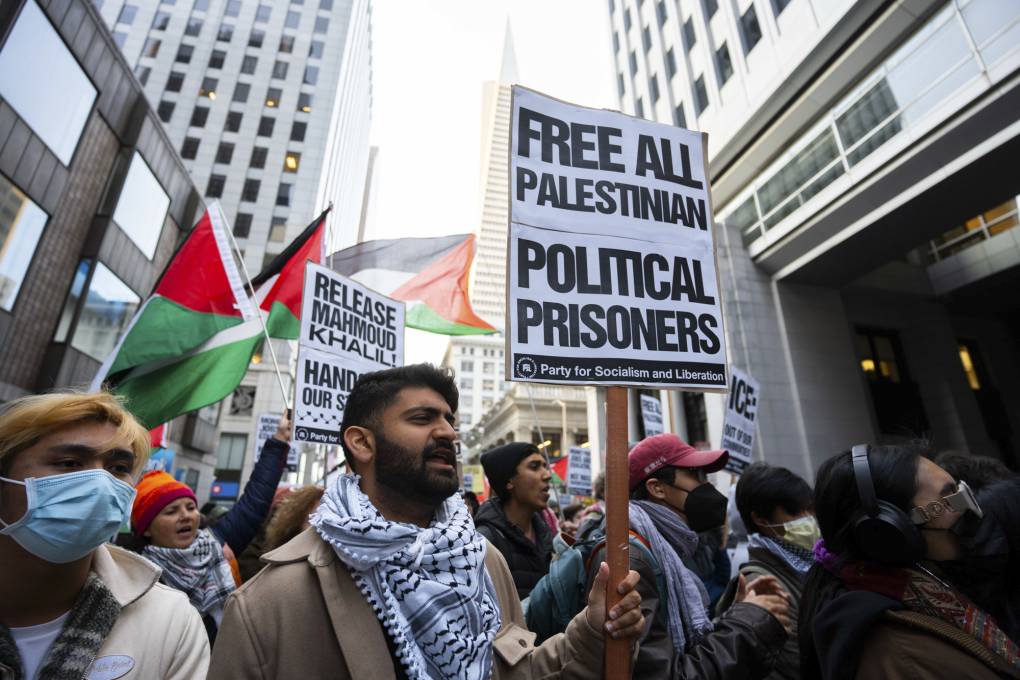
Bay Area Jewish Leader Calls for Investigation Into Pro-Palestinian Group Over SF Protest Sign
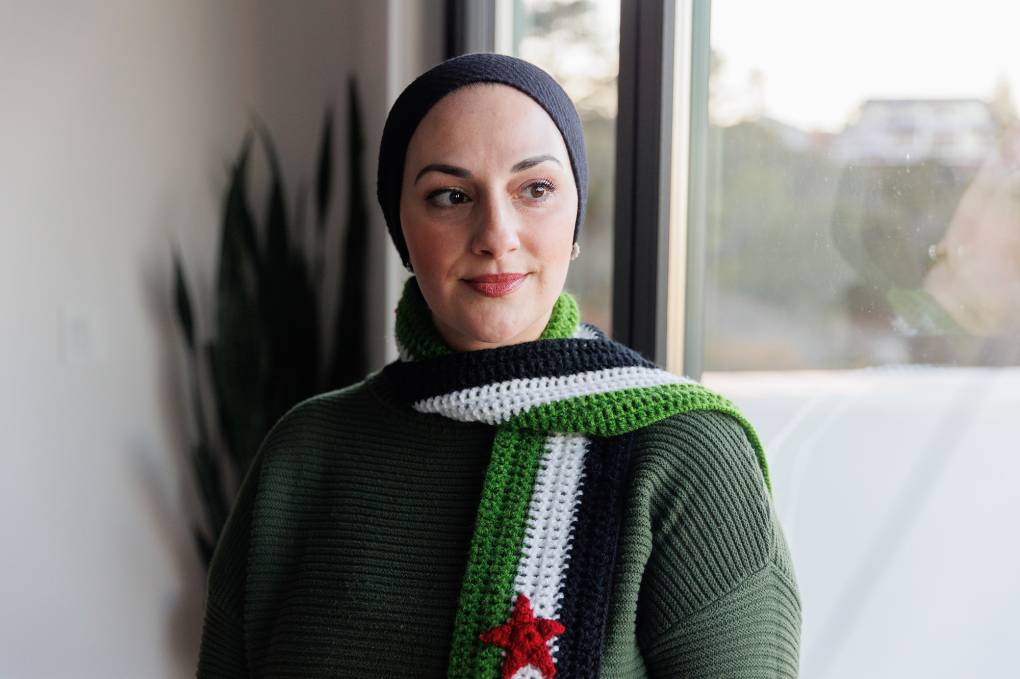
'We're Going Home': Syrians in the Bay Area React to Assad's Fall With Cautious Joy
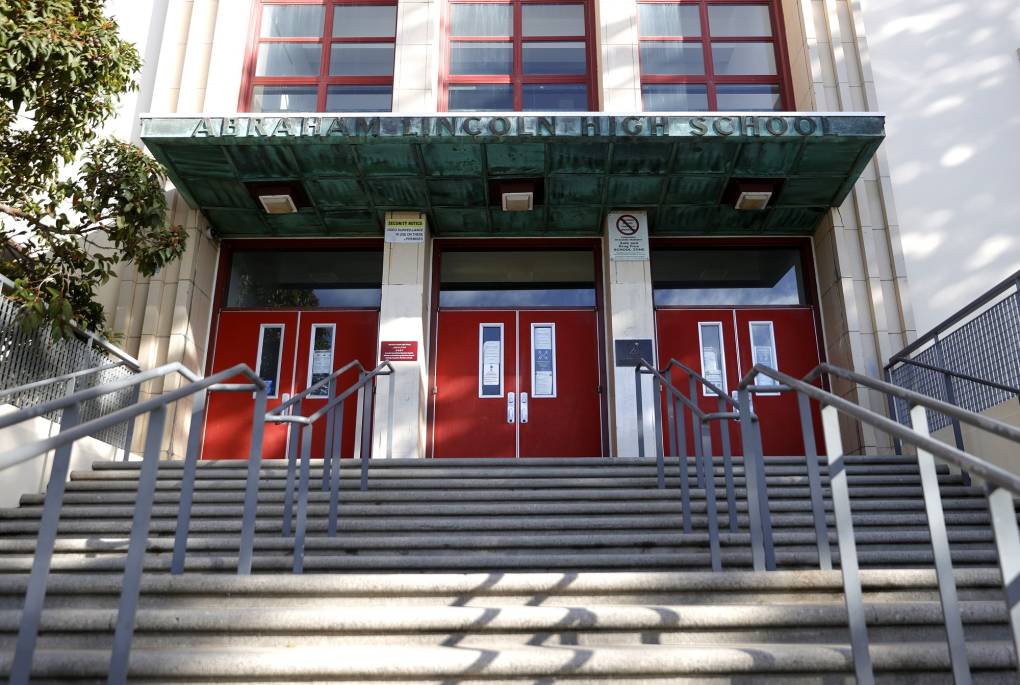
San Francisco Schools Cancel Antisemitism Workshops After Complaints About Potential Bias
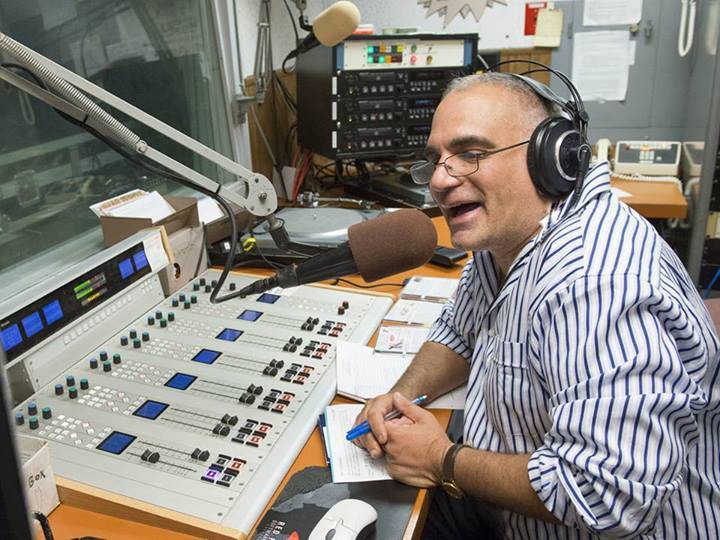
Ramzi Salti Champions Indie Arab Musicians With 'Arabology' Podcast
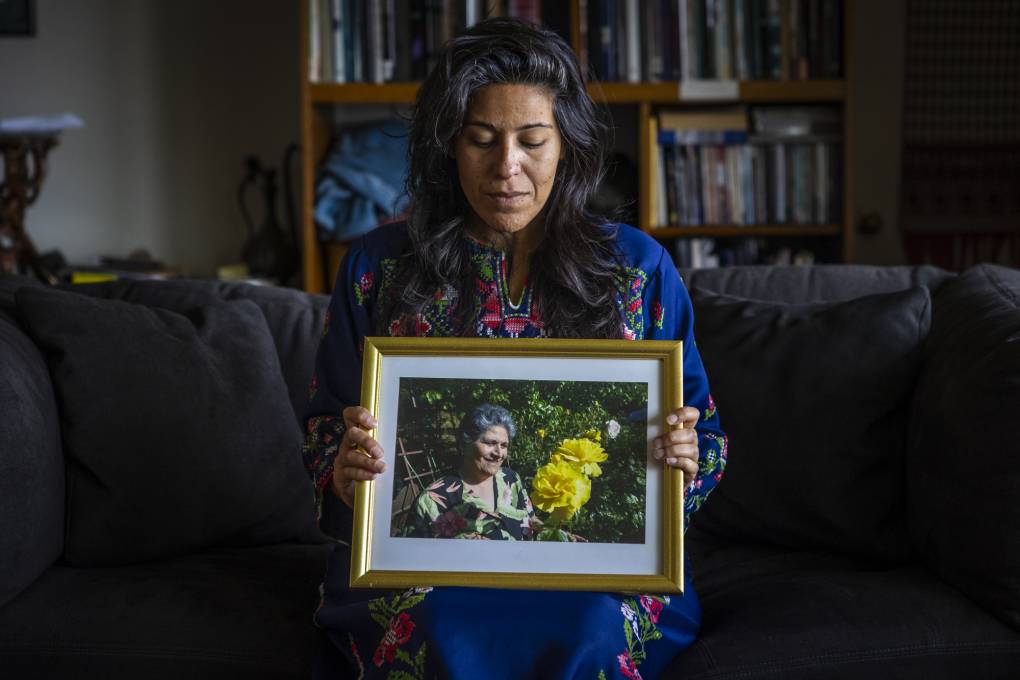
Remembering Nabila Mango, Beloved Palestinian Community Organizer and Choir Founder
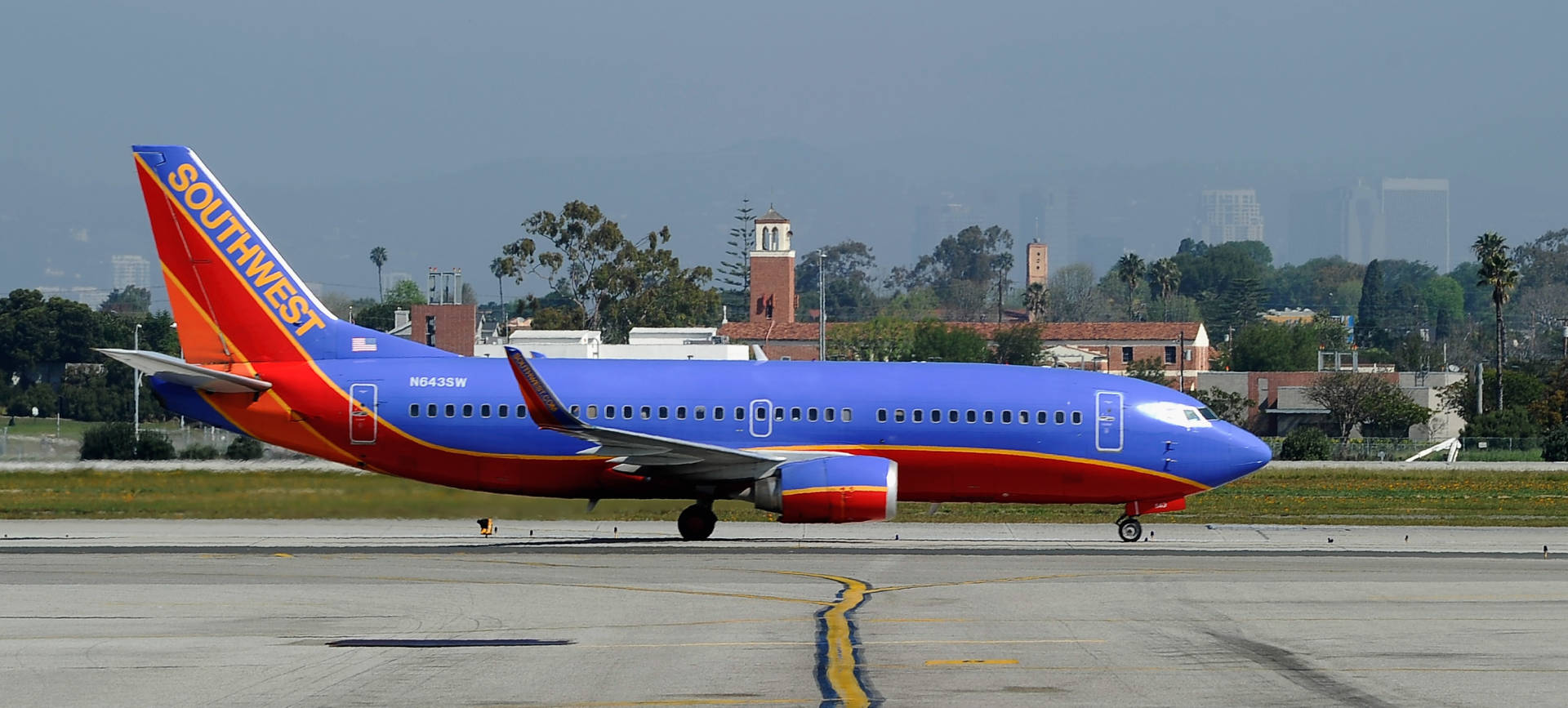
UC Berkeley Student Taken Off Flight After 'Perceived Threat' in Arabic
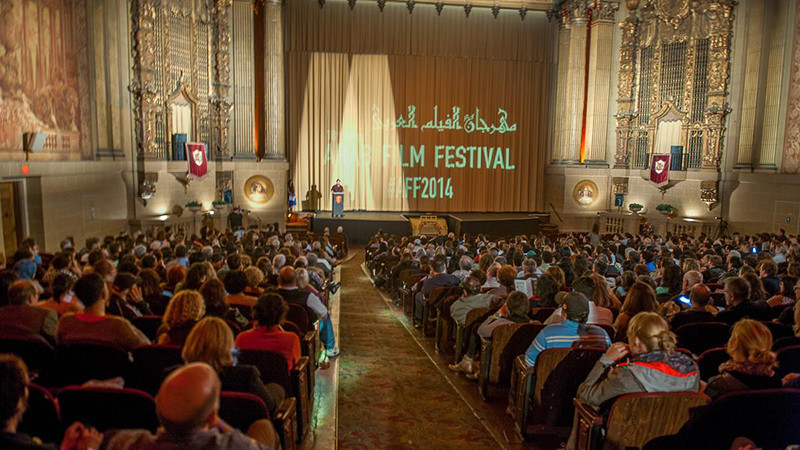
Arab Film Festival Loses Home, Seeks New San Francisco Office
Another Tracking Device Found on an Arab-American's Car
Sponsored
Player sponsored by
window.__IS_SSR__=true
window.__INITIAL_STATE__={
"attachmentsReducer": {
"audio_0": {
"type": "attachments",
"id": "audio_0",
"imgSizes": {
"kqedFullSize": {
"file": "https://ww2.kqed.org/news/wp-content/themes/KQED-unified/img/audio_bgs/background0.jpg"
}
}
},
"audio_1": {
"type": "attachments",
"id": "audio_1",
"imgSizes": {
"kqedFullSize": {
"file": "https://ww2.kqed.org/news/wp-content/themes/KQED-unified/img/audio_bgs/background1.jpg"
}
}
},
"audio_2": {
"type": "attachments",
"id": "audio_2",
"imgSizes": {
"kqedFullSize": {
"file": "https://ww2.kqed.org/news/wp-content/themes/KQED-unified/img/audio_bgs/background2.jpg"
}
}
},
"audio_3": {
"type": "attachments",
"id": "audio_3",
"imgSizes": {
"kqedFullSize": {
"file": "https://ww2.kqed.org/news/wp-content/themes/KQED-unified/img/audio_bgs/background3.jpg"
}
}
},
"audio_4": {
"type": "attachments",
"id": "audio_4",
"imgSizes": {
"kqedFullSize": {
"file": "https://ww2.kqed.org/news/wp-content/themes/KQED-unified/img/audio_bgs/background4.jpg"
}
}
},
"placeholder": {
"type": "attachments",
"id": "placeholder",
"imgSizes": {
"thumbnail": {
"file": "https://cdn.kqed.org/wp-content/uploads/2024/12/KQED-Default-Image-816638274-2000x1333-1-160x107.jpg",
"width": 160,
"height": 107,
"mimeType": "image/jpeg"
},
"medium": {
"file": "https://cdn.kqed.org/wp-content/uploads/2024/12/KQED-Default-Image-816638274-2000x1333-1-800x533.jpg",
"width": 800,
"height": 533,
"mimeType": "image/jpeg"
},
"medium_large": {
"file": "https://cdn.kqed.org/wp-content/uploads/2024/12/KQED-Default-Image-816638274-2000x1333-1-768x512.jpg",
"width": 768,
"height": 512,
"mimeType": "image/jpeg"
},
"large": {
"file": "https://cdn.kqed.org/wp-content/uploads/2024/12/KQED-Default-Image-816638274-2000x1333-1-1020x680.jpg",
"width": 1020,
"height": 680,
"mimeType": "image/jpeg"
},
"1536x1536": {
"file": "https://cdn.kqed.org/wp-content/uploads/2024/12/KQED-Default-Image-816638274-2000x1333-1-1536x1024.jpg",
"width": 1536,
"height": 1024,
"mimeType": "image/jpeg"
},
"fd-lrg": {
"file": "https://cdn.kqed.org/wp-content/uploads/2024/12/KQED-Default-Image-816638274-2000x1333-1-1536x1024.jpg",
"width": 1536,
"height": 1024,
"mimeType": "image/jpeg"
},
"fd-med": {
"file": "https://cdn.kqed.org/wp-content/uploads/2024/12/KQED-Default-Image-816638274-2000x1333-1-1020x680.jpg",
"width": 1020,
"height": 680,
"mimeType": "image/jpeg"
},
"fd-sm": {
"file": "https://cdn.kqed.org/wp-content/uploads/2024/12/KQED-Default-Image-816638274-2000x1333-1-800x533.jpg",
"width": 800,
"height": 533,
"mimeType": "image/jpeg"
},
"post-thumbnail": {
"file": "https://cdn.kqed.org/wp-content/uploads/2024/12/KQED-Default-Image-816638274-2000x1333-1-672x372.jpg",
"width": 672,
"height": 372,
"mimeType": "image/jpeg"
},
"twentyfourteen-full-width": {
"file": "https://cdn.kqed.org/wp-content/uploads/2024/12/KQED-Default-Image-816638274-2000x1333-1-1038x576.jpg",
"width": 1038,
"height": 576,
"mimeType": "image/jpeg"
},
"xxsmall": {
"file": "https://cdn.kqed.org/wp-content/uploads/2024/12/KQED-Default-Image-816638274-2000x1333-1-160x107.jpg",
"width": 160,
"height": 107,
"mimeType": "image/jpeg"
},
"xsmall": {
"file": "https://cdn.kqed.org/wp-content/uploads/2024/12/KQED-Default-Image-816638274-2000x1333-1-672x372.jpg",
"width": 672,
"height": 372,
"mimeType": "image/jpeg"
},
"small": {
"file": "https://cdn.kqed.org/wp-content/uploads/2024/12/KQED-Default-Image-816638274-2000x1333-1-672x372.jpg",
"width": 672,
"height": 372,
"mimeType": "image/jpeg"
},
"xlarge": {
"file": "https://cdn.kqed.org/wp-content/uploads/2024/12/KQED-Default-Image-816638274-2000x1333-1-1020x680.jpg",
"width": 1020,
"height": 680,
"mimeType": "image/jpeg"
},
"full-width": {
"file": "https://cdn.kqed.org/wp-content/uploads/2024/12/KQED-Default-Image-816638274-2000x1333-1-1920x1280.jpg",
"width": 1920,
"height": 1280,
"mimeType": "image/jpeg"
},
"guest-author-32": {
"file": "https://cdn.kqed.org/wp-content/uploads/2025/01/KQED-Default-Image-816638274-1333x1333-1-160x160.jpg",
"width": 32,
"height": 32,
"mimeType": "image/jpeg"
},
"guest-author-50": {
"file": "https://cdn.kqed.org/wp-content/uploads/2025/01/KQED-Default-Image-816638274-1333x1333-1-160x160.jpg",
"width": 50,
"height": 50,
"mimeType": "image/jpeg"
},
"guest-author-64": {
"file": "https://cdn.kqed.org/wp-content/uploads/2025/01/KQED-Default-Image-816638274-1333x1333-1-160x160.jpg",
"width": 64,
"height": 64,
"mimeType": "image/jpeg"
},
"guest-author-96": {
"file": "https://cdn.kqed.org/wp-content/uploads/2025/01/KQED-Default-Image-816638274-1333x1333-1-160x160.jpg",
"width": 96,
"height": 96,
"mimeType": "image/jpeg"
},
"guest-author-128": {
"file": "https://cdn.kqed.org/wp-content/uploads/2025/01/KQED-Default-Image-816638274-1333x1333-1-160x160.jpg",
"width": 128,
"height": 128,
"mimeType": "image/jpeg"
},
"detail": {
"file": "https://cdn.kqed.org/wp-content/uploads/2025/01/KQED-Default-Image-816638274-1333x1333-1-160x160.jpg",
"width": 160,
"height": 160,
"mimeType": "image/jpeg"
},
"kqedFullSize": {
"file": "https://cdn.kqed.org/wp-content/uploads/2024/12/KQED-Default-Image-816638274-2000x1333-1.jpg",
"width": 2000,
"height": 1333
}
}
},
"news_12032003": {
"type": "attachments",
"id": "news_12032003",
"meta": {
"index": "attachments_1716263798",
"site": "news",
"id": "12032003",
"found": true
},
"title": "250318-SF ISRAEL AIRSRTIKES PROTEST-AC-04-KQED",
"publishDate": 1742382868,
"status": "inherit",
"parent": 12031867,
"modified": 1742402218,
"caption": "Protestors chant along with organizers during a protest against Israel's breaking of a ceasefire agreement in San Francisco on March 18, 2025.",
"credit": "Aryk Copley/KQED",
"altTag": null,
"description": null,
"imgSizes": {
"medium": {
"file": "https://cdn.kqed.org/wp-content/uploads/sites/10/2025/03/250318-SF-ISRAEL-AIRSRTIKES-PROTEST-AC-04-KQED-800x533.jpg",
"width": 800,
"height": 533,
"mimeType": "image/jpeg"
},
"large": {
"file": "https://cdn.kqed.org/wp-content/uploads/sites/10/2025/03/250318-SF-ISRAEL-AIRSRTIKES-PROTEST-AC-04-KQED-1020x680.jpg",
"width": 1020,
"height": 680,
"mimeType": "image/jpeg"
},
"thumbnail": {
"file": "https://cdn.kqed.org/wp-content/uploads/sites/10/2025/03/250318-SF-ISRAEL-AIRSRTIKES-PROTEST-AC-04-KQED-160x107.jpg",
"width": 160,
"height": 107,
"mimeType": "image/jpeg"
},
"1536x1536": {
"file": "https://cdn.kqed.org/wp-content/uploads/sites/10/2025/03/250318-SF-ISRAEL-AIRSRTIKES-PROTEST-AC-04-KQED-1536x1024.jpg",
"width": 1536,
"height": 1024,
"mimeType": "image/jpeg"
},
"post-thumbnail": {
"file": "https://cdn.kqed.org/wp-content/uploads/sites/10/2025/03/250318-SF-ISRAEL-AIRSRTIKES-PROTEST-AC-04-KQED-672x372.jpg",
"width": 672,
"height": 372,
"mimeType": "image/jpeg"
},
"twentyfourteen-full-width": {
"file": "https://cdn.kqed.org/wp-content/uploads/sites/10/2025/03/250318-SF-ISRAEL-AIRSRTIKES-PROTEST-AC-04-KQED-1038x576.jpg",
"width": 1038,
"height": 576,
"mimeType": "image/jpeg"
},
"full-width": {
"file": "https://cdn.kqed.org/wp-content/uploads/sites/10/2025/03/250318-SF-ISRAEL-AIRSRTIKES-PROTEST-AC-04-KQED-1920x1280.jpg",
"width": 1920,
"height": 1280,
"mimeType": "image/jpeg"
},
"kqedFullSize": {
"file": "https://cdn.kqed.org/wp-content/uploads/sites/10/2025/03/250318-SF-ISRAEL-AIRSRTIKES-PROTEST-AC-04-KQED.jpg",
"width": 2000,
"height": 1333
}
},
"fetchFailed": false,
"isLoading": false
},
"news_12017577": {
"type": "attachments",
"id": "news_12017577",
"meta": {
"index": "attachments_1716263798",
"site": "news",
"id": "12017577",
"found": true
},
"title": "20241210-SyriaFolo-JY-108",
"publishDate": 1733904707,
"status": "inherit",
"parent": 0,
"modified": 1733944918,
"caption": "Syrian American community activist Maya Fallaha poses for a portrait at her home in Belmont, San Mateo County, on Monday, Dec. 9, 2024. Fallaha, who hasn’t been back to Syria since 2010, hopes she can return in the summers with her family now that the Assad regime is gone.",
"credit": "Juliana Yamada/KQED",
"altTag": null,
"description": null,
"imgSizes": {
"medium": {
"file": "https://cdn.kqed.org/wp-content/uploads/sites/10/2024/12/20241210-SyriaFolo-JY-108-800x533.jpg",
"width": 800,
"height": 533,
"mimeType": "image/jpeg"
},
"large": {
"file": "https://cdn.kqed.org/wp-content/uploads/sites/10/2024/12/20241210-SyriaFolo-JY-108-1020x679.jpg",
"width": 1020,
"height": 679,
"mimeType": "image/jpeg"
},
"thumbnail": {
"file": "https://cdn.kqed.org/wp-content/uploads/sites/10/2024/12/20241210-SyriaFolo-JY-108-160x107.jpg",
"width": 160,
"height": 107,
"mimeType": "image/jpeg"
},
"1536x1536": {
"file": "https://cdn.kqed.org/wp-content/uploads/sites/10/2024/12/20241210-SyriaFolo-JY-108-1536x1023.jpg",
"width": 1536,
"height": 1023,
"mimeType": "image/jpeg"
},
"post-thumbnail": {
"file": "https://cdn.kqed.org/wp-content/uploads/sites/10/2024/12/20241210-SyriaFolo-JY-108-672x372.jpg",
"width": 672,
"height": 372,
"mimeType": "image/jpeg"
},
"twentyfourteen-full-width": {
"file": "https://cdn.kqed.org/wp-content/uploads/sites/10/2024/12/20241210-SyriaFolo-JY-108-1038x576.jpg",
"width": 1038,
"height": 576,
"mimeType": "image/jpeg"
},
"full-width": {
"file": "https://cdn.kqed.org/wp-content/uploads/sites/10/2024/12/20241210-SyriaFolo-JY-108-1920x1279.jpg",
"width": 1920,
"height": 1279,
"mimeType": "image/jpeg"
},
"kqedFullSize": {
"file": "https://cdn.kqed.org/wp-content/uploads/sites/10/2024/12/20241210-SyriaFolo-JY-108.jpg",
"width": 2000,
"height": 1332
}
},
"fetchFailed": false,
"isLoading": false
},
"news_12004371": {
"type": "attachments",
"id": "news_12004371",
"meta": {
"index": "attachments_1716263798",
"site": "news",
"id": "12004371",
"found": true
},
"title": "Abraham Lincoln High School In San Francisco To Be Renamed",
"publishDate": 1726083661,
"status": "inherit",
"parent": 12003864,
"modified": 1726250862,
"caption": "San Francisco Unified School District canceled mandatory antisemitism workshops for staff at George Washington, Galileo Academy of Science and Technology, Abraham Lincoln and Balboa High Schools after parents and community groups raised concerns of potential bias. The workshops were initially scheduled in response to reports of increased antisemitism allegations from Jewish students.",
"credit": "Justin Sullivan/Getty Images",
"altTag": null,
"description": null,
"imgSizes": {
"medium": {
"file": "https://cdn.kqed.org/wp-content/uploads/sites/10/2024/09/AbrahamLincolnHSSFGetty1-800x537.jpg",
"width": 800,
"height": 537,
"mimeType": "image/jpeg"
},
"large": {
"file": "https://cdn.kqed.org/wp-content/uploads/sites/10/2024/09/AbrahamLincolnHSSFGetty1-1020x685.jpg",
"width": 1020,
"height": 685,
"mimeType": "image/jpeg"
},
"thumbnail": {
"file": "https://cdn.kqed.org/wp-content/uploads/sites/10/2024/09/AbrahamLincolnHSSFGetty1-160x107.jpg",
"width": 160,
"height": 107,
"mimeType": "image/jpeg"
},
"1536x1536": {
"file": "https://cdn.kqed.org/wp-content/uploads/sites/10/2024/09/AbrahamLincolnHSSFGetty1-1536x1031.jpg",
"width": 1536,
"height": 1031,
"mimeType": "image/jpeg"
},
"post-thumbnail": {
"file": "https://cdn.kqed.org/wp-content/uploads/sites/10/2024/09/AbrahamLincolnHSSFGetty1-672x372.jpg",
"width": 672,
"height": 372,
"mimeType": "image/jpeg"
},
"twentyfourteen-full-width": {
"file": "https://cdn.kqed.org/wp-content/uploads/sites/10/2024/09/AbrahamLincolnHSSFGetty1-1038x576.jpg",
"width": 1038,
"height": 576,
"mimeType": "image/jpeg"
},
"full-width": {
"file": "https://cdn.kqed.org/wp-content/uploads/sites/10/2024/09/AbrahamLincolnHSSFGetty1-1920x1289.jpg",
"width": 1920,
"height": 1289,
"mimeType": "image/jpeg"
},
"kqedFullSize": {
"file": "https://cdn.kqed.org/wp-content/uploads/sites/10/2024/09/AbrahamLincolnHSSFGetty1.jpg",
"width": 2000,
"height": 1343
}
},
"fetchFailed": false,
"isLoading": false
},
"news_11993198": {
"type": "attachments",
"id": "news_11993198",
"meta": {
"index": "attachments_1716263798",
"site": "news",
"id": "11993198",
"found": true
},
"title": "28726-1",
"publishDate": 1720461333,
"status": "inherit",
"parent": 11993183,
"modified": 1720477752,
"caption": "Stanford lecturer Ramzi Salti, aka DJ Ramzi, in the early days of his show “Arabology” at Stanford University’s KZSU radio station in Palo Alto in 2013.",
"credit": "L.A. Cicero / Stanford News Service",
"altTag": "A man wearing a striped button down shirt with glasses and headphones speaks into a microphone with an audio control panel in front of him.",
"description": null,
"imgSizes": {
"thumbnail": {
"file": "https://cdn.kqed.org/wp-content/uploads/sites/10/2024/07/28726-1-160x120.jpg",
"width": 160,
"height": 120,
"mimeType": "image/jpeg"
},
"post-thumbnail": {
"file": "https://cdn.kqed.org/wp-content/uploads/sites/10/2024/07/28726-1-672x372.jpg",
"width": 672,
"height": 372,
"mimeType": "image/jpeg"
},
"kqedFullSize": {
"file": "https://cdn.kqed.org/wp-content/uploads/sites/10/2024/07/28726-1.jpg",
"width": 720,
"height": 540
}
},
"fetchFailed": false,
"isLoading": false
},
"news_11969349": {
"type": "attachments",
"id": "news_11969349",
"meta": {
"index": "attachments_1716263798",
"site": "news",
"id": "11969349",
"found": true
},
"parent": 0,
"imgSizes": {
"twentyfourteen-full-width": {
"file": "https://cdn.kqed.org/wp-content/uploads/sites/10/2023/12/231207-BISAN-SHEHADEH-MD-04-KQED-1038x576.jpg",
"width": 1038,
"mimeType": "image/jpeg",
"height": 576
},
"thumbnail": {
"file": "https://cdn.kqed.org/wp-content/uploads/sites/10/2023/12/231207-BISAN-SHEHADEH-MD-04-KQED-160x107.jpg",
"width": 160,
"mimeType": "image/jpeg",
"height": 107
},
"post-thumbnail": {
"file": "https://cdn.kqed.org/wp-content/uploads/sites/10/2023/12/231207-BISAN-SHEHADEH-MD-04-KQED-672x372.jpg",
"width": 672,
"mimeType": "image/jpeg",
"height": 372
},
"kqedFullSize": {
"file": "https://cdn.kqed.org/wp-content/uploads/sites/10/2023/12/231207-BISAN-SHEHADEH-MD-04-KQED.jpg?ver=1702007526",
"width": 2000,
"height": 1333
},
"large": {
"file": "https://cdn.kqed.org/wp-content/uploads/sites/10/2023/12/231207-BISAN-SHEHADEH-MD-04-KQED-1020x680.jpg",
"width": 1020,
"mimeType": "image/jpeg",
"height": 680
},
"1536x1536": {
"file": "https://cdn.kqed.org/wp-content/uploads/sites/10/2023/12/231207-BISAN-SHEHADEH-MD-04-KQED-1536x1024.jpg",
"width": 1536,
"mimeType": "image/jpeg",
"height": 1024
},
"full-width": {
"file": "https://cdn.kqed.org/wp-content/uploads/sites/10/2023/12/231207-BISAN-SHEHADEH-MD-04-KQED-1920x1280.jpg",
"width": 1920,
"mimeType": "image/jpeg",
"height": 1280
},
"medium": {
"file": "https://cdn.kqed.org/wp-content/uploads/sites/10/2023/12/231207-BISAN-SHEHADEH-MD-04-KQED-800x533.jpg",
"width": 800,
"mimeType": "image/jpeg",
"height": 533
}
},
"publishDate": 1701995189,
"modified": 1702061184,
"caption": "Bisan Shehadeh holds a photo of her mother, Nabila Mango, in her rose garden in Mango's home in San Mateo on Dec. 7, 2023.",
"description": null,
"title": "231207-BISAN SHEHADEH-MD-04-KQED",
"credit": "Martin do Nascimento/KQED",
"status": "inherit",
"altTag": "A person with long hair looks down at a framed photo of a person beside two large yellow roses.",
"fetchFailed": false,
"isLoading": false
},
"news_10932734": {
"type": "attachments",
"id": "news_10932734",
"meta": {
"index": "attachments_1716263798",
"site": "news",
"id": "10932734",
"found": true
},
"parent": 10932733,
"imgSizes": {
"twentyfourteen-full-width": {
"file": "https://ww2.kqed.org/app/uploads/sites/10/2016/04/GettyImages-111677008-1038x576.jpg",
"width": 1038,
"mimeType": "image/jpeg",
"height": 576
},
"thumbnail": {
"file": "https://ww2.kqed.org/app/uploads/sites/10/2016/04/GettyImages-111677008-400x181.jpg",
"width": 400,
"mimeType": "image/jpeg",
"height": 181
},
"fd-sm": {
"file": "https://ww2.kqed.org/app/uploads/sites/10/2016/04/GettyImages-111677008-960x434.jpg",
"width": 960,
"mimeType": "image/jpeg",
"height": 434
},
"post-thumbnail": {
"file": "https://ww2.kqed.org/app/uploads/sites/10/2016/04/GettyImages-111677008-672x372.jpg",
"width": 672,
"mimeType": "image/jpeg",
"height": 372
},
"kqedFullSize": {
"file": "https://ww2.kqed.org/app/uploads/sites/10/2016/04/GettyImages-111677008-e1460993652352.jpg",
"width": 1920,
"height": 867
},
"large": {
"file": "https://ww2.kqed.org/app/uploads/sites/10/2016/04/GettyImages-111677008-1920x867.jpg",
"width": 1920,
"mimeType": "image/jpeg",
"height": 867
},
"guest-author-96": {
"file": "https://ww2.kqed.org/app/uploads/sites/10/2016/04/GettyImages-111677008-96x96.jpg",
"width": 96,
"mimeType": "image/jpeg",
"height": 96
},
"medium": {
"file": "https://ww2.kqed.org/app/uploads/sites/10/2016/04/GettyImages-111677008-800x361.jpg",
"width": 800,
"mimeType": "image/jpeg",
"height": 361
},
"guest-author-64": {
"file": "https://ww2.kqed.org/app/uploads/sites/10/2016/04/GettyImages-111677008-64x64.jpg",
"width": 64,
"mimeType": "image/jpeg",
"height": 64
},
"guest-author-32": {
"file": "https://ww2.kqed.org/app/uploads/sites/10/2016/04/GettyImages-111677008-32x32.jpg",
"width": 32,
"mimeType": "image/jpeg",
"height": 32
},
"jmtc-small-thumb": {
"file": "https://ww2.kqed.org/app/uploads/sites/10/2016/04/GettyImages-111677008-280x150.jpg",
"width": 280,
"mimeType": "image/jpeg",
"height": 150
},
"fd-lrg": {
"file": "https://ww2.kqed.org/app/uploads/sites/10/2016/04/GettyImages-111677008-1920x867.jpg",
"width": 1920,
"mimeType": "image/jpeg",
"height": 867
},
"fd-med": {
"file": "https://ww2.kqed.org/app/uploads/sites/10/2016/04/GettyImages-111677008-1180x533.jpg",
"width": 1180,
"mimeType": "image/jpeg",
"height": 533
},
"detail": {
"file": "https://ww2.kqed.org/app/uploads/sites/10/2016/04/GettyImages-111677008-75x75.jpg",
"width": 75,
"mimeType": "image/jpeg",
"height": 75
},
"guest-author-128": {
"file": "https://ww2.kqed.org/app/uploads/sites/10/2016/04/GettyImages-111677008-128x128.jpg",
"width": 128,
"mimeType": "image/jpeg",
"height": 128
}
},
"publishDate": 1460993246,
"modified": 1460993662,
"caption": "A Southwest Airlines 737 at Los Angeles International Airport.",
"description": null,
"title": "Southwest Airlines",
"credit": "Kevork Djansezian/Getty Images",
"status": "inherit",
"fetchFailed": false,
"isLoading": false
},
"arts_10822924": {
"type": "attachments",
"id": "arts_10822924",
"meta": {
"index": "attachments_1716263798",
"site": "arts",
"id": "10822924",
"found": true
},
"parent": 10822840,
"imgSizes": {
"thumbnail": {
"file": "https://ww2.kqed.org/app/uploads/sites/2/2015/07/Arab-Film-festival2-400x225.jpg",
"width": 400,
"mimeType": "image/jpeg",
"height": 225
},
"post-thumbnail": {
"file": "https://ww2.kqed.org/app/uploads/sites/2/2015/07/Arab-Film-festival2-672x372.jpg",
"width": 672,
"mimeType": "image/jpeg",
"height": 372
},
"kqedFullSize": {
"file": "https://ww2.kqed.org/app/uploads/sites/2/2015/07/Arab-Film-festival2.jpg",
"width": 800,
"height": 450
},
"guest-author-96": {
"file": "https://ww2.kqed.org/app/uploads/sites/2/2015/07/Arab-Film-festival2-96x96.jpg",
"width": 96,
"mimeType": "image/jpeg",
"height": 96
},
"medium": {
"file": "https://ww2.kqed.org/app/uploads/sites/2/2015/07/Arab-Film-festival2-800x450.jpg",
"width": 800,
"mimeType": "image/jpeg",
"height": 450
},
"guest-author-64": {
"file": "https://ww2.kqed.org/app/uploads/sites/2/2015/07/Arab-Film-festival2-64x64.jpg",
"width": 64,
"mimeType": "image/jpeg",
"height": 64
},
"detail": {
"file": "https://ww2.kqed.org/app/uploads/sites/2/2015/07/Arab-Film-festival2-75x75.jpg",
"width": 75,
"mimeType": "image/jpeg",
"height": 75
},
"guest-author-32": {
"file": "https://ww2.kqed.org/app/uploads/sites/2/2015/07/Arab-Film-festival2-32x32.jpg",
"width": 32,
"mimeType": "image/jpeg",
"height": 32
},
"guest-author-128": {
"file": "https://ww2.kqed.org/app/uploads/sites/2/2015/07/Arab-Film-festival2-128x128.jpg",
"width": 128,
"mimeType": "image/jpeg",
"height": 128
}
},
"publishDate": 1436225317,
"modified": 1691685499,
"caption": "The 2014 Arab Film Festival at San Francisco's Castro Theatre. For most smaller, independent film festivals, Another Planet Entertainment's proposed renovations mean their future at the theater is up in the air.",
"description": "During the 2014 Arab Film Festival at San Francisco's Castro Theatre (Courtesy of the Arab Film Festival) ",
"title": "Arab Film festival2",
"credit": "Courtesy of the Arab Film Festival",
"status": "inherit",
"altTag": "a shot of the interior of a movie theater, the screen shows that this is the 2014 Arab Film Festival at San Francisco's Castro Theatre",
"fetchFailed": false,
"isLoading": false
}
},
"audioPlayerReducer": {
"postId": "stream_live",
"isPaused": true,
"isPlaying": false,
"pfsActive": false,
"pledgeModalIsOpen": true,
"playerDrawerIsOpen": false
},
"authorsReducer": {
"jbrooks": {
"type": "authors",
"id": "80",
"meta": {
"index": "authors_1716337520",
"id": "80",
"found": true
},
"name": "Jon Brooks",
"firstName": "Jon",
"lastName": "Brooks",
"slug": "jbrooks",
"email": "jbrooks@kqed.org",
"display_author_email": true,
"staff_mastheads": [
"science"
],
"title": "Digital Editor",
"bio": "Jon Brooks is a former Digital Editor for KQED Science. He is the former editor of KQED’s daily news blog, News Fix. In 2014, he won a California Journalism Award for his coverage of ride services like Uber and Lyft and the taxi industry. A veteran blogger, he previously worked for Yahoo! in various news writing and editing roles. Jon is also a playwright whose work has been produced in San Francisco, New York, Italy, and around the U.S. He has written about film for his own blog and studied film at Boston University.",
"avatar": "https://secure.gravatar.com/avatar/98887f7ed1c876ed414d4c915e969584?s=600&d=blank&r=g",
"twitter": "jbrooksfoy",
"facebook": null,
"instagram": null,
"linkedin": null,
"sites": [
{
"site": "arts",
"roles": [
"Contributor",
"editor"
]
},
{
"site": "news",
"roles": [
"author"
]
},
{
"site": "futureofyou",
"roles": [
"administrator"
]
},
{
"site": "mindshift",
"roles": [
"editor"
]
},
{
"site": "stateofhealth",
"roles": [
"editor"
]
},
{
"site": "science",
"roles": [
"administrator"
]
},
{
"site": "quest",
"roles": [
"editor"
]
}
],
"headData": {
"title": "Jon Brooks | KQED",
"description": "Digital Editor",
"ogImgSrc": "https://secure.gravatar.com/avatar/98887f7ed1c876ed414d4c915e969584?s=600&d=blank&r=g",
"twImgSrc": "https://secure.gravatar.com/avatar/98887f7ed1c876ed414d4c915e969584?s=600&d=blank&r=g"
},
"isLoading": false,
"link": "/author/jbrooks"
},
"kjones": {
"type": "authors",
"id": "93",
"meta": {
"index": "authors_1716337520",
"id": "93",
"found": true
},
"name": "Kevin L. Jones",
"firstName": "Kevin",
"lastName": "Jones",
"slug": "kjones",
"email": "kjones@kqed.org",
"display_author_email": false,
"staff_mastheads": [],
"title": null,
"bio": null,
"avatar": "https://secure.gravatar.com/avatar/12c65b5633ed39d0a59bb7f497eff645?s=600&d=blank&r=g",
"twitter": null,
"facebook": null,
"instagram": null,
"linkedin": null,
"sites": [
{
"site": "arts",
"roles": [
"subscriber"
]
},
{
"site": "styleguide",
"roles": [
"contributor"
]
},
{
"site": "artschool",
"roles": [
"subscriber"
]
},
{
"site": "news",
"roles": [
"subscriber"
]
},
{
"site": "pop",
"roles": [
"subscriber"
]
}
],
"headData": {
"title": "Kevin L. Jones | KQED",
"description": null,
"ogImgSrc": "https://secure.gravatar.com/avatar/12c65b5633ed39d0a59bb7f497eff645?s=600&d=blank&r=g",
"twImgSrc": "https://secure.gravatar.com/avatar/12c65b5633ed39d0a59bb7f497eff645?s=600&d=blank&r=g"
},
"isLoading": false,
"link": "/author/kjones"
},
"danbrekke": {
"type": "authors",
"id": "222",
"meta": {
"index": "authors_1716337520",
"id": "222",
"found": true
},
"name": "Dan Brekke",
"firstName": "Dan",
"lastName": "Brekke",
"slug": "danbrekke",
"email": "dbrekke@kqed.org",
"display_author_email": true,
"staff_mastheads": [
"news",
"science"
],
"title": "KQED Editor and Reporter",
"bio": "Dan Brekke is a reporter and editor for KQED News, responsible for coverage of topics ranging from California water issues to the Bay Area's transportation challenges. In a newsroom career that began in Chicago in 1972, Dan has worked for \u003cem>The San Francisco Examiner,\u003c/em> Wired and TechTV and has been published in The New York Times, The New York Times Magazine, Business 2.0, Salon and elsewhere.\r\n\r\nSince joining KQED in 2007, Dan has reported, edited and produced both radio and online features and breaking news pieces. He has shared as both editor and reporter in four Society of Professional Journalists Norcal Excellence in Journalism awards and one Edward R. Murrow regional award. He was chosen for a spring 2017 residency at the Mesa Refuge to advance his research on California salmon.\r\n\r\nEmail Dan at: \u003ca href=\"mailto:dbrekke@kqed.org\">dbrekke@kqed.org\u003c/a>\r\n\r\n\u003cstrong>Twitter:\u003c/strong> \u003ca href=\"https://twitter.com/danbrekke\" rel=\"noopener noreferrer\">twitter.com/danbrekke\u003c/a>\r\n\u003cstrong>Facebook:\u003c/strong> \u003ca href=\"https://www.facebook.com/danbrekke\" rel=\"noopener noreferrer\">www.facebook.com/danbrekke\u003c/a>\r\n\u003cstrong>LinkedIn:\u003c/strong> \u003ca href=\"https://www.linkedin.com/in/danbrekke\" rel=\"noopener noreferrer\">www.linkedin.com/in/danbrekke\u003c/a>",
"avatar": "https://secure.gravatar.com/avatar/c8126230345efca3f7aa89b1a402be45?s=600&d=mm&r=g",
"twitter": "danbrekke",
"facebook": null,
"instagram": "https://www.instagram.com/dan.brekke/",
"linkedin": "https://www.linkedin.com/in/danbrekke/",
"sites": [
{
"site": "news",
"roles": [
"administrator",
"create_posts"
]
},
{
"site": "stateofhealth",
"roles": [
"editor"
]
},
{
"site": "science",
"roles": [
"editor"
]
},
{
"site": "quest",
"roles": [
"contributor"
]
},
{
"site": "food",
"roles": [
"contributor"
]
},
{
"site": "forum",
"roles": [
"contributor"
]
},
{
"site": "liveblog",
"roles": [
"editor"
]
}
],
"headData": {
"title": "Dan Brekke | KQED",
"description": "KQED Editor and Reporter",
"ogImgSrc": "https://secure.gravatar.com/avatar/c8126230345efca3f7aa89b1a402be45?s=600&d=mm&r=g",
"twImgSrc": "https://secure.gravatar.com/avatar/c8126230345efca3f7aa89b1a402be45?s=600&d=mm&r=g"
},
"isLoading": false,
"link": "/author/danbrekke"
},
"aproehl": {
"type": "authors",
"id": "11296",
"meta": {
"index": "authors_1716337520",
"id": "11296",
"found": true
},
"name": "Ariana Proehl",
"firstName": "Ariana",
"lastName": "Proehl",
"slug": "aproehl",
"email": "aproehl@KQED.org",
"display_author_email": true,
"staff_mastheads": [
"news"
],
"title": "Culture Reporter, KQED",
"bio": "Ariana Proehl is a Culture Reporter and Host.",
"avatar": "https://secure.gravatar.com/avatar/c96b24567eb5bb3a4f8bb295ed53e232?s=600&d=blank&r=g",
"twitter": "ArianaProehl",
"facebook": null,
"instagram": null,
"linkedin": null,
"sites": [
{
"site": "arts",
"roles": []
},
{
"site": "news",
"roles": []
},
{
"site": "education",
"roles": []
},
{
"site": "forum",
"roles": []
}
],
"headData": {
"title": "Ariana Proehl | KQED",
"description": "Culture Reporter, KQED",
"ogImgSrc": "https://secure.gravatar.com/avatar/c96b24567eb5bb3a4f8bb295ed53e232?s=600&d=blank&r=g",
"twImgSrc": "https://secure.gravatar.com/avatar/c96b24567eb5bb3a4f8bb295ed53e232?s=600&d=blank&r=g"
},
"isLoading": false,
"link": "/author/aproehl"
},
"sjohnson": {
"type": "authors",
"id": "11840",
"meta": {
"index": "authors_1716337520",
"id": "11840",
"found": true
},
"name": "Sydney Johnson",
"firstName": "Sydney",
"lastName": "Johnson",
"slug": "sjohnson",
"email": "sjohnson@kqed.org",
"display_author_email": false,
"staff_mastheads": [
"news"
],
"title": "KQED Reporter",
"bio": "Sydney Johnson is a general assignment reporter at KQED. She previously reported on public health and city government at the San Francisco Examiner, and before that, she covered statewide education policy for EdSource. Her reporting has won multiple local, state and national awards. Sydney is a graduate of the University of California, Berkeley and lives in San Francisco.",
"avatar": "https://secure.gravatar.com/avatar/97855f2719b72ad6190b7c535fe642c8?s=600&d=blank&r=g",
"twitter": "sydneyfjohnson",
"facebook": null,
"instagram": null,
"linkedin": null,
"sites": [
{
"site": "news",
"roles": [
"editor"
]
}
],
"headData": {
"title": "Sydney Johnson | KQED",
"description": "KQED Reporter",
"ogImgSrc": "https://secure.gravatar.com/avatar/97855f2719b72ad6190b7c535fe642c8?s=600&d=blank&r=g",
"twImgSrc": "https://secure.gravatar.com/avatar/97855f2719b72ad6190b7c535fe642c8?s=600&d=blank&r=g"
},
"isLoading": false,
"link": "/author/sjohnson"
},
"rcooke": {
"type": "authors",
"id": "11921",
"meta": {
"index": "authors_1716337520",
"id": "11921",
"found": true
},
"name": "Riley Cooke",
"firstName": "Riley",
"lastName": "Cooke",
"slug": "rcooke",
"email": "rcooke@kqed.org",
"display_author_email": true,
"staff_mastheads": [
"news"
],
"title": "KQED Contributor",
"bio": "Riley is a senior at UC Berkeley, where she studies political science and journalism. Her work has appeared in SFGate, NBC Bay Area, Local News Matters and more. She enjoys reporting on politics, housing and homelessness — and using as many em dashes as her editors will allow.",
"avatar": "https://secure.gravatar.com/avatar/792f98c126cc5e270a8a96f77f7224ea?s=600&d=blank&r=g",
"twitter": "rrileycooke",
"facebook": null,
"instagram": null,
"linkedin": null,
"sites": [
{
"site": "arts",
"roles": [
"author"
]
},
{
"site": "news",
"roles": [
"author"
]
}
],
"headData": {
"title": "Riley Cooke | KQED",
"description": "KQED Contributor",
"ogImgSrc": "https://secure.gravatar.com/avatar/792f98c126cc5e270a8a96f77f7224ea?s=600&d=blank&r=g",
"twImgSrc": "https://secure.gravatar.com/avatar/792f98c126cc5e270a8a96f77f7224ea?s=600&d=blank&r=g"
},
"isLoading": false,
"link": "/author/rcooke"
},
"emanoukian": {
"type": "authors",
"id": "11925",
"meta": {
"index": "authors_1716337520",
"id": "11925",
"found": true
},
"name": "Elize Manoukian",
"firstName": "Elize",
"lastName": "Manoukian",
"slug": "emanoukian",
"email": "emanoukian@KQED.org",
"display_author_email": false,
"staff_mastheads": [
"news"
],
"title": "KQED Contributor",
"bio": null,
"avatar": "https://secure.gravatar.com/avatar/3ae2b7f374920c4c6bdbb4c21d5d065f?s=600&d=blank&r=g",
"twitter": null,
"facebook": null,
"instagram": null,
"linkedin": null,
"sites": [
{
"site": "arts",
"roles": [
"editor"
]
},
{
"site": "news",
"roles": [
"editor"
]
},
{
"site": "science",
"roles": [
"editor"
]
},
{
"site": "liveblog",
"roles": [
"author"
]
}
],
"headData": {
"title": "Elize Manoukian | KQED",
"description": "KQED Contributor",
"ogImgSrc": "https://secure.gravatar.com/avatar/3ae2b7f374920c4c6bdbb4c21d5d065f?s=600&d=blank&r=g",
"twImgSrc": "https://secure.gravatar.com/avatar/3ae2b7f374920c4c6bdbb4c21d5d065f?s=600&d=blank&r=g"
},
"isLoading": false,
"link": "/author/emanoukian"
}
},
"breakingNewsReducer": {},
"pagesReducer": {},
"postsReducer": {
"stream_live": {
"type": "live",
"id": "stream_live",
"audioUrl": "https://streams.kqed.org/kqedradio",
"title": "Live Stream",
"excerpt": "Live Stream information currently unavailable.",
"link": "/radio",
"featImg": "",
"label": {
"name": "KQED Live",
"link": "/"
}
},
"stream_kqedNewscast": {
"type": "posts",
"id": "stream_kqedNewscast",
"audioUrl": "https://www.kqed.org/.stream/anon/radio/RDnews/newscast.mp3?_=1",
"title": "KQED Newscast",
"featImg": "",
"label": {
"name": "88.5 FM",
"link": "/"
}
},
"news_12032595": {
"type": "posts",
"id": "news_12032595",
"meta": {
"index": "posts_1716263798",
"site": "news",
"id": "12032595",
"score": null,
"sort": [
1742659222000
]
},
"guestAuthors": [],
"slug": "bay-area-jewish-leader-calls-for-investigation-into-pro-palestinian-group-over-sf-protest-sign",
"title": "Bay Area Jewish Leader Calls for Investigation Into Pro-Palestinian Group Over SF Protest Sign",
"publishDate": 1742659222,
"format": "standard",
"headTitle": "Bay Area Jewish Leader Calls for Investigation Into Pro-Palestinian Group Over SF Protest Sign | KQED",
"labelTerm": {
"site": "news"
},
"content": "\u003cp>\u003cstrong>\u003cem>Updated at 4:45 p.m. March 24.\u003c/em>\u003c/strong>\u003c/p>\n\u003cp>Amid hundreds of protesters calling for a ceasefire outside the Israeli consulate in San Francisco \u003ca href=\"https://www.kqed.org/news/12031867/israels-renewed-assault-gaza-draws-hundreds-streets-san-francisco\">on Tuesday\u003c/a>, one sign stood out: “Israel deserves 10,000 Oct. 7ths.”\u003c/p>\n\u003cp>Now, the Jewish Community Relations Council, a prominent Bay Area Jewish organization, is urging an investigation into one of the more than 20 sponsors of the protest, even as organizers have since distanced themselves from the sentiment expressed by the sign.\u003c/p>\n\u003cp>“They must be investigated for their support for Hamas to see if they are coordinating with foreign terror organizations,” JCRC CEO Tyler Gregory \u003ca href=\"https://x.com/TyeGregory/status/1902412644713427284\">wrote\u003c/a> on the social media platform X, adding that the protester was “openly calling for a Holocaust.”\u003c/p>\n\u003cp>[ad fullwidth]\u003c/p>\n\u003cp>The Arab Resource and Organizing Center is the group that Gregory singled out in a post Wednesday. AROC Executive Director Lara Kiswani wrote to the Board of Supervisors and the mayor that Gregory “appears to be appealing to the Trump Administration’s openly repressive domestic policies targeting Palestinian organizations.”\u003c/p>\n\u003cp>“I don’t think that everybody at those protests believes that, and I don’t think any reasonable person would think that,” said AROC member Samer Araabi, referring to the sign. “It feels super disingenuous to try to use one sign among literally thousands and associate it with the organizers of the event.”\u003c/p>\n\u003cp>It’s not the first time that AROC and JCRC have exchanged inflammatory remarks over pro-Palestinian protests.\u003c/p>\n\u003cp>Kiswani said she wrote to city officials about a \u003ca href=\"https://jweekly.com/2023/11/28/oakland-city-council-oks-cease-fire-measure-after-hours-of-vitriol/\">similar incident\u003c/a> in 2023, when Gregory characterized her organization as “pro-terrorism.” Soon after that, she said a Palestinian was assaulted in San Francisco’s city hall — an attack that activists say was encouraged by Gregory’s rhetoric.\u003c/p>\n\u003cp>[aside postID=news_12031867 hero='https://cdn.kqed.org/wp-content/uploads/sites/10/2025/03/250318-SF-ISRAEL-AIRSRTIKES-PROTEST-AC-06-KQED-1020x680.jpg']\u003c/p>\n\u003cp>Gregory did not respond to multiple requests for comment, but JCRC spokesperson Jeremy Russell said he hopes “any organization would want to distance itself from explicit calls to violence.”\u003c/p>\n\u003cp>Other organizers of Tuesday’s protest have also come to AROC’s defense.\u003c/p>\n\u003cp>“We had nothing to do with the sentiment that was expressed in that sign,” said Zahra Billoo, executive director of the Council on American-Islamic Relations. “That sign was brought by some individual of unknown affiliation.”\u003c/p>\n\u003cp>Billoo said the JCRC’s decision to single out AROC — and not the more than 20 other organizers of the event — was motivated by anti-Muslim and anti-Palestinian racism.\u003c/p>\n\u003cp>Seth Morrison of Jewish Voice for Peace said his organization condemns all calls for violence, including that sign.\u003c/p>\n\u003cp>Billoo also echoed a sentiment of Kiswani’s letter, saying that JCRC appears to be aiding the Trump administration’s plan to arrest and deport pro-Palestinian activists across the country.\u003c/p>\n\u003cp>“We have no choice but to interpret their call for an investigation as a call for government targeting, a call for immigration consequences and a call for vigilante violence,” she said. “They are fomenting anti-Palestinian racism at a time when Palestinians — and those mistaken for Palestinians — are facing violent hate crimes in our streets.”\u003c/p>\n\u003cp>Tuesday’s protest drew hundreds in response to Israel’s escalating airstrikes in Gaza after nearly two months of a ceasefire resolution. Israel’s attacks early Tuesday morning \u003ca href=\"https://apnews.com/article/israel-palestinians-hamas-war-news-ceasefire-hostages-03-18-2025-0df87331efc6a7b1dfd99275f52868a5\">killed over 400 people\u003c/a> and injured several hundred more.\u003c/p>\n\u003cp>Demonstrators in San Francisco and in other cities across the country marched for a ceasefire, an arms embargo and the \u003ca href=\"https://www.kqed.org/news/12032030/uc-berkeley-faculty-rally-to-defend-free-speech-and-protest-cuts\">release of Mahmoud Khalil\u003c/a>, a green card holder who was detained over a week ago for organizing pro-Palestinian protests at Columbia University while he was a student.\u003c/p>\n\u003cp>“We can’t control, surveil, or be aware of anyone who shows up,” Billoo said. “JCRC has intended to project ownership of that onto AROC.”\u003c/p>\n\u003cp>\u003cem>\u003cstrong>Editor’s Note:\u003c/strong> This story was updated to clarify the condemnation of a protest sign seen outside the Israeli consulate in San Francisco on March 18.\u003c/em>\u003c/p>\n\u003cp>\u003c/p>\n",
"blocks": [],
"excerpt": "Jewish Community Relations Council CEO Tyler Gregory singled out the Arab Resource and Organizing Center to 'see if they are coordinating with foreign terror organizations,' citing a sign at a recent pro-Palestinian protest. ",
"status": "publish",
"parent": 0,
"modified": 1742860370,
"stats": {
"hasAudio": false,
"hasVideo": false,
"hasChartOrMap": false,
"iframeSrcs": [],
"hasGoogleForm": false,
"hasGallery": false,
"hasHearkenModule": false,
"hasPolis": false,
"paragraphCount": 22,
"wordCount": 708
},
"headData": {
"title": "Bay Area Jewish Leader Calls for Investigation Into Pro-Palestinian Group Over SF Protest Sign | KQED",
"description": "Jewish Community Relations Council CEO Tyler Gregory singled out the Arab Resource and Organizing Center to 'see if they are coordinating with foreign terror organizations,' citing a sign at a recent pro-Palestinian protest. ",
"ogTitle": "",
"ogDescription": "",
"ogImgId": "",
"twTitle": "",
"twDescription": "",
"twImgId": "",
"schema": {
"@context": "https://schema.org",
"@type": "NewsArticle",
"headline": "Bay Area Jewish Leader Calls for Investigation Into Pro-Palestinian Group Over SF Protest Sign",
"datePublished": "2025-03-22T09:00:22-07:00",
"dateModified": "2025-03-24T16:52:50-07:00",
"image": "https://cdn.kqed.org/wp-content/uploads/2020/02/KQED-OG-Image@1x.png",
"isAccessibleForFree": "True",
"publisher": {
"@type": "NewsMediaOrganization",
"@id": "https://www.kqed.org/#organization",
"name": "KQED",
"logo": "https://cdn.kqed.org/wp-content/uploads/2020/02/KQED-OG-Image@1x.png",
"url": "https://www.kqed.org",
"sameAs": [
"https://www.facebook.com/KQED",
"https://twitter.com/KQED",
"https://www.instagram.com/kqed/",
"https://www.tiktok.com/@kqedofficial",
"https://www.linkedin.com/company/kqed",
"https://www.youtube.com/channel/UCeC0IOo7i1P_61zVUWbJ4nw"
]
}
}
},
"sticky": false,
"nprStoryId": "kqed-12032595",
"templateType": "standard",
"featuredImageType": "standard",
"excludeFromSiteSearch": "Include",
"articleAge": "0",
"path": "/news/12032595/bay-area-jewish-leader-calls-for-investigation-into-pro-palestinian-group-over-sf-protest-sign",
"audioTrackLength": null,
"parsedContent": [
{
"type": "contentString",
"content": "\u003cdiv class=\"post-body\">\u003cp>\u003cp>\u003cstrong>\u003cem>Updated at 4:45 p.m. March 24.\u003c/em>\u003c/strong>\u003c/p>\n\u003cp>Amid hundreds of protesters calling for a ceasefire outside the Israeli consulate in San Francisco \u003ca href=\"https://www.kqed.org/news/12031867/israels-renewed-assault-gaza-draws-hundreds-streets-san-francisco\">on Tuesday\u003c/a>, one sign stood out: “Israel deserves 10,000 Oct. 7ths.”\u003c/p>\n\u003cp>Now, the Jewish Community Relations Council, a prominent Bay Area Jewish organization, is urging an investigation into one of the more than 20 sponsors of the protest, even as organizers have since distanced themselves from the sentiment expressed by the sign.\u003c/p>\n\u003cp>“They must be investigated for their support for Hamas to see if they are coordinating with foreign terror organizations,” JCRC CEO Tyler Gregory \u003ca href=\"https://x.com/TyeGregory/status/1902412644713427284\">wrote\u003c/a> on the social media platform X, adding that the protester was “openly calling for a Holocaust.”\u003c/p>\n\u003cp>\u003c/p>\u003c/div>",
"attributes": {
"named": {},
"numeric": []
}
},
{
"type": "component",
"content": "",
"name": "ad",
"attributes": {
"named": {
"label": "fullwidth"
},
"numeric": [
"fullwidth"
]
}
},
{
"type": "contentString",
"content": "\u003cdiv class=\"post-body\">\u003cp>\u003c/p>\n\u003cp>The Arab Resource and Organizing Center is the group that Gregory singled out in a post Wednesday. AROC Executive Director Lara Kiswani wrote to the Board of Supervisors and the mayor that Gregory “appears to be appealing to the Trump Administration’s openly repressive domestic policies targeting Palestinian organizations.”\u003c/p>\n\u003cp>“I don’t think that everybody at those protests believes that, and I don’t think any reasonable person would think that,” said AROC member Samer Araabi, referring to the sign. “It feels super disingenuous to try to use one sign among literally thousands and associate it with the organizers of the event.”\u003c/p>\n\u003cp>It’s not the first time that AROC and JCRC have exchanged inflammatory remarks over pro-Palestinian protests.\u003c/p>\n\u003cp>Kiswani said she wrote to city officials about a \u003ca href=\"https://jweekly.com/2023/11/28/oakland-city-council-oks-cease-fire-measure-after-hours-of-vitriol/\">similar incident\u003c/a> in 2023, when Gregory characterized her organization as “pro-terrorism.” Soon after that, she said a Palestinian was assaulted in San Francisco’s city hall — an attack that activists say was encouraged by Gregory’s rhetoric.\u003c/p>\n\u003cp>\u003c/p>\u003c/div>",
"attributes": {
"named": {},
"numeric": []
}
},
{
"type": "component",
"content": "",
"name": "aside",
"attributes": {
"named": {
"postid": "news_12031867",
"hero": "https://cdn.kqed.org/wp-content/uploads/sites/10/2025/03/250318-SF-ISRAEL-AIRSRTIKES-PROTEST-AC-06-KQED-1020x680.jpg",
"label": ""
},
"numeric": []
}
},
{
"type": "contentString",
"content": "\u003cdiv class=\"post-body\">\u003cp>\u003c/p>\n\u003cp>Gregory did not respond to multiple requests for comment, but JCRC spokesperson Jeremy Russell said he hopes “any organization would want to distance itself from explicit calls to violence.”\u003c/p>\n\u003cp>Other organizers of Tuesday’s protest have also come to AROC’s defense.\u003c/p>\n\u003cp>“We had nothing to do with the sentiment that was expressed in that sign,” said Zahra Billoo, executive director of the Council on American-Islamic Relations. “That sign was brought by some individual of unknown affiliation.”\u003c/p>\n\u003cp>Billoo said the JCRC’s decision to single out AROC — and not the more than 20 other organizers of the event — was motivated by anti-Muslim and anti-Palestinian racism.\u003c/p>\n\u003cp>Seth Morrison of Jewish Voice for Peace said his organization condemns all calls for violence, including that sign.\u003c/p>\n\u003cp>Billoo also echoed a sentiment of Kiswani’s letter, saying that JCRC appears to be aiding the Trump administration’s plan to arrest and deport pro-Palestinian activists across the country.\u003c/p>\n\u003cp>“We have no choice but to interpret their call for an investigation as a call for government targeting, a call for immigration consequences and a call for vigilante violence,” she said. “They are fomenting anti-Palestinian racism at a time when Palestinians — and those mistaken for Palestinians — are facing violent hate crimes in our streets.”\u003c/p>\n\u003cp>Tuesday’s protest drew hundreds in response to Israel’s escalating airstrikes in Gaza after nearly two months of a ceasefire resolution. Israel’s attacks early Tuesday morning \u003ca href=\"https://apnews.com/article/israel-palestinians-hamas-war-news-ceasefire-hostages-03-18-2025-0df87331efc6a7b1dfd99275f52868a5\">killed over 400 people\u003c/a> and injured several hundred more.\u003c/p>\n\u003cp>Demonstrators in San Francisco and in other cities across the country marched for a ceasefire, an arms embargo and the \u003ca href=\"https://www.kqed.org/news/12032030/uc-berkeley-faculty-rally-to-defend-free-speech-and-protest-cuts\">release of Mahmoud Khalil\u003c/a>, a green card holder who was detained over a week ago for organizing pro-Palestinian protests at Columbia University while he was a student.\u003c/p>\n\u003cp>“We can’t control, surveil, or be aware of anyone who shows up,” Billoo said. “JCRC has intended to project ownership of that onto AROC.”\u003c/p>\n\u003cp>\u003cem>\u003cstrong>Editor’s Note:\u003c/strong> This story was updated to clarify the condemnation of a protest sign seen outside the Israeli consulate in San Francisco on March 18.\u003c/em>\u003c/p>\n\u003cp>\u003c/p>\n\u003c/div>\u003c/p>",
"attributes": {
"named": {},
"numeric": []
}
}
],
"link": "/news/12032595/bay-area-jewish-leader-calls-for-investigation-into-pro-palestinian-group-over-sf-protest-sign",
"authors": [
"11921"
],
"categories": [
"news_8",
"news_13"
],
"tags": [
"news_143",
"news_20310",
"news_33440",
"news_33647"
],
"featImg": "news_12032003",
"label": "news"
},
"news_12017655": {
"type": "posts",
"id": "news_12017655",
"meta": {
"index": "posts_1716263798",
"site": "news",
"id": "12017655",
"score": null,
"sort": [
1734004811000
]
},
"guestAuthors": [],
"slug": "were-going-home-syrians-in-the-bay-area-react-to-assads-fall-with-cautious-joy",
"title": "'We're Going Home': Syrians in the Bay Area React to Assad's Fall With Cautious Joy",
"publishDate": 1734004811,
"format": "standard",
"headTitle": "‘We’re Going Home’: Syrians in the Bay Area React to Assad’s Fall With Cautious Joy | KQED",
"labelTerm": {
"site": "news"
},
"content": "\u003cp>For the past two weeks, Maya Fallaha has been glued to her phone, watching for news from Syria.\u003c/p>\n\u003cp>Fallaha was born in the U.S. and grew up on the San Francisco Peninsula, with close ties to family in Aleppo and Idlib. She often shares memories with her 13-year-old son of childhood summers spent visiting family in Syria.\u003c/p>\n\u003cp>She was optimistic in the early days of the Syrian Revolution, a peaceful uprising against the government that began in March 2011. She hoped the protests might free the country from the brutal dictatorship of Bashar Assad, who has ruled the country since 2000. Instead, the country spiraled into a \u003ca href=\"https://www.kqed.org/forum/201207170900/civil-war-in-syria\">civil war\u003c/a>.\u003c/p>\n\u003cp>“Syrians distributed roses and called for dignity and freedom. Assad sent them tanks,” Fallaha said. “We soon realized this regime would rather burn down the country than relinquish power.”\u003c/p>\n\u003cp>Then, on Nov. 29, rebel forces breached Aleppo, the country’s second-largest city. Fallaha spent the next two weeks watching the lightning offensive unfold. The regime fell on Dec. 8, marking an end to 54 years of Assad family rule.\u003c/p>\n\u003cp>“It’s a mix of apprehension and cautious optimism,” Fallaha told KQED on Dec. 9. “But I’m just so happy right now because this is the moment we’ve been waiting for for 14 years.”\u003c/p>\n\u003cp>Her parents, she said, who also live in California, have been waiting even longer.\u003c/p>\n\u003cp>“We’re rid of him.”\u003c/p>\n\u003cfigure id=\"attachment_12017579\" class=\"wp-caption aligncenter\" style=\"max-width: 2000px\">\u003cimg loading=\"lazy\" decoding=\"async\" class=\"size-full wp-image-12017579\" src=\"https://cdn.kqed.org/wp-content/uploads/sites/10/2024/12/20241210-SyriaFolo-JY-318.jpg\" alt=\"\" width=\"2000\" height=\"1332\" srcset=\"https://cdn.kqed.org/wp-content/uploads/sites/10/2024/12/20241210-SyriaFolo-JY-318.jpg 2000w, https://cdn.kqed.org/wp-content/uploads/sites/10/2024/12/20241210-SyriaFolo-JY-318-800x533.jpg 800w, https://cdn.kqed.org/wp-content/uploads/sites/10/2024/12/20241210-SyriaFolo-JY-318-1020x679.jpg 1020w, https://cdn.kqed.org/wp-content/uploads/sites/10/2024/12/20241210-SyriaFolo-JY-318-160x107.jpg 160w, https://cdn.kqed.org/wp-content/uploads/sites/10/2024/12/20241210-SyriaFolo-JY-318-1536x1023.jpg 1536w, https://cdn.kqed.org/wp-content/uploads/sites/10/2024/12/20241210-SyriaFolo-JY-318-1920x1279.jpg 1920w\" sizes=\"auto, (max-width: 2000px) 100vw, 2000px\">\u003cfigcaption class=\"wp-caption-text\">Syrian American community activist Maya Fallaha wears a scarf representing Syria during a portrait session at her home in Belmont, California, on Monday, Dec. 9, 2024. Fallaha bought the scarf in Turkey from a co-op of women Syrian refugees and hopes that those women will be able to return to Syria now that the Assad regime has collapsed. \u003ccite>(Juliana Yamada/KQED)\u003c/cite>\u003c/figcaption>\u003c/figure>\n\u003cp>Syrians in the Bay Area and beyond have reacted to the end of the Assad family’s regime with a wide range of emotions — from shock and trepidation to cautious optimism and joy.\u003c/p>\n\u003cp>Nasser Meerkhan, who lives in San Francisco, said he felt the whole spectrum in one day, beginning first with pain.\u003c/p>\n\u003cp>“Today, I froze in bed for three hours, just reading. I thought I knew a lot about all of the horrible things happening [during the regime],” Meerkhan said. “But I learned even more.”\u003c/p>\n\u003cp>While Assad’s atrocities against his own people have been well documented, much less had been known about his “human slaughterhouses,” the more than 100 secret prisons where Assad and his father, former President Hafez Assad, banished suspected political rivals, often without charge. The most notorious of these was Sednaya Prison, near Damascus. Over the past few weeks, as rebel groups conquered more territory, crowds of civilians freed the prisons’ survivors, many of whom had been subjected to indiscriminate torture in underground cells for decades.\u003c/p>\n\u003cp>[ad fullwidth]\u003c/p>\n\u003cp>For Meerkhan, the liberation of thousands of political prisoners alone was reason to celebrate.\u003c/p>\n\u003cp>“I spent an hour dancing and laughing,” Meerkhan said. “And then, I spent the next half an hour crying my eyes out.”\u003c/p>\n\u003cp>For much of his adult life, Meerkhan believed that he would never return to Damascus, Syria’s capital, where he was born. Meerkhan is from a family of Syrian Kurds who hails from Damascus and Qamishli in Northeastern Syria, the Kurdish stronghold known as \u003ca href=\"https://www.kqed.org/news/11781277/bay-area-activists-demonstrate-against-turkish-invasion-in-syria\">Rojava\u003c/a>. In 2011, he moved to the U.S. for graduate school, just four days before the revolution started.\u003c/p>\n\u003cp>“I came to study, and I never went back,” said Meerkhan, now a UC Berkeley language professor.\u003c/p>\n\u003cp>Returning would have meant mandatory conscription into the pro-government forces, “which was never the plan,” he said. After two years of fighting, his immediate family fled. Meerkhan’s parents went to Turkey, and his siblings went to Germany.\u003c/p>\n\u003cp>Like many Syrians, Meerkhan said he had abandoned hope for change. “We buried our feelings to survive,” he said, “and now they’re all coming up.”\u003c/p>\n\u003cfigure id=\"attachment_12017581\" class=\"wp-caption aligncenter\" style=\"max-width: 2000px\">\u003cimg loading=\"lazy\" decoding=\"async\" class=\"size-full wp-image-12017581\" src=\"https://cdn.kqed.org/wp-content/uploads/sites/10/2024/12/20241210-SyriaFolo-JY-413.jpg\" alt=\"\" width=\"2000\" height=\"1332\" srcset=\"https://cdn.kqed.org/wp-content/uploads/sites/10/2024/12/20241210-SyriaFolo-JY-413.jpg 2000w, https://cdn.kqed.org/wp-content/uploads/sites/10/2024/12/20241210-SyriaFolo-JY-413-800x533.jpg 800w, https://cdn.kqed.org/wp-content/uploads/sites/10/2024/12/20241210-SyriaFolo-JY-413-1020x679.jpg 1020w, https://cdn.kqed.org/wp-content/uploads/sites/10/2024/12/20241210-SyriaFolo-JY-413-160x107.jpg 160w, https://cdn.kqed.org/wp-content/uploads/sites/10/2024/12/20241210-SyriaFolo-JY-413-1536x1023.jpg 1536w, https://cdn.kqed.org/wp-content/uploads/sites/10/2024/12/20241210-SyriaFolo-JY-413-1920x1279.jpg 1920w\" sizes=\"auto, (max-width: 2000px) 100vw, 2000px\">\u003cfigcaption class=\"wp-caption-text\">Nasser Meerkhan poses for a portrait at his home in San Francisco on Monday, Dec. 9, 2024. Meerkhan was born in Syria and feels a mix of emotions after the recent collapse of the Assad regime, mainly joy, grief and relief. \u003ccite>(Juliana Yamada/KQED)\u003c/cite>\u003c/figcaption>\u003c/figure>\n\u003cp>More than 6.5 million people have fled political violence in Syria since the war began in 2011. While the United States accepted far fewer refugees than Turkey and European states, California \u003ca href=\"https://www.kqed.org/news/10799545/syrian-refugee-family-adapts-to-new-life-in-oakland\">led early American resettlement efforts.\u003c/a> The state settled an estimated 4,084 Syrian refugees between 2011 and Nov. 30, 2024, according to data from the \u003ca href=\"https://www.wrapsnet.org/resources/\">State Department’s Refugee Processing Center.\u003c/a>\u003c/p>\n\u003cp>\u003ca href=\"https://www.kqed.org/news/11299682/uprooted-by-war-syrian-family-grows-new-community-in-california\">Bay Area cities like Oakland\u003c/a>, Sacramento and Turlock welcomed hundreds of individuals and families escaping war and violence. Over the past fiscal year, the \u003ca href=\"https://www.rescue.org/NorCal\">International Refugee Committee in Northern California\u003c/a> said it helped resettle 139 Syrians in the region.\u003c/p>\n\u003cp>More refugees are in the pipeline, said Jordane Tofighi, the group’s deputy director, but the recent developments have left their future uncertain.\u003c/p>\n\u003cp>“We don’t know how this will be impacted by recent events or what this looks like with the incoming administration,” Tofighi said.\u003c/p>\n\u003cp>In 2017, former President Donald Trump introduced an executive order known as “\u003ca href=\"https://www.kqed.org/news/11619108/is-president-trumps-latest-travel-ban-a-muslim-ban\">the Muslim Ban\u003c/a>.” It temporarily banned Syrian refugees and citizens from six other Muslim-majority nations and deemed the entry of Syrian nationals to the U.S. “\u003ca href=\"https://www.federalregister.gov/documents/2017/02/01/2017-02281/protecting-the-nation-from-foreign-terrorist-entry-into-the-united-states\">detrimental\u003c/a> to the interests of the United States.”\u003c/p>\n\u003cp>The policy, widely criticized by civil rights groups as discriminatory, led to a precipitous drop in Syrian refugee admissions to the U.S., from a high of more than 12,587 in 2016 to just 76 in 2018, \u003ca href=\"https://www.wrapsnet.org/admissions-and-arrivals/\">according to State Department data.\u003c/a>\u003c/p>\n\u003cp>These numbers slowly rebounded during the Biden administration, which repealed Trump’s order and gradually increased refugee admissions to nearly 2016 levels. The U.S. has admitted more than 11,200 Syrians so far in 2024.\u003c/p>\n\u003cp>But with news of the collapse of the Assad regime, many European countries have begun \u003ca href=\"https://www.france24.com/en/live-news/20241209-european-countries-suspend-syrian-asylum-decisions-after-assad-s-fall\">suspending\u003c/a> Syrian asylum claims. Austria has already prepared \u003ca href=\"https://www.politico.eu/article/austria-deport-syria-migrant-bashar-assad-regime-fall/\">deportations \u003c/a>of Syrian migrants, exploiting the country’s political upheaval to reverse a decade of immigration policies.\u003c/p>\n\u003cp>Based on his past policies and the rhetoric of his most recent \u003ca href=\"https://www.nbcnews.com/investigations/incoming-trump-administration-plans-deport-migrants-countries-rcna182896\">campaign\u003c/a>, Trump may try to do the same.\u003c/p>\n\u003cp>Tofighi urged people in the Bay Area to continue supporting resettlement in their communities and to resist unjust immigration policies.\u003c/p>\n\u003cp>“We’re very concerned by the threats to asylum seekers and that more restrictions will result in people going through more dangerous means of seeking safety — not going through the official entry points,” Tofighi said. “People will do whatever it takes to save their and their loved ones’ lives.”\u003c/p>\n\u003cp>Other questions about Syria’s future, like who will lead the country, remain.\u003c/p>\n\u003cp>Syria is fragmented among disparate armed factions, said Samer Araabi, a member of San Francisco’s \u003ca href=\"https://www.araborganizing.org/\">Arab Resource Organizing Center\u003c/a>. Regional powers like Iran, Turkey and Israel are all trying to assert their interests, as is the U.S.\u003c/p>\n\u003cp>Joseph Louis, who came to San Jose from the Syrian city of Homs 60 years ago, worries these interests could threaten Syria’s stabilization.[aside label=\"Related Stories\" postID=\"forum_2010101908109,arts_13824061,bayareabites_128995\"]“We don’t know what’s behind these changes,” he said. “We just hope that things go back to peace. [Israeli airstrikes and advances into Syria’s territory] are bad for the Syrians and bad for the Palestinians.”\u003c/p>\n\u003cp>The coalition that led the overthrow of Assad is an Islamist group called Hayat Tahrir al-Sham (HTS). The rebels originated as the Syrian branch of Al-Qaeda, according to Araabi, but severed ties. HTS’ militant leader, Ahmed Hussein al-Shar’a, formerly known by the nom de guerre Abu Mohammed al-Golani, said he has embraced a more moderate, inclusive stance.\u003c/p>\n\u003cp>“They’re inheriting a country that has basically collapsed,” Araabi said. “I’m waiting to see, are they dismantling the repressive apparatus of the state, or are they inheriting it?”\u003c/p>\n\u003cp>What this will mean for the region’s many different religious and ethnic communities, including Sunnis, Shiites, Alawites, Druze, Kurds, \u003ca href=\"https://www.kqed.org/news/10796779/torn-from-their-homeland-bay-area-assyrians-yearn-for-persecution-to-end\">Assyrian Christians\u003c/a>, Armenians, Yezidis, Palestinians and, of course, women, remains to be seen. Millions of Syrians are still haunted by a legacy of persecution suffered at the hands of extremist groups like al Qaeda and ISIS.\u003c/p>\n\u003cp>“Of course, what’s coming might be concerning,” Meerkhan said. “There are many red flags. But [Assad’s regime] was a criminal system. Someone who creates these types of prisons, who kills thousands of people, is not any better. That is a radical government.”\u003c/p>\n\u003cp>Fallaha, from Belmont, urged people interested in learning more about the situation in Syria to do careful research.\u003c/p>\n\u003cp>“Russia has put billions into pro-Assad propaganda,” she said, emphasizing that many videos posted to social media may not be accurate.\u003c/p>\n\u003cp>But even as Syrians around the world continue to grapple with the enormity of recent events, many are celebrating what they hope will be a bright new chapter in Syria’s history.\u003c/p>\n\u003cp>In 2011, at the start of the Syrian Revolution, Fallaha said she participated in a solidarity protest while pregnant with her son. On Sunday, he joined her at an event in San Francisco’s Union Square to celebrate.\u003c/p>\n\u003cp>“He’s grown up knowing Syria only through pictures, through Facetimes,” Fallaha said. “When he heard the news, he said, ‘Mom, can we go to Syria this summer?’\u003c/p>\n\u003cp>“Inshallah, I will take you,” Fallaha told him. “We’re going home.”\u003c/p>\n\u003ch2>\u003cstrong>Want to help Syrian refugees in the Bay Area? \u003c/strong>\u003c/h2>\n\u003cp>Connect with the IRC for volunteer opportunities:\u003c/p>\n\u003cp>\u003cstrong>Oakland:\u003c/strong> VolunteerOak@rescue.org\u003c/p>\n\u003cp>\u003cstrong>Turlock:\u003c/strong> Volunteer.Turlock@rescue.org\u003c/p>\n\u003cp>\u003cstrong>San José:\u003c/strong> VolunteerSJ@rescue.org\u003c/p>\n\u003cp>\u003cstrong>Sacramento:\u003c/strong> VolunteerSacramento@rescue.org\u003c/p>\n\u003cp>[ad floatright]\u003c/p>\n",
"blocks": [],
"excerpt": "Syrian expatriates and their supporters in the Bay Area celebrate a revolution in Syria after 14 years of war. ",
"status": "publish",
"parent": 0,
"modified": 1734023730,
"stats": {
"hasAudio": false,
"hasVideo": false,
"hasChartOrMap": false,
"iframeSrcs": [],
"hasGoogleForm": false,
"hasGallery": false,
"hasHearkenModule": false,
"hasPolis": false,
"paragraphCount": 49,
"wordCount": 1699
},
"headData": {
"title": "'We're Going Home': Syrians in the Bay Area React to Assad's Fall With Cautious Joy | KQED",
"description": "Syrian expatriates and their supporters in the Bay Area celebrate a revolution in Syria after 14 years of war. ",
"ogTitle": "",
"ogDescription": "",
"ogImgId": "",
"twTitle": "",
"twDescription": "",
"twImgId": "",
"schema": {
"@context": "https://schema.org",
"@type": "NewsArticle",
"headline": "'We're Going Home': Syrians in the Bay Area React to Assad's Fall With Cautious Joy",
"datePublished": "2024-12-12T04:00:11-08:00",
"dateModified": "2024-12-12T09:15:30-08:00",
"image": "https://cdn.kqed.org/wp-content/uploads/2020/02/KQED-OG-Image@1x.png",
"isAccessibleForFree": "True",
"publisher": {
"@type": "NewsMediaOrganization",
"@id": "https://www.kqed.org/#organization",
"name": "KQED",
"logo": "https://cdn.kqed.org/wp-content/uploads/2020/02/KQED-OG-Image@1x.png",
"url": "https://www.kqed.org",
"sameAs": [
"https://www.facebook.com/KQED",
"https://twitter.com/KQED",
"https://www.instagram.com/kqed/",
"https://www.tiktok.com/@kqedofficial",
"https://www.linkedin.com/company/kqed",
"https://www.youtube.com/channel/UCeC0IOo7i1P_61zVUWbJ4nw"
]
}
}
},
"sticky": false,
"nprStoryId": "kqed-12017655",
"excludeFromSiteSearch": "Include",
"articleAge": "0",
"path": "/news/12017655/were-going-home-syrians-in-the-bay-area-react-to-assads-fall-with-cautious-joy",
"audioTrackLength": null,
"parsedContent": [
{
"type": "contentString",
"content": "\u003cdiv class=\"post-body\">\u003cp>\u003cp>For the past two weeks, Maya Fallaha has been glued to her phone, watching for news from Syria.\u003c/p>\n\u003cp>Fallaha was born in the U.S. and grew up on the San Francisco Peninsula, with close ties to family in Aleppo and Idlib. She often shares memories with her 13-year-old son of childhood summers spent visiting family in Syria.\u003c/p>\n\u003cp>She was optimistic in the early days of the Syrian Revolution, a peaceful uprising against the government that began in March 2011. She hoped the protests might free the country from the brutal dictatorship of Bashar Assad, who has ruled the country since 2000. Instead, the country spiraled into a \u003ca href=\"https://www.kqed.org/forum/201207170900/civil-war-in-syria\">civil war\u003c/a>.\u003c/p>\n\u003cp>“Syrians distributed roses and called for dignity and freedom. Assad sent them tanks,” Fallaha said. “We soon realized this regime would rather burn down the country than relinquish power.”\u003c/p>\n\u003cp>Then, on Nov. 29, rebel forces breached Aleppo, the country’s second-largest city. Fallaha spent the next two weeks watching the lightning offensive unfold. The regime fell on Dec. 8, marking an end to 54 years of Assad family rule.\u003c/p>\n\u003cp>“It’s a mix of apprehension and cautious optimism,” Fallaha told KQED on Dec. 9. “But I’m just so happy right now because this is the moment we’ve been waiting for for 14 years.”\u003c/p>\n\u003cp>Her parents, she said, who also live in California, have been waiting even longer.\u003c/p>\n\u003cp>“We’re rid of him.”\u003c/p>\n\u003cfigure id=\"attachment_12017579\" class=\"wp-caption aligncenter\" style=\"max-width: 2000px\">\u003cimg loading=\"lazy\" decoding=\"async\" class=\"size-full wp-image-12017579\" src=\"https://cdn.kqed.org/wp-content/uploads/sites/10/2024/12/20241210-SyriaFolo-JY-318.jpg\" alt=\"\" width=\"2000\" height=\"1332\" srcset=\"https://cdn.kqed.org/wp-content/uploads/sites/10/2024/12/20241210-SyriaFolo-JY-318.jpg 2000w, https://cdn.kqed.org/wp-content/uploads/sites/10/2024/12/20241210-SyriaFolo-JY-318-800x533.jpg 800w, https://cdn.kqed.org/wp-content/uploads/sites/10/2024/12/20241210-SyriaFolo-JY-318-1020x679.jpg 1020w, https://cdn.kqed.org/wp-content/uploads/sites/10/2024/12/20241210-SyriaFolo-JY-318-160x107.jpg 160w, https://cdn.kqed.org/wp-content/uploads/sites/10/2024/12/20241210-SyriaFolo-JY-318-1536x1023.jpg 1536w, https://cdn.kqed.org/wp-content/uploads/sites/10/2024/12/20241210-SyriaFolo-JY-318-1920x1279.jpg 1920w\" sizes=\"auto, (max-width: 2000px) 100vw, 2000px\">\u003cfigcaption class=\"wp-caption-text\">Syrian American community activist Maya Fallaha wears a scarf representing Syria during a portrait session at her home in Belmont, California, on Monday, Dec. 9, 2024. Fallaha bought the scarf in Turkey from a co-op of women Syrian refugees and hopes that those women will be able to return to Syria now that the Assad regime has collapsed. \u003ccite>(Juliana Yamada/KQED)\u003c/cite>\u003c/figcaption>\u003c/figure>\n\u003cp>Syrians in the Bay Area and beyond have reacted to the end of the Assad family’s regime with a wide range of emotions — from shock and trepidation to cautious optimism and joy.\u003c/p>\n\u003cp>Nasser Meerkhan, who lives in San Francisco, said he felt the whole spectrum in one day, beginning first with pain.\u003c/p>\n\u003cp>“Today, I froze in bed for three hours, just reading. I thought I knew a lot about all of the horrible things happening [during the regime],” Meerkhan said. “But I learned even more.”\u003c/p>\n\u003cp>While Assad’s atrocities against his own people have been well documented, much less had been known about his “human slaughterhouses,” the more than 100 secret prisons where Assad and his father, former President Hafez Assad, banished suspected political rivals, often without charge. The most notorious of these was Sednaya Prison, near Damascus. Over the past few weeks, as rebel groups conquered more territory, crowds of civilians freed the prisons’ survivors, many of whom had been subjected to indiscriminate torture in underground cells for decades.\u003c/p>\n\u003cp>\u003c/p>\u003c/div>",
"attributes": {
"named": {},
"numeric": []
}
},
{
"type": "component",
"content": "",
"name": "ad",
"attributes": {
"named": {
"label": "fullwidth"
},
"numeric": [
"fullwidth"
]
}
},
{
"type": "contentString",
"content": "\u003cdiv class=\"post-body\">\u003cp>\u003c/p>\n\u003cp>For Meerkhan, the liberation of thousands of political prisoners alone was reason to celebrate.\u003c/p>\n\u003cp>“I spent an hour dancing and laughing,” Meerkhan said. “And then, I spent the next half an hour crying my eyes out.”\u003c/p>\n\u003cp>For much of his adult life, Meerkhan believed that he would never return to Damascus, Syria’s capital, where he was born. Meerkhan is from a family of Syrian Kurds who hails from Damascus and Qamishli in Northeastern Syria, the Kurdish stronghold known as \u003ca href=\"https://www.kqed.org/news/11781277/bay-area-activists-demonstrate-against-turkish-invasion-in-syria\">Rojava\u003c/a>. In 2011, he moved to the U.S. for graduate school, just four days before the revolution started.\u003c/p>\n\u003cp>“I came to study, and I never went back,” said Meerkhan, now a UC Berkeley language professor.\u003c/p>\n\u003cp>Returning would have meant mandatory conscription into the pro-government forces, “which was never the plan,” he said. After two years of fighting, his immediate family fled. Meerkhan’s parents went to Turkey, and his siblings went to Germany.\u003c/p>\n\u003cp>Like many Syrians, Meerkhan said he had abandoned hope for change. “We buried our feelings to survive,” he said, “and now they’re all coming up.”\u003c/p>\n\u003cfigure id=\"attachment_12017581\" class=\"wp-caption aligncenter\" style=\"max-width: 2000px\">\u003cimg loading=\"lazy\" decoding=\"async\" class=\"size-full wp-image-12017581\" src=\"https://cdn.kqed.org/wp-content/uploads/sites/10/2024/12/20241210-SyriaFolo-JY-413.jpg\" alt=\"\" width=\"2000\" height=\"1332\" srcset=\"https://cdn.kqed.org/wp-content/uploads/sites/10/2024/12/20241210-SyriaFolo-JY-413.jpg 2000w, https://cdn.kqed.org/wp-content/uploads/sites/10/2024/12/20241210-SyriaFolo-JY-413-800x533.jpg 800w, https://cdn.kqed.org/wp-content/uploads/sites/10/2024/12/20241210-SyriaFolo-JY-413-1020x679.jpg 1020w, https://cdn.kqed.org/wp-content/uploads/sites/10/2024/12/20241210-SyriaFolo-JY-413-160x107.jpg 160w, https://cdn.kqed.org/wp-content/uploads/sites/10/2024/12/20241210-SyriaFolo-JY-413-1536x1023.jpg 1536w, https://cdn.kqed.org/wp-content/uploads/sites/10/2024/12/20241210-SyriaFolo-JY-413-1920x1279.jpg 1920w\" sizes=\"auto, (max-width: 2000px) 100vw, 2000px\">\u003cfigcaption class=\"wp-caption-text\">Nasser Meerkhan poses for a portrait at his home in San Francisco on Monday, Dec. 9, 2024. Meerkhan was born in Syria and feels a mix of emotions after the recent collapse of the Assad regime, mainly joy, grief and relief. \u003ccite>(Juliana Yamada/KQED)\u003c/cite>\u003c/figcaption>\u003c/figure>\n\u003cp>More than 6.5 million people have fled political violence in Syria since the war began in 2011. While the United States accepted far fewer refugees than Turkey and European states, California \u003ca href=\"https://www.kqed.org/news/10799545/syrian-refugee-family-adapts-to-new-life-in-oakland\">led early American resettlement efforts.\u003c/a> The state settled an estimated 4,084 Syrian refugees between 2011 and Nov. 30, 2024, according to data from the \u003ca href=\"https://www.wrapsnet.org/resources/\">State Department’s Refugee Processing Center.\u003c/a>\u003c/p>\n\u003cp>\u003ca href=\"https://www.kqed.org/news/11299682/uprooted-by-war-syrian-family-grows-new-community-in-california\">Bay Area cities like Oakland\u003c/a>, Sacramento and Turlock welcomed hundreds of individuals and families escaping war and violence. Over the past fiscal year, the \u003ca href=\"https://www.rescue.org/NorCal\">International Refugee Committee in Northern California\u003c/a> said it helped resettle 139 Syrians in the region.\u003c/p>\n\u003cp>More refugees are in the pipeline, said Jordane Tofighi, the group’s deputy director, but the recent developments have left their future uncertain.\u003c/p>\n\u003cp>“We don’t know how this will be impacted by recent events or what this looks like with the incoming administration,” Tofighi said.\u003c/p>\n\u003cp>In 2017, former President Donald Trump introduced an executive order known as “\u003ca href=\"https://www.kqed.org/news/11619108/is-president-trumps-latest-travel-ban-a-muslim-ban\">the Muslim Ban\u003c/a>.” It temporarily banned Syrian refugees and citizens from six other Muslim-majority nations and deemed the entry of Syrian nationals to the U.S. “\u003ca href=\"https://www.federalregister.gov/documents/2017/02/01/2017-02281/protecting-the-nation-from-foreign-terrorist-entry-into-the-united-states\">detrimental\u003c/a> to the interests of the United States.”\u003c/p>\n\u003cp>The policy, widely criticized by civil rights groups as discriminatory, led to a precipitous drop in Syrian refugee admissions to the U.S., from a high of more than 12,587 in 2016 to just 76 in 2018, \u003ca href=\"https://www.wrapsnet.org/admissions-and-arrivals/\">according to State Department data.\u003c/a>\u003c/p>\n\u003cp>These numbers slowly rebounded during the Biden administration, which repealed Trump’s order and gradually increased refugee admissions to nearly 2016 levels. The U.S. has admitted more than 11,200 Syrians so far in 2024.\u003c/p>\n\u003cp>But with news of the collapse of the Assad regime, many European countries have begun \u003ca href=\"https://www.france24.com/en/live-news/20241209-european-countries-suspend-syrian-asylum-decisions-after-assad-s-fall\">suspending\u003c/a> Syrian asylum claims. Austria has already prepared \u003ca href=\"https://www.politico.eu/article/austria-deport-syria-migrant-bashar-assad-regime-fall/\">deportations \u003c/a>of Syrian migrants, exploiting the country’s political upheaval to reverse a decade of immigration policies.\u003c/p>\n\u003cp>Based on his past policies and the rhetoric of his most recent \u003ca href=\"https://www.nbcnews.com/investigations/incoming-trump-administration-plans-deport-migrants-countries-rcna182896\">campaign\u003c/a>, Trump may try to do the same.\u003c/p>\n\u003cp>Tofighi urged people in the Bay Area to continue supporting resettlement in their communities and to resist unjust immigration policies.\u003c/p>\n\u003cp>“We’re very concerned by the threats to asylum seekers and that more restrictions will result in people going through more dangerous means of seeking safety — not going through the official entry points,” Tofighi said. “People will do whatever it takes to save their and their loved ones’ lives.”\u003c/p>\n\u003cp>Other questions about Syria’s future, like who will lead the country, remain.\u003c/p>\n\u003cp>Syria is fragmented among disparate armed factions, said Samer Araabi, a member of San Francisco’s \u003ca href=\"https://www.araborganizing.org/\">Arab Resource Organizing Center\u003c/a>. Regional powers like Iran, Turkey and Israel are all trying to assert their interests, as is the U.S.\u003c/p>\n\u003cp>Joseph Louis, who came to San Jose from the Syrian city of Homs 60 years ago, worries these interests could threaten Syria’s stabilization.\u003c/p>\u003c/div>",
"attributes": {
"named": {},
"numeric": []
}
},
{
"type": "component",
"content": "",
"name": "aside",
"attributes": {
"named": {
"label": "Related Stories ",
"postid": "forum_2010101908109,arts_13824061,bayareabites_128995"
},
"numeric": []
}
},
{
"type": "contentString",
"content": "\u003cdiv class=\"post-body\">\u003cp>“We don’t know what’s behind these changes,” he said. “We just hope that things go back to peace. [Israeli airstrikes and advances into Syria’s territory] are bad for the Syrians and bad for the Palestinians.”\u003c/p>\n\u003cp>The coalition that led the overthrow of Assad is an Islamist group called Hayat Tahrir al-Sham (HTS). The rebels originated as the Syrian branch of Al-Qaeda, according to Araabi, but severed ties. HTS’ militant leader, Ahmed Hussein al-Shar’a, formerly known by the nom de guerre Abu Mohammed al-Golani, said he has embraced a more moderate, inclusive stance.\u003c/p>\n\u003cp>“They’re inheriting a country that has basically collapsed,” Araabi said. “I’m waiting to see, are they dismantling the repressive apparatus of the state, or are they inheriting it?”\u003c/p>\n\u003cp>What this will mean for the region’s many different religious and ethnic communities, including Sunnis, Shiites, Alawites, Druze, Kurds, \u003ca href=\"https://www.kqed.org/news/10796779/torn-from-their-homeland-bay-area-assyrians-yearn-for-persecution-to-end\">Assyrian Christians\u003c/a>, Armenians, Yezidis, Palestinians and, of course, women, remains to be seen. Millions of Syrians are still haunted by a legacy of persecution suffered at the hands of extremist groups like al Qaeda and ISIS.\u003c/p>\n\u003cp>“Of course, what’s coming might be concerning,” Meerkhan said. “There are many red flags. But [Assad’s regime] was a criminal system. Someone who creates these types of prisons, who kills thousands of people, is not any better. That is a radical government.”\u003c/p>\n\u003cp>Fallaha, from Belmont, urged people interested in learning more about the situation in Syria to do careful research.\u003c/p>\n\u003cp>“Russia has put billions into pro-Assad propaganda,” she said, emphasizing that many videos posted to social media may not be accurate.\u003c/p>\n\u003cp>But even as Syrians around the world continue to grapple with the enormity of recent events, many are celebrating what they hope will be a bright new chapter in Syria’s history.\u003c/p>\n\u003cp>In 2011, at the start of the Syrian Revolution, Fallaha said she participated in a solidarity protest while pregnant with her son. On Sunday, he joined her at an event in San Francisco’s Union Square to celebrate.\u003c/p>\n\u003cp>“He’s grown up knowing Syria only through pictures, through Facetimes,” Fallaha said. “When he heard the news, he said, ‘Mom, can we go to Syria this summer?’\u003c/p>\n\u003cp>“Inshallah, I will take you,” Fallaha told him. “We’re going home.”\u003c/p>\n\u003ch2>\u003cstrong>Want to help Syrian refugees in the Bay Area? \u003c/strong>\u003c/h2>\n\u003cp>Connect with the IRC for volunteer opportunities:\u003c/p>\n\u003cp>\u003cstrong>Oakland:\u003c/strong> VolunteerOak@rescue.org\u003c/p>\n\u003cp>\u003cstrong>Turlock:\u003c/strong> Volunteer.Turlock@rescue.org\u003c/p>\n\u003cp>\u003cstrong>San José:\u003c/strong> VolunteerSJ@rescue.org\u003c/p>\n\u003cp>\u003cstrong>Sacramento:\u003c/strong> VolunteerSacramento@rescue.org\u003c/p>\n\u003cp>\u003c/p>\u003c/div>",
"attributes": {
"named": {},
"numeric": []
}
},
{
"type": "component",
"content": "",
"name": "ad",
"attributes": {
"named": {
"label": "floatright"
},
"numeric": [
"floatright"
]
}
},
{
"type": "contentString",
"content": "\u003cdiv class=\"post-body\">\u003cp>\u003c/p>\n\u003c/div>\u003c/p>",
"attributes": {
"named": {},
"numeric": []
}
}
],
"link": "/news/12017655/were-going-home-syrians-in-the-bay-area-react-to-assads-fall-with-cautious-joy",
"authors": [
"11925"
],
"categories": [
"news_8"
],
"tags": [
"news_143",
"news_27626",
"news_4768"
],
"featImg": "news_12017577",
"label": "news"
},
"news_12003864": {
"type": "posts",
"id": "news_12003864",
"meta": {
"index": "posts_1716263798",
"site": "news",
"id": "12003864",
"score": null,
"sort": [
1726237800000
]
},
"guestAuthors": [],
"slug": "san-francisco-schools-cancel-antisemitism-workshops-after-complaints-about-potential-bias",
"title": "San Francisco Schools Cancel Antisemitism Workshops After Complaints About Potential Bias",
"publishDate": 1726237800,
"format": "standard",
"headTitle": "San Francisco Schools Cancel Antisemitism Workshops After Complaints About Potential Bias | KQED",
"labelTerm": {
"site": "news"
},
"content": "\u003cp>\u003ca href=\"https://www.kqed.org/news/tag/san-francisco-unified-school-district\">San Francisco Unified School District\u003c/a> canceled mandatory antisemitism workshops for staff at four San Francisco high schools this week after parents and community groups expressed concerns of potential bias.\u003c/p>\n\u003cp>A group of SFUSD parents and staff called for the workshops, scheduled for Wednesday, in response to a reported uptick in allegations of antisemitism from Jewish students. The district contracted the American Jewish Committee to provide training at George Washington High School, Galileo Academy of Science and Technology, Abraham Lincoln High School and Balboa High School.\u003c/p>\n\u003cp>The training was titled “Who Are the Jews: Jewish Identity and Antisemitism in 2024,” and there was a plan to include more schools in the future.\u003c/p>\n\u003cp>In the 11 months since Hamas attacked Israel, and since Israel retaliated with a military campaign in Gaza that has killed over 40,000 Palestinians, schools across the Bay Area have been disrupted by tension over how to supervise education about the war, political expression by faculty and students, and accusations of antisemitism and Islamophobia.\u003c/p>\n\u003cp>[ad fullwidth]\u003c/p>\n\u003cp>The workshop cancellation reveals a unique challenge facing school districts, teachers, administrators and parents tasked with educating students in a multicultural setting like San Francisco’s public schools amid a fraught and emotional conflict that hits close to home.\u003c/p>\n\u003cp>To understand how the workshop unraveled, KQED spoke with parents, staff and experts, along with advocacy groups that supported or opposed the training.\u003c/p>\n\u003cp>“Folks don’t focus as much as we should on just how hard it is to educate effectively and appropriately about issues that are this complex and nuanced, like the history of Israel and the Middle East, as well as where the stakes are enormously high and emotions are understandably high, like the war in Gaza, because people are dying,” Joe Kahne, a UC Merced professor who studies student civic engagement, said.\u003c/p>\n\u003cp>[aside postID=news_12003861 hero='https://cdn.kqed.org/wp-content/uploads/sites/10/2024/09/UCBerkeleyMakdisi-1020x698.jpg']\u003c/p>\n\u003cp>Last December, dozens of teachers in Oakland participated in unauthorized teach-ins, presenting pro-Palestinian lessons. In May, Berkeley Unified School District Superintendent Enikia Ford Morthel \u003ca href=\"https://www.kqed.org/news/11985599/berkeley-antisemitism-hearing\">testified before Congress\u003c/a> on the district’s handling of antisemitism allegations in public schools after a group of Jewish parents, along with the Brandeis Center and Anti-Defamation League, filed a federal complaint in February alleging severe antisemitism in the district.\u003c/p>\n\u003cp>In January, the U.S. Department of Education announced investigations into SFUSD and Oakland Unified School District for alleged civil rights violations and claims of religious discrimination.\u003c/p>\n\u003cp>Some SFUSD parents and local community groups raised alarms about the American Jewish Committee’s support for Israel. In an internal email forwarded to staff by school principals on Monday, SFUSD administrators Karling Aguilera-Fort and Davina Goldwasser said the workshop wouldn’t take a position on the Israel-Hamas war and that the training was “just awareness building.”\u003c/p>\n\u003cp>On Wednesday morning, Katrina Kincade, an SFUSD spokesperson, told KQED that the workshops would be rescheduled.\u003c/p>\n\u003cp>“We want to ensure each and every student and staff member feels and experiences safety and a sense of belonging in our schools,” she said in an email.\u003c/p>\n\u003cp>Julia David, an English teacher at George Washington, said that the idea for the training originated among parents and staff concerned about the treatment of Jewish students in the city’s schools. She described incidents ranging from pro-Palestinian student walkouts to protests of war to reports of “Free Palestine” being written on campus to graffiti of swastikas on campuses.\u003c/p>\n\u003cp>She also said the Jewish Student Union, which she sponsors, had been made to feel uncomfortable on campus by staff who identified as pro-Palestine.\u003c/p>\n\u003cp>[aside postID=news_12003439 hero='https://cdn.kqed.org/wp-content/uploads/sites/10/2024/09/UCSFProPalestineProtest1-1020x792.jpg']\u003c/p>\n\u003cp>“We thought that it was really important to have training about Jewish identity in a multicultural society led by Jews,” David said. “Being a Jewish student in the middle of a really charged political time has brought unique challenges to our school and to our students, and to our educators and our parents.\u003c/p>\n\u003cp>“This training is just about educating people on what the Jewish identity is and our experiences.”\u003c/p>\n\u003cp>David said she and a small group of other Jewish parents and staff reached out to the American Jewish Committee, one of the oldest Jewish advocacy organizations. The nonprofit agreed to provide the workshops at no cost to the district.\u003c/p>\n\u003cp>Parent Lee Filner pointed out that the AJC was chosen by the Biden administration to lead the national effort against antisemitism.\u003c/p>\n\u003cp>“There have just been too many antisemitic incidents in the district,” Filner said. “It’s leading a lot of parents I personally know to flee the district for private school, and we just can’t afford to lose more students from the district. Especially in this budget situation, because we’ve created a hostile environment for students just because of who they are.”\u003c/p>\n\u003cp>An email announcing the workshops reached a group of Jewish parents and political organizers who are critical of Israel. Alex Lantsberg, a Jewish parent of students at two of the high schools on the workshop list, said he was shocked and dismayed when he learned about the AJC-led training.\u003c/p>\n\u003cp>“Educating people on antisemitism is absolutely imperative in this time when antisemitism is being used to justify an ongoing genocide,” he said. “If SFUSD wanted to actually assist its faculty and staff, it would be best to do so in a way that actually recognizes the multiple strands of Jewish thought regarding the question of antisemitism and how all of these things come together.”\u003c/p>\n\u003cp>Parents of Palestinian students in the district, like Sonya Awwad, questioned how closely the AJC’s values align with San Francisco’s.\u003c/p>\n\u003cp>“This is a group that openly opposes a cease-fire in this war and does not have a neutral position in the conflict,” she said. “And San Francisco did vote on a resolution for a cease-fire, so that in itself seems conflicting.”\u003c/p>\n\u003cp>Progressive groups affiliated with SFUSD, like the Arab Resource Organizing Committee, the Council on American-Islamic Relations and Jewish Voices for Peace, criticized the workshop. The groups called for the district to hold a similar training about Islamophobia or anti-Palestinian sentiment, which they said is also on the rise, according to a joint press release.\u003c/p>\n\u003cp>Last year, Awwad and a small group of parents met with administrators to discuss the war’s impact on their children. Awwad said parents described bullying, racism and isolation plaguing students, particularly those with family in Gaza.\u003c/p>\n\u003cp>[aside postID=news_12002125 hero='https://cdn.kqed.org/wp-content/uploads/sites/10/2024/08/20240827_SFUSDPROTEST_GC-10-KQED-1020x749.jpg']\u003c/p>\n\u003cp>“Any kind of anti-racism training is important,” Awwad said. “So why are our students’ concerns not being met with training that would advocate for them as well?”\u003c/p>\n\u003cp>Several parents who advocated for antisemitism training said the overwhelming political messaging coming into their children’s schools made it difficult for students to learn. Some voiced their frustrations with AROC, a group that has come under scrutiny for facilitating student walkouts at SFUSD schools. After a parent group demanded an investigation into AROC’s contract with schools last year, students rallied outside of the district’s office in the organization’s defense.\u003c/p>\n\u003cp>Seth Brysk, the AJC’s regional director of northern California, hopes the antisemitism training will be rescheduled.\u003c/p>\n\u003cp>“We neither endorse nor oppose candidates for office. We’re an apolitical organization, not only because that’s what the law requires, but we’re also known to be a nonpartisan organization that doesn’t engage in politics,” he said. “More importantly, I don’t see how that relates to anti-bias training about antisemitism.”\u003c/p>\n\u003cp>Nearly 50,000 students are enrolled in San Francisco public schools, which educate the majority of the city’s children. As SFUSD struggles with low enrollment, administrators must worry about retaining students. At the same time, they are trying to placate teachers, including many who embrace progressive politics and parents who have increasingly demanded a say in how schools respond to the war.\u003c/p>\n\u003cp>While these tense moments may raise big questions for schools, Kahne said there are inevitable learning opportunities — for children and adults.\u003c/p>\n\u003cp>“As educators, we often say our goal is to teach young people how to think, not what to think. A big part of what educators should be doing in those contexts is modeling,” Kahne said. “The better we do that, the better our democracy will run.\u003c/p>\n\u003cp>“Unfortunately, what we are seeing is that many teachers are choosing to do less of this kind of work, and many districts are putting less support towards this kind of work in an effort to avoid conflict.”\u003c/p>\n\u003cp>[ad floatright]\u003c/p>\n",
"blocks": [],
"excerpt": "Workshops that help staff at San Francisco high schools address allegations of antisemitism were canceled after pressure from parents amid the Israel-Hamas war.",
"status": "publish",
"parent": 0,
"modified": 1726254617,
"stats": {
"hasAudio": false,
"hasVideo": false,
"hasChartOrMap": false,
"iframeSrcs": [],
"hasGoogleForm": false,
"hasGallery": false,
"hasHearkenModule": false,
"hasPolis": false,
"paragraphCount": 38,
"wordCount": 1512
},
"headData": {
"title": "San Francisco Schools Cancel Antisemitism Workshops After Complaints About Potential Bias | KQED",
"description": "Workshops that help staff at San Francisco high schools address allegations of antisemitism were canceled after pressure from parents amid the Israel-Hamas war.",
"ogTitle": "",
"ogDescription": "",
"ogImgId": "",
"twTitle": "",
"twDescription": "",
"twImgId": "",
"schema": {
"@context": "https://schema.org",
"@type": "NewsArticle",
"headline": "San Francisco Schools Cancel Antisemitism Workshops After Complaints About Potential Bias",
"datePublished": "2024-09-13T07:30:00-07:00",
"dateModified": "2024-09-13T12:10:17-07:00",
"image": "https://cdn.kqed.org/wp-content/uploads/2020/02/KQED-OG-Image@1x.png",
"isAccessibleForFree": "True",
"publisher": {
"@type": "NewsMediaOrganization",
"@id": "https://www.kqed.org/#organization",
"name": "KQED",
"logo": "https://cdn.kqed.org/wp-content/uploads/2020/02/KQED-OG-Image@1x.png",
"url": "https://www.kqed.org",
"sameAs": [
"https://www.facebook.com/KQED",
"https://twitter.com/KQED",
"https://www.instagram.com/kqed/",
"https://www.tiktok.com/@kqedofficial",
"https://www.linkedin.com/company/kqed",
"https://www.youtube.com/channel/UCeC0IOo7i1P_61zVUWbJ4nw"
]
}
}
},
"sticky": false,
"nprStoryId": "kqed-12003864",
"excludeFromSiteSearch": "Include",
"articleAge": "0",
"path": "/news/12003864/san-francisco-schools-cancel-antisemitism-workshops-after-complaints-about-potential-bias",
"audioTrackLength": null,
"parsedContent": [
{
"type": "contentString",
"content": "\u003cdiv class=\"post-body\">\u003cp>\u003cp>\u003ca href=\"https://www.kqed.org/news/tag/san-francisco-unified-school-district\">San Francisco Unified School District\u003c/a> canceled mandatory antisemitism workshops for staff at four San Francisco high schools this week after parents and community groups expressed concerns of potential bias.\u003c/p>\n\u003cp>A group of SFUSD parents and staff called for the workshops, scheduled for Wednesday, in response to a reported uptick in allegations of antisemitism from Jewish students. The district contracted the American Jewish Committee to provide training at George Washington High School, Galileo Academy of Science and Technology, Abraham Lincoln High School and Balboa High School.\u003c/p>\n\u003cp>The training was titled “Who Are the Jews: Jewish Identity and Antisemitism in 2024,” and there was a plan to include more schools in the future.\u003c/p>\n\u003cp>In the 11 months since Hamas attacked Israel, and since Israel retaliated with a military campaign in Gaza that has killed over 40,000 Palestinians, schools across the Bay Area have been disrupted by tension over how to supervise education about the war, political expression by faculty and students, and accusations of antisemitism and Islamophobia.\u003c/p>\n\u003cp>\u003c/p>\u003c/div>",
"attributes": {
"named": {},
"numeric": []
}
},
{
"type": "component",
"content": "",
"name": "ad",
"attributes": {
"named": {
"label": "fullwidth"
},
"numeric": [
"fullwidth"
]
}
},
{
"type": "contentString",
"content": "\u003cdiv class=\"post-body\">\u003cp>\u003c/p>\n\u003cp>The workshop cancellation reveals a unique challenge facing school districts, teachers, administrators and parents tasked with educating students in a multicultural setting like San Francisco’s public schools amid a fraught and emotional conflict that hits close to home.\u003c/p>\n\u003cp>To understand how the workshop unraveled, KQED spoke with parents, staff and experts, along with advocacy groups that supported or opposed the training.\u003c/p>\n\u003cp>“Folks don’t focus as much as we should on just how hard it is to educate effectively and appropriately about issues that are this complex and nuanced, like the history of Israel and the Middle East, as well as where the stakes are enormously high and emotions are understandably high, like the war in Gaza, because people are dying,” Joe Kahne, a UC Merced professor who studies student civic engagement, said.\u003c/p>\n\u003cp>\u003c/p>\u003c/div>",
"attributes": {
"named": {},
"numeric": []
}
},
{
"type": "component",
"content": "",
"name": "aside",
"attributes": {
"named": {
"postid": "news_12003861",
"hero": "https://cdn.kqed.org/wp-content/uploads/sites/10/2024/09/UCBerkeleyMakdisi-1020x698.jpg",
"label": ""
},
"numeric": []
}
},
{
"type": "contentString",
"content": "\u003cdiv class=\"post-body\">\u003cp>\u003c/p>\n\u003cp>Last December, dozens of teachers in Oakland participated in unauthorized teach-ins, presenting pro-Palestinian lessons. In May, Berkeley Unified School District Superintendent Enikia Ford Morthel \u003ca href=\"https://www.kqed.org/news/11985599/berkeley-antisemitism-hearing\">testified before Congress\u003c/a> on the district’s handling of antisemitism allegations in public schools after a group of Jewish parents, along with the Brandeis Center and Anti-Defamation League, filed a federal complaint in February alleging severe antisemitism in the district.\u003c/p>\n\u003cp>In January, the U.S. Department of Education announced investigations into SFUSD and Oakland Unified School District for alleged civil rights violations and claims of religious discrimination.\u003c/p>\n\u003cp>Some SFUSD parents and local community groups raised alarms about the American Jewish Committee’s support for Israel. In an internal email forwarded to staff by school principals on Monday, SFUSD administrators Karling Aguilera-Fort and Davina Goldwasser said the workshop wouldn’t take a position on the Israel-Hamas war and that the training was “just awareness building.”\u003c/p>\n\u003cp>On Wednesday morning, Katrina Kincade, an SFUSD spokesperson, told KQED that the workshops would be rescheduled.\u003c/p>\n\u003cp>“We want to ensure each and every student and staff member feels and experiences safety and a sense of belonging in our schools,” she said in an email.\u003c/p>\n\u003cp>Julia David, an English teacher at George Washington, said that the idea for the training originated among parents and staff concerned about the treatment of Jewish students in the city’s schools. She described incidents ranging from pro-Palestinian student walkouts to protests of war to reports of “Free Palestine” being written on campus to graffiti of swastikas on campuses.\u003c/p>\n\u003cp>She also said the Jewish Student Union, which she sponsors, had been made to feel uncomfortable on campus by staff who identified as pro-Palestine.\u003c/p>\n\u003cp>\u003c/p>\u003c/div>",
"attributes": {
"named": {},
"numeric": []
}
},
{
"type": "component",
"content": "",
"name": "aside",
"attributes": {
"named": {
"postid": "news_12003439",
"hero": "https://cdn.kqed.org/wp-content/uploads/sites/10/2024/09/UCSFProPalestineProtest1-1020x792.jpg",
"label": ""
},
"numeric": []
}
},
{
"type": "contentString",
"content": "\u003cdiv class=\"post-body\">\u003cp>\u003c/p>\n\u003cp>“We thought that it was really important to have training about Jewish identity in a multicultural society led by Jews,” David said. “Being a Jewish student in the middle of a really charged political time has brought unique challenges to our school and to our students, and to our educators and our parents.\u003c/p>\n\u003cp>“This training is just about educating people on what the Jewish identity is and our experiences.”\u003c/p>\n\u003cp>David said she and a small group of other Jewish parents and staff reached out to the American Jewish Committee, one of the oldest Jewish advocacy organizations. The nonprofit agreed to provide the workshops at no cost to the district.\u003c/p>\n\u003cp>Parent Lee Filner pointed out that the AJC was chosen by the Biden administration to lead the national effort against antisemitism.\u003c/p>\n\u003cp>“There have just been too many antisemitic incidents in the district,” Filner said. “It’s leading a lot of parents I personally know to flee the district for private school, and we just can’t afford to lose more students from the district. Especially in this budget situation, because we’ve created a hostile environment for students just because of who they are.”\u003c/p>\n\u003cp>An email announcing the workshops reached a group of Jewish parents and political organizers who are critical of Israel. Alex Lantsberg, a Jewish parent of students at two of the high schools on the workshop list, said he was shocked and dismayed when he learned about the AJC-led training.\u003c/p>\n\u003cp>“Educating people on antisemitism is absolutely imperative in this time when antisemitism is being used to justify an ongoing genocide,” he said. “If SFUSD wanted to actually assist its faculty and staff, it would be best to do so in a way that actually recognizes the multiple strands of Jewish thought regarding the question of antisemitism and how all of these things come together.”\u003c/p>\n\u003cp>Parents of Palestinian students in the district, like Sonya Awwad, questioned how closely the AJC’s values align with San Francisco’s.\u003c/p>\n\u003cp>“This is a group that openly opposes a cease-fire in this war and does not have a neutral position in the conflict,” she said. “And San Francisco did vote on a resolution for a cease-fire, so that in itself seems conflicting.”\u003c/p>\n\u003cp>Progressive groups affiliated with SFUSD, like the Arab Resource Organizing Committee, the Council on American-Islamic Relations and Jewish Voices for Peace, criticized the workshop. The groups called for the district to hold a similar training about Islamophobia or anti-Palestinian sentiment, which they said is also on the rise, according to a joint press release.\u003c/p>\n\u003cp>Last year, Awwad and a small group of parents met with administrators to discuss the war’s impact on their children. Awwad said parents described bullying, racism and isolation plaguing students, particularly those with family in Gaza.\u003c/p>\n\u003cp>\u003c/p>\u003c/div>",
"attributes": {
"named": {},
"numeric": []
}
},
{
"type": "component",
"content": "",
"name": "aside",
"attributes": {
"named": {
"postid": "news_12002125",
"hero": "https://cdn.kqed.org/wp-content/uploads/sites/10/2024/08/20240827_SFUSDPROTEST_GC-10-KQED-1020x749.jpg",
"label": ""
},
"numeric": []
}
},
{
"type": "contentString",
"content": "\u003cdiv class=\"post-body\">\u003cp>\u003c/p>\n\u003cp>“Any kind of anti-racism training is important,” Awwad said. “So why are our students’ concerns not being met with training that would advocate for them as well?”\u003c/p>\n\u003cp>Several parents who advocated for antisemitism training said the overwhelming political messaging coming into their children’s schools made it difficult for students to learn. Some voiced their frustrations with AROC, a group that has come under scrutiny for facilitating student walkouts at SFUSD schools. After a parent group demanded an investigation into AROC’s contract with schools last year, students rallied outside of the district’s office in the organization’s defense.\u003c/p>\n\u003cp>Seth Brysk, the AJC’s regional director of northern California, hopes the antisemitism training will be rescheduled.\u003c/p>\n\u003cp>“We neither endorse nor oppose candidates for office. We’re an apolitical organization, not only because that’s what the law requires, but we’re also known to be a nonpartisan organization that doesn’t engage in politics,” he said. “More importantly, I don’t see how that relates to anti-bias training about antisemitism.”\u003c/p>\n\u003cp>Nearly 50,000 students are enrolled in San Francisco public schools, which educate the majority of the city’s children. As SFUSD struggles with low enrollment, administrators must worry about retaining students. At the same time, they are trying to placate teachers, including many who embrace progressive politics and parents who have increasingly demanded a say in how schools respond to the war.\u003c/p>\n\u003cp>While these tense moments may raise big questions for schools, Kahne said there are inevitable learning opportunities — for children and adults.\u003c/p>\n\u003cp>“As educators, we often say our goal is to teach young people how to think, not what to think. A big part of what educators should be doing in those contexts is modeling,” Kahne said. “The better we do that, the better our democracy will run.\u003c/p>\n\u003cp>“Unfortunately, what we are seeing is that many teachers are choosing to do less of this kind of work, and many districts are putting less support towards this kind of work in an effort to avoid conflict.”\u003c/p>\n\u003cp>\u003c/p>\u003c/div>",
"attributes": {
"named": {},
"numeric": []
}
},
{
"type": "component",
"content": "",
"name": "ad",
"attributes": {
"named": {
"label": "floatright"
},
"numeric": [
"floatright"
]
}
},
{
"type": "contentString",
"content": "\u003cdiv class=\"post-body\">\u003cp>\u003c/p>\n\u003c/div>\u003c/p>",
"attributes": {
"named": {},
"numeric": []
}
}
],
"link": "/news/12003864/san-francisco-schools-cancel-antisemitism-workshops-after-complaints-about-potential-bias",
"authors": [
"11925"
],
"categories": [
"news_18540",
"news_8"
],
"tags": [
"news_24276",
"news_143",
"news_20013",
"news_28094",
"news_1768",
"news_20310",
"news_33439",
"news_33440",
"news_38",
"news_30812",
"news_3946",
"news_1290"
],
"featImg": "news_12004371",
"label": "news"
},
"news_11993183": {
"type": "posts",
"id": "news_11993183",
"meta": {
"index": "posts_1716263798",
"site": "news",
"id": "11993183",
"score": null,
"sort": [
1720782007000
]
},
"guestAuthors": [],
"slug": "ramzi-salti-champions-indie-arab-musicians-with-arabology-podcast",
"title": "Ramzi Salti Champions Indie Arab Musicians With 'Arabology' Podcast",
"publishDate": 1720782007,
"format": "standard",
"headTitle": "Ramzi Salti Champions Indie Arab Musicians With ‘Arabology’ Podcast | KQED",
"labelTerm": {
"term": 26731,
"site": "news"
},
"content": "\u003cp>For over a decade, \u003ca href=\"https://dlcl.stanford.edu/people/ramzi-salti\">Ramzi Salti\u003c/a> — aka DJ Ramzi — has been sharing his deep passion for Arabic music with listeners all over the world through his radio show and podcast, \u003cem>\u003ca href=\"https://www.arabology.org/\">Arabology\u003c/a>\u003c/em>.\u003c/p>\n\u003cp>Between his encyclopedic-level musical knowledge and his voice — a deep rasp elevated by a warm, enthusiastic on-air demeanor — “radio deejay” is a fitting role for him. But Salti, an advanced lecturer in the Arabic program at Stanford University since 1999, didn’t expect to add the title to his résumé.\u003c/p>\n\u003cp>Then, the pro-democracy movements of the \u003ca href=\"https://www.history.com/topics/middle-east/arab-spring\">Arab Spring\u003c/a> sprouted in 2011.\u003c/p>\n\u003cp>“It was a very optimistic time. And the music that fueled the revolution was everywhere,” Salti said. “And people were asking me since I speak Arabic, ‘What are they saying?’”\u003c/p>\n\u003cp>Salti started translating songs as a resource for people on campus — like Egyptian band Cairokee’s popular anthem \u003ca href=\"https://www.youtube.com/watch?v=Fgw_zfLLvh8\">“Sout al Horeya,”\u003c/a> which means “Voice of Freedom,” and Tunisian singer Emel Mathlouthi’s iconic song \u003ca href=\"https://www.youtube.com/watch?v=wJ79iEfus8E\">“Kelmti Horra,”\u003c/a> which means “My Word Is Free.”\u003c/p>\n\u003cp>[ad fullwidth]\u003c/p>\n\u003cp>He was also invited to talk about the music of the Arab Spring on Stanford’s radio station, \u003ca href=\"https://kzsu.stanford.edu/\">KZSU\u003c/a>. The reaction was so positive that he was asked back a few more times. By the fourth guest spot, he was offered to train as a deejay and get a show of his own. And \u003cem>Arabology\u003c/em> was born.\u003c/p>\n\u003cfigure id=\"attachment_11993197\" class=\"wp-caption aligncenter\" style=\"max-width: 900px\">\u003ca href=\"https://cdn.kqed.org/wp-content/uploads/sites/10/2024/07/12659-arabology_news.jpg\">\u003cimg loading=\"lazy\" decoding=\"async\" class=\"size-full wp-image-11993197\" src=\"https://cdn.kqed.org/wp-content/uploads/sites/10/2024/07/12659-arabology_news.jpg\" alt=\"A man wearing a striped button down shirt sits in front of an audio board and points while another man behind him looks at the controls.\" width=\"900\" height=\"600\" srcset=\"https://cdn.kqed.org/wp-content/uploads/sites/10/2024/07/12659-arabology_news.jpg 900w, https://cdn.kqed.org/wp-content/uploads/sites/10/2024/07/12659-arabology_news-800x533.jpg 800w, https://cdn.kqed.org/wp-content/uploads/sites/10/2024/07/12659-arabology_news-160x107.jpg 160w\" sizes=\"(max-width: 900px) 100vw, 900px\">\u003c/a>\u003cfigcaption class=\"wp-caption-text\">Ahmad Qousi (left) assists Ramzi Salti in the early days of his show ‘Arabology’ at Stanford University’s KZSU radio station in Palo Alto in 2013. \u003ccite>(L.A. Cicero / Stanford News Service)\u003c/cite>\u003c/figcaption>\u003c/figure>\n\u003cp>“Before I was a deejay and before I had a radio show, I’ve always been an educator,” Salti said. “When I talk about \u003cem>Arabology\u003c/em>, I say it’s an educational show … it’s entertainment with a goal.”\u003c/p>\n\u003cp>His goal is to introduce people to the wide variety of Arabic music that exists, hoping they’ll enjoy it and be curious to hear more. Each \u003ca href=\"https://soundcloud.com/arabology/sets/podcasts\">two-hour episode\u003c/a> is filled with fun facts about Arabic music and artists, sprinkled across an array of indie Arabic tracks and remixes — everything from Arabic rock, electronica, jazz, pop, hip-hop and more. He also features \u003ca href=\"https://soundcloud.com/arabology/sets/arabology-interviews\">interviews\u003c/a> with musicians, actors, poets and other culture makers on the show, which began as a weekly live program on KZSU.\u003c/p>\n\u003cp>“When you hear about Arabic music, it just sounds foreign to so many people,” Salti said. “And it gets mixed in with religious chants and religion and Islam — all of which are beautiful — but there’s a whole other genre of Arabic music that is very secular.”\u003c/p>\n\u003cp>https://www.youtube.com/watch?v=9UFCqtbKv_k\u003c/p>\n\u003cp>He also hopes that by exposing audiences to the diversity of sounds and stories of various Arab artists, the show will help push back against the stereotypes and demonization of Arabs and Arab Americans in society.\u003c/p>\n\u003cp>“If somebody walks away with the idea that, ‘wow, Arabic music isn’t as weird as I would have thought,’ or change their mind about the systematic demonization we see of Muslims, that would be what I want,” Salti said.\u003c/p>\n\u003ch2>A lifelong love of music\u003c/h2>\n\u003cp>Salti’s love for Arabic music started early. “Music has been my best friend since childhood,” Salti said. He grew up in Lebanon, and then in Jordan when his parents moved the family there after the Lebanese Civil War broke out in 1975.\u003c/p>\n\u003cp>“When I got to Jordan, I was so lonely, and I missed Lebanon so much,” he said. “So I would turn to music and Arabic music — especially the music of \u003ca href=\"https://www.youtube.com/channel/UCKXmVTvVMQz_fggy66HlgQQ\">Fairuz\u003c/a>, who is the number one Lebanese diva.”\u003c/p>\n\u003cp>In 1983, Salti moved to the U.S. to study at Santa Clara University. Just 17 years old and navigating the culture shock on his own, he again turned to music to help him cope. He credits the couple of cassettes of Arabic music he brought to California with getting him through college.\u003c/p>\n\u003cp>Among his peers, Salti’s ear for music stood out. At graduation, he and his friends made and exchanged cassette mixtapes as gifts. For his mixtape, he included songs with lyrics in English and French, plus some songs in Arabic.\u003c/p>\n\u003cp>“And I would wait to see the reaction,” Salti said. “And sure enough, I would always get positive feedback. And they would tell me … ‘the way you choose music is so great. You should have a radio show one day.’”\u003c/p>\n\u003ch2>A show where indie Arab artists shine\u003c/h2>\n\u003cp>Salti is especially known for featuring indie artists, women artists and LGBTQ artists on \u003cem>Arabology\u003c/em> — the singers and musicians often ignored by mainstream Arabic radio stations, particularly in more conservative areas.\u003c/p>\n\u003cp>“I can play that kind of music right here at KZSU in Arabic and not have to censor it,” Salti said. “In fact, I can praise it and disseminate it because it is beautiful, powerful music that unfortunately doesn’t get heard enough in the Arab world.”\u003c/p>\n\u003cfigure id=\"attachment_11993199\" class=\"wp-caption aligncenter\" style=\"max-width: 2048px\">\u003ca href=\"https://cdn.kqed.org/wp-content/uploads/sites/10/2024/07/IMG_7805.jpg\">\u003cimg loading=\"lazy\" decoding=\"async\" class=\"size-full wp-image-11993199\" src=\"https://cdn.kqed.org/wp-content/uploads/sites/10/2024/07/IMG_7805.jpg\" alt=\"A man wearing black clothing points at a piece of paper and stands with a woman who is holding the paper with a picture board and festive lights behind them.\" width=\"2048\" height=\"1366\" srcset=\"https://cdn.kqed.org/wp-content/uploads/sites/10/2024/07/IMG_7805.jpg 2048w, https://cdn.kqed.org/wp-content/uploads/sites/10/2024/07/IMG_7805-800x534.jpg 800w, https://cdn.kqed.org/wp-content/uploads/sites/10/2024/07/IMG_7805-1020x680.jpg 1020w, https://cdn.kqed.org/wp-content/uploads/sites/10/2024/07/IMG_7805-160x107.jpg 160w, https://cdn.kqed.org/wp-content/uploads/sites/10/2024/07/IMG_7805-1536x1025.jpg 1536w, https://cdn.kqed.org/wp-content/uploads/sites/10/2024/07/IMG_7805-1920x1281.jpg 1920w\" sizes=\"(max-width: 2048px) 100vw, 2048px\">\u003c/a>\u003cfigcaption class=\"wp-caption-text\">‘Arabology’ host Ramzi Salti with Lebanese singer Yasmine Hamdan at the KZSU radio station at Stanford University in November 2017. \u003ccite>(Photo courtesy of Ramzi Salti)\u003c/cite>\u003c/figcaption>\u003c/figure>\n\u003cp>He’s hosted shows that have focused solely on Arab women’s voices. The music of Lebanese singer \u003ca href=\"https://yasminehamdan.com/en/#/#home\">Yasmine Hamdan\u003c/a> — who Salti refers to as “the queen of underground Lebanese music” — is featured often, and Hamdan herself has been a \u003ca href=\"https://soundcloud.com/arabology/yasminehamdan2017\">guest on the show\u003c/a>. Her 2009 electronic synthpop album \u003ca href=\"https://www.youtube.com/playlist?list=OLAK5uy_mNDTYjeKL3sOh2tk9DHu5izNioGedkb9Y\">\u003ci>Arabology\u003c/i>\u003c/a>, as part of the duo Y.A.S., inspired the name of Salti’s podcast.\u003c/p>\n\u003cp>Another artist he’s interviewed and played often on the show is \u003ca href=\"https://www.instagram.com/hamed.sinno/?hl=en\">Hamed Sinno\u003c/a>, who is openly gay. Sinno was the lead singer of the Lebanese band \u003ca href=\"https://www.youtube.com/watch?v=pfPvgAtgTNM\">Mashrou’ Leila\u003c/a> until the group disbanded in 2022 due to harassment and hate campaigns.\u003c/p>\n\u003cp>In 2009, they released a song titled \u003ca href=\"https://www.youtube.com/watch?v=f1GOmPx-Ba8\">“Shim El Yasmine,”\u003c/a> which translates to “Smell the Jasmine.” It’s a tender ballad about Sinno’s break-up with a man.\u003c/p>\n\u003cp>“It was such a moment because I think it was the first time we had an openly gay Muslim singer sing in Arabic about what [they are] going through,” Salti said.\u003c/p>\n\u003cp>https://www.youtube.com/watch?v=-a2sOF_hhKw\u003c/p>\n\u003cp>Salti said the common theme in all the music he plays is coexistence, whether it’s from artists living on the margins of Arab society or songs with more explicit messages of unity.\u003c/p>\n\u003cp>One of his go-to artists in the latter vein is Lebanese singer \u003ca href=\"https://www.taniasaleh.com/\">Tania Saleh\u003c/a> and her song \u003ca href=\"https://www.youtube.com/watch?v=5_PbJg9v0CM\">“Omar and Ali.”\u003c/a> In it, she encourages Sunni and Shia Muslims to end their fighting and make peace.\u003c/p>\n\u003cp>“She says, ‘Get up Omar, get up Ali, shake hands and become brothers again,’” Salti explained.\u003c/p>\n\u003cp>“On a more personal level, I myself happen to be a Christian Arab, but I’m always assumed to be Muslim,” he added. “A lot of people think the whole Arab world is Muslim.”\u003c/p>\n\u003cp>He said he doesn’t typically correct people because he doesn’t want to feed an idea that there’s anything wrong with being Muslim. But it’s a reminder of the stereotypes he and other Arabs and Arab Americans face — and an added motivation for him to continue showcasing different Arab communities and perspectives through his show.\u003c/p>\n\u003ch2>‘We need to build bridges’\u003c/h2>\n\u003cp>Ramzi’s dedication to amplifying indie Arab musicians has built him a solid reputation in that scene. Today, the show is a go-to platform for emerging Arab and Arab American musicians.\u003c/p>\n\u003cp>“I’m at a stage where every morning when I look at my email, and I look at my messages, there are people telling me about other people, [or] that I need to discover this band. Some bands send me their demos,” Salti said.\u003c/p>\n\u003cp>Since the pandemic, Salti has been pre-recording his shows on a more sporadic schedule and releasing them as a \u003ca href=\"https://www.arabology.org/p/all-my-podcasts.html\">podcast\u003c/a> on streaming platforms, including a \u003ca href=\"https://www.youtube.com/channel/UCyf1lyybLSdVr6N4eOuLe0w\">video podcast\u003c/a> on YouTube. This summer, he’s spending time in Jordan, where he plans to interview artists for new episodes of \u003cem>Arabology\u003c/em>. He otherwise hasn’t released a new show in a while, which he said is intentional.\u003c/p>\n\u003cp>“It feels weird and inhuman, maybe, to be playing dance music from that region at a time where people in that region are living a nightmare,” Salti said, referring to the ongoing Israel-Hamas war in Gaza.\u003c/p>\n\u003cp>Salti said that instead, he’s been discovering poetry by poets in Gaza, set to music. He cites one such production by \u003ca href=\"http://www.checkpoint303.com/\">Checkpoint 303\u003c/a>, a nonprofit, experimental music collective founded by Tunisian artist SC Mocha and Palestinian artist SC Yosh. They \u003ca href=\"https://www.youtube.com/watch?v=v4QbAMK41XY\">remixed\u003c/a> the viral poem by Palestinian poet and professor Refaat Alareer titled \u003ca href=\"https://x.com/itranslate123/status/1719701312990830934\">“If I Must Die.”\u003c/a> Alareer published the poem on social media just weeks before he was killed in Gaza by an Israeli airstrike.\u003c/p>\n\u003cp>“The song itself is powerful,” Salti said. “It will make you really, really think about the violence that’s going on and how many potential artists, singers, poets are disappearing before they’ve even seen the world or been given a chance.”\u003c/p>\n\u003cp>At the same time, Salti acknowledges the power of music as a means of expression and hope.\u003c/p>\n\u003cp>“I think a lot of Arab artists and even artists in Gaza itself are finding that music and poetry [are] one of the few outlets they have left,” he said.\u003c/p>\n\u003cp>Salti also likes to share songs that combine Hebrew and Arabic when he comes across them. “I’m so proud of these artists who come together, you know, Jewish artists with Muslim artists recording a duet. That, to me, is beautiful.”\u003c/p>\n\u003cp>Because while Salti may switch up songs for his music mixes, one tune remains constant — his commitment to opening hearts and minds through music.\u003c/p>\n\u003cp>[ad floatright]\u003c/p>\n\u003cp>“What I want listeners to take away when they listen to one of my episodes has never changed, and that is to have a different view of the Arab world and to understand that the difference between East and West is not so vast; that we need to build bridges; that we can both learn from each other,” he said. “And for me, if music gets you to discover tolerance and coexistence, then I’ve done my job.”\u003c/p>\n\n",
"blocks": [],
"excerpt": "For the past 13 years, Ramzi Salti — aka DJ Ramzi — has been sharing his deep knowledge and passion for Arabic music with listeners all over the world through his podcast Arabology.",
"status": "publish",
"parent": 0,
"modified": 1720803106,
"stats": {
"hasAudio": false,
"hasVideo": true,
"hasChartOrMap": false,
"iframeSrcs": [],
"hasGoogleForm": false,
"hasGallery": false,
"hasHearkenModule": false,
"hasPolis": false,
"paragraphCount": 40,
"wordCount": 1825
},
"headData": {
"title": "Ramzi Salti Champions Indie Arab Musicians With 'Arabology' Podcast | KQED",
"description": "For the past 13 years, Ramzi Salti — aka DJ Ramzi — has been sharing his deep knowledge and passion for Arabic music with listeners all over the world through his podcast Arabology.",
"ogTitle": "",
"ogDescription": "",
"ogImgId": "",
"twTitle": "",
"twDescription": "",
"twImgId": "",
"schema": {
"@context": "https://schema.org",
"@type": "NewsArticle",
"headline": "Ramzi Salti Champions Indie Arab Musicians With 'Arabology' Podcast",
"datePublished": "2024-07-12T04:00:07-07:00",
"dateModified": "2024-07-12T09:51:46-07:00",
"image": "https://cdn.kqed.org/wp-content/uploads/2020/02/KQED-OG-Image@1x.png",
"isAccessibleForFree": "True",
"publisher": {
"@type": "NewsMediaOrganization",
"@id": "https://www.kqed.org/#organization",
"name": "KQED",
"logo": "https://cdn.kqed.org/wp-content/uploads/2020/02/KQED-OG-Image@1x.png",
"url": "https://www.kqed.org",
"sameAs": [
"https://www.facebook.com/KQED",
"https://twitter.com/KQED",
"https://www.instagram.com/kqed/",
"https://www.tiktok.com/@kqedofficial",
"https://www.linkedin.com/company/kqed",
"https://www.youtube.com/channel/UCeC0IOo7i1P_61zVUWbJ4nw"
]
}
}
},
"audioUrl": "https://traffic.omny.fm/d/clips/0af137ef-751e-4b19-a055-aaef00d2d578/ffca7e9f-6831-41c5-bcaf-aaef00f5a073/988442cd-d413-4b73-a040-b1a7011f0ceb/audio.mp3",
"sticky": false,
"nprStoryId": "kqed-11993183",
"excludeFromSiteSearch": "Include",
"articleAge": "0",
"path": "/news/11993183/ramzi-salti-champions-indie-arab-musicians-with-arabology-podcast",
"audioTrackLength": null,
"parsedContent": [
{
"type": "contentString",
"content": "\u003cdiv class=\"post-body\">\u003cp>\u003cp>For over a decade, \u003ca href=\"https://dlcl.stanford.edu/people/ramzi-salti\">Ramzi Salti\u003c/a> — aka DJ Ramzi — has been sharing his deep passion for Arabic music with listeners all over the world through his radio show and podcast, \u003cem>\u003ca href=\"https://www.arabology.org/\">Arabology\u003c/a>\u003c/em>.\u003c/p>\n\u003cp>Between his encyclopedic-level musical knowledge and his voice — a deep rasp elevated by a warm, enthusiastic on-air demeanor — “radio deejay” is a fitting role for him. But Salti, an advanced lecturer in the Arabic program at Stanford University since 1999, didn’t expect to add the title to his résumé.\u003c/p>\n\u003cp>Then, the pro-democracy movements of the \u003ca href=\"https://www.history.com/topics/middle-east/arab-spring\">Arab Spring\u003c/a> sprouted in 2011.\u003c/p>\n\u003cp>“It was a very optimistic time. And the music that fueled the revolution was everywhere,” Salti said. “And people were asking me since I speak Arabic, ‘What are they saying?’”\u003c/p>\n\u003cp>Salti started translating songs as a resource for people on campus — like Egyptian band Cairokee’s popular anthem \u003ca href=\"https://www.youtube.com/watch?v=Fgw_zfLLvh8\">“Sout al Horeya,”\u003c/a> which means “Voice of Freedom,” and Tunisian singer Emel Mathlouthi’s iconic song \u003ca href=\"https://www.youtube.com/watch?v=wJ79iEfus8E\">“Kelmti Horra,”\u003c/a> which means “My Word Is Free.”\u003c/p>\n\u003cp>\u003c/p>\u003c/div>",
"attributes": {
"named": {},
"numeric": []
}
},
{
"type": "component",
"content": "",
"name": "ad",
"attributes": {
"named": {
"label": "fullwidth"
},
"numeric": [
"fullwidth"
]
}
},
{
"type": "contentString",
"content": "\u003cdiv class=\"post-body\">\u003cp>\u003c/p>\n\u003cp>He was also invited to talk about the music of the Arab Spring on Stanford’s radio station, \u003ca href=\"https://kzsu.stanford.edu/\">KZSU\u003c/a>. The reaction was so positive that he was asked back a few more times. By the fourth guest spot, he was offered to train as a deejay and get a show of his own. And \u003cem>Arabology\u003c/em> was born.\u003c/p>\n\u003cfigure id=\"attachment_11993197\" class=\"wp-caption aligncenter\" style=\"max-width: 900px\">\u003ca href=\"https://cdn.kqed.org/wp-content/uploads/sites/10/2024/07/12659-arabology_news.jpg\">\u003cimg loading=\"lazy\" decoding=\"async\" class=\"size-full wp-image-11993197\" src=\"https://cdn.kqed.org/wp-content/uploads/sites/10/2024/07/12659-arabology_news.jpg\" alt=\"A man wearing a striped button down shirt sits in front of an audio board and points while another man behind him looks at the controls.\" width=\"900\" height=\"600\" srcset=\"https://cdn.kqed.org/wp-content/uploads/sites/10/2024/07/12659-arabology_news.jpg 900w, https://cdn.kqed.org/wp-content/uploads/sites/10/2024/07/12659-arabology_news-800x533.jpg 800w, https://cdn.kqed.org/wp-content/uploads/sites/10/2024/07/12659-arabology_news-160x107.jpg 160w\" sizes=\"(max-width: 900px) 100vw, 900px\">\u003c/a>\u003cfigcaption class=\"wp-caption-text\">Ahmad Qousi (left) assists Ramzi Salti in the early days of his show ‘Arabology’ at Stanford University’s KZSU radio station in Palo Alto in 2013. \u003ccite>(L.A. Cicero / Stanford News Service)\u003c/cite>\u003c/figcaption>\u003c/figure>\n\u003cp>“Before I was a deejay and before I had a radio show, I’ve always been an educator,” Salti said. “When I talk about \u003cem>Arabology\u003c/em>, I say it’s an educational show … it’s entertainment with a goal.”\u003c/p>\n\u003cp>His goal is to introduce people to the wide variety of Arabic music that exists, hoping they’ll enjoy it and be curious to hear more. Each \u003ca href=\"https://soundcloud.com/arabology/sets/podcasts\">two-hour episode\u003c/a> is filled with fun facts about Arabic music and artists, sprinkled across an array of indie Arabic tracks and remixes — everything from Arabic rock, electronica, jazz, pop, hip-hop and more. He also features \u003ca href=\"https://soundcloud.com/arabology/sets/arabology-interviews\">interviews\u003c/a> with musicians, actors, poets and other culture makers on the show, which began as a weekly live program on KZSU.\u003c/p>\n\u003cp>“When you hear about Arabic music, it just sounds foreign to so many people,” Salti said. “And it gets mixed in with religious chants and religion and Islam — all of which are beautiful — but there’s a whole other genre of Arabic music that is very secular.”\u003c/p>\u003c/p>\u003cp>\u003cspan class='utils-parseShortcode-shortcodes-__youtubeShortcode__embedYoutube'>\n \u003cspan class='utils-parseShortcode-shortcodes-__youtubeShortcode__embedYoutubeInside'>\n \u003ciframe\n loading='lazy'\n class='utils-parseShortcode-shortcodes-__youtubeShortcode__youtubePlayer'\n type='text/html'\n src='//www.youtube.com/embed/9UFCqtbKv_k'\n title='//www.youtube.com/embed/9UFCqtbKv_k'\n allowfullscreen='true'\n style='border:0;'>\u003c/iframe>\n \u003c/span>\n \u003c/span>\u003c/p>\u003cp>\u003cp>He also hopes that by exposing audiences to the diversity of sounds and stories of various Arab artists, the show will help push back against the stereotypes and demonization of Arabs and Arab Americans in society.\u003c/p>\n\u003cp>“If somebody walks away with the idea that, ‘wow, Arabic music isn’t as weird as I would have thought,’ or change their mind about the systematic demonization we see of Muslims, that would be what I want,” Salti said.\u003c/p>\n\u003ch2>A lifelong love of music\u003c/h2>\n\u003cp>Salti’s love for Arabic music started early. “Music has been my best friend since childhood,” Salti said. He grew up in Lebanon, and then in Jordan when his parents moved the family there after the Lebanese Civil War broke out in 1975.\u003c/p>\n\u003cp>“When I got to Jordan, I was so lonely, and I missed Lebanon so much,” he said. “So I would turn to music and Arabic music — especially the music of \u003ca href=\"https://www.youtube.com/channel/UCKXmVTvVMQz_fggy66HlgQQ\">Fairuz\u003c/a>, who is the number one Lebanese diva.”\u003c/p>\n\u003cp>In 1983, Salti moved to the U.S. to study at Santa Clara University. Just 17 years old and navigating the culture shock on his own, he again turned to music to help him cope. He credits the couple of cassettes of Arabic music he brought to California with getting him through college.\u003c/p>\n\u003cp>Among his peers, Salti’s ear for music stood out. At graduation, he and his friends made and exchanged cassette mixtapes as gifts. For his mixtape, he included songs with lyrics in English and French, plus some songs in Arabic.\u003c/p>\n\u003cp>“And I would wait to see the reaction,” Salti said. “And sure enough, I would always get positive feedback. And they would tell me … ‘the way you choose music is so great. You should have a radio show one day.’”\u003c/p>\n\u003ch2>A show where indie Arab artists shine\u003c/h2>\n\u003cp>Salti is especially known for featuring indie artists, women artists and LGBTQ artists on \u003cem>Arabology\u003c/em> — the singers and musicians often ignored by mainstream Arabic radio stations, particularly in more conservative areas.\u003c/p>\n\u003cp>“I can play that kind of music right here at KZSU in Arabic and not have to censor it,” Salti said. “In fact, I can praise it and disseminate it because it is beautiful, powerful music that unfortunately doesn’t get heard enough in the Arab world.”\u003c/p>\n\u003cfigure id=\"attachment_11993199\" class=\"wp-caption aligncenter\" style=\"max-width: 2048px\">\u003ca href=\"https://cdn.kqed.org/wp-content/uploads/sites/10/2024/07/IMG_7805.jpg\">\u003cimg loading=\"lazy\" decoding=\"async\" class=\"size-full wp-image-11993199\" src=\"https://cdn.kqed.org/wp-content/uploads/sites/10/2024/07/IMG_7805.jpg\" alt=\"A man wearing black clothing points at a piece of paper and stands with a woman who is holding the paper with a picture board and festive lights behind them.\" width=\"2048\" height=\"1366\" srcset=\"https://cdn.kqed.org/wp-content/uploads/sites/10/2024/07/IMG_7805.jpg 2048w, https://cdn.kqed.org/wp-content/uploads/sites/10/2024/07/IMG_7805-800x534.jpg 800w, https://cdn.kqed.org/wp-content/uploads/sites/10/2024/07/IMG_7805-1020x680.jpg 1020w, https://cdn.kqed.org/wp-content/uploads/sites/10/2024/07/IMG_7805-160x107.jpg 160w, https://cdn.kqed.org/wp-content/uploads/sites/10/2024/07/IMG_7805-1536x1025.jpg 1536w, https://cdn.kqed.org/wp-content/uploads/sites/10/2024/07/IMG_7805-1920x1281.jpg 1920w\" sizes=\"(max-width: 2048px) 100vw, 2048px\">\u003c/a>\u003cfigcaption class=\"wp-caption-text\">‘Arabology’ host Ramzi Salti with Lebanese singer Yasmine Hamdan at the KZSU radio station at Stanford University in November 2017. \u003ccite>(Photo courtesy of Ramzi Salti)\u003c/cite>\u003c/figcaption>\u003c/figure>\n\u003cp>He’s hosted shows that have focused solely on Arab women’s voices. The music of Lebanese singer \u003ca href=\"https://yasminehamdan.com/en/#/#home\">Yasmine Hamdan\u003c/a> — who Salti refers to as “the queen of underground Lebanese music” — is featured often, and Hamdan herself has been a \u003ca href=\"https://soundcloud.com/arabology/yasminehamdan2017\">guest on the show\u003c/a>. Her 2009 electronic synthpop album \u003ca href=\"https://www.youtube.com/playlist?list=OLAK5uy_mNDTYjeKL3sOh2tk9DHu5izNioGedkb9Y\">\u003ci>Arabology\u003c/i>\u003c/a>, as part of the duo Y.A.S., inspired the name of Salti’s podcast.\u003c/p>\n\u003cp>Another artist he’s interviewed and played often on the show is \u003ca href=\"https://www.instagram.com/hamed.sinno/?hl=en\">Hamed Sinno\u003c/a>, who is openly gay. Sinno was the lead singer of the Lebanese band \u003ca href=\"https://www.youtube.com/watch?v=pfPvgAtgTNM\">Mashrou’ Leila\u003c/a> until the group disbanded in 2022 due to harassment and hate campaigns.\u003c/p>\n\u003cp>In 2009, they released a song titled \u003ca href=\"https://www.youtube.com/watch?v=f1GOmPx-Ba8\">“Shim El Yasmine,”\u003c/a> which translates to “Smell the Jasmine.” It’s a tender ballad about Sinno’s break-up with a man.\u003c/p>\n\u003cp>“It was such a moment because I think it was the first time we had an openly gay Muslim singer sing in Arabic about what [they are] going through,” Salti said.\u003c/p>\u003c/p>\u003cp>\u003cspan class='utils-parseShortcode-shortcodes-__youtubeShortcode__embedYoutube'>\n \u003cspan class='utils-parseShortcode-shortcodes-__youtubeShortcode__embedYoutubeInside'>\n \u003ciframe\n loading='lazy'\n class='utils-parseShortcode-shortcodes-__youtubeShortcode__youtubePlayer'\n type='text/html'\n src='//www.youtube.com/embed/-a2sOF_hhKw'\n title='//www.youtube.com/embed/-a2sOF_hhKw'\n allowfullscreen='true'\n style='border:0;'>\u003c/iframe>\n \u003c/span>\n \u003c/span>\u003c/p>\u003cp>\u003cp>Salti said the common theme in all the music he plays is coexistence, whether it’s from artists living on the margins of Arab society or songs with more explicit messages of unity.\u003c/p>\n\u003cp>One of his go-to artists in the latter vein is Lebanese singer \u003ca href=\"https://www.taniasaleh.com/\">Tania Saleh\u003c/a> and her song \u003ca href=\"https://www.youtube.com/watch?v=5_PbJg9v0CM\">“Omar and Ali.”\u003c/a> In it, she encourages Sunni and Shia Muslims to end their fighting and make peace.\u003c/p>\n\u003cp>“She says, ‘Get up Omar, get up Ali, shake hands and become brothers again,’” Salti explained.\u003c/p>\n\u003cp>“On a more personal level, I myself happen to be a Christian Arab, but I’m always assumed to be Muslim,” he added. “A lot of people think the whole Arab world is Muslim.”\u003c/p>\n\u003cp>He said he doesn’t typically correct people because he doesn’t want to feed an idea that there’s anything wrong with being Muslim. But it’s a reminder of the stereotypes he and other Arabs and Arab Americans face — and an added motivation for him to continue showcasing different Arab communities and perspectives through his show.\u003c/p>\n\u003ch2>‘We need to build bridges’\u003c/h2>\n\u003cp>Ramzi’s dedication to amplifying indie Arab musicians has built him a solid reputation in that scene. Today, the show is a go-to platform for emerging Arab and Arab American musicians.\u003c/p>\n\u003cp>“I’m at a stage where every morning when I look at my email, and I look at my messages, there are people telling me about other people, [or] that I need to discover this band. Some bands send me their demos,” Salti said.\u003c/p>\n\u003cp>Since the pandemic, Salti has been pre-recording his shows on a more sporadic schedule and releasing them as a \u003ca href=\"https://www.arabology.org/p/all-my-podcasts.html\">podcast\u003c/a> on streaming platforms, including a \u003ca href=\"https://www.youtube.com/channel/UCyf1lyybLSdVr6N4eOuLe0w\">video podcast\u003c/a> on YouTube. This summer, he’s spending time in Jordan, where he plans to interview artists for new episodes of \u003cem>Arabology\u003c/em>. He otherwise hasn’t released a new show in a while, which he said is intentional.\u003c/p>\n\u003cp>“It feels weird and inhuman, maybe, to be playing dance music from that region at a time where people in that region are living a nightmare,” Salti said, referring to the ongoing Israel-Hamas war in Gaza.\u003c/p>\n\u003cp>Salti said that instead, he’s been discovering poetry by poets in Gaza, set to music. He cites one such production by \u003ca href=\"http://www.checkpoint303.com/\">Checkpoint 303\u003c/a>, a nonprofit, experimental music collective founded by Tunisian artist SC Mocha and Palestinian artist SC Yosh. They \u003ca href=\"https://www.youtube.com/watch?v=v4QbAMK41XY\">remixed\u003c/a> the viral poem by Palestinian poet and professor Refaat Alareer titled \u003ca href=\"https://x.com/itranslate123/status/1719701312990830934\">“If I Must Die.”\u003c/a> Alareer published the poem on social media just weeks before he was killed in Gaza by an Israeli airstrike.\u003c/p>\n\u003cp>“The song itself is powerful,” Salti said. “It will make you really, really think about the violence that’s going on and how many potential artists, singers, poets are disappearing before they’ve even seen the world or been given a chance.”\u003c/p>\n\u003cp>At the same time, Salti acknowledges the power of music as a means of expression and hope.\u003c/p>\n\u003cp>“I think a lot of Arab artists and even artists in Gaza itself are finding that music and poetry [are] one of the few outlets they have left,” he said.\u003c/p>\n\u003cp>Salti also likes to share songs that combine Hebrew and Arabic when he comes across them. “I’m so proud of these artists who come together, you know, Jewish artists with Muslim artists recording a duet. That, to me, is beautiful.”\u003c/p>\n\u003cp>Because while Salti may switch up songs for his music mixes, one tune remains constant — his commitment to opening hearts and minds through music.\u003c/p>\n\u003cp>\u003c/p>\u003c/div>",
"attributes": {
"named": {},
"numeric": []
}
},
{
"type": "component",
"content": "",
"name": "ad",
"attributes": {
"named": {
"label": "floatright"
},
"numeric": [
"floatright"
]
}
},
{
"type": "contentString",
"content": "\u003cdiv class=\"post-body\">\u003cp>\u003c/p>\n\u003cp>“What I want listeners to take away when they listen to one of my episodes has never changed, and that is to have a different view of the Arab world and to understand that the difference between East and West is not so vast; that we need to build bridges; that we can both learn from each other,” he said. “And for me, if music gets you to discover tolerance and coexistence, then I’ve done my job.”\u003c/p>\n\n\u003c/div>\u003c/p>",
"attributes": {
"named": {},
"numeric": []
}
}
],
"link": "/news/11993183/ramzi-salti-champions-indie-arab-musicians-with-arabology-podcast",
"authors": [
"11296"
],
"programs": [
"news_72",
"news_26731"
],
"categories": [
"news_29992",
"news_223",
"news_8"
],
"tags": [
"news_143",
"news_27626",
"news_6631",
"news_1425",
"news_4272",
"news_28426",
"news_21795",
"news_1928"
],
"featImg": "news_11993198",
"label": "news_26731"
},
"news_11969370": {
"type": "posts",
"id": "news_11969370",
"meta": {
"index": "posts_1716263798",
"site": "news",
"id": "11969370",
"score": null,
"sort": [
1702065619000
]
},
"parent": 0,
"labelTerm": {
"site": "news"
},
"blocks": [],
"publishDate": 1702065619,
"format": "standard",
"title": "Remembering Nabila Mango, Beloved Palestinian Community Organizer and Choir Founder",
"headTitle": "Remembering Nabila Mango, Beloved Palestinian Community Organizer and Choir Founder | KQED",
"content": "\u003cp>Palestinian activist, therapist and leader among Bay Area Arab communities Nabila Mango died recently after a long battle with cancer. She passed away on Nov. 13 at the age of 80.\u003c/p>\n\u003cp>Throughout her life, Mango touched many people’s lives as a counselor, language instructor, nonprofit leader and culture keeper for the Bay Area’s Palestinian community, said friends and family who spoke to KQED.\u003c/p>\n\u003cp>Mango is survived by her daughter, Bisan Shehadeh, sisters Aida Mango, Khulud Morrar and Souad Mango, brother Fouad Mango and ex-husband, Saber Shehadeh.\u003c/p>\n\u003cp>“The level of action my mom has had on individuals and communities is epic,” Shehadeh, Mango’s daughter, told KQED. “My mom nurtured identities in individuals and built connections into communities that will live on past her.”\u003c/p>\n\u003cp>[ad fullwidth]\u003c/p>\n\u003cp>When drag artist Mama Ganuush first moved to the Bay Area 14 years ago, they struggled to afford housing and scraped by without a steady roof over their head. But their life changed after meeting Mango, who was then working as a therapist at a Tenderloin health clinic in San Francisco.\u003c/p>\n\u003cp>The two bonded over their shared Arab culture, and Mango offered the newcomer a room at her home. There, Mama Ganuush, who uses they/them pronouns, was able to regain their footing after escaping anti-gay hate and violence in their native Cairo, Egypt.\u003c/p>\n\u003cp>“Nabila, she saved my life when I came here,” Mama Ganuush told KQED. “I got a job, I settled down, and I became an executive in tech almost 10 years later.”\u003c/p>\n\u003cfigure id=\"attachment_11969230\" class=\"wp-caption aligncenter\" style=\"max-width: 2000px\">\u003cimg loading=\"lazy\" decoding=\"async\" class=\"size-full wp-image-11969230\" src=\"https://cdn.kqed.org/wp-content/uploads/sites/10/2023/12/231207-Nabila-Mango-Memorial-01-KQED.jpg\" alt=\"Two people pose for a photo together smiling.\" width=\"2000\" height=\"1500\" srcset=\"https://cdn.kqed.org/wp-content/uploads/sites/10/2023/12/231207-Nabila-Mango-Memorial-01-KQED.jpg 2000w, https://cdn.kqed.org/wp-content/uploads/sites/10/2023/12/231207-Nabila-Mango-Memorial-01-KQED-800x600.jpg 800w, https://cdn.kqed.org/wp-content/uploads/sites/10/2023/12/231207-Nabila-Mango-Memorial-01-KQED-1020x765.jpg 1020w, https://cdn.kqed.org/wp-content/uploads/sites/10/2023/12/231207-Nabila-Mango-Memorial-01-KQED-160x120.jpg 160w, https://cdn.kqed.org/wp-content/uploads/sites/10/2023/12/231207-Nabila-Mango-Memorial-01-KQED-1536x1152.jpg 1536w, https://cdn.kqed.org/wp-content/uploads/sites/10/2023/12/231207-Nabila-Mango-Memorial-01-KQED-1920x1440.jpg 1920w\" sizes=\"(max-width: 2000px) 100vw, 2000px\">\u003cfigcaption class=\"wp-caption-text\">Mama Ganuush (left) and Nabila Mango in 2018. \u003ccite>(Courtesy of Mama Ganuush)\u003c/cite>\u003c/figcaption>\u003c/figure>\n\u003cp>In 2000, Mango founded Aswat Ensemble, a multi-ethnic choral ensemble focusing on contemporary and traditional Arabic music. As interest in the group grew, Mango expanded the effort and started a group called \u003ca href=\"https://zawaya.org/site/\">Zawaya\u003c/a> to promote Arabic culture and connections through other art forms and social justice movements.\u003c/p>\n\u003cp>That has included shows like Aswat Ensemble’s \u003ca href=\"https://www.kqed.org/arts/12872252/music-from-seven-muslim-majority-countries-in-notes-against-the-ban\">\u003cem>Notes Against the Ban\u003c/em> performance in 2017\u003c/a> when then-President Donald Trump was attempting to restrict travel from six Muslim-majority countries. The show highlighted music from several affected countries to promote cross-cultural understanding and healing.\u003c/p>\n\u003cp>[aside postID=arts_12872252]Before becoming a pillar for Arab communities in the Bay Area, Mango was born in Jaffa and displaced during the Nakba, which translates to “catastrophe” in Arabic and refers to the mass dispossession and displacement of more than half the Palestinian population during the 1948 Arab-Israeli war.\u003c/p>\n\u003cp>Mango dedicated her life to academics, the arts and activism. In 1965, she emigrated from the Palestinian territories to study library science and work at Harvard University’s Widener Library. She later brought her skills to the University of Chicago’s Rosengarten Library before moving to San Francisco and ultimately settling in San Mateo in 1982, where she continued her work as an Arabic teacher, therapist and leader of arts and cultural nonprofits.\u003c/p>\n\u003cp>In 2011, \u003ca href=\"https://x.com/aaaj_alc/status/1727404602797261115?s=20\">the Asian Law Caucus honored Mango\u003c/a> with the Yuri Kochiyama Lifetime Achievement Award for Bravery and Activism.\u003c/p>\n\u003cp>“I have been to protests since before I could walk. Mama would carry me in a basket. This was a huge part of our lives, always working towards social justice,” Shehadeh said.\u003c/p>\n\u003cfigure id=\"attachment_11969348\" class=\"wp-caption aligncenter\" style=\"max-width: 2000px\">\u003cimg loading=\"lazy\" decoding=\"async\" class=\"size-full wp-image-11969348\" src=\"https://cdn.kqed.org/wp-content/uploads/sites/10/2023/12/231207-BISAN-SHEHADEH-MD-03-KQED.jpg\" alt=\"Two hands hold the photo of a young child being held by a person with glasses.\" width=\"2000\" height=\"1333\" srcset=\"https://cdn.kqed.org/wp-content/uploads/sites/10/2023/12/231207-BISAN-SHEHADEH-MD-03-KQED.jpg 2000w, https://cdn.kqed.org/wp-content/uploads/sites/10/2023/12/231207-BISAN-SHEHADEH-MD-03-KQED-800x533.jpg 800w, https://cdn.kqed.org/wp-content/uploads/sites/10/2023/12/231207-BISAN-SHEHADEH-MD-03-KQED-1020x680.jpg 1020w, https://cdn.kqed.org/wp-content/uploads/sites/10/2023/12/231207-BISAN-SHEHADEH-MD-03-KQED-160x107.jpg 160w, https://cdn.kqed.org/wp-content/uploads/sites/10/2023/12/231207-BISAN-SHEHADEH-MD-03-KQED-1536x1024.jpg 1536w, https://cdn.kqed.org/wp-content/uploads/sites/10/2023/12/231207-BISAN-SHEHADEH-MD-03-KQED-1920x1280.jpg 1920w\" sizes=\"(max-width: 2000px) 100vw, 2000px\">\u003cfigcaption class=\"wp-caption-text\">Bisan Shehadeh holds a photo of her and her mother, Nabila Mango, from 1983. \u003ccite>(Martin do Nascimento/KQED)\u003c/cite>\u003c/figcaption>\u003c/figure>\n\u003cp>Mango earned a reputation as not only a sought-after Arabic language instructor but also a lifeline for countless people from all walks of life and backgrounds in need of support.\u003c/p>\n\u003cp>Duraid Musleh first met Mango while she was teaching Arabic in San Francisco. A mutual friend put them in touch, and Mango invited him to her house for a night of food and music with her students, hoping to enrich their language learning with more hands-on cultural exposure.\u003c/p>\n\u003cp>Over the years, Mango served as an informal sounding board to countless people during challenging periods.\u003c/p>\n\u003cp>“She was a counselor for me personally and others when these difficult times happened. It’s very difficult for us Palestinians,” Musleh told KQED. “We share our plight over the decades and feel what’s happening over there very deeply. She was always someone I could go and share with.”\u003c/p>\n\u003cfigure id=\"attachment_11969231\" class=\"wp-caption aligncenter\" style=\"max-width: 1257px\">\u003cimg loading=\"lazy\" decoding=\"async\" class=\"size-full wp-image-11969231\" src=\"https://cdn.kqed.org/wp-content/uploads/sites/10/2023/12/231207-Nabila-Mango-Memorial-02-KQED.jpg\" alt=\"A large group of people poses for a photo around a table in an indoor setting.\" width=\"1257\" height=\"924\" srcset=\"https://cdn.kqed.org/wp-content/uploads/sites/10/2023/12/231207-Nabila-Mango-Memorial-02-KQED.jpg 1257w, https://cdn.kqed.org/wp-content/uploads/sites/10/2023/12/231207-Nabila-Mango-Memorial-02-KQED-800x588.jpg 800w, https://cdn.kqed.org/wp-content/uploads/sites/10/2023/12/231207-Nabila-Mango-Memorial-02-KQED-1020x750.jpg 1020w, https://cdn.kqed.org/wp-content/uploads/sites/10/2023/12/231207-Nabila-Mango-Memorial-02-KQED-160x118.jpg 160w\" sizes=\"(max-width: 1257px) 100vw, 1257px\">\u003cfigcaption class=\"wp-caption-text\">An early gathering for Aswat members, including Nabila Mango (middle row, far right) and Amina Goodyear (second row, left of Nabila) in 2001. \u003ccite>(Courtesy of Amina Goodyear)\u003c/cite>\u003c/figcaption>\u003c/figure>\n\u003cp>Through music and art, she befriended people like Amina Goodyear, one of the first members of the Aswat Ensemble.\u003c/p>\n\u003cp>“Nabila was one of the most passionate people about building community that I ever knew. Her work in the community brought her to a lot of people who weren’t only Arabs, but other cultures and religions, and they all had personal relationships with Nabila that were just as profound,” said Goodyear, who was born in the Philippines.\u003c/p>\n\u003cp>“She passed before our last concert, and everyone could feel her presence in the room. We still feel Nabila, and we always will.”\u003c/p>\n\u003cp>Friends and family are currently \u003ca href=\"https://islamicscholarshipfund.org/nabila-memorial-scholarship/\">raising $50,000 for an endowed scholarship in Mango’s name\u003c/a>.\u003c/p>\n\u003cp>Separately, information on donating to Zawaya can be found on the \u003ca href=\"https://zawaya.org/site/donate/\">organization’s website\u003c/a>.\u003c/p>\n\u003cp>A \u003ca href=\"https://www.eventbrite.com/e/nabilas-celebration-of-life-tickets-764257072477\">celebration of Mango’s life will take place on Sunday, Dec. 10\u003c/a>, from 3–5 p.m. at the Islamic Cultural Center of Northern California (1433 Madison St., Oakland). It will also be livestreamed \u003ca href=\"https://www.youtube.com/channel/UCARd5F1LlBwLYUX0Ng_h57A/live\">via the Aswat Ensemble’s YouTube account\u003c/a>.\u003c/p>\n\u003cp>\u003c/p>\n",
"stats": {
"hasVideo": false,
"hasChartOrMap": false,
"hasAudio": false,
"hasPolis": false,
"wordCount": 931,
"hasGoogleForm": false,
"hasGallery": false,
"hasHearkenModule": false,
"iframeSrcs": [],
"paragraphCount": 25
},
"modified": 1702403637,
"excerpt": "A pillar for Bay Area Arab communities, Nabila Mango dedicated her life to academics, the arts and activism. She earned a reputation as a lifeline for countless people needing support. She passed away recently at the age of 80.",
"headData": {
"twImgId": "",
"twTitle": "",
"ogTitle": "",
"ogImgId": "",
"twDescription": "",
"description": "A pillar for Bay Area Arab communities, Nabila Mango dedicated her life to academics, the arts and activism. She earned a reputation as a lifeline for countless people needing support. She passed away recently at the age of 80.",
"title": "Remembering Nabila Mango, Beloved Palestinian Community Organizer and Choir Founder | KQED",
"ogDescription": "",
"schema": {
"@context": "https://schema.org",
"@type": "NewsArticle",
"headline": "Remembering Nabila Mango, Beloved Palestinian Community Organizer and Choir Founder",
"datePublished": "2023-12-08T12:00:19-08:00",
"dateModified": "2023-12-12T09:53:57-08:00",
"image": "https://cdn.kqed.org/wp-content/uploads/2020/02/KQED-OG-Image@1x.png",
"isAccessibleForFree": "True",
"publisher": {
"@type": "NewsMediaOrganization",
"@id": "https://www.kqed.org/#organization",
"name": "KQED",
"logo": "https://cdn.kqed.org/wp-content/uploads/2020/02/KQED-OG-Image@1x.png",
"url": "https://www.kqed.org",
"sameAs": [
"https://www.facebook.com/KQED",
"https://twitter.com/KQED",
"https://www.instagram.com/kqed/",
"https://www.tiktok.com/@kqedofficial",
"https://www.linkedin.com/company/kqed",
"https://www.youtube.com/channel/UCeC0IOo7i1P_61zVUWbJ4nw"
]
}
}
},
"guestAuthors": [],
"slug": "remembering-nabila-mango-beloved-palestinian-community-organizer-and-choir-founder",
"status": "publish",
"excludeFromSiteSearch": "Include",
"sticky": false,
"articleAge": "0",
"path": "/news/11969370/remembering-nabila-mango-beloved-palestinian-community-organizer-and-choir-founder",
"audioTrackLength": null,
"parsedContent": [
{
"type": "contentString",
"content": "\u003cdiv class=\"post-body\">\u003cp>\u003cp>Palestinian activist, therapist and leader among Bay Area Arab communities Nabila Mango died recently after a long battle with cancer. She passed away on Nov. 13 at the age of 80.\u003c/p>\n\u003cp>Throughout her life, Mango touched many people’s lives as a counselor, language instructor, nonprofit leader and culture keeper for the Bay Area’s Palestinian community, said friends and family who spoke to KQED.\u003c/p>\n\u003cp>Mango is survived by her daughter, Bisan Shehadeh, sisters Aida Mango, Khulud Morrar and Souad Mango, brother Fouad Mango and ex-husband, Saber Shehadeh.\u003c/p>\n\u003cp>“The level of action my mom has had on individuals and communities is epic,” Shehadeh, Mango’s daughter, told KQED. “My mom nurtured identities in individuals and built connections into communities that will live on past her.”\u003c/p>\n\u003cp>\u003c/p>\u003c/div>",
"attributes": {
"named": {},
"numeric": []
}
},
{
"type": "component",
"content": "",
"name": "ad",
"attributes": {
"named": {
"label": "fullwidth"
},
"numeric": [
"fullwidth"
]
}
},
{
"type": "contentString",
"content": "\u003cdiv class=\"post-body\">\u003cp>\u003c/p>\n\u003cp>When drag artist Mama Ganuush first moved to the Bay Area 14 years ago, they struggled to afford housing and scraped by without a steady roof over their head. But their life changed after meeting Mango, who was then working as a therapist at a Tenderloin health clinic in San Francisco.\u003c/p>\n\u003cp>The two bonded over their shared Arab culture, and Mango offered the newcomer a room at her home. There, Mama Ganuush, who uses they/them pronouns, was able to regain their footing after escaping anti-gay hate and violence in their native Cairo, Egypt.\u003c/p>\n\u003cp>“Nabila, she saved my life when I came here,” Mama Ganuush told KQED. “I got a job, I settled down, and I became an executive in tech almost 10 years later.”\u003c/p>\n\u003cfigure id=\"attachment_11969230\" class=\"wp-caption aligncenter\" style=\"max-width: 2000px\">\u003cimg loading=\"lazy\" decoding=\"async\" class=\"size-full wp-image-11969230\" src=\"https://cdn.kqed.org/wp-content/uploads/sites/10/2023/12/231207-Nabila-Mango-Memorial-01-KQED.jpg\" alt=\"Two people pose for a photo together smiling.\" width=\"2000\" height=\"1500\" srcset=\"https://cdn.kqed.org/wp-content/uploads/sites/10/2023/12/231207-Nabila-Mango-Memorial-01-KQED.jpg 2000w, https://cdn.kqed.org/wp-content/uploads/sites/10/2023/12/231207-Nabila-Mango-Memorial-01-KQED-800x600.jpg 800w, https://cdn.kqed.org/wp-content/uploads/sites/10/2023/12/231207-Nabila-Mango-Memorial-01-KQED-1020x765.jpg 1020w, https://cdn.kqed.org/wp-content/uploads/sites/10/2023/12/231207-Nabila-Mango-Memorial-01-KQED-160x120.jpg 160w, https://cdn.kqed.org/wp-content/uploads/sites/10/2023/12/231207-Nabila-Mango-Memorial-01-KQED-1536x1152.jpg 1536w, https://cdn.kqed.org/wp-content/uploads/sites/10/2023/12/231207-Nabila-Mango-Memorial-01-KQED-1920x1440.jpg 1920w\" sizes=\"(max-width: 2000px) 100vw, 2000px\">\u003cfigcaption class=\"wp-caption-text\">Mama Ganuush (left) and Nabila Mango in 2018. \u003ccite>(Courtesy of Mama Ganuush)\u003c/cite>\u003c/figcaption>\u003c/figure>\n\u003cp>In 2000, Mango founded Aswat Ensemble, a multi-ethnic choral ensemble focusing on contemporary and traditional Arabic music. As interest in the group grew, Mango expanded the effort and started a group called \u003ca href=\"https://zawaya.org/site/\">Zawaya\u003c/a> to promote Arabic culture and connections through other art forms and social justice movements.\u003c/p>\n\u003cp>That has included shows like Aswat Ensemble’s \u003ca href=\"https://www.kqed.org/arts/12872252/music-from-seven-muslim-majority-countries-in-notes-against-the-ban\">\u003cem>Notes Against the Ban\u003c/em> performance in 2017\u003c/a> when then-President Donald Trump was attempting to restrict travel from six Muslim-majority countries. The show highlighted music from several affected countries to promote cross-cultural understanding and healing.\u003c/p>\n\u003cp>\u003c/p>\u003c/div>",
"attributes": {
"named": {},
"numeric": []
}
},
{
"type": "component",
"content": "",
"name": "aside",
"attributes": {
"named": {
"postid": "arts_12872252",
"label": ""
},
"numeric": []
}
},
{
"type": "contentString",
"content": "\u003cdiv class=\"post-body\">\u003cp>Before becoming a pillar for Arab communities in the Bay Area, Mango was born in Jaffa and displaced during the Nakba, which translates to “catastrophe” in Arabic and refers to the mass dispossession and displacement of more than half the Palestinian population during the 1948 Arab-Israeli war.\u003c/p>\n\u003cp>Mango dedicated her life to academics, the arts and activism. In 1965, she emigrated from the Palestinian territories to study library science and work at Harvard University’s Widener Library. She later brought her skills to the University of Chicago’s Rosengarten Library before moving to San Francisco and ultimately settling in San Mateo in 1982, where she continued her work as an Arabic teacher, therapist and leader of arts and cultural nonprofits.\u003c/p>\n\u003cp>In 2011, \u003ca href=\"https://x.com/aaaj_alc/status/1727404602797261115?s=20\">the Asian Law Caucus honored Mango\u003c/a> with the Yuri Kochiyama Lifetime Achievement Award for Bravery and Activism.\u003c/p>\n\u003cp>“I have been to protests since before I could walk. Mama would carry me in a basket. This was a huge part of our lives, always working towards social justice,” Shehadeh said.\u003c/p>\n\u003cfigure id=\"attachment_11969348\" class=\"wp-caption aligncenter\" style=\"max-width: 2000px\">\u003cimg loading=\"lazy\" decoding=\"async\" class=\"size-full wp-image-11969348\" src=\"https://cdn.kqed.org/wp-content/uploads/sites/10/2023/12/231207-BISAN-SHEHADEH-MD-03-KQED.jpg\" alt=\"Two hands hold the photo of a young child being held by a person with glasses.\" width=\"2000\" height=\"1333\" srcset=\"https://cdn.kqed.org/wp-content/uploads/sites/10/2023/12/231207-BISAN-SHEHADEH-MD-03-KQED.jpg 2000w, https://cdn.kqed.org/wp-content/uploads/sites/10/2023/12/231207-BISAN-SHEHADEH-MD-03-KQED-800x533.jpg 800w, https://cdn.kqed.org/wp-content/uploads/sites/10/2023/12/231207-BISAN-SHEHADEH-MD-03-KQED-1020x680.jpg 1020w, https://cdn.kqed.org/wp-content/uploads/sites/10/2023/12/231207-BISAN-SHEHADEH-MD-03-KQED-160x107.jpg 160w, https://cdn.kqed.org/wp-content/uploads/sites/10/2023/12/231207-BISAN-SHEHADEH-MD-03-KQED-1536x1024.jpg 1536w, https://cdn.kqed.org/wp-content/uploads/sites/10/2023/12/231207-BISAN-SHEHADEH-MD-03-KQED-1920x1280.jpg 1920w\" sizes=\"(max-width: 2000px) 100vw, 2000px\">\u003cfigcaption class=\"wp-caption-text\">Bisan Shehadeh holds a photo of her and her mother, Nabila Mango, from 1983. \u003ccite>(Martin do Nascimento/KQED)\u003c/cite>\u003c/figcaption>\u003c/figure>\n\u003cp>Mango earned a reputation as not only a sought-after Arabic language instructor but also a lifeline for countless people from all walks of life and backgrounds in need of support.\u003c/p>\n\u003cp>Duraid Musleh first met Mango while she was teaching Arabic in San Francisco. A mutual friend put them in touch, and Mango invited him to her house for a night of food and music with her students, hoping to enrich their language learning with more hands-on cultural exposure.\u003c/p>\n\u003cp>Over the years, Mango served as an informal sounding board to countless people during challenging periods.\u003c/p>\n\u003cp>“She was a counselor for me personally and others when these difficult times happened. It’s very difficult for us Palestinians,” Musleh told KQED. “We share our plight over the decades and feel what’s happening over there very deeply. She was always someone I could go and share with.”\u003c/p>\n\u003cfigure id=\"attachment_11969231\" class=\"wp-caption aligncenter\" style=\"max-width: 1257px\">\u003cimg loading=\"lazy\" decoding=\"async\" class=\"size-full wp-image-11969231\" src=\"https://cdn.kqed.org/wp-content/uploads/sites/10/2023/12/231207-Nabila-Mango-Memorial-02-KQED.jpg\" alt=\"A large group of people poses for a photo around a table in an indoor setting.\" width=\"1257\" height=\"924\" srcset=\"https://cdn.kqed.org/wp-content/uploads/sites/10/2023/12/231207-Nabila-Mango-Memorial-02-KQED.jpg 1257w, https://cdn.kqed.org/wp-content/uploads/sites/10/2023/12/231207-Nabila-Mango-Memorial-02-KQED-800x588.jpg 800w, https://cdn.kqed.org/wp-content/uploads/sites/10/2023/12/231207-Nabila-Mango-Memorial-02-KQED-1020x750.jpg 1020w, https://cdn.kqed.org/wp-content/uploads/sites/10/2023/12/231207-Nabila-Mango-Memorial-02-KQED-160x118.jpg 160w\" sizes=\"(max-width: 1257px) 100vw, 1257px\">\u003cfigcaption class=\"wp-caption-text\">An early gathering for Aswat members, including Nabila Mango (middle row, far right) and Amina Goodyear (second row, left of Nabila) in 2001. \u003ccite>(Courtesy of Amina Goodyear)\u003c/cite>\u003c/figcaption>\u003c/figure>\n\u003cp>Through music and art, she befriended people like Amina Goodyear, one of the first members of the Aswat Ensemble.\u003c/p>\n\u003cp>“Nabila was one of the most passionate people about building community that I ever knew. Her work in the community brought her to a lot of people who weren’t only Arabs, but other cultures and religions, and they all had personal relationships with Nabila that were just as profound,” said Goodyear, who was born in the Philippines.\u003c/p>\n\u003cp>“She passed before our last concert, and everyone could feel her presence in the room. We still feel Nabila, and we always will.”\u003c/p>\n\u003cp>Friends and family are currently \u003ca href=\"https://islamicscholarshipfund.org/nabila-memorial-scholarship/\">raising $50,000 for an endowed scholarship in Mango’s name\u003c/a>.\u003c/p>\n\u003cp>Separately, information on donating to Zawaya can be found on the \u003ca href=\"https://zawaya.org/site/donate/\">organization’s website\u003c/a>.\u003c/p>\n\u003cp>A \u003ca href=\"https://www.eventbrite.com/e/nabilas-celebration-of-life-tickets-764257072477\">celebration of Mango’s life will take place on Sunday, Dec. 10\u003c/a>, from 3–5 p.m. at the Islamic Cultural Center of Northern California (1433 Madison St., Oakland). It will also be livestreamed \u003ca href=\"https://www.youtube.com/channel/UCARd5F1LlBwLYUX0Ng_h57A/live\">via the Aswat Ensemble’s YouTube account\u003c/a>.\u003c/p>\n\u003cp>\u003c/p>\n\u003c/div>\u003c/p>",
"attributes": {
"named": {},
"numeric": []
}
}
],
"link": "/news/11969370/remembering-nabila-mango-beloved-palestinian-community-organizer-and-choir-founder",
"authors": [
"11840"
],
"categories": [
"news_223",
"news_8"
],
"tags": [
"news_143",
"news_27626",
"news_33617",
"news_22012",
"news_33439",
"news_33440"
],
"featImg": "news_11969349",
"label": "news"
},
"news_10932733": {
"type": "posts",
"id": "news_10932733",
"meta": {
"index": "posts_1716263798",
"site": "news",
"id": "10932733",
"score": null,
"sort": [
1460993498000
]
},
"parent": 0,
"labelTerm": {
"site": "news",
"term": 72
},
"blocks": [],
"publishDate": 1460993498,
"format": "standard",
"disqusTitle": "UC Berkeley Student Taken Off Flight After 'Perceived Threat' in Arabic",
"title": "UC Berkeley Student Taken Off Flight After 'Perceived Threat' in Arabic",
"headTitle": "The California Report | KQED News",
"content": "\u003cp>\u003cstrong>Editor's note: This story includes a \u003ca href=\"#correction\">correction\u003c/a>.\u003c/strong>\u003c/p>\n\u003cp>\u003cem>Update, 4:05 p.m. Monday, April 18\u003c/em>\u003c/p>\n\u003cp>Southwest Airlines is disputing a UC Berkeley student's account that he was removed from a Los Angeles-to-Oakland flight on April 6 because he was heard having a cellphone conversation in Arabic. \u003c/p>\n\u003cp>In a statement issued Monday, the airline said a fellow Arabic-speaking passenger overheard fourth-year Berkeley undergraduate Khairuldeen Makhzoomi make \"what were perceived to be threatening comments\" and reported them to the crew.\u003c/p>\n\u003cp>\"It was the content of the passenger’s conversation, not the language used, that prompted the report leading to our investigation,\" the airline said.\u003c/p>\n\u003cp>[ad fullwidth]\u003c/p>\n\u003cp>After the passenger alerted crewmembers, the airline said, \"an Arabic-speaking Southwest manager at LAX participated in the decision to request the passenger leave the aircraft and continue the conversation in the gate area. ... Federal law enforcement agents became involved and conducted their own investigation.\" \u003c/p>\n\u003cp>Makhzoomi, whose family fled Iraq in 2002 and came to the United States in 2010, told \u003ca href=\"http://www.dailycal.org/2016/04/14/uc-berkeley-student-questioned-refused-service-speaking-arabic-flight/\" target=\"_blank\">UC Berkeley's Daily Californian last week\u003c/a> that the April 6 incident unfolded the day after he had attended a World Affairs Council event featuring U.N. Secretary-General Ban Ki-moon.\u003c/p>\n\u003cp>The Daily Cal, which noted Makhzoomi described himself as a loyal Southwest premier rewards member, boarded his flight to Oakland and called his uncle in Baghdad to tell him about the World Affairs Council event. Makhzoomi \u003ca href=\"http://www.nytimes.com/2016/04/17/us/student-speaking-arabic-removed-southwest-airlines-plane.html?hp&action=click&pgtype=Homepage&clickSource=story-heading&module=second-column-region®ion=top-news&WT.nav=top-news&_r=1\" target=\"_blank\">told The New York Times\u003c/a> that during the call, he mentioned asking the U.N. chief a question about the Islamic State. When he signed off with his uncle, Makhzoomi said in both accounts, he said, \"Inshallah\" -- Arabic for \"God willing.\" \u003c/p>\n\u003cp>Here's what Makhzoomi told the Daily Cal happened next: \u003c/p>\n\u003cblockquote>\u003cp>When Makhzoomi hung up, he noticed a female passenger looking at him. Once he made eye contact with her, she got up and left her seat.\u003c/p>\n\u003cp>“She kept staring at me and I didn’t know what was wrong,” he said. “Then I realized what was happening and I just was thinking ‘I hope she’s not reporting me.’”\u003c/p>\n\u003cp>Minutes later, an airport employee arrived to remove Makhzoomi from the airplane. Makhzoomi was escorted onto the passenger boarding bridge where he was met by three security officers.\u003c/p>\n\u003cp>He learned that the passenger thought she had heard the word “shahid,” meaning martyr, which is associated with jihad and has been associated with terrorists.\u003c/p>\n\u003cp>The conversation between Makhzoomi and the employee became complicated and political. The employee informed Makhzoomi that he was not allowed to return to the plane.\u003c/p>\n\u003cp>Then Makhzoomi heard one of the security officers radio for the FBI.\u003c/p>\n\u003cp>“At that moment I couldn’t feel anything,” he said. “I was so afraid. I was so scared.”\u003c/p>\n\u003cp>Makhzoomi was removed from the jet bridge and taken back to the gate where more security officers, police dogs and Southwest staff awaited him. Dozens of onlookers watched as he waited for the FBI to arrive.\u003c/p>\n\u003cp>In the meantime, security officers searched his bag again and continued to ask him if he had any other luggage he was keeping secret. Makhzoomi alleged that one police officer publicly searched his genital area and asked him if he was hiding a knife anywhere.\u003c/p>\n\u003cp>“That is when I couldn’t handle it and my eyes began to water,” he said. “The way they searched me and the dogs, the officers, people were watching me and the humiliation made me so afraid because it brought all of these memories back to me. I escaped Iraq because of the war, because of Saddam and what he did to my father. When I got home, I just slept for a few days.”\u003c/p>\u003c/blockquote>\n\u003cp>In offering Southwest's account of the incident, airline spokewoman Brandy King noted the media accounts in which Makhzoomi \"confirms he openly discussed a terrorist organization on the phone, minutes before his flight was scheduled to depart.\"\u003c/p>\n\u003cp>\u003cem>Original post, via The Associated Press\u003c/em>\u003c/p>\n\u003cp>A UC Berkeley student who came to the United States as an Iraqi refugee says he was unfairly removed from a flight at Los Angeles International Airport earlier this month because a fellow passenger was alarmed by an innocent conversation he was having in Arabic.\u003c/p>\n\u003cp>Southwest Airlines said in a statement Sunday that the passenger, Khairuldeen Makhzoomi, was taken off the April 9 flight from Los Angeles to Oakland for questioning and the plane took off while that was happening. But the airline said it has not received a direct complaint from Makhzoomi and that he has not responded to several attempts to reach him.\u003c/p>\n\u003cp>Makhzoomi, a 26-year-old senior at Berkeley, said that he was calling his uncle before the flight to tell him about a speech he had attended by United Nations Secretary General Ban Ki-moon.\u003c/p>\n\u003cp>\"I was very excited about the event, so I called my uncle to tell him about it,\" Makhzoomi \u003ca href=\"http://nyti.ms/1VcaVoO\" target=\"_blank\">told the New York Times\u003c/a>.\u003c/p>\n\u003cp>Makhzoomi told his uncle about asking a question on the Islamic State group at the event. He said he used the phrase \"inshallah,\" meaning \"God willing,\" at the end of the conversation, and those things might have led to suspicion.\u003c/p>\n\u003cp>He said the woman sitting in front of him on the plane began staring at him. \"That is when I thought, 'Oh, I hope she is not reporting me,' \" Makhzoomi said.\u003c/p>\n\u003cp>Makhzoomi said an Arabic-speaking Southwest employee came and escorted him off the plane and asked him why he had been speaking Arabic.\u003c/p>\n\u003cp>Makhzoomi said he told the employee, \"This is what Islamophobia got this country into.\" Makhzoomi said that made the man angry and that was when he was told he could not get back on the plane.\u003c/p>\n\u003cp>The FBI in Los Angeles said in a statement that it investigated the situation and found no further action was necessary.\u003c/p>\n\u003cp>Southwest said it could not offer specific comments before talking to Makhzoomi. The airline's statement said it regrets any less-than-positive experience by a customer, but its primary focus is on safety and its crew members followed protocol. It added that the company \"neither condones nor tolerates discrimination of any kind.\"\u003c/p>\n\u003cp>Makhzoomi said he was able to get book a flight on another airline and got home eight hours later than planned.\u003c/p>\n\u003cp>\"My family and I have been through a lot, and this is just another one of the experiences I have had,\" he told the Times. \"Human dignity is the most valuable thing in the world, not money. If they apologized, maybe it would teach them to treat people equally.\"\u003c/p>\n\u003cp>\u003ca id=\"correction\">\u003c/a>\u003c/p>\n\u003cp>[ad floatright]\u003c/p>\n\u003cp>\u003cstrong>Correction:\u003c/strong>\u003cem> This story originally misstated the year UC Berkeley student Khairuldeen Makhzoomi came to the United States. It was in 2010, not 2002. \u003c/em>\u003c/p>\n\n",
"disqusIdentifier": "10932733 http://ww2.kqed.org/news/?p=10932733",
"disqusUrl": "https://ww2.kqed.org/news/2016/04/18/uc-berkeley-student-taken-off-flight-after-speaking-arabic/",
"stats": {
"hasVideo": false,
"hasChartOrMap": false,
"hasAudio": false,
"hasPolis": false,
"wordCount": 1139,
"hasGoogleForm": false,
"hasGallery": false,
"hasHearkenModule": false,
"iframeSrcs": [],
"paragraphCount": 37
},
"modified": 1462564504,
"excerpt": "Conversation on cellphone leads to removal from Oakland-bound jet and questioning by law enforcement. ",
"headData": {
"twImgId": "",
"twTitle": "",
"ogTitle": "",
"ogImgId": "",
"twDescription": "",
"description": "Conversation on cellphone leads to removal from Oakland-bound jet and questioning by law enforcement. ",
"title": "UC Berkeley Student Taken Off Flight After 'Perceived Threat' in Arabic | KQED",
"ogDescription": "",
"schema": {
"@context": "https://schema.org",
"@type": "NewsArticle",
"headline": "UC Berkeley Student Taken Off Flight After 'Perceived Threat' in Arabic",
"datePublished": "2016-04-18T08:31:38-07:00",
"dateModified": "2016-05-06T12:55:04-07:00",
"image": "https://cdn.kqed.org/wp-content/uploads/2020/02/KQED-OG-Image@1x.png",
"isAccessibleForFree": "True",
"publisher": {
"@type": "NewsMediaOrganization",
"@id": "https://www.kqed.org/#organization",
"name": "KQED",
"logo": "https://cdn.kqed.org/wp-content/uploads/2020/02/KQED-OG-Image@1x.png",
"url": "https://www.kqed.org",
"sameAs": [
"https://www.facebook.com/KQED",
"https://twitter.com/KQED",
"https://www.instagram.com/kqed/",
"https://www.tiktok.com/@kqedofficial",
"https://www.linkedin.com/company/kqed",
"https://www.youtube.com/channel/UCeC0IOo7i1P_61zVUWbJ4nw"
]
}
}
},
"guestAuthors": [],
"slug": "uc-berkeley-student-taken-off-flight-after-speaking-arabic",
"status": "publish",
"path": "/news/10932733/uc-berkeley-student-taken-off-flight-after-speaking-arabic",
"audioTrackLength": null,
"parsedContent": [
{
"type": "contentString",
"content": "\u003cdiv class=\"post-body\">\u003cp>\u003cp>\u003cstrong>Editor's note: This story includes a \u003ca href=\"#correction\">correction\u003c/a>.\u003c/strong>\u003c/p>\n\u003cp>\u003cem>Update, 4:05 p.m. Monday, April 18\u003c/em>\u003c/p>\n\u003cp>Southwest Airlines is disputing a UC Berkeley student's account that he was removed from a Los Angeles-to-Oakland flight on April 6 because he was heard having a cellphone conversation in Arabic. \u003c/p>\n\u003cp>In a statement issued Monday, the airline said a fellow Arabic-speaking passenger overheard fourth-year Berkeley undergraduate Khairuldeen Makhzoomi make \"what were perceived to be threatening comments\" and reported them to the crew.\u003c/p>\n\u003cp>\"It was the content of the passenger’s conversation, not the language used, that prompted the report leading to our investigation,\" the airline said.\u003c/p>\n\u003cp>\u003c/p>\u003c/div>",
"attributes": {
"named": {},
"numeric": []
}
},
{
"type": "component",
"content": "",
"name": "ad",
"attributes": {
"named": {
"label": "fullwidth"
},
"numeric": [
"fullwidth"
]
}
},
{
"type": "contentString",
"content": "\u003cdiv class=\"post-body\">\u003cp>\u003c/p>\n\u003cp>After the passenger alerted crewmembers, the airline said, \"an Arabic-speaking Southwest manager at LAX participated in the decision to request the passenger leave the aircraft and continue the conversation in the gate area. ... Federal law enforcement agents became involved and conducted their own investigation.\" \u003c/p>\n\u003cp>Makhzoomi, whose family fled Iraq in 2002 and came to the United States in 2010, told \u003ca href=\"http://www.dailycal.org/2016/04/14/uc-berkeley-student-questioned-refused-service-speaking-arabic-flight/\" target=\"_blank\">UC Berkeley's Daily Californian last week\u003c/a> that the April 6 incident unfolded the day after he had attended a World Affairs Council event featuring U.N. Secretary-General Ban Ki-moon.\u003c/p>\n\u003cp>The Daily Cal, which noted Makhzoomi described himself as a loyal Southwest premier rewards member, boarded his flight to Oakland and called his uncle in Baghdad to tell him about the World Affairs Council event. Makhzoomi \u003ca href=\"http://www.nytimes.com/2016/04/17/us/student-speaking-arabic-removed-southwest-airlines-plane.html?hp&action=click&pgtype=Homepage&clickSource=story-heading&module=second-column-region®ion=top-news&WT.nav=top-news&_r=1\" target=\"_blank\">told The New York Times\u003c/a> that during the call, he mentioned asking the U.N. chief a question about the Islamic State. When he signed off with his uncle, Makhzoomi said in both accounts, he said, \"Inshallah\" -- Arabic for \"God willing.\" \u003c/p>\n\u003cp>Here's what Makhzoomi told the Daily Cal happened next: \u003c/p>\n\u003cblockquote>\u003cp>When Makhzoomi hung up, he noticed a female passenger looking at him. Once he made eye contact with her, she got up and left her seat.\u003c/p>\n\u003cp>“She kept staring at me and I didn’t know what was wrong,” he said. “Then I realized what was happening and I just was thinking ‘I hope she’s not reporting me.’”\u003c/p>\n\u003cp>Minutes later, an airport employee arrived to remove Makhzoomi from the airplane. Makhzoomi was escorted onto the passenger boarding bridge where he was met by three security officers.\u003c/p>\n\u003cp>He learned that the passenger thought she had heard the word “shahid,” meaning martyr, which is associated with jihad and has been associated with terrorists.\u003c/p>\n\u003cp>The conversation between Makhzoomi and the employee became complicated and political. The employee informed Makhzoomi that he was not allowed to return to the plane.\u003c/p>\n\u003cp>Then Makhzoomi heard one of the security officers radio for the FBI.\u003c/p>\n\u003cp>“At that moment I couldn’t feel anything,” he said. “I was so afraid. I was so scared.”\u003c/p>\n\u003cp>Makhzoomi was removed from the jet bridge and taken back to the gate where more security officers, police dogs and Southwest staff awaited him. Dozens of onlookers watched as he waited for the FBI to arrive.\u003c/p>\n\u003cp>In the meantime, security officers searched his bag again and continued to ask him if he had any other luggage he was keeping secret. Makhzoomi alleged that one police officer publicly searched his genital area and asked him if he was hiding a knife anywhere.\u003c/p>\n\u003cp>“That is when I couldn’t handle it and my eyes began to water,” he said. “The way they searched me and the dogs, the officers, people were watching me and the humiliation made me so afraid because it brought all of these memories back to me. I escaped Iraq because of the war, because of Saddam and what he did to my father. When I got home, I just slept for a few days.”\u003c/p>\u003c/blockquote>\n\u003cp>In offering Southwest's account of the incident, airline spokewoman Brandy King noted the media accounts in which Makhzoomi \"confirms he openly discussed a terrorist organization on the phone, minutes before his flight was scheduled to depart.\"\u003c/p>\n\u003cp>\u003cem>Original post, via The Associated Press\u003c/em>\u003c/p>\n\u003cp>A UC Berkeley student who came to the United States as an Iraqi refugee says he was unfairly removed from a flight at Los Angeles International Airport earlier this month because a fellow passenger was alarmed by an innocent conversation he was having in Arabic.\u003c/p>\n\u003cp>Southwest Airlines said in a statement Sunday that the passenger, Khairuldeen Makhzoomi, was taken off the April 9 flight from Los Angeles to Oakland for questioning and the plane took off while that was happening. But the airline said it has not received a direct complaint from Makhzoomi and that he has not responded to several attempts to reach him.\u003c/p>\n\u003cp>Makhzoomi, a 26-year-old senior at Berkeley, said that he was calling his uncle before the flight to tell him about a speech he had attended by United Nations Secretary General Ban Ki-moon.\u003c/p>\n\u003cp>\"I was very excited about the event, so I called my uncle to tell him about it,\" Makhzoomi \u003ca href=\"http://nyti.ms/1VcaVoO\" target=\"_blank\">told the New York Times\u003c/a>.\u003c/p>\n\u003cp>Makhzoomi told his uncle about asking a question on the Islamic State group at the event. He said he used the phrase \"inshallah,\" meaning \"God willing,\" at the end of the conversation, and those things might have led to suspicion.\u003c/p>\n\u003cp>He said the woman sitting in front of him on the plane began staring at him. \"That is when I thought, 'Oh, I hope she is not reporting me,' \" Makhzoomi said.\u003c/p>\n\u003cp>Makhzoomi said an Arabic-speaking Southwest employee came and escorted him off the plane and asked him why he had been speaking Arabic.\u003c/p>\n\u003cp>Makhzoomi said he told the employee, \"This is what Islamophobia got this country into.\" Makhzoomi said that made the man angry and that was when he was told he could not get back on the plane.\u003c/p>\n\u003cp>The FBI in Los Angeles said in a statement that it investigated the situation and found no further action was necessary.\u003c/p>\n\u003cp>Southwest said it could not offer specific comments before talking to Makhzoomi. The airline's statement said it regrets any less-than-positive experience by a customer, but its primary focus is on safety and its crew members followed protocol. It added that the company \"neither condones nor tolerates discrimination of any kind.\"\u003c/p>\n\u003cp>Makhzoomi said he was able to get book a flight on another airline and got home eight hours later than planned.\u003c/p>\n\u003cp>\"My family and I have been through a lot, and this is just another one of the experiences I have had,\" he told the Times. \"Human dignity is the most valuable thing in the world, not money. If they apologized, maybe it would teach them to treat people equally.\"\u003c/p>\n\u003cp>\u003ca id=\"correction\">\u003c/a>\u003c/p>\n\u003cp>\u003c/p>\u003c/div>",
"attributes": {
"named": {},
"numeric": []
}
},
{
"type": "component",
"content": "",
"name": "ad",
"attributes": {
"named": {
"label": "floatright"
},
"numeric": [
"floatright"
]
}
},
{
"type": "contentString",
"content": "\u003cdiv class=\"post-body\">\u003cp>\u003c/p>\n\u003cp>\u003cstrong>Correction:\u003c/strong>\u003cem> This story originally misstated the year UC Berkeley student Khairuldeen Makhzoomi came to the United States. It was in 2010, not 2002. \u003c/em>\u003c/p>\n\n\u003c/div>\u003c/p>",
"attributes": {
"named": {},
"numeric": []
}
}
],
"link": "/news/10932733/uc-berkeley-student-taken-off-flight-after-speaking-arabic",
"authors": [
"222"
],
"programs": [
"news_6944",
"news_72"
],
"categories": [
"news_8",
"news_1397"
],
"tags": [
"news_143",
"news_18746",
"news_17286"
],
"featImg": "news_10932734",
"label": "news_72"
},
"arts_10822840": {
"type": "posts",
"id": "arts_10822840",
"meta": {
"index": "posts_1716263798",
"site": "arts",
"id": "10822840",
"score": null,
"sort": [
1436226928000
]
},
"guestAuthors": [],
"slug": "arab-film-festival-being-booted-from-its-san-francisco-office",
"title": "Arab Film Festival Loses Home, Seeks New San Francisco Office",
"publishDate": 1436226928,
"format": "standard",
"headTitle": "Arab Film Festival Loses Home, Seeks New San Francisco Office | KQED",
"labelTerm": {
"site": "arts"
},
"content": "\u003cp>The\u003ca href=\"http://www.arabfilmfestival.org/\" target=\"_blank\" rel=\"noopener\"> Arab Film Festival\u003c/a> (AFF), one of the largest independent showcases of Arab movies outside of the Arab world, is being kicked out of its San Francisco office months before it hosts its next festival, scheduled for Oct. 16-25 of this year.\u003c/p>\n\u003cp>\u003ca href=\"http://www.pradogroup.com/\" target=\"_blank\" rel=\"noopener\">The Prado Group\u003c/a>, a privately held real estate development and investment management company based in San Francisco, purchased the building that houses the AFF’s office nine months ago. The company has given the AFF until the end of August to move out.\u003c/p>\n\u003cp>The Prado Group didn’t notify the AFF about how much its rent was going to increase, according to AFF executive director Serge Bakalian.\u003c/p>\n\u003cp>“When they called for a meeting, I was expecting them to say ‘It’s going to be two times your current rent,'” Bakalian said. “But they didn’t even give us an option. They just said, ‘Here’s 60 days.’ I asked for a couple months and to their credit, they did give us an extra month.”\u003c/p>\n\u003cp>The Prado Group has yet to reply to KQED’s request for comment.\u003c/p>\n\u003cp>[ad fullwidth]\u003c/p>\n\u003cp>The AFF was started in San Jose in 1996 with a mission to “enhance understanding of Arab culture and foster a space for independent Arab filmmakers to screen their work for the public.” Since then, the AFF has expanded globally with satellite festivals in Berlin, London, San Diego and Los Angeles.\u003c/p>\n\u003cp>The AFF has operated in San Francisco since 2002 and has been located at its Mission District offices for the past six years.\u003c/p>\n\u003cp>Before receiving the eviction notice, the AFF had been planning to expand its staff from seven paid personnel to eight, and add two interns. \u003c/p>\n\u003cp>A \u003ca href=\"https://www.tilt.com/tilts/keep-nonprofits-in-san-francisco/description\" target=\"_blank\" rel=\"noopener\">crowd-funding campaign\u003c/a> has been started to help keep the AFF in San Francisco.\u003c/p>\n\u003cp>\u003c/p>\n\u003cp>\u003ci>This story will be updated with more details as it develops.\u003c/i>\u003c/p>\n\n",
"blocks": [],
"excerpt": "One of the largest independent showcases of Arab movies outside of the Arab world is being kicked out of its San Francisco office just months before hosting its next festival, in October.",
"status": "publish",
"parent": 0,
"modified": 1726700937,
"stats": {
"hasAudio": false,
"hasVideo": false,
"hasChartOrMap": false,
"iframeSrcs": [],
"hasGoogleForm": false,
"hasGallery": false,
"hasHearkenModule": false,
"hasPolis": false,
"paragraphCount": 12,
"wordCount": 329
},
"headData": {
"title": "Arab Film Festival Loses Home, Seeks New San Francisco Office | KQED",
"description": "One of the largest independent showcases of Arab movies outside of the Arab world is being kicked out of its San Francisco office just months before hosting its next festival, in October.",
"ogTitle": "",
"ogDescription": "",
"ogImgId": "",
"twTitle": "",
"twDescription": "",
"twImgId": "",
"schema": {
"@context": "https://schema.org",
"@type": "Article",
"headline": "Arab Film Festival Loses Home, Seeks New San Francisco Office",
"datePublished": "2015-07-06T16:55:28-07:00",
"dateModified": "2024-09-18T16:08:57-07:00",
"image": "https://cdn.kqed.org/wp-content/uploads/2020/02/KQED-OG-Image@1x.png"
}
},
"sticky": false,
"nprStoryId": "464727490",
"path": "/arts/10822840/arab-film-festival-being-booted-from-its-san-francisco-office",
"audioTrackLength": null,
"parsedContent": [
{
"type": "contentString",
"content": "\u003cdiv class=\"post-body\">\u003cp>\u003cp>The\u003ca href=\"http://www.arabfilmfestival.org/\" target=\"_blank\" rel=\"noopener\"> Arab Film Festival\u003c/a> (AFF), one of the largest independent showcases of Arab movies outside of the Arab world, is being kicked out of its San Francisco office months before it hosts its next festival, scheduled for Oct. 16-25 of this year.\u003c/p>\n\u003cp>\u003ca href=\"http://www.pradogroup.com/\" target=\"_blank\" rel=\"noopener\">The Prado Group\u003c/a>, a privately held real estate development and investment management company based in San Francisco, purchased the building that houses the AFF’s office nine months ago. The company has given the AFF until the end of August to move out.\u003c/p>\n\u003cp>The Prado Group didn’t notify the AFF about how much its rent was going to increase, according to AFF executive director Serge Bakalian.\u003c/p>\n\u003cp>“When they called for a meeting, I was expecting them to say ‘It’s going to be two times your current rent,'” Bakalian said. “But they didn’t even give us an option. They just said, ‘Here’s 60 days.’ I asked for a couple months and to their credit, they did give us an extra month.”\u003c/p>\n\u003cp>The Prado Group has yet to reply to KQED’s request for comment.\u003c/p>\n\u003cp>\u003c/p>\u003c/div>",
"attributes": {
"named": {},
"numeric": []
}
},
{
"type": "component",
"content": "",
"name": "ad",
"attributes": {
"named": {
"label": "fullwidth"
},
"numeric": [
"fullwidth"
]
}
},
{
"type": "contentString",
"content": "\u003cdiv class=\"post-body\">\u003cp>\u003c/p>\n\u003cp>The AFF was started in San Jose in 1996 with a mission to “enhance understanding of Arab culture and foster a space for independent Arab filmmakers to screen their work for the public.” Since then, the AFF has expanded globally with satellite festivals in Berlin, London, San Diego and Los Angeles.\u003c/p>\n\u003cp>The AFF has operated in San Francisco since 2002 and has been located at its Mission District offices for the past six years.\u003c/p>\n\u003cp>Before receiving the eviction notice, the AFF had been planning to expand its staff from seven paid personnel to eight, and add two interns. \u003c/p>\n\u003cp>A \u003ca href=\"https://www.tilt.com/tilts/keep-nonprofits-in-san-francisco/description\" target=\"_blank\" rel=\"noopener\">crowd-funding campaign\u003c/a> has been started to help keep the AFF in San Francisco.\u003c/p>\n\u003cp>\u003c/p>\n\u003cp>\u003ci>This story will be updated with more details as it develops.\u003c/i>\u003c/p>\n\n\u003c/div>\u003c/p>",
"attributes": {
"named": {},
"numeric": []
}
}
],
"link": "/arts/10822840/arab-film-festival-being-booted-from-its-san-francisco-office",
"authors": [
"93"
],
"categories": [
"arts_74",
"arts_235"
],
"tags": [
"arts_596"
],
"featImg": "arts_10822924",
"label": "arts"
},
"news_2440": {
"type": "posts",
"id": "news_2440",
"meta": {
"index": "posts_1716263798",
"site": "news",
"id": "2440",
"score": null,
"sort": [
1287775995000
]
},
"parent": 0,
"labelTerm": {
"site": "news",
"term": 6944
},
"blocks": [],
"publishDate": 1287775995,
"format": "aside",
"title": "Another Tracking Device Found on an Arab-American's Car",
"headTitle": "Another Tracking Device Found on an Arab-American’s Car | KQED",
"content": "\u003cp>From KQED’s Mina Kim yesterday: A \u003ca href=\"http://www.kqed.org/a/kqednews/RN201010211730/a\">\u003cstrong>report\u003c/strong>\u003c/a> on a second Arab-American, Bay Area citizen who was shocked to find a law enforcement GPS device on his car.\u003c/p>\n\u003cp>From the report:\u003c/p>\n\u003cblockquote>\u003cp>\nAn Arab-American man in San Rafael–a U.S. citizen and long-time Marin County resident–is accusing police of secretly attaching a GPS tracking device to his car.\u003c/p>\n\u003cp>That allegation from retired grocery and gas-station owner Abdo Alwareeth stems from a 2008 incident and comes just two weeks after a similar case in the South Bay. That’s where an Arab-American junior college student discovered that a tracking device had been installed on his vehicle by the FBI.\u003c/p>\n\u003cp>Civil liberties lawyers say they believe there may be numerous other cases of authorities tracking individuals without warrants. But the courts are split on whether a warrant is even needed.\u003c/p>\n\u003cp>Alwareeth says that he found the device under his car two years ago while taking an auto maintenance class. After he retired, Alwareeth says, he wanted to do community service and signed up to become an in-home care worker in Marin County. The county paid car expenses to staff who took the auto repair class, that included examining the undercarriage of each student’s car.\n\u003c/p>\u003c/blockquote>\n\u003cp>On October 8, KGO-TV aired an interview with 20-year-old \u003ca href=\"http://abclocal.go.com/kgo/story?section=news/local/south_bay&id=7715312\">\u003cstrong>Yasir Afifi\u003c/strong>\u003c/a>, a half-Egyptian, American citizen who also discovered a GPS device under his car and was later visited and questioned by the FBI. \u003c/p>\n\u003cp>\nIn light of the Juan Williams controversy (\u003ca href=\"http://www.google.com/search?q=juan+williams\">Google search\u003c/a> provided in case you don’t listen to NPR, Fox News, CNN, MSNBC, the conversation in the break room at work, or the random effusions of people on the street), I’m finding these reports especially interesting. Whatever you think about Williams’ comments, or his right to make those comments on-air without getting the axe, it’s at least instructive to hear first-hand the kind of close scrutiny that some Arab Americans who feel perfectly innocent of any crime now live under. And I imagine that it can’t be too pleasant to hear the raw fear of them as a group, which obviously some people do experience, spoken aloud on television. \u003c/p>\n\u003cp>[ad fullwidth]\u003c/p>\u003cp>\u003c/p>\n",
"stats": {
"hasVideo": false,
"hasChartOrMap": false,
"hasAudio": false,
"hasPolis": false,
"wordCount": 382,
"hasGoogleForm": false,
"hasGallery": false,
"hasHearkenModule": false,
"iframeSrcs": [],
"paragraphCount": 10
},
"modified": 1685497090,
"excerpt": null,
"headData": {
"twImgId": "",
"twTitle": "",
"ogTitle": "",
"ogImgId": "",
"twDescription": "",
"description": "From KQED's Mina Kim yesterday: A report on a second Arab-American, Bay Area citizen who was shocked to find a law enforcement GPS device on his car. From the report: An Arab-American man in San Rafael--a U.S. citizen and long-time Marin County resident--is accusing police of secretly attaching a GPS tracking device to his car.",
"title": "Another Tracking Device Found on an Arab-American's Car | KQED",
"ogDescription": "",
"schema": {
"@context": "https://schema.org",
"@type": "NewsArticle",
"headline": "Another Tracking Device Found on an Arab-American's Car",
"datePublished": "2010-10-22T12:33:15-07:00",
"dateModified": "2023-05-30T18:38:10-07:00",
"image": "https://cdn.kqed.org/wp-content/uploads/2020/02/KQED-OG-Image@1x.png",
"isAccessibleForFree": "True",
"publisher": {
"@type": "NewsMediaOrganization",
"@id": "https://www.kqed.org/#organization",
"name": "KQED",
"logo": "https://cdn.kqed.org/wp-content/uploads/2020/02/KQED-OG-Image@1x.png",
"url": "https://www.kqed.org",
"sameAs": [
"https://www.facebook.com/KQED",
"https://twitter.com/KQED",
"https://www.instagram.com/kqed/",
"https://www.tiktok.com/@kqedofficial",
"https://www.linkedin.com/company/kqed",
"https://www.youtube.com/channel/UCeC0IOo7i1P_61zVUWbJ4nw"
]
}
}
},
"guestAuthors": [],
"slug": "another-tracking-device-found-on-an-arab-american",
"status": "publish",
"templateType": "standard",
"excludeFromSiteSearch": "Include",
"featuredImageType": "standard",
"articleAge": "0",
"path": "/news/2440/another-tracking-device-found-on-an-arab-american",
"audioTrackLength": null,
"parsedContent": [
{
"type": "contentString",
"content": "\u003cdiv class=\"post-body\">\u003cp>\u003cp>From KQED’s Mina Kim yesterday: A \u003ca href=\"http://www.kqed.org/a/kqednews/RN201010211730/a\">\u003cstrong>report\u003c/strong>\u003c/a> on a second Arab-American, Bay Area citizen who was shocked to find a law enforcement GPS device on his car.\u003c/p>\n\u003cp>From the report:\u003c/p>\n\u003cblockquote>\u003cp>\nAn Arab-American man in San Rafael–a U.S. citizen and long-time Marin County resident–is accusing police of secretly attaching a GPS tracking device to his car.\u003c/p>\n\u003cp>That allegation from retired grocery and gas-station owner Abdo Alwareeth stems from a 2008 incident and comes just two weeks after a similar case in the South Bay. That’s where an Arab-American junior college student discovered that a tracking device had been installed on his vehicle by the FBI.\u003c/p>\n\u003cp>Civil liberties lawyers say they believe there may be numerous other cases of authorities tracking individuals without warrants. But the courts are split on whether a warrant is even needed.\u003c/p>\n\u003cp>Alwareeth says that he found the device under his car two years ago while taking an auto maintenance class. After he retired, Alwareeth says, he wanted to do community service and signed up to become an in-home care worker in Marin County. The county paid car expenses to staff who took the auto repair class, that included examining the undercarriage of each student’s car.\n\u003c/p>\u003c/blockquote>\n\u003cp>On October 8, KGO-TV aired an interview with 20-year-old \u003ca href=\"http://abclocal.go.com/kgo/story?section=news/local/south_bay&id=7715312\">\u003cstrong>Yasir Afifi\u003c/strong>\u003c/a>, a half-Egyptian, American citizen who also discovered a GPS device under his car and was later visited and questioned by the FBI. \u003c/p>\n\u003cp>\nIn light of the Juan Williams controversy (\u003ca href=\"http://www.google.com/search?q=juan+williams\">Google search\u003c/a> provided in case you don’t listen to NPR, Fox News, CNN, MSNBC, the conversation in the break room at work, or the random effusions of people on the street), I’m finding these reports especially interesting. Whatever you think about Williams’ comments, or his right to make those comments on-air without getting the axe, it’s at least instructive to hear first-hand the kind of close scrutiny that some Arab Americans who feel perfectly innocent of any crime now live under. And I imagine that it can’t be too pleasant to hear the raw fear of them as a group, which obviously some people do experience, spoken aloud on television. \u003c/p>\n\u003cp>\u003c/p>\u003c/div>",
"attributes": {
"named": {},
"numeric": []
}
},
{
"type": "component",
"content": "",
"name": "ad",
"attributes": {
"named": {
"label": "fullwidth"
},
"numeric": [
"fullwidth"
]
}
},
{
"type": "contentString",
"content": "\u003cdiv class=\"post-body\">\u003cp>\u003c/p>\u003cp>\u003c/p>\n\u003c/div>\u003c/p>",
"attributes": {
"named": {},
"numeric": []
}
}
],
"link": "/news/2440/another-tracking-device-found-on-an-arab-american",
"authors": [
"80"
],
"programs": [
"news_6944"
],
"categories": [
"news_6188",
"news_8"
],
"tags": [
"news_143"
],
"label": "news_6944"
}
},
"programsReducer": {
"all-things-considered": {
"id": "all-things-considered",
"title": "All Things Considered",
"info": "Every weekday, \u003cem>All Things Considered\u003c/em> hosts Robert Siegel, Audie Cornish, Ari Shapiro, and Kelly McEvers present the program's trademark mix of news, interviews, commentaries, reviews, and offbeat features. Michel Martin hosts on the weekends.",
"airtime": "MON-FRI 1pm-2pm, 4:30pm-6:30pm\u003cbr />SAT-SUN 5pm-6pm",
"imageSrc": "https://cdn.kqed.org/wp-content/uploads/2024/04/All-Things-Considered-Podcast-Tile-360x360-1.jpg",
"officialWebsiteLink": "https://www.npr.org/programs/all-things-considered/",
"meta": {
"site": "news",
"source": "npr"
},
"link": "/radio/program/all-things-considered"
},
"american-suburb-podcast": {
"id": "american-suburb-podcast",
"title": "American Suburb: The Podcast",
"tagline": "The flip side of gentrification, told through one town",
"info": "Gentrification is changing cities across America, forcing people from neighborhoods they have long called home. Call them the displaced. Now those priced out of the Bay Area are looking for a better life in an unlikely place. American Suburb follows this migration to one California town along the Delta, 45 miles from San Francisco. But is this once sleepy suburb ready for them?",
"imageSrc": "https://cdn.kqed.org/wp-content/uploads/2024/04/American-Suburb-Podcast-Tile-703x703-1.jpg",
"officialWebsiteLink": "/news/series/american-suburb-podcast",
"meta": {
"site": "news",
"source": "kqed",
"order": 19
},
"link": "/news/series/american-suburb-podcast/",
"subscribe": {
"npr": "https://rpb3r.app.goo.gl/RBrW",
"apple": "https://itunes.apple.com/WebObjects/MZStore.woa/wa/viewPodcast?mt=2&id=1287748328",
"tuneIn": "https://tunein.com/radio/American-Suburb-p1086805/",
"rss": "https://ww2.kqed.org/news/series/american-suburb-podcast/feed/podcast",
"google": "https://podcasts.google.com/feed/aHR0cHM6Ly9mZWVkcy5tZWdhcGhvbmUuZm0vS1FJTkMzMDExODgxNjA5"
}
},
"baycurious": {
"id": "baycurious",
"title": "Bay Curious",
"tagline": "Exploring the Bay Area, one question at a time",
"info": "KQED’s new podcast, Bay Curious, gets to the bottom of the mysteries — both profound and peculiar — that give the Bay Area its unique identity. And we’ll do it with your help! You ask the questions. You decide what Bay Curious investigates. And you join us on the journey to find the answers.",
"imageSrc": "https://cdn.kqed.org/wp-content/uploads/2024/04/Bay-Curious-Podcast-Tile-703x703-1.jpg",
"imageAlt": "\"KQED Bay Curious",
"officialWebsiteLink": "/news/series/baycurious",
"meta": {
"site": "news",
"source": "kqed",
"order": 3
},
"link": "/podcasts/baycurious",
"subscribe": {
"apple": "https://podcasts.apple.com/us/podcast/bay-curious/id1172473406",
"npr": "https://www.npr.org/podcasts/500557090/bay-curious",
"rss": "https://ww2.kqed.org/news/category/bay-curious-podcast/feed/podcast",
"google": "https://podcasts.google.com/feed/aHR0cHM6Ly93dzIua3FlZC5vcmcvbmV3cy9jYXRlZ29yeS9iYXktY3VyaW91cy1wb2RjYXN0L2ZlZWQvcG9kY2FzdA",
"stitcher": "https://www.stitcher.com/podcast/kqed/bay-curious",
"spotify": "https://open.spotify.com/show/6O76IdmhixfijmhTZLIJ8k"
}
},
"bbc-world-service": {
"id": "bbc-world-service",
"title": "BBC World Service",
"info": "The day's top stories from BBC News compiled twice daily in the week, once at weekends.",
"airtime": "MON-FRI 9pm-10pm, TUE-FRI 1am-2am",
"imageSrc": "https://cdn.kqed.org/wp-content/uploads/2024/04/BBC-World-Service-Podcast-Tile-360x360-1.jpg",
"officialWebsiteLink": "https://www.bbc.co.uk/sounds/play/live:bbc_world_service",
"meta": {
"site": "news",
"source": "BBC World Service"
},
"link": "/radio/program/bbc-world-service",
"subscribe": {
"apple": "https://itunes.apple.com/us/podcast/global-news-podcast/id135067274?mt=2",
"tuneIn": "https://tunein.com/radio/BBC-World-Service-p455581/",
"rss": "https://podcasts.files.bbci.co.uk/p02nq0gn.rss"
}
},
"californiareport": {
"id": "californiareport",
"title": "The California Report",
"tagline": "California, day by day",
"info": "KQED’s statewide radio news program providing daily coverage of issues, trends and public policy decisions.",
"imageSrc": "https://cdn.kqed.org/wp-content/uploads/2024/04/The-California-Report-Podcast-Tile-703x703-1.jpg",
"imageAlt": "KQED The California Report",
"officialWebsiteLink": "/californiareport",
"meta": {
"site": "news",
"source": "kqed",
"order": 8
},
"link": "/californiareport",
"subscribe": {
"apple": "https://podcasts.apple.com/us/podcast/kqeds-the-california-report/id79681292",
"google": "https://podcasts.google.com/feed/aHR0cHM6Ly9mZWVkcy5tZWdhcGhvbmUuZm0vS1FJTkM1MDAyODE4NTgz",
"npr": "https://www.npr.org/podcasts/432285393/the-california-report",
"stitcher": "https://www.stitcher.com/podcast/kqedfm-kqeds-the-california-report-podcast-8838",
"rss": "https://ww2.kqed.org/news/tag/tcram/feed/podcast"
}
},
"californiareportmagazine": {
"id": "californiareportmagazine",
"title": "The California Report Magazine",
"tagline": "Your state, your stories",
"info": "Every week, The California Report Magazine takes you on a road trip for the ears: to visit the places and meet the people who make California unique. The in-depth storytelling podcast from the California Report.",
"airtime": "FRI 4:30pm-5pm, 6:30pm-7pm, 11pm-11:30pm",
"imageSrc": "https://cdn.kqed.org/wp-content/uploads/2024/04/The-California-Report-Magazine-Podcast-Tile-703x703-1.jpg",
"imageAlt": "KQED The California Report Magazine",
"officialWebsiteLink": "/californiareportmagazine",
"meta": {
"site": "news",
"source": "kqed",
"order": 10
},
"link": "/californiareportmagazine",
"subscribe": {
"apple": "https://podcasts.apple.com/us/podcast/the-california-report-magazine/id1314750545",
"google": "https://podcasts.google.com/feed/aHR0cHM6Ly9mZWVkcy5tZWdhcGhvbmUuZm0vS1FJTkM3NjkwNjk1OTAz",
"npr": "https://www.npr.org/podcasts/564733126/the-california-report-magazine",
"stitcher": "https://www.stitcher.com/podcast/kqed/the-california-report-magazine",
"rss": "https://ww2.kqed.org/news/tag/tcrmag/feed/podcast"
}
},
"city-arts": {
"id": "city-arts",
"title": "City Arts & Lectures",
"info": "A one-hour radio program to hear celebrated writers, artists and thinkers address contemporary ideas and values, often discussing the creative process. Please note: tapes or transcripts are not available",
"imageSrc": "https://ww2.kqed.org/radio/wp-content/uploads/sites/50/2018/05/cityartsandlecture-300x300.jpg",
"officialWebsiteLink": "https://www.cityarts.net/",
"airtime": "SUN 1pm-2pm, TUE 10pm, WED 1am",
"meta": {
"site": "news",
"source": "City Arts & Lectures"
},
"link": "https://www.cityarts.net",
"subscribe": {
"tuneIn": "https://tunein.com/radio/City-Arts-and-Lectures-p692/",
"rss": "https://www.cityarts.net/feed/"
}
},
"closealltabs": {
"id": "closealltabs",
"title": "Close All Tabs",
"tagline": "Your irreverent guide to the trends redefining our world",
"info": "Close All Tabs breaks down how digital culture shapes our world through thoughtful insights and irreverent humor.",
"imageSrc": "https://cdn.kqed.org/wp-content/uploads/2025/02/CAT_2_Tile-scaled.jpg",
"imageAlt": "\"KQED Close All Tabs",
"officialWebsiteLink": "/podcasts/closealltabs",
"meta": {
"site": "news",
"source": "kqed",
"order": 1
},
"link": "/podcasts/closealltabs",
"subscribe": {
"apple": "https://podcasts.apple.com/us/podcast/close-all-tabs/id214663465",
"rss": "https://feeds.megaphone.fm/KQINC6993880386",
"amazon": "https://music.amazon.com/podcasts/92d9d4ac-67a3-4eed-b10a-fb45d45b1ef2/close-all-tabs",
"spotify": "https://open.spotify.com/show/6LAJFHnGK1pYXYzv6SIol6?si=deb0cae19813417c"
}
},
"code-switch-life-kit": {
"id": "code-switch-life-kit",
"title": "Code Switch / Life Kit",
"info": "\u003cem>Code Switch\u003c/em>, which listeners will hear in the first part of the hour, has fearless and much-needed conversations about race. Hosted by journalists of color, the show tackles the subject of race head-on, exploring how it impacts every part of society — from politics and pop culture to history, sports and more.\u003cbr />\u003cbr />\u003cem>Life Kit\u003c/em>, which will be in the second part of the hour, guides you through spaces and feelings no one prepares you for — from finances to mental health, from workplace microaggressions to imposter syndrome, from relationships to parenting. The show features experts with real world experience and shares their knowledge. Because everyone needs a little help being human.\u003cbr />\u003cbr />\u003ca href=\"https://www.npr.org/podcasts/510312/codeswitch\">\u003cem>Code Switch\u003c/em> offical site and podcast\u003c/a>\u003cbr />\u003ca href=\"https://www.npr.org/lifekit\">\u003cem>Life Kit\u003c/em> offical site and podcast\u003c/a>\u003cbr />",
"airtime": "SUN 9pm-10pm",
"imageSrc": "https://cdn.kqed.org/wp-content/uploads/2024/04/Code-Switch-Life-Kit-Podcast-Tile-360x360-1.jpg",
"meta": {
"site": "radio",
"source": "npr"
},
"link": "/radio/program/code-switch-life-kit",
"subscribe": {
"apple": "https://podcasts.apple.com/podcast/1112190608?mt=2&at=11l79Y&ct=nprdirectory",
"google": "https://podcasts.google.com/feed/aHR0cHM6Ly93d3cubnByLm9yZy9yc3MvcG9kY2FzdC5waHA_aWQ9NTEwMzEy",
"spotify": "https://open.spotify.com/show/3bExJ9JQpkwNhoHvaIIuyV",
"rss": "https://feeds.npr.org/510312/podcast.xml"
}
},
"commonwealth-club": {
"id": "commonwealth-club",
"title": "Commonwealth Club of California Podcast",
"info": "The Commonwealth Club of California is the nation's oldest and largest public affairs forum. As a non-partisan forum, The Club brings to the public airwaves diverse viewpoints on important topics. The Club's weekly radio broadcast - the oldest in the U.S., dating back to 1924 - is carried across the nation on public radio stations and is now podcasting. Our website archive features audio of our recent programs, as well as selected speeches from our long and distinguished history. This podcast feed is usually updated twice a week and is always un-edited.",
"airtime": "THU 10pm, FRI 1am",
"imageSrc": "https://cdn.kqed.org/wp-content/uploads/2024/04/Commonwealth-Club-Podcast-Tile-360x360-1.jpg",
"officialWebsiteLink": "https://www.commonwealthclub.org/podcasts",
"meta": {
"site": "news",
"source": "Commonwealth Club of California"
},
"link": "/radio/program/commonwealth-club",
"subscribe": {
"apple": "https://itunes.apple.com/us/podcast/commonwealth-club-of-california-podcast/id976334034?mt=2",
"google": "https://podcasts.google.com/feed/aHR0cDovL3d3dy5jb21tb253ZWFsdGhjbHViLm9yZy9hdWRpby9wb2RjYXN0L3dlZWtseS54bWw",
"tuneIn": "https://tunein.com/radio/Commonwealth-Club-of-California-p1060/"
}
},
"forum": {
"id": "forum",
"title": "Forum",
"tagline": "The conversation starts here",
"info": "KQED’s live call-in program discussing local, state, national and international issues, as well as in-depth interviews.",
"airtime": "MON-FRI 9am-11am, 10pm-11pm",
"imageSrc": "https://cdn.kqed.org/wp-content/uploads/2024/04/Forum-Podcast-Tile-703x703-1.jpg",
"imageAlt": "KQED Forum with Mina Kim and Alexis Madrigal",
"officialWebsiteLink": "/forum",
"meta": {
"site": "news",
"source": "kqed",
"order": 9
},
"link": "/forum",
"subscribe": {
"apple": "https://podcasts.apple.com/us/podcast/kqeds-forum/id73329719",
"google": "https://podcasts.google.com/feed/aHR0cHM6Ly9mZWVkcy5tZWdhcGhvbmUuZm0vS1FJTkM5NTU3MzgxNjMz",
"npr": "https://www.npr.org/podcasts/432307980/forum",
"stitcher": "https://www.stitcher.com/podcast/kqedfm-kqeds-forum-podcast",
"rss": "https://feeds.megaphone.fm/KQINC9557381633"
}
},
"freakonomics-radio": {
"id": "freakonomics-radio",
"title": "Freakonomics Radio",
"info": "Freakonomics Radio is a one-hour award-winning podcast and public-radio project hosted by Stephen Dubner, with co-author Steve Levitt as a regular guest. It is produced in partnership with WNYC.",
"imageSrc": "https://ww2.kqed.org/news/wp-content/uploads/sites/10/2018/05/freakonomicsRadio.png",
"officialWebsiteLink": "http://freakonomics.com/",
"airtime": "SUN 1am-2am, SAT 3pm-4pm",
"meta": {
"site": "radio",
"source": "WNYC"
},
"link": "/radio/program/freakonomics-radio",
"subscribe": {
"npr": "https://rpb3r.app.goo.gl/4s8b",
"apple": "https://itunes.apple.com/us/podcast/freakonomics-radio/id354668519",
"tuneIn": "https://tunein.com/podcasts/WNYC-Podcasts/Freakonomics-Radio-p272293/",
"rss": "https://feeds.feedburner.com/freakonomicsradio"
}
},
"fresh-air": {
"id": "fresh-air",
"title": "Fresh Air",
"info": "Hosted by Terry Gross, \u003cem>Fresh Air from WHYY\u003c/em> is the Peabody Award-winning weekday magazine of contemporary arts and issues. One of public radio's most popular programs, Fresh Air features intimate conversations with today's biggest luminaries.",
"airtime": "MON-FRI 7pm-8pm",
"imageSrc": "https://cdn.kqed.org/wp-content/uploads/2024/04/Fresh-Air-Podcast-Tile-360x360-1.jpg",
"officialWebsiteLink": "https://www.npr.org/programs/fresh-air/",
"meta": {
"site": "radio",
"source": "npr"
},
"link": "/radio/program/fresh-air",
"subscribe": {
"npr": "https://rpb3r.app.goo.gl/4s8b",
"apple": "https://itunes.apple.com/WebObjects/MZStore.woa/wa/viewPodcast?s=143441&mt=2&id=214089682&at=11l79Y&ct=nprdirectory",
"tuneIn": "https://tunein.com/radio/Fresh-Air-p17/",
"rss": "https://feeds.npr.org/381444908/podcast.xml"
}
},
"here-and-now": {
"id": "here-and-now",
"title": "Here & Now",
"info": "A live production of NPR and WBUR Boston, in collaboration with stations across the country, Here & Now reflects the fluid world of news as it's happening in the middle of the day, with timely, in-depth news, interviews and conversation. Hosted by Robin Young, Jeremy Hobson and Tonya Mosley.",
"airtime": "MON-THU 11am-12pm",
"imageSrc": "https://cdn.kqed.org/wp-content/uploads/2024/04/Here-And-Now-Podcast-Tile-360x360-1.jpg",
"officialWebsiteLink": "http://www.wbur.org/hereandnow",
"meta": {
"site": "news",
"source": "npr"
},
"link": "/radio/program/here-and-now",
"subsdcribe": {
"apple": "https://itunes.apple.com/WebObjects/MZStore.woa/wa/viewPodcast?mt=2&id=426698661",
"tuneIn": "https://tunein.com/radio/Here--Now-p211/",
"rss": "https://feeds.npr.org/510051/podcast.xml"
}
},
"hidden-brain": {
"id": "hidden-brain",
"title": "Hidden Brain",
"info": "Shankar Vedantam uses science and storytelling to reveal the unconscious patterns that drive human behavior, shape our choices and direct our relationships.",
"imageSrc": "https://ww2.kqed.org/radio/wp-content/uploads/sites/50/2018/05/hiddenbrain.jpg",
"officialWebsiteLink": "https://www.npr.org/series/423302056/hidden-brain",
"airtime": "SUN 7pm-8pm",
"meta": {
"site": "news",
"source": "NPR"
},
"link": "/radio/program/hidden-brain",
"subscribe": {
"apple": "https://itunes.apple.com/us/podcast/hidden-brain/id1028908750?mt=2",
"tuneIn": "https://tunein.com/podcasts/Science-Podcasts/Hidden-Brain-p787503/",
"rss": "https://feeds.npr.org/510308/podcast.xml"
}
},
"how-i-built-this": {
"id": "how-i-built-this",
"title": "How I Built This with Guy Raz",
"info": "Guy Raz dives into the stories behind some of the world's best known companies. How I Built This weaves a narrative journey about innovators, entrepreneurs and idealists—and the movements they built.",
"imageSrc": "https://ww2.kqed.org/news/wp-content/uploads/sites/10/2018/05/howIBuiltThis.png",
"officialWebsiteLink": "https://www.npr.org/podcasts/510313/how-i-built-this",
"airtime": "SUN 7:30pm-8pm",
"meta": {
"site": "news",
"source": "npr"
},
"link": "/radio/program/how-i-built-this",
"subscribe": {
"npr": "https://rpb3r.app.goo.gl/3zxy",
"apple": "https://itunes.apple.com/us/podcast/how-i-built-this-with-guy-raz/id1150510297?mt=2",
"tuneIn": "https://tunein.com/podcasts/Arts--Culture-Podcasts/How-I-Built-This-p910896/",
"rss": "https://feeds.npr.org/510313/podcast.xml"
}
},
"hyphenacion": {
"id": "hyphenacion",
"title": "Hyphenación",
"tagline": "Where conversation and cultura meet",
"info": "What kind of no sabo word is Hyphenación? For us, it’s about living within a hyphenation. Like being a third-gen Mexican-American from the Texas border now living that Bay Area Chicano life. Like Xorje! Each week we bring together a couple of hyphenated Latinos to talk all about personal life choices: family, careers, relationships, belonging … everything is on the table. ",
"imageSrc": "https://cdn.kqed.org/wp-content/uploads/2025/03/Hyphenacion_FinalAssets_PodcastTile.png",
"imageAlt": "KQED Hyphenación",
"officialWebsiteLink": "/podcasts/hyphenacion",
"meta": {
"site": "news",
"source": "kqed",
"order": 15
},
"link": "/podcasts/hyphenacion",
"subscribe": {
"apple": "https://podcasts.apple.com/us/podcast/hyphenaci%C3%B3n/id1191591838",
"spotify": "https://open.spotify.com/show/2p3Fifq96nw9BPcmFdIq0o?si=39209f7b25774f38",
"youtube": "https://www.youtube.com/c/kqedarts",
"amazon": "https://music.amazon.com/podcasts/6c3dd23c-93fb-4aab-97ba-1725fa6315f1/hyphenaci%C3%B3n",
"rss": "https://feeds.megaphone.fm/KQINC2275451163"
}
},
"jerrybrown": {
"id": "jerrybrown",
"title": "The Political Mind of Jerry Brown",
"tagline": "Lessons from a lifetime in politics",
"info": "The Political Mind of Jerry Brown brings listeners the wisdom of the former Governor, Mayor, and presidential candidate. Scott Shafer interviewed Brown for more than 40 hours, covering the former governor's life and half-century in the political game – and Brown has some lessons he'd like to share. ",
"imageSrc": "https://cdn.kqed.org/wp-content/uploads/2024/04/The-Political-Mind-of-Jerry-Brown-Podcast-Tile-703x703-1.jpg",
"imageAlt": "KQED The Political Mind of Jerry Brown",
"officialWebsiteLink": "/podcasts/jerrybrown",
"meta": {
"site": "news",
"source": "kqed",
"order": 18
},
"link": "/podcasts/jerrybrown",
"subscribe": {
"npr": "https://www.npr.org/podcasts/790253322/the-political-mind-of-jerry-brown",
"apple": "https://itunes.apple.com/us/podcast/id1492194549",
"rss": "https://ww2.kqed.org/news/series/jerrybrown/feed/podcast/",
"tuneIn": "http://tun.in/pjGcK",
"stitcher": "https://www.stitcher.com/podcast/kqed/the-political-mind-of-jerry-brown",
"spotify": "https://open.spotify.com/show/54C1dmuyFyKMFttY6X2j6r?si=K8SgRCoISNK6ZbjpXrX5-w",
"google": "https://podcasts.google.com/feed/aHR0cHM6Ly93dzIua3FlZC5vcmcvbmV3cy9zZXJpZXMvamVycnlicm93bi9mZWVkL3BvZGNhc3Qv"
}
},
"latino-usa": {
"id": "latino-usa",
"title": "Latino USA",
"airtime": "MON 1am-2am, SUN 6pm-7pm",
"info": "Latino USA, the radio journal of news and culture, is the only national, English-language radio program produced from a Latino perspective.",
"imageSrc": "https://ww2.kqed.org/radio/wp-content/uploads/sites/50/2018/04/latinoUsa.jpg",
"officialWebsiteLink": "http://latinousa.org/",
"meta": {
"site": "news",
"source": "npr"
},
"link": "/radio/program/latino-usa",
"subscribe": {
"npr": "https://rpb3r.app.goo.gl/xtTd",
"apple": "https://itunes.apple.com/WebObjects/MZStore.woa/wa/viewPodcast?s=143441&mt=2&id=79681317&at=11l79Y&ct=nprdirectory",
"tuneIn": "https://tunein.com/radio/Latino-USA-p621/",
"rss": "https://feeds.npr.org/510016/podcast.xml"
}
},
"marketplace": {
"id": "marketplace",
"title": "Marketplace",
"info": "Our flagship program, helmed by Kai Ryssdal, examines what the day in money delivered, through stories, conversations, newsworthy numbers and more. Updated Monday through Friday at about 3:30 p.m. PT.",
"airtime": "MON-FRI 4pm-4:30pm, MON-WED 6:30pm-7pm",
"imageSrc": "https://cdn.kqed.org/wp-content/uploads/2024/04/Marketplace-Podcast-Tile-360x360-1.jpg",
"officialWebsiteLink": "https://www.marketplace.org/",
"meta": {
"site": "news",
"source": "American Public Media"
},
"link": "/radio/program/marketplace",
"subscribe": {
"apple": "https://itunes.apple.com/WebObjects/MZStore.woa/wa/viewPodcast?s=143441&mt=2&id=201853034&at=11l79Y&ct=nprdirectory",
"tuneIn": "https://tunein.com/radio/APM-Marketplace-p88/",
"rss": "https://feeds.publicradio.org/public_feeds/marketplace-pm/rss/rss"
}
},
"masters-of-scale": {
"id": "masters-of-scale",
"title": "Masters of Scale",
"info": "Masters of Scale is an original podcast in which LinkedIn co-founder and Greylock Partner Reid Hoffman sets out to describe and prove theories that explain how great entrepreneurs take their companies from zero to a gazillion in ingenious fashion.",
"airtime": "Every other Wednesday June 12 through October 16 at 8pm (repeats Thursdays at 2am)",
"imageSrc": "https://cdn.kqed.org/wp-content/uploads/2024/04/Masters-of-Scale-Podcast-Tile-360x360-1.jpg",
"officialWebsiteLink": "https://mastersofscale.com/",
"meta": {
"site": "radio",
"source": "WaitWhat"
},
"link": "/radio/program/masters-of-scale",
"subscribe": {
"apple": "http://mastersofscale.app.link/",
"rss": "https://rss.art19.com/masters-of-scale"
}
},
"mindshift": {
"id": "mindshift",
"title": "MindShift",
"tagline": "A podcast about the future of learning and how we raise our kids",
"info": "The MindShift podcast explores the innovations in education that are shaping how kids learn. Hosts Ki Sung and Katrina Schwartz introduce listeners to educators, researchers, parents and students who are developing effective ways to improve how kids learn. We cover topics like how fed-up administrators are developing surprising tactics to deal with classroom disruptions; how listening to podcasts are helping kids develop reading skills; the consequences of overparenting; and why interdisciplinary learning can engage students on all ends of the traditional achievement spectrum. This podcast is part of the MindShift education site, a division of KQED News. KQED is an NPR/PBS member station based in San Francisco. You can also visit the MindShift website for episodes and supplemental blog posts or tweet us \u003ca href=\"https://twitter.com/MindShiftKQED\">@MindShiftKQED\u003c/a> or visit us at \u003ca href=\"/mindshift\">MindShift.KQED.org\u003c/a>",
"imageSrc": "https://cdn.kqed.org/wp-content/uploads/2024/04/Mindshift-Podcast-Tile-703x703-1.jpg",
"imageAlt": "KQED MindShift: How We Will Learn",
"officialWebsiteLink": "/mindshift/",
"meta": {
"site": "news",
"source": "kqed",
"order": 12
},
"link": "/podcasts/mindshift",
"subscribe": {
"apple": "https://podcasts.apple.com/us/podcast/mindshift-podcast/id1078765985",
"google": "https://podcasts.google.com/feed/aHR0cHM6Ly9mZWVkcy5tZWdhcGhvbmUuZm0vS1FJTkM1NzY0NjAwNDI5",
"npr": "https://www.npr.org/podcasts/464615685/mind-shift-podcast",
"stitcher": "https://www.stitcher.com/podcast/kqed/stories-teachers-share",
"spotify": "https://open.spotify.com/show/0MxSpNYZKNprFLCl7eEtyx"
}
},
"morning-edition": {
"id": "morning-edition",
"title": "Morning Edition",
"info": "\u003cem>Morning Edition\u003c/em> takes listeners around the country and the world with multi-faceted stories and commentaries every weekday. Hosts Steve Inskeep, David Greene and Rachel Martin bring you the latest breaking news and features to prepare you for the day.",
"airtime": "MON-FRI 3am-9am",
"imageSrc": "https://cdn.kqed.org/wp-content/uploads/2024/04/Morning-Edition-Podcast-Tile-360x360-1.jpg",
"officialWebsiteLink": "https://www.npr.org/programs/morning-edition/",
"meta": {
"site": "news",
"source": "npr"
},
"link": "/radio/program/morning-edition"
},
"onourwatch": {
"id": "onourwatch",
"title": "On Our Watch",
"tagline": "Deeply-reported investigative journalism",
"info": "For decades, the process for how police police themselves has been inconsistent – if not opaque. In some states, like California, these proceedings were completely hidden. After a new police transparency law unsealed scores of internal affairs files, our reporters set out to examine these cases and the shadow world of police discipline. On Our Watch brings listeners into the rooms where officers are questioned and witnesses are interrogated to find out who this system is really protecting. Is it the officers, or the public they've sworn to serve?",
"imageSrc": "https://cdn.kqed.org/wp-content/uploads/2024/04/On-Our-Watch-Podcast-Tile-703x703-1.jpg",
"imageAlt": "On Our Watch from NPR and KQED",
"officialWebsiteLink": "/podcasts/onourwatch",
"meta": {
"site": "news",
"source": "kqed",
"order": 11
},
"link": "/podcasts/onourwatch",
"subscribe": {
"apple": "https://podcasts.apple.com/podcast/id1567098962",
"google": "https://podcasts.google.com/feed/aHR0cHM6Ly9mZWVkcy5ucHIub3JnLzUxMDM2MC9wb2RjYXN0LnhtbD9zYz1nb29nbGVwb2RjYXN0cw",
"npr": "https://rpb3r.app.goo.gl/onourwatch",
"spotify": "https://open.spotify.com/show/0OLWoyizopu6tY1XiuX70x",
"tuneIn": "https://tunein.com/radio/On-Our-Watch-p1436229/",
"stitcher": "https://www.stitcher.com/show/on-our-watch",
"rss": "https://feeds.npr.org/510360/podcast.xml"
}
},
"on-the-media": {
"id": "on-the-media",
"title": "On The Media",
"info": "Our weekly podcast explores how the media 'sausage' is made, casts an incisive eye on fluctuations in the marketplace of ideas, and examines threats to the freedom of information and expression in America and abroad. For one hour a week, the show tries to lift the veil from the process of \"making media,\" especially news media, because it's through that lens that we see the world and the world sees us",
"airtime": "SUN 2pm-3pm, MON 12am-1am",
"imageSrc": "https://ww2.kqed.org/radio/wp-content/uploads/sites/50/2018/04/onTheMedia.png",
"officialWebsiteLink": "https://www.wnycstudios.org/shows/otm",
"meta": {
"site": "news",
"source": "wnyc"
},
"link": "/radio/program/on-the-media",
"subscribe": {
"apple": "https://itunes.apple.com/us/podcast/on-the-media/id73330715?mt=2",
"tuneIn": "https://tunein.com/radio/On-the-Media-p69/",
"rss": "http://feeds.wnyc.org/onthemedia"
}
},
"pbs-newshour": {
"id": "pbs-newshour",
"title": "PBS NewsHour",
"info": "Analysis, background reports and updates from the PBS NewsHour putting today's news in context.",
"airtime": "MON-FRI 3pm-4pm",
"imageSrc": "https://cdn.kqed.org/wp-content/uploads/2024/04/PBS-News-Hour-Podcast-Tile-360x360-1.jpg",
"officialWebsiteLink": "https://www.pbs.org/newshour/",
"meta": {
"site": "news",
"source": "pbs"
},
"link": "/radio/program/pbs-newshour",
"subscribe": {
"apple": "https://itunes.apple.com/us/podcast/pbs-newshour-full-show/id394432287?mt=2",
"tuneIn": "https://tunein.com/radio/PBS-NewsHour---Full-Show-p425698/",
"rss": "https://www.pbs.org/newshour/feeds/rss/podcasts/show"
}
},
"perspectives": {
"id": "perspectives",
"title": "Perspectives",
"tagline": "KQED's series of daily listener commentaries since 1991",
"info": "KQED's series of daily listener commentaries since 1991.",
"imageSrc": "https://cdn.kqed.org/wp-content/uploads/2025/01/Perspectives_Tile_Final.jpg",
"officialWebsiteLink": "/perspectives/",
"meta": {
"site": "radio",
"source": "kqed",
"order": 14
},
"link": "/perspectives",
"subscribe": {
"apple": "https://podcasts.apple.com/us/podcast/id73801135",
"npr": "https://www.npr.org/podcasts/432309616/perspectives",
"rss": "https://ww2.kqed.org/perspectives/category/perspectives/feed/",
"google": "https://podcasts.google.com/feed/aHR0cHM6Ly93dzIua3FlZC5vcmcvcGVyc3BlY3RpdmVzL2NhdGVnb3J5L3BlcnNwZWN0aXZlcy9mZWVkLw"
}
},
"planet-money": {
"id": "planet-money",
"title": "Planet Money",
"info": "The economy explained. Imagine you could call up a friend and say, Meet me at the bar and tell me what's going on with the economy. Now imagine that's actually a fun evening.",
"airtime": "SUN 3pm-4pm",
"imageSrc": "https://ww2.kqed.org/radio/wp-content/uploads/sites/50/2018/04/planetmoney.jpg",
"officialWebsiteLink": "https://www.npr.org/sections/money/",
"meta": {
"site": "news",
"source": "npr"
},
"link": "/radio/program/planet-money",
"subscribe": {
"npr": "https://rpb3r.app.goo.gl/M4f5",
"apple": "https://itunes.apple.com/us/podcast/planet-money/id290783428?mt=2",
"tuneIn": "https://tunein.com/podcasts/Business--Economics-Podcasts/Planet-Money-p164680/",
"rss": "https://feeds.npr.org/510289/podcast.xml"
}
},
"politicalbreakdown": {
"id": "politicalbreakdown",
"title": "Political Breakdown",
"tagline": "Politics from a personal perspective",
"info": "Political Breakdown is a new series that explores the political intersection of California and the nation. Each week hosts Scott Shafer and Marisa Lagos are joined with a new special guest to unpack politics -- with personality — and offer an insider’s glimpse at how politics happens.",
"airtime": "THU 6:30pm-7pm",
"imageSrc": "https://cdn.kqed.org/wp-content/uploads/2024/04/Political-Breakdown-2024-Podcast-Tile-703x703-1.jpg",
"imageAlt": "KQED Political Breakdown",
"officialWebsiteLink": "/podcasts/politicalbreakdown",
"meta": {
"site": "radio",
"source": "kqed",
"order": 5
},
"link": "/podcasts/politicalbreakdown",
"subscribe": {
"apple": "https://podcasts.apple.com/us/podcast/political-breakdown/id1327641087",
"google": "https://podcasts.google.com/feed/aHR0cHM6Ly9mZWVkcy5tZWdhcGhvbmUuZm0vS1FJTkM5Nzk2MzI2MTEx",
"npr": "https://www.npr.org/podcasts/572155894/political-breakdown",
"stitcher": "https://www.stitcher.com/podcast/kqed/political-breakdown",
"spotify": "https://open.spotify.com/show/07RVyIjIdk2WDuVehvBMoN",
"rss": "https://ww2.kqed.org/news/tag/political-breakdown/feed/podcast"
}
},
"possible": {
"id": "possible",
"title": "Possible",
"info": "Possible is hosted by entrepreneur Reid Hoffman and writer Aria Finger. Together in Possible, Hoffman and Finger lead enlightening discussions about building a brighter collective future. The show features interviews with visionary guests like Trevor Noah, Sam Altman and Janette Sadik-Khan. Possible paints an optimistic portrait of the world we can create through science, policy, business, art and our shared humanity. It asks: What if everything goes right for once? How can we get there? Each episode also includes a short fiction story generated by advanced AI GPT-4, serving as a thought-provoking springboard to speculate how humanity could leverage technology for good.",
"airtime": "SUN 2pm",
"imageSrc": "https://cdn.kqed.org/wp-content/uploads/2024/04/Possible-Podcast-Tile-360x360-1.jpg",
"officialWebsiteLink": "https://www.possible.fm/",
"meta": {
"site": "news",
"source": "Possible"
},
"link": "/radio/program/possible",
"subscribe": {
"apple": "https://podcasts.apple.com/us/podcast/possible/id1677184070",
"spotify": "https://open.spotify.com/show/730YpdUSNlMyPQwNnyjp4k"
}
},
"pri-the-world": {
"id": "pri-the-world",
"title": "PRI's The World: Latest Edition",
"info": "Each weekday, host Marco Werman and his team of producers bring you the world's most interesting stories in an hour of radio that reminds us just how small our planet really is.",
"airtime": "MON-FRI 2pm-3pm",
"imageSrc": "https://cdn.kqed.org/wp-content/uploads/2024/04/The-World-Podcast-Tile-360x360-1.jpg",
"officialWebsiteLink": "https://www.pri.org/programs/the-world",
"meta": {
"site": "news",
"source": "PRI"
},
"link": "/radio/program/pri-the-world",
"subscribe": {
"apple": "https://itunes.apple.com/us/podcast/pris-the-world-latest-edition/id278196007?mt=2",
"tuneIn": "https://tunein.com/podcasts/News--Politics-Podcasts/PRIs-The-World-p24/",
"rss": "http://feeds.feedburner.com/pri/theworld"
}
},
"radiolab": {
"id": "radiolab",
"title": "Radiolab",
"info": "A two-time Peabody Award-winner, Radiolab is an investigation told through sounds and stories, and centered around one big idea. In the Radiolab world, information sounds like music and science and culture collide. Hosted by Jad Abumrad and Robert Krulwich, the show is designed for listeners who demand skepticism, but appreciate wonder. WNYC Studios is the producer of other leading podcasts including Freakonomics Radio, Death, Sex & Money, On the Media and many more.",
"airtime": "SUN 12am-1am, SAT 2pm-3pm",
"imageSrc": "https://ww2.kqed.org/radio/wp-content/uploads/sites/50/2018/04/radiolab1400.png",
"officialWebsiteLink": "https://www.wnycstudios.org/shows/radiolab/",
"meta": {
"site": "science",
"source": "WNYC"
},
"link": "/radio/program/radiolab",
"subscribe": {
"apple": "https://itunes.apple.com/us/podcast/radiolab/id152249110?mt=2",
"tuneIn": "https://tunein.com/radio/RadioLab-p68032/",
"rss": "https://feeds.wnyc.org/radiolab"
}
},
"reveal": {
"id": "reveal",
"title": "Reveal",
"info": "Created by The Center for Investigative Reporting and PRX, Reveal is public radios first one-hour weekly radio show and podcast dedicated to investigative reporting. Credible, fact based and without a partisan agenda, Reveal combines the power and artistry of driveway moment storytelling with data-rich reporting on critically important issues. The result is stories that inform and inspire, arming our listeners with information to right injustices, hold the powerful accountable and improve lives.Reveal is hosted by Al Letson and showcases the award-winning work of CIR and newsrooms large and small across the nation. In a radio and podcast market crowded with choices, Reveal focuses on important and often surprising stories that illuminate the world for our listeners.",
"airtime": "SAT 4pm-5pm",
"imageSrc": "https://ww2.kqed.org/radio/wp-content/uploads/sites/50/2018/04/reveal300px.png",
"officialWebsiteLink": "https://www.revealnews.org/episodes/",
"meta": {
"site": "news",
"source": "npr"
},
"link": "/radio/program/reveal",
"subscribe": {
"apple": "https://itunes.apple.com/us/podcast/reveal/id886009669",
"tuneIn": "https://tunein.com/radio/Reveal-p679597/",
"rss": "http://feeds.revealradio.org/revealpodcast"
}
},
"rightnowish": {
"id": "rightnowish",
"title": "Rightnowish",
"tagline": "Art is where you find it",
"info": "Rightnowish digs into life in the Bay Area right now… ish. Journalist Pendarvis Harshaw takes us to galleries painted on the sides of liquor stores in West Oakland. We'll dance in warehouses in the Bayview, make smoothies with kids in South Berkeley, and listen to classical music in a 1984 Cutlass Supreme in Richmond. Every week, Pen talks to movers and shakers about how the Bay Area shapes what they create, and how they shape the place we call home.",
"imageSrc": "https://cdn.kqed.org/wp-content/uploads/2024/04/Rightnowish-Podcast-Tile-500x500-1.jpg",
"imageAlt": "KQED Rightnowish with Pendarvis Harshaw",
"officialWebsiteLink": "/podcasts/rightnowish",
"meta": {
"site": "arts",
"source": "kqed",
"order": 16
},
"link": "/podcasts/rightnowish",
"subscribe": {
"npr": "https://www.npr.org/podcasts/721590300/rightnowish",
"rss": "https://ww2.kqed.org/arts/programs/rightnowish/feed/podcast",
"apple": "https://podcasts.apple.com/us/podcast/rightnowish/id1482187648",
"stitcher": "https://www.stitcher.com/podcast/kqed/rightnowish",
"google": "https://podcasts.google.com/feed/aHR0cHM6Ly9mZWVkcy5tZWdhcGhvbmUuZm0vS1FJTkMxMjU5MTY3NDc4",
"spotify": "https://open.spotify.com/show/7kEJuafTzTVan7B78ttz1I"
}
},
"science-friday": {
"id": "science-friday",
"title": "Science Friday",
"info": "Science Friday is a weekly science talk show, broadcast live over public radio stations nationwide. Each week, the show focuses on science topics that are in the news and tries to bring an educated, balanced discussion to bear on the scientific issues at hand. Panels of expert guests join host Ira Flatow, a veteran science journalist, to discuss science and to take questions from listeners during the call-in portion of the program.",
"airtime": "FRI 11am-1pm",
"imageSrc": "https://cdn.kqed.org/wp-content/uploads/2024/04/Science-Friday-Podcast-Tile-360x360-1.jpg",
"officialWebsiteLink": "https://www.wnycstudios.org/shows/science-friday",
"meta": {
"site": "news",
"source": "npr"
},
"link": "/radio/program/science-friday",
"subscribe": {
"apple": "https://itunes.apple.com/WebObjects/MZStore.woa/wa/viewPodcast?s=143441&mt=2&id=73329284&at=11l79Y&ct=nprdirectory",
"tuneIn": "https://tunein.com/radio/Science-Friday-p394/",
"rss": "http://feeds.wnyc.org/science-friday"
}
},
"snap-judgment": {
"id": "snap-judgment",
"title": "Snap Judgment",
"tagline": "Real stories with killer beats",
"info": "The Snap Judgment radio show and podcast mixes real stories with killer beats to produce cinematic, dramatic radio. Snap's musical brand of storytelling dares listeners to see the world through the eyes of another. This is storytelling... with a BEAT!! Snap first aired on public radio stations nationwide in July 2010. Today, Snap Judgment airs on over 450 public radio stations and is brought to the airwaves by KQED & PRX.",
"airtime": "SAT 1pm-2pm, 9pm-10pm",
"imageSrc": "https://cdn.kqed.org/wp-content/uploads/2024/05/Snap-Judgment-Podcast-Tile-703x703-1.jpg",
"officialWebsiteLink": "https://snapjudgment.org",
"meta": {
"site": "arts",
"source": "kqed",
"order": 4
},
"link": "https://snapjudgment.org",
"subscribe": {
"apple": "https://podcasts.apple.com/us/podcast/snap-judgment/id283657561",
"npr": "https://www.npr.org/podcasts/449018144/snap-judgment",
"stitcher": "https://www.pandora.com/podcast/snap-judgment/PC:241?source=stitcher-sunset",
"spotify": "https://open.spotify.com/show/3Cct7ZWmxHNAtLgBTqjC5v",
"rss": "https://snap.feed.snapjudgment.org/"
}
},
"soldout": {
"id": "soldout",
"title": "SOLD OUT: Rethinking Housing in America",
"tagline": "A new future for housing",
"info": "Sold Out: Rethinking Housing in America",
"imageSrc": "https://cdn.kqed.org/wp-content/uploads/2024/04/Sold-Out-Podcast-Tile-703x703-1.jpg",
"imageAlt": "KQED Sold Out: Rethinking Housing in America",
"officialWebsiteLink": "/podcasts/soldout",
"meta": {
"site": "news",
"source": "kqed",
"order": 13
},
"link": "/podcasts/soldout",
"subscribe": {
"npr": "https://www.npr.org/podcasts/911586047/s-o-l-d-o-u-t-a-new-future-for-housing",
"apple": "https://podcasts.apple.com/us/podcast/introducing-sold-out-rethinking-housing-in-america/id1531354937",
"rss": "https://feeds.megaphone.fm/soldout",
"spotify": "https://open.spotify.com/show/38dTBSk2ISFoPiyYNoKn1X",
"stitcher": "https://www.stitcher.com/podcast/kqed/sold-out-rethinking-housing-in-america",
"tunein": "https://tunein.com/radio/SOLD-OUT-Rethinking-Housing-in-America-p1365871/",
"google": "https://podcasts.google.com/feed/aHR0cHM6Ly9mZWVkcy5tZWdhcGhvbmUuZm0vc29sZG91dA"
}
},
"spooked": {
"id": "spooked",
"title": "Spooked",
"tagline": "True-life supernatural stories",
"info": "",
"imageSrc": "https://cdn.kqed.org/wp-content/uploads/2024/10/Spooked-Podcast-Tile-703x703-1.jpg",
"imageAlt": "",
"officialWebsiteLink": "https://spookedpodcast.org/",
"meta": {
"site": "news",
"source": "kqed",
"order": 7
},
"link": "https://spookedpodcast.org/",
"subscribe": {
"apple": "https://podcasts.apple.com/us/podcast/spooked/id1279361017",
"npr": "https://www.npr.org/podcasts/549547848/snap-judgment-presents-spooked",
"spotify": "https://open.spotify.com/show/76571Rfl3m7PLJQZKQIGCT",
"rss": "https://feeds.simplecast.com/TBotaapn"
}
},
"tech-nation": {
"id": "tech-nation",
"title": "Tech Nation Radio Podcast",
"info": "Tech Nation is a weekly public radio program, hosted by Dr. Moira Gunn. Founded in 1993, it has grown from a simple interview show to a multi-faceted production, featuring conversations with noted technology and science leaders, and a weekly science and technology-related commentary.",
"airtime": "FRI 10pm",
"imageSrc": "https://cdn.kqed.org/wp-content/uploads/2024/04/Tech-Nation-Radio-Podcast-Tile-360x360-1.jpg",
"officialWebsiteLink": "http://technation.podomatic.com/",
"meta": {
"site": "science",
"source": "Tech Nation Media"
},
"link": "/radio/program/tech-nation",
"subscribe": {
"rss": "https://technation.podomatic.com/rss2.xml"
}
},
"ted-radio-hour": {
"id": "ted-radio-hour",
"title": "TED Radio Hour",
"info": "The TED Radio Hour is a journey through fascinating ideas, astonishing inventions, fresh approaches to old problems, and new ways to think and create.",
"airtime": "SUN 3pm-4pm, SAT 10pm-11pm",
"imageSrc": "https://ww2.kqed.org/radio/wp-content/uploads/sites/50/2018/04/tedRadioHour.jpg",
"officialWebsiteLink": "https://www.npr.org/programs/ted-radio-hour/?showDate=2018-06-22",
"meta": {
"site": "news",
"source": "npr"
},
"link": "/radio/program/ted-radio-hour",
"subscribe": {
"npr": "https://rpb3r.app.goo.gl/8vsS",
"apple": "https://itunes.apple.com/WebObjects/MZStore.woa/wa/viewPodcast?s=143441&mt=2&id=523121474&at=11l79Y&ct=nprdirectory",
"tuneIn": "https://tunein.com/radio/TED-Radio-Hour-p418021/",
"rss": "https://feeds.npr.org/510298/podcast.xml"
}
},
"thebay": {
"id": "thebay",
"title": "The Bay",
"tagline": "Local news to keep you rooted",
"info": "Host Devin Katayama walks you through the biggest story of the day with reporters and newsmakers.",
"imageSrc": "https://cdn.kqed.org/wp-content/uploads/2024/04/The-Bay-Podcast-Tile-703x703-1.jpg",
"imageAlt": "KQED The Bay",
"officialWebsiteLink": "/podcasts/thebay",
"meta": {
"site": "radio",
"source": "kqed",
"order": 2
},
"link": "/podcasts/thebay",
"subscribe": {
"apple": "https://podcasts.apple.com/us/podcast/the-bay/id1350043452",
"google": "https://podcasts.google.com/feed/aHR0cHM6Ly9mZWVkcy5tZWdhcGhvbmUuZm0vS1FJTkM4MjU5Nzg2MzI3",
"npr": "https://www.npr.org/podcasts/586725995/the-bay",
"stitcher": "https://www.stitcher.com/podcast/kqed/the-bay",
"spotify": "https://open.spotify.com/show/4BIKBKIujizLHlIlBNaAqQ",
"rss": "https://feeds.megaphone.fm/KQINC8259786327"
}
},
"thelatest": {
"id": "thelatest",
"title": "The Latest",
"tagline": "Trusted local news in real time",
"info": "",
"imageSrc": "https://cdn.kqed.org/wp-content/uploads/2025/05/The-Latest-2025-Podcast-Tile-703x703-1.jpg",
"imageAlt": "KQED The Latest",
"officialWebsiteLink": "/thelatest",
"meta": {
"site": "news",
"source": "kqed",
"order": 6
},
"link": "/thelatest",
"subscribe": {
"apple": "https://podcasts.apple.com/us/podcast/the-latest-from-kqed/id1197721799",
"npr": "https://www.npr.org/podcasts/1257949365/the-latest-from-k-q-e-d",
"spotify": "https://open.spotify.com/show/5KIIXMgM9GTi5AepwOYvIZ?si=bd3053fec7244dba",
"rss": "https://feeds.megaphone.fm/KQINC9137121918"
}
},
"theleap": {
"id": "theleap",
"title": "The Leap",
"tagline": "What if you closed your eyes, and jumped?",
"info": "Stories about people making dramatic, risky changes, told by award-winning public radio reporter Judy Campbell.",
"imageSrc": "https://cdn.kqed.org/wp-content/uploads/2024/04/The-Leap-Podcast-Tile-703x703-1.jpg",
"imageAlt": "KQED The Leap",
"officialWebsiteLink": "/podcasts/theleap",
"meta": {
"site": "news",
"source": "kqed",
"order": 17
},
"link": "/podcasts/theleap",
"subscribe": {
"apple": "https://podcasts.apple.com/us/podcast/the-leap/id1046668171",
"google": "https://podcasts.google.com/feed/aHR0cHM6Ly9mZWVkcy5tZWdhcGhvbmUuZm0vS1FJTkM0NTcwODQ2MjY2",
"npr": "https://www.npr.org/podcasts/447248267/the-leap",
"stitcher": "https://www.stitcher.com/podcast/kqed/the-leap",
"spotify": "https://open.spotify.com/show/3sSlVHHzU0ytLwuGs1SD1U",
"rss": "https://ww2.kqed.org/news/programs/the-leap/feed/podcast"
}
},
"the-moth-radio-hour": {
"id": "the-moth-radio-hour",
"title": "The Moth Radio Hour",
"info": "Since its launch in 1997, The Moth has presented thousands of true stories, told live and without notes, to standing-room-only crowds worldwide. Moth storytellers stand alone, under a spotlight, with only a microphone and a roomful of strangers. The storyteller and the audience embark on a high-wire act of shared experience which is both terrifying and exhilarating. Since 2008, The Moth podcast has featured many of our favorite stories told live on Moth stages around the country. For information on all of our programs and live events, visit themoth.org.",
"airtime": "SAT 8pm-9pm and SUN 11am-12pm",
"imageSrc": "https://ww2.kqed.org/radio/wp-content/uploads/sites/50/2018/04/theMoth.jpg",
"officialWebsiteLink": "https://themoth.org/",
"meta": {
"site": "arts",
"source": "prx"
},
"link": "/radio/program/the-moth-radio-hour",
"subscribe": {
"apple": "https://itunes.apple.com/us/podcast/the-moth-podcast/id275699983?mt=2",
"tuneIn": "https://tunein.com/radio/The-Moth-p273888/",
"rss": "http://feeds.themoth.org/themothpodcast"
}
},
"the-new-yorker-radio-hour": {
"id": "the-new-yorker-radio-hour",
"title": "The New Yorker Radio Hour",
"info": "The New Yorker Radio Hour is a weekly program presented by the magazine's editor, David Remnick, and produced by WNYC Studios and The New Yorker. Each episode features a diverse mix of interviews, profiles, storytelling, and an occasional burst of humor inspired by the magazine, and shaped by its writers, artists, and editors. This isn't a radio version of a magazine, but something all its own, reflecting the rich possibilities of audio storytelling and conversation. Theme music for the show was composed and performed by Merrill Garbus of tUnE-YArDs.",
"airtime": "SAT 10am-11am",
"imageSrc": "https://cdn.kqed.org/wp-content/uploads/2024/04/The-New-Yorker-Podcast-Tile-360x360-1.jpg",
"officialWebsiteLink": "https://www.wnycstudios.org/shows/tnyradiohour",
"meta": {
"site": "arts",
"source": "WNYC"
},
"link": "/radio/program/the-new-yorker-radio-hour",
"subscribe": {
"apple": "https://itunes.apple.com/us/podcast/id1050430296",
"tuneIn": "https://tunein.com/podcasts/WNYC-Podcasts/New-Yorker-Radio-Hour-p803804/",
"rss": "https://feeds.feedburner.com/newyorkerradiohour"
}
},
"the-sam-sanders-show": {
"id": "the-sam-sanders-show",
"title": "The Sam Sanders Show",
"info": "One of public radio's most dynamic voices, Sam Sanders helped launch The NPR Politics Podcast and hosted NPR's hit show It's Been A Minute. Now, the award-winning host returns with something brand new, The Sam Sanders Show. Every week, Sam Sanders and friends dig into the culture that shapes our lives: what's driving the biggest trends, how artists really think, and even the memes you can't stop scrolling past. Sam is beloved for his way of unpacking the world and bringing you up close to fresh currents and engaging conversations. The Sam Sanders Show is smart, funny and always a good time.",
"airtime": "FRI 12-1pm AND SAT 11am-12pm",
"imageSrc": "https://cdn.kqed.org/wp-content/uploads/2025/11/The-Sam-Sanders-Show-Podcast-Tile-400x400-1.jpg",
"officialWebsiteLink": "https://www.kcrw.com/shows/the-sam-sanders-show/latest",
"meta": {
"site": "arts",
"source": "KCRW"
},
"link": "https://www.kcrw.com/shows/the-sam-sanders-show/latest",
"subscribe": {
"rss": "https://feed.cdnstream1.com/zjb/feed/download/ac/28/59/ac28594c-e1d0-4231-8728-61865cdc80e8.xml"
}
},
"the-splendid-table": {
"id": "the-splendid-table",
"title": "The Splendid Table",
"info": "\u003cem>The Splendid Table\u003c/em> hosts our nation's conversations about cooking, sustainability and food culture.",
"imageSrc": "https://cdn.kqed.org/wp-content/uploads/2024/04/The-Splendid-Table-Podcast-Tile-360x360-1.jpg",
"officialWebsiteLink": "https://www.splendidtable.org/",
"airtime": "SUN 10-11 pm",
"meta": {
"site": "radio",
"source": "npr"
},
"link": "/radio/program/the-splendid-table"
},
"this-american-life": {
"id": "this-american-life",
"title": "This American Life",
"info": "This American Life is a weekly public radio show, heard by 2.2 million people on more than 500 stations. Another 2.5 million people download the weekly podcast. It is hosted by Ira Glass, produced in collaboration with Chicago Public Media, delivered to stations by PRX The Public Radio Exchange, and has won all of the major broadcasting awards.",
"airtime": "SAT 12pm-1pm, 7pm-8pm",
"imageSrc": "https://ww2.kqed.org/radio/wp-content/uploads/sites/50/2018/04/thisAmericanLife.png",
"officialWebsiteLink": "https://www.thisamericanlife.org/",
"meta": {
"site": "news",
"source": "wbez"
},
"link": "/radio/program/this-american-life",
"subscribe": {
"apple": "https://itunes.apple.com/WebObjects/MZStore.woa/wa/viewPodcast?s=143441&mt=2&id=201671138&at=11l79Y&ct=nprdirectory",
"rss": "https://www.thisamericanlife.org/podcast/rss.xml"
}
},
"tinydeskradio": {
"id": "tinydeskradio",
"title": "Tiny Desk Radio",
"info": "We're bringing the best of Tiny Desk to the airwaves, only on public radio.",
"airtime": "SUN 8pm and SAT 9pm",
"imageSrc": "https://cdn.kqed.org/wp-content/uploads/2025/04/300x300-For-Member-Station-Logo-Tiny-Desk-Radio-@2x.png",
"officialWebsiteLink": "https://www.npr.org/series/g-s1-52030/tiny-desk-radio",
"meta": {
"site": "news",
"source": "npr"
},
"link": "/radio/program/tinydeskradio",
"subscribe": {
"rss": "https://feeds.npr.org/g-s1-52030/rss.xml"
}
},
"wait-wait-dont-tell-me": {
"id": "wait-wait-dont-tell-me",
"title": "Wait Wait... Don't Tell Me!",
"info": "Peter Sagal and Bill Kurtis host the weekly NPR News quiz show alongside some of the best and brightest news and entertainment personalities.",
"airtime": "SUN 10am-11am, SAT 11am-12pm, SAT 6pm-7pm",
"imageSrc": "https://cdn.kqed.org/wp-content/uploads/2024/04/Wait-Wait-Podcast-Tile-300x300-1.jpg",
"officialWebsiteLink": "https://www.npr.org/programs/wait-wait-dont-tell-me/",
"meta": {
"site": "news",
"source": "npr"
},
"link": "/radio/program/wait-wait-dont-tell-me",
"subscribe": {
"npr": "https://rpb3r.app.goo.gl/Xogv",
"apple": "https://itunes.apple.com/WebObjects/MZStore.woa/wa/viewPodcast?s=143441&mt=2&id=121493804&at=11l79Y&ct=nprdirectory",
"tuneIn": "https://tunein.com/radio/Wait-Wait-Dont-Tell-Me-p46/",
"rss": "https://feeds.npr.org/344098539/podcast.xml"
}
},
"weekend-edition-saturday": {
"id": "weekend-edition-saturday",
"title": "Weekend Edition Saturday",
"info": "Weekend Edition Saturday wraps up the week's news and offers a mix of analysis and features on a wide range of topics, including arts, sports, entertainment, and human interest stories. The two-hour program is hosted by NPR's Peabody Award-winning Scott Simon.",
"airtime": "SAT 5am-10am",
"imageSrc": "https://cdn.kqed.org/wp-content/uploads/2024/04/Weekend-Edition-Podcast-Tile-360x360-1.jpg",
"officialWebsiteLink": "https://www.npr.org/programs/weekend-edition-saturday/",
"meta": {
"site": "news",
"source": "npr"
},
"link": "/radio/program/weekend-edition-saturday"
},
"weekend-edition-sunday": {
"id": "weekend-edition-sunday",
"title": "Weekend Edition Sunday",
"info": "Weekend Edition Sunday features interviews with newsmakers, artists, scientists, politicians, musicians, writers, theologians and historians. The program has covered news events from Nelson Mandela's 1990 release from a South African prison to the capture of Saddam Hussein.",
"airtime": "SUN 5am-10am",
"imageSrc": "https://cdn.kqed.org/wp-content/uploads/2024/04/Weekend-Edition-Podcast-Tile-360x360-1.jpg",
"officialWebsiteLink": "https://www.npr.org/programs/weekend-edition-sunday/",
"meta": {
"site": "news",
"source": "npr"
},
"link": "/radio/program/weekend-edition-sunday"
}
},
"racesReducer": {},
"racesGenElectionReducer": {},
"radioSchedulesReducer": {},
"listsReducer": {
"posts/news?tag=arab-americans": {
"isFetching": false,
"latestQuery": {
"from": 0,
"postsToRender": 9
},
"tag": null,
"vitalsOnly": true,
"totalRequested": 8,
"isLoading": false,
"isLoadingMore": true,
"total": {
"value": 8,
"relation": "eq"
},
"items": [
"news_12032595",
"news_12017655",
"news_12003864",
"news_11993183",
"news_11969370",
"news_10932733",
"arts_10822840",
"news_2440"
]
}
},
"recallGuideReducer": {
"intros": {},
"policy": {},
"candidates": {}
},
"savedArticleReducer": {
"articles": [],
"status": {}
},
"pfsSessionReducer": {},
"subscriptionsReducer": {},
"termsReducer": {
"about": {
"name": "About",
"type": "terms",
"id": "about",
"slug": "about",
"link": "/about",
"taxonomy": "site"
},
"arts": {
"name": "Arts & Culture",
"grouping": [
"arts",
"pop",
"trulyca"
],
"description": "KQED Arts provides daily in-depth coverage of the Bay Area's music, art, film, performing arts, literature and arts news, as well as cultural commentary and criticism.",
"type": "terms",
"id": "arts",
"slug": "arts",
"link": "/arts",
"taxonomy": "site"
},
"artschool": {
"name": "Art School",
"parent": "arts",
"type": "terms",
"id": "artschool",
"slug": "artschool",
"link": "/artschool",
"taxonomy": "site"
},
"bayareabites": {
"name": "KQED food",
"grouping": [
"food",
"bayareabites",
"checkplease"
],
"parent": "food",
"type": "terms",
"id": "bayareabites",
"slug": "bayareabites",
"link": "/food",
"taxonomy": "site"
},
"bayareahiphop": {
"name": "Bay Area Hiphop",
"type": "terms",
"id": "bayareahiphop",
"slug": "bayareahiphop",
"link": "/bayareahiphop",
"taxonomy": "site"
},
"campaign21": {
"name": "Campaign 21",
"type": "terms",
"id": "campaign21",
"slug": "campaign21",
"link": "/campaign21",
"taxonomy": "site"
},
"checkplease": {
"name": "KQED food",
"grouping": [
"food",
"bayareabites",
"checkplease"
],
"parent": "food",
"type": "terms",
"id": "checkplease",
"slug": "checkplease",
"link": "/food",
"taxonomy": "site"
},
"education": {
"name": "Education",
"grouping": [
"education"
],
"type": "terms",
"id": "education",
"slug": "education",
"link": "/education",
"taxonomy": "site"
},
"elections": {
"name": "Elections",
"type": "terms",
"id": "elections",
"slug": "elections",
"link": "/elections",
"taxonomy": "site"
},
"events": {
"name": "Events",
"type": "terms",
"id": "events",
"slug": "events",
"link": "/events",
"taxonomy": "site"
},
"event": {
"name": "Event",
"alias": "events",
"type": "terms",
"id": "event",
"slug": "event",
"link": "/event",
"taxonomy": "site"
},
"filmschoolshorts": {
"name": "Film School Shorts",
"type": "terms",
"id": "filmschoolshorts",
"slug": "filmschoolshorts",
"link": "/filmschoolshorts",
"taxonomy": "site"
},
"food": {
"name": "KQED food",
"grouping": [
"food",
"bayareabites",
"checkplease"
],
"type": "terms",
"id": "food",
"slug": "food",
"link": "/food",
"taxonomy": "site"
},
"forum": {
"name": "Forum",
"relatedContentQuery": "posts/forum?",
"parent": "news",
"type": "terms",
"id": "forum",
"slug": "forum",
"link": "/forum",
"taxonomy": "site"
},
"futureofyou": {
"name": "Future of You",
"grouping": [
"science",
"futureofyou"
],
"parent": "science",
"type": "terms",
"id": "futureofyou",
"slug": "futureofyou",
"link": "/futureofyou",
"taxonomy": "site"
},
"jpepinheart": {
"name": "KQED food",
"relatedContentQuery": "posts/food,bayareabites,checkplease",
"parent": "food",
"type": "terms",
"id": "jpepinheart",
"slug": "jpepinheart",
"link": "/food",
"taxonomy": "site"
},
"liveblog": {
"name": "Live Blog",
"type": "terms",
"id": "liveblog",
"slug": "liveblog",
"link": "/liveblog",
"taxonomy": "site"
},
"livetv": {
"name": "Live TV",
"parent": "tv",
"type": "terms",
"id": "livetv",
"slug": "livetv",
"link": "/livetv",
"taxonomy": "site"
},
"lowdown": {
"name": "The Lowdown",
"relatedContentQuery": "posts/lowdown?",
"parent": "news",
"type": "terms",
"id": "lowdown",
"slug": "lowdown",
"link": "/lowdown",
"taxonomy": "site"
},
"mindshift": {
"name": "Mindshift",
"parent": "news",
"description": "MindShift explores the future of education by highlighting the innovative – and sometimes counterintuitive – ways educators and parents are helping all children succeed.",
"type": "terms",
"id": "mindshift",
"slug": "mindshift",
"link": "/mindshift",
"taxonomy": "site"
},
"news": {
"name": "News",
"grouping": [
"news",
"forum"
],
"type": "terms",
"id": "news",
"slug": "news",
"link": "/news",
"taxonomy": "site"
},
"perspectives": {
"name": "Perspectives",
"parent": "radio",
"type": "terms",
"id": "perspectives",
"slug": "perspectives",
"link": "/perspectives",
"taxonomy": "site"
},
"podcasts": {
"name": "Podcasts",
"type": "terms",
"id": "podcasts",
"slug": "podcasts",
"link": "/podcasts",
"taxonomy": "site"
},
"pop": {
"name": "Pop",
"parent": "arts",
"type": "terms",
"id": "pop",
"slug": "pop",
"link": "/pop",
"taxonomy": "site"
},
"pressroom": {
"name": "Pressroom",
"type": "terms",
"id": "pressroom",
"slug": "pressroom",
"link": "/pressroom",
"taxonomy": "site"
},
"quest": {
"name": "Quest",
"parent": "science",
"type": "terms",
"id": "quest",
"slug": "quest",
"link": "/quest",
"taxonomy": "site"
},
"radio": {
"name": "Radio",
"grouping": [
"forum",
"perspectives"
],
"description": "Listen to KQED Public Radio – home of Forum and The California Report – on 88.5 FM in San Francisco, 89.3 FM in Sacramento, 88.3 FM in Santa Rosa and 88.1 FM in Martinez.",
"type": "terms",
"id": "radio",
"slug": "radio",
"link": "/radio",
"taxonomy": "site"
},
"root": {
"name": "KQED",
"image": "https://ww2.kqed.org/app/uploads/2020/02/KQED-OG-Image@1x.png",
"imageWidth": 1200,
"imageHeight": 630,
"headData": {
"title": "KQED | News, Radio, Podcasts, TV | Public Media for Northern California",
"description": "KQED provides public radio, television, and independent reporting on issues that matter to the Bay Area. We’re the NPR and PBS member station for Northern California."
},
"type": "terms",
"id": "root",
"slug": "root",
"link": "/root",
"taxonomy": "site"
},
"science": {
"name": "Science",
"grouping": [
"science",
"futureofyou"
],
"description": "KQED Science brings you award-winning science and environment coverage from the Bay Area and beyond.",
"type": "terms",
"id": "science",
"slug": "science",
"link": "/science",
"taxonomy": "site"
},
"stateofhealth": {
"name": "State of Health",
"parent": "science",
"type": "terms",
"id": "stateofhealth",
"slug": "stateofhealth",
"link": "/stateofhealth",
"taxonomy": "site"
},
"support": {
"name": "Support",
"type": "terms",
"id": "support",
"slug": "support",
"link": "/support",
"taxonomy": "site"
},
"thedolist": {
"name": "The Do List",
"parent": "arts",
"type": "terms",
"id": "thedolist",
"slug": "thedolist",
"link": "/thedolist",
"taxonomy": "site"
},
"trulyca": {
"name": "Truly CA",
"grouping": [
"arts",
"pop",
"trulyca"
],
"parent": "arts",
"type": "terms",
"id": "trulyca",
"slug": "trulyca",
"link": "/trulyca",
"taxonomy": "site"
},
"tv": {
"name": "TV",
"type": "terms",
"id": "tv",
"slug": "tv",
"link": "/tv",
"taxonomy": "site"
},
"voterguide": {
"name": "Voter Guide",
"parent": "elections",
"alias": "elections",
"type": "terms",
"id": "voterguide",
"slug": "voterguide",
"link": "/voterguide",
"taxonomy": "site"
},
"guiaelectoral": {
"name": "Guia Electoral",
"parent": "elections",
"alias": "elections",
"type": "terms",
"id": "guiaelectoral",
"slug": "guiaelectoral",
"link": "/guiaelectoral",
"taxonomy": "site"
},
"news_143": {
"type": "terms",
"id": "news_143",
"meta": {
"index": "terms_1716263798",
"site": "news",
"id": "143",
"found": true
},
"relationships": {},
"featImg": null,
"name": "Arab Americans",
"description": null,
"taxonomy": "tag",
"headData": {
"twImgId": null,
"twTitle": null,
"ogTitle": null,
"ogImgId": null,
"twDescription": null,
"description": null,
"title": "Arab Americans Archives | KQED News",
"ogDescription": null,
"imageData": {
"ogImageSize": {
"file": "https://cdn.kqed.org/wp-content/uploads/2020/02/KQED-OG-Image@1x.png",
"width": 1200,
"height": 630
},
"twImageSize": {
"file": "https://cdn.kqed.org/wp-content/uploads/2020/02/KQED-OG-Image@1x.png"
},
"twitterCard": "summary_large_image"
}
},
"ttid": 147,
"slug": "arab-americans",
"isLoading": false,
"link": "/news/tag/arab-americans"
},
"news_8": {
"type": "terms",
"id": "news_8",
"meta": {
"index": "terms_1716263798",
"site": "news",
"id": "8",
"found": true
},
"relationships": {},
"featImg": null,
"name": "News",
"description": null,
"taxonomy": "category",
"headData": {
"twImgId": null,
"twTitle": null,
"ogTitle": null,
"ogImgId": null,
"twDescription": null,
"description": null,
"title": "News Archives | KQED News",
"ogDescription": null
},
"ttid": 8,
"slug": "news",
"isLoading": false,
"link": "/news/category/news"
},
"news_13": {
"type": "terms",
"id": "news_13",
"meta": {
"index": "terms_1716263798",
"site": "news",
"id": "13",
"found": true
},
"relationships": {},
"name": "Politics",
"slug": "politics",
"taxonomy": "category",
"description": null,
"featImg": null,
"headData": {
"title": "Politics | KQED News",
"description": null,
"ogTitle": null,
"ogDescription": null,
"ogImgId": null,
"twTitle": null,
"twDescription": null,
"twImgId": null
},
"ttid": 13,
"isLoading": false,
"link": "/news/category/politics"
},
"news_20310": {
"type": "terms",
"id": "news_20310",
"meta": {
"index": "terms_1716263798",
"site": "news",
"id": "20310",
"found": true
},
"relationships": {},
"featImg": null,
"name": "Jewish",
"description": null,
"taxonomy": "tag",
"headData": {
"twImgId": null,
"twTitle": null,
"ogTitle": null,
"ogImgId": null,
"twDescription": null,
"description": null,
"title": "Jewish Archives | KQED News",
"ogDescription": null
},
"ttid": 20327,
"slug": "jewish",
"isLoading": false,
"link": "/news/tag/jewish"
},
"news_33440": {
"type": "terms",
"id": "news_33440",
"meta": {
"index": "terms_1716263798",
"site": "news",
"id": "33440",
"found": true
},
"relationships": {},
"featImg": null,
"name": "Palestinians",
"description": null,
"taxonomy": "tag",
"headData": {
"twImgId": null,
"twTitle": null,
"ogTitle": null,
"ogImgId": null,
"twDescription": null,
"description": null,
"title": "Palestinians Archives | KQED News",
"ogDescription": null
},
"ttid": 33457,
"slug": "palestinians",
"isLoading": false,
"link": "/news/tag/palestinians"
},
"news_33647": {
"type": "terms",
"id": "news_33647",
"meta": {
"index": "terms_1716263798",
"site": "news",
"id": "33647",
"found": true
},
"relationships": {},
"featImg": null,
"name": "pro-palestinian protest",
"description": null,
"taxonomy": "tag",
"headData": {
"twImgId": null,
"twTitle": null,
"ogTitle": null,
"ogImgId": null,
"twDescription": null,
"description": null,
"title": "pro-palestinian protest Archives | KQED News",
"ogDescription": null
},
"ttid": 33664,
"slug": "pro-palestinian-protest",
"isLoading": false,
"link": "/news/tag/pro-palestinian-protest"
},
"news_33733": {
"type": "terms",
"id": "news_33733",
"meta": {
"index": "terms_1716263798",
"site": "news",
"id": "33733",
"found": true
},
"relationships": {},
"featImg": null,
"name": "News",
"description": null,
"taxonomy": "interest",
"headData": {
"twImgId": null,
"twTitle": null,
"ogTitle": null,
"ogImgId": null,
"twDescription": null,
"description": null,
"title": "News Archives | KQED News",
"ogDescription": null
},
"ttid": 33750,
"slug": "news",
"isLoading": false,
"link": "/news/interest/news"
},
"news_33729": {
"type": "terms",
"id": "news_33729",
"meta": {
"index": "terms_1716263798",
"site": "news",
"id": "33729",
"found": true
},
"relationships": {},
"featImg": null,
"name": "San Francisco",
"description": null,
"taxonomy": "interest",
"headData": {
"twImgId": null,
"twTitle": null,
"ogTitle": null,
"ogImgId": null,
"twDescription": null,
"description": null,
"title": "San Francisco Archives | KQED News",
"ogDescription": null
},
"ttid": 33746,
"slug": "san-francisco",
"isLoading": false,
"link": "/news/interest/san-francisco"
},
"news_27626": {
"type": "terms",
"id": "news_27626",
"meta": {
"index": "terms_1716263798",
"site": "news",
"id": "27626",
"found": true
},
"relationships": {},
"featImg": null,
"name": "featured-news",
"description": null,
"taxonomy": "tag",
"headData": {
"twImgId": null,
"twTitle": null,
"ogTitle": null,
"ogImgId": null,
"twDescription": null,
"description": null,
"title": "featured-news Archives | KQED News",
"ogDescription": null
},
"ttid": 27643,
"slug": "featured-news",
"isLoading": false,
"link": "/news/tag/featured-news"
},
"news_4768": {
"type": "terms",
"id": "news_4768",
"meta": {
"index": "terms_1716263798",
"site": "news",
"id": "4768",
"found": true
},
"relationships": {},
"featImg": null,
"name": "Syria",
"description": null,
"taxonomy": "tag",
"headData": {
"twImgId": null,
"twTitle": null,
"ogTitle": null,
"ogImgId": null,
"twDescription": null,
"description": null,
"title": "Syria Archives | KQED News",
"ogDescription": null
},
"ttid": 4787,
"slug": "syria",
"isLoading": false,
"link": "/news/tag/syria"
},
"news_18540": {
"type": "terms",
"id": "news_18540",
"meta": {
"index": "terms_1716263798",
"site": "news",
"id": "18540",
"found": true
},
"relationships": {},
"featImg": null,
"name": "Education",
"description": null,
"taxonomy": "category",
"headData": {
"twImgId": null,
"twTitle": null,
"ogTitle": null,
"ogImgId": null,
"twDescription": null,
"description": null,
"title": "Education Archives | KQED News",
"ogDescription": null
},
"ttid": 2595,
"slug": "education",
"isLoading": false,
"link": "/news/category/education"
},
"news_24276": {
"type": "terms",
"id": "news_24276",
"meta": {
"index": "terms_1716263798",
"site": "news",
"id": "24276",
"found": true
},
"relationships": {},
"featImg": null,
"name": "Anti-Semitism",
"description": null,
"taxonomy": "tag",
"headData": {
"twImgId": null,
"twTitle": null,
"ogTitle": null,
"ogImgId": null,
"twDescription": null,
"description": null,
"title": "Anti-Semitism Archives | KQED News",
"ogDescription": null
},
"ttid": 24293,
"slug": "anti-semitism",
"isLoading": false,
"link": "/news/tag/anti-semitism"
},
"news_20013": {
"type": "terms",
"id": "news_20013",
"meta": {
"index": "terms_1716263798",
"site": "news",
"id": "20013",
"found": true
},
"relationships": {},
"featImg": null,
"name": "education",
"description": null,
"taxonomy": "tag",
"headData": {
"twImgId": null,
"twTitle": null,
"ogTitle": null,
"ogImgId": null,
"twDescription": null,
"description": null,
"title": "education Archives | KQED News",
"ogDescription": null
},
"ttid": 20030,
"slug": "education",
"isLoading": false,
"link": "/news/tag/education"
},
"news_28094": {
"type": "terms",
"id": "news_28094",
"meta": {
"index": "terms_1716263798",
"site": "news",
"id": "28094",
"found": true
},
"relationships": {},
"featImg": null,
"name": "identity",
"description": null,
"taxonomy": "tag",
"headData": {
"twImgId": null,
"twTitle": null,
"ogTitle": null,
"ogImgId": null,
"twDescription": null,
"description": null,
"title": "identity Archives | KQED News",
"ogDescription": null
},
"ttid": 28111,
"slug": "identity",
"isLoading": false,
"link": "/news/tag/identity"
},
"news_1768": {
"type": "terms",
"id": "news_1768",
"meta": {
"index": "terms_1716263798",
"site": "news",
"id": "1768",
"found": true
},
"relationships": {},
"featImg": null,
"name": "Islam",
"description": null,
"taxonomy": "tag",
"headData": {
"twImgId": null,
"twTitle": null,
"ogTitle": null,
"ogImgId": null,
"twDescription": null,
"description": null,
"title": "Islam Archives | KQED News",
"ogDescription": null
},
"ttid": 1782,
"slug": "islam",
"isLoading": false,
"link": "/news/tag/islam"
},
"news_33439": {
"type": "terms",
"id": "news_33439",
"meta": {
"index": "terms_1716263798",
"site": "news",
"id": "33439",
"found": true
},
"relationships": {},
"featImg": null,
"name": "Palestinian-Americans",
"description": null,
"taxonomy": "tag",
"headData": {
"twImgId": null,
"twTitle": null,
"ogTitle": null,
"ogImgId": null,
"twDescription": null,
"description": null,
"title": "Palestinian-Americans Archives | KQED News",
"ogDescription": null
},
"ttid": 33456,
"slug": "palestinian-americans",
"isLoading": false,
"link": "/news/tag/palestinian-americans"
},
"news_38": {
"type": "terms",
"id": "news_38",
"meta": {
"index": "terms_1716263798",
"site": "news",
"id": "38",
"found": true
},
"relationships": {},
"featImg": null,
"name": "San Francisco",
"description": null,
"taxonomy": "tag",
"headData": {
"twImgId": null,
"twTitle": null,
"ogTitle": null,
"ogImgId": null,
"twDescription": null,
"description": null,
"title": "San Francisco Archives | KQED News",
"ogDescription": null
},
"ttid": 58,
"slug": "san-francisco",
"isLoading": false,
"link": "/news/tag/san-francisco"
},
"news_30812": {
"type": "terms",
"id": "news_30812",
"meta": {
"index": "terms_1716263798",
"site": "news",
"id": "30812",
"found": true
},
"relationships": {},
"featImg": null,
"name": "san francisco teachers",
"description": null,
"taxonomy": "tag",
"headData": {
"twImgId": null,
"twTitle": null,
"ogTitle": null,
"ogImgId": null,
"twDescription": null,
"description": null,
"title": "san francisco teachers Archives | KQED News",
"ogDescription": null
},
"ttid": 30829,
"slug": "san-francisco-teachers",
"isLoading": false,
"link": "/news/tag/san-francisco-teachers"
},
"news_3946": {
"type": "terms",
"id": "news_3946",
"meta": {
"index": "terms_1716263798",
"site": "news",
"id": "3946",
"found": true
},
"relationships": {},
"featImg": null,
"name": "San Francisco Unified School District",
"description": null,
"taxonomy": "tag",
"headData": {
"twImgId": null,
"twTitle": null,
"ogTitle": null,
"ogImgId": null,
"twDescription": null,
"description": null,
"title": "San Francisco Unified School District Archives | KQED News",
"ogDescription": null
},
"ttid": 3965,
"slug": "san-francisco-unified-school-district",
"isLoading": false,
"link": "/news/tag/san-francisco-unified-school-district"
},
"news_1290": {
"type": "terms",
"id": "news_1290",
"meta": {
"index": "terms_1716263798",
"site": "news",
"id": "1290",
"found": true
},
"relationships": {},
"featImg": null,
"name": "SFUSD",
"description": null,
"taxonomy": "tag",
"headData": {
"twImgId": null,
"twTitle": null,
"ogTitle": null,
"ogImgId": null,
"twDescription": null,
"description": null,
"title": "SFUSD Archives | KQED News",
"ogDescription": null
},
"ttid": 1302,
"slug": "sfusd",
"isLoading": false,
"link": "/news/tag/sfusd"
},
"news_33746": {
"type": "terms",
"id": "news_33746",
"meta": {
"index": "terms_1716263798",
"site": "news",
"id": "33746",
"found": true
},
"relationships": {},
"featImg": null,
"name": "Education",
"description": null,
"taxonomy": "interest",
"headData": {
"twImgId": null,
"twTitle": null,
"ogTitle": null,
"ogImgId": null,
"twDescription": null,
"description": null,
"title": "Education Archives | KQED News",
"ogDescription": null
},
"ttid": 33763,
"slug": "education",
"isLoading": false,
"link": "/news/interest/education"
},
"news_72": {
"type": "terms",
"id": "news_72",
"meta": {
"index": "terms_1716263798",
"site": "news",
"id": "72",
"found": true
},
"relationships": {},
"featImg": "https://ww2.kqed.org/app/uploads/sites/10/2014/10/TCR-2-Logo-Web-Banners-03.png",
"name": "The California Report",
"description": null,
"taxonomy": "program",
"headData": {
"twImgId": null,
"twTitle": null,
"ogTitle": null,
"ogImgId": null,
"twDescription": null,
"description": null,
"title": "The California Report Archives | KQED News",
"ogDescription": null
},
"ttid": 6969,
"slug": "the-california-report",
"isLoading": false,
"link": "/news/program/the-california-report"
},
"news_26731": {
"type": "terms",
"id": "news_26731",
"meta": {
"index": "terms_1716263798",
"site": "news",
"id": "26731",
"found": true
},
"relationships": {},
"featImg": null,
"name": "The California Report Magazine",
"description": null,
"taxonomy": "program",
"headData": {
"twImgId": null,
"twTitle": null,
"ogTitle": null,
"ogImgId": null,
"twDescription": null,
"description": null,
"title": "The California Report Magazine Archives | KQED News",
"ogDescription": null
},
"ttid": 26748,
"slug": "the-california-report-magazine",
"isLoading": false,
"link": "/news/program/the-california-report-magazine"
},
"news_29992": {
"type": "terms",
"id": "news_29992",
"meta": {
"index": "terms_1716263798",
"site": "news",
"id": "29992",
"found": true
},
"relationships": {},
"featImg": null,
"name": "Arts",
"description": null,
"taxonomy": "category",
"headData": {
"twImgId": null,
"twTitle": null,
"ogTitle": null,
"ogImgId": null,
"twDescription": null,
"description": null,
"title": "Arts Archives | KQED News",
"ogDescription": null
},
"ttid": 30009,
"slug": "arts",
"isLoading": false,
"link": "/news/category/arts"
},
"news_223": {
"type": "terms",
"id": "news_223",
"meta": {
"index": "terms_1716263798",
"site": "news",
"id": "223",
"found": true
},
"relationships": {},
"featImg": null,
"name": "Arts and Culture",
"description": null,
"taxonomy": "category",
"headData": {
"twImgId": null,
"twTitle": null,
"ogTitle": null,
"ogImgId": null,
"twDescription": null,
"description": null,
"title": "Arts and Culture Archives | KQED News",
"ogDescription": null
},
"ttid": 231,
"slug": "arts-and-culture",
"isLoading": false,
"link": "/news/category/arts-and-culture"
},
"news_6631": {
"type": "terms",
"id": "news_6631",
"meta": {
"index": "terms_1716263798",
"site": "news",
"id": "6631",
"found": true
},
"relationships": {},
"featImg": null,
"name": "Gaza",
"description": null,
"taxonomy": "tag",
"headData": {
"twImgId": null,
"twTitle": null,
"ogTitle": null,
"ogImgId": null,
"twDescription": null,
"description": null,
"title": "Gaza Archives | KQED News",
"ogDescription": null
},
"ttid": 6655,
"slug": "gaza",
"isLoading": false,
"link": "/news/tag/gaza"
},
"news_1425": {
"type": "terms",
"id": "news_1425",
"meta": {
"index": "terms_1716263798",
"site": "news",
"id": "1425",
"found": true
},
"relationships": {},
"featImg": null,
"name": "music",
"description": null,
"taxonomy": "tag",
"headData": {
"twImgId": null,
"twTitle": null,
"ogTitle": null,
"ogImgId": null,
"twDescription": null,
"description": null,
"title": "music Archives | KQED News",
"ogDescription": null
},
"ttid": 1437,
"slug": "music",
"isLoading": false,
"link": "/news/tag/music"
},
"news_4272": {
"type": "terms",
"id": "news_4272",
"meta": {
"index": "terms_1716263798",
"site": "news",
"id": "4272",
"found": true
},
"relationships": {},
"featImg": null,
"name": "Muslims",
"description": null,
"taxonomy": "tag",
"headData": {
"twImgId": null,
"twTitle": null,
"ogTitle": null,
"ogImgId": null,
"twDescription": null,
"description": null,
"title": "Muslims Archives | KQED News",
"ogDescription": null
},
"ttid": 4291,
"slug": "muslims",
"isLoading": false,
"link": "/news/tag/muslims"
},
"news_28426": {
"type": "terms",
"id": "news_28426",
"meta": {
"index": "terms_1716263798",
"site": "news",
"id": "28426",
"found": true
},
"relationships": {},
"featImg": null,
"name": "podcast",
"description": null,
"taxonomy": "tag",
"headData": {
"twImgId": null,
"twTitle": null,
"ogTitle": null,
"ogImgId": null,
"twDescription": null,
"description": null,
"title": "podcast Archives | KQED News",
"ogDescription": null
},
"ttid": 28443,
"slug": "podcast",
"isLoading": false,
"link": "/news/tag/podcast"
},
"news_21795": {
"type": "terms",
"id": "news_21795",
"meta": {
"index": "terms_1716263798",
"site": "news",
"id": "21795",
"found": true
},
"relationships": {},
"featImg": null,
"name": "Radio",
"description": null,
"taxonomy": "tag",
"headData": {
"twImgId": null,
"twTitle": null,
"ogTitle": null,
"ogImgId": null,
"twDescription": null,
"description": null,
"title": "Radio Archives | KQED News",
"ogDescription": null
},
"ttid": 21812,
"slug": "radio",
"isLoading": false,
"link": "/news/tag/radio"
},
"news_1928": {
"type": "terms",
"id": "news_1928",
"meta": {
"index": "terms_1716263798",
"site": "news",
"id": "1928",
"found": true
},
"relationships": {},
"featImg": null,
"name": "Stanford University",
"description": null,
"taxonomy": "tag",
"headData": {
"twImgId": null,
"twTitle": null,
"ogTitle": null,
"ogImgId": null,
"twDescription": null,
"description": null,
"title": "Stanford University Archives | KQED News",
"ogDescription": null
},
"ttid": 1943,
"slug": "stanford-university",
"isLoading": false,
"link": "/news/tag/stanford-university"
},
"news_33736": {
"type": "terms",
"id": "news_33736",
"meta": {
"index": "terms_1716263798",
"site": "news",
"id": "33736",
"found": true
},
"relationships": {},
"featImg": null,
"name": "Arts and Culture",
"description": null,
"taxonomy": "interest",
"headData": {
"twImgId": null,
"twTitle": null,
"ogTitle": null,
"ogImgId": null,
"twDescription": null,
"description": null,
"title": "Arts and Culture Archives | KQED News",
"ogDescription": null
},
"ttid": 33753,
"slug": "arts-and-culture",
"isLoading": false,
"link": "/news/interest/arts-and-culture"
},
"news_33749": {
"type": "terms",
"id": "news_33749",
"meta": {
"index": "terms_1716263798",
"site": "news",
"id": "33749",
"found": true
},
"relationships": {},
"featImg": null,
"name": "Entertainment",
"description": null,
"taxonomy": "interest",
"headData": {
"twImgId": null,
"twTitle": null,
"ogTitle": null,
"ogImgId": null,
"twDescription": null,
"description": null,
"title": "Entertainment Archives | KQED News",
"ogDescription": null
},
"ttid": 33766,
"slug": "entertainment",
"isLoading": false,
"link": "/news/interest/entertainment"
},
"news_22012": {
"type": "terms",
"id": "news_22012",
"meta": {
"index": "terms_1716263798",
"site": "news",
"id": "22012",
"found": true
},
"relationships": {},
"featImg": null,
"name": "obituaries",
"description": null,
"taxonomy": "tag",
"headData": {
"twImgId": null,
"twTitle": null,
"ogTitle": null,
"ogImgId": null,
"twDescription": null,
"description": null,
"title": "obituaries Archives | KQED News",
"ogDescription": null
},
"ttid": 22029,
"slug": "obituaries",
"isLoading": false,
"link": "/news/tag/obituaries"
},
"news_6944": {
"type": "terms",
"id": "news_6944",
"meta": {
"index": "terms_1716263798",
"site": "news",
"id": "6944",
"found": true
},
"relationships": {},
"featImg": "https://ww2.kqed.org/app/uploads/sites/10/2014/10/News-Fix-Logo-Web-Banners-04.png",
"name": "News Fix",
"description": null,
"taxonomy": "program",
"headData": {
"twImgId": null,
"twTitle": null,
"ogTitle": null,
"ogImgId": null,
"twDescription": null,
"description": "The News Fix is a daily news podcast from KQED that breaks down the latest headlines and provides in-depth analysis of the stories that matter to the Bay Area.",
"title": "News Fix - Daily Dose of Bay Area News | KQED",
"ogDescription": null
},
"ttid": 6968,
"slug": "news-fix",
"isLoading": false,
"link": "/news/program/news-fix"
},
"news_1397": {
"type": "terms",
"id": "news_1397",
"meta": {
"index": "terms_1716263798",
"site": "news",
"id": "1397",
"found": true
},
"relationships": {},
"featImg": null,
"name": "Transportation",
"description": null,
"taxonomy": "category",
"headData": {
"twImgId": null,
"twTitle": null,
"ogTitle": null,
"ogImgId": null,
"twDescription": null,
"description": null,
"title": "Transportation Archives | KQED News",
"ogDescription": null
},
"ttid": 1409,
"slug": "transportation",
"isLoading": false,
"link": "/news/category/transportation"
},
"news_18746": {
"type": "terms",
"id": "news_18746",
"meta": {
"index": "terms_1716263798",
"site": "news",
"id": "18746",
"found": true
},
"relationships": {},
"featImg": null,
"name": "Southwest Airlines",
"description": null,
"taxonomy": "tag",
"headData": {
"twImgId": null,
"twTitle": null,
"ogTitle": null,
"ogImgId": null,
"twDescription": null,
"description": null,
"title": "Southwest Airlines Archives | KQED News",
"ogDescription": null
},
"ttid": 18763,
"slug": "southwest-airlines",
"isLoading": false,
"link": "/news/tag/southwest-airlines"
},
"news_17286": {
"type": "terms",
"id": "news_17286",
"meta": {
"index": "terms_1716263798",
"site": "news",
"id": "17286",
"found": true
},
"relationships": {},
"featImg": null,
"name": "tcr",
"description": null,
"taxonomy": "tag",
"headData": {
"twImgId": null,
"twTitle": null,
"ogTitle": null,
"ogImgId": null,
"twDescription": null,
"description": null,
"title": "tcr Archives | KQED News",
"ogDescription": null
},
"ttid": 17318,
"slug": "tcr",
"isLoading": false,
"link": "/news/tag/tcr"
},
"arts_74": {
"type": "terms",
"id": "arts_74",
"meta": {
"index": "terms_1716263798",
"site": "arts",
"id": "74",
"found": true
},
"relationships": {},
"featImg": null,
"name": "Movies",
"description": null,
"taxonomy": "category",
"headData": {
"twImgId": null,
"twTitle": null,
"ogTitle": null,
"ogImgId": null,
"twDescription": null,
"description": null,
"title": "Movies Archives | KQED Arts",
"ogDescription": null
},
"ttid": 75,
"slug": "movies",
"isLoading": false,
"link": "/arts/category/movies"
},
"arts_235": {
"type": "terms",
"id": "arts_235",
"meta": {
"index": "terms_1716263798",
"site": "arts",
"id": "235",
"found": true
},
"relationships": {},
"featImg": null,
"name": "News",
"description": null,
"taxonomy": "category",
"headData": {
"twImgId": null,
"twTitle": null,
"ogTitle": null,
"ogImgId": null,
"twDescription": null,
"description": null,
"title": "News Archives | KQED Arts",
"ogDescription": null
},
"ttid": 236,
"slug": "news",
"isLoading": false,
"link": "/arts/category/news"
},
"arts_596": {
"type": "terms",
"id": "arts_596",
"meta": {
"index": "terms_1716263798",
"site": "arts",
"id": "596",
"found": true
},
"relationships": {},
"featImg": null,
"name": "ntv",
"description": null,
"taxonomy": "tag",
"headData": {
"twImgId": null,
"twTitle": null,
"ogTitle": null,
"ogImgId": null,
"twDescription": null,
"description": null,
"title": "ntv Archives | KQED Arts",
"ogDescription": null
},
"ttid": 602,
"slug": "ntv",
"isLoading": false,
"link": "/arts/tag/ntv"
},
"news_6188": {
"type": "terms",
"id": "news_6188",
"meta": {
"index": "terms_1716263798",
"site": "news",
"id": "6188",
"found": true
},
"relationships": {},
"featImg": null,
"name": "Law and Justice",
"description": null,
"taxonomy": "category",
"headData": {
"twImgId": null,
"twTitle": null,
"ogTitle": null,
"ogImgId": null,
"twDescription": null,
"description": null,
"title": "Law and Justice Archives | KQED News",
"ogDescription": null
},
"ttid": 6212,
"slug": "law-and-justice",
"isLoading": false,
"link": "/news/category/law-and-justice"
}
},
"userAgentReducer": {
"userAgent": "Mozilla/5.0 AppleWebKit/537.36 (KHTML, like Gecko; compatible; ClaudeBot/1.0; +claudebot@anthropic.com)",
"isBot": true
},
"userPermissionsReducer": {
"wpLoggedIn": false
},
"localStorageReducer": {},
"browserHistoryReducer": [],
"eventsReducer": {},
"fssReducer": {},
"tvDailyScheduleReducer": {},
"tvWeeklyScheduleReducer": {},
"tvPrimetimeScheduleReducer": {},
"tvMonthlyScheduleReducer": {},
"userAccountReducer": {
"user": {
"email": null,
"emailStatus": "EMAIL_UNVALIDATED",
"loggedStatus": "LOGGED_OUT",
"loggingChecked": false,
"articles": [],
"firstName": null,
"lastName": null,
"phoneNumber": null,
"fetchingMembership": false,
"membershipError": false,
"memberships": [
{
"id": null,
"startDate": null,
"firstName": null,
"lastName": null,
"familyNumber": null,
"memberNumber": null,
"memberSince": null,
"expirationDate": null,
"pfsEligible": false,
"isSustaining": false,
"membershipLevel": "Prospect",
"membershipStatus": "Non Member",
"lastGiftDate": null,
"renewalDate": null,
"lastDonationAmount": null
}
]
},
"authModal": {
"isOpen": false,
"view": "LANDING_VIEW"
},
"error": null
},
"youthMediaReducer": {},
"checkPleaseReducer": {
"filterData": {},
"restaurantData": []
},
"location": {
"pathname": "/news/tag/arab-americans",
"previousPathname": "/"
}
}