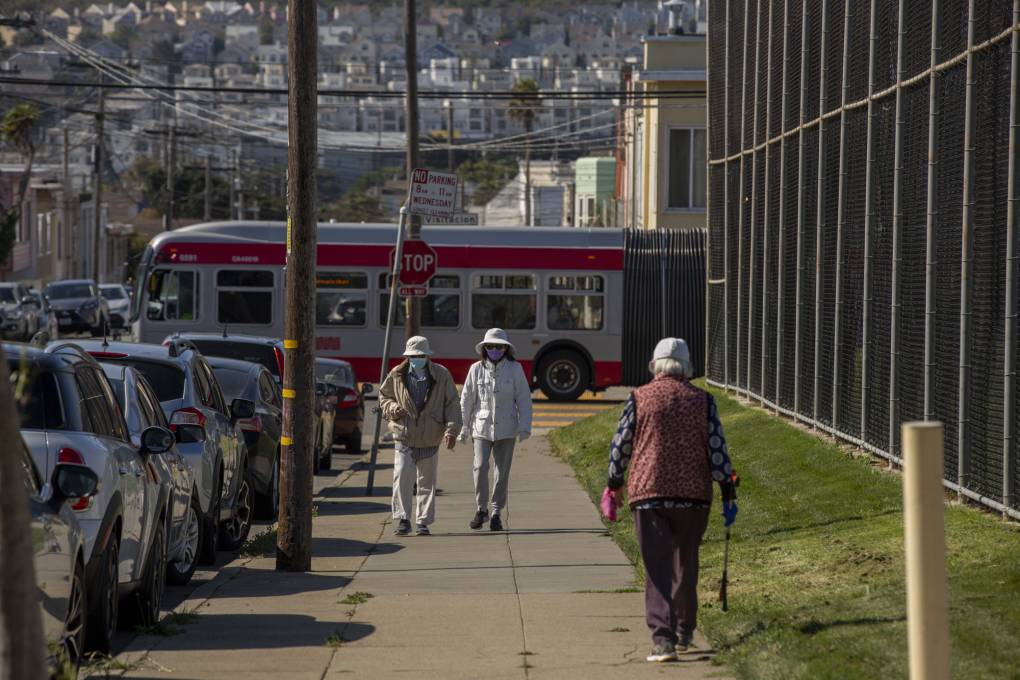
California's Anti-Asian Hate Crimes Decline but Long-Term Pattern Persists
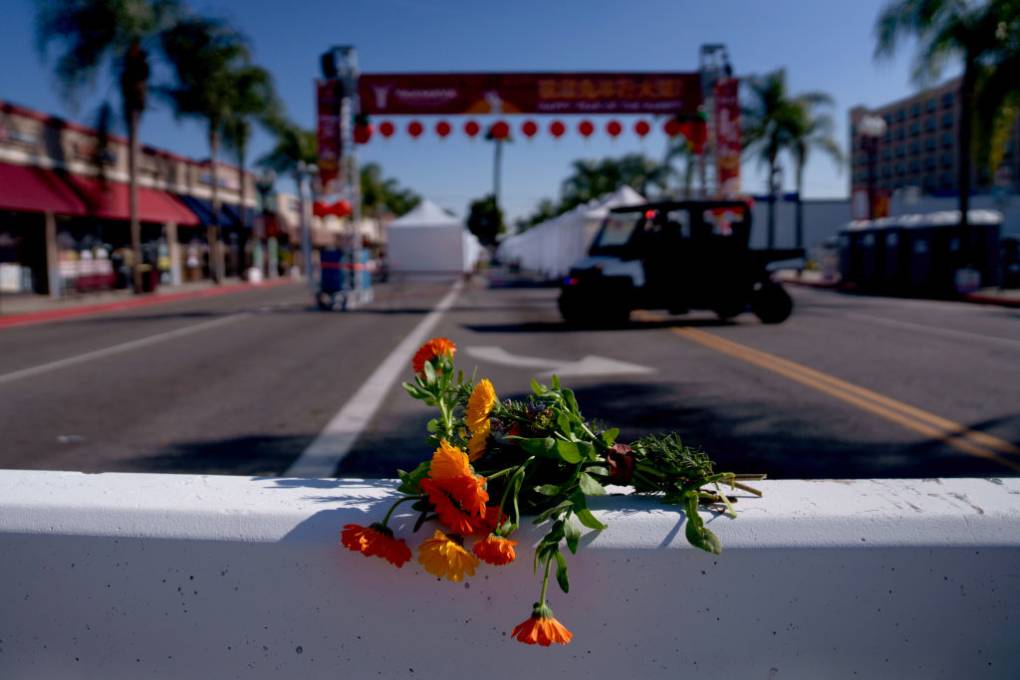
What We Know So Far About the Mass Shooting That Killed 11 People in Monterey Park
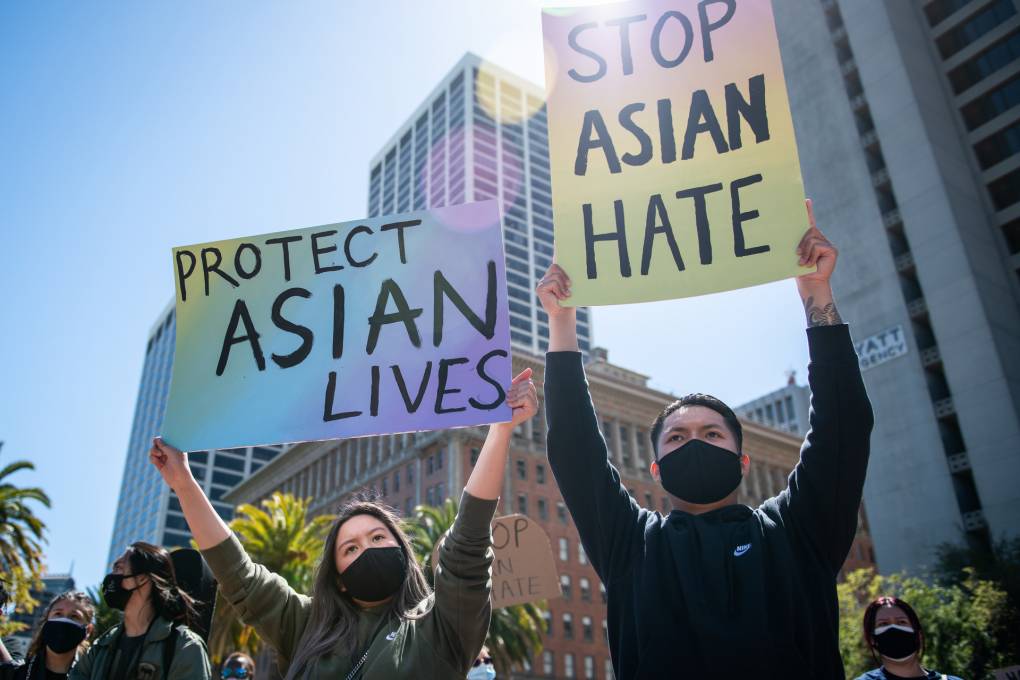
'The Blame Game': New Hate Crime Report Tracks Rise in Anti-Asian Scapegoating
Social Media Platforms See a Spike in Anti-Hindu Hate Speech, Report Says
Why High-Profile Attacks on SF's Asian Communities Rarely Lead to Hate Crime Charges
Systemic Racism Fuels Violence Against AAPI Community More Than COVID and Politics, New Report Says
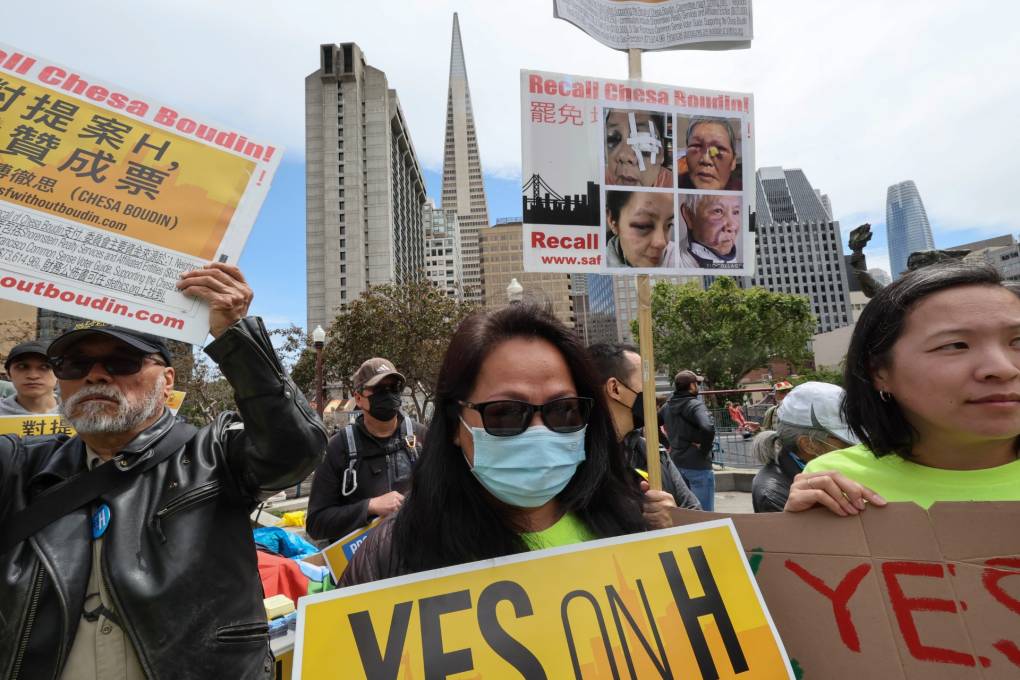
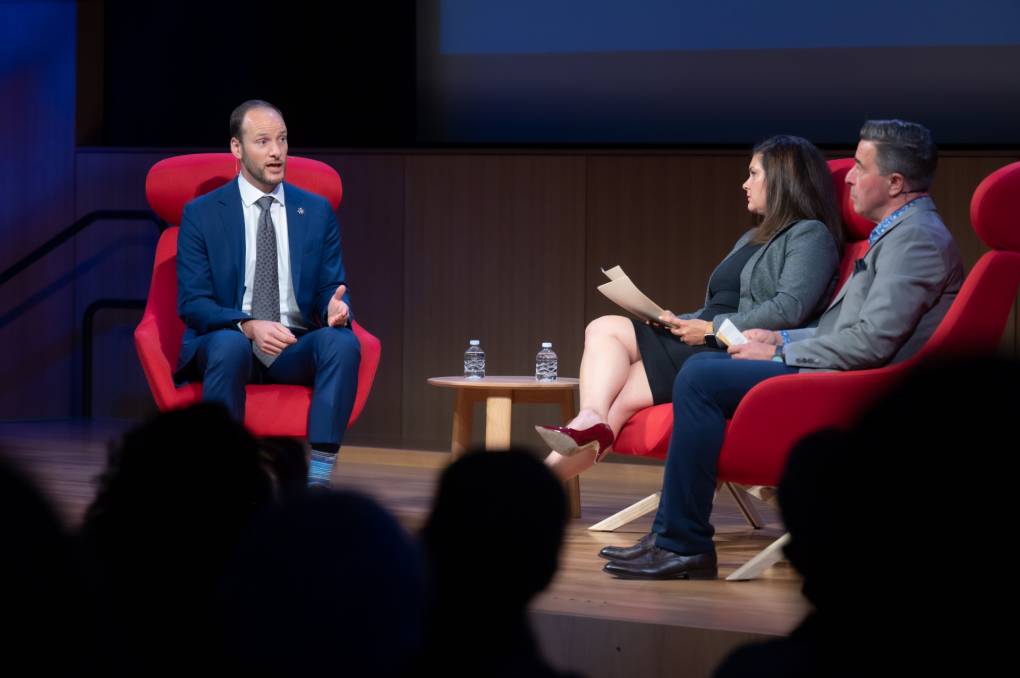
'We Are All More Than Our Worst Mistake': Five Takeaways From SF District Attorney Chesa Boudin's Appearance at KQED
Sponsored
Player sponsored by
window.__IS_SSR__=true
window.__INITIAL_STATE__={
"attachmentsReducer": {
"audio_0": {
"type": "attachments",
"id": "audio_0",
"imgSizes": {
"kqedFullSize": {
"file": "https://ww2.kqed.org/news/wp-content/themes/KQED-unified/img/audio_bgs/background0.jpg"
}
}
},
"audio_1": {
"type": "attachments",
"id": "audio_1",
"imgSizes": {
"kqedFullSize": {
"file": "https://ww2.kqed.org/news/wp-content/themes/KQED-unified/img/audio_bgs/background1.jpg"
}
}
},
"audio_2": {
"type": "attachments",
"id": "audio_2",
"imgSizes": {
"kqedFullSize": {
"file": "https://ww2.kqed.org/news/wp-content/themes/KQED-unified/img/audio_bgs/background2.jpg"
}
}
},
"audio_3": {
"type": "attachments",
"id": "audio_3",
"imgSizes": {
"kqedFullSize": {
"file": "https://ww2.kqed.org/news/wp-content/themes/KQED-unified/img/audio_bgs/background3.jpg"
}
}
},
"audio_4": {
"type": "attachments",
"id": "audio_4",
"imgSizes": {
"kqedFullSize": {
"file": "https://ww2.kqed.org/news/wp-content/themes/KQED-unified/img/audio_bgs/background4.jpg"
}
}
},
"placeholder": {
"type": "attachments",
"id": "placeholder",
"imgSizes": {
"thumbnail": {
"file": "https://cdn.kqed.org/wp-content/uploads/2024/12/KQED-Default-Image-816638274-2000x1333-1-160x107.jpg",
"width": 160,
"height": 107,
"mimeType": "image/jpeg"
},
"medium": {
"file": "https://cdn.kqed.org/wp-content/uploads/2024/12/KQED-Default-Image-816638274-2000x1333-1-800x533.jpg",
"width": 800,
"height": 533,
"mimeType": "image/jpeg"
},
"medium_large": {
"file": "https://cdn.kqed.org/wp-content/uploads/2024/12/KQED-Default-Image-816638274-2000x1333-1-768x512.jpg",
"width": 768,
"height": 512,
"mimeType": "image/jpeg"
},
"large": {
"file": "https://cdn.kqed.org/wp-content/uploads/2024/12/KQED-Default-Image-816638274-2000x1333-1-1020x680.jpg",
"width": 1020,
"height": 680,
"mimeType": "image/jpeg"
},
"1536x1536": {
"file": "https://cdn.kqed.org/wp-content/uploads/2024/12/KQED-Default-Image-816638274-2000x1333-1-1536x1024.jpg",
"width": 1536,
"height": 1024,
"mimeType": "image/jpeg"
},
"fd-lrg": {
"file": "https://cdn.kqed.org/wp-content/uploads/2024/12/KQED-Default-Image-816638274-2000x1333-1-1536x1024.jpg",
"width": 1536,
"height": 1024,
"mimeType": "image/jpeg"
},
"fd-med": {
"file": "https://cdn.kqed.org/wp-content/uploads/2024/12/KQED-Default-Image-816638274-2000x1333-1-1020x680.jpg",
"width": 1020,
"height": 680,
"mimeType": "image/jpeg"
},
"fd-sm": {
"file": "https://cdn.kqed.org/wp-content/uploads/2024/12/KQED-Default-Image-816638274-2000x1333-1-800x533.jpg",
"width": 800,
"height": 533,
"mimeType": "image/jpeg"
},
"post-thumbnail": {
"file": "https://cdn.kqed.org/wp-content/uploads/2024/12/KQED-Default-Image-816638274-2000x1333-1-672x372.jpg",
"width": 672,
"height": 372,
"mimeType": "image/jpeg"
},
"twentyfourteen-full-width": {
"file": "https://cdn.kqed.org/wp-content/uploads/2024/12/KQED-Default-Image-816638274-2000x1333-1-1038x576.jpg",
"width": 1038,
"height": 576,
"mimeType": "image/jpeg"
},
"xxsmall": {
"file": "https://cdn.kqed.org/wp-content/uploads/2024/12/KQED-Default-Image-816638274-2000x1333-1-160x107.jpg",
"width": 160,
"height": 107,
"mimeType": "image/jpeg"
},
"xsmall": {
"file": "https://cdn.kqed.org/wp-content/uploads/2024/12/KQED-Default-Image-816638274-2000x1333-1-672x372.jpg",
"width": 672,
"height": 372,
"mimeType": "image/jpeg"
},
"small": {
"file": "https://cdn.kqed.org/wp-content/uploads/2024/12/KQED-Default-Image-816638274-2000x1333-1-672x372.jpg",
"width": 672,
"height": 372,
"mimeType": "image/jpeg"
},
"xlarge": {
"file": "https://cdn.kqed.org/wp-content/uploads/2024/12/KQED-Default-Image-816638274-2000x1333-1-1020x680.jpg",
"width": 1020,
"height": 680,
"mimeType": "image/jpeg"
},
"full-width": {
"file": "https://cdn.kqed.org/wp-content/uploads/2024/12/KQED-Default-Image-816638274-2000x1333-1-1920x1280.jpg",
"width": 1920,
"height": 1280,
"mimeType": "image/jpeg"
},
"guest-author-32": {
"file": "https://cdn.kqed.org/wp-content/uploads/2025/01/KQED-Default-Image-816638274-1333x1333-1-160x160.jpg",
"width": 32,
"height": 32,
"mimeType": "image/jpeg"
},
"guest-author-50": {
"file": "https://cdn.kqed.org/wp-content/uploads/2025/01/KQED-Default-Image-816638274-1333x1333-1-160x160.jpg",
"width": 50,
"height": 50,
"mimeType": "image/jpeg"
},
"guest-author-64": {
"file": "https://cdn.kqed.org/wp-content/uploads/2025/01/KQED-Default-Image-816638274-1333x1333-1-160x160.jpg",
"width": 64,
"height": 64,
"mimeType": "image/jpeg"
},
"guest-author-96": {
"file": "https://cdn.kqed.org/wp-content/uploads/2025/01/KQED-Default-Image-816638274-1333x1333-1-160x160.jpg",
"width": 96,
"height": 96,
"mimeType": "image/jpeg"
},
"guest-author-128": {
"file": "https://cdn.kqed.org/wp-content/uploads/2025/01/KQED-Default-Image-816638274-1333x1333-1-160x160.jpg",
"width": 128,
"height": 128,
"mimeType": "image/jpeg"
},
"detail": {
"file": "https://cdn.kqed.org/wp-content/uploads/2025/01/KQED-Default-Image-816638274-1333x1333-1-160x160.jpg",
"width": 160,
"height": 160,
"mimeType": "image/jpeg"
},
"kqedFullSize": {
"file": "https://cdn.kqed.org/wp-content/uploads/2024/12/KQED-Default-Image-816638274-2000x1333-1.jpg",
"width": 2000,
"height": 1333
}
}
},
"news_11960635": {
"type": "attachments",
"id": "news_11960635",
"meta": {
"index": "attachments_1716263798",
"site": "news",
"id": "11960635",
"found": true
},
"title": "20230907-YikOiHuang-03-JY-KQED",
"publishDate": 1694461255,
"status": "inherit",
"parent": 12062582,
"modified": 1762291527,
"caption": "Older adults walk around Yik Oi Huang Peace and Friendship Park in San Francisco on Thursday, Sept. 7, 2023. Formerly Visitacion Valley Park, it was renamed in May 2022 in memory of Yik Oi Huang, an older person who was brutally beaten at the park and, a year later, died from her injuries.",
"credit": "Juliana Yamada/KQED",
"altTag": "Several people walk up a sidewalk next to a grassy park.",
"description": null,
"imgSizes": {
"medium": {
"file": "https://cdn.kqed.org/wp-content/uploads/sites/10/2023/09/20230907-YikOiHuang-03-JY-KQED-800x533.jpg",
"width": 800,
"height": 533,
"mimeType": "image/jpeg"
},
"large": {
"file": "https://cdn.kqed.org/wp-content/uploads/sites/10/2023/09/20230907-YikOiHuang-03-JY-KQED-1020x680.jpg",
"width": 1020,
"height": 680,
"mimeType": "image/jpeg"
},
"thumbnail": {
"file": "https://cdn.kqed.org/wp-content/uploads/sites/10/2023/09/20230907-YikOiHuang-03-JY-KQED-160x107.jpg",
"width": 160,
"height": 107,
"mimeType": "image/jpeg"
},
"1536x1536": {
"file": "https://cdn.kqed.org/wp-content/uploads/sites/10/2023/09/20230907-YikOiHuang-03-JY-KQED-1536x1024.jpg",
"width": 1536,
"height": 1024,
"mimeType": "image/jpeg"
},
"post-thumbnail": {
"file": "https://cdn.kqed.org/wp-content/uploads/sites/10/2023/09/20230907-YikOiHuang-03-JY-KQED-672x372.jpg",
"width": 672,
"height": 372,
"mimeType": "image/jpeg"
},
"twentyfourteen-full-width": {
"file": "https://cdn.kqed.org/wp-content/uploads/sites/10/2023/09/20230907-YikOiHuang-03-JY-KQED-1038x576.jpg",
"width": 1038,
"height": 576,
"mimeType": "image/jpeg"
},
"full-width": {
"file": "https://cdn.kqed.org/wp-content/uploads/sites/10/2023/09/20230907-YikOiHuang-03-JY-KQED-1920x1280.jpg",
"width": 1920,
"height": 1280,
"mimeType": "image/jpeg"
},
"kqedFullSize": {
"file": "https://cdn.kqed.org/wp-content/uploads/sites/10/2023/09/20230907-YikOiHuang-03-JY-KQED.jpg",
"width": 2000,
"height": 1333
}
},
"fetchFailed": false,
"isLoading": false
},
"news_11938841": {
"type": "attachments",
"id": "news_11938841",
"meta": {
"index": "attachments_1716263798",
"site": "news",
"id": "11938841",
"found": true
},
"parent": 11938828,
"imgSizes": {
"twentyfourteen-full-width": {
"file": "https://ww2.kqed.org/app/uploads/sites/10/2023/01/GettyImages-1246456341-1024x576.jpg",
"width": 1024,
"mimeType": "image/jpeg",
"height": 576
},
"thumbnail": {
"file": "https://ww2.kqed.org/app/uploads/sites/10/2023/01/GettyImages-1246456341-160x107.jpg",
"width": 160,
"mimeType": "image/jpeg",
"height": 107
},
"post-thumbnail": {
"file": "https://ww2.kqed.org/app/uploads/sites/10/2023/01/GettyImages-1246456341-672x372.jpg",
"width": 672,
"mimeType": "image/jpeg",
"height": 372
},
"kqedFullSize": {
"file": "https://ww2.kqed.org/app/uploads/sites/10/2023/01/GettyImages-1246456341.jpg",
"width": 1024,
"height": 683
},
"large": {
"file": "https://ww2.kqed.org/app/uploads/sites/10/2023/01/GettyImages-1246456341-1020x680.jpg",
"width": 1020,
"mimeType": "image/jpeg",
"height": 680
},
"medium": {
"file": "https://ww2.kqed.org/app/uploads/sites/10/2023/01/GettyImages-1246456341-800x534.jpg",
"width": 800,
"mimeType": "image/jpeg",
"height": 534
}
},
"publishDate": 1674423328,
"modified": 1674524994,
"caption": "Flowers are placed near the scene of a deadly mass shooting on Jan. 22, 2023, in Monterey Park. Eleven people were killed and nine more were injured at a dance studio in Monterey Park near a Lunar New Year celebration on Saturday night.",
"description": null,
"title": "Ten Killed In Mass Shooting At Lunar New Year Festival In California",
"credit": "Eric Thayer/Getty Images",
"status": "inherit",
"altTag": "Orange flowers lie on a guard rail in the street with a vehicle and a red banner in the background.",
"fetchFailed": false,
"isLoading": false
},
"news_11928911": {
"type": "attachments",
"id": "news_11928911",
"meta": {
"index": "attachments_1716263798",
"site": "news",
"id": "11928911",
"found": true
},
"parent": 11928863,
"imgSizes": {
"twentyfourteen-full-width": {
"file": "https://ww2.kqed.org/app/uploads/sites/10/2022/10/RS48125_003_SanFrancisco_RiseUpRally_03262021-qut-1038x576.jpg",
"width": 1038,
"mimeType": "image/jpeg",
"height": 576
},
"thumbnail": {
"file": "https://ww2.kqed.org/app/uploads/sites/10/2022/10/RS48125_003_SanFrancisco_RiseUpRally_03262021-qut-160x107.jpg",
"width": 160,
"mimeType": "image/jpeg",
"height": 107
},
"post-thumbnail": {
"file": "https://ww2.kqed.org/app/uploads/sites/10/2022/10/RS48125_003_SanFrancisco_RiseUpRally_03262021-qut-672x372.jpg",
"width": 672,
"mimeType": "image/jpeg",
"height": 372
},
"kqedFullSize": {
"file": "https://ww2.kqed.org/app/uploads/sites/10/2022/10/RS48125_003_SanFrancisco_RiseUpRally_03262021-qut.jpg",
"width": 1920,
"height": 1280
},
"large": {
"file": "https://ww2.kqed.org/app/uploads/sites/10/2022/10/RS48125_003_SanFrancisco_RiseUpRally_03262021-qut-1020x680.jpg",
"width": 1020,
"mimeType": "image/jpeg",
"height": 680
},
"1536x1536": {
"file": "https://ww2.kqed.org/app/uploads/sites/10/2022/10/RS48125_003_SanFrancisco_RiseUpRally_03262021-qut-1536x1024.jpg",
"width": 1536,
"mimeType": "image/jpeg",
"height": 1024
},
"medium": {
"file": "https://ww2.kqed.org/app/uploads/sites/10/2022/10/RS48125_003_SanFrancisco_RiseUpRally_03262021-qut-800x533.jpg",
"width": 800,
"mimeType": "image/jpeg",
"height": 533
}
},
"publishDate": 1665771793,
"modified": 1665771936,
"caption": "Volunteer organizer Krystal Mak wears a mask that says 'Stop Asian Hate' during a student-led rally to show solidarity with Asian Americans in San Francisco on March 26, 2021. A new report by Stop AAPI Hate shines a light on rhetoric that scapegoats Asians and Asian Americans.",
"description": null,
"title": "RS48125_003_SanFrancisco_RiseUpRally_03262021-qut",
"credit": "Beth LaBerge/KQED",
"status": "inherit",
"altTag": "a young Asian American woman wears a black mask that reads 'stop Asian hate'",
"fetchFailed": false,
"isLoading": false
},
"news_11919389": {
"type": "attachments",
"id": "news_11919389",
"meta": {
"index": "attachments_1716263798",
"site": "news",
"id": "11919389",
"found": true
},
"parent": 11919374,
"imgSizes": {
"twentyfourteen-full-width": {
"file": "https://ww2.kqed.org/app/uploads/sites/10/2022/07/temple1000-952x576.jpg",
"width": 952,
"mimeType": "image/jpeg",
"height": 576
},
"thumbnail": {
"file": "https://ww2.kqed.org/app/uploads/sites/10/2022/07/temple1000-160x107.jpg",
"width": 160,
"mimeType": "image/jpeg",
"height": 107
},
"post-thumbnail": {
"file": "https://ww2.kqed.org/app/uploads/sites/10/2022/07/temple1000-672x372.jpg",
"width": 672,
"mimeType": "image/jpeg",
"height": 372
},
"kqedFullSize": {
"file": "https://ww2.kqed.org/app/uploads/sites/10/2022/07/temple1000.jpg",
"width": 952,
"height": 637
},
"medium": {
"file": "https://ww2.kqed.org/app/uploads/sites/10/2022/07/temple1000-800x535.jpg",
"width": 800,
"mimeType": "image/jpeg",
"height": 535
}
},
"publishDate": 1657656180,
"modified": 1657742287,
"caption": "The Shiva-Vishnu Temple in Livermore is one many Hindu temples in the San Francisco Bay Area, home to one of the country's largest Asian Indian populations. Researchers at Rutgers warn a recent spike in anti-Hindu hate speech online should serve as a warning of potential real-world violence.",
"description": "The Shiva-Vishnu Temple in Livermore is one many Hindu temples in the San Francisco Bay Area, home to one of the country's largest Asian Indian populations. Researchers at Rutgers warn a recent spike in anti-Hindu hate speech online should serve as a warning of potential real-world violence.",
"title": "temple1000",
"credit": "Wendy Goodfriend/KQED",
"status": "inherit",
"altTag": "Two women clad in magenta and blue series walk out of a Hindu temple in bright sunshine.",
"fetchFailed": false,
"isLoading": false
},
"news_11915685": {
"type": "attachments",
"id": "news_11915685",
"meta": {
"index": "attachments_1716263798",
"site": "news",
"id": "11915685",
"found": true
},
"parent": 11915634,
"imgSizes": {
"twentyfourteen-full-width": {
"file": "https://ww2.kqed.org/app/uploads/sites/10/2022/05/Photo00_FEATURED-1-1038x576.jpg",
"width": 1038,
"mimeType": "image/jpeg",
"height": 576
},
"thumbnail": {
"file": "https://ww2.kqed.org/app/uploads/sites/10/2022/05/Photo00_FEATURED-1-160x107.jpg",
"width": 160,
"mimeType": "image/jpeg",
"height": 107
},
"post-thumbnail": {
"file": "https://ww2.kqed.org/app/uploads/sites/10/2022/05/Photo00_FEATURED-1-672x372.jpg",
"width": 672,
"mimeType": "image/jpeg",
"height": 372
},
"kqedFullSize": {
"file": "https://ww2.kqed.org/app/uploads/sites/10/2022/05/Photo00_FEATURED-1.jpg",
"width": 1920,
"height": 1280
},
"large": {
"file": "https://ww2.kqed.org/app/uploads/sites/10/2022/05/Photo00_FEATURED-1-1020x680.jpg",
"width": 1020,
"mimeType": "image/jpeg",
"height": 680
},
"1536x1536": {
"file": "https://ww2.kqed.org/app/uploads/sites/10/2022/05/Photo00_FEATURED-1-1536x1024.jpg",
"width": 1536,
"mimeType": "image/jpeg",
"height": 1024
},
"medium": {
"file": "https://ww2.kqed.org/app/uploads/sites/10/2022/05/Photo00_FEATURED-1-800x533.jpg",
"width": 800,
"mimeType": "image/jpeg",
"height": 533
}
},
"publishDate": 1654045425,
"modified": 1654135809,
"caption": "(From left) Robert Lowe, Michelle Wong, Forrest Chang and Allene Jue hold signs at a rally to recall San Francisco District Attorney Chesa Boudin at Portsmouth Square on Friday, May 28, 2021, in San Francisco.",
"description": null,
"title": "Photo00_FEATURED (1)",
"credit": "Courtesy Paul Kuroda/SF Standard",
"status": "inherit",
"altTag": "People with picket signs pushing for the recall of District Attorney Chesa Boudin fill the frame, some say \"YES ON H.\"",
"fetchFailed": false,
"isLoading": false
},
"news_11913288": {
"type": "attachments",
"id": "news_11913288",
"meta": {
"index": "attachments_1716263798",
"site": "news",
"id": "11913288",
"found": true
},
"parent": 11913244,
"imgSizes": {
"twentyfourteen-full-width": {
"file": "https://ww2.kqed.org/app/uploads/sites/10/2022/05/RS48155_035_SanFrancisco_RiseUpRally_03262021-qut-1038x576.jpg",
"width": 1038,
"mimeType": "image/jpeg",
"height": 576
},
"thumbnail": {
"file": "https://ww2.kqed.org/app/uploads/sites/10/2022/05/RS48155_035_SanFrancisco_RiseUpRally_03262021-qut-160x107.jpg",
"width": 160,
"mimeType": "image/jpeg",
"height": 107
},
"post-thumbnail": {
"file": "https://ww2.kqed.org/app/uploads/sites/10/2022/05/RS48155_035_SanFrancisco_RiseUpRally_03262021-qut-672x372.jpg",
"width": 672,
"mimeType": "image/jpeg",
"height": 372
},
"kqedFullSize": {
"file": "https://ww2.kqed.org/app/uploads/sites/10/2022/05/RS48155_035_SanFrancisco_RiseUpRally_03262021-qut.jpg",
"width": 1920,
"height": 1280
},
"large": {
"file": "https://ww2.kqed.org/app/uploads/sites/10/2022/05/RS48155_035_SanFrancisco_RiseUpRally_03262021-qut-1020x680.jpg",
"width": 1020,
"mimeType": "image/jpeg",
"height": 680
},
"1536x1536": {
"file": "https://ww2.kqed.org/app/uploads/sites/10/2022/05/RS48155_035_SanFrancisco_RiseUpRally_03262021-qut-1536x1024.jpg",
"width": 1536,
"mimeType": "image/jpeg",
"height": 1024
},
"medium": {
"file": "https://ww2.kqed.org/app/uploads/sites/10/2022/05/RS48155_035_SanFrancisco_RiseUpRally_03262021-qut-800x533.jpg",
"width": 800,
"mimeType": "image/jpeg",
"height": 533
}
},
"publishDate": 1651774331,
"modified": 1651778120,
"caption": "Cecile Dang (left) and Bryan Nguyen hold signs to show support for the Asian American community during a student-led rally in San Francisco on March 26, 2021.",
"description": null,
"title": "RS48155_035_SanFrancisco_RiseUpRally_03262021-qut",
"credit": "Beth LaBerge/KQED",
"status": "inherit",
"altTag": "A man and a woman wearing black face masks hold up signs that read \"Protect Asian Lives\" and \"Stop Asian Hate\" outside in a crowd.",
"fetchFailed": false,
"isLoading": false
},
"news_11913126": {
"type": "attachments",
"id": "news_11913126",
"meta": {
"index": "attachments_1716263798",
"site": "news",
"id": "11913126",
"found": true
},
"parent": 11913102,
"imgSizes": {
"twentyfourteen-full-width": {
"file": "https://ww2.kqed.org/app/uploads/sites/10/2022/05/Chesa2-1038x576.jpg",
"width": 1038,
"mimeType": "image/jpeg",
"height": 576
},
"thumbnail": {
"file": "https://ww2.kqed.org/app/uploads/sites/10/2022/05/Chesa2-160x106.jpg",
"width": 160,
"mimeType": "image/jpeg",
"height": 106
},
"post-thumbnail": {
"file": "https://ww2.kqed.org/app/uploads/sites/10/2022/05/Chesa2-672x372.jpg",
"width": 672,
"mimeType": "image/jpeg",
"height": 372
},
"kqedFullSize": {
"file": "https://ww2.kqed.org/app/uploads/sites/10/2022/05/Chesa2.jpg",
"width": 1920,
"height": 1277
},
"large": {
"file": "https://ww2.kqed.org/app/uploads/sites/10/2022/05/Chesa2-1020x678.jpg",
"width": 1020,
"mimeType": "image/jpeg",
"height": 678
},
"1536x1536": {
"file": "https://ww2.kqed.org/app/uploads/sites/10/2022/05/Chesa2-1536x1022.jpg",
"width": 1536,
"mimeType": "image/jpeg",
"height": 1022
},
"medium": {
"file": "https://ww2.kqed.org/app/uploads/sites/10/2022/05/Chesa2-800x532.jpg",
"width": 800,
"mimeType": "image/jpeg",
"height": 532
}
},
"publishDate": 1651647218,
"modified": 1651795217,
"caption": "San Francisco District Attorney Chesa Boudin at a KQED Live event with Senior Political Editor Scott Shafer and Politics Correspondent Marisa Lagos, on May 3, 2022.",
"description": null,
"title": "Chesa2",
"credit": "Alain McLaughlin/Special to KQED",
"status": "inherit",
"altTag": "Three people sit in swivel chairs on a stage.",
"fetchFailed": false,
"isLoading": false
}
},
"audioPlayerReducer": {
"postId": "stream_live",
"isPaused": true,
"isPlaying": false,
"pfsActive": false,
"pledgeModalIsOpen": true,
"playerDrawerIsOpen": false
},
"authorsReducer": {
"byline_news_11961693": {
"type": "authors",
"id": "byline_news_11961693",
"meta": {
"override": true
},
"slug": "byline_news_11961693",
"name": "\u003ca href=\"https://twitter.com/naomivanderlip\">Naomi Vanderlip\u003c/a>",
"isLoading": false
},
"byline_news_11938828": {
"type": "authors",
"id": "byline_news_11938828",
"meta": {
"override": true
},
"slug": "byline_news_11938828",
"name": "The Associated Press",
"isLoading": false
},
"byline_news_11915634": {
"type": "authors",
"id": "byline_news_11915634",
"meta": {
"override": true
},
"slug": "byline_news_11915634",
"name": "\u003ca href=\"https://www.kqed.org/author/jrodriguez\">Joe Fitzgerald Rodriguez, KQED\u003c/a> and \u003ca href=\"https://sfstandard.com/author/han-li/\">Han Li, SF Standard\u003c/a>",
"isLoading": false
},
"rachael-myrow": {
"type": "authors",
"id": "251",
"meta": {
"index": "authors_1716337520",
"id": "251",
"found": true
},
"name": "Rachael Myrow",
"firstName": "Rachael",
"lastName": "Myrow",
"slug": "rachael-myrow",
"email": "rmyrow@kqed.org",
"display_author_email": false,
"staff_mastheads": [
"news"
],
"title": "Senior Editor of KQED's Silicon Valley News Desk",
"bio": "Rachael Myrow is Senior Editor of KQED's Silicon Valley News Desk, reporting on topics like \u003ca href=\"https://www.kqed.org/news/12023367/what-big-tech-sees-in-donald-trump\">what Big Tech sees in President Trump\u003c/a>, \u003ca href=\"https://www.kqed.org/news/12020857/california-lawmaker-ready-revive-fight-regulating-ai\">California's many, many AI bills\u003c/a>, and the \u003ca href=\"https://www.kqed.org/news/12017713/lost-sounds-of-san-francisco\">lost sounds of San Francisco\u003c/a>. You can hear her work on \u003ca href=\"https://www.npr.org/search?query=Rachael%20Myrow&page=1\">NPR\u003c/a>, \u003ca href=\"https://theworld.org/people/rachael-myrow\">The World\u003c/a>, WBUR's \u003ca href=\"https://www.wbur.org/search?q=Rachael%20Myrow\">\u003ci>Here & Now\u003c/i>\u003c/a> and the BBC. \u003c/i>She also guest hosts for KQED's \u003ci>\u003ca href=\"https://www.kqed.org/forum/tag/rachael-myrow\">Forum\u003c/a>\u003c/i>. Over the years, she's talked with Kamau Bell, David Byrne, Kamala Harris, Tony Kushner, Armistead Maupin, Van Dyke Parks, Arnold Schwarzenegger and Tommie Smith, among others.\r\n\r\nBefore all this, she hosted \u003cem>The California Report\u003c/em> for 7+ years.\r\n\r\nAwards? Sure: Peabody, Edward R. Murrow, Regional Edward R. Murrow, RTNDA, Northern California RTNDA, SPJ Northern California Chapter, LA Press Club, Golden Mic. Prior to joining KQED, Rachael worked in Los Angeles at KPCC and Marketplace. She holds degrees in English and journalism from UC Berkeley (where she got her start in public radio on KALX-FM).\r\n\r\nOutside of the studio, you'll find Rachael hiking Bay Area trails and whipping up Instagram-ready meals in her kitchen. More recently, she's taken up native-forward gardening.",
"avatar": "https://secure.gravatar.com/avatar/87bf8cb5874e045cdff430523a6d48b1?s=600&d=blank&r=g",
"twitter": "rachaelmyrow",
"facebook": null,
"instagram": null,
"linkedin": "https://www.linkedin.com/in/rachaelmyrow/",
"sites": [
{
"site": "arts",
"roles": [
"administrator"
]
},
{
"site": "news",
"roles": [
"edit_others_posts",
"editor"
]
},
{
"site": "futureofyou",
"roles": [
"editor"
]
},
{
"site": "bayareabites",
"roles": [
"editor"
]
},
{
"site": "stateofhealth",
"roles": [
"editor"
]
},
{
"site": "science",
"roles": [
"editor"
]
},
{
"site": "food",
"roles": [
"editor"
]
},
{
"site": "forum",
"roles": [
"editor"
]
},
{
"site": "liveblog",
"roles": [
"author"
]
}
],
"headData": {
"title": "Rachael Myrow | KQED",
"description": "Senior Editor of KQED's Silicon Valley News Desk",
"ogImgSrc": "https://secure.gravatar.com/avatar/87bf8cb5874e045cdff430523a6d48b1?s=600&d=blank&r=g",
"twImgSrc": "https://secure.gravatar.com/avatar/87bf8cb5874e045cdff430523a6d48b1?s=600&d=blank&r=g"
},
"isLoading": false,
"link": "/author/rachael-myrow"
},
"bwatt": {
"type": "authors",
"id": "11238",
"meta": {
"index": "authors_1716337520",
"id": "11238",
"found": true
},
"name": "Brian Watt",
"firstName": "Brian",
"lastName": "Watt",
"slug": "bwatt",
"email": "bwatt@KQED.org",
"display_author_email": false,
"staff_mastheads": [
"news"
],
"title": "Morning News Anchor",
"bio": "Brian Watt is KQED's morning radio news anchor. He joined the KQED News team in April of 2016. Prior to that, he worked as a Reporter for KPCC in Los Angeles and a producer at \u003cem>Marketplace.\u003c/em>\r\n\r\nDuring eight years at KPCC, Brian covered business and economics, and his work won several awards. In 2008, he won the Los Angeles Press Club’s first-place award for Business and Financial Reporting, Broadcast. He’s also received honorable mention and been first runner up for the Press Club’s Radio Journalist of the Year. He won two Golden Mike awards from the Radio and TV News Association of Southern California.\r\n\r\nBrian holds degrees in theater from Yale University and the Sorbonne, and has worked as an actor in France, Italy, Brazil, Hungary and . . . Hollywood. He appeared in a few television shows, including \u003cem>The West Wing, Judging Amy\u003c/em> and \u003cem>The District.\u003c/em>\r\n\r\nEmail: bwatt@KQED.org Twitter: @RadioBWatt",
"avatar": "https://secure.gravatar.com/avatar/55393ff57ed34e2be773ba4789dd6a19?s=600&d=blank&r=g",
"twitter": "@RadioBWatt",
"facebook": null,
"instagram": null,
"linkedin": null,
"sites": [
{
"site": "arts",
"roles": [
"contributor"
]
},
{
"site": "news",
"roles": [
"editor"
]
}
],
"headData": {
"title": "Brian Watt | KQED",
"description": "Morning News Anchor",
"ogImgSrc": "https://secure.gravatar.com/avatar/55393ff57ed34e2be773ba4789dd6a19?s=600&d=blank&r=g",
"twImgSrc": "https://secure.gravatar.com/avatar/55393ff57ed34e2be773ba4789dd6a19?s=600&d=blank&r=g"
},
"isLoading": false,
"link": "/author/bwatt"
},
"jrodriguez": {
"type": "authors",
"id": "11690",
"meta": {
"index": "authors_1716337520",
"id": "11690",
"found": true
},
"name": "Joe Fitzgerald Rodriguez",
"firstName": "Joe",
"lastName": "Fitzgerald Rodriguez",
"slug": "jrodriguez",
"email": "jrodriguez@kqed.org",
"display_author_email": true,
"staff_mastheads": [
"news"
],
"title": "Reporter and Producer",
"bio": "Joe Fitzgerald Rodriguez is a reporter and digital producer for KQED covering politics. Joe most recently wrote for the \u003cem>San Francisco Examiner\u003c/em> as a political columnist covering The City. He was raised in San Francisco and has spent his reporting career in his beloved, foggy, city by the bay. Joe was 12-years-old when he conducted his first interview in journalism, grilling former San Francisco Mayor Willie Brown for the Marina Middle School newspaper, \u003cem>The Penguin Press, \u003c/em>and he continues to report on the San Francisco Bay Area to this day.",
"avatar": "https://secure.gravatar.com/avatar/2247beb0564c1e9c62228d5649d2edac?s=600&d=blank&r=g",
"twitter": "FitztheReporter",
"facebook": null,
"instagram": "https://www.instagram.com/fitzthereporter/",
"linkedin": null,
"sites": [
{
"site": "",
"roles": [
"editor"
]
},
{
"site": "arts",
"roles": [
"editor"
]
},
{
"site": "news",
"roles": [
"editor"
]
},
{
"site": "science",
"roles": [
"editor"
]
},
{
"site": "elections",
"roles": [
"editor"
]
},
{
"site": "liveblog",
"roles": [
"editor"
]
}
],
"headData": {
"title": "Joe Fitzgerald Rodriguez | KQED",
"description": "Reporter and Producer",
"ogImgSrc": "https://secure.gravatar.com/avatar/2247beb0564c1e9c62228d5649d2edac?s=600&d=blank&r=g",
"twImgSrc": "https://secure.gravatar.com/avatar/2247beb0564c1e9c62228d5649d2edac?s=600&d=blank&r=g"
},
"isLoading": false,
"link": "/author/jrodriguez"
},
"agonzalez": {
"type": "authors",
"id": "11724",
"meta": {
"index": "authors_1716337520",
"id": "11724",
"found": true
},
"name": "Alexander Gonzalez",
"firstName": "Alexander",
"lastName": "Gonzalez",
"slug": "agonzalez",
"email": "AlexanderGonzalez@KQED.org",
"display_author_email": false,
"staff_mastheads": [
"news"
],
"title": "KQED Contributor",
"bio": null,
"avatar": "https://secure.gravatar.com/avatar/63d43593dd7ebcafcd638e851a9bce5a?s=600&d=blank&r=g",
"twitter": null,
"facebook": null,
"instagram": null,
"linkedin": null,
"sites": [
{
"site": "arts",
"roles": [
"editor"
]
},
{
"site": "news",
"roles": [
"editor"
]
}
],
"headData": {
"title": "Alexander Gonzalez | KQED",
"description": "KQED Contributor",
"ogImgSrc": "https://secure.gravatar.com/avatar/63d43593dd7ebcafcd638e851a9bce5a?s=600&d=blank&r=g",
"twImgSrc": "https://secure.gravatar.com/avatar/63d43593dd7ebcafcd638e851a9bce5a?s=600&d=blank&r=g"
},
"isLoading": false,
"link": "/author/agonzalez"
}
},
"breakingNewsReducer": {},
"pagesReducer": {},
"postsReducer": {
"stream_live": {
"type": "live",
"id": "stream_live",
"audioUrl": "https://streams.kqed.org/kqedradio",
"title": "Live Stream",
"excerpt": "Live Stream information currently unavailable.",
"link": "/radio",
"featImg": "",
"label": {
"name": "KQED Live",
"link": "/"
}
},
"stream_kqedNewscast": {
"type": "posts",
"id": "stream_kqedNewscast",
"audioUrl": "https://www.kqed.org/.stream/anon/radio/RDnews/newscast.mp3?_=1",
"title": "KQED Newscast",
"featImg": "",
"label": {
"name": "88.5 FM",
"link": "/"
}
},
"news_11961693": {
"type": "posts",
"id": "news_11961693",
"meta": {
"index": "posts_1716263798",
"site": "news",
"id": "11961693",
"score": null,
"sort": [
1695207630000
]
},
"parent": 0,
"labelTerm": {
"site": "news"
},
"blocks": [],
"publishDate": 1695207630,
"format": "standard",
"title": "California's Anti-Asian Hate Crimes Decline but Long-Term Pattern Persists",
"headTitle": "California’s Anti-Asian Hate Crimes Decline but Long-Term Pattern Persists | KQED",
"content": "\u003cp>Yik Oi Huang lived across the street from the Visitacion Valley Playground.\u003c/p>\n\u003cp>At sunrise every day, she’d take the one-minute walk past the early-to-mid-20th-century homes to the park where she practiced qigong, a traditional Chinese exercise of coordinated movement, breathing and meditation.\u003c/p>\n\u003cp>The hilltop playground, with views overlooking the San Francisco Bay, is a gathering place for AAPI older adults like Huang.\u003c/p>\n\u003cp>But sometime before 7 a.m. on Jan. 8, 2019, the park’s serenity was shattered. As Huang, 88, began her qigong movements, she was dragged by an assailant and beaten into a coma. She was found unconscious and lying in the sand underneath a play structure. According to the \u003ca href=\"https://www.sfchronicle.com/crime/article/89-year-old-woman-dies-1-year-after-brutal-attack-14951348.php\">\u003cem>San Francisco Chronicle\u003c/em>\u003c/a>, she suffered a broken neck, among other injuries. Her home was also burglarized.\u003c/p>\n\u003cp>The targeted attack sent shock waves through the AAPI community a year before the pandemic and heightened media attention on anti-Asian crimes.\u003c/p>\n\u003cp>[ad fullwidth]\u003c/p>\n\u003cp>“I considered it isolated,” said Sasanna Yee, Huang’s granddaughter, who lives three blocks away and rushed to the scene to see Huang already on the gurney. “And then, going online when the pandemic started and [I] started seeing the videos. I started having nightmares after that.”\u003c/p>\n\u003cp>“I had my own incident replaying in my head. And then, the videos would replay in my head,” she continued. “That created a lot of difficulties sleeping and so that impact on the nervous system, it’s cumulative.” [pullquote size=\"medium\" align=\"right\" citation=\"Sasanna Yee, granddaughter, the late Yik Oi Huang\"]‘I considered it isolated. And then, going online when the pandemic started and [I] started seeing the videos. I started having nightmares after that.’[/pullquote] During the pandemic, anti-Asian hate crimes in the state soared from 89 in 2020 to 247 in 2021. But in 2022, according to \u003ca href=\"https://oag.ca.gov/system/files/attachments/press-docs/Hate%20Crime%20In%20CA%202022f.pdf\">California’s Department of Justice data (PDF)\u003c/a>, the crimes decreased to 140. The numbers seem to show progress, however, looking back decades to the start of California’s hate crime tracking reveals a more nuanced story. There’s been progress before.\u003c/p>\n\u003cp>California began tracking racial hate crimes in 1995. In the late 1990s, anti-Asian hate crimes hovered around 150 per year. Then the state experienced a sharp decline in the first two decades of the new century, dropping as low as 19 in 2014. In comparison, last year’s 140 hate crimes are about seven times more than a little less than a decade ago.\u003c/p>\n\u003cp>While the data showed a decline, recent crimes have been almost as brutal as the one Huang suffered, including six assaults in San Francisco in July.\u003c/p>\n\u003cul>\n\u003cli>On July 3, a 63-year-old woman was killed when she was pushed to the sidewalk in the Bayview as she walked home from work.\u003c/li>\n\u003cli>On July 10, an 86-year-old woman was pushed to the ground in the Tenderloin.\u003c/li>\n\u003cli>On July 21, a woman, 88, was kicked and thrown to the ground in the Union Square area.\u003c/li>\n\u003cli>On July 24, a 68-year-old man was punched from behind in the Excelsior.\u003c/li>\n\u003cli>On July 26, a woman, 40, was tackled to the ground in McLaren Park near the Excelsior.\u003c/li>\n\u003cli>On July 27, an 81-year-old woman was shoved off the sidewalk and into a lane of traffic in the Fillmore.\u003c/li>\n\u003c/ul>\n\u003cp>Huang passed away a year after being attacked. Keonte Gathron, then 18, was arrested following a string of other crimes. He pleaded not guilty and still awaits trial.\u003c/p>\n\u003cp>On a recent foggy day on Leland Avenue, locals could be seen sharing smiles and gossip while walking past the cash-only Asian restaurants. A Hispanic grocery store offered pan dulce and reggaeton, and a chic cafe boasted trendy lattes.\u003c/p>\n\u003cfigure id=\"attachment_11960636\" class=\"wp-caption aligncenter\" style=\"max-width: 2000px\">\u003cimg decoding=\"async\" loading=\"lazy\" class=\"wp-image-11960636 size-full\" src=\"https://ww2.kqed.org/app/uploads/sites/10/2023/09/20230907-YikOiHuang-11-JY-KQED.jpg\" alt=\"Five people congregate around park benches in front of a jungle gym in an outdoor park.\" width=\"2000\" height=\"1333\" srcset=\"https://ww2.kqed.org/app/uploads/sites/10/2023/09/20230907-YikOiHuang-11-JY-KQED.jpg 2000w, https://ww2.kqed.org/app/uploads/sites/10/2023/09/20230907-YikOiHuang-11-JY-KQED-800x533.jpg 800w, https://ww2.kqed.org/app/uploads/sites/10/2023/09/20230907-YikOiHuang-11-JY-KQED-1020x680.jpg 1020w, https://ww2.kqed.org/app/uploads/sites/10/2023/09/20230907-YikOiHuang-11-JY-KQED-160x107.jpg 160w, https://ww2.kqed.org/app/uploads/sites/10/2023/09/20230907-YikOiHuang-11-JY-KQED-1536x1024.jpg 1536w, https://ww2.kqed.org/app/uploads/sites/10/2023/09/20230907-YikOiHuang-11-JY-KQED-1920x1280.jpg 1920w\" sizes=\"(max-width: 2000px) 100vw, 2000px\">\u003cfigcaption class=\"wp-caption-text\">Seniors spend time together at Yik Oi Huang Peace and Friendship Park in San Francisco on Thursday, Sept. 7, 2023. \u003ccite>(Juliana Yamada/KQED)\u003c/cite>\u003c/figcaption>\u003c/figure>\n\u003cp>Of Visitacion Valley neighborhood’s 41,695 residents, 23,890 are Asian, 52% are immigrants and 51.6% speak AAPI languages at home, according to the \u003ca href=\"https://data.census.gov/profile/94134?g=860XX00US94134\">2021 American Community Survey\u003c/a>.\u003c/p>\n\u003cp>Past the local library and a century-old church is Visitacion Valley Playground, which was renamed Yik Oi Huang Peace and Friendship Park in 2022. Older Asian residents enjoy daily strolls with their friends around the field. Children clamber over the multicolor playground under the shade of two unapologetic palm trees.\u003c/p>\n\u003cp>The neighborhood was Huang’s home for 20 years.\u003c/p>\n\u003cp>She immigrated from \u003ca href=\"https://www.google.com/search?q=Toi+San%2C+China&sca_esv=566316574&rlz=1C1GCEA_enUS1048US1048&ei=J4AIZZ3KDubFkPIPjoeYmAU&ved=0ahUKEwjd-dqrz7SBAxXmIkQIHY4DBlMQ4dUDCBA&uact=5&oq=Toi+San%2C+China&gs_lp=Egxnd3Mtd2l6LXNlcnAiDlRvaSBTYW4sIENoaW5hMgUQLhiABDIIEAAYFhgeGAoyCBAAGIoFGIYDMhQQLhiABBiXBRjcBBjeBBjgBNgBAUjQAlAAWABwAHgAkAEAmAGDAaABgwGqAQMwLjG4AQPIAQD4AQL4AQHiAwQYACBBiAYBugYGCAEQARgU&sclient=gws-wiz-serp&safe=active&ssui=on\">Toisan\u003c/a>, China, in 1986 with her husband, moving to San Francisco’s Chinatown. The couple purchased a home in Visitacion Valley about a decade later. [aside postID=news_11943615 hero='https://ww2.kqed.org/app/uploads/sites/10/2023/03/RS62784_011_KQED_CCSFCantoneseClass_02082023-qut-1020x680.jpg'] Yee said her Popo — grandmother in Cantonese — used food as her love language, never hesitating to offer snacks and soup. Huang was health conscious. Because of her diabetes, she would make a magic juice of raw potatoes, celery, apples and carrots every morning. She had a rosy, pink complexion with skin that looked and felt like a baby’s bottom, according to Yee.\u003c/p>\n\u003cp>Huang, who had very little schooling, always had a notebook in hand to write down new words, Yee told KQED. She was an avid soap opera and news watcher. She loved sharing her wisdom with Yee.\u003c/p>\n\u003cp>“She had pneumonia, and she was hospitalized, and this was only two years to three years before she passed,” Yee said. “She was doing qigong in the hospital bed and she was sharing with me, ‘These are the movements. This is what you do with your breath, how you’re supposed to move your chi.’”\u003c/p>\n\u003cp>Huang was unafraid of being out early, even in the dark. She was well-known in the area. For more than 17 years, Huang was an ambassador of the Visitacion Valley Friendship Club, serving the neighborhood’s Chinese immigrants by engaging in senior services, voting rights and more. She collected cans to pass on to her neighbors and friends, according to a \u003ca href=\"https://www.rememberyikoihuang.com/home\">website\u003c/a> made by her family in her honor.\u003c/p>\n\u003cp>The violence put neighborhoods like Visitacion Valley with large Asian populations on alert. According to the \u003ca href=\"https://sf.gov/data/city-survey-safety-and-policing\">2023 San Francisco City Survey\u003c/a>, Visitacion Valley is among the three San Francisco neighborhoods with the lowest safety rating. Visitacion Valley graded the police a C while the city’s AAPI demographic gave the police a B- overall. Visitacion Valley residents graded their safety a C+. Of all the demographics, AAPI respondents gave the lowest safety ratings. [pullquote size=\"medium\" align=\"right\" citation=\"Sasanna Yee, granddaughter, the late Yik Oi Huang\"]‘… Two years to three years before she passed, she was doing qigong in the hospital bed and she was sharing with me, ‘These are the movements. This is what you do with your breath, how you’re supposed to move your chi.’’[/pullquote] In the last four decades, experts point to two events that led to a spike in anti-Asian hate crimes: the murder of Chinese-American Vincent Chin and the onset of the COVID-19 pandemic.\u003c/p>\n\u003cp>In June 1982, Chin, 27, was beaten to death in Detroit by two white auto workers. At the time, Japanese auto manufacturers were gaining market share as the automotive industry in the United States showed signs of decline. The country was also mired in an economic recession.\u003c/p>\n\u003cp>Lok Siu, a professor of Asian American and Asian Diaspora Studies at UC Berkeley, said relations between the U.S. and Japan in the 1990s created a tense environment and a “sense of anxieties” in the country.\u003c/p>\n\u003cp>To account for the fall of hate crimes — from 180 in 1996 to 19 in 2014 — Siu points to economic growth. From the 2000s to 2010s, China was seen as a marketplace for U.S. products and technologies. Stability and growth were abundant, an atmosphere that made racial targeting less likely.\u003c/p>\n\u003cp>“There’s no one particular reason that they can draw to say, ‘You are an enemy. You are a danger to us,’” Siu said.\u003c/p>\n\u003cp>She added that when faced with the possibility of losing jobs or having a company move, “that’s when people start to point the fingers.”\u003c/p>\n\u003cp>Siu notices similarities between the 1990s and today. She sees similar accusations of unfair trade and economic competition, but the target now is China, not Japan. Another layer is the current political and technological threat from China and increased anti-Asian rhetoric during the pandemic.\u003c/p>\n\u003cfigure id=\"attachment_11960634\" class=\"wp-caption aligncenter\" style=\"max-width: 2000px\">\u003cimg decoding=\"async\" loading=\"lazy\" class=\"wp-image-11960634 size-full\" src=\"https://ww2.kqed.org/app/uploads/sites/10/2023/09/20230907-YikOiHuang-01-JY-KQED.jpg\" alt=\"A play structure in a grassy park.\" width=\"2000\" height=\"1333\" srcset=\"https://ww2.kqed.org/app/uploads/sites/10/2023/09/20230907-YikOiHuang-01-JY-KQED.jpg 2000w, https://ww2.kqed.org/app/uploads/sites/10/2023/09/20230907-YikOiHuang-01-JY-KQED-800x533.jpg 800w, https://ww2.kqed.org/app/uploads/sites/10/2023/09/20230907-YikOiHuang-01-JY-KQED-1020x680.jpg 1020w, https://ww2.kqed.org/app/uploads/sites/10/2023/09/20230907-YikOiHuang-01-JY-KQED-160x107.jpg 160w, https://ww2.kqed.org/app/uploads/sites/10/2023/09/20230907-YikOiHuang-01-JY-KQED-1536x1024.jpg 1536w, https://ww2.kqed.org/app/uploads/sites/10/2023/09/20230907-YikOiHuang-01-JY-KQED-1920x1280.jpg 1920w\" sizes=\"(max-width: 2000px) 100vw, 2000px\">\u003cfigcaption class=\"wp-caption-text\">The playground at Yik Oi Huang Peace and Friendship Park is seen in San Francisco on Thursday, Sept. 7, 2023. \u003ccite>(Juliana Yamada/KQED)\u003c/cite>\u003c/figcaption>\u003c/figure>\n\u003cp>“You’re seeing this clustering of fears coming together, anxieties coming together,” she said. “They have an amplifying effect.”\u003c/p>\n\u003cp>Twenty to 30 years ago, China was seen as a marketplace of U.S. commerce, according to Siu. Since then, the perception of China has changed.\u003c/p>\n\u003cp>“China has never really been seen as an ally to the U.S.,” Siu said. “In fact, they’ve always had a perception of their antagonism along ideological lines. It was a political threat. Now, it’s an economic threat. Now, it’s both. It is just growing.” [pullquote size=\"medium\" align=\"right\" citation=\"Lok Siu, professor, Asian American and Asian Diaspora Studies at UC Berkeley\"]‘You’re seeing this clustering of fears coming together, anxieties coming together. They have an amplifying effect.’[/pullquote] Besides the anti-Asian rhetoric of the virus, Russell Jeung, the co-founder of Stop AAPI Hate, attributed the surge of hate crimes to the increased publicity of anti-Asian hate and the widespread entrance of Asians into different neighborhoods.\u003c/p>\n\u003cp>“A lot of sociological theories suppose that as there’s increased contact in new neighborhoods, like the Bayview-Hunters Point and like Excelsior,” Jeung, a San Francisco State Asian American Studies professor, said. “There’s higher levels of competition among racial groups and that leads to more racism.”\u003c/p>\n\u003cp>Jeung, a fourth-generation San Franciscan, said hate crime reporting data is inconclusive and can be unrepresentative of reality.\u003c/p>\n\u003cp>“It doesn’t necessarily measure the amount of racism or hate, but rather just reflects the capacity for police departments to collect data and the trust of the community to report data,” he said. “Hate crime reporting reflects more how much the community trusts the police as much as it does reflect the amount of hate crimes that were occurring.”\u003c/p>\n\u003cp>At the start of the pandemic, Jeung and his colleagues looked into secondary data but there was a lack of first-hand accounts. [aside label='More around San Francsisco' tag='san-francisco'] “[Starting Stop AAPI Hate] was mostly to collect data that by which we could show there was a crisis occurring and that it needed to be attended to by the government,” Jeung said. “We were astounded by the extent and depth of racism.”\u003c/p>\n\u003cp>The trauma of Huang’s attack remains for Yee. In 2019, after the assault, her main priority was taking care of her grandmother and family. She created \u003ca href=\"https://www.facebook.com/AsiansBelong/\">Asians Belong\u003c/a> to balance the dialogue about Asian hate.\u003c/p>\n\u003cp>“I was very active in the beginning, fueled by a lot of adrenaline, channeling my anger and frustration and sadness and grief into activism work, and then burnt out after three years,” she said.\u003c/p>\n\u003cp>Despite the cruel nature of her grandmother’s beating, Yee chooses to focus on commonality, not separation. She’s led by the fact that her Popo’s first name, Yik Oi, means “abundant love.”\u003c/p>\n\u003cp>“[You develop empathy by] being in the community, spending time in relationships, whether it’s with people who look like us or don’t look like us, and understanding stories, listening for those common points,” Yee said.\u003c/p>\n\u003cp>Two years after the attack, Yee hosted Move the Chi for Racial Solidarity at Yik Oi Huang Peace and Friendship Park. At the event, she did qigong just like her Popo.\u003c/p>\n\u003cp>[ad floatright]\u003c/p>\n",
"stats": {
"hasVideo": false,
"hasChartOrMap": false,
"hasAudio": false,
"hasPolis": false,
"wordCount": 2061,
"hasGoogleForm": false,
"hasGallery": false,
"hasHearkenModule": false,
"iframeSrcs": [],
"paragraphCount": 39
},
"modified": 1695224094,
"excerpt": "Despite the drop in anti-Asian incidents, there’s concern that many aren’t reporting attacks, as nearly 3 decades of data reveal steep sequences of events.",
"headData": {
"twImgId": "",
"twTitle": "",
"ogTitle": "",
"ogImgId": "",
"twDescription": "",
"description": "Despite the drop in anti-Asian incidents, there’s concern that many aren’t reporting attacks, as nearly 3 decades of data reveal steep sequences of events.",
"title": "California's Anti-Asian Hate Crimes Decline but Long-Term Pattern Persists | KQED",
"ogDescription": "",
"schema": {
"@context": "https://schema.org",
"@type": "NewsArticle",
"headline": "California's Anti-Asian Hate Crimes Decline but Long-Term Pattern Persists",
"datePublished": "2023-09-20T04:00:30-07:00",
"dateModified": "2023-09-20T08:34:54-07:00",
"image": "https://cdn.kqed.org/wp-content/uploads/2020/02/KQED-OG-Image@1x.png",
"isAccessibleForFree": "True",
"publisher": {
"@type": "NewsMediaOrganization",
"@id": "https://www.kqed.org/#organization",
"name": "KQED",
"logo": "https://cdn.kqed.org/wp-content/uploads/2020/02/KQED-OG-Image@1x.png",
"url": "https://www.kqed.org",
"sameAs": [
"https://www.facebook.com/KQED",
"https://twitter.com/KQED",
"https://www.instagram.com/kqed/",
"https://www.tiktok.com/@kqedofficial",
"https://www.linkedin.com/company/kqed",
"https://www.youtube.com/channel/UCeC0IOo7i1P_61zVUWbJ4nw"
]
}
}
},
"guestAuthors": [],
"slug": "californias-anti-asian-hate-crimes-decline-but-long-term-pattern-persists",
"status": "publish",
"nprByline": "\u003ca href=\"https://twitter.com/naomivanderlip\">Naomi Vanderlip\u003c/a>",
"excludeFromSiteSearch": "Include",
"showOnAuthorArchivePages": "No",
"articleAge": "0",
"path": "/news/11961693/californias-anti-asian-hate-crimes-decline-but-long-term-pattern-persists",
"audioTrackLength": null,
"parsedContent": [
{
"type": "contentString",
"content": "\u003cdiv class=\"post-body\">\u003cp>\u003cp>Yik Oi Huang lived across the street from the Visitacion Valley Playground.\u003c/p>\n\u003cp>At sunrise every day, she’d take the one-minute walk past the early-to-mid-20th-century homes to the park where she practiced qigong, a traditional Chinese exercise of coordinated movement, breathing and meditation.\u003c/p>\n\u003cp>The hilltop playground, with views overlooking the San Francisco Bay, is a gathering place for AAPI older adults like Huang.\u003c/p>\n\u003cp>But sometime before 7 a.m. on Jan. 8, 2019, the park’s serenity was shattered. As Huang, 88, began her qigong movements, she was dragged by an assailant and beaten into a coma. She was found unconscious and lying in the sand underneath a play structure. According to the \u003ca href=\"https://www.sfchronicle.com/crime/article/89-year-old-woman-dies-1-year-after-brutal-attack-14951348.php\">\u003cem>San Francisco Chronicle\u003c/em>\u003c/a>, she suffered a broken neck, among other injuries. Her home was also burglarized.\u003c/p>\n\u003cp>The targeted attack sent shock waves through the AAPI community a year before the pandemic and heightened media attention on anti-Asian crimes.\u003c/p>\n\u003cp>\u003c/p>\u003c/div>",
"attributes": {
"named": {},
"numeric": []
}
},
{
"type": "component",
"content": "",
"name": "ad",
"attributes": {
"named": {
"label": "fullwidth"
},
"numeric": [
"fullwidth"
]
}
},
{
"type": "contentString",
"content": "\u003cdiv class=\"post-body\">\u003cp>\u003c/p>\n\u003cp>“I considered it isolated,” said Sasanna Yee, Huang’s granddaughter, who lives three blocks away and rushed to the scene to see Huang already on the gurney. “And then, going online when the pandemic started and [I] started seeing the videos. I started having nightmares after that.”\u003c/p>\n\u003cp>“I had my own incident replaying in my head. And then, the videos would replay in my head,” she continued. “That created a lot of difficulties sleeping and so that impact on the nervous system, it’s cumulative.” \u003c/p>\u003c/div>",
"attributes": {
"named": {},
"numeric": []
}
},
{
"type": "component",
"content": "‘I considered it isolated. And then, going online when the pandemic started and [I] started seeing the videos. I started having nightmares after that.’",
"name": "pullquote",
"attributes": {
"named": {
"size": "medium",
"align": "right",
"citation": "Sasanna Yee, granddaughter, the late Yik Oi Huang",
"label": ""
},
"numeric": []
}
},
{
"type": "contentString",
"content": "\u003cdiv class=\"post-body\">\u003cp> During the pandemic, anti-Asian hate crimes in the state soared from 89 in 2020 to 247 in 2021. But in 2022, according to \u003ca href=\"https://oag.ca.gov/system/files/attachments/press-docs/Hate%20Crime%20In%20CA%202022f.pdf\">California’s Department of Justice data (PDF)\u003c/a>, the crimes decreased to 140. The numbers seem to show progress, however, looking back decades to the start of California’s hate crime tracking reveals a more nuanced story. There’s been progress before.\u003c/p>\n\u003cp>California began tracking racial hate crimes in 1995. In the late 1990s, anti-Asian hate crimes hovered around 150 per year. Then the state experienced a sharp decline in the first two decades of the new century, dropping as low as 19 in 2014. In comparison, last year’s 140 hate crimes are about seven times more than a little less than a decade ago.\u003c/p>\n\u003cp>While the data showed a decline, recent crimes have been almost as brutal as the one Huang suffered, including six assaults in San Francisco in July.\u003c/p>\n\u003cul>\n\u003cli>On July 3, a 63-year-old woman was killed when she was pushed to the sidewalk in the Bayview as she walked home from work.\u003c/li>\n\u003cli>On July 10, an 86-year-old woman was pushed to the ground in the Tenderloin.\u003c/li>\n\u003cli>On July 21, a woman, 88, was kicked and thrown to the ground in the Union Square area.\u003c/li>\n\u003cli>On July 24, a 68-year-old man was punched from behind in the Excelsior.\u003c/li>\n\u003cli>On July 26, a woman, 40, was tackled to the ground in McLaren Park near the Excelsior.\u003c/li>\n\u003cli>On July 27, an 81-year-old woman was shoved off the sidewalk and into a lane of traffic in the Fillmore.\u003c/li>\n\u003c/ul>\n\u003cp>Huang passed away a year after being attacked. Keonte Gathron, then 18, was arrested following a string of other crimes. He pleaded not guilty and still awaits trial.\u003c/p>\n\u003cp>On a recent foggy day on Leland Avenue, locals could be seen sharing smiles and gossip while walking past the cash-only Asian restaurants. A Hispanic grocery store offered pan dulce and reggaeton, and a chic cafe boasted trendy lattes.\u003c/p>\n\u003cfigure id=\"attachment_11960636\" class=\"wp-caption aligncenter\" style=\"max-width: 2000px\">\u003cimg decoding=\"async\" loading=\"lazy\" class=\"wp-image-11960636 size-full\" src=\"https://ww2.kqed.org/app/uploads/sites/10/2023/09/20230907-YikOiHuang-11-JY-KQED.jpg\" alt=\"Five people congregate around park benches in front of a jungle gym in an outdoor park.\" width=\"2000\" height=\"1333\" srcset=\"https://ww2.kqed.org/app/uploads/sites/10/2023/09/20230907-YikOiHuang-11-JY-KQED.jpg 2000w, https://ww2.kqed.org/app/uploads/sites/10/2023/09/20230907-YikOiHuang-11-JY-KQED-800x533.jpg 800w, https://ww2.kqed.org/app/uploads/sites/10/2023/09/20230907-YikOiHuang-11-JY-KQED-1020x680.jpg 1020w, https://ww2.kqed.org/app/uploads/sites/10/2023/09/20230907-YikOiHuang-11-JY-KQED-160x107.jpg 160w, https://ww2.kqed.org/app/uploads/sites/10/2023/09/20230907-YikOiHuang-11-JY-KQED-1536x1024.jpg 1536w, https://ww2.kqed.org/app/uploads/sites/10/2023/09/20230907-YikOiHuang-11-JY-KQED-1920x1280.jpg 1920w\" sizes=\"(max-width: 2000px) 100vw, 2000px\">\u003cfigcaption class=\"wp-caption-text\">Seniors spend time together at Yik Oi Huang Peace and Friendship Park in San Francisco on Thursday, Sept. 7, 2023. \u003ccite>(Juliana Yamada/KQED)\u003c/cite>\u003c/figcaption>\u003c/figure>\n\u003cp>Of Visitacion Valley neighborhood’s 41,695 residents, 23,890 are Asian, 52% are immigrants and 51.6% speak AAPI languages at home, according to the \u003ca href=\"https://data.census.gov/profile/94134?g=860XX00US94134\">2021 American Community Survey\u003c/a>.\u003c/p>\n\u003cp>Past the local library and a century-old church is Visitacion Valley Playground, which was renamed Yik Oi Huang Peace and Friendship Park in 2022. Older Asian residents enjoy daily strolls with their friends around the field. Children clamber over the multicolor playground under the shade of two unapologetic palm trees.\u003c/p>\n\u003cp>The neighborhood was Huang’s home for 20 years.\u003c/p>\n\u003cp>She immigrated from \u003ca href=\"https://www.google.com/search?q=Toi+San%2C+China&sca_esv=566316574&rlz=1C1GCEA_enUS1048US1048&ei=J4AIZZ3KDubFkPIPjoeYmAU&ved=0ahUKEwjd-dqrz7SBAxXmIkQIHY4DBlMQ4dUDCBA&uact=5&oq=Toi+San%2C+China&gs_lp=Egxnd3Mtd2l6LXNlcnAiDlRvaSBTYW4sIENoaW5hMgUQLhiABDIIEAAYFhgeGAoyCBAAGIoFGIYDMhQQLhiABBiXBRjcBBjeBBjgBNgBAUjQAlAAWABwAHgAkAEAmAGDAaABgwGqAQMwLjG4AQPIAQD4AQL4AQHiAwQYACBBiAYBugYGCAEQARgU&sclient=gws-wiz-serp&safe=active&ssui=on\">Toisan\u003c/a>, China, in 1986 with her husband, moving to San Francisco’s Chinatown. The couple purchased a home in Visitacion Valley about a decade later. \u003c/p>\u003c/div>",
"attributes": {
"named": {},
"numeric": []
}
},
{
"type": "component",
"content": "",
"name": "aside",
"attributes": {
"named": {
"postid": "news_11943615",
"hero": "https://ww2.kqed.org/app/uploads/sites/10/2023/03/RS62784_011_KQED_CCSFCantoneseClass_02082023-qut-1020x680.jpg",
"label": ""
},
"numeric": []
}
},
{
"type": "contentString",
"content": "\u003cdiv class=\"post-body\">\u003cp> Yee said her Popo — grandmother in Cantonese — used food as her love language, never hesitating to offer snacks and soup. Huang was health conscious. Because of her diabetes, she would make a magic juice of raw potatoes, celery, apples and carrots every morning. She had a rosy, pink complexion with skin that looked and felt like a baby’s bottom, according to Yee.\u003c/p>\n\u003cp>Huang, who had very little schooling, always had a notebook in hand to write down new words, Yee told KQED. She was an avid soap opera and news watcher. She loved sharing her wisdom with Yee.\u003c/p>\n\u003cp>“She had pneumonia, and she was hospitalized, and this was only two years to three years before she passed,” Yee said. “She was doing qigong in the hospital bed and she was sharing with me, ‘These are the movements. This is what you do with your breath, how you’re supposed to move your chi.’”\u003c/p>\n\u003cp>Huang was unafraid of being out early, even in the dark. She was well-known in the area. For more than 17 years, Huang was an ambassador of the Visitacion Valley Friendship Club, serving the neighborhood’s Chinese immigrants by engaging in senior services, voting rights and more. She collected cans to pass on to her neighbors and friends, according to a \u003ca href=\"https://www.rememberyikoihuang.com/home\">website\u003c/a> made by her family in her honor.\u003c/p>\n\u003cp>The violence put neighborhoods like Visitacion Valley with large Asian populations on alert. According to the \u003ca href=\"https://sf.gov/data/city-survey-safety-and-policing\">2023 San Francisco City Survey\u003c/a>, Visitacion Valley is among the three San Francisco neighborhoods with the lowest safety rating. Visitacion Valley graded the police a C while the city’s AAPI demographic gave the police a B- overall. Visitacion Valley residents graded their safety a C+. Of all the demographics, AAPI respondents gave the lowest safety ratings. \u003c/p>\u003c/div>",
"attributes": {
"named": {},
"numeric": []
}
},
{
"type": "component",
"content": "‘… Two years to three years before she passed, she was doing qigong in the hospital bed and she was sharing with me, ‘These are the movements. This is what you do with your breath, how you’re supposed to move your chi.’’",
"name": "pullquote",
"attributes": {
"named": {
"size": "medium",
"align": "right",
"citation": "Sasanna Yee, granddaughter, the late Yik Oi Huang",
"label": ""
},
"numeric": []
}
},
{
"type": "contentString",
"content": "\u003cdiv class=\"post-body\">\u003cp> In the last four decades, experts point to two events that led to a spike in anti-Asian hate crimes: the murder of Chinese-American Vincent Chin and the onset of the COVID-19 pandemic.\u003c/p>\n\u003cp>In June 1982, Chin, 27, was beaten to death in Detroit by two white auto workers. At the time, Japanese auto manufacturers were gaining market share as the automotive industry in the United States showed signs of decline. The country was also mired in an economic recession.\u003c/p>\n\u003cp>Lok Siu, a professor of Asian American and Asian Diaspora Studies at UC Berkeley, said relations between the U.S. and Japan in the 1990s created a tense environment and a “sense of anxieties” in the country.\u003c/p>\n\u003cp>To account for the fall of hate crimes — from 180 in 1996 to 19 in 2014 — Siu points to economic growth. From the 2000s to 2010s, China was seen as a marketplace for U.S. products and technologies. Stability and growth were abundant, an atmosphere that made racial targeting less likely.\u003c/p>\n\u003cp>“There’s no one particular reason that they can draw to say, ‘You are an enemy. You are a danger to us,’” Siu said.\u003c/p>\n\u003cp>She added that when faced with the possibility of losing jobs or having a company move, “that’s when people start to point the fingers.”\u003c/p>\n\u003cp>Siu notices similarities between the 1990s and today. She sees similar accusations of unfair trade and economic competition, but the target now is China, not Japan. Another layer is the current political and technological threat from China and increased anti-Asian rhetoric during the pandemic.\u003c/p>\n\u003cfigure id=\"attachment_11960634\" class=\"wp-caption aligncenter\" style=\"max-width: 2000px\">\u003cimg decoding=\"async\" loading=\"lazy\" class=\"wp-image-11960634 size-full\" src=\"https://ww2.kqed.org/app/uploads/sites/10/2023/09/20230907-YikOiHuang-01-JY-KQED.jpg\" alt=\"A play structure in a grassy park.\" width=\"2000\" height=\"1333\" srcset=\"https://ww2.kqed.org/app/uploads/sites/10/2023/09/20230907-YikOiHuang-01-JY-KQED.jpg 2000w, https://ww2.kqed.org/app/uploads/sites/10/2023/09/20230907-YikOiHuang-01-JY-KQED-800x533.jpg 800w, https://ww2.kqed.org/app/uploads/sites/10/2023/09/20230907-YikOiHuang-01-JY-KQED-1020x680.jpg 1020w, https://ww2.kqed.org/app/uploads/sites/10/2023/09/20230907-YikOiHuang-01-JY-KQED-160x107.jpg 160w, https://ww2.kqed.org/app/uploads/sites/10/2023/09/20230907-YikOiHuang-01-JY-KQED-1536x1024.jpg 1536w, https://ww2.kqed.org/app/uploads/sites/10/2023/09/20230907-YikOiHuang-01-JY-KQED-1920x1280.jpg 1920w\" sizes=\"(max-width: 2000px) 100vw, 2000px\">\u003cfigcaption class=\"wp-caption-text\">The playground at Yik Oi Huang Peace and Friendship Park is seen in San Francisco on Thursday, Sept. 7, 2023. \u003ccite>(Juliana Yamada/KQED)\u003c/cite>\u003c/figcaption>\u003c/figure>\n\u003cp>“You’re seeing this clustering of fears coming together, anxieties coming together,” she said. “They have an amplifying effect.”\u003c/p>\n\u003cp>Twenty to 30 years ago, China was seen as a marketplace of U.S. commerce, according to Siu. Since then, the perception of China has changed.\u003c/p>\n\u003cp>“China has never really been seen as an ally to the U.S.,” Siu said. “In fact, they’ve always had a perception of their antagonism along ideological lines. It was a political threat. Now, it’s an economic threat. Now, it’s both. It is just growing.” \u003c/p>\u003c/div>",
"attributes": {
"named": {},
"numeric": []
}
},
{
"type": "component",
"content": "‘You’re seeing this clustering of fears coming together, anxieties coming together. They have an amplifying effect.’",
"name": "pullquote",
"attributes": {
"named": {
"size": "medium",
"align": "right",
"citation": "Lok Siu, professor, Asian American and Asian Diaspora Studies at UC Berkeley",
"label": ""
},
"numeric": []
}
},
{
"type": "contentString",
"content": "\u003cdiv class=\"post-body\">\u003cp> Besides the anti-Asian rhetoric of the virus, Russell Jeung, the co-founder of Stop AAPI Hate, attributed the surge of hate crimes to the increased publicity of anti-Asian hate and the widespread entrance of Asians into different neighborhoods.\u003c/p>\n\u003cp>“A lot of sociological theories suppose that as there’s increased contact in new neighborhoods, like the Bayview-Hunters Point and like Excelsior,” Jeung, a San Francisco State Asian American Studies professor, said. “There’s higher levels of competition among racial groups and that leads to more racism.”\u003c/p>\n\u003cp>Jeung, a fourth-generation San Franciscan, said hate crime reporting data is inconclusive and can be unrepresentative of reality.\u003c/p>\n\u003cp>“It doesn’t necessarily measure the amount of racism or hate, but rather just reflects the capacity for police departments to collect data and the trust of the community to report data,” he said. “Hate crime reporting reflects more how much the community trusts the police as much as it does reflect the amount of hate crimes that were occurring.”\u003c/p>\n\u003cp>At the start of the pandemic, Jeung and his colleagues looked into secondary data but there was a lack of first-hand accounts. \u003c/p>\u003c/div>",
"attributes": {
"named": {},
"numeric": []
}
},
{
"type": "component",
"content": "",
"name": "aside",
"attributes": {
"named": {
"label": "More around San Francsisco ",
"tag": "san-francisco"
},
"numeric": []
}
},
{
"type": "contentString",
"content": "\u003cdiv class=\"post-body\">\u003cp> “[Starting Stop AAPI Hate] was mostly to collect data that by which we could show there was a crisis occurring and that it needed to be attended to by the government,” Jeung said. “We were astounded by the extent and depth of racism.”\u003c/p>\n\u003cp>The trauma of Huang’s attack remains for Yee. In 2019, after the assault, her main priority was taking care of her grandmother and family. She created \u003ca href=\"https://www.facebook.com/AsiansBelong/\">Asians Belong\u003c/a> to balance the dialogue about Asian hate.\u003c/p>\n\u003cp>“I was very active in the beginning, fueled by a lot of adrenaline, channeling my anger and frustration and sadness and grief into activism work, and then burnt out after three years,” she said.\u003c/p>\n\u003cp>Despite the cruel nature of her grandmother’s beating, Yee chooses to focus on commonality, not separation. She’s led by the fact that her Popo’s first name, Yik Oi, means “abundant love.”\u003c/p>\n\u003cp>“[You develop empathy by] being in the community, spending time in relationships, whether it’s with people who look like us or don’t look like us, and understanding stories, listening for those common points,” Yee said.\u003c/p>\n\u003cp>Two years after the attack, Yee hosted Move the Chi for Racial Solidarity at Yik Oi Huang Peace and Friendship Park. At the event, she did qigong just like her Popo.\u003c/p>\n\u003cp>\u003c/p>\u003c/div>",
"attributes": {
"named": {},
"numeric": []
}
},
{
"type": "component",
"content": "",
"name": "ad",
"attributes": {
"named": {
"label": "floatright"
},
"numeric": [
"floatright"
]
}
},
{
"type": "contentString",
"content": "\u003cdiv class=\"post-body\">\u003cp>\u003c/p>\n\u003c/div>\u003c/p>",
"attributes": {
"named": {},
"numeric": []
}
}
],
"link": "/news/11961693/californias-anti-asian-hate-crimes-decline-but-long-term-pattern-persists",
"authors": [
"byline_news_11961693"
],
"categories": [
"news_6188",
"news_8"
],
"tags": [
"news_29182",
"news_31040",
"news_29173",
"news_29272",
"news_17653",
"news_29814",
"news_23152",
"news_27626",
"news_38",
"news_29159"
],
"featImg": "news_11960635",
"label": "news"
},
"news_11938828": {
"type": "posts",
"id": "news_11938828",
"meta": {
"index": "posts_1716263798",
"site": "news",
"id": "11938828",
"score": null,
"sort": [
1674400797000
]
},
"parent": 0,
"labelTerm": {
"site": "news"
},
"blocks": [],
"publishDate": 1674400797,
"format": "standard",
"title": "What We Know So Far About the Mass Shooting That Killed 11 People in Monterey Park",
"headTitle": "KQED News",
"content": "\u003cp>\u003cem>This story will no longer be updated.\u003c/em>\u003cbr>\n\u003cstrong>\u003cbr>\nUpdate, 4:30 p.m. Monday:\u003c/strong> The death toll from Saturday night's mass shooting at a Monterey Park ballroom dance hall rose to 11 on Monday after health officials announced that one of the 10 people initially injured in the attack had later died.\u003c/p>\n\u003cp>The victim was a woman in her 70s, according to officials. Her name was withheld pending notification of the next of kin. All except one of the other people killed were 60 or older, according to the Los Angeles County coroner’s office, who on Monday afternoon began identifying victims.\u003c/p>\n\u003cp>Those identified so far include Mymy Nhan, 65; Lilian Li, 63; Xiujuan Yu, 57; and Valentino Alvero, 68. Two other women in their 60s, three men in their 70s and and one man his 60s also were killed in the massacre, but officials had not yet announced their names.\u003c/p>\n\u003cp>Nhan's family said in a statement that \u003ca href=\"https://apnews.com/article/entertainment-california-dallas-98c7124322ca58ad5911f26b2b8efbf8\">she was a loving person whose kindness was contagious\u003c/a>, and that she was a regular at the Star Ballroom Dance Studio, where the shooting happened.\u003c/p>\n\u003cp>“It’s what she loved to do. But unfairly, Saturday was her last dance,\" the family said. \"We are starting the Lunar New Year broken. We never imagined her life would end so suddenly.”\u003c/p>\n\u003cp>Investigators seeking a motive in the largest mass shooting in Los Angeles County history searched the suspected gunman's home on Monday — located in a gated community for older adults in the town of Hemet, roughly an hour away — and said they found a rifle, hundreds of rounds of ammunition and evidence he was manufacturing gun silencers.\u003c/p>\n\u003cp>Los Angeles Sheriff Robert Luna said investigators have not yet established the suspect's possible motive in the massacre during a celebration of Lunar New Year.\u003c/p>\n\u003cp>“What drove a madman to do this? We don’t know, but we intend to find out,” he said.\u003c/p>\n\u003cp>The suspect, identified as Huu Can Tran, 72, allegedly fired 42 rounds in the dance studio, ultimately killing 11 people and injuring nine others.\u003c/p>\n\u003cp>Tran is believed to then have driven to another nearby dance hall, where Brandon Tsay, who works at the establishment started by his grandparents, wrested a weapon away from him and saved “countless lives,” Luna said.\u003c/p>\n\u003cp>“He's the hero that disarmed the suspect,” Luna said. “What a brave man he is.”\u003c/p>\n\u003cp>Tsay took a 9 mm semi-automatic assault weapon from Tran at the Lai Lai Ballroom, Luna said.\u003c/p>\n\u003cp>Tran was later found dead in his van from what appeared to be a self-inflicted gunshot wound.\u003c/p>\n\u003cp>He had a previous conviction for unlawful possession of a firearm in 1990, but otherwise had a limited criminal history, Luna said.\u003c/p>\n\u003cp>Authorities have shared little about Tran, who once owned a trucking company based in Monterey Park, according to California business records.\u003c/p>\n\u003cp>“We do understand that he may have had a history of visiting this dance hall and perhaps the motivation has to do with some personal relationships. But that’s something that I think investigators are still uncovering and investigating,” said Monterey Park Mayor Henry Lo.\u003c/p>\n\u003cp>Tran had visited Hemet police twice this month to report that he had been the victim of fraud, theft and poisoning by family members at least a decade ago, Hemet police spokesperson Alan Reyes said. Tran had said he would return to the station with documentation but never did, Reyes added.\u003c/p>\n\u003cp>\u003cstrong>Update, 11 a.m. Monday:\u003c/strong> Authorities searched for a motive for the gunman who killed 10 people at a Los Angeles-area ballroom dance club following Lunar New Year celebrations on Saturday night.\u003c/p>\n\u003cp>The suspect, 72-year-old Huu Can Tran, was found dead of a self-inflicted gunshot wound Sunday in the van that authorities say he used to flee after attempting to attack a second dance hall. The mayor of Monterey Park, where the shooting occurred, said Tran may have frequented the first dance hall that he targeted.\u003c/p>\n\u003cp>Law enforcement officials said the rampage could have been even deadlier. A 26-year-old man whose family runs the second dance hall, in nearby Alhambra, \u003ca href=\"https://www.nytimes.com/2023/01/23/us/monterey-park-hero.html\">confronted the assailant in the lobby and wrested the gun from him\u003c/a>, \u003cem>The New York Times\u003c/em> reported. The assailant then reportedly fled from the venue.\u003c/p>\n\u003cp>LA County Sheriff Robert Luna stressed that the motive for the attack, which also wounded 10 people, remained unclear. Speaking at a Sunday evening news conference, Luna said all of the people killed appeared to be over 50. No other suspects were at large, according to the sheriff.\u003c/p>\n\u003cp>The suspect was carrying what Luna described as a semi-automatic pistol with an extended magazine, and a second handgun was discovered in the van where Tran died.\u003c/p>\n\u003cp>\u003cstrong>Update, 1:30 p.m. Sunday: \u003c/strong>LA County Sheriff Robert Luna said the shooting at the Star Ballroom Dance Studio in Monterey Park left five women and five men dead and wounded another 10 people. An armed gunman, believed to be the same person, then entered the Lai Lai Ballroom in nearby Alhambra roughly 20 minutes later, but was prevented from opening fire and quickly fled the scene.\u003c/p>\n\u003cp>Authorities believe the two events are connected. They offered no details about a possible motive.\u003c/p>\n\u003cp>The suspect in both cases was described as an Asian male. He entered the Alhambra club with a gun, and people wrestled the weapon away from him before he fled, Luna said.\u003c/p>\n\u003cp>By midday, police in tactical vehicles and bomb-squad trucks surrounded a white van in a parking lot. Hours earlier, Luna said authorities were looking for a white van after witnesses reported seeing the suspect flee from Alhambra in such a vehicle.\u003c/p>\n\u003cp>“We believe there is a person inside of that vehicle. We don’t know their condition, but we’re going to handle that in safest manner that we possibly can and try and identify that person. Could it be our suspect? Possibly,\" Luna said.\u003c/p>\n\u003cp>In response to a question, Luna said it was possible that the person barricaded in the van was dead.\u003c/p>\n\u003cp>Authorities said Sunday they know the suspect's name but declined to release it because it could complicate their ability to apprehend him. But they did release a photo showing an Asian man wearing glasses and a winter hat. The image was taken from the attempted shooting in Alhambra.\u003c/p>\n\u003cp>The sheriff declined to say what type of gun was recovered in Alhambra. He said investigators believe the gun used in Monterey Park was not an assault rifle.\u003c/p>\n\u003cp>The shooting and manhunt sent a wave of fear through Asian American communities in the Los Angeles area and cast a shadow over Lunar New Year festivities around the country. Other cities sent extra officers to watch over their celebrations.\u003c/p>\n\u003cp>The massacre was the nation's fifth mass killing this month. It was also the deadliest attack since May 24, 2022, when 21 people were killed in an elementary school in Uvalde, Texas.\u003c/p>\n\u003cp>Monterey Park is a city of about 60,000 people on the eastern edge of Los Angeles and is composed mostly of Asian immigrants from China or first-generation Asian Americans. The shooting happened in the heart of its downtown, where red lanterns decorated the streets for the Lunar New Year festivities. A police car was parked near a large banner that proclaimed “Happy Year of the Rabbit!”\u003c/p>\n\u003cp>The celebration in Monterey Park is one of California’s largest and had attracted tens of thousands throughout the day.\u003c/p>\n\u003cp>Two days of festivities, which have been attended by as many as 100,000 people in past years, were planned. But officials canceled Sunday’s events following the shooting.\u003c/p>\n\u003cp>Tony Lai, 35, of Monterey Park was stunned when he came out for his early morning walk to learn that the noises he heard in the night were gunshots.\u003c/p>\n\u003cp>[aside label=\"related coverage\" tag=\"mass-shootings\"]“I thought maybe it was fireworks. I thought maybe it had something to do with Lunar New Year,” he said. “And we don’t even get a lot of fireworks here. It’s weird to see this. It’s really safe here. We’re right in the middle of the city, but it’s really safe.”\u003c/p>\n\u003cp>Wynn Liaw, 57, who lives about two blocks from the Monterey Park studio, said she was shocked that such a crime would happen, especially during New Year's celebrations.\u003c/p>\n\u003cp>“Chinese people, they consider Chinese New Year very, very special\" — a time when \"you don’t do anything that will bring bad luck the entire year,” she said.\u003c/p>\n\u003cp>She took a picture of the activity outside the studio to send to relatives and friends in China \"to let them know how crazy the U.S. is becoming with all these mass shootings, even in the New Year.”\u003c/p>\n\u003cp>\u003cstrong>Original story, 8 a.m. Sunday: \u003c/strong>A gunman killed 10 people and wounded 10 others at a Los Angeles-area ballroom dance club Saturday night at the tail end of a Lunar New Year celebration, setting off a manhunt for the suspect in the fifth mass killing in the U.S. this month.\u003c/p>\n\u003cp>Capt. Andrew Meyer of the Los Angeles County Sheriff’s Department said Sunday that the wounded were taken to hospitals with conditions ranging from stable to critical.\u003c/p>\n\u003cp>Meyer said people were “pouring out of the location screaming” when officers arrived at around 10:30 p.m. Saturday. He said officers then went into the ballroom and found victims as firefighters treated the wounded.\u003c/p>\n\u003cp>Meyer gave no description of the male suspect or the weapon he used, or why police gave no information on the shooting for hours while the shooter apparently remained on the run. He also said police were investigating another incident in the nearby city of Alhambra, where a similar business, the Lai Lai Ballroom, had police tape across its front door and an officer guarding it. Detectives could be seen working near the open back door, where a woman wearing gloves was carefully examining the door handle as though checking for fingerprints. Officials gave no details on what had happened and it was unclear whether this was the incident investigators were examining to see whether there was a connection to the Monterey Park shooting.\u003c/p>\n\u003cp>Meyer said it’s too early in the investigation to know whether the gunman knew anyone at the ballroom or whether it was a hate crime.\u003c/p>\n\u003cp>“We will look at every angle,” Meyer said.\u003c/p>\n\u003cp>The shooting happened in the heart of downtown Monterey Park where red lanterns decorated the streets for the Lunar New Year festivities. A police car was parked near a large banner that proclaimed, “Happy Year of the Rabbit!”\u003c/p>\n\u003cp>The Lunar New Year celebration in Monterey Park is one of California’s largest and had attracted tens of thousands throughout the day. Most of the residents of Monterey Park, a city of about 60,000 people that sits at the eastern edge of Los Angeles, are Asian immigrants from China or first-generation Asian Americans.\u003c/p>\n\u003cp>Two days of festivities, which have been attended by as many as 100,000 people in past years, were planned. But officials canceled Sunday’s events following the shooting.\u003c/p>\n\u003cp>The tragedy marked not just the fifth mass killing in the U.S. since the start of the year but also is \u003ca href=\"https://www.usatoday.com/in-depth/graphics/2022/08/18/mass-killings-database-us-events-since-2006/9705311002/\">the deadliest since May 24, 2022\u003c/a>, when 21 people were killed in a school in Uvalde, Texas, according to an Associated Press/USA Today database on mass killings in the U.S.\u003c/p>\n\u003cp>The database also shows that 2022 was also one of the worst years ever in terms of mass killings, with 42 such attacks — the second-highest number since the creation of the tracker in 2006. The database defines a mass killing as four people killed, not including the perpetrator.\u003c/p>\n\u003cp>The latest violence comes two months after five people were killed at a Colorado Springs nightclub.\u003c/p>\n\u003cp>The White House said that President Joe Biden was briefed on the situation by Homeland Security Adviser Elizabeth Sherwood-Randall: “The President has been briefed by the Homeland Security Advisor on the mass shooting in Monterey Park. He directed her to make sure that the FBI is providing full support to local authorities, and to update him regularly today as more details are known.”\u003c/p>\n\u003cp>Attorney General Merrick Garland was also briefed, Justice Department spokesperson Dena Iverson said.\u003c/p>\n\u003cp>The shooting occurred at Star Ballroom Dance Studio, a few blocks from city hall on Monterey Park’s main thoroughfare of Garvey Avenue, which is dotted with strip malls full of small businesses whose signs are in both English and Chinese. Cantonese and Mandarin both are widely spoken, Chinese holidays are celebrated, and Chinese films are screened regularly in the city.\u003c/p>\n\u003cp>The business offers dance lessons from the tango to the rumba to the foxtrot, and rents its space for events. On Saturday, its website said it was hosting an event called “Star Night” from 8 p.m. to 11:30 p.m..\u003c/p>\n\u003cp>Seung Won Choi, who owns the Clam House seafood barbecue restaurant across the street from where the shooting happened, told \u003cem>The Los Angeles Times\u003c/em> that three people rushed into his business and told him to lock the door.\u003c/p>\n\u003cp>The people said to Choi that there was a shooter with a gun who had multiple rounds of ammunition on him.\u003c/p>\n\u003cp>Wong Wei, who lives nearby, told \u003cem>The Los Angeles Times\u003c/em> that his friend was in a bathroom at the dance club that night when the shooting started. When she came out, he said, she saw a gunman and three bodies.\u003c/p>\n\u003cp>The friend then fled to Wei’s home at around 11 p.m., he said, adding that his friends told him that the shooter appeared to fire indiscriminately with a long gun.\u003c/p>\n\u003cp>[ad fullwidth]\u003c/p>\n\u003cp>[ad floatright]\u003c/p>\n",
"stats": {
"hasVideo": false,
"hasChartOrMap": false,
"hasAudio": false,
"hasPolis": false,
"wordCount": 2351,
"hasGoogleForm": false,
"hasGallery": false,
"hasHearkenModule": false,
"iframeSrcs": [],
"paragraphCount": 62
},
"modified": 1674764099,
"excerpt": "The gunman killed 11 people and wounded nine others after opening fire at a Los Angeles-area ballroom dance club, following a Lunar New Year festival.",
"headData": {
"twImgId": "",
"twTitle": "",
"ogTitle": "",
"ogImgId": "",
"twDescription": "",
"description": "The gunman killed 11 people and wounded nine others after opening fire at a Los Angeles-area ballroom dance club, following a Lunar New Year festival.",
"title": "What We Know So Far About the Mass Shooting That Killed 11 People in Monterey Park | KQED",
"ogDescription": "",
"schema": {
"@context": "https://schema.org",
"@type": "NewsArticle",
"headline": "What We Know So Far About the Mass Shooting That Killed 11 People in Monterey Park",
"datePublished": "2023-01-22T07:19:57-08:00",
"dateModified": "2023-01-26T12:14:59-08:00",
"image": "https://cdn.kqed.org/wp-content/uploads/2020/02/KQED-OG-Image@1x.png",
"isAccessibleForFree": "True",
"publisher": {
"@type": "NewsMediaOrganization",
"@id": "https://www.kqed.org/#organization",
"name": "KQED",
"logo": "https://cdn.kqed.org/wp-content/uploads/2020/02/KQED-OG-Image@1x.png",
"url": "https://www.kqed.org",
"sameAs": [
"https://www.facebook.com/KQED",
"https://twitter.com/KQED",
"https://www.instagram.com/kqed/",
"https://www.tiktok.com/@kqedofficial",
"https://www.linkedin.com/company/kqed",
"https://www.youtube.com/channel/UCeC0IOo7i1P_61zVUWbJ4nw"
]
}
}
},
"guestAuthors": [],
"slug": "la-mass-shooting-suspect-kills-10-near-lunar-new-year-fest",
"status": "publish",
"nprByline": "The Associated Press",
"excludeFromSiteSearch": "Include",
"showOnAuthorArchivePages": "No",
"articleAge": "0",
"path": "/news/11938828/la-mass-shooting-suspect-kills-10-near-lunar-new-year-fest",
"audioTrackLength": null,
"parsedContent": [
{
"type": "contentString",
"content": "\u003cdiv class=\"post-body\">\u003cp>\u003cp>\u003cem>This story will no longer be updated.\u003c/em>\u003cbr>\n\u003cstrong>\u003cbr>\nUpdate, 4:30 p.m. Monday:\u003c/strong> The death toll from Saturday night's mass shooting at a Monterey Park ballroom dance hall rose to 11 on Monday after health officials announced that one of the 10 people initially injured in the attack had later died.\u003c/p>\n\u003cp>The victim was a woman in her 70s, according to officials. Her name was withheld pending notification of the next of kin. All except one of the other people killed were 60 or older, according to the Los Angeles County coroner’s office, who on Monday afternoon began identifying victims.\u003c/p>\n\u003cp>Those identified so far include Mymy Nhan, 65; Lilian Li, 63; Xiujuan Yu, 57; and Valentino Alvero, 68. Two other women in their 60s, three men in their 70s and and one man his 60s also were killed in the massacre, but officials had not yet announced their names.\u003c/p>\n\u003cp>Nhan's family said in a statement that \u003ca href=\"https://apnews.com/article/entertainment-california-dallas-98c7124322ca58ad5911f26b2b8efbf8\">she was a loving person whose kindness was contagious\u003c/a>, and that she was a regular at the Star Ballroom Dance Studio, where the shooting happened.\u003c/p>\n\u003cp>“It’s what she loved to do. But unfairly, Saturday was her last dance,\" the family said. \"We are starting the Lunar New Year broken. We never imagined her life would end so suddenly.”\u003c/p>\n\u003cp>Investigators seeking a motive in the largest mass shooting in Los Angeles County history searched the suspected gunman's home on Monday — located in a gated community for older adults in the town of Hemet, roughly an hour away — and said they found a rifle, hundreds of rounds of ammunition and evidence he was manufacturing gun silencers.\u003c/p>\n\u003cp>Los Angeles Sheriff Robert Luna said investigators have not yet established the suspect's possible motive in the massacre during a celebration of Lunar New Year.\u003c/p>\n\u003cp>“What drove a madman to do this? We don’t know, but we intend to find out,” he said.\u003c/p>\n\u003cp>The suspect, identified as Huu Can Tran, 72, allegedly fired 42 rounds in the dance studio, ultimately killing 11 people and injuring nine others.\u003c/p>\n\u003cp>Tran is believed to then have driven to another nearby dance hall, where Brandon Tsay, who works at the establishment started by his grandparents, wrested a weapon away from him and saved “countless lives,” Luna said.\u003c/p>\n\u003cp>“He's the hero that disarmed the suspect,” Luna said. “What a brave man he is.”\u003c/p>\n\u003cp>Tsay took a 9 mm semi-automatic assault weapon from Tran at the Lai Lai Ballroom, Luna said.\u003c/p>\n\u003cp>Tran was later found dead in his van from what appeared to be a self-inflicted gunshot wound.\u003c/p>\n\u003cp>He had a previous conviction for unlawful possession of a firearm in 1990, but otherwise had a limited criminal history, Luna said.\u003c/p>\n\u003cp>Authorities have shared little about Tran, who once owned a trucking company based in Monterey Park, according to California business records.\u003c/p>\n\u003cp>“We do understand that he may have had a history of visiting this dance hall and perhaps the motivation has to do with some personal relationships. But that’s something that I think investigators are still uncovering and investigating,” said Monterey Park Mayor Henry Lo.\u003c/p>\n\u003cp>Tran had visited Hemet police twice this month to report that he had been the victim of fraud, theft and poisoning by family members at least a decade ago, Hemet police spokesperson Alan Reyes said. Tran had said he would return to the station with documentation but never did, Reyes added.\u003c/p>\n\u003cp>\u003cstrong>Update, 11 a.m. Monday:\u003c/strong> Authorities searched for a motive for the gunman who killed 10 people at a Los Angeles-area ballroom dance club following Lunar New Year celebrations on Saturday night.\u003c/p>\n\u003cp>The suspect, 72-year-old Huu Can Tran, was found dead of a self-inflicted gunshot wound Sunday in the van that authorities say he used to flee after attempting to attack a second dance hall. The mayor of Monterey Park, where the shooting occurred, said Tran may have frequented the first dance hall that he targeted.\u003c/p>\n\u003cp>Law enforcement officials said the rampage could have been even deadlier. A 26-year-old man whose family runs the second dance hall, in nearby Alhambra, \u003ca href=\"https://www.nytimes.com/2023/01/23/us/monterey-park-hero.html\">confronted the assailant in the lobby and wrested the gun from him\u003c/a>, \u003cem>The New York Times\u003c/em> reported. The assailant then reportedly fled from the venue.\u003c/p>\n\u003cp>LA County Sheriff Robert Luna stressed that the motive for the attack, which also wounded 10 people, remained unclear. Speaking at a Sunday evening news conference, Luna said all of the people killed appeared to be over 50. No other suspects were at large, according to the sheriff.\u003c/p>\n\u003cp>The suspect was carrying what Luna described as a semi-automatic pistol with an extended magazine, and a second handgun was discovered in the van where Tran died.\u003c/p>\n\u003cp>\u003cstrong>Update, 1:30 p.m. Sunday: \u003c/strong>LA County Sheriff Robert Luna said the shooting at the Star Ballroom Dance Studio in Monterey Park left five women and five men dead and wounded another 10 people. An armed gunman, believed to be the same person, then entered the Lai Lai Ballroom in nearby Alhambra roughly 20 minutes later, but was prevented from opening fire and quickly fled the scene.\u003c/p>\n\u003cp>Authorities believe the two events are connected. They offered no details about a possible motive.\u003c/p>\n\u003cp>The suspect in both cases was described as an Asian male. He entered the Alhambra club with a gun, and people wrestled the weapon away from him before he fled, Luna said.\u003c/p>\n\u003cp>By midday, police in tactical vehicles and bomb-squad trucks surrounded a white van in a parking lot. Hours earlier, Luna said authorities were looking for a white van after witnesses reported seeing the suspect flee from Alhambra in such a vehicle.\u003c/p>\n\u003cp>“We believe there is a person inside of that vehicle. We don’t know their condition, but we’re going to handle that in safest manner that we possibly can and try and identify that person. Could it be our suspect? Possibly,\" Luna said.\u003c/p>\n\u003cp>In response to a question, Luna said it was possible that the person barricaded in the van was dead.\u003c/p>\n\u003cp>Authorities said Sunday they know the suspect's name but declined to release it because it could complicate their ability to apprehend him. But they did release a photo showing an Asian man wearing glasses and a winter hat. The image was taken from the attempted shooting in Alhambra.\u003c/p>\n\u003cp>The sheriff declined to say what type of gun was recovered in Alhambra. He said investigators believe the gun used in Monterey Park was not an assault rifle.\u003c/p>\n\u003cp>The shooting and manhunt sent a wave of fear through Asian American communities in the Los Angeles area and cast a shadow over Lunar New Year festivities around the country. Other cities sent extra officers to watch over their celebrations.\u003c/p>\n\u003cp>The massacre was the nation's fifth mass killing this month. It was also the deadliest attack since May 24, 2022, when 21 people were killed in an elementary school in Uvalde, Texas.\u003c/p>\n\u003cp>Monterey Park is a city of about 60,000 people on the eastern edge of Los Angeles and is composed mostly of Asian immigrants from China or first-generation Asian Americans. The shooting happened in the heart of its downtown, where red lanterns decorated the streets for the Lunar New Year festivities. A police car was parked near a large banner that proclaimed “Happy Year of the Rabbit!”\u003c/p>\n\u003cp>The celebration in Monterey Park is one of California’s largest and had attracted tens of thousands throughout the day.\u003c/p>\n\u003cp>Two days of festivities, which have been attended by as many as 100,000 people in past years, were planned. But officials canceled Sunday’s events following the shooting.\u003c/p>\n\u003cp>Tony Lai, 35, of Monterey Park was stunned when he came out for his early morning walk to learn that the noises he heard in the night were gunshots.\u003c/p>\n\u003cp>\u003c/p>\u003c/div>",
"attributes": {
"named": {},
"numeric": []
}
},
{
"type": "component",
"content": "",
"name": "aside",
"attributes": {
"named": {
"label": "related coverage ",
"tag": "mass-shootings"
},
"numeric": []
}
},
{
"type": "contentString",
"content": "\u003cdiv class=\"post-body\">\u003cp>“I thought maybe it was fireworks. I thought maybe it had something to do with Lunar New Year,” he said. “And we don’t even get a lot of fireworks here. It’s weird to see this. It’s really safe here. We’re right in the middle of the city, but it’s really safe.”\u003c/p>\n\u003cp>Wynn Liaw, 57, who lives about two blocks from the Monterey Park studio, said she was shocked that such a crime would happen, especially during New Year's celebrations.\u003c/p>\n\u003cp>“Chinese people, they consider Chinese New Year very, very special\" — a time when \"you don’t do anything that will bring bad luck the entire year,” she said.\u003c/p>\n\u003cp>She took a picture of the activity outside the studio to send to relatives and friends in China \"to let them know how crazy the U.S. is becoming with all these mass shootings, even in the New Year.”\u003c/p>\n\u003cp>\u003cstrong>Original story, 8 a.m. Sunday: \u003c/strong>A gunman killed 10 people and wounded 10 others at a Los Angeles-area ballroom dance club Saturday night at the tail end of a Lunar New Year celebration, setting off a manhunt for the suspect in the fifth mass killing in the U.S. this month.\u003c/p>\n\u003cp>Capt. Andrew Meyer of the Los Angeles County Sheriff’s Department said Sunday that the wounded were taken to hospitals with conditions ranging from stable to critical.\u003c/p>\n\u003cp>Meyer said people were “pouring out of the location screaming” when officers arrived at around 10:30 p.m. Saturday. He said officers then went into the ballroom and found victims as firefighters treated the wounded.\u003c/p>\n\u003cp>Meyer gave no description of the male suspect or the weapon he used, or why police gave no information on the shooting for hours while the shooter apparently remained on the run. He also said police were investigating another incident in the nearby city of Alhambra, where a similar business, the Lai Lai Ballroom, had police tape across its front door and an officer guarding it. Detectives could be seen working near the open back door, where a woman wearing gloves was carefully examining the door handle as though checking for fingerprints. Officials gave no details on what had happened and it was unclear whether this was the incident investigators were examining to see whether there was a connection to the Monterey Park shooting.\u003c/p>\n\u003cp>Meyer said it’s too early in the investigation to know whether the gunman knew anyone at the ballroom or whether it was a hate crime.\u003c/p>\n\u003cp>“We will look at every angle,” Meyer said.\u003c/p>\n\u003cp>The shooting happened in the heart of downtown Monterey Park where red lanterns decorated the streets for the Lunar New Year festivities. A police car was parked near a large banner that proclaimed, “Happy Year of the Rabbit!”\u003c/p>\n\u003cp>The Lunar New Year celebration in Monterey Park is one of California’s largest and had attracted tens of thousands throughout the day. Most of the residents of Monterey Park, a city of about 60,000 people that sits at the eastern edge of Los Angeles, are Asian immigrants from China or first-generation Asian Americans.\u003c/p>\n\u003cp>Two days of festivities, which have been attended by as many as 100,000 people in past years, were planned. But officials canceled Sunday’s events following the shooting.\u003c/p>\n\u003cp>The tragedy marked not just the fifth mass killing in the U.S. since the start of the year but also is \u003ca href=\"https://www.usatoday.com/in-depth/graphics/2022/08/18/mass-killings-database-us-events-since-2006/9705311002/\">the deadliest since May 24, 2022\u003c/a>, when 21 people were killed in a school in Uvalde, Texas, according to an Associated Press/USA Today database on mass killings in the U.S.\u003c/p>\n\u003cp>The database also shows that 2022 was also one of the worst years ever in terms of mass killings, with 42 such attacks — the second-highest number since the creation of the tracker in 2006. The database defines a mass killing as four people killed, not including the perpetrator.\u003c/p>\n\u003cp>The latest violence comes two months after five people were killed at a Colorado Springs nightclub.\u003c/p>\n\u003cp>The White House said that President Joe Biden was briefed on the situation by Homeland Security Adviser Elizabeth Sherwood-Randall: “The President has been briefed by the Homeland Security Advisor on the mass shooting in Monterey Park. He directed her to make sure that the FBI is providing full support to local authorities, and to update him regularly today as more details are known.”\u003c/p>\n\u003cp>Attorney General Merrick Garland was also briefed, Justice Department spokesperson Dena Iverson said.\u003c/p>\n\u003cp>The shooting occurred at Star Ballroom Dance Studio, a few blocks from city hall on Monterey Park’s main thoroughfare of Garvey Avenue, which is dotted with strip malls full of small businesses whose signs are in both English and Chinese. Cantonese and Mandarin both are widely spoken, Chinese holidays are celebrated, and Chinese films are screened regularly in the city.\u003c/p>\n\u003cp>The business offers dance lessons from the tango to the rumba to the foxtrot, and rents its space for events. On Saturday, its website said it was hosting an event called “Star Night” from 8 p.m. to 11:30 p.m..\u003c/p>\n\u003cp>Seung Won Choi, who owns the Clam House seafood barbecue restaurant across the street from where the shooting happened, told \u003cem>The Los Angeles Times\u003c/em> that three people rushed into his business and told him to lock the door.\u003c/p>\n\u003cp>The people said to Choi that there was a shooter with a gun who had multiple rounds of ammunition on him.\u003c/p>\n\u003cp>Wong Wei, who lives nearby, told \u003cem>The Los Angeles Times\u003c/em> that his friend was in a bathroom at the dance club that night when the shooting started. When she came out, he said, she saw a gunman and three bodies.\u003c/p>\n\u003cp>The friend then fled to Wei’s home at around 11 p.m., he said, adding that his friends told him that the shooter appeared to fire indiscriminately with a long gun.\u003c/p>\n\u003cp>\u003c/p>\u003c/div>",
"attributes": {
"named": {},
"numeric": []
}
},
{
"type": "component",
"content": "",
"name": "ad",
"attributes": {
"named": {
"label": "fullwidth"
},
"numeric": [
"fullwidth"
]
}
},
{
"type": "contentString",
"content": "\u003cdiv class=\"post-body\">\u003cp>\u003c/p>\n\u003cp>\u003c/p>\u003c/div>",
"attributes": {
"named": {},
"numeric": []
}
},
{
"type": "component",
"content": "",
"name": "ad",
"attributes": {
"named": {
"label": "floatright"
},
"numeric": [
"floatright"
]
}
},
{
"type": "contentString",
"content": "\u003cdiv class=\"post-body\">\u003cp>\u003c/p>\n\u003c/div>\u003c/p>",
"attributes": {
"named": {},
"numeric": []
}
}
],
"link": "/news/11938828/la-mass-shooting-suspect-kills-10-near-lunar-new-year-fest",
"authors": [
"byline_news_11938828"
],
"categories": [
"news_8"
],
"tags": [
"news_31040",
"news_27626",
"news_4",
"news_21721",
"news_18939",
"news_32324"
],
"featImg": "news_11938841",
"label": "news"
},
"news_11928863": {
"type": "posts",
"id": "news_11928863",
"meta": {
"index": "posts_1716263798",
"site": "news",
"id": "11928863",
"score": null,
"sort": [
1665775361000
]
},
"parent": 0,
"labelTerm": {
"site": "news"
},
"blocks": [],
"publishDate": 1665775361,
"format": "standard",
"disqusTitle": "'The Blame Game': New Hate Crime Report Tracks Rise in Anti-Asian Scapegoating",
"title": "'The Blame Game': New Hate Crime Report Tracks Rise in Anti-Asian Scapegoating",
"headTitle": "KQED News",
"content": "\u003cp>As the midterm elections approach, Stop AAPI Hate, a Bay Area-based advocacy group, is raising awareness about the dangers of scapegoating people in Asian American and Pacific Islander communities.\u003c/p>\n\u003cp>A new report, “\u003ca href=\"https://stopaapihate.org/wp-content/uploads/2022/10/Stop-AAPI-Hate-Scapegoating-Report.pdf\">The Blame Game: How Political Rhetoric Inflames Anti-Asian Scapegoating\u003c/a>,” finds that of the tens of thousands of hate incidents tracked since 2020, one-fifth involved language that scapegoats.\u003c/p>\n\u003cp>[aside label=\"Related Stories\" postID=\"news_11913244,news_11915634,news_11897316\"]“What we set out to do was spotlight and call out harm, that irresponsible scapegoating rhetoric used by politicians during election season — where it's perceived to be the way to win, to blame Asian Americans,” said Cynthia Choi, co-founder of \u003ca href=\"https://stopaapihate.org/\">Stop AAPI Hate\u003c/a>.\u003c/p>\n\u003cp>KQED morning host Brian Watt spoke with Choi about how this report illustrates an alarming trend of anti-AAPI violence over the past couple of years.\u003c/p>\n\u003cp>\u003cem>This interview has been edited for brevity and clarity.\u003c/em>\u003c/p>\n\u003cp>\u003cstrong>BRIAN WATT: These findings show a rise in hate incidents since the pandemic began. Has that also contributed to a rise in political rhetoric, referring to scapegoating?\u003c/strong>\u003c/p>\n\u003cp>\u003cstrong>CYNTHIA CHOI:\u003c/strong> It has in the sense that the pandemic was \u003ca href=\"https://www.google.com/url?q=https://www.npr.org/sections/goatsandsoda/2021/03/26/980480882/why-pandemics-give-birth-to-hate-from-black-death-to-covid-19&sa=D&source=docs&ust=1665776859720408&usg=AOvVaw20n6Jgzd9tEjlY4scIOEMi\">racialized from the very beginning\u003c/a>, when you had the former president refer to COVID-19 as the “China virus,” as the “Wuhan virus.” This automatically set off a pattern of blaming China and blaming Chinese [people] and therefore Asian Americans for this pandemic. This is what we mean by racial scapegoating.\u003c/p>\n\u003cp>\u003cstrong>This is not something new. It actually goes back generations.\u003c/strong>\u003c/p>\n\u003cp>It certainly does. It really does define our experience as Asians, as immigrants from the early times, our arrival being blamed for various breakouts like the bubonic plague. We saw this during World War II. We saw this post-9/11. In times of fear, in times of national concerns, we see that there is a history of painting an entire group — whether it's ethnic, racial or religious — as the enemy.\u003c/p>\n\u003cp>Certainly, this is a period of time in which we are seeing that, as we head into the midterms. We're deeply concerned about the racial scapegoating against Asian Americans, especially with regard to painting China as the enemy. Just a few weeks ago, the former president \u003ca href=\"https://thehill.com/homenews/media/3671632-wall-street-journal-rips-trumps-death-wish-rhetoric/\">referred to former Secretary of Transportation Elaine Chao\u003c/a> as Mitch McConnell's “China-loving wife, Coco Chow.” This type of rhetoric stokes racism and xenophobia and is ultimately harmful to our community.\u003c/p>\n\u003cp>\u003cstrong>So how are you thinking about combating the impact of rhetoric like that as people get ready to vote?\u003c/strong>\u003c/p>\n\u003cp>One thing that we have really felt was important for us to do as we started and launched Stop AAPI Hate is to educate the general public as to what is happening, why it's happening, what are the drivers of hate. And certainly it's important to understand this from a historical context and also that it's happening today.\u003c/p>\n\u003cp>[pullquote align=\"right\" size=\"medium\" citation=\"Cynthia Choi, co-founder, Stop AAPI Hate\"]'As we head into the midterms, we're calling on politicians to be more responsible with their words ... we deserve to have elected officials who represent all of us.'[/pullquote]What's really important to note is that Asian Americans are one of the fastest growing electorates. So we are Americans who are not only here to stay, we're also voters. As we head into the midterms, we're calling on candidates and politicians to be more responsible with their words. We are also warning the general public, including Asian Americans, to listen carefully. We deserve to have elected officials who represent all of us. This is a time for us to speak out.\u003c/p>\n\u003cp>\u003cstrong>What else do you recommend to address this issue, outside the realm of politics and voting?\u003c/strong>\u003c/p>\n\u003cp>Our long-term strategy is that we want to prevent this type of ignorance, of fear-mongering, by starting in our public education system — the greatest place of hope for us to inoculate our children and our future leaders to build empathy and understanding of one another rather than to fear.\u003c/p>\n\u003cp>We also need to continue to enforce our civil rights. We need to do this work in ways in which we're working across other communities that are also affected by this type of hate. This really needs to be work that unifies us, because if one group can be scapegoated and blamed, we're certainly all vulnerable to that. And so we strongly believe that we need to do this work together.\u003c/p>\n\u003cp>[ad fullwidth]\u003c/p>\n\u003cp>\u003c/p>\n",
"disqusIdentifier": "11928863 https://ww2.kqed.org/news/?p=11928863",
"disqusUrl": "https://ww2.kqed.org/news/2022/10/14/this-is-a-time-for-us-to-speak-out-aapi-advocacy-group-finds-anti-asian-hate-mirrors-political-scapegoating/",
"stats": {
"hasVideo": false,
"hasChartOrMap": false,
"hasAudio": false,
"hasPolis": false,
"wordCount": 764,
"hasGoogleForm": false,
"hasGallery": false,
"hasHearkenModule": false,
"iframeSrcs": [],
"paragraphCount": 18
},
"modified": 1665781064,
"excerpt": "A new report from the Bay Area organization Stop AAPI Hate details the horrific real-world consequences of political rhetoric that blames Asians and Asian Americans, from World War II to former President Trump.",
"headData": {
"twImgId": "",
"twTitle": "",
"ogTitle": "",
"ogImgId": "",
"twDescription": "",
"description": "A new report from the Bay Area organization Stop AAPI Hate details the horrific real-world consequences of political rhetoric that blames Asians and Asian Americans, from World War II to former President Trump.",
"title": "'The Blame Game': New Hate Crime Report Tracks Rise in Anti-Asian Scapegoating | KQED",
"ogDescription": "",
"schema": {
"@context": "https://schema.org",
"@type": "NewsArticle",
"headline": "'The Blame Game': New Hate Crime Report Tracks Rise in Anti-Asian Scapegoating",
"datePublished": "2022-10-14T12:22:41-07:00",
"dateModified": "2022-10-14T13:57:44-07:00",
"image": "https://cdn.kqed.org/wp-content/uploads/2020/02/KQED-OG-Image@1x.png",
"isAccessibleForFree": "True",
"publisher": {
"@type": "NewsMediaOrganization",
"@id": "https://www.kqed.org/#organization",
"name": "KQED",
"logo": "https://cdn.kqed.org/wp-content/uploads/2020/02/KQED-OG-Image@1x.png",
"url": "https://www.kqed.org",
"sameAs": [
"https://www.facebook.com/KQED",
"https://twitter.com/KQED",
"https://www.instagram.com/kqed/",
"https://www.tiktok.com/@kqedofficial",
"https://www.linkedin.com/company/kqed",
"https://www.youtube.com/channel/UCeC0IOo7i1P_61zVUWbJ4nw"
]
}
}
},
"guestAuthors": [],
"slug": "this-is-a-time-for-us-to-speak-out-aapi-advocacy-group-finds-anti-asian-hate-mirrors-political-scapegoating",
"status": "publish",
"audioUrl": "https://traffic.omny.fm/d/clips/0af137ef-751e-4b19-a055-aaef00d2d578/ffca7e9f-6831-41c5-bcaf-aaef00f5a073/555124a4-16c9-4b97-8bad-af2e013ecf73/audio.mp3",
"excludeFromSiteSearch": "Include",
"path": "/news/11928863/this-is-a-time-for-us-to-speak-out-aapi-advocacy-group-finds-anti-asian-hate-mirrors-political-scapegoating",
"audioTrackLength": null,
"parsedContent": [
{
"type": "contentString",
"content": "\u003cdiv class=\"post-body\">\u003cp>\u003cp>As the midterm elections approach, Stop AAPI Hate, a Bay Area-based advocacy group, is raising awareness about the dangers of scapegoating people in Asian American and Pacific Islander communities.\u003c/p>\n\u003cp>A new report, “\u003ca href=\"https://stopaapihate.org/wp-content/uploads/2022/10/Stop-AAPI-Hate-Scapegoating-Report.pdf\">The Blame Game: How Political Rhetoric Inflames Anti-Asian Scapegoating\u003c/a>,” finds that of the tens of thousands of hate incidents tracked since 2020, one-fifth involved language that scapegoats.\u003c/p>\n\u003cp>\u003c/p>\u003c/div>",
"attributes": {
"named": {},
"numeric": []
}
},
{
"type": "component",
"content": "",
"name": "aside",
"attributes": {
"named": {
"label": "Related Stories ",
"postid": "news_11913244,news_11915634,news_11897316"
},
"numeric": []
}
},
{
"type": "contentString",
"content": "\u003cdiv class=\"post-body\">\u003cp>“What we set out to do was spotlight and call out harm, that irresponsible scapegoating rhetoric used by politicians during election season — where it's perceived to be the way to win, to blame Asian Americans,” said Cynthia Choi, co-founder of \u003ca href=\"https://stopaapihate.org/\">Stop AAPI Hate\u003c/a>.\u003c/p>\n\u003cp>KQED morning host Brian Watt spoke with Choi about how this report illustrates an alarming trend of anti-AAPI violence over the past couple of years.\u003c/p>\n\u003cp>\u003cem>This interview has been edited for brevity and clarity.\u003c/em>\u003c/p>\n\u003cp>\u003cstrong>BRIAN WATT: These findings show a rise in hate incidents since the pandemic began. Has that also contributed to a rise in political rhetoric, referring to scapegoating?\u003c/strong>\u003c/p>\n\u003cp>\u003cstrong>CYNTHIA CHOI:\u003c/strong> It has in the sense that the pandemic was \u003ca href=\"https://www.google.com/url?q=https://www.npr.org/sections/goatsandsoda/2021/03/26/980480882/why-pandemics-give-birth-to-hate-from-black-death-to-covid-19&sa=D&source=docs&ust=1665776859720408&usg=AOvVaw20n6Jgzd9tEjlY4scIOEMi\">racialized from the very beginning\u003c/a>, when you had the former president refer to COVID-19 as the “China virus,” as the “Wuhan virus.” This automatically set off a pattern of blaming China and blaming Chinese [people] and therefore Asian Americans for this pandemic. This is what we mean by racial scapegoating.\u003c/p>\n\u003cp>\u003cstrong>This is not something new. It actually goes back generations.\u003c/strong>\u003c/p>\n\u003cp>It certainly does. It really does define our experience as Asians, as immigrants from the early times, our arrival being blamed for various breakouts like the bubonic plague. We saw this during World War II. We saw this post-9/11. In times of fear, in times of national concerns, we see that there is a history of painting an entire group — whether it's ethnic, racial or religious — as the enemy.\u003c/p>\n\u003cp>Certainly, this is a period of time in which we are seeing that, as we head into the midterms. We're deeply concerned about the racial scapegoating against Asian Americans, especially with regard to painting China as the enemy. Just a few weeks ago, the former president \u003ca href=\"https://thehill.com/homenews/media/3671632-wall-street-journal-rips-trumps-death-wish-rhetoric/\">referred to former Secretary of Transportation Elaine Chao\u003c/a> as Mitch McConnell's “China-loving wife, Coco Chow.” This type of rhetoric stokes racism and xenophobia and is ultimately harmful to our community.\u003c/p>\n\u003cp>\u003cstrong>So how are you thinking about combating the impact of rhetoric like that as people get ready to vote?\u003c/strong>\u003c/p>\n\u003cp>One thing that we have really felt was important for us to do as we started and launched Stop AAPI Hate is to educate the general public as to what is happening, why it's happening, what are the drivers of hate. And certainly it's important to understand this from a historical context and also that it's happening today.\u003c/p>\n\u003cp>\u003c/p>\u003c/div>",
"attributes": {
"named": {},
"numeric": []
}
},
{
"type": "component",
"content": "'As we head into the midterms, we're calling on politicians to be more responsible with their words ... we deserve to have elected officials who represent all of us.'",
"name": "pullquote",
"attributes": {
"named": {
"align": "right",
"size": "medium",
"citation": "Cynthia Choi, co-founder, Stop AAPI Hate",
"label": ""
},
"numeric": []
}
},
{
"type": "contentString",
"content": "\u003cdiv class=\"post-body\">\u003cp>What's really important to note is that Asian Americans are one of the fastest growing electorates. So we are Americans who are not only here to stay, we're also voters. As we head into the midterms, we're calling on candidates and politicians to be more responsible with their words. We are also warning the general public, including Asian Americans, to listen carefully. We deserve to have elected officials who represent all of us. This is a time for us to speak out.\u003c/p>\n\u003cp>\u003cstrong>What else do you recommend to address this issue, outside the realm of politics and voting?\u003c/strong>\u003c/p>\n\u003cp>Our long-term strategy is that we want to prevent this type of ignorance, of fear-mongering, by starting in our public education system — the greatest place of hope for us to inoculate our children and our future leaders to build empathy and understanding of one another rather than to fear.\u003c/p>\n\u003cp>We also need to continue to enforce our civil rights. We need to do this work in ways in which we're working across other communities that are also affected by this type of hate. This really needs to be work that unifies us, because if one group can be scapegoated and blamed, we're certainly all vulnerable to that. And so we strongly believe that we need to do this work together.\u003c/p>\n\u003cp>\u003c/p>\u003c/div>",
"attributes": {
"named": {},
"numeric": []
}
},
{
"type": "component",
"content": "",
"name": "ad",
"attributes": {
"named": {
"label": "fullwidth"
},
"numeric": [
"fullwidth"
]
}
},
{
"type": "contentString",
"content": "\u003cdiv class=\"post-body\">\u003cp>\u003c/p>\n\u003cp>\u003c/p>\n\u003c/div>\u003c/p>",
"attributes": {
"named": {},
"numeric": []
}
}
],
"link": "/news/11928863/this-is-a-time-for-us-to-speak-out-aapi-advocacy-group-finds-anti-asian-hate-mirrors-political-scapegoating",
"authors": [
"11724",
"11238"
],
"categories": [
"news_8"
],
"tags": [
"news_29182",
"news_31040",
"news_29711",
"news_29173",
"news_29272",
"news_24788",
"news_29159"
],
"featImg": "news_11928911",
"label": "news"
},
"news_11919374": {
"type": "posts",
"id": "news_11919374",
"meta": {
"index": "posts_1716263798",
"site": "news",
"id": "11919374",
"score": null,
"sort": [
1657745314000
]
},
"guestAuthors": [],
"slug": "report-anti-hindu-hate-speech-surges-on-social-media",
"title": "Social Media Platforms See a Spike in Anti-Hindu Hate Speech, Report Says",
"publishDate": 1657745314,
"format": "audio",
"headTitle": "Social Media Platforms See a Spike in Anti-Hindu Hate Speech, Report Says | KQED",
"labelTerm": {
"term": 72,
"site": "news"
},
"content": "\u003cp>\u003cem>Note: This article’s visual assets contain offensive language.\u003c/em>\u003c/p>\n\u003cp>A new report finds that \u003ca href=\"https://networkcontagion.us/reports/7-11-22-anti-hindu-disinformation-a-case-study-of-hinduphobia-on-social-media/\">Islamists, white nationalists and other extremists are sharing hate speech and hate-filled memes about Hindus on social media\u003c/a>.\u003c/p>\n\u003cp>The real-world security concerns are substantial, especially in regions with \u003ca href=\"https://aapidata.com/wp-content/uploads/2022/06/CA_State_of_AANHPIs_Report_2022.pdf\">large Hindu communities\u003c/a> like the San Francisco Bay Area, where nearly half a million Asian Indians live.[pullquote size='medium' citation='John Farmer, director, Miller Center for Community Protection and Resilience, Rutgers University']‘The threats can be mitigated, even if they can’t be completely stopped.’[/pullquote]\u003c/p>\n\u003cp>“Anti-Hindu Disinformation: A Case Study of Hinduphobia on Social Media” comes out of a new cyber-social threat identification and forecasting center at Rutgers University. The center is a partnership between Rutgers’ \u003ca href=\"https://millercenter.rutgers.edu\" target=\"_blank\" rel=\"noopener noreferrer\">Miller Center for Community Protection and Resilience\u003c/a>, Rutgers’ \u003ca href=\"https://intel.rutgers.edu/about-center\" target=\"_blank\" rel=\"noopener noreferrer\">Center for Critical Intelligence Studies\u003c/a> and the nonprofit \u003ca href=\"https://networkcontagion.us/reports/\" target=\"_blank\" rel=\"noopener noreferrer\">Network Contagion Research Institute\u003c/a>.\u003c/p>\n\u003cp>The research effort was led by graduating senior Prasiddha Sudhakar, who used machine learning tools to explore the social media landscape for anti-Hindu disinformation. She was pretty sure there would be plenty of it, she said.\u003c/p>\n\u003cp>“I wouldn’t say I was surprised, given that there’s been a massive rise in all forms of ethnic hatred, whether it’s antisemitism, or Islamophobia, or anti-Asian hate,” she added.\u003c/p>\n\u003cfigure id=\"attachment_11919506\" class=\"wp-caption aligncenter\" style=\"max-width: 800px\">\u003ca href=\"https://ww2.kqed.org/app/uploads/sites/10/2022/07/Screen-Shot-2022-07-13-at-11.39.38-AM.png\">\u003cimg loading=\"lazy\" decoding=\"async\" class=\"size-medium wp-image-11919506\" src=\"https://ww2.kqed.org/app/uploads/sites/10/2022/07/Screen-Shot-2022-07-13-at-11.39.38-AM-800x426.png\" alt=\"A graph.\" width=\"800\" height=\"426\" srcset=\"https://cdn.kqed.org/wp-content/uploads/sites/10/2022/07/Screen-Shot-2022-07-13-at-11.39.38-AM-800x426.png 800w, https://cdn.kqed.org/wp-content/uploads/sites/10/2022/07/Screen-Shot-2022-07-13-at-11.39.38-AM-1020x543.png 1020w, https://cdn.kqed.org/wp-content/uploads/sites/10/2022/07/Screen-Shot-2022-07-13-at-11.39.38-AM-160x85.png 160w, https://cdn.kqed.org/wp-content/uploads/sites/10/2022/07/Screen-Shot-2022-07-13-at-11.39.38-AM-1536x818.png 1536w, https://cdn.kqed.org/wp-content/uploads/sites/10/2022/07/Screen-Shot-2022-07-13-at-11.39.38-AM-2048x1091.png 2048w, https://cdn.kqed.org/wp-content/uploads/sites/10/2022/07/Screen-Shot-2022-07-13-at-11.39.38-AM-1920x1023.png 1920w\" sizes=\"(max-width: 800px) 100vw, 800px\">\u003c/a>\u003cfigcaption class=\"wp-caption-text\">A charge shows a spike in use of terms like ‘Hindu’ and ‘pajeet’ on Telegram in the early months of 2022. \u003ccite>(Courtesy of Network Contagion Lab at Rutgers University)\u003c/cite>\u003c/figcaption>\u003c/figure>\n\u003cp>She and other Rutgers students found explosive growth in anti-Hindu slurs and slogans in the United States, beginning in the fall of 2021. This was on social media platforms you might expect to foster extremism, like 4chan and Gab, but also on mainstream platforms like Twitter, TikTok and Telegram.\u003c/p>\n\u003cp>“These very specific tropes are targeted right directly at Hindus,” Sudhakar said.\u003c/p>\n\u003cp>Commonly, there’s a spike in hate speech whenever someone rises to prominence from a community that’s historically been the target of prejudice. One recent example comes from San Francisco.\u003c/p>\n\u003cp>“\u003ca href=\"https://www.npr.org/2021/11/30/1060035782/parag-agarwal-twitter-ceo\">Parag Agrawal was appointed as Twitter CEO\u003c/a>,” said Sudhakar, citing the November promotion. “Immediately, there arises anti-Hindu disinformation on social media, where there were spikes in certain ethnic slurs used against him in particular.”\u003c/p>\n\u003cfigure id=\"attachment_11919392\" class=\"wp-caption aligncenter\" style=\"max-width: 1644px\">\u003cimg loading=\"lazy\" decoding=\"async\" class=\"size-full wp-image-11919392\" src=\"https://ww2.kqed.org/app/uploads/sites/10/2022/07/pajeet-2-4chan-pajeet-hindu-india-1.jpeg\" alt=\"A word cloud of offensive, anti-Hindu slurs trending on various social media platforms.\" width=\"1644\" height=\"1600\" srcset=\"https://cdn.kqed.org/wp-content/uploads/sites/10/2022/07/pajeet-2-4chan-pajeet-hindu-india-1.jpeg 1644w, https://cdn.kqed.org/wp-content/uploads/sites/10/2022/07/pajeet-2-4chan-pajeet-hindu-india-1-800x779.jpeg 800w, https://cdn.kqed.org/wp-content/uploads/sites/10/2022/07/pajeet-2-4chan-pajeet-hindu-india-1-1020x993.jpeg 1020w, https://cdn.kqed.org/wp-content/uploads/sites/10/2022/07/pajeet-2-4chan-pajeet-hindu-india-1-160x156.jpeg 160w, https://cdn.kqed.org/wp-content/uploads/sites/10/2022/07/pajeet-2-4chan-pajeet-hindu-india-1-1536x1495.jpeg 1536w\" sizes=\"(max-width: 1644px) 100vw, 1644px\">\u003cfigcaption class=\"wp-caption-text\">A word cloud of offensive, anti-Hindu slurs trending on various social media platforms. \u003ccite>(Courtesy of Network Contagion Lab at Rutgers University)\u003c/cite>\u003c/figcaption>\u003c/figure>\n\u003cp>But Sudhakar and her colleagues discovered much of the anti-Hindu hate speech surge can be tied to Iranian state-sponsored trolls who are keen to exploit longstanding geopolitical tensions between Muslims and Hindus, Pakistanis and Indians.\u003c/p>\n\u003cblockquote>\u003cp>As the connection between political events and the volume of Hinduphobic Iranian troll activity demonstrates, Anti-Hindu disinformation fluctuates with geopolitical incentives. Iran’s role as mediator between India and Pakistan becomes more substantial as conflict between the nations grows.\u003c/p>\u003c/blockquote>\n\u003cp style=\"text-align: right\">\u003cem>— “Anti-Hindu Disinformation: A Case Study of Hinduphobia on Social Media”\u003c/em>\u003c/p>\n\u003cp dir=\"ltr\">Twitter was the only social media platforms to respond when contacted by KQED.\u003c/p>\n\u003cp dir=\"ltr\">“We are committed to combating abuse motivated by hatred, prejudice or intolerance, particularly abuse that seeks to silence the voices of those who have been historically marginalized. For this reason, we prohibit behavior that targets individuals or groups with abuse based on their perceived membership in a protected category,” a spokesperson wrote.\u003c/p>\n\u003cp dir=\"ltr\">She added that the San Francisco-based company has “expanded our rules against dehumanization to all protected categories as well including religion and caste.”\u003c/p>\n\u003ch2>The potential for real-world violence\u003c/h2>\n\u003cp dir=\"ltr\">Content moderation teams at all the major social media platforms are “drinking from a firehose” of hateful content, according to John Farmer, who directs the Miller Center for Community Protection and Resilience at Rutgers, part of the collaboration that produced the report. The platforms have proved fertile breeding grounds for \u003ca href=\"https://www.kqed.org/news/11746552/no-lone-shooter-how-anti-semitism-is-winning-new-converts-on-the-internet\" target=\"_blank\" rel=\"noopener noreferrer\">resurrecting and refreshing hate speech tropes\u003c/a> or memes.\u003c/p>\n\u003cp>Farmer said recent real-world attacks demonstrate that\u003ca href=\"https://www.kqed.org/news/11765841/how-hate-filled-online-groups-encourage-budding-psychopaths-to-kill-others\"> violence commonly follows hateful memes, hashtags and such\u003c/a>.\u003c/p>\n\u003cp>“The common thread here is the use and abuse of social media,” he said, adding that he hopes Hindu communities in California and beyond will reach out to other faith communities already working to protect themselves, like Jews and Sikhs, to help them establish “a clear chain of what happens if something does come down.”\u003c/p>\n\u003cp>“There’s somebody detailed to respond to press inquiries. There’s somebody identified as their liaison to law enforcement. The threats can be mitigated, even if they can’t be completely stopped,” he said.\u003c/p>\n\u003cp>[ad fullwidth]\u003c/p>\n\u003cp>\u003c/p>\n",
"blocks": [],
"excerpt": "Student researchers at Rutgers University report a recent surge in anti-Hindu hate speech on multiple social media platforms, much of it state-sponsored by Iran.",
"status": "publish",
"parent": 0,
"modified": 1730493334,
"stats": {
"hasAudio": false,
"hasVideo": false,
"hasChartOrMap": false,
"iframeSrcs": [],
"hasGoogleForm": false,
"hasGallery": false,
"hasHearkenModule": false,
"hasPolis": false,
"paragraphCount": 17,
"wordCount": 786
},
"headData": {
"title": "Social Media Platforms See a Spike in Anti-Hindu Hate Speech, Report Says | KQED",
"description": "Student researchers at Rutgers University report a recent surge in anti-Hindu hate speech on multiple social media platforms, much of it state-sponsored by Iran.",
"ogTitle": "",
"ogDescription": "",
"ogImgId": "",
"twTitle": "",
"twDescription": "",
"twImgId": "",
"schema": {
"@context": "https://schema.org",
"@type": "NewsArticle",
"headline": "Social Media Platforms See a Spike in Anti-Hindu Hate Speech, Report Says",
"datePublished": "2022-07-13T13:48:34-07:00",
"dateModified": "2024-11-01T13:35:34-07:00",
"image": "https://cdn.kqed.org/wp-content/uploads/2020/02/KQED-OG-Image@1x.png",
"isAccessibleForFree": "True",
"publisher": {
"@type": "NewsMediaOrganization",
"@id": "https://www.kqed.org/#organization",
"name": "KQED",
"logo": "https://cdn.kqed.org/wp-content/uploads/2020/02/KQED-OG-Image@1x.png",
"url": "https://www.kqed.org",
"sameAs": [
"https://www.facebook.com/KQED",
"https://twitter.com/KQED",
"https://www.instagram.com/kqed/",
"https://www.tiktok.com/@kqedofficial",
"https://www.linkedin.com/company/kqed",
"https://www.youtube.com/channel/UCeC0IOo7i1P_61zVUWbJ4nw"
]
}
}
},
"audioUrl": "https://traffic.omny.fm/d/clips/0af137ef-751e-4b19-a055-aaef00d2d578/ffca7e9f-6831-4[…]f-aaef00f5a073/987d894b-14f3-4605-a3bc-aed0010657a8/audio.mp3",
"sticky": false,
"excludeFromSiteSearch": "Include",
"path": "/news/11919374/report-anti-hindu-hate-speech-surges-on-social-media",
"audioTrackLength": null,
"parsedContent": [
{
"type": "contentString",
"content": "\u003cdiv class=\"post-body\">\u003cp>\u003cp>\u003cem>Note: This article’s visual assets contain offensive language.\u003c/em>\u003c/p>\n\u003cp>A new report finds that \u003ca href=\"https://networkcontagion.us/reports/7-11-22-anti-hindu-disinformation-a-case-study-of-hinduphobia-on-social-media/\">Islamists, white nationalists and other extremists are sharing hate speech and hate-filled memes about Hindus on social media\u003c/a>.\u003c/p>\n\u003cp>The real-world security concerns are substantial, especially in regions with \u003ca href=\"https://aapidata.com/wp-content/uploads/2022/06/CA_State_of_AANHPIs_Report_2022.pdf\">large Hindu communities\u003c/a> like the San Francisco Bay Area, where nearly half a million Asian Indians live.\u003c/p>\u003c/div>",
"attributes": {
"named": {},
"numeric": []
}
},
{
"type": "component",
"content": "‘The threats can be mitigated, even if they can’t be completely stopped.’",
"name": "pullquote",
"attributes": {
"named": {
"size": "medium",
"citation": "John Farmer, director, Miller Center for Community Protection and Resilience, Rutgers University",
"label": ""
},
"numeric": []
}
},
{
"type": "contentString",
"content": "\u003cdiv class=\"post-body\">\u003cp>\u003c/p>\n\u003cp>“Anti-Hindu Disinformation: A Case Study of Hinduphobia on Social Media” comes out of a new cyber-social threat identification and forecasting center at Rutgers University. The center is a partnership between Rutgers’ \u003ca href=\"https://millercenter.rutgers.edu\" target=\"_blank\" rel=\"noopener noreferrer\">Miller Center for Community Protection and Resilience\u003c/a>, Rutgers’ \u003ca href=\"https://intel.rutgers.edu/about-center\" target=\"_blank\" rel=\"noopener noreferrer\">Center for Critical Intelligence Studies\u003c/a> and the nonprofit \u003ca href=\"https://networkcontagion.us/reports/\" target=\"_blank\" rel=\"noopener noreferrer\">Network Contagion Research Institute\u003c/a>.\u003c/p>\n\u003cp>The research effort was led by graduating senior Prasiddha Sudhakar, who used machine learning tools to explore the social media landscape for anti-Hindu disinformation. She was pretty sure there would be plenty of it, she said.\u003c/p>\n\u003cp>“I wouldn’t say I was surprised, given that there’s been a massive rise in all forms of ethnic hatred, whether it’s antisemitism, or Islamophobia, or anti-Asian hate,” she added.\u003c/p>\n\u003cfigure id=\"attachment_11919506\" class=\"wp-caption aligncenter\" style=\"max-width: 800px\">\u003ca href=\"https://ww2.kqed.org/app/uploads/sites/10/2022/07/Screen-Shot-2022-07-13-at-11.39.38-AM.png\">\u003cimg loading=\"lazy\" decoding=\"async\" class=\"size-medium wp-image-11919506\" src=\"https://ww2.kqed.org/app/uploads/sites/10/2022/07/Screen-Shot-2022-07-13-at-11.39.38-AM-800x426.png\" alt=\"A graph.\" width=\"800\" height=\"426\" srcset=\"https://cdn.kqed.org/wp-content/uploads/sites/10/2022/07/Screen-Shot-2022-07-13-at-11.39.38-AM-800x426.png 800w, https://cdn.kqed.org/wp-content/uploads/sites/10/2022/07/Screen-Shot-2022-07-13-at-11.39.38-AM-1020x543.png 1020w, https://cdn.kqed.org/wp-content/uploads/sites/10/2022/07/Screen-Shot-2022-07-13-at-11.39.38-AM-160x85.png 160w, https://cdn.kqed.org/wp-content/uploads/sites/10/2022/07/Screen-Shot-2022-07-13-at-11.39.38-AM-1536x818.png 1536w, https://cdn.kqed.org/wp-content/uploads/sites/10/2022/07/Screen-Shot-2022-07-13-at-11.39.38-AM-2048x1091.png 2048w, https://cdn.kqed.org/wp-content/uploads/sites/10/2022/07/Screen-Shot-2022-07-13-at-11.39.38-AM-1920x1023.png 1920w\" sizes=\"(max-width: 800px) 100vw, 800px\">\u003c/a>\u003cfigcaption class=\"wp-caption-text\">A charge shows a spike in use of terms like ‘Hindu’ and ‘pajeet’ on Telegram in the early months of 2022. \u003ccite>(Courtesy of Network Contagion Lab at Rutgers University)\u003c/cite>\u003c/figcaption>\u003c/figure>\n\u003cp>She and other Rutgers students found explosive growth in anti-Hindu slurs and slogans in the United States, beginning in the fall of 2021. This was on social media platforms you might expect to foster extremism, like 4chan and Gab, but also on mainstream platforms like Twitter, TikTok and Telegram.\u003c/p>\n\u003cp>“These very specific tropes are targeted right directly at Hindus,” Sudhakar said.\u003c/p>\n\u003cp>Commonly, there’s a spike in hate speech whenever someone rises to prominence from a community that’s historically been the target of prejudice. One recent example comes from San Francisco.\u003c/p>\n\u003cp>“\u003ca href=\"https://www.npr.org/2021/11/30/1060035782/parag-agarwal-twitter-ceo\">Parag Agrawal was appointed as Twitter CEO\u003c/a>,” said Sudhakar, citing the November promotion. “Immediately, there arises anti-Hindu disinformation on social media, where there were spikes in certain ethnic slurs used against him in particular.”\u003c/p>\n\u003cfigure id=\"attachment_11919392\" class=\"wp-caption aligncenter\" style=\"max-width: 1644px\">\u003cimg loading=\"lazy\" decoding=\"async\" class=\"size-full wp-image-11919392\" src=\"https://ww2.kqed.org/app/uploads/sites/10/2022/07/pajeet-2-4chan-pajeet-hindu-india-1.jpeg\" alt=\"A word cloud of offensive, anti-Hindu slurs trending on various social media platforms.\" width=\"1644\" height=\"1600\" srcset=\"https://cdn.kqed.org/wp-content/uploads/sites/10/2022/07/pajeet-2-4chan-pajeet-hindu-india-1.jpeg 1644w, https://cdn.kqed.org/wp-content/uploads/sites/10/2022/07/pajeet-2-4chan-pajeet-hindu-india-1-800x779.jpeg 800w, https://cdn.kqed.org/wp-content/uploads/sites/10/2022/07/pajeet-2-4chan-pajeet-hindu-india-1-1020x993.jpeg 1020w, https://cdn.kqed.org/wp-content/uploads/sites/10/2022/07/pajeet-2-4chan-pajeet-hindu-india-1-160x156.jpeg 160w, https://cdn.kqed.org/wp-content/uploads/sites/10/2022/07/pajeet-2-4chan-pajeet-hindu-india-1-1536x1495.jpeg 1536w\" sizes=\"(max-width: 1644px) 100vw, 1644px\">\u003cfigcaption class=\"wp-caption-text\">A word cloud of offensive, anti-Hindu slurs trending on various social media platforms. \u003ccite>(Courtesy of Network Contagion Lab at Rutgers University)\u003c/cite>\u003c/figcaption>\u003c/figure>\n\u003cp>But Sudhakar and her colleagues discovered much of the anti-Hindu hate speech surge can be tied to Iranian state-sponsored trolls who are keen to exploit longstanding geopolitical tensions between Muslims and Hindus, Pakistanis and Indians.\u003c/p>\n\u003cblockquote>\u003cp>As the connection between political events and the volume of Hinduphobic Iranian troll activity demonstrates, Anti-Hindu disinformation fluctuates with geopolitical incentives. Iran’s role as mediator between India and Pakistan becomes more substantial as conflict between the nations grows.\u003c/p>\u003c/blockquote>\n\u003cp style=\"text-align: right\">\u003cem>— “Anti-Hindu Disinformation: A Case Study of Hinduphobia on Social Media”\u003c/em>\u003c/p>\n\u003cp dir=\"ltr\">Twitter was the only social media platforms to respond when contacted by KQED.\u003c/p>\n\u003cp dir=\"ltr\">“We are committed to combating abuse motivated by hatred, prejudice or intolerance, particularly abuse that seeks to silence the voices of those who have been historically marginalized. For this reason, we prohibit behavior that targets individuals or groups with abuse based on their perceived membership in a protected category,” a spokesperson wrote.\u003c/p>\n\u003cp dir=\"ltr\">She added that the San Francisco-based company has “expanded our rules against dehumanization to all protected categories as well including religion and caste.”\u003c/p>\n\u003ch2>The potential for real-world violence\u003c/h2>\n\u003cp dir=\"ltr\">Content moderation teams at all the major social media platforms are “drinking from a firehose” of hateful content, according to John Farmer, who directs the Miller Center for Community Protection and Resilience at Rutgers, part of the collaboration that produced the report. The platforms have proved fertile breeding grounds for \u003ca href=\"https://www.kqed.org/news/11746552/no-lone-shooter-how-anti-semitism-is-winning-new-converts-on-the-internet\" target=\"_blank\" rel=\"noopener noreferrer\">resurrecting and refreshing hate speech tropes\u003c/a> or memes.\u003c/p>\n\u003cp>Farmer said recent real-world attacks demonstrate that\u003ca href=\"https://www.kqed.org/news/11765841/how-hate-filled-online-groups-encourage-budding-psychopaths-to-kill-others\"> violence commonly follows hateful memes, hashtags and such\u003c/a>.\u003c/p>\n\u003cp>“The common thread here is the use and abuse of social media,” he said, adding that he hopes Hindu communities in California and beyond will reach out to other faith communities already working to protect themselves, like Jews and Sikhs, to help them establish “a clear chain of what happens if something does come down.”\u003c/p>\n\u003cp>“There’s somebody detailed to respond to press inquiries. There’s somebody identified as their liaison to law enforcement. The threats can be mitigated, even if they can’t be completely stopped,” he said.\u003c/p>\n\u003cp>\u003c/p>\u003c/div>",
"attributes": {
"named": {},
"numeric": []
}
},
{
"type": "component",
"content": "",
"name": "ad",
"attributes": {
"named": {
"label": "fullwidth"
},
"numeric": [
"fullwidth"
]
}
},
{
"type": "contentString",
"content": "\u003cdiv class=\"post-body\">\u003cp>\u003c/p>\n\u003cp>\u003c/p>\n\u003c/div>\u003c/p>",
"attributes": {
"named": {},
"numeric": []
}
}
],
"link": "/news/11919374/report-anti-hindu-hate-speech-surges-on-social-media",
"authors": [
"251"
],
"programs": [
"news_72"
],
"categories": [
"news_8",
"news_33520",
"news_248"
],
"tags": [
"news_25689",
"news_31040",
"news_4273",
"news_21319",
"news_31316",
"news_2011",
"news_1089",
"news_1631",
"news_29435",
"news_346"
],
"featImg": "news_11919389",
"label": "news_72"
},
"news_11915634": {
"type": "posts",
"id": "news_11915634",
"meta": {
"index": "posts_1716263798",
"site": "news",
"id": "11915634",
"score": null,
"sort": [
1654174836000
]
},
"parent": 0,
"labelTerm": {
"site": "news"
},
"blocks": [],
"publishDate": 1654174836,
"format": "standard",
"disqusTitle": "Why High-Profile Attacks on SF's Asian Communities Rarely Lead to Hate Crime Charges",
"title": "Why High-Profile Attacks on SF's Asian Communities Rarely Lead to Hate Crime Charges",
"headTitle": "KQED News",
"content": "\u003cp>\u003cem>This story is a partnership between \u003ca href=\"https://sfstandard.com/\">The San Francisco Standard\u003c/a> and \u003ca href=\"https://www.kqed.org/\">KQED\u003c/a>.\u003c/em>\u003c/p>\n\u003cp>\u003cem>Warning: This story contains photos, links to videos, embedded videos and textual descriptions depicting hateful violence against members of San Francisco's Asian communities.\u003c/em>\u003c/p>\n\u003cp>[dropcap]A[/dropcap] month before the pandemic hit California, \u003ca href=\"https://twitter.com/DionLimTV/status/1233158095515185152\">a video\u003c/a> went viral on social media showing an older Asian man crying. A crowd surrounded him to watch.\u003c/p>\n\u003cp>The man, identified in Chinese media as “Mr. Zhou” and in court documents as “Ximing Z.,” was walking his usual route through San Francisco’s Hunters Point neighborhood on Feb. 22, 2020, collecting recyclables to trade in for cash.\u003c/p>\n\u003cp>But on that particular Saturday, as Zhou, then 68, made his way to the small, one-block stretch of Osceola Lane, he was attacked and robbed.\u003c/p>\n\u003cp>A 20-year-old, Dwayne Grayson, stood nearby, capturing the incident on his cellphone in footage that later would be viewed by millions as it made the rounds online and on television.\u003c/p>\n\u003cp>Grayson can be heard\u003ca href=\"https://www.youtube.com/watch?v=CbufWls8QRM\"> on the video saying\u003c/a>, “I hate Asians, n— [N-word].”\u003c/p>\n\u003cp>It was a time of rising hate against Asian communities. Just two days before the attack on Zhou, 84-year-old Rong Xin Liao \u003ca href=\"https://abc7news.com/san-francisco-asian-attack-sf-stop-hate-aapi/10449226/\">was assaulted\u003c/a>. Liao still isn’t sure why someone knocked him to the concrete.\u003c/p>\n\u003cp>“I think it’s possible because I am Asian, or I am disabled, so I got picked on,” Liao told The San Francisco Standard in mid-May. He was waiting at a bus stop in the Tenderloin neighborhood, when 22-year-old Eric Ramos-Hernandez was recorded on camera jump-kicking Liao to the ground.\u003c/p>\n\u003cp>In early 2021, Thai immigrant Vicha Ratanapakdee, 84, was killed after being forcefully shoved to the ground during his morning walk in San Francisco. The violent incident was caught on video and \u003ca href=\"https://www.nytimes.com/2021/08/17/magazine/vicha-ratanapakdee.html\">shocked the world\u003c/a>. Ratanapakdee later became the public face of the movement demanding justice and safety for Asian Americans.\u003c/p>\n\u003cp>Ratanapakdee’s daughter, Monthanus Ratanapakdee, told The SF Standard that she believed the fatal violence was “racially motivated” because the pandemic has flared up the hate.\u003c/p>\n\u003cp>All these cases, which attracted a huge wave of media coverage, were among many across the country igniting the national Stop Asian Hate movement. But that hate is rarely reflected in criminal charges, in part because it can be hard to prove an attacker was motivated by race.\u003c/p>\n\u003cp>KQED and The SF Standard partnered to review a dozen high-profile criminal cases in San Francisco involving Asian and Asian American victims during 2020 and 2021 to unpack the essence of the fear from Asian communities — that the crimes are racially motivated — while shining a light on the aftermath of incidents that quickly enter the public consciousness and then fade.\u003c/p>\n\u003cp>[ad fullwidth]\u003c/p>\n\u003cp>Among the 12 cases, many were initially investigated as hate crimes, but only two were eventually charged as such.\u003c/p>\n\u003cp>And, importantly, five of the 12 defendants have entered mental health diversion programs, meaning the criminal prosecution may be suspended based on the treatment results.\u003c/p>\n\u003cp>All 12 are pending, languishing in a court system still reeling from the pandemic. In recent weeks, Black and Asian community leaders have called on law enforcement to push for hate crime enhancements to stem the tide of anti-Asian hate.\u003c/p>\n\u003cp>And in the dozen reviewed cases, even where alternatives to incarceration were pursued, the promises of that process were ultimately unfulfilled.\u003c/p>\n\u003cp>\u003cstrong>Skip to: \u003ca href=\"#12cases\">12 high-profile criminal cases reviewed by The SF Standard and KQED\u003c/a>\u003c/strong>\u003c/p>\n\u003cp>During 2020 and 2021, anger over these crimes helped fuel an effort to recall San Francisco District Attorney Chesa Boudin. According to a poll conducted by Embold Research for The SF Standard in May, a \u003ca href=\"https://sfstandard.com/community/asian-american-voters-support-recall-da-chesa-boudin/\">greater percentage of Asian American voters\u003c/a> support the recall against Boudin than any other ethnic group.\u003c/p>\n\u003cp>While community discussion between Black and Asian leaders has sometimes centered on increasing hate crime charges in San Francisco, other Black leaders say that locking people up only harms communities in the long run, perpetuating a cycle of mass incarceration.\u003c/p>\n\u003cp>Instead, more data collection about hate incidents may lead to better community protection. A new state bill may make that information gathering mandatory if it is ultimately signed by Gov. Gavin Newsom.\u003c/p>\n\u003ch2>A crime victim looks for healing instead of prosecution\u003c/h2>\n\u003cp>Zhou, the man assaulted while collecting recyclables, lives on the edge — like so many other Asian immigrants in San Francisco who can’t or won’t get government aid, whose limited English makes job-hunting difficult, and who lift blue lids in neighborhoods across the city to sustain themselves.\u003c/p>\n\u003cp>News reports said Zhou’s experience before the attack in the Hunters Point neighborhood was largely warm and welcoming. In a historically Black neighborhood all-too-familiar with living on the margins, residents would often go out of their way to ensure Zhou’s plastic garbage bag was filled to bursting with discarded cans.\u003c/p>\n\u003cp>But it’s also a neighborhood with a growing Asian population, leading to some animus between the communities. Those raw feelings have become all too public of late.\u003c/p>\n\u003cp>At a recent San Francisco redistricting meeting in City Hall, anger exploded between Asian and Black residents of southeast San Francisco, debating which communities should be granted more representation in a new map of voters.\u003c/p>\n\u003cp>“You say you have solidarity with us when you call us racists, and Nazis, and corporate shills?” \u003ca href=\"https://www.instagram.com/tv/CcbJeK9OVrA/?igshid=YmMyMTA2M2Y=\">said Drew Min, executive director at San Francisco Community Alliance for Unity, Safety, and Education, speaking to the Black community\u003c/a>. He was speaking at a lectern during public comment on the redistricting process, but called out what he saw as a lack of community solidarity.\u003c/p>\n\u003cp>“You don’t have the guts to speak up for our people, when your people say something,” he said.\u003c/p>\n\u003cp>People in the audience yelled in anger. “He says there’s going to be a new [District 10], that’s what he said. There’s going to be a new D10,” cried out one woman, speaking to the idea of one community being replaced by another.\u003c/p>\n\u003cp>Those sentiments have long simmered in San Francisco. For years, community institutions like the Cameron House in Chinatown and Third Baptist Church in the Western Addition have tried to bridge the gaps between Asian and Black people in their respective neighborhoods.\u003c/p>\n\u003cp>But with rising attacks against the AAPI community leading up to and during the pandemic, those tensions came to the fore again in public discussions of hateful incidents. That brings us back to 2020, as an Asian man is thrust into the spotlight as he collects cans in Hunters Point.\u003c/p>\n\u003cp>Zhou’s attacker, Jonathan Amerson, 56, was recorded standing by a pile of Zhou’s trash bags. He swung at Zhou with what on video looks like a garbage picker, as a crowd looked on. Amerson then allegedly took Zhou’s cart of recycling bags, according to court records.\u003c/p>\n\u003cp>San Francisco police later arrested both Amerson and Grayson.\u003c/p>\n\u003cp>But for Grayson — the young man who filmed the incident, mocked Zhou, and expressed his hatred in clear terms — the handling of prosecution was more complex since he wasn’t directly involved in the attack; he only recorded it.\u003c/p>\n\u003cp>When the DA’s office \u003ca href=\"https://www.sfgate.com/crime/article/Chesa-Boudin-crime-video-Bayview-Asian-attack-DA-15099780.php#taboola-1\">dropped charges against Grayson\u003c/a> to pursue a more rehabilitation-oriented alternative to traditional prosecution — at Zhou’s request — the media followed closely, framing the story in a way that suggested Boudin was letting Grayson off too easily, even though he was not one of the attackers. Some headlines were misleading, often claiming “charges dropped” against a suspect in the attack, leading many to think charges were dropped against Amerson, the attacker, not Grayson.\u003c/p>\n\u003cp>Speaking to KQED’s Political Breakdown hosts Scott Shafer and Marisa Lagos on stage at KQED in May, Boudin defended his decision on Grayson, saying recording the attack against Zhou without intervening was “not a good thing,” and his behavior was \"offensive, horrific, racist, disrespectful\" — but “not criminal.”\u003c/p>\n\u003cp>[aside postID=news_11913102 hero='https://ww2.kqed.org/app/uploads/sites/10/2022/05/Chesa2-1020x678.jpg']Brooke Jenkins, a former assistant district attorney who is now a spokesperson for the recall effort against Boudin, is also a former hate crimes prosecutor in the DA’s office. She said hate crime charges could have been pursued in Zhou’s case using the hateful slur captured on video.\u003c/p>\n\u003cp>“In my view, in that case, it did meet the bar,” Jenkins said. “There were statements that made the intentions very clear, and [made] the motivations very clear.”\u003c/p>\n\u003cp>Grayson and Zhou ultimately did not participate in a restorative justice process together, as they initially intended. That process would’ve seen the two men reconcile their differences, sitting together and talking out what happened. \u003ca href=\"https://www.sfdistrictattorney.org/policy/restorative-justice/\">In their description of the goal of the San Francisco Restorative Justice Collaborative\u003c/a>, the DA’s office specifically points to the method as a practice to encourage multiracial consensus, and global racial solidarity, particularly aiming to repair the relationship between Asian American and African American communities in San Francisco.\u003c/p>\n\u003cp>In short, it was a process designed to address moments of hate just like this one.\u003c/p>\n\u003cp>Instead, authorities steered Grayson into another restorative justice path: neighborhood courts. It’s known as a “diversion” program that focuses on rehabilitation and urges participants to take accountability.\u003c/p>\n\u003cp>Zhou and Grayson couldn’t be reached for comment for this story.\u003c/p>\n\u003cp>Amerson, who was charged with second-degree robbery and inflicting injury on an elder, was released on his own recognizance with a GPS-tracked ankle monitor. His case is ongoing.\u003c/p>\n\u003cp>Notably, Amerson lacked a permanent home when he was arrested for attacking Zhou. He was “mostly transient,” his attorney wrote in a 2020 declaration to the court. Only after his arrest was he able to secure housing, his lawyer wrote, and has been “doing well.”\u003c/p>\n\u003ch2>Boudin touts hate-crime charges, even when he's dropped them\u003c/h2>\n\u003cp>The question of when to charge hate crimes has become a source of contention in the recall election against Boudin. In his own defense, Boudin’s current \u003ca href=\"https://twitter.com/chesaboudin/status/1524906812952047617\">pinned Tweet\u003c/a> highlights a video quoting The San Francisco Chronicle, “ ... beating of Asian father was a hate crime, Boudin decides.”\u003c/p>\n\u003cfigure id=\"attachment_11915690\" class=\"wp-caption aligncenter\" style=\"max-width: 1920px\">\u003cimg class=\"size-full wp-image-11915690\" src=\"https://ww2.kqed.org/app/uploads/sites/10/2022/05/Screen-Shot-2022-05-30-at-3.05.25-PM.jpg\" alt='A screenshot from a No on H campaign ad features a San Francisco Chronicle article saying, \"beating of Asian Father as a hate crime, Boudin Decides.\"' width=\"1920\" height=\"1200\" srcset=\"https://ww2.kqed.org/app/uploads/sites/10/2022/05/Screen-Shot-2022-05-30-at-3.05.25-PM.jpg 1920w, https://ww2.kqed.org/app/uploads/sites/10/2022/05/Screen-Shot-2022-05-30-at-3.05.25-PM-800x500.jpg 800w, https://ww2.kqed.org/app/uploads/sites/10/2022/05/Screen-Shot-2022-05-30-at-3.05.25-PM-1020x638.jpg 1020w, https://ww2.kqed.org/app/uploads/sites/10/2022/05/Screen-Shot-2022-05-30-at-3.05.25-PM-160x100.jpg 160w, https://ww2.kqed.org/app/uploads/sites/10/2022/05/Screen-Shot-2022-05-30-at-3.05.25-PM-1536x960.jpg 1536w\" sizes=\"(max-width: 1920px) 100vw, 1920px\">\u003cfigcaption class=\"wp-caption-text\">A screenshot from a No on H campaign ad featuring a San Francisco Chronicle article. \u003ccite>(Courtesy Chesa No on H campaign)\u003c/cite>\u003c/figcaption>\u003c/figure>\n\u003cp>But a review of court records by The SF Standard and KQED shows the hate crime he charged against suspect Sidney Hammond, who allegedly assaulted an Asian American father with a baby stroller on April 30, 2021, were eventually dropped.\u003c/p>\n\u003cp>The DA’s office verified as much and explained that, after charging, they received additional evidence that did not support hate crime charges, including a San Francisco police officer stating in a report that the incidents were not hate motivated. As such, the office was “ethically obligated” to dismiss the hate crime enhancement.\u003c/p>\n\u003cp>And no hate-related charges were pursued against the suspect who kicked Liao out of his walker in the Tenderloin. According to the latest court documents, Ramos-Hernandez has been referred to mental health treatment and was released with a GPS tracking monitor.\u003c/p>\n\u003cp>The suspect pushing Ratanapakdee to death, Antoine Watson, remains in custody and is charged with murder. No hate crime-related charges were filed.\u003c/p>\n\u003cp>Jenkins, who is one of Boudin’s toughest critics, pointed out the importance of charging hate crimes but also acknowledged that hate crimes are notoriously difficult to charge because they hinge on proving intent.\u003c/p>\n\u003cp>“When you feel like you’re being targeted for that reason, they want to feel vindicated,” said Jenkins. She added that victims of the crime want to see charges that truly capture and reflect the “full scope of someone's conduct.”\u003c/p>\n\u003cp>But hate crimes are “one of the only charges that require the DA’s office to prove motive for the underlying crime,” she said. In other words, it requires that someone has made a verbal expression regarding the victim’s identity, or shows a clear pattern of targeting over time.\u003c/p>\n\u003cp>There are two cases with hate crime charges, among the dozen reviewed by KQED and The SF Standard, and both of them reflect those patterns.\u003c/p>\n\u003cp>A serial vandalism suspect, Derik Barreto, was charged by DA Boudin for nearly 30 counts of hate crimes as he allegedly targeted Asian-owned businesses, breaking their windows. Barreto provided a lengthy interview with the police explicitly saying he had some delusions “around the surveillance capabilities of Chinese,” court documents reveal. In this case, Barreto verbally admitted targeting Chinese-owned businesses.\u003c/p>\n\u003cp>But the judge in the case ordered Barreto to be released, even though the DA’s office opposed the decision. After missing his court date, he’s now facing a bench warrant arrest.\u003c/p>\n\u003cp>The other case where hate crime charges emerged involved a suspect robbing multiple Asian women. The suspect, O’Sean Garcia, allegedly showed a pattern of targeting victims with the same racial identity. Garcia was released, too, court records show.\u003c/p>\n\u003cp>Data from the DA’s office showed that a total of 20 cases included hate crime charges in 2021, both standalone misdemeanors and hate crime enhancements, which are tacked onto felonies.\u003c/p>\n\u003cp>It’s unclear how many of those 20 cases in 2021 are categorized as anti-Asian as opposed to hate directed toward other identities.\u003c/p>\n\u003cp>Of course, not every hateful incident is a crime, as the California Attorney General’s Office laid out in a memo explaining the difference between the two.\u003c/p>\n\u003cp>“The U.S. Constitution allows hate speech as long as it does not interfere with the civil rights of others,” the office\u003ca href=\"https://oag.ca.gov/hatecrimes\"> wrote in the advisory\u003c/a>. “While these acts are certainly hurtful, they do not rise to the level of criminal violations and thus may not be prosecuted.”\u003c/p>\n\u003ch2>Solving hate through community — and data\u003c/h2>\n\u003cp>In mid-May, leaders from San Francisco’s Asian and Black communities came together at a press conference at Third Baptist Church in the Western Addition to urge authorities to pursue more hate crime charges.\u003c/p>\n\u003cp>“Public safety is every human being’s birthright,” SFPD Capt. Yulanda Williams said. “Exploitation of our Asian-Pacific Islander community will no longer be tolerated.”\u003c/p>\n\u003cfigure id=\"attachment_11915696\" class=\"wp-caption alignnone\" style=\"max-width: 1920px\">\u003cimg class=\"size-full wp-image-11915696\" src=\"https://ww2.kqed.org/app/uploads/sites/10/2022/06/20220509_134548-1.jpg\" alt=\"Two Asian men and a Black woman sit at a long white table in a church's gymnasium, facing left, speaking to a crowd off-camera.\" width=\"1920\" height=\"1440\" srcset=\"https://ww2.kqed.org/app/uploads/sites/10/2022/06/20220509_134548-1.jpg 1920w, https://ww2.kqed.org/app/uploads/sites/10/2022/06/20220509_134548-1-800x600.jpg 800w, https://ww2.kqed.org/app/uploads/sites/10/2022/06/20220509_134548-1-1020x765.jpg 1020w, https://ww2.kqed.org/app/uploads/sites/10/2022/06/20220509_134548-1-160x120.jpg 160w, https://ww2.kqed.org/app/uploads/sites/10/2022/06/20220509_134548-1-1536x1152.jpg 1536w\" sizes=\"(max-width: 1920px) 100vw, 1920px\">\u003cfigcaption class=\"wp-caption-text\">SFPD Captain Yulanda Williams, speaking in her capacity as a civilian, addresses anti-AAPI hate crimes at a press conference at Third Baptist Church in San Francisco on May 9, 2022. \u003ccite>(Joe Fitzgerald Rodriguez/KQED)\u003c/cite>\u003c/figcaption>\u003c/figure>\n\u003cp>That joint press conference between Black and Asian leaders at Third Baptist Church was convened with the idea that the Black community needed to stand in solidarity with Asian people in calling for more hate crime enhancements, upping the charges suspects face. But Tinisch Hollins, head of Californians for Safety and Justice, said sometimes people react to crime with efforts that ultimately perpetuate racism, and racial injustice.\u003c/p>\n\u003cp>“There's a very real sentiment that there are populations of individuals who cause problems and make the city and community unsafe and less desirable,” Hollins said. “And Black people, specifically Black men and boys, are at the top of that list.”\u003c/p>\n\u003cp>Indeed, the high-profile cases reviewed by KQED and The SF Standard feature a mix of suspects, across ethnicities.\u003c/p>\n\u003cp>While public discussion around Asian communities frequently references the need for more safety — pushing that word, \"safety,\" in particular — Hollins said that can be a societally palatable code for pushing out Black people.\u003c/p>\n\u003cp>“‘Public safety’ right now, I feel like it’s a very covert way of naming it,” she said. It also focuses solutions on incarceration instead of giving mental health help, housing and education to people who may need it in order to reduce incentives for crime.\u003c/p>\n\u003cp>And, importantly, research shows that steeper charges — which hate crime enhancements would bring — and longer sentencing don’t reduce crime.\u003c/p>\n\u003cp>Magnus Lofstrom, senior fellow at the Public Policy Institute of California, said \u003ca href=\"https://www.ppic.org/wp-content/uploads/proposition-47s-impact-on-racial-disparity-in-criminal-justice-outcomes-june-2020.pdf\">his research on Proposition 47\u003c/a>, which reduced some felony thefts and drug offenses to misdemeanors, has shown that reducing prison populations doesn’t lead to a rise in violent crime.\u003c/p>\n\u003cp>Hollins was raised in the Bayview, near where Zhou was attacked, and said she wasn’t surprised that initial attempts to make peace between Zhou and Grayson bore no fruit.\u003c/p>\n\u003cp>“If we at all agreed that there are better ways to resolve the kind of social conflicts that come up in our communities, especially when racial tensions are involved,” she said, “you might have a lot more buy-in.”\u003c/p>\n\u003cp>Both hate crimes and hate incidents are significantly underreported, Lofstrom added. Asian and Pacific Islander immigrant communities face particular barriers to reporting due to insufficient language access.\u003c/p>\n\u003cp>Underreporting is a phenomenon state officials are trying to fix.\u003c/p>\n\u003cp>[aside label='Related Coverage' tag='stop-aapi-hate']Assemblymember Phil Ting, D-San Francisco, authored AB 1947, which would require California law enforcement agencies to standardize data collection on hate crimes.\u003c/p>\n\u003cp>Ting frequently touts San Bernardino as an example of lax data collection. In 2021 the Southern California county didn’t report a single hate crime. “And in a population so large, given everything that’s going on, it’s really hard to believe,” Ting said.\u003c/p>\n\u003cp>Collecting that data is especially important, Ting said, so communities can be level-headed about real threats.\u003c/p>\n\u003cp>“Too often with law enforcement, with public safety, we’re driven by fear,” Ting said, “and we’re driven by anecdotal stories and anecdotal incidents and not really by trends.”\u003c/p>\n\u003cp>Those sorts of incidents are top of mind for Rita Sinha, a 67-year-old South Asian immigrant living in the SoMa neighborhood for 10 years, who said she already feels less safe in San Francisco.\u003c/p>\n\u003cp>She used to visit churches like Glide Memorial, libraries, parks, grocery stores and medical facilities, she said, “without fear of being robbed or assaulted.”\u003c/p>\n\u003cp>Now, however, “It’s very scary when you walk outside,” she said.\u003c/p>\n\u003cp>Ting’s bill passed the Assembly at the end of May. While data may one day drive solutions, for now fear remains persuasive.\u003cbr>\n\u003ca id=\"12cases\">\u003c/a>\u003c/p>\n\u003ch3>High-profile assaults against the AAPI community, revisited\u003c/h3>\n\u003cp>KQED and The SF Standard revisited these 12 high-profile assaults against Asian people in San Francisco in 2020 and 2021, checking the status of those cases in court, following AAPI community concern over the prosecution of hate crimes.\u003c/p>\n\u003ch2>84-year-old man assaulted — suspect released after mental health program\u003c/h2>\n\u003cfigure id=\"attachment_11915735\" class=\"wp-caption alignnone\" style=\"max-width: 1920px\">\u003cimg class=\"size-full wp-image-11915735\" src=\"https://ww2.kqed.org/app/uploads/sites/10/2022/06/Photo01_Rong-Xin-Liao.jpg\" alt=\"An older man seen here in a black jacket and sunglasses, with a pond behind him.\" width=\"1920\" height=\"2264\" srcset=\"https://ww2.kqed.org/app/uploads/sites/10/2022/06/Photo01_Rong-Xin-Liao.jpg 1920w, https://ww2.kqed.org/app/uploads/sites/10/2022/06/Photo01_Rong-Xin-Liao-800x943.jpg 800w, https://ww2.kqed.org/app/uploads/sites/10/2022/06/Photo01_Rong-Xin-Liao-1020x1203.jpg 1020w, https://ww2.kqed.org/app/uploads/sites/10/2022/06/Photo01_Rong-Xin-Liao-160x189.jpg 160w, https://ww2.kqed.org/app/uploads/sites/10/2022/06/Photo01_Rong-Xin-Liao-1303x1536.jpg 1303w, https://ww2.kqed.org/app/uploads/sites/10/2022/06/Photo01_Rong-Xin-Liao-1737x2048.jpg 1737w\" sizes=\"(max-width: 1920px) 100vw, 1920px\">\u003cfigcaption class=\"wp-caption-text\">Rong Xin Liao was viciously kicked out of his seated walker onto the ground in San Francisco's Tenderloin. \u003ccite>(Courtesy San Franciscans for Public Safety Supporting the Recall of Chesa Boudin)\u003c/cite>\u003c/figcaption>\u003c/figure>\n\u003cp>On February 20, 2020, Rong Xin Liao, an immigrant and senior, was kicked to the ground while he was waiting at a bus stop, standing with his walker in San Francisco’s Tenderloin neighborhood.\u003c/p>\n\u003cp>The suspect, Eric Ramos-Hernandez, was arrested and charged with assault and inflicting injury on an elder. He was initially placed on mental health diversion and released, later switched to behavioral health court, and recently released, in early April 2022. His next court date is in mid-June.\u003c/p>\n\u003ch2>Senior collecting recycling robbed and assaulted — suspect released, pending trial\u003c/h2>\n\u003cp>https://twitter.com/DionLimTV/status/1233158095515185152\u003c/p>\n\u003cp>In February 2020, right before the pandemic, a 68-year-old Asian man was robbed and assaulted in Hunters Point while collecting recycling cans to resell. The incident was recorded and posted on social media.\u003c/p>\n\u003cp>Police arrested Dwayne Grayson, who recorded the video and made anti-Asian statements in the recording, and Jonathan Amerson, who swung what appeared to be a garbage picker at the victim.\u003c/p>\n\u003cp>Grayson’s charges were dropped at the request of the victim, who asked for a restorative justice approach. Amerson was charged with second-degree robbery and inflicting injury on an elder, both felonies. He’s been released.\u003c/p>\n\u003ch2>The killing of Kelvin Chew — pending trial\u003c/h2>\n\u003cfigure id=\"attachment_11915737\" class=\"wp-caption alignnone\" style=\"max-width: 1920px\">\u003cimg class=\"size-full wp-image-11915737\" src=\"https://ww2.kqed.org/app/uploads/sites/10/2022/06/Photo3_Kelvin-Chew.jpg\" alt=\"A closeup of a young man's face, his expression is neutral and he is wearing glasses.\" width=\"1920\" height=\"1090\" srcset=\"https://ww2.kqed.org/app/uploads/sites/10/2022/06/Photo3_Kelvin-Chew.jpg 1920w, https://ww2.kqed.org/app/uploads/sites/10/2022/06/Photo3_Kelvin-Chew-800x454.jpg 800w, https://ww2.kqed.org/app/uploads/sites/10/2022/06/Photo3_Kelvin-Chew-1020x579.jpg 1020w, https://ww2.kqed.org/app/uploads/sites/10/2022/06/Photo3_Kelvin-Chew-160x91.jpg 160w, https://ww2.kqed.org/app/uploads/sites/10/2022/06/Photo3_Kelvin-Chew-1536x872.jpg 1536w\" sizes=\"(max-width: 1920px) 100vw, 1920px\">\u003cfigcaption class=\"wp-caption-text\">Kelvin Chew, 19, was gunned down while having a walk outside his home on May 7, 2020, in a robbery-turned-fatal-shooting. The police arrested two suspects, Fagamalama Pasene and Zion Young; both are charged with murder. \u003ccite>(Courtesy Chew family)\u003c/cite>\u003c/figcaption>\u003c/figure>\n\u003cp>\u003ca href=\"https://www.gofundme.com/f/kelvin-chew-memorial-fundraiser\">Kelvin Chew\u003c/a>, 19, was gunned down while walking outside his home in the Portola District on May 7, 2020, in a robbery-turned-fatal-shooting. Police arrested two suspects, Fagamalama Pasene and Zion Young. Both are charged with murder.\u003c/p>\n\u003cp>The trial of the case is believed to start soon.\u003c/p>\n\u003ch2>The killing of Grandpa Vicha — suspect in custody, pending trial\u003c/h2>\n\u003cp>https://twitter.com/lihanlihan/status/1432081076080427012\u003c/p>\n\u003cp>On January 28, 2021, 84-year-old Thai man Vicha Ratanapakdee was knocked to the pavement and killed in San Francisco's Anza Vista neighborhood. The incident was caught on camera, galvanizing the national Stop Asian Hate movement.\u003c/p>\n\u003cp>The suspect, Antoine Watson, was arrested and charged with murder and is pending trial. The next court date is June 14, 2022.\u003c/p>\n\u003ch2>The grandma who fought back — suspect in mental health program\u003c/h2>\n\u003cfigure id=\"attachment_11915739\" class=\"wp-caption alignnone\" style=\"max-width: 1920px\">\u003cimg class=\"size-full wp-image-11915739\" src=\"https://ww2.kqed.org/app/uploads/sites/10/2022/06/Photo05_Xiao-Zhen-Xie.jpg\" alt=\"A senior woman, who is Asian, poses for a photo in a red and white striped shirt, she has an injured eye and face.\" width=\"1920\" height=\"2560\" srcset=\"https://ww2.kqed.org/app/uploads/sites/10/2022/06/Photo05_Xiao-Zhen-Xie.jpg 1920w, https://ww2.kqed.org/app/uploads/sites/10/2022/06/Photo05_Xiao-Zhen-Xie-800x1067.jpg 800w, https://ww2.kqed.org/app/uploads/sites/10/2022/06/Photo05_Xiao-Zhen-Xie-1020x1360.jpg 1020w, https://ww2.kqed.org/app/uploads/sites/10/2022/06/Photo05_Xiao-Zhen-Xie-160x213.jpg 160w, https://ww2.kqed.org/app/uploads/sites/10/2022/06/Photo05_Xiao-Zhen-Xie-1152x1536.jpg 1152w, https://ww2.kqed.org/app/uploads/sites/10/2022/06/Photo05_Xiao-Zhen-Xie-1536x2048.jpg 1536w\" sizes=\"(max-width: 1920px) 100vw, 1920px\">\u003cfigcaption class=\"wp-caption-text\">San Francisco 'Asian Grandma' Xiao Zhen Xie fought back her attacker, becoming an international news topic. \u003ccite>(Photo courtesy of Xie family)\u003c/cite>\u003c/figcaption>\u003c/figure>\n\u003cp>In March 2021, 74-year-old Xiao Zhen Xie's story became international news and raised more than $1 million after a video showed that she fought back against her alleged attacker, Steve Jenkins.\u003c/p>\n\u003cp>Jenkins remains in custody and was granted permission by a judge to enter a mental health diversion program.\u003c/p>\n\u003ch2>Dad with baby stroller assaulted — hate crime charges dropped\u003c/h2>\n\u003cfigure id=\"attachment_11915740\" class=\"wp-caption alignnone\" style=\"max-width: 1920px\">\u003cimg class=\"size-full wp-image-11915740\" src=\"https://ww2.kqed.org/app/uploads/sites/10/2022/06/Photo06_Father.jpg\" alt=\"Surveillance footage shows a man on the ground during as he is attacked.\" width=\"1920\" height=\"1281\" srcset=\"https://ww2.kqed.org/app/uploads/sites/10/2022/06/Photo06_Father.jpg 1920w, https://ww2.kqed.org/app/uploads/sites/10/2022/06/Photo06_Father-800x534.jpg 800w, https://ww2.kqed.org/app/uploads/sites/10/2022/06/Photo06_Father-1020x681.jpg 1020w, https://ww2.kqed.org/app/uploads/sites/10/2022/06/Photo06_Father-160x107.jpg 160w, https://ww2.kqed.org/app/uploads/sites/10/2022/06/Photo06_Father-1536x1025.jpg 1536w\" sizes=\"(max-width: 1920px) 100vw, 1920px\">\u003cfigcaption class=\"wp-caption-text\">Surveillance footage from an incident on April 30, 2021, when an Asian father with a baby stroller was assaulted in front of a grocery store. The suspect, Sidney Hammond, was initially charged with hate crimes. Later the charges were dropped.\u003c/figcaption>\u003c/figure>\n\u003cp>On April 30, 2021, an Asian father with a baby stroller \u003ca href=\"https://abc7news.com/san-francisco-asian-hate-crime-man-attacked-grocery-store-sf/10575684/\">was assaulted in front of a grocery store\u003c/a>. The suspect, Sidney Hammond, was initially charged with hate crimes, and later the charges were dropped.\u003c/p>\n\u003cp>Hammond remains in custody and was granted permission by a judge to enter a mental health diversion program.\u003c/p>\n\u003ch2>Two senior women stabbed — suspect in custody, pending trial\u003c/h2>\n\u003cfigure id=\"attachment_11915752\" class=\"wp-caption alignnone\" style=\"max-width: 799px\">\u003cimg class=\"size-full wp-image-11915752\" src=\"https://ww2.kqed.org/app/uploads/sites/10/2022/06/Chui-Fong-Eng.jpeg\" alt=\"\" width=\"799\" height=\"543\" srcset=\"https://ww2.kqed.org/app/uploads/sites/10/2022/06/Chui-Fong-Eng.jpeg 799w, https://ww2.kqed.org/app/uploads/sites/10/2022/06/Chui-Fong-Eng-160x109.jpeg 160w\" sizes=\"(max-width: 799px) 100vw, 799px\">\u003cfigcaption class=\"wp-caption-text\">Chui Fong Eng, 85 (left). \u003ccite>(Courtesy of Run Qin Xie)\u003c/cite>\u003c/figcaption>\u003c/figure>\n\u003cp>On May 5, 2021, two elder Asian women, including 85-year-old Chui Fong Eng, \u003ca href=\"https://www.gofundme.com/f/exvd5-help-my-grandma-with-medical-bills\">were stabbed in broad daylight in a downtown bus station\u003c/a>. The incident in the Tenderloin neighborhood was caught on video.\u003c/p>\n\u003cp>The suspect, Patrick Thompson, was arrested and charged with attempted murder. He remains in custody and the case is pending trial. Thompson has a history of mental health issues, according to news reports, and previously went through mental health diversion programs.\u003c/p>\n\u003ch2>Zuckerberg San Francisco General Hospital assaults\u003c/h2>\n\u003cfigure id=\"attachment_11915742\" class=\"wp-caption alignnone\" style=\"max-width: 1920px\">\u003cimg class=\"size-full wp-image-11915742\" src=\"https://ww2.kqed.org/app/uploads/sites/10/2022/06/Photo08_Hospital.jpg\" alt=\"A hospital walkway is seen at the top of the frame as people walk through the area in front of San Francisco General Hospital in the foreground.\" width=\"1920\" height=\"1280\" srcset=\"https://ww2.kqed.org/app/uploads/sites/10/2022/06/Photo08_Hospital.jpg 1920w, https://ww2.kqed.org/app/uploads/sites/10/2022/06/Photo08_Hospital-800x533.jpg 800w, https://ww2.kqed.org/app/uploads/sites/10/2022/06/Photo08_Hospital-1020x680.jpg 1020w, https://ww2.kqed.org/app/uploads/sites/10/2022/06/Photo08_Hospital-160x107.jpg 160w, https://ww2.kqed.org/app/uploads/sites/10/2022/06/Photo08_Hospital-1536x1024.jpg 1536w\" sizes=\"(max-width: 1920px) 100vw, 1920px\">\u003cfigcaption class=\"wp-caption-text\">People walk through San Francisco General Hospital on Tuesday, Dec. 15, 2020, in San Francisco. \u003ccite>(Gabrielle Lurie/The San Francisco Chronicle via Getty Images)\u003c/cite>\u003c/figcaption>\u003c/figure>\n\u003cp>On May 24, 2021, Angelina Balenzuela allegedly assaulted two Asian American women staff members at Zuckerberg San Francisco General Hospital. According to court documents, Balenzuela spat on one victim and called her a “bitch,” then pulled the hair of another victim.\u003c/p>\n\u003cp>Balenzuela was arrested and the case was initially investigated as a hate crime, but hate crime charges were not brought. Balenzuela was released later and failed to show up at court. The court has revoked the release decision and issued a bench warrant.\u003c/p>\n\u003ch2>Chinatown officer attacked — suspect in mental health treatment\u003c/h2>\n\u003cp>https://twitter.com/DionLimTV/status/1399209097946288128\u003c/p>\n\u003cp>On May 29, 2021, an SFPD officer was attacked on Kearny Street in Chinatown by the suspect she was trying to arrest, Gerardo Contreras. The incident was caught on video and went viral. It was initially investigated as a hate crime by police.\u003c/p>\n\u003cp>Contreras remains in custody since his arrest and was placed in a mental health treatment program.\u003c/p>\n\u003ch2>94-year-old woman stabbed — suspect in custody, pending trial\u003c/h2>\n\u003cfigure id=\"attachment_11915744\" class=\"wp-caption alignnone\" style=\"max-width: 1920px\">\u003cimg class=\"size-full wp-image-11915744\" src=\"https://ww2.kqed.org/app/uploads/sites/10/2022/06/Photo10_Anh.jpg\" alt=\"A split screen shot of an older woman, the left of her in a hospital bed, the right of her standing.\" width=\"1920\" height=\"1073\" srcset=\"https://ww2.kqed.org/app/uploads/sites/10/2022/06/Photo10_Anh.jpg 1920w, https://ww2.kqed.org/app/uploads/sites/10/2022/06/Photo10_Anh-800x447.jpg 800w, https://ww2.kqed.org/app/uploads/sites/10/2022/06/Photo10_Anh-1020x570.jpg 1020w, https://ww2.kqed.org/app/uploads/sites/10/2022/06/Photo10_Anh-160x89.jpg 160w, https://ww2.kqed.org/app/uploads/sites/10/2022/06/Photo10_Anh-1536x858.jpg 1536w\" sizes=\"(max-width: 1920px) 100vw, 1920px\">\u003cfigcaption class=\"wp-caption-text\">Anh Peng Taylor, the 94-year-old victim stabbed in San Francisco. \u003ccite>(Courtesy of the family of Anh Peng Taylor)\u003c/cite>\u003c/figcaption>\u003c/figure>\n\u003cp>On June 16, 2021, 94-year-old Asian immigrant woman Anh Peng Taylor was stabbed in broad daylight in San Francisco.\u003c/p>\n\u003cp>The suspect, Daniel Cauich, was on an ankle monitor and later arrested for the attempted murder charge. The case is pending trial.\u003c/p>\n\u003ch2>Man accused of half of San Francisco's hate crime surge\u003c/h2>\n\u003cfigure id=\"attachment_11915745\" class=\"wp-caption alignnone\" style=\"max-width: 1920px\">\u003cimg class=\"wp-image-11915745 size-full\" src=\"https://ww2.kqed.org/app/uploads/sites/10/2022/06/Photo11_Vandalism.jpg\" alt=\"Surveillance footage from outside a storefront shows a man pulling back a slingshot.\" width=\"1920\" height=\"1280\" srcset=\"https://ww2.kqed.org/app/uploads/sites/10/2022/06/Photo11_Vandalism.jpg 1920w, https://ww2.kqed.org/app/uploads/sites/10/2022/06/Photo11_Vandalism-800x533.jpg 800w, https://ww2.kqed.org/app/uploads/sites/10/2022/06/Photo11_Vandalism-1020x680.jpg 1020w, https://ww2.kqed.org/app/uploads/sites/10/2022/06/Photo11_Vandalism-160x107.jpg 160w, https://ww2.kqed.org/app/uploads/sites/10/2022/06/Photo11_Vandalism-1536x1024.jpg 1536w\" sizes=\"(max-width: 1920px) 100vw, 1920px\">\u003cfigcaption class=\"wp-caption-text\">Surveillance footage from June 15, 2021, of Derik Barreto, who has been accused of targeting dozens of Asian-owned businesses for vandalism and is considered responsible for half of the anti-Asian hate crime surge in San Francisco in 2021.\u003c/figcaption>\u003c/figure>\n\u003cp>Derik Barreto, who has been accused of targeting dozens of Asian-owned businesses for vandalism, is allegedly \u003ca href=\"https://sfstandard.com/criminal-justice/anti-asian-hate-crimes-spiked-in-sf-by-more-than-500-in-2021-but-just-1-man-accused-of-half-the-crimes/\">responsible for half of the anti-Asian hate crime surge in San Francisco in 2021\u003c/a>. He was granted mental health treatment and later released. The district attorney’s office argued to reject the motion to release him.\u003c/p>\n\u003cp>After release, Barreto failed to show up in court. His release was revoked in January last year. The court has now changed his status to “fugitive.\"\u003c/p>\n\u003ch2>Robberies targeting Asian women — suspect charged with hate crime, released while case is pending\u003c/h2>\n\u003cfigure id=\"attachment_11915746\" class=\"wp-caption alignnone\" style=\"max-width: 1920px\">\u003cimg class=\"size-full wp-image-11915746\" src=\"https://ww2.kqed.org/app/uploads/sites/10/2022/06/Photo12_Women.jpg\" alt='Women at a stop Asian hate rally hold a protest sign reading \"PROUD ASIAN AMERICAN.\"' width=\"1920\" height=\"1284\" srcset=\"https://ww2.kqed.org/app/uploads/sites/10/2022/06/Photo12_Women.jpg 1920w, https://ww2.kqed.org/app/uploads/sites/10/2022/06/Photo12_Women-800x535.jpg 800w, https://ww2.kqed.org/app/uploads/sites/10/2022/06/Photo12_Women-1020x682.jpg 1020w, https://ww2.kqed.org/app/uploads/sites/10/2022/06/Photo12_Women-160x107.jpg 160w, https://ww2.kqed.org/app/uploads/sites/10/2022/06/Photo12_Women-1536x1027.jpg 1536w\" sizes=\"(max-width: 1920px) 100vw, 1920px\">\u003cfigcaption class=\"wp-caption-text\">Protesters during a rally to show solidarity with Asian Americans at Embarcadero Plaza on March 26, 2021, in San Francisco. Hundreds of people marched through downtown San Francisco and held a rally at Embarcadero Plaza in solidarity with Asian Americans who had recently been the targets of hate crimes across the United States. \u003ccite>(Justin Sullivan/Getty Images)\u003c/cite>\u003c/figcaption>\u003c/figure>\n\u003cp>In September, District Attorney Chesa Boudin announced multiple charges of robbery with hate crime enhancement against O’Sean Garcia, who is accused of targeting Asian women. He was released and the case is pending.\u003c/p>\n\u003cp class=\"\">\u003cem>Note: This story is a partnership between \u003c/em>\u003ca href=\"https://sfstandard.com/\" target=\"_blank\" rel=\"noopener noreferrer\">\u003cem>The San Francisco Standard\u003c/em>\u003c/a>\u003cem> and \u003c/em>\u003ca href=\"https://www.kqed.org/\">\u003cem>KQED\u003c/em>\u003c/a>\u003cem> to cover the district attorney recall election.\u003c/em>\u003c/p>\n\u003cp class=\"\">\u003cem>Han Li can be reached at han@sfstandard.com or on Twitter \u003c/em>\u003ca href=\"https://twitter.com/lihanlihan\" target=\"_blank\" rel=\"noopener noreferrer\">\u003cem>@lihanlihan\u003c/em>\u003c/a>\u003cem>.\u003c/em>\u003c/p>\n\u003cp class=\"\">\u003cem>Joe Fitzgerald Rodriguez can be reached at jrodriguez@kqed.org or on Twitter \u003c/em>\u003ca href=\"https://www.twitter.com/FitztheReporter\" target=\"_blank\" rel=\"noopener noreferrer\">\u003cem>@FitztheReporter\u003c/em>\u003c/a>.\u003c/p>\n\u003cp>[ad floatright]\u003c/p>\n",
"disqusIdentifier": "11915634 https://ww2.kqed.org/news/?p=11915634",
"disqusUrl": "https://ww2.kqed.org/news/2022/06/02/why-high-profile-attacks-on-sfs-asian-communities-rarely-lead-to-hate-crime-charges/",
"stats": {
"hasVideo": false,
"hasChartOrMap": false,
"hasAudio": false,
"hasPolis": false,
"wordCount": 4425,
"hasGoogleForm": false,
"hasGallery": false,
"hasHearkenModule": false,
"iframeSrcs": [],
"paragraphCount": 107
},
"modified": 1654657069,
"excerpt": "KQED and The San Francisco Standard reviewed 12 high-profile criminal cases involving Asian victims during 2020 and 2021 to shine a light on the aftermath of incidents that quickly enter the public consciousness and then fade.",
"headData": {
"twImgId": "",
"twTitle": "",
"ogTitle": "",
"ogImgId": "",
"twDescription": "",
"description": "KQED and The San Francisco Standard reviewed 12 high-profile criminal cases involving Asian victims during 2020 and 2021 to shine a light on the aftermath of incidents that quickly enter the public consciousness and then fade.",
"title": "Why High-Profile Attacks on SF's Asian Communities Rarely Lead to Hate Crime Charges | KQED",
"ogDescription": "",
"schema": {
"@context": "https://schema.org",
"@type": "NewsArticle",
"headline": "Why High-Profile Attacks on SF's Asian Communities Rarely Lead to Hate Crime Charges",
"datePublished": "2022-06-02T06:00:36-07:00",
"dateModified": "2022-06-07T19:57:49-07:00",
"image": "https://cdn.kqed.org/wp-content/uploads/2020/02/KQED-OG-Image@1x.png",
"isAccessibleForFree": "True",
"publisher": {
"@type": "NewsMediaOrganization",
"@id": "https://www.kqed.org/#organization",
"name": "KQED",
"logo": "https://cdn.kqed.org/wp-content/uploads/2020/02/KQED-OG-Image@1x.png",
"url": "https://www.kqed.org",
"sameAs": [
"https://www.facebook.com/KQED",
"https://twitter.com/KQED",
"https://www.instagram.com/kqed/",
"https://www.tiktok.com/@kqedofficial",
"https://www.linkedin.com/company/kqed",
"https://www.youtube.com/channel/UCeC0IOo7i1P_61zVUWbJ4nw"
]
}
}
},
"guestAuthors": [],
"slug": "why-high-profile-attacks-on-sfs-asian-communities-rarely-lead-to-hate-crime-charges",
"status": "publish",
"audioUrl": "https://traffic.omny.fm/d/clips/0af137ef-751e-4b19-a055-aaef00d2d578/ffca7e9f-6831-41c5-bcaf-aaef00f5a073/ff83745c-70d1-4e48-a2be-aea7012d2894/audio.mp3",
"nprByline": "\u003ca href=\"https://www.kqed.org/author/jrodriguez\">Joe Fitzgerald Rodriguez, KQED\u003c/a> and \u003ca href=\"https://sfstandard.com/author/han-li/\">Han Li, SF Standard\u003c/a>",
"excludeFromSiteSearch": "Include",
"showOnAuthorArchivePages": "No",
"path": "/news/11915634/why-high-profile-attacks-on-sfs-asian-communities-rarely-lead-to-hate-crime-charges",
"audioTrackLength": null,
"parsedContent": [
{
"type": "contentString",
"content": "\u003cdiv class=\"post-body\">\u003cp>\u003cp>\u003cem>This story is a partnership between \u003ca href=\"https://sfstandard.com/\">The San Francisco Standard\u003c/a> and \u003ca href=\"https://www.kqed.org/\">KQED\u003c/a>.\u003c/em>\u003c/p>\n\u003cp>\u003cem>Warning: This story contains photos, links to videos, embedded videos and textual descriptions depicting hateful violence against members of San Francisco's Asian communities.\u003c/em>\u003c/p>\n\u003cp>\u003c/p>\u003cp>\u003cspan class=\"utils-parseShortcode-shortcodes-__dropcapShortcode__dropcap\">A\u003c/span>\u003c/p>\u003cp> month before the pandemic hit California, \u003ca href=\"https://twitter.com/DionLimTV/status/1233158095515185152\">a video\u003c/a> went viral on social media showing an older Asian man crying. A crowd surrounded him to watch.\u003c/p>\n\u003cp>The man, identified in Chinese media as “Mr. Zhou” and in court documents as “Ximing Z.,” was walking his usual route through San Francisco’s Hunters Point neighborhood on Feb. 22, 2020, collecting recyclables to trade in for cash.\u003c/p>\n\u003cp>But on that particular Saturday, as Zhou, then 68, made his way to the small, one-block stretch of Osceola Lane, he was attacked and robbed.\u003c/p>\n\u003cp>A 20-year-old, Dwayne Grayson, stood nearby, capturing the incident on his cellphone in footage that later would be viewed by millions as it made the rounds online and on television.\u003c/p>\n\u003cp>Grayson can be heard\u003ca href=\"https://www.youtube.com/watch?v=CbufWls8QRM\"> on the video saying\u003c/a>, “I hate Asians, n— [N-word].”\u003c/p>\n\u003cp>It was a time of rising hate against Asian communities. Just two days before the attack on Zhou, 84-year-old Rong Xin Liao \u003ca href=\"https://abc7news.com/san-francisco-asian-attack-sf-stop-hate-aapi/10449226/\">was assaulted\u003c/a>. Liao still isn’t sure why someone knocked him to the concrete.\u003c/p>\n\u003cp>“I think it’s possible because I am Asian, or I am disabled, so I got picked on,” Liao told The San Francisco Standard in mid-May. He was waiting at a bus stop in the Tenderloin neighborhood, when 22-year-old Eric Ramos-Hernandez was recorded on camera jump-kicking Liao to the ground.\u003c/p>\n\u003cp>In early 2021, Thai immigrant Vicha Ratanapakdee, 84, was killed after being forcefully shoved to the ground during his morning walk in San Francisco. The violent incident was caught on video and \u003ca href=\"https://www.nytimes.com/2021/08/17/magazine/vicha-ratanapakdee.html\">shocked the world\u003c/a>. Ratanapakdee later became the public face of the movement demanding justice and safety for Asian Americans.\u003c/p>\n\u003cp>Ratanapakdee’s daughter, Monthanus Ratanapakdee, told The SF Standard that she believed the fatal violence was “racially motivated” because the pandemic has flared up the hate.\u003c/p>\n\u003cp>All these cases, which attracted a huge wave of media coverage, were among many across the country igniting the national Stop Asian Hate movement. But that hate is rarely reflected in criminal charges, in part because it can be hard to prove an attacker was motivated by race.\u003c/p>\n\u003cp>KQED and The SF Standard partnered to review a dozen high-profile criminal cases in San Francisco involving Asian and Asian American victims during 2020 and 2021 to unpack the essence of the fear from Asian communities — that the crimes are racially motivated — while shining a light on the aftermath of incidents that quickly enter the public consciousness and then fade.\u003c/p>\n\u003cp>\u003c/p>\u003c/div>",
"attributes": {
"named": {},
"numeric": []
}
},
{
"type": "component",
"content": "",
"name": "ad",
"attributes": {
"named": {
"label": "fullwidth"
},
"numeric": [
"fullwidth"
]
}
},
{
"type": "contentString",
"content": "\u003cdiv class=\"post-body\">\u003cp>\u003c/p>\n\u003cp>Among the 12 cases, many were initially investigated as hate crimes, but only two were eventually charged as such.\u003c/p>\n\u003cp>And, importantly, five of the 12 defendants have entered mental health diversion programs, meaning the criminal prosecution may be suspended based on the treatment results.\u003c/p>\n\u003cp>All 12 are pending, languishing in a court system still reeling from the pandemic. In recent weeks, Black and Asian community leaders have called on law enforcement to push for hate crime enhancements to stem the tide of anti-Asian hate.\u003c/p>\n\u003cp>And in the dozen reviewed cases, even where alternatives to incarceration were pursued, the promises of that process were ultimately unfulfilled.\u003c/p>\n\u003cp>\u003cstrong>Skip to: \u003ca href=\"#12cases\">12 high-profile criminal cases reviewed by The SF Standard and KQED\u003c/a>\u003c/strong>\u003c/p>\n\u003cp>During 2020 and 2021, anger over these crimes helped fuel an effort to recall San Francisco District Attorney Chesa Boudin. According to a poll conducted by Embold Research for The SF Standard in May, a \u003ca href=\"https://sfstandard.com/community/asian-american-voters-support-recall-da-chesa-boudin/\">greater percentage of Asian American voters\u003c/a> support the recall against Boudin than any other ethnic group.\u003c/p>\n\u003cp>While community discussion between Black and Asian leaders has sometimes centered on increasing hate crime charges in San Francisco, other Black leaders say that locking people up only harms communities in the long run, perpetuating a cycle of mass incarceration.\u003c/p>\n\u003cp>Instead, more data collection about hate incidents may lead to better community protection. A new state bill may make that information gathering mandatory if it is ultimately signed by Gov. Gavin Newsom.\u003c/p>\n\u003ch2>A crime victim looks for healing instead of prosecution\u003c/h2>\n\u003cp>Zhou, the man assaulted while collecting recyclables, lives on the edge — like so many other Asian immigrants in San Francisco who can’t or won’t get government aid, whose limited English makes job-hunting difficult, and who lift blue lids in neighborhoods across the city to sustain themselves.\u003c/p>\n\u003cp>News reports said Zhou’s experience before the attack in the Hunters Point neighborhood was largely warm and welcoming. In a historically Black neighborhood all-too-familiar with living on the margins, residents would often go out of their way to ensure Zhou’s plastic garbage bag was filled to bursting with discarded cans.\u003c/p>\n\u003cp>But it’s also a neighborhood with a growing Asian population, leading to some animus between the communities. Those raw feelings have become all too public of late.\u003c/p>\n\u003cp>At a recent San Francisco redistricting meeting in City Hall, anger exploded between Asian and Black residents of southeast San Francisco, debating which communities should be granted more representation in a new map of voters.\u003c/p>\n\u003cp>“You say you have solidarity with us when you call us racists, and Nazis, and corporate shills?” \u003ca href=\"https://www.instagram.com/tv/CcbJeK9OVrA/?igshid=YmMyMTA2M2Y=\">said Drew Min, executive director at San Francisco Community Alliance for Unity, Safety, and Education, speaking to the Black community\u003c/a>. He was speaking at a lectern during public comment on the redistricting process, but called out what he saw as a lack of community solidarity.\u003c/p>\n\u003cp>“You don’t have the guts to speak up for our people, when your people say something,” he said.\u003c/p>\n\u003cp>People in the audience yelled in anger. “He says there’s going to be a new [District 10], that’s what he said. There’s going to be a new D10,” cried out one woman, speaking to the idea of one community being replaced by another.\u003c/p>\n\u003cp>Those sentiments have long simmered in San Francisco. For years, community institutions like the Cameron House in Chinatown and Third Baptist Church in the Western Addition have tried to bridge the gaps between Asian and Black people in their respective neighborhoods.\u003c/p>\n\u003cp>But with rising attacks against the AAPI community leading up to and during the pandemic, those tensions came to the fore again in public discussions of hateful incidents. That brings us back to 2020, as an Asian man is thrust into the spotlight as he collects cans in Hunters Point.\u003c/p>\n\u003cp>Zhou’s attacker, Jonathan Amerson, 56, was recorded standing by a pile of Zhou’s trash bags. He swung at Zhou with what on video looks like a garbage picker, as a crowd looked on. Amerson then allegedly took Zhou’s cart of recycling bags, according to court records.\u003c/p>\n\u003cp>San Francisco police later arrested both Amerson and Grayson.\u003c/p>\n\u003cp>But for Grayson — the young man who filmed the incident, mocked Zhou, and expressed his hatred in clear terms — the handling of prosecution was more complex since he wasn’t directly involved in the attack; he only recorded it.\u003c/p>\n\u003cp>When the DA’s office \u003ca href=\"https://www.sfgate.com/crime/article/Chesa-Boudin-crime-video-Bayview-Asian-attack-DA-15099780.php#taboola-1\">dropped charges against Grayson\u003c/a> to pursue a more rehabilitation-oriented alternative to traditional prosecution — at Zhou’s request — the media followed closely, framing the story in a way that suggested Boudin was letting Grayson off too easily, even though he was not one of the attackers. Some headlines were misleading, often claiming “charges dropped” against a suspect in the attack, leading many to think charges were dropped against Amerson, the attacker, not Grayson.\u003c/p>\n\u003cp>Speaking to KQED’s Political Breakdown hosts Scott Shafer and Marisa Lagos on stage at KQED in May, Boudin defended his decision on Grayson, saying recording the attack against Zhou without intervening was “not a good thing,” and his behavior was \"offensive, horrific, racist, disrespectful\" — but “not criminal.”\u003c/p>\n\u003cp>\u003c/p>\u003c/div>",
"attributes": {
"named": {},
"numeric": []
}
},
{
"type": "component",
"content": "",
"name": "aside",
"attributes": {
"named": {
"postid": "news_11913102",
"hero": "https://ww2.kqed.org/app/uploads/sites/10/2022/05/Chesa2-1020x678.jpg",
"label": ""
},
"numeric": []
}
},
{
"type": "contentString",
"content": "\u003cdiv class=\"post-body\">\u003cp>Brooke Jenkins, a former assistant district attorney who is now a spokesperson for the recall effort against Boudin, is also a former hate crimes prosecutor in the DA’s office. She said hate crime charges could have been pursued in Zhou’s case using the hateful slur captured on video.\u003c/p>\n\u003cp>“In my view, in that case, it did meet the bar,” Jenkins said. “There were statements that made the intentions very clear, and [made] the motivations very clear.”\u003c/p>\n\u003cp>Grayson and Zhou ultimately did not participate in a restorative justice process together, as they initially intended. That process would’ve seen the two men reconcile their differences, sitting together and talking out what happened. \u003ca href=\"https://www.sfdistrictattorney.org/policy/restorative-justice/\">In their description of the goal of the San Francisco Restorative Justice Collaborative\u003c/a>, the DA’s office specifically points to the method as a practice to encourage multiracial consensus, and global racial solidarity, particularly aiming to repair the relationship between Asian American and African American communities in San Francisco.\u003c/p>\n\u003cp>In short, it was a process designed to address moments of hate just like this one.\u003c/p>\n\u003cp>Instead, authorities steered Grayson into another restorative justice path: neighborhood courts. It’s known as a “diversion” program that focuses on rehabilitation and urges participants to take accountability.\u003c/p>\n\u003cp>Zhou and Grayson couldn’t be reached for comment for this story.\u003c/p>\n\u003cp>Amerson, who was charged with second-degree robbery and inflicting injury on an elder, was released on his own recognizance with a GPS-tracked ankle monitor. His case is ongoing.\u003c/p>\n\u003cp>Notably, Amerson lacked a permanent home when he was arrested for attacking Zhou. He was “mostly transient,” his attorney wrote in a 2020 declaration to the court. Only after his arrest was he able to secure housing, his lawyer wrote, and has been “doing well.”\u003c/p>\n\u003ch2>Boudin touts hate-crime charges, even when he's dropped them\u003c/h2>\n\u003cp>The question of when to charge hate crimes has become a source of contention in the recall election against Boudin. In his own defense, Boudin’s current \u003ca href=\"https://twitter.com/chesaboudin/status/1524906812952047617\">pinned Tweet\u003c/a> highlights a video quoting The San Francisco Chronicle, “ ... beating of Asian father was a hate crime, Boudin decides.”\u003c/p>\n\u003cfigure id=\"attachment_11915690\" class=\"wp-caption aligncenter\" style=\"max-width: 1920px\">\u003cimg class=\"size-full wp-image-11915690\" src=\"https://ww2.kqed.org/app/uploads/sites/10/2022/05/Screen-Shot-2022-05-30-at-3.05.25-PM.jpg\" alt='A screenshot from a No on H campaign ad features a San Francisco Chronicle article saying, \"beating of Asian Father as a hate crime, Boudin Decides.\"' width=\"1920\" height=\"1200\" srcset=\"https://ww2.kqed.org/app/uploads/sites/10/2022/05/Screen-Shot-2022-05-30-at-3.05.25-PM.jpg 1920w, https://ww2.kqed.org/app/uploads/sites/10/2022/05/Screen-Shot-2022-05-30-at-3.05.25-PM-800x500.jpg 800w, https://ww2.kqed.org/app/uploads/sites/10/2022/05/Screen-Shot-2022-05-30-at-3.05.25-PM-1020x638.jpg 1020w, https://ww2.kqed.org/app/uploads/sites/10/2022/05/Screen-Shot-2022-05-30-at-3.05.25-PM-160x100.jpg 160w, https://ww2.kqed.org/app/uploads/sites/10/2022/05/Screen-Shot-2022-05-30-at-3.05.25-PM-1536x960.jpg 1536w\" sizes=\"(max-width: 1920px) 100vw, 1920px\">\u003cfigcaption class=\"wp-caption-text\">A screenshot from a No on H campaign ad featuring a San Francisco Chronicle article. \u003ccite>(Courtesy Chesa No on H campaign)\u003c/cite>\u003c/figcaption>\u003c/figure>\n\u003cp>But a review of court records by The SF Standard and KQED shows the hate crime he charged against suspect Sidney Hammond, who allegedly assaulted an Asian American father with a baby stroller on April 30, 2021, were eventually dropped.\u003c/p>\n\u003cp>The DA’s office verified as much and explained that, after charging, they received additional evidence that did not support hate crime charges, including a San Francisco police officer stating in a report that the incidents were not hate motivated. As such, the office was “ethically obligated” to dismiss the hate crime enhancement.\u003c/p>\n\u003cp>And no hate-related charges were pursued against the suspect who kicked Liao out of his walker in the Tenderloin. According to the latest court documents, Ramos-Hernandez has been referred to mental health treatment and was released with a GPS tracking monitor.\u003c/p>\n\u003cp>The suspect pushing Ratanapakdee to death, Antoine Watson, remains in custody and is charged with murder. No hate crime-related charges were filed.\u003c/p>\n\u003cp>Jenkins, who is one of Boudin’s toughest critics, pointed out the importance of charging hate crimes but also acknowledged that hate crimes are notoriously difficult to charge because they hinge on proving intent.\u003c/p>\n\u003cp>“When you feel like you’re being targeted for that reason, they want to feel vindicated,” said Jenkins. She added that victims of the crime want to see charges that truly capture and reflect the “full scope of someone's conduct.”\u003c/p>\n\u003cp>But hate crimes are “one of the only charges that require the DA’s office to prove motive for the underlying crime,” she said. In other words, it requires that someone has made a verbal expression regarding the victim’s identity, or shows a clear pattern of targeting over time.\u003c/p>\n\u003cp>There are two cases with hate crime charges, among the dozen reviewed by KQED and The SF Standard, and both of them reflect those patterns.\u003c/p>\n\u003cp>A serial vandalism suspect, Derik Barreto, was charged by DA Boudin for nearly 30 counts of hate crimes as he allegedly targeted Asian-owned businesses, breaking their windows. Barreto provided a lengthy interview with the police explicitly saying he had some delusions “around the surveillance capabilities of Chinese,” court documents reveal. In this case, Barreto verbally admitted targeting Chinese-owned businesses.\u003c/p>\n\u003cp>But the judge in the case ordered Barreto to be released, even though the DA’s office opposed the decision. After missing his court date, he’s now facing a bench warrant arrest.\u003c/p>\n\u003cp>The other case where hate crime charges emerged involved a suspect robbing multiple Asian women. The suspect, O’Sean Garcia, allegedly showed a pattern of targeting victims with the same racial identity. Garcia was released, too, court records show.\u003c/p>\n\u003cp>Data from the DA’s office showed that a total of 20 cases included hate crime charges in 2021, both standalone misdemeanors and hate crime enhancements, which are tacked onto felonies.\u003c/p>\n\u003cp>It’s unclear how many of those 20 cases in 2021 are categorized as anti-Asian as opposed to hate directed toward other identities.\u003c/p>\n\u003cp>Of course, not every hateful incident is a crime, as the California Attorney General’s Office laid out in a memo explaining the difference between the two.\u003c/p>\n\u003cp>“The U.S. Constitution allows hate speech as long as it does not interfere with the civil rights of others,” the office\u003ca href=\"https://oag.ca.gov/hatecrimes\"> wrote in the advisory\u003c/a>. “While these acts are certainly hurtful, they do not rise to the level of criminal violations and thus may not be prosecuted.”\u003c/p>\n\u003ch2>Solving hate through community — and data\u003c/h2>\n\u003cp>In mid-May, leaders from San Francisco’s Asian and Black communities came together at a press conference at Third Baptist Church in the Western Addition to urge authorities to pursue more hate crime charges.\u003c/p>\n\u003cp>“Public safety is every human being’s birthright,” SFPD Capt. Yulanda Williams said. “Exploitation of our Asian-Pacific Islander community will no longer be tolerated.”\u003c/p>\n\u003cfigure id=\"attachment_11915696\" class=\"wp-caption alignnone\" style=\"max-width: 1920px\">\u003cimg class=\"size-full wp-image-11915696\" src=\"https://ww2.kqed.org/app/uploads/sites/10/2022/06/20220509_134548-1.jpg\" alt=\"Two Asian men and a Black woman sit at a long white table in a church's gymnasium, facing left, speaking to a crowd off-camera.\" width=\"1920\" height=\"1440\" srcset=\"https://ww2.kqed.org/app/uploads/sites/10/2022/06/20220509_134548-1.jpg 1920w, https://ww2.kqed.org/app/uploads/sites/10/2022/06/20220509_134548-1-800x600.jpg 800w, https://ww2.kqed.org/app/uploads/sites/10/2022/06/20220509_134548-1-1020x765.jpg 1020w, https://ww2.kqed.org/app/uploads/sites/10/2022/06/20220509_134548-1-160x120.jpg 160w, https://ww2.kqed.org/app/uploads/sites/10/2022/06/20220509_134548-1-1536x1152.jpg 1536w\" sizes=\"(max-width: 1920px) 100vw, 1920px\">\u003cfigcaption class=\"wp-caption-text\">SFPD Captain Yulanda Williams, speaking in her capacity as a civilian, addresses anti-AAPI hate crimes at a press conference at Third Baptist Church in San Francisco on May 9, 2022. \u003ccite>(Joe Fitzgerald Rodriguez/KQED)\u003c/cite>\u003c/figcaption>\u003c/figure>\n\u003cp>That joint press conference between Black and Asian leaders at Third Baptist Church was convened with the idea that the Black community needed to stand in solidarity with Asian people in calling for more hate crime enhancements, upping the charges suspects face. But Tinisch Hollins, head of Californians for Safety and Justice, said sometimes people react to crime with efforts that ultimately perpetuate racism, and racial injustice.\u003c/p>\n\u003cp>“There's a very real sentiment that there are populations of individuals who cause problems and make the city and community unsafe and less desirable,” Hollins said. “And Black people, specifically Black men and boys, are at the top of that list.”\u003c/p>\n\u003cp>Indeed, the high-profile cases reviewed by KQED and The SF Standard feature a mix of suspects, across ethnicities.\u003c/p>\n\u003cp>While public discussion around Asian communities frequently references the need for more safety — pushing that word, \"safety,\" in particular — Hollins said that can be a societally palatable code for pushing out Black people.\u003c/p>\n\u003cp>“‘Public safety’ right now, I feel like it’s a very covert way of naming it,” she said. It also focuses solutions on incarceration instead of giving mental health help, housing and education to people who may need it in order to reduce incentives for crime.\u003c/p>\n\u003cp>And, importantly, research shows that steeper charges — which hate crime enhancements would bring — and longer sentencing don’t reduce crime.\u003c/p>\n\u003cp>Magnus Lofstrom, senior fellow at the Public Policy Institute of California, said \u003ca href=\"https://www.ppic.org/wp-content/uploads/proposition-47s-impact-on-racial-disparity-in-criminal-justice-outcomes-june-2020.pdf\">his research on Proposition 47\u003c/a>, which reduced some felony thefts and drug offenses to misdemeanors, has shown that reducing prison populations doesn’t lead to a rise in violent crime.\u003c/p>\n\u003cp>Hollins was raised in the Bayview, near where Zhou was attacked, and said she wasn’t surprised that initial attempts to make peace between Zhou and Grayson bore no fruit.\u003c/p>\n\u003cp>“If we at all agreed that there are better ways to resolve the kind of social conflicts that come up in our communities, especially when racial tensions are involved,” she said, “you might have a lot more buy-in.”\u003c/p>\n\u003cp>Both hate crimes and hate incidents are significantly underreported, Lofstrom added. Asian and Pacific Islander immigrant communities face particular barriers to reporting due to insufficient language access.\u003c/p>\n\u003cp>Underreporting is a phenomenon state officials are trying to fix.\u003c/p>\n\u003cp>\u003c/p>\u003c/div>",
"attributes": {
"named": {},
"numeric": []
}
},
{
"type": "component",
"content": "",
"name": "aside",
"attributes": {
"named": {
"label": "Related Coverage ",
"tag": "stop-aapi-hate"
},
"numeric": []
}
},
{
"type": "contentString",
"content": "\u003cdiv class=\"post-body\">\u003cp>Assemblymember Phil Ting, D-San Francisco, authored AB 1947, which would require California law enforcement agencies to standardize data collection on hate crimes.\u003c/p>\n\u003cp>Ting frequently touts San Bernardino as an example of lax data collection. In 2021 the Southern California county didn’t report a single hate crime. “And in a population so large, given everything that’s going on, it’s really hard to believe,” Ting said.\u003c/p>\n\u003cp>Collecting that data is especially important, Ting said, so communities can be level-headed about real threats.\u003c/p>\n\u003cp>“Too often with law enforcement, with public safety, we’re driven by fear,” Ting said, “and we’re driven by anecdotal stories and anecdotal incidents and not really by trends.”\u003c/p>\n\u003cp>Those sorts of incidents are top of mind for Rita Sinha, a 67-year-old South Asian immigrant living in the SoMa neighborhood for 10 years, who said she already feels less safe in San Francisco.\u003c/p>\n\u003cp>She used to visit churches like Glide Memorial, libraries, parks, grocery stores and medical facilities, she said, “without fear of being robbed or assaulted.”\u003c/p>\n\u003cp>Now, however, “It’s very scary when you walk outside,” she said.\u003c/p>\n\u003cp>Ting’s bill passed the Assembly at the end of May. While data may one day drive solutions, for now fear remains persuasive.\u003cbr>\n\u003ca id=\"12cases\">\u003c/a>\u003c/p>\n\u003ch3>High-profile assaults against the AAPI community, revisited\u003c/h3>\n\u003cp>KQED and The SF Standard revisited these 12 high-profile assaults against Asian people in San Francisco in 2020 and 2021, checking the status of those cases in court, following AAPI community concern over the prosecution of hate crimes.\u003c/p>\n\u003ch2>84-year-old man assaulted — suspect released after mental health program\u003c/h2>\n\u003cfigure id=\"attachment_11915735\" class=\"wp-caption alignnone\" style=\"max-width: 1920px\">\u003cimg class=\"size-full wp-image-11915735\" src=\"https://ww2.kqed.org/app/uploads/sites/10/2022/06/Photo01_Rong-Xin-Liao.jpg\" alt=\"An older man seen here in a black jacket and sunglasses, with a pond behind him.\" width=\"1920\" height=\"2264\" srcset=\"https://ww2.kqed.org/app/uploads/sites/10/2022/06/Photo01_Rong-Xin-Liao.jpg 1920w, https://ww2.kqed.org/app/uploads/sites/10/2022/06/Photo01_Rong-Xin-Liao-800x943.jpg 800w, https://ww2.kqed.org/app/uploads/sites/10/2022/06/Photo01_Rong-Xin-Liao-1020x1203.jpg 1020w, https://ww2.kqed.org/app/uploads/sites/10/2022/06/Photo01_Rong-Xin-Liao-160x189.jpg 160w, https://ww2.kqed.org/app/uploads/sites/10/2022/06/Photo01_Rong-Xin-Liao-1303x1536.jpg 1303w, https://ww2.kqed.org/app/uploads/sites/10/2022/06/Photo01_Rong-Xin-Liao-1737x2048.jpg 1737w\" sizes=\"(max-width: 1920px) 100vw, 1920px\">\u003cfigcaption class=\"wp-caption-text\">Rong Xin Liao was viciously kicked out of his seated walker onto the ground in San Francisco's Tenderloin. \u003ccite>(Courtesy San Franciscans for Public Safety Supporting the Recall of Chesa Boudin)\u003c/cite>\u003c/figcaption>\u003c/figure>\n\u003cp>On February 20, 2020, Rong Xin Liao, an immigrant and senior, was kicked to the ground while he was waiting at a bus stop, standing with his walker in San Francisco’s Tenderloin neighborhood.\u003c/p>\n\u003cp>The suspect, Eric Ramos-Hernandez, was arrested and charged with assault and inflicting injury on an elder. He was initially placed on mental health diversion and released, later switched to behavioral health court, and recently released, in early April 2022. His next court date is in mid-June.\u003c/p>\n\u003ch2>Senior collecting recycling robbed and assaulted — suspect released, pending trial\u003c/h2>\u003c/p>\u003c/div>",
"attributes": {
"named": {},
"numeric": []
}
},
{
"type": "component",
"content": "",
"name": "singleTwitterStatus",
"attributes": {
"named": {
"id": "1233158095515185152"
},
"numeric": []
}
},
{
"type": "contentString",
"content": "\u003cdiv class=\"post-body\">\u003cp>\n\u003cp>In February 2020, right before the pandemic, a 68-year-old Asian man was robbed and assaulted in Hunters Point while collecting recycling cans to resell. The incident was recorded and posted on social media.\u003c/p>\n\u003cp>Police arrested Dwayne Grayson, who recorded the video and made anti-Asian statements in the recording, and Jonathan Amerson, who swung what appeared to be a garbage picker at the victim.\u003c/p>\n\u003cp>Grayson’s charges were dropped at the request of the victim, who asked for a restorative justice approach. Amerson was charged with second-degree robbery and inflicting injury on an elder, both felonies. He’s been released.\u003c/p>\n\u003ch2>The killing of Kelvin Chew — pending trial\u003c/h2>\n\u003cfigure id=\"attachment_11915737\" class=\"wp-caption alignnone\" style=\"max-width: 1920px\">\u003cimg class=\"size-full wp-image-11915737\" src=\"https://ww2.kqed.org/app/uploads/sites/10/2022/06/Photo3_Kelvin-Chew.jpg\" alt=\"A closeup of a young man's face, his expression is neutral and he is wearing glasses.\" width=\"1920\" height=\"1090\" srcset=\"https://ww2.kqed.org/app/uploads/sites/10/2022/06/Photo3_Kelvin-Chew.jpg 1920w, https://ww2.kqed.org/app/uploads/sites/10/2022/06/Photo3_Kelvin-Chew-800x454.jpg 800w, https://ww2.kqed.org/app/uploads/sites/10/2022/06/Photo3_Kelvin-Chew-1020x579.jpg 1020w, https://ww2.kqed.org/app/uploads/sites/10/2022/06/Photo3_Kelvin-Chew-160x91.jpg 160w, https://ww2.kqed.org/app/uploads/sites/10/2022/06/Photo3_Kelvin-Chew-1536x872.jpg 1536w\" sizes=\"(max-width: 1920px) 100vw, 1920px\">\u003cfigcaption class=\"wp-caption-text\">Kelvin Chew, 19, was gunned down while having a walk outside his home on May 7, 2020, in a robbery-turned-fatal-shooting. The police arrested two suspects, Fagamalama Pasene and Zion Young; both are charged with murder. \u003ccite>(Courtesy Chew family)\u003c/cite>\u003c/figcaption>\u003c/figure>\n\u003cp>\u003ca href=\"https://www.gofundme.com/f/kelvin-chew-memorial-fundraiser\">Kelvin Chew\u003c/a>, 19, was gunned down while walking outside his home in the Portola District on May 7, 2020, in a robbery-turned-fatal-shooting. Police arrested two suspects, Fagamalama Pasene and Zion Young. Both are charged with murder.\u003c/p>\n\u003cp>The trial of the case is believed to start soon.\u003c/p>\n\u003ch2>The killing of Grandpa Vicha — suspect in custody, pending trial\u003c/h2>\u003c/p>\u003c/div>",
"attributes": {
"named": {},
"numeric": []
}
},
{
"type": "component",
"content": "",
"name": "singleTwitterStatus",
"attributes": {
"named": {
"id": "1432081076080427012"
},
"numeric": []
}
},
{
"type": "contentString",
"content": "\u003cdiv class=\"post-body\">\u003cp>\n\u003cp>On January 28, 2021, 84-year-old Thai man Vicha Ratanapakdee was knocked to the pavement and killed in San Francisco's Anza Vista neighborhood. The incident was caught on camera, galvanizing the national Stop Asian Hate movement.\u003c/p>\n\u003cp>The suspect, Antoine Watson, was arrested and charged with murder and is pending trial. The next court date is June 14, 2022.\u003c/p>\n\u003ch2>The grandma who fought back — suspect in mental health program\u003c/h2>\n\u003cfigure id=\"attachment_11915739\" class=\"wp-caption alignnone\" style=\"max-width: 1920px\">\u003cimg class=\"size-full wp-image-11915739\" src=\"https://ww2.kqed.org/app/uploads/sites/10/2022/06/Photo05_Xiao-Zhen-Xie.jpg\" alt=\"A senior woman, who is Asian, poses for a photo in a red and white striped shirt, she has an injured eye and face.\" width=\"1920\" height=\"2560\" srcset=\"https://ww2.kqed.org/app/uploads/sites/10/2022/06/Photo05_Xiao-Zhen-Xie.jpg 1920w, https://ww2.kqed.org/app/uploads/sites/10/2022/06/Photo05_Xiao-Zhen-Xie-800x1067.jpg 800w, https://ww2.kqed.org/app/uploads/sites/10/2022/06/Photo05_Xiao-Zhen-Xie-1020x1360.jpg 1020w, https://ww2.kqed.org/app/uploads/sites/10/2022/06/Photo05_Xiao-Zhen-Xie-160x213.jpg 160w, https://ww2.kqed.org/app/uploads/sites/10/2022/06/Photo05_Xiao-Zhen-Xie-1152x1536.jpg 1152w, https://ww2.kqed.org/app/uploads/sites/10/2022/06/Photo05_Xiao-Zhen-Xie-1536x2048.jpg 1536w\" sizes=\"(max-width: 1920px) 100vw, 1920px\">\u003cfigcaption class=\"wp-caption-text\">San Francisco 'Asian Grandma' Xiao Zhen Xie fought back her attacker, becoming an international news topic. \u003ccite>(Photo courtesy of Xie family)\u003c/cite>\u003c/figcaption>\u003c/figure>\n\u003cp>In March 2021, 74-year-old Xiao Zhen Xie's story became international news and raised more than $1 million after a video showed that she fought back against her alleged attacker, Steve Jenkins.\u003c/p>\n\u003cp>Jenkins remains in custody and was granted permission by a judge to enter a mental health diversion program.\u003c/p>\n\u003ch2>Dad with baby stroller assaulted — hate crime charges dropped\u003c/h2>\n\u003cfigure id=\"attachment_11915740\" class=\"wp-caption alignnone\" style=\"max-width: 1920px\">\u003cimg class=\"size-full wp-image-11915740\" src=\"https://ww2.kqed.org/app/uploads/sites/10/2022/06/Photo06_Father.jpg\" alt=\"Surveillance footage shows a man on the ground during as he is attacked.\" width=\"1920\" height=\"1281\" srcset=\"https://ww2.kqed.org/app/uploads/sites/10/2022/06/Photo06_Father.jpg 1920w, https://ww2.kqed.org/app/uploads/sites/10/2022/06/Photo06_Father-800x534.jpg 800w, https://ww2.kqed.org/app/uploads/sites/10/2022/06/Photo06_Father-1020x681.jpg 1020w, https://ww2.kqed.org/app/uploads/sites/10/2022/06/Photo06_Father-160x107.jpg 160w, https://ww2.kqed.org/app/uploads/sites/10/2022/06/Photo06_Father-1536x1025.jpg 1536w\" sizes=\"(max-width: 1920px) 100vw, 1920px\">\u003cfigcaption class=\"wp-caption-text\">Surveillance footage from an incident on April 30, 2021, when an Asian father with a baby stroller was assaulted in front of a grocery store. The suspect, Sidney Hammond, was initially charged with hate crimes. Later the charges were dropped.\u003c/figcaption>\u003c/figure>\n\u003cp>On April 30, 2021, an Asian father with a baby stroller \u003ca href=\"https://abc7news.com/san-francisco-asian-hate-crime-man-attacked-grocery-store-sf/10575684/\">was assaulted in front of a grocery store\u003c/a>. The suspect, Sidney Hammond, was initially charged with hate crimes, and later the charges were dropped.\u003c/p>\n\u003cp>Hammond remains in custody and was granted permission by a judge to enter a mental health diversion program.\u003c/p>\n\u003ch2>Two senior women stabbed — suspect in custody, pending trial\u003c/h2>\n\u003cfigure id=\"attachment_11915752\" class=\"wp-caption alignnone\" style=\"max-width: 799px\">\u003cimg class=\"size-full wp-image-11915752\" src=\"https://ww2.kqed.org/app/uploads/sites/10/2022/06/Chui-Fong-Eng.jpeg\" alt=\"\" width=\"799\" height=\"543\" srcset=\"https://ww2.kqed.org/app/uploads/sites/10/2022/06/Chui-Fong-Eng.jpeg 799w, https://ww2.kqed.org/app/uploads/sites/10/2022/06/Chui-Fong-Eng-160x109.jpeg 160w\" sizes=\"(max-width: 799px) 100vw, 799px\">\u003cfigcaption class=\"wp-caption-text\">Chui Fong Eng, 85 (left). \u003ccite>(Courtesy of Run Qin Xie)\u003c/cite>\u003c/figcaption>\u003c/figure>\n\u003cp>On May 5, 2021, two elder Asian women, including 85-year-old Chui Fong Eng, \u003ca href=\"https://www.gofundme.com/f/exvd5-help-my-grandma-with-medical-bills\">were stabbed in broad daylight in a downtown bus station\u003c/a>. The incident in the Tenderloin neighborhood was caught on video.\u003c/p>\n\u003cp>The suspect, Patrick Thompson, was arrested and charged with attempted murder. He remains in custody and the case is pending trial. Thompson has a history of mental health issues, according to news reports, and previously went through mental health diversion programs.\u003c/p>\n\u003ch2>Zuckerberg San Francisco General Hospital assaults\u003c/h2>\n\u003cfigure id=\"attachment_11915742\" class=\"wp-caption alignnone\" style=\"max-width: 1920px\">\u003cimg class=\"size-full wp-image-11915742\" src=\"https://ww2.kqed.org/app/uploads/sites/10/2022/06/Photo08_Hospital.jpg\" alt=\"A hospital walkway is seen at the top of the frame as people walk through the area in front of San Francisco General Hospital in the foreground.\" width=\"1920\" height=\"1280\" srcset=\"https://ww2.kqed.org/app/uploads/sites/10/2022/06/Photo08_Hospital.jpg 1920w, https://ww2.kqed.org/app/uploads/sites/10/2022/06/Photo08_Hospital-800x533.jpg 800w, https://ww2.kqed.org/app/uploads/sites/10/2022/06/Photo08_Hospital-1020x680.jpg 1020w, https://ww2.kqed.org/app/uploads/sites/10/2022/06/Photo08_Hospital-160x107.jpg 160w, https://ww2.kqed.org/app/uploads/sites/10/2022/06/Photo08_Hospital-1536x1024.jpg 1536w\" sizes=\"(max-width: 1920px) 100vw, 1920px\">\u003cfigcaption class=\"wp-caption-text\">People walk through San Francisco General Hospital on Tuesday, Dec. 15, 2020, in San Francisco. \u003ccite>(Gabrielle Lurie/The San Francisco Chronicle via Getty Images)\u003c/cite>\u003c/figcaption>\u003c/figure>\n\u003cp>On May 24, 2021, Angelina Balenzuela allegedly assaulted two Asian American women staff members at Zuckerberg San Francisco General Hospital. According to court documents, Balenzuela spat on one victim and called her a “bitch,” then pulled the hair of another victim.\u003c/p>\n\u003cp>Balenzuela was arrested and the case was initially investigated as a hate crime, but hate crime charges were not brought. Balenzuela was released later and failed to show up at court. The court has revoked the release decision and issued a bench warrant.\u003c/p>\n\u003ch2>Chinatown officer attacked — suspect in mental health treatment\u003c/h2>\u003c/p>\u003c/div>",
"attributes": {
"named": {},
"numeric": []
}
},
{
"type": "component",
"content": "",
"name": "singleTwitterStatus",
"attributes": {
"named": {
"id": "1399209097946288128"
},
"numeric": []
}
},
{
"type": "contentString",
"content": "\u003cdiv class=\"post-body\">\u003cp>\n\u003cp>On May 29, 2021, an SFPD officer was attacked on Kearny Street in Chinatown by the suspect she was trying to arrest, Gerardo Contreras. The incident was caught on video and went viral. It was initially investigated as a hate crime by police.\u003c/p>\n\u003cp>Contreras remains in custody since his arrest and was placed in a mental health treatment program.\u003c/p>\n\u003ch2>94-year-old woman stabbed — suspect in custody, pending trial\u003c/h2>\n\u003cfigure id=\"attachment_11915744\" class=\"wp-caption alignnone\" style=\"max-width: 1920px\">\u003cimg class=\"size-full wp-image-11915744\" src=\"https://ww2.kqed.org/app/uploads/sites/10/2022/06/Photo10_Anh.jpg\" alt=\"A split screen shot of an older woman, the left of her in a hospital bed, the right of her standing.\" width=\"1920\" height=\"1073\" srcset=\"https://ww2.kqed.org/app/uploads/sites/10/2022/06/Photo10_Anh.jpg 1920w, https://ww2.kqed.org/app/uploads/sites/10/2022/06/Photo10_Anh-800x447.jpg 800w, https://ww2.kqed.org/app/uploads/sites/10/2022/06/Photo10_Anh-1020x570.jpg 1020w, https://ww2.kqed.org/app/uploads/sites/10/2022/06/Photo10_Anh-160x89.jpg 160w, https://ww2.kqed.org/app/uploads/sites/10/2022/06/Photo10_Anh-1536x858.jpg 1536w\" sizes=\"(max-width: 1920px) 100vw, 1920px\">\u003cfigcaption class=\"wp-caption-text\">Anh Peng Taylor, the 94-year-old victim stabbed in San Francisco. \u003ccite>(Courtesy of the family of Anh Peng Taylor)\u003c/cite>\u003c/figcaption>\u003c/figure>\n\u003cp>On June 16, 2021, 94-year-old Asian immigrant woman Anh Peng Taylor was stabbed in broad daylight in San Francisco.\u003c/p>\n\u003cp>The suspect, Daniel Cauich, was on an ankle monitor and later arrested for the attempted murder charge. The case is pending trial.\u003c/p>\n\u003ch2>Man accused of half of San Francisco's hate crime surge\u003c/h2>\n\u003cfigure id=\"attachment_11915745\" class=\"wp-caption alignnone\" style=\"max-width: 1920px\">\u003cimg class=\"wp-image-11915745 size-full\" src=\"https://ww2.kqed.org/app/uploads/sites/10/2022/06/Photo11_Vandalism.jpg\" alt=\"Surveillance footage from outside a storefront shows a man pulling back a slingshot.\" width=\"1920\" height=\"1280\" srcset=\"https://ww2.kqed.org/app/uploads/sites/10/2022/06/Photo11_Vandalism.jpg 1920w, https://ww2.kqed.org/app/uploads/sites/10/2022/06/Photo11_Vandalism-800x533.jpg 800w, https://ww2.kqed.org/app/uploads/sites/10/2022/06/Photo11_Vandalism-1020x680.jpg 1020w, https://ww2.kqed.org/app/uploads/sites/10/2022/06/Photo11_Vandalism-160x107.jpg 160w, https://ww2.kqed.org/app/uploads/sites/10/2022/06/Photo11_Vandalism-1536x1024.jpg 1536w\" sizes=\"(max-width: 1920px) 100vw, 1920px\">\u003cfigcaption class=\"wp-caption-text\">Surveillance footage from June 15, 2021, of Derik Barreto, who has been accused of targeting dozens of Asian-owned businesses for vandalism and is considered responsible for half of the anti-Asian hate crime surge in San Francisco in 2021.\u003c/figcaption>\u003c/figure>\n\u003cp>Derik Barreto, who has been accused of targeting dozens of Asian-owned businesses for vandalism, is allegedly \u003ca href=\"https://sfstandard.com/criminal-justice/anti-asian-hate-crimes-spiked-in-sf-by-more-than-500-in-2021-but-just-1-man-accused-of-half-the-crimes/\">responsible for half of the anti-Asian hate crime surge in San Francisco in 2021\u003c/a>. He was granted mental health treatment and later released. The district attorney’s office argued to reject the motion to release him.\u003c/p>\n\u003cp>After release, Barreto failed to show up in court. His release was revoked in January last year. The court has now changed his status to “fugitive.\"\u003c/p>\n\u003ch2>Robberies targeting Asian women — suspect charged with hate crime, released while case is pending\u003c/h2>\n\u003cfigure id=\"attachment_11915746\" class=\"wp-caption alignnone\" style=\"max-width: 1920px\">\u003cimg class=\"size-full wp-image-11915746\" src=\"https://ww2.kqed.org/app/uploads/sites/10/2022/06/Photo12_Women.jpg\" alt='Women at a stop Asian hate rally hold a protest sign reading \"PROUD ASIAN AMERICAN.\"' width=\"1920\" height=\"1284\" srcset=\"https://ww2.kqed.org/app/uploads/sites/10/2022/06/Photo12_Women.jpg 1920w, https://ww2.kqed.org/app/uploads/sites/10/2022/06/Photo12_Women-800x535.jpg 800w, https://ww2.kqed.org/app/uploads/sites/10/2022/06/Photo12_Women-1020x682.jpg 1020w, https://ww2.kqed.org/app/uploads/sites/10/2022/06/Photo12_Women-160x107.jpg 160w, https://ww2.kqed.org/app/uploads/sites/10/2022/06/Photo12_Women-1536x1027.jpg 1536w\" sizes=\"(max-width: 1920px) 100vw, 1920px\">\u003cfigcaption class=\"wp-caption-text\">Protesters during a rally to show solidarity with Asian Americans at Embarcadero Plaza on March 26, 2021, in San Francisco. Hundreds of people marched through downtown San Francisco and held a rally at Embarcadero Plaza in solidarity with Asian Americans who had recently been the targets of hate crimes across the United States. \u003ccite>(Justin Sullivan/Getty Images)\u003c/cite>\u003c/figcaption>\u003c/figure>\n\u003cp>In September, District Attorney Chesa Boudin announced multiple charges of robbery with hate crime enhancement against O’Sean Garcia, who is accused of targeting Asian women. He was released and the case is pending.\u003c/p>\n\u003cp class=\"\">\u003cem>Note: This story is a partnership between \u003c/em>\u003ca href=\"https://sfstandard.com/\" target=\"_blank\" rel=\"noopener noreferrer\">\u003cem>The San Francisco Standard\u003c/em>\u003c/a>\u003cem> and \u003c/em>\u003ca href=\"https://www.kqed.org/\">\u003cem>KQED\u003c/em>\u003c/a>\u003cem> to cover the district attorney recall election.\u003c/em>\u003c/p>\n\u003cp class=\"\">\u003cem>Han Li can be reached at han@sfstandard.com or on Twitter \u003c/em>\u003ca href=\"https://twitter.com/lihanlihan\" target=\"_blank\" rel=\"noopener noreferrer\">\u003cem>@lihanlihan\u003c/em>\u003c/a>\u003cem>.\u003c/em>\u003c/p>\n\u003cp class=\"\">\u003cem>Joe Fitzgerald Rodriguez can be reached at jrodriguez@kqed.org or on Twitter \u003c/em>\u003ca href=\"https://www.twitter.com/FitztheReporter\" target=\"_blank\" rel=\"noopener noreferrer\">\u003cem>@FitztheReporter\u003c/em>\u003c/a>.\u003c/p>\n\u003cp>\u003c/p>\u003c/div>",
"attributes": {
"named": {},
"numeric": []
}
},
{
"type": "component",
"content": "",
"name": "ad",
"attributes": {
"named": {
"label": "floatright"
},
"numeric": [
"floatright"
]
}
},
{
"type": "contentString",
"content": "\u003cdiv class=\"post-body\">\u003cp>\u003c/p>\n\u003c/div>\u003c/p>",
"attributes": {
"named": {},
"numeric": []
}
}
],
"link": "/news/11915634/why-high-profile-attacks-on-sfs-asian-communities-rarely-lead-to-hate-crime-charges",
"authors": [
"byline_news_11915634"
],
"categories": [
"news_8",
"news_13"
],
"tags": [
"news_29182",
"news_31040",
"news_24162",
"news_17725",
"news_30830",
"news_30879",
"news_31072",
"news_27626",
"news_4273",
"news_20720",
"news_17968",
"news_38",
"news_29159",
"news_31168"
],
"featImg": "news_11915685",
"label": "news"
},
"news_11913244": {
"type": "posts",
"id": "news_11913244",
"meta": {
"index": "posts_1716263798",
"site": "news",
"id": "11913244",
"score": null,
"sort": [
1651779382000
]
},
"parent": 0,
"labelTerm": {
"site": "news"
},
"blocks": [],
"publishDate": 1651779382,
"format": "audio",
"disqusTitle": "Systemic Racism Fuels Violence Against AAPI Community More Than COVID and Politics, New Report Says",
"title": "Systemic Racism Fuels Violence Against AAPI Community More Than COVID and Politics, New Report Says",
"headTitle": "KQED News",
"content": "\u003cp>This week, an annual report called the \u003ca class=\"c-link\" href=\"https://www.staatus-index.org/\" target=\"_blank\" rel=\"noopener noreferrer\" data-stringify-link=\"https://www.staatus-index.org/\" data-sk=\"tooltip_parent\">STAATUS Index\u003c/a>, for Social Tracking of Asian Americans in the U.S., showed that around 70% of AAPI respondents said they’re discriminated against in the U.S. today — far more than white Americans.\u003c/p>\n\u003cp>The report also points to increased attacks against people in the AAPI community, and attributes this rise to systemic racism. Last year, a study released from the California-based coalition \u003ca href=\"https://stopaapihate.org/wp-content/uploads/2021/11/21-SAH-NationalReport2-v2.pdf\">Stop AAPI Hate\u003c/a> and another from \u003ca href=\"https://knowledge.luskin.ucla.edu/wp-content/uploads/2021/11/v2_full_AA-Biz-Impacts.pdf\">UCLA\u003c/a> found that Asian Americans and Pacific Islanders are experiencing alarmingly high rates of hate incidents at their jobs, in addition to an overwhelming fear of being targeted at their jobs.[pullquote size=\"medium\" align=\"right\" citation=\"Norman Chen, CEO, The Asian American Foundation\"]'[A]nother startling statistic is that still, in movies and TV shows, Asian Americans are still largely portrayed in very stereotypical ways as martial artists, gangsters and sex workers.'[/pullquote]\u003c/p>\n\u003cp>KQED’s Brian Watt talked about this with Norman Chen, CEO of The Asian American Foundation and co-founder of Leading Asian Americans to Unite for Change (LAAUNCH), the group behind the STAATUS Index.\u003c/p>\n\u003cp>\u003cem>This interview has been edited for brevity and clarity.\u003c/em>\u003c/p>\n\u003cp>\u003cstrong>BRIAN WATT: Lots of statistics jump out at me in this report — like that around a third of the people surveyed said they're unaware about the rise in violence against Asian Americans and Pacific Islanders. It seems like this has been documented a lot. So what do you make of this lack of awareness?\u003c/strong>\u003c/p>\n\u003cp>\u003cstrong>NORMAN CHEN: \u003c/strong>It's really disturbing. We attribute this to a few reasons. No. 1 is people get their news from different sources. So some sources report more anti-AAPI hate, anti-Asian American hate, than others.[aside postID=\"forum_2010101888941,news_11897316,news_11908440\" label=\"Related Posts\"]The other interesting fact we found from our research is that certain groups get more information about our community not from news, but actually from TV and movies. And if you see from our data as well, another startling statistic is that still, in movies and TV shows, Asian Americans are still largely portrayed in very stereotypical ways as martial artists, gangsters and sex workers.\u003c/p>\n\u003cp>\u003cstrong>This report found that most Americans can't name a prominent Asian American. And when asked if they could, the top three names were Jackie Chan, Bruce Lee and Lucy Liu.\u003c/strong>\u003c/p>\n\u003cp>Those are the top three we got last year, as well. Jackie Chan is not American; he's from Hong Kong. Bruce Lee's been dead for almost 50 years. Lucy Liu hasn’t been in recent movies. It just shows you how invisible our community is still in our society.\u003c/p>\n\u003cp>\u003cstrong>New this year is a question about belonging — how much Asian Americans and other ethnic groups feel they belong in America.\u003c/strong>\u003c/p>\n\u003cp>This is one of our most interesting questions this year. When asked this question of how much they feel like they belong and are accepted in America, Asian Americans were the least of all racial groups to have that sentiment.\u003c/p>\n\u003cp>And even for Asian Americans born in the U.S. — which is really surprising — because you figure if you're born in the U.S., language is not an issue, you understand the culture. And because of the anti-Asian American sentiment, the lack of role models in the corporate world and media, Asian American youth, in particular, really feel this question of not feeling like they belong in the U.S.\u003c/p>\n\u003cp>\u003cstrong>You mentioned that this report builds on work from last year during the pandemic, but it also begins with the statement that we can no longer blame the pandemic or awful political rhetoric. But what role have these things played in fueling hate?\u003c/strong>\u003c/p>\n\u003cp>Last year we asked people what they thought the causes were for the anti-Asian American hate, even in 2020, and people cited COVID and the previous president.\u003c/p>\n\u003cp>But this year, with the new administration and the waning of COVID, clearly with increasing attacks, those are not the main causes. So, what we're finding, and this is revealing, is that there are systemic issues of racism against the AAPI community that go back literally hundreds of years. So political rhetoric and crises clearly create tensions — but underneath all of this is embedded racism against the AAPI community.\u003c/p>\n\u003cp>\u003cstrong>There is some good news in this report, though. It's that a majority of Americans, just over 70%, believe anti-AAPI racism should be addressed. So what can be done?\u003c/strong>\u003c/p>\n\u003cp>There are several concrete areas that are necessary to address this issue. Overwhelmingly, our research and our work are to increase education of Asian American history, experiences and narratives. Very few students in America now receive information about Asian American history in their schools. But there's good news in that there are a few states, particularly Illinois and New Jersey, that are mandating the teaching of AAPI history in their classrooms. That's really fantastic.\u003c/p>\n\u003cp>Other areas that need to be changed are increased narratives about Asian Americans in a more authentic and accurate way — not these stereotypes that we've seen in the past.\u003c/p>\n\u003cp>Lastly, our research really points out the opportunity and the need for more allyship between the Asian American community, the Black community and the Latino community. Many of the issues that Asian Americans face are unfortunately also faced by the Black community and Latino community.\u003c/p>\n\u003cp>[ad fullwidth]\u003c/p>\n\u003cp>\u003c/p>\n",
"disqusIdentifier": "11913244 https://ww2.kqed.org/news/?p=11913244",
"disqusUrl": "https://ww2.kqed.org/news/2022/05/05/systemic-racism-fuels-violence-against-aapi-community-more-than-covid-and-politics-new-report-says/",
"stats": {
"hasVideo": false,
"hasChartOrMap": false,
"hasAudio": false,
"hasPolis": false,
"wordCount": 910,
"hasGoogleForm": false,
"hasGallery": false,
"hasHearkenModule": false,
"iframeSrcs": [],
"paragraphCount": 20
},
"modified": 1651785631,
"excerpt": "According to this year's Social Tracking of Asian Americans in the U.S. Index, around 70% of Asian Americans and Pacific Islanders say they're discriminated against in the U.S. today — far more than white Americans.",
"headData": {
"twImgId": "",
"twTitle": "",
"ogTitle": "",
"ogImgId": "",
"twDescription": "",
"description": "According to this year's Social Tracking of Asian Americans in the U.S. Index, around 70% of Asian Americans and Pacific Islanders say they're discriminated against in the U.S. today — far more than white Americans.",
"title": "Systemic Racism Fuels Violence Against AAPI Community More Than COVID and Politics, New Report Says | KQED",
"ogDescription": "",
"schema": {
"@context": "https://schema.org",
"@type": "NewsArticle",
"headline": "Systemic Racism Fuels Violence Against AAPI Community More Than COVID and Politics, New Report Says",
"datePublished": "2022-05-05T12:36:22-07:00",
"dateModified": "2022-05-05T14:20:31-07:00",
"image": "https://cdn.kqed.org/wp-content/uploads/2020/02/KQED-OG-Image@1x.png",
"isAccessibleForFree": "True",
"publisher": {
"@type": "NewsMediaOrganization",
"@id": "https://www.kqed.org/#organization",
"name": "KQED",
"logo": "https://cdn.kqed.org/wp-content/uploads/2020/02/KQED-OG-Image@1x.png",
"url": "https://www.kqed.org",
"sameAs": [
"https://www.facebook.com/KQED",
"https://twitter.com/KQED",
"https://www.instagram.com/kqed/",
"https://www.tiktok.com/@kqedofficial",
"https://www.linkedin.com/company/kqed",
"https://www.youtube.com/channel/UCeC0IOo7i1P_61zVUWbJ4nw"
]
}
}
},
"guestAuthors": [],
"slug": "systemic-racism-fuels-violence-against-aapi-community-more-than-covid-and-politics-new-report-says",
"status": "publish",
"audioUrl": "https://traffic.omny.fm/d/clips/0af137ef-751e-4b19-a055-aaef00d2d578/ffca7e9f-6831-41c5-bcaf-aaef00f5a073/360580d4-9958-4213-acf3-ae8c011edf37/audio.mp3",
"excludeFromSiteSearch": "Include",
"path": "/news/11913244/systemic-racism-fuels-violence-against-aapi-community-more-than-covid-and-politics-new-report-says",
"audioTrackLength": null,
"parsedContent": [
{
"type": "contentString",
"content": "\u003cdiv class=\"post-body\">\u003cp>\u003cp>This week, an annual report called the \u003ca class=\"c-link\" href=\"https://www.staatus-index.org/\" target=\"_blank\" rel=\"noopener noreferrer\" data-stringify-link=\"https://www.staatus-index.org/\" data-sk=\"tooltip_parent\">STAATUS Index\u003c/a>, for Social Tracking of Asian Americans in the U.S., showed that around 70% of AAPI respondents said they’re discriminated against in the U.S. today — far more than white Americans.\u003c/p>\n\u003cp>The report also points to increased attacks against people in the AAPI community, and attributes this rise to systemic racism. Last year, a study released from the California-based coalition \u003ca href=\"https://stopaapihate.org/wp-content/uploads/2021/11/21-SAH-NationalReport2-v2.pdf\">Stop AAPI Hate\u003c/a> and another from \u003ca href=\"https://knowledge.luskin.ucla.edu/wp-content/uploads/2021/11/v2_full_AA-Biz-Impacts.pdf\">UCLA\u003c/a> found that Asian Americans and Pacific Islanders are experiencing alarmingly high rates of hate incidents at their jobs, in addition to an overwhelming fear of being targeted at their jobs.\u003c/p>\u003c/div>",
"attributes": {
"named": {},
"numeric": []
}
},
{
"type": "component",
"content": "'[A]nother startling statistic is that still, in movies and TV shows, Asian Americans are still largely portrayed in very stereotypical ways as martial artists, gangsters and sex workers.'",
"name": "pullquote",
"attributes": {
"named": {
"size": "medium",
"align": "right",
"citation": "Norman Chen, CEO, The Asian American Foundation",
"label": ""
},
"numeric": []
}
},
{
"type": "contentString",
"content": "\u003cdiv class=\"post-body\">\u003cp>\u003c/p>\n\u003cp>KQED’s Brian Watt talked about this with Norman Chen, CEO of The Asian American Foundation and co-founder of Leading Asian Americans to Unite for Change (LAAUNCH), the group behind the STAATUS Index.\u003c/p>\n\u003cp>\u003cem>This interview has been edited for brevity and clarity.\u003c/em>\u003c/p>\n\u003cp>\u003cstrong>BRIAN WATT: Lots of statistics jump out at me in this report — like that around a third of the people surveyed said they're unaware about the rise in violence against Asian Americans and Pacific Islanders. It seems like this has been documented a lot. So what do you make of this lack of awareness?\u003c/strong>\u003c/p>\n\u003cp>\u003cstrong>NORMAN CHEN: \u003c/strong>It's really disturbing. We attribute this to a few reasons. No. 1 is people get their news from different sources. So some sources report more anti-AAPI hate, anti-Asian American hate, than others.\u003c/p>\u003c/div>",
"attributes": {
"named": {},
"numeric": []
}
},
{
"type": "component",
"content": "",
"name": "aside",
"attributes": {
"named": {
"postid": "forum_2010101888941,news_11897316,news_11908440",
"label": "Related Posts "
},
"numeric": []
}
},
{
"type": "contentString",
"content": "\u003cdiv class=\"post-body\">\u003cp>The other interesting fact we found from our research is that certain groups get more information about our community not from news, but actually from TV and movies. And if you see from our data as well, another startling statistic is that still, in movies and TV shows, Asian Americans are still largely portrayed in very stereotypical ways as martial artists, gangsters and sex workers.\u003c/p>\n\u003cp>\u003cstrong>This report found that most Americans can't name a prominent Asian American. And when asked if they could, the top three names were Jackie Chan, Bruce Lee and Lucy Liu.\u003c/strong>\u003c/p>\n\u003cp>Those are the top three we got last year, as well. Jackie Chan is not American; he's from Hong Kong. Bruce Lee's been dead for almost 50 years. Lucy Liu hasn’t been in recent movies. It just shows you how invisible our community is still in our society.\u003c/p>\n\u003cp>\u003cstrong>New this year is a question about belonging — how much Asian Americans and other ethnic groups feel they belong in America.\u003c/strong>\u003c/p>\n\u003cp>This is one of our most interesting questions this year. When asked this question of how much they feel like they belong and are accepted in America, Asian Americans were the least of all racial groups to have that sentiment.\u003c/p>\n\u003cp>And even for Asian Americans born in the U.S. — which is really surprising — because you figure if you're born in the U.S., language is not an issue, you understand the culture. And because of the anti-Asian American sentiment, the lack of role models in the corporate world and media, Asian American youth, in particular, really feel this question of not feeling like they belong in the U.S.\u003c/p>\n\u003cp>\u003cstrong>You mentioned that this report builds on work from last year during the pandemic, but it also begins with the statement that we can no longer blame the pandemic or awful political rhetoric. But what role have these things played in fueling hate?\u003c/strong>\u003c/p>\n\u003cp>Last year we asked people what they thought the causes were for the anti-Asian American hate, even in 2020, and people cited COVID and the previous president.\u003c/p>\n\u003cp>But this year, with the new administration and the waning of COVID, clearly with increasing attacks, those are not the main causes. So, what we're finding, and this is revealing, is that there are systemic issues of racism against the AAPI community that go back literally hundreds of years. So political rhetoric and crises clearly create tensions — but underneath all of this is embedded racism against the AAPI community.\u003c/p>\n\u003cp>\u003cstrong>There is some good news in this report, though. It's that a majority of Americans, just over 70%, believe anti-AAPI racism should be addressed. So what can be done?\u003c/strong>\u003c/p>\n\u003cp>There are several concrete areas that are necessary to address this issue. Overwhelmingly, our research and our work are to increase education of Asian American history, experiences and narratives. Very few students in America now receive information about Asian American history in their schools. But there's good news in that there are a few states, particularly Illinois and New Jersey, that are mandating the teaching of AAPI history in their classrooms. That's really fantastic.\u003c/p>\n\u003cp>Other areas that need to be changed are increased narratives about Asian Americans in a more authentic and accurate way — not these stereotypes that we've seen in the past.\u003c/p>\n\u003cp>Lastly, our research really points out the opportunity and the need for more allyship between the Asian American community, the Black community and the Latino community. Many of the issues that Asian Americans face are unfortunately also faced by the Black community and Latino community.\u003c/p>\n\u003cp>\u003c/p>\u003c/div>",
"attributes": {
"named": {},
"numeric": []
}
},
{
"type": "component",
"content": "",
"name": "ad",
"attributes": {
"named": {
"label": "fullwidth"
},
"numeric": [
"fullwidth"
]
}
},
{
"type": "contentString",
"content": "\u003cdiv class=\"post-body\">\u003cp>\u003c/p>\n\u003cp>\u003c/p>\n\u003c/div>\u003c/p>",
"attributes": {
"named": {},
"numeric": []
}
}
],
"link": "/news/11913244/systemic-racism-fuels-violence-against-aapi-community-more-than-covid-and-politics-new-report-says",
"authors": [
"11724",
"11238"
],
"categories": [
"news_8"
],
"tags": [
"news_29182",
"news_31040",
"news_29711",
"news_31053",
"news_31050",
"news_31051",
"news_31052",
"news_31049"
],
"featImg": "news_11913288",
"label": "news"
},
"news_11913102": {
"type": "posts",
"id": "news_11913102",
"meta": {
"index": "posts_1716263798",
"site": "news",
"id": "11913102",
"score": null,
"sort": [
1651777206000
]
},
"guestAuthors": [],
"slug": "we-are-all-more-than-our-worst-mistake-five-takeaways-from-sf-district-attorney-chesa-boudins-discussion-at-kqed",
"title": "'We Are All More Than Our Worst Mistake': Five Takeaways From SF District Attorney Chesa Boudin's Appearance at KQED",
"publishDate": 1651777206,
"format": "standard",
"headTitle": "‘We Are All More Than Our Worst Mistake’: Five Takeaways From SF District Attorney Chesa Boudin’s Appearance at KQED | KQED",
"labelTerm": {
"site": "news"
},
"content": "\u003cp>On June 7, San Franciscans will decide whether District Attorney Chesa Boudin gets to keep his job.\u003c/p>\n\u003cp>With the campaigns for and against his recall in full swing, Boudin joined Senior Politics Editor Scott Shafer and Politics Correspondent Marisa Lagos, hosts of \u003ca href=\"https://www.kqed.org/podcasts/politicalbreakdown\">KQED’s Political Breakdown\u003c/a>, at The Commons, KQED’s new live event space, on Tuesday evening to field questions about his record as the city’s top prosecutor.\u003c/p>\n\u003cp>It can sometimes seem like Boudin’s opponents have laid every criminal ill in San Francisco at his feet: Recent TV attack ads pillory him for allegedly lax prosecutions of drug dealers in the Tenderloin, \u003ca href=\"https://48hills.org/2022/04/two-misleading-anti-boudin-ads-are-going-to-hit-local-tv-this-week/\">and claim he dissolved a unit in his office that focused on prosecuting car break-ins\u003c/a>.\u003c/p>\n\u003cp>Throughout Tuesday’s event, Boudin pushed back against his critics, accusing them of oversimplifying and generally misrepresenting the issues. Prosecutions of car break-ins, for instance, require broader, multiagency cooperation, he said, as they’re often perpetrated by organized criminal networks. Boudin also faulted the city’s police — who are among his top critics — for consistently low arrest rates in these incidents. And he asserted that drug treatment is far more effective at addressing the crisis in the Tenderloin than are the mass arrests \u003ca href=\"https://www.kqed.org/news/11899060/vowing-to-end-reign-of-criminals-destroying-our-city-sf-mayor-breed-announces-latest-tenderloin-crackdown\">his critics have called for\u003c/a>.\u003c/p>\n\u003cp>\u003cem>Watch the whole KQED interview with San Francisco District Attorney Chesa Boudin.\u003c/em>\u003c/p>\n\u003cp>[ad fullwidth]\u003c/p>\n\u003cp>https://youtu.be/IGSdY5TuJlM?t=919\u003c/p>\n\u003cp>As Boudin defended his tenure and touted criminal justice reform more broadly, a small group of protesters outside the event chanted for his ouster.\u003c/p>\n\u003cp>Steven Lee, 73, who called himself a lifelong San Franciscan, stood outside KQED’s doors, hoisting a sign that read “RECALL CHESA BOUDIN NOW.” He said that he and many others in the city’s Chinese community simply don’t feel safe with Boudin as DA, amid an uptick in violent incidents against them.\u003c/p>\n\u003cp>Boudin told Shafer and Lagos that his office has taken strides to help the Asian American and Pacific Islander community, from hiring more language-proficient staff to helping “expand services specifically for Asian American crime victims.”\u003c/p>\n\u003cfigure id=\"attachment_11913118\" class=\"wp-caption alignnone\" style=\"max-width: 2560px\">\u003cimg loading=\"lazy\" decoding=\"async\" class=\"size-full wp-image-11913118\" src=\"https://ww2.kqed.org/app/uploads/sites/10/2022/05/Chesa6-scaled.jpeg\" alt='A long view of a large lobby through the windows to the sidewalk, where about 20 protesters stand with \"RECALL CHESA BOUDIN\" signs in yellow.' width=\"2560\" height=\"1703\">\u003cfigcaption class=\"wp-caption-text\">Protesters outside a KQED Live event with SF DA Chesa Boudin at KQED headquarters in San Francisco on May 3, 2022. \u003ccite>(Alain McLaughlin/Special to KQED)\u003c/cite>\u003c/figcaption>\u003c/figure>\n\u003cp>Lee, who lives in the Inner Richmond neighborhood and regularly patrols Chinatown to help protect other Asian seniors, said Boudin’s efforts haven’t made him feel any safer.\u003c/p>\n\u003cp>“It’s just lip service,” he said. “If you want to protect Asians, you do something that’s in line with your job, which is to prosecute, vigorously, the perpetrators who are committing the attacks. By saying, ‘Well, we care about victims’ — are we supposed to be impressed by that? Is the Asian community supposed to be impressed by that?”\u003c/p>\n\u003cp>\u003cem>The following excerpts from Boudin’s KQED interview have been edited for length and clarity.\u003c/em>\u003c/p>\n\u003ch2>On SFPD not making enough arrests\u003c/h2>\n\u003cp>\u003cem>An oft-made complaint against Boudin is that he fails to charge suspects, or under-charges them, allowing people who should be serving time in prison to reoffend. In response, Boudin on Tuesday pointed to what he called the shortcomings of the city’s police force in making enough arrests to begin with.\u003c/em>\u003c/p>\n\u003cp>There’s a need for the police department to do their job so we can do ours. Let’s take auto burglaries, an issue that we know has plagued the city for at least a decade. Thirty-one thousand auto burglaries were reported in 2017. That was the year they hit peak. We probably had double that number because a lot weren’t reported back then either.\u003c/p>\n\u003cp>[aside label=\"related coverage\" tag=\"chesa-boudin\"]Today, police are solving about 1% of reported auto burglaries. We’re either filing new criminal charges or taking some other action to hold people accountable in about 90% of the cases police bring us.\u003c/p>\n\u003cp>But there’s a problem. I don’t care whether you believe in the death penalty or restorative justice, anything in the middle. We can’t hold people accountable using any approach if police don’t make arrests and if you’re only making arrests in 1% of reported auto burglaries.\u003c/p>\n\u003cp>No wonder some people think they can get away with crimes. It has nothing to do with my policies, has nothing to do with what we’re doing in the courts, or are not doing in the courts. If you commit auto burglary in San Francisco, there is a 99% chance, even if it gets reported, that the police will not arrest you.\u003c/p>\n\u003cp>Chief [Bill] Scott, in front of the Police Commission a couple of weeks ago, was asked about this, was asked about why clearance rates, the rate at which police are solving crimes that are reported, has declined by about 60% over the last 10 years. They asked about auto burglaries and property crimes. He says most of the time there’s zero follow-up investigation. That’s a problem that’s way upstream. And whoever the district attorney is today, tomorrow, 10 years from now, we can’t solve that problem if police aren’t figuring out how to make arrests.\u003c/p>\n\u003ch2>On how the ‘Great Resignation’ has hit the DA’s office\u003c/h2>\n\u003cp>\u003cem>When Boudin first took office, he fired at least seven attorneys. Two other attorneys, who quit, have since \u003ca href=\"https://www.sfchronicle.com/sf/bayarea/heatherknight/article/She-s-a-progressive-homicide-prosecutor-who-16556274.php\">joined the effort to recall him\u003c/a>. All told, some 40% of deputy district attorneys have left since Boudin took office. Boudin also has come under fire for hiring former public defenders, whom critics claim are inexperienced at criminal prosecution. Boudin on Tuesday sought to recontextualize that turnover.\u003c/em>\u003c/p>\n\u003cp>The other thing that’s important to remember is the recall wants you to focus on a handful of people I hired who are former defense attorneys. What they’re not talking about is the more than a dozen people we’ve hired who are former prosecutors, many of them former prosecutors from within the San Francisco District Attorney’s Office. People who left under prior administrations saw the work that I was doing, saw the leadership of our office team, and wanted to come back and be part of that team. We’ve recruited people back to the office who had left.\u003c/p>\n\u003cfigure id=\"attachment_11913121\" class=\"wp-caption alignnone\" style=\"max-width: 2560px\">\u003cimg loading=\"lazy\" decoding=\"async\" class=\"size-full wp-image-11913121\" src=\"https://ww2.kqed.org/app/uploads/sites/10/2022/05/Chesa3-scaled.jpeg\" alt=\"A closeup of Chesa Boudin, seated in a red chair, speaking.\" width=\"2560\" height=\"1703\">\u003cfigcaption class=\"wp-caption-text\">SF DA Chesa Boudin speaking at a KQED Live event on May 3, 2022. \u003ccite>(Alain McLaughlin/Special to KQED)\u003c/cite>\u003c/figcaption>\u003c/figure>\n\u003cp>And here’s the other thing that’s important: All across the state, all across the country, there’s a phenomenon known as “the Great Resignation.” I just saw a news report on TV this morning that said 47 million people across this country quit their job in 2021, the most on record in any year in American history.\u003c/p>\n\u003cp>They’re trying to focus on our office for political reasons. Every single district attorney in the state of California right now is having a hard time retaining their staff. When I talk to other elected DAs, some of them, 20 to 30% of their attorney positions are vacant. They can’t hire people. We have people banging down the door to come work for us.\u003c/p>\n\u003ch2>On measuring success\u003c/h2>\n\u003cp>\u003cem>Traditionally, prosecutors have pointed to conviction rates as a measure of their success in office. But Boudin, who is among a growing group of progressive prosecutors across the country, has emphasized the need to prioritize rehabilitation over incarceration for many people ensnared in the criminal justice system. \u003c/em>\u003c/p>\n\u003cp>Conviction rates incentivize individual prosecutors, and prosecutors’ offices, to cut corners, and cutting corners can lead to wrongful convictions. It can lead to withholding evidence. One of the things that I committed to doing in 2019 — we measure success in part based on following through on the commitments that we made to voters — I committed to create a model, independent Innocence Commission. And I did that, led by a professor, a retired judge, forensic experts.[pullquote align=\"right\" size=\"medium\" citation=\"San Francisco District Attorney Chesa Boudin\"]‘I know that we all get second chances in life. All of us do. And we need them. And I believe in them. I also know that we have to take responsibility for the mistakes that we made.’[/pullquote]And just a couple weeks ago, they identified a man who had been\u003ca href=\"https://www.sfchronicle.com/sf/article/We-made-it-S-F-man-walks-free-three-17110780.php\"> wrongfully convicted of a murder\u003c/a>, served 32 years in state prison for a murder he did not commit. And a judge in San Francisco reversed that conviction. That’s doing justice not only going forward, but also looking backwards.\u003c/p>\n\u003cp>We measure success based on the extent to which we can implement policies and practices that are ethical, that are evidence-based, and that make San Francisco safer. I’m particularly interested in more effective ways to hold people accountable and increasing investment in services for victims of crime.\u003c/p>\n\u003cp>Recidivism, for example, is usually measured in increments that are longer than I’ve been in office. That’s another part of the problem with the recall, right? It’s not about good policy. It’s about politics.\u003c/p>\n\u003cp>They’re not interested in a conversation about what would actually make us safer. Nobody who’s supporting this recall is looking at evidence-based practices or talking to criminologists. They’re promoting fear. And they’re using the kinds of tragedies that occur in every jurisdiction in this country to undermine policies that are grounded in racial justice, evidence and public safety.\u003c/p>\n\u003ch2>On protecting the Chinese community\u003c/h2>\n\u003cp>\u003ci>With an uptick in hate crimes against members of the Asian American and Pacific Islander community — both locally and nationwide — some pro-recall advocates are claiming Boudin hasn’t sought appropriate charges against suspects accused of such attacks. Earlier this year, one victim’s family \u003ca href=\"https://www.nbcbayarea.com/news/local/san-francisco/asian-american-advocacy-group-plans-to-file-lawsuit-against-san-francisco-das-office/2788636/\">sued Boudin’s office, claiming the DA should have charged the incident as a hate crime\u003c/a>. \u003c/i>\u003c/p>\n\u003cp>\u003ci>Boudin on Tuesday pushed back, doubling down on his commitment to the AAPI community.\u003c/i>\u003c/p>\n\u003cp>I am really proud of my record when it comes to crimes against Asian Americans. I have personally gone to the hospital to visit Asian American victims of violent crime. I’ve personally gone to court and argued to detain people who’ve committed violent crimes because I don’t think it’s safe for some of them to be released from custody. And we have a dedicated hate crime specialist in our office who doesn’t only handle hate crimes — every single hate crime that comes into the office — but also is a point of contact with other district attorney offices around the Bay Area.\u003c/p>\n\u003cp>And through that partnership and that liaison, we’ve been able to file hate crimes in cases that were presented to us by police as a simple assault, because we’ve made the connection, we’ve seen a pattern of behavior, we’ve cooperated and collaborated with other law enforcement agencies. And we’ve been able to do the job the community wants.\u003c/p>\n\u003cp>And look, the leadership in Chinatown, the leadership in the Chinese and Asian American community in San Francisco, they see the work we’re doing, the partnerships we’re forging, the ways in which we are expanding resources for victims of crime, the ways in which we’re increasing accountability for people who cause harm in the community. And you look at who’s opposing this recall in the Asian American community, the Chinese leadership. I am proud to stand with every current and former recently elected Chinese American: former president of the Board of Supervisors Norman Yee, Mabel Teng, Phil Ting, Gordon Mar, Eric Mar, and Sandra Lee Fewer. The Rose Pak Democratic Club. We could go on and on. Folks who see the work that we’re doing every day, who understand the challenges that we face, are saying to voters, reject this recall, vote no on Proposition H.\u003c/p>\n\u003ch2>On the influence of his mom\u003c/h2>\n\u003cfigure id=\"attachment_11913131\" class=\"wp-caption alignnone\" style=\"max-width: 1920px\">\u003cimg loading=\"lazy\" decoding=\"async\" class=\"wp-image-11913131 size-full\" style=\"background-color: transparent;color: #767676;font-size: 16px\" src=\"https://ww2.kqed.org/app/uploads/sites/10/2022/05/Chesa7.jpg\" alt=\"Three people, Chesa Boudin, Scott Shafer, Marisa Lagos, sit in red chairs on a hardwood stage with the silhouette of a seated audience visible in the foreground.\" width=\"1920\" height=\"1277\" srcset=\"https://cdn.kqed.org/wp-content/uploads/sites/10/2022/05/Chesa7.jpg 1920w, https://cdn.kqed.org/wp-content/uploads/sites/10/2022/05/Chesa7-800x532.jpg 800w, https://cdn.kqed.org/wp-content/uploads/sites/10/2022/05/Chesa7-1020x678.jpg 1020w, https://cdn.kqed.org/wp-content/uploads/sites/10/2022/05/Chesa7-160x106.jpg 160w, https://cdn.kqed.org/wp-content/uploads/sites/10/2022/05/Chesa7-1536x1022.jpg 1536w\" sizes=\"(max-width: 1920px) 100vw, 1920px\">\u003cfigcaption class=\"wp-caption-text\">SF District Attorney Chesa Boudin speaking with KQED’s Marisa Lagos and Scott Shafer at a KQED Live event on May 3, 2022. On the screen behind them is a photo of Boudin as a young boy with his mother, whom he calls an inspiration for his work. \u003ccite>(Alain McLaughlin/Special to KQED)\u003c/cite>\u003c/figcaption>\u003c/figure>\n\u003cp>\u003cem>Kathy Boudin, Chesa Boudin’s mother, who was formerly a member of the leftist radical group The Weather Underground, died Sunday after a years-long fight with cancer. She and Boudin’s father both served decades in prison for their involvement in a 1981 New York robbery, in which three people were killed.\u003c/em>\u003c/p>\n\u003cp>\u003cem>Boudin on Tuesday spoke about his mom’s influence on his life, his work, and his view of the criminal justice system. \u003c/em>\u003c/p>\n\u003cp>I don’t remember being 14 months old and them leaving me at the babysitter and never coming back. I don’t remember them getting arrested, or even when the judge sentenced my mother to 20 years to life, and my father 75 years to life. My first memories are waiting in lines at prison gates to go through metal detectors just to be able to give my parents a hug.\u003c/p>\n\u003cp>And even before I understood what the law was or how the criminal justice system worked or what mass incarceration was, I noticed as a child that the lines at those prisons were almost all women and children of color.\u003c/p>\n\u003cp>It affected me because I saw and lived firsthand the failures of this country’s approach to crime and public safety. I saw that we built the system of mass incarceration. We led the world in locking people up. And it wasn’t making us safer. We weren’t rehabilitating people who had committed crimes. We weren’t meaningfully supporting victims of crime. And it was bankrupting local governments, starving our communities of the resources needed to invest in education and housing and mental health or drug treatment.\u003c/p>\n\u003cp>I know that we all get second chances in life. All of us do. And we need them. And I believe in them. I also know that we have to take responsibility for the mistakes that we made. I watched my parents. My mother pled guilty to a crime that she committed, and she served a very serious sentence as a result. She expressed remorse.\u003c/p>\n\u003cp>She lived her life in a way that exemplifies redemption. While she was in prison, she did lifesaving work around HIV/AIDS during the height of the pandemic. She taught literacy and parenting classes to other incarcerated women.\u003c/p>\n\u003cp>[ad floatright]\u003c/p>\n\u003cp>I grew up watching someone who had done a terrible thing that had cost lives, that had destroyed families and ripped a community apart. And I watched the ways in which she reinvented herself to try and make good for all the people around her. I believe that we are all more than our worst mistake. I know because I’ve seen it — that human beings have a capacity to change, and that’s a critical thing we cannot forget when we do this work, any work.\u003c/p>\n\n",
"blocks": [],
"excerpt": "Boudin, who is facing a recall election on June 7, answered questions about his record.",
"status": "publish",
"parent": 0,
"modified": 1721133238,
"stats": {
"hasAudio": false,
"hasVideo": false,
"hasChartOrMap": false,
"iframeSrcs": [],
"hasGoogleForm": false,
"hasGallery": false,
"hasHearkenModule": false,
"hasPolis": false,
"paragraphCount": 41,
"wordCount": 2594
},
"headData": {
"title": "'We Are All More Than Our Worst Mistake': Five Takeaways From SF District Attorney Chesa Boudin's Appearance at KQED | KQED",
"description": "Boudin, who is facing a recall election on June 7, answered questions about his record.",
"ogTitle": "",
"ogDescription": "",
"ogImgId": "",
"twTitle": "",
"twDescription": "",
"twImgId": "",
"schema": {
"@context": "https://schema.org",
"@type": "NewsArticle",
"headline": "'We Are All More Than Our Worst Mistake': Five Takeaways From SF District Attorney Chesa Boudin's Appearance at KQED",
"datePublished": "2022-05-05T12:00:06-07:00",
"dateModified": "2024-07-16T05:33:58-07:00",
"image": "https://cdn.kqed.org/wp-content/uploads/2020/02/KQED-OG-Image@1x.png",
"isAccessibleForFree": "True",
"publisher": {
"@type": "NewsMediaOrganization",
"@id": "https://www.kqed.org/#organization",
"name": "KQED",
"logo": "https://cdn.kqed.org/wp-content/uploads/2020/02/KQED-OG-Image@1x.png",
"url": "https://www.kqed.org",
"sameAs": [
"https://www.facebook.com/KQED",
"https://twitter.com/KQED",
"https://www.instagram.com/kqed/",
"https://www.tiktok.com/@kqedofficial",
"https://www.linkedin.com/company/kqed",
"https://www.youtube.com/channel/UCeC0IOo7i1P_61zVUWbJ4nw"
]
}
}
},
"sticky": false,
"excludeFromSiteSearch": "Include",
"path": "/news/11913102/we-are-all-more-than-our-worst-mistake-five-takeaways-from-sf-district-attorney-chesa-boudins-discussion-at-kqed",
"audioTrackLength": null,
"parsedContent": [
{
"type": "contentString",
"content": "\u003cdiv class=\"post-body\">\u003cp>\u003cp>On June 7, San Franciscans will decide whether District Attorney Chesa Boudin gets to keep his job.\u003c/p>\n\u003cp>With the campaigns for and against his recall in full swing, Boudin joined Senior Politics Editor Scott Shafer and Politics Correspondent Marisa Lagos, hosts of \u003ca href=\"https://www.kqed.org/podcasts/politicalbreakdown\">KQED’s Political Breakdown\u003c/a>, at The Commons, KQED’s new live event space, on Tuesday evening to field questions about his record as the city’s top prosecutor.\u003c/p>\n\u003cp>It can sometimes seem like Boudin’s opponents have laid every criminal ill in San Francisco at his feet: Recent TV attack ads pillory him for allegedly lax prosecutions of drug dealers in the Tenderloin, \u003ca href=\"https://48hills.org/2022/04/two-misleading-anti-boudin-ads-are-going-to-hit-local-tv-this-week/\">and claim he dissolved a unit in his office that focused on prosecuting car break-ins\u003c/a>.\u003c/p>\n\u003cp>Throughout Tuesday’s event, Boudin pushed back against his critics, accusing them of oversimplifying and generally misrepresenting the issues. Prosecutions of car break-ins, for instance, require broader, multiagency cooperation, he said, as they’re often perpetrated by organized criminal networks. Boudin also faulted the city’s police — who are among his top critics — for consistently low arrest rates in these incidents. And he asserted that drug treatment is far more effective at addressing the crisis in the Tenderloin than are the mass arrests \u003ca href=\"https://www.kqed.org/news/11899060/vowing-to-end-reign-of-criminals-destroying-our-city-sf-mayor-breed-announces-latest-tenderloin-crackdown\">his critics have called for\u003c/a>.\u003c/p>\n\u003cp>\u003cem>Watch the whole KQED interview with San Francisco District Attorney Chesa Boudin.\u003c/em>\u003c/p>\n\u003cp>\u003c/p>\u003c/div>",
"attributes": {
"named": {},
"numeric": []
}
},
{
"type": "component",
"content": "",
"name": "ad",
"attributes": {
"named": {
"label": "fullwidth"
},
"numeric": [
"fullwidth"
]
}
},
{
"type": "contentString",
"content": "\u003cdiv class=\"post-body\">\u003cp>\u003c/p>\u003c/p>\u003cp>\u003cspan class='utils-parseShortcode-shortcodes-__youtubeShortcode__embedYoutube'>\n \u003cspan class='utils-parseShortcode-shortcodes-__youtubeShortcode__embedYoutubeInside'>\n \u003ciframe\n loading='lazy'\n class='utils-parseShortcode-shortcodes-__youtubeShortcode__youtubePlayer'\n type='text/html'\n src='//www.youtube.com/embed/IGSdY5TuJlM'\n title='//www.youtube.com/embed/IGSdY5TuJlM'\n allowfullscreen='true'\n style='border:0;'>\u003c/iframe>\n \u003c/span>\n \u003c/span>\u003c/p>\u003cp>\u003cp>As Boudin defended his tenure and touted criminal justice reform more broadly, a small group of protesters outside the event chanted for his ouster.\u003c/p>\n\u003cp>Steven Lee, 73, who called himself a lifelong San Franciscan, stood outside KQED’s doors, hoisting a sign that read “RECALL CHESA BOUDIN NOW.” He said that he and many others in the city’s Chinese community simply don’t feel safe with Boudin as DA, amid an uptick in violent incidents against them.\u003c/p>\n\u003cp>Boudin told Shafer and Lagos that his office has taken strides to help the Asian American and Pacific Islander community, from hiring more language-proficient staff to helping “expand services specifically for Asian American crime victims.”\u003c/p>\n\u003cfigure id=\"attachment_11913118\" class=\"wp-caption alignnone\" style=\"max-width: 2560px\">\u003cimg loading=\"lazy\" decoding=\"async\" class=\"size-full wp-image-11913118\" src=\"https://ww2.kqed.org/app/uploads/sites/10/2022/05/Chesa6-scaled.jpeg\" alt='A long view of a large lobby through the windows to the sidewalk, where about 20 protesters stand with \"RECALL CHESA BOUDIN\" signs in yellow.' width=\"2560\" height=\"1703\">\u003cfigcaption class=\"wp-caption-text\">Protesters outside a KQED Live event with SF DA Chesa Boudin at KQED headquarters in San Francisco on May 3, 2022. \u003ccite>(Alain McLaughlin/Special to KQED)\u003c/cite>\u003c/figcaption>\u003c/figure>\n\u003cp>Lee, who lives in the Inner Richmond neighborhood and regularly patrols Chinatown to help protect other Asian seniors, said Boudin’s efforts haven’t made him feel any safer.\u003c/p>\n\u003cp>“It’s just lip service,” he said. “If you want to protect Asians, you do something that’s in line with your job, which is to prosecute, vigorously, the perpetrators who are committing the attacks. By saying, ‘Well, we care about victims’ — are we supposed to be impressed by that? Is the Asian community supposed to be impressed by that?”\u003c/p>\n\u003cp>\u003cem>The following excerpts from Boudin’s KQED interview have been edited for length and clarity.\u003c/em>\u003c/p>\n\u003ch2>On SFPD not making enough arrests\u003c/h2>\n\u003cp>\u003cem>An oft-made complaint against Boudin is that he fails to charge suspects, or under-charges them, allowing people who should be serving time in prison to reoffend. In response, Boudin on Tuesday pointed to what he called the shortcomings of the city’s police force in making enough arrests to begin with.\u003c/em>\u003c/p>\n\u003cp>There’s a need for the police department to do their job so we can do ours. Let’s take auto burglaries, an issue that we know has plagued the city for at least a decade. Thirty-one thousand auto burglaries were reported in 2017. That was the year they hit peak. We probably had double that number because a lot weren’t reported back then either.\u003c/p>\n\u003cp>\u003c/p>\u003c/div>",
"attributes": {
"named": {},
"numeric": []
}
},
{
"type": "component",
"content": "",
"name": "aside",
"attributes": {
"named": {
"label": "related coverage ",
"tag": "chesa-boudin"
},
"numeric": []
}
},
{
"type": "contentString",
"content": "\u003cdiv class=\"post-body\">\u003cp>Today, police are solving about 1% of reported auto burglaries. We’re either filing new criminal charges or taking some other action to hold people accountable in about 90% of the cases police bring us.\u003c/p>\n\u003cp>But there’s a problem. I don’t care whether you believe in the death penalty or restorative justice, anything in the middle. We can’t hold people accountable using any approach if police don’t make arrests and if you’re only making arrests in 1% of reported auto burglaries.\u003c/p>\n\u003cp>No wonder some people think they can get away with crimes. It has nothing to do with my policies, has nothing to do with what we’re doing in the courts, or are not doing in the courts. If you commit auto burglary in San Francisco, there is a 99% chance, even if it gets reported, that the police will not arrest you.\u003c/p>\n\u003cp>Chief [Bill] Scott, in front of the Police Commission a couple of weeks ago, was asked about this, was asked about why clearance rates, the rate at which police are solving crimes that are reported, has declined by about 60% over the last 10 years. They asked about auto burglaries and property crimes. He says most of the time there’s zero follow-up investigation. That’s a problem that’s way upstream. And whoever the district attorney is today, tomorrow, 10 years from now, we can’t solve that problem if police aren’t figuring out how to make arrests.\u003c/p>\n\u003ch2>On how the ‘Great Resignation’ has hit the DA’s office\u003c/h2>\n\u003cp>\u003cem>When Boudin first took office, he fired at least seven attorneys. Two other attorneys, who quit, have since \u003ca href=\"https://www.sfchronicle.com/sf/bayarea/heatherknight/article/She-s-a-progressive-homicide-prosecutor-who-16556274.php\">joined the effort to recall him\u003c/a>. All told, some 40% of deputy district attorneys have left since Boudin took office. Boudin also has come under fire for hiring former public defenders, whom critics claim are inexperienced at criminal prosecution. Boudin on Tuesday sought to recontextualize that turnover.\u003c/em>\u003c/p>\n\u003cp>The other thing that’s important to remember is the recall wants you to focus on a handful of people I hired who are former defense attorneys. What they’re not talking about is the more than a dozen people we’ve hired who are former prosecutors, many of them former prosecutors from within the San Francisco District Attorney’s Office. People who left under prior administrations saw the work that I was doing, saw the leadership of our office team, and wanted to come back and be part of that team. We’ve recruited people back to the office who had left.\u003c/p>\n\u003cfigure id=\"attachment_11913121\" class=\"wp-caption alignnone\" style=\"max-width: 2560px\">\u003cimg loading=\"lazy\" decoding=\"async\" class=\"size-full wp-image-11913121\" src=\"https://ww2.kqed.org/app/uploads/sites/10/2022/05/Chesa3-scaled.jpeg\" alt=\"A closeup of Chesa Boudin, seated in a red chair, speaking.\" width=\"2560\" height=\"1703\">\u003cfigcaption class=\"wp-caption-text\">SF DA Chesa Boudin speaking at a KQED Live event on May 3, 2022. \u003ccite>(Alain McLaughlin/Special to KQED)\u003c/cite>\u003c/figcaption>\u003c/figure>\n\u003cp>And here’s the other thing that’s important: All across the state, all across the country, there’s a phenomenon known as “the Great Resignation.” I just saw a news report on TV this morning that said 47 million people across this country quit their job in 2021, the most on record in any year in American history.\u003c/p>\n\u003cp>They’re trying to focus on our office for political reasons. Every single district attorney in the state of California right now is having a hard time retaining their staff. When I talk to other elected DAs, some of them, 20 to 30% of their attorney positions are vacant. They can’t hire people. We have people banging down the door to come work for us.\u003c/p>\n\u003ch2>On measuring success\u003c/h2>\n\u003cp>\u003cem>Traditionally, prosecutors have pointed to conviction rates as a measure of their success in office. But Boudin, who is among a growing group of progressive prosecutors across the country, has emphasized the need to prioritize rehabilitation over incarceration for many people ensnared in the criminal justice system. \u003c/em>\u003c/p>\n\u003cp>Conviction rates incentivize individual prosecutors, and prosecutors’ offices, to cut corners, and cutting corners can lead to wrongful convictions. It can lead to withholding evidence. One of the things that I committed to doing in 2019 — we measure success in part based on following through on the commitments that we made to voters — I committed to create a model, independent Innocence Commission. And I did that, led by a professor, a retired judge, forensic experts.\u003c/p>\u003c/div>",
"attributes": {
"named": {},
"numeric": []
}
},
{
"type": "component",
"content": "‘I know that we all get second chances in life. All of us do. And we need them. And I believe in them. I also know that we have to take responsibility for the mistakes that we made.’",
"name": "pullquote",
"attributes": {
"named": {
"align": "right",
"size": "medium",
"citation": "San Francisco District Attorney Chesa Boudin",
"label": ""
},
"numeric": []
}
},
{
"type": "contentString",
"content": "\u003cdiv class=\"post-body\">\u003cp>And just a couple weeks ago, they identified a man who had been\u003ca href=\"https://www.sfchronicle.com/sf/article/We-made-it-S-F-man-walks-free-three-17110780.php\"> wrongfully convicted of a murder\u003c/a>, served 32 years in state prison for a murder he did not commit. And a judge in San Francisco reversed that conviction. That’s doing justice not only going forward, but also looking backwards.\u003c/p>\n\u003cp>We measure success based on the extent to which we can implement policies and practices that are ethical, that are evidence-based, and that make San Francisco safer. I’m particularly interested in more effective ways to hold people accountable and increasing investment in services for victims of crime.\u003c/p>\n\u003cp>Recidivism, for example, is usually measured in increments that are longer than I’ve been in office. That’s another part of the problem with the recall, right? It’s not about good policy. It’s about politics.\u003c/p>\n\u003cp>They’re not interested in a conversation about what would actually make us safer. Nobody who’s supporting this recall is looking at evidence-based practices or talking to criminologists. They’re promoting fear. And they’re using the kinds of tragedies that occur in every jurisdiction in this country to undermine policies that are grounded in racial justice, evidence and public safety.\u003c/p>\n\u003ch2>On protecting the Chinese community\u003c/h2>\n\u003cp>\u003ci>With an uptick in hate crimes against members of the Asian American and Pacific Islander community — both locally and nationwide — some pro-recall advocates are claiming Boudin hasn’t sought appropriate charges against suspects accused of such attacks. Earlier this year, one victim’s family \u003ca href=\"https://www.nbcbayarea.com/news/local/san-francisco/asian-american-advocacy-group-plans-to-file-lawsuit-against-san-francisco-das-office/2788636/\">sued Boudin’s office, claiming the DA should have charged the incident as a hate crime\u003c/a>. \u003c/i>\u003c/p>\n\u003cp>\u003ci>Boudin on Tuesday pushed back, doubling down on his commitment to the AAPI community.\u003c/i>\u003c/p>\n\u003cp>I am really proud of my record when it comes to crimes against Asian Americans. I have personally gone to the hospital to visit Asian American victims of violent crime. I’ve personally gone to court and argued to detain people who’ve committed violent crimes because I don’t think it’s safe for some of them to be released from custody. And we have a dedicated hate crime specialist in our office who doesn’t only handle hate crimes — every single hate crime that comes into the office — but also is a point of contact with other district attorney offices around the Bay Area.\u003c/p>\n\u003cp>And through that partnership and that liaison, we’ve been able to file hate crimes in cases that were presented to us by police as a simple assault, because we’ve made the connection, we’ve seen a pattern of behavior, we’ve cooperated and collaborated with other law enforcement agencies. And we’ve been able to do the job the community wants.\u003c/p>\n\u003cp>And look, the leadership in Chinatown, the leadership in the Chinese and Asian American community in San Francisco, they see the work we’re doing, the partnerships we’re forging, the ways in which we are expanding resources for victims of crime, the ways in which we’re increasing accountability for people who cause harm in the community. And you look at who’s opposing this recall in the Asian American community, the Chinese leadership. I am proud to stand with every current and former recently elected Chinese American: former president of the Board of Supervisors Norman Yee, Mabel Teng, Phil Ting, Gordon Mar, Eric Mar, and Sandra Lee Fewer. The Rose Pak Democratic Club. We could go on and on. Folks who see the work that we’re doing every day, who understand the challenges that we face, are saying to voters, reject this recall, vote no on Proposition H.\u003c/p>\n\u003ch2>On the influence of his mom\u003c/h2>\n\u003cfigure id=\"attachment_11913131\" class=\"wp-caption alignnone\" style=\"max-width: 1920px\">\u003cimg loading=\"lazy\" decoding=\"async\" class=\"wp-image-11913131 size-full\" style=\"background-color: transparent;color: #767676;font-size: 16px\" src=\"https://ww2.kqed.org/app/uploads/sites/10/2022/05/Chesa7.jpg\" alt=\"Three people, Chesa Boudin, Scott Shafer, Marisa Lagos, sit in red chairs on a hardwood stage with the silhouette of a seated audience visible in the foreground.\" width=\"1920\" height=\"1277\" srcset=\"https://cdn.kqed.org/wp-content/uploads/sites/10/2022/05/Chesa7.jpg 1920w, https://cdn.kqed.org/wp-content/uploads/sites/10/2022/05/Chesa7-800x532.jpg 800w, https://cdn.kqed.org/wp-content/uploads/sites/10/2022/05/Chesa7-1020x678.jpg 1020w, https://cdn.kqed.org/wp-content/uploads/sites/10/2022/05/Chesa7-160x106.jpg 160w, https://cdn.kqed.org/wp-content/uploads/sites/10/2022/05/Chesa7-1536x1022.jpg 1536w\" sizes=\"(max-width: 1920px) 100vw, 1920px\">\u003cfigcaption class=\"wp-caption-text\">SF District Attorney Chesa Boudin speaking with KQED’s Marisa Lagos and Scott Shafer at a KQED Live event on May 3, 2022. On the screen behind them is a photo of Boudin as a young boy with his mother, whom he calls an inspiration for his work. \u003ccite>(Alain McLaughlin/Special to KQED)\u003c/cite>\u003c/figcaption>\u003c/figure>\n\u003cp>\u003cem>Kathy Boudin, Chesa Boudin’s mother, who was formerly a member of the leftist radical group The Weather Underground, died Sunday after a years-long fight with cancer. She and Boudin’s father both served decades in prison for their involvement in a 1981 New York robbery, in which three people were killed.\u003c/em>\u003c/p>\n\u003cp>\u003cem>Boudin on Tuesday spoke about his mom’s influence on his life, his work, and his view of the criminal justice system. \u003c/em>\u003c/p>\n\u003cp>I don’t remember being 14 months old and them leaving me at the babysitter and never coming back. I don’t remember them getting arrested, or even when the judge sentenced my mother to 20 years to life, and my father 75 years to life. My first memories are waiting in lines at prison gates to go through metal detectors just to be able to give my parents a hug.\u003c/p>\n\u003cp>And even before I understood what the law was or how the criminal justice system worked or what mass incarceration was, I noticed as a child that the lines at those prisons were almost all women and children of color.\u003c/p>\n\u003cp>It affected me because I saw and lived firsthand the failures of this country’s approach to crime and public safety. I saw that we built the system of mass incarceration. We led the world in locking people up. And it wasn’t making us safer. We weren’t rehabilitating people who had committed crimes. We weren’t meaningfully supporting victims of crime. And it was bankrupting local governments, starving our communities of the resources needed to invest in education and housing and mental health or drug treatment.\u003c/p>\n\u003cp>I know that we all get second chances in life. All of us do. And we need them. And I believe in them. I also know that we have to take responsibility for the mistakes that we made. I watched my parents. My mother pled guilty to a crime that she committed, and she served a very serious sentence as a result. She expressed remorse.\u003c/p>\n\u003cp>She lived her life in a way that exemplifies redemption. While she was in prison, she did lifesaving work around HIV/AIDS during the height of the pandemic. She taught literacy and parenting classes to other incarcerated women.\u003c/p>\n\u003cp>\u003c/p>\u003c/div>",
"attributes": {
"named": {},
"numeric": []
}
},
{
"type": "component",
"content": "",
"name": "ad",
"attributes": {
"named": {
"label": "floatright"
},
"numeric": [
"floatright"
]
}
},
{
"type": "contentString",
"content": "\u003cdiv class=\"post-body\">\u003cp>\u003c/p>\n\u003cp>I grew up watching someone who had done a terrible thing that had cost lives, that had destroyed families and ripped a community apart. And I watched the ways in which she reinvented herself to try and make good for all the people around her. I believe that we are all more than our worst mistake. I know because I’ve seen it — that human beings have a capacity to change, and that’s a critical thing we cannot forget when we do this work, any work.\u003c/p>\n\n\u003c/div>\u003c/p>",
"attributes": {
"named": {},
"numeric": []
}
}
],
"link": "/news/11913102/we-are-all-more-than-our-worst-mistake-five-takeaways-from-sf-district-attorney-chesa-boudins-discussion-at-kqed",
"authors": [
"11690"
],
"categories": [
"news_8",
"news_13"
],
"tags": [
"news_31040",
"news_24162",
"news_30830",
"news_30879",
"news_20562",
"news_17968",
"news_163",
"news_31041",
"news_29159"
],
"featImg": "news_11913126",
"label": "news"
}
},
"programsReducer": {
"all-things-considered": {
"id": "all-things-considered",
"title": "All Things Considered",
"info": "Every weekday, \u003cem>All Things Considered\u003c/em> hosts Robert Siegel, Audie Cornish, Ari Shapiro, and Kelly McEvers present the program's trademark mix of news, interviews, commentaries, reviews, and offbeat features. Michel Martin hosts on the weekends.",
"airtime": "MON-FRI 1pm-2pm, 4:30pm-6:30pm\u003cbr />SAT-SUN 5pm-6pm",
"imageSrc": "https://cdn.kqed.org/wp-content/uploads/2024/04/All-Things-Considered-Podcast-Tile-360x360-1.jpg",
"officialWebsiteLink": "https://www.npr.org/programs/all-things-considered/",
"meta": {
"site": "news",
"source": "npr"
},
"link": "/radio/program/all-things-considered"
},
"american-suburb-podcast": {
"id": "american-suburb-podcast",
"title": "American Suburb: The Podcast",
"tagline": "The flip side of gentrification, told through one town",
"info": "Gentrification is changing cities across America, forcing people from neighborhoods they have long called home. Call them the displaced. Now those priced out of the Bay Area are looking for a better life in an unlikely place. American Suburb follows this migration to one California town along the Delta, 45 miles from San Francisco. But is this once sleepy suburb ready for them?",
"imageSrc": "https://cdn.kqed.org/wp-content/uploads/2024/04/American-Suburb-Podcast-Tile-703x703-1.jpg",
"officialWebsiteLink": "/news/series/american-suburb-podcast",
"meta": {
"site": "news",
"source": "kqed",
"order": 19
},
"link": "/news/series/american-suburb-podcast/",
"subscribe": {
"npr": "https://rpb3r.app.goo.gl/RBrW",
"apple": "https://itunes.apple.com/WebObjects/MZStore.woa/wa/viewPodcast?mt=2&id=1287748328",
"tuneIn": "https://tunein.com/radio/American-Suburb-p1086805/",
"rss": "https://ww2.kqed.org/news/series/american-suburb-podcast/feed/podcast",
"google": "https://podcasts.google.com/feed/aHR0cHM6Ly9mZWVkcy5tZWdhcGhvbmUuZm0vS1FJTkMzMDExODgxNjA5"
}
},
"baycurious": {
"id": "baycurious",
"title": "Bay Curious",
"tagline": "Exploring the Bay Area, one question at a time",
"info": "KQED’s new podcast, Bay Curious, gets to the bottom of the mysteries — both profound and peculiar — that give the Bay Area its unique identity. And we’ll do it with your help! You ask the questions. You decide what Bay Curious investigates. And you join us on the journey to find the answers.",
"imageSrc": "https://cdn.kqed.org/wp-content/uploads/2024/04/Bay-Curious-Podcast-Tile-703x703-1.jpg",
"imageAlt": "\"KQED Bay Curious",
"officialWebsiteLink": "/news/series/baycurious",
"meta": {
"site": "news",
"source": "kqed",
"order": 3
},
"link": "/podcasts/baycurious",
"subscribe": {
"apple": "https://podcasts.apple.com/us/podcast/bay-curious/id1172473406",
"npr": "https://www.npr.org/podcasts/500557090/bay-curious",
"rss": "https://ww2.kqed.org/news/category/bay-curious-podcast/feed/podcast",
"google": "https://podcasts.google.com/feed/aHR0cHM6Ly93dzIua3FlZC5vcmcvbmV3cy9jYXRlZ29yeS9iYXktY3VyaW91cy1wb2RjYXN0L2ZlZWQvcG9kY2FzdA",
"stitcher": "https://www.stitcher.com/podcast/kqed/bay-curious",
"spotify": "https://open.spotify.com/show/6O76IdmhixfijmhTZLIJ8k"
}
},
"bbc-world-service": {
"id": "bbc-world-service",
"title": "BBC World Service",
"info": "The day's top stories from BBC News compiled twice daily in the week, once at weekends.",
"airtime": "MON-FRI 9pm-10pm, TUE-FRI 1am-2am",
"imageSrc": "https://cdn.kqed.org/wp-content/uploads/2024/04/BBC-World-Service-Podcast-Tile-360x360-1.jpg",
"officialWebsiteLink": "https://www.bbc.co.uk/sounds/play/live:bbc_world_service",
"meta": {
"site": "news",
"source": "BBC World Service"
},
"link": "/radio/program/bbc-world-service",
"subscribe": {
"apple": "https://itunes.apple.com/us/podcast/global-news-podcast/id135067274?mt=2",
"tuneIn": "https://tunein.com/radio/BBC-World-Service-p455581/",
"rss": "https://podcasts.files.bbci.co.uk/p02nq0gn.rss"
}
},
"californiareport": {
"id": "californiareport",
"title": "The California Report",
"tagline": "California, day by day",
"info": "KQED’s statewide radio news program providing daily coverage of issues, trends and public policy decisions.",
"imageSrc": "https://cdn.kqed.org/wp-content/uploads/2024/04/The-California-Report-Podcast-Tile-703x703-1.jpg",
"imageAlt": "KQED The California Report",
"officialWebsiteLink": "/californiareport",
"meta": {
"site": "news",
"source": "kqed",
"order": 8
},
"link": "/californiareport",
"subscribe": {
"apple": "https://podcasts.apple.com/us/podcast/kqeds-the-california-report/id79681292",
"google": "https://podcasts.google.com/feed/aHR0cHM6Ly9mZWVkcy5tZWdhcGhvbmUuZm0vS1FJTkM1MDAyODE4NTgz",
"npr": "https://www.npr.org/podcasts/432285393/the-california-report",
"stitcher": "https://www.stitcher.com/podcast/kqedfm-kqeds-the-california-report-podcast-8838",
"rss": "https://ww2.kqed.org/news/tag/tcram/feed/podcast"
}
},
"californiareportmagazine": {
"id": "californiareportmagazine",
"title": "The California Report Magazine",
"tagline": "Your state, your stories",
"info": "Every week, The California Report Magazine takes you on a road trip for the ears: to visit the places and meet the people who make California unique. The in-depth storytelling podcast from the California Report.",
"airtime": "FRI 4:30pm-5pm, 6:30pm-7pm, 11pm-11:30pm",
"imageSrc": "https://cdn.kqed.org/wp-content/uploads/2024/04/The-California-Report-Magazine-Podcast-Tile-703x703-1.jpg",
"imageAlt": "KQED The California Report Magazine",
"officialWebsiteLink": "/californiareportmagazine",
"meta": {
"site": "news",
"source": "kqed",
"order": 10
},
"link": "/californiareportmagazine",
"subscribe": {
"apple": "https://podcasts.apple.com/us/podcast/the-california-report-magazine/id1314750545",
"google": "https://podcasts.google.com/feed/aHR0cHM6Ly9mZWVkcy5tZWdhcGhvbmUuZm0vS1FJTkM3NjkwNjk1OTAz",
"npr": "https://www.npr.org/podcasts/564733126/the-california-report-magazine",
"stitcher": "https://www.stitcher.com/podcast/kqed/the-california-report-magazine",
"rss": "https://ww2.kqed.org/news/tag/tcrmag/feed/podcast"
}
},
"city-arts": {
"id": "city-arts",
"title": "City Arts & Lectures",
"info": "A one-hour radio program to hear celebrated writers, artists and thinkers address contemporary ideas and values, often discussing the creative process. Please note: tapes or transcripts are not available",
"imageSrc": "https://ww2.kqed.org/radio/wp-content/uploads/sites/50/2018/05/cityartsandlecture-300x300.jpg",
"officialWebsiteLink": "https://www.cityarts.net/",
"airtime": "SUN 1pm-2pm, TUE 10pm, WED 1am",
"meta": {
"site": "news",
"source": "City Arts & Lectures"
},
"link": "https://www.cityarts.net",
"subscribe": {
"tuneIn": "https://tunein.com/radio/City-Arts-and-Lectures-p692/",
"rss": "https://www.cityarts.net/feed/"
}
},
"closealltabs": {
"id": "closealltabs",
"title": "Close All Tabs",
"tagline": "Your irreverent guide to the trends redefining our world",
"info": "Close All Tabs breaks down how digital culture shapes our world through thoughtful insights and irreverent humor.",
"imageSrc": "https://cdn.kqed.org/wp-content/uploads/2025/02/CAT_2_Tile-scaled.jpg",
"imageAlt": "\"KQED Close All Tabs",
"officialWebsiteLink": "/podcasts/closealltabs",
"meta": {
"site": "news",
"source": "kqed",
"order": 1
},
"link": "/podcasts/closealltabs",
"subscribe": {
"apple": "https://podcasts.apple.com/us/podcast/close-all-tabs/id214663465",
"rss": "https://feeds.megaphone.fm/KQINC6993880386",
"amazon": "https://music.amazon.com/podcasts/92d9d4ac-67a3-4eed-b10a-fb45d45b1ef2/close-all-tabs",
"spotify": "https://open.spotify.com/show/6LAJFHnGK1pYXYzv6SIol6?si=deb0cae19813417c"
}
},
"code-switch-life-kit": {
"id": "code-switch-life-kit",
"title": "Code Switch / Life Kit",
"info": "\u003cem>Code Switch\u003c/em>, which listeners will hear in the first part of the hour, has fearless and much-needed conversations about race. Hosted by journalists of color, the show tackles the subject of race head-on, exploring how it impacts every part of society — from politics and pop culture to history, sports and more.\u003cbr />\u003cbr />\u003cem>Life Kit\u003c/em>, which will be in the second part of the hour, guides you through spaces and feelings no one prepares you for — from finances to mental health, from workplace microaggressions to imposter syndrome, from relationships to parenting. The show features experts with real world experience and shares their knowledge. Because everyone needs a little help being human.\u003cbr />\u003cbr />\u003ca href=\"https://www.npr.org/podcasts/510312/codeswitch\">\u003cem>Code Switch\u003c/em> offical site and podcast\u003c/a>\u003cbr />\u003ca href=\"https://www.npr.org/lifekit\">\u003cem>Life Kit\u003c/em> offical site and podcast\u003c/a>\u003cbr />",
"airtime": "SUN 9pm-10pm",
"imageSrc": "https://cdn.kqed.org/wp-content/uploads/2024/04/Code-Switch-Life-Kit-Podcast-Tile-360x360-1.jpg",
"meta": {
"site": "radio",
"source": "npr"
},
"link": "/radio/program/code-switch-life-kit",
"subscribe": {
"apple": "https://podcasts.apple.com/podcast/1112190608?mt=2&at=11l79Y&ct=nprdirectory",
"google": "https://podcasts.google.com/feed/aHR0cHM6Ly93d3cubnByLm9yZy9yc3MvcG9kY2FzdC5waHA_aWQ9NTEwMzEy",
"spotify": "https://open.spotify.com/show/3bExJ9JQpkwNhoHvaIIuyV",
"rss": "https://feeds.npr.org/510312/podcast.xml"
}
},
"commonwealth-club": {
"id": "commonwealth-club",
"title": "Commonwealth Club of California Podcast",
"info": "The Commonwealth Club of California is the nation's oldest and largest public affairs forum. As a non-partisan forum, The Club brings to the public airwaves diverse viewpoints on important topics. The Club's weekly radio broadcast - the oldest in the U.S., dating back to 1924 - is carried across the nation on public radio stations and is now podcasting. Our website archive features audio of our recent programs, as well as selected speeches from our long and distinguished history. This podcast feed is usually updated twice a week and is always un-edited.",
"airtime": "THU 10pm, FRI 1am",
"imageSrc": "https://cdn.kqed.org/wp-content/uploads/2024/04/Commonwealth-Club-Podcast-Tile-360x360-1.jpg",
"officialWebsiteLink": "https://www.commonwealthclub.org/podcasts",
"meta": {
"site": "news",
"source": "Commonwealth Club of California"
},
"link": "/radio/program/commonwealth-club",
"subscribe": {
"apple": "https://itunes.apple.com/us/podcast/commonwealth-club-of-california-podcast/id976334034?mt=2",
"google": "https://podcasts.google.com/feed/aHR0cDovL3d3dy5jb21tb253ZWFsdGhjbHViLm9yZy9hdWRpby9wb2RjYXN0L3dlZWtseS54bWw",
"tuneIn": "https://tunein.com/radio/Commonwealth-Club-of-California-p1060/"
}
},
"forum": {
"id": "forum",
"title": "Forum",
"tagline": "The conversation starts here",
"info": "KQED’s live call-in program discussing local, state, national and international issues, as well as in-depth interviews.",
"airtime": "MON-FRI 9am-11am, 10pm-11pm",
"imageSrc": "https://cdn.kqed.org/wp-content/uploads/2024/04/Forum-Podcast-Tile-703x703-1.jpg",
"imageAlt": "KQED Forum with Mina Kim and Alexis Madrigal",
"officialWebsiteLink": "/forum",
"meta": {
"site": "news",
"source": "kqed",
"order": 9
},
"link": "/forum",
"subscribe": {
"apple": "https://podcasts.apple.com/us/podcast/kqeds-forum/id73329719",
"google": "https://podcasts.google.com/feed/aHR0cHM6Ly9mZWVkcy5tZWdhcGhvbmUuZm0vS1FJTkM5NTU3MzgxNjMz",
"npr": "https://www.npr.org/podcasts/432307980/forum",
"stitcher": "https://www.stitcher.com/podcast/kqedfm-kqeds-forum-podcast",
"rss": "https://feeds.megaphone.fm/KQINC9557381633"
}
},
"freakonomics-radio": {
"id": "freakonomics-radio",
"title": "Freakonomics Radio",
"info": "Freakonomics Radio is a one-hour award-winning podcast and public-radio project hosted by Stephen Dubner, with co-author Steve Levitt as a regular guest. It is produced in partnership with WNYC.",
"imageSrc": "https://ww2.kqed.org/news/wp-content/uploads/sites/10/2018/05/freakonomicsRadio.png",
"officialWebsiteLink": "http://freakonomics.com/",
"airtime": "SUN 1am-2am, SAT 3pm-4pm",
"meta": {
"site": "radio",
"source": "WNYC"
},
"link": "/radio/program/freakonomics-radio",
"subscribe": {
"npr": "https://rpb3r.app.goo.gl/4s8b",
"apple": "https://itunes.apple.com/us/podcast/freakonomics-radio/id354668519",
"tuneIn": "https://tunein.com/podcasts/WNYC-Podcasts/Freakonomics-Radio-p272293/",
"rss": "https://feeds.feedburner.com/freakonomicsradio"
}
},
"fresh-air": {
"id": "fresh-air",
"title": "Fresh Air",
"info": "Hosted by Terry Gross, \u003cem>Fresh Air from WHYY\u003c/em> is the Peabody Award-winning weekday magazine of contemporary arts and issues. One of public radio's most popular programs, Fresh Air features intimate conversations with today's biggest luminaries.",
"airtime": "MON-FRI 7pm-8pm",
"imageSrc": "https://cdn.kqed.org/wp-content/uploads/2024/04/Fresh-Air-Podcast-Tile-360x360-1.jpg",
"officialWebsiteLink": "https://www.npr.org/programs/fresh-air/",
"meta": {
"site": "radio",
"source": "npr"
},
"link": "/radio/program/fresh-air",
"subscribe": {
"npr": "https://rpb3r.app.goo.gl/4s8b",
"apple": "https://itunes.apple.com/WebObjects/MZStore.woa/wa/viewPodcast?s=143441&mt=2&id=214089682&at=11l79Y&ct=nprdirectory",
"tuneIn": "https://tunein.com/radio/Fresh-Air-p17/",
"rss": "https://feeds.npr.org/381444908/podcast.xml"
}
},
"here-and-now": {
"id": "here-and-now",
"title": "Here & Now",
"info": "A live production of NPR and WBUR Boston, in collaboration with stations across the country, Here & Now reflects the fluid world of news as it's happening in the middle of the day, with timely, in-depth news, interviews and conversation. Hosted by Robin Young, Jeremy Hobson and Tonya Mosley.",
"airtime": "MON-THU 11am-12pm",
"imageSrc": "https://cdn.kqed.org/wp-content/uploads/2024/04/Here-And-Now-Podcast-Tile-360x360-1.jpg",
"officialWebsiteLink": "http://www.wbur.org/hereandnow",
"meta": {
"site": "news",
"source": "npr"
},
"link": "/radio/program/here-and-now",
"subsdcribe": {
"apple": "https://itunes.apple.com/WebObjects/MZStore.woa/wa/viewPodcast?mt=2&id=426698661",
"tuneIn": "https://tunein.com/radio/Here--Now-p211/",
"rss": "https://feeds.npr.org/510051/podcast.xml"
}
},
"hidden-brain": {
"id": "hidden-brain",
"title": "Hidden Brain",
"info": "Shankar Vedantam uses science and storytelling to reveal the unconscious patterns that drive human behavior, shape our choices and direct our relationships.",
"imageSrc": "https://ww2.kqed.org/radio/wp-content/uploads/sites/50/2018/05/hiddenbrain.jpg",
"officialWebsiteLink": "https://www.npr.org/series/423302056/hidden-brain",
"airtime": "SUN 7pm-8pm",
"meta": {
"site": "news",
"source": "NPR"
},
"link": "/radio/program/hidden-brain",
"subscribe": {
"apple": "https://itunes.apple.com/us/podcast/hidden-brain/id1028908750?mt=2",
"tuneIn": "https://tunein.com/podcasts/Science-Podcasts/Hidden-Brain-p787503/",
"rss": "https://feeds.npr.org/510308/podcast.xml"
}
},
"how-i-built-this": {
"id": "how-i-built-this",
"title": "How I Built This with Guy Raz",
"info": "Guy Raz dives into the stories behind some of the world's best known companies. How I Built This weaves a narrative journey about innovators, entrepreneurs and idealists—and the movements they built.",
"imageSrc": "https://ww2.kqed.org/news/wp-content/uploads/sites/10/2018/05/howIBuiltThis.png",
"officialWebsiteLink": "https://www.npr.org/podcasts/510313/how-i-built-this",
"airtime": "SUN 7:30pm-8pm",
"meta": {
"site": "news",
"source": "npr"
},
"link": "/radio/program/how-i-built-this",
"subscribe": {
"npr": "https://rpb3r.app.goo.gl/3zxy",
"apple": "https://itunes.apple.com/us/podcast/how-i-built-this-with-guy-raz/id1150510297?mt=2",
"tuneIn": "https://tunein.com/podcasts/Arts--Culture-Podcasts/How-I-Built-This-p910896/",
"rss": "https://feeds.npr.org/510313/podcast.xml"
}
},
"hyphenacion": {
"id": "hyphenacion",
"title": "Hyphenación",
"tagline": "Where conversation and cultura meet",
"info": "What kind of no sabo word is Hyphenación? For us, it’s about living within a hyphenation. Like being a third-gen Mexican-American from the Texas border now living that Bay Area Chicano life. Like Xorje! Each week we bring together a couple of hyphenated Latinos to talk all about personal life choices: family, careers, relationships, belonging … everything is on the table. ",
"imageSrc": "https://cdn.kqed.org/wp-content/uploads/2025/03/Hyphenacion_FinalAssets_PodcastTile.png",
"imageAlt": "KQED Hyphenación",
"officialWebsiteLink": "/podcasts/hyphenacion",
"meta": {
"site": "news",
"source": "kqed",
"order": 15
},
"link": "/podcasts/hyphenacion",
"subscribe": {
"apple": "https://podcasts.apple.com/us/podcast/hyphenaci%C3%B3n/id1191591838",
"spotify": "https://open.spotify.com/show/2p3Fifq96nw9BPcmFdIq0o?si=39209f7b25774f38",
"youtube": "https://www.youtube.com/c/kqedarts",
"amazon": "https://music.amazon.com/podcasts/6c3dd23c-93fb-4aab-97ba-1725fa6315f1/hyphenaci%C3%B3n",
"rss": "https://feeds.megaphone.fm/KQINC2275451163"
}
},
"jerrybrown": {
"id": "jerrybrown",
"title": "The Political Mind of Jerry Brown",
"tagline": "Lessons from a lifetime in politics",
"info": "The Political Mind of Jerry Brown brings listeners the wisdom of the former Governor, Mayor, and presidential candidate. Scott Shafer interviewed Brown for more than 40 hours, covering the former governor's life and half-century in the political game – and Brown has some lessons he'd like to share. ",
"imageSrc": "https://cdn.kqed.org/wp-content/uploads/2024/04/The-Political-Mind-of-Jerry-Brown-Podcast-Tile-703x703-1.jpg",
"imageAlt": "KQED The Political Mind of Jerry Brown",
"officialWebsiteLink": "/podcasts/jerrybrown",
"meta": {
"site": "news",
"source": "kqed",
"order": 18
},
"link": "/podcasts/jerrybrown",
"subscribe": {
"npr": "https://www.npr.org/podcasts/790253322/the-political-mind-of-jerry-brown",
"apple": "https://itunes.apple.com/us/podcast/id1492194549",
"rss": "https://ww2.kqed.org/news/series/jerrybrown/feed/podcast/",
"tuneIn": "http://tun.in/pjGcK",
"stitcher": "https://www.stitcher.com/podcast/kqed/the-political-mind-of-jerry-brown",
"spotify": "https://open.spotify.com/show/54C1dmuyFyKMFttY6X2j6r?si=K8SgRCoISNK6ZbjpXrX5-w",
"google": "https://podcasts.google.com/feed/aHR0cHM6Ly93dzIua3FlZC5vcmcvbmV3cy9zZXJpZXMvamVycnlicm93bi9mZWVkL3BvZGNhc3Qv"
}
},
"latino-usa": {
"id": "latino-usa",
"title": "Latino USA",
"airtime": "MON 1am-2am, SUN 6pm-7pm",
"info": "Latino USA, the radio journal of news and culture, is the only national, English-language radio program produced from a Latino perspective.",
"imageSrc": "https://ww2.kqed.org/radio/wp-content/uploads/sites/50/2018/04/latinoUsa.jpg",
"officialWebsiteLink": "http://latinousa.org/",
"meta": {
"site": "news",
"source": "npr"
},
"link": "/radio/program/latino-usa",
"subscribe": {
"npr": "https://rpb3r.app.goo.gl/xtTd",
"apple": "https://itunes.apple.com/WebObjects/MZStore.woa/wa/viewPodcast?s=143441&mt=2&id=79681317&at=11l79Y&ct=nprdirectory",
"tuneIn": "https://tunein.com/radio/Latino-USA-p621/",
"rss": "https://feeds.npr.org/510016/podcast.xml"
}
},
"marketplace": {
"id": "marketplace",
"title": "Marketplace",
"info": "Our flagship program, helmed by Kai Ryssdal, examines what the day in money delivered, through stories, conversations, newsworthy numbers and more. Updated Monday through Friday at about 3:30 p.m. PT.",
"airtime": "MON-FRI 4pm-4:30pm, MON-WED 6:30pm-7pm",
"imageSrc": "https://cdn.kqed.org/wp-content/uploads/2024/04/Marketplace-Podcast-Tile-360x360-1.jpg",
"officialWebsiteLink": "https://www.marketplace.org/",
"meta": {
"site": "news",
"source": "American Public Media"
},
"link": "/radio/program/marketplace",
"subscribe": {
"apple": "https://itunes.apple.com/WebObjects/MZStore.woa/wa/viewPodcast?s=143441&mt=2&id=201853034&at=11l79Y&ct=nprdirectory",
"tuneIn": "https://tunein.com/radio/APM-Marketplace-p88/",
"rss": "https://feeds.publicradio.org/public_feeds/marketplace-pm/rss/rss"
}
},
"masters-of-scale": {
"id": "masters-of-scale",
"title": "Masters of Scale",
"info": "Masters of Scale is an original podcast in which LinkedIn co-founder and Greylock Partner Reid Hoffman sets out to describe and prove theories that explain how great entrepreneurs take their companies from zero to a gazillion in ingenious fashion.",
"airtime": "Every other Wednesday June 12 through October 16 at 8pm (repeats Thursdays at 2am)",
"imageSrc": "https://cdn.kqed.org/wp-content/uploads/2024/04/Masters-of-Scale-Podcast-Tile-360x360-1.jpg",
"officialWebsiteLink": "https://mastersofscale.com/",
"meta": {
"site": "radio",
"source": "WaitWhat"
},
"link": "/radio/program/masters-of-scale",
"subscribe": {
"apple": "http://mastersofscale.app.link/",
"rss": "https://rss.art19.com/masters-of-scale"
}
},
"mindshift": {
"id": "mindshift",
"title": "MindShift",
"tagline": "A podcast about the future of learning and how we raise our kids",
"info": "The MindShift podcast explores the innovations in education that are shaping how kids learn. Hosts Ki Sung and Katrina Schwartz introduce listeners to educators, researchers, parents and students who are developing effective ways to improve how kids learn. We cover topics like how fed-up administrators are developing surprising tactics to deal with classroom disruptions; how listening to podcasts are helping kids develop reading skills; the consequences of overparenting; and why interdisciplinary learning can engage students on all ends of the traditional achievement spectrum. This podcast is part of the MindShift education site, a division of KQED News. KQED is an NPR/PBS member station based in San Francisco. You can also visit the MindShift website for episodes and supplemental blog posts or tweet us \u003ca href=\"https://twitter.com/MindShiftKQED\">@MindShiftKQED\u003c/a> or visit us at \u003ca href=\"/mindshift\">MindShift.KQED.org\u003c/a>",
"imageSrc": "https://cdn.kqed.org/wp-content/uploads/2024/04/Mindshift-Podcast-Tile-703x703-1.jpg",
"imageAlt": "KQED MindShift: How We Will Learn",
"officialWebsiteLink": "/mindshift/",
"meta": {
"site": "news",
"source": "kqed",
"order": 12
},
"link": "/podcasts/mindshift",
"subscribe": {
"apple": "https://podcasts.apple.com/us/podcast/mindshift-podcast/id1078765985",
"google": "https://podcasts.google.com/feed/aHR0cHM6Ly9mZWVkcy5tZWdhcGhvbmUuZm0vS1FJTkM1NzY0NjAwNDI5",
"npr": "https://www.npr.org/podcasts/464615685/mind-shift-podcast",
"stitcher": "https://www.stitcher.com/podcast/kqed/stories-teachers-share",
"spotify": "https://open.spotify.com/show/0MxSpNYZKNprFLCl7eEtyx"
}
},
"morning-edition": {
"id": "morning-edition",
"title": "Morning Edition",
"info": "\u003cem>Morning Edition\u003c/em> takes listeners around the country and the world with multi-faceted stories and commentaries every weekday. Hosts Steve Inskeep, David Greene and Rachel Martin bring you the latest breaking news and features to prepare you for the day.",
"airtime": "MON-FRI 3am-9am",
"imageSrc": "https://cdn.kqed.org/wp-content/uploads/2024/04/Morning-Edition-Podcast-Tile-360x360-1.jpg",
"officialWebsiteLink": "https://www.npr.org/programs/morning-edition/",
"meta": {
"site": "news",
"source": "npr"
},
"link": "/radio/program/morning-edition"
},
"onourwatch": {
"id": "onourwatch",
"title": "On Our Watch",
"tagline": "Deeply-reported investigative journalism",
"info": "For decades, the process for how police police themselves has been inconsistent – if not opaque. In some states, like California, these proceedings were completely hidden. After a new police transparency law unsealed scores of internal affairs files, our reporters set out to examine these cases and the shadow world of police discipline. On Our Watch brings listeners into the rooms where officers are questioned and witnesses are interrogated to find out who this system is really protecting. Is it the officers, or the public they've sworn to serve?",
"imageSrc": "https://cdn.kqed.org/wp-content/uploads/2024/04/On-Our-Watch-Podcast-Tile-703x703-1.jpg",
"imageAlt": "On Our Watch from NPR and KQED",
"officialWebsiteLink": "/podcasts/onourwatch",
"meta": {
"site": "news",
"source": "kqed",
"order": 11
},
"link": "/podcasts/onourwatch",
"subscribe": {
"apple": "https://podcasts.apple.com/podcast/id1567098962",
"google": "https://podcasts.google.com/feed/aHR0cHM6Ly9mZWVkcy5ucHIub3JnLzUxMDM2MC9wb2RjYXN0LnhtbD9zYz1nb29nbGVwb2RjYXN0cw",
"npr": "https://rpb3r.app.goo.gl/onourwatch",
"spotify": "https://open.spotify.com/show/0OLWoyizopu6tY1XiuX70x",
"tuneIn": "https://tunein.com/radio/On-Our-Watch-p1436229/",
"stitcher": "https://www.stitcher.com/show/on-our-watch",
"rss": "https://feeds.npr.org/510360/podcast.xml"
}
},
"on-the-media": {
"id": "on-the-media",
"title": "On The Media",
"info": "Our weekly podcast explores how the media 'sausage' is made, casts an incisive eye on fluctuations in the marketplace of ideas, and examines threats to the freedom of information and expression in America and abroad. For one hour a week, the show tries to lift the veil from the process of \"making media,\" especially news media, because it's through that lens that we see the world and the world sees us",
"airtime": "SUN 2pm-3pm, MON 12am-1am",
"imageSrc": "https://ww2.kqed.org/radio/wp-content/uploads/sites/50/2018/04/onTheMedia.png",
"officialWebsiteLink": "https://www.wnycstudios.org/shows/otm",
"meta": {
"site": "news",
"source": "wnyc"
},
"link": "/radio/program/on-the-media",
"subscribe": {
"apple": "https://itunes.apple.com/us/podcast/on-the-media/id73330715?mt=2",
"tuneIn": "https://tunein.com/radio/On-the-Media-p69/",
"rss": "http://feeds.wnyc.org/onthemedia"
}
},
"pbs-newshour": {
"id": "pbs-newshour",
"title": "PBS NewsHour",
"info": "Analysis, background reports and updates from the PBS NewsHour putting today's news in context.",
"airtime": "MON-FRI 3pm-4pm",
"imageSrc": "https://cdn.kqed.org/wp-content/uploads/2024/04/PBS-News-Hour-Podcast-Tile-360x360-1.jpg",
"officialWebsiteLink": "https://www.pbs.org/newshour/",
"meta": {
"site": "news",
"source": "pbs"
},
"link": "/radio/program/pbs-newshour",
"subscribe": {
"apple": "https://itunes.apple.com/us/podcast/pbs-newshour-full-show/id394432287?mt=2",
"tuneIn": "https://tunein.com/radio/PBS-NewsHour---Full-Show-p425698/",
"rss": "https://www.pbs.org/newshour/feeds/rss/podcasts/show"
}
},
"perspectives": {
"id": "perspectives",
"title": "Perspectives",
"tagline": "KQED's series of daily listener commentaries since 1991",
"info": "KQED's series of daily listener commentaries since 1991.",
"imageSrc": "https://cdn.kqed.org/wp-content/uploads/2025/01/Perspectives_Tile_Final.jpg",
"officialWebsiteLink": "/perspectives/",
"meta": {
"site": "radio",
"source": "kqed",
"order": 14
},
"link": "/perspectives",
"subscribe": {
"apple": "https://podcasts.apple.com/us/podcast/id73801135",
"npr": "https://www.npr.org/podcasts/432309616/perspectives",
"rss": "https://ww2.kqed.org/perspectives/category/perspectives/feed/",
"google": "https://podcasts.google.com/feed/aHR0cHM6Ly93dzIua3FlZC5vcmcvcGVyc3BlY3RpdmVzL2NhdGVnb3J5L3BlcnNwZWN0aXZlcy9mZWVkLw"
}
},
"planet-money": {
"id": "planet-money",
"title": "Planet Money",
"info": "The economy explained. Imagine you could call up a friend and say, Meet me at the bar and tell me what's going on with the economy. Now imagine that's actually a fun evening.",
"airtime": "SUN 3pm-4pm",
"imageSrc": "https://ww2.kqed.org/radio/wp-content/uploads/sites/50/2018/04/planetmoney.jpg",
"officialWebsiteLink": "https://www.npr.org/sections/money/",
"meta": {
"site": "news",
"source": "npr"
},
"link": "/radio/program/planet-money",
"subscribe": {
"npr": "https://rpb3r.app.goo.gl/M4f5",
"apple": "https://itunes.apple.com/us/podcast/planet-money/id290783428?mt=2",
"tuneIn": "https://tunein.com/podcasts/Business--Economics-Podcasts/Planet-Money-p164680/",
"rss": "https://feeds.npr.org/510289/podcast.xml"
}
},
"politicalbreakdown": {
"id": "politicalbreakdown",
"title": "Political Breakdown",
"tagline": "Politics from a personal perspective",
"info": "Political Breakdown is a new series that explores the political intersection of California and the nation. Each week hosts Scott Shafer and Marisa Lagos are joined with a new special guest to unpack politics -- with personality — and offer an insider’s glimpse at how politics happens.",
"airtime": "THU 6:30pm-7pm",
"imageSrc": "https://cdn.kqed.org/wp-content/uploads/2024/04/Political-Breakdown-2024-Podcast-Tile-703x703-1.jpg",
"imageAlt": "KQED Political Breakdown",
"officialWebsiteLink": "/podcasts/politicalbreakdown",
"meta": {
"site": "radio",
"source": "kqed",
"order": 5
},
"link": "/podcasts/politicalbreakdown",
"subscribe": {
"apple": "https://podcasts.apple.com/us/podcast/political-breakdown/id1327641087",
"google": "https://podcasts.google.com/feed/aHR0cHM6Ly9mZWVkcy5tZWdhcGhvbmUuZm0vS1FJTkM5Nzk2MzI2MTEx",
"npr": "https://www.npr.org/podcasts/572155894/political-breakdown",
"stitcher": "https://www.stitcher.com/podcast/kqed/political-breakdown",
"spotify": "https://open.spotify.com/show/07RVyIjIdk2WDuVehvBMoN",
"rss": "https://ww2.kqed.org/news/tag/political-breakdown/feed/podcast"
}
},
"possible": {
"id": "possible",
"title": "Possible",
"info": "Possible is hosted by entrepreneur Reid Hoffman and writer Aria Finger. Together in Possible, Hoffman and Finger lead enlightening discussions about building a brighter collective future. The show features interviews with visionary guests like Trevor Noah, Sam Altman and Janette Sadik-Khan. Possible paints an optimistic portrait of the world we can create through science, policy, business, art and our shared humanity. It asks: What if everything goes right for once? How can we get there? Each episode also includes a short fiction story generated by advanced AI GPT-4, serving as a thought-provoking springboard to speculate how humanity could leverage technology for good.",
"airtime": "SUN 2pm",
"imageSrc": "https://cdn.kqed.org/wp-content/uploads/2024/04/Possible-Podcast-Tile-360x360-1.jpg",
"officialWebsiteLink": "https://www.possible.fm/",
"meta": {
"site": "news",
"source": "Possible"
},
"link": "/radio/program/possible",
"subscribe": {
"apple": "https://podcasts.apple.com/us/podcast/possible/id1677184070",
"spotify": "https://open.spotify.com/show/730YpdUSNlMyPQwNnyjp4k"
}
},
"pri-the-world": {
"id": "pri-the-world",
"title": "PRI's The World: Latest Edition",
"info": "Each weekday, host Marco Werman and his team of producers bring you the world's most interesting stories in an hour of radio that reminds us just how small our planet really is.",
"airtime": "MON-FRI 2pm-3pm",
"imageSrc": "https://cdn.kqed.org/wp-content/uploads/2024/04/The-World-Podcast-Tile-360x360-1.jpg",
"officialWebsiteLink": "https://www.pri.org/programs/the-world",
"meta": {
"site": "news",
"source": "PRI"
},
"link": "/radio/program/pri-the-world",
"subscribe": {
"apple": "https://itunes.apple.com/us/podcast/pris-the-world-latest-edition/id278196007?mt=2",
"tuneIn": "https://tunein.com/podcasts/News--Politics-Podcasts/PRIs-The-World-p24/",
"rss": "http://feeds.feedburner.com/pri/theworld"
}
},
"radiolab": {
"id": "radiolab",
"title": "Radiolab",
"info": "A two-time Peabody Award-winner, Radiolab is an investigation told through sounds and stories, and centered around one big idea. In the Radiolab world, information sounds like music and science and culture collide. Hosted by Jad Abumrad and Robert Krulwich, the show is designed for listeners who demand skepticism, but appreciate wonder. WNYC Studios is the producer of other leading podcasts including Freakonomics Radio, Death, Sex & Money, On the Media and many more.",
"airtime": "SUN 12am-1am, SAT 2pm-3pm",
"imageSrc": "https://ww2.kqed.org/radio/wp-content/uploads/sites/50/2018/04/radiolab1400.png",
"officialWebsiteLink": "https://www.wnycstudios.org/shows/radiolab/",
"meta": {
"site": "science",
"source": "WNYC"
},
"link": "/radio/program/radiolab",
"subscribe": {
"apple": "https://itunes.apple.com/us/podcast/radiolab/id152249110?mt=2",
"tuneIn": "https://tunein.com/radio/RadioLab-p68032/",
"rss": "https://feeds.wnyc.org/radiolab"
}
},
"reveal": {
"id": "reveal",
"title": "Reveal",
"info": "Created by The Center for Investigative Reporting and PRX, Reveal is public radios first one-hour weekly radio show and podcast dedicated to investigative reporting. Credible, fact based and without a partisan agenda, Reveal combines the power and artistry of driveway moment storytelling with data-rich reporting on critically important issues. The result is stories that inform and inspire, arming our listeners with information to right injustices, hold the powerful accountable and improve lives.Reveal is hosted by Al Letson and showcases the award-winning work of CIR and newsrooms large and small across the nation. In a radio and podcast market crowded with choices, Reveal focuses on important and often surprising stories that illuminate the world for our listeners.",
"airtime": "SAT 4pm-5pm",
"imageSrc": "https://ww2.kqed.org/radio/wp-content/uploads/sites/50/2018/04/reveal300px.png",
"officialWebsiteLink": "https://www.revealnews.org/episodes/",
"meta": {
"site": "news",
"source": "npr"
},
"link": "/radio/program/reveal",
"subscribe": {
"apple": "https://itunes.apple.com/us/podcast/reveal/id886009669",
"tuneIn": "https://tunein.com/radio/Reveal-p679597/",
"rss": "http://feeds.revealradio.org/revealpodcast"
}
},
"rightnowish": {
"id": "rightnowish",
"title": "Rightnowish",
"tagline": "Art is where you find it",
"info": "Rightnowish digs into life in the Bay Area right now… ish. Journalist Pendarvis Harshaw takes us to galleries painted on the sides of liquor stores in West Oakland. We'll dance in warehouses in the Bayview, make smoothies with kids in South Berkeley, and listen to classical music in a 1984 Cutlass Supreme in Richmond. Every week, Pen talks to movers and shakers about how the Bay Area shapes what they create, and how they shape the place we call home.",
"imageSrc": "https://cdn.kqed.org/wp-content/uploads/2024/04/Rightnowish-Podcast-Tile-500x500-1.jpg",
"imageAlt": "KQED Rightnowish with Pendarvis Harshaw",
"officialWebsiteLink": "/podcasts/rightnowish",
"meta": {
"site": "arts",
"source": "kqed",
"order": 16
},
"link": "/podcasts/rightnowish",
"subscribe": {
"npr": "https://www.npr.org/podcasts/721590300/rightnowish",
"rss": "https://ww2.kqed.org/arts/programs/rightnowish/feed/podcast",
"apple": "https://podcasts.apple.com/us/podcast/rightnowish/id1482187648",
"stitcher": "https://www.stitcher.com/podcast/kqed/rightnowish",
"google": "https://podcasts.google.com/feed/aHR0cHM6Ly9mZWVkcy5tZWdhcGhvbmUuZm0vS1FJTkMxMjU5MTY3NDc4",
"spotify": "https://open.spotify.com/show/7kEJuafTzTVan7B78ttz1I"
}
},
"science-friday": {
"id": "science-friday",
"title": "Science Friday",
"info": "Science Friday is a weekly science talk show, broadcast live over public radio stations nationwide. Each week, the show focuses on science topics that are in the news and tries to bring an educated, balanced discussion to bear on the scientific issues at hand. Panels of expert guests join host Ira Flatow, a veteran science journalist, to discuss science and to take questions from listeners during the call-in portion of the program.",
"airtime": "FRI 11am-1pm",
"imageSrc": "https://cdn.kqed.org/wp-content/uploads/2024/04/Science-Friday-Podcast-Tile-360x360-1.jpg",
"officialWebsiteLink": "https://www.wnycstudios.org/shows/science-friday",
"meta": {
"site": "news",
"source": "npr"
},
"link": "/radio/program/science-friday",
"subscribe": {
"apple": "https://itunes.apple.com/WebObjects/MZStore.woa/wa/viewPodcast?s=143441&mt=2&id=73329284&at=11l79Y&ct=nprdirectory",
"tuneIn": "https://tunein.com/radio/Science-Friday-p394/",
"rss": "http://feeds.wnyc.org/science-friday"
}
},
"snap-judgment": {
"id": "snap-judgment",
"title": "Snap Judgment",
"tagline": "Real stories with killer beats",
"info": "The Snap Judgment radio show and podcast mixes real stories with killer beats to produce cinematic, dramatic radio. Snap's musical brand of storytelling dares listeners to see the world through the eyes of another. This is storytelling... with a BEAT!! Snap first aired on public radio stations nationwide in July 2010. Today, Snap Judgment airs on over 450 public radio stations and is brought to the airwaves by KQED & PRX.",
"airtime": "SAT 1pm-2pm, 9pm-10pm",
"imageSrc": "https://cdn.kqed.org/wp-content/uploads/2024/05/Snap-Judgment-Podcast-Tile-703x703-1.jpg",
"officialWebsiteLink": "https://snapjudgment.org",
"meta": {
"site": "arts",
"source": "kqed",
"order": 4
},
"link": "https://snapjudgment.org",
"subscribe": {
"apple": "https://podcasts.apple.com/us/podcast/snap-judgment/id283657561",
"npr": "https://www.npr.org/podcasts/449018144/snap-judgment",
"stitcher": "https://www.pandora.com/podcast/snap-judgment/PC:241?source=stitcher-sunset",
"spotify": "https://open.spotify.com/show/3Cct7ZWmxHNAtLgBTqjC5v",
"rss": "https://snap.feed.snapjudgment.org/"
}
},
"soldout": {
"id": "soldout",
"title": "SOLD OUT: Rethinking Housing in America",
"tagline": "A new future for housing",
"info": "Sold Out: Rethinking Housing in America",
"imageSrc": "https://cdn.kqed.org/wp-content/uploads/2024/04/Sold-Out-Podcast-Tile-703x703-1.jpg",
"imageAlt": "KQED Sold Out: Rethinking Housing in America",
"officialWebsiteLink": "/podcasts/soldout",
"meta": {
"site": "news",
"source": "kqed",
"order": 13
},
"link": "/podcasts/soldout",
"subscribe": {
"npr": "https://www.npr.org/podcasts/911586047/s-o-l-d-o-u-t-a-new-future-for-housing",
"apple": "https://podcasts.apple.com/us/podcast/introducing-sold-out-rethinking-housing-in-america/id1531354937",
"rss": "https://feeds.megaphone.fm/soldout",
"spotify": "https://open.spotify.com/show/38dTBSk2ISFoPiyYNoKn1X",
"stitcher": "https://www.stitcher.com/podcast/kqed/sold-out-rethinking-housing-in-america",
"tunein": "https://tunein.com/radio/SOLD-OUT-Rethinking-Housing-in-America-p1365871/",
"google": "https://podcasts.google.com/feed/aHR0cHM6Ly9mZWVkcy5tZWdhcGhvbmUuZm0vc29sZG91dA"
}
},
"spooked": {
"id": "spooked",
"title": "Spooked",
"tagline": "True-life supernatural stories",
"info": "",
"imageSrc": "https://cdn.kqed.org/wp-content/uploads/2024/10/Spooked-Podcast-Tile-703x703-1.jpg",
"imageAlt": "",
"officialWebsiteLink": "https://spookedpodcast.org/",
"meta": {
"site": "news",
"source": "kqed",
"order": 7
},
"link": "https://spookedpodcast.org/",
"subscribe": {
"apple": "https://podcasts.apple.com/us/podcast/spooked/id1279361017",
"npr": "https://www.npr.org/podcasts/549547848/snap-judgment-presents-spooked",
"spotify": "https://open.spotify.com/show/76571Rfl3m7PLJQZKQIGCT",
"rss": "https://feeds.simplecast.com/TBotaapn"
}
},
"tech-nation": {
"id": "tech-nation",
"title": "Tech Nation Radio Podcast",
"info": "Tech Nation is a weekly public radio program, hosted by Dr. Moira Gunn. Founded in 1993, it has grown from a simple interview show to a multi-faceted production, featuring conversations with noted technology and science leaders, and a weekly science and technology-related commentary.",
"airtime": "FRI 10pm",
"imageSrc": "https://cdn.kqed.org/wp-content/uploads/2024/04/Tech-Nation-Radio-Podcast-Tile-360x360-1.jpg",
"officialWebsiteLink": "http://technation.podomatic.com/",
"meta": {
"site": "science",
"source": "Tech Nation Media"
},
"link": "/radio/program/tech-nation",
"subscribe": {
"rss": "https://technation.podomatic.com/rss2.xml"
}
},
"ted-radio-hour": {
"id": "ted-radio-hour",
"title": "TED Radio Hour",
"info": "The TED Radio Hour is a journey through fascinating ideas, astonishing inventions, fresh approaches to old problems, and new ways to think and create.",
"airtime": "SUN 3pm-4pm, SAT 10pm-11pm",
"imageSrc": "https://ww2.kqed.org/radio/wp-content/uploads/sites/50/2018/04/tedRadioHour.jpg",
"officialWebsiteLink": "https://www.npr.org/programs/ted-radio-hour/?showDate=2018-06-22",
"meta": {
"site": "news",
"source": "npr"
},
"link": "/radio/program/ted-radio-hour",
"subscribe": {
"npr": "https://rpb3r.app.goo.gl/8vsS",
"apple": "https://itunes.apple.com/WebObjects/MZStore.woa/wa/viewPodcast?s=143441&mt=2&id=523121474&at=11l79Y&ct=nprdirectory",
"tuneIn": "https://tunein.com/radio/TED-Radio-Hour-p418021/",
"rss": "https://feeds.npr.org/510298/podcast.xml"
}
},
"thebay": {
"id": "thebay",
"title": "The Bay",
"tagline": "Local news to keep you rooted",
"info": "Host Devin Katayama walks you through the biggest story of the day with reporters and newsmakers.",
"imageSrc": "https://cdn.kqed.org/wp-content/uploads/2024/04/The-Bay-Podcast-Tile-703x703-1.jpg",
"imageAlt": "KQED The Bay",
"officialWebsiteLink": "/podcasts/thebay",
"meta": {
"site": "radio",
"source": "kqed",
"order": 2
},
"link": "/podcasts/thebay",
"subscribe": {
"apple": "https://podcasts.apple.com/us/podcast/the-bay/id1350043452",
"google": "https://podcasts.google.com/feed/aHR0cHM6Ly9mZWVkcy5tZWdhcGhvbmUuZm0vS1FJTkM4MjU5Nzg2MzI3",
"npr": "https://www.npr.org/podcasts/586725995/the-bay",
"stitcher": "https://www.stitcher.com/podcast/kqed/the-bay",
"spotify": "https://open.spotify.com/show/4BIKBKIujizLHlIlBNaAqQ",
"rss": "https://feeds.megaphone.fm/KQINC8259786327"
}
},
"thelatest": {
"id": "thelatest",
"title": "The Latest",
"tagline": "Trusted local news in real time",
"info": "",
"imageSrc": "https://cdn.kqed.org/wp-content/uploads/2025/05/The-Latest-2025-Podcast-Tile-703x703-1.jpg",
"imageAlt": "KQED The Latest",
"officialWebsiteLink": "/thelatest",
"meta": {
"site": "news",
"source": "kqed",
"order": 6
},
"link": "/thelatest",
"subscribe": {
"apple": "https://podcasts.apple.com/us/podcast/the-latest-from-kqed/id1197721799",
"npr": "https://www.npr.org/podcasts/1257949365/the-latest-from-k-q-e-d",
"spotify": "https://open.spotify.com/show/5KIIXMgM9GTi5AepwOYvIZ?si=bd3053fec7244dba",
"rss": "https://feeds.megaphone.fm/KQINC9137121918"
}
},
"theleap": {
"id": "theleap",
"title": "The Leap",
"tagline": "What if you closed your eyes, and jumped?",
"info": "Stories about people making dramatic, risky changes, told by award-winning public radio reporter Judy Campbell.",
"imageSrc": "https://cdn.kqed.org/wp-content/uploads/2024/04/The-Leap-Podcast-Tile-703x703-1.jpg",
"imageAlt": "KQED The Leap",
"officialWebsiteLink": "/podcasts/theleap",
"meta": {
"site": "news",
"source": "kqed",
"order": 17
},
"link": "/podcasts/theleap",
"subscribe": {
"apple": "https://podcasts.apple.com/us/podcast/the-leap/id1046668171",
"google": "https://podcasts.google.com/feed/aHR0cHM6Ly9mZWVkcy5tZWdhcGhvbmUuZm0vS1FJTkM0NTcwODQ2MjY2",
"npr": "https://www.npr.org/podcasts/447248267/the-leap",
"stitcher": "https://www.stitcher.com/podcast/kqed/the-leap",
"spotify": "https://open.spotify.com/show/3sSlVHHzU0ytLwuGs1SD1U",
"rss": "https://ww2.kqed.org/news/programs/the-leap/feed/podcast"
}
},
"the-moth-radio-hour": {
"id": "the-moth-radio-hour",
"title": "The Moth Radio Hour",
"info": "Since its launch in 1997, The Moth has presented thousands of true stories, told live and without notes, to standing-room-only crowds worldwide. Moth storytellers stand alone, under a spotlight, with only a microphone and a roomful of strangers. The storyteller and the audience embark on a high-wire act of shared experience which is both terrifying and exhilarating. Since 2008, The Moth podcast has featured many of our favorite stories told live on Moth stages around the country. For information on all of our programs and live events, visit themoth.org.",
"airtime": "SAT 8pm-9pm and SUN 11am-12pm",
"imageSrc": "https://ww2.kqed.org/radio/wp-content/uploads/sites/50/2018/04/theMoth.jpg",
"officialWebsiteLink": "https://themoth.org/",
"meta": {
"site": "arts",
"source": "prx"
},
"link": "/radio/program/the-moth-radio-hour",
"subscribe": {
"apple": "https://itunes.apple.com/us/podcast/the-moth-podcast/id275699983?mt=2",
"tuneIn": "https://tunein.com/radio/The-Moth-p273888/",
"rss": "http://feeds.themoth.org/themothpodcast"
}
},
"the-new-yorker-radio-hour": {
"id": "the-new-yorker-radio-hour",
"title": "The New Yorker Radio Hour",
"info": "The New Yorker Radio Hour is a weekly program presented by the magazine's editor, David Remnick, and produced by WNYC Studios and The New Yorker. Each episode features a diverse mix of interviews, profiles, storytelling, and an occasional burst of humor inspired by the magazine, and shaped by its writers, artists, and editors. This isn't a radio version of a magazine, but something all its own, reflecting the rich possibilities of audio storytelling and conversation. Theme music for the show was composed and performed by Merrill Garbus of tUnE-YArDs.",
"airtime": "SAT 10am-11am",
"imageSrc": "https://cdn.kqed.org/wp-content/uploads/2024/04/The-New-Yorker-Podcast-Tile-360x360-1.jpg",
"officialWebsiteLink": "https://www.wnycstudios.org/shows/tnyradiohour",
"meta": {
"site": "arts",
"source": "WNYC"
},
"link": "/radio/program/the-new-yorker-radio-hour",
"subscribe": {
"apple": "https://itunes.apple.com/us/podcast/id1050430296",
"tuneIn": "https://tunein.com/podcasts/WNYC-Podcasts/New-Yorker-Radio-Hour-p803804/",
"rss": "https://feeds.feedburner.com/newyorkerradiohour"
}
},
"the-sam-sanders-show": {
"id": "the-sam-sanders-show",
"title": "The Sam Sanders Show",
"info": "One of public radio's most dynamic voices, Sam Sanders helped launch The NPR Politics Podcast and hosted NPR's hit show It's Been A Minute. Now, the award-winning host returns with something brand new, The Sam Sanders Show. Every week, Sam Sanders and friends dig into the culture that shapes our lives: what's driving the biggest trends, how artists really think, and even the memes you can't stop scrolling past. Sam is beloved for his way of unpacking the world and bringing you up close to fresh currents and engaging conversations. The Sam Sanders Show is smart, funny and always a good time.",
"airtime": "FRI 12-1pm AND SAT 11am-12pm",
"imageSrc": "https://cdn.kqed.org/wp-content/uploads/2025/11/The-Sam-Sanders-Show-Podcast-Tile-400x400-1.jpg",
"officialWebsiteLink": "https://www.kcrw.com/shows/the-sam-sanders-show/latest",
"meta": {
"site": "arts",
"source": "KCRW"
},
"link": "https://www.kcrw.com/shows/the-sam-sanders-show/latest",
"subscribe": {
"rss": "https://feed.cdnstream1.com/zjb/feed/download/ac/28/59/ac28594c-e1d0-4231-8728-61865cdc80e8.xml"
}
},
"the-splendid-table": {
"id": "the-splendid-table",
"title": "The Splendid Table",
"info": "\u003cem>The Splendid Table\u003c/em> hosts our nation's conversations about cooking, sustainability and food culture.",
"imageSrc": "https://cdn.kqed.org/wp-content/uploads/2024/04/The-Splendid-Table-Podcast-Tile-360x360-1.jpg",
"officialWebsiteLink": "https://www.splendidtable.org/",
"airtime": "SUN 10-11 pm",
"meta": {
"site": "radio",
"source": "npr"
},
"link": "/radio/program/the-splendid-table"
},
"this-american-life": {
"id": "this-american-life",
"title": "This American Life",
"info": "This American Life is a weekly public radio show, heard by 2.2 million people on more than 500 stations. Another 2.5 million people download the weekly podcast. It is hosted by Ira Glass, produced in collaboration with Chicago Public Media, delivered to stations by PRX The Public Radio Exchange, and has won all of the major broadcasting awards.",
"airtime": "SAT 12pm-1pm, 7pm-8pm",
"imageSrc": "https://ww2.kqed.org/radio/wp-content/uploads/sites/50/2018/04/thisAmericanLife.png",
"officialWebsiteLink": "https://www.thisamericanlife.org/",
"meta": {
"site": "news",
"source": "wbez"
},
"link": "/radio/program/this-american-life",
"subscribe": {
"apple": "https://itunes.apple.com/WebObjects/MZStore.woa/wa/viewPodcast?s=143441&mt=2&id=201671138&at=11l79Y&ct=nprdirectory",
"rss": "https://www.thisamericanlife.org/podcast/rss.xml"
}
},
"tinydeskradio": {
"id": "tinydeskradio",
"title": "Tiny Desk Radio",
"info": "We're bringing the best of Tiny Desk to the airwaves, only on public radio.",
"airtime": "SUN 8pm and SAT 9pm",
"imageSrc": "https://cdn.kqed.org/wp-content/uploads/2025/04/300x300-For-Member-Station-Logo-Tiny-Desk-Radio-@2x.png",
"officialWebsiteLink": "https://www.npr.org/series/g-s1-52030/tiny-desk-radio",
"meta": {
"site": "news",
"source": "npr"
},
"link": "/radio/program/tinydeskradio",
"subscribe": {
"rss": "https://feeds.npr.org/g-s1-52030/rss.xml"
}
},
"wait-wait-dont-tell-me": {
"id": "wait-wait-dont-tell-me",
"title": "Wait Wait... Don't Tell Me!",
"info": "Peter Sagal and Bill Kurtis host the weekly NPR News quiz show alongside some of the best and brightest news and entertainment personalities.",
"airtime": "SUN 10am-11am, SAT 11am-12pm, SAT 6pm-7pm",
"imageSrc": "https://cdn.kqed.org/wp-content/uploads/2024/04/Wait-Wait-Podcast-Tile-300x300-1.jpg",
"officialWebsiteLink": "https://www.npr.org/programs/wait-wait-dont-tell-me/",
"meta": {
"site": "news",
"source": "npr"
},
"link": "/radio/program/wait-wait-dont-tell-me",
"subscribe": {
"npr": "https://rpb3r.app.goo.gl/Xogv",
"apple": "https://itunes.apple.com/WebObjects/MZStore.woa/wa/viewPodcast?s=143441&mt=2&id=121493804&at=11l79Y&ct=nprdirectory",
"tuneIn": "https://tunein.com/radio/Wait-Wait-Dont-Tell-Me-p46/",
"rss": "https://feeds.npr.org/344098539/podcast.xml"
}
},
"weekend-edition-saturday": {
"id": "weekend-edition-saturday",
"title": "Weekend Edition Saturday",
"info": "Weekend Edition Saturday wraps up the week's news and offers a mix of analysis and features on a wide range of topics, including arts, sports, entertainment, and human interest stories. The two-hour program is hosted by NPR's Peabody Award-winning Scott Simon.",
"airtime": "SAT 5am-10am",
"imageSrc": "https://cdn.kqed.org/wp-content/uploads/2024/04/Weekend-Edition-Podcast-Tile-360x360-1.jpg",
"officialWebsiteLink": "https://www.npr.org/programs/weekend-edition-saturday/",
"meta": {
"site": "news",
"source": "npr"
},
"link": "/radio/program/weekend-edition-saturday"
},
"weekend-edition-sunday": {
"id": "weekend-edition-sunday",
"title": "Weekend Edition Sunday",
"info": "Weekend Edition Sunday features interviews with newsmakers, artists, scientists, politicians, musicians, writers, theologians and historians. The program has covered news events from Nelson Mandela's 1990 release from a South African prison to the capture of Saddam Hussein.",
"airtime": "SUN 5am-10am",
"imageSrc": "https://cdn.kqed.org/wp-content/uploads/2024/04/Weekend-Edition-Podcast-Tile-360x360-1.jpg",
"officialWebsiteLink": "https://www.npr.org/programs/weekend-edition-sunday/",
"meta": {
"site": "news",
"source": "npr"
},
"link": "/radio/program/weekend-edition-sunday"
}
},
"racesReducer": {},
"racesGenElectionReducer": {},
"radioSchedulesReducer": {},
"listsReducer": {
"posts/news?tag=aapi-hate": {
"isFetching": false,
"latestQuery": {
"from": 0,
"postsToRender": 9
},
"tag": null,
"vitalsOnly": true,
"totalRequested": 7,
"isLoading": false,
"isLoadingMore": true,
"total": {
"value": 7,
"relation": "eq"
},
"items": [
"news_11961693",
"news_11938828",
"news_11928863",
"news_11919374",
"news_11915634",
"news_11913244",
"news_11913102"
]
}
},
"recallGuideReducer": {
"intros": {},
"policy": {},
"candidates": {}
},
"savedArticleReducer": {
"articles": [],
"status": {}
},
"pfsSessionReducer": {},
"subscriptionsReducer": {},
"termsReducer": {
"about": {
"name": "About",
"type": "terms",
"id": "about",
"slug": "about",
"link": "/about",
"taxonomy": "site"
},
"arts": {
"name": "Arts & Culture",
"grouping": [
"arts",
"pop",
"trulyca"
],
"description": "KQED Arts provides daily in-depth coverage of the Bay Area's music, art, film, performing arts, literature and arts news, as well as cultural commentary and criticism.",
"type": "terms",
"id": "arts",
"slug": "arts",
"link": "/arts",
"taxonomy": "site"
},
"artschool": {
"name": "Art School",
"parent": "arts",
"type": "terms",
"id": "artschool",
"slug": "artschool",
"link": "/artschool",
"taxonomy": "site"
},
"bayareabites": {
"name": "KQED food",
"grouping": [
"food",
"bayareabites",
"checkplease"
],
"parent": "food",
"type": "terms",
"id": "bayareabites",
"slug": "bayareabites",
"link": "/food",
"taxonomy": "site"
},
"bayareahiphop": {
"name": "Bay Area Hiphop",
"type": "terms",
"id": "bayareahiphop",
"slug": "bayareahiphop",
"link": "/bayareahiphop",
"taxonomy": "site"
},
"campaign21": {
"name": "Campaign 21",
"type": "terms",
"id": "campaign21",
"slug": "campaign21",
"link": "/campaign21",
"taxonomy": "site"
},
"checkplease": {
"name": "KQED food",
"grouping": [
"food",
"bayareabites",
"checkplease"
],
"parent": "food",
"type": "terms",
"id": "checkplease",
"slug": "checkplease",
"link": "/food",
"taxonomy": "site"
},
"education": {
"name": "Education",
"grouping": [
"education"
],
"type": "terms",
"id": "education",
"slug": "education",
"link": "/education",
"taxonomy": "site"
},
"elections": {
"name": "Elections",
"type": "terms",
"id": "elections",
"slug": "elections",
"link": "/elections",
"taxonomy": "site"
},
"events": {
"name": "Events",
"type": "terms",
"id": "events",
"slug": "events",
"link": "/events",
"taxonomy": "site"
},
"event": {
"name": "Event",
"alias": "events",
"type": "terms",
"id": "event",
"slug": "event",
"link": "/event",
"taxonomy": "site"
},
"filmschoolshorts": {
"name": "Film School Shorts",
"type": "terms",
"id": "filmschoolshorts",
"slug": "filmschoolshorts",
"link": "/filmschoolshorts",
"taxonomy": "site"
},
"food": {
"name": "KQED food",
"grouping": [
"food",
"bayareabites",
"checkplease"
],
"type": "terms",
"id": "food",
"slug": "food",
"link": "/food",
"taxonomy": "site"
},
"forum": {
"name": "Forum",
"relatedContentQuery": "posts/forum?",
"parent": "news",
"type": "terms",
"id": "forum",
"slug": "forum",
"link": "/forum",
"taxonomy": "site"
},
"futureofyou": {
"name": "Future of You",
"grouping": [
"science",
"futureofyou"
],
"parent": "science",
"type": "terms",
"id": "futureofyou",
"slug": "futureofyou",
"link": "/futureofyou",
"taxonomy": "site"
},
"jpepinheart": {
"name": "KQED food",
"relatedContentQuery": "posts/food,bayareabites,checkplease",
"parent": "food",
"type": "terms",
"id": "jpepinheart",
"slug": "jpepinheart",
"link": "/food",
"taxonomy": "site"
},
"liveblog": {
"name": "Live Blog",
"type": "terms",
"id": "liveblog",
"slug": "liveblog",
"link": "/liveblog",
"taxonomy": "site"
},
"livetv": {
"name": "Live TV",
"parent": "tv",
"type": "terms",
"id": "livetv",
"slug": "livetv",
"link": "/livetv",
"taxonomy": "site"
},
"lowdown": {
"name": "The Lowdown",
"relatedContentQuery": "posts/lowdown?",
"parent": "news",
"type": "terms",
"id": "lowdown",
"slug": "lowdown",
"link": "/lowdown",
"taxonomy": "site"
},
"mindshift": {
"name": "Mindshift",
"parent": "news",
"description": "MindShift explores the future of education by highlighting the innovative – and sometimes counterintuitive – ways educators and parents are helping all children succeed.",
"type": "terms",
"id": "mindshift",
"slug": "mindshift",
"link": "/mindshift",
"taxonomy": "site"
},
"news": {
"name": "News",
"grouping": [
"news",
"forum"
],
"type": "terms",
"id": "news",
"slug": "news",
"link": "/news",
"taxonomy": "site"
},
"perspectives": {
"name": "Perspectives",
"parent": "radio",
"type": "terms",
"id": "perspectives",
"slug": "perspectives",
"link": "/perspectives",
"taxonomy": "site"
},
"podcasts": {
"name": "Podcasts",
"type": "terms",
"id": "podcasts",
"slug": "podcasts",
"link": "/podcasts",
"taxonomy": "site"
},
"pop": {
"name": "Pop",
"parent": "arts",
"type": "terms",
"id": "pop",
"slug": "pop",
"link": "/pop",
"taxonomy": "site"
},
"pressroom": {
"name": "Pressroom",
"type": "terms",
"id": "pressroom",
"slug": "pressroom",
"link": "/pressroom",
"taxonomy": "site"
},
"quest": {
"name": "Quest",
"parent": "science",
"type": "terms",
"id": "quest",
"slug": "quest",
"link": "/quest",
"taxonomy": "site"
},
"radio": {
"name": "Radio",
"grouping": [
"forum",
"perspectives"
],
"description": "Listen to KQED Public Radio – home of Forum and The California Report – on 88.5 FM in San Francisco, 89.3 FM in Sacramento, 88.3 FM in Santa Rosa and 88.1 FM in Martinez.",
"type": "terms",
"id": "radio",
"slug": "radio",
"link": "/radio",
"taxonomy": "site"
},
"root": {
"name": "KQED",
"image": "https://ww2.kqed.org/app/uploads/2020/02/KQED-OG-Image@1x.png",
"imageWidth": 1200,
"imageHeight": 630,
"headData": {
"title": "KQED | News, Radio, Podcasts, TV | Public Media for Northern California",
"description": "KQED provides public radio, television, and independent reporting on issues that matter to the Bay Area. We’re the NPR and PBS member station for Northern California."
},
"type": "terms",
"id": "root",
"slug": "root",
"link": "/root",
"taxonomy": "site"
},
"science": {
"name": "Science",
"grouping": [
"science",
"futureofyou"
],
"description": "KQED Science brings you award-winning science and environment coverage from the Bay Area and beyond.",
"type": "terms",
"id": "science",
"slug": "science",
"link": "/science",
"taxonomy": "site"
},
"stateofhealth": {
"name": "State of Health",
"parent": "science",
"type": "terms",
"id": "stateofhealth",
"slug": "stateofhealth",
"link": "/stateofhealth",
"taxonomy": "site"
},
"support": {
"name": "Support",
"type": "terms",
"id": "support",
"slug": "support",
"link": "/support",
"taxonomy": "site"
},
"thedolist": {
"name": "The Do List",
"parent": "arts",
"type": "terms",
"id": "thedolist",
"slug": "thedolist",
"link": "/thedolist",
"taxonomy": "site"
},
"trulyca": {
"name": "Truly CA",
"grouping": [
"arts",
"pop",
"trulyca"
],
"parent": "arts",
"type": "terms",
"id": "trulyca",
"slug": "trulyca",
"link": "/trulyca",
"taxonomy": "site"
},
"tv": {
"name": "TV",
"type": "terms",
"id": "tv",
"slug": "tv",
"link": "/tv",
"taxonomy": "site"
},
"voterguide": {
"name": "Voter Guide",
"parent": "elections",
"alias": "elections",
"type": "terms",
"id": "voterguide",
"slug": "voterguide",
"link": "/voterguide",
"taxonomy": "site"
},
"guiaelectoral": {
"name": "Guia Electoral",
"parent": "elections",
"alias": "elections",
"type": "terms",
"id": "guiaelectoral",
"slug": "guiaelectoral",
"link": "/guiaelectoral",
"taxonomy": "site"
},
"news_31040": {
"type": "terms",
"id": "news_31040",
"meta": {
"index": "terms_1716263798",
"site": "news",
"id": "31040",
"found": true
},
"relationships": {},
"featImg": null,
"name": "AAPI hate",
"description": null,
"taxonomy": "tag",
"headData": {
"twImgId": null,
"twTitle": null,
"ogTitle": null,
"ogImgId": null,
"twDescription": null,
"description": null,
"title": "AAPI hate Archives | KQED News",
"ogDescription": null,
"imageData": {
"ogImageSize": {
"file": "https://cdn.kqed.org/wp-content/uploads/2020/02/KQED-OG-Image@1x.png",
"width": 1200,
"height": 630
},
"twImageSize": {
"file": "https://cdn.kqed.org/wp-content/uploads/2020/02/KQED-OG-Image@1x.png"
},
"twitterCard": "summary_large_image"
}
},
"ttid": 31057,
"slug": "aapi-hate",
"isLoading": false,
"link": "/news/tag/aapi-hate"
},
"news_6188": {
"type": "terms",
"id": "news_6188",
"meta": {
"index": "terms_1716263798",
"site": "news",
"id": "6188",
"found": true
},
"relationships": {},
"featImg": null,
"name": "Law and Justice",
"description": null,
"taxonomy": "category",
"headData": {
"twImgId": null,
"twTitle": null,
"ogTitle": null,
"ogImgId": null,
"twDescription": null,
"description": null,
"title": "Law and Justice Archives | KQED News",
"ogDescription": null
},
"ttid": 6212,
"slug": "law-and-justice",
"isLoading": false,
"link": "/news/category/law-and-justice"
},
"news_8": {
"type": "terms",
"id": "news_8",
"meta": {
"index": "terms_1716263798",
"site": "news",
"id": "8",
"found": true
},
"relationships": {},
"featImg": null,
"name": "News",
"description": null,
"taxonomy": "category",
"headData": {
"twImgId": null,
"twTitle": null,
"ogTitle": null,
"ogImgId": null,
"twDescription": null,
"description": null,
"title": "News Archives | KQED News",
"ogDescription": null
},
"ttid": 8,
"slug": "news",
"isLoading": false,
"link": "/news/category/news"
},
"news_29182": {
"type": "terms",
"id": "news_29182",
"meta": {
"index": "terms_1716263798",
"site": "news",
"id": "29182",
"found": true
},
"relationships": {},
"featImg": null,
"name": "AAPI",
"description": null,
"taxonomy": "tag",
"headData": {
"twImgId": null,
"twTitle": null,
"ogTitle": null,
"ogImgId": null,
"twDescription": null,
"description": null,
"title": "AAPI Archives | KQED News",
"ogDescription": null
},
"ttid": 29199,
"slug": "aapi",
"isLoading": false,
"link": "/news/tag/aapi"
},
"news_29173": {
"type": "terms",
"id": "news_29173",
"meta": {
"index": "terms_1716263798",
"site": "news",
"id": "29173",
"found": true
},
"relationships": {},
"featImg": null,
"name": "anti-Asian attacks",
"description": null,
"taxonomy": "tag",
"headData": {
"twImgId": null,
"twTitle": null,
"ogTitle": null,
"ogImgId": null,
"twDescription": null,
"description": null,
"title": "anti-Asian attacks Archives | KQED News",
"ogDescription": null
},
"ttid": 29190,
"slug": "anti-asian-attacks",
"isLoading": false,
"link": "/news/tag/anti-asian-attacks"
},
"news_29272": {
"type": "terms",
"id": "news_29272",
"meta": {
"index": "terms_1716263798",
"site": "news",
"id": "29272",
"found": true
},
"relationships": {},
"featImg": null,
"name": "anti-asian violence",
"description": null,
"taxonomy": "tag",
"headData": {
"twImgId": null,
"twTitle": null,
"ogTitle": null,
"ogImgId": null,
"twDescription": null,
"description": null,
"title": "anti-asian violence Archives | KQED News",
"ogDescription": null
},
"ttid": 29289,
"slug": "anti-asian-violence",
"isLoading": false,
"link": "/news/tag/anti-asian-violence"
},
"news_17653": {
"type": "terms",
"id": "news_17653",
"meta": {
"index": "terms_1716263798",
"site": "news",
"id": "17653",
"found": true
},
"relationships": {},
"featImg": null,
"name": "Chinese",
"description": null,
"taxonomy": "tag",
"headData": {
"twImgId": null,
"twTitle": null,
"ogTitle": null,
"ogImgId": null,
"twDescription": null,
"description": null,
"title": "Chinese Archives | KQED News",
"ogDescription": null
},
"ttid": 17687,
"slug": "chinese",
"isLoading": false,
"link": "/news/tag/chinese"
},
"news_29814": {
"type": "terms",
"id": "news_29814",
"meta": {
"index": "terms_1716263798",
"site": "news",
"id": "29814",
"found": true
},
"relationships": {},
"featImg": null,
"name": "Chinese families",
"description": null,
"taxonomy": "tag",
"headData": {
"twImgId": null,
"twTitle": null,
"ogTitle": null,
"ogImgId": null,
"twDescription": null,
"description": null,
"title": "Chinese families Archives | KQED News",
"ogDescription": null
},
"ttid": 29831,
"slug": "chinese-families",
"isLoading": false,
"link": "/news/tag/chinese-families"
},
"news_23152": {
"type": "terms",
"id": "news_23152",
"meta": {
"index": "terms_1716263798",
"site": "news",
"id": "23152",
"found": true
},
"relationships": {},
"featImg": null,
"name": "Chinese immigrants",
"description": null,
"taxonomy": "tag",
"headData": {
"twImgId": null,
"twTitle": null,
"ogTitle": null,
"ogImgId": null,
"twDescription": null,
"description": null,
"title": "Chinese immigrants Archives | KQED News",
"ogDescription": null
},
"ttid": 23169,
"slug": "chinese-immigrants",
"isLoading": false,
"link": "/news/tag/chinese-immigrants"
},
"news_27626": {
"type": "terms",
"id": "news_27626",
"meta": {
"index": "terms_1716263798",
"site": "news",
"id": "27626",
"found": true
},
"relationships": {},
"featImg": null,
"name": "featured-news",
"description": null,
"taxonomy": "tag",
"headData": {
"twImgId": null,
"twTitle": null,
"ogTitle": null,
"ogImgId": null,
"twDescription": null,
"description": null,
"title": "featured-news Archives | KQED News",
"ogDescription": null
},
"ttid": 27643,
"slug": "featured-news",
"isLoading": false,
"link": "/news/tag/featured-news"
},
"news_38": {
"type": "terms",
"id": "news_38",
"meta": {
"index": "terms_1716263798",
"site": "news",
"id": "38",
"found": true
},
"relationships": {},
"featImg": null,
"name": "San Francisco",
"description": null,
"taxonomy": "tag",
"headData": {
"twImgId": null,
"twTitle": null,
"ogTitle": null,
"ogImgId": null,
"twDescription": null,
"description": null,
"title": "San Francisco Archives | KQED News",
"ogDescription": null
},
"ttid": 58,
"slug": "san-francisco",
"isLoading": false,
"link": "/news/tag/san-francisco"
},
"news_29159": {
"type": "terms",
"id": "news_29159",
"meta": {
"index": "terms_1716263798",
"site": "news",
"id": "29159",
"found": true
},
"relationships": {},
"featImg": null,
"name": "stop aapi hate",
"description": null,
"taxonomy": "tag",
"headData": {
"twImgId": null,
"twTitle": null,
"ogTitle": null,
"ogImgId": null,
"twDescription": null,
"description": null,
"title": "stop aapi hate Archives | KQED News",
"ogDescription": null
},
"ttid": 29176,
"slug": "stop-aapi-hate",
"isLoading": false,
"link": "/news/tag/stop-aapi-hate"
},
"news_4": {
"type": "terms",
"id": "news_4",
"meta": {
"index": "terms_1716263798",
"site": "news",
"id": "4",
"found": true
},
"relationships": {},
"featImg": null,
"name": "los angeles",
"description": null,
"taxonomy": "tag",
"headData": {
"twImgId": null,
"twTitle": null,
"ogTitle": null,
"ogImgId": null,
"twDescription": null,
"description": null,
"title": "los angeles Archives | KQED News",
"ogDescription": null
},
"ttid": 4,
"slug": "los-angeles",
"isLoading": false,
"link": "/news/tag/los-angeles"
},
"news_21721": {
"type": "terms",
"id": "news_21721",
"meta": {
"index": "terms_1716263798",
"site": "news",
"id": "21721",
"found": true
},
"relationships": {},
"featImg": null,
"name": "mass shooting",
"description": null,
"taxonomy": "tag",
"headData": {
"twImgId": null,
"twTitle": null,
"ogTitle": null,
"ogImgId": null,
"twDescription": null,
"description": null,
"title": "mass shooting Archives | KQED News",
"ogDescription": null
},
"ttid": 21738,
"slug": "mass-shooting",
"isLoading": false,
"link": "/news/tag/mass-shooting"
},
"news_18939": {
"type": "terms",
"id": "news_18939",
"meta": {
"index": "terms_1716263798",
"site": "news",
"id": "18939",
"found": true
},
"relationships": {},
"featImg": null,
"name": "mass shootings",
"description": null,
"taxonomy": "tag",
"headData": {
"twImgId": null,
"twTitle": null,
"ogTitle": null,
"ogImgId": null,
"twDescription": null,
"description": null,
"title": "mass shootings Archives | KQED News",
"ogDescription": null
},
"ttid": 18956,
"slug": "mass-shootings",
"isLoading": false,
"link": "/news/tag/mass-shootings"
},
"news_32324": {
"type": "terms",
"id": "news_32324",
"meta": {
"index": "terms_1716263798",
"site": "news",
"id": "32324",
"found": true
},
"relationships": {},
"featImg": null,
"name": "monterey park",
"description": null,
"taxonomy": "tag",
"headData": {
"twImgId": null,
"twTitle": null,
"ogTitle": null,
"ogImgId": null,
"twDescription": null,
"description": null,
"title": "monterey park Archives | KQED News",
"ogDescription": null
},
"ttid": 32341,
"slug": "monterey-park",
"isLoading": false,
"link": "/news/tag/monterey-park"
},
"news_29711": {
"type": "terms",
"id": "news_29711",
"meta": {
"index": "terms_1716263798",
"site": "news",
"id": "29711",
"found": true
},
"relationships": {},
"name": "aapi violence",
"slug": "aapi-violence",
"taxonomy": "tag",
"description": null,
"featImg": null,
"headData": {
"title": "aapi violence | KQED News",
"description": null,
"ogTitle": null,
"ogDescription": null,
"ogImgId": null,
"twTitle": null,
"twDescription": null,
"twImgId": null,
"metaRobotsNoIndex": "noindex"
},
"ttid": 29728,
"isLoading": false,
"link": "/news/tag/aapi-violence"
},
"news_24788": {
"type": "terms",
"id": "news_24788",
"meta": {
"index": "terms_1716263798",
"site": "news",
"id": "24788",
"found": true
},
"relationships": {},
"featImg": null,
"name": "Asian American",
"description": null,
"taxonomy": "tag",
"headData": {
"twImgId": null,
"twTitle": null,
"ogTitle": null,
"ogImgId": null,
"twDescription": null,
"description": null,
"title": "Asian American Archives | KQED News",
"ogDescription": null
},
"ttid": 24805,
"slug": "asian-american",
"isLoading": false,
"link": "/news/tag/asian-american"
},
"news_72": {
"type": "terms",
"id": "news_72",
"meta": {
"index": "terms_1716263798",
"site": "news",
"id": "72",
"found": true
},
"relationships": {},
"featImg": "https://ww2.kqed.org/app/uploads/sites/10/2014/10/TCR-2-Logo-Web-Banners-03.png",
"name": "The California Report",
"description": null,
"taxonomy": "program",
"headData": {
"twImgId": null,
"twTitle": null,
"ogTitle": null,
"ogImgId": null,
"twDescription": null,
"description": null,
"title": "The California Report Archives | KQED News",
"ogDescription": null
},
"ttid": 6969,
"slug": "the-california-report",
"isLoading": false,
"link": "/news/program/the-california-report"
},
"news_33520": {
"type": "terms",
"id": "news_33520",
"meta": {
"index": "terms_1716263798",
"site": "news",
"id": "33520",
"found": true
},
"relationships": {},
"featImg": null,
"name": "Podcast",
"description": null,
"taxonomy": "category",
"headData": {
"twImgId": null,
"twTitle": null,
"ogTitle": null,
"ogImgId": null,
"twDescription": null,
"description": null,
"title": "Podcast Archives | KQED News",
"ogDescription": null
},
"ttid": 33537,
"slug": "podcast",
"isLoading": false,
"link": "/news/category/podcast"
},
"news_248": {
"type": "terms",
"id": "news_248",
"meta": {
"index": "terms_1716263798",
"site": "news",
"id": "248",
"found": true
},
"relationships": {},
"featImg": null,
"name": "Technology",
"description": null,
"taxonomy": "category",
"headData": {
"twImgId": null,
"twTitle": null,
"ogTitle": null,
"ogImgId": null,
"twDescription": null,
"description": null,
"title": "Technology Archives | KQED News",
"ogDescription": null
},
"ttid": 256,
"slug": "technology",
"isLoading": false,
"link": "/news/category/technology"
},
"news_25689": {
"type": "terms",
"id": "news_25689",
"meta": {
"index": "terms_1716263798",
"site": "news",
"id": "25689",
"found": true
},
"relationships": {},
"name": "4chan",
"slug": "4chan",
"taxonomy": "tag",
"description": null,
"featImg": null,
"headData": {
"title": "4chan | KQED News",
"description": null,
"ogTitle": null,
"ogDescription": null,
"ogImgId": null,
"twTitle": null,
"twDescription": null,
"twImgId": null,
"metaRobotsNoIndex": "noindex"
},
"ttid": 25706,
"isLoading": false,
"link": "/news/tag/4chan"
},
"news_4273": {
"type": "terms",
"id": "news_4273",
"meta": {
"index": "terms_1716263798",
"site": "news",
"id": "4273",
"found": true
},
"relationships": {},
"featImg": null,
"name": "hate crimes",
"description": null,
"taxonomy": "tag",
"headData": {
"twImgId": null,
"twTitle": null,
"ogTitle": null,
"ogImgId": null,
"twDescription": null,
"description": null,
"title": "hate crimes Archives | KQED News",
"ogDescription": null
},
"ttid": 4292,
"slug": "hate-crimes",
"isLoading": false,
"link": "/news/tag/hate-crimes"
},
"news_21319": {
"type": "terms",
"id": "news_21319",
"meta": {
"index": "terms_1716263798",
"site": "news",
"id": "21319",
"found": true
},
"relationships": {},
"featImg": null,
"name": "hate speech",
"description": null,
"taxonomy": "tag",
"headData": {
"twImgId": null,
"twTitle": null,
"ogTitle": null,
"ogImgId": null,
"twDescription": null,
"description": null,
"title": "hate speech Archives | KQED News",
"ogDescription": null
},
"ttid": 21336,
"slug": "hate-speech",
"isLoading": false,
"link": "/news/tag/hate-speech"
},
"news_31316": {
"type": "terms",
"id": "news_31316",
"meta": {
"index": "terms_1716263798",
"site": "news",
"id": "31316",
"found": true
},
"relationships": {},
"featImg": null,
"name": "Hindu",
"description": null,
"taxonomy": "tag",
"headData": {
"twImgId": null,
"twTitle": null,
"ogTitle": null,
"ogImgId": null,
"twDescription": null,
"description": null,
"title": "Hindu Archives | KQED News",
"ogDescription": null
},
"ttid": 31333,
"slug": "hindu",
"isLoading": false,
"link": "/news/tag/hindu"
},
"news_2011": {
"type": "terms",
"id": "news_2011",
"meta": {
"index": "terms_1716263798",
"site": "news",
"id": "2011",
"found": true
},
"relationships": {},
"featImg": null,
"name": "Rachael Myrow",
"description": null,
"taxonomy": "tag",
"headData": {
"twImgId": null,
"twTitle": null,
"ogTitle": null,
"ogImgId": null,
"twDescription": null,
"description": null,
"title": "Rachael Myrow Archives | KQED News",
"ogDescription": null
},
"ttid": 2026,
"slug": "rachael-myrow-2",
"isLoading": false,
"link": "/news/tag/rachael-myrow-2"
},
"news_1089": {
"type": "terms",
"id": "news_1089",
"meta": {
"index": "terms_1716263798",
"site": "news",
"id": "1089",
"found": true
},
"relationships": {},
"featImg": null,
"name": "social media",
"description": null,
"taxonomy": "tag",
"headData": {
"twImgId": null,
"twTitle": null,
"ogTitle": null,
"ogImgId": null,
"twDescription": null,
"description": null,
"title": "social media Archives | KQED News",
"ogDescription": null
},
"ttid": 1100,
"slug": "social-media",
"isLoading": false,
"link": "/news/tag/social-media"
},
"news_1631": {
"type": "terms",
"id": "news_1631",
"meta": {
"index": "terms_1716263798",
"site": "news",
"id": "1631",
"found": true
},
"relationships": {},
"name": "Technology",
"slug": "technology",
"taxonomy": "tag",
"description": null,
"featImg": null,
"headData": {
"title": "Technology | KQED News",
"description": null,
"ogTitle": null,
"ogDescription": null,
"ogImgId": null,
"twTitle": null,
"twDescription": null,
"twImgId": null
},
"ttid": 1643,
"isLoading": false,
"link": "/news/tag/technology"
},
"news_29435": {
"type": "terms",
"id": "news_29435",
"meta": {
"index": "terms_1716263798",
"site": "news",
"id": "29435",
"found": true
},
"relationships": {},
"featImg": null,
"name": "tiktok",
"description": null,
"taxonomy": "tag",
"headData": {
"twImgId": null,
"twTitle": null,
"ogTitle": null,
"ogImgId": null,
"twDescription": null,
"description": null,
"title": "tiktok Archives | KQED News",
"ogDescription": null
},
"ttid": 29452,
"slug": "tiktok",
"isLoading": false,
"link": "/news/tag/tiktok"
},
"news_346": {
"type": "terms",
"id": "news_346",
"meta": {
"index": "terms_1716263798",
"site": "news",
"id": "346",
"found": true
},
"relationships": {},
"featImg": null,
"name": "Twitter",
"description": null,
"taxonomy": "tag",
"headData": {
"twImgId": null,
"twTitle": null,
"ogTitle": null,
"ogImgId": null,
"twDescription": null,
"description": null,
"title": "Twitter Archives | KQED News",
"ogDescription": null
},
"ttid": 354,
"slug": "twitter",
"isLoading": false,
"link": "/news/tag/twitter"
},
"news_13": {
"type": "terms",
"id": "news_13",
"meta": {
"index": "terms_1716263798",
"site": "news",
"id": "13",
"found": true
},
"relationships": {},
"name": "Politics",
"slug": "politics",
"taxonomy": "category",
"description": null,
"featImg": null,
"headData": {
"title": "Politics | KQED News",
"description": null,
"ogTitle": null,
"ogDescription": null,
"ogImgId": null,
"twTitle": null,
"twDescription": null,
"twImgId": null
},
"ttid": 13,
"isLoading": false,
"link": "/news/category/politics"
},
"news_24162": {
"type": "terms",
"id": "news_24162",
"meta": {
"index": "terms_1716263798",
"site": "news",
"id": "24162",
"found": true
},
"relationships": {},
"featImg": null,
"name": "Chesa Boudin",
"description": null,
"taxonomy": "tag",
"headData": {
"twImgId": null,
"twTitle": null,
"ogTitle": null,
"ogImgId": null,
"twDescription": null,
"description": null,
"title": "Chesa Boudin Archives | KQED News",
"ogDescription": null
},
"ttid": 24179,
"slug": "chesa-boudin",
"isLoading": false,
"link": "/news/tag/chesa-boudin"
},
"news_17725": {
"type": "terms",
"id": "news_17725",
"meta": {
"index": "terms_1716263798",
"site": "news",
"id": "17725",
"found": true
},
"relationships": {},
"featImg": null,
"name": "criminal justice",
"description": null,
"taxonomy": "tag",
"headData": {
"twImgId": null,
"twTitle": null,
"ogTitle": null,
"ogImgId": null,
"twDescription": null,
"description": null,
"title": "criminal justice Archives | KQED News",
"ogDescription": null
},
"ttid": 17759,
"slug": "criminal-justice",
"isLoading": false,
"link": "/news/tag/criminal-justice"
},
"news_30830": {
"type": "terms",
"id": "news_30830",
"meta": {
"index": "terms_1716263798",
"site": "news",
"id": "30830",
"found": true
},
"relationships": {},
"featImg": null,
"name": "District Attorney recall",
"description": null,
"taxonomy": "tag",
"headData": {
"twImgId": null,
"twTitle": null,
"ogTitle": null,
"ogImgId": null,
"twDescription": null,
"description": null,
"title": "District Attorney recall Archives | KQED News",
"ogDescription": null
},
"ttid": 30847,
"slug": "district-attorney-recall",
"isLoading": false,
"link": "/news/tag/district-attorney-recall"
},
"news_30879": {
"type": "terms",
"id": "news_30879",
"meta": {
"index": "terms_1716263798",
"site": "news",
"id": "30879",
"found": true
},
"relationships": {},
"name": "Election 2022",
"slug": "election-2022",
"taxonomy": "tag",
"description": null,
"featImg": null,
"headData": {
"title": "Election 2022 | KQED News",
"description": null,
"ogTitle": null,
"ogDescription": null,
"ogImgId": null,
"twTitle": null,
"twDescription": null,
"twImgId": null
},
"ttid": 30896,
"isLoading": false,
"link": "/news/tag/election-2022"
},
"news_31072": {
"type": "terms",
"id": "news_31072",
"meta": {
"index": "terms_1716263798",
"site": "news",
"id": "31072",
"found": true
},
"relationships": {},
"featImg": null,
"name": "election 2022 featured",
"description": null,
"taxonomy": "tag",
"headData": {
"twImgId": null,
"twTitle": null,
"ogTitle": null,
"ogImgId": null,
"twDescription": null,
"description": null,
"title": "election 2022 featured Archives | KQED News",
"ogDescription": null
},
"ttid": 31089,
"slug": "election-2022-featured",
"isLoading": false,
"link": "/news/tag/election-2022-featured"
},
"news_20720": {
"type": "terms",
"id": "news_20720",
"meta": {
"index": "terms_1716263798",
"site": "news",
"id": "20720",
"found": true
},
"relationships": {},
"featImg": null,
"name": "Phil Ting",
"description": null,
"taxonomy": "tag",
"headData": {
"twImgId": null,
"twTitle": null,
"ogTitle": null,
"ogImgId": null,
"twDescription": null,
"description": null,
"title": "Phil Ting Archives | KQED News",
"ogDescription": null
},
"ttid": 20737,
"slug": "phil-ting",
"isLoading": false,
"link": "/news/tag/phil-ting"
},
"news_17968": {
"type": "terms",
"id": "news_17968",
"meta": {
"index": "terms_1716263798",
"site": "news",
"id": "17968",
"found": true
},
"relationships": {},
"name": "Politics",
"slug": "politics",
"taxonomy": "tag",
"description": null,
"featImg": null,
"headData": {
"title": "Politics | KQED News",
"description": null,
"ogTitle": null,
"ogDescription": null,
"ogImgId": null,
"twTitle": null,
"twDescription": null,
"twImgId": null
},
"ttid": 18002,
"isLoading": false,
"link": "/news/tag/politics"
},
"news_31168": {
"type": "terms",
"id": "news_31168",
"meta": {
"index": "terms_1716263798",
"site": "news",
"id": "31168",
"found": true
},
"relationships": {},
"name": "Stop Asian Hate",
"slug": "stop-asian-hate",
"taxonomy": "tag",
"description": null,
"featImg": null,
"headData": {
"title": "Stop Asian Hate | KQED News",
"description": null,
"ogTitle": null,
"ogDescription": null,
"ogImgId": null,
"twTitle": null,
"twDescription": null,
"twImgId": null,
"metaRobotsNoIndex": "noindex"
},
"ttid": 31185,
"isLoading": false,
"link": "/news/tag/stop-asian-hate"
},
"news_20562": {
"type": "terms",
"id": "news_20562",
"meta": {
"index": "terms_1716263798",
"site": "news",
"id": "20562",
"found": true
},
"relationships": {},
"featImg": null,
"name": "Marisa Lagos",
"description": null,
"taxonomy": "tag",
"headData": {
"twImgId": null,
"twTitle": null,
"ogTitle": null,
"ogImgId": null,
"twDescription": null,
"description": null,
"title": "Marisa Lagos Archives | KQED News",
"ogDescription": null
},
"ttid": 20579,
"slug": "marisa-lagos",
"isLoading": false,
"link": "/news/tag/marisa-lagos"
},
"news_163": {
"type": "terms",
"id": "news_163",
"meta": {
"index": "terms_1716263798",
"site": "news",
"id": "163",
"found": true
},
"relationships": {},
"featImg": null,
"name": "Scott Shafer",
"description": null,
"taxonomy": "tag",
"headData": {
"twImgId": null,
"twTitle": null,
"ogTitle": null,
"ogImgId": null,
"twDescription": null,
"description": null,
"title": "Scott Shafer Archives | KQED News",
"ogDescription": null
},
"ttid": 170,
"slug": "scott-shafer",
"isLoading": false,
"link": "/news/tag/scott-shafer"
},
"news_31041": {
"type": "terms",
"id": "news_31041",
"meta": {
"index": "terms_1716263798",
"site": "news",
"id": "31041",
"found": true
},
"relationships": {},
"name": "SF DA recall",
"slug": "sf-da-recall",
"taxonomy": "tag",
"description": null,
"featImg": null,
"headData": {
"title": "SF DA recall | KQED News",
"description": null,
"ogTitle": null,
"ogDescription": null,
"ogImgId": null,
"twTitle": null,
"twDescription": null,
"twImgId": null,
"metaRobotsNoIndex": "noindex"
},
"ttid": 31058,
"isLoading": false,
"link": "/news/tag/sf-da-recall"
}
},
"userAgentReducer": {
"userAgent": "Mozilla/5.0 AppleWebKit/537.36 (KHTML, like Gecko; compatible; ClaudeBot/1.0; +claudebot@anthropic.com)",
"isBot": true
},
"userPermissionsReducer": {
"wpLoggedIn": false
},
"localStorageReducer": {},
"browserHistoryReducer": [],
"eventsReducer": {},
"fssReducer": {},
"tvDailyScheduleReducer": {},
"tvWeeklyScheduleReducer": {},
"tvPrimetimeScheduleReducer": {},
"tvMonthlyScheduleReducer": {},
"userAccountReducer": {
"user": {
"email": null,
"emailStatus": "EMAIL_UNVALIDATED",
"loggedStatus": "LOGGED_OUT",
"loggingChecked": false,
"articles": [],
"firstName": null,
"lastName": null,
"phoneNumber": null,
"fetchingMembership": false,
"membershipError": false,
"memberships": [
{
"id": null,
"startDate": null,
"firstName": null,
"lastName": null,
"familyNumber": null,
"memberNumber": null,
"memberSince": null,
"expirationDate": null,
"pfsEligible": false,
"isSustaining": false,
"membershipLevel": "Prospect",
"membershipStatus": "Non Member",
"lastGiftDate": null,
"renewalDate": null,
"lastDonationAmount": null
}
]
},
"authModal": {
"isOpen": false,
"view": "LANDING_VIEW"
},
"error": null
},
"youthMediaReducer": {},
"checkPleaseReducer": {
"filterData": {},
"restaurantData": []
},
"location": {
"pathname": "/news/tag/aapi-hate",
"previousPathname": "/"
}
}