window.__IS_SSR__=true
window.__INITIAL_STATE__={
"attachmentsReducer": {
"audio_0": {
"type": "attachments",
"id": "audio_0",
"imgSizes": {
"kqedFullSize": {
"file": "https://ww2.kqed.org/news/wp-content/themes/KQED-unified/img/audio_bgs/background0.jpg"
}
}
},
"audio_1": {
"type": "attachments",
"id": "audio_1",
"imgSizes": {
"kqedFullSize": {
"file": "https://ww2.kqed.org/news/wp-content/themes/KQED-unified/img/audio_bgs/background1.jpg"
}
}
},
"audio_2": {
"type": "attachments",
"id": "audio_2",
"imgSizes": {
"kqedFullSize": {
"file": "https://ww2.kqed.org/news/wp-content/themes/KQED-unified/img/audio_bgs/background2.jpg"
}
}
},
"audio_3": {
"type": "attachments",
"id": "audio_3",
"imgSizes": {
"kqedFullSize": {
"file": "https://ww2.kqed.org/news/wp-content/themes/KQED-unified/img/audio_bgs/background3.jpg"
}
}
},
"audio_4": {
"type": "attachments",
"id": "audio_4",
"imgSizes": {
"kqedFullSize": {
"file": "https://ww2.kqed.org/news/wp-content/themes/KQED-unified/img/audio_bgs/background4.jpg"
}
}
},
"placeholder": {
"type": "attachments",
"id": "placeholder",
"imgSizes": {
"thumbnail": {
"file": "https://cdn.kqed.org/wp-content/uploads/2024/12/KQED-Default-Image-816638274-2000x1333-1-160x107.jpg",
"width": 160,
"height": 107,
"mimeType": "image/jpeg"
},
"medium": {
"file": "https://cdn.kqed.org/wp-content/uploads/2024/12/KQED-Default-Image-816638274-2000x1333-1-800x533.jpg",
"width": 800,
"height": 533,
"mimeType": "image/jpeg"
},
"medium_large": {
"file": "https://cdn.kqed.org/wp-content/uploads/2024/12/KQED-Default-Image-816638274-2000x1333-1-768x512.jpg",
"width": 768,
"height": 512,
"mimeType": "image/jpeg"
},
"large": {
"file": "https://cdn.kqed.org/wp-content/uploads/2024/12/KQED-Default-Image-816638274-2000x1333-1-1020x680.jpg",
"width": 1020,
"height": 680,
"mimeType": "image/jpeg"
},
"1536x1536": {
"file": "https://cdn.kqed.org/wp-content/uploads/2024/12/KQED-Default-Image-816638274-2000x1333-1-1536x1024.jpg",
"width": 1536,
"height": 1024,
"mimeType": "image/jpeg"
},
"fd-lrg": {
"file": "https://cdn.kqed.org/wp-content/uploads/2024/12/KQED-Default-Image-816638274-2000x1333-1-1536x1024.jpg",
"width": 1536,
"height": 1024,
"mimeType": "image/jpeg"
},
"fd-med": {
"file": "https://cdn.kqed.org/wp-content/uploads/2024/12/KQED-Default-Image-816638274-2000x1333-1-1020x680.jpg",
"width": 1020,
"height": 680,
"mimeType": "image/jpeg"
},
"fd-sm": {
"file": "https://cdn.kqed.org/wp-content/uploads/2024/12/KQED-Default-Image-816638274-2000x1333-1-800x533.jpg",
"width": 800,
"height": 533,
"mimeType": "image/jpeg"
},
"post-thumbnail": {
"file": "https://cdn.kqed.org/wp-content/uploads/2024/12/KQED-Default-Image-816638274-2000x1333-1-672x372.jpg",
"width": 672,
"height": 372,
"mimeType": "image/jpeg"
},
"twentyfourteen-full-width": {
"file": "https://cdn.kqed.org/wp-content/uploads/2024/12/KQED-Default-Image-816638274-2000x1333-1-1038x576.jpg",
"width": 1038,
"height": 576,
"mimeType": "image/jpeg"
},
"xxsmall": {
"file": "https://cdn.kqed.org/wp-content/uploads/2024/12/KQED-Default-Image-816638274-2000x1333-1-160x107.jpg",
"width": 160,
"height": 107,
"mimeType": "image/jpeg"
},
"xsmall": {
"file": "https://cdn.kqed.org/wp-content/uploads/2024/12/KQED-Default-Image-816638274-2000x1333-1-672x372.jpg",
"width": 672,
"height": 372,
"mimeType": "image/jpeg"
},
"small": {
"file": "https://cdn.kqed.org/wp-content/uploads/2024/12/KQED-Default-Image-816638274-2000x1333-1-672x372.jpg",
"width": 672,
"height": 372,
"mimeType": "image/jpeg"
},
"xlarge": {
"file": "https://cdn.kqed.org/wp-content/uploads/2024/12/KQED-Default-Image-816638274-2000x1333-1-1020x680.jpg",
"width": 1020,
"height": 680,
"mimeType": "image/jpeg"
},
"full-width": {
"file": "https://cdn.kqed.org/wp-content/uploads/2024/12/KQED-Default-Image-816638274-2000x1333-1-1920x1280.jpg",
"width": 1920,
"height": 1280,
"mimeType": "image/jpeg"
},
"guest-author-32": {
"file": "https://cdn.kqed.org/wp-content/uploads/2025/01/KQED-Default-Image-816638274-1333x1333-1-160x160.jpg",
"width": 32,
"height": 32,
"mimeType": "image/jpeg"
},
"guest-author-50": {
"file": "https://cdn.kqed.org/wp-content/uploads/2025/01/KQED-Default-Image-816638274-1333x1333-1-160x160.jpg",
"width": 50,
"height": 50,
"mimeType": "image/jpeg"
},
"guest-author-64": {
"file": "https://cdn.kqed.org/wp-content/uploads/2025/01/KQED-Default-Image-816638274-1333x1333-1-160x160.jpg",
"width": 64,
"height": 64,
"mimeType": "image/jpeg"
},
"guest-author-96": {
"file": "https://cdn.kqed.org/wp-content/uploads/2025/01/KQED-Default-Image-816638274-1333x1333-1-160x160.jpg",
"width": 96,
"height": 96,
"mimeType": "image/jpeg"
},
"guest-author-128": {
"file": "https://cdn.kqed.org/wp-content/uploads/2025/01/KQED-Default-Image-816638274-1333x1333-1-160x160.jpg",
"width": 128,
"height": 128,
"mimeType": "image/jpeg"
},
"detail": {
"file": "https://cdn.kqed.org/wp-content/uploads/2025/01/KQED-Default-Image-816638274-1333x1333-1-160x160.jpg",
"width": 160,
"height": 160,
"mimeType": "image/jpeg"
},
"kqedFullSize": {
"file": "https://cdn.kqed.org/wp-content/uploads/2024/12/KQED-Default-Image-816638274-2000x1333-1.jpg",
"width": 2000,
"height": 1333
}
}
},
"news_12077810": {
"type": "attachments",
"id": "news_12077810",
"meta": {
"index": "attachments_1716263798",
"site": "news",
"id": "12077810",
"found": true
},
"title": "NASA_Artemis_Crew1",
"publishDate": 1774631539,
"status": "inherit",
"parent": 12077807,
"modified": 1774655334,
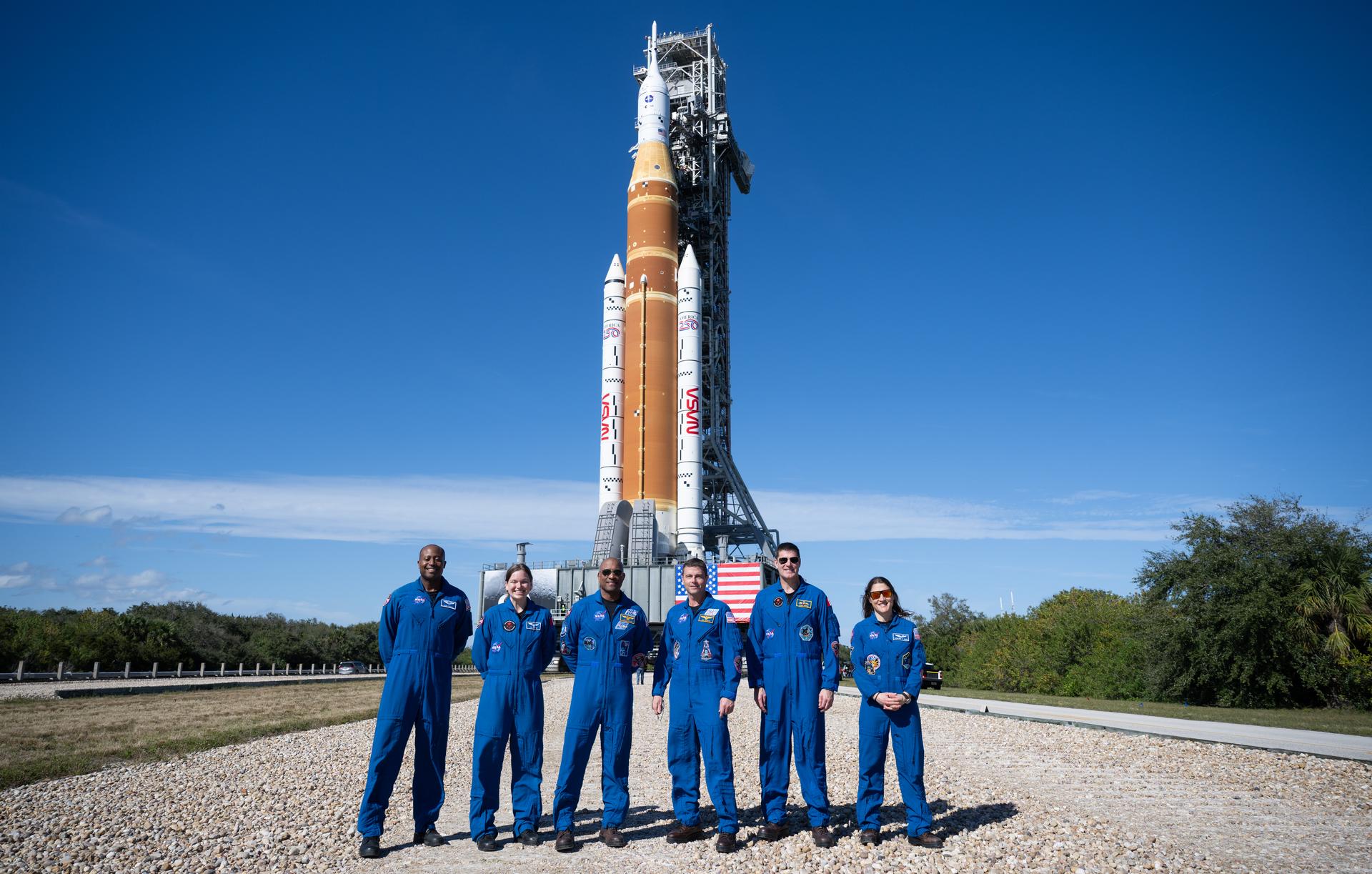
"caption": "From left: Artemis II backup crewmembers NASA astronaut Andre Douglas and CSA (Canadian Space Agency) astronaut Jenni Gibbons and prime crewmembers NASA astronauts Victor Glover, Reid Wiseman, CSA (Canadian Space Agency) astronaut Jeremy Hansen, and NASA astronaut Christina Koch, pose for a picture with NASA’s Space Launch System (SLS) rocket and Orion spacecraft, secured to the mobile launcher, as it makes the 4.2 mile journey from the Vehicle Assembly Building to Launch Pad 39B, on Jan. 17, 2026, at NASA’s Kennedy Space Center in Florida. NASA’s Artemis II test flight will take Commander Wiseman, Pilot Glover, and Mission Specialist Koch from NASA, and Mission Specialist Jeremy Hansen from the CSA (Canadian Space Agency), around the Moon and back to Earth no later than April 2026. \r\n",
"credit": "Joel Kowsky/NASA",
"altTag": null,
"description": null,
"imgSizes": {
"thumbnail": {
"file": "https://cdn.kqed.org/wp-content/uploads/sites/10/2026/03/NASA_Artemis_Crew1-160x102.jpg",
"width": 160,
"height": 102,
"mimeType": "image/jpeg"
},
"1536x1536": {
"file": "https://cdn.kqed.org/wp-content/uploads/sites/10/2026/03/NASA_Artemis_Crew1-1536x978.jpg",
"width": 1536,
"height": 978,
"mimeType": "image/jpeg"
},
"post-thumbnail": {
"file": "https://cdn.kqed.org/wp-content/uploads/sites/10/2026/03/NASA_Artemis_Crew1-672x372.jpg",
"width": 672,
"height": 372,
"mimeType": "image/jpeg"
},
"twentyfourteen-full-width": {
"file": "https://cdn.kqed.org/wp-content/uploads/sites/10/2026/03/NASA_Artemis_Crew1-1038x576.jpg",
"width": 1038,
"height": 576,
"mimeType": "image/jpeg"
},
"npr-cds-wide": {
"file": "https://cdn.kqed.org/wp-content/uploads/sites/10/2026/03/NASA_Artemis_Crew1-1200x675.jpg",
"width": 1200,
"height": 675,
"mimeType": "image/jpeg"
},
"npr-cds-square": {
"file": "https://cdn.kqed.org/wp-content/uploads/sites/10/2026/03/NASA_Artemis_Crew1-600x600.jpg",
"width": 600,
"height": 600,
"mimeType": "image/jpeg"
},
"kqedFullSize": {
"file": "https://cdn.kqed.org/wp-content/uploads/sites/10/2026/03/NASA_Artemis_Crew1.jpg",
"width": 1920,
"height": 1223
}
},
"fetchFailed": false,
"isLoading": false
},
"news_12074234": {
"type": "attachments",
"id": "news_12074234",
"meta": {
"index": "attachments_1716263798",
"site": "news",
"id": "12074234",
"found": true
},
"title": "021926_TREEFROG _GH_020-KQED",
"publishDate": 1771867990,
"status": "inherit",
"parent": 0,
"modified": 1771868015,
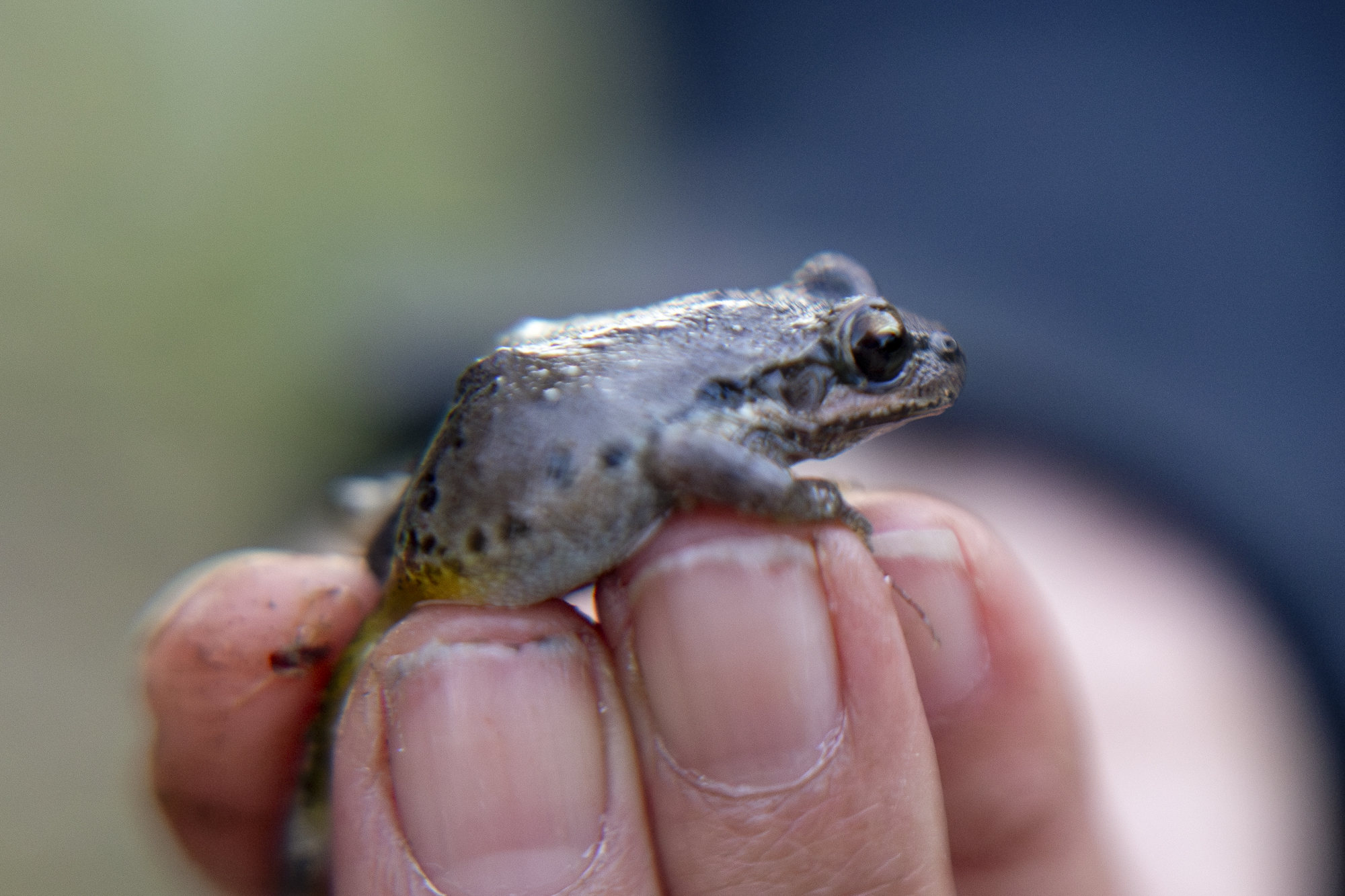
"caption": "A Pacific tree frog rests in the hand of Leticia Gallardo, a biology professor at West Valley College, on Feb. 19, 2026, at West Valley College in Saratoga.",
"credit": "Gustavo Hernandez/KQED",
"altTag": null,
"description": null,
"imgSizes": {
"thumbnail": {
"file": "https://cdn.kqed.org/wp-content/uploads/sites/10/2026/02/021926_TREEFROG-_GH_020-KQED-160x107.jpg",
"width": 160,
"height": 107,
"mimeType": "image/jpeg"
},
"1536x1536": {
"file": "https://cdn.kqed.org/wp-content/uploads/sites/10/2026/02/021926_TREEFROG-_GH_020-KQED-1536x1024.jpg",
"width": 1536,
"height": 1024,
"mimeType": "image/jpeg"
},
"post-thumbnail": {
"file": "https://cdn.kqed.org/wp-content/uploads/sites/10/2026/02/021926_TREEFROG-_GH_020-KQED-672x372.jpg",
"width": 672,
"height": 372,
"mimeType": "image/jpeg"
},
"twentyfourteen-full-width": {
"file": "https://cdn.kqed.org/wp-content/uploads/sites/10/2026/02/021926_TREEFROG-_GH_020-KQED-1038x576.jpg",
"width": 1038,
"height": 576,
"mimeType": "image/jpeg"
},
"npr-cds-wide": {
"file": "https://cdn.kqed.org/wp-content/uploads/sites/10/2026/02/021926_TREEFROG-_GH_020-KQED-1200x675.jpg",
"width": 1200,
"height": 675,
"mimeType": "image/jpeg"
},
"kqedFullSize": {
"file": "https://cdn.kqed.org/wp-content/uploads/sites/10/2026/02/021926_TREEFROG-_GH_020-KQED.jpg",
"width": 2000,
"height": 1333
}
},
"fetchFailed": false,
"isLoading": false
},
"news_12070351": {
"type": "attachments",
"id": "news_12070351",
"meta": {
"index": "attachments_1716263798",
"site": "news",
"id": "12070351",
"found": true
},
"title": "mushroom 1",
"publishDate": 1768778762,
"status": "inherit",
"parent": 12070350,
"modified": 1768778785,
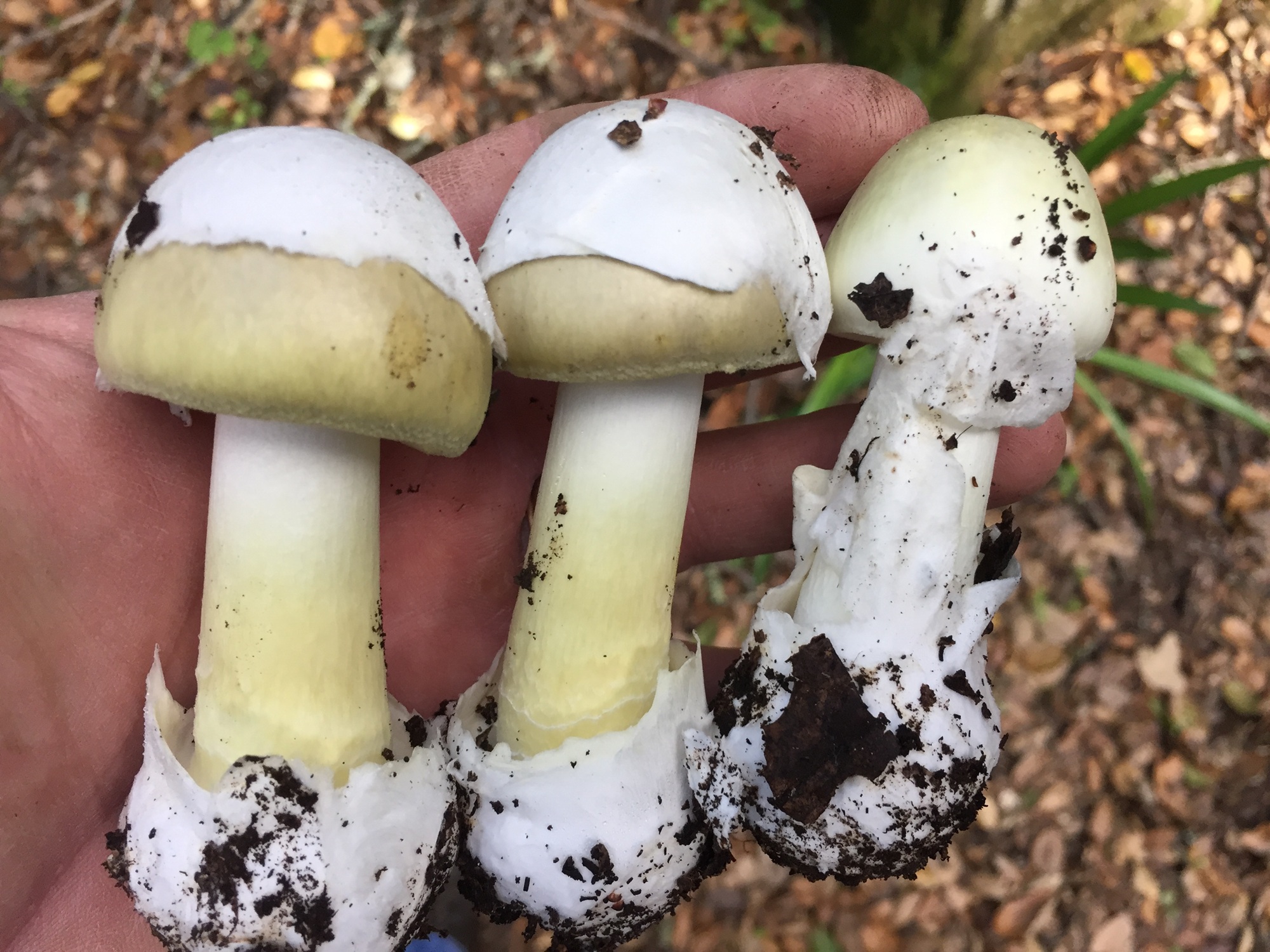
"caption": "La seta venenosa Amanita phalloides fotografiada en el Área de la Bahía en 2016.",
"credit": "Cortesía de Britt Bunyard",
"altTag": null,
"description": null,
"imgSizes": {
"thumbnail": {
"file": "https://cdn.kqed.org/wp-content/uploads/sites/10/2026/01/mushroom-1-160x120.jpg",
"width": 160,
"height": 120,
"mimeType": "image/jpeg"
},
"1536x1536": {
"file": "https://cdn.kqed.org/wp-content/uploads/sites/10/2026/01/mushroom-1-1536x1152.jpg",
"width": 1536,
"height": 1152,
"mimeType": "image/jpeg"
},
"post-thumbnail": {
"file": "https://cdn.kqed.org/wp-content/uploads/sites/10/2026/01/mushroom-1-672x372.jpg",
"width": 672,
"height": 372,
"mimeType": "image/jpeg"
},
"twentyfourteen-full-width": {
"file": "https://cdn.kqed.org/wp-content/uploads/sites/10/2026/01/mushroom-1-1038x576.jpg",
"width": 1038,
"height": 576,
"mimeType": "image/jpeg"
},
"npr-cds-wide": {
"file": "https://cdn.kqed.org/wp-content/uploads/sites/10/2026/01/mushroom-1-1200x675.jpg",
"width": 1200,
"height": 675,
"mimeType": "image/jpeg"
},
"kqedFullSize": {
"file": "https://cdn.kqed.org/wp-content/uploads/sites/10/2026/01/mushroom-1.jpg",
"width": 2000,
"height": 1500
}
},
"fetchFailed": false,
"isLoading": false
},
"news_12070806": {
"type": "attachments",
"id": "news_12070806",
"meta": {
"index": "attachments_1716263798",
"site": "news",
"id": "12070806",
"found": true
},
"title": "Photo6Lab",
"publishDate": 1769116374,
"status": "inherit",
"parent": 12070647,
"modified": 1769117513,
"caption": "A portion of the Codex Climaci rescriptus palimpsest, from the Museum of the Bible in Washington, D.C. ",
"credit": "Jacqueline Ramseyer Orrell/SLAC National Accelerator Laboratory",
"altTag": null,
"description": null,
"imgSizes": {
"thumbnail": {
"file": "https://cdn.kqed.org/wp-content/uploads/sites/10/2026/01/Photo6Lab-160x107.jpeg",
"width": 160,
"height": 107,
"mimeType": "image/jpeg"
},
"1536x1536": {
"file": "https://cdn.kqed.org/wp-content/uploads/sites/10/2026/01/Photo6Lab-1536x1025.jpeg",
"width": 1536,
"height": 1025,
"mimeType": "image/jpeg"
},
"post-thumbnail": {
"file": "https://cdn.kqed.org/wp-content/uploads/sites/10/2026/01/Photo6Lab-672x372.jpeg",
"width": 672,
"height": 372,
"mimeType": "image/jpeg"
},
"twentyfourteen-full-width": {
"file": "https://cdn.kqed.org/wp-content/uploads/sites/10/2026/01/Photo6Lab-1038x576.jpeg",
"width": 1038,
"height": 576,
"mimeType": "image/jpeg"
},
"npr-cds-wide": {
"file": "https://cdn.kqed.org/wp-content/uploads/sites/10/2026/01/Photo6Lab-1200x675.jpeg",
"width": 1200,
"height": 675,
"mimeType": "image/jpeg"
},
"kqedFullSize": {
"file": "https://cdn.kqed.org/wp-content/uploads/sites/10/2026/01/Photo6Lab.jpeg",
"width": 1980,
"height": 1321
}
},
"fetchFailed": false,
"isLoading": false
},
"news_12070909": {
"type": "attachments",
"id": "news_12070909",
"meta": {
"index": "attachments_1716263798",
"site": "news",
"id": "12070909",
"found": true
},
"title": "US-HEALTH-IMMUNIZATION-VACCINES",
"publishDate": 1769196427,
"status": "inherit",
"parent": 12070907,
"modified": 1771543622,
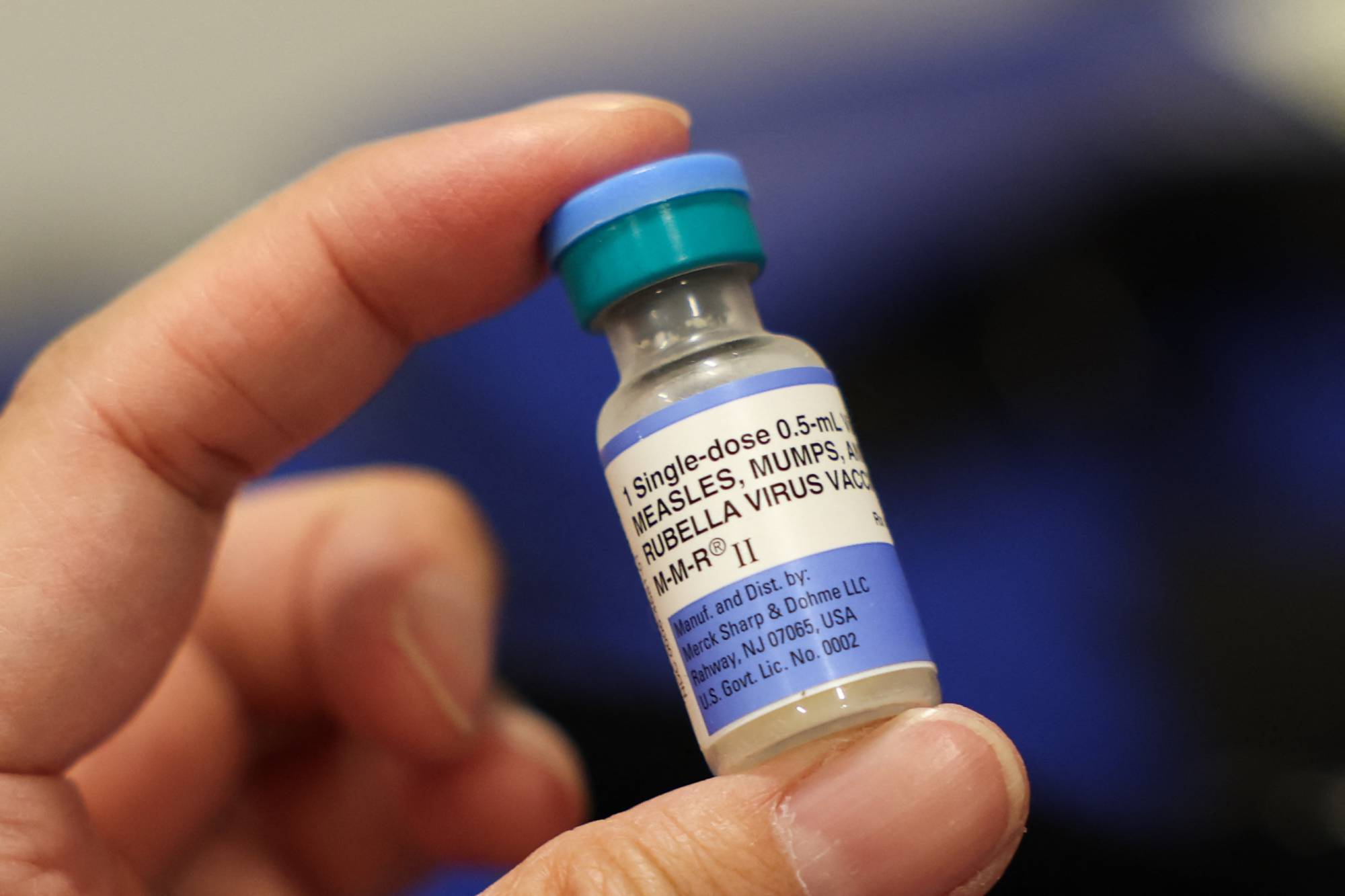
"caption": "A vial of the Measles, Mumps, and Rubella (MMR) vaccination for children is displayed during an immunization event at the L.A. Care and Blue Shield of California Promise Health Plan Community Resource Center in the Panorama City neighborhood of Los Angeles, California, on Oct. 24, 2025. ",
"credit": "Patrick T. Fallon/AFP Photo by PATRICK T. FALLON/AFP via Getty Images",
"altTag": null,
"description": null,
"imgSizes": {
"medium": {
"file": "https://cdn.kqed.org/wp-content/uploads/sites/10/2026/01/GettyImages-2242752228-2000x1333.jpg",
"width": 2000,
"height": 1333,
"mimeType": "image/jpeg"
},
"large": {
"file": "https://cdn.kqed.org/wp-content/uploads/sites/10/2026/01/GettyImages-2242752228-2000x1333.jpg",
"width": 2000,
"height": 1333,
"mimeType": "image/jpeg"
},
"thumbnail": {
"file": "https://cdn.kqed.org/wp-content/uploads/sites/10/2026/01/GettyImages-2242752228-160x107.jpg",
"width": 160,
"height": 107,
"mimeType": "image/jpeg"
},
"1536x1536": {
"file": "https://cdn.kqed.org/wp-content/uploads/sites/10/2026/01/GettyImages-2242752228-1536x1024.jpg",
"width": 1536,
"height": 1024,
"mimeType": "image/jpeg"
},
"2048x2048": {
"file": "https://cdn.kqed.org/wp-content/uploads/sites/10/2026/01/GettyImages-2242752228-2048x1365.jpg",
"width": 2048,
"height": 1365,
"mimeType": "image/jpeg"
},
"post-thumbnail": {
"file": "https://cdn.kqed.org/wp-content/uploads/sites/10/2026/01/GettyImages-2242752228-672x372.jpg",
"width": 672,
"height": 372,
"mimeType": "image/jpeg"
},
"twentyfourteen-full-width": {
"file": "https://cdn.kqed.org/wp-content/uploads/sites/10/2026/01/GettyImages-2242752228-1038x576.jpg",
"width": 1038,
"height": 576,
"mimeType": "image/jpeg"
},
"full-width": {
"file": "https://cdn.kqed.org/wp-content/uploads/sites/10/2026/01/GettyImages-2242752228-2000x1333.jpg",
"width": 2000,
"height": 1333,
"mimeType": "image/jpeg"
},
"npr-cds-wide": {
"file": "https://cdn.kqed.org/wp-content/uploads/sites/10/2026/01/GettyImages-2242752228-1200x675.jpg",
"width": 1200,
"height": 675,
"mimeType": "image/jpeg"
},
"kqedFullSize": {
"file": "https://cdn.kqed.org/wp-content/uploads/sites/10/2026/01/GettyImages-2242752228-scaled-e1769196948121.jpg",
"width": 2000,
"height": 1334
}
},
"fetchFailed": false,
"isLoading": false
},
"news_12070342": {
"type": "attachments",
"id": "news_12070342",
"meta": {
"index": "attachments_1716263798",
"site": "news",
"id": "12070342",
"found": true
},
"title": "deathcap 1",
"publishDate": 1768775639,
"status": "inherit",
"parent": 12070341,
"modified": 1768775670,
"caption": "Setas venenosas junto a un sendero durante una excursión educativa para recolectar setas en el Parque Regional Anthony Chabot, en Oakland, el 12 de diciembre de 2025. La recolección de setas no está permitida en el parque. Las autoridades sanitarias de California advirtieron a la población que dejara de recolectarlas después de que 24 personas enfermaron. Dos necesitaron un trasplante de hígado y una falleció.",
"credit": "Beth LaBerge/KQED",
"altTag": null,
"description": null,
"imgSizes": {
"thumbnail": {
"file": "https://cdn.kqed.org/wp-content/uploads/sites/10/2026/01/deathcap-1-160x107.jpg",
"width": 160,
"height": 107,
"mimeType": "image/jpeg"
},
"1536x1536": {
"file": "https://cdn.kqed.org/wp-content/uploads/sites/10/2026/01/deathcap-1-1536x1024.jpg",
"width": 1536,
"height": 1024,
"mimeType": "image/jpeg"
},
"post-thumbnail": {
"file": "https://cdn.kqed.org/wp-content/uploads/sites/10/2026/01/deathcap-1-672x372.jpg",
"width": 672,
"height": 372,
"mimeType": "image/jpeg"
},
"twentyfourteen-full-width": {
"file": "https://cdn.kqed.org/wp-content/uploads/sites/10/2026/01/deathcap-1-1038x576.jpg",
"width": 1038,
"height": 576,
"mimeType": "image/jpeg"
},
"npr-cds-wide": {
"file": "https://cdn.kqed.org/wp-content/uploads/sites/10/2026/01/deathcap-1-1200x675.jpg",
"width": 1200,
"height": 675,
"mimeType": "image/jpeg"
},
"kqedFullSize": {
"file": "https://cdn.kqed.org/wp-content/uploads/sites/10/2026/01/deathcap-1.jpg",
"width": 2000,
"height": 1333
}
},
"fetchFailed": false,
"isLoading": false
},
"news_11880255": {
"type": "attachments",
"id": "news_11880255",
"meta": {
"index": "attachments_1716263798",
"site": "news",
"id": "11880255",
"found": true
},
"parent": 11833686,
"imgSizes": {
"twentyfourteen-full-width": {
"file": "https://ww2.kqed.org/app/uploads/sites/10/2020/08/pexels-dids-1986996-1-1020x680-1-1020x576.jpg",
"width": 1020,
"mimeType": "image/jpeg",
"height": 576
},
"thumbnail": {
"file": "https://ww2.kqed.org/app/uploads/sites/10/2020/08/pexels-dids-1986996-1-1020x680-1-160x107.jpg",
"width": 160,
"mimeType": "image/jpeg",
"height": 107
},
"post-thumbnail": {
"file": "https://ww2.kqed.org/app/uploads/sites/10/2020/08/pexels-dids-1986996-1-1020x680-1-672x372.jpg",
"width": 672,
"mimeType": "image/jpeg",
"height": 372
},
"kqedFullSize": {
"file": "https://ww2.kqed.org/app/uploads/sites/10/2020/08/pexels-dids-1986996-1-1020x680-1.jpg",
"width": 1020,
"height": 680
},
"medium": {
"file": "https://ww2.kqed.org/app/uploads/sites/10/2020/08/pexels-dids-1986996-1-1020x680-1-800x533.jpg",
"width": 800,
"mimeType": "image/jpeg",
"height": 533
}
},
"publishDate": 1625243238,
"modified": 1625243296,
"caption": "KQED's recommendations for what to have in your emergency bag in the case of a natural disaster during the COVID-19 pandemic.\n",
"description": "KQED's recommendations for what to have in your emergency bag in the case of a natural disaster during the COVID-19 pandemic.\n",
"title": "pexels-dids-1986996-1-1020x680",
"credit": "Pexels",
"status": "inherit",
"altTag": "KQED's recommendations for what to have in your emergency bag in the case of a natural disaster during the COVID-19 pandemic.",
"fetchFailed": false,
"isLoading": false
},
"news_12056533": {
"type": "attachments",
"id": "news_12056533",
"meta": {
"index": "attachments_1716263798",
"site": "news",
"id": "12056533",
"found": true
},
"title": "250917-VALKYRIESPLAYOFFS-38-BL_QED-KQED",
"publishDate": 1758209890,
"status": "inherit",
"parent": 12056563,
"modified": 1758222771,
"caption": "Veronica Burton (left) and The Golden State Valkyries play the Minnesota Lynx during Game 2 of the WNBA playoffs at the SAP Center in San Jose on Sept. 17, 2025.",
"credit": "Beth LaBerge/KQED",
"altTag": null,
"description": null,
"imgSizes": {
"thumbnail": {
"file": "https://cdn.kqed.org/wp-content/uploads/sites/10/2025/09/250917-VALKYRIESPLAYOFFS-38-BL_QED-KQED-160x107.jpg",
"width": 160,
"height": 107,
"mimeType": "image/jpeg"
},
"1536x1536": {
"file": "https://cdn.kqed.org/wp-content/uploads/sites/10/2025/09/250917-VALKYRIESPLAYOFFS-38-BL_QED-KQED-1536x1024.jpg",
"width": 1536,
"height": 1024,
"mimeType": "image/jpeg"
},
"post-thumbnail": {
"file": "https://cdn.kqed.org/wp-content/uploads/sites/10/2025/09/250917-VALKYRIESPLAYOFFS-38-BL_QED-KQED-672x372.jpg",
"width": 672,
"height": 372,
"mimeType": "image/jpeg"
},
"twentyfourteen-full-width": {
"file": "https://cdn.kqed.org/wp-content/uploads/sites/10/2025/09/250917-VALKYRIESPLAYOFFS-38-BL_QED-KQED-1038x576.jpg",
"width": 1038,
"height": 576,
"mimeType": "image/jpeg"
},
"kqedFullSize": {
"file": "https://cdn.kqed.org/wp-content/uploads/sites/10/2025/09/250917-VALKYRIESPLAYOFFS-38-BL_QED-KQED.jpg",
"width": 2000,
"height": 1333
}
},
"fetchFailed": false,
"isLoading": false
},
"news_11999988": {
"type": "attachments",
"id": "news_11999988",
"meta": {
"index": "attachments_1716263798",
"site": "news",
"id": "11999988",
"found": true
},
"title": "California Earthquake Early Warning App",
"publishDate": 1723572548,
"status": "inherit",
"parent": 11999982,
"modified": 1723576682,
"caption": "The nation's first statewide Earthquake Early Warning System, also known as the MyShake app, developed by professor Richard Allen, director of the UC Berkeley Seismological Laboratory, is displayed in Oakland, California, on Oct. 17, 2019.",
"credit": "Yichuan Cao/NurPhoto via Getty Images",
"altTag": null,
"description": null,
"imgSizes": {
"medium": {
"file": "https://cdn.kqed.org/wp-content/uploads/sites/10/2024/08/MyShakeUCBerkeley-800x532.jpg",
"width": 800,
"height": 532,
"mimeType": "image/jpeg"
},
"large": {
"file": "https://cdn.kqed.org/wp-content/uploads/sites/10/2024/08/MyShakeUCBerkeley-1020x679.jpg",
"width": 1020,
"height": 679,
"mimeType": "image/jpeg"
},
"thumbnail": {
"file": "https://cdn.kqed.org/wp-content/uploads/sites/10/2024/08/MyShakeUCBerkeley-160x106.jpg",
"width": 160,
"height": 106,
"mimeType": "image/jpeg"
},
"1536x1536": {
"file": "https://cdn.kqed.org/wp-content/uploads/sites/10/2024/08/MyShakeUCBerkeley-1536x1022.jpg",
"width": 1536,
"height": 1022,
"mimeType": "image/jpeg"
},
"post-thumbnail": {
"file": "https://cdn.kqed.org/wp-content/uploads/sites/10/2024/08/MyShakeUCBerkeley-672x372.jpg",
"width": 672,
"height": 372,
"mimeType": "image/jpeg"
},
"twentyfourteen-full-width": {
"file": "https://cdn.kqed.org/wp-content/uploads/sites/10/2024/08/MyShakeUCBerkeley-1038x576.jpg",
"width": 1038,
"height": 576,
"mimeType": "image/jpeg"
},
"full-width": {
"file": "https://cdn.kqed.org/wp-content/uploads/sites/10/2024/08/MyShakeUCBerkeley-1920x1278.jpg",
"width": 1920,
"height": 1278,
"mimeType": "image/jpeg"
},
"kqedFullSize": {
"file": "https://cdn.kqed.org/wp-content/uploads/sites/10/2024/08/MyShakeUCBerkeley.jpg",
"width": 2000,
"height": 1331
}
},
"fetchFailed": false,
"isLoading": false
}
},
"audioPlayerReducer": {
"postId": "stream_live",
"isPaused": true,
"isPlaying": false,
"pfsActive": false,
"pledgeModalIsOpen": true,
"playerDrawerIsOpen": false
},
"authorsReducer": {
"adembosky": {
"type": "authors",
"id": "3205",
"meta": {
"index": "authors_1716337520",
"id": "3205",
"found": true
},
"name": "April Dembosky",
"firstName": "April",
"lastName": "Dembosky",
"slug": "adembosky",
"email": "adembosky@kqed.org",
"display_author_email": false,
"staff_mastheads": [
"news",
"science"
],
"title": "KQED Health Correspondent",
"bio": "April Dembosky is the health correspondent for KQED News and a regular contributor to NPR. She specializes in covering altered states of mind, from postpartum depression to methamphetamine-induced psychosis to the insanity defense. Her investigative series on insurance companies sidestepping mental health laws won multiple awards, including first place in beat reporting from the national Association of Health Care Journalists. She is the recipient of numerous other prizes and fellowships, including a national Edward R. Murrow award for investigative reporting, a Society of Professional Journalists award for long-form storytelling, and a Carter Center Fellowship for Mental Health Journalism.\r\n\r\nDembosky reported and produced \u003cem>Soundtrack of Silence\u003c/em>, an audio documentary about music and memory that is currently being made into a feature film by Paramount Pictures.\r\n\r\nBefore joining KQED in 2013, Dembosky covered technology and Silicon Valley for \u003cem>The Financial Times of London,\u003c/em> and contributed business and arts stories to \u003cem>Marketplace \u003c/em>and \u003cem>The New York Times.\u003c/em> She got her undergraduate degree in philosophy from Smith College and her master's in journalism from the University of California, Berkeley. She is a classically trained violinist and proud alum of the first symphony orchestra at Burning Man.",
"avatar": "https://secure.gravatar.com/avatar/ef92999be4ceb9ea60701e7dc276f813?s=600&d=blank&r=g",
"twitter": "adembosky",
"facebook": null,
"instagram": null,
"linkedin": null,
"sites": [
{
"site": "arts",
"roles": [
"author"
]
},
{
"site": "news",
"roles": [
"editor"
]
},
{
"site": "futureofyou",
"roles": [
"author"
]
},
{
"site": "stateofhealth",
"roles": [
"editor"
]
},
{
"site": "science",
"roles": [
"editor"
]
},
{
"site": "forum",
"roles": [
"editor"
]
}
],
"headData": {
"title": "April Dembosky | KQED",
"description": "KQED Health Correspondent",
"ogImgSrc": "https://secure.gravatar.com/avatar/ef92999be4ceb9ea60701e7dc276f813?s=600&d=blank&r=g",
"twImgSrc": "https://secure.gravatar.com/avatar/ef92999be4ceb9ea60701e7dc276f813?s=600&d=blank&r=g"
},
"isLoading": false,
"link": "/author/adembosky"
},
"carlysevern": {
"type": "authors",
"id": "3243",
"meta": {
"index": "authors_1716337520",
"id": "3243",
"found": true
},
"name": "Carly Severn",
"firstName": "Carly",
"lastName": "Severn",
"slug": "carlysevern",
"email": "csevern@kqed.org",
"display_author_email": false,
"staff_mastheads": [
"news"
],
"title": "Senior Editor, Audience News ",
"bio": "Carly is KQED's Senior Editor of Audience News on the Digital News team, and has reported for the California Report Magazine, Bay Curious and KQED Arts. She's formerly the host of \u003ca href=\"http://ww2.kqed.org/pop/category/the-cooler/\" rel=\"noopener noreferrer\">The Cooler\u003c/a> podcast.",
"avatar": "https://secure.gravatar.com/avatar/2d8d6765f186e64c798cf7f0c8088a41?s=600&d=blank&r=g",
"twitter": "teacupinthebay",
"facebook": null,
"instagram": null,
"linkedin": null,
"sites": [
{
"site": "",
"roles": [
"editor"
]
},
{
"site": "arts",
"roles": [
"editor"
]
},
{
"site": "news",
"roles": [
"administrator"
]
},
{
"site": "pop",
"roles": [
"editor"
]
},
{
"site": "futureofyou",
"roles": [
"editor"
]
},
{
"site": "about",
"roles": [
"administrator"
]
},
{
"site": "mindshift",
"roles": [
"editor"
]
},
{
"site": "bayareabites",
"roles": [
"editor"
]
},
{
"site": "stateofhealth",
"roles": [
"editor"
]
},
{
"site": "science",
"roles": [
"editor"
]
},
{
"site": "food",
"roles": [
"contributor"
]
},
{
"site": "forum",
"roles": [
"editor"
]
},
{
"site": "perspectives",
"roles": [
"administrator"
]
},
{
"site": "liveblog",
"roles": [
"editor"
]
}
],
"headData": {
"title": "Carly Severn | KQED",
"description": "Senior Editor, Audience News ",
"ogImgSrc": "https://secure.gravatar.com/avatar/2d8d6765f186e64c798cf7f0c8088a41?s=600&d=blank&r=g",
"twImgSrc": "https://secure.gravatar.com/avatar/2d8d6765f186e64c798cf7f0c8088a41?s=600&d=blank&r=g"
},
"isLoading": false,
"link": "/author/carlysevern"
},
"dcronin": {
"type": "authors",
"id": "11362",
"meta": {
"index": "authors_1716337520",
"id": "11362",
"found": true
},
"name": "Dana Cronin",
"firstName": "Dana",
"lastName": "Cronin",
"slug": "dcronin",
"email": "dcronin@KQED.org",
"display_author_email": true,
"staff_mastheads": [],
"title": "KQED Contributor",
"bio": "Dana Cronin is a reporter for KQED News. She loves writing stories about climate change, environmental issues, food and agriculture. She's reported across the country, from Colorado to Washington D.C. to Illinois, and has won numerous awards for her coverage. Her work is regularly featured on national broadcasts, including NPR’s Morning Edition, All Things Considered, PBS Newshour and Science Friday. She lives in Oakland and has an avocado tree in her back yard.",
"avatar": "https://secure.gravatar.com/avatar/bcf89e3455ff7235f96ab6fa7258dd95?s=600&d=blank&r=g",
"twitter": "DanaHCronin",
"facebook": null,
"instagram": null,
"linkedin": null,
"sites": [
{
"site": "arts",
"roles": [
"author"
]
},
{
"site": "news",
"roles": [
"editor"
]
},
{
"site": "science",
"roles": [
"author"
]
},
{
"site": "liveblog",
"roles": [
"author"
]
}
],
"headData": {
"title": "Dana Cronin | KQED",
"description": "KQED Contributor",
"ogImgSrc": "https://secure.gravatar.com/avatar/bcf89e3455ff7235f96ab6fa7258dd95?s=600&d=blank&r=g",
"twImgSrc": "https://secure.gravatar.com/avatar/bcf89e3455ff7235f96ab6fa7258dd95?s=600&d=blank&r=g"
},
"isLoading": false,
"link": "/author/dcronin"
},
"agarces": {
"type": "authors",
"id": "11367",
"meta": {
"index": "authors_1716337520",
"id": "11367",
"found": true
},
"name": "Audrey Garces",
"firstName": "Audrey",
"lastName": "Garces",
"slug": "agarces",
"email": "agarces@kqed.org",
"display_author_email": false,
"staff_mastheads": [
"news"
],
"title": "Digital Producer",
"bio": "Audrey is a former digital producer at KQED News. Previously, she was a KQED Raul Ramirez Diversity Fund intern where she developed stories that focused on highlighting diverse voices in journalism. Prior to her work at KQED, she worked as a news intern at the San Francisco Examiner. Audrey graduated from San Francisco State University with a B.A. in journalism and a minor in political science.",
"avatar": "https://secure.gravatar.com/avatar/5211bc2e6a809b9956da169e35ce63d5?s=600&d=blank&r=g",
"twitter": "audgar",
"facebook": null,
"instagram": null,
"linkedin": null,
"sites": [
{
"site": "arts",
"roles": []
},
{
"site": "news",
"roles": [
"subscriber"
]
},
{
"site": "science",
"roles": [
"editor"
]
},
{
"site": "forum",
"roles": [
"editor"
]
},
{
"site": "perspectives",
"roles": [
"administrator"
]
}
],
"headData": {
"title": "Audrey Garces | KQED",
"description": "Digital Producer",
"ogImgSrc": "https://secure.gravatar.com/avatar/5211bc2e6a809b9956da169e35ce63d5?s=600&d=blank&r=g",
"twImgSrc": "https://secure.gravatar.com/avatar/5211bc2e6a809b9956da169e35ce63d5?s=600&d=blank&r=g"
},
"isLoading": false,
"link": "/author/agarces"
},
"eaguilar": {
"type": "authors",
"id": "11382",
"meta": {
"index": "authors_1716337520",
"id": "11382",
"found": true
},
"name": "Erika Aguilar",
"firstName": "Erika",
"lastName": "Aguilar",
"slug": "eaguilar",
"email": "eaa712@gmail.com",
"display_author_email": false,
"staff_mastheads": [],
"title": "KQED Contributor",
"bio": "Erika Aguilar was the director of podcasts at KQED. She was in charge of KQED's portfolio of original podcasts and teams, and sets strategic plans for production and engagement.\r\n\r\nErika helped establish KQED's new housing affordability desk as senior editor. She was also a producer and editor for KQED's local news podcast called \u003cem>The Bay, \u003c/em>and wrote stories about housing in the Bay Area as a reporter for KQED News.\r\n\r\nErika joined KQED in 2017 after producing independent audio projects and podcasts in Southern California. She spent more than a dozen years reporting stories about law enforcement, breaking news, homelessness, government and the environment for KPCC in Los Angeles and KUT in Austin. She also volunteers as an editor and mentor for various journalism training programs.\r\n\r\nErika Aguilar is a proud Tejana from San Antonio. She believes in compromise, optimism and Selena.",
"avatar": "https://secure.gravatar.com/avatar/85bf7bb8dd9af4136525d94cef00f026?s=600&d=blank&r=g",
"twitter": "erikaaaguilar",
"facebook": null,
"instagram": null,
"linkedin": null,
"sites": [
{
"site": "",
"roles": [
"editor"
]
},
{
"site": "news",
"roles": [
"subscriber"
]
},
{
"site": "podcasts",
"roles": [
"editor"
]
}
],
"headData": {
"title": "Erika Aguilar | KQED",
"description": "KQED Contributor",
"ogImgSrc": "https://secure.gravatar.com/avatar/85bf7bb8dd9af4136525d94cef00f026?s=600&d=blank&r=g",
"twImgSrc": "https://secure.gravatar.com/avatar/85bf7bb8dd9af4136525d94cef00f026?s=600&d=blank&r=g"
},
"isLoading": false,
"link": "/author/eaguilar"
},
"kevinstark": {
"type": "authors",
"id": "11608",
"meta": {
"index": "authors_1716337520",
"id": "11608",
"found": true
},
"name": "Kevin Stark",
"firstName": "Kevin",
"lastName": "Stark",
"slug": "kevinstark",
"email": "kstark@kqed.org",
"display_author_email": true,
"staff_mastheads": [
"science"
],
"title": "Senior Editor",
"bio": "Kevin is a senior editor for KQED Science, managing the station's health and climate desks. His journalism career began in the Pacific Northwest, and he later became a lead reporter for the San Francisco Public Press. His work has appeared in Pacific Standard magazine, the Energy News Network, the Center for Investigative Reporting's Reveal and WBEZ in Chicago. Kevin joined KQED in 2019, and has covered issues related to energy, wildfire, climate change and the environment.",
"avatar": "https://secure.gravatar.com/avatar/1f646bf546a63d638e04ff23b52b0e79?s=600&d=blank&r=g",
"twitter": "starkkev",
"facebook": null,
"instagram": null,
"linkedin": null,
"sites": [
{
"site": "",
"roles": [
"editor"
]
},
{
"site": "news",
"roles": [
"editor"
]
},
{
"site": "science",
"roles": [
"administrator"
]
}
],
"headData": {
"title": "Kevin Stark | KQED",
"description": "Senior Editor",
"ogImgSrc": "https://secure.gravatar.com/avatar/1f646bf546a63d638e04ff23b52b0e79?s=600&d=blank&r=g",
"twImgSrc": "https://secure.gravatar.com/avatar/1f646bf546a63d638e04ff23b52b0e79?s=600&d=blank&r=g"
},
"isLoading": false,
"link": "/author/kevinstark"
},
"sarahwright": {
"type": "authors",
"id": "11956",
"meta": {
"index": "authors_1716337520",
"id": "11956",
"found": true
},
"name": "Sarah Wright",
"firstName": "Sarah",
"lastName": "Wright",
"slug": "sarahwright",
"email": "swright@kqed.org",
"display_author_email": true,
"staff_mastheads": [],
"title": "Outdoors Engagement Reporter",
"bio": "Sarah Wright is KQED's Outdoors Engagement Reporter. Originally from Lake Tahoe, she completed a thru-hike of the Pacific Crest Trail in 2019 and was a U.S. Fulbright Program grantee to Argentina in 2023. Her journalism has appeared in The Guardian, The San Francisco Standard, The Palo Alto Weekly and the Half Moon Bay Review.",
"avatar": "https://secure.gravatar.com/avatar/585b7a53f459b86d1d3ca1561541ab4b?s=600&d=blank&r=g",
"twitter": null,
"bluesky": null,
"facebook": null,
"instagram": null,
"linkedin": null,
"sites": [
{
"site": "arts",
"roles": [
"editor"
]
},
{
"site": "news",
"roles": [
"editor"
]
},
{
"site": "science",
"roles": [
"contributor",
"author"
]
},
{
"site": "forum",
"roles": [
"editor"
]
}
],
"headData": {
"title": "Sarah Wright | KQED",
"description": "Outdoors Engagement Reporter",
"ogImgSrc": "https://secure.gravatar.com/avatar/585b7a53f459b86d1d3ca1561541ab4b?s=600&d=blank&r=g",
"twImgSrc": "https://secure.gravatar.com/avatar/585b7a53f459b86d1d3ca1561541ab4b?s=600&d=blank&r=g"
},
"isLoading": false,
"link": "/author/sarahwright"
},
"mbernal": {
"type": "authors",
"id": "11977",
"meta": {
"index": "authors_1716337520",
"id": "11977",
"found": true
},
"name": "María Fernanda Bernal",
"firstName": "María Fernanda",
"lastName": "Bernal",
"slug": "mbernal",
"email": "mbernal@kqed.org",
"display_author_email": false,
"staff_mastheads": [
"news"
],
"title": "KQED Contributor",
"bio": "Maria Fernanda is a UC Berkeley J-School alum and was named Innovation Fellow in 2023. She was the 2022 White House Correspondents' Fellow and Cokie Roberts Scholar. In her time at the Investigative Reporting Program, she led an investigative team and received a National Press Award in 2025 for the story on Chevron's Manipulation of Media. She is most proud of her international recognition with the first place podcast award from the Insituto Mexicano de la radio in 2021. Maria Fernanda is a Bay Area-based journalist who is currently working as a general assignment reporter, weekend host and producer at KQED.",
"avatar": "https://secure.gravatar.com/avatar/f44c9ad4bd3426006b0def803428a08a?s=600&d=blank&r=g",
"twitter": null,
"facebook": null,
"instagram": null,
"linkedin": null,
"sites": [
{
"site": "arts",
"roles": [
"editor"
]
},
{
"site": "news",
"roles": [
"editor",
"author"
]
},
{
"site": "science",
"roles": [
"editor"
]
}
],
"headData": {
"title": "María Fernanda Bernal | KQED",
"description": "KQED Contributor",
"ogImgSrc": "https://secure.gravatar.com/avatar/f44c9ad4bd3426006b0def803428a08a?s=600&d=blank&r=g",
"twImgSrc": "https://secure.gravatar.com/avatar/f44c9ad4bd3426006b0def803428a08a?s=600&d=blank&r=g"
},
"isLoading": false,
"link": "/author/mbernal"
},
"aaliahmad": {
"type": "authors",
"id": "11986",
"meta": {
"index": "authors_1716337520",
"id": "11986",
"found": true
},
"name": "Ayah Ali-Ahmad",
"firstName": "Ayah",
"lastName": "Ali-Ahmad",
"slug": "aaliahmad",
"email": "aaliahmad@KQED.org",
"display_author_email": false,
"staff_mastheads": [],
"title": "KQED Contributor",
"bio": null,
"avatar": "https://secure.gravatar.com/avatar/7f340465c69a2c816f6c07000137a3ee?s=600&d=blank&r=g",
"twitter": null,
"facebook": null,
"instagram": null,
"linkedin": null,
"sites": [
{
"site": "news",
"roles": [
"author"
]
}
],
"headData": {
"title": "Ayah Ali-Ahmad | KQED",
"description": "KQED Contributor",
"ogImgSrc": "https://secure.gravatar.com/avatar/7f340465c69a2c816f6c07000137a3ee?s=600&d=blank&r=g",
"twImgSrc": "https://secure.gravatar.com/avatar/7f340465c69a2c816f6c07000137a3ee?s=600&d=blank&r=g"
},
"isLoading": false,
"link": "/author/aaliahmad"
}
},
"breakingNewsReducer": {},
"pagesReducer": {},
"postsReducer": {
"stream_live": {
"type": "live",
"id": "stream_live",
"audioUrl": "https://streams.kqed.org/kqedradio",
"title": "Live Stream",
"excerpt": "Live Stream information currently unavailable.",
"link": "/radio",
"featImg": "",
"label": {
"name": "KQED Live",
"link": "/"
}
},
"stream_kqedNewscast": {
"type": "posts",
"id": "stream_kqedNewscast",
"audioUrl": "https://www.kqed.org/.stream/anon/radio/RDnews/newscast.mp3?_=1",
"title": "KQED Newscast",
"featImg": "",
"label": {
"name": "88.5 FM",
"link": "/"
}
},
"news_12077807": {
"type": "posts",
"id": "news_12077807",
"meta": {
"index": "posts_1716263798",
"site": "news",
"id": "12077807",
"score": null,
"sort": [
1774695605000
]
},
"guestAuthors": [],
"slug": "nasas-astronauts-are-going-to-the-moon-with-help-from-silicon-valley",
"title": "NASA’s Astronauts Are Going to the Moon, With Help From Silicon Valley",
"publishDate": 1774695605,
"format": "standard",
"headTitle": "NASA’s Astronauts Are Going to the Moon, With Help From Silicon Valley | KQED",
"labelTerm": {
"site": "news"
},
"content": "\u003cp>When astronauts soar to the moon next week for the first time in more than 50 years, NASA’s research center in \u003ca href=\"https://www.kqed.org/siliconvalley\">Silicon Valley\u003c/a> will play a critical role in the comeback.\u003c/p>\n\u003cp>Eugene Tu, director of \u003ca href=\"https://www.kqed.org/news/tag/nasa-ames\">Ames Research Center\u003c/a> at Moffett Federal Airfield, said his team was instrumental in making sure Artemis II, which launches April 1, is ready for launch.\u003c/p>\n\u003cp>“We’re very proud to be part of this mission,” Tu told KQED. “The center was really instrumental in looking at the performance of the heat shield … We feel that this is ready to go, and we’re very happy about that.”\u003c/p>\n\u003cp>[ad fullwidth]\u003c/p>\n\u003cp>Artemis II is NASA’s first lunar mission since Apollo 17, which launched Dec. 7, 1972. It will also be the farthest that humans have ever gone from Earth, because the moon happens to be in a high orbit.\u003c/p>\n\u003cp>Tu said Artemis II is the first crewed test flight of the Artemis System, which carried Artemis I successfully in 2022. The mission is expected to circle the moon without landing, and then return to Earth in a 10-day trip.\u003c/p>\n\u003cfigure id=\"attachment_12077812\" class=\"wp-caption aligncenter\" style=\"max-width: 1920px\">\u003cimg loading=\"lazy\" decoding=\"async\" class=\"size-full wp-image-12077812\" src=\"https://cdn.kqed.org/wp-content/uploads/sites/10/2026/03/NASA_Artemis_Crew2.jpg\" alt=\"\" width=\"1920\" height=\"1355\" srcset=\"https://cdn.kqed.org/wp-content/uploads/sites/10/2026/03/NASA_Artemis_Crew2.jpg 1920w, https://cdn.kqed.org/wp-content/uploads/sites/10/2026/03/NASA_Artemis_Crew2-160x113.jpg 160w, https://cdn.kqed.org/wp-content/uploads/sites/10/2026/03/NASA_Artemis_Crew2-1536x1084.jpg 1536w\" sizes=\"auto, (max-width: 1920px) 100vw, 1920px\">\u003cfigcaption class=\"wp-caption-text\">From right to left, NASA astronauts Reid Wiseman, commander; Victor Glover, pilot; Christina Koch, mission specialist; and CSA (Canadian Space Agency) astronaut Jeremy Hansen, mission specialist are seen as they depart the Neil A. Armstrong Operations and Checkout Building to board their Orion spacecraft atop NASA’s Space Launch System rocket inside the Vehicle Assembly Building as part of the Artemis II countdown demonstration test, on Dec. 20, 2025, at NASA’s Kennedy Space Center in Florida. \u003ccite>(Aubrey Gemignani/NASA)\u003c/cite>\u003c/figcaption>\u003c/figure>\n\u003cp>The four astronauts on the voyage include Reid Wiseman, the mission commander, Victor Glover, pilot and Christina Koch and Jeremy Hansen, mission specialists.\u003c/p>\n\u003cp>The crew will travel in Orion, the deep-space capsule rocketed by the Space Launch System.\u003c/p>\n\u003cp>Glover will be the first Black man to travel around the world, and Koch will be the first woman, and Hansen, who is Canadian, will be the first non-U.S. citizen to make the voyage, according to reporting from the \u003ca href=\"https://www.nytimes.com/2026/03/12/science/nasa-moon-artemis-launch-april.html\">\u003cem>New York Times\u003c/em>\u003c/a>.[aside postID=news_12039807 hero='https://cdn.kqed.org/wp-content/uploads/sites/10/2025/05/1567215597970-XMM-Newton_TidalDisruptionEvent-1020x574.jpg']The astronauts have been quarantined since March 18. Tu said the astronauts are very excited about this trip.\u003c/p>\n\u003cp>“This is going to be historic,” Tu said. “They have been training for a while, certainly years.”\u003c/p>\n\u003cp>The schedule for launch was previously delayed by a hydrogen leak issue discovered in a previous attempt. NASA had to roll the vehicle back to the Vehicle Assembly Building to address the challenge.\u003c/p>\n\u003cp>The launch also faced delays by what Tu called “orbital mechanics,” or the factors shaping the ideal window to go to the moon.\u003c/p>\n\u003cp>“But we’ve addressed those issues, and we feel we’re ready to go,” Tu said.\u003c/p>\n\u003cp>Artemis II is part of a system intended to get humans to the moon more frequently, with the goal of eventually exploring further out into outer space. NASA’s administrator said earlier this week that there are plans to build a moon base.\u003c/p>\n\u003cfigure id=\"attachment_12077814\" class=\"wp-caption aligncenter\" style=\"max-width: 2000px\">\u003cimg loading=\"lazy\" decoding=\"async\" class=\"size-full wp-image-12077814\" src=\"https://cdn.kqed.org/wp-content/uploads/sites/10/2026/03/NASA_Artemis_Crew3.jpg\" alt=\"\" width=\"2000\" height=\"1333\" srcset=\"https://cdn.kqed.org/wp-content/uploads/sites/10/2026/03/NASA_Artemis_Crew3.jpg 2000w, https://cdn.kqed.org/wp-content/uploads/sites/10/2026/03/NASA_Artemis_Crew3-160x107.jpg 160w, https://cdn.kqed.org/wp-content/uploads/sites/10/2026/03/NASA_Artemis_Crew3-1536x1024.jpg 1536w\" sizes=\"auto, (max-width: 2000px) 100vw, 2000px\">\u003cfigcaption class=\"wp-caption-text\">Artemis II Post Insertion and Deorbit Prep Training with crew members Reid Wiseman, Victor Glover, Christina Koch and Jeremy Hansen on Jan. 30, 2025, at the Johnson Space Center in Houston, Texas. \u003ccite>(Mark Sowa/NASA)\u003c/cite>\u003c/figcaption>\u003c/figure>\n\u003cp>“The Apollo missions … were only on the surface of the moon for a number of days,” Tu said. “But this time, we are going back to the moon to establish a permanent presence, a sustained presence, and also learn what we need to learn to eventually bring humans to Mars.”\u003c/p>\n\u003cp>He said there are industries and commercial entities interested in the moon, and Artemis 2 is a stepping stone to space tourism.\u003c/p>\n\u003cp>“There’s the commercial aspects of lunar exploration. There are industries and commercial entities that are interested in potentially resources on the moon, maybe even eventually tourism on space, tourism to the moon. And so this is really a stepping stone to that, to that future of sustained presence beyond low Earth orbit,” he said.\u003c/p>\n\u003cp>Mission Artemis II has been years in the making, but NASA is already planning to launch Artemis III next year with further testing.\u003c/p>\n\u003cp>Artemis IV, a lunar landing mission, is also on the horizon. Artemis V will continue that work, and future plans could include commercial launch vehicles.\u003c/p>\n\u003cfigure id=\"attachment_12077815\" class=\"wp-caption aligncenter\" style=\"max-width: 2000px\">\u003cimg loading=\"lazy\" decoding=\"async\" class=\"size-full wp-image-12077815\" src=\"https://cdn.kqed.org/wp-content/uploads/sites/10/2026/03/NASA_Artemis_Crew4.jpg\" alt=\"\" width=\"2000\" height=\"1333\" srcset=\"https://cdn.kqed.org/wp-content/uploads/sites/10/2026/03/NASA_Artemis_Crew4.jpg 2000w, https://cdn.kqed.org/wp-content/uploads/sites/10/2026/03/NASA_Artemis_Crew4-160x107.jpg 160w, https://cdn.kqed.org/wp-content/uploads/sites/10/2026/03/NASA_Artemis_Crew4-1536x1024.jpg 1536w\" sizes=\"auto, (max-width: 2000px) 100vw, 2000px\">\u003cfigcaption class=\"wp-caption-text\">Artemis II Post Insertion and Deorbit Prep Training with crew members Reid Wiseman, Victor Glover, Christina Koch and Jeremy Hansen on Jan. 30, 2025, at the Johnson Space Center in Houston, Texas. \u003ccite>(Mark Sowa/NASA)\u003c/cite>\u003c/figcaption>\u003c/figure>\n\u003cp>Tu said it’s too soon to speculate on Mars because there is much to learn from the Artemis missions.\u003c/p>\n\u003cp>“The journey to Mars is going to take a bigger effort and is going to require partnerships with the commercial sector, maybe even international partnerships,” he said. “But this is the first stepping stone.”\u003c/p>\n\u003cp>The Artemis II launch, from Florida’s Kennedy Space Center, can be livestreamed via \u003ca href=\"https://www.youtube.com/NASA\">NASA’s YouTube channel\u003c/a>.\u003c/p>\n\u003cp>\u003c/p>\n",
"blocks": [],
"excerpt": " Artemis II will launch four astronauts into lunar orbit using technology developed at NASA Ames in Mountain View.",
"status": "publish",
"parent": 0,
"modified": 1774655911,
"stats": {
"hasAudio": false,
"hasVideo": false,
"hasChartOrMap": false,
"iframeSrcs": [],
"hasGoogleForm": false,
"hasGallery": false,
"hasHearkenModule": false,
"hasPolis": false,
"paragraphCount": 23,
"wordCount": 872
},
"headData": {
"title": "NASA’s Astronauts Are Going to the Moon, With Help From Silicon Valley | KQED",
"description": " Artemis II will launch four astronauts into lunar orbit using technology developed at NASA Ames in Mountain View.",
"ogTitle": "",
"ogDescription": "",
"ogImgId": "",
"twTitle": "",
"twDescription": "",
"twImgId": "",
"schema": {
"@context": "https://schema.org",
"@type": "NewsArticle",
"headline": "NASA’s Astronauts Are Going to the Moon, With Help From Silicon Valley",
"datePublished": "2026-03-28T04:00:05-07:00",
"dateModified": "2026-03-27T16:58:31-07:00",
"image": "https://cdn.kqed.org/wp-content/uploads/2020/02/KQED-OG-Image@1x.png",
"isAccessibleForFree": "True",
"publisher": {
"@type": "NewsMediaOrganization",
"@id": "https://www.kqed.org/#organization",
"name": "KQED",
"logo": "https://cdn.kqed.org/wp-content/uploads/2020/02/KQED-OG-Image@1x.png",
"url": "https://www.kqed.org",
"sameAs": [
"https://www.facebook.com/KQED",
"https://twitter.com/KQED",
"https://www.instagram.com/kqed/",
"https://www.tiktok.com/@kqedofficial",
"https://www.linkedin.com/company/kqed",
"https://www.youtube.com/channel/UCeC0IOo7i1P_61zVUWbJ4nw"
]
}
}
},
"primaryCategory": {
"termId": 356,
"slug": "science",
"name": "Science"
},
"sticky": false,
"templateType": "standard",
"featuredImageType": "standard",
"excludeFromSiteSearch": "Include",
"articleAge": "0",
"path": "/news/12077807/nasas-astronauts-are-going-to-the-moon-with-help-from-silicon-valley",
"audioTrackLength": null,
"parsedContent": [
{
"type": "contentString",
"content": "\u003cdiv class=\"post-body\">\u003cp>\u003cp>When astronauts soar to the moon next week for the first time in more than 50 years, NASA’s research center in \u003ca href=\"https://www.kqed.org/siliconvalley\">Silicon Valley\u003c/a> will play a critical role in the comeback.\u003c/p>\n\u003cp>Eugene Tu, director of \u003ca href=\"https://www.kqed.org/news/tag/nasa-ames\">Ames Research Center\u003c/a> at Moffett Federal Airfield, said his team was instrumental in making sure Artemis II, which launches April 1, is ready for launch.\u003c/p>\n\u003cp>“We’re very proud to be part of this mission,” Tu told KQED. “The center was really instrumental in looking at the performance of the heat shield … We feel that this is ready to go, and we’re very happy about that.”\u003c/p>\n\u003cp>\u003c/p>\u003c/div>",
"attributes": {
"named": {},
"numeric": []
}
},
{
"type": "component",
"content": "",
"name": "ad",
"attributes": {
"named": {
"label": "fullwidth"
},
"numeric": [
"fullwidth"
]
}
},
{
"type": "contentString",
"content": "\u003cdiv class=\"post-body\">\u003cp>\u003c/p>\n\u003cp>Artemis II is NASA’s first lunar mission since Apollo 17, which launched Dec. 7, 1972. It will also be the farthest that humans have ever gone from Earth, because the moon happens to be in a high orbit.\u003c/p>\n\u003cp>Tu said Artemis II is the first crewed test flight of the Artemis System, which carried Artemis I successfully in 2022. The mission is expected to circle the moon without landing, and then return to Earth in a 10-day trip.\u003c/p>\n\u003cfigure id=\"attachment_12077812\" class=\"wp-caption aligncenter\" style=\"max-width: 1920px\">\u003cimg loading=\"lazy\" decoding=\"async\" class=\"size-full wp-image-12077812\" src=\"https://cdn.kqed.org/wp-content/uploads/sites/10/2026/03/NASA_Artemis_Crew2.jpg\" alt=\"\" width=\"1920\" height=\"1355\" srcset=\"https://cdn.kqed.org/wp-content/uploads/sites/10/2026/03/NASA_Artemis_Crew2.jpg 1920w, https://cdn.kqed.org/wp-content/uploads/sites/10/2026/03/NASA_Artemis_Crew2-160x113.jpg 160w, https://cdn.kqed.org/wp-content/uploads/sites/10/2026/03/NASA_Artemis_Crew2-1536x1084.jpg 1536w\" sizes=\"auto, (max-width: 1920px) 100vw, 1920px\">\u003cfigcaption class=\"wp-caption-text\">From right to left, NASA astronauts Reid Wiseman, commander; Victor Glover, pilot; Christina Koch, mission specialist; and CSA (Canadian Space Agency) astronaut Jeremy Hansen, mission specialist are seen as they depart the Neil A. Armstrong Operations and Checkout Building to board their Orion spacecraft atop NASA’s Space Launch System rocket inside the Vehicle Assembly Building as part of the Artemis II countdown demonstration test, on Dec. 20, 2025, at NASA’s Kennedy Space Center in Florida. \u003ccite>(Aubrey Gemignani/NASA)\u003c/cite>\u003c/figcaption>\u003c/figure>\n\u003cp>The four astronauts on the voyage include Reid Wiseman, the mission commander, Victor Glover, pilot and Christina Koch and Jeremy Hansen, mission specialists.\u003c/p>\n\u003cp>The crew will travel in Orion, the deep-space capsule rocketed by the Space Launch System.\u003c/p>\n\u003cp>Glover will be the first Black man to travel around the world, and Koch will be the first woman, and Hansen, who is Canadian, will be the first non-U.S. citizen to make the voyage, according to reporting from the \u003ca href=\"https://www.nytimes.com/2026/03/12/science/nasa-moon-artemis-launch-april.html\">\u003cem>New York Times\u003c/em>\u003c/a>.\u003c/p>\u003c/div>",
"attributes": {
"named": {},
"numeric": []
}
},
{
"type": "component",
"content": "",
"name": "aside",
"attributes": {
"named": {
"postid": "news_12039807",
"hero": "https://cdn.kqed.org/wp-content/uploads/sites/10/2025/05/1567215597970-XMM-Newton_TidalDisruptionEvent-1020x574.jpg",
"label": ""
},
"numeric": []
}
},
{
"type": "contentString",
"content": "\u003cdiv class=\"post-body\">\u003cp>The astronauts have been quarantined since March 18. Tu said the astronauts are very excited about this trip.\u003c/p>\n\u003cp>“This is going to be historic,” Tu said. “They have been training for a while, certainly years.”\u003c/p>\n\u003cp>The schedule for launch was previously delayed by a hydrogen leak issue discovered in a previous attempt. NASA had to roll the vehicle back to the Vehicle Assembly Building to address the challenge.\u003c/p>\n\u003cp>The launch also faced delays by what Tu called “orbital mechanics,” or the factors shaping the ideal window to go to the moon.\u003c/p>\n\u003cp>“But we’ve addressed those issues, and we feel we’re ready to go,” Tu said.\u003c/p>\n\u003cp>Artemis II is part of a system intended to get humans to the moon more frequently, with the goal of eventually exploring further out into outer space. NASA’s administrator said earlier this week that there are plans to build a moon base.\u003c/p>\n\u003cfigure id=\"attachment_12077814\" class=\"wp-caption aligncenter\" style=\"max-width: 2000px\">\u003cimg loading=\"lazy\" decoding=\"async\" class=\"size-full wp-image-12077814\" src=\"https://cdn.kqed.org/wp-content/uploads/sites/10/2026/03/NASA_Artemis_Crew3.jpg\" alt=\"\" width=\"2000\" height=\"1333\" srcset=\"https://cdn.kqed.org/wp-content/uploads/sites/10/2026/03/NASA_Artemis_Crew3.jpg 2000w, https://cdn.kqed.org/wp-content/uploads/sites/10/2026/03/NASA_Artemis_Crew3-160x107.jpg 160w, https://cdn.kqed.org/wp-content/uploads/sites/10/2026/03/NASA_Artemis_Crew3-1536x1024.jpg 1536w\" sizes=\"auto, (max-width: 2000px) 100vw, 2000px\">\u003cfigcaption class=\"wp-caption-text\">Artemis II Post Insertion and Deorbit Prep Training with crew members Reid Wiseman, Victor Glover, Christina Koch and Jeremy Hansen on Jan. 30, 2025, at the Johnson Space Center in Houston, Texas. \u003ccite>(Mark Sowa/NASA)\u003c/cite>\u003c/figcaption>\u003c/figure>\n\u003cp>“The Apollo missions … were only on the surface of the moon for a number of days,” Tu said. “But this time, we are going back to the moon to establish a permanent presence, a sustained presence, and also learn what we need to learn to eventually bring humans to Mars.”\u003c/p>\n\u003cp>He said there are industries and commercial entities interested in the moon, and Artemis 2 is a stepping stone to space tourism.\u003c/p>\n\u003cp>“There’s the commercial aspects of lunar exploration. There are industries and commercial entities that are interested in potentially resources on the moon, maybe even eventually tourism on space, tourism to the moon. And so this is really a stepping stone to that, to that future of sustained presence beyond low Earth orbit,” he said.\u003c/p>\n\u003cp>Mission Artemis II has been years in the making, but NASA is already planning to launch Artemis III next year with further testing.\u003c/p>\n\u003cp>Artemis IV, a lunar landing mission, is also on the horizon. Artemis V will continue that work, and future plans could include commercial launch vehicles.\u003c/p>\n\u003cfigure id=\"attachment_12077815\" class=\"wp-caption aligncenter\" style=\"max-width: 2000px\">\u003cimg loading=\"lazy\" decoding=\"async\" class=\"size-full wp-image-12077815\" src=\"https://cdn.kqed.org/wp-content/uploads/sites/10/2026/03/NASA_Artemis_Crew4.jpg\" alt=\"\" width=\"2000\" height=\"1333\" srcset=\"https://cdn.kqed.org/wp-content/uploads/sites/10/2026/03/NASA_Artemis_Crew4.jpg 2000w, https://cdn.kqed.org/wp-content/uploads/sites/10/2026/03/NASA_Artemis_Crew4-160x107.jpg 160w, https://cdn.kqed.org/wp-content/uploads/sites/10/2026/03/NASA_Artemis_Crew4-1536x1024.jpg 1536w\" sizes=\"auto, (max-width: 2000px) 100vw, 2000px\">\u003cfigcaption class=\"wp-caption-text\">Artemis II Post Insertion and Deorbit Prep Training with crew members Reid Wiseman, Victor Glover, Christina Koch and Jeremy Hansen on Jan. 30, 2025, at the Johnson Space Center in Houston, Texas. \u003ccite>(Mark Sowa/NASA)\u003c/cite>\u003c/figcaption>\u003c/figure>\n\u003cp>Tu said it’s too soon to speculate on Mars because there is much to learn from the Artemis missions.\u003c/p>\n\u003cp>“The journey to Mars is going to take a bigger effort and is going to require partnerships with the commercial sector, maybe even international partnerships,” he said. “But this is the first stepping stone.”\u003c/p>\n\u003cp>The Artemis II launch, from Florida’s Kennedy Space Center, can be livestreamed via \u003ca href=\"https://www.youtube.com/NASA\">NASA’s YouTube channel\u003c/a>.\u003c/p>\n\u003cp>\u003c/p>\n\u003c/div>\u003c/p>",
"attributes": {
"named": {},
"numeric": []
}
}
],
"link": "/news/12077807/nasas-astronauts-are-going-to-the-moon-with-help-from-silicon-valley",
"authors": [
"11977"
],
"categories": [
"news_8",
"news_356",
"news_248"
],
"tags": [
"news_27626",
"news_28199",
"news_355",
"news_3187",
"news_1770"
],
"featImg": "news_12077810",
"label": "news"
},
"news_12074450": {
"type": "posts",
"id": "news_12074450",
"meta": {
"index": "posts_1716263798",
"site": "news",
"id": "12074450",
"score": null,
"sort": [
1772103651000
]
},
"guestAuthors": [],
"slug": "a-south-bay-mystery-what-happened-to-all-the-tree-frogs",
"title": "A South Bay Mystery: What Happened to All the Tree Frogs?",
"publishDate": 1772103651,
"format": "standard",
"headTitle": "A South Bay Mystery: What Happened to All the Tree Frogs? | KQED",
"labelTerm": {},
"content": "\u003cp>\u003ca href=\"#episode-transcript\">\u003ci>View the full episode transcript.\u003c/i>\u003c/a>\u003c/p>\n\u003cp>Springtime in the \u003ca href=\"https://www.kqed.org/news/tag/bay-area\">Bay Area\u003c/a> brings with it lush green landscapes, vibrant wildflowers and buds breaking open on trees. And in some places, the soundtrack to all that visual beauty is the chorusing of tree frogs, which can be incredibly loud in the spring when they mate.\u003c/p>\n\u003cp>Our local frog is the Pacific tree frog. They may sound mighty, but they’re not your stereotypical big, bloated bullfrogs. They’re little green frogs, just a couple of inches long, with bulging eyes and giant toe pads that allow them to climb trees.\u003c/p>\n\u003cp>“I used to wonder how people that lived next to them could sleep in the springtime because the frogs were so loud,” said Bay Curious listener Dave Ellis, who grew up in the South Bay city of Saratoga.\u003c/p>\n\u003cp>[ad fullwidth]\u003c/p>\n\u003cp>Dave grew up a quarter mile from a creek, which runs through West Valley College. He said he used to be able to hear the loud chorus of frogs all the way from his house, and would sometimes venture to the creek in search of them.\u003c/p>\n\u003cp>But now, even though he still lives nearby, he never hears them.\u003c/p>\n\u003cfigure id=\"attachment_12074229\" class=\"wp-caption aligncenter\" style=\"max-width: 2000px\">\u003ca href=\"https://cdn.kqed.org/wp-content/uploads/sites/10/2026/02/021926_TREEFROG-_GH_006-KQED.jpg\">\u003cimg loading=\"lazy\" decoding=\"async\" class=\"size-full wp-image-12074229\" src=\"https://cdn.kqed.org/wp-content/uploads/sites/10/2026/02/021926_TREEFROG-_GH_006-KQED.jpg\" alt=\"\" width=\"2000\" height=\"1333\" srcset=\"https://cdn.kqed.org/wp-content/uploads/sites/10/2026/02/021926_TREEFROG-_GH_006-KQED.jpg 2000w, https://cdn.kqed.org/wp-content/uploads/sites/10/2026/02/021926_TREEFROG-_GH_006-KQED-160x107.jpg 160w, https://cdn.kqed.org/wp-content/uploads/sites/10/2026/02/021926_TREEFROG-_GH_006-KQED-1536x1024.jpg 1536w\" sizes=\"auto, (max-width: 2000px) 100vw, 2000px\">\u003c/a>\u003cfigcaption class=\"wp-caption-text\">Leticia Gallardo, a biology professor at West Valley College, points out fungi growing on bark to student Galen Ventresca during a frog hunt on Feb. 19, 2026, at West Valley College in Saratoga. \u003ccite>(Gustavo Hernandez/KQED)\u003c/cite>\u003c/figcaption>\u003c/figure>\n\u003cp>“It’s so weird, it used to be so loud this time of year, and it’s just dead silent,” he said. “All of a sudden, the silence was just deafening.”\u003c/p>\n\u003cp>So, now Dave’s wondering, what happened to the tree frogs?\u003c/p>\n\u003ch2>\u003cstrong>The decline of amphibians\u003c/strong>\u003c/h2>\n\u003cp>There are many possible explanations for the disappearance of the tree frogs in Dave’s neighborhood, making it hard to pinpoint an exact cause.\u003c/p>\n\u003cp>One is the use of pesticides on the West Valley College campus, through which the creek runs.\u003c/p>\n\u003cp>[aside postID=news_12055329 hero='https://cdn.kqed.org/wp-content/uploads/sites/10/2025/08/250811-WILD-BOAR-OSA-03-KQED.jpg']“West Valley College uses limited pesticides in specific locations on campus when necessary,” a spokesperson for the college wrote in an email. “All applications are performed by licensed professionals and in accordance with California state regulations and safety guidelines.”\u003c/p>\n\u003cp>Pesticides could inflict direct harm on frogs, or they could kill the insects the frogs rely on for food.\u003c/p>\n\u003cp>Another possible contributor could be changes in habitat over time. For example, perhaps West Valley College has paved over certain parts of the creekbed, or disturbed it in some other way.\u003c/p>\n\u003cp>“If you bulldoze or cover in concrete a creek bed, then a lot of times you’ll wipe out the water-loving species, including amphibians,” said Emily Taylor, a biology professor at Cal Poly who specializes in reptiles and amphibians.\u003c/p>\n\u003cp>Frogs are particularly vulnerable to changes in their environment because they have permeable skin, which makes them susceptible to many toxins and diseases. Some scientists even refer to them as canaries in the coal mine.\u003c/p>\n\u003cp>And that’s why both locally here in California, as well as globally, \u003ca href=\"https://www.nature.com/articles/s41586-023-06578-4\">amphibians are on the decline\u003c/a>, in large part due to habitat destruction.\u003c/p>\n\u003cp>“We used to, up until literally just a couple hundred years ago, have this vast untouched landscape full of pristine wetlands,” Taylor said.\u003c/p>\n\u003cfigure id=\"attachment_12074233\" class=\"wp-caption aligncenter\" style=\"max-width: 2000px\">\u003ca href=\"https://cdn.kqed.org/wp-content/uploads/sites/10/2026/02/021926_TREEFROG-_GH_014-KQED.jpg\">\u003cimg loading=\"lazy\" decoding=\"async\" class=\"size-full wp-image-12074233\" src=\"https://cdn.kqed.org/wp-content/uploads/sites/10/2026/02/021926_TREEFROG-_GH_014-KQED.jpg\" alt=\"\" width=\"2000\" height=\"1333\" srcset=\"https://cdn.kqed.org/wp-content/uploads/sites/10/2026/02/021926_TREEFROG-_GH_014-KQED.jpg 2000w, https://cdn.kqed.org/wp-content/uploads/sites/10/2026/02/021926_TREEFROG-_GH_014-KQED-160x107.jpg 160w, https://cdn.kqed.org/wp-content/uploads/sites/10/2026/02/021926_TREEFROG-_GH_014-KQED-1536x1024.jpg 1536w\" sizes=\"auto, (max-width: 2000px) 100vw, 2000px\">\u003c/a>\u003cfigcaption class=\"wp-caption-text\">A Pacific tree frog sits inside a sprinkler box on campus after West Valley College student Galen Ventresca discovered it during a frog hunt on Feb. 19, 2026, at West Valley College in Saratoga. \u003ccite>(Gustavo Hernandez/KQED)\u003c/cite>\u003c/figcaption>\u003c/figure>\n\u003cp>Now, much of that habitat has been paved over for interstate freeways and housing developments, or cultivated for farmland.\u003c/p>\n\u003cp>In that time, the climate has also changed a lot, which has led to more drought. Frogs need wet environments to survive, and drought poses real danger to them over time.\u003c/p>\n\u003cp>New diseases have cropped up as well, including one caused by the \u003ca href=\"https://cisr.ucr.edu/invasive-species/chytrid-fungus\">chytrid fungus\u003c/a>, which affects frogs’ skin and prevents them from regulating their water intake. The chytrid fungus is a major factor in amphibian declines around the world, as well as here in California.\u003c/p>\n\u003cp>“If you look at California frogs in general, more than half of them are threatened or endangered,” Taylor said. “It’s really dire.”\u003c/p>\n\u003ch2>\u003cstrong>A resilient species\u003c/strong>\u003c/h2>\n\u003cp>Interestingly, though, that global trend doesn’t apply to the Pacific tree frog species, the one that Dave grew up hearing.\u003c/p>\n\u003cp>In fact, statewide, the population is thriving.[aside postID=news_12052988 hero='https://cdn.kqed.org/wp-content/uploads/sites/10/2025/08/250804-BC-BIODIVERSITY-01-KQED.jpg']“They are known for being very resilient,” Taylor said. “So whereas other species of frogs have become locally extinct in certain areas, Pacific chorus frogs are doing very well still.”\u003c/p>\n\u003cp>Their propensity for living in urban areas, including under garden hose drips, in backyard water features and small creeks, has made them resilient to all the changes the Bay Area has seen over time.\u003c/p>\n\u003cp>Which means the fact that Dave isn’t hearing those specific frogs anymore means there’s something going on more locally.\u003c/p>\n\u003cp>“I think that’s actually something that’s really concerning, because this is probably one of the most resilient amphibian species that we have,” Taylor said. “So if it is being impacted, then that does imply that there’s probably something amiss in that particular neighborhood.”\u003c/p>\n\u003cp>Luckily, Taylor said, the solution to bringing them back is quite simple.\u003c/p>\n\u003cp>She said the best thing people can do to encourage a thriving tree frog population in their neighborhoods is avoid pesticide use, have a water feature and plant native plants.\u003c/p>\n\u003cp>[baycuriousquestion]\u003c/p>\n\u003ch2 id=\"episode-transcript\">Episode Transcript\u003c/h2>\n\u003cp>\u003cstrong>Olivia Allen-Price\u003c/strong>: If you grew up here in the Bay Area … or if you’ve lived here a long time … I bet this sound is familiar to you:\u003c/p>\n\u003cp>\u003cem>Sounds of Pacific tree frogs chorusing\u003c/em>\u003c/p>\n\u003cp>\u003cstrong>Olivia Allen-Price\u003c/strong>: Tree frogs. A quintessential soundtrack to the Bay Area. These aren’t your stereotypical big, bloated bullfrogs. They’re little green frogs just a couple inches long, with bulging eyes and giant toe pads that allow them to climb trees.\u003c/p>\n\u003cp>They’re especially noisy during the springtime, which is their mating season.\u003c/p>\n\u003cp>\u003cstrong>Dave Ellis: \u003c/strong>I used to wonder how people that lived next to them could sleep in the springtime because the frogs were so loud. It was really cool.\u003c/p>\n\u003cp>\u003cstrong>Olivia Allen-Price\u003c/strong>: Dave Ellis grew up in the South Bay city of Saratoga.\u003c/p>\n\u003cp>\u003cstrong>Dave Ellis: \u003c/strong>We live about a quarter mile from the creek, and you could hear the tree frogs that far away.\u003c/p>\n\u003cp>\u003cstrong>Olivia Allen-Price\u003c/strong>: When he was a kid, he used to go to the creek, which ran through a community college campus, to try to see the frogs for himself.\u003c/p>\n\u003cp>\u003cstrong>Dave Ellis:\u003c/strong> We used to go to West Valley College and we used to catch them in the creek there um because they had like a little bridge you could climb down it was really easy to get into the creek um and you could hear lots of them there too.\u003c/p>\n\u003cp>\u003cstrong>Olivia Allen-Price\u003c/strong>: Dave still lives in Saratoga, not too far from that creek. But now, come springtime, it’s silent.\u003c/p>\n\u003cp>\u003cstrong>Dave Ellis:\u003c/strong> It’s so weird, it used to be so loud this time of year, and it’s just dead silent. All of a sudden, the silence was just deafening.\u003c/p>\n\u003cp>\u003cstrong>Olivia Allen-Price\u003c/strong>: He says he has hardly heard a single frog sound for years.\u003c/p>\n\u003cp>\u003cstrong>Dave Ellis:\u003c/strong> So I was wondering what happened. I mean, it could be pesticides. It could be climate change. It could mean, who knows, but it’s such a dramatic change because for years and years and probably before we moved here when I was a kid, even there was tree frogs and now there’s like literally none. There’s not a single one.\u003c/p>\n\u003cp>\u003cstrong>Olivia Allen-Price\u003c/strong>: Dave’s question won a public voting round at BayCurious.org. Which reminds me, head over to Bay Curious dot org to cast your vote in this month’s contest.\u003c/p>\n\u003cp>\u003cem>Bay Curious theme music\u003c/em>\u003c/p>\n\u003cp>\u003cstrong>Olivia Allen-Price\u003c/strong>: I’m Olivia Allen-Price, and today on Bay Curious, we look into the mystery of the disappearing tree frogs. We’ll visit that creek on the West Valley College campus … and enlist the help of some students … all to find out what happened to the tree frogs. Stay with us.\u003c/p>\n\u003cp>\u003cem>Sponsor message\u003c/em>\u003c/p>\n\u003cp>\u003cstrong>Olivia Allen-Price\u003c/strong>: This week, we’re looking into the odd lack of tree frog choruses that one Bay Curious listener has noticed. We sent Bay Curious reporter Dana Cronin on a hunt to find out what’s going on with the tree frogs.\u003c/p>\n\u003cp>\u003cstrong>Dana Cronin:\u003c/strong> I can totally relate to Dave’s nostalgia for the sound of frogs in the springtime. I, too, grew up across the street from some frogs. I’m not sure how many of them there were, but boy, were they loud.\u003c/p>\n\u003cp>I figured the best way to find out what happened to Dave’s frogs was to go straight to the source.\u003c/p>\n\u003cp>So I headed to the West Valley College campus — the one in the neighborhood where Dave grew up, with the creek running through it.\u003c/p>\n\u003cp>\u003cstrong>Dana Cronin (in scene):\u003c/strong> So this is the creek?\u003c/p>\n\u003cp>\u003cstrong>Leticia Gallardo: \u003c/strong>This is the Creek.\u003c/p>\n\u003cp>\u003cstrong>Dana Cronin: \u003c/strong>I met up with West Valley College biology professor Leticia Gallardo … who has agreed to go on this frog hunt with me.\u003c/p>\n\u003cp>\u003cstrong>Leticia Gallardo: \u003c/strong>I thought we’d walk up a little bit farther up … We have a little, bit of a wetland. I’m hoping we might have some luck looking for some frogs up there.\u003c/p>\n\u003cp>\u003cstrong>Dana Cronin (in scene): \u003c/strong>That sounds great!\u003c/p>\n\u003cp>\u003cstrong>Dana Cronin: \u003c/strong>So, we set off. It’s early fall, which isn’t the best time of year to be looking for them since it’s so dry.\u003c/p>\n\u003cp>But nonetheless, Professor Gallardo tells me we’re looking for the Pacific tree frog.\u003c/p>\n\u003cp>\u003cstrong>Leticia Gallardo:\u003c/strong> Their characteristic look is this black stripe over their eye. So if you see a little frog, maybe about two inches or so, with a black almost mask. Over their face, you’re probably looking at a tree frog.\u003c/p>\n\u003cp>\u003cstrong>Dana Cronin: \u003c/strong>Pacific tree frogs like living in cool, wet environments. In creekbeds … but even underneath a drip from a garden hose, or in a fountain.\u003c/p>\n\u003cp>And we’re keeping our ears — as well as our eyes — peeled. Because even though these frogs are small, their sound is mighty.\u003c/p>\n\u003cp>\u003cstrong>Leticia Gallardo:\u003c/strong> In fact, it’s the frog that Hollywood records right in the hills. And so they call it sometimes the Hollywood frog because when you hear frogs in the background of a movie or a TV show, is oftentimes that Pacific tree frog. That’s the one chorusing.\u003c/p>\n\u003cp>\u003cstrong>Dana Cronin: \u003c/strong>We walk along the creek, which winds through campus. We pass by classrooms, walk through a mini golf course, all the while looking for frog habitat.\u003c/p>\n\u003cp>Professor Gallardo spots a utility box, makes a beeline for it, and turns it over.\u003c/p>\n\u003cp>\u003cstrong>Leticia Gallardo:\u003c/strong> They sometimes hang out in the nice little cozy, moist utility box. They like those.\u003c/p>\n\u003cp>\u003cstrong>Dana Cronin: \u003c/strong>But not today. So, we keep walking.\u003c/p>\n\u003cp>\u003cstrong>Leticia Gallardo:\u003c/strong> Do you hear that?\u003c/p>\n\u003cp>\u003cstrong>Dana Cronin (in scene):\u003c/strong> Yeah.\u003c/p>\n\u003cp>\u003cstrong>Dana Cronin: \u003c/strong>We think we hear one. So we start to follow the sound back down to the creek.\u003c/p>\n\u003cp>\u003cstrong>Leticia Gallardo:\u003c/strong> I was trying to find a spot that doesn’t have as much poison oak.\u003c/p>\n\u003cp>\u003cstrong>Dana Cronin: \u003c/strong>But someone — ahem, me — wasn’t willing to brave the poison oak. So we keep walking.\u003c/p>\n\u003cp>Professor Gallardo has one more spot in mind.\u003c/p>\n\u003cp>\u003cstrong>Leticia Gallardo: \u003c/strong>The next spot where there’s water, we might get lucky.\u003c/p>\n\u003cp>\u003cstrong>Dana Cronin (in scene):\u003c/strong> Sure, let’s do it.\u003c/p>\n\u003cp>\u003cem>Sounds of running water\u003c/em>\u003c/p>\n\u003cp>\u003cstrong>Dana Cronin: \u003c/strong>We start walking back downstream, and get to a part of the creek where there’s a slow, steady drip – IDEAL frog habitat.\u003c/p>\n\u003cp>\u003cstrong>Leticia Gallardo: \u003c/strong>I thought I heard one. Were you recording?\u003c/p>\n\u003cp>\u003cstrong>Dana Cronin (in scene):\u003c/strong> I was, I didn’t hear.\u003c/p>\n\u003cp>\u003cstrong>Leticia Gallardo:\u003c/strong> You didn’t hear it?\u003c/p>\n\u003cp>\u003cstrong>Dana Cronin (in scene):\u003c/strong> No. Now we’re imagining frogs. (laughs)\u003c/p>\n\u003cp>\u003cstrong>Dana Cronin: \u003c/strong>We wait in silence, hoping for just one croak.\u003c/p>\n\u003cp>\u003cstrong>Dana Cronin (in scene): \u003c/strong>Well dang, it might be a strikeout.\u003c/p>\n\u003cp>\u003cstrong>Leticia Gallardo: \u003c/strong>No frogs.\u003c/p>\n\u003cp>\u003cstrong>Dana Cronin: \u003c/strong>I’m bummed. But Professor Gallardo is more than bummed; she seems disturbed.\u003c/p>\n\u003cp>\u003cstrong>Leticia Gallardo:\u003c/strong> It just seems that there should be something in here.\u003c/p>\n\u003cp>\u003cstrong>Dana Cronin: \u003c/strong>After all, this little creek is perfect habitat for tree frogs.\u003c/p>\n\u003cp>So, where are they all?\u003c/p>\n\u003cp>\u003cem>Music starts\u003c/em>\u003c/p>\n\u003cp>\u003cstrong>Dana Cronin: \u003c/strong>Dave’s right. What was once a booming tree frog population at West Valley College seems to have been nearly erased.\u003c/p>\n\u003cp>And it’s difficult to pinpoint exactly what happened to this particular population.\u003c/p>\n\u003cp>But still, I tried by asking Emily Taylor, a biology professor at Cal Poly, who specializes in amphibians and reptiles.\u003c/p>\n\u003cp>\u003cstrong>Emily Taylor: \u003c/strong>So my guess would be that they could be declining in some areas due to a combination of increased pesticide use, possibly. Which could be directly harming them, or it could be killing the insects that they rely on for food.\u003c/p>\n\u003cp>\u003cstrong>Dana Cronin: \u003c/strong>Indeed, there was a noticeable lack of bugs along the creekbed at West Valley College.\u003c/p>\n\u003cp>And sure enough, when I asked, a West Valley spokesperson said the college quote “uses limited pesticides in specific locations on campus when necessary.”\u003c/p>\n\u003cp>Professor Taylor said the decline could also be due to habitat changes in the creek bed where these frogs used to live. Like, maybe the college has paved over certain parts of it or has disturbed it in some other way.\u003c/p>\n\u003cp>\u003cstrong>Emily Taylor:\u003c/strong> If you bulldoze or cover in concrete a creek bed to manage the watersheds, then a lot of times you’ll wipe out the water-loving species, including amphibians.\u003c/p>\n\u003cp>\u003cstrong>Dana Cronin: \u003c/strong>Frogs in general are especially vulnerable to changes in their environment because they have permeable skin, which makes them susceptible to certain types of toxins and also disease. Some scientists even refer to them as canaries in the coal mine.\u003c/p>\n\u003cp>And that’s why both locally here in California and globally, amphibians are on the decline.\u003c/p>\n\u003cp>Because think about how much things have changed here for frogs over time.\u003c/p>\n\u003cp>\u003cstrong>Emily Taylor:\u003c/strong> We used to, up until literally just a couple hundred years ago, like pre-Gold Rush era, have just this vast untouched landscape full of pristine wetlands.\u003c/p>\n\u003cp>\u003cstrong>Dana Cronin: \u003c/strong>We’ve destroyed a lot of that habitat over time to make room for interstate freeways, housing developments and farms.\u003c/p>\n\u003cp>And in that time, our climate has also changed a lot, leading to more drought, which — as we’ve learned — is not good for frogs.\u003c/p>\n\u003cp>New diseases have cropped up over time as well, including one caused by the chytrid fungus, which affects frogs’ skin and prevents them from regulating their water intake.\u003c/p>\n\u003cp>The chytrid fungus is a major factor in amphibian declines around the world and here in California, too.\u003c/p>\n\u003cp>\u003cstrong>Emily Taylor:\u003c/strong> If you look at California frogs in general, more than half of them are threatened or endangered. It’s really dire.\u003c/p>\n\u003cp>\u003cstrong>Dana Cronin: \u003c/strong>But interestingly, Pacific tree frogs — the ones that Dave asked about — are not threatened or endangered.\u003c/p>\n\u003cp>In fact, their population is thriving.\u003c/p>\n\u003cp>\u003cstrong>Emily Taylor:\u003c/strong> They are known for being very resilient. So, whereas other species of frogs have become locally extinct in certain areas, Pacific chorus frogs are doing very well still.\u003c/p>\n\u003cp>\u003cstrong>Dana Cronin: \u003c/strong>Professor Taylor says their propensity for living in urban areas … including under garden hose drips, in backyard water features, and small creeks has made them resilient to all the changes the Bay Area has seen over time.\u003c/p>\n\u003cp>So the fact that Dave’s not hearing his neighborhood frogs anymore means there’s something going on more locally.\u003c/p>\n\u003cp>\u003cstrong>Emily Taylor: \u003c/strong>I think that’s actually something that’s really concerning, because this is probably one of the most resilient amphibian species that we have. And so if it is being impacted, then that does imply that there’s probably something amiss in that particular neighborhood.\u003c/p>\n\u003cp>\u003cstrong>Dana Cronin: \u003c/strong>The good news is that the solution is also pretty hyperlocal. Dave doesn’t need to solve climate change or cure any diseases to bring his neighborhood frogs back.\u003c/p>\n\u003cp>The solution is actually quite simple.\u003c/p>\n\u003cp>\u003cstrong>Emily Taylor:\u003c/strong> The best thing people can do, really, is to plant native plants in your yard, have a water feature, and really avoid pesticide use.\u003c/p>\n\u003cp>\u003cem>Sounds of flowing water\u003c/em>\u003c/p>\n\u003cp>\u003cstrong>Dana Cronin: \u003c/strong>Which is exactly what Leticia Gallardo has done at West Valley College.\u003c/p>\n\u003cp>\u003cstrong>Leticia Gallardo:\u003c/strong> This little plant right in here, this big-leafed, low-growing plant, is called yerba mansa.\u003c/p>\n\u003cp>\u003cstrong>Dana Cronin: \u003c/strong>Professor Gallardo and her students have been working on installing native gardens for the past few years. They want to create habitat for all kinds of native critters.\u003c/p>\n\u003cp>And they’re starting to see results! Just this year, a monarch butterfly caterpillar affixed its chrysalis to a big metal pole right outside their classroom. It’s the first time they’ve seen a monarch on campus, and they’re very protective of it.\u003c/p>\n\u003cp>Student Melanie Zarza reads me a sign that students pinned up next to the chrysalis.\u003c/p>\n\u003cp>\u003cstrong>Melanie Zarza:\u003c/strong> “This is a monarch butterfly chrysalis. He is cooking. Don’t bug him If you hurt this little creature the entire biology department will have beef with you and you and will release the curse of Ra.\u003c/p>\n\u003cp>\u003cstrong>Dana Cronin: \u003c/strong>As Melanie and I are admiring the chrysalis, Professor Gallardo is examining the native milkweed they have planted in the garden nearby.\u003c/p>\n\u003cp>\u003cstrong>Leticia Gallardo: \u003c/strong>There’s more caterpillars!\u003c/p>\n\u003cp>\u003cstrong>Melanie Zarza: \u003c/strong>Really?!\u003c/p>\n\u003cp>\u003cstrong>Dana Cronin: \u003c/strong>There are more of them, she says.\u003c/p>\n\u003cp>\u003cstrong>Leticia Gallardo: \u003c/strong>There’s an itty bitty tiny one right here. …\u003c/p>\n\u003cp>\u003cstrong>Melanie Zarza: \u003c/strong>There’s one right there, under you.\u003c/p>\n\u003cp>\u003cstrong>Leticia Gallardo: \u003c/strong>You see another one?\u003c/p>\n\u003cp>\u003cstrong>Melanie Zarza:\u003c/strong> Yeah.\u003c/p>\n\u003cp>\u003cstrong>Leticia Gallardo: \u003c/strong>Oh my God, oh my God! There’s more!\u003c/p>\n\u003cp>\u003cstrong>Dana Cronin: \u003c/strong>We fan out and start peeking under leaves and closely examining stalks — and we keep seeing more and more caterpillars, with vibrant yellow, black and white stripes lining their chunky bodies.\u003c/p>\n\u003cp>\u003cstrong>Melanie Zarza: \u003c/strong>So, how many do we have now?\u003c/p>\n\u003cp>\u003cstrong>Leticia Gallardo: \u003c/strong>I think we should count them. Oh, look, there’s another one. Oh my god, that’s so exciting.\u003c/p>\n\u003cp>\u003cstrong>Leticia Gallardo: \u003c/strong>It’s amazing when you like, spend so much time planting and like waiting for the critters to come and then they come. It makes it all worth it.\u003c/p>\n\u003cp>\u003cstrong>Dana Cronin (in scene): \u003c/strong>Do you think this could be? I mean, not that it has to be all about the frogs, but do you think that this could be an indication that the frog species here on campus could start to really come back?\u003c/p>\n\u003cp>\u003cstrong>Leticia Gallardo: \u003c/strong>Well, I think if you restore the habitat, you make a home for them, you make space for them. Yeah. If we can have less contaminants going into that creek, it’s totally hospitable. They are really adaptable, generalized little critters, And so I think they totally could.\u003c/p>\n\u003cp>\u003cstrong>Dana Cronin (in scene): \u003c/strong>Fingers crossed.\u003c/p>\n\u003cp>\u003cstrong>Dana Cronin: \u003c/strong>Sure enough, a couple months after my visit to West Valley College, I got an email from Professor Gallardo.\u003c/p>\n\u003cp>She said that winter rains brought out some frogs and that they’re now consistently hearing a few frogs in the gardens and the creek.\u003c/p>\n\u003cp>It’s not a huge chorus yet, she said, not like the one that Dave remembers. But it’s a step in that direction.\u003c/p>\n\u003cp>\u003cstrong>Olivia Allen-Price\u003c/strong>: That was KQED’s Dana Cronin. Thanks to Dave Ellis for asking this week’s question, which won a public voting round on Bay Curious dot org. There’s still time left to vote in February’s contest, so head on over and cast your vote.\u003c/p>\n\u003cp>Bay Curious is made in San Francisco at member-supported KQED.\u003c/p>\n\u003cp>Our show is produced by Katrina Schwartz, Christopher Beale and me, Olivia Allen-Price.\u003c/p>\n\u003cp>With extra support from Maha Sanad, Katie Sprenger, Jen Chien, Ethan Toven-Lindsey and everyone on team KQED.\u003c/p>\n\u003cp>Some members of the KQED podcast team are represented by The Screen Actors Guild, American Federation of Television and Radio Artists. San Francisco Northern California Local.\u003c/p>\n\u003cp>I’m Olivia Allen-Price. Have a wonderful week.\u003c/p>\n\u003cp>[ad floatright]\u003c/p>\n",
"blocks": [],
"excerpt": "Both locally in California and around the world, numbers of amphibians are on the decline.",
"status": "publish",
"parent": 0,
"modified": 1771973423,
"stats": {
"hasAudio": false,
"hasVideo": false,
"hasChartOrMap": false,
"iframeSrcs": [],
"hasGoogleForm": false,
"hasGallery": false,
"hasHearkenModule": true,
"hasPolis": false,
"paragraphCount": 147,
"wordCount": 3523
},
"headData": {
"title": "A South Bay Mystery: What Happened to All the Tree Frogs? | KQED",
"description": "Both locally in California and around the world, numbers of amphibians are on the decline.",
"ogTitle": "",
"ogDescription": "",
"ogImgId": "",
"twTitle": "",
"twDescription": "",
"twImgId": "",
"schema": {
"@context": "https://schema.org",
"@type": "NewsArticle",
"headline": "A South Bay Mystery: What Happened to All the Tree Frogs?",
"datePublished": "2026-02-26T03:00:51-08:00",
"dateModified": "2026-02-24T14:50:23-08:00",
"image": "https://cdn.kqed.org/wp-content/uploads/2020/02/KQED-OG-Image@1x.png",
"isAccessibleForFree": "True",
"publisher": {
"@type": "NewsMediaOrganization",
"@id": "https://www.kqed.org/#organization",
"name": "KQED",
"logo": "https://cdn.kqed.org/wp-content/uploads/2020/02/KQED-OG-Image@1x.png",
"url": "https://www.kqed.org",
"sameAs": [
"https://www.facebook.com/KQED",
"https://twitter.com/KQED",
"https://www.instagram.com/kqed/",
"https://www.tiktok.com/@kqedofficial",
"https://www.linkedin.com/company/kqed",
"https://www.youtube.com/channel/UCeC0IOo7i1P_61zVUWbJ4nw"
]
}
}
},
"primaryCategory": {
"termId": 33520,
"slug": "podcast",
"name": "Podcast"
},
"source": "Bay Curious",
"sourceUrl": "https://www.kqed.org/podcasts/baycurious",
"audioUrl": "https://dcs-cached.megaphone.fm/KQINC7653994726.mp3?key=492b3de2ff9674a52c3be9b48802ec21&request_event_id=a1cd8b28-0c68-4be9-92e9-9e49da60659d&session_id=a1cd8b28-0c68-4be9-92e9-9e49da60659d&timetoken=1771545216_8541AF5F753718FE782B58CF1055C2AC",
"sticky": false,
"templateType": "standard",
"featuredImageType": "standard",
"excludeFromSiteSearch": "Include",
"articleAge": "0",
"path": "/news/12074450/a-south-bay-mystery-what-happened-to-all-the-tree-frogs",
"audioTrackLength": null,
"parsedContent": [
{
"type": "contentString",
"content": "\u003cdiv class=\"post-body\">\u003cp>\u003cp>\u003ca href=\"#episode-transcript\">\u003ci>View the full episode transcript.\u003c/i>\u003c/a>\u003c/p>\n\u003cp>Springtime in the \u003ca href=\"https://www.kqed.org/news/tag/bay-area\">Bay Area\u003c/a> brings with it lush green landscapes, vibrant wildflowers and buds breaking open on trees. And in some places, the soundtrack to all that visual beauty is the chorusing of tree frogs, which can be incredibly loud in the spring when they mate.\u003c/p>\n\u003cp>Our local frog is the Pacific tree frog. They may sound mighty, but they’re not your stereotypical big, bloated bullfrogs. They’re little green frogs, just a couple of inches long, with bulging eyes and giant toe pads that allow them to climb trees.\u003c/p>\n\u003cp>“I used to wonder how people that lived next to them could sleep in the springtime because the frogs were so loud,” said Bay Curious listener Dave Ellis, who grew up in the South Bay city of Saratoga.\u003c/p>\n\u003cp>\u003c/p>\u003c/div>",
"attributes": {
"named": {},
"numeric": []
}
},
{
"type": "component",
"content": "",
"name": "ad",
"attributes": {
"named": {
"label": "fullwidth"
},
"numeric": [
"fullwidth"
]
}
},
{
"type": "contentString",
"content": "\u003cdiv class=\"post-body\">\u003cp>\u003c/p>\n\u003cp>Dave grew up a quarter mile from a creek, which runs through West Valley College. He said he used to be able to hear the loud chorus of frogs all the way from his house, and would sometimes venture to the creek in search of them.\u003c/p>\n\u003cp>But now, even though he still lives nearby, he never hears them.\u003c/p>\n\u003cfigure id=\"attachment_12074229\" class=\"wp-caption aligncenter\" style=\"max-width: 2000px\">\u003ca href=\"https://cdn.kqed.org/wp-content/uploads/sites/10/2026/02/021926_TREEFROG-_GH_006-KQED.jpg\">\u003cimg loading=\"lazy\" decoding=\"async\" class=\"size-full wp-image-12074229\" src=\"https://cdn.kqed.org/wp-content/uploads/sites/10/2026/02/021926_TREEFROG-_GH_006-KQED.jpg\" alt=\"\" width=\"2000\" height=\"1333\" srcset=\"https://cdn.kqed.org/wp-content/uploads/sites/10/2026/02/021926_TREEFROG-_GH_006-KQED.jpg 2000w, https://cdn.kqed.org/wp-content/uploads/sites/10/2026/02/021926_TREEFROG-_GH_006-KQED-160x107.jpg 160w, https://cdn.kqed.org/wp-content/uploads/sites/10/2026/02/021926_TREEFROG-_GH_006-KQED-1536x1024.jpg 1536w\" sizes=\"auto, (max-width: 2000px) 100vw, 2000px\">\u003c/a>\u003cfigcaption class=\"wp-caption-text\">Leticia Gallardo, a biology professor at West Valley College, points out fungi growing on bark to student Galen Ventresca during a frog hunt on Feb. 19, 2026, at West Valley College in Saratoga. \u003ccite>(Gustavo Hernandez/KQED)\u003c/cite>\u003c/figcaption>\u003c/figure>\n\u003cp>“It’s so weird, it used to be so loud this time of year, and it’s just dead silent,” he said. “All of a sudden, the silence was just deafening.”\u003c/p>\n\u003cp>So, now Dave’s wondering, what happened to the tree frogs?\u003c/p>\n\u003ch2>\u003cstrong>The decline of amphibians\u003c/strong>\u003c/h2>\n\u003cp>There are many possible explanations for the disappearance of the tree frogs in Dave’s neighborhood, making it hard to pinpoint an exact cause.\u003c/p>\n\u003cp>One is the use of pesticides on the West Valley College campus, through which the creek runs.\u003c/p>\n\u003cp>\u003c/p>\u003c/div>",
"attributes": {
"named": {},
"numeric": []
}
},
{
"type": "component",
"content": "",
"name": "aside",
"attributes": {
"named": {
"postid": "news_12055329",
"hero": "https://cdn.kqed.org/wp-content/uploads/sites/10/2025/08/250811-WILD-BOAR-OSA-03-KQED.jpg",
"label": ""
},
"numeric": []
}
},
{
"type": "contentString",
"content": "\u003cdiv class=\"post-body\">\u003cp>“West Valley College uses limited pesticides in specific locations on campus when necessary,” a spokesperson for the college wrote in an email. “All applications are performed by licensed professionals and in accordance with California state regulations and safety guidelines.”\u003c/p>\n\u003cp>Pesticides could inflict direct harm on frogs, or they could kill the insects the frogs rely on for food.\u003c/p>\n\u003cp>Another possible contributor could be changes in habitat over time. For example, perhaps West Valley College has paved over certain parts of the creekbed, or disturbed it in some other way.\u003c/p>\n\u003cp>“If you bulldoze or cover in concrete a creek bed, then a lot of times you’ll wipe out the water-loving species, including amphibians,” said Emily Taylor, a biology professor at Cal Poly who specializes in reptiles and amphibians.\u003c/p>\n\u003cp>Frogs are particularly vulnerable to changes in their environment because they have permeable skin, which makes them susceptible to many toxins and diseases. Some scientists even refer to them as canaries in the coal mine.\u003c/p>\n\u003cp>And that’s why both locally here in California, as well as globally, \u003ca href=\"https://www.nature.com/articles/s41586-023-06578-4\">amphibians are on the decline\u003c/a>, in large part due to habitat destruction.\u003c/p>\n\u003cp>“We used to, up until literally just a couple hundred years ago, have this vast untouched landscape full of pristine wetlands,” Taylor said.\u003c/p>\n\u003cfigure id=\"attachment_12074233\" class=\"wp-caption aligncenter\" style=\"max-width: 2000px\">\u003ca href=\"https://cdn.kqed.org/wp-content/uploads/sites/10/2026/02/021926_TREEFROG-_GH_014-KQED.jpg\">\u003cimg loading=\"lazy\" decoding=\"async\" class=\"size-full wp-image-12074233\" src=\"https://cdn.kqed.org/wp-content/uploads/sites/10/2026/02/021926_TREEFROG-_GH_014-KQED.jpg\" alt=\"\" width=\"2000\" height=\"1333\" srcset=\"https://cdn.kqed.org/wp-content/uploads/sites/10/2026/02/021926_TREEFROG-_GH_014-KQED.jpg 2000w, https://cdn.kqed.org/wp-content/uploads/sites/10/2026/02/021926_TREEFROG-_GH_014-KQED-160x107.jpg 160w, https://cdn.kqed.org/wp-content/uploads/sites/10/2026/02/021926_TREEFROG-_GH_014-KQED-1536x1024.jpg 1536w\" sizes=\"auto, (max-width: 2000px) 100vw, 2000px\">\u003c/a>\u003cfigcaption class=\"wp-caption-text\">A Pacific tree frog sits inside a sprinkler box on campus after West Valley College student Galen Ventresca discovered it during a frog hunt on Feb. 19, 2026, at West Valley College in Saratoga. \u003ccite>(Gustavo Hernandez/KQED)\u003c/cite>\u003c/figcaption>\u003c/figure>\n\u003cp>Now, much of that habitat has been paved over for interstate freeways and housing developments, or cultivated for farmland.\u003c/p>\n\u003cp>In that time, the climate has also changed a lot, which has led to more drought. Frogs need wet environments to survive, and drought poses real danger to them over time.\u003c/p>\n\u003cp>New diseases have cropped up as well, including one caused by the \u003ca href=\"https://cisr.ucr.edu/invasive-species/chytrid-fungus\">chytrid fungus\u003c/a>, which affects frogs’ skin and prevents them from regulating their water intake. The chytrid fungus is a major factor in amphibian declines around the world, as well as here in California.\u003c/p>\n\u003cp>“If you look at California frogs in general, more than half of them are threatened or endangered,” Taylor said. “It’s really dire.”\u003c/p>\n\u003ch2>\u003cstrong>A resilient species\u003c/strong>\u003c/h2>\n\u003cp>Interestingly, though, that global trend doesn’t apply to the Pacific tree frog species, the one that Dave grew up hearing.\u003c/p>\n\u003cp>In fact, statewide, the population is thriving.\u003c/p>\u003c/div>",
"attributes": {
"named": {},
"numeric": []
}
},
{
"type": "component",
"content": "",
"name": "aside",
"attributes": {
"named": {
"postid": "news_12052988",
"hero": "https://cdn.kqed.org/wp-content/uploads/sites/10/2025/08/250804-BC-BIODIVERSITY-01-KQED.jpg",
"label": ""
},
"numeric": []
}
},
{
"type": "contentString",
"content": "\u003cdiv class=\"post-body\">\u003cp>“They are known for being very resilient,” Taylor said. “So whereas other species of frogs have become locally extinct in certain areas, Pacific chorus frogs are doing very well still.”\u003c/p>\n\u003cp>Their propensity for living in urban areas, including under garden hose drips, in backyard water features and small creeks, has made them resilient to all the changes the Bay Area has seen over time.\u003c/p>\n\u003cp>Which means the fact that Dave isn’t hearing those specific frogs anymore means there’s something going on more locally.\u003c/p>\n\u003cp>“I think that’s actually something that’s really concerning, because this is probably one of the most resilient amphibian species that we have,” Taylor said. “So if it is being impacted, then that does imply that there’s probably something amiss in that particular neighborhood.”\u003c/p>\n\u003cp>Luckily, Taylor said, the solution to bringing them back is quite simple.\u003c/p>\n\u003cp>She said the best thing people can do to encourage a thriving tree frog population in their neighborhoods is avoid pesticide use, have a water feature and plant native plants.\u003c/p>\n\u003cp>\u003c/p>\u003c/div>",
"attributes": {
"named": {},
"numeric": []
}
},
{
"type": "component",
"content": "",
"name": "baycuriousquestion",
"attributes": {
"named": {
"label": ""
},
"numeric": []
}
},
{
"type": "contentString",
"content": "\u003cdiv class=\"post-body\">\u003c/div>",
"attributes": {
"named": {},
"numeric": []
}
},
{
"type": "contentString",
"content": "\u003cdiv class=\"post-content post-body\">\u003ch2 id=\"episode-transcript\">Episode Transcript\u003c/h2>\n\u003cp>\u003cstrong>Olivia Allen-Price\u003c/strong>: If you grew up here in the Bay Area … or if you’ve lived here a long time … I bet this sound is familiar to you:\u003c/p>\n\u003cp>\u003cem>Sounds of Pacific tree frogs chorusing\u003c/em>\u003c/p>\n\u003cp>\u003cstrong>Olivia Allen-Price\u003c/strong>: Tree frogs. A quintessential soundtrack to the Bay Area. These aren’t your stereotypical big, bloated bullfrogs. They’re little green frogs just a couple inches long, with bulging eyes and giant toe pads that allow them to climb trees.\u003c/p>\n\u003cp>They’re especially noisy during the springtime, which is their mating season.\u003c/p>\n\u003cp>\u003cstrong>Dave Ellis: \u003c/strong>I used to wonder how people that lived next to them could sleep in the springtime because the frogs were so loud. It was really cool.\u003c/p>\n\u003cp>\u003cstrong>Olivia Allen-Price\u003c/strong>: Dave Ellis grew up in the South Bay city of Saratoga.\u003c/p>\n\u003cp>\u003cstrong>Dave Ellis: \u003c/strong>We live about a quarter mile from the creek, and you could hear the tree frogs that far away.\u003c/p>\n\u003cp>\u003cstrong>Olivia Allen-Price\u003c/strong>: When he was a kid, he used to go to the creek, which ran through a community college campus, to try to see the frogs for himself.\u003c/p>\n\u003cp>\u003cstrong>Dave Ellis:\u003c/strong> We used to go to West Valley College and we used to catch them in the creek there um because they had like a little bridge you could climb down it was really easy to get into the creek um and you could hear lots of them there too.\u003c/p>\n\u003cp>\u003cstrong>Olivia Allen-Price\u003c/strong>: Dave still lives in Saratoga, not too far from that creek. But now, come springtime, it’s silent.\u003c/p>\n\u003cp>\u003cstrong>Dave Ellis:\u003c/strong> It’s so weird, it used to be so loud this time of year, and it’s just dead silent. All of a sudden, the silence was just deafening.\u003c/p>\n\u003cp>\u003cstrong>Olivia Allen-Price\u003c/strong>: He says he has hardly heard a single frog sound for years.\u003c/p>\n\u003cp>\u003cstrong>Dave Ellis:\u003c/strong> So I was wondering what happened. I mean, it could be pesticides. It could be climate change. It could mean, who knows, but it’s such a dramatic change because for years and years and probably before we moved here when I was a kid, even there was tree frogs and now there’s like literally none. There’s not a single one.\u003c/p>\n\u003cp>\u003cstrong>Olivia Allen-Price\u003c/strong>: Dave’s question won a public voting round at BayCurious.org. Which reminds me, head over to Bay Curious dot org to cast your vote in this month’s contest.\u003c/p>\n\u003cp>\u003cem>Bay Curious theme music\u003c/em>\u003c/p>\n\u003cp>\u003cstrong>Olivia Allen-Price\u003c/strong>: I’m Olivia Allen-Price, and today on Bay Curious, we look into the mystery of the disappearing tree frogs. We’ll visit that creek on the West Valley College campus … and enlist the help of some students … all to find out what happened to the tree frogs. Stay with us.\u003c/p>\n\u003cp>\u003cem>Sponsor message\u003c/em>\u003c/p>\n\u003cp>\u003cstrong>Olivia Allen-Price\u003c/strong>: This week, we’re looking into the odd lack of tree frog choruses that one Bay Curious listener has noticed. We sent Bay Curious reporter Dana Cronin on a hunt to find out what’s going on with the tree frogs.\u003c/p>\n\u003cp>\u003cstrong>Dana Cronin:\u003c/strong> I can totally relate to Dave’s nostalgia for the sound of frogs in the springtime. I, too, grew up across the street from some frogs. I’m not sure how many of them there were, but boy, were they loud.\u003c/p>\n\u003cp>I figured the best way to find out what happened to Dave’s frogs was to go straight to the source.\u003c/p>\n\u003cp>So I headed to the West Valley College campus — the one in the neighborhood where Dave grew up, with the creek running through it.\u003c/p>\n\u003cp>\u003cstrong>Dana Cronin (in scene):\u003c/strong> So this is the creek?\u003c/p>\n\u003cp>\u003cstrong>Leticia Gallardo: \u003c/strong>This is the Creek.\u003c/p>\n\u003cp>\u003cstrong>Dana Cronin: \u003c/strong>I met up with West Valley College biology professor Leticia Gallardo … who has agreed to go on this frog hunt with me.\u003c/p>\n\u003cp>\u003cstrong>Leticia Gallardo: \u003c/strong>I thought we’d walk up a little bit farther up … We have a little, bit of a wetland. I’m hoping we might have some luck looking for some frogs up there.\u003c/p>\n\u003cp>\u003cstrong>Dana Cronin (in scene): \u003c/strong>That sounds great!\u003c/p>\n\u003cp>\u003cstrong>Dana Cronin: \u003c/strong>So, we set off. It’s early fall, which isn’t the best time of year to be looking for them since it’s so dry.\u003c/p>\n\u003cp>But nonetheless, Professor Gallardo tells me we’re looking for the Pacific tree frog.\u003c/p>\n\u003cp>\u003cstrong>Leticia Gallardo:\u003c/strong> Their characteristic look is this black stripe over their eye. So if you see a little frog, maybe about two inches or so, with a black almost mask. Over their face, you’re probably looking at a tree frog.\u003c/p>\n\u003cp>\u003cstrong>Dana Cronin: \u003c/strong>Pacific tree frogs like living in cool, wet environments. In creekbeds … but even underneath a drip from a garden hose, or in a fountain.\u003c/p>\n\u003cp>And we’re keeping our ears — as well as our eyes — peeled. Because even though these frogs are small, their sound is mighty.\u003c/p>\n\u003cp>\u003cstrong>Leticia Gallardo:\u003c/strong> In fact, it’s the frog that Hollywood records right in the hills. And so they call it sometimes the Hollywood frog because when you hear frogs in the background of a movie or a TV show, is oftentimes that Pacific tree frog. That’s the one chorusing.\u003c/p>\n\u003cp>\u003cstrong>Dana Cronin: \u003c/strong>We walk along the creek, which winds through campus. We pass by classrooms, walk through a mini golf course, all the while looking for frog habitat.\u003c/p>\n\u003cp>Professor Gallardo spots a utility box, makes a beeline for it, and turns it over.\u003c/p>\n\u003cp>\u003cstrong>Leticia Gallardo:\u003c/strong> They sometimes hang out in the nice little cozy, moist utility box. They like those.\u003c/p>\n\u003cp>\u003cstrong>Dana Cronin: \u003c/strong>But not today. So, we keep walking.\u003c/p>\n\u003cp>\u003cstrong>Leticia Gallardo:\u003c/strong> Do you hear that?\u003c/p>\n\u003cp>\u003cstrong>Dana Cronin (in scene):\u003c/strong> Yeah.\u003c/p>\n\u003cp>\u003cstrong>Dana Cronin: \u003c/strong>We think we hear one. So we start to follow the sound back down to the creek.\u003c/p>\n\u003cp>\u003cstrong>Leticia Gallardo:\u003c/strong> I was trying to find a spot that doesn’t have as much poison oak.\u003c/p>\n\u003cp>\u003cstrong>Dana Cronin: \u003c/strong>But someone — ahem, me — wasn’t willing to brave the poison oak. So we keep walking.\u003c/p>\n\u003cp>Professor Gallardo has one more spot in mind.\u003c/p>\n\u003cp>\u003cstrong>Leticia Gallardo: \u003c/strong>The next spot where there’s water, we might get lucky.\u003c/p>\n\u003cp>\u003cstrong>Dana Cronin (in scene):\u003c/strong> Sure, let’s do it.\u003c/p>\n\u003cp>\u003cem>Sounds of running water\u003c/em>\u003c/p>\n\u003cp>\u003cstrong>Dana Cronin: \u003c/strong>We start walking back downstream, and get to a part of the creek where there’s a slow, steady drip – IDEAL frog habitat.\u003c/p>\n\u003cp>\u003cstrong>Leticia Gallardo: \u003c/strong>I thought I heard one. Were you recording?\u003c/p>\n\u003cp>\u003cstrong>Dana Cronin (in scene):\u003c/strong> I was, I didn’t hear.\u003c/p>\n\u003cp>\u003cstrong>Leticia Gallardo:\u003c/strong> You didn’t hear it?\u003c/p>\n\u003cp>\u003cstrong>Dana Cronin (in scene):\u003c/strong> No. Now we’re imagining frogs. (laughs)\u003c/p>\n\u003cp>\u003cstrong>Dana Cronin: \u003c/strong>We wait in silence, hoping for just one croak.\u003c/p>\n\u003cp>\u003cstrong>Dana Cronin (in scene): \u003c/strong>Well dang, it might be a strikeout.\u003c/p>\n\u003cp>\u003cstrong>Leticia Gallardo: \u003c/strong>No frogs.\u003c/p>\n\u003cp>\u003cstrong>Dana Cronin: \u003c/strong>I’m bummed. But Professor Gallardo is more than bummed; she seems disturbed.\u003c/p>\n\u003cp>\u003cstrong>Leticia Gallardo:\u003c/strong> It just seems that there should be something in here.\u003c/p>\n\u003cp>\u003cstrong>Dana Cronin: \u003c/strong>After all, this little creek is perfect habitat for tree frogs.\u003c/p>\n\u003cp>So, where are they all?\u003c/p>\n\u003cp>\u003cem>Music starts\u003c/em>\u003c/p>\n\u003cp>\u003cstrong>Dana Cronin: \u003c/strong>Dave’s right. What was once a booming tree frog population at West Valley College seems to have been nearly erased.\u003c/p>\n\u003cp>And it’s difficult to pinpoint exactly what happened to this particular population.\u003c/p>\n\u003cp>But still, I tried by asking Emily Taylor, a biology professor at Cal Poly, who specializes in amphibians and reptiles.\u003c/p>\n\u003cp>\u003cstrong>Emily Taylor: \u003c/strong>So my guess would be that they could be declining in some areas due to a combination of increased pesticide use, possibly. Which could be directly harming them, or it could be killing the insects that they rely on for food.\u003c/p>\n\u003cp>\u003cstrong>Dana Cronin: \u003c/strong>Indeed, there was a noticeable lack of bugs along the creekbed at West Valley College.\u003c/p>\n\u003cp>And sure enough, when I asked, a West Valley spokesperson said the college quote “uses limited pesticides in specific locations on campus when necessary.”\u003c/p>\n\u003cp>Professor Taylor said the decline could also be due to habitat changes in the creek bed where these frogs used to live. Like, maybe the college has paved over certain parts of it or has disturbed it in some other way.\u003c/p>\n\u003cp>\u003cstrong>Emily Taylor:\u003c/strong> If you bulldoze or cover in concrete a creek bed to manage the watersheds, then a lot of times you’ll wipe out the water-loving species, including amphibians.\u003c/p>\n\u003cp>\u003cstrong>Dana Cronin: \u003c/strong>Frogs in general are especially vulnerable to changes in their environment because they have permeable skin, which makes them susceptible to certain types of toxins and also disease. Some scientists even refer to them as canaries in the coal mine.\u003c/p>\n\u003cp>And that’s why both locally here in California and globally, amphibians are on the decline.\u003c/p>\n\u003cp>Because think about how much things have changed here for frogs over time.\u003c/p>\n\u003cp>\u003cstrong>Emily Taylor:\u003c/strong> We used to, up until literally just a couple hundred years ago, like pre-Gold Rush era, have just this vast untouched landscape full of pristine wetlands.\u003c/p>\n\u003cp>\u003cstrong>Dana Cronin: \u003c/strong>We’ve destroyed a lot of that habitat over time to make room for interstate freeways, housing developments and farms.\u003c/p>\n\u003cp>And in that time, our climate has also changed a lot, leading to more drought, which — as we’ve learned — is not good for frogs.\u003c/p>\n\u003cp>New diseases have cropped up over time as well, including one caused by the chytrid fungus, which affects frogs’ skin and prevents them from regulating their water intake.\u003c/p>\n\u003cp>The chytrid fungus is a major factor in amphibian declines around the world and here in California, too.\u003c/p>\n\u003cp>\u003cstrong>Emily Taylor:\u003c/strong> If you look at California frogs in general, more than half of them are threatened or endangered. It’s really dire.\u003c/p>\n\u003cp>\u003cstrong>Dana Cronin: \u003c/strong>But interestingly, Pacific tree frogs — the ones that Dave asked about — are not threatened or endangered.\u003c/p>\n\u003cp>In fact, their population is thriving.\u003c/p>\n\u003cp>\u003cstrong>Emily Taylor:\u003c/strong> They are known for being very resilient. So, whereas other species of frogs have become locally extinct in certain areas, Pacific chorus frogs are doing very well still.\u003c/p>\n\u003cp>\u003cstrong>Dana Cronin: \u003c/strong>Professor Taylor says their propensity for living in urban areas … including under garden hose drips, in backyard water features, and small creeks has made them resilient to all the changes the Bay Area has seen over time.\u003c/p>\n\u003cp>So the fact that Dave’s not hearing his neighborhood frogs anymore means there’s something going on more locally.\u003c/p>\n\u003cp>\u003cstrong>Emily Taylor: \u003c/strong>I think that’s actually something that’s really concerning, because this is probably one of the most resilient amphibian species that we have. And so if it is being impacted, then that does imply that there’s probably something amiss in that particular neighborhood.\u003c/p>\n\u003cp>\u003cstrong>Dana Cronin: \u003c/strong>The good news is that the solution is also pretty hyperlocal. Dave doesn’t need to solve climate change or cure any diseases to bring his neighborhood frogs back.\u003c/p>\n\u003cp>The solution is actually quite simple.\u003c/p>\n\u003cp>\u003cstrong>Emily Taylor:\u003c/strong> The best thing people can do, really, is to plant native plants in your yard, have a water feature, and really avoid pesticide use.\u003c/p>\n\u003cp>\u003cem>Sounds of flowing water\u003c/em>\u003c/p>\n\u003cp>\u003cstrong>Dana Cronin: \u003c/strong>Which is exactly what Leticia Gallardo has done at West Valley College.\u003c/p>\n\u003cp>\u003cstrong>Leticia Gallardo:\u003c/strong> This little plant right in here, this big-leafed, low-growing plant, is called yerba mansa.\u003c/p>\n\u003cp>\u003cstrong>Dana Cronin: \u003c/strong>Professor Gallardo and her students have been working on installing native gardens for the past few years. They want to create habitat for all kinds of native critters.\u003c/p>\n\u003cp>And they’re starting to see results! Just this year, a monarch butterfly caterpillar affixed its chrysalis to a big metal pole right outside their classroom. It’s the first time they’ve seen a monarch on campus, and they’re very protective of it.\u003c/p>\n\u003cp>Student Melanie Zarza reads me a sign that students pinned up next to the chrysalis.\u003c/p>\n\u003cp>\u003cstrong>Melanie Zarza:\u003c/strong> “This is a monarch butterfly chrysalis. He is cooking. Don’t bug him If you hurt this little creature the entire biology department will have beef with you and you and will release the curse of Ra.\u003c/p>\n\u003cp>\u003cstrong>Dana Cronin: \u003c/strong>As Melanie and I are admiring the chrysalis, Professor Gallardo is examining the native milkweed they have planted in the garden nearby.\u003c/p>\n\u003cp>\u003cstrong>Leticia Gallardo: \u003c/strong>There’s more caterpillars!\u003c/p>\n\u003cp>\u003cstrong>Melanie Zarza: \u003c/strong>Really?!\u003c/p>\n\u003cp>\u003cstrong>Dana Cronin: \u003c/strong>There are more of them, she says.\u003c/p>\n\u003cp>\u003cstrong>Leticia Gallardo: \u003c/strong>There’s an itty bitty tiny one right here. …\u003c/p>\n\u003cp>\u003cstrong>Melanie Zarza: \u003c/strong>There’s one right there, under you.\u003c/p>\n\u003cp>\u003cstrong>Leticia Gallardo: \u003c/strong>You see another one?\u003c/p>\n\u003cp>\u003cstrong>Melanie Zarza:\u003c/strong> Yeah.\u003c/p>\n\u003cp>\u003cstrong>Leticia Gallardo: \u003c/strong>Oh my God, oh my God! There’s more!\u003c/p>\n\u003cp>\u003cstrong>Dana Cronin: \u003c/strong>We fan out and start peeking under leaves and closely examining stalks — and we keep seeing more and more caterpillars, with vibrant yellow, black and white stripes lining their chunky bodies.\u003c/p>\n\u003cp>\u003cstrong>Melanie Zarza: \u003c/strong>So, how many do we have now?\u003c/p>\n\u003cp>\u003cstrong>Leticia Gallardo: \u003c/strong>I think we should count them. Oh, look, there’s another one. Oh my god, that’s so exciting.\u003c/p>\n\u003cp>\u003cstrong>Leticia Gallardo: \u003c/strong>It’s amazing when you like, spend so much time planting and like waiting for the critters to come and then they come. It makes it all worth it.\u003c/p>\n\u003cp>\u003cstrong>Dana Cronin (in scene): \u003c/strong>Do you think this could be? I mean, not that it has to be all about the frogs, but do you think that this could be an indication that the frog species here on campus could start to really come back?\u003c/p>\n\u003cp>\u003cstrong>Leticia Gallardo: \u003c/strong>Well, I think if you restore the habitat, you make a home for them, you make space for them. Yeah. If we can have less contaminants going into that creek, it’s totally hospitable. They are really adaptable, generalized little critters, And so I think they totally could.\u003c/p>\n\u003cp>\u003cstrong>Dana Cronin (in scene): \u003c/strong>Fingers crossed.\u003c/p>\n\u003cp>\u003cstrong>Dana Cronin: \u003c/strong>Sure enough, a couple months after my visit to West Valley College, I got an email from Professor Gallardo.\u003c/p>\n\u003cp>She said that winter rains brought out some frogs and that they’re now consistently hearing a few frogs in the gardens and the creek.\u003c/p>\n\u003cp>It’s not a huge chorus yet, she said, not like the one that Dave remembers. But it’s a step in that direction.\u003c/p>\n\u003cp>\u003cstrong>Olivia Allen-Price\u003c/strong>: That was KQED’s Dana Cronin. Thanks to Dave Ellis for asking this week’s question, which won a public voting round on Bay Curious dot org. There’s still time left to vote in February’s contest, so head on over and cast your vote.\u003c/p>\n\u003cp>Bay Curious is made in San Francisco at member-supported KQED.\u003c/p>\n\u003cp>Our show is produced by Katrina Schwartz, Christopher Beale and me, Olivia Allen-Price.\u003c/p>\n\u003cp>With extra support from Maha Sanad, Katie Sprenger, Jen Chien, Ethan Toven-Lindsey and everyone on team KQED.\u003c/p>\n\u003cp>Some members of the KQED podcast team are represented by The Screen Actors Guild, American Federation of Television and Radio Artists. San Francisco Northern California Local.\u003c/p>\n\u003cp>I’m Olivia Allen-Price. Have a wonderful week.\u003c/p>\n\u003cp>\u003c/p>\n\u003c/div>"
}
],
"link": "/news/12074450/a-south-bay-mystery-what-happened-to-all-the-tree-frogs",
"authors": [
"11362"
],
"programs": [
"news_33523",
"news_34552"
],
"series": [
"news_17986"
],
"categories": [
"news_31795",
"news_34165",
"news_19906",
"news_8",
"news_33520",
"news_356"
],
"tags": [
"news_3631",
"news_18426",
"news_18538",
"news_27626",
"news_38",
"news_3187",
"news_21285"
],
"featImg": "news_12074234",
"label": "source_news_12074450"
},
"news_12070350": {
"type": "posts",
"id": "news_12070350",
"meta": {
"index": "posts_1716263798",
"site": "news",
"id": "12070350",
"score": null,
"sort": [
1769601620000
]
},
"guestAuthors": [],
"slug": "brote-de-intoxicaciones-por-hongos-california",
"title": "Cómo protegerse del ‘hongo de la muerte’ en los bosques de California",
"publishDate": 1769601620,
"format": "standard",
"headTitle": "Cómo protegerse del ‘hongo de la muerte’ en los bosques de California | KQED",
"labelTerm": {},
"content": "\u003cp>\u003cem>\u003ca href=\"https://www.kqed.org/news/12066441/california-mushroom-poisoning-symptoms-death-cap-identification-toxic-foraging\">Read in English\u003c/a>\u003c/em>\u003c/p>\n\u003cp>El Departamento de Salud Pública de California (o CDPH por sus siglas en inglés) insta a la población a evitar recolectar y consumir setas silvestres esta temporada, después de que \u003ca href=\"https://www.kqed.org/news/12070341/setas-venenosas-california\">decenas de personas\u003c/a> hayan sido hospitalizadas con daños hepáticos graves por consumir una seta tóxica conocida como el “hongo de la muerte” y tres personas han fallecido.\u003c/p>\n\u003cp>El CDPH emitió una advertencia general tras detectar lo que la agencia denominó dos “grupos significativos” de casos de intoxicación en los condados de Monterey y San Francisco, causados por la \u003ca href=\"https://bayareamushrooms.org/poisonings/amatoxin.html?fbclid=IwY2xjawOj_p9leHRuA2FlbQIxMABicmlkETFRWGFSZ3BDdkxQQjZUZEpLc3J0YwZhcHBfaWQQMjIyMDM5MTc4ODIwMDg5MgABHm6uB-fl8VEDH6lwTnkrtHe7PSQ62ldX_KGl8_DtWwfsMIrPL_FI8nT97Dmu_aem_6lPJH-zUJgryCje6CFebnA\">amatoxina\u003c/a> presente en los hongos.\u003c/p>\n\u003cp>\u003ca href=\"https://www.kqed.org/news/12070341/setas-venenosas-california\">Más de 30 personas ya se enfermaron\u003c/a> y tres necestaron un trasplante de hígado.\u003c/p>\n\u003cp>“Las setas de la muerte contienen toxinas potencialmente mortales que pueden provocar insuficiencia hepática”, afirmó la directora del CDPH y responsable de salud pública del estado, la Dra. Erica Pan. “Dado que las setas de la muerte pueden confundirse fácilmente con setas comestibles seguras, recomendamos a la población que no recolecte setas silvestres durante esta temporada de alto riesgo”.\u003c/p>\n\u003cp>[ad fullwidth]\u003c/p>\n\u003cp>La seta mortal, cuyo nombre científico es \u003cem>Amanita phalloides\u003c/em>, es particularmente peligrosa porque, debido a su apariencia y sabor normales, se puede confundir fácilmente con otras setas comestibles seguras, explicó Bruch Reed, director de operaciones de la \u003ca href=\"https://namyco.org/\">Asociación micológica de América del Norte\u003c/a>. El estado ha advertido que cocinarlos, hervirlos, secarlos o congelarlos no los hace seguros para el consumo.\u003c/p>\n\u003cp>“Cuando tenga dudas, deséchelo”, advirtió Reed, cuya organización también cuenta con un comité de toxicología. Como regla general, instó a los recolectores a nunca consumir un hongo si no están 100 % seguros de que es seguro; es decir, si está leyendo este artículo para decidir si debe comer un hongo que podría ser una seta venenosa, no lo haga.\u003c/p>\n\u003cp>“Si no puede distinguir entre las dos, si tiene alguna duda, no vale la pena arriesgar la vida”, dijo Reed.\u003c/p>\n\u003cfigure id=\"attachment_12070353\" class=\"wp-caption aligncenter\" style=\"max-width: 1536px\">\u003cimg loading=\"lazy\" decoding=\"async\" class=\"size-full wp-image-12070353\" src=\"https://cdn.kqed.org/wp-content/uploads/sites/10/2026/01/mushroom-2.jpg\" alt=\"\" width=\"1536\" height=\"1024\" srcset=\"https://cdn.kqed.org/wp-content/uploads/sites/10/2026/01/mushroom-2.jpg 1536w, https://cdn.kqed.org/wp-content/uploads/sites/10/2026/01/mushroom-2-160x107.jpg 160w\" sizes=\"auto, (max-width: 1536px) 100vw, 1536px\">\u003cfigcaption class=\"wp-caption-text\">La seta venenosa Amanita phalloides aparece fotografiada en Victoria, en la isla de Vancouver, Columbia Británica. \u003ccite>(Cortesía de Britt Bunyard, del libro “Amanitas of North America”)\u003c/cite>\u003c/figcaption>\u003c/figure>\n\u003cp>Si le preocupa la salud de amigos o familiares que recolectan hongos y que quizá no conocen la reciente advertencia del estado, siga leyendo para obtener más información sobre el hongo tóxico, cómo reconocer los síntomas de intoxicación por seta de la muerte y qué hacer si accidentalmente consume un hongo peligroso.\u003c/p>\n\u003cp>Y si usted presenta algún síntoma después de consumir hongos silvestres o recolectados, acuda de inmediato a un hospital y llame a la línea gratuita disponible las 24 horas del día del Sistema de Control de Envenenamientos de California al 1-800-222-1222. Ellos pueden indicarle el hospital más cercano y no compartirán su nombre.\u003c/p>\n\u003cp>\u003cstrong>Vaya directamente a\u003c/strong>:\u003c/p>\n\u003cul>\n\u003cli>\u003ca href=\"#venenosa\">\u003cstrong>¿Cómo es una seta venenosa?\u003c/strong>\u003c/a>\u003c/li>\n\u003cli>\u003ca href=\"#setas\">\u003cstrong>¿Cuáles son los síntomas de la intoxicación por setas venenosas?\u003c/strong>\u003c/a>\u003c/li>\n\u003cli>\u003ca href=\"#tipos\">\u003cstrong>¿Con qué tipos de setas se confunden las setas venenosas?\u003c/strong>\u003c/a>\u003c/li>\n\u003c/ul>\n\u003ch2>\u003ca id=\"venenosa\">\u003c/a>¿Qué es una seta venenosa?\u003c/h2>\n\u003cp>Al igual que muchas otras setas que se pueden encontrar en el suelo del bosque, o incluso en los estantes del supermercado, las setas venenosas suelen ser blancas, de color amarillo verdoso claro o incluso bronce.\u003c/p>\n\u003cp>La seta mortal tiene sombrero y tallo y, “se parece a muchas otras setas”, afirma Britt Bunyard, micólogo, antiguo profesor universitario y jefe editorial de la revista FUNGI Magazine. También es autor del libro “Amanitas of North America”, que investiga las varias especies de setas mortales.\u003c/p>\n\u003cp>Cocinar la seta no elimina su toxicidad, reiteró Heather Hallen-Adams, profesora en la Universidad de Nebraska, Lincoln, y presidenta de toxicología de la Asociación micológica de América del Norte.\u003c/p>\n\u003cp>Hallen-Adams recibió un informe sobre el envenenamiento la semana pasada de un hospital de Salinas, donde el personal buscaba identificar las setas después de tratar a pacientes con síntomas gastrointestinales que afirman haberlas comido.\u003c/p>\n\u003ch2>¿Por qué son tan peligrosas las setas venenosas?\u003c/h2>\n\u003cp>Según Bunyand, esta especie de seta venenosa causa entre el 90% y el 95% de las muertes relacionadas con hongos en todo el mundo. La seta venenosa tiene una tasa de mortalidad de alrededor del 50%.\u003c/p>\n\u003cp>“Se parece a muchas otras setas, por lo que no hay nada que indique que es peligrosa”, subrayó Bunyard.\u003c/p>\n\u003cfigure id=\"attachment_12070354\" class=\"wp-caption aligncenter\" style=\"max-width: 1536px\">\u003cimg loading=\"lazy\" decoding=\"async\" class=\"size-full wp-image-12070354\" src=\"https://cdn.kqed.org/wp-content/uploads/sites/10/2026/01/mushroom-3.jpg\" alt=\"\" width=\"1536\" height=\"1024\" srcset=\"https://cdn.kqed.org/wp-content/uploads/sites/10/2026/01/mushroom-3.jpg 1536w, https://cdn.kqed.org/wp-content/uploads/sites/10/2026/01/mushroom-3-160x107.jpg 160w\" sizes=\"auto, (max-width: 1536px) 100vw, 1536px\">\u003cfigcaption class=\"wp-caption-text\">La seta venenosa Amanita phalloides aparece junto a la seta no venenosa Amanita vernicoccora, lo que ilustra lo fácil que es confundir ambas especies. \u003ccite>(Cortesía de Britt Bunyard, del libro “Amanitas of North America”)\u003c/cite>\u003c/figcaption>\u003c/figure>\n\u003cp>Lo mismo ocurre con su sabor, explicó Bunyard. Aunque técnicamente no es dañino masticar el hongo y escupirlo, algo que él aún no recomienda en absoluto, esto tampoco sirve de advertencia, ya que “no tiene un sabor amargo ni desagradable”.\u003c/p>\n\u003cp>“No hay indicio de que sea venenoso de ninguna manera”, dijo. “No huelen mal en absoluto”. Y a pesar de su peligro letal, las setas venenosas “en realidad huelen bien y saben bien”, afirmó Bunyard.\u003c/p>\n\u003ch2>¿Son peligrosas las setas de la muerte para las mascotas?\u003c/h2>\n\u003cp>Sí, estas setas también son peligrosas para mascotas como los perros, dijo Bunyard.\u003c/p>\n\u003cp>Dicho esto, no todos los animales se ven afectados por las setas de la muerte, y dijo que aún no está del todo claro cuál es la función de la toxina en sí.\u003c/p>\n\u003cp>“Es una de esas cosas que resulta increíblemente venenosa para los mamíferos y especialmente para los humanos, pero no para muchos otros organismos”, dijo Bunyard.\u003c/p>\n\u003ch2>¿Son comunes las setas venenosas?\u003c/h2>\n\u003cp>Según los expertos, el aumento de las lluvias provoca un repunte en la aparición de setas como estas.\u003c/p>\n\u003cp>\u003cem>Amanita phalloides\u003c/em> es una especie invasora procedente de Europa que llegó a California alrededor de la década de 1930 y que desde entonces se ha extendido rápidamente por las costas este y oeste, principalmente cerca de las zonas urbanas, pero aún no se ha adentrado ni se ha extendido por los bosques, según Bunyard.\u003c/p>\n\u003cp>“Simplemente suelen crecer en lugares donde hay gente”, dijo Bunyard, lo que hace que su proximidad a los humanos sea aún más peligrosa.\u003c/p>\n\u003cp>La seta mortal también tiene una relación de dependencia mutua con los árboles locales, como el roble costero y los pinos, que abundan en toda la zona de la bahía y en el estado.\u003c/p>\n\u003cp>“Parece que la \u003cem>Amanita phalloides\u003c/em> está teniendo un momento de fructificación en California en este momento”, dijo Reed. “Nadie se lo comería a propósito”.\u003c/p>\n\u003ch2>\u003ca id=\"setas\">\u003c/a>¿Cuáles son los síntomas de la intoxicación mortal por setas venenosas?\u003c/h2>\n\u003cp>Si ha comido un hongo tóxico como el hongo de la muerte, es posible que no sienta los síntomas de inmediato, dijo Reed. Pueden pasar seis, ocho o incluso 24 horas antes de que empiece a sentirse mal, con síntomas similares a los de la gripe, entre los que se incluyen:\u003c/p>\n\u003cul>\n\u003cli>Vómitos\u003c/li>\n\u003cli>Dolores\u003c/li>\n\u003cli>Dolor de estómago\u003c/li>\n\u003cli>Diarrea acuosa\u003c/li>\n\u003cli>Náuseas\u003c/li>\n\u003cli>Deshidratación\u003c/li>\n\u003c/ul>\n\u003cp>En estos casos de intoxicación recientemente reportados, Hallen-Adams dijo que los síntomas no aparecieron hasta unas 24 horas después.\u003c/p>\n\u003cp>Incluso es posible que empiece a sentirse mejor, dijo Reed, pensando que solo tenía gripe y sin molestarse en ir al hospital.\u003c/p>\n\u003cfigure id=\"attachment_12070357\" class=\"wp-caption aligncenter\" style=\"max-width: 1536px\">\u003cimg loading=\"lazy\" decoding=\"async\" class=\"size-full wp-image-12070357\" src=\"https://cdn.kqed.org/wp-content/uploads/sites/10/2026/01/mushroom-4.jpg\" alt=\"\" width=\"1536\" height=\"1152\" srcset=\"https://cdn.kqed.org/wp-content/uploads/sites/10/2026/01/mushroom-4.jpg 1536w, https://cdn.kqed.org/wp-content/uploads/sites/10/2026/01/mushroom-4-160x120.jpg 160w\" sizes=\"auto, (max-width: 1536px) 100vw, 1536px\">\u003cfigcaption class=\"wp-caption-text\">Las setas Amanita phalloides se parecen a las setas comestibles comunes, como la Agaricus californicus, que es tóxica pero no mortal. \u003ccite>(Cortesía de Britt Bunyard)\u003c/cite>\u003c/figcaption>\u003c/figure>\n\u003cp>“Y luego, dos o tres días después, sus órganos dejan de funcionar y probablemente no sobreviva”, dijo Reed. “Es insidiosamente engañoso”.\u003c/p>\n\u003cp>La advertencia del estado también alertaba sobre la “engañosa” mejoría momentánea que pueden experimentar las víctimas de intoxicación por hongos. Pero una vez que el veneno entra en su organismo, dijo Bunyard, ataca su hígado y otros órganos, recirculando a través de su torrente sanguíneo y, en esencia, volviendo a dosificarse con la toxina.\u003c/p>\n\u003cp>Mientras empieza a sentirse mejor, el daño ya está hecho, dijo Bunyard. Su hígado está destruido y puede morir por las otras toxinas que ya están en su cuerpo y que su hígado ya no puede tratar.\u003c/p>\n\u003cp>“Básicamente, con respecto a la intoxicación por hongo venenoso, o se somete a diálisis el resto de su vida, o le trasplantan el hígado, o muere”, dijo. “Así que no solo es potencialmente letal, sino que tampoco es una buena forma de morir”.\u003c/p>\n\u003cp>Si se identifica la toxina a tiempo y se acude al hospital de inmediato, dijo Bunyard, la intoxicación por hongo venenoso es tratable, ”pero no conviene arriesgarse”, añadió.\u003c/p>\n\u003cp>Si experimenta algún síntoma después de comer setas silvestres o recolectadas, acuda inmediatamente al hospital y llame a la línea gratuita disponible las 24 horas del día del Sistema de Control de Envenenamientos de California al 1-800-222-1222. Le indicarán el hospital más cercano y no revelarán su nombre.\u003c/p>\n\u003ch2>\u003ca id=\"tipos\">\u003c/a>¿Con qué tipos de setas se pueden confundir fácilmente las setas mortales?\u003c/h2>\n\u003cp>En California, las setas mortales se parecen mucho a las setas comestibles comunes, como las setas de campo y las setas de botón, como Agaricus campestris, dijo Bunyard. También se pueden confundir con Amanita vernicoccora.\u003c/p>\n\u003cp>“Si no sabe nada sobre setas, parecen muy similares”, dijo Bunyard.\u003c/p>\n\u003cp>Nunca utilice la inteligencia artificial para identificar setas, advierte Reed, y nunca coma setas silvestres recolectadas por personas en las que no confía al 100% para identificarlas.\u003c/p>\n\u003ch2>¿Cuáles son algunos mitos comunes sobre la recolección de setas?\u003c/h2>\n\u003cp>Cuando da conferencias, Bunyard dijo que la gente pide saber las reglas estrictas sobre lo que no se debe comer. Pero la verdad número uno sobre la recolección de setas, dijo, es que no hay reglas generales, excepto una.\u003c/p>\n\u003cp>“La única regla general es que hay que saber exactamente qué seta se está comiendo antes de hacerlo”, afirmó. “De lo contrario, se puede correr un grave peligro”.[aside label='Más en español' tag='kqed-en-espanol']\u003c/p>\n\u003cp>Advirtió contra el seguimiento de consejos populares como cocinar las setas con plata y esperar a que se pongan negras como prueba de la presencia de toxinas, lo cual es un mito, según él.\u003c/p>\n\u003cp>Bunyard reiteró que no todas las setas tóxicas dan señales de que son perjudiciales, ya sea visualmente, por su sabor o por su olor. Además, la seta de la muerte, en particular, es completamente segura al tacto, al olfato y a la vista, y no hace daño a nadie cuando crece en un césped o en un bosque.\u003c/p>\n\u003cp>En general, Reed afirmó que aumentar el conocimiento sobre las setas a través de la educación, especialmente el conocimiento local y presencial, puede ayudar a prevenir errores “terribles” como estos.\u003c/p>\n\u003cp>Esta historia se ha actualizado para aclarar que las setas Agaricus californicus, aunque no son mortales, siguen siendo tóxicas.\u003c/p>\n\u003chr>\n\u003cp>\u003cem>Este artículo fue traducido por la periodista, \u003ca href=\"https://www.kqed.org/author/mpena/\">María Peña\u003c/a>\u003c/em>\u003c/p>\n\u003cp>[ad fullwidth]\u003c/p>\n\u003cp>[ad floatright]\u003c/p>\n",
"blocks": [],
"excerpt": "Sepa cómo identificar \"Amanita phalloides\", una seta venenosa que ya ha envenenado a varias personas en California y lea cuáles son los síntomas de una intoxicación mortal por ingerir un \"hongo de la muerte.\"",
"status": "publish",
"parent": 0,
"modified": 1769641271,
"stats": {
"hasAudio": false,
"hasVideo": false,
"hasChartOrMap": false,
"iframeSrcs": [],
"hasGoogleForm": false,
"hasGallery": false,
"hasHearkenModule": false,
"hasPolis": false,
"paragraphCount": 49,
"wordCount": 2135
},
"headData": {
"title": "Cómo protegerse del ‘hongo de la muerte’ en los bosques de California | KQED",
"description": "Sepa cómo identificar "Amanita phalloides", una seta venenosa que ya ha envenenado a varias personas en California y lea cuáles son los síntomas de una intoxicación mortal por ingerir un "hongo de la muerte."",
"ogTitle": "",
"ogDescription": "",
"ogImgId": "",
"twTitle": "",
"twDescription": "",
"twImgId": "",
"translatedArticles": [
{
"path": "/news/12066441/california-mushroom-poisoning-symptoms-death-cap-identification-toxic-foraging",
"lang": "en"
}
],
"schema": {
"@context": "https://schema.org",
"@type": "NewsArticle",
"headline": "Cómo protegerse del ‘hongo de la muerte’ en los bosques de California",
"datePublished": "2026-01-28T04:00:20-08:00",
"dateModified": "2026-01-28T15:01:11-08:00",
"image": "https://cdn.kqed.org/wp-content/uploads/2020/02/KQED-OG-Image@1x.png",
"isAccessibleForFree": "True",
"publisher": {
"@type": "NewsMediaOrganization",
"@id": "https://www.kqed.org/#organization",
"name": "KQED",
"logo": "https://cdn.kqed.org/wp-content/uploads/2020/02/KQED-OG-Image@1x.png",
"url": "https://www.kqed.org",
"sameAs": [
"https://www.facebook.com/KQED",
"https://twitter.com/KQED",
"https://www.instagram.com/kqed/",
"https://www.tiktok.com/@kqedofficial",
"https://www.linkedin.com/company/kqed",
"https://www.youtube.com/channel/UCeC0IOo7i1P_61zVUWbJ4nw"
]
}
}
},
"primaryCategory": {
"termId": 28523,
"slug": "kqed-en-espanol",
"name": "KQED en Español"
},
"source": "KQED en Español",
"sourceUrl": "https://www.kqed.org/kqedenespanol",
"sticky": false,
"nprStoryId": "kqed-12070350",
"templateType": "standard",
"featuredImageType": "standard",
"excludeFromSiteSearch": "Include",
"articleAge": "0",
"path": "/news/12070350/brote-de-intoxicaciones-por-hongos-california",
"audioTrackLength": null,
"parsedContent": [
{
"type": "contentString",
"content": "\u003cdiv class=\"post-body\">\u003cp>\u003cp>\u003cem>\u003ca href=\"https://www.kqed.org/news/12066441/california-mushroom-poisoning-symptoms-death-cap-identification-toxic-foraging\">Read in English\u003c/a>\u003c/em>\u003c/p>\n\u003cp>El Departamento de Salud Pública de California (o CDPH por sus siglas en inglés) insta a la población a evitar recolectar y consumir setas silvestres esta temporada, después de que \u003ca href=\"https://www.kqed.org/news/12070341/setas-venenosas-california\">decenas de personas\u003c/a> hayan sido hospitalizadas con daños hepáticos graves por consumir una seta tóxica conocida como el “hongo de la muerte” y tres personas han fallecido.\u003c/p>\n\u003cp>El CDPH emitió una advertencia general tras detectar lo que la agencia denominó dos “grupos significativos” de casos de intoxicación en los condados de Monterey y San Francisco, causados por la \u003ca href=\"https://bayareamushrooms.org/poisonings/amatoxin.html?fbclid=IwY2xjawOj_p9leHRuA2FlbQIxMABicmlkETFRWGFSZ3BDdkxQQjZUZEpLc3J0YwZhcHBfaWQQMjIyMDM5MTc4ODIwMDg5MgABHm6uB-fl8VEDH6lwTnkrtHe7PSQ62ldX_KGl8_DtWwfsMIrPL_FI8nT97Dmu_aem_6lPJH-zUJgryCje6CFebnA\">amatoxina\u003c/a> presente en los hongos.\u003c/p>\n\u003cp>\u003ca href=\"https://www.kqed.org/news/12070341/setas-venenosas-california\">Más de 30 personas ya se enfermaron\u003c/a> y tres necestaron un trasplante de hígado.\u003c/p>\n\u003cp>“Las setas de la muerte contienen toxinas potencialmente mortales que pueden provocar insuficiencia hepática”, afirmó la directora del CDPH y responsable de salud pública del estado, la Dra. Erica Pan. “Dado que las setas de la muerte pueden confundirse fácilmente con setas comestibles seguras, recomendamos a la población que no recolecte setas silvestres durante esta temporada de alto riesgo”.\u003c/p>\n\u003cp>\u003c/p>\u003c/div>",
"attributes": {
"named": {},
"numeric": []
}
},
{
"type": "component",
"content": "",
"name": "ad",
"attributes": {
"named": {
"label": "fullwidth"
},
"numeric": [
"fullwidth"
]
}
},
{
"type": "contentString",
"content": "\u003cdiv class=\"post-body\">\u003cp>\u003c/p>\n\u003cp>La seta mortal, cuyo nombre científico es \u003cem>Amanita phalloides\u003c/em>, es particularmente peligrosa porque, debido a su apariencia y sabor normales, se puede confundir fácilmente con otras setas comestibles seguras, explicó Bruch Reed, director de operaciones de la \u003ca href=\"https://namyco.org/\">Asociación micológica de América del Norte\u003c/a>. El estado ha advertido que cocinarlos, hervirlos, secarlos o congelarlos no los hace seguros para el consumo.\u003c/p>\n\u003cp>“Cuando tenga dudas, deséchelo”, advirtió Reed, cuya organización también cuenta con un comité de toxicología. Como regla general, instó a los recolectores a nunca consumir un hongo si no están 100 % seguros de que es seguro; es decir, si está leyendo este artículo para decidir si debe comer un hongo que podría ser una seta venenosa, no lo haga.\u003c/p>\n\u003cp>“Si no puede distinguir entre las dos, si tiene alguna duda, no vale la pena arriesgar la vida”, dijo Reed.\u003c/p>\n\u003cfigure id=\"attachment_12070353\" class=\"wp-caption aligncenter\" style=\"max-width: 1536px\">\u003cimg loading=\"lazy\" decoding=\"async\" class=\"size-full wp-image-12070353\" src=\"https://cdn.kqed.org/wp-content/uploads/sites/10/2026/01/mushroom-2.jpg\" alt=\"\" width=\"1536\" height=\"1024\" srcset=\"https://cdn.kqed.org/wp-content/uploads/sites/10/2026/01/mushroom-2.jpg 1536w, https://cdn.kqed.org/wp-content/uploads/sites/10/2026/01/mushroom-2-160x107.jpg 160w\" sizes=\"auto, (max-width: 1536px) 100vw, 1536px\">\u003cfigcaption class=\"wp-caption-text\">La seta venenosa Amanita phalloides aparece fotografiada en Victoria, en la isla de Vancouver, Columbia Británica. \u003ccite>(Cortesía de Britt Bunyard, del libro “Amanitas of North America”)\u003c/cite>\u003c/figcaption>\u003c/figure>\n\u003cp>Si le preocupa la salud de amigos o familiares que recolectan hongos y que quizá no conocen la reciente advertencia del estado, siga leyendo para obtener más información sobre el hongo tóxico, cómo reconocer los síntomas de intoxicación por seta de la muerte y qué hacer si accidentalmente consume un hongo peligroso.\u003c/p>\n\u003cp>Y si usted presenta algún síntoma después de consumir hongos silvestres o recolectados, acuda de inmediato a un hospital y llame a la línea gratuita disponible las 24 horas del día del Sistema de Control de Envenenamientos de California al 1-800-222-1222. Ellos pueden indicarle el hospital más cercano y no compartirán su nombre.\u003c/p>\n\u003cp>\u003cstrong>Vaya directamente a\u003c/strong>:\u003c/p>\n\u003cul>\n\u003cli>\u003ca href=\"#venenosa\">\u003cstrong>¿Cómo es una seta venenosa?\u003c/strong>\u003c/a>\u003c/li>\n\u003cli>\u003ca href=\"#setas\">\u003cstrong>¿Cuáles son los síntomas de la intoxicación por setas venenosas?\u003c/strong>\u003c/a>\u003c/li>\n\u003cli>\u003ca href=\"#tipos\">\u003cstrong>¿Con qué tipos de setas se confunden las setas venenosas?\u003c/strong>\u003c/a>\u003c/li>\n\u003c/ul>\n\u003ch2>\u003ca id=\"venenosa\">\u003c/a>¿Qué es una seta venenosa?\u003c/h2>\n\u003cp>Al igual que muchas otras setas que se pueden encontrar en el suelo del bosque, o incluso en los estantes del supermercado, las setas venenosas suelen ser blancas, de color amarillo verdoso claro o incluso bronce.\u003c/p>\n\u003cp>La seta mortal tiene sombrero y tallo y, “se parece a muchas otras setas”, afirma Britt Bunyard, micólogo, antiguo profesor universitario y jefe editorial de la revista FUNGI Magazine. También es autor del libro “Amanitas of North America”, que investiga las varias especies de setas mortales.\u003c/p>\n\u003cp>Cocinar la seta no elimina su toxicidad, reiteró Heather Hallen-Adams, profesora en la Universidad de Nebraska, Lincoln, y presidenta de toxicología de la Asociación micológica de América del Norte.\u003c/p>\n\u003cp>Hallen-Adams recibió un informe sobre el envenenamiento la semana pasada de un hospital de Salinas, donde el personal buscaba identificar las setas después de tratar a pacientes con síntomas gastrointestinales que afirman haberlas comido.\u003c/p>\n\u003ch2>¿Por qué son tan peligrosas las setas venenosas?\u003c/h2>\n\u003cp>Según Bunyand, esta especie de seta venenosa causa entre el 90% y el 95% de las muertes relacionadas con hongos en todo el mundo. La seta venenosa tiene una tasa de mortalidad de alrededor del 50%.\u003c/p>\n\u003cp>“Se parece a muchas otras setas, por lo que no hay nada que indique que es peligrosa”, subrayó Bunyard.\u003c/p>\n\u003cfigure id=\"attachment_12070354\" class=\"wp-caption aligncenter\" style=\"max-width: 1536px\">\u003cimg loading=\"lazy\" decoding=\"async\" class=\"size-full wp-image-12070354\" src=\"https://cdn.kqed.org/wp-content/uploads/sites/10/2026/01/mushroom-3.jpg\" alt=\"\" width=\"1536\" height=\"1024\" srcset=\"https://cdn.kqed.org/wp-content/uploads/sites/10/2026/01/mushroom-3.jpg 1536w, https://cdn.kqed.org/wp-content/uploads/sites/10/2026/01/mushroom-3-160x107.jpg 160w\" sizes=\"auto, (max-width: 1536px) 100vw, 1536px\">\u003cfigcaption class=\"wp-caption-text\">La seta venenosa Amanita phalloides aparece junto a la seta no venenosa Amanita vernicoccora, lo que ilustra lo fácil que es confundir ambas especies. \u003ccite>(Cortesía de Britt Bunyard, del libro “Amanitas of North America”)\u003c/cite>\u003c/figcaption>\u003c/figure>\n\u003cp>Lo mismo ocurre con su sabor, explicó Bunyard. Aunque técnicamente no es dañino masticar el hongo y escupirlo, algo que él aún no recomienda en absoluto, esto tampoco sirve de advertencia, ya que “no tiene un sabor amargo ni desagradable”.\u003c/p>\n\u003cp>“No hay indicio de que sea venenoso de ninguna manera”, dijo. “No huelen mal en absoluto”. Y a pesar de su peligro letal, las setas venenosas “en realidad huelen bien y saben bien”, afirmó Bunyard.\u003c/p>\n\u003ch2>¿Son peligrosas las setas de la muerte para las mascotas?\u003c/h2>\n\u003cp>Sí, estas setas también son peligrosas para mascotas como los perros, dijo Bunyard.\u003c/p>\n\u003cp>Dicho esto, no todos los animales se ven afectados por las setas de la muerte, y dijo que aún no está del todo claro cuál es la función de la toxina en sí.\u003c/p>\n\u003cp>“Es una de esas cosas que resulta increíblemente venenosa para los mamíferos y especialmente para los humanos, pero no para muchos otros organismos”, dijo Bunyard.\u003c/p>\n\u003ch2>¿Son comunes las setas venenosas?\u003c/h2>\n\u003cp>Según los expertos, el aumento de las lluvias provoca un repunte en la aparición de setas como estas.\u003c/p>\n\u003cp>\u003cem>Amanita phalloides\u003c/em> es una especie invasora procedente de Europa que llegó a California alrededor de la década de 1930 y que desde entonces se ha extendido rápidamente por las costas este y oeste, principalmente cerca de las zonas urbanas, pero aún no se ha adentrado ni se ha extendido por los bosques, según Bunyard.\u003c/p>\n\u003cp>“Simplemente suelen crecer en lugares donde hay gente”, dijo Bunyard, lo que hace que su proximidad a los humanos sea aún más peligrosa.\u003c/p>\n\u003cp>La seta mortal también tiene una relación de dependencia mutua con los árboles locales, como el roble costero y los pinos, que abundan en toda la zona de la bahía y en el estado.\u003c/p>\n\u003cp>“Parece que la \u003cem>Amanita phalloides\u003c/em> está teniendo un momento de fructificación en California en este momento”, dijo Reed. “Nadie se lo comería a propósito”.\u003c/p>\n\u003ch2>\u003ca id=\"setas\">\u003c/a>¿Cuáles son los síntomas de la intoxicación mortal por setas venenosas?\u003c/h2>\n\u003cp>Si ha comido un hongo tóxico como el hongo de la muerte, es posible que no sienta los síntomas de inmediato, dijo Reed. Pueden pasar seis, ocho o incluso 24 horas antes de que empiece a sentirse mal, con síntomas similares a los de la gripe, entre los que se incluyen:\u003c/p>\n\u003cul>\n\u003cli>Vómitos\u003c/li>\n\u003cli>Dolores\u003c/li>\n\u003cli>Dolor de estómago\u003c/li>\n\u003cli>Diarrea acuosa\u003c/li>\n\u003cli>Náuseas\u003c/li>\n\u003cli>Deshidratación\u003c/li>\n\u003c/ul>\n\u003cp>En estos casos de intoxicación recientemente reportados, Hallen-Adams dijo que los síntomas no aparecieron hasta unas 24 horas después.\u003c/p>\n\u003cp>Incluso es posible que empiece a sentirse mejor, dijo Reed, pensando que solo tenía gripe y sin molestarse en ir al hospital.\u003c/p>\n\u003cfigure id=\"attachment_12070357\" class=\"wp-caption aligncenter\" style=\"max-width: 1536px\">\u003cimg loading=\"lazy\" decoding=\"async\" class=\"size-full wp-image-12070357\" src=\"https://cdn.kqed.org/wp-content/uploads/sites/10/2026/01/mushroom-4.jpg\" alt=\"\" width=\"1536\" height=\"1152\" srcset=\"https://cdn.kqed.org/wp-content/uploads/sites/10/2026/01/mushroom-4.jpg 1536w, https://cdn.kqed.org/wp-content/uploads/sites/10/2026/01/mushroom-4-160x120.jpg 160w\" sizes=\"auto, (max-width: 1536px) 100vw, 1536px\">\u003cfigcaption class=\"wp-caption-text\">Las setas Amanita phalloides se parecen a las setas comestibles comunes, como la Agaricus californicus, que es tóxica pero no mortal. \u003ccite>(Cortesía de Britt Bunyard)\u003c/cite>\u003c/figcaption>\u003c/figure>\n\u003cp>“Y luego, dos o tres días después, sus órganos dejan de funcionar y probablemente no sobreviva”, dijo Reed. “Es insidiosamente engañoso”.\u003c/p>\n\u003cp>La advertencia del estado también alertaba sobre la “engañosa” mejoría momentánea que pueden experimentar las víctimas de intoxicación por hongos. Pero una vez que el veneno entra en su organismo, dijo Bunyard, ataca su hígado y otros órganos, recirculando a través de su torrente sanguíneo y, en esencia, volviendo a dosificarse con la toxina.\u003c/p>\n\u003cp>Mientras empieza a sentirse mejor, el daño ya está hecho, dijo Bunyard. Su hígado está destruido y puede morir por las otras toxinas que ya están en su cuerpo y que su hígado ya no puede tratar.\u003c/p>\n\u003cp>“Básicamente, con respecto a la intoxicación por hongo venenoso, o se somete a diálisis el resto de su vida, o le trasplantan el hígado, o muere”, dijo. “Así que no solo es potencialmente letal, sino que tampoco es una buena forma de morir”.\u003c/p>\n\u003cp>Si se identifica la toxina a tiempo y se acude al hospital de inmediato, dijo Bunyard, la intoxicación por hongo venenoso es tratable, ”pero no conviene arriesgarse”, añadió.\u003c/p>\n\u003cp>Si experimenta algún síntoma después de comer setas silvestres o recolectadas, acuda inmediatamente al hospital y llame a la línea gratuita disponible las 24 horas del día del Sistema de Control de Envenenamientos de California al 1-800-222-1222. Le indicarán el hospital más cercano y no revelarán su nombre.\u003c/p>\n\u003ch2>\u003ca id=\"tipos\">\u003c/a>¿Con qué tipos de setas se pueden confundir fácilmente las setas mortales?\u003c/h2>\n\u003cp>En California, las setas mortales se parecen mucho a las setas comestibles comunes, como las setas de campo y las setas de botón, como Agaricus campestris, dijo Bunyard. También se pueden confundir con Amanita vernicoccora.\u003c/p>\n\u003cp>“Si no sabe nada sobre setas, parecen muy similares”, dijo Bunyard.\u003c/p>\n\u003cp>Nunca utilice la inteligencia artificial para identificar setas, advierte Reed, y nunca coma setas silvestres recolectadas por personas en las que no confía al 100% para identificarlas.\u003c/p>\n\u003ch2>¿Cuáles son algunos mitos comunes sobre la recolección de setas?\u003c/h2>\n\u003cp>Cuando da conferencias, Bunyard dijo que la gente pide saber las reglas estrictas sobre lo que no se debe comer. Pero la verdad número uno sobre la recolección de setas, dijo, es que no hay reglas generales, excepto una.\u003c/p>\n\u003cp>“La única regla general es que hay que saber exactamente qué seta se está comiendo antes de hacerlo”, afirmó. “De lo contrario, se puede correr un grave peligro”.\u003c/p>\u003c/div>",
"attributes": {
"named": {},
"numeric": []
}
},
{
"type": "component",
"content": "",
"name": "aside",
"attributes": {
"named": {
"label": "Más en español ",
"tag": "kqed-en-espanol"
},
"numeric": []
}
},
{
"type": "contentString",
"content": "\u003cdiv class=\"post-body\">\u003cp>\u003c/p>\n\u003cp>Advirtió contra el seguimiento de consejos populares como cocinar las setas con plata y esperar a que se pongan negras como prueba de la presencia de toxinas, lo cual es un mito, según él.\u003c/p>\n\u003cp>Bunyard reiteró que no todas las setas tóxicas dan señales de que son perjudiciales, ya sea visualmente, por su sabor o por su olor. Además, la seta de la muerte, en particular, es completamente segura al tacto, al olfato y a la vista, y no hace daño a nadie cuando crece en un césped o en un bosque.\u003c/p>\n\u003cp>En general, Reed afirmó que aumentar el conocimiento sobre las setas a través de la educación, especialmente el conocimiento local y presencial, puede ayudar a prevenir errores “terribles” como estos.\u003c/p>\n\u003cp>Esta historia se ha actualizado para aclarar que las setas Agaricus californicus, aunque no son mortales, siguen siendo tóxicas.\u003c/p>\n\u003chr>\n\u003cp>\u003cem>Este artículo fue traducido por la periodista, \u003ca href=\"https://www.kqed.org/author/mpena/\">María Peña\u003c/a>\u003c/em>\u003c/p>\n\u003cp>\u003c/p>\u003c/div>",
"attributes": {
"named": {},
"numeric": []
}
},
{
"type": "component",
"content": "",
"name": "ad",
"attributes": {
"named": {
"label": "fullwidth"
},
"numeric": [
"fullwidth"
]
}
},
{
"type": "contentString",
"content": "\u003cdiv class=\"post-body\">\u003cp>\u003c/p>\n\u003cp>\u003c/p>\u003c/div>",
"attributes": {
"named": {},
"numeric": []
}
},
{
"type": "component",
"content": "",
"name": "ad",
"attributes": {
"named": {
"label": "floatright"
},
"numeric": [
"floatright"
]
}
},
{
"type": "contentString",
"content": "\u003cdiv class=\"post-body\">\u003cp>\u003c/p>\n\u003c/div>\u003c/p>",
"attributes": {
"named": {},
"numeric": []
}
}
],
"link": "/news/12070350/brote-de-intoxicaciones-por-hongos-california",
"authors": [
"11956"
],
"categories": [
"news_19906",
"news_28523",
"news_356"
],
"tags": [
"news_32707",
"news_28586",
"news_30152",
"news_27775",
"news_26702",
"news_28444",
"news_36379"
],
"featImg": "news_12070351",
"label": "source_news_12070350"
},
"news_12070647": {
"type": "posts",
"id": "news_12070647",
"meta": {
"index": "posts_1716263798",
"site": "news",
"id": "12070647",
"score": null,
"sort": [
1769256010000
]
},
"guestAuthors": [],
"slug": "stanford-scientists-reveal-oldest-map-of-the-night-sky-previously-lost-to-time",
"title": "Stanford Scientists Reveal Oldest Map of the Night Sky, Previously Lost to Time",
"publishDate": 1769256010,
"format": "standard",
"headTitle": "Stanford Scientists Reveal Oldest Map of the Night Sky, Previously Lost to Time | KQED",
"labelTerm": {
"site": "news"
},
"content": "\u003cp>A piece of thousand-year-old parchment is finally giving up its secrets.\u003c/p>\n\u003cp>In a major breakthrough this week, researchers at the \u003ca href=\"https://www.kqed.org/news/11978051/unraveling-the-mysteries-of-the-universe-inside-slac\">SLAC National Accelerator Laboratory\u003c/a> in Menlo Park used X-ray beams to uncover a long-lost map of the universe — the latest in a decade-long effort to recover the work of Hipparchus, the second-century B.C. mathematician, known as the father of astronomy.\u003c/p>\n\u003cp>The ancient astronomer’s star coordinates, which represent the oldest-known attempt to catalog the entire night sky, were thought to be lost for good.\u003c/p>\n\u003cp>[ad fullwidth]\u003c/p>\n\u003cp>However, as of Tuesday, scientists with the Stanford Synchrotron Radiation Lightsource — a research facility dedicated to studying the world at the atomic level — have begun looking for answers in an unlikely place: under the layers of a medieval religious text.\u003c/p>\n\u003cp>“The goal is to recover as many of these coordinates as possible,” said Victor Gysembergh, the lead scholar on the experiment. “And this will help us answer some of the biggest questions on the birth of science.” Why did they start doing science 2,000 and more years ago? How did they get so good at it so fast? Because the coordinates we are finding are incredibly accurate for something that is done with the naked eye.”\u003c/p>\n\u003cfigure id=\"attachment_12070809\" class=\"wp-caption aligncenter\" style=\"max-width: 1944px\">\u003cimg loading=\"lazy\" decoding=\"async\" class=\"size-full wp-image-12070809\" src=\"https://cdn.kqed.org/wp-content/uploads/sites/10/2026/01/Photo1AliAhmad.jpg\" alt=\"\" width=\"1944\" height=\"1458\" srcset=\"https://cdn.kqed.org/wp-content/uploads/sites/10/2026/01/Photo1AliAhmad.jpg 1944w, https://cdn.kqed.org/wp-content/uploads/sites/10/2026/01/Photo1AliAhmad-160x120.jpg 160w, https://cdn.kqed.org/wp-content/uploads/sites/10/2026/01/Photo1AliAhmad-1536x1152.jpg 1536w\" sizes=\"auto, (max-width: 1944px) 100vw, 1944px\">\u003cfigcaption class=\"wp-caption-text\">Dual monitors at the SLAC National Accelerator Laboratory show early results from a scan of the Codex Climaci Rescriptus on Wednesday, Jan. 21, 2026. The screen on the left displays hidden ancient Greek lettering from a star catalog in the bottom corner with religious overtext appearing above, while the screen on the right shows the physical parchment as it appears to the naked eye. \u003ccite>(Ayah Ali-Ahmad/KQED)\u003c/cite>\u003c/figcaption>\u003c/figure>\n\u003cp>The manuscript, known as the Codex Climaci Rescriptus, is a palimpsest, or a page in which text has been scraped off or overwritten, according to Brian Hyland, senior curator at the Museum of the Bible.\u003c/p>\n\u003cp>Parchment was incredibly expensive in the Middle Ages — one book could require a whole herd of sheep — so monks at Saint Catherine’s Monastery, the world’s oldest continuously inhabited Christian monastery located in the Sinai Desert in Egypt, often recycled materials.[aside postID=science_1999837 hero='https://cdn.kqed.org/wp-content/uploads/sites/35/2026/01/CalacademyDiscovery.jpg']The monks soaked the animal-skin parchments in milk or lemon juice, scraped them with pumice stones and sprinkled them with flour to create a fresh surface for new writing, according to Uwe Bergmann, a visiting professor of X-ray science at SLAC.\u003c/p>\n\u003cp>In this case, the original Greek astronomical notes were erased to make way for a Syriac translation of works by St. John Climacus, a 6th-7th century monk. While the religious text is easily visible to the naked eye, the ancient coordinates for the stars and notes on Hipparchus’ work remained a series of invisible smudges for centuries.\u003c/p>\n\u003cp>Late Tuesday, the team at SLAC began scanning 11 pages of the manuscript provided by the Museum of the Bible. By Wednesday morning, the monitors were showing line after line of ancient Greek.\u003c/p>\n\u003cp>The process relies on the specific chemistry of the inks used across different eras, physics Ph.D. student Minhal Gardezi said. The top layer of ink used by the monks is rich in iron, while the underlying Greek text contains a strong calcium signal.\u003c/p>\n\u003cp>By tuning the X-ray beam, researchers can create elemental maps that separate the layers. This allows them to effectively “see” the underlying layer — without the top layer obscuring the view.\u003c/p>\n\u003cfigure id=\"attachment_12070811\" class=\"wp-caption aligncenter\" style=\"max-width: 1987px\">\u003cimg loading=\"lazy\" decoding=\"async\" class=\"size-full wp-image-12070811\" src=\"https://cdn.kqed.org/wp-content/uploads/sites/10/2026/01/Photo4AliAhmad.jpg\" alt=\"\" width=\"1987\" height=\"1490\" srcset=\"https://cdn.kqed.org/wp-content/uploads/sites/10/2026/01/Photo4AliAhmad.jpg 1987w, https://cdn.kqed.org/wp-content/uploads/sites/10/2026/01/Photo4AliAhmad-160x120.jpg 160w, https://cdn.kqed.org/wp-content/uploads/sites/10/2026/01/Photo4AliAhmad-1536x1152.jpg 1536w\" sizes=\"auto, (max-width: 1987px) 100vw, 1987px\">\u003cfigcaption class=\"wp-caption-text\">Elizabeth Hayslett, a conservator from the Museum of the Bible, demonstrates the custom matting and frames used to keep 11 ancient parchment pages flat during high-speed X-ray scanning at the SLAC National Accelerator Laboratory in Menlo Park on Jan. 21, 2026. \u003ccite>(Ayah Ali-Ahmad/KQED)\u003c/cite>\u003c/figcaption>\u003c/figure>\n\u003cp>By Wednesday morning, the team had already identified the word for “Aquarius” and descriptions of “bright” stars within that constellation, Gysembergh said. The researcher said he’s been waiting four years for this experiment, which followed his earlier publications on the manuscript.\u003c/p>\n\u003cp>“I am at the peak of my excitement right now … because of this new scan that we started, line after line of text showing up in ancient Greek from the astronomical manuscript,” Gysembergh said.\u003c/p>\n\u003cp>While multispectral imaging had previously revealed some fragments, the X-ray fluorescence technology at SLAC allows for much higher resolution. Gysembergh and his colleagues can now use these coordinates to answer fundamental questions about how ancient astronomers achieved such high precision without magnifying instruments.\u003c/p>\n\u003cp>“What the Greeks knew about our world was unbelievable,” Bergmann said. “Knowing about these great thinkers from ancient Greece, going into the most modern advanced science of today, for me, it has become really, really fascinating.”\u003c/p>\n\u003cfigure id=\"attachment_12070812\" class=\"wp-caption aligncenter\" style=\"max-width: 1980px\">\u003cimg loading=\"lazy\" decoding=\"async\" class=\"size-full wp-image-12070812\" src=\"https://cdn.kqed.org/wp-content/uploads/sites/10/2026/01/Photo8bylab.jpeg\" alt=\"\" width=\"1980\" height=\"1357\" srcset=\"https://cdn.kqed.org/wp-content/uploads/sites/10/2026/01/Photo8bylab.jpeg 1980w, https://cdn.kqed.org/wp-content/uploads/sites/10/2026/01/Photo8bylab-160x110.jpeg 160w, https://cdn.kqed.org/wp-content/uploads/sites/10/2026/01/Photo8bylab-1536x1053.jpeg 1536w\" sizes=\"auto, (max-width: 1980px) 100vw, 1980px\">\u003cfigcaption class=\"wp-caption-text\">From left, conservator Elizabeth Hayslett, scholar Victor Gysembergh and physicist Uwe Bergmann place a manuscript page into a scanning apparatus at the SLAC National Accelerator Laboratory on Jan. 21, 2026. The interdisciplinary team is collaborating to recover the oldest known numerical catalog of the stars. \u003ccite>(Jacqueline Ramseyer Orrell/SLAC National Accelerator Laboratory)\u003c/cite>\u003c/figcaption>\u003c/figure>\n\u003cp>The technical side of the study is a massive interdisciplinary feat, according to Sam Webb, a lead scientist at SLAC. Webb built the instrumentation and experimental hutch that houses the world’s brightest X-rays.\u003c/p>\n\u003cp>The process involves a synchrotron, or a particle accelerator, which propels electrons to nearly the speed of light. As these electrons are “wiggled” by magnets, they shed off X-rays that are used to illuminate the manuscript, Bergmann said.\u003c/p>\n\u003cp>Bergmann said that to ensure the safety of the fragile parchment, each 10-millisecond pulse of X-ray light hits a spot the width of a human hair. Bergmann said the team is careful to keep the “dose” of radiation well below a safe limit, much like a medical X-ray.\u003c/p>\n\u003cp>Elizabeth Hayslett, a conservator from the Museum of the Bible, spent weeks preparing the 11 folios for the journey. The pages traveled in humidity-controlled cases under a strict hand-carry policy to prevent any damage. During the scanning process, the team keeps the lights low in the experimental hutch to prevent further fading of the ink.\u003c/p>\n\u003cfigure id=\"attachment_12070813\" class=\"wp-caption aligncenter\" style=\"max-width: 1980px\">\u003cimg loading=\"lazy\" decoding=\"async\" class=\"size-full wp-image-12070813\" src=\"https://cdn.kqed.org/wp-content/uploads/sites/10/2026/01/Photo9bylab.jpeg\" alt=\"\" width=\"1980\" height=\"1215\" srcset=\"https://cdn.kqed.org/wp-content/uploads/sites/10/2026/01/Photo9bylab.jpeg 1980w, https://cdn.kqed.org/wp-content/uploads/sites/10/2026/01/Photo9bylab-160x98.jpeg 160w, https://cdn.kqed.org/wp-content/uploads/sites/10/2026/01/Photo9bylab-1536x943.jpeg 1536w\" sizes=\"auto, (max-width: 1980px) 100vw, 1980px\">\u003cfigcaption class=\"wp-caption-text\">Physicist Uwe Bergmann examines a piece of the Codex Climaci Rescriptus in a darkened hutch at the SLAC National Accelerator Laboratory on Jan. 21, 2026. Researchers keep ambient light low during the imaging process to protect the fragile parchment and sensitive X-ray equipment. \u003ccite>(Jacqueline Ramseyer Orrell/SLAC National Accelerator Laboratory)\u003c/cite>\u003c/figcaption>\u003c/figure>\n\u003cp>These pages are part of a larger 200-page codex. While this specific set of pages is held in Washington, D.C., other parts of the manuscript are scattered globally.\u003c/p>\n\u003cp>Beyond the excitement of the hunt, the findings carry significant weight for the history of science. According to Gysembergh, historians debated for years whether the Roman astronomer Ptolemy had plagiarized Hipparchus’ star catalog.\u003c/p>\n\u003cp>Gysembergh said that by comparing the new data from the SLAC scans with Ptolemy’s preserved records, they can now prove that Ptolemy did not simply copy the work.\u003c/p>\n\u003cp>“We can show that Ptolemy did indeed sometimes use Hipparchus’ data, but he also used other sources. So, that’s not plagiarism. That’s actual science,” Gysembergh said. “That’s what we still do today to combine data sources to get the best data possible.”\u003c/p>\n\u003cp>Keith Knox, an imaging scientist with the Early Manuscripts Electronic Library who has worked on similar projects for 30 years, said the goal is to enhance the writing so that scholars can finally read it. Knox previously worked on the famous Archimedes Palimpsest and said that the star-map project is the latest step in a decades-long effort to recover secrets from the past.\u003c/p>\n\u003cfigure id=\"attachment_12070814\" class=\"wp-caption aligncenter\" style=\"max-width: 1980px\">\u003cimg loading=\"lazy\" decoding=\"async\" class=\"size-full wp-image-12070814\" src=\"https://cdn.kqed.org/wp-content/uploads/sites/10/2026/01/GettyImages-612208334.jpg\" alt=\"\" width=\"1980\" height=\"1320\" srcset=\"https://cdn.kqed.org/wp-content/uploads/sites/10/2026/01/GettyImages-612208334.jpg 1980w, https://cdn.kqed.org/wp-content/uploads/sites/10/2026/01/GettyImages-612208334-160x107.jpg 160w, https://cdn.kqed.org/wp-content/uploads/sites/10/2026/01/GettyImages-612208334-1536x1024.jpg 1536w\" sizes=\"auto, (max-width: 1980px) 100vw, 1980px\">\u003cfigcaption class=\"wp-caption-text\">Professor Judson Herrman, with colleagues Roger Easton, William Christens-Barry, and Keith Knox, looking over data from the Archimedes Palimpsest in Baltimore. \u003ccite>(Ken Cedeno via Getty Images)\u003c/cite>\u003c/figcaption>\u003c/figure>\n\u003cp>“This is just the latest event of working on this one manuscript, trying to recover the secrets of the writing that was erased a long time ago,” Knox said.\u003c/p>\n\u003cp>Because the X-rays see through both sides of the page simultaneously, Knox and Ph.D. students use advanced data processing to statistically separate the front and back text. On some pages, there may be as many as six layers of ink to untangle.\u003c/p>\n\u003cp>“If we can show how useful — and how informative — the science can be, the hope is that then more scholars who might have interesting documents, interesting artifacts, would then come to us and we can learn more about those,” chemistry Ph.D. student Sophia Vogelsang said.\u003c/p>\n\u003cp>The next phase will involve scholars of ancient Greek, who will painstakingly translate the coordinates and descriptions to fully reconstruct the father of astronomy’s lost catalog.\u003c/p>\n\u003cp>[ad floatright]\u003c/p>\n",
"blocks": [],
"excerpt": "SLAC researchers used X-ray beams and the particle accelerator to recover the work of an ancient astronomer, who made the earliest known attempt to log the stars.",
"status": "publish",
"parent": 0,
"modified": 1769118906,
"stats": {
"hasAudio": false,
"hasVideo": false,
"hasChartOrMap": false,
"iframeSrcs": [],
"hasGoogleForm": false,
"hasGallery": false,
"hasHearkenModule": false,
"hasPolis": false,
"paragraphCount": 30,
"wordCount": 1498
},
"headData": {
"title": "Stanford Scientists Reveal Oldest Map of the Night Sky, Previously Lost to Time | KQED",
"description": "SLAC researchers used X-ray beams and the particle accelerator to recover the work of an ancient astronomer, who made the earliest known attempt to log the stars.",
"ogTitle": "",
"ogDescription": "",
"ogImgId": "",
"twTitle": "",
"twDescription": "",
"twImgId": "",
"schema": {
"@context": "https://schema.org",
"@type": "NewsArticle",
"headline": "Stanford Scientists Reveal Oldest Map of the Night Sky, Previously Lost to Time",
"datePublished": "2026-01-24T04:00:10-08:00",
"dateModified": "2026-01-22T13:55:06-08:00",
"image": "https://cdn.kqed.org/wp-content/uploads/2020/02/KQED-OG-Image@1x.png",
"isAccessibleForFree": "True",
"publisher": {
"@type": "NewsMediaOrganization",
"@id": "https://www.kqed.org/#organization",
"name": "KQED",
"logo": "https://cdn.kqed.org/wp-content/uploads/2020/02/KQED-OG-Image@1x.png",
"url": "https://www.kqed.org",
"sameAs": [
"https://www.facebook.com/KQED",
"https://twitter.com/KQED",
"https://www.instagram.com/kqed/",
"https://www.tiktok.com/@kqedofficial",
"https://www.linkedin.com/company/kqed",
"https://www.youtube.com/channel/UCeC0IOo7i1P_61zVUWbJ4nw"
]
}
}
},
"primaryCategory": {
"termId": 248,
"slug": "technology",
"name": "Technology"
},
"sticky": false,
"templateType": "standard",
"featuredImageType": "standard",
"excludeFromSiteSearch": "Include",
"articleAge": "0",
"path": "/news/12070647/stanford-scientists-reveal-oldest-map-of-the-night-sky-previously-lost-to-time",
"audioTrackLength": null,
"parsedContent": [
{
"type": "contentString",
"content": "\u003cdiv class=\"post-body\">\u003cp>\u003cp>A piece of thousand-year-old parchment is finally giving up its secrets.\u003c/p>\n\u003cp>In a major breakthrough this week, researchers at the \u003ca href=\"https://www.kqed.org/news/11978051/unraveling-the-mysteries-of-the-universe-inside-slac\">SLAC National Accelerator Laboratory\u003c/a> in Menlo Park used X-ray beams to uncover a long-lost map of the universe — the latest in a decade-long effort to recover the work of Hipparchus, the second-century B.C. mathematician, known as the father of astronomy.\u003c/p>\n\u003cp>The ancient astronomer’s star coordinates, which represent the oldest-known attempt to catalog the entire night sky, were thought to be lost for good.\u003c/p>\n\u003cp>\u003c/p>\u003c/div>",
"attributes": {
"named": {},
"numeric": []
}
},
{
"type": "component",
"content": "",
"name": "ad",
"attributes": {
"named": {
"label": "fullwidth"
},
"numeric": [
"fullwidth"
]
}
},
{
"type": "contentString",
"content": "\u003cdiv class=\"post-body\">\u003cp>\u003c/p>\n\u003cp>However, as of Tuesday, scientists with the Stanford Synchrotron Radiation Lightsource — a research facility dedicated to studying the world at the atomic level — have begun looking for answers in an unlikely place: under the layers of a medieval religious text.\u003c/p>\n\u003cp>“The goal is to recover as many of these coordinates as possible,” said Victor Gysembergh, the lead scholar on the experiment. “And this will help us answer some of the biggest questions on the birth of science.” Why did they start doing science 2,000 and more years ago? How did they get so good at it so fast? Because the coordinates we are finding are incredibly accurate for something that is done with the naked eye.”\u003c/p>\n\u003cfigure id=\"attachment_12070809\" class=\"wp-caption aligncenter\" style=\"max-width: 1944px\">\u003cimg loading=\"lazy\" decoding=\"async\" class=\"size-full wp-image-12070809\" src=\"https://cdn.kqed.org/wp-content/uploads/sites/10/2026/01/Photo1AliAhmad.jpg\" alt=\"\" width=\"1944\" height=\"1458\" srcset=\"https://cdn.kqed.org/wp-content/uploads/sites/10/2026/01/Photo1AliAhmad.jpg 1944w, https://cdn.kqed.org/wp-content/uploads/sites/10/2026/01/Photo1AliAhmad-160x120.jpg 160w, https://cdn.kqed.org/wp-content/uploads/sites/10/2026/01/Photo1AliAhmad-1536x1152.jpg 1536w\" sizes=\"auto, (max-width: 1944px) 100vw, 1944px\">\u003cfigcaption class=\"wp-caption-text\">Dual monitors at the SLAC National Accelerator Laboratory show early results from a scan of the Codex Climaci Rescriptus on Wednesday, Jan. 21, 2026. The screen on the left displays hidden ancient Greek lettering from a star catalog in the bottom corner with religious overtext appearing above, while the screen on the right shows the physical parchment as it appears to the naked eye. \u003ccite>(Ayah Ali-Ahmad/KQED)\u003c/cite>\u003c/figcaption>\u003c/figure>\n\u003cp>The manuscript, known as the Codex Climaci Rescriptus, is a palimpsest, or a page in which text has been scraped off or overwritten, according to Brian Hyland, senior curator at the Museum of the Bible.\u003c/p>\n\u003cp>Parchment was incredibly expensive in the Middle Ages — one book could require a whole herd of sheep — so monks at Saint Catherine’s Monastery, the world’s oldest continuously inhabited Christian monastery located in the Sinai Desert in Egypt, often recycled materials.\u003c/p>\u003c/div>",
"attributes": {
"named": {},
"numeric": []
}
},
{
"type": "component",
"content": "",
"name": "aside",
"attributes": {
"named": {
"postid": "science_1999837",
"hero": "https://cdn.kqed.org/wp-content/uploads/sites/35/2026/01/CalacademyDiscovery.jpg",
"label": ""
},
"numeric": []
}
},
{
"type": "contentString",
"content": "\u003cdiv class=\"post-body\">\u003cp>The monks soaked the animal-skin parchments in milk or lemon juice, scraped them with pumice stones and sprinkled them with flour to create a fresh surface for new writing, according to Uwe Bergmann, a visiting professor of X-ray science at SLAC.\u003c/p>\n\u003cp>In this case, the original Greek astronomical notes were erased to make way for a Syriac translation of works by St. John Climacus, a 6th-7th century monk. While the religious text is easily visible to the naked eye, the ancient coordinates for the stars and notes on Hipparchus’ work remained a series of invisible smudges for centuries.\u003c/p>\n\u003cp>Late Tuesday, the team at SLAC began scanning 11 pages of the manuscript provided by the Museum of the Bible. By Wednesday morning, the monitors were showing line after line of ancient Greek.\u003c/p>\n\u003cp>The process relies on the specific chemistry of the inks used across different eras, physics Ph.D. student Minhal Gardezi said. The top layer of ink used by the monks is rich in iron, while the underlying Greek text contains a strong calcium signal.\u003c/p>\n\u003cp>By tuning the X-ray beam, researchers can create elemental maps that separate the layers. This allows them to effectively “see” the underlying layer — without the top layer obscuring the view.\u003c/p>\n\u003cfigure id=\"attachment_12070811\" class=\"wp-caption aligncenter\" style=\"max-width: 1987px\">\u003cimg loading=\"lazy\" decoding=\"async\" class=\"size-full wp-image-12070811\" src=\"https://cdn.kqed.org/wp-content/uploads/sites/10/2026/01/Photo4AliAhmad.jpg\" alt=\"\" width=\"1987\" height=\"1490\" srcset=\"https://cdn.kqed.org/wp-content/uploads/sites/10/2026/01/Photo4AliAhmad.jpg 1987w, https://cdn.kqed.org/wp-content/uploads/sites/10/2026/01/Photo4AliAhmad-160x120.jpg 160w, https://cdn.kqed.org/wp-content/uploads/sites/10/2026/01/Photo4AliAhmad-1536x1152.jpg 1536w\" sizes=\"auto, (max-width: 1987px) 100vw, 1987px\">\u003cfigcaption class=\"wp-caption-text\">Elizabeth Hayslett, a conservator from the Museum of the Bible, demonstrates the custom matting and frames used to keep 11 ancient parchment pages flat during high-speed X-ray scanning at the SLAC National Accelerator Laboratory in Menlo Park on Jan. 21, 2026. \u003ccite>(Ayah Ali-Ahmad/KQED)\u003c/cite>\u003c/figcaption>\u003c/figure>\n\u003cp>By Wednesday morning, the team had already identified the word for “Aquarius” and descriptions of “bright” stars within that constellation, Gysembergh said. The researcher said he’s been waiting four years for this experiment, which followed his earlier publications on the manuscript.\u003c/p>\n\u003cp>“I am at the peak of my excitement right now … because of this new scan that we started, line after line of text showing up in ancient Greek from the astronomical manuscript,” Gysembergh said.\u003c/p>\n\u003cp>While multispectral imaging had previously revealed some fragments, the X-ray fluorescence technology at SLAC allows for much higher resolution. Gysembergh and his colleagues can now use these coordinates to answer fundamental questions about how ancient astronomers achieved such high precision without magnifying instruments.\u003c/p>\n\u003cp>“What the Greeks knew about our world was unbelievable,” Bergmann said. “Knowing about these great thinkers from ancient Greece, going into the most modern advanced science of today, for me, it has become really, really fascinating.”\u003c/p>\n\u003cfigure id=\"attachment_12070812\" class=\"wp-caption aligncenter\" style=\"max-width: 1980px\">\u003cimg loading=\"lazy\" decoding=\"async\" class=\"size-full wp-image-12070812\" src=\"https://cdn.kqed.org/wp-content/uploads/sites/10/2026/01/Photo8bylab.jpeg\" alt=\"\" width=\"1980\" height=\"1357\" srcset=\"https://cdn.kqed.org/wp-content/uploads/sites/10/2026/01/Photo8bylab.jpeg 1980w, https://cdn.kqed.org/wp-content/uploads/sites/10/2026/01/Photo8bylab-160x110.jpeg 160w, https://cdn.kqed.org/wp-content/uploads/sites/10/2026/01/Photo8bylab-1536x1053.jpeg 1536w\" sizes=\"auto, (max-width: 1980px) 100vw, 1980px\">\u003cfigcaption class=\"wp-caption-text\">From left, conservator Elizabeth Hayslett, scholar Victor Gysembergh and physicist Uwe Bergmann place a manuscript page into a scanning apparatus at the SLAC National Accelerator Laboratory on Jan. 21, 2026. The interdisciplinary team is collaborating to recover the oldest known numerical catalog of the stars. \u003ccite>(Jacqueline Ramseyer Orrell/SLAC National Accelerator Laboratory)\u003c/cite>\u003c/figcaption>\u003c/figure>\n\u003cp>The technical side of the study is a massive interdisciplinary feat, according to Sam Webb, a lead scientist at SLAC. Webb built the instrumentation and experimental hutch that houses the world’s brightest X-rays.\u003c/p>\n\u003cp>The process involves a synchrotron, or a particle accelerator, which propels electrons to nearly the speed of light. As these electrons are “wiggled” by magnets, they shed off X-rays that are used to illuminate the manuscript, Bergmann said.\u003c/p>\n\u003cp>Bergmann said that to ensure the safety of the fragile parchment, each 10-millisecond pulse of X-ray light hits a spot the width of a human hair. Bergmann said the team is careful to keep the “dose” of radiation well below a safe limit, much like a medical X-ray.\u003c/p>\n\u003cp>Elizabeth Hayslett, a conservator from the Museum of the Bible, spent weeks preparing the 11 folios for the journey. The pages traveled in humidity-controlled cases under a strict hand-carry policy to prevent any damage. During the scanning process, the team keeps the lights low in the experimental hutch to prevent further fading of the ink.\u003c/p>\n\u003cfigure id=\"attachment_12070813\" class=\"wp-caption aligncenter\" style=\"max-width: 1980px\">\u003cimg loading=\"lazy\" decoding=\"async\" class=\"size-full wp-image-12070813\" src=\"https://cdn.kqed.org/wp-content/uploads/sites/10/2026/01/Photo9bylab.jpeg\" alt=\"\" width=\"1980\" height=\"1215\" srcset=\"https://cdn.kqed.org/wp-content/uploads/sites/10/2026/01/Photo9bylab.jpeg 1980w, https://cdn.kqed.org/wp-content/uploads/sites/10/2026/01/Photo9bylab-160x98.jpeg 160w, https://cdn.kqed.org/wp-content/uploads/sites/10/2026/01/Photo9bylab-1536x943.jpeg 1536w\" sizes=\"auto, (max-width: 1980px) 100vw, 1980px\">\u003cfigcaption class=\"wp-caption-text\">Physicist Uwe Bergmann examines a piece of the Codex Climaci Rescriptus in a darkened hutch at the SLAC National Accelerator Laboratory on Jan. 21, 2026. Researchers keep ambient light low during the imaging process to protect the fragile parchment and sensitive X-ray equipment. \u003ccite>(Jacqueline Ramseyer Orrell/SLAC National Accelerator Laboratory)\u003c/cite>\u003c/figcaption>\u003c/figure>\n\u003cp>These pages are part of a larger 200-page codex. While this specific set of pages is held in Washington, D.C., other parts of the manuscript are scattered globally.\u003c/p>\n\u003cp>Beyond the excitement of the hunt, the findings carry significant weight for the history of science. According to Gysembergh, historians debated for years whether the Roman astronomer Ptolemy had plagiarized Hipparchus’ star catalog.\u003c/p>\n\u003cp>Gysembergh said that by comparing the new data from the SLAC scans with Ptolemy’s preserved records, they can now prove that Ptolemy did not simply copy the work.\u003c/p>\n\u003cp>“We can show that Ptolemy did indeed sometimes use Hipparchus’ data, but he also used other sources. So, that’s not plagiarism. That’s actual science,” Gysembergh said. “That’s what we still do today to combine data sources to get the best data possible.”\u003c/p>\n\u003cp>Keith Knox, an imaging scientist with the Early Manuscripts Electronic Library who has worked on similar projects for 30 years, said the goal is to enhance the writing so that scholars can finally read it. Knox previously worked on the famous Archimedes Palimpsest and said that the star-map project is the latest step in a decades-long effort to recover secrets from the past.\u003c/p>\n\u003cfigure id=\"attachment_12070814\" class=\"wp-caption aligncenter\" style=\"max-width: 1980px\">\u003cimg loading=\"lazy\" decoding=\"async\" class=\"size-full wp-image-12070814\" src=\"https://cdn.kqed.org/wp-content/uploads/sites/10/2026/01/GettyImages-612208334.jpg\" alt=\"\" width=\"1980\" height=\"1320\" srcset=\"https://cdn.kqed.org/wp-content/uploads/sites/10/2026/01/GettyImages-612208334.jpg 1980w, https://cdn.kqed.org/wp-content/uploads/sites/10/2026/01/GettyImages-612208334-160x107.jpg 160w, https://cdn.kqed.org/wp-content/uploads/sites/10/2026/01/GettyImages-612208334-1536x1024.jpg 1536w\" sizes=\"auto, (max-width: 1980px) 100vw, 1980px\">\u003cfigcaption class=\"wp-caption-text\">Professor Judson Herrman, with colleagues Roger Easton, William Christens-Barry, and Keith Knox, looking over data from the Archimedes Palimpsest in Baltimore. \u003ccite>(Ken Cedeno via Getty Images)\u003c/cite>\u003c/figcaption>\u003c/figure>\n\u003cp>“This is just the latest event of working on this one manuscript, trying to recover the secrets of the writing that was erased a long time ago,” Knox said.\u003c/p>\n\u003cp>Because the X-rays see through both sides of the page simultaneously, Knox and Ph.D. students use advanced data processing to statistically separate the front and back text. On some pages, there may be as many as six layers of ink to untangle.\u003c/p>\n\u003cp>“If we can show how useful — and how informative — the science can be, the hope is that then more scholars who might have interesting documents, interesting artifacts, would then come to us and we can learn more about those,” chemistry Ph.D. student Sophia Vogelsang said.\u003c/p>\n\u003cp>The next phase will involve scholars of ancient Greek, who will painstakingly translate the coordinates and descriptions to fully reconstruct the father of astronomy’s lost catalog.\u003c/p>\n\u003cp>\u003c/p>\u003c/div>",
"attributes": {
"named": {},
"numeric": []
}
},
{
"type": "component",
"content": "",
"name": "ad",
"attributes": {
"named": {
"label": "floatright"
},
"numeric": [
"floatright"
]
}
},
{
"type": "contentString",
"content": "\u003cdiv class=\"post-body\">\u003cp>\u003c/p>\n\u003c/div>\u003c/p>",
"attributes": {
"named": {},
"numeric": []
}
}
],
"link": "/news/12070647/stanford-scientists-reveal-oldest-map-of-the-night-sky-previously-lost-to-time",
"authors": [
"11986"
],
"categories": [
"news_31795",
"news_28250",
"news_8",
"news_356",
"news_248"
],
"tags": [
"news_442",
"news_1386",
"news_21973",
"news_27626",
"news_28199",
"news_160",
"news_17996",
"news_3187",
"news_1770",
"news_35696"
],
"featImg": "news_12070806",
"label": "news"
},
"news_12070907": {
"type": "posts",
"id": "news_12070907",
"meta": {
"index": "posts_1716263798",
"site": "news",
"id": "12070907",
"score": null,
"sort": [
1769198224000
]
},
"guestAuthors": [],
"slug": "measles-san-francisco-bay-area-2026-is-there-outbreak-mmr-vaccine-booster",
"title": "New Measles Cases in the Bay Area: How to Check Your Vaccination Status and Who Needs a Booster",
"publishDate": 1769198224,
"format": "standard",
"headTitle": "New Measles Cases in the Bay Area: How to Check Your Vaccination Status and Who Needs a Booster | KQED",
"labelTerm": {
"site": "news"
},
"content": "\u003cp>Napa and San Mateo counties confirmed two new \u003ca href=\"https://www.kqed.org/news/tag/measles\">measles cases\u003c/a> on Wednesday — Napa County’s first measles patient since 2012.\u003c/p>\n\u003cp>The announcements of the Bay Area’s second and third cases make the region the home of California’s only \u003ca href=\"https://www.cdph.ca.gov/Programs/CID/DCDC/Pages/Immunization/measles.aspx\">reported \u003c/a>measles cases in 2026 so far, amid outbreaks across the country of the highly contagious viral illness.\u003c/p>\n\u003cp>San Mateo County confirmed its second 2026 case of measles in a county resident Wednesday, after previously detecting an\u003ca href=\"https://www.kqed.org/news/12069161/californias-first-measles-case-of-2026-appears-to-be-unvaccinated-patient-in-bay-area\"> earlier case — the first measles detection in the state this year— on Jan. 8\u003c/a>. Both patients are adults who had recently traveled outside the United States, according to county spokesperson Preston Merchant. San Mateo’s only 2025 case was also related to international travel, Merchant added.\u003c/p>\n\u003cp>[ad fullwidth]\u003c/p>\n\u003cp>The Napa County Health & Human Services Agency confirmed that its case of measles was in \u003ca href=\"https://www.napacounty.gov/m/newsflash/home/detail/805\">an unvaccinated child who became ill after traveling out of state\u003c/a> to \u003ca href=\"https://www.bbc.com/news/articles/clyezjke80jo\">South Carolina, where the disease is currently surging\u003c/a>. Health officials in the county have said there is no health risk to the general population, regardless of where in the Bay Area you are, and are working with the California Department of Public Health to notify anyone who may potentially have been exposed by the child.\u003c/p>\n\u003cp>Nonetheless, Dr. Christine Wu, public health officer for Napa County, urged anyone in the Bay Area who isn’t vaccinated to contact their healthcare provider and seek out the shot. “We don’t know when a case will pop up,” she said. “And so, your best protection is to get vaccinated at this point.”\u003c/p>\n\u003cul>\n\u003cli>\u003cstrong>Jump straight to: \u003c/strong>\u003cstrong>\u003ca href=\"#booster\">Who should get a measles booster?\u003c/a>\u003c/strong>\u003c/li>\n\u003c/ul>\n\u003cp>While San Mateo’s first 2026 measles patient was unvaccinated, the second reported having received only one dose of the combined Measles, Mumps, and Rubella (MMR) vaccine as a child, which Merchant said San Mateo health officials haven’t yet been able to confirm.\u003c/p>\n\u003cp>Two doses of the MMR vaccine are recommended for maximum protection against measles.\u003c/p>\n\u003cfigure id=\"attachment_12042202\" class=\"wp-caption aligncenter\" style=\"max-width: 2000px\">\u003ca href=\"https://cdn.kqed.org/wp-content/uploads/sites/10/2025/05/measels.jpg\">\u003cimg loading=\"lazy\" decoding=\"async\" class=\"size-full wp-image-12042202\" src=\"https://cdn.kqed.org/wp-content/uploads/sites/10/2025/05/measels.jpg\" alt=\"\" width=\"2000\" height=\"1125\" srcset=\"https://cdn.kqed.org/wp-content/uploads/sites/10/2025/05/measels.jpg 2000w, https://cdn.kqed.org/wp-content/uploads/sites/10/2025/05/measels-800x450.jpg 800w, https://cdn.kqed.org/wp-content/uploads/sites/10/2025/05/measels-1020x574.jpg 1020w, https://cdn.kqed.org/wp-content/uploads/sites/10/2025/05/measels-160x90.jpg 160w, https://cdn.kqed.org/wp-content/uploads/sites/10/2025/05/measels-1536x864.jpg 1536w, https://cdn.kqed.org/wp-content/uploads/sites/10/2025/05/measels-1920x1080.jpg 1920w\" sizes=\"auto, (max-width: 2000px) 100vw, 2000px\">\u003c/a>\u003cfigcaption class=\"wp-caption-text\">Measles virus particle, illustration. This virus, from the Morbillivirus group of viruses, consists of an RNA (ribonucleic acid) core surrounded by an envelope studded with surface proteins haemagglutinin-neuraminidase and fusion protein, which are used to attach to and penetrate a host cell. \u003ccite>(Kateryna Kon/Science Photo Library)\u003c/cite>\u003c/figcaption>\u003c/figure>\n\u003cp>But what if you were vaccinated against measles as a child, are you still up to date? Do you need a booster dose? Keep reading for what to know about measles in the Bay Area and around the country right now, how the measles vaccine works and which groups should speak to their health care provider about finding another shot. Or jump straight to:\u003c/p>\n\u003cul>\n\u003cli>\u003cstrong>\u003ca href=\"#outbreak\">Is there a measles outbreak in the Bay Area?\u003c/a>\u003c/strong>\u003c/li>\n\u003cli>\u003cstrong>\u003ca href=\"#MMR\">When would I have received the MMR vaccines?\u003c/a>\u003c/strong>\u003c/li>\n\u003cli>\u003cstrong>\u003ca href=\"#still\">Can you still get measles if you’re vaccinated?\u003c/a>\u003c/strong>\u003c/li>\n\u003c/ul>\n\u003ch2>\u003cstrong>What’s the measles risk in the Bay Area right now?\u003c/strong>\u003c/h2>\n\u003cp>Measles is a highly contagious virus spread through direct contact with infectious droplets and through the air when a person with measles breathes, coughs or sneezes.[aside postID=news_12069161 hero='https://cdn.kqed.org/wp-content/uploads/sites/10/2026/01/MeaslesAP.jpg']Symptoms of measles include fever, cough, runny nose and pink eye, followed a few days later by a rash. \u003ca href=\"https://www.cdc.gov/measles/signs-symptoms/\">These symptoms can emerge between seven and 21 days after exposure.\u003c/a> In some people, measles can be fatal. In others, the impacts of an infection can linger — or appear —\u003ca href=\"https://www.npr.org/sections/shots-health-news/2025/03/17/nx-s1-5328765/measles-outbreak-health-risk\"> years afterward. \u003c/a>\u003c/p>\n\u003cp>Following the second San Mateo case, a contact tracing investigation has been completed with “the exposed persons identified,” said Merchant. There are no suspected secondary cases, he confirmed.\u003c/p>\n\u003cp>About one in five unvaccinated people who become infected with measles will\u003ca href=\"https://www.cdc.gov/measles/signs-symptoms/\"> require \u003c/a>hospitalization, according to the CDC.\u003c/p>\n\u003cp>In recent weeks, Stanford University’s WastewaterSCAN team — which monitors viruses in human sewage — has detected multiple instances of measles in \u003ca href=\"https://data.wastewaterscan.org/?charts=CjIQACABSABaBk4gR2VuZXIKMjAyNS0xMi0xMXIKMjAyNi0wMS0yMooBBmNlM2MxMMABAQ%3D%3D&selectedChartId=ce3c10&selectedLocation=%7B%22level%22%3A%22other%22,%22label%22%3A%22California%22,%22value%22%3A%22California%22,%22otherCategory%22%3A%22States%22%7D&plantId=07ced721\">wastewater around the Bay Area\u003c/a>. Measles was also recently detected in wastewater from Santa Clara and Solano counties, neither of which have reported any positive measles cases this year.\u003c/p>\n\u003ch2>\u003cstrong>Does this mean there’s a measles \u003ca id=\"outbreak\">\u003c/a>outbreak in the Bay Area — or California — right now?\u003c/strong>\u003c/h2>\n\u003cp>No. CDPH defines an “outbreak” as three or more related cases. The two San Mateo cases and Napa case are all unconnected.\u003c/p>\n\u003cp>The last major measles surge in California was \u003ca href=\"https://www.cdph.ca.gov/Programs/CID/DCDC/Pages/Immunization/measles.aspx\">in 2019\u003c/a>, when 41 cases were associated with six separate outbreaks, bringing the state’s yearly total to 73. The largest outbreak that year resulted in 21 individual measles cases. Before that, an outbreak associated with Disneyland visits resulted in at least 131 Californians being infected with measles between December 2014 and April 2015.\u003c/p>\n\u003ch2>\u003cstrong>What is the state of measles in the U.S. right now?\u003c/strong>\u003c/h2>\n\u003cp>The California Department of Public Health’s \u003ca href=\"https://www.cdph.ca.gov/Programs/CID/DCDC/Pages/Immunization/measles.aspx\">statewide measles dashboard,\u003c/a> which is updated every Tuesday, currently reflects only the Bay Area’s three measles cases.\u003c/p>\n\u003cp>According to the CDC’s most recently-available \u003ca href=\"https://www.cdc.gov/measles/data-research/index.html\">data\u003c/a> from Jan. 23, 416 cases of measles have already been reported around the U.S. so far in 2026. The \u003ca href=\"https://www.bbc.com/news/articles/clyezjke80jo\">majority \u003c/a>of those cases are in South Carolina, which has reported \u003cspan style=\"font-weight: 400\">338 \u003c/span>cases to the CDC this month alone.\u003c/p>\n\u003cfigure id=\"attachment_12041432\" class=\"wp-caption aligncenter\" style=\"max-width: 1600px\">\u003ca href=\"https://cdn.kqed.org/wp-content/uploads/sites/10/2025/05/npr.brightspotcdn-1-copy-1.jpg\">\u003cimg loading=\"lazy\" decoding=\"async\" class=\"size-full wp-image-12041432\" src=\"https://cdn.kqed.org/wp-content/uploads/sites/10/2025/05/npr.brightspotcdn-1-copy-1.jpg\" alt=\"\" width=\"1600\" height=\"1065\" srcset=\"https://cdn.kqed.org/wp-content/uploads/sites/10/2025/05/npr.brightspotcdn-1-copy-1.jpg 1600w, https://cdn.kqed.org/wp-content/uploads/sites/10/2025/05/npr.brightspotcdn-1-copy-1-800x533.jpg 800w, https://cdn.kqed.org/wp-content/uploads/sites/10/2025/05/npr.brightspotcdn-1-copy-1-1020x679.jpg 1020w, https://cdn.kqed.org/wp-content/uploads/sites/10/2025/05/npr.brightspotcdn-1-copy-1-160x107.jpg 160w, https://cdn.kqed.org/wp-content/uploads/sites/10/2025/05/npr.brightspotcdn-1-copy-1-1536x1022.jpg 1536w\" sizes=\"auto, (max-width: 1600px) 100vw, 1600px\">\u003c/a>\u003cfigcaption class=\"wp-caption-text\">A measles advisory is shown tacked to a bulletin board outside Gaines County Courthouse in Seminole, Texas, on April 9. 2025. \u003ccite>(Brandon Bell/Getty Images)\u003c/cite>\u003c/figcaption>\u003c/figure>\n\u003cp>Nationwide, 94% of measles cases in January were in people who weren’t vaccinated or whose vaccination status was unknown. Around 86% of patients were under the age of 20.\u003c/p>\n\u003cp>Last year saw \u003ca href=\"https://www.cdc.gov/measles/data-research/index.html\">a total of 2,144 confirmed cases, \u003c/a> according to the CDC data — the highest since the U.S. eliminated the disease in the year 2000. These included 25\u003ca href=\"https://www.cdph.ca.gov/Programs/CID/DCDC/Pages/Immunization/Measles-Activity-Archive.aspx\"> cases \u003c/a>of measles in California, including Bay Area cases in Contra Costa, San Mateo and Santa Clara counties.\u003c/p>\n\u003cp>The CDC defines “\u003ca href=\"https://www.cdc.gov/measles/data-research/index.html#cdc_data_surveillance_section_6-history-of-measles-cases\">elimination\u003c/a>” as having new cases that stem only from international travel, when someone is infected abroad and then re-enters the U.S. In the 1990s, cases reached levels as \u003ca href=\"https://www.cdc.gov/measles/data-research/index.html\">high as 27,808\u003c/a>.\u003c/p>\n\u003cp>But now, as cases continue to climb in South Carolina, \u003ca href=\"https://www.latimes.com/science/story/2026-01-22/measles-resurgence-puts-u-s-at-risk-of-losing-its-elimination-status\">experts have warned \u003c/a>that the U.S. is at risk of losing this elimination status for measles. In April, the Pan American Health Organization, an office of the World Health Organization, will assess whether the same measles strain that caused a major outbreak in Texas almost a year ago has continued to spread uninterrupted — which would see the WHO conclude that measles is no longer eliminated in the U.S.\u003c/p>\n\u003ch2>\u003cstrong>What is the measles \u003ca id=\"MMR\">\u003c/a>vaccine, and when would I have gotten it?\u003c/strong>\u003c/h2>\n\u003cp>Measles is preventable with the combined Measles, Mumps, and Rubella (MMR) vaccine, and vaccination against measles has been part of \u003ca href=\"https://www.cdc.gov/measles/about/history.html\">routine childhood immunization\u003c/a> for decades.[aside postID=science_1996377 hero='https://cdn.kqed.org/wp-content/uploads/sites/35/2015/05/41314-thumb.jpg']“Most Americans who went to school in America will have both MMR vaccines completed, and then should be protected against the measles,” Napa public health officer Dr. Christine Wu said.\u003c/p>\n\u003cp>There’s also a combined Measles, Mumps, Rubella and Varicella, or MMRV, vaccine, but it’s \u003ca href=\"https://www.cdc.gov/vaccines/vpd/mmr/public/index.html\">only licensed\u003c/a> for use in children between ages 1 to 12 years old.\u003c/p>\n\u003cp>CDPH \u003ca href=\"https://myturn.ca.gov/en_US/Questions-and-answers.html?name=question&tab=9\">affirms\u003c/a> that “MMR vaccines are very safe and effective,” and as with “any medicine, there can be side effects, but they are usually mild and go away on their own.”\u003c/p>\n\u003cp>The CDC recommends that everyone over 12 months of age be vaccinated against measles, with children receiving the first of \u003ca href=\"https://www.cdc.gov/vaccines/vpd/mmr/public/index.html\">two doses of the MMR vaccine \u003c/a>between 12 to 15 months of age. The second dose is recommended between 4 to 6 years of age. This vaccine provides lifetime protection against measles, so if you got your MMR vaccine as a child, you’re considered up-to-date on your vaccine.\u003c/p>\n\u003cp>According to CDC data from the 2023-24 school year, California has \u003ca href=\"https://www.cdc.gov/measles/data-research/index.html\">a 96.2% \u003c/a>vaccination rate against measles.\u003c/p>\n\u003ch2>\u003cstrong>If \u003ca id=\"booster\">\u003c/a>I’m up-to-date on my measles vaccines, do I need a measles booster?\u003c/strong>\u003c/h2>\n\u003cp>No. The CDC’s longtime advice says: If you had two doses of measles vaccine as a child according to the U.S. \u003ca href=\"https://www.cdc.gov/measles/about/questions.html?CDC_AAref_Val=https://www.cdc.gov/measles/about/faqs.html\">vaccination schedule\u003c/a>, the CDC considers you “protected for life” and you “do not ever need a booster dose.”\u003c/p>\n\u003cp>In fact, said Wu, the second dose of your MMR vaccine is actually considered your booster “that provides a lifelong immunity.”\u003c/p>\n\u003cp>There are, however, two groups of older adults who received childhood measles vaccinations but who should still talk to their health care provider about possibly getting another vaccination:\u003c/p>\n\u003cp>\u003cstrong>People born between 1957 and 1969\u003c/strong>\u003c/p>\n\u003cp>If you are in this age group, which would make you between 56 and 68 years old today, it’s likely you only received one dose of the MMR vaccine and should consider getting a second dose, according to Bay Area health officers in 2025.\u003c/p>\n\u003cp>\u003cstrong>What if you were born before 1957?\u003c/strong>\u003c/p>\n\u003cp>According to the CDC, everyone born before this year is presumed to have\u003ca href=\"https://www.cdc.gov/vaccines/vpd/mmr/hcp/recommendations.html#immunity\"> immunity from measles \u003c/a>from a previous infection, given how widespread the virus was during that period — although \u003ca href=\"https://www.yalemedicine.org/news/should-you-get-a-measles-vaccine-booster\">people \u003c/a>in this age group who work in health care and who don’t have any written evidence of this immunity should get the MMR vaccine anyway.\u003c/p>\n\u003cp>\u003cstrong>People who received the ‘killed’ measles vaccine between 1963 and 1967\u003c/strong>\u003c/p>\n\u003cp>The “killed,” or inactivated, \u003ca href=\"https://www.cdc.gov/measles/about/questions.html?CDC_AAref_Val=https://www.cdc.gov/measles/about/faqs.html#cdc_generic_section_1-protection-against-measles\">measles vaccine \u003c/a>was an earlier formulation of the measles vaccine that was only used for this brief period in the 1960s, for fewer than one million people. Because it was found to be ineffective and replaced with the current live vaccine, people who know they received this particular version of the vaccine “should talk to their health care provider about\u003ca href=\"https://www.cdc.gov/measles/about/questions.html?CDC_AAref_Val=https://www.cdc.gov/measles/about/faqs.html#cdc_generic_section_1-protection-against-measles\"> getting revaccinated\u003c/a>” with the MMR vaccine, according to the CDC.\u003c/p>\n\u003cp>“There is no harm in \u003ca href=\"https://www.cdc.gov/measles/about/questions.html\">getting another dose \u003c/a>of MMR vaccine if you may already be immune to measles (or mumps or rubella),” according to the CDC.\u003c/p>\n\u003ch2>\u003cstrong>I don’t know if I’m vaccinated against measles. How can I check?\u003c/strong>\u003c/h2>\n\u003cp>There’s no national organization that maintains Americans’\u003ca href=\"https://www.cdc.gov/vaccines-adults/recommended-vaccines/keeping-vaccine-records-up-to-date.html?CDC_AAref_Val=https://www.cdc.gov/vaccines/adults/vaccination-records.html\"> vaccination records\u003c/a>. Ways that the CDC suggests to track down your own records include:\u003c/p>\n\u003cul>\n\u003cli>Ask your parents or caregivers for \u003ca href=\"https://www.cdc.gov/vaccines-children/records/?CDC_AAref_Val=https://www.cdc.gov/vaccines/parents/records/keeping-track.html\">records \u003c/a>of your childhood immunizations (or look in saved documents from your childhood, like baby books).\u003c/li>\n\u003cli>Consult a state immunization registry like the California Department of Public Health’s \u003ca href=\"https://myvaccinerecord.cdph.ca.gov/\">Digital Vaccine Record \u003c/a>portal.\u003c/li>\n\u003cli>Ask your doctor or public health clinic, but remember that these records may only be stored for a limited time.\u003c/li>\n\u003c/ul>\n\u003cp>The CDC\u003ca href=\"https://www.cdc.gov/vaccines-adults/recommended-vaccines/keeping-vaccine-records-up-to-date.html?CDC_AAref_Val=https://www.cdc.gov/vaccines/adults/vaccination-records.html\"> has a guide \u003c/a>to tracking down your vaccination records.\u003c/p>\n\u003cfigure id=\"attachment_11980289\" class=\"wp-caption aligncenter\" style=\"max-width: 1920px\">\u003ca href=\"https://cdn.kqed.org/wp-content/uploads/sites/10/2024/03/GettyImages-1718981175_qut.jpg\">\u003cimg loading=\"lazy\" decoding=\"async\" class=\"size-full wp-image-11980289\" src=\"https://cdn.kqed.org/wp-content/uploads/sites/10/2024/03/GettyImages-1718981175_qut.jpg\" alt=\"A pair of gloved hands fills a syringe from a vial of vaccine.\" width=\"1920\" height=\"1281\" srcset=\"https://cdn.kqed.org/wp-content/uploads/sites/10/2024/03/GettyImages-1718981175_qut.jpg 1920w, https://cdn.kqed.org/wp-content/uploads/sites/10/2024/03/GettyImages-1718981175_qut-800x534.jpg 800w, https://cdn.kqed.org/wp-content/uploads/sites/10/2024/03/GettyImages-1718981175_qut-1020x681.jpg 1020w, https://cdn.kqed.org/wp-content/uploads/sites/10/2024/03/GettyImages-1718981175_qut-160x107.jpg 160w, https://cdn.kqed.org/wp-content/uploads/sites/10/2024/03/GettyImages-1718981175_qut-1536x1025.jpg 1536w\" sizes=\"auto, (max-width: 1920px) 100vw, 1920px\">\u003c/a>\u003cfigcaption class=\"wp-caption-text\">The measles vaccine is offered as part of routine childhood immunizations in the United States. \u003ccite>(Andrii Zorii/Getty )\u003c/cite>\u003c/figcaption>\u003c/figure>\n\u003cp>Another reason to check your vaccination status if you’re unsure: Possessing documentation of your vaccination status “can help you avoid being quarantined if you are exposed,” according to a 2025 advisory from Bay Area health officers.\u003c/p>\n\u003cp>And if you can’t find any sign that you or your family have received a measles vaccine?\u003c/p>\n\u003cp>“Teenagers and adults with no evidence of immunity should be vaccinated right away,” they added — something the \u003ca href=\"https://www.cdc.gov/vaccines-adults/recommended-vaccines/keeping-vaccine-records-up-to-date.html?CDC_AAref_Val=https://www.cdc.gov/vaccines/adults/vaccination-records.html\">CDC echoes\u003c/a>.\u003c/p>\n\u003cp>Your health provider can also order “a simple blood test,” said Wu, to check whether or not you are immune from measles, either from vaccination or from a childhood infection.\u003c/p>\n\u003ch2>\u003cstrong>If I’m vaccinated,\u003ca id=\"still\">\u003c/a> am I still at risk of getting measles?\u003c/strong>\u003c/h2>\n\u003cp>Six years of living with COVID-19 have taught us that being vaccinated against a virus doesn’t necessarily mean you won’t get infected with that virus. The COVID-19 vaccine, for example, does somewhat reduce your chances of being infected — although the\u003ca href=\"https://www.cdc.gov/ncird/whats-new/5-things-you-should-know.html\"> CDC said \u003c/a>that “protection against infection tends to be modest and sometimes short-lived” — but it also means you’re much less likely to get severely ill if you do get infected.\u003c/p>\n\u003cp>However, the measles vaccine \u003cem>is \u003c/em>incredibly effective at protecting against infections, the\u003ca href=\"https://www.cdc.gov/measles/about/questions.html?CDC_AAref_Val=https://www.cdc.gov/measles/about/faqs.html\"> CDC said\u003c/a>, and two doses of measles vaccine are “about 97% effective” at preventing measles if you’re exposed. (One dose is “about 93% effective.”)\u003c/p>\n\u003cp>As for why “about three out of 100” people vaccinated against measles will still get measles after exposure — also known as breakthrough cases — \u003ca href=\"https://www.cdc.gov/measles/about/questions.html?CDC_AAref_Val=https://www.cdc.gov/measles/about/faqs.html\">the CDC said \u003c/a>that experts “aren’t sure why” and that this could be due to the responsiveness of an individual’s immune system to the vaccine.\u003c/p>\n\u003cp>“But the good news is, fully vaccinated people who get measles seem more likely to have a milder illness,” the CDC said — and fully vaccinated people “seem also less likely to spread the disease to other people.”\u003c/p>\n\u003ch2>\u003cstrong>Where can I find a measles vaccine in the Bay Area?\u003c/strong>\u003c/h2>\n\u003cp>If you have health insurance, the\u003ca href=\"https://www.cdc.gov/measles/vaccines/index.html?CDC_AA_refVal=https%3A%2F%2Fwww.cdc.gov%2Fvaccines%2Fvpd%2Fmmr%2Fpublic%2Findex.html\"> CDC’s \u003c/a>recommendation of these shots means that your insurer should cover the costs. The CDC’s\u003ca href=\"https://www.npr.org/sections/shots-health-news/2026/01/05/nx-s1-5667199/cdc-vaccine-schedule-children\"> recent changes\u003c/a> to the U.S. vaccine schedule for children under the leadership of U.S. Health and Human Services Secretary Robert F. Kennedy Jr. do not affect the agency’s recommendation of the MMR vaccine or insurance coverage of these shots. In 2025, Kennedy dissolved the CDC’s Advisory Committee on Immunization Practices and \u003ca href=\"https://www.reuters.com/business/healthcare-pharmaceuticals/us-health-chief-kennedy-names-new-members-vaccine-advisory-committee-2025-06-11/\">replaced its members with a number of doctors and researchers \u003c/a>who have repeatedly questioned, without evidence, the safety of commonly used vaccines and ingredients.\u003c/p>\n\u003cp>You can find appointments for an MMR vaccine at:\u003c/p>\n\u003cul>\n\u003cli>Your regular health care provider.\u003c/li>\n\u003cli>A local pharmacy like \u003ca href=\"https://www.cvs.com/minuteclinic/services/mmr-measles-mumps-rubella\">CVS \u003c/a>or \u003ca href=\"https://www.walgreens.com/topic/pharmacy/scheduler/measles-mumps-rubella-mmr-vaccine_38.jsp\">Walgreens.\u003c/a>\u003c/li>\n\u003cli>\u003ca href=\"https://www.vaccines.gov/en/\">vaccines.gov\u003c/a>, the federal government’s vaccine locator.\u003c/li>\n\u003cli>\u003ca href=\"https://myturn.ca.gov/vaccinelocator.html\">myturn.ca.gov\u003c/a>, the state’s vaccine locator.\u003c/li>\n\u003c/ul>\n\u003cp>For those without insurance: Uninsured children ages 18 and under can get free DTaP vaccines — and other no-cost immunizations — as part of the \u003ca href=\"https://www.cdc.gov/vaccines/programs/vfc/index.html\">Vaccines for Children Program\u003c/a>. People without insurance can get the MMR vaccine at a lower cost — or even free\u003ca href=\"https://eziz.org/assets/docs/IMM-1247.pdf\"> if they qualify \u003c/a>for the Vaccines for Adults Program — from several providers and community clinics around the Bay Area, including:\u003c/p>\n\u003cul>\n\u003cli>San Francisco Department of Public Health’s \u003ca href=\"https://www.sf.gov/information/aitc-services-and-prices\">AITC clinic.\u003c/a>\u003c/li>\n\u003cli>Contra Costa Public Health \u003ca href=\"https://cchealth.org/immunization/clinics.php#Uninsured\">Immunization Clinics.\u003c/a>\u003c/li>\n\u003cli>Alameda County \u003ca href=\"https://acphd.org/clinics/\">Immunization Clinics.\u003c/a>\u003c/li>\n\u003c/ul>\n\u003cp>\u003cem>KQED’s \u003c/em>\u003ca href=\"https://www.kqed.org/author/skennedy\">\u003cem>Samantha Kennedy \u003c/em>\u003c/a>\u003cem>and \u003c/em>\u003ca href=\"https://www.kqed.org/author/nkhan\">\u003cem>Nisa Khan\u003c/em>\u003c/a>\u003cem> contributed to this report. \u003c/em>\u003c/p>\n\u003cp> \u003c/p>\n\u003cp>[ad floatright]\u003c/p>\n",
"blocks": [],
"excerpt": "The Bay Area has three total cases of the measles — California’s only reported cases so far in 2026. Here’s what you should know to stay safe. \r\n",
"status": "publish",
"parent": 0,
"modified": 1769550012,
"stats": {
"hasAudio": false,
"hasVideo": false,
"hasChartOrMap": false,
"iframeSrcs": [],
"hasGoogleForm": false,
"hasGallery": false,
"hasHearkenModule": false,
"hasPolis": false,
"paragraphCount": 51,
"wordCount": 2447
},
"headData": {
"title": "New Measles Cases in the Bay Area: How to Check Your Vaccination Status and Who Needs a Booster | KQED",
"description": "The Bay Area has three total cases of the measles — California’s only reported cases so far in 2026. Here’s what you should know to stay safe. \r\n",
"ogTitle": "",
"ogDescription": "",
"ogImgId": "",
"twTitle": "",
"twDescription": "",
"twImgId": "",
"schema": {
"@context": "https://schema.org",
"@type": "NewsArticle",
"headline": "New Measles Cases in the Bay Area: How to Check Your Vaccination Status and Who Needs a Booster",
"datePublished": "2026-01-23T11:57:04-08:00",
"dateModified": "2026-01-27T13:40:12-08:00",
"image": "https://cdn.kqed.org/wp-content/uploads/2020/02/KQED-OG-Image@1x.png",
"isAccessibleForFree": "True",
"publisher": {
"@type": "NewsMediaOrganization",
"@id": "https://www.kqed.org/#organization",
"name": "KQED",
"logo": "https://cdn.kqed.org/wp-content/uploads/2020/02/KQED-OG-Image@1x.png",
"url": "https://www.kqed.org",
"sameAs": [
"https://www.facebook.com/KQED",
"https://twitter.com/KQED",
"https://www.instagram.com/kqed/",
"https://www.tiktok.com/@kqedofficial",
"https://www.linkedin.com/company/kqed",
"https://www.youtube.com/channel/UCeC0IOo7i1P_61zVUWbJ4nw"
]
}
}
},
"primaryCategory": {
"termId": 8,
"slug": "news",
"name": "News"
},
"sticky": false,
"nprStoryId": "kqed-12070907",
"templateType": "standard",
"featuredImageType": "standard",
"excludeFromSiteSearch": "Include",
"articleAge": "0",
"path": "/news/12070907/measles-san-francisco-bay-area-2026-is-there-outbreak-mmr-vaccine-booster",
"audioTrackLength": null,
"parsedContent": [
{
"type": "contentString",
"content": "\u003cdiv class=\"post-body\">\u003cp>\u003cp>Napa and San Mateo counties confirmed two new \u003ca href=\"https://www.kqed.org/news/tag/measles\">measles cases\u003c/a> on Wednesday — Napa County’s first measles patient since 2012.\u003c/p>\n\u003cp>The announcements of the Bay Area’s second and third cases make the region the home of California’s only \u003ca href=\"https://www.cdph.ca.gov/Programs/CID/DCDC/Pages/Immunization/measles.aspx\">reported \u003c/a>measles cases in 2026 so far, amid outbreaks across the country of the highly contagious viral illness.\u003c/p>\n\u003cp>San Mateo County confirmed its second 2026 case of measles in a county resident Wednesday, after previously detecting an\u003ca href=\"https://www.kqed.org/news/12069161/californias-first-measles-case-of-2026-appears-to-be-unvaccinated-patient-in-bay-area\"> earlier case — the first measles detection in the state this year— on Jan. 8\u003c/a>. Both patients are adults who had recently traveled outside the United States, according to county spokesperson Preston Merchant. San Mateo’s only 2025 case was also related to international travel, Merchant added.\u003c/p>\n\u003cp>\u003c/p>\u003c/div>",
"attributes": {
"named": {},
"numeric": []
}
},
{
"type": "component",
"content": "",
"name": "ad",
"attributes": {
"named": {
"label": "fullwidth"
},
"numeric": [
"fullwidth"
]
}
},
{
"type": "contentString",
"content": "\u003cdiv class=\"post-body\">\u003cp>\u003c/p>\n\u003cp>The Napa County Health & Human Services Agency confirmed that its case of measles was in \u003ca href=\"https://www.napacounty.gov/m/newsflash/home/detail/805\">an unvaccinated child who became ill after traveling out of state\u003c/a> to \u003ca href=\"https://www.bbc.com/news/articles/clyezjke80jo\">South Carolina, where the disease is currently surging\u003c/a>. Health officials in the county have said there is no health risk to the general population, regardless of where in the Bay Area you are, and are working with the California Department of Public Health to notify anyone who may potentially have been exposed by the child.\u003c/p>\n\u003cp>Nonetheless, Dr. Christine Wu, public health officer for Napa County, urged anyone in the Bay Area who isn’t vaccinated to contact their healthcare provider and seek out the shot. “We don’t know when a case will pop up,” she said. “And so, your best protection is to get vaccinated at this point.”\u003c/p>\n\u003cul>\n\u003cli>\u003cstrong>Jump straight to: \u003c/strong>\u003cstrong>\u003ca href=\"#booster\">Who should get a measles booster?\u003c/a>\u003c/strong>\u003c/li>\n\u003c/ul>\n\u003cp>While San Mateo’s first 2026 measles patient was unvaccinated, the second reported having received only one dose of the combined Measles, Mumps, and Rubella (MMR) vaccine as a child, which Merchant said San Mateo health officials haven’t yet been able to confirm.\u003c/p>\n\u003cp>Two doses of the MMR vaccine are recommended for maximum protection against measles.\u003c/p>\n\u003cfigure id=\"attachment_12042202\" class=\"wp-caption aligncenter\" style=\"max-width: 2000px\">\u003ca href=\"https://cdn.kqed.org/wp-content/uploads/sites/10/2025/05/measels.jpg\">\u003cimg loading=\"lazy\" decoding=\"async\" class=\"size-full wp-image-12042202\" src=\"https://cdn.kqed.org/wp-content/uploads/sites/10/2025/05/measels.jpg\" alt=\"\" width=\"2000\" height=\"1125\" srcset=\"https://cdn.kqed.org/wp-content/uploads/sites/10/2025/05/measels.jpg 2000w, https://cdn.kqed.org/wp-content/uploads/sites/10/2025/05/measels-800x450.jpg 800w, https://cdn.kqed.org/wp-content/uploads/sites/10/2025/05/measels-1020x574.jpg 1020w, https://cdn.kqed.org/wp-content/uploads/sites/10/2025/05/measels-160x90.jpg 160w, https://cdn.kqed.org/wp-content/uploads/sites/10/2025/05/measels-1536x864.jpg 1536w, https://cdn.kqed.org/wp-content/uploads/sites/10/2025/05/measels-1920x1080.jpg 1920w\" sizes=\"auto, (max-width: 2000px) 100vw, 2000px\">\u003c/a>\u003cfigcaption class=\"wp-caption-text\">Measles virus particle, illustration. This virus, from the Morbillivirus group of viruses, consists of an RNA (ribonucleic acid) core surrounded by an envelope studded with surface proteins haemagglutinin-neuraminidase and fusion protein, which are used to attach to and penetrate a host cell. \u003ccite>(Kateryna Kon/Science Photo Library)\u003c/cite>\u003c/figcaption>\u003c/figure>\n\u003cp>But what if you were vaccinated against measles as a child, are you still up to date? Do you need a booster dose? Keep reading for what to know about measles in the Bay Area and around the country right now, how the measles vaccine works and which groups should speak to their health care provider about finding another shot. Or jump straight to:\u003c/p>\n\u003cul>\n\u003cli>\u003cstrong>\u003ca href=\"#outbreak\">Is there a measles outbreak in the Bay Area?\u003c/a>\u003c/strong>\u003c/li>\n\u003cli>\u003cstrong>\u003ca href=\"#MMR\">When would I have received the MMR vaccines?\u003c/a>\u003c/strong>\u003c/li>\n\u003cli>\u003cstrong>\u003ca href=\"#still\">Can you still get measles if you’re vaccinated?\u003c/a>\u003c/strong>\u003c/li>\n\u003c/ul>\n\u003ch2>\u003cstrong>What’s the measles risk in the Bay Area right now?\u003c/strong>\u003c/h2>\n\u003cp>Measles is a highly contagious virus spread through direct contact with infectious droplets and through the air when a person with measles breathes, coughs or sneezes.\u003c/p>\u003c/div>",
"attributes": {
"named": {},
"numeric": []
}
},
{
"type": "component",
"content": "",
"name": "aside",
"attributes": {
"named": {
"postid": "news_12069161",
"hero": "https://cdn.kqed.org/wp-content/uploads/sites/10/2026/01/MeaslesAP.jpg",
"label": ""
},
"numeric": []
}
},
{
"type": "contentString",
"content": "\u003cdiv class=\"post-body\">\u003cp>Symptoms of measles include fever, cough, runny nose and pink eye, followed a few days later by a rash. \u003ca href=\"https://www.cdc.gov/measles/signs-symptoms/\">These symptoms can emerge between seven and 21 days after exposure.\u003c/a> In some people, measles can be fatal. In others, the impacts of an infection can linger — or appear —\u003ca href=\"https://www.npr.org/sections/shots-health-news/2025/03/17/nx-s1-5328765/measles-outbreak-health-risk\"> years afterward. \u003c/a>\u003c/p>\n\u003cp>Following the second San Mateo case, a contact tracing investigation has been completed with “the exposed persons identified,” said Merchant. There are no suspected secondary cases, he confirmed.\u003c/p>\n\u003cp>About one in five unvaccinated people who become infected with measles will\u003ca href=\"https://www.cdc.gov/measles/signs-symptoms/\"> require \u003c/a>hospitalization, according to the CDC.\u003c/p>\n\u003cp>In recent weeks, Stanford University’s WastewaterSCAN team — which monitors viruses in human sewage — has detected multiple instances of measles in \u003ca href=\"https://data.wastewaterscan.org/?charts=CjIQACABSABaBk4gR2VuZXIKMjAyNS0xMi0xMXIKMjAyNi0wMS0yMooBBmNlM2MxMMABAQ%3D%3D&selectedChartId=ce3c10&selectedLocation=%7B%22level%22%3A%22other%22,%22label%22%3A%22California%22,%22value%22%3A%22California%22,%22otherCategory%22%3A%22States%22%7D&plantId=07ced721\">wastewater around the Bay Area\u003c/a>. Measles was also recently detected in wastewater from Santa Clara and Solano counties, neither of which have reported any positive measles cases this year.\u003c/p>\n\u003ch2>\u003cstrong>Does this mean there’s a measles \u003ca id=\"outbreak\">\u003c/a>outbreak in the Bay Area — or California — right now?\u003c/strong>\u003c/h2>\n\u003cp>No. CDPH defines an “outbreak” as three or more related cases. The two San Mateo cases and Napa case are all unconnected.\u003c/p>\n\u003cp>The last major measles surge in California was \u003ca href=\"https://www.cdph.ca.gov/Programs/CID/DCDC/Pages/Immunization/measles.aspx\">in 2019\u003c/a>, when 41 cases were associated with six separate outbreaks, bringing the state’s yearly total to 73. The largest outbreak that year resulted in 21 individual measles cases. Before that, an outbreak associated with Disneyland visits resulted in at least 131 Californians being infected with measles between December 2014 and April 2015.\u003c/p>\n\u003ch2>\u003cstrong>What is the state of measles in the U.S. right now?\u003c/strong>\u003c/h2>\n\u003cp>The California Department of Public Health’s \u003ca href=\"https://www.cdph.ca.gov/Programs/CID/DCDC/Pages/Immunization/measles.aspx\">statewide measles dashboard,\u003c/a> which is updated every Tuesday, currently reflects only the Bay Area’s three measles cases.\u003c/p>\n\u003cp>According to the CDC’s most recently-available \u003ca href=\"https://www.cdc.gov/measles/data-research/index.html\">data\u003c/a> from Jan. 23, 416 cases of measles have already been reported around the U.S. so far in 2026. The \u003ca href=\"https://www.bbc.com/news/articles/clyezjke80jo\">majority \u003c/a>of those cases are in South Carolina, which has reported \u003cspan style=\"font-weight: 400\">338 \u003c/span>cases to the CDC this month alone.\u003c/p>\n\u003cfigure id=\"attachment_12041432\" class=\"wp-caption aligncenter\" style=\"max-width: 1600px\">\u003ca href=\"https://cdn.kqed.org/wp-content/uploads/sites/10/2025/05/npr.brightspotcdn-1-copy-1.jpg\">\u003cimg loading=\"lazy\" decoding=\"async\" class=\"size-full wp-image-12041432\" src=\"https://cdn.kqed.org/wp-content/uploads/sites/10/2025/05/npr.brightspotcdn-1-copy-1.jpg\" alt=\"\" width=\"1600\" height=\"1065\" srcset=\"https://cdn.kqed.org/wp-content/uploads/sites/10/2025/05/npr.brightspotcdn-1-copy-1.jpg 1600w, https://cdn.kqed.org/wp-content/uploads/sites/10/2025/05/npr.brightspotcdn-1-copy-1-800x533.jpg 800w, https://cdn.kqed.org/wp-content/uploads/sites/10/2025/05/npr.brightspotcdn-1-copy-1-1020x679.jpg 1020w, https://cdn.kqed.org/wp-content/uploads/sites/10/2025/05/npr.brightspotcdn-1-copy-1-160x107.jpg 160w, https://cdn.kqed.org/wp-content/uploads/sites/10/2025/05/npr.brightspotcdn-1-copy-1-1536x1022.jpg 1536w\" sizes=\"auto, (max-width: 1600px) 100vw, 1600px\">\u003c/a>\u003cfigcaption class=\"wp-caption-text\">A measles advisory is shown tacked to a bulletin board outside Gaines County Courthouse in Seminole, Texas, on April 9. 2025. \u003ccite>(Brandon Bell/Getty Images)\u003c/cite>\u003c/figcaption>\u003c/figure>\n\u003cp>Nationwide, 94% of measles cases in January were in people who weren’t vaccinated or whose vaccination status was unknown. Around 86% of patients were under the age of 20.\u003c/p>\n\u003cp>Last year saw \u003ca href=\"https://www.cdc.gov/measles/data-research/index.html\">a total of 2,144 confirmed cases, \u003c/a> according to the CDC data — the highest since the U.S. eliminated the disease in the year 2000. These included 25\u003ca href=\"https://www.cdph.ca.gov/Programs/CID/DCDC/Pages/Immunization/Measles-Activity-Archive.aspx\"> cases \u003c/a>of measles in California, including Bay Area cases in Contra Costa, San Mateo and Santa Clara counties.\u003c/p>\n\u003cp>The CDC defines “\u003ca href=\"https://www.cdc.gov/measles/data-research/index.html#cdc_data_surveillance_section_6-history-of-measles-cases\">elimination\u003c/a>” as having new cases that stem only from international travel, when someone is infected abroad and then re-enters the U.S. In the 1990s, cases reached levels as \u003ca href=\"https://www.cdc.gov/measles/data-research/index.html\">high as 27,808\u003c/a>.\u003c/p>\n\u003cp>But now, as cases continue to climb in South Carolina, \u003ca href=\"https://www.latimes.com/science/story/2026-01-22/measles-resurgence-puts-u-s-at-risk-of-losing-its-elimination-status\">experts have warned \u003c/a>that the U.S. is at risk of losing this elimination status for measles. In April, the Pan American Health Organization, an office of the World Health Organization, will assess whether the same measles strain that caused a major outbreak in Texas almost a year ago has continued to spread uninterrupted — which would see the WHO conclude that measles is no longer eliminated in the U.S.\u003c/p>\n\u003ch2>\u003cstrong>What is the measles \u003ca id=\"MMR\">\u003c/a>vaccine, and when would I have gotten it?\u003c/strong>\u003c/h2>\n\u003cp>Measles is preventable with the combined Measles, Mumps, and Rubella (MMR) vaccine, and vaccination against measles has been part of \u003ca href=\"https://www.cdc.gov/measles/about/history.html\">routine childhood immunization\u003c/a> for decades.\u003c/p>\u003c/div>",
"attributes": {
"named": {},
"numeric": []
}
},
{
"type": "component",
"content": "",
"name": "aside",
"attributes": {
"named": {
"postid": "science_1996377",
"hero": "https://cdn.kqed.org/wp-content/uploads/sites/35/2015/05/41314-thumb.jpg",
"label": ""
},
"numeric": []
}
},
{
"type": "contentString",
"content": "\u003cdiv class=\"post-body\">\u003cp>“Most Americans who went to school in America will have both MMR vaccines completed, and then should be protected against the measles,” Napa public health officer Dr. Christine Wu said.\u003c/p>\n\u003cp>There’s also a combined Measles, Mumps, Rubella and Varicella, or MMRV, vaccine, but it’s \u003ca href=\"https://www.cdc.gov/vaccines/vpd/mmr/public/index.html\">only licensed\u003c/a> for use in children between ages 1 to 12 years old.\u003c/p>\n\u003cp>CDPH \u003ca href=\"https://myturn.ca.gov/en_US/Questions-and-answers.html?name=question&tab=9\">affirms\u003c/a> that “MMR vaccines are very safe and effective,” and as with “any medicine, there can be side effects, but they are usually mild and go away on their own.”\u003c/p>\n\u003cp>The CDC recommends that everyone over 12 months of age be vaccinated against measles, with children receiving the first of \u003ca href=\"https://www.cdc.gov/vaccines/vpd/mmr/public/index.html\">two doses of the MMR vaccine \u003c/a>between 12 to 15 months of age. The second dose is recommended between 4 to 6 years of age. This vaccine provides lifetime protection against measles, so if you got your MMR vaccine as a child, you’re considered up-to-date on your vaccine.\u003c/p>\n\u003cp>According to CDC data from the 2023-24 school year, California has \u003ca href=\"https://www.cdc.gov/measles/data-research/index.html\">a 96.2% \u003c/a>vaccination rate against measles.\u003c/p>\n\u003ch2>\u003cstrong>If \u003ca id=\"booster\">\u003c/a>I’m up-to-date on my measles vaccines, do I need a measles booster?\u003c/strong>\u003c/h2>\n\u003cp>No. The CDC’s longtime advice says: If you had two doses of measles vaccine as a child according to the U.S. \u003ca href=\"https://www.cdc.gov/measles/about/questions.html?CDC_AAref_Val=https://www.cdc.gov/measles/about/faqs.html\">vaccination schedule\u003c/a>, the CDC considers you “protected for life” and you “do not ever need a booster dose.”\u003c/p>\n\u003cp>In fact, said Wu, the second dose of your MMR vaccine is actually considered your booster “that provides a lifelong immunity.”\u003c/p>\n\u003cp>There are, however, two groups of older adults who received childhood measles vaccinations but who should still talk to their health care provider about possibly getting another vaccination:\u003c/p>\n\u003cp>\u003cstrong>People born between 1957 and 1969\u003c/strong>\u003c/p>\n\u003cp>If you are in this age group, which would make you between 56 and 68 years old today, it’s likely you only received one dose of the MMR vaccine and should consider getting a second dose, according to Bay Area health officers in 2025.\u003c/p>\n\u003cp>\u003cstrong>What if you were born before 1957?\u003c/strong>\u003c/p>\n\u003cp>According to the CDC, everyone born before this year is presumed to have\u003ca href=\"https://www.cdc.gov/vaccines/vpd/mmr/hcp/recommendations.html#immunity\"> immunity from measles \u003c/a>from a previous infection, given how widespread the virus was during that period — although \u003ca href=\"https://www.yalemedicine.org/news/should-you-get-a-measles-vaccine-booster\">people \u003c/a>in this age group who work in health care and who don’t have any written evidence of this immunity should get the MMR vaccine anyway.\u003c/p>\n\u003cp>\u003cstrong>People who received the ‘killed’ measles vaccine between 1963 and 1967\u003c/strong>\u003c/p>\n\u003cp>The “killed,” or inactivated, \u003ca href=\"https://www.cdc.gov/measles/about/questions.html?CDC_AAref_Val=https://www.cdc.gov/measles/about/faqs.html#cdc_generic_section_1-protection-against-measles\">measles vaccine \u003c/a>was an earlier formulation of the measles vaccine that was only used for this brief period in the 1960s, for fewer than one million people. Because it was found to be ineffective and replaced with the current live vaccine, people who know they received this particular version of the vaccine “should talk to their health care provider about\u003ca href=\"https://www.cdc.gov/measles/about/questions.html?CDC_AAref_Val=https://www.cdc.gov/measles/about/faqs.html#cdc_generic_section_1-protection-against-measles\"> getting revaccinated\u003c/a>” with the MMR vaccine, according to the CDC.\u003c/p>\n\u003cp>“There is no harm in \u003ca href=\"https://www.cdc.gov/measles/about/questions.html\">getting another dose \u003c/a>of MMR vaccine if you may already be immune to measles (or mumps or rubella),” according to the CDC.\u003c/p>\n\u003ch2>\u003cstrong>I don’t know if I’m vaccinated against measles. How can I check?\u003c/strong>\u003c/h2>\n\u003cp>There’s no national organization that maintains Americans’\u003ca href=\"https://www.cdc.gov/vaccines-adults/recommended-vaccines/keeping-vaccine-records-up-to-date.html?CDC_AAref_Val=https://www.cdc.gov/vaccines/adults/vaccination-records.html\"> vaccination records\u003c/a>. Ways that the CDC suggests to track down your own records include:\u003c/p>\n\u003cul>\n\u003cli>Ask your parents or caregivers for \u003ca href=\"https://www.cdc.gov/vaccines-children/records/?CDC_AAref_Val=https://www.cdc.gov/vaccines/parents/records/keeping-track.html\">records \u003c/a>of your childhood immunizations (or look in saved documents from your childhood, like baby books).\u003c/li>\n\u003cli>Consult a state immunization registry like the California Department of Public Health’s \u003ca href=\"https://myvaccinerecord.cdph.ca.gov/\">Digital Vaccine Record \u003c/a>portal.\u003c/li>\n\u003cli>Ask your doctor or public health clinic, but remember that these records may only be stored for a limited time.\u003c/li>\n\u003c/ul>\n\u003cp>The CDC\u003ca href=\"https://www.cdc.gov/vaccines-adults/recommended-vaccines/keeping-vaccine-records-up-to-date.html?CDC_AAref_Val=https://www.cdc.gov/vaccines/adults/vaccination-records.html\"> has a guide \u003c/a>to tracking down your vaccination records.\u003c/p>\n\u003cfigure id=\"attachment_11980289\" class=\"wp-caption aligncenter\" style=\"max-width: 1920px\">\u003ca href=\"https://cdn.kqed.org/wp-content/uploads/sites/10/2024/03/GettyImages-1718981175_qut.jpg\">\u003cimg loading=\"lazy\" decoding=\"async\" class=\"size-full wp-image-11980289\" src=\"https://cdn.kqed.org/wp-content/uploads/sites/10/2024/03/GettyImages-1718981175_qut.jpg\" alt=\"A pair of gloved hands fills a syringe from a vial of vaccine.\" width=\"1920\" height=\"1281\" srcset=\"https://cdn.kqed.org/wp-content/uploads/sites/10/2024/03/GettyImages-1718981175_qut.jpg 1920w, https://cdn.kqed.org/wp-content/uploads/sites/10/2024/03/GettyImages-1718981175_qut-800x534.jpg 800w, https://cdn.kqed.org/wp-content/uploads/sites/10/2024/03/GettyImages-1718981175_qut-1020x681.jpg 1020w, https://cdn.kqed.org/wp-content/uploads/sites/10/2024/03/GettyImages-1718981175_qut-160x107.jpg 160w, https://cdn.kqed.org/wp-content/uploads/sites/10/2024/03/GettyImages-1718981175_qut-1536x1025.jpg 1536w\" sizes=\"auto, (max-width: 1920px) 100vw, 1920px\">\u003c/a>\u003cfigcaption class=\"wp-caption-text\">The measles vaccine is offered as part of routine childhood immunizations in the United States. \u003ccite>(Andrii Zorii/Getty )\u003c/cite>\u003c/figcaption>\u003c/figure>\n\u003cp>Another reason to check your vaccination status if you’re unsure: Possessing documentation of your vaccination status “can help you avoid being quarantined if you are exposed,” according to a 2025 advisory from Bay Area health officers.\u003c/p>\n\u003cp>And if you can’t find any sign that you or your family have received a measles vaccine?\u003c/p>\n\u003cp>“Teenagers and adults with no evidence of immunity should be vaccinated right away,” they added — something the \u003ca href=\"https://www.cdc.gov/vaccines-adults/recommended-vaccines/keeping-vaccine-records-up-to-date.html?CDC_AAref_Val=https://www.cdc.gov/vaccines/adults/vaccination-records.html\">CDC echoes\u003c/a>.\u003c/p>\n\u003cp>Your health provider can also order “a simple blood test,” said Wu, to check whether or not you are immune from measles, either from vaccination or from a childhood infection.\u003c/p>\n\u003ch2>\u003cstrong>If I’m vaccinated,\u003ca id=\"still\">\u003c/a> am I still at risk of getting measles?\u003c/strong>\u003c/h2>\n\u003cp>Six years of living with COVID-19 have taught us that being vaccinated against a virus doesn’t necessarily mean you won’t get infected with that virus. The COVID-19 vaccine, for example, does somewhat reduce your chances of being infected — although the\u003ca href=\"https://www.cdc.gov/ncird/whats-new/5-things-you-should-know.html\"> CDC said \u003c/a>that “protection against infection tends to be modest and sometimes short-lived” — but it also means you’re much less likely to get severely ill if you do get infected.\u003c/p>\n\u003cp>However, the measles vaccine \u003cem>is \u003c/em>incredibly effective at protecting against infections, the\u003ca href=\"https://www.cdc.gov/measles/about/questions.html?CDC_AAref_Val=https://www.cdc.gov/measles/about/faqs.html\"> CDC said\u003c/a>, and two doses of measles vaccine are “about 97% effective” at preventing measles if you’re exposed. (One dose is “about 93% effective.”)\u003c/p>\n\u003cp>As for why “about three out of 100” people vaccinated against measles will still get measles after exposure — also known as breakthrough cases — \u003ca href=\"https://www.cdc.gov/measles/about/questions.html?CDC_AAref_Val=https://www.cdc.gov/measles/about/faqs.html\">the CDC said \u003c/a>that experts “aren’t sure why” and that this could be due to the responsiveness of an individual’s immune system to the vaccine.\u003c/p>\n\u003cp>“But the good news is, fully vaccinated people who get measles seem more likely to have a milder illness,” the CDC said — and fully vaccinated people “seem also less likely to spread the disease to other people.”\u003c/p>\n\u003ch2>\u003cstrong>Where can I find a measles vaccine in the Bay Area?\u003c/strong>\u003c/h2>\n\u003cp>If you have health insurance, the\u003ca href=\"https://www.cdc.gov/measles/vaccines/index.html?CDC_AA_refVal=https%3A%2F%2Fwww.cdc.gov%2Fvaccines%2Fvpd%2Fmmr%2Fpublic%2Findex.html\"> CDC’s \u003c/a>recommendation of these shots means that your insurer should cover the costs. The CDC’s\u003ca href=\"https://www.npr.org/sections/shots-health-news/2026/01/05/nx-s1-5667199/cdc-vaccine-schedule-children\"> recent changes\u003c/a> to the U.S. vaccine schedule for children under the leadership of U.S. Health and Human Services Secretary Robert F. Kennedy Jr. do not affect the agency’s recommendation of the MMR vaccine or insurance coverage of these shots. In 2025, Kennedy dissolved the CDC’s Advisory Committee on Immunization Practices and \u003ca href=\"https://www.reuters.com/business/healthcare-pharmaceuticals/us-health-chief-kennedy-names-new-members-vaccine-advisory-committee-2025-06-11/\">replaced its members with a number of doctors and researchers \u003c/a>who have repeatedly questioned, without evidence, the safety of commonly used vaccines and ingredients.\u003c/p>\n\u003cp>You can find appointments for an MMR vaccine at:\u003c/p>\n\u003cul>\n\u003cli>Your regular health care provider.\u003c/li>\n\u003cli>A local pharmacy like \u003ca href=\"https://www.cvs.com/minuteclinic/services/mmr-measles-mumps-rubella\">CVS \u003c/a>or \u003ca href=\"https://www.walgreens.com/topic/pharmacy/scheduler/measles-mumps-rubella-mmr-vaccine_38.jsp\">Walgreens.\u003c/a>\u003c/li>\n\u003cli>\u003ca href=\"https://www.vaccines.gov/en/\">vaccines.gov\u003c/a>, the federal government’s vaccine locator.\u003c/li>\n\u003cli>\u003ca href=\"https://myturn.ca.gov/vaccinelocator.html\">myturn.ca.gov\u003c/a>, the state’s vaccine locator.\u003c/li>\n\u003c/ul>\n\u003cp>For those without insurance: Uninsured children ages 18 and under can get free DTaP vaccines — and other no-cost immunizations — as part of the \u003ca href=\"https://www.cdc.gov/vaccines/programs/vfc/index.html\">Vaccines for Children Program\u003c/a>. People without insurance can get the MMR vaccine at a lower cost — or even free\u003ca href=\"https://eziz.org/assets/docs/IMM-1247.pdf\"> if they qualify \u003c/a>for the Vaccines for Adults Program — from several providers and community clinics around the Bay Area, including:\u003c/p>\n\u003cul>\n\u003cli>San Francisco Department of Public Health’s \u003ca href=\"https://www.sf.gov/information/aitc-services-and-prices\">AITC clinic.\u003c/a>\u003c/li>\n\u003cli>Contra Costa Public Health \u003ca href=\"https://cchealth.org/immunization/clinics.php#Uninsured\">Immunization Clinics.\u003c/a>\u003c/li>\n\u003cli>Alameda County \u003ca href=\"https://acphd.org/clinics/\">Immunization Clinics.\u003c/a>\u003c/li>\n\u003c/ul>\n\u003cp>\u003cem>KQED’s \u003c/em>\u003ca href=\"https://www.kqed.org/author/skennedy\">\u003cem>Samantha Kennedy \u003c/em>\u003c/a>\u003cem>and \u003c/em>\u003ca href=\"https://www.kqed.org/author/nkhan\">\u003cem>Nisa Khan\u003c/em>\u003c/a>\u003cem> contributed to this report. \u003c/em>\u003c/p>\n\u003cp> \u003c/p>\n\u003cp>\u003c/p>\u003c/div>",
"attributes": {
"named": {},
"numeric": []
}
},
{
"type": "component",
"content": "",
"name": "ad",
"attributes": {
"named": {
"label": "floatright"
},
"numeric": [
"floatright"
]
}
},
{
"type": "contentString",
"content": "\u003cdiv class=\"post-body\">\u003cp>\u003c/p>\n\u003c/div>\u003c/p>",
"attributes": {
"named": {},
"numeric": []
}
}
],
"link": "/news/12070907/measles-san-francisco-bay-area-2026-is-there-outbreak-mmr-vaccine-booster",
"authors": [
"3243"
],
"categories": [
"news_457",
"news_8",
"news_356"
],
"tags": [
"news_32707",
"news_6456",
"news_18543",
"news_2496",
"news_17604",
"news_551",
"news_3228"
],
"featImg": "news_12070909",
"label": "news"
},
"news_12070341": {
"type": "posts",
"id": "news_12070341",
"meta": {
"index": "posts_1716263798",
"site": "news",
"id": "12070341",
"score": null,
"sort": [
1769176859000
]
},
"guestAuthors": [],
"slug": "setas-venenosas-california",
"title": "Conozca el llamado \"hongo de la muerte\" que ha envenenado a docenas de personas en California",
"publishDate": 1769176859,
"format": "standard",
"headTitle": "Conozca el llamado “hongo de la muerte” que ha envenenado a docenas de personas en California | KQED",
"labelTerm": {},
"content": "\u003cp>\u003cem>\u003ca href=\"https://www.kqed.org/science/1999700/super-bloom-of-death-caps-sparks-largest-outbreak-of-mushroom-poisonings-in-decades\">Read in English\u003c/a>\u003c/em>\u003c/p>\n\u003cp>Tras las primeras lluvias del año, hace dos diciembres, Noé y sus hermanos salieron de excursión a las colinas de Santa Rosa, donde \u003ca href=\"https://ww2.kqed.org/news/lp-post-preview?preview_id=12070350&_thumbnail_id=&pformat=&post_id=12070350\">encontraron hongos silvestres\u003c/a>. Esa noche los frieron y los acompañaron con unas cervezas\u003c/p>\n\u003cp>En lugar de dormir, pasaron la noche mareados, vomitando y luchando contra una diarrea intensa. Los calambres retorcían el estómago de Noé como un trapo mojado.\u003c/p>\n\u003cp>[ad fullwidth]\u003c/p>\n\u003cp>Al día siguiente, ya en el hospital, los médicos le dijeron que necesitaba con urgencia un trasplante de hígado. Si no encontraban un donante en una semana, moriría. Tenía 36 años.\u003c/p>\n\u003cp>“Me asusté al pensar que quizá no volvería a ver a mi familia”, dijo Noé.\u003c/p>\n\u003cp>Él y su equipo médico pidieron a KQED que no usara su apellido por preocupación por su salud y seguridad. “Los hongos de aquí se ven igual que los que solíamos comer en México, pero no eran lo mismo.”\u003c/p>\n\u003cp>Este otoño, las temperaturas cálidas y las lluvias tempranas han provocado, según los micólogos, una “superfloración” de setas venenosas conocidas como el “hongo de la muerte”, en California. Más de 30 personas ya se enfermaron, tres necestaron un trasplante de hígado y otras tres han fallecido. Según expertos de salud pública, esto representa el mayor brote de intoxicaciones por hongos en al menos tres décadas y por esa razón, funcionarios estatales están pidiendo a la población que deje de recolectar setas durante el resto de la temporada de lluvias.\u003c/p>\n\u003cp>“Estos casos suelen presentarse en comunidades inmigrantes que quizá no hablan inglés y tienen experiencia recolectando setas en otros países”, explica Craig Smollin, profesor de medicina de urgencias en el Centro Médico de la Universidad de California San Francisco (o UCSF por sus siglas en inglés) y director médico de la división de San Francisco del Sistema de Control de Envenenamientos de California. Según Smollin, los pacientes afectados por este brote proceden de México, Guatemala y China. “Es muy fácil confundir una seta venenosa con una comestible. Es un error muy fácil de cometer”.\u003c/p>\n\u003cfigure id=\"attachment_12070343\" class=\"wp-caption aligncenter\" style=\"max-width: 1536px\">\u003cimg loading=\"lazy\" decoding=\"async\" class=\"size-full wp-image-12070343\" src=\"https://cdn.kqed.org/wp-content/uploads/sites/10/2026/01/craig-pic.jpg\" alt=\"\" width=\"1536\" height=\"1024\" srcset=\"https://cdn.kqed.org/wp-content/uploads/sites/10/2026/01/craig-pic.jpg 1536w, https://cdn.kqed.org/wp-content/uploads/sites/10/2026/01/craig-pic-160x107.jpg 160w\" sizes=\"auto, (max-width: 1536px) 100vw, 1536px\">\u003cfigcaption class=\"wp-caption-text\">Craig Smollin, profesor de emergencias médicas en el Centro Médico UCSF y director médico de la división de San Francisco del Sistema de Control de Envenenamientos de California, en el hospital general Zuckerberg de San Francisco, el 9 de diciembre de 2025. \u003ccite>(Beth La Berge/KQED)\u003c/cite>\u003c/figcaption>\u003c/figure>\n\u003cp>Sin embargo, los expertos y aficionados locales en setas se quejaron de que la recomendación general del estado de dejar de recolectarlas era demasiado amplia y podía provocar micofobia, un miedo irracional a los hongos. \u003ca href=\"https://www.cdc.gov/mmwr/volumes/66/wr/mm6621a1.htm\">Cuando 14 personas enfermaron\u003c/a> durante la última superfloración de la seta mortal en 2016, las autoridades sanitarias de California aconsejaron a la población que “actuara con precaución” al recolectar setas silvestres.\u003c/p>\n\u003cp>Pidieron a la gente que “tuviera cuidado” \u003ca href=\"https://www.fox8live.com/story/20076860/two-residents-in-elder-home-renew-mushroom-warnings/\">en 2012\u003c/a>, después de que una cuidadora en una residencia para ancianos en Loomis sirviera sopa hecha con setas que había recolectado en el patio trasero, lo que provocó la muerte accidental de \u003ca href=\"https://abcnews.go.com/Health/mushrooms-kill-fourth-california-senior-us-cases-rise/story?id=17826740\">cuatro personas mayores\u003c/a>.[aside label='Más en español' tag='kqed-en-espanol']“Realmente creemos que es mejor informarse sobre estos seres milagrosos y sorprendentes que son las setas”, afirma Sita Davis, que organiza excursiones para recolectar setas durante la temporada de lluvias invernales en el norte de California y luego pasa la temporada de lluvias de verano viviendo y recolectando setas en México.\u003c/p>\n\u003cp>Para Davis, la recolección de setas es una especie de práctica espiritual, una forma de comunicarse con la naturaleza y deleitarse con la generosidad de la tierra. Ella recomienda aprender sobre una seta a la vez, “construyendo una relación” con ella poco a poco.\u003c/p>\n\u003cp>Una tarde de diciembre, en una ruta de senderismo en Oakland, dio la vuelta a unos troncos cubiertos de setas de cola de pavo, trepó por senderos laterales para acariciar un racimo de setas de cardo, olfateó el tallo de un agaricus y rascó la parte inferior esponjosa de un boleto, todo ello para demostrar los fundamentos de la identificación de setas, incluidas las venenosas.\u003c/p>\n\u003cp>“¿Bajo qué árbol crece? ¿Cómo huele? ¿Cuál es su textura? ¿De qué color es?”, preguntó. “Todas estas maravillosas preguntas sirven para averiguar si una seta es de las que quieres llevarte a casa o no”.\u003c/p>\n\u003cp>En la cima de la colina, bajo un extenso roble, Davis rebuscó entre un montón de hojas para descubrir una seta con un tallo blanco y delgado y un sombrero verde amarillento caído. Había todo un grupo de ellas cerca.\u003c/p>\n\u003cp>“Hemos encontrado algunas setas venenosas”, anunció, también conocidas como amanita phalloides.\u003c/p>\n\u003cfigure id=\"attachment_12070344\" class=\"wp-caption aligncenter\" style=\"max-width: 1536px\">\u003cimg loading=\"lazy\" decoding=\"async\" class=\"size-full wp-image-12070344\" src=\"https://cdn.kqed.org/wp-content/uploads/sites/10/2026/01/posters-in-office.jpg\" alt=\"\" width=\"1536\" height=\"1024\" srcset=\"https://cdn.kqed.org/wp-content/uploads/sites/10/2026/01/posters-in-office.jpg 1536w, https://cdn.kqed.org/wp-content/uploads/sites/10/2026/01/posters-in-office-160x107.jpg 160w\" sizes=\"auto, (max-width: 1536px) 100vw, 1536px\">\u003cfigcaption class=\"wp-caption-text\">Información colocada en la pared de las oficinas del Sistema de Control de Envenenamientos de California en el Hospital General Zuckerberg de San Francisco, con respecto al 9 de diciembre de 2025. \u003ccite>(Beth La Berge/KQED)\u003c/cite>\u003c/figcaption>\u003c/figure>\n\u003cp>Se parecen mucho a los Césares, un tipo de amanita comestible que crece en México, donde existe una profunda tradición cultural y culinaria de recolección de hongos, dijo Davis, especialmente entre comunidades indígenas. Uno de los grupos de casos de este otoño se concentró entre inmigrantes mixtecos del sur de México que ahora viven en el Valle de Salinas.\u003c/p>\n\u003cp>Puede que sean expertos en México, pero sus conocimientos no sirven aquí porque las especies son diferentes”, dijo Debbie Viess, cofundadora de la \u003ca href=\"https://www.bayareamushrooms.org/\">Bay Area Mycological Society\u003c/a>.\u003c/p>\n\u003cp>En definitiva, según los expertos, nunca se debe comer una seta que no se pueda identificar con total certeza.\u003c/p>\n\u003cp>“Puede ser un error mortal”, dijo Davis.\u003c/p>\n\u003cfigure id=\"attachment_12070345\" class=\"wp-caption aligncenter\" style=\"max-width: 1536px\">\u003cimg loading=\"lazy\" decoding=\"async\" class=\"size-full wp-image-12070345\" src=\"https://cdn.kqed.org/wp-content/uploads/sites/10/2026/01/hand-holding-mushroom.jpg\" alt=\"\" width=\"1536\" height=\"1024\" srcset=\"https://cdn.kqed.org/wp-content/uploads/sites/10/2026/01/hand-holding-mushroom.jpg 1536w, https://cdn.kqed.org/wp-content/uploads/sites/10/2026/01/hand-holding-mushroom-160x107.jpg 160w\" sizes=\"auto, (max-width: 1536px) 100vw, 1536px\">\u003cfigcaption class=\"wp-caption-text\">Sita Davis holds a mushroom during an educational mushroom walk at Anthony Chabot Regional Park in Oakland on Dec. 12, 2025. Mushroom foraging is not allowed in the park. \u003ccite>(Beth LaBerge/KQED)\u003c/cite>\u003c/figcaption>\u003c/figure>\n\u003cp>Un error que las autoridades sanitarias, como el Dr. Smollin, quieren evitar a toda costa, sobre todo porque la intoxicación por hongos se diagnostica con facilidad de forma errónea: muchos médicos de urgencias la confunden con una gastroenteritis común, envían a los pacientes a casa demasiado pronto y pierden la oportunidad de frenar el avance de un daño hepático grave. Entre los afectados este otoño hubo una familia de siete personas, incluido un niño pequeño. Smollin mantiene su advertencia generalizada.\u003c/p>\n\u003cp>“Prefiero que la comunidad micológica se me eche encima por ser demasiado tajante y decir que no se debe recolectar, antes que ver a un niño de 19 meses de edad en lista de espera para un trasplante”, afirmó.\u003c/p>\n\u003cp>Tras su trasplante de hígado, Noé dijo que piensa lo mismo. Ya no come hongos silvestres, ni ningún tipo de hongo, en realidad.\u003c/p>\n\u003cp>“Con solo olerlos me mareo”, dijo.\u003c/p>\n\u003chr>\n\u003cp>\u003cem>Este artículo fue traducido por la periodista, \u003ca href=\"https://twitter.com/soytapatia\">María Peña\u003c/a>.\u003c/em>\u003c/p>\n\u003cp>[ad fullwidth]\u003c/p>\n\u003cp>[ad floatright]\u003c/p>\n",
"blocks": [],
"excerpt": "Decenas de personas en California se han enfermado luego de comer una seta conocida como \"oronja verde\". Esta seta venenosa se parece mucho a otras especies que se come en otras partes del mundo.",
"status": "publish",
"parent": 0,
"modified": 1769124056,
"stats": {
"hasAudio": false,
"hasVideo": false,
"hasChartOrMap": false,
"iframeSrcs": [],
"hasGoogleForm": false,
"hasGallery": false,
"hasHearkenModule": false,
"hasPolis": false,
"paragraphCount": 27,
"wordCount": 1326
},
"headData": {
"title": "Conozca el llamado \"hongo de la muerte\" que ha envenenado a docenas de personas en California | KQED",
"description": "Decenas de personas en California se han enfermado luego de comer una seta conocida como "oronja verde". Esta seta venenosa se parece mucho a otras especies que se come en otras partes del mundo.",
"ogTitle": "",
"ogDescription": "",
"ogImgId": "",
"twTitle": "",
"twDescription": "",
"twImgId": "",
"translatedArticles": [
{
"path": "/science/1999700/super-bloom-of-death-caps-sparks-largest-outbreak-of-mushroom-poisonings-in-decades",
"lang": "en"
}
],
"schema": {
"@context": "https://schema.org",
"@type": "NewsArticle",
"headline": "Conozca el llamado \"hongo de la muerte\" que ha envenenado a docenas de personas en California",
"datePublished": "2026-01-23T06:00:59-08:00",
"dateModified": "2026-01-22T15:20:56-08:00",
"image": "https://cdn.kqed.org/wp-content/uploads/2020/02/KQED-OG-Image@1x.png",
"isAccessibleForFree": "True",
"publisher": {
"@type": "NewsMediaOrganization",
"@id": "https://www.kqed.org/#organization",
"name": "KQED",
"logo": "https://cdn.kqed.org/wp-content/uploads/2020/02/KQED-OG-Image@1x.png",
"url": "https://www.kqed.org",
"sameAs": [
"https://www.facebook.com/KQED",
"https://twitter.com/KQED",
"https://www.instagram.com/kqed/",
"https://www.tiktok.com/@kqedofficial",
"https://www.linkedin.com/company/kqed",
"https://www.youtube.com/channel/UCeC0IOo7i1P_61zVUWbJ4nw"
]
}
}
},
"primaryCategory": {
"termId": 28523,
"slug": "kqed-en-espanol",
"name": "KQED en Español"
},
"source": "KQED en Español",
"sourceUrl": "https://www.kqed.org/kqedenespanol",
"audioUrl": "https://traffic.omny.fm/d/clips/0af137ef-751e-4b19-a055-aaef00d2d578/ffca7e9f-6831-41c5-bcaf-aaef00f5a073/50997fc2-8332-48fc-8baa-b3b801195c10/audio.mp3",
"sticky": false,
"templateType": "standard",
"featuredImageType": "standard",
"excludeFromSiteSearch": "Include",
"articleAge": "0",
"path": "/news/12070341/setas-venenosas-california",
"audioTrackLength": null,
"parsedContent": [
{
"type": "contentString",
"content": "\u003cdiv class=\"post-body\">\u003cp>\u003cp>\u003cem>\u003ca href=\"https://www.kqed.org/science/1999700/super-bloom-of-death-caps-sparks-largest-outbreak-of-mushroom-poisonings-in-decades\">Read in English\u003c/a>\u003c/em>\u003c/p>\n\u003cp>Tras las primeras lluvias del año, hace dos diciembres, Noé y sus hermanos salieron de excursión a las colinas de Santa Rosa, donde \u003ca href=\"https://ww2.kqed.org/news/lp-post-preview?preview_id=12070350&_thumbnail_id=&pformat=&post_id=12070350\">encontraron hongos silvestres\u003c/a>. Esa noche los frieron y los acompañaron con unas cervezas\u003c/p>\n\u003cp>En lugar de dormir, pasaron la noche mareados, vomitando y luchando contra una diarrea intensa. Los calambres retorcían el estómago de Noé como un trapo mojado.\u003c/p>\n\u003cp>\u003c/p>\u003c/div>",
"attributes": {
"named": {},
"numeric": []
}
},
{
"type": "component",
"content": "",
"name": "ad",
"attributes": {
"named": {
"label": "fullwidth"
},
"numeric": [
"fullwidth"
]
}
},
{
"type": "contentString",
"content": "\u003cdiv class=\"post-body\">\u003cp>\u003c/p>\n\u003cp>Al día siguiente, ya en el hospital, los médicos le dijeron que necesitaba con urgencia un trasplante de hígado. Si no encontraban un donante en una semana, moriría. Tenía 36 años.\u003c/p>\n\u003cp>“Me asusté al pensar que quizá no volvería a ver a mi familia”, dijo Noé.\u003c/p>\n\u003cp>Él y su equipo médico pidieron a KQED que no usara su apellido por preocupación por su salud y seguridad. “Los hongos de aquí se ven igual que los que solíamos comer en México, pero no eran lo mismo.”\u003c/p>\n\u003cp>Este otoño, las temperaturas cálidas y las lluvias tempranas han provocado, según los micólogos, una “superfloración” de setas venenosas conocidas como el “hongo de la muerte”, en California. Más de 30 personas ya se enfermaron, tres necestaron un trasplante de hígado y otras tres han fallecido. Según expertos de salud pública, esto representa el mayor brote de intoxicaciones por hongos en al menos tres décadas y por esa razón, funcionarios estatales están pidiendo a la población que deje de recolectar setas durante el resto de la temporada de lluvias.\u003c/p>\n\u003cp>“Estos casos suelen presentarse en comunidades inmigrantes que quizá no hablan inglés y tienen experiencia recolectando setas en otros países”, explica Craig Smollin, profesor de medicina de urgencias en el Centro Médico de la Universidad de California San Francisco (o UCSF por sus siglas en inglés) y director médico de la división de San Francisco del Sistema de Control de Envenenamientos de California. Según Smollin, los pacientes afectados por este brote proceden de México, Guatemala y China. “Es muy fácil confundir una seta venenosa con una comestible. Es un error muy fácil de cometer”.\u003c/p>\n\u003cfigure id=\"attachment_12070343\" class=\"wp-caption aligncenter\" style=\"max-width: 1536px\">\u003cimg loading=\"lazy\" decoding=\"async\" class=\"size-full wp-image-12070343\" src=\"https://cdn.kqed.org/wp-content/uploads/sites/10/2026/01/craig-pic.jpg\" alt=\"\" width=\"1536\" height=\"1024\" srcset=\"https://cdn.kqed.org/wp-content/uploads/sites/10/2026/01/craig-pic.jpg 1536w, https://cdn.kqed.org/wp-content/uploads/sites/10/2026/01/craig-pic-160x107.jpg 160w\" sizes=\"auto, (max-width: 1536px) 100vw, 1536px\">\u003cfigcaption class=\"wp-caption-text\">Craig Smollin, profesor de emergencias médicas en el Centro Médico UCSF y director médico de la división de San Francisco del Sistema de Control de Envenenamientos de California, en el hospital general Zuckerberg de San Francisco, el 9 de diciembre de 2025. \u003ccite>(Beth La Berge/KQED)\u003c/cite>\u003c/figcaption>\u003c/figure>\n\u003cp>Sin embargo, los expertos y aficionados locales en setas se quejaron de que la recomendación general del estado de dejar de recolectarlas era demasiado amplia y podía provocar micofobia, un miedo irracional a los hongos. \u003ca href=\"https://www.cdc.gov/mmwr/volumes/66/wr/mm6621a1.htm\">Cuando 14 personas enfermaron\u003c/a> durante la última superfloración de la seta mortal en 2016, las autoridades sanitarias de California aconsejaron a la población que “actuara con precaución” al recolectar setas silvestres.\u003c/p>\n\u003cp>Pidieron a la gente que “tuviera cuidado” \u003ca href=\"https://www.fox8live.com/story/20076860/two-residents-in-elder-home-renew-mushroom-warnings/\">en 2012\u003c/a>, después de que una cuidadora en una residencia para ancianos en Loomis sirviera sopa hecha con setas que había recolectado en el patio trasero, lo que provocó la muerte accidental de \u003ca href=\"https://abcnews.go.com/Health/mushrooms-kill-fourth-california-senior-us-cases-rise/story?id=17826740\">cuatro personas mayores\u003c/a>.\u003c/p>\u003c/div>",
"attributes": {
"named": {},
"numeric": []
}
},
{
"type": "component",
"content": "",
"name": "aside",
"attributes": {
"named": {
"label": "Más en español ",
"tag": "kqed-en-espanol"
},
"numeric": []
}
},
{
"type": "contentString",
"content": "\u003cdiv class=\"post-body\">\u003cp>“Realmente creemos que es mejor informarse sobre estos seres milagrosos y sorprendentes que son las setas”, afirma Sita Davis, que organiza excursiones para recolectar setas durante la temporada de lluvias invernales en el norte de California y luego pasa la temporada de lluvias de verano viviendo y recolectando setas en México.\u003c/p>\n\u003cp>Para Davis, la recolección de setas es una especie de práctica espiritual, una forma de comunicarse con la naturaleza y deleitarse con la generosidad de la tierra. Ella recomienda aprender sobre una seta a la vez, “construyendo una relación” con ella poco a poco.\u003c/p>\n\u003cp>Una tarde de diciembre, en una ruta de senderismo en Oakland, dio la vuelta a unos troncos cubiertos de setas de cola de pavo, trepó por senderos laterales para acariciar un racimo de setas de cardo, olfateó el tallo de un agaricus y rascó la parte inferior esponjosa de un boleto, todo ello para demostrar los fundamentos de la identificación de setas, incluidas las venenosas.\u003c/p>\n\u003cp>“¿Bajo qué árbol crece? ¿Cómo huele? ¿Cuál es su textura? ¿De qué color es?”, preguntó. “Todas estas maravillosas preguntas sirven para averiguar si una seta es de las que quieres llevarte a casa o no”.\u003c/p>\n\u003cp>En la cima de la colina, bajo un extenso roble, Davis rebuscó entre un montón de hojas para descubrir una seta con un tallo blanco y delgado y un sombrero verde amarillento caído. Había todo un grupo de ellas cerca.\u003c/p>\n\u003cp>“Hemos encontrado algunas setas venenosas”, anunció, también conocidas como amanita phalloides.\u003c/p>\n\u003cfigure id=\"attachment_12070344\" class=\"wp-caption aligncenter\" style=\"max-width: 1536px\">\u003cimg loading=\"lazy\" decoding=\"async\" class=\"size-full wp-image-12070344\" src=\"https://cdn.kqed.org/wp-content/uploads/sites/10/2026/01/posters-in-office.jpg\" alt=\"\" width=\"1536\" height=\"1024\" srcset=\"https://cdn.kqed.org/wp-content/uploads/sites/10/2026/01/posters-in-office.jpg 1536w, https://cdn.kqed.org/wp-content/uploads/sites/10/2026/01/posters-in-office-160x107.jpg 160w\" sizes=\"auto, (max-width: 1536px) 100vw, 1536px\">\u003cfigcaption class=\"wp-caption-text\">Información colocada en la pared de las oficinas del Sistema de Control de Envenenamientos de California en el Hospital General Zuckerberg de San Francisco, con respecto al 9 de diciembre de 2025. \u003ccite>(Beth La Berge/KQED)\u003c/cite>\u003c/figcaption>\u003c/figure>\n\u003cp>Se parecen mucho a los Césares, un tipo de amanita comestible que crece en México, donde existe una profunda tradición cultural y culinaria de recolección de hongos, dijo Davis, especialmente entre comunidades indígenas. Uno de los grupos de casos de este otoño se concentró entre inmigrantes mixtecos del sur de México que ahora viven en el Valle de Salinas.\u003c/p>\n\u003cp>Puede que sean expertos en México, pero sus conocimientos no sirven aquí porque las especies son diferentes”, dijo Debbie Viess, cofundadora de la \u003ca href=\"https://www.bayareamushrooms.org/\">Bay Area Mycological Society\u003c/a>.\u003c/p>\n\u003cp>En definitiva, según los expertos, nunca se debe comer una seta que no se pueda identificar con total certeza.\u003c/p>\n\u003cp>“Puede ser un error mortal”, dijo Davis.\u003c/p>\n\u003cfigure id=\"attachment_12070345\" class=\"wp-caption aligncenter\" style=\"max-width: 1536px\">\u003cimg loading=\"lazy\" decoding=\"async\" class=\"size-full wp-image-12070345\" src=\"https://cdn.kqed.org/wp-content/uploads/sites/10/2026/01/hand-holding-mushroom.jpg\" alt=\"\" width=\"1536\" height=\"1024\" srcset=\"https://cdn.kqed.org/wp-content/uploads/sites/10/2026/01/hand-holding-mushroom.jpg 1536w, https://cdn.kqed.org/wp-content/uploads/sites/10/2026/01/hand-holding-mushroom-160x107.jpg 160w\" sizes=\"auto, (max-width: 1536px) 100vw, 1536px\">\u003cfigcaption class=\"wp-caption-text\">Sita Davis holds a mushroom during an educational mushroom walk at Anthony Chabot Regional Park in Oakland on Dec. 12, 2025. Mushroom foraging is not allowed in the park. \u003ccite>(Beth LaBerge/KQED)\u003c/cite>\u003c/figcaption>\u003c/figure>\n\u003cp>Un error que las autoridades sanitarias, como el Dr. Smollin, quieren evitar a toda costa, sobre todo porque la intoxicación por hongos se diagnostica con facilidad de forma errónea: muchos médicos de urgencias la confunden con una gastroenteritis común, envían a los pacientes a casa demasiado pronto y pierden la oportunidad de frenar el avance de un daño hepático grave. Entre los afectados este otoño hubo una familia de siete personas, incluido un niño pequeño. Smollin mantiene su advertencia generalizada.\u003c/p>\n\u003cp>“Prefiero que la comunidad micológica se me eche encima por ser demasiado tajante y decir que no se debe recolectar, antes que ver a un niño de 19 meses de edad en lista de espera para un trasplante”, afirmó.\u003c/p>\n\u003cp>Tras su trasplante de hígado, Noé dijo que piensa lo mismo. Ya no come hongos silvestres, ni ningún tipo de hongo, en realidad.\u003c/p>\n\u003cp>“Con solo olerlos me mareo”, dijo.\u003c/p>\n\u003chr>\n\u003cp>\u003cem>Este artículo fue traducido por la periodista, \u003ca href=\"https://twitter.com/soytapatia\">María Peña\u003c/a>.\u003c/em>\u003c/p>\n\u003cp>\u003c/p>\u003c/div>",
"attributes": {
"named": {},
"numeric": []
}
},
{
"type": "component",
"content": "",
"name": "ad",
"attributes": {
"named": {
"label": "fullwidth"
},
"numeric": [
"fullwidth"
]
}
},
{
"type": "contentString",
"content": "\u003cdiv class=\"post-body\">\u003cp>\u003c/p>\n\u003cp>\u003c/p>\u003c/div>",
"attributes": {
"named": {},
"numeric": []
}
},
{
"type": "component",
"content": "",
"name": "ad",
"attributes": {
"named": {
"label": "floatright"
},
"numeric": [
"floatright"
]
}
},
{
"type": "contentString",
"content": "\u003cdiv class=\"post-body\">\u003cp>\u003c/p>\n\u003c/div>\u003c/p>",
"attributes": {
"named": {},
"numeric": []
}
}
],
"link": "/news/12070341/setas-venenosas-california",
"authors": [
"3205"
],
"categories": [
"news_31795",
"news_19906",
"news_457",
"news_28523",
"news_28250",
"news_8",
"news_356"
],
"tags": [
"news_28586",
"news_30152",
"news_18543",
"news_27775",
"news_28444",
"news_36379"
],
"featImg": "news_12070342",
"label": "source_news_12070341"
},
"news_11833686": {
"type": "posts",
"id": "news_11833686",
"meta": {
"index": "posts_1716263798",
"site": "news",
"id": "11833686",
"score": null,
"sort": [
1767801027000
]
},
"guestAuthors": [],
"slug": "how-to-pack-emergency-go-bag-disaster-wildfire-california-fires",
"title": "What to Pack in Your Emergency Bag to Prepare for a Wildfire",
"publishDate": 1767801027,
"format": "standard",
"headTitle": "What to Pack in Your Emergency Bag to Prepare for a Wildfire | KQED",
"labelTerm": {},
"content": "\u003cp>\u003cstrong>\u003ca href=\"https://www.kqed.org/news/11834103/que-debo-traer-en-mi-mochila-de-emergencia-para-los-incendios-durante-covid-19\">\u003cem>Leer en español.\u003c/em>\u003c/a>\u003c/strong>\u003c/p>\n\u003cp>As the state marks one year since \u003ca href=\"https://www.kqed.org/news/tag/la-fires\">the outbreak of the devastating 2005 Los Angeles wildfires\u003c/a>, the sudden danger posed by fast-moving blazes is on the minds of many Californians.\u003c/p>\n\u003cp>When hot, dry and windy weather conditions raise the risk of wildfire, residents may be ordered to \u003ca href=\"https://www.kqed.org/news/11834901/fire-evacuation-what-actually-happens-and-how-can-you-plan\">evacuate their homes immediately to escape disaster\u003c/a>. And while it’s a scary prospect — especially if you’ve never had to do it before — being prepared to leave by having a well-stocked emergency bag ready to go for you and your family can be a huge help, practically and psychologically.\u003c/p>\n\u003cp>Another reason you might consider prepping a “go bag” like this during wildfire season, even if you don’t live in a typically fire-prone area? Elevated wildfire risk also increases the likelihood that \u003ca href=\"https://www.kqed.org/news/11836990/pge-shutoffs-are-here-again-what-to-know-about-power-outages-today\">power outages might take place\u003c/a>, which could in some circumstances mean your home remains without power for days — a situation during which many people choose to temporarily relocate to stay with friends or family. And of course, being \u003ca href=\"https://www.kqed.org/science/1949019/its-about-time-how-to-get-ready-for-the-next-emergency\">prepared for a major earthquake\u003c/a> or another natural disaster is always a good idea as a California resident.[aside postID=\"news_11834901,news_11840047,news_11834305\" label='Evacuation 101']\u003c/p>\n\u003cp>Keep reading for how to build an emergency bag with expert advice from San Francisco’s Neighborhood Emergency Response Team (NERT), \u003ca href=\"https://www.listoscalifornia.org/\">Listos California Emergency Preparedness Campaign\u003c/a> (whose \u003ca href=\"https://www.valleyvision.org/wp-content/uploads/Disaster-Ready-Guide-Digital-SelfPrint-Spa.pdf\">guide is also available in\u003c/a>\u003ca href=\"https://www.valleyvision.org/wp-content/uploads/Disaster-Ready-Guide-Digital-SelfPrint-Spa.pdf\"> \u003c/a>\u003ca href=\"https://www.valleyvision.org/wp-content/uploads/Disaster-Ready-Guide-Digital-SelfPrint-Spa.pdf\">Spanish\u003c/a>), \u003ca href=\"https://www.readyforwildfire.org/prepare-for-wildfire/get-set/emergency-supply-kit/\">Cal Fire, \u003c/a>the \u003ca href=\"https://www.redcross.org/get-help/how-to-prepare-for-emergencies/survival-kit-supplies.html\">American Red Cross\u003c/a> and the \u003ca href=\"https://www.cdc.gov/disasters/hurricanes/covid-19/public-disaster-shelter-during-covid.html\">Centers for Disease Control and Prevention (CDC).\u003c/a> And after you’ve read this, take a look at \u003ca href=\"https://www.kqed.org/news/11834901/fire-evacuation-what-actually-happens-and-how-can-you-plan\">our full guide to safely and swiftly evacuating your home\u003c/a>, including when to leave, where to go and even what to wear as you’re actively evacuating.\u003c/p>\n\u003ch2>What should be in your evacuation ‘go bag’?\u003c/h2>\n\u003cp>According to Cal Fire PIO Heather Williams, keeping your bag by your front door is best, so you can easily grab it and go. (Keeping your evacuation kit in your car is also generally recommended, but given \u003ca href=\"https://www.kqed.org/news/11959799/how-to-avoid-a-car-break-in-bay-area\">the high rate of vehicle break-ins and thefts from cars in the Bay Area\u003c/a> that may not be feasible for you.)\u003c/p>\n\u003cp>What bag(s) should you use to pack your emergency supplies? You may have to walk to safety, so choose something that’s durable and easy to carry, such as a backpack or duffle bag.\u003c/p>\n\u003cp>For heavier items, such as food and water, using a tub or chest on wheels may make it easier to transport — but make sure it’s still light enough to lift.\u003c/p>\n\u003cp>\u003cstrong>Personal safety essentials\u003c/strong>\u003c/p>\n\u003cul>\n\u003cli>An extra set of keys to your home\u003c/li>\n\u003cli>Eyeglasses or contact lenses\u003c/li>\n\u003cli>Flashlight\u003c/li>\n\u003cli>A copy of your ID and other important documents (birth certificates, passports, etc)\u003c/li>\n\u003cli>A change of clothes\u003c/li>\n\u003cli>Cash in small bills\u003c/li>\n\u003cli>A map marked with at least two evacuation routes from your home\u003c/li>\n\u003c/ul>\n\u003cp>\u003cstrong>Communication\u003c/strong>\u003c/p>\n\u003cul>\n\u003cli>A portable radio and batteries\u003c/li>\n\u003cli>Charging cables for your cellphone and a portable cellphone battery pack\u003c/li>\n\u003c/ul>\n\u003cp>\u003cstrong>Food and water\u003c/strong>\u003c/p>\n\u003cul>\n\u003cli>Water: one gallon per person, per day (three-day supply for evacuation, two-week supply for home)\u003c/li>\n\u003cli>Food: nonperishable, easy-to-prepare items (three-day supply for evacuation, two-week supply for home)\u003c/li>\n\u003cli>Baby supplies, if applicable\u003c/li>\n\u003c/ul>\n\u003cp>\u003cstrong>Health and medicines \u003c/strong>\u003c/p>\n\u003cul>\n\u003cli>Medication, supplies and home-use medical devices\u003c/li>\n\u003cli>A list of all medications you and your family need, including all prescriptions and other important medical information\u003c/li>\n\u003cli>First-aid kit\u003c/li>\n\u003cli>\u003ca href=\"https://www.kqed.org/news/11834305/masks-for-smoke-and-covid-19-what-kind-is-best\">Well-fitting N95 masks or similar (like KN95)\u003c/a> to protect you from wildfire smoke\u003c/li>\n\u003c/ul>\n\u003cp>\u003cstrong>Items to take if time (and space) allow\u003c/strong>\u003c/p>\n\u003cul>\n\u003cli>Easily carried valuables\u003c/li>\n\u003cli>Personal computer information on hard drives and disks\u003c/li>\n\u003cli>Extra chargers for cellphones, laptops, etc.\u003c/li>\n\u003cli>\u003ca href=\"https://www.redcross.org/store/survive-outdoors-longer-sol-emergency-blanket/0140-1222.html?utm_source=RCO&utm_medium=Referral&utm_term=1_emergency_blanket&utm_campaign=Anatomy_of_a_First_Aid_Kit\">Emergency blanket\u003c/a>, extra blankets or sleeping bags\u003c/li>\n\u003cli>Can opener\u003c/li>\n\u003cli>Games and activities for children\u003c/li>\n\u003c/ul>\n\u003cp>And when it comes to irreplaceable items of deep personal value, Capt. Erica Arteseros of San Francisco’s Fire Department recommends building a special box that you can take with your go bag. Those items would include heirlooms, photos and scrapbooks — anything that you consider special in your life that you would be devastated to lose, but aren’t practical to keep inside your go bag itself.\u003c/p>\n\u003ch2>What should I pack to evacuate my pets?\u003c/h2>\n\u003cp>\u003ca href=\"https://www.readyforwildfire.org/prepare-for-wildfire/go-evacuation-guide/animal-evacuation/\">Cal Fire’s list of items for pet owners\u003c/a> includes:\u003c/p>\n\u003cul>\n\u003cli>A carrier for each pet\u003c/li>\n\u003cli>Vaccination and medical records, proof of ownership, a current photo, contact information for the pet’s veterinarian\u003c/li>\n\u003cli>Two week supply of food and water\u003c/li>\n\u003cli>Food and water bowls that are non-spill\u003c/li>\n\u003cli>A pet first-aid kit\u003c/li>\n\u003cli>Medications and instructions on dosing\u003c/li>\n\u003cli>Litter box and litter\u003c/li>\n\u003cli>Waste disposal bags\u003c/li>\n\u003cli>Paper towels and newspaper\u003c/li>\n\u003cli>Disinfectant\u003c/li>\n\u003cli>Leashes/collars/harnesses\u003c/li>\n\u003cli>Blankets\u003c/li>\n\u003cli>Toys and treats\u003c/li>\n\u003c/ul>\n\u003cp>Make sure your pets have collars with identification, rabies and license tags. Check to make sure your contact information is up to date.\u003c/p>\n\u003cp>For more information on transporting pets, larger animals and livestock, \u003ca href=\"https://www.readyforwildfire.org/prepare-for-wildfire/go-evacuation-guide/animal-evacuation/\">check Cal Fire’s animal evacuation guide\u003c/a> and read our archive story on \u003ca href=\"https://www.kqed.org/news/11840375/animal-evacuation-during-a-wildfire-how-to-plan-and-where-to-go\">how to plan for wildfires if you have pets or livestock\u003c/a>.\u003c/p>\n\u003cp>[ad fullwidth]\u003c/p>\n\u003ch3>How can I prepare my home?\u003c/h3>\n\u003cp>If you live in a fire-prone area, it’s important to make sure your home is prepared though \u003ca href=\"https://www.readyforwildfire.org/prepare-for-wildfire/get-ready/hardening-your-home/\">home hardening\u003c/a> and maintaining a\u003ca href=\"https://www.readyforwildfire.org/prepare-for-wildfire/get-ready/defensible-space/\"> defensible space \u003c/a>to increase the chance of your home’s survival in the case of a wildfire.\u003c/p>\n\u003cp>Depending on where you live, you can \u003ca href=\"https://www.fire.ca.gov/dspace/\">request for a Cal Fire inspector\u003c/a> to come to your property and assess your home for defensible space. You can also conduct \u003ca href=\"https://www.kqed.org/science/1965575/and-now-fire-season-heres-how-to-prepare\">a self-assessment of your home’s defensible space\u003c/a> that’ll help you identify where any weaknesses may lie, and address them.\u003c/p>\n\u003cp>\u003cstrong>Should I turn off the natural gas?\u003c/strong>\u003c/p>\n\u003cp>If you need to evacuate immediately, you should follow evacuation orders and leave.\u003c/p>\n\u003cp>However, if you have the time, \u003ca href=\"https://www.ready.gov/evacuation\">FEMA\u003c/a> and \u003ca href=\"https://www.readyforwildfire.org/prepare-for-wildfire/go-evacuation-guide/pre-evacuation-preparation-steps/\">Cal Fire\u003c/a> recommend that you turn off the gas supply. First locate the shutoff valve, which is usually located close to your gas meter. Using a 12-15 inch wrench,\u003ca href=\"https://www.pge.com/en_US/safety/gas-safety/gas-safety-tips.page#p3\"> turn off the gas\u003c/a> by turning the hand wheel clockwise so that it is perpendicular to the pipe. You should also turn off any propane tanks.\u003c/p>\n\u003cfigure id=\"attachment_11834270\" class=\"wp-caption aligncenter\" style=\"max-width: 426px\">\u003cimg loading=\"lazy\" decoding=\"async\" class=\"size-full wp-image-11834270\" src=\"https://ww2.kqed.org/app/uploads/sites/10/2020/08/426x304-gas-safety-diagram.jpg\" alt=\"how to turn off your gas safely\" width=\"426\" height=\"303\" srcset=\"https://cdn.kqed.org/wp-content/uploads/sites/10/2020/08/426x304-gas-safety-diagram.jpg 426w, https://cdn.kqed.org/wp-content/uploads/sites/10/2020/08/426x304-gas-safety-diagram-160x114.jpg 160w\" sizes=\"auto, (max-width: 426px) 100vw, 426px\">\u003cfigcaption class=\"wp-caption-text\">PG&E diagram on how to turn off your gas safely. \u003ccite>(PG&E/https://www.pge.com/)\u003c/cite>\u003c/figcaption>\u003c/figure>\n\u003cp>Do not turn your natural gas back on by yourself after an evacuation. PG&E crews will inspect each meter and turn it back on.\u003c/p>\n\u003ch3>How do you get information on fires prior to evacuation?\u003c/h3>\n\u003cp>You should monitor local alerting systems for the most up-to-date emergency information and instructions. It’s best to set up multiple ways to receive emergency weather alerts:\u003c/p>\n\u003cul>\n\u003cli>Sign up to get your county’s \u003ca href=\"http://calalerts.org\">wireless emergency alerts\u003c/a> from the governor’s Office of Emergency Services, which are also available in Spanish\u003c/li>\n\u003cli>Monitor Cal Fire’s online \u003ca href=\"https://www.fire.ca.gov/incidents/\">incident map\u003c/a> and download its \u003ca href=\"https://www.readyforwildfire.org/more/ready-for-wildfire-app/\">app\u003c/a>, where you can create a readiness plan and learn about imminent threats to your area\u003c/li>\n\u003cli>Listen to \u003ca href=\"https://www.weather.gov/nwr&ln_desc=NOAA+Weather+Radio/\">NOAA Weather Radio\u003c/a>, which broadcasts information from the nearest National Weather Service station\u003c/li>\n\u003cli>Follow the \u003ca href=\"https://twitter.com/NWSBayArea?ref_src=twsrc%5Egoogle%7Ctwcamp%5Eserp%7Ctwgr%5Eauthor\">Bay Area National Weather Service\u003c/a>’s X alerts\u003c/li>\n\u003c/ul>\n\u003cp>You can also \u003ca href=\"https://www.kqed.org/news/11834901/fire-evacuation-what-actually-happens-and-how-can-you-plan#2\">consult our county-by-county list of regional safety alerts\u003c/a>, including Nixle.\u003c/p>\n\u003ch3>What can I do if I can’t use my smartphone to connect with family and friends?\u003c/h3>\n\u003cp>“We’ve become so reliant on smartphones. And when it fails us, there is that panic moment,” said Arteseros of the San Francisco Fire Department. “So, we always recommend to identify an out-of-state person to be a check-in contact.”[aside postID=\"science_1965575\" label=\"Here's How to Prepare for Fire Season\" hero=\"https://ww2.kqed.org/app/uploads/sites/35/2020/06/GettyImages-489836785.jpg\"]\u003c/p>\n\u003cp>Arteseros said you should send a text message to that out-of-state person with the time and your location, even if you don’t have wireless service, because that text message will eventually get to that person. Phone calls will fail when cell towers are down for either you or your contact, but text messages work on a relay system between emergency beacons on cell towers, so they are more likely to reach people than voice messages and phone calls.\u003c/p>\n\u003cp>It’s also a good idea to update your social media profiles on Facebook, X (formerly Twitter) or Instagram to let friends and family know your status, including where you are and when you plan to update your status again. This allows people to know when to expect information from you and will save cellphone battery, allowing you to go without cell service and Wi-Fi for a little while, if you must.\u003c/p>\n\u003cp>Remember, some smartphones allow you to change settings to make calls over Wi-Fi, and some apps like Facebook Messenger and WhatsApp allow Wi-Fi phone calls.\u003c/p>\n\u003cp>If you notice that you have no signal and you’re concerned about your phone battery, placing your phone in airplane mode – and making sure Wi-Fi and bluetooth connectivity are also disabled – will conserve battery life. You can periodically turn it on and off to check for signal while also conserving battery life. Turning down your screen’s brightness will also help save your battery, as will putting your device in low power mode (even if your battery still has significant charge).\u003c/p>\n\u003cp>Read more about \u003ca href=\"https://www.kqed.org/news/11840047/during-a-disaster-your-phone-might-stop-working-how-can-you-communicate\">how to keep communicating with loved ones during a disaster situation \u003c/a>in our guide.\u003c/p>\n\u003cp>\u003cstrong>Will I miss important news because I don’t have a smartphone?\u003c/strong>\u003c/p>\n\u003cp>Not necessarily. Counties increasingly rely on the WEA system — wireless emergency alerts that by and large are delivered to cellphones through the IPAWS system, the federal integrated public alert and warning system. Those alerts also go to NOAA Weather Radios, which operate on emergency cranks or battery power. NOAA weather radios broadcast official warnings, watches, forecasts and other hazard information consistently.\u003c/p>\n\u003cp>You can also sign up to get \u003ca href=\"https://local.nixle.com/register/\">Nixle alerts\u003c/a>, which can come via texts, voice messages and emails. If you have a friend, family member or neighbor who does have a smartphone, set up a system so they can get you important info.\u003c/p>\n\u003ch3>What should I do about my neighbors?\u003c/h3>\n\u003cp>“Make a plan,” Arteseros said, who said it’s important to know who your neighbors are.\u003c/p>\n\u003cp>You can help your neighbors make a go bag if they don’t have one, and make sure they have a way to escape, especially if they don’t have a car. It’s also a very good idea to keep your gas tank as full as you can, so you’re not trying to evacuate in a car that’s very low on gas.\u003c/p>\n\u003cp>“We don’t want anyone waiting for a neighbor that just can’t get ready,” she said. “But it is important for everyone to look out for each other when something happens.”\u003c/p>\n\u003cp>\u003cem>KQED’s Molly Peterson, Danielle Venton and Michelle Wiley contributed to this story.\u003c/em>\u003c/p>\n\u003cp>[ad floatright]\u003c/p>\n",
"blocks": [],
"excerpt": "Here's what to pack in your 'go bag' to prepare for evacuating from wildfires or other natural disasters.",
"status": "publish",
"parent": 0,
"modified": 1767801460,
"stats": {
"hasAudio": false,
"hasVideo": false,
"hasChartOrMap": false,
"iframeSrcs": [],
"hasGoogleForm": false,
"hasGallery": false,
"hasHearkenModule": false,
"hasPolis": false,
"paragraphCount": 40,
"wordCount": 1864
},
"headData": {
"title": "What to Pack in Your Emergency Bag to Prepare for a Wildfire | KQED",
"description": "Here's what to pack in your 'go bag' to prepare for evacuating from wildfires or other natural disasters.",
"ogTitle": "",
"ogDescription": "",
"ogImgId": "",
"twTitle": "",
"twDescription": "",
"twImgId": "",
"schema": {
"@context": "https://schema.org",
"@type": "NewsArticle",
"headline": "What to Pack in Your Emergency Bag to Prepare for a Wildfire",
"datePublished": "2026-01-07T07:50:27-08:00",
"dateModified": "2026-01-07T07:57:40-08:00",
"image": "https://cdn.kqed.org/wp-content/uploads/2020/02/KQED-OG-Image@1x.png",
"isAccessibleForFree": "True",
"publisher": {
"@type": "NewsMediaOrganization",
"@id": "https://www.kqed.org/#organization",
"name": "KQED",
"logo": "https://cdn.kqed.org/wp-content/uploads/2020/02/KQED-OG-Image@1x.png",
"url": "https://www.kqed.org",
"sameAs": [
"https://www.facebook.com/KQED",
"https://twitter.com/KQED",
"https://www.instagram.com/kqed/",
"https://www.tiktok.com/@kqedofficial",
"https://www.linkedin.com/company/kqed",
"https://www.youtube.com/channel/UCeC0IOo7i1P_61zVUWbJ4nw"
]
}
}
},
"primaryCategory": {
"termId": 8,
"slug": "news",
"name": "News"
},
"source": "Coronavirus",
"sourceUrl": "https://www.kqed.org/coronavirus",
"sticky": false,
"WpOldSlug": "what-to-pack-in-your-emergency-bag-with-covid-19-in-mind",
"templateType": "standard",
"featuredImageType": "standard",
"excludeFromSiteSearch": "Include",
"articleAge": "0",
"path": "/news/11833686/how-to-pack-emergency-go-bag-disaster-wildfire-california-fires",
"audioTrackLength": null,
"parsedContent": [
{
"type": "contentString",
"content": "\u003cdiv class=\"post-body\">\u003cp>\u003cp>\u003cstrong>\u003ca href=\"https://www.kqed.org/news/11834103/que-debo-traer-en-mi-mochila-de-emergencia-para-los-incendios-durante-covid-19\">\u003cem>Leer en español.\u003c/em>\u003c/a>\u003c/strong>\u003c/p>\n\u003cp>As the state marks one year since \u003ca href=\"https://www.kqed.org/news/tag/la-fires\">the outbreak of the devastating 2005 Los Angeles wildfires\u003c/a>, the sudden danger posed by fast-moving blazes is on the minds of many Californians.\u003c/p>\n\u003cp>When hot, dry and windy weather conditions raise the risk of wildfire, residents may be ordered to \u003ca href=\"https://www.kqed.org/news/11834901/fire-evacuation-what-actually-happens-and-how-can-you-plan\">evacuate their homes immediately to escape disaster\u003c/a>. And while it’s a scary prospect — especially if you’ve never had to do it before — being prepared to leave by having a well-stocked emergency bag ready to go for you and your family can be a huge help, practically and psychologically.\u003c/p>\n\u003cp>Another reason you might consider prepping a “go bag” like this during wildfire season, even if you don’t live in a typically fire-prone area? Elevated wildfire risk also increases the likelihood that \u003ca href=\"https://www.kqed.org/news/11836990/pge-shutoffs-are-here-again-what-to-know-about-power-outages-today\">power outages might take place\u003c/a>, which could in some circumstances mean your home remains without power for days — a situation during which many people choose to temporarily relocate to stay with friends or family. And of course, being \u003ca href=\"https://www.kqed.org/science/1949019/its-about-time-how-to-get-ready-for-the-next-emergency\">prepared for a major earthquake\u003c/a> or another natural disaster is always a good idea as a California resident.\u003c/p>\u003c/div>",
"attributes": {
"named": {},
"numeric": []
}
},
{
"type": "component",
"content": "",
"name": "aside",
"attributes": {
"named": {
"postid": "news_11834901,news_11840047,news_11834305",
"label": "Evacuation 101 "
},
"numeric": []
}
},
{
"type": "contentString",
"content": "\u003cdiv class=\"post-body\">\u003cp>\u003c/p>\n\u003cp>Keep reading for how to build an emergency bag with expert advice from San Francisco’s Neighborhood Emergency Response Team (NERT), \u003ca href=\"https://www.listoscalifornia.org/\">Listos California Emergency Preparedness Campaign\u003c/a> (whose \u003ca href=\"https://www.valleyvision.org/wp-content/uploads/Disaster-Ready-Guide-Digital-SelfPrint-Spa.pdf\">guide is also available in\u003c/a>\u003ca href=\"https://www.valleyvision.org/wp-content/uploads/Disaster-Ready-Guide-Digital-SelfPrint-Spa.pdf\"> \u003c/a>\u003ca href=\"https://www.valleyvision.org/wp-content/uploads/Disaster-Ready-Guide-Digital-SelfPrint-Spa.pdf\">Spanish\u003c/a>), \u003ca href=\"https://www.readyforwildfire.org/prepare-for-wildfire/get-set/emergency-supply-kit/\">Cal Fire, \u003c/a>the \u003ca href=\"https://www.redcross.org/get-help/how-to-prepare-for-emergencies/survival-kit-supplies.html\">American Red Cross\u003c/a> and the \u003ca href=\"https://www.cdc.gov/disasters/hurricanes/covid-19/public-disaster-shelter-during-covid.html\">Centers for Disease Control and Prevention (CDC).\u003c/a> And after you’ve read this, take a look at \u003ca href=\"https://www.kqed.org/news/11834901/fire-evacuation-what-actually-happens-and-how-can-you-plan\">our full guide to safely and swiftly evacuating your home\u003c/a>, including when to leave, where to go and even what to wear as you’re actively evacuating.\u003c/p>\n\u003ch2>What should be in your evacuation ‘go bag’?\u003c/h2>\n\u003cp>According to Cal Fire PIO Heather Williams, keeping your bag by your front door is best, so you can easily grab it and go. (Keeping your evacuation kit in your car is also generally recommended, but given \u003ca href=\"https://www.kqed.org/news/11959799/how-to-avoid-a-car-break-in-bay-area\">the high rate of vehicle break-ins and thefts from cars in the Bay Area\u003c/a> that may not be feasible for you.)\u003c/p>\n\u003cp>What bag(s) should you use to pack your emergency supplies? You may have to walk to safety, so choose something that’s durable and easy to carry, such as a backpack or duffle bag.\u003c/p>\n\u003cp>For heavier items, such as food and water, using a tub or chest on wheels may make it easier to transport — but make sure it’s still light enough to lift.\u003c/p>\n\u003cp>\u003cstrong>Personal safety essentials\u003c/strong>\u003c/p>\n\u003cul>\n\u003cli>An extra set of keys to your home\u003c/li>\n\u003cli>Eyeglasses or contact lenses\u003c/li>\n\u003cli>Flashlight\u003c/li>\n\u003cli>A copy of your ID and other important documents (birth certificates, passports, etc)\u003c/li>\n\u003cli>A change of clothes\u003c/li>\n\u003cli>Cash in small bills\u003c/li>\n\u003cli>A map marked with at least two evacuation routes from your home\u003c/li>\n\u003c/ul>\n\u003cp>\u003cstrong>Communication\u003c/strong>\u003c/p>\n\u003cul>\n\u003cli>A portable radio and batteries\u003c/li>\n\u003cli>Charging cables for your cellphone and a portable cellphone battery pack\u003c/li>\n\u003c/ul>\n\u003cp>\u003cstrong>Food and water\u003c/strong>\u003c/p>\n\u003cul>\n\u003cli>Water: one gallon per person, per day (three-day supply for evacuation, two-week supply for home)\u003c/li>\n\u003cli>Food: nonperishable, easy-to-prepare items (three-day supply for evacuation, two-week supply for home)\u003c/li>\n\u003cli>Baby supplies, if applicable\u003c/li>\n\u003c/ul>\n\u003cp>\u003cstrong>Health and medicines \u003c/strong>\u003c/p>\n\u003cul>\n\u003cli>Medication, supplies and home-use medical devices\u003c/li>\n\u003cli>A list of all medications you and your family need, including all prescriptions and other important medical information\u003c/li>\n\u003cli>First-aid kit\u003c/li>\n\u003cli>\u003ca href=\"https://www.kqed.org/news/11834305/masks-for-smoke-and-covid-19-what-kind-is-best\">Well-fitting N95 masks or similar (like KN95)\u003c/a> to protect you from wildfire smoke\u003c/li>\n\u003c/ul>\n\u003cp>\u003cstrong>Items to take if time (and space) allow\u003c/strong>\u003c/p>\n\u003cul>\n\u003cli>Easily carried valuables\u003c/li>\n\u003cli>Personal computer information on hard drives and disks\u003c/li>\n\u003cli>Extra chargers for cellphones, laptops, etc.\u003c/li>\n\u003cli>\u003ca href=\"https://www.redcross.org/store/survive-outdoors-longer-sol-emergency-blanket/0140-1222.html?utm_source=RCO&utm_medium=Referral&utm_term=1_emergency_blanket&utm_campaign=Anatomy_of_a_First_Aid_Kit\">Emergency blanket\u003c/a>, extra blankets or sleeping bags\u003c/li>\n\u003cli>Can opener\u003c/li>\n\u003cli>Games and activities for children\u003c/li>\n\u003c/ul>\n\u003cp>And when it comes to irreplaceable items of deep personal value, Capt. Erica Arteseros of San Francisco’s Fire Department recommends building a special box that you can take with your go bag. Those items would include heirlooms, photos and scrapbooks — anything that you consider special in your life that you would be devastated to lose, but aren’t practical to keep inside your go bag itself.\u003c/p>\n\u003ch2>What should I pack to evacuate my pets?\u003c/h2>\n\u003cp>\u003ca href=\"https://www.readyforwildfire.org/prepare-for-wildfire/go-evacuation-guide/animal-evacuation/\">Cal Fire’s list of items for pet owners\u003c/a> includes:\u003c/p>\n\u003cul>\n\u003cli>A carrier for each pet\u003c/li>\n\u003cli>Vaccination and medical records, proof of ownership, a current photo, contact information for the pet’s veterinarian\u003c/li>\n\u003cli>Two week supply of food and water\u003c/li>\n\u003cli>Food and water bowls that are non-spill\u003c/li>\n\u003cli>A pet first-aid kit\u003c/li>\n\u003cli>Medications and instructions on dosing\u003c/li>\n\u003cli>Litter box and litter\u003c/li>\n\u003cli>Waste disposal bags\u003c/li>\n\u003cli>Paper towels and newspaper\u003c/li>\n\u003cli>Disinfectant\u003c/li>\n\u003cli>Leashes/collars/harnesses\u003c/li>\n\u003cli>Blankets\u003c/li>\n\u003cli>Toys and treats\u003c/li>\n\u003c/ul>\n\u003cp>Make sure your pets have collars with identification, rabies and license tags. Check to make sure your contact information is up to date.\u003c/p>\n\u003cp>For more information on transporting pets, larger animals and livestock, \u003ca href=\"https://www.readyforwildfire.org/prepare-for-wildfire/go-evacuation-guide/animal-evacuation/\">check Cal Fire’s animal evacuation guide\u003c/a> and read our archive story on \u003ca href=\"https://www.kqed.org/news/11840375/animal-evacuation-during-a-wildfire-how-to-plan-and-where-to-go\">how to plan for wildfires if you have pets or livestock\u003c/a>.\u003c/p>\n\u003cp>\u003c/p>\u003c/div>",
"attributes": {
"named": {},
"numeric": []
}
},
{
"type": "component",
"content": "",
"name": "ad",
"attributes": {
"named": {
"label": "fullwidth"
},
"numeric": [
"fullwidth"
]
}
},
{
"type": "contentString",
"content": "\u003cdiv class=\"post-body\">\u003cp>\u003c/p>\n\u003ch3>How can I prepare my home?\u003c/h3>\n\u003cp>If you live in a fire-prone area, it’s important to make sure your home is prepared though \u003ca href=\"https://www.readyforwildfire.org/prepare-for-wildfire/get-ready/hardening-your-home/\">home hardening\u003c/a> and maintaining a\u003ca href=\"https://www.readyforwildfire.org/prepare-for-wildfire/get-ready/defensible-space/\"> defensible space \u003c/a>to increase the chance of your home’s survival in the case of a wildfire.\u003c/p>\n\u003cp>Depending on where you live, you can \u003ca href=\"https://www.fire.ca.gov/dspace/\">request for a Cal Fire inspector\u003c/a> to come to your property and assess your home for defensible space. You can also conduct \u003ca href=\"https://www.kqed.org/science/1965575/and-now-fire-season-heres-how-to-prepare\">a self-assessment of your home’s defensible space\u003c/a> that’ll help you identify where any weaknesses may lie, and address them.\u003c/p>\n\u003cp>\u003cstrong>Should I turn off the natural gas?\u003c/strong>\u003c/p>\n\u003cp>If you need to evacuate immediately, you should follow evacuation orders and leave.\u003c/p>\n\u003cp>However, if you have the time, \u003ca href=\"https://www.ready.gov/evacuation\">FEMA\u003c/a> and \u003ca href=\"https://www.readyforwildfire.org/prepare-for-wildfire/go-evacuation-guide/pre-evacuation-preparation-steps/\">Cal Fire\u003c/a> recommend that you turn off the gas supply. First locate the shutoff valve, which is usually located close to your gas meter. Using a 12-15 inch wrench,\u003ca href=\"https://www.pge.com/en_US/safety/gas-safety/gas-safety-tips.page#p3\"> turn off the gas\u003c/a> by turning the hand wheel clockwise so that it is perpendicular to the pipe. You should also turn off any propane tanks.\u003c/p>\n\u003cfigure id=\"attachment_11834270\" class=\"wp-caption aligncenter\" style=\"max-width: 426px\">\u003cimg loading=\"lazy\" decoding=\"async\" class=\"size-full wp-image-11834270\" src=\"https://ww2.kqed.org/app/uploads/sites/10/2020/08/426x304-gas-safety-diagram.jpg\" alt=\"how to turn off your gas safely\" width=\"426\" height=\"303\" srcset=\"https://cdn.kqed.org/wp-content/uploads/sites/10/2020/08/426x304-gas-safety-diagram.jpg 426w, https://cdn.kqed.org/wp-content/uploads/sites/10/2020/08/426x304-gas-safety-diagram-160x114.jpg 160w\" sizes=\"auto, (max-width: 426px) 100vw, 426px\">\u003cfigcaption class=\"wp-caption-text\">PG&E diagram on how to turn off your gas safely. \u003ccite>(PG&E/https://www.pge.com/)\u003c/cite>\u003c/figcaption>\u003c/figure>\n\u003cp>Do not turn your natural gas back on by yourself after an evacuation. PG&E crews will inspect each meter and turn it back on.\u003c/p>\n\u003ch3>How do you get information on fires prior to evacuation?\u003c/h3>\n\u003cp>You should monitor local alerting systems for the most up-to-date emergency information and instructions. It’s best to set up multiple ways to receive emergency weather alerts:\u003c/p>\n\u003cul>\n\u003cli>Sign up to get your county’s \u003ca href=\"http://calalerts.org\">wireless emergency alerts\u003c/a> from the governor’s Office of Emergency Services, which are also available in Spanish\u003c/li>\n\u003cli>Monitor Cal Fire’s online \u003ca href=\"https://www.fire.ca.gov/incidents/\">incident map\u003c/a> and download its \u003ca href=\"https://www.readyforwildfire.org/more/ready-for-wildfire-app/\">app\u003c/a>, where you can create a readiness plan and learn about imminent threats to your area\u003c/li>\n\u003cli>Listen to \u003ca href=\"https://www.weather.gov/nwr&ln_desc=NOAA+Weather+Radio/\">NOAA Weather Radio\u003c/a>, which broadcasts information from the nearest National Weather Service station\u003c/li>\n\u003cli>Follow the \u003ca href=\"https://twitter.com/NWSBayArea?ref_src=twsrc%5Egoogle%7Ctwcamp%5Eserp%7Ctwgr%5Eauthor\">Bay Area National Weather Service\u003c/a>’s X alerts\u003c/li>\n\u003c/ul>\n\u003cp>You can also \u003ca href=\"https://www.kqed.org/news/11834901/fire-evacuation-what-actually-happens-and-how-can-you-plan#2\">consult our county-by-county list of regional safety alerts\u003c/a>, including Nixle.\u003c/p>\n\u003ch3>What can I do if I can’t use my smartphone to connect with family and friends?\u003c/h3>\n\u003cp>“We’ve become so reliant on smartphones. And when it fails us, there is that panic moment,” said Arteseros of the San Francisco Fire Department. “So, we always recommend to identify an out-of-state person to be a check-in contact.”\u003c/p>\u003c/div>",
"attributes": {
"named": {},
"numeric": []
}
},
{
"type": "component",
"content": "",
"name": "aside",
"attributes": {
"named": {
"postid": "science_1965575",
"label": "Here's How to Prepare for Fire Season ",
"hero": "https://ww2.kqed.org/app/uploads/sites/35/2020/06/GettyImages-489836785.jpg"
},
"numeric": []
}
},
{
"type": "contentString",
"content": "\u003cdiv class=\"post-body\">\u003cp>\u003c/p>\n\u003cp>Arteseros said you should send a text message to that out-of-state person with the time and your location, even if you don’t have wireless service, because that text message will eventually get to that person. Phone calls will fail when cell towers are down for either you or your contact, but text messages work on a relay system between emergency beacons on cell towers, so they are more likely to reach people than voice messages and phone calls.\u003c/p>\n\u003cp>It’s also a good idea to update your social media profiles on Facebook, X (formerly Twitter) or Instagram to let friends and family know your status, including where you are and when you plan to update your status again. This allows people to know when to expect information from you and will save cellphone battery, allowing you to go without cell service and Wi-Fi for a little while, if you must.\u003c/p>\n\u003cp>Remember, some smartphones allow you to change settings to make calls over Wi-Fi, and some apps like Facebook Messenger and WhatsApp allow Wi-Fi phone calls.\u003c/p>\n\u003cp>If you notice that you have no signal and you’re concerned about your phone battery, placing your phone in airplane mode – and making sure Wi-Fi and bluetooth connectivity are also disabled – will conserve battery life. You can periodically turn it on and off to check for signal while also conserving battery life. Turning down your screen’s brightness will also help save your battery, as will putting your device in low power mode (even if your battery still has significant charge).\u003c/p>\n\u003cp>Read more about \u003ca href=\"https://www.kqed.org/news/11840047/during-a-disaster-your-phone-might-stop-working-how-can-you-communicate\">how to keep communicating with loved ones during a disaster situation \u003c/a>in our guide.\u003c/p>\n\u003cp>\u003cstrong>Will I miss important news because I don’t have a smartphone?\u003c/strong>\u003c/p>\n\u003cp>Not necessarily. Counties increasingly rely on the WEA system — wireless emergency alerts that by and large are delivered to cellphones through the IPAWS system, the federal integrated public alert and warning system. Those alerts also go to NOAA Weather Radios, which operate on emergency cranks or battery power. NOAA weather radios broadcast official warnings, watches, forecasts and other hazard information consistently.\u003c/p>\n\u003cp>You can also sign up to get \u003ca href=\"https://local.nixle.com/register/\">Nixle alerts\u003c/a>, which can come via texts, voice messages and emails. If you have a friend, family member or neighbor who does have a smartphone, set up a system so they can get you important info.\u003c/p>\n\u003ch3>What should I do about my neighbors?\u003c/h3>\n\u003cp>“Make a plan,” Arteseros said, who said it’s important to know who your neighbors are.\u003c/p>\n\u003cp>You can help your neighbors make a go bag if they don’t have one, and make sure they have a way to escape, especially if they don’t have a car. It’s also a very good idea to keep your gas tank as full as you can, so you’re not trying to evacuate in a car that’s very low on gas.\u003c/p>\n\u003cp>“We don’t want anyone waiting for a neighbor that just can’t get ready,” she said. “But it is important for everyone to look out for each other when something happens.”\u003c/p>\n\u003cp>\u003cem>KQED’s Molly Peterson, Danielle Venton and Michelle Wiley contributed to this story.\u003c/em>\u003c/p>\n\u003cp>\u003c/p>\u003c/div>",
"attributes": {
"named": {},
"numeric": []
}
},
{
"type": "component",
"content": "",
"name": "ad",
"attributes": {
"named": {
"label": "floatright"
},
"numeric": [
"floatright"
]
}
},
{
"type": "contentString",
"content": "\u003cdiv class=\"post-body\">\u003cp>\u003c/p>\n\u003c/div>\u003c/p>",
"attributes": {
"named": {},
"numeric": []
}
}
],
"link": "/news/11833686/how-to-pack-emergency-go-bag-disaster-wildfire-california-fires",
"authors": [
"11367",
"11382",
"3243"
],
"categories": [
"news_19906",
"news_8",
"news_356"
],
"tags": [
"news_32707",
"news_6383",
"news_23099",
"news_27017",
"news_35888",
"news_4463"
],
"featImg": "news_11880255",
"label": "source_news_11833686"
},
"news_12066277": {
"type": "posts",
"id": "news_12066277",
"meta": {
"index": "posts_1716263798",
"site": "news",
"id": "12066277",
"score": null,
"sort": [
1765033203000
]
},
"guestAuthors": [],
"slug": "new-uc-berkeley-initiative-will-try-to-close-dangerous-data-gap-in-womens-sports",
"title": "New UC Berkeley Initiative Will Try to Close ‘Dangerous’ Data Gap in Women's Sports",
"publishDate": 1765033203,
"format": "standard",
"headTitle": "New UC Berkeley Initiative Will Try to Close ‘Dangerous’ Data Gap in Women’s Sports | KQED",
"labelTerm": {
"site": "news"
},
"content": "\u003cp>For decades, \u003ca href=\"https://www.kqed.org/news/tag/sports-medicine\">sports medicine\u003c/a> has relied on data collected almost exclusively from men — an inequity that experts say underserves female athletes, and creates a barrier to preventing career-ending injuries.\u003c/p>\n\u003cp>A first-of-its-kind initiative launched by \u003ca href=\"https://www.kqed.org/news/tag/uc-berkeley\">UC Berkeley\u003c/a> on Friday seeks to close that gap in medical research.\u003c/p>\n\u003cp>“The net result of this disparity can be observed on playing fields, in pools, on courts, in pitches and in arenas,” said Janet Napolitano, former UC Berkeley President and founder of the Center for Security in Politics, the institute leading the project, at a press conference.\u003c/p>\n\u003cp>[ad fullwidth]\u003c/p>\n\u003cp>The university’s “Women’s Health and Performance Initiative” will collect biometric data from women student-athletes and professional players and use machine learning to create new predictive health models specifically for female physiology.\u003c/p>\n\u003cp>Despite the massive growth in women’s sports over the last three decades, the science has not kept pace. Published research in sports and exercise focused on women is nearly obsolete; less than 10% of sports medicine and sports science research has involved women athletes exclusively.\u003c/p>\n\u003cfigure id=\"attachment_12024033\" class=\"wp-caption aligncenter\" style=\"max-width: 2000px\">\u003cimg loading=\"lazy\" decoding=\"async\" class=\"wp-image-12024033 size-full\" src=\"https://cdn.kqed.org/wp-content/uploads/sites/10/2025/01/20250123_SonomaStateFile_GC-44.jpg\" alt=\"\" width=\"2000\" height=\"1333\" srcset=\"https://cdn.kqed.org/wp-content/uploads/sites/10/2025/01/20250123_SonomaStateFile_GC-44.jpg 2000w, https://cdn.kqed.org/wp-content/uploads/sites/10/2025/01/20250123_SonomaStateFile_GC-44-800x533.jpg 800w, https://cdn.kqed.org/wp-content/uploads/sites/10/2025/01/20250123_SonomaStateFile_GC-44-1020x680.jpg 1020w, https://cdn.kqed.org/wp-content/uploads/sites/10/2025/01/20250123_SonomaStateFile_GC-44-160x107.jpg 160w, https://cdn.kqed.org/wp-content/uploads/sites/10/2025/01/20250123_SonomaStateFile_GC-44-1536x1024.jpg 1536w, https://cdn.kqed.org/wp-content/uploads/sites/10/2025/01/20250123_SonomaStateFile_GC-44-1920x1280.jpg 1920w\" sizes=\"auto, (max-width: 2000px) 100vw, 2000px\">\u003cfigcaption class=\"wp-caption-text\">Two teammates practice at the soccer fields at Sonoma State University in Rohnert Park on Jan. 23, 2025. \u003ccite>(Gina Castro/KQED)\u003c/cite>\u003c/figcaption>\u003c/figure>\n\u003cp>This persistent research gap has resulted in real-world disadvantages, leaving women athletes prone to preventable, career-ending injuries at rates significantly higher than their male counterparts.\u003c/p>\n\u003cp>Dr. Cindy Chang, the chief medical officer for the National Women’s Soccer League and a former head team physician at Cal, highlighted the severity of the research void.\u003c/p>\n\u003cp>“Without that baseline epidemiological data, we have no idea how our interventions are going to impact injury rates and performance,” Chang said.\u003c/p>\n\u003cp>In collegiate and professional sports, women suffer from anterior cruciate ligament tears at significantly higher rates than men. Chang noted that she struggled to find resources to study these injury rates as far back as 1995. Thirty years later, that lack persists, she said.[aside postID=news_12049841 hero='https://cdn.kqed.org/wp-content/uploads/sites/10/2025/07/20250516_ValkyriesHomeOpener_GC-79_qed.jpg']“An ACL injury today can be career-ending for a female athlete, but for their male counterparts, no longer,” Napolitano said.\u003c/p>\n\u003cp>In an email to KQED, Chang noted that the first phase of research will focus on identifying the most common injuries to establish baseline data that doesn’t currently exist. This includes analyzing return-to-play protocols and the mental and physical variables that affect recovery.\u003c/p>\n\u003cp>The project, which will likely span multiple years, will begin with collegiate athletes before expanding data collection to professional sports leagues and other academic institutions.\u003c/p>\n\u003cp>Napolitano, the former Secretary of Homeland Security from 2009 to 2013, said these risks carry over from the field to national defense. She noted that a significant number of women who are first responders, in the military and law enforcement, are former athletes, yet they are often held to training standards or equipped with gear designed based on male biometrics.\u003c/p>\n\u003cp>“Here at Berkeley, you can address a gender equity issue while at the same time improving national security,” Napolitano said during the launch event.\u003c/p>\n\u003cp>Dr. Chang explained the physiological crossover between a midfielder on the soccer pitch and a soldier on the field, as both groups face high physical training demands and require similar mental fortitude.\u003c/p>\n\u003cfigure id=\"attachment_11759022\" class=\"wp-caption aligncenter\" style=\"max-width: 1920px\">\u003cimg loading=\"lazy\" decoding=\"async\" class=\"size-full wp-image-11759022\" src=\"https://cdn.kqed.org/wp-content/uploads/sites/10/2019/06/RS38004_rowing_-_sam_harnett-qut.jpg\" alt=\"\" width=\"1920\" height=\"1440\" srcset=\"https://cdn.kqed.org/wp-content/uploads/sites/10/2019/06/RS38004_rowing_-_sam_harnett-qut.jpg 1920w, https://cdn.kqed.org/wp-content/uploads/sites/10/2019/06/RS38004_rowing_-_sam_harnett-qut-160x120.jpg 160w, https://cdn.kqed.org/wp-content/uploads/sites/10/2019/06/RS38004_rowing_-_sam_harnett-qut-800x600.jpg 800w, https://cdn.kqed.org/wp-content/uploads/sites/10/2019/06/RS38004_rowing_-_sam_harnett-qut-1020x765.jpg 1020w, https://cdn.kqed.org/wp-content/uploads/sites/10/2019/06/RS38004_rowing_-_sam_harnett-qut-1200x900.jpg 1200w, https://cdn.kqed.org/wp-content/uploads/sites/10/2019/06/RS38004_rowing_-_sam_harnett-qut-1832x1374.jpg 1832w, https://cdn.kqed.org/wp-content/uploads/sites/10/2019/06/RS38004_rowing_-_sam_harnett-qut-1376x1032.jpg 1376w, https://cdn.kqed.org/wp-content/uploads/sites/10/2019/06/RS38004_rowing_-_sam_harnett-qut-1044x783.jpg 1044w, https://cdn.kqed.org/wp-content/uploads/sites/10/2019/06/RS38004_rowing_-_sam_harnett-qut-632x474.jpg 632w, https://cdn.kqed.org/wp-content/uploads/sites/10/2019/06/RS38004_rowing_-_sam_harnett-qut-536x402.jpg 536w\" sizes=\"auto, (max-width: 1920px) 100vw, 1920px\">\u003cfigcaption class=\"wp-caption-text\">The UC Berkeley women’s crew team has won two NCAA championships in the last five years. \u003ccite>(Sam Harnett/KQED)\u003c/cite>\u003c/figcaption>\u003c/figure>\n\u003cp>“If either woman is experiencing menstrual cycle-related cramping and low back pain, for example, their performance metrics, perceived wellness ratings, and objective sleep quality measurements may be impacted,” Chang wrote in an email. “And thus their ability to perform their sports and job duties may be affected as well.”\u003c/p>\n\u003cp>According to university officials, the program will utilize UC Berkeley’s College of Computing, Data Science, and Society to feed this data into machine learning models. The goal is to identify patterns that human analysis might miss — predicting injury risks, optimizing recovery times and tailoring nutrition plans specifically for female physiology.\u003c/p>\n\u003cp>“This is an ambitious endeavor,” said UC Berkeley Chancellor Rich Lyons. “What we learn from this initiative will lead to the creation of new tools — tools that can be commercialized and brought to market.”\u003c/p>\n\u003cp>The partnership also offers the university a chance to turn student-athletes into pioneers, said Jenny Simon-O’Neill, Cal’s co-athletic director. She highlighted the university’s history of producing elite talent like Alex Morgan and Missy Franklin.\u003c/p>\n\u003cp>“We strongly believe that we have a unique opportunity in the collegiate sports environment to develop leaders of tomorrow,” Simon-O’Neill said. “Our student athletes understand the importance of innovation.”\u003c/p>\n\u003cp>\u003c/p>\n",
"blocks": [],
"excerpt": "For decades, female athletes have been treated based on data collected almost exclusively from men. A UC Berkeley data initiative is trying to change that.",
"status": "publish",
"parent": 0,
"modified": 1764981048,
"stats": {
"hasAudio": false,
"hasVideo": false,
"hasChartOrMap": false,
"iframeSrcs": [],
"hasGoogleForm": false,
"hasGallery": false,
"hasHearkenModule": false,
"hasPolis": false,
"paragraphCount": 21,
"wordCount": 809
},
"headData": {
"title": "New UC Berkeley Initiative Will Try to Close ‘Dangerous’ Data Gap in Women's Sports | KQED",
"description": "For decades, female athletes have been treated based on data collected almost exclusively from men. A UC Berkeley data initiative is trying to change that.",
"ogTitle": "",
"ogDescription": "",
"ogImgId": "",
"twTitle": "",
"twDescription": "",
"twImgId": "",
"schema": {
"@context": "https://schema.org",
"@type": "NewsArticle",
"headline": "New UC Berkeley Initiative Will Try to Close ‘Dangerous’ Data Gap in Women's Sports",
"datePublished": "2025-12-06T07:00:03-08:00",
"dateModified": "2025-12-05T16:30:48-08:00",
"image": "https://cdn.kqed.org/wp-content/uploads/2020/02/KQED-OG-Image@1x.png",
"isAccessibleForFree": "True",
"publisher": {
"@type": "NewsMediaOrganization",
"@id": "https://www.kqed.org/#organization",
"name": "KQED",
"logo": "https://cdn.kqed.org/wp-content/uploads/2020/02/KQED-OG-Image@1x.png",
"url": "https://www.kqed.org",
"sameAs": [
"https://www.facebook.com/KQED",
"https://twitter.com/KQED",
"https://www.instagram.com/kqed/",
"https://www.tiktok.com/@kqedofficial",
"https://www.linkedin.com/company/kqed",
"https://www.youtube.com/channel/UCeC0IOo7i1P_61zVUWbJ4nw"
]
}
}
},
"primaryCategory": {
"termId": 457,
"slug": "health",
"name": "Health"
},
"sticky": false,
"templateType": "standard",
"featuredImageType": "standard",
"excludeFromSiteSearch": "Include",
"articleAge": "0",
"path": "/news/12066277/new-uc-berkeley-initiative-will-try-to-close-dangerous-data-gap-in-womens-sports",
"audioTrackLength": null,
"parsedContent": [
{
"type": "contentString",
"content": "\u003cdiv class=\"post-body\">\u003cp>\u003cp>For decades, \u003ca href=\"https://www.kqed.org/news/tag/sports-medicine\">sports medicine\u003c/a> has relied on data collected almost exclusively from men — an inequity that experts say underserves female athletes, and creates a barrier to preventing career-ending injuries.\u003c/p>\n\u003cp>A first-of-its-kind initiative launched by \u003ca href=\"https://www.kqed.org/news/tag/uc-berkeley\">UC Berkeley\u003c/a> on Friday seeks to close that gap in medical research.\u003c/p>\n\u003cp>“The net result of this disparity can be observed on playing fields, in pools, on courts, in pitches and in arenas,” said Janet Napolitano, former UC Berkeley President and founder of the Center for Security in Politics, the institute leading the project, at a press conference.\u003c/p>\n\u003cp>\u003c/p>\u003c/div>",
"attributes": {
"named": {},
"numeric": []
}
},
{
"type": "component",
"content": "",
"name": "ad",
"attributes": {
"named": {
"label": "fullwidth"
},
"numeric": [
"fullwidth"
]
}
},
{
"type": "contentString",
"content": "\u003cdiv class=\"post-body\">\u003cp>\u003c/p>\n\u003cp>The university’s “Women’s Health and Performance Initiative” will collect biometric data from women student-athletes and professional players and use machine learning to create new predictive health models specifically for female physiology.\u003c/p>\n\u003cp>Despite the massive growth in women’s sports over the last three decades, the science has not kept pace. Published research in sports and exercise focused on women is nearly obsolete; less than 10% of sports medicine and sports science research has involved women athletes exclusively.\u003c/p>\n\u003cfigure id=\"attachment_12024033\" class=\"wp-caption aligncenter\" style=\"max-width: 2000px\">\u003cimg loading=\"lazy\" decoding=\"async\" class=\"wp-image-12024033 size-full\" src=\"https://cdn.kqed.org/wp-content/uploads/sites/10/2025/01/20250123_SonomaStateFile_GC-44.jpg\" alt=\"\" width=\"2000\" height=\"1333\" srcset=\"https://cdn.kqed.org/wp-content/uploads/sites/10/2025/01/20250123_SonomaStateFile_GC-44.jpg 2000w, https://cdn.kqed.org/wp-content/uploads/sites/10/2025/01/20250123_SonomaStateFile_GC-44-800x533.jpg 800w, https://cdn.kqed.org/wp-content/uploads/sites/10/2025/01/20250123_SonomaStateFile_GC-44-1020x680.jpg 1020w, https://cdn.kqed.org/wp-content/uploads/sites/10/2025/01/20250123_SonomaStateFile_GC-44-160x107.jpg 160w, https://cdn.kqed.org/wp-content/uploads/sites/10/2025/01/20250123_SonomaStateFile_GC-44-1536x1024.jpg 1536w, https://cdn.kqed.org/wp-content/uploads/sites/10/2025/01/20250123_SonomaStateFile_GC-44-1920x1280.jpg 1920w\" sizes=\"auto, (max-width: 2000px) 100vw, 2000px\">\u003cfigcaption class=\"wp-caption-text\">Two teammates practice at the soccer fields at Sonoma State University in Rohnert Park on Jan. 23, 2025. \u003ccite>(Gina Castro/KQED)\u003c/cite>\u003c/figcaption>\u003c/figure>\n\u003cp>This persistent research gap has resulted in real-world disadvantages, leaving women athletes prone to preventable, career-ending injuries at rates significantly higher than their male counterparts.\u003c/p>\n\u003cp>Dr. Cindy Chang, the chief medical officer for the National Women’s Soccer League and a former head team physician at Cal, highlighted the severity of the research void.\u003c/p>\n\u003cp>“Without that baseline epidemiological data, we have no idea how our interventions are going to impact injury rates and performance,” Chang said.\u003c/p>\n\u003cp>In collegiate and professional sports, women suffer from anterior cruciate ligament tears at significantly higher rates than men. Chang noted that she struggled to find resources to study these injury rates as far back as 1995. Thirty years later, that lack persists, she said.\u003c/p>\u003c/div>",
"attributes": {
"named": {},
"numeric": []
}
},
{
"type": "component",
"content": "",
"name": "aside",
"attributes": {
"named": {
"postid": "news_12049841",
"hero": "https://cdn.kqed.org/wp-content/uploads/sites/10/2025/07/20250516_ValkyriesHomeOpener_GC-79_qed.jpg",
"label": ""
},
"numeric": []
}
},
{
"type": "contentString",
"content": "\u003cdiv class=\"post-body\">\u003cp>“An ACL injury today can be career-ending for a female athlete, but for their male counterparts, no longer,” Napolitano said.\u003c/p>\n\u003cp>In an email to KQED, Chang noted that the first phase of research will focus on identifying the most common injuries to establish baseline data that doesn’t currently exist. This includes analyzing return-to-play protocols and the mental and physical variables that affect recovery.\u003c/p>\n\u003cp>The project, which will likely span multiple years, will begin with collegiate athletes before expanding data collection to professional sports leagues and other academic institutions.\u003c/p>\n\u003cp>Napolitano, the former Secretary of Homeland Security from 2009 to 2013, said these risks carry over from the field to national defense. She noted that a significant number of women who are first responders, in the military and law enforcement, are former athletes, yet they are often held to training standards or equipped with gear designed based on male biometrics.\u003c/p>\n\u003cp>“Here at Berkeley, you can address a gender equity issue while at the same time improving national security,” Napolitano said during the launch event.\u003c/p>\n\u003cp>Dr. Chang explained the physiological crossover between a midfielder on the soccer pitch and a soldier on the field, as both groups face high physical training demands and require similar mental fortitude.\u003c/p>\n\u003cfigure id=\"attachment_11759022\" class=\"wp-caption aligncenter\" style=\"max-width: 1920px\">\u003cimg loading=\"lazy\" decoding=\"async\" class=\"size-full wp-image-11759022\" src=\"https://cdn.kqed.org/wp-content/uploads/sites/10/2019/06/RS38004_rowing_-_sam_harnett-qut.jpg\" alt=\"\" width=\"1920\" height=\"1440\" srcset=\"https://cdn.kqed.org/wp-content/uploads/sites/10/2019/06/RS38004_rowing_-_sam_harnett-qut.jpg 1920w, https://cdn.kqed.org/wp-content/uploads/sites/10/2019/06/RS38004_rowing_-_sam_harnett-qut-160x120.jpg 160w, https://cdn.kqed.org/wp-content/uploads/sites/10/2019/06/RS38004_rowing_-_sam_harnett-qut-800x600.jpg 800w, https://cdn.kqed.org/wp-content/uploads/sites/10/2019/06/RS38004_rowing_-_sam_harnett-qut-1020x765.jpg 1020w, https://cdn.kqed.org/wp-content/uploads/sites/10/2019/06/RS38004_rowing_-_sam_harnett-qut-1200x900.jpg 1200w, https://cdn.kqed.org/wp-content/uploads/sites/10/2019/06/RS38004_rowing_-_sam_harnett-qut-1832x1374.jpg 1832w, https://cdn.kqed.org/wp-content/uploads/sites/10/2019/06/RS38004_rowing_-_sam_harnett-qut-1376x1032.jpg 1376w, https://cdn.kqed.org/wp-content/uploads/sites/10/2019/06/RS38004_rowing_-_sam_harnett-qut-1044x783.jpg 1044w, https://cdn.kqed.org/wp-content/uploads/sites/10/2019/06/RS38004_rowing_-_sam_harnett-qut-632x474.jpg 632w, https://cdn.kqed.org/wp-content/uploads/sites/10/2019/06/RS38004_rowing_-_sam_harnett-qut-536x402.jpg 536w\" sizes=\"auto, (max-width: 1920px) 100vw, 1920px\">\u003cfigcaption class=\"wp-caption-text\">The UC Berkeley women’s crew team has won two NCAA championships in the last five years. \u003ccite>(Sam Harnett/KQED)\u003c/cite>\u003c/figcaption>\u003c/figure>\n\u003cp>“If either woman is experiencing menstrual cycle-related cramping and low back pain, for example, their performance metrics, perceived wellness ratings, and objective sleep quality measurements may be impacted,” Chang wrote in an email. “And thus their ability to perform their sports and job duties may be affected as well.”\u003c/p>\n\u003cp>According to university officials, the program will utilize UC Berkeley’s College of Computing, Data Science, and Society to feed this data into machine learning models. The goal is to identify patterns that human analysis might miss — predicting injury risks, optimizing recovery times and tailoring nutrition plans specifically for female physiology.\u003c/p>\n\u003cp>“This is an ambitious endeavor,” said UC Berkeley Chancellor Rich Lyons. “What we learn from this initiative will lead to the creation of new tools — tools that can be commercialized and brought to market.”\u003c/p>\n\u003cp>The partnership also offers the university a chance to turn student-athletes into pioneers, said Jenny Simon-O’Neill, Cal’s co-athletic director. She highlighted the university’s history of producing elite talent like Alex Morgan and Missy Franklin.\u003c/p>\n\u003cp>“We strongly believe that we have a unique opportunity in the collegiate sports environment to develop leaders of tomorrow,” Simon-O’Neill said. “Our student athletes understand the importance of innovation.”\u003c/p>\n\u003cp>\u003c/p>\n\u003c/div>\u003c/p>",
"attributes": {
"named": {},
"numeric": []
}
}
],
"link": "/news/12066277/new-uc-berkeley-initiative-will-try-to-close-dangerous-data-gap-in-womens-sports",
"authors": [
"11986"
],
"categories": [
"news_457",
"news_8",
"news_356",
"news_10"
],
"tags": [
"news_1386",
"news_27626",
"news_18543",
"news_3187",
"news_34078",
"news_6343",
"news_17597",
"news_18077",
"news_25293"
],
"featImg": "news_12056533",
"label": "news"
},
"news_12066087": {
"type": "posts",
"id": "news_12066087",
"meta": {
"index": "posts_1716263798",
"site": "news",
"id": "12066087",
"score": null,
"sort": [
1764882398000
]
},
"guestAuthors": [],
"slug": "the-m5-9-earthquake-alert-that-startled-the-bay-area-this-morning-was-a-false-alarm",
"title": "False Earthquake Alert Likely Triggered by ‘Something Out in the Field,’ USGS Says",
"publishDate": 1764882398,
"format": "standard",
"headTitle": "False Earthquake Alert Likely Triggered by ‘Something Out in the Field,’ USGS Says | KQED",
"labelTerm": {
"site": "news"
},
"content": "\u003cp>The errant \u003ca href=\"https://www.kqed.org/news/tag/earthquake\">earthquake\u003c/a> warning that lit up phones across Northern California with a notice of a quake in Nevada on Thursday morning was not a result of a problem with the early warning delivery system or MyShake phone application, officials said.\u003c/p>\n\u003cp>At least four separate seismic stations detected ground motion “that told the system there was an earthquake,” which triggered the false warning of a magnitude 5.9 earthquake, according to officials with the U.S. Geological Survey.\u003c/p>\n\u003cp>The USGS quickly canceled the warning and posted a statement online that said there was no earthquake at all.\u003c/p>\n\u003cp>[ad fullwidth]\u003c/p>\n\u003cp>“This is the very first time we’ve had what I call a through and through false alert delivery because of something that may have happened out somewhere out in the field,” ShakeAlert operations team lead Robert de Groot told KQED. “We’ve had occurrences where we’ve alerted more people than should have been alerted, but [in this case] something triggered the system, but it wasn’t an earthquake.”\u003c/p>\n\u003cp>USGS officials do not yet know what caused the shaking. De Groot said research teams are analyzing information from other seismic stations and could potentially launch a field investigation.\u003c/p>\n\u003cp>“Earth does different things all the time and we can’t know everything, but we’re continuing to improve the system to understand,” he said.\u003c/p>\n\u003cp>The alert, which urged people to “drop, cover and hold on” to prepare for imminent shaking, caused at least one TV station, KTVU, to report on the quake.\u003c/p>\n\u003cp>Four million Californians have downloaded\u003ca href=\"https://www.kqed.org/news/12059704/why-your-phone-may-get-a-loud-earthquake-test-alert-this-week-and-how-the-myshake-app-works\"> the MyShake app\u003c/a>, which provides real-time alerts for earthquakes on smartphones.\u003c/p>\n\u003cp>The app was developed at UC Berkeley’s Seismology Lab and funded by the California Governor’s Office of Emergency Services (Cal OES). It buzzes when an earthquake of a magnitude of 4.5 or higher occurs.\u003c/p>\n\u003cp>Berkeley’s seismology team posted a statement to social media at 9:55 a.m. about the false alert by the USGS ShakeAlert system and distrubuted by the MyShake phone application.\u003c/p>\n\u003cp>“This system has delivered more than 170 real alerts since 2019 and this incident is both unprecedented and rare,” MyShake said on \u003ca href=\"https://x.com/MyShakeApp/status/1996639456678629734\">X\u003c/a>. “Fortunately, there was no danger this morning, but this serves as a reminder that earthquake preparedness is essential.”\u003c/p>\n\u003cp>\u003c/p>\n",
"blocks": [],
"excerpt": "The USGS, which said at least four seismic stations detected ground motion that signaled a quake, quickly canceled the warning that startled the Bay Area.",
"status": "publish",
"parent": 0,
"modified": 1764961031,
"stats": {
"hasAudio": false,
"hasVideo": false,
"hasChartOrMap": false,
"iframeSrcs": [],
"hasGoogleForm": false,
"hasGallery": false,
"hasHearkenModule": false,
"hasPolis": false,
"paragraphCount": 13,
"wordCount": 400
},
"headData": {
"title": "False Earthquake Alert Likely Triggered by ‘Something Out in the Field,’ USGS Says | KQED",
"description": "The USGS, which said at least four seismic stations detected ground motion that signaled a quake, quickly canceled the warning that startled the Bay Area.",
"ogTitle": "",
"ogDescription": "",
"ogImgId": "",
"twTitle": "",
"twDescription": "",
"twImgId": "",
"schema": {
"@context": "https://schema.org",
"@type": "NewsArticle",
"headline": "False Earthquake Alert Likely Triggered by ‘Something Out in the Field,’ USGS Says",
"datePublished": "2025-12-04T13:06:38-08:00",
"dateModified": "2025-12-05T10:57:11-08:00",
"image": "https://cdn.kqed.org/wp-content/uploads/2020/02/KQED-OG-Image@1x.png",
"isAccessibleForFree": "True",
"publisher": {
"@type": "NewsMediaOrganization",
"@id": "https://www.kqed.org/#organization",
"name": "KQED",
"logo": "https://cdn.kqed.org/wp-content/uploads/2020/02/KQED-OG-Image@1x.png",
"url": "https://www.kqed.org",
"sameAs": [
"https://www.facebook.com/KQED",
"https://twitter.com/KQED",
"https://www.instagram.com/kqed/",
"https://www.tiktok.com/@kqedofficial",
"https://www.linkedin.com/company/kqed",
"https://www.youtube.com/channel/UCeC0IOo7i1P_61zVUWbJ4nw"
]
}
}
},
"primaryCategory": {
"termId": 248,
"slug": "technology",
"name": "Technology"
},
"sticky": false,
"nprStoryId": "kqed-12066087",
"templateType": "standard",
"featuredImageType": "standard",
"excludeFromSiteSearch": "Include",
"articleAge": "0",
"path": "/news/12066087/the-m5-9-earthquake-alert-that-startled-the-bay-area-this-morning-was-a-false-alarm",
"audioTrackLength": null,
"parsedContent": [
{
"type": "contentString",
"content": "\u003cdiv class=\"post-body\">\u003cp>\u003cp>The errant \u003ca href=\"https://www.kqed.org/news/tag/earthquake\">earthquake\u003c/a> warning that lit up phones across Northern California with a notice of a quake in Nevada on Thursday morning was not a result of a problem with the early warning delivery system or MyShake phone application, officials said.\u003c/p>\n\u003cp>At least four separate seismic stations detected ground motion “that told the system there was an earthquake,” which triggered the false warning of a magnitude 5.9 earthquake, according to officials with the U.S. Geological Survey.\u003c/p>\n\u003cp>The USGS quickly canceled the warning and posted a statement online that said there was no earthquake at all.\u003c/p>\n\u003cp>\u003c/p>\u003c/div>",
"attributes": {
"named": {},
"numeric": []
}
},
{
"type": "component",
"content": "",
"name": "ad",
"attributes": {
"named": {
"label": "fullwidth"
},
"numeric": [
"fullwidth"
]
}
},
{
"type": "contentString",
"content": "\u003cdiv class=\"post-body\">\u003cp>\u003c/p>\n\u003cp>“This is the very first time we’ve had what I call a through and through false alert delivery because of something that may have happened out somewhere out in the field,” ShakeAlert operations team lead Robert de Groot told KQED. “We’ve had occurrences where we’ve alerted more people than should have been alerted, but [in this case] something triggered the system, but it wasn’t an earthquake.”\u003c/p>\n\u003cp>USGS officials do not yet know what caused the shaking. De Groot said research teams are analyzing information from other seismic stations and could potentially launch a field investigation.\u003c/p>\n\u003cp>“Earth does different things all the time and we can’t know everything, but we’re continuing to improve the system to understand,” he said.\u003c/p>\n\u003cp>The alert, which urged people to “drop, cover and hold on” to prepare for imminent shaking, caused at least one TV station, KTVU, to report on the quake.\u003c/p>\n\u003cp>Four million Californians have downloaded\u003ca href=\"https://www.kqed.org/news/12059704/why-your-phone-may-get-a-loud-earthquake-test-alert-this-week-and-how-the-myshake-app-works\"> the MyShake app\u003c/a>, which provides real-time alerts for earthquakes on smartphones.\u003c/p>\n\u003cp>The app was developed at UC Berkeley’s Seismology Lab and funded by the California Governor’s Office of Emergency Services (Cal OES). It buzzes when an earthquake of a magnitude of 4.5 or higher occurs.\u003c/p>\n\u003cp>Berkeley’s seismology team posted a statement to social media at 9:55 a.m. about the false alert by the USGS ShakeAlert system and distrubuted by the MyShake phone application.\u003c/p>\n\u003cp>“This system has delivered more than 170 real alerts since 2019 and this incident is both unprecedented and rare,” MyShake said on \u003ca href=\"https://x.com/MyShakeApp/status/1996639456678629734\">X\u003c/a>. “Fortunately, there was no danger this morning, but this serves as a reminder that earthquake preparedness is essential.”\u003c/p>\n\u003cp>\u003c/p>\n\u003c/div>\u003c/p>",
"attributes": {
"named": {},
"numeric": []
}
}
],
"link": "/news/12066087/the-m5-9-earthquake-alert-that-startled-the-bay-area-this-morning-was-a-false-alarm",
"authors": [
"11608"
],
"categories": [
"news_31795",
"news_19906",
"news_28250",
"news_8",
"news_356",
"news_248"
],
"tags": [
"news_1386",
"news_18538",
"news_17826",
"news_24504",
"news_3034",
"news_22456",
"news_1631",
"news_17597"
],
"featImg": "news_11999988",
"label": "news"
}
},
"programsReducer": {
"all-things-considered": {
"id": "all-things-considered",
"title": "All Things Considered",
"info": "Every weekday, \u003cem>All Things Considered\u003c/em> hosts Robert Siegel, Audie Cornish, Ari Shapiro, and Kelly McEvers present the program's trademark mix of news, interviews, commentaries, reviews, and offbeat features. Michel Martin hosts on the weekends.",
"airtime": "MON-FRI 1pm-2pm, 4:30pm-6:30pm\u003cbr />SAT-SUN 5pm-6pm",
"imageSrc": "https://cdn.kqed.org/wp-content/uploads/2024/04/All-Things-Considered-Podcast-Tile-360x360-1.jpg",
"officialWebsiteLink": "https://www.npr.org/programs/all-things-considered/",
"meta": {
"site": "news",
"source": "npr"
},
"link": "/radio/program/all-things-considered"
},
"american-suburb-podcast": {
"id": "american-suburb-podcast",
"title": "American Suburb: The Podcast",
"tagline": "The flip side of gentrification, told through one town",
"info": "Gentrification is changing cities across America, forcing people from neighborhoods they have long called home. Call them the displaced. Now those priced out of the Bay Area are looking for a better life in an unlikely place. American Suburb follows this migration to one California town along the Delta, 45 miles from San Francisco. But is this once sleepy suburb ready for them?",
"imageSrc": "https://cdn.kqed.org/wp-content/uploads/2024/04/American-Suburb-Podcast-Tile-703x703-1.jpg",
"officialWebsiteLink": "/news/series/american-suburb-podcast",
"meta": {
"site": "news",
"source": "kqed",
"order": 19
},
"link": "/news/series/american-suburb-podcast/",
"subscribe": {
"npr": "https://rpb3r.app.goo.gl/RBrW",
"apple": "https://itunes.apple.com/WebObjects/MZStore.woa/wa/viewPodcast?mt=2&id=1287748328",
"tuneIn": "https://tunein.com/radio/American-Suburb-p1086805/",
"rss": "https://ww2.kqed.org/news/series/american-suburb-podcast/feed/podcast",
"google": "https://podcasts.google.com/feed/aHR0cHM6Ly9mZWVkcy5tZWdhcGhvbmUuZm0vS1FJTkMzMDExODgxNjA5"
}
},
"baycurious": {
"id": "baycurious",
"title": "Bay Curious",
"tagline": "Exploring the Bay Area, one question at a time",
"info": "KQED’s new podcast, Bay Curious, gets to the bottom of the mysteries — both profound and peculiar — that give the Bay Area its unique identity. And we’ll do it with your help! You ask the questions. You decide what Bay Curious investigates. And you join us on the journey to find the answers.",
"imageSrc": "https://cdn.kqed.org/wp-content/uploads/2024/04/Bay-Curious-Podcast-Tile-703x703-1.jpg",
"imageAlt": "\"KQED Bay Curious",
"officialWebsiteLink": "/news/series/baycurious",
"meta": {
"site": "news",
"source": "kqed",
"order": 3
},
"link": "/podcasts/baycurious",
"subscribe": {
"apple": "https://podcasts.apple.com/us/podcast/bay-curious/id1172473406",
"npr": "https://www.npr.org/podcasts/500557090/bay-curious",
"rss": "https://ww2.kqed.org/news/category/bay-curious-podcast/feed/podcast",
"google": "https://podcasts.google.com/feed/aHR0cHM6Ly93dzIua3FlZC5vcmcvbmV3cy9jYXRlZ29yeS9iYXktY3VyaW91cy1wb2RjYXN0L2ZlZWQvcG9kY2FzdA",
"stitcher": "https://www.stitcher.com/podcast/kqed/bay-curious",
"spotify": "https://open.spotify.com/show/6O76IdmhixfijmhTZLIJ8k"
}
},
"bbc-world-service": {
"id": "bbc-world-service",
"title": "BBC World Service",
"info": "The day's top stories from BBC News compiled twice daily in the week, once at weekends.",
"airtime": "MON-FRI 9pm-10pm, TUE-FRI 1am-2am",
"imageSrc": "https://cdn.kqed.org/wp-content/uploads/2024/04/BBC-World-Service-Podcast-Tile-360x360-1.jpg",
"officialWebsiteLink": "https://www.bbc.co.uk/sounds/play/live:bbc_world_service",
"meta": {
"site": "news",
"source": "BBC World Service"
},
"link": "/radio/program/bbc-world-service",
"subscribe": {
"apple": "https://itunes.apple.com/us/podcast/global-news-podcast/id135067274?mt=2",
"tuneIn": "https://tunein.com/radio/BBC-World-Service-p455581/",
"rss": "https://podcasts.files.bbci.co.uk/p02nq0gn.rss"
}
},
"californiareport": {
"id": "californiareport",
"title": "The California Report",
"tagline": "California, day by day",
"info": "KQED’s statewide radio news program providing daily coverage of issues, trends and public policy decisions.",
"imageSrc": "https://cdn.kqed.org/wp-content/uploads/2024/04/The-California-Report-Podcast-Tile-703x703-1.jpg",
"imageAlt": "KQED The California Report",
"officialWebsiteLink": "/californiareport",
"meta": {
"site": "news",
"source": "kqed",
"order": 8
},
"link": "/californiareport",
"subscribe": {
"apple": "https://podcasts.apple.com/us/podcast/kqeds-the-california-report/id79681292",
"google": "https://podcasts.google.com/feed/aHR0cHM6Ly9mZWVkcy5tZWdhcGhvbmUuZm0vS1FJTkM1MDAyODE4NTgz",
"npr": "https://www.npr.org/podcasts/432285393/the-california-report",
"stitcher": "https://www.stitcher.com/podcast/kqedfm-kqeds-the-california-report-podcast-8838",
"rss": "https://ww2.kqed.org/news/tag/tcram/feed/podcast"
}
},
"californiareportmagazine": {
"id": "californiareportmagazine",
"title": "The California Report Magazine",
"tagline": "Your state, your stories",
"info": "Every week, The California Report Magazine takes you on a road trip for the ears: to visit the places and meet the people who make California unique. The in-depth storytelling podcast from the California Report.",
"airtime": "FRI 4:30pm-5pm, 6:30pm-7pm, 11pm-11:30pm",
"imageSrc": "https://cdn.kqed.org/wp-content/uploads/2024/04/The-California-Report-Magazine-Podcast-Tile-703x703-1.jpg",
"imageAlt": "KQED The California Report Magazine",
"officialWebsiteLink": "/californiareportmagazine",
"meta": {
"site": "news",
"source": "kqed",
"order": 10
},
"link": "/californiareportmagazine",
"subscribe": {
"apple": "https://podcasts.apple.com/us/podcast/the-california-report-magazine/id1314750545",
"google": "https://podcasts.google.com/feed/aHR0cHM6Ly9mZWVkcy5tZWdhcGhvbmUuZm0vS1FJTkM3NjkwNjk1OTAz",
"npr": "https://www.npr.org/podcasts/564733126/the-california-report-magazine",
"stitcher": "https://www.stitcher.com/podcast/kqed/the-california-report-magazine",
"rss": "https://ww2.kqed.org/news/tag/tcrmag/feed/podcast"
}
},
"city-arts": {
"id": "city-arts",
"title": "City Arts & Lectures",
"info": "A one-hour radio program to hear celebrated writers, artists and thinkers address contemporary ideas and values, often discussing the creative process. Please note: tapes or transcripts are not available",
"imageSrc": "https://ww2.kqed.org/radio/wp-content/uploads/sites/50/2018/05/cityartsandlecture-300x300.jpg",
"officialWebsiteLink": "https://www.cityarts.net/",
"airtime": "SUN 1pm-2pm, TUE 10pm, WED 1am",
"meta": {
"site": "news",
"source": "City Arts & Lectures"
},
"link": "https://www.cityarts.net",
"subscribe": {
"tuneIn": "https://tunein.com/radio/City-Arts-and-Lectures-p692/",
"rss": "https://www.cityarts.net/feed/"
}
},
"closealltabs": {
"id": "closealltabs",
"title": "Close All Tabs",
"tagline": "Your irreverent guide to the trends redefining our world",
"info": "Close All Tabs breaks down how digital culture shapes our world through thoughtful insights and irreverent humor.",
"imageSrc": "https://cdn.kqed.org/wp-content/uploads/2025/02/CAT_2_Tile-scaled.jpg",
"imageAlt": "\"KQED Close All Tabs",
"officialWebsiteLink": "/podcasts/closealltabs",
"meta": {
"site": "news",
"source": "kqed",
"order": 1
},
"link": "/podcasts/closealltabs",
"subscribe": {
"apple": "https://podcasts.apple.com/us/podcast/close-all-tabs/id214663465",
"rss": "https://feeds.megaphone.fm/KQINC6993880386",
"amazon": "https://music.amazon.com/podcasts/92d9d4ac-67a3-4eed-b10a-fb45d45b1ef2/close-all-tabs",
"spotify": "https://open.spotify.com/show/6LAJFHnGK1pYXYzv6SIol6?si=deb0cae19813417c"
}
},
"code-switch-life-kit": {
"id": "code-switch-life-kit",
"title": "Code Switch / Life Kit",
"info": "\u003cem>Code Switch\u003c/em>, which listeners will hear in the first part of the hour, has fearless and much-needed conversations about race. Hosted by journalists of color, the show tackles the subject of race head-on, exploring how it impacts every part of society — from politics and pop culture to history, sports and more.\u003cbr />\u003cbr />\u003cem>Life Kit\u003c/em>, which will be in the second part of the hour, guides you through spaces and feelings no one prepares you for — from finances to mental health, from workplace microaggressions to imposter syndrome, from relationships to parenting. The show features experts with real world experience and shares their knowledge. Because everyone needs a little help being human.\u003cbr />\u003cbr />\u003ca href=\"https://www.npr.org/podcasts/510312/codeswitch\">\u003cem>Code Switch\u003c/em> offical site and podcast\u003c/a>\u003cbr />\u003ca href=\"https://www.npr.org/lifekit\">\u003cem>Life Kit\u003c/em> offical site and podcast\u003c/a>\u003cbr />",
"airtime": "SUN 9pm-10pm",
"imageSrc": "https://cdn.kqed.org/wp-content/uploads/2024/04/Code-Switch-Life-Kit-Podcast-Tile-360x360-1.jpg",
"meta": {
"site": "radio",
"source": "npr"
},
"link": "/radio/program/code-switch-life-kit",
"subscribe": {
"apple": "https://podcasts.apple.com/podcast/1112190608?mt=2&at=11l79Y&ct=nprdirectory",
"google": "https://podcasts.google.com/feed/aHR0cHM6Ly93d3cubnByLm9yZy9yc3MvcG9kY2FzdC5waHA_aWQ9NTEwMzEy",
"spotify": "https://open.spotify.com/show/3bExJ9JQpkwNhoHvaIIuyV",
"rss": "https://feeds.npr.org/510312/podcast.xml"
}
},
"commonwealth-club": {
"id": "commonwealth-club",
"title": "Commonwealth Club of California Podcast",
"info": "The Commonwealth Club of California is the nation's oldest and largest public affairs forum. As a non-partisan forum, The Club brings to the public airwaves diverse viewpoints on important topics. The Club's weekly radio broadcast - the oldest in the U.S., dating back to 1924 - is carried across the nation on public radio stations and is now podcasting. Our website archive features audio of our recent programs, as well as selected speeches from our long and distinguished history. This podcast feed is usually updated twice a week and is always un-edited.",
"airtime": "THU 10pm, FRI 1am",
"imageSrc": "https://cdn.kqed.org/wp-content/uploads/2024/04/Commonwealth-Club-Podcast-Tile-360x360-1.jpg",
"officialWebsiteLink": "https://www.commonwealthclub.org/podcasts",
"meta": {
"site": "news",
"source": "Commonwealth Club of California"
},
"link": "/radio/program/commonwealth-club",
"subscribe": {
"apple": "https://itunes.apple.com/us/podcast/commonwealth-club-of-california-podcast/id976334034?mt=2",
"google": "https://podcasts.google.com/feed/aHR0cDovL3d3dy5jb21tb253ZWFsdGhjbHViLm9yZy9hdWRpby9wb2RjYXN0L3dlZWtseS54bWw",
"tuneIn": "https://tunein.com/radio/Commonwealth-Club-of-California-p1060/"
}
},
"forum": {
"id": "forum",
"title": "Forum",
"tagline": "The conversation starts here",
"info": "KQED’s live call-in program discussing local, state, national and international issues, as well as in-depth interviews.",
"airtime": "MON-FRI 9am-11am, 10pm-11pm",
"imageSrc": "https://cdn.kqed.org/wp-content/uploads/2024/04/Forum-Podcast-Tile-703x703-1.jpg",
"imageAlt": "KQED Forum with Mina Kim and Alexis Madrigal",
"officialWebsiteLink": "/forum",
"meta": {
"site": "news",
"source": "kqed",
"order": 9
},
"link": "/forum",
"subscribe": {
"apple": "https://podcasts.apple.com/us/podcast/kqeds-forum/id73329719",
"google": "https://podcasts.google.com/feed/aHR0cHM6Ly9mZWVkcy5tZWdhcGhvbmUuZm0vS1FJTkM5NTU3MzgxNjMz",
"npr": "https://www.npr.org/podcasts/432307980/forum",
"stitcher": "https://www.stitcher.com/podcast/kqedfm-kqeds-forum-podcast",
"rss": "https://feeds.megaphone.fm/KQINC9557381633"
}
},
"freakonomics-radio": {
"id": "freakonomics-radio",
"title": "Freakonomics Radio",
"info": "Freakonomics Radio is a one-hour award-winning podcast and public-radio project hosted by Stephen Dubner, with co-author Steve Levitt as a regular guest. It is produced in partnership with WNYC.",
"imageSrc": "https://ww2.kqed.org/news/wp-content/uploads/sites/10/2018/05/freakonomicsRadio.png",
"officialWebsiteLink": "http://freakonomics.com/",
"airtime": "SUN 1am-2am, SAT 3pm-4pm",
"meta": {
"site": "radio",
"source": "WNYC"
},
"link": "/radio/program/freakonomics-radio",
"subscribe": {
"npr": "https://rpb3r.app.goo.gl/4s8b",
"apple": "https://itunes.apple.com/us/podcast/freakonomics-radio/id354668519",
"tuneIn": "https://tunein.com/podcasts/WNYC-Podcasts/Freakonomics-Radio-p272293/",
"rss": "https://feeds.feedburner.com/freakonomicsradio"
}
},
"fresh-air": {
"id": "fresh-air",
"title": "Fresh Air",
"info": "Hosted by Terry Gross, \u003cem>Fresh Air from WHYY\u003c/em> is the Peabody Award-winning weekday magazine of contemporary arts and issues. One of public radio's most popular programs, Fresh Air features intimate conversations with today's biggest luminaries.",
"airtime": "MON-FRI 7pm-8pm",
"imageSrc": "https://cdn.kqed.org/wp-content/uploads/2024/04/Fresh-Air-Podcast-Tile-360x360-1.jpg",
"officialWebsiteLink": "https://www.npr.org/programs/fresh-air/",
"meta": {
"site": "radio",
"source": "npr"
},
"link": "/radio/program/fresh-air",
"subscribe": {
"npr": "https://rpb3r.app.goo.gl/4s8b",
"apple": "https://itunes.apple.com/WebObjects/MZStore.woa/wa/viewPodcast?s=143441&mt=2&id=214089682&at=11l79Y&ct=nprdirectory",
"tuneIn": "https://tunein.com/radio/Fresh-Air-p17/",
"rss": "https://feeds.npr.org/381444908/podcast.xml"
}
},
"here-and-now": {
"id": "here-and-now",
"title": "Here & Now",
"info": "A live production of NPR and WBUR Boston, in collaboration with stations across the country, Here & Now reflects the fluid world of news as it's happening in the middle of the day, with timely, in-depth news, interviews and conversation. Hosted by Robin Young, Jeremy Hobson and Tonya Mosley.",
"airtime": "MON-THU 11am-12pm",
"imageSrc": "https://cdn.kqed.org/wp-content/uploads/2024/04/Here-And-Now-Podcast-Tile-360x360-1.jpg",
"officialWebsiteLink": "http://www.wbur.org/hereandnow",
"meta": {
"site": "news",
"source": "npr"
},
"link": "/radio/program/here-and-now",
"subsdcribe": {
"apple": "https://itunes.apple.com/WebObjects/MZStore.woa/wa/viewPodcast?mt=2&id=426698661",
"tuneIn": "https://tunein.com/radio/Here--Now-p211/",
"rss": "https://feeds.npr.org/510051/podcast.xml"
}
},
"hidden-brain": {
"id": "hidden-brain",
"title": "Hidden Brain",
"info": "Shankar Vedantam uses science and storytelling to reveal the unconscious patterns that drive human behavior, shape our choices and direct our relationships.",
"imageSrc": "https://ww2.kqed.org/radio/wp-content/uploads/sites/50/2018/05/hiddenbrain.jpg",
"officialWebsiteLink": "https://www.npr.org/series/423302056/hidden-brain",
"airtime": "SUN 7pm-8pm",
"meta": {
"site": "news",
"source": "NPR"
},
"link": "/radio/program/hidden-brain",
"subscribe": {
"apple": "https://itunes.apple.com/us/podcast/hidden-brain/id1028908750?mt=2",
"tuneIn": "https://tunein.com/podcasts/Science-Podcasts/Hidden-Brain-p787503/",
"rss": "https://feeds.npr.org/510308/podcast.xml"
}
},
"how-i-built-this": {
"id": "how-i-built-this",
"title": "How I Built This with Guy Raz",
"info": "Guy Raz dives into the stories behind some of the world's best known companies. How I Built This weaves a narrative journey about innovators, entrepreneurs and idealists—and the movements they built.",
"imageSrc": "https://ww2.kqed.org/news/wp-content/uploads/sites/10/2018/05/howIBuiltThis.png",
"officialWebsiteLink": "https://www.npr.org/podcasts/510313/how-i-built-this",
"airtime": "SUN 7:30pm-8pm",
"meta": {
"site": "news",
"source": "npr"
},
"link": "/radio/program/how-i-built-this",
"subscribe": {
"npr": "https://rpb3r.app.goo.gl/3zxy",
"apple": "https://itunes.apple.com/us/podcast/how-i-built-this-with-guy-raz/id1150510297?mt=2",
"tuneIn": "https://tunein.com/podcasts/Arts--Culture-Podcasts/How-I-Built-This-p910896/",
"rss": "https://feeds.npr.org/510313/podcast.xml"
}
},
"hyphenacion": {
"id": "hyphenacion",
"title": "Hyphenación",
"tagline": "Where conversation and cultura meet",
"info": "What kind of no sabo word is Hyphenación? For us, it’s about living within a hyphenation. Like being a third-gen Mexican-American from the Texas border now living that Bay Area Chicano life. Like Xorje! Each week we bring together a couple of hyphenated Latinos to talk all about personal life choices: family, careers, relationships, belonging … everything is on the table. ",
"imageSrc": "https://cdn.kqed.org/wp-content/uploads/2025/03/Hyphenacion_FinalAssets_PodcastTile.png",
"imageAlt": "KQED Hyphenación",
"officialWebsiteLink": "/podcasts/hyphenacion",
"meta": {
"site": "news",
"source": "kqed",
"order": 15
},
"link": "/podcasts/hyphenacion",
"subscribe": {
"apple": "https://podcasts.apple.com/us/podcast/hyphenaci%C3%B3n/id1191591838",
"spotify": "https://open.spotify.com/show/2p3Fifq96nw9BPcmFdIq0o?si=39209f7b25774f38",
"youtube": "https://www.youtube.com/c/kqedarts",
"amazon": "https://music.amazon.com/podcasts/6c3dd23c-93fb-4aab-97ba-1725fa6315f1/hyphenaci%C3%B3n",
"rss": "https://feeds.megaphone.fm/KQINC2275451163"
}
},
"jerrybrown": {
"id": "jerrybrown",
"title": "The Political Mind of Jerry Brown",
"tagline": "Lessons from a lifetime in politics",
"info": "The Political Mind of Jerry Brown brings listeners the wisdom of the former Governor, Mayor, and presidential candidate. Scott Shafer interviewed Brown for more than 40 hours, covering the former governor's life and half-century in the political game – and Brown has some lessons he'd like to share. ",
"imageSrc": "https://cdn.kqed.org/wp-content/uploads/2024/04/The-Political-Mind-of-Jerry-Brown-Podcast-Tile-703x703-1.jpg",
"imageAlt": "KQED The Political Mind of Jerry Brown",
"officialWebsiteLink": "/podcasts/jerrybrown",
"meta": {
"site": "news",
"source": "kqed",
"order": 18
},
"link": "/podcasts/jerrybrown",
"subscribe": {
"npr": "https://www.npr.org/podcasts/790253322/the-political-mind-of-jerry-brown",
"apple": "https://itunes.apple.com/us/podcast/id1492194549",
"rss": "https://ww2.kqed.org/news/series/jerrybrown/feed/podcast/",
"tuneIn": "http://tun.in/pjGcK",
"stitcher": "https://www.stitcher.com/podcast/kqed/the-political-mind-of-jerry-brown",
"spotify": "https://open.spotify.com/show/54C1dmuyFyKMFttY6X2j6r?si=K8SgRCoISNK6ZbjpXrX5-w",
"google": "https://podcasts.google.com/feed/aHR0cHM6Ly93dzIua3FlZC5vcmcvbmV3cy9zZXJpZXMvamVycnlicm93bi9mZWVkL3BvZGNhc3Qv"
}
},
"latino-usa": {
"id": "latino-usa",
"title": "Latino USA",
"airtime": "MON 1am-2am, SUN 6pm-7pm",
"info": "Latino USA, the radio journal of news and culture, is the only national, English-language radio program produced from a Latino perspective.",
"imageSrc": "https://ww2.kqed.org/radio/wp-content/uploads/sites/50/2018/04/latinoUsa.jpg",
"officialWebsiteLink": "http://latinousa.org/",
"meta": {
"site": "news",
"source": "npr"
},
"link": "/radio/program/latino-usa",
"subscribe": {
"npr": "https://rpb3r.app.goo.gl/xtTd",
"apple": "https://itunes.apple.com/WebObjects/MZStore.woa/wa/viewPodcast?s=143441&mt=2&id=79681317&at=11l79Y&ct=nprdirectory",
"tuneIn": "https://tunein.com/radio/Latino-USA-p621/",
"rss": "https://feeds.npr.org/510016/podcast.xml"
}
},
"marketplace": {
"id": "marketplace",
"title": "Marketplace",
"info": "Our flagship program, helmed by Kai Ryssdal, examines what the day in money delivered, through stories, conversations, newsworthy numbers and more. Updated Monday through Friday at about 3:30 p.m. PT.",
"airtime": "MON-FRI 4pm-4:30pm, MON-WED 6:30pm-7pm",
"imageSrc": "https://cdn.kqed.org/wp-content/uploads/2024/04/Marketplace-Podcast-Tile-360x360-1.jpg",
"officialWebsiteLink": "https://www.marketplace.org/",
"meta": {
"site": "news",
"source": "American Public Media"
},
"link": "/radio/program/marketplace",
"subscribe": {
"apple": "https://itunes.apple.com/WebObjects/MZStore.woa/wa/viewPodcast?s=143441&mt=2&id=201853034&at=11l79Y&ct=nprdirectory",
"tuneIn": "https://tunein.com/radio/APM-Marketplace-p88/",
"rss": "https://feeds.publicradio.org/public_feeds/marketplace-pm/rss/rss"
}
},
"masters-of-scale": {
"id": "masters-of-scale",
"title": "Masters of Scale",
"info": "Masters of Scale is an original podcast in which LinkedIn co-founder and Greylock Partner Reid Hoffman sets out to describe and prove theories that explain how great entrepreneurs take their companies from zero to a gazillion in ingenious fashion.",
"airtime": "Every other Wednesday June 12 through October 16 at 8pm (repeats Thursdays at 2am)",
"imageSrc": "https://cdn.kqed.org/wp-content/uploads/2024/04/Masters-of-Scale-Podcast-Tile-360x360-1.jpg",
"officialWebsiteLink": "https://mastersofscale.com/",
"meta": {
"site": "radio",
"source": "WaitWhat"
},
"link": "/radio/program/masters-of-scale",
"subscribe": {
"apple": "http://mastersofscale.app.link/",
"rss": "https://rss.art19.com/masters-of-scale"
}
},
"mindshift": {
"id": "mindshift",
"title": "MindShift",
"tagline": "A podcast about the future of learning and how we raise our kids",
"info": "The MindShift podcast explores the innovations in education that are shaping how kids learn. Hosts Ki Sung and Katrina Schwartz introduce listeners to educators, researchers, parents and students who are developing effective ways to improve how kids learn. We cover topics like how fed-up administrators are developing surprising tactics to deal with classroom disruptions; how listening to podcasts are helping kids develop reading skills; the consequences of overparenting; and why interdisciplinary learning can engage students on all ends of the traditional achievement spectrum. This podcast is part of the MindShift education site, a division of KQED News. KQED is an NPR/PBS member station based in San Francisco. You can also visit the MindShift website for episodes and supplemental blog posts or tweet us \u003ca href=\"https://twitter.com/MindShiftKQED\">@MindShiftKQED\u003c/a> or visit us at \u003ca href=\"/mindshift\">MindShift.KQED.org\u003c/a>",
"imageSrc": "https://cdn.kqed.org/wp-content/uploads/2024/04/Mindshift-Podcast-Tile-703x703-1.jpg",
"imageAlt": "KQED MindShift: How We Will Learn",
"officialWebsiteLink": "/mindshift/",
"meta": {
"site": "news",
"source": "kqed",
"order": 12
},
"link": "/podcasts/mindshift",
"subscribe": {
"apple": "https://podcasts.apple.com/us/podcast/mindshift-podcast/id1078765985",
"google": "https://podcasts.google.com/feed/aHR0cHM6Ly9mZWVkcy5tZWdhcGhvbmUuZm0vS1FJTkM1NzY0NjAwNDI5",
"npr": "https://www.npr.org/podcasts/464615685/mind-shift-podcast",
"stitcher": "https://www.stitcher.com/podcast/kqed/stories-teachers-share",
"spotify": "https://open.spotify.com/show/0MxSpNYZKNprFLCl7eEtyx"
}
},
"morning-edition": {
"id": "morning-edition",
"title": "Morning Edition",
"info": "\u003cem>Morning Edition\u003c/em> takes listeners around the country and the world with multi-faceted stories and commentaries every weekday. Hosts Steve Inskeep, David Greene and Rachel Martin bring you the latest breaking news and features to prepare you for the day.",
"airtime": "MON-FRI 3am-9am",
"imageSrc": "https://cdn.kqed.org/wp-content/uploads/2024/04/Morning-Edition-Podcast-Tile-360x360-1.jpg",
"officialWebsiteLink": "https://www.npr.org/programs/morning-edition/",
"meta": {
"site": "news",
"source": "npr"
},
"link": "/radio/program/morning-edition"
},
"onourwatch": {
"id": "onourwatch",
"title": "On Our Watch",
"tagline": "Deeply-reported investigative journalism",
"info": "For decades, the process for how police police themselves has been inconsistent – if not opaque. In some states, like California, these proceedings were completely hidden. After a new police transparency law unsealed scores of internal affairs files, our reporters set out to examine these cases and the shadow world of police discipline. On Our Watch brings listeners into the rooms where officers are questioned and witnesses are interrogated to find out who this system is really protecting. Is it the officers, or the public they've sworn to serve?",
"imageSrc": "https://cdn.kqed.org/wp-content/uploads/2024/04/On-Our-Watch-Podcast-Tile-703x703-1.jpg",
"imageAlt": "On Our Watch from NPR and KQED",
"officialWebsiteLink": "/podcasts/onourwatch",
"meta": {
"site": "news",
"source": "kqed",
"order": 11
},
"link": "/podcasts/onourwatch",
"subscribe": {
"apple": "https://podcasts.apple.com/podcast/id1567098962",
"google": "https://podcasts.google.com/feed/aHR0cHM6Ly9mZWVkcy5ucHIub3JnLzUxMDM2MC9wb2RjYXN0LnhtbD9zYz1nb29nbGVwb2RjYXN0cw",
"npr": "https://rpb3r.app.goo.gl/onourwatch",
"spotify": "https://open.spotify.com/show/0OLWoyizopu6tY1XiuX70x",
"tuneIn": "https://tunein.com/radio/On-Our-Watch-p1436229/",
"stitcher": "https://www.stitcher.com/show/on-our-watch",
"rss": "https://feeds.npr.org/510360/podcast.xml"
}
},
"on-the-media": {
"id": "on-the-media",
"title": "On The Media",
"info": "Our weekly podcast explores how the media 'sausage' is made, casts an incisive eye on fluctuations in the marketplace of ideas, and examines threats to the freedom of information and expression in America and abroad. For one hour a week, the show tries to lift the veil from the process of \"making media,\" especially news media, because it's through that lens that we see the world and the world sees us",
"airtime": "SUN 2pm-3pm, MON 12am-1am",
"imageSrc": "https://ww2.kqed.org/radio/wp-content/uploads/sites/50/2018/04/onTheMedia.png",
"officialWebsiteLink": "https://www.wnycstudios.org/shows/otm",
"meta": {
"site": "news",
"source": "wnyc"
},
"link": "/radio/program/on-the-media",
"subscribe": {
"apple": "https://itunes.apple.com/us/podcast/on-the-media/id73330715?mt=2",
"tuneIn": "https://tunein.com/radio/On-the-Media-p69/",
"rss": "http://feeds.wnyc.org/onthemedia"
}
},
"pbs-newshour": {
"id": "pbs-newshour",
"title": "PBS NewsHour",
"info": "Analysis, background reports and updates from the PBS NewsHour putting today's news in context.",
"airtime": "MON-FRI 3pm-4pm",
"imageSrc": "https://cdn.kqed.org/wp-content/uploads/2024/04/PBS-News-Hour-Podcast-Tile-360x360-1.jpg",
"officialWebsiteLink": "https://www.pbs.org/newshour/",
"meta": {
"site": "news",
"source": "pbs"
},
"link": "/radio/program/pbs-newshour",
"subscribe": {
"apple": "https://itunes.apple.com/us/podcast/pbs-newshour-full-show/id394432287?mt=2",
"tuneIn": "https://tunein.com/radio/PBS-NewsHour---Full-Show-p425698/",
"rss": "https://www.pbs.org/newshour/feeds/rss/podcasts/show"
}
},
"perspectives": {
"id": "perspectives",
"title": "Perspectives",
"tagline": "KQED's series of daily listener commentaries since 1991",
"info": "KQED's series of daily listener commentaries since 1991.",
"imageSrc": "https://cdn.kqed.org/wp-content/uploads/2025/01/Perspectives_Tile_Final.jpg",
"officialWebsiteLink": "/perspectives/",
"meta": {
"site": "radio",
"source": "kqed",
"order": 14
},
"link": "/perspectives",
"subscribe": {
"apple": "https://podcasts.apple.com/us/podcast/id73801135",
"npr": "https://www.npr.org/podcasts/432309616/perspectives",
"rss": "https://ww2.kqed.org/perspectives/category/perspectives/feed/",
"google": "https://podcasts.google.com/feed/aHR0cHM6Ly93dzIua3FlZC5vcmcvcGVyc3BlY3RpdmVzL2NhdGVnb3J5L3BlcnNwZWN0aXZlcy9mZWVkLw"
}
},
"planet-money": {
"id": "planet-money",
"title": "Planet Money",
"info": "The economy explained. Imagine you could call up a friend and say, Meet me at the bar and tell me what's going on with the economy. Now imagine that's actually a fun evening.",
"airtime": "SUN 3pm-4pm",
"imageSrc": "https://ww2.kqed.org/radio/wp-content/uploads/sites/50/2018/04/planetmoney.jpg",
"officialWebsiteLink": "https://www.npr.org/sections/money/",
"meta": {
"site": "news",
"source": "npr"
},
"link": "/radio/program/planet-money",
"subscribe": {
"npr": "https://rpb3r.app.goo.gl/M4f5",
"apple": "https://itunes.apple.com/us/podcast/planet-money/id290783428?mt=2",
"tuneIn": "https://tunein.com/podcasts/Business--Economics-Podcasts/Planet-Money-p164680/",
"rss": "https://feeds.npr.org/510289/podcast.xml"
}
},
"politicalbreakdown": {
"id": "politicalbreakdown",
"title": "Political Breakdown",
"tagline": "Politics from a personal perspective",
"info": "Political Breakdown is a new series that explores the political intersection of California and the nation. Each week hosts Scott Shafer and Marisa Lagos are joined with a new special guest to unpack politics -- with personality — and offer an insider’s glimpse at how politics happens.",
"airtime": "THU 6:30pm-7pm",
"imageSrc": "https://cdn.kqed.org/wp-content/uploads/2024/04/Political-Breakdown-2024-Podcast-Tile-703x703-1.jpg",
"imageAlt": "KQED Political Breakdown",
"officialWebsiteLink": "/podcasts/politicalbreakdown",
"meta": {
"site": "radio",
"source": "kqed",
"order": 5
},
"link": "/podcasts/politicalbreakdown",
"subscribe": {
"apple": "https://podcasts.apple.com/us/podcast/political-breakdown/id1327641087",
"google": "https://podcasts.google.com/feed/aHR0cHM6Ly9mZWVkcy5tZWdhcGhvbmUuZm0vS1FJTkM5Nzk2MzI2MTEx",
"npr": "https://www.npr.org/podcasts/572155894/political-breakdown",
"stitcher": "https://www.stitcher.com/podcast/kqed/political-breakdown",
"spotify": "https://open.spotify.com/show/07RVyIjIdk2WDuVehvBMoN",
"rss": "https://ww2.kqed.org/news/tag/political-breakdown/feed/podcast"
}
},
"possible": {
"id": "possible",
"title": "Possible",
"info": "Possible is hosted by entrepreneur Reid Hoffman and writer Aria Finger. Together in Possible, Hoffman and Finger lead enlightening discussions about building a brighter collective future. The show features interviews with visionary guests like Trevor Noah, Sam Altman and Janette Sadik-Khan. Possible paints an optimistic portrait of the world we can create through science, policy, business, art and our shared humanity. It asks: What if everything goes right for once? How can we get there? Each episode also includes a short fiction story generated by advanced AI GPT-4, serving as a thought-provoking springboard to speculate how humanity could leverage technology for good.",
"airtime": "SUN 2pm",
"imageSrc": "https://cdn.kqed.org/wp-content/uploads/2024/04/Possible-Podcast-Tile-360x360-1.jpg",
"officialWebsiteLink": "https://www.possible.fm/",
"meta": {
"site": "news",
"source": "Possible"
},
"link": "/radio/program/possible",
"subscribe": {
"apple": "https://podcasts.apple.com/us/podcast/possible/id1677184070",
"spotify": "https://open.spotify.com/show/730YpdUSNlMyPQwNnyjp4k"
}
},
"pri-the-world": {
"id": "pri-the-world",
"title": "PRI's The World: Latest Edition",
"info": "Each weekday, host Marco Werman and his team of producers bring you the world's most interesting stories in an hour of radio that reminds us just how small our planet really is.",
"airtime": "MON-FRI 2pm-3pm",
"imageSrc": "https://cdn.kqed.org/wp-content/uploads/2024/04/The-World-Podcast-Tile-360x360-1.jpg",
"officialWebsiteLink": "https://www.pri.org/programs/the-world",
"meta": {
"site": "news",
"source": "PRI"
},
"link": "/radio/program/pri-the-world",
"subscribe": {
"apple": "https://itunes.apple.com/us/podcast/pris-the-world-latest-edition/id278196007?mt=2",
"tuneIn": "https://tunein.com/podcasts/News--Politics-Podcasts/PRIs-The-World-p24/",
"rss": "http://feeds.feedburner.com/pri/theworld"
}
},
"radiolab": {
"id": "radiolab",
"title": "Radiolab",
"info": "A two-time Peabody Award-winner, Radiolab is an investigation told through sounds and stories, and centered around one big idea. In the Radiolab world, information sounds like music and science and culture collide. Hosted by Jad Abumrad and Robert Krulwich, the show is designed for listeners who demand skepticism, but appreciate wonder. WNYC Studios is the producer of other leading podcasts including Freakonomics Radio, Death, Sex & Money, On the Media and many more.",
"airtime": "SUN 12am-1am, SAT 2pm-3pm",
"imageSrc": "https://ww2.kqed.org/radio/wp-content/uploads/sites/50/2018/04/radiolab1400.png",
"officialWebsiteLink": "https://www.wnycstudios.org/shows/radiolab/",
"meta": {
"site": "science",
"source": "WNYC"
},
"link": "/radio/program/radiolab",
"subscribe": {
"apple": "https://itunes.apple.com/us/podcast/radiolab/id152249110?mt=2",
"tuneIn": "https://tunein.com/radio/RadioLab-p68032/",
"rss": "https://feeds.wnyc.org/radiolab"
}
},
"reveal": {
"id": "reveal",
"title": "Reveal",
"info": "Created by The Center for Investigative Reporting and PRX, Reveal is public radios first one-hour weekly radio show and podcast dedicated to investigative reporting. Credible, fact based and without a partisan agenda, Reveal combines the power and artistry of driveway moment storytelling with data-rich reporting on critically important issues. The result is stories that inform and inspire, arming our listeners with information to right injustices, hold the powerful accountable and improve lives.Reveal is hosted by Al Letson and showcases the award-winning work of CIR and newsrooms large and small across the nation. In a radio and podcast market crowded with choices, Reveal focuses on important and often surprising stories that illuminate the world for our listeners.",
"airtime": "SAT 4pm-5pm",
"imageSrc": "https://ww2.kqed.org/radio/wp-content/uploads/sites/50/2018/04/reveal300px.png",
"officialWebsiteLink": "https://www.revealnews.org/episodes/",
"meta": {
"site": "news",
"source": "npr"
},
"link": "/radio/program/reveal",
"subscribe": {
"apple": "https://itunes.apple.com/us/podcast/reveal/id886009669",
"tuneIn": "https://tunein.com/radio/Reveal-p679597/",
"rss": "http://feeds.revealradio.org/revealpodcast"
}
},
"rightnowish": {
"id": "rightnowish",
"title": "Rightnowish",
"tagline": "Art is where you find it",
"info": "Rightnowish digs into life in the Bay Area right now… ish. Journalist Pendarvis Harshaw takes us to galleries painted on the sides of liquor stores in West Oakland. We'll dance in warehouses in the Bayview, make smoothies with kids in South Berkeley, and listen to classical music in a 1984 Cutlass Supreme in Richmond. Every week, Pen talks to movers and shakers about how the Bay Area shapes what they create, and how they shape the place we call home.",
"imageSrc": "https://cdn.kqed.org/wp-content/uploads/2024/04/Rightnowish-Podcast-Tile-500x500-1.jpg",
"imageAlt": "KQED Rightnowish with Pendarvis Harshaw",
"officialWebsiteLink": "/podcasts/rightnowish",
"meta": {
"site": "arts",
"source": "kqed",
"order": 16
},
"link": "/podcasts/rightnowish",
"subscribe": {
"npr": "https://www.npr.org/podcasts/721590300/rightnowish",
"rss": "https://ww2.kqed.org/arts/programs/rightnowish/feed/podcast",
"apple": "https://podcasts.apple.com/us/podcast/rightnowish/id1482187648",
"stitcher": "https://www.stitcher.com/podcast/kqed/rightnowish",
"google": "https://podcasts.google.com/feed/aHR0cHM6Ly9mZWVkcy5tZWdhcGhvbmUuZm0vS1FJTkMxMjU5MTY3NDc4",
"spotify": "https://open.spotify.com/show/7kEJuafTzTVan7B78ttz1I"
}
},
"science-friday": {
"id": "science-friday",
"title": "Science Friday",
"info": "Science Friday is a weekly science talk show, broadcast live over public radio stations nationwide. Each week, the show focuses on science topics that are in the news and tries to bring an educated, balanced discussion to bear on the scientific issues at hand. Panels of expert guests join host Ira Flatow, a veteran science journalist, to discuss science and to take questions from listeners during the call-in portion of the program.",
"airtime": "FRI 11am-1pm",
"imageSrc": "https://cdn.kqed.org/wp-content/uploads/2024/04/Science-Friday-Podcast-Tile-360x360-1.jpg",
"officialWebsiteLink": "https://www.wnycstudios.org/shows/science-friday",
"meta": {
"site": "news",
"source": "npr"
},
"link": "/radio/program/science-friday",
"subscribe": {
"apple": "https://itunes.apple.com/WebObjects/MZStore.woa/wa/viewPodcast?s=143441&mt=2&id=73329284&at=11l79Y&ct=nprdirectory",
"tuneIn": "https://tunein.com/radio/Science-Friday-p394/",
"rss": "http://feeds.wnyc.org/science-friday"
}
},
"snap-judgment": {
"id": "snap-judgment",
"title": "Snap Judgment",
"tagline": "Real stories with killer beats",
"info": "The Snap Judgment radio show and podcast mixes real stories with killer beats to produce cinematic, dramatic radio. Snap's musical brand of storytelling dares listeners to see the world through the eyes of another. This is storytelling... with a BEAT!! Snap first aired on public radio stations nationwide in July 2010. Today, Snap Judgment airs on over 450 public radio stations and is brought to the airwaves by KQED & PRX.",
"airtime": "SAT 1pm-2pm, 9pm-10pm",
"imageSrc": "https://cdn.kqed.org/wp-content/uploads/2024/05/Snap-Judgment-Podcast-Tile-703x703-1.jpg",
"officialWebsiteLink": "https://snapjudgment.org",
"meta": {
"site": "arts",
"source": "kqed",
"order": 4
},
"link": "https://snapjudgment.org",
"subscribe": {
"apple": "https://podcasts.apple.com/us/podcast/snap-judgment/id283657561",
"npr": "https://www.npr.org/podcasts/449018144/snap-judgment",
"stitcher": "https://www.pandora.com/podcast/snap-judgment/PC:241?source=stitcher-sunset",
"spotify": "https://open.spotify.com/show/3Cct7ZWmxHNAtLgBTqjC5v",
"rss": "https://snap.feed.snapjudgment.org/"
}
},
"soldout": {
"id": "soldout",
"title": "SOLD OUT: Rethinking Housing in America",
"tagline": "A new future for housing",
"info": "Sold Out: Rethinking Housing in America",
"imageSrc": "https://cdn.kqed.org/wp-content/uploads/2024/04/Sold-Out-Podcast-Tile-703x703-1.jpg",
"imageAlt": "KQED Sold Out: Rethinking Housing in America",
"officialWebsiteLink": "/podcasts/soldout",
"meta": {
"site": "news",
"source": "kqed",
"order": 13
},
"link": "/podcasts/soldout",
"subscribe": {
"npr": "https://www.npr.org/podcasts/911586047/s-o-l-d-o-u-t-a-new-future-for-housing",
"apple": "https://podcasts.apple.com/us/podcast/introducing-sold-out-rethinking-housing-in-america/id1531354937",
"rss": "https://feeds.megaphone.fm/soldout",
"spotify": "https://open.spotify.com/show/38dTBSk2ISFoPiyYNoKn1X",
"stitcher": "https://www.stitcher.com/podcast/kqed/sold-out-rethinking-housing-in-america",
"tunein": "https://tunein.com/radio/SOLD-OUT-Rethinking-Housing-in-America-p1365871/",
"google": "https://podcasts.google.com/feed/aHR0cHM6Ly9mZWVkcy5tZWdhcGhvbmUuZm0vc29sZG91dA"
}
},
"spooked": {
"id": "spooked",
"title": "Spooked",
"tagline": "True-life supernatural stories",
"info": "",
"imageSrc": "https://cdn.kqed.org/wp-content/uploads/2024/10/Spooked-Podcast-Tile-703x703-1.jpg",
"imageAlt": "",
"officialWebsiteLink": "https://spookedpodcast.org/",
"meta": {
"site": "news",
"source": "kqed",
"order": 7
},
"link": "https://spookedpodcast.org/",
"subscribe": {
"apple": "https://podcasts.apple.com/us/podcast/spooked/id1279361017",
"npr": "https://www.npr.org/podcasts/549547848/snap-judgment-presents-spooked",
"spotify": "https://open.spotify.com/show/76571Rfl3m7PLJQZKQIGCT",
"rss": "https://feeds.simplecast.com/TBotaapn"
}
},
"tech-nation": {
"id": "tech-nation",
"title": "Tech Nation Radio Podcast",
"info": "Tech Nation is a weekly public radio program, hosted by Dr. Moira Gunn. Founded in 1993, it has grown from a simple interview show to a multi-faceted production, featuring conversations with noted technology and science leaders, and a weekly science and technology-related commentary.",
"airtime": "FRI 10pm",
"imageSrc": "https://cdn.kqed.org/wp-content/uploads/2024/04/Tech-Nation-Radio-Podcast-Tile-360x360-1.jpg",
"officialWebsiteLink": "http://technation.podomatic.com/",
"meta": {
"site": "science",
"source": "Tech Nation Media"
},
"link": "/radio/program/tech-nation",
"subscribe": {
"rss": "https://technation.podomatic.com/rss2.xml"
}
},
"ted-radio-hour": {
"id": "ted-radio-hour",
"title": "TED Radio Hour",
"info": "The TED Radio Hour is a journey through fascinating ideas, astonishing inventions, fresh approaches to old problems, and new ways to think and create.",
"airtime": "SUN 3pm-4pm, SAT 10pm-11pm",
"imageSrc": "https://ww2.kqed.org/radio/wp-content/uploads/sites/50/2018/04/tedRadioHour.jpg",
"officialWebsiteLink": "https://www.npr.org/programs/ted-radio-hour/?showDate=2018-06-22",
"meta": {
"site": "news",
"source": "npr"
},
"link": "/radio/program/ted-radio-hour",
"subscribe": {
"npr": "https://rpb3r.app.goo.gl/8vsS",
"apple": "https://itunes.apple.com/WebObjects/MZStore.woa/wa/viewPodcast?s=143441&mt=2&id=523121474&at=11l79Y&ct=nprdirectory",
"tuneIn": "https://tunein.com/radio/TED-Radio-Hour-p418021/",
"rss": "https://feeds.npr.org/510298/podcast.xml"
}
},
"thebay": {
"id": "thebay",
"title": "The Bay",
"tagline": "Local news to keep you rooted",
"info": "Host Devin Katayama walks you through the biggest story of the day with reporters and newsmakers.",
"imageSrc": "https://cdn.kqed.org/wp-content/uploads/2024/04/The-Bay-Podcast-Tile-703x703-1.jpg",
"imageAlt": "KQED The Bay",
"officialWebsiteLink": "/podcasts/thebay",
"meta": {
"site": "radio",
"source": "kqed",
"order": 2
},
"link": "/podcasts/thebay",
"subscribe": {
"apple": "https://podcasts.apple.com/us/podcast/the-bay/id1350043452",
"google": "https://podcasts.google.com/feed/aHR0cHM6Ly9mZWVkcy5tZWdhcGhvbmUuZm0vS1FJTkM4MjU5Nzg2MzI3",
"npr": "https://www.npr.org/podcasts/586725995/the-bay",
"stitcher": "https://www.stitcher.com/podcast/kqed/the-bay",
"spotify": "https://open.spotify.com/show/4BIKBKIujizLHlIlBNaAqQ",
"rss": "https://feeds.megaphone.fm/KQINC8259786327"
}
},
"thelatest": {
"id": "thelatest",
"title": "The Latest",
"tagline": "Trusted local news in real time",
"info": "",
"imageSrc": "https://cdn.kqed.org/wp-content/uploads/2025/05/The-Latest-2025-Podcast-Tile-703x703-1.jpg",
"imageAlt": "KQED The Latest",
"officialWebsiteLink": "/thelatest",
"meta": {
"site": "news",
"source": "kqed",
"order": 6
},
"link": "/thelatest",
"subscribe": {
"apple": "https://podcasts.apple.com/us/podcast/the-latest-from-kqed/id1197721799",
"npr": "https://www.npr.org/podcasts/1257949365/the-latest-from-k-q-e-d",
"spotify": "https://open.spotify.com/show/5KIIXMgM9GTi5AepwOYvIZ?si=bd3053fec7244dba",
"rss": "https://feeds.megaphone.fm/KQINC9137121918"
}
},
"theleap": {
"id": "theleap",
"title": "The Leap",
"tagline": "What if you closed your eyes, and jumped?",
"info": "Stories about people making dramatic, risky changes, told by award-winning public radio reporter Judy Campbell.",
"imageSrc": "https://cdn.kqed.org/wp-content/uploads/2024/04/The-Leap-Podcast-Tile-703x703-1.jpg",
"imageAlt": "KQED The Leap",
"officialWebsiteLink": "/podcasts/theleap",
"meta": {
"site": "news",
"source": "kqed",
"order": 17
},
"link": "/podcasts/theleap",
"subscribe": {
"apple": "https://podcasts.apple.com/us/podcast/the-leap/id1046668171",
"google": "https://podcasts.google.com/feed/aHR0cHM6Ly9mZWVkcy5tZWdhcGhvbmUuZm0vS1FJTkM0NTcwODQ2MjY2",
"npr": "https://www.npr.org/podcasts/447248267/the-leap",
"stitcher": "https://www.stitcher.com/podcast/kqed/the-leap",
"spotify": "https://open.spotify.com/show/3sSlVHHzU0ytLwuGs1SD1U",
"rss": "https://ww2.kqed.org/news/programs/the-leap/feed/podcast"
}
},
"the-moth-radio-hour": {
"id": "the-moth-radio-hour",
"title": "The Moth Radio Hour",
"info": "Since its launch in 1997, The Moth has presented thousands of true stories, told live and without notes, to standing-room-only crowds worldwide. Moth storytellers stand alone, under a spotlight, with only a microphone and a roomful of strangers. The storyteller and the audience embark on a high-wire act of shared experience which is both terrifying and exhilarating. Since 2008, The Moth podcast has featured many of our favorite stories told live on Moth stages around the country. For information on all of our programs and live events, visit themoth.org.",
"airtime": "SAT 8pm-9pm and SUN 11am-12pm",
"imageSrc": "https://ww2.kqed.org/radio/wp-content/uploads/sites/50/2018/04/theMoth.jpg",
"officialWebsiteLink": "https://themoth.org/",
"meta": {
"site": "arts",
"source": "prx"
},
"link": "/radio/program/the-moth-radio-hour",
"subscribe": {
"apple": "https://itunes.apple.com/us/podcast/the-moth-podcast/id275699983?mt=2",
"tuneIn": "https://tunein.com/radio/The-Moth-p273888/",
"rss": "http://feeds.themoth.org/themothpodcast"
}
},
"the-new-yorker-radio-hour": {
"id": "the-new-yorker-radio-hour",
"title": "The New Yorker Radio Hour",
"info": "The New Yorker Radio Hour is a weekly program presented by the magazine's editor, David Remnick, and produced by WNYC Studios and The New Yorker. Each episode features a diverse mix of interviews, profiles, storytelling, and an occasional burst of humor inspired by the magazine, and shaped by its writers, artists, and editors. This isn't a radio version of a magazine, but something all its own, reflecting the rich possibilities of audio storytelling and conversation. Theme music for the show was composed and performed by Merrill Garbus of tUnE-YArDs.",
"airtime": "SAT 10am-11am",
"imageSrc": "https://cdn.kqed.org/wp-content/uploads/2024/04/The-New-Yorker-Podcast-Tile-360x360-1.jpg",
"officialWebsiteLink": "https://www.wnycstudios.org/shows/tnyradiohour",
"meta": {
"site": "arts",
"source": "WNYC"
},
"link": "/radio/program/the-new-yorker-radio-hour",
"subscribe": {
"apple": "https://itunes.apple.com/us/podcast/id1050430296",
"tuneIn": "https://tunein.com/podcasts/WNYC-Podcasts/New-Yorker-Radio-Hour-p803804/",
"rss": "https://feeds.feedburner.com/newyorkerradiohour"
}
},
"the-sam-sanders-show": {
"id": "the-sam-sanders-show",
"title": "The Sam Sanders Show",
"info": "One of public radio's most dynamic voices, Sam Sanders helped launch The NPR Politics Podcast and hosted NPR's hit show It's Been A Minute. Now, the award-winning host returns with something brand new, The Sam Sanders Show. Every week, Sam Sanders and friends dig into the culture that shapes our lives: what's driving the biggest trends, how artists really think, and even the memes you can't stop scrolling past. Sam is beloved for his way of unpacking the world and bringing you up close to fresh currents and engaging conversations. The Sam Sanders Show is smart, funny and always a good time.",
"airtime": "FRI 12-1pm AND SAT 11am-12pm",
"imageSrc": "https://cdn.kqed.org/wp-content/uploads/2025/11/The-Sam-Sanders-Show-Podcast-Tile-400x400-1.jpg",
"officialWebsiteLink": "https://www.kcrw.com/shows/the-sam-sanders-show/latest",
"meta": {
"site": "arts",
"source": "KCRW"
},
"link": "https://www.kcrw.com/shows/the-sam-sanders-show/latest",
"subscribe": {
"rss": "https://feed.cdnstream1.com/zjb/feed/download/ac/28/59/ac28594c-e1d0-4231-8728-61865cdc80e8.xml"
}
},
"the-splendid-table": {
"id": "the-splendid-table",
"title": "The Splendid Table",
"info": "\u003cem>The Splendid Table\u003c/em> hosts our nation's conversations about cooking, sustainability and food culture.",
"imageSrc": "https://cdn.kqed.org/wp-content/uploads/2024/04/The-Splendid-Table-Podcast-Tile-360x360-1.jpg",
"officialWebsiteLink": "https://www.splendidtable.org/",
"airtime": "SUN 10-11 pm",
"meta": {
"site": "radio",
"source": "npr"
},
"link": "/radio/program/the-splendid-table"
},
"this-american-life": {
"id": "this-american-life",
"title": "This American Life",
"info": "This American Life is a weekly public radio show, heard by 2.2 million people on more than 500 stations. Another 2.5 million people download the weekly podcast. It is hosted by Ira Glass, produced in collaboration with Chicago Public Media, delivered to stations by PRX The Public Radio Exchange, and has won all of the major broadcasting awards.",
"airtime": "SAT 12pm-1pm, 7pm-8pm",
"imageSrc": "https://ww2.kqed.org/radio/wp-content/uploads/sites/50/2018/04/thisAmericanLife.png",
"officialWebsiteLink": "https://www.thisamericanlife.org/",
"meta": {
"site": "news",
"source": "wbez"
},
"link": "/radio/program/this-american-life",
"subscribe": {
"apple": "https://itunes.apple.com/WebObjects/MZStore.woa/wa/viewPodcast?s=143441&mt=2&id=201671138&at=11l79Y&ct=nprdirectory",
"rss": "https://www.thisamericanlife.org/podcast/rss.xml"
}
},
"tinydeskradio": {
"id": "tinydeskradio",
"title": "Tiny Desk Radio",
"info": "We're bringing the best of Tiny Desk to the airwaves, only on public radio.",
"airtime": "SUN 8pm and SAT 9pm",
"imageSrc": "https://cdn.kqed.org/wp-content/uploads/2025/04/300x300-For-Member-Station-Logo-Tiny-Desk-Radio-@2x.png",
"officialWebsiteLink": "https://www.npr.org/series/g-s1-52030/tiny-desk-radio",
"meta": {
"site": "news",
"source": "npr"
},
"link": "/radio/program/tinydeskradio",
"subscribe": {
"rss": "https://feeds.npr.org/g-s1-52030/rss.xml"
}
},
"wait-wait-dont-tell-me": {
"id": "wait-wait-dont-tell-me",
"title": "Wait Wait... Don't Tell Me!",
"info": "Peter Sagal and Bill Kurtis host the weekly NPR News quiz show alongside some of the best and brightest news and entertainment personalities.",
"airtime": "SUN 10am-11am, SAT 11am-12pm, SAT 6pm-7pm",
"imageSrc": "https://cdn.kqed.org/wp-content/uploads/2024/04/Wait-Wait-Podcast-Tile-300x300-1.jpg",
"officialWebsiteLink": "https://www.npr.org/programs/wait-wait-dont-tell-me/",
"meta": {
"site": "news",
"source": "npr"
},
"link": "/radio/program/wait-wait-dont-tell-me",
"subscribe": {
"npr": "https://rpb3r.app.goo.gl/Xogv",
"apple": "https://itunes.apple.com/WebObjects/MZStore.woa/wa/viewPodcast?s=143441&mt=2&id=121493804&at=11l79Y&ct=nprdirectory",
"tuneIn": "https://tunein.com/radio/Wait-Wait-Dont-Tell-Me-p46/",
"rss": "https://feeds.npr.org/344098539/podcast.xml"
}
},
"weekend-edition-saturday": {
"id": "weekend-edition-saturday",
"title": "Weekend Edition Saturday",
"info": "Weekend Edition Saturday wraps up the week's news and offers a mix of analysis and features on a wide range of topics, including arts, sports, entertainment, and human interest stories. The two-hour program is hosted by NPR's Peabody Award-winning Scott Simon.",
"airtime": "SAT 5am-10am",
"imageSrc": "https://cdn.kqed.org/wp-content/uploads/2024/04/Weekend-Edition-Podcast-Tile-360x360-1.jpg",
"officialWebsiteLink": "https://www.npr.org/programs/weekend-edition-saturday/",
"meta": {
"site": "news",
"source": "npr"
},
"link": "/radio/program/weekend-edition-saturday"
},
"weekend-edition-sunday": {
"id": "weekend-edition-sunday",
"title": "Weekend Edition Sunday",
"info": "Weekend Edition Sunday features interviews with newsmakers, artists, scientists, politicians, musicians, writers, theologians and historians. The program has covered news events from Nelson Mandela's 1990 release from a South African prison to the capture of Saddam Hussein.",
"airtime": "SUN 5am-10am",
"imageSrc": "https://cdn.kqed.org/wp-content/uploads/2024/04/Weekend-Edition-Podcast-Tile-360x360-1.jpg",
"officialWebsiteLink": "https://www.npr.org/programs/weekend-edition-sunday/",
"meta": {
"site": "news",
"source": "npr"
},
"link": "/radio/program/weekend-edition-sunday"
}
},
"racesReducer": {},
"racesGenElectionReducer": {},
"radioSchedulesReducer": {},
"listsReducer": {
"posts/news?category=science": {
"isFetching": false,
"latestQuery": {
"from": 0,
"postsToRender": 9
},
"tag": null,
"vitalsOnly": true,
"totalRequested": 9,
"isLoading": false,
"isLoadingMore": true,
"total": {
"value": 2380,
"relation": "eq"
},
"items": [
"news_12077807",
"news_12074450",
"news_12070350",
"news_12070647",
"news_12070907",
"news_12070341",
"news_11833686",
"news_12066277",
"news_12066087"
]
}
},
"recallGuideReducer": {
"intros": {},
"policy": {},
"candidates": {}
},
"savedArticleReducer": {
"articles": [],
"status": {}
},
"pfsSessionReducer": {},
"subscriptionsReducer": {},
"termsReducer": {
"about": {
"name": "About",
"type": "terms",
"id": "about",
"slug": "about",
"link": "/about",
"taxonomy": "site"
},
"arts": {
"name": "Arts & Culture",
"grouping": [
"arts",
"pop",
"trulyca"
],
"description": "KQED Arts provides daily in-depth coverage of the Bay Area's music, art, film, performing arts, literature and arts news, as well as cultural commentary and criticism.",
"type": "terms",
"id": "arts",
"slug": "arts",
"link": "/arts",
"taxonomy": "site"
},
"artschool": {
"name": "Art School",
"parent": "arts",
"type": "terms",
"id": "artschool",
"slug": "artschool",
"link": "/artschool",
"taxonomy": "site"
},
"bayareabites": {
"name": "KQED food",
"grouping": [
"food",
"bayareabites",
"checkplease"
],
"parent": "food",
"type": "terms",
"id": "bayareabites",
"slug": "bayareabites",
"link": "/food",
"taxonomy": "site"
},
"bayareahiphop": {
"name": "Bay Area Hiphop",
"type": "terms",
"id": "bayareahiphop",
"slug": "bayareahiphop",
"link": "/bayareahiphop",
"taxonomy": "site"
},
"campaign21": {
"name": "Campaign 21",
"type": "terms",
"id": "campaign21",
"slug": "campaign21",
"link": "/campaign21",
"taxonomy": "site"
},
"checkplease": {
"name": "KQED food",
"grouping": [
"food",
"bayareabites",
"checkplease"
],
"parent": "food",
"type": "terms",
"id": "checkplease",
"slug": "checkplease",
"link": "/food",
"taxonomy": "site"
},
"education": {
"name": "Education",
"grouping": [
"education"
],
"type": "terms",
"id": "education",
"slug": "education",
"link": "/education",
"taxonomy": "site"
},
"elections": {
"name": "Elections",
"type": "terms",
"id": "elections",
"slug": "elections",
"link": "/elections",
"taxonomy": "site"
},
"events": {
"name": "Events",
"type": "terms",
"id": "events",
"slug": "events",
"link": "/events",
"taxonomy": "site"
},
"event": {
"name": "Event",
"alias": "events",
"type": "terms",
"id": "event",
"slug": "event",
"link": "/event",
"taxonomy": "site"
},
"filmschoolshorts": {
"name": "Film School Shorts",
"type": "terms",
"id": "filmschoolshorts",
"slug": "filmschoolshorts",
"link": "/filmschoolshorts",
"taxonomy": "site"
},
"food": {
"name": "KQED food",
"grouping": [
"food",
"bayareabites",
"checkplease"
],
"type": "terms",
"id": "food",
"slug": "food",
"link": "/food",
"taxonomy": "site"
},
"forum": {
"name": "Forum",
"relatedContentQuery": "posts/forum?",
"parent": "news",
"type": "terms",
"id": "forum",
"slug": "forum",
"link": "/forum",
"taxonomy": "site"
},
"futureofyou": {
"name": "Future of You",
"grouping": [
"science",
"futureofyou"
],
"parent": "science",
"type": "terms",
"id": "futureofyou",
"slug": "futureofyou",
"link": "/futureofyou",
"taxonomy": "site"
},
"jpepinheart": {
"name": "KQED food",
"relatedContentQuery": "posts/food,bayareabites,checkplease",
"parent": "food",
"type": "terms",
"id": "jpepinheart",
"slug": "jpepinheart",
"link": "/food",
"taxonomy": "site"
},
"liveblog": {
"name": "Live Blog",
"type": "terms",
"id": "liveblog",
"slug": "liveblog",
"link": "/liveblog",
"taxonomy": "site"
},
"livetv": {
"name": "Live TV",
"parent": "tv",
"type": "terms",
"id": "livetv",
"slug": "livetv",
"link": "/livetv",
"taxonomy": "site"
},
"lowdown": {
"name": "The Lowdown",
"relatedContentQuery": "posts/lowdown?",
"parent": "news",
"type": "terms",
"id": "lowdown",
"slug": "lowdown",
"link": "/lowdown",
"taxonomy": "site"
},
"mindshift": {
"name": "Mindshift",
"parent": "news",
"description": "MindShift explores the future of education by highlighting the innovative – and sometimes counterintuitive – ways educators and parents are helping all children succeed.",
"type": "terms",
"id": "mindshift",
"slug": "mindshift",
"link": "/mindshift",
"taxonomy": "site"
},
"news": {
"name": "News",
"grouping": [
"news",
"forum"
],
"type": "terms",
"id": "news",
"slug": "news",
"link": "/news",
"taxonomy": "site"
},
"perspectives": {
"name": "Perspectives",
"parent": "radio",
"type": "terms",
"id": "perspectives",
"slug": "perspectives",
"link": "/perspectives",
"taxonomy": "site"
},
"podcasts": {
"name": "Podcasts",
"type": "terms",
"id": "podcasts",
"slug": "podcasts",
"link": "/podcasts",
"taxonomy": "site"
},
"pop": {
"name": "Pop",
"parent": "arts",
"type": "terms",
"id": "pop",
"slug": "pop",
"link": "/pop",
"taxonomy": "site"
},
"pressroom": {
"name": "Pressroom",
"type": "terms",
"id": "pressroom",
"slug": "pressroom",
"link": "/pressroom",
"taxonomy": "site"
},
"quest": {
"name": "Quest",
"parent": "science",
"type": "terms",
"id": "quest",
"slug": "quest",
"link": "/quest",
"taxonomy": "site"
},
"radio": {
"name": "Radio",
"grouping": [
"forum",
"perspectives"
],
"description": "Listen to KQED Public Radio – home of Forum and The California Report – on 88.5 FM in San Francisco, 89.3 FM in Sacramento, 88.3 FM in Santa Rosa and 88.1 FM in Martinez.",
"type": "terms",
"id": "radio",
"slug": "radio",
"link": "/radio",
"taxonomy": "site"
},
"root": {
"name": "KQED",
"image": "https://ww2.kqed.org/app/uploads/2020/02/KQED-OG-Image@1x.png",
"imageWidth": 1200,
"imageHeight": 630,
"headData": {
"title": "KQED | News, Radio, Podcasts, TV | Public Media for Northern California",
"description": "KQED provides public radio, television, and independent reporting on issues that matter to the Bay Area. We’re the NPR and PBS member station for Northern California."
},
"type": "terms",
"id": "root",
"slug": "root",
"link": "/root",
"taxonomy": "site"
},
"science": {
"name": "Science",
"grouping": [
"science",
"futureofyou"
],
"description": "KQED Science brings you award-winning science and environment coverage from the Bay Area and beyond.",
"type": "terms",
"id": "science",
"slug": "science",
"link": "/science",
"taxonomy": "site"
},
"stateofhealth": {
"name": "State of Health",
"parent": "science",
"type": "terms",
"id": "stateofhealth",
"slug": "stateofhealth",
"link": "/stateofhealth",
"taxonomy": "site"
},
"support": {
"name": "Support",
"type": "terms",
"id": "support",
"slug": "support",
"link": "/support",
"taxonomy": "site"
},
"thedolist": {
"name": "The Do List",
"parent": "arts",
"type": "terms",
"id": "thedolist",
"slug": "thedolist",
"link": "/thedolist",
"taxonomy": "site"
},
"trulyca": {
"name": "Truly CA",
"grouping": [
"arts",
"pop",
"trulyca"
],
"parent": "arts",
"type": "terms",
"id": "trulyca",
"slug": "trulyca",
"link": "/trulyca",
"taxonomy": "site"
},
"tv": {
"name": "TV",
"type": "terms",
"id": "tv",
"slug": "tv",
"link": "/tv",
"taxonomy": "site"
},
"voterguide": {
"name": "Voter Guide",
"parent": "elections",
"alias": "elections",
"type": "terms",
"id": "voterguide",
"slug": "voterguide",
"link": "/voterguide",
"taxonomy": "site"
},
"guiaelectoral": {
"name": "Guia Electoral",
"parent": "elections",
"alias": "elections",
"type": "terms",
"id": "guiaelectoral",
"slug": "guiaelectoral",
"link": "/guiaelectoral",
"taxonomy": "site"
},
"news_356": {
"type": "terms",
"id": "news_356",
"meta": {
"index": "terms_1716263798",
"site": "news",
"id": "356",
"found": true
},
"relationships": {},
"featImg": null,
"name": "Science",
"description": null,
"taxonomy": "category",
"headData": {
"twImgId": null,
"twTitle": null,
"ogTitle": null,
"ogImgId": null,
"twDescription": null,
"description": null,
"title": "Science Archives | KQED News",
"ogDescription": null,
"imageData": {
"ogImageSize": {
"file": "https://cdn.kqed.org/wp-content/uploads/2020/02/KQED-OG-Image@1x.png",
"width": 1200,
"height": 630
},
"twImageSize": {
"file": "https://cdn.kqed.org/wp-content/uploads/2020/02/KQED-OG-Image@1x.png"
},
"twitterCard": "summary_large_image"
}
},
"ttid": 364,
"slug": "science",
"isLoading": false,
"link": "/news/category/science"
},
"source_news_12074450": {
"type": "terms",
"id": "source_news_12074450",
"meta": {
"override": true
},
"name": "Bay Curious",
"link": "https://www.kqed.org/podcasts/baycurious",
"isLoading": false
},
"source_news_12070350": {
"type": "terms",
"id": "source_news_12070350",
"meta": {
"override": true
},
"name": "KQED en Español",
"link": "https://www.kqed.org/kqedenespanol",
"isLoading": false
},
"source_news_12070341": {
"type": "terms",
"id": "source_news_12070341",
"meta": {
"override": true
},
"name": "KQED en Español",
"link": "https://www.kqed.org/kqedenespanol",
"isLoading": false
},
"source_news_11833686": {
"type": "terms",
"id": "source_news_11833686",
"meta": {
"override": true
},
"name": "Coronavirus",
"link": "https://www.kqed.org/coronavirus",
"isLoading": false
},
"news_8": {
"type": "terms",
"id": "news_8",
"meta": {
"index": "terms_1716263798",
"site": "news",
"id": "8",
"found": true
},
"relationships": {},
"featImg": null,
"name": "News",
"description": null,
"taxonomy": "category",
"headData": {
"twImgId": null,
"twTitle": null,
"ogTitle": null,
"ogImgId": null,
"twDescription": null,
"description": null,
"title": "News Archives | KQED News",
"ogDescription": null
},
"ttid": 8,
"slug": "news",
"isLoading": false,
"link": "/news/category/news"
},
"news_248": {
"type": "terms",
"id": "news_248",
"meta": {
"index": "terms_1716263798",
"site": "news",
"id": "248",
"found": true
},
"relationships": {},
"featImg": null,
"name": "Technology",
"description": null,
"taxonomy": "category",
"headData": {
"twImgId": null,
"twTitle": null,
"ogTitle": null,
"ogImgId": null,
"twDescription": null,
"description": null,
"title": "Technology Archives | KQED News",
"ogDescription": null
},
"ttid": 256,
"slug": "technology",
"isLoading": false,
"link": "/news/category/technology"
},
"news_27626": {
"type": "terms",
"id": "news_27626",
"meta": {
"index": "terms_1716263798",
"site": "news",
"id": "27626",
"found": true
},
"relationships": {},
"featImg": null,
"name": "featured-news",
"description": null,
"taxonomy": "tag",
"headData": {
"twImgId": null,
"twTitle": null,
"ogTitle": null,
"ogImgId": null,
"twDescription": null,
"description": null,
"title": "featured-news Archives | KQED News",
"ogDescription": null
},
"ttid": 27643,
"slug": "featured-news",
"isLoading": false,
"link": "/news/tag/featured-news"
},
"news_28199": {
"type": "terms",
"id": "news_28199",
"meta": {
"index": "terms_1716263798",
"site": "news",
"id": "28199",
"found": true
},
"relationships": {},
"featImg": null,
"name": "featured-science",
"description": null,
"taxonomy": "tag",
"headData": {
"twImgId": null,
"twTitle": null,
"ogTitle": null,
"ogImgId": null,
"twDescription": null,
"description": null,
"title": "featured-science Archives | KQED News",
"ogDescription": null
},
"ttid": 28216,
"slug": "featured-science",
"isLoading": false,
"link": "/news/tag/featured-science"
},
"news_355": {
"type": "terms",
"id": "news_355",
"meta": {
"index": "terms_1716263798",
"site": "news",
"id": "355",
"found": true
},
"relationships": {},
"featImg": null,
"name": "NASA",
"description": null,
"taxonomy": "tag",
"headData": {
"twImgId": null,
"twTitle": null,
"ogTitle": null,
"ogImgId": null,
"twDescription": null,
"description": null,
"title": "NASA Archives | KQED News",
"ogDescription": null
},
"ttid": 363,
"slug": "nasa",
"isLoading": false,
"link": "/news/tag/nasa"
},
"news_3187": {
"type": "terms",
"id": "news_3187",
"meta": {
"index": "terms_1716263798",
"site": "news",
"id": "3187",
"found": true
},
"relationships": {},
"featImg": null,
"name": "science",
"description": null,
"taxonomy": "tag",
"headData": {
"twImgId": null,
"twTitle": null,
"ogTitle": null,
"ogImgId": null,
"twDescription": null,
"description": null,
"title": "science Archives | KQED News",
"ogDescription": null
},
"ttid": 3205,
"slug": "science-2",
"isLoading": false,
"link": "/news/tag/science-2"
},
"news_1770": {
"type": "terms",
"id": "news_1770",
"meta": {
"index": "terms_1716263798",
"site": "news",
"id": "1770",
"found": true
},
"relationships": {},
"featImg": null,
"name": "space",
"description": null,
"taxonomy": "tag",
"headData": {
"twImgId": null,
"twTitle": null,
"ogTitle": null,
"ogImgId": null,
"twDescription": null,
"description": null,
"title": "space Archives | KQED News",
"ogDescription": null
},
"ttid": 1785,
"slug": "space",
"isLoading": false,
"link": "/news/tag/space"
},
"news_33733": {
"type": "terms",
"id": "news_33733",
"meta": {
"index": "terms_1716263798",
"site": "news",
"id": "33733",
"found": true
},
"relationships": {},
"featImg": null,
"name": "News",
"description": null,
"taxonomy": "interest",
"headData": {
"twImgId": null,
"twTitle": null,
"ogTitle": null,
"ogImgId": null,
"twDescription": null,
"description": null,
"title": "News Archives | KQED News",
"ogDescription": null
},
"ttid": 33750,
"slug": "news",
"isLoading": false,
"link": "/news/interest/news"
},
"news_33737": {
"type": "terms",
"id": "news_33737",
"meta": {
"index": "terms_1716263798",
"site": "news",
"id": "33737",
"found": true
},
"relationships": {},
"featImg": null,
"name": "Science",
"description": null,
"taxonomy": "interest",
"headData": {
"twImgId": null,
"twTitle": null,
"ogTitle": null,
"ogImgId": null,
"twDescription": null,
"description": null,
"title": "Science Archives | KQED News",
"ogDescription": null
},
"ttid": 33754,
"slug": "science",
"isLoading": false,
"link": "/news/interest/science"
},
"news_33732": {
"type": "terms",
"id": "news_33732",
"meta": {
"index": "terms_1716263798",
"site": "news",
"id": "33732",
"found": true
},
"relationships": {},
"featImg": null,
"name": "Technology",
"description": null,
"taxonomy": "interest",
"headData": {
"twImgId": null,
"twTitle": null,
"ogTitle": null,
"ogImgId": null,
"twDescription": null,
"description": null,
"title": "Technology Archives | KQED News",
"ogDescription": null
},
"ttid": 33749,
"slug": "technology",
"isLoading": false,
"link": "/news/interest/technology"
},
"news_33523": {
"type": "terms",
"id": "news_33523",
"meta": {
"index": "terms_1716263798",
"site": "news",
"id": "33523",
"found": true
},
"relationships": {},
"featImg": null,
"name": "Bay Curious",
"description": null,
"taxonomy": "program",
"headData": {
"twImgId": null,
"twTitle": null,
"ogTitle": null,
"ogImgId": null,
"twDescription": null,
"description": null,
"title": "Bay Curious Archives | KQED News",
"ogDescription": null
},
"ttid": 33540,
"slug": "bay-curious",
"isLoading": false,
"link": "/news/program/bay-curious"
},
"news_34552": {
"type": "terms",
"id": "news_34552",
"meta": {
"index": "terms_1716263798",
"site": "news",
"id": "34552",
"found": true
},
"relationships": {},
"name": "baycurious",
"slug": "baycurious",
"taxonomy": "program",
"description": null,
"featImg": null,
"headData": {
"title": "baycurious | KQED News",
"description": null,
"ogTitle": null,
"ogDescription": null,
"ogImgId": null,
"twTitle": null,
"twDescription": null,
"twImgId": null
},
"ttid": 34569,
"isLoading": false,
"link": "/news/program/baycurious"
},
"news_17986": {
"type": "terms",
"id": "news_17986",
"meta": {
"index": "terms_1716263798",
"site": "news",
"id": "17986",
"found": true
},
"relationships": {},
"featImg": "https://ww2.kqed.org/app/uploads/sites/10/2016/11/BayCuriousLogoFinal01-e1493662037229.png",
"name": "Bay Curious",
"description": "\u003ch2>A podcast exploring the Bay Area one question at a time\u003c/h2>\r\n\r\n\u003caside>\r\n\u003cdiv style=\"width: 100%; padding-right: 20px;\">\r\n\r\nKQED’s \u003cstrong>Bay Curious\u003c/strong> gets to the bottom of the mysteries — both profound and peculiar — that give the Bay Area its unique identity. And we’ll do it with your help! You ask the questions. You decide what Bay Curious investigates. And you join us on the journey to find the answers.\r\n\u003cbr />\r\n\u003cspan class=\"alignleft\">\u003ca href=\"https://itunes.apple.com/us/podcast/id1172473406\">\u003cimg width=\"75px\" src=\"https://ww2.kqed.org/news/wp-content/uploads/sites/10/2016/11/DownloadOniTunes_100x100.png\">\u003c/a> \u003ca href=\"https://goo.gl/app/playmusic?ibi=com.google.PlayMusic&isi=691797987&ius=googleplaymusic&link=https://play.google.com/music/m/Ipi2mc5aqfen4nr2daayiziiyuy?t%3DBay_Curious\">\u003cimg width=\"75px\" src=\"https://ww2.kqed.org/news/wp-content/uploads/sites/10/2016/11/Google_Play_100x100.png\">\u003c/a>\u003c/span>\u003c/div>\r\n\u003c/aside> \r\n\u003ch2>What's your question?\u003c/h2>\r\n\u003cdiv id=\"huxq6\" class=\"curiosity-module\" data-pym-src=\"//modules.wearehearken.com/kqed/curiosity_modules/133\">\u003c/div>\r\n\u003cscript src=\"//assets.wearehearken.com/production/thirdparty/p.m.js\">\u003c/script>\r\n\u003ch2>Bay Curious monthly newsletter\u003c/h2>\r\nWe're launching it soon! \u003ca href=\"https://docs.google.com/forms/d/e/1FAIpQLSdEtzbyNbSQkRHCCAkKhoGiAl3Bd0zWxhk0ZseJ1KH_o_ZDjQ/viewform\" target=\"_blank\">Sign up\u003c/a> so you don't miss it when it drops.\r\n",
"taxonomy": "series",
"headData": {
"twImgId": null,
"twTitle": null,
"ogTitle": null,
"ogImgId": null,
"twDescription": null,
"description": "A podcast exploring the Bay Area one question at a time KQED’s Bay Curious gets to the bottom of the mysteries — both profound and peculiar — that give the Bay Area its unique identity. And we’ll do it with your help! You ask the questions. You decide what Bay Curious investigates. And you join us on the journey to find the answers. What's your question? Bay Curious monthly newsletter We're launching it soon! Sign up so you don't miss it when it drops.",
"title": "Bay Curious Archives | KQED News",
"ogDescription": null
},
"ttid": 18020,
"slug": "baycurious",
"isLoading": false,
"link": "/news/series/baycurious"
},
"news_31795": {
"type": "terms",
"id": "news_31795",
"meta": {
"index": "terms_1716263798",
"site": "news",
"id": "31795",
"found": true
},
"relationships": {},
"featImg": null,
"name": "California",
"description": null,
"taxonomy": "category",
"headData": {
"twImgId": null,
"twTitle": null,
"ogTitle": null,
"ogImgId": null,
"twDescription": null,
"description": null,
"title": "California Archives | KQED News",
"ogDescription": null
},
"ttid": 31812,
"slug": "california",
"isLoading": false,
"link": "/news/category/california"
},
"news_34165": {
"type": "terms",
"id": "news_34165",
"meta": {
"index": "terms_1716263798",
"site": "news",
"id": "34165",
"found": true
},
"relationships": {},
"name": "Climate",
"slug": "climate",
"taxonomy": "category",
"description": null,
"featImg": null,
"headData": {
"title": "Climate Archives | KQED News",
"description": null,
"ogTitle": null,
"ogDescription": null,
"ogImgId": null,
"twTitle": null,
"twDescription": null,
"twImgId": null
},
"ttid": 34182,
"isLoading": false,
"link": "/news/category/climate"
},
"news_19906": {
"type": "terms",
"id": "news_19906",
"meta": {
"index": "terms_1716263798",
"site": "news",
"id": "19906",
"found": true
},
"relationships": {},
"featImg": null,
"name": "Environment",
"description": null,
"taxonomy": "category",
"headData": {
"twImgId": null,
"twTitle": null,
"ogTitle": null,
"ogImgId": null,
"twDescription": null,
"description": null,
"title": "Environment Archives | KQED News",
"ogDescription": null
},
"ttid": 19923,
"slug": "environment",
"isLoading": false,
"link": "/news/category/environment"
},
"news_33520": {
"type": "terms",
"id": "news_33520",
"meta": {
"index": "terms_1716263798",
"site": "news",
"id": "33520",
"found": true
},
"relationships": {},
"featImg": null,
"name": "Podcast",
"description": null,
"taxonomy": "category",
"headData": {
"twImgId": null,
"twTitle": null,
"ogTitle": null,
"ogImgId": null,
"twDescription": null,
"description": null,
"title": "Podcast Archives | KQED News",
"ogDescription": null
},
"ttid": 33537,
"slug": "podcast",
"isLoading": false,
"link": "/news/category/podcast"
},
"news_3631": {
"type": "terms",
"id": "news_3631",
"meta": {
"index": "terms_1716263798",
"site": "news",
"id": "3631",
"found": true
},
"relationships": {},
"featImg": null,
"name": "Bay Area History",
"description": null,
"taxonomy": "tag",
"headData": {
"twImgId": null,
"twTitle": null,
"ogTitle": null,
"ogImgId": null,
"twDescription": null,
"description": null,
"title": "Bay Area History Archives | KQED News",
"ogDescription": null
},
"ttid": 3649,
"slug": "bay-area-history",
"isLoading": false,
"link": "/news/tag/bay-area-history"
},
"news_18426": {
"type": "terms",
"id": "news_18426",
"meta": {
"index": "terms_1716263798",
"site": "news",
"id": "18426",
"found": true
},
"relationships": {},
"featImg": null,
"name": "Bay Curious",
"description": null,
"taxonomy": "tag",
"headData": {
"twImgId": null,
"twTitle": null,
"ogTitle": null,
"ogImgId": null,
"twDescription": null,
"description": null,
"title": "Bay Curious Archives | KQED News",
"ogDescription": null
},
"ttid": 18460,
"slug": "bay-curious",
"isLoading": false,
"link": "/news/tag/bay-curious"
},
"news_18538": {
"type": "terms",
"id": "news_18538",
"meta": {
"index": "terms_1716263798",
"site": "news",
"id": "18538",
"found": true
},
"relationships": {},
"featImg": null,
"name": "California",
"description": null,
"taxonomy": "tag",
"headData": {
"twImgId": null,
"twTitle": null,
"ogTitle": null,
"ogImgId": null,
"twDescription": null,
"description": null,
"title": "California Archives | KQED News",
"ogDescription": null
},
"ttid": 31,
"slug": "california",
"isLoading": false,
"link": "/news/tag/california"
},
"news_38": {
"type": "terms",
"id": "news_38",
"meta": {
"index": "terms_1716263798",
"site": "news",
"id": "38",
"found": true
},
"relationships": {},
"featImg": null,
"name": "San Francisco",
"description": null,
"taxonomy": "tag",
"headData": {
"twImgId": null,
"twTitle": null,
"ogTitle": null,
"ogImgId": null,
"twDescription": null,
"description": null,
"title": "San Francisco Archives | KQED News",
"ogDescription": null
},
"ttid": 58,
"slug": "san-francisco",
"isLoading": false,
"link": "/news/tag/san-francisco"
},
"news_21285": {
"type": "terms",
"id": "news_21285",
"meta": {
"index": "terms_1716263798",
"site": "news",
"id": "21285",
"found": true
},
"relationships": {},
"featImg": null,
"name": "South Bay",
"description": null,
"taxonomy": "tag",
"headData": {
"twImgId": null,
"twTitle": null,
"ogTitle": null,
"ogImgId": null,
"twDescription": null,
"description": null,
"title": "South Bay Archives | KQED News",
"ogDescription": null
},
"ttid": 21302,
"slug": "south-bay",
"isLoading": false,
"link": "/news/tag/south-bay"
},
"news_33750": {
"type": "terms",
"id": "news_33750",
"meta": {
"index": "terms_1716263798",
"site": "news",
"id": "33750",
"found": true
},
"relationships": {},
"featImg": null,
"name": "Climate",
"description": null,
"taxonomy": "interest",
"headData": {
"twImgId": null,
"twTitle": null,
"ogTitle": null,
"ogImgId": null,
"twDescription": null,
"description": null,
"title": "Climate Archives | KQED News",
"ogDescription": null
},
"ttid": 33767,
"slug": "climate",
"isLoading": false,
"link": "/news/interest/climate"
},
"news_33731": {
"type": "terms",
"id": "news_33731",
"meta": {
"index": "terms_1716263798",
"site": "news",
"id": "33731",
"found": true
},
"relationships": {},
"featImg": null,
"name": "South Bay",
"description": null,
"taxonomy": "interest",
"headData": {
"twImgId": null,
"twTitle": null,
"ogTitle": null,
"ogImgId": null,
"twDescription": null,
"description": null,
"title": "South Bay Archives | KQED News",
"ogDescription": null
},
"ttid": 33748,
"slug": "south-bay",
"isLoading": false,
"link": "/news/interest/south-bay"
},
"news_28523": {
"type": "terms",
"id": "news_28523",
"meta": {
"index": "terms_1716263798",
"site": "news",
"id": "28523",
"found": true
},
"relationships": {},
"featImg": null,
"name": "KQED en Español",
"description": null,
"taxonomy": "category",
"headData": {
"twImgId": null,
"twTitle": null,
"ogTitle": null,
"ogImgId": null,
"twDescription": null,
"description": null,
"title": "KQED en Español Archives | KQED News",
"ogDescription": null
},
"ttid": 28540,
"slug": "kqed-en-espanol",
"isLoading": false,
"link": "/news/category/kqed-en-espanol"
},
"news_32707": {
"type": "terms",
"id": "news_32707",
"meta": {
"index": "terms_1716263798",
"site": "news",
"id": "32707",
"found": true
},
"relationships": {},
"featImg": null,
"name": "audience-news",
"description": null,
"taxonomy": "tag",
"headData": {
"twImgId": null,
"twTitle": null,
"ogTitle": null,
"ogImgId": null,
"twDescription": null,
"description": null,
"title": "audience-news Archives | KQED News",
"ogDescription": null
},
"ttid": 32724,
"slug": "audience-news",
"isLoading": false,
"link": "/news/tag/audience-news"
},
"news_28586": {
"type": "terms",
"id": "news_28586",
"meta": {
"index": "terms_1716263798",
"site": "news",
"id": "28586",
"found": true
},
"relationships": {},
"featImg": null,
"name": "en español",
"description": null,
"taxonomy": "tag",
"headData": {
"twImgId": null,
"twTitle": null,
"ogTitle": null,
"ogImgId": null,
"twDescription": null,
"description": null,
"title": "en español Archives | KQED News",
"ogDescription": null
},
"ttid": 28603,
"slug": "en-espanol",
"isLoading": false,
"link": "/news/tag/en-espanol"
},
"news_30152": {
"type": "terms",
"id": "news_30152",
"meta": {
"index": "terms_1716263798",
"site": "news",
"id": "30152",
"found": true
},
"relationships": {},
"featImg": null,
"name": "guías de KQED",
"description": null,
"taxonomy": "tag",
"headData": {
"twImgId": null,
"twTitle": null,
"ogTitle": null,
"ogImgId": null,
"twDescription": null,
"description": null,
"title": "guías de KQED Archives | KQED News",
"ogDescription": null
},
"ttid": 30169,
"slug": "guias-de-kqed",
"isLoading": false,
"link": "/news/tag/guias-de-kqed"
},
"news_27775": {
"type": "terms",
"id": "news_27775",
"meta": {
"index": "terms_1716263798",
"site": "news",
"id": "27775",
"found": true
},
"relationships": {},
"featImg": null,
"name": "kqed en español",
"description": null,
"taxonomy": "tag",
"headData": {
"twImgId": null,
"twTitle": null,
"ogTitle": null,
"ogImgId": null,
"twDescription": null,
"description": null,
"title": "kqed en español Archives | KQED News",
"ogDescription": null
},
"ttid": 27792,
"slug": "kqed-en-espanol",
"isLoading": false,
"link": "/news/tag/kqed-en-espanol"
},
"news_26702": {
"type": "terms",
"id": "news_26702",
"meta": {
"index": "terms_1716263798",
"site": "news",
"id": "26702",
"found": true
},
"relationships": {},
"featImg": null,
"name": "KQED guides",
"description": null,
"taxonomy": "tag",
"headData": {
"twImgId": null,
"twTitle": null,
"ogTitle": null,
"ogImgId": null,
"twDescription": null,
"description": null,
"title": "KQED guides Archives | KQED News",
"ogDescription": null
},
"ttid": 26719,
"slug": "kqed-guides",
"isLoading": false,
"link": "/news/tag/kqed-guides"
},
"news_28444": {
"type": "terms",
"id": "news_28444",
"meta": {
"index": "terms_1716263798",
"site": "news",
"id": "28444",
"found": true
},
"relationships": {},
"featImg": null,
"name": "kqedenespanol",
"description": null,
"taxonomy": "tag",
"headData": {
"twImgId": null,
"twTitle": null,
"ogTitle": null,
"ogImgId": null,
"twDescription": null,
"description": null,
"title": "kqedenespanol Archives | KQED News",
"ogDescription": null
},
"ttid": 28461,
"slug": "kqedenespanol",
"isLoading": false,
"link": "/news/tag/kqedenespanol"
},
"news_36379": {
"type": "terms",
"id": "news_36379",
"meta": {
"index": "terms_1716263798",
"site": "news",
"id": "36379",
"found": true
},
"relationships": {},
"name": "outdoors",
"slug": "outdoors",
"taxonomy": "tag",
"description": null,
"featImg": null,
"headData": {
"title": "outdoors | KQED News",
"description": null,
"ogTitle": null,
"ogDescription": null,
"ogImgId": null,
"twTitle": null,
"twDescription": null,
"twImgId": null
},
"ttid": 36396,
"isLoading": false,
"link": "/news/tag/outdoors"
},
"news_28250": {
"type": "terms",
"id": "news_28250",
"meta": {
"index": "terms_1716263798",
"site": "news",
"id": "28250",
"found": true
},
"relationships": {},
"featImg": null,
"name": "Local",
"description": null,
"taxonomy": "category",
"headData": {
"twImgId": null,
"twTitle": null,
"ogTitle": null,
"ogImgId": null,
"twDescription": null,
"description": null,
"title": "Local Archives | KQED News",
"ogDescription": null
},
"ttid": 28267,
"slug": "local",
"isLoading": false,
"link": "/news/category/local"
},
"news_442": {
"type": "terms",
"id": "news_442",
"meta": {
"index": "terms_1716263798",
"site": "news",
"id": "442",
"found": true
},
"relationships": {},
"featImg": null,
"name": "astronomy",
"description": null,
"taxonomy": "tag",
"headData": {
"twImgId": null,
"twTitle": null,
"ogTitle": null,
"ogImgId": null,
"twDescription": null,
"description": null,
"title": "astronomy Archives | KQED News",
"ogDescription": null
},
"ttid": 451,
"slug": "astronomy",
"isLoading": false,
"link": "/news/tag/astronomy"
},
"news_1386": {
"type": "terms",
"id": "news_1386",
"meta": {
"index": "terms_1716263798",
"site": "news",
"id": "1386",
"found": true
},
"relationships": {},
"featImg": null,
"name": "Bay Area",
"description": null,
"taxonomy": "tag",
"headData": {
"twImgId": null,
"twTitle": null,
"ogTitle": null,
"ogImgId": null,
"twDescription": null,
"description": null,
"title": "Bay Area Archives | KQED News",
"ogDescription": null
},
"ttid": 1398,
"slug": "bay-area",
"isLoading": false,
"link": "/news/tag/bay-area"
},
"news_21973": {
"type": "terms",
"id": "news_21973",
"meta": {
"index": "terms_1716263798",
"site": "news",
"id": "21973",
"found": true
},
"relationships": {},
"featImg": null,
"name": "energy",
"description": null,
"taxonomy": "tag",
"headData": {
"twImgId": null,
"twTitle": null,
"ogTitle": null,
"ogImgId": null,
"twDescription": null,
"description": null,
"title": "energy Archives | KQED News",
"ogDescription": null
},
"ttid": 21990,
"slug": "energy",
"isLoading": false,
"link": "/news/tag/energy"
},
"news_160": {
"type": "terms",
"id": "news_160",
"meta": {
"index": "terms_1716263798",
"site": "news",
"id": "160",
"found": true
},
"relationships": {},
"featImg": null,
"name": "history",
"description": null,
"taxonomy": "tag",
"headData": {
"twImgId": null,
"twTitle": null,
"ogTitle": null,
"ogImgId": null,
"twDescription": null,
"description": null,
"title": "history Archives | KQED News",
"ogDescription": null
},
"ttid": 167,
"slug": "history",
"isLoading": false,
"link": "/news/tag/history"
},
"news_17996": {
"type": "terms",
"id": "news_17996",
"meta": {
"index": "terms_1716263798",
"site": "news",
"id": "17996",
"found": true
},
"relationships": {},
"featImg": null,
"name": "News",
"description": null,
"taxonomy": "tag",
"headData": {
"twImgId": null,
"twTitle": null,
"ogTitle": null,
"ogImgId": null,
"twDescription": null,
"description": null,
"title": "News Archives | KQED News",
"ogDescription": null
},
"ttid": 18030,
"slug": "news",
"isLoading": false,
"link": "/news/tag/news"
},
"news_35696": {
"type": "terms",
"id": "news_35696",
"meta": {
"index": "terms_1716263798",
"site": "news",
"id": "35696",
"found": true
},
"relationships": {},
"name": "stars",
"slug": "stars",
"taxonomy": "tag",
"description": null,
"featImg": null,
"headData": {
"title": "stars | KQED News",
"description": null,
"ogTitle": null,
"ogDescription": null,
"ogImgId": null,
"twTitle": null,
"twDescription": null,
"twImgId": null
},
"ttid": 35713,
"isLoading": false,
"link": "/news/tag/stars"
},
"news_33738": {
"type": "terms",
"id": "news_33738",
"meta": {
"index": "terms_1716263798",
"site": "news",
"id": "33738",
"found": true
},
"relationships": {},
"featImg": null,
"name": "California",
"description": null,
"taxonomy": "interest",
"headData": {
"twImgId": null,
"twTitle": null,
"ogTitle": null,
"ogImgId": null,
"twDescription": null,
"description": null,
"title": "California Archives | KQED News",
"ogDescription": null
},
"ttid": 33755,
"slug": "california",
"isLoading": false,
"link": "/news/interest/california"
},
"news_33744": {
"type": "terms",
"id": "news_33744",
"meta": {
"index": "terms_1716263798",
"site": "news",
"id": "33744",
"found": true
},
"relationships": {},
"featImg": null,
"name": "Peninsula",
"description": null,
"taxonomy": "interest",
"headData": {
"twImgId": null,
"twTitle": null,
"ogTitle": null,
"ogImgId": null,
"twDescription": null,
"description": null,
"title": "Peninsula Archives | KQED News",
"ogDescription": null
},
"ttid": 33761,
"slug": "peninsula",
"isLoading": false,
"link": "/news/interest/peninsula"
},
"news_457": {
"type": "terms",
"id": "news_457",
"meta": {
"index": "terms_1716263798",
"site": "news",
"id": "457",
"found": true
},
"relationships": {},
"featImg": null,
"name": "Health",
"description": null,
"taxonomy": "category",
"headData": {
"twImgId": null,
"twTitle": null,
"ogTitle": null,
"ogImgId": null,
"twDescription": null,
"description": null,
"title": "Health Archives | KQED News",
"ogDescription": null
},
"ttid": 16998,
"slug": "health",
"isLoading": false,
"link": "/news/category/health"
},
"news_6456": {
"type": "terms",
"id": "news_6456",
"meta": {
"index": "terms_1716263798",
"site": "news",
"id": "6456",
"found": true
},
"relationships": {},
"featImg": null,
"name": "CDPH",
"description": null,
"taxonomy": "tag",
"headData": {
"twImgId": null,
"twTitle": null,
"ogTitle": null,
"ogImgId": null,
"twDescription": null,
"description": null,
"title": "CDPH Archives | KQED News",
"ogDescription": null
},
"ttid": 6480,
"slug": "cdph",
"isLoading": false,
"link": "/news/tag/cdph"
},
"news_18543": {
"type": "terms",
"id": "news_18543",
"meta": {
"index": "terms_1716263798",
"site": "news",
"id": "18543",
"found": true
},
"relationships": {},
"featImg": null,
"name": "Health",
"description": null,
"taxonomy": "tag",
"headData": {
"twImgId": null,
"twTitle": null,
"ogTitle": null,
"ogImgId": null,
"twDescription": null,
"description": null,
"title": "Health Archives | KQED News",
"ogDescription": null
},
"ttid": 466,
"slug": "health",
"isLoading": false,
"link": "/news/tag/health"
},
"news_2496": {
"type": "terms",
"id": "news_2496",
"meta": {
"index": "terms_1716263798",
"site": "news",
"id": "2496",
"found": true
},
"relationships": {},
"featImg": null,
"name": "infectious disease",
"description": null,
"taxonomy": "tag",
"headData": {
"twImgId": null,
"twTitle": null,
"ogTitle": null,
"ogImgId": null,
"twDescription": null,
"description": null,
"title": "infectious disease Archives | KQED News",
"ogDescription": null
},
"ttid": 2511,
"slug": "infectious-disease",
"isLoading": false,
"link": "/news/tag/infectious-disease"
},
"news_17604": {
"type": "terms",
"id": "news_17604",
"meta": {
"index": "terms_1716263798",
"site": "news",
"id": "17604",
"found": true
},
"relationships": {},
"featImg": null,
"name": "measles",
"description": null,
"taxonomy": "tag",
"headData": {
"twImgId": null,
"twTitle": null,
"ogTitle": null,
"ogImgId": null,
"twDescription": null,
"description": null,
"title": "measles Archives | KQED News",
"ogDescription": null
},
"ttid": 17638,
"slug": "measles",
"isLoading": false,
"link": "/news/tag/measles"
},
"news_551": {
"type": "terms",
"id": "news_551",
"meta": {
"index": "terms_1716263798",
"site": "news",
"id": "551",
"found": true
},
"relationships": {},
"featImg": null,
"name": "San Mateo County",
"description": null,
"taxonomy": "tag",
"headData": {
"twImgId": null,
"twTitle": null,
"ogTitle": null,
"ogImgId": null,
"twDescription": null,
"description": null,
"title": "San Mateo County Archives | KQED News",
"ogDescription": null
},
"ttid": 560,
"slug": "san-mateo-county",
"isLoading": false,
"link": "/news/tag/san-mateo-county"
},
"news_3228": {
"type": "terms",
"id": "news_3228",
"meta": {
"index": "terms_1716263798",
"site": "news",
"id": "3228",
"found": true
},
"relationships": {},
"featImg": null,
"name": "vaccination",
"description": null,
"taxonomy": "tag",
"headData": {
"twImgId": null,
"twTitle": null,
"ogTitle": null,
"ogImgId": null,
"twDescription": null,
"description": null,
"title": "vaccination Archives | KQED News",
"ogDescription": null
},
"ttid": 3246,
"slug": "vaccination",
"isLoading": false,
"link": "/news/tag/vaccination"
},
"news_33747": {
"type": "terms",
"id": "news_33747",
"meta": {
"index": "terms_1716263798",
"site": "news",
"id": "33747",
"found": true
},
"relationships": {},
"featImg": null,
"name": "Health",
"description": null,
"taxonomy": "interest",
"headData": {
"twImgId": null,
"twTitle": null,
"ogTitle": null,
"ogImgId": null,
"twDescription": null,
"description": null,
"title": "Health Archives | KQED News",
"ogDescription": null
},
"ttid": 33764,
"slug": "health",
"isLoading": false,
"link": "/news/interest/health"
},
"news_33743": {
"type": "terms",
"id": "news_33743",
"meta": {
"index": "terms_1716263798",
"site": "news",
"id": "33743",
"found": true
},
"relationships": {},
"featImg": null,
"name": "North Bay",
"description": null,
"taxonomy": "interest",
"headData": {
"twImgId": null,
"twTitle": null,
"ogTitle": null,
"ogImgId": null,
"twDescription": null,
"description": null,
"title": "North Bay Archives | KQED News",
"ogDescription": null
},
"ttid": 33760,
"slug": "north-bay",
"isLoading": false,
"link": "/news/interest/north-bay"
},
"news_6383": {
"type": "terms",
"id": "news_6383",
"meta": {
"index": "terms_1716263798",
"site": "news",
"id": "6383",
"found": true
},
"relationships": {},
"featImg": null,
"name": "Cal Fire",
"description": null,
"taxonomy": "tag",
"headData": {
"twImgId": null,
"twTitle": null,
"ogTitle": null,
"ogImgId": null,
"twDescription": null,
"description": null,
"title": "Cal Fire Archives | KQED News",
"ogDescription": null
},
"ttid": 6407,
"slug": "cal-fire",
"isLoading": false,
"link": "/news/tag/cal-fire"
},
"news_23099": {
"type": "terms",
"id": "news_23099",
"meta": {
"index": "terms_1716263798",
"site": "news",
"id": "23099",
"found": true
},
"relationships": {},
"featImg": null,
"name": "Centers for Disease Control and Prevention",
"description": null,
"taxonomy": "tag",
"headData": {
"twImgId": null,
"twTitle": null,
"ogTitle": null,
"ogImgId": null,
"twDescription": null,
"description": null,
"title": "Centers for Disease Control and Prevention Archives | KQED News",
"ogDescription": null
},
"ttid": 23116,
"slug": "centers-for-disease-control-and-prevention",
"isLoading": false,
"link": "/news/tag/centers-for-disease-control-and-prevention"
},
"news_27017": {
"type": "terms",
"id": "news_27017",
"meta": {
"index": "terms_1716263798",
"site": "news",
"id": "27017",
"found": true
},
"relationships": {},
"featImg": null,
"name": "emergency preparedness",
"description": null,
"taxonomy": "tag",
"headData": {
"twImgId": null,
"twTitle": null,
"ogTitle": null,
"ogImgId": null,
"twDescription": null,
"description": null,
"title": "emergency preparedness Archives | KQED News",
"ogDescription": null
},
"ttid": 27034,
"slug": "emergency-preparedness",
"isLoading": false,
"link": "/news/tag/emergency-preparedness"
},
"news_35888": {
"type": "terms",
"id": "news_35888",
"meta": {
"index": "terms_1716263798",
"site": "news",
"id": "35888",
"found": true
},
"relationships": {},
"name": "featured-audience-news",
"slug": "featured-audience-news",
"taxonomy": "tag",
"description": null,
"featImg": null,
"headData": {
"title": "featured-audience-news | KQED News",
"description": null,
"ogTitle": null,
"ogDescription": null,
"ogImgId": null,
"twTitle": null,
"twDescription": null,
"twImgId": null
},
"ttid": 35905,
"isLoading": false,
"link": "/news/tag/featured-audience-news"
},
"news_4463": {
"type": "terms",
"id": "news_4463",
"meta": {
"index": "terms_1716263798",
"site": "news",
"id": "4463",
"found": true
},
"relationships": {},
"featImg": null,
"name": "wildfires",
"description": null,
"taxonomy": "tag",
"headData": {
"twImgId": null,
"twTitle": null,
"ogTitle": null,
"ogImgId": null,
"twDescription": null,
"description": null,
"title": "wildfires Archives | KQED News",
"ogDescription": null
},
"ttid": 4482,
"slug": "wildfires",
"isLoading": false,
"link": "/news/tag/wildfires"
},
"news_10": {
"type": "terms",
"id": "news_10",
"meta": {
"index": "terms_1716263798",
"site": "news",
"id": "10",
"found": true
},
"relationships": {},
"featImg": null,
"name": "Sports",
"description": null,
"taxonomy": "category",
"headData": {
"twImgId": null,
"twTitle": null,
"ogTitle": null,
"ogImgId": null,
"twDescription": null,
"description": null,
"title": "Sports Archives | KQED News",
"ogDescription": null
},
"ttid": 10,
"slug": "sports",
"isLoading": false,
"link": "/news/category/sports"
},
"news_34078": {
"type": "terms",
"id": "news_34078",
"meta": {
"index": "terms_1716263798",
"site": "news",
"id": "34078",
"found": true
},
"relationships": {},
"featImg": null,
"name": "sports",
"description": null,
"taxonomy": "tag",
"headData": {
"twImgId": null,
"twTitle": null,
"ogTitle": null,
"ogImgId": null,
"twDescription": null,
"description": null,
"title": "sports Archives | KQED News",
"ogDescription": null
},
"ttid": 34095,
"slug": "sports",
"isLoading": false,
"link": "/news/tag/sports"
},
"news_6343": {
"type": "terms",
"id": "news_6343",
"meta": {
"index": "terms_1716263798",
"site": "news",
"id": "6343",
"found": true
},
"relationships": {},
"name": "sports medicine",
"slug": "sports-medicine",
"taxonomy": "tag",
"description": null,
"featImg": null,
"headData": {
"title": "sports medicine | KQED News",
"description": null,
"ogTitle": null,
"ogDescription": null,
"ogImgId": null,
"twTitle": null,
"twDescription": null,
"twImgId": null,
"metaRobotsNoIndex": "noindex"
},
"ttid": 6367,
"isLoading": false,
"link": "/news/tag/sports-medicine"
},
"news_17597": {
"type": "terms",
"id": "news_17597",
"meta": {
"index": "terms_1716263798",
"site": "news",
"id": "17597",
"found": true
},
"relationships": {},
"featImg": null,
"name": "UC Berkeley",
"description": null,
"taxonomy": "tag",
"headData": {
"twImgId": null,
"twTitle": null,
"ogTitle": null,
"ogImgId": null,
"twDescription": null,
"description": null,
"title": "UC Berkeley Archives | KQED News",
"ogDescription": null
},
"ttid": 17631,
"slug": "uc-berkeley",
"isLoading": false,
"link": "/news/tag/uc-berkeley"
},
"news_18077": {
"type": "terms",
"id": "news_18077",
"meta": {
"index": "terms_1716263798",
"site": "news",
"id": "18077",
"found": true
},
"relationships": {},
"featImg": null,
"name": "Women's Health",
"description": null,
"taxonomy": "tag",
"headData": {
"twImgId": null,
"twTitle": null,
"ogTitle": null,
"ogImgId": null,
"twDescription": null,
"description": null,
"title": "Women's Health Archives | KQED News",
"ogDescription": null
},
"ttid": 18111,
"slug": "womens-health",
"isLoading": false,
"link": "/news/tag/womens-health"
},
"news_25293": {
"type": "terms",
"id": "news_25293",
"meta": {
"index": "terms_1716263798",
"site": "news",
"id": "25293",
"found": true
},
"relationships": {},
"featImg": null,
"name": "women's sports",
"description": null,
"taxonomy": "tag",
"headData": {
"twImgId": null,
"twTitle": null,
"ogTitle": null,
"ogImgId": null,
"twDescription": null,
"description": null,
"title": "women's sports Archives | KQED News",
"ogDescription": null
},
"ttid": 25310,
"slug": "womens-sports",
"isLoading": false,
"link": "/news/tag/womens-sports"
},
"news_33742": {
"type": "terms",
"id": "news_33742",
"meta": {
"index": "terms_1716263798",
"site": "news",
"id": "33742",
"found": true
},
"relationships": {},
"featImg": null,
"name": "Berkeley",
"description": null,
"taxonomy": "interest",
"headData": {
"twImgId": null,
"twTitle": null,
"ogTitle": null,
"ogImgId": null,
"twDescription": null,
"description": null,
"title": "Berkeley Archives | KQED News",
"ogDescription": null
},
"ttid": 33759,
"slug": "berkeley",
"isLoading": false,
"link": "/news/interest/berkeley"
},
"news_17826": {
"type": "terms",
"id": "news_17826",
"meta": {
"index": "terms_1716263798",
"site": "news",
"id": "17826",
"found": true
},
"relationships": {},
"featImg": null,
"name": "earthquakes",
"description": null,
"taxonomy": "tag",
"headData": {
"twImgId": null,
"twTitle": null,
"ogTitle": null,
"ogImgId": null,
"twDescription": null,
"description": null,
"title": "earthquakes Archives | KQED News",
"ogDescription": null
},
"ttid": 17860,
"slug": "earthquakes",
"isLoading": false,
"link": "/news/tag/earthquakes"
},
"news_24504": {
"type": "terms",
"id": "news_24504",
"meta": {
"index": "terms_1716263798",
"site": "news",
"id": "24504",
"found": true
},
"relationships": {},
"featImg": null,
"name": "emergency alerts",
"description": null,
"taxonomy": "tag",
"headData": {
"twImgId": null,
"twTitle": null,
"ogTitle": null,
"ogImgId": null,
"twDescription": null,
"description": null,
"title": "emergency alerts Archives | KQED News",
"ogDescription": null
},
"ttid": 24521,
"slug": "emergency-alerts",
"isLoading": false,
"link": "/news/tag/emergency-alerts"
},
"news_3034": {
"type": "terms",
"id": "news_3034",
"meta": {
"index": "terms_1716263798",
"site": "news",
"id": "3034",
"found": true
},
"relationships": {},
"featImg": null,
"name": "Nevada",
"description": null,
"taxonomy": "tag",
"headData": {
"twImgId": null,
"twTitle": null,
"ogTitle": null,
"ogImgId": null,
"twDescription": null,
"description": null,
"title": "Nevada Archives | KQED News",
"ogDescription": null
},
"ttid": 3052,
"slug": "nevada",
"isLoading": false,
"link": "/news/tag/nevada"
},
"news_22456": {
"type": "terms",
"id": "news_22456",
"meta": {
"index": "terms_1716263798",
"site": "news",
"id": "22456",
"found": true
},
"relationships": {},
"featImg": null,
"name": "public safety",
"description": null,
"taxonomy": "tag",
"headData": {
"twImgId": null,
"twTitle": null,
"ogTitle": null,
"ogImgId": null,
"twDescription": null,
"description": null,
"title": "public safety Archives | KQED News",
"ogDescription": null
},
"ttid": 22473,
"slug": "public-safety",
"isLoading": false,
"link": "/news/tag/public-safety"
},
"news_1631": {
"type": "terms",
"id": "news_1631",
"meta": {
"index": "terms_1716263798",
"site": "news",
"id": "1631",
"found": true
},
"relationships": {},
"name": "Technology",
"slug": "technology",
"taxonomy": "tag",
"description": null,
"featImg": null,
"headData": {
"title": "Technology | KQED News",
"description": null,
"ogTitle": null,
"ogDescription": null,
"ogImgId": null,
"twTitle": null,
"twDescription": null,
"twImgId": null
},
"ttid": 1643,
"isLoading": false,
"link": "/news/tag/technology"
}
},
"userAgentReducer": {
"userAgent": "Mozilla/5.0 AppleWebKit/537.36 (KHTML, like Gecko; compatible; ClaudeBot/1.0; +claudebot@anthropic.com)",
"isBot": true
},
"userPermissionsReducer": {
"wpLoggedIn": false
},
"localStorageReducer": {},
"browserHistoryReducer": [],
"eventsReducer": {},
"fssReducer": {},
"tvDailyScheduleReducer": {},
"tvWeeklyScheduleReducer": {},
"tvPrimetimeScheduleReducer": {},
"tvMonthlyScheduleReducer": {},
"userAccountReducer": {
"user": {
"email": null,
"emailStatus": "EMAIL_UNVALIDATED",
"loggedStatus": "LOGGED_OUT",
"loggingChecked": false,
"articles": [],
"firstName": null,
"lastName": null,
"phoneNumber": null,
"fetchingMembership": false,
"membershipError": false,
"memberships": [
{
"id": null,
"startDate": null,
"firstName": null,
"lastName": null,
"familyNumber": null,
"memberNumber": null,
"memberSince": null,
"expirationDate": null,
"pfsEligible": false,
"isSustaining": false,
"membershipLevel": "Prospect",
"membershipStatus": "Non Member",
"lastGiftDate": null,
"renewalDate": null,
"lastDonationAmount": null
}
]
},
"authModal": {
"isOpen": false,
"view": "LANDING_VIEW"
},
"error": null
},
"youthMediaReducer": {},
"checkPleaseReducer": {
"filterData": {
"region": {
"key": "Restaurant Region",
"filters": [
"Any Region"
]
},
"cuisine": {
"key": "Restaurant Cuisine",
"filters": [
"Any Cuisine"
]
}
},
"restaurantDataById": {},
"restaurantIdsSorted": [],
"error": null
},
"location": {
"pathname": "/news/category/science",
"previousPathname": "/"
}
}