window.__IS_SSR__=true
window.__INITIAL_STATE__={
"attachmentsReducer": {
"audio_0": {
"type": "attachments",
"id": "audio_0",
"imgSizes": {
"kqedFullSize": {
"file": "https://ww2.kqed.org/news/wp-content/themes/KQED-unified/img/audio_bgs/background0.jpg"
}
}
},
"audio_1": {
"type": "attachments",
"id": "audio_1",
"imgSizes": {
"kqedFullSize": {
"file": "https://ww2.kqed.org/news/wp-content/themes/KQED-unified/img/audio_bgs/background1.jpg"
}
}
},
"audio_2": {
"type": "attachments",
"id": "audio_2",
"imgSizes": {
"kqedFullSize": {
"file": "https://ww2.kqed.org/news/wp-content/themes/KQED-unified/img/audio_bgs/background2.jpg"
}
}
},
"audio_3": {
"type": "attachments",
"id": "audio_3",
"imgSizes": {
"kqedFullSize": {
"file": "https://ww2.kqed.org/news/wp-content/themes/KQED-unified/img/audio_bgs/background3.jpg"
}
}
},
"audio_4": {
"type": "attachments",
"id": "audio_4",
"imgSizes": {
"kqedFullSize": {
"file": "https://ww2.kqed.org/news/wp-content/themes/KQED-unified/img/audio_bgs/background4.jpg"
}
}
},
"placeholder": {
"type": "attachments",
"id": "placeholder",
"imgSizes": {
"thumbnail": {
"file": "https://cdn.kqed.org/wp-content/uploads/2024/12/KQED-Default-Image-816638274-2000x1333-1-160x107.jpg",
"width": 160,
"height": 107,
"mimeType": "image/jpeg"
},
"medium": {
"file": "https://cdn.kqed.org/wp-content/uploads/2024/12/KQED-Default-Image-816638274-2000x1333-1-800x533.jpg",
"width": 800,
"height": 533,
"mimeType": "image/jpeg"
},
"medium_large": {
"file": "https://cdn.kqed.org/wp-content/uploads/2024/12/KQED-Default-Image-816638274-2000x1333-1-768x512.jpg",
"width": 768,
"height": 512,
"mimeType": "image/jpeg"
},
"large": {
"file": "https://cdn.kqed.org/wp-content/uploads/2024/12/KQED-Default-Image-816638274-2000x1333-1-1020x680.jpg",
"width": 1020,
"height": 680,
"mimeType": "image/jpeg"
},
"1536x1536": {
"file": "https://cdn.kqed.org/wp-content/uploads/2024/12/KQED-Default-Image-816638274-2000x1333-1-1536x1024.jpg",
"width": 1536,
"height": 1024,
"mimeType": "image/jpeg"
},
"fd-lrg": {
"file": "https://cdn.kqed.org/wp-content/uploads/2024/12/KQED-Default-Image-816638274-2000x1333-1-1536x1024.jpg",
"width": 1536,
"height": 1024,
"mimeType": "image/jpeg"
},
"fd-med": {
"file": "https://cdn.kqed.org/wp-content/uploads/2024/12/KQED-Default-Image-816638274-2000x1333-1-1020x680.jpg",
"width": 1020,
"height": 680,
"mimeType": "image/jpeg"
},
"fd-sm": {
"file": "https://cdn.kqed.org/wp-content/uploads/2024/12/KQED-Default-Image-816638274-2000x1333-1-800x533.jpg",
"width": 800,
"height": 533,
"mimeType": "image/jpeg"
},
"post-thumbnail": {
"file": "https://cdn.kqed.org/wp-content/uploads/2024/12/KQED-Default-Image-816638274-2000x1333-1-672x372.jpg",
"width": 672,
"height": 372,
"mimeType": "image/jpeg"
},
"twentyfourteen-full-width": {
"file": "https://cdn.kqed.org/wp-content/uploads/2024/12/KQED-Default-Image-816638274-2000x1333-1-1038x576.jpg",
"width": 1038,
"height": 576,
"mimeType": "image/jpeg"
},
"xxsmall": {
"file": "https://cdn.kqed.org/wp-content/uploads/2024/12/KQED-Default-Image-816638274-2000x1333-1-160x107.jpg",
"width": 160,
"height": 107,
"mimeType": "image/jpeg"
},
"xsmall": {
"file": "https://cdn.kqed.org/wp-content/uploads/2024/12/KQED-Default-Image-816638274-2000x1333-1-672x372.jpg",
"width": 672,
"height": 372,
"mimeType": "image/jpeg"
},
"small": {
"file": "https://cdn.kqed.org/wp-content/uploads/2024/12/KQED-Default-Image-816638274-2000x1333-1-672x372.jpg",
"width": 672,
"height": 372,
"mimeType": "image/jpeg"
},
"xlarge": {
"file": "https://cdn.kqed.org/wp-content/uploads/2024/12/KQED-Default-Image-816638274-2000x1333-1-1020x680.jpg",
"width": 1020,
"height": 680,
"mimeType": "image/jpeg"
},
"full-width": {
"file": "https://cdn.kqed.org/wp-content/uploads/2024/12/KQED-Default-Image-816638274-2000x1333-1-1920x1280.jpg",
"width": 1920,
"height": 1280,
"mimeType": "image/jpeg"
},
"guest-author-32": {
"file": "https://cdn.kqed.org/wp-content/uploads/2025/01/KQED-Default-Image-816638274-1333x1333-1-160x160.jpg",
"width": 32,
"height": 32,
"mimeType": "image/jpeg"
},
"guest-author-50": {
"file": "https://cdn.kqed.org/wp-content/uploads/2025/01/KQED-Default-Image-816638274-1333x1333-1-160x160.jpg",
"width": 50,
"height": 50,
"mimeType": "image/jpeg"
},
"guest-author-64": {
"file": "https://cdn.kqed.org/wp-content/uploads/2025/01/KQED-Default-Image-816638274-1333x1333-1-160x160.jpg",
"width": 64,
"height": 64,
"mimeType": "image/jpeg"
},
"guest-author-96": {
"file": "https://cdn.kqed.org/wp-content/uploads/2025/01/KQED-Default-Image-816638274-1333x1333-1-160x160.jpg",
"width": 96,
"height": 96,
"mimeType": "image/jpeg"
},
"guest-author-128": {
"file": "https://cdn.kqed.org/wp-content/uploads/2025/01/KQED-Default-Image-816638274-1333x1333-1-160x160.jpg",
"width": 128,
"height": 128,
"mimeType": "image/jpeg"
},
"detail": {
"file": "https://cdn.kqed.org/wp-content/uploads/2025/01/KQED-Default-Image-816638274-1333x1333-1-160x160.jpg",
"width": 160,
"height": 160,
"mimeType": "image/jpeg"
},
"kqedFullSize": {
"file": "https://cdn.kqed.org/wp-content/uploads/2024/12/KQED-Default-Image-816638274-2000x1333-1.jpg",
"width": 2000,
"height": 1333
}
}
},
"news_11892062": {
"type": "attachments",
"id": "news_11892062",
"meta": {
"index": "attachments_1716263798",
"site": "news",
"id": "11892062",
"found": true
},
"parent": 11892048,
"imgSizes": {
"twentyfourteen-full-width": {
"file": "https://ww2.kqed.org/app/uploads/sites/10/2021/10/GettyImages-1231562101-1038x576.jpg",
"width": 1038,
"mimeType": "image/jpeg",
"height": 576
},
"thumbnail": {
"file": "https://ww2.kqed.org/app/uploads/sites/10/2021/10/GettyImages-1231562101-160x107.jpg",
"width": 160,
"mimeType": "image/jpeg",
"height": 107
},
"post-thumbnail": {
"file": "https://ww2.kqed.org/app/uploads/sites/10/2021/10/GettyImages-1231562101-672x372.jpg",
"width": 672,
"mimeType": "image/jpeg",
"height": 372
},
"kqedFullSize": {
"file": "https://ww2.kqed.org/app/uploads/sites/10/2021/10/GettyImages-1231562101-scaled.jpg",
"width": 2560,
"height": 1707
},
"2048x2048": {
"file": "https://ww2.kqed.org/app/uploads/sites/10/2021/10/GettyImages-1231562101-2048x1365.jpg",
"width": 2048,
"mimeType": "image/jpeg",
"height": 1365
},
"large": {
"file": "https://ww2.kqed.org/app/uploads/sites/10/2021/10/GettyImages-1231562101-1020x680.jpg",
"width": 1020,
"mimeType": "image/jpeg",
"height": 680
},
"1536x1536": {
"file": "https://ww2.kqed.org/app/uploads/sites/10/2021/10/GettyImages-1231562101-1536x1024.jpg",
"width": 1536,
"mimeType": "image/jpeg",
"height": 1024
},
"full-width": {
"file": "https://ww2.kqed.org/app/uploads/sites/10/2021/10/GettyImages-1231562101-1920x1280.jpg",
"width": 1920,
"mimeType": "image/jpeg",
"height": 1280
},
"medium": {
"file": "https://ww2.kqed.org/app/uploads/sites/10/2021/10/GettyImages-1231562101-800x533.jpg",
"width": 800,
"mimeType": "image/jpeg",
"height": 533
}
},
"publishDate": 1634086897,
"modified": 1634148139,
"caption": "Activists gather for a 'Reunite Our Families Now' rally in Los Angeles on March 6, 2021, to protest continued deportations under President Joe Biden.",
"description": "Activists gather for a \"Reunite Our Families Now\" rally in Los Angeles, California on March 6, 2021, to protest continued deportations under President Joe Biden.",
"title": "US-IMMIGRATION-RALLY",
"credit": "Frederic J. Brown/AFP via Getty Images",
"status": "inherit",
"altTag": "Two protesters hold signs. One says, \"ICE Out: K-Town contra las redadas,\" or K-Town against mass deportations; the other says \"Stop Biden's Deportations.\"",
"isLoading": false,
"fetchFailed": false
},
"news_11891235": {
"type": "attachments",
"id": "news_11891235",
"meta": {
"index": "attachments_1716263798",
"site": "news",
"id": "11891235",
"found": true
},
"title": "ICE Holds Immigrants At Adelanto Detention Facility",
"publishDate": 1633541835,
"status": "inherit",
"parent": 11891221,
"modified": 1633551042,
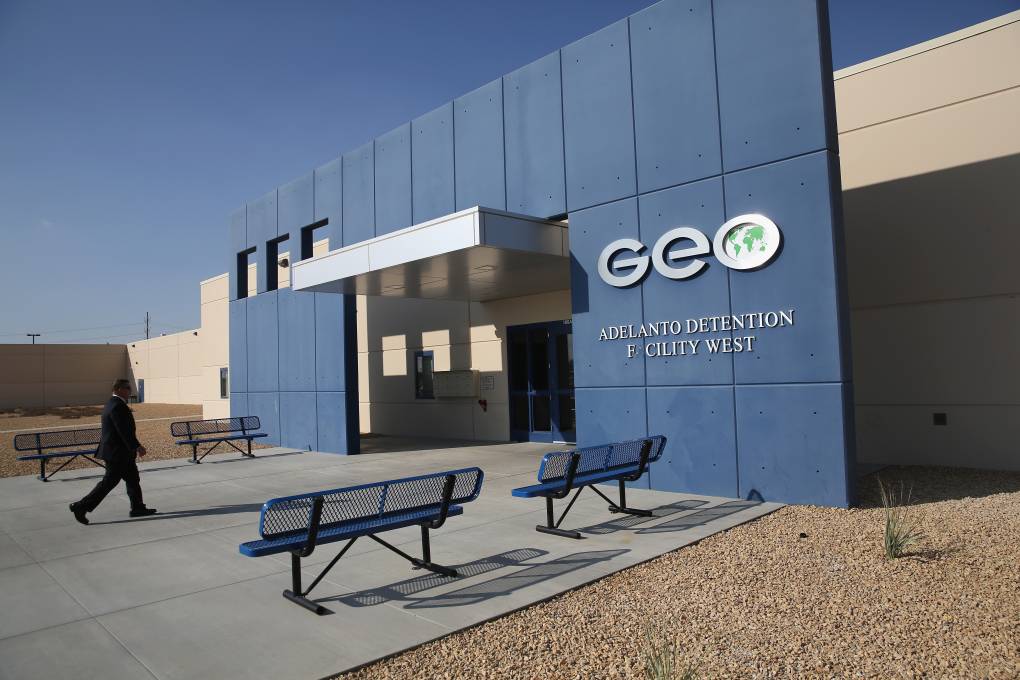
"caption": "This U.S. immigration processing center in Adelanto, California, is operated by GEO Group, a Florida-based company specializing in privatized corrections.",
"credit": "John Moore/Getty Images",
"altTag": "On a modern, low-slung building with no windows, a big sign reading 'GEO' hangs on an exterior wall.",
"description": "Field office director Dave Marin walks into the Adelanto Detention Facility on November 15, 2013 in Adelanto, California. The facility, the largest and newest Immigration and Customs Enforcement (ICE), detention center in California, houses an average of 1,100 immigrants in custody pending a decision in their immigration cases or awaiting deportation.",
"imgSizes": {
"medium": {
"file": "https://cdn.kqed.org/wp-content/uploads/sites/10/2021/10/GettyImages-450371215-800x533.jpg",
"width": 800,
"height": 533,
"mimeType": "image/jpeg"
},
"large": {
"file": "https://cdn.kqed.org/wp-content/uploads/sites/10/2021/10/GettyImages-450371215-1020x680.jpg",
"width": 1020,
"height": 680,
"mimeType": "image/jpeg"
},
"thumbnail": {
"file": "https://cdn.kqed.org/wp-content/uploads/sites/10/2021/10/GettyImages-450371215-160x107.jpg",
"width": 160,
"height": 107,
"mimeType": "image/jpeg"
},
"1536x1536": {
"file": "https://cdn.kqed.org/wp-content/uploads/sites/10/2021/10/GettyImages-450371215-1536x1024.jpg",
"width": 1536,
"height": 1024,
"mimeType": "image/jpeg"
},
"2048x2048": {
"file": "https://cdn.kqed.org/wp-content/uploads/sites/10/2021/10/GettyImages-450371215-2048x1365.jpg",
"width": 2048,
"height": 1365,
"mimeType": "image/jpeg"
},
"post-thumbnail": {
"file": "https://cdn.kqed.org/wp-content/uploads/sites/10/2021/10/GettyImages-450371215-672x372.jpg",
"width": 672,
"height": 372,
"mimeType": "image/jpeg"
},
"twentyfourteen-full-width": {
"file": "https://cdn.kqed.org/wp-content/uploads/sites/10/2021/10/GettyImages-450371215-1038x576.jpg",
"width": 1038,
"height": 576,
"mimeType": "image/jpeg"
},
"full-width": {
"file": "https://cdn.kqed.org/wp-content/uploads/sites/10/2021/10/GettyImages-450371215-1920x1280.jpg",
"width": 1920,
"height": 1280,
"mimeType": "image/jpeg"
},
"kqedFullSize": {
"file": "https://cdn.kqed.org/wp-content/uploads/sites/10/2021/10/GettyImages-450371215-scaled-e1769711263847.jpg",
"width": 2000,
"height": 1334
}
},
"isLoading": false,
"fetchFailed": false
},
"news_11890721": {
"type": "attachments",
"id": "news_11890721",
"meta": {
"index": "attachments_1716263798",
"site": "news",
"id": "11890721",
"found": true
},
"parent": 11890719,
"imgSizes": {
"twentyfourteen-full-width": {
"file": "https://ww2.kqed.org/app/uploads/sites/10/2021/09/gettyimages-1233503806_wide-f43d5e802423294b7a7e7f5032acdc297345b4bf-1038x576.jpg",
"width": 1038,
"mimeType": "image/jpeg",
"height": 576
},
"thumbnail": {
"file": "https://ww2.kqed.org/app/uploads/sites/10/2021/09/gettyimages-1233503806_wide-f43d5e802423294b7a7e7f5032acdc297345b4bf-160x90.jpg",
"width": 160,
"mimeType": "image/jpeg",
"height": 90
},
"post-thumbnail": {
"file": "https://ww2.kqed.org/app/uploads/sites/10/2021/09/gettyimages-1233503806_wide-f43d5e802423294b7a7e7f5032acdc297345b4bf-672x372.jpg",
"width": 672,
"mimeType": "image/jpeg",
"height": 372
},
"kqedFullSize": {
"file": "https://ww2.kqed.org/app/uploads/sites/10/2021/09/gettyimages-1233503806_wide-f43d5e802423294b7a7e7f5032acdc297345b4bf-scaled-e1633125775752.jpg",
"width": 1920,
"height": 1080
},
"2048x2048": {
"file": "https://ww2.kqed.org/app/uploads/sites/10/2021/09/gettyimages-1233503806_wide-f43d5e802423294b7a7e7f5032acdc297345b4bf-2048x1152.jpg",
"width": 2048,
"mimeType": "image/jpeg",
"height": 1152
},
"large": {
"file": "https://ww2.kqed.org/app/uploads/sites/10/2021/09/gettyimages-1233503806_wide-f43d5e802423294b7a7e7f5032acdc297345b4bf-1020x574.jpg",
"width": 1020,
"mimeType": "image/jpeg",
"height": 574
},
"1536x1536": {
"file": "https://ww2.kqed.org/app/uploads/sites/10/2021/09/gettyimages-1233503806_wide-f43d5e802423294b7a7e7f5032acdc297345b4bf-1536x864.jpg",
"width": 1536,
"mimeType": "image/jpeg",
"height": 864
},
"full-width": {
"file": "https://ww2.kqed.org/app/uploads/sites/10/2021/09/gettyimages-1233503806_wide-f43d5e802423294b7a7e7f5032acdc297345b4bf-1920x1080.jpg",
"width": 1920,
"mimeType": "image/jpeg",
"height": 1080
},
"medium": {
"file": "https://ww2.kqed.org/app/uploads/sites/10/2021/09/gettyimages-1233503806_wide-f43d5e802423294b7a7e7f5032acdc297345b4bf-800x450.jpg",
"width": 800,
"mimeType": "image/jpeg",
"height": 450
}
},
"publishDate": 1633108926,
"modified": 1633127750,
"caption": "Migrants are apprehended by U.S. Customs and Border Protection (CBP) agents in La Joya, Texas, on June 12, 2021.",
"description": "Migrants are apprehended by U.S. Customs and Border Protection (CBP) agents in La Joya, Texas, U.S., on Saturday, June 12, 2021. Legislation that would grant a path to citizenship to young immigrants brought to the U.S as children has triggered a fresh round of partisan skirmishes over border security, as the fate of a program shielding them from deportation hangs in the balance. Photographer: Nicolo Filippo Rosso/Bloomberg via Getty Images",
"title": "Migrants are apprehended by U.S. Customs and Border Protection agents in LaJoya, Texas, in June.",
"credit": "Nicolo Filippo Rosso/Bloomberg via Getty Images",
"status": "inherit",
"altTag": "A U.S. border patrol agent in a green uniform stands over a group of migrants, who rest in the sand holding gallon jugs of water.",
"isLoading": false,
"fetchFailed": false
},
"news_11890506": {
"type": "attachments",
"id": "news_11890506",
"meta": {
"index": "attachments_1716263798",
"site": "news",
"id": "11890506",
"found": true
},
"parent": 11890467,
"imgSizes": {
"twentyfourteen-full-width": {
"file": "https://ww2.kqed.org/app/uploads/sites/10/2021/09/019_EastBay_JFCSAfghanResettlement_09102021-1038x576.jpg",
"width": 1038,
"mimeType": "image/jpeg",
"height": 576
},
"thumbnail": {
"file": "https://ww2.kqed.org/app/uploads/sites/10/2021/09/019_EastBay_JFCSAfghanResettlement_09102021-160x107.jpg",
"width": 160,
"mimeType": "image/jpeg",
"height": 107
},
"post-thumbnail": {
"file": "https://ww2.kqed.org/app/uploads/sites/10/2021/09/019_EastBay_JFCSAfghanResettlement_09102021-672x372.jpg",
"width": 672,
"mimeType": "image/jpeg",
"height": 372
},
"kqedFullSize": {
"file": "https://ww2.kqed.org/app/uploads/sites/10/2021/09/019_EastBay_JFCSAfghanResettlement_09102021.jpg",
"width": 1920,
"height": 1280
},
"large": {
"file": "https://ww2.kqed.org/app/uploads/sites/10/2021/09/019_EastBay_JFCSAfghanResettlement_09102021-1020x680.jpg",
"width": 1020,
"mimeType": "image/jpeg",
"height": 680
},
"1536x1536": {
"file": "https://ww2.kqed.org/app/uploads/sites/10/2021/09/019_EastBay_JFCSAfghanResettlement_09102021-1536x1024.jpg",
"width": 1536,
"mimeType": "image/jpeg",
"height": 1024
},
"medium": {
"file": "https://ww2.kqed.org/app/uploads/sites/10/2021/09/019_EastBay_JFCSAfghanResettlement_09102021-800x533.jpg",
"width": 800,
"mimeType": "image/jpeg",
"height": 533
}
},
"publishDate": 1632958779,
"modified": 1633029430,
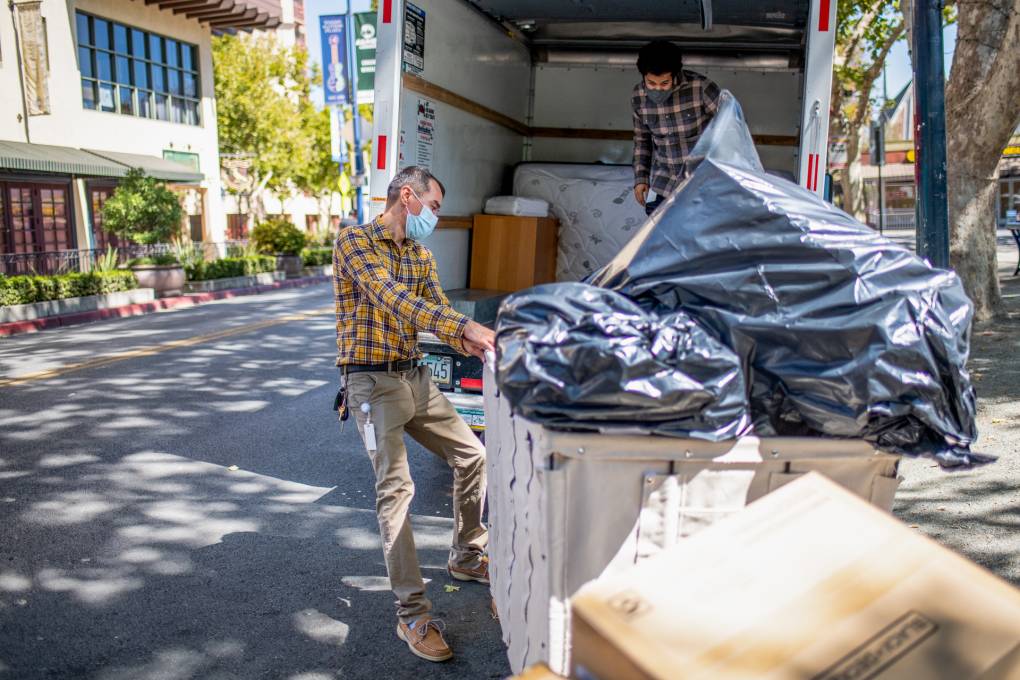
"caption": "Ashraf Hussain (L) and Walid Aziz from Jewish Family and Community Services East Bay bring household goods from the organization's offices in Concord to a family who recently arrived from Afghanistan, on Sept. 10, 2021.",
"description": null,
"title": "019_EastBay_JFCSAfghanResettlement_09102021",
"credit": "Beth LaBerge/KQED",
"status": "inherit",
"altTag": "Two men, one inside the back of a truck and one on the street, unload large black garbage bags into a large rolling laundry cart.",
"isLoading": false,
"fetchFailed": false
},
"news_11890060": {
"type": "attachments",
"id": "news_11890060",
"meta": {
"index": "attachments_1716263798",
"site": "news",
"id": "11890060",
"found": true
},
"title": "US-POLITICS-IMMIGRATION-COURT",
"publishDate": 1632779004,
"status": "inherit",
"parent": 11890039,
"modified": 1779125894,
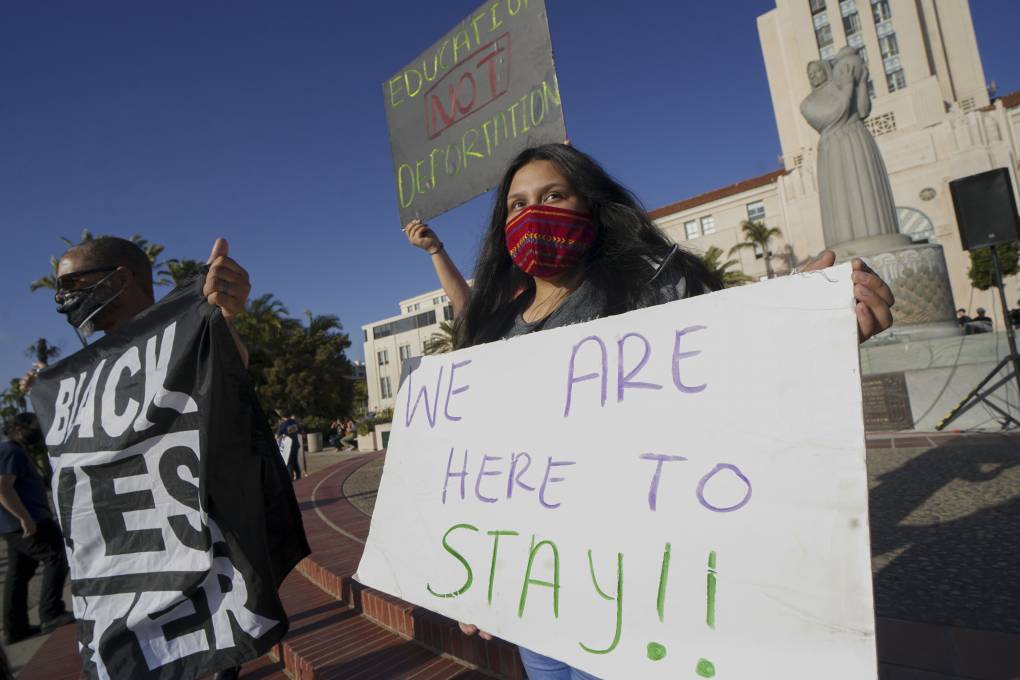
"caption": "People hold signs during a rally in support of the Supreme Court's ruling in favor of the Deferred Action for Childhood Arrivals (DACA) program in San Diego, California, June 18, 2020.",
"credit": "Sandy Huffaker/AFP via Getty Images",
"altTag": "Protesters hold signs saying, \"We are here to stay!\" \"Black Lives Matter\" and \"Education, Not Deportation.\"",
"description": "People hold signs during a rally in support of the Supreme Court's ruling in favor of the Deferred Action for Childhood Arrivals (DACA) program, in San Diego, California June 18, 2020.",
"imgSizes": {
"medium": {
"file": "https://cdn.kqed.org/wp-content/uploads/sites/10/2021/09/GettyImages-1221069312-800x534.jpg",
"width": 800,
"height": 534,
"mimeType": "image/jpeg"
},
"large": {
"file": "https://cdn.kqed.org/wp-content/uploads/sites/10/2021/09/GettyImages-1221069312-1020x680.jpg",
"width": 1020,
"height": 680,
"mimeType": "image/jpeg"
},
"thumbnail": {
"file": "https://cdn.kqed.org/wp-content/uploads/sites/10/2021/09/GettyImages-1221069312-160x107.jpg",
"width": 160,
"height": 107,
"mimeType": "image/jpeg"
},
"1536x1536": {
"file": "https://cdn.kqed.org/wp-content/uploads/sites/10/2021/09/GettyImages-1221069312-1536x1025.jpg",
"width": 1536,
"height": 1025,
"mimeType": "image/jpeg"
},
"2048x2048": {
"file": "https://cdn.kqed.org/wp-content/uploads/sites/10/2021/09/GettyImages-1221069312-2048x1366.jpg",
"width": 2048,
"height": 1366,
"mimeType": "image/jpeg"
},
"post-thumbnail": {
"file": "https://cdn.kqed.org/wp-content/uploads/sites/10/2021/09/GettyImages-1221069312-672x372.jpg",
"width": 672,
"height": 372,
"mimeType": "image/jpeg"
},
"twentyfourteen-full-width": {
"file": "https://cdn.kqed.org/wp-content/uploads/sites/10/2021/09/GettyImages-1221069312-1038x576.jpg",
"width": 1038,
"height": 576,
"mimeType": "image/jpeg"
},
"full-width": {
"file": "https://cdn.kqed.org/wp-content/uploads/sites/10/2021/09/GettyImages-1221069312-1920x1281.jpg",
"width": 1920,
"height": 1281,
"mimeType": "image/jpeg"
},
"kqedFullSize": {
"file": "https://cdn.kqed.org/wp-content/uploads/sites/10/2021/09/GettyImages-1221069312-scaled-e1740595603543.jpg",
"width": 2000,
"height": 1334
}
},
"isLoading": false,
"fetchFailed": false
},
"news_11888834": {
"type": "attachments",
"id": "news_11888834",
"meta": {
"index": "attachments_1716263798",
"site": "news",
"id": "11888834",
"found": true
},
"parent": 11888827,
"imgSizes": {
"twentyfourteen-full-width": {
"file": "https://ww2.kqed.org/app/uploads/sites/10/2021/09/Ed-Source-Video-Call-2-1000x576.jpg",
"width": 1000,
"mimeType": "image/jpeg",
"height": 576
},
"thumbnail": {
"file": "https://ww2.kqed.org/app/uploads/sites/10/2021/09/Ed-Source-Video-Call-2-160x107.jpg",
"width": 160,
"mimeType": "image/jpeg",
"height": 107
},
"post-thumbnail": {
"file": "https://ww2.kqed.org/app/uploads/sites/10/2021/09/Ed-Source-Video-Call-2-672x372.jpg",
"width": 672,
"mimeType": "image/jpeg",
"height": 372
},
"kqedFullSize": {
"file": "https://ww2.kqed.org/app/uploads/sites/10/2021/09/Ed-Source-Video-Call-2.jpg",
"width": 1000,
"height": 667
},
"medium": {
"file": "https://ww2.kqed.org/app/uploads/sites/10/2021/09/Ed-Source-Video-Call-2-800x534.jpg",
"width": 800,
"mimeType": "image/jpeg",
"height": 534
}
},
"publishDate": 1631813848,
"modified": 1631915656,
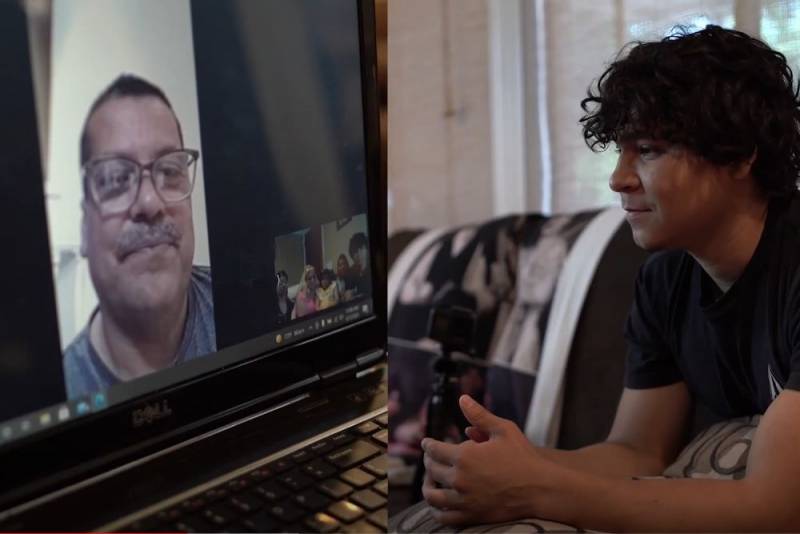
"caption": "José Luis Ruiz Arévalos videocalls his family in Los Banos from Hermosillo, Sonora. In May 2019, Ruiz Arévalos travelled to Mexico for what he thought would be the final step to apply for his green card: an interview at the U.S. Consulate. But he was unexpectedly refused a green card when U.S. Consulate officials decided that under Trump administration guidance he was likely to become a “public charge,” dependent on government services. Unable to return to the U.S., he remains in Hermosillo, Sonora, a thousand miles from his family, while he tries to appeal the decision.",
"description": "José Luis Ruiz Arévalos videocalls his family in Los Banos from Hermosillo, Sonora. In May 2019, Ruiz Arévalos travelled to Mexico for what he thought would be the final step to apply for his green card: an interview at the U.S. Consulate. But he was unexpectedly refused a green card when U.S. Consulate officials decided that under Trump administration guidance he was likely to become a “public charge,” dependent on government services. Unable to return to the U.S., he remains in Hermosillo, Sonora, a thousand miles from his family, while he tries to appeal the decision.",
"title": "Ed Source Video Call-2",
"credit": "Jennifer Molina/EdSource",
"status": "inherit",
"altTag": "A teenage boy with floppy hair videocalls his father on a flat-screen TV in a living room.",
"isLoading": false,
"fetchFailed": false
},
"news_11888806": {
"type": "attachments",
"id": "news_11888806",
"meta": {
"index": "attachments_1716263798",
"site": "news",
"id": "11888806",
"found": true
},
"title": "Father And Son From Honduras Seeking Asylum In The U.S. Await The Court's Decision On Their Status",
"publishDate": 1631785462,
"status": "inherit",
"parent": 11888754,
"modified": 1749678492,
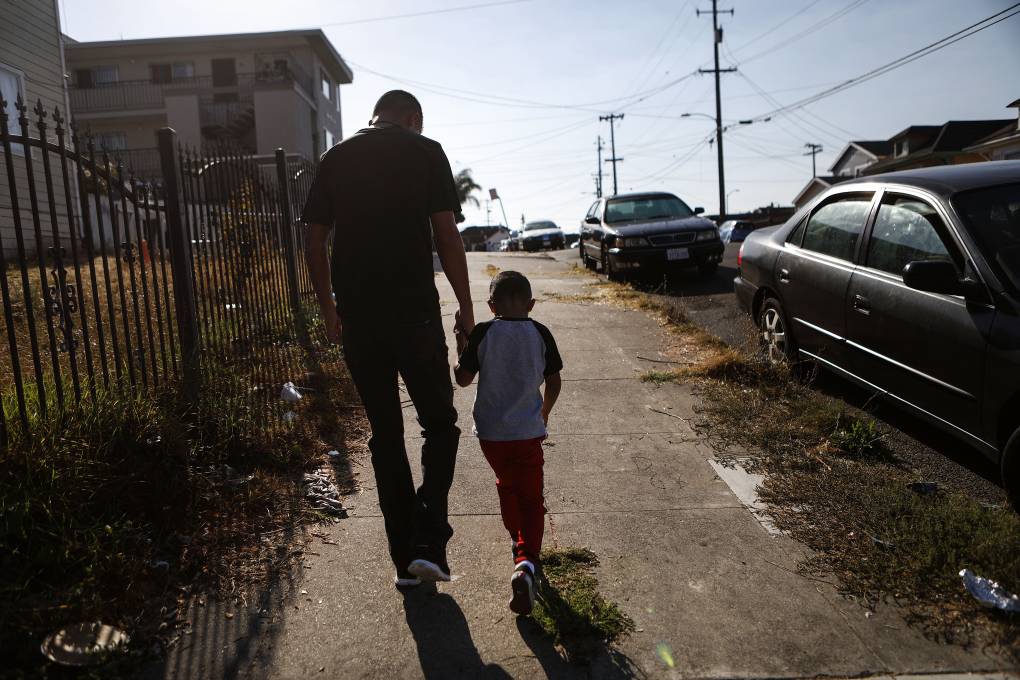
"caption": "A Honduran father and his 6-year-old son walk to Sunday Mass on Sept. 9, 2018, in Oakland, California. They were one of almost 2,600 families separated due to the Trump administration's \"zero tolerance\" immigration policy. ",
"credit": "Mario Tama/Getty Images",
"altTag": "A man and young boy hold hands as they walk in silhouette on an urban sidewalk in early morning sun.",
"description": "Honduran father Juan and his six-year-old son Anthony walk on their way to attend Sunday Mass on September 9, 2018 in Oakland, California. They fled their country, leaving many family members behind, and crossed the U.S. border in April at a lawful port of entry in Brownsville, Texas seeking asylum. They were soon separated and spent the next 85 days apart in detention. Juan was sent to Tulsa, Oklahoma, while his son was sent to a detention shelter New York. They were one of almost 2,600 families separated due to the Trump administration's \"zero tolerance\" immigration policy. Juan said it took six weeks from the time of separation until he was able to make a phone call to his son. They were finally reunited in July 2018.",
"imgSizes": {
"medium": {
"file": "https://cdn.kqed.org/wp-content/uploads/sites/10/2021/09/GettyImages-1031228044-800x533.jpg",
"width": 800,
"height": 533,
"mimeType": "image/jpeg"
},
"large": {
"file": "https://cdn.kqed.org/wp-content/uploads/sites/10/2021/09/GettyImages-1031228044-1020x680.jpg",
"width": 1020,
"height": 680,
"mimeType": "image/jpeg"
},
"thumbnail": {
"file": "https://cdn.kqed.org/wp-content/uploads/sites/10/2021/09/GettyImages-1031228044-160x107.jpg",
"width": 160,
"height": 107,
"mimeType": "image/jpeg"
},
"1536x1536": {
"file": "https://cdn.kqed.org/wp-content/uploads/sites/10/2021/09/GettyImages-1031228044-1536x1024.jpg",
"width": 1536,
"height": 1024,
"mimeType": "image/jpeg"
},
"2048x2048": {
"file": "https://cdn.kqed.org/wp-content/uploads/sites/10/2021/09/GettyImages-1031228044-2048x1365.jpg",
"width": 2048,
"height": 1365,
"mimeType": "image/jpeg"
},
"post-thumbnail": {
"file": "https://cdn.kqed.org/wp-content/uploads/sites/10/2021/09/GettyImages-1031228044-672x372.jpg",
"width": 672,
"height": 372,
"mimeType": "image/jpeg"
},
"twentyfourteen-full-width": {
"file": "https://cdn.kqed.org/wp-content/uploads/sites/10/2021/09/GettyImages-1031228044-1038x576.jpg",
"width": 1038,
"height": 576,
"mimeType": "image/jpeg"
},
"full-width": {
"file": "https://cdn.kqed.org/wp-content/uploads/sites/10/2021/09/GettyImages-1031228044-1920x1280.jpg",
"width": 1920,
"height": 1280,
"mimeType": "image/jpeg"
},
"kqedFullSize": {
"file": "https://cdn.kqed.org/wp-content/uploads/sites/10/2021/09/GettyImages-1031228044-scaled-e1776901494677.jpg",
"width": 2000,
"height": 1334
}
},
"isLoading": false,
"fetchFailed": false
},
"news_11888018": {
"type": "attachments",
"id": "news_11888018",
"meta": {
"index": "attachments_1716263798",
"site": "news",
"id": "11888018",
"found": true
},
"parent": 11887630,
"imgSizes": {
"twentyfourteen-full-width": {
"file": "https://ww2.kqed.org/app/uploads/sites/10/2021/09/RS51406_021_Fremont_MaiwandMarket_08272021-qut-1038x576.jpg",
"width": 1038,
"mimeType": "image/jpeg",
"height": 576
},
"thumbnail": {
"file": "https://ww2.kqed.org/app/uploads/sites/10/2021/09/RS51406_021_Fremont_MaiwandMarket_08272021-qut-160x107.jpg",
"width": 160,
"mimeType": "image/jpeg",
"height": 107
},
"post-thumbnail": {
"file": "https://ww2.kqed.org/app/uploads/sites/10/2021/09/RS51406_021_Fremont_MaiwandMarket_08272021-qut-672x372.jpg",
"width": 672,
"mimeType": "image/jpeg",
"height": 372
},
"kqedFullSize": {
"file": "https://ww2.kqed.org/app/uploads/sites/10/2021/09/RS51406_021_Fremont_MaiwandMarket_08272021-qut.jpg",
"width": 1920,
"height": 1280
},
"large": {
"file": "https://ww2.kqed.org/app/uploads/sites/10/2021/09/RS51406_021_Fremont_MaiwandMarket_08272021-qut-1020x680.jpg",
"width": 1020,
"mimeType": "image/jpeg",
"height": 680
},
"1536x1536": {
"file": "https://ww2.kqed.org/app/uploads/sites/10/2021/09/RS51406_021_Fremont_MaiwandMarket_08272021-qut-1536x1024.jpg",
"width": 1536,
"mimeType": "image/jpeg",
"height": 1024
},
"medium": {
"file": "https://ww2.kqed.org/app/uploads/sites/10/2021/09/RS51406_021_Fremont_MaiwandMarket_08272021-qut-800x533.jpg",
"width": 800,
"mimeType": "image/jpeg",
"height": 533
}
},
"publishDate": 1631299404,
"modified": 1631308919,
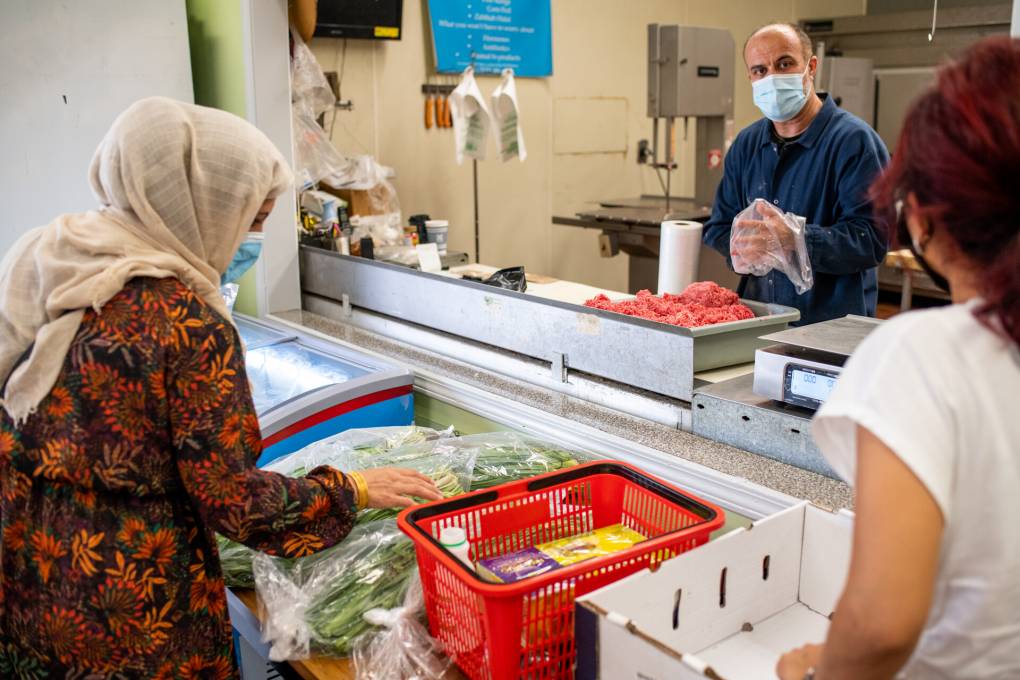
"caption": "A butcher helps customers at Maiwand Market in Fremont — a staple for many in the Afghan community — on Aug. 27, 2021.",
"description": "A butcher helps customers at Maiwand Market in Fremont – a staple for many in the Afghan community – on Aug. 27, 2021.",
"title": "RS51406_021_Fremont_MaiwandMarket_08272021-qut",
"credit": "Beth LaBerge/KQED",
"status": "inherit",
"altTag": null,
"isLoading": false,
"fetchFailed": false
},
"news_11886750": {
"type": "attachments",
"id": "news_11886750",
"meta": {
"index": "attachments_1716263798",
"site": "news",
"id": "11886750",
"found": true
},
"parent": 11886733,
"imgSizes": {
"twentyfourteen-full-width": {
"file": "https://ww2.kqed.org/app/uploads/sites/10/2021/08/Afghan_rally_sf-1038x576.jpg",
"width": 1038,
"mimeType": "image/jpeg",
"height": 576
},
"thumbnail": {
"file": "https://ww2.kqed.org/app/uploads/sites/10/2021/08/Afghan_rally_sf-160x90.jpg",
"width": 160,
"mimeType": "image/jpeg",
"height": 90
},
"post-thumbnail": {
"file": "https://ww2.kqed.org/app/uploads/sites/10/2021/08/Afghan_rally_sf-672x372.jpg",
"width": 672,
"mimeType": "image/jpeg",
"height": 372
},
"kqedFullSize": {
"file": "https://ww2.kqed.org/app/uploads/sites/10/2021/08/Afghan_rally_sf-scaled.jpg",
"width": 2560,
"height": 1440
},
"2048x2048": {
"file": "https://ww2.kqed.org/app/uploads/sites/10/2021/08/Afghan_rally_sf-2048x1152.jpg",
"width": 2048,
"mimeType": "image/jpeg",
"height": 1152
},
"large": {
"file": "https://ww2.kqed.org/app/uploads/sites/10/2021/08/Afghan_rally_sf-1020x574.jpg",
"width": 1020,
"mimeType": "image/jpeg",
"height": 574
},
"1536x1536": {
"file": "https://ww2.kqed.org/app/uploads/sites/10/2021/08/Afghan_rally_sf-1536x864.jpg",
"width": 1536,
"mimeType": "image/jpeg",
"height": 864
},
"full-width": {
"file": "https://ww2.kqed.org/app/uploads/sites/10/2021/08/Afghan_rally_sf-1920x1080.jpg",
"width": 1920,
"mimeType": "image/jpeg",
"height": 1080
},
"medium": {
"file": "https://ww2.kqed.org/app/uploads/sites/10/2021/08/Afghan_rally_sf-800x450.jpg",
"width": 800,
"mimeType": "image/jpeg",
"height": 450
}
},
"publishDate": 1630186981,
"modified": 1630364629,
"caption": "Sisters Nialb and Nahila Habib drove two hours from Roseville to attend the San Francisco protest to support Afghans.",
"description": "Sisters Nialb and Nahila Habib drove two hours from Roseville to attend the San Francisco protest to support Afghans.",
"title": "Afghan_rally_sf",
"credit": "Annelise Finney/KQED",
"status": "inherit",
"altTag": "Two women holding protest signs on behalf of Afghan people",
"isLoading": false,
"fetchFailed": false
},
"news_11886356": {
"type": "attachments",
"id": "news_11886356",
"meta": {
"index": "attachments_1716263798",
"site": "news",
"id": "11886356",
"found": true
},
"parent": 11886227,
"imgSizes": {
"twentyfourteen-full-width": {
"file": "https://ww2.kqed.org/app/uploads/sites/10/2021/08/RS51127_010_SanJose_Immigration_08232021-qut-1038x576.jpg",
"width": 1038,
"mimeType": "image/jpeg",
"height": 576
},
"thumbnail": {
"file": "https://ww2.kqed.org/app/uploads/sites/10/2021/08/RS51127_010_SanJose_Immigration_08232021-qut-160x107.jpg",
"width": 160,
"mimeType": "image/jpeg",
"height": 107
},
"post-thumbnail": {
"file": "https://ww2.kqed.org/app/uploads/sites/10/2021/08/RS51127_010_SanJose_Immigration_08232021-qut-672x372.jpg",
"width": 672,
"mimeType": "image/jpeg",
"height": 372
},
"kqedFullSize": {
"file": "https://ww2.kqed.org/app/uploads/sites/10/2021/08/RS51127_010_SanJose_Immigration_08232021-qut.jpg",
"width": 1920,
"height": 1280
},
"large": {
"file": "https://ww2.kqed.org/app/uploads/sites/10/2021/08/RS51127_010_SanJose_Immigration_08232021-qut-1020x680.jpg",
"width": 1020,
"mimeType": "image/jpeg",
"height": 680
},
"1536x1536": {
"file": "https://ww2.kqed.org/app/uploads/sites/10/2021/08/RS51127_010_SanJose_Immigration_08232021-qut-1536x1024.jpg",
"width": 1536,
"mimeType": "image/jpeg",
"height": 1024
},
"medium": {
"file": "https://ww2.kqed.org/app/uploads/sites/10/2021/08/RS51127_010_SanJose_Immigration_08232021-qut-800x533.jpg",
"width": 800,
"mimeType": "image/jpeg",
"height": 533
}
},
"publishDate": 1629934598,
"modified": 1630015502,
"caption": "Herrera and Gonzalez hold hands in their yard on Aug. 23, 2021. The couple, along with their three children, fled Mexico and are seeking asylum in the U.S. But their case has dragged on for six years in immigration court. ",
"description": null,
"title": "RS51127_010_SanJose_Immigration_08232021-qut",
"credit": "Beth LaBerge/KQED",
"status": "inherit",
"altTag": null,
"isLoading": false,
"fetchFailed": false
},
"news_11886284": {
"type": "attachments",
"id": "news_11886284",
"meta": {
"index": "attachments_1716263798",
"site": "news",
"id": "11886284",
"found": true
},
"parent": 11886268,
"imgSizes": {
"twentyfourteen-full-width": {
"file": "https://ww2.kqed.org/app/uploads/sites/10/2021/08/GettyImages-1231772534-1024x576.jpg",
"width": 1024,
"mimeType": "image/jpeg",
"height": 576
},
"thumbnail": {
"file": "https://ww2.kqed.org/app/uploads/sites/10/2021/08/GettyImages-1231772534-160x110.jpg",
"width": 160,
"mimeType": "image/jpeg",
"height": 110
},
"post-thumbnail": {
"file": "https://ww2.kqed.org/app/uploads/sites/10/2021/08/GettyImages-1231772534-672x372.jpg",
"width": 672,
"mimeType": "image/jpeg",
"height": 372
},
"kqedFullSize": {
"file": "https://ww2.kqed.org/app/uploads/sites/10/2021/08/GettyImages-1231772534.jpg",
"width": 1024,
"height": 701
},
"large": {
"file": "https://ww2.kqed.org/app/uploads/sites/10/2021/08/GettyImages-1231772534-1020x698.jpg",
"width": 1020,
"mimeType": "image/jpeg",
"height": 698
},
"medium": {
"file": "https://ww2.kqed.org/app/uploads/sites/10/2021/08/GettyImages-1231772534-800x548.jpg",
"width": 800,
"mimeType": "image/jpeg",
"height": 548
}
},
"publishDate": 1629920417,
"modified": 1648688185,
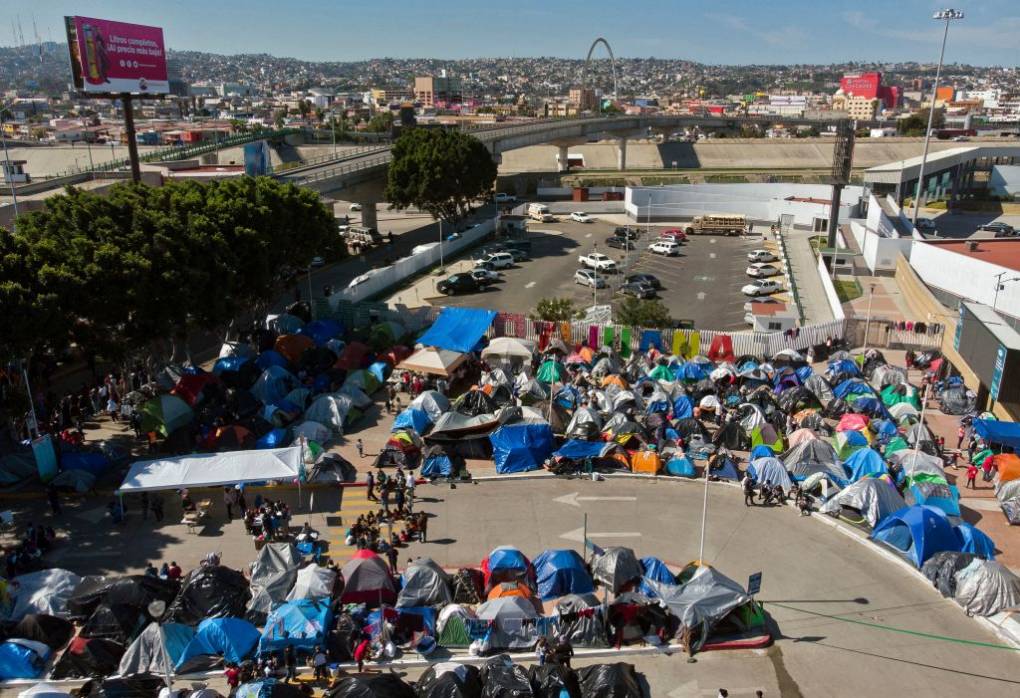
"caption": "Aerial view of a migrant camp where asylum-seekers wait for U.S. authorities to allow them to start their migration process, outside El Chaparral crossing port in Tijuana, Mexico, on March 17, 2021. ",
"description": null,
"title": "MEXICO-US-MIGRATION",
"credit": "Guillermo Arias/AFP/Getty Images",
"status": "inherit",
"altTag": "A large camp in an urban area.",
"isLoading": false,
"fetchFailed": false
},
"news_11885927": {
"type": "attachments",
"id": "news_11885927",
"meta": {
"index": "attachments_1716263798",
"site": "news",
"id": "11885927",
"found": true
},
"parent": 11885908,
"imgSizes": {
"twentyfourteen-full-width": {
"file": "https://ww2.kqed.org/app/uploads/sites/10/2021/08/Demonstrators-Marching-East-on-Thorton-Ave-copy-1038x576.jpg",
"width": 1038,
"mimeType": "image/jpeg",
"height": 576
},
"thumbnail": {
"file": "https://ww2.kqed.org/app/uploads/sites/10/2021/08/Demonstrators-Marching-East-on-Thorton-Ave-copy-160x90.jpg",
"width": 160,
"mimeType": "image/jpeg",
"height": 90
},
"post-thumbnail": {
"file": "https://ww2.kqed.org/app/uploads/sites/10/2021/08/Demonstrators-Marching-East-on-Thorton-Ave-copy-672x372.jpg",
"width": 672,
"mimeType": "image/jpeg",
"height": 372
},
"kqedFullSize": {
"file": "https://ww2.kqed.org/app/uploads/sites/10/2021/08/Demonstrators-Marching-East-on-Thorton-Ave-copy-scaled.jpg",
"width": 2560,
"height": 1440
},
"2048x2048": {
"file": "https://ww2.kqed.org/app/uploads/sites/10/2021/08/Demonstrators-Marching-East-on-Thorton-Ave-copy-2048x1152.jpg",
"width": 2048,
"mimeType": "image/jpeg",
"height": 1152
},
"large": {
"file": "https://ww2.kqed.org/app/uploads/sites/10/2021/08/Demonstrators-Marching-East-on-Thorton-Ave-copy-1020x574.jpg",
"width": 1020,
"mimeType": "image/jpeg",
"height": 574
},
"1536x1536": {
"file": "https://ww2.kqed.org/app/uploads/sites/10/2021/08/Demonstrators-Marching-East-on-Thorton-Ave-copy-1536x864.jpg",
"width": 1536,
"mimeType": "image/jpeg",
"height": 864
},
"full-width": {
"file": "https://ww2.kqed.org/app/uploads/sites/10/2021/08/Demonstrators-Marching-East-on-Thorton-Ave-copy-1920x1080.jpg",
"width": 1920,
"mimeType": "image/jpeg",
"height": 1080
},
"medium": {
"file": "https://ww2.kqed.org/app/uploads/sites/10/2021/08/Demonstrators-Marching-East-on-Thorton-Ave-copy-800x450.jpg",
"width": 800,
"mimeType": "image/jpeg",
"height": 450
}
},
"publishDate": 1629642733,
"modified": 1629759586,
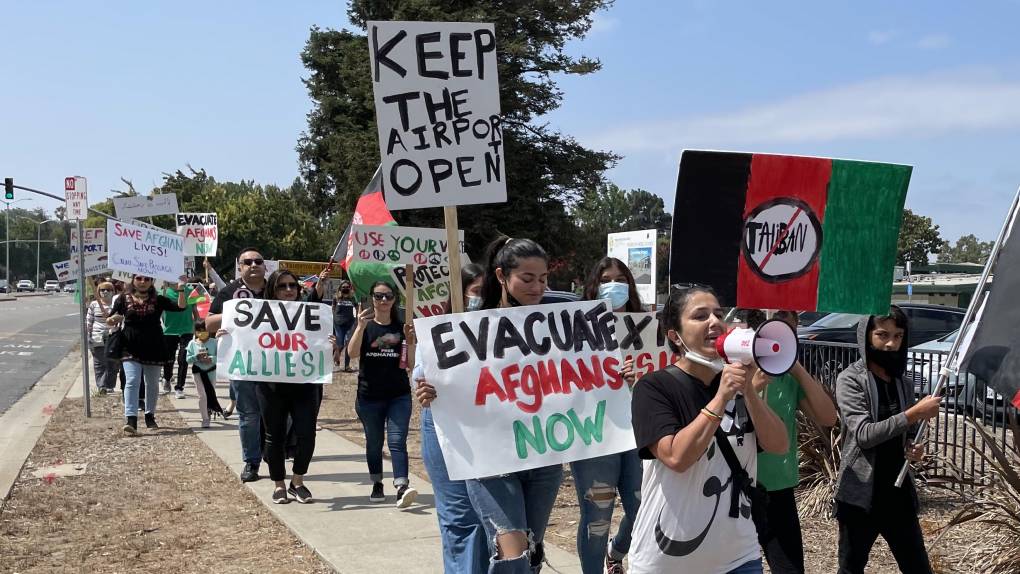
"caption": "A group of 50-70 people marched in Fremont on Saturday, Aug. 21, 2021. ",
"description": null,
"title": "Demonstrators Marching East on Thorton Ave copy",
"credit": "Annelise Finney/KQED",
"status": "inherit",
"altTag": "People with signs such as \"keep the airport open\" marching in Fremont on August 21.",
"isLoading": false,
"fetchFailed": false
}
},
"audioPlayerReducer": {
"postId": "stream_live",
"isPaused": true,
"isPlaying": false,
"pfsActive": false,
"pledgeModalIsOpen": true,
"playerDrawerIsOpen": false,
"liveAudioPlayStartedAt": 0,
"liveAudioPlayContext": ""
},
"authorsReducer": {
"byline_news_11892048": {
"type": "authors",
"id": "byline_news_11892048",
"meta": {
"override": true
},
"slug": "byline_news_11892048",
"name": "\u003ca href=\"https://www.npr.org/people/14562108/bill-chappell\">Bill Chappell\u003c/a>",
"isLoading": false
},
"byline_news_11891221": {
"type": "authors",
"id": "byline_news_11891221",
"meta": {
"override": true
},
"slug": "byline_news_11891221",
"name": "\u003ca href=\"https://www.npr.org/people/930959243/jaclyn-diaz\">Jaclyn Diaz\u003c/a>",
"isLoading": false
},
"byline_news_11890719": {
"type": "authors",
"id": "byline_news_11890719",
"meta": {
"override": true
},
"slug": "byline_news_11890719",
"name": "Joel Rose",
"isLoading": false
},
"byline_news_11890039": {
"type": "authors",
"id": "byline_news_11890039",
"meta": {
"override": true
},
"slug": "byline_news_11890039",
"name": "Elliot Spagat, Mark Sherman \u003cbr> The Associated Press",
"isLoading": false
},
"byline_news_11888827": {
"type": "authors",
"id": "byline_news_11888827",
"meta": {
"override": true
},
"slug": "byline_news_11888827",
"name": "\u003ca href=\"https://edsource.org/author/zstavely\">Zaidee Stavely\u003c/a>",
"isLoading": false
},
"byline_news_11888754": {
"type": "authors",
"id": "byline_news_11888754",
"meta": {
"override": true
},
"slug": "byline_news_11888754",
"name": "Ben Fox \u003cbr> The Associated Press",
"isLoading": false
},
"byline_news_11886268": {
"type": "authors",
"id": "byline_news_11886268",
"meta": {
"override": true
},
"slug": "byline_news_11886268",
"name": "Mark Sherman \u003cbr> The Associated Press",
"isLoading": false
},
"tychehendricks": {
"type": "authors",
"id": "259",
"meta": {
"index": "authors_1716337520",
"id": "259",
"found": true
},
"name": "Tyche Hendricks",
"firstName": "Tyche",
"lastName": "Hendricks",
"slug": "tychehendricks",
"email": "thendricks@kqed.org",
"display_author_email": true,
"staff_mastheads": [
"news"
],
"title": "KQED Senior Editor, Immigration",
"bio": "\u003cspan style=\"font-weight: 400;\">Tyche Hendricks is KQED’s senior editor for immigration, leading coverage of the policy and politics that affect California’s immigrant communities. Her work for KQED’s radio and online audiences is also carried on NPR and other national outlets. She has been recognized with awards from the Radio and Television News Directors Association, the Society for Professional Journalists; the Education Writers Association; the Best of the West and the National Federation of Community Broadcasters. Before joining KQED in 2010, Tyche spent more than a dozen years as a newspaper reporter, notably at the \u003c/span>\u003ci>\u003cspan style=\"font-weight: 400;\">San Francisco Chronicle\u003c/span>\u003c/i>\u003cspan style=\"font-weight: 400;\">. At different times she has covered criminal justice, government and politics and urban planning. Tyche has taught in the MFA Creative Writing program at the University of San Francisco and at UC Berkeley’s Graduate School of Journalism, where she was co-director of a national immigration symposium for professional journalists. She is the author of \u003c/span>\u003ci>\u003cspan style=\"font-weight: 400;\">The Wind Doesn't Need a Passport: Stories from the U.S.-Mexico Borderlands\u003c/span>\u003c/i>\u003cspan style=\"font-weight: 400;\"> (University of California Press). \u003c/span>",
"avatar": "https://secure.gravatar.com/avatar/b8ee458e2731c2d43df86882ce17267e?s=600&d=blank&r=g",
"twitter": "tychehendricks",
"facebook": null,
"instagram": null,
"linkedin": null,
"sites": [
{
"site": "news",
"roles": [
"editor"
]
},
{
"site": "stateofhealth",
"roles": [
"editor"
]
}
],
"headData": {
"title": "Tyche Hendricks | KQED",
"description": "KQED Senior Editor, Immigration",
"ogImgSrc": "https://secure.gravatar.com/avatar/b8ee458e2731c2d43df86882ce17267e?s=600&d=blank&r=g",
"twImgSrc": "https://secure.gravatar.com/avatar/b8ee458e2731c2d43df86882ce17267e?s=600&d=blank&r=g"
},
"isLoading": false,
"link": "/author/tychehendricks"
},
"lsarah": {
"type": "authors",
"id": "11626",
"meta": {
"index": "authors_1716337520",
"id": "11626",
"found": true
},
"name": "Lakshmi Sarah",
"firstName": "Lakshmi",
"lastName": "Sarah",
"slug": "lsarah",
"email": "lsarah@kqed.org",
"display_author_email": false,
"staff_mastheads": [],
"title": "Digital Producer",
"bio": "Lakshmi Sarah is an educator, author and journalist with a focus on innovative storytelling. She has worked with newspapers, radio and magazines from Ahmedabad, India to Los Angeles, California. She has written and produced for Die Zeit, Global Voices, AJ+, KQED, Fusion Media Group and the New York Times.",
"avatar": "https://secure.gravatar.com/avatar/652dcaecd8b28826fc17a8b2d6bb4e93?s=600&d=blank&r=g",
"twitter": "lakitalki",
"facebook": null,
"instagram": "https://www.instagram.com/laki.talki/",
"linkedin": "https://www.linkedin.com/in/lakisarah/",
"sites": [
{
"site": "arts",
"roles": []
},
{
"site": "news",
"roles": []
},
{
"site": "bayareabites",
"roles": []
},
{
"site": "science",
"roles": []
}
],
"headData": {
"title": "Lakshmi Sarah | KQED",
"description": "Digital Producer",
"ogImgSrc": "https://secure.gravatar.com/avatar/652dcaecd8b28826fc17a8b2d6bb4e93?s=600&d=blank&r=g",
"twImgSrc": "https://secure.gravatar.com/avatar/652dcaecd8b28826fc17a8b2d6bb4e93?s=600&d=blank&r=g"
},
"isLoading": false,
"link": "/author/lsarah"
},
"afinney": {
"type": "authors",
"id": "11772",
"meta": {
"index": "authors_1716337520",
"id": "11772",
"found": true
},
"name": "Annelise Finney",
"firstName": "Annelise",
"lastName": "Finney",
"slug": "afinney",
"email": "afinney@kqed.org",
"display_author_email": true,
"staff_mastheads": [
"news"
],
"title": "Reporter",
"bio": "Annelise reports on reparations in California and East Bay politics. She co-produced the Sunday Music Drop, a limited-term radio series featuring Bay Area musicians that aired between Sept 2022 and Oct 2024. She joined KQED in 2021 as a general assignment reporter and is an alumna of KALW's Audio Academy. She was born and raised in the East Bay. She is currently away from KQED completing a year-long reporting project in Berlin, Germany as a Alexander Von Humboldt German Chancellor Fellow.",
"avatar": "https://secure.gravatar.com/avatar/5fded66cae47704cdfc5021cde0f3aa4?s=600&d=blank&r=g",
"twitter": null,
"facebook": null,
"instagram": null,
"linkedin": null,
"sites": [
{
"site": "news",
"roles": [
"editor"
]
},
{
"site": "liveblog",
"roles": [
"author"
]
}
],
"headData": {
"title": "Annelise Finney | KQED",
"description": "Reporter",
"ogImgSrc": "https://secure.gravatar.com/avatar/5fded66cae47704cdfc5021cde0f3aa4?s=600&d=blank&r=g",
"twImgSrc": "https://secure.gravatar.com/avatar/5fded66cae47704cdfc5021cde0f3aa4?s=600&d=blank&r=g"
},
"isLoading": false,
"link": "/author/afinney"
}
},
"pagesReducer": {
"news_category_immigration": {
"type": "terms",
"id": "news_1169",
"meta": {
"index": "terms_1716263798",
"site": "news",
"id": "1169",
"score": 10.910406
},
"featImg": null,
"name": "Immigration",
"description": null,
"taxonomy": "category",
"headData": {
"twImgId": null,
"twTitle": null,
"ogTitle": null,
"ogImgId": null,
"twDescription": null,
"description": null,
"title": "Immigration Archives | KQED News",
"ogDescription": null
},
"ttid": 1180,
"slug": "immigration",
"isLoading": false,
"title": "Immigration",
"pageMeta": {
"site": "news",
"WpPageTemplate": "page-topic-editorial",
"currentPage": 53
},
"blocks": [
{
"blockName": "kqed/post-list",
"attrs": {
"layout": "cardArticle2",
"query": "posts/news?category=immigration",
"seeMore": false,
"paginated": true,
"page": 53
}
},
{
"blockName": "kqed/ad"
}
]
}
},
"pfsSessionReducer": {},
"postsReducer": {
"stream_live": {
"type": "live",
"id": "stream_live",
"audioUrl": "https://streams.kqed.org/kqedradio",
"title": "Live Stream",
"excerpt": "Live Stream information currently unavailable.",
"link": "/radio",
"featImg": "",
"label": {
"name": "KQED Live",
"link": "/"
}
},
"stream_kqedNewscast": {
"type": "posts",
"id": "stream_kqedNewscast",
"audioUrl": "https://www.kqed.org/.stream/anon/radio/RDnews/newscast.mp3?_=1",
"title": "KQED Newscast",
"featImg": "",
"label": {
"name": "88.5 FM",
"link": "/"
}
},
"news_11892048": {
"type": "posts",
"id": "news_11892048",
"meta": {
"index": "posts_1716263798",
"site": "news",
"id": "11892048",
"score": null,
"sort": [
1634087443000
]
},
"guestAuthors": [],
"slug": "biden-administration-orders-ice-to-stop-mass-raids-on-immigrants-workplaces",
"title": "Biden Administration Orders ICE to Stop Mass Raids on Immigrants' Workplaces",
"publishDate": 1634087443,
"format": "standard",
"headTitle": "Biden Administration Orders ICE to Stop Mass Raids on Immigrants’ Workplaces | KQED",
"labelTerm": {
"term": 253,
"site": "news"
},
"content": "\u003cp>Immigration and Customs Enforcement agents will no longer conduct mass raids on workplaces where undocumented immigrants are employed, according to a new order by Homeland Security Secretary Alejandro Mayorkas.\u003c/p>\n\u003cp>[pullquote align=\"right\" size=\"medium\" citation=\"Alejandro Mayorkas, homeland security secretary\"]‘We will not tolerate unscrupulous employers who exploit unauthorized workers.’[/pullquote]The real problem, Mayorkas said in a memorandum released Tuesday, are “exploitative employers,” not unauthorized workers.\u003c/p>\n\u003cp>Trump-era raids became tools for suppression, DHS says\u003c/p>\n\u003cp>“Under the previous administration, these resource-intensive operations resulted in the simultaneous arrest of hundreds of workers,” DHS said about the change. While the raids attracted attention and made headlines, the agency says they “were used as a tool by exploitative employers to suppress and retaliate against workers’ assertion of labor laws.”\u003cbr>\n[ad fullwidth]\u003cbr>\nThe announcement is part of a shift in strategy under the Biden administration that puts a new emphasis on going after businesses and employers that violate labor laws. In addition to halting mass raids, it supports the idea of exercising prosecutorial discretion to spare workers from charges if they witness or are the victims of abuse or exploitation in the workplace.\u003c/p>\n\u003cp>“We will not tolerate unscrupulous employers who exploit unauthorized workers, conduct illegal activities, or impose unsafe working conditions,” Mayorkas said in a news release about the shift.\u003c/p>\n\u003cp>“By adopting policies that focus on the most unscrupulous employers,” he said, “we will protect workers as well as legitimate American businesses.”\u003c/p>\n\u003cp>Immigration advocacy groups welcomed the policy shift, although groups such as the National Partnership for New Americans also renewed their call for permanent reform, including legal protections for millions of undocumented immigrants brought to the U.S. as children and those with temporary protected status.\u003c/p>\n\u003cp>[aside label ='More Coverage' tag='immigration']“We also ask Congress to act courageously and swiftly to include funds in the reconciliation package to provide a pathway to citizenship for Dreamers, TPS holders, farm workers and essential workers,” said Nicole Melaku, the group’s executive director, in an email to NPR.\u003c/p>\n\u003cp>During the Trump administration, ICE carried out several massive workplace raids that the then-president touted as a centerpiece of his crackdown on undocumented immigration. One operation in 2018 resulted in the arrest of 146 employees at a meat processing company in northeast Ohio.\u003c/p>\n\u003cp>That raid was followed by an operation in August 2019 in which ICE agents arrested approximately 680 people at food processing plants in Mississippi.\u003c/p>\n\u003cp>Around that same period, \u003ca href=\"https://www.kqed.org/news/11760782/attorneys-at-least-22-immigrants-arrested-in-bay-area-this-week-as-thousands-fear-ice-raids\">immigration attorneys shared with KQED\u003c/a> that at least 22 people were arrested by immigration authorities in the Bay Area within the span of a week.\u003c/p>\n\u003cp>In 2017, \u003ca href=\"https://www.kqed.org/news/11805331/california-is-a-sanctuary-state-but-some-police-arent-following-the-law-attorneys-say\">California became a so-called “sanctuary state”\u003c/a> after it passed SB 54, which limits local law enforcement’s ability to cooperate with federal immigration authorities to cases of serious convicted criminals and to inquire about an individual’s immigration status.\u003c/p>\n\u003cp>\u003cem>This post includes reporting from KQED’s Farida Jhabvala Romero.\u003c/em>\u003c/p>\n\u003cp>[ad fullwidth]\u003c/p>\n\u003cp>\u003c/p>\n",
"blocks": [],
"excerpt": "ICE agents will no longer conduct mass raids on workplaces where undocumented immigrants are employed, according to federal officials who added that they will focus on investigating \"exploitative employers.\"",
"status": "publish",
"parent": 0,
"modified": 1740182295,
"stats": {
"hasAudio": false,
"hasVideo": false,
"hasChartOrMap": false,
"iframeSrcs": [],
"hasGoogleForm": false,
"hasGallery": false,
"hasHearkenModule": false,
"hasPolis": false,
"paragraphCount": 15,
"wordCount": 510
},
"headData": {
"title": "Biden Administration Orders ICE to Stop Mass Raids on Immigrants' Workplaces | KQED",
"description": "ICE agents will no longer conduct mass raids on workplaces where undocumented immigrants are employed, according to federal officials who added that they will focus on investigating "exploitative employers."",
"ogTitle": "",
"ogDescription": "",
"ogImgId": "",
"twTitle": "",
"twDescription": "",
"twImgId": "",
"schema": {
"@context": "https://schema.org",
"@type": "NewsArticle",
"headline": "Biden Administration Orders ICE to Stop Mass Raids on Immigrants' Workplaces",
"datePublished": "2021-10-12T18:10:43-07:00",
"dateModified": "2025-02-21T15:58:15-08:00",
"image": "https://cdn.kqed.org/wp-content/uploads/2020/02/KQED-OG-Image@1x.png",
"isAccessibleForFree": "True",
"publisher": {
"@type": "NewsMediaOrganization",
"@id": "https://www.kqed.org/#organization",
"name": "KQED",
"logo": "https://cdn.kqed.org/wp-content/uploads/2020/02/KQED-OG-Image@1x.png",
"url": "https://www.kqed.org",
"sameAs": [
"https://www.facebook.com/KQED",
"https://twitter.com/KQED",
"https://www.instagram.com/kqed/",
"https://www.tiktok.com/@kqedofficial",
"https://www.linkedin.com/company/kqed",
"https://www.youtube.com/channel/UCeC0IOo7i1P_61zVUWbJ4nw"
]
}
}
},
"sticky": false,
"nprByline": "\u003ca href=\"https://www.npr.org/people/14562108/bill-chappell\">Bill Chappell\u003c/a>",
"path": "/news/11892048/biden-administration-orders-ice-to-stop-mass-raids-on-immigrants-workplaces",
"audioTrackLength": null,
"parsedContent": [
{
"type": "contentString",
"content": "\u003cdiv class=\"post-body\">\u003cp>\u003cp>Immigration and Customs Enforcement agents will no longer conduct mass raids on workplaces where undocumented immigrants are employed, according to a new order by Homeland Security Secretary Alejandro Mayorkas.\u003c/p>\n\u003cp>\u003c/p>\u003c/div>",
"attributes": {
"named": {},
"numeric": []
}
},
{
"type": "component",
"content": "‘We will not tolerate unscrupulous employers who exploit unauthorized workers.’",
"name": "pullquote",
"attributes": {
"named": {
"align": "right",
"size": "medium",
"citation": "Alejandro Mayorkas, homeland security secretary",
"label": ""
},
"numeric": []
}
},
{
"type": "contentString",
"content": "\u003cdiv class=\"post-body\">\u003cp>The real problem, Mayorkas said in a memorandum released Tuesday, are “exploitative employers,” not unauthorized workers.\u003c/p>\n\u003cp>Trump-era raids became tools for suppression, DHS says\u003c/p>\n\u003cp>“Under the previous administration, these resource-intensive operations resulted in the simultaneous arrest of hundreds of workers,” DHS said about the change. While the raids attracted attention and made headlines, the agency says they “were used as a tool by exploitative employers to suppress and retaliate against workers’ assertion of labor laws.”\u003cbr>\n\u003c/p>\u003c/div>",
"attributes": {
"named": {},
"numeric": []
}
},
{
"type": "component",
"content": "",
"name": "ad",
"attributes": {
"named": {
"label": "fullwidth"
},
"numeric": [
"fullwidth"
]
}
},
{
"type": "contentString",
"content": "\u003cdiv class=\"post-body\">\u003cp>\u003cbr>\nThe announcement is part of a shift in strategy under the Biden administration that puts a new emphasis on going after businesses and employers that violate labor laws. In addition to halting mass raids, it supports the idea of exercising prosecutorial discretion to spare workers from charges if they witness or are the victims of abuse or exploitation in the workplace.\u003c/p>\n\u003cp>“We will not tolerate unscrupulous employers who exploit unauthorized workers, conduct illegal activities, or impose unsafe working conditions,” Mayorkas said in a news release about the shift.\u003c/p>\n\u003cp>“By adopting policies that focus on the most unscrupulous employers,” he said, “we will protect workers as well as legitimate American businesses.”\u003c/p>\n\u003cp>Immigration advocacy groups welcomed the policy shift, although groups such as the National Partnership for New Americans also renewed their call for permanent reform, including legal protections for millions of undocumented immigrants brought to the U.S. as children and those with temporary protected status.\u003c/p>\n\u003cp>\u003c/p>\u003c/div>",
"attributes": {
"named": {},
"numeric": []
}
},
{
"type": "component",
"content": "",
"name": "aside",
"attributes": {
"named": {
"label": "More Coverage ",
"tag": "immigration"
},
"numeric": []
}
},
{
"type": "contentString",
"content": "\u003cdiv class=\"post-body\">\u003cp>“We also ask Congress to act courageously and swiftly to include funds in the reconciliation package to provide a pathway to citizenship for Dreamers, TPS holders, farm workers and essential workers,” said Nicole Melaku, the group’s executive director, in an email to NPR.\u003c/p>\n\u003cp>During the Trump administration, ICE carried out several massive workplace raids that the then-president touted as a centerpiece of his crackdown on undocumented immigration. One operation in 2018 resulted in the arrest of 146 employees at a meat processing company in northeast Ohio.\u003c/p>\n\u003cp>That raid was followed by an operation in August 2019 in which ICE agents arrested approximately 680 people at food processing plants in Mississippi.\u003c/p>\n\u003cp>Around that same period, \u003ca href=\"https://www.kqed.org/news/11760782/attorneys-at-least-22-immigrants-arrested-in-bay-area-this-week-as-thousands-fear-ice-raids\">immigration attorneys shared with KQED\u003c/a> that at least 22 people were arrested by immigration authorities in the Bay Area within the span of a week.\u003c/p>\n\u003cp>In 2017, \u003ca href=\"https://www.kqed.org/news/11805331/california-is-a-sanctuary-state-but-some-police-arent-following-the-law-attorneys-say\">California became a so-called “sanctuary state”\u003c/a> after it passed SB 54, which limits local law enforcement’s ability to cooperate with federal immigration authorities to cases of serious convicted criminals and to inquire about an individual’s immigration status.\u003c/p>\n\u003cp>\u003cem>This post includes reporting from KQED’s Farida Jhabvala Romero.\u003c/em>\u003c/p>\n\u003cp>\u003c/p>\u003c/div>",
"attributes": {
"named": {},
"numeric": []
}
},
{
"type": "component",
"content": "",
"name": "ad",
"attributes": {
"named": {
"label": "fullwidth"
},
"numeric": [
"fullwidth"
]
}
},
{
"type": "contentString",
"content": "\u003cdiv class=\"post-body\">\u003cp>\u003c/p>\n\u003cp>\u003c/p>\n\u003c/div>\u003c/p>",
"attributes": {
"named": {},
"numeric": []
}
}
],
"link": "/news/11892048/biden-administration-orders-ice-to-stop-mass-raids-on-immigrants-workplaces",
"authors": [
"byline_news_11892048"
],
"categories": [
"news_1169",
"news_8"
],
"tags": [
"news_29052",
"news_18123",
"news_21143",
"news_21027",
"news_20202",
"news_19904",
"news_20529"
],
"affiliates": [
"news_253"
],
"featImg": "news_11892062",
"label": "news_253"
},
"news_11891221": {
"type": "posts",
"id": "news_11891221",
"meta": {
"index": "posts_1716263798",
"site": "news",
"id": "11891221",
"score": null,
"sort": [
1633542347000
]
},
"parent": 0,
"labelTerm": {
"site": "news",
"term": 253
},
"blocks": [],
"publishDate": 1633542347,
"format": "standard",
"disqusTitle": "A Federal Court Blocks California's Ban on Private Detention Centers",
"title": "A Federal Court Blocks California's Ban on Private Detention Centers",
"headTitle": "NPR | KQED News",
"content": "\u003cp>A split federal appeals court in California ruled on Tuesday that a state law banning private detention facilities can't be enforced because it likely will intrude on the immigration authority held by the federal government.\u003c/p>\n\u003cp>The \u003ca href=\"https://cdn.ca9.uscourts.gov/datastore/opinions/2021/10/05/20-56172.pdf\">2-1 decision\u003c/a> from the U.S. Court of Appeals for the 9th Circuit also reverses an earlier trial court's dismissal of prior challenges to California's \u003ca href=\"https://leginfo.legislature.ca.gov/faces/billTextClient.xhtml?bill_id=201920200AB32\">AB 32\u003c/a>.\u003c/p>\n\u003cp>Gov. Gavin Newsom signed the ban into law in 2019. It sought to curtail California's cooperation with the federal government on immigration detention by slowly closing private detention facilities in the state by 2028.\u003c/p>\n\u003cp>A lawsuit challenging the rule was brought by the Trump administration and GEO Group, a company that operates two private immigration detention centers. The Biden administration pursued this lawsuit after Donald Trump left office, \u003ca href=\"https://www.npr.org/2021/06/15/1006728924/biden-wants-to-end-for-profit-immigrant-detention-his-administration-isnt-so-sur\">despite campaign promises by Biden\u003c/a> that he would close privately run detention centers.\u003cbr>\n[ad fullwidth]\u003cbr>\nIn his decision, Judge Kenneth Lee wrote that Congress granted the secretary of the Department of Homeland Security \"broad discretion over immigrant detention, including the right to contract with private companies to operate detention facilities.\"\u003c/p>\n\u003cp>Lee wrote, \"AB 32 cannot stand because it conflicts with this federal power and discretion given to the Secretary in an area that remains in the exclusive realm of the federal government, and it bars the Secretary from doing what federal immigration law explicitly permits him or her to do.\"\u003c/p>\n\u003cp>Judge Bridget Bade and Lee, who were in the majority, were appointed by then-President Donald Trump. The dissenter, Judge Mary Murguia, is the sole member appointed by a Democratic president.\u003c/p>\n\u003cp>Murguia wrote in her dissent that AB 32 actually said \"nothing about immigration, and it did not mention the federal government. Therefore, there was no justification for treating AB 32 as a regulation of immigration rather than one of health and safety.\"\u003c/p>\n\u003cp>Although the law was applied to immigration detention centers in the state, it didn't apply to only those locations, but rather to a variety of federal and state facilities, she said.\u003c/p>\n\u003cp>California Attorney General Rob Bonta indicated that the state plans to appeal the court's decision.\u003c/p>\n\u003cp>\"California is committed to protecting the health and safety of all people, irrespective of whether they are in custody or civil detention,\" Bonta said in a statement Tuesday. \"When we passed AB 32, we sent a clear message that putting an end to for-profit detention centers is key to achieving that goal. Prisons and detention centers shouldn't be places of profit.\"\u003c/p>\n\u003cp>https://twitter.com/AGRobBonta/status/1445482719610241032\u003c/p>\n\u003cp>This ruling comes as the Biden administration is facing a major surge in immigration, particularly from Haitian migrants, to the U.S. border.\u003c/p>\n\u003cp>[aside label ='Related Coverage' tag='prisons']Refugee admissions to the U.S. fell to a record low during the 2021 budget year, despite Biden's pledge to reverse restrictions under the Trump administration, The Associated Press reported this week. A total of 11,445 refugees were allowed into the country during the budget year that ended Thursday — far below the nation's cap of 62,500 for the 2021 budget year that Biden set in May.\u003c/p>\n\u003cp>Advocates shared concerns Tuesday over allowing privately run immigration detention centers to stay open in the face of the ongoing crush at the border.\u003c/p>\n\u003cp>The \u003ca href=\"https://docs.google.com/document/d/1-MFJfacM0j1VuoieB6swCP-0NaBpL4yHyjFihtl-e14/edit\">Dignity Not Detention Coalition, which pushed for the passage of AB 32, said in a statement\u003c/a>, \"The long record of medical neglect and systemic abuses plaguing detention — and the anti-Blackness and racism deeply embedded in the system — must not be swept under the rug. Today's ruling is a stark lesson about the threat unchecked corporate power poses to the democratic process.\"\u003cbr>\n[ad fullwidth]\u003c/p>\n\u003cp>\u003c/p>\n",
"disqusIdentifier": "11891221 https://ww2.kqed.org/news/?p=11891221",
"disqusUrl": "https://ww2.kqed.org/news/2021/10/06/a-federal-court-blocks-californias-ban-on-private-detention-centers/",
"stats": {
"hasVideo": false,
"hasChartOrMap": false,
"hasAudio": false,
"hasPolis": false,
"wordCount": 618,
"hasGoogleForm": false,
"hasGallery": false,
"hasHearkenModule": false,
"iframeSrcs": [],
"paragraphCount": 15
},
"modified": 1633551060,
"excerpt": "After California passed AB 32 in 2018, the Trump administration and a private prison company that operates two private immigration detention center challenged the law in the courts.",
"headData": {
"twImgId": "",
"twTitle": "",
"ogTitle": "",
"ogImgId": "",
"twDescription": "",
"description": "After California passed AB 32 in 2018, the Trump administration and a private prison company that operates two private immigration detention center challenged the law in the courts.",
"title": "A Federal Court Blocks California's Ban on Private Detention Centers | KQED",
"ogDescription": "",
"schema": {
"@context": "https://schema.org",
"@type": "NewsArticle",
"headline": "A Federal Court Blocks California's Ban on Private Detention Centers",
"datePublished": "2021-10-06T10:45:47-07:00",
"dateModified": "2021-10-06T13:11:00-07:00",
"image": "https://cdn.kqed.org/wp-content/uploads/2020/02/KQED-OG-Image@1x.png",
"isAccessibleForFree": "True",
"publisher": {
"@type": "NewsMediaOrganization",
"@id": "https://www.kqed.org/#organization",
"name": "KQED",
"logo": "https://cdn.kqed.org/wp-content/uploads/2020/02/KQED-OG-Image@1x.png",
"url": "https://www.kqed.org",
"sameAs": [
"https://www.facebook.com/KQED",
"https://twitter.com/KQED",
"https://www.instagram.com/kqed/",
"https://www.tiktok.com/@kqedofficial",
"https://www.linkedin.com/company/kqed",
"https://www.youtube.com/channel/UCeC0IOo7i1P_61zVUWbJ4nw"
]
}
}
},
"guestAuthors": [],
"slug": "a-federal-court-blocks-californias-ban-on-private-detention-centers",
"status": "publish",
"nprByline": "\u003ca href=\"https://www.npr.org/people/930959243/jaclyn-diaz\">Jaclyn Diaz\u003c/a>",
"path": "/news/11891221/a-federal-court-blocks-californias-ban-on-private-detention-centers",
"audioTrackLength": null,
"parsedContent": [
{
"type": "contentString",
"content": "\u003cdiv class=\"post-body\">\u003cp>\u003cp>A split federal appeals court in California ruled on Tuesday that a state law banning private detention facilities can't be enforced because it likely will intrude on the immigration authority held by the federal government.\u003c/p>\n\u003cp>The \u003ca href=\"https://cdn.ca9.uscourts.gov/datastore/opinions/2021/10/05/20-56172.pdf\">2-1 decision\u003c/a> from the U.S. Court of Appeals for the 9th Circuit also reverses an earlier trial court's dismissal of prior challenges to California's \u003ca href=\"https://leginfo.legislature.ca.gov/faces/billTextClient.xhtml?bill_id=201920200AB32\">AB 32\u003c/a>.\u003c/p>\n\u003cp>Gov. Gavin Newsom signed the ban into law in 2019. It sought to curtail California's cooperation with the federal government on immigration detention by slowly closing private detention facilities in the state by 2028.\u003c/p>\n\u003cp>A lawsuit challenging the rule was brought by the Trump administration and GEO Group, a company that operates two private immigration detention centers. The Biden administration pursued this lawsuit after Donald Trump left office, \u003ca href=\"https://www.npr.org/2021/06/15/1006728924/biden-wants-to-end-for-profit-immigrant-detention-his-administration-isnt-so-sur\">despite campaign promises by Biden\u003c/a> that he would close privately run detention centers.\u003cbr>\n\u003c/p>\u003c/div>",
"attributes": {
"named": {},
"numeric": []
}
},
{
"type": "component",
"content": "",
"name": "ad",
"attributes": {
"named": {
"label": "fullwidth"
},
"numeric": [
"fullwidth"
]
}
},
{
"type": "contentString",
"content": "\u003cdiv class=\"post-body\">\u003cp>\u003cbr>\nIn his decision, Judge Kenneth Lee wrote that Congress granted the secretary of the Department of Homeland Security \"broad discretion over immigrant detention, including the right to contract with private companies to operate detention facilities.\"\u003c/p>\n\u003cp>Lee wrote, \"AB 32 cannot stand because it conflicts with this federal power and discretion given to the Secretary in an area that remains in the exclusive realm of the federal government, and it bars the Secretary from doing what federal immigration law explicitly permits him or her to do.\"\u003c/p>\n\u003cp>Judge Bridget Bade and Lee, who were in the majority, were appointed by then-President Donald Trump. The dissenter, Judge Mary Murguia, is the sole member appointed by a Democratic president.\u003c/p>\n\u003cp>Murguia wrote in her dissent that AB 32 actually said \"nothing about immigration, and it did not mention the federal government. Therefore, there was no justification for treating AB 32 as a regulation of immigration rather than one of health and safety.\"\u003c/p>\n\u003cp>Although the law was applied to immigration detention centers in the state, it didn't apply to only those locations, but rather to a variety of federal and state facilities, she said.\u003c/p>\n\u003cp>California Attorney General Rob Bonta indicated that the state plans to appeal the court's decision.\u003c/p>\n\u003cp>\"California is committed to protecting the health and safety of all people, irrespective of whether they are in custody or civil detention,\" Bonta said in a statement Tuesday. \"When we passed AB 32, we sent a clear message that putting an end to for-profit detention centers is key to achieving that goal. Prisons and detention centers shouldn't be places of profit.\"\u003c/p>\u003c/p>\u003c/div>",
"attributes": {
"named": {},
"numeric": []
}
},
{
"type": "component",
"content": "",
"name": "singleTwitterStatus",
"attributes": {
"named": {
"id": "1445482719610241032"
},
"numeric": []
}
},
{
"type": "contentString",
"content": "\u003cdiv class=\"post-body\">\u003cp>\n\u003cp>This ruling comes as the Biden administration is facing a major surge in immigration, particularly from Haitian migrants, to the U.S. border.\u003c/p>\n\u003cp>\u003c/p>\u003c/div>",
"attributes": {
"named": {},
"numeric": []
}
},
{
"type": "component",
"content": "",
"name": "aside",
"attributes": {
"named": {
"label": "Related Coverage ",
"tag": "prisons"
},
"numeric": []
}
},
{
"type": "contentString",
"content": "\u003cdiv class=\"post-body\">\u003cp>Refugee admissions to the U.S. fell to a record low during the 2021 budget year, despite Biden's pledge to reverse restrictions under the Trump administration, The Associated Press reported this week. A total of 11,445 refugees were allowed into the country during the budget year that ended Thursday — far below the nation's cap of 62,500 for the 2021 budget year that Biden set in May.\u003c/p>\n\u003cp>Advocates shared concerns Tuesday over allowing privately run immigration detention centers to stay open in the face of the ongoing crush at the border.\u003c/p>\n\u003cp>The \u003ca href=\"https://docs.google.com/document/d/1-MFJfacM0j1VuoieB6swCP-0NaBpL4yHyjFihtl-e14/edit\">Dignity Not Detention Coalition, which pushed for the passage of AB 32, said in a statement\u003c/a>, \"The long record of medical neglect and systemic abuses plaguing detention — and the anti-Blackness and racism deeply embedded in the system — must not be swept under the rug. Today's ruling is a stark lesson about the threat unchecked corporate power poses to the democratic process.\"\u003cbr>\n\u003c/p>\u003c/div>",
"attributes": {
"named": {},
"numeric": []
}
},
{
"type": "component",
"content": "",
"name": "ad",
"attributes": {
"named": {
"label": "fullwidth"
},
"numeric": [
"fullwidth"
]
}
},
{
"type": "contentString",
"content": "\u003cdiv class=\"post-body\">\u003cp>\u003c/p>\n\u003cp>\u003c/p>\n\u003c/div>\u003c/p>",
"attributes": {
"named": {},
"numeric": []
}
}
],
"link": "/news/11891221/a-federal-court-blocks-californias-ban-on-private-detention-centers",
"authors": [
"byline_news_11891221"
],
"categories": [
"news_1169",
"news_6188",
"news_8"
],
"tags": [
"news_245",
"news_616",
"news_26724",
"news_29994",
"news_24020",
"news_2728",
"news_3674",
"news_17907"
],
"affiliates": [
"news_253"
],
"featImg": "news_11891235",
"label": "news_253"
},
"news_11890719": {
"type": "posts",
"id": "news_11890719",
"meta": {
"index": "posts_1716263798",
"site": "news",
"id": "11890719",
"score": null,
"sort": [
1633125841000
]
},
"guestAuthors": [],
"slug": "new-immigration-enforcement-guidelines-focus-on-threats-to-public-safety",
"title": "Biden Admin to ICE: Being in the U.S. Without Documentation 'Should Not Alone Be the Basis' for Deportation",
"publishDate": 1633125841,
"format": "standard",
"headTitle": "Biden Admin to ICE: Being in the U.S. Without Documentation ‘Should Not Alone Be the Basis’ for Deportation | KQED",
"labelTerm": {},
"content": "\u003cp>The Biden administration has unveiled \u003ca href=\"https://www.npr.org/2021/09/30/1042008490/the-white-house-rolls-out-new-guidelines-for-ice-but-defends-trump-era-policy\">new guidelines this week for federal immigration enforcement\u003c/a> that prioritize the most urgent threats to public safety, while still leaving discretion in the hands of individual officers and agents.\u003c/p>\n\u003cp>“What we have done is we have guided our workforce to exercise its discretion to focus on individuals who pose a threat to national security, public safety and border security,” Homeland Security Secretary Alejandro Mayorkas told NPR.\u003c/p>\n\u003cp>Under the new guidance, outlined in a memo from Mayorkas to U.S. Immigration and Customs Enforcement and other agencies, simply being present in the U.S. without legal authorization “should not alone be the basis” for immigration authorities to arrest or deport someone.\u003c/p>\n\u003cp>For many, ICE became the de facto face of former President Donald Trump’s immigration crackdown, as agents were free to arrest anyone they encountered who was in the country illegally. With these new guidelines, the Biden administration is trying to distance itself from those policies.\u003c/p>\n\u003cp>It is an “incontrovertible fact,” Mayorkas said, that “the majority of undocumented individuals … have contributed so significantly to our communities across the country for years. They include individuals who have worked on the front lines in the battle against COVID, teach our children, do the backbreaking farm work to help deliver food to our table.”\u003c/p>\n\u003cp>[ad fullwidth]\u003c/p>\n\u003cp>But as with many of the Biden administration’s immigration policies, the new rules were quickly attacked from all sides.\u003c/p>\n\u003cp>The guidelines “sit somewhere between lunacy and anarchy,” said Jon Feere, a former ICE chief of staff during the Trump administration who is now at the Center for Immigration Studies in Washington, which advocates for lower levels of immigration.\u003c/p>\n\u003cp>[aside label-\"related coverage\" tag=\"immigration\"]“But smugglers and traffickers must be happy,” he \u003ca href=\"https://twitter.com/JonFeere/status/1443681099729809408\">wrote in a tweet\u003c/a>.\u003c/p>\n\u003cp>The new guidance largely mirrors the enforcement priorities laid out in \u003ca href=\"https://www.npr.org/2021/02/18/969083367/biden-tells-ice-to-chill-new-rules-limit-who-immigration-agents-target-for-arres\">interim guidance from the Biden administration earlier this year\u003c/a>. But after criticism from Republicans and immigration hard-liners, the final guidance gives more leeway to individual ICE agents to make decisions about who is a threat to public safety.\u003c/p>\n\u003cp>Immigrant advocates worry that open-ended language could lead to abuse.\u003c/p>\n\u003cp>“This new guidance memo falls short of the Biden administration’s commitments and promises to create a fair and humane immigration system,” said Yaritza Mendez, with the pro-immigration advocacy group Make the Road New York.\u003c/p>\n\u003cp>“Left to use their own discretion, agencies like ICE have an alarming history of terrorizing, detaining and separating communities. We cannot continue to build on a system that inflicts harm on our immigrant communities,” Mendez said in a statement.\u003c/p>\n\u003cp>But DHS Secretary Mayorkas pushed back on those concerns.\u003c/p>\n\u003cp>“Yes, it leaves discretion in the hands of the agents. But that discretion is guided. It is supervised. It is managed. It is overseen,” Mayorkas told NPR.\u003c/p>\n\u003cp>He said ICE officers should look at a wide range of factors when deciding whom to arrest and deport — and that DHS would put safeguards in place to ensure that they do.\u003c/p>\n\u003cp>\u003c/p>\n\u003cp>“We will hold ourselves accountable internally, and we will hold ourselves accountable to the public externally,” he said.\u003c/p>\n\u003cdiv class=\"fullattribution\">Copyright 2021 NPR. To see more, npr.org.\u003cimg decoding=\"async\" src=\"https://www.google-analytics.com/__utm.gif?utmac=UA-5828686-4&utmdt=New+Immigration+Enforcement+Guidelines+Focus+On+Threats+To+Public+Safety&utme=8(APIKey)9(MDAxOTAwOTE4MDEyMTkxMDAzNjczZDljZA004)\">\u003c/div>\n\n",
"blocks": [],
"excerpt": "Under the new guidance to ICE and other agencies, simply being present in the U.S. without legal authorization \"should not alone be the basis\" for immigration authorities to arrest or deport someone.",
"status": "publish",
"parent": 0,
"modified": 1738715753,
"stats": {
"hasAudio": false,
"hasVideo": false,
"hasChartOrMap": false,
"iframeSrcs": [],
"hasGoogleForm": false,
"hasGallery": false,
"hasHearkenModule": false,
"hasPolis": false,
"paragraphCount": 18,
"wordCount": 550
},
"headData": {
"title": "Biden Admin to ICE: Being in the U.S. Without Documentation 'Should Not Alone Be the Basis' for Deportation | KQED",
"description": "Under the new guidance to ICE and other agencies, simply being present in the U.S. without legal authorization "should not alone be the basis" for immigration authorities to arrest or deport someone.",
"ogTitle": "",
"ogDescription": "",
"ogImgId": "",
"twTitle": "",
"twDescription": "",
"twImgId": "",
"schema": {
"@context": "https://schema.org",
"@type": "NewsArticle",
"headline": "Biden Admin to ICE: Being in the U.S. Without Documentation 'Should Not Alone Be the Basis' for Deportation",
"datePublished": "2021-10-01T15:04:01-07:00",
"dateModified": "2025-02-04T16:35:53-08:00",
"image": "https://cdn.kqed.org/wp-content/uploads/2020/02/KQED-OG-Image@1x.png",
"isAccessibleForFree": "True",
"publisher": {
"@type": "NewsMediaOrganization",
"@id": "https://www.kqed.org/#organization",
"name": "KQED",
"logo": "https://cdn.kqed.org/wp-content/uploads/2020/02/KQED-OG-Image@1x.png",
"url": "https://www.kqed.org",
"sameAs": [
"https://www.facebook.com/KQED",
"https://twitter.com/KQED",
"https://www.instagram.com/kqed/",
"https://www.tiktok.com/@kqedofficial",
"https://www.linkedin.com/company/kqed",
"https://www.youtube.com/channel/UCeC0IOo7i1P_61zVUWbJ4nw"
]
}
}
},
"source": "NPR",
"sourceUrl": "https://www.npr.org",
"sticky": false,
"nprImageCredit": "Nicolo Filippo Rosso",
"nprByline": "Joel Rose",
"nprImageAgency": "Bloomberg via Getty Images",
"nprStoryId": "1042153662",
"nprApiLink": "http://api.npr.org/query?id=1042153662&apiKey=MDAxOTAwOTE4MDEyMTkxMDAzNjczZDljZA004",
"nprHtmlLink": "https://www.npr.org/2021/09/30/1042153662/immigration-enforcement-public-safety?ft=nprml&f=1042153662",
"nprRetrievedStory": "1",
"nprPubDate": "Fri, 01 Oct 2021 09:53:00 -0400",
"nprStoryDate": "Thu, 30 Sep 2021 22:31:23 -0400",
"nprLastModifiedDate": "Fri, 01 Oct 2021 09:53:19 -0400",
"path": "/news/11890719/new-immigration-enforcement-guidelines-focus-on-threats-to-public-safety",
"audioTrackLength": null,
"parsedContent": [
{
"type": "contentString",
"content": "\u003cdiv class=\"post-body\">\u003cp>\u003cp>The Biden administration has unveiled \u003ca href=\"https://www.npr.org/2021/09/30/1042008490/the-white-house-rolls-out-new-guidelines-for-ice-but-defends-trump-era-policy\">new guidelines this week for federal immigration enforcement\u003c/a> that prioritize the most urgent threats to public safety, while still leaving discretion in the hands of individual officers and agents.\u003c/p>\n\u003cp>“What we have done is we have guided our workforce to exercise its discretion to focus on individuals who pose a threat to national security, public safety and border security,” Homeland Security Secretary Alejandro Mayorkas told NPR.\u003c/p>\n\u003cp>Under the new guidance, outlined in a memo from Mayorkas to U.S. Immigration and Customs Enforcement and other agencies, simply being present in the U.S. without legal authorization “should not alone be the basis” for immigration authorities to arrest or deport someone.\u003c/p>\n\u003cp>For many, ICE became the de facto face of former President Donald Trump’s immigration crackdown, as agents were free to arrest anyone they encountered who was in the country illegally. With these new guidelines, the Biden administration is trying to distance itself from those policies.\u003c/p>\n\u003cp>It is an “incontrovertible fact,” Mayorkas said, that “the majority of undocumented individuals … have contributed so significantly to our communities across the country for years. They include individuals who have worked on the front lines in the battle against COVID, teach our children, do the backbreaking farm work to help deliver food to our table.”\u003c/p>\n\u003cp>\u003c/p>\u003c/div>",
"attributes": {
"named": {},
"numeric": []
}
},
{
"type": "component",
"content": "",
"name": "ad",
"attributes": {
"named": {
"label": "fullwidth"
},
"numeric": [
"fullwidth"
]
}
},
{
"type": "contentString",
"content": "\u003cdiv class=\"post-body\">\u003cp>\u003c/p>\n\u003cp>But as with many of the Biden administration’s immigration policies, the new rules were quickly attacked from all sides.\u003c/p>\n\u003cp>The guidelines “sit somewhere between lunacy and anarchy,” said Jon Feere, a former ICE chief of staff during the Trump administration who is now at the Center for Immigration Studies in Washington, which advocates for lower levels of immigration.\u003c/p>\n\u003cp>\u003c/p>\u003c/div>",
"attributes": {
"named": {},
"numeric": []
}
},
{
"type": "component",
"content": "",
"name": "aside",
"attributes": {
"named": {
"tag": "immigration",
"label": "label-\"related coverage\""
},
"numeric": [
"label-\"related",
"coverage\""
]
}
},
{
"type": "contentString",
"content": "\u003cdiv class=\"post-body\">\u003cp>“But smugglers and traffickers must be happy,” he \u003ca href=\"https://twitter.com/JonFeere/status/1443681099729809408\">wrote in a tweet\u003c/a>.\u003c/p>\n\u003cp>The new guidance largely mirrors the enforcement priorities laid out in \u003ca href=\"https://www.npr.org/2021/02/18/969083367/biden-tells-ice-to-chill-new-rules-limit-who-immigration-agents-target-for-arres\">interim guidance from the Biden administration earlier this year\u003c/a>. But after criticism from Republicans and immigration hard-liners, the final guidance gives more leeway to individual ICE agents to make decisions about who is a threat to public safety.\u003c/p>\n\u003cp>Immigrant advocates worry that open-ended language could lead to abuse.\u003c/p>\n\u003cp>“This new guidance memo falls short of the Biden administration’s commitments and promises to create a fair and humane immigration system,” said Yaritza Mendez, with the pro-immigration advocacy group Make the Road New York.\u003c/p>\n\u003cp>“Left to use their own discretion, agencies like ICE have an alarming history of terrorizing, detaining and separating communities. We cannot continue to build on a system that inflicts harm on our immigrant communities,” Mendez said in a statement.\u003c/p>\n\u003cp>But DHS Secretary Mayorkas pushed back on those concerns.\u003c/p>\n\u003cp>“Yes, it leaves discretion in the hands of the agents. But that discretion is guided. It is supervised. It is managed. It is overseen,” Mayorkas told NPR.\u003c/p>\n\u003cp>He said ICE officers should look at a wide range of factors when deciding whom to arrest and deport — and that DHS would put safeguards in place to ensure that they do.\u003c/p>\n\u003cp>\u003c/p>\n\u003cp>“We will hold ourselves accountable internally, and we will hold ourselves accountable to the public externally,” he said.\u003c/p>\n\u003cdiv class=\"fullattribution\">Copyright 2021 NPR. To see more, npr.org.\u003cimg decoding=\"async\" src=\"https://www.google-analytics.com/__utm.gif?utmac=UA-5828686-4&utmdt=New+Immigration+Enforcement+Guidelines+Focus+On+Threats+To+Public+Safety&utme=8(APIKey)9(MDAxOTAwOTE4MDEyMTkxMDAzNjczZDljZA004)\">\u003c/div>\n\n\u003c/div>\u003c/p>",
"attributes": {
"named": {},
"numeric": []
}
}
],
"link": "/news/11890719/new-immigration-enforcement-guidelines-focus-on-threats-to-public-safety",
"authors": [
"byline_news_11890719"
],
"categories": [
"news_1169",
"news_8"
],
"tags": [
"news_29052",
"news_21027",
"news_20202"
],
"featImg": "news_11890721",
"label": "source_news_11890719"
},
"news_11890467": {
"type": "posts",
"id": "news_11890467",
"meta": {
"index": "posts_1716263798",
"site": "news",
"id": "11890467",
"score": null,
"sort": [
1633006831000
]
},
"parent": 0,
"labelTerm": {
"site": "news"
},
"blocks": [],
"publishDate": 1633006831,
"format": "audio",
"disqusTitle": "'I Know Exactly What You Feel': Bay Area Afghans Work Overtime to Welcome New Refugees",
"title": "'I Know Exactly What You Feel': Bay Area Afghans Work Overtime to Welcome New Refugees",
"headTitle": "KQED News",
"content": "\u003cp>On a recent morning at the Concord office of \u003ca href=\"https://jfcs-eastbay.org/urgent-afghan-evacuation/\">Jewish Family and Community Services East Bay\u003c/a>, staff members filled an enormous laundry cart with basic supplies for a new household — a family of seven, just arrived from Afghanistan. They loaded up new pillows, sheets, comforters, towel sets, pots and pans, and a microwave oven still in the box.\u003c/p>\n\u003cp>As he helped wheel the cart to an elevator and out to the street, the father of the family looked bleary. He said they had gotten on a flight out of Kabul on Aug. 27, the day after a suicide bombing at the airport killed at least 175, and then spent over a week in transit.\u003c/p>\n\u003cp>The man said he had worked for U.S. Army Special Forces as an interpreter, and asked not to be identified because he feared the Taliban could harm his relatives back home if they knew he had left the country.\u003c/p>\n\u003cp>The man, his wife and their five children are among at least 2,000 Afghan evacuees who have arrived in California since July — most coming to the Bay Area and Sacramento. The East Bay office of JFCS has resettled 137.\u003c/p>\n\u003cp>And as the new arrivals begin to put the pieces of their lives together, the established Afghan community here is stepping up to help. It turns out Afghans who call Northern California home know a lot about what the newcomers are going through.\u003c/p>\n\u003cp>“We’re helping them, the same as if they were our family or our friends,” said Ashraf Hussain, the JFCS case manager who pushed the cart to the curb. “I feel so happy when I’m helping.”\u003c/p>\n\u003cfigure id=\"attachment_11890515\" class=\"wp-caption aligncenter\" style=\"max-width: 800px\">\u003cimg class=\"wp-image-11890515 size-medium\" src=\"https://ww2.kqed.org/app/uploads/sites/10/2021/09/012_EastBay_JFCSAfghanResettlement_09102021-800x533.jpg\" alt=\"A man wearing a mask pulls against a doorframe to help himself pull a massive laundry cart on wheels laden with items in black garbage bags through it.\" width=\"800\" height=\"533\" srcset=\"https://ww2.kqed.org/app/uploads/sites/10/2021/09/012_EastBay_JFCSAfghanResettlement_09102021-800x533.jpg 800w, https://ww2.kqed.org/app/uploads/sites/10/2021/09/012_EastBay_JFCSAfghanResettlement_09102021-1020x680.jpg 1020w, https://ww2.kqed.org/app/uploads/sites/10/2021/09/012_EastBay_JFCSAfghanResettlement_09102021-160x107.jpg 160w, https://ww2.kqed.org/app/uploads/sites/10/2021/09/012_EastBay_JFCSAfghanResettlement_09102021-1536x1024.jpg 1536w, https://ww2.kqed.org/app/uploads/sites/10/2021/09/012_EastBay_JFCSAfghanResettlement_09102021.jpg 1920w\" sizes=\"(max-width: 800px) 100vw, 800px\">\u003cfigcaption class=\"wp-caption-text\">Walid Aziz (L) and Ashraf Hussain from Jewish Family and Community Services East Bay bring household goods from the organization's offices in Concord on Sept. 10, 2021, to a family who recently arrived from Afghanistan. \u003ccite>(Beth LaBerge/KQED)\u003c/cite>\u003c/figcaption>\u003c/figure>\n\u003cp>Hussain loaded the bedding and kitchenware into a U-Haul, along with donated mattresses and furniture. He says when he arrived from Afghanistan in 2017, he did not get connected with a resettlement agency and had to fend for himself. Now, he wants his clients to have an easier path.\u003c/p>\n\u003cp>Hussain also was a U.S. Army interpreter. And, like this new family, he arrived on a \u003ca href=\"https://travel.state.gov/content/travel/en/us-visas/immigrate/special-immg-visa-afghans-employed-us-gov.html\">special immigrant visa\u003c/a>, which qualifies recipients for refugee benefits. Hussain’s job is to help this new family apply for food stamps and Medi-Cal, find housing in the costly Bay Area and enroll the kids in school.\u003c/p>\n\u003ch3>Establishing stability for families fleeing chaos\u003c/h3>\n\u003cp>Typically, Afghans airlifted out of Kabul were flown to Qatar and then to U.S. military bases in Germany, Italy or Uganda, says Fouzia Azizi, JFCS's director of refugee services. From there they travel to bases in the U.S. where they get medical screenings, coronavirus vaccinations and paperwork processed. Jewish Family and Community Services estimates that there are currently more than 53,000 Afghan evacuees at military bases in the U.S. and at least another 12,000 who will eventually arrive here.\u003c/p>\n\u003cp>Azizi says all the practical help Hussain and other staff members provide is the first step to establishing stability for families who have fled chaos.\u003c/p>\n\u003cfigure id=\"attachment_11890505\" class=\"wp-caption aligncenter\" style=\"max-width: 800px\">\u003cimg class=\"wp-image-11890505 size-medium\" src=\"https://ww2.kqed.org/app/uploads/sites/10/2021/09/020_EastBay_JFCSAfghanResettlement_09102021-800x533.jpg\" alt=\"Two women and a man sit at a table in a conference room, two with papers in front of them and one on a laptop. On the wall is a large framed print of a bouquet in a vase.\" width=\"800\" height=\"533\" srcset=\"https://ww2.kqed.org/app/uploads/sites/10/2021/09/020_EastBay_JFCSAfghanResettlement_09102021-800x533.jpg 800w, https://ww2.kqed.org/app/uploads/sites/10/2021/09/020_EastBay_JFCSAfghanResettlement_09102021-1020x680.jpg 1020w, https://ww2.kqed.org/app/uploads/sites/10/2021/09/020_EastBay_JFCSAfghanResettlement_09102021-160x107.jpg 160w, https://ww2.kqed.org/app/uploads/sites/10/2021/09/020_EastBay_JFCSAfghanResettlement_09102021-1536x1024.jpg 1536w, https://ww2.kqed.org/app/uploads/sites/10/2021/09/020_EastBay_JFCSAfghanResettlement_09102021.jpg 1920w\" sizes=\"(max-width: 800px) 100vw, 800px\">\u003cfigcaption class=\"wp-caption-text\">Fouzia Azizi (R), director of refugee services, meets with her team at Jewish Family and Community Services East Bay in Concord on Sept. 10, 2021. \u003ccite>(Beth LaBerge/KQED)\u003c/cite>\u003c/figcaption>\u003c/figure>\n\u003cp>“There's trauma involved. There’s fear involved. And the anxiety level is so high,” she said. “Folks that are getting here, they are extremely overwhelmed due to the long process. ... And also, they left their loved ones at home.”\u003c/p>\n\u003cp>But the new arrivals need more than beds and kitchenware. They need a sense of connection and emotional support, she says.\u003c/p>\n\u003cp>[aside postID=\"news_11887630,news_11889134,news_11885170\" label=\"Related Posts\"]\u003c/p>\n\u003cp>“To be in touch with somebody that has a similar culture and also went through a similar experience,” she said. “It's a huge difference when you come and you have community members.”\u003c/p>\n\u003cp>Her staff at Jewish Family and Community Services works with refugees from Guatemala, Burma, Eritrea and elsewhere around the globe. But many case managers in the agency’s Concord office are Afghans who came to the Bay Area over the past four decades of war and upheaval in their homeland.\u003c/p>\n\u003cp>Azizi herself knows firsthand what these new families are feeling. She was a refugee once, too, fleeing Afghanistan with her family in 1994.\u003c/p>\n\u003cp>“The Islamic regime came to power and my house was put on fire. We left our house in the middle of the night,” she said. “And when I see my clients, and sometimes they are trying to explain their situation, I just say, ‘You don't need to tell me. I have been there ... And I know exactly what you feel.’”\u003c/p>\n\u003ch3>Afghan diaspora steps up to support new arrivals\u003c/h3>\n\u003cp>It’s not just refugee resettlement agencies that are reaching out to help the new arrivals. Across the Bay Area’s Afghan diaspora, community groups are raising money and organizing volunteers. And the cities of \u003ca href=\"https://www.fremont.gov/4058/Afghan-Refugee-Help\">Fremont\u003c/a> and \u003ca href=\"https://hayward-ca.gov/residents/equity-inclusion/afghan-relief-and-assistance-efforts\">Hayward\u003c/a>, home to long-established Afghan communities, are collecting donations and coordinating legal aid and other services.\u003c/p>\n\u003cp>“A lot of the Afghans that have been working with me have slept very little in the last couple of weeks,” said Aisha Wahab, a Hayward city councilmember who is the daughter of Afghan refugees.\u003c/p>\n\u003cp>[pullquote size=\"medium\" align=\"right\" citation=\"Aisha Wahab, Hayward city councilmember\"]'Kids bounce back pretty quickly. The concern that a lot of us tend to have is with the women. Women still have to be under these rigid cultural norms. ... They may not be able to potentially get a job or they may not have been educated even in Afghanistan. So the acclimation for Afghan women coming to the U.S. is going to be far more important and far more difficult than for pretty much anybody else.'[/pullquote]\u003c/p>\n\u003cp>She says she’s seeing dozens of young Afghan Americans like herself taking time off from their jobs to pitch in.\u003c/p>\n\u003cp>“I have a friend who right now is volunteering with the \u003ca href=\"https://www.afghancoalition.org/\">Afghan Coalition\u003c/a>. She is taking a solid month off. I have another friend who took two months off providing mental health services and translation,” Wahab said. “You have a lot of these young Afghans who have been deeply affected by their parents’ story ... and are saying that we are going to ease the arrival.”\u003c/p>\n\u003cp>Many of the Afghans now arriving on special immigrant visas are here because they worked for the U.S. And Wahab says that means many men, at least, already speak English, but their wives and children may not.\u003c/p>\n\u003cp>“Kids bounce back pretty quickly. The concern that a lot of us tend to have is with the women,” she said. “Women still have to be under these rigid cultural norms. ... They may not be able to potentially get a job or they may not have been educated even in Afghanistan. So the acclimation for Afghan women coming to the U.S. is going to be far more important and far more difficult than for pretty much anybody else.”\u003c/p>\n\u003ch3>Assisting new refugees by drawing on personal displacement experiences\u003c/h3>\n\u003cp>When Nazia Gabar arrived in the Bay Area in 2017 with her husband and baby, she did speak English. She was a professional woman who had worked for the U.S. government in Kabul. But the transition was still tough.\u003c/p>\n\u003cp>One morning earlier this month, Gabar perched on the sofa in her small, tidy apartment in a San Leandro housing development right beside the freeway and talked about those early days.\u003c/p>\n\u003cfigure id=\"attachment_11890528\" class=\"wp-caption aligncenter\" style=\"max-width: 800px\">\u003cimg class=\"wp-image-11890528 size-medium\" src=\"https://ww2.kqed.org/app/uploads/sites/10/2021/09/004_SanLeandro_GabarFamily_09082021-800x533.jpg\" alt=\"A woman wearing an orange salwar kameez and black hijab sits at a kitchen table typing on a laptop. A boy, age 4, sits right behind her on the chair.\" width=\"800\" height=\"533\" srcset=\"https://ww2.kqed.org/app/uploads/sites/10/2021/09/004_SanLeandro_GabarFamily_09082021-800x533.jpg 800w, https://ww2.kqed.org/app/uploads/sites/10/2021/09/004_SanLeandro_GabarFamily_09082021-1020x680.jpg 1020w, https://ww2.kqed.org/app/uploads/sites/10/2021/09/004_SanLeandro_GabarFamily_09082021-160x107.jpg 160w, https://ww2.kqed.org/app/uploads/sites/10/2021/09/004_SanLeandro_GabarFamily_09082021-1536x1024.jpg 1536w, https://ww2.kqed.org/app/uploads/sites/10/2021/09/004_SanLeandro_GabarFamily_09082021.jpg 1920w\" sizes=\"(max-width: 800px) 100vw, 800px\">\u003cfigcaption class=\"wp-caption-text\">While Nazia Gabar teaches English classes to women from Afghanistan who have resettled in the United States, one of her sons sits behind her at their home in San Leandro on Sept. 8, 2021. \u003ccite>(Beth LaBerge/KQED)\u003c/cite>\u003c/figcaption>\u003c/figure>\n\u003cp>“At first it's very difficult to adapt to a new culture, a new environment, new people,” she said. “At that time when we came, we were very stressful about everything because there was no home and no jobs. We didn't have any money and the rent was very high.”\u003c/p>\n\u003cp>Fortunately, some friends from Kabul had made the move a couple of years earlier and helped them get established. Gabar says even Afghans they had barely met were generous, offering rides and sharing suggestions about where to find a job or an apartment.\u003c/p>\n\u003cp>Now, Gabar works part time as a bookkeeper and teaches English classes to other Afghan women for Refugee & Immigrant Transitions, a San Francisco-based nonprofit.\u003c/p>\n\u003cp>While her husband, Hassam Gabar, played with their two little boys, age 2 and 4, Gabar set up her laptop at the kitchen table and started her first Zoom class of the day. She composed a short dialogue about how to make a doctor’s appointment and then asked the students to take turns playing the roles of patient and receptionist.\u003c/p>\n\u003cp>Before the pandemic, the classes met in the Gabars’ living room. A dozen or so women from the neighborhood gathered around the whiteboard, and they brought their children, too. Gabar says it helped break the isolation — for her students and herself.\u003c/p>\n\u003cp>“The women were happy. They were meeting and talking to each other and the kids were playing,” she said. “We were supporting each other. Sometimes they were sharing their stories. We were talking about all that while learning English.”\u003c/p>\n\u003cp>With so many Afghan refugees arriving now, Gabar says she has been asked to take on more classes. She says she’ll try to fit them in, for the women’s sake.\u003c/p>\n\u003cfigure id=\"attachment_11890507\" class=\"wp-caption aligncenter\" style=\"max-width: 800px\">\u003cimg class=\"wp-image-11890507 size-medium\" src=\"https://ww2.kqed.org/app/uploads/sites/10/2021/09/015_SanLeandro_GabarFamily_09082021-800x533.jpg\" alt=\"Outside a curtained sliding glass door, a man holds a 2-year-old, as a 4-year-old moves toward the door as if to join them.\" width=\"800\" height=\"533\" srcset=\"https://ww2.kqed.org/app/uploads/sites/10/2021/09/015_SanLeandro_GabarFamily_09082021-800x533.jpg 800w, https://ww2.kqed.org/app/uploads/sites/10/2021/09/015_SanLeandro_GabarFamily_09082021-1020x680.jpg 1020w, https://ww2.kqed.org/app/uploads/sites/10/2021/09/015_SanLeandro_GabarFamily_09082021-160x107.jpg 160w, https://ww2.kqed.org/app/uploads/sites/10/2021/09/015_SanLeandro_GabarFamily_09082021-1536x1024.jpg 1536w, https://ww2.kqed.org/app/uploads/sites/10/2021/09/015_SanLeandro_GabarFamily_09082021.jpg 1920w\" sizes=\"(max-width: 800px) 100vw, 800px\">\u003cfigcaption class=\"wp-caption-text\">While Nazia Gabar teaches English classes to women from Afghanistan who have resettled in the United States, her husband Hassam plays with their two children at their home in San Leandro on Sept. 8, 2021. \u003ccite>(Beth LaBerge/KQED)\u003c/cite>\u003c/figcaption>\u003c/figure>\n\u003cp>“Afghan woman, they always have headaches because they are away from their families,” she said. “We are used to living in a full, big family, with siblings and parents, everyone. But then when you come here, you are just alone with your husband and your husband goes to work and you are all day alone at home. They get depression.”\u003c/p>\n\u003cp>Mastering English is a kind of cure, Gabar says, because it offers these refugee women independence — the chance to drive, work and connect with the wider world.\u003c/p>\n\u003cp>In recent months, Hassam has been able to mind the kids while she teaches, because he’s been out of work. In Afghanistan, he worked in finance. When he got here, he drove for Uber, worked as a security guard and studied automotive engineering.\u003c/p>\n\u003cp>This month, though, he landed a job with a refugee agency. He says it’s not what he was expecting to do, but it’s actually very familiar — because he came of age in a United Nations refugee camp in Pakistan.\u003c/p>\n\u003cp>[pullquote size=\"medium\" align=\"right\" citation=\"Fouzia Azizi, Jewish Family and Community Services East Bay's director of refugee services\"]'It gave me energy every day when I woke up to see that I have the power to help humans, disregard if they are Afghans or not. But right now, there's a crisis in Afghanistan and our clients happen to be Afghans.'[/pullquote]\u003c/p>\n\u003cp>“This work is actually the work I grew up with,” he said. “My father was working with the UNHCR [United Nations High Commissioner for Refugees], in children’s rights, community education and health. So I observed how he worked. He was doing the same thing that people do in refugee organizations here.”\u003c/p>\n\u003cp>For the Gabars, assisting new refugees draws on what they’ve learned through their own displacement experience. And it’s a way of paying forward the help they got from more established Afghans when they were newcomers to the Bay Area a few years ago.\u003c/p>\n\u003ch3>'I have the power to help humans'\u003c/h3>\n\u003cp>Pausing to reflect in her office at Jewish Family and Community Services, Azizi said watching the news last month as Kabul fell to the Taliban brought back the pain she felt 27 years earlier when her own family fled the Taliban.\u003c/p>\n\u003cp>“When Kabul collapsed, that night and the nights after that, I was getting nightmares,” Azizi said. “The hurt is so deep, it's deep to my core. The disappointment level was so high that I felt numb.”\u003c/p>\n\u003cp>What has kept her going?\u003c/p>\n\u003cfigure id=\"attachment_11890500\" class=\"wp-caption aligncenter\" style=\"max-width: 800px\">\u003cimg class=\"wp-image-11890500 size-medium\" src=\"https://ww2.kqed.org/app/uploads/sites/10/2021/09/031_EastBay_JFCSAfghanResettlement_09102021-800x533.jpg\" alt=\"A woman stands right next to a window, which shines light on a painting of a hillside.\" width=\"800\" height=\"533\" srcset=\"https://ww2.kqed.org/app/uploads/sites/10/2021/09/031_EastBay_JFCSAfghanResettlement_09102021-800x533.jpg 800w, https://ww2.kqed.org/app/uploads/sites/10/2021/09/031_EastBay_JFCSAfghanResettlement_09102021-1020x680.jpg 1020w, https://ww2.kqed.org/app/uploads/sites/10/2021/09/031_EastBay_JFCSAfghanResettlement_09102021-160x107.jpg 160w, https://ww2.kqed.org/app/uploads/sites/10/2021/09/031_EastBay_JFCSAfghanResettlement_09102021-1536x1024.jpg 1536w, https://ww2.kqed.org/app/uploads/sites/10/2021/09/031_EastBay_JFCSAfghanResettlement_09102021.jpg 1920w\" sizes=\"(max-width: 800px) 100vw, 800px\">\u003cfigcaption class=\"wp-caption-text\">Fouzia Azizi, director of refugee services, holds artwork from Afghanistan in her office at the Jewish Family and Community Services of the East Bay in Concord on Sept. 10, 2021. \u003ccite>(Beth LaBerge/KQED)\u003c/cite>\u003c/figcaption>\u003c/figure>\n\u003cp>“It gave me energy every day when I woke up to see that I have the power to help humans, disregard if they are Afghans or not. But right now, there’s a crisis in Afghanistan and our clients happen to be Afghans,” she said.\u003c/p>\n\u003cp>Being a refugee is a journey, said Azizi, regardless of what country a person has fled. The fact that so many of her staff were themselves forced to leave their homes, she believes, is a strength because they can serve as models for the newcomers.\u003c/p>\n\u003cp>“It gives them the hope that, ‘Oh, they are refugees as well ... and now they are in a position to be able to help us,’” she said. “When there’s a hope, the healing process is a possibility.”\u003c/p>\n\u003cp>[ad fullwidth]\u003c/p>\n\u003cp>[ad floatright]\u003c/p>\n",
"disqusIdentifier": "11890467 https://ww2.kqed.org/news/?p=11890467",
"disqusUrl": "https://ww2.kqed.org/news/2021/09/30/i-know-exactly-what-you-feel-bay-area-afghans-work-overtime-to-welcome-new-refugees/",
"stats": {
"hasVideo": false,
"hasChartOrMap": false,
"hasAudio": false,
"hasPolis": false,
"wordCount": 2305,
"hasGoogleForm": false,
"hasGallery": false,
"hasHearkenModule": false,
"iframeSrcs": [],
"paragraphCount": 48
},
"modified": 1634576010,
"excerpt": "As hundreds of Afghan evacuees reach Northern California and begin putting the pieces of their lives together, the established Afghan community here is stepping up to help, drawing on their own experiences of displacement and resilience.",
"headData": {
"twImgId": "",
"twTitle": "",
"ogTitle": "",
"ogImgId": "",
"twDescription": "",
"description": "As hundreds of Afghan evacuees reach Northern California and begin putting the pieces of their lives together, the established Afghan community here is stepping up to help, drawing on their own experiences of displacement and resilience.",
"title": "'I Know Exactly What You Feel': Bay Area Afghans Work Overtime to Welcome New Refugees | KQED",
"ogDescription": "",
"schema": {
"@context": "https://schema.org",
"@type": "NewsArticle",
"headline": "'I Know Exactly What You Feel': Bay Area Afghans Work Overtime to Welcome New Refugees",
"datePublished": "2021-09-30T06:00:31-07:00",
"dateModified": "2021-10-18T09:53:30-07:00",
"image": "https://cdn.kqed.org/wp-content/uploads/2020/02/KQED-OG-Image@1x.png",
"isAccessibleForFree": "True",
"publisher": {
"@type": "NewsMediaOrganization",
"@id": "https://www.kqed.org/#organization",
"name": "KQED",
"logo": "https://cdn.kqed.org/wp-content/uploads/2020/02/KQED-OG-Image@1x.png",
"url": "https://www.kqed.org",
"sameAs": [
"https://www.facebook.com/KQED",
"https://twitter.com/KQED",
"https://www.instagram.com/kqed/",
"https://www.tiktok.com/@kqedofficial",
"https://www.linkedin.com/company/kqed",
"https://www.youtube.com/channel/UCeC0IOo7i1P_61zVUWbJ4nw"
]
}
}
},
"guestAuthors": [],
"slug": "i-know-exactly-what-you-feel-bay-area-afghans-work-overtime-to-welcome-new-refugees",
"status": "publish",
"audioUrl": "https://omny.fm/shows/kqed-segmented-audio/bay-area-afghan-community-helps-newly-arrived-evac.mp3",
"path": "/news/11890467/i-know-exactly-what-you-feel-bay-area-afghans-work-overtime-to-welcome-new-refugees",
"audioTrackLength": null,
"parsedContent": [
{
"type": "contentString",
"content": "\u003cdiv class=\"post-body\">\u003cp>\u003cp>On a recent morning at the Concord office of \u003ca href=\"https://jfcs-eastbay.org/urgent-afghan-evacuation/\">Jewish Family and Community Services East Bay\u003c/a>, staff members filled an enormous laundry cart with basic supplies for a new household — a family of seven, just arrived from Afghanistan. They loaded up new pillows, sheets, comforters, towel sets, pots and pans, and a microwave oven still in the box.\u003c/p>\n\u003cp>As he helped wheel the cart to an elevator and out to the street, the father of the family looked bleary. He said they had gotten on a flight out of Kabul on Aug. 27, the day after a suicide bombing at the airport killed at least 175, and then spent over a week in transit.\u003c/p>\n\u003cp>The man said he had worked for U.S. Army Special Forces as an interpreter, and asked not to be identified because he feared the Taliban could harm his relatives back home if they knew he had left the country.\u003c/p>\n\u003cp>The man, his wife and their five children are among at least 2,000 Afghan evacuees who have arrived in California since July — most coming to the Bay Area and Sacramento. The East Bay office of JFCS has resettled 137.\u003c/p>\n\u003cp>And as the new arrivals begin to put the pieces of their lives together, the established Afghan community here is stepping up to help. It turns out Afghans who call Northern California home know a lot about what the newcomers are going through.\u003c/p>\n\u003cp>“We’re helping them, the same as if they were our family or our friends,” said Ashraf Hussain, the JFCS case manager who pushed the cart to the curb. “I feel so happy when I’m helping.”\u003c/p>\n\u003cfigure id=\"attachment_11890515\" class=\"wp-caption aligncenter\" style=\"max-width: 800px\">\u003cimg class=\"wp-image-11890515 size-medium\" src=\"https://ww2.kqed.org/app/uploads/sites/10/2021/09/012_EastBay_JFCSAfghanResettlement_09102021-800x533.jpg\" alt=\"A man wearing a mask pulls against a doorframe to help himself pull a massive laundry cart on wheels laden with items in black garbage bags through it.\" width=\"800\" height=\"533\" srcset=\"https://ww2.kqed.org/app/uploads/sites/10/2021/09/012_EastBay_JFCSAfghanResettlement_09102021-800x533.jpg 800w, https://ww2.kqed.org/app/uploads/sites/10/2021/09/012_EastBay_JFCSAfghanResettlement_09102021-1020x680.jpg 1020w, https://ww2.kqed.org/app/uploads/sites/10/2021/09/012_EastBay_JFCSAfghanResettlement_09102021-160x107.jpg 160w, https://ww2.kqed.org/app/uploads/sites/10/2021/09/012_EastBay_JFCSAfghanResettlement_09102021-1536x1024.jpg 1536w, https://ww2.kqed.org/app/uploads/sites/10/2021/09/012_EastBay_JFCSAfghanResettlement_09102021.jpg 1920w\" sizes=\"(max-width: 800px) 100vw, 800px\">\u003cfigcaption class=\"wp-caption-text\">Walid Aziz (L) and Ashraf Hussain from Jewish Family and Community Services East Bay bring household goods from the organization's offices in Concord on Sept. 10, 2021, to a family who recently arrived from Afghanistan. \u003ccite>(Beth LaBerge/KQED)\u003c/cite>\u003c/figcaption>\u003c/figure>\n\u003cp>Hussain loaded the bedding and kitchenware into a U-Haul, along with donated mattresses and furniture. He says when he arrived from Afghanistan in 2017, he did not get connected with a resettlement agency and had to fend for himself. Now, he wants his clients to have an easier path.\u003c/p>\n\u003cp>Hussain also was a U.S. Army interpreter. And, like this new family, he arrived on a \u003ca href=\"https://travel.state.gov/content/travel/en/us-visas/immigrate/special-immg-visa-afghans-employed-us-gov.html\">special immigrant visa\u003c/a>, which qualifies recipients for refugee benefits. Hussain’s job is to help this new family apply for food stamps and Medi-Cal, find housing in the costly Bay Area and enroll the kids in school.\u003c/p>\n\u003ch3>Establishing stability for families fleeing chaos\u003c/h3>\n\u003cp>Typically, Afghans airlifted out of Kabul were flown to Qatar and then to U.S. military bases in Germany, Italy or Uganda, says Fouzia Azizi, JFCS's director of refugee services. From there they travel to bases in the U.S. where they get medical screenings, coronavirus vaccinations and paperwork processed. Jewish Family and Community Services estimates that there are currently more than 53,000 Afghan evacuees at military bases in the U.S. and at least another 12,000 who will eventually arrive here.\u003c/p>\n\u003cp>Azizi says all the practical help Hussain and other staff members provide is the first step to establishing stability for families who have fled chaos.\u003c/p>\n\u003cfigure id=\"attachment_11890505\" class=\"wp-caption aligncenter\" style=\"max-width: 800px\">\u003cimg class=\"wp-image-11890505 size-medium\" src=\"https://ww2.kqed.org/app/uploads/sites/10/2021/09/020_EastBay_JFCSAfghanResettlement_09102021-800x533.jpg\" alt=\"Two women and a man sit at a table in a conference room, two with papers in front of them and one on a laptop. On the wall is a large framed print of a bouquet in a vase.\" width=\"800\" height=\"533\" srcset=\"https://ww2.kqed.org/app/uploads/sites/10/2021/09/020_EastBay_JFCSAfghanResettlement_09102021-800x533.jpg 800w, https://ww2.kqed.org/app/uploads/sites/10/2021/09/020_EastBay_JFCSAfghanResettlement_09102021-1020x680.jpg 1020w, https://ww2.kqed.org/app/uploads/sites/10/2021/09/020_EastBay_JFCSAfghanResettlement_09102021-160x107.jpg 160w, https://ww2.kqed.org/app/uploads/sites/10/2021/09/020_EastBay_JFCSAfghanResettlement_09102021-1536x1024.jpg 1536w, https://ww2.kqed.org/app/uploads/sites/10/2021/09/020_EastBay_JFCSAfghanResettlement_09102021.jpg 1920w\" sizes=\"(max-width: 800px) 100vw, 800px\">\u003cfigcaption class=\"wp-caption-text\">Fouzia Azizi (R), director of refugee services, meets with her team at Jewish Family and Community Services East Bay in Concord on Sept. 10, 2021. \u003ccite>(Beth LaBerge/KQED)\u003c/cite>\u003c/figcaption>\u003c/figure>\n\u003cp>“There's trauma involved. There’s fear involved. And the anxiety level is so high,” she said. “Folks that are getting here, they are extremely overwhelmed due to the long process. ... And also, they left their loved ones at home.”\u003c/p>\n\u003cp>But the new arrivals need more than beds and kitchenware. They need a sense of connection and emotional support, she says.\u003c/p>\n\u003cp>\u003c/p>\u003c/div>",
"attributes": {
"named": {},
"numeric": []
}
},
{
"type": "component",
"content": "",
"name": "aside",
"attributes": {
"named": {
"postid": "news_11887630,news_11889134,news_11885170",
"label": "Related Posts "
},
"numeric": []
}
},
{
"type": "contentString",
"content": "\u003cdiv class=\"post-body\">\u003cp>\u003c/p>\n\u003cp>“To be in touch with somebody that has a similar culture and also went through a similar experience,” she said. “It's a huge difference when you come and you have community members.”\u003c/p>\n\u003cp>Her staff at Jewish Family and Community Services works with refugees from Guatemala, Burma, Eritrea and elsewhere around the globe. But many case managers in the agency’s Concord office are Afghans who came to the Bay Area over the past four decades of war and upheaval in their homeland.\u003c/p>\n\u003cp>Azizi herself knows firsthand what these new families are feeling. She was a refugee once, too, fleeing Afghanistan with her family in 1994.\u003c/p>\n\u003cp>“The Islamic regime came to power and my house was put on fire. We left our house in the middle of the night,” she said. “And when I see my clients, and sometimes they are trying to explain their situation, I just say, ‘You don't need to tell me. I have been there ... And I know exactly what you feel.’”\u003c/p>\n\u003ch3>Afghan diaspora steps up to support new arrivals\u003c/h3>\n\u003cp>It’s not just refugee resettlement agencies that are reaching out to help the new arrivals. Across the Bay Area’s Afghan diaspora, community groups are raising money and organizing volunteers. And the cities of \u003ca href=\"https://www.fremont.gov/4058/Afghan-Refugee-Help\">Fremont\u003c/a> and \u003ca href=\"https://hayward-ca.gov/residents/equity-inclusion/afghan-relief-and-assistance-efforts\">Hayward\u003c/a>, home to long-established Afghan communities, are collecting donations and coordinating legal aid and other services.\u003c/p>\n\u003cp>“A lot of the Afghans that have been working with me have slept very little in the last couple of weeks,” said Aisha Wahab, a Hayward city councilmember who is the daughter of Afghan refugees.\u003c/p>\n\u003cp>\u003c/p>\u003c/div>",
"attributes": {
"named": {},
"numeric": []
}
},
{
"type": "component",
"content": "'Kids bounce back pretty quickly. The concern that a lot of us tend to have is with the women. Women still have to be under these rigid cultural norms. ... They may not be able to potentially get a job or they may not have been educated even in Afghanistan. So the acclimation for Afghan women coming to the U.S. is going to be far more important and far more difficult than for pretty much anybody else.'",
"name": "pullquote",
"attributes": {
"named": {
"size": "medium",
"align": "right",
"citation": "Aisha Wahab, Hayward city councilmember",
"label": ""
},
"numeric": []
}
},
{
"type": "contentString",
"content": "\u003cdiv class=\"post-body\">\u003cp>\u003c/p>\n\u003cp>She says she’s seeing dozens of young Afghan Americans like herself taking time off from their jobs to pitch in.\u003c/p>\n\u003cp>“I have a friend who right now is volunteering with the \u003ca href=\"https://www.afghancoalition.org/\">Afghan Coalition\u003c/a>. She is taking a solid month off. I have another friend who took two months off providing mental health services and translation,” Wahab said. “You have a lot of these young Afghans who have been deeply affected by their parents’ story ... and are saying that we are going to ease the arrival.”\u003c/p>\n\u003cp>Many of the Afghans now arriving on special immigrant visas are here because they worked for the U.S. And Wahab says that means many men, at least, already speak English, but their wives and children may not.\u003c/p>\n\u003cp>“Kids bounce back pretty quickly. The concern that a lot of us tend to have is with the women,” she said. “Women still have to be under these rigid cultural norms. ... They may not be able to potentially get a job or they may not have been educated even in Afghanistan. So the acclimation for Afghan women coming to the U.S. is going to be far more important and far more difficult than for pretty much anybody else.”\u003c/p>\n\u003ch3>Assisting new refugees by drawing on personal displacement experiences\u003c/h3>\n\u003cp>When Nazia Gabar arrived in the Bay Area in 2017 with her husband and baby, she did speak English. She was a professional woman who had worked for the U.S. government in Kabul. But the transition was still tough.\u003c/p>\n\u003cp>One morning earlier this month, Gabar perched on the sofa in her small, tidy apartment in a San Leandro housing development right beside the freeway and talked about those early days.\u003c/p>\n\u003cfigure id=\"attachment_11890528\" class=\"wp-caption aligncenter\" style=\"max-width: 800px\">\u003cimg class=\"wp-image-11890528 size-medium\" src=\"https://ww2.kqed.org/app/uploads/sites/10/2021/09/004_SanLeandro_GabarFamily_09082021-800x533.jpg\" alt=\"A woman wearing an orange salwar kameez and black hijab sits at a kitchen table typing on a laptop. A boy, age 4, sits right behind her on the chair.\" width=\"800\" height=\"533\" srcset=\"https://ww2.kqed.org/app/uploads/sites/10/2021/09/004_SanLeandro_GabarFamily_09082021-800x533.jpg 800w, https://ww2.kqed.org/app/uploads/sites/10/2021/09/004_SanLeandro_GabarFamily_09082021-1020x680.jpg 1020w, https://ww2.kqed.org/app/uploads/sites/10/2021/09/004_SanLeandro_GabarFamily_09082021-160x107.jpg 160w, https://ww2.kqed.org/app/uploads/sites/10/2021/09/004_SanLeandro_GabarFamily_09082021-1536x1024.jpg 1536w, https://ww2.kqed.org/app/uploads/sites/10/2021/09/004_SanLeandro_GabarFamily_09082021.jpg 1920w\" sizes=\"(max-width: 800px) 100vw, 800px\">\u003cfigcaption class=\"wp-caption-text\">While Nazia Gabar teaches English classes to women from Afghanistan who have resettled in the United States, one of her sons sits behind her at their home in San Leandro on Sept. 8, 2021. \u003ccite>(Beth LaBerge/KQED)\u003c/cite>\u003c/figcaption>\u003c/figure>\n\u003cp>“At first it's very difficult to adapt to a new culture, a new environment, new people,” she said. “At that time when we came, we were very stressful about everything because there was no home and no jobs. We didn't have any money and the rent was very high.”\u003c/p>\n\u003cp>Fortunately, some friends from Kabul had made the move a couple of years earlier and helped them get established. Gabar says even Afghans they had barely met were generous, offering rides and sharing suggestions about where to find a job or an apartment.\u003c/p>\n\u003cp>Now, Gabar works part time as a bookkeeper and teaches English classes to other Afghan women for Refugee & Immigrant Transitions, a San Francisco-based nonprofit.\u003c/p>\n\u003cp>While her husband, Hassam Gabar, played with their two little boys, age 2 and 4, Gabar set up her laptop at the kitchen table and started her first Zoom class of the day. She composed a short dialogue about how to make a doctor’s appointment and then asked the students to take turns playing the roles of patient and receptionist.\u003c/p>\n\u003cp>Before the pandemic, the classes met in the Gabars’ living room. A dozen or so women from the neighborhood gathered around the whiteboard, and they brought their children, too. Gabar says it helped break the isolation — for her students and herself.\u003c/p>\n\u003cp>“The women were happy. They were meeting and talking to each other and the kids were playing,” she said. “We were supporting each other. Sometimes they were sharing their stories. We were talking about all that while learning English.”\u003c/p>\n\u003cp>With so many Afghan refugees arriving now, Gabar says she has been asked to take on more classes. She says she’ll try to fit them in, for the women’s sake.\u003c/p>\n\u003cfigure id=\"attachment_11890507\" class=\"wp-caption aligncenter\" style=\"max-width: 800px\">\u003cimg class=\"wp-image-11890507 size-medium\" src=\"https://ww2.kqed.org/app/uploads/sites/10/2021/09/015_SanLeandro_GabarFamily_09082021-800x533.jpg\" alt=\"Outside a curtained sliding glass door, a man holds a 2-year-old, as a 4-year-old moves toward the door as if to join them.\" width=\"800\" height=\"533\" srcset=\"https://ww2.kqed.org/app/uploads/sites/10/2021/09/015_SanLeandro_GabarFamily_09082021-800x533.jpg 800w, https://ww2.kqed.org/app/uploads/sites/10/2021/09/015_SanLeandro_GabarFamily_09082021-1020x680.jpg 1020w, https://ww2.kqed.org/app/uploads/sites/10/2021/09/015_SanLeandro_GabarFamily_09082021-160x107.jpg 160w, https://ww2.kqed.org/app/uploads/sites/10/2021/09/015_SanLeandro_GabarFamily_09082021-1536x1024.jpg 1536w, https://ww2.kqed.org/app/uploads/sites/10/2021/09/015_SanLeandro_GabarFamily_09082021.jpg 1920w\" sizes=\"(max-width: 800px) 100vw, 800px\">\u003cfigcaption class=\"wp-caption-text\">While Nazia Gabar teaches English classes to women from Afghanistan who have resettled in the United States, her husband Hassam plays with their two children at their home in San Leandro on Sept. 8, 2021. \u003ccite>(Beth LaBerge/KQED)\u003c/cite>\u003c/figcaption>\u003c/figure>\n\u003cp>“Afghan woman, they always have headaches because they are away from their families,” she said. “We are used to living in a full, big family, with siblings and parents, everyone. But then when you come here, you are just alone with your husband and your husband goes to work and you are all day alone at home. They get depression.”\u003c/p>\n\u003cp>Mastering English is a kind of cure, Gabar says, because it offers these refugee women independence — the chance to drive, work and connect with the wider world.\u003c/p>\n\u003cp>In recent months, Hassam has been able to mind the kids while she teaches, because he’s been out of work. In Afghanistan, he worked in finance. When he got here, he drove for Uber, worked as a security guard and studied automotive engineering.\u003c/p>\n\u003cp>This month, though, he landed a job with a refugee agency. He says it’s not what he was expecting to do, but it’s actually very familiar — because he came of age in a United Nations refugee camp in Pakistan.\u003c/p>\n\u003cp>\u003c/p>\u003c/div>",
"attributes": {
"named": {},
"numeric": []
}
},
{
"type": "component",
"content": "'It gave me energy every day when I woke up to see that I have the power to help humans, disregard if they are Afghans or not. But right now, there's a crisis in Afghanistan and our clients happen to be Afghans.'",
"name": "pullquote",
"attributes": {
"named": {
"size": "medium",
"align": "right",
"citation": "Fouzia Azizi, Jewish Family and Community Services East Bay's director of refugee services",
"label": ""
},
"numeric": []
}
},
{
"type": "contentString",
"content": "\u003cdiv class=\"post-body\">\u003cp>\u003c/p>\n\u003cp>“This work is actually the work I grew up with,” he said. “My father was working with the UNHCR [United Nations High Commissioner for Refugees], in children’s rights, community education and health. So I observed how he worked. He was doing the same thing that people do in refugee organizations here.”\u003c/p>\n\u003cp>For the Gabars, assisting new refugees draws on what they’ve learned through their own displacement experience. And it’s a way of paying forward the help they got from more established Afghans when they were newcomers to the Bay Area a few years ago.\u003c/p>\n\u003ch3>'I have the power to help humans'\u003c/h3>\n\u003cp>Pausing to reflect in her office at Jewish Family and Community Services, Azizi said watching the news last month as Kabul fell to the Taliban brought back the pain she felt 27 years earlier when her own family fled the Taliban.\u003c/p>\n\u003cp>“When Kabul collapsed, that night and the nights after that, I was getting nightmares,” Azizi said. “The hurt is so deep, it's deep to my core. The disappointment level was so high that I felt numb.”\u003c/p>\n\u003cp>What has kept her going?\u003c/p>\n\u003cfigure id=\"attachment_11890500\" class=\"wp-caption aligncenter\" style=\"max-width: 800px\">\u003cimg class=\"wp-image-11890500 size-medium\" src=\"https://ww2.kqed.org/app/uploads/sites/10/2021/09/031_EastBay_JFCSAfghanResettlement_09102021-800x533.jpg\" alt=\"A woman stands right next to a window, which shines light on a painting of a hillside.\" width=\"800\" height=\"533\" srcset=\"https://ww2.kqed.org/app/uploads/sites/10/2021/09/031_EastBay_JFCSAfghanResettlement_09102021-800x533.jpg 800w, https://ww2.kqed.org/app/uploads/sites/10/2021/09/031_EastBay_JFCSAfghanResettlement_09102021-1020x680.jpg 1020w, https://ww2.kqed.org/app/uploads/sites/10/2021/09/031_EastBay_JFCSAfghanResettlement_09102021-160x107.jpg 160w, https://ww2.kqed.org/app/uploads/sites/10/2021/09/031_EastBay_JFCSAfghanResettlement_09102021-1536x1024.jpg 1536w, https://ww2.kqed.org/app/uploads/sites/10/2021/09/031_EastBay_JFCSAfghanResettlement_09102021.jpg 1920w\" sizes=\"(max-width: 800px) 100vw, 800px\">\u003cfigcaption class=\"wp-caption-text\">Fouzia Azizi, director of refugee services, holds artwork from Afghanistan in her office at the Jewish Family and Community Services of the East Bay in Concord on Sept. 10, 2021. \u003ccite>(Beth LaBerge/KQED)\u003c/cite>\u003c/figcaption>\u003c/figure>\n\u003cp>“It gave me energy every day when I woke up to see that I have the power to help humans, disregard if they are Afghans or not. But right now, there’s a crisis in Afghanistan and our clients happen to be Afghans,” she said.\u003c/p>\n\u003cp>Being a refugee is a journey, said Azizi, regardless of what country a person has fled. The fact that so many of her staff were themselves forced to leave their homes, she believes, is a strength because they can serve as models for the newcomers.\u003c/p>\n\u003cp>“It gives them the hope that, ‘Oh, they are refugees as well ... and now they are in a position to be able to help us,’” she said. “When there’s a hope, the healing process is a possibility.”\u003c/p>\n\u003cp>\u003c/p>\u003c/div>",
"attributes": {
"named": {},
"numeric": []
}
},
{
"type": "component",
"content": "",
"name": "ad",
"attributes": {
"named": {
"label": "fullwidth"
},
"numeric": [
"fullwidth"
]
}
},
{
"type": "contentString",
"content": "\u003cdiv class=\"post-body\">\u003cp>\u003c/p>\n\u003cp>\u003c/p>\u003c/div>",
"attributes": {
"named": {},
"numeric": []
}
},
{
"type": "component",
"content": "",
"name": "ad",
"attributes": {
"named": {
"label": "floatright"
},
"numeric": [
"floatright"
]
}
},
{
"type": "contentString",
"content": "\u003cdiv class=\"post-body\">\u003cp>\u003c/p>\n\u003c/div>\u003c/p>",
"attributes": {
"named": {},
"numeric": []
}
}
],
"link": "/news/11890467/i-know-exactly-what-you-feel-bay-area-afghans-work-overtime-to-welcome-new-refugees",
"authors": [
"259"
],
"categories": [
"news_1169",
"news_8"
],
"tags": [
"news_29803",
"news_19537",
"news_27626",
"news_20202",
"news_29961",
"news_19006"
],
"featImg": "news_11890506",
"label": "news"
},
"news_11890039": {
"type": "posts",
"id": "news_11890039",
"meta": {
"index": "posts_1716263798",
"site": "news",
"id": "11890039",
"score": null,
"sort": [
1632783370000
]
},
"guestAuthors": [],
"slug": "biden-administration-renews-efforts-to-reopen-daca-enrollment",
"title": "Biden Administration Renews Efforts to Reopen DACA Enrollment",
"publishDate": 1632783370,
"format": "standard",
"headTitle": "Biden Administration Renews Efforts to Reopen DACA Enrollment | KQED",
"labelTerm": {
"site": "news"
},
"content": "\u003cp>The Biden administration on Monday resumed efforts to shield hundreds of thousands of immigrants who came to the United States as young children from deportation, the latest maneuver in a long-running drama over the policy’s legality.\u003c/p>\n\u003cp>The administration proposed a rule that attempts to satisfy concerns of a federal judge in Houston who ruled in July that the Deferred Action for Childhood Arrivals program was illegal, largely because the Obama administration bypassed procedural requirements when it took effect in 2012. The new rule mirrors the Obama-era initiative, recreating the 2012 policy and seeking to put it on firmer ground by going through the federal regulatory process.\u003c/p>\n\u003cp>U.S. District Judge Andrew Hanen, an appointee of President George W. Bush, said the Obama administration overstepped its authority and did not properly seek public feedback. He allowed for renewals to continue but prohibited new enrollments. The Biden administration is appealing.\u003cbr>\n[ad fullwidth]\u003cbr>\nThe \u003ca href=\"https://www.federalregister.gov/public-inspection/2021-20898/deferred-action-for-childhood-arrivals\">205-page proposal solicits public feedback to address Hanen’s concern\u003c/a>, though it is unclear if that would be enough. The proposed regulation will be published Tuesday in the Federal Register, triggering a 60-day comment period and ensuring that it is unlikely to take effect for several months.\u003c/p>\n\u003cp>The office of Texas Attorney General Ken Paxton, who challenged DACA with eight other states before Hanen, did not immediately respond to a request for comment.\u003c/p>\n\u003cp>[aside postID=\"news_11887630\" hero=\"https://ww2.kqed.org/app/uploads/sites/10/2021/09/RS51406_021_Fremont_MaiwandMarket_08272021-qut-1020x680.jpg\"]The Obama administration created DACA with a memo issued by then-Homeland Security Secretary Janet Napolitano. It was intended as a stopgap measure until Congress legislated a permanent solution, which never occurred.\u003c/p>\n\u003cp>And because DACA isn’t the product of legislation, it falls into a category of policies that can more easily be changed from one administration to the next. President Donald Trump tried to rescind the DACA memo and end the program, but the Supreme Court concluded he did not go about it properly.\u003c/p>\n\u003cp>In attempting to shore up DACA through a formal rule — which is a more rigorous process than the original memo, though still not legislation — the Biden administration hopes to gain a legal stamp of approval from the courts.\u003c/p>\n\u003cp>It seems possible, if not likely, that the Supreme Court will once again be called upon to weigh in, unless Congress acts first.\u003c/p>\n\u003cp>The Biden administration’s move comes as congressional Democrats struggle to include immigration provisions in their 10-year, $3.5 trillion package of social and environment initiatives. Language in that bill helping millions of immigrants remain permanently in the U.S. has been a top goal of progressive and pro-immigration lawmakers, and Democrats cannot afford to lose many votes.\u003c/p>\n\u003cp>[pullquote align=\"right\" size=\"medium\" citation=\"Ali Noorani, National Immigration Forum\"]‘A more formalized version of DACA will stabilize the lives of DACA-eligible Dreamers, but legislative action is still needed to fully solidify DACA recipients’ contributions.’[/pullquote]But the Senate’s nonpartisan parliamentarian said earlier this month the immigration provisions couldn’t remain in the sweeping bill because it violated the chamber’s budget rules.\u003c/p>\n\u003cp>Homeland Security Secretary Alejandro Mayorkas called again on Monday for Congress to act swiftly to provide “the legal status they need and deserve.”\u003c/p>\n\u003cp>“The Biden-Harris administration continues to take action to protect Dreamers and recognize their contributions to this country,” said Mayorkas, using a commonly used term for immigrants who came to the U.S. with their parents as young children. “This notice of proposed rulemaking is an important step to achieve that goal.”\u003c/p>\n\u003cp>Some pro-immigration advocates echoed Mayorkas’s view that the onus is on Congress.\u003c/p>\n\u003cp>“A more formalized version of DACA will stabilize the lives of DACA-eligible Dreamers, but legislative action is still needed to fully solidify DACA recipients’ contributions, expand protections to other Dreamers and build a pathway to permanent legal status,” said Ali Noorani, president of the \u003ca href=\"https://immigrationforum.org/\">National Immigration Forum\u003c/a>.\u003c/p>\n\u003cp>“Formalizing DACA is a positive step,” he added, “but it’s not a permanent fix.”\u003c/p>\n\u003cp>The Democratic-run House passed legislation earlier this year creating a way for Dreamers to become legal permanent residents, but the bill has gone nowhere in the Senate, where Republicans have blocked it and bipartisan talks have stalled.\u003c/p>\n\u003cp>[aside label ='Related Coverage' tag='immigration']The Senate parliamentarian’s ruling further dampened legislative prospects. Advocates have said they would present alternative immigration provisions in hopes they would be permitted in the bill, but it’s not clear that would succeed.\u003c/p>\n\u003cp>Stephen Yale-Loehr, a professor of immigration law practice at Cornell Law School, said the administration’s proposal carries no major changes and “is an effort to bulletproof the existing program from litigation challenges.”\u003c/p>\n\u003cp>The proposal adheres to the same criteria, which include arriving in the country before age 16, continuously residing in the United States since arrival and being in the country on June 15, 2012.\u003c/p>\n\u003cp>Since 2012, more than 825,000 immigrants have enrolled in DACA.\u003cbr>\n[ad fullwidth]\u003c/p>\n\u003cp>\u003c/p>\n",
"blocks": [],
"excerpt": "The White House proposed a rule Tuesday that could satisfy concerns of federal judge Andrew Hanen, who ruled that DACA was illegal because it did not follow certain procedures when it was created in 2012.",
"status": "publish",
"parent": 0,
"modified": 1721157736,
"stats": {
"hasAudio": false,
"hasVideo": false,
"hasChartOrMap": false,
"iframeSrcs": [],
"hasGoogleForm": false,
"hasGallery": false,
"hasHearkenModule": false,
"hasPolis": false,
"paragraphCount": 21,
"wordCount": 862
},
"headData": {
"title": "Biden Administration Renews Efforts to Reopen DACA Enrollment | KQED",
"description": "The White House proposed a rule Tuesday that could satisfy concerns of federal judge Andrew Hanen, who ruled that DACA was illegal because it did not follow certain procedures when it was created in 2012.",
"ogTitle": "",
"ogDescription": "",
"ogImgId": "",
"twTitle": "",
"twDescription": "",
"twImgId": "",
"schema": {
"@context": "https://schema.org",
"@type": "NewsArticle",
"headline": "Biden Administration Renews Efforts to Reopen DACA Enrollment",
"datePublished": "2021-09-27T15:56:10-07:00",
"dateModified": "2024-07-16T12:22:16-07:00",
"image": "https://cdn.kqed.org/wp-content/uploads/2020/02/KQED-OG-Image@1x.png",
"isAccessibleForFree": "True",
"publisher": {
"@type": "NewsMediaOrganization",
"@id": "https://www.kqed.org/#organization",
"name": "KQED",
"logo": "https://cdn.kqed.org/wp-content/uploads/2020/02/KQED-OG-Image@1x.png",
"url": "https://www.kqed.org",
"sameAs": [
"https://www.facebook.com/KQED",
"https://twitter.com/KQED",
"https://www.instagram.com/kqed/",
"https://www.tiktok.com/@kqedofficial",
"https://www.linkedin.com/company/kqed",
"https://www.youtube.com/channel/UCeC0IOo7i1P_61zVUWbJ4nw"
]
}
}
},
"sticky": false,
"nprByline": "Elliot Spagat, Mark Sherman \u003cbr> The Associated Press",
"path": "/news/11890039/biden-administration-renews-efforts-to-reopen-daca-enrollment",
"audioTrackLength": null,
"parsedContent": [
{
"type": "contentString",
"content": "\u003cdiv class=\"post-body\">\u003cp>\u003cp>The Biden administration on Monday resumed efforts to shield hundreds of thousands of immigrants who came to the United States as young children from deportation, the latest maneuver in a long-running drama over the policy’s legality.\u003c/p>\n\u003cp>The administration proposed a rule that attempts to satisfy concerns of a federal judge in Houston who ruled in July that the Deferred Action for Childhood Arrivals program was illegal, largely because the Obama administration bypassed procedural requirements when it took effect in 2012. The new rule mirrors the Obama-era initiative, recreating the 2012 policy and seeking to put it on firmer ground by going through the federal regulatory process.\u003c/p>\n\u003cp>U.S. District Judge Andrew Hanen, an appointee of President George W. Bush, said the Obama administration overstepped its authority and did not properly seek public feedback. He allowed for renewals to continue but prohibited new enrollments. The Biden administration is appealing.\u003cbr>\n\u003c/p>\u003c/div>",
"attributes": {
"named": {},
"numeric": []
}
},
{
"type": "component",
"content": "",
"name": "ad",
"attributes": {
"named": {
"label": "fullwidth"
},
"numeric": [
"fullwidth"
]
}
},
{
"type": "contentString",
"content": "\u003cdiv class=\"post-body\">\u003cp>\u003cbr>\nThe \u003ca href=\"https://www.federalregister.gov/public-inspection/2021-20898/deferred-action-for-childhood-arrivals\">205-page proposal solicits public feedback to address Hanen’s concern\u003c/a>, though it is unclear if that would be enough. The proposed regulation will be published Tuesday in the Federal Register, triggering a 60-day comment period and ensuring that it is unlikely to take effect for several months.\u003c/p>\n\u003cp>The office of Texas Attorney General Ken Paxton, who challenged DACA with eight other states before Hanen, did not immediately respond to a request for comment.\u003c/p>\n\u003cp>\u003c/p>\u003c/div>",
"attributes": {
"named": {},
"numeric": []
}
},
{
"type": "component",
"content": "",
"name": "aside",
"attributes": {
"named": {
"postid": "news_11887630",
"hero": "https://ww2.kqed.org/app/uploads/sites/10/2021/09/RS51406_021_Fremont_MaiwandMarket_08272021-qut-1020x680.jpg",
"label": ""
},
"numeric": []
}
},
{
"type": "contentString",
"content": "\u003cdiv class=\"post-body\">\u003cp>The Obama administration created DACA with a memo issued by then-Homeland Security Secretary Janet Napolitano. It was intended as a stopgap measure until Congress legislated a permanent solution, which never occurred.\u003c/p>\n\u003cp>And because DACA isn’t the product of legislation, it falls into a category of policies that can more easily be changed from one administration to the next. President Donald Trump tried to rescind the DACA memo and end the program, but the Supreme Court concluded he did not go about it properly.\u003c/p>\n\u003cp>In attempting to shore up DACA through a formal rule — which is a more rigorous process than the original memo, though still not legislation — the Biden administration hopes to gain a legal stamp of approval from the courts.\u003c/p>\n\u003cp>It seems possible, if not likely, that the Supreme Court will once again be called upon to weigh in, unless Congress acts first.\u003c/p>\n\u003cp>The Biden administration’s move comes as congressional Democrats struggle to include immigration provisions in their 10-year, $3.5 trillion package of social and environment initiatives. Language in that bill helping millions of immigrants remain permanently in the U.S. has been a top goal of progressive and pro-immigration lawmakers, and Democrats cannot afford to lose many votes.\u003c/p>\n\u003cp>\u003c/p>\u003c/div>",
"attributes": {
"named": {},
"numeric": []
}
},
{
"type": "component",
"content": "‘A more formalized version of DACA will stabilize the lives of DACA-eligible Dreamers, but legislative action is still needed to fully solidify DACA recipients’ contributions.’",
"name": "pullquote",
"attributes": {
"named": {
"align": "right",
"size": "medium",
"citation": "Ali Noorani, National Immigration Forum",
"label": ""
},
"numeric": []
}
},
{
"type": "contentString",
"content": "\u003cdiv class=\"post-body\">\u003cp>But the Senate’s nonpartisan parliamentarian said earlier this month the immigration provisions couldn’t remain in the sweeping bill because it violated the chamber’s budget rules.\u003c/p>\n\u003cp>Homeland Security Secretary Alejandro Mayorkas called again on Monday for Congress to act swiftly to provide “the legal status they need and deserve.”\u003c/p>\n\u003cp>“The Biden-Harris administration continues to take action to protect Dreamers and recognize their contributions to this country,” said Mayorkas, using a commonly used term for immigrants who came to the U.S. with their parents as young children. “This notice of proposed rulemaking is an important step to achieve that goal.”\u003c/p>\n\u003cp>Some pro-immigration advocates echoed Mayorkas’s view that the onus is on Congress.\u003c/p>\n\u003cp>“A more formalized version of DACA will stabilize the lives of DACA-eligible Dreamers, but legislative action is still needed to fully solidify DACA recipients’ contributions, expand protections to other Dreamers and build a pathway to permanent legal status,” said Ali Noorani, president of the \u003ca href=\"https://immigrationforum.org/\">National Immigration Forum\u003c/a>.\u003c/p>\n\u003cp>“Formalizing DACA is a positive step,” he added, “but it’s not a permanent fix.”\u003c/p>\n\u003cp>The Democratic-run House passed legislation earlier this year creating a way for Dreamers to become legal permanent residents, but the bill has gone nowhere in the Senate, where Republicans have blocked it and bipartisan talks have stalled.\u003c/p>\n\u003cp>\u003c/p>\u003c/div>",
"attributes": {
"named": {},
"numeric": []
}
},
{
"type": "component",
"content": "",
"name": "aside",
"attributes": {
"named": {
"label": "Related Coverage ",
"tag": "immigration"
},
"numeric": []
}
},
{
"type": "contentString",
"content": "\u003cdiv class=\"post-body\">\u003cp>The Senate parliamentarian’s ruling further dampened legislative prospects. Advocates have said they would present alternative immigration provisions in hopes they would be permitted in the bill, but it’s not clear that would succeed.\u003c/p>\n\u003cp>Stephen Yale-Loehr, a professor of immigration law practice at Cornell Law School, said the administration’s proposal carries no major changes and “is an effort to bulletproof the existing program from litigation challenges.”\u003c/p>\n\u003cp>The proposal adheres to the same criteria, which include arriving in the country before age 16, continuously residing in the United States since arrival and being in the country on June 15, 2012.\u003c/p>\n\u003cp>Since 2012, more than 825,000 immigrants have enrolled in DACA.\u003cbr>\n\u003c/p>\u003c/div>",
"attributes": {
"named": {},
"numeric": []
}
},
{
"type": "component",
"content": "",
"name": "ad",
"attributes": {
"named": {
"label": "fullwidth"
},
"numeric": [
"fullwidth"
]
}
},
{
"type": "contentString",
"content": "\u003cdiv class=\"post-body\">\u003cp>\u003c/p>\n\u003cp>\u003c/p>\n\u003c/div>\u003c/p>",
"attributes": {
"named": {},
"numeric": []
}
}
],
"link": "/news/11890039/biden-administration-renews-efforts-to-reopen-daca-enrollment",
"authors": [
"byline_news_11890039"
],
"categories": [
"news_1169",
"news_8"
],
"tags": [
"news_29052",
"news_20226",
"news_21021",
"news_20415",
"news_717",
"news_932"
],
"featImg": "news_11890060",
"label": "news"
},
"news_11888827": {
"type": "posts",
"id": "news_11888827",
"meta": {
"index": "posts_1716263798",
"site": "news",
"id": "11888827",
"score": null,
"sort": [
1631887208000
]
},
"guestAuthors": [],
"slug": "you-always-feel-that-someones-missing-how-a-trump-era-immigration-policy-has-kept-a-california-family-apart-for-two-years",
"title": "'You Always Feel That Someone’s Missing': How a Trump-Era Immigration Policy Has Kept a California Family Apart for Two Years",
"publishDate": 1631887208,
"format": "audio",
"headTitle": "‘You Always Feel That Someone’s Missing’: How a Trump-Era Immigration Policy Has Kept a California Family Apart for Two Years | KQED",
"labelTerm": {},
"content": "\u003cp>There are reminders of José Luis Ruiz Arévalos everywhere in the three-bedroom trailer where his wife and four children live in the small Central Valley city of Los Baños: the family photos along the hallway, the triple bunk bed he built to accommodate a growing family, the fence he installed out front.\u003c/p>\n\u003cp>[pullquote align=\"right\" size=\"medium\" citation=\"Nathan Gutiérrez Ramírez\"]‘There’s like this space where he used to be, but he’s not there anymore.’[/pullquote]But Ruiz Arévalos isn’t there. After he was forced to stay in Mexico two years ago, the college plans for the three oldest children have unraveled. The oldest dropped out of college and joined the U.S. Army Reserve. The second oldest is prioritizing work while studying. And their younger brother, a senior in high school, caught the eye of Harvard recruiters but instead is considering vocational school closer to home.\u003c/p>\n\u003cp>“There’s like this space where he used to be, but he’s not there anymore,” said Nathan Gutiérrez Ramírez, 19. “And like, every time you come home, you’re just like, ‘Oh, I feel like something’s missing.’ You always feel that someone’s missing, that he’s missing.”\u003c/p>\n\u003cfigure id=\"attachment_11888939\" class=\"wp-caption alignnone\" style=\"max-width: 1024px\">\u003cimg loading=\"lazy\" decoding=\"async\" class=\"wp-image-11888939 size-full\" src=\"https://ww2.kqed.org/app/uploads/sites/10/2021/09/ruiz_family_crop-1024x768-1.jpg\" alt=\"A family of six, with the parents sitting on the couch and four children standing behind, most smiling at the camera.\" width=\"1024\" height=\"682\" srcset=\"https://cdn.kqed.org/wp-content/uploads/sites/10/2021/09/ruiz_family_crop-1024x768-1.jpg 1024w, https://cdn.kqed.org/wp-content/uploads/sites/10/2021/09/ruiz_family_crop-1024x768-1-800x533.jpg 800w, https://cdn.kqed.org/wp-content/uploads/sites/10/2021/09/ruiz_family_crop-1024x768-1-1020x679.jpg 1020w, https://cdn.kqed.org/wp-content/uploads/sites/10/2021/09/ruiz_family_crop-1024x768-1-160x107.jpg 160w\" sizes=\"auto, (max-width: 1024px) 100vw, 1024px\">\u003cfigcaption class=\"wp-caption-text\">Armanda Ruiz (front left) with her husband, José Luis Ruiz Arévalos, and children Elena Gutiérrez Ramírez, Priscila Ruiz Ramírez, Ignacio Gutiérrez Ramírez, and Nathan Gutiérrez Ramírez. \u003ccite>(Courtesy of Armanda Ruiz)\u003c/cite>\u003c/figcaption>\u003c/figure>\n\u003cp>In May 2019, Ruiz Arévalos — also known as José, Dad or Papa, depending on whom you ask — went to Mexico for what he thought would be the final step to apply for his green card: an interview at the U.S. Consulate.\u003c/p>\n\u003cp>He and his family — the rest of whom all are U.S. citizens — expected he would be able to come back in a week or two.\u003c/p>\n\u003cp>But he was unexpectedly refused a green card when U.S. Consulate officials decided that under Trump administration guidance he was likely to become a “public charge,” dependent on government services.\u003c/p>\n\u003cp>Unable to return to the U.S., he remains in Hermosillo, Sonora, a thousand miles from his family, while he tries to appeal the decision.\u003c/p>\n\u003cp>Former President Donald Trump’s \u003ca href=\"https://apnews.com/article/immigration-donald-trump-ap-top-news-politics-business-f440cbe61eb642c99f4d9a47e437c526\">changes to the “public charge” immigration policy made headlines\u003c/a> the year of Ruiz Arévalos’s green card interview in 2019. What was less publicized is that in January 2018, the Trump administration had already made changes to the public charge policy at consulates outside the country.\u003cbr>\n[ad fullwidth]\u003cbr>\nThe changes gave consulate officers more discretion to scrutinize applicants’ age, education, job skills, and health insurance and whether they or their family members received any type of public benefits.\u003c/p>\n\u003cp>Between Oct. 1, 2018, and Sept. 30, 2019, \u003ca href=\"https://travel.state.gov/content/travel/en/legal/visa-law0/visa-statistics/annual-reports/report-of-the-visa-office-2019.html\">consulate officials refused almost 21,000 people applying for immigrant visas\u003c/a> based on the revised public charge policy. That was seven times as many people as had been refused under the same policy two years before.\u003c/p>\n\u003cp>The changes that were made have now been reversed under President Joe Biden. But the effects still remain, not only for immigrants, but also for their spouses and children. When Ruiz Arévalos couldn’t return home, it triggered economic hardship and emotional grief for his wife and children.\u003c/p>\n\u003cp>It also disrupted the education of his oldest stepchild, Elena Gutiérrez Ramírez.\u003c/p>\n\u003cp>Elena, 21, dropped out of the University of California, Merced so she could work to support the family. The decision was gut-wrenching and scary. Elena thought she might never return to college.\u003c/p>\n\u003cp>Ruiz Arévalos had been helping her pay for her college expenses not covered by financial aid with his income as a handyperson. Without his help, not only could she not afford to stay in school, but she also needed to help the rest of her family.\u003c/p>\n\u003cfigure id=\"attachment_11888944\" class=\"wp-caption alignnone\" style=\"max-width: 767px\">\u003cimg loading=\"lazy\" decoding=\"async\" class=\"wp-image-11888944 size-full\" src=\"https://ww2.kqed.org/app/uploads/sites/10/2021/09/Ruiz1-768x562-1.jpg\" alt=\"A man in a white T-shirt and jeans holds hands with an 11-year-old girl, amid pink and white balloons and decorations.\" width=\"767\" height=\"511\" srcset=\"https://cdn.kqed.org/wp-content/uploads/sites/10/2021/09/Ruiz1-768x562-1.jpg 767w, https://cdn.kqed.org/wp-content/uploads/sites/10/2021/09/Ruiz1-768x562-1-160x107.jpg 160w\" sizes=\"auto, (max-width: 767px) 100vw, 767px\">\u003cfigcaption class=\"wp-caption-text\">José Luis Ruiz Arévalos dances with daughter Priscila Ruiz Ramírez, at her birthday party in Mexico. \u003ccite>(Courtesy of Armanda Ruiz)\u003c/cite>\u003c/figcaption>\u003c/figure>\n\u003cp>Her mother, Armanda Ruiz, has a full-time job taking care of her little sister, Priscila Ruiz Ramírez, 11, who was born prematurely and has had four surgeries and multiple health issues her entire life.\u003c/p>\n\u003cp>Priscila has developmental delays and is under continuous medical care with speech, occupational and physical therapy. Her other two siblings, Ignacio and Nathan, were still in high school at the time Ruiz Arévalos was told he could not return from Mexico. Nathan had been struggling with severe depression. Elena felt she had no other choice but to drop out.\u003c/p>\n\u003cp>“Counselors usually advised me to, like, try to stay in school, but they didn’t really understand that I was the only one that was able to work,” Elena said.\u003c/p>\n\u003cp>There was one other thing motivating her decision: If she stayed in college, she reasoned, the burden to support the family would fall on her younger siblings. She wanted them to follow their dreams.\u003c/p>\n\u003cp>\u003c!-- iframe plugin v.4.3 wordpress.org/plugins/iframe/ -->\u003cbr>\n\u003ciframe loading=\"lazy\" width=\"800\" height=\"450\" src=\"https://www.youtube.com/embed/mwGywQnW88s\" title=\"YouTube video player\" frameborder=\"0\" allow=\"accelerometer; autoplay; clipboard-write; encrypted-media; gyroscope; picture-in-picture\" scrolling=\"yes\" class=\"iframe-class\">\u003c/iframe>\u003c/p>\n\u003cp>The oldest three have always excelled in school. Nathan, 19, got A’s and B’s at Merced College last year. Ignacio, 17, just finished his junior year at Los Baños High School with a 4.6 grade point average — all A’s, including four in Advanced Placement classes. He recently received a letter from Harvard, encouraging him to apply.\u003c/p>\n\u003cp>“Right now I just want to provide for my family and keep ourselves from sinking into debt,” Elena said. “With my dad out of the country and with no family but ourselves, I don’t want the lack of money to be the reason why my siblings don’t go where they want to go and get their degree in what they want.”\u003c/p>\n\u003cp>So Elena applied for dozens of jobs. She worked at a tomato-packing plant, at Big 5 Sporting Goods as a cashier, and with the U.S. Census Bureau for the 2020 census.\u003c/p>\n\u003cp>[pullquote align=\"right\" size=\"medium\" citation=\"Elena Gutiérrez Ramírez\"]‘Right now I just want to provide for my family and keep ourselves from sinking into debt … I don’t want the lack of money to be the reason why my siblings don’t go where they want to go.’[/pullquote]Then the coronavirus pandemic hit California, and work became even harder to find. Determined to continue toward a college degree, she began taking classes at Merced College. As the months dragged on and the family continued to struggle financially, she became increasingly worried.\u003c/p>\n\u003cp>In Mexico, Ruiz Arévalos felt that his world had broken into a million pieces. He has been part of this blended family for 12 years. When he first met his wife, Armanda Ramírez, her name before she married him, her daughter Elena was 8. Nathan was 6, and Ignacio was 5. The children have their father’s last name and their mother’s maiden name: Gutiérrez Ramírez. Later the couple had Priscila together.\u003c/p>\n\u003cp>When he talks about his children, his voice becomes soft with love as he recalls each of their personalities. Little Priscila is his treasure, his spoiled baby. Elena is loving and noble, he said, a “super daughter.” Nathan is both tough and affectionate. Ignacio, he said, could do anything he wants — studying comes easily to him.\u003c/p>\n\u003cp>“And the worst thing is that my kids really put their heart into their studies,” he said in Spanish. “I feel like I am clipping their wings.”\u003c/p>\n\u003cfigure id=\"attachment_11888946\" class=\"wp-caption alignnone\" style=\"max-width: 968px\">\u003cimg loading=\"lazy\" decoding=\"async\" class=\"wp-image-11888946 size-full\" src=\"https://ww2.kqed.org/app/uploads/sites/10/2021/09/Ruiz-1024x645-1.jpg\" alt=\"A family stands in a line for a picture amid pink and white birthday decorations. The girl in the middle wears a unicorn outfit.\" width=\"968\" height=\"645\" srcset=\"https://cdn.kqed.org/wp-content/uploads/sites/10/2021/09/Ruiz-1024x645-1.jpg 968w, https://cdn.kqed.org/wp-content/uploads/sites/10/2021/09/Ruiz-1024x645-1-800x533.jpg 800w, https://cdn.kqed.org/wp-content/uploads/sites/10/2021/09/Ruiz-1024x645-1-160x107.jpg 160w\" sizes=\"auto, (max-width: 968px) 100vw, 968px\">\u003cfigcaption class=\"wp-caption-text\">Ignacio Gutiérrez Ramírez, José Luis Ruiz Arévalos, Armanda Ruiz, Priscila Ruiz Ramirez, Elena Gutiérrez Ramírez and Nathan Gutiérrez Ramírez celebrating Priscila’s birthday in Mexico. \u003ccite>(Courtesy of Armanda Ruiz)\u003c/cite>\u003c/figcaption>\u003c/figure>\n\u003cp>Ruiz Arévalos had been living in the U.S. without immigration papers since his parents brought him in the early ’90s, when he was 17. Since 1996, immigration law makes it difficult for anyone who crossed the border illegally and stayed in the U.S. for more than a year to get a green card, even if they are married to a U.S. citizen. They have to leave the country to apply, and if they lived here without immigration papers, they are banned from reentering the country for 10 years.\u003c/p>\n\u003cp>[aside postID=\"news_11858316\" hero=\"https://ww2.kqed.org/app/uploads/sites/10/2021/02/gettyimages-1230936271-66a4f28f0f4c76f8936d96115f8be7f11c103ec7-1020x765.jpg\"]There is one way around the 10-year ban: You can apply for a waiver if you can prove that being forced to stay outside the U.S. would cause “extreme hardship” for a U.S. citizen spouse or parent.\u003c/p>\n\u003cp>Before going to his interview appointment in Ciudad Juárez, Ruiz Arévalos applied for a waiver, arguing that his absence would cause severe hardship for his wife. In the documents they submitted, they detailed how hard it would be for her to be left alone to care for their four children, including Priscila, with her medical issues and developmental delays, and Nathan, with severe depression and panic attacks.\u003c/p>\n\u003cp>U.S. Citizenship and Immigration Services approved the waiver. The couple believed they had all their paperwork in order. They secured a fiscal sponsor — a family friend who agreed to support Ruiz Arévalos and his family. The sponsor made far more than the minimum income required by federal regulations, which is 125% of the federal poverty level.\u003c/p>\n\u003cp>But when Ruiz Arévalos showed up for his appointment, the consulate official questioned whether his fiscal sponsor would actually support the family if needed and asked Ruiz Arévalos whether his family had used welfare. Priscila has received Supplemental Security Income — provided to disabled people in lower-income families — since she was born.\u003c/p>\n\u003cp>The other children in the family had received food stamps. The consulate told him he would need an additional fiscal sponsor to prove he wouldn’t become dependent on the government.\u003c/p>\n\u003cp>But instead of waiting for him to turn in the new paperwork, the consulate told him he was inadmissible to the U.S. because he was likely to become a public charge, and canceled his waiver of the 10-year ban.\u003c/p>\n\u003cp>The U.S. State Department declined to say how many other applicants for green cards had their waivers revoked because of the new public charge policy that was in place from 2018 to 2020. U.S. Citizenship and Immigration Services said the data was not available.\u003c/p>\n\u003cp>[pullquote align=\"right\" size=\"medium\" citation=\"Erin Quinn, Immigrant Legal Resource Center\"]‘They can overcome the public charge issue … but the damage was already done, because the real harm for families like this one is those years of separation that can’t be undone.’[/pullquote]Erin Quinn, senior staff attorney at the \u003ca href=\"https://www.ilrc.org/\">Immigrant Legal Resource Center\u003c/a>, said likely thousands of the people denied entry under “public charge” in 2018 and 2019 had previously lived in the U.S. and had waivers to show that being separated from their families would cause extreme hardship, like Ruiz Arévalos.\u003c/p>\n\u003cp>“After that guidance came out, officers had clearly gotten marching orders to go on this fishing expedition, as a way to begin denying cases that were otherwise clearly eligible for their permanent resident status,” Quinn said. “They can overcome the public charge issue by turning in the information requested, but the damage was already done, because the real harm for families like this one is those years of separation that can’t be undone.”\u003c/p>\n\u003cp>Ruiz Arévalos submitted the names of three different fiscal sponsors to the consulate. But the process slowed almost to a halt because of the pandemic. While he waited, he tried his best to stay connected to his family across the border. They do regular video calls so the kids can talk with their dad. Ignacio even calls Ruiz Arévalos for help when he has to fix something at home — how to change the oil in the car, how to unclog the toilet, how to fix the fence.\u003c/p>\n\u003cfigure id=\"attachment_11888941\" class=\"wp-caption alignright\" style=\"max-width: 534px\">\u003cimg loading=\"lazy\" decoding=\"async\" class=\"wp-image-11888941 size-full\" src=\"https://ww2.kqed.org/app/uploads/sites/10/2021/09/Elena-642x800-1.jpg\" alt='A woman in a dress embraces a high school graduate in a yellow cap and gown with a red \"2020\" sash.' width=\"534\" height=\"799\" srcset=\"https://cdn.kqed.org/wp-content/uploads/sites/10/2021/09/Elena-642x800-1.jpg 534w, https://cdn.kqed.org/wp-content/uploads/sites/10/2021/09/Elena-642x800-1-160x239.jpg 160w\" sizes=\"auto, (max-width: 534px) 100vw, 534px\">\u003cfigcaption class=\"wp-caption-text\">Nathan Gutiérrez Ramírez, right, at high school graduation with mom Armanda Ruiz. José Luis Ruiz Arévalos had to miss Nathan’s graduation. \u003ccite>(Courtesy of Armanda Ruiz)\u003c/cite>\u003c/figcaption>\u003c/figure>\n\u003cp>A few months before Ruiz Arévalos went to Mexico, the Gutiérrez Ramírez kids’ biological father died. They didn’t have much contact with him the last few years he was alive, but when they found out he died, it was painful.\u003c/p>\n\u003cp>“I had a dad, and I didn’t get along very well with him. We had problems. Then I get another dad, and they take him away,” Nathan told Ruiz Arévalos recently. “It’s not fair. I want my dad.”\u003c/p>\n\u003cp>“It hit us all very hard that he wasn’t able to come back,” Ruiz said. She said Priscila especially didn’t understand why her dad was in Mexico. “Why is my dad over there?” Ruiz said she would ask. “Why doesn’t he come here? Why doesn’t he sleep here with us?”\u003c/p>\n\u003cp>Ruiz Arévalos wasn’t there to see Nathan’s graduation from high school, or Priscila’s ceremony for “reclassification” to show she is no longer considered an English-language learner at school.\u003c/p>\n\u003cp>He’s missed two years of birthdays and movie watching and countless dance sessions in the family living room. He wasn’t there to see them all stuff eggshells with confetti for Easter, or to watch how they made distance learning work, with all five of them learning from home — Elena and Nathan in college classes, Ignacio in high school, Priscila in special education, and their mother taking an English class.\u003c/p>\n\u003cp>“Sometimes it feels different not having a father figure,” Ignacio said. “’Cause you know, there’s a different kind of relationship with your dad than your mother, I’d say, if you’re a guy, ’cause like, you know, guys just understand each other. Like you don’t even have to say something, you already know.”\u003c/p>\n\u003cp>A few months ago, Elena met with a college counselor and decided to join the Army Reserve. She went to basic training in July and will be there until November, so she won’t be able to attend college classes in the fall. She’s hoping she can return to college in the spring.\u003c/p>\n\u003cp>“During this time of uncertainty, at least the Army will bring some form of certainty,” Elena said. “In addition, if something were to happen to my mom, I will be the one taking care of my siblings, and without a stable job, I can’t guarantee that. That’s why the Army sounds like a good deal.”\u003c/p>\n\u003cp>There may finally be some hope in Ruiz Arévalos’s case. In July 2020, a U.S. District Court in New York issued a temporary injunction requiring consulates to stop using the new guidance on public charge.\u003c/p>\n\u003cp>[aside label ='Related Coverage' tag='immigration']And most recently in August, the Department of Homeland Security began the process to ask the public how the public charge rule should be changed in the future, specifically mentioning it does not want the rule to “unduly impose barriers” on people seeking adjustment of status, like Ruiz Arévalos.\u003c/p>\n\u003cp>This summer, Ruiz Arévalos received another letter in the mail from the consulate in Ciudad Juárez, the first in months. For the first time, there was no mention of “public charge.” The letter said he could now apply again for a waiver. The process could take months.\u003c/p>\n\u003cp>In June, Ruiz and the kids went to visit Ruiz Arévalos in Mexico, the last family trip before Elena headed to basic training.\u003c/p>\n\u003cp>They went to the beach — a first for some of the children — and waded into the ocean, playing in the waves. From the sand, Ruiz watched and took a video with her phone — her husband, with her children, walking toward the horizon. They jumped over wave after wave coming at them. For the moment, they were all together.\u003cbr>\n[ad fullwidth]\u003c/p>\n\u003cp>[ad floatright]\u003c/p>\n",
"blocks": [],
"excerpt": "In May 2019, a resident of the Central Valley went to Mexico for what he thought would be the final step to apply for his green card. But because of the Trump administration's public charge rule, that visit has become a two-year wait.",
"status": "publish",
"parent": 0,
"modified": 1739475029,
"stats": {
"hasAudio": false,
"hasVideo": true,
"hasChartOrMap": false,
"iframeSrcs": [],
"hasGoogleForm": false,
"hasGallery": false,
"hasHearkenModule": false,
"hasPolis": false,
"paragraphCount": 50,
"wordCount": 2846
},
"headData": {
"title": "'You Always Feel That Someone’s Missing': How a Trump-Era Immigration Policy Has Kept a California Family Apart for Two Years | KQED",
"description": "In May 2019, a resident of the Central Valley went to Mexico for what he thought would be the final step to apply for his green card. But because of the Trump administration's public charge rule, that visit has become a two-year wait.",
"ogTitle": "",
"ogDescription": "",
"ogImgId": "",
"twTitle": "",
"twDescription": "",
"twImgId": "",
"schema": {
"@context": "https://schema.org",
"@type": "NewsArticle",
"headline": "'You Always Feel That Someone’s Missing': How a Trump-Era Immigration Policy Has Kept a California Family Apart for Two Years",
"datePublished": "2021-09-17T07:00:08-07:00",
"dateModified": "2025-02-13T11:30:29-08:00",
"image": "https://cdn.kqed.org/wp-content/uploads/2020/02/KQED-OG-Image@1x.png",
"isAccessibleForFree": "True",
"publisher": {
"@type": "NewsMediaOrganization",
"@id": "https://www.kqed.org/#organization",
"name": "KQED",
"logo": "https://cdn.kqed.org/wp-content/uploads/2020/02/KQED-OG-Image@1x.png",
"url": "https://www.kqed.org",
"sameAs": [
"https://www.facebook.com/KQED",
"https://twitter.com/KQED",
"https://www.instagram.com/kqed/",
"https://www.tiktok.com/@kqedofficial",
"https://www.linkedin.com/company/kqed",
"https://www.youtube.com/channel/UCeC0IOo7i1P_61zVUWbJ4nw"
]
}
}
},
"source": "EdSource",
"sourceUrl": "https://edsource.org/",
"audioUrl": "https://traffic.omny.fm/d/clips/0af137ef-751e-4b19-a055-aaef00d2d578/ffca7e9f-6831-4[…]f-aaef00f5a073/3a189d41-0169-4dab-9992-ada60164ba35/audio.mp3",
"sticky": false,
"nprByline": "\u003ca href=\"https://edsource.org/author/zstavely\">Zaidee Stavely\u003c/a>",
"path": "/news/11888827/you-always-feel-that-someones-missing-how-a-trump-era-immigration-policy-has-kept-a-california-family-apart-for-two-years",
"audioTrackLength": null,
"parsedContent": [
{
"type": "contentString",
"content": "\u003cdiv class=\"post-body\">\u003cp>\u003cp>There are reminders of José Luis Ruiz Arévalos everywhere in the three-bedroom trailer where his wife and four children live in the small Central Valley city of Los Baños: the family photos along the hallway, the triple bunk bed he built to accommodate a growing family, the fence he installed out front.\u003c/p>\n\u003cp>\u003c/p>\u003c/div>",
"attributes": {
"named": {},
"numeric": []
}
},
{
"type": "component",
"content": "‘There’s like this space where he used to be, but he’s not there anymore.’",
"name": "pullquote",
"attributes": {
"named": {
"align": "right",
"size": "medium",
"citation": "Nathan Gutiérrez Ramírez",
"label": ""
},
"numeric": []
}
},
{
"type": "contentString",
"content": "\u003cdiv class=\"post-body\">\u003cp>But Ruiz Arévalos isn’t there. After he was forced to stay in Mexico two years ago, the college plans for the three oldest children have unraveled. The oldest dropped out of college and joined the U.S. Army Reserve. The second oldest is prioritizing work while studying. And their younger brother, a senior in high school, caught the eye of Harvard recruiters but instead is considering vocational school closer to home.\u003c/p>\n\u003cp>“There’s like this space where he used to be, but he’s not there anymore,” said Nathan Gutiérrez Ramírez, 19. “And like, every time you come home, you’re just like, ‘Oh, I feel like something’s missing.’ You always feel that someone’s missing, that he’s missing.”\u003c/p>\n\u003cfigure id=\"attachment_11888939\" class=\"wp-caption alignnone\" style=\"max-width: 1024px\">\u003cimg loading=\"lazy\" decoding=\"async\" class=\"wp-image-11888939 size-full\" src=\"https://ww2.kqed.org/app/uploads/sites/10/2021/09/ruiz_family_crop-1024x768-1.jpg\" alt=\"A family of six, with the parents sitting on the couch and four children standing behind, most smiling at the camera.\" width=\"1024\" height=\"682\" srcset=\"https://cdn.kqed.org/wp-content/uploads/sites/10/2021/09/ruiz_family_crop-1024x768-1.jpg 1024w, https://cdn.kqed.org/wp-content/uploads/sites/10/2021/09/ruiz_family_crop-1024x768-1-800x533.jpg 800w, https://cdn.kqed.org/wp-content/uploads/sites/10/2021/09/ruiz_family_crop-1024x768-1-1020x679.jpg 1020w, https://cdn.kqed.org/wp-content/uploads/sites/10/2021/09/ruiz_family_crop-1024x768-1-160x107.jpg 160w\" sizes=\"auto, (max-width: 1024px) 100vw, 1024px\">\u003cfigcaption class=\"wp-caption-text\">Armanda Ruiz (front left) with her husband, José Luis Ruiz Arévalos, and children Elena Gutiérrez Ramírez, Priscila Ruiz Ramírez, Ignacio Gutiérrez Ramírez, and Nathan Gutiérrez Ramírez. \u003ccite>(Courtesy of Armanda Ruiz)\u003c/cite>\u003c/figcaption>\u003c/figure>\n\u003cp>In May 2019, Ruiz Arévalos — also known as José, Dad or Papa, depending on whom you ask — went to Mexico for what he thought would be the final step to apply for his green card: an interview at the U.S. Consulate.\u003c/p>\n\u003cp>He and his family — the rest of whom all are U.S. citizens — expected he would be able to come back in a week or two.\u003c/p>\n\u003cp>But he was unexpectedly refused a green card when U.S. Consulate officials decided that under Trump administration guidance he was likely to become a “public charge,” dependent on government services.\u003c/p>\n\u003cp>Unable to return to the U.S., he remains in Hermosillo, Sonora, a thousand miles from his family, while he tries to appeal the decision.\u003c/p>\n\u003cp>Former President Donald Trump’s \u003ca href=\"https://apnews.com/article/immigration-donald-trump-ap-top-news-politics-business-f440cbe61eb642c99f4d9a47e437c526\">changes to the “public charge” immigration policy made headlines\u003c/a> the year of Ruiz Arévalos’s green card interview in 2019. What was less publicized is that in January 2018, the Trump administration had already made changes to the public charge policy at consulates outside the country.\u003cbr>\n\u003c/p>\u003c/div>",
"attributes": {
"named": {},
"numeric": []
}
},
{
"type": "component",
"content": "",
"name": "ad",
"attributes": {
"named": {
"label": "fullwidth"
},
"numeric": [
"fullwidth"
]
}
},
{
"type": "contentString",
"content": "\u003cdiv class=\"post-body\">\u003cp>\u003cbr>\nThe changes gave consulate officers more discretion to scrutinize applicants’ age, education, job skills, and health insurance and whether they or their family members received any type of public benefits.\u003c/p>\n\u003cp>Between Oct. 1, 2018, and Sept. 30, 2019, \u003ca href=\"https://travel.state.gov/content/travel/en/legal/visa-law0/visa-statistics/annual-reports/report-of-the-visa-office-2019.html\">consulate officials refused almost 21,000 people applying for immigrant visas\u003c/a> based on the revised public charge policy. That was seven times as many people as had been refused under the same policy two years before.\u003c/p>\n\u003cp>The changes that were made have now been reversed under President Joe Biden. But the effects still remain, not only for immigrants, but also for their spouses and children. When Ruiz Arévalos couldn’t return home, it triggered economic hardship and emotional grief for his wife and children.\u003c/p>\n\u003cp>It also disrupted the education of his oldest stepchild, Elena Gutiérrez Ramírez.\u003c/p>\n\u003cp>Elena, 21, dropped out of the University of California, Merced so she could work to support the family. The decision was gut-wrenching and scary. Elena thought she might never return to college.\u003c/p>\n\u003cp>Ruiz Arévalos had been helping her pay for her college expenses not covered by financial aid with his income as a handyperson. Without his help, not only could she not afford to stay in school, but she also needed to help the rest of her family.\u003c/p>\n\u003cfigure id=\"attachment_11888944\" class=\"wp-caption alignnone\" style=\"max-width: 767px\">\u003cimg loading=\"lazy\" decoding=\"async\" class=\"wp-image-11888944 size-full\" src=\"https://ww2.kqed.org/app/uploads/sites/10/2021/09/Ruiz1-768x562-1.jpg\" alt=\"A man in a white T-shirt and jeans holds hands with an 11-year-old girl, amid pink and white balloons and decorations.\" width=\"767\" height=\"511\" srcset=\"https://cdn.kqed.org/wp-content/uploads/sites/10/2021/09/Ruiz1-768x562-1.jpg 767w, https://cdn.kqed.org/wp-content/uploads/sites/10/2021/09/Ruiz1-768x562-1-160x107.jpg 160w\" sizes=\"auto, (max-width: 767px) 100vw, 767px\">\u003cfigcaption class=\"wp-caption-text\">José Luis Ruiz Arévalos dances with daughter Priscila Ruiz Ramírez, at her birthday party in Mexico. \u003ccite>(Courtesy of Armanda Ruiz)\u003c/cite>\u003c/figcaption>\u003c/figure>\n\u003cp>Her mother, Armanda Ruiz, has a full-time job taking care of her little sister, Priscila Ruiz Ramírez, 11, who was born prematurely and has had four surgeries and multiple health issues her entire life.\u003c/p>\n\u003cp>Priscila has developmental delays and is under continuous medical care with speech, occupational and physical therapy. Her other two siblings, Ignacio and Nathan, were still in high school at the time Ruiz Arévalos was told he could not return from Mexico. Nathan had been struggling with severe depression. Elena felt she had no other choice but to drop out.\u003c/p>\n\u003cp>“Counselors usually advised me to, like, try to stay in school, but they didn’t really understand that I was the only one that was able to work,” Elena said.\u003c/p>\n\u003cp>There was one other thing motivating her decision: If she stayed in college, she reasoned, the burden to support the family would fall on her younger siblings. She wanted them to follow their dreams.\u003c/p>\n\u003cp>\u003c!-- iframe plugin v.4.3 wordpress.org/plugins/iframe/ -->\u003cbr>\n\u003ciframe loading=\"lazy\" width=\"800\" height=\"450\" src=\"https://www.youtube.com/embed/mwGywQnW88s\" title=\"YouTube video player\" frameborder=\"0\" allow=\"accelerometer; autoplay; clipboard-write; encrypted-media; gyroscope; picture-in-picture\" scrolling=\"yes\" class=\"iframe-class\">\u003c/iframe>\u003c/p>\n\u003cp>The oldest three have always excelled in school. Nathan, 19, got A’s and B’s at Merced College last year. Ignacio, 17, just finished his junior year at Los Baños High School with a 4.6 grade point average — all A’s, including four in Advanced Placement classes. He recently received a letter from Harvard, encouraging him to apply.\u003c/p>\n\u003cp>“Right now I just want to provide for my family and keep ourselves from sinking into debt,” Elena said. “With my dad out of the country and with no family but ourselves, I don’t want the lack of money to be the reason why my siblings don’t go where they want to go and get their degree in what they want.”\u003c/p>\n\u003cp>So Elena applied for dozens of jobs. She worked at a tomato-packing plant, at Big 5 Sporting Goods as a cashier, and with the U.S. Census Bureau for the 2020 census.\u003c/p>\n\u003cp>\u003c/p>\u003c/div>",
"attributes": {
"named": {},
"numeric": []
}
},
{
"type": "component",
"content": "‘Right now I just want to provide for my family and keep ourselves from sinking into debt … I don’t want the lack of money to be the reason why my siblings don’t go where they want to go.’",
"name": "pullquote",
"attributes": {
"named": {
"align": "right",
"size": "medium",
"citation": "Elena Gutiérrez Ramírez",
"label": ""
},
"numeric": []
}
},
{
"type": "contentString",
"content": "\u003cdiv class=\"post-body\">\u003cp>Then the coronavirus pandemic hit California, and work became even harder to find. Determined to continue toward a college degree, she began taking classes at Merced College. As the months dragged on and the family continued to struggle financially, she became increasingly worried.\u003c/p>\n\u003cp>In Mexico, Ruiz Arévalos felt that his world had broken into a million pieces. He has been part of this blended family for 12 years. When he first met his wife, Armanda Ramírez, her name before she married him, her daughter Elena was 8. Nathan was 6, and Ignacio was 5. The children have their father’s last name and their mother’s maiden name: Gutiérrez Ramírez. Later the couple had Priscila together.\u003c/p>\n\u003cp>When he talks about his children, his voice becomes soft with love as he recalls each of their personalities. Little Priscila is his treasure, his spoiled baby. Elena is loving and noble, he said, a “super daughter.” Nathan is both tough and affectionate. Ignacio, he said, could do anything he wants — studying comes easily to him.\u003c/p>\n\u003cp>“And the worst thing is that my kids really put their heart into their studies,” he said in Spanish. “I feel like I am clipping their wings.”\u003c/p>\n\u003cfigure id=\"attachment_11888946\" class=\"wp-caption alignnone\" style=\"max-width: 968px\">\u003cimg loading=\"lazy\" decoding=\"async\" class=\"wp-image-11888946 size-full\" src=\"https://ww2.kqed.org/app/uploads/sites/10/2021/09/Ruiz-1024x645-1.jpg\" alt=\"A family stands in a line for a picture amid pink and white birthday decorations. The girl in the middle wears a unicorn outfit.\" width=\"968\" height=\"645\" srcset=\"https://cdn.kqed.org/wp-content/uploads/sites/10/2021/09/Ruiz-1024x645-1.jpg 968w, https://cdn.kqed.org/wp-content/uploads/sites/10/2021/09/Ruiz-1024x645-1-800x533.jpg 800w, https://cdn.kqed.org/wp-content/uploads/sites/10/2021/09/Ruiz-1024x645-1-160x107.jpg 160w\" sizes=\"auto, (max-width: 968px) 100vw, 968px\">\u003cfigcaption class=\"wp-caption-text\">Ignacio Gutiérrez Ramírez, José Luis Ruiz Arévalos, Armanda Ruiz, Priscila Ruiz Ramirez, Elena Gutiérrez Ramírez and Nathan Gutiérrez Ramírez celebrating Priscila’s birthday in Mexico. \u003ccite>(Courtesy of Armanda Ruiz)\u003c/cite>\u003c/figcaption>\u003c/figure>\n\u003cp>Ruiz Arévalos had been living in the U.S. without immigration papers since his parents brought him in the early ’90s, when he was 17. Since 1996, immigration law makes it difficult for anyone who crossed the border illegally and stayed in the U.S. for more than a year to get a green card, even if they are married to a U.S. citizen. They have to leave the country to apply, and if they lived here without immigration papers, they are banned from reentering the country for 10 years.\u003c/p>\n\u003cp>\u003c/p>\u003c/div>",
"attributes": {
"named": {},
"numeric": []
}
},
{
"type": "component",
"content": "",
"name": "aside",
"attributes": {
"named": {
"postid": "news_11858316",
"hero": "https://ww2.kqed.org/app/uploads/sites/10/2021/02/gettyimages-1230936271-66a4f28f0f4c76f8936d96115f8be7f11c103ec7-1020x765.jpg",
"label": ""
},
"numeric": []
}
},
{
"type": "contentString",
"content": "\u003cdiv class=\"post-body\">\u003cp>There is one way around the 10-year ban: You can apply for a waiver if you can prove that being forced to stay outside the U.S. would cause “extreme hardship” for a U.S. citizen spouse or parent.\u003c/p>\n\u003cp>Before going to his interview appointment in Ciudad Juárez, Ruiz Arévalos applied for a waiver, arguing that his absence would cause severe hardship for his wife. In the documents they submitted, they detailed how hard it would be for her to be left alone to care for their four children, including Priscila, with her medical issues and developmental delays, and Nathan, with severe depression and panic attacks.\u003c/p>\n\u003cp>U.S. Citizenship and Immigration Services approved the waiver. The couple believed they had all their paperwork in order. They secured a fiscal sponsor — a family friend who agreed to support Ruiz Arévalos and his family. The sponsor made far more than the minimum income required by federal regulations, which is 125% of the federal poverty level.\u003c/p>\n\u003cp>But when Ruiz Arévalos showed up for his appointment, the consulate official questioned whether his fiscal sponsor would actually support the family if needed and asked Ruiz Arévalos whether his family had used welfare. Priscila has received Supplemental Security Income — provided to disabled people in lower-income families — since she was born.\u003c/p>\n\u003cp>The other children in the family had received food stamps. The consulate told him he would need an additional fiscal sponsor to prove he wouldn’t become dependent on the government.\u003c/p>\n\u003cp>But instead of waiting for him to turn in the new paperwork, the consulate told him he was inadmissible to the U.S. because he was likely to become a public charge, and canceled his waiver of the 10-year ban.\u003c/p>\n\u003cp>The U.S. State Department declined to say how many other applicants for green cards had their waivers revoked because of the new public charge policy that was in place from 2018 to 2020. U.S. Citizenship and Immigration Services said the data was not available.\u003c/p>\n\u003cp>\u003c/p>\u003c/div>",
"attributes": {
"named": {},
"numeric": []
}
},
{
"type": "component",
"content": "‘They can overcome the public charge issue … but the damage was already done, because the real harm for families like this one is those years of separation that can’t be undone.’",
"name": "pullquote",
"attributes": {
"named": {
"align": "right",
"size": "medium",
"citation": "Erin Quinn, Immigrant Legal Resource Center",
"label": ""
},
"numeric": []
}
},
{
"type": "contentString",
"content": "\u003cdiv class=\"post-body\">\u003cp>Erin Quinn, senior staff attorney at the \u003ca href=\"https://www.ilrc.org/\">Immigrant Legal Resource Center\u003c/a>, said likely thousands of the people denied entry under “public charge” in 2018 and 2019 had previously lived in the U.S. and had waivers to show that being separated from their families would cause extreme hardship, like Ruiz Arévalos.\u003c/p>\n\u003cp>“After that guidance came out, officers had clearly gotten marching orders to go on this fishing expedition, as a way to begin denying cases that were otherwise clearly eligible for their permanent resident status,” Quinn said. “They can overcome the public charge issue by turning in the information requested, but the damage was already done, because the real harm for families like this one is those years of separation that can’t be undone.”\u003c/p>\n\u003cp>Ruiz Arévalos submitted the names of three different fiscal sponsors to the consulate. But the process slowed almost to a halt because of the pandemic. While he waited, he tried his best to stay connected to his family across the border. They do regular video calls so the kids can talk with their dad. Ignacio even calls Ruiz Arévalos for help when he has to fix something at home — how to change the oil in the car, how to unclog the toilet, how to fix the fence.\u003c/p>\n\u003cfigure id=\"attachment_11888941\" class=\"wp-caption alignright\" style=\"max-width: 534px\">\u003cimg loading=\"lazy\" decoding=\"async\" class=\"wp-image-11888941 size-full\" src=\"https://ww2.kqed.org/app/uploads/sites/10/2021/09/Elena-642x800-1.jpg\" alt='A woman in a dress embraces a high school graduate in a yellow cap and gown with a red \"2020\" sash.' width=\"534\" height=\"799\" srcset=\"https://cdn.kqed.org/wp-content/uploads/sites/10/2021/09/Elena-642x800-1.jpg 534w, https://cdn.kqed.org/wp-content/uploads/sites/10/2021/09/Elena-642x800-1-160x239.jpg 160w\" sizes=\"auto, (max-width: 534px) 100vw, 534px\">\u003cfigcaption class=\"wp-caption-text\">Nathan Gutiérrez Ramírez, right, at high school graduation with mom Armanda Ruiz. José Luis Ruiz Arévalos had to miss Nathan’s graduation. \u003ccite>(Courtesy of Armanda Ruiz)\u003c/cite>\u003c/figcaption>\u003c/figure>\n\u003cp>A few months before Ruiz Arévalos went to Mexico, the Gutiérrez Ramírez kids’ biological father died. They didn’t have much contact with him the last few years he was alive, but when they found out he died, it was painful.\u003c/p>\n\u003cp>“I had a dad, and I didn’t get along very well with him. We had problems. Then I get another dad, and they take him away,” Nathan told Ruiz Arévalos recently. “It’s not fair. I want my dad.”\u003c/p>\n\u003cp>“It hit us all very hard that he wasn’t able to come back,” Ruiz said. She said Priscila especially didn’t understand why her dad was in Mexico. “Why is my dad over there?” Ruiz said she would ask. “Why doesn’t he come here? Why doesn’t he sleep here with us?”\u003c/p>\n\u003cp>Ruiz Arévalos wasn’t there to see Nathan’s graduation from high school, or Priscila’s ceremony for “reclassification” to show she is no longer considered an English-language learner at school.\u003c/p>\n\u003cp>He’s missed two years of birthdays and movie watching and countless dance sessions in the family living room. He wasn’t there to see them all stuff eggshells with confetti for Easter, or to watch how they made distance learning work, with all five of them learning from home — Elena and Nathan in college classes, Ignacio in high school, Priscila in special education, and their mother taking an English class.\u003c/p>\n\u003cp>“Sometimes it feels different not having a father figure,” Ignacio said. “’Cause you know, there’s a different kind of relationship with your dad than your mother, I’d say, if you’re a guy, ’cause like, you know, guys just understand each other. Like you don’t even have to say something, you already know.”\u003c/p>\n\u003cp>A few months ago, Elena met with a college counselor and decided to join the Army Reserve. She went to basic training in July and will be there until November, so she won’t be able to attend college classes in the fall. She’s hoping she can return to college in the spring.\u003c/p>\n\u003cp>“During this time of uncertainty, at least the Army will bring some form of certainty,” Elena said. “In addition, if something were to happen to my mom, I will be the one taking care of my siblings, and without a stable job, I can’t guarantee that. That’s why the Army sounds like a good deal.”\u003c/p>\n\u003cp>There may finally be some hope in Ruiz Arévalos’s case. In July 2020, a U.S. District Court in New York issued a temporary injunction requiring consulates to stop using the new guidance on public charge.\u003c/p>\n\u003cp>\u003c/p>\u003c/div>",
"attributes": {
"named": {},
"numeric": []
}
},
{
"type": "component",
"content": "",
"name": "aside",
"attributes": {
"named": {
"label": "Related Coverage ",
"tag": "immigration"
},
"numeric": []
}
},
{
"type": "contentString",
"content": "\u003cdiv class=\"post-body\">\u003cp>And most recently in August, the Department of Homeland Security began the process to ask the public how the public charge rule should be changed in the future, specifically mentioning it does not want the rule to “unduly impose barriers” on people seeking adjustment of status, like Ruiz Arévalos.\u003c/p>\n\u003cp>This summer, Ruiz Arévalos received another letter in the mail from the consulate in Ciudad Juárez, the first in months. For the first time, there was no mention of “public charge.” The letter said he could now apply again for a waiver. The process could take months.\u003c/p>\n\u003cp>In June, Ruiz and the kids went to visit Ruiz Arévalos in Mexico, the last family trip before Elena headed to basic training.\u003c/p>\n\u003cp>They went to the beach — a first for some of the children — and waded into the ocean, playing in the waves. From the sand, Ruiz watched and took a video with her phone — her husband, with her children, walking toward the horizon. They jumped over wave after wave coming at them. For the moment, they were all together.\u003cbr>\n\u003c/p>\u003c/div>",
"attributes": {
"named": {},
"numeric": []
}
},
{
"type": "component",
"content": "",
"name": "ad",
"attributes": {
"named": {
"label": "fullwidth"
},
"numeric": [
"fullwidth"
]
}
},
{
"type": "contentString",
"content": "\u003cdiv class=\"post-body\">\u003cp>\u003c/p>\n\u003cp>\u003c/p>\u003c/div>",
"attributes": {
"named": {},
"numeric": []
}
},
{
"type": "component",
"content": "",
"name": "ad",
"attributes": {
"named": {
"label": "floatright"
},
"numeric": [
"floatright"
]
}
},
{
"type": "contentString",
"content": "\u003cdiv class=\"post-body\">\u003cp>\u003c/p>\n\u003c/div>\u003c/p>",
"attributes": {
"named": {},
"numeric": []
}
}
],
"link": "/news/11888827/you-always-feel-that-someones-missing-how-a-trump-era-immigration-policy-has-kept-a-california-family-apart-for-two-years",
"authors": [
"byline_news_11888827"
],
"categories": [
"news_1169",
"news_8"
],
"tags": [
"news_1323",
"news_29912",
"news_23456",
"news_20202",
"news_717",
"news_25409",
"news_24494"
],
"featImg": "news_11888834",
"label": "source_news_11888827"
},
"news_11888754": {
"type": "posts",
"id": "news_11888754",
"meta": {
"index": "posts_1716263798",
"site": "news",
"id": "11888754",
"score": null,
"sort": [
1631800805000
]
},
"guestAuthors": [],
"slug": "biden-administration-launches-website-to-help-reunite-families-separated-at-the-border",
"title": "Biden Administration Launches Website to Help Reunite Families Separated at the Border",
"publishDate": 1631800805,
"format": "standard",
"headTitle": "Biden Administration Launches Website to Help Reunite Families Separated at the Border | KQED",
"labelTerm": {
"site": "news"
},
"content": "\u003cp>The Biden administration is expanding its effort to find and reunite \u003ca href=\"https://www.kqed.org/news/11797878/zero-tolerance-an-ongoing-history-of-family-separations-at-the-u-s-mexico-border\">migrant families who were separated at the U.S.-Mexico border during the Trump presidency\u003c/a>.\u003c/p>\n\u003cp>[pullquote align=\"right\" size=\"medium\" citation=\"Michelle Brané, Family Reunification Task Force of the Biden Administration\"]‘We recognize that we can’t make these families completely whole again … but we want to do everything we can to put them on a path towards a better life.’[/pullquote]A federal task force is launching a new program Monday that officials say will expand efforts to find parents, many of whom are in remote Central American communities, and help them return to the United States, where they will get at least three years of legal residency and other assistance.\u003c/p>\n\u003cp>“We recognize that we can’t make these families completely whole again,” said Michelle Brané, executive director of the administration’s Family Reunification Task Force. “But we want to do everything we can to put them on a path towards a better life.”\u003c/p>\n\u003cp>As part of the new program, the federal government has agreed on a contract with the International Organization for Migration (IOM), an intergovernmental body that helps manage migration patterns and provide humanitarian assistance.\u003c/p>\n\u003cp>The program also includes a web portal, \u003ca href=\"https://www.together.gov/\">together.gov\u003c/a>, that will allow parents to contact the U.S. government to begin the process of reunification. The site and an outreach campaign to promote it will be in English, Spanish, Portuguese and several Indigenous languages of Central America.\u003c/p>\n\u003cfigure id=\"attachment_11888800\" class=\"wp-caption alignnone\" style=\"max-width: 1347px\">\u003cimg loading=\"lazy\" decoding=\"async\" class=\"size-full wp-image-11888800\" src=\"https://ww2.kqed.org/app/uploads/sites/10/2021/09/ploiuoytfrgyhu.jpg\" alt='A graphic that reads out, \"Do you qualify? You may qualify for reunification if you are either: 1. A parent or legal guardian who was separated under U.S. immigration laws, including through the use of the Zero Tolerance policy, from their child by the U.S. government at the U.S.-Mexico border; 2. A child who was separated under U.S. immigration laws, including through the use of the Zero Tolerance policy, from their parent or legal guardian by the U.S. government at the U.S.-Mexico border; 3. The separation occurred between January 20, 2017 to January 20, 2021. Parents and children who were previously reunited also qualify for Task Force benefits and should register.' width=\"1347\" height=\"898\" srcset=\"https://cdn.kqed.org/wp-content/uploads/sites/10/2021/09/ploiuoytfrgyhu.jpg 1347w, https://cdn.kqed.org/wp-content/uploads/sites/10/2021/09/ploiuoytfrgyhu-800x533.jpg 800w, https://cdn.kqed.org/wp-content/uploads/sites/10/2021/09/ploiuoytfrgyhu-1020x680.jpg 1020w, https://cdn.kqed.org/wp-content/uploads/sites/10/2021/09/ploiuoytfrgyhu-160x107.jpg 160w\" sizes=\"auto, (max-width: 1347px) 100vw, 1347px\">\u003cfigcaption class=\"wp-caption-text\">A screen grab of the qualifications to be eligible for the together.gov portal for parents seeking to be reunited with their children in the U.S. \u003ccite>(Courtesy of together.gov)\u003c/cite>\u003c/figcaption>\u003c/figure>\n\u003cp>The IOM will help with the logistics of reuniting families, explained Lee Gelernt, deputy director of the ACLU’s Immigrants’ Rights Project, who welcomed the Biden administration’s expanded efforts as “an important first step,” though he believes migrants should get more than three years of residency.\u003c/p>\n\u003cp>The IOM will also be tasked with “allowing the family to get passports more easily, [getting them] to the U.S. embassy, [getting] travel documents, [making] plane reservations, but also simply to get them from one place to another,” said Gelernt.\u003c/p>\n\u003cp>Most of the parents are believed to be in Guatemala, Honduras, Mexico and Brazil. They often lack passports and the means to travel to the U.S. to try to gain entry at the border.\u003c/p>\n\u003cp>“Sometimes they are living in rural communities, hours and hours away from the capital city, sometimes they need protection when they make that trip,” Gelernt explained.\u003c/p>\n\u003cp>Once parents are located and return to the United States, they will receive work permits, residency for three years and some support services.\u003c/p>\n\u003cp>“Ultimately, we need the families to be given permanent legal status in light of what the United States government deliberately did to these families,” Gelernt said.\u003c/p>\n\u003cp>The ACLU is in talks with the government to provide some compensation to the families as part of settlement talks.\u003c/p>\n\u003cfigure id=\"attachment_11888802\" class=\"wp-caption alignnone\" style=\"max-width: 1043px\">\u003cimg loading=\"lazy\" decoding=\"async\" class=\"size-full wp-image-11888802\" src=\"https://ww2.kqed.org/app/uploads/sites/10/2021/09/preparing-registration-reunite.jpg\" alt=\"aam-us.org graphic titled, 'Preparing your registration,' which includes the following sections: 1. Registration is the first step in reuniting your family. To complete the registration, be prepared to provide: 2. Your contact information (for example, email address, phone number, or physical address); 2. The separated parent's A-number, if known (this is an eight or nin-digit number that starts with the letter "A" that was on the documents provided by the U.S. immigration officials); 3. The separated child's A-number, if known; 4. The separated child's location, if known; 5. The separated child's contact information, if known (for example, email address or phone number); 6. If applicable, your legal representative's name and contact information (for example, phone mu,ber or email address). A signed Form G-28 is not required to complete the registration; 7. Registration is free. Only one registration is needed per family and should include all family members who were separated at the U.S.-Mexico border.\" width=\"1043\" height=\"695\" srcset=\"https://cdn.kqed.org/wp-content/uploads/sites/10/2021/09/preparing-registration-reunite.jpg 1043w, https://cdn.kqed.org/wp-content/uploads/sites/10/2021/09/preparing-registration-reunite-800x533.jpg 800w, https://cdn.kqed.org/wp-content/uploads/sites/10/2021/09/preparing-registration-reunite-1020x680.jpg 1020w, https://cdn.kqed.org/wp-content/uploads/sites/10/2021/09/preparing-registration-reunite-160x107.jpg 160w\" sizes=\"auto, (max-width: 1043px) 100vw, 1043px\">\u003cfigcaption class=\"wp-caption-text\">A screen grab of the list of eligibility requirements from together.gov for parents separated from their children at the border to receive assistance from the federal government. \u003ccite>(Courtesy of together.gov)\u003c/cite>\u003c/figcaption>\u003c/figure>\n\u003ch3>A new strategy for an ongoing problem\u003c/h3>\n\u003cp>Bringing the IOM on board to help with the often-complex task of getting expelled migrants back to the U.S., is a reflection of just how difficult it has been for President Joe Biden’s administration to address \u003ca href=\"https://www.kqed.org/immigration\">a chapter in U.S. immigration history\u003c/a> that drew widespread condemnation.\u003c/p>\n\u003cp>[aside postID=\"news_11885260\" hero=\"https://ww2.kqed.org/app/uploads/sites/10/2021/08/BhaiFamily-1020x732.jpg\"]The task force has reunited about 50 families since starting its work in late February, but there are hundreds of parents, and perhaps between 1,000 and 2,000, who were separated from their children and have not been located. A lack of accurate records from the Trump administration makes it difficult to say for certain, said Brané from the Family Reunification Task Force.\u003c/p>\n\u003cp>“It is a huge challenge that we are absolutely committed to following through to meet and to do whatever we can to reunify these families,” she said as she outlined the new program in an interview with The Associated Press.\u003c/p>\n\u003cp>The Trump administration \u003ca class=\"c-link\" href=\"https://www.kqed.org/news/11868475/task-force-investigates-whether-trump-separated-families-earlier-than-known\" target=\"_blank\" rel=\"noopener noreferrer\" data-sk=\"tooltip_parent\">separated thousands of migrant parents from their children in 2017 and 2018\u003c/a> as it moved to criminally prosecute people for crossing the southwest border, \u003ca class=\"c-link\" href=\"https://www.splcenter.org/news/2020/06/17/family-separation-under-trump-administration-timeline\" target=\"_blank\" rel=\"noopener noreferrer\" data-sk=\"tooltip_parent\">including those seeking asylum\u003c/a>. Minors, who could not be held in criminal custody with their parents, were transferred to the Department of Health and Human Services. HHS faced allegations that, in some shelters, caregivers were instructed not to touch or comfort the children, and in others, children suffered sexual abuse, including by staff members. From the shelters, the children were then typically sent to live with a sponsor, often a relative or someone else with a connection to the family.\u003c/p>\n\u003cp>Amid public outrage, Trump \u003ca href=\"https://apnews.com/article/latin-america-court-decisions-politics-courts-ap-top-news-1dafadd6fee4447cadd4a0179553026e\">issued an executive order\u003c/a> halting the practice of family separations in June 2018, days before a federal judge did the same and demanded that separated families be reunited in response to a lawsuit filed by the American Civil Liberties Union.\u003c/p>\n\u003cp>More than 5,500 children were separated from their families, according to the ACLU. The task force came up with an initial estimate closer to 4,000 but has been examining hundreds of other cases.\u003cbr>\n[ad fullwidth]\u003c/p>\n\u003ch3>‘An apology is not enough’\u003c/h3>\n\u003cp>Department of Homeland Security Secretary Alejandro Mayorkas held a virtual call with reunited families last month.\u003c/p>\n\u003cp>“He made it very clear that an apology is not enough, that we really need to do a lot more for them and we recognize that,” Brané said, and added that the administration recognizes that it needs “to find a better, longer-term solution to provide families with stability.”\u003c/p>\n\u003cp>But that, Brané said, will take more time, and perhaps action from Congress, to achieve that goal.\u003cbr>\n[aside label ='Related Coverage' tag='immigration']\u003cbr>\nThe contract with the IOM and the expanded efforts to find migrant parents and help them reach the U.S. are initially planned to run for a year but could be extended if necessary.\u003c/p>\n\u003cp>“We’ll continue looking for people until we feel that we’ve exhausted the options,” she said.\u003c/p>\n\u003cp>This effort comes amid an increase over the past year in the number of migrants attempting to cross the U.S.-Mexico border, especially children traveling alone, in part due to violence and poverty in Central America.\u003c/p>\n\u003cp>As part of what the Biden administration has portrayed as an effort to address the “root causes” of border crossings, it announced separately Monday that the government would start taking applications for an expanded program that enables children in Guatemala, Honduras and El Salvador to join parents and legal guardians who are citizens or have legal residency in the U.S. That program was halted under Trump.\u003c/p>\n\u003cp>\u003cem>This post includes reporting from KQED’s Michelle Wiley.\u003c/em>\u003cbr>\n[ad fullwidth]\u003c/p>\n\u003cp>[ad floatright]\u003c/p>\n",
"blocks": [],
"excerpt": "Together with the International Organization for Migration, the Biden administration will be helping reunite migrant families separated at the border during the Trump presidency, using the website: together.gov.",
"status": "publish",
"parent": 0,
"modified": 1739475342,
"stats": {
"hasAudio": false,
"hasVideo": false,
"hasChartOrMap": false,
"iframeSrcs": [],
"hasGoogleForm": false,
"hasGallery": false,
"hasHearkenModule": false,
"hasPolis": false,
"paragraphCount": 26,
"wordCount": 1200
},
"headData": {
"title": "Biden Administration Launches Website to Help Reunite Families Separated at the Border | KQED",
"description": "Together with the International Organization for Migration, the Biden administration will be helping reunite migrant families separated at the border during the Trump presidency, using the website: together.gov.",
"ogTitle": "",
"ogDescription": "",
"ogImgId": "",
"twTitle": "",
"twDescription": "",
"twImgId": "",
"schema": {
"@context": "https://schema.org",
"@type": "NewsArticle",
"headline": "Biden Administration Launches Website to Help Reunite Families Separated at the Border",
"datePublished": "2021-09-16T07:00:05-07:00",
"dateModified": "2025-02-13T11:35:42-08:00",
"image": "https://cdn.kqed.org/wp-content/uploads/2020/02/KQED-OG-Image@1x.png",
"isAccessibleForFree": "True",
"publisher": {
"@type": "NewsMediaOrganization",
"@id": "https://www.kqed.org/#organization",
"name": "KQED",
"logo": "https://cdn.kqed.org/wp-content/uploads/2020/02/KQED-OG-Image@1x.png",
"url": "https://www.kqed.org",
"sameAs": [
"https://www.facebook.com/KQED",
"https://twitter.com/KQED",
"https://www.instagram.com/kqed/",
"https://www.tiktok.com/@kqedofficial",
"https://www.linkedin.com/company/kqed",
"https://www.youtube.com/channel/UCeC0IOo7i1P_61zVUWbJ4nw"
]
}
}
},
"sticky": false,
"nprByline": "Ben Fox \u003cbr> The Associated Press",
"path": "/news/11888754/biden-administration-launches-website-to-help-reunite-families-separated-at-the-border",
"audioTrackLength": null,
"parsedContent": [
{
"type": "contentString",
"content": "\u003cdiv class=\"post-body\">\u003cp>\u003cp>The Biden administration is expanding its effort to find and reunite \u003ca href=\"https://www.kqed.org/news/11797878/zero-tolerance-an-ongoing-history-of-family-separations-at-the-u-s-mexico-border\">migrant families who were separated at the U.S.-Mexico border during the Trump presidency\u003c/a>.\u003c/p>\n\u003cp>\u003c/p>\u003c/div>",
"attributes": {
"named": {},
"numeric": []
}
},
{
"type": "component",
"content": "‘We recognize that we can’t make these families completely whole again … but we want to do everything we can to put them on a path towards a better life.’",
"name": "pullquote",
"attributes": {
"named": {
"align": "right",
"size": "medium",
"citation": "Michelle Brané, Family Reunification Task Force of the Biden Administration",
"label": ""
},
"numeric": []
}
},
{
"type": "contentString",
"content": "\u003cdiv class=\"post-body\">\u003cp>A federal task force is launching a new program Monday that officials say will expand efforts to find parents, many of whom are in remote Central American communities, and help them return to the United States, where they will get at least three years of legal residency and other assistance.\u003c/p>\n\u003cp>“We recognize that we can’t make these families completely whole again,” said Michelle Brané, executive director of the administration’s Family Reunification Task Force. “But we want to do everything we can to put them on a path towards a better life.”\u003c/p>\n\u003cp>As part of the new program, the federal government has agreed on a contract with the International Organization for Migration (IOM), an intergovernmental body that helps manage migration patterns and provide humanitarian assistance.\u003c/p>\n\u003cp>The program also includes a web portal, \u003ca href=\"https://www.together.gov/\">together.gov\u003c/a>, that will allow parents to contact the U.S. government to begin the process of reunification. The site and an outreach campaign to promote it will be in English, Spanish, Portuguese and several Indigenous languages of Central America.\u003c/p>\n\u003cfigure id=\"attachment_11888800\" class=\"wp-caption alignnone\" style=\"max-width: 1347px\">\u003cimg loading=\"lazy\" decoding=\"async\" class=\"size-full wp-image-11888800\" src=\"https://ww2.kqed.org/app/uploads/sites/10/2021/09/ploiuoytfrgyhu.jpg\" alt='A graphic that reads out, \"Do you qualify? You may qualify for reunification if you are either: 1. A parent or legal guardian who was separated under U.S. immigration laws, including through the use of the Zero Tolerance policy, from their child by the U.S. government at the U.S.-Mexico border; 2. A child who was separated under U.S. immigration laws, including through the use of the Zero Tolerance policy, from their parent or legal guardian by the U.S. government at the U.S.-Mexico border; 3. The separation occurred between January 20, 2017 to January 20, 2021. Parents and children who were previously reunited also qualify for Task Force benefits and should register.' width=\"1347\" height=\"898\" srcset=\"https://cdn.kqed.org/wp-content/uploads/sites/10/2021/09/ploiuoytfrgyhu.jpg 1347w, https://cdn.kqed.org/wp-content/uploads/sites/10/2021/09/ploiuoytfrgyhu-800x533.jpg 800w, https://cdn.kqed.org/wp-content/uploads/sites/10/2021/09/ploiuoytfrgyhu-1020x680.jpg 1020w, https://cdn.kqed.org/wp-content/uploads/sites/10/2021/09/ploiuoytfrgyhu-160x107.jpg 160w\" sizes=\"auto, (max-width: 1347px) 100vw, 1347px\">\u003cfigcaption class=\"wp-caption-text\">A screen grab of the qualifications to be eligible for the together.gov portal for parents seeking to be reunited with their children in the U.S. \u003ccite>(Courtesy of together.gov)\u003c/cite>\u003c/figcaption>\u003c/figure>\n\u003cp>The IOM will help with the logistics of reuniting families, explained Lee Gelernt, deputy director of the ACLU’s Immigrants’ Rights Project, who welcomed the Biden administration’s expanded efforts as “an important first step,” though he believes migrants should get more than three years of residency.\u003c/p>\n\u003cp>The IOM will also be tasked with “allowing the family to get passports more easily, [getting them] to the U.S. embassy, [getting] travel documents, [making] plane reservations, but also simply to get them from one place to another,” said Gelernt.\u003c/p>\n\u003cp>Most of the parents are believed to be in Guatemala, Honduras, Mexico and Brazil. They often lack passports and the means to travel to the U.S. to try to gain entry at the border.\u003c/p>\n\u003cp>“Sometimes they are living in rural communities, hours and hours away from the capital city, sometimes they need protection when they make that trip,” Gelernt explained.\u003c/p>\n\u003cp>Once parents are located and return to the United States, they will receive work permits, residency for three years and some support services.\u003c/p>\n\u003cp>“Ultimately, we need the families to be given permanent legal status in light of what the United States government deliberately did to these families,” Gelernt said.\u003c/p>\n\u003cp>The ACLU is in talks with the government to provide some compensation to the families as part of settlement talks.\u003c/p>\n\u003cfigure id=\"attachment_11888802\" class=\"wp-caption alignnone\" style=\"max-width: 1043px\">\u003cimg loading=\"lazy\" decoding=\"async\" class=\"size-full wp-image-11888802\" src=\"https://ww2.kqed.org/app/uploads/sites/10/2021/09/preparing-registration-reunite.jpg\" alt=\"aam-us.org graphic titled, 'Preparing your registration,' which includes the following sections: 1. Registration is the first step in reuniting your family. To complete the registration, be prepared to provide: 2. Your contact information (for example, email address, phone number, or physical address); 2. The separated parent's A-number, if known (this is an eight or nin-digit number that starts with the letter "A" that was on the documents provided by the U.S. immigration officials); 3. The separated child's A-number, if known; 4. The separated child's location, if known; 5. The separated child's contact information, if known (for example, email address or phone number); 6. If applicable, your legal representative's name and contact information (for example, phone mu,ber or email address). A signed Form G-28 is not required to complete the registration; 7. Registration is free. Only one registration is needed per family and should include all family members who were separated at the U.S.-Mexico border.\" width=\"1043\" height=\"695\" srcset=\"https://cdn.kqed.org/wp-content/uploads/sites/10/2021/09/preparing-registration-reunite.jpg 1043w, https://cdn.kqed.org/wp-content/uploads/sites/10/2021/09/preparing-registration-reunite-800x533.jpg 800w, https://cdn.kqed.org/wp-content/uploads/sites/10/2021/09/preparing-registration-reunite-1020x680.jpg 1020w, https://cdn.kqed.org/wp-content/uploads/sites/10/2021/09/preparing-registration-reunite-160x107.jpg 160w\" sizes=\"auto, (max-width: 1043px) 100vw, 1043px\">\u003cfigcaption class=\"wp-caption-text\">A screen grab of the list of eligibility requirements from together.gov for parents separated from their children at the border to receive assistance from the federal government. \u003ccite>(Courtesy of together.gov)\u003c/cite>\u003c/figcaption>\u003c/figure>\n\u003ch3>A new strategy for an ongoing problem\u003c/h3>\n\u003cp>Bringing the IOM on board to help with the often-complex task of getting expelled migrants back to the U.S., is a reflection of just how difficult it has been for President Joe Biden’s administration to address \u003ca href=\"https://www.kqed.org/immigration\">a chapter in U.S. immigration history\u003c/a> that drew widespread condemnation.\u003c/p>\n\u003cp>\u003c/p>\u003c/div>",
"attributes": {
"named": {},
"numeric": []
}
},
{
"type": "component",
"content": "",
"name": "aside",
"attributes": {
"named": {
"postid": "news_11885260",
"hero": "https://ww2.kqed.org/app/uploads/sites/10/2021/08/BhaiFamily-1020x732.jpg",
"label": ""
},
"numeric": []
}
},
{
"type": "contentString",
"content": "\u003cdiv class=\"post-body\">\u003cp>The task force has reunited about 50 families since starting its work in late February, but there are hundreds of parents, and perhaps between 1,000 and 2,000, who were separated from their children and have not been located. A lack of accurate records from the Trump administration makes it difficult to say for certain, said Brané from the Family Reunification Task Force.\u003c/p>\n\u003cp>“It is a huge challenge that we are absolutely committed to following through to meet and to do whatever we can to reunify these families,” she said as she outlined the new program in an interview with The Associated Press.\u003c/p>\n\u003cp>The Trump administration \u003ca class=\"c-link\" href=\"https://www.kqed.org/news/11868475/task-force-investigates-whether-trump-separated-families-earlier-than-known\" target=\"_blank\" rel=\"noopener noreferrer\" data-sk=\"tooltip_parent\">separated thousands of migrant parents from their children in 2017 and 2018\u003c/a> as it moved to criminally prosecute people for crossing the southwest border, \u003ca class=\"c-link\" href=\"https://www.splcenter.org/news/2020/06/17/family-separation-under-trump-administration-timeline\" target=\"_blank\" rel=\"noopener noreferrer\" data-sk=\"tooltip_parent\">including those seeking asylum\u003c/a>. Minors, who could not be held in criminal custody with their parents, were transferred to the Department of Health and Human Services. HHS faced allegations that, in some shelters, caregivers were instructed not to touch or comfort the children, and in others, children suffered sexual abuse, including by staff members. From the shelters, the children were then typically sent to live with a sponsor, often a relative or someone else with a connection to the family.\u003c/p>\n\u003cp>Amid public outrage, Trump \u003ca href=\"https://apnews.com/article/latin-america-court-decisions-politics-courts-ap-top-news-1dafadd6fee4447cadd4a0179553026e\">issued an executive order\u003c/a> halting the practice of family separations in June 2018, days before a federal judge did the same and demanded that separated families be reunited in response to a lawsuit filed by the American Civil Liberties Union.\u003c/p>\n\u003cp>More than 5,500 children were separated from their families, according to the ACLU. The task force came up with an initial estimate closer to 4,000 but has been examining hundreds of other cases.\u003cbr>\n\u003c/p>\u003c/div>",
"attributes": {
"named": {},
"numeric": []
}
},
{
"type": "component",
"content": "",
"name": "ad",
"attributes": {
"named": {
"label": "fullwidth"
},
"numeric": [
"fullwidth"
]
}
},
{
"type": "contentString",
"content": "\u003cdiv class=\"post-body\">\u003cp>\u003c/p>\n\u003ch3>‘An apology is not enough’\u003c/h3>\n\u003cp>Department of Homeland Security Secretary Alejandro Mayorkas held a virtual call with reunited families last month.\u003c/p>\n\u003cp>“He made it very clear that an apology is not enough, that we really need to do a lot more for them and we recognize that,” Brané said, and added that the administration recognizes that it needs “to find a better, longer-term solution to provide families with stability.”\u003c/p>\n\u003cp>But that, Brané said, will take more time, and perhaps action from Congress, to achieve that goal.\u003cbr>\n\u003c/p>\u003c/div>",
"attributes": {
"named": {},
"numeric": []
}
},
{
"type": "component",
"content": "",
"name": "aside",
"attributes": {
"named": {
"label": "Related Coverage ",
"tag": "immigration"
},
"numeric": []
}
},
{
"type": "contentString",
"content": "\u003cdiv class=\"post-body\">\u003cp>\u003cbr>\nThe contract with the IOM and the expanded efforts to find migrant parents and help them reach the U.S. are initially planned to run for a year but could be extended if necessary.\u003c/p>\n\u003cp>“We’ll continue looking for people until we feel that we’ve exhausted the options,” she said.\u003c/p>\n\u003cp>This effort comes amid an increase over the past year in the number of migrants attempting to cross the U.S.-Mexico border, especially children traveling alone, in part due to violence and poverty in Central America.\u003c/p>\n\u003cp>As part of what the Biden administration has portrayed as an effort to address the “root causes” of border crossings, it announced separately Monday that the government would start taking applications for an expanded program that enables children in Guatemala, Honduras and El Salvador to join parents and legal guardians who are citizens or have legal residency in the U.S. That program was halted under Trump.\u003c/p>\n\u003cp>\u003cem>This post includes reporting from KQED’s Michelle Wiley.\u003c/em>\u003cbr>\n\u003c/p>\u003c/div>",
"attributes": {
"named": {},
"numeric": []
}
},
{
"type": "component",
"content": "",
"name": "ad",
"attributes": {
"named": {
"label": "fullwidth"
},
"numeric": [
"fullwidth"
]
}
},
{
"type": "contentString",
"content": "\u003cdiv class=\"post-body\">\u003cp>\u003c/p>\n\u003cp>\u003c/p>\u003c/div>",
"attributes": {
"named": {},
"numeric": []
}
},
{
"type": "component",
"content": "",
"name": "ad",
"attributes": {
"named": {
"label": "floatright"
},
"numeric": [
"floatright"
]
}
},
{
"type": "contentString",
"content": "\u003cdiv class=\"post-body\">\u003cp>\u003c/p>\n\u003c/div>\u003c/p>",
"attributes": {
"named": {},
"numeric": []
}
}
],
"link": "/news/11888754/biden-administration-launches-website-to-help-reunite-families-separated-at-the-border",
"authors": [
"byline_news_11888754"
],
"categories": [
"news_1169",
"news_8"
],
"tags": [
"news_29052",
"news_1323",
"news_23456",
"news_20202",
"news_20584",
"news_21791",
"news_717"
],
"featImg": "news_11888806",
"label": "news"
},
"news_11887630": {
"type": "posts",
"id": "news_11887630",
"meta": {
"index": "posts_1716263798",
"site": "news",
"id": "11887630",
"score": null,
"sort": [
1631303288000
]
},
"guestAuthors": [],
"slug": "welcome-to-america-afghan-arrivals-greeted-by-the-bay-area-and-its-high-cost-of-living",
"title": "'Welcome to America': Afghan Arrivals Greeted by the Bay Area – and Its High Cost of Living",
"publishDate": 1631303288,
"format": "standard",
"headTitle": "‘Welcome to America’: Afghan Arrivals Greeted by the Bay Area – and Its High Cost of Living | KQED",
"labelTerm": {
"site": "news"
},
"content": "\u003cp>“Welcome to America!” That’s how Mohammad, a special immigrant visa (SIV) holder, remembers being greeted upon his arrival in the Bay Area from Kabul, Afghanistan, in December 2020.\u003c/p>\n\u003cp>He fondly recalls the volunteers and others from \u003ca href=\"https://jfcs-eastbay.org/\" target=\"_blank\" rel=\"noopener noreferrer\">Jewish Family & Community Services, East Bay\u003c/a> who first greeted him when he arrived.\u003c/p>\n\u003cp>“I will always remember that,” he says. “My kids remember and ask, ‘Where is that lady?’ ” It was one of the volunteers from JFCS who first welcomed him and his family to the Bay Area.\u003c/p>\n\u003cp>In the wake of the Taliban \u003ca href=\"https://www.npr.org/2021/08/16/1028117811/taliban-takeover-kabul-what-we-know\" target=\"_blank\" rel=\"noopener noreferrer\">takeover of Kabul in mid-August\u003c/a>, JFCS has resettled 77 Afghans in the East Bay – about as many people as it typically resettles in six months. JFCS said in a recent \u003ca href=\"https://jfcs-eastbay.org/urgent-afghan-evacuation/\">update\u003c/a> that it expects September to be about the same. The organization has received an outpouring of community support for Afghan refugees in the form of volunteers, with 2,800 people in the Bay Area signing up to support resettlement efforts, from greeting families at the airport to connecting families to needed services – everything that goes into creating a new life in a new place.\u003c/p>\n\u003cp>[pullquote size=\"medium\" align=\"right\" citation=\"Mohammad, SIV holder now living in Concord\"]‘We should not forget Afghanistan and those who work shoulder to shoulder for democracy, for human rights.’[/pullquote]Mohammad, whose name KQED has changed due to fears of violence against his family still in Afghanistan, is now based in Concord with his wife, a former teacher, and their three kids. Prior to coming to the U.S., he worked as a technical advisor for an international organization doing development work in Afghanistan.\u003c/p>\n\u003cp>“We worked a lot to build our country,” he told KQED. “We struggled to develop it.”\u003c/p>\n\u003cp>But in the last year, Mohammad said the security situation was very bad. His organization was attacked and he was stopped several times and asked who he worked for. While he says he might have been able to continue working, Mohammad wanted to provide a better life for his kids.\u003c/p>\n\u003cp>“I decided to immigrate here. We are now happy that at least my kids will have a bright future,” he said.\u003c/p>\n\u003cp>[ad fullwidth]\u003c/p>\n\u003cp>He’s been working as a paralegal for a Fremont-based law firm assisting with immigrant asylum cases. He wanted to volunteer his services for other organizations that might need his help, but since his commute is 1.5 hours each way, he doesn’t have time.\u003c/p>\n\u003cp>Mohammad said he never would’ve imagined what has happened in Afghanistan. “A lot of people are left behind, and they need to have humanitarian aid,” he said – even “before the Taliban took over, the country was in a humanitarian crisis.”\u003c/p>\n\u003cp>“We should not forget Afghanistan and those who work shoulder to shoulder for democracy, for human rights,” Mohammad added.\u003c/p>\n\u003cp>For some Afghan refugees who arrived in California and the Bay Area prior to 2021, the adjustment was difficult, but not extremely unmanageable. For those arriving now – some with only the clothes they were wearing when they left – the trauma of waiting at the Kabul airport for hours amid a crumbling country and seeing violence take place in front of their children’s eyes makes the transition more challenging.\u003c/p>\n\u003cfigure id=\"attachment_11888021\" class=\"wp-caption aligncenter\" style=\"max-width: 1920px\">\u003cimg loading=\"lazy\" decoding=\"async\" class=\"size-full wp-image-11888021\" src=\"https://ww2.kqed.org/app/uploads/sites/10/2021/09/RS51403_018_Fremont_MaiwandMarket_08272021-qut.jpg\" alt=\"two men wearing masks talk in Afghan market in Fremont\" width=\"1920\" height=\"1280\" srcset=\"https://cdn.kqed.org/wp-content/uploads/sites/10/2021/09/RS51403_018_Fremont_MaiwandMarket_08272021-qut.jpg 1920w, https://cdn.kqed.org/wp-content/uploads/sites/10/2021/09/RS51403_018_Fremont_MaiwandMarket_08272021-qut-800x533.jpg 800w, https://cdn.kqed.org/wp-content/uploads/sites/10/2021/09/RS51403_018_Fremont_MaiwandMarket_08272021-qut-1020x680.jpg 1020w, https://cdn.kqed.org/wp-content/uploads/sites/10/2021/09/RS51403_018_Fremont_MaiwandMarket_08272021-qut-160x107.jpg 160w, https://cdn.kqed.org/wp-content/uploads/sites/10/2021/09/RS51403_018_Fremont_MaiwandMarket_08272021-qut-1536x1024.jpg 1536w\" sizes=\"(max-width: 1920px) 100vw, 1920px\">\u003cfigcaption class=\"wp-caption-text\">‘I sit here sometimes, and I look at my daughter and I’m like, man, how lucky are we to be here? And then I look at all those people, all the kids bleeding, crying … Like as a parent, you have no choice but to feel their pain, you know?’ said Kais (left) in Fremont, on Aug. 27, 2021, a day after a bomb blast killed over 100 people in Kabul. Kais runs Maiwand Market, a staple for many in the Afghan community. \u003ccite>(Beth LaBerge/KQED)\u003c/cite>\u003c/figcaption>\u003c/figure>\n\u003cp>\u003ca href=\"https://www.reftrans.org/\" target=\"_blank\" rel=\"noopener noreferrer\">Refugee & Immigrant Transitions\u003c/a>, an Oakland-based nonprofit, is “preparing for the arrival of hundreds of vulnerable Afghans as part of an emergency evacuation effort,” according to a \u003ca href=\"https://www.reftrans.org/publications-and-media/2021/8/19/stand-with-the-people-of-afghanistan#statement-from-rit-board-chair-malikyar-sills-\" target=\"_blank\" rel=\"noopener noreferrer\">statement from RIT Board Chair Malaak Malikyar Sills\u003c/a>, who fled Afghanistan at age 5.\u003c/p>\n\u003cp>While RIT normally focuses on what they call “post-resettlement” — everything after the first few months – they’re expecting to ramp up efforts to be able to welcome additional newcomers and support other Bay Area resettlement organizations. RIT will offer resettlement support in collaboration with the International Rescue Committee and JFCS. They’ll work to help families access necessary health services and public benefits, providing assistance with registering for school as well as post-resettlement support in the form of \u003ca href=\"https://www.reftrans.org/education\" target=\"_blank\" rel=\"noopener noreferrer\">education\u003c/a> and family engagement through field trips and support groups.\u003c/p>\n\u003cp>Some evacuees qualified for a visa under the \u003ca href=\"https://travel.state.gov/content/travel/en/us-visas/immigrate/special-immg-visa-afghans-employed-us-gov.html\" target=\"_blank\" rel=\"noopener noreferrer\">special immigrant visa\u003c/a> category — established in 2008 initially for Iraqi and Afghan translators and interpreters, but expanded in 2014 to include those employed on behalf of the U.S. government in Afghanistan. Others are arriving in the early stages of the visa application or via the \u003ca href=\"https://www.uscis.gov/humanitarian/humanitarian-or-significant-public-benefit-parole-for-individuals-outside-the-united-states\" target=\"_blank\" rel=\"noopener noreferrer\">humanitarian parole program\u003c/a>, which means they may need legal assistance in addition to support for basic needs since humanitarian parolees are \u003ca href=\"https://refugees.org/uscri-snapshot-humanitarian-parole-for-afghan-evacuees/\" target=\"_blank\" rel=\"noopener noreferrer\">ineligible for food assistance services like the Supplemental Nutrition Assistance Program, or SNAP\u003c/a>.\u003c/p>\n\u003cp>[aside postID=news_11885170 hero=\"https://ww2.kqed.org/app/uploads/sites/10/2021/08/RS51188_GettyImages-1336534302-qut-1020x681.jpg\"]In \u003ca href=\"https://www.dhs.gov/news/2021/09/03/secretary-mayorkas-delivers-remarks-operation-allies-welcome\" target=\"_blank\" rel=\"noopener noreferrer\">a Sept. 3 address\u003c/a>, Department of Homeland Security Secretary Alejandro N. Mayorkas said Afghan evacuees include “U.S. citizens, lawful permanent residents, special immigrant visa holders, individuals who have assisted the United States in Afghanistan, and all other vulnerable Afghans, such as journalists and vulnerable women and girls.”\u003c/p>\n\u003cp>Mayorkas said in the past few weeks that roughly 120,000 people have been evacuated from Kabul. “We have a moral imperative to protect them, to support those who have supported this nation,” he said.\u003c/p>\n\u003ch3>A sense of home\u003c/h3>\n\u003cp>For some Afghan families who may be used to a multigenerational family structure in which parents, kids and grandparents often live together, community is at the heart of a sense of home.\u003c/p>\n\u003cp>Also at the center of home is food. And for newly arrived Afghans, some East Bay cities offer both a sense of extended support within the already established Afghan community as well as access to Afghan food staples – like the homemade bread and halal meat from Fremont’s Maiwand Market.\u003c/p>\n\u003cp>Esmatullah Asadullah and his family, including his parents and three sisters, came to the Bay Area last year after first being placed in Louisville, Kentucky, with the help of the \u003ca href=\"https://www.rescue.org/topic/refugees-america\" target=\"_blank\" rel=\"noopener noreferrer\">International Rescue Committee\u003c/a>. “There were only 50 [Afghan] families,” he said. Asadullah, 20, said the IRC helped their family for around three to four months. They decided to move to San Jose to be among a larger Afghan community in 2020.\u003c/p>\n\u003cfigure id=\"attachment_11888019\" class=\"wp-caption aligncenter\" style=\"max-width: 1920px\">\u003cimg loading=\"lazy\" decoding=\"async\" class=\"size-full wp-image-11888019\" src=\"https://ww2.kqed.org/app/uploads/sites/10/2021/09/RS51392_006_Fremont_MaiwandMarket_08272021-qut.jpg\" alt=\"\" width=\"1920\" height=\"1280\" srcset=\"https://cdn.kqed.org/wp-content/uploads/sites/10/2021/09/RS51392_006_Fremont_MaiwandMarket_08272021-qut.jpg 1920w, https://cdn.kqed.org/wp-content/uploads/sites/10/2021/09/RS51392_006_Fremont_MaiwandMarket_08272021-qut-800x533.jpg 800w, https://cdn.kqed.org/wp-content/uploads/sites/10/2021/09/RS51392_006_Fremont_MaiwandMarket_08272021-qut-1020x680.jpg 1020w, https://cdn.kqed.org/wp-content/uploads/sites/10/2021/09/RS51392_006_Fremont_MaiwandMarket_08272021-qut-160x107.jpg 160w, https://cdn.kqed.org/wp-content/uploads/sites/10/2021/09/RS51392_006_Fremont_MaiwandMarket_08272021-qut-1536x1024.jpg 1536w\" sizes=\"(max-width: 1920px) 100vw, 1920px\">\u003cfigcaption class=\"wp-caption-text\">Esmatullah Asadullah’s father buys Afghan bread made at Maiwand Market in Fremont on Aug. 27, 2021. \u003ccite>(Beth LaBerge/KQED)\u003c/cite>\u003c/figcaption>\u003c/figure>\n\u003cp>“One of my mom’s friends lives here, and she really liked it,” Asadullah said. He’s now working for Tesla and going to school in San Jose. Watching what’s happening in Afghanistan from afar, he said, is difficult: “Like as an Afghan … it’s hard — it’s like all [of] Afghanistan is like my family.”\u003c/p>\n\u003cp>For others who are arriving more recently, the challenges are more complex.\u003c/p>\n\u003ch3>Housing costs ‘a constant challenge and shock’\u003c/h3>\n\u003cp>JFCS says housing is the biggest challenge in their resettlement efforts, since many property managers are reluctant to rent to new arrivals without a standard rental history or credit score.\u003c/p>\n\u003cp>“The high cost of housing is a constant challenge and shock for incoming refugees,” said Holly Taines White, director of development and community engagement at JFCS. “Finding an affordable, safe, appropriate place to live — especially one that is somewhat nearby family and friends – is one of the things JFCS assists with the most.”\u003c/p>\n\u003cp>She shared one example of how challenging the search can be for someone who has recently arrived: A family found a relatively affordable apartment for $2,500 per month in Walnut Creek — but the property manager required they show income of five times the monthly rent.\u003c/p>\n\u003cp>“That is not something that a newly arrived family can do,” White said. “In cases like this, we provide a lot of advocacy, trying to help property managers understand the situations that our clients are in.” They’re also matching families with community members who are willing to serve as co-signers on the lease.\u003c/p>\n\u003cp>[aside postID=news_11885908 hero='https://ww2.kqed.org/app/uploads/sites/10/2021/08/Demonstrators-Marching-East-on-Thorton-Ave-copy-1020x574.jpg']Christopher Cambises, \u003ca href=\"https://www.sanjoseca.gov/your-government/departments-offices/office-of-the-city-manager/racial-equity/immigrant-affairs/afghanistan-refugee-resources\" target=\"_blank\" rel=\"noopener noreferrer\">immigrant affairs manager at the Office of Racial Equity\u003c/a> for the city of San Jose, helps ensure refugees and immigrants are welcomed and able to connect to services in the city.\u003c/p>\n\u003cp>“Right now a major need is housing, and everyone recognizes that housing is a challenge in Silicon Valley, in California as a whole,” he said.\u003c/p>\n\u003cp>Beyond housing, there’s a need for everything else that comes with starting a new life in a new country — getting kids into schools, getting connected to mental health resources, and basic furniture and household goods.\u003c/p>\n\u003cp>Cambises, himself an immigrant from the United Kingdom, said there’s a shared sense of belonging amid displacement. “This is a city that has an extremely long history of welcoming refugees from around the world and fostering that sense of community belonging for new arrivals,” he said. “We’re tied together by a shared sense of displacement, relocation and resettlement.”\u003c/p>\n\u003ch3>From California to Afghanistan, and back\u003c/h3>\n\u003cp>“When I think about refugee resettlement, I think about housing,” said Shawn VanDiver, founder of the \u003ca href=\"https://www.trumanproject.org/index.html\" target=\"_blank\" rel=\"noopener noreferrer\">Truman National Security Project\u003c/a> San Diego chapter.\u003c/p>\n\u003cp>“We have a major housing crisis here,” VanDiver said. “But also California is a welcoming place.”\u003c/p>\n\u003cp>VanDiver, a 12-year Navy veteran, said he wants to make sure Afghans, specifically those who served the U.S., are welcomed. One of the people he worked with on civic engagement projects is a former Afghan interpreter named Lucky.\u003c/p>\n\u003cp>Lucky, a nickname given to him because he survived two improvised explosive device blasts (he prefers this name, for fear of what the Taliban might do to his family still in Afghanistan), received his SIV in 2016 after working as an interpreter for the U.S. for nearly 10 years. He now has a green card. Lucky had been living in San Diego for the past several years, but went back to Afghanistan in May to see his aging mother and to help her with care. While visiting his mother in the hospital, his brother told him the Taliban were attempting to take their village. Around Aug. 13, he went to help. Without enough people or ammunition to support the village, he said they had to surrender.\u003c/p>\n\u003cp>“I was stuck there,” Lucky said. He ended up pretending to be a truck driver to make his way back to Kabul, and then spent 12 hours at the airport, waiting for a flight with his wife and their 4-year-old and 7-month-old children.\u003c/p>\n\u003cp>In part, with the assistance of \u003ca href=\"https://afghanevac.org/\" target=\"_blank\" rel=\"noopener noreferrer\">Afghan Evac\u003c/a>, a San Diego-based initiative started by veterans, Lucky arrived back in the U.S. at the end of August.\u003c/p>\n\u003cp>“My kids, they just can’t sleep,” he said. “They have nightmares. … My daughter, she’s not letting me go. She’s still scared, she thinks she’s still in Afghanistan, and there’s going to be bombing.”\u003c/p>\n\u003cp>Lucky told KQED he was planning to move to Texas to be closer to family and because the cost of living is high in California.\u003c/p>\n\u003ch3>\u003cstrong>Bay Area organizations assisting with refugee services\u003c/strong>\u003c/h3>\n\u003cul>\n\u003cli>\u003ca href=\"https://jfcs-eastbay.org/\" target=\"_blank\" rel=\"noopener noreferrer\">Jewish Family & Community Services, East Bay\u003c/a>\u003c/li>\n\u003cli>\u003ca href=\"https://www.reftrans.org/\" target=\"_blank\" rel=\"noopener noreferrer\">Refugee & Immigrant Transitions\u003c/a>\u003c/li>\n\u003cli>\u003ca href=\"https://www.rescue.org/topic/refugees-america\" target=\"_blank\" rel=\"noopener noreferrer\">International Rescue Committee\u003c/a>\u003c/li>\n\u003c/ul>\n\u003cp>[ad floatright]\u003c/p>\n",
"blocks": [],
"excerpt": "Refugees arriving in the East Bay find support in Afghan communities here — but housing costs are a huge challenge they and the resettlement organizations working to help them face.",
"status": "publish",
"parent": 0,
"modified": 1721110369,
"stats": {
"hasAudio": false,
"hasVideo": false,
"hasChartOrMap": false,
"iframeSrcs": [],
"hasGoogleForm": false,
"hasGallery": false,
"hasHearkenModule": false,
"hasPolis": false,
"paragraphCount": 40,
"wordCount": 2051
},
"headData": {
"title": "'Welcome to America': Afghan Arrivals Greeted by the Bay Area – and Its High Cost of Living | KQED",
"description": "Refugees arriving in the East Bay find support in Afghan communities here — but housing costs are a huge challenge they and the resettlement organizations working to help them face.",
"ogTitle": "",
"ogDescription": "",
"ogImgId": "",
"twTitle": "",
"twDescription": "",
"twImgId": "",
"schema": {
"@context": "https://schema.org",
"@type": "NewsArticle",
"headline": "'Welcome to America': Afghan Arrivals Greeted by the Bay Area – and Its High Cost of Living",
"datePublished": "2021-09-10T12:48:08-07:00",
"dateModified": "2024-07-15T23:12:49-07:00",
"image": "https://cdn.kqed.org/wp-content/uploads/2020/02/KQED-OG-Image@1x.png",
"isAccessibleForFree": "True",
"publisher": {
"@type": "NewsMediaOrganization",
"@id": "https://www.kqed.org/#organization",
"name": "KQED",
"logo": "https://cdn.kqed.org/wp-content/uploads/2020/02/KQED-OG-Image@1x.png",
"url": "https://www.kqed.org",
"sameAs": [
"https://www.facebook.com/KQED",
"https://twitter.com/KQED",
"https://www.instagram.com/kqed/",
"https://www.tiktok.com/@kqedofficial",
"https://www.linkedin.com/company/kqed",
"https://www.youtube.com/channel/UCeC0IOo7i1P_61zVUWbJ4nw"
]
}
}
},
"sticky": false,
"path": "/news/11887630/welcome-to-america-afghan-arrivals-greeted-by-the-bay-area-and-its-high-cost-of-living",
"audioTrackLength": null,
"parsedContent": [
{
"type": "contentString",
"content": "\u003cdiv class=\"post-body\">\u003cp>\u003cp>“Welcome to America!” That’s how Mohammad, a special immigrant visa (SIV) holder, remembers being greeted upon his arrival in the Bay Area from Kabul, Afghanistan, in December 2020.\u003c/p>\n\u003cp>He fondly recalls the volunteers and others from \u003ca href=\"https://jfcs-eastbay.org/\" target=\"_blank\" rel=\"noopener noreferrer\">Jewish Family & Community Services, East Bay\u003c/a> who first greeted him when he arrived.\u003c/p>\n\u003cp>“I will always remember that,” he says. “My kids remember and ask, ‘Where is that lady?’ ” It was one of the volunteers from JFCS who first welcomed him and his family to the Bay Area.\u003c/p>\n\u003cp>In the wake of the Taliban \u003ca href=\"https://www.npr.org/2021/08/16/1028117811/taliban-takeover-kabul-what-we-know\" target=\"_blank\" rel=\"noopener noreferrer\">takeover of Kabul in mid-August\u003c/a>, JFCS has resettled 77 Afghans in the East Bay – about as many people as it typically resettles in six months. JFCS said in a recent \u003ca href=\"https://jfcs-eastbay.org/urgent-afghan-evacuation/\">update\u003c/a> that it expects September to be about the same. The organization has received an outpouring of community support for Afghan refugees in the form of volunteers, with 2,800 people in the Bay Area signing up to support resettlement efforts, from greeting families at the airport to connecting families to needed services – everything that goes into creating a new life in a new place.\u003c/p>\n\u003cp>\u003c/p>\u003c/div>",
"attributes": {
"named": {},
"numeric": []
}
},
{
"type": "component",
"content": "‘We should not forget Afghanistan and those who work shoulder to shoulder for democracy, for human rights.’",
"name": "pullquote",
"attributes": {
"named": {
"size": "medium",
"align": "right",
"citation": "Mohammad, SIV holder now living in Concord",
"label": ""
},
"numeric": []
}
},
{
"type": "contentString",
"content": "\u003cdiv class=\"post-body\">\u003cp>Mohammad, whose name KQED has changed due to fears of violence against his family still in Afghanistan, is now based in Concord with his wife, a former teacher, and their three kids. Prior to coming to the U.S., he worked as a technical advisor for an international organization doing development work in Afghanistan.\u003c/p>\n\u003cp>“We worked a lot to build our country,” he told KQED. “We struggled to develop it.”\u003c/p>\n\u003cp>But in the last year, Mohammad said the security situation was very bad. His organization was attacked and he was stopped several times and asked who he worked for. While he says he might have been able to continue working, Mohammad wanted to provide a better life for his kids.\u003c/p>\n\u003cp>“I decided to immigrate here. We are now happy that at least my kids will have a bright future,” he said.\u003c/p>\n\u003cp>\u003c/p>\u003c/div>",
"attributes": {
"named": {},
"numeric": []
}
},
{
"type": "component",
"content": "",
"name": "ad",
"attributes": {
"named": {
"label": "fullwidth"
},
"numeric": [
"fullwidth"
]
}
},
{
"type": "contentString",
"content": "\u003cdiv class=\"post-body\">\u003cp>\u003c/p>\n\u003cp>He’s been working as a paralegal for a Fremont-based law firm assisting with immigrant asylum cases. He wanted to volunteer his services for other organizations that might need his help, but since his commute is 1.5 hours each way, he doesn’t have time.\u003c/p>\n\u003cp>Mohammad said he never would’ve imagined what has happened in Afghanistan. “A lot of people are left behind, and they need to have humanitarian aid,” he said – even “before the Taliban took over, the country was in a humanitarian crisis.”\u003c/p>\n\u003cp>“We should not forget Afghanistan and those who work shoulder to shoulder for democracy, for human rights,” Mohammad added.\u003c/p>\n\u003cp>For some Afghan refugees who arrived in California and the Bay Area prior to 2021, the adjustment was difficult, but not extremely unmanageable. For those arriving now – some with only the clothes they were wearing when they left – the trauma of waiting at the Kabul airport for hours amid a crumbling country and seeing violence take place in front of their children’s eyes makes the transition more challenging.\u003c/p>\n\u003cfigure id=\"attachment_11888021\" class=\"wp-caption aligncenter\" style=\"max-width: 1920px\">\u003cimg loading=\"lazy\" decoding=\"async\" class=\"size-full wp-image-11888021\" src=\"https://ww2.kqed.org/app/uploads/sites/10/2021/09/RS51403_018_Fremont_MaiwandMarket_08272021-qut.jpg\" alt=\"two men wearing masks talk in Afghan market in Fremont\" width=\"1920\" height=\"1280\" srcset=\"https://cdn.kqed.org/wp-content/uploads/sites/10/2021/09/RS51403_018_Fremont_MaiwandMarket_08272021-qut.jpg 1920w, https://cdn.kqed.org/wp-content/uploads/sites/10/2021/09/RS51403_018_Fremont_MaiwandMarket_08272021-qut-800x533.jpg 800w, https://cdn.kqed.org/wp-content/uploads/sites/10/2021/09/RS51403_018_Fremont_MaiwandMarket_08272021-qut-1020x680.jpg 1020w, https://cdn.kqed.org/wp-content/uploads/sites/10/2021/09/RS51403_018_Fremont_MaiwandMarket_08272021-qut-160x107.jpg 160w, https://cdn.kqed.org/wp-content/uploads/sites/10/2021/09/RS51403_018_Fremont_MaiwandMarket_08272021-qut-1536x1024.jpg 1536w\" sizes=\"(max-width: 1920px) 100vw, 1920px\">\u003cfigcaption class=\"wp-caption-text\">‘I sit here sometimes, and I look at my daughter and I’m like, man, how lucky are we to be here? And then I look at all those people, all the kids bleeding, crying … Like as a parent, you have no choice but to feel their pain, you know?’ said Kais (left) in Fremont, on Aug. 27, 2021, a day after a bomb blast killed over 100 people in Kabul. Kais runs Maiwand Market, a staple for many in the Afghan community. \u003ccite>(Beth LaBerge/KQED)\u003c/cite>\u003c/figcaption>\u003c/figure>\n\u003cp>\u003ca href=\"https://www.reftrans.org/\" target=\"_blank\" rel=\"noopener noreferrer\">Refugee & Immigrant Transitions\u003c/a>, an Oakland-based nonprofit, is “preparing for the arrival of hundreds of vulnerable Afghans as part of an emergency evacuation effort,” according to a \u003ca href=\"https://www.reftrans.org/publications-and-media/2021/8/19/stand-with-the-people-of-afghanistan#statement-from-rit-board-chair-malikyar-sills-\" target=\"_blank\" rel=\"noopener noreferrer\">statement from RIT Board Chair Malaak Malikyar Sills\u003c/a>, who fled Afghanistan at age 5.\u003c/p>\n\u003cp>While RIT normally focuses on what they call “post-resettlement” — everything after the first few months – they’re expecting to ramp up efforts to be able to welcome additional newcomers and support other Bay Area resettlement organizations. RIT will offer resettlement support in collaboration with the International Rescue Committee and JFCS. They’ll work to help families access necessary health services and public benefits, providing assistance with registering for school as well as post-resettlement support in the form of \u003ca href=\"https://www.reftrans.org/education\" target=\"_blank\" rel=\"noopener noreferrer\">education\u003c/a> and family engagement through field trips and support groups.\u003c/p>\n\u003cp>Some evacuees qualified for a visa under the \u003ca href=\"https://travel.state.gov/content/travel/en/us-visas/immigrate/special-immg-visa-afghans-employed-us-gov.html\" target=\"_blank\" rel=\"noopener noreferrer\">special immigrant visa\u003c/a> category — established in 2008 initially for Iraqi and Afghan translators and interpreters, but expanded in 2014 to include those employed on behalf of the U.S. government in Afghanistan. Others are arriving in the early stages of the visa application or via the \u003ca href=\"https://www.uscis.gov/humanitarian/humanitarian-or-significant-public-benefit-parole-for-individuals-outside-the-united-states\" target=\"_blank\" rel=\"noopener noreferrer\">humanitarian parole program\u003c/a>, which means they may need legal assistance in addition to support for basic needs since humanitarian parolees are \u003ca href=\"https://refugees.org/uscri-snapshot-humanitarian-parole-for-afghan-evacuees/\" target=\"_blank\" rel=\"noopener noreferrer\">ineligible for food assistance services like the Supplemental Nutrition Assistance Program, or SNAP\u003c/a>.\u003c/p>\n\u003cp>\u003c/p>\u003c/div>",
"attributes": {
"named": {},
"numeric": []
}
},
{
"type": "component",
"content": "",
"name": "aside",
"attributes": {
"named": {
"postid": "news_11885170",
"hero": "https://ww2.kqed.org/app/uploads/sites/10/2021/08/RS51188_GettyImages-1336534302-qut-1020x681.jpg",
"label": ""
},
"numeric": []
}
},
{
"type": "contentString",
"content": "\u003cdiv class=\"post-body\">\u003cp>In \u003ca href=\"https://www.dhs.gov/news/2021/09/03/secretary-mayorkas-delivers-remarks-operation-allies-welcome\" target=\"_blank\" rel=\"noopener noreferrer\">a Sept. 3 address\u003c/a>, Department of Homeland Security Secretary Alejandro N. Mayorkas said Afghan evacuees include “U.S. citizens, lawful permanent residents, special immigrant visa holders, individuals who have assisted the United States in Afghanistan, and all other vulnerable Afghans, such as journalists and vulnerable women and girls.”\u003c/p>\n\u003cp>Mayorkas said in the past few weeks that roughly 120,000 people have been evacuated from Kabul. “We have a moral imperative to protect them, to support those who have supported this nation,” he said.\u003c/p>\n\u003ch3>A sense of home\u003c/h3>\n\u003cp>For some Afghan families who may be used to a multigenerational family structure in which parents, kids and grandparents often live together, community is at the heart of a sense of home.\u003c/p>\n\u003cp>Also at the center of home is food. And for newly arrived Afghans, some East Bay cities offer both a sense of extended support within the already established Afghan community as well as access to Afghan food staples – like the homemade bread and halal meat from Fremont’s Maiwand Market.\u003c/p>\n\u003cp>Esmatullah Asadullah and his family, including his parents and three sisters, came to the Bay Area last year after first being placed in Louisville, Kentucky, with the help of the \u003ca href=\"https://www.rescue.org/topic/refugees-america\" target=\"_blank\" rel=\"noopener noreferrer\">International Rescue Committee\u003c/a>. “There were only 50 [Afghan] families,” he said. Asadullah, 20, said the IRC helped their family for around three to four months. They decided to move to San Jose to be among a larger Afghan community in 2020.\u003c/p>\n\u003cfigure id=\"attachment_11888019\" class=\"wp-caption aligncenter\" style=\"max-width: 1920px\">\u003cimg loading=\"lazy\" decoding=\"async\" class=\"size-full wp-image-11888019\" src=\"https://ww2.kqed.org/app/uploads/sites/10/2021/09/RS51392_006_Fremont_MaiwandMarket_08272021-qut.jpg\" alt=\"\" width=\"1920\" height=\"1280\" srcset=\"https://cdn.kqed.org/wp-content/uploads/sites/10/2021/09/RS51392_006_Fremont_MaiwandMarket_08272021-qut.jpg 1920w, https://cdn.kqed.org/wp-content/uploads/sites/10/2021/09/RS51392_006_Fremont_MaiwandMarket_08272021-qut-800x533.jpg 800w, https://cdn.kqed.org/wp-content/uploads/sites/10/2021/09/RS51392_006_Fremont_MaiwandMarket_08272021-qut-1020x680.jpg 1020w, https://cdn.kqed.org/wp-content/uploads/sites/10/2021/09/RS51392_006_Fremont_MaiwandMarket_08272021-qut-160x107.jpg 160w, https://cdn.kqed.org/wp-content/uploads/sites/10/2021/09/RS51392_006_Fremont_MaiwandMarket_08272021-qut-1536x1024.jpg 1536w\" sizes=\"(max-width: 1920px) 100vw, 1920px\">\u003cfigcaption class=\"wp-caption-text\">Esmatullah Asadullah’s father buys Afghan bread made at Maiwand Market in Fremont on Aug. 27, 2021. \u003ccite>(Beth LaBerge/KQED)\u003c/cite>\u003c/figcaption>\u003c/figure>\n\u003cp>“One of my mom’s friends lives here, and she really liked it,” Asadullah said. He’s now working for Tesla and going to school in San Jose. Watching what’s happening in Afghanistan from afar, he said, is difficult: “Like as an Afghan … it’s hard — it’s like all [of] Afghanistan is like my family.”\u003c/p>\n\u003cp>For others who are arriving more recently, the challenges are more complex.\u003c/p>\n\u003ch3>Housing costs ‘a constant challenge and shock’\u003c/h3>\n\u003cp>JFCS says housing is the biggest challenge in their resettlement efforts, since many property managers are reluctant to rent to new arrivals without a standard rental history or credit score.\u003c/p>\n\u003cp>“The high cost of housing is a constant challenge and shock for incoming refugees,” said Holly Taines White, director of development and community engagement at JFCS. “Finding an affordable, safe, appropriate place to live — especially one that is somewhat nearby family and friends – is one of the things JFCS assists with the most.”\u003c/p>\n\u003cp>She shared one example of how challenging the search can be for someone who has recently arrived: A family found a relatively affordable apartment for $2,500 per month in Walnut Creek — but the property manager required they show income of five times the monthly rent.\u003c/p>\n\u003cp>“That is not something that a newly arrived family can do,” White said. “In cases like this, we provide a lot of advocacy, trying to help property managers understand the situations that our clients are in.” They’re also matching families with community members who are willing to serve as co-signers on the lease.\u003c/p>\n\u003cp>\u003c/p>\u003c/div>",
"attributes": {
"named": {},
"numeric": []
}
},
{
"type": "component",
"content": "",
"name": "aside",
"attributes": {
"named": {
"postid": "news_11885908",
"hero": "https://ww2.kqed.org/app/uploads/sites/10/2021/08/Demonstrators-Marching-East-on-Thorton-Ave-copy-1020x574.jpg",
"label": ""
},
"numeric": []
}
},
{
"type": "contentString",
"content": "\u003cdiv class=\"post-body\">\u003cp>Christopher Cambises, \u003ca href=\"https://www.sanjoseca.gov/your-government/departments-offices/office-of-the-city-manager/racial-equity/immigrant-affairs/afghanistan-refugee-resources\" target=\"_blank\" rel=\"noopener noreferrer\">immigrant affairs manager at the Office of Racial Equity\u003c/a> for the city of San Jose, helps ensure refugees and immigrants are welcomed and able to connect to services in the city.\u003c/p>\n\u003cp>“Right now a major need is housing, and everyone recognizes that housing is a challenge in Silicon Valley, in California as a whole,” he said.\u003c/p>\n\u003cp>Beyond housing, there’s a need for everything else that comes with starting a new life in a new country — getting kids into schools, getting connected to mental health resources, and basic furniture and household goods.\u003c/p>\n\u003cp>Cambises, himself an immigrant from the United Kingdom, said there’s a shared sense of belonging amid displacement. “This is a city that has an extremely long history of welcoming refugees from around the world and fostering that sense of community belonging for new arrivals,” he said. “We’re tied together by a shared sense of displacement, relocation and resettlement.”\u003c/p>\n\u003ch3>From California to Afghanistan, and back\u003c/h3>\n\u003cp>“When I think about refugee resettlement, I think about housing,” said Shawn VanDiver, founder of the \u003ca href=\"https://www.trumanproject.org/index.html\" target=\"_blank\" rel=\"noopener noreferrer\">Truman National Security Project\u003c/a> San Diego chapter.\u003c/p>\n\u003cp>“We have a major housing crisis here,” VanDiver said. “But also California is a welcoming place.”\u003c/p>\n\u003cp>VanDiver, a 12-year Navy veteran, said he wants to make sure Afghans, specifically those who served the U.S., are welcomed. One of the people he worked with on civic engagement projects is a former Afghan interpreter named Lucky.\u003c/p>\n\u003cp>Lucky, a nickname given to him because he survived two improvised explosive device blasts (he prefers this name, for fear of what the Taliban might do to his family still in Afghanistan), received his SIV in 2016 after working as an interpreter for the U.S. for nearly 10 years. He now has a green card. Lucky had been living in San Diego for the past several years, but went back to Afghanistan in May to see his aging mother and to help her with care. While visiting his mother in the hospital, his brother told him the Taliban were attempting to take their village. Around Aug. 13, he went to help. Without enough people or ammunition to support the village, he said they had to surrender.\u003c/p>\n\u003cp>“I was stuck there,” Lucky said. He ended up pretending to be a truck driver to make his way back to Kabul, and then spent 12 hours at the airport, waiting for a flight with his wife and their 4-year-old and 7-month-old children.\u003c/p>\n\u003cp>In part, with the assistance of \u003ca href=\"https://afghanevac.org/\" target=\"_blank\" rel=\"noopener noreferrer\">Afghan Evac\u003c/a>, a San Diego-based initiative started by veterans, Lucky arrived back in the U.S. at the end of August.\u003c/p>\n\u003cp>“My kids, they just can’t sleep,” he said. “They have nightmares. … My daughter, she’s not letting me go. She’s still scared, she thinks she’s still in Afghanistan, and there’s going to be bombing.”\u003c/p>\n\u003cp>Lucky told KQED he was planning to move to Texas to be closer to family and because the cost of living is high in California.\u003c/p>\n\u003ch3>\u003cstrong>Bay Area organizations assisting with refugee services\u003c/strong>\u003c/h3>\n\u003cul>\n\u003cli>\u003ca href=\"https://jfcs-eastbay.org/\" target=\"_blank\" rel=\"noopener noreferrer\">Jewish Family & Community Services, East Bay\u003c/a>\u003c/li>\n\u003cli>\u003ca href=\"https://www.reftrans.org/\" target=\"_blank\" rel=\"noopener noreferrer\">Refugee & Immigrant Transitions\u003c/a>\u003c/li>\n\u003cli>\u003ca href=\"https://www.rescue.org/topic/refugees-america\" target=\"_blank\" rel=\"noopener noreferrer\">International Rescue Committee\u003c/a>\u003c/li>\n\u003c/ul>\n\u003cp>\u003c/p>\u003c/div>",
"attributes": {
"named": {},
"numeric": []
}
},
{
"type": "component",
"content": "",
"name": "ad",
"attributes": {
"named": {
"label": "floatright"
},
"numeric": [
"floatright"
]
}
},
{
"type": "contentString",
"content": "\u003cdiv class=\"post-body\">\u003cp>\u003c/p>\n\u003c/div>\u003c/p>",
"attributes": {
"named": {},
"numeric": []
}
}
],
"link": "/news/11887630/welcome-to-america-afghan-arrivals-greeted-by-the-bay-area-and-its-high-cost-of-living",
"authors": [
"11626"
],
"categories": [
"news_6266",
"news_1169",
"news_28250",
"news_8"
],
"tags": [
"news_29800",
"news_19537",
"news_66",
"news_20202",
"news_25296",
"news_20463",
"news_18541"
],
"featImg": "news_11888018",
"label": "news"
},
"news_11886733": {
"type": "posts",
"id": "news_11886733",
"meta": {
"index": "posts_1716263798",
"site": "news",
"id": "11886733",
"score": null,
"sort": [
1630199644000
]
},
"guestAuthors": [],
"slug": "san-francisco-turns-out-in-solidarity-with-worldwide-protest-for-afghan-lives",
"title": "San Francisco Turns Out in Solidarity With Worldwide Protest for Afghan Lives",
"publishDate": 1630199644,
"format": "audio",
"headTitle": "San Francisco Turns Out in Solidarity With Worldwide Protest for Afghan Lives | KQED",
"labelTerm": {
"site": "news"
},
"content": "\u003cp>San Francisco joined more than 40 cities and 17 countries around the globe on Saturday in a day of protest for Afghan lives. Beginning at 2 p.m. at United Nations Plaza, more than 200 marchers took to Market Street chanting “from Kabul to Kandahar, our freedom is not too far.”\u003c/p>\n\u003cp>“We have come here today to protest against the killing of Afghans,” said Yasmine Ebrat, president of the \u003ca href=\"https://www.facebook.com/berkeleyASA/\" target=\"_blank\" rel=\"noopener noreferrer\">Afghan Student Association\u003c/a> at UC Berkeley and one of the rally’s co-organizers. Ebrat said the rally was intended to pressure the international community to protect the rights of all Afghans, and to pressure the U.S. to end quota limits for fleeing refugees and open up its borders to Afghans more broadly.[pullquote size=\"medium\" align=\"right\" citation=\"Alia Rasoully, founder, Wise Afghanistan\"]‘At the end of the day, the innocent Afghans not even involved in this war are the ones that are the victims.’[/pullquote]\u003c/p>\n\u003cp>The worldwide rallies are an effort to make civilian voices heard in the wake of a \u003ca href=\"https://www.npr.org/2021/08/27/1031649747/kabul-airport-explosions-afghanistan-dead-evacuations\" target=\"_blank\" rel=\"noopener noreferrer\">deadly bombing at the Kabul airport\u003c/a> Thursday, and amid the United States’ struggle to evacuate U.S. citizens and Afghan people seeking refuge. Evacuations are still ongoing, but the remaining contingent of U.S. forces at the airport \u003ca href=\"https://apnews.com/article/business-afghanistan-islamic-state-group-2f53babc274f912fa2c3a2a611aed07c\" target=\"_blank\" rel=\"noopener noreferrer\">now numbers fewer than 4,000\u003c/a>, according to The Associated Press.\u003c/p>\n\u003cp>The military began its final withdrawal ahead of President Joe Biden’s deadline for ending the evacuation on Tuesday. Since mid-August, the U.S. has evacuated roughly 110,000 people, \u003ca href=\"https://www.rev.com/blog/transcripts/pentagon-officials-hank-taylor-john-kirby-press-briefing-transcript-august-27-afghanistan-update\" target=\"_blank\" rel=\"noopener noreferrer\">according to the Pentagon\u003c/a>.\u003c/p>\n\u003cp>In San Francisco Saturday, Ebrat said seeing the worldwide protest commence in European cities earlier in the day has “been a beam of hope.”\u003c/p>\n\u003cp>Ebrat was born and raised in Fremont, and said the plight of Afghans “is something that’s really near and dear to my heart because my parents are refugees.”\u003c/p>\n\u003cfigure id=\"attachment_11886756\" class=\"wp-caption alignnone\" style=\"max-width: 1920px\">\u003cimg loading=\"lazy\" decoding=\"async\" class=\"wp-image-11886756 size-full\" src=\"https://ww2.kqed.org/app/uploads/sites/10/2021/08/Finney_AfghanistanProtest.jpg\" alt=\"Crowds hold up signs and Afghan flags as SFPD officers walk alongside\" width=\"1920\" height=\"1440\" srcset=\"https://cdn.kqed.org/wp-content/uploads/sites/10/2021/08/Finney_AfghanistanProtest.jpg 1920w, https://cdn.kqed.org/wp-content/uploads/sites/10/2021/08/Finney_AfghanistanProtest-800x600.jpg 800w, https://cdn.kqed.org/wp-content/uploads/sites/10/2021/08/Finney_AfghanistanProtest-1020x765.jpg 1020w, https://cdn.kqed.org/wp-content/uploads/sites/10/2021/08/Finney_AfghanistanProtest-160x120.jpg 160w, https://cdn.kqed.org/wp-content/uploads/sites/10/2021/08/Finney_AfghanistanProtest-1536x1152.jpg 1536w\" sizes=\"(max-width: 1920px) 100vw, 1920px\">\u003cfigcaption class=\"wp-caption-text\">A solidarity protest marches down Market Street in San Francisco Saturday, Aug. 28, 2021. \u003ccite>(Annelise Finney/KQED)\u003c/cite>\u003c/figcaption>\u003c/figure>\n\u003cp>Others, like Shabnam Hasani, 22, traveled from San José to show support. “I’m Afghan myself, and I’m out here to support my people,” she said.\u003c/p>\n\u003cp>“It’s hard to continue to have hope,” she added. “I’m very proud of us for coming together as Afghans and for standing up for what we believe in.”\u003c/p>\n\u003cp>Saturday’s protest was hosted by the United Afghan Association, a joint project of human rights activists in over 30 countries, including Bay Area students. [aside postID=news_11885170,news_11885908]\u003c/p>\n\u003cp>Oakland-based Alia Rasoully has been involved with previous protests in the Bay Area to raise awareness of the situation in Afghanistan. The organization she founded, \u003ca href=\"https://wiseafghanistan.org/about/\" target=\"_blank\" rel=\"noopener noreferrer\">Wise Afghanistan\u003c/a>, has helped women and girls in Afghanistan since 2013. Rasoully said it’s important to focus on the almost 39 million people who still remain in Afghanistan and don’t have the privilege to evacuate.\u003c/p>\n\u003cp>“We need to really focus on the women and girls that are left there and make sure that they continue to have the opportunities that they’ve been struggling for, for the last twenty years,” she said.\u003c/p>\n\u003cp>“At the end of the day, the innocent Afghans not even involved in this war — are the ones that are the victims,” Rasoully said.\u003c/p>\n\u003cp>For those new to Afghanistan’s history, she advises looking at it from a humanitarian perspective. “Look at what Afghans are going through right now. \u003ca href=\"https://www.gettyimages.com/detail/news-photo/taliban-fighter-stands-guard-at-the-site-of-the-august-26-news-photo/1234889373?adppopup=true\" target=\"_blank\" rel=\"noopener noreferrer\">You see a pool of blood.\u003c/a> You see thousands of people that are trying to escape,” she said. “There are people that are handing their children over to military officers. … That’s how scared they are.”\u003c/p>\n\u003cp>And that situation may become more violent. On Saturday, President Biden warned that another attack on the Kabul airport was “\u003ca href=\"https://www.whitehouse.gov/briefing-room/statements-releases/2021/08/28/statement-by-president-joe-biden-on-the-evacuation-mission-in-kabul/\">highly likely.\u003c/a>”\u003c/p>\n\u003cp>https://twitter.com/KQEDnews/status/1431276649744502788\u003c/p>\n\u003cp>After being briefed on a U.S. drone mission in eastern Afghanistan that the Pentagon said killed two members of the Islamic State on Saturday, Biden pledged more attacks on \u003ca href=\"https://www.nytimes.com/2021/08/25/us/politics/isis-terrorism-afghanistan-taliban.html\" target=\"_blank\" rel=\"noopener noreferrer\">ISIS-K\u003c/a>, the group responsible for the Kabul airport bombing.\u003c/p>\n\u003cp>In San Francisco, more than 200 marchers convened at U.N. Plaza to focus on peace.\u003c/p>\n\u003cp>The event began with organizers playing the song “Sarzamine Man,” or “My Homeland,” followed by several speakers, including Mary Steiner, president of the United Nations Association San Francisco Chapter; Nahid Aria, Dari translator and Afghan community outreach coordinator at the Alameda County District Attorney’s Office; and Shahid Buttar, a lawyer and candidate for California’s 12th Congressional district.\u003c/p>\n\u003cfigure id=\"attachment_11886761\" class=\"wp-caption alignnone\" style=\"max-width: 1920px\">\u003cimg loading=\"lazy\" decoding=\"async\" class=\"wp-image-11886761 size-full\" src=\"https://ww2.kqed.org/app/uploads/sites/10/2021/08/Finney_AfghanistanProtest2-1.jpg\" alt=\"A crowd marching with a long black, red, and green Afghan flag across them, amid protest signs and other Afghan flags\" width=\"1920\" height=\"1440\" srcset=\"https://cdn.kqed.org/wp-content/uploads/sites/10/2021/08/Finney_AfghanistanProtest2-1.jpg 1920w, https://cdn.kqed.org/wp-content/uploads/sites/10/2021/08/Finney_AfghanistanProtest2-1-800x600.jpg 800w, https://cdn.kqed.org/wp-content/uploads/sites/10/2021/08/Finney_AfghanistanProtest2-1-1020x765.jpg 1020w, https://cdn.kqed.org/wp-content/uploads/sites/10/2021/08/Finney_AfghanistanProtest2-1-160x120.jpg 160w, https://cdn.kqed.org/wp-content/uploads/sites/10/2021/08/Finney_AfghanistanProtest2-1-1536x1152.jpg 1536w\" sizes=\"(max-width: 1920px) 100vw, 1920px\">\u003cfigcaption class=\"wp-caption-text\">A solidarity protest marches down Market Street in San Francisco Saturday, Aug. 28, 2021. \u003ccite>(Annelise Finney/KQED)\u003c/cite>\u003c/figcaption>\u003c/figure>\n\u003cp>Aziza Popal, who attended the rally, said she fled Afghanistan many years before because she was not able to practice Islam under the then-rule of the Soviet Union. On Saturday, she came to protest on behalf of voiceless people in her former home. “I’m here to raise my voice on behalf of all men and women. We are very upset with what is going on in Afghanistan right now,” she said.\u003c/p>\n\u003cp>Marena Habibi, a rally organizer, said the thousands of refugees coming to the Bay Area now may not receive food assistance, cash aid or housing, and \u003ca href=\"https://www.kqed.org/news/11885170/how-you-can-support-the-afghan-community-in-the-bay-area-and-beyond\">pushed for protesters to demand more support from their representatives in government\u003c/a>. Afghans arriving in the U.S. may qualify for services, and \u003ca href=\"https://www.syracuse.com/poverty/2016/03/refugees_immigrants_asylees_parolees_difference.html\" target=\"_blank\" rel=\"noopener noreferrer\">refugees, asylees, migrants\u003c/a> and parolees all are entitled to different programs and services.\u003c/p>\n\u003cp>“President Biden, you have not ended the war, you’ve caused global chaos and we are now seeing the consequences,” she said. “These Afghans have been betrayed by the world, and now they need help.”\u003c/p>\n\u003cp>Protest organizers said war waged by the United States has disintegrated Afghan society. “Afghan citizens are left with no choice but to flee their homes or stay and risk death at the hands of these forces,” organizers wrote in a statement.\u003c/p>\n\u003cp>[ad fullwidth]\u003c/p>\n\u003cp>In remarks to the crowd, organizer Nagar Nawabi called on the U.S. to promote social equity among genders and among marginalized groups and to establish a committee to investigate the actions of the U.S., Pakistan and others in Afghanistan over the last two decades.\u003c/p>\n\u003cp>“We are not asking for much, but we are asking for human rights. But clearly, that’s too much to ask when you’re an Afghan,” she said.\u003c/p>\n\u003ch3>Resources\u003c/h3>\n\u003cp>\u003cstrong>\u003ca href=\"https://www.padilla.senate.gov/afghanistan-evacuation-resources/\" target=\"_blank\" rel=\"noopener noreferrer\">From State Senator Alex Padilla’s office\u003c/a>\u003c/strong>: If you or your immediate family need assistance evacuating or immigrating from Afghanistan, \u003ca href=\"https://www.padilla.senate.gov/afghan-evacuation-form/\" target=\"_blank\" rel=\"noopener noreferrer\">please complete this form\u003c/a>.\u003c/p>\n\u003cp>For any questions about how to complete the above form, please email: afg-evac@padilla.senate.gov\u003c/p>\n\u003cp>\u003ca href=\"https://lee.house.gov/afghanistan-assistance\" target=\"_blank\" rel=\"noopener noreferrer\">\u003cstrong>From Rep. Barbara Lee’s office\u003c/strong>\u003c/a>: If you or a loved one needs help evacuating Afghanistan or needs assistance regarding a special immigrant visa or an immigrant visa, please see the resources below.\u003c/p>\n\u003cp>You can call the Department of State hotline for Afghanistan evacuation at:\u003cbr>\n(888) 407-4747 (domestic calls)\u003cbr>\n(202) 501-4444 (overseas calls)\u003c/p>\n\u003cp>The hotline is open from 5 a.m. to 5 p.m. Pacific Time, Monday through Friday (except U.S. federal holidays).\u003c/p>\n\u003cp>If you need assistance with a casework issue related to the ongoing humanitarian crisis in Afghanistan, email: lee.afghanistaninquiries@mail.house.gov\u003c/p>\n\u003cp>Please include in your email:\u003c/p>\n\u003cul>\n\u003cli>Name(s) of every individual that are you seeking assistance for\u003c/li>\n\u003cli>A description of the issue\u003c/li>\n\u003cli>Your contact information\u003c/li>\n\u003cli>The best time of day to reach you\u003c/li>\n\u003c/ul>\n\u003cp>\u003cem>This post includes additional reporting from The Associated Press and NPR.\u003c/em>\u003c/p>\n\u003cp>[ad floatright]\u003c/p>\n",
"blocks": [],
"excerpt": "San Francisco joined over 40 cities around the globe in a world day of protest for Afghan lives.",
"status": "publish",
"parent": 0,
"modified": 1721157680,
"stats": {
"hasAudio": false,
"hasVideo": false,
"hasChartOrMap": false,
"iframeSrcs": [],
"hasGoogleForm": false,
"hasGallery": false,
"hasHearkenModule": false,
"hasPolis": false,
"paragraphCount": 33,
"wordCount": 1296
},
"headData": {
"title": "San Francisco Turns Out in Solidarity With Worldwide Protest for Afghan Lives | KQED",
"description": "San Francisco joined over 40 cities around the globe in a world day of protest for Afghan lives.",
"ogTitle": "",
"ogDescription": "",
"ogImgId": "",
"twTitle": "",
"twDescription": "",
"twImgId": "",
"schema": {
"@context": "https://schema.org",
"@type": "NewsArticle",
"headline": "San Francisco Turns Out in Solidarity With Worldwide Protest for Afghan Lives",
"datePublished": "2021-08-28T18:14:04-07:00",
"dateModified": "2024-07-16T12:21:20-07:00",
"image": "https://cdn.kqed.org/wp-content/uploads/2020/02/KQED-OG-Image@1x.png",
"isAccessibleForFree": "True",
"publisher": {
"@type": "NewsMediaOrganization",
"@id": "https://www.kqed.org/#organization",
"name": "KQED",
"logo": "https://cdn.kqed.org/wp-content/uploads/2020/02/KQED-OG-Image@1x.png",
"url": "https://www.kqed.org",
"sameAs": [
"https://www.facebook.com/KQED",
"https://twitter.com/KQED",
"https://www.instagram.com/kqed/",
"https://www.tiktok.com/@kqedofficial",
"https://www.linkedin.com/company/kqed",
"https://www.youtube.com/channel/UCeC0IOo7i1P_61zVUWbJ4nw"
]
}
}
},
"audioUrl": "https://ww2.kqed.org/app/uploads/sites/10/2021/10/KQED-Newscast.mp3",
"sticky": false,
"templateType": "standard",
"featuredImageType": "standard",
"path": "/news/11886733/san-francisco-turns-out-in-solidarity-with-worldwide-protest-for-afghan-lives",
"audioTrackLength": null,
"parsedContent": [
{
"type": "contentString",
"content": "\u003cdiv class=\"post-body\">\u003cp>\u003cp>San Francisco joined more than 40 cities and 17 countries around the globe on Saturday in a day of protest for Afghan lives. Beginning at 2 p.m. at United Nations Plaza, more than 200 marchers took to Market Street chanting “from Kabul to Kandahar, our freedom is not too far.”\u003c/p>\n\u003cp>“We have come here today to protest against the killing of Afghans,” said Yasmine Ebrat, president of the \u003ca href=\"https://www.facebook.com/berkeleyASA/\" target=\"_blank\" rel=\"noopener noreferrer\">Afghan Student Association\u003c/a> at UC Berkeley and one of the rally’s co-organizers. Ebrat said the rally was intended to pressure the international community to protect the rights of all Afghans, and to pressure the U.S. to end quota limits for fleeing refugees and open up its borders to Afghans more broadly.\u003c/p>\u003c/div>",
"attributes": {
"named": {},
"numeric": []
}
},
{
"type": "component",
"content": "‘At the end of the day, the innocent Afghans not even involved in this war are the ones that are the victims.’",
"name": "pullquote",
"attributes": {
"named": {
"size": "medium",
"align": "right",
"citation": "Alia Rasoully, founder, Wise Afghanistan",
"label": ""
},
"numeric": []
}
},
{
"type": "contentString",
"content": "\u003cdiv class=\"post-body\">\u003cp>\u003c/p>\n\u003cp>The worldwide rallies are an effort to make civilian voices heard in the wake of a \u003ca href=\"https://www.npr.org/2021/08/27/1031649747/kabul-airport-explosions-afghanistan-dead-evacuations\" target=\"_blank\" rel=\"noopener noreferrer\">deadly bombing at the Kabul airport\u003c/a> Thursday, and amid the United States’ struggle to evacuate U.S. citizens and Afghan people seeking refuge. Evacuations are still ongoing, but the remaining contingent of U.S. forces at the airport \u003ca href=\"https://apnews.com/article/business-afghanistan-islamic-state-group-2f53babc274f912fa2c3a2a611aed07c\" target=\"_blank\" rel=\"noopener noreferrer\">now numbers fewer than 4,000\u003c/a>, according to The Associated Press.\u003c/p>\n\u003cp>The military began its final withdrawal ahead of President Joe Biden’s deadline for ending the evacuation on Tuesday. Since mid-August, the U.S. has evacuated roughly 110,000 people, \u003ca href=\"https://www.rev.com/blog/transcripts/pentagon-officials-hank-taylor-john-kirby-press-briefing-transcript-august-27-afghanistan-update\" target=\"_blank\" rel=\"noopener noreferrer\">according to the Pentagon\u003c/a>.\u003c/p>\n\u003cp>In San Francisco Saturday, Ebrat said seeing the worldwide protest commence in European cities earlier in the day has “been a beam of hope.”\u003c/p>\n\u003cp>Ebrat was born and raised in Fremont, and said the plight of Afghans “is something that’s really near and dear to my heart because my parents are refugees.”\u003c/p>\n\u003cfigure id=\"attachment_11886756\" class=\"wp-caption alignnone\" style=\"max-width: 1920px\">\u003cimg loading=\"lazy\" decoding=\"async\" class=\"wp-image-11886756 size-full\" src=\"https://ww2.kqed.org/app/uploads/sites/10/2021/08/Finney_AfghanistanProtest.jpg\" alt=\"Crowds hold up signs and Afghan flags as SFPD officers walk alongside\" width=\"1920\" height=\"1440\" srcset=\"https://cdn.kqed.org/wp-content/uploads/sites/10/2021/08/Finney_AfghanistanProtest.jpg 1920w, https://cdn.kqed.org/wp-content/uploads/sites/10/2021/08/Finney_AfghanistanProtest-800x600.jpg 800w, https://cdn.kqed.org/wp-content/uploads/sites/10/2021/08/Finney_AfghanistanProtest-1020x765.jpg 1020w, https://cdn.kqed.org/wp-content/uploads/sites/10/2021/08/Finney_AfghanistanProtest-160x120.jpg 160w, https://cdn.kqed.org/wp-content/uploads/sites/10/2021/08/Finney_AfghanistanProtest-1536x1152.jpg 1536w\" sizes=\"(max-width: 1920px) 100vw, 1920px\">\u003cfigcaption class=\"wp-caption-text\">A solidarity protest marches down Market Street in San Francisco Saturday, Aug. 28, 2021. \u003ccite>(Annelise Finney/KQED)\u003c/cite>\u003c/figcaption>\u003c/figure>\n\u003cp>Others, like Shabnam Hasani, 22, traveled from San José to show support. “I’m Afghan myself, and I’m out here to support my people,” she said.\u003c/p>\n\u003cp>“It’s hard to continue to have hope,” she added. “I’m very proud of us for coming together as Afghans and for standing up for what we believe in.”\u003c/p>\n\u003cp>Saturday’s protest was hosted by the United Afghan Association, a joint project of human rights activists in over 30 countries, including Bay Area students. \u003c/p>\u003c/div>",
"attributes": {
"named": {},
"numeric": []
}
},
{
"type": "component",
"content": "",
"name": "aside",
"attributes": {
"named": {
"postid": "news_11885170,news_11885908",
"label": ""
},
"numeric": []
}
},
{
"type": "contentString",
"content": "\u003cdiv class=\"post-body\">\u003cp>\u003c/p>\n\u003cp>Oakland-based Alia Rasoully has been involved with previous protests in the Bay Area to raise awareness of the situation in Afghanistan. The organization she founded, \u003ca href=\"https://wiseafghanistan.org/about/\" target=\"_blank\" rel=\"noopener noreferrer\">Wise Afghanistan\u003c/a>, has helped women and girls in Afghanistan since 2013. Rasoully said it’s important to focus on the almost 39 million people who still remain in Afghanistan and don’t have the privilege to evacuate.\u003c/p>\n\u003cp>“We need to really focus on the women and girls that are left there and make sure that they continue to have the opportunities that they’ve been struggling for, for the last twenty years,” she said.\u003c/p>\n\u003cp>“At the end of the day, the innocent Afghans not even involved in this war — are the ones that are the victims,” Rasoully said.\u003c/p>\n\u003cp>For those new to Afghanistan’s history, she advises looking at it from a humanitarian perspective. “Look at what Afghans are going through right now. \u003ca href=\"https://www.gettyimages.com/detail/news-photo/taliban-fighter-stands-guard-at-the-site-of-the-august-26-news-photo/1234889373?adppopup=true\" target=\"_blank\" rel=\"noopener noreferrer\">You see a pool of blood.\u003c/a> You see thousands of people that are trying to escape,” she said. “There are people that are handing their children over to military officers. … That’s how scared they are.”\u003c/p>\n\u003cp>And that situation may become more violent. On Saturday, President Biden warned that another attack on the Kabul airport was “\u003ca href=\"https://www.whitehouse.gov/briefing-room/statements-releases/2021/08/28/statement-by-president-joe-biden-on-the-evacuation-mission-in-kabul/\">highly likely.\u003c/a>”\u003c/p>\u003c/p>\u003c/div>",
"attributes": {
"named": {},
"numeric": []
}
},
{
"type": "component",
"content": "",
"name": "singleTwitterStatus",
"attributes": {
"named": {
"id": "1431276649744502788"
},
"numeric": []
}
},
{
"type": "contentString",
"content": "\u003cdiv class=\"post-body\">\u003cp>\n\u003cp>After being briefed on a U.S. drone mission in eastern Afghanistan that the Pentagon said killed two members of the Islamic State on Saturday, Biden pledged more attacks on \u003ca href=\"https://www.nytimes.com/2021/08/25/us/politics/isis-terrorism-afghanistan-taliban.html\" target=\"_blank\" rel=\"noopener noreferrer\">ISIS-K\u003c/a>, the group responsible for the Kabul airport bombing.\u003c/p>\n\u003cp>In San Francisco, more than 200 marchers convened at U.N. Plaza to focus on peace.\u003c/p>\n\u003cp>The event began with organizers playing the song “Sarzamine Man,” or “My Homeland,” followed by several speakers, including Mary Steiner, president of the United Nations Association San Francisco Chapter; Nahid Aria, Dari translator and Afghan community outreach coordinator at the Alameda County District Attorney’s Office; and Shahid Buttar, a lawyer and candidate for California’s 12th Congressional district.\u003c/p>\n\u003cfigure id=\"attachment_11886761\" class=\"wp-caption alignnone\" style=\"max-width: 1920px\">\u003cimg loading=\"lazy\" decoding=\"async\" class=\"wp-image-11886761 size-full\" src=\"https://ww2.kqed.org/app/uploads/sites/10/2021/08/Finney_AfghanistanProtest2-1.jpg\" alt=\"A crowd marching with a long black, red, and green Afghan flag across them, amid protest signs and other Afghan flags\" width=\"1920\" height=\"1440\" srcset=\"https://cdn.kqed.org/wp-content/uploads/sites/10/2021/08/Finney_AfghanistanProtest2-1.jpg 1920w, https://cdn.kqed.org/wp-content/uploads/sites/10/2021/08/Finney_AfghanistanProtest2-1-800x600.jpg 800w, https://cdn.kqed.org/wp-content/uploads/sites/10/2021/08/Finney_AfghanistanProtest2-1-1020x765.jpg 1020w, https://cdn.kqed.org/wp-content/uploads/sites/10/2021/08/Finney_AfghanistanProtest2-1-160x120.jpg 160w, https://cdn.kqed.org/wp-content/uploads/sites/10/2021/08/Finney_AfghanistanProtest2-1-1536x1152.jpg 1536w\" sizes=\"(max-width: 1920px) 100vw, 1920px\">\u003cfigcaption class=\"wp-caption-text\">A solidarity protest marches down Market Street in San Francisco Saturday, Aug. 28, 2021. \u003ccite>(Annelise Finney/KQED)\u003c/cite>\u003c/figcaption>\u003c/figure>\n\u003cp>Aziza Popal, who attended the rally, said she fled Afghanistan many years before because she was not able to practice Islam under the then-rule of the Soviet Union. On Saturday, she came to protest on behalf of voiceless people in her former home. “I’m here to raise my voice on behalf of all men and women. We are very upset with what is going on in Afghanistan right now,” she said.\u003c/p>\n\u003cp>Marena Habibi, a rally organizer, said the thousands of refugees coming to the Bay Area now may not receive food assistance, cash aid or housing, and \u003ca href=\"https://www.kqed.org/news/11885170/how-you-can-support-the-afghan-community-in-the-bay-area-and-beyond\">pushed for protesters to demand more support from their representatives in government\u003c/a>. Afghans arriving in the U.S. may qualify for services, and \u003ca href=\"https://www.syracuse.com/poverty/2016/03/refugees_immigrants_asylees_parolees_difference.html\" target=\"_blank\" rel=\"noopener noreferrer\">refugees, asylees, migrants\u003c/a> and parolees all are entitled to different programs and services.\u003c/p>\n\u003cp>“President Biden, you have not ended the war, you’ve caused global chaos and we are now seeing the consequences,” she said. “These Afghans have been betrayed by the world, and now they need help.”\u003c/p>\n\u003cp>Protest organizers said war waged by the United States has disintegrated Afghan society. “Afghan citizens are left with no choice but to flee their homes or stay and risk death at the hands of these forces,” organizers wrote in a statement.\u003c/p>\n\u003cp>\u003c/p>\u003c/div>",
"attributes": {
"named": {},
"numeric": []
}
},
{
"type": "component",
"content": "",
"name": "ad",
"attributes": {
"named": {
"label": "fullwidth"
},
"numeric": [
"fullwidth"
]
}
},
{
"type": "contentString",
"content": "\u003cdiv class=\"post-body\">\u003cp>\u003c/p>\n\u003cp>In remarks to the crowd, organizer Nagar Nawabi called on the U.S. to promote social equity among genders and among marginalized groups and to establish a committee to investigate the actions of the U.S., Pakistan and others in Afghanistan over the last two decades.\u003c/p>\n\u003cp>“We are not asking for much, but we are asking for human rights. But clearly, that’s too much to ask when you’re an Afghan,” she said.\u003c/p>\n\u003ch3>Resources\u003c/h3>\n\u003cp>\u003cstrong>\u003ca href=\"https://www.padilla.senate.gov/afghanistan-evacuation-resources/\" target=\"_blank\" rel=\"noopener noreferrer\">From State Senator Alex Padilla’s office\u003c/a>\u003c/strong>: If you or your immediate family need assistance evacuating or immigrating from Afghanistan, \u003ca href=\"https://www.padilla.senate.gov/afghan-evacuation-form/\" target=\"_blank\" rel=\"noopener noreferrer\">please complete this form\u003c/a>.\u003c/p>\n\u003cp>For any questions about how to complete the above form, please email: afg-evac@padilla.senate.gov\u003c/p>\n\u003cp>\u003ca href=\"https://lee.house.gov/afghanistan-assistance\" target=\"_blank\" rel=\"noopener noreferrer\">\u003cstrong>From Rep. Barbara Lee’s office\u003c/strong>\u003c/a>: If you or a loved one needs help evacuating Afghanistan or needs assistance regarding a special immigrant visa or an immigrant visa, please see the resources below.\u003c/p>\n\u003cp>You can call the Department of State hotline for Afghanistan evacuation at:\u003cbr>\n(888) 407-4747 (domestic calls)\u003cbr>\n(202) 501-4444 (overseas calls)\u003c/p>\n\u003cp>The hotline is open from 5 a.m. to 5 p.m. Pacific Time, Monday through Friday (except U.S. federal holidays).\u003c/p>\n\u003cp>If you need assistance with a casework issue related to the ongoing humanitarian crisis in Afghanistan, email: lee.afghanistaninquiries@mail.house.gov\u003c/p>\n\u003cp>Please include in your email:\u003c/p>\n\u003cul>\n\u003cli>Name(s) of every individual that are you seeking assistance for\u003c/li>\n\u003cli>A description of the issue\u003c/li>\n\u003cli>Your contact information\u003c/li>\n\u003cli>The best time of day to reach you\u003c/li>\n\u003c/ul>\n\u003cp>\u003cem>This post includes additional reporting from The Associated Press and NPR.\u003c/em>\u003c/p>\n\u003cp>\u003c/p>\u003c/div>",
"attributes": {
"named": {},
"numeric": []
}
},
{
"type": "component",
"content": "",
"name": "ad",
"attributes": {
"named": {
"label": "floatright"
},
"numeric": [
"floatright"
]
}
},
{
"type": "contentString",
"content": "\u003cdiv class=\"post-body\">\u003cp>\u003c/p>\n\u003c/div>\u003c/p>",
"attributes": {
"named": {},
"numeric": []
}
}
],
"link": "/news/11886733/san-francisco-turns-out-in-solidarity-with-worldwide-protest-for-afghan-lives",
"authors": [
"11772",
"11626"
],
"categories": [
"news_1169",
"news_6188",
"news_28250",
"news_8",
"news_13"
],
"tags": [
"news_29800",
"news_19537",
"news_19112",
"news_22185",
"news_1100",
"news_745",
"news_38"
],
"featImg": "news_11886750",
"label": "news"
},
"news_11886227": {
"type": "posts",
"id": "news_11886227",
"meta": {
"index": "posts_1716263798",
"site": "news",
"id": "11886227",
"score": null,
"sort": [
1629937901000
]
},
"guestAuthors": [],
"slug": "like-living-through-it-all-over-again-new-biden-plan-could-ease-impact-on-asylum-seekers-asked-to-recount-their-trauma",
"title": "'Like Living Through It All Over Again': New Biden Plan Could Ease Impact on Asylum Seekers Asked to Recount Their Trauma",
"publishDate": 1629937901,
"format": "audio",
"headTitle": "‘Like Living Through It All Over Again’: New Biden Plan Could Ease Impact on Asylum Seekers Asked to Recount Their Trauma | KQED",
"labelTerm": {
"term": 72,
"site": "news"
},
"content": "\u003cp>In 2015 a man named Herrera fled to the U.S. with his family after he says he became the target of political violence in his hometown in central Mexico. When they reached the San Francisco Bay Area, he applied for asylum. But security still feels elusive: His case in immigration court has dragged on for six years, and it involves grueling cross-examinations that he says rekindle the terror he experienced.\u003c/p>\n\u003cp>“I didn’t want to remember the kidnapping or anything else because it’s really ugly,” said Herrera, now 50 and a construction worker in San José. “But I have to keep opening up the trunk and pulling out those memories.”\u003c/p>\n\u003cp>[pullquote size='medium' align='right' citation=\"Herrera, asylum seeker\"]‘I have to keep opening up the trunk and pulling out those memories.’[/pullquote]\u003c/p>\n\u003cp>He says a ruthless mob attacked his home one night, bashing in doors and windows, and kidnapped him for days over his involvement with a rival political campaign. When authorities told him they couldn’t protect him or his wife and three kids, he said he knew he had to get them to safety. Herrera spoke to KQED on the condition that he only be identified by one of his last names, because of fear that divulging his identity could hurt his asylum case.\u003c/p>\n\u003cp>With a \u003ca href=\"https://www.justice.gov/eoir/page/file/1106366/download\">growing number of asylum seekers\u003c/a> at the U.S.-Mexico border, and U.S. immigration courts mired in an \u003ca href=\"https://trac.syr.edu/phptools/immigration/court_backlog/\">epic backlog\u003c/a> of nearly 1.4 million cases, the Biden administration has proposed a fundamental change in the way asylum cases are decided. The \u003ca href=\"https://www.dhs.gov/news/2021/08/18/dhs-and-doj-publish-notice-proposed-rulemaking-make-asylum-process-more-efficient\">plan\u003c/a>, announced last week, aims to speed up the process and reduce pressure on the courts. It could also make the experience more humane for migrants fleeing persecution, like Herrera.\u003c/p>\n\u003cp>[ad fullwidth]\u003c/p>\n\u003ch2>The trauma is hard to shake\u003c/h2>\n\u003cp>Three hours into his last hearing, Herrera broke down sobbing on the witness stand, recalled his pro bono lawyer, Abby Sullivan Engen, a supervising immigration attorney with Oakland-based Centro Legal de la Raza. She said she asked the judge for a break but was denied.\u003c/p>\n\u003cp>“[The judge] instead helped him to focus on his breathing and asked that he keep recounting his traumatic story,” said Sullivan Engen, who found the experience disturbing. “The prosecutor’s sight remained fixed on her computer and desk, never once looking at this man crying profusely on the witness stand.”\u003c/p>\n\u003cp>Just recounting the hostile questioning he experienced in immigration court, and his inability to satisfy the Immigration and Customs Enforcement prosecutor with every detail of the violence he suffered, was agitating for Herrera. In the middle of an interview with KQED over Zoom, he stopped suddenly, wiped his face and walked away, eventually returning with a bottle of cold water to drink.\u003c/p>\n\u003cfigure id=\"attachment_11886302\" class=\"wp-caption aligncenter\" style=\"max-width: 1920px\">\u003cimg loading=\"lazy\" decoding=\"async\" class=\"size-full wp-image-11886302\" src=\"https://ww2.kqed.org/app/uploads/sites/10/2021/08/RS51133_016_SanJose_Immigration_08232021-qut.jpg\" alt=\"\" width=\"1920\" height=\"1280\" srcset=\"https://cdn.kqed.org/wp-content/uploads/sites/10/2021/08/RS51133_016_SanJose_Immigration_08232021-qut.jpg 1920w, https://cdn.kqed.org/wp-content/uploads/sites/10/2021/08/RS51133_016_SanJose_Immigration_08232021-qut-800x533.jpg 800w, https://cdn.kqed.org/wp-content/uploads/sites/10/2021/08/RS51133_016_SanJose_Immigration_08232021-qut-1020x680.jpg 1020w, https://cdn.kqed.org/wp-content/uploads/sites/10/2021/08/RS51133_016_SanJose_Immigration_08232021-qut-160x107.jpg 160w, https://cdn.kqed.org/wp-content/uploads/sites/10/2021/08/RS51133_016_SanJose_Immigration_08232021-qut-1536x1024.jpg 1536w\" sizes=\"(max-width: 1920px) 100vw, 1920px\">\u003cfigcaption class=\"wp-caption-text\">Herrera and Gonzalez watch their son jump on the trampoline at their home on August 23, 2021. \u003ccite>(Beth LaBerge/KQED)\u003c/cite>\u003c/figcaption>\u003c/figure>\n\u003cp>Herrera’s wife — whom KQED agreed to refer to only by her last name, Gonzalez, so as not to jeopardize the case — remained on the living room couch.\u003c/p>\n\u003cp>“He’s still really traumatized,” she said. “We’ve been through a lot, and each time we have to present it in court, it’s like living through it all over again.”\u003c/p>\n\u003cp>Gonzalez said what’s hardest to see is the anxiety her children suffer each time their parents prepare to go to court. She said they’re still haunted by memories of watching the angry mob kidnap their father and threaten to burn them alive in their house.\u003c/p>\n\u003cp>“Our children ask, ‘Mami, what’s going to happen if we have to go back there? Are we going to have to go live there again?'” she said.\u003c/p>\n\u003ch2>Different systems for different asylum seekers\u003c/h2>\n\u003cp>Herrera was one of almost 64,000 people who applied for asylum in 2015 after reaching the U.S.-Mexico border. In 2020, the number was close to 200,000. And all of those cases must go through the immigration court system, where overstretched judges are often rushed and hearings are routinely delayed for months or years.\u003c/p>\n\u003cp>But not every asylum seeker goes through immigration court — only people who seek refuge at the time they are entering the country. The process is different for those who request protection after they’re already in the U.S. — on a student visa or as a tourist, for example. Those applicants are interviewed in an office setting by an asylum officer employed by U.S. Citizenship and Immigration Services.\u003c/p>\n\u003cp>The \u003ca href=\"https://www.federalregister.gov/documents/2021/08/20/2021-17779/procedures-for-credible-fear-screening-and-consideration-of-asylum-withholding-of-removal-and-cat\">proposed rule\u003c/a> by the Department of Justice, which oversees the immigration courts, and the Department of Homeland Security, where U.S.C.I.S. is located, was published Aug. 20 in the Federal Register. It would send everyone who claims asylum at the border to the U.S.C.I.S. asylum office as well. One primary objective: Officials say adjudications would move faster than in immigration court, allowing cases to be decided in months, rather than years.\u003c/p>\n\u003cp>[pullquote size='medium' align='right' citation=\"Homeland Security Secretary Alejandro Mayorkas\"]‘We are building an immigration system that is designed to ensure due process, respect human dignity, and promote equity.’[/pullquote]\u003c/p>\n\u003cp>“Individuals who are eligible will receive relief more swiftly, while those who are not eligible will be expeditiously removed,” said Homeland Security Secretary Alejandro Mayorkas in a statement. “We are building an immigration system that is designed to ensure due process, respect human dignity, and promote equity.”\u003c/p>\n\u003cp>The plan would help restore credibility to an immigration system that’s “pretty badly broken,” says Doris Meissner, a senior fellow at the Migration Policy Institute in Washington, D.C., who has advocated for such a reform for several years.\u003c/p>\n\u003cp>“The Biden administration’s new rule represents a fundamental retooling of the asylum system that preserves asylum as a bedrock element of the U.S. immigration system while also recognizing that a secure border and deterring unlawful crossings are legitimate and necessary attributes of an effective, credible immigration system,” Meissner wrote in a recent \u003ca href=\"https://www.migrationpolicy.org/news/biden-asylum-processing-proposed-rule\">commentary\u003c/a>.\u003c/p>\n\u003cp>All asylum seekers must prove they meet the legal definition of a refugee: that they have suffered persecution, or fear that they will suffer persecution, in their home country due to their race, religion, nationality, political opinion or membership in a particular social group.\u003c/p>\n\u003cp>Having your case heard by a U.S.C.I.S. asylum officer doesn’t mean you’re more likely to be granted asylum, though. The annual approval rate from 2012 to 2020 in immigration court ranged from 26% to 53%. At U.S.C.I.S., it ranged from 27% to 48%.\u003c/p>\n\u003cp>But asylum officers have more specialized training on asylum law and country conditions around the world, according to Meissner. And supervision in the U.S.C.I.S. asylum division leads to greater consistency in asylum decisions compared to immigration courts, where the \u003ca href=\"https://trac.syr.edu/immigration/reports/judge2020/denialrates.html\">approval rates\u003c/a> of individual judges can vary from 0.9% of all cases to 96.7%, she said.\u003c/p>\n\u003cp>[aside label=\"Related Stories\" tag=\"asylum-seeker\"]\u003c/p>\n\u003cp>The proposed rule would only affect future cases, not those currently in immigration court. But Sullivan Engen says if Herrera could have made his case to an asylum officer, rather than before a judge and a prosecutor, it would have been much less harrowing for him.\u003c/p>\n\u003cp>“I won’t say that it’s completely non-adversarial because sometimes the officers do ask questions in a manner that’s a little bit more like a prosecutor. But as a general rule, the asylum officer’s task is to elicit the story,” she said. “The applicant doesn’t feel like they’re being grilled in the same way. A lot of the officers have training in trauma-informed approaches to interviewing … It’s just night and day.”\u003c/p>\n\u003cp>Diego Aranda-Teixeira is a supervising attorney with Al Otro Lado, a cross-border legal services agency with offices in San Diego, Los Angeles and Tijuana. He says another important aspect of the Biden plan is that it would also allow the government to release some asylum seekers who’d otherwise be locked up while their cases proceed. The rule doesn’t require releasing detainees, but it gives officials leeway to decide that “detention is unavailable or impracticable.”\u003c/p>\n\u003cp>“People are actively harmed by detention,” said Aranda-Teixeira. “It’s bad for their mental health and really bad for their immigration case, because if you’re new to the country and you’re detained, who are you going to call? There are no public defenders for immigration … When people get released, that really improves the chances they will get some kind of help.”\u003c/p>\n\u003ch2>Questions of due process\u003c/h2>\n\u003cp>But not all immigrant advocates are convinced the new system would be an improvement.\u003c/p>\n\u003cp>Dulce Garcia, a San Diego immigration attorney and executive director of the advocacy group Border Angels, has seen the work of U.S.C.I.S. asylum officers up close when they perform another of their functions: conducting initial screenings, called “credible fear interviews,” of people who ask for asylum at the border. She said she often finds problems with those screenings, and that makes her skeptical about expanding the role of asylum officers further.\u003c/p>\n\u003cp>“We’ve seen on the ground, those of us that work at the border, when you give so much power to someone in an arbitrary system, things usually go wrong and they don’t favor migrants,” she said. “If we’re going to rework the system, I think there are better ways to do so.”\u003c/p>\n\u003cp>[pullquote size='medium' align='right' citation=\"Dulce Garcia, Director of Border Angels\"]‘If we’re going to rework the system, I think there are better ways to do so.’[/pullquote]\u003c/p>\n\u003cp>Garcia said she would rather see a broader overhaul to make the immigration courts independent of the Department of Justice and to build in greater due process protections. That’s a plan that has been endorsed by the American Bar Association and others, but would require Congress to act.\u003c/p>\n\u003cp>Human Rights First, a U.S.-based international human rights nonprofit, has also raised concerns. The group said it welcomed the proposal to allow asylum seekers to present their claims in the “less traumatizing, non-adversarial setting” of the U.S.C.I.S. asylum office. However, it criticized the government’s plan to continue to subject unauthorized migrants at the border to a fast-track deportation process known as “expedited removal,” unless they pass their initial asylum screening.\u003c/p>\n\u003cp>“The proposed rule could be used and abused to rush asylum seekers through adjudications without sufficient time to secure legal representation, gather evidence or prepare their cases, leading U.S. agencies to return to persecution people who actually do qualify for asylum,” said Eleanor Acer, the group’s senior director for refugee protection, in a \u003ca href=\"https://www.humanrightsfirst.org/press-release/human-rights-first-expresses-concern-some-proposed-asylum-changes\">statement\u003c/a>.\u003c/p>\n\u003cp>[aside label=\"Immigration Stories\" tag=\"immigration\"]\u003c/p>\n\u003cp>A provision that allows people to request an administrative review — but not a full appeal in immigration court — if their claim is denied by U.S.C.I.S. also raised a red flag.\u003c/p>\n\u003cp>“The proposal’s restriction on access to immigration court hearings … could limit their ability to present crucial evidence,” Acer said.\u003c/p>\n\u003cp>Criticism also came from groups that favor further restrictions on immigration. The Center for Immigration Studies in Washington, D.C., \u003ca href=\"https://cis.org/Arthur/DHSDOJ-Propose-Changes-Asylum-Process-Border\">argued\u003c/a> that the proposed rule would give asylum seekers too much of a right to appeal and found fault with the rule for expanding discretion to release asylum seekers from detention.\u003c/p>\n\u003cp>Members of the public have until Oct. 19 to \u003ca href=\"https://www.federalregister.gov/documents/2021/08/20/2021-17779/procedures-for-credible-fear-screening-and-consideration-of-asylum-withholding-of-removal-and-cat\">submit comments\u003c/a> on the proposed rule.\u003c/p>\n\u003ch2>New funding for asylum officers needed\u003c/h2>\n\u003cp>If the new plan goes into effect, the job of the nation’s nearly 800 asylum officers would expand by perhaps 150,000 claims per year, according to U.S.C.I.S. The agency currently has 350,000 pending cases, and the only way to actually speed up asylum adjudications under the new system would be to hire more staff. U.S.C.I.S. has announced plans to add 1,000 more asylum officers and 1,000 support staff to meet the workload. But that will depend on new funding, something Biden has requested of Congress.\u003c/p>\n\u003cp>[pullquote size='medium' align='right' citation=\"Herrera, asylum seeker\"]‘I wish that whatever’s going to happen, would just happen.’[/pullquote]\u003c/p>\n\u003cp>U.S.C.I.S. asylum offices are located in San Francisco, Los Angeles and nine other major cities. Asylum officers also travel to perform interviews at additional U.S.C.I.S. field offices around the country.\u003c/p>\n\u003cp>As the Biden proposal makes its way through the federal rulemaking process, those currently seeking asylum through the overtaxed immigration courts must continue to wait. For Herrera, the six long years have been hard to bear.\u003c/p>\n\u003cp>“It’s difficult,” he said. “For me personally, I wish that whatever’s going to happen, would just happen.”\u003c/p>\n\u003cp>[ad floatright]\u003c/p>\n",
"blocks": [],
"excerpt": "Administration officials say the plan would lead to swifter decisions by shifting most asylum cases out of immigration court to non-adversarial interviews.",
"status": "publish",
"parent": 0,
"modified": 1721152401,
"stats": {
"hasAudio": false,
"hasVideo": false,
"hasChartOrMap": false,
"iframeSrcs": [],
"hasGoogleForm": false,
"hasGallery": false,
"hasHearkenModule": false,
"hasPolis": false,
"paragraphCount": 46,
"wordCount": 2248
},
"headData": {
"title": "'Like Living Through It All Over Again': New Biden Plan Could Ease Impact on Asylum Seekers Asked to Recount Their Trauma | KQED",
"description": "Administration officials say the plan would lead to swifter decisions by shifting most asylum cases out of immigration court to non-adversarial interviews.",
"ogTitle": "",
"ogDescription": "",
"ogImgId": "",
"twTitle": "",
"twDescription": "",
"twImgId": "",
"schema": {
"@context": "https://schema.org",
"@type": "NewsArticle",
"headline": "'Like Living Through It All Over Again': New Biden Plan Could Ease Impact on Asylum Seekers Asked to Recount Their Trauma",
"datePublished": "2021-08-25T17:31:41-07:00",
"dateModified": "2024-07-16T10:53:21-07:00",
"image": "https://cdn.kqed.org/wp-content/uploads/2020/02/KQED-OG-Image@1x.png",
"isAccessibleForFree": "True",
"publisher": {
"@type": "NewsMediaOrganization",
"@id": "https://www.kqed.org/#organization",
"name": "KQED",
"logo": "https://cdn.kqed.org/wp-content/uploads/2020/02/KQED-OG-Image@1x.png",
"url": "https://www.kqed.org",
"sameAs": [
"https://www.facebook.com/KQED",
"https://twitter.com/KQED",
"https://www.instagram.com/kqed/",
"https://www.tiktok.com/@kqedofficial",
"https://www.linkedin.com/company/kqed",
"https://www.youtube.com/channel/UCeC0IOo7i1P_61zVUWbJ4nw"
]
}
}
},
"audioUrl": "https://traffic.omny.fm/d/clips/0af137ef-751e-4b19-a055-aaef00d2d578/ffca7e9f-6831-41c5-bcaf-aaef00f5a073/51991678-2330-4fd4-99ae-ad90010cd8f0/audio.mp3",
"sticky": false,
"path": "/news/11886227/like-living-through-it-all-over-again-new-biden-plan-could-ease-impact-on-asylum-seekers-asked-to-recount-their-trauma",
"audioTrackLength": null,
"parsedContent": [
{
"type": "contentString",
"content": "\u003cdiv class=\"post-body\">\u003cp>\u003cp>In 2015 a man named Herrera fled to the U.S. with his family after he says he became the target of political violence in his hometown in central Mexico. When they reached the San Francisco Bay Area, he applied for asylum. But security still feels elusive: His case in immigration court has dragged on for six years, and it involves grueling cross-examinations that he says rekindle the terror he experienced.\u003c/p>\n\u003cp>“I didn’t want to remember the kidnapping or anything else because it’s really ugly,” said Herrera, now 50 and a construction worker in San José. “But I have to keep opening up the trunk and pulling out those memories.”\u003c/p>\n\u003cp>\u003c/p>\u003c/div>",
"attributes": {
"named": {},
"numeric": []
}
},
{
"type": "component",
"content": "‘I have to keep opening up the trunk and pulling out those memories.’",
"name": "pullquote",
"attributes": {
"named": {
"size": "medium",
"align": "right",
"citation": "Herrera, asylum seeker",
"label": ""
},
"numeric": []
}
},
{
"type": "contentString",
"content": "\u003cdiv class=\"post-body\">\u003cp>\u003c/p>\n\u003cp>He says a ruthless mob attacked his home one night, bashing in doors and windows, and kidnapped him for days over his involvement with a rival political campaign. When authorities told him they couldn’t protect him or his wife and three kids, he said he knew he had to get them to safety. Herrera spoke to KQED on the condition that he only be identified by one of his last names, because of fear that divulging his identity could hurt his asylum case.\u003c/p>\n\u003cp>With a \u003ca href=\"https://www.justice.gov/eoir/page/file/1106366/download\">growing number of asylum seekers\u003c/a> at the U.S.-Mexico border, and U.S. immigration courts mired in an \u003ca href=\"https://trac.syr.edu/phptools/immigration/court_backlog/\">epic backlog\u003c/a> of nearly 1.4 million cases, the Biden administration has proposed a fundamental change in the way asylum cases are decided. The \u003ca href=\"https://www.dhs.gov/news/2021/08/18/dhs-and-doj-publish-notice-proposed-rulemaking-make-asylum-process-more-efficient\">plan\u003c/a>, announced last week, aims to speed up the process and reduce pressure on the courts. It could also make the experience more humane for migrants fleeing persecution, like Herrera.\u003c/p>\n\u003cp>\u003c/p>\u003c/div>",
"attributes": {
"named": {},
"numeric": []
}
},
{
"type": "component",
"content": "",
"name": "ad",
"attributes": {
"named": {
"label": "fullwidth"
},
"numeric": [
"fullwidth"
]
}
},
{
"type": "contentString",
"content": "\u003cdiv class=\"post-body\">\u003cp>\u003c/p>\n\u003ch2>The trauma is hard to shake\u003c/h2>\n\u003cp>Three hours into his last hearing, Herrera broke down sobbing on the witness stand, recalled his pro bono lawyer, Abby Sullivan Engen, a supervising immigration attorney with Oakland-based Centro Legal de la Raza. She said she asked the judge for a break but was denied.\u003c/p>\n\u003cp>“[The judge] instead helped him to focus on his breathing and asked that he keep recounting his traumatic story,” said Sullivan Engen, who found the experience disturbing. “The prosecutor’s sight remained fixed on her computer and desk, never once looking at this man crying profusely on the witness stand.”\u003c/p>\n\u003cp>Just recounting the hostile questioning he experienced in immigration court, and his inability to satisfy the Immigration and Customs Enforcement prosecutor with every detail of the violence he suffered, was agitating for Herrera. In the middle of an interview with KQED over Zoom, he stopped suddenly, wiped his face and walked away, eventually returning with a bottle of cold water to drink.\u003c/p>\n\u003cfigure id=\"attachment_11886302\" class=\"wp-caption aligncenter\" style=\"max-width: 1920px\">\u003cimg loading=\"lazy\" decoding=\"async\" class=\"size-full wp-image-11886302\" src=\"https://ww2.kqed.org/app/uploads/sites/10/2021/08/RS51133_016_SanJose_Immigration_08232021-qut.jpg\" alt=\"\" width=\"1920\" height=\"1280\" srcset=\"https://cdn.kqed.org/wp-content/uploads/sites/10/2021/08/RS51133_016_SanJose_Immigration_08232021-qut.jpg 1920w, https://cdn.kqed.org/wp-content/uploads/sites/10/2021/08/RS51133_016_SanJose_Immigration_08232021-qut-800x533.jpg 800w, https://cdn.kqed.org/wp-content/uploads/sites/10/2021/08/RS51133_016_SanJose_Immigration_08232021-qut-1020x680.jpg 1020w, https://cdn.kqed.org/wp-content/uploads/sites/10/2021/08/RS51133_016_SanJose_Immigration_08232021-qut-160x107.jpg 160w, https://cdn.kqed.org/wp-content/uploads/sites/10/2021/08/RS51133_016_SanJose_Immigration_08232021-qut-1536x1024.jpg 1536w\" sizes=\"(max-width: 1920px) 100vw, 1920px\">\u003cfigcaption class=\"wp-caption-text\">Herrera and Gonzalez watch their son jump on the trampoline at their home on August 23, 2021. \u003ccite>(Beth LaBerge/KQED)\u003c/cite>\u003c/figcaption>\u003c/figure>\n\u003cp>Herrera’s wife — whom KQED agreed to refer to only by her last name, Gonzalez, so as not to jeopardize the case — remained on the living room couch.\u003c/p>\n\u003cp>“He’s still really traumatized,” she said. “We’ve been through a lot, and each time we have to present it in court, it’s like living through it all over again.”\u003c/p>\n\u003cp>Gonzalez said what’s hardest to see is the anxiety her children suffer each time their parents prepare to go to court. She said they’re still haunted by memories of watching the angry mob kidnap their father and threaten to burn them alive in their house.\u003c/p>\n\u003cp>“Our children ask, ‘Mami, what’s going to happen if we have to go back there? Are we going to have to go live there again?'” she said.\u003c/p>\n\u003ch2>Different systems for different asylum seekers\u003c/h2>\n\u003cp>Herrera was one of almost 64,000 people who applied for asylum in 2015 after reaching the U.S.-Mexico border. In 2020, the number was close to 200,000. And all of those cases must go through the immigration court system, where overstretched judges are often rushed and hearings are routinely delayed for months or years.\u003c/p>\n\u003cp>But not every asylum seeker goes through immigration court — only people who seek refuge at the time they are entering the country. The process is different for those who request protection after they’re already in the U.S. — on a student visa or as a tourist, for example. Those applicants are interviewed in an office setting by an asylum officer employed by U.S. Citizenship and Immigration Services.\u003c/p>\n\u003cp>The \u003ca href=\"https://www.federalregister.gov/documents/2021/08/20/2021-17779/procedures-for-credible-fear-screening-and-consideration-of-asylum-withholding-of-removal-and-cat\">proposed rule\u003c/a> by the Department of Justice, which oversees the immigration courts, and the Department of Homeland Security, where U.S.C.I.S. is located, was published Aug. 20 in the Federal Register. It would send everyone who claims asylum at the border to the U.S.C.I.S. asylum office as well. One primary objective: Officials say adjudications would move faster than in immigration court, allowing cases to be decided in months, rather than years.\u003c/p>\n\u003cp>\u003c/p>\u003c/div>",
"attributes": {
"named": {},
"numeric": []
}
},
{
"type": "component",
"content": "‘We are building an immigration system that is designed to ensure due process, respect human dignity, and promote equity.’",
"name": "pullquote",
"attributes": {
"named": {
"size": "medium",
"align": "right",
"citation": "Homeland Security Secretary Alejandro Mayorkas",
"label": ""
},
"numeric": []
}
},
{
"type": "contentString",
"content": "\u003cdiv class=\"post-body\">\u003cp>\u003c/p>\n\u003cp>“Individuals who are eligible will receive relief more swiftly, while those who are not eligible will be expeditiously removed,” said Homeland Security Secretary Alejandro Mayorkas in a statement. “We are building an immigration system that is designed to ensure due process, respect human dignity, and promote equity.”\u003c/p>\n\u003cp>The plan would help restore credibility to an immigration system that’s “pretty badly broken,” says Doris Meissner, a senior fellow at the Migration Policy Institute in Washington, D.C., who has advocated for such a reform for several years.\u003c/p>\n\u003cp>“The Biden administration’s new rule represents a fundamental retooling of the asylum system that preserves asylum as a bedrock element of the U.S. immigration system while also recognizing that a secure border and deterring unlawful crossings are legitimate and necessary attributes of an effective, credible immigration system,” Meissner wrote in a recent \u003ca href=\"https://www.migrationpolicy.org/news/biden-asylum-processing-proposed-rule\">commentary\u003c/a>.\u003c/p>\n\u003cp>All asylum seekers must prove they meet the legal definition of a refugee: that they have suffered persecution, or fear that they will suffer persecution, in their home country due to their race, religion, nationality, political opinion or membership in a particular social group.\u003c/p>\n\u003cp>Having your case heard by a U.S.C.I.S. asylum officer doesn’t mean you’re more likely to be granted asylum, though. The annual approval rate from 2012 to 2020 in immigration court ranged from 26% to 53%. At U.S.C.I.S., it ranged from 27% to 48%.\u003c/p>\n\u003cp>But asylum officers have more specialized training on asylum law and country conditions around the world, according to Meissner. And supervision in the U.S.C.I.S. asylum division leads to greater consistency in asylum decisions compared to immigration courts, where the \u003ca href=\"https://trac.syr.edu/immigration/reports/judge2020/denialrates.html\">approval rates\u003c/a> of individual judges can vary from 0.9% of all cases to 96.7%, she said.\u003c/p>\n\u003cp>\u003c/p>\u003c/div>",
"attributes": {
"named": {},
"numeric": []
}
},
{
"type": "component",
"content": "",
"name": "aside",
"attributes": {
"named": {
"label": "Related Stories ",
"tag": "asylum-seeker"
},
"numeric": []
}
},
{
"type": "contentString",
"content": "\u003cdiv class=\"post-body\">\u003cp>\u003c/p>\n\u003cp>The proposed rule would only affect future cases, not those currently in immigration court. But Sullivan Engen says if Herrera could have made his case to an asylum officer, rather than before a judge and a prosecutor, it would have been much less harrowing for him.\u003c/p>\n\u003cp>“I won’t say that it’s completely non-adversarial because sometimes the officers do ask questions in a manner that’s a little bit more like a prosecutor. But as a general rule, the asylum officer’s task is to elicit the story,” she said. “The applicant doesn’t feel like they’re being grilled in the same way. A lot of the officers have training in trauma-informed approaches to interviewing … It’s just night and day.”\u003c/p>\n\u003cp>Diego Aranda-Teixeira is a supervising attorney with Al Otro Lado, a cross-border legal services agency with offices in San Diego, Los Angeles and Tijuana. He says another important aspect of the Biden plan is that it would also allow the government to release some asylum seekers who’d otherwise be locked up while their cases proceed. The rule doesn’t require releasing detainees, but it gives officials leeway to decide that “detention is unavailable or impracticable.”\u003c/p>\n\u003cp>“People are actively harmed by detention,” said Aranda-Teixeira. “It’s bad for their mental health and really bad for their immigration case, because if you’re new to the country and you’re detained, who are you going to call? There are no public defenders for immigration … When people get released, that really improves the chances they will get some kind of help.”\u003c/p>\n\u003ch2>Questions of due process\u003c/h2>\n\u003cp>But not all immigrant advocates are convinced the new system would be an improvement.\u003c/p>\n\u003cp>Dulce Garcia, a San Diego immigration attorney and executive director of the advocacy group Border Angels, has seen the work of U.S.C.I.S. asylum officers up close when they perform another of their functions: conducting initial screenings, called “credible fear interviews,” of people who ask for asylum at the border. She said she often finds problems with those screenings, and that makes her skeptical about expanding the role of asylum officers further.\u003c/p>\n\u003cp>“We’ve seen on the ground, those of us that work at the border, when you give so much power to someone in an arbitrary system, things usually go wrong and they don’t favor migrants,” she said. “If we’re going to rework the system, I think there are better ways to do so.”\u003c/p>\n\u003cp>\u003c/p>\u003c/div>",
"attributes": {
"named": {},
"numeric": []
}
},
{
"type": "component",
"content": "‘If we’re going to rework the system, I think there are better ways to do so.’",
"name": "pullquote",
"attributes": {
"named": {
"size": "medium",
"align": "right",
"citation": "Dulce Garcia, Director of Border Angels",
"label": ""
},
"numeric": []
}
},
{
"type": "contentString",
"content": "\u003cdiv class=\"post-body\">\u003cp>\u003c/p>\n\u003cp>Garcia said she would rather see a broader overhaul to make the immigration courts independent of the Department of Justice and to build in greater due process protections. That’s a plan that has been endorsed by the American Bar Association and others, but would require Congress to act.\u003c/p>\n\u003cp>Human Rights First, a U.S.-based international human rights nonprofit, has also raised concerns. The group said it welcomed the proposal to allow asylum seekers to present their claims in the “less traumatizing, non-adversarial setting” of the U.S.C.I.S. asylum office. However, it criticized the government’s plan to continue to subject unauthorized migrants at the border to a fast-track deportation process known as “expedited removal,” unless they pass their initial asylum screening.\u003c/p>\n\u003cp>“The proposed rule could be used and abused to rush asylum seekers through adjudications without sufficient time to secure legal representation, gather evidence or prepare their cases, leading U.S. agencies to return to persecution people who actually do qualify for asylum,” said Eleanor Acer, the group’s senior director for refugee protection, in a \u003ca href=\"https://www.humanrightsfirst.org/press-release/human-rights-first-expresses-concern-some-proposed-asylum-changes\">statement\u003c/a>.\u003c/p>\n\u003cp>\u003c/p>\u003c/div>",
"attributes": {
"named": {},
"numeric": []
}
},
{
"type": "component",
"content": "",
"name": "aside",
"attributes": {
"named": {
"label": "Immigration Stories ",
"tag": "immigration"
},
"numeric": []
}
},
{
"type": "contentString",
"content": "\u003cdiv class=\"post-body\">\u003cp>\u003c/p>\n\u003cp>A provision that allows people to request an administrative review — but not a full appeal in immigration court — if their claim is denied by U.S.C.I.S. also raised a red flag.\u003c/p>\n\u003cp>“The proposal’s restriction on access to immigration court hearings … could limit their ability to present crucial evidence,” Acer said.\u003c/p>\n\u003cp>Criticism also came from groups that favor further restrictions on immigration. The Center for Immigration Studies in Washington, D.C., \u003ca href=\"https://cis.org/Arthur/DHSDOJ-Propose-Changes-Asylum-Process-Border\">argued\u003c/a> that the proposed rule would give asylum seekers too much of a right to appeal and found fault with the rule for expanding discretion to release asylum seekers from detention.\u003c/p>\n\u003cp>Members of the public have until Oct. 19 to \u003ca href=\"https://www.federalregister.gov/documents/2021/08/20/2021-17779/procedures-for-credible-fear-screening-and-consideration-of-asylum-withholding-of-removal-and-cat\">submit comments\u003c/a> on the proposed rule.\u003c/p>\n\u003ch2>New funding for asylum officers needed\u003c/h2>\n\u003cp>If the new plan goes into effect, the job of the nation’s nearly 800 asylum officers would expand by perhaps 150,000 claims per year, according to U.S.C.I.S. The agency currently has 350,000 pending cases, and the only way to actually speed up asylum adjudications under the new system would be to hire more staff. U.S.C.I.S. has announced plans to add 1,000 more asylum officers and 1,000 support staff to meet the workload. But that will depend on new funding, something Biden has requested of Congress.\u003c/p>\n\u003cp>\u003c/p>\u003c/div>",
"attributes": {
"named": {},
"numeric": []
}
},
{
"type": "component",
"content": "‘I wish that whatever’s going to happen, would just happen.’",
"name": "pullquote",
"attributes": {
"named": {
"size": "medium",
"align": "right",
"citation": "Herrera, asylum seeker",
"label": ""
},
"numeric": []
}
},
{
"type": "contentString",
"content": "\u003cdiv class=\"post-body\">\u003cp>\u003c/p>\n\u003cp>U.S.C.I.S. asylum offices are located in San Francisco, Los Angeles and nine other major cities. Asylum officers also travel to perform interviews at additional U.S.C.I.S. field offices around the country.\u003c/p>\n\u003cp>As the Biden proposal makes its way through the federal rulemaking process, those currently seeking asylum through the overtaxed immigration courts must continue to wait. For Herrera, the six long years have been hard to bear.\u003c/p>\n\u003cp>“It’s difficult,” he said. “For me personally, I wish that whatever’s going to happen, would just happen.”\u003c/p>\n\u003cp>\u003c/p>\u003c/div>",
"attributes": {
"named": {},
"numeric": []
}
},
{
"type": "component",
"content": "",
"name": "ad",
"attributes": {
"named": {
"label": "floatright"
},
"numeric": [
"floatright"
]
}
},
{
"type": "contentString",
"content": "\u003cdiv class=\"post-body\">\u003cp>\u003c/p>\n\u003c/div>\u003c/p>",
"attributes": {
"named": {},
"numeric": []
}
}
],
"link": "/news/11886227/like-living-through-it-all-over-again-new-biden-plan-could-ease-impact-on-asylum-seekers-asked-to-recount-their-trauma",
"authors": [
"259"
],
"programs": [
"news_72"
],
"categories": [
"news_1169",
"news_6188",
"news_8"
],
"tags": [
"news_23087",
"news_26233",
"news_20458",
"news_18538",
"news_24239",
"news_27626",
"news_20202",
"news_6883",
"news_22226",
"news_20058",
"news_22530",
"news_21628",
"news_26537"
],
"featImg": "news_11886356",
"label": "news_72"
},
"news_11886268": {
"type": "posts",
"id": "news_11886268",
"meta": {
"index": "posts_1716263798",
"site": "news",
"id": "11886268",
"score": null,
"sort": [
1629921062000
]
},
"parent": 0,
"labelTerm": {},
"blocks": [],
"publishDate": 1629921062,
"format": "standard",
"disqusTitle": "Supreme Court Orders 'Remain in Mexico' Policy Reinstated",
"title": "Supreme Court Orders 'Remain in Mexico' Policy Reinstated",
"headTitle": "KQED News",
"content": "\u003cp>The Supreme Court says the Biden administration likely violated federal law in trying to end a Trump-era program that forces people to wait in Mexico while seeking asylum in the U.S.\u003c/p>\n\u003cp>With three liberal justices in dissent, the high court on Tuesday refused to block a lower court ruling ordering the administration to reinstate the program informally known as Remain in Mexico.\u003c/p>\n\u003cp>It's not clear how many people will be affected and how quickly. Under the lower court ruling, the administration must make a “good faith effort” to restart the program.\u003c/p>\n\u003cp>There also is nothing preventing the administration from trying again to end the program, formally called Migrant Protection Protocols.\u003c/p>\n\u003cp>A federal judge in Texas had previously ordered that the program be reinstated last week. Both he and the 5th U.S. Circuit Court of Appeals refused the administration's request to put the ruling on hold.\u003c/p>\n\u003cp>[ad fullwidth]\u003c/p>\n\u003cp>Justice Samuel Alito ordered a brief delay to allow the full court time to consider the administration's appeal to keep the ruling on hold while the case continues to make its way through the courts.\u003c/p>\n\u003cp>The 5th Circuit ordered expedited consideration of the administration's appeal.\u003c/p>\n\u003cp>[aside label=\"Related Stories\" tag=\"remain-in-mexico\"]\u003c/p>\n\u003cp>The court offered little explanation for its action, although it cited its opinion from last year rejecting the Trump administration's effort to end another immigration program, Deferred Action for Childhood Arrivals. In that case, the court held that the decision to end DACA was “arbitrary and capricious,” in violation of federal law.\u003c/p>\n\u003cp>The administration has “failed to show a likelihood of success on the claim that the memorandum rescinding the Migrant Protection Protocols was not arbitrary and capricious,\" the court wrote Tuesday in an unsigned order.\u003c/p>\n\u003cp>The three dissenting justices, Stephen Breyer, Elena Kagan and Sonia Sotomayor, did not write an opinion expressing their views of the case.\u003c/p>\n\u003cp>In a statement, the Department of Homeland Security said it regrets that the high court declined to issue a stay. The department said it would continue to challenge the district court’s order.\u003c/p>\n\u003cp>The American Civil Liberties Union called on the administration to present a fuller rationale for ending Remain in Mexico that could withstand court scrutiny.\u003c/p>\n\u003cp>“The government must take all steps available to fully end this illegal program, including by re-terminating it with a fuller explanation. What it must not do is use this decision as cover for abandoning its commitment to restore a fair asylum system,” said Omar Jadwat, director of the ACLU's Immigrants' Rights Project.\u003c/p>\n\u003cp>During Donald Trump's presidency, the policy required tens of thousands of migrants seeking asylum in the U.S. to turn back to Mexico. It was meant to discourage asylum seekers, but critics said it denied people the legal right to seek protection in the U.S. and forced them to wait in dangerous Mexican border cities.\u003c/p>\n\u003cp>The judge, U.S. District Judge Judge Matthew J. Kacsmaryk in Amarillo, Texas, ordered that the program be reinstated in response to a lawsuit filed by the states of Texas and Missouri, whose governors have been seeking to reinstate some of the hard-line anti-immigration policies of the Trump administration.\u003c/p>\n\u003cp>The Biden administration argued in briefs that the president has “clear authority to determine immigration policy” and that Homeland Security Secretary Alejandro Mayorkas had discretion in deciding whether to return asylum seekers to Mexico.\u003c/p>\n\u003cp>The policy has been dormant for more than a year and the administration argued that abruptly reinstating it “would prejudice the United States’ relations with vital regional partners, severely disrupt its operations at the southern border, and threaten to create a diplomatic and humanitarian crisis.”\u003c/p>\n\u003cp>The Trump administration largely stopped using the \"Remain in Mexico” policy at the start of the pandemic, at which point it began turning back virtually everyone crossing the southwest border under a different protocol — a public health order that remains in effect.\u003c/p>\n\u003cp>President Joe Biden suspended the program on his first day of office, and the Homeland Security Department ended it in June.\u003c/p>\n\u003cp>Kacsmaryk was nominated to the federal bench by Trump. The 5th Circuit panel that ruled Thursday night included two Trump appointees, Andrew Oldham and Cory Wilson, along with Jennifer Walker Elrod, nominated to the appeals court by President George W. Bush.\u003c/p>\n\u003cp>\u003c/p>\n\u003cp>At the high court, at least five of the six conservative justices, including three Trump appointees, voted for the restart of the program. Under the court's opaque treatment of emergency appeals, the justices don't always say publicly how they voted.\u003c/p>\n\n",
"disqusIdentifier": "11886268 https://ww2.kqed.org/news/?p=11886268",
"disqusUrl": "https://ww2.kqed.org/news/2021/08/25/supreme-court-orders-remain-in-mexico-policy-reinstated/",
"stats": {
"hasVideo": false,
"hasChartOrMap": false,
"hasAudio": false,
"hasPolis": false,
"wordCount": 775,
"hasGoogleForm": false,
"hasGallery": false,
"hasHearkenModule": false,
"iframeSrcs": [],
"paragraphCount": 24
},
"modified": 1629937993,
"excerpt": "The 'Remain in Mexico' policy has been dormant for more than a year and the Biden administration argued that abruptly reinstating it 'would prejudice the United States’ relations with vital regional partners, severely disrupt its operations at the southern border, and threaten to create a diplomatic and humanitarian crisis.'",
"headData": {
"twImgId": "",
"twTitle": "",
"ogTitle": "",
"ogImgId": "",
"twDescription": "",
"description": "The 'Remain in Mexico' policy has been dormant for more than a year and the Biden administration argued that abruptly reinstating it 'would prejudice the United States’ relations with vital regional partners, severely disrupt its operations at the southern border, and threaten to create a diplomatic and humanitarian crisis.'",
"title": "Supreme Court Orders 'Remain in Mexico' Policy Reinstated | KQED",
"ogDescription": "",
"schema": {
"@context": "https://schema.org",
"@type": "NewsArticle",
"headline": "Supreme Court Orders 'Remain in Mexico' Policy Reinstated",
"datePublished": "2021-08-25T12:51:02-07:00",
"dateModified": "2021-08-25T17:33:13-07:00",
"image": "https://cdn.kqed.org/wp-content/uploads/2020/02/KQED-OG-Image@1x.png",
"isAccessibleForFree": "True",
"publisher": {
"@type": "NewsMediaOrganization",
"@id": "https://www.kqed.org/#organization",
"name": "KQED",
"logo": "https://cdn.kqed.org/wp-content/uploads/2020/02/KQED-OG-Image@1x.png",
"url": "https://www.kqed.org",
"sameAs": [
"https://www.facebook.com/KQED",
"https://twitter.com/KQED",
"https://www.instagram.com/kqed/",
"https://www.tiktok.com/@kqedofficial",
"https://www.linkedin.com/company/kqed",
"https://www.youtube.com/channel/UCeC0IOo7i1P_61zVUWbJ4nw"
]
}
}
},
"guestAuthors": [],
"slug": "supreme-court-orders-remain-in-mexico-policy-reinstated",
"status": "publish",
"nprByline": "Mark Sherman \u003cbr> The Associated Press",
"source": "The Associated Press",
"path": "/news/11886268/supreme-court-orders-remain-in-mexico-policy-reinstated",
"audioTrackLength": null,
"parsedContent": [
{
"type": "contentString",
"content": "\u003cdiv class=\"post-body\">\u003cp>\u003cp>The Supreme Court says the Biden administration likely violated federal law in trying to end a Trump-era program that forces people to wait in Mexico while seeking asylum in the U.S.\u003c/p>\n\u003cp>With three liberal justices in dissent, the high court on Tuesday refused to block a lower court ruling ordering the administration to reinstate the program informally known as Remain in Mexico.\u003c/p>\n\u003cp>It's not clear how many people will be affected and how quickly. Under the lower court ruling, the administration must make a “good faith effort” to restart the program.\u003c/p>\n\u003cp>There also is nothing preventing the administration from trying again to end the program, formally called Migrant Protection Protocols.\u003c/p>\n\u003cp>A federal judge in Texas had previously ordered that the program be reinstated last week. Both he and the 5th U.S. Circuit Court of Appeals refused the administration's request to put the ruling on hold.\u003c/p>\n\u003cp>\u003c/p>\u003c/div>",
"attributes": {
"named": {},
"numeric": []
}
},
{
"type": "component",
"content": "",
"name": "ad",
"attributes": {
"named": {
"label": "fullwidth"
},
"numeric": [
"fullwidth"
]
}
},
{
"type": "contentString",
"content": "\u003cdiv class=\"post-body\">\u003cp>\u003c/p>\n\u003cp>Justice Samuel Alito ordered a brief delay to allow the full court time to consider the administration's appeal to keep the ruling on hold while the case continues to make its way through the courts.\u003c/p>\n\u003cp>The 5th Circuit ordered expedited consideration of the administration's appeal.\u003c/p>\n\u003cp>\u003c/p>\u003c/div>",
"attributes": {
"named": {},
"numeric": []
}
},
{
"type": "component",
"content": "",
"name": "aside",
"attributes": {
"named": {
"label": "Related Stories ",
"tag": "remain-in-mexico"
},
"numeric": []
}
},
{
"type": "contentString",
"content": "\u003cdiv class=\"post-body\">\u003cp>\u003c/p>\n\u003cp>The court offered little explanation for its action, although it cited its opinion from last year rejecting the Trump administration's effort to end another immigration program, Deferred Action for Childhood Arrivals. In that case, the court held that the decision to end DACA was “arbitrary and capricious,” in violation of federal law.\u003c/p>\n\u003cp>The administration has “failed to show a likelihood of success on the claim that the memorandum rescinding the Migrant Protection Protocols was not arbitrary and capricious,\" the court wrote Tuesday in an unsigned order.\u003c/p>\n\u003cp>The three dissenting justices, Stephen Breyer, Elena Kagan and Sonia Sotomayor, did not write an opinion expressing their views of the case.\u003c/p>\n\u003cp>In a statement, the Department of Homeland Security said it regrets that the high court declined to issue a stay. The department said it would continue to challenge the district court’s order.\u003c/p>\n\u003cp>The American Civil Liberties Union called on the administration to present a fuller rationale for ending Remain in Mexico that could withstand court scrutiny.\u003c/p>\n\u003cp>“The government must take all steps available to fully end this illegal program, including by re-terminating it with a fuller explanation. What it must not do is use this decision as cover for abandoning its commitment to restore a fair asylum system,” said Omar Jadwat, director of the ACLU's Immigrants' Rights Project.\u003c/p>\n\u003cp>During Donald Trump's presidency, the policy required tens of thousands of migrants seeking asylum in the U.S. to turn back to Mexico. It was meant to discourage asylum seekers, but critics said it denied people the legal right to seek protection in the U.S. and forced them to wait in dangerous Mexican border cities.\u003c/p>\n\u003cp>The judge, U.S. District Judge Judge Matthew J. Kacsmaryk in Amarillo, Texas, ordered that the program be reinstated in response to a lawsuit filed by the states of Texas and Missouri, whose governors have been seeking to reinstate some of the hard-line anti-immigration policies of the Trump administration.\u003c/p>\n\u003cp>The Biden administration argued in briefs that the president has “clear authority to determine immigration policy” and that Homeland Security Secretary Alejandro Mayorkas had discretion in deciding whether to return asylum seekers to Mexico.\u003c/p>\n\u003cp>The policy has been dormant for more than a year and the administration argued that abruptly reinstating it “would prejudice the United States’ relations with vital regional partners, severely disrupt its operations at the southern border, and threaten to create a diplomatic and humanitarian crisis.”\u003c/p>\n\u003cp>The Trump administration largely stopped using the \"Remain in Mexico” policy at the start of the pandemic, at which point it began turning back virtually everyone crossing the southwest border under a different protocol — a public health order that remains in effect.\u003c/p>\n\u003cp>President Joe Biden suspended the program on his first day of office, and the Homeland Security Department ended it in June.\u003c/p>\n\u003cp>Kacsmaryk was nominated to the federal bench by Trump. The 5th Circuit panel that ruled Thursday night included two Trump appointees, Andrew Oldham and Cory Wilson, along with Jennifer Walker Elrod, nominated to the appeals court by President George W. Bush.\u003c/p>\n\u003cp>\u003c/p>\n\u003cp>At the high court, at least five of the six conservative justices, including three Trump appointees, voted for the restart of the program. Under the court's opaque treatment of emergency appeals, the justices don't always say publicly how they voted.\u003c/p>\n\n\u003c/div>\u003c/p>",
"attributes": {
"named": {},
"numeric": []
}
}
],
"link": "/news/11886268/supreme-court-orders-remain-in-mexico-policy-reinstated",
"authors": [
"byline_news_11886268"
],
"categories": [
"news_1169",
"news_8"
],
"tags": [
"news_29832",
"news_26112",
"news_1172"
],
"featImg": "news_11886284",
"label": "source_news_11886268"
},
"news_11885908": {
"type": "posts",
"id": "news_11885908",
"meta": {
"index": "posts_1716263798",
"site": "news",
"id": "11885908",
"score": null,
"sort": [
1629663990000
]
},
"guestAuthors": [],
"slug": "devastated-and-exhausted-afghan-community-marches-in-fremont",
"title": "'Devastated and Exhausted': Afghan Community Marches in Fremont",
"publishDate": 1629663990,
"format": "audio",
"headTitle": "‘Devastated and Exhausted’: Afghan Community Marches in Fremont | KQED",
"labelTerm": {
"site": "news"
},
"content": "\u003cp>\u003cem>Updated 2 p.m. Sunday, Aug. 23.\u003c/em>\u003c/p>\n\u003cp>Nearly a week after the Taliban took control of Afghanistan’s capital city of Kabul, Afghan Americans in the Bay Area are feeling the toll. Many are asking elected officials and residents to support those seeking refuge in the United States.\u003c/p>\n\u003cp>“I have people contacting me just because I’m a lawyer,” Roya Massoumi said. She is an attorney and an Afghan American working on employment discrimination issues. For the past week, she’s barely slept and her phone has been inundated with messages from people attempting to leave Afghanistan. [pullquote size=\"medium\" align=\"right\" citation=\"Muzhdah Aziz, Fremont resident with relatives in Afghanistan\"]‘We are all devastated and exhausted mentally because we feel so helpless … They have their visas in hand. They have their paperwork but they can’t go through.’[/pullquote]\u003c/p>\n\u003cp>Instead of sitting at home, she decided to organize a protest in Fremont.\u003c/p>\n\u003cp>Dozens of Afghan Americans and their allies showed up in Fremont on Saturday, demanding that local representatives pressure President Biden to ensure military-led evacuations from the Kabul airport continue beyond the expected Aug. 31 withdrawal date.\u003c/p>\n\u003cp>The stakes are high: People have told Massoumi, “‘I’m lesbian, I’m gay, I’m a musician, I’ve gotten death threats from the Taliban.’” Some are U.S. citizens, have green cards or qualify for the \u003ca href=\"https://travel.state.gov/content/travel/en/us-visas/immigrate/siv-iraqi-afghan-translators-interpreters.html\" target=\"_blank\" rel=\"noopener noreferrer\">Special Immigrant Visa\u003c/a>, while others don’t qualify under the current visa system, yet fear for their lives. Massoumi would like to see a new visa category allowing more people to qualify for a visa.\u003c/p>\n\u003cp>\u003c!-- iframe plugin v.4.3 wordpress.org/plugins/iframe/ -->\u003cbr>\n\u003ciframe loading=\"lazy\" src=\"https://open.spotify.com/embed/episode/5xLsX1IvEwPB9dUw3AuuTa\" width=\"100%\" height=\"232\" frameborder=\"0\" allowtransparency=\"true\" scrolling=\"yes\" class=\"iframe-class\">\u003c/iframe>\u003c/p>\n\u003cp>Hayward Mayor Pro Tempore Aisha Wahab, \u003ca href=\"https://www.pri.org/file/2021-08-19/first-afghan-american-woman-elected-public-office-us-speaks-afghan-people\" target=\"_blank\" rel=\"noopener noreferrer\">the first Afghan American woman elected to public office in the U.S.\u003c/a>, said people can support by uplifting Afghan voices. “Repost what we’re sharing. Make sure our voice does not die,” she said.\u003c/p>\n\u003cp>But she also noted that it’s important to support people in the long term. “How are we going to make sure that the Afghans that do come here are still supported, not just dropped off here,” she said. [aside postID=news_11885170]\u003c/p>\n\u003cp>Wahab believes everyone has a role to play. “It’s literally just being kind, compassionate and asking how you can help,” she said. “Sharing and understanding our pain and making sure that this conversation doesn’t die when the media stops paying attention to it.”\u003c/p>\n\u003cp>The city of Hayward has set up a \u003ca href=\"https://www.hayward-ca.gov/residents/equity-inclusion/afghan-relief-and-assistance-efforts\" target=\"_blank\" rel=\"noopener noreferrer\">webpage with information\u003c/a> on Afghan relief efforts, and residents of Fremont can \u003ca href=\"https://www.fremont.gov/ARHelp\">donate to a relief fund\u003c/a> to support new arrivals.\u003c/p>\n\u003cp>Muzhdah Aziz, who lives and works in Fremont, also attended the march and rally to show support for her brother-in-law, who is currently stuck in Afghanistan. Her sister, who is four months pregnant, returned to the Bay Area from Afghanistan a month ago.\u003c/p>\n\u003cfigure id=\"attachment_11885939\" class=\"wp-caption alignnone\" style=\"max-width: 1920px\">\u003cimg loading=\"lazy\" decoding=\"async\" class=\"wp-image-11885939 size-full\" src=\"https://ww2.kqed.org/app/uploads/sites/10/2021/08/Fremont-Family-Resting-in-the-Shade-After-the-March-1.jpg\" alt=\"\" width=\"1920\" height=\"1440\" srcset=\"https://cdn.kqed.org/wp-content/uploads/sites/10/2021/08/Fremont-Family-Resting-in-the-Shade-After-the-March-1.jpg 1920w, https://cdn.kqed.org/wp-content/uploads/sites/10/2021/08/Fremont-Family-Resting-in-the-Shade-After-the-March-1-800x600.jpg 800w, https://cdn.kqed.org/wp-content/uploads/sites/10/2021/08/Fremont-Family-Resting-in-the-Shade-After-the-March-1-1020x765.jpg 1020w, https://cdn.kqed.org/wp-content/uploads/sites/10/2021/08/Fremont-Family-Resting-in-the-Shade-After-the-March-1-160x120.jpg 160w, https://cdn.kqed.org/wp-content/uploads/sites/10/2021/08/Fremont-Family-Resting-in-the-Shade-After-the-March-1-1536x1152.jpg 1536w\" sizes=\"(max-width: 1920px) 100vw, 1920px\">\u003cfigcaption class=\"wp-caption-text\">After a long afternoon of marching in the sun, Layla, Ali, Aziza, Lina and Roshan (who did not give their last name) rest together in the shade at Thornton Jr. High in Fremont on Aug. 21, 2021. \u003ccite>(Annelise Finney/KQED)\u003c/cite>\u003c/figcaption>\u003c/figure>\n\u003cp>“He has a baby on the way and he’s fighting every day, standing at the airport, getting beaten by the Taliban, just to come here to be with my sister,” she said. “We’re just trying to show our support.” Her parents left Afghanistan 20 years ago. But the stress of watching from afar has taken a toll.\u003c/p>\n\u003cp>“We are all devastated and exhausted mentally because we feel so helpless,” Aziz said. “They have their visas in hand. They have their paperwork but they can’t go through.”\u003c/p>\n\u003cp>Jane Pak, who works for \u003ca href=\"https://www.reftrans.org/\" target=\"_blank\" rel=\"noopener noreferrer\">Refugee and Immigrant Transitions\u003c/a> in Oakland, also attended the march and said it’s important to support community members with loved ones in Afghanistan.\u003c/p>\n\u003cp>“We’re here to support our Afghan community,” Pak said. She emphasized ensuring protections for women, children and human rights defenders fleeing Afghanistan.\u003c/p>\n\u003cp>\u003c!-- iframe plugin v.4.3 wordpress.org/plugins/iframe/ -->\u003cbr>\n\u003ciframe loading=\"lazy\" frameborder=\"0\" height=\"200\" scrolling=\"no\" src=\"https://playlist.megaphone.fm?e=KQINC6145505079&light=true\" width=\"100%\" class=\"iframe-class\">\u003c/iframe>\u003c/p>\n\u003cp>On Friday afternoon, Oakland Rep. Barbara Lee briefly answered questions on the current situation in Afghanistan after an unrelated Berkeley event. “I’m very focused on evacuation, making sure that our diplomats, American citizens, Afghan allies, women and children are protected,” she said.\u003c/p>\n\u003cp>Lee has the distinction of being the only member of Congress who \u003ca href=\"https://www.latimes.com/politics/story/2021-08-20/road-to-vindication-for-barbara-lee-the-only-member-of-congress-to-vote-against-afghanistan-war\" target=\"_blank\" rel=\"noopener noreferrer\">rejected open-ended authorization\u003c/a> of military force in Afghanistan in 2001.\u003c/p>\n\u003cp>“I feel almost the same way I felt 20 years ago, worried in many ways [and] sad from what I see taking place, but also recognizing that my job right now is to make sure that we save lives and get people out,” she said.\u003c/p>\n\u003cp>Also on Friday, U.S. Rep. Eric Swalwell held a press conference moderated by \u003ca href=\"https://twitter.com/HarrisBknowin\" target=\"_blank\" rel=\"noopener noreferrer\">Harris Mojadedi,\u003c/a> who has been working with the Afghan Coalition in the Bay Area to share information on what’s happening and advocate for Afghan Americans’ relatives abroad.\u003cstrong> \u003c/strong>Swalwell said that as of Thursday approximately 6,000 U.S. military personnel were at the airport to provide peacekeeping and safe passage for Americans and that, as of Thursday evening, there were approximately 4,000 to 5,000 people inside the airport waiting for their flights to take off.\u003c/p>\n\u003cp>[ad fullwidth]\u003c/p>\n\u003cp>As of Sunday morning, a panicked crush of people trying to enter Kabul’s airport killed seven Afghan civilians, the \u003ca href=\"https://www.military.com/daily-news/2021/08/22/british-military-7-afghans-killed-chaos-kabul-airport.html\" target=\"_blank\" rel=\"noopener noreferrer\">British military reported\u003c/a>, showing the danger still posed to those trying to flee the Taliban’s takeover of the country.\u003c/p>\n\u003cp>The U.S. military is considering “creative ways” to get Americans and others into the airport for evacuation from Afghanistan amid “acute” security threats, Biden administration officials said, and the Pentagon on Sunday ordered six U.S. commercial airlines to help move evacuees from temporary sites outside of Afghanistan.\u003c/p>\n\u003cp>The White House said \u003ca href=\"https://twitter.com/WhiteHouse/status/1429505174733721605\">23 U.S. military flights\u003c/a> have evacuated around 3,900 people. \u003ca href=\"https://www.npr.org/2021/08/22/1030127858/biden-address-to-nation-tropical-storm-henri-afghanistan-evacuation\" target=\"_blank\" rel=\"noopener noreferrer\">This brings the total evacuations to over 25,000\u003c/a> since Afghanistan fell to the Taliban last week.\u003c/p>\n\u003cp>“Once people come here,” Swalwell said, “I think that’s where we can show the best of our community to people who are going through the worst experience of their lives.”\u003c/p>\n\u003ch3>Additional resources\u003c/h3>\n\u003cp>Some attendees of the Fremont march and rally recommend contacting Congress with specific policy recommendations through \u003ca href=\"https://mobilize4change.org/PKOgZbZ\" target=\"_blank\" rel=\"noopener noreferrer\">Mobilize4Change\u003c/a>.\u003c/p>\n\u003cp>Swalwell recommends that those who have already filed paperwork reach out to his office at CA15afghancases@mail.house.gov.\u003c/p>\n\u003cp>For those wishing to bring a relative to the United States, information can be found on the \u003ca href=\"http://www.uscis.gov/i-130\">U.S. Citizenship and Immigration Services website\u003c/a>.\u003c/p>\n\u003cp>\u003cem>KQED’s Juan Carlos Lara and Beth LaBerge contributed to this report. This post includes additional reporting from The Associated Press.\u003c/em>\u003c/p>\n\u003cp>[ad floatright]\u003c/p>\n",
"blocks": [],
"excerpt": "'Make sure our voice does not die,' said Hayward Mayor Pro Tempore Aisha Wahab, the first Afghan American woman elected to public office in the U.S., on how people can support and uplift Afghan voices. ",
"status": "publish",
"parent": 0,
"modified": 1721149956,
"stats": {
"hasAudio": true,
"hasVideo": false,
"hasChartOrMap": false,
"iframeSrcs": [],
"hasGoogleForm": false,
"hasGallery": false,
"hasHearkenModule": false,
"hasPolis": false,
"paragraphCount": 31,
"wordCount": 1154
},
"headData": {
"title": "'Devastated and Exhausted': Afghan Community Marches in Fremont | KQED",
"description": "'Make sure our voice does not die,' said Hayward Mayor Pro Tempore Aisha Wahab, the first Afghan American woman elected to public office in the U.S., on how people can support and uplift Afghan voices. ",
"ogTitle": "",
"ogDescription": "",
"ogImgId": "",
"twTitle": "",
"twDescription": "",
"twImgId": "",
"schema": {
"@context": "https://schema.org",
"@type": "NewsArticle",
"headline": "'Devastated and Exhausted': Afghan Community Marches in Fremont",
"datePublished": "2021-08-22T13:26:30-07:00",
"dateModified": "2024-07-16T10:12:36-07:00",
"image": "https://cdn.kqed.org/wp-content/uploads/2020/02/KQED-OG-Image@1x.png",
"isAccessibleForFree": "True",
"publisher": {
"@type": "NewsMediaOrganization",
"@id": "https://www.kqed.org/#organization",
"name": "KQED",
"logo": "https://cdn.kqed.org/wp-content/uploads/2020/02/KQED-OG-Image@1x.png",
"url": "https://www.kqed.org",
"sameAs": [
"https://www.facebook.com/KQED",
"https://twitter.com/KQED",
"https://www.instagram.com/kqed/",
"https://www.tiktok.com/@kqedofficial",
"https://www.linkedin.com/company/kqed",
"https://www.youtube.com/channel/UCeC0IOo7i1P_61zVUWbJ4nw"
]
}
}
},
"audioUrl": "https://omny.fm/shows/kqed-segmented-audio/kqed-newscast-04e5d628-32da-4a2d-8b9a-2411f9b76b2f",
"sticky": false,
"path": "/news/11885908/devastated-and-exhausted-afghan-community-marches-in-fremont",
"audioTrackLength": null,
"parsedContent": [
{
"type": "contentString",
"content": "\u003cdiv class=\"post-body\">\u003cp>\u003cp>\u003cem>Updated 2 p.m. Sunday, Aug. 23.\u003c/em>\u003c/p>\n\u003cp>Nearly a week after the Taliban took control of Afghanistan’s capital city of Kabul, Afghan Americans in the Bay Area are feeling the toll. Many are asking elected officials and residents to support those seeking refuge in the United States.\u003c/p>\n\u003cp>“I have people contacting me just because I’m a lawyer,” Roya Massoumi said. She is an attorney and an Afghan American working on employment discrimination issues. For the past week, she’s barely slept and her phone has been inundated with messages from people attempting to leave Afghanistan. \u003c/p>\u003c/div>",
"attributes": {
"named": {},
"numeric": []
}
},
{
"type": "component",
"content": "‘We are all devastated and exhausted mentally because we feel so helpless … They have their visas in hand. They have their paperwork but they can’t go through.’",
"name": "pullquote",
"attributes": {
"named": {
"size": "medium",
"align": "right",
"citation": "Muzhdah Aziz, Fremont resident with relatives in Afghanistan",
"label": ""
},
"numeric": []
}
},
{
"type": "contentString",
"content": "\u003cdiv class=\"post-body\">\u003cp>\u003c/p>\n\u003cp>Instead of sitting at home, she decided to organize a protest in Fremont.\u003c/p>\n\u003cp>Dozens of Afghan Americans and their allies showed up in Fremont on Saturday, demanding that local representatives pressure President Biden to ensure military-led evacuations from the Kabul airport continue beyond the expected Aug. 31 withdrawal date.\u003c/p>\n\u003cp>The stakes are high: People have told Massoumi, “‘I’m lesbian, I’m gay, I’m a musician, I’ve gotten death threats from the Taliban.’” Some are U.S. citizens, have green cards or qualify for the \u003ca href=\"https://travel.state.gov/content/travel/en/us-visas/immigrate/siv-iraqi-afghan-translators-interpreters.html\" target=\"_blank\" rel=\"noopener noreferrer\">Special Immigrant Visa\u003c/a>, while others don’t qualify under the current visa system, yet fear for their lives. Massoumi would like to see a new visa category allowing more people to qualify for a visa.\u003c/p>\n\u003cp>\u003c!-- iframe plugin v.4.3 wordpress.org/plugins/iframe/ -->\u003cbr>\n\u003ciframe loading=\"lazy\" src=\"https://open.spotify.com/embed/episode/5xLsX1IvEwPB9dUw3AuuTa\" width=\"100%\" height=\"232\" frameborder=\"0\" allowtransparency=\"true\" scrolling=\"yes\" class=\"iframe-class\">\u003c/iframe>\u003c/p>\n\u003cp>Hayward Mayor Pro Tempore Aisha Wahab, \u003ca href=\"https://www.pri.org/file/2021-08-19/first-afghan-american-woman-elected-public-office-us-speaks-afghan-people\" target=\"_blank\" rel=\"noopener noreferrer\">the first Afghan American woman elected to public office in the U.S.\u003c/a>, said people can support by uplifting Afghan voices. “Repost what we’re sharing. Make sure our voice does not die,” she said.\u003c/p>\n\u003cp>But she also noted that it’s important to support people in the long term. “How are we going to make sure that the Afghans that do come here are still supported, not just dropped off here,” she said. \u003c/p>\u003c/div>",
"attributes": {
"named": {},
"numeric": []
}
},
{
"type": "component",
"content": "",
"name": "aside",
"attributes": {
"named": {
"postid": "news_11885170",
"label": ""
},
"numeric": []
}
},
{
"type": "contentString",
"content": "\u003cdiv class=\"post-body\">\u003cp>\u003c/p>\n\u003cp>Wahab believes everyone has a role to play. “It’s literally just being kind, compassionate and asking how you can help,” she said. “Sharing and understanding our pain and making sure that this conversation doesn’t die when the media stops paying attention to it.”\u003c/p>\n\u003cp>The city of Hayward has set up a \u003ca href=\"https://www.hayward-ca.gov/residents/equity-inclusion/afghan-relief-and-assistance-efforts\" target=\"_blank\" rel=\"noopener noreferrer\">webpage with information\u003c/a> on Afghan relief efforts, and residents of Fremont can \u003ca href=\"https://www.fremont.gov/ARHelp\">donate to a relief fund\u003c/a> to support new arrivals.\u003c/p>\n\u003cp>Muzhdah Aziz, who lives and works in Fremont, also attended the march and rally to show support for her brother-in-law, who is currently stuck in Afghanistan. Her sister, who is four months pregnant, returned to the Bay Area from Afghanistan a month ago.\u003c/p>\n\u003cfigure id=\"attachment_11885939\" class=\"wp-caption alignnone\" style=\"max-width: 1920px\">\u003cimg loading=\"lazy\" decoding=\"async\" class=\"wp-image-11885939 size-full\" src=\"https://ww2.kqed.org/app/uploads/sites/10/2021/08/Fremont-Family-Resting-in-the-Shade-After-the-March-1.jpg\" alt=\"\" width=\"1920\" height=\"1440\" srcset=\"https://cdn.kqed.org/wp-content/uploads/sites/10/2021/08/Fremont-Family-Resting-in-the-Shade-After-the-March-1.jpg 1920w, https://cdn.kqed.org/wp-content/uploads/sites/10/2021/08/Fremont-Family-Resting-in-the-Shade-After-the-March-1-800x600.jpg 800w, https://cdn.kqed.org/wp-content/uploads/sites/10/2021/08/Fremont-Family-Resting-in-the-Shade-After-the-March-1-1020x765.jpg 1020w, https://cdn.kqed.org/wp-content/uploads/sites/10/2021/08/Fremont-Family-Resting-in-the-Shade-After-the-March-1-160x120.jpg 160w, https://cdn.kqed.org/wp-content/uploads/sites/10/2021/08/Fremont-Family-Resting-in-the-Shade-After-the-March-1-1536x1152.jpg 1536w\" sizes=\"(max-width: 1920px) 100vw, 1920px\">\u003cfigcaption class=\"wp-caption-text\">After a long afternoon of marching in the sun, Layla, Ali, Aziza, Lina and Roshan (who did not give their last name) rest together in the shade at Thornton Jr. High in Fremont on Aug. 21, 2021. \u003ccite>(Annelise Finney/KQED)\u003c/cite>\u003c/figcaption>\u003c/figure>\n\u003cp>“He has a baby on the way and he’s fighting every day, standing at the airport, getting beaten by the Taliban, just to come here to be with my sister,” she said. “We’re just trying to show our support.” Her parents left Afghanistan 20 years ago. But the stress of watching from afar has taken a toll.\u003c/p>\n\u003cp>“We are all devastated and exhausted mentally because we feel so helpless,” Aziz said. “They have their visas in hand. They have their paperwork but they can’t go through.”\u003c/p>\n\u003cp>Jane Pak, who works for \u003ca href=\"https://www.reftrans.org/\" target=\"_blank\" rel=\"noopener noreferrer\">Refugee and Immigrant Transitions\u003c/a> in Oakland, also attended the march and said it’s important to support community members with loved ones in Afghanistan.\u003c/p>\n\u003cp>“We’re here to support our Afghan community,” Pak said. She emphasized ensuring protections for women, children and human rights defenders fleeing Afghanistan.\u003c/p>\n\u003cp>\u003c!-- iframe plugin v.4.3 wordpress.org/plugins/iframe/ -->\u003cbr>\n\u003ciframe loading=\"lazy\" frameborder=\"0\" height=\"200\" scrolling=\"no\" src=\"https://playlist.megaphone.fm?e=KQINC6145505079&light=true\" width=\"100%\" class=\"iframe-class\">\u003c/iframe>\u003c/p>\n\u003cp>On Friday afternoon, Oakland Rep. Barbara Lee briefly answered questions on the current situation in Afghanistan after an unrelated Berkeley event. “I’m very focused on evacuation, making sure that our diplomats, American citizens, Afghan allies, women and children are protected,” she said.\u003c/p>\n\u003cp>Lee has the distinction of being the only member of Congress who \u003ca href=\"https://www.latimes.com/politics/story/2021-08-20/road-to-vindication-for-barbara-lee-the-only-member-of-congress-to-vote-against-afghanistan-war\" target=\"_blank\" rel=\"noopener noreferrer\">rejected open-ended authorization\u003c/a> of military force in Afghanistan in 2001.\u003c/p>\n\u003cp>“I feel almost the same way I felt 20 years ago, worried in many ways [and] sad from what I see taking place, but also recognizing that my job right now is to make sure that we save lives and get people out,” she said.\u003c/p>\n\u003cp>Also on Friday, U.S. Rep. Eric Swalwell held a press conference moderated by \u003ca href=\"https://twitter.com/HarrisBknowin\" target=\"_blank\" rel=\"noopener noreferrer\">Harris Mojadedi,\u003c/a> who has been working with the Afghan Coalition in the Bay Area to share information on what’s happening and advocate for Afghan Americans’ relatives abroad.\u003cstrong> \u003c/strong>Swalwell said that as of Thursday approximately 6,000 U.S. military personnel were at the airport to provide peacekeeping and safe passage for Americans and that, as of Thursday evening, there were approximately 4,000 to 5,000 people inside the airport waiting for their flights to take off.\u003c/p>\n\u003cp>\u003c/p>\u003c/div>",
"attributes": {
"named": {},
"numeric": []
}
},
{
"type": "component",
"content": "",
"name": "ad",
"attributes": {
"named": {
"label": "fullwidth"
},
"numeric": [
"fullwidth"
]
}
},
{
"type": "contentString",
"content": "\u003cdiv class=\"post-body\">\u003cp>\u003c/p>\n\u003cp>As of Sunday morning, a panicked crush of people trying to enter Kabul’s airport killed seven Afghan civilians, the \u003ca href=\"https://www.military.com/daily-news/2021/08/22/british-military-7-afghans-killed-chaos-kabul-airport.html\" target=\"_blank\" rel=\"noopener noreferrer\">British military reported\u003c/a>, showing the danger still posed to those trying to flee the Taliban’s takeover of the country.\u003c/p>\n\u003cp>The U.S. military is considering “creative ways” to get Americans and others into the airport for evacuation from Afghanistan amid “acute” security threats, Biden administration officials said, and the Pentagon on Sunday ordered six U.S. commercial airlines to help move evacuees from temporary sites outside of Afghanistan.\u003c/p>\n\u003cp>The White House said \u003ca href=\"https://twitter.com/WhiteHouse/status/1429505174733721605\">23 U.S. military flights\u003c/a> have evacuated around 3,900 people. \u003ca href=\"https://www.npr.org/2021/08/22/1030127858/biden-address-to-nation-tropical-storm-henri-afghanistan-evacuation\" target=\"_blank\" rel=\"noopener noreferrer\">This brings the total evacuations to over 25,000\u003c/a> since Afghanistan fell to the Taliban last week.\u003c/p>\n\u003cp>“Once people come here,” Swalwell said, “I think that’s where we can show the best of our community to people who are going through the worst experience of their lives.”\u003c/p>\n\u003ch3>Additional resources\u003c/h3>\n\u003cp>Some attendees of the Fremont march and rally recommend contacting Congress with specific policy recommendations through \u003ca href=\"https://mobilize4change.org/PKOgZbZ\" target=\"_blank\" rel=\"noopener noreferrer\">Mobilize4Change\u003c/a>.\u003c/p>\n\u003cp>Swalwell recommends that those who have already filed paperwork reach out to his office at CA15afghancases@mail.house.gov.\u003c/p>\n\u003cp>For those wishing to bring a relative to the United States, information can be found on the \u003ca href=\"http://www.uscis.gov/i-130\">U.S. Citizenship and Immigration Services website\u003c/a>.\u003c/p>\n\u003cp>\u003cem>KQED’s Juan Carlos Lara and Beth LaBerge contributed to this report. This post includes additional reporting from The Associated Press.\u003c/em>\u003c/p>\n\u003cp>\u003c/p>\u003c/div>",
"attributes": {
"named": {},
"numeric": []
}
},
{
"type": "component",
"content": "",
"name": "ad",
"attributes": {
"named": {
"label": "floatright"
},
"numeric": [
"floatright"
]
}
},
{
"type": "contentString",
"content": "\u003cdiv class=\"post-body\">\u003cp>\u003c/p>\n\u003c/div>\u003c/p>",
"attributes": {
"named": {},
"numeric": []
}
}
],
"link": "/news/11885908/devastated-and-exhausted-afghan-community-marches-in-fremont",
"authors": [
"11772",
"11626"
],
"categories": [
"news_1169",
"news_6188",
"news_28250",
"news_8",
"news_13"
],
"tags": [
"news_29800",
"news_19537",
"news_22185",
"news_20910",
"news_27626",
"news_66"
],
"featImg": "news_11885927",
"label": "news"
}
},
"podcastsReducer": {
"isFetching": false,
"fetchFailed": false,
"hasFetched": false,
"podcasts": {}
},
"radioProgramsReducer": {
"isFetching": false,
"fetchFailed": false,
"hasFetched": false,
"radioPrograms": {}
},
"radioSearchSegmentsReducer": {},
"programsReducer": {
"all-things-considered": {
"id": "all-things-considered",
"title": "All Things Considered",
"info": "Every weekday, \u003cem>All Things Considered\u003c/em> hosts Robert Siegel, Audie Cornish, Ari Shapiro, and Kelly McEvers present the program's trademark mix of news, interviews, commentaries, reviews, and offbeat features. Michel Martin hosts on the weekends.",
"airtime": "MON-FRI 1pm-2pm, 4:30pm-6:30pm\u003cbr />SAT-SUN 5pm-6pm",
"imageSrc": "https://cdn.kqed.org/wp-content/uploads/2024/04/All-Things-Considered-Podcast-Tile-360x360-1.jpg",
"officialWebsiteLink": "https://www.npr.org/programs/all-things-considered/",
"meta": {
"site": "news",
"source": "npr"
},
"link": "/radio/program/all-things-considered"
},
"american-suburb-podcast": {
"id": "american-suburb-podcast",
"title": "American Suburb: The Podcast",
"tagline": "The flip side of gentrification, told through one town",
"info": "Gentrification is changing cities across America, forcing people from neighborhoods they have long called home. Call them the displaced. Now those priced out of the Bay Area are looking for a better life in an unlikely place. American Suburb follows this migration to one California town along the Delta, 45 miles from San Francisco. But is this once sleepy suburb ready for them?",
"imageSrc": "https://cdn.kqed.org/wp-content/uploads/2024/04/American-Suburb-Podcast-Tile-703x703-1.jpg",
"officialWebsiteLink": "/news/series/american-suburb-podcast",
"meta": {
"site": "news",
"source": "kqed",
"order": 19
},
"link": "/news/series/american-suburb-podcast/",
"subscribe": {
"npr": "https://rpb3r.app.goo.gl/RBrW",
"apple": "https://itunes.apple.com/WebObjects/MZStore.woa/wa/viewPodcast?mt=2&id=1287748328",
"tuneIn": "https://tunein.com/radio/American-Suburb-p1086805/",
"rss": "https://ww2.kqed.org/news/series/american-suburb-podcast/feed/podcast",
"google": "https://podcasts.google.com/feed/aHR0cHM6Ly9mZWVkcy5tZWdhcGhvbmUuZm0vS1FJTkMzMDExODgxNjA5"
}
},
"baycurious": {
"id": "baycurious",
"title": "Bay Curious",
"tagline": "Exploring the Bay Area, one question at a time",
"info": "KQED’s new podcast, Bay Curious, gets to the bottom of the mysteries — both profound and peculiar — that give the Bay Area its unique identity. And we’ll do it with your help! You ask the questions. You decide what Bay Curious investigates. And you join us on the journey to find the answers.",
"imageSrc": "https://cdn.kqed.org/wp-content/uploads/2024/04/Bay-Curious-Podcast-Tile-703x703-1.jpg",
"imageAlt": "KQED Bay Curious",
"officialWebsiteLink": "/news/series/baycurious",
"meta": {
"site": "news",
"source": "kqed",
"order": 3
},
"link": "/podcasts/baycurious",
"subscribe": {
"apple": "https://podcasts.apple.com/us/podcast/bay-curious/id1172473406",
"npr": "https://www.npr.org/podcasts/500557090/bay-curious",
"rss": "https://ww2.kqed.org/news/category/bay-curious-podcast/feed/podcast",
"amazon": "https://music.amazon.com/podcasts/9a90d476-aa04-455d-9a4c-0871ed6216d4/bay-curious",
"stitcher": "https://www.stitcher.com/podcast/kqed/bay-curious",
"spotify": "https://open.spotify.com/show/6O76IdmhixfijmhTZLIJ8k"
}
},
"bbc-world-service": {
"id": "bbc-world-service",
"title": "BBC World Service",
"info": "The day's top stories from BBC News compiled twice daily in the week, once at weekends.",
"airtime": "MON-FRI 9pm-10pm, TUE-FRI 1am-2am",
"imageSrc": "https://cdn.kqed.org/wp-content/uploads/2024/04/BBC-World-Service-Podcast-Tile-360x360-1.jpg",
"officialWebsiteLink": "https://www.bbc.co.uk/sounds/play/live:bbc_world_service",
"meta": {
"site": "news",
"source": "BBC World Service"
},
"link": "/radio/program/bbc-world-service",
"subscribe": {
"apple": "https://itunes.apple.com/us/podcast/global-news-podcast/id135067274?mt=2",
"tuneIn": "https://tunein.com/radio/BBC-World-Service-p455581/",
"rss": "https://podcasts.files.bbci.co.uk/p02nq0gn.rss"
}
},
"californiareport": {
"id": "californiareport",
"title": "The California Report",
"tagline": "California, day by day",
"info": "KQED’s statewide radio news program providing daily coverage of issues, trends and public policy decisions.",
"imageSrc": "https://cdn.kqed.org/wp-content/uploads/2024/04/The-California-Report-Podcast-Tile-703x703-1.jpg",
"imageAlt": "KQED The California Report",
"officialWebsiteLink": "/californiareport",
"meta": {
"site": "news",
"source": "kqed",
"order": 8
},
"link": "/californiareport",
"subscribe": {
"apple": "https://podcasts.apple.com/us/podcast/kqeds-the-california-report/id79681292",
"amazon": "https://music.amazon.com/podcasts/26099305-72af-4542-9dde-ac1807fe36d5/kqed-s-the-california-report",
"npr": "https://www.npr.org/podcasts/432285393/the-california-report",
"stitcher": "https://www.stitcher.com/podcast/kqedfm-kqeds-the-california-report-podcast-8838",
"rss": "https://ww2.kqed.org/news/tag/tcram/feed/podcast"
}
},
"californiareportmagazine": {
"id": "californiareportmagazine",
"title": "The California Report Magazine",
"tagline": "Your state, your stories",
"info": "Every week, The California Report Magazine takes you on a road trip for the ears: to visit the places and meet the people who make California unique. The in-depth storytelling podcast from the California Report.",
"airtime": "FRI 4:30pm-5pm, 6:30pm-7pm, 11pm-11:30pm",
"imageSrc": "https://cdn.kqed.org/wp-content/uploads/2024/04/The-California-Report-Magazine-Podcast-Tile-703x703-1.jpg",
"imageAlt": "KQED The California Report Magazine",
"officialWebsiteLink": "/californiareportmagazine",
"meta": {
"site": "news",
"source": "kqed",
"order": 10
},
"link": "/californiareportmagazine",
"subscribe": {
"apple": "https://podcasts.apple.com/us/podcast/the-california-report-magazine/id1314750545",
"google": "https://podcasts.google.com/feed/aHR0cHM6Ly9mZWVkcy5tZWdhcGhvbmUuZm0vS1FJTkM3NjkwNjk1OTAz",
"npr": "https://www.npr.org/podcasts/564733126/the-california-report-magazine",
"stitcher": "https://www.stitcher.com/podcast/kqed/the-california-report-magazine",
"rss": "https://ww2.kqed.org/news/tag/tcrmag/feed/podcast"
}
},
"city-arts": {
"id": "city-arts",
"title": "City Arts & Lectures",
"info": "A one-hour radio program to hear celebrated writers, artists and thinkers address contemporary ideas and values, often discussing the creative process. Please note: tapes or transcripts are not available",
"imageSrc": "https://ww2.kqed.org/radio/wp-content/uploads/sites/50/2018/05/cityartsandlecture-300x300.jpg",
"officialWebsiteLink": "https://www.cityarts.net/",
"airtime": "SUN 1pm-2pm, TUE 10pm, WED 1am",
"meta": {
"site": "news",
"source": "City Arts & Lectures"
},
"link": "https://www.cityarts.net",
"subscribe": {
"tuneIn": "https://tunein.com/radio/City-Arts-and-Lectures-p692/",
"rss": "https://www.cityarts.net/feed/"
}
},
"closealltabs": {
"id": "closealltabs",
"title": "Close All Tabs",
"tagline": "Your irreverent guide to the trends redefining our world",
"info": "Close All Tabs breaks down how digital culture shapes our world through thoughtful insights and irreverent humor.",
"imageSrc": "https://cdn.kqed.org/wp-content/uploads/2025/02/CAT_2_Tile-scaled.jpg",
"imageAlt": "KQED Close All Tabs",
"officialWebsiteLink": "/podcasts/closealltabs",
"meta": {
"site": "news",
"source": "kqed",
"order": 1
},
"link": "/podcasts/closealltabs",
"subscribe": {
"apple": "https://podcasts.apple.com/us/podcast/close-all-tabs/id214663465",
"rss": "https://feeds.megaphone.fm/KQINC6993880386",
"amazon": "https://music.amazon.com/podcasts/92d9d4ac-67a3-4eed-b10a-fb45d45b1ef2/close-all-tabs",
"spotify": "https://open.spotify.com/show/6LAJFHnGK1pYXYzv6SIol6?si=deb0cae19813417c"
}
},
"code-switch-life-kit": {
"id": "code-switch-life-kit",
"title": "Code Switch / Life Kit",
"info": "\u003cem>Code Switch\u003c/em>, which listeners will hear in the first part of the hour, has fearless and much-needed conversations about race. Hosted by journalists of color, the show tackles the subject of race head-on, exploring how it impacts every part of society — from politics and pop culture to history, sports and more.\u003cbr />\u003cbr />\u003cem>Life Kit\u003c/em>, which will be in the second part of the hour, guides you through spaces and feelings no one prepares you for — from finances to mental health, from workplace microaggressions to imposter syndrome, from relationships to parenting. The show features experts with real world experience and shares their knowledge. Because everyone needs a little help being human.\u003cbr />\u003cbr />\u003ca href=\"https://www.npr.org/podcasts/510312/codeswitch\">\u003cem>Code Switch\u003c/em> offical site and podcast\u003c/a>\u003cbr />\u003ca href=\"https://www.npr.org/lifekit\">\u003cem>Life Kit\u003c/em> offical site and podcast\u003c/a>\u003cbr />",
"airtime": "SUN 9pm-10pm",
"imageSrc": "https://cdn.kqed.org/wp-content/uploads/2024/04/Code-Switch-Life-Kit-Podcast-Tile-360x360-1.jpg",
"meta": {
"site": "radio",
"source": "npr"
},
"link": "/radio/program/code-switch-life-kit",
"subscribe": {
"apple": "https://podcasts.apple.com/podcast/1112190608?mt=2&at=11l79Y&ct=nprdirectory",
"google": "https://podcasts.google.com/feed/aHR0cHM6Ly93d3cubnByLm9yZy9yc3MvcG9kY2FzdC5waHA_aWQ9NTEwMzEy",
"spotify": "https://open.spotify.com/show/3bExJ9JQpkwNhoHvaIIuyV",
"rss": "https://feeds.npr.org/510312/podcast.xml"
}
},
"commonwealth-club": {
"id": "commonwealth-club",
"title": "Commonwealth Club of California Podcast",
"info": "The Commonwealth Club of California is the nation's oldest and largest public affairs forum. As a non-partisan forum, The Club brings to the public airwaves diverse viewpoints on important topics. The Club's weekly radio broadcast - the oldest in the U.S., dating back to 1924 - is carried across the nation on public radio stations and is now podcasting. Our website archive features audio of our recent programs, as well as selected speeches from our long and distinguished history. This podcast feed is usually updated twice a week and is always un-edited.",
"airtime": "THU 10pm, FRI 1am",
"imageSrc": "https://cdn.kqed.org/wp-content/uploads/2024/04/Commonwealth-Club-Podcast-Tile-360x360-1.jpg",
"officialWebsiteLink": "https://www.commonwealthclub.org/podcasts",
"meta": {
"site": "news",
"source": "Commonwealth Club of California"
},
"link": "/radio/program/commonwealth-club",
"subscribe": {
"apple": "https://itunes.apple.com/us/podcast/commonwealth-club-of-california-podcast/id976334034?mt=2",
"google": "https://podcasts.google.com/feed/aHR0cDovL3d3dy5jb21tb253ZWFsdGhjbHViLm9yZy9hdWRpby9wb2RjYXN0L3dlZWtseS54bWw",
"tuneIn": "https://tunein.com/radio/Commonwealth-Club-of-California-p1060/"
}
},
"forum": {
"id": "forum",
"title": "Forum",
"tagline": "The conversation starts here",
"info": "KQED’s live call-in program discussing local, state, national and international issues, as well as in-depth interviews.",
"airtime": "MON-FRI 9am-11am, 10pm-11pm",
"imageSrc": "https://cdn.kqed.org/wp-content/uploads/2024/04/Forum-Podcast-Tile-703x703-1.jpg",
"imageAlt": "KQED Forum with Mina Kim and Alexis Madrigal",
"officialWebsiteLink": "/forum",
"meta": {
"site": "news",
"source": "kqed",
"order": 9
},
"link": "/forum",
"subscribe": {
"apple": "https://podcasts.apple.com/us/podcast/kqeds-forum/id73329719",
"google": "https://podcasts.google.com/feed/aHR0cHM6Ly9mZWVkcy5tZWdhcGhvbmUuZm0vS1FJTkM5NTU3MzgxNjMz",
"npr": "https://www.npr.org/podcasts/432307980/forum",
"stitcher": "https://www.stitcher.com/podcast/kqedfm-kqeds-forum-podcast",
"rss": "https://feeds.megaphone.fm/KQINC9557381633"
}
},
"freakonomics-radio": {
"id": "freakonomics-radio",
"title": "Freakonomics Radio",
"info": "Freakonomics Radio is a one-hour award-winning podcast and public-radio project hosted by Stephen Dubner, with co-author Steve Levitt as a regular guest. It is produced in partnership with WNYC.",
"imageSrc": "https://ww2.kqed.org/news/wp-content/uploads/sites/10/2018/05/freakonomicsRadio.png",
"officialWebsiteLink": "http://freakonomics.com/",
"airtime": "SUN 1am-2am, SAT 3pm-4pm",
"meta": {
"site": "radio",
"source": "WNYC"
},
"link": "/radio/program/freakonomics-radio",
"subscribe": {
"npr": "https://rpb3r.app.goo.gl/4s8b",
"apple": "https://itunes.apple.com/us/podcast/freakonomics-radio/id354668519",
"tuneIn": "https://tunein.com/podcasts/WNYC-Podcasts/Freakonomics-Radio-p272293/",
"rss": "https://feeds.feedburner.com/freakonomicsradio"
}
},
"fresh-air": {
"id": "fresh-air",
"title": "Fresh Air",
"info": "Hosted by Terry Gross, \u003cem>Fresh Air from WHYY\u003c/em> is the Peabody Award-winning weekday magazine of contemporary arts and issues. One of public radio's most popular programs, Fresh Air features intimate conversations with today's biggest luminaries.",
"airtime": "MON-FRI 7pm-8pm",
"imageSrc": "https://cdn.kqed.org/wp-content/uploads/2024/04/Fresh-Air-Podcast-Tile-360x360-1.jpg",
"officialWebsiteLink": "https://www.npr.org/programs/fresh-air/",
"meta": {
"site": "radio",
"source": "npr"
},
"link": "/radio/program/fresh-air",
"subscribe": {
"npr": "https://rpb3r.app.goo.gl/4s8b",
"apple": "https://itunes.apple.com/WebObjects/MZStore.woa/wa/viewPodcast?s=143441&mt=2&id=214089682&at=11l79Y&ct=nprdirectory",
"tuneIn": "https://tunein.com/radio/Fresh-Air-p17/",
"rss": "https://feeds.npr.org/381444908/podcast.xml"
}
},
"here-and-now": {
"id": "here-and-now",
"title": "Here & Now",
"info": "A live production of NPR and WBUR Boston, in collaboration with stations across the country, Here & Now reflects the fluid world of news as it's happening in the middle of the day, with timely, in-depth news, interviews and conversation. Hosted by Robin Young, Jeremy Hobson and Tonya Mosley.",
"airtime": "MON-THU 11am-12pm",
"imageSrc": "https://cdn.kqed.org/wp-content/uploads/2024/04/Here-And-Now-Podcast-Tile-360x360-1.jpg",
"officialWebsiteLink": "http://www.wbur.org/hereandnow",
"meta": {
"site": "news",
"source": "npr"
},
"link": "/radio/program/here-and-now",
"subsdcribe": {
"apple": "https://itunes.apple.com/WebObjects/MZStore.woa/wa/viewPodcast?mt=2&id=426698661",
"tuneIn": "https://tunein.com/radio/Here--Now-p211/",
"rss": "https://feeds.npr.org/510051/podcast.xml"
}
},
"hidden-brain": {
"id": "hidden-brain",
"title": "Hidden Brain",
"info": "Shankar Vedantam uses science and storytelling to reveal the unconscious patterns that drive human behavior, shape our choices and direct our relationships.",
"imageSrc": "https://ww2.kqed.org/radio/wp-content/uploads/sites/50/2018/05/hiddenbrain.jpg",
"officialWebsiteLink": "https://www.npr.org/series/423302056/hidden-brain",
"airtime": "SUN 7pm-8pm",
"meta": {
"site": "news",
"source": "NPR"
},
"link": "/radio/program/hidden-brain",
"subscribe": {
"apple": "https://itunes.apple.com/us/podcast/hidden-brain/id1028908750?mt=2",
"tuneIn": "https://tunein.com/podcasts/Science-Podcasts/Hidden-Brain-p787503/",
"rss": "https://feeds.npr.org/510308/podcast.xml"
}
},
"how-i-built-this": {
"id": "how-i-built-this",
"title": "How I Built This with Guy Raz",
"info": "Guy Raz dives into the stories behind some of the world's best known companies. How I Built This weaves a narrative journey about innovators, entrepreneurs and idealists—and the movements they built.",
"imageSrc": "https://ww2.kqed.org/news/wp-content/uploads/sites/10/2018/05/howIBuiltThis.png",
"officialWebsiteLink": "https://www.npr.org/podcasts/510313/how-i-built-this",
"airtime": "SUN 7:30pm-8pm",
"meta": {
"site": "news",
"source": "npr"
},
"link": "/radio/program/how-i-built-this",
"subscribe": {
"npr": "https://rpb3r.app.goo.gl/3zxy",
"apple": "https://itunes.apple.com/us/podcast/how-i-built-this-with-guy-raz/id1150510297?mt=2",
"tuneIn": "https://tunein.com/podcasts/Arts--Culture-Podcasts/How-I-Built-This-p910896/",
"rss": "https://feeds.npr.org/510313/podcast.xml"
}
},
"hyphenacion": {
"id": "hyphenacion",
"title": "Hyphenación",
"tagline": "Where conversation and cultura meet",
"info": "What kind of no sabo word is Hyphenación? For us, it’s about living within a hyphenation. Like being a third-gen Mexican-American from the Texas border now living that Bay Area Chicano life. Like Xorje! Each week we bring together a couple of hyphenated Latinos to talk all about personal life choices: family, careers, relationships, belonging … everything is on the table. ",
"imageSrc": "https://cdn.kqed.org/wp-content/uploads/2025/03/Hyphenacion_FinalAssets_PodcastTile.png",
"imageAlt": "KQED Hyphenación",
"officialWebsiteLink": "/podcasts/hyphenacion",
"meta": {
"site": "news",
"source": "kqed",
"order": 15
},
"link": "/podcasts/hyphenacion",
"subscribe": {
"apple": "https://podcasts.apple.com/us/podcast/hyphenaci%C3%B3n/id1191591838",
"spotify": "https://open.spotify.com/show/2p3Fifq96nw9BPcmFdIq0o?si=39209f7b25774f38",
"youtube": "https://www.youtube.com/c/kqedarts",
"amazon": "https://music.amazon.com/podcasts/6c3dd23c-93fb-4aab-97ba-1725fa6315f1/hyphenaci%C3%B3n",
"rss": "https://feeds.megaphone.fm/KQINC2275451163"
}
},
"jerrybrown": {
"id": "jerrybrown",
"title": "The Political Mind of Jerry Brown",
"tagline": "Lessons from a lifetime in politics",
"info": "The Political Mind of Jerry Brown brings listeners the wisdom of the former Governor, Mayor, and presidential candidate. Scott Shafer interviewed Brown for more than 40 hours, covering the former governor's life and half-century in the political game – and Brown has some lessons he'd like to share. ",
"imageSrc": "https://cdn.kqed.org/wp-content/uploads/2024/04/The-Political-Mind-of-Jerry-Brown-Podcast-Tile-703x703-1.jpg",
"imageAlt": "KQED The Political Mind of Jerry Brown",
"officialWebsiteLink": "/podcasts/jerrybrown",
"meta": {
"site": "news",
"source": "kqed",
"order": 18
},
"link": "/podcasts/jerrybrown",
"subscribe": {
"npr": "https://www.npr.org/podcasts/790253322/the-political-mind-of-jerry-brown",
"apple": "https://itunes.apple.com/us/podcast/id1492194549",
"rss": "https://ww2.kqed.org/news/series/jerrybrown/feed/podcast/",
"tuneIn": "http://tun.in/pjGcK",
"stitcher": "https://www.stitcher.com/podcast/kqed/the-political-mind-of-jerry-brown",
"spotify": "https://open.spotify.com/show/54C1dmuyFyKMFttY6X2j6r?si=K8SgRCoISNK6ZbjpXrX5-w",
"amazon": "https://music.amazon.com/podcasts/44420f75-3b0e-4301-ab3b-16da6b09e543/the-political-mind-of-jerry-brown"
}
},
"latino-usa": {
"id": "latino-usa",
"title": "Latino USA",
"airtime": "MON 1am-2am, SUN 6pm-7pm",
"info": "Latino USA, the radio journal of news and culture, is the only national, English-language radio program produced from a Latino perspective.",
"imageSrc": "https://ww2.kqed.org/radio/wp-content/uploads/sites/50/2018/04/latinoUsa.jpg",
"officialWebsiteLink": "http://latinousa.org/",
"meta": {
"site": "news",
"source": "npr"
},
"link": "/radio/program/latino-usa",
"subscribe": {
"npr": "https://rpb3r.app.goo.gl/xtTd",
"apple": "https://itunes.apple.com/WebObjects/MZStore.woa/wa/viewPodcast?s=143441&mt=2&id=79681317&at=11l79Y&ct=nprdirectory",
"tuneIn": "https://tunein.com/radio/Latino-USA-p621/",
"rss": "https://feeds.npr.org/510016/podcast.xml"
}
},
"marketplace": {
"id": "marketplace",
"title": "Marketplace",
"info": "Our flagship program, helmed by Kai Ryssdal, examines what the day in money delivered, through stories, conversations, newsworthy numbers and more. Updated Monday through Friday at about 3:30 p.m. PT.",
"airtime": "MON-FRI 4pm-4:30pm, MON-WED 6:30pm-7pm",
"imageSrc": "https://cdn.kqed.org/wp-content/uploads/2024/04/Marketplace-Podcast-Tile-360x360-1.jpg",
"officialWebsiteLink": "https://www.marketplace.org/",
"meta": {
"site": "news",
"source": "American Public Media"
},
"link": "/radio/program/marketplace",
"subscribe": {
"apple": "https://itunes.apple.com/WebObjects/MZStore.woa/wa/viewPodcast?s=143441&mt=2&id=201853034&at=11l79Y&ct=nprdirectory",
"tuneIn": "https://tunein.com/radio/APM-Marketplace-p88/",
"rss": "https://feeds.publicradio.org/public_feeds/marketplace-pm/rss/rss"
}
},
"masters-of-scale": {
"id": "masters-of-scale",
"title": "Masters of Scale",
"info": "Masters of Scale is an original podcast in which LinkedIn co-founder and Greylock Partner Reid Hoffman sets out to describe and prove theories that explain how great entrepreneurs take their companies from zero to a gazillion in ingenious fashion.",
"airtime": "Every other Wednesday June 12 through October 16 at 8pm (repeats Thursdays at 2am)",
"imageSrc": "https://cdn.kqed.org/wp-content/uploads/2024/04/Masters-of-Scale-Podcast-Tile-360x360-1.jpg",
"officialWebsiteLink": "https://mastersofscale.com/",
"meta": {
"site": "radio",
"source": "WaitWhat"
},
"link": "/radio/program/masters-of-scale",
"subscribe": {
"apple": "http://mastersofscale.app.link/",
"rss": "https://rss.art19.com/masters-of-scale"
}
},
"mindshift": {
"id": "mindshift",
"title": "MindShift",
"tagline": "A podcast about the future of learning and how we raise our kids",
"info": "The MindShift podcast explores the innovations in education that are shaping how kids learn. Hosts Ki Sung and Katrina Schwartz introduce listeners to educators, researchers, parents and students who are developing effective ways to improve how kids learn. We cover topics like how fed-up administrators are developing surprising tactics to deal with classroom disruptions; how listening to podcasts are helping kids develop reading skills; the consequences of overparenting; and why interdisciplinary learning can engage students on all ends of the traditional achievement spectrum. This podcast is part of the MindShift education site, a division of KQED News. KQED is an NPR/PBS member station based in San Francisco. You can also visit the MindShift website for episodes and supplemental blog posts or tweet us \u003ca href=\"https://twitter.com/MindShiftKQED\">@MindShiftKQED\u003c/a> or visit us at \u003ca href=\"/mindshift\">MindShift.KQED.org\u003c/a>",
"imageSrc": "https://cdn.kqed.org/wp-content/uploads/2024/04/Mindshift-Podcast-Tile-703x703-1.jpg",
"imageAlt": "KQED MindShift: How We Will Learn",
"officialWebsiteLink": "/mindshift/",
"meta": {
"site": "news",
"source": "kqed",
"order": 12
},
"link": "/podcasts/mindshift",
"subscribe": {
"apple": "https://podcasts.apple.com/us/podcast/mindshift-podcast/id1078765985",
"google": "https://podcasts.google.com/feed/aHR0cHM6Ly9mZWVkcy5tZWdhcGhvbmUuZm0vS1FJTkM1NzY0NjAwNDI5",
"npr": "https://www.npr.org/podcasts/464615685/mind-shift-podcast",
"stitcher": "https://www.stitcher.com/podcast/kqed/stories-teachers-share",
"spotify": "https://open.spotify.com/show/0MxSpNYZKNprFLCl7eEtyx"
}
},
"morning-edition": {
"id": "morning-edition",
"title": "Morning Edition",
"info": "\u003cem>Morning Edition\u003c/em> takes listeners around the country and the world with multi-faceted stories and commentaries every weekday. Hosts Steve Inskeep, David Greene and Rachel Martin bring you the latest breaking news and features to prepare you for the day.",
"airtime": "MON-FRI 3am-9am",
"imageSrc": "https://cdn.kqed.org/wp-content/uploads/2024/04/Morning-Edition-Podcast-Tile-360x360-1.jpg",
"officialWebsiteLink": "https://www.npr.org/programs/morning-edition/",
"meta": {
"site": "news",
"source": "npr"
},
"link": "/radio/program/morning-edition"
},
"onourwatch": {
"id": "onourwatch",
"title": "On Our Watch",
"tagline": "Deeply-reported investigative journalism",
"info": "For decades, the process for how police police themselves has been inconsistent – if not opaque. In some states, like California, these proceedings were completely hidden. After a new police transparency law unsealed scores of internal affairs files, our reporters set out to examine these cases and the shadow world of police discipline. On Our Watch brings listeners into the rooms where officers are questioned and witnesses are interrogated to find out who this system is really protecting. Is it the officers, or the public they've sworn to serve?",
"imageSrc": "https://cdn.kqed.org/wp-content/uploads/2024/04/On-Our-Watch-Podcast-Tile-703x703-1.jpg",
"imageAlt": "On Our Watch from NPR and KQED",
"officialWebsiteLink": "/podcasts/onourwatch",
"meta": {
"site": "news",
"source": "kqed",
"order": 11
},
"link": "/podcasts/onourwatch",
"subscribe": {
"apple": "https://podcasts.apple.com/podcast/id1567098962",
"google": "https://podcasts.google.com/feed/aHR0cHM6Ly9mZWVkcy5ucHIub3JnLzUxMDM2MC9wb2RjYXN0LnhtbD9zYz1nb29nbGVwb2RjYXN0cw",
"npr": "https://rpb3r.app.goo.gl/onourwatch",
"spotify": "https://open.spotify.com/show/0OLWoyizopu6tY1XiuX70x",
"tuneIn": "https://tunein.com/radio/On-Our-Watch-p1436229/",
"stitcher": "https://www.stitcher.com/show/on-our-watch",
"rss": "https://feeds.npr.org/510360/podcast.xml"
}
},
"on-the-media": {
"id": "on-the-media",
"title": "On The Media",
"info": "Our weekly podcast explores how the media 'sausage' is made, casts an incisive eye on fluctuations in the marketplace of ideas, and examines threats to the freedom of information and expression in America and abroad. For one hour a week, the show tries to lift the veil from the process of \"making media,\" especially news media, because it's through that lens that we see the world and the world sees us",
"airtime": "SUN 2pm-3pm, MON 12am-1am",
"imageSrc": "https://ww2.kqed.org/radio/wp-content/uploads/sites/50/2018/04/onTheMedia.png",
"officialWebsiteLink": "https://www.wnycstudios.org/shows/otm",
"meta": {
"site": "news",
"source": "wnyc"
},
"link": "/radio/program/on-the-media",
"subscribe": {
"apple": "https://itunes.apple.com/us/podcast/on-the-media/id73330715?mt=2",
"tuneIn": "https://tunein.com/radio/On-the-Media-p69/",
"rss": "http://feeds.wnyc.org/onthemedia"
}
},
"pbs-newshour": {
"id": "pbs-newshour",
"title": "PBS NewsHour",
"info": "Analysis, background reports and updates from the PBS NewsHour putting today's news in context.",
"airtime": "MON-FRI 3pm-4pm",
"imageSrc": "https://cdn.kqed.org/wp-content/uploads/2024/04/PBS-News-Hour-Podcast-Tile-360x360-1.jpg",
"officialWebsiteLink": "https://www.pbs.org/newshour/",
"meta": {
"site": "news",
"source": "pbs"
},
"link": "/radio/program/pbs-newshour",
"subscribe": {
"apple": "https://itunes.apple.com/us/podcast/pbs-newshour-full-show/id394432287?mt=2",
"tuneIn": "https://tunein.com/radio/PBS-NewsHour---Full-Show-p425698/",
"rss": "https://www.pbs.org/newshour/feeds/rss/podcasts/show"
}
},
"perspectives": {
"id": "perspectives",
"title": "Perspectives",
"tagline": "KQED's series of daily listener commentaries since 1991",
"info": "KQED's series of daily listener commentaries since 1991.",
"imageSrc": "https://cdn.kqed.org/wp-content/uploads/2025/01/Perspectives_Tile_Final.jpg",
"imageAlt": "KQED Perspectives",
"officialWebsiteLink": "/perspectives/",
"meta": {
"site": "radio",
"source": "kqed",
"order": 14
},
"link": "/perspectives",
"subscribe": {
"apple": "https://podcasts.apple.com/us/podcast/id73801135",
"npr": "https://www.npr.org/podcasts/432309616/perspectives",
"rss": "https://ww2.kqed.org/perspectives/category/perspectives/feed/",
"google": "https://podcasts.google.com/feed/aHR0cHM6Ly93dzIua3FlZC5vcmcvcGVyc3BlY3RpdmVzL2NhdGVnb3J5L3BlcnNwZWN0aXZlcy9mZWVkLw"
}
},
"planet-money": {
"id": "planet-money",
"title": "Planet Money",
"info": "The economy explained. Imagine you could call up a friend and say, Meet me at the bar and tell me what's going on with the economy. Now imagine that's actually a fun evening.",
"airtime": "SUN 3pm-4pm",
"imageSrc": "https://ww2.kqed.org/radio/wp-content/uploads/sites/50/2018/04/planetmoney.jpg",
"officialWebsiteLink": "https://www.npr.org/sections/money/",
"meta": {
"site": "news",
"source": "npr"
},
"link": "/radio/program/planet-money",
"subscribe": {
"npr": "https://rpb3r.app.goo.gl/M4f5",
"apple": "https://itunes.apple.com/us/podcast/planet-money/id290783428?mt=2",
"tuneIn": "https://tunein.com/podcasts/Business--Economics-Podcasts/Planet-Money-p164680/",
"rss": "https://feeds.npr.org/510289/podcast.xml"
}
},
"politicalbreakdown": {
"id": "politicalbreakdown",
"title": "Political Breakdown",
"tagline": "Politics from a personal perspective",
"info": "Political Breakdown is a new series that explores the political intersection of California and the nation. Each week hosts Scott Shafer and Marisa Lagos are joined with a new special guest to unpack politics -- with personality — and offer an insider’s glimpse at how politics happens.",
"airtime": "THU 6:30pm-7pm",
"imageSrc": "https://cdn.kqed.org/wp-content/uploads/2024/04/Political-Breakdown-2024-Podcast-Tile-703x703-1.jpg",
"imageAlt": "KQED Political Breakdown",
"officialWebsiteLink": "/podcasts/politicalbreakdown",
"meta": {
"site": "radio",
"source": "kqed",
"order": 5
},
"link": "/podcasts/politicalbreakdown",
"subscribe": {
"apple": "https://podcasts.apple.com/us/podcast/political-breakdown/id1327641087",
"amazon": "https://music.amazon.com/podcasts/e0c2d153-ad36-4c8d-901d-f1da6a724824/political-breakdown",
"npr": "https://www.npr.org/podcasts/572155894/political-breakdown",
"stitcher": "https://www.stitcher.com/podcast/kqed/political-breakdown",
"spotify": "https://open.spotify.com/show/07RVyIjIdk2WDuVehvBMoN",
"rss": "https://ww2.kqed.org/news/tag/political-breakdown/feed/podcast"
}
},
"possible": {
"id": "possible",
"title": "Possible",
"info": "Possible is hosted by entrepreneur Reid Hoffman and writer Aria Finger. Together in Possible, Hoffman and Finger lead enlightening discussions about building a brighter collective future. The show features interviews with visionary guests like Trevor Noah, Sam Altman and Janette Sadik-Khan. Possible paints an optimistic portrait of the world we can create through science, policy, business, art and our shared humanity. It asks: What if everything goes right for once? How can we get there? Each episode also includes a short fiction story generated by advanced AI GPT-4, serving as a thought-provoking springboard to speculate how humanity could leverage technology for good.",
"airtime": "SUN 2pm",
"imageSrc": "https://cdn.kqed.org/wp-content/uploads/2024/04/Possible-Podcast-Tile-360x360-1.jpg",
"officialWebsiteLink": "https://www.possible.fm/",
"meta": {
"site": "news",
"source": "Possible"
},
"link": "/radio/program/possible",
"subscribe": {
"apple": "https://podcasts.apple.com/us/podcast/possible/id1677184070",
"spotify": "https://open.spotify.com/show/730YpdUSNlMyPQwNnyjp4k"
}
},
"pri-the-world": {
"id": "pri-the-world",
"title": "PRI's The World: Latest Edition",
"info": "Each weekday, host Marco Werman and his team of producers bring you the world's most interesting stories in an hour of radio that reminds us just how small our planet really is.",
"airtime": "MON-FRI 2pm-3pm",
"imageSrc": "https://cdn.kqed.org/wp-content/uploads/2024/04/The-World-Podcast-Tile-360x360-1.jpg",
"officialWebsiteLink": "https://www.pri.org/programs/the-world",
"meta": {
"site": "news",
"source": "PRI"
},
"link": "/radio/program/pri-the-world",
"subscribe": {
"apple": "https://itunes.apple.com/us/podcast/pris-the-world-latest-edition/id278196007?mt=2",
"tuneIn": "https://tunein.com/podcasts/News--Politics-Podcasts/PRIs-The-World-p24/",
"rss": "http://feeds.feedburner.com/pri/theworld"
}
},
"radiolab": {
"id": "radiolab",
"title": "Radiolab",
"info": "A two-time Peabody Award-winner, Radiolab is an investigation told through sounds and stories, and centered around one big idea. In the Radiolab world, information sounds like music and science and culture collide. Hosted by Jad Abumrad and Robert Krulwich, the show is designed for listeners who demand skepticism, but appreciate wonder. WNYC Studios is the producer of other leading podcasts including Freakonomics Radio, Death, Sex & Money, On the Media and many more.",
"airtime": "SUN 12am-1am, SAT 2pm-3pm",
"imageSrc": "https://ww2.kqed.org/radio/wp-content/uploads/sites/50/2018/04/radiolab1400.png",
"officialWebsiteLink": "https://www.wnycstudios.org/shows/radiolab/",
"meta": {
"site": "science",
"source": "WNYC"
},
"link": "/radio/program/radiolab",
"subscribe": {
"apple": "https://itunes.apple.com/us/podcast/radiolab/id152249110?mt=2",
"tuneIn": "https://tunein.com/radio/RadioLab-p68032/",
"rss": "https://feeds.wnyc.org/radiolab"
}
},
"reveal": {
"id": "reveal",
"title": "Reveal",
"info": "Created by The Center for Investigative Reporting and PRX, Reveal is public radios first one-hour weekly radio show and podcast dedicated to investigative reporting. Credible, fact based and without a partisan agenda, Reveal combines the power and artistry of driveway moment storytelling with data-rich reporting on critically important issues. The result is stories that inform and inspire, arming our listeners with information to right injustices, hold the powerful accountable and improve lives.Reveal is hosted by Al Letson and showcases the award-winning work of CIR and newsrooms large and small across the nation. In a radio and podcast market crowded with choices, Reveal focuses on important and often surprising stories that illuminate the world for our listeners.",
"airtime": "SAT 4pm-5pm",
"imageSrc": "https://ww2.kqed.org/radio/wp-content/uploads/sites/50/2018/04/reveal300px.png",
"officialWebsiteLink": "https://www.revealnews.org/episodes/",
"meta": {
"site": "news",
"source": "npr"
},
"link": "/radio/program/reveal",
"subscribe": {
"apple": "https://itunes.apple.com/us/podcast/reveal/id886009669",
"tuneIn": "https://tunein.com/radio/Reveal-p679597/",
"rss": "http://feeds.revealradio.org/revealpodcast"
}
},
"rightnowish": {
"id": "rightnowish",
"title": "Rightnowish",
"tagline": "Art is where you find it",
"info": "Rightnowish digs into life in the Bay Area right now… ish. Journalist Pendarvis Harshaw takes us to galleries painted on the sides of liquor stores in West Oakland. We'll dance in warehouses in the Bayview, make smoothies with kids in South Berkeley, and listen to classical music in a 1984 Cutlass Supreme in Richmond. Every week, Pen talks to movers and shakers about how the Bay Area shapes what they create, and how they shape the place we call home.",
"imageSrc": "https://cdn.kqed.org/wp-content/uploads/2024/04/Rightnowish-Podcast-Tile-500x500-1.jpg",
"imageAlt": "KQED Rightnowish with Pendarvis Harshaw",
"officialWebsiteLink": "/podcasts/rightnowish",
"meta": {
"site": "arts",
"source": "kqed",
"order": 16
},
"link": "/podcasts/rightnowish",
"subscribe": {
"npr": "https://www.npr.org/podcasts/721590300/rightnowish",
"rss": "https://ww2.kqed.org/arts/programs/rightnowish/feed/podcast",
"apple": "https://podcasts.apple.com/us/podcast/rightnowish/id1482187648",
"stitcher": "https://www.stitcher.com/podcast/kqed/rightnowish",
"google": "https://podcasts.google.com/feed/aHR0cHM6Ly9mZWVkcy5tZWdhcGhvbmUuZm0vS1FJTkMxMjU5MTY3NDc4",
"spotify": "https://open.spotify.com/show/7kEJuafTzTVan7B78ttz1I"
}
},
"science-friday": {
"id": "science-friday",
"title": "Science Friday",
"info": "Science Friday is a weekly science talk show, broadcast live over public radio stations nationwide. Each week, the show focuses on science topics that are in the news and tries to bring an educated, balanced discussion to bear on the scientific issues at hand. Panels of expert guests join host Ira Flatow, a veteran science journalist, to discuss science and to take questions from listeners during the call-in portion of the program.",
"airtime": "FRI 11am-1pm",
"imageSrc": "https://cdn.kqed.org/wp-content/uploads/2024/04/Science-Friday-Podcast-Tile-360x360-1.jpg",
"officialWebsiteLink": "https://www.wnycstudios.org/shows/science-friday",
"meta": {
"site": "news",
"source": "npr"
},
"link": "/radio/program/science-friday",
"subscribe": {
"apple": "https://itunes.apple.com/WebObjects/MZStore.woa/wa/viewPodcast?s=143441&mt=2&id=73329284&at=11l79Y&ct=nprdirectory",
"tuneIn": "https://tunein.com/radio/Science-Friday-p394/",
"rss": "http://feeds.wnyc.org/science-friday"
}
},
"snap-judgment": {
"id": "snap-judgment",
"title": "Snap Judgment",
"tagline": "Real stories with killer beats",
"info": "The Snap Judgment radio show and podcast mixes real stories with killer beats to produce cinematic, dramatic radio. Snap's musical brand of storytelling dares listeners to see the world through the eyes of another. This is storytelling... with a BEAT!! Snap first aired on public radio stations nationwide in July 2010. Today, Snap Judgment airs on over 450 public radio stations and is brought to the airwaves by KQED & PRX.",
"airtime": "SAT 1pm-2pm, 9pm-10pm",
"imageSrc": "https://cdn.kqed.org/wp-content/uploads/2024/05/Snap-Judgment-Podcast-Tile-703x703-1.jpg",
"imageAlt": "KQED Snap Judgment",
"officialWebsiteLink": "https://snapjudgment.org",
"meta": {
"site": "arts",
"source": "kqed",
"order": 4
},
"link": "https://snapjudgment.org",
"subscribe": {
"apple": "https://podcasts.apple.com/us/podcast/snap-judgment/id283657561",
"npr": "https://www.npr.org/podcasts/449018144/snap-judgment",
"stitcher": "https://www.pandora.com/podcast/snap-judgment/PC:241?source=stitcher-sunset",
"spotify": "https://open.spotify.com/show/3Cct7ZWmxHNAtLgBTqjC5v",
"rss": "https://snap.feed.snapjudgment.org/"
}
},
"soldout": {
"id": "soldout",
"title": "SOLD OUT: Rethinking Housing in America",
"tagline": "A new future for housing",
"info": "Sold Out: Rethinking Housing in America",
"imageSrc": "https://cdn.kqed.org/wp-content/uploads/2024/04/Sold-Out-Podcast-Tile-703x703-1.jpg",
"imageAlt": "KQED Sold Out: Rethinking Housing in America",
"officialWebsiteLink": "/podcasts/soldout",
"meta": {
"site": "news",
"source": "kqed",
"order": 13
},
"link": "/podcasts/soldout",
"subscribe": {
"npr": "https://www.npr.org/podcasts/911586047/s-o-l-d-o-u-t-a-new-future-for-housing",
"apple": "https://podcasts.apple.com/us/podcast/introducing-sold-out-rethinking-housing-in-america/id1531354937",
"rss": "https://feeds.megaphone.fm/soldout",
"spotify": "https://open.spotify.com/show/38dTBSk2ISFoPiyYNoKn1X",
"stitcher": "https://www.stitcher.com/podcast/kqed/sold-out-rethinking-housing-in-america",
"tunein": "https://tunein.com/radio/SOLD-OUT-Rethinking-Housing-in-America-p1365871/"
}
},
"spooked": {
"id": "spooked",
"title": "Spooked",
"tagline": "True-life supernatural stories",
"info": "",
"imageSrc": "https://cdn.kqed.org/wp-content/uploads/2024/10/Spooked-Podcast-Tile-703x703-1.jpg",
"imageAlt": "KQED Spooked",
"officialWebsiteLink": "https://spookedpodcast.org/",
"meta": {
"site": "news",
"source": "kqed",
"order": 7
},
"link": "https://spookedpodcast.org/",
"subscribe": {
"apple": "https://podcasts.apple.com/us/podcast/spooked/id1279361017",
"npr": "https://www.npr.org/podcasts/549547848/snap-judgment-presents-spooked",
"spotify": "https://open.spotify.com/show/76571Rfl3m7PLJQZKQIGCT",
"rss": "https://feeds.simplecast.com/TBotaapn"
}
},
"tech-nation": {
"id": "tech-nation",
"title": "Tech Nation Radio Podcast",
"info": "Tech Nation is a weekly public radio program, hosted by Dr. Moira Gunn. Founded in 1993, it has grown from a simple interview show to a multi-faceted production, featuring conversations with noted technology and science leaders, and a weekly science and technology-related commentary.",
"airtime": "FRI 10pm",
"imageSrc": "https://cdn.kqed.org/wp-content/uploads/2024/04/Tech-Nation-Radio-Podcast-Tile-360x360-1.jpg",
"officialWebsiteLink": "http://technation.podomatic.com/",
"meta": {
"site": "science",
"source": "Tech Nation Media"
},
"link": "/radio/program/tech-nation",
"subscribe": {
"rss": "https://technation.podomatic.com/rss2.xml"
}
},
"ted-radio-hour": {
"id": "ted-radio-hour",
"title": "TED Radio Hour",
"info": "The TED Radio Hour is a journey through fascinating ideas, astonishing inventions, fresh approaches to old problems, and new ways to think and create.",
"airtime": "SUN 3pm-4pm, SAT 10pm-11pm",
"imageSrc": "https://ww2.kqed.org/radio/wp-content/uploads/sites/50/2018/04/tedRadioHour.jpg",
"officialWebsiteLink": "https://www.npr.org/programs/ted-radio-hour/?showDate=2018-06-22",
"meta": {
"site": "news",
"source": "npr"
},
"link": "/radio/program/ted-radio-hour",
"subscribe": {
"npr": "https://rpb3r.app.goo.gl/8vsS",
"apple": "https://itunes.apple.com/WebObjects/MZStore.woa/wa/viewPodcast?s=143441&mt=2&id=523121474&at=11l79Y&ct=nprdirectory",
"tuneIn": "https://tunein.com/radio/TED-Radio-Hour-p418021/",
"rss": "https://feeds.npr.org/510298/podcast.xml"
}
},
"thebay": {
"id": "thebay",
"title": "The Bay",
"tagline": "Local news to keep you rooted",
"info": "Host Devin Katayama walks you through the biggest story of the day with reporters and newsmakers.",
"imageSrc": "https://cdn.kqed.org/wp-content/uploads/2024/04/The-Bay-Podcast-Tile-703x703-1.jpg",
"imageAlt": "KQED The Bay",
"officialWebsiteLink": "/podcasts/thebay",
"meta": {
"site": "radio",
"source": "kqed",
"order": 2
},
"link": "/podcasts/thebay",
"subscribe": {
"apple": "https://podcasts.apple.com/us/podcast/the-bay/id1350043452",
"amazon": "https://music.amazon.com/podcasts/d800ea4c-7a2c-42f2-b861-edaf78a5db0b/the-bay",
"npr": "https://www.npr.org/podcasts/586725995/the-bay",
"stitcher": "https://www.stitcher.com/podcast/kqed/the-bay",
"spotify": "https://open.spotify.com/show/4BIKBKIujizLHlIlBNaAqQ",
"rss": "https://feeds.megaphone.fm/KQINC8259786327"
}
},
"thelatest": {
"id": "thelatest",
"title": "The Latest",
"tagline": "Trusted local news in real time",
"info": "",
"imageSrc": "https://cdn.kqed.org/wp-content/uploads/2025/05/The-Latest-2025-Podcast-Tile-703x703-1.jpg",
"imageAlt": "KQED The Latest",
"officialWebsiteLink": "/thelatest",
"meta": {
"site": "news",
"source": "kqed",
"order": 6
},
"link": "/thelatest",
"subscribe": {
"apple": "https://podcasts.apple.com/us/podcast/the-latest-from-kqed/id1197721799",
"npr": "https://www.npr.org/podcasts/1257949365/the-latest-from-k-q-e-d",
"spotify": "https://open.spotify.com/show/5KIIXMgM9GTi5AepwOYvIZ?si=bd3053fec7244dba",
"rss": "https://feeds.megaphone.fm/KQINC9137121918"
}
},
"theleap": {
"id": "theleap",
"title": "The Leap",
"tagline": "What if you closed your eyes, and jumped?",
"info": "Stories about people making dramatic, risky changes, told by award-winning public radio reporter Judy Campbell.",
"imageSrc": "https://cdn.kqed.org/wp-content/uploads/2024/04/The-Leap-Podcast-Tile-703x703-1.jpg",
"imageAlt": "KQED The Leap",
"officialWebsiteLink": "/podcasts/theleap",
"meta": {
"site": "news",
"source": "kqed",
"order": 17
},
"link": "/podcasts/theleap",
"subscribe": {
"apple": "https://podcasts.apple.com/us/podcast/the-leap/id1046668171",
"npr": "https://www.npr.org/podcasts/447248267/the-leap",
"stitcher": "https://www.stitcher.com/podcast/kqed/the-leap",
"spotify": "https://open.spotify.com/show/3sSlVHHzU0ytLwuGs1SD1U",
"rss": "https://ww2.kqed.org/news/programs/the-leap/feed/podcast"
}
},
"the-moth-radio-hour": {
"id": "the-moth-radio-hour",
"title": "The Moth Radio Hour",
"info": "Since its launch in 1997, The Moth has presented thousands of true stories, told live and without notes, to standing-room-only crowds worldwide. Moth storytellers stand alone, under a spotlight, with only a microphone and a roomful of strangers. The storyteller and the audience embark on a high-wire act of shared experience which is both terrifying and exhilarating. Since 2008, The Moth podcast has featured many of our favorite stories told live on Moth stages around the country. For information on all of our programs and live events, visit themoth.org.",
"airtime": "SAT 8pm-9pm and SUN 11am-12pm",
"imageSrc": "https://ww2.kqed.org/radio/wp-content/uploads/sites/50/2018/04/theMoth.jpg",
"officialWebsiteLink": "https://themoth.org/",
"meta": {
"site": "arts",
"source": "prx"
},
"link": "/radio/program/the-moth-radio-hour",
"subscribe": {
"apple": "https://itunes.apple.com/us/podcast/the-moth-podcast/id275699983?mt=2",
"tuneIn": "https://tunein.com/radio/The-Moth-p273888/",
"rss": "http://feeds.themoth.org/themothpodcast"
}
},
"the-new-yorker-radio-hour": {
"id": "the-new-yorker-radio-hour",
"title": "The New Yorker Radio Hour",
"info": "The New Yorker Radio Hour is a weekly program presented by the magazine's editor, David Remnick, and produced by WNYC Studios and The New Yorker. Each episode features a diverse mix of interviews, profiles, storytelling, and an occasional burst of humor inspired by the magazine, and shaped by its writers, artists, and editors. This isn't a radio version of a magazine, but something all its own, reflecting the rich possibilities of audio storytelling and conversation. Theme music for the show was composed and performed by Merrill Garbus of tUnE-YArDs.",
"airtime": "SAT 10am-11am",
"imageSrc": "https://cdn.kqed.org/wp-content/uploads/2024/04/The-New-Yorker-Podcast-Tile-360x360-1.jpg",
"officialWebsiteLink": "https://www.wnycstudios.org/shows/tnyradiohour",
"meta": {
"site": "arts",
"source": "WNYC"
},
"link": "/radio/program/the-new-yorker-radio-hour",
"subscribe": {
"apple": "https://itunes.apple.com/us/podcast/id1050430296",
"tuneIn": "https://tunein.com/podcasts/WNYC-Podcasts/New-Yorker-Radio-Hour-p803804/",
"rss": "https://feeds.feedburner.com/newyorkerradiohour"
}
},
"the-sam-sanders-show": {
"id": "the-sam-sanders-show",
"title": "The Sam Sanders Show",
"info": "One of public radio's most dynamic voices, Sam Sanders helped launch The NPR Politics Podcast and hosted NPR's hit show It's Been A Minute. Now, the award-winning host returns with something brand new, The Sam Sanders Show. Every week, Sam Sanders and friends dig into the culture that shapes our lives: what's driving the biggest trends, how artists really think, and even the memes you can't stop scrolling past. Sam is beloved for his way of unpacking the world and bringing you up close to fresh currents and engaging conversations. The Sam Sanders Show is smart, funny and always a good time.",
"airtime": "FRI 12-1pm AND SAT 11am-12pm",
"imageSrc": "https://cdn.kqed.org/wp-content/uploads/2025/11/The-Sam-Sanders-Show-Podcast-Tile-400x400-1.jpg",
"officialWebsiteLink": "https://www.kcrw.com/shows/the-sam-sanders-show/latest",
"meta": {
"site": "arts",
"source": "KCRW"
},
"link": "https://www.kcrw.com/shows/the-sam-sanders-show/latest",
"subscribe": {
"rss": "https://feed.cdnstream1.com/zjb/feed/download/ac/28/59/ac28594c-e1d0-4231-8728-61865cdc80e8.xml"
}
},
"the-splendid-table": {
"id": "the-splendid-table",
"title": "The Splendid Table",
"info": "\u003cem>The Splendid Table\u003c/em> hosts our nation's conversations about cooking, sustainability and food culture.",
"imageSrc": "https://cdn.kqed.org/wp-content/uploads/2024/04/The-Splendid-Table-Podcast-Tile-360x360-1.jpg",
"officialWebsiteLink": "https://www.splendidtable.org/",
"airtime": "SUN 10-11 pm",
"meta": {
"site": "radio",
"source": "npr"
},
"link": "/radio/program/the-splendid-table"
},
"this-american-life": {
"id": "this-american-life",
"title": "This American Life",
"info": "This American Life is a weekly public radio show, heard by 2.2 million people on more than 500 stations. Another 2.5 million people download the weekly podcast. It is hosted by Ira Glass, produced in collaboration with Chicago Public Media, delivered to stations by PRX The Public Radio Exchange, and has won all of the major broadcasting awards.",
"airtime": "SAT 12pm-1pm, 7pm-8pm",
"imageSrc": "https://ww2.kqed.org/radio/wp-content/uploads/sites/50/2018/04/thisAmericanLife.png",
"officialWebsiteLink": "https://www.thisamericanlife.org/",
"meta": {
"site": "news",
"source": "wbez"
},
"link": "/radio/program/this-american-life",
"subscribe": {
"apple": "https://itunes.apple.com/WebObjects/MZStore.woa/wa/viewPodcast?s=143441&mt=2&id=201671138&at=11l79Y&ct=nprdirectory",
"rss": "https://www.thisamericanlife.org/podcast/rss.xml"
}
},
"tinydeskradio": {
"id": "tinydeskradio",
"title": "Tiny Desk Radio",
"info": "We're bringing the best of Tiny Desk to the airwaves, only on public radio.",
"airtime": "SUN 8pm and SAT 9pm",
"imageSrc": "https://cdn.kqed.org/wp-content/uploads/2025/04/300x300-For-Member-Station-Logo-Tiny-Desk-Radio-@2x.png",
"officialWebsiteLink": "https://www.npr.org/series/g-s1-52030/tiny-desk-radio",
"meta": {
"site": "news",
"source": "npr"
},
"link": "/radio/program/tinydeskradio",
"subscribe": {
"rss": "https://feeds.npr.org/g-s1-52030/rss.xml"
}
},
"wait-wait-dont-tell-me": {
"id": "wait-wait-dont-tell-me",
"title": "Wait Wait... Don't Tell Me!",
"info": "Peter Sagal and Bill Kurtis host the weekly NPR News quiz show alongside some of the best and brightest news and entertainment personalities.",
"airtime": "SUN 10am-11am, SAT 11am-12pm, SAT 6pm-7pm",
"imageSrc": "https://cdn.kqed.org/wp-content/uploads/2024/04/Wait-Wait-Podcast-Tile-300x300-1.jpg",
"officialWebsiteLink": "https://www.npr.org/programs/wait-wait-dont-tell-me/",
"meta": {
"site": "news",
"source": "npr"
},
"link": "/radio/program/wait-wait-dont-tell-me",
"subscribe": {
"npr": "https://rpb3r.app.goo.gl/Xogv",
"apple": "https://itunes.apple.com/WebObjects/MZStore.woa/wa/viewPodcast?s=143441&mt=2&id=121493804&at=11l79Y&ct=nprdirectory",
"tuneIn": "https://tunein.com/radio/Wait-Wait-Dont-Tell-Me-p46/",
"rss": "https://feeds.npr.org/344098539/podcast.xml"
}
},
"weekend-edition-saturday": {
"id": "weekend-edition-saturday",
"title": "Weekend Edition Saturday",
"info": "Weekend Edition Saturday wraps up the week's news and offers a mix of analysis and features on a wide range of topics, including arts, sports, entertainment, and human interest stories. The two-hour program is hosted by NPR's Peabody Award-winning Scott Simon.",
"airtime": "SAT 5am-10am",
"imageSrc": "https://cdn.kqed.org/wp-content/uploads/2024/04/Weekend-Edition-Podcast-Tile-360x360-1.jpg",
"officialWebsiteLink": "https://www.npr.org/programs/weekend-edition-saturday/",
"meta": {
"site": "news",
"source": "npr"
},
"link": "/radio/program/weekend-edition-saturday"
},
"weekend-edition-sunday": {
"id": "weekend-edition-sunday",
"title": "Weekend Edition Sunday",
"info": "Weekend Edition Sunday features interviews with newsmakers, artists, scientists, politicians, musicians, writers, theologians and historians. The program has covered news events from Nelson Mandela's 1990 release from a South African prison to the capture of Saddam Hussein.",
"airtime": "SUN 5am-10am",
"imageSrc": "https://cdn.kqed.org/wp-content/uploads/2024/04/Weekend-Edition-Podcast-Tile-360x360-1.jpg",
"officialWebsiteLink": "https://www.npr.org/programs/weekend-edition-sunday/",
"meta": {
"site": "news",
"source": "npr"
},
"link": "/radio/program/weekend-edition-sunday"
}
},
"racesReducer": {},
"racesGenElectionReducer": {},
"racesGenElection2026Reducer": {},
"racesGenElection2026PresidentialReducer": {},
"radioSchedulesReducer": {},
"listsReducer": {
"posts/news?category=immigration": {
"isFetching": false,
"latestQuery": {
"from": 624,
"size": 12
},
"vitalsOnly": false,
"totalRequested": 12,
"isLoading": false,
"isLoadingMore": true,
"total": {
"value": 2388,
"relation": "eq"
},
"items": [
"news_11892048",
"news_11891221",
"news_11890719",
"news_11890467",
"news_11890039",
"news_11888827",
"news_11888754",
"news_11887630",
"news_11886733",
"news_11886227",
"news_11886268",
"news_11885908"
],
"complete": true
}
},
"recallGuideReducer": {
"intros": {},
"policy": {},
"candidates": {}
},
"savedArticleReducer": {
"articles": [],
"status": {}
},
"newslettersReducer": {
"isFetching": false,
"fetchFailed": false,
"hasFetched": false,
"newsletters": {},
"isSubscribing": false,
"isUnsubscribing": false,
"subscribedNewsletters": {}
},
"termsReducer": {
"about": {
"name": "About",
"type": "terms",
"id": "about",
"slug": "about",
"link": "/about",
"taxonomy": "site"
},
"arts": {
"name": "Arts & Culture",
"grouping": [
"arts",
"pop",
"trulyca"
],
"description": "KQED Arts provides daily in-depth coverage of the Bay Area's music, art, film, performing arts, literature and arts news, as well as cultural commentary and criticism.",
"type": "terms",
"id": "arts",
"slug": "arts",
"link": "/arts",
"taxonomy": "site"
},
"artschool": {
"name": "Art School",
"parent": "arts",
"type": "terms",
"id": "artschool",
"slug": "artschool",
"link": "/artschool",
"taxonomy": "site"
},
"bayareabites": {
"name": "KQED food",
"grouping": [
"food",
"bayareabites",
"checkplease"
],
"parent": "food",
"type": "terms",
"id": "bayareabites",
"slug": "bayareabites",
"link": "/food",
"taxonomy": "site"
},
"bayareahiphop": {
"name": "Bay Area Hiphop",
"type": "terms",
"id": "bayareahiphop",
"slug": "bayareahiphop",
"link": "/bayareahiphop",
"taxonomy": "site"
},
"campaign21": {
"name": "Campaign 21",
"type": "terms",
"id": "campaign21",
"slug": "campaign21",
"link": "/campaign21",
"taxonomy": "site"
},
"careers": {
"name": "Careers",
"type": "terms",
"id": "careers",
"slug": "careers",
"link": "/careers",
"taxonomy": "site"
},
"checkplease": {
"name": "KQED food",
"grouping": [
"food",
"bayareabites",
"checkplease"
],
"parent": "food",
"type": "terms",
"id": "checkplease",
"slug": "checkplease",
"link": "/food",
"taxonomy": "site"
},
"education": {
"name": "Education",
"grouping": [
"education"
],
"type": "terms",
"id": "education",
"slug": "education",
"link": "/education",
"taxonomy": "site"
},
"elections": {
"name": "Elections",
"type": "terms",
"id": "elections",
"slug": "elections",
"link": "/elections",
"taxonomy": "site"
},
"events": {
"name": "Events",
"type": "terms",
"id": "events",
"slug": "events",
"link": "/events",
"taxonomy": "site"
},
"event": {
"name": "Event",
"alias": "events",
"type": "terms",
"id": "event",
"slug": "event",
"link": "/event",
"taxonomy": "site"
},
"filmschoolshorts": {
"name": "Film School Shorts",
"type": "terms",
"id": "filmschoolshorts",
"slug": "filmschoolshorts",
"link": "/filmschoolshorts",
"taxonomy": "site"
},
"food": {
"name": "KQED food",
"grouping": [
"food",
"bayareabites",
"checkplease"
],
"type": "terms",
"id": "food",
"slug": "food",
"link": "/food",
"taxonomy": "site"
},
"forum": {
"name": "Forum",
"relatedContentQuery": "posts/forum?",
"parent": "news",
"type": "terms",
"id": "forum",
"slug": "forum",
"link": "/forum",
"taxonomy": "site"
},
"futureofyou": {
"name": "Future of You",
"grouping": [
"science",
"futureofyou"
],
"parent": "science",
"type": "terms",
"id": "futureofyou",
"slug": "futureofyou",
"link": "/futureofyou",
"taxonomy": "site"
},
"jpepinheart": {
"name": "KQED food",
"relatedContentQuery": "posts/food,bayareabites,checkplease",
"parent": "food",
"type": "terms",
"id": "jpepinheart",
"slug": "jpepinheart",
"link": "/food",
"taxonomy": "site"
},
"liveblog": {
"name": "Live Blog",
"type": "terms",
"id": "liveblog",
"slug": "liveblog",
"link": "/liveblog",
"taxonomy": "site"
},
"livetv": {
"name": "Live TV",
"parent": "tv",
"type": "terms",
"id": "livetv",
"slug": "livetv",
"link": "/livetv",
"taxonomy": "site"
},
"lowdown": {
"name": "The Lowdown",
"relatedContentQuery": "posts/lowdown?",
"parent": "news",
"type": "terms",
"id": "lowdown",
"slug": "lowdown",
"link": "/lowdown",
"taxonomy": "site"
},
"mindshift": {
"name": "Mindshift",
"parent": "news",
"description": "MindShift explores the future of education by highlighting the innovative – and sometimes counterintuitive – ways educators and parents are helping all children succeed.",
"type": "terms",
"id": "mindshift",
"slug": "mindshift",
"link": "/mindshift",
"taxonomy": "site"
},
"news": {
"name": "News",
"grouping": [
"news",
"forum"
],
"type": "terms",
"id": "news",
"slug": "news",
"link": "/news",
"taxonomy": "site"
},
"newsletters": {
"name": "newsletters",
"type": "terms",
"id": "newsletters",
"slug": "newsletters",
"link": "/newsletters",
"taxonomy": "site"
},
"perspectives": {
"name": "Perspectives",
"parent": "radio",
"type": "terms",
"id": "perspectives",
"slug": "perspectives",
"link": "/perspectives",
"taxonomy": "site"
},
"podcasts": {
"name": "Podcasts",
"type": "terms",
"id": "podcasts",
"slug": "podcasts",
"link": "/podcasts",
"taxonomy": "site"
},
"pop": {
"name": "Pop",
"parent": "arts",
"type": "terms",
"id": "pop",
"slug": "pop",
"link": "/pop",
"taxonomy": "site"
},
"pressroom": {
"name": "Pressroom",
"type": "terms",
"id": "pressroom",
"slug": "pressroom",
"link": "/pressroom",
"taxonomy": "site"
},
"quest": {
"name": "Quest",
"parent": "science",
"type": "terms",
"id": "quest",
"slug": "quest",
"link": "/quest",
"taxonomy": "site"
},
"radio": {
"name": "Radio",
"grouping": [
"forum",
"perspectives"
],
"description": "Listen to KQED Public Radio – home of Forum and The California Report – on 88.5 FM in San Francisco, 89.3 FM in Sacramento, 88.3 FM in Santa Rosa and 88.1 FM in Martinez.",
"type": "terms",
"id": "radio",
"slug": "radio",
"link": "/radio",
"taxonomy": "site"
},
"root": {
"name": "KQED",
"image": "https://ww2.kqed.org/app/uploads/2020/02/KQED-OG-Image@1x.png",
"imageWidth": 1200,
"imageHeight": 630,
"headData": {
"title": "KQED | News, Radio, Podcasts, TV | Public Media for Northern California",
"description": "KQED provides public radio, television, and independent reporting on issues that matter to the Bay Area. We’re the NPR and PBS member station for Northern California."
},
"type": "terms",
"id": "root",
"slug": "root",
"link": "/root",
"taxonomy": "site"
},
"science": {
"name": "Science",
"grouping": [
"science",
"futureofyou"
],
"description": "KQED Science brings you award-winning science and environment coverage from the Bay Area and beyond.",
"type": "terms",
"id": "science",
"slug": "science",
"link": "/science",
"taxonomy": "site"
},
"stateofhealth": {
"name": "State of Health",
"parent": "science",
"type": "terms",
"id": "stateofhealth",
"slug": "stateofhealth",
"link": "/stateofhealth",
"taxonomy": "site"
},
"support": {
"name": "Support",
"type": "terms",
"id": "support",
"slug": "support",
"link": "/support",
"taxonomy": "site"
},
"thedolist": {
"name": "The Do List",
"parent": "arts",
"type": "terms",
"id": "thedolist",
"slug": "thedolist",
"link": "/thedolist",
"taxonomy": "site"
},
"trulyca": {
"name": "Truly CA",
"grouping": [
"arts",
"pop",
"trulyca"
],
"parent": "arts",
"type": "terms",
"id": "trulyca",
"slug": "trulyca",
"link": "/trulyca",
"taxonomy": "site"
},
"tv": {
"name": "TV",
"type": "terms",
"id": "tv",
"slug": "tv",
"link": "/tv",
"taxonomy": "site"
},
"voterguide": {
"name": "Voter Guide",
"parent": "elections",
"alias": "elections",
"type": "terms",
"id": "voterguide",
"slug": "voterguide",
"link": "/voterguide",
"taxonomy": "site"
},
"guiaelectoral": {
"name": "Guia Electoral",
"parent": "elections",
"alias": "elections",
"type": "terms",
"id": "guiaelectoral",
"slug": "guiaelectoral",
"link": "/guiaelectoral",
"taxonomy": "site"
},
"news_category_immigration": {
"isLoading": true
},
"news_1169": {
"type": "terms",
"id": "news_1169",
"meta": {
"index": "terms_1716263798",
"site": "news",
"id": "1169",
"found": true
},
"relationships": {},
"featImg": null,
"name": "Immigration",
"description": null,
"taxonomy": "category",
"headData": {
"twImgId": null,
"twTitle": null,
"ogTitle": null,
"ogImgId": null,
"twDescription": null,
"description": null,
"title": "Immigration Archives | KQED News",
"ogDescription": null
},
"ttid": 1180,
"slug": "immigration",
"isLoading": false,
"link": "/news/category/immigration"
},
"source_news_11890719": {
"type": "terms",
"id": "source_news_11890719",
"meta": {
"override": true
},
"name": "NPR",
"link": "https://www.npr.org",
"isLoading": false
},
"source_news_11888827": {
"type": "terms",
"id": "source_news_11888827",
"meta": {
"override": true
},
"name": "EdSource",
"link": "https://edsource.org/",
"isLoading": false
},
"source_news_11886268": {
"type": "terms",
"id": "source_news_11886268",
"meta": {
"override": true
},
"name": "The Associated Press",
"isLoading": false
},
"news_8": {
"type": "terms",
"id": "news_8",
"meta": {
"index": "terms_1716263798",
"site": "news",
"id": "8",
"found": true
},
"relationships": {},
"featImg": null,
"name": "News",
"description": null,
"taxonomy": "category",
"headData": {
"twImgId": null,
"twTitle": null,
"ogTitle": null,
"ogImgId": null,
"twDescription": null,
"description": null,
"title": "News Archives | KQED News",
"ogDescription": null
},
"ttid": 8,
"slug": "news",
"isLoading": false,
"link": "/news/category/news"
},
"news_29052": {
"type": "terms",
"id": "news_29052",
"meta": {
"index": "terms_1716263798",
"site": "news",
"id": "29052",
"found": true
},
"relationships": {},
"featImg": null,
"name": "biden administration",
"description": null,
"taxonomy": "tag",
"headData": {
"twImgId": null,
"twTitle": null,
"ogTitle": null,
"ogImgId": null,
"twDescription": null,
"description": null,
"title": "biden administration Archives | KQED News",
"ogDescription": null
},
"ttid": 29069,
"slug": "biden-administration",
"isLoading": false,
"link": "/news/tag/biden-administration"
},
"news_18123": {
"type": "terms",
"id": "news_18123",
"meta": {
"index": "terms_1716263798",
"site": "news",
"id": "18123",
"found": true
},
"relationships": {},
"featImg": null,
"name": "deportation",
"description": null,
"taxonomy": "tag",
"headData": {
"twImgId": null,
"twTitle": null,
"ogTitle": null,
"ogImgId": null,
"twDescription": null,
"description": null,
"title": "deportation Archives | KQED News",
"ogDescription": null
},
"ttid": 18157,
"slug": "deportation",
"isLoading": false,
"link": "/news/tag/deportation"
},
"news_21143": {
"type": "terms",
"id": "news_21143",
"meta": {
"index": "terms_1716263798",
"site": "news",
"id": "21143",
"found": true
},
"relationships": {},
"featImg": null,
"name": "Deportees",
"description": null,
"taxonomy": "tag",
"headData": {
"twImgId": null,
"twTitle": null,
"ogTitle": null,
"ogImgId": null,
"twDescription": null,
"description": null,
"title": "Deportees Archives | KQED News",
"ogDescription": null
},
"ttid": 21160,
"slug": "deportees",
"isLoading": false,
"link": "/news/tag/deportees"
},
"news_21027": {
"type": "terms",
"id": "news_21027",
"meta": {
"index": "terms_1716263798",
"site": "news",
"id": "21027",
"found": true
},
"relationships": {},
"featImg": null,
"name": "ICE",
"description": null,
"taxonomy": "tag",
"headData": {
"twImgId": null,
"twTitle": null,
"ogTitle": null,
"ogImgId": null,
"twDescription": null,
"description": null,
"title": "ICE Archives | KQED News",
"ogDescription": null
},
"ttid": 21044,
"slug": "ice",
"isLoading": false,
"link": "/news/tag/ice"
},
"news_20202": {
"type": "terms",
"id": "news_20202",
"meta": {
"index": "terms_1716263798",
"site": "news",
"id": "20202",
"found": true
},
"relationships": {},
"featImg": null,
"name": "immigration",
"description": null,
"taxonomy": "tag",
"headData": {
"twImgId": null,
"twTitle": null,
"ogTitle": null,
"ogImgId": null,
"twDescription": null,
"description": null,
"title": "immigration Archives | KQED News",
"ogDescription": null
},
"ttid": 20219,
"slug": "immigration",
"isLoading": false,
"link": "/news/tag/immigration"
},
"news_19904": {
"type": "terms",
"id": "news_19904",
"meta": {
"index": "terms_1716263798",
"site": "news",
"id": "19904",
"found": true
},
"relationships": {},
"name": "Labor",
"slug": "labor",
"taxonomy": "tag",
"description": null,
"featImg": null,
"headData": {
"title": "Labor | KQED News",
"description": null,
"ogTitle": null,
"ogDescription": null,
"ogImgId": null,
"twTitle": null,
"twDescription": null,
"twImgId": null
},
"ttid": 19921,
"isLoading": false,
"link": "/news/tag/labor"
},
"news_20529": {
"type": "terms",
"id": "news_20529",
"meta": {
"index": "terms_1716263798",
"site": "news",
"id": "20529",
"found": true
},
"relationships": {},
"featImg": null,
"name": "U.S. Immigration and Customs Enforcement",
"description": null,
"taxonomy": "tag",
"headData": {
"twImgId": null,
"twTitle": null,
"ogTitle": null,
"ogImgId": null,
"twDescription": null,
"description": null,
"title": "U.S. Immigration and Customs Enforcement Archives | KQED News",
"ogDescription": null
},
"ttid": 20546,
"slug": "u-s-immigration-and-customs-enforcement",
"isLoading": false,
"link": "/news/tag/u-s-immigration-and-customs-enforcement"
},
"news_253": {
"type": "terms",
"id": "news_253",
"meta": {
"index": "terms_1716263798",
"site": "news",
"id": "253",
"found": true
},
"relationships": {},
"featImg": null,
"name": "NPR",
"description": null,
"taxonomy": "affiliate",
"headData": {
"twImgId": null,
"twTitle": null,
"ogTitle": null,
"ogImgId": null,
"twDescription": null,
"description": "KQED is the NPR station for the Bay Area, providing award-winning news, programming, and community engagement.",
"title": "NPR Archives - Get the Latest News and Reports from California | KQED",
"ogDescription": null
},
"ttid": 7083,
"slug": "npr",
"isLoading": false,
"link": "/news/affiliate/npr"
},
"news_6188": {
"type": "terms",
"id": "news_6188",
"meta": {
"index": "terms_1716263798",
"site": "news",
"id": "6188",
"found": true
},
"relationships": {},
"featImg": null,
"name": "Law and Justice",
"description": null,
"taxonomy": "category",
"headData": {
"twImgId": null,
"twTitle": null,
"ogTitle": null,
"ogImgId": null,
"twDescription": null,
"description": null,
"title": "Law and Justice Archives | KQED News",
"ogDescription": null
},
"ttid": 6212,
"slug": "law-and-justice",
"isLoading": false,
"link": "/news/category/law-and-justice"
},
"news_245": {
"type": "terms",
"id": "news_245",
"meta": {
"index": "terms_1716263798",
"site": "news",
"id": "245",
"found": true
},
"relationships": {},
"name": "AB 32",
"slug": "ab-32",
"taxonomy": "tag",
"description": null,
"featImg": null,
"headData": {
"title": "AB 32 | KQED News",
"description": null,
"ogTitle": null,
"ogDescription": null,
"ogImgId": null,
"twTitle": null,
"twDescription": null,
"twImgId": null,
"metaRobotsNoIndex": "noindex"
},
"ttid": 253,
"isLoading": false,
"link": "/news/tag/ab-32"
},
"news_616": {
"type": "terms",
"id": "news_616",
"meta": {
"index": "terms_1716263798",
"site": "news",
"id": "616",
"found": true
},
"relationships": {},
"featImg": null,
"name": "California prisons",
"description": null,
"taxonomy": "tag",
"headData": {
"twImgId": null,
"twTitle": null,
"ogTitle": null,
"ogImgId": null,
"twDescription": null,
"description": null,
"title": "California prisons Archives | KQED News",
"ogDescription": null
},
"ttid": 625,
"slug": "california-prisons",
"isLoading": false,
"link": "/news/tag/california-prisons"
},
"news_26724": {
"type": "terms",
"id": "news_26724",
"meta": {
"index": "terms_1716263798",
"site": "news",
"id": "26724",
"found": true
},
"relationships": {},
"featImg": null,
"name": "for-profit prisons",
"description": null,
"taxonomy": "tag",
"headData": {
"twImgId": null,
"twTitle": null,
"ogTitle": null,
"ogImgId": null,
"twDescription": null,
"description": null,
"title": "for-profit prisons Archives | KQED News",
"ogDescription": null
},
"ttid": 26741,
"slug": "for-profit-prisons",
"isLoading": false,
"link": "/news/tag/for-profit-prisons"
},
"news_24020": {
"type": "terms",
"id": "news_24020",
"meta": {
"index": "terms_1716263798",
"site": "news",
"id": "24020",
"found": true
},
"relationships": {},
"featImg": null,
"name": "prison reform",
"description": null,
"taxonomy": "tag",
"headData": {
"twImgId": null,
"twTitle": null,
"ogTitle": null,
"ogImgId": null,
"twDescription": null,
"description": null,
"title": "prison reform Archives | KQED News",
"ogDescription": null
},
"ttid": 24037,
"slug": "prison-reform",
"isLoading": false,
"link": "/news/tag/prison-reform"
},
"news_2728": {
"type": "terms",
"id": "news_2728",
"meta": {
"index": "terms_1716263798",
"site": "news",
"id": "2728",
"found": true
},
"relationships": {},
"featImg": null,
"name": "private prisons",
"description": null,
"taxonomy": "tag",
"headData": {
"twImgId": null,
"twTitle": null,
"ogTitle": null,
"ogImgId": null,
"twDescription": null,
"description": null,
"title": "private prisons Archives | KQED News",
"ogDescription": null
},
"ttid": 2746,
"slug": "private-prisons",
"isLoading": false,
"link": "/news/tag/private-prisons"
},
"news_3674": {
"type": "terms",
"id": "news_3674",
"meta": {
"index": "terms_1716263798",
"site": "news",
"id": "3674",
"found": true
},
"relationships": {},
"featImg": null,
"name": "Rob Bonta",
"description": null,
"taxonomy": "tag",
"headData": {
"twImgId": null,
"twTitle": null,
"ogTitle": null,
"ogImgId": null,
"twDescription": null,
"description": null,
"title": "Rob Bonta Archives | KQED News",
"ogDescription": null
},
"ttid": 3692,
"slug": "rob-bonta",
"isLoading": false,
"link": "/news/tag/rob-bonta"
},
"news_17907": {
"type": "terms",
"id": "news_17907",
"meta": {
"index": "terms_1716263798",
"site": "news",
"id": "17907",
"found": true
},
"relationships": {},
"featImg": null,
"name": "U.S. 9th Circuit Court of Appeals",
"description": null,
"taxonomy": "tag",
"headData": {
"twImgId": null,
"twTitle": null,
"ogTitle": null,
"ogImgId": null,
"twDescription": null,
"description": null,
"title": "U.S. 9th Circuit Court of Appeals Archives | KQED News",
"ogDescription": null
},
"ttid": 17941,
"slug": "u-s-9th-circuit-court-of-appeals",
"isLoading": false,
"link": "/news/tag/u-s-9th-circuit-court-of-appeals"
},
"news_29803": {
"type": "terms",
"id": "news_29803",
"meta": {
"index": "terms_1716263798",
"site": "news",
"id": "29803",
"found": true
},
"relationships": {},
"featImg": null,
"name": "Afghan refugees",
"description": null,
"taxonomy": "tag",
"headData": {
"twImgId": null,
"twTitle": null,
"ogTitle": null,
"ogImgId": null,
"twDescription": null,
"description": null,
"title": "Afghan refugees Archives | KQED News",
"ogDescription": null
},
"ttid": 29820,
"slug": "afghan-refugees",
"isLoading": false,
"link": "/news/tag/afghan-refugees"
},
"news_19537": {
"type": "terms",
"id": "news_19537",
"meta": {
"index": "terms_1716263798",
"site": "news",
"id": "19537",
"found": true
},
"relationships": {},
"featImg": null,
"name": "Afghanistan",
"description": null,
"taxonomy": "tag",
"headData": {
"twImgId": null,
"twTitle": null,
"ogTitle": null,
"ogImgId": null,
"twDescription": null,
"description": null,
"title": "Afghanistan Archives | KQED News",
"ogDescription": null
},
"ttid": 19554,
"slug": "afghanistan",
"isLoading": false,
"link": "/news/tag/afghanistan"
},
"news_27626": {
"type": "terms",
"id": "news_27626",
"meta": {
"index": "terms_1716263798",
"site": "news",
"id": "27626",
"found": true
},
"relationships": {},
"featImg": null,
"name": "featured-news",
"description": null,
"taxonomy": "tag",
"headData": {
"twImgId": null,
"twTitle": null,
"ogTitle": null,
"ogImgId": null,
"twDescription": null,
"description": null,
"title": "featured-news Archives | KQED News",
"ogDescription": null
},
"ttid": 27643,
"slug": "featured-news",
"isLoading": false,
"link": "/news/tag/featured-news"
},
"news_19006": {
"type": "terms",
"id": "news_19006",
"meta": {
"index": "terms_1716263798",
"site": "news",
"id": "19006",
"found": true
},
"relationships": {},
"featImg": null,
"name": "refugees",
"description": null,
"taxonomy": "tag",
"headData": {
"twImgId": null,
"twTitle": null,
"ogTitle": null,
"ogImgId": null,
"twDescription": null,
"description": null,
"title": "refugees Archives | KQED News",
"ogDescription": null
},
"ttid": 19023,
"slug": "refugees",
"isLoading": false,
"link": "/news/tag/refugees"
},
"news_20226": {
"type": "terms",
"id": "news_20226",
"meta": {
"index": "terms_1716263798",
"site": "news",
"id": "20226",
"found": true
},
"relationships": {},
"featImg": null,
"name": "DACA",
"description": null,
"taxonomy": "tag",
"headData": {
"twImgId": null,
"twTitle": null,
"ogTitle": null,
"ogImgId": null,
"twDescription": null,
"description": null,
"title": "DACA Archives | KQED News",
"ogDescription": null
},
"ttid": 20243,
"slug": "daca",
"isLoading": false,
"link": "/news/tag/daca"
},
"news_21021": {
"type": "terms",
"id": "news_21021",
"meta": {
"index": "terms_1716263798",
"site": "news",
"id": "21021",
"found": true
},
"relationships": {},
"featImg": null,
"name": "Deferred Action for Childhood Arrivals",
"description": null,
"taxonomy": "tag",
"headData": {
"twImgId": null,
"twTitle": null,
"ogTitle": null,
"ogImgId": null,
"twDescription": null,
"description": null,
"title": "Deferred Action for Childhood Arrivals Archives | KQED News",
"ogDescription": null
},
"ttid": 21038,
"slug": "deferred-action-for-childhood-arrivals",
"isLoading": false,
"link": "/news/tag/deferred-action-for-childhood-arrivals"
},
"news_20415": {
"type": "terms",
"id": "news_20415",
"meta": {
"index": "terms_1716263798",
"site": "news",
"id": "20415",
"found": true
},
"relationships": {},
"featImg": null,
"name": "dreamers",
"description": null,
"taxonomy": "tag",
"headData": {
"twImgId": null,
"twTitle": null,
"ogTitle": null,
"ogImgId": null,
"twDescription": null,
"description": null,
"title": "dreamers Archives | KQED News",
"ogDescription": null
},
"ttid": 20432,
"slug": "dreamers",
"isLoading": false,
"link": "/news/tag/dreamers"
},
"news_717": {
"type": "terms",
"id": "news_717",
"meta": {
"index": "terms_1716263798",
"site": "news",
"id": "717",
"found": true
},
"relationships": {},
"featImg": null,
"name": "Joe Biden",
"description": null,
"taxonomy": "tag",
"headData": {
"twImgId": null,
"twTitle": null,
"ogTitle": null,
"ogImgId": null,
"twDescription": null,
"description": null,
"title": "Joe Biden Archives | KQED News",
"ogDescription": null
},
"ttid": 726,
"slug": "joe-biden",
"isLoading": false,
"link": "/news/tag/joe-biden"
},
"news_932": {
"type": "terms",
"id": "news_932",
"meta": {
"index": "terms_1716263798",
"site": "news",
"id": "932",
"found": true
},
"relationships": {},
"featImg": null,
"name": "supreme court",
"description": null,
"taxonomy": "tag",
"headData": {
"twImgId": null,
"twTitle": null,
"ogTitle": null,
"ogImgId": null,
"twDescription": null,
"description": null,
"title": "supreme court Archives | KQED News",
"ogDescription": null
},
"ttid": 942,
"slug": "supreme-court",
"isLoading": false,
"link": "/news/tag/supreme-court"
},
"news_1323": {
"type": "terms",
"id": "news_1323",
"meta": {
"index": "terms_1716263798",
"site": "news",
"id": "1323",
"found": true
},
"relationships": {},
"featImg": null,
"name": "Donald Trump",
"description": null,
"taxonomy": "tag",
"headData": {
"twImgId": null,
"twTitle": null,
"ogTitle": null,
"ogImgId": null,
"twDescription": null,
"description": null,
"title": "Donald Trump Archives | KQED News",
"ogDescription": null
},
"ttid": 1335,
"slug": "donald-trump",
"isLoading": false,
"link": "/news/tag/donald-trump"
},
"news_29912": {
"type": "terms",
"id": "news_29912",
"meta": {
"index": "terms_1716263798",
"site": "news",
"id": "29912",
"found": true
},
"relationships": {},
"featImg": null,
"name": "EdSource",
"description": null,
"taxonomy": "tag",
"headData": {
"twImgId": null,
"twTitle": null,
"ogTitle": null,
"ogImgId": null,
"twDescription": null,
"description": null,
"title": "EdSource Archives | KQED News",
"ogDescription": null
},
"ttid": 29929,
"slug": "edsource",
"isLoading": false,
"link": "/news/tag/edsource"
},
"news_23456": {
"type": "terms",
"id": "news_23456",
"meta": {
"index": "terms_1716263798",
"site": "news",
"id": "23456",
"found": true
},
"relationships": {},
"featImg": null,
"name": "family separation",
"description": null,
"taxonomy": "tag",
"headData": {
"twImgId": null,
"twTitle": null,
"ogTitle": null,
"ogImgId": null,
"twDescription": null,
"description": null,
"title": "family separation Archives | KQED News",
"ogDescription": null
},
"ttid": 23473,
"slug": "family-separation",
"isLoading": false,
"link": "/news/tag/family-separation"
},
"news_25409": {
"type": "terms",
"id": "news_25409",
"meta": {
"index": "terms_1716263798",
"site": "news",
"id": "25409",
"found": true
},
"relationships": {},
"featImg": null,
"name": "Latinx",
"description": null,
"taxonomy": "tag",
"headData": {
"twImgId": null,
"twTitle": null,
"ogTitle": null,
"ogImgId": null,
"twDescription": null,
"description": null,
"title": "Latinx Archives | KQED News",
"ogDescription": null
},
"ttid": 25426,
"slug": "latinx",
"isLoading": false,
"link": "/news/tag/latinx"
},
"news_24494": {
"type": "terms",
"id": "news_24494",
"meta": {
"index": "terms_1716263798",
"site": "news",
"id": "24494",
"found": true
},
"relationships": {},
"featImg": null,
"name": "public charge",
"description": null,
"taxonomy": "tag",
"headData": {
"twImgId": null,
"twTitle": null,
"ogTitle": null,
"ogImgId": null,
"twDescription": null,
"description": null,
"title": "public charge Archives | KQED News",
"ogDescription": null
},
"ttid": 24511,
"slug": "public-charge",
"isLoading": false,
"link": "/news/tag/public-charge"
},
"news_20584": {
"type": "terms",
"id": "news_20584",
"meta": {
"index": "terms_1716263798",
"site": "news",
"id": "20584",
"found": true
},
"relationships": {},
"featImg": null,
"name": "immigration detention",
"description": null,
"taxonomy": "tag",
"headData": {
"twImgId": null,
"twTitle": null,
"ogTitle": null,
"ogImgId": null,
"twDescription": null,
"description": null,
"title": "immigration detention Archives | KQED News",
"ogDescription": null
},
"ttid": 20601,
"slug": "immigration-detention",
"isLoading": false,
"link": "/news/tag/immigration-detention"
},
"news_21791": {
"type": "terms",
"id": "news_21791",
"meta": {
"index": "terms_1716263798",
"site": "news",
"id": "21791",
"found": true
},
"relationships": {},
"featImg": null,
"name": "immigration enforcement",
"description": null,
"taxonomy": "tag",
"headData": {
"twImgId": null,
"twTitle": null,
"ogTitle": null,
"ogImgId": null,
"twDescription": null,
"description": null,
"title": "immigration enforcement Archives | KQED News",
"ogDescription": null
},
"ttid": 21808,
"slug": "immigration-enforcement",
"isLoading": false,
"link": "/news/tag/immigration-enforcement"
},
"news_6266": {
"type": "terms",
"id": "news_6266",
"meta": {
"index": "terms_1716263798",
"site": "news",
"id": "6266",
"found": true
},
"relationships": {},
"featImg": null,
"name": "Housing",
"description": null,
"taxonomy": "category",
"headData": {
"twImgId": null,
"twTitle": null,
"ogTitle": null,
"ogImgId": null,
"twDescription": null,
"description": null,
"title": "Housing Archives | KQED News",
"ogDescription": null
},
"ttid": 6290,
"slug": "housing",
"isLoading": false,
"link": "/news/category/housing"
},
"news_28250": {
"type": "terms",
"id": "news_28250",
"meta": {
"index": "terms_1716263798",
"site": "news",
"id": "28250",
"found": true
},
"relationships": {},
"featImg": null,
"name": "Local",
"description": null,
"taxonomy": "category",
"headData": {
"twImgId": null,
"twTitle": null,
"ogTitle": null,
"ogImgId": null,
"twDescription": null,
"description": null,
"title": "Local Archives | KQED News",
"ogDescription": null
},
"ttid": 28267,
"slug": "local",
"isLoading": false,
"link": "/news/category/local"
},
"news_29800": {
"type": "terms",
"id": "news_29800",
"meta": {
"index": "terms_1716263798",
"site": "news",
"id": "29800",
"found": true
},
"relationships": {},
"name": "afghan american",
"slug": "afghan-american",
"taxonomy": "tag",
"description": null,
"featImg": null,
"headData": {
"title": "afghan american | KQED News",
"description": null,
"ogTitle": null,
"ogDescription": null,
"ogImgId": null,
"twTitle": null,
"twDescription": null,
"twImgId": null,
"metaRobotsNoIndex": "noindex"
},
"ttid": 29817,
"isLoading": false,
"link": "/news/tag/afghan-american"
},
"news_66": {
"type": "terms",
"id": "news_66",
"meta": {
"index": "terms_1716263798",
"site": "news",
"id": "66",
"found": true
},
"relationships": {},
"featImg": null,
"name": "Fremont",
"description": null,
"taxonomy": "tag",
"headData": {
"twImgId": null,
"twTitle": null,
"ogTitle": null,
"ogImgId": null,
"twDescription": null,
"description": null,
"title": "Fremont Archives | KQED News",
"ogDescription": null
},
"ttid": 67,
"slug": "fremont",
"isLoading": false,
"link": "/news/tag/fremont"
},
"news_25296": {
"type": "terms",
"id": "news_25296",
"meta": {
"index": "terms_1716263798",
"site": "news",
"id": "25296",
"found": true
},
"relationships": {},
"featImg": null,
"name": "migration",
"description": null,
"taxonomy": "tag",
"headData": {
"twImgId": null,
"twTitle": null,
"ogTitle": null,
"ogImgId": null,
"twDescription": null,
"description": null,
"title": "migration Archives | KQED News",
"ogDescription": null
},
"ttid": 25313,
"slug": "migration",
"isLoading": false,
"link": "/news/tag/migration"
},
"news_20463": {
"type": "terms",
"id": "news_20463",
"meta": {
"index": "terms_1716263798",
"site": "news",
"id": "20463",
"found": true
},
"relationships": {},
"featImg": null,
"name": "refugee",
"description": null,
"taxonomy": "tag",
"headData": {
"twImgId": null,
"twTitle": null,
"ogTitle": null,
"ogImgId": null,
"twDescription": null,
"description": null,
"title": "refugee Archives | KQED News",
"ogDescription": null
},
"ttid": 20480,
"slug": "refugee",
"isLoading": false,
"link": "/news/tag/refugee"
},
"news_18541": {
"type": "terms",
"id": "news_18541",
"meta": {
"index": "terms_1716263798",
"site": "news",
"id": "18541",
"found": true
},
"relationships": {},
"featImg": null,
"name": "San Jose",
"description": null,
"taxonomy": "tag",
"headData": {
"twImgId": null,
"twTitle": null,
"ogTitle": null,
"ogImgId": null,
"twDescription": null,
"description": null,
"title": "San Jose Archives | KQED News",
"ogDescription": null
},
"ttid": 91,
"slug": "san-jose",
"isLoading": false,
"link": "/news/tag/san-jose"
},
"news_13": {
"type": "terms",
"id": "news_13",
"meta": {
"index": "terms_1716263798",
"site": "news",
"id": "13",
"found": true
},
"relationships": {},
"name": "Politics",
"slug": "politics",
"taxonomy": "category",
"description": null,
"featImg": null,
"headData": {
"title": "Politics | KQED News",
"description": null,
"ogTitle": null,
"ogDescription": null,
"ogImgId": null,
"twTitle": null,
"twDescription": null,
"twImgId": null
},
"ttid": 13,
"isLoading": false,
"link": "/news/category/politics"
},
"news_19112": {
"type": "terms",
"id": "news_19112",
"meta": {
"index": "terms_1716263798",
"site": "news",
"id": "19112",
"found": true
},
"relationships": {},
"featImg": null,
"name": "Alex Padilla",
"description": null,
"taxonomy": "tag",
"headData": {
"twImgId": null,
"twTitle": null,
"ogTitle": null,
"ogImgId": null,
"twDescription": null,
"description": null,
"title": "Alex Padilla Archives | KQED News",
"ogDescription": null
},
"ttid": 19129,
"slug": "alex-padilla",
"isLoading": false,
"link": "/news/tag/alex-padilla"
},
"news_22185": {
"type": "terms",
"id": "news_22185",
"meta": {
"index": "terms_1716263798",
"site": "news",
"id": "22185",
"found": true
},
"relationships": {},
"featImg": null,
"name": "Barbara Lee",
"description": null,
"taxonomy": "tag",
"headData": {
"twImgId": null,
"twTitle": null,
"ogTitle": null,
"ogImgId": null,
"twDescription": null,
"description": null,
"title": "Barbara Lee Archives | KQED News",
"ogDescription": null
},
"ttid": 22202,
"slug": "barbara-lee",
"isLoading": false,
"link": "/news/tag/barbara-lee"
},
"news_1100": {
"type": "terms",
"id": "news_1100",
"meta": {
"index": "terms_1716263798",
"site": "news",
"id": "1100",
"found": true
},
"relationships": {},
"featImg": null,
"name": "protest",
"description": null,
"taxonomy": "tag",
"headData": {
"twImgId": null,
"twTitle": null,
"ogTitle": null,
"ogImgId": null,
"twDescription": null,
"description": null,
"title": "protest Archives | KQED News",
"ogDescription": null
},
"ttid": 1111,
"slug": "protest",
"isLoading": false,
"link": "/news/tag/protest"
},
"news_745": {
"type": "terms",
"id": "news_745",
"meta": {
"index": "terms_1716263798",
"site": "news",
"id": "745",
"found": true
},
"relationships": {},
"featImg": null,
"name": "protests",
"description": null,
"taxonomy": "tag",
"headData": {
"twImgId": null,
"twTitle": null,
"ogTitle": null,
"ogImgId": null,
"twDescription": null,
"description": null,
"title": "protests Archives | KQED News",
"ogDescription": null
},
"ttid": 754,
"slug": "protests",
"isLoading": false,
"link": "/news/tag/protests"
},
"news_38": {
"type": "terms",
"id": "news_38",
"meta": {
"index": "terms_1716263798",
"site": "news",
"id": "38",
"found": true
},
"relationships": {},
"featImg": null,
"name": "San Francisco",
"description": null,
"taxonomy": "tag",
"headData": {
"twImgId": null,
"twTitle": null,
"ogTitle": null,
"ogImgId": null,
"twDescription": null,
"description": null,
"title": "San Francisco Archives | KQED News",
"ogDescription": null
},
"ttid": 58,
"slug": "san-francisco",
"isLoading": false,
"link": "/news/tag/san-francisco"
},
"news_72": {
"type": "terms",
"id": "news_72",
"meta": {
"index": "terms_1716263798",
"site": "news",
"id": "72",
"found": true
},
"relationships": {},
"featImg": "https://ww2.kqed.org/app/uploads/sites/10/2014/10/TCR-2-Logo-Web-Banners-03.png",
"name": "The California Report",
"description": null,
"taxonomy": "program",
"headData": {
"twImgId": null,
"twTitle": null,
"ogTitle": null,
"ogImgId": null,
"twDescription": null,
"description": null,
"title": "The California Report Archives | KQED News",
"ogDescription": null
},
"ttid": 6969,
"slug": "the-california-report",
"isLoading": false,
"link": "/news/program/the-california-report"
},
"news_23087": {
"type": "terms",
"id": "news_23087",
"meta": {
"index": "terms_1716263798",
"site": "news",
"id": "23087",
"found": true
},
"relationships": {},
"featImg": null,
"name": "Asylum",
"description": null,
"taxonomy": "tag",
"headData": {
"twImgId": null,
"twTitle": null,
"ogTitle": null,
"ogImgId": null,
"twDescription": null,
"description": null,
"title": "Asylum Archives | KQED News",
"ogDescription": null
},
"ttid": 23104,
"slug": "asylum",
"isLoading": false,
"link": "/news/tag/asylum"
},
"news_26233": {
"type": "terms",
"id": "news_26233",
"meta": {
"index": "terms_1716263798",
"site": "news",
"id": "26233",
"found": true
},
"relationships": {},
"featImg": null,
"name": "asylum seeker",
"description": null,
"taxonomy": "tag",
"headData": {
"twImgId": null,
"twTitle": null,
"ogTitle": null,
"ogImgId": null,
"twDescription": null,
"description": null,
"title": "asylum seeker Archives | KQED News",
"ogDescription": null
},
"ttid": 26250,
"slug": "asylum-seeker",
"isLoading": false,
"link": "/news/tag/asylum-seeker"
},
"news_20458": {
"type": "terms",
"id": "news_20458",
"meta": {
"index": "terms_1716263798",
"site": "news",
"id": "20458",
"found": true
},
"relationships": {},
"featImg": null,
"name": "border",
"description": null,
"taxonomy": "tag",
"headData": {
"twImgId": null,
"twTitle": null,
"ogTitle": null,
"ogImgId": null,
"twDescription": null,
"description": null,
"title": "border Archives | KQED News",
"ogDescription": null
},
"ttid": 20475,
"slug": "border",
"isLoading": false,
"link": "/news/tag/border"
},
"news_18538": {
"type": "terms",
"id": "news_18538",
"meta": {
"index": "terms_1716263798",
"site": "news",
"id": "18538",
"found": true
},
"relationships": {},
"featImg": null,
"name": "California",
"description": null,
"taxonomy": "tag",
"headData": {
"twImgId": null,
"twTitle": null,
"ogTitle": null,
"ogImgId": null,
"twDescription": null,
"description": null,
"title": "California Archives | KQED News",
"ogDescription": null
},
"ttid": 31,
"slug": "california",
"isLoading": false,
"link": "/news/tag/california"
},
"news_24239": {
"type": "terms",
"id": "news_24239",
"meta": {
"index": "terms_1716263798",
"site": "news",
"id": "24239",
"found": true
},
"relationships": {},
"featImg": null,
"name": "DHS",
"description": null,
"taxonomy": "tag",
"headData": {
"twImgId": null,
"twTitle": null,
"ogTitle": null,
"ogImgId": null,
"twDescription": null,
"description": null,
"title": "DHS Archives | KQED News",
"ogDescription": null
},
"ttid": 24256,
"slug": "dhs",
"isLoading": false,
"link": "/news/tag/dhs"
},
"news_6883": {
"type": "terms",
"id": "news_6883",
"meta": {
"index": "terms_1716263798",
"site": "news",
"id": "6883",
"found": true
},
"relationships": {},
"featImg": null,
"name": "immigration courts",
"description": null,
"taxonomy": "tag",
"headData": {
"twImgId": null,
"twTitle": null,
"ogTitle": null,
"ogImgId": null,
"twDescription": null,
"description": null,
"title": "immigration courts Archives | KQED News",
"ogDescription": null
},
"ttid": 6907,
"slug": "immigration-courts",
"isLoading": false,
"link": "/news/tag/immigration-courts"
},
"news_22226": {
"type": "terms",
"id": "news_22226",
"meta": {
"index": "terms_1716263798",
"site": "news",
"id": "22226",
"found": true
},
"relationships": {},
"featImg": null,
"name": "U.S. Department of Homeland Security",
"description": null,
"taxonomy": "tag",
"headData": {
"twImgId": null,
"twTitle": null,
"ogTitle": null,
"ogImgId": null,
"twDescription": null,
"description": null,
"title": "U.S. Department of Homeland Security Archives | KQED News",
"ogDescription": null
},
"ttid": 22243,
"slug": "u-s-department-of-homeland-security",
"isLoading": false,
"link": "/news/tag/u-s-department-of-homeland-security"
},
"news_20058": {
"type": "terms",
"id": "news_20058",
"meta": {
"index": "terms_1716263798",
"site": "news",
"id": "20058",
"found": true
},
"relationships": {},
"featImg": null,
"name": "U.S. Department of Justice",
"description": null,
"taxonomy": "tag",
"headData": {
"twImgId": null,
"twTitle": null,
"ogTitle": null,
"ogImgId": null,
"twDescription": null,
"description": null,
"title": "U.S. Department of Justice Archives | KQED News",
"ogDescription": null
},
"ttid": 20075,
"slug": "u-s-department-of-justice",
"isLoading": false,
"link": "/news/tag/u-s-department-of-justice"
},
"news_22530": {
"type": "terms",
"id": "news_22530",
"meta": {
"index": "terms_1716263798",
"site": "news",
"id": "22530",
"found": true
},
"relationships": {},
"featImg": null,
"name": "U.S.Citizenship and Immigration Services",
"description": null,
"taxonomy": "tag",
"headData": {
"twImgId": null,
"twTitle": null,
"ogTitle": null,
"ogImgId": null,
"twDescription": null,
"description": null,
"title": "U.S.Citizenship and Immigration Services Archives | KQED News",
"ogDescription": null
},
"ttid": 22547,
"slug": "u-s-citizenship-and-immigration-services",
"isLoading": false,
"link": "/news/tag/u-s-citizenship-and-immigration-services"
},
"news_21628": {
"type": "terms",
"id": "news_21628",
"meta": {
"index": "terms_1716263798",
"site": "news",
"id": "21628",
"found": true
},
"relationships": {},
"featImg": null,
"name": "US Mexico border",
"description": null,
"taxonomy": "tag",
"headData": {
"twImgId": null,
"twTitle": null,
"ogTitle": null,
"ogImgId": null,
"twDescription": null,
"description": null,
"title": "US Mexico border Archives | KQED News",
"ogDescription": null
},
"ttid": 21645,
"slug": "us-mexico-border",
"isLoading": false,
"link": "/news/tag/us-mexico-border"
},
"news_26537": {
"type": "terms",
"id": "news_26537",
"meta": {
"index": "terms_1716263798",
"site": "news",
"id": "26537",
"found": true
},
"relationships": {},
"featImg": null,
"name": "USCIS",
"description": null,
"taxonomy": "tag",
"headData": {
"twImgId": null,
"twTitle": null,
"ogTitle": null,
"ogImgId": null,
"twDescription": null,
"description": null,
"title": "USCIS Archives | KQED News",
"ogDescription": null
},
"ttid": 26554,
"slug": "uscis",
"isLoading": false,
"link": "/news/tag/uscis"
},
"news_26112": {
"type": "terms",
"id": "news_26112",
"meta": {
"index": "terms_1716263798",
"site": "news",
"id": "26112",
"found": true
},
"relationships": {},
"featImg": null,
"name": "Remain in Mexico",
"description": null,
"taxonomy": "tag",
"headData": {
"twImgId": null,
"twTitle": null,
"ogTitle": null,
"ogImgId": null,
"twDescription": null,
"description": null,
"title": "Remain in Mexico Archives | KQED News",
"ogDescription": null
},
"ttid": 26129,
"slug": "remain-in-mexico",
"isLoading": false,
"link": "/news/tag/remain-in-mexico"
},
"news_1172": {
"type": "terms",
"id": "news_1172",
"meta": {
"index": "terms_1716263798",
"site": "news",
"id": "1172",
"found": true
},
"relationships": {},
"featImg": null,
"name": "U.S. Supreme Court",
"description": null,
"taxonomy": "tag",
"headData": {
"twImgId": null,
"twTitle": null,
"ogTitle": null,
"ogImgId": null,
"twDescription": null,
"description": null,
"title": "U.S. Supreme Court Archives | KQED News",
"ogDescription": null
},
"ttid": 1183,
"slug": "u-s-supreme-court",
"isLoading": false,
"link": "/news/tag/u-s-supreme-court"
},
"news_20910": {
"type": "terms",
"id": "news_20910",
"meta": {
"index": "terms_1716263798",
"site": "news",
"id": "20910",
"found": true
},
"relationships": {},
"featImg": null,
"name": "Eric Swalwell",
"description": null,
"taxonomy": "tag",
"headData": {
"twImgId": null,
"twTitle": null,
"ogTitle": null,
"ogImgId": null,
"twDescription": null,
"description": null,
"title": "Eric Swalwell Archives | KQED News",
"ogDescription": null
},
"ttid": 20927,
"slug": "eric-swalwell",
"isLoading": false,
"link": "/news/tag/eric-swalwell"
}
},
"userPermissionsReducer": {
"wpLoggedIn": false
},
"eventsReducer": {},
"fssReducer": {},
"tvDailyScheduleReducer": {},
"tvWeeklyScheduleReducer": {},
"tvPrimetimeScheduleReducer": {},
"tvMonthlyScheduleReducer": {},
"userAccountReducer": {
"user": {
"email": null,
"emailStatus": "EMAIL_UNVALIDATED",
"loggedStatus": "LOGGED_OUT",
"loggingChecked": false,
"articles": [],
"firstName": null,
"lastName": null,
"phoneNumber": null,
"fetchingMembership": false,
"membershipError": false,
"memberships": [
{
"id": null,
"startDate": null,
"firstName": null,
"lastName": null,
"familyNumber": null,
"memberNumber": null,
"memberSince": null,
"expirationDate": null,
"pfsEligible": false,
"isSustaining": false,
"membershipLevel": "Prospect",
"membershipStatus": "Non Member",
"lastGiftDate": null,
"renewalDate": null,
"lastDonationAmount": null
}
]
},
"authModal": {
"isOpen": false,
"view": "LANDING_VIEW"
},
"error": null
},
"youthMediaReducer": {},
"checkPleaseReducer": {
"filterData": {
"region": {
"key": "Restaurant Region",
"filters": [
"Any Region"
]
},
"cuisine": {
"key": "Restaurant Cuisine",
"filters": [
"Any Cuisine"
]
}
},
"restaurantDataById": {},
"restaurantIdsSorted": [],
"error": null
},
"userAgentReducer": {
"userAgent": "Mozilla/5.0 AppleWebKit/537.36 (KHTML, like Gecko; compatible; ClaudeBot/1.0; +claudebot@anthropic.com)",
"isBot": true
},
"requestOutcomesReducer": {
"notFound": []
}
}