window.__IS_SSR__=true
window.__INITIAL_STATE__={
"attachmentsReducer": {
"audio_0": {
"type": "attachments",
"id": "audio_0",
"imgSizes": {
"kqedFullSize": {
"file": "https://ww2.kqed.org/news/wp-content/themes/KQED-unified/img/audio_bgs/background0.jpg"
}
}
},
"audio_1": {
"type": "attachments",
"id": "audio_1",
"imgSizes": {
"kqedFullSize": {
"file": "https://ww2.kqed.org/news/wp-content/themes/KQED-unified/img/audio_bgs/background1.jpg"
}
}
},
"audio_2": {
"type": "attachments",
"id": "audio_2",
"imgSizes": {
"kqedFullSize": {
"file": "https://ww2.kqed.org/news/wp-content/themes/KQED-unified/img/audio_bgs/background2.jpg"
}
}
},
"audio_3": {
"type": "attachments",
"id": "audio_3",
"imgSizes": {
"kqedFullSize": {
"file": "https://ww2.kqed.org/news/wp-content/themes/KQED-unified/img/audio_bgs/background3.jpg"
}
}
},
"audio_4": {
"type": "attachments",
"id": "audio_4",
"imgSizes": {
"kqedFullSize": {
"file": "https://ww2.kqed.org/news/wp-content/themes/KQED-unified/img/audio_bgs/background4.jpg"
}
}
},
"placeholder": {
"type": "attachments",
"id": "placeholder",
"imgSizes": {
"thumbnail": {
"file": "https://cdn.kqed.org/wp-content/uploads/2024/12/KQED-Default-Image-816638274-2000x1333-1-160x107.jpg",
"width": 160,
"height": 107,
"mimeType": "image/jpeg"
},
"medium": {
"file": "https://cdn.kqed.org/wp-content/uploads/2024/12/KQED-Default-Image-816638274-2000x1333-1-800x533.jpg",
"width": 800,
"height": 533,
"mimeType": "image/jpeg"
},
"medium_large": {
"file": "https://cdn.kqed.org/wp-content/uploads/2024/12/KQED-Default-Image-816638274-2000x1333-1-768x512.jpg",
"width": 768,
"height": 512,
"mimeType": "image/jpeg"
},
"large": {
"file": "https://cdn.kqed.org/wp-content/uploads/2024/12/KQED-Default-Image-816638274-2000x1333-1-1020x680.jpg",
"width": 1020,
"height": 680,
"mimeType": "image/jpeg"
},
"1536x1536": {
"file": "https://cdn.kqed.org/wp-content/uploads/2024/12/KQED-Default-Image-816638274-2000x1333-1-1536x1024.jpg",
"width": 1536,
"height": 1024,
"mimeType": "image/jpeg"
},
"fd-lrg": {
"file": "https://cdn.kqed.org/wp-content/uploads/2024/12/KQED-Default-Image-816638274-2000x1333-1-1536x1024.jpg",
"width": 1536,
"height": 1024,
"mimeType": "image/jpeg"
},
"fd-med": {
"file": "https://cdn.kqed.org/wp-content/uploads/2024/12/KQED-Default-Image-816638274-2000x1333-1-1020x680.jpg",
"width": 1020,
"height": 680,
"mimeType": "image/jpeg"
},
"fd-sm": {
"file": "https://cdn.kqed.org/wp-content/uploads/2024/12/KQED-Default-Image-816638274-2000x1333-1-800x533.jpg",
"width": 800,
"height": 533,
"mimeType": "image/jpeg"
},
"post-thumbnail": {
"file": "https://cdn.kqed.org/wp-content/uploads/2024/12/KQED-Default-Image-816638274-2000x1333-1-672x372.jpg",
"width": 672,
"height": 372,
"mimeType": "image/jpeg"
},
"twentyfourteen-full-width": {
"file": "https://cdn.kqed.org/wp-content/uploads/2024/12/KQED-Default-Image-816638274-2000x1333-1-1038x576.jpg",
"width": 1038,
"height": 576,
"mimeType": "image/jpeg"
},
"xxsmall": {
"file": "https://cdn.kqed.org/wp-content/uploads/2024/12/KQED-Default-Image-816638274-2000x1333-1-160x107.jpg",
"width": 160,
"height": 107,
"mimeType": "image/jpeg"
},
"xsmall": {
"file": "https://cdn.kqed.org/wp-content/uploads/2024/12/KQED-Default-Image-816638274-2000x1333-1-672x372.jpg",
"width": 672,
"height": 372,
"mimeType": "image/jpeg"
},
"small": {
"file": "https://cdn.kqed.org/wp-content/uploads/2024/12/KQED-Default-Image-816638274-2000x1333-1-672x372.jpg",
"width": 672,
"height": 372,
"mimeType": "image/jpeg"
},
"xlarge": {
"file": "https://cdn.kqed.org/wp-content/uploads/2024/12/KQED-Default-Image-816638274-2000x1333-1-1020x680.jpg",
"width": 1020,
"height": 680,
"mimeType": "image/jpeg"
},
"full-width": {
"file": "https://cdn.kqed.org/wp-content/uploads/2024/12/KQED-Default-Image-816638274-2000x1333-1-1920x1280.jpg",
"width": 1920,
"height": 1280,
"mimeType": "image/jpeg"
},
"guest-author-32": {
"file": "https://cdn.kqed.org/wp-content/uploads/2025/01/KQED-Default-Image-816638274-1333x1333-1-160x160.jpg",
"width": 32,
"height": 32,
"mimeType": "image/jpeg"
},
"guest-author-50": {
"file": "https://cdn.kqed.org/wp-content/uploads/2025/01/KQED-Default-Image-816638274-1333x1333-1-160x160.jpg",
"width": 50,
"height": 50,
"mimeType": "image/jpeg"
},
"guest-author-64": {
"file": "https://cdn.kqed.org/wp-content/uploads/2025/01/KQED-Default-Image-816638274-1333x1333-1-160x160.jpg",
"width": 64,
"height": 64,
"mimeType": "image/jpeg"
},
"guest-author-96": {
"file": "https://cdn.kqed.org/wp-content/uploads/2025/01/KQED-Default-Image-816638274-1333x1333-1-160x160.jpg",
"width": 96,
"height": 96,
"mimeType": "image/jpeg"
},
"guest-author-128": {
"file": "https://cdn.kqed.org/wp-content/uploads/2025/01/KQED-Default-Image-816638274-1333x1333-1-160x160.jpg",
"width": 128,
"height": 128,
"mimeType": "image/jpeg"
},
"detail": {
"file": "https://cdn.kqed.org/wp-content/uploads/2025/01/KQED-Default-Image-816638274-1333x1333-1-160x160.jpg",
"width": 160,
"height": 160,
"mimeType": "image/jpeg"
},
"kqedFullSize": {
"file": "https://cdn.kqed.org/wp-content/uploads/2024/12/KQED-Default-Image-816638274-2000x1333-1.jpg",
"width": 2000,
"height": 1333
}
}
},
"news_11884873": {
"type": "attachments",
"id": "news_11884873",
"meta": {
"index": "attachments_1716263798",
"site": "news",
"id": "11884873",
"found": true
},
"parent": 11884783,
"imgSizes": {
"thumbnail": {
"file": "https://ww2.kqed.org/app/uploads/sites/10/2021/08/RS50619_Photo_1-qut-160x90.jpg",
"width": 160,
"mimeType": "image/jpeg",
"height": 90
},
"post-thumbnail": {
"file": "https://ww2.kqed.org/app/uploads/sites/10/2021/08/RS50619_Photo_1-qut-672x372.jpg",
"width": 672,
"mimeType": "image/jpeg",
"height": 372
},
"kqedFullSize": {
"file": "https://ww2.kqed.org/app/uploads/sites/10/2021/08/RS50619_Photo_1-qut.jpg",
"width": 960,
"height": 540
},
"medium": {
"file": "https://ww2.kqed.org/app/uploads/sites/10/2021/08/RS50619_Photo_1-qut-800x450.jpg",
"width": 800,
"mimeType": "image/jpeg",
"height": 450
}
},
"publishDate": 1628808916,
"modified": 1629754976,
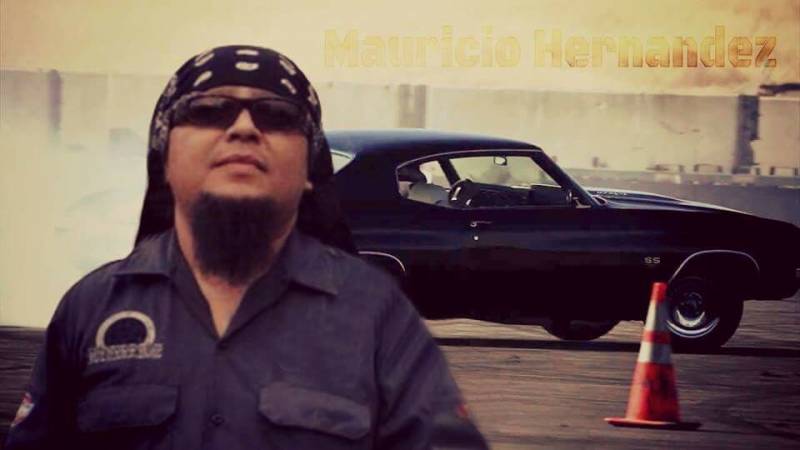
"caption": "When Mauricio Hernández was a kid in Mexico, he dreamed about being on television. After he moved to Los Angeles, he got a chance to trick out the cars on the MTV show \"Pimp My Ride.\"",
"description": null,
"title": "RS50619_Photo_1-qut",
"credit": "Photo Courtesy of Mauricio Hernández",
"status": "inherit",
"altTag": null,
"isLoading": false,
"fetchFailed": false
},
"news_11885556": {
"type": "attachments",
"id": "news_11885556",
"meta": {
"index": "attachments_1716263798",
"site": "news",
"id": "11885556",
"found": true
},
"parent": 11885260,
"imgSizes": {
"twentyfourteen-full-width": {
"file": "https://ww2.kqed.org/app/uploads/sites/10/2021/08/BhaiFamily-1038x576.jpg",
"width": 1038,
"mimeType": "image/jpeg",
"height": 576
},
"thumbnail": {
"file": "https://ww2.kqed.org/app/uploads/sites/10/2021/08/BhaiFamily-160x115.jpg",
"width": 160,
"mimeType": "image/jpeg",
"height": 115
},
"post-thumbnail": {
"file": "https://ww2.kqed.org/app/uploads/sites/10/2021/08/BhaiFamily-672x372.jpg",
"width": 672,
"mimeType": "image/jpeg",
"height": 372
},
"kqedFullSize": {
"file": "https://ww2.kqed.org/app/uploads/sites/10/2021/08/BhaiFamily.jpg",
"width": 1920,
"height": 1377
},
"large": {
"file": "https://ww2.kqed.org/app/uploads/sites/10/2021/08/BhaiFamily-1020x732.jpg",
"width": 1020,
"mimeType": "image/jpeg",
"height": 732
},
"1536x1536": {
"file": "https://ww2.kqed.org/app/uploads/sites/10/2021/08/BhaiFamily-1536x1102.jpg",
"width": 1536,
"mimeType": "image/jpeg",
"height": 1102
},
"medium": {
"file": "https://ww2.kqed.org/app/uploads/sites/10/2021/08/BhaiFamily-800x574.jpg",
"width": 800,
"mimeType": "image/jpeg",
"height": 574
}
},
"publishDate": 1629312416,
"modified": 1629312449,
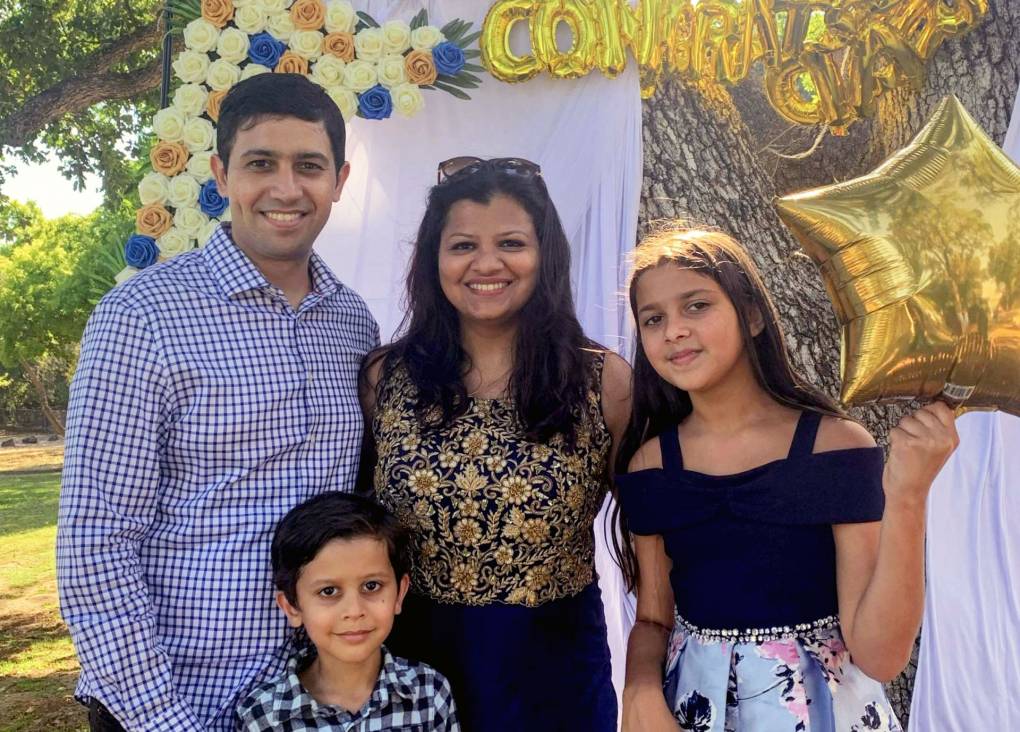
"caption": "Leena Bhai with her family at a recent graduation celebration. Her husband Siddharth has a job at Splunk and an H-1B visa, but because of the years-long wait time many Indian applicants face for an employment-based green card, the Bhais feel like they may have to give up on their 'American dream.'",
"description": "Leena Bhai with her family at a recent graduation celebration. Her husband Siddharth has a job at Splunk and an H-1B visa, but because of the years-long wait time many Indian applicants face for an employment-based green card, the Bhais feel like they may have to give up on their 'American dream.'",
"title": "BhaiFamily",
"credit": "Courtesy of Leena Bhai",
"status": "inherit",
"altTag": null,
"isLoading": false,
"fetchFailed": false
},
"news_11885293": {
"type": "attachments",
"id": "news_11885293",
"meta": {
"index": "attachments_1716263798",
"site": "news",
"id": "11885293",
"found": true
},
"parent": 11885286,
"imgSizes": {
"twentyfourteen-full-width": {
"file": "https://ww2.kqed.org/app/uploads/sites/10/2021/08/helparefugee_081621_final-1038x576.png",
"width": 1038,
"mimeType": "image/png",
"height": 576
},
"thumbnail": {
"file": "https://ww2.kqed.org/app/uploads/sites/10/2021/08/helparefugee_081621_final-160x120.png",
"width": 160,
"mimeType": "image/png",
"height": 120
},
"post-thumbnail": {
"file": "https://ww2.kqed.org/app/uploads/sites/10/2021/08/helparefugee_081621_final-672x372.png",
"width": 672,
"mimeType": "image/png",
"height": 372
},
"kqedFullSize": {
"file": "https://ww2.kqed.org/app/uploads/sites/10/2021/08/helparefugee_081621_final.png",
"width": 1920,
"height": 1434
},
"large": {
"file": "https://ww2.kqed.org/app/uploads/sites/10/2021/08/helparefugee_081621_final-1020x762.png",
"width": 1020,
"mimeType": "image/png",
"height": 762
},
"1536x1536": {
"file": "https://ww2.kqed.org/app/uploads/sites/10/2021/08/helparefugee_081621_final-1536x1147.png",
"width": 1536,
"mimeType": "image/png",
"height": 1147
},
"medium": {
"file": "https://ww2.kqed.org/app/uploads/sites/10/2021/08/helparefugee_081621_final-800x598.png",
"width": 800,
"mimeType": "image/png",
"height": 598
}
},
"publishDate": 1629149633,
"modified": 1629149693,
"caption": null,
"description": null,
"title": "helparefugee_081621_final",
"credit": null,
"status": "inherit",
"altTag": "A Mark Fiore cartoon badge that shows a worried refugee family in the center with text around the circular badge that reads, \"don't let the Taliban keep winning, help a refugee now!\"",
"isLoading": false,
"fetchFailed": false
},
"news_11884113": {
"type": "attachments",
"id": "news_11884113",
"meta": {
"index": "attachments_1716263798",
"site": "news",
"id": "11884113",
"found": true
},
"parent": 11884106,
"imgSizes": {
"twentyfourteen-full-width": {
"file": "https://ww2.kqed.org/app/uploads/sites/10/2021/08/GirlsMural-1440x1052-1-1038x576.jpg",
"width": 1038,
"mimeType": "image/jpeg",
"height": 576
},
"thumbnail": {
"file": "https://ww2.kqed.org/app/uploads/sites/10/2021/08/GirlsMural-1440x1052-1-160x117.jpg",
"width": 160,
"mimeType": "image/jpeg",
"height": 117
},
"post-thumbnail": {
"file": "https://ww2.kqed.org/app/uploads/sites/10/2021/08/GirlsMural-1440x1052-1-672x372.jpg",
"width": 672,
"mimeType": "image/jpeg",
"height": 372
},
"kqedFullSize": {
"file": "https://ww2.kqed.org/app/uploads/sites/10/2021/08/GirlsMural-1440x1052-1.jpg",
"width": 1440,
"height": 1052
},
"large": {
"file": "https://ww2.kqed.org/app/uploads/sites/10/2021/08/GirlsMural-1440x1052-1-1020x745.jpg",
"width": 1020,
"mimeType": "image/jpeg",
"height": 745
},
"medium": {
"file": "https://ww2.kqed.org/app/uploads/sites/10/2021/08/GirlsMural-1440x1052-1-800x584.jpg",
"width": 800,
"mimeType": "image/jpeg",
"height": 584
}
},
"publishDate": 1628270099,
"modified": 1628270167,
"caption": "Anhelica Perez, Melanie Retuda and Larissa Portillo (L-R) in front of a mural in downtown Delano featuring Philip Vera Cruz, Cesar Chavez and Larry Itliong. ",
"description": null,
"title": "GirlsMural-1440x1052",
"credit": "Lisa Morehouse/KQED",
"status": "inherit",
"altTag": null,
"isLoading": false,
"fetchFailed": false
},
"news_11826063": {
"type": "attachments",
"id": "news_11826063",
"meta": {
"index": "attachments_1716263798",
"site": "news",
"id": "11826063",
"found": true
},
"parent": 11825276,
"imgSizes": {
"apple_news_ca_landscape_5_5": {
"file": "https://ww2.kqed.org/app/uploads/sites/10/2020/06/001_KQED_RestinSpirit_RS41181_IMG_4968-qut_v2-1044x783.jpg",
"width": 1044,
"mimeType": "image/jpeg",
"height": 783
},
"apple_news_ca_square_4_0": {
"file": "https://ww2.kqed.org/app/uploads/sites/10/2020/06/001_KQED_RestinSpirit_RS41181_IMG_4968-qut_v2-470x470.jpg",
"width": 470,
"mimeType": "image/jpeg",
"height": 470
},
"twentyfourteen-full-width": {
"file": "https://ww2.kqed.org/app/uploads/sites/10/2020/06/001_KQED_RestinSpirit_RS41181_IMG_4968-qut_v2-1038x576.jpg",
"width": 1038,
"mimeType": "image/jpeg",
"height": 576
},
"thumbnail": {
"file": "https://ww2.kqed.org/app/uploads/sites/10/2020/06/001_KQED_RestinSpirit_RS41181_IMG_4968-qut_v2-160x90.jpg",
"width": 160,
"mimeType": "image/jpeg",
"height": 90
},
"post-thumbnail": {
"file": "https://ww2.kqed.org/app/uploads/sites/10/2020/06/001_KQED_RestinSpirit_RS41181_IMG_4968-qut_v2-672x372.jpg",
"width": 672,
"mimeType": "image/jpeg",
"height": 372
},
"kqedFullSize": {
"file": "https://ww2.kqed.org/app/uploads/sites/10/2020/06/001_KQED_RestinSpirit_RS41181_IMG_4968-qut_v2.jpg",
"width": 1443,
"height": 812
},
"apple_news_ca_landscape_4_7": {
"file": "https://ww2.kqed.org/app/uploads/sites/10/2020/06/001_KQED_RestinSpirit_RS41181_IMG_4968-qut_v2-632x474.jpg",
"width": 632,
"mimeType": "image/jpeg",
"height": 474
},
"large": {
"file": "https://ww2.kqed.org/app/uploads/sites/10/2020/06/001_KQED_RestinSpirit_RS41181_IMG_4968-qut_v2-1020x574.jpg",
"width": 1020,
"mimeType": "image/jpeg",
"height": 574
},
"apple_news_ca_landscape_4_0": {
"file": "https://ww2.kqed.org/app/uploads/sites/10/2020/06/001_KQED_RestinSpirit_RS41181_IMG_4968-qut_v2-536x402.jpg",
"width": 536,
"mimeType": "image/jpeg",
"height": 402
},
"apple_news_ca_portrait_12_9": {
"file": "https://ww2.kqed.org/app/uploads/sites/10/2020/06/001_KQED_RestinSpirit_RS41181_IMG_4968-qut_v2-1122x812.jpg",
"width": 1122,
"mimeType": "image/jpeg",
"height": 812
},
"medium": {
"file": "https://ww2.kqed.org/app/uploads/sites/10/2020/06/001_KQED_RestinSpirit_RS41181_IMG_4968-qut_v2-800x450.jpg",
"width": 800,
"mimeType": "image/jpeg",
"height": 450
},
"apple_news_ca_portrait_4_0": {
"file": "https://ww2.kqed.org/app/uploads/sites/10/2020/06/001_KQED_RestinSpirit_RS41181_IMG_4968-qut_v2-354x472.jpg",
"width": 354,
"mimeType": "image/jpeg",
"height": 472
},
"apple_news_ca_portrait_9_7": {
"file": "https://ww2.kqed.org/app/uploads/sites/10/2020/06/001_KQED_RestinSpirit_RS41181_IMG_4968-qut_v2-840x812.jpg",
"width": 840,
"mimeType": "image/jpeg",
"height": 812
},
"apple_news_ca_square_9_7": {
"file": "https://ww2.kqed.org/app/uploads/sites/10/2020/06/001_KQED_RestinSpirit_RS41181_IMG_4968-qut_v2-1104x812.jpg",
"width": 1104,
"mimeType": "image/jpeg",
"height": 812
},
"apple_news_ca_portrait_4_7": {
"file": "https://ww2.kqed.org/app/uploads/sites/10/2020/06/001_KQED_RestinSpirit_RS41181_IMG_4968-qut_v2-414x552.jpg",
"width": 414,
"mimeType": "image/jpeg",
"height": 552
},
"apple_news_ca_portrait_5_5": {
"file": "https://ww2.kqed.org/app/uploads/sites/10/2020/06/001_KQED_RestinSpirit_RS41181_IMG_4968-qut_v2-687x812.jpg",
"width": 687,
"mimeType": "image/jpeg",
"height": 812
},
"apple_news_ca_square_4_7": {
"file": "https://ww2.kqed.org/app/uploads/sites/10/2020/06/001_KQED_RestinSpirit_RS41181_IMG_4968-qut_v2-550x550.jpg",
"width": 550,
"mimeType": "image/jpeg",
"height": 550
},
"apple_news_ca_landscape_9_7": {
"file": "https://ww2.kqed.org/app/uploads/sites/10/2020/06/001_KQED_RestinSpirit_RS41181_IMG_4968-qut_v2-1376x812.jpg",
"width": 1376,
"mimeType": "image/jpeg",
"height": 812
},
"apple_news_ca_square_5_5": {
"file": "https://ww2.kqed.org/app/uploads/sites/10/2020/06/001_KQED_RestinSpirit_RS41181_IMG_4968-qut_v2-912x812.jpg",
"width": 912,
"mimeType": "image/jpeg",
"height": 812
}
},
"publishDate": 1593042165,
"modified": 1627439433,
"caption": "Tras ser apartado de las iglesias católica y anglicana, el padre Antonio Castañeda predica en su nueva iglesia, la Iglesia del Espíritu Santo. Castañeda ha sido acusado de 22 cargos de agresión, agresión sexual, tentativa de agresión sexual e intento de impedir que un testigo/víctima lo acuse.",
"description": null,
"title": "001_KQED_RestinSpirit_RS41181_IMG_4968-qut_v2",
"credit": "Alexandra Hall/KQED",
"status": "inherit",
"altTag": "After being removed from the Catholic and Anglican churches, Father Antonio Castañeda preaches at his new church, Iglesia del Espíritu Santo, or Holy Spirit Church. Castañeda has been charged with 22 counts of battery, sexual battery, attempted sexual battery and attempt to prevent a witness/victim from prosecuting.",
"isLoading": false,
"fetchFailed": false
},
"news_11883464": {
"type": "attachments",
"id": "news_11883464",
"meta": {
"index": "attachments_1716263798",
"site": "news",
"id": "11883464",
"found": true
},
"parent": 11883463,
"imgSizes": {
"twentyfourteen-full-width": {
"file": "https://ww2.kqed.org/app/uploads/sites/10/2021/08/ap-8c3a7eabf7a8d5aad389199dd806be57bf56c97c-1038x576.jpg",
"width": 1038,
"mimeType": "image/jpeg",
"height": 576
},
"thumbnail": {
"file": "https://ww2.kqed.org/app/uploads/sites/10/2021/08/ap-8c3a7eabf7a8d5aad389199dd806be57bf56c97c-160x120.jpg",
"width": 160,
"mimeType": "image/jpeg",
"height": 120
},
"post-thumbnail": {
"file": "https://ww2.kqed.org/app/uploads/sites/10/2021/08/ap-8c3a7eabf7a8d5aad389199dd806be57bf56c97c-672x372.jpg",
"width": 672,
"mimeType": "image/jpeg",
"height": 372
},
"kqedFullSize": {
"file": "https://ww2.kqed.org/app/uploads/sites/10/2021/08/ap-8c3a7eabf7a8d5aad389199dd806be57bf56c97c-scaled.jpg",
"width": 2560,
"height": 1920
},
"2048x2048": {
"file": "https://ww2.kqed.org/app/uploads/sites/10/2021/08/ap-8c3a7eabf7a8d5aad389199dd806be57bf56c97c-2048x1536.jpg",
"width": 2048,
"mimeType": "image/jpeg",
"height": 1536
},
"large": {
"file": "https://ww2.kqed.org/app/uploads/sites/10/2021/08/ap-8c3a7eabf7a8d5aad389199dd806be57bf56c97c-1020x765.jpg",
"width": 1020,
"mimeType": "image/jpeg",
"height": 765
},
"1536x1536": {
"file": "https://ww2.kqed.org/app/uploads/sites/10/2021/08/ap-8c3a7eabf7a8d5aad389199dd806be57bf56c97c-1536x1152.jpg",
"width": 1536,
"mimeType": "image/jpeg",
"height": 1152
},
"full-width": {
"file": "https://ww2.kqed.org/app/uploads/sites/10/2021/08/ap-8c3a7eabf7a8d5aad389199dd806be57bf56c97c-1920x1440.jpg",
"width": 1920,
"mimeType": "image/jpeg",
"height": 1440
},
"medium": {
"file": "https://ww2.kqed.org/app/uploads/sites/10/2021/08/ap-8c3a7eabf7a8d5aad389199dd806be57bf56c97c-800x600.jpg",
"width": 800,
"mimeType": "image/jpeg",
"height": 600
}
},
"publishDate": 1627945601,
"modified": 1627947097,
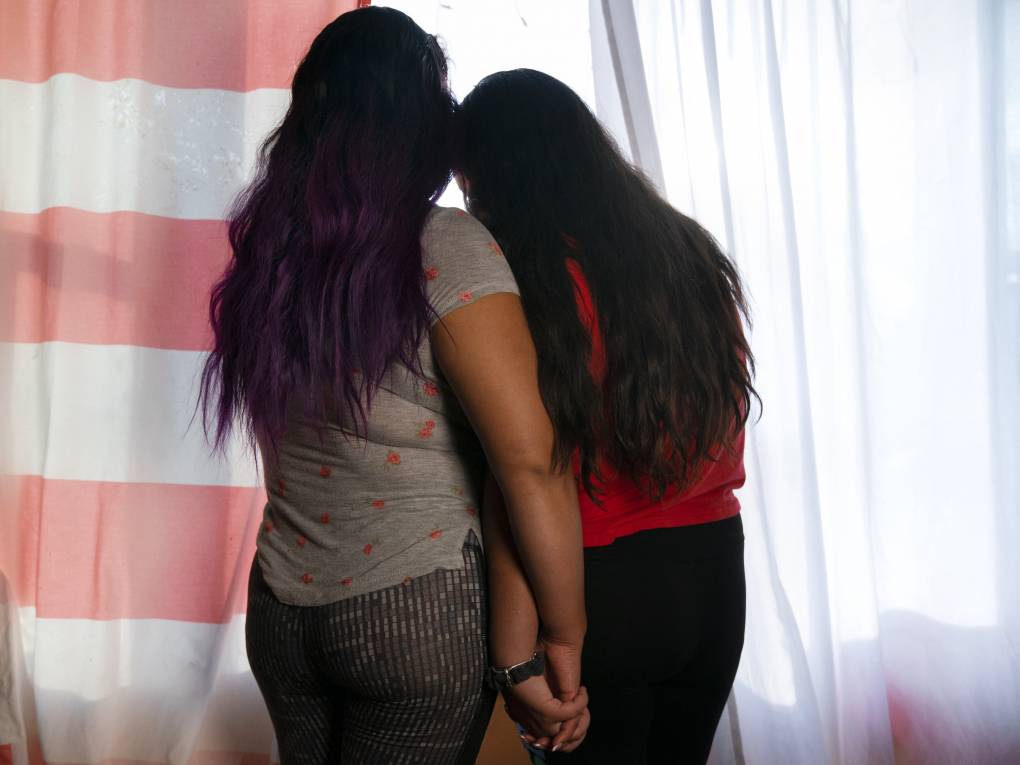
"caption": "Jacqueline Flores, left, holds hands with her daughter Nicky at their home in Virginia on Wednesday, July 14, 2021. Flores, a member of the Asylum Seeker Advocacy Project, is asking President Biden to end Title 42 and allow her family from El Salvador, along with other migrants, to ask for asylum at the border. Flores' aunt and cousin were recently expelled to Mexico at the U.S. border under the public health rule that allows border agents to turn away migrants during the pandemic.",
"description": null,
"title": "Jacqueline Flores (left) with daughter Nicky at their home in Virginia last month. They are part of the Asylum Seeker Advocacy Project, a group calling for an end to Title 42 so their family members can seek asylum.",
"credit": "Jacquelyn Martin/AP",
"status": "inherit",
"altTag": null,
"isLoading": false,
"fetchFailed": false
},
"news_11883280": {
"type": "attachments",
"id": "news_11883280",
"meta": {
"index": "attachments_1716263798",
"site": "news",
"id": "11883280",
"found": true
},
"parent": 11883227,
"imgSizes": {
"twentyfourteen-full-width": {
"file": "https://ww2.kqed.org/app/uploads/sites/10/2021/07/GettyImages-1150824330-1038x576.jpg",
"width": 1038,
"mimeType": "image/jpeg",
"height": 576
},
"thumbnail": {
"file": "https://ww2.kqed.org/app/uploads/sites/10/2021/07/GettyImages-1150824330-160x107.jpg",
"width": 160,
"mimeType": "image/jpeg",
"height": 107
},
"post-thumbnail": {
"file": "https://ww2.kqed.org/app/uploads/sites/10/2021/07/GettyImages-1150824330-672x372.jpg",
"width": 672,
"mimeType": "image/jpeg",
"height": 372
},
"kqedFullSize": {
"file": "https://ww2.kqed.org/app/uploads/sites/10/2021/07/GettyImages-1150824330-scaled.jpg",
"width": 2560,
"height": 1708
},
"2048x2048": {
"file": "https://ww2.kqed.org/app/uploads/sites/10/2021/07/GettyImages-1150824330-2048x1366.jpg",
"width": 2048,
"mimeType": "image/jpeg",
"height": 1366
},
"large": {
"file": "https://ww2.kqed.org/app/uploads/sites/10/2021/07/GettyImages-1150824330-1020x680.jpg",
"width": 1020,
"mimeType": "image/jpeg",
"height": 680
},
"1536x1536": {
"file": "https://ww2.kqed.org/app/uploads/sites/10/2021/07/GettyImages-1150824330-1536x1025.jpg",
"width": 1536,
"mimeType": "image/jpeg",
"height": 1025
},
"full-width": {
"file": "https://ww2.kqed.org/app/uploads/sites/10/2021/07/GettyImages-1150824330-1920x1281.jpg",
"width": 1920,
"mimeType": "image/jpeg",
"height": 1281
},
"medium": {
"file": "https://ww2.kqed.org/app/uploads/sites/10/2021/07/GettyImages-1150824330-800x534.jpg",
"width": 800,
"mimeType": "image/jpeg",
"height": 534
}
},
"publishDate": 1627692250,
"modified": 1627692453,
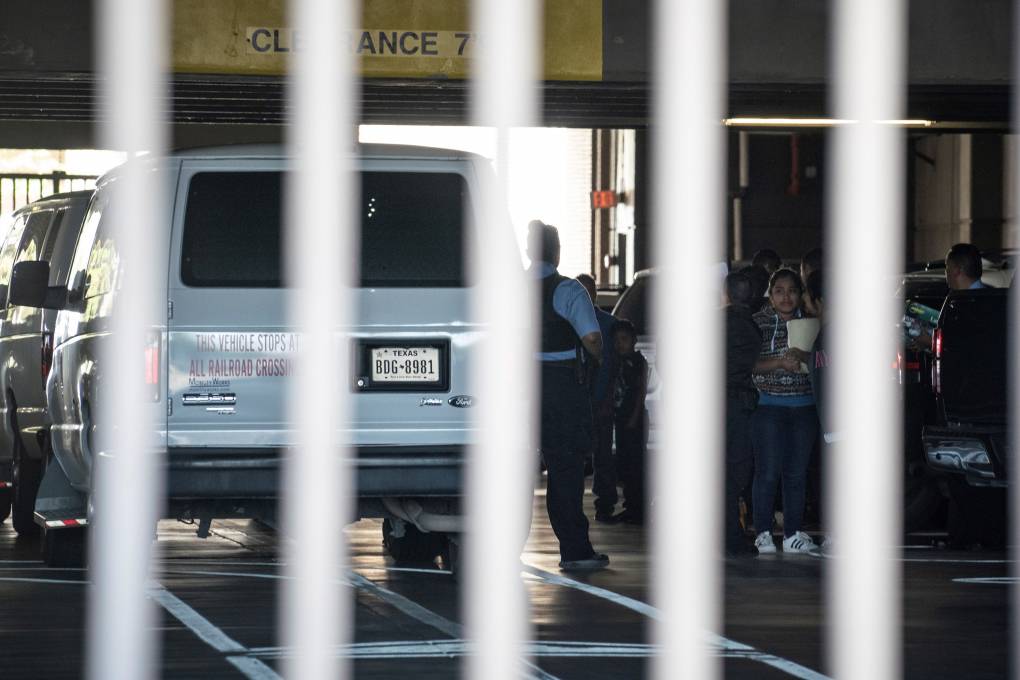
"caption": "Migrants who are seeking asylum in the United States get out of vans that brought them to the Richard C. White Federal Buidling in downtown El Paso, Texas on June 12, 2019. \n",
"description": "Migrants who are seeking asylum in the United States get out of vans that brought them to the Richard C. White Federal Buidling in downtown El Paso on June 12, 2019. \n",
"title": "US-MEXICO-IMMIGRATION-YOLANDA-RIGHTS",
"credit": "Paul Ratje/AFP/Getty Images",
"status": "inherit",
"altTag": "Migrants outside of a van at a federal building in El Paso, Texas",
"isLoading": false,
"fetchFailed": false
},
"news_11883148": {
"type": "attachments",
"id": "news_11883148",
"meta": {
"index": "attachments_1716263798",
"site": "news",
"id": "11883148",
"found": true
},
"parent": 11883013,
"imgSizes": {
"twentyfourteen-full-width": {
"file": "https://ww2.kqed.org/app/uploads/sites/10/2021/07/d0b2231f-687b-4f47-9415-d2623ab798d2-Luis_Grijalva_2-980x576.jpeg",
"width": 980,
"mimeType": "image/jpeg",
"height": 576
},
"thumbnail": {
"file": "https://ww2.kqed.org/app/uploads/sites/10/2021/07/d0b2231f-687b-4f47-9415-d2623ab798d2-Luis_Grijalva_2-160x104.jpeg",
"width": 160,
"mimeType": "image/jpeg",
"height": 104
},
"post-thumbnail": {
"file": "https://ww2.kqed.org/app/uploads/sites/10/2021/07/d0b2231f-687b-4f47-9415-d2623ab798d2-Luis_Grijalva_2-672x372.jpeg",
"width": 672,
"mimeType": "image/jpeg",
"height": 372
},
"kqedFullSize": {
"file": "https://ww2.kqed.org/app/uploads/sites/10/2021/07/d0b2231f-687b-4f47-9415-d2623ab798d2-Luis_Grijalva_2.jpeg",
"width": 980,
"height": 640
},
"medium": {
"file": "https://ww2.kqed.org/app/uploads/sites/10/2021/07/d0b2231f-687b-4f47-9415-d2623ab798d2-Luis_Grijalva_2-800x522.jpeg",
"width": 800,
"mimeType": "image/jpeg",
"height": 522
}
},
"publishDate": 1627672006,
"modified": 1627672518,
"caption": "Luis Grijalva, a senior at Northern Arizona University, leading the pack in a recent track race.",
"description": null,
"title": "d0b2231f-687b-4f47-9415-d2623ab798d2-Luis_Grijalva_2",
"credit": "Courtesy Northern Arizona University Athletics",
"status": "inherit",
"altTag": null,
"isLoading": false,
"fetchFailed": false
},
"news_11882903": {
"type": "attachments",
"id": "news_11882903",
"meta": {
"index": "attachments_1716263798",
"site": "news",
"id": "11882903",
"found": true
},
"parent": 11882852,
"imgSizes": {
"twentyfourteen-full-width": {
"file": "https://ww2.kqed.org/app/uploads/sites/10/2021/07/GettyImages-1231929300-1-1038x576.jpg",
"width": 1038,
"mimeType": "image/jpeg",
"height": 576
},
"thumbnail": {
"file": "https://ww2.kqed.org/app/uploads/sites/10/2021/07/GettyImages-1231929300-1-160x107.jpg",
"width": 160,
"mimeType": "image/jpeg",
"height": 107
},
"post-thumbnail": {
"file": "https://ww2.kqed.org/app/uploads/sites/10/2021/07/GettyImages-1231929300-1-672x372.jpg",
"width": 672,
"mimeType": "image/jpeg",
"height": 372
},
"kqedFullSize": {
"file": "https://ww2.kqed.org/app/uploads/sites/10/2021/07/GettyImages-1231929300-1-scaled.jpg",
"width": 2560,
"height": 1707
},
"2048x2048": {
"file": "https://ww2.kqed.org/app/uploads/sites/10/2021/07/GettyImages-1231929300-1-2048x1365.jpg",
"width": 2048,
"mimeType": "image/jpeg",
"height": 1365
},
"large": {
"file": "https://ww2.kqed.org/app/uploads/sites/10/2021/07/GettyImages-1231929300-1-1020x680.jpg",
"width": 1020,
"mimeType": "image/jpeg",
"height": 680
},
"1536x1536": {
"file": "https://ww2.kqed.org/app/uploads/sites/10/2021/07/GettyImages-1231929300-1-1536x1024.jpg",
"width": 1536,
"mimeType": "image/jpeg",
"height": 1024
},
"full-width": {
"file": "https://ww2.kqed.org/app/uploads/sites/10/2021/07/GettyImages-1231929300-1-1920x1280.jpg",
"width": 1920,
"mimeType": "image/jpeg",
"height": 1280
},
"medium": {
"file": "https://ww2.kqed.org/app/uploads/sites/10/2021/07/GettyImages-1231929300-1-800x533.jpg",
"width": 800,
"mimeType": "image/jpeg",
"height": 533
}
},
"publishDate": 1627520588,
"modified": 1627520632,
"caption": "A nurse administers a COVID-19 vaccine to a woman at a vaccine rollout targeting immigrants and the undocumented organized by the St. John's Well Child and Family Center in Los Angeles on March 25, 2021. Undocumented immigrants 50 or older will soon be eligible for Medi-Cal, thanks to a legislation signed by Gov. Gavin Newsom this Tuesday.",
"description": "A nurse administers a COVID-19 vaccine to a woman at a vaccine rollout targeting immigrants and the undocumented organized by the St. John's Well Child and Family Center in Los Angeles on March 25, 2021.",
"title": "US-HEALTH-VIRUS-IMMIGRATION",
"credit": "Frederic J. Brown/AFP via Getty Images",
"status": "inherit",
"altTag": "A nurse wearing glasses with their hair tied up administers a vaccine into a person's left arm.",
"isLoading": false,
"fetchFailed": false
},
"news_11882831": {
"type": "attachments",
"id": "news_11882831",
"meta": {
"index": "attachments_1716263798",
"site": "news",
"id": "11882831",
"found": true
},
"parent": 11882829,
"imgSizes": {
"twentyfourteen-full-width": {
"file": "https://ww2.kqed.org/app/uploads/sites/10/2021/07/gettyimages-1316117823-9785a1244672d5f43cda9117af525aa5bf6a225e-1-1038x576.jpg",
"width": 1038,
"mimeType": "image/jpeg",
"height": 576
},
"thumbnail": {
"file": "https://ww2.kqed.org/app/uploads/sites/10/2021/07/gettyimages-1316117823-9785a1244672d5f43cda9117af525aa5bf6a225e-1-160x120.jpg",
"width": 160,
"mimeType": "image/jpeg",
"height": 120
},
"post-thumbnail": {
"file": "https://ww2.kqed.org/app/uploads/sites/10/2021/07/gettyimages-1316117823-9785a1244672d5f43cda9117af525aa5bf6a225e-1-672x372.jpg",
"width": 672,
"mimeType": "image/jpeg",
"height": 372
},
"kqedFullSize": {
"file": "https://ww2.kqed.org/app/uploads/sites/10/2021/07/gettyimages-1316117823-9785a1244672d5f43cda9117af525aa5bf6a225e-1-scaled.jpg",
"width": 2560,
"height": 1920
},
"2048x2048": {
"file": "https://ww2.kqed.org/app/uploads/sites/10/2021/07/gettyimages-1316117823-9785a1244672d5f43cda9117af525aa5bf6a225e-1-2048x1536.jpg",
"width": 2048,
"mimeType": "image/jpeg",
"height": 1536
},
"large": {
"file": "https://ww2.kqed.org/app/uploads/sites/10/2021/07/gettyimages-1316117823-9785a1244672d5f43cda9117af525aa5bf6a225e-1-1020x765.jpg",
"width": 1020,
"mimeType": "image/jpeg",
"height": 765
},
"1536x1536": {
"file": "https://ww2.kqed.org/app/uploads/sites/10/2021/07/gettyimages-1316117823-9785a1244672d5f43cda9117af525aa5bf6a225e-1-1536x1152.jpg",
"width": 1536,
"mimeType": "image/jpeg",
"height": 1152
},
"full-width": {
"file": "https://ww2.kqed.org/app/uploads/sites/10/2021/07/gettyimages-1316117823-9785a1244672d5f43cda9117af525aa5bf6a225e-1-1920x1440.jpg",
"width": 1920,
"mimeType": "image/jpeg",
"height": 1440
},
"medium": {
"file": "https://ww2.kqed.org/app/uploads/sites/10/2021/07/gettyimages-1316117823-9785a1244672d5f43cda9117af525aa5bf6a225e-1-800x600.jpg",
"width": 800,
"mimeType": "image/jpeg",
"height": 600
}
},
"publishDate": 1627508481,
"modified": 1627511225,
"caption": "Luis Grijalva of the Northern Arizona Lumberjacks finishes in ninth place during the Division I Men's and Women's Cross Country Championships held at the OSU Cross Country Course on March 15, 2021 in Stillwater, Oklahoma.",
"description": "STILLWATER, OK - MARCH 15: Luis Grijalva of the Northern Arizona Lumberjacks finishes in ninth place during the Division I Men's and Women's Cross Country Championships held at the OSU Cross Country Course on March 15, 2021 in Stillwater, Oklahoma. (Photo by Shane Bevel/NCAA Photos via Getty Images)",
"title": "Luis Grijalva, a student at Northern Arizona University, has qualified to compete at the Tokyo Olympics and represent his home country of Guatemala. But as a DACA recipient he couldn't leave the United States without special permission.",
"credit": "Shane Bevel/NCAA Photos via Getty Images",
"status": "inherit",
"altTag": null,
"isLoading": false,
"fetchFailed": false
},
"news_11882784": {
"type": "attachments",
"id": "news_11882784",
"meta": {
"index": "attachments_1716263798",
"site": "news",
"id": "11882784",
"found": true
},
"parent": 11882773,
"imgSizes": {
"twentyfourteen-full-width": {
"file": "https://ww2.kqed.org/app/uploads/sites/10/2021/07/GettyImages-1330157179-1024x576.jpg",
"width": 1024,
"mimeType": "image/jpeg",
"height": 576
},
"thumbnail": {
"file": "https://ww2.kqed.org/app/uploads/sites/10/2021/07/GettyImages-1330157179-160x106.jpg",
"width": 160,
"mimeType": "image/jpeg",
"height": 106
},
"post-thumbnail": {
"file": "https://ww2.kqed.org/app/uploads/sites/10/2021/07/GettyImages-1330157179-672x372.jpg",
"width": 672,
"mimeType": "image/jpeg",
"height": 372
},
"kqedFullSize": {
"file": "https://ww2.kqed.org/app/uploads/sites/10/2021/07/GettyImages-1330157179.jpg",
"width": 1024,
"height": 681
},
"large": {
"file": "https://ww2.kqed.org/app/uploads/sites/10/2021/07/GettyImages-1330157179-1020x678.jpg",
"width": 1020,
"mimeType": "image/jpeg",
"height": 678
},
"medium": {
"file": "https://ww2.kqed.org/app/uploads/sites/10/2021/07/GettyImages-1330157179-800x532.jpg",
"width": 800,
"mimeType": "image/jpeg",
"height": 532
}
},
"publishDate": 1627500361,
"modified": 1627501925,
"caption": "The sun begins to set beyond the U.S.-Mexico border barrier running into the Pacific Ocean on July 22, 2021 in Tijuana, Mexico. While the Biden administration has haltingly restarted the asylum system along the southwest border, only a small number of asylum-seekers whose situations are considered the most urgent have been allowed to cross the border with Title 42 exceptions. Thousands of asylum-seekers remain stuck in Tijuana in precarious conditions.",
"description": null,
"title": "Migrants Huddle In Camps And Shelters In Tijuana Waiting To Cross Into U.S.",
"credit": "Mario Tama/Getty Images",
"status": "inherit",
"altTag": null,
"isLoading": false,
"fetchFailed": false
},
"news_11882451": {
"type": "attachments",
"id": "news_11882451",
"meta": {
"index": "attachments_1716263798",
"site": "news",
"id": "11882451",
"found": true
},
"parent": 11882438,
"imgSizes": {
"twentyfourteen-full-width": {
"file": "https://ww2.kqed.org/app/uploads/sites/10/2021/07/GettyImages-1330156267-1038x576.jpg",
"width": 1038,
"mimeType": "image/jpeg",
"height": 576
},
"thumbnail": {
"file": "https://ww2.kqed.org/app/uploads/sites/10/2021/07/GettyImages-1330156267-160x90.jpg",
"width": 160,
"mimeType": "image/jpeg",
"height": 90
},
"post-thumbnail": {
"file": "https://ww2.kqed.org/app/uploads/sites/10/2021/07/GettyImages-1330156267-672x372.jpg",
"width": 672,
"mimeType": "image/jpeg",
"height": 372
},
"kqedFullSize": {
"file": "https://ww2.kqed.org/app/uploads/sites/10/2021/07/GettyImages-1330156267.jpg",
"width": 1920,
"height": 1080
},
"large": {
"file": "https://ww2.kqed.org/app/uploads/sites/10/2021/07/GettyImages-1330156267-1020x574.jpg",
"width": 1020,
"mimeType": "image/jpeg",
"height": 574
},
"1536x1536": {
"file": "https://ww2.kqed.org/app/uploads/sites/10/2021/07/GettyImages-1330156267-1536x864.jpg",
"width": 1536,
"mimeType": "image/jpeg",
"height": 864
},
"medium": {
"file": "https://ww2.kqed.org/app/uploads/sites/10/2021/07/GettyImages-1330156267-800x450.jpg",
"width": 800,
"mimeType": "image/jpeg",
"height": 450
}
},
"publishDate": 1627333769,
"modified": 1627338271,
"caption": "Musicians play on July 22, 2021 in Tijuana, Mexico, for beachgoers near the U.S.-Mexico border barrier painted with a mural (R) depicting people who arrived in the U.S. illegally as children and were deported as adults.",
"description": null,
"title": "GettyImages-1330156267",
"credit": "Mario Tama/Getty Images",
"status": "inherit",
"altTag": null,
"isLoading": false,
"fetchFailed": false
}
},
"audioPlayerReducer": {
"postId": "stream_live",
"isPaused": true,
"isPlaying": false,
"pfsActive": false,
"pledgeModalIsOpen": true,
"playerDrawerIsOpen": false,
"liveAudioPlayStartedAt": 0,
"liveAudioPlayContext": ""
},
"authorsReducer": {
"byline_news_11884783": {
"type": "authors",
"id": "byline_news_11884783",
"meta": {
"override": true
},
"slug": "byline_news_11884783",
"name": "Levi Bridges",
"isLoading": false
},
"byline_news_11883463": {
"type": "authors",
"id": "byline_news_11883463",
"meta": {
"override": true
},
"slug": "byline_news_11883463",
"name": "Franco Ordoñez",
"isLoading": false
},
"byline_news_11882829": {
"type": "authors",
"id": "byline_news_11882829",
"meta": {
"override": true
},
"slug": "byline_news_11882829",
"name": "Deepa Shivaram\u003cbr>NPR",
"isLoading": false
},
"byline_news_11882773": {
"type": "authors",
"id": "byline_news_11882773",
"meta": {
"override": true
},
"slug": "byline_news_11882773",
"name": "Franco Ordoñez\u003cbr>NPR",
"isLoading": false
},
"byline_news_11882438": {
"type": "authors",
"id": "byline_news_11882438",
"meta": {
"override": true
},
"slug": "byline_news_11882438",
"name": "Franco Ordoñez",
"isLoading": false
},
"kqed": {
"type": "authors",
"id": "236",
"meta": {
"index": "authors_1716337520",
"id": "236",
"found": true
},
"name": "KQED News Staff",
"firstName": "KQED News Staff",
"lastName": null,
"slug": "kqed",
"email": "faq@kqed.org",
"display_author_email": false,
"staff_mastheads": [],
"title": null,
"bio": null,
"avatar": "https://secure.gravatar.com/avatar/ef0e801a68c4c54afa9180db14084167?s=600&d=blank&r=g",
"twitter": null,
"facebook": null,
"instagram": null,
"linkedin": null,
"sites": [
{
"site": "arts",
"roles": [
"contributor"
]
},
{
"site": "news",
"roles": [
"editor"
]
},
{
"site": "futureofyou",
"roles": [
"author"
]
}
],
"headData": {
"title": "KQED News Staff | KQED",
"description": null,
"ogImgSrc": "https://secure.gravatar.com/avatar/ef0e801a68c4c54afa9180db14084167?s=600&d=blank&r=g",
"twImgSrc": "https://secure.gravatar.com/avatar/ef0e801a68c4c54afa9180db14084167?s=600&d=blank&r=g"
},
"isLoading": false,
"link": "/author/kqed"
},
"kqednewsstaffandwires": {
"type": "authors",
"id": "237",
"meta": {
"index": "authors_1716337520",
"id": "237",
"found": true
},
"name": "KQED News Staff and Wires",
"firstName": "KQED News Staff and Wires",
"lastName": null,
"slug": "kqednewsstaffandwires",
"email": "onlinenewsstaff@kqed.org",
"display_author_email": false,
"staff_mastheads": [],
"title": null,
"bio": null,
"avatar": "https://secure.gravatar.com/avatar/72295af8ebbfbd19a4948f5271285664?s=600&d=blank&r=g",
"twitter": null,
"facebook": null,
"instagram": null,
"linkedin": null,
"sites": [
{
"site": "arts",
"roles": [
"contributor"
]
},
{
"site": "news",
"roles": [
"contributor"
]
},
{
"site": "lowdown",
"roles": [
"author"
]
},
{
"site": "stateofhealth",
"roles": [
"contributor"
]
},
{
"site": "food",
"roles": [
"author"
]
}
],
"headData": {
"title": "KQED News Staff and Wires | KQED",
"description": null,
"ogImgSrc": "https://secure.gravatar.com/avatar/72295af8ebbfbd19a4948f5271285664?s=600&d=blank&r=g",
"twImgSrc": "https://secure.gravatar.com/avatar/72295af8ebbfbd19a4948f5271285664?s=600&d=blank&r=g"
},
"isLoading": false,
"link": "/author/kqednewsstaffandwires"
},
"rachael-myrow": {
"type": "authors",
"id": "251",
"meta": {
"index": "authors_1716337520",
"id": "251",
"found": true
},
"name": "Rachael Myrow",
"firstName": "Rachael",
"lastName": "Myrow",
"slug": "rachael-myrow",
"email": "rmyrow@kqed.org",
"display_author_email": true,
"staff_mastheads": [
"news"
],
"title": "Senior Editor of KQED's Silicon Valley News Desk",
"bio": "• I write and edit stories about how Silicon Valley power and policies shape everyday life in California. I’m also passionate about making Bay Area history and culture more accessible to a broad public. • I’ve been a journalist for most of my life, starting in high school with The Franklin Press in Los Angeles, where I grew up. While earning my first degree in English at UC Berkeley, I got my start in public radio at KALX-FM. After completing a second degree in journalism at Cal, I landed my first professional job at Marketplace, then moved on to KPCC (now LAist), and then KQED, where I hosted The California Report for more than seven years. • My reporting has appeared on NPR, The World, WBUR’s \u003ci>Here & Now\u003c/i>, and the BBC. I also guest host for KQED’s \u003ci>Forum\u003c/i>, as well as the Commonwealth Club in San Francisco. • I speak periodically on media, democracy and technology issues, and do voiceover work for documentaries and educational video projects. • Outside of the studio, you'll find me hiking Bay Area trails and whipping up Insta-ready meals in my kitchen. • I do not accept gifts, money, or favors from anyone connected to my reporting, I don't pay people for information, and I do not support or donate to political causes. • I strive to treat the people I report on with fairness, honesty, and respect. I also recognize there are often multiple sides to a story and work to verify information through multiple sources and documentation. If I get something wrong, I correct it.",
"avatar": "https://secure.gravatar.com/avatar/3ed8a3c5f26025e4a805ba634cda8cd764906b97438a6d9ce216b044e340da4e?s=600&d=blank&r=g",
"twitter": "rachaelmyrow",
"bluesky": null,
"facebook": null,
"instagram": null,
"linkedin": "https://www.linkedin.com/in/rachaelmyrow/",
"sites": [
{
"site": "arts",
"roles": [
"administrator"
]
},
{
"site": "news",
"roles": [
"edit_others_posts",
"editor"
]
},
{
"site": "futureofyou",
"roles": [
"editor"
]
},
{
"site": "bayareabites",
"roles": [
"editor"
]
},
{
"site": "stateofhealth",
"roles": [
"editor"
]
},
{
"site": "science",
"roles": [
"editor"
]
},
{
"site": "food",
"roles": [
"editor"
]
},
{
"site": "forum",
"roles": [
"editor"
]
},
{
"site": "liveblog",
"roles": [
"author"
]
}
],
"headData": {
"title": "Rachael Myrow | KQED",
"description": "Senior Editor of KQED's Silicon Valley News Desk",
"ogImgSrc": "https://secure.gravatar.com/avatar/3ed8a3c5f26025e4a805ba634cda8cd764906b97438a6d9ce216b044e340da4e?s=600&d=blank&r=g",
"twImgSrc": "https://secure.gravatar.com/avatar/3ed8a3c5f26025e4a805ba634cda8cd764906b97438a6d9ce216b044e340da4e?s=600&d=blank&r=g"
},
"isLoading": false,
"link": "/author/rachael-myrow"
},
"tychehendricks": {
"type": "authors",
"id": "259",
"meta": {
"index": "authors_1716337520",
"id": "259",
"found": true
},
"name": "Tyche Hendricks",
"firstName": "Tyche",
"lastName": "Hendricks",
"slug": "tychehendricks",
"email": "thendricks@kqed.org",
"display_author_email": true,
"staff_mastheads": [
"news"
],
"title": "KQED Senior Editor, Immigration",
"bio": "\u003cspan style=\"font-weight: 400;\">Tyche Hendricks is KQED’s senior editor for immigration, leading coverage of the policy and politics that affect California’s immigrant communities. Her work for KQED’s radio and online audiences is also carried on NPR and other national outlets. She has been recognized with awards from the Radio and Television News Directors Association, the Society for Professional Journalists; the Education Writers Association; the Best of the West and the National Federation of Community Broadcasters. Before joining KQED in 2010, Tyche spent more than a dozen years as a newspaper reporter, notably at the \u003c/span>\u003ci>\u003cspan style=\"font-weight: 400;\">San Francisco Chronicle\u003c/span>\u003c/i>\u003cspan style=\"font-weight: 400;\">. At different times she has covered criminal justice, government and politics and urban planning. Tyche has taught in the MFA Creative Writing program at the University of San Francisco and at UC Berkeley’s Graduate School of Journalism, where she was co-director of a national immigration symposium for professional journalists. She is the author of \u003c/span>\u003ci>\u003cspan style=\"font-weight: 400;\">The Wind Doesn't Need a Passport: Stories from the U.S.-Mexico Borderlands\u003c/span>\u003c/i>\u003cspan style=\"font-weight: 400;\"> (University of California Press). \u003c/span>",
"avatar": "https://secure.gravatar.com/avatar/b8ee458e2731c2d43df86882ce17267e?s=600&d=blank&r=g",
"twitter": "tychehendricks",
"facebook": null,
"instagram": null,
"linkedin": null,
"sites": [
{
"site": "news",
"roles": [
"editor"
]
},
{
"site": "stateofhealth",
"roles": [
"editor"
]
}
],
"headData": {
"title": "Tyche Hendricks | KQED",
"description": "KQED Senior Editor, Immigration",
"ogImgSrc": "https://secure.gravatar.com/avatar/b8ee458e2731c2d43df86882ce17267e?s=600&d=blank&r=g",
"twImgSrc": "https://secure.gravatar.com/avatar/b8ee458e2731c2d43df86882ce17267e?s=600&d=blank&r=g"
},
"isLoading": false,
"link": "/author/tychehendricks"
},
"markfiore": {
"type": "authors",
"id": "3236",
"meta": {
"index": "authors_1716337520",
"id": "3236",
"found": true
},
"name": "Mark Fiore",
"firstName": "Mark",
"lastName": "Fiore",
"slug": "markfiore",
"email": "mark@markfiore.com",
"display_author_email": false,
"staff_mastheads": [
"news"
],
"title": "KQED News Cartoonist",
"bio": "\u003ca href=\"http://www.MarkFiore.com\">MarkFiore.com\u003c/a> | \u003ca href=\"https://twitter.com/markfiore\">Follow on Twitter\u003c/a> | \u003ca href=\"https://www.facebook.com/pages/Mark-Fiore-Animated-Political-Cartoons/94451707396?ref=bookmarks\">Facebook\u003c/a> | \u003ca href=\"mailto:mark@markfiore.com\">email\u003c/a>\r\n\r\nPulitzer Prize-winner, Mark Fiore, who the Wall Street Journal has called “the undisputed guru of the form,” creates animated political cartoons in San Francisco, where his work has been featured regularly on the San Francisco Chronicle’s web site, SFGate.com. His work has appeared on Newsweek.com, Slate.com, CBSNews.com, MotherJones.com, DailyKos.com and NPR’s web site. Fiore’s political animation has appeared on CNN, Frontline, Bill Moyers Journal, Salon.com and cable and broadcast outlets across the globe.\r\n\r\nBeginning his professional life by drawing traditional political cartoons for newspapers, Fiore’s work appeared in publications ranging from the Washington Post to the Los Angeles Times. In the late 1990s, he began to experiment with animating political cartoons and, after a short stint at the San Jose Mercury News as their staff cartoonist, Fiore devoted all his energies to animation.\r\nGrowing up in California, Fiore also spent a good portion of his life in the backwoods of Idaho. It was this combination that shaped him politically. Mark majored in political science at Colorado College, where, in a perfect send-off for a cartoonist, he received his diploma in 1991 as commencement speaker Dick Cheney smiled approvingly.\r\nMark Fiore was awarded the Pulitzer Prize for political cartooning in 2010, a Robert F. Kennedy Journalism Award in 2004 and has twice received an Online Journalism Award for commentary from the Online News Association (2002, 2008). Fiore has received two awards for his work in new media from the National Cartoonists Society (2001, 2002), and in 2006 received The James Madison Freedom of Information Award from The Society of Professional Journalists.",
"avatar": "https://secure.gravatar.com/avatar/fc4e2a612b15b67bad0c6f0e1db4ca9b?s=600&d=blank&r=g",
"twitter": "MarkFiore",
"facebook": null,
"instagram": "https://www.instagram.com/markfiore/?hl=en",
"linkedin": null,
"sites": [
{
"site": "arts",
"roles": [
"contributor"
]
},
{
"site": "news",
"roles": [
"editor"
]
},
{
"site": "futureofyou",
"roles": [
"editor"
]
},
{
"site": "science",
"roles": [
"editor"
]
}
],
"headData": {
"title": "Mark Fiore | KQED",
"description": "KQED News Cartoonist",
"ogImgSrc": "https://secure.gravatar.com/avatar/fc4e2a612b15b67bad0c6f0e1db4ca9b?s=600&d=blank&r=g",
"twImgSrc": "https://secure.gravatar.com/avatar/fc4e2a612b15b67bad0c6f0e1db4ca9b?s=600&d=blank&r=g"
},
"isLoading": false,
"link": "/author/markfiore"
},
"ahall": {
"type": "authors",
"id": "11490",
"meta": {
"index": "authors_1716337520",
"id": "11490",
"found": true
},
"name": "Alex Hall",
"firstName": "Alex",
"lastName": "Hall",
"slug": "ahall",
"email": "ahall@kqed.org",
"display_author_email": false,
"staff_mastheads": [
"news"
],
"title": "KQED Enterprise & Accountability Reporter",
"bio": "Alex Hall is KQED's Enterprise and Accountability Reporter. She previously covered the Central Valley for five years from KQED's bureau in Fresno. Before joining KQED, Alex was an investigative reporting fellow at Wisconsin Public Radio and the Wisconsin Center for Investigative Journalism. She has also worked as a bilingual producer for NPR's investigative unit and freelance video producer for Reuters TV on the Latin America desk. She got her start in journalism in South America, where she worked as a radio producer and Spanish-English translator for CNN Chile. Her documentary and investigation into the series of deadly COVID-19 outbreaks at Foster Farms won a national Edward R. Murrow award and was named an Investigative Reporters & Editors award finalist. Alex's reporting for Reveal on the Wisconsin dairy industry's reliance on undocumented immigrant labor was made into a film, Los Lecheros, which won a regional Edward R. Murrow award for best news documentary.",
"avatar": "https://secure.gravatar.com/avatar/04c28ad4a7caa7ac2ef39c655c4030c993a3f331481d1da4799bb76ea85b9afa?s=600&d=blank&r=g",
"twitter": "@chalexhall",
"bluesky": null,
"facebook": null,
"instagram": null,
"linkedin": null,
"sites": [
{
"site": "news",
"roles": [
"editor"
]
},
{
"site": "liveblog",
"roles": [
"author"
]
}
],
"headData": {
"title": "Alex Hall | KQED",
"description": "KQED Enterprise & Accountability Reporter",
"ogImgSrc": "https://secure.gravatar.com/avatar/04c28ad4a7caa7ac2ef39c655c4030c993a3f331481d1da4799bb76ea85b9afa?s=600&d=blank&r=g",
"twImgSrc": "https://secure.gravatar.com/avatar/04c28ad4a7caa7ac2ef39c655c4030c993a3f331481d1da4799bb76ea85b9afa?s=600&d=blank&r=g"
},
"isLoading": false,
"link": "/author/ahall"
},
"lsarah": {
"type": "authors",
"id": "11626",
"meta": {
"index": "authors_1716337520",
"id": "11626",
"found": true
},
"name": "Lakshmi Sarah",
"firstName": "Lakshmi",
"lastName": "Sarah",
"slug": "lsarah",
"email": "lsarah@kqed.org",
"display_author_email": false,
"staff_mastheads": [],
"title": "Digital Producer",
"bio": "Lakshmi Sarah is an educator, author and journalist with a focus on innovative storytelling. She has worked with newspapers, radio and magazines from Ahmedabad, India to Los Angeles, California. She has written and produced for Die Zeit, Global Voices, AJ+, KQED, Fusion Media Group and the New York Times.",
"avatar": "https://secure.gravatar.com/avatar/652dcaecd8b28826fc17a8b2d6bb4e93?s=600&d=blank&r=g",
"twitter": "lakitalki",
"facebook": null,
"instagram": "https://www.instagram.com/laki.talki/",
"linkedin": "https://www.linkedin.com/in/lakisarah/",
"sites": [
{
"site": "arts",
"roles": []
},
{
"site": "news",
"roles": []
},
{
"site": "bayareabites",
"roles": []
},
{
"site": "science",
"roles": []
}
],
"headData": {
"title": "Lakshmi Sarah | KQED",
"description": "Digital Producer",
"ogImgSrc": "https://secure.gravatar.com/avatar/652dcaecd8b28826fc17a8b2d6bb4e93?s=600&d=blank&r=g",
"twImgSrc": "https://secure.gravatar.com/avatar/652dcaecd8b28826fc17a8b2d6bb4e93?s=600&d=blank&r=g"
},
"isLoading": false,
"link": "/author/lsarah"
}
},
"pagesReducer": {
"news_category_immigration": {
"type": "terms",
"id": "news_1169",
"meta": {
"index": "terms_1716263798",
"site": "news",
"id": "1169",
"score": 10.910448
},
"featImg": null,
"name": "Immigration",
"description": null,
"taxonomy": "category",
"headData": {
"twImgId": null,
"twTitle": null,
"ogTitle": null,
"ogImgId": null,
"twDescription": null,
"description": null,
"title": "Immigration Archives | KQED News",
"ogDescription": null
},
"ttid": 1180,
"slug": "immigration",
"isLoading": false,
"title": "Immigration",
"pageMeta": {
"site": "news",
"WpPageTemplate": "page-topic-editorial",
"currentPage": 54
},
"blocks": [
{
"blockName": "kqed/post-list",
"attrs": {
"layout": "cardArticle2",
"query": "posts/news?category=immigration",
"seeMore": false,
"paginated": true,
"page": 54
}
},
{
"blockName": "kqed/ad"
}
]
}
},
"pfsSessionReducer": {},
"postsReducer": {
"stream_live": {
"type": "live",
"id": "stream_live",
"audioUrl": "https://streams.kqed.org/kqedradio",
"title": "Live Stream",
"excerpt": "Live Stream information currently unavailable.",
"link": "/radio",
"featImg": "",
"label": {
"name": "KQED Live",
"link": "/"
}
},
"stream_kqedNewscast": {
"type": "posts",
"id": "stream_kqedNewscast",
"audioUrl": "https://www.kqed.org/.stream/anon/radio/RDnews/newscast.mp3?_=1",
"title": "KQED Newscast",
"featImg": "",
"label": {
"name": "88.5 FM",
"link": "/"
}
},
"news_11884783": {
"type": "posts",
"id": "news_11884783",
"meta": {
"index": "posts_1716263798",
"site": "news",
"id": "11884783",
"score": null,
"sort": [
1629561654000
]
},
"guestAuthors": [],
"slug": "tuneame-la-nave-how-mauricio-hernandez-followed-his-dreams-on-two-sides-of-the-border",
"title": "Pimping His Ride: How Mauricio Hernández Followed His Dreams on Two Sides of the Border",
"publishDate": 1629561654,
"format": "standard",
"headTitle": "Pimping His Ride: How Mauricio Hernández Followed His Dreams on Two Sides of the Border | KQED",
"labelTerm": {},
"content": "\u003cp>When Mauricio Hernández met Arnold Schwarzenegger, the then-governor of California had just vetoed a \u003ca href=\"https://www.latimes.com/archives/la-xpm-2004-sep-23-me-bill23-story.html\" target=\"_blank\" rel=\"noopener noreferrer\">2004 bill\u003c/a> that would have allowed undocumented immigrants like him to get driver’s licenses. At the time, Hernández worked for a well-known body shop in Los Angeles called West Coast Customs, where Hollywood celebrities like Sylvester Stallone, Snoop Dogg and Paris Hilton often brought their cars to for repairs and customizations.\u003c/p>\n\u003cp>“When Schwarzenegger came to pick up his car, I drove it and handed him the keys,” Hernández said, chuckling.\u003c/p>\n\u003cp>Growing up in Mexico City, Hernández dreamed of being on television and becoming famous. He used to watch a kids’ show called “Chiquilladas” and aspired to be invited to be a part of the cast. When he was 8 years old, he learned that the show was offering acting lessons for kids. But his family didn’t have extra money to pay for them, so his dream was pushed to the back burner.\u003c/p>\n\u003cp>\u003c!-- iframe plugin v.4.3 wordpress.org/plugins/iframe/ -->\u003cbr>\n\u003ciframe loading=\"lazy\" width=\"800\" height=\"450\" src=\"https://www.youtube.com/embed/H2yUzmGAOxo\" title=\"YouTube video player\" frameborder=\"0\" allow=\"accelerometer; autoplay; clipboard-write; encrypted-media; gyroscope; picture-in-picture\" scrolling=\"yes\" class=\"iframe-class\">\u003c/iframe>\u003c/p>\n\u003cp>In high school Hernández started working at an auto repair shop to earn extra money. He liked working on cars — almost as much as he liked the idea of being on TV. He decided that he wanted to work on cars professionally.\u003c/p>\n\u003cp>In 1991, as a teenager, he crossed the U.S.-Mexico border with his brother. He then got a job working as a janitor at a body shop in Westchester, near the Los Angeles International Airport.\u003c/p>\n\u003cp>“The first time I seen a lowrider, I really went crazy,” Hernández said. “They used to make them dance and get up and spin around. And I was like, ‘How’d they do that?’”\u003c/p>\n\u003cfigure id=\"attachment_11884872\" class=\"wp-caption alignnone\" style=\"max-width: 800px\">\u003cimg loading=\"lazy\" decoding=\"async\" class=\"wp-image-11884872 size-medium\" src=\"https://ww2.kqed.org/app/uploads/sites/10/2021/08/RS50618_Photo_2-qut-800x533.jpg\" alt=\"\" width=\"800\" height=\"533\" srcset=\"https://cdn.kqed.org/wp-content/uploads/sites/10/2021/08/RS50618_Photo_2-qut-800x533.jpg 800w, https://cdn.kqed.org/wp-content/uploads/sites/10/2021/08/RS50618_Photo_2-qut-1020x680.jpg 1020w, https://cdn.kqed.org/wp-content/uploads/sites/10/2021/08/RS50618_Photo_2-qut-160x107.jpg 160w, https://cdn.kqed.org/wp-content/uploads/sites/10/2021/08/RS50618_Photo_2-qut-1536x1024.jpg 1536w, https://cdn.kqed.org/wp-content/uploads/sites/10/2021/08/RS50618_Photo_2-qut.jpg 1920w\" sizes=\"auto, (max-width: 800px) 100vw, 800px\">\u003cfigcaption class=\"wp-caption-text\">Mauricio Hernández grew up in a Mexico City neighborhood lined with mechanic shops and auto parts stores. (Photo courtesy Levi Bridges)\u003c/figcaption>\u003c/figure>\n\u003cp>Soon Hernández started picking up odd jobs fixing up cars. He had a cousin who was doing some gigs for \u003ca href=\"https://westcoastcustoms.com/\">West Coast Customs\u003c/a>.\u003c/p>\n\u003cp>\u003cspan class=\"Apple-converted-space\">Hernández and his cousin spent a long weekend doing the exterior work on a rickety old van for West Coast Customs. As they worked, a camera crew came out to film them. Hernández figured they were shooting a documentary, but he didn’t ask any questions.\u003c/span>\u003c/p>\n\u003cp>“We’re here to do the job. Our thing was the money. Never mind the cameras,” he said.\u003c/p>\n\u003cp>The following week, Hernández found out that they were filming the pilot episode of “\u003ca href=\"http://www.mtv.com/news/series/pimp-my-ride/\" target=\"_blank\" rel=\"noopener noreferrer\">Pimp My Ride\u003c/a>” — the MTV reality show hosted by the rapper Xzibit. Each episode featured West Coast Customs tricking out an old clunker and adding wild features like an Xbox or a jacuzzi. Hernández went on to work on many of the cars that appeared on the show.\u003c/p>\n\u003cp>\u003c!-- iframe plugin v.4.3 wordpress.org/plugins/iframe/ -->\u003cbr>\n\u003ciframe loading=\"lazy\" width=\"800\" height=\"450\" src=\"https://www.youtube.com/embed/EYtGosGqsZs\" title=\"YouTube video player\" frameborder=\"0\" allow=\"accelerometer; autoplay; clipboard-write; encrypted-media; gyroscope; picture-in-picture\" scrolling=\"yes\" class=\"iframe-class\">\u003c/iframe>\u003c/p>\n\u003cp>“We ended up doing ‘Pimp My Ride’ for six years,” he said. “Those six years were the happiest years of my life.”\u003c/p>\n\u003cp>The body shop soon launched its own reality show called “Street Customs.” Hernández became one of the show’s main characters — living his childhood fantasy on national TV in the United States. But he was also in California as an undocumented immigrant.\u003c/p>\n\u003cp>When his boss offered to sponsor Hernández with a U.S. visa if he returned to Mexico to open a West Coast Customs franchise, he jumped on the opportunity.\u003c/p>\n\u003cp>In the winter of 2009, Hernández said goodbye to his partner and three kids and flew to Mexico City.\u003cbr>\n[ad fullwidth]\u003c/p>\n\u003ch3>The world of “Tunéame la nave”\u003c/h3>\n\u003cp>When Hernández left Los Angeles, it was the first time in nearly 20 years that he had been back to Mexico City — the place where he grew up dreaming about being on television. And what’s extraordinary is that this dream of appearing on TV came true again, just not on the California side of the U.S.-Mexico border.\u003c/p>\n\u003cp>At the same time, Hernández worried that perhaps he’d made the wrong choice, and that this whole business venture in Mexico might fail. He promised his kids that he’d be back in California before the end of the year.\u003c/p>\n\u003cp>Once he’d returned to Mexico, the investors who brought the West Coast Customs brand there came up with the idea to launch a version of “Pimp My Ride” in Spanish. Hernández became the show’s host, and they called the show “Tunéame la nave,” a direct translation of “Pimp My Ride.”\u003c/p>\n\u003cp>\u003c!-- iframe plugin v.4.3 wordpress.org/plugins/iframe/ -->\u003cbr>\n\u003ciframe loading=\"lazy\" width=\"800\" height=\"450\" src=\"https://www.youtube.com/embed/E3FFB9Pcmis\" title=\"YouTube video player\" frameborder=\"0\" allow=\"accelerometer; autoplay; clipboard-write; encrypted-media; gyroscope; picture-in-picture\" scrolling=\"yes\" class=\"iframe-class\">\u003c/iframe>\u003c/p>\n\u003cp>Hernández designed most of “Tunéame la nave” himself. The premise of the show was that people would send in pictures of their cars each week. Hernández would choose which one would get tuned up. He wanted the show to be funny — less formal than “Pimp My Ride” — and something that Mexicans could identify with.\u003c/p>\n\u003cp>“I wanted to put the salsa in it,” Hernández recalled. “Mexicans, we always want to put chile in it, we want to put lemon in it, we want to put salt in it. So I wanted to put the spices in it.”\u003c/p>\n\u003cp>[pullquote align=\"right\" size=\"medium\" citation=\"Mauricio Hernández\"]‘I had a promise to my kids in the States … that I was going to come back on Christmas Eve so I could be with them.’[/pullquote]Soon “Tunéame la nave” was broadcast to every state in Mexico. For years, Hernández had done the grunt work on cars that appeared on “Pimp My Ride” — but he was always behind the scenes. Now he became famous in his own country, the Xzibit of Mexico’s version of “Pimp My Ride.”\u003c/p>\n\u003cp>Hernández said that his success in Mexico created a rift between him and Ryan Friedlinghaus, the owner of West Coast Customs in Los Angeles. Hernández arrived in Mexico believing that his former boss would sponsor him with a U.S. visa, which would allow him to return to his children in California.\u003c/p>\n\u003cp>But Hernández said that Friedlinghaus cut off communication with him in Mexico — he never helped Hernández get a visa. After multiple attempts to interview Friedlinghaus for this story, Friedlinghaus’s publicist sent an email saying they wish Hernández “our very best.”\u003c/p>\n\u003cfigure id=\"attachment_11885688\" class=\"wp-caption alignnone\" style=\"max-width: 800px\">\u003cimg loading=\"lazy\" decoding=\"async\" class=\"wp-image-11885688 size-medium\" src=\"https://ww2.kqed.org/app/uploads/sites/10/2021/08/RS50727_Photo_4-qut-800x530.jpg\" alt=\"\" width=\"800\" height=\"530\" srcset=\"https://cdn.kqed.org/wp-content/uploads/sites/10/2021/08/RS50727_Photo_4-qut-800x530.jpg 800w, https://cdn.kqed.org/wp-content/uploads/sites/10/2021/08/RS50727_Photo_4-qut-160x106.jpg 160w, https://cdn.kqed.org/wp-content/uploads/sites/10/2021/08/RS50727_Photo_4-qut.jpg 960w\" sizes=\"auto, (max-width: 800px) 100vw, 800px\">\u003cfigcaption class=\"wp-caption-text\">Mauricio Hernández still regularly holds events around Mexico for fans of his show “Tunéame la nave,” which was based on MTV’s hit show “Pimp My Ride.” (Photo courtesy Mauricio Hernández) \u003ccite>(Courtesy of Mauricio Hernández)\u003c/cite>\u003c/figcaption>\u003c/figure>\n\u003cp>But despite the fame he acquired from “Tunéame la nave,” Hernández didn’t want to stay in Mexico.\u003c/p>\n\u003cp>“I had a promise to my kids in the States,” Hernández said, “that I was gonna come back on Christmas Eve so I could be with them.”\u003c/p>\n\u003ch3>The crossing\u003c/h3>\n\u003cp>[aside label ='Related Coverage' tag='immigration']Hernández traveled to Tecate, a Mexican town on the border with California, and hired a coyote to take him to the United States. One night he set off with a group of about a dozen other migrants from Central America and Mexico around midnight and they began walking through the mountains into California.\u003c/p>\n\u003cp>“It was hard to cross at that moment,” Hernández said. “They had like so much security around the border.”\u003c/p>\n\u003cp>Hernández was a smoker and out of shape, so he had trouble keeping up with the group. Eventually, they all stopped in a cave up in the mountains. Mauricio collapsed on the ground and fell asleep.\u003c/p>\n\u003cp>“I don’t remember sleeping for a long time. But I do remember when I woke up. There was nobody at the cave,” Hernández said.\u003c/p>\n\u003cp>Hernández started walking through the darkness trying to find his way back to civilization. Soon, it started to rain. Hernández walked through the freezing cold, tripping and falling in these deep depressions in the earth that bruised his arms and legs.\u003c/p>\n\u003cp>“I was preparing myself to die,” Hernández said. “I remember I told God, ‘I don’t want to die like this, please.’”\u003c/p>\n\u003cp>Hernández had an old flip phone in his pocket that still had some battery left. He managed to call a Mexican emergency hotline. When the sun rose the next morning, an operator on the other end of the line was able to give Hernández directions back to Tecate based on landmarks he saw. A group of paramedics met Hernández at the edge of the city. Later, they told him that he nearly died from hypothermia.\u003c/p>\n\u003cp>Hernández never tried crossing the U.S. border again. Although his show, “Tunéame la nave” was eventually canceled, Hernández has formed a fulfilling life for himself in Mexico, where he runs his own body shop and regularly attends events where fans of the show come to get his autograph.\u003c/p>\n\u003cfigure id=\"attachment_11885687\" class=\"wp-caption alignnone\" style=\"max-width: 800px\">\u003cimg loading=\"lazy\" decoding=\"async\" class=\"size-medium wp-image-11885687\" src=\"https://ww2.kqed.org/app/uploads/sites/10/2021/08/RS50726_Photo_6-qut-800x533.jpg\" alt=\"\" width=\"800\" height=\"533\" srcset=\"https://cdn.kqed.org/wp-content/uploads/sites/10/2021/08/RS50726_Photo_6-qut-800x533.jpg 800w, https://cdn.kqed.org/wp-content/uploads/sites/10/2021/08/RS50726_Photo_6-qut-1020x680.jpg 1020w, https://cdn.kqed.org/wp-content/uploads/sites/10/2021/08/RS50726_Photo_6-qut-160x107.jpg 160w, https://cdn.kqed.org/wp-content/uploads/sites/10/2021/08/RS50726_Photo_6-qut-1536x1024.jpg 1536w, https://cdn.kqed.org/wp-content/uploads/sites/10/2021/08/RS50726_Photo_6-qut.jpg 1920w\" sizes=\"auto, (max-width: 800px) 100vw, 800px\">\u003cfigcaption class=\"wp-caption-text\">Today Mauricio Hernández runs his own body shop in Mexico City that does personal customization on cars. (Photo courtesy Levi Bridges) \u003ccite>(Levi Bridges)\u003c/cite>\u003c/figcaption>\u003c/figure>\n\u003cp>Today, he sometimes uses his fame to dissuade other Mexicans from trying to enter the United States.\u003c/p>\n\u003cp>“I tell them not to go, it’s not worth it,” Hernández said.\u003c/p>\n\u003cp>It’s hard to say whether things would have worked out so well for Hernández if he’d stayed in Mexico — whether he ever would have gotten a TV show or owned his own business.\u003c/p>\n\u003cp>Living in California was part of what helped make his dreams come true. But along with all the good things that came out of crossing the border, being an immigrant — and losing his connection to his children in California — also caused him a lot of pain. And Hernández wouldn’t wish that on anyone.\u003c/p>\n\u003cp>\u003cem>A version of this episode originally aired on the podcast \u003ca href=\"https://www.kcrw.com/culture/shows/unfictional\" target=\"_blank\" rel=\"noopener noreferrer\">UnFictional\u003c/a> by KCRW.\u003c/em>\u003cbr>\n[ad fullwidth]\u003c/p>\n\u003cp>[ad floatright]\u003c/p>\n",
"blocks": [],
"excerpt": "In the US, he worked in 'Pimp My Ride' and in Mexico, it was 'Tunéame la nave,' Mauricio Hernández helped pioneer TV shows that celebrated low-rider cars and culture.",
"status": "publish",
"parent": 0,
"modified": 1739493716,
"stats": {
"hasAudio": false,
"hasVideo": true,
"hasChartOrMap": false,
"iframeSrcs": [],
"hasGoogleForm": false,
"hasGallery": false,
"hasHearkenModule": false,
"hasPolis": false,
"paragraphCount": 41,
"wordCount": 1779
},
"headData": {
"title": "Pimping His Ride: How Mauricio Hernández Followed His Dreams on Two Sides of the Border | KQED",
"description": "In the US, he worked in 'Pimp My Ride' and in Mexico, it was 'Tunéame la nave,' Mauricio Hernández helped pioneer TV shows that celebrated low-rider cars and culture.",
"ogTitle": "",
"ogDescription": "",
"ogImgId": "",
"twTitle": "",
"twDescription": "",
"twImgId": "",
"schema": {
"@context": "https://schema.org",
"@type": "NewsArticle",
"headline": "Pimping His Ride: How Mauricio Hernández Followed His Dreams on Two Sides of the Border",
"datePublished": "2021-08-21T09:00:54-07:00",
"dateModified": "2025-02-13T16:41:56-08:00",
"image": "https://cdn.kqed.org/wp-content/uploads/2020/02/KQED-OG-Image@1x.png",
"isAccessibleForFree": "True",
"publisher": {
"@type": "NewsMediaOrganization",
"@id": "https://www.kqed.org/#organization",
"name": "KQED",
"logo": "https://cdn.kqed.org/wp-content/uploads/2020/02/KQED-OG-Image@1x.png",
"url": "https://www.kqed.org",
"sameAs": [
"https://www.facebook.com/KQED",
"https://twitter.com/KQED",
"https://www.instagram.com/kqed/",
"https://www.tiktok.com/@kqedofficial",
"https://www.linkedin.com/company/kqed",
"https://www.youtube.com/channel/UCeC0IOo7i1P_61zVUWbJ4nw"
]
}
}
},
"source": "The California Report Magazine",
"sourceUrl": "https://www.kqed.org/news/program/the-california-report-magazine",
"audioUrl": "https://traffic.omny.fm/d/clips/0af137ef-751e-4b19-a055-aaef00d2d578/ffca7e9f-6831-41c5-bcaf-aaef00f5a073/df0eb294-093d-4c5d-b913-ad8a016359d0/audio.mp3",
"sticky": false,
"nprByline": "Levi Bridges",
"path": "/news/11884783/tuneame-la-nave-how-mauricio-hernandez-followed-his-dreams-on-two-sides-of-the-border",
"audioTrackLength": null,
"parsedContent": [
{
"type": "contentString",
"content": "\u003cdiv class=\"post-body\">\u003cp>\u003cp>When Mauricio Hernández met Arnold Schwarzenegger, the then-governor of California had just vetoed a \u003ca href=\"https://www.latimes.com/archives/la-xpm-2004-sep-23-me-bill23-story.html\" target=\"_blank\" rel=\"noopener noreferrer\">2004 bill\u003c/a> that would have allowed undocumented immigrants like him to get driver’s licenses. At the time, Hernández worked for a well-known body shop in Los Angeles called West Coast Customs, where Hollywood celebrities like Sylvester Stallone, Snoop Dogg and Paris Hilton often brought their cars to for repairs and customizations.\u003c/p>\n\u003cp>“When Schwarzenegger came to pick up his car, I drove it and handed him the keys,” Hernández said, chuckling.\u003c/p>\n\u003cp>Growing up in Mexico City, Hernández dreamed of being on television and becoming famous. He used to watch a kids’ show called “Chiquilladas” and aspired to be invited to be a part of the cast. When he was 8 years old, he learned that the show was offering acting lessons for kids. But his family didn’t have extra money to pay for them, so his dream was pushed to the back burner.\u003c/p>\n\u003cp>\u003c!-- iframe plugin v.4.3 wordpress.org/plugins/iframe/ -->\u003cbr>\n\u003ciframe loading=\"lazy\" width=\"800\" height=\"450\" src=\"https://www.youtube.com/embed/H2yUzmGAOxo\" title=\"YouTube video player\" frameborder=\"0\" allow=\"accelerometer; autoplay; clipboard-write; encrypted-media; gyroscope; picture-in-picture\" scrolling=\"yes\" class=\"iframe-class\">\u003c/iframe>\u003c/p>\n\u003cp>In high school Hernández started working at an auto repair shop to earn extra money. He liked working on cars — almost as much as he liked the idea of being on TV. He decided that he wanted to work on cars professionally.\u003c/p>\n\u003cp>In 1991, as a teenager, he crossed the U.S.-Mexico border with his brother. He then got a job working as a janitor at a body shop in Westchester, near the Los Angeles International Airport.\u003c/p>\n\u003cp>“The first time I seen a lowrider, I really went crazy,” Hernández said. “They used to make them dance and get up and spin around. And I was like, ‘How’d they do that?’”\u003c/p>\n\u003cfigure id=\"attachment_11884872\" class=\"wp-caption alignnone\" style=\"max-width: 800px\">\u003cimg loading=\"lazy\" decoding=\"async\" class=\"wp-image-11884872 size-medium\" src=\"https://ww2.kqed.org/app/uploads/sites/10/2021/08/RS50618_Photo_2-qut-800x533.jpg\" alt=\"\" width=\"800\" height=\"533\" srcset=\"https://cdn.kqed.org/wp-content/uploads/sites/10/2021/08/RS50618_Photo_2-qut-800x533.jpg 800w, https://cdn.kqed.org/wp-content/uploads/sites/10/2021/08/RS50618_Photo_2-qut-1020x680.jpg 1020w, https://cdn.kqed.org/wp-content/uploads/sites/10/2021/08/RS50618_Photo_2-qut-160x107.jpg 160w, https://cdn.kqed.org/wp-content/uploads/sites/10/2021/08/RS50618_Photo_2-qut-1536x1024.jpg 1536w, https://cdn.kqed.org/wp-content/uploads/sites/10/2021/08/RS50618_Photo_2-qut.jpg 1920w\" sizes=\"auto, (max-width: 800px) 100vw, 800px\">\u003cfigcaption class=\"wp-caption-text\">Mauricio Hernández grew up in a Mexico City neighborhood lined with mechanic shops and auto parts stores. (Photo courtesy Levi Bridges)\u003c/figcaption>\u003c/figure>\n\u003cp>Soon Hernández started picking up odd jobs fixing up cars. He had a cousin who was doing some gigs for \u003ca href=\"https://westcoastcustoms.com/\">West Coast Customs\u003c/a>.\u003c/p>\n\u003cp>\u003cspan class=\"Apple-converted-space\">Hernández and his cousin spent a long weekend doing the exterior work on a rickety old van for West Coast Customs. As they worked, a camera crew came out to film them. Hernández figured they were shooting a documentary, but he didn’t ask any questions.\u003c/span>\u003c/p>\n\u003cp>“We’re here to do the job. Our thing was the money. Never mind the cameras,” he said.\u003c/p>\n\u003cp>The following week, Hernández found out that they were filming the pilot episode of “\u003ca href=\"http://www.mtv.com/news/series/pimp-my-ride/\" target=\"_blank\" rel=\"noopener noreferrer\">Pimp My Ride\u003c/a>” — the MTV reality show hosted by the rapper Xzibit. Each episode featured West Coast Customs tricking out an old clunker and adding wild features like an Xbox or a jacuzzi. Hernández went on to work on many of the cars that appeared on the show.\u003c/p>\n\u003cp>\u003c!-- iframe plugin v.4.3 wordpress.org/plugins/iframe/ -->\u003cbr>\n\u003ciframe loading=\"lazy\" width=\"800\" height=\"450\" src=\"https://www.youtube.com/embed/EYtGosGqsZs\" title=\"YouTube video player\" frameborder=\"0\" allow=\"accelerometer; autoplay; clipboard-write; encrypted-media; gyroscope; picture-in-picture\" scrolling=\"yes\" class=\"iframe-class\">\u003c/iframe>\u003c/p>\n\u003cp>“We ended up doing ‘Pimp My Ride’ for six years,” he said. “Those six years were the happiest years of my life.”\u003c/p>\n\u003cp>The body shop soon launched its own reality show called “Street Customs.” Hernández became one of the show’s main characters — living his childhood fantasy on national TV in the United States. But he was also in California as an undocumented immigrant.\u003c/p>\n\u003cp>When his boss offered to sponsor Hernández with a U.S. visa if he returned to Mexico to open a West Coast Customs franchise, he jumped on the opportunity.\u003c/p>\n\u003cp>In the winter of 2009, Hernández said goodbye to his partner and three kids and flew to Mexico City.\u003cbr>\n\u003c/p>\u003c/div>",
"attributes": {
"named": {},
"numeric": []
}
},
{
"type": "component",
"content": "",
"name": "ad",
"attributes": {
"named": {
"label": "fullwidth"
},
"numeric": [
"fullwidth"
]
}
},
{
"type": "contentString",
"content": "\u003cdiv class=\"post-body\">\u003cp>\u003c/p>\n\u003ch3>The world of “Tunéame la nave”\u003c/h3>\n\u003cp>When Hernández left Los Angeles, it was the first time in nearly 20 years that he had been back to Mexico City — the place where he grew up dreaming about being on television. And what’s extraordinary is that this dream of appearing on TV came true again, just not on the California side of the U.S.-Mexico border.\u003c/p>\n\u003cp>At the same time, Hernández worried that perhaps he’d made the wrong choice, and that this whole business venture in Mexico might fail. He promised his kids that he’d be back in California before the end of the year.\u003c/p>\n\u003cp>Once he’d returned to Mexico, the investors who brought the West Coast Customs brand there came up with the idea to launch a version of “Pimp My Ride” in Spanish. Hernández became the show’s host, and they called the show “Tunéame la nave,” a direct translation of “Pimp My Ride.”\u003c/p>\n\u003cp>\u003c!-- iframe plugin v.4.3 wordpress.org/plugins/iframe/ -->\u003cbr>\n\u003ciframe loading=\"lazy\" width=\"800\" height=\"450\" src=\"https://www.youtube.com/embed/E3FFB9Pcmis\" title=\"YouTube video player\" frameborder=\"0\" allow=\"accelerometer; autoplay; clipboard-write; encrypted-media; gyroscope; picture-in-picture\" scrolling=\"yes\" class=\"iframe-class\">\u003c/iframe>\u003c/p>\n\u003cp>Hernández designed most of “Tunéame la nave” himself. The premise of the show was that people would send in pictures of their cars each week. Hernández would choose which one would get tuned up. He wanted the show to be funny — less formal than “Pimp My Ride” — and something that Mexicans could identify with.\u003c/p>\n\u003cp>“I wanted to put the salsa in it,” Hernández recalled. “Mexicans, we always want to put chile in it, we want to put lemon in it, we want to put salt in it. So I wanted to put the spices in it.”\u003c/p>\n\u003cp>\u003c/p>\u003c/div>",
"attributes": {
"named": {},
"numeric": []
}
},
{
"type": "component",
"content": "‘I had a promise to my kids in the States … that I was going to come back on Christmas Eve so I could be with them.’",
"name": "pullquote",
"attributes": {
"named": {
"align": "right",
"size": "medium",
"citation": "Mauricio Hernández",
"label": ""
},
"numeric": []
}
},
{
"type": "contentString",
"content": "\u003cdiv class=\"post-body\">\u003cp>Soon “Tunéame la nave” was broadcast to every state in Mexico. For years, Hernández had done the grunt work on cars that appeared on “Pimp My Ride” — but he was always behind the scenes. Now he became famous in his own country, the Xzibit of Mexico’s version of “Pimp My Ride.”\u003c/p>\n\u003cp>Hernández said that his success in Mexico created a rift between him and Ryan Friedlinghaus, the owner of West Coast Customs in Los Angeles. Hernández arrived in Mexico believing that his former boss would sponsor him with a U.S. visa, which would allow him to return to his children in California.\u003c/p>\n\u003cp>But Hernández said that Friedlinghaus cut off communication with him in Mexico — he never helped Hernández get a visa. After multiple attempts to interview Friedlinghaus for this story, Friedlinghaus’s publicist sent an email saying they wish Hernández “our very best.”\u003c/p>\n\u003cfigure id=\"attachment_11885688\" class=\"wp-caption alignnone\" style=\"max-width: 800px\">\u003cimg loading=\"lazy\" decoding=\"async\" class=\"wp-image-11885688 size-medium\" src=\"https://ww2.kqed.org/app/uploads/sites/10/2021/08/RS50727_Photo_4-qut-800x530.jpg\" alt=\"\" width=\"800\" height=\"530\" srcset=\"https://cdn.kqed.org/wp-content/uploads/sites/10/2021/08/RS50727_Photo_4-qut-800x530.jpg 800w, https://cdn.kqed.org/wp-content/uploads/sites/10/2021/08/RS50727_Photo_4-qut-160x106.jpg 160w, https://cdn.kqed.org/wp-content/uploads/sites/10/2021/08/RS50727_Photo_4-qut.jpg 960w\" sizes=\"auto, (max-width: 800px) 100vw, 800px\">\u003cfigcaption class=\"wp-caption-text\">Mauricio Hernández still regularly holds events around Mexico for fans of his show “Tunéame la nave,” which was based on MTV’s hit show “Pimp My Ride.” (Photo courtesy Mauricio Hernández) \u003ccite>(Courtesy of Mauricio Hernández)\u003c/cite>\u003c/figcaption>\u003c/figure>\n\u003cp>But despite the fame he acquired from “Tunéame la nave,” Hernández didn’t want to stay in Mexico.\u003c/p>\n\u003cp>“I had a promise to my kids in the States,” Hernández said, “that I was gonna come back on Christmas Eve so I could be with them.”\u003c/p>\n\u003ch3>The crossing\u003c/h3>\n\u003cp>\u003c/p>\u003c/div>",
"attributes": {
"named": {},
"numeric": []
}
},
{
"type": "component",
"content": "",
"name": "aside",
"attributes": {
"named": {
"label": "Related Coverage ",
"tag": "immigration"
},
"numeric": []
}
},
{
"type": "contentString",
"content": "\u003cdiv class=\"post-body\">\u003cp>Hernández traveled to Tecate, a Mexican town on the border with California, and hired a coyote to take him to the United States. One night he set off with a group of about a dozen other migrants from Central America and Mexico around midnight and they began walking through the mountains into California.\u003c/p>\n\u003cp>“It was hard to cross at that moment,” Hernández said. “They had like so much security around the border.”\u003c/p>\n\u003cp>Hernández was a smoker and out of shape, so he had trouble keeping up with the group. Eventually, they all stopped in a cave up in the mountains. Mauricio collapsed on the ground and fell asleep.\u003c/p>\n\u003cp>“I don’t remember sleeping for a long time. But I do remember when I woke up. There was nobody at the cave,” Hernández said.\u003c/p>\n\u003cp>Hernández started walking through the darkness trying to find his way back to civilization. Soon, it started to rain. Hernández walked through the freezing cold, tripping and falling in these deep depressions in the earth that bruised his arms and legs.\u003c/p>\n\u003cp>“I was preparing myself to die,” Hernández said. “I remember I told God, ‘I don’t want to die like this, please.’”\u003c/p>\n\u003cp>Hernández had an old flip phone in his pocket that still had some battery left. He managed to call a Mexican emergency hotline. When the sun rose the next morning, an operator on the other end of the line was able to give Hernández directions back to Tecate based on landmarks he saw. A group of paramedics met Hernández at the edge of the city. Later, they told him that he nearly died from hypothermia.\u003c/p>\n\u003cp>Hernández never tried crossing the U.S. border again. Although his show, “Tunéame la nave” was eventually canceled, Hernández has formed a fulfilling life for himself in Mexico, where he runs his own body shop and regularly attends events where fans of the show come to get his autograph.\u003c/p>\n\u003cfigure id=\"attachment_11885687\" class=\"wp-caption alignnone\" style=\"max-width: 800px\">\u003cimg loading=\"lazy\" decoding=\"async\" class=\"size-medium wp-image-11885687\" src=\"https://ww2.kqed.org/app/uploads/sites/10/2021/08/RS50726_Photo_6-qut-800x533.jpg\" alt=\"\" width=\"800\" height=\"533\" srcset=\"https://cdn.kqed.org/wp-content/uploads/sites/10/2021/08/RS50726_Photo_6-qut-800x533.jpg 800w, https://cdn.kqed.org/wp-content/uploads/sites/10/2021/08/RS50726_Photo_6-qut-1020x680.jpg 1020w, https://cdn.kqed.org/wp-content/uploads/sites/10/2021/08/RS50726_Photo_6-qut-160x107.jpg 160w, https://cdn.kqed.org/wp-content/uploads/sites/10/2021/08/RS50726_Photo_6-qut-1536x1024.jpg 1536w, https://cdn.kqed.org/wp-content/uploads/sites/10/2021/08/RS50726_Photo_6-qut.jpg 1920w\" sizes=\"auto, (max-width: 800px) 100vw, 800px\">\u003cfigcaption class=\"wp-caption-text\">Today Mauricio Hernández runs his own body shop in Mexico City that does personal customization on cars. (Photo courtesy Levi Bridges) \u003ccite>(Levi Bridges)\u003c/cite>\u003c/figcaption>\u003c/figure>\n\u003cp>Today, he sometimes uses his fame to dissuade other Mexicans from trying to enter the United States.\u003c/p>\n\u003cp>“I tell them not to go, it’s not worth it,” Hernández said.\u003c/p>\n\u003cp>It’s hard to say whether things would have worked out so well for Hernández if he’d stayed in Mexico — whether he ever would have gotten a TV show or owned his own business.\u003c/p>\n\u003cp>Living in California was part of what helped make his dreams come true. But along with all the good things that came out of crossing the border, being an immigrant — and losing his connection to his children in California — also caused him a lot of pain. And Hernández wouldn’t wish that on anyone.\u003c/p>\n\u003cp>\u003cem>A version of this episode originally aired on the podcast \u003ca href=\"https://www.kcrw.com/culture/shows/unfictional\" target=\"_blank\" rel=\"noopener noreferrer\">UnFictional\u003c/a> by KCRW.\u003c/em>\u003cbr>\n\u003c/p>\u003c/div>",
"attributes": {
"named": {},
"numeric": []
}
},
{
"type": "component",
"content": "",
"name": "ad",
"attributes": {
"named": {
"label": "fullwidth"
},
"numeric": [
"fullwidth"
]
}
},
{
"type": "contentString",
"content": "\u003cdiv class=\"post-body\">\u003cp>\u003c/p>\n\u003cp>\u003c/p>\u003c/div>",
"attributes": {
"named": {},
"numeric": []
}
},
{
"type": "component",
"content": "",
"name": "ad",
"attributes": {
"named": {
"label": "floatright"
},
"numeric": [
"floatright"
]
}
},
{
"type": "contentString",
"content": "\u003cdiv class=\"post-body\">\u003cp>\u003c/p>\n\u003c/div>\u003c/p>",
"attributes": {
"named": {},
"numeric": []
}
}
],
"link": "/news/11884783/tuneame-la-nave-how-mauricio-hernandez-followed-his-dreams-on-two-sides-of-the-border",
"authors": [
"byline_news_11884783"
],
"programs": [
"news_72",
"news_26731"
],
"categories": [
"news_223",
"news_1169",
"news_8",
"news_33520"
],
"tags": [
"news_65",
"news_1202",
"news_27626",
"news_20202",
"news_4",
"news_29792",
"news_244"
],
"featImg": "news_11884873",
"label": "source_news_11884783"
},
"news_11885260": {
"type": "posts",
"id": "news_11885260",
"meta": {
"index": "posts_1716263798",
"site": "news",
"id": "11885260",
"score": null,
"sort": [
1629314374000
]
},
"guestAuthors": [],
"slug": "silicon-valley-lawmaker-seeks-to-shorten-path-to-citizenship-for-immigrant-tech-workers",
"title": "Silicon Valley Lawmaker Seeks to Shorten Path to Citizenship for Immigrant Tech Workers",
"publishDate": 1629314374,
"format": "audio",
"headTitle": "Silicon Valley Lawmaker Seeks to Shorten Path to Citizenship for Immigrant Tech Workers | KQED",
"labelTerm": {
"site": "news"
},
"content": "\u003cp>Many skilled foreign workers — especially from India — wait years, or even decades, for a green card, which would allow them to stay and work in the United States permanently. Federal legislation\u003ca href=\"https://lofgren.house.gov/media/press-releases/lofgren-curtis-introduce-bipartisan-legislation-eliminate-arbitrary-country\" target=\"_blank\" rel=\"noopener noreferrer\"> co-sponsored\u003c/a> by Democratic Silicon Valley Rep. Zoe Lofgren would phase out some of the rules that have created that backlog. But the bill’s survival is far from certain.\u003c/p>\n\u003cp>If you spend much time in the tech world, you invariably hear about the epic queue for \u003ca href=\"https://www.uscis.gov/green-card/green-card-eligibility/green-card-for-employment-based-immigrants\" target=\"_blank\" rel=\"noopener noreferrer\">employment-based green cards\u003c/a>, especially from Indian nationals. Shibin Nambiar of Fremont did when he first moved to the U.S. in 2013 on a temporary H-1B work visa.\u003c/p>\n\u003cp>“You don’t realize it today, but down the line, when you’ll have your kid and your wife, and you’re settled and you have a house — that time you’ll realize — you just will never get your green card,” said Nambiar, a data architect at Rubrik, a cloud data management company based in Palo Alto. “It’s going to be a life of uncertainty forever.”\u003c/p>\n\u003cp>Nambiar applied for a green card in 2015, after he got married, had a kid and bought a house. But he faces a wait so long, he jokes he may have to wait for his 4-year-old son, born here in the U.S., to turn 21 and sponsor him for residency based on their family relationship. “He can file for us ultimately, and that’s the way we might get a green card!”\u003c/p>\n\u003cp>[pullquote size=\"medium\" align=\"right\" citation=\"Rep. Zoe Lofgren\"]‘If you were born in India, applications filed on Aug. 1, 2010, are being approved today. It doesn’t make any sense to organize it in this way.’[/pullquote]According to 2020 data from U.S. Citizenship and Immigration Services, more than 1 million people are waiting for an employment-based green card. And more people join the queue each year. But immigration law caps the total number of new cards at just 140,000 per year, and spouses and children of green card applicants count toward the annual cap.\u003c/p>\n\u003cp>“You know, the system that we have now has basically not been changed in many decades, and I think it’s operating in a way that people likely didn’t envision,” said Lofgren, who co-sponsored the \u003ca href=\"https://lofgren.house.gov/sites/lofgren.house.gov/files/EAGLE%20Act%20Final%20Bill%20Text.pdf\" target=\"_blank\" rel=\"noopener noreferrer\">Equal Access to Green cards for Legal Employment\u003c/a>, or EAGLE, Act of 2021. She serves on the Judiciary Committee and chairs the House Immigration and Citizenship Subcommittee.\u003c/p>\n\u003cp>The bottleneck is compounded for immigrants from high-demand countries, because U.S. law stipulates that no more than 7% of green cards can go to workers from any single country in a given year.\u003c/p>\n\u003cp>“If you were born in India, applications filed on Aug. 1, 2010, are being approved today, and it doesn’t make any sense to organize it in this way,” she added.\u003c/p>\n\u003cp>[ad fullwidth]\u003c/p>\n\u003cp>Most of those waiting for employment-based green cards are from two countries: India and China. Albania and Zimbabwe are allocated the same number as India and China, even though Albania and Zimbabwe don’t have nearly as many applicants keen to work in Silicon Valley.\u003c/p>\n\u003cp>“It’s worth remembering the only people who actually benefit from this bill are people who’ve gone through all the hoops to become legal permanent residents of the United States,” said Lofgren. “And, in a way that’s really un-American, instead of looking at their merits, we’re looking at their place of birth.”\u003c/p>\n\u003cp>The bill, H.R. 3648, phases out the 7% per-country limit on employment-based immigrant visas. It would also raise the 7% per-country limit on family-sponsored immigrant visas to 15%.\u003c/p>\n\u003cp>Reducing the bottlenecks and allowing more skilled foreign workers to make a permanent home in the U.S. will benefit the broader economy, said Sean Randolph, senior director of the Bay Area Council Economic Institute, a public-private partnership of business, labor, government and higher education.\u003c/p>\n\u003cp>“If you look at where a lot of the hiring is from in tech companies, the big story is India,” Randolph said. “There is a pretty broad consensus, on a bipartisan level, that we need to support more skilled immigration into the United States.”\u003c/p>\n\u003cp>[aside postID=\"news_10859344,news_11707255,news_11701936\" label=\"Related Coverage\"]But even though the EAGLE Act is widely supported by business interests, its future is not assured. A similar bill failed to make it to President Trump’s desk in 2019. And due to the way partisanship has frozen Washington, D.C., it’s become difficult for Republican lawmakers to publicly support a hot-button issue like immigration reform.\u003c/p>\n\u003cp>While the EAGLE Act may not move forward as a stand-alone bill, according to a Democratic staffer who asked not to be identified, there’s a plan to fold in elements of the bill when the Senate sends its budget to the House for reconciliation, sometime in September. Lofgren was one of roughly a dozen lawmakers lobbying President Biden over the summer for various immigration reforms. It’s too soon to say which parts of the bill might survive these negotiations.\u003c/p>\n\u003cp>The EAGLE Act also includes reforms to the contentious H-1B visa program, which allows foreign citizens in specialty occupations, like computer engineering, to work in the U.S. temporarily. Silicon Valley employers have long taken advantage of people on these visas — and often hire them instead of American citizens who expect better pay and working conditions. The changes the EAGLE Act would make are not enough to mollify critics like protectionist John Miano, a computer programmer turned lawyer who’s sued multiple administrations over immigration policy.\u003c/p>\n\u003cp>Among other things, he dislikes the fact that a 1990 law allowed employers of H-1B and L-1 visa holders to apply for green cards for those workers. That extended the U.S. stay of those employees while the applications are processed, and it gave hundreds of thousands of foreign workers like Nambiar hope of a permanent life here. But it also swamped the waiting line for employment-based green cards. The EAGLE Act, Miano argues, would not change that.\u003c/p>\n\u003cp>“The fundamental problem is that we have a guest worker system, and we have a permanent immigration system. The guest worker system is larger than the permanent immigration system,” said Miano. “They used to be separate. You take a large system and you pour it into a small system, and you can see what happens.”\u003c/p>\n\u003cp>Comedian John Oliver, who came to the U.S. on a work-based visa himself, explained this dynamic in a 2019 episode of his show “Last Week Tonight.”\u003c/p>\n\u003cp>“I can tell you from experience here, living on a visa can be very stressful, and involves having to jump through endless, costly hoops,” Oliver said.\u003c/p>\n\u003cp>When his employer finally presented Oliver with a green card, he said he nearly burst into tears from relief: “That is when I realized I’d been worried about my immigration status every single day.”\u003c/p>\n\u003cp>https://www.youtube.com/watch?v=tXqnRMU1fTs\u003c/p>\n\u003cp>So what do those in the epic queue for a green card think of the modest ambitions of the EAGLE Act?\u003c/p>\n\u003cp>“I feel [if a] Band-Aid is the approach, then [so be] it,” said Leena Bhai of Sunnyvale. Her family has been waiting on her husband’s green card application for five years. “Is comprehensive reform even possible? If not, let’s just work with what we can.”\u003c/p>\n\u003cp>One of Bhai’s children was born in the U.S., the other in India. If they don’t get their green cards before the child born in India — now 6 — turns 21, he will lose his dependent status, and will have to return to the country of his birth to file his own green card application.\u003c/p>\n\u003cp>At the very least, Bhai says, she’s hoping federal lawmakers make clear whether they want families like hers to stay permanently. Because if not, she and her husband are likely to move their family to another country — one where they can feel secure that their young children will be welcome to go to college when that day comes.\u003c/p>\n\u003cp>[ad floatright]\u003c/p>\n",
"blocks": [],
"excerpt": "A bill by Democratic Rep. Zoe Lofgren could reduce immigration bottlenecks that have kept 1 million skilled workers – most from India and China – waiting years for green cards.",
"status": "publish",
"parent": 0,
"modified": 1738715759,
"stats": {
"hasAudio": false,
"hasVideo": true,
"hasChartOrMap": false,
"iframeSrcs": [],
"hasGoogleForm": false,
"hasGallery": false,
"hasHearkenModule": false,
"hasPolis": false,
"paragraphCount": 27,
"wordCount": 1440
},
"headData": {
"title": "Silicon Valley Lawmaker Seeks to Shorten Path to Citizenship for Immigrant Tech Workers | KQED",
"description": "A bill by Democratic Rep. Zoe Lofgren could reduce immigration bottlenecks that have kept 1 million skilled workers – most from India and China – waiting years for green cards.",
"ogTitle": "",
"ogDescription": "",
"ogImgId": "",
"twTitle": "",
"twDescription": "",
"twImgId": "",
"schema": {
"@context": "https://schema.org",
"@type": "NewsArticle",
"headline": "Silicon Valley Lawmaker Seeks to Shorten Path to Citizenship for Immigrant Tech Workers",
"datePublished": "2021-08-18T12:19:34-07:00",
"dateModified": "2025-02-04T16:35:59-08:00",
"image": "https://cdn.kqed.org/wp-content/uploads/2020/02/KQED-OG-Image@1x.png",
"isAccessibleForFree": "True",
"publisher": {
"@type": "NewsMediaOrganization",
"@id": "https://www.kqed.org/#organization",
"name": "KQED",
"logo": "https://cdn.kqed.org/wp-content/uploads/2020/02/KQED-OG-Image@1x.png",
"url": "https://www.kqed.org",
"sameAs": [
"https://www.facebook.com/KQED",
"https://twitter.com/KQED",
"https://www.instagram.com/kqed/",
"https://www.tiktok.com/@kqedofficial",
"https://www.linkedin.com/company/kqed",
"https://www.youtube.com/channel/UCeC0IOo7i1P_61zVUWbJ4nw"
]
}
}
},
"audioUrl": "https://traffic.omny.fm/d/clips/0af137ef-751e-4b19-a055-aaef00d2d578/ffca7e9f-6831-41c5-bcaf-aaef00f5a073/42dd94fc-c723-4f18-aaff-ad880123b6ee/audio.mp3",
"sticky": false,
"path": "/news/11885260/silicon-valley-lawmaker-seeks-to-shorten-path-to-citizenship-for-immigrant-tech-workers",
"audioTrackLength": null,
"parsedContent": [
{
"type": "contentString",
"content": "\u003cdiv class=\"post-body\">\u003cp>\u003cp>Many skilled foreign workers — especially from India — wait years, or even decades, for a green card, which would allow them to stay and work in the United States permanently. Federal legislation\u003ca href=\"https://lofgren.house.gov/media/press-releases/lofgren-curtis-introduce-bipartisan-legislation-eliminate-arbitrary-country\" target=\"_blank\" rel=\"noopener noreferrer\"> co-sponsored\u003c/a> by Democratic Silicon Valley Rep. Zoe Lofgren would phase out some of the rules that have created that backlog. But the bill’s survival is far from certain.\u003c/p>\n\u003cp>If you spend much time in the tech world, you invariably hear about the epic queue for \u003ca href=\"https://www.uscis.gov/green-card/green-card-eligibility/green-card-for-employment-based-immigrants\" target=\"_blank\" rel=\"noopener noreferrer\">employment-based green cards\u003c/a>, especially from Indian nationals. Shibin Nambiar of Fremont did when he first moved to the U.S. in 2013 on a temporary H-1B work visa.\u003c/p>\n\u003cp>“You don’t realize it today, but down the line, when you’ll have your kid and your wife, and you’re settled and you have a house — that time you’ll realize — you just will never get your green card,” said Nambiar, a data architect at Rubrik, a cloud data management company based in Palo Alto. “It’s going to be a life of uncertainty forever.”\u003c/p>\n\u003cp>Nambiar applied for a green card in 2015, after he got married, had a kid and bought a house. But he faces a wait so long, he jokes he may have to wait for his 4-year-old son, born here in the U.S., to turn 21 and sponsor him for residency based on their family relationship. “He can file for us ultimately, and that’s the way we might get a green card!”\u003c/p>\n\u003cp>\u003c/p>\u003c/div>",
"attributes": {
"named": {},
"numeric": []
}
},
{
"type": "component",
"content": "‘If you were born in India, applications filed on Aug. 1, 2010, are being approved today. It doesn’t make any sense to organize it in this way.’",
"name": "pullquote",
"attributes": {
"named": {
"size": "medium",
"align": "right",
"citation": "Rep. Zoe Lofgren",
"label": ""
},
"numeric": []
}
},
{
"type": "contentString",
"content": "\u003cdiv class=\"post-body\">\u003cp>According to 2020 data from U.S. Citizenship and Immigration Services, more than 1 million people are waiting for an employment-based green card. And more people join the queue each year. But immigration law caps the total number of new cards at just 140,000 per year, and spouses and children of green card applicants count toward the annual cap.\u003c/p>\n\u003cp>“You know, the system that we have now has basically not been changed in many decades, and I think it’s operating in a way that people likely didn’t envision,” said Lofgren, who co-sponsored the \u003ca href=\"https://lofgren.house.gov/sites/lofgren.house.gov/files/EAGLE%20Act%20Final%20Bill%20Text.pdf\" target=\"_blank\" rel=\"noopener noreferrer\">Equal Access to Green cards for Legal Employment\u003c/a>, or EAGLE, Act of 2021. She serves on the Judiciary Committee and chairs the House Immigration and Citizenship Subcommittee.\u003c/p>\n\u003cp>The bottleneck is compounded for immigrants from high-demand countries, because U.S. law stipulates that no more than 7% of green cards can go to workers from any single country in a given year.\u003c/p>\n\u003cp>“If you were born in India, applications filed on Aug. 1, 2010, are being approved today, and it doesn’t make any sense to organize it in this way,” she added.\u003c/p>\n\u003cp>\u003c/p>\u003c/div>",
"attributes": {
"named": {},
"numeric": []
}
},
{
"type": "component",
"content": "",
"name": "ad",
"attributes": {
"named": {
"label": "fullwidth"
},
"numeric": [
"fullwidth"
]
}
},
{
"type": "contentString",
"content": "\u003cdiv class=\"post-body\">\u003cp>\u003c/p>\n\u003cp>Most of those waiting for employment-based green cards are from two countries: India and China. Albania and Zimbabwe are allocated the same number as India and China, even though Albania and Zimbabwe don’t have nearly as many applicants keen to work in Silicon Valley.\u003c/p>\n\u003cp>“It’s worth remembering the only people who actually benefit from this bill are people who’ve gone through all the hoops to become legal permanent residents of the United States,” said Lofgren. “And, in a way that’s really un-American, instead of looking at their merits, we’re looking at their place of birth.”\u003c/p>\n\u003cp>The bill, H.R. 3648, phases out the 7% per-country limit on employment-based immigrant visas. It would also raise the 7% per-country limit on family-sponsored immigrant visas to 15%.\u003c/p>\n\u003cp>Reducing the bottlenecks and allowing more skilled foreign workers to make a permanent home in the U.S. will benefit the broader economy, said Sean Randolph, senior director of the Bay Area Council Economic Institute, a public-private partnership of business, labor, government and higher education.\u003c/p>\n\u003cp>“If you look at where a lot of the hiring is from in tech companies, the big story is India,” Randolph said. “There is a pretty broad consensus, on a bipartisan level, that we need to support more skilled immigration into the United States.”\u003c/p>\n\u003cp>\u003c/p>\u003c/div>",
"attributes": {
"named": {},
"numeric": []
}
},
{
"type": "component",
"content": "",
"name": "aside",
"attributes": {
"named": {
"postid": "news_10859344,news_11707255,news_11701936",
"label": "Related Coverage "
},
"numeric": []
}
},
{
"type": "contentString",
"content": "\u003cdiv class=\"post-body\">\u003cp>But even though the EAGLE Act is widely supported by business interests, its future is not assured. A similar bill failed to make it to President Trump’s desk in 2019. And due to the way partisanship has frozen Washington, D.C., it’s become difficult for Republican lawmakers to publicly support a hot-button issue like immigration reform.\u003c/p>\n\u003cp>While the EAGLE Act may not move forward as a stand-alone bill, according to a Democratic staffer who asked not to be identified, there’s a plan to fold in elements of the bill when the Senate sends its budget to the House for reconciliation, sometime in September. Lofgren was one of roughly a dozen lawmakers lobbying President Biden over the summer for various immigration reforms. It’s too soon to say which parts of the bill might survive these negotiations.\u003c/p>\n\u003cp>The EAGLE Act also includes reforms to the contentious H-1B visa program, which allows foreign citizens in specialty occupations, like computer engineering, to work in the U.S. temporarily. Silicon Valley employers have long taken advantage of people on these visas — and often hire them instead of American citizens who expect better pay and working conditions. The changes the EAGLE Act would make are not enough to mollify critics like protectionist John Miano, a computer programmer turned lawyer who’s sued multiple administrations over immigration policy.\u003c/p>\n\u003cp>Among other things, he dislikes the fact that a 1990 law allowed employers of H-1B and L-1 visa holders to apply for green cards for those workers. That extended the U.S. stay of those employees while the applications are processed, and it gave hundreds of thousands of foreign workers like Nambiar hope of a permanent life here. But it also swamped the waiting line for employment-based green cards. The EAGLE Act, Miano argues, would not change that.\u003c/p>\n\u003cp>“The fundamental problem is that we have a guest worker system, and we have a permanent immigration system. The guest worker system is larger than the permanent immigration system,” said Miano. “They used to be separate. You take a large system and you pour it into a small system, and you can see what happens.”\u003c/p>\n\u003cp>Comedian John Oliver, who came to the U.S. on a work-based visa himself, explained this dynamic in a 2019 episode of his show “Last Week Tonight.”\u003c/p>\n\u003cp>“I can tell you from experience here, living on a visa can be very stressful, and involves having to jump through endless, costly hoops,” Oliver said.\u003c/p>\n\u003cp>When his employer finally presented Oliver with a green card, he said he nearly burst into tears from relief: “That is when I realized I’d been worried about my immigration status every single day.”\u003c/p>\u003c/p>\u003cp>\u003cspan class='utils-parseShortcode-shortcodes-__youtubeShortcode__embedYoutube'>\n \u003cspan class='utils-parseShortcode-shortcodes-__youtubeShortcode__embedYoutubeInside'>\n \u003ciframe\n loading='lazy'\n class='utils-parseShortcode-shortcodes-__youtubeShortcode__youtubePlayer'\n type='text/html'\n src='//www.youtube.com/embed/tXqnRMU1fTs'\n title='//www.youtube.com/embed/tXqnRMU1fTs'\n allowfullscreen='true'\n style='border:0;'>\u003c/iframe>\n \u003c/span>\n \u003c/span>\u003c/p>\u003cp>\u003cp>So what do those in the epic queue for a green card think of the modest ambitions of the EAGLE Act?\u003c/p>\n\u003cp>“I feel [if a] Band-Aid is the approach, then [so be] it,” said Leena Bhai of Sunnyvale. Her family has been waiting on her husband’s green card application for five years. “Is comprehensive reform even possible? If not, let’s just work with what we can.”\u003c/p>\n\u003cp>One of Bhai’s children was born in the U.S., the other in India. If they don’t get their green cards before the child born in India — now 6 — turns 21, he will lose his dependent status, and will have to return to the country of his birth to file his own green card application.\u003c/p>\n\u003cp>At the very least, Bhai says, she’s hoping federal lawmakers make clear whether they want families like hers to stay permanently. Because if not, she and her husband are likely to move their family to another country — one where they can feel secure that their young children will be welcome to go to college when that day comes.\u003c/p>\n\u003cp>\u003c/p>\u003c/div>",
"attributes": {
"named": {},
"numeric": []
}
},
{
"type": "component",
"content": "",
"name": "ad",
"attributes": {
"named": {
"label": "floatright"
},
"numeric": [
"floatright"
]
}
},
{
"type": "contentString",
"content": "\u003cdiv class=\"post-body\">\u003cp>\u003c/p>\n\u003c/div>\u003c/p>",
"attributes": {
"named": {},
"numeric": []
}
}
],
"link": "/news/11885260/silicon-valley-lawmaker-seeks-to-shorten-path-to-citizenship-for-immigrant-tech-workers",
"authors": [
"251"
],
"categories": [
"news_1758",
"news_1169",
"news_8",
"news_13",
"news_248"
],
"tags": [
"news_18538",
"news_20829",
"news_28145",
"news_21027",
"news_20202",
"news_22750",
"news_2011",
"news_1631",
"news_2013"
],
"featImg": "news_11885556",
"label": "news"
},
"news_11885286": {
"type": "posts",
"id": "news_11885286",
"meta": {
"index": "posts_1716263798",
"site": "news",
"id": "11885286",
"score": null,
"sort": [
1629238610000
]
},
"parent": 0,
"labelTerm": {
"site": "news",
"term": 18515
},
"blocks": [],
"publishDate": 1629238610,
"format": "aside",
"disqusTitle": "All Failed Nation-Building Is Local",
"title": "All Failed Nation-Building Is Local",
"headTitle": "Mark Fiore: Drawn to the Bay | KQED News",
"content": "\u003cp>\u003ca href=\"https://ww2.kqed.org/app/uploads/sites/10/2021/08/helparefugee_081621_final.png\">\u003cimg class=\"alignnone size-full wp-image-11885293\" src=\"https://ww2.kqed.org/app/uploads/sites/10/2021/08/helparefugee_081621_final.png\" alt=\"A Mark Fiore cartoon badge that shows a worried refugee family in the center with text around the circular badge that reads, "don't let the Taliban keep winning, help a refugee now!"\" width=\"1920\" height=\"1434\" srcset=\"https://ww2.kqed.org/app/uploads/sites/10/2021/08/helparefugee_081621_final.png 1920w, https://ww2.kqed.org/app/uploads/sites/10/2021/08/helparefugee_081621_final-800x598.png 800w, https://ww2.kqed.org/app/uploads/sites/10/2021/08/helparefugee_081621_final-1020x762.png 1020w, https://ww2.kqed.org/app/uploads/sites/10/2021/08/helparefugee_081621_final-160x120.png 160w, https://ww2.kqed.org/app/uploads/sites/10/2021/08/helparefugee_081621_final-1536x1147.png 1536w\" sizes=\"(max-width: 1920px) 100vw, 1920px\">\u003c/a>\u003c/p>\n\u003cp>With the Taliban taking power in Afghanistan and people desperately trying to flee the country, refugees are already scheduled to arrive in the Bay Area.\u003c/p>\n\u003cp>\u003ca href=\"https://www.kqed.org/news/11885170/how-you-can-support-the-afghan-community-in-the-bay-area-and-beyond\">Here's how you can help\u003c/a>.\u003c/p>\n\u003cp>Even though the situation in Afghanistan has spiraled out of control, we \u003cem>can\u003c/em> control the \u003ca href=\"https://twitter.com/RepSwalwell/status/1427306062034608131\">welcome that Afghan refugees\u003c/a> receive here in the United States.\u003c/p>\n\u003cp>The U.S. horribly bungled nation-building in Afghanistan. The least we can do is get the aftermath right.\u003c/p>\n\u003cp>[ad fullwidth]\u003c/p>\n\u003cp>\u003c/p>\n",
"disqusIdentifier": "11885286 https://ww2.kqed.org/news/?p=11885286",
"disqusUrl": "https://ww2.kqed.org/news/2021/08/17/all-failed-nation-building-is-local/",
"stats": {
"hasVideo": false,
"hasChartOrMap": false,
"hasAudio": false,
"hasPolis": false,
"wordCount": 77,
"hasGoogleForm": false,
"hasGallery": false,
"hasHearkenModule": false,
"iframeSrcs": [],
"paragraphCount": 7
},
"modified": 1629247614,
"excerpt": "With the Taliban taking power in Afghanistan and people desperately trying to flee the country, refugees are already scheduled to arrive in the Bay Area. Here's how you can help. ",
"headData": {
"twImgId": "",
"twTitle": "",
"ogTitle": "",
"ogImgId": "",
"twDescription": "",
"description": "With the Taliban taking power in Afghanistan and people desperately trying to flee the country, refugees are already scheduled to arrive in the Bay Area. Here's how you can help. ",
"title": "All Failed Nation-Building Is Local | KQED",
"ogDescription": "",
"schema": {
"@context": "https://schema.org",
"@type": "NewsArticle",
"headline": "All Failed Nation-Building Is Local",
"datePublished": "2021-08-17T15:16:50-07:00",
"dateModified": "2021-08-17T17:46:54-07:00",
"image": "https://cdn.kqed.org/wp-content/uploads/2020/02/KQED-OG-Image@1x.png",
"isAccessibleForFree": "True",
"publisher": {
"@type": "NewsMediaOrganization",
"@id": "https://www.kqed.org/#organization",
"name": "KQED",
"logo": "https://cdn.kqed.org/wp-content/uploads/2020/02/KQED-OG-Image@1x.png",
"url": "https://www.kqed.org",
"sameAs": [
"https://www.facebook.com/KQED",
"https://twitter.com/KQED",
"https://www.instagram.com/kqed/",
"https://www.tiktok.com/@kqedofficial",
"https://www.linkedin.com/company/kqed",
"https://www.youtube.com/channel/UCeC0IOo7i1P_61zVUWbJ4nw"
]
}
}
},
"guestAuthors": [],
"slug": "all-failed-nation-building-is-local",
"status": "publish",
"path": "/news/11885286/all-failed-nation-building-is-local",
"audioTrackLength": null,
"parsedContent": [
{
"type": "contentString",
"content": "\u003cdiv class=\"post-body\">\u003cp>\u003cp>\u003ca href=\"https://ww2.kqed.org/app/uploads/sites/10/2021/08/helparefugee_081621_final.png\">\u003cimg class=\"alignnone size-full wp-image-11885293\" src=\"https://ww2.kqed.org/app/uploads/sites/10/2021/08/helparefugee_081621_final.png\" alt=\"A Mark Fiore cartoon badge that shows a worried refugee family in the center with text around the circular badge that reads, "don't let the Taliban keep winning, help a refugee now!"\" width=\"1920\" height=\"1434\" srcset=\"https://ww2.kqed.org/app/uploads/sites/10/2021/08/helparefugee_081621_final.png 1920w, https://ww2.kqed.org/app/uploads/sites/10/2021/08/helparefugee_081621_final-800x598.png 800w, https://ww2.kqed.org/app/uploads/sites/10/2021/08/helparefugee_081621_final-1020x762.png 1020w, https://ww2.kqed.org/app/uploads/sites/10/2021/08/helparefugee_081621_final-160x120.png 160w, https://ww2.kqed.org/app/uploads/sites/10/2021/08/helparefugee_081621_final-1536x1147.png 1536w\" sizes=\"(max-width: 1920px) 100vw, 1920px\">\u003c/a>\u003c/p>\n\u003cp>With the Taliban taking power in Afghanistan and people desperately trying to flee the country, refugees are already scheduled to arrive in the Bay Area.\u003c/p>\n\u003cp>\u003ca href=\"https://www.kqed.org/news/11885170/how-you-can-support-the-afghan-community-in-the-bay-area-and-beyond\">Here's how you can help\u003c/a>.\u003c/p>\n\u003cp>Even though the situation in Afghanistan has spiraled out of control, we \u003cem>can\u003c/em> control the \u003ca href=\"https://twitter.com/RepSwalwell/status/1427306062034608131\">welcome that Afghan refugees\u003c/a> receive here in the United States.\u003c/p>\n\u003cp>The U.S. horribly bungled nation-building in Afghanistan. The least we can do is get the aftermath right.\u003c/p>\n\u003cp>\u003c/p>\u003c/div>",
"attributes": {
"named": {},
"numeric": []
}
},
{
"type": "component",
"content": "",
"name": "ad",
"attributes": {
"named": {
"label": "fullwidth"
},
"numeric": [
"fullwidth"
]
}
},
{
"type": "contentString",
"content": "\u003cdiv class=\"post-body\">\u003cp>\u003c/p>\n\u003cp>\u003c/p>\n\u003c/div>\u003c/p>",
"attributes": {
"named": {},
"numeric": []
}
}
],
"link": "/news/11885286/all-failed-nation-building-is-local",
"authors": [
"3236"
],
"series": [
"news_18515"
],
"categories": [
"news_1169",
"news_13"
],
"tags": [
"news_29803",
"news_19537",
"news_20202",
"news_20949",
"news_19006"
],
"featImg": "news_11885293",
"label": "news_18515"
},
"news_11884106": {
"type": "posts",
"id": "news_11884106",
"meta": {
"index": "posts_1716263798",
"site": "news",
"id": "11884106",
"score": null,
"sort": [
1628292783000
]
},
"guestAuthors": [],
"slug": "california-history-you-probably-didnt-learn-in-school",
"title": "California History You Probably Didn't Learn in School",
"publishDate": 1628292783,
"format": "standard",
"headTitle": "California History You Probably Didn’t Learn in School | KQED",
"labelTerm": {},
"content": "\u003cp>\u003cem>\u003ca href=\"http://itunes.apple.com/us/podcast/the-california-report-magazine/id1314750545?mt=2\" target=\"_blank\" rel=\"noopener noreferrer\">Listen to this and more in-depth storytelling by subscribing to The California Report Magazine podcast.\u003c/a>\u003c/em>\u003c/p>\n\u003cp>\u003cem>\u003cspan style=\"font-weight: 400\">Right now there are debates going on across the country about history: who gets to write and tell our stories, and who gets left out. This week, we feature some of our favorite California \u003c/span>\u003cspan style=\"font-weight: 400\">history stories from The California Report Magazine archive. They explore some of the historical injustices against immigrants and communities of color in our state, but they also highlight acts of courage and resilience \u003c/span>\u003cspan style=\"font-weight: 400\">you might not have learned about in history class.\u003c/span>\u003c/em>\u003c/p>\n\u003ch2 class=\"routes-Site-routes-Post-components-Post-components-PostTitle-___PostTitle__title\">\u003ca href=\"https://www.kqed.org/news/10666155/50-years-later-the-forgotten-origins-of-the-historic-delano-grape-strike\">The Forgotten Filipino-Americans Who Led the ’65 Delano Grape Strike\u003c/a>\u003c/h2>\n\u003cp>Today, grapes in the grocery store don’t seem that controversial. But back in 1965, a historic strike in California’s Central Valley vineyards set in motion the most significant campaign in modern labor history: the farmworker movement. While the United Farm Workers and Cesar Chavez are widely known for running the Delano Grape Strike and prompting an international boycott of table grapes, the contributions of Filipino workers and labor leader Larry Itliong are often overlooked. But without them the UFW wouldn’t exist. Reporter Lisa Morehouse brought us this story in 2015.\u003c/p>\n\u003ch2 class=\"routes-Site-routes-Post-components-Post-components-PostTitle-___PostTitle__title\">\u003ca href=\"https://www.kqed.org/news/11691765/breaking-the-silence-on-angel-islands-immigration-station\">Breaking the Silence on Angel Island’s Immigration Station\u003c/a>\u003c/h2>\n\u003cp>Angel Island State Park is just a short ferry ride away from San Francisco’s wharf. Most visitors make the trip to bike, picnic and catch a stunning glimpse of the Golden Gate Bridge. But hidden in plain sight is a remnant of a time when California wasn’t so welcoming to immigrants. It’s a historic landmark that many Bay Area residents and visitors don’t realize exists on the scenic island: \u003cspan style=\"font-weight: 400\">one of the oldest immigration detention facilities in the nation. Marisol Medina-Cadena visited Angel Island for this story in 2018. \u003c/span>\u003c/p>\n\u003ch2 class=\"routes-Site-routes-Post-components-Post-components-PostTitle-___PostTitle__title\">\u003ca href=\"https://www.kqed.org/news/11832103/the-forgotten-occupation-of-catalina-island\">The Occupation of Catalina Island\u003c/a>\u003c/h2>\n\u003cp>\u003cspan style=\"font-weight: 400\">And now we’re going to head to another island — one activists occupied nearly 50 years ago in an effort to reclaim it. In August 1972, a Chicano rights group called the Brown Berets camped out on \u003c/span>\u003cspan style=\"font-weight: 400\">Catalina Island\u003c/span>\u003cspan style=\"font-weight: 400\"> for three weeks. They were demanding that unused land be turned into housing. Reporter Ariella Markowitz grew up on Catalina, but she only learned about this part of the island’s history when she brought us this story last summer.\u003c/span>\u003c/p>\n\u003cp>[ad fullwidth]\u003c/p>\n\u003cp>\u003c/p>\n",
"blocks": [],
"excerpt": "Exploring some of California's forgotten histories of resistance, from Catalina Island to Delano. ",
"status": "publish",
"parent": 0,
"modified": 1721157609,
"stats": {
"hasAudio": false,
"hasVideo": false,
"hasChartOrMap": false,
"iframeSrcs": [],
"hasGoogleForm": false,
"hasGallery": false,
"hasHearkenModule": false,
"hasPolis": false,
"paragraphCount": 7,
"wordCount": 402
},
"headData": {
"title": "California History You Probably Didn't Learn in School | KQED",
"description": "Exploring some of California's forgotten histories of resistance, from Catalina Island to Delano. ",
"ogTitle": "",
"ogDescription": "",
"ogImgId": "",
"twTitle": "",
"twDescription": "",
"twImgId": "",
"schema": {
"@context": "https://schema.org",
"@type": "NewsArticle",
"headline": "California History You Probably Didn't Learn in School",
"datePublished": "2021-08-06T16:33:03-07:00",
"dateModified": "2024-07-16T12:20:09-07:00",
"image": "https://cdn.kqed.org/wp-content/uploads/2020/02/KQED-OG-Image@1x.png",
"isAccessibleForFree": "True",
"publisher": {
"@type": "NewsMediaOrganization",
"@id": "https://www.kqed.org/#organization",
"name": "KQED",
"logo": "https://cdn.kqed.org/wp-content/uploads/2020/02/KQED-OG-Image@1x.png",
"url": "https://www.kqed.org",
"sameAs": [
"https://www.facebook.com/KQED",
"https://twitter.com/KQED",
"https://www.instagram.com/kqed/",
"https://www.tiktok.com/@kqedofficial",
"https://www.linkedin.com/company/kqed",
"https://www.youtube.com/channel/UCeC0IOo7i1P_61zVUWbJ4nw"
]
}
}
},
"source": "The California Report Magazine",
"sourceUrl": "https://www.kqed.org/news/tag/tcrmag/",
"audioUrl": "https://www.podtrac.com/pts/redirect.mp3/traffic.megaphone.fm/KQINC2326728337.mp3?updated=1628279128",
"sticky": false,
"path": "/news/11884106/california-history-you-probably-didnt-learn-in-school",
"audioTrackLength": null,
"parsedContent": [
{
"type": "contentString",
"content": "\u003cdiv class=\"post-body\">\u003cp>\u003cp>\u003cem>\u003ca href=\"http://itunes.apple.com/us/podcast/the-california-report-magazine/id1314750545?mt=2\" target=\"_blank\" rel=\"noopener noreferrer\">Listen to this and more in-depth storytelling by subscribing to The California Report Magazine podcast.\u003c/a>\u003c/em>\u003c/p>\n\u003cp>\u003cem>\u003cspan style=\"font-weight: 400\">Right now there are debates going on across the country about history: who gets to write and tell our stories, and who gets left out. This week, we feature some of our favorite California \u003c/span>\u003cspan style=\"font-weight: 400\">history stories from The California Report Magazine archive. They explore some of the historical injustices against immigrants and communities of color in our state, but they also highlight acts of courage and resilience \u003c/span>\u003cspan style=\"font-weight: 400\">you might not have learned about in history class.\u003c/span>\u003c/em>\u003c/p>\n\u003ch2 class=\"routes-Site-routes-Post-components-Post-components-PostTitle-___PostTitle__title\">\u003ca href=\"https://www.kqed.org/news/10666155/50-years-later-the-forgotten-origins-of-the-historic-delano-grape-strike\">The Forgotten Filipino-Americans Who Led the ’65 Delano Grape Strike\u003c/a>\u003c/h2>\n\u003cp>Today, grapes in the grocery store don’t seem that controversial. But back in 1965, a historic strike in California’s Central Valley vineyards set in motion the most significant campaign in modern labor history: the farmworker movement. While the United Farm Workers and Cesar Chavez are widely known for running the Delano Grape Strike and prompting an international boycott of table grapes, the contributions of Filipino workers and labor leader Larry Itliong are often overlooked. But without them the UFW wouldn’t exist. Reporter Lisa Morehouse brought us this story in 2015.\u003c/p>\n\u003ch2 class=\"routes-Site-routes-Post-components-Post-components-PostTitle-___PostTitle__title\">\u003ca href=\"https://www.kqed.org/news/11691765/breaking-the-silence-on-angel-islands-immigration-station\">Breaking the Silence on Angel Island’s Immigration Station\u003c/a>\u003c/h2>\n\u003cp>Angel Island State Park is just a short ferry ride away from San Francisco’s wharf. Most visitors make the trip to bike, picnic and catch a stunning glimpse of the Golden Gate Bridge. But hidden in plain sight is a remnant of a time when California wasn’t so welcoming to immigrants. It’s a historic landmark that many Bay Area residents and visitors don’t realize exists on the scenic island: \u003cspan style=\"font-weight: 400\">one of the oldest immigration detention facilities in the nation. Marisol Medina-Cadena visited Angel Island for this story in 2018. \u003c/span>\u003c/p>\n\u003ch2 class=\"routes-Site-routes-Post-components-Post-components-PostTitle-___PostTitle__title\">\u003ca href=\"https://www.kqed.org/news/11832103/the-forgotten-occupation-of-catalina-island\">The Occupation of Catalina Island\u003c/a>\u003c/h2>\n\u003cp>\u003cspan style=\"font-weight: 400\">And now we’re going to head to another island — one activists occupied nearly 50 years ago in an effort to reclaim it. In August 1972, a Chicano rights group called the Brown Berets camped out on \u003c/span>\u003cspan style=\"font-weight: 400\">Catalina Island\u003c/span>\u003cspan style=\"font-weight: 400\"> for three weeks. They were demanding that unused land be turned into housing. Reporter Ariella Markowitz grew up on Catalina, but she only learned about this part of the island’s history when she brought us this story last summer.\u003c/span>\u003c/p>\n\u003cp>\u003c/p>\u003c/div>",
"attributes": {
"named": {},
"numeric": []
}
},
{
"type": "component",
"content": "",
"name": "ad",
"attributes": {
"named": {
"label": "fullwidth"
},
"numeric": [
"fullwidth"
]
}
},
{
"type": "contentString",
"content": "\u003cdiv class=\"post-body\">\u003cp>\u003c/p>\n\u003cp>\u003c/p>\n\u003c/div>\u003c/p>",
"attributes": {
"named": {},
"numeric": []
}
}
],
"link": "/news/11884106/california-history-you-probably-didnt-learn-in-school",
"authors": [
"236"
],
"programs": [
"news_72",
"news_26731"
],
"categories": [
"news_1169",
"news_8"
],
"tags": [
"news_28025",
"news_18538",
"news_20397",
"news_18269",
"news_20202"
],
"featImg": "news_11884113",
"label": "source_news_11884106"
},
"news_11882683": {
"type": "posts",
"id": "news_11882683",
"meta": {
"index": "posts_1716263798",
"site": "news",
"id": "11882683",
"score": null,
"sort": [
1628265912000
]
},
"guestAuthors": [],
"slug": "jugo-con-la-mente-de-la-gente-un-sacerdote-de-fresno-dejo-un-rastro-de-acusaciones-de-abuso-sexual",
"title": "'Jugó con las mentes de las personas': Un sacerdote de Fresno dejó un rastro de acusaciones de abuso sexual",
"publishDate": 1628265912,
"format": "audio",
"headTitle": "‘Jugó con las mentes de las personas’: Un sacerdote de Fresno dejó un rastro de acusaciones de abuso sexual | KQED",
"labelTerm": {
"term": 26731,
"site": "news"
},
"content": "\u003cp>\u003cem>Advertencia al lector: Algunos relatos de las denuncias de agresión sexual en esta historia contienen detalles explícitos y lenguaje fuerte que a algunas personas les pudieran incomodar o resultar ofensivos.\u003c/em>\u003c/p>\n\u003cp>\u003cem>\u003ca href=\"https://www.kqed.org/news/11825276/he-played-with-peoples-minds-fresno-priest-left-a-trail-of-sexual-abuse-allegations\" target=\"_blank\" rel=\"noopener noreferrer\">Read in English\u003c/a>\u003c/em>\u003c/p>\n\u003cp>\u003cem>\u003cstrong>Actualización, 8 de agosto de 2021:\u003c/strong>\u003c/em>\u003c/p>\n\u003cp>Desde la publicación de esta historia, varios ex feligreses que hablaron con KQED presentaron una demanda en contra del sacerdote de Fresno, Jesús Antonio Castañeda Serna, y la Diócesis Anglicana de San Joaquín, alegando que Castañeda los había agredido sexualmente. La demanda se resolvió.\u003c/p>\n\u003cp>Otras diez personas entablaron \u003ca href=\"https://www.documentcloud.org/documents/21012428-20210602094804722\" target=\"_blank\" rel=\"noopener noreferrer\">otra demanda\u003c/a> (sólo en inglés) en contra del sacerdote y su antiguo empleador en abril de 2021, alegando que el religioso los agredió sexualmente, o lo intentó. Una de ellas dice que era una menor de edad cuando esto sucedió.\u003c/p>\n\u003cp>Castañeda continúa predicando a sus seguidores en Fresno, ya sea a través de Facebook Live o en persona en eventos privados según antiguos miembros de la iglesia.\u003c/p>\n\u003cp>Desde finales de junio, seguía perteneciendo a World Communion of Christian Celtic Convergence Churches, una organización religiosa con sede en el Reino Unido, que lo aceptó como sacerdote en enero de 2018.\u003c/p>\n\u003cp>“El estatus del padre Antonio no ha cambiado. Estamos esperando que concluya el proceso legal debido en este caso”, dijo Bruce Taylor, arzobispo del grupo en Norteamérica.\u003c/p>\n\u003cp>Castañeda sigue en libertad bajo fianza, a la espera de un juicio previsto para marzo de 2022. Su abogado defensor, Ralph Torres, se negó a hacer comentarios sobre la demanda presentada a principios de este año. Más intentos de contactar a Castañeda no tuvieron éxito.\u003c/p>\n\u003cp>\u003cstrong>Historia Original:\u003c/strong>\u003c/p>\n\u003cp>Luis dijo que él no le podía decir a la doctora lo que en verdad había pasado.\u003c/p>\n\u003cp>Ya habían transcurrido varios días desde que notó sangre en su orina y los moretones en el área de la ingle.\u003c/p>\n\u003cp>El hombre de 40 años, oriundo de Jalisco, México, se había estado reuniendo con un popular sacerdote local en Fresno, Jesús Antonio Castañeda Serna, quien era conocido con el nombre de padre Antonio. Su familia lo había presentado con el padre Antonio con la esperanza de que el sacerdote le pudiera ayudar a Luis a mejorar su vida, ya que había batallado con la adicción a las metanfetaminas.\u003c/p>\n\u003cp>“Venía mucha gente a buscarlo”, dijo Luis, este no es su verdadero nombre. KQED no está utilizando los verdaderos nombres de los supuestos sobrevivientes al abuso sexual en esta historia. “Según los otros, era algo… un don de Dios que él tenía”, agregó.\u003c/p>\n\u003cp>En aquel entonces, el padre Antonio era el pastor principal de Nuestra Señora de Guadalupe, una congregación que ofrece servicios en español de la Diócesis Anglicana de San Joaquín. El carismático liderazgo del sacerdote atrajo a cientos de personas de la comunidad latina de Fresno y se rumoraba que por sus supuestos dotes de sanación se había ganado el sobrenombre de “el padrecito que hace milagros”.\u003c/p>\n\u003cp>Durante las sesiones en la oficina del padre Antonio, las cuales dice Luis que se llevaron a cabo durante varios años, él se acostaba en un banco o mesa para masajes vestido solo con su calzoncillo bóxer mientras el padre Antonio oraba y le frotaba aceite en la piel. La intensidad del masaje era tan brusca que el sacerdote con frecuencia le dejaba moretones, según testificó Luis.\u003c/p>\n\u003cp>[pullquote align=\"right\" size=\"medium\" citation=]‘Una investigación de KQED descubrió que Castañeda había sido acusado anteriormente y que se había trasladado de la Iglesia Católica a la Iglesia Anglicana y luego a otro grupo religioso sin someterse a una revisión completa de sus antecedentes, o a ninguna.’[/pullquote]\u003c/p>\n\u003cp>Él les dijo a su mamá y a su novia que se había lastimado en su trabajo de construcción. Era una explicación que le parecía más fácil, dijo él. Y ahora, en la clínica, el doctor le hizo más preguntas – preguntas que Luis dijo, no se sentía cómodo en contestar.\u003c/p>\n\u003cp>“No le dije (al doctor) que alguien me había tocado”, dijo Luis a KQED en noviembre de 2019. “Es difícil que un hombre toque otro… un adulto… toque a otro adulto. Entonces, con qué cara yo iba a decir, pues, me tocó, o…? Es un poco ridículo. Pero (…) porque la gente no iba a creerme lo que yo les iba a decir”.\u003c/p>\n\u003cp>Con el tiempo, Luis les dijo a las autoridades que fue durante esos masajes – que según el sacerdote eran necesarios para expulsar la ‘maldición’ de su cuerpo – que el padre Antonio abusó de él sexualmente.\u003c/p>\n\u003cfigure id=\"attachment_11826082\" class=\"wp-caption aligncenter\" style=\"max-width: 800px\">\u003cimg loading=\"lazy\" decoding=\"async\" class=\"wp-image-11826082 size-medium\" src=\"https://ww2.kqed.org/app/uploads/sites/10/2020/06/RS41170_IMG_6437-qut_v2-800x533.jpg\" alt=\"\" width=\"800\" height=\"533\" srcset=\"https://cdn.kqed.org/wp-content/uploads/sites/10/2020/06/RS41170_IMG_6437-qut_v2-800x533.jpg 800w, https://cdn.kqed.org/wp-content/uploads/sites/10/2020/06/RS41170_IMG_6437-qut_v2-1020x680.jpg 1020w, https://cdn.kqed.org/wp-content/uploads/sites/10/2020/06/RS41170_IMG_6437-qut_v2-160x107.jpg 160w, https://cdn.kqed.org/wp-content/uploads/sites/10/2020/06/RS41170_IMG_6437-qut_v2-1536x1024.jpg 1536w, https://cdn.kqed.org/wp-content/uploads/sites/10/2020/06/RS41170_IMG_6437-qut_v2.jpg 1920w\" sizes=\"(max-width: 800px) 100vw, 800px\">\u003cfigcaption class=\"wp-caption-text\">Luis fue uno de los al menos dos hombres que declararon ante los funcionarios de la iglesia anglicana que el padre Antonio Castañeda les había agredido sexualmente durante años, durante unos rituales de curación que incluían oraciones y masajes que, según el sacerdote, podían curarles de sus pecados sexuales. (Luis es un seudónimo. KQED no está utilizando los nombres reales de los presuntos supervivientes de agresiones sexuales en esta historia). \u003ccite>(Alexandra Hall/KQED)\u003c/cite>\u003c/figcaption>\u003c/figure>\n\u003cp>\u003cstrong>Una cura para maldiciones y pecados sexuales\u003c/strong>\u003cbr>\nEn 2017, varios hombres se presentaron con alegatos de que Castañeda había abusado sexualmente de los feligreses durante unos masajes que él les había dicho los curaría física o espiritualmente, dijo el obispo Eric Menees de la Diócesis Anglicana de San Joaquín.\u003c/p>\n\u003cp>“Todas las víctimas con las que me reuní al principio eran hombres indocumentados, así que acudir a la policía era algo que les daba miedo”, dijo Meneses.\u003c/p>\n\u003cp>Pero a principios de 2018, Luis y otros hombres estuvieron de acuerdo en ser entrevistados por detectives.\u003c/p>\n\u003cp>La otra supuesta víctima dijo a la policía que Castañeda le dijo que se masturbara frente a él en múltiples ocasiones, de acuerdo con información en una declaración a un investigador de la policía de Fresno para respaldar una orden de arresto. Él dijo que el sacerdote le dijo que tenía que ver su semen para determinar la ‘maldición’ exacta o la supuesta enfermedad que lo afligía. En una ocasión, el hombre dijo que Castañeda lo abrazó y le dijo que lo amaba “como un hombre ama a una mujer”.\u003c/p>\n\u003cp>Castañeda fue arrestado en febrero de 2019 y fue puesto en libertad bajo fianza al siguiente día. Más de 40 feligreses les dijeron a los funcionarios de la iglesia que ellos o alguien a quien ellos conocían había sido víctima de abuso por parte de Castañeda, dijo Menees a KQED por correo electrónico.\u003c/p>\n\u003cp>Hasta ahora, nueve personas – ocho hombres, incluyendo Luis, y una mujer – están en una lista de supuestas víctimas en el proceso penal, de acuerdo con los testimonios ante el juzgado. La policía dijo que la mayoría de las personas que se han presentado son indocumentadas.\u003c/p>\n\u003cp>Castañeda se enfrenta a \u003ca href=\"https://www.documentcloud.org/documents/6951672-AC-UPDATED-COMPLAINT.html\" target=\"_blank\" rel=\"noopener noreferrer\">22 cargos\u003c/a> (sólo en inglés) de agresión, agresión sexual, intento de agresión sexual e intento de disuadir a un testigo. Se esperaba que el juicio de su caso iniciara este año, pero se ha retrasado debido a la pandemia del coronavirus.\u003c/p>\n\u003cp>Una investigación realizada por KQED encontró que Castañeda se cambió de la Iglesia Católica a la Iglesia Anglicana y, después, a otro grupo religioso, sin pasar por una revisión completa de antecedentes o alguna revisión en lo absoluto.\u003c/p>\n\u003cp>Mientras está en espera de su juicio, Castañeda ya abrió una nueva iglesia donde sigue dirigiendo los servicios.\u003c/p>\n\u003cp>Castañeda ha negado todos los cargos a través de su abogado, Ralph Torres, quien dijo que los acusadores del sacerdote han malinterpretado una forma, según él, de sanación tradicional aceptada.\u003c/p>\n\u003cp>“Esto es algo cultural”, dijo Torres. “Este tipo de masajes de sanación pasa en todo Latinoamérica, México y los Estados Unidos. No hay nada inusual en cuanto a eso. Puede haber un malentendido, y fue algo que no apreciaron”, agregó.\u003c/p>\n\u003cp>Torres dijo que su cliente nunca abusó sexualmente de los feligreses y que “la verdad saldrá en el juicio”. Además declinó la solicitud de KQED de entrevistar a su cliente.\u003c/p>\n\u003cp>Las personas que testificaron en una \u003ca href=\"https://www.kqed.org/news/11781717/fresno-priest-accused-of-sexual-abuse-of-immigrant-parishioners-to-stand-trial\">\u003cu>audiencia preliminar\u003c/u>\u003c/a> (sólo en inglés) en el otoño de 2019 dijeron que el sacerdote les dijo que estaban maldecidos, les frotó los genitales con aceite o los convenció de que se masturbaran frente a él para que se curaran.\u003c/p>\n\u003cfigure id=\"attachment_11825816\" class=\"wp-caption aligncenter\" style=\"max-width: 800px\">\u003cimg loading=\"lazy\" decoding=\"async\" class=\"wp-image-11825816 size-medium\" style=\"font-weight: bold;background-color: transparent;color: #767676\" src=\"https://ww2.kqed.org/app/uploads/sites/10/2020/06/016_KQED_Fresno_RestinSpirit_05232020-800x533.jpg\" alt=\"\" width=\"800\" height=\"533\" srcset=\"https://cdn.kqed.org/wp-content/uploads/sites/10/2020/06/016_KQED_Fresno_RestinSpirit_05232020-800x533.jpg 800w, https://cdn.kqed.org/wp-content/uploads/sites/10/2020/06/016_KQED_Fresno_RestinSpirit_05232020-1020x680.jpg 1020w, https://cdn.kqed.org/wp-content/uploads/sites/10/2020/06/016_KQED_Fresno_RestinSpirit_05232020-160x107.jpg 160w, https://cdn.kqed.org/wp-content/uploads/sites/10/2020/06/016_KQED_Fresno_RestinSpirit_05232020-1536x1024.jpg 1536w, https://cdn.kqed.org/wp-content/uploads/sites/10/2020/06/016_KQED_Fresno_RestinSpirit_05232020.jpg 1920w\" sizes=\"(max-width: 800px) 100vw, 800px\">\u003cfigcaption class=\"wp-caption-text\">Una de las presuntas víctimas en el caso penal declaró que acudió a esta oficina en Fresno con su ex mujer para recibir asesoramiento del padre Antonio Castañeda y que fue llevado a una sala de conferencias y abusado por el sacerdote. \u003ccite>(Beth LaBerge/KQED)\u003c/cite>\u003c/figcaption>\u003c/figure>\n\u003cp>Algunos dijeron que ellos buscaron la guía de Castañeda durante tiempos difíciles en sus vidas: el fin de una relación, adicción al alcohol o a las drogas y, en un caso, la muerte de un hijo, según información de testimonio en el juzgado. Con frecuencia avergonzados y confusos sobre las sesiones en su oficina, pero con la esperanza de que los pudiera ayudar, algunos feligreses dijeron que ellos regresaron a Castañeda una y otra vez durante años. Otros mantuvieron el supuesto abuso escondido de sus propios familiares, de quienes después se enteraron que también fueron supuestas víctimas.\u003c/p>\n\u003cp>El caso plantea la problemática sobre la vulnerabilidad de los adultos, incluyendo inmigrantes indocumentados, al abuso sexual en la Iglesia, y revela cómo las instituciones religiosas están batallando por responder – décadas después de que saliera a la luz el encubrimiento sistemático de abuso sexual en la Iglesia católica.\u003c/p>\n\u003cp>“Uno se siente como que – ¿acaso todavía soy hombre? ¿O tan siquiera soy lo suficientemente hombre?”, una supuesta víctima en el caso le dijo a KQED. “Yo dejé que otro hombre me tocara. Uno siente como si le hubieran robado su identidad”.\u003c/p>\n\u003cp>\u003cstrong>Vengo a buscar al padrecito que hace milagros\u003c/strong>\u003cbr>\nAlgunos exfeligreses le dijeron a KQED que ellos creían que Castañeda en verdad sanaba a la gente, razón por la cual muchos han batallado en aceptar las acusaciones.\u003c/p>\n\u003cp>Castañeda vino a Fresno alrededor del 2007 y empezó a prepararse para ser un sacerdote anglicano. Los feligreses dijeron que él practicaba la sanación que incluía poner las manos en el cuerpo para curar enfermedades y hacía rituales de ‘limpiezas’ que incluían velas, sábanas y frotar aceite y sal en el cuerpo.\u003c/p>\n\u003cp>Bajo la dirección de Castañeda, los feligreses de Nuestra Señora dijeron que ellos fueron testigos de fenómenos que todavía no pueden explicar: hubo una historia de un paciente moribundo al que según ellos el padre logró sacar de asistencia médica para seguir con vida, el hombre que los feligreses dicen que se elevó del piso mientras ellos oraban por él en lo que parecía un exorcismo dirigido por el sacerdote, y la mujer cuyo cáncer Castañeda dijo que había curado – supuestamente al remover una masa de su cuerpo – enfrente de toda la congregación.\u003c/p>\n\u003cp>[pullquote align=\"right\" size=\"medium\" citation=\"Rosalina Rodriguez, ex feligresa de Nuestra Señora de Guadalupe\"]‘Jugaba con la mente de la gente. Decía: ‘Tienes cáncer’ o ‘Tienes esta enfermedad, tienes esto o aquello’. Y siempre le ponía enfermedades a la gente para poder curarla.’[/pullquote]\u003c/p>\n\u003cp>En las misas de sanación, Castañeda colocaba las manos sobre la cabeza de los feligreses y ellos caían al piso o “descansaban en el espíritu” – habiendo sido sobrecogidos por el Espíritu Santo, dijeron exfeligreses.\u003c/p>\n\u003cp>En una ocasión, en una venta de artículos de segunda mano que hizo la iglesia, una exfeligresa, Rosalina Rodríguez, dijo que ella se acuerda que una mujer dijo: “Vengo a buscar el padrecito que hace milagros”.\u003c/p>\n\u003cp>Rodríguez dijo que ella escuchó a Castañeda contestar: “Aquí no hay ningún padrecito que hace milagros. Los hace Dios”.\u003c/p>\n\u003cp>Si un feligrés necesitaba sanación, Castañeda lo veía en privado en su oficina, dijeron varios exmiembros de la congregación.\u003c/p>\n\u003cp>Reynaga dijo que ella y otros feligreses con frecuencia acompañaban a Castañeda a las casas para que él pudiera orar por las personas. Ella dijo que el sacerdote les dijo que algunos hombres necesitaban sanación porque una exesposa o una exnovia los había maldecido.\u003c/p>\n\u003cp>“Decía que sus partes íntimas estaban ‘atadas’ por lo que tenía que masajearlas”, dijo Reynaga, añadiendo que el sacerdote le pedía que saliera de la habitación en un momento determinado de la oración. Dijo que nunca lo vio tocar indebidamente a nadie.\u003c/p>\n\u003cfigure id=\"attachment_11825818\" class=\"wp-caption aligncenter\" style=\"max-width: 800px\">\u003cimg loading=\"lazy\" decoding=\"async\" class=\"wp-image-11825818 size-medium\" src=\"https://ww2.kqed.org/app/uploads/sites/10/2020/06/025_KQED_Fresno_RestinSpirit_05232020-800x533.jpg\" alt=\"\" width=\"800\" height=\"533\" srcset=\"https://cdn.kqed.org/wp-content/uploads/sites/10/2020/06/025_KQED_Fresno_RestinSpirit_05232020-800x533.jpg 800w, https://cdn.kqed.org/wp-content/uploads/sites/10/2020/06/025_KQED_Fresno_RestinSpirit_05232020-1020x680.jpg 1020w, https://cdn.kqed.org/wp-content/uploads/sites/10/2020/06/025_KQED_Fresno_RestinSpirit_05232020-160x107.jpg 160w, https://cdn.kqed.org/wp-content/uploads/sites/10/2020/06/025_KQED_Fresno_RestinSpirit_05232020-1536x1024.jpg 1536w, https://cdn.kqed.org/wp-content/uploads/sites/10/2020/06/025_KQED_Fresno_RestinSpirit_05232020.jpg 1920w\" sizes=\"(max-width: 800px) 100vw, 800px\">\u003cfigcaption class=\"wp-caption-text\">Rosa Reynaga, antigua asistente del padre Antonio Castañeda, dijo que ella y otros feligreses le acompañaban a menudo a las casas de la gente para que pudiera rezar por ellos. El sacerdote le pedía que saliera de la habitación en un momento determinado de la oración. Dice que nunca le vio tocar indebidamente a nadie. \u003ccite>(Beth LaBerge/KQED)\u003c/cite>\u003c/figcaption>\u003c/figure>\n\u003cp>Algunas supuestas víctimas dijeron que Castañeda tenía a otra persona en el cuarto ayudándole durante los supuestos masajes de oración. Personas que presenciaron los rituales de Castañeda dijeron que el sacerdote alegaba haber sacado sustancias amarillas o negras de los cuerpos de la gente.\u003c/p>\n\u003cp>Algunos feligreses dijeron que Castañeda también les dijo que él era un psicólogo autorizado. Fueron infructuosos los intentos por encontrar algún registro de que Castañeda estuviera autorizado para ejercer la psicología.\u003c/p>\n\u003cp>“Jugaba con la mente de las personas”, dijo Rodríguez. “Y les decía, usted tiene cáncer, o tiene esta enfermedad, tiene esta o aquella. Y siempre estaba poniendo enfermedades a las personas, para después tratar de curarlas”.\u003c/p>\n\u003cp>Los registros del juzgado muestran que un exfeligrés, José Magaña, le dijo a la policía que, en 2015, Castañeda le pidió que lo acompañara mientras oraba por un hombre joven que sufría de drogadicción. Magaña dijo que él vio que Castañeda metió la mano por uno de los huecos del calzoncillo bóxer del hombre y haló sus genitales mientras el hombre gritaba. Magaña le dijo a la policía que él se fue confuso y afectado espiritualmente.\u003c/p>\n\u003cp>Magaña dijo que él después le contó el incidente a sus compañeros feligreses. “Y les dije, ¿saben qué?, pasó eso, eso. (Y ellos dijeron), o no te preocupes, es que si lo hace pero es parte de la oración”, dijo Magaña. “Y dije, ‘pero es que no era necesario’”.\u003c/p>\n\u003cp>[pullquote align=\"right\" size=\"medium\" citation=\"Prof. Kristy Nabhan-Warren, Directora de Estudios Católicos, Universidad de Iowa\"]‘La gente podría decir, bueno, es un problema sólo de la Iglesia Católica. Yo diría que es un problema de concentración de poder y falta de supervisión.’[/pullquote]\u003c/p>\n\u003cp>En las tradiciones pentecostés y católica carismática es común que un líder de la fe se anuncie como un instrumento de Dios, dijo la profesora Kristy Nabhan-Warren, presidenta de estudios católicos en la Universidad de Iowa.\u003c/p>\n\u003cp>“Cada vez que estás ante un patriarcado fuerte o una concentración intensa de poder en alguna institución (…) tendrás abuso”, dijo. “La gente puede decir, bueno, es un problema que solo se da en la Iglesia Católica. Diría que es un problema de concentración de poder y falta de supervisión”, explicó.\u003c/p>\n\u003cp>\u003cstrong>Una acusación anterior\u003c/strong>\u003cbr>\nAños antes de que alguien hiciera una denuncia en Fresno, la Iglesia Católica en el estado de Washington había lidiado con una acusación de mala conducta en contra de Castañeda. Los registros que obtuvo KQED muestran que un exvoluntario de la iglesia alegó que Castañeda lo había tocado de manera inapropiada cuando Castañeda era pastor en la parroquia San Juan Diego, en Cowiche, a 20 minutos al noroeste de Yákima, Washington, de 2003 a 2005.\u003c/p>\n\u003cp>En 2007, cuando la Diócesis Anglicana de San Joaquín estaba considerando contratar a Castañeda, ellos solicitaron los servicios de Oxford Document Management Company para realizar una revisión de antecedentes.\u003c/p>\n\u003cp>La compañía mandó un cuestionario a la Diócesis Católica de Yákima, el anterior empleador de Castañeda, haciendo preguntas que incluyeron si él, en alguna vez, había tenido contacto sexual en un contexto profesional.\u003c/p>\n\u003cp>El obispo Carlos A. Sevilla de la Diócesis de Yákima \u003ca href=\"https://www.documentcloud.org/documents/6957627-Diocese-Corr-AC-May-24-2007-Re-AC-Questionaire.html\" target=\"_blank\" rel=\"noopener noreferrer\">contestó\u003c/a> (sólo en inglés), diciendo que él no podía responder el cuestionario, pero que Castañeda había sido dado de baja de su puesto clerical en la Iglesia Católica por “razones significativas y graves”. Una \u003ca href=\"https://www.documentcloud.org/documents/6957642-Fax-and-Memo.html\" target=\"_blank\" rel=\"noopener noreferrer\">carta de seguimiento\u003c/a> (sólo en inglés) dio detalles adicionales: Castañeda había violado el sello de confesión.\u003c/p>\n\u003cp>Sin embargo, Castañeda fue ordenado por la Diócesis Anglicana en 2008.\u003c/p>\n\u003cp>\u003c!-- iframe plugin v.4.3 wordpress.org/plugins/iframe/ -->\u003cbr>\n\u003ciframe loading=\"lazy\" src=\"https://cdn.knightlab.com/libs/timeline3/latest/embed/index.html?source=1NIcyRVlsmmpiyWx6vL-KLy28B0W5ofcPeMBvMv-Hwa4&font=Default&lang=en&initial_zoom=2&height=650\" width=\"100%\" height=\"650\" frameborder=\"0\" scrolling=\"yes\" class=\"iframe-class\">\u003c/iframe>\u003c/p>\n\u003cp>Con el tiempo, la Diócesis Católica prestó atención a la acusación del voluntario de la iglesia, según un memorándum interno que obtuvo KQED.\u003c/p>\n\u003cp>El \u003ca href=\"https://www.documentcloud.org/documents/6952052-Yakima-Investigator-Memo-4.html\" target=\"_blank\" rel=\"noopener noreferrer\">documento\u003c/a> (sólo en inglés), al que se le han eliminado muchas partes, hace un resumen de la conversación telefónica entre una investigadora privada y el hombre, quien dijo que le tenía miedo a Castañeda porque “había tenido una mala experiencia” con él. Él le dijo a la investigadora que Castañeda había “abusado de su poder” y a veces era “sexualmente agresivo” con él.\u003c/p>\n\u003cp>El hombre dijo que Castañeda le había pedido examinarlo después de haberle dicho al sacerdote que había descubierto un tumor en uno de sus testículos.\u003c/p>\n\u003cp>“La víctima le dijo que ya había ido al doctor a lo cual el padre Castañeda declaró: ‘Yo soy doctor y soy responsable de tu salud. Tienes que dejarme verlo’”, dice el documento. “La víctima dijo: ‘el padre Castañeda empezó a tocarme y a decirme que lo dejara revisar mis testículos’”.\u003c/p>\n\u003cp>Cuando la investigadora le preguntó si Castañeda había tocado el pene del hombre, él dijo, “Sí, allí y toda el área de mis testículos y luego él dijo que todo se veía bien”, de acuerdo con el documento.\u003c/p>\n\u003cp>El hombre dijo que él se molestó mucho con Castañeda y “le preguntó si ya estaba feliz”, dice el documento.\u003c/p>\n\u003cp>Después de la entrevista de la investigadora con el ex voluntario de la iglesia, la Diócesis Católica en Yákima \u003ca href=\"https://www.documentcloud.org/documents/6929503-Informing-of-Allegation.html\" target=\"_blank\" rel=\"noopener noreferrer\">notificó\u003c/a> (sólo en inglés) sobre la acusación a la Diócesis Anglicana de Fresno en agosto de 2009.\u003c/p>\n\u003cp>Pero el obispo anglicano de aquel entonces, John-David Schofield, \u003ca href=\"https://www.documentcloud.org/documents/6954448-Corr-W-Anglicans-Re-AC-July-Sept-2009-4.html\" target=\"_blank\" rel=\"noopener noreferrer\">respondió\u003c/a> (sólo en inglés) diciendo que él había entrevistado a Castañeda y que, “en la medida de mis capacidades, me parece que el Padre Antonio ha sido acusado falsamente”.\u003c/p>\n\u003cp>No está claro si los funcionarios diocesanos en Fresno en alguna ocasión dieron a conocer la acusación a los feligreses de Nuestra Señora de Guadalupe. Hay 15 feligreses actuales y anteriores – de los 23 entrevistados para este reportaje – que dijeron que a ellos nunca se les informó que se había registrado una acusación anterior en contra de Castañeda. Los ocho feligreses restantes no respondieron a las llamadas de seguimiento sobre si se les había informado.\u003c/p>\n\u003cp>Cuando se preguntó si los feligreses habían sido notificados de la acusación, el actual obispo de la diócesis, Menees, dijo en un correo electrónico: “Debido al proceso penal y civil pendiente, los abogados me han aconsejado que no haga comentario”.\u003c/p>\n\u003cp>[pullquote align=\"right\" size=\"medium\" citation=\"Luis (Luis es un seudónimo. KQED no utiliza los nombres reales de los presuntos supervivientes de agresiones sexuales en este reportaje.)\"]‘Empecé a darme cuenta de que, bueno, esto no estaba bien. No tenía ni idea de cuántas personas estaban pasando por lo mismo que yo.’[/pullquote]\u003c/p>\n\u003cp>Tres personas también levantaron una demanda legal en contra de Castañeda y de la Diócesis Anglicana. Ellos alegan que Castañeda abusó sexualmente de ellos y que el sacerdote y la iglesia violaron su confianza. En la demanda legal se alega que la iglesia fue negligente al contratar y supervisar a Castañeda, lo cual resultó en imposición de estrés emocional.\u003c/p>\n\u003cp>El año pasado, cuando la Diócesis de Yákima publicó su \u003ca href=\"https://www.documentcloud.org/documents/6774404-Yakima-Diocese-Abuse-Disclosure-List-07-09-19.html\" target=\"_blank\" rel=\"noopener noreferrer\">lista de sacerdotes acusados con fundamento\u003c/a> (sólo en inglés), Castañeda no estaba incluido. El monseñor Robert Siler explicó que eso se debe a que Castañeda nunca fue acusado de abusar de un menor.\u003c/p>\n\u003cp>“Yo creo que nuestro sistema legal reconoce que los adultos tienen más capacidad de decir, ‘no,’ y de hacer reportes y de presentarse”, dijo él.\u003c/p>\n\u003cp>Pero Siler dijo que la responsabilidad de no volver a cometer la ofensa queda en Castañeda – no en una iglesia que anteriormente lo empleó – y que “hicimos tanto como pudimos” para advertir a la Diócesis Anglicana.\u003c/p>\n\u003cp>“No me puedo imaginar que la Diócesis de Yákima tuviera los recursos para andar siguiéndolo con un anuncio que dijera, por ejemplo, ‘No se acerquen a este hombre’”, dijo él.\u003c/p>\n\u003cp>\u003cstrong>“Yo quería estar bien, así que regresé”\u003c/strong>\u003cbr>\nDe regreso en Fresno, Luis pensó que por fin estaba ganándose la confianza de su familia de nuevo al estar involucrado con la iglesia y al ir a la oficina de Castañeda para los masajes de oración.\u003c/p>\n\u003cp>Luis dijo que el sacerdote le dijo que como él había estado con tantas mujeres, él estaba maldito y que, para saber cómo es que tenía que ser sanado, tenía que ver su semen.\u003c/p>\n\u003cp>“El estaba en la oficina y me dijo: ‘Es que yo tengo que verlo, mi muchacho, yo tengo que sanarlo de eso que usted tiene. Y necesito verlo. Y yo le decía no’”, dijo Luis a KQED, añadiendo que el sacerdote empezó a pedirle que se quitara su calzoncillo bóxer para las sesiones.\u003c/p>\n\u003cp>Durante un masaje, Luis testificó, Castañeda colocó una toalla en su regazo y metió la mano por debajo de la toalla – jalándole fuerte de repente el pene. Luis dijo que él se tuvo que doblar repentinamente del dolor y trató de agarrar a Castañeda, pero no pudo.\u003c/p>\n\u003cp>Él le dijo a Castañeda que no le tocara allí.\u003c/p>\n\u003cp>Cuando Luis salió de la oficina, dijo que su calzoncillo bóxer estaba manchado de sangre. Luis dijo que sintió que Castañeda lo había manipulado a él y a otros feligreses que estaban “puros ansiosos de estar bien en nuestras vidas”.\u003c/p>\n\u003cfigure id=\"attachment_11826162\" class=\"wp-caption alignnone\" style=\"max-width: 800px\">\u003cimg loading=\"lazy\" decoding=\"async\" class=\"wp-image-11826162 size-medium\" src=\"https://ww2.kqed.org/app/uploads/sites/10/2020/06/011_KQED_Fresno_RestinSpirit_BW_05232020-800x533.jpg\" alt=\"\" width=\"800\" height=\"533\" srcset=\"https://cdn.kqed.org/wp-content/uploads/sites/10/2020/06/011_KQED_Fresno_RestinSpirit_BW_05232020-800x533.jpg 800w, https://cdn.kqed.org/wp-content/uploads/sites/10/2020/06/011_KQED_Fresno_RestinSpirit_BW_05232020-1020x680.jpg 1020w, https://cdn.kqed.org/wp-content/uploads/sites/10/2020/06/011_KQED_Fresno_RestinSpirit_BW_05232020-160x107.jpg 160w, https://cdn.kqed.org/wp-content/uploads/sites/10/2020/06/011_KQED_Fresno_RestinSpirit_BW_05232020-1536x1024.jpg 1536w, https://cdn.kqed.org/wp-content/uploads/sites/10/2020/06/011_KQED_Fresno_RestinSpirit_BW_05232020.jpg 1920w\" sizes=\"(max-width: 800px) 100vw, 800px\">\u003cfigcaption class=\"wp-caption-text\">Luis había luchado contra la adicción a la metanfetamina y esperaba poder ganarse de nuevo la confianza de su familia si seguía participando en la iglesia y acudía al despacho del padre Antonio Castañeda para recibir masajes de oración. Luis dijo que el sacerdote le dijo que, por haber estado con tantas mujeres, estaba maldito. Para saber cómo tenía que curarse, dijo que el sacerdote le dijo que tenía que ver su semen. \u003ccite>(Beth LaBerge/KQED)\u003c/cite>\u003c/figcaption>\u003c/figure>\n\u003cp>Luis después testificó que las sesiones con el padre Antonio se llevaron a cabo durante el curso de varios años, comenzando aproximadamente en 2014.\u003c/p>\n\u003cp>“Entonces, me metí esa espinita de que estoy mal o estoy cayendo otra vez en lo mismo. Entonces, yo no quería eso. Yo quería estar bien”, dijo Luis. “Volví a ir otra vez a sus sesiones”.\u003c/p>\n\u003cp>Pero el estar libre de drogas también le ha dado a Luis un sentido de claridad.\u003c/p>\n\u003cp>“Hasta que poco a poco, me fui dando cuenta de que pues, en realidad, no estaba bien lo que estaba pasando”, dijo él. “Yo no tenía ni idea de cuántas personas estaban pasando lo mismo que yo”.\u003c/p>\n\u003cp>\u003cstrong>Expulsado del sacerdocio de nuevo\u003c/strong>\u003cbr>\nEn el otoño de 2017, después de que varios feligreses de Nuestra Señora de Guadalupe contaron al obispo Menees de la Diócesis Anglicana sobre el ministerio de sanación del Padre Antonio, Menees dijo que él confrontó a Castañeda sobre las alegaciones.\u003c/p>\n\u003cp>“Su respuesta inmediata fue decir: ‘Sí, yo aprendí este ministerio de sanación en India’”, Menees dijo en una entrevista de junio de 2019 antes de declinar hacer más comentarios. “Y yo simplemente dije: ‘No, no lo hiciste’”.\u003c/p>\n\u003cp>Menees dijo que los sacerdotes con frecuencia ungen a los feligreses al hacer la señal de la cruz en la frente.\u003c/p>\n\u003cp>“El tocar cualquier otro lugar – y ciertamente quitarles la ropa – siempre sería absolutamente prohibido”, añadió él.\u003c/p>\n\u003cp>Aunque es común en algunos países de América Latina y en comunidades latinas en los Estados Unidos consultar a un sanador tradicional que usa masajes, el contacto es más para ayudar con músculos tensos o una torcedura, y nunca tiene que ver con tocar los genitales, dijo Mario González, subdirector de Centro la Familia, una organización sin fines de lucro que ayuda a víctimas de crímenes y trabaja con la Oficina del Fiscal del Distrito del Condado de Fresno.\u003c/p>\n\u003cp>“Yo no veo la razón por la que un (sanador) tuviera contacto con esa parte privada”, dijo González.\u003c/p>\n\u003cp>Es porque no existe una razón, dijo el profesor de psicología de UCLA, Paul R. Abramson, quien trabaja como testigo experto en casos de abuso sexual civiles y penales.\u003c/p>\n\u003cp>“Si tiene que ver con los genitales, la intención es sexual. Él está enfocándose en la gente que no va a ir a la policía”, dijo él.\u003c/p>\n\u003cp>Después de que los hombres se presentaron con la acusación, la Diócesis Anglicana suspendió de inmediato a Castañeda de sus obligaciones sacerdotales. Menees dijo que Castañeda firmó una declaración admitiendo algo de lo que se alegó.\u003c/p>\n\u003cp>Los registros del juzgado muestran que otro sacerdote de la Diócesis Anglicana de San Joaquín dijo a la policía que Castañeda estuvo de acuerdo con hacer un anuncio haciéndose responsable de sus acciones en una próxima misa de domingo, pero no se presentó.\u003c/p>\n\u003cp>Él fue removido permanentemente de la Iglesia Anglicana poco después de eso, dijo Menees, añadiendo que Castañeda después se retractó de su declaración.\u003c/p>\n\u003cp>La policía de Fresno investigó a Castañeda durante más de un año y lo arrestó en febrero de 2019. El siguiente día, la policía y los fiscales llevaron a cabo una conferencia de prensa urgiendo a que más víctimas se presentaran.\u003c/p>\n\u003cp>“Las víctimas con quienes se ha hecho contacto hasta ahora (son) hispanohablantes en su mayoría, y son indocumentados”, dijo Jerry Dyer, jefe de la policía de Fresno en aquel entonces. “Parece que son ellos de quien él está abusando.”\u003c/p>\n\u003cp>En la conferencia de prensa, Dyer dijo que los detectives creen que Castañeda ha abusado sexualmente de cientos de personas. Los oficiales obtuvieron ese cálculo al ver la cantidad de gente que se había presentado hasta ese entonces, y multiplicando la cantidad de años que Castañeda ha estado activo como sacerdote en California y en Washington, dijo Dyer después en una entrevista.\u003c/p>\n\u003cp>El feligrés Magaña dijo que él habló con varios hombres que le revelaron que ellos fueron víctimas de abuso después de que se hicieron públicas las acusaciones contra Castañeda.\u003c/p>\n\u003cp>“Les dije, ¿cómo permitieron?” dijo Magaña. “Querían sanar. Ellos estaban enfermos, querían sanar y así era. Así fue”.\u003c/p>\n\u003cfigure id=\"attachment_11825821\" class=\"wp-caption aligncenter\" style=\"max-width: 800px\">\u003cimg loading=\"lazy\" decoding=\"async\" class=\"wp-image-11825821 size-medium\" src=\"https://ww2.kqed.org/app/uploads/sites/10/2020/06/060_KQED_Fresno_RestinSpirit_05232020-800x533.jpg\" alt=\"\" width=\"800\" height=\"533\" srcset=\"https://cdn.kqed.org/wp-content/uploads/sites/10/2020/06/060_KQED_Fresno_RestinSpirit_05232020-800x533.jpg 800w, https://cdn.kqed.org/wp-content/uploads/sites/10/2020/06/060_KQED_Fresno_RestinSpirit_05232020-1020x680.jpg 1020w, https://cdn.kqed.org/wp-content/uploads/sites/10/2020/06/060_KQED_Fresno_RestinSpirit_05232020-160x107.jpg 160w, https://cdn.kqed.org/wp-content/uploads/sites/10/2020/06/060_KQED_Fresno_RestinSpirit_05232020-1536x1024.jpg 1536w, https://cdn.kqed.org/wp-content/uploads/sites/10/2020/06/060_KQED_Fresno_RestinSpirit_05232020.jpg 1920w\" sizes=\"(max-width: 800px) 100vw, 800px\">\u003cfigcaption class=\"wp-caption-text\">Luis es una de las al menos nueve personas que figuran como presuntas víctimas en la causa penal contra Jesús Antonio Castañeda Serna, o Padre Antonio Castañeda. Castañeda enfrenta a 22 cargos de agresión, agresión sexual, intento de agresión sexual e intento de disuadir a un testigo. \u003ccite>(Beth LaBerge/KQED)\u003c/cite>\u003c/figcaption>\u003c/figure>\n\u003cp>\u003cstrong>El sacerdote reinventado\u003c/strong>\u003cbr>\nVarios meses después de que Castañeda saliera de la cárcel bajo fianza, él llevó a cabo una misa de domingo dentro de un espacio rentado en Fresno en su nueva iglesia, Iglesia del Espíritu Santo.\u003c/p>\n\u003cp>Después de haber sido expulsado de las iglesias católica y anglicana, él fue ordenado como ministro por la World Communion of Christian Celtic Convergence Churches, con sede en el Reino Unido. El \u003ca href=\"http://www.celticconvergencechurch.org/\" target=\"_blank\" rel=\"noopener noreferrer\">sitio de Internet\u003c/a> (sólo en inglés) de la organización dice que está abierta a los obispos, sacerdotes y diáconos ordenados que “han fallado anteriormente en liderazgo de la iglesia”, independientemente de su “historia, estatus y daño”.\u003c/p>\n\u003cp>Menees dijo que muchos exmiembros de Nuestra Señora siguieron a Castañeda a su nueva iglesia.\u003c/p>\n\u003cp>“Él nunca tocó a nadie”, dijo Flor Hernández, quien, junto con su esposo, Javier Hernández, dejaron la iglesia anglicana para seguirlo.\u003c/p>\n\u003cp>Hernández, quien ha recolectado cartas de apoyo para el sacerdote, dijo que ella estuvo en el cuarto una o dos veces cuando Castañeda tuvo sesión personal con feligreses y nunca vio abuso.\u003c/p>\n\u003cp>“Cuando él hacía la misa, el lugar estaba repleto”, dijo ella mientras mostraba una fotografía de una iglesia llena hasta su capacidad y Castañeda sosteniendo sus manos sobre la cabeza de una mujer.\u003c/p>\n\u003cp>Durante la audiencia de juicio preliminar del sacerdote en el otoño de 2019, sus simpatizantes asistieron y se les oyó reírse, burlarse y sacudir la cabeza durante el testimonio de los testigos.\u003c/p>\n\u003cp>“Para mí, todo esto que sucedió fue celos, envidia”, dijo la feligresa Imelda Cruz después de uno de los servicios de domingo de Castañeda.\u003c/p>\n\u003cp>Los simpatizantes de Castañeda en repetidas ocasiones han señalado que algunos de los acusadores en un tiempo fueron los aliados más allegados del sacerdote y le ayudaron con su ministerio de sanación.\u003c/p>\n\u003cp>[ad fullwidth]\u003c/p>\n\u003cp>Bruce Taylor, el arzobispo para Norteamérica de la actual iglesia de Castañeda, dijo que la organización no hizo una revisión de antecedentes de Castañeda antes de contratarlo ya que él ya había sido ordenado y revisado por otras dos diócesis.\u003c/p>\n\u003cp>Taylor dijo que Castañeda se sometió a una evaluación psicológica y él exigió que el sacerdote fuera entrevistado por tres mujeres que, dijo él, fueron víctimas de abuso sexual durante la infancia.\u003c/p>\n\u003cp>“Las mujeres que tienen ese tipo de historial tiene un sexto sentido, dijo Taylor. “Ellas me llamaron y me dijeron: ‘No, él no es así. No, él no pudo haber hecho esto’”.\u003c/p>\n\u003cp>Taylor sugirió que los acusadores del sacerdote pudieran estar haciendo acusaciones falsas para obtener estatus legal.\u003c/p>\n\u003cp>“Los inmigrantes ilegales pueden llegar a obtener estatus legal si se comete un crimen en su contra. Esto pudiera ser un factor que motive las acusaciones falsas en contra del Padre Antonio”, dijo Taylor a KQED en correo electrónico.\u003c/p>\n\u003cp>Torres, el abogado de Castañeda, también les preguntó a los testigos en el juzgado si ellos hicieron solicitud para cambiar su estatus legal a cambio de testificar.\u003c/p>\n\u003cp>No está claro cuántas de las supuestas víctimas hayan solicitado la visa U – para víctimas de crímenes que cooperan con las agencias de ley en investigaciones o en proceso legal en casos penales. Pero los defensores comunitarios y la policía han retrocedido, diciendo que al presentarse los acusadores se ponen todavía bajo más escrutinio por parte de las autoridades federales.\u003c/p>\n\u003cp>“¿Quién inventaría tal mentira solo para obtener un documento? ¿Quién se expondrá a sí mismo ante casos de juzgado, a revisión de antecedentes penales, al criterio de USCIS (Servicio de Ciudadanía e Inmigración de Estados Unidos)?”, dijo González del Centro la Familia.\u003c/p>\n\u003cp>Mientras tanto, los feligreses de Castañeda siguieron acudiendo a sus servicios. Desde que la orden de California de quedarse en casa impuso restricciones temporales a los servicios religiosos en persona, el sacerdote ha estado dando sus sermones a los feligreses que asisten tanto en persona como virtualmente por Facebook Live.\u003c/p>\n\u003cp>“Tenemos fe en que la verdad va a salir”, dijo Flor Hernández.\u003c/p>\n\u003cp>¿Tienes información o casos para posibles historias que quieras compartir con nosotros? Puedes enviar un correo electrónico a la reportera: \u003ca href=\"mailto:ahall@kqed.org\" target=\"_blank\" rel=\"noopener noreferrer\">ahall@kqed.org | \u003c/a>Twitter \u003ca href=\"https://twitter.com/chalexhall\" target=\"_blank\" rel=\"noopener noreferrer\">@chalexhall\u003c/a>\u003c/p>\n\u003chr>\n\u003cp>\u003cem>Este artículo fue traducido por Raquel Arciniega y la periodista \u003ca href=\"https://twitter.com/soytapatia?lang=en\" target=\"_blank\" rel=\"noopener noreferrer\">María Peña \u003c/a>del equipo de KQED en Español. \u003c/em>\u003c/p>\n\u003cp>[ad floatright]\u003c/p>\n",
"blocks": [],
"excerpt": "Un sacerdote de Fresno, California, ha sido acusado de haber tocado de manera sexual mientras realizaba rituales de curación a por lo menos nueve adultos latinos exmiembros de su parroquia. Aseguraba que los curaría de supuestos ‘males’ y ‘pecados sexuales’. ¿Cómo sigue dirigiendo una congregación y por qué muchos seguidores todavía creen en su mensaje? ",
"status": "publish",
"parent": 0,
"modified": 1721119792,
"stats": {
"hasAudio": false,
"hasVideo": false,
"hasChartOrMap": true,
"iframeSrcs": [
"https://cdn.knightlab.com/libs/timeline3/latest/embed/index.html"
],
"hasGoogleForm": false,
"hasGallery": false,
"hasHearkenModule": false,
"hasPolis": false,
"paragraphCount": 125,
"wordCount": 6488
},
"headData": {
"title": "'Jugó con las mentes de las personas': Un sacerdote de Fresno dejó un rastro de acusaciones de abuso sexual | KQED",
"description": "Un sacerdote de Fresno, California, ha sido acusado de haber tocado de manera sexual mientras realizaba rituales de curación a por lo menos nueve adultos latinos exmiembros de su parroquia. Aseguraba que los curaría de supuestos ‘males’ y ‘pecados sexuales’. ¿Cómo sigue dirigiendo una congregación y por qué muchos seguidores todavía creen en su mensaje? ",
"ogTitle": "",
"ogDescription": "",
"ogImgId": "",
"twTitle": "",
"twDescription": "",
"twImgId": "",
"schema": {
"@context": "https://schema.org",
"@type": "NewsArticle",
"headline": "'Jugó con las mentes de las personas': Un sacerdote de Fresno dejó un rastro de acusaciones de abuso sexual",
"datePublished": "2021-08-06T09:05:12-07:00",
"dateModified": "2024-07-16T01:49:52-07:00",
"image": "https://cdn.kqed.org/wp-content/uploads/2020/02/KQED-OG-Image@1x.png",
"isAccessibleForFree": "True",
"publisher": {
"@type": "NewsMediaOrganization",
"@id": "https://www.kqed.org/#organization",
"name": "KQED",
"logo": "https://cdn.kqed.org/wp-content/uploads/2020/02/KQED-OG-Image@1x.png",
"url": "https://www.kqed.org",
"sameAs": [
"https://www.facebook.com/KQED",
"https://twitter.com/KQED",
"https://www.instagram.com/kqed/",
"https://www.tiktok.com/@kqedofficial",
"https://www.linkedin.com/company/kqed",
"https://www.youtube.com/channel/UCeC0IOo7i1P_61zVUWbJ4nw"
]
}
}
},
"audioUrl": "https://www.podtrac.com/pts/redirect.mp3/traffic.megaphone.fm/KQINC2813967323.mp3",
"sticky": false,
"path": "/news/11882683/jugo-con-la-mente-de-la-gente-un-sacerdote-de-fresno-dejo-un-rastro-de-acusaciones-de-abuso-sexual",
"audioDuration": 1676000,
"audioTrackLength": null,
"parsedContent": [
{
"type": "contentString",
"content": "\u003cdiv class=\"post-body\">\u003cp>\u003cp>\u003cem>Advertencia al lector: Algunos relatos de las denuncias de agresión sexual en esta historia contienen detalles explícitos y lenguaje fuerte que a algunas personas les pudieran incomodar o resultar ofensivos.\u003c/em>\u003c/p>\n\u003cp>\u003cem>\u003ca href=\"https://www.kqed.org/news/11825276/he-played-with-peoples-minds-fresno-priest-left-a-trail-of-sexual-abuse-allegations\" target=\"_blank\" rel=\"noopener noreferrer\">Read in English\u003c/a>\u003c/em>\u003c/p>\n\u003cp>\u003cem>\u003cstrong>Actualización, 8 de agosto de 2021:\u003c/strong>\u003c/em>\u003c/p>\n\u003cp>Desde la publicación de esta historia, varios ex feligreses que hablaron con KQED presentaron una demanda en contra del sacerdote de Fresno, Jesús Antonio Castañeda Serna, y la Diócesis Anglicana de San Joaquín, alegando que Castañeda los había agredido sexualmente. La demanda se resolvió.\u003c/p>\n\u003cp>Otras diez personas entablaron \u003ca href=\"https://www.documentcloud.org/documents/21012428-20210602094804722\" target=\"_blank\" rel=\"noopener noreferrer\">otra demanda\u003c/a> (sólo en inglés) en contra del sacerdote y su antiguo empleador en abril de 2021, alegando que el religioso los agredió sexualmente, o lo intentó. Una de ellas dice que era una menor de edad cuando esto sucedió.\u003c/p>\n\u003cp>Castañeda continúa predicando a sus seguidores en Fresno, ya sea a través de Facebook Live o en persona en eventos privados según antiguos miembros de la iglesia.\u003c/p>\n\u003cp>Desde finales de junio, seguía perteneciendo a World Communion of Christian Celtic Convergence Churches, una organización religiosa con sede en el Reino Unido, que lo aceptó como sacerdote en enero de 2018.\u003c/p>\n\u003cp>“El estatus del padre Antonio no ha cambiado. Estamos esperando que concluya el proceso legal debido en este caso”, dijo Bruce Taylor, arzobispo del grupo en Norteamérica.\u003c/p>\n\u003cp>Castañeda sigue en libertad bajo fianza, a la espera de un juicio previsto para marzo de 2022. Su abogado defensor, Ralph Torres, se negó a hacer comentarios sobre la demanda presentada a principios de este año. Más intentos de contactar a Castañeda no tuvieron éxito.\u003c/p>\n\u003cp>\u003cstrong>Historia Original:\u003c/strong>\u003c/p>\n\u003cp>Luis dijo que él no le podía decir a la doctora lo que en verdad había pasado.\u003c/p>\n\u003cp>Ya habían transcurrido varios días desde que notó sangre en su orina y los moretones en el área de la ingle.\u003c/p>\n\u003cp>El hombre de 40 años, oriundo de Jalisco, México, se había estado reuniendo con un popular sacerdote local en Fresno, Jesús Antonio Castañeda Serna, quien era conocido con el nombre de padre Antonio. Su familia lo había presentado con el padre Antonio con la esperanza de que el sacerdote le pudiera ayudar a Luis a mejorar su vida, ya que había batallado con la adicción a las metanfetaminas.\u003c/p>\n\u003cp>“Venía mucha gente a buscarlo”, dijo Luis, este no es su verdadero nombre. KQED no está utilizando los verdaderos nombres de los supuestos sobrevivientes al abuso sexual en esta historia. “Según los otros, era algo… un don de Dios que él tenía”, agregó.\u003c/p>\n\u003cp>En aquel entonces, el padre Antonio era el pastor principal de Nuestra Señora de Guadalupe, una congregación que ofrece servicios en español de la Diócesis Anglicana de San Joaquín. El carismático liderazgo del sacerdote atrajo a cientos de personas de la comunidad latina de Fresno y se rumoraba que por sus supuestos dotes de sanación se había ganado el sobrenombre de “el padrecito que hace milagros”.\u003c/p>\n\u003cp>Durante las sesiones en la oficina del padre Antonio, las cuales dice Luis que se llevaron a cabo durante varios años, él se acostaba en un banco o mesa para masajes vestido solo con su calzoncillo bóxer mientras el padre Antonio oraba y le frotaba aceite en la piel. La intensidad del masaje era tan brusca que el sacerdote con frecuencia le dejaba moretones, según testificó Luis.\u003c/p>\n\u003cp>\u003c/p>\u003c/div>",
"attributes": {
"named": {},
"numeric": []
}
},
{
"type": "component",
"content": "‘Una investigación de KQED descubrió que Castañeda había sido acusado anteriormente y que se había trasladado de la Iglesia Católica a la Iglesia Anglicana y luego a otro grupo religioso sin someterse a una revisión completa de sus antecedentes, o a ninguna.’",
"name": "pullquote",
"attributes": {
"named": {
"align": "right",
"size": "medium",
"label": "citation="
},
"numeric": [
"citation="
]
}
},
{
"type": "contentString",
"content": "\u003cdiv class=\"post-body\">\u003cp>\u003c/p>\n\u003cp>Él les dijo a su mamá y a su novia que se había lastimado en su trabajo de construcción. Era una explicación que le parecía más fácil, dijo él. Y ahora, en la clínica, el doctor le hizo más preguntas – preguntas que Luis dijo, no se sentía cómodo en contestar.\u003c/p>\n\u003cp>“No le dije (al doctor) que alguien me había tocado”, dijo Luis a KQED en noviembre de 2019. “Es difícil que un hombre toque otro… un adulto… toque a otro adulto. Entonces, con qué cara yo iba a decir, pues, me tocó, o…? Es un poco ridículo. Pero (…) porque la gente no iba a creerme lo que yo les iba a decir”.\u003c/p>\n\u003cp>Con el tiempo, Luis les dijo a las autoridades que fue durante esos masajes – que según el sacerdote eran necesarios para expulsar la ‘maldición’ de su cuerpo – que el padre Antonio abusó de él sexualmente.\u003c/p>\n\u003cfigure id=\"attachment_11826082\" class=\"wp-caption aligncenter\" style=\"max-width: 800px\">\u003cimg loading=\"lazy\" decoding=\"async\" class=\"wp-image-11826082 size-medium\" src=\"https://ww2.kqed.org/app/uploads/sites/10/2020/06/RS41170_IMG_6437-qut_v2-800x533.jpg\" alt=\"\" width=\"800\" height=\"533\" srcset=\"https://cdn.kqed.org/wp-content/uploads/sites/10/2020/06/RS41170_IMG_6437-qut_v2-800x533.jpg 800w, https://cdn.kqed.org/wp-content/uploads/sites/10/2020/06/RS41170_IMG_6437-qut_v2-1020x680.jpg 1020w, https://cdn.kqed.org/wp-content/uploads/sites/10/2020/06/RS41170_IMG_6437-qut_v2-160x107.jpg 160w, https://cdn.kqed.org/wp-content/uploads/sites/10/2020/06/RS41170_IMG_6437-qut_v2-1536x1024.jpg 1536w, https://cdn.kqed.org/wp-content/uploads/sites/10/2020/06/RS41170_IMG_6437-qut_v2.jpg 1920w\" sizes=\"(max-width: 800px) 100vw, 800px\">\u003cfigcaption class=\"wp-caption-text\">Luis fue uno de los al menos dos hombres que declararon ante los funcionarios de la iglesia anglicana que el padre Antonio Castañeda les había agredido sexualmente durante años, durante unos rituales de curación que incluían oraciones y masajes que, según el sacerdote, podían curarles de sus pecados sexuales. (Luis es un seudónimo. KQED no está utilizando los nombres reales de los presuntos supervivientes de agresiones sexuales en esta historia). \u003ccite>(Alexandra Hall/KQED)\u003c/cite>\u003c/figcaption>\u003c/figure>\n\u003cp>\u003cstrong>Una cura para maldiciones y pecados sexuales\u003c/strong>\u003cbr>\nEn 2017, varios hombres se presentaron con alegatos de que Castañeda había abusado sexualmente de los feligreses durante unos masajes que él les había dicho los curaría física o espiritualmente, dijo el obispo Eric Menees de la Diócesis Anglicana de San Joaquín.\u003c/p>\n\u003cp>“Todas las víctimas con las que me reuní al principio eran hombres indocumentados, así que acudir a la policía era algo que les daba miedo”, dijo Meneses.\u003c/p>\n\u003cp>Pero a principios de 2018, Luis y otros hombres estuvieron de acuerdo en ser entrevistados por detectives.\u003c/p>\n\u003cp>La otra supuesta víctima dijo a la policía que Castañeda le dijo que se masturbara frente a él en múltiples ocasiones, de acuerdo con información en una declaración a un investigador de la policía de Fresno para respaldar una orden de arresto. Él dijo que el sacerdote le dijo que tenía que ver su semen para determinar la ‘maldición’ exacta o la supuesta enfermedad que lo afligía. En una ocasión, el hombre dijo que Castañeda lo abrazó y le dijo que lo amaba “como un hombre ama a una mujer”.\u003c/p>\n\u003cp>Castañeda fue arrestado en febrero de 2019 y fue puesto en libertad bajo fianza al siguiente día. Más de 40 feligreses les dijeron a los funcionarios de la iglesia que ellos o alguien a quien ellos conocían había sido víctima de abuso por parte de Castañeda, dijo Menees a KQED por correo electrónico.\u003c/p>\n\u003cp>Hasta ahora, nueve personas – ocho hombres, incluyendo Luis, y una mujer – están en una lista de supuestas víctimas en el proceso penal, de acuerdo con los testimonios ante el juzgado. La policía dijo que la mayoría de las personas que se han presentado son indocumentadas.\u003c/p>\n\u003cp>Castañeda se enfrenta a \u003ca href=\"https://www.documentcloud.org/documents/6951672-AC-UPDATED-COMPLAINT.html\" target=\"_blank\" rel=\"noopener noreferrer\">22 cargos\u003c/a> (sólo en inglés) de agresión, agresión sexual, intento de agresión sexual e intento de disuadir a un testigo. Se esperaba que el juicio de su caso iniciara este año, pero se ha retrasado debido a la pandemia del coronavirus.\u003c/p>\n\u003cp>Una investigación realizada por KQED encontró que Castañeda se cambió de la Iglesia Católica a la Iglesia Anglicana y, después, a otro grupo religioso, sin pasar por una revisión completa de antecedentes o alguna revisión en lo absoluto.\u003c/p>\n\u003cp>Mientras está en espera de su juicio, Castañeda ya abrió una nueva iglesia donde sigue dirigiendo los servicios.\u003c/p>\n\u003cp>Castañeda ha negado todos los cargos a través de su abogado, Ralph Torres, quien dijo que los acusadores del sacerdote han malinterpretado una forma, según él, de sanación tradicional aceptada.\u003c/p>\n\u003cp>“Esto es algo cultural”, dijo Torres. “Este tipo de masajes de sanación pasa en todo Latinoamérica, México y los Estados Unidos. No hay nada inusual en cuanto a eso. Puede haber un malentendido, y fue algo que no apreciaron”, agregó.\u003c/p>\n\u003cp>Torres dijo que su cliente nunca abusó sexualmente de los feligreses y que “la verdad saldrá en el juicio”. Además declinó la solicitud de KQED de entrevistar a su cliente.\u003c/p>\n\u003cp>Las personas que testificaron en una \u003ca href=\"https://www.kqed.org/news/11781717/fresno-priest-accused-of-sexual-abuse-of-immigrant-parishioners-to-stand-trial\">\u003cu>audiencia preliminar\u003c/u>\u003c/a> (sólo en inglés) en el otoño de 2019 dijeron que el sacerdote les dijo que estaban maldecidos, les frotó los genitales con aceite o los convenció de que se masturbaran frente a él para que se curaran.\u003c/p>\n\u003cfigure id=\"attachment_11825816\" class=\"wp-caption aligncenter\" style=\"max-width: 800px\">\u003cimg loading=\"lazy\" decoding=\"async\" class=\"wp-image-11825816 size-medium\" style=\"font-weight: bold;background-color: transparent;color: #767676\" src=\"https://ww2.kqed.org/app/uploads/sites/10/2020/06/016_KQED_Fresno_RestinSpirit_05232020-800x533.jpg\" alt=\"\" width=\"800\" height=\"533\" srcset=\"https://cdn.kqed.org/wp-content/uploads/sites/10/2020/06/016_KQED_Fresno_RestinSpirit_05232020-800x533.jpg 800w, https://cdn.kqed.org/wp-content/uploads/sites/10/2020/06/016_KQED_Fresno_RestinSpirit_05232020-1020x680.jpg 1020w, https://cdn.kqed.org/wp-content/uploads/sites/10/2020/06/016_KQED_Fresno_RestinSpirit_05232020-160x107.jpg 160w, https://cdn.kqed.org/wp-content/uploads/sites/10/2020/06/016_KQED_Fresno_RestinSpirit_05232020-1536x1024.jpg 1536w, https://cdn.kqed.org/wp-content/uploads/sites/10/2020/06/016_KQED_Fresno_RestinSpirit_05232020.jpg 1920w\" sizes=\"(max-width: 800px) 100vw, 800px\">\u003cfigcaption class=\"wp-caption-text\">Una de las presuntas víctimas en el caso penal declaró que acudió a esta oficina en Fresno con su ex mujer para recibir asesoramiento del padre Antonio Castañeda y que fue llevado a una sala de conferencias y abusado por el sacerdote. \u003ccite>(Beth LaBerge/KQED)\u003c/cite>\u003c/figcaption>\u003c/figure>\n\u003cp>Algunos dijeron que ellos buscaron la guía de Castañeda durante tiempos difíciles en sus vidas: el fin de una relación, adicción al alcohol o a las drogas y, en un caso, la muerte de un hijo, según información de testimonio en el juzgado. Con frecuencia avergonzados y confusos sobre las sesiones en su oficina, pero con la esperanza de que los pudiera ayudar, algunos feligreses dijeron que ellos regresaron a Castañeda una y otra vez durante años. Otros mantuvieron el supuesto abuso escondido de sus propios familiares, de quienes después se enteraron que también fueron supuestas víctimas.\u003c/p>\n\u003cp>El caso plantea la problemática sobre la vulnerabilidad de los adultos, incluyendo inmigrantes indocumentados, al abuso sexual en la Iglesia, y revela cómo las instituciones religiosas están batallando por responder – décadas después de que saliera a la luz el encubrimiento sistemático de abuso sexual en la Iglesia católica.\u003c/p>\n\u003cp>“Uno se siente como que – ¿acaso todavía soy hombre? ¿O tan siquiera soy lo suficientemente hombre?”, una supuesta víctima en el caso le dijo a KQED. “Yo dejé que otro hombre me tocara. Uno siente como si le hubieran robado su identidad”.\u003c/p>\n\u003cp>\u003cstrong>Vengo a buscar al padrecito que hace milagros\u003c/strong>\u003cbr>\nAlgunos exfeligreses le dijeron a KQED que ellos creían que Castañeda en verdad sanaba a la gente, razón por la cual muchos han batallado en aceptar las acusaciones.\u003c/p>\n\u003cp>Castañeda vino a Fresno alrededor del 2007 y empezó a prepararse para ser un sacerdote anglicano. Los feligreses dijeron que él practicaba la sanación que incluía poner las manos en el cuerpo para curar enfermedades y hacía rituales de ‘limpiezas’ que incluían velas, sábanas y frotar aceite y sal en el cuerpo.\u003c/p>\n\u003cp>Bajo la dirección de Castañeda, los feligreses de Nuestra Señora dijeron que ellos fueron testigos de fenómenos que todavía no pueden explicar: hubo una historia de un paciente moribundo al que según ellos el padre logró sacar de asistencia médica para seguir con vida, el hombre que los feligreses dicen que se elevó del piso mientras ellos oraban por él en lo que parecía un exorcismo dirigido por el sacerdote, y la mujer cuyo cáncer Castañeda dijo que había curado – supuestamente al remover una masa de su cuerpo – enfrente de toda la congregación.\u003c/p>\n\u003cp>\u003c/p>\u003c/div>",
"attributes": {
"named": {},
"numeric": []
}
},
{
"type": "component",
"content": "‘Jugaba con la mente de la gente. Decía: ‘Tienes cáncer’ o ‘Tienes esta enfermedad, tienes esto o aquello’. Y siempre le ponía enfermedades a la gente para poder curarla.’",
"name": "pullquote",
"attributes": {
"named": {
"align": "right",
"size": "medium",
"citation": "Rosalina Rodriguez, ex feligresa de Nuestra Señora de Guadalupe",
"label": ""
},
"numeric": []
}
},
{
"type": "contentString",
"content": "\u003cdiv class=\"post-body\">\u003cp>\u003c/p>\n\u003cp>En las misas de sanación, Castañeda colocaba las manos sobre la cabeza de los feligreses y ellos caían al piso o “descansaban en el espíritu” – habiendo sido sobrecogidos por el Espíritu Santo, dijeron exfeligreses.\u003c/p>\n\u003cp>En una ocasión, en una venta de artículos de segunda mano que hizo la iglesia, una exfeligresa, Rosalina Rodríguez, dijo que ella se acuerda que una mujer dijo: “Vengo a buscar el padrecito que hace milagros”.\u003c/p>\n\u003cp>Rodríguez dijo que ella escuchó a Castañeda contestar: “Aquí no hay ningún padrecito que hace milagros. Los hace Dios”.\u003c/p>\n\u003cp>Si un feligrés necesitaba sanación, Castañeda lo veía en privado en su oficina, dijeron varios exmiembros de la congregación.\u003c/p>\n\u003cp>Reynaga dijo que ella y otros feligreses con frecuencia acompañaban a Castañeda a las casas para que él pudiera orar por las personas. Ella dijo que el sacerdote les dijo que algunos hombres necesitaban sanación porque una exesposa o una exnovia los había maldecido.\u003c/p>\n\u003cp>“Decía que sus partes íntimas estaban ‘atadas’ por lo que tenía que masajearlas”, dijo Reynaga, añadiendo que el sacerdote le pedía que saliera de la habitación en un momento determinado de la oración. Dijo que nunca lo vio tocar indebidamente a nadie.\u003c/p>\n\u003cfigure id=\"attachment_11825818\" class=\"wp-caption aligncenter\" style=\"max-width: 800px\">\u003cimg loading=\"lazy\" decoding=\"async\" class=\"wp-image-11825818 size-medium\" src=\"https://ww2.kqed.org/app/uploads/sites/10/2020/06/025_KQED_Fresno_RestinSpirit_05232020-800x533.jpg\" alt=\"\" width=\"800\" height=\"533\" srcset=\"https://cdn.kqed.org/wp-content/uploads/sites/10/2020/06/025_KQED_Fresno_RestinSpirit_05232020-800x533.jpg 800w, https://cdn.kqed.org/wp-content/uploads/sites/10/2020/06/025_KQED_Fresno_RestinSpirit_05232020-1020x680.jpg 1020w, https://cdn.kqed.org/wp-content/uploads/sites/10/2020/06/025_KQED_Fresno_RestinSpirit_05232020-160x107.jpg 160w, https://cdn.kqed.org/wp-content/uploads/sites/10/2020/06/025_KQED_Fresno_RestinSpirit_05232020-1536x1024.jpg 1536w, https://cdn.kqed.org/wp-content/uploads/sites/10/2020/06/025_KQED_Fresno_RestinSpirit_05232020.jpg 1920w\" sizes=\"(max-width: 800px) 100vw, 800px\">\u003cfigcaption class=\"wp-caption-text\">Rosa Reynaga, antigua asistente del padre Antonio Castañeda, dijo que ella y otros feligreses le acompañaban a menudo a las casas de la gente para que pudiera rezar por ellos. El sacerdote le pedía que saliera de la habitación en un momento determinado de la oración. Dice que nunca le vio tocar indebidamente a nadie. \u003ccite>(Beth LaBerge/KQED)\u003c/cite>\u003c/figcaption>\u003c/figure>\n\u003cp>Algunas supuestas víctimas dijeron que Castañeda tenía a otra persona en el cuarto ayudándole durante los supuestos masajes de oración. Personas que presenciaron los rituales de Castañeda dijeron que el sacerdote alegaba haber sacado sustancias amarillas o negras de los cuerpos de la gente.\u003c/p>\n\u003cp>Algunos feligreses dijeron que Castañeda también les dijo que él era un psicólogo autorizado. Fueron infructuosos los intentos por encontrar algún registro de que Castañeda estuviera autorizado para ejercer la psicología.\u003c/p>\n\u003cp>“Jugaba con la mente de las personas”, dijo Rodríguez. “Y les decía, usted tiene cáncer, o tiene esta enfermedad, tiene esta o aquella. Y siempre estaba poniendo enfermedades a las personas, para después tratar de curarlas”.\u003c/p>\n\u003cp>Los registros del juzgado muestran que un exfeligrés, José Magaña, le dijo a la policía que, en 2015, Castañeda le pidió que lo acompañara mientras oraba por un hombre joven que sufría de drogadicción. Magaña dijo que él vio que Castañeda metió la mano por uno de los huecos del calzoncillo bóxer del hombre y haló sus genitales mientras el hombre gritaba. Magaña le dijo a la policía que él se fue confuso y afectado espiritualmente.\u003c/p>\n\u003cp>Magaña dijo que él después le contó el incidente a sus compañeros feligreses. “Y les dije, ¿saben qué?, pasó eso, eso. (Y ellos dijeron), o no te preocupes, es que si lo hace pero es parte de la oración”, dijo Magaña. “Y dije, ‘pero es que no era necesario’”.\u003c/p>\n\u003cp>\u003c/p>\u003c/div>",
"attributes": {
"named": {},
"numeric": []
}
},
{
"type": "component",
"content": "‘La gente podría decir, bueno, es un problema sólo de la Iglesia Católica. Yo diría que es un problema de concentración de poder y falta de supervisión.’",
"name": "pullquote",
"attributes": {
"named": {
"align": "right",
"size": "medium",
"citation": "Prof. Kristy Nabhan-Warren, Directora de Estudios Católicos, Universidad de Iowa",
"label": ""
},
"numeric": []
}
},
{
"type": "contentString",
"content": "\u003cdiv class=\"post-body\">\u003cp>\u003c/p>\n\u003cp>En las tradiciones pentecostés y católica carismática es común que un líder de la fe se anuncie como un instrumento de Dios, dijo la profesora Kristy Nabhan-Warren, presidenta de estudios católicos en la Universidad de Iowa.\u003c/p>\n\u003cp>“Cada vez que estás ante un patriarcado fuerte o una concentración intensa de poder en alguna institución (…) tendrás abuso”, dijo. “La gente puede decir, bueno, es un problema que solo se da en la Iglesia Católica. Diría que es un problema de concentración de poder y falta de supervisión”, explicó.\u003c/p>\n\u003cp>\u003cstrong>Una acusación anterior\u003c/strong>\u003cbr>\nAños antes de que alguien hiciera una denuncia en Fresno, la Iglesia Católica en el estado de Washington había lidiado con una acusación de mala conducta en contra de Castañeda. Los registros que obtuvo KQED muestran que un exvoluntario de la iglesia alegó que Castañeda lo había tocado de manera inapropiada cuando Castañeda era pastor en la parroquia San Juan Diego, en Cowiche, a 20 minutos al noroeste de Yákima, Washington, de 2003 a 2005.\u003c/p>\n\u003cp>En 2007, cuando la Diócesis Anglicana de San Joaquín estaba considerando contratar a Castañeda, ellos solicitaron los servicios de Oxford Document Management Company para realizar una revisión de antecedentes.\u003c/p>\n\u003cp>La compañía mandó un cuestionario a la Diócesis Católica de Yákima, el anterior empleador de Castañeda, haciendo preguntas que incluyeron si él, en alguna vez, había tenido contacto sexual en un contexto profesional.\u003c/p>\n\u003cp>El obispo Carlos A. Sevilla de la Diócesis de Yákima \u003ca href=\"https://www.documentcloud.org/documents/6957627-Diocese-Corr-AC-May-24-2007-Re-AC-Questionaire.html\" target=\"_blank\" rel=\"noopener noreferrer\">contestó\u003c/a> (sólo en inglés), diciendo que él no podía responder el cuestionario, pero que Castañeda había sido dado de baja de su puesto clerical en la Iglesia Católica por “razones significativas y graves”. Una \u003ca href=\"https://www.documentcloud.org/documents/6957642-Fax-and-Memo.html\" target=\"_blank\" rel=\"noopener noreferrer\">carta de seguimiento\u003c/a> (sólo en inglés) dio detalles adicionales: Castañeda había violado el sello de confesión.\u003c/p>\n\u003cp>Sin embargo, Castañeda fue ordenado por la Diócesis Anglicana en 2008.\u003c/p>\n\u003cp>\u003c!-- iframe plugin v.4.3 wordpress.org/plugins/iframe/ -->\u003cbr>\n\u003ciframe loading=\"lazy\" src=\"https://cdn.knightlab.com/libs/timeline3/latest/embed/index.html?source=1NIcyRVlsmmpiyWx6vL-KLy28B0W5ofcPeMBvMv-Hwa4&font=Default&lang=en&initial_zoom=2&height=650\" width=\"100%\" height=\"650\" frameborder=\"0\" scrolling=\"yes\" class=\"iframe-class\">\u003c/iframe>\u003c/p>\n\u003cp>Con el tiempo, la Diócesis Católica prestó atención a la acusación del voluntario de la iglesia, según un memorándum interno que obtuvo KQED.\u003c/p>\n\u003cp>El \u003ca href=\"https://www.documentcloud.org/documents/6952052-Yakima-Investigator-Memo-4.html\" target=\"_blank\" rel=\"noopener noreferrer\">documento\u003c/a> (sólo en inglés), al que se le han eliminado muchas partes, hace un resumen de la conversación telefónica entre una investigadora privada y el hombre, quien dijo que le tenía miedo a Castañeda porque “había tenido una mala experiencia” con él. Él le dijo a la investigadora que Castañeda había “abusado de su poder” y a veces era “sexualmente agresivo” con él.\u003c/p>\n\u003cp>El hombre dijo que Castañeda le había pedido examinarlo después de haberle dicho al sacerdote que había descubierto un tumor en uno de sus testículos.\u003c/p>\n\u003cp>“La víctima le dijo que ya había ido al doctor a lo cual el padre Castañeda declaró: ‘Yo soy doctor y soy responsable de tu salud. Tienes que dejarme verlo’”, dice el documento. “La víctima dijo: ‘el padre Castañeda empezó a tocarme y a decirme que lo dejara revisar mis testículos’”.\u003c/p>\n\u003cp>Cuando la investigadora le preguntó si Castañeda había tocado el pene del hombre, él dijo, “Sí, allí y toda el área de mis testículos y luego él dijo que todo se veía bien”, de acuerdo con el documento.\u003c/p>\n\u003cp>El hombre dijo que él se molestó mucho con Castañeda y “le preguntó si ya estaba feliz”, dice el documento.\u003c/p>\n\u003cp>Después de la entrevista de la investigadora con el ex voluntario de la iglesia, la Diócesis Católica en Yákima \u003ca href=\"https://www.documentcloud.org/documents/6929503-Informing-of-Allegation.html\" target=\"_blank\" rel=\"noopener noreferrer\">notificó\u003c/a> (sólo en inglés) sobre la acusación a la Diócesis Anglicana de Fresno en agosto de 2009.\u003c/p>\n\u003cp>Pero el obispo anglicano de aquel entonces, John-David Schofield, \u003ca href=\"https://www.documentcloud.org/documents/6954448-Corr-W-Anglicans-Re-AC-July-Sept-2009-4.html\" target=\"_blank\" rel=\"noopener noreferrer\">respondió\u003c/a> (sólo en inglés) diciendo que él había entrevistado a Castañeda y que, “en la medida de mis capacidades, me parece que el Padre Antonio ha sido acusado falsamente”.\u003c/p>\n\u003cp>No está claro si los funcionarios diocesanos en Fresno en alguna ocasión dieron a conocer la acusación a los feligreses de Nuestra Señora de Guadalupe. Hay 15 feligreses actuales y anteriores – de los 23 entrevistados para este reportaje – que dijeron que a ellos nunca se les informó que se había registrado una acusación anterior en contra de Castañeda. Los ocho feligreses restantes no respondieron a las llamadas de seguimiento sobre si se les había informado.\u003c/p>\n\u003cp>Cuando se preguntó si los feligreses habían sido notificados de la acusación, el actual obispo de la diócesis, Menees, dijo en un correo electrónico: “Debido al proceso penal y civil pendiente, los abogados me han aconsejado que no haga comentario”.\u003c/p>\n\u003cp>\u003c/p>\u003c/div>",
"attributes": {
"named": {},
"numeric": []
}
},
{
"type": "component",
"content": "‘Empecé a darme cuenta de que, bueno, esto no estaba bien. No tenía ni idea de cuántas personas estaban pasando por lo mismo que yo.’",
"name": "pullquote",
"attributes": {
"named": {
"align": "right",
"size": "medium",
"citation": "Luis (Luis es un seudónimo. KQED no utiliza los nombres reales de los presuntos supervivientes de agresiones sexuales en este reportaje.)",
"label": ""
},
"numeric": []
}
},
{
"type": "contentString",
"content": "\u003cdiv class=\"post-body\">\u003cp>\u003c/p>\n\u003cp>Tres personas también levantaron una demanda legal en contra de Castañeda y de la Diócesis Anglicana. Ellos alegan que Castañeda abusó sexualmente de ellos y que el sacerdote y la iglesia violaron su confianza. En la demanda legal se alega que la iglesia fue negligente al contratar y supervisar a Castañeda, lo cual resultó en imposición de estrés emocional.\u003c/p>\n\u003cp>El año pasado, cuando la Diócesis de Yákima publicó su \u003ca href=\"https://www.documentcloud.org/documents/6774404-Yakima-Diocese-Abuse-Disclosure-List-07-09-19.html\" target=\"_blank\" rel=\"noopener noreferrer\">lista de sacerdotes acusados con fundamento\u003c/a> (sólo en inglés), Castañeda no estaba incluido. El monseñor Robert Siler explicó que eso se debe a que Castañeda nunca fue acusado de abusar de un menor.\u003c/p>\n\u003cp>“Yo creo que nuestro sistema legal reconoce que los adultos tienen más capacidad de decir, ‘no,’ y de hacer reportes y de presentarse”, dijo él.\u003c/p>\n\u003cp>Pero Siler dijo que la responsabilidad de no volver a cometer la ofensa queda en Castañeda – no en una iglesia que anteriormente lo empleó – y que “hicimos tanto como pudimos” para advertir a la Diócesis Anglicana.\u003c/p>\n\u003cp>“No me puedo imaginar que la Diócesis de Yákima tuviera los recursos para andar siguiéndolo con un anuncio que dijera, por ejemplo, ‘No se acerquen a este hombre’”, dijo él.\u003c/p>\n\u003cp>\u003cstrong>“Yo quería estar bien, así que regresé”\u003c/strong>\u003cbr>\nDe regreso en Fresno, Luis pensó que por fin estaba ganándose la confianza de su familia de nuevo al estar involucrado con la iglesia y al ir a la oficina de Castañeda para los masajes de oración.\u003c/p>\n\u003cp>Luis dijo que el sacerdote le dijo que como él había estado con tantas mujeres, él estaba maldito y que, para saber cómo es que tenía que ser sanado, tenía que ver su semen.\u003c/p>\n\u003cp>“El estaba en la oficina y me dijo: ‘Es que yo tengo que verlo, mi muchacho, yo tengo que sanarlo de eso que usted tiene. Y necesito verlo. Y yo le decía no’”, dijo Luis a KQED, añadiendo que el sacerdote empezó a pedirle que se quitara su calzoncillo bóxer para las sesiones.\u003c/p>\n\u003cp>Durante un masaje, Luis testificó, Castañeda colocó una toalla en su regazo y metió la mano por debajo de la toalla – jalándole fuerte de repente el pene. Luis dijo que él se tuvo que doblar repentinamente del dolor y trató de agarrar a Castañeda, pero no pudo.\u003c/p>\n\u003cp>Él le dijo a Castañeda que no le tocara allí.\u003c/p>\n\u003cp>Cuando Luis salió de la oficina, dijo que su calzoncillo bóxer estaba manchado de sangre. Luis dijo que sintió que Castañeda lo había manipulado a él y a otros feligreses que estaban “puros ansiosos de estar bien en nuestras vidas”.\u003c/p>\n\u003cfigure id=\"attachment_11826162\" class=\"wp-caption alignnone\" style=\"max-width: 800px\">\u003cimg loading=\"lazy\" decoding=\"async\" class=\"wp-image-11826162 size-medium\" src=\"https://ww2.kqed.org/app/uploads/sites/10/2020/06/011_KQED_Fresno_RestinSpirit_BW_05232020-800x533.jpg\" alt=\"\" width=\"800\" height=\"533\" srcset=\"https://cdn.kqed.org/wp-content/uploads/sites/10/2020/06/011_KQED_Fresno_RestinSpirit_BW_05232020-800x533.jpg 800w, https://cdn.kqed.org/wp-content/uploads/sites/10/2020/06/011_KQED_Fresno_RestinSpirit_BW_05232020-1020x680.jpg 1020w, https://cdn.kqed.org/wp-content/uploads/sites/10/2020/06/011_KQED_Fresno_RestinSpirit_BW_05232020-160x107.jpg 160w, https://cdn.kqed.org/wp-content/uploads/sites/10/2020/06/011_KQED_Fresno_RestinSpirit_BW_05232020-1536x1024.jpg 1536w, https://cdn.kqed.org/wp-content/uploads/sites/10/2020/06/011_KQED_Fresno_RestinSpirit_BW_05232020.jpg 1920w\" sizes=\"(max-width: 800px) 100vw, 800px\">\u003cfigcaption class=\"wp-caption-text\">Luis había luchado contra la adicción a la metanfetamina y esperaba poder ganarse de nuevo la confianza de su familia si seguía participando en la iglesia y acudía al despacho del padre Antonio Castañeda para recibir masajes de oración. Luis dijo que el sacerdote le dijo que, por haber estado con tantas mujeres, estaba maldito. Para saber cómo tenía que curarse, dijo que el sacerdote le dijo que tenía que ver su semen. \u003ccite>(Beth LaBerge/KQED)\u003c/cite>\u003c/figcaption>\u003c/figure>\n\u003cp>Luis después testificó que las sesiones con el padre Antonio se llevaron a cabo durante el curso de varios años, comenzando aproximadamente en 2014.\u003c/p>\n\u003cp>“Entonces, me metí esa espinita de que estoy mal o estoy cayendo otra vez en lo mismo. Entonces, yo no quería eso. Yo quería estar bien”, dijo Luis. “Volví a ir otra vez a sus sesiones”.\u003c/p>\n\u003cp>Pero el estar libre de drogas también le ha dado a Luis un sentido de claridad.\u003c/p>\n\u003cp>“Hasta que poco a poco, me fui dando cuenta de que pues, en realidad, no estaba bien lo que estaba pasando”, dijo él. “Yo no tenía ni idea de cuántas personas estaban pasando lo mismo que yo”.\u003c/p>\n\u003cp>\u003cstrong>Expulsado del sacerdocio de nuevo\u003c/strong>\u003cbr>\nEn el otoño de 2017, después de que varios feligreses de Nuestra Señora de Guadalupe contaron al obispo Menees de la Diócesis Anglicana sobre el ministerio de sanación del Padre Antonio, Menees dijo que él confrontó a Castañeda sobre las alegaciones.\u003c/p>\n\u003cp>“Su respuesta inmediata fue decir: ‘Sí, yo aprendí este ministerio de sanación en India’”, Menees dijo en una entrevista de junio de 2019 antes de declinar hacer más comentarios. “Y yo simplemente dije: ‘No, no lo hiciste’”.\u003c/p>\n\u003cp>Menees dijo que los sacerdotes con frecuencia ungen a los feligreses al hacer la señal de la cruz en la frente.\u003c/p>\n\u003cp>“El tocar cualquier otro lugar – y ciertamente quitarles la ropa – siempre sería absolutamente prohibido”, añadió él.\u003c/p>\n\u003cp>Aunque es común en algunos países de América Latina y en comunidades latinas en los Estados Unidos consultar a un sanador tradicional que usa masajes, el contacto es más para ayudar con músculos tensos o una torcedura, y nunca tiene que ver con tocar los genitales, dijo Mario González, subdirector de Centro la Familia, una organización sin fines de lucro que ayuda a víctimas de crímenes y trabaja con la Oficina del Fiscal del Distrito del Condado de Fresno.\u003c/p>\n\u003cp>“Yo no veo la razón por la que un (sanador) tuviera contacto con esa parte privada”, dijo González.\u003c/p>\n\u003cp>Es porque no existe una razón, dijo el profesor de psicología de UCLA, Paul R. Abramson, quien trabaja como testigo experto en casos de abuso sexual civiles y penales.\u003c/p>\n\u003cp>“Si tiene que ver con los genitales, la intención es sexual. Él está enfocándose en la gente que no va a ir a la policía”, dijo él.\u003c/p>\n\u003cp>Después de que los hombres se presentaron con la acusación, la Diócesis Anglicana suspendió de inmediato a Castañeda de sus obligaciones sacerdotales. Menees dijo que Castañeda firmó una declaración admitiendo algo de lo que se alegó.\u003c/p>\n\u003cp>Los registros del juzgado muestran que otro sacerdote de la Diócesis Anglicana de San Joaquín dijo a la policía que Castañeda estuvo de acuerdo con hacer un anuncio haciéndose responsable de sus acciones en una próxima misa de domingo, pero no se presentó.\u003c/p>\n\u003cp>Él fue removido permanentemente de la Iglesia Anglicana poco después de eso, dijo Menees, añadiendo que Castañeda después se retractó de su declaración.\u003c/p>\n\u003cp>La policía de Fresno investigó a Castañeda durante más de un año y lo arrestó en febrero de 2019. El siguiente día, la policía y los fiscales llevaron a cabo una conferencia de prensa urgiendo a que más víctimas se presentaran.\u003c/p>\n\u003cp>“Las víctimas con quienes se ha hecho contacto hasta ahora (son) hispanohablantes en su mayoría, y son indocumentados”, dijo Jerry Dyer, jefe de la policía de Fresno en aquel entonces. “Parece que son ellos de quien él está abusando.”\u003c/p>\n\u003cp>En la conferencia de prensa, Dyer dijo que los detectives creen que Castañeda ha abusado sexualmente de cientos de personas. Los oficiales obtuvieron ese cálculo al ver la cantidad de gente que se había presentado hasta ese entonces, y multiplicando la cantidad de años que Castañeda ha estado activo como sacerdote en California y en Washington, dijo Dyer después en una entrevista.\u003c/p>\n\u003cp>El feligrés Magaña dijo que él habló con varios hombres que le revelaron que ellos fueron víctimas de abuso después de que se hicieron públicas las acusaciones contra Castañeda.\u003c/p>\n\u003cp>“Les dije, ¿cómo permitieron?” dijo Magaña. “Querían sanar. Ellos estaban enfermos, querían sanar y así era. Así fue”.\u003c/p>\n\u003cfigure id=\"attachment_11825821\" class=\"wp-caption aligncenter\" style=\"max-width: 800px\">\u003cimg loading=\"lazy\" decoding=\"async\" class=\"wp-image-11825821 size-medium\" src=\"https://ww2.kqed.org/app/uploads/sites/10/2020/06/060_KQED_Fresno_RestinSpirit_05232020-800x533.jpg\" alt=\"\" width=\"800\" height=\"533\" srcset=\"https://cdn.kqed.org/wp-content/uploads/sites/10/2020/06/060_KQED_Fresno_RestinSpirit_05232020-800x533.jpg 800w, https://cdn.kqed.org/wp-content/uploads/sites/10/2020/06/060_KQED_Fresno_RestinSpirit_05232020-1020x680.jpg 1020w, https://cdn.kqed.org/wp-content/uploads/sites/10/2020/06/060_KQED_Fresno_RestinSpirit_05232020-160x107.jpg 160w, https://cdn.kqed.org/wp-content/uploads/sites/10/2020/06/060_KQED_Fresno_RestinSpirit_05232020-1536x1024.jpg 1536w, https://cdn.kqed.org/wp-content/uploads/sites/10/2020/06/060_KQED_Fresno_RestinSpirit_05232020.jpg 1920w\" sizes=\"(max-width: 800px) 100vw, 800px\">\u003cfigcaption class=\"wp-caption-text\">Luis es una de las al menos nueve personas que figuran como presuntas víctimas en la causa penal contra Jesús Antonio Castañeda Serna, o Padre Antonio Castañeda. Castañeda enfrenta a 22 cargos de agresión, agresión sexual, intento de agresión sexual e intento de disuadir a un testigo. \u003ccite>(Beth LaBerge/KQED)\u003c/cite>\u003c/figcaption>\u003c/figure>\n\u003cp>\u003cstrong>El sacerdote reinventado\u003c/strong>\u003cbr>\nVarios meses después de que Castañeda saliera de la cárcel bajo fianza, él llevó a cabo una misa de domingo dentro de un espacio rentado en Fresno en su nueva iglesia, Iglesia del Espíritu Santo.\u003c/p>\n\u003cp>Después de haber sido expulsado de las iglesias católica y anglicana, él fue ordenado como ministro por la World Communion of Christian Celtic Convergence Churches, con sede en el Reino Unido. El \u003ca href=\"http://www.celticconvergencechurch.org/\" target=\"_blank\" rel=\"noopener noreferrer\">sitio de Internet\u003c/a> (sólo en inglés) de la organización dice que está abierta a los obispos, sacerdotes y diáconos ordenados que “han fallado anteriormente en liderazgo de la iglesia”, independientemente de su “historia, estatus y daño”.\u003c/p>\n\u003cp>Menees dijo que muchos exmiembros de Nuestra Señora siguieron a Castañeda a su nueva iglesia.\u003c/p>\n\u003cp>“Él nunca tocó a nadie”, dijo Flor Hernández, quien, junto con su esposo, Javier Hernández, dejaron la iglesia anglicana para seguirlo.\u003c/p>\n\u003cp>Hernández, quien ha recolectado cartas de apoyo para el sacerdote, dijo que ella estuvo en el cuarto una o dos veces cuando Castañeda tuvo sesión personal con feligreses y nunca vio abuso.\u003c/p>\n\u003cp>“Cuando él hacía la misa, el lugar estaba repleto”, dijo ella mientras mostraba una fotografía de una iglesia llena hasta su capacidad y Castañeda sosteniendo sus manos sobre la cabeza de una mujer.\u003c/p>\n\u003cp>Durante la audiencia de juicio preliminar del sacerdote en el otoño de 2019, sus simpatizantes asistieron y se les oyó reírse, burlarse y sacudir la cabeza durante el testimonio de los testigos.\u003c/p>\n\u003cp>“Para mí, todo esto que sucedió fue celos, envidia”, dijo la feligresa Imelda Cruz después de uno de los servicios de domingo de Castañeda.\u003c/p>\n\u003cp>Los simpatizantes de Castañeda en repetidas ocasiones han señalado que algunos de los acusadores en un tiempo fueron los aliados más allegados del sacerdote y le ayudaron con su ministerio de sanación.\u003c/p>\n\u003cp>\u003c/p>\u003c/div>",
"attributes": {
"named": {},
"numeric": []
}
},
{
"type": "component",
"content": "",
"name": "ad",
"attributes": {
"named": {
"label": "fullwidth"
},
"numeric": [
"fullwidth"
]
}
},
{
"type": "contentString",
"content": "\u003cdiv class=\"post-body\">\u003cp>\u003c/p>\n\u003cp>Bruce Taylor, el arzobispo para Norteamérica de la actual iglesia de Castañeda, dijo que la organización no hizo una revisión de antecedentes de Castañeda antes de contratarlo ya que él ya había sido ordenado y revisado por otras dos diócesis.\u003c/p>\n\u003cp>Taylor dijo que Castañeda se sometió a una evaluación psicológica y él exigió que el sacerdote fuera entrevistado por tres mujeres que, dijo él, fueron víctimas de abuso sexual durante la infancia.\u003c/p>\n\u003cp>“Las mujeres que tienen ese tipo de historial tiene un sexto sentido, dijo Taylor. “Ellas me llamaron y me dijeron: ‘No, él no es así. No, él no pudo haber hecho esto’”.\u003c/p>\n\u003cp>Taylor sugirió que los acusadores del sacerdote pudieran estar haciendo acusaciones falsas para obtener estatus legal.\u003c/p>\n\u003cp>“Los inmigrantes ilegales pueden llegar a obtener estatus legal si se comete un crimen en su contra. Esto pudiera ser un factor que motive las acusaciones falsas en contra del Padre Antonio”, dijo Taylor a KQED en correo electrónico.\u003c/p>\n\u003cp>Torres, el abogado de Castañeda, también les preguntó a los testigos en el juzgado si ellos hicieron solicitud para cambiar su estatus legal a cambio de testificar.\u003c/p>\n\u003cp>No está claro cuántas de las supuestas víctimas hayan solicitado la visa U – para víctimas de crímenes que cooperan con las agencias de ley en investigaciones o en proceso legal en casos penales. Pero los defensores comunitarios y la policía han retrocedido, diciendo que al presentarse los acusadores se ponen todavía bajo más escrutinio por parte de las autoridades federales.\u003c/p>\n\u003cp>“¿Quién inventaría tal mentira solo para obtener un documento? ¿Quién se expondrá a sí mismo ante casos de juzgado, a revisión de antecedentes penales, al criterio de USCIS (Servicio de Ciudadanía e Inmigración de Estados Unidos)?”, dijo González del Centro la Familia.\u003c/p>\n\u003cp>Mientras tanto, los feligreses de Castañeda siguieron acudiendo a sus servicios. Desde que la orden de California de quedarse en casa impuso restricciones temporales a los servicios religiosos en persona, el sacerdote ha estado dando sus sermones a los feligreses que asisten tanto en persona como virtualmente por Facebook Live.\u003c/p>\n\u003cp>“Tenemos fe en que la verdad va a salir”, dijo Flor Hernández.\u003c/p>\n\u003cp>¿Tienes información o casos para posibles historias que quieras compartir con nosotros? Puedes enviar un correo electrónico a la reportera: \u003ca href=\"mailto:ahall@kqed.org\" target=\"_blank\" rel=\"noopener noreferrer\">ahall@kqed.org | \u003c/a>Twitter \u003ca href=\"https://twitter.com/chalexhall\" target=\"_blank\" rel=\"noopener noreferrer\">@chalexhall\u003c/a>\u003c/p>\n\u003chr>\n\u003cp>\u003cem>Este artículo fue traducido por Raquel Arciniega y la periodista \u003ca href=\"https://twitter.com/soytapatia?lang=en\" target=\"_blank\" rel=\"noopener noreferrer\">María Peña \u003c/a>del equipo de KQED en Español. \u003c/em>\u003c/p>\n\u003cp>\u003c/p>\u003c/div>",
"attributes": {
"named": {},
"numeric": []
}
},
{
"type": "component",
"content": "",
"name": "ad",
"attributes": {
"named": {
"label": "floatright"
},
"numeric": [
"floatright"
]
}
},
{
"type": "contentString",
"content": "\u003cdiv class=\"post-body\">\u003cp>\u003c/p>\n\u003c/div>\u003c/p>",
"attributes": {
"named": {},
"numeric": []
}
}
],
"link": "/news/11882683/jugo-con-la-mente-de-la-gente-un-sacerdote-de-fresno-dejo-un-rastro-de-acusaciones-de-abuso-sexual",
"authors": [
"11490"
],
"programs": [
"news_26731"
],
"series": [
"news_28487"
],
"categories": [
"news_1169",
"news_6188",
"news_8"
],
"tags": [
"news_29718",
"news_25609",
"news_28586",
"news_27626",
"news_37",
"news_28790",
"news_28640",
"news_27775",
"news_2700",
"news_24079",
"news_1527"
],
"featImg": "news_11826063",
"label": "news_26731"
},
"news_11883463": {
"type": "posts",
"id": "news_11883463",
"meta": {
"index": "posts_1716263798",
"site": "news",
"id": "11883463",
"score": null,
"sort": [
1627947758000
]
},
"parent": 0,
"labelTerm": {
"site": "news"
},
"blocks": [],
"publishDate": 1627947758,
"format": "standard",
"disqusTitle": "Immigration Advocates Go Back to Court in Bid to End Trump COVID Measure Blocking Asylum-Seekers",
"title": "Immigration Advocates Go Back to Court in Bid to End Trump COVID Measure Blocking Asylum-Seekers",
"headTitle": "KQED News",
"content": "\u003cp>\u003cstrong>Updated Aug. 2, 2021 at 3:34 PM PT\u003c/strong>\u003c/p>\n\u003cp>Immigration advocates who had been negotiating with the Biden administration to end a Trump-era rule that blocks most migrants from entering the United States have given up waiting.\u003c/p>\n\u003cp>The American Civil Liberties Union and other groups are going back to court. They plan to file a preliminary injunction to stop the continued use of the Title 42 public health law that has allowed border agents to swiftly remove tens of thousands of migrants and asylum-seekers arriving at the southern border.\u003c/p>\n\u003cp>\"The Biden administration has left us no choice but to go back to court. It's been seven months, and Title 42 is still in place,\" Lee Gelernt, a lawyer for the ACLU, told NPR. \"We believe this is our only option.\"\u003c/p>\n\u003cp>The Biden administration has kept the policy in place, citing concerns about the pandemic, including the explosion of cases of the contagious delta variant of the coronavirus. The new wave of cases also led the administration to extend restrictions on international tourists from many countries and impose new vaccine requirements for federal workers.\u003c/p>\n\u003cp>[ad fullwidth]\u003c/p>\n\u003cp>White House Press Secretary Jen Psaki said Monday that the administration is deferring to the Centers for Disease Control and Prevention on whether the policy is necessary.\u003c/p>\n\u003cp>\"The president views it as a public health measure where the CDC is going to continue to provide guidance on how long it needs to be in place,\" she said during Monday's briefing. \"We have not given a timeline on when ... they will lift Title 42, but we will look for them to provide us that guidance.\"\u003c/p>\n\u003ch3>CDC Say Migrants Pose Risk of Spreading the Virus\u003c/h3>\n\u003cp>The CDC issued a statement a few hours later saying that it would keep the order in place for now, and review it every 60 days. It cited the variants and risks of COVID-19 spreading in places like border stations.\u003c/p>\n\u003cp>\"Introduction of such non-citizens, regardless of their country of origin, migrating through Canada and Mexico into the United States creates a serious danger of the introduction of COVID-19 into the United States,\" the CDC statement said. \"The danger is so increased by the introduction of such non-citizens that a temporary suspension is necessary to protect the public health.\"\u003c/p>\n\u003cp>[aside label=\"related coverage\" tag=\"immigration\"]But advocates for migrants — including the Texas Civil Rights Project, RAICES, the Center for Gender and Refugee Studies, and Oxfam — argue the rule is being misused to illegally block vulnerable people from seeking humanitarian protection in the United States.\u003c/p>\n\u003cp>Spokespersons for the U.S. Justice Department and Homeland Security departments did not immediately respond to requests for comment.\u003c/p>\n\u003ch3>Advocacy Groups Say Rule Is Being Used as Excuse\u003c/h3>\n\u003cp>Groups that have pushed to end the program have long argued the administration is using Title 42 less as a way to control the spread of the coronavirus — and more to curb migration and mitigate political pressure from Republicans.\u003c/p>\n\u003cp>The Trump administration first invoked Title 42, a section of the Public Health Safety Act, early in the pandemic, arguing it was justified to block entry of certain groups \"in the interest of public health.\"\u003c/p>\n\u003cp>The groups sued the Trump administration over its use of the measure last year but put the case on hold when Biden took office, pending negotiations. Those talks are at an impasse. Gelernt, from the ACLU, said the groups now plan to seek an immediate preliminary injunction to stop the practice.\u003c/p>\n\u003cp>\"The Biden administration asked for some time to fix what it said were problems created by the prior administration. We gave them more than sufficient time,\" he said.\u003c/p>\n\u003ch3>Biden Reversed Other Trump Measures But Not This One\u003c/h3>\n\u003cp>When Biden took office, he quickly reversed several of Trump's harshest immigration policies, pledging a more \"humane\" system. But the new administration kept using Title 42 to shut out most people seeking asylum, to the consternation of advocates who had sued the U.S. government to stop it. The administration made exceptions for unaccompanied children and some families.\u003c/p>\n\u003cp>The use of Title 42 gave the Biden administration additional time to grapple with the largest surge of migrants to the border in recent history. According to U.S. Customs and Border Protection, border officials encountered migrants 188,829 times in June, the highest single month total in years.\u003c/p>\n\u003cp>https://twitter.com/OxfamAmerica/status/1418941579734233092\u003c/p>\n\u003cp>The Biden administration has pushed back on criticism that it would use Title 42 for any reason other than to protect the public health of Americans and U.S. residents. In March, Homeland Security Secretary Alejandro Mayorkas said: \"We are using it as the Title 42 authority was intended and not as a bludgeoning tool under immigration law that the prior president used.\"\u003c/p>\n\u003cp>Some advocates had expected the Biden administration to begin phasing out the program as early as last month, but the administration has since begun taking more aggressive steps against the delta variant. Gelernt said that's not a good enough reason to retain the practice.\u003c/p>\n\u003cp>\"We do not believe that the delta variant is a basis for expelling people without a hearing,\" he said. \"The country is in a much better position than when we filed the lawsuit, given the availability of vaccines and testing.\"\u003c/p>\n\u003ch3>Polls Show Concern Over Biden's Handling of Migration Surge\u003c/h3>\n\u003cp>Political opponents have used the surge in migration to attack Biden, and many Republicans see the issue as a potent weapon to use for the midterm elections next year. While Biden has high approval ratings for the way he has handled the pandemic, \u003ca href=\"https://www.npr.org/2021/03/30/982434413/npr-marist-poll-biden-gets-high-marks-on-covid-19-its-not-the-case-on-immigratio\">polls show concern about immigration\u003c/a>.\u003c/p>\n\u003cp>Biden has repeatedly defended himself against criticism of the border surge by explaining that the vast number of migrants were being returned — a defense made possible largely because of Title 42.\u003c/p>\n\u003cp>https://twitter.com/RepBarryMoore/status/1419686163426721800\u003c/p>\n\u003cp>\"Thousands, tens of thousands of people who are over 18 years of age and single, people, one at a time coming, have been sent back, sent home,\" Biden said during a March 25 news conference.\u003c/p>\n\u003cp>Out of the more than 900,000 encounters border officials have had with migrants between January and June, the public health measure has been used more than 575,000 times to return migrants back across the border. The Biden administration has made an exception for children traveling without their parents and some families.\u003c/p>\n\u003cp>Advocates for migrants have charged that the Biden administration's use of Title 42 was an extension of the Trump administration's efforts to unfairly deny asylum rights.\u003c/p>\n\u003cp>[ad floatright]\u003c/p>\n\u003cp>\"There was a lot of damage done during the Trump administration,\" said Dylan Corbett, executive director of the Hope Border Institute. \"We have to climb back from that. That means things like making sure that we are rebuilding our refugee system to receive refugees from around the world, that we are taking positive steps to receive asylum-seekers and restore the process of asylum at the border. But we've seen that politics can interfere with it.\"\u003c/p>\n\u003cdiv class=\"fullattribution\">Copyright 2021 NPR. To see more, visit https://www.npr.org.\u003cimg src=\"https://www.google-analytics.com/__utm.gif?utmac=UA-5828686-4&utmdt=Title+42+Foes+Go+Back+To+Court+To+Try+To+End+COVID+Measure+Blocking+Asylum-Seekers&utme=8(APIKey)9(MDAxOTAwOTE4MDEyMTkxMDAzNjczZDljZA004)\">\u003c/div>\n\n",
"disqusIdentifier": "11883463 https://ww2.kqed.org/news/?p=11883463",
"disqusUrl": "https://ww2.kqed.org/news/2021/08/02/immigration-advocates-go-back-to-court-in-bid-to-end-trump-covid-measure-blocking-asylum-seekers/",
"stats": {
"hasVideo": false,
"hasChartOrMap": false,
"hasAudio": false,
"hasPolis": false,
"wordCount": 1187,
"hasGoogleForm": false,
"hasGallery": false,
"hasHearkenModule": false,
"iframeSrcs": [],
"paragraphCount": 28
},
"modified": 1627952284,
"excerpt": "Advocates had put their lawsuit on hold to give the Biden administration time to phase out the Trump-era Title 42 measure. But they say they're tired of waiting.",
"headData": {
"twImgId": "",
"twTitle": "",
"ogTitle": "",
"ogImgId": "",
"twDescription": "",
"description": "Advocates had put their lawsuit on hold to give the Biden administration time to phase out the Trump-era Title 42 measure. But they say they're tired of waiting.",
"title": "Immigration Advocates Go Back to Court in Bid to End Trump COVID Measure Blocking Asylum-Seekers | KQED",
"ogDescription": "",
"schema": {
"@context": "https://schema.org",
"@type": "NewsArticle",
"headline": "Immigration Advocates Go Back to Court in Bid to End Trump COVID Measure Blocking Asylum-Seekers",
"datePublished": "2021-08-02T16:42:38-07:00",
"dateModified": "2021-08-02T17:58:04-07:00",
"image": "https://cdn.kqed.org/wp-content/uploads/2020/02/KQED-OG-Image@1x.png",
"isAccessibleForFree": "True",
"publisher": {
"@type": "NewsMediaOrganization",
"@id": "https://www.kqed.org/#organization",
"name": "KQED",
"logo": "https://cdn.kqed.org/wp-content/uploads/2020/02/KQED-OG-Image@1x.png",
"url": "https://www.kqed.org",
"sameAs": [
"https://www.facebook.com/KQED",
"https://twitter.com/KQED",
"https://www.instagram.com/kqed/",
"https://www.tiktok.com/@kqedofficial",
"https://www.linkedin.com/company/kqed",
"https://www.youtube.com/channel/UCeC0IOo7i1P_61zVUWbJ4nw"
]
}
}
},
"guestAuthors": [],
"slug": "immigration-advocates-go-back-to-court-in-bid-to-end-trump-covid-measure-blocking-asylum-seekers",
"status": "publish",
"nprApiLink": "http://api.npr.org/query?id=1023187217&apiKey=MDAxOTAwOTE4MDEyMTkxMDAzNjczZDljZA004",
"nprByline": "Franco Ordoñez",
"nprStoryDate": "Mon, 02 Aug 2021 13:05:30 -0400",
"nprLastModifiedDate": "Mon, 02 Aug 2021 18:35:34 -0400",
"nprHtmlLink": "https://www.npr.org/2021/08/02/1023187217/title-42-foes-go-back-to-court-to-try-to-end-covid-measure-blocking-asylum-seeke?ft=nprml&f=1023187217",
"nprAudio": "https://ondemand.npr.org/anon.npr-mp3/npr/atc/2021/08/20210802_atc_title_42_challenges.mp3?orgId=1&topicId=1014&d=215&p=2&story=1023187217&ft=nprml&f=1023187217",
"nprImageAgency": "AP",
"nprImageCredit": "Jacquelyn Martin",
"nprAudioM3u": "http://api.npr.org/m3u/11023948983-dc2df7.m3u?orgId=1&topicId=1014&d=215&p=2&story=1023187217&ft=nprml&f=1023187217",
"nprStoryId": "1023187217",
"nprRetrievedStory": "1",
"nprPubDate": "Mon, 02 Aug 2021 18:36:00 -0400",
"path": "/news/11883463/immigration-advocates-go-back-to-court-in-bid-to-end-trump-covid-measure-blocking-asylum-seekers",
"audioUrl": "https://ondemand.npr.org/anon.npr-mp3/npr/atc/2021/08/20210802_atc_title_42_challenges.mp3?orgId=1&topicId=1014&d=215&p=2&story=1023187217&ft=nprml&f=1023187217",
"audioTrackLength": null,
"parsedContent": [
{
"type": "contentString",
"content": "\u003cdiv class=\"post-body\">\u003cp>\u003cp>\u003cstrong>Updated Aug. 2, 2021 at 3:34 PM PT\u003c/strong>\u003c/p>\n\u003cp>Immigration advocates who had been negotiating with the Biden administration to end a Trump-era rule that blocks most migrants from entering the United States have given up waiting.\u003c/p>\n\u003cp>The American Civil Liberties Union and other groups are going back to court. They plan to file a preliminary injunction to stop the continued use of the Title 42 public health law that has allowed border agents to swiftly remove tens of thousands of migrants and asylum-seekers arriving at the southern border.\u003c/p>\n\u003cp>\"The Biden administration has left us no choice but to go back to court. It's been seven months, and Title 42 is still in place,\" Lee Gelernt, a lawyer for the ACLU, told NPR. \"We believe this is our only option.\"\u003c/p>\n\u003cp>The Biden administration has kept the policy in place, citing concerns about the pandemic, including the explosion of cases of the contagious delta variant of the coronavirus. The new wave of cases also led the administration to extend restrictions on international tourists from many countries and impose new vaccine requirements for federal workers.\u003c/p>\n\u003cp>\u003c/p>\u003c/div>",
"attributes": {
"named": {},
"numeric": []
}
},
{
"type": "component",
"content": "",
"name": "ad",
"attributes": {
"named": {
"label": "fullwidth"
},
"numeric": [
"fullwidth"
]
}
},
{
"type": "contentString",
"content": "\u003cdiv class=\"post-body\">\u003cp>\u003c/p>\n\u003cp>White House Press Secretary Jen Psaki said Monday that the administration is deferring to the Centers for Disease Control and Prevention on whether the policy is necessary.\u003c/p>\n\u003cp>\"The president views it as a public health measure where the CDC is going to continue to provide guidance on how long it needs to be in place,\" she said during Monday's briefing. \"We have not given a timeline on when ... they will lift Title 42, but we will look for them to provide us that guidance.\"\u003c/p>\n\u003ch3>CDC Say Migrants Pose Risk of Spreading the Virus\u003c/h3>\n\u003cp>The CDC issued a statement a few hours later saying that it would keep the order in place for now, and review it every 60 days. It cited the variants and risks of COVID-19 spreading in places like border stations.\u003c/p>\n\u003cp>\"Introduction of such non-citizens, regardless of their country of origin, migrating through Canada and Mexico into the United States creates a serious danger of the introduction of COVID-19 into the United States,\" the CDC statement said. \"The danger is so increased by the introduction of such non-citizens that a temporary suspension is necessary to protect the public health.\"\u003c/p>\n\u003cp>\u003c/p>\u003c/div>",
"attributes": {
"named": {},
"numeric": []
}
},
{
"type": "component",
"content": "",
"name": "aside",
"attributes": {
"named": {
"label": "related coverage ",
"tag": "immigration"
},
"numeric": []
}
},
{
"type": "contentString",
"content": "\u003cdiv class=\"post-body\">\u003cp>But advocates for migrants — including the Texas Civil Rights Project, RAICES, the Center for Gender and Refugee Studies, and Oxfam — argue the rule is being misused to illegally block vulnerable people from seeking humanitarian protection in the United States.\u003c/p>\n\u003cp>Spokespersons for the U.S. Justice Department and Homeland Security departments did not immediately respond to requests for comment.\u003c/p>\n\u003ch3>Advocacy Groups Say Rule Is Being Used as Excuse\u003c/h3>\n\u003cp>Groups that have pushed to end the program have long argued the administration is using Title 42 less as a way to control the spread of the coronavirus — and more to curb migration and mitigate political pressure from Republicans.\u003c/p>\n\u003cp>The Trump administration first invoked Title 42, a section of the Public Health Safety Act, early in the pandemic, arguing it was justified to block entry of certain groups \"in the interest of public health.\"\u003c/p>\n\u003cp>The groups sued the Trump administration over its use of the measure last year but put the case on hold when Biden took office, pending negotiations. Those talks are at an impasse. Gelernt, from the ACLU, said the groups now plan to seek an immediate preliminary injunction to stop the practice.\u003c/p>\n\u003cp>\"The Biden administration asked for some time to fix what it said were problems created by the prior administration. We gave them more than sufficient time,\" he said.\u003c/p>\n\u003ch3>Biden Reversed Other Trump Measures But Not This One\u003c/h3>\n\u003cp>When Biden took office, he quickly reversed several of Trump's harshest immigration policies, pledging a more \"humane\" system. But the new administration kept using Title 42 to shut out most people seeking asylum, to the consternation of advocates who had sued the U.S. government to stop it. The administration made exceptions for unaccompanied children and some families.\u003c/p>\n\u003cp>The use of Title 42 gave the Biden administration additional time to grapple with the largest surge of migrants to the border in recent history. According to U.S. Customs and Border Protection, border officials encountered migrants 188,829 times in June, the highest single month total in years.\u003c/p>\u003c/p>\u003c/div>",
"attributes": {
"named": {},
"numeric": []
}
},
{
"type": "component",
"content": "",
"name": "singleTwitterStatus",
"attributes": {
"named": {
"id": "1418941579734233092"
},
"numeric": []
}
},
{
"type": "contentString",
"content": "\u003cdiv class=\"post-body\">\u003cp>\n\u003cp>The Biden administration has pushed back on criticism that it would use Title 42 for any reason other than to protect the public health of Americans and U.S. residents. In March, Homeland Security Secretary Alejandro Mayorkas said: \"We are using it as the Title 42 authority was intended and not as a bludgeoning tool under immigration law that the prior president used.\"\u003c/p>\n\u003cp>Some advocates had expected the Biden administration to begin phasing out the program as early as last month, but the administration has since begun taking more aggressive steps against the delta variant. Gelernt said that's not a good enough reason to retain the practice.\u003c/p>\n\u003cp>\"We do not believe that the delta variant is a basis for expelling people without a hearing,\" he said. \"The country is in a much better position than when we filed the lawsuit, given the availability of vaccines and testing.\"\u003c/p>\n\u003ch3>Polls Show Concern Over Biden's Handling of Migration Surge\u003c/h3>\n\u003cp>Political opponents have used the surge in migration to attack Biden, and many Republicans see the issue as a potent weapon to use for the midterm elections next year. While Biden has high approval ratings for the way he has handled the pandemic, \u003ca href=\"https://www.npr.org/2021/03/30/982434413/npr-marist-poll-biden-gets-high-marks-on-covid-19-its-not-the-case-on-immigratio\">polls show concern about immigration\u003c/a>.\u003c/p>\n\u003cp>Biden has repeatedly defended himself against criticism of the border surge by explaining that the vast number of migrants were being returned — a defense made possible largely because of Title 42.\u003c/p>\u003c/p>\u003c/div>",
"attributes": {
"named": {},
"numeric": []
}
},
{
"type": "component",
"content": "",
"name": "singleTwitterStatus",
"attributes": {
"named": {
"id": "1419686163426721800"
},
"numeric": []
}
},
{
"type": "contentString",
"content": "\u003cdiv class=\"post-body\">\u003cp>\n\u003cp>\"Thousands, tens of thousands of people who are over 18 years of age and single, people, one at a time coming, have been sent back, sent home,\" Biden said during a March 25 news conference.\u003c/p>\n\u003cp>Out of the more than 900,000 encounters border officials have had with migrants between January and June, the public health measure has been used more than 575,000 times to return migrants back across the border. The Biden administration has made an exception for children traveling without their parents and some families.\u003c/p>\n\u003cp>Advocates for migrants have charged that the Biden administration's use of Title 42 was an extension of the Trump administration's efforts to unfairly deny asylum rights.\u003c/p>\n\u003cp>\u003c/p>\u003c/div>",
"attributes": {
"named": {},
"numeric": []
}
},
{
"type": "component",
"content": "",
"name": "ad",
"attributes": {
"named": {
"label": "floatright"
},
"numeric": [
"floatright"
]
}
},
{
"type": "contentString",
"content": "\u003cdiv class=\"post-body\">\u003cp>\u003c/p>\n\u003cp>\"There was a lot of damage done during the Trump administration,\" said Dylan Corbett, executive director of the Hope Border Institute. \"We have to climb back from that. That means things like making sure that we are rebuilding our refugee system to receive refugees from around the world, that we are taking positive steps to receive asylum-seekers and restore the process of asylum at the border. But we've seen that politics can interfere with it.\"\u003c/p>\n\u003cdiv class=\"fullattribution\">Copyright 2021 NPR. To see more, visit https://www.npr.org.\u003cimg src=\"https://www.google-analytics.com/__utm.gif?utmac=UA-5828686-4&utmdt=Title+42+Foes+Go+Back+To+Court+To+Try+To+End+COVID+Measure+Blocking+Asylum-Seekers&utme=8(APIKey)9(MDAxOTAwOTE4MDEyMTkxMDAzNjczZDljZA004)\">\u003c/div>\n\n\u003c/div>\u003c/p>",
"attributes": {
"named": {},
"numeric": []
}
}
],
"link": "/news/11883463/immigration-advocates-go-back-to-court-in-bid-to-end-trump-covid-measure-blocking-asylum-seekers",
"authors": [
"byline_news_11883463"
],
"categories": [
"news_1169",
"news_8"
],
"tags": [
"news_23653",
"news_20595",
"news_20202",
"news_717"
],
"featImg": "news_11883464",
"label": "news"
},
"news_11883227": {
"type": "posts",
"id": "news_11883227",
"meta": {
"index": "posts_1716263798",
"site": "news",
"id": "11883227",
"score": null,
"sort": [
1627747217000
]
},
"guestAuthors": [],
"slug": "backlogged-immigration-courts-could-get-help-from-biden-plan-but-some-want-a-total-overhaul",
"title": "Backlogged Immigration Courts Could Get Help From Biden Plan, But Some Want a Total Overhaul",
"publishDate": 1627747217,
"format": "audio",
"headTitle": "Backlogged Immigration Courts Could Get Help From Biden Plan, But Some Want a Total Overhaul | KQED",
"labelTerm": {
"site": "news"
},
"content": "\u003cp>If you are an immigrant requesting asylum or fighting deportation before the federal immigration court in San Francisco, it’s likely to take nearly three years for your case to be resolved — the \u003ca href=\"https://trac.syr.edu/phptools/immigration/court_backlog/court_proctime_outcome.php\">average processing time\u003c/a>, as of June, was 1,057 days.\u003c/p>\n\u003cp>That’s because the San Francisco court’s 26 judges are working their way through close to 76,000 cases — the third highest \u003ca href=\"https://trac.syr.edu/phptools/immigration/court_backlog/\">number of pending cases\u003c/a> in the country, after New York and Miami. Nationwide, the backlog has grown to an unprecedented 1.3 million cases, more than twice what it was when President Donald Trump took office.\u003c/p>\n\u003cp>What’s at stake, says Doris Meissner, a senior fellow at the Migration Policy Institute in Washington DC, is the credibility of the entire immigration system — both for the individuals whose futures are on the line, and for broader public confidence.\u003c/p>\n\u003cp>[ad fullwidth]\u003c/p>\n\u003cp>“It’s a system that is pretty badly broken,” said Meissner, who ran the former Immigration and Naturalization Service under President Bill Clinton. “So people who are waiting for decisions can be waiting for years at a time. The degree to which those decisions are delayed means that the full functioning of immigration as a system has an incredibly weak link.”\u003c/p>\n\u003cp>[pullquote size='medium' align='right' citation=\"Doris Meissner, Migration Policy Institute\"]‘It’s a system that is pretty badly broken. So people who are waiting for decisions can be waiting for years at a time.’[/pullquote]\u003c/p>\n\u003cp>But the nation’s immigration courts may soon be in for some big changes that not only address the backlog but could also tackle the very structure of how justice is delivered to millions of immigrants fighting for the right to live legally in the United States.\u003c/p>\n\u003cp>In recent weeks, U.S. Attorney General Merrick Garland reversed several Trump-era decisions that had made winning asylum nearly impossible, especially for victims of domestic violence or gang violence. He also overturned a policy of former Attorney General Jeff Sessions that had stripped discretion from immigration judges over how they handle the flow of cases on their dockets.\u003c/p>\n\u003cp>And this week, in a \u003ca href=\"https://www.whitehouse.gov/briefing-room/statements-releases/2021/07/27/fact-sheet-the-biden-administration-blueprint-for-a-fair-orderly-and-humane-immigration-system/\">“blueprint”\u003c/a> for managing migration, President Joe Biden outlined a focus for improving the functioning of the immigration courts — especially the way asylum cases are decided.\u003c/p>\n\u003cp>\u003cstrong>Pandemic compounds backlog\u003c/strong>\u003c/p>\n\u003cp>The epic case backlog results from a convergence of factors.\u003c/p>\n\u003cp>Immigration enforcement, which had increased under President Barack Obama, \u003ca href=\"https://www.justice.gov/eoir/page/file/1242166/download\">ballooned\u003c/a> during the presidency of Donald Trump. Trump ended Obama-era prosecution priorities that focused on immigrants with serious criminal histories, and instead pursued deportation of any undocumented immigrant. As of last December, \u003ca href=\"https://trac.syr.edu/immigration/reports/637/\">more than 98%\u003c/a> of the cases in immigration court were for people whose only charge was an immigration violation, according to an analysis by the Transactional Records Access Clearinghouse at Syracuse University.\u003c/p>\n\u003cp>Also in the past several years, a much larger share of the migrants arriving at the U.S.-Mexico border are people requesting asylum, rather than trying to evade border authorities to come work or join family in the U.S. And if migrants can establish a “credible fear” of persecution in a screening interview with an asylum officer, they can’t be quickly removed from the country. Instead, \u003ca href=\"https://www.justice.gov/eoir/page/file/1106366/download\">their cases\u003c/a> go straight into the immigration court system.\u003c/p>\n\u003cp>[aside label=\"Related Stories\" tag=\"immigration-courts\"]\u003c/p>\n\u003cp>But that court system is chronically underfunded, with not enough judges or support staff, according to a \u003ca href=\"https://www.americanbar.org/content/dam/aba/publications/commission_on_immigration/2019_reforming_the_immigration_system_volume_2.pdf\">2019 report\u003c/a> by the American Bar Association. While the Trump administration hired more judges and imposed a case completion quota on judges meant to speed up their work, neither made a dent in the backlog. Meanwhile the ABA report found that hiring practices became politicized and the administration’s policies threatened due process.\u003c/p>\n\u003cp>On top of all of that came the COVID-19 pandemic, which led to months of closed courts, suspended hearings and delayed processing.\u003c/p>\n\u003cp>While many state and federal courts moved quickly to conduct hearings over video conference calls, the Executive Office of Immigration Review, as the immigration court system is known, was behind the curve, according to longtime San Francisco immigration judge, Dana Leigh Marks, who is the executive vice president of the National Association of Immigration Judges.\u003c/p>\n\u003cp>“What the pandemic and quarantine restrictions revealed is just how abysmally prepared EOIR has been from the technology aspect,” said Marks, speaking in her role with the NAIJ, the judge’s union. “And we do not have universal electronic filing… so there’s roughly a million cases or more that are still paper-based. And that really makes hearings from a judge’s home much more problematic.”\u003c/p>\n\u003cp>\u003cstrong>More judges, plus asylum officers who can decide claims\u003c/strong>\u003c/p>\n\u003cp>Biden has proposed increasing the budget to hire an additional 100 immigration judges, above the current 539, as well as more support staff. He would increase legal representation for immigrants, and create a dedicated court docket for asylum cases. But the biggest change would be to empower asylum officers to decide asylum claims that are currently handled by immigration judges.\u003c/p>\n\u003cp>The \u003ca href=\"https://www.uscis.gov/sites/default/files/document/foia/USCIS_asylum_officers-Representative_Biggs.pdf\">nearly 800 asylum officers\u003c/a>, who work for U.S. Citizenship and Immigration Services, a part of the Department of Homeland Security, already conduct those initial credible fear screenings at the border. And they adjudicate the cases of people who claim asylum while already present in the U.S. But under the current system, if someone asks for asylum as they’re entering the country at a border, they have to make their case before an immigration judge.\u003c/p>\n\u003cp>[aside label=\"More Coverage\" tag=\"immigration\"]\u003c/p>\n\u003cp>A third to a half of all the new cases in immigration court in the last few years have been asylum applications. Transferring those to asylum officers could make a big difference in reducing the court backlog, says Meissner, who has been advocating for such a change. And, she says, there are other advantages.\u003c/p>\n\u003cp>“It’s an interview process rather than a courtroom process… and it is more suitable for asylum seekers to be able to lay out their case and the reasons,” she said. “And asylum officers do only asylum cases, so that’s their full training. They’re very well trained.”\u003c/p>\n\u003cp>And if a person’s case is denied by an asylum officer, they still have the right to appeal to an immigration judge.\u003c/p>\n\u003cp>Meissner said she expects the administration will soon issue a proposed new rule to make this change.\u003c/p>\n\u003cp>Advocates for asylum seekers are also looking forward to seeing new regulations from the Biden administration in another area: establishing clear eligibility standards for asylum so as to prevent future instances where an attorney general can override decades of case law, as Sessions did in the case of a Salvadoran woman fleeing domestic violence, known as the \u003ca href=\"https://www.kqed.org/news/11871547/immigrant-advocates-urge-biden-administration-to-end-trump-bar-on-asylum-for-domestic-violence-victims\">Matter of A-B-\u003c/a>.\u003c/p>\n\u003cp>Karen Musalo, director of the Center on Gender and Refugee Studies at UC Hastings in San Francisco, said she was relieved when Garland reversed that ruling in June, but she called that just a first step in restoring fairness to the asylum system.\u003c/p>\n\u003cp>“What is much more important is asylum regulations that specifically look at aligning U.S. law with international norms,” she said. “We need to get the law back on track.”\u003c/p>\n\u003cp>[pullquote size='medium' align='right' citation=\"Karen Musalo, Center on Gender and Refugee Studies at UC Hastings\"]‘What is much more important is asylum regulations that specifically look at aligning U.S. law with international norms. We need to get the law back on track.’[/pullquote]\u003c/p>\n\u003cp>That regulation is being drafted jointly by the departments of Justice and Homeland Security and is expected by late October, she said.\u003c/p>\n\u003cp>Musalo also called on the Biden administration to improve training and oversight for immigration judges, who are appointed to the bench by the U.S. attorney general. The fact that asylum grant rates vary wildly between judges suggests that rulings can be influenced by political leanings more than an impartial application of the law, she said.\u003c/p>\n\u003cp>“You could have very good rules and laws, but if you don’t have fair, unbiased, competent, professional individuals applying the rules in the law, you don’t solve the problems,” she said. “How can you have a fair game when the referee is unfair?”\u003c/p>\n\u003cp>\u003cstrong>Overhauling the entire immigration court system?\u003c/strong>\u003c/p>\n\u003cp>Some say the need for change goes beyond better staffing and training, and beyond measures to reduce the case backlog. They say the very structure of the immigration court system undermines its independence and compromises justice for immigrants.\u003c/p>\n\u003cp>The court agency, EOIR, is a branch of the Department of Justice, which is a law enforcement agency and part of the executive branch, not the judicial branch where federal civil and criminal courts are located. Immigration courts are part of an administrative law system, more like the one that handles appeals of Social Security decisions, for example. The federal rules of evidence don’t apply in immigration court. And though immigrants have the right to be represented by a lawyer, they don’t have the right to counsel at government expense if they can’t afford their own lawyer, the way a criminal defendant does.\u003c/p>\n\u003cp>[pullquote size='medium' align='right' citation=\"Dana Leigh Marks, National Association of Immigration Judges\"]‘It’s an uncomfortable and inappropriate placement for a neutral court system. And that’s the inherent structural flaw that we need Congress to fix.’[/pullquote]\u003c/p>\n\u003cp>Legal organizations including the American Bar Association, the American Immigration Lawyers Association and NAIJ, the judges’ union, have long called on Congress to overhaul the immigration courts by taking them out of the Department of Justice altogether. And this summer there’s a move to do just that.\u003c/p>\n\u003cp>Rep. Zoe Lofgren, D-San Jose, the chair of the House immigration subcommittee, will soon introduce a bill to make the immigration court system a so-called Article I court, akin to federal tax court or bankruptcy court. Staff involved in drafting the bill say the new system would better protect due process of law and would be shielded from political pressure from presidents, be they Democratic or Republican.\u003c/p>\n\u003cp>Some observers, including Meissner and Musalo, say such a change is needed but they aren’t convinced the bill could win enough support to pass.\u003c/p>\n\u003cp>But Marks, the immigration judge, says the current dysfunction shows how badly the immigration courts are compromised and how urgently they need independence from the Department of Justice.\u003c/p>\n\u003cp>“It’s an uncomfortable and inappropriate placement for a neutral court system. And that’s the inherent structural flaw that we need Congress to fix,” she said. “I really feel like it is an idea whose time has come… now.”\u003c/p>\n\u003cp>[ad floatright]\u003c/p>\n",
"blocks": [],
"excerpt": "A Biden plan to empower asylum officers could help reduce an unprecedented case backlog. But some say the dysfunction in immigration courts goes deeper, and San Jose Rep. Zoe Lofgren is drafting a bill to make the courts truly independent.",
"status": "publish",
"parent": 0,
"modified": 1721157571,
"stats": {
"hasAudio": false,
"hasVideo": false,
"hasChartOrMap": false,
"iframeSrcs": [],
"hasGoogleForm": false,
"hasGallery": false,
"hasHearkenModule": false,
"hasPolis": false,
"paragraphCount": 43,
"wordCount": 1836
},
"headData": {
"title": "Backlogged Immigration Courts Could Get Help From Biden Plan, But Some Want a Total Overhaul | KQED",
"description": "A Biden plan to empower asylum officers could help reduce an unprecedented case backlog. But some say the dysfunction in immigration courts goes deeper, and San Jose Rep. Zoe Lofgren is drafting a bill to make the courts truly independent.",
"ogTitle": "",
"ogDescription": "",
"ogImgId": "",
"twTitle": "",
"twDescription": "",
"twImgId": "",
"schema": {
"@context": "https://schema.org",
"@type": "NewsArticle",
"headline": "Backlogged Immigration Courts Could Get Help From Biden Plan, But Some Want a Total Overhaul",
"datePublished": "2021-07-31T09:00:17-07:00",
"dateModified": "2024-07-16T12:19:31-07:00",
"image": "https://cdn.kqed.org/wp-content/uploads/2020/02/KQED-OG-Image@1x.png",
"isAccessibleForFree": "True",
"publisher": {
"@type": "NewsMediaOrganization",
"@id": "https://www.kqed.org/#organization",
"name": "KQED",
"logo": "https://cdn.kqed.org/wp-content/uploads/2020/02/KQED-OG-Image@1x.png",
"url": "https://www.kqed.org",
"sameAs": [
"https://www.facebook.com/KQED",
"https://twitter.com/KQED",
"https://www.instagram.com/kqed/",
"https://www.tiktok.com/@kqedofficial",
"https://www.linkedin.com/company/kqed",
"https://www.youtube.com/channel/UCeC0IOo7i1P_61zVUWbJ4nw"
]
}
}
},
"audioUrl": "https://traffic.omny.fm/d/clips/0af137ef-751e-4b19-a055-aaef00d2d578/ffca7e9f-6831-4[…]f-aaef00f5a073/354e6a2f-59a9-4aae-b6db-ad75011ce789/audio.mp3",
"sticky": false,
"path": "/news/11883227/backlogged-immigration-courts-could-get-help-from-biden-plan-but-some-want-a-total-overhaul",
"audioTrackLength": null,
"parsedContent": [
{
"type": "contentString",
"content": "\u003cdiv class=\"post-body\">\u003cp>\u003cp>If you are an immigrant requesting asylum or fighting deportation before the federal immigration court in San Francisco, it’s likely to take nearly three years for your case to be resolved — the \u003ca href=\"https://trac.syr.edu/phptools/immigration/court_backlog/court_proctime_outcome.php\">average processing time\u003c/a>, as of June, was 1,057 days.\u003c/p>\n\u003cp>That’s because the San Francisco court’s 26 judges are working their way through close to 76,000 cases — the third highest \u003ca href=\"https://trac.syr.edu/phptools/immigration/court_backlog/\">number of pending cases\u003c/a> in the country, after New York and Miami. Nationwide, the backlog has grown to an unprecedented 1.3 million cases, more than twice what it was when President Donald Trump took office.\u003c/p>\n\u003cp>What’s at stake, says Doris Meissner, a senior fellow at the Migration Policy Institute in Washington DC, is the credibility of the entire immigration system — both for the individuals whose futures are on the line, and for broader public confidence.\u003c/p>\n\u003cp>\u003c/p>\u003c/div>",
"attributes": {
"named": {},
"numeric": []
}
},
{
"type": "component",
"content": "",
"name": "ad",
"attributes": {
"named": {
"label": "fullwidth"
},
"numeric": [
"fullwidth"
]
}
},
{
"type": "contentString",
"content": "\u003cdiv class=\"post-body\">\u003cp>\u003c/p>\n\u003cp>“It’s a system that is pretty badly broken,” said Meissner, who ran the former Immigration and Naturalization Service under President Bill Clinton. “So people who are waiting for decisions can be waiting for years at a time. The degree to which those decisions are delayed means that the full functioning of immigration as a system has an incredibly weak link.”\u003c/p>\n\u003cp>\u003c/p>\u003c/div>",
"attributes": {
"named": {},
"numeric": []
}
},
{
"type": "component",
"content": "‘It’s a system that is pretty badly broken. So people who are waiting for decisions can be waiting for years at a time.’",
"name": "pullquote",
"attributes": {
"named": {
"size": "medium",
"align": "right",
"citation": "Doris Meissner, Migration Policy Institute",
"label": ""
},
"numeric": []
}
},
{
"type": "contentString",
"content": "\u003cdiv class=\"post-body\">\u003cp>\u003c/p>\n\u003cp>But the nation’s immigration courts may soon be in for some big changes that not only address the backlog but could also tackle the very structure of how justice is delivered to millions of immigrants fighting for the right to live legally in the United States.\u003c/p>\n\u003cp>In recent weeks, U.S. Attorney General Merrick Garland reversed several Trump-era decisions that had made winning asylum nearly impossible, especially for victims of domestic violence or gang violence. He also overturned a policy of former Attorney General Jeff Sessions that had stripped discretion from immigration judges over how they handle the flow of cases on their dockets.\u003c/p>\n\u003cp>And this week, in a \u003ca href=\"https://www.whitehouse.gov/briefing-room/statements-releases/2021/07/27/fact-sheet-the-biden-administration-blueprint-for-a-fair-orderly-and-humane-immigration-system/\">“blueprint”\u003c/a> for managing migration, President Joe Biden outlined a focus for improving the functioning of the immigration courts — especially the way asylum cases are decided.\u003c/p>\n\u003cp>\u003cstrong>Pandemic compounds backlog\u003c/strong>\u003c/p>\n\u003cp>The epic case backlog results from a convergence of factors.\u003c/p>\n\u003cp>Immigration enforcement, which had increased under President Barack Obama, \u003ca href=\"https://www.justice.gov/eoir/page/file/1242166/download\">ballooned\u003c/a> during the presidency of Donald Trump. Trump ended Obama-era prosecution priorities that focused on immigrants with serious criminal histories, and instead pursued deportation of any undocumented immigrant. As of last December, \u003ca href=\"https://trac.syr.edu/immigration/reports/637/\">more than 98%\u003c/a> of the cases in immigration court were for people whose only charge was an immigration violation, according to an analysis by the Transactional Records Access Clearinghouse at Syracuse University.\u003c/p>\n\u003cp>Also in the past several years, a much larger share of the migrants arriving at the U.S.-Mexico border are people requesting asylum, rather than trying to evade border authorities to come work or join family in the U.S. And if migrants can establish a “credible fear” of persecution in a screening interview with an asylum officer, they can’t be quickly removed from the country. Instead, \u003ca href=\"https://www.justice.gov/eoir/page/file/1106366/download\">their cases\u003c/a> go straight into the immigration court system.\u003c/p>\n\u003cp>\u003c/p>\u003c/div>",
"attributes": {
"named": {},
"numeric": []
}
},
{
"type": "component",
"content": "",
"name": "aside",
"attributes": {
"named": {
"label": "Related Stories ",
"tag": "immigration-courts"
},
"numeric": []
}
},
{
"type": "contentString",
"content": "\u003cdiv class=\"post-body\">\u003cp>\u003c/p>\n\u003cp>But that court system is chronically underfunded, with not enough judges or support staff, according to a \u003ca href=\"https://www.americanbar.org/content/dam/aba/publications/commission_on_immigration/2019_reforming_the_immigration_system_volume_2.pdf\">2019 report\u003c/a> by the American Bar Association. While the Trump administration hired more judges and imposed a case completion quota on judges meant to speed up their work, neither made a dent in the backlog. Meanwhile the ABA report found that hiring practices became politicized and the administration’s policies threatened due process.\u003c/p>\n\u003cp>On top of all of that came the COVID-19 pandemic, which led to months of closed courts, suspended hearings and delayed processing.\u003c/p>\n\u003cp>While many state and federal courts moved quickly to conduct hearings over video conference calls, the Executive Office of Immigration Review, as the immigration court system is known, was behind the curve, according to longtime San Francisco immigration judge, Dana Leigh Marks, who is the executive vice president of the National Association of Immigration Judges.\u003c/p>\n\u003cp>“What the pandemic and quarantine restrictions revealed is just how abysmally prepared EOIR has been from the technology aspect,” said Marks, speaking in her role with the NAIJ, the judge’s union. “And we do not have universal electronic filing… so there’s roughly a million cases or more that are still paper-based. And that really makes hearings from a judge’s home much more problematic.”\u003c/p>\n\u003cp>\u003cstrong>More judges, plus asylum officers who can decide claims\u003c/strong>\u003c/p>\n\u003cp>Biden has proposed increasing the budget to hire an additional 100 immigration judges, above the current 539, as well as more support staff. He would increase legal representation for immigrants, and create a dedicated court docket for asylum cases. But the biggest change would be to empower asylum officers to decide asylum claims that are currently handled by immigration judges.\u003c/p>\n\u003cp>The \u003ca href=\"https://www.uscis.gov/sites/default/files/document/foia/USCIS_asylum_officers-Representative_Biggs.pdf\">nearly 800 asylum officers\u003c/a>, who work for U.S. Citizenship and Immigration Services, a part of the Department of Homeland Security, already conduct those initial credible fear screenings at the border. And they adjudicate the cases of people who claim asylum while already present in the U.S. But under the current system, if someone asks for asylum as they’re entering the country at a border, they have to make their case before an immigration judge.\u003c/p>\n\u003cp>\u003c/p>\u003c/div>",
"attributes": {
"named": {},
"numeric": []
}
},
{
"type": "component",
"content": "",
"name": "aside",
"attributes": {
"named": {
"label": "More Coverage ",
"tag": "immigration"
},
"numeric": []
}
},
{
"type": "contentString",
"content": "\u003cdiv class=\"post-body\">\u003cp>\u003c/p>\n\u003cp>A third to a half of all the new cases in immigration court in the last few years have been asylum applications. Transferring those to asylum officers could make a big difference in reducing the court backlog, says Meissner, who has been advocating for such a change. And, she says, there are other advantages.\u003c/p>\n\u003cp>“It’s an interview process rather than a courtroom process… and it is more suitable for asylum seekers to be able to lay out their case and the reasons,” she said. “And asylum officers do only asylum cases, so that’s their full training. They’re very well trained.”\u003c/p>\n\u003cp>And if a person’s case is denied by an asylum officer, they still have the right to appeal to an immigration judge.\u003c/p>\n\u003cp>Meissner said she expects the administration will soon issue a proposed new rule to make this change.\u003c/p>\n\u003cp>Advocates for asylum seekers are also looking forward to seeing new regulations from the Biden administration in another area: establishing clear eligibility standards for asylum so as to prevent future instances where an attorney general can override decades of case law, as Sessions did in the case of a Salvadoran woman fleeing domestic violence, known as the \u003ca href=\"https://www.kqed.org/news/11871547/immigrant-advocates-urge-biden-administration-to-end-trump-bar-on-asylum-for-domestic-violence-victims\">Matter of A-B-\u003c/a>.\u003c/p>\n\u003cp>Karen Musalo, director of the Center on Gender and Refugee Studies at UC Hastings in San Francisco, said she was relieved when Garland reversed that ruling in June, but she called that just a first step in restoring fairness to the asylum system.\u003c/p>\n\u003cp>“What is much more important is asylum regulations that specifically look at aligning U.S. law with international norms,” she said. “We need to get the law back on track.”\u003c/p>\n\u003cp>\u003c/p>\u003c/div>",
"attributes": {
"named": {},
"numeric": []
}
},
{
"type": "component",
"content": "‘What is much more important is asylum regulations that specifically look at aligning U.S. law with international norms. We need to get the law back on track.’",
"name": "pullquote",
"attributes": {
"named": {
"size": "medium",
"align": "right",
"citation": "Karen Musalo, Center on Gender and Refugee Studies at UC Hastings",
"label": ""
},
"numeric": []
}
},
{
"type": "contentString",
"content": "\u003cdiv class=\"post-body\">\u003cp>\u003c/p>\n\u003cp>That regulation is being drafted jointly by the departments of Justice and Homeland Security and is expected by late October, she said.\u003c/p>\n\u003cp>Musalo also called on the Biden administration to improve training and oversight for immigration judges, who are appointed to the bench by the U.S. attorney general. The fact that asylum grant rates vary wildly between judges suggests that rulings can be influenced by political leanings more than an impartial application of the law, she said.\u003c/p>\n\u003cp>“You could have very good rules and laws, but if you don’t have fair, unbiased, competent, professional individuals applying the rules in the law, you don’t solve the problems,” she said. “How can you have a fair game when the referee is unfair?”\u003c/p>\n\u003cp>\u003cstrong>Overhauling the entire immigration court system?\u003c/strong>\u003c/p>\n\u003cp>Some say the need for change goes beyond better staffing and training, and beyond measures to reduce the case backlog. They say the very structure of the immigration court system undermines its independence and compromises justice for immigrants.\u003c/p>\n\u003cp>The court agency, EOIR, is a branch of the Department of Justice, which is a law enforcement agency and part of the executive branch, not the judicial branch where federal civil and criminal courts are located. Immigration courts are part of an administrative law system, more like the one that handles appeals of Social Security decisions, for example. The federal rules of evidence don’t apply in immigration court. And though immigrants have the right to be represented by a lawyer, they don’t have the right to counsel at government expense if they can’t afford their own lawyer, the way a criminal defendant does.\u003c/p>\n\u003cp>\u003c/p>\u003c/div>",
"attributes": {
"named": {},
"numeric": []
}
},
{
"type": "component",
"content": "‘It’s an uncomfortable and inappropriate placement for a neutral court system. And that’s the inherent structural flaw that we need Congress to fix.’",
"name": "pullquote",
"attributes": {
"named": {
"size": "medium",
"align": "right",
"citation": "Dana Leigh Marks, National Association of Immigration Judges",
"label": ""
},
"numeric": []
}
},
{
"type": "contentString",
"content": "\u003cdiv class=\"post-body\">\u003cp>\u003c/p>\n\u003cp>Legal organizations including the American Bar Association, the American Immigration Lawyers Association and NAIJ, the judges’ union, have long called on Congress to overhaul the immigration courts by taking them out of the Department of Justice altogether. And this summer there’s a move to do just that.\u003c/p>\n\u003cp>Rep. Zoe Lofgren, D-San Jose, the chair of the House immigration subcommittee, will soon introduce a bill to make the immigration court system a so-called Article I court, akin to federal tax court or bankruptcy court. Staff involved in drafting the bill say the new system would better protect due process of law and would be shielded from political pressure from presidents, be they Democratic or Republican.\u003c/p>\n\u003cp>Some observers, including Meissner and Musalo, say such a change is needed but they aren’t convinced the bill could win enough support to pass.\u003c/p>\n\u003cp>But Marks, the immigration judge, says the current dysfunction shows how badly the immigration courts are compromised and how urgently they need independence from the Department of Justice.\u003c/p>\n\u003cp>“It’s an uncomfortable and inappropriate placement for a neutral court system. And that’s the inherent structural flaw that we need Congress to fix,” she said. “I really feel like it is an idea whose time has come… now.”\u003c/p>\n\u003cp>\u003c/p>\u003c/div>",
"attributes": {
"named": {},
"numeric": []
}
},
{
"type": "component",
"content": "",
"name": "ad",
"attributes": {
"named": {
"label": "floatright"
},
"numeric": [
"floatright"
]
}
},
{
"type": "contentString",
"content": "\u003cdiv class=\"post-body\">\u003cp>\u003c/p>\n\u003c/div>\u003c/p>",
"attributes": {
"named": {},
"numeric": []
}
}
],
"link": "/news/11883227/backlogged-immigration-courts-could-get-help-from-biden-plan-but-some-want-a-total-overhaul",
"authors": [
"259"
],
"categories": [
"news_1169",
"news_6188",
"news_8"
],
"tags": [
"news_23087",
"news_20202",
"news_6883",
"news_20377",
"news_22226",
"news_20058",
"news_26537"
],
"featImg": "news_11883280",
"label": "news"
},
"news_11883013": {
"type": "posts",
"id": "news_11883013",
"meta": {
"index": "posts_1716263798",
"site": "news",
"id": "11883013",
"score": null,
"sort": [
1627687653000
]
},
"parent": 0,
"labelTerm": {
"site": "news"
},
"blocks": [],
"publishDate": 1627687653,
"format": "audio",
"disqusTitle": "‘An Important Day for Dreamers’: DACA Recipient Luis Grijalva Heads to the Olympics",
"title": "‘An Important Day for Dreamers’: DACA Recipient Luis Grijalva Heads to the Olympics",
"headTitle": "KQED News",
"content": "\u003cp>Luis Grijalva — the first known DACA recipient to qualify for the Olympics — headed to Tokyo Friday to compete in next week's 5,000 meter-race, representing Guatemala.\u003c/p>\n\u003cp>At this time last week, the \u003ca href=\"https://nauathletics.com/sports/cross-country/roster/luis-grijalva/4953\">Northern Arizona University track star\u003c/a> wasn’t sure if U.S. immigration authorities would grant him permission to travel, despite qualifying for the race last month at the NCAA Outdoor Track and Field Championships, where \u003ca href=\"https://nauathletics.com/news/2021/6/11/track-field-grijalva-grabs-second-garners-first-team-all-american-honors-in-ncaa-mens-5k.aspx\">he ran\u003c/a> an impressive 13:13.14. Only on Monday was Grijalva granted emergency permission to leave the country, after showing up in person with his attorney at the U.S. Immigration and Customs Enforcement office in Phoenix. [pullquote size=\"medium\" align=\"right\" citation=\"Luis Grijalva, student at Northern Arizona University\"]'My advice to people who are in similar situations as I am, is to keep believing. Keep fighting, because even though it might seem like a big step forward ... keep working hard and believing in yourself.’[/pullquote]\u003c/p>\n\u003cp>“Being able to represent Guatemala and where I was born and started — and to represent my family and generations of families born in Guatemala is pretty awesome,” said Grijalva, who came to the United States with his family when he was still a baby.\u003c/p>\n\u003cp>Grijalva lived in New York before moving to Fairfield, California at age three. He has fond memories of running throughout the Bay Area as a member of the track team at Armijo High School, and has dreamed of competing in the Olympics ever since joining the team his freshman year, in 2013.\u003c/p>\n\u003cp>“Palo Alto, Stanford, Cal Berkeley — all these different places as a high schooler. It’s awesome, just thinking about it,” Grijalva told KQED this week.\u003c/p>\n\u003cp>Growing up in the Bay Area was “pretty special,” he said. Currently a senior at Northern Arizona University, he plans to eventually move back to the Bay Area.\u003c/p>\n\u003cp>The dilemma: As a DACA recipient, Grijalva would technically be considered as self-deporting if he were to leave the U.S. without a special permit, and would likely not be allowed to come back. But the process of obtaining the necessary permissions, known as advance parole, can take months.\u003c/p>\n\u003cp>News of Grijalva’s situation was first reported last week by the \u003ca href=\"https://www.visaliatimesdelta.com/story/news/2021/07/23/why-luis-grijalva-may-not-make-olympics-despite-qualifying/8065828002/\">Visalia Times Delta\u003c/a>.\u003c/p>\n\u003cfigure id=\"attachment_11882831\" class=\"wp-caption aligncenter\" style=\"max-width: 2560px\">\u003ca href=\"https://ww2.kqed.org/app/uploads/sites/10/2021/07/gettyimages-1316117823-9785a1244672d5f43cda9117af525aa5bf6a225e-1-scaled.jpg\">\u003cimg class=\"size-full wp-image-11882831\" src=\"https://ww2.kqed.org/app/uploads/sites/10/2021/07/gettyimages-1316117823-9785a1244672d5f43cda9117af525aa5bf6a225e-1-scaled.jpg\" alt=\"\" width=\"2560\" height=\"1920\" srcset=\"https://ww2.kqed.org/app/uploads/sites/10/2021/07/gettyimages-1316117823-9785a1244672d5f43cda9117af525aa5bf6a225e-1-scaled.jpg 2560w, https://ww2.kqed.org/app/uploads/sites/10/2021/07/gettyimages-1316117823-9785a1244672d5f43cda9117af525aa5bf6a225e-1-800x600.jpg 800w, https://ww2.kqed.org/app/uploads/sites/10/2021/07/gettyimages-1316117823-9785a1244672d5f43cda9117af525aa5bf6a225e-1-1020x765.jpg 1020w, https://ww2.kqed.org/app/uploads/sites/10/2021/07/gettyimages-1316117823-9785a1244672d5f43cda9117af525aa5bf6a225e-1-160x120.jpg 160w, https://ww2.kqed.org/app/uploads/sites/10/2021/07/gettyimages-1316117823-9785a1244672d5f43cda9117af525aa5bf6a225e-1-1536x1152.jpg 1536w, https://ww2.kqed.org/app/uploads/sites/10/2021/07/gettyimages-1316117823-9785a1244672d5f43cda9117af525aa5bf6a225e-1-2048x1536.jpg 2048w, https://ww2.kqed.org/app/uploads/sites/10/2021/07/gettyimages-1316117823-9785a1244672d5f43cda9117af525aa5bf6a225e-1-1920x1440.jpg 1920w\" sizes=\"(max-width: 2560px) 100vw, 2560px\">\u003c/a>\u003cfigcaption class=\"wp-caption-text\">Luis Grijalva of the Northern Arizona Lumberjacks finishes in ninth place during the Division I Men's and Women's Cross Country Championships held at the OSU Cross Country Course on March 15, 2021 in Stillwater, Oklahoma. \u003ccite>(Shane Bevel/NCAA Photos via Getty Images)\u003c/cite>\u003c/figcaption>\u003c/figure>\n\u003cp>Jessica Smith Bobadilla, Grijalva’s Fresno-based attorney, helped make his Olympic trip possible.\u003c/p>\n\u003cp>Bobadilla, who has been representing immigrants and refugees for over 20 years, said Grijalva came to her for help in June.\u003c/p>\n\u003cp>“We quickly filed as soon as we had the paperwork from his coaches and from the delegation,” she said, noting the emergency process they needed to go through to expedite his application.\u003c/p>\n\u003cp>But when they hadn’t heard anything by late June, Bobadilla decided she needed to do everything she could to push his application forward. Even though they didn’t have an appointment, she flew to Phoenix to show up in person at the immigration office in an effort to ensure Grijalva could make it to Tokyo in time for his qualifying race on August 3.\u003c/p>\n\u003cp>“We almost were not allowed in,” Bobadilla said. But after contacting the offices of U.S. Sen. Mark Kelly and Rep. Tom O’Halleran — both Arizona Democrats — for help, Bobadilla said she and Grijalva were eventually able to enter the building, and after several hours, were granted the advance parole.\u003c/p>\n\u003cp>The future of DACA was once again put in jeopardy after a federal district judge in Texas earlier this month \u003ca href=\"https://www.kqed.org/news/11881668/after-texas-court-ruling-whats-the-future-for-young-immigrants-and-daca-recipients\" target=\"_blank\" rel=\"noopener noreferrer\">ruled the program \u003c/a>unlawful.\u003c/p>\n\u003cp>https://www.instagram.com/p/CRzgof2nI8P/\u003c/p>\n\u003cp>There are currently \u003ca href=\"https://www.migrationpolicy.org/programs/data-hub/deferred-action-childhood-arrivals-daca-profiles\">more than 650,000\u003c/a> DACA recipients in the U.S.\u003c/p>\n\u003cp>“My advice to people who are in similar situations as I am, is to keep believing,” Grijalva said. “Keep fighting, because even though it might seem like a big step forward ... keep working hard and believing in yourself.”\u003c/p>\n\u003cp>[aside tag=\"olympics, daca\" label=\"Related Stories\"]Grijalva hopes the Biden administration will be able to secure a pathway to citizenship or legal residency, allowing those in his situation to travel freely in and out of the country.\u003c/p>\n\u003cp>“I'm only 22 years old. I still see myself running at the next games in Paris and then after that in L.A. in 2028,” he told KQED earlier this week. “It's special and I have a lot of gratitude towards everyone who helped me get here in this process.”\u003c/p>\n\u003cp>Grijalva already been sponsored by Hoka One, a sneaker brand, and has received an outpouring of support on social media.\u003c/p>\n\u003cp>For Bobadilla, who has been enmeshed in the DACA struggle since the program was first established by the Obama administration in 2012, Grijalva’s case underscores the urgent need for immigration reform, particularly as it applies to Dreamers.\u003c/p>\n\u003cp>“This is a really important day for DACA and for Dreamers and also an illustration, and maybe yet another reason why Congress has to act on this issue effectively,” she said. “We're missing out on future Olympians and scientists and exceptional people in so many ways.”\u003cbr>\n[ad fullwidth]\u003c/p>\n\u003cp>\u003c/p>\n",
"disqusIdentifier": "11883013 https://ww2.kqed.org/news/?p=11883013",
"disqusUrl": "https://ww2.kqed.org/news/2021/07/30/an-important-day-for-dreamers-daca-recipient-luis-grijalva-heads-to-the-olympics/",
"stats": {
"hasVideo": false,
"hasChartOrMap": false,
"hasAudio": false,
"hasPolis": false,
"wordCount": 913,
"hasGoogleForm": false,
"hasGallery": false,
"hasHearkenModule": false,
"iframeSrcs": [],
"paragraphCount": 22
},
"modified": 1627937365,
"excerpt": "'I'm only 22 years old. I still see myself running at the next games in Paris and then after that in LA in 2028,' the track star told KQED this week. Born in Guatemala, Grijalva grew up and fell in love with running in Fairfield, California.",
"headData": {
"twImgId": "",
"twTitle": "",
"ogTitle": "",
"ogImgId": "",
"twDescription": "",
"description": "'I'm only 22 years old. I still see myself running at the next games in Paris and then after that in LA in 2028,' the track star told KQED this week. Born in Guatemala, Grijalva grew up and fell in love with running in Fairfield, California.",
"title": "‘An Important Day for Dreamers’: DACA Recipient Luis Grijalva Heads to the Olympics | KQED",
"ogDescription": "",
"schema": {
"@context": "https://schema.org",
"@type": "NewsArticle",
"headline": "‘An Important Day for Dreamers’: DACA Recipient Luis Grijalva Heads to the Olympics",
"datePublished": "2021-07-30T16:27:33-07:00",
"dateModified": "2021-08-02T13:49:25-07:00",
"image": "https://cdn.kqed.org/wp-content/uploads/2020/02/KQED-OG-Image@1x.png",
"isAccessibleForFree": "True",
"publisher": {
"@type": "NewsMediaOrganization",
"@id": "https://www.kqed.org/#organization",
"name": "KQED",
"logo": "https://cdn.kqed.org/wp-content/uploads/2020/02/KQED-OG-Image@1x.png",
"url": "https://www.kqed.org",
"sameAs": [
"https://www.facebook.com/KQED",
"https://twitter.com/KQED",
"https://www.instagram.com/kqed/",
"https://www.tiktok.com/@kqedofficial",
"https://www.linkedin.com/company/kqed",
"https://www.youtube.com/channel/UCeC0IOo7i1P_61zVUWbJ4nw"
]
}
}
},
"guestAuthors": [],
"slug": "an-important-day-for-dreamers-daca-recipient-luis-grijalva-heads-to-the-olympics",
"status": "publish",
"audioUrl": "https://www.kqed.org/.stream/anon/radio/RDnews/2021/08/DACARunnerSarah.mp3",
"path": "/news/11883013/an-important-day-for-dreamers-daca-recipient-luis-grijalva-heads-to-the-olympics",
"audioTrackLength": null,
"parsedContent": [
{
"type": "contentString",
"content": "\u003cdiv class=\"post-body\">\u003cp>\u003cp>Luis Grijalva — the first known DACA recipient to qualify for the Olympics — headed to Tokyo Friday to compete in next week's 5,000 meter-race, representing Guatemala.\u003c/p>\n\u003cp>At this time last week, the \u003ca href=\"https://nauathletics.com/sports/cross-country/roster/luis-grijalva/4953\">Northern Arizona University track star\u003c/a> wasn’t sure if U.S. immigration authorities would grant him permission to travel, despite qualifying for the race last month at the NCAA Outdoor Track and Field Championships, where \u003ca href=\"https://nauathletics.com/news/2021/6/11/track-field-grijalva-grabs-second-garners-first-team-all-american-honors-in-ncaa-mens-5k.aspx\">he ran\u003c/a> an impressive 13:13.14. Only on Monday was Grijalva granted emergency permission to leave the country, after showing up in person with his attorney at the U.S. Immigration and Customs Enforcement office in Phoenix. \u003c/p>\u003c/div>",
"attributes": {
"named": {},
"numeric": []
}
},
{
"type": "component",
"content": "'My advice to people who are in similar situations as I am, is to keep believing. Keep fighting, because even though it might seem like a big step forward ... keep working hard and believing in yourself.’",
"name": "pullquote",
"attributes": {
"named": {
"size": "medium",
"align": "right",
"citation": "Luis Grijalva, student at Northern Arizona University",
"label": ""
},
"numeric": []
}
},
{
"type": "contentString",
"content": "\u003cdiv class=\"post-body\">\u003cp>\u003c/p>\n\u003cp>“Being able to represent Guatemala and where I was born and started — and to represent my family and generations of families born in Guatemala is pretty awesome,” said Grijalva, who came to the United States with his family when he was still a baby.\u003c/p>\n\u003cp>Grijalva lived in New York before moving to Fairfield, California at age three. He has fond memories of running throughout the Bay Area as a member of the track team at Armijo High School, and has dreamed of competing in the Olympics ever since joining the team his freshman year, in 2013.\u003c/p>\n\u003cp>“Palo Alto, Stanford, Cal Berkeley — all these different places as a high schooler. It’s awesome, just thinking about it,” Grijalva told KQED this week.\u003c/p>\n\u003cp>Growing up in the Bay Area was “pretty special,” he said. Currently a senior at Northern Arizona University, he plans to eventually move back to the Bay Area.\u003c/p>\n\u003cp>The dilemma: As a DACA recipient, Grijalva would technically be considered as self-deporting if he were to leave the U.S. without a special permit, and would likely not be allowed to come back. But the process of obtaining the necessary permissions, known as advance parole, can take months.\u003c/p>\n\u003cp>News of Grijalva’s situation was first reported last week by the \u003ca href=\"https://www.visaliatimesdelta.com/story/news/2021/07/23/why-luis-grijalva-may-not-make-olympics-despite-qualifying/8065828002/\">Visalia Times Delta\u003c/a>.\u003c/p>\n\u003cfigure id=\"attachment_11882831\" class=\"wp-caption aligncenter\" style=\"max-width: 2560px\">\u003ca href=\"https://ww2.kqed.org/app/uploads/sites/10/2021/07/gettyimages-1316117823-9785a1244672d5f43cda9117af525aa5bf6a225e-1-scaled.jpg\">\u003cimg class=\"size-full wp-image-11882831\" src=\"https://ww2.kqed.org/app/uploads/sites/10/2021/07/gettyimages-1316117823-9785a1244672d5f43cda9117af525aa5bf6a225e-1-scaled.jpg\" alt=\"\" width=\"2560\" height=\"1920\" srcset=\"https://ww2.kqed.org/app/uploads/sites/10/2021/07/gettyimages-1316117823-9785a1244672d5f43cda9117af525aa5bf6a225e-1-scaled.jpg 2560w, https://ww2.kqed.org/app/uploads/sites/10/2021/07/gettyimages-1316117823-9785a1244672d5f43cda9117af525aa5bf6a225e-1-800x600.jpg 800w, https://ww2.kqed.org/app/uploads/sites/10/2021/07/gettyimages-1316117823-9785a1244672d5f43cda9117af525aa5bf6a225e-1-1020x765.jpg 1020w, https://ww2.kqed.org/app/uploads/sites/10/2021/07/gettyimages-1316117823-9785a1244672d5f43cda9117af525aa5bf6a225e-1-160x120.jpg 160w, https://ww2.kqed.org/app/uploads/sites/10/2021/07/gettyimages-1316117823-9785a1244672d5f43cda9117af525aa5bf6a225e-1-1536x1152.jpg 1536w, https://ww2.kqed.org/app/uploads/sites/10/2021/07/gettyimages-1316117823-9785a1244672d5f43cda9117af525aa5bf6a225e-1-2048x1536.jpg 2048w, https://ww2.kqed.org/app/uploads/sites/10/2021/07/gettyimages-1316117823-9785a1244672d5f43cda9117af525aa5bf6a225e-1-1920x1440.jpg 1920w\" sizes=\"(max-width: 2560px) 100vw, 2560px\">\u003c/a>\u003cfigcaption class=\"wp-caption-text\">Luis Grijalva of the Northern Arizona Lumberjacks finishes in ninth place during the Division I Men's and Women's Cross Country Championships held at the OSU Cross Country Course on March 15, 2021 in Stillwater, Oklahoma. \u003ccite>(Shane Bevel/NCAA Photos via Getty Images)\u003c/cite>\u003c/figcaption>\u003c/figure>\n\u003cp>Jessica Smith Bobadilla, Grijalva’s Fresno-based attorney, helped make his Olympic trip possible.\u003c/p>\n\u003cp>Bobadilla, who has been representing immigrants and refugees for over 20 years, said Grijalva came to her for help in June.\u003c/p>\n\u003cp>“We quickly filed as soon as we had the paperwork from his coaches and from the delegation,” she said, noting the emergency process they needed to go through to expedite his application.\u003c/p>\n\u003cp>But when they hadn’t heard anything by late June, Bobadilla decided she needed to do everything she could to push his application forward. Even though they didn’t have an appointment, she flew to Phoenix to show up in person at the immigration office in an effort to ensure Grijalva could make it to Tokyo in time for his qualifying race on August 3.\u003c/p>\n\u003cp>“We almost were not allowed in,” Bobadilla said. But after contacting the offices of U.S. Sen. Mark Kelly and Rep. Tom O’Halleran — both Arizona Democrats — for help, Bobadilla said she and Grijalva were eventually able to enter the building, and after several hours, were granted the advance parole.\u003c/p>\n\u003cp>The future of DACA was once again put in jeopardy after a federal district judge in Texas earlier this month \u003ca href=\"https://www.kqed.org/news/11881668/after-texas-court-ruling-whats-the-future-for-young-immigrants-and-daca-recipients\" target=\"_blank\" rel=\"noopener noreferrer\">ruled the program \u003c/a>unlawful.\u003c/p>\u003c/p>\u003c/div>",
"attributes": {
"named": {},
"numeric": []
}
},
{
"type": "component",
"content": "",
"name": "instagramLink",
"attributes": {
"named": {
"instagramUrl": "https://www.instagram.com/p/CRzgof2nI8P/"
},
"numeric": []
}
},
{
"type": "contentString",
"content": "\u003cdiv class=\"post-body\">\u003cp>\u003cp>There are currently \u003ca href=\"https://www.migrationpolicy.org/programs/data-hub/deferred-action-childhood-arrivals-daca-profiles\">more than 650,000\u003c/a> DACA recipients in the U.S.\u003c/p>\n\u003cp>“My advice to people who are in similar situations as I am, is to keep believing,” Grijalva said. “Keep fighting, because even though it might seem like a big step forward ... keep working hard and believing in yourself.”\u003c/p>\n\u003cp>\u003c/p>\u003c/div>",
"attributes": {
"named": {},
"numeric": []
}
},
{
"type": "component",
"content": "",
"name": "aside",
"attributes": {
"named": {
"tag": "olympics, daca",
"label": "Related Stories "
},
"numeric": []
}
},
{
"type": "contentString",
"content": "\u003cdiv class=\"post-body\">\u003cp>Grijalva hopes the Biden administration will be able to secure a pathway to citizenship or legal residency, allowing those in his situation to travel freely in and out of the country.\u003c/p>\n\u003cp>“I'm only 22 years old. I still see myself running at the next games in Paris and then after that in L.A. in 2028,” he told KQED earlier this week. “It's special and I have a lot of gratitude towards everyone who helped me get here in this process.”\u003c/p>\n\u003cp>Grijalva already been sponsored by Hoka One, a sneaker brand, and has received an outpouring of support on social media.\u003c/p>\n\u003cp>For Bobadilla, who has been enmeshed in the DACA struggle since the program was first established by the Obama administration in 2012, Grijalva’s case underscores the urgent need for immigration reform, particularly as it applies to Dreamers.\u003c/p>\n\u003cp>“This is a really important day for DACA and for Dreamers and also an illustration, and maybe yet another reason why Congress has to act on this issue effectively,” she said. “We're missing out on future Olympians and scientists and exceptional people in so many ways.”\u003cbr>\n\u003c/p>\u003c/div>",
"attributes": {
"named": {},
"numeric": []
}
},
{
"type": "component",
"content": "",
"name": "ad",
"attributes": {
"named": {
"label": "fullwidth"
},
"numeric": [
"fullwidth"
]
}
},
{
"type": "contentString",
"content": "\u003cdiv class=\"post-body\">\u003cp>\u003c/p>\n\u003cp>\u003c/p>\n\u003c/div>\u003c/p>",
"attributes": {
"named": {},
"numeric": []
}
}
],
"link": "/news/11883013/an-important-day-for-dreamers-daca-recipient-luis-grijalva-heads-to-the-olympics",
"authors": [
"11626"
],
"categories": [
"news_1169",
"news_6188",
"news_28250",
"news_8",
"news_10"
],
"tags": [
"news_20226",
"news_27626",
"news_20202",
"news_29726",
"news_29725",
"news_2808"
],
"featImg": "news_11883148",
"label": "news"
},
"news_11882852": {
"type": "posts",
"id": "news_11882852",
"meta": {
"index": "posts_1716263798",
"site": "news",
"id": "11882852",
"score": null,
"sort": [
1627520108000
]
},
"guestAuthors": [],
"slug": "how-california-will-expand-medi-cal-to-include-more-low-income-immigrants",
"title": "How California Will Expand Medi-Cal to Include More Low-Income Immigrants",
"publishDate": 1627520108,
"format": "standard",
"headTitle": "How California Will Expand Medi-Cal to Include More Low-Income Immigrants | KQED",
"labelTerm": {
"site": "news"
},
"content": "\u003cp>Californians who are at least 50 and living in the country without permission are newly eligible for state health care coverage under legislation signed by Gov. Gavin Newsom on Tuesday, part of a record state budget that includes major investments in mental health, homelessness and housing.\u003c/p>\n\u003cp>The legislation to expand Medi-Cal coverage to low-income adults regardless of immigration status builds upon proposals pushed by Democrats to extend the state’s version of federal Medicaid to children in 2016 and to young adults under 26 in 2020.\u003c/p>\n\u003cp>Around 235,000 people are expected to benefit from this legislation.\u003c/p>\n\u003cul>\n\u003cli>\u003ca href=\"https://www.coveredca.com/health/medi-cal/\">\u003cstrong>Information on who qualifies for Medi-Cal and what are the steps needed to apply.\u003c/strong>\u003c/a>\u003c/li>\n\u003c/ul>\n\u003cp>“It’s a point of pride, it’s a point of principle, and it’s what marks our values here in the state of California,” Newsom said at the Clinica Sierra Vista Elm Community Health Center in Fresno.\u003c/p>\n\u003cp>“We believe in living together, and advancing and prospering together across every conceivable difference.”\u003c/p>\n\u003cp>The program will begin in May 2022. The income threshold to qualify for Medi-Cal is 138% of the federal poverty level or lower. To be eligible, individuals must earn less than $17,609 a year and $36,100 for a family of four.\u003c/p>\n\u003cp>Newsom added that the expansion will have an initial cost of $48 million and eventually cost $1.3 billion per year when the program is fully up and running\u003c/p>\n\u003cp>[pullquote align=\"right\" size=\"medium\" citation=\"Beatriz Hernandez, California Immigrant Policy Center\"]‘We all need this access to health care now and when we recover from the pandemic … we all contribute to the social fabric of this state.’[/pullquote]About 3.2 million people in the state of nearly 40 million are projected to not have health insurance next year, according to the Labor Center at the University of California, Berkeley. Roughly 1.5 million are unauthorized immigrants, making them \u003ca href=\"https://laborcenter.berkeley.edu/ca-coverage-gains-to-erode-without-further-state-action/\">the largest uninsured group in the state\u003c/a>.\u003c/p>\n\u003cp>California is among a small, but growing, group of states that are expanding health coverage to immigrants without legal status. Advocates of expanded coverage say that health care is a basic need and that the coronavirus pandemic underscored just how essential immigrants are in agriculture, food processing and other critical industries.\u003c/p>\n\u003cp>Detractors say taxpayer money should not be spent on unauthorized immigrants.\u003c/p>\n\u003cp>But immigrants residing without authorization in the United States \u003ca href=\"https://www.americanimmigrationcouncil.org/topics/tax-contributions\">pay billions of dollars in taxes\u003c/a> and often do \u003ca href=\"https://www.fwd.us/news/immigrant-essential-workers/\">essential work\u003c/a> in agriculture, food services, health care and other industries.\u003c/p>\n\u003cp>This population is also excluded from the Affordable Care Act and many \u003ca href=\"https://www.kqed.org/news/11874637/the-stimulus-gap-why-many-undocumented-immigrants-arent-getting-the-golden-state-stimulus-theyre-entitled-to\">missed out on pandemic-related stimulus checks\u003c/a> because they file federal taxes using what’s called an Individual Taxpayer Identification Number and not through a Social Security number.\u003c/p>\n\u003cp>Advocates also \u003ca href=\"https://www.kqed.org/news/11876312/activists-stage-die-in-at-newsom-residence-to-demand-more-relief-for-immigrant-workers\">point out\u003c/a> that throughout the pandemic, immigrants residing in the country without authorization, many of them above 50, have served in essential occupations that put them at greater risk of contracting COVID-19.\u003c/p>\n\u003cp>[aside label ='Related Coverage' tag='immigration']In recent years, the state began offering full-scope Medi-Cal — covering doctor’s visits, prescriptions, eye and dental care and other services — to low-income undocumented children and young adults up to age 26. But older immigrants have only been eligible for limited Medi-Cal, which only covers prenatal care and health emergencies.\u003c/p>\n\u003cp>Beatriz Hernandez, a fellow with the California Immigrant Policy Center, said at the signing event that she is undocumented and knows what it feels like to be denied health care. She is grateful for the new policy.\u003c/p>\n\u003cp>“We all need this access to health care now and when we recover from the pandemic. It doesn’t matter the color of our skin, or where we were born. We all deserve this, and we all contribute to the social fabric of this state,” she said.\u003c/p>\n\u003cp>\u003cem>While this specific Medi-Cal expansion does not begin till May 2022, you can review how to apply for Medi-Cal through the Covered California website in \u003ca href=\"https://www.coveredca.com/health/medi-cal/\">English\u003c/a>, \u003ca href=\"https://www.coveredca.com/espanol/health/medi-cal/\">Spanish\u003c/a>, \u003ca href=\"https://www.coveredca.com/chinese/\">Chinese\u003c/a> and \u003ca href=\"https://www.coveredca.com/tagalog/\">Tagalog\u003c/a>. Other languages are also available.\u003c/em>\u003c/p>\n\u003chr>\n\u003cp>\u003cem>This post includes reporting by KQED’s \u003ca href=\"https://www.kqed.org/author/fjhabvala\">Farida Jhabvala Romero\u003c/a> and The Associated Press.\u003c/em>\u003cbr>\n[ad fullwidth]\u003c/p>\n\u003cp>\u003c/p>\n",
"blocks": [],
"excerpt": "Undocumented immigrants over 50 will be eligible for Medi-Cal starting spring of 2022, which could benefit hundreds of thousands of seniors that meet the income requirements.",
"status": "publish",
"parent": 0,
"modified": 1738185393,
"stats": {
"hasAudio": false,
"hasVideo": false,
"hasChartOrMap": false,
"iframeSrcs": [],
"hasGoogleForm": false,
"hasGallery": false,
"hasHearkenModule": false,
"hasPolis": false,
"paragraphCount": 19,
"wordCount": 711
},
"headData": {
"title": "How California Will Expand Medi-Cal to Include More Low-Income Immigrants | KQED",
"description": "Undocumented immigrants over 50 will be eligible for Medi-Cal starting spring of 2022, which could benefit hundreds of thousands of seniors that meet the income requirements.",
"ogTitle": "",
"ogDescription": "",
"ogImgId": "news_11882903",
"twTitle": "",
"twDescription": "",
"twImgId": "news_11882903",
"schema": {
"@context": "https://schema.org",
"@type": "NewsArticle",
"headline": "How California Will Expand Medi-Cal to Include More Low-Income Immigrants",
"datePublished": "2021-07-28T17:55:08-07:00",
"dateModified": "2025-01-29T13:16:33-08:00",
"image": "https://cdn.kqed.org/wp-content/uploads/2020/02/KQED-OG-Image@1x.png",
"isAccessibleForFree": "True",
"publisher": {
"@type": "NewsMediaOrganization",
"@id": "https://www.kqed.org/#organization",
"name": "KQED",
"logo": "https://cdn.kqed.org/wp-content/uploads/2020/02/KQED-OG-Image@1x.png",
"url": "https://www.kqed.org",
"sameAs": [
"https://www.facebook.com/KQED",
"https://twitter.com/KQED",
"https://www.instagram.com/kqed/",
"https://www.tiktok.com/@kqedofficial",
"https://www.linkedin.com/company/kqed",
"https://www.youtube.com/channel/UCeC0IOo7i1P_61zVUWbJ4nw"
]
}
}
},
"sticky": false,
"path": "/news/11882852/how-california-will-expand-medi-cal-to-include-more-low-income-immigrants",
"audioTrackLength": null,
"parsedContent": [
{
"type": "contentString",
"content": "\u003cdiv class=\"post-body\">\u003cp>\u003cp>Californians who are at least 50 and living in the country without permission are newly eligible for state health care coverage under legislation signed by Gov. Gavin Newsom on Tuesday, part of a record state budget that includes major investments in mental health, homelessness and housing.\u003c/p>\n\u003cp>The legislation to expand Medi-Cal coverage to low-income adults regardless of immigration status builds upon proposals pushed by Democrats to extend the state’s version of federal Medicaid to children in 2016 and to young adults under 26 in 2020.\u003c/p>\n\u003cp>Around 235,000 people are expected to benefit from this legislation.\u003c/p>\n\u003cul>\n\u003cli>\u003ca href=\"https://www.coveredca.com/health/medi-cal/\">\u003cstrong>Information on who qualifies for Medi-Cal and what are the steps needed to apply.\u003c/strong>\u003c/a>\u003c/li>\n\u003c/ul>\n\u003cp>“It’s a point of pride, it’s a point of principle, and it’s what marks our values here in the state of California,” Newsom said at the Clinica Sierra Vista Elm Community Health Center in Fresno.\u003c/p>\n\u003cp>“We believe in living together, and advancing and prospering together across every conceivable difference.”\u003c/p>\n\u003cp>The program will begin in May 2022. The income threshold to qualify for Medi-Cal is 138% of the federal poverty level or lower. To be eligible, individuals must earn less than $17,609 a year and $36,100 for a family of four.\u003c/p>\n\u003cp>Newsom added that the expansion will have an initial cost of $48 million and eventually cost $1.3 billion per year when the program is fully up and running\u003c/p>\n\u003cp>\u003c/p>\u003c/div>",
"attributes": {
"named": {},
"numeric": []
}
},
{
"type": "component",
"content": "‘We all need this access to health care now and when we recover from the pandemic … we all contribute to the social fabric of this state.’",
"name": "pullquote",
"attributes": {
"named": {
"align": "right",
"size": "medium",
"citation": "Beatriz Hernandez, California Immigrant Policy Center",
"label": ""
},
"numeric": []
}
},
{
"type": "contentString",
"content": "\u003cdiv class=\"post-body\">\u003cp>About 3.2 million people in the state of nearly 40 million are projected to not have health insurance next year, according to the Labor Center at the University of California, Berkeley. Roughly 1.5 million are unauthorized immigrants, making them \u003ca href=\"https://laborcenter.berkeley.edu/ca-coverage-gains-to-erode-without-further-state-action/\">the largest uninsured group in the state\u003c/a>.\u003c/p>\n\u003cp>California is among a small, but growing, group of states that are expanding health coverage to immigrants without legal status. Advocates of expanded coverage say that health care is a basic need and that the coronavirus pandemic underscored just how essential immigrants are in agriculture, food processing and other critical industries.\u003c/p>\n\u003cp>Detractors say taxpayer money should not be spent on unauthorized immigrants.\u003c/p>\n\u003cp>But immigrants residing without authorization in the United States \u003ca href=\"https://www.americanimmigrationcouncil.org/topics/tax-contributions\">pay billions of dollars in taxes\u003c/a> and often do \u003ca href=\"https://www.fwd.us/news/immigrant-essential-workers/\">essential work\u003c/a> in agriculture, food services, health care and other industries.\u003c/p>\n\u003cp>This population is also excluded from the Affordable Care Act and many \u003ca href=\"https://www.kqed.org/news/11874637/the-stimulus-gap-why-many-undocumented-immigrants-arent-getting-the-golden-state-stimulus-theyre-entitled-to\">missed out on pandemic-related stimulus checks\u003c/a> because they file federal taxes using what’s called an Individual Taxpayer Identification Number and not through a Social Security number.\u003c/p>\n\u003cp>Advocates also \u003ca href=\"https://www.kqed.org/news/11876312/activists-stage-die-in-at-newsom-residence-to-demand-more-relief-for-immigrant-workers\">point out\u003c/a> that throughout the pandemic, immigrants residing in the country without authorization, many of them above 50, have served in essential occupations that put them at greater risk of contracting COVID-19.\u003c/p>\n\u003cp>\u003c/p>\u003c/div>",
"attributes": {
"named": {},
"numeric": []
}
},
{
"type": "component",
"content": "",
"name": "aside",
"attributes": {
"named": {
"label": "Related Coverage ",
"tag": "immigration"
},
"numeric": []
}
},
{
"type": "contentString",
"content": "\u003cdiv class=\"post-body\">\u003cp>In recent years, the state began offering full-scope Medi-Cal — covering doctor’s visits, prescriptions, eye and dental care and other services — to low-income undocumented children and young adults up to age 26. But older immigrants have only been eligible for limited Medi-Cal, which only covers prenatal care and health emergencies.\u003c/p>\n\u003cp>Beatriz Hernandez, a fellow with the California Immigrant Policy Center, said at the signing event that she is undocumented and knows what it feels like to be denied health care. She is grateful for the new policy.\u003c/p>\n\u003cp>“We all need this access to health care now and when we recover from the pandemic. It doesn’t matter the color of our skin, or where we were born. We all deserve this, and we all contribute to the social fabric of this state,” she said.\u003c/p>\n\u003cp>\u003cem>While this specific Medi-Cal expansion does not begin till May 2022, you can review how to apply for Medi-Cal through the Covered California website in \u003ca href=\"https://www.coveredca.com/health/medi-cal/\">English\u003c/a>, \u003ca href=\"https://www.coveredca.com/espanol/health/medi-cal/\">Spanish\u003c/a>, \u003ca href=\"https://www.coveredca.com/chinese/\">Chinese\u003c/a> and \u003ca href=\"https://www.coveredca.com/tagalog/\">Tagalog\u003c/a>. Other languages are also available.\u003c/em>\u003c/p>\n\u003chr>\n\u003cp>\u003cem>This post includes reporting by KQED’s \u003ca href=\"https://www.kqed.org/author/fjhabvala\">Farida Jhabvala Romero\u003c/a> and The Associated Press.\u003c/em>\u003cbr>\n\u003c/p>\u003c/div>",
"attributes": {
"named": {},
"numeric": []
}
},
{
"type": "component",
"content": "",
"name": "ad",
"attributes": {
"named": {
"label": "fullwidth"
},
"numeric": [
"fullwidth"
]
}
},
{
"type": "contentString",
"content": "\u003cdiv class=\"post-body\">\u003cp>\u003c/p>\n\u003cp>\u003c/p>\n\u003c/div>\u003c/p>",
"attributes": {
"named": {},
"numeric": []
}
}
],
"link": "/news/11882852/how-california-will-expand-medi-cal-to-include-more-low-income-immigrants",
"authors": [
"237"
],
"categories": [
"news_457",
"news_1169",
"news_8"
],
"tags": [
"news_27350",
"news_16",
"news_18543",
"news_20202",
"news_2605",
"news_244"
],
"featImg": "news_11882903",
"label": "news"
},
"news_11882829": {
"type": "posts",
"id": "news_11882829",
"meta": {
"index": "posts_1716263798",
"site": "news",
"id": "11882829",
"score": null,
"sort": [
1627511348000
]
},
"parent": 0,
"labelTerm": {},
"blocks": [],
"publishDate": 1627511348,
"format": "standard",
"disqusTitle": "His DACA Status Almost Dashed His Olympic Hopes. He Just Got The All-Clear",
"title": "His DACA Status Almost Dashed His Olympic Hopes. He Just Got The All-Clear",
"headTitle": "KQED News",
"content": "\u003cp>Luis Grijalva was running against the clock — but this time it wasn't on a track.\u003c/p>\n\u003cp>The Northern Arizona University track star qualified in June to run at the Tokyo Olympics representing his home country of Guatemala. But leaving the United States to compete abroad wasn't an option.\u003c/p>\n\u003cp>If he left the U.S. without a special permit from U.S. Citizenship and Immigration Services, he would technically be self-deporting and would not be allowed back. But the process of obtaining a permit, known as advance parole, can take months.\u003c/p>\n\u003cp>Grijalva is a recipient of DACA, or Deferred Action for Childhood Arrivals. He was born in Guatemala but came to the U.S. at the age of 1. He first settled in New York with his parents and two brothers before moving to Fairfield, California, when he was 3 years old, he told \u003ca href=\"https://www.nytimes.com/2021/07/26/sports/luis-grijalva-runner-guatemala-daca-olympics.html?partner=slack&smid=sl-share\" target=\"_blank\" rel=\"noopener noreferrer\">the New York Times\u003c/a>.\u003c/p>\n\u003cfigure id=\"attachment_11882850\" class=\"wp-caption aligncenter\" style=\"max-width: 800px\">\u003ca href=\"https://ww2.kqed.org/app/uploads/sites/10/2021/07/gettyimages-1231737777-b5aeabef2cd7b24b6022d82b555d943f4bf464a1-s800-c85.jpg\">\u003cimg class=\"size-full wp-image-11882850\" src=\"https://ww2.kqed.org/app/uploads/sites/10/2021/07/gettyimages-1231737777-b5aeabef2cd7b24b6022d82b555d943f4bf464a1-s800-c85.jpg\" alt=\"\" width=\"800\" height=\"599\" srcset=\"https://ww2.kqed.org/app/uploads/sites/10/2021/07/gettyimages-1231737777-b5aeabef2cd7b24b6022d82b555d943f4bf464a1-s800-c85.jpg 800w, https://ww2.kqed.org/app/uploads/sites/10/2021/07/gettyimages-1231737777-b5aeabef2cd7b24b6022d82b555d943f4bf464a1-s800-c85-160x120.jpg 160w\" sizes=\"(max-width: 800px) 100vw, 800px\">\u003c/a>\u003cfigcaption class=\"wp-caption-text\">Luis Grijalva relaxes with his Northern Arizona University teammates after winning the team championship at the Division I Men's and Women's Cross Country Championships on March 15, 2021 in Stillwater, Oklahoma. \u003ccite>(Shane Bevel/NCAA Photos via Getty Images)\u003c/cite>\u003c/figcaption>\u003c/figure>\n\u003cp>It was there that he fell in love with running, and began competing in school. He eventually earned a full scholarship to Northern Arizona University, where the senior has now won three NCAA cross-country championships.\u003c/p>\n\u003cp>[ad fullwidth]\u003c/p>\n\u003cp>News of Grijalva’s dilemma was first reported last week by the \u003ca href=\"https://www.visaliatimesdelta.com/story/news/2021/07/23/why-luis-grijalva-may-not-make-olympics-despite-qualifying/8065828002/\">Visalia Times Delta\u003c/a>.\u003c/p>\n\u003cp>\"Even though my roots started in Guatemala in some ways I feel as American as anybody else who was born here,\" \u003ca href=\"https://www.instagram.com/p/CRxyyYWnZyB/\">he posted\u003c/a> on Instagram. \"DACA takes away my freedom of ever leaving the country and be able to come back in.\"\u003c/p>\n\u003cp>\"It would be an honor and a privilege to represent my home country but also be able to be a voice and represent over 600,000 Dreamers like me,\" Grijalva added.\u003c/p>\n\u003cp>https://www.instagram.com/p/CRxyyYWnZyB/?utm_source=ig_web_copy_link\u003c/p>\n\u003cp>He also said he was making one last effort to get the USCIS office in Phoenix to grant him advance parole.\u003c/p>\n\u003cp>On Monday, Grijalva and his immigration lawyer Jessica Smith Bobadilla were successful.\u003c/p>\n\u003cp>[aside label=\"related coverage\" tag=\"daca\"]\"I just couldn't believe it just because we've been working so hard at it,\" Grijalva told\u003ca href=\"https://www.wbur.org/hereandnow/2021/07/27/luis-grijalva-daca-olympics\"> NPR's \u003cem>Here & Now.\u003c/em>\u003c/a> \"It seemed like a small dream a couple of months ago, but it actually became a reality.\"\u003c/p>\n\u003cp>Now, he heads to Tokyo.\u003c/p>\n\u003cp>\u003c/p>\n\u003cp>\"It feels awesome ... to be able to represent my mom, dad, family and generations of [my] family in Guatemala,\" Grijalva said. \"So [it's] pretty special, representing 15 million people of Guatemala. It's an honor and a privilege to run for Guatemala and just run for my people.\"\u003c/p>\n\u003cdiv class=\"fullattribution\">Copyright 2021 NPR. To see more, visit https://www.npr.org.\u003cimg src=\"https://www.google-analytics.com/__utm.gif?utmac=UA-5828686-4&utmdt=His+DACA+Status+Almost+Dashed+His+Olympic+Hopes.+He+Just+Got+The+All-Clear+&utme=8(APIKey)9(MDAxOTAwOTE4MDEyMTkxMDAzNjczZDljZA004)\">\u003c/div>\n\n",
"disqusIdentifier": "11882829 https://ww2.kqed.org/news/?p=11882829",
"disqusUrl": "https://ww2.kqed.org/news/2021/07/28/his-daca-status-almost-dashed-his-olympic-hopes-he-just-got-the-all-clear/",
"stats": {
"hasVideo": false,
"hasChartOrMap": false,
"hasAudio": false,
"hasPolis": false,
"wordCount": 470,
"hasGoogleForm": false,
"hasGallery": false,
"hasHearkenModule": false,
"iframeSrcs": [],
"paragraphCount": 15
},
"modified": 1627513884,
"excerpt": "Luis Grijalva qualified to run track for his home country of Guatemala. But, being a DACA recipient, the college student who grew up in Fairfield needed a special permit to leave the United States in order to return.",
"headData": {
"twImgId": "",
"twTitle": "",
"ogTitle": "",
"ogImgId": "",
"twDescription": "",
"description": "Luis Grijalva qualified to run track for his home country of Guatemala. But, being a DACA recipient, the college student who grew up in Fairfield needed a special permit to leave the United States in order to return.",
"title": "His DACA Status Almost Dashed His Olympic Hopes. He Just Got The All-Clear | KQED",
"ogDescription": "",
"schema": {
"@context": "https://schema.org",
"@type": "NewsArticle",
"headline": "His DACA Status Almost Dashed His Olympic Hopes. He Just Got The All-Clear",
"datePublished": "2021-07-28T15:29:08-07:00",
"dateModified": "2021-07-28T16:11:24-07:00",
"image": "https://cdn.kqed.org/wp-content/uploads/2020/02/KQED-OG-Image@1x.png",
"isAccessibleForFree": "True",
"publisher": {
"@type": "NewsMediaOrganization",
"@id": "https://www.kqed.org/#organization",
"name": "KQED",
"logo": "https://cdn.kqed.org/wp-content/uploads/2020/02/KQED-OG-Image@1x.png",
"url": "https://www.kqed.org",
"sameAs": [
"https://www.facebook.com/KQED",
"https://twitter.com/KQED",
"https://www.instagram.com/kqed/",
"https://www.tiktok.com/@kqedofficial",
"https://www.linkedin.com/company/kqed",
"https://www.youtube.com/channel/UCeC0IOo7i1P_61zVUWbJ4nw"
]
}
}
},
"guestAuthors": [],
"slug": "his-daca-status-almost-dashed-his-olympic-hopes-he-just-got-the-all-clear",
"status": "publish",
"sourceUrl": "https://www.npr.org",
"nprApiLink": "http://api.npr.org/query?id=1021794835&apiKey=MDAxOTAwOTE4MDEyMTkxMDAzNjczZDljZA004",
"nprByline": "Deepa Shivaram\u003cbr>NPR",
"nprStoryDate": "Wed, 28 Jul 2021 15:13:04 -0400",
"nprLastModifiedDate": "Wed, 28 Jul 2021 15:42:49 -0400",
"nprHtmlLink": "https://www.npr.org/sections/tokyo-olympics-live-updates/2021/07/28/1021794835/tokyo-olympics-daca-runner-luis-grijalva-guatemala?ft=nprml&f=1021794835",
"nprImageAgency": "NCAA Photos via Getty Images",
"nprImageCredit": "Shane Bevel",
"source": "NPR",
"nprStoryId": "1021794835",
"nprRetrievedStory": "1",
"nprPubDate": "Wed, 28 Jul 2021 15:42:00 -0400",
"path": "/news/11882829/his-daca-status-almost-dashed-his-olympic-hopes-he-just-got-the-all-clear",
"audioTrackLength": null,
"parsedContent": [
{
"type": "contentString",
"content": "\u003cdiv class=\"post-body\">\u003cp>\u003cp>Luis Grijalva was running against the clock — but this time it wasn't on a track.\u003c/p>\n\u003cp>The Northern Arizona University track star qualified in June to run at the Tokyo Olympics representing his home country of Guatemala. But leaving the United States to compete abroad wasn't an option.\u003c/p>\n\u003cp>If he left the U.S. without a special permit from U.S. Citizenship and Immigration Services, he would technically be self-deporting and would not be allowed back. But the process of obtaining a permit, known as advance parole, can take months.\u003c/p>\n\u003cp>Grijalva is a recipient of DACA, or Deferred Action for Childhood Arrivals. He was born in Guatemala but came to the U.S. at the age of 1. He first settled in New York with his parents and two brothers before moving to Fairfield, California, when he was 3 years old, he told \u003ca href=\"https://www.nytimes.com/2021/07/26/sports/luis-grijalva-runner-guatemala-daca-olympics.html?partner=slack&smid=sl-share\" target=\"_blank\" rel=\"noopener noreferrer\">the New York Times\u003c/a>.\u003c/p>\n\u003cfigure id=\"attachment_11882850\" class=\"wp-caption aligncenter\" style=\"max-width: 800px\">\u003ca href=\"https://ww2.kqed.org/app/uploads/sites/10/2021/07/gettyimages-1231737777-b5aeabef2cd7b24b6022d82b555d943f4bf464a1-s800-c85.jpg\">\u003cimg class=\"size-full wp-image-11882850\" src=\"https://ww2.kqed.org/app/uploads/sites/10/2021/07/gettyimages-1231737777-b5aeabef2cd7b24b6022d82b555d943f4bf464a1-s800-c85.jpg\" alt=\"\" width=\"800\" height=\"599\" srcset=\"https://ww2.kqed.org/app/uploads/sites/10/2021/07/gettyimages-1231737777-b5aeabef2cd7b24b6022d82b555d943f4bf464a1-s800-c85.jpg 800w, https://ww2.kqed.org/app/uploads/sites/10/2021/07/gettyimages-1231737777-b5aeabef2cd7b24b6022d82b555d943f4bf464a1-s800-c85-160x120.jpg 160w\" sizes=\"(max-width: 800px) 100vw, 800px\">\u003c/a>\u003cfigcaption class=\"wp-caption-text\">Luis Grijalva relaxes with his Northern Arizona University teammates after winning the team championship at the Division I Men's and Women's Cross Country Championships on March 15, 2021 in Stillwater, Oklahoma. \u003ccite>(Shane Bevel/NCAA Photos via Getty Images)\u003c/cite>\u003c/figcaption>\u003c/figure>\n\u003cp>It was there that he fell in love with running, and began competing in school. He eventually earned a full scholarship to Northern Arizona University, where the senior has now won three NCAA cross-country championships.\u003c/p>\n\u003cp>\u003c/p>\u003c/div>",
"attributes": {
"named": {},
"numeric": []
}
},
{
"type": "component",
"content": "",
"name": "ad",
"attributes": {
"named": {
"label": "fullwidth"
},
"numeric": [
"fullwidth"
]
}
},
{
"type": "contentString",
"content": "\u003cdiv class=\"post-body\">\u003cp>\u003c/p>\n\u003cp>News of Grijalva’s dilemma was first reported last week by the \u003ca href=\"https://www.visaliatimesdelta.com/story/news/2021/07/23/why-luis-grijalva-may-not-make-olympics-despite-qualifying/8065828002/\">Visalia Times Delta\u003c/a>.\u003c/p>\n\u003cp>\"Even though my roots started in Guatemala in some ways I feel as American as anybody else who was born here,\" \u003ca href=\"https://www.instagram.com/p/CRxyyYWnZyB/\">he posted\u003c/a> on Instagram. \"DACA takes away my freedom of ever leaving the country and be able to come back in.\"\u003c/p>\n\u003cp>\"It would be an honor and a privilege to represent my home country but also be able to be a voice and represent over 600,000 Dreamers like me,\" Grijalva added.\u003c/p>\u003c/p>\u003c/div>",
"attributes": {
"named": {},
"numeric": []
}
},
{
"type": "component",
"content": "",
"name": "instagramLink",
"attributes": {
"named": {
"instagramUrl": "https://www.instagram.com/p/CRxyyYWnZyB/?utm_source=ig_web_copy_link"
},
"numeric": []
}
},
{
"type": "contentString",
"content": "\u003cdiv class=\"post-body\">\u003cp>\u003cp>He also said he was making one last effort to get the USCIS office in Phoenix to grant him advance parole.\u003c/p>\n\u003cp>On Monday, Grijalva and his immigration lawyer Jessica Smith Bobadilla were successful.\u003c/p>\n\u003cp>\u003c/p>\u003c/div>",
"attributes": {
"named": {},
"numeric": []
}
},
{
"type": "component",
"content": "",
"name": "aside",
"attributes": {
"named": {
"label": "related coverage ",
"tag": "daca"
},
"numeric": []
}
},
{
"type": "contentString",
"content": "\u003cdiv class=\"post-body\">\u003cp>\"I just couldn't believe it just because we've been working so hard at it,\" Grijalva told\u003ca href=\"https://www.wbur.org/hereandnow/2021/07/27/luis-grijalva-daca-olympics\"> NPR's \u003cem>Here & Now.\u003c/em>\u003c/a> \"It seemed like a small dream a couple of months ago, but it actually became a reality.\"\u003c/p>\n\u003cp>Now, he heads to Tokyo.\u003c/p>\n\u003cp>\u003c/p>\n\u003cp>\"It feels awesome ... to be able to represent my mom, dad, family and generations of [my] family in Guatemala,\" Grijalva said. \"So [it's] pretty special, representing 15 million people of Guatemala. It's an honor and a privilege to run for Guatemala and just run for my people.\"\u003c/p>\n\u003cdiv class=\"fullattribution\">Copyright 2021 NPR. To see more, visit https://www.npr.org.\u003cimg src=\"https://www.google-analytics.com/__utm.gif?utmac=UA-5828686-4&utmdt=His+DACA+Status+Almost+Dashed+His+Olympic+Hopes.+He+Just+Got+The+All-Clear+&utme=8(APIKey)9(MDAxOTAwOTE4MDEyMTkxMDAzNjczZDljZA004)\">\u003c/div>\n\n\u003c/div>\u003c/p>",
"attributes": {
"named": {},
"numeric": []
}
}
],
"link": "/news/11882829/his-daca-status-almost-dashed-his-olympic-hopes-he-just-got-the-all-clear",
"authors": [
"byline_news_11882829"
],
"categories": [
"news_1169",
"news_8"
],
"tags": [
"news_20226",
"news_20202",
"news_2808"
],
"featImg": "news_11882831",
"label": "source_news_11882829"
},
"news_11882773": {
"type": "posts",
"id": "news_11882773",
"meta": {
"index": "posts_1716263798",
"site": "news",
"id": "11882773",
"score": null,
"sort": [
1627501090000
]
},
"parent": 0,
"labelTerm": {},
"blocks": [],
"publishDate": 1627501090,
"format": "standard",
"disqusTitle": "Biden Plan Aims to Speed Up Consideration of Many Asylum Claims",
"title": "Biden Plan Aims to Speed Up Consideration of Many Asylum Claims",
"headTitle": "KQED News",
"content": "\u003cp>The White House is moving forward on a plan to have Department of Homeland Security asylum officers take over cases on the southern United States border, a change that would shift future asylum cases out of backlogged immigration courts.\u003c/p>\n\u003cp>The Biden administration's \u003ca href=\"https://www.reginfo.gov/public/do/eAgendaViewRule?pubId=202104&RIN=1125-AB20\">measure\u003c/a> is one of a series of moves to speed up consideration of asylum claims, steps it says would reduce the backlog and make the immigration system more orderly and fair.\u003c/p>\n\u003cp>As NPR \u003ca href=\"https://www.npr.org/2021/04/01/982795844/biden-administration-considers-overhaul-of-asylum-system-at-southern-border\">reported this spring\u003c/a>, the asylum officer move has been under consideration since before President Biden took office.\u003c/p>\n\u003cp>\"The administration is committed to fairly and efficiently considering asylum claims. Asylum and other legal migration pathways should remain available to those seeking protection. But those not seeking protection or who don't qualify will be returned to their country of origin,\" the White House said in a \u003ca href=\"https://www.whitehouse.gov/briefing-room/statements-releases/2021/07/27/fact-sheet-the-biden-administration-blueprint-for-a-fair-orderly-and-humane-immigration-system/\">statement\u003c/a> Tuesday.\u003c/p>\n\u003cp>Currently, asylum-seekers are turned away at the border because of Title 42, a public health order put in place by the Trump administration during the pandemic. But normally, asylum-seekers who can show what's known as \"credible fear\" are allowed to enter the country and await a court date, which can take years.\u003c/p>\n\u003cp>[ad fullwidth]\u003c/p>\n\u003cp>The new measure would vastly expand the number of officers who can determine whether a migrant at the southern U.S. border is eligible for asylum.\u003c/p>\n\u003cp>[aside label=\"related coverage\" tag=\"immigration\"]Right now, there are only \u003ca href=\"https://www.justice.gov/eoir/page/file/1242156/download\">about 540 immigration judges\u003c/a> handling nearly 1.3 million cases.\u003c/p>\n\u003cp>\"The system that we have now, which was built decades ago during the Cold War, is not functioning,\" said Cecilia Muñoz, who served as President Barack Obama's top immigration adviser and worked on the Biden transition team.\u003c/p>\n\u003cp>\"The notion that you can wait so long before you even have a chance to make your case, it kind of makes a mockery of what it is that we're trying to do,\" she said.\u003c/p>\n\u003cp>The plan the Biden administration is pursuing \u003ca href=\"https://www.migrationpolicy.org/research/us-asylum-system-crisis-charting-way-forward\">is based largely on the one\u003c/a> authored by Doris Meissner, a former commissioner of what was then called the Immigration and Naturalization Service, during the Clinton administration. Biden endorsed the plan when he was running for president.\u003c/p>\n\u003cp>\"The facts on the ground right now are if you get here, you'll be able to stay,\" Meissner said. \"That's not what our system allows for. That is not to say that people are not leaving for good reasons. There are reasons why people leave that are very sympathetic, but that does not necessarily translate into their being eligible for asylum status in the United States.\"\u003c/p>\n\u003cp>The number of pending cases in the immigration court system has exploded over the past decade, \u003ca href=\"https://www.justice.gov/eoir/page/file/1242166/download\">from more than 262,000 in 2010 to 1.26 million in 2020\u003c/a>.\u003c/p>\n\u003cp>Currently asylum officers on the border handle credible fear decisions, but then refer the cases to immigration courts.\u003c/p>\n\u003cp>https://youtu.be/mQnem4VxlBQ\u003c/p>\n\u003cp>But Meissner, who is now a senior fellow at the Migration Policy Institute, notes there are many more asylum officers with a much smaller caseload.\u003c/p>\n\u003cp>And she added they're doing this kind of work for non-border cases, including granting asylum for tens of thousands of people who are already in the U.S.\u003c/p>\n\u003cp>In 2019, asylum officers granted asylum to nearly 30,000 applicants from places such as Venezuela, China, Egypt, Turkey and Russia. This included grants of asylum to more than 3,200 applicants from Mexico, Guatemala, El Salvador and Honduras who were already in the U.S. when they applied.\u003c/p>\n\u003cp>There are concerns with the new plan. Some advocates fear it could be used in a way to speed up deportations without due process.\u003c/p>\n\u003cp>Meissner agrees that asylum-seekers' rights must be protected, including having access to legal advice and the ability to appeal.\u003c/p>\n\u003cp>\u003c/p>\n\u003cp>But she said it must be done \"in a timely fashion, within a couple of months rather than years into the future. So that they can get on with their lives if they're approved for asylum, but they're returned to their countries if they're not.\"\u003c/p>\n\u003cdiv class=\"fullattribution\">Copyright 2021 NPR. To see more, visit https://www.npr.org.\u003cimg src=\"https://www.google-analytics.com/__utm.gif?utmac=UA-5828686-4&utmdt=A+White+House+Plan+Aims+To+Speed+Up+Consideration+Of+Many+Asylum+Claims&utme=8(APIKey)9(MDAxOTAwOTE4MDEyMTkxMDAzNjczZDljZA004)\">\u003c/div>\n\n",
"disqusIdentifier": "11882773 https://ww2.kqed.org/news/?p=11882773",
"disqusUrl": "https://ww2.kqed.org/news/2021/07/28/biden-plan-aims-to-speed-up-consideration-of-many-asylum-claims/",
"stats": {
"hasVideo": false,
"hasChartOrMap": false,
"hasAudio": false,
"hasPolis": false,
"wordCount": 693,
"hasGoogleForm": false,
"hasGallery": false,
"hasHearkenModule": false,
"iframeSrcs": [],
"paragraphCount": 21
},
"modified": 1627502531,
"excerpt": "The new measure would vastly expand the number of officers who can determine whether a migrant at the southern U.S. border is eligible for asylum.",
"headData": {
"twImgId": "",
"twTitle": "",
"ogTitle": "",
"ogImgId": "",
"twDescription": "",
"description": "The new measure would vastly expand the number of officers who can determine whether a migrant at the southern U.S. border is eligible for asylum.",
"title": "Biden Plan Aims to Speed Up Consideration of Many Asylum Claims | KQED",
"ogDescription": "",
"schema": {
"@context": "https://schema.org",
"@type": "NewsArticle",
"headline": "Biden Plan Aims to Speed Up Consideration of Many Asylum Claims",
"datePublished": "2021-07-28T12:38:10-07:00",
"dateModified": "2021-07-28T13:02:11-07:00",
"image": "https://cdn.kqed.org/wp-content/uploads/2020/02/KQED-OG-Image@1x.png",
"isAccessibleForFree": "True",
"publisher": {
"@type": "NewsMediaOrganization",
"@id": "https://www.kqed.org/#organization",
"name": "KQED",
"logo": "https://cdn.kqed.org/wp-content/uploads/2020/02/KQED-OG-Image@1x.png",
"url": "https://www.kqed.org",
"sameAs": [
"https://www.facebook.com/KQED",
"https://twitter.com/KQED",
"https://www.instagram.com/kqed/",
"https://www.tiktok.com/@kqedofficial",
"https://www.linkedin.com/company/kqed",
"https://www.youtube.com/channel/UCeC0IOo7i1P_61zVUWbJ4nw"
]
}
}
},
"guestAuthors": [],
"slug": "biden-plan-aims-to-speed-up-consideration-of-many-asylum-claims",
"status": "publish",
"nprApiLink": "http://api.npr.org/query?id=1021459810&apiKey=MDAxOTAwOTE4MDEyMTkxMDAzNjczZDljZA004",
"nprStoryDate": "Wed, 28 Jul 2021 05:00:00 -0400",
"nprLastModifiedDate": "Wed, 28 Jul 2021 06:49:28 -0400",
"nprHtmlLink": "https://www.npr.org/2021/07/28/1021459810/a-white-house-plan-aims-to-speed-up-consideration-of-many-asylum-claims?ft=nprml&f=1021459810",
"nprAudio": "https://ondemand.npr.org/anon.npr-mp3/npr/me/2021/07/20210728_me_a_white_house_plan_aims_to_speed_up_consideration_of_many_asylum_claims.mp3?orgId=1&topicId=1014&d=124&p=3&story=1021459810&ft=nprml&f=1021459810",
"nprImageAgency": "CNP/Bloomberg via Getty Images",
"source": "NPR",
"nprAudioM3u": "http://api.npr.org/m3u/11021600497-30fd9e.m3u?orgId=1&topicId=1014&d=124&p=3&story=1021459810&ft=nprml&f=1021459810",
"nprStoryId": "1021459810",
"sourceUrl": "https://www.npr.org",
"nprByline": "Franco Ordoñez\u003cbr>NPR",
"nprImageCredit": "Alex Edelman",
"nprRetrievedStory": "1",
"nprPubDate": "Wed, 28 Jul 2021 08:36:00 -0400",
"path": "/news/11882773/biden-plan-aims-to-speed-up-consideration-of-many-asylum-claims",
"audioUrl": "https://ondemand.npr.org/anon.npr-mp3/npr/me/2021/07/20210728_me_a_white_house_plan_aims_to_speed_up_consideration_of_many_asylum_claims.mp3?orgId=1&topicId=1014&d=124&p=3&story=1021459810&ft=nprml&f=1021459810",
"audioTrackLength": null,
"parsedContent": [
{
"type": "contentString",
"content": "\u003cdiv class=\"post-body\">\u003cp>\u003cp>The White House is moving forward on a plan to have Department of Homeland Security asylum officers take over cases on the southern United States border, a change that would shift future asylum cases out of backlogged immigration courts.\u003c/p>\n\u003cp>The Biden administration's \u003ca href=\"https://www.reginfo.gov/public/do/eAgendaViewRule?pubId=202104&RIN=1125-AB20\">measure\u003c/a> is one of a series of moves to speed up consideration of asylum claims, steps it says would reduce the backlog and make the immigration system more orderly and fair.\u003c/p>\n\u003cp>As NPR \u003ca href=\"https://www.npr.org/2021/04/01/982795844/biden-administration-considers-overhaul-of-asylum-system-at-southern-border\">reported this spring\u003c/a>, the asylum officer move has been under consideration since before President Biden took office.\u003c/p>\n\u003cp>\"The administration is committed to fairly and efficiently considering asylum claims. Asylum and other legal migration pathways should remain available to those seeking protection. But those not seeking protection or who don't qualify will be returned to their country of origin,\" the White House said in a \u003ca href=\"https://www.whitehouse.gov/briefing-room/statements-releases/2021/07/27/fact-sheet-the-biden-administration-blueprint-for-a-fair-orderly-and-humane-immigration-system/\">statement\u003c/a> Tuesday.\u003c/p>\n\u003cp>Currently, asylum-seekers are turned away at the border because of Title 42, a public health order put in place by the Trump administration during the pandemic. But normally, asylum-seekers who can show what's known as \"credible fear\" are allowed to enter the country and await a court date, which can take years.\u003c/p>\n\u003cp>\u003c/p>\u003c/div>",
"attributes": {
"named": {},
"numeric": []
}
},
{
"type": "component",
"content": "",
"name": "ad",
"attributes": {
"named": {
"label": "fullwidth"
},
"numeric": [
"fullwidth"
]
}
},
{
"type": "contentString",
"content": "\u003cdiv class=\"post-body\">\u003cp>\u003c/p>\n\u003cp>The new measure would vastly expand the number of officers who can determine whether a migrant at the southern U.S. border is eligible for asylum.\u003c/p>\n\u003cp>\u003c/p>\u003c/div>",
"attributes": {
"named": {},
"numeric": []
}
},
{
"type": "component",
"content": "",
"name": "aside",
"attributes": {
"named": {
"label": "related coverage ",
"tag": "immigration"
},
"numeric": []
}
},
{
"type": "contentString",
"content": "\u003cdiv class=\"post-body\">\u003cp>Right now, there are only \u003ca href=\"https://www.justice.gov/eoir/page/file/1242156/download\">about 540 immigration judges\u003c/a> handling nearly 1.3 million cases.\u003c/p>\n\u003cp>\"The system that we have now, which was built decades ago during the Cold War, is not functioning,\" said Cecilia Muñoz, who served as President Barack Obama's top immigration adviser and worked on the Biden transition team.\u003c/p>\n\u003cp>\"The notion that you can wait so long before you even have a chance to make your case, it kind of makes a mockery of what it is that we're trying to do,\" she said.\u003c/p>\n\u003cp>The plan the Biden administration is pursuing \u003ca href=\"https://www.migrationpolicy.org/research/us-asylum-system-crisis-charting-way-forward\">is based largely on the one\u003c/a> authored by Doris Meissner, a former commissioner of what was then called the Immigration and Naturalization Service, during the Clinton administration. Biden endorsed the plan when he was running for president.\u003c/p>\n\u003cp>\"The facts on the ground right now are if you get here, you'll be able to stay,\" Meissner said. \"That's not what our system allows for. That is not to say that people are not leaving for good reasons. There are reasons why people leave that are very sympathetic, but that does not necessarily translate into their being eligible for asylum status in the United States.\"\u003c/p>\n\u003cp>The number of pending cases in the immigration court system has exploded over the past decade, \u003ca href=\"https://www.justice.gov/eoir/page/file/1242166/download\">from more than 262,000 in 2010 to 1.26 million in 2020\u003c/a>.\u003c/p>\n\u003cp>Currently asylum officers on the border handle credible fear decisions, but then refer the cases to immigration courts.\u003c/p>\u003c/p>\u003cp>\u003cspan class='utils-parseShortcode-shortcodes-__youtubeShortcode__embedYoutube'>\n \u003cspan class='utils-parseShortcode-shortcodes-__youtubeShortcode__embedYoutubeInside'>\n \u003ciframe\n loading='lazy'\n class='utils-parseShortcode-shortcodes-__youtubeShortcode__youtubePlayer'\n type='text/html'\n src='//www.youtube.com/embed/mQnem4VxlBQ'\n title='//www.youtube.com/embed/mQnem4VxlBQ'\n allowfullscreen='true'\n style='border:0;'>\u003c/iframe>\n \u003c/span>\n \u003c/span>\u003c/p>\u003cp>\u003cp>But Meissner, who is now a senior fellow at the Migration Policy Institute, notes there are many more asylum officers with a much smaller caseload.\u003c/p>\n\u003cp>And she added they're doing this kind of work for non-border cases, including granting asylum for tens of thousands of people who are already in the U.S.\u003c/p>\n\u003cp>In 2019, asylum officers granted asylum to nearly 30,000 applicants from places such as Venezuela, China, Egypt, Turkey and Russia. This included grants of asylum to more than 3,200 applicants from Mexico, Guatemala, El Salvador and Honduras who were already in the U.S. when they applied.\u003c/p>\n\u003cp>There are concerns with the new plan. Some advocates fear it could be used in a way to speed up deportations without due process.\u003c/p>\n\u003cp>Meissner agrees that asylum-seekers' rights must be protected, including having access to legal advice and the ability to appeal.\u003c/p>\n\u003cp>\u003c/p>\n\u003cp>But she said it must be done \"in a timely fashion, within a couple of months rather than years into the future. So that they can get on with their lives if they're approved for asylum, but they're returned to their countries if they're not.\"\u003c/p>\n\u003cdiv class=\"fullattribution\">Copyright 2021 NPR. To see more, visit https://www.npr.org.\u003cimg src=\"https://www.google-analytics.com/__utm.gif?utmac=UA-5828686-4&utmdt=A+White+House+Plan+Aims+To+Speed+Up+Consideration+Of+Many+Asylum+Claims&utme=8(APIKey)9(MDAxOTAwOTE4MDEyMTkxMDAzNjczZDljZA004)\">\u003c/div>\n\n\u003c/div>\u003c/p>",
"attributes": {
"named": {},
"numeric": []
}
}
],
"link": "/news/11882773/biden-plan-aims-to-speed-up-consideration-of-many-asylum-claims",
"authors": [
"byline_news_11882773"
],
"categories": [
"news_1169",
"news_8"
],
"tags": [
"news_23087",
"news_23653",
"news_29052",
"news_20202"
],
"featImg": "news_11882784",
"label": "source_news_11882773"
},
"news_11882438": {
"type": "posts",
"id": "news_11882438",
"meta": {
"index": "posts_1716263798",
"site": "news",
"id": "11882438",
"score": null,
"sort": [
1627334132000
]
},
"guestAuthors": [],
"slug": "pressure-is-building-on-biden-to-do-more-for-asylum-seekers-and-migrants",
"title": "Pressure Is Building on Biden to Do More for Asylum-Seekers and Migrants",
"publishDate": 1627334132,
"format": "standard",
"headTitle": "Pressure Is Building on Biden to Do More for Asylum-Seekers and Migrants | KQED",
"labelTerm": {},
"content": "\u003cp>President Biden is in a tough place on immigration.\u003c/p>\n\u003cp>On the one side, he faces growing pressure from supporters who want his administration to stop turning away asylum-seekers — and to invest more political capital on creating a pathway to citizenship for the nation’s 11 million undocumented immigrants.\u003c/p>\n\u003cp>On the other side, critics want him to do more to stop what has turned into the largest wave of migrants arriving at the border in recent history, with border agents averaging 6,000 encounters with migrants every day last month. [pullquote size=\"medium\" align=\"right\" citation=\"Dylan Corbett, executive director of the Hope Border Institute\"]‘One of the most damaging legacies from the Trump administration is the goal posts were moved in such a way that we further limited the rights of asylum-seekers and migrants at the border.’[/pullquote]\u003c/p>\n\u003cp>It’s against this backdrop that Biden is set to give remarks on Monday to the nation’s largest Latino advocacy organization, UnidosUS. But some of Biden’s supporters hope his speech is directed more broadly to the American people — particularly to swing voters who are concerned about migration yet recognize the value of immigrants in their communities, and not just his base.\u003c/p>\n\u003cp>“This has to be a speech to suburban families, to rural families,” said Ali Noorani of the National Immigration Forum, “who are asking questions of, ‘OK, as a nation, are we going to be safe and secure under the Biden administration? And are we going to be able to treat the immigrants who I’ve come to know and love through church, through work, through school — are we going to treat them compassionately?’ ”\u003c/p>\n\u003cp>[ad fullwidth]\u003c/p>\n\u003cp>Noorani said Biden needs the backing of a much broader swath of Americans if he wants to build the support he needs to address immigration issues.\u003c/p>\n\u003ch3>Supporters Want More Action on Immigration Promises\u003c/h3>\n\u003cp>Since taking office, Biden has followed through on several campaign promises, including stopping construction on the border wall. He ended a Trump administration program that required asylum-seekers to remain in Mexico as they waited for their cases to be heard. And he created a task force to reunite immigrant children and parents who were separated at the U.S.-Mexico border.\u003c/p>\n\u003cp>But legislation to create a pathway to citizenship for the 11 million undocumented immigrants has gone almost nowhere. Smaller legislative packages that protected farmworkers and younger immigrants brought to the country illegally as children have also stalled.\u003c/p>\n\u003cp>Finding a way to protect those younger immigrants has become even more important to Biden’s supporters after a federal judge in Texas ruled this month that the program created to protect them was unconstitutional.\u003c/p>\n\u003cp>The administration has \u003ca href=\"https://www.npr.org/2021/07/16/987132269/federal-judge-rules-daca-unlawful-but-current-recipients-safe-for-now\" target=\"_blank\" rel=\"noopener noreferrer\">vowed to appeal the decision\u003c/a> and also supports efforts by Democratic lawmakers to try fold the issue into a massive budget reconciliation package this summer.\u003c/p>\n\u003cp>In the past week, however, Biden has twice questioned whether the Senate rules would allow such a move.\u003c/p>\n\u003ch3>Supporters Want the Asylum System Restored\u003c/h3>\n\u003cp>Biden’s prerecorded remarks to the virtual conference are not expected to be lengthy. And it’s unlikely he will address the fate of a Trump-era pandemic rule that has been kept in place, allowing his administration to quickly turn away tens of thousands of people seeking asylum.\u003c/p>\n\u003cp>That rule, known as Title 42, has angered some supporters who see it less as a public health measure and more of a convenient way to deter migration and keep political opponents at bay.\u003c/p>\n\u003cp>“One of the most damaging legacies from the Trump administration is the goal posts were moved in such a way that we further limited the rights of asylum-seekers and migrants at the border,” said Dylan Corbett, executive director of the Hope Border Institute.\u003c/p>\n\u003cp>“And if we don’t have the political courage to at least restore the modicum of rights that asylum-seekers have at the border, the moving of those goal posts and the eroding of those rights will be the new normal,” he said.\u003c/p>\n\u003ch3>Pandemic Relief Likely to Be a Focus\u003c/h3>\n\u003cp>Those attending the virtual conference will, of course, be interested in what Biden has to say about pandemic relief as well. The pandemic has had a disproportionate impact on Latino families, said Clarissa Martinez De Castro, deputy vice president of policy and advocacy at UnidosUS.[aside tag=\"immigration, migration\" label=\"More Related Stories\"] \u003c/p>\n\u003cp>“While immigration packs a powerful punch and it is incredibly important for Latinos, we care deeply about the economy and jobs,” Martinez said. “We care deeply about how we’re going to recover from the pandemic and about health care, particularly the cost of health care, and all of those things are interconnected and they also intersect with the most vulnerable among us who are immigrants and the undocumented.” \u003c/p>\n\u003cp>There are obvious political reasons to address the fastest-growing population in the country.\u003c/p>\n\u003cp>Matt Barreto, a Democratic pollster who advised the Biden campaign, said political parties need to engage with the community well ahead of elections, noting the large number of first-time voters who are Latino.\u003c/p>\n\u003cp>\u003c/p>\n\u003cp>“Because of that churn of new citizens and young people, you can’t take the Latino vote for granted,” he said.\u003c/p>\n\u003cdiv class=\"fullattribution\">Copyright 2021 NPR. To see more, visit https://www.npr.org.\u003cimg decoding=\"async\" src=\"https://www.google-analytics.com/__utm.gif?utmac=UA-5828686-4&utmdt=Pressure+Is+Building+On+Biden+To+Do+More+For+Asylum-Seekers+And+Migrants&utme=8(APIKey)9(MDAxOTAwOTE4MDEyMTkxMDAzNjczZDljZA004)\">\u003c/div>\n\n",
"blocks": [],
"excerpt": "President Biden will give remarks Monday to the nation's largest Latino civil rights group. He's under pressure to make good on his promises to fix the immigration system.",
"status": "publish",
"parent": 0,
"modified": 1722644885,
"stats": {
"hasAudio": false,
"hasVideo": false,
"hasChartOrMap": false,
"iframeSrcs": [],
"hasGoogleForm": false,
"hasGallery": false,
"hasHearkenModule": false,
"hasPolis": false,
"paragraphCount": 22,
"wordCount": 908
},
"headData": {
"title": "Pressure Is Building on Biden to Do More for Asylum-Seekers and Migrants | KQED",
"description": "President Biden will give remarks Monday to the nation's largest Latino civil rights group. He's under pressure to make good on his promises to fix the immigration system.",
"ogTitle": "",
"ogDescription": "",
"ogImgId": "",
"twTitle": "",
"twDescription": "",
"twImgId": "",
"schema": {
"@context": "https://schema.org",
"@type": "NewsArticle",
"headline": "Pressure Is Building on Biden to Do More for Asylum-Seekers and Migrants",
"datePublished": "2021-07-26T14:15:32-07:00",
"dateModified": "2024-08-02T17:28:05-07:00",
"image": "https://cdn.kqed.org/wp-content/uploads/2020/02/KQED-OG-Image@1x.png",
"isAccessibleForFree": "True",
"publisher": {
"@type": "NewsMediaOrganization",
"@id": "https://www.kqed.org/#organization",
"name": "KQED",
"logo": "https://cdn.kqed.org/wp-content/uploads/2020/02/KQED-OG-Image@1x.png",
"url": "https://www.kqed.org",
"sameAs": [
"https://www.facebook.com/KQED",
"https://twitter.com/KQED",
"https://www.instagram.com/kqed/",
"https://www.tiktok.com/@kqedofficial",
"https://www.linkedin.com/company/kqed",
"https://www.youtube.com/channel/UCeC0IOo7i1P_61zVUWbJ4nw"
]
}
}
},
"source": "NPR",
"sourceUrl": "https://www.npr.org/",
"sticky": false,
"nprImageCredit": "Susan Walsh",
"nprByline": "Franco Ordoñez",
"nprImageAgency": "AP",
"nprStoryId": "1019791575",
"nprApiLink": "http://api.npr.org/query?id=1019791575&apiKey=MDAxOTAwOTE4MDEyMTkxMDAzNjczZDljZA004",
"nprHtmlLink": "https://www.npr.org/2021/07/26/1019791575/pressure-is-building-on-biden-to-do-more-for-asylum-seekers-and-migrants?ft=nprml&f=1019791575",
"nprRetrievedStory": "1",
"nprPubDate": "Mon, 26 Jul 2021 11:48:00 -0400",
"nprStoryDate": "Mon, 26 Jul 2021 05:00:00 -0400",
"nprLastModifiedDate": "Mon, 26 Jul 2021 06:50:42 -0400",
"nprAudio": "https://ondemand.npr.org/anon.npr-mp3/npr/me/2021/07/20210726_me_pressure_is_building_on_biden_to_do_more_for_asylum-seekers_and_migrants.mp3?orgId=1&topicId=1014&d=233&p=3&story=1019791575&ft=nprml&f=1019791575",
"nprAudioM3u": "http://api.npr.org/m3u/11020612187-81a02a.m3u?orgId=1&topicId=1014&d=233&p=3&story=1019791575&ft=nprml&f=1019791575",
"path": "/news/11882438/pressure-is-building-on-biden-to-do-more-for-asylum-seekers-and-migrants",
"audioUrl": "https://ondemand.npr.org/anon.npr-mp3/npr/me/2021/07/20210726_me_pressure_is_building_on_biden_to_do_more_for_asylum-seekers_and_migrants.mp3?orgId=1&topicId=1014&d=233&p=3&story=1019791575&ft=nprml&f=1019791575",
"audioTrackLength": null,
"parsedContent": [
{
"type": "contentString",
"content": "\u003cdiv class=\"post-body\">\u003cp>\u003cp>President Biden is in a tough place on immigration.\u003c/p>\n\u003cp>On the one side, he faces growing pressure from supporters who want his administration to stop turning away asylum-seekers — and to invest more political capital on creating a pathway to citizenship for the nation’s 11 million undocumented immigrants.\u003c/p>\n\u003cp>On the other side, critics want him to do more to stop what has turned into the largest wave of migrants arriving at the border in recent history, with border agents averaging 6,000 encounters with migrants every day last month. \u003c/p>\u003c/div>",
"attributes": {
"named": {},
"numeric": []
}
},
{
"type": "component",
"content": "‘One of the most damaging legacies from the Trump administration is the goal posts were moved in such a way that we further limited the rights of asylum-seekers and migrants at the border.’",
"name": "pullquote",
"attributes": {
"named": {
"size": "medium",
"align": "right",
"citation": "Dylan Corbett, executive director of the Hope Border Institute",
"label": ""
},
"numeric": []
}
},
{
"type": "contentString",
"content": "\u003cdiv class=\"post-body\">\u003cp>\u003c/p>\n\u003cp>It’s against this backdrop that Biden is set to give remarks on Monday to the nation’s largest Latino advocacy organization, UnidosUS. But some of Biden’s supporters hope his speech is directed more broadly to the American people — particularly to swing voters who are concerned about migration yet recognize the value of immigrants in their communities, and not just his base.\u003c/p>\n\u003cp>“This has to be a speech to suburban families, to rural families,” said Ali Noorani of the National Immigration Forum, “who are asking questions of, ‘OK, as a nation, are we going to be safe and secure under the Biden administration? And are we going to be able to treat the immigrants who I’ve come to know and love through church, through work, through school — are we going to treat them compassionately?’ ”\u003c/p>\n\u003cp>\u003c/p>\u003c/div>",
"attributes": {
"named": {},
"numeric": []
}
},
{
"type": "component",
"content": "",
"name": "ad",
"attributes": {
"named": {
"label": "fullwidth"
},
"numeric": [
"fullwidth"
]
}
},
{
"type": "contentString",
"content": "\u003cdiv class=\"post-body\">\u003cp>\u003c/p>\n\u003cp>Noorani said Biden needs the backing of a much broader swath of Americans if he wants to build the support he needs to address immigration issues.\u003c/p>\n\u003ch3>Supporters Want More Action on Immigration Promises\u003c/h3>\n\u003cp>Since taking office, Biden has followed through on several campaign promises, including stopping construction on the border wall. He ended a Trump administration program that required asylum-seekers to remain in Mexico as they waited for their cases to be heard. And he created a task force to reunite immigrant children and parents who were separated at the U.S.-Mexico border.\u003c/p>\n\u003cp>But legislation to create a pathway to citizenship for the 11 million undocumented immigrants has gone almost nowhere. Smaller legislative packages that protected farmworkers and younger immigrants brought to the country illegally as children have also stalled.\u003c/p>\n\u003cp>Finding a way to protect those younger immigrants has become even more important to Biden’s supporters after a federal judge in Texas ruled this month that the program created to protect them was unconstitutional.\u003c/p>\n\u003cp>The administration has \u003ca href=\"https://www.npr.org/2021/07/16/987132269/federal-judge-rules-daca-unlawful-but-current-recipients-safe-for-now\" target=\"_blank\" rel=\"noopener noreferrer\">vowed to appeal the decision\u003c/a> and also supports efforts by Democratic lawmakers to try fold the issue into a massive budget reconciliation package this summer.\u003c/p>\n\u003cp>In the past week, however, Biden has twice questioned whether the Senate rules would allow such a move.\u003c/p>\n\u003ch3>Supporters Want the Asylum System Restored\u003c/h3>\n\u003cp>Biden’s prerecorded remarks to the virtual conference are not expected to be lengthy. And it’s unlikely he will address the fate of a Trump-era pandemic rule that has been kept in place, allowing his administration to quickly turn away tens of thousands of people seeking asylum.\u003c/p>\n\u003cp>That rule, known as Title 42, has angered some supporters who see it less as a public health measure and more of a convenient way to deter migration and keep political opponents at bay.\u003c/p>\n\u003cp>“One of the most damaging legacies from the Trump administration is the goal posts were moved in such a way that we further limited the rights of asylum-seekers and migrants at the border,” said Dylan Corbett, executive director of the Hope Border Institute.\u003c/p>\n\u003cp>“And if we don’t have the political courage to at least restore the modicum of rights that asylum-seekers have at the border, the moving of those goal posts and the eroding of those rights will be the new normal,” he said.\u003c/p>\n\u003ch3>Pandemic Relief Likely to Be a Focus\u003c/h3>\n\u003cp>Those attending the virtual conference will, of course, be interested in what Biden has to say about pandemic relief as well. The pandemic has had a disproportionate impact on Latino families, said Clarissa Martinez De Castro, deputy vice president of policy and advocacy at UnidosUS.\u003c/p>\u003c/div>",
"attributes": {
"named": {},
"numeric": []
}
},
{
"type": "component",
"content": "",
"name": "aside",
"attributes": {
"named": {
"tag": "immigration, migration",
"label": "More Related Stories "
},
"numeric": []
}
},
{
"type": "contentString",
"content": "\u003cdiv class=\"post-body\">\u003cp> \u003c/p>\n\u003cp>“While immigration packs a powerful punch and it is incredibly important for Latinos, we care deeply about the economy and jobs,” Martinez said. “We care deeply about how we’re going to recover from the pandemic and about health care, particularly the cost of health care, and all of those things are interconnected and they also intersect with the most vulnerable among us who are immigrants and the undocumented.” \u003c/p>\n\u003cp>There are obvious political reasons to address the fastest-growing population in the country.\u003c/p>\n\u003cp>Matt Barreto, a Democratic pollster who advised the Biden campaign, said political parties need to engage with the community well ahead of elections, noting the large number of first-time voters who are Latino.\u003c/p>\n\u003cp>\u003c/p>\n\u003cp>“Because of that churn of new citizens and young people, you can’t take the Latino vote for granted,” he said.\u003c/p>\n\u003cdiv class=\"fullattribution\">Copyright 2021 NPR. To see more, visit https://www.npr.org.\u003cimg decoding=\"async\" src=\"https://www.google-analytics.com/__utm.gif?utmac=UA-5828686-4&utmdt=Pressure+Is+Building+On+Biden+To+Do+More+For+Asylum-Seekers+And+Migrants&utme=8(APIKey)9(MDAxOTAwOTE4MDEyMTkxMDAzNjczZDljZA004)\">\u003c/div>\n\n\u003c/div>\u003c/p>",
"attributes": {
"named": {},
"numeric": []
}
}
],
"link": "/news/11882438/pressure-is-building-on-biden-to-do-more-for-asylum-seekers-and-migrants",
"authors": [
"byline_news_11882438"
],
"categories": [
"news_1169",
"news_6188",
"news_8",
"news_13"
],
"tags": [
"news_23087",
"news_20202",
"news_717",
"news_25296"
],
"featImg": "news_11882451",
"label": "source_news_11882438"
}
},
"podcastsReducer": {
"isFetching": false,
"fetchFailed": false,
"hasFetched": false,
"podcasts": {}
},
"radioProgramsReducer": {
"isFetching": false,
"fetchFailed": false,
"hasFetched": false,
"radioPrograms": {}
},
"radioSearchSegmentsReducer": {},
"programsReducer": {
"all-things-considered": {
"id": "all-things-considered",
"title": "All Things Considered",
"info": "Every weekday, \u003cem>All Things Considered\u003c/em> hosts Robert Siegel, Audie Cornish, Ari Shapiro, and Kelly McEvers present the program's trademark mix of news, interviews, commentaries, reviews, and offbeat features. Michel Martin hosts on the weekends.",
"airtime": "MON-FRI 1pm-2pm, 4:30pm-6:30pm\u003cbr />SAT-SUN 5pm-6pm",
"imageSrc": "https://cdn.kqed.org/wp-content/uploads/2024/04/All-Things-Considered-Podcast-Tile-360x360-1.jpg",
"officialWebsiteLink": "https://www.npr.org/programs/all-things-considered/",
"meta": {
"site": "news",
"source": "npr"
},
"link": "/radio/program/all-things-considered"
},
"american-suburb-podcast": {
"id": "american-suburb-podcast",
"title": "American Suburb: The Podcast",
"tagline": "The flip side of gentrification, told through one town",
"info": "Gentrification is changing cities across America, forcing people from neighborhoods they have long called home. Call them the displaced. Now those priced out of the Bay Area are looking for a better life in an unlikely place. American Suburb follows this migration to one California town along the Delta, 45 miles from San Francisco. But is this once sleepy suburb ready for them?",
"imageSrc": "https://cdn.kqed.org/wp-content/uploads/2024/04/American-Suburb-Podcast-Tile-703x703-1.jpg",
"officialWebsiteLink": "/news/series/american-suburb-podcast",
"meta": {
"site": "news",
"source": "kqed",
"order": 19
},
"link": "/news/series/american-suburb-podcast/",
"subscribe": {
"npr": "https://rpb3r.app.goo.gl/RBrW",
"apple": "https://itunes.apple.com/WebObjects/MZStore.woa/wa/viewPodcast?mt=2&id=1287748328",
"tuneIn": "https://tunein.com/radio/American-Suburb-p1086805/",
"rss": "https://ww2.kqed.org/news/series/american-suburb-podcast/feed/podcast",
"google": "https://podcasts.google.com/feed/aHR0cHM6Ly9mZWVkcy5tZWdhcGhvbmUuZm0vS1FJTkMzMDExODgxNjA5"
}
},
"baycurious": {
"id": "baycurious",
"title": "Bay Curious",
"tagline": "Exploring the Bay Area, one question at a time",
"info": "KQED’s new podcast, Bay Curious, gets to the bottom of the mysteries — both profound and peculiar — that give the Bay Area its unique identity. And we’ll do it with your help! You ask the questions. You decide what Bay Curious investigates. And you join us on the journey to find the answers.",
"imageSrc": "https://cdn.kqed.org/wp-content/uploads/2024/04/Bay-Curious-Podcast-Tile-703x703-1.jpg",
"imageAlt": "KQED Bay Curious",
"officialWebsiteLink": "/news/series/baycurious",
"meta": {
"site": "news",
"source": "kqed",
"order": 3
},
"link": "/podcasts/baycurious",
"subscribe": {
"apple": "https://podcasts.apple.com/us/podcast/bay-curious/id1172473406",
"npr": "https://www.npr.org/podcasts/500557090/bay-curious",
"rss": "https://ww2.kqed.org/news/category/bay-curious-podcast/feed/podcast",
"amazon": "https://music.amazon.com/podcasts/9a90d476-aa04-455d-9a4c-0871ed6216d4/bay-curious",
"stitcher": "https://www.stitcher.com/podcast/kqed/bay-curious",
"spotify": "https://open.spotify.com/show/6O76IdmhixfijmhTZLIJ8k"
}
},
"bbc-world-service": {
"id": "bbc-world-service",
"title": "BBC World Service",
"info": "The day's top stories from BBC News compiled twice daily in the week, once at weekends.",
"airtime": "MON-FRI 9pm-10pm, TUE-FRI 1am-2am",
"imageSrc": "https://cdn.kqed.org/wp-content/uploads/2024/04/BBC-World-Service-Podcast-Tile-360x360-1.jpg",
"officialWebsiteLink": "https://www.bbc.co.uk/sounds/play/live:bbc_world_service",
"meta": {
"site": "news",
"source": "BBC World Service"
},
"link": "/radio/program/bbc-world-service",
"subscribe": {
"apple": "https://itunes.apple.com/us/podcast/global-news-podcast/id135067274?mt=2",
"tuneIn": "https://tunein.com/radio/BBC-World-Service-p455581/",
"rss": "https://podcasts.files.bbci.co.uk/p02nq0gn.rss"
}
},
"californiareport": {
"id": "californiareport",
"title": "The California Report",
"tagline": "California, day by day",
"info": "KQED’s statewide radio news program providing daily coverage of issues, trends and public policy decisions.",
"imageSrc": "https://cdn.kqed.org/wp-content/uploads/2024/04/The-California-Report-Podcast-Tile-703x703-1.jpg",
"imageAlt": "KQED The California Report",
"officialWebsiteLink": "/californiareport",
"meta": {
"site": "news",
"source": "kqed",
"order": 8
},
"link": "/californiareport",
"subscribe": {
"apple": "https://podcasts.apple.com/us/podcast/kqeds-the-california-report/id79681292",
"amazon": "https://music.amazon.com/podcasts/26099305-72af-4542-9dde-ac1807fe36d5/kqed-s-the-california-report",
"npr": "https://www.npr.org/podcasts/432285393/the-california-report",
"stitcher": "https://www.stitcher.com/podcast/kqedfm-kqeds-the-california-report-podcast-8838",
"rss": "https://ww2.kqed.org/news/tag/tcram/feed/podcast"
}
},
"californiareportmagazine": {
"id": "californiareportmagazine",
"title": "The California Report Magazine",
"tagline": "Your state, your stories",
"info": "Every week, The California Report Magazine takes you on a road trip for the ears: to visit the places and meet the people who make California unique. The in-depth storytelling podcast from the California Report.",
"airtime": "FRI 4:30pm-5pm, 6:30pm-7pm, 11pm-11:30pm",
"imageSrc": "https://cdn.kqed.org/wp-content/uploads/2024/04/The-California-Report-Magazine-Podcast-Tile-703x703-1.jpg",
"imageAlt": "KQED The California Report Magazine",
"officialWebsiteLink": "/californiareportmagazine",
"meta": {
"site": "news",
"source": "kqed",
"order": 10
},
"link": "/californiareportmagazine",
"subscribe": {
"apple": "https://podcasts.apple.com/us/podcast/the-california-report-magazine/id1314750545",
"google": "https://podcasts.google.com/feed/aHR0cHM6Ly9mZWVkcy5tZWdhcGhvbmUuZm0vS1FJTkM3NjkwNjk1OTAz",
"npr": "https://www.npr.org/podcasts/564733126/the-california-report-magazine",
"stitcher": "https://www.stitcher.com/podcast/kqed/the-california-report-magazine",
"rss": "https://ww2.kqed.org/news/tag/tcrmag/feed/podcast"
}
},
"city-arts": {
"id": "city-arts",
"title": "City Arts & Lectures",
"info": "A one-hour radio program to hear celebrated writers, artists and thinkers address contemporary ideas and values, often discussing the creative process. Please note: tapes or transcripts are not available",
"imageSrc": "https://ww2.kqed.org/radio/wp-content/uploads/sites/50/2018/05/cityartsandlecture-300x300.jpg",
"officialWebsiteLink": "https://www.cityarts.net/",
"airtime": "SUN 1pm-2pm, TUE 10pm, WED 1am",
"meta": {
"site": "news",
"source": "City Arts & Lectures"
},
"link": "https://www.cityarts.net",
"subscribe": {
"tuneIn": "https://tunein.com/radio/City-Arts-and-Lectures-p692/",
"rss": "https://www.cityarts.net/feed/"
}
},
"closealltabs": {
"id": "closealltabs",
"title": "Close All Tabs",
"tagline": "Your irreverent guide to the trends redefining our world",
"info": "Close All Tabs breaks down how digital culture shapes our world through thoughtful insights and irreverent humor.",
"imageSrc": "https://cdn.kqed.org/wp-content/uploads/2025/02/CAT_2_Tile-scaled.jpg",
"imageAlt": "KQED Close All Tabs",
"officialWebsiteLink": "/podcasts/closealltabs",
"meta": {
"site": "news",
"source": "kqed",
"order": 1
},
"link": "/podcasts/closealltabs",
"subscribe": {
"apple": "https://podcasts.apple.com/us/podcast/close-all-tabs/id214663465",
"rss": "https://feeds.megaphone.fm/KQINC6993880386",
"amazon": "https://music.amazon.com/podcasts/92d9d4ac-67a3-4eed-b10a-fb45d45b1ef2/close-all-tabs",
"spotify": "https://open.spotify.com/show/6LAJFHnGK1pYXYzv6SIol6?si=deb0cae19813417c"
}
},
"code-switch-life-kit": {
"id": "code-switch-life-kit",
"title": "Code Switch / Life Kit",
"info": "\u003cem>Code Switch\u003c/em>, which listeners will hear in the first part of the hour, has fearless and much-needed conversations about race. Hosted by journalists of color, the show tackles the subject of race head-on, exploring how it impacts every part of society — from politics and pop culture to history, sports and more.\u003cbr />\u003cbr />\u003cem>Life Kit\u003c/em>, which will be in the second part of the hour, guides you through spaces and feelings no one prepares you for — from finances to mental health, from workplace microaggressions to imposter syndrome, from relationships to parenting. The show features experts with real world experience and shares their knowledge. Because everyone needs a little help being human.\u003cbr />\u003cbr />\u003ca href=\"https://www.npr.org/podcasts/510312/codeswitch\">\u003cem>Code Switch\u003c/em> offical site and podcast\u003c/a>\u003cbr />\u003ca href=\"https://www.npr.org/lifekit\">\u003cem>Life Kit\u003c/em> offical site and podcast\u003c/a>\u003cbr />",
"airtime": "SUN 9pm-10pm",
"imageSrc": "https://cdn.kqed.org/wp-content/uploads/2024/04/Code-Switch-Life-Kit-Podcast-Tile-360x360-1.jpg",
"meta": {
"site": "radio",
"source": "npr"
},
"link": "/radio/program/code-switch-life-kit",
"subscribe": {
"apple": "https://podcasts.apple.com/podcast/1112190608?mt=2&at=11l79Y&ct=nprdirectory",
"google": "https://podcasts.google.com/feed/aHR0cHM6Ly93d3cubnByLm9yZy9yc3MvcG9kY2FzdC5waHA_aWQ9NTEwMzEy",
"spotify": "https://open.spotify.com/show/3bExJ9JQpkwNhoHvaIIuyV",
"rss": "https://feeds.npr.org/510312/podcast.xml"
}
},
"commonwealth-club": {
"id": "commonwealth-club",
"title": "Commonwealth Club of California Podcast",
"info": "The Commonwealth Club of California is the nation's oldest and largest public affairs forum. As a non-partisan forum, The Club brings to the public airwaves diverse viewpoints on important topics. The Club's weekly radio broadcast - the oldest in the U.S., dating back to 1924 - is carried across the nation on public radio stations and is now podcasting. Our website archive features audio of our recent programs, as well as selected speeches from our long and distinguished history. This podcast feed is usually updated twice a week and is always un-edited.",
"airtime": "THU 10pm, FRI 1am",
"imageSrc": "https://cdn.kqed.org/wp-content/uploads/2024/04/Commonwealth-Club-Podcast-Tile-360x360-1.jpg",
"officialWebsiteLink": "https://www.commonwealthclub.org/podcasts",
"meta": {
"site": "news",
"source": "Commonwealth Club of California"
},
"link": "/radio/program/commonwealth-club",
"subscribe": {
"apple": "https://itunes.apple.com/us/podcast/commonwealth-club-of-california-podcast/id976334034?mt=2",
"google": "https://podcasts.google.com/feed/aHR0cDovL3d3dy5jb21tb253ZWFsdGhjbHViLm9yZy9hdWRpby9wb2RjYXN0L3dlZWtseS54bWw",
"tuneIn": "https://tunein.com/radio/Commonwealth-Club-of-California-p1060/"
}
},
"forum": {
"id": "forum",
"title": "Forum",
"tagline": "The conversation starts here",
"info": "KQED’s live call-in program discussing local, state, national and international issues, as well as in-depth interviews.",
"airtime": "MON-FRI 9am-11am, 10pm-11pm",
"imageSrc": "https://cdn.kqed.org/wp-content/uploads/2024/04/Forum-Podcast-Tile-703x703-1.jpg",
"imageAlt": "KQED Forum with Mina Kim and Alexis Madrigal",
"officialWebsiteLink": "/forum",
"meta": {
"site": "news",
"source": "kqed",
"order": 9
},
"link": "/forum",
"subscribe": {
"apple": "https://podcasts.apple.com/us/podcast/kqeds-forum/id73329719",
"google": "https://podcasts.google.com/feed/aHR0cHM6Ly9mZWVkcy5tZWdhcGhvbmUuZm0vS1FJTkM5NTU3MzgxNjMz",
"npr": "https://www.npr.org/podcasts/432307980/forum",
"stitcher": "https://www.stitcher.com/podcast/kqedfm-kqeds-forum-podcast",
"rss": "https://feeds.megaphone.fm/KQINC9557381633"
}
},
"freakonomics-radio": {
"id": "freakonomics-radio",
"title": "Freakonomics Radio",
"info": "Freakonomics Radio is a one-hour award-winning podcast and public-radio project hosted by Stephen Dubner, with co-author Steve Levitt as a regular guest. It is produced in partnership with WNYC.",
"imageSrc": "https://ww2.kqed.org/news/wp-content/uploads/sites/10/2018/05/freakonomicsRadio.png",
"officialWebsiteLink": "http://freakonomics.com/",
"airtime": "SUN 1am-2am, SAT 3pm-4pm",
"meta": {
"site": "radio",
"source": "WNYC"
},
"link": "/radio/program/freakonomics-radio",
"subscribe": {
"npr": "https://rpb3r.app.goo.gl/4s8b",
"apple": "https://itunes.apple.com/us/podcast/freakonomics-radio/id354668519",
"tuneIn": "https://tunein.com/podcasts/WNYC-Podcasts/Freakonomics-Radio-p272293/",
"rss": "https://feeds.feedburner.com/freakonomicsradio"
}
},
"fresh-air": {
"id": "fresh-air",
"title": "Fresh Air",
"info": "Hosted by Terry Gross, \u003cem>Fresh Air from WHYY\u003c/em> is the Peabody Award-winning weekday magazine of contemporary arts and issues. One of public radio's most popular programs, Fresh Air features intimate conversations with today's biggest luminaries.",
"airtime": "MON-FRI 7pm-8pm",
"imageSrc": "https://cdn.kqed.org/wp-content/uploads/2024/04/Fresh-Air-Podcast-Tile-360x360-1.jpg",
"officialWebsiteLink": "https://www.npr.org/programs/fresh-air/",
"meta": {
"site": "radio",
"source": "npr"
},
"link": "/radio/program/fresh-air",
"subscribe": {
"npr": "https://rpb3r.app.goo.gl/4s8b",
"apple": "https://itunes.apple.com/WebObjects/MZStore.woa/wa/viewPodcast?s=143441&mt=2&id=214089682&at=11l79Y&ct=nprdirectory",
"tuneIn": "https://tunein.com/radio/Fresh-Air-p17/",
"rss": "https://feeds.npr.org/381444908/podcast.xml"
}
},
"here-and-now": {
"id": "here-and-now",
"title": "Here & Now",
"info": "A live production of NPR and WBUR Boston, in collaboration with stations across the country, Here & Now reflects the fluid world of news as it's happening in the middle of the day, with timely, in-depth news, interviews and conversation. Hosted by Robin Young, Jeremy Hobson and Tonya Mosley.",
"airtime": "MON-THU 11am-12pm",
"imageSrc": "https://cdn.kqed.org/wp-content/uploads/2024/04/Here-And-Now-Podcast-Tile-360x360-1.jpg",
"officialWebsiteLink": "http://www.wbur.org/hereandnow",
"meta": {
"site": "news",
"source": "npr"
},
"link": "/radio/program/here-and-now",
"subsdcribe": {
"apple": "https://itunes.apple.com/WebObjects/MZStore.woa/wa/viewPodcast?mt=2&id=426698661",
"tuneIn": "https://tunein.com/radio/Here--Now-p211/",
"rss": "https://feeds.npr.org/510051/podcast.xml"
}
},
"hidden-brain": {
"id": "hidden-brain",
"title": "Hidden Brain",
"info": "Shankar Vedantam uses science and storytelling to reveal the unconscious patterns that drive human behavior, shape our choices and direct our relationships.",
"imageSrc": "https://ww2.kqed.org/radio/wp-content/uploads/sites/50/2018/05/hiddenbrain.jpg",
"officialWebsiteLink": "https://www.npr.org/series/423302056/hidden-brain",
"airtime": "SUN 7pm-8pm",
"meta": {
"site": "news",
"source": "NPR"
},
"link": "/radio/program/hidden-brain",
"subscribe": {
"apple": "https://itunes.apple.com/us/podcast/hidden-brain/id1028908750?mt=2",
"tuneIn": "https://tunein.com/podcasts/Science-Podcasts/Hidden-Brain-p787503/",
"rss": "https://feeds.npr.org/510308/podcast.xml"
}
},
"how-i-built-this": {
"id": "how-i-built-this",
"title": "How I Built This with Guy Raz",
"info": "Guy Raz dives into the stories behind some of the world's best known companies. How I Built This weaves a narrative journey about innovators, entrepreneurs and idealists—and the movements they built.",
"imageSrc": "https://ww2.kqed.org/news/wp-content/uploads/sites/10/2018/05/howIBuiltThis.png",
"officialWebsiteLink": "https://www.npr.org/podcasts/510313/how-i-built-this",
"airtime": "SUN 7:30pm-8pm",
"meta": {
"site": "news",
"source": "npr"
},
"link": "/radio/program/how-i-built-this",
"subscribe": {
"npr": "https://rpb3r.app.goo.gl/3zxy",
"apple": "https://itunes.apple.com/us/podcast/how-i-built-this-with-guy-raz/id1150510297?mt=2",
"tuneIn": "https://tunein.com/podcasts/Arts--Culture-Podcasts/How-I-Built-This-p910896/",
"rss": "https://feeds.npr.org/510313/podcast.xml"
}
},
"hyphenacion": {
"id": "hyphenacion",
"title": "Hyphenación",
"tagline": "Where conversation and cultura meet",
"info": "What kind of no sabo word is Hyphenación? For us, it’s about living within a hyphenation. Like being a third-gen Mexican-American from the Texas border now living that Bay Area Chicano life. Like Xorje! Each week we bring together a couple of hyphenated Latinos to talk all about personal life choices: family, careers, relationships, belonging … everything is on the table. ",
"imageSrc": "https://cdn.kqed.org/wp-content/uploads/2025/03/Hyphenacion_FinalAssets_PodcastTile.png",
"imageAlt": "KQED Hyphenación",
"officialWebsiteLink": "/podcasts/hyphenacion",
"meta": {
"site": "news",
"source": "kqed",
"order": 15
},
"link": "/podcasts/hyphenacion",
"subscribe": {
"apple": "https://podcasts.apple.com/us/podcast/hyphenaci%C3%B3n/id1191591838",
"spotify": "https://open.spotify.com/show/2p3Fifq96nw9BPcmFdIq0o?si=39209f7b25774f38",
"youtube": "https://www.youtube.com/c/kqedarts",
"amazon": "https://music.amazon.com/podcasts/6c3dd23c-93fb-4aab-97ba-1725fa6315f1/hyphenaci%C3%B3n",
"rss": "https://feeds.megaphone.fm/KQINC2275451163"
}
},
"jerrybrown": {
"id": "jerrybrown",
"title": "The Political Mind of Jerry Brown",
"tagline": "Lessons from a lifetime in politics",
"info": "The Political Mind of Jerry Brown brings listeners the wisdom of the former Governor, Mayor, and presidential candidate. Scott Shafer interviewed Brown for more than 40 hours, covering the former governor's life and half-century in the political game – and Brown has some lessons he'd like to share. ",
"imageSrc": "https://cdn.kqed.org/wp-content/uploads/2024/04/The-Political-Mind-of-Jerry-Brown-Podcast-Tile-703x703-1.jpg",
"imageAlt": "KQED The Political Mind of Jerry Brown",
"officialWebsiteLink": "/podcasts/jerrybrown",
"meta": {
"site": "news",
"source": "kqed",
"order": 18
},
"link": "/podcasts/jerrybrown",
"subscribe": {
"npr": "https://www.npr.org/podcasts/790253322/the-political-mind-of-jerry-brown",
"apple": "https://itunes.apple.com/us/podcast/id1492194549",
"rss": "https://ww2.kqed.org/news/series/jerrybrown/feed/podcast/",
"tuneIn": "http://tun.in/pjGcK",
"stitcher": "https://www.stitcher.com/podcast/kqed/the-political-mind-of-jerry-brown",
"spotify": "https://open.spotify.com/show/54C1dmuyFyKMFttY6X2j6r?si=K8SgRCoISNK6ZbjpXrX5-w",
"amazon": "https://music.amazon.com/podcasts/44420f75-3b0e-4301-ab3b-16da6b09e543/the-political-mind-of-jerry-brown"
}
},
"latino-usa": {
"id": "latino-usa",
"title": "Latino USA",
"airtime": "MON 1am-2am, SUN 6pm-7pm",
"info": "Latino USA, the radio journal of news and culture, is the only national, English-language radio program produced from a Latino perspective.",
"imageSrc": "https://ww2.kqed.org/radio/wp-content/uploads/sites/50/2018/04/latinoUsa.jpg",
"officialWebsiteLink": "http://latinousa.org/",
"meta": {
"site": "news",
"source": "npr"
},
"link": "/radio/program/latino-usa",
"subscribe": {
"npr": "https://rpb3r.app.goo.gl/xtTd",
"apple": "https://itunes.apple.com/WebObjects/MZStore.woa/wa/viewPodcast?s=143441&mt=2&id=79681317&at=11l79Y&ct=nprdirectory",
"tuneIn": "https://tunein.com/radio/Latino-USA-p621/",
"rss": "https://feeds.npr.org/510016/podcast.xml"
}
},
"marketplace": {
"id": "marketplace",
"title": "Marketplace",
"info": "Our flagship program, helmed by Kai Ryssdal, examines what the day in money delivered, through stories, conversations, newsworthy numbers and more. Updated Monday through Friday at about 3:30 p.m. PT.",
"airtime": "MON-FRI 4pm-4:30pm, MON-WED 6:30pm-7pm",
"imageSrc": "https://cdn.kqed.org/wp-content/uploads/2024/04/Marketplace-Podcast-Tile-360x360-1.jpg",
"officialWebsiteLink": "https://www.marketplace.org/",
"meta": {
"site": "news",
"source": "American Public Media"
},
"link": "/radio/program/marketplace",
"subscribe": {
"apple": "https://itunes.apple.com/WebObjects/MZStore.woa/wa/viewPodcast?s=143441&mt=2&id=201853034&at=11l79Y&ct=nprdirectory",
"tuneIn": "https://tunein.com/radio/APM-Marketplace-p88/",
"rss": "https://feeds.publicradio.org/public_feeds/marketplace-pm/rss/rss"
}
},
"masters-of-scale": {
"id": "masters-of-scale",
"title": "Masters of Scale",
"info": "Masters of Scale is an original podcast in which LinkedIn co-founder and Greylock Partner Reid Hoffman sets out to describe and prove theories that explain how great entrepreneurs take their companies from zero to a gazillion in ingenious fashion.",
"airtime": "Every other Wednesday June 12 through October 16 at 8pm (repeats Thursdays at 2am)",
"imageSrc": "https://cdn.kqed.org/wp-content/uploads/2024/04/Masters-of-Scale-Podcast-Tile-360x360-1.jpg",
"officialWebsiteLink": "https://mastersofscale.com/",
"meta": {
"site": "radio",
"source": "WaitWhat"
},
"link": "/radio/program/masters-of-scale",
"subscribe": {
"apple": "http://mastersofscale.app.link/",
"rss": "https://rss.art19.com/masters-of-scale"
}
},
"mindshift": {
"id": "mindshift",
"title": "MindShift",
"tagline": "A podcast about the future of learning and how we raise our kids",
"info": "The MindShift podcast explores the innovations in education that are shaping how kids learn. Hosts Ki Sung and Katrina Schwartz introduce listeners to educators, researchers, parents and students who are developing effective ways to improve how kids learn. We cover topics like how fed-up administrators are developing surprising tactics to deal with classroom disruptions; how listening to podcasts are helping kids develop reading skills; the consequences of overparenting; and why interdisciplinary learning can engage students on all ends of the traditional achievement spectrum. This podcast is part of the MindShift education site, a division of KQED News. KQED is an NPR/PBS member station based in San Francisco. You can also visit the MindShift website for episodes and supplemental blog posts or tweet us \u003ca href=\"https://twitter.com/MindShiftKQED\">@MindShiftKQED\u003c/a> or visit us at \u003ca href=\"/mindshift\">MindShift.KQED.org\u003c/a>",
"imageSrc": "https://cdn.kqed.org/wp-content/uploads/2024/04/Mindshift-Podcast-Tile-703x703-1.jpg",
"imageAlt": "KQED MindShift: How We Will Learn",
"officialWebsiteLink": "/mindshift/",
"meta": {
"site": "news",
"source": "kqed",
"order": 12
},
"link": "/podcasts/mindshift",
"subscribe": {
"apple": "https://podcasts.apple.com/us/podcast/mindshift-podcast/id1078765985",
"google": "https://podcasts.google.com/feed/aHR0cHM6Ly9mZWVkcy5tZWdhcGhvbmUuZm0vS1FJTkM1NzY0NjAwNDI5",
"npr": "https://www.npr.org/podcasts/464615685/mind-shift-podcast",
"stitcher": "https://www.stitcher.com/podcast/kqed/stories-teachers-share",
"spotify": "https://open.spotify.com/show/0MxSpNYZKNprFLCl7eEtyx"
}
},
"morning-edition": {
"id": "morning-edition",
"title": "Morning Edition",
"info": "\u003cem>Morning Edition\u003c/em> takes listeners around the country and the world with multi-faceted stories and commentaries every weekday. Hosts Steve Inskeep, David Greene and Rachel Martin bring you the latest breaking news and features to prepare you for the day.",
"airtime": "MON-FRI 3am-9am",
"imageSrc": "https://cdn.kqed.org/wp-content/uploads/2024/04/Morning-Edition-Podcast-Tile-360x360-1.jpg",
"officialWebsiteLink": "https://www.npr.org/programs/morning-edition/",
"meta": {
"site": "news",
"source": "npr"
},
"link": "/radio/program/morning-edition"
},
"onourwatch": {
"id": "onourwatch",
"title": "On Our Watch",
"tagline": "Deeply-reported investigative journalism",
"info": "For decades, the process for how police police themselves has been inconsistent – if not opaque. In some states, like California, these proceedings were completely hidden. After a new police transparency law unsealed scores of internal affairs files, our reporters set out to examine these cases and the shadow world of police discipline. On Our Watch brings listeners into the rooms where officers are questioned and witnesses are interrogated to find out who this system is really protecting. Is it the officers, or the public they've sworn to serve?",
"imageSrc": "https://cdn.kqed.org/wp-content/uploads/2024/04/On-Our-Watch-Podcast-Tile-703x703-1.jpg",
"imageAlt": "On Our Watch from NPR and KQED",
"officialWebsiteLink": "/podcasts/onourwatch",
"meta": {
"site": "news",
"source": "kqed",
"order": 11
},
"link": "/podcasts/onourwatch",
"subscribe": {
"apple": "https://podcasts.apple.com/podcast/id1567098962",
"google": "https://podcasts.google.com/feed/aHR0cHM6Ly9mZWVkcy5ucHIub3JnLzUxMDM2MC9wb2RjYXN0LnhtbD9zYz1nb29nbGVwb2RjYXN0cw",
"npr": "https://rpb3r.app.goo.gl/onourwatch",
"spotify": "https://open.spotify.com/show/0OLWoyizopu6tY1XiuX70x",
"tuneIn": "https://tunein.com/radio/On-Our-Watch-p1436229/",
"stitcher": "https://www.stitcher.com/show/on-our-watch",
"rss": "https://feeds.npr.org/510360/podcast.xml"
}
},
"on-the-media": {
"id": "on-the-media",
"title": "On The Media",
"info": "Our weekly podcast explores how the media 'sausage' is made, casts an incisive eye on fluctuations in the marketplace of ideas, and examines threats to the freedom of information and expression in America and abroad. For one hour a week, the show tries to lift the veil from the process of \"making media,\" especially news media, because it's through that lens that we see the world and the world sees us",
"airtime": "SUN 2pm-3pm, MON 12am-1am",
"imageSrc": "https://ww2.kqed.org/radio/wp-content/uploads/sites/50/2018/04/onTheMedia.png",
"officialWebsiteLink": "https://www.wnycstudios.org/shows/otm",
"meta": {
"site": "news",
"source": "wnyc"
},
"link": "/radio/program/on-the-media",
"subscribe": {
"apple": "https://itunes.apple.com/us/podcast/on-the-media/id73330715?mt=2",
"tuneIn": "https://tunein.com/radio/On-the-Media-p69/",
"rss": "http://feeds.wnyc.org/onthemedia"
}
},
"pbs-newshour": {
"id": "pbs-newshour",
"title": "PBS NewsHour",
"info": "Analysis, background reports and updates from the PBS NewsHour putting today's news in context.",
"airtime": "MON-FRI 3pm-4pm",
"imageSrc": "https://cdn.kqed.org/wp-content/uploads/2024/04/PBS-News-Hour-Podcast-Tile-360x360-1.jpg",
"officialWebsiteLink": "https://www.pbs.org/newshour/",
"meta": {
"site": "news",
"source": "pbs"
},
"link": "/radio/program/pbs-newshour",
"subscribe": {
"apple": "https://itunes.apple.com/us/podcast/pbs-newshour-full-show/id394432287?mt=2",
"tuneIn": "https://tunein.com/radio/PBS-NewsHour---Full-Show-p425698/",
"rss": "https://www.pbs.org/newshour/feeds/rss/podcasts/show"
}
},
"perspectives": {
"id": "perspectives",
"title": "Perspectives",
"tagline": "KQED's series of daily listener commentaries since 1991",
"info": "KQED's series of daily listener commentaries since 1991.",
"imageSrc": "https://cdn.kqed.org/wp-content/uploads/2025/01/Perspectives_Tile_Final.jpg",
"imageAlt": "KQED Perspectives",
"officialWebsiteLink": "/perspectives/",
"meta": {
"site": "radio",
"source": "kqed",
"order": 14
},
"link": "/perspectives",
"subscribe": {
"apple": "https://podcasts.apple.com/us/podcast/id73801135",
"npr": "https://www.npr.org/podcasts/432309616/perspectives",
"rss": "https://ww2.kqed.org/perspectives/category/perspectives/feed/",
"google": "https://podcasts.google.com/feed/aHR0cHM6Ly93dzIua3FlZC5vcmcvcGVyc3BlY3RpdmVzL2NhdGVnb3J5L3BlcnNwZWN0aXZlcy9mZWVkLw"
}
},
"planet-money": {
"id": "planet-money",
"title": "Planet Money",
"info": "The economy explained. Imagine you could call up a friend and say, Meet me at the bar and tell me what's going on with the economy. Now imagine that's actually a fun evening.",
"airtime": "SUN 3pm-4pm",
"imageSrc": "https://ww2.kqed.org/radio/wp-content/uploads/sites/50/2018/04/planetmoney.jpg",
"officialWebsiteLink": "https://www.npr.org/sections/money/",
"meta": {
"site": "news",
"source": "npr"
},
"link": "/radio/program/planet-money",
"subscribe": {
"npr": "https://rpb3r.app.goo.gl/M4f5",
"apple": "https://itunes.apple.com/us/podcast/planet-money/id290783428?mt=2",
"tuneIn": "https://tunein.com/podcasts/Business--Economics-Podcasts/Planet-Money-p164680/",
"rss": "https://feeds.npr.org/510289/podcast.xml"
}
},
"politicalbreakdown": {
"id": "politicalbreakdown",
"title": "Political Breakdown",
"tagline": "Politics from a personal perspective",
"info": "Political Breakdown is a new series that explores the political intersection of California and the nation. Each week hosts Scott Shafer and Marisa Lagos are joined with a new special guest to unpack politics -- with personality — and offer an insider’s glimpse at how politics happens.",
"airtime": "THU 6:30pm-7pm",
"imageSrc": "https://cdn.kqed.org/wp-content/uploads/2024/04/Political-Breakdown-2024-Podcast-Tile-703x703-1.jpg",
"imageAlt": "KQED Political Breakdown",
"officialWebsiteLink": "/podcasts/politicalbreakdown",
"meta": {
"site": "radio",
"source": "kqed",
"order": 5
},
"link": "/podcasts/politicalbreakdown",
"subscribe": {
"apple": "https://podcasts.apple.com/us/podcast/political-breakdown/id1327641087",
"amazon": "https://music.amazon.com/podcasts/e0c2d153-ad36-4c8d-901d-f1da6a724824/political-breakdown",
"npr": "https://www.npr.org/podcasts/572155894/political-breakdown",
"stitcher": "https://www.stitcher.com/podcast/kqed/political-breakdown",
"spotify": "https://open.spotify.com/show/07RVyIjIdk2WDuVehvBMoN",
"rss": "https://ww2.kqed.org/news/tag/political-breakdown/feed/podcast"
}
},
"possible": {
"id": "possible",
"title": "Possible",
"info": "Possible is hosted by entrepreneur Reid Hoffman and writer Aria Finger. Together in Possible, Hoffman and Finger lead enlightening discussions about building a brighter collective future. The show features interviews with visionary guests like Trevor Noah, Sam Altman and Janette Sadik-Khan. Possible paints an optimistic portrait of the world we can create through science, policy, business, art and our shared humanity. It asks: What if everything goes right for once? How can we get there? Each episode also includes a short fiction story generated by advanced AI GPT-4, serving as a thought-provoking springboard to speculate how humanity could leverage technology for good.",
"airtime": "SUN 2pm",
"imageSrc": "https://cdn.kqed.org/wp-content/uploads/2024/04/Possible-Podcast-Tile-360x360-1.jpg",
"officialWebsiteLink": "https://www.possible.fm/",
"meta": {
"site": "news",
"source": "Possible"
},
"link": "/radio/program/possible",
"subscribe": {
"apple": "https://podcasts.apple.com/us/podcast/possible/id1677184070",
"spotify": "https://open.spotify.com/show/730YpdUSNlMyPQwNnyjp4k"
}
},
"pri-the-world": {
"id": "pri-the-world",
"title": "PRI's The World: Latest Edition",
"info": "Each weekday, host Marco Werman and his team of producers bring you the world's most interesting stories in an hour of radio that reminds us just how small our planet really is.",
"airtime": "MON-FRI 2pm-3pm",
"imageSrc": "https://cdn.kqed.org/wp-content/uploads/2024/04/The-World-Podcast-Tile-360x360-1.jpg",
"officialWebsiteLink": "https://www.pri.org/programs/the-world",
"meta": {
"site": "news",
"source": "PRI"
},
"link": "/radio/program/pri-the-world",
"subscribe": {
"apple": "https://itunes.apple.com/us/podcast/pris-the-world-latest-edition/id278196007?mt=2",
"tuneIn": "https://tunein.com/podcasts/News--Politics-Podcasts/PRIs-The-World-p24/",
"rss": "http://feeds.feedburner.com/pri/theworld"
}
},
"radiolab": {
"id": "radiolab",
"title": "Radiolab",
"info": "A two-time Peabody Award-winner, Radiolab is an investigation told through sounds and stories, and centered around one big idea. In the Radiolab world, information sounds like music and science and culture collide. Hosted by Jad Abumrad and Robert Krulwich, the show is designed for listeners who demand skepticism, but appreciate wonder. WNYC Studios is the producer of other leading podcasts including Freakonomics Radio, Death, Sex & Money, On the Media and many more.",
"airtime": "SUN 12am-1am, SAT 2pm-3pm",
"imageSrc": "https://ww2.kqed.org/radio/wp-content/uploads/sites/50/2018/04/radiolab1400.png",
"officialWebsiteLink": "https://www.wnycstudios.org/shows/radiolab/",
"meta": {
"site": "science",
"source": "WNYC"
},
"link": "/radio/program/radiolab",
"subscribe": {
"apple": "https://itunes.apple.com/us/podcast/radiolab/id152249110?mt=2",
"tuneIn": "https://tunein.com/radio/RadioLab-p68032/",
"rss": "https://feeds.wnyc.org/radiolab"
}
},
"reveal": {
"id": "reveal",
"title": "Reveal",
"info": "Created by The Center for Investigative Reporting and PRX, Reveal is public radios first one-hour weekly radio show and podcast dedicated to investigative reporting. Credible, fact based and without a partisan agenda, Reveal combines the power and artistry of driveway moment storytelling with data-rich reporting on critically important issues. The result is stories that inform and inspire, arming our listeners with information to right injustices, hold the powerful accountable and improve lives.Reveal is hosted by Al Letson and showcases the award-winning work of CIR and newsrooms large and small across the nation. In a radio and podcast market crowded with choices, Reveal focuses on important and often surprising stories that illuminate the world for our listeners.",
"airtime": "SAT 4pm-5pm",
"imageSrc": "https://ww2.kqed.org/radio/wp-content/uploads/sites/50/2018/04/reveal300px.png",
"officialWebsiteLink": "https://www.revealnews.org/episodes/",
"meta": {
"site": "news",
"source": "npr"
},
"link": "/radio/program/reveal",
"subscribe": {
"apple": "https://itunes.apple.com/us/podcast/reveal/id886009669",
"tuneIn": "https://tunein.com/radio/Reveal-p679597/",
"rss": "http://feeds.revealradio.org/revealpodcast"
}
},
"rightnowish": {
"id": "rightnowish",
"title": "Rightnowish",
"tagline": "Art is where you find it",
"info": "Rightnowish digs into life in the Bay Area right now… ish. Journalist Pendarvis Harshaw takes us to galleries painted on the sides of liquor stores in West Oakland. We'll dance in warehouses in the Bayview, make smoothies with kids in South Berkeley, and listen to classical music in a 1984 Cutlass Supreme in Richmond. Every week, Pen talks to movers and shakers about how the Bay Area shapes what they create, and how they shape the place we call home.",
"imageSrc": "https://cdn.kqed.org/wp-content/uploads/2024/04/Rightnowish-Podcast-Tile-500x500-1.jpg",
"imageAlt": "KQED Rightnowish with Pendarvis Harshaw",
"officialWebsiteLink": "/podcasts/rightnowish",
"meta": {
"site": "arts",
"source": "kqed",
"order": 16
},
"link": "/podcasts/rightnowish",
"subscribe": {
"npr": "https://www.npr.org/podcasts/721590300/rightnowish",
"rss": "https://ww2.kqed.org/arts/programs/rightnowish/feed/podcast",
"apple": "https://podcasts.apple.com/us/podcast/rightnowish/id1482187648",
"stitcher": "https://www.stitcher.com/podcast/kqed/rightnowish",
"google": "https://podcasts.google.com/feed/aHR0cHM6Ly9mZWVkcy5tZWdhcGhvbmUuZm0vS1FJTkMxMjU5MTY3NDc4",
"spotify": "https://open.spotify.com/show/7kEJuafTzTVan7B78ttz1I"
}
},
"science-friday": {
"id": "science-friday",
"title": "Science Friday",
"info": "Science Friday is a weekly science talk show, broadcast live over public radio stations nationwide. Each week, the show focuses on science topics that are in the news and tries to bring an educated, balanced discussion to bear on the scientific issues at hand. Panels of expert guests join host Ira Flatow, a veteran science journalist, to discuss science and to take questions from listeners during the call-in portion of the program.",
"airtime": "FRI 11am-1pm",
"imageSrc": "https://cdn.kqed.org/wp-content/uploads/2024/04/Science-Friday-Podcast-Tile-360x360-1.jpg",
"officialWebsiteLink": "https://www.wnycstudios.org/shows/science-friday",
"meta": {
"site": "news",
"source": "npr"
},
"link": "/radio/program/science-friday",
"subscribe": {
"apple": "https://itunes.apple.com/WebObjects/MZStore.woa/wa/viewPodcast?s=143441&mt=2&id=73329284&at=11l79Y&ct=nprdirectory",
"tuneIn": "https://tunein.com/radio/Science-Friday-p394/",
"rss": "http://feeds.wnyc.org/science-friday"
}
},
"snap-judgment": {
"id": "snap-judgment",
"title": "Snap Judgment",
"tagline": "Real stories with killer beats",
"info": "The Snap Judgment radio show and podcast mixes real stories with killer beats to produce cinematic, dramatic radio. Snap's musical brand of storytelling dares listeners to see the world through the eyes of another. This is storytelling... with a BEAT!! Snap first aired on public radio stations nationwide in July 2010. Today, Snap Judgment airs on over 450 public radio stations and is brought to the airwaves by KQED & PRX.",
"airtime": "SAT 1pm-2pm, 9pm-10pm",
"imageSrc": "https://cdn.kqed.org/wp-content/uploads/2024/05/Snap-Judgment-Podcast-Tile-703x703-1.jpg",
"imageAlt": "KQED Snap Judgment",
"officialWebsiteLink": "https://snapjudgment.org",
"meta": {
"site": "arts",
"source": "kqed",
"order": 4
},
"link": "https://snapjudgment.org",
"subscribe": {
"apple": "https://podcasts.apple.com/us/podcast/snap-judgment/id283657561",
"npr": "https://www.npr.org/podcasts/449018144/snap-judgment",
"stitcher": "https://www.pandora.com/podcast/snap-judgment/PC:241?source=stitcher-sunset",
"spotify": "https://open.spotify.com/show/3Cct7ZWmxHNAtLgBTqjC5v",
"rss": "https://snap.feed.snapjudgment.org/"
}
},
"soldout": {
"id": "soldout",
"title": "SOLD OUT: Rethinking Housing in America",
"tagline": "A new future for housing",
"info": "Sold Out: Rethinking Housing in America",
"imageSrc": "https://cdn.kqed.org/wp-content/uploads/2024/04/Sold-Out-Podcast-Tile-703x703-1.jpg",
"imageAlt": "KQED Sold Out: Rethinking Housing in America",
"officialWebsiteLink": "/podcasts/soldout",
"meta": {
"site": "news",
"source": "kqed",
"order": 13
},
"link": "/podcasts/soldout",
"subscribe": {
"npr": "https://www.npr.org/podcasts/911586047/s-o-l-d-o-u-t-a-new-future-for-housing",
"apple": "https://podcasts.apple.com/us/podcast/introducing-sold-out-rethinking-housing-in-america/id1531354937",
"rss": "https://feeds.megaphone.fm/soldout",
"spotify": "https://open.spotify.com/show/38dTBSk2ISFoPiyYNoKn1X",
"stitcher": "https://www.stitcher.com/podcast/kqed/sold-out-rethinking-housing-in-america",
"tunein": "https://tunein.com/radio/SOLD-OUT-Rethinking-Housing-in-America-p1365871/"
}
},
"spooked": {
"id": "spooked",
"title": "Spooked",
"tagline": "True-life supernatural stories",
"info": "",
"imageSrc": "https://cdn.kqed.org/wp-content/uploads/2024/10/Spooked-Podcast-Tile-703x703-1.jpg",
"imageAlt": "KQED Spooked",
"officialWebsiteLink": "https://spookedpodcast.org/",
"meta": {
"site": "news",
"source": "kqed",
"order": 7
},
"link": "https://spookedpodcast.org/",
"subscribe": {
"apple": "https://podcasts.apple.com/us/podcast/spooked/id1279361017",
"npr": "https://www.npr.org/podcasts/549547848/snap-judgment-presents-spooked",
"spotify": "https://open.spotify.com/show/76571Rfl3m7PLJQZKQIGCT",
"rss": "https://feeds.simplecast.com/TBotaapn"
}
},
"tech-nation": {
"id": "tech-nation",
"title": "Tech Nation Radio Podcast",
"info": "Tech Nation is a weekly public radio program, hosted by Dr. Moira Gunn. Founded in 1993, it has grown from a simple interview show to a multi-faceted production, featuring conversations with noted technology and science leaders, and a weekly science and technology-related commentary.",
"airtime": "FRI 10pm",
"imageSrc": "https://cdn.kqed.org/wp-content/uploads/2024/04/Tech-Nation-Radio-Podcast-Tile-360x360-1.jpg",
"officialWebsiteLink": "http://technation.podomatic.com/",
"meta": {
"site": "science",
"source": "Tech Nation Media"
},
"link": "/radio/program/tech-nation",
"subscribe": {
"rss": "https://technation.podomatic.com/rss2.xml"
}
},
"ted-radio-hour": {
"id": "ted-radio-hour",
"title": "TED Radio Hour",
"info": "The TED Radio Hour is a journey through fascinating ideas, astonishing inventions, fresh approaches to old problems, and new ways to think and create.",
"airtime": "SUN 3pm-4pm, SAT 10pm-11pm",
"imageSrc": "https://ww2.kqed.org/radio/wp-content/uploads/sites/50/2018/04/tedRadioHour.jpg",
"officialWebsiteLink": "https://www.npr.org/programs/ted-radio-hour/?showDate=2018-06-22",
"meta": {
"site": "news",
"source": "npr"
},
"link": "/radio/program/ted-radio-hour",
"subscribe": {
"npr": "https://rpb3r.app.goo.gl/8vsS",
"apple": "https://itunes.apple.com/WebObjects/MZStore.woa/wa/viewPodcast?s=143441&mt=2&id=523121474&at=11l79Y&ct=nprdirectory",
"tuneIn": "https://tunein.com/radio/TED-Radio-Hour-p418021/",
"rss": "https://feeds.npr.org/510298/podcast.xml"
}
},
"thebay": {
"id": "thebay",
"title": "The Bay",
"tagline": "Local news to keep you rooted",
"info": "Host Devin Katayama walks you through the biggest story of the day with reporters and newsmakers.",
"imageSrc": "https://cdn.kqed.org/wp-content/uploads/2024/04/The-Bay-Podcast-Tile-703x703-1.jpg",
"imageAlt": "KQED The Bay",
"officialWebsiteLink": "/podcasts/thebay",
"meta": {
"site": "radio",
"source": "kqed",
"order": 2
},
"link": "/podcasts/thebay",
"subscribe": {
"apple": "https://podcasts.apple.com/us/podcast/the-bay/id1350043452",
"amazon": "https://music.amazon.com/podcasts/d800ea4c-7a2c-42f2-b861-edaf78a5db0b/the-bay",
"npr": "https://www.npr.org/podcasts/586725995/the-bay",
"stitcher": "https://www.stitcher.com/podcast/kqed/the-bay",
"spotify": "https://open.spotify.com/show/4BIKBKIujizLHlIlBNaAqQ",
"rss": "https://feeds.megaphone.fm/KQINC8259786327"
}
},
"thelatest": {
"id": "thelatest",
"title": "The Latest",
"tagline": "Trusted local news in real time",
"info": "",
"imageSrc": "https://cdn.kqed.org/wp-content/uploads/2025/05/The-Latest-2025-Podcast-Tile-703x703-1.jpg",
"imageAlt": "KQED The Latest",
"officialWebsiteLink": "/thelatest",
"meta": {
"site": "news",
"source": "kqed",
"order": 6
},
"link": "/thelatest",
"subscribe": {
"apple": "https://podcasts.apple.com/us/podcast/the-latest-from-kqed/id1197721799",
"npr": "https://www.npr.org/podcasts/1257949365/the-latest-from-k-q-e-d",
"spotify": "https://open.spotify.com/show/5KIIXMgM9GTi5AepwOYvIZ?si=bd3053fec7244dba",
"rss": "https://feeds.megaphone.fm/KQINC9137121918"
}
},
"theleap": {
"id": "theleap",
"title": "The Leap",
"tagline": "What if you closed your eyes, and jumped?",
"info": "Stories about people making dramatic, risky changes, told by award-winning public radio reporter Judy Campbell.",
"imageSrc": "https://cdn.kqed.org/wp-content/uploads/2024/04/The-Leap-Podcast-Tile-703x703-1.jpg",
"imageAlt": "KQED The Leap",
"officialWebsiteLink": "/podcasts/theleap",
"meta": {
"site": "news",
"source": "kqed",
"order": 17
},
"link": "/podcasts/theleap",
"subscribe": {
"apple": "https://podcasts.apple.com/us/podcast/the-leap/id1046668171",
"npr": "https://www.npr.org/podcasts/447248267/the-leap",
"stitcher": "https://www.stitcher.com/podcast/kqed/the-leap",
"spotify": "https://open.spotify.com/show/3sSlVHHzU0ytLwuGs1SD1U",
"rss": "https://ww2.kqed.org/news/programs/the-leap/feed/podcast"
}
},
"the-moth-radio-hour": {
"id": "the-moth-radio-hour",
"title": "The Moth Radio Hour",
"info": "Since its launch in 1997, The Moth has presented thousands of true stories, told live and without notes, to standing-room-only crowds worldwide. Moth storytellers stand alone, under a spotlight, with only a microphone and a roomful of strangers. The storyteller and the audience embark on a high-wire act of shared experience which is both terrifying and exhilarating. Since 2008, The Moth podcast has featured many of our favorite stories told live on Moth stages around the country. For information on all of our programs and live events, visit themoth.org.",
"airtime": "SAT 8pm-9pm and SUN 11am-12pm",
"imageSrc": "https://ww2.kqed.org/radio/wp-content/uploads/sites/50/2018/04/theMoth.jpg",
"officialWebsiteLink": "https://themoth.org/",
"meta": {
"site": "arts",
"source": "prx"
},
"link": "/radio/program/the-moth-radio-hour",
"subscribe": {
"apple": "https://itunes.apple.com/us/podcast/the-moth-podcast/id275699983?mt=2",
"tuneIn": "https://tunein.com/radio/The-Moth-p273888/",
"rss": "http://feeds.themoth.org/themothpodcast"
}
},
"the-new-yorker-radio-hour": {
"id": "the-new-yorker-radio-hour",
"title": "The New Yorker Radio Hour",
"info": "The New Yorker Radio Hour is a weekly program presented by the magazine's editor, David Remnick, and produced by WNYC Studios and The New Yorker. Each episode features a diverse mix of interviews, profiles, storytelling, and an occasional burst of humor inspired by the magazine, and shaped by its writers, artists, and editors. This isn't a radio version of a magazine, but something all its own, reflecting the rich possibilities of audio storytelling and conversation. Theme music for the show was composed and performed by Merrill Garbus of tUnE-YArDs.",
"airtime": "SAT 10am-11am",
"imageSrc": "https://cdn.kqed.org/wp-content/uploads/2024/04/The-New-Yorker-Podcast-Tile-360x360-1.jpg",
"officialWebsiteLink": "https://www.wnycstudios.org/shows/tnyradiohour",
"meta": {
"site": "arts",
"source": "WNYC"
},
"link": "/radio/program/the-new-yorker-radio-hour",
"subscribe": {
"apple": "https://itunes.apple.com/us/podcast/id1050430296",
"tuneIn": "https://tunein.com/podcasts/WNYC-Podcasts/New-Yorker-Radio-Hour-p803804/",
"rss": "https://feeds.feedburner.com/newyorkerradiohour"
}
},
"the-sam-sanders-show": {
"id": "the-sam-sanders-show",
"title": "The Sam Sanders Show",
"info": "One of public radio's most dynamic voices, Sam Sanders helped launch The NPR Politics Podcast and hosted NPR's hit show It's Been A Minute. Now, the award-winning host returns with something brand new, The Sam Sanders Show. Every week, Sam Sanders and friends dig into the culture that shapes our lives: what's driving the biggest trends, how artists really think, and even the memes you can't stop scrolling past. Sam is beloved for his way of unpacking the world and bringing you up close to fresh currents and engaging conversations. The Sam Sanders Show is smart, funny and always a good time.",
"airtime": "FRI 12-1pm AND SAT 11am-12pm",
"imageSrc": "https://cdn.kqed.org/wp-content/uploads/2025/11/The-Sam-Sanders-Show-Podcast-Tile-400x400-1.jpg",
"officialWebsiteLink": "https://www.kcrw.com/shows/the-sam-sanders-show/latest",
"meta": {
"site": "arts",
"source": "KCRW"
},
"link": "https://www.kcrw.com/shows/the-sam-sanders-show/latest",
"subscribe": {
"rss": "https://feed.cdnstream1.com/zjb/feed/download/ac/28/59/ac28594c-e1d0-4231-8728-61865cdc80e8.xml"
}
},
"the-splendid-table": {
"id": "the-splendid-table",
"title": "The Splendid Table",
"info": "\u003cem>The Splendid Table\u003c/em> hosts our nation's conversations about cooking, sustainability and food culture.",
"imageSrc": "https://cdn.kqed.org/wp-content/uploads/2024/04/The-Splendid-Table-Podcast-Tile-360x360-1.jpg",
"officialWebsiteLink": "https://www.splendidtable.org/",
"airtime": "SUN 10-11 pm",
"meta": {
"site": "radio",
"source": "npr"
},
"link": "/radio/program/the-splendid-table"
},
"this-american-life": {
"id": "this-american-life",
"title": "This American Life",
"info": "This American Life is a weekly public radio show, heard by 2.2 million people on more than 500 stations. Another 2.5 million people download the weekly podcast. It is hosted by Ira Glass, produced in collaboration with Chicago Public Media, delivered to stations by PRX The Public Radio Exchange, and has won all of the major broadcasting awards.",
"airtime": "SAT 12pm-1pm, 7pm-8pm",
"imageSrc": "https://ww2.kqed.org/radio/wp-content/uploads/sites/50/2018/04/thisAmericanLife.png",
"officialWebsiteLink": "https://www.thisamericanlife.org/",
"meta": {
"site": "news",
"source": "wbez"
},
"link": "/radio/program/this-american-life",
"subscribe": {
"apple": "https://itunes.apple.com/WebObjects/MZStore.woa/wa/viewPodcast?s=143441&mt=2&id=201671138&at=11l79Y&ct=nprdirectory",
"rss": "https://www.thisamericanlife.org/podcast/rss.xml"
}
},
"tinydeskradio": {
"id": "tinydeskradio",
"title": "Tiny Desk Radio",
"info": "We're bringing the best of Tiny Desk to the airwaves, only on public radio.",
"airtime": "SUN 8pm and SAT 9pm",
"imageSrc": "https://cdn.kqed.org/wp-content/uploads/2025/04/300x300-For-Member-Station-Logo-Tiny-Desk-Radio-@2x.png",
"officialWebsiteLink": "https://www.npr.org/series/g-s1-52030/tiny-desk-radio",
"meta": {
"site": "news",
"source": "npr"
},
"link": "/radio/program/tinydeskradio",
"subscribe": {
"rss": "https://feeds.npr.org/g-s1-52030/rss.xml"
}
},
"wait-wait-dont-tell-me": {
"id": "wait-wait-dont-tell-me",
"title": "Wait Wait... Don't Tell Me!",
"info": "Peter Sagal and Bill Kurtis host the weekly NPR News quiz show alongside some of the best and brightest news and entertainment personalities.",
"airtime": "SUN 10am-11am, SAT 11am-12pm, SAT 6pm-7pm",
"imageSrc": "https://cdn.kqed.org/wp-content/uploads/2024/04/Wait-Wait-Podcast-Tile-300x300-1.jpg",
"officialWebsiteLink": "https://www.npr.org/programs/wait-wait-dont-tell-me/",
"meta": {
"site": "news",
"source": "npr"
},
"link": "/radio/program/wait-wait-dont-tell-me",
"subscribe": {
"npr": "https://rpb3r.app.goo.gl/Xogv",
"apple": "https://itunes.apple.com/WebObjects/MZStore.woa/wa/viewPodcast?s=143441&mt=2&id=121493804&at=11l79Y&ct=nprdirectory",
"tuneIn": "https://tunein.com/radio/Wait-Wait-Dont-Tell-Me-p46/",
"rss": "https://feeds.npr.org/344098539/podcast.xml"
}
},
"weekend-edition-saturday": {
"id": "weekend-edition-saturday",
"title": "Weekend Edition Saturday",
"info": "Weekend Edition Saturday wraps up the week's news and offers a mix of analysis and features on a wide range of topics, including arts, sports, entertainment, and human interest stories. The two-hour program is hosted by NPR's Peabody Award-winning Scott Simon.",
"airtime": "SAT 5am-10am",
"imageSrc": "https://cdn.kqed.org/wp-content/uploads/2024/04/Weekend-Edition-Podcast-Tile-360x360-1.jpg",
"officialWebsiteLink": "https://www.npr.org/programs/weekend-edition-saturday/",
"meta": {
"site": "news",
"source": "npr"
},
"link": "/radio/program/weekend-edition-saturday"
},
"weekend-edition-sunday": {
"id": "weekend-edition-sunday",
"title": "Weekend Edition Sunday",
"info": "Weekend Edition Sunday features interviews with newsmakers, artists, scientists, politicians, musicians, writers, theologians and historians. The program has covered news events from Nelson Mandela's 1990 release from a South African prison to the capture of Saddam Hussein.",
"airtime": "SUN 5am-10am",
"imageSrc": "https://cdn.kqed.org/wp-content/uploads/2024/04/Weekend-Edition-Podcast-Tile-360x360-1.jpg",
"officialWebsiteLink": "https://www.npr.org/programs/weekend-edition-sunday/",
"meta": {
"site": "news",
"source": "npr"
},
"link": "/radio/program/weekend-edition-sunday"
}
},
"racesReducer": {},
"racesGenElectionReducer": {},
"racesGenElection2026Reducer": {},
"racesGenElection2026PresidentialReducer": {},
"radioSchedulesReducer": {},
"listsReducer": {
"posts/news?category=immigration": {
"isFetching": false,
"latestQuery": {
"from": 636,
"size": 12
},
"vitalsOnly": false,
"totalRequested": 12,
"isLoading": false,
"isLoadingMore": true,
"total": {
"value": 2388,
"relation": "eq"
},
"items": [
"news_11884783",
"news_11885260",
"news_11885286",
"news_11884106",
"news_11882683",
"news_11883463",
"news_11883227",
"news_11883013",
"news_11882852",
"news_11882829",
"news_11882773",
"news_11882438"
],
"complete": true
}
},
"recallGuideReducer": {
"intros": {},
"policy": {},
"candidates": {}
},
"savedArticleReducer": {
"articles": [],
"status": {}
},
"newslettersReducer": {
"isFetching": false,
"fetchFailed": false,
"hasFetched": false,
"newsletters": {},
"isSubscribing": false,
"isUnsubscribing": false,
"subscribedNewsletters": {}
},
"termsReducer": {
"about": {
"name": "About",
"type": "terms",
"id": "about",
"slug": "about",
"link": "/about",
"taxonomy": "site"
},
"arts": {
"name": "Arts & Culture",
"grouping": [
"arts",
"pop",
"trulyca"
],
"description": "KQED Arts provides daily in-depth coverage of the Bay Area's music, art, film, performing arts, literature and arts news, as well as cultural commentary and criticism.",
"type": "terms",
"id": "arts",
"slug": "arts",
"link": "/arts",
"taxonomy": "site"
},
"artschool": {
"name": "Art School",
"parent": "arts",
"type": "terms",
"id": "artschool",
"slug": "artschool",
"link": "/artschool",
"taxonomy": "site"
},
"bayareabites": {
"name": "KQED food",
"grouping": [
"food",
"bayareabites",
"checkplease"
],
"parent": "food",
"type": "terms",
"id": "bayareabites",
"slug": "bayareabites",
"link": "/food",
"taxonomy": "site"
},
"bayareahiphop": {
"name": "Bay Area Hiphop",
"type": "terms",
"id": "bayareahiphop",
"slug": "bayareahiphop",
"link": "/bayareahiphop",
"taxonomy": "site"
},
"campaign21": {
"name": "Campaign 21",
"type": "terms",
"id": "campaign21",
"slug": "campaign21",
"link": "/campaign21",
"taxonomy": "site"
},
"careers": {
"name": "Careers",
"type": "terms",
"id": "careers",
"slug": "careers",
"link": "/careers",
"taxonomy": "site"
},
"checkplease": {
"name": "KQED food",
"grouping": [
"food",
"bayareabites",
"checkplease"
],
"parent": "food",
"type": "terms",
"id": "checkplease",
"slug": "checkplease",
"link": "/food",
"taxonomy": "site"
},
"education": {
"name": "Education",
"grouping": [
"education"
],
"type": "terms",
"id": "education",
"slug": "education",
"link": "/education",
"taxonomy": "site"
},
"elections": {
"name": "Elections",
"type": "terms",
"id": "elections",
"slug": "elections",
"link": "/elections",
"taxonomy": "site"
},
"events": {
"name": "Events",
"type": "terms",
"id": "events",
"slug": "events",
"link": "/events",
"taxonomy": "site"
},
"event": {
"name": "Event",
"alias": "events",
"type": "terms",
"id": "event",
"slug": "event",
"link": "/event",
"taxonomy": "site"
},
"filmschoolshorts": {
"name": "Film School Shorts",
"type": "terms",
"id": "filmschoolshorts",
"slug": "filmschoolshorts",
"link": "/filmschoolshorts",
"taxonomy": "site"
},
"food": {
"name": "KQED food",
"grouping": [
"food",
"bayareabites",
"checkplease"
],
"type": "terms",
"id": "food",
"slug": "food",
"link": "/food",
"taxonomy": "site"
},
"forum": {
"name": "Forum",
"relatedContentQuery": "posts/forum?",
"parent": "news",
"type": "terms",
"id": "forum",
"slug": "forum",
"link": "/forum",
"taxonomy": "site"
},
"futureofyou": {
"name": "Future of You",
"grouping": [
"science",
"futureofyou"
],
"parent": "science",
"type": "terms",
"id": "futureofyou",
"slug": "futureofyou",
"link": "/futureofyou",
"taxonomy": "site"
},
"jpepinheart": {
"name": "KQED food",
"relatedContentQuery": "posts/food,bayareabites,checkplease",
"parent": "food",
"type": "terms",
"id": "jpepinheart",
"slug": "jpepinheart",
"link": "/food",
"taxonomy": "site"
},
"liveblog": {
"name": "Live Blog",
"type": "terms",
"id": "liveblog",
"slug": "liveblog",
"link": "/liveblog",
"taxonomy": "site"
},
"livetv": {
"name": "Live TV",
"parent": "tv",
"type": "terms",
"id": "livetv",
"slug": "livetv",
"link": "/livetv",
"taxonomy": "site"
},
"lowdown": {
"name": "The Lowdown",
"relatedContentQuery": "posts/lowdown?",
"parent": "news",
"type": "terms",
"id": "lowdown",
"slug": "lowdown",
"link": "/lowdown",
"taxonomy": "site"
},
"mindshift": {
"name": "Mindshift",
"parent": "news",
"description": "MindShift explores the future of education by highlighting the innovative – and sometimes counterintuitive – ways educators and parents are helping all children succeed.",
"type": "terms",
"id": "mindshift",
"slug": "mindshift",
"link": "/mindshift",
"taxonomy": "site"
},
"news": {
"name": "News",
"grouping": [
"news",
"forum"
],
"type": "terms",
"id": "news",
"slug": "news",
"link": "/news",
"taxonomy": "site"
},
"newsletters": {
"name": "newsletters",
"type": "terms",
"id": "newsletters",
"slug": "newsletters",
"link": "/newsletters",
"taxonomy": "site"
},
"perspectives": {
"name": "Perspectives",
"parent": "radio",
"type": "terms",
"id": "perspectives",
"slug": "perspectives",
"link": "/perspectives",
"taxonomy": "site"
},
"podcasts": {
"name": "Podcasts",
"type": "terms",
"id": "podcasts",
"slug": "podcasts",
"link": "/podcasts",
"taxonomy": "site"
},
"pop": {
"name": "Pop",
"parent": "arts",
"type": "terms",
"id": "pop",
"slug": "pop",
"link": "/pop",
"taxonomy": "site"
},
"pressroom": {
"name": "Pressroom",
"type": "terms",
"id": "pressroom",
"slug": "pressroom",
"link": "/pressroom",
"taxonomy": "site"
},
"quest": {
"name": "Quest",
"parent": "science",
"type": "terms",
"id": "quest",
"slug": "quest",
"link": "/quest",
"taxonomy": "site"
},
"radio": {
"name": "Radio",
"grouping": [
"forum",
"perspectives"
],
"description": "Listen to KQED Public Radio – home of Forum and The California Report – on 88.5 FM in San Francisco, 89.3 FM in Sacramento, 88.3 FM in Santa Rosa and 88.1 FM in Martinez.",
"type": "terms",
"id": "radio",
"slug": "radio",
"link": "/radio",
"taxonomy": "site"
},
"root": {
"name": "KQED",
"image": "https://ww2.kqed.org/app/uploads/2020/02/KQED-OG-Image@1x.png",
"imageWidth": 1200,
"imageHeight": 630,
"headData": {
"title": "KQED | News, Radio, Podcasts, TV | Public Media for Northern California",
"description": "KQED provides public radio, television, and independent reporting on issues that matter to the Bay Area. We’re the NPR and PBS member station for Northern California."
},
"type": "terms",
"id": "root",
"slug": "root",
"link": "/root",
"taxonomy": "site"
},
"science": {
"name": "Science",
"grouping": [
"science",
"futureofyou"
],
"description": "KQED Science brings you award-winning science and environment coverage from the Bay Area and beyond.",
"type": "terms",
"id": "science",
"slug": "science",
"link": "/science",
"taxonomy": "site"
},
"stateofhealth": {
"name": "State of Health",
"parent": "science",
"type": "terms",
"id": "stateofhealth",
"slug": "stateofhealth",
"link": "/stateofhealth",
"taxonomy": "site"
},
"support": {
"name": "Support",
"type": "terms",
"id": "support",
"slug": "support",
"link": "/support",
"taxonomy": "site"
},
"thedolist": {
"name": "The Do List",
"parent": "arts",
"type": "terms",
"id": "thedolist",
"slug": "thedolist",
"link": "/thedolist",
"taxonomy": "site"
},
"trulyca": {
"name": "Truly CA",
"grouping": [
"arts",
"pop",
"trulyca"
],
"parent": "arts",
"type": "terms",
"id": "trulyca",
"slug": "trulyca",
"link": "/trulyca",
"taxonomy": "site"
},
"tv": {
"name": "TV",
"type": "terms",
"id": "tv",
"slug": "tv",
"link": "/tv",
"taxonomy": "site"
},
"voterguide": {
"name": "Voter Guide",
"parent": "elections",
"alias": "elections",
"type": "terms",
"id": "voterguide",
"slug": "voterguide",
"link": "/voterguide",
"taxonomy": "site"
},
"guiaelectoral": {
"name": "Guia Electoral",
"parent": "elections",
"alias": "elections",
"type": "terms",
"id": "guiaelectoral",
"slug": "guiaelectoral",
"link": "/guiaelectoral",
"taxonomy": "site"
},
"news_category_immigration": {
"isLoading": true
},
"news_1169": {
"type": "terms",
"id": "news_1169",
"meta": {
"index": "terms_1716263798",
"site": "news",
"id": "1169",
"found": true
},
"relationships": {},
"featImg": null,
"name": "Immigration",
"description": null,
"taxonomy": "category",
"headData": {
"twImgId": null,
"twTitle": null,
"ogTitle": null,
"ogImgId": null,
"twDescription": null,
"description": null,
"title": "Immigration Archives | KQED News",
"ogDescription": null
},
"ttid": 1180,
"slug": "immigration",
"isLoading": false,
"link": "/news/category/immigration"
},
"source_news_11884783": {
"type": "terms",
"id": "source_news_11884783",
"meta": {
"override": true
},
"name": "The California Report Magazine",
"link": "https://www.kqed.org/news/program/the-california-report-magazine",
"isLoading": false
},
"source_news_11884106": {
"type": "terms",
"id": "source_news_11884106",
"meta": {
"override": true
},
"name": "The California Report Magazine",
"link": "https://www.kqed.org/news/tag/tcrmag/",
"isLoading": false
},
"source_news_11882829": {
"type": "terms",
"id": "source_news_11882829",
"meta": {
"override": true
},
"name": "NPR",
"link": "https://www.npr.org",
"isLoading": false
},
"source_news_11882773": {
"type": "terms",
"id": "source_news_11882773",
"meta": {
"override": true
},
"name": "NPR",
"link": "https://www.npr.org",
"isLoading": false
},
"source_news_11882438": {
"type": "terms",
"id": "source_news_11882438",
"meta": {
"override": true
},
"name": "NPR",
"link": "https://www.npr.org/",
"isLoading": false
},
"news_72": {
"type": "terms",
"id": "news_72",
"meta": {
"index": "terms_1716263798",
"site": "news",
"id": "72",
"found": true
},
"relationships": {},
"featImg": "https://ww2.kqed.org/app/uploads/sites/10/2014/10/TCR-2-Logo-Web-Banners-03.png",
"name": "The California Report",
"description": null,
"taxonomy": "program",
"headData": {
"twImgId": null,
"twTitle": null,
"ogTitle": null,
"ogImgId": null,
"twDescription": null,
"description": null,
"title": "The California Report Archives | KQED News",
"ogDescription": null
},
"ttid": 6969,
"slug": "the-california-report",
"isLoading": false,
"link": "/news/program/the-california-report"
},
"news_26731": {
"type": "terms",
"id": "news_26731",
"meta": {
"index": "terms_1716263798",
"site": "news",
"id": "26731",
"found": true
},
"relationships": {},
"featImg": null,
"name": "The California Report Magazine",
"description": null,
"taxonomy": "program",
"headData": {
"twImgId": null,
"twTitle": null,
"ogTitle": null,
"ogImgId": null,
"twDescription": null,
"description": null,
"title": "The California Report Magazine Archives | KQED News",
"ogDescription": null
},
"ttid": 26748,
"slug": "the-california-report-magazine",
"isLoading": false,
"link": "/news/program/the-california-report-magazine"
},
"news_223": {
"type": "terms",
"id": "news_223",
"meta": {
"index": "terms_1716263798",
"site": "news",
"id": "223",
"found": true
},
"relationships": {},
"featImg": null,
"name": "Arts and Culture",
"description": null,
"taxonomy": "category",
"headData": {
"twImgId": null,
"twTitle": null,
"ogTitle": null,
"ogImgId": null,
"twDescription": null,
"description": null,
"title": "Arts and Culture Archives | KQED News",
"ogDescription": null
},
"ttid": 231,
"slug": "arts-and-culture",
"isLoading": false,
"link": "/news/category/arts-and-culture"
},
"news_8": {
"type": "terms",
"id": "news_8",
"meta": {
"index": "terms_1716263798",
"site": "news",
"id": "8",
"found": true
},
"relationships": {},
"featImg": null,
"name": "News",
"description": null,
"taxonomy": "category",
"headData": {
"twImgId": null,
"twTitle": null,
"ogTitle": null,
"ogImgId": null,
"twDescription": null,
"description": null,
"title": "News Archives | KQED News",
"ogDescription": null
},
"ttid": 8,
"slug": "news",
"isLoading": false,
"link": "/news/category/news"
},
"news_33520": {
"type": "terms",
"id": "news_33520",
"meta": {
"index": "terms_1716263798",
"site": "news",
"id": "33520",
"found": true
},
"relationships": {},
"featImg": null,
"name": "Podcast",
"description": null,
"taxonomy": "category",
"headData": {
"twImgId": null,
"twTitle": null,
"ogTitle": null,
"ogImgId": null,
"twDescription": null,
"description": null,
"title": "Podcast Archives | KQED News",
"ogDescription": null
},
"ttid": 33537,
"slug": "podcast",
"isLoading": false,
"link": "/news/category/podcast"
},
"news_65": {
"type": "terms",
"id": "news_65",
"meta": {
"index": "terms_1716263798",
"site": "news",
"id": "65",
"found": true
},
"relationships": {},
"featImg": null,
"name": "Arnold Schwarzenegger",
"description": null,
"taxonomy": "tag",
"headData": {
"twImgId": null,
"twTitle": null,
"ogTitle": null,
"ogImgId": null,
"twDescription": null,
"description": null,
"title": "Arnold Schwarzenegger Archives | KQED News",
"ogDescription": null
},
"ttid": 66,
"slug": "arnold-schwarzenegger",
"isLoading": false,
"link": "/news/tag/arnold-schwarzenegger"
},
"news_1202": {
"type": "terms",
"id": "news_1202",
"meta": {
"index": "terms_1716263798",
"site": "news",
"id": "1202",
"found": true
},
"relationships": {},
"featImg": null,
"name": "cars",
"description": null,
"taxonomy": "tag",
"headData": {
"twImgId": null,
"twTitle": null,
"ogTitle": null,
"ogImgId": null,
"twDescription": null,
"description": null,
"title": "cars Archives | KQED News",
"ogDescription": null
},
"ttid": 1214,
"slug": "cars",
"isLoading": false,
"link": "/news/tag/cars"
},
"news_27626": {
"type": "terms",
"id": "news_27626",
"meta": {
"index": "terms_1716263798",
"site": "news",
"id": "27626",
"found": true
},
"relationships": {},
"featImg": null,
"name": "featured-news",
"description": null,
"taxonomy": "tag",
"headData": {
"twImgId": null,
"twTitle": null,
"ogTitle": null,
"ogImgId": null,
"twDescription": null,
"description": null,
"title": "featured-news Archives | KQED News",
"ogDescription": null
},
"ttid": 27643,
"slug": "featured-news",
"isLoading": false,
"link": "/news/tag/featured-news"
},
"news_20202": {
"type": "terms",
"id": "news_20202",
"meta": {
"index": "terms_1716263798",
"site": "news",
"id": "20202",
"found": true
},
"relationships": {},
"featImg": null,
"name": "immigration",
"description": null,
"taxonomy": "tag",
"headData": {
"twImgId": null,
"twTitle": null,
"ogTitle": null,
"ogImgId": null,
"twDescription": null,
"description": null,
"title": "immigration Archives | KQED News",
"ogDescription": null
},
"ttid": 20219,
"slug": "immigration",
"isLoading": false,
"link": "/news/tag/immigration"
},
"news_4": {
"type": "terms",
"id": "news_4",
"meta": {
"index": "terms_1716263798",
"site": "news",
"id": "4",
"found": true
},
"relationships": {},
"featImg": null,
"name": "los angeles",
"description": null,
"taxonomy": "tag",
"headData": {
"twImgId": null,
"twTitle": null,
"ogTitle": null,
"ogImgId": null,
"twDescription": null,
"description": null,
"title": "los angeles Archives | KQED News",
"ogDescription": null
},
"ttid": 4,
"slug": "los-angeles",
"isLoading": false,
"link": "/news/tag/los-angeles"
},
"news_29792": {
"type": "terms",
"id": "news_29792",
"meta": {
"index": "terms_1716263798",
"site": "news",
"id": "29792",
"found": true
},
"relationships": {},
"name": "lowrider",
"slug": "lowrider",
"taxonomy": "tag",
"description": null,
"featImg": null,
"headData": {
"title": "lowrider | KQED News",
"description": null,
"ogTitle": null,
"ogDescription": null,
"ogImgId": null,
"twTitle": null,
"twDescription": null,
"twImgId": null,
"metaRobotsNoIndex": "noindex"
},
"ttid": 29809,
"isLoading": false,
"link": "/news/tag/lowrider"
},
"news_244": {
"type": "terms",
"id": "news_244",
"meta": {
"index": "terms_1716263798",
"site": "news",
"id": "244",
"found": true
},
"relationships": {},
"featImg": null,
"name": "undocumented immigrants",
"description": null,
"taxonomy": "tag",
"headData": {
"twImgId": null,
"twTitle": null,
"ogTitle": null,
"ogImgId": null,
"twDescription": null,
"description": null,
"title": "undocumented immigrants Archives | KQED News",
"ogDescription": null
},
"ttid": 252,
"slug": "undocumented-immigrants",
"isLoading": false,
"link": "/news/tag/undocumented-immigrants"
},
"news_1758": {
"type": "terms",
"id": "news_1758",
"meta": {
"index": "terms_1716263798",
"site": "news",
"id": "1758",
"found": true
},
"relationships": {},
"featImg": null,
"name": "Economy",
"description": null,
"taxonomy": "category",
"headData": {
"twImgId": null,
"twTitle": null,
"ogTitle": null,
"ogImgId": null,
"twDescription": null,
"description": "Full coverage of the economy",
"title": "Economy Archives | KQED News",
"ogDescription": null
},
"ttid": 2648,
"slug": "economy",
"isLoading": false,
"link": "/news/category/economy"
},
"news_13": {
"type": "terms",
"id": "news_13",
"meta": {
"index": "terms_1716263798",
"site": "news",
"id": "13",
"found": true
},
"relationships": {},
"name": "Politics",
"slug": "politics",
"taxonomy": "category",
"description": null,
"featImg": null,
"headData": {
"title": "Politics | KQED News",
"description": null,
"ogTitle": null,
"ogDescription": null,
"ogImgId": null,
"twTitle": null,
"twDescription": null,
"twImgId": null
},
"ttid": 13,
"isLoading": false,
"link": "/news/category/politics"
},
"news_248": {
"type": "terms",
"id": "news_248",
"meta": {
"index": "terms_1716263798",
"site": "news",
"id": "248",
"found": true
},
"relationships": {},
"featImg": null,
"name": "Technology",
"description": null,
"taxonomy": "category",
"headData": {
"twImgId": null,
"twTitle": null,
"ogTitle": null,
"ogImgId": null,
"twDescription": null,
"description": null,
"title": "Technology Archives | KQED News",
"ogDescription": null
},
"ttid": 256,
"slug": "technology",
"isLoading": false,
"link": "/news/category/technology"
},
"news_18538": {
"type": "terms",
"id": "news_18538",
"meta": {
"index": "terms_1716263798",
"site": "news",
"id": "18538",
"found": true
},
"relationships": {},
"featImg": null,
"name": "California",
"description": null,
"taxonomy": "tag",
"headData": {
"twImgId": null,
"twTitle": null,
"ogTitle": null,
"ogImgId": null,
"twDescription": null,
"description": null,
"title": "California Archives | KQED News",
"ogDescription": null
},
"ttid": 31,
"slug": "california",
"isLoading": false,
"link": "/news/tag/california"
},
"news_20829": {
"type": "terms",
"id": "news_20829",
"meta": {
"index": "terms_1716263798",
"site": "news",
"id": "20829",
"found": true
},
"relationships": {},
"featImg": null,
"name": "green card",
"description": null,
"taxonomy": "tag",
"headData": {
"twImgId": null,
"twTitle": null,
"ogTitle": null,
"ogImgId": null,
"twDescription": null,
"description": null,
"title": "green card Archives | KQED News",
"ogDescription": null
},
"ttid": 20846,
"slug": "green-card",
"isLoading": false,
"link": "/news/tag/green-card"
},
"news_28145": {
"type": "terms",
"id": "news_28145",
"meta": {
"index": "terms_1716263798",
"site": "news",
"id": "28145",
"found": true
},
"relationships": {},
"featImg": null,
"name": "H1B visas",
"description": null,
"taxonomy": "tag",
"headData": {
"twImgId": null,
"twTitle": null,
"ogTitle": null,
"ogImgId": null,
"twDescription": null,
"description": null,
"title": "H1B visas Archives | KQED News",
"ogDescription": null
},
"ttid": 28162,
"slug": "h1b-visas",
"isLoading": false,
"link": "/news/tag/h1b-visas"
},
"news_21027": {
"type": "terms",
"id": "news_21027",
"meta": {
"index": "terms_1716263798",
"site": "news",
"id": "21027",
"found": true
},
"relationships": {},
"featImg": null,
"name": "ICE",
"description": null,
"taxonomy": "tag",
"headData": {
"twImgId": null,
"twTitle": null,
"ogTitle": null,
"ogImgId": null,
"twDescription": null,
"description": null,
"title": "ICE Archives | KQED News",
"ogDescription": null
},
"ttid": 21044,
"slug": "ice",
"isLoading": false,
"link": "/news/tag/ice"
},
"news_22750": {
"type": "terms",
"id": "news_22750",
"meta": {
"index": "terms_1716263798",
"site": "news",
"id": "22750",
"found": true
},
"relationships": {},
"featImg": null,
"name": "Indians",
"description": null,
"taxonomy": "tag",
"headData": {
"twImgId": null,
"twTitle": null,
"ogTitle": null,
"ogImgId": null,
"twDescription": null,
"description": null,
"title": "Indians Archives | KQED News",
"ogDescription": null
},
"ttid": 22767,
"slug": "indians",
"isLoading": false,
"link": "/news/tag/indians"
},
"news_2011": {
"type": "terms",
"id": "news_2011",
"meta": {
"index": "terms_1716263798",
"site": "news",
"id": "2011",
"found": true
},
"relationships": {},
"featImg": null,
"name": "Rachael Myrow",
"description": null,
"taxonomy": "tag",
"headData": {
"twImgId": null,
"twTitle": null,
"ogTitle": null,
"ogImgId": null,
"twDescription": null,
"description": null,
"title": "Rachael Myrow Archives | KQED News",
"ogDescription": null
},
"ttid": 2026,
"slug": "rachael-myrow-2",
"isLoading": false,
"link": "/news/tag/rachael-myrow-2"
},
"news_1631": {
"type": "terms",
"id": "news_1631",
"meta": {
"index": "terms_1716263798",
"site": "news",
"id": "1631",
"found": true
},
"relationships": {},
"name": "Technology",
"slug": "technology",
"taxonomy": "tag",
"description": null,
"featImg": null,
"headData": {
"title": "Technology | KQED News",
"description": null,
"ogTitle": null,
"ogDescription": null,
"ogImgId": null,
"twTitle": null,
"twDescription": null,
"twImgId": null
},
"ttid": 1643,
"isLoading": false,
"link": "/news/tag/technology"
},
"news_2013": {
"type": "terms",
"id": "news_2013",
"meta": {
"index": "terms_1716263798",
"site": "news",
"id": "2013",
"found": true
},
"relationships": {},
"featImg": null,
"name": "Zoe Lofgren",
"description": null,
"taxonomy": "tag",
"headData": {
"twImgId": null,
"twTitle": null,
"ogTitle": null,
"ogImgId": null,
"twDescription": null,
"description": null,
"title": "Zoe Lofgren Archives | KQED News",
"ogDescription": null
},
"ttid": 2028,
"slug": "zoe-lofgren",
"isLoading": false,
"link": "/news/tag/zoe-lofgren"
},
"news_18515": {
"type": "terms",
"id": "news_18515",
"meta": {
"index": "terms_1716263798",
"site": "news",
"id": "18515",
"found": true
},
"relationships": {},
"featImg": "https://ww2.kqed.org/app/uploads/sites/10/2015/09/DrawnBayHeader.jpg",
"name": "Mark Fiore: Drawn to the Bay",
"description": "\"Mark Fiore: Drawn to the Bay\" is a look at the Bay Area through the eyes of a longtime local cartoonist. Sometimes current, sometimes quirky, always interesting and engaging, you can find Drawn to the Bay here and on KQED’s Facebook, Twitter and Instagram feeds Monday through Friday. Mark Fiore is a Pulitzer Prize-winning political animator and cartoonist who hatched in California before the Intertubes were even invented.\r\n",
"taxonomy": "series",
"headData": {
"twImgId": null,
"twTitle": null,
"ogTitle": null,
"ogImgId": null,
"twDescription": null,
"description": "\"Mark Fiore: Drawn to the Bay\" is a look at the Bay Area through the eyes of a longtime local cartoonist. Sometimes current, sometimes quirky, always interesting and engaging, you can find Drawn to the Bay here and on KQED’s Facebook, Twitter and Instagram feeds Monday through Friday. Mark Fiore is a Pulitzer Prize-winning political animator and cartoonist who hatched in California before the Intertubes were even invented.",
"title": "Mark Fiore: Drawn to the Bay Archives | KQED News",
"ogDescription": null
},
"ttid": 18549,
"slug": "mark-fiore-drawn-to-the-bay",
"isLoading": false,
"link": "/news/series/mark-fiore-drawn-to-the-bay"
},
"news_29803": {
"type": "terms",
"id": "news_29803",
"meta": {
"index": "terms_1716263798",
"site": "news",
"id": "29803",
"found": true
},
"relationships": {},
"featImg": null,
"name": "Afghan refugees",
"description": null,
"taxonomy": "tag",
"headData": {
"twImgId": null,
"twTitle": null,
"ogTitle": null,
"ogImgId": null,
"twDescription": null,
"description": null,
"title": "Afghan refugees Archives | KQED News",
"ogDescription": null
},
"ttid": 29820,
"slug": "afghan-refugees",
"isLoading": false,
"link": "/news/tag/afghan-refugees"
},
"news_19537": {
"type": "terms",
"id": "news_19537",
"meta": {
"index": "terms_1716263798",
"site": "news",
"id": "19537",
"found": true
},
"relationships": {},
"featImg": null,
"name": "Afghanistan",
"description": null,
"taxonomy": "tag",
"headData": {
"twImgId": null,
"twTitle": null,
"ogTitle": null,
"ogImgId": null,
"twDescription": null,
"description": null,
"title": "Afghanistan Archives | KQED News",
"ogDescription": null
},
"ttid": 19554,
"slug": "afghanistan",
"isLoading": false,
"link": "/news/tag/afghanistan"
},
"news_20949": {
"type": "terms",
"id": "news_20949",
"meta": {
"index": "terms_1716263798",
"site": "news",
"id": "20949",
"found": true
},
"relationships": {},
"featImg": null,
"name": "mark-fiore-drawn-to-the-bay-featured",
"description": null,
"taxonomy": "tag",
"headData": {
"twImgId": null,
"twTitle": null,
"ogTitle": null,
"ogImgId": null,
"twDescription": null,
"description": null,
"title": "mark-fiore-drawn-to-the-bay-featured Archives | KQED News",
"ogDescription": null
},
"ttid": 20966,
"slug": "mark-fiore-drawn-to-the-bay-featured",
"isLoading": false,
"link": "/news/tag/mark-fiore-drawn-to-the-bay-featured"
},
"news_19006": {
"type": "terms",
"id": "news_19006",
"meta": {
"index": "terms_1716263798",
"site": "news",
"id": "19006",
"found": true
},
"relationships": {},
"featImg": null,
"name": "refugees",
"description": null,
"taxonomy": "tag",
"headData": {
"twImgId": null,
"twTitle": null,
"ogTitle": null,
"ogImgId": null,
"twDescription": null,
"description": null,
"title": "refugees Archives | KQED News",
"ogDescription": null
},
"ttid": 19023,
"slug": "refugees",
"isLoading": false,
"link": "/news/tag/refugees"
},
"news_28025": {
"type": "terms",
"id": "news_28025",
"meta": {
"index": "terms_1716263798",
"site": "news",
"id": "28025",
"found": true
},
"relationships": {},
"featImg": null,
"name": "Angel Island",
"description": null,
"taxonomy": "tag",
"headData": {
"twImgId": null,
"twTitle": null,
"ogTitle": null,
"ogImgId": null,
"twDescription": null,
"description": null,
"title": "Angel Island Archives | KQED News",
"ogDescription": null
},
"ttid": 28042,
"slug": "angel-island",
"isLoading": false,
"link": "/news/tag/angel-island"
},
"news_20397": {
"type": "terms",
"id": "news_20397",
"meta": {
"index": "terms_1716263798",
"site": "news",
"id": "20397",
"found": true
},
"relationships": {},
"featImg": null,
"name": "California history",
"description": null,
"taxonomy": "tag",
"headData": {
"twImgId": null,
"twTitle": null,
"ogTitle": null,
"ogImgId": null,
"twDescription": null,
"description": null,
"title": "California history Archives | KQED News",
"ogDescription": null
},
"ttid": 20414,
"slug": "california-history",
"isLoading": false,
"link": "/news/tag/california-history"
},
"news_18269": {
"type": "terms",
"id": "news_18269",
"meta": {
"index": "terms_1716263798",
"site": "news",
"id": "18269",
"found": true
},
"relationships": {},
"featImg": null,
"name": "farmworkers",
"description": null,
"taxonomy": "tag",
"headData": {
"twImgId": null,
"twTitle": null,
"ogTitle": null,
"ogImgId": null,
"twDescription": null,
"description": null,
"title": "farmworkers Archives | KQED News",
"ogDescription": null
},
"ttid": 18303,
"slug": "farmworkers",
"isLoading": false,
"link": "/news/tag/farmworkers"
},
"news_28487": {
"type": "terms",
"id": "news_28487",
"meta": {
"index": "terms_1716263798",
"site": "news",
"id": "28487",
"found": true
},
"relationships": {},
"featImg": null,
"name": "KQED en Espanol",
"description": null,
"taxonomy": "series",
"headData": {
"twImgId": null,
"twTitle": null,
"ogTitle": null,
"ogImgId": null,
"twDescription": null,
"description": null,
"title": "KQED en Espanol Archives | KQED News",
"ogDescription": null
},
"ttid": 28504,
"slug": "kqed-en-espanol",
"isLoading": false,
"link": "/news/series/kqed-en-espanol"
},
"news_6188": {
"type": "terms",
"id": "news_6188",
"meta": {
"index": "terms_1716263798",
"site": "news",
"id": "6188",
"found": true
},
"relationships": {},
"featImg": null,
"name": "Law and Justice",
"description": null,
"taxonomy": "category",
"headData": {
"twImgId": null,
"twTitle": null,
"ogTitle": null,
"ogImgId": null,
"twDescription": null,
"description": null,
"title": "Law and Justice Archives | KQED News",
"ogDescription": null
},
"ttid": 6212,
"slug": "law-and-justice",
"isLoading": false,
"link": "/news/category/law-and-justice"
},
"news_29718": {
"type": "terms",
"id": "news_29718",
"meta": {
"index": "terms_1716263798",
"site": "news",
"id": "29718",
"found": true
},
"relationships": {},
"name": "abuso sexual",
"slug": "abuso-sexual",
"taxonomy": "tag",
"description": null,
"featImg": null,
"headData": {
"title": "abuso sexual | KQED News",
"description": null,
"ogTitle": null,
"ogDescription": null,
"ogImgId": null,
"twTitle": null,
"twDescription": null,
"twImgId": null,
"metaRobotsNoIndex": "noindex"
},
"ttid": 29735,
"isLoading": false,
"link": "/news/tag/abuso-sexual"
},
"news_25609": {
"type": "terms",
"id": "news_25609",
"meta": {
"index": "terms_1716263798",
"site": "news",
"id": "25609",
"found": true
},
"relationships": {},
"featImg": null,
"name": "Catholic Church sexual abuse",
"description": null,
"taxonomy": "tag",
"headData": {
"twImgId": null,
"twTitle": null,
"ogTitle": null,
"ogImgId": null,
"twDescription": null,
"description": null,
"title": "Catholic Church sexual abuse Archives | KQED News",
"ogDescription": null
},
"ttid": 25626,
"slug": "catholic-church-sexual-abuse",
"isLoading": false,
"link": "/news/tag/catholic-church-sexual-abuse"
},
"news_28586": {
"type": "terms",
"id": "news_28586",
"meta": {
"index": "terms_1716263798",
"site": "news",
"id": "28586",
"found": true
},
"relationships": {},
"featImg": null,
"name": "en español",
"description": null,
"taxonomy": "tag",
"headData": {
"twImgId": null,
"twTitle": null,
"ogTitle": null,
"ogImgId": null,
"twDescription": null,
"description": null,
"title": "en español Archives | KQED News",
"ogDescription": null
},
"ttid": 28603,
"slug": "en-espanol",
"isLoading": false,
"link": "/news/tag/en-espanol"
},
"news_37": {
"type": "terms",
"id": "news_37",
"meta": {
"index": "terms_1716263798",
"site": "news",
"id": "37",
"found": true
},
"relationships": {},
"featImg": null,
"name": "Fresno",
"description": null,
"taxonomy": "tag",
"headData": {
"twImgId": null,
"twTitle": null,
"ogTitle": null,
"ogImgId": null,
"twDescription": null,
"description": null,
"title": "Fresno Archives | KQED News",
"ogDescription": null
},
"ttid": 37,
"slug": "fresno",
"isLoading": false,
"link": "/news/tag/fresno"
},
"news_28790": {
"type": "terms",
"id": "news_28790",
"meta": {
"index": "terms_1716263798",
"site": "news",
"id": "28790",
"found": true
},
"relationships": {},
"featImg": null,
"name": "inmigrantes",
"description": null,
"taxonomy": "tag",
"headData": {
"twImgId": null,
"twTitle": null,
"ogTitle": null,
"ogImgId": null,
"twDescription": null,
"description": null,
"title": "inmigrantes Archives | KQED News",
"ogDescription": null
},
"ttid": 28807,
"slug": "inmigrantes",
"isLoading": false,
"link": "/news/tag/inmigrantes"
},
"news_28640": {
"type": "terms",
"id": "news_28640",
"meta": {
"index": "terms_1716263798",
"site": "news",
"id": "28640",
"found": true
},
"relationships": {},
"featImg": null,
"name": "inmigrantes indocumentados",
"description": null,
"taxonomy": "tag",
"headData": {
"twImgId": null,
"twTitle": null,
"ogTitle": null,
"ogImgId": null,
"twDescription": null,
"description": null,
"title": "inmigrantes indocumentados Archives | KQED News",
"ogDescription": null
},
"ttid": 28657,
"slug": "inmigrantes-indocumentados",
"isLoading": false,
"link": "/news/tag/inmigrantes-indocumentados"
},
"news_27775": {
"type": "terms",
"id": "news_27775",
"meta": {
"index": "terms_1716263798",
"site": "news",
"id": "27775",
"found": true
},
"relationships": {},
"featImg": null,
"name": "kqed en español",
"description": null,
"taxonomy": "tag",
"headData": {
"twImgId": null,
"twTitle": null,
"ogTitle": null,
"ogImgId": null,
"twDescription": null,
"description": null,
"title": "kqed en español Archives | KQED News",
"ogDescription": null
},
"ttid": 27792,
"slug": "kqed-en-espanol",
"isLoading": false,
"link": "/news/tag/kqed-en-espanol"
},
"news_2700": {
"type": "terms",
"id": "news_2700",
"meta": {
"index": "terms_1716263798",
"site": "news",
"id": "2700",
"found": true
},
"relationships": {},
"featImg": null,
"name": "sexual abuse",
"description": null,
"taxonomy": "tag",
"headData": {
"twImgId": null,
"twTitle": null,
"ogTitle": null,
"ogImgId": null,
"twDescription": null,
"description": null,
"title": "sexual abuse Archives | KQED News",
"ogDescription": null
},
"ttid": 2718,
"slug": "sexual-abuse",
"isLoading": false,
"link": "/news/tag/sexual-abuse"
},
"news_24079": {
"type": "terms",
"id": "news_24079",
"meta": {
"index": "terms_1716263798",
"site": "news",
"id": "24079",
"found": true
},
"relationships": {},
"featImg": null,
"name": "sexual abuse by priests",
"description": null,
"taxonomy": "tag",
"headData": {
"twImgId": null,
"twTitle": null,
"ogTitle": null,
"ogImgId": null,
"twDescription": null,
"description": null,
"title": "sexual abuse by priests Archives | KQED News",
"ogDescription": null
},
"ttid": 24096,
"slug": "sexual-abuse-by-priests",
"isLoading": false,
"link": "/news/tag/sexual-abuse-by-priests"
},
"news_1527": {
"type": "terms",
"id": "news_1527",
"meta": {
"index": "terms_1716263798",
"site": "news",
"id": "1527",
"found": true
},
"relationships": {},
"featImg": null,
"name": "sexual assault",
"description": null,
"taxonomy": "tag",
"headData": {
"twImgId": null,
"twTitle": null,
"ogTitle": null,
"ogImgId": null,
"twDescription": null,
"description": null,
"title": "sexual assault Archives | KQED News",
"ogDescription": null
},
"ttid": 1539,
"slug": "sexual-assault",
"isLoading": false,
"link": "/news/tag/sexual-assault"
},
"news_23653": {
"type": "terms",
"id": "news_23653",
"meta": {
"index": "terms_1716263798",
"site": "news",
"id": "23653",
"found": true
},
"relationships": {},
"featImg": null,
"name": "Asylum-seekers",
"description": null,
"taxonomy": "tag",
"headData": {
"twImgId": null,
"twTitle": null,
"ogTitle": null,
"ogImgId": null,
"twDescription": null,
"description": null,
"title": "Asylum-seekers Archives | KQED News",
"ogDescription": null
},
"ttid": 23670,
"slug": "asylum-seekers",
"isLoading": false,
"link": "/news/tag/asylum-seekers"
},
"news_20595": {
"type": "terms",
"id": "news_20595",
"meta": {
"index": "terms_1716263798",
"site": "news",
"id": "20595",
"found": true
},
"relationships": {},
"featImg": null,
"name": "border patrol",
"description": null,
"taxonomy": "tag",
"headData": {
"twImgId": null,
"twTitle": null,
"ogTitle": null,
"ogImgId": null,
"twDescription": null,
"description": null,
"title": "border patrol Archives | KQED News",
"ogDescription": null
},
"ttid": 20612,
"slug": "border-patrol",
"isLoading": false,
"link": "/news/tag/border-patrol"
},
"news_717": {
"type": "terms",
"id": "news_717",
"meta": {
"index": "terms_1716263798",
"site": "news",
"id": "717",
"found": true
},
"relationships": {},
"featImg": null,
"name": "Joe Biden",
"description": null,
"taxonomy": "tag",
"headData": {
"twImgId": null,
"twTitle": null,
"ogTitle": null,
"ogImgId": null,
"twDescription": null,
"description": null,
"title": "Joe Biden Archives | KQED News",
"ogDescription": null
},
"ttid": 726,
"slug": "joe-biden",
"isLoading": false,
"link": "/news/tag/joe-biden"
},
"news_23087": {
"type": "terms",
"id": "news_23087",
"meta": {
"index": "terms_1716263798",
"site": "news",
"id": "23087",
"found": true
},
"relationships": {},
"featImg": null,
"name": "Asylum",
"description": null,
"taxonomy": "tag",
"headData": {
"twImgId": null,
"twTitle": null,
"ogTitle": null,
"ogImgId": null,
"twDescription": null,
"description": null,
"title": "Asylum Archives | KQED News",
"ogDescription": null
},
"ttid": 23104,
"slug": "asylum",
"isLoading": false,
"link": "/news/tag/asylum"
},
"news_6883": {
"type": "terms",
"id": "news_6883",
"meta": {
"index": "terms_1716263798",
"site": "news",
"id": "6883",
"found": true
},
"relationships": {},
"featImg": null,
"name": "immigration courts",
"description": null,
"taxonomy": "tag",
"headData": {
"twImgId": null,
"twTitle": null,
"ogTitle": null,
"ogImgId": null,
"twDescription": null,
"description": null,
"title": "immigration courts Archives | KQED News",
"ogDescription": null
},
"ttid": 6907,
"slug": "immigration-courts",
"isLoading": false,
"link": "/news/tag/immigration-courts"
},
"news_20377": {
"type": "terms",
"id": "news_20377",
"meta": {
"index": "terms_1716263798",
"site": "news",
"id": "20377",
"found": true
},
"relationships": {},
"featImg": null,
"name": "jeff sessions",
"description": null,
"taxonomy": "tag",
"headData": {
"twImgId": null,
"twTitle": null,
"ogTitle": null,
"ogImgId": null,
"twDescription": null,
"description": null,
"title": "jeff sessions Archives | KQED News",
"ogDescription": null
},
"ttid": 20394,
"slug": "jeff-sessions",
"isLoading": false,
"link": "/news/tag/jeff-sessions"
},
"news_22226": {
"type": "terms",
"id": "news_22226",
"meta": {
"index": "terms_1716263798",
"site": "news",
"id": "22226",
"found": true
},
"relationships": {},
"featImg": null,
"name": "U.S. Department of Homeland Security",
"description": null,
"taxonomy": "tag",
"headData": {
"twImgId": null,
"twTitle": null,
"ogTitle": null,
"ogImgId": null,
"twDescription": null,
"description": null,
"title": "U.S. Department of Homeland Security Archives | KQED News",
"ogDescription": null
},
"ttid": 22243,
"slug": "u-s-department-of-homeland-security",
"isLoading": false,
"link": "/news/tag/u-s-department-of-homeland-security"
},
"news_20058": {
"type": "terms",
"id": "news_20058",
"meta": {
"index": "terms_1716263798",
"site": "news",
"id": "20058",
"found": true
},
"relationships": {},
"featImg": null,
"name": "U.S. Department of Justice",
"description": null,
"taxonomy": "tag",
"headData": {
"twImgId": null,
"twTitle": null,
"ogTitle": null,
"ogImgId": null,
"twDescription": null,
"description": null,
"title": "U.S. Department of Justice Archives | KQED News",
"ogDescription": null
},
"ttid": 20075,
"slug": "u-s-department-of-justice",
"isLoading": false,
"link": "/news/tag/u-s-department-of-justice"
},
"news_26537": {
"type": "terms",
"id": "news_26537",
"meta": {
"index": "terms_1716263798",
"site": "news",
"id": "26537",
"found": true
},
"relationships": {},
"featImg": null,
"name": "USCIS",
"description": null,
"taxonomy": "tag",
"headData": {
"twImgId": null,
"twTitle": null,
"ogTitle": null,
"ogImgId": null,
"twDescription": null,
"description": null,
"title": "USCIS Archives | KQED News",
"ogDescription": null
},
"ttid": 26554,
"slug": "uscis",
"isLoading": false,
"link": "/news/tag/uscis"
},
"news_28250": {
"type": "terms",
"id": "news_28250",
"meta": {
"index": "terms_1716263798",
"site": "news",
"id": "28250",
"found": true
},
"relationships": {},
"featImg": null,
"name": "Local",
"description": null,
"taxonomy": "category",
"headData": {
"twImgId": null,
"twTitle": null,
"ogTitle": null,
"ogImgId": null,
"twDescription": null,
"description": null,
"title": "Local Archives | KQED News",
"ogDescription": null
},
"ttid": 28267,
"slug": "local",
"isLoading": false,
"link": "/news/category/local"
},
"news_10": {
"type": "terms",
"id": "news_10",
"meta": {
"index": "terms_1716263798",
"site": "news",
"id": "10",
"found": true
},
"relationships": {},
"featImg": null,
"name": "Sports",
"description": null,
"taxonomy": "category",
"headData": {
"twImgId": null,
"twTitle": null,
"ogTitle": null,
"ogImgId": null,
"twDescription": null,
"description": null,
"title": "Sports Archives | KQED News",
"ogDescription": null
},
"ttid": 10,
"slug": "sports",
"isLoading": false,
"link": "/news/category/sports"
},
"news_20226": {
"type": "terms",
"id": "news_20226",
"meta": {
"index": "terms_1716263798",
"site": "news",
"id": "20226",
"found": true
},
"relationships": {},
"featImg": null,
"name": "DACA",
"description": null,
"taxonomy": "tag",
"headData": {
"twImgId": null,
"twTitle": null,
"ogTitle": null,
"ogImgId": null,
"twDescription": null,
"description": null,
"title": "DACA Archives | KQED News",
"ogDescription": null
},
"ttid": 20243,
"slug": "daca",
"isLoading": false,
"link": "/news/tag/daca"
},
"news_2808": {
"type": "terms",
"id": "news_2808",
"meta": {
"index": "terms_1716263798",
"site": "news",
"id": "2808",
"found": true
},
"relationships": {},
"featImg": null,
"name": "Olympics",
"description": null,
"taxonomy": "tag",
"headData": {
"twImgId": null,
"twTitle": null,
"ogTitle": null,
"ogImgId": null,
"twDescription": null,
"description": null,
"title": "Olympics Archives | KQED News",
"ogDescription": null
},
"ttid": 2826,
"slug": "olympics",
"isLoading": false,
"link": "/news/tag/olympics"
},
"news_457": {
"type": "terms",
"id": "news_457",
"meta": {
"index": "terms_1716263798",
"site": "news",
"id": "457",
"found": true
},
"relationships": {},
"featImg": null,
"name": "Health",
"description": null,
"taxonomy": "category",
"headData": {
"twImgId": null,
"twTitle": null,
"ogTitle": null,
"ogImgId": null,
"twDescription": null,
"description": null,
"title": "Health Archives | KQED News",
"ogDescription": null
},
"ttid": 16998,
"slug": "health",
"isLoading": false,
"link": "/news/category/health"
},
"news_27350": {
"type": "terms",
"id": "news_27350",
"meta": {
"index": "terms_1716263798",
"site": "news",
"id": "27350",
"found": true
},
"relationships": {},
"featImg": null,
"name": "coronavirus",
"description": null,
"taxonomy": "tag",
"headData": {
"twImgId": null,
"twTitle": null,
"ogTitle": null,
"ogImgId": null,
"twDescription": null,
"description": null,
"title": "coronavirus Archives | KQED News",
"ogDescription": null
},
"ttid": 27367,
"slug": "coronavirus",
"isLoading": false,
"link": "/news/tag/coronavirus"
},
"news_16": {
"type": "terms",
"id": "news_16",
"meta": {
"index": "terms_1716263798",
"site": "news",
"id": "16",
"found": true
},
"relationships": {},
"featImg": null,
"name": "Gavin Newsom",
"description": null,
"taxonomy": "tag",
"headData": {
"twImgId": null,
"twTitle": null,
"ogTitle": null,
"ogImgId": null,
"twDescription": null,
"description": null,
"title": "Gavin Newsom Archives | KQED News",
"ogDescription": null
},
"ttid": 16,
"slug": "gavin-newsom",
"isLoading": false,
"link": "/news/tag/gavin-newsom"
},
"news_18543": {
"type": "terms",
"id": "news_18543",
"meta": {
"index": "terms_1716263798",
"site": "news",
"id": "18543",
"found": true
},
"relationships": {},
"featImg": null,
"name": "Health",
"description": null,
"taxonomy": "tag",
"headData": {
"twImgId": null,
"twTitle": null,
"ogTitle": null,
"ogImgId": null,
"twDescription": null,
"description": null,
"title": "Health Archives | KQED News",
"ogDescription": null
},
"ttid": 466,
"slug": "health",
"isLoading": false,
"link": "/news/tag/health"
},
"news_2605": {
"type": "terms",
"id": "news_2605",
"meta": {
"index": "terms_1716263798",
"site": "news",
"id": "2605",
"found": true
},
"relationships": {},
"featImg": null,
"name": "Medi-Cal",
"description": null,
"taxonomy": "tag",
"headData": {
"twImgId": null,
"twTitle": null,
"ogTitle": null,
"ogImgId": null,
"twDescription": null,
"description": null,
"title": "Medi-Cal Archives | KQED News",
"ogDescription": null
},
"ttid": 2621,
"slug": "medi-cal",
"isLoading": false,
"link": "/news/tag/medi-cal"
},
"news_29052": {
"type": "terms",
"id": "news_29052",
"meta": {
"index": "terms_1716263798",
"site": "news",
"id": "29052",
"found": true
},
"relationships": {},
"featImg": null,
"name": "biden administration",
"description": null,
"taxonomy": "tag",
"headData": {
"twImgId": null,
"twTitle": null,
"ogTitle": null,
"ogImgId": null,
"twDescription": null,
"description": null,
"title": "biden administration Archives | KQED News",
"ogDescription": null
},
"ttid": 29069,
"slug": "biden-administration",
"isLoading": false,
"link": "/news/tag/biden-administration"
},
"news_25296": {
"type": "terms",
"id": "news_25296",
"meta": {
"index": "terms_1716263798",
"site": "news",
"id": "25296",
"found": true
},
"relationships": {},
"featImg": null,
"name": "migration",
"description": null,
"taxonomy": "tag",
"headData": {
"twImgId": null,
"twTitle": null,
"ogTitle": null,
"ogImgId": null,
"twDescription": null,
"description": null,
"title": "migration Archives | KQED News",
"ogDescription": null
},
"ttid": 25313,
"slug": "migration",
"isLoading": false,
"link": "/news/tag/migration"
}
},
"userPermissionsReducer": {
"wpLoggedIn": false
},
"eventsReducer": {},
"fssReducer": {},
"tvDailyScheduleReducer": {},
"tvWeeklyScheduleReducer": {},
"tvPrimetimeScheduleReducer": {},
"tvMonthlyScheduleReducer": {},
"userAccountReducer": {
"user": {
"email": null,
"emailStatus": "EMAIL_UNVALIDATED",
"loggedStatus": "LOGGED_OUT",
"loggingChecked": false,
"articles": [],
"firstName": null,
"lastName": null,
"phoneNumber": null,
"fetchingMembership": false,
"membershipError": false,
"memberships": [
{
"id": null,
"startDate": null,
"firstName": null,
"lastName": null,
"familyNumber": null,
"memberNumber": null,
"memberSince": null,
"expirationDate": null,
"pfsEligible": false,
"isSustaining": false,
"membershipLevel": "Prospect",
"membershipStatus": "Non Member",
"lastGiftDate": null,
"renewalDate": null,
"lastDonationAmount": null
}
]
},
"authModal": {
"isOpen": false,
"view": "LANDING_VIEW"
},
"error": null
},
"youthMediaReducer": {},
"checkPleaseReducer": {
"filterData": {
"region": {
"key": "Restaurant Region",
"filters": [
"Any Region"
]
},
"cuisine": {
"key": "Restaurant Cuisine",
"filters": [
"Any Cuisine"
]
}
},
"restaurantDataById": {},
"restaurantIdsSorted": [],
"error": null
},
"userAgentReducer": {
"userAgent": "Mozilla/5.0 AppleWebKit/537.36 (KHTML, like Gecko; compatible; ClaudeBot/1.0; +claudebot@anthropic.com)",
"isBot": true
},
"requestOutcomesReducer": {
"notFound": []
}
}