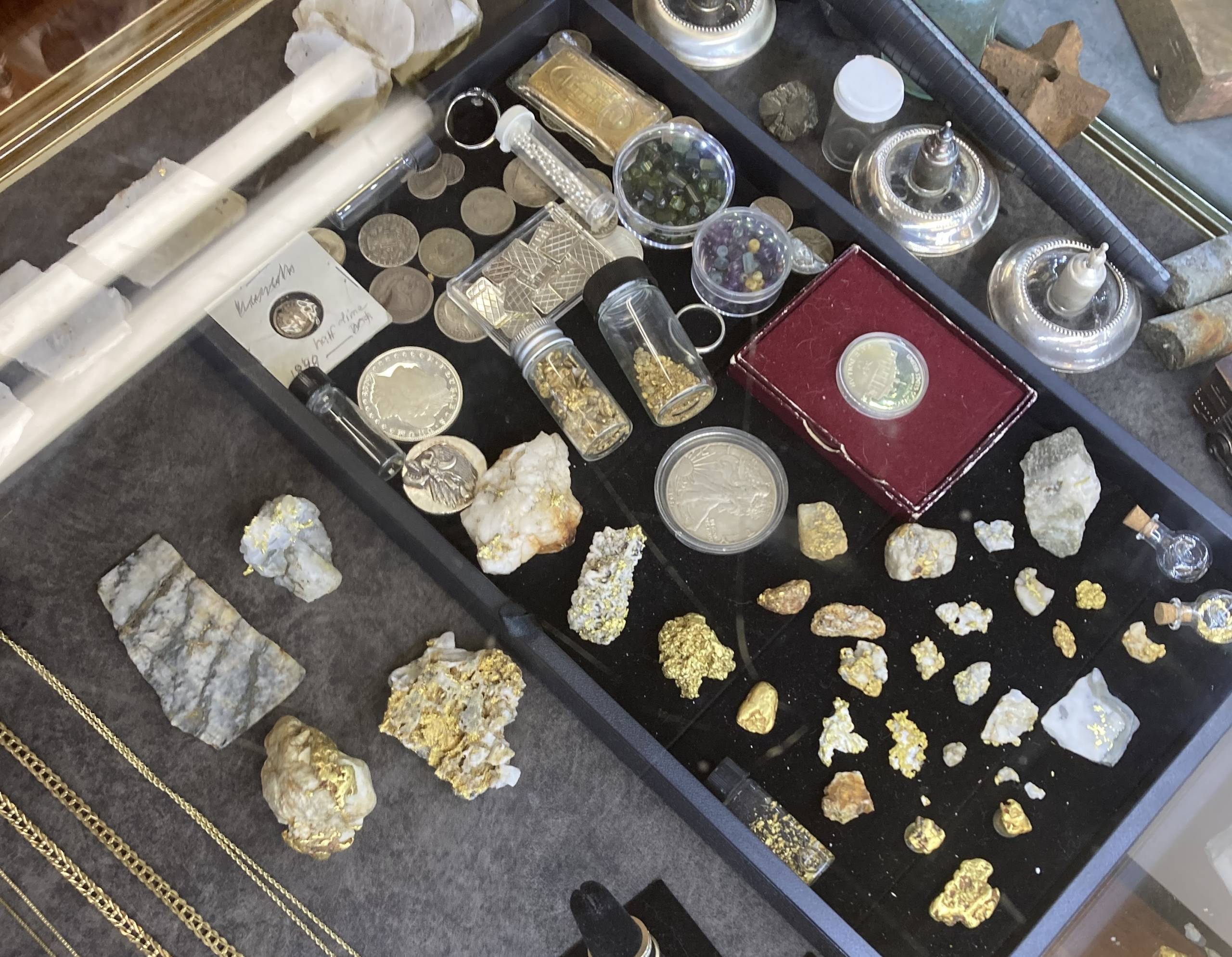
In Grass Valley, the owner of the Gold Digger Exchange, Donald Seaburg, said he meet new prospectors each week. “Some aren’t really finding much. Some are finding a lot. A lot of people quit and they’ll go back to a real job. It’s definitely hard work,” he said.
Historically, gold tends to go up in price during times of economic instability. In late January, with global tariff whiplash and domestic inflation, it hit an all time high. Since then, with the conflict in Iran and disrupted trade routes, it’s been hovering around $4,000 an ounce, which is still about double what it was worth two years ago.
A bill to allow insurance companies to monitor California drivers’ behavior in exchange for potential discounts on their premiums would change the state’s longstanding insurance law, drawing opposition from the Insurance Department as well as consumer and privacy advocates.
Assembly Bill 311 would let insurance companies use telematics — technology installed in vehicles that allows them to transmit information such as location, speed, braking force, swerving and more — when setting rates for drivers who choose to allow themselves to be tracked.
California is the only state in the nation that does not allow insurers to use telematics in setting rates. State law requires insurers to prioritize safety record, miles driven and driving experience as the main factors when they set drivers’ premiums. The bill would let drivers choose to use telematics data to establish their driving records in addition to what their Department of Motor Vehicles records show. Telematics data is collected by smartphone app, systems embedded in vehicles or other connected technology.
Supporters say the legislation would make streets and highways safer by encouraging better driving, while opponents worry about privacy, lack of transparency and possible bias in insurance pricing. The bill’s author, Assemblymember Tina McKinnor, a Democrat from Inglewood, said at the committee hearing that she has lost three friends in vehicle crashes in the past several years. She called telematics a tool to help make streets safer, saying her bill would “incentivize safer, good driving behavior.”
The state’s insurance department is opposed to the bill, saying the legislation is not compatible with California insurance law, Proposition 103. The law came out of a ballot proposition written by Harvey Rosenfield, the founder of consumer advocacy group Consumer Watchdog, in response to rising car and home insurance premiums almost four decades ago. It was approved by 51% of the state’s voters in 1988 and includes a mandate for insurance companies to give “good drivers” 20% discounts. (Some drivers also receive discounts for low mileage — it’s a form of monitoring that’s OK under Prop. 103 because miles driven is an allowed factor in rate-setting.) “The bill creates broad liability loopholes, dilutes regulator oversight, and allows insurance companies to shift core regulatory responsibilities to unregulated third-party telematics vendors, among other concerns,” wrote Josephine Figueroa, deputy insurance commissioner and legislative director for the department, to Sen. Steve Padilla, chairperson of the Senate insurance committee, on June 20.