Here are the morning’s top stories on Wednesday, July 8, 2026
- In the aftermath of a catastrophic wildfire we often ask, how do we stop this from happening again? Fire experts and the insurance industry have an answer to this. But there’s a tradeoff. It calls for getting rid of something we often love very much – our plants. Officials are now slowly phasing in this step called “Zone Zero,” but the strongest push may come from insurance companies themselves.
- A federal judge has rejected a Trump administration effort to shift how states spend federal homelessness money. It’s a win for California in what’s been an ongoing legal battle.
Insurance companies pushing homeowners to adopt Zone 0 policy for wildfire safety
Catastrophic wildfires have devastated California in recent years. In the aftermath, we often ask ourselves – how do we make sure this doesn’t happen again?
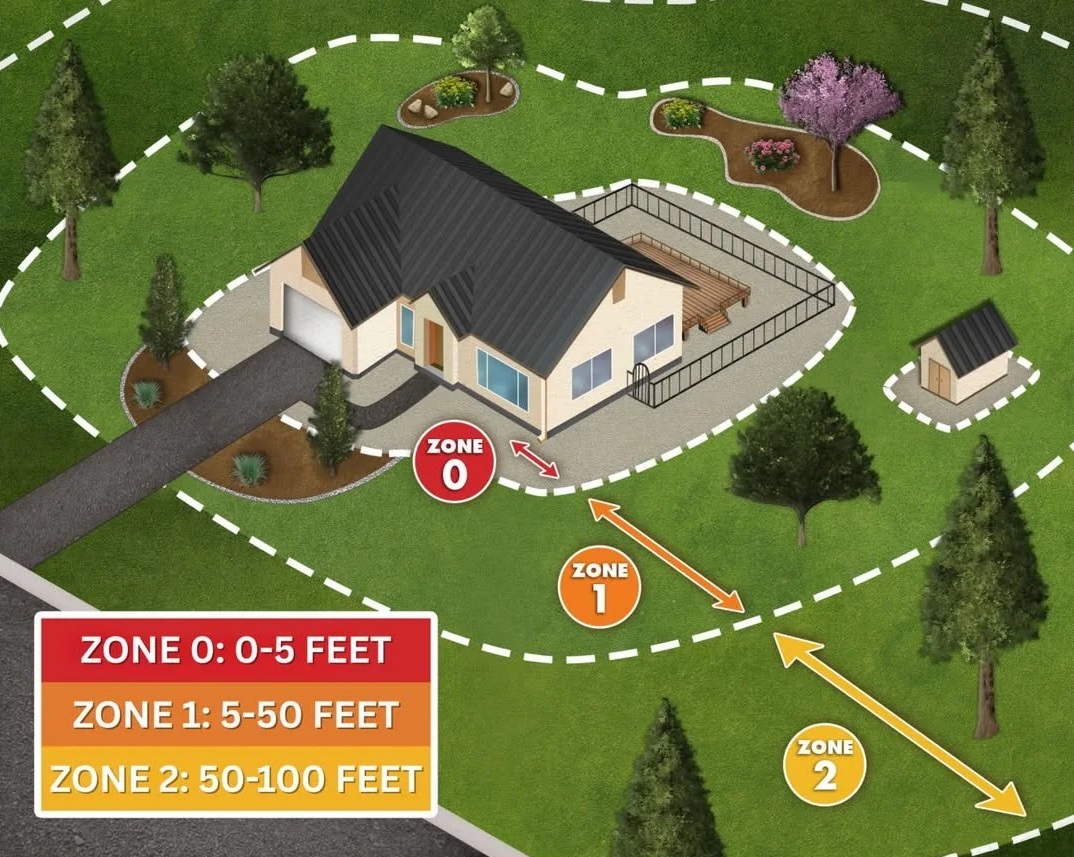
State officials are slowly phasing in one of the next steps in better protecting homes – it’s called Zone Zero. That’s the area of bare dirt around homes which is considered a defensible space. It’s a bubble – the first 5 feet around the house – where there is nothing likely to catch fire. While other defensible space codes have been about slowing oncoming flames or providing a safe space for firefighters to work, this one is about preventing embers from catching the house on fire. Embers are responsible for up to 90% of homes burning down in a fire. It’s a hot topic in policy and research circles where people talk about how to save homes and make insurance more affordable.
Studies indicate more than half of homes could be saved during a wildfire if the whole neighborhood took this step. The state has dragged its feet for years on implementing this standard. And it won’t apply to existing homes in very high fire risk areas for another 3 years. But some cities are moving faster, including San Diego, Berkeley and Orinda-Moraga. Some residents are on board, some really are not.
Insurance companies could become the ones who really drive adoption. Amy Bach, from United Policyholders, a nonprofit that helps insurance customers, told state lawmakers people want guarantees. “If I don’t go on vacation and I use that money to get rid of my beautiful bushes and all the other things you’re telling me I need to do, replace my wooden fence with a metal fence, then I’m not going to have to worry about my insurance again,” she said.
Judge shoots down Trump’s homeless funding shift
California scored another win against the Trump administration in their battle over how to address the homelessness crisis here and nationwide.