Here are the morning’s top stories on Tuesday, June 30, 2026
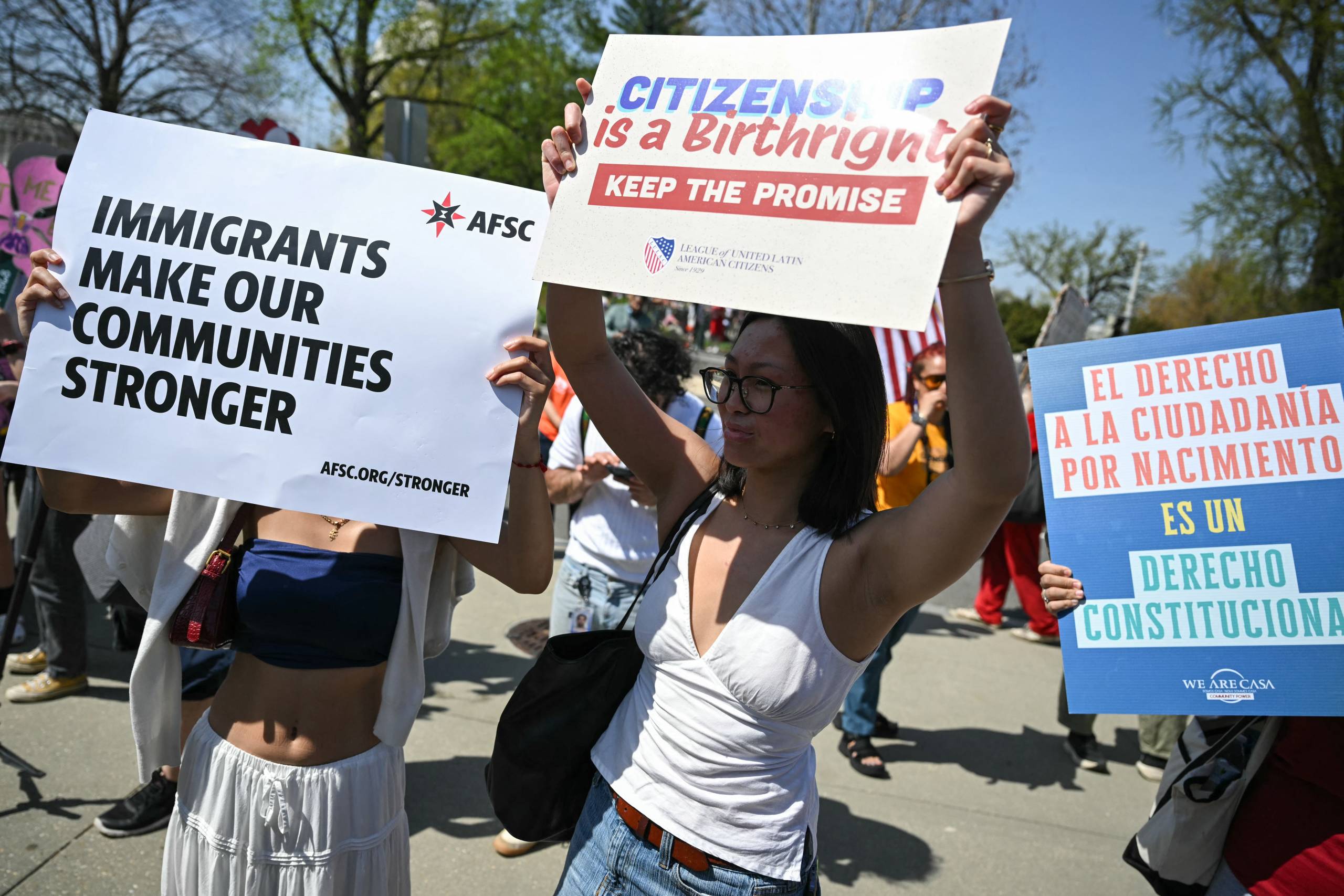
- The Supreme Court upheld equal citizenship for all born on American soil Tuesday, in a landmark victory for the country’s immigrant communities.
- The Humboldt County Sheriff says the rescue at the center of a multiagency investigation into potential fraud and animal abuse will stay open for now, even though the remains of more than 117 dogs were found on the property.
Supreme Court upholds birthright citizenship in case with San Francisco roots
In a sharp rebuke to President Trump, the Supreme Court ruled Tuesday that the Constitution guarantees automatic birthright citizenship to virtually all children born in the United States.
The decision firmly rejected the executive order that Trump issued on the first day of his second term. It sought to bar citizenship for babies born in the U.S. to parents who either entered the country illegally or who are living and working here legally with temporary visas. The executive order never went into effect because every lower court judge who reviewed it concluded, in the words of one judge, that it was “blatantly unconstitutional.”
“Citizenship, then and now,” Chief Justice John Roberts concluded, “was the right to have rights–to freely participate in our political community. The Framers of the Fourteenth Amendment extended that promise to ‘every free-born person in this land.’ We keep that promise today.”
Justices Clarence Thomas, Neil M. Gorsuch and Samuel A. Alito Jr. dissented. In Alito’s dissent, he wrote: “[t]his is one of the most important decisions in the history of the Court, and in my judgment, the Court has made a serious mistake.”
For more than a century, babies born in the U.S. have been granted citizenship based on the 14th Amendment, which says that “all persons born or naturalized in the United States, and subject to the jurisdiction thereof, are citizens of the United States.” Initially introduced in response to laws in Southern states restricting the rights of formerly enslaved Black Americans after the Civil War, the Supreme Court ruled in 1898 that the 14th Amendment applies to all children born in the U.S. to parents “domiciled” within the country. This case was brought by Wong Kim Ark, a San Francisco-born man who successfully defended his claim to citizenship — after officials claimed that the fact that his parents were Chinese nationals at the time of his birth disqualified him.
Until now, only narrow exceptions existed for children whose parents were high-ranking foreign diplomats or were in the U.S. as an invading army.
Sacramento County seeks dogs sent to rescue under investigation for animal abuse
Sacramento County Animal Services has filed a legal demand to retrieve dogs that were transferred to a “no-kill” rescue at the heart of a sprawling multi-agency investigation into allegations of animal abuse and fraud.
The filing alleges the dogs were transferred to Miranda’s Rescue through “straw” rescues without the county’s approval or knowledge.
In early May, the Humboldt County Sheriff began investigating Shannon Miranda, the rescue’s owner, after two local animal advocates, Jenna Moore and Jennifer Raymond, went onto the 50-acre rescue property at night and dug up the bodies of eight dogs that appeared to have gunshot wounds to the head.
Last week, investigators from the sheriff’s office, FBI, California Department of Justice, USDA and Humboldt County District Attorney’s Office served a second search warrant on Miranda’s property, recovering 117 dog bodies, 21 skulls, adoption paperwork and other evidence. “ The facts that have been uncovered are deeply disturbing, and I understand the community’s desire for answers, accountability, and justice,” Sheriff William Honsal said at a press conference on Monday.
So far, 91 microchips have been recovered from the scene, he said. Many of them “trace back to shelters and rescue facilities throughout the state.” Honsal asked for the public’s patience as investigators work through the evidence in what he described as a “complex case.”