upper waypoint

In Santa Cruz, Cannabis Culture Faces Challenges From Increased Regulations

The culture has grown more and more commercial since marijuana was legalized in the state.
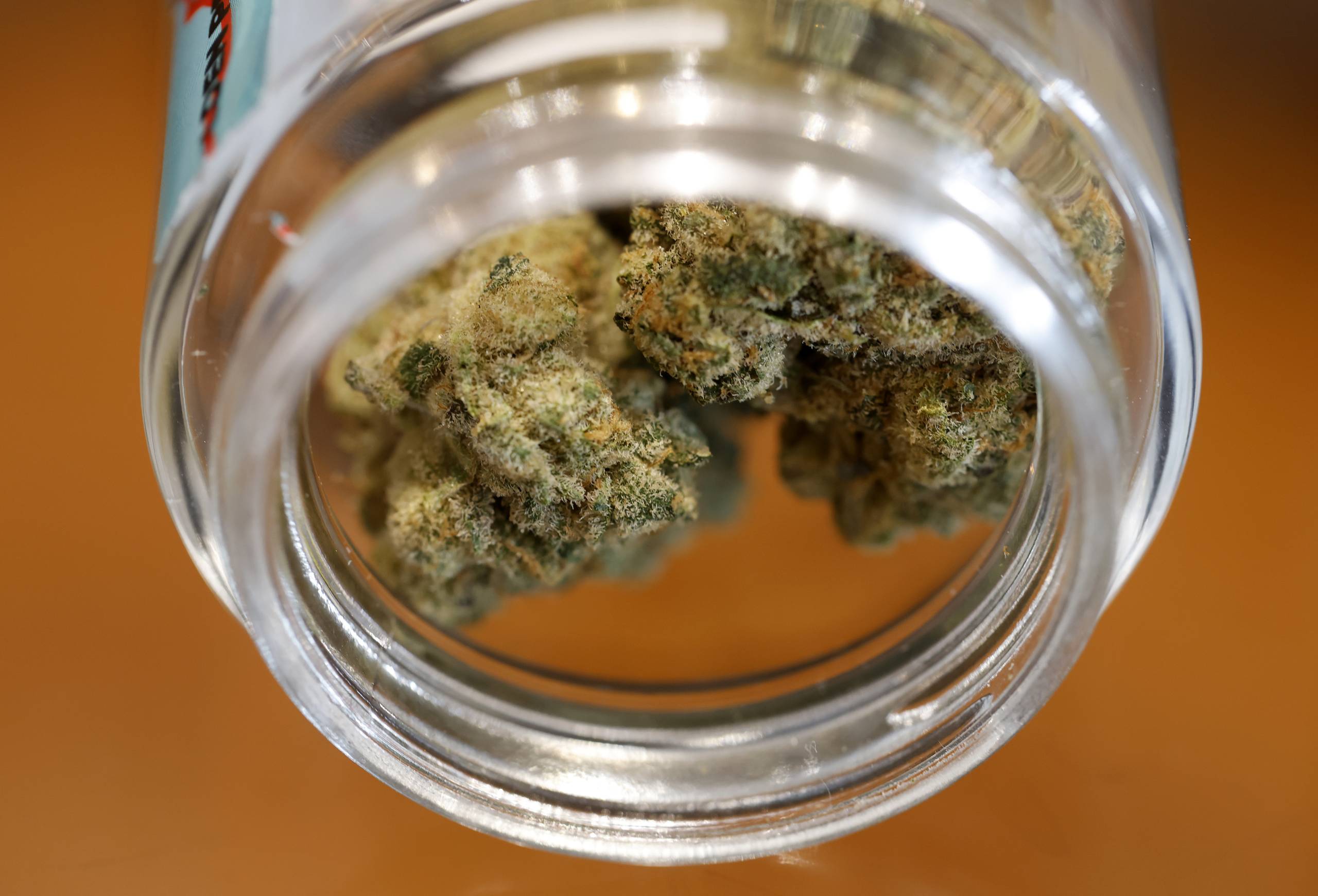
SAN FRANCISCO, CALIFORNIA - AUGUST 11: Marijuana flower is displayed in a jar at California Street Cannabis Company on August 11, 2025 in San Francisco, California.  (Photo by Justin Sullivan/Getty Images)

Here are the morning’s top stories on Friday, June 5, 2026

  • Cannabis businesses say California’s weed regulations are hurting the industry, but public health groups are pushing back, saying regulators are leaving protections for youth on the table. In Santa Cruz, known for its cannabis culture, the city says keeping both groups happy is an ongoing challenge. 
  • New data shows cuts to Medi-Cal — the state’s Medicaid program — are taking a steep toll on California’s once-celebrated “Health Care for All” movement.

Regulations hampering many legal cannabis businesses

At Santa Cruz’s iconic Lighthouse Field, it’s a party. There’s live music, people dancing, and lots of weed. Virginia Elena moved to Santa Cruz as a kid and says weed’s an essential part of its identity. “It’s a huge part of the culture,” Elena said. “It’s always been a huge part of the music scene, the festival scene.”

Weed’s been popular here since as far back as she can remember, but since its legalization, the culture has grown more and more commercial. She said vapes and gummies started replacing joints, and that high taxes have made survival hard for small legacy operators. “I’ve seen dispensary after dispensaries go down or get sold,” she said.

Johnny Hamala owns the Green Spot Dispensary on Santa Cruz’s West Side. He said California regulations have been challenging. “We have just now been bumbling through to get to a good system,” he said. High taxes and strict regulations have caused many small growers he works with to go out of business.

The state responded to industry concerns late last year by reducing its excise tax on cannabis from 19% to 15%. While Hamala celebrates the reduction, he also said regulations have fallen short in other ways, like failing to limit the amount of weed in the legal industry. “There was way too much. Way too much cannabis,” Hamala said. “You couldn’t sell it. You were lucky if you could get what it cost you to grow it to get the money out of it.”

The lack of a growing cap led to an oversupply of weed in the market, causing prices to drop rapidly. That’s according to Whitney Economics, an industry group that collects economic data for businesses and regulators. As a result, small operators who’d been around the longest couldn’t compete in the oversaturated market.

But public health groups say that same oversupply is also concerning for its effects on the consumer side. “What we have now is a bunch of people who produce too much weed and they’re looking for warm bodies to consume it,” said Lynn Silver, program director at the Public Health Institute.

The organization released targeted guidelines earlier this year that scored cities based on how they protect public health and prevent kids from smoking weed. Santa Cruz scored just 42 out of 100. The scorecard recommends doing things like prohibiting weed infused drinks and increasing buffer zones between schools and dispensaries — an issue that came up in 2024 when a dispensary was approved blocks away from Santa Cruz High School.

As California continues to fine tune its regulation of the legal weed industry, towns like Santa Cruz are finding their own balance, figuring out what a new age of cannabis culture means for them.

When new CA laws kicked in, thousands of immigrants dropped or lost Medicaid coverage

New data show California’s cuts to its Medicaid program are taking a steep toll on the state’s once-signature “Health Care for All” movement.

More than 86,000 immigrants without legal status left or were denied Medi-Cal in January and February, exiting the program at a rate six times higher than other enrollees, according to a Public Health Watch analysis of the most recent data available. The sharp decline is the largest two-month enrollment drop for this population since California first opened Medi-Cal to all low-income residents regardless of immigration status in 2024.

The initiative, championed by Gov. Gavin Newsom, had been steadily growing until May 2025, when participation peaked at 1.48 million enrollees. Enrollment has fallen gradually since, driven in large part by passage of the sweeping federal budget bill, H.R. 1, and other state actions that will deter or discourage more immigrants from getting Medicaid coverage. “We’ve got a real chilling effect,” said Laura Sheckler, deputy director of policy and regulatory affairs at the California Primary Care Association, which represents nonprofit health clinics statewide. “A lot of actions have happened at the federal level … and then on top of that, state policies [have indicated] just a clear withdrawal from that promise of care and coverage.”

In June, when enrollment began to dip, it was revealed the Trump administration was sharing Medicaid data with Immigration and Customs Enforcement, or ICE. The data included names, addresses and citizenship status of Medi-Cal members. That same month, California approved a Medi-Cal enrollment freeze on undocumented immigrants, to take effect this year. The freeze has a twofold effect: It stops new adult immigrants without legal status from enrolling and blocks former recipients from re-enrolling. That means undocumented adults who lapsed on paperwork or payments for more than 90 days will lose coverage permanently.

Then, in July, the pace of disenrollments sped up. On July 4, President Trump signed the sweeping tax and spending bill, H.R. 1, which is projected to cut Medicaid spending by nearly $1 trillion over the next decade. Meanwhile, a series of federal ICE raids across California caused panic among immigrants and led to widespread demonstrations.

But the sharpest decline in Medi-Cal numbers began on January 1, when California’s enrollment freeze took effect. The freeze halted the state’s first-in-the-nation Medi-Cal expansion program, which had extended Medi-Cal coverage to all low-income undocumented adults. State analysts say the long-term consequences could be huge. About 1.3 million immigrants in California are expected to lose their full-scope Medi-Cal over the next four years due to the freeze and other state changes. That could cause many to forego treatment for chronic illnesses or ignore medical symptoms until they become emergencies, providers say.

lower waypoint
next waypoint
Player sponsored by