upper waypoint

California Gubernatorial Candidates Try to Distinguish Themselves on Housing Policies

Housing affordability is one of the central issues of the governor's race.
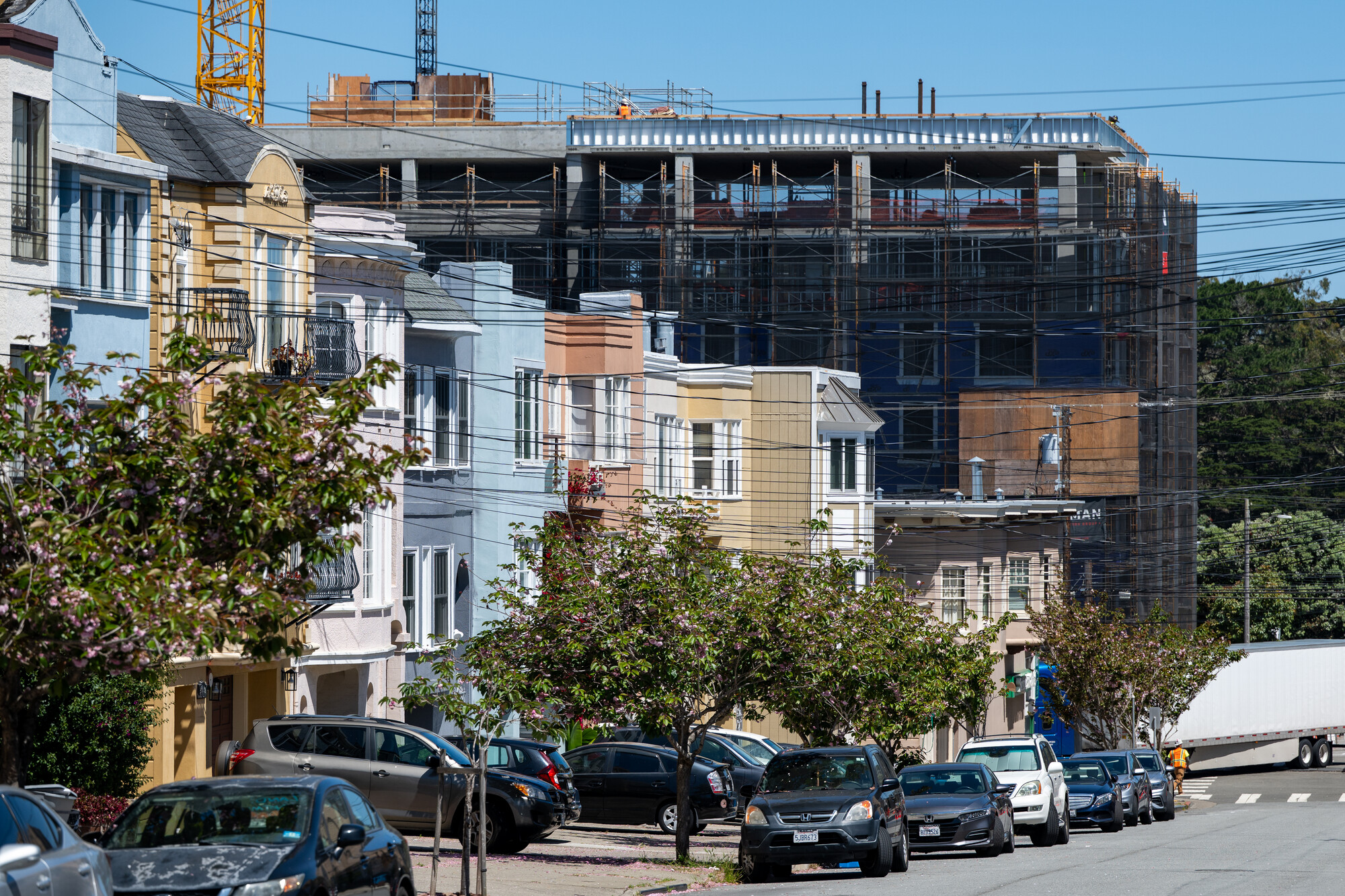
Construction is underway on an affordable housing apartment building at 2550 Irving St. in San Francisco’s Sunset District on May 19, 2025. (Beth LaBerge/KQED)

Here are the morning’s top stories on Friday, May 22, 2026

  • In California’s crowded race for governor, almost every candidate has made housing affordability a central part of their campaign. While the candidates  have varied approaches on this issue, and there’s a lot they agree on, there are also some key differences. 
  • Data centers are expanding into water-stressed communities across California, like the Imperial Valley. At the same time, data center operators are using loopholes to hide how much water these facilities are using. These findings are from a new report backed by Santa Clara University and the think tank Next10.

How California’s next governor would tackle rent, insurance and housing costs

When it comes to affording rent or a home mortgage in California, every candidate in the race for governor seems to have a personal stake. Katie Porter wants her three teenage children to eventually move off her couch. Antonio Villaraigosa wants reliable home insurance. Matt Mahan doesn’t want to fight with his wife over their mortgage, as his parents did.

As the affordability crisis literally drives residents out of the state, the candidates have made housing a central point of their campaigns. That’s a sea change from previous elections, said Laura Foote, executive director for YIMBY Action. “Everybody up there was expected to have a plan and demonstrate how they were going to execute on delivering more affordable housing in California,” she said. “That’s a crazily different place than we were eight years ago, 10 years ago.”

Each candidate is trying to stand out in the most competitive primary for California governor in two decades. But many are hitting the same broad talking points: lower the cost of construction, make homeownership more accessible and reduce homelessness. Where they differ is in the details of how they’ll get there. Meanwhile, some voters feel discouraged by key issues they say are missing. Katherine Peoples-McGill drove to Oakland from Altadena earlier this month to attend a debate sponsored by the Housing Action Coalition and other housing nonprofits. She runs the Rebuild Center for Altadenans, which assists survivors of the 2025 Los Angeles wildfires. She was disappointed none of the candidates had visited her center, much less mentioned wildfires in their comments. “Altadena can happen anywhere in this country, anywhere in the state of California,” she said, “and for [the candidates] to really not be involved in that was a little shattering.”

Here are some of the key points that candidates are focusing on – Democratic candidates Katie Porter, billionaire Tom Steyer and former state attorney general Xavier Becerra have all argued that modular and factory-built construction could hasten building timelines and streamline the process.

Other candidates are focusing on what the state can do now to incentivize and ease the path of traditional building methods. State Superintendent Tony Thurmond has campaigned on building 2 million affordable homes on school district-owned surplus property. Riverside County Sheriff Chad Bianco wants to end the “over-regulation of our building industry.”

British American political commentator Steve Hilton and Mahan, mayor of San Jose, have both talked about capping fees that cities often impose on developers to offset the impact of new development. A recent study from UC Berkeley’s Terner Center for Housing Innovation found that these “impact” fees contribute to less than 5% of total development costs, but can nonetheless deter it.

When it comes to protecting the interests of renters, the candidates are divided on the best course. Steyer, Becerra, Villaraigosa and Thurmond have said they are in favor of some form of government-imposed rent caps, including extending and enforcing the Tenant Protections Act, a 2019 law that limits annual rent increases and restricts evictions. It’s set to expire in 2030, within the next governor’s term. But Porter, a former state representative, has bucked that trend. In a KQED Town Hall, Porter said that she opposes rent control. And while she said she supports the Tenant Protection Act, she argued that it can slow down construction and force people to stay put, regardless of whether moving would benefit their family or lifestyle.

Data centers are guzzling California’s water. We have no idea how much

Data center builders don’t tell the public how much water they use, according to a new report — and the industry is encroaching into water-stressed and vulnerable communities.

The report, by the think tank Next10 and researchers at Santa Clara University, finds that planned data centers — the ganglia of artificial intelligence — are spreading to regions reliant on overtapped groundwater and strained surface water, with potentially major effects in the Central and Imperial Valleys. But, reinforcing previous studies, the researchers found that a patchwork of state, federal and local policies allow data center operators to avoid publicly disclosing their actual water use.

California lawmakers tried to address this last year, but California Gov. Gavin Newsom vetoed the measure. Now, the Legislature is trying again, with bills mandating disclosures about water use and planning. “We have this huge build out, and we have very little data,” said Irina Raicu, who directs the Internet Ethics program at the Markkula Center for Applied Ethics at Santa Clara University.

Few environmental impact reports for California’s data centers were publicly available online, the researchers found. Raicu and a team led by Iris Stewart-Frey, a professor of environmental science and the main author of the study, went looking for the reports, meant to assess and disclose a project’s impacts for both nature and people under the landmark California Environmental Quality Act. They found almost none. The ones they did find were largely for facilities in the city of Santa Clara.

Through interviews with planning officials, they discovered that projects can slip through with little environmental review if they fall under certain size or water use thresholds, or if they meet a city or county’s criteria for other approval pathways. These include something called ministerial approval, which requires planning agencies to approve a project that meets local zoning and other standards. Even for data centers that undergo more stringent environmental scrutiny, the researchers found that documentation is rarely available to the public. In the few cases the planning documents were posted publicly, the information — on the data center’s owner or operator, size, type of cooling system, the amount of water used, whether it’s recycled or potable — was often “missing, contradictory, or vague,” the report said.  The researchers said they contacted water providers in areas where data centers cluster, seeking usage data. None responded.

lower waypoint
next waypoint
Player sponsored by