The Freedom of the Dance Floor
This piece was featured first on May 7 for One Good Thing, a weekly newsletter brought to you by Alexis Madrigal about his take on Bay Area art, culture & nature. Subscribe today.
When I was a young child, my father often traveled to and within Latin America. He went all around Mexico, Argentina, Chile, but I could tell that his favorite place to go was Brazil. The man loves a city; how could he not love Rio de Janeiro?
These were work trips and I never got to go, but I did benefit in one crucial way: he brought back VHS tapes purchased in Brazil of Carnaval, the annual festival that makes Mardi Gras look like a Fourth of July parade in a small town. For a kid growing up in Reagan-Bush I-era America, Carnaval in Rio was otherworldly. Not only was everyone seemingly at least half naked, but there was so much dancing, so many kinds of people and bodies, so much partying, so much fun.
Of course, San Francisco has Carnaval, too—coming up May 23-24. It’s not quite the same, but it is extremely fun. For the last several years, my dancer daughter has paraded with Bloco Ginga Brasil, as one of the little girls at the front. She loves it, but what she loves even more is the community that Ginga Brasil and a set of associated Brazilian institutions like BrasArte and Bloco de Sol San Jose bring together.
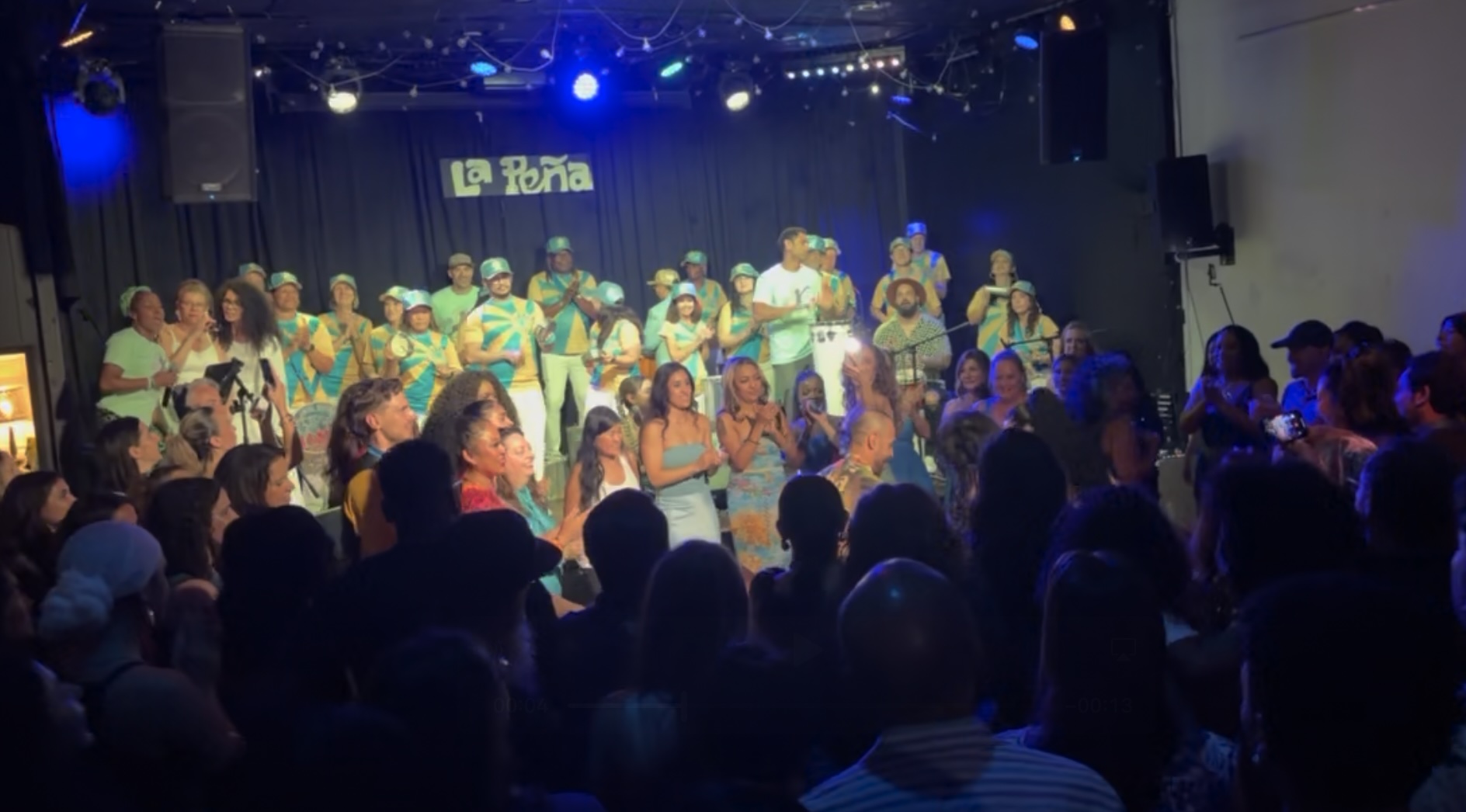
This last weekend, these crews gathered for a Carnaval fundraiser at La Peña, the Latin cultural center in south Berkeley. Bloco Ginga Brasil is now led by Tainah Damasceno, daughter of the legendary Brazilian culture keeper, Conceição Damasceno. Conceição grew up in Bahia, in the center of Afro-Indigenous culture in Brazil. She met Tainah’s father, Nick, in Florida, and they made their way to Berkeley in the 1980s.
By 1989, she had begun to found a constellation of Brazilian organizations, gathering people officially and unofficially around dance and music. The musician John Santos told Berkeleyside that her arrival “caused a sensation around the community.” Santos’s wife, the writer Aida Salazar, was another friend and admirer. She told the San Francisco Chronicle, “her genius is something she brought from Brazil.”
All the way back in 2003, KQED Spark produced a segment about Conceição that I just love. I never got to meet her, as she’d died of complication from lupus by the time my daughter was introduced to samba through a friend’s sister. I’d heard many stories from people about how magnetic she was, and the video clearly shows that charisma and grace.
The thing I love best, for my own daughter, is the way that the women of Bloco Ginga Brasil model power and sisterhood. At the fundraiser, performances alternated with dance sessions. This being the East Bay, just about every ethnic and racial identity was represented on that dance floor, paying homage to these gorgeous Afro-Indigenous traditions from the coast of Brazil. As my ten-year-old stood gently swaying near the outside of the women’s dance circle, a powerful, tall woman in red pants with a huge mane of curly hair swept her into the mix, and there she stayed, challenged and protected by this whole array of women. Everybody (and every body) united in sweat and joy.
My daughter does a lot of forms of dance and I love them all. We get to be a part of institutions like Shawl Anderson Dance Center, which is the one of the longest running arts organizations in Berkeley. But I don’t think she’ll ever give up samba. Conceição seems like one of those people who was free, somehow, and she used that power to show others how to free themselves. To watch the dancers, to feel that dance floor’s vibrations, to be a part of that community is such a gift. Whatever else American society tells my kid how she should look or be, she will always have the memories of that dance floor and the freedom she experienced there.

My Tipline
- I made a limited edition zine from this newsletter for KQED Fest. Hope you are going!
- Do you like diasporic stories? Maybe check out this musical storytelling event
- Cannot recommend this London Review of Books podcast series, Close Readings, highly enough
- This film screening looks fascinating: Oakland Ilokana

My Picks
- ARCHIVE – KQED Spark – Conceicao Damasceno – A wonderful tiny profile
- NEWS – Did Newsom’s $3.8 Billion Hotels-to-Housing Program Pay Off? – A CalMatters investigation
- LIVE – KQED FEST!!!! – It is upon us! Go get my little zine, Several Good Things