Episode transcript
Olivia Allen-Price: Jess Garcia, has a little game she and her husband like to play…
Music starts
Olivia Allen-Price: They’ll enjoy a big ole pitcher of margaritas on Valencia St in San Francisco, and then wander over to the nearby thrift stores to see what kinds of treasures they’ll find. They were rummaging through the vinyls one day when they saw something that caught their eye.
Jess Garcia: So when we saw this album, obviously it attracted our attention.
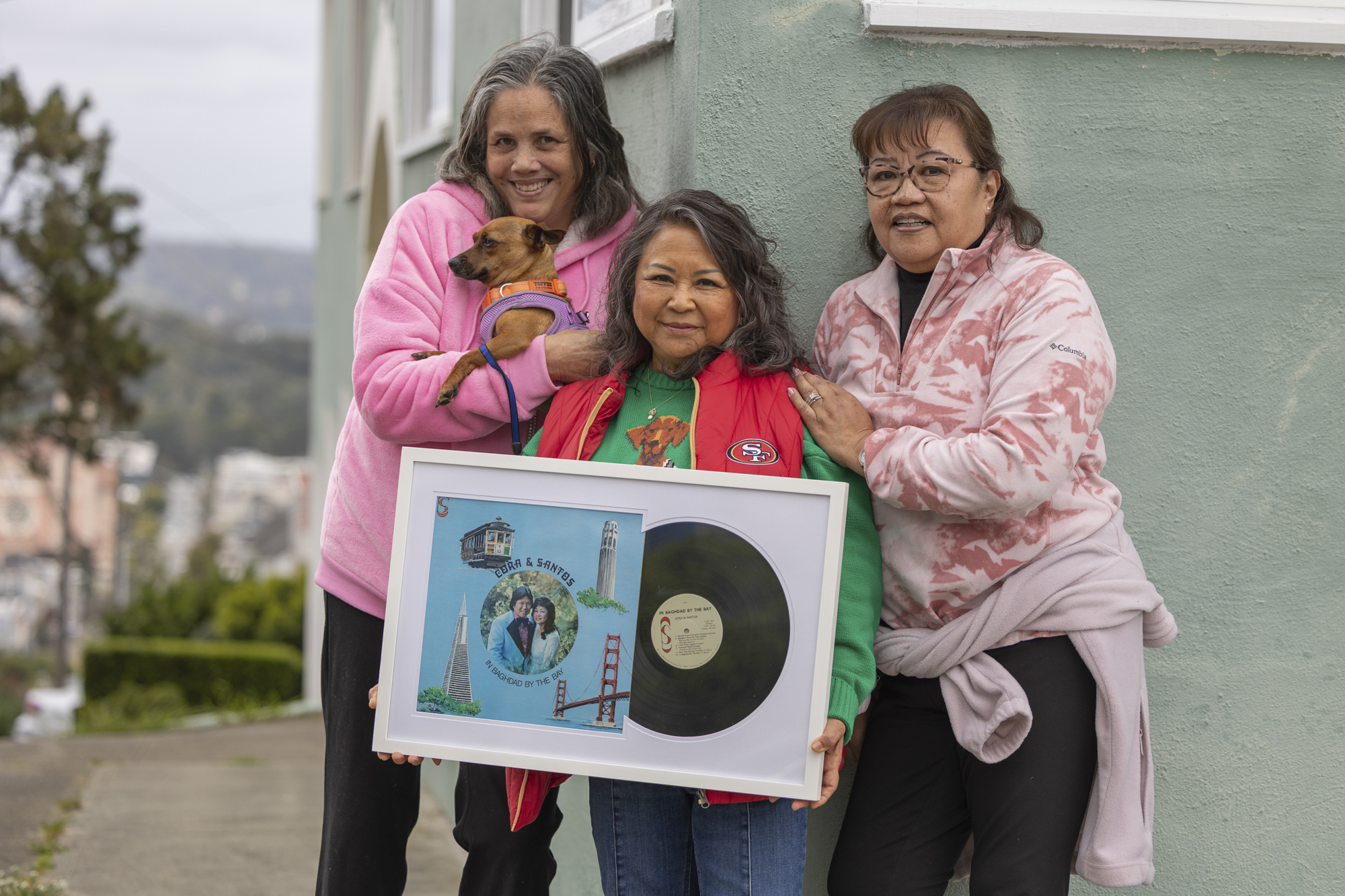
Olivia Allen-Price: The album cover has these hand-painted illustrations of San Francisco landmarks. Cable cars, the Transamerica Building, Coit Tower, the Golden Gate Bridge – and they’re all circling this portrait of a Filipino couple. It looks like a wedding photo from the 70s or 80s, maybe. He’s in a blue suit with a purple ruffled shirt underneath. She’s in a white lace dress. And in thick black letters, the album title reads “Cora and Santos, In Baghdad by the Bay.”
Music ends
Jess Garcia: We didn’t really understand like what type of album this was at first. My first impression was that, like maybe it was like a 50th anniversary album that, like they gave out to like friends and family with like just like their favorite songs on it which I thought was like such a cute idea. And then we actually did kind of rush home because we were eager to listen to the album. So when we put it on and the music started playing it just had this like really nostalgic feeling to it.
“Spanish Eyes” starts
Jess Garcia: The very first track is Spanish Eyes. And you know, a couple of seconds into the track, Cora and Santos start singing.
“Spanish Eyes” in the clear: “Spanish Eyes. Teardrops are falling from your Spanish Eyes.”
Jess Garcia: Their voices were just so vibrant and sentimental. And I just thought they were so sweet and I’ve never, you know, I’ve never heard of Cora and Santos Beloy before.
Olivia Allen-Price: The couple recorded at a studio called Wally Heider. Some other Iconic Bay Area bands have recorded there. Like Creedence Clearwater Revival, Jefferson Airplane, the Grateful Dead. Jess had heard of those bands, of course, which made her wonder if there was more to Cora and Santos Beloy’s story.
Jess Garcia: I was just really interested to know what their life was like, the types of achievements that I can’t find on the internet, and just curious about their legacy overall.
Asal Ehsanipour: Jess is right, if you search the names “Cora and Santos Beloy,” you probably won’t find much.
Olivia Allen-Price: Reporter Asal Ehsanipour loves a good mystery.
Asal Ehsanipour: There’s a beautiful obituary for Cora, who died in 2022, but not much about Santos’ funeral. A few Facebook posts about the couple’s involvement in their Catholic parish. It all feels pretty mundane. But then… you’ll find a handful of links to Cora and Santos’ music.
Olivia Allen-Price: And music was everything to this couple. Today we’re digging into the lives and legacy…big and small…of Cora and Santos Beloy. Take it away, Asal.
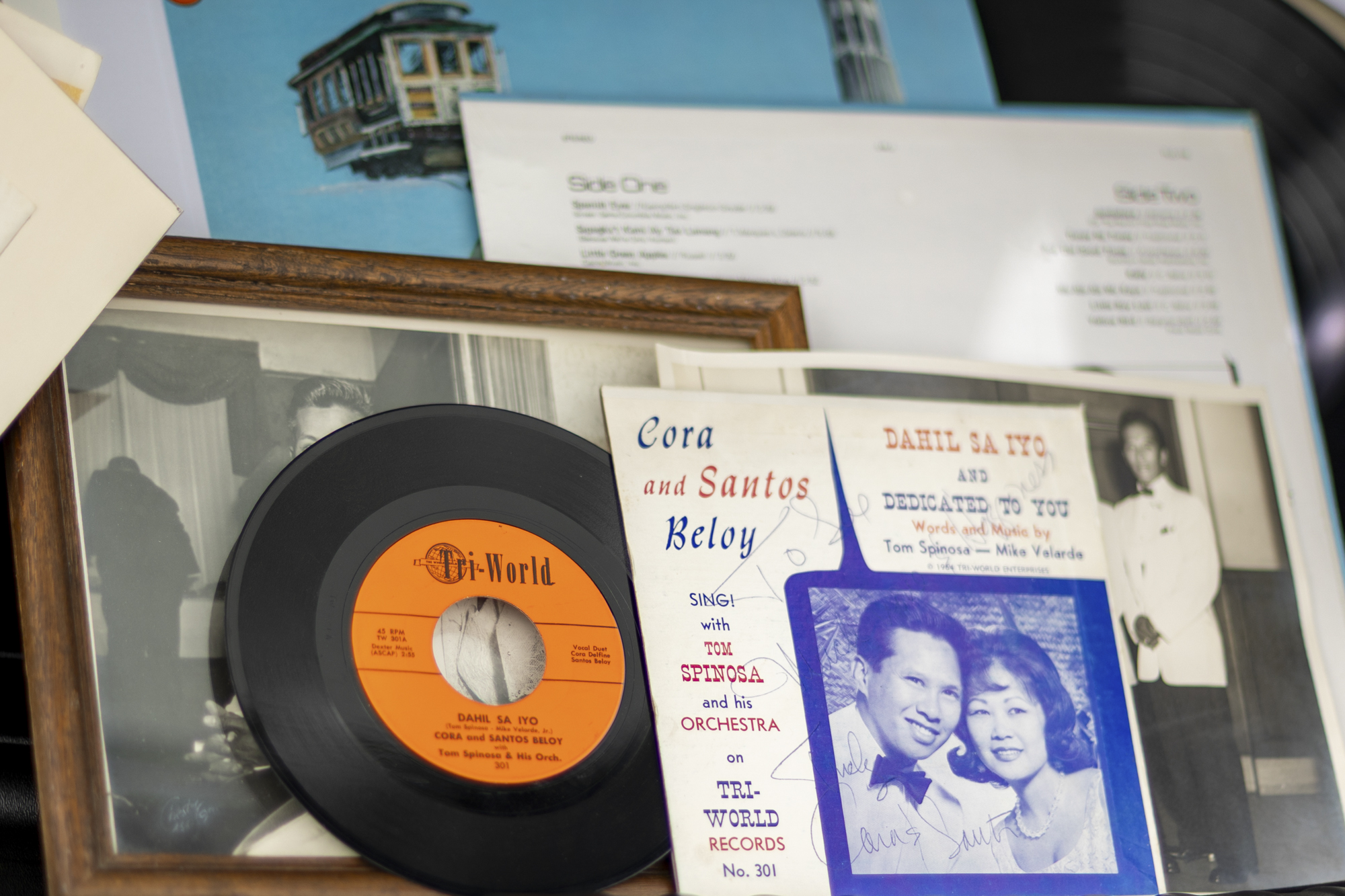
Asal Ehsanipour: The song that comes up most is Cora and Santos Beloy’s biggest hit – a rendition of the classic Filippino love song, “Dahil Sa Iyo.”
“Dahil Sa Iyo” in the clear for a moment
Asal Ehsanipour: Dahil Sa Iyo is a kind of anthem among Filipinos. Cora and Santos’ version is a duet, where Santos takes the classic Tagalog, while Cora croons in the lesser-known English translation… It’s a kind of role reversal – because Cora was fluent in Tagalog, and Santos wasn’t.
Cissy Beloy Sherr: She could sing in seven languages, // And Dad could barely remember his Tagalog words in a song.
Asal Ehsanipour: This is Cora and Santos’ daughter, Cissy Beloy Sherr.
Cissy Beloy Sherr: So, when you say that opposites attract, in some ways, I think that they were meant to be together.
Asal Ehsanipour: Cissy’s parents were also opposite in the way they’d grown up. Cora was raised on a sugar plantation in the Philippines, Santos was raised in the Fillmore. She sang to entertain the Japanese soldiers occupying her town during World War II. He was a young soprano, who sang on the radio. Cora was an immigrant, Santos was a veteran.
Cissy Beloy Sherr: So dad grew up so different from mom.
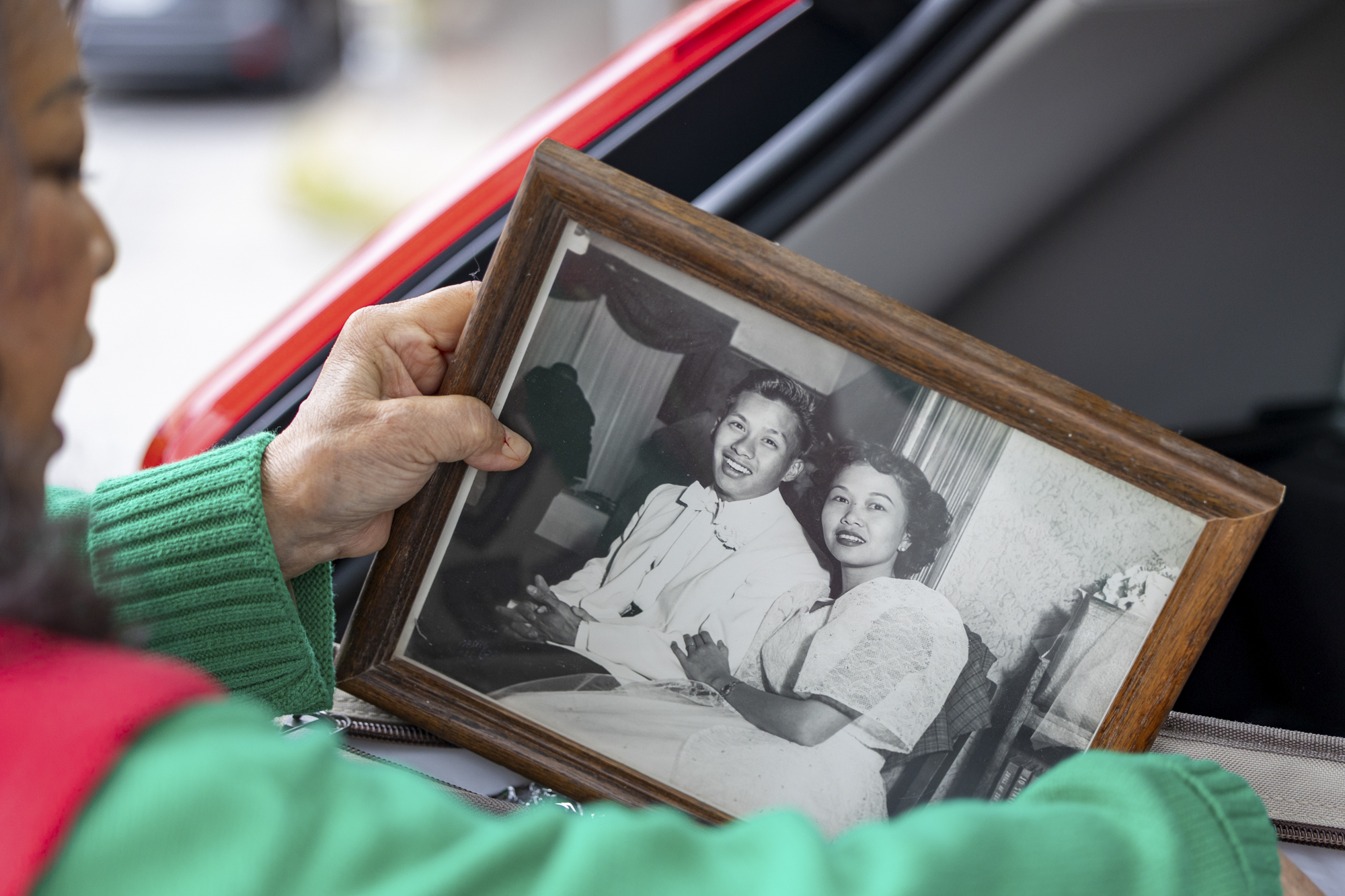
Asal Ehsanipour: Their paths finally crossed in the early 50s, when Cora attended a mixer for Filipinos in San Francisco. And one night… she heard Santos singing.
Cissy Beloy Sherr: I remember her saying, “once I heard your dad’s voice, that was it.”
Cora and Santos’ song “Hawaiian Wedding Song” starts
Cissy Beloy Sherr: It didn’t take a long time for them to fall in love with each other. I knew that.
Asal Ehsanipour: Cora and Santos were crazy about each other. Cissy says it was the kind of love where they forgot about everything else when they were together… The kind where they had a whole rolodex of special songs, just their own… and a little whistle so they could get each other’s attention at a party. .
After they married, the couple took a long honeymoon to the Philippines, so Santos could meet Cora’s family. And while they were there, Cora recorded a handful of songs with her brother – a well-known musician in the Philippines. Overnight, Cora became a star.
“My Song of Love” starts
Asal Ehsanipour: Her single, “My Song of Love,” soared to the very top of the Filipino charts in the early 50s.
Cora Delphino singing: “My Song of Love”
Cissy Beloy Sherr: People to this day remember their grandparents singing it to them to sleep. I mean, I can see where my mom’s voice had that calming lullaby tone to it.
Asal Ehsanipour: Cora’s singing was very much in the classic kundiman style. A type of Filipino music – mostly smooth, romantic ballads – sung in Tagalog. Cora gave it a modern twist, singing in English.
Cissy Beloy Sherr: There’s something about her songs. The way she sang, the minor key of it, the melody. There’s this bittersweet sadness of love and just the emotion with it. It’s kind of in your soul, you know?
“My Song of Love” ends
Asal Ehsanipour:Despite her mega hit in the Phillipines, Cora didn’t try to leverage her success into a flashy music career back in San Francisco. Instead, she immediately shifted into mom mode. This was the 1950s. Corae was already pregnant by the time she and Santos got back from their honeymoon. They settled down in the Inner Sunset neighborhood of San Francisco, and Santos took a day job as a technician for Bank of America. He worked on the predecessor to the ATM machine. Cora stayed home, and Cissy came along 14 months later.
But between the hustle and bustle of potty training and school drop-offs – Cora never stopped playing music.
Cissy Beloy Sherr: She was like just truly a performer.
Asal Ehsanipour: Cora once told Cissy a secret about this time. When the kids were in school, she confessed almost wistfully… that she’d sneak out and perform at the Hillsdale Mall in San Mateo with a group of musicians.
Cissy Beloy Sherr: They’d pick her up, bring her down to the mall and they’d be all set up for her to sing for the shoppers going through the mall.I would get home before you did and we never knew she did this.
Asal Ehsanipour: Cissy had always thought her mom was doing the dishes and baking cookies while she was in school.
Cissy Beloy Sherr: Maybe it wasn’t sneaking out, maybe it was fitting it into everything else, you know. Maybe her love of singing, she got to do that as well as be a mom.
Asal Ehsanipour: But it wasn’t just mall jobs. Cora also got offers for glamorous, higher profile jobs. At one point, Cissy said her mom had been approached by the comedian Phyllis Diller for a nightly stint at a legendary comedy club in the city, called The Purple Onion.
Cissy Beloy Sherr: I do remember that, because Phylliss Diller, she’s famous, you know. Oh, but mommy’s not gonna do that because that means she won’t be home to cook dinner for us.
Asal Ehsanipour: Instead, Cora took the so-called “casuals.” Gigs that were short-term and close to home. She started performing at local hotels, singing with the big bands.
Big band music starts
Cissy Beloy Sherr: Oh… my mom sounded great with a big band.
Asal Ehsanipour: Those huge jazz ensembles – a dozen or more musicians packed onstage together playing a big brassy sound. This was Cora’s niche.
Cissy Beloy Sherr: I never got to see her perform because I was just too little, you know. I got to see her get dressed that was the show for me.
Asal Ehsanipour: Depending on the night, Cora would dress in Filipino formalwear or a sparkly evening gown. Cissy’s favorite, though, was her mom’s Carmen Miranda outfit.
Cissy Beloy Sherr: Because that big hat had a whole bowl of fruit on the top. And I don’t know how she even got in the car with that thing.
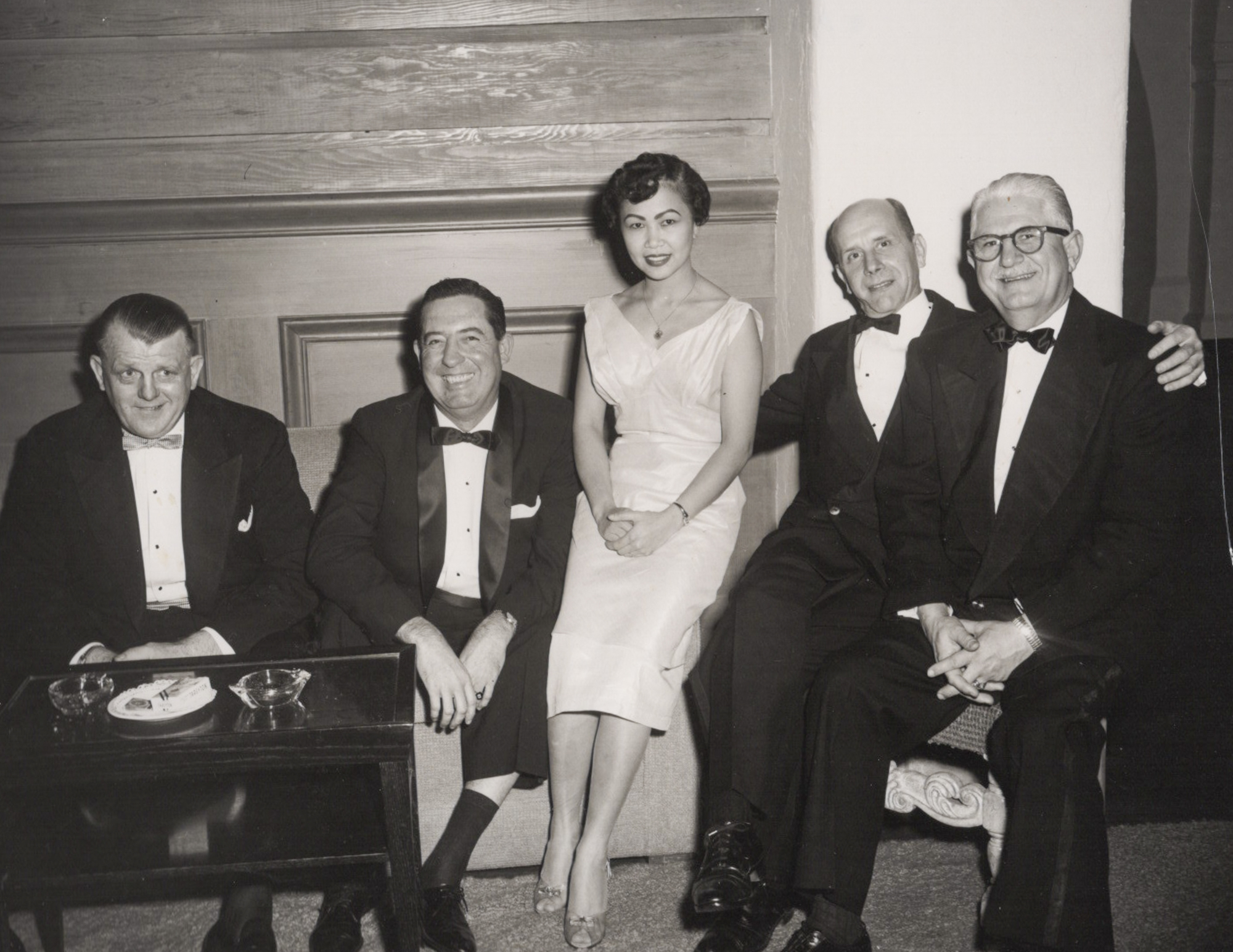
Asal Ehsanipour: And Santos loved the spotlight as much as Cora. He would work a full day at the bank, come home, throw on a Hawaiian shirt or a matching band suit – and join his wife on stage. And eventually… once the kids got older… they became the house band at San Francisco’s Fairmont Hotel.
Piano music starts
Asal Ehsanipour: This was during the Fairmont’s heyday… back when it was a nightly destination for live music. The main attraction was the Venetian Room, a glamorous concert hall where some of the world’s biggest stars performed – people like Ella Fitzgerald and Tony Bennett. In fact, Tony Bennett first sang “I Left My Heart in San Francisco” during his 1961 residency at the Venetian Room.
Tony Bennet singing “I Left My Heart In San Francisco”
Cissy Beloy Sherr: And then there was, uh, I think there was a little lounge on each side. There was one to the right, a cocktail lounge with live music. And that’s the one mom and dad played in. And it was called the New Orleans Room. And I feel like it was kind of a staging or maybe a waiting area for either if you couldn’t get tickets for the main show or you were waiting to go in that main show.
Asal Ehsanipour: This regular gig adjacent to the Venetian Room meant Cora and Santos befriended all kinds of people. Including…
Tisha Ofalsa-Nutter: Tony, just Tony.
Asal Ehsanipour: Cissy’s god sister, Tisha Ofalsa-Nutter, is talking about that very same Tony Bennett. She still remembers one night, decades ago, when her Auntie Cora invited the family over for dinner.
Tisha Ofalsa-Nutter: Just come on over, it’s Monday. Except Tony Bennett was sitting there in the living room. And he just hung out and we were all just laughing. We had Auntie’s chili. She made lumpias and // it was like she treated him just like family. It could have been any other night.
Asal Ehsanipour: Except on this night, Cora sang a duet with Tony Bennet at the piano in her living room. Casual.
Tisha Ofalsa-Nutter: And this not only happened with Tony Bennett, this happened with The Letterman.
Asal Ehsanipour: Cora and Santos became longtime friends with the pop group’s lead singer, Tony Butala. One night, they invited Sammy Davis Jr. to perform onstage with them.
Despite never achieving THAT level of stardom, Cora and Santos became “San Francisco famous” … especially through their performances at The Fairmont Hotel’s Tonga Room.
Rumbling music begins
Asal Ehsanipour: For the uninitiated, The Tonga Room is a Polynesian-themed tiki bar known for extravagant umbrella drinks and an indoor thunderstorm.
Tisha Ofalsa-Nutter: When they were about to come out and perform, they would start this thunder and lightning. And then the rain would start coming down. And there would be Auntie Cora, Uncle Santos and they would be on this barge and the barge would come out on this little waterway then the rain would stop and then they would start performing.
Cora and Santos start singing: “When I Hear the Church Bells Ringing”
Chelle Lindahl: I mean, it was just gobsmacking.
Asal Ehsanipour:This is Chelle Lindahl, Cora and Santos’ niece.
Chelle Lindahl: I know we were just all like, oh, oh my God, look at this. And then Auntie and Uncle are on this thing.
Asal Ehsanipour: People would go to the Tonga Room FOR Cora and Santos…they had a bit of a cult following.
Cora knew how to work a crowd. And when Santos sang… you couldn’t help but pay attention.
Cora and Santos song “Now That Summer Is Gone” starts
Cissy Beloy Sherr: Oh, he’s so fun. My dad had this way of playing like three instruments at once. Like three quarters of a one-man band. It was great.
Asal Ehsanipour: Cissy says that more than once, her parents would come from a night at the Tonga Room, and tell her about the customers who got a little too swept up in the music, and would jump into the indoor swimming pool.
Cissy Beloy Sherr: They’d have to fish them out of the water because they drank too much.
Asal Ehsanipour: Cissy remembers it all with nostalgia. But she also admits it was a heavy lift for her dad, who was still working his day job.
Cissy Beloy Sherr: It must have been hard to come home power nap and then go nine to one at the Fairmont hotel or something // and I think a lot of it he did it for mom because it was mom’s dream.
Asal Ehsanipour: But more than anything, they loved to perform together. Cora and Santos played restaurants, anniversary parties, and cruise ships around the world. Back in 1964, they even decided to record their music – this was before the album our question asker found. This one had just two tracks, including their famous duet of “Dahil Sa Iyo.”
Cissy Beloy Sherr: To this day people tell me “Oh, Cora and Santos, “Dahil Sa Iyo” – that was my favorite, you know.”
Asal Ehsanipour: They worked with Tom Spinosa, a big-deal bandleader who’d opened a small music label in the 1950s. To this day, Spinosa – not Cora and Santos – is typically credited with popularizing “Dahil Sa Iyo” to English speakers in the US…
Cissy Beloy Sherr: I don’t really want to give him credit. Because I don’t know that I have a positive recollection of him to be honest with you.
Asal Ehsanipour: Cissy says her parents loved everybody, but had no desire to work with Spinosa again. She’s got this feeling that the record could have put her parents on the map in a bigger way… Spinosa could have helped with that.
Cissy Beloy Sherr: I feel like that record should have probably made them some money. I don’t think it did. So I think that maybe they were…here’s my impression, that they were naive about whatever the business of it was. And it wouldn’t surprise me if they just said, okay, you know, we did it for the love of music.
Asal Ehsanipour:And as it turns out…. their love of music, their desire to build community out of music, would be the real legacy of their lives.
Olivia Allen-Price: More after this quick break. Stay with us.
Sponsor message
Olivia Allen-Price: Cora and Santos may have had a glamorous onstage life at the Fairmount hotel, befriending famous singers and sparkling under the lights, but Asal Ehsanipour tells us their most lasting legacy may have been on their local community.
Asal Ehsanipour: Cissy says her mom had always dreamt of having a big family. But since Cora and Santos couldn’t have more children, they volunteered all their free time to St. Anne’s Catholic Church – just a few blocks away from their house in the Inner Sunset.
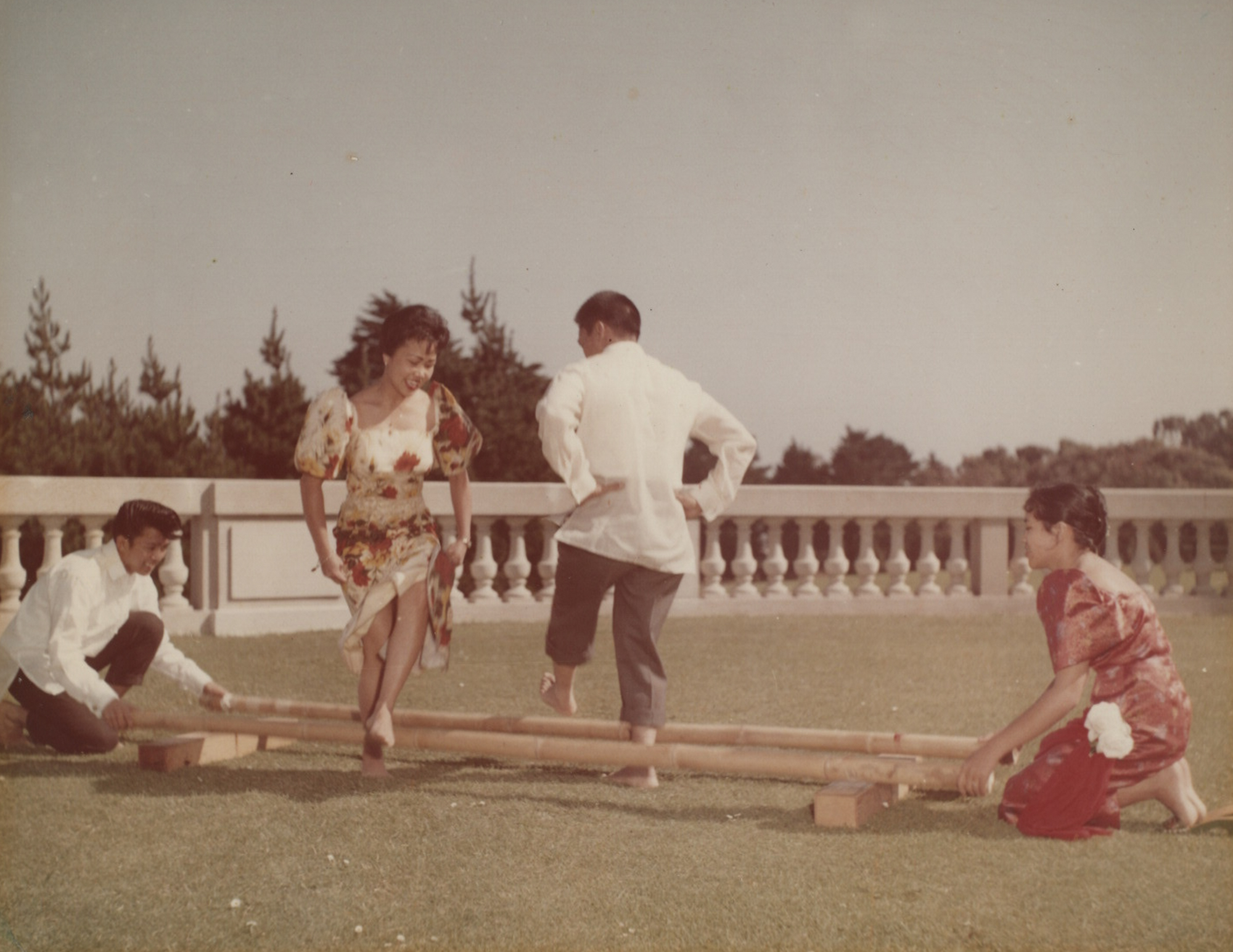
Cora ran the children’s choir and together, she and Santos taught Filipino folk dancing.
Cissy Beloy Sherr: There weren’t any Filipinos, very few Filipino people in the parish, so they were teaching the bamboo dance to people, those kids and their parents.
Asal Ehsanipour: By the 1960s, San Francisco had a sizable Filipino population, but not many lived in the Inner Sunset.
Cissy Beloy Sherr: So they were really involved in trying to bring the Philippine culture to all those white people.
Asal Ehsanipour: Cora would teach the moms how to make lumpia, while Santos played poker with the dads. And together the couple gave music lessons to kids all around the neighborhood.
Asal Ehsanipour: How many students would you say they had?
Cissy Beloy Sherr: Oh I could not keep, I have no idea. Countless I would say.
Asal Ehsanipour: Teaching them bass, banjo, piano…
Cissy Beloy Sherr: Guitar, ukulele.
Oftentimes, they’d give away instruments for free, just to ensure kids had access to music all the time. And of course, they made sure their nieces knew music.
Chelle Lindahl: We had specific lessons. I mean they made sure of that.
Asal Ehsanipour: Cissy’s cousin, Chelle Lindahl again.
Chelle Lindahl: There was a set time and then we practiced every day.
Asal Ehsanipour: Chelle was Santos’ brother’s kid. Her parents divorced when she was about eight. Then her mom left, and her dad was overwhelmed. So the girls went to live with their Auntie Cora and Uncle Santos.
Chelle Lindahl: And they took on the parent roles. I mean they had two children of their own and to take on three even younger children who are struggling with their mother leaving and all of that. That was incredibly generous on their part.
Asal Ehsanipour: Chelle said her aunt and uncle made the girls feel special during a time when they really needed love and tending to. Music was a big part of that.
Chelle Lindahl: I think the thing that I enjoyed the most was the singing, // And they gave us that opportunity.
Asal Ehsanipour: Cora had started writing jingles for local businesses. So she invited the girls to record what she’d written for a very popular local burger chain, Doggie Diner.
Chelle Lindahl and Ange Wesley sing together: Doggie Diner, nothing’s finer, doggy diners, dog gone good!
Chelle Lindahl: We went down to a radio station and recorded it, and then we were kind of famous at school.
Asal Ehsanipour: Under the care of Cora and Santos, the ragged edges of their broken family began to smooth.
Chelle Lindahl: They, they just brought a joy to all of this that we wouldn’t have had otherwise in our life. Just no way. And it was just them.
Asal Ehsanipour: They modeled what a loving relationship and happy family looks like… It really set the bar for Chelle and her sisters.
Chelle Lindahl: I mean, it sounds corny these days, but. They really were it, you know, they embodied it. They really did.
Asal Ehsanipour: In 1974… a full decade after “Dahil Sa Iyo” came out, Cora and Santos decided to release their music again.
Music starts
Asal Ehsanipour: This time, they produced it on their own terms… no middlemen… under the label Cora & Santos Enterprise. They called it “In Baghdad By The Bay.”
Cora singing: “I know a great old city down California Way. They call it San Francisco or Baghdad By The Bay.”
Asal Ehsanipour: This is the very same record our question asker Jess Garcia found at the thrift store.
Chelle Lindahl: I remember just admiring the cover art and they had the cable car on there and I think the bridge is on there.
Asal Ehsanipour: Cora and Santos asked a friend to design the cover, and invited local musicians to perform with them. The whole record is a homage to the city where they fell in love and raised their children. They celebrated in classic Beloy fashion, with a huge party at home.
Chelle Lindahl: I remember being in the living room and like having it presented and everybody’s like ‘oh my god this is amazing.’ you know I mean this was, in this day and age of you can record anything and this and that like to get your songs pressed onto vinyl. That was a big, big deal. But Auntie and Uncle singing together, that’s some kind of magic there. Like their voices, they were beautiful together.
“In Baghdad by the Bay” ends
Asal Ehsanipour: I hope it pans to your parents. I want to see them.
Cissy Beloy Sherr: Come on, pan out, pan it out.
Asal Ehsanipour: Back at Cissy’s house, she’s showing me a home video of her parents in their later years. They’re performing on a lawn together. It’s a stark contrast to the drama of The Tonga Room… This feels light and casual. No pretenses.
Cissy Beloy Sherr: Always the last song they play, this one.
Asal Ehsanipour: What’s this one?
Cissy Beloy Sherr singing: Have I told you lately that I love you? Dear, have I told you…
Asal Ehsanipour: Your mom was looking at your dad.
Cissy Beloy Sherr: Always. Lookit. Watch.
Home movie sound fades out
Cora and Santos continued singing love songs to each other until Santos died of cancer in 1997.
Cissy Beloy Sherr: You know? Mom just sadly carried on.
Asal Ehsanipour: But she never stopped performing. She played at nursing homes, birthday parties — wherever she could get her hands on a microphone, really.
Cissy Beloy Sherr: We go to a brunch. Boy, my mom was drooling over the piano before the food. She would ask can I play? can I play for everybody? She wanted to play that piano for everybody at the brunch rather than eat, in her 90s.
Asal Ehsanipour: Cora performed her last song in 2022… just weeks before she died at 93 years old.
Music fades out
Asal Ehsanipour:Throughout Cora and Santos’ musical career in San Francisco, they brushed elbows with the stars that have become household names. But that lifestyle wasn’t what called to them…they wanted their music to make the people around them happy.
Cissy Beloy Sherr: You will talk to so many people and they might not have this story about, oh, the famous Cora and Santos, but they will have a great story. Oh gosh, they played at my wedding and I couldn’t afford to pay them or they wouldn’t let me pay them, but it made it so special.
Asal Ehsanipour: They were legends at the Tonga Room…larger than life figures at home… their legacy may not have made it to the internet, but for the people who knew them, they were stars.
Olivia Allen-Price: That was reporter Asal Ehsanipour.