Episode transcript
Olivia Allen-Price: Hey everyone! This is Bay Curious — the podcast that answers listener questions about the San Francisco Bay Area.
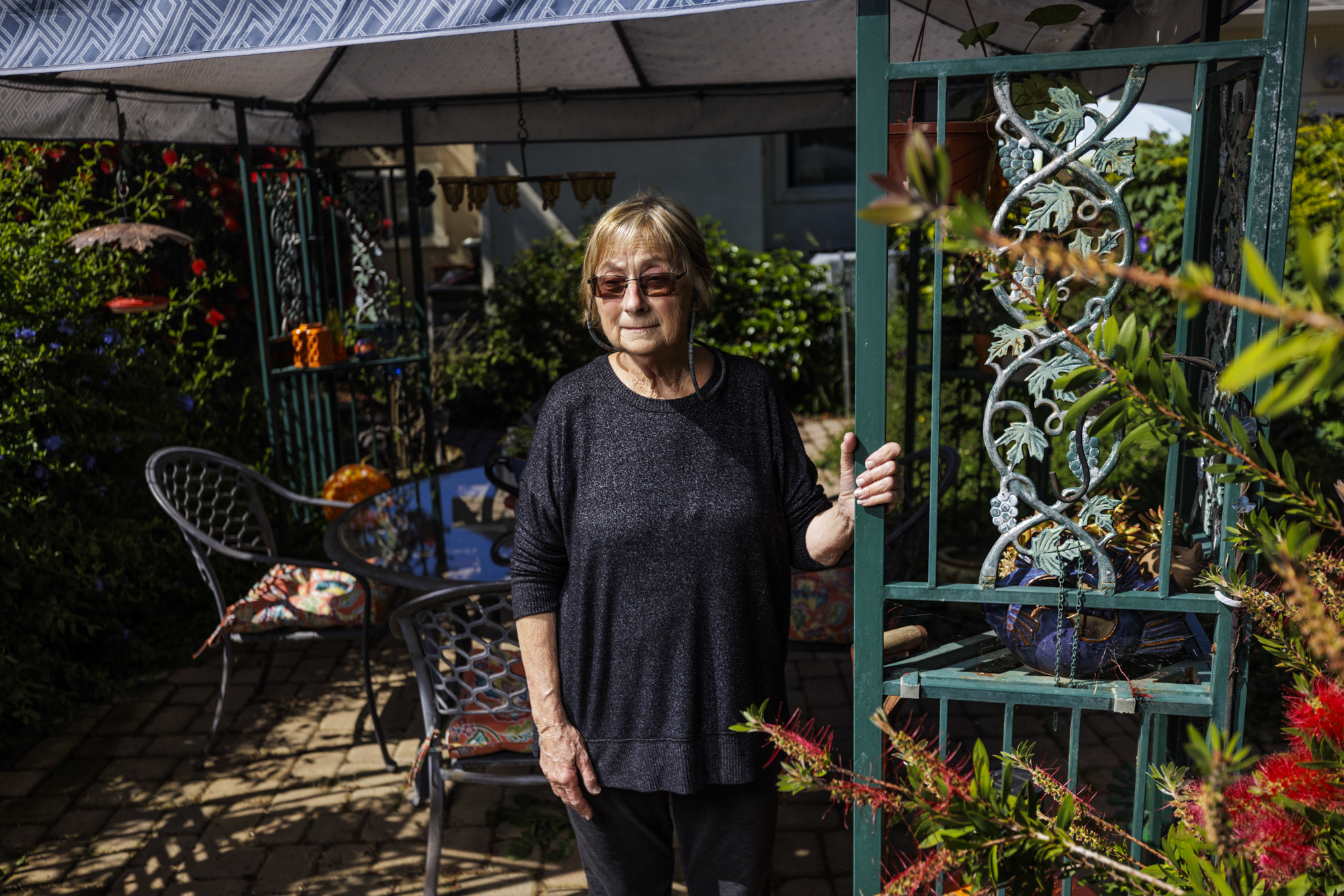
We recently got a question from a woman named Suzanne Howard.
She bought a house with her husband in Walnut Creek two years ago and she loves the place. How it feels safe and walkable to lots of shops. They bike everywhere. But one thing gives Suzanne a little buyer’s remorse.
Suzanne Howard: It’s right next to the 12 lane freeway. It’s super noisy, super thankful to have a house, but like quality of life noise pollution is a little much.
Olivia Allen-Price: One day, Suzanne was feeling curious, and she started studying online maps, looking for open space in the East Bay. Where could more housing be built near her that might offer a little more peace and quiet?
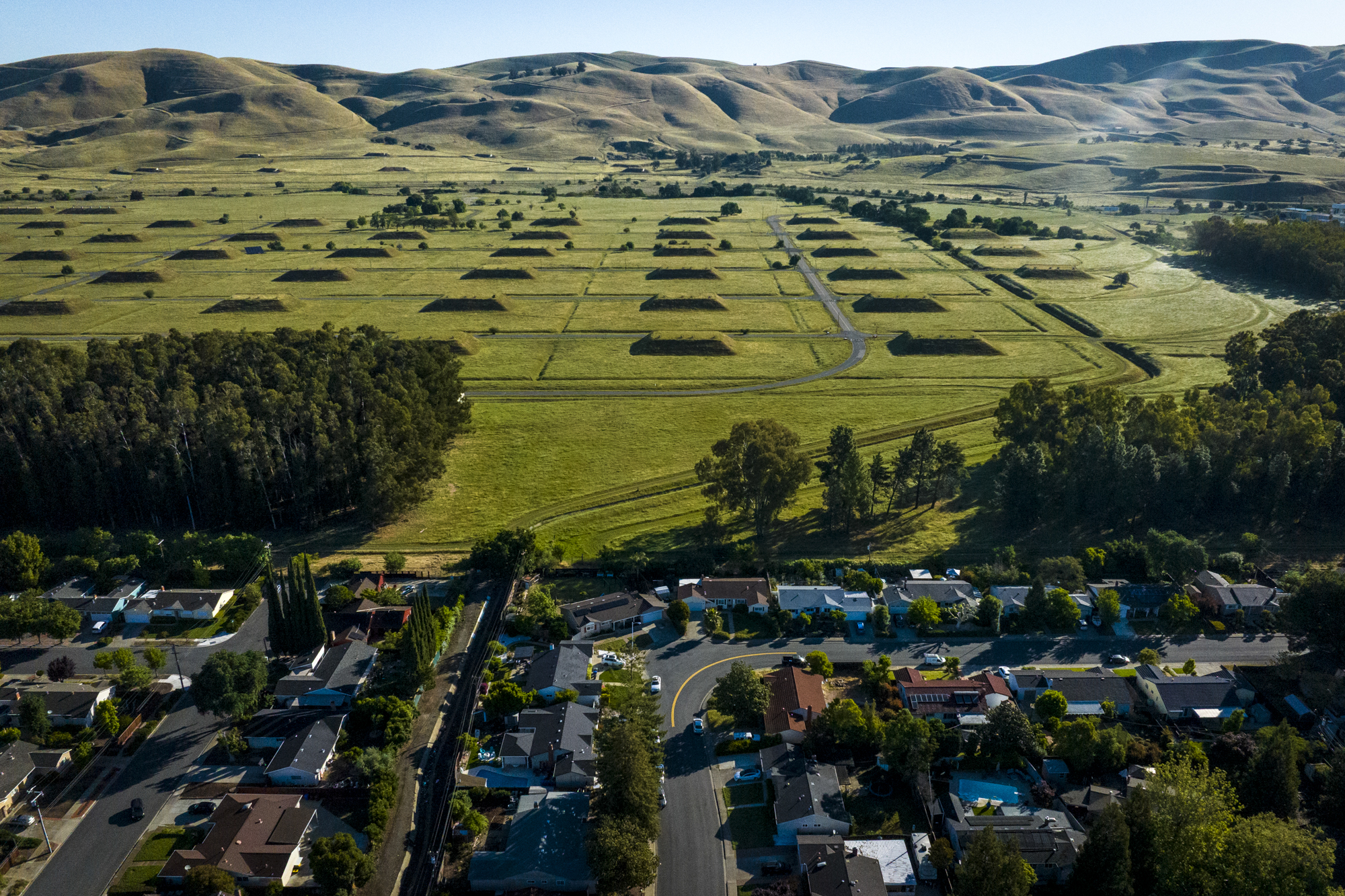
Suzanne Howard: And I found as I zoomed out, I saw east of Concord High School green open fields, gorgeous greenery hillside, some streets. And then little mounds, little grass mounds which, all in a grid pattern. What is this thing?
Olivia Allen-Price: Five thousand acres of open space with seemingly nothing going on. It wasn’t a park or anything. Just a big open area and those mounds.
Suzanne Howard: Could we build housing there? It’s prime real estate, why not?
Olivia Allen-Price: I’m Olivia Allen-Price. On today’s episode, we asked KQED’s Pauline Bartolone to scout out that area behind Concord High School. What are those grassy mounds in a grid pattern?
Pauline Bartolone: I’ll give you a hint, it’s not a cemetery.
Olivia Allen-Price: Ok. Is it open to the public? Can I go on a walk there?
Pauline Bartolone: Well, right now, no. In a few years, probably.
Olivia Allen-Price: What about Suzanne’s question, could housing be built there?
Pauline Bartolone: Yes, actually that’s in the works, we’ll get to more on that in a minute.
Olivia Allen-Price: Ok, so tell me what you saw when you went out there?
Pauline Bartolone: Well I found someone who lives right near Concord High School, and those 5,000 acres of rolling hills are right behind her house.
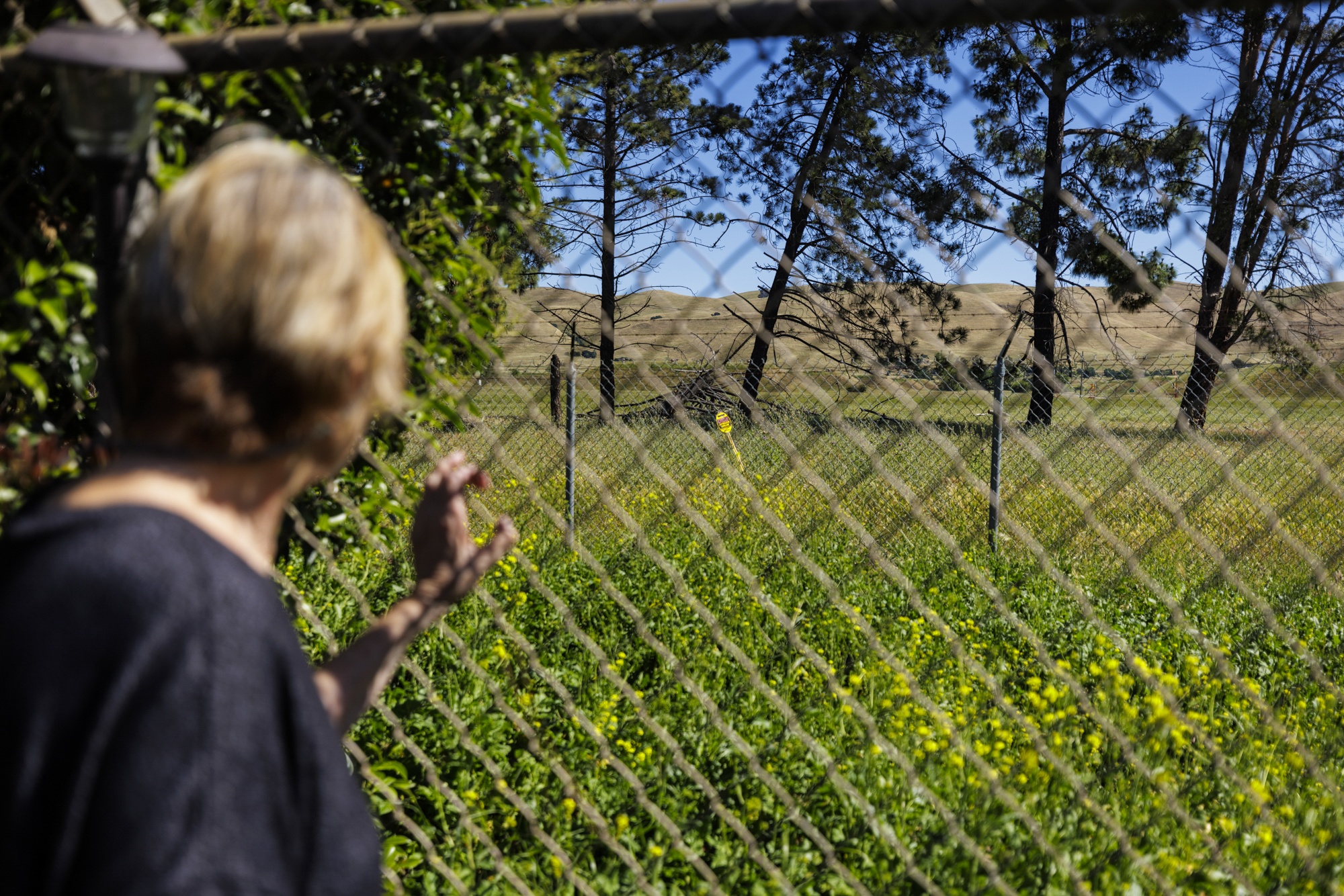
Kathy Gleason: My name is Kathy Gleason. We’re in Concord in my backyard, and looking at the Concord Naval Weapons Station.
Pauline Bartolone: The Concord Naval Weapons Station. That property our listener Suzanne saw on the map, belongs to the Navy.
Pauline Bartolone: During World War 2, the navy stored tons of explosives here in huge concrete bunkers camouflaged with earth to look like grassy hills. Those are the mounds Suzanne saw on the map.
Kathy Gleason: Go ahead. You can see the bunkers back there.
Pauline Bartolone: Over a hundred concrete weapons storage units here supplied bullets, missiles, bombs, anything the military needed for combat all the way up to the first Gulf War. Railroads connected this inland base to the Bay where artillery was loaded onto warships. When Kathy moved here in 1974, it was active.
Kathy Gleason: In years gone by, we could hear trains moving at night out there. So they were moving munitions.
Pauline Bartolone: Kathy says she loves living next to a weapons base… because.. it’s quiet. Those ammo bunker mounds…. they’re empty now… and they blend into the lush green landscape… And there aren’t many other buildings there. She says it’s always been pretty calm, part of what drew her here in the first place 50 years ago.
Kathy Gleason: Who wouldn’t like this in their backyard? You can hear that plane, but other than that it’s pretty quiet. When we first moved in, there were a lot of sheep out there. There’s still a lot of cattle out there grazing. So we used to see tule elk roaming around, now we see turkeys, we hear coyotes, we’ll see deer every now and then. It’s pretty peaceful.
Pauline Bartolone: Then Concord residents got news that could change everything. The weapons station would close in 2005. This huge swath of open land, roughly the size of San Francisco International airport, was going to change hands.
Kathy Gleason: We all kind of panicked. All the neighbors along here kind of panic.
Pauline Bartolone: They worried a developer would swoop in and build a metropolis, a big noisy construction project.
Kathy Gleason: We wanted our peace and quiet, and we were concerned about what’s in the soil. What’s going to happen with that when they develop? And the noise and everything that would go with developing a project this big, this is huge.
Pauline Bartolone: The Concord Naval Weapons Station closure was part of a federal project to cut military costs. It was called BRAC, the Base Realignment and Closure process. Hundreds of military sites shuttered nationwide. Immediately, the city of Concord started making plans for redevelopment.
Kathy Gleason: We were so angry.
Pauline Bartolone: Locally, Kathy quickly became a key organizer among neighbors pushing to keep the weapons station land untouched and open.
Kathy Gleason: We quickly got a group together, went down the City Hall. Surprised the hell out of the city council members because we were like the old town people that went down Main Street with pitchforks and torches.
Pauline Bartolone: For years, they tabled at farmers markets and knocked on people’s doors to educate Concord residents about the potential for development. And of course, they were squeaky wheels at city council meetings and planning commission hearings.
Kathy Gleason: We told them, we are not going away, you know, listen to us, we’re not going away, we want this preserved.
Pauline Bartolone: And they got their wish, in part. Half of the area behind Kathy’s house has been handed over to east bay regional parks. The old ammo bunkers there will become part of historic tours. And when it opens, locals can hike, camp or have a picnic next to protected wildlife areas.
Kathy Gleason: We put years of our time into preserving what we can out here. We hope that it works. We slowed down after we got the park.
Olivia Allen-Price: Coming up, we’ll learn how the other half of the land will be used. That’s after this quick break. Stay with us.
Sponsor message
Olivia Allen-Price: KQED’s Pauline Bartolone takes us back to the Concord mounds, to find out what’s planned here. But this time, from a different vantage point.
Pauline Bartolone: Kathy and her neighbors were up in arms about plans to build on the military site next to their homes. That was two decades ago, and all that peace and quiet? It’s still there.
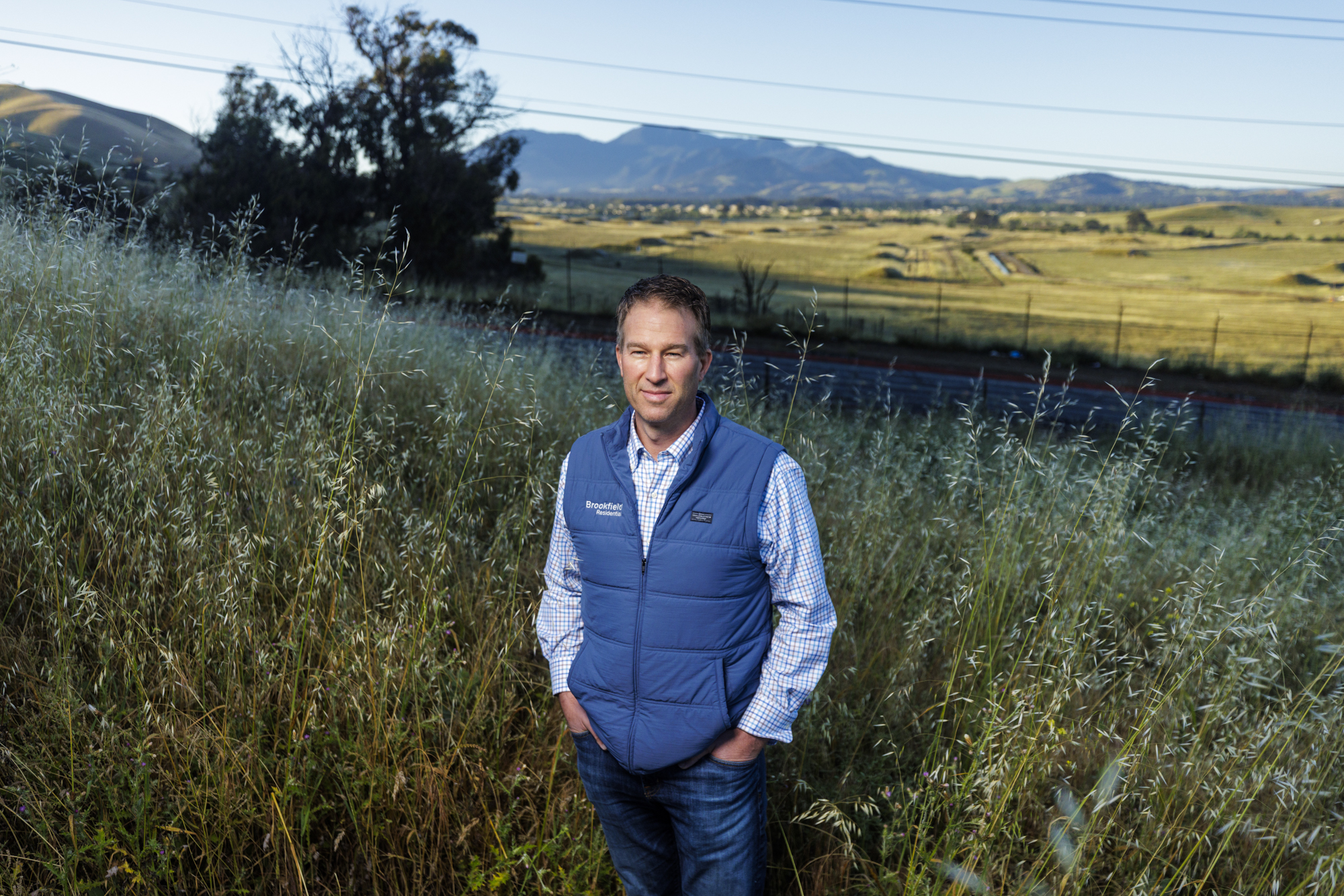
Josh Roden: We are looking out over the valley or floor area of old bunker city.
Pauline Bartolone: Josh Roden is a private developer, and he took me onto the old Concord Naval Weapons station. From our vantage point you can see the former weapons storage clearly… dozens of massive trapezoids poking up from the soil.
Josh Roden: They’re mostly concrete bunkers with earth over them.
Pauline Bartolone: Josh heads up Brookfield Residential in Northern California, which is working with the city of Concord to redevelop the navy base based on a roadmap Concord residents like Kathy helped create. When it’s done, the site will have housing, businesses, schools and parks.
Josh Roden: Concord did a really good job of engaging the entire community, getting a whole bunch of feedback. It’s a lot of work and effort, and it can be a little painful to manage through that, because it’s a lot of opinions.
Pauline Bartolone: But so far, it’s been a lot of discussion, 20 years worth. And not a single permanent structure has been built here.
Josh Roden: One of the most important parts is the first, being able to flush a toilet and turn a light on. So we really do have to go bring power. We have to bring potable water, we have to bring storm drains.
Pauline Bartolone: So, what’s the hold up? Well, there’s been a lot of clean up and bureaucracy. The Navy had to remove arsenic and lead from the soil and groundwater. The city had contracts with two developers before the current one. One jumped ship and one was booted. And before all that, Concord spent seven years coming up with a master plan with residents. A vision for the site.
Josh Roden: So they ended up coming up with what we think is a very reasonable and good area plan, but it did take some time.
Pauline Bartolone: And their plans are grand… just down the hill from where Josh and I are standing, will be some of the 12,000 residential homes.
Josh Roden: The number of units, the size of it is similar to Pleasant Hill. So for context the population that it would generate. It’s similar to Pleasant Hill.
Pauline Bartolone: That’d be housing for something like 34-thousand people. Also in the plan are retail and office space, most dense near the North Concord Bart Station.
Josh Roden: Hotels and maybe more restaurants and a place people go leisure.
Pauline Bartolone: Then there’s the outline for a sports park – stretching over 175 acres – and a higher education campus, like a college or technical school.
Josh Roden: We are also coordinating some of the elementary school, middle school potentially to be in that vicinity.
Pauline Bartolone: Fire stations, police stations. A food bank and a pedestrian path along Mt Diablo creek, All the amenities of a town.
Josh Roden: It’s like building a small city.
Pauline Bartolone: That may sound exciting but it will all take a looong time. Like decades.
Josh Roden: Currently, it’s planned out for probably a 40 year build out.
Pauline Bartolone: They won’t even break ground until 2031, and there’s still some bureaucratic hurdles. Ultimately, Josh says how quickly it gets built depends on the health of the economy, Housing is what pays off for the developer, so the the first to go up will be homes close to the North Concord BART station.
Despite her early reservations about building on the site, Kathy has had a bit of a change of heart about new housing. She says the Bay Area needs it.
Kathy Gleason: We were not as panicked as we were. I think I do understand. Let’s do it. Let’s make it as good as we can for future generations. And that’s the best we can do.
Suzanne Howard: It’s a long time. Geez.
Pauline Bartolone: I took all this back to Suzanne Howard, our question asker. She likes that the Concord development will have open space near it, not a 12 lane highway like the one next to her house. As far as taking more than half a century to finish the new housing?
Suzanne Howard: That’s kind of scary how long it takes. But hopefully, you know, assuming positive intent and the cleanup hopefully is being very thorough and good things take time.
Pauline Bartolone: She just hopes she’s alive to see it come to fruition.
Olivia Allen-Price: That was KQED’s Pauline Bartolone.
Thanks to our question asker this week, Suzanne.
Did you know that we send a little thank you gift to each question asker? Just one more reason to take a few minutes and send your burning question our way! Ask at BayCurious.org, or shoot us an email at [email protected].
This is our last Monday episode during our experimental period of dropping two episodes a week. We’ve learned so much — and had a lot of fun answering twice as many of your questions these past few months. We always planned this to be a limited-term trial — so we’re back to our once a week publishing schedule next week. If you have thoughts or feedback for us as we take stock and move forward, email us at [email protected].
Bay Curious is made in San Francisco at member-supported KQED. Our show is produced by me, Olivia Allen Price, Katrina Schwartz, Christopher Beale and you! Yes you are a producer on this show if you are a member of KQED. Your financial support makes everything possible.
Deep gratitude to all the KQED members out there, and if you aren’t one yet, join us! Give at KQED.org/donate.
I’m Olivia Allen-Price. Have a great week!