Episode Transcript
Olivia Allen-Price: How do you make friends?
It may seem like a simple question, but it’s a difficult one to answer for so many people. Especially here in the Bay Area.
- We’re a community that has a lot of folks coming and going all time.
- A lot of places where folks gathered – so-called third spaces – closed during the pandemic.
- Going out is expensive!
- We’re all busy! With many balancing the time demands of family, keeping our health in check, careers and unfortunately, commuting to those careers.
- The pandemic made some of us feel rusty – it can feel easier to stay home and scroll the internet…
…and it can feel impossible to make a good old fashioned friend anymore.
Over the years Bay Curious has received a few questions from people looking for advice on how to build friendships here. So today we’re going to share an episode from The Bay, another KQED podcast, who just tackled this topic. And we really loved their episode.
Here’s host of The Bay, Ericka Cruz Guevarra kicking things off with Bay producer, Jessica Kariisa…
Ericka Cruz Guevarra [00:04:39] We put out a call out to our listeners about making friends in the Bay Area. Can you actually just remind us first what we were asking?
Jessica Kariisa [00:04:51] So we asked folks basically what are their thoughts on how it is to make friends in the Bay Area? Do they find it easy? Do they find it hard, what’s worked for them, what’s not worked for them. We got a lot of responses from people saying that they were not having a hard time.
Bee [00:05:13] I find it very easy to make friends.
Jessica Kariisa [00:05:16] Some people are born and raised here. There was a caller named Bee in Oakland who said, you know, he’s very extroverted, he has kids. So there’s lots of opportunities for him to meet different kinds of people.
Bee [00:05:29] In Oakland, I think a lot of folks look after each other and want to be in connection with their neighbors.
Jessica Kariisa [00:05:36] Similarly, there was a caller named Dan in San Francisco who is also very extroverted.
Dan [00:05:42] I find it quite easy to make friends in San Francisco. Super easy to chat with anyone. I love talking to strangers.
Jessica Kariisa [00:05:52] He’s in a co-living type situation. He’s also in a coworking situation. He volunteers. In fact, he said it was so easy for him that he has too many friends, and he needs to cut back.
Dan [00:06:04] I have to divest from some potential friendships to focus on the ones I have or the ones that I’m already investing in. It really is a bounty.
Dian [00:06:16] My name is Dian Ostolski. I live in Pittsburgh. I came out after my divorce.
Jessica Kariisa [00:06:23] And there’s also people who’ve moved here who’ve had a really easy time making friends. There was a lady who reached out to us named Dian. She’s a trans woman. She came out after moving to the Bay Area and she’s had an amazing experience making friends out here. She’s joined a lot of supportive groups. She also just has picked up so many hobbies and the Bay area has actually been the place where her identity has like blossomed.
Dian [00:06:49] In Walnut Creek. We have Club 1220. It’s the only gay bar left in the county, but they’ve been here for 30 years. And I started learning how to play pool and ended up joining two different leagues. So I have just met so many more friends than I ever thought at coming out to California at my age of 55, now 69. So much friendship and support. It has been wonderful.
Ericka Cruz Guevarra [00:07:13] And then what about people who have struggled to make friends in the Bay Area? What did we hear from folks on that?
Emily [00:07:22] Hi, this is Emily calling from Oakland about making friends.
Jessica Kariisa [00:07:28] There was a caller named Emily, and she said that two of her closest friends moved away because they couldn’t afford to stay in the Bay Area.
Emily [00:07:37] I think that that is a challenge a lot of people experience of making good friends and then they leave. And so having consistent community is difficult.
Ericka Cruz Guevarra [00:07:50] Definitely. I have a friend who I made maybe in the last three years who is moving soon, not necessarily because she’s getting pushed out but because she just, I feel like it’s just a transitory sort of place, the Bay Area. People sort of come for a little bit and then leave and you know go off to do other things and yeah how do you maintain those friendships outside of the Bay area too? You, Jessica, wanted to follow one specific person. Tell me a little bit about Katie.
Jessica Kariisa [00:08:25] One of the listeners who reached out to us is a woman named Katie Barrow, and she’s been struggling to make friends.
Katie Barrow [00:08:32] I am 42 and I am from Flagstaff, Arizona, born and raised and lived there until I went to college at Syracuse, which was about as far away as I could possibly go.
Jessica Kariisa [00:08:45] She’s lived in San Jose for the past 10 years. She’s in the broader Bay Area even longer than that. She moved here after college.
Katie Barrow [00:08:53] I moved to California the day after I graduated. I was tired of the cold and looking forward to some sun.
Jessica Kariisa [00:09:02] Katie is recently divorced and so she’s a single mom and she was a stay at home mom for seven years and after her divorce she got back into the workforce. So her whole identity has shifted.
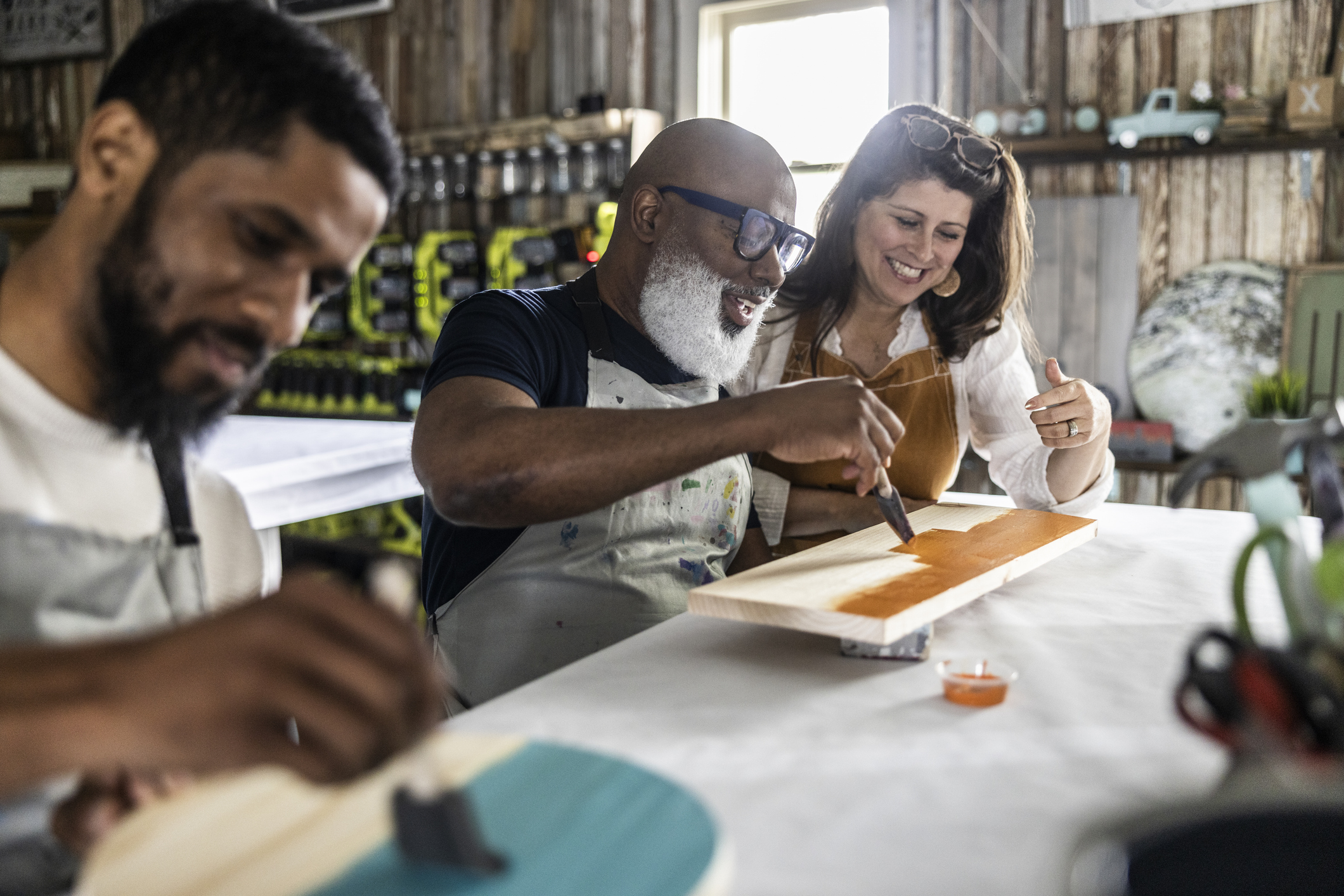
Katie Barrow [00:09:15] When you’re married, you have your partner and you don’t need as many friends to be there for you like after work. You kind of always have someone to do something with. I wanted to find other people that I could go out and do things with. I wanted go to the movies or go to a bar. I’m super creative. I love painting and I love crafts as just an outlet. Didn’t always have someone to do that with.
Jessica Kariisa [00:09:51] And so she’s at a place where she’s been trying to make new friends as she adjusts to this new chapter in her life. And she told us that it’s been really hard for her for a lot of the same reasons that we’ve brought up.
Katie Barrow [00:10:03] The biggest challenge is just being busy and like being in the Bay Area, I think everyone is busy and everyone has unique interests and so it’s hard to find someone that can align with your schedule and your interests.
Jessica Kariisa [00:10:21] To her credit, she has tried a lot of different things. She’s tried meetup groups, she’s tried exercise classes, but it’s been difficult in all those different things just to kind of take things to the next level, and to also find people who also want to commit to making a new friend.
Ericka Cruz Guevarra [00:10:43] The consistency part.
Jessica Kariisa [00:10:44] Part of this.
Ericka Cruz Guevarra [00:10:45] Yeah, and especially I imagine as a single mom.
Jessica Kariisa [00:10:49] That’s key. Right, yeah exactly. I mean her time is pretty limited and so I think having people who have flexibility in their schedule is also really important.
Katie Barrow [00:11:01] Yeah, driving is another thing. San Francisco feels really far. I’d love to meet someone who lived in a similar area so we could just kind of meet after work, go to happy hour, and it didn’t feel like something that needed to be really planned and have lots of logistics.
Jessica Kariisa [00:11:23] I don’t know how many times, you know, I’ve met people, or even with close friends, you open up your Google calendar, when are you free? No, not free, no, not, and then next thing you know you’re meeting like two months from now, you now, which is not really conducive to building intimate relationships quickly.
Olivia Allen-Price: When we return, Jessica tries to help Katie – and all of us – make some friends. Stay with us.
SPONSOR MESSAGES
Ericka Cruz Guevarra [00:11:42]: Jessica, you decided to actually try and help. Where did you start? How’d you help her out?
Jessica Kariisa [00:11:52] Right, yeah, I decided to play fairy godmother. And so I went out, I met Katie in San Jose. I also live in San José, so that was very convenient. And then I actually reached out to a friendship expert, you could say.
Kat Vellos [00:12:08] So my name is Kat, and I am a connection coach and educator.
Jessica Kariisa [00:12:13] Her name is Kat Vellos. She’s based in the Bay Area, and she’s a connection, coach and an educator and a researcher who has studied. Adult friendships, how people make friendships, also how the built environment affects our ability to make and sustain friendships.
Kat Vellos [00:12:31] All of the work that I do is about helping people cultivate more friendships, and community in their lives, and also creating more places that are conducive to the creation of friendship and community.
Jessica Kariisa [00:12:41] When I brought up Katie’s case, like she told me she actually had very similar experiences when she moved to the Bay Area. She’s a transplant to this area, and she found that a lot of friends she was making were moving away. And I was like, man, it’s really hard to make friends and the more people I to to find out how friendship was going for them. The more people said, man, it’s really hard to make friends as an adult. And so that also was actually what spurred a lot of her research into how to sustain connections.
Ericka Cruz Guevarra [00:13:13] So you shared with Kat, Katie’s situation, she’s a single mom, she’s in her early 40s, she’s on this sort of new life stage, she’s living in San Jose and she’s trying to make friends. What was Kat’s advice for Katie?
Jessica Kariisa [00:13:29] She said that sustained connection really boils down to like four things. She calls them the four seeds of connection.
Kat Vellos [00:13:41] So the seeds of connection are the four elements that determine whether your new friendship is going to stick and last and get deeper.
Jessica Kariisa [00:13:52] And those are compatibility. Do we get along? Do we vibe? Is there a vibe? Proximity, you know, are we close to each other? Can we actually see each other, right? Frequency and commitment. And so in Katie’s case, she found that there was definitely seeds of compatibility in some of the things she was trying out, proximity. She was trying things in her neighborhood and in her area, but there was not enough frequency and there was no enough commitment. And that doesn’t mean she’s doing something wrong. I’m just saying what we would want to focus on to increase more depth and connection in her life. And so her recommendation was that Katie basically needs to find a group or an activity and become an enthusiastic regular in that space. Join a club that brings together people that you’re compatible with and where the conversation is going to be easy and abundant. And so one thing Katie talked about that she liked doing is she likes crafting. And so Kat went and found a craft group in the South Bay. You know, it’s not like that she has to do that exact activity, but just in the, to give an example, if you like crafting, check out this craft group, go there, keep going there, and on top of that, be enthusiastic in your participation.
Kat Vellos [00:15:32] So that means not just showing up and hanging in a corner, then scurrying out the door before it’s over, actually going up, having some conversation with other people there. And when you meet someone that you think you click with, invite them to spend time together outside of that place too.
Jessica Kariisa [00:15:46] She said follow up with them almost immediately to do something like hit them up right away. If you met on a Tuesday, try to see them that weekend and try to invite them to something that you’re already doing.
Kat Vellos [00:16:00] So level one might be going for a walk, getting a coffee, having a drink, having a meal. But level two, I encourage you to think about maybe making it a level two thing, which is something that’s a little bit more interesting and meaningful to you, right? So if you love bird watching, invite them to go to the marina and look at birds with you. If you love women’s basketball, invite them come watch a game at your favorite sports bar. If you like trivia, invite them be on your trivia team next week.
Ericka Cruz Guevarra [00:16:32] So Kat recommends a craft night. What did Katie think of this?
Jessica Kariisa [00:16:37] Hey, Katie.
Katie Barrow [00:16:38] Hi.
Jessica Kariisa [00:16:39] Does this sound okay?
Katie Barrow [00:16:41] Yeah, this sounds good.
Jessica Kariisa [00:16:42] She was pretty excited about it.
Katie Barrow [00:16:44] Where you’re sitting down and knitting – I like that idea.
Jessica Kariisa [00:16:46] One thing she did mention to me was that she hadn’t, cause I think the group was actually a crochet group and she hadn’t crocheted in like 10 years. And so she needed to kind of brush up on her crochet skills a little bit, but she was still down for it.
Jessica Kariisa [00:17:03] And what do you think about the part about being like an enthusiastic regular, like giving someone your number and trying to hang out soon? How does that feel?
Katie Barrow [00:17:14] It feels intimidating, but I think it’s an important part of making the actual connection.
Ericka Cruz Guevarra [00:17:28] So how did it go? Did Katie actually go to the craft night and what was her experience like?
Jessica Kariisa [00:17:35] So I actually shared this advice with Katie like a month ago, and she had a very eventful month of March.
Katie Barrow [00:17:45] I have tried a couple of different things and learned a lot about myself and my schedule and limitations and yeah, a lot of really good things came out of it.
Jessica Kariisa [00:17:59] She didn’t wanna go into the crochet night cold turkey. So she signed up for a crochet class and she actually invited a coworker friend to go with her to this crochet class.
Ericka Cruz Guevarra [00:18:13] Is this a co-worker that she was interested in being friends with?
Jessica Kariisa [00:18:19] Yeah I think this was a co-worker that she was already work friends with, but was also open to the idea of that friendship expanding beyond work. And so she invited her out.
Katie Barrow [00:18:29] And we learned how to crochet in an hour. It all came back to me pretty quickly, a little more challenging for her.
Jessica Kariisa [00:18:37] The demographic was about 20 years older than them.
Ericka Cruz Guevarra [00:18:42] I don’t hate that.
Jessica Kariisa [00:18:44] I don’t hate it either. But I think the vibe wasn’t vibing. It seemed a little too a little to far out.
Katie Barrow [00:18:52] Well, that’s probably not representative of some of the other clubs. Um, I thought, you know, maybe, um, I should look into some other activities also.
Jessica Kariisa [00:19:00] So after the crochet class, Katie went to a pickleball class. She said she met some pretty cool people there. The teacher was great. The other participants in the class were really great, but she kind of chickened out and didn’t ask for contacts afterwards. And so there was no way to really follow up with those people again.
Katie Barrow [00:19:24] I wish I had gotten their information, because I would love to go and play with them again.
Jessica Kariisa [00:19:33] But then her coworker, kind of like as a little, you know, I came out with you, so you come out with me kind of thing, invited Katie out to a run club. And so Katie went out to this run club and she was feeling it. She went with her dog, you know which is great conversation starter. If you have a dog and you want to make friends take the dog out.
Ericka Cruz Guevarra [00:19:55] Right.
Katie Barrow [00:19:57] My dog Sally is a great emotional support and she’s super friendly. And every time I bring her somewhere, people just come up and talk to me and pet her. And so that was a great way to just kind of get immersed in the group.
Jessica Kariisa [00:20:15] She did like the walk / run path, you know, and then afterwards, uh, people went out to a pub afterwards. It was like a run club where people go and go to a pub afterwards.
Katie Barrow [00:20:29] Uh, some people there that I could definitely see myself being friends with.
Jessica Kariisa [00:20:36] And she talked to some folks there and she exchanged some contacts. So that was really successful and she definitely sees herself going back out to the Run Club.
Ericka Cruz Guevarra [00:20:49] I’m feeling very proud of Katie right now.
Jessica Kariisa [00:20:51] Me too, me too. Katie really did her thing and that’s just like the tip of the iceberg. She did so many other things. One thing that Katie talked about wanting in her life was spontaneity, right? Someone who she could just hit up last minute, be like. I’m gonna go, do you wanna do this thing with me? But the other side of that is also being up for doing stuff yourself, right? Like being up for other people’s spontaneous invites. And so her kids do theater. And so there’s a group of theater parents that see each other at theater events, don’t usually hang out outside of that, but are loosely connected on social media. And one of the theater parents posted one night, I have this really delicious cake. Does anybody wanna come eat it with me, a carrot cake? Yeah.
Katie Barrow [00:21:38] And I just said, yeah, I’d love to. And so I went over that night and a couple of other theater friends were there too. And so it was a really cool like impromptu get together.
Jessica Kariisa [00:21:55] She wasn’t the only one there. A few other people showed up and she happened to have some, you know, extra tickets to her daughter’s play. And so she invited people out and then she got to hang out with them again. And so, she’s really just been, you now, firing on all cylinders really and just trying all sorts of things to try to make some connections and it’s really been panning out.
Katie Barrow [00:22:20] You know, just assuming that people are busy isn’t always correct and sometimes it’s cool to try to do things spontaneously.
Jessica Kariisa [00:22:26] And something really interesting Katie told me is that through this process, this challenge, she ended up telling a lot of people about it. And she was like, that’s actually really powerful too.
Katie Barrow [00:22:38] I think a lot of times people might think that you already have your friendship circle and when they know that you are like actively looking to expand and do things with other people, then they are more welcome.
Jessica Kariisa [00:22:54] I was mentioning earlier, she’s been hanging out a lot with her coworker. That was an existing connection in her life. And I think one thing that she’s also been leaning into, also like the theater parent, is the people who are already there. Sometimes we take for granted the people that are already in our life. We think, oh, they’re too busy, they’re to this, they are to whatever.
Ericka Cruz Guevarra [00:23:15] They’re too far away.
Jessica Kariisa [00:23:16] They’re too far away — too far way, too far away.
Ericka Cruz Guevarra [00:23:20] Looking at you, Jessica Kariisa.
Jessica Kariisa [00:23:22] Listen, Vallejo San Jose. People do it all the time.
Ericka Cruz Guevarra [00:23:24] I guess overall, what has changed for Katie? Does she just have like hella friends now?
Jessica Kariisa [00:23:33] You know, I don’t think Katie would say she has hella friends now, but I think what was interesting, talking to Katie, like listening to her first voice note and why we wanted to talk to her. It just seemed like she was kind of in a place where she felt like she didn’t know what to do.
Katie Barrow [00:23:53] Actually, March has been such a fun month. It’s been busy. My house is a mess because I’ve been going out a lot more.
Jessica Kariisa [00:23:59] Talking to her now, it just feels like all of a sudden where a bunch of doors felt shut, now a bunch doors feel open.
Katie Barrow [00:24:08] I’m just looking forward to being out more, being involved in the community, meeting new people and maybe even starting a craft group at my house.
Ericka Cruz Guevarra [00:24:27] I’m curious, Jessica, what takeaways you have from your reporting, and what takeaways do you have around what actually works?
Jessica Kariisa [00:24:36] You just have to keep showing up. You know, I think you just have to keep show up and I’ve seen this in my personal life too. Where you go out to whatever event, you think, oh my gosh, I’m just gonna click with everybody and you come back and you’re like, that sucked. And what do you do after that? You keep showing. Whether it’s maybe that same event because there’s something worthwhile there, or you try a different event, or you just go for walks in your neighborhood every day. Going for walks to my neighborhood every day, I actually got to know my neighbors. It took about a year, but it still happened. You never know where those connections are gonna come from and how they’re gonna develop, but they will develop and they will come. And that’s definitely like something to look forward to.
Ericka Cruz Guevarra: Well Jessica Kariisa it was such a pleasure having you on this side of the microphone. Thank you so much for doing this and for sharing your reporting with us. I really appreciate you.
Jessica Kariisa: Yeah, thank you so much for having me.
Olivia Allen-Price: That was Ericka Cruz Guevarra and Jessica Kariisa with The Bay. If you like what you heard be sure to subscribe to their show – it’s a great way to keep up with local news in a way that helps you to really, truly understand it. Find The Bay wherever you listen!
The Bay is made by: Alan Montecillo, Jessica Kariisa and Ericka Cruz Guevarra. On the Bay Curious side it’s Katrina Schwartz, Christopher Beale and me Olivia Allen-Price. With support from Jen Chien, Maha Sanad, Katie Sprenger, Ethan Toven Lindsey.
Some members of the KQED podcast team are represented by The Screen Actors Guild, American Federation of Television and Radio Artists, San Francisco Northern California Local.
ECG: You can join the thousands of everyday listeners who help power shows like The Bay by becoming a KQED member. Which you can do at KQED.org/donate.
I’m Olivia Allen-Price. Now go make a friend!