Episode Transcript
This is a computer-generated transcript. While our team has reviewed it, there may be errors.
Morgan Sung: Hey, it’s Morgan. We just celebrated the show’s first birthday. That’s right, Close All Tabs is a Pisces. Want to celebrate with us? It would be so, so helpful if you could rate and review us on Spotify, Apple Podcasts, or wherever you listen to the show. And tell your friends about us too. Okay, let’s get to the episode.
Hey guys, welcome to Close All Tabs. I’m Morgan Sung, tech journalist and your chronically online friend, here to open as many browser tabs as it takes to help you understand how the digital world affects our real lives. Except today, we aren’t opening any tabs. Instead, we’re doing another Save or Scroll. We’ve done a few of these now.
Occasionally, while scrolling, I come across a truly wild post, but it might not make sense to spend an entire episode on it. Maybe I do a little digging and it turns out that the lore behind it just isn’t compelling enough to justify a deep dive, but I’m still dying to talk about it. And this is the beauty of Save or Scroll, the game where a guest comes to the show and we trade stories from the internet that we’re dying to talk about. Today, we have the one and only Steffi Cao.
Steffi Cao: Thank you so much for having me, Morgan. I’m so excited.
Morgan Sung: Okay, Steffi, tell us about yourself.
Steffi Cao: Hi everyone, I’m Steffi, I am a culture journalist and Slate’s newest dating advice columnist for Unhinged. You can find my writing everywhere from The Atlantic, to Rolling Stone, to The Guardian, to Slate now, so I’m very excited to share all my tabs and work in today.
Morgan Sung: Okay, so let’s talk about the rules of Save or Scroll. Save, as in when you see a post on TikTok or Instagram or X and you bookmark it, add it to your save folders or if you’re me, drop it in notes app and hope that you’ll remember it’s there. Basically, you’re holding onto the story because you know you’ll want to dig into it more. And scroll, as you think about it and then move on. It disappears into the digital ether.
So Steffi and I have each brought some stories that we can’t stop thinking about, and we’re gonna go back and forth to decide if they’re worth a deep dive on the show. So if we decide to scroll, it means we’ve talked about it, we’re moving on. And if we save, it means that we might hold onto the idea for a future episode.
Okay, Steffi, please tell us about looksmaxxing.
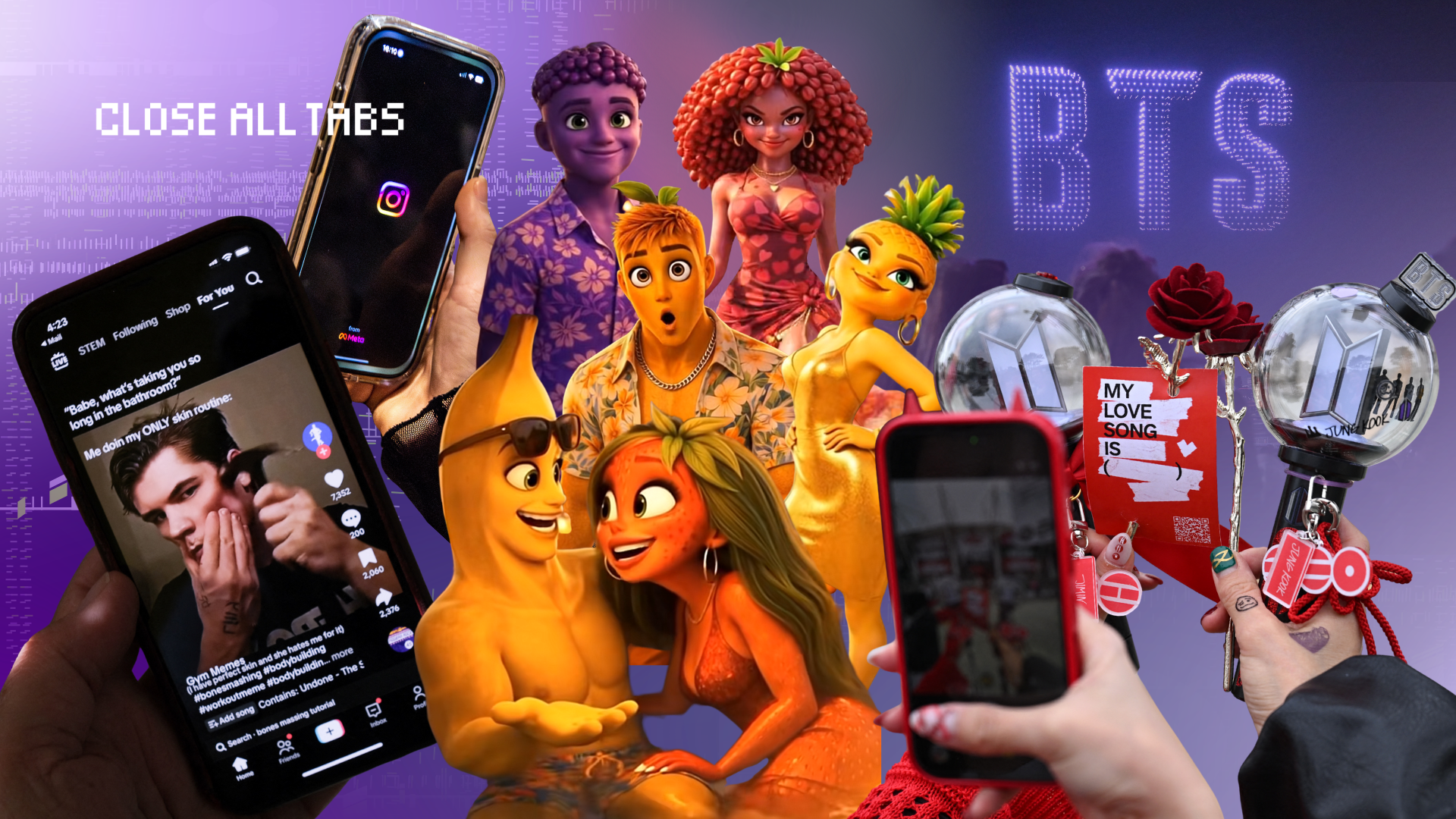
Steffi Cao: Over the past few years, looksmaxxing is the subculture of young men primarily who are seeking guidance from other men in terms of how to gamify their looks to become super, super hot. The essence of looksmaxxing is basically ‘the hotter I can be, the better my life will be around other men.’ And the pinnacle of these content creators currently is a man named Clavicular of collarbone fame.
He’s a 20-year-old white man who has a very soft elfin face and a Dorito-shaped body and has really been associated with a lot of, like, Nazi ideology, has been recently arrested for inciting a fight between two women, allegedly and also allegedly shooting an alligator in Florida. He was kicked out of Las Vegas, I believe, and has become this sort of lightning rod for this entire culture of all these men wanting to get hotter and be hotter.
Morgan Sung: Yeah and Clavicular first went viral for not only his extensive skin care and workout routine, but for also saying that he microdoses meth and would hit his face with a hammer to get a more, I guess, angular jawline. What a man.
Steffi Cao: What a guy.
Morgan Sung: What a character. Clavicular is so fascinating to me because his political stances are indecipherable. He has gone on some more right-leaning podcasts, and when they try to get him to be kind of transphobic, he said…
[Clavicular in audio clip]
I did a podcast with Michael Knowles the other day and he’s sitting here saying like and getting all mad about transgenders and I’m like bro that’s one more person a mog you know what I mean so like I don’t get too I don’t get too upset when people go trans and all that shit.
Morgan Sung: That’s just another person to mog.
Steffi Cao: Yes.
Morgan Sung: How would you describe mogging?
Steffi Cao: Mogging, I think, is the essence of being hotter than somebody else. So if you’ve mogged them, it’s like you’ve shown them up in some way.
[Audio clip of Clavicular on the Adam Friedland Show]
Clavicular: That’s the goal of the game, right, is to mog other people, right?
Adam: Tell the boomer cells about what that is.
Clavicular: So, mogging is essentially just, you know, outperforming them, looking better than them, yeah and just sort of dominating, right. It came from something called AMOG, which was alpha male of the group, then it was shortened to just mog, so that’s kind of like the term we use.
Steffi Cao: So the language has become like a bigger than itself sort of phenomenon where, you know, maxxing and mogging have started from this internal community and then now becomes sort of like general ironic gobbledygook for everybody.
Morgan Sung: It’s so interesting too, because the whole looksmaxxing thing has become like the peak Manosphere content. All the allegedly straight boys are really into doing all this to impress other men. It doesn’t seem like they actually do this in any way to appeal to women. And like, I’ve seen a lot of like gay men point out, this is literally gay male culture, what they’re doing, the peacocking, trying to show each other up and like only seek validation from other men, which is from a gender perspective, I’m like, what’s going on here?
Steffi Cao: It feels like horseshoe theory a little bit. They are doing all of these performative things that come right back to a drag of what a straight man is. It’s like it’s heterosexual drag. Like you’re trying to, you know, build up your face a certain way, you’re trying to mog other straight men, like that’s drag, honey.
Morgan Sung: Like that’s gender performance.
Steffi Cao: 100% Yeah, I mean, self-improvement leans so well into fascist ideology because a lot of it is predicated on this idea that you can earn your way into something better, which is exactly what looksmaxxing is, right? You can gamify your looks. Like, If you’re not hot now, all you need to do is do all these steps and gain more points, more aura points, until you have achieved this thing.
Which is exactly why in Nazi Germany you see a lot of propaganda being espoused about the strongman. That was a huge beauty standard at that point in Hitler’s Germany, was specifically this idea of a man who is super jacked and is super like, is mogged, really, and I have no other word for it really. It’s just like they really..
Morgan Sung: Yeah.
Steffi Cao: A mogged man has always been this cultural fascination and in many ways a mogged woman, obviously. Um, has been a huge part of, uh, fascist ideology for a long time. You know, think about all these essays about why Republican women all look the same and they have this specific look about them. And it has a lot to do with this culture of self-improvement and making all these alterations to yourself to try and earn your way or like bootstrap your way into beauty and therefore access and power and all of these things.
Morgan Sung: Yeah. Okay, well, looksmaxxing, the big thing of the year right now, do we save or do we scroll?
Steffi Cao: Oh, I’m saving it because I think there’s going to be developments.
Morgan Sung: No, yeah, there are going to be new words that have never been said before.
Steffi Cao: It’s going be crazy.
Morgan Sung: But looks maxed as a trend, I think we’re saving. After the break, a new bombshell enters the villa. Unfortunately, she’s AI generated and also made of fruit. Steffi and I are going to explain all of the drama around AI Fruit Love Island. Stick around.
Morgan Sung: I have a story for you now. Are you familiar with AI Fruit Love Island?
Steffi Cao: Oh, am I! Oh my god, I feel like it came out of nowhere and then it’s sudden, it’s like omnipresent now.
Morgan Sung: So, for the uninitiated, AI Fruit Love Island was this interactive AI-slop parody of Love Island with sexy anthropomorphized fruit.
[Clip of Audio from AI Fruit Love Island]
Host: Welcome Back to Fruit Love Island. Today we’ve got a steamy challenge and after over 370,000 viewer votes, our bombshells have officially hit the villa. All right ladies let’s get this started. You’ll be kissed one by each guy and after each kiss you rate it.
Morgan Sung: Okay, so that is one of the episodes of Fruit Love Island. What was happening in that clip?
Steffi Cao: Um, it’s basically just a real Love Island challenge, but done with fruit.
Morgan Sung: Yeah, they have human bodies, um, but their heads are fruit.
Steffi Cao: These are all like, obviously done by AI. The colors are highly saturated. It’s super bright, super like in your face. And then a grape man wearing a Hawaiian shirt and, uh, board shorts, like comes up and kisses the fruit ladies blindfolded.
[Clip of Audio from AI Fruit Love Island]
Host: Grapenzo, you’re up first.
Contestant: That was hot, an 8.5.
Steffi Cao: You see all these badly done reactions in the background of these AI fruit women laughing and sort of being like, ha ha ha, this is crazy. So it just is like a Love Island episode, but with fruit.
Morgan Sung: So for context, this TikTok account kind of came out of nowhere, AICinema021, and they gained about 3.1 million followers in like a week and a half. And now there are so many copycat accounts. The characters include Limeyra, the lime, Bananito, the banana who has abs and is always shirtless, Strawberrina, the strawberry, Coconick, the sexy coconut. And yeah, it’s not good.
The animation and voices are all stilted. There’s zero consistency. It’s pure slop. So viewers gave storyline feedback via Google Form and voted for their faves in the comments. And this account was getting crazy numbers, like 20 million views per episode at its peak and just churning out new episodes every day. I feel like it used to be kind of embarrassing to enjoy this kind of content, but then you had Zara Larsson and Joe Jonas being like, ‘Oh my God, I can’t wait for the next episode.’ Like major celebrities. But yeah, what’s your like initial gut reaction here?
Steffi Cao: I think it makes sense why this thing is taken off, because even though young people online want to act like only boomers love watching AI slop, the fact is our brains are primed to watch AI slop. We have all these deep fried memes and internet humor is so self-referential, but it removes a lot of these barriers in our heads of consuming something like this that really feels as though, like, okay, maybe, um, what could be embarrassing previously could be ironically fun now. I love it because it’s fascinating to see how excited people get about it. But like, is the content good? No, it’s trash, but I don’t think it’s trying to be good.
Morgan Sung: Yeah. Well, have you been following the great AI Fruit Love Island crash out…
Steffi Cao: I have not.
Morgan Sung: …that happened over the weekend? Okay. So this account literally gained millions and millions of followers, three million followers in like a week and a half, which is insane. Like there are human creators who grind for years to get a third of that. But, you know, this account was able to just churn out content so fast and people were invested.
So basically, people were criticizing the account for being AI slop and criticizing viewers for being slop consumers. And the creator did not respond well. In TikTok comments, they complained about how hard it was to make this content and basically implied that like viewers were ungrateful. A real hilarious irony where they were like, it’s really hard because I have to prompt so many times and the AI sometimes messes up and I have to redo it and then I have edit it together. And it sometimes takes me like three hours to make one of these videos. And it’s like, yeah, well…
Steffi Cao: Imagine how long it must take to film a real TV episode?
Morgan Sung: It’s so funny that they’re like, this is so hard, even like having to prompt a generator to be like, and now make Strawberrina kiss the kiwi man is like too much effort. So then their video started getting removed. The creator claimed that it was part of a mass reporting campaign and started crashing onto their story. So this was the first one…they were, I guess, sick of it, right?
They were like, “This is it. I’m sick of all of you.” They were getting criticized for like wasting water basically and people were pointing out like, hey, this is like really sh*tty that you’re kind of encouraging this consumption. So they were posting like, “Was a good run, didn’t expect any of this, but here we are from being a nobody to being cancelled. I guess I’ll take it. People hate to see people win,”.
Steffi Cao: That’s awesome!
Morgan Sung: …with screenshots from like their episodes.
Steffi Cao: That’t the funniest thing I’ve ever seen.
Morgan Sung: “I’m so glad y’all got what you wanted. Saving the planet three gallons of water at a time, truly inspirational. It’s like, f*ck all y’all, you jealous motherf*ckers, save the planet, OMG, water, OMG. I love water, clean water, please clean water. What y’ all sound like.”.
Steffi Cao: That’s hilarious.
Morgan Sung: “Thanks for 3 million followers though. Wow, I guess some might like it.” Then they posted one final one, basically saying like, this series is over, this is it, with Bananito, a fan favorite, unfortunately, the sexy banana that is never wearing a shirt. Um, and basically they said, “All right, f*ck all you b*tches, no more Fruit Love Island. Since people are so obsessed with it, all my videos banned, I make no money. I guess I am being targeted because no other AI account is getting f*cked. Y’all heard it from Bananito himself. Bye.”.
Steffi Cao: Bye.
Morgan Sung: It’s just really funny because they also got mad that other like copycat AI accounts were like copying their theme, which is a real like, so many layers between like, being mad about the copycats and then being like suddenly like creative integrity matters basically.
Steffi Cao: Yes.
Morgan Sung: And then being mad at like the effort it took to make these videos. The layers of complete unawareness just go so deep.
Steffi Cao: [Laughter] It’s one of those things where I’m like, oh, of course, this is where we are. People are so fixated on this idea of it’s fine until it’s me because passive consumption is just so self-centric, you’re only thinking about yourself. So of course this person’s mad that other people are stealing their AI fruit slop content without contributing to the AI slop database that can then pull out more content. Okay.
Morgan Sung: It’s like a content self-eating snake, you know? But I will say, there is one glimmer of hope, despite how many people were obsessed with this slop. I would say there’s an equal faction of people who are really into human-made content. And so this inspired several Fruit Love Island non-AI copycats,.
Steffi Cao: With real fruit?
Morgan Sung: …which I will show you now, which is really beautiful. I love that people are doing this.
[Clip of Audio from Fruit Love Island]
Host: Welcome to episode one of Fruit Love Island, that’s not AI. I’ve made sure to gather the juiciest of drama in the villa in the past day. Now let’s see what’s happened.
Contestant: I’m here to break hearts, not to fall in love. Hopefully these guys don’t get too attached. Or I don’t. I won’t though.
Morgan Sung: So it’s basically a similar idea, but it’s not really animated so much as like, there are these photoshopped pictures of like people, human bodies with fruits for heads. It’s a human being that made this and it’s not as refined, but they did get voice actors on Discord to like volunteer their voices and voice all of this. And so I’m just like really encouraged by the fact that this has kind of blown up this non-AI Fruit Love Island.
Steffi Cao: I think that’s beautiful. I think we need to reject modernity and embrace tradition in a lot of ways, because we already had Annoying Orange. We need to bring back the original recipes.
Morgan Sung: I know. And like Annoying Orange,I hated that content. I didn’t dread it. But you know what? A human being made it.
Steffi Cao: A human-being made it.
Morgan Sung: So AI Fruit Love Island, do we save or do we scroll?
Steffi Cao: I’m gonna scroll on it, but I defer to you.
Morgan Sung: I’m going to scroll on it too. I think it had a good run. I don’t think we need more of it. I think the crash out was beautiful and hilarious and a real internet moment.
Steffi Cao: Perfect irony. It’s truly, like, perfect.
Morgan Sung: Tell us about this next story you brought. What’s going on with BTS’ new album?
[Audio clip of BTS music]
Swim swim,
This is how it all begins
Swim, swim
I just wanna dive…
Steffi Cao: BTS was away in the military for four years, and the K-pop group, who was arguably one of the biggest acts in the industry and has been for many years, returned with an album called Arirang, and it was predominantly sung in English, and because of that, as well as the fact that it was a different sound from what they’ve previously put out in the past, it was, I think, personally sonically more mixed.
[Audio clip of BTS music]
Watch this, watch this,
Beat going hooligan.
We pop out, we actin’ a fool again
Steffi Cao: It became very controversial. It didn’t also help that when they did their first live performance in Seoul after the fact, there were a lot of statistics reported about how many people actually attended. They shut down a very busy intersection in Seoul saying that 300,000 people were expected to show up. Korean officials, some of them said that as low as 42,000 showed up and there were adverse impacts from store owners who expected a lot of influx but didn’t get that. And so now there’s this huge debate happening about this album, what it means for K-pop in the industry and like how things have shifted, et cetera.
Morgan Sung: Do you think the fandom has aged out of, like, acting like fans?
Steffi Cao: [Laughter] I think that the industry has shifted a lot, and what a fan should act like has changed with it. Because I think in the past, the eternal struggle of a BTS ARMY was trying to convince people that K-pop was a serious art form, that it wasn’t just some silly thing that teen girls listened to, that it was corporate slop pop music, that there were a lot of uphill battles, I think, for a K-Pop fan.
And I think now, over the past four years, you’ve seen a lot more Western embrace of K-pop as a serious art form, as a legitimate cultural export, and not like a niche subculture. So I think that with “K-Pop Demon Hunters”, you have Blackpink headlining Coachella, you had KATSEYE at Lollapalooza, you had all these bigger acts coming out of a Korean system that I think is legitimized in a different way. And so I think that BTS ARMY doesn’t have to convince anyone anymore that BTS is legit. It has shifted this fan identity of like, okay, well, now what? And now what happens?
Morgan Sung: Right, you mentioned that like the entire album is sang in English or like all the lyrics are mostly in English, which is interesting because Arirang is a really culturally important folk song in Korea with a lot of history behind it.
[Clip of Arirang sung in Korean from Youtube user @Miss_Taex]
Morgan Sung: I think people expected a little bit more of that cultural representation with this album.
Steffi Cao: Yeah, I think BTS has also throughout their career really emphasized their Korean-ness, especially because they tend to sample a lot of traditional Korean music, a lot of Korean culture comes into play into their performances. And so I think that it was disappointing for a lot fans to open up this album and hear Teddy Swims in the song. Right? They end on a country song, which is like, possibly the most American form of music that we associate in mainstream culture. We don’t associate country music with Korea.
Morgan Sung: Yeah, right. And it’s a hard thing to follow “K-Pop Demon Hunters.” Just like the way that that movie was such a cultural moment and how it introduced so many people to Korean folklore and Korean culture and Korean language. That was a movie that was in English, but a lot of the songs were in Korean. And a lot people who have never spoken Korean learned those songs. And so it’s interesting that BTS wouldn’t see that and like kind of seize the moment.
Steffi Cao: Yes, 100%. I think that it’s frustrating as a fan to feel like the whole reason that you fell so deeply in love with this group has suddenly shifted under your feet and that the intention of the group’s project didn’t align with where you thought they were going to go.
Morgan Sung: Yeah. Okay, well, BTS’s new album, do we save or do we scroll?
Steffi Cao: I think. I’m going to personally scroll on it, but I think that there’s a lot to talk about in terms of like Asian artistry.
Morgan Sung: There’s a lot to keep an eye on, but personally, don’t come for me, ARMY. I didn’t like the album.
Steffi Cao: Me either.
Morgan Sung: So I’m gonna scroll on it.
Steffi Cao: Oh!
Morgan Sung: I was just bored. I was bored.
Steffi Cao: I’m in ARMY. I’m in ARMY-da. And I got the tickets. Any ARMY that wants to come for me and I will see you at MetLife. I’ve got the tickets. And what now?
Morgan Sung: But you can be disappointed.
Steffi Cao: And I’m disappointed in the album.
Morgan Sung: You’re allowed to be disappointed.
Steffi Cao: I’m disappointed.
Morgan Sung: And you’re allowed to scroll.
Steffi Cao: And I am allowed to scroll on it.
Morgan Sung: Okay, last story for today. The Meta lawsuits. Okay, so Meta faced two separate lawsuits: one in California over social media addiction and one in New Mexico for child safety. The one in California took place in LA and it centered around this 20 year-old woman who said that she became addicted to YouTube and Instagram as a child. And that that greatly affected her mental health.
So Snapchat and TikTok were also both defendants, but they settled before it went to court. And a jury in LA found Google and Meta both negligent because the design of their apps encourages infinite scrolling. And the companies didn’t warn users about the dangers of that. So the plaintiff’s lawyer said that both Meta and Google intentionally target kids and prioritize profit over safety.
The jury concluded that Meta is liable for $4.2 million in damages, and Google is liable for $1.8 million. And then for the case in New Mexico, the state sued Meta over child safety issues. Former employees testified that underage users were shown sexualized content on Instagram and were exposed to predators. And during the court proceedings, they said that Meta’s decision to encrypt Facebook Messenger blocked access to evidence of predators grooming minors. And basically, this is the first time that New Mexico, as a state, was able to successfully sue Meta. So now Meta was ordered to pay $375 million.
So these lawsuits are being celebrated as huge wins for child safety and kind of taking down these evil tech companies. But I’m kind of skeptical of big companies like Meta and Google actually changing their practices. And whenever I hear like child safety social media lawsuit or like child safety and social media in the same sentence, I’m like, everyone wants kids to be safe. Everyone wants to protect the kids. No one wants to expose kids to predators or inappropriate content. But alarm bells are going off in my head where I’m, like, will they be using this to justify more surveillance and more censorship and more practices like age verification, which we’ve covered a lot on this show.
Steffi Cao: I mean, it makes sense that there’s a lot of cynicism around these child safety lawsuits because what we’ve seen over our careers is that every time there has been one of these landmark lawsuits, it’s like, what is it actually put into practice? People have been concerned about this topic for many, many years, but it feels like the people who are in Congress still miss the mark on the concept of social media as itself. We’ve seen endless clips of Congress people essentially asking Mark Zuckerberg for tech help during Senate hearings. Yeah. So it makes sense that this verdict, even though it’s being lauded as a huge case, I’m not convinced on it either. We’ve seen Meta pay up a lot in the past, and it hasn’t seemed to really shift the needle at all.
Morgan Sung: And it’s like, if anything, the practices don’t change. Kids aren’t necessarily safer. And everyone else is a little bit more surveilled and censored, like, with the current wave of age verification requirements, like, sweeping any internet platform whatsoever, where you have to put in your ID to continue using Spotify in some countries and I really distrust that. And, I do kind of worry that like any kind of trying to like ensure child safety on social media will just be used to justify more age verification laws.
Steffi Cao: Yeah, 100%. I think that the solution being trusting big tech to manage more of our data and requests that we give up more of privacy is like, it makes a lot of sense as people who’ve grown up online and we’ve seen this play before. It does, I think, breed more of a culture of surveillance.
I think also the problem with this lawsuit is that like, it’s not a silver bullet. Like this is a multi-pronged problem where it’s like a part of it is having adults be smarter about their tech use and teaching their kids to critically analyze the content they’re consuming day in and day out. It’s a lot on the education system.
It’s on providing structural support for young kids to have more time offline to build all these social skills that when you are isolated and just on your feed even though it can be very fun and exciting to be on Tumblr as a 16-year-old, freewheeling it online, you still need an infrastructure behind you to teach you all these skills that you don’t really get when you are online.
So it’s like a multi-pronged problem. It really is on every adult, regardless of where you stand, if you have kids or not, to try and train yourself to be better about your own skillset, because they’re kids, they’re just imitating whatever resource is there.
Morgan Sung: Right, and it’s like, Taylor Lorenz on her Free Speech Friday series pointed out that a lot of kids do still, you still need to let them have agency online in some capacity and just like, you know, a lot kids do rely on these online resources to access information about sex ed or find queer community when they don’t have that in real life and to potentially silo them further and take that away could actually endanger kids. Okay, the child safety lawsuits with Meta and Google, do we save or do we scroll?
Steffi Cao: I feel like we’re going to have to save it because this is going to continue.
Morgan Sung: Yeah, It’s an evergreen save. This is just collecting more and more tabs every day. Thank you so much for joining us, Steffi. Where can people follow your work?
Steffi Cao: Thank you so much for having me, Morgan. You can check me out on Instagram at Steffi Cao, S-T-E-F-F-I-C-A-O, and my sub-stack, It’s Steffi.
Morgan Sung: Perfect, thanks so much.
Morgan Sung: Close All Tabs is a production of KQED Studios, and it’s reported and hosted by me, Morgan Sung. This episode was produced by Chris Egusa, who also composed our theme song and credits music. It was edited by Chris Hambrick. Our team includes producer, Maya Cueva. Additional music by APM. Brendan Willard is our audio engineer. Audience engagement support from Maha Sanad. Jen Chien is our director of podcasts. Ethan Toven Lindsey is our editor in chief. Some members of the KQED podcast team are represented by the Screen Actors Guild, American Federation of Television and Radio Artists, San Francisco, Northern California Local.
Do you like these deep dives? Are you closing your tabs? Then don’t forget to rate and review us on Spotify, Apple Podcasts, or wherever you listen to the show. Maybe drop a comment too. Thanks for listening.