This story was originally published by CalMatters. Sign up for their newsletters.
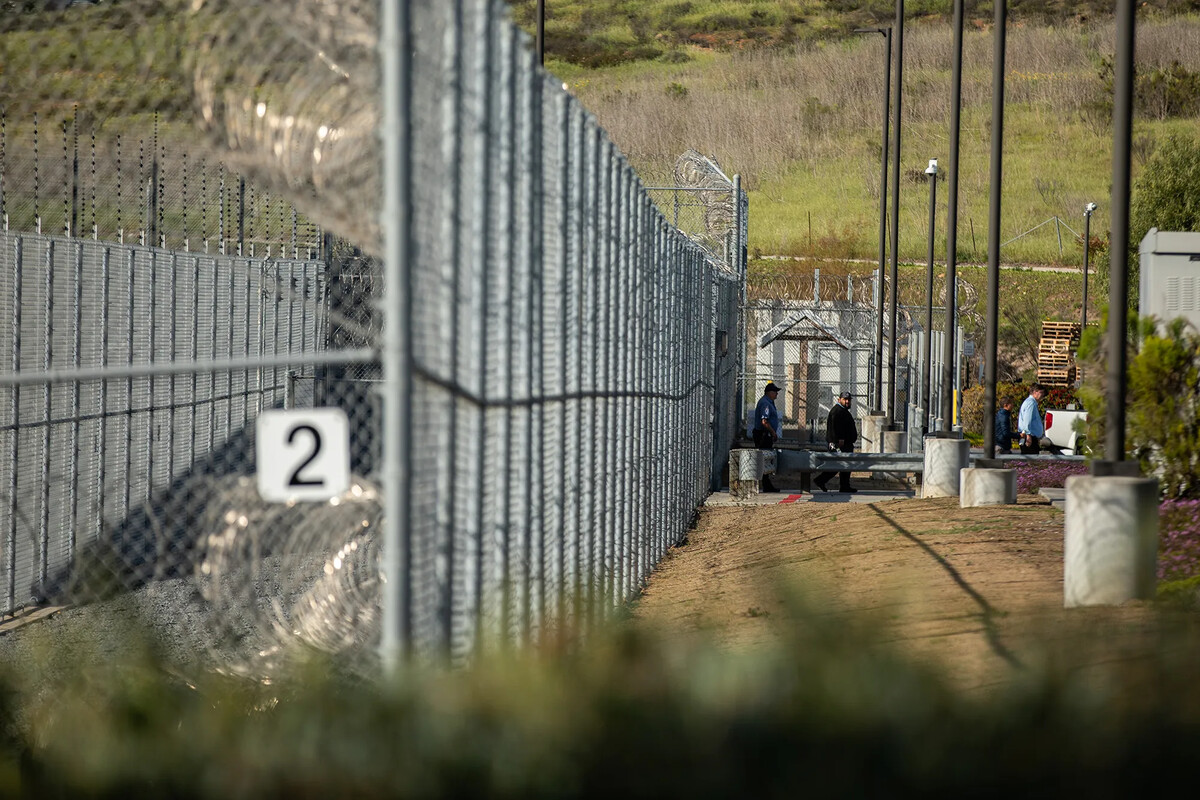
People walk out the main entrance of the Otay Mesa Detention Center in San Diego on Feb. 20, 2026. Photo by Adriana Heldiz, CalMatters
San Diego County Sheriff’s officials failed to investigate at least seven reported sexual assaults at the privately run Otay Mesa immigration detention center in 2025, and records show the agency has ceded control of the cases to civilian administrators employed by the nation’s largest for-profit prison contractor.
Under a 2020 memorandum of understanding between the sheriff’s department and CoreCivic, detention center Warden Christopher LaRose has authority to decide whether to investigate rape allegations at the facility, which currently houses just under 1,500 federal immigration detainees, most of whom are in custody awaiting hearings and have not been convicted of a crime.
CalMatters obtained the memorandum after seeking additional information about the alleged rapes and four attempted sexual assaults through a California Public Records Act request. While a sheriff’s spokesperson said the agency was not investigating those cases, he said he was unable to turn over additional records because they were part of “a law enforcement investigation.”
CoreCivic in a written statement after this story first published said Otay Mesa staff conduct an administrative investigation of each sex assault allegation, though a spokesperson said the company does not conduct criminal investigations of sexual abuse allegations because it’s not a law enforcement agency.
“When a matter requires law enforcement intervention, we refer it to the appropriate authorities,” CoreCivic spokesperson Ryan Gustin said in a statement.
The company manages the detention center under a contract with the Department of Homeland Security and the Immigration and Customs Enforcement agency’s Office of Enforcement and Removal Operations. ICE officials did not immediately respond to a request for comment.
Gustin said all allegations are recorded in a database, and “refer any potentially criminal matter to law enforcement.”
“Substantiated allegations result in disciplinary action and, where appropriate, referral for prosecution,” Gustin said. “If an individual is found to be at substantial risk of imminent sexual abuse, immediate protective action is taken.”
The company said that it has a zero tolerance policy for sex abuse and sexual harassment, and said detainees, staff or anyone present at a facility can report allegations in writing or through a hotline number. The company also said it offers anyone who makes an allegation medical, mental health and emotional support services.
CoreCivic did not respond to questions on whether it has any similar memoranda of understanding with other agencies, or details on any previous memorandum of understanding in San Diego County.
Seven privately run immigrant detention centers operate in California, with CoreCivic holding contracts for two of them. It could not immediately be determined if other detention centers have similar agreements with local law enforcement agencies.
“We’re horrified but not surprised to learn that numerous sexual assaults went uninvestigated at a CoreCivic facility,” said Susan Beaty, senior attorney with the California Collaborative for Immigrant Justice advocacy group.
“Local and state enforcement agencies have a responsibility to use their power to protect the rights of Californians in detention, and hold accountable both ICE and private prison companies that profit to the tune of billions of taxpayer dollars to incarcerate immigrants in our state.”
A 2022 audit conducted by the outside company Creative Corrections found the facility met all federal standards for preventing sexual assaults.
San Diego County Board of Supervisors Chair Terra Lawson-Remer said she plans to question San Diego County Sheriff Kelly Martinez at a hearing Tuesday night on ICE transfers from county jails.
“I do not have much confidence at all in CoreCivic’s ability to investigate these very serious allegations,” she said earlier this month.
Supervisor questions sheriff after CalMatters story
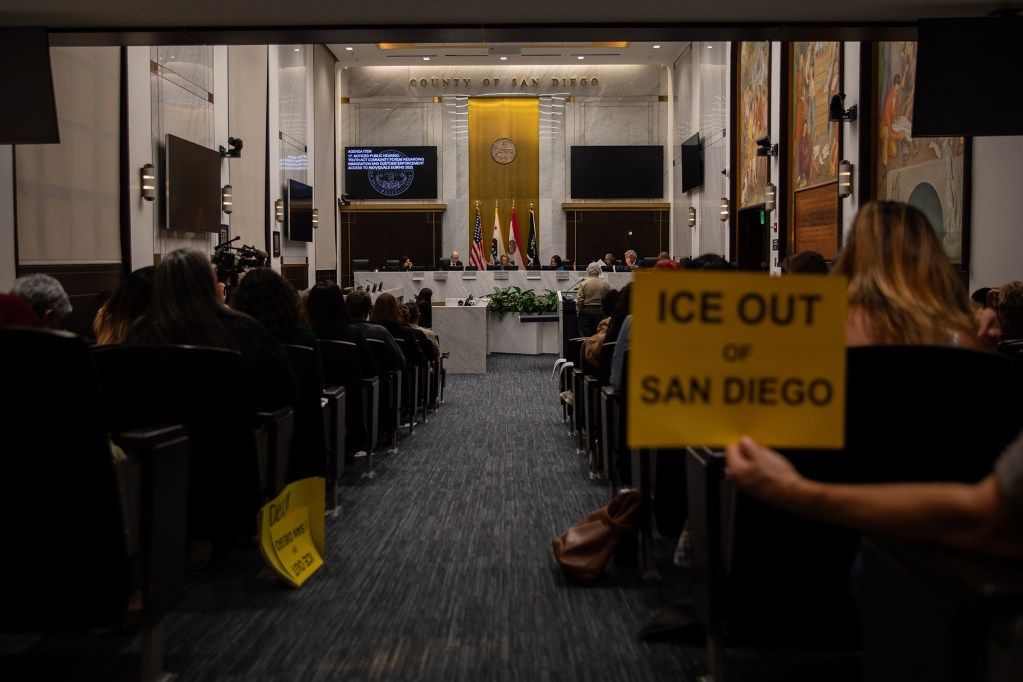
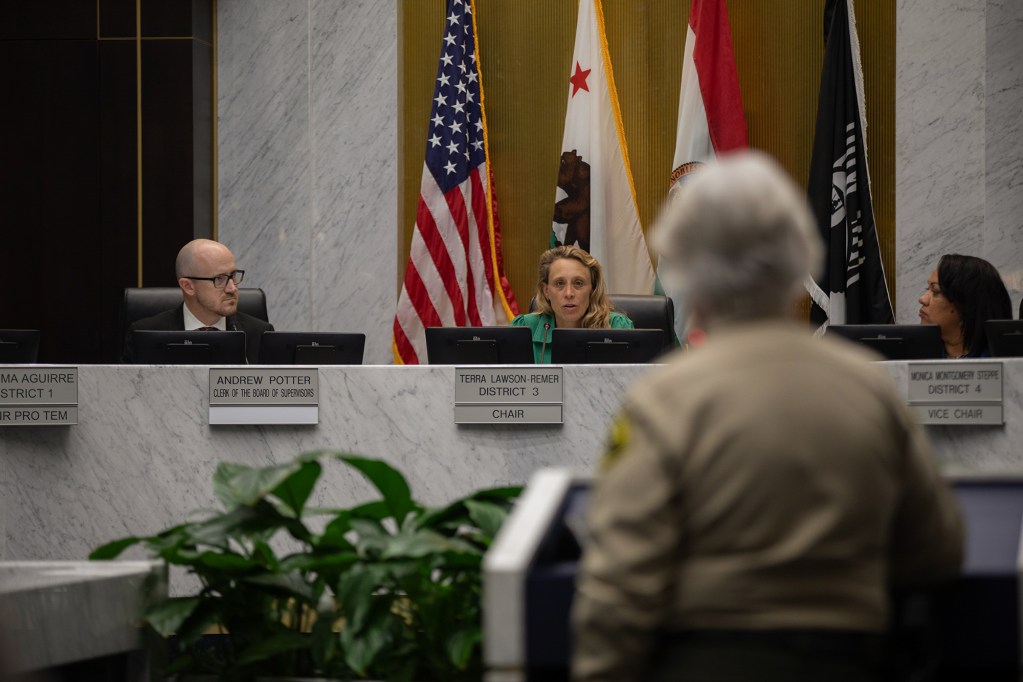
A member of the San Diego County Board of Supervisors pressed San Diego County Sheriff Kelly Martinez about the memorandum of understanding after this story published Tuesday night. Sheriff Kelly Martinez said her department doesn’t have enough staff to investigate allegations of criminal misconduct at every civil and criminal detention facility in San Diego, including Otay Mesa.
“There’s something about an MOU that explicitly delegates to CoreCivic —” San Diego County Board of Supervisors Chair Terra Lawson-Remer began to say.
“Well, we could not have an MOU at all,” Martinez interrupted, “and they wouldn’t report to us and we wouldn’t investigate. So we have to also work with the people in charge of the facility, the reporting mechanism would still have to come from the facility.”