Episode transcript
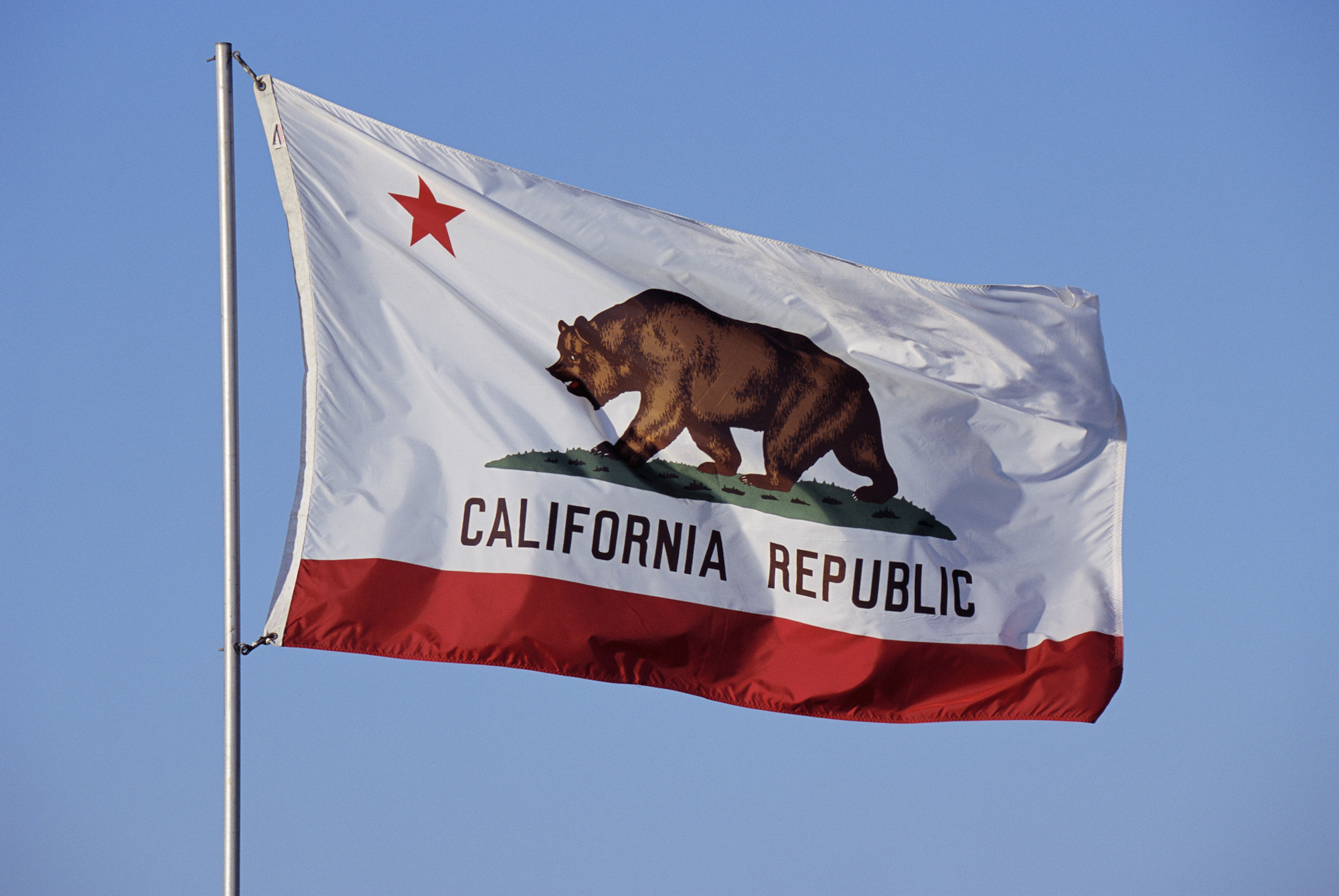
Olivia Allen-Price: Out of the 50 states that make up the union, California is considered pretty cool. We’ve got the good weather, the stunning coastline, those laid-back vibes. And we’ve definitely got a cool state flag. If you’ve looked at other flags, many stick to geometric designs. Wyoming does have a buffalo. Louisiana’s got a pelican. But California? Our flag has a grizzly bear.
Bay Curious listener Mark Karn was researching the flag one day,
Mark Karn: I like to read a lot, and whenever I read, I like to, um, go off on tangents.
Olivia Allen-Price: He found an unexpected story behind it — one that has been repeated for many years in newspapers, videos, and websites. He read that the bear on our flag was modeled after a famous bear named Monarch.
Monarch was one of California’s last grizzlies, captured in the mountains and then put on display in San Francisco.
Mark Karn: I kind of deep dived into Monarch the bear. I was fascinated by it.
Olivia Allen-Price: Mark has always had a passion for wild animals.
Mark Karn: I was born in Nigeria and grew up in South Africa. I love looking at nature in its wild state.
Olivia Allen-Price: As a teenager, he would take a book out to a remote watering hole where he’d read and wait for animals to come and drink.
Mark Karn: And I used to see a little, uh, a duiker. A duiker is a very small antelope. I used to watch the duiker come and, and drink water at the water hole. Definitely one of my most memorable moments, and you know, my happy memories. (Laughs.)
Olivia Allen-Price: So, Mark was dismayed to learn that Monarch, this big, powerful grizzly, was kept behind bars for most of his life.
Mark Karn: I kind of cringe at animals in zoos. You know, they supposedly live longer, but to me there’s a, a beauty that they lack when they’re in a cage.
Olivia Allen-Price: And while he was doing his own research, he noticed some inconsistencies in Monarch’s story that made him question if Monarch was indeed the bear on our flag. So he reached out to Bay Curious.
Mark Karn: The bear on the California flag, is it the actual Monarch the Bear that they claim it is?
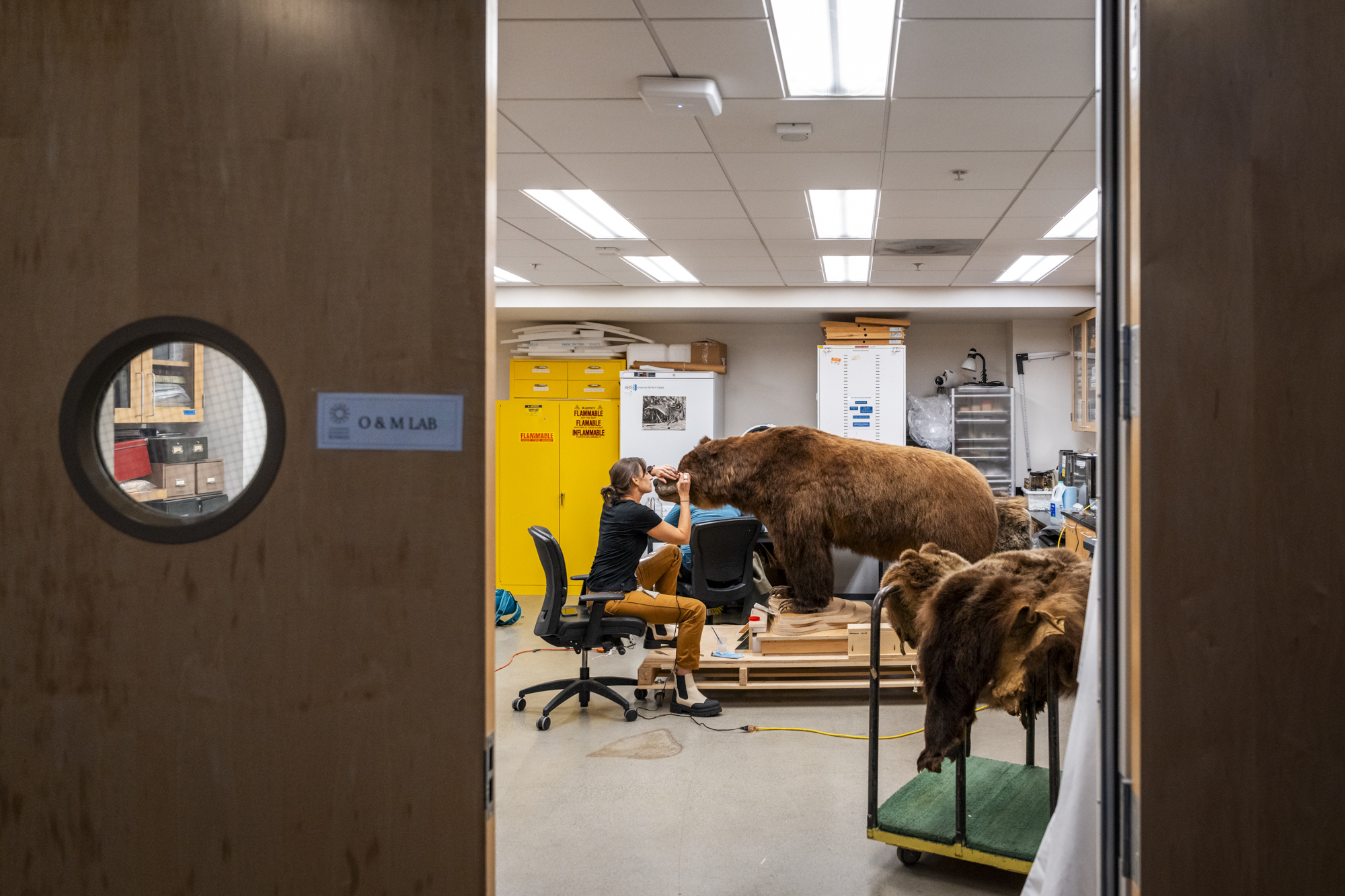
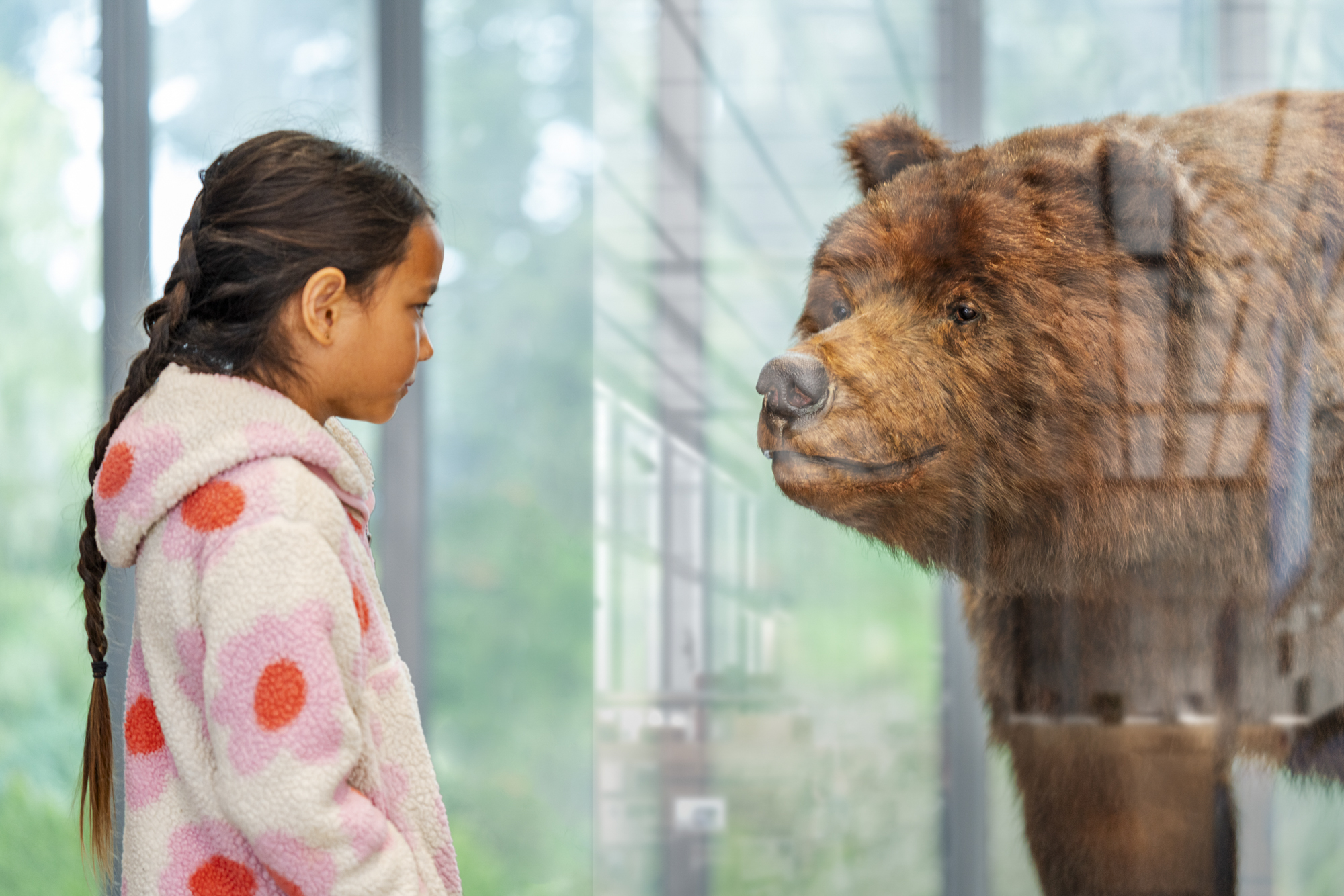
Olivia Allen-Price: To find out if it really was, and to sort through some of the other legends around the bear, reporter Katherine Monahan went to meet Monarch. Or rather, his taxidermied form, more than a century old, on display at the California Academy of Sciences.
Sounds of chatter and kids in an echoey space
Katherine Monahan: It’s a weekday afternoon, and the academy is packed with kids and families, mostly checking out the aquarium or the T-rex. They don’t all head for this dimly lit corner of the California exhibit. But those who do
Museum visitor: Wow. That is crazy. Man.
Katherine Monahan: Get to see a California grizzly.
Museum visitor 2: Did you know we had grizzly bears?
Museum visitor 3: We don’t have ’em anymore, do we?
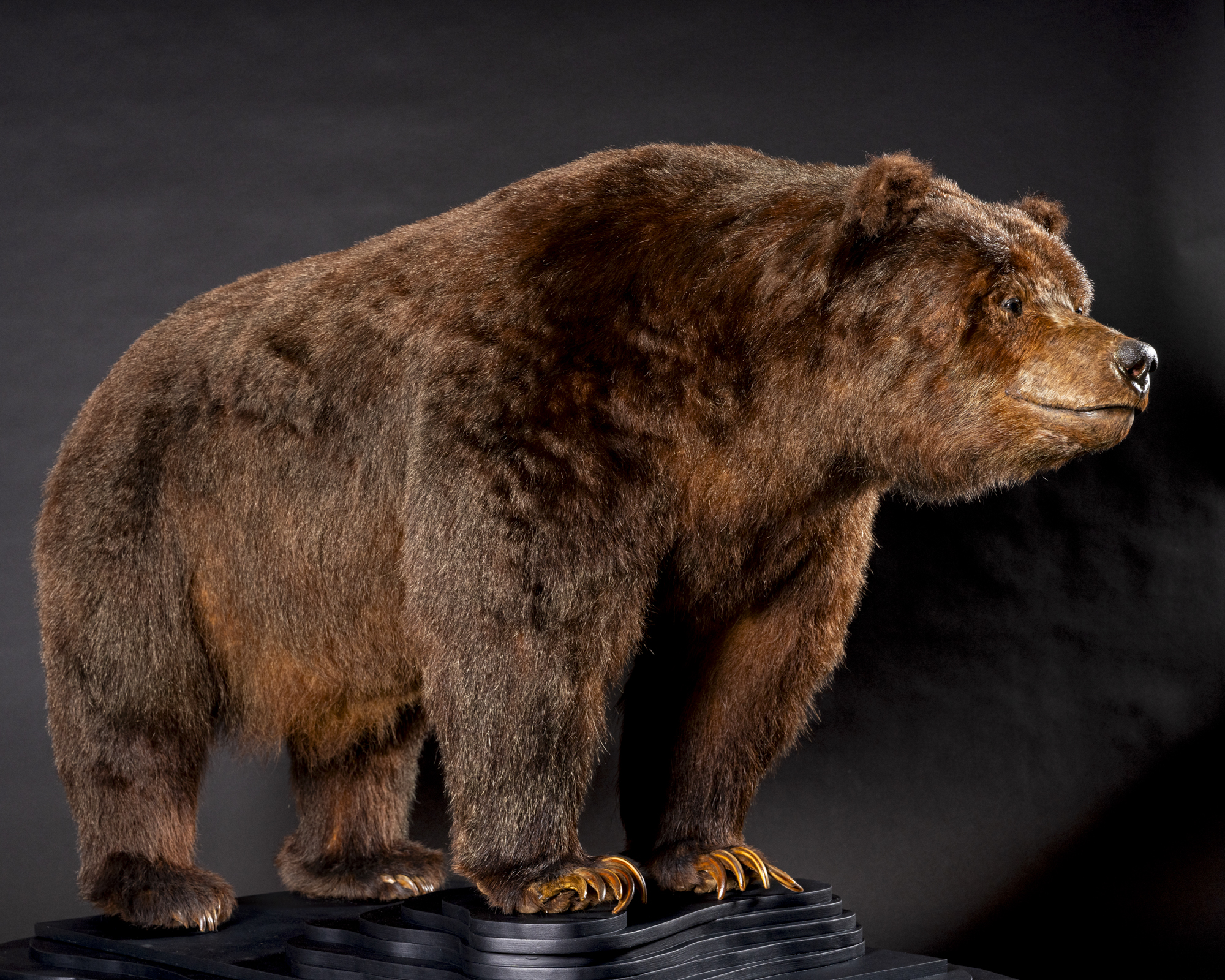
Katherine Monahan: Monarch is powerful-looking, with a muscular hump above his shoulders. He’s dark and shaggy and bigger than a black bear for sure, but not nearly as big as, say, a two-ton polar bear. His claws, though
Museum visitor 2: They look lethal.
Katherine Monahan: They’re easily as long as my fingers. There’s a cast paw print where people can put their own hand in to compare.
Museum visitor 4: Go put your hand in.
Museum visitor 5: Oh my goodness. That’s just the palm.
Katherine Monahan: Monarch is standing flat on all fours with kind of a Mona Lisa smile.
Museum visitor 6: Was he old?
Katherine Monahan: He looks peaceful. But then, he is taxidermied, quite literally a puppet. And we could have made him look however we wanted. Which, in many ways, is what we did.
Music starts
Devlin Gandy: So much of what we know about grizzlies is a myth. It’s fictitious, it’s fear-based.
Katherine Monahan: That’s Devlin Gandy, tribal liaison for the California Grizzly Alliance.
He says it’s estimated there were ten thousand grizzly bears in the state before the California Gold Rush. And, hundreds of thousands of Native Americans.
Devlin Gandy: It’s very abundantly clear that they not only existed alongside grizzlies, but they thrived with grizzlies.
Katherine Monahan: But the Spanish ranchers and then the gold miners who flooded into California in the 1800s saw the bears differently. They told sensational stories that featured the animals as brutal, bloodthirsty killers — even though grizzlies mostly minded their own business unless provoked.
Devlin Gandy: You see the bear being really cast as this, um, obstacle to progress, much like the wolves and much like native people, and as something that, you know, has to be done away with.
Katherine Monahan: Bounties on grizzlies became common. Mostly, they were killed with poison. Ranchers put strychnine onto the carcasses of dead cows. By the late 1800s, very few grizzlies were left in the state.
Devlin Gandy: It’s a time of extreme ecological degradation, and you start to get this romanticism for the West, this romantic notion of Native Americans and wildlife. And Monarch falls right into that narrative.
Music
Katherine Monahan: Enter William Randolph Hearst. In 1887, after getting kicked out of Harvard for bad behavior, he landed back in his hometown of San Francisco. Where his father gave him a small newspaper called the San Francisco Examiner.
Devlin Gandy: Hearst is leading this new wave of journalism that has a lot of sensationalism tied to it.
Katherine Monahan: He was about 25 years old. And he thought it would be great publicity if someone from the Examiner could capture a live grizzly bear.
So he asked one of his reporters, Allen Kelly, to do it. Kelly clearly got right into character, as you can see in his portrait from the time.
Devlin Gandy: He has these bandoliers of ammunition on both sides of his chest.
And it’s just like he’s trying to be Rambo. You’re like, what are you doing, dude?
Katherine Monahan: Kelly had never actually hunted a bear before. So when he struck out for the mountains of Southern California, where it was rumored there were still a few grizzlies left, he hired local helpers. They were happy to oblige.
Devlin Gandy: A man coming from San Francisco with a blank check from one of the richest men in California to go on a bear hunt? That sounds absolutely great.
Katherine Monahan: They led this city-slicker journalist around in circles, all the while camping and eating well and seeing plenty of bear sign, but not trapping any bears. Kelly eventually caught on.
Devlin Gandy: He starts to realize that all these grizzly bear tracks that he’s seeing are actually probably not being made by a grizzly bear.
Katherine Monahan: So he fired his crew. But by then he’d been gone for five months, and he was getting desperate.
Devlin Gandy: Like, I need a bear.
Katherine Monahan: Just then, a monstrous grizzly came to his camp, conquered a cinnamon bear called Six-Toed Pete in an epic moonlit battle, and walked into his trap. At least, that’s how Kelly reported it in the Examiner.
Voice over reads newspaper clipping: A great ripping and tearing was heard going on inside. The Monarch was caught at last. Upon the approach of men, the grizzly became furious and made the heavy logs tremble and shake in his efforts to get out and resent the indignity that had been put upon him.
Katherine Monahan: But Gandy thinks there was no trap.
Devlin Gandy: He was actually probably captured by some of the vaqueros using lassos. And when they’re able to use four different horses to pull the bear’s arms and legs in four different directions, you have a bear that basically is stuck.
Katherine Monahan: About fifteen years later, Kelly retold his story in a book, this time saying that some Mexicans caught the bear, and he heard about it and went and bought it from them.
Regardless, he still had to transport it to San Francisco. Which he reports in swashbuckling, self-aggrandizing detail.
Voice over reads newspaper clipping: The Monarch was now bound, gagged, and utterly helpless, but he never ceased roaring with rage at his captors and struggling to get just one swipe at them with his paw.
Katherine Monahan: Naming the bear “Monarch” was kind of an advertisement for the Examiner, which had the slogan “The Monarch of the Dailies.”
Kelly describes how the grizzly broke his teeth trying to gnaw through his chains. How he tied Monarch to a kind of sled and hauled him down the mountain, and then built a cage and mounted it on a wagon and then a train for San Francisco … to a place called Woodward’s Garden.
Music
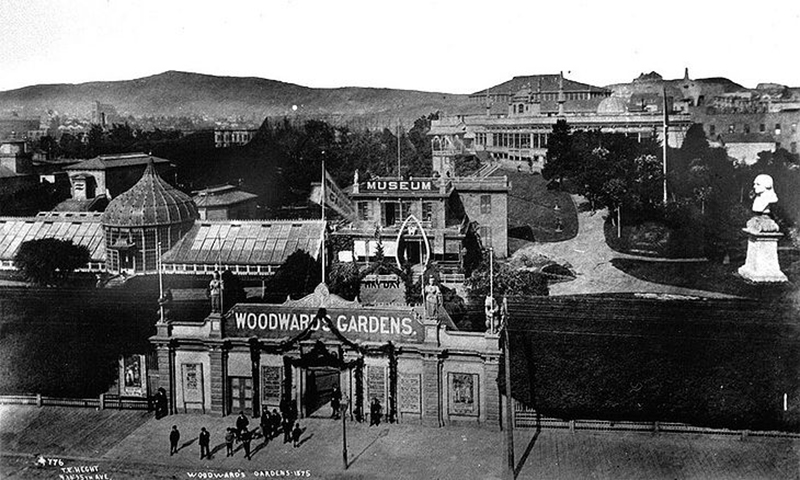
Katherine Monahan: In the late 1800’s, Woodward’s Garden was an amusement park in the Mission, near where the Armory is now. It had an aquatic carousel, balloon rides, camel rides, an eight foot three inch tall man who was billed as a giant . . . It was kind of a carnival. And a sign of its time.
California Academy of Sciences head librarian Rebekah Kim shows me a picture of it.
Rebekah Kim: They had, like, live bears jumping from like a diving board.
Katherine Monahan: Whoa.
Rebekah Kim: Oh, and then bears in captivity.
Katherine Monahan: The Examiner covered Monarch’s arrival at the garden with great drama: how one of the black bears died of fright when he arrived. How he tore through his cage into the hyena enclosure and rolled up sheets of iron like they were paper. How he was the only grizzly bear in captivity (which is not true. There was another one at the Oregon Zoo). How he weighed a thousand pounds (also not true).
Ambi of chatter at the Academy of Sciences
Katherine Monahan: Back at Monarch’s taxidermy display, we talk about how the fabled massiveness of grizzly bears was yet another tall tale
Katherine Monahan: I have never seen a grizzly, and I thought they’d be a lot bigger.
Rebekah Kim: No, actually, technically. Monarch is a little overweight.
Katherine Monahan: Kim explains that despite grizzlies’ reputation for being huge and vicious
Rebekah Kim: They were mostly vegan. And they probably weighed close to like 500 ish pounds.
Katherine Monahan: Why would you bother being vegan with a body like that? Look at those claws.
Rebekah Kim: I don’t know. I mean, and that’s the thing, it’s like a dispelling a myth. I think California grizzlies were hunted down because they were thought to be, um, apex predators and a threat to livestock and people, but they really weren’t going after those things.
Katherine Monahan: It turns out the claws, along with the muscular hump on the shoulders, are really for digging. Grizzlies are omnivores, and eat mostly vegetarian. In captivity, however,
Rebekah Kim: Monarch’s diet consisted of biscuits, sugar, peanuts, not his natural diet.
Katherine Monahan: No wonder he is portly.
Rebekah Kim: He is. He was like, um, I don’t know exactly, around 900 pounds. So double the normal size of a grizzly.
Katherine Monahan: Monarch stayed in Woodward’s Garden for five years, in a cage so small he could barely turn around in it.
Rebekah Kim: And then he moved to the World’s Fair in Golden Gate Park as part of like the 49 ERs camp.
Katherine Monahan: Wait a second. As a live bear. He was in the World Fair?
Rebekah Kim: Yeah, he was. There’s, oh, I have a picture somewhere. He’s like in a pit. It’s actually really sad.
Katherine Monahan: The 1894 World’s Fair took up 200 acres in Golden Gate Park. It was built like an amusement park, with large outdoor attractions. There were Inuit people on display, real people, in a village of papier-mache igloos. There was a Japanese village, which is now the Japanese Tea Garden. And a pretend mining camp, where you could go to a saloon and see a grizzly bear. Here’s, once again, the San Francisco Examiner:
Voice over reads newspaper clipping: Monarch, the Examiner bear, is a wild and untamed beast, and has not yet been told that one of the lion tribe is likely to invade his home.
Katherine Monahan: Fairgoers were clamouring for a lion to be dropped into Monarch’s concrete pit so they’d fight. But the fair managers, in a rare moment of good taste, refused.
After the World’s Fair, Monarch was moved to his final home — a cage in Golden Gate Park’s menagerie, where the AIDS Memorial Grove is now.
Rebekah Kim: You could see a bunch of different animals. It was free.
Katherine Monahan: This was the late 1800s, well before the San Francisco Zoo, and really before any real understanding of how to run a zoo. The park had bison, as it still does, but also kangaroos and elk and an aviary. And a grizzly bear.
Rebekah Kim: You could walk up to the enclosure, stick your arm in if you wanted to. Um, and you could throw peanuts or whatever snacks you wanted to.
Katherine Monahan: And Monarch lived there for the rest of his life.
Rebekah Kim: There’s a lot of historic photos. You can see many times he looks pretty sad behind bars.
Katherine Monahan: She shows me one of Monarch resting his head against the side of his cage, staring, it seems, into nothing. After the first decade, his keepers became concerned by his apparent depression and brought a female grizzly called Montana Babe. Over time, they had several cubs. Some of them died. And in 1911, after over two decades in captivity, Monarch died too.
Rebekah Kim: At that point. He was very overweight, he was like paralyzed and not moving, and so the, I think their way of euthanasia was like a policeman coming and shooting him in the head.
Katherine Monahan: Monarch was one of the last of his kind. California grizzlies were classified as a distinct subspecies. And for over half a century, they had been relentlessly, systematically poisoned, hunted and trapped. By the 1920s, they were extinct … or so we believed.
Olivia Allen-Price: When we come back, we turn to Mark’s question. Is Monarch the bear on the California flag? Stay with us.
Sponsor break
Olivia Allen-Price: Now we come to the question of our state flag, featuring a strong and proud-looking grizzly bear. Our question asker, Mark Karn, wanted to know if, as the legend goes, Monarch is the bear on the flag.
Here’s Katherine Monahan again.
Katherine Monahan: The history of the bear flag goes way back – to before California was even a state.
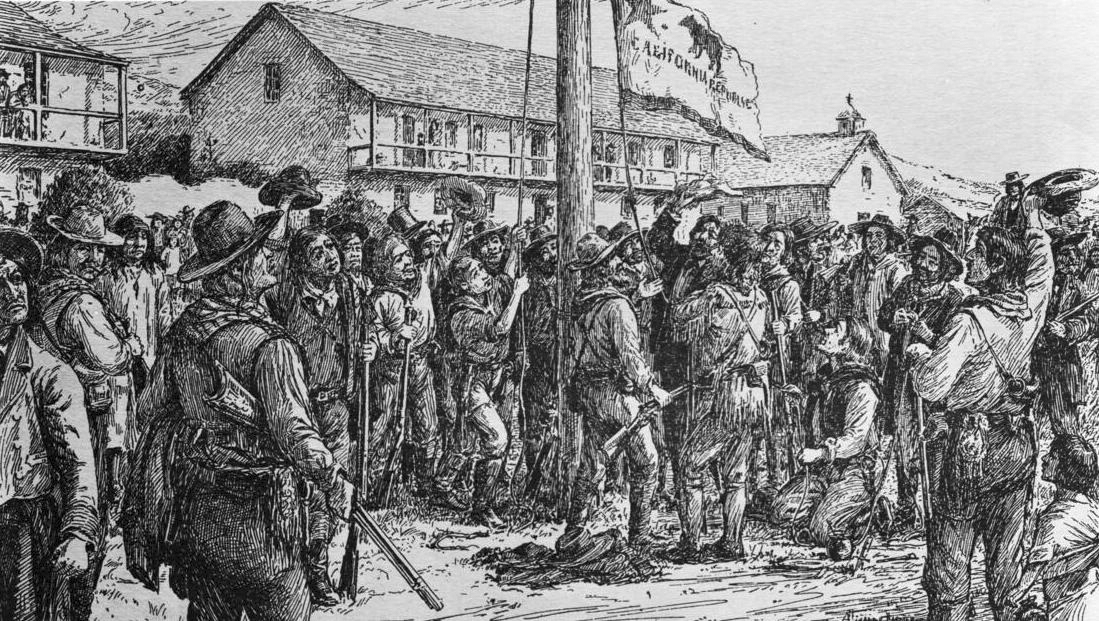
In 1846, grizzly bears were all over California, which was still part of Mexico. That year, a group of about thirty American settlers rebelled against the Mexican government and took over the town of Sonoma.
They painted a bear and a star on a sheet, raised it above town, and proclaimed themselves an independent nation. The California Republic.
Academy of Sciences head librarian Rebekah Kim shows me a picture of their flag.
Rebekah Kim: The first one is just like a silhouette of a. You think maybe a bear or a pig or a dog, right? It’s so hard to tell.
Katherine Monahan: To the rebels, the grizzly symbolized “strength and unyielding resistance.” Their new republic didn’t last – California soon became part of the United States. But the bear flag stuck around. Only everybody was drawing it in a different way.
Rebekah Kim: There’s another variation where the bear is up on its hind legs and kind of standing up.
Katherine Monahan: In 1911, California decided to make it the state flag. And the state legislature set guidelines, saying the bear must be in the middle, walking toward the left, and it must be dark brown
Rebekah Kim: But there are no specific specifications about what it’s supposed to look like, so then, depending on the printer, you can get a different version.
Katherine Monahan: So, in 1953, the legislature decided we needed to standardize the flag and try to make the bear look more reliably like a bear.
Rebekah Kim: And so there is a zoologist who is an expert on California grizzlies, who’s sort of informing the designer about how to change the image to make it less like either a wolf or like a pig.
Katherine Monahan: The problem was, all the California grizzlies were dead by then. So what could the artist look at for a reference? The taxidermied form of Monarch could have been helpful, and there is a 1953 article in the San Francisco Chronicle that suggests it was part of the process. But Kim doesn’t buy it.
Rebekah Kim: No. Looking at the historical documents of the illustrator. All the back and forth is not about Monarch. The references he uses is a different illustration and some, um, images of other grizzlies in other states.
Katherine Monahan: So it’s. Kind of an urban legend.
Rebekah Kim: It is, and it is perpetuated by lots of sources.
Katherine Monahan: Kim herself was one of them, until she did this research.
Rebekah Kim: I was like, oh no, I’ve told people, like I’ve told the wrong thing to people. Cause that has been the narrative that we’ve been fed.
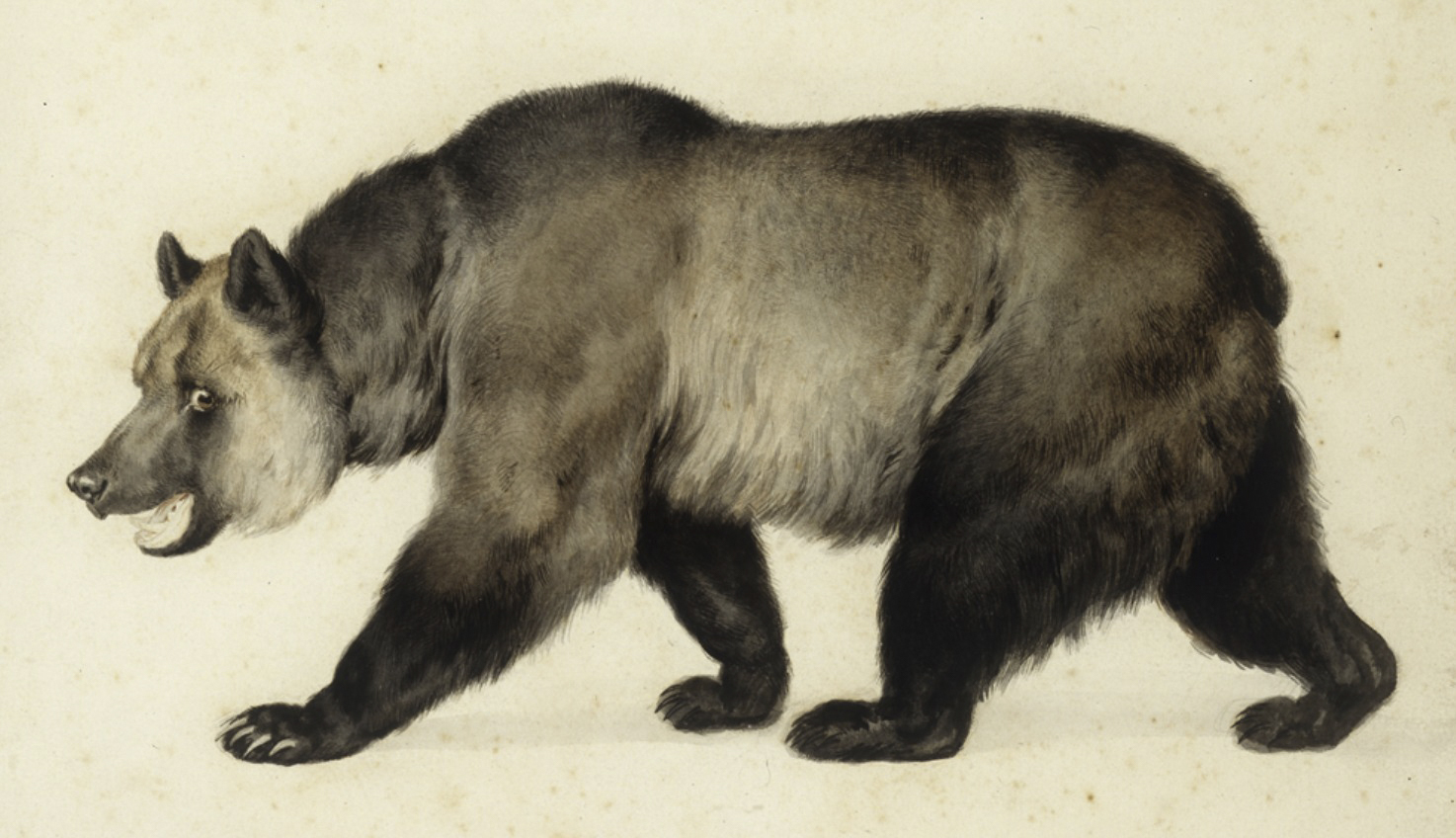
Katherine Monahan: The real model for the California state flag, as it turns out, was Samson, another famous grizzly that spent time in San Francisco long before Monarch showed up.
Back in the 1850s, a man named James Capen Adams, better known as Grizzly Adams, opened the Mountaineer Museum in San Francisco. It was on Clay Street, just a few blocks from where the Ferry Building is today. A newspaper reporter described a dingy basement with several live grizzlies chained to the floor. There were also elk, mountain lions, and a few eagles.
Voice over reads newspaper clipping: At the rear, in a very large iron cage, was the monster grizzly Samson. He was an immense creature weighing some three-quarters of a ton.
Katherine Monahan: A painter called Charles Nahl made a detailed portrait of Samson. And that painting of that bear was consistently used as a reference for the California state flag.
Peter Alagona: The entire story was, was wrong in a lot of ways.
Katherine Monahan: Pete Alagona is a professor in the environmental studies program at UC Santa Barbara. He says not only did Monarch’s story get distorted and manipulated, but so did the story of all the California grizzlies.
Peter Alagona: And the most wrong part of it was the idea that the extinction of grizzly bears in California was inevitable, and the recovery of them is impossible.
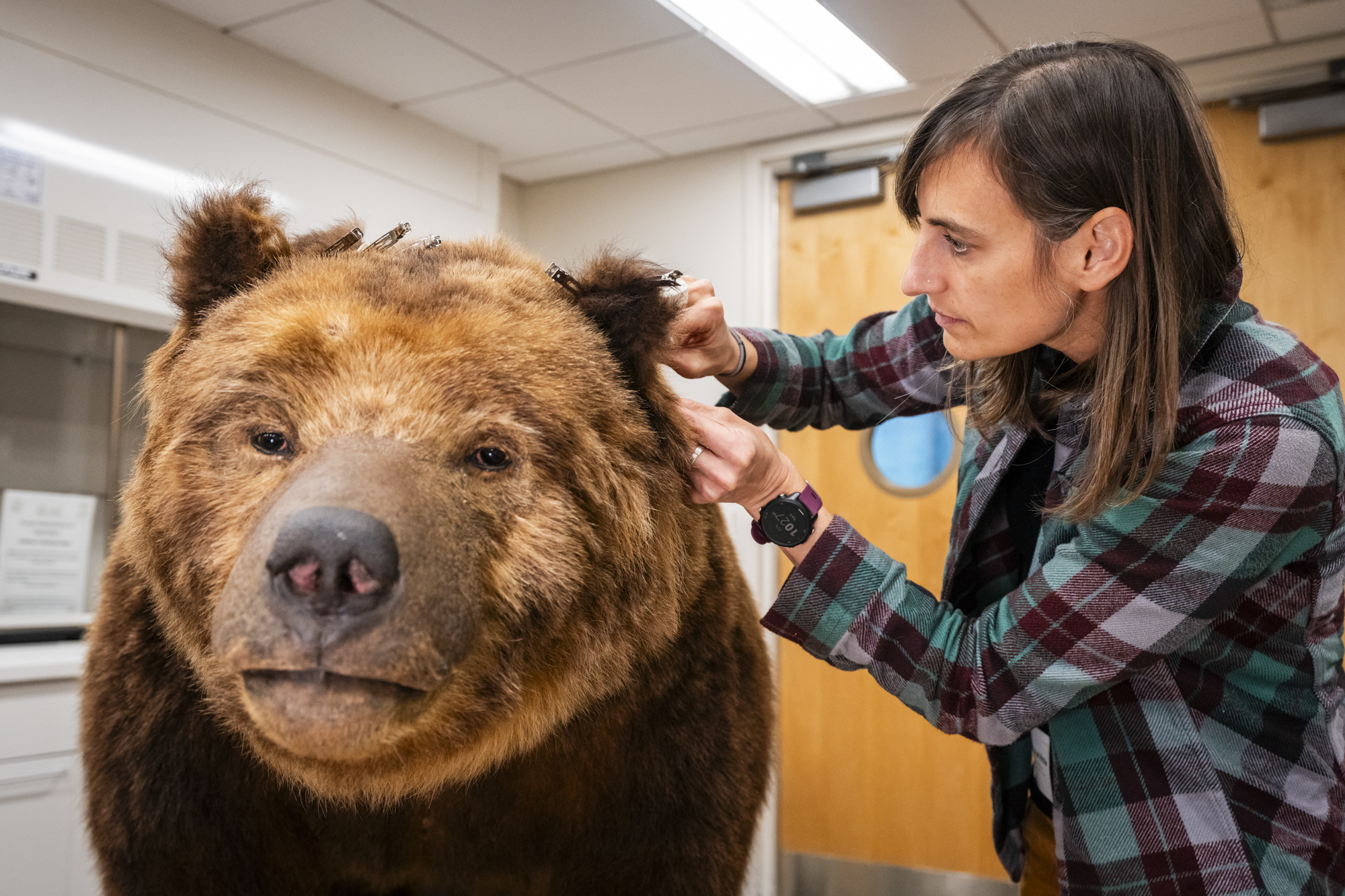
Katherine Monahan: To get closer to the truth, Alagona analyzed Monarch’s bones and fur, along with those of other grizzlies. His team found startling results. It turns out California grizzlies are genetically indistinguishable from modern-day grizzlies in Yellowstone and Montana.
Peter Alagona: They’re gone from California, but they’re not really extinct. They just kind of live in Montana right now. It’s the same bear. It’s just not here at the moment.
Katherine Monahan: Now, Alagona is working with the California Grizzly Alliance, which proposes bringing grizzlies back to the state. The idea is to start with just a couple of animals, very closely monitored, in a very remote area.
Katherine Monahan: You are aware that to a lot of people, the idea of reintroducing grizzlies sounds pretty nuts.
Peter Alagona: Um, yeah.
Katherine Monahan: What’s, what’s your response to that?
Peter Alagona: So, you know, when I started this project, it sounded nuts to me too. I wasn’t interested in that. I was just interested in learning about them. And as I went further along, I realized, it’s totally possible. Which means it’s a choice.
Katherine Monahan: And if it’s a choice, he figures, we should make it an informed one by learning more about grizzlies. And not, this time, from what people have said about them, but by studying the animals themselves.
Peter Alagona: They do a lot of amazing things. They turn over soil and enrich the soil. They are by far the biggest seed dispersers of any animal out there in the world on a per capita basis.
Katherine Monahan: He says the biggest benefits that grizzlies might bring back to California, though, are not really about the ecosystem.
Peter Alagona: They’re more about. Imagination. They’re more about this idea that yes, we can restore things that seem unrestorable. Yes, there is a possibility for things that seem impossible. To me, that’s what the bear does for us is it enables you to see a different kind of future by showing you a little bit more about yourself.
Katherine Monahan: Maybe Monarch’s story is a kind of allegory for our present moment. On one hand, we live in a time of severe environmental loss, and many of us, to some extent, feel it and can relate to the depressed, overweight captive bear. On the other hand, this is a time of incredible possibility. When enough of our natural world still lives that it may be able to make a comeback.
Who knows if we’ll ever find grizzlies in California again? But for now, we have our flag — adorned with an image of the fierce, proud, mostly vegetarian bear — named Samson.
Olivia Allen-Price: That was KQED’s Katherine Monahan.
We are in the middle of our experiment of dropping two episodes a week, and we want to know what you think! Share your feedback with us by emailing [email protected].
This question came from listener Mark Karn, and hey, who knows, a future episode could come from YOUR question. Our show is only possible because you keep asking them. Head to BayCurious.org and submit a question right at the top of the page.
Bay Curious is made in San Francisco at member-supported KQED.
Our show is made by Katrina Schwartz, Gabriella Glueck, Christopher Beale and me, Olivia Allen-Price.
Extra support from Maha Sanad, Katie Sprenger, Jen Chien, Ethan Toven-Lindsey and everyone on team KQED.
Some members of the KQED podcast team are represented by the Screen Actors Guild, American Federation of Television and Radio Artists, San Francisco Northern California Local.
I’m Olivia Allen-Price. Have a good one.