Here are the morning’s top stories on Friday, Feb. 27, 2026
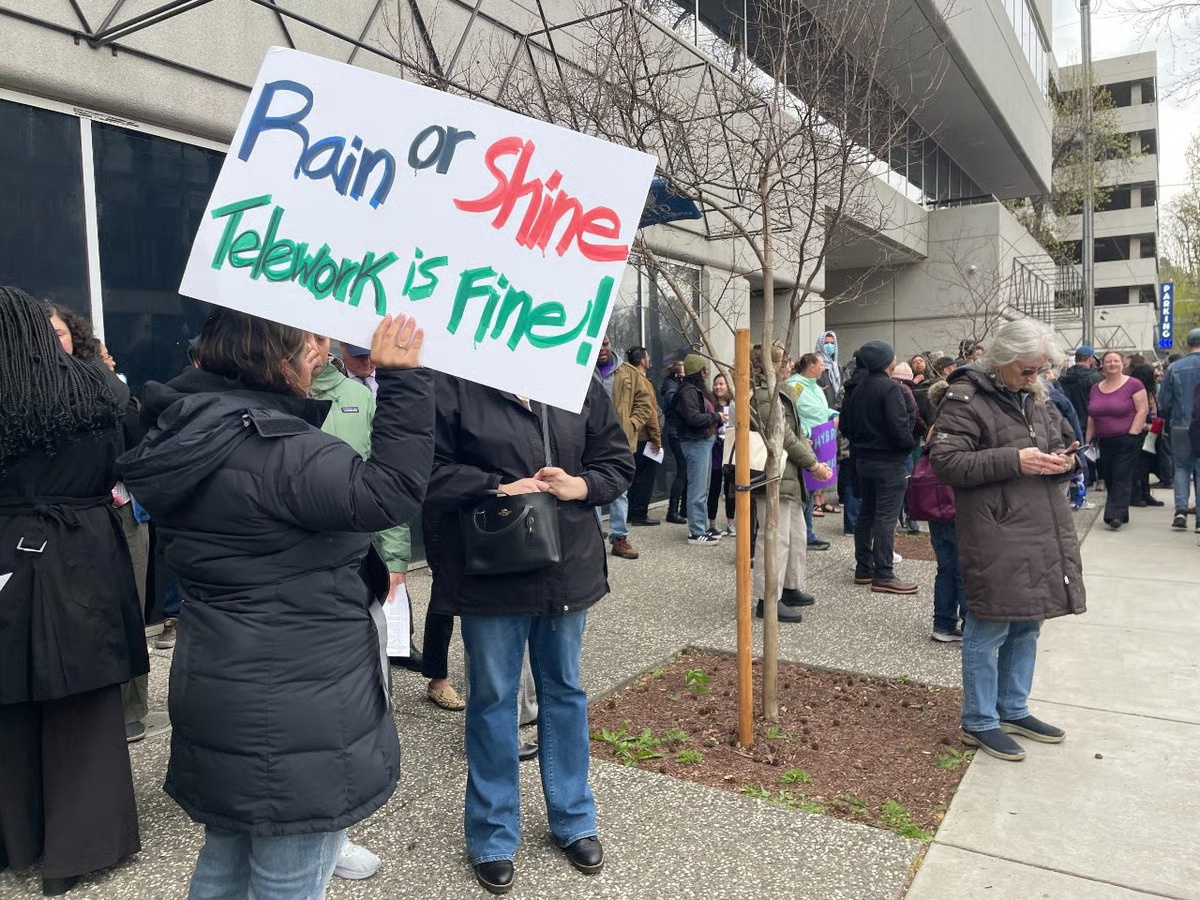
- Sacramento County is home to California’s largest community of state workers, around 90,000 people. Governor Gavin Newsom says he wants them to come back into the office starting this summer — many still work remotely part time following the pandemic. But state worker unions hope a new bill will protect their ability to telework indefinitely.
- In Humboldt County, low wages are leading to high rates of poverty and greater enrollment in the state food program CalFresh.
- Along the coast of San Mateo County, elephant seals at Año Nuevo State Park could be experiencing a “small outbreak” of bird flu, according to scientists.
Union-backed bill would require telework options for California state workers
On any given day before the pandemic, hundreds of workers would walk the sidewalks circling the State Capitol in Sacramento on their lunch breaks. But it isn’t as busy in the downtown Capitol corridor as it used to be.
A big part of that is state workers are still working remotely a few days a week. Sacramento County is home to California’s largest concentration of state employees – just under 90,000 workers. Gina Garcia-Smith is one of them. She is a former school teacher and now works as a program consultant for the California Department of Education located in downtown Sacramento. Garcia-Smith said the option to work from home has allowed her more flexibility, especially after becoming a new parent. “I’m able to do my job remotely for three days out of the week, that really has improved my quality of life and the amount of time I’m able to spend with my daughter,” Garcia-Smith said. “I’m not, you know, stuck in traffic. I’m able to be present.”
Governor Gavin Newsom has ordered most state employees to return to the office four days a week starting July 1, 2026, up from a required twice per week. The mandate received pushback from state workers, including Garcia-Smith, who said the ability to telework is a big draw for state jobs. “If we really want to attract and retain quality state workers, it’s really important to be able to provide some incentive because clearly pay is not the incentive that’s being provided,” she said.
Garcia-Smith’s union, SEIU Local 1000 is backing a bill this year that would require state agencies to continue offering telework. Other unions representing state workers also support the measure, including CAPS UAW Local 1115, AFSCME 2620, CASE, and PECG. Democratic Assemblymember Alex Lee of Milpitas authored the legislation. His district encompasses Silicon Valley where private-sector telework is typical. Lee argued state workers should continue to benefit from that same opportunity. “This has allowed for people to move further away from Sacramento in places that are more affordable, close to their family networks, instead of all being concentrated in one area. And this has a lot of great potential benefits for the workers themselves,” Lee said.