Here are the morning’s top stories on Thursday, February 12, 2026
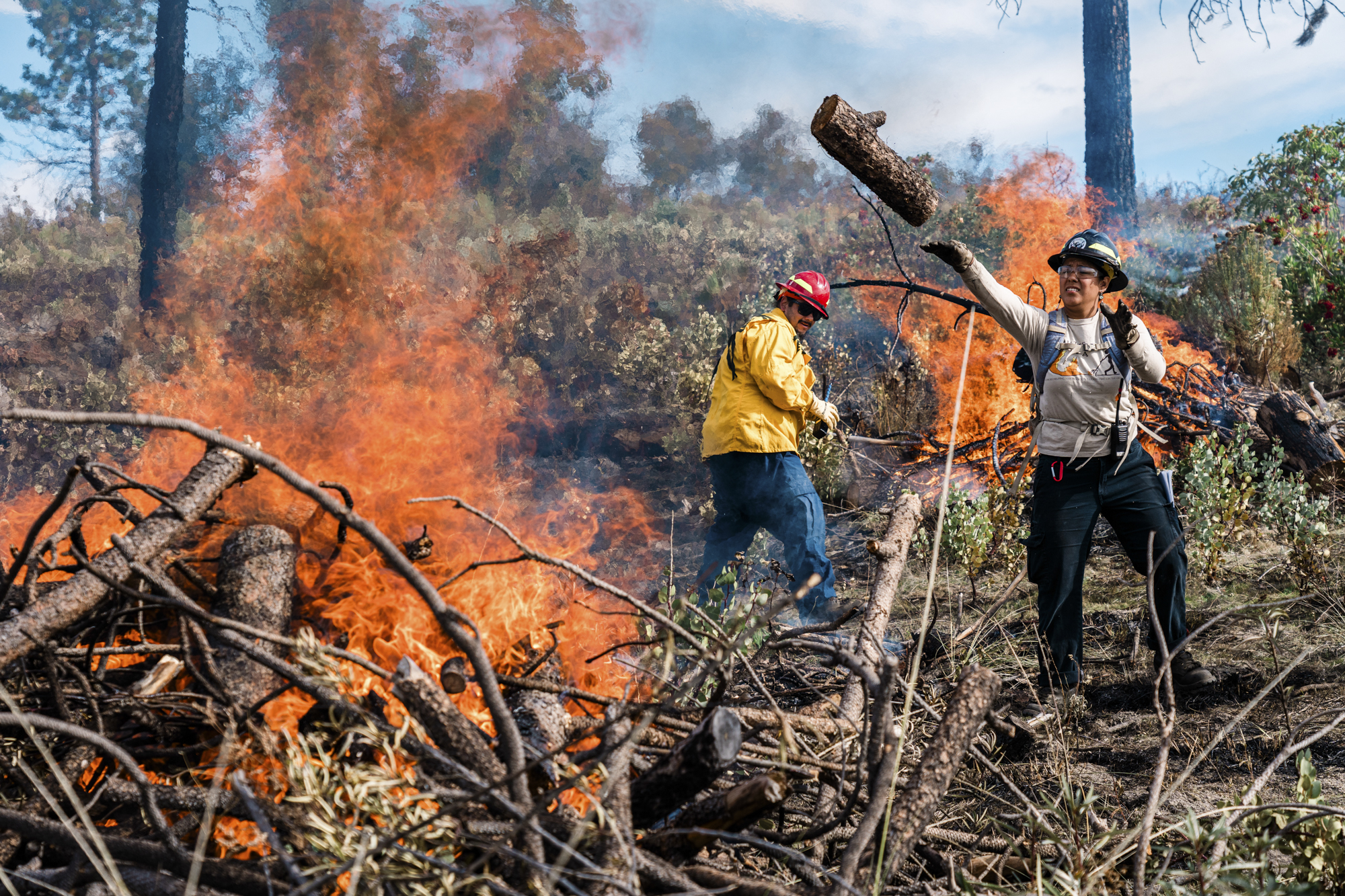
- Amongst the ponderosa pines in California’s Butte County, Native Maidu people are lighting fires to encourage the re-growth of useful plants and reduce the risk from future wildfires.
- A new bill introduced in the state assembly this week could make it easier to secure long-term funding for a program that lets people check out state parks passes from their local library,
Maidu Tribes Reignite Ancestral Fire Stewardship in the Sierra Foothills
Magan Herrera stood in the middle of a sloping meadow this past fall, wearing a hard hat, sturdy boots, and a yellow fire-resistant jacket framing her pregnant belly. The meadow, in the midst of the Sierra foothills, may once have been a Maidu basket weaver’s garden. Deer grass juts from the ground in bunches — good habitat for grazing animals and material for the tribe’s baskets. The meadow also holds yerba santa, an evergreen shrub used to treat colds, and manzanita, with its brilliant green leaves identical on both sides.
For thousands of years, native people used fire to tend this land in the Sierra foothills, in what is now known as Butte County, spurring growth of the plants they wanted, knocking back the ones they didn’t and constraining the lightning-ignited wildfires that burned the area every few years. Then came Western settlement, firefighters suppressing the flames, and conifers tangling thickly together. Eventually, the conditions grew ripe for the ferocious, wind-driven flames of the North Complex Fire and Bear Fire, which consumed nearly everything along nearby Berry Creek and killed 11 people in 2020.
As Herrera, who is part of the Maidu tribe, surveyed the meadow, she saw the promise of a place her people could, once again, rely on for generations to come. “My hope is for our people to use this land so that everybody will have everything that they need,” she said. To steward the land, she was helping to lead a planned burn. Maidu people from five local tribal groups participated: Berry Creek Rancheria, Mechoopa, Mooretown, Enterprise and Konkow Valley. It’s the first time in living memory that they’ve come together to burn, Herrera said. The loss of indigenous fire stewardship and the corresponding Western settler obsession with suppressing all fire have fueled our current era of devastating megafires. Returning fire stewardship to indigenous communities helps restore the land and people’s souls. This is the spirit embodied in the November meadow burn. The land will be safer from future wildfires and tended according to the traditions of the Maidu ancestors who lived here for generations.
Fire, in this region of Northern California between Interstate 5 and the Sierra Nevada, is a defining problem of life. For native people like the Maidu, it is also a solution.