Sponsor MessageBecome a KQED sponsor
upper waypoint

San José, Santa Clara Still Feel Shunned by TV Broadcasts at Levi's Stadium

Save ArticleSave Article
Failed to save article

Please try again

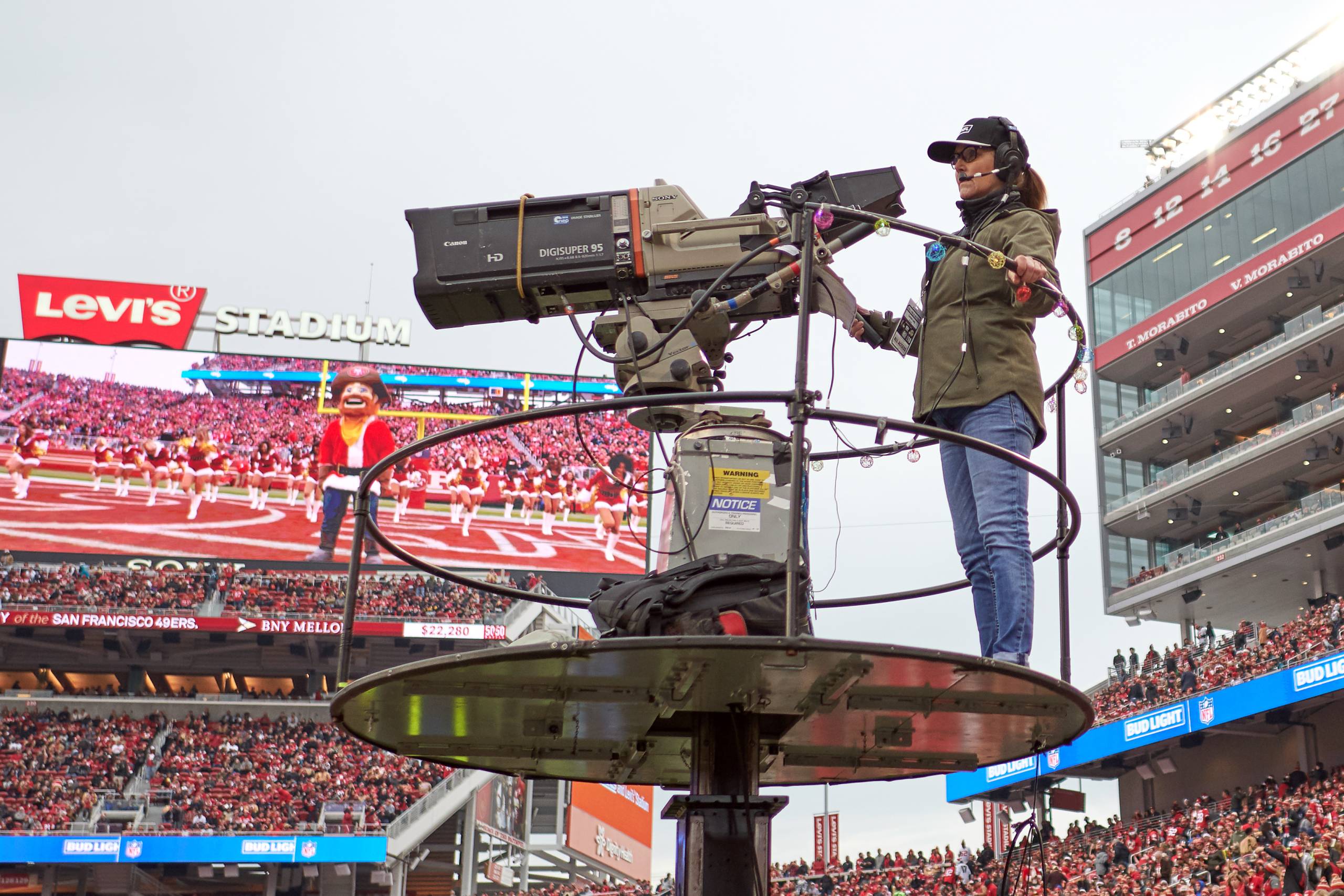
SANTA CLARA, CA - DECEMBER 24: A profession female camera person operates the live tv camera is seen during an NFL game between the Jacksonville Jaguars and the San Francisco 49ers at Levi's Stadium on December 24, 2017 in Santa Clara, California.  (Photo by Robin Alam/Icon Sportswire via Getty Images)

Here are the morning’s top stories on Thursday, Feb. 5, 2026

  • Super Bowl 60 will air on NBC on Sunday. And if you can’t watch the game in person at Levi’s Stadium, you’ll likely be one of millions glued to a TV screen. The game is being played in Santa Clara, but you might not know it from some of the images the broadcast is likely to show.
  • California’s new congressional map will stay in place after the U.S. Supreme Court declined to block the new districts Wednesday.
  • Over a year ago, California voters passed a measure, Proposition 36,  to crack down on theft and drug crimes. But counties have been left to figure out how to fund it.

Why Do TV Broadcasts Still Show SF Landmarks During Games At Levi’s Stadium?

The first National Football League game at Levi’s Stadium in Santa Clara took place in 2014. And since then, the San Francisco 49ers have been on national TV numerous times. While the team’s new home was in Santa Clara County, many of the TV shots have been landmarks located in San Francisco, which is 40+ miles away from Levi’s Stadium.

“If the mission is to portray what’s around Levi’s Stadium and where the 49ers play, and what the culture of the fanbase, what the culture of the area is, I think you gotta show more than the Golden Gate Bridge,” said author and retired Mercury News Sports Columnist Mark Purdy. “The fact that the 49ers play in one of the most interesting places on earth, right in the middle of Silicon Valley, is almost ignored.”

As Levi’s Stadium is set to host the Super Bowl in a few days, it’s unclear what NBC’s broadcast will show during the game. And while Santa Clara and San Jose might not have the iconic landmarks like San Francisco’s Golden Gate Bridge and Alcatraz, Purdy said the South Bay has a lot to offer – the  Santa Clara Mission on the campus of Santa Clara University, Lick Observatory, Pat Tillman Memorial and the Tommie Smith and John Carlos statue at San Jose State University. Plus he said, the stadium is in the heart of Silicon Valley, which is home to some of the biggest tech companies in the world.

And for fans attending Super Bowl-related events this week, many said it would make sense to show more aerial shots near the stadium, since San Francisco is more than 40 miles away.

The Supreme Court Lets California Use Its New, Democratic-Friendly Congressional Map

The Supreme Court is allowing California to use its new congressional map for this year’s midterm election, clearing the way for the state’s gerrymandered districts as Democrats and Republicans continue their fight for control of the U.S. House of Representatives.

Sponsored

The state’s voters approved the redistricting plan last year as a Democratic counterresponse to Texas’ new GOP-friendly map, which President Trump pushed for to help Republicans hold on to their narrow majority in the House.

And in a brief, unsigned order released Wednesday, the high court denied an emergency request by the California’s Republican Party to block the redistricting plan. The state’s GOP argued that the map violated the U.S. Constitution because its creation was mainly driven by race, not partisan politics. A lower federal court rejected that claim. The ruling on California’s redistricting plan comes two months after the Supreme Court cleared the way for the Texas map that kicked off a nationwide gerrymandering fight by boosting the GOP’s chances of winning five additional House seats.

“With an eye on the upcoming 2026 midterm elections, several States have in recent months redrawn their congressional districts in ways that are predicted to favor the State’s dominant political party,” said the court’s December order in the Texas case. “Texas adopted the first new map, then California responded with its own map for the stated purpose of counteracting what Texas had done.”

California Voters Overwhelmingly Passed Prop 36. The State Still Isn’t Helping Fund It

Californians overwhelmingly voted yes on Proposition 36 in November of 2024, supporting a ballot measure that many saw  as a solution to rising theft and drug crime. Over a year since it passed, counties like Sacramento are grappling with how to pay for growing treatment and incarceration expenses without funding help from the state. The costs could mean counties will have to pay millions of dollars more each year as they struggle with already strained budgets.

The measure turned some misdemeanor drug and theft crimes into felonies and lengthened certain prison sentences. That, in turn, put pressure on local court systems and law enforcement departments. It also created what is called a “treatment-mandated felony”. It gives certain offenders the option of getting their charges dismissed upon the completion of optional mental health or drug-related treatment.

At the time of its passage, the California Legislative Analyst’s Office determined the increase in court specific work and county jail populations would result in millions of dollars in increased costs for counties. The governor’s budget outlook for the 2026-2027 fiscal year does not include any money for Proposition 36. When the state released its January budget, California Association of Counties CEO Graham Knaus criticized the lack of funding.  “You can’t implement anything for free,” he said. “If there’s an expectation of a higher level of service, then it needs to be funded, or else counties can’t carry it out and it’s guaranteed to fail.”

Scott Graves, budget director with the California Budget and Policy Center, said Proposition 36 is what is called a “ballot box budgeting measure”. “The authors of the measure did not provide, as a part of Prop 36, any way to pay for these new services,” Graves said. “As a result, they ended up putting state and local policy makers in a pretty tough position.” Though Graves could not comment on why exactly the authors did not include a funding mechanism, but did say generally that measures with tax increases attached to them are sometimes not popular with voters.

lower waypoint
next waypoint
Player sponsored by