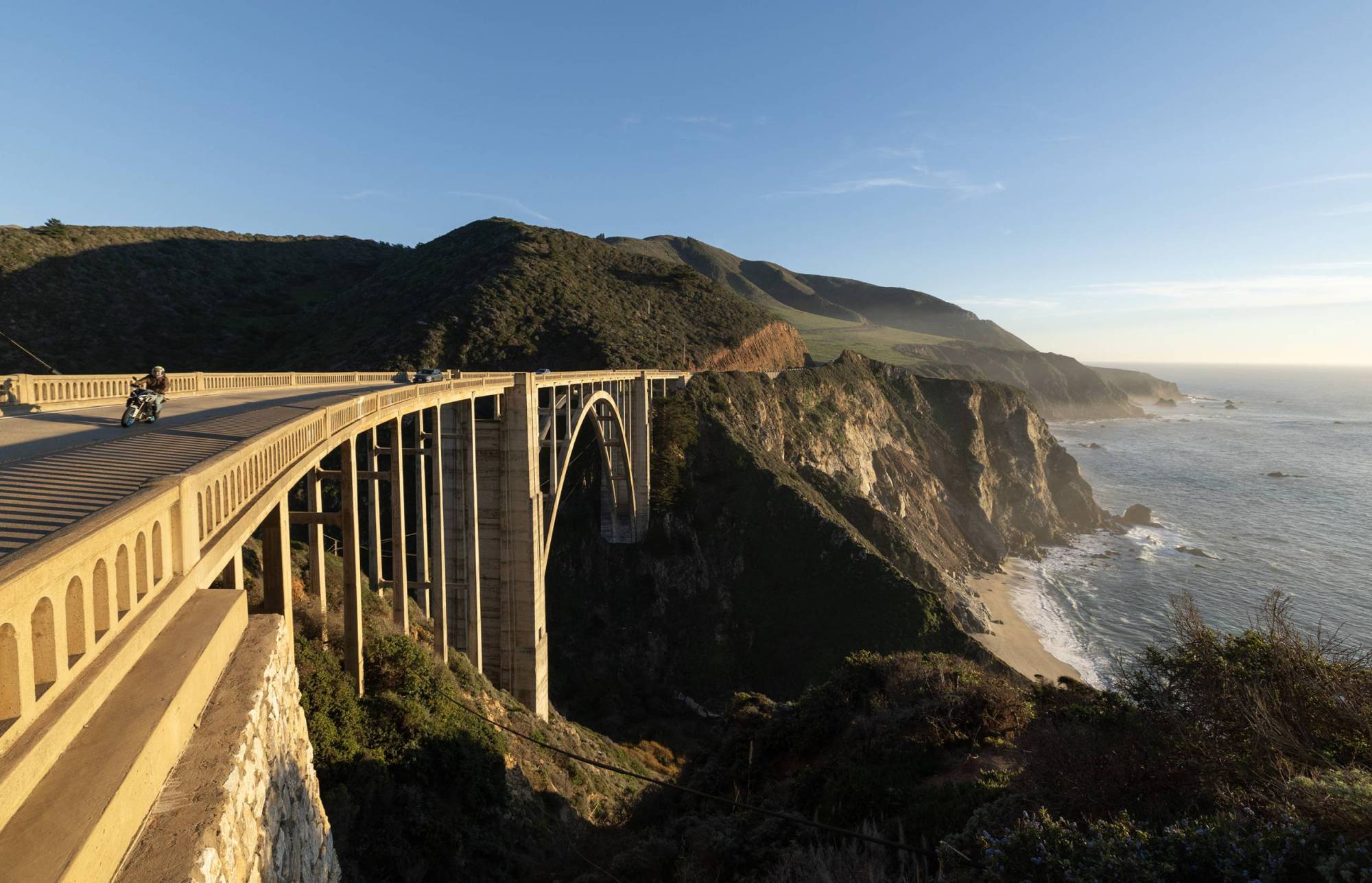
Photogenic Bixby Bridge is now accessible from the south after Highway 1 re-opened in both directions on Wednesday, Jan. 14, 2026. (Myung J. Chun / Los Angeles Times via Getty Images)
Three years ago, a landslide closed part of Highway 1 through Big Sur close to the town of Lucia — making it impossible to drive all the way from Southern California to San Francisco on this world-famous coastal road overlooking the Pacific Ocean.
And while folks driving up U.S. Highway 1 from places like Los Angeles and San Diego have still had destinations including Hearst Castle, Cambria and the San Simeon Elephant Seal Vista Point open to them, a huge amount of Big Sur’s most iconic landmarks north of the landslide have remained inaccessible from the south since 2023.
Now, with the Jan. 14 reopening of Highway 1, that’s all changed. So, if you’re a Southern California resident who’s now itching to visit Big Sur in its entirety, allow us at KQED — as the Bay Area’s public media station — to give you the run-down of the stunning sights you can once more see on your road trip up here.
(And if you’re a Bay Area local with SoCal friends and family reading this, why not send this guide to them, too?)
Where to stay in Big Sur now Highway 1 has reopened
North of where Highway 1 has now reopened, the most popular place to camp is in the Big Sur Valley: either at Pfeiffer Big Sur State Park, which tends to get booked out well in advance, or at one of the around a dozen other private campgrounds and cabin stays in the area.
Even if you don’t score a campsite within the state park itself, you can still always enter the state park with a day-use pass if you’re staying nearby. Looking for a reservationless dispersed camping spot or alternatives outside of the valley? Read more about where to camp in Big Sur, from Andrew Molera and Julie Pfeiffer Burns state parks to dispersed camping options.
Big Sur Valley “can get very crowded with lots of people, but it’s absolutely beautiful out there,” said State Parks Monterey District Chief Ranger Mike Dippel — noting that the weather is typically much sunnier in the valley than directly on the coast. “You can almost guarantee that it’s going to be sunny when you get into Big Sur.”
The Big Sur River runs through the valley and offers lots of opportunities for floating, tubing and swimming, particularly at the Big Sur River Gorge.
And don’t worry about finding something to eat, since most lodges have their own dining options — plus iconic waterfront restaurants like Nepenthe are open all year round. Just watch for kitchen closing times on the earlier side than you might be used to.
The Big Sur viewpoints, hiking trails and state parks to see
With the highway reopening, a massive amount of hiking trails, vista points and iconic landmarks just became accessible from the south again. That includes:
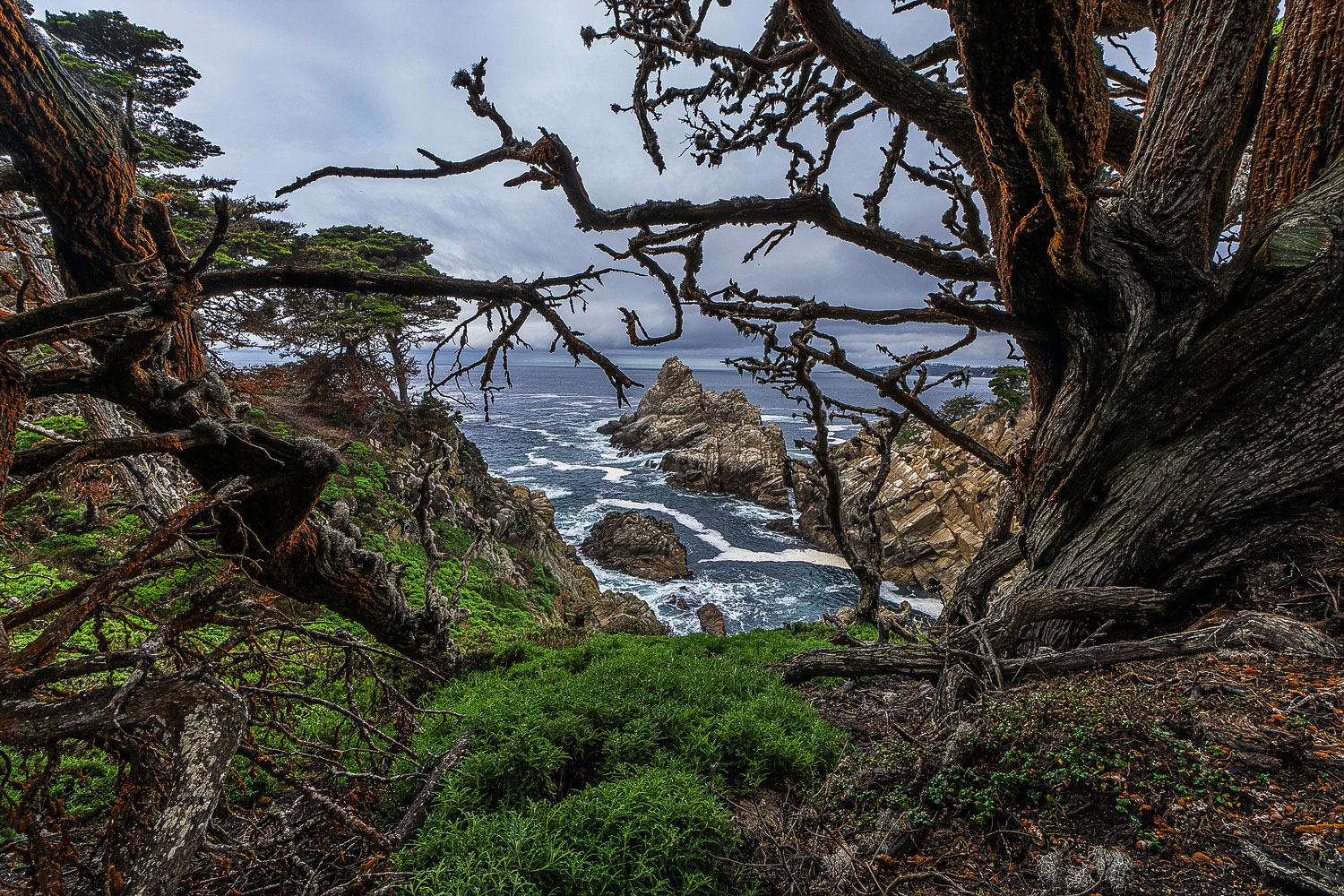
Point Lobos
Garrapata State Park
Bixby Bridge
Point Sur Lightstation
Andrew Moelera State Park
Pfeiffer Big Sur State Park
Pfeiffer Beach
Hawthorne Gallery
Henry Miller Library
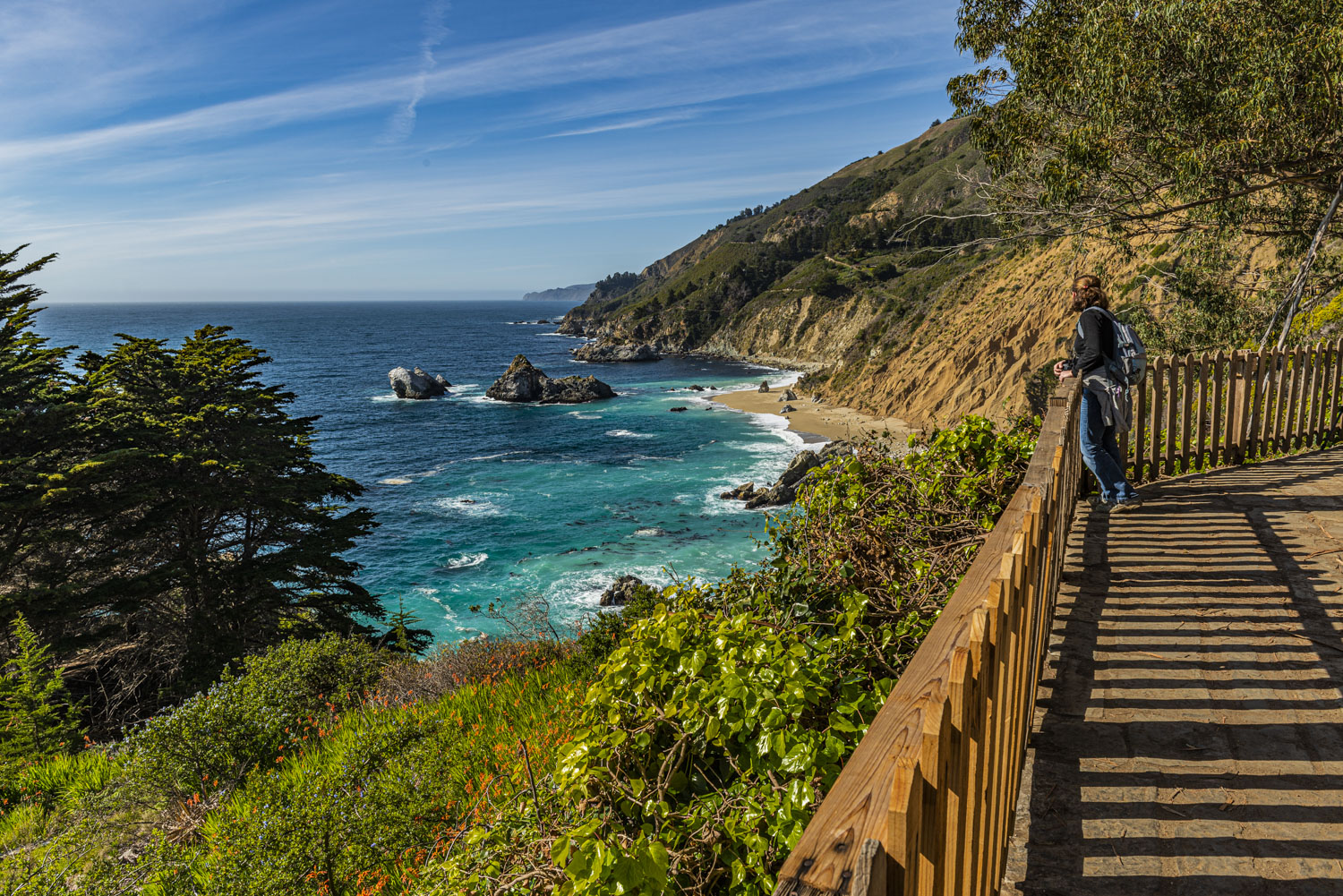
Julia Pfeiffer Burns State Park
McWay Falls.
Point Lobos State Reserve contains headlands, coves and rolling meadows. (Courtesy of Brian Baer via California State Parks 2025 )
With so many iconic spots to stop along Highway 1’s steep, winding two-lane roads, Dippel warned visitors to stay aware at the most popular spots like Bixby Bridge and Point Lobos, where traffic and parking can get congested. For a more serene trip, you can consider coming during off times like weekdays or less busy seasons, he advised.
“When you do come, just make sure you have awareness and are looking out for pedestrian traffic and vehicles suddenly stopping and trying to pull over,” Dippel said.
Farther down the coast is Pfeiffer Beach with its famous rocky archway, which gets packed on popular weekend days, especially at sunset. The overlook of McWay Falls in Julia Pfeiffer Burns State Park is also a particularly crowded spot, although be warned that the trail down to the falls is currently closed. Dippel also recommended checking out Partington Cove, a short hike from the highway into a redwood valley, through a tunnel and to an overlook of the cove.
Where to (potentially) avoid the Big Sur crowds after the highway reopening
While nowhere on the coast is truly immune to peak season weekend crowds, Dippel suggested checking out Garrapata State Park and Andrew Molera State Park for some more space to spread out.
“Andrew Molera is just the iconic coastal California state park that encompasses everything: from the beach to the redwoods, to beautiful trails for beginners to advanced trails that want to go up a really big vertical incline or travel distance,” Dippel said.
He recommends doing part or all of the 8-mile bluff loop trail or for a more relaxed hike, check out Molera Beach at the mouth of the Big Sur River.
The other things to do in Big Sur that aren’t sightseeing or hiking
In addition to the vistas, camping and hiking, there are also a few stops along the way to give you more insight into the area’s culture and history.
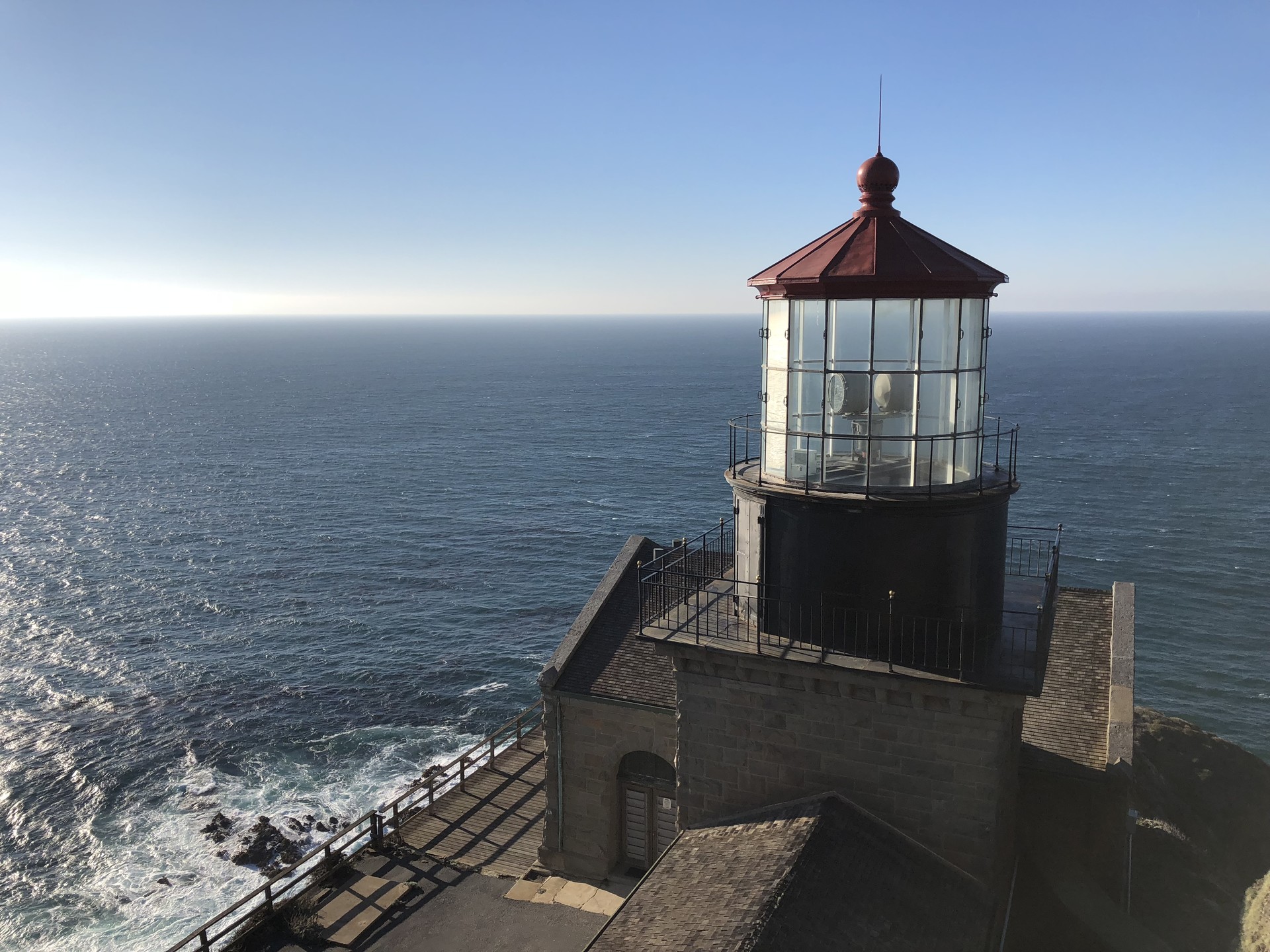
Tours of the historic Point Sur State Historic Park lighthouse, run by volunteer docents, take you from Highway 1 over private ranch land to the iconic light station out on a rock formation overlooking the ocean.
This lighthouse, built in 1889, “was a pretty remote station back before Highway 1 was put in,” said Carol O’Neil, volunteer historian at Point Sur, and it’s easy to imagine this isolation when you visit.
Lightkeepers operated the lighthouse at Point Sur until the 1970s. (Sasha Khokha/KQED)
In three hours, you’ll learn about the history of the light station, plus tour the barn, blacksmith shop, keepers’ quarters and the lighthouse itself.
Volunteer docents also lead another tour of the adjacent “top secret” Cold War-era naval facility on Saturdays at 10:30 a.m. There are no reservations; all tours are first-come, first-served, so come around 30 minutes early to secure a spot, O’Neil said. They also offer moonlight tours of the light station during full moons in the summer.
Another can’t-miss spot along the coast is the Henry Miller Library, “where nothing happens,” joked Magnus Toren, the library’s director since 1993. Honoring the American writer, who lived in Big Sur from 1944 to 1963, the library houses works by Miller and his contemporaries.
In the spirit of Miller, the collection of books is curated to highlight local cultural and natural history and to maximize expression — without shying away from controversy, Toren said.
“We bring in books that irritate people all across the board,” Toren said. “Books and words can cause a lot of emotion, which I think is an important thing to maybe put into people’s faces sometimes.”
And while the library is a place to relax and enjoy sitting in the grass, on the deck or browsing books, it’s also an unassuming venue where many iconic musical artists have performed, including Patti Smith, Fleet Foxes, Arcade Fire, Red Hot Chili Peppers and The Shins. But Toren said their real priority is to be a space for local performers up and down the coast.
“It’s still a very unassuming, in some ways, place that welcomes people of all stripes,” Toren said.
Pro tips from the experts for a great Big Sur visit
Most of all, when visiting Big Sur, always have a backup plan in case of crowded parking lots or unexpected traffic, Dippel said. To avoid the worst of the crowds, he advised that you consider spacing out your key stops across your arrival and return journeys.
The majority of the drive will not have good cell service, so make sure you have a way to navigate in a signal-dead zone, for example, by downloading Offline Maps from Google Maps. If you’re visiting the region with friends in multiple cars, make sure you know where you’ll meet up without being able to call or text.
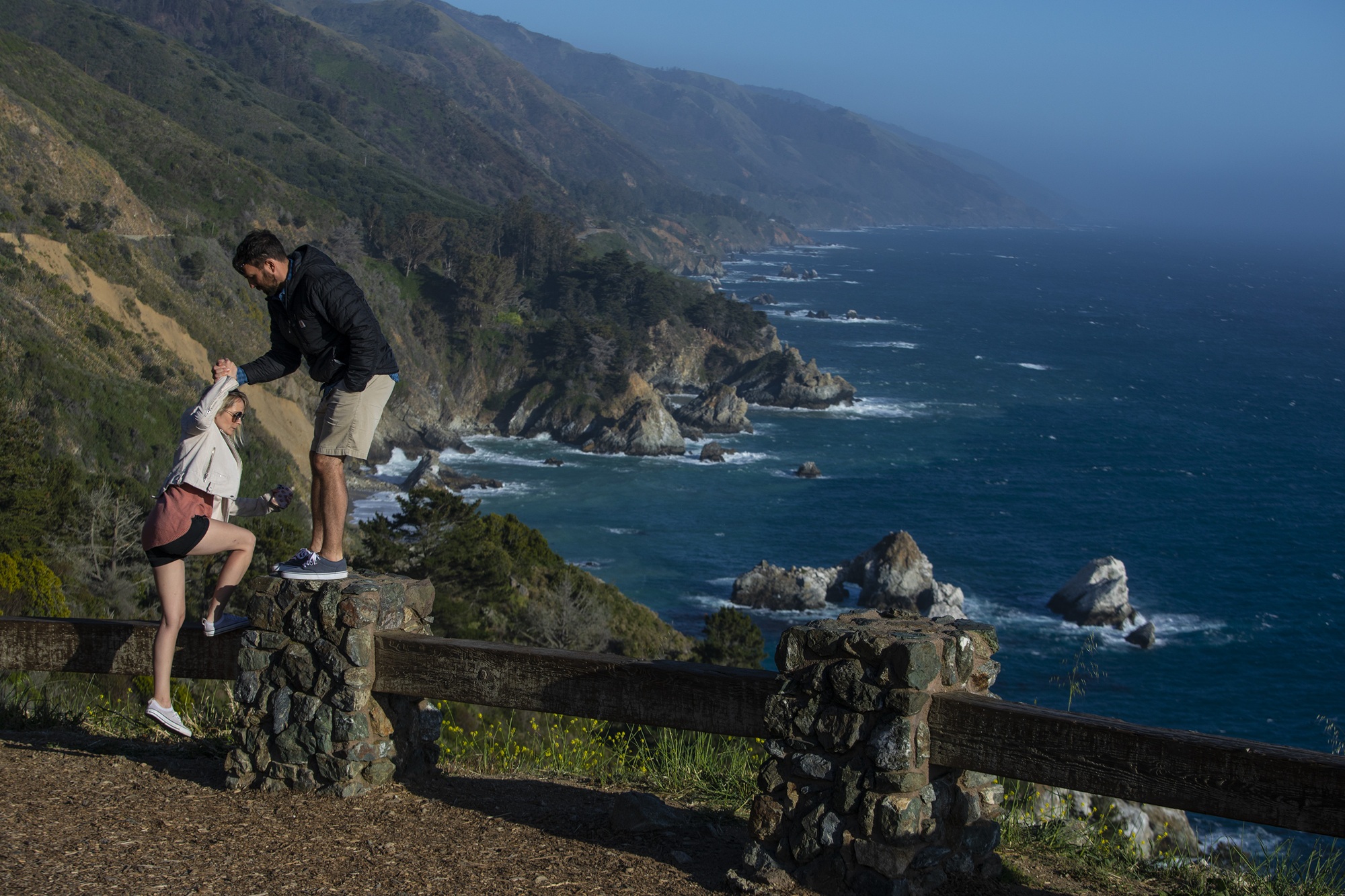
A couple climbs a pilaster to get a view south to the coastline of Julia Pfeiffer Burns State Park along California Highway 1 on May 2, 2021, in Big Sur, California. (Brian van der Brug/Los Angeles Times via Getty Images)
There are few gas stations in the Big Sur area, so make sure you fuel up before entering the winding clifftop roads.
Dippel also advises that visitors bring and drink more water than they think they might need. There is also an abundance of poison oak and ticks in the area, in addition to some larger wildlife like mountain lions and rattlesnakes.
“We end up on a lot of rescues with folks that haven’t been drinking water, haven’t taken electrolytes or didn’t have enough food,” he said. “They thought it was going to be foggy or cold … and they’re just not prepared for the heat.”
This story includes reporting by KQED’s Carly Severn and Kelly O’Mara. An earlier version of this story was published on July 23, 2025.