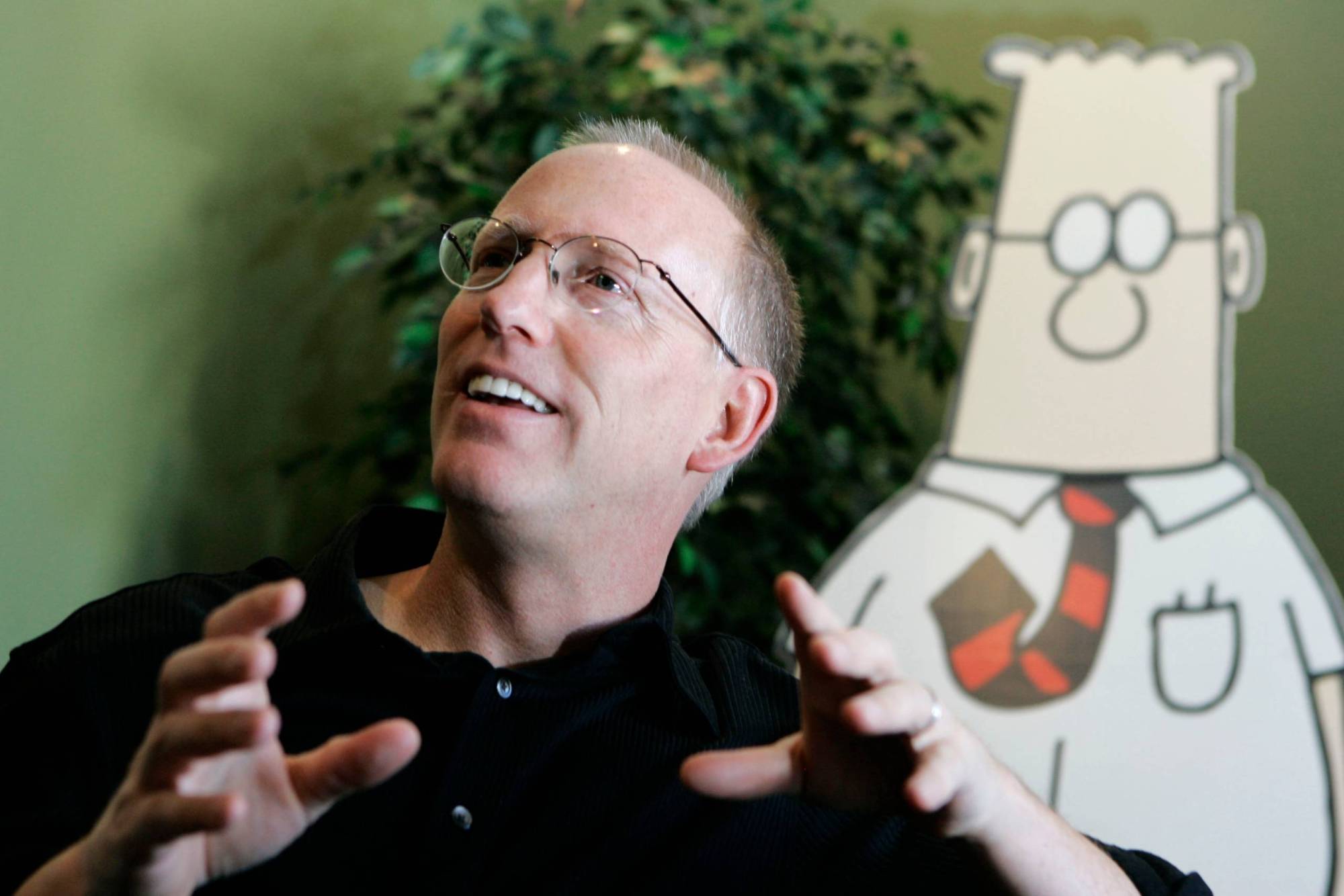
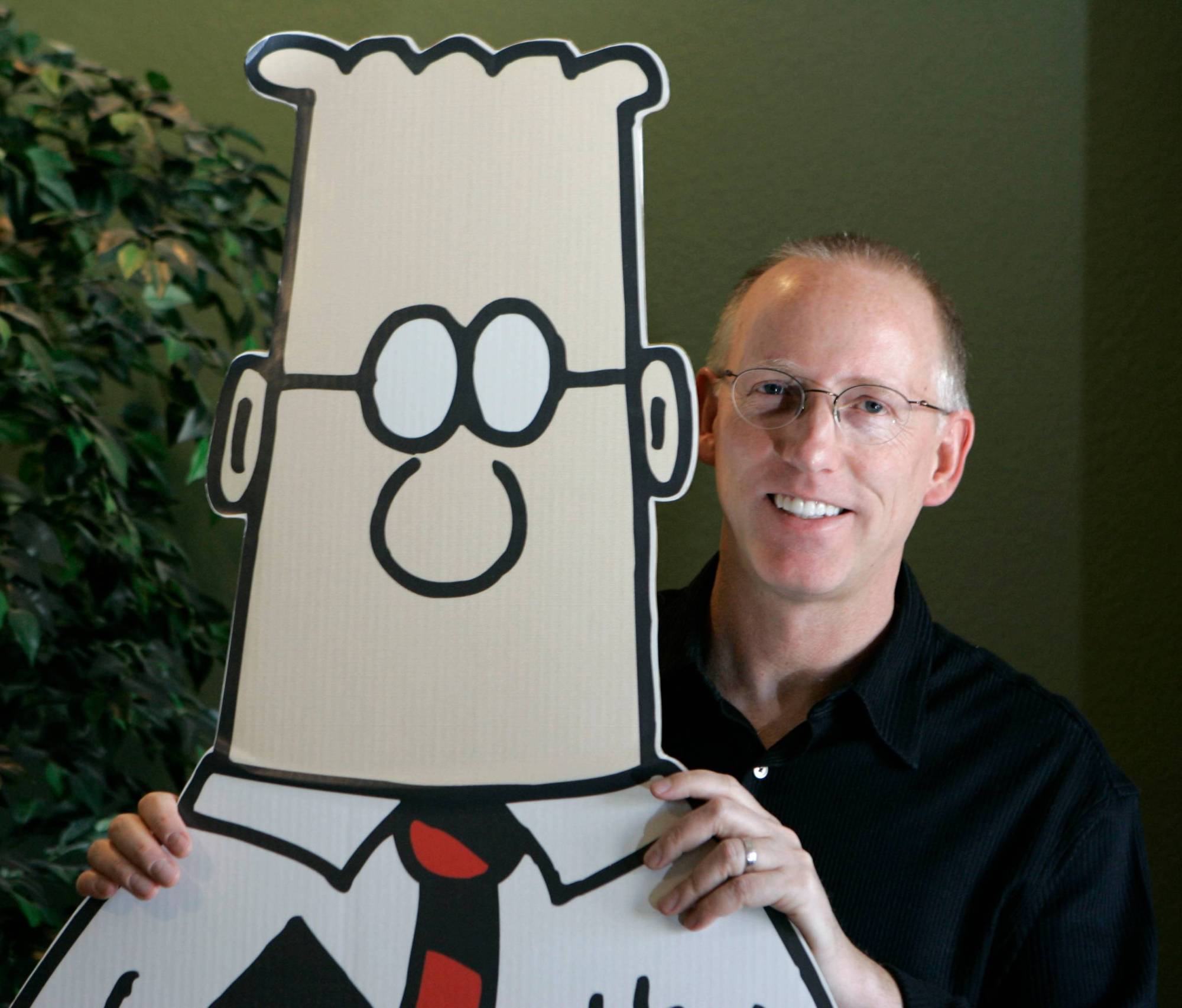
The first “Dilbert” comic strip officially appeared April 16, 1989, long before such workplace comedies as “Office Space” and “The Office.” It portrayed corporate culture as a “Severance”-like, Kafkaesque world of heavy bureaucracy and pointless benchmarks, where employee effort and skill were underappreciated.
The strip would introduce the “Dilbert Principle”: The most ineffective workers will be systematically moved to the place where they can do the least damage — management.
“Throughout history, there have always been times when it’s very clear that the managers have all the power and the workers have none,” Adams told Time. “Through ‘Dilbert,’ I would think the balance of power has slightly changed.”
Other strip characters included Dilbert’s pointy-haired boss; Asok, a young, naive intern; Wally, a middle-aged slacker; and Alice, a worker so frustrated that she was prone to frequent outbursts of rage. Then there was Dilbert’s pet, Dogbert, a megalomaniac.
“There’s a certain amount of anger you need to draw ‘Dilbert’ comics,” Adams told the Contra Costa Times in 2009.
In 1993, Adams became the first syndicated cartoonist to include his email address in his strip. That triggered a dialogue between the artist and his fans, giving Adams a fountain of ideas for the strip.
“Dilbert” was also known for generating aphorisms, like “All rumors are true — especially if your boss denies them” and “OK, let’s get this preliminary pre-meeting going.”
“If you can come to peace with the fact that you’re surrounded by idiots, you’ll realize that resistance is futile, your tension will dissipate, and you can sit back and have a good laugh at the expense of others,” Adams wrote in his 1996 book “The Dilbert Principle.”
In one real-life case, an Iowa worker was fired from the Catfish Bend Casino in 2007 for posting a “Dilbert” comic strip on the office bulletin board. In the strip, Adams wrote: “Why does it seem as if most of the decisions in my workplace are made by drunken lemurs?” A judge later sided with the worker; Adams helped find him a new job.
A gradual darkening
While Adams’ career fall seemed swift, careful readers of “Dilbert” saw a gradual darkening of the strip’s tone and its creator’s descent into misogyny, anti-immigration and racism.
He attracted attention for controversial comments, including saying in 2011 that women are treated differently by society for the same reason as children and the mentally disabled — “it’s just easier this way for everyone.” In a blog post from 2006, he questioned the death toll of the Holocaust.
In June 2020, Adams tweeted that when the “Dilbert” TV show ended in 2000 after just two seasons, it was “the third job I lost for being white.” But, at the time, he blamed it on lower viewership and time slot changes.
Adams’ beliefs began bleeding into his strips. In one in 2022, a boss says that traditional performance reviews would be replaced by a “wokeness” score. When an employee complains that could be subjective, the boss said, “That’ll cost you two points off your wokeness score, bigot.”
Adams put a brave face on his fall from grace, tweeting in 2023: “Only the dying leftist Fake News industry canceled me (for out-of-context news of course). Social media and banking unaffected. Personal life improved. Never been more popular in my life. Zero pushback in person. Black and White conservatives solidly supporting me.”
On Tuesday, President Donald Trump remembered Adams as a “Great Influencer.”
“He was a fantastic guy, who liked and respected me when it wasn’t fashionable to do so. He bravely fought a long battle against a terrible disease,” the president posted on his social media platform Truth Social.