San Francisco’s court, which had 21 judges earlier this year, will now have four. It is one of the nation’s busiest, with a backlog of more than 120,000 cases. Along with the historically smaller courts in Concord and Sacramento, it handles all the asylum and other deportation cases from Bakersfield to the Oregon border.
The Sacramento bench, which has been reduced to three judges from six, is responsible for 30,000 cases. The Concord court, which opened last year with a promise to hire 21 judges, currently has seven judges and 60,000 cases on its docket.
Attorneys and former judges say the hollowing out of the court is wreaking havoc on the ability of asylum seekers and other immigrants to receive a fair hearing.
“It’s devastating,” said Elizabeth Young, who served as deputy chief immigration judge for the Western United States before she was forced out earlier this year. “It undermines the credibility of the entire system.”
The whittling down of the bench means hearings are frequently canceled and rescheduled, often years into the future. It also comes as the Trump administration is employing other measures that advocates say are intended to pressure people into giving up their cases and leaving the country, even if they came to the United States fleeing persecution.
In recent months, federal officers have been arresting people in the halls of immigration courthouses. For the past month, immigration prosecutors have also moved to close asylum cases and send immigrants to “third countries” that have agreed to accept some deportees, including Guatemala, Honduras, Ecuador and Uganda.
Santa Rosa immigration attorney Nicole Gorney says all of that is affecting her clients, leaving them in a state of constant anxiety.
“We’re talking about people who’ve been here for years, waiting for their hearing. And the goalpost is literally moved as they’re playing the game,” she said. “But these are people’s lives. It’s not a game. It should be a lawful process.”
Gorney was one of several attorneys who said that retiring San Francisco judges had told them their departures were not voluntary.
“I was in front of Judge O’Brien last week, and I mentioned to him that I heard he was retiring,” Gorney said. “He told me that it wasn’t his choice.”
In a statement, the Executive Office of Immigration Review, the formal name of the immigration court system, said it declines to comment on personnel matters.
The statement said the agency is “restoring integrity” after what it described as the Biden administration’s “de facto amnesty for hundreds of thousands of aliens.”
“All judges have a legal, ethical, and professional obligation to be impartial and neutral in adjudicating cases,” the statement said. “If a judge violates that obligation by demonstrating a systematic bias in favor of or against either party, EOIR is obligated to take action to preserve the integrity of its system.”
EOIR is a quasi-judicial entity within the Department of Justice, not an independent court in the judicial branch. Immigration judges serve at the pleasure of the U.S. Attorney General, who is appointed by the president.
The agency has been recruiting new judges, including a posting advertising for “deportation judges,” a term Homeland Security Secretary Kristi Noem also used in a post on the social media platform X last month.
The Trump administration has also sought to assign military lawyers, known as judge advocates general, to the immigration bench on a temporary basis, though they are unlikely to have specialized knowledge of immigration law.
The hollowing out of the San Francisco bench has led some court watchers to speculate that EOIR may be planning to close one of the city’s two immigration court locations.
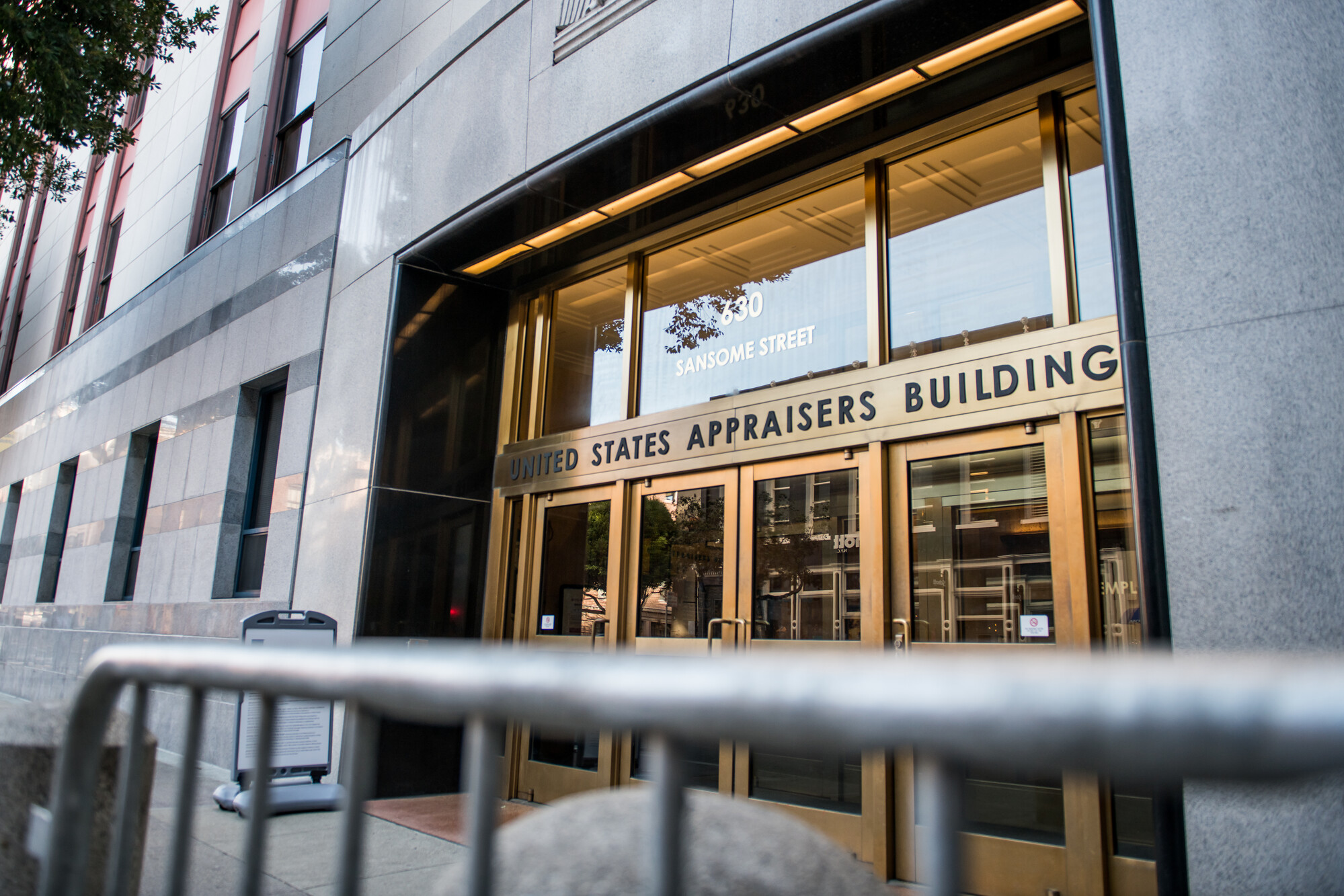
The federal government owns a building at 630 Sansome St. that houses several courtrooms, along with Homeland Security offices and short-term immigration detention cells. But rented space in a downtown office building at 100 Montgomery St. carries a $6.7 million annual price tag, and EOIR has historically been on the lookout for lower-cost alternatives.
Young, the former court administrator, said it wouldn’t surprise her if, with only a skeleton crew of judges remaining, the agency vacates the Montgomery Street building when the lease expires in early 2027, or sooner, to save costs.
“If the administration decides to downsize and go to Sansome or move everybody to Concord, then it would signal that potentially they’re not looking for long-term judges in San Francisco,” she said.
Young said that could mean either “they intend on allowing this huge backlog to continue on the shoulders of very few judges,” or EOIR might supplement the bench with temporary military judges and immigration judges in other jurisdictions who hear cases remotely by video.
“It’s ridiculous to think that that would give a fair hearing,” she said.
The forced departure of so many immigration judges, combined with the uncertainty about the court’s future, is having “a chilling effect” on the fair adjudication of cases, said Atkinson, who runs the San Francisco Bar Association’s Attorney of the Day program, which offers free legal help to unrepresented immigrants when they appear in court.
“It would be very difficult for a lot of people to have to travel farther for court or not to be able to have hearings in person if there was no court in San Francisco,” she said. “But as long as our clients here in San Francisco need representation, we will represent them regardless of where their hearings are held.”