Episode Transcript
This is a computer-generated transcript. While our team has reviewed it, there may be errors.
[Crowd Chanting “KitKat! KitKat!” ]
Morgan Sung, Host: Last month, KQED reporter Sydney Johnson covered an event in her neighborhood, that was part memorial service, part rally, in San Francisco’s Mission District.
Dozens of residents gathered in front of Randa’s Market to remember KitKat, the store’s beloved 9-year-old tabby cat. KitKat was more than a bodega cat — he was known as the Mayor of 16th street.
Sydney Johnson, Guest: There were dozens of people there, you know, chitchatting. uh, many of them lived in the neighborhood and were giving each other hugs and, you know, talking about memories that they had of walking by the market after a late night and petting KitKat or, you know, maybe on their way to work and, and giving him a little scratch, uh, when they popped in for a drink in the morning.
Morgan Sung: KitKat’s death was particularly devastating for the neighborhood, because it wasn’t old age, or sickness, or even human cruelty that killed him. It was a Waymo. That’s the autonomous rideshare service, also known as a robotaxi.
Sydney Johnson: I’d say the vibe of this event was, you know, both. Mournful and, and somber. but also really angry and, and focused.
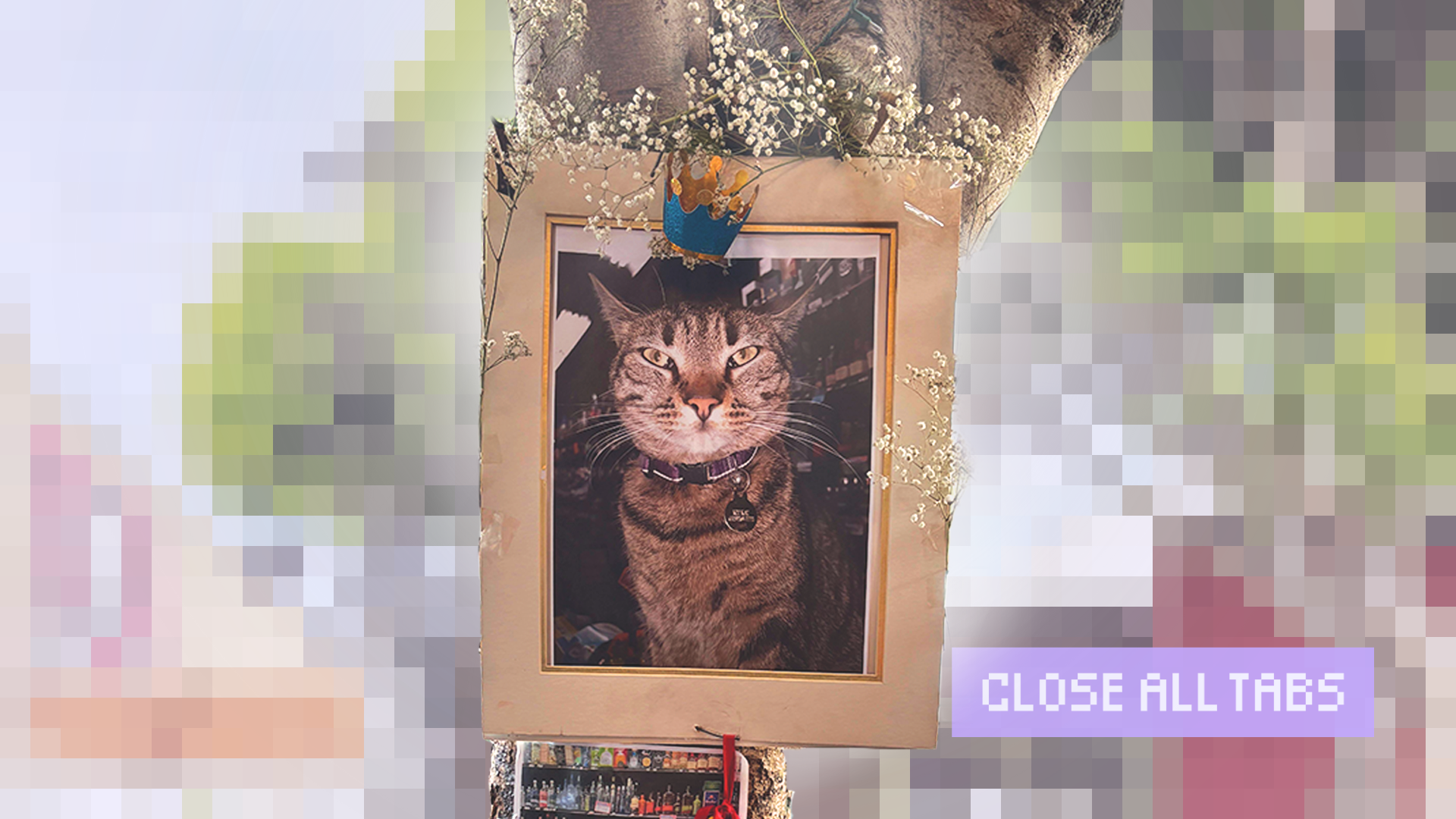
Morgan Sung: KitKat was struck and killed in late October, and in the days after, locals mourned him by turning the tree in front of Randa’s Market into a makeshift shrine. Someone had attached a framed photo of KitKat to the tree, and others adorned the frame with flowers and a cat-sized crown. The base of the tree was overflowing with candles, bouquets, handwritten messages, and of course, cat treats. People even scattered KitKat’s namesake candy around the shrine.
By the time the rally happened a week later, grief had become anger.
Sydney Johnson: But our local supervisor, you know, took some of that anger and outrage and. Really just said, this is a moment where we have to think about these technologies that are being deployed all around us
Morgan Sung: Here’s San Francisco Supervisor Jackie Fielder at the rally.
[Jackie Fielder at Rally]
The future of autonomous vehicles should be decided by people, not tech, oligarchs and their politicians.
Audience Member: Yes!
Jackie Fielder: Thank you all so much and rest in peace, KitKat.
Morgan Sung: KitKat’s death sparked nationwide outrage. He’s become the face of resistance to robotaxis, AI, and the tech industry as a whole. In death, he’s become a viral sensation.
[Clip from Australia News]
There’s a new social justice movement in San Francisco, sparked by the death of a beloved neighborhood cat that was killed by a driverless car.
[Clip from Inside Edition]
Now fans of the adored feline are taking to social media demanding hashtag justice for Kit Kat.
[Clip from Tiktok]
People are mourning a true pillar of the community and who they call the mayor of 16th Street,
Morgan Sung: Waymo, meanwhile, recently announced its expansion across California. The company has plans to deploy its robotaxis in San Diego, Sacramento, and lots in between.
Sydney Johnson: And so it kind of became, you know, more than just this cat who died. This is actually now something where people who have been, you know, nervous or uneasy about autonomous vehicles, uh, really had a moment where they were saying, Hey, let’s actually think about how we can avoid this kind of tragedy, uh, especially if it could get even worse in the future.
Morgan Sung: Waymo says its autonomous vehicles are safer than human drivers — at least, they have a lower crash rate. But these cars aren’t infallible. KitKat may be the most viral victim of a robotaxi crash, but he’s not the only one. His death has raised some major concerns about safety, especially as Waymo and other robotaxi companies vie to compete with human-driven rideshares. The loss of this little bodega cat might have sparked a movement … but can these giant tech companies really be reined in?
This is Close All Tabs. I’m Morgan Sung, tech journalist, and your chronically online friend, here to open as many browser tabs as it takes to help you understand how the digital world affects our real lives. Let’s get into it.
Waymos, and robotaxis as a whole, have been pretty controversial since they started hitting streets in 2020. While robotaxi supporters praise the convenience and supposed safety of self-driving cars, detractors have real concerns. They threaten jobs, they disrupt traffic, they can’t make the same decisions that a human driver can, which makes them a nuisance at best and at worst, a public safety hazard. Plus, they represent the tech industry’s rapid encroachment on local communities. Like we covered in one of our very first episodes of this show, it’s what makes Waymos so easy to vandalize: they’re a physical, tangible outlet for this collective anxiety and rage against Silicon Valley.
In Los Angeles, Dodgers fans celebrated their team’s World Series win by spray painting and smashing Waymos.
Videos of the vandalized cars went viral, with captions like “Justice for KitKat” and “Revenge for the bodega cat.”
So why did this particular incident kick off such a firestorm? To unpack that, we need to return to the night KitKat was killed. What do we know, and what don’t we know, about what happened? Time to open a new tab.
[SFX typing]
Morgan Sung: What happened to KitKat?
[SFX tab sequence]
Oscar Palma, Guest: Every time I go to the Roxy, I would always make a point to stop by and then say hi to Kit Kat.
Morgan Sung: This is Oscar Palma, a reporter at Mission Local, a news site that covers San Francisco. He was one of the first journalists to break the news of KitKat’s death. The Roxie is a local theater that shows indie and arthouse films. This area is a bustling social hub — there are bars, restaurants, comedy clubs and KitKat lived in the heart of it, in the corner store right next to the Roxie.
Oscar Palma: People were laughing and saying we call him the boss because he was checking on everyone, making sure that everything was working.
Morgan Sung: So the night of the incident, KitKat was doing what he did best: sauntering up and down the street, greeting bar patrons.
Oscar Palma: It was Monday night. I believe it was 11:40 pm and two witnesses who came up to me and they say, “Hey, we saw everything that happened.”
They came out of the bar, and so they saw the Waymo was picking up some passengers.
Morgan Sung: While the Waymo idled at the curb, KitKat darted under the hood, settling in front of the car’s front tire. A bystander noticed the cat, and rushed over to lure him out. She recounted the night in an interview with the New York Times.
[Meg Brigman in TikTok Clip]
I bent down, his ears were back. He looked very stressed. I said, “KitKat, come here, come here.” Being so close to the car, I didn’t expect it to drive away.
Morgan Sung: Oscar said that KitKat stood in front of the tire for about seven seconds, before he got spooked and retreated further under the car. The Waymo didn’t appear to sense KitKat, or the person crouched in front of the car. Instead, as surveillance footage obtained by the New York Times shows, the Waymo pulled forward. Here’s Oscar again.
Oscar Palma: And so he ran over, um, half of his body. And so Kit Kat, um, made it on its own back to the sidewalk. But, um, our witnesses saw everything and they describe a very awful sight to see. Uh, pretty much seeing the last moment of KitKat being alive, and they say that the Waymo never really stopped.
Morgan Sung: KitKat dragged himself to the sidewalk, but was gravely injured and spitting blood. A bartender called KitKat’s owner and rushed the cat to a nearby animal hospital, where he died.
Oscar said that Mission Local requested a copy of Waymo’s footage from the accident, but the company didn’t respond. Here’s Joe Eskenazi, managing editor at Mission Local. He joined us for the conversation with Oscar.
Joe Eskenazi, Guest: So clearly, you know, the witnesses told Oscar that the cat had been idling in front of the car for seven seconds. Waymo simply said, the cat darted underneath the car. Both of those things can be true, but by omitting the first part, you’re not telling the full story. So, you know, presumably it’s all on film.
Morgan Sung: Waymo touts its safety record as significantly better than human drivers. The company reported that throughout June 2025, Waymos had 80% fewer injury-causing crashes. But autonomous vehicles aren’t able to replicate human thinking and reasoning.
For their story, Mission Local spoke with several experts on autonomous vehicles.
Joe Eskenazi:Here’s the problem, is that human beings have what’s known as object permanence. When you hide your face from a baby, you know the baby is surprised to see that you can take your fa hand away and, and your face is still there. But you know, children who are even very young understand that your face doesn’t disappear.
Waymo cars don’t know that. Waymo cars don’t have the computational power, as amazing as they are, to know that the cat that, uh, was in front of the car for seven seconds and then walked under the car where there are not sensors is still a factor. You can’t really have the sensors on the bottom of the car because they get dirtied up so quickly. If you’ve ever touched the tires on your car, they’re really dirty, so they get dirtied up so quickly that you can’t really have sensors there. So, you know, these cars are susceptible to small objects like this being underneath the car.
Morgan Sung: What happened to KitKat is not a one-off incident. Earlier this month, just weeks after a Waymo killed KitKat, another Waymo ran over an unleashed dog in San Francisco, about ten minutes from where KitKat was struck and killed. The dog’s owners decided to put him down due to severe pelvic injuries. Waymo reportedly offered to assist with the dog’s medical expenses, and offered to cover the cost of adopting a new pet.
Joe Eskenazi: People can say that human beings don’t drive as well as these vehicles. But we can also say that we’re seeing a pattern here of the autonomous vehicles being susceptible to small objects underneath them or even large objects underneath them.
Morgan Sung: A similar incident happened with Cruise just a few years ago. If this is your first time hearing about Cruise, it’s probably because the company shut down last year.
Cruise was the robotaxi service owned by General Motors. They were actually the first company to receive California’s Driverless Deployment Permit, in 2022. They had a modest fleet, a couple hundred cars in San Francisco, and planned to expand to other cities. They were actually bigger than Waymo back then.
Until, in 2023, when one of Cruise’s driverless cars hit a pedestrian. Instead of stopping, the car ran her over and continued driving, dragging her for about 20 feet until it finally stopped at a curb , still on top of the pedestrian. She was critically injured in the crash. The California DMV revoked Cruise’s license and ordered the company to suspend operations in the state. That was in late 2023 and Waymo opened to the public in California in 2024. But KitKat’s death rehashes the same concerns that people had over Cruise.
Joe Eskenazi: These incidents are, you know, kind of like, uh, a broad daylight shooting in a suburban neighborhood. It’s something that is unusual. We have seen that the cars are not infallible and what’s worse there, there are holes in the technology. Not knowing there’s a person, or in this case, a small animal under your car, strikes me as something that you could improve on. It strikes me as a safety hazard.
Morgan Sung: Waymo’s been facing a bit of a PR crisis over KitKat’s death. It doesn’t help that on the same day of the accident, just hours before KitKat was fatally struck by a Waymo, the company’s co-CEO Tekedra Mawakana appeared on TechCrunch’s Disrupt stage. This exchange went viral:
[Clip from TechCrunch’s Disrupt stage]
Kirsten Korosec: Will society accept a death potentially caused by a robot?
Takedra Mawakana: I think that society will, I think the challenge for us is making sure that society has a high enough bar on safety that companies are held to.
Morgan Sung: So, after those comments, the company faced immense backlash when news of KitKat’s death broke. Waymo made a statement four days after KitKat died. They apologized and said they’d make a donation to a local animal rights organization in KitKat’s honor. But skepticism about the safety risks of autonomous technology has only continued to build.
Joe Eskenazi: So those are all things to be concerned about, regardless of how many cats are struck by human drivers every day. And regardless of how safe Waymo is, by and large. Uh, frankly, I have to tell you, I’ve been more than a little disappointed by the simplistic whataboutism of people who simply wanna shrug their shoulders and say ‘They’re safer than humans. What do you want?’ I think that it could do better. I think that both the corporation and the vehicles could do better.
Morgan Sung: And it turns out a lot of other people feel the same way.
Joe Eskenazi: What sparks anger and movements is not always what you think it is. In this case, yes, a cat was run over, which happens all the time, every day. But you know, this strikes me as being, uh, a tipping point type situation.
Morgan Sung: This backlash is coming at a time when Waymo is really expanding. In parts of the Bay Area and Southern California, they’re even allowed on freeways. Last month, amid the KitKat backlash, Waymo launched in Miami, with plans to roll out its cars in ten more cities over the next year.
It’s clear there’s a lot of buzz around Waymos. But the critics are gaining some steam, thanks to the tragedy that befell KitKat. And that brings us back to the rally, in front of Randa’s Market, a week after KitKat was killed.
[Crowd Chanting “KitKat, KitKat, KitKat”]
Morgan Sung: So how are organizers, advocates, and politicians using the momentum from this incident to push back against the ever-expanding reach of self-driving car companies? That’s a new tab … but first, a quick break.
Ok we’re back. Let’s open a new tab.
[SFX keyboard sounds]
Morgan Sung: KitKat the tech martyr
[SFX tab sequence]
Morgan Sung: About a week after KitKat’s death, San Francisco Supervisor Jackie Fielder hosted the memorial rally for KitKat, in front of the corner store he’d called home for years.
[Memorial Rally for KitKat]
Supervisor Jackie Fielder: Local communities deserve a say over our streets and over the technologies that affect us.
Morgan Sung: Supervisor Fielder was one of several speakers at the makeshift podium. An officer from the local Teamsters chapter raised concerns about autonomous vehicles taking human jobs. A public transit advocate questioned why the city was investing so heavily in robotaxis, while San Francisco’s trains and buses face a huge funding deficit. And a few spoke out about the safety issues. They came from different backgrounds, but shared the same point: why didn’t their community get a say in allowing Waymos?
Here’s how Justin Dole, a bar owner and president of the organization Small Business Forward, put it when it was his turn to speak at the rally:
[Memorial Rally for KitKat]
Justin Dole: I think that’s why people have been so profoundly disturbed by KitKat’s death. The mayor of this space, as he was known, was taken from us by a technology that none of us asked for and crucially, to the point of this resolution, none of us consented to.
Morgan Sung: And that’s at the heart of a new legislative push from Supervisor Fielder. KQED reporter Sydney Johnson, who we heard from at the top of the episode, has been reporting on the rideshare industry here in California. She actually lives in the Mission — KitKat’s home turf. Sydney’s going to walk us through this legislative battle.
Sydney Johnson: There have been no shortage of, you know, efforts in Sacramento to try and carve out laws around robotaxis, which is this really relatively new technology and, and area of law also. And a lot of those have faced, you know, lobbying and have just had a pretty difficult time getting through the legislature.
At the rally, our local supervisor, Jackie Fielder, along with other community and labor leaders were calling on state lawmakers to revisit legislation that was actually proposed last year, but failed.
Morgan Sung: Sydney’s talking about SB-915, a California senate bill that would have allowed local cities to vote on whether to allow robotaxis on their streets. Supporters said that it gives residents more agency. Critics of the bill said that it would make rides between different towns or municipalities an absolute nightmare.
Sydney Johnson: One of the biggest, uh, points of opposition to that piece of legislation was that it would create this, you know, really messy patchwork of different policies where maybe you have a robo taxi that can get you around one tiny city, but you can’t actually get to your destination, which is two towns over because this city in the middle voted against it.
Sydney Johnson: So that ultimately failed. It did not get the support it needed to pass. However, there was still a lot of interest in finding a way to still provide some, you know, democratic framework for this technology, which currently for robotaxi companies, they only need to receive permits from the state level in order to operate.
And they’ve received that for multiple cities and California and a few other places around the country. But these lawmakers who were supporting, uh, this law last year and, and now Jackie Fielder who’s asking lawmakers to revisit it, wanna see the effort not completely die since it didn’t work around city to city regulation, but are hoping to kind of broaden that a little bit at looking at the county level. So having the county of San Francisco or the county of Alameda, you know, these various kind of larger jurisdictions, voters there can decide whether robo taxis can operate on their streets.
Morgan Sung: As a city supervisor, Jackie Fielder can’t introduce state legislation herself, but she’s still using this moment to shine a spotlight on the issue.
Morgan Sung in tape: Can you talk about how lawmakers and public transit advocates are using this momentum from this cat’s death to push for new action around Waymo’s and other Robotaxis?
Sydney Johnson: What’s interesting about this story and about Kit Kat is it seems to have gotten bigger than California, and certainly bigger than San Francisco where this happened. Um. There were stories about KitKat in the Washington Post, in the New York Times. We were seeing stories on CNN about this cat who was killed by a Waymo and just the heartbreak that came as a result of that. And so local lawmakers here in San Francisco really latched onto that. You know, we, we see this with all different types of legislation when there’s a viral moment and a lawmaker might try to attach some sort of policy idea to that moment and, and, you know, kind of ride some of the energy and life that that story has via that virality.
Um, and we certainly saw that here with KitKat and how supervisor Jackie Fielder said, Hey, we need to start talking about this again before things get worse. But, you know, some tragedy has already happened here. And voters, at least who were showing up to this rally, uh, were pretty open about the fact that they wanted to see some sort of either restrictions or at least have the option to vote on whether Waymo’s can operate and, and roam the streets.
You know, It still remains to be seen if lawmakers in Sacramento are going to pick this up. Um, but certainly here there’s been some, uh, support bubbling for it. I think that it has really just become a symbol for so many different things. Whether it’s concerns about AI taking jobs or safety, or sustainability with transit. You know, I think a lot of people have been able to impress their message onto KitKat’s death.
Morgan Sung: These critiques of automated technology have been around for decades. But it’s only recently that they’ve taken a hold in mainstream, public conversation as autonomous vehicles advance and spread across the country. Waymo may be leading the race, but competitors are sprinting to cash in on the robotaxi wars. Uber, Zoox, Nvdia, Tesla, and like, every car manufacturer are all investing in and testing and launching their own versions of a driverless ride service.
Joe, the managing editor at Mission Local, says KitKat became a flashpoint for these larger tensions playing out in San Francisco and beyond.
Joe Eskenazi: Just on the base level, this, what you’re describing here is a proxy war between the technology companies and the Teamsters unions. And so you can basically see, you know, which politicians are more aligned with the big money tech companies. And Waymo is owned by Google, which, you know, uh, draws a lot of water in this town to use the Big Lebowski line.
Uh, they’re, they are, they are big players, you know, with, with no small amount of lobbying money and no small amount of interest in this state and in this county San Francisco. Is it possible that in the future this legislation could be adopted? I get the sad feeling that something terrible needs to happen.
Morgan Sung: Here’s Oscar, the Mission Local reporter.
Oscar Palma: Yeah, I mean, this is something that I, I, I think about just in my everyday life, um, like a cyclist usually has to die for the city to build the proper infrastructure, um, in a section of the city. And it’s, it’s sad that we have to get to that point to, to see the changes that a lot of us want to see.
Morgan Sung: So clearly, KitKat has become a symbol of something bigger — let’s talk about what his death means. How about one last tab?
[SFX keyboard typing]
KitKat’s legacy
[SFX tab sequence]
Morgan Sung: This month, Randa’s Market welcomed a new bodega cat: Coco, a white six-month-old kitten, with a black nose and ink-tipped ears. She was a gift, from a neighbor to the store’s owner. But KitKat hasn’t been forgotten — if anything, he’s remembered as a folk hero, who represented a version of San Francisco that doesn’t exist anymore.
Sydney Johnson: I mean, talking to people who lived on 16th Street, talking to bartenders around there, you know, people who just feel like their community has been changing, you know, for decades really, but especially in the last few years it’s felt like so much has really accelerated and just seeing this clash of this hyper new technology. These like, you know, sleek driverless cars, quite literally crush a bodega cat is just such a stark image of seeing, you know, this sort of San Francisco that wants to resist all the ways that technology is now quite literally displacing people, animals, you know, a, a city that was once affordable to artists and creatives and teachers and, you know, working class folks. This whole story really kind of characterized I think some of that disappointment and sadness that people have about having no say or no control over the quote unquote progress that’s happening around them.
Morgan Sung: So, knowing that, there’s a real ironic twist to this story. KitKat, the adorable face of resistance to encroaching tech, is now also a meme coin. And yes for the uninitiated, that’s a cryptocurrency thing.
Sydney Johnson: So now you know there is an altar on 16th Street for KitKat, but he will forever be immortalized on the blockchain as a crypto coin also.
Morgan Sung: KITKATCOIN launched without the knowledge of KitKat’s actual family, but the store owner’s son has since taken over. He says he donated the first $10,000 of proceeds to an animal rights group.
Sydney Johnson: And I believe that it hit its peak on Halloween, which was just a few days after KitKat’s death. Um, but pretty shortly after that the value of this crypto coin just plummeted. Uh, which if you’ve followed these meme coins before is a pretty typical story. But I think with this, you know, it really. Just sort of epitomizes the virality of this story and how it took on a life of its own online.
Morgan Sung: So, there’s KitKat the tech martyr and KitKat the meme coin, immortalized on the blockchain. In the Mission, locals just remember KitKat the bodega cat.
Oscar Palma: I think people would remember him first as a friend, uh, second as a member of that community. I think KitKat encompassed everything that this, like one block of resistance,in the mission, um, against, um, waves of gentrification. I always think about this block in a very romantic old school San Francisco way. You have this like feeling of like people mourning this loss together and this like very, um, deep connection that everyone had with each other.
You know, like I went to report the next night. Uh, and I went to Delirium and people were taking shots for KitKat. You know, like Delirium is right next to the liquor store. if you had been there, you would’ve seen the mood in the bar that night. Everyone was really quiet. Everyone was really sad, and people were taking shots for KitKat left and
Morgan Sung: So pour one out for KitKat. We’d usually close all these tabs, but today? Let’s leave his open a little longer.
And by the way — Close All Tabs is taking a break for the holidays. We’ll see you in the new year, with brand new deep dives! For now, we’re wrapping up this year — in honor of our friend KitKat.
Close All Tabs is a production of KQED Studios, and is reported and hosted by me, Morgan Sung.
This episode was produced by Maya Cueva, and edited by Chris Egusa.
Close All Tabs producer is Maya Cueva, Chris Hambrick is our editor. Chris Egusa is our Senior Editor, and composed our theme song and credits music. Additional music by APM.
Brendan Willard is our audio engineer.
Audience engagement support from Maha Sanad. Jen Chien is KQED’s Director of Podcasts. Katie Sprenger is our Podcast Operations Manager, and Ethan Toven-Lindsey is our Editor in Chief.
Some members of the KQED podcast team are represented by The Screen Actors Guild, American Federation of Television and Radio Artists. San Francisco Northern California Local.
Keyboard sounds were recorded on my purple and pink Dustsilver K-84 wired mechanical keyboard with Gateron Red switches.
Ok, and I know it’s podcast cliche, but if you like these deep dives, and want us to keep making more, it would really help us out if you could rate and review us on Spotify, Apple podcasts, or wherever you listen to the show. Also, we want to hear from you! Email us [email protected]. Follow us on instagram at “close all tabs pod.” Or TikTok at “close all tabs.”
Thanks for listening!