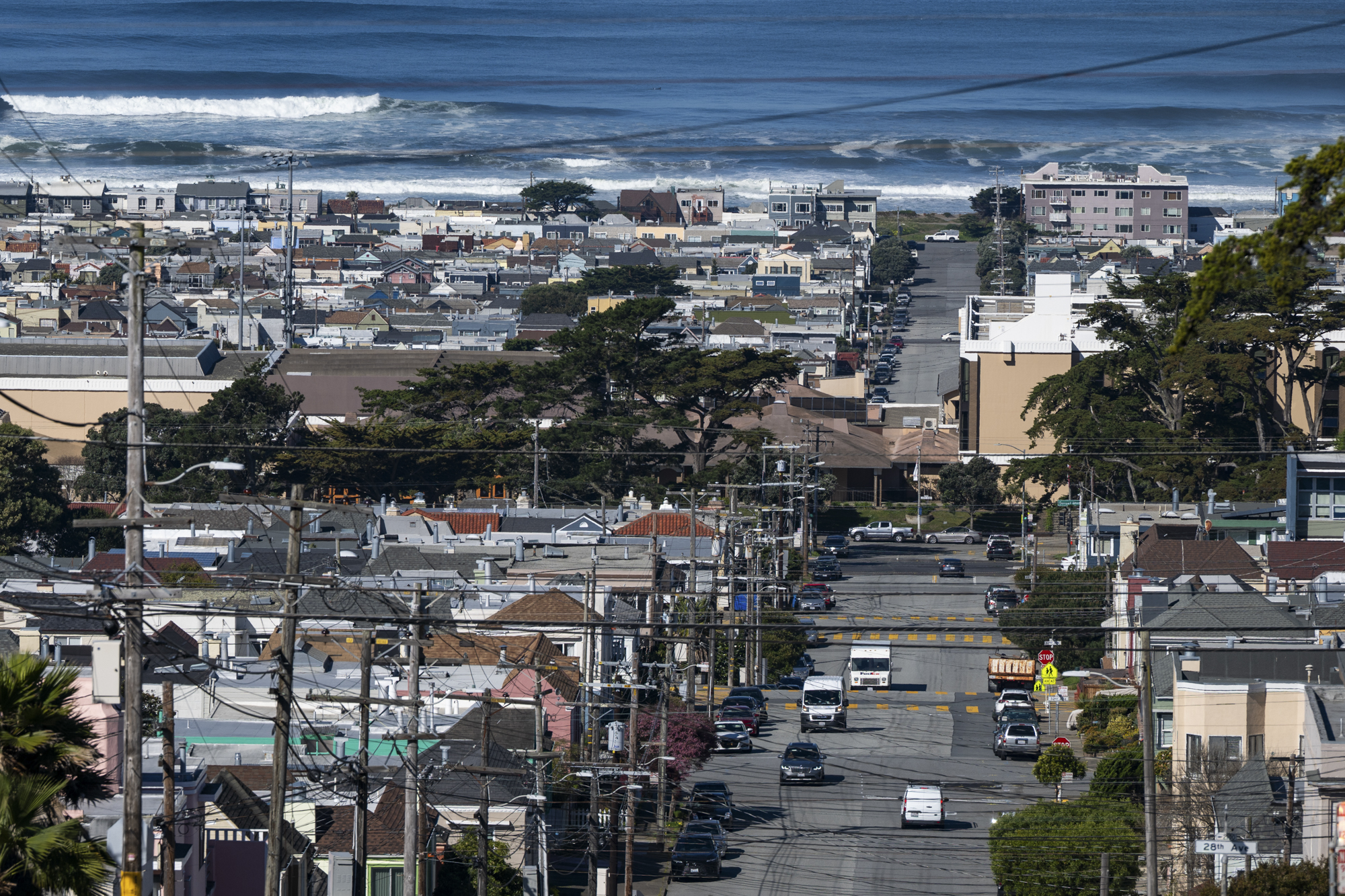
Ericka Cruz Guevarra: [00:00:45] I’m Ericka Cruz Guevara and welcome to the Bay. Local news to keep you rooted. You’ve probably noticed that there are some parts of San Francisco that are just much taller than others. Like downtown with its high-rises and skyscrapers, versus neighborhoods like The Richmond and Sunset, with its rows of single-family homes and views of Ocean Beach. And that is by design. Since the late 70s, San Francisco has had strict limits on how tall buildings could be in the city’s north and west sides. Limits that some argue have made it hard to build enough housing and keep rents from skyrocketing.
Mayor Daniel Lurie: [00:01:36] Even though our needs have changed, our zoning didn’t today. We write a new chapter.
Ericka Cruz Guevarra: [00:01:44] San Francisco supervisors approved Mayor Daniel Lurie’s new family zoning plan, one that paves the way for taller and denser buildings in parts of the city that haven’t been upzoned for decades. Some hope it’ll lead to more housing and lower rents, while others are afraid of what these changes will mean for their neighborhoods.
Justine Escalada: [00:02:10] No, we don’t want these giant high rises to to take over. Like what about the the charm of the the buildings, the businesses? Like it’s gonna be all No soul.
Darya Bolgovia: [00:02:21] So like it’s a city, like we should look like a city. It’s okay. Like the houses are nice and cute, but we can keep some and then like build up for the rest of the people to enjoy it too.
Ericka Cruz Guevarra: [00:02:32] Today, how San Francisco’s new rezoning plan could change the city.
Sydney Johnson: [00:02:44] The rezoning plan is intended to actually make it easier for the city to build taller buildings in certain areas in neighborhoods where they’re frankly just not permitted right now.
Ericka Cruz Guevarra: [00:03:00] Sydney Johnson is a reporter for KQED.
Sydney Johnson: [00:03:04] Rezoning is really just one slice of the pie for the city to meet its housing goals. There still are height limits even in those residential areas, so it’s like you’re not gonna see a giant skyscraper in between two single family homes in in the Richmond, but you could see a multi story, you know, apartment building.
Ericka Cruz Guevarra: [00:03:31] I guess why is this zoning change happening now?
Sydney Johnson: [00:03:34] So there’s a couple of reasons. One of the biggest and you know, probably most obvious is the state is requiring it. So California has said that cities, including San Francisco, have to make way for more housing because for decades in certain parts of the city, and and this is true, you know, in cities all across the state, there have been rules and restrictions that make it harder to build housing. And places have been downzoned in the past for a variety of reasons, you know, to preserve neighborhood character or in some cases for environmental protections. But what that has also meant is that it’s made way for a housing crunch in places like San Francisco. And so the state has said you need to come up with a plan to make room for thousands of more units. The state of California has said that San Francisco has to build 82,000 new homes by 2031. That includes some tens of thousands of units that have actually already been approved but haven’t been built yet. But this plan in particular is designed to make way for around 36,000 new housing units in San Francisco. So, you know, most of the plan to increase height limits is concentrated in areas like The sunset, the Richmond, closer to the Marina and some parts of Nobb Hill, but also North Beach.
Ericka Cruz Guevarra: [00:05:10] Are there any parts of the plan that specify, I mean, what kind of housing should be built where? Like I mean i whether any of it has to be affordable, for example.
Sydney Johnson: [00:05:23] The people who wrote this plan estimate that out of the 82,000 new units that the city is mandated to build, over 30,000 should be affordable to low income families, which for a family of four in San Francisco earns less than $156,000. But there’s nothing in this plan that says you need to build housing that’s affordable for this income level, you know, on this corner. That is it the plan does not get into those kind of specifics at all, really.
Ericka Cruz Guevarra: [00:05:53] Well, that’s probably a great transition into the arguments for and against this plan. Because it seems like it was a a little controversial. This was I mean, to start Mayor Daniel Lurie’s first really big policy fight, right? And he was probably the biggest champion for passing this new rezoning plan. What were his arguments for passing this?
Sydney Johnson: [00:06:17] Yeah, I mean, just to echo what you said, I I have been following this mayor’s administration, you know, from the campaign trail and and I really do believe that this was probably one of the most controversial, you know, more or less difficult things he had to get through so far and and was a real test for our new mayor.
Mayor Daniel Lurie: [00:06:35] People in San Francisco have built the future. They’ve created businesses, families, and diverse and vibrant neighborhoods. But that promise to build a life and belong to your community is slipping away for far too many.
Sydney Johnson: [00:06:53] He has been out in public forums and community meetings and you know, sometimes appearing at actual board of supervisors meetings to make the case that San Francisco needs to do this in order to increase housing supply to make it affordable for future generations. That’s kind of the big reason why is is folks are saying, Hey, like I grew up in this city and I can’t afford to stay.
Mayor Daniel Lurie: [00:07:18] At the heart of family zoning is a simple idea. Families deserve to live in San Francisco. Not just visit, not just commute, but live here, grow here and thrive.
Sydney Johnson: [00:07:31] You know, he had a lot of support from groups like SF Yumby and the Chamber of Commerce and you know, other groups that said we need this housing, you know, more housing might mean more customers and more foot traffic.
Mayor Daniel Lurie: [00:07:43] Even though our needs have changed, our zoning didn’t. Today we write a new chapter. We want to build enough housing so kids growing up here will be able to raise their own families here in San Francisco. We want businesses to stay and grow, confident that their employees can afford to live here. We want firefighters, police officers, teachers, and nurses to live in the communities in which they serve.
Sydney Johnson: [00:08:14] He and other supporters have stressed that this is something that the state is mandating and that if the city doesn’t pass this plan, that we could risk losing essential funding. The city already faced a huge budget deficit this year and had to make a lot of cuts. We’re facing more cuts from the federal government. And so any, you know, potential further loss of funding, I think, you know, is sort of like putting up the alarm signals of like, hey, we have to do this.
Mayor Daniel Lurie: [00:08:45] The state has given us a clear mandate, and if we don’t ask, we risk losing funding and our ability to decide what gets built here. Our plan it keeps control right here where it belongs.
Ericka Cruz Guevarra: [00:09:00] And I know that you and our colleague Adhiti Bandlamudi spoke with residents of some of these areas that would be most impacted by this new zoning plan. What’s your sense of how residents who live in these areas are feeling about this? I mean, presumably they’ll be the most impacted. Does anyone think this is a good idea?
Sydney Johnson: [00:09:21] Sure, you know, I think there are plenty of people, you know, regardless of whether or not they support this plan that recognize that San Francisco and really the Bay Area as a region needs more housing and specifically needs more affordable housing. I’ve been doing a lot of reporting with our colleague Aditi, who actually lives on one of the streets that is slated to be upzoned, and she spoke with a resident named Darya Bulgova about this.
Darya Bolgovia: [00:09:48] Like like it’s so many people who teach in the city commute into the city from somewhere else. It’s like super messed up.
Sydney Johnson: [00:09:57] And she actually supports upzoning and says that the city needs to make room for more housing.
Darya Bolgovia: [00:10:03] Like yes, we we even joke whenever people ask what neighborhood we live in, when we say Sunset we’re like, It’s the ‘burbs of San Francisco. But I I think, yeah, at the end of the day, like we should make the city more accessible and whatever way we get there is is better. So like it’s a city, like we should look like a city, it’s okay.
Ericka Cruz Guevarra: [00:10:29] Coming up, the people and the arguments against the rezoning plan. Stay with us.
Ericka Cruz Guevarra: [00:11:30] Let’s dive a little bit more into the arguments against this plan. It didn’t pass easily by the Board of Supervisors. Who was really coming out against this, especially on the city side of things?
Sydney Johnson: [00:11:42] So supervisors like Connie Chan and residents and neighborhood groups that have opposed this plan are concerned that it’s not gonna actually lead to more affordable housing, but that it actually might just lead to real estate speculation, you know, drive up the rent in certain areas and displace families who have been here for a long time while not actually guaranteeing to include and build that affordable housing that the city still desperately needs. One main concern is the fate of rent-controlled units. Because when you upzone, you can open up the possibility of old buildings getting torn down or redeveloped. And that can include possibly rent-controlled units. And some people are really worried about that. There was an amendment that was incorporated into this plan that actually removed any buildings that have three or more rent-controlled units.
Connie Chan: [00:12:42] I’m disappointed. I’m disappointed where we’re at.
Sydney Johnson: [00:12:46] Chan, who represents the Richmond, said, I actually believe that there should be no rent-controlled units that are at risk of demolition under this plan. You know, she put forward an amendment that would have excluded potentially all rent-controlled buildings. That did not ultimately get incorporated. But she was saying that it doesn’t make sense to remove buildings that have rent-controlled units where people already have kind of that security baked into their living situation and potentially, you know, bulldoze and then develop a a building that they wouldn’t be able to afford potentially after it got completed.
Connie Chan: [00:13:25] My mother, a single mother, an immigrant, longtime worker in Chinatown, she was able to work and live in Chinatown boarding North Beach area because of the rent control units where she reside for three decades, where I grew up until she passed in 2021. People, San Franciscans, need housing, both existing and new. We know that our existing housing stock, especially rent control housing, is our most valuable and affordable housing stock.
Ericka Cruz Guevarra: [00:13:57] It sort of sounds like the impact that this could have on rent control apartments is one of the big sticking points, but also it sounds like people are just concerned that this is just gonna make way for more buildings that actually don’t make the city more affordable.
Sydney Johnson: [00:14:14] Yeah, that seems to be one of the most salient, you know, criticisms of this plan is like, sure, even if it does lead the way for more housing, what part of this plan is actually guaranteeing that that will be affordable to folks who are low income or even, you know, have the average median income? And then of course there are small business owners that have shops in these corridors that are also slated to be upzoned.
Justine Escalada: [00:14:40] Yeah, I mean definitely more construction is not — we we really dislike it.
Sydney Johnson: [00:14:47] I spoke with Justine Escalada. She runs a vintage shop over in the inner Richmond. And she was there working with her partner and their little baby sleeping in a stroller.
Justine Escalada: [00:14:58] Like but prior to this I was a preschool teacher and like very involved in the families’ lives as in there as well and like a lot of them were even like having to leave the city. So I don’t know if this would just continue it.
Sydney Johnson: [00:15:13] She was worried that if the building owner, you know, decides one day to sell to a developer to, you know, build more housing on that block, she said that they would probably have to move and and potentially even leave the city entirely because they don’t have this, you know, stack of cash that can keep them afloat during that construction process.
Justine Escalada: [00:15:37] So I think it would drive away a lot of people who have been a part of the community.
Sydney Johnson: [00:15:46] For every person that said, Yes, let’s build more housing, there’ll be more foot traffic, there’ll be more nightlife. There was also someone out there that said, I don’t want to have to, you know, drive around my block ten times before I can find parking. Or, you know, it’s already expensive. How is this going to, you know, help keep my rents down? And then also just frankly, from some folks who said, you know, I bought this home 20 years ago for the neighborhood and and the way that it looks, and I don’t want that to change. Or, you know, I moved here six months ago and I’m starting a family and and you know, I don’t want this neighborhood to change. You know, that is that is still very much an opinion that is out there too.
Ericka Cruz Guevarra: [00:16:34] Well, I mean, as we were just talking about Zini, this was a pretty contentious plan, and that the Board of Supervisors ultimately had to vote on. How did the board vote?
Sydney Johnson: [00:16:45] This was a pretty long discussion. I mean, I’ve been following this for months now and and have sat through some hours and hours of public comment. There was no public comment at this particular meeting because it was one of the final votes. But each supervisor went around and shared their thoughts about why they support it and don’t and it got, you know, pretty heated. Ultimately it came down to a seven to four vote in support of the plan.
Ericka Cruz Guevarra: [00:17:16] I mean, Sydney, I feel like there’s a lot of concern around how much this plan can change San Francisco or p big parts of the city. I mean, how much could this plan on its own actually change San Francisco?
Sydney Johnson: [00:17:32] You know, there’s been actually a couple analyzes of this that have come out. One from the city’s economist actually said that because of constraints in the market, you know, construction cost, financing that is or is not available and funding, that the number of units that could actually be built as a result of this plan is, you know, pretty shy of what the plan’s goal is. So for better or for worse, this, you know, may not actually result in 36,000 new units, and it certainly won’t right away. Actually, it was really interesting going to some of these public forums and hearing the city’s planning commission and and representatives from the mayor’s office talk to people who were concerned about their neighborhoods, you know, just being transformed and and looking radically different from the place that they moved to and and love, you know, saying things like, actually this plan isn’t gonna change that much. And these are the people who are actually, you know, supporting the plan and saying we need to pass this, but are also kind of being like, Well, realistically, we know that this isn’t gonna like dramatically change the city. So.
Ericka Cruz Guevarra: [00:18:42] Cause It doesn’t change the fact that it just takes a long time to build in the state of California, period. Right?
Sydney Johnson: [00:18:52] Exactly.
Ericka Cruz Guevarra: [00:18:52] And I mean, San Francisco is not the only city in the state that is really under pressure from the state of California to build more, right? But but why do you think what is happening in San Francisco around housing and around its rezoning plan is important to watch.
Sydney Johnson: [00:19:11] I think San Francisco is a really interesting place to watch because we brand ourselves as a sanctuary city. You know, we brand ourselves as this place that is welcoming to all. But when it comes down to it, we’re one of the most unaffordable and difficult places to live. It’s not the same as it was, you know, back in the 60s, where you could, you know, move here and start a new life so easily. It’s actually really hard to do that. So I think that, you know, this plan is a really interesting test case of our values of a city. Is that gonna actually work? Is that gonna actually like lead to more housing and and particularly lead to housing that can be affordable to future generations? Or is it going to lead to more gentrification and you know, potentially, you know, maybe make way for, you know, higher income folks, but not necessarily preserve that opportunity for lower income families to stay here and work here and live here.
Ericka Cruz Guevarra: [00:20:18] Well, Sydney, thank you so much for breaking this down. I appreciate it.
Sydney Johnson: [00:20:21] Thank you.