Here are the morning’s top stories on Friday, November 28, 2025…
- The nonprofit app Watch Duty is revolutionizing how people get information about wildfires and evacuations. And it’s not just residents in vulnerable areas downloading the app — firefighters are using it too.
- People who often eat fish caught in the San Francisco Bay could be consuming unhealthy levels of persistent, dangerous chemicals.
Watch Duty App Is Revolutionizing How Residents, Firefighters Stay Updated On Wildfires
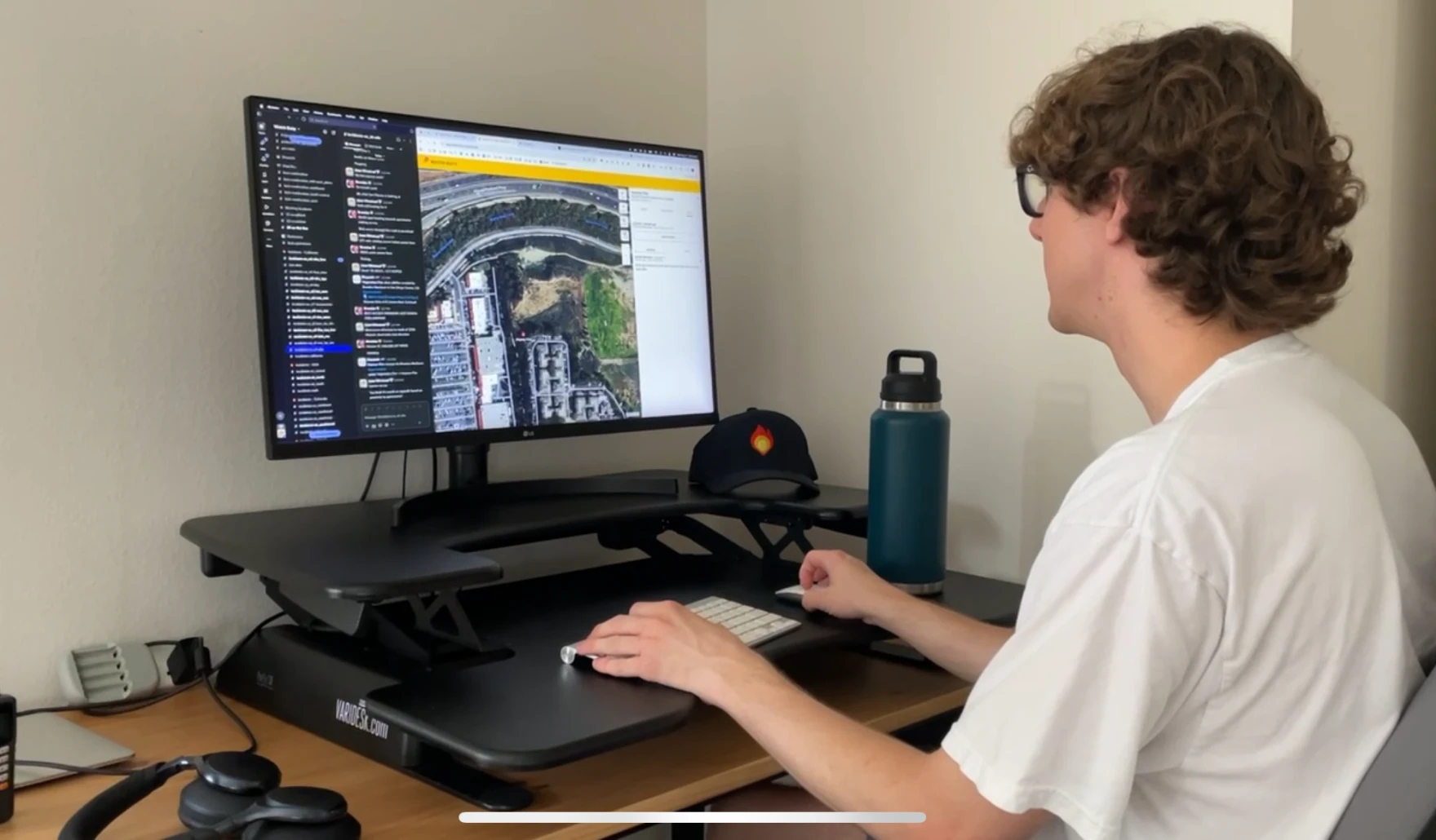
A notification popped up on Liam Winstead’s computer screen, alerting him to a potential grass fire. “It looks like it’s near the mall in Carlsbad along the 78,” said Winstead, a staff reporter with Watch Duty, a nonprofit fire information app. The clock started ticking for him to confirm if it was a real fire and whether it posed any danger.
Winstead pulled up live lookout cameras in the area to search for smoke. He then toggled over to Caltrans’ real-time traffic map, looking for highway slowdowns that could indicate the fire’s location. Emergency radio feeds streamed in his headphones, allowing him to monitor fire response chatter. “I usually have two feeds going,” Winstead said — one in either ear. He switched between tabs and windows with the keystroke fluency of a seasoned pro. But if you’re picturing Winstead working in a command center surrounded by walls of monitors and high tech equipment, think again. The recent college grad was toiling away in the bedroom of his UTC apartment, using a small MacBook, a single monitor and a radio.
But from this unassuming setup, Winstead holds tremendous responsibility. When he and a volunteer colleague confirmed the Carlsbad fire was real and posed a risk to nearby residents, Winstead sent a notification to Watch Duty’s San Diego County subscribers. The alert lit up more than half a million phones.
Watch Duty is quickly becoming an essential tool for both everyday residents and emergency responders who need fast, reliable information when a wildfire ignites. Launched in 2021 in Santa Rosa, the app’s coverage area has spread from just a few Northern California counties to roughly half of the United States. Watch Duty combines information about wildfires and evacuations from a variety of sources in one central place. Paid staff reporters and an army of volunteer contributors provide real-time updates based on changing conditions and emergency radio traffic.
Toxic Catch: Bay Area Communities At Risk From PFAS In Local Fish
People have always fished in the San Francisco Bay. But they may also unknowingly consume unhealthy levels of persistent, dangerous chemicals with their catch.