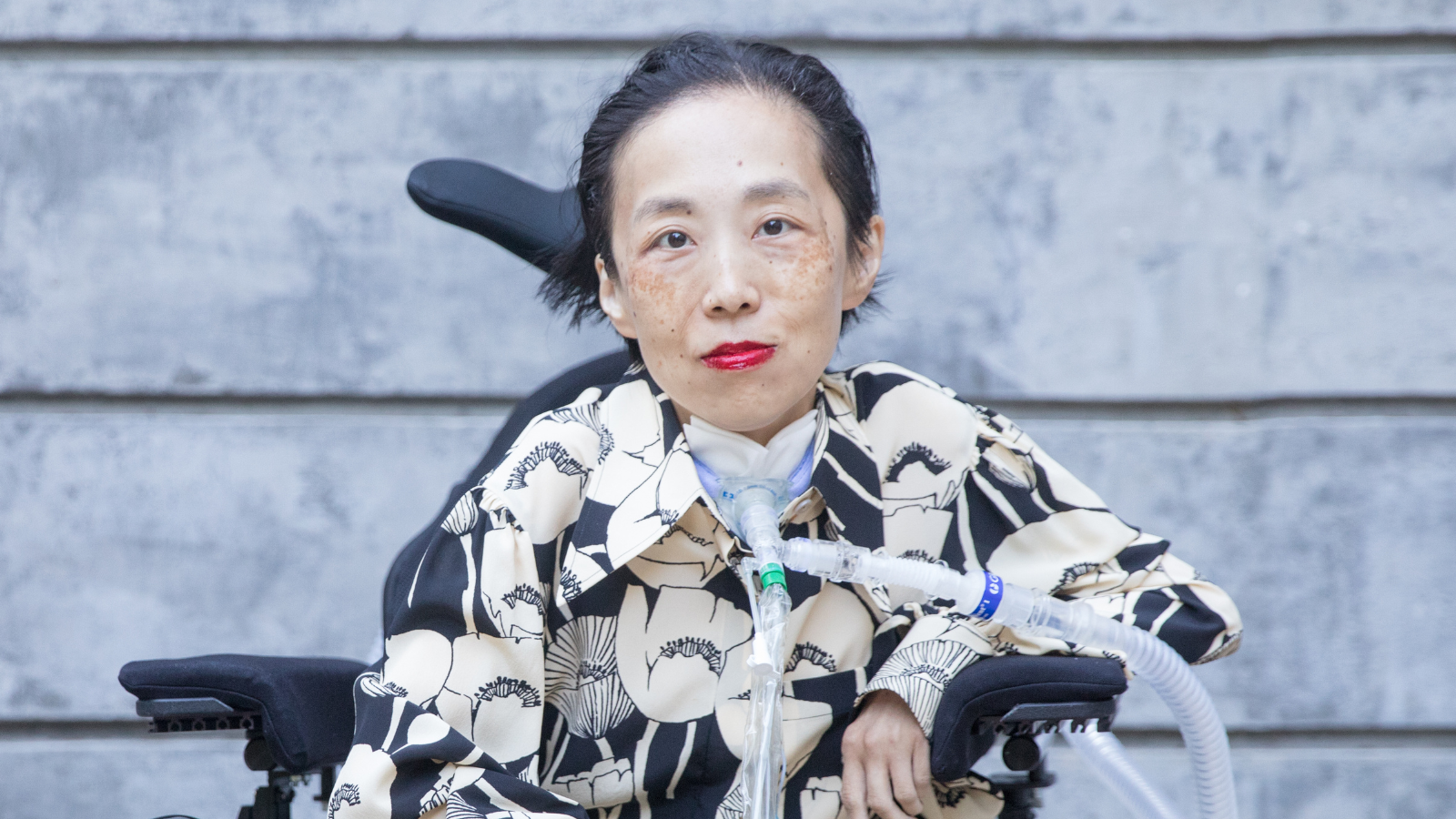
Ericka Cruz Guevarra: I’m Ericka Cruz Guevarra and welcome to the bay. Local news to keep you rooted.
Ericka Cruz Guevarra: In April 2020, just one month after the World Health Organization declared Covid19 a global pandemic, disability rights activist Alice Wong stood out as one of the most outspoken critics of our public response. Social distancing was still this awkward dance that not everyone took seriously. People were still going out. Masks were still an option, not a requirement. And Alice argued that this was putting the most vulnerable at risk:
Alice Wong: It just burns me up. I feel like this sets up this very unfair dynamic where the burden of staying safe and healthy falls upon those who are the most marginalized and the most impacted.
Ericka Cruz Guevarra: Wong, a disability rights advocate, author, and MacArthur genius, insisted that the disabled community had a lot of wisdom to share with the rest of us at this strange moment; Wisdom around being nimble, and taking care of each other… How access and accommodations that disabled people often pushed for – like, working from home or live streaming public events and concerts, were suddenly beneficial to everyone.
Alice Wong: This wasn’t the first crisis that disabled folks faced. We’ve had to make due with living in a world that’s rather hostile and not designed for us in the first place.
Ericka Cruz Guevarra: Alice Wong, who lived in San Francisco, died last Friday. She was 51 years old. Wong leaves behind an incredible archive and legacy of disability justice, stories, and community organizing. Today, we’re sharing this essay Alice wrote in 2022: About her vision for a new approach to health care… And how prioritizing the most vulnerable in our society… lifts us all up. That’s coming up. Right after this break.
<ad break>
Alice Wong: I was born with a progressive neuromuscular disability and my life has always been centered on care. Both receiving and giving it.
When I could no longer walk and started using a power chair, needed assistance breathing, and experienced difficulty swallowing and eating, I learned how to direct and manage my caregivers like a boss. I’ve done it ever since I was a child. This year, however, presented the greatest challenge in my abilities because the stakes were higher and dire.
Over the summer I experienced several medical crises, such as a collapsed lung and an inability to swallow, which resulted in a tracheostomy that’s connected to a ventilator. I also now have a G-J tube that delivers liquid nutrition to my small intestine and stomach.
And now I speak through this app.
In the span of four weeks, my entire world was turned upside down.
One of the biggest stressors upon leaving the hospital was how I would get my intensive medical needs covered at home. The discharge planner said that a person like me with my disability and new care needs who is on Medi-Cal, California’s Medicaid program, should consider going to a subacute nursing facility unless they had family support 24/7.
It was the only time I cried in the hospital.
[Sound of a hospital bed’s movement]
That sound you just heard is of my hospital bed, one of many types of medical equipment I depend on. Needing total help with my daily activities has cost me greatly. The necessary close contact with your body, the lack of privacy and spontaneity, the presumptions strangers have about your competence. My life is in my caregivers’ hands and this is a cost I must pay because I want to live.
Having multiple caregivers, training and communicating with them, and dealing with unexpected ups and downs when they are late, sick, or forget to show up has taken a lot out of me as I try to recover and heal.
What I learned this year and what I’ve known in my bones during my entire 48 years on this planet is that nothing is certain and that we must build a world that acknowledges our interdependence with one another so no one ever falls through the cracks.
I already receive hours of care through two programs, but it was impossible finding workers because of low wages, worker shortages, and the fluidic nature of the workforce. So I resorted to hiring a team of private-pay caregivers to augment the help I receive from my family. By the way, the wage rate for home care workers in the programs I am on is a paltry $18.75 per hour in San Francisco, which is not a livable wage in such an expensive city.
A generous friend launched a GoFundMe campaign to finance the indefinite costs of my private-pay care, which is approximately $600 per day. This is something no disabled person should have to do to live in the community.
Knowing how close I was to being institutionalized still haunts me and brings a searing clarity on how our society is focused on capitalism, productivity and independence which are all scams.
[Sound of a ventilator]
That’s the alarm from my ventilator, which happens when I am disconnected or something is wrong and my caregivers or family members have to immediately check on me. My caregivers care for me but do they care about me? I believe they do but this is probably an unrealistic expectation because at the end of the day it is a job. And yet, care work is different. We share a mutual vulnerability shaped by structural and institutional inequality.
According to the UCLA Labor Center, as of 2019 there were at least 1.75 million disabled adults under 65 in California who needed home care.
I wrote about the future of care infrastructure in my memoir, Year of the Tiger: An Activist’s Life. They are not unfeasible dreams. Change comes from wild imaginings of what is possible.
In the future care infrastructure will be …
One that treats care as a normal part of the human lifespan and not a failure or weakness to need help.
One led and designed by disabled people and others who need or provide care.
One that is free, publicly funded, and not means-tested or linked to employment.
One that puts a primacy on self-direction of the individual, bodily autonomy, and dignity of risk rather than a formulaic, medicalized training that dehumanizes disabled, older and chronically ill people.
[Sound of suction machine]
And this is the sound of another essential piece of equipment, a suction machine that helps me clear my lungs of secretions that I produce almost every hour. Because of, not despite, the hardships I experienced this year, my life is filled with joy, beauty and gratitude. The cost of care is steep but it doesn’t have to be a burden if people truly believe their security and wellness is tied to their communities, neighbors, friends and family.
While I still feel incredibly fragile and scared about what next year holds, I know we can transform the world if we have the political and collective will to do so.
Manifesting this dream from San Francisco, for The California Report, I’m Alice Wong.