Episode Transcript
Katrina Schwartz: Growing up in San Francisco, I’ve always loved how each neighborhood is distinct…like little villages. Each with their own shopping streets
Sounds of cars passing and people walking by
Katrina Schwartz: My family lived in the Richmond District, so we did our shopping on Clement. On it, you can find everything from fresh-caught fish.
Fishmonger: So right now we have rock cod and we have calamari…
Katrina Schwartz: To produce, hair salons, pastry shops…
Bakery worker: You pay with cash or card?
Katrina Schwartz: Ice cream, restaurants, a bookstore — you name it. By and large, local businesses, one of a kind in the neighborhood.
Bookstore worker: Welcome to Green Apple
Katrina Schwartz: And most neighborhoods in San Francisco have a street like this…it’s part of what makes San Francisco feel unique.
Sarah Soule: My name is Sarah Soule. I live in San Francisco. And I’ve grown up here my whole life.
Katrina Schwartz: Sarah remembers shopping mostly at local businesses growing up. She even remembers hearing that San Francisco didn’t allow big box stores, like Walmart or Home Depot, at all.
Sarah: In order to protect local businesses.
Katrina Schwartz: But recently, she’s noticed more chain stores in the city.
Sarah Soule: We didn’t use to have Costco. Um, and I kind of remember Costco opening here for the first time.
Katrina Schwartz: That was in the early 90s. Sarah remembers the fight around it.
Sarah Soule: Like, it was controversial. Some people were upset about it, and I was wondering, you know, why that happened? Why did it get to open here?
Katrina Schwartz: She’s trying to understand what’s changed in the city since she was a kid.
Sarah Soule: And my question is: Did San Francisco really used to prevent big box stores from opening in the city? And when did that change, and what effects have that change had on the city?
Katrina Schwartz: Today on Bay Curious, we’re going shopping for some answers to Sarah’s question and learning a little retail history, San Francisco style. I’m Katrina Schwartz. Stay with us.
Sponsor message
Katrina Schwartz: San Francisco today definitely has chain stores. Think Safeway, Starbucks and Target, to name just a few. But there are hundreds of pages of planning codes and regulations for them. And that means politics. So we asked Scott Shafer, KQED’s senior politics correspondent and co-host of the Political Breakdown podcast, to walk us through how those regulations have changed over the last several decades.
Scott Shafer: Land use in San Francisco is guided by the city’s Byzantine Planning Code, which is kind of like the twisty, curvy part of Lombard Street. And few understand it better than this guy.
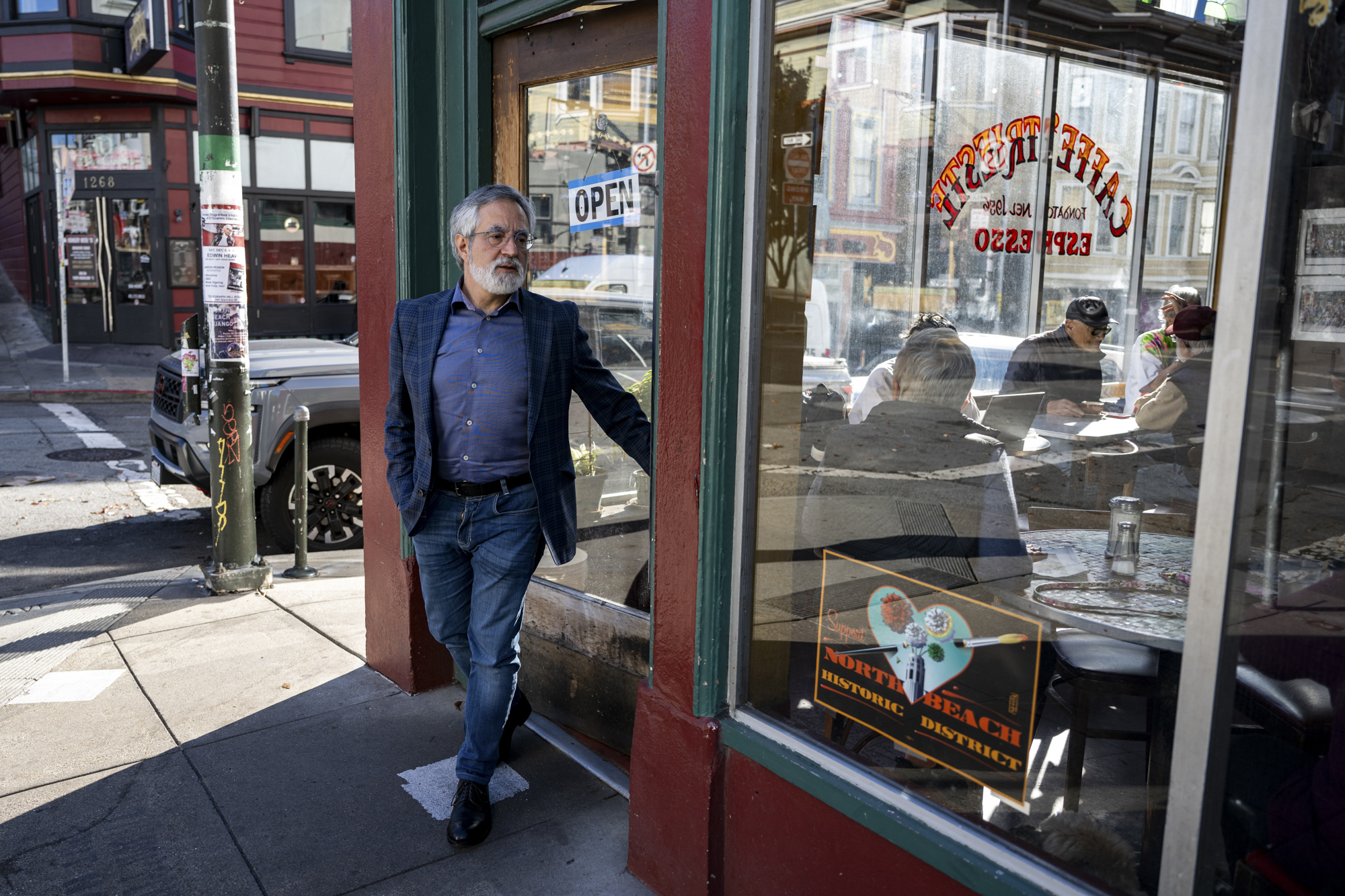
Aaron Peskin: My name is Aaron Peskin. I live and work in North Beach, and we are in the heart of North Beach on the 400 block of Columbus Avenue.
Scott Shafer: Aaron Peskin served on the San Francisco Board of Supervisors for more than 20 years, and his district included this neighborhood, which has been famously anti-chain store for a long time..
Aaron Peskin: North Beach has always been a dining and entertainment destination zone, but it’s also a place where people live and shop and maintaining the balance of neighborhood-serving businesses is also important and also adds to making it a real neighborhood.
Scott Shafer in scene: So this neighborhood, obviously, as you said, it’s a historic neighborhood. How are the businesses doing here, and how the cafe scene doing?
Aaron Peskin: So the neighborhood is thriving; it actually led the way in post-pandemic recovery. It has an extremely low vacancy rate. The cafes, as we can see, here is Stella Pastry and Cafe is booming with a bunch of the old Italians who are hanging out. What’s going on, Frankie How are you gentlemen?
Frankie: Buon giorno!
Aaron Peskin: KQED wants to know if you guys are alive and well.
Frankie: We’re okay. It’s a little bit hot. Yeah, but yeah. When we check his blood pressure, he’s all right. Yeah.
Scott Shafer: Among the things North Beach is most famous for are its small, independent coffee houses…like Cafe Trieste.
Aaron Peskin: Cafe Trieste is 70 years old. It was the first place on the western seaboard of the United States that started to serve espresso. It is still in the same family.
Sounds of espresso maker. Barista says: This is a coffee latte. The next one is a cappuccino.
Aaron Peskin: It’s kind of North Beach’s living room.
Scott Shafer: The walls are covered in old photos showing the many famous people who’ve been through.
Aaron Peskin: Here’s Francis Ford Coppola sitting at the back table writing the screenplay for The Godfather right there. There’s Luciano Pavarotti singing in here.
Scott Shafer: People come to North Beach for businesses like this. That’s why Peskin remembers one day at Cafe Trieste so clearly.
Aaron Peskin: And there was a petition on the counter. This is in maybe the early 1990s; this was a long time ago, asking people to sign to object to a Starbucks on the corner of Columbus and Broadway. I remember it vividly.
Scott Shafer: This petition, all those years ago, was one of the first instances of a neighborhood pushing back against a chain moving in. They succeeded in keeping the Starbucks out, by the way.
Back at his office, Peskin tells me that fight against Starbucks was just the beginning. Other neighborhoods were waging similar battles.
Aaron Peskin: There was outcry from various parts of the city.
Scott Shafer: In 2004, San Francisco defined what a chain store, more formally known as “formula retail”, was exactly — having 11 or more stores nationwide.
Aaron Peskin: That definition never existed in the San Francisco Planning Code; it did not prohibit anything at all. It defined what a chain store was and then left it to the future to determine where they were green light, where they where red light, and where they are yellow light needing a conditional use.
Scott Shafer: With that 2004 definition in place, neighborhoods began adopting different levels of control.
A red light meant a total ban on chains — that’s what Hayes Valley did.
Now, some of you might say, “Hey, wait a minute. There are chain stores in Hayes Valley — like All Birds shoes and Warby Parker eyeglasses. Yep, that’s true. But when they opened, they were relatively small companies … and had fewer than the 11 locations nationwide that triggered those limitations.
A yellow light applied to neighborhoods — like Cole Valley and parts of the Haight Ashbury — where chains were allowed, but only after neighbors could weigh in before any final decisions.
And finally green light areas — South of Market, Union Square and the rest of downtown — where chain stores like Macy’s, Nordstrom and Old Navy are allowed without any additional permits.
Gradually, more neighborhoods adopted limitations.
As the regulations grew piecemeal, in 2006, voters approved Proposition G, dubbed the “Small Business Protection Act,” mandating those conditional use permits for new chain stores in all neighborhood commercial districts where small businesses dominate.
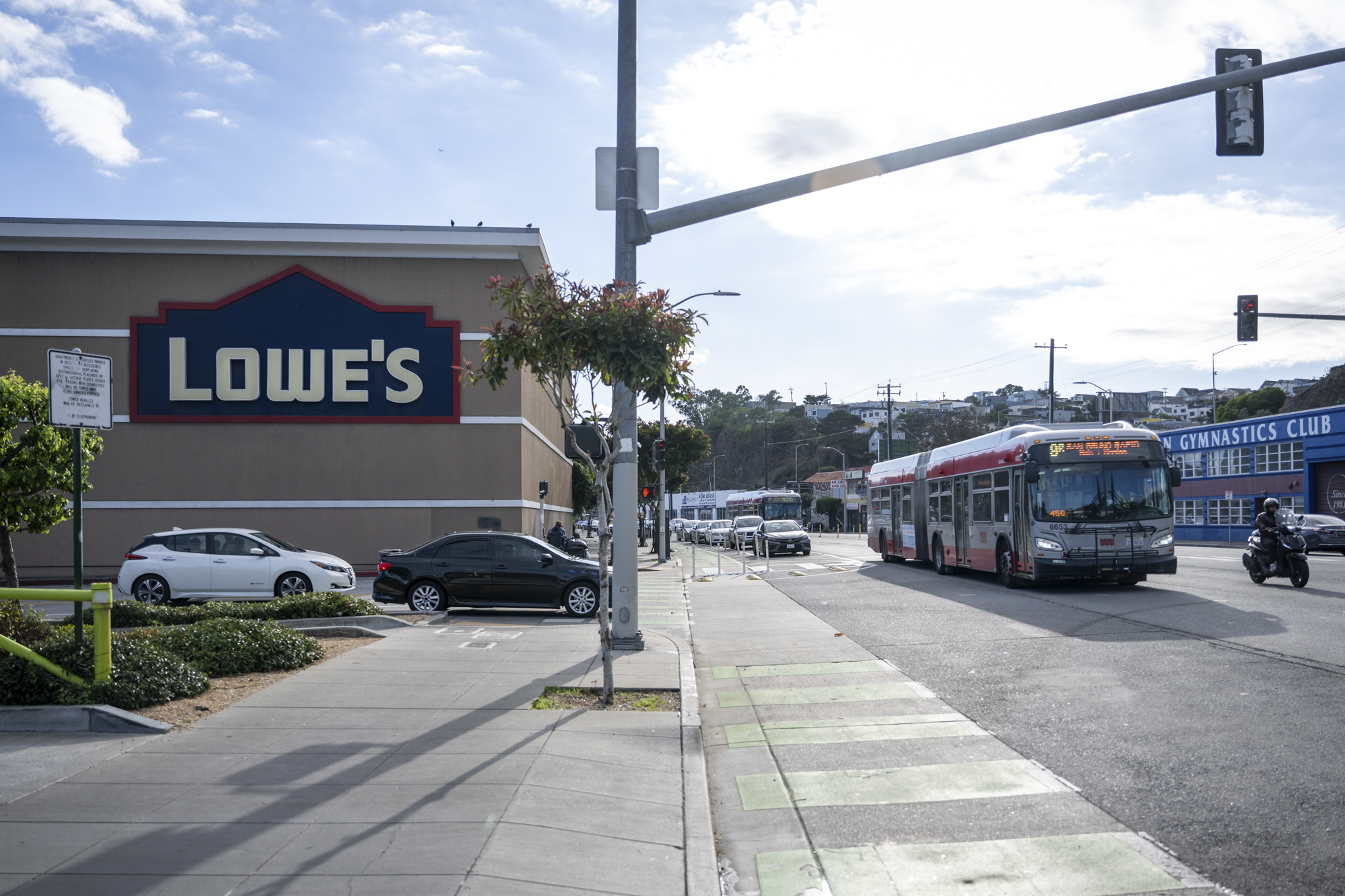
But having clearer regulations didn’t end the fights over big box stores. That became clear in a battle over whether to allow a major hardware chain to open on Bayshore Boulevard.
Lowe’s commercial: Go to Lowe’s home improvement warehouse because Lowe’s knows (fades out)
Scott Shafer: The site where Lowe’s wanted to open bordered on two very different supervisorial districts — the thriving Bernal Heights and the economically depressed Bayview.
Aaron Peskin: It was a huge fight.
Scott Shafer: Lowe’s sweetened the pot by promising to hire hundreds of local workers..
Aaron Peskin: Ultimately, the Board of Supervisors, on a 6 to 5 vote, voted to approve Lowe’s. I was the swing vote.
Scott Shafer: The store opened — and remains there today.
This seems like a good time to lay out some of the research on chains and how they affect local communities.
Aaron Peskin: There was a lot of analysis about how local businesses kept money in the local economy and the multiplier effect of keeping money in the local economy rather than it being sucked out to a corporate headquarters in Atlanta or New York City. The fact that local businesses hired people at better living wages. So there’s a lot of data that supported the legislation beyond just the fact that people wanted to maintain the unique character of their neighborhoods.
Scott Shafer: Another argument against chains — they put upward pressure on rents.
Aaron Peskin: There is no question that multinational chain stores can command higher rents, and the impact of that has been to raise commercial rents for small businesses and neighborhood commercial districts, which has been very deleterious to the health of small businesses.
Scott Shafer: On the pro side, counties get a lot of tax revenue from chains, customers like them, and they do provide some jobs.
Aaron Peskin: There are plenty of places in San Francisco where they are allowed as of right or where they’re allowed conditionally.
Scott Shafer: In fact, despite the hurdles, the regulations and the NIMBY politics, San Francisco still has plenty of chain stores.
Aaron Peskin: So this whole notion that San Francisco isn’t allowing businesses to grow is kind of nonsense.
Scott Shafer: And when chains close, people complain. That happened along Van Ness Avenue as KGO reported earlier this year.
KGO clip: Van Ness Avenue was once San Francisco’s auto row. Rambler, Dodge, Cadillac, Buick all had a stake in the city. The majority are gone, leaving behind large, empty commercial spaces.
Scott Shafer: Supervisor Danny Sauter … co-sponsored legislation making it easier for chain stores to open on Van Ness.
Danny Sauter: It’s a reflection of the current state of things. Where it’s rows and rows of empty storefronts, we have to try something.
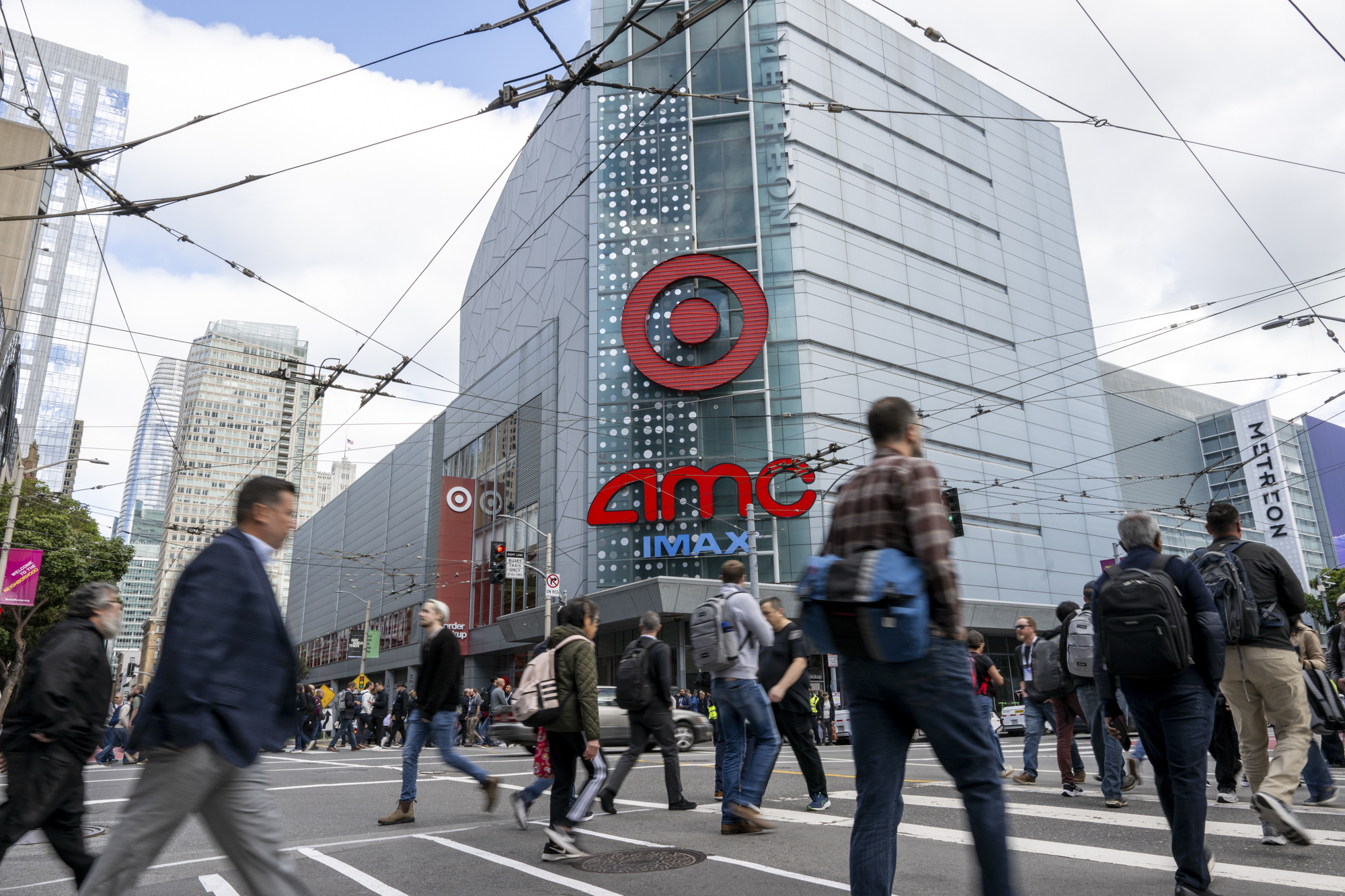
Scott Shafer: Sauter says there’s already a few sprouts of interest … and even glimmers of success … including a new Apple Cinemas movie theatre to replace one that closed years ago. That opened pretty quickly at 1000 Van Ness.
All this shows that the city — for all its crazy building codes, permitting and chain store regulations, as Peskin noted, has a fair amount of flexibility.
Aaron Peskin: San Francisco’s land use laws were built on the notion that different neighborhoods had different destinies and were trying to do different things to be economically successful. The whole notion was that it wasn’t a one-size-fits-all solution.
Scott Shafer: In thriving neighborhoods like Hayes Valley…where sidewalks are filled with shoppers, it’s still hard to open a chain store. But in others, like Van Ness Ave, where huge storefronts sit empty, the calculus is changing. A big box store doesn’t look so bad anymore.
I took all this back to our question asker, Sarah, to see what she makes of it.
Sarah Soule: I actually spent some time as a small child in those North Beach cafes. And I learned to play Pac-Man in one of those. So it’s interesting to hear that it started in that neighborhood.
Scott Shafer: She’s been thinking a lot about where she chooses to spend her money and wants to invest more in local businesses.
Sarah Soule: One of the things that makes any city so special is those small local businesses that exist there and no place else
Scott Shafer: No doubt the city will keep tweaking its rules for chain stores … trying to find that elusive balance between protecting the unique character of its neighborhoods and allowing chains to open where they make sense.
Katrina Schwartz: That story was brought to you by KQED’s senior politics correspondent and co-host of Political Breakdown, Scott Shafer.
Next week, the Bay Curious team will be taking a break for the Thanksgiving holiday. But we’re back with you the following week …Dec. 4 … with a new episode. And…drumroll please…Olivia Allen-Price is back from maternity leave and will be back in the host seat! We’re super excited to have her back and want to say a special thank you to producer Gabriela Glueck, who has been an amazing partner on the show during Olivia’s leave. Much of the beautiful scoring and sound design you’ve enjoyed over the last many months is her magic. Thank you, Gabi.
It has been very fun to host the show over these past couple months, but I’m not going anywhere, and I’m excited to do more reporting and to get out into the field a bit more to answer your questions!
Bay Curious is produced at member-supported KQED in San Francisco.
Our show is made by Olivia Allen-Price, Gabriela Glueck, Christopher Beale and me, Katrina Schwartz.
With extra support from Maha Sanad, Katie Sprenger, Jen Chien, Ethan Toven-Lindsey and everyone on team KQED.
Some members of the KQED podcast team are represented by the Screen Actors Guild American Federation of Television and Radio Artists, San Francisco, Northern California local.
Thanks for listening. Have a holiday and we’ll see you back here in a couple weeks.