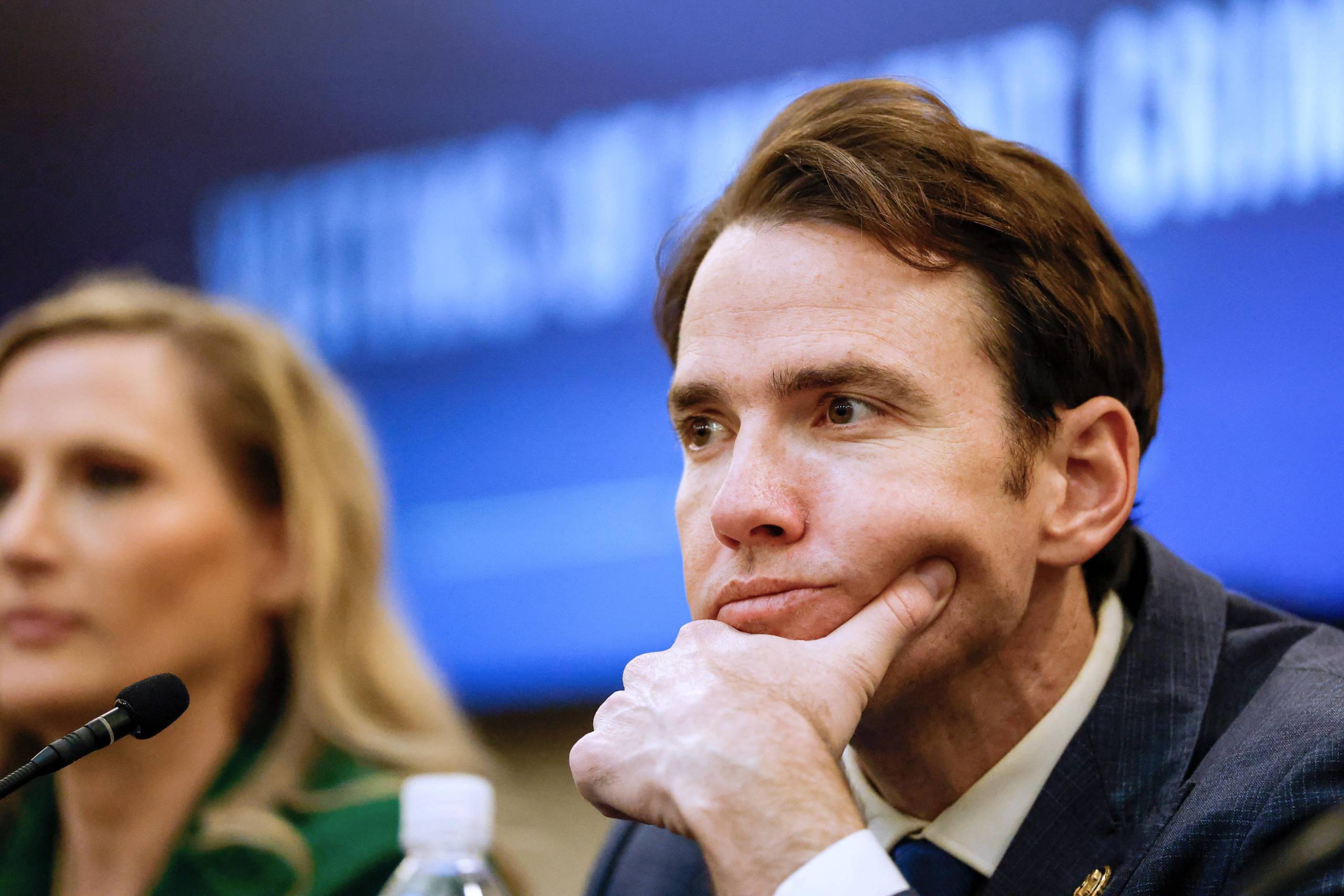
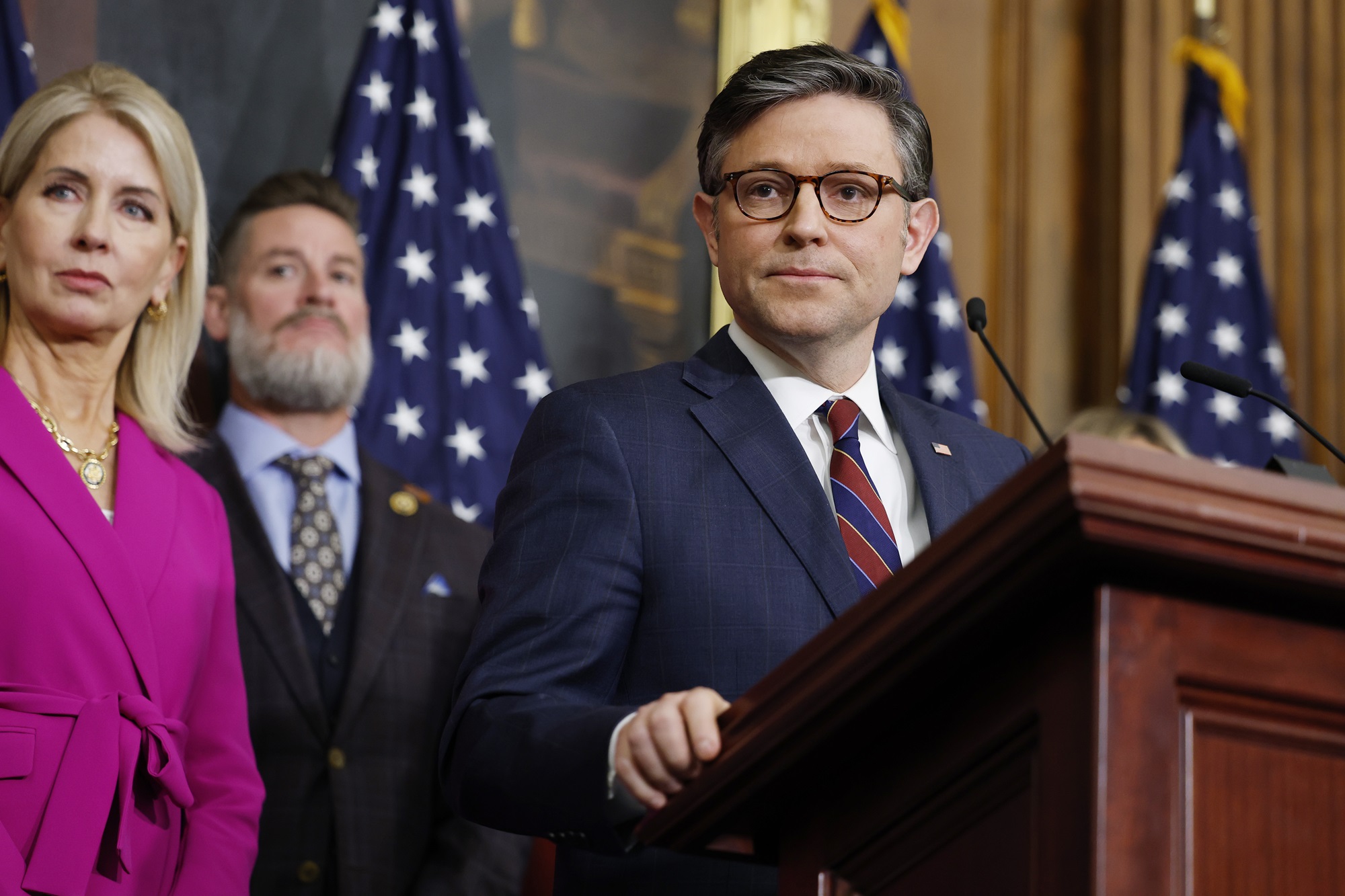
Johnson argues keeping lawmakers home pressures the Senate to act on a seven-week funding bill. Kiley disagrees.
“Clearly, it’s not working,” he said. “Sometimes you have to work with people who have a different position in order to find common ground.”
Democrats have criticized Johnson’s handling of the standoff, accusing the speaker of using the recess to delay the swearing-in of Rep.-elect Adelita Grijalva, who won a special election to fill the seat of her late father, Rep. Raúl Grijalva of Arizona.
Johnson has rejected that claim, saying the delay is unrelated. Kiley said he supports seating Adelita Grijalva without delay.
“She won her election. I don’t know why this is even an issue,” he said.
He added that he’s open to negotiating over the expiring Affordable Care Act subsidies — a key reason Democrats have refused to support the current funding bill.
“There’s enough interest on both sides for a deal,” Kiley said. “I don’t see why we’re not talking about that now.”
For now, he’s continuing to show up to his office each morning, an act to remind colleagues that Congress should still be working.
“We should have a functioning House of Representatives,” Kiley said.
Transcript:
MICHEL MARTIN, HOST:
After House Speaker Mike Johnson told Republicans to go on home, at least one GOP lawmaker is still coming to work at the Capitol every day, Congressman Kevin Kiley. He represents California’s 3rd District. It’s a winding stretch of eastern California that includes Yosemite and Death Valley National Park, among other natural treasures. And he’s openly criticized House Speaker Mike Johnson’s decision to keep the House out of session, and he’s with us now. Good morning, Congressman.
KEVIN KILEY: Good morning. Thanks for having me.
MARTIN: So it’s early yet, but what are you going to do today?
KILEY: Well, I’m looking for any and all constructive conversations towards getting us out of this mess. And the good news is I’ve had a number of those from folks on both sides of the aisle. The bad news is, of course, the government is still shut down, with escalating consequences for millions of people.
MARTIN: You’ve urged House Speaker Mike Johnson to bring the House back into session. Does anybody else in your party agree with you?
KILEY: Absolutely. I think there are a large number of people in my party, as well as, certainly the other party, who think that, you know, we should actually have a functioning House of Representatives, as we’re supposed to be in session the last four weeks and this coming week. And it’s all the more urgent given the fact that the government is shut down, we’re starting to see people losing their food assistance benefits, we’re seeing flight delays and all of the other compounding cost to the American people.
MARTIN: What could you and your colleagues be doing if the House were back in session?
KILEY: Well, you know, we have the ordinary business of the people. We have 20 committees in the House of Representatives, countless subcommittees that were supposed to be doing things each of the last four weeks. I’m a subcommittee chair on K-12 education. We’ve had hearings canceled. All of the other oversight hearings have been canceled, the legislation that was supposed to be marked up, everything the House does in its ordinary course of business. In addition to that, we could be working on the appropriations bills. These are the full budget bills that would come due in just a matter of a few weeks, even if the seven-week continuing resolution that the House has passed were passed by the Senate and signed into law.
MARTIN: So the speaker’s position is that the House did its job. It passed a resolution to fund the government and that staying out of session is a way to pressure the Senate to do the same. What do you have to say to that?
KILEY: Well, number one, clearly, it’s not working. I mean, I – and to be clear, I wish the Senate would just pass the continuing resolution that we passed. That’s the easiest way to get the government back open, but they’re not willing to do so. And sometimes you have to, in politics, work with people who have a different position than you do in order to find the common ground that’s best for the country. But in addition to that, I would say that the House of Representatives in passing this continuing resolution, the entire reason we had to do that is ’cause we had not passed a budget on time. And so this is like a seven-week extension that we asked for. So to pass that seven-week extension and then before it even becomes law, to simply go home indefinitely, it just doesn’t make any sense to me.
MARTIN: Do you see sort of on the substantive issue that – well, let’s just – for the sake of argument, just so that people can not, you know, email me and tell me I didn’t mention this, that Democrats are arguing that one of the reasons that the speaker is keeping the house out of session is to avoid seating Adelita Grijalva, who won the seat that her father had held before he passed away. But, you know, he says that that’s not true. The Democrats say that this health care subsidy issue is the crucial issue, as Sam Gringlas sort of pointed out. Is there room for negotiation on that? Is there some meeting ground that you all can agree to that perhaps you’re discussing privately?
KILEY: Yes, there is. And I’ve had a number of conversations with folks on both sides of the aisle about this. By the way, I think the new representative should be sworn in. She won her election. I don’t know why this is even an issue at all. She could be sworn in even if the House hasn’t returned to session, what’s called a pro forma session.
But with regard to the Affordable Care Act subsidies, I’m extremely concerned about the fact that a large number of my constituents are going to – have to be paying a lot more money for health care very soon, especially in a high-cost-of-living state like California. I know there are a lot of people on both sides of the aisle that are concerned about that. I think there is going to need to be a deal on that issue. So if we can start working towards a deal now as a potential pathway out of the shutdown, I don’t know why we wouldn’t at least explore that possibility.
MARTIN: But to that point, Republicans hold the White House, and they hold both Houses of Congress. This resolution passed sort of months ago. Everyone knew that this cliff was coming. Where’s the Republican proposal on this? If the health care subsidies, as some Republicans argue, are just too expensive, what’s the alternative?
KILEY: Yeah. So I think that there’s a lot of room to negotiate here. I think that there’s the question, are we going to extend it for a long time or for a short time as we work on a more long-term solution? Are we going to put in cost controls, like income caps and that sort of thing? Are we going to have some mechanisms, like some nominal premiums, to get, you know, fraud out of the system? So I think those are all issues that need to be negotiated. But I think that, as I said, there needs to be – there will be a deal here. There’s enough interest on both sides for a deal, so I don’t see why we’re not talking about that now.
MARTIN: That’s Kevin Kiley. He is a Republican representing California’s 3rd District. And I do want to mention that we’ve been speaking to members on both sides of the aisle throughout this government shutdown. Congressman Kiley, thank you so much for joining us today.
KILEY: Of course. Thanks for having me.