Here are the morning’s top stories on Tuesday, October 14, 2025…
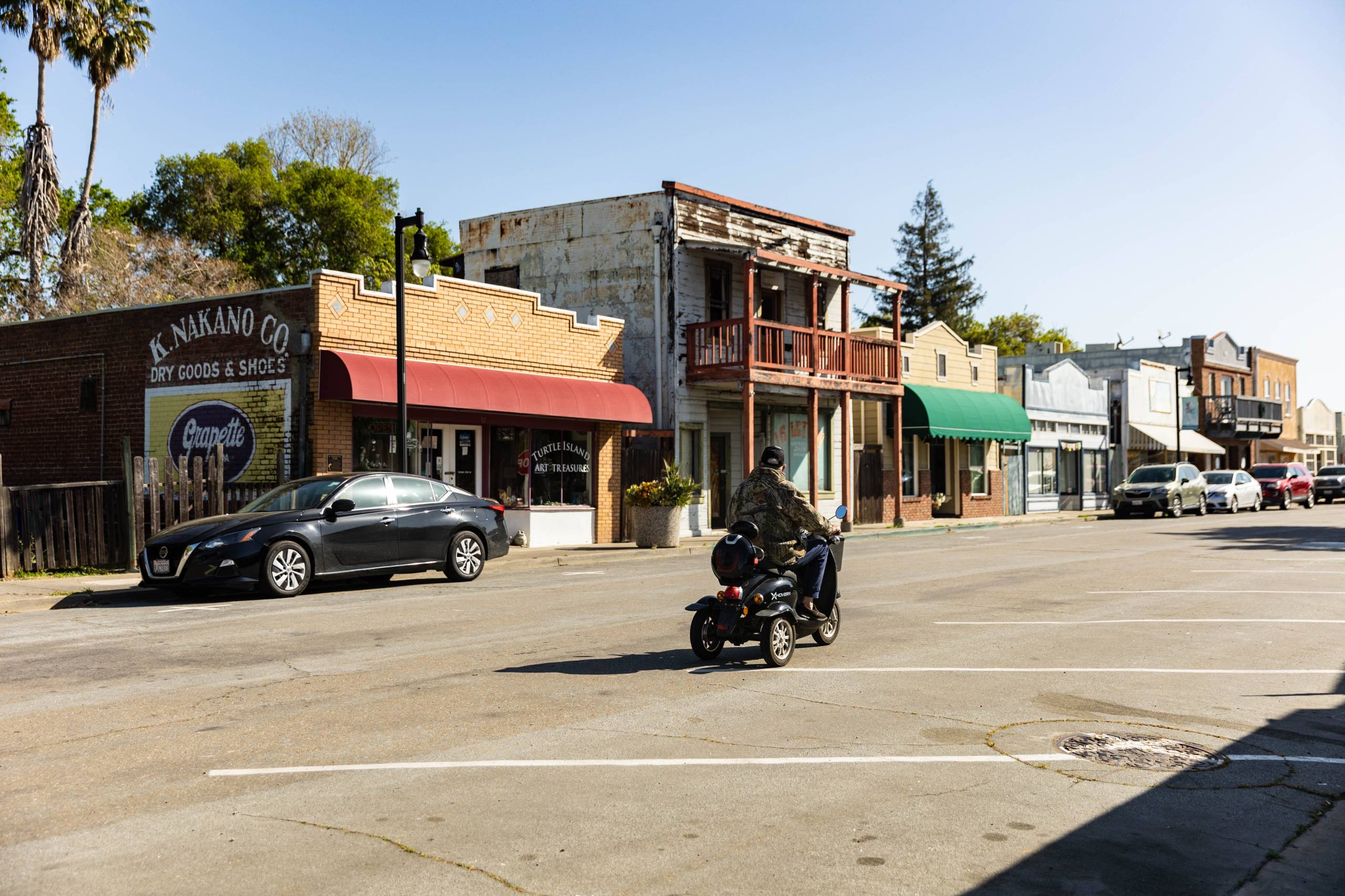
- A tiny California town in Sacramento’s Delta has struggled for decades, and within a matter of months, could face some big decisions on its status as a city. Financial choices over the years have put Isleton in a sink or swim situation– with talks of disincorporation or bankruptcy and what that could mean for the city’s 800 residents.
- The governor vetoed a handful of bills that aimed to advance reparations for Black Californians.
- The governor has signed legislation requiring law enforcement agencies to disclose when they use AI to write – or help write – police reports.
Under Financial Pressure, Community Of Isleton Faces Uncertain Future
The city of Isleton is nestled between the Sacramento River and the county’s southernmost border. On any given day, the only sound coming from the area is the passage of cars on Highway 160.
The main street looks and feels straight out of the 1920s, because it is. In the early 1900s, the city was bustling with 1500 residents, mainly Asian immigrants, who worked at asparagus canneries. Now, a handful of small businesses line the downtown. The main drag, which is three blocks away from grass land, is also home to some residents.
Jean Yokotobi, President of the Delta Educational Cultural Society, lives above the only sandwich shop in town. She was introduced to the city by a boyfriend in 1965. “I really loved Isleton from the first time I saw it, and it was one of those beautiful spring days,” she said. “There were lots of boats in the water and there were pear orchards all over. Everything was green.”
But that was over 50 years ago and now, the city is in serious trouble. At the end of August, city leaders came to Sacramento County with a request– an $800,000 loan to help avoid bankruptcy. The city said in a letter to the county they are set to default on a $500,000 bridge loan in November, using three city buildings as collateral. The county denied the loan. The supervisors said they weren’t confident the little city could ever pay them back. City staff say Isleton owes around $5 million to different agencies, though it could be more. County Supervisor Pat Hume said the city is in unchartered territory. “No city in California has disincorporated since the early 1970s. So there’s literally no one alive right now that has ever been involved in the disincorporation of a city,” Hume said. Discussions are ongoing about the fate of the city and how to protect residents, as Isleton tries to rebuild its financial future.
Newsom Vetoes Stall California’s Reparations Push for Black Descendants
Gov. Gavin Newsom vetoed a handful of bills advancing the cause of reparations for Black Californians on Monday, dealing the latest blow to a first-of-its-kind movement to atone for state-inflicted harms from slavery to the present day.