Daisy Nguyen [00:01:35] According to federal data, families in the Bay Area face some of the highest costs for child care. We recently put out a survey asking families in the Bay Area how much they pay for childcare and we got some really surprising answers. Some families were telling me that they pay $2,400 per month and it’s not even for full-time childcare. It causes them to have to make some tough choices. Like one parent has left the workforce to care for their kids or they’ve had to move.
Ericka Cruz Guevarra [00:02:25] So Daisy, we’re talking today because Alameda County is throwing a bunch of money into the child care system. Where is this money coming from?
Daisy Nguyen [00:02:34] So the money is coming from a half-cent sales tax known as Measure C, and it was something that voters passed more than five years ago to increase access to child care and preschool and also health care for the county’s youngest residents. The tax is expected to generate about $150 million per year, but a taxpayer group’s lawsuit, held up the money until recently. What’s interesting is that during these years of litigation, the county went ahead to collect the tax and placed it in a trust, so that money grew to about a billion dollars.
Ericka Cruz Guevarra [00:03:14] Oh wow.
Daisy Nguyen [00:03:14] Mm-hmm.
Ericka Cruz Guevarra [00:03:15] And now we’re at a point where this money is actually being distributed, right? Who are some of the people who are benefiting from this tax?
Daisy Nguyen [00:03:27] It’s going into the hands of child care providers who are at risk of closing their doors. It could be a small business owner who rents a daycare out of their home, or it could be big child care center.
Lisa Zarodney [00:03:41] All the money I earn is for my daycare. It goes back in my day care.
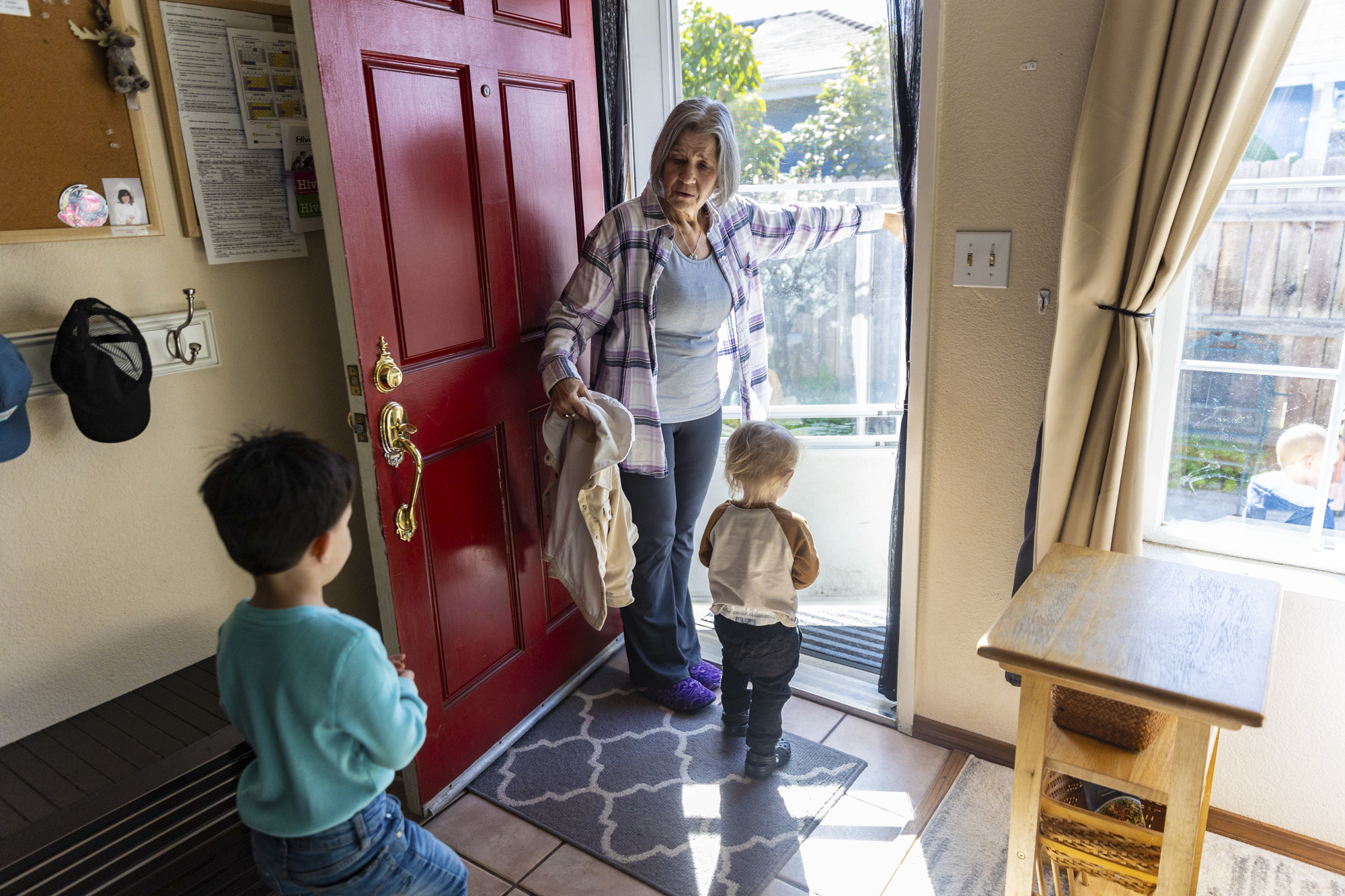
Daisy Nguyen [00:03:46] Lisa Zarodney is a family child care provider. She’s been providing care out of her home in Livermore for the last 27 years.
Lisa Zarodney [00:03:55] I love what I do and I’ve been doing it for song because I love it not because I make money off of it because I don’t pay myself.
Ericka Cruz Guevarra [00:04:03] What did she tell you about, I guess, what the last few years as a child care worker has been like for her, especially since the pandemic?
Daisy Nguyen [00:04:13] Fewer kids were coming to her home during the pandemic. And then I think even after the reopening, a lot of parents who were working from home kept their kids at home as well.
Lisa Zarodney [00:04:24] And slowly but surely, a lot of these providers, including myself, are in jeopardy of closing their doors because we just can’t catch up from
Daisy Nguyen [00:04:36] And then there was this new program in California called Transitional Kindergarten, so some of the older kids, the four-year-olds, there are families who are choosing to take their kids out of her program and putting their kids in free school, right, public school. All those things made her programs under-enrolled, so she was losing money, but at the same she had to, you know, continue paying for her rent, her utilities. All the expenses that come with running a business out of your home. She said her credit card bill, she racked up up to $50,000 in credit card, and the way she was also just managing to get through this difficult financial period was drawing from her late husband’s insurance and retirement fund.
Lisa Zarodney [00:05:28] But on the back end, I have to pay taxes on that. I can’t do anything with my own family and my own grandkids because I don’t have the money to enjoy a life outside of just taking care of kids.
Ericka Cruz Guevarra [00:05:42] Daisy first interviewed Lisa back in March of this year, when the funds from Alameda County’s Measure C were still being held up by lawsuits. But this summer, five years after voters passed Measure C, the County Board of Supervisors approved a plan to spend the money. And in August, Lisa finally got the help she needed. Daisy checked back in with her once she got the money So she’s among the folks who Measure C is supposed to help, it sounds like.
Ericka Cruz Guevarra [00:06:21] How much money did she get from Measure C and what did she say about how it helped her?
Daisy Nguyen [00:06:28] The county started issuing big checks. They are one-time emergency grants ranging from $40,000 to $100,000 depending on the type of child care provider. She received a $40,000 check in the mail.
Lisa Zarodney [00:06:44] It was amazing. I couldn’t get the smile off my face.
Daisy Nguyen [00:06:48] You know, it didn’t completely reduce her credit card bill, but it reduced it to a manageable level because now the kids are coming back.
Lisa Zarodney [00:06:56] I just needed that one check. I got it. And now I can get new toys for the kids. I can outside stuff for the toys for kids. I can pay my back credit card bill that I’ve been paying on and living on. The interest alone will kill you. So it’s just so many things that are starting to come together. Mostly part of that is because of measure C.
Daisy Nguyen [00:07:20] She told me it was relief, it helped her stabilize and it took a huge burden off her shoulder.
Lisa Zarodney [00:07:29] It was like finally something went right. After everything that I went through and with the possibility of shutting down and all the emotions, it was finally gonna be okay.
Ericka Cruz Guevarra [00:07:42] How does the money given to people like Lisa, how does that trickle down to helping parents who are paying for childcare in the Bay?
Daisy Nguyen [00:07:53] Well for Lisa, she thought she was going to have to close her business by the end of this year because she was facing so much debt. And a person like her leaving the field, it just creates more fragility in the system. What’s special about in-home daycare providers is that they are caring for kids sometimes around the clock or during weekends or evenings hours. So that really accommodate parents who might work a night shift. Those are the parents who really rely on that type of service. And when there are fewer of providers like Lisa, then parents are really in a better place.
Ericka Cruz Guevarra [00:08:38] And it makes whatever childcare options are left more expensive, it sounds like.
Daisy Nguyen [00:08:45] It costs a lot of money.
Ericka Cruz Guevarra [00:08:52] Coming up, the other Bay Area counties looking for a local solution to the childcare crisis. Stay with us. How unique is what Alameda County is doing to address the childcare crisis in the county.
Daisy Nguyen [00:09:18] Alameda is not the only county doing this. It’s just the latest county in the Bay Area to distribute money from a dedicated tax. San Francisco has been doing the same, and for longer, it uses funds from a commercial property tax to offer families free or subsidized childcare, to add more childcare facilities, and to pay early educators a living wage. Sonoma County is also doing the same. It’s starting to spend funds from a quarter cent sales tax to offer some grants to early educators and to improve childcare facilities. Why are these local governments turning to tax measures in particular? These local governments are turning to local tax measures because state funding has declined. California has long used a tobacco tax to fund early childhood services, but as you know, that tax has declined as tobacco use has also declined. Federal funding for early childhood programs like Head Start are, you know, facing an uncertain future under the current Trump administration. So you know those are reasons why counties are looking for local solutions to make child care more affordable.
Ericka Cruz Guevarra [00:10:44] Well, are other Bay Area counties interested in doing what Alameda County and I guess some of these other municipalities are doing to help the system of child care?
Daisy Nguyen [00:10:58] In the Bay Area? Yeah, like Measure C in Alameda County or Baby Prop C in San Francisco, they’re seen as models for other counties that are looking for a local solution. In places like Marin County, like the cost of an infant care at a center has risen to $32,000 per year. Oh my gosh, that’s crazy. It is.
Eric Lucan [00:11:22] We’ve seen successful measures in San Francisco, in Alameda, in Sonoma County and there’s lots of questions around Moran if that’s the path to go.
Daisy Nguyen [00:11:33] Eric Lucan is a Marin County supervisor. He’s also a dad. He has two young kids.
Eric Lucan [00:11:40] On average, almost $2,000 a month is what we were paying. There was about a five-month period of time when my wife and I were paying that for both kids at the same time.
Daisy Nguyen [00:11:52] He wants to place a child care funding tax on next year’s ballot. He was also involved in a similar effort in 2016, which failed. But he thinks this time the issue is gaining political momentum in Marin because child care costs has just become so expensive.
Jackie Speier [00:12:11] They’re choking on their costs and if they can’t make it here, they’re going to leave.
Daisy Nguyen [00:12:18] Jackie Speier is a supervisor in San Mateo County. She’s been really focused on the high cost of childcare in San Matteo County, because she’s also a grandmother and she’s seeing her children grapple with trying to find affordable and available childcare.
Jackie Speier [00:12:40] And in San Mateo County, there’s an annual loss of about $80 million due to childcare pickups that a family has. There’s about $775 million of lost economic productivity. So this is economic survival for our county.
Daisy Nguyen [00:12:59] There was a countywide survey that found more than 45% of parents left the workforce to care for their children. I’m sure most of those were moms too. So that’s like women leaving the workforce. Jackie Spear told me that she wants to copy Alameda’s sales tax model, but she’s worried about putting it on next year’s ballot because it may wind up competing with a potential sales tax measure to fund the Bay Area’s crippling transit system.
Jackie Speier [00:13:32] My goal was to put the sales tax on the ballot in next November. I may still try to do that.
Ericka Cruz Guevarra [00:13:39] I mean, it seems like there’s a lot of momentum around support, like local governments trying to support the childcare systems in their respective counties. Do we have any sense yet if the ones that exist now are helping?