Episode Transcript
This is a computer-generated transcript. While our team has reviewed it, there may be errors.
Morgan Sung: Trine Gallegos is a pillar of her community. She’s a mother, wife, former journalist at the local paper, now a beloved staff member at the local high school, and she volunteers in her spare time. She was even named Citizen of the Year in her hometown of Antioch, California, about an hour northeast of San Francisco.
Trine Gallegos: I am a lifelong resident of Antioch, California. This really great um tight knit-kind of community.
Morgan Sung: Trine’s in her 60s now, but she grew up the baby of the family — her sister and brother are both over a decade older than her. They were a pretty working class family. Her dad, a veteran, managed pest control for military bases nearby, and her mom worked in a cannery and then in food service.
Trine Gallegos: My parents were deeply proud of their background, as they should be.
Morgan Sung: Trine’s parents were both Mexican-American, and they’ve raised her to be proud of her heritage, too.
Trine Gallegos: I just love like Spanglish, where they slap in, you know, some English and Spanish, and then one sentence might have English and Spanish. And so I really absorbed a lot of that.
Morgan Sung: Trine grew up with very few questions about where she came from. As a kid, she had strawberry blonde hair, unlike anyone else in her family. But if anyone ever pointed out that she was different from the rest of the family, her fiercely protective mother would shut it down.
Trine does remember asking her parents why she was born in San Francisco while her siblings were born in Antioch, but they brushed it off with a loose explanation about her dad’s military health care. When Trine was five, her family suffered a devastating loss. Her brother, who was 19, had joined the Marines to fight in the Vietnam War, and he was killed in action.
Trine Gallegos: I am sure some families suffer and kind of fall apart after something like that but we’re, you know, again very lucky in that we kept it together maybe even tighter. My mom was already a real protective parent and I think that I realized much later that probably spurred from, you know, losing my brother.
Morgan Sung: Trine grew up. She went to college, got married, and had a daughter of her own. She stayed super close with her older sister, and her sister’s kids, and eventually, their kids. In 2017, they all gathered to celebrate Trine’s 57th birthday.
Trine Gallegos: We’re talking around the table and I say, “Oh, you know what I think is gonna be fun? I’m gonna do a DNA test. Like how Mexican are we?” And my mom had always spoke to maybe having some Native American, et cetera. So I just thought it would be interesting to have a little breakdown. And again, literally this is how I said it, “I think it’ll be fun just for fun.”
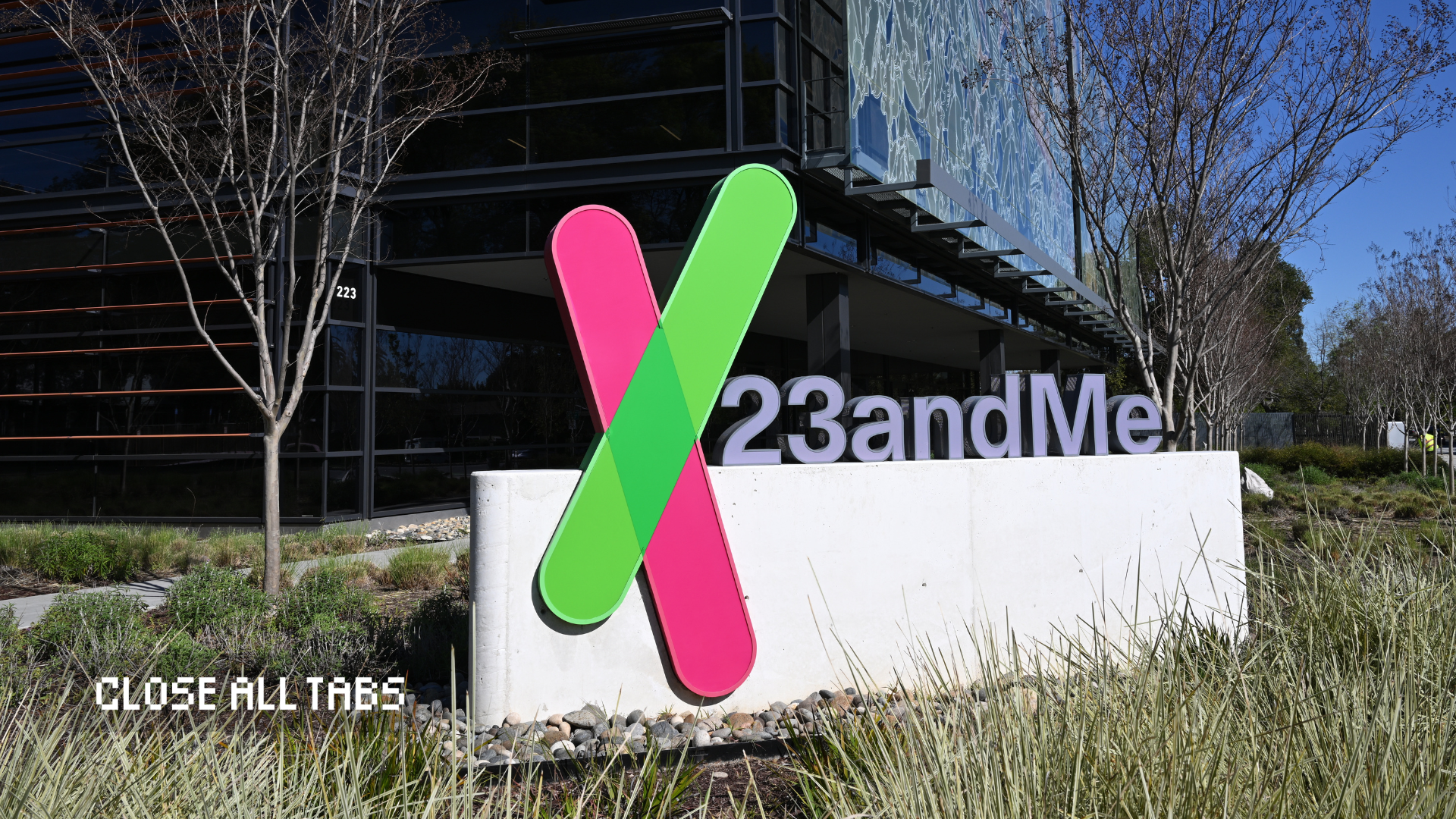
Morgan Sung: Following some friends’ recommendations, she decided to use 23andMe.
Trine Gallegos: It was San Francisco based, right? And I was like, yeah, I’ll shop local, basically.
Morgan Sung: So she bought the kit, spat in a tube, and mailed it back to the lab in a neat little prepaid package. A few weeks later, Trine got her results back.
Trine Gallegos: It said, literally almost down to exactly like 51% Filipino, 49% Irish.
Morgan Sung: Which was, obviously, not at all what she expected. Her whole life, she had grown up proudly Mexican.
Trine Gallegos: So when I got mine and read it and there’s like no Latin, no anything, I was just like what a waste, like yeah. I was just like, “Oh dang, give me my hundred bucks back!”
Morgan Sung: Trine assumed that 23andMe had made a mistake. Maybe they had mixed up her results with someone else’s? Or their own data was inaccurate? The truth was, of course, a bit more complicated.
On today’s episode, we’re going to hear more of Trine’s story and also talk to a genetic privacy expert to find out what do you really give up when you take one of these tests? And is it worth it?
This is Close All Tabs. I’m Morgan Sung, tech journalist, and your chronically online friend, here to open as many browser tabs as it takes to help you understand how the digital world affects our real lives. Let’s get into it.
Before we get into the privacy questions surrounding 23andMe and all the other at-home DNA tests, let’s hear the rest of Trine’s story. And of course, that means opening a new tab.
Show DNA relatives.
Morgan Sung: About a year after receiving what she thought were bum results, Trine had forgotten about the 23andMe test. Her dad had passed away by then and her mom’s health was starting to decline. While their mom was still able to travel, Trine and her sister decided to take the whole family on a big trip to Hawaii. But throughout the trip, Trine noticed that her sister seemed stressed. During their last day, the family took a morning walk on the beach and Trine and her sister ended up alone.
Trine Gallegos: She’s acting kind of odd and then she’s asking me a few little questions and she brings up the 23andMe thing. And she goes, “Well, whatever happened to that test thing?” And I go, “Oh, it was a big frigging disaster. Like it messed up. It didn’t say anything about our like, you know, Mexican heritage or something like that.” And then she said, “Oh I just was, I was going to talk to you about something”, and kind of mumbly. And I was like, “Well just tell me.” so she says, “You’re adopted.”
Morgan Sung: At first, Trine was incredulous.
Trine Gallegos: I go, “Right,” like almost laughing and then she touches my arm and then I knew and then it just like kind of made me real because you know, it was almost like a little comfort like, no, I’m not kidding.
Morgan Sung: And there, on the beach, Trine’s sister revealed a secret that she had been holding onto for almost 60 years. Before Trine’s arrival, their mom had had several miscarriages. Around that time, a distant family member was going through a rough patch and asked Trine’s parents to adopt their baby. Baby Gloria was a joyous part of their family for over six months. But then the relative came back and asked to take her out for one last car ride to say goodbye. They never came back.
Trine Gallegos: So, you know, a gut wrench, right? And I mean, they were, I mean just heartbroken. My sister and brother are like apparently crying every day. It was just a scene. And so my sister told me this, and I had heard about Gloria before, but obviously not my part of the story.
Morgan Sung: Sometime later, when Trine’s brother was 14 and her sister was 12, their parents announced that they were going to take a drive into San Francisco. This wasn’t out of the ordinary. They went into the city all the time.
Trine Gallegos: And then they get to this hospital. They get there and they’re in a room and a woman brings a baby in and hands her to my mom, it’s me, and then, you know, we all get in the car, we come to Antioch. And I guess as we arrive, or getting out of the car, my mom says very matter of factly, which my mom was a girl boss before it was a thing and she said, uh, “This is our baby and we’re not gonna tell anybody how this happened, this is our baby and that’s it and nobody’s gonna take her.” And then my brother and sister were like, “Yeah, fine, let’s go.” But this is all, again, from a 12-year-old’s point of view. That’s all she knew.
Morgan Sung: Back on the beach, Trine was reeling, but she didn’t have time to process anything because the rest of the family was getting out of the water and fast approaching across the sand. They still had to pack, get through the airport and catch their flight back to California. So Trine pulled it together. She didn’t tell her husband or daughter about the bombshell her sister dropped until they got home nearly a day later. That’s when she broke.
Trine Gallegos: I’m almost crying just thinking about because it was so intense. So now my daughter’s crying, my husband’s crying, because we’re like, “What? I don’t get it.” I was kind of a mini-wreck. I call it, where I was in “upside down world” and I’m pretty, you know, open and fairly lighthearted and positive, but that, you now, that took my knees out.
Morgan Sung: Trine still had so many questions. Who were her birth parents? Records were scarce, and there was no such thing as open adoptions back in 1960. Her sister didn’t have many answers, because she was so young when Trine was adopted. And they decided not to bring it up with their mom, who was more easily confused as she got older. A few weeks later, Trine’s nephew and his husband came by to check on her.
Trine Gallegos: And my nephew’s husband, who had also done 23andMe, but he knew his results, he said, have you gone back to 23andMe and see if there’s any connections?
Morgan Sung: So she logged on for the first time in over a year and clicked, “show DNA relatives.”
Trine Gallegos: And then sure enough, boom, like a big fatty circle that showed like a match that, not like partial not like fourth cousin like, you know, 100% this is your sibling.
Morgan Sung: That was Trine’s full biological brother, Mark. He’s five years younger than her. They messaged each other through the 23andMe website, hesitantly at first, and then over the next few weeks, shared more and more. Mark told her about their other younger brother, Sean, who’s eight years younger than her. The brothers had grown up in San Francisco and were even born in the same hospital that Trine was born in. They had both gotten married, and had kids, and raised their families less than an hour away from where Trine raised hers.
Trine Gallegos: They’ve been in the Bay Area the whole time. I always, you know, say that we’ve been 40 minutes away from each other and a bridge apart our whole lives. Just crazy.
Morgan Sung: Trine was floored when she saw a picture of her youngest brother, Sean.
Trine Gallegos: It is my face. I look like Mark, you can definitely tell we’re siblings, but Sean has like the exact same coloring, the same kind of shape, more face. I mean, it was like just an absolute mind blow.
Morgan Sung: Trine, with her journalism background, had so many questions that it overwhelmed Mark. After a few weeks, he suggested that they meet up in person. They talked for over four hours.
Trine Gallegos: So, my mom, Delfina, was 16 when she got pregnant with me. Our father, Gary, was like 17 or 18. My biological grandma, Delfina’s mom, was like, “no, you’re 16, you can’t” — and this is 1960, this is not a thing. “You can’t have the baby, you have to finish school”, also you’re, you know, undertone, “You are Catholic and Filipina, no, no, no.” So, you know, that’s why she had to do, the adoption thing.
Morgan Sung: Delfina tragically died just before she turned 50. At her funeral, an aunt told Mark that he might have a sister somewhere out there, but didn’t elaborate. He was grieving and didn’t think much of it. Then, about 20 years later, his wife and daughter pressured him into taking a 23andMe test. That’s when Trine’s profile popped up. Despite the shock of it all, Trine said she’s actually grateful for the timing. If she’d learned that she was adopted before home DNA kits existed, she would have never met her brothers or have the answers she so desperately wanted.
Trine Gallegos: If my sister had told me when I was 18 or 25 or when I trying to have a baby and had all these questions. I wouldn’t have known any of this information. I wouldn’t have any back story. And I think it just would have haunted me a little bit.
Morgan Sung: After their first meeting, Mark and Trine introduced their families to each other.
Trine Gallegos: Immediately we’re gabbing, we’re sharing stories, and I’m just, you know, taking it all in and eating it up and asking about childhood and what they did because, you know, we’ve got 50-some years to catch up on of stories. And um, when we left that dinner, my husband was like, “Oh wow.” So he’s seen that Mark and I have some, like, similar hand gestures and how we kind of pause and the cadence, which is also very wild to think about, right?
Morgan Sung: Is that genetic? You know, you have to wonder.
Trine Gallegos: Exactly. It has to be, right? It’s just that is just wild to me, but also kind of cool. And then we eventually, not too long after, brought all of our families together. And, it is just all of us jumping in. We’re excited and also like, yikes, you know, like a family reunion we didn’t know we were gonna have.
But when they left, my sister looked at me. She said, “We have brothers again.” And that’s how she refers to him, too. And they refer to her as, “How’s her sister doing?” And because she’ll say, “have you heard from the brothers lately? What are they doing?” It’s not like, “Oh, how are your brothers doing?” You know, we’re just all melted together, you know.
Morgan Sung: Trine is one of the lucky, rare cases of a DNA test reuniting long-lost family members. But while Trine and her brothers were catching up and merging their families, 23andMe, as a company, has had some serious problems.
Trine Gallegos: So when I did the 23andMe, I never even considered, “Oh yeah, I could be like super compromised.” “Hi, here’s my sample,” like, you know, but never thought of it. And then of course, it brought so much joy when it happened. Again, I didn’t really think of it, but Mark said he would have never done it if it hadn’t been for the bullying, no, for the encouragement of my sister-in-law and his daughter. He said, I’d never, that’s not his jam. And Sean, 100% hell no. Like he was like, absolutely not. And he is super aware of things that can go sideways, things that could be used against you, things that can bring you down, and he’s not wrong.
Morgan Sung: Okay, what’s going on with 23andMe? We’ll dive into that mess in a new tab. But first, a quick break.
Okay, we’re back to talk about 23andMe, their legal issues, bankruptcy, and the big question, what are they doing with all that data? New tab.
23andMe privacy nightmare.
We’re diving into this with Anya Prince, who’s a professor at the University of Iowa College of Law. She researches genetic privacy and discrimination. Before we get into the privacy questions, we need to set the scene. About 10 years ago, 23andMe was super hot and trendy.
Anya Prince: I think 23andMe held a lot of promise and marketed itself as this fun, quirky thing, but also part of a larger goal, right. So when 23andMe first launched, they literally had spit parties where they invited, you know, famous people to come to parties and spit in tubes and learn about themselves.
So it was this really fun thing and it wasn’t necessarily about health back then. It was more about, like, you know, you learn whether or not you can, you know, curl your tongue or whatever quirky genetic traits, learn about your ancestry, learn about where you came from.
And it’s really grown to, to have more, um, health testing. And also this research side, I think while it’s not the main focus, I think 23andMe did sell itself as like, you can be part of something bigger by opting into research as well.
Morgan Sung: Can you talk more about that goal they had of like helping with this grand plan to develop new treatments and special drugs?
Anya Prince: Yeah, it’s a really fascinating goal, right? So on the one hand, we could think that this is really beneficial, right, that here’s this good company that’s saying, “Not only we’re gonna provide this interesting service where we tell people about their ancestry, but also we’re going to build this database that can advance science and be for community good.”
And I think that’s one version of the story that has a lot of truth to it. But I think there’s another version of this story that has lot of true to it too. And that is the business model. Here is a company that took money from people to give them that information, and that was one side of their business model, and had a second business model where they then sold that information to pharmaceutical companies and the like. Or did their own research with it and applied for patents, which then brings in money as well.
And so a less charitable version of the story is that it’s a really fascinating business model where you’re making money both on the consumer side and then selling their data — and then possibly making cures or drugs that could help ameliorate some of the original customers’ diseases and then charging them for it again. And so, I think both sides of that story have some truth to it.
Morgan Sung: When it comes to genetic data specifically, what’s the difference between getting tested in a clinical setting, like a doctor’s office, and submitting a test through an at-home direct-to-consumer company like 23andMe?
Anya Prince: So in our healthcare setting, we start with the premise that health information, including genetic information, is private, and it can only be shared if it meets certain exceptions or requirements. In the direct-to-consumer testing setting, at least at the federal level, we start with the presumption that the data can be shared as widely as the privacy policy lets it be shared.
Morgan Sung: 23andMe did allow customers to opt out of sharing and storing their genetic information. And to their credit, they also let customers fully delete their accounts and all the data associated with it. And this is important because all that data has been a huge concern in recent years.
Anya Prince: So there was a data breach where millions of customers’ data was leaked onto the dark web, essentially. And eventually this came out, and one of the pieces that came out with that is that it seemed like the hackers were particularly targeting individuals that had Ashkenazi Jewish descent or Chinese ancestry. And so there’s concerns of like why why those groups, what was their aim? Um, that I think I haven’t seen really that those questions have been answered.
Morgan Sung: Do you remember when you first heard about it, what was your first reaction as a privacy expert who literally specializes in genetic privacy?
Anya Prince: In terms of a privacy perspective, these hacks happen all the time. Not that they should, but it does happen. But then you do worry, like, okay, now that’s out there. If it’s a credit card breach, so many people have made this analogy, but you can change your credit card, you can, you know, change your email address, but can’t update and get a new version of your DNA. So once it’s out there, it’s out there. And I think that is one of the more concerning sides.
Morgan Sung: Let’s talk about the bankruptcy. So this data breach resulted in a $30 million class action lawsuit. Last year, the company filed for bankruptcy and announced plans to sell its assets, including all of that customer DNA information. Why does that raise red flags for privacy advocates?
Anya Prince: Because there’s very few federal restrictions in who could buy that data, there were so many open questions. Could a pharmaceutical company purchase this data? Could somebody like a company affiliated with law enforcement purchase this data? Could a foreign nation purchase this data? And the answers were really any of those, for the most part. There are some restrictions on so-called countries of concern. But for the first part, under federal law, it goes to whoever has the most money and wants to bid on it.
And so all of a sudden, people were in the position where their most sensitive genetic data, arguably, the most immutable data that they have out there is for sale to the highest bidder. And that was well within the privacy policy, right? The privacy policy of 23andMe stated that this data could be sold in bankruptcy.
But I think many customers, I don’t know if most, never really sat down and thought, “Oh, my genetic data all of a sudden is an asset of this company.” And not just an asset, like the most valuable asset that this company has. And so there have been plenty of other bankruptcies where private data has been an asset, but not one in the same volume and to the extent where that’s like the main sort of business model and the most sensitive of data.
Morgan Sung: A few months ago, a judge approved the sale of 23andMe, and all of its data, back to one of its co-founders, or really TTAM, a nonprofit research institute led by one of the company’s co-founders. TTAM, by the way, is an acronym for Twenty Three and Me. Initially, privacy advocates were concerned about who would end up in possession of 23andMe’s data if the company sold. But a few of the states suing 23andMe backed off once that sale to TTAM was approved.
Anya Prince: And in some ways, that makes a lot of sense, right? People trusted 23andMe. They said, “OK, here’s this company. I believe in their ethos. I like that they’re doing research. I trust their security, at least maybe before the hack. And so I’m going to give my information to them.” And we do this all the time as customers, right. We don’t read the privacy policies, but we generally think, “OK. Here’s a well-known, good company, and we’re going to trust that they going to be good stewards of the data.”
And so, if that was the reason that you chose 23andMe to give your genetic data to, then there’s probably a sigh of relief that TTAM is the buyer, because they’re gonna have a very similar ethos. They are keeping basically the same employees, same structure, and so we think, “Oh good, it wasn’t a big bad pharmaceutical company, or it wasn’t a law enforcement company, or it wasn’t some other country that now has a bunch of Americans’ data.
But I think it’s a missed opportunity to breathe such a sigh of relief that we don’t reflect upon the real true gaps in genetic privacy law that this example really exposed or highlighted. There isn’t really anything to stop the next company that has fewer privacy protections in their privacy policy to begin with from being sold with much less press, and it just goes under the radar, but the same privacy concerns exist.
Morgan Sung: A lot of people believe that even though this country doesn’t have robust protections for data privacy, their health information at least is safe. That’s not always true though. The Health Insurance Portability and Accountability Act, better known as HIPAA, only protects sensitive health information when it’s collected in a healthcare setting — like insurance or a doctor’s office.
But outside of that setting, a lot of your private data is fair game. Your fitness watch tracking your heart rate, The FemTech apps tracking menstrual cycles, the vitamins you buy using your credit card. All of this information is health information that can be collected and sold to the highest bidder. Why is that so concerning? Let’s open a new tab.
What is your health data really worth?
Like we’ve talked about, health data is regulated or protected. What are other ways that this information has been mishandled or exploited?
Anya Prince: Yeah, I mean, so one of the big ones, I think, with health data in particular is the potential use by advertisers. So if you think about times in your life where your purchasing habits have changed, a change in health status is one of those, right? You need a new insulin pump. You need new brace for your knee. You need any number of things, right.
And so. Our health data can be really of interest to advertisers who say, “Yeah, if I can find out that Mrs. Smith is pre-diabetic, let me start to market to her healthy foods or insulin or whatever else it is and hope that she purchases my product instead of the competitor.”
And for some people, that’s good. Maybe they find the product that’s really going to help them. And I think for others, it could be exploitative or lead them to a choice of product that wasn’t the best for them because it’s not within a clinical setting decision. And so there’s both pros and cons to it.
Morgan Sung: The concern is not just about advertisers getting a hold of your personal health data. After Roe v. Wade was overturned, reproductive rights advocates raised concerns over how this kind of information could be used to criminalize people who would had abortions or even miscarriages. HIPAA doesn’t apply to most healthcare apps or at-home tests.
And when it comes to DNA information, the lack of privacy regulation is pretty troubling. What would stop law enforcement from mining DNA test results? The Golden State Killer, one of California’s most notorious serial killers, was caught through a relative’s DNA test. Obviously, that’s an extreme example, and 23andMe says they don’t let law enforcement into their databases. But here’s why you should probably care.
Anya Prince: I think some of the concerns I have with it are, one, you’re going to start to use it in the serial killer case, and that’s great. It’s good to catch serial killers. But what I worry about is the slippery slope, right? Where, okay, then it’s used in an assault case, then then it is used in this. And how far down the slippery slope do you go to where it’s just really common to use this anytime there’s DNA available for a crime?
And our constitutional protections would not let the police just set up a stop on a street corner and do genetic testing of every single person in the hopes of finding somebody related to the perpetrator. So why would we treat a genetic database any different?
I think the other privacy concern with law enforcement is that they’re not just logging onto the database and finding the suspect, right, for the most part. What’s happening more often is they find what’s called a partial match. And so they say, oh, we have this genetic sample from the crime scene, and then we found this sample that like 15% of it matches. Well, that means that it’s a relative, but it’s not like a brother, sister, it’s like a parent, sibling, it’s too far removed. So then they have to start building family trees and they can build backwards up to the great, great grandpa and then downwards. And so there’s a lot of people that are investigated, not as suspects, but as linked to suspects.
So all of a sudden, you might have police knocking on somebody’s door to say, “Could you give a confirmatory sample so that we can then try to figure out if you’re related to the person and if you are the brother whose family tree this is part of.” So I worry just potentially even more about the privacy and the respect for the non-suspects who are also implicated in these investigations than the suspect themselves.
Morgan Sung: In this story, we’re also hearing from someone who found her long lost family members through a 23andMe test. It seems like there’s a significant trade-off here. To find this part of yourself, you have to risk your privacy. If someone did choose to take an at-home DNA test, what precautions would you recommend?
Anya Prince: So first I’d say like, absolutely, it’s a trade-off. I mean, as I’m sure many of you listeners know, every time we share data out there, whether it’s with our friend or individual or a company, we are making trade-offs about confidentiality and privacy. And I think it’s completely normal and rational trade-off to participate in something like 23andMe. Whether it’s to learn about health risks, whether it is to learn about family members, whether it’s to learn about your ancestry.
I’m a really private person, so I haven’t made that trade-off, because that’s not something that feels comfortable for me. But I also, I’m not surprised that millions of people have made that trade-off. And for most people, it’s fine, right? They don’t have a privacy risk.
My hope, though, would be that law and policy catch up a little bit, right, where the data is more protected so that there can’t be misuse, right? Where we have more robust genetic anti-discrimination laws, where we have more structures in place for how and when law enforcement could access this data, and that we have rules about how companies that collect this data have to care for it, you know, as stewards of this data and not just have it be profit-making endeavor.
Morgan Sung: Thanks so much for joining us and for just sharing all of this information. I’m gonna go delete everything from everything online.
Trine, for one, was pretty freaked out about the 23andMe data breach, and then bankruptcy, and then sale. As she watched the headlines roll in, she decided to deactivate her account and permanently delete her data.
Trine Gallegos: I got my info, I got win with my brothers and I really don’t need and now I really am concerned like who is this gonna go to now?
Morgan Sung: There were a few more distant family members that popped up as matches, but Trine wasn’t too pressed about connecting with them. Especially not through 23andMe.
Trine Gallegos: I’m like I’m fine with that. I don’t really need more, unless they want to come to us and gather. That’s good, but I don’t need to do it through this platform anymore. I think it’s hard for me not to have my little rose-colored glasses on, which is how I often view the world, especially now I really need them, because mine was so joyful. So yeah, I probably say yeah, take a beat, investigate the bejeebus out of whatever thing you think you’re gonna go through and do, you know, kind of thing. But for me, I mean, lucky.
Morgan Sung: Worth it for you?
Trine Gallegos: Yeah, 100.
Morgan Sung: Despite learning that she is, in fact, Filipina and Irish, Trini still identifies as 100% Mexican.
Trine Gallegos: I- Clearly raised Mexican, you know, have the heart of it. So I can’t un-Mexican myself.
Morgan Sung: She did have a small crisis when she renewed her driver’s license and had to decide whether to check the box for Hispanic.
Trine Gallegos: Honestly, I cried for like two minutes. And then I was like, no? Question mark? Then I found Filipino and then I moved on because, you know, that’s just a form. You know, when I’m asked, I say I’m Mexican.
Morgan Sung: A DNA test can reveal a lot about our backgrounds, but ultimately, it can’t decide who we are.
Okay, now let’s close all these tabs.
Close All Tabs is a production of KQED Studios and is reported and hosted by me, Morgan Sung. Close All Tabs producer is Maya Cueva. Chris Egusa is our Senior Editor. Additional editing by Chris Hambrick and Jen Chien, who is KQED’s director of podcasts. Original music, including our theme song and credits by Chris Egusa. Additional music by APM. Mixing and mastering by Brendan Willard.
Audience engagement support from Maha Sanad. Katie Sprenger is our podcast operations manager and Ethan Toven-Lindsey is our Editor in Chief.
Some members of the KQED podcast team are represented by the Screen Actors Guild, American Federation of Television and Radio Artists, San Francisco, Northern California, Local.
Keyboard sounds were recorded on my purple and pink Dustsilver K84 wired mechanical keyboard with Gateron red switches.
Okay, and I know it’s a podcast cliche, but if you like these deep dives and want us to keep making more, it would really help us out if you could rate and review us on Spotify, Apple Podcasts, or wherever you listen to the show. And if you really like Close All Tabs and want to support public media, go to Donate.KQED.org/podcasts.
Thanks for listening.