Here are the morning’s top stories on Thursday, September 4, 2025…
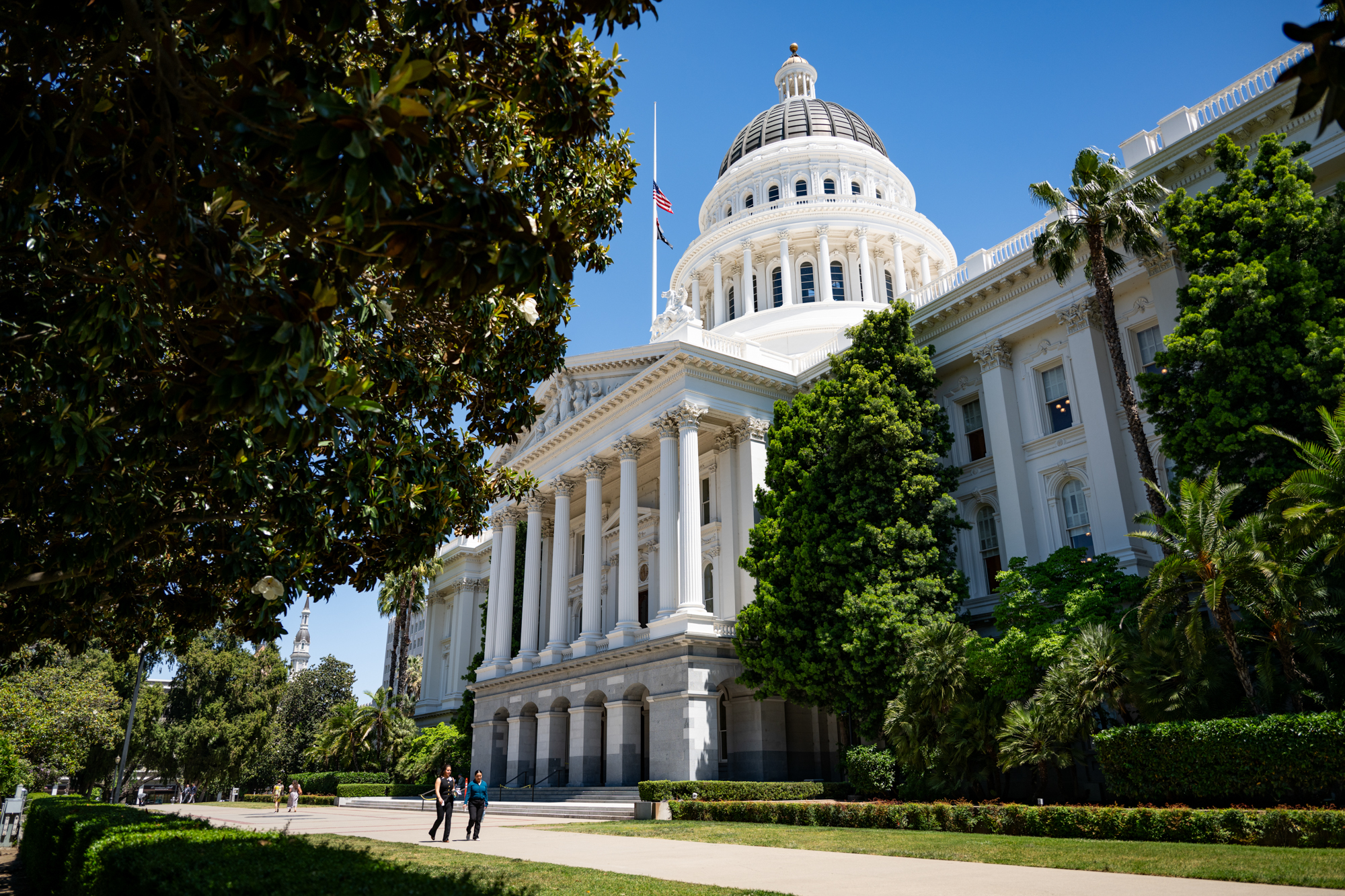
- At the state capitol, negotiations are heating up over California’s signature program to fight climate change. It’s called cap and trade, and the state uses it to cap greenhouse gas emissions. But the program expires in 2030, and lawmakers are debating how to extend the program amid rising energy costs and concerns about the closure of oil refineries.
- California, Oregon, and Washington are forming a health alliance to issue their own vaccine recommendations. The move comes in response to the Trump administration’s changing vaccine guidance.
- A major new immigration detention facility has quietly opened in California’s Mojave Desert. But advocates say the private prison company that owns it has not obtained permits to operate.
Affordability Concerns At Center Of Cap-And-Trade Renewal Debate
When California’s flagship climate program was last reauthorized in 2017, the biggest champions of cap-and-trade were looking to the future. “This isn’t for me, I’ll be dead,” then-Gov. Jerry Brown thundered at a panel of state senators, as negotiations intensified that summer. Brown’s goal was to forge a bipartisan coalition to limit planet-warming emissions, balancing the concerns of environmentalists and industry to solidify California’s global leadership and avoid the worst climate damages he foresaw: vector disease, mass migrations, and “Southern California burning up.”
Eight years later, the costs of climate change have arrived. Intense wildfires are driving up the price of electricity and home insurance for Californians already struggling with affordability. Climate-fueled costs have injected a new dynamic into negotiations over extending cap-and-trade before the legislative session ends Sept. 12. The program raises billions of dollars every year from polluters, and Gov. Gavin Newsom and state lawmakers are debating ways to use that money to lower the costs of a warming state and follow through on their post-election promises to prioritize affordability.
Negotiations to extend cap-and-trade to 2045 have moved slowly behind closed doors for much of the year. The program is complex, and just 21 of the state’s 120 legislators were in office for the last reauthorization vote. But the talks have become more urgent as auction returns earlier this year faltered, reflecting uncertainty about the future of the program.
Assemblymember Jacqui Irwin, a Democrat from Ventura County, introduced a plan from Assembly Democrats to extend the program. To make electricity more affordable, Irwin is proposing a revamp of the California Climate Credit. The credit is currently paid to utility ratepayers twice a year, typically in April and October. PG&E customers, for example, receive two credits of $58.23 this year, regardless of power usage. Utilities pay for the program by auctioning off free cap-and-trade allowances granted by the state. Irwin’s plan would shift the credit to the hotter summer months, when Californians run air conditioning. The proposal would also integrate the credit directly into bills based on usage rather than providing lump-sum payments. “People that have the highest utility bills, people that are in hot areas that don’t necessarily have solar or battery backup, people that have lower incomes are going to see the biggest decrease in their bills during those summer months,” Irwin said.
In Rebuke Of RFK Jr., The West Coast Unites On Vaccine Policy
Leaders in California, Oregon and Washington are teaming up to issue their own vaccine recommendations in response to the Trump administration’s inconsistent guidance.