Ericka Cruz Guevarra [00:00:02] I’m Ericka Cruz Guevarra and welcome to The Bay, local news to keep you rooted. And welcome to our August news roundup where we talk about some of the other stories that The Bay team and today a special guest have been following this month. I’m joined by senior editor, Alan Montecillo. What’s up, Alan?
Alan Montecillo [00:00:21] Hello.
Ericka Cruz Guevarra [00:00:22] And our very special guest today is Nastia Vojnovskaya, associate editor of arts and culture for KQED. Hey Nastia.
Nastia Voynovskaya [00:00:29] Hi Ericka!
Ericka Cruz Guevarra [00:00:30] Thank you so much for joining us.
Nastia Voynovskaya [00:00:32] Thanks for having me.
Ericka Cruz Guevarra [00:00:35] Before we dig into the stories that we’ve been following, Nastia, we wanted to have you on because it’s been a pretty busy August for you and the Arts Desk. Can you tell us a little bit about all the things you’ve been covering this month?
Nastia Voynovskaya [00:00:49] It’s music festival season and full swing in the Bay Area. So earlier this month, I had the pleasure of covering Outside Lands. Um, I cover it every year. And this was a particularly good one where had I not been covering, I would have definitely wanted to be there for fun. Super standout performance by Doechii, who was not even a headliner.
Ericka Cruz Guevarra [00:01:13] Wow. I was just going to ask what were your favorite sets?
Nastia Voynovskaya [00:01:25] She already had been at the top of my list of artists I’m watching, just based on her super strong album from last year, Alligator Bites Never Heal. And she just really showed everyone what showmanship and what being a performer is all about.
Nastia Voynovskaya [00:01:52] She can rap with the dexterity of Kendrick Lamar while moving like Megan Thee Stallion with no backing track. And then the whole performance was also formatted with this cheeky classroom lesson theme about hip hop. There were also so many homages to who came before and where she came from while creating this super futuristic vision.
Alan Montecillo [00:02:16] August was kind of the month of music festivals or concerts in Golden Gate Park, right? There was Denton Company, Outside Lands, Zach Bryan. With Outside Lands how did it compare to previous years? And I mean, how do you know as an attendee and as someone covering it, whether it was like a big success compared to years past?
Nastia Voynovskaya [00:02:35] I would say this year they did some very, very savvy booking. So in addition to Doechii, they had Doja Cat and also Tyler, The Creator. Tyler, he had played Outside Lands before, so when they announced it back in April, I was like, okay, I’m excited to see him again. I like him. But shortly before the festival, he released a fantastic new album. And it’s called Don’t Tap the Glass and the whole theme of that album is being present for the music in person and not being on your phone. And you kind of saw that translate in the crowd the way that people were so engaged. There were some really smart choices of well-positioned breakout acts that they booked. There’s this Brooklyn indie band whose name unfortunately we cannot say on the Radio, and it’s spelled F-C-U-K-E-R-S. And they played this smaller side stage earlier in the day. And I was so impressed by just how they packed out that stage with teens and 20-somethings who were just in this very dense crowd jumping up and down. They kind of have this indie sleaze vibe with electronics and live instruments and just like very sassy vocals. It’s very children of brat. And that band actually had a super packed high energy show, The Rickshaw Stop the night before. So I was just very impressed by how the festival had this mix of established and breaking acts that I think are about to be a lot bigger soon.
Ericka Cruz Guevarra [00:04:05] I know LaRussell also performed at Outside Lands, and we also did a really amazing event with him this month as well. More on that on the show next month, actually. We did a real cool music showcase with LaRussall and the Good Company team. Really got to see some amazing artists locally, and we’re gonna do an interview with the winner next month. So look out for that, listeners.
Alan Montecillo [00:04:34] I have a confession to make. I live next to the park. I have lived next to park for several years and I haven’t been to outside lands yet.
Nastia Voynovskaya [00:04:41] But at least you can hear it.
Alan Montecillo [00:04:43] I can hear it, I can definitely hear it. Some of my neighbors don’t love the fact that they can hear it, but I don’t mind. I should go and I will go. It’s expensive, but from what I hear, it’s worth it. I will get around to it, but I’m always a little embarrassed whenever this comes up.
Ericka Cruz Guevarra [00:04:59] Very clutch parking spot in front of his house, if you’re an outside lens attendee. Not that I’m offering it to our listeners. Well we’re gonna take a quick break and when we come back we’re going to dig into all the stories that we have been following this month. Stay with us.
Ericka Cruz Guevarra [00:05:27] Let’s go ahead and dive into some of the other stories that we have been following this month. Alan, I wanna start with you and you’ve been following the Pickett Fire in Napa.
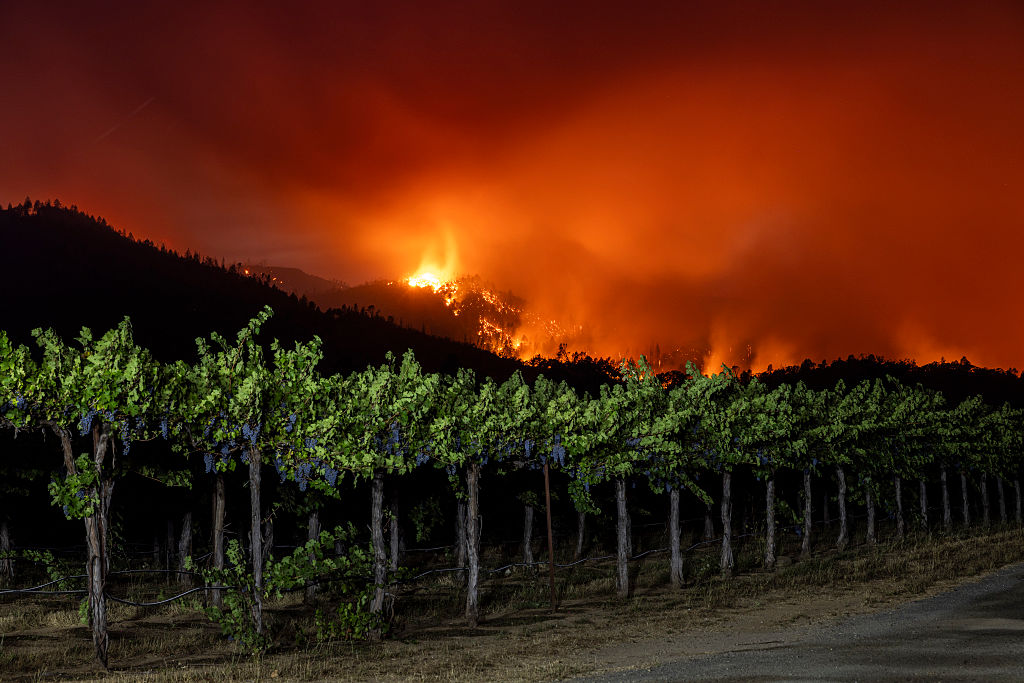
Alan Montecillo [00:05:38] Yes, after a cold summer, a robust marine layer, Karl the Fog, out in full force, we are essentially in peak fire season from now until winter, basically, when it starts raining. And over the last week, we’ve had what has been the largest fire in the Bay Area so far, which is the Pickett fire. As of this taping, so Thursday morning, it has burned about 6,800 acres and is about 33% contained.
Ericka Cruz Guevarra [00:06:07] Yeah, and obviously whenever it comes to fire in the Bay Area, I think one of the main ways folks experience it is air quality, and I’ve been really watching that very closely. But can you tell us a little bit about where the fire is burning exactly? I know it’s pretty close to some big wineries in Napa, right, who are just about to approach harvest season.
Alan Montecillo [00:06:33] Yeah. So the fire broke out on the 21st of August along Pickett road in Napa County, just outside the town of Calistoga near several vineyards. So this fire is firmly, you know, in wine country, you know, In terms of smoke, the air quality management district did lift that advisory on Tuesday. So hopefully it’s not too bad anymore, but there’s still many areas where there are evacuation orders or evacuation warnings.
Nastia Voynovskaya [00:07:00] So has it burned down any residential areas?
Alan Montecillo [00:07:03] So far, it doesn’t seem like that’s happened. Not all the damage has been assessed yet. It seems like the main damage that’s been done, apart from smoke that can be hazardous to people’s health, is to crops. As Ericka mentioned, it is harvest season for these wineries. One early estimate from the county ag commissioner says approximately 1,500 acres of crops have been affected either by fire, by heat, or by smoke. Totaling and estimated, and again this is preliminary, about $65 million in damage.
Ericka Cruz Guevarra [00:07:38] Oh, wow.
Alan Montecillo [00:07:38] And what that means in a practical sense is, are wine grapes going to get ruined by the fire? This happened in 2020. And so the question just is, could that happen again?
Nastia Voynovskaya [00:07:50] Do you know how the wine industry has been adapting to that, if at all?
Alan Montecillo [00:07:54] Winemakers say, you know, over the last decade or so, the industry is trying to push for more research to figure out how to reduce the taste of smoke and minimize the effects of wildfire because you know it’s hard to tell immediately if the smoke has ruined your grapes. You won’t really know until you taste it. And there actually isn’t a ton of research yet on how to at least mitigate that. So maybe you do have smoke in your area because fire is a reality in California, but maybe there’s ways to minimize the taste and save the crops.
Nastia Voynovskaya [00:08:23] And I know it usually takes a while to figure out how a fire actually started, but do we know anything about how this fire in Napa began?
Alan Montecillo [00:08:33] So that is still under investigation. We don’t know for sure. But there have been some questions and details trickling out, and reporters asking whether this fire started as the result of a “escaped control burn”, basically a fire that’s intended to reduce vegetation on a property. The Press Democrat noted that those words, escape control, burn, appeared on a Cal Fire public safety dispatch around the same time the fire was reported. For what it’s worth, the winery in question said through a spokesperson, you know, we’re working with fire investigators. This is premature. So nothing has been confirmed officially yet, but there are some worries that this could have been how the fire started.
Ericka Cruz Guevarra [00:09:19] Well, Alan, thank you so much for sharing that story with us. We’re going to be following that one in the weeks ahead, I’m sure. Moving on to the story that I have been following this month, Nastia, Alan, you’re both public transit writers in the Bay Area, right?
Nastia Voynovskaya [00:09:39] Yes, I took BART here this morning.
Alan Montecillo [00:09:42] I’m a regular N rider.
Ericka Cruz Guevarra [00:09:44] Nice and of course I’m a regular ferry rider and this might be of interest to all of us in this room. Some big changes have been happening to public transit in the Bay Area that is really all about making transit easier to ride. Not sure if you all have started using your debit or credit cards to ride BART but that is now a thing that you can do. And there’s also something called the Big Sync that is happening. Basically, all these transit systems in the Bay Area coordinating to make transfers a lot easier if you’re using one or more transit system. It’s about time. Right. I remember going to New York a couple of years ago and being able to ride the subway by just tapping my credit card. And as a tourist. I was amazed. I was mind blown.
Nastia Voynovskaya [00:10:43] Yeah, when they got rid of paper tickets and introduced clipper cards, I honestly always found it really problematic that if you lose your clipper card, you have to spend three dollars or something to get a new plastic card. And if you’re a low-income rider, you know that’s money you could be using for a meal. So I’m glad that they’re changing the way it’s done.
Alan Montecillo [00:11:02] Well, and it also brings BART closer to transit systems that already have this. You mentioned this already. New York has it. Chicago has it, many places overseas have it already. Sadly, for those of us who travel among multiple transit agencies, so let’s say you’re going BART to Muni like you do, it hasn’t come to Muni yet, right? You’ll still tap your credit card for BART and then use something else for Muni.
Ericka Cruz Guevarra [00:11:25] Yeah, fumble to find your other plastic card to ride Muni. Yes, that is correct. This open payment system, as it’s called, of using a debit card or a credit card has not rolled out for Muni yet, but that kind of is the goal. Bay Area Transit officials say that they do want to use this eventually for all regional operators, Muni, Caltrain, AC Transit. So TBD for you, Alan. But I will say there is still something for Muni writers in the month of August, which is this big sink that I’m talking about. Have any of you heard of that? No, tell us more. So if you’re using more than one transit system, so you’re going from BART to Muni, all these agencies have tried to overhaul their schedules in order to make transfers a lot easier and a lot faster. So the focus is really for transfer hubs. In the Bay Area, so Dublin Pleasanton, BART, Daly City BART, Palo Alto Caltrain, and Concord BART Station. In all, these agencies adjusted 18 bus routes at these four hubs to improve connection times with each other. No more sprinting from Caltrain to BART for example. These agencies are saying that these changes account for a 33% increase in weekday ideal transfers. So basically you get five to 10 minutes in between one transit system to another to calmly start your morning and walk to your next transfer.
Nastia Voynovskaya [00:13:08] That’s gonna make a big difference for a lot of people, because I talk to so many people that want to ride public transit more, but oftentimes it just takes so much longer than driving or getting a rideshare.
Ericka Cruz Guevarra [00:13:19] Right, exactly. You know, these agencies, these transportation agencies that have been really struggling since the pandemic, they got a lot of work to do to get people back on busses and trains, right? And this is really part of it. In terms of the why, this is part of an ongoing implementation of what’s known as the Bay Area Transformation Action Plan from 2021, which is all about improving public transit, making it more user-friendly. And creating a more connected system among all these different transit agencies around the Bay Area.
Nastia Voynovskaya [00:13:54] Love to see it.
Alan Montecillo [00:13:55] See you on the N, or the 22…maybe I shouldn’t give out —
Ericka Cruz Guevarra [00:13:58] Yeah you’re right. We’re just getting closer and closer to figuring out where Alan Montecillo lives in this episode.
Ericka Cruz Guevarra [00:14:15] Well, that is the story that I have been following. Nastia, we’re gonna wrap this one up with you. What story have you been following this month?
Nastia Voynovskaya [00:14:24] I’ve been following the story of cultural boycotts. So in late July, a bunch of artists announced that they’re taking their music off Spotify because the CEO, Daniel Ek actually just became the chairman of an AI weapons company called Helsing. In light of Israel’s war in Gaza, a lot of artists have been thinking in past couple of years, how… Cultural institutions and companies that serve the culture sector can be complicit in war profiteering. Gabe Moline from KQED Arts wrote a great piece about how Dear Hoof, which is an indie band that formed in San Francisco and are pretty big, announced taking their music off Spotify. And another big voice in that has been Kadia Bonet, who’s this great singer-songwriter, also from the Bay.
Alan Montecillo [00:15:19] How much of a financial hit would artists take for deciding to pull their music off something like Spotify, which obviously is huge, you know, so many people use it.
Nastia Voynovskaya [00:15:28] Well, just based off streams, honestly, negligible.
Alan Montecillo [00:15:32] Because they don’t get paid that much?
Ericka Cruz Guevarra [00:15:32] They do not. They do not get paid much at all. I’ve actually been covering artists’ fight for better pay on streaming services for a few years now. And Spotify doesn’t release its exact figures of how much it pays, but the general estimate going around in the industry is that they get a third of a cent per stream. So basically to make the equivalent of earning $15 an hour at a full time job, an artist would have to get over 650,000 Spotify streams per month.
Ericka Cruz Guevarra [00:16:06] Oh my gosh.
Nastia Voynovskaya [00:16:06] So you have to be very popular to even see any amount of money. Most of the money in the music industry is in touring, but of course, Spotify does have a lot of clout. There’s a lot clout attached to being featured in a prominent playlist and having your music served up. To listeners, but despite that, there are a lot of artists that have been saying the way that Spotify is set up is rigged against the small indie artists.
Ericka Cruz Guevarra [00:16:32] This is making me think about the story of the Bay Area DJs who protested boiler room for coming to San Francisco because of the company’s investments in the defense industry in Israel. Sort of the same kind of deal, and I feel like Bay Area artists really like putting their foot down.
Nastia Voynovskaya [00:16:53] Yeah, very similar. My good friend Olivia Cruz Mayeda covered that story for SF Chronicle.
Ericka Cruz Guevarra [00:16:59] Shout out Olivia.
Nastia Voynovskaya [00:17:00] Yeah, shout out Olivia! Boiler Room, for those that don’t know, it’s this huge online platform for DJs and they basically go to all these really cool music scenes from around the world and produce these really high quality videos of DJs killing it at parties that really puts you in the scene. So in previous years, being in BoilerRoom for a DJ was a stamp of approval. So it was a really big deal that all these smaller electronic music collectives that I’m sure would want the clout that comes with Boiler Room put their foot down and they pretty much organized an anti-Boiler Room music festival as a sign of protest because Boiler Rooms parent company, KKR, has weapons investments.
Alan Montecillo [00:17:44] Has Spotify said anything about this? Are they noticing that there are some artists who are upset, whether it’s about their CEO specifically or payment in general?
Nastia Voynovskaya [00:17:54] So Spotify has not issued a public statement about its CEO becoming chairman of the AI weapons company, but it does have a lot of information on its website kind of arguing that it does give artists all these opportunities and that artists wouldn’t be making a certain amount of money if it wasn’t for Spotify. So they do have a whole section of their website that’s all about payment structure that people can go look at.
Alan Montecillo [00:18:20] From the consumer side, let’s say I really like one of these bands and I use Spotify and they’ve taken their music off, how should I listen to and support these artists?
Nastia Voynovskaya [00:18:30] A lot of people recommend Bandcamp, not every artist has their music on there, but you can buy it directly and a big percentage goes to the artists. I know Apple Music introduced a new feature that easily allows you to transfer your Spotify playlists to Apple Music. People are talking about title. There are other streaming alternatives, but I will say I don’t think any of these artists would say that any of the services are perfect and all have their drawbacks. But I think if people want to support artists, especially the independent artists and their community, the best way is to buy tickets and show up to live shows and honestly buy merch, because merch is really the way that most artists make money these days.
Nastia Voynovskaya [00:19:16] Well, Nastia Voynovskaya, Associate Editor of Arts and Culture, thank you so much for bringing that story.
Nastia Voynovskaya [00:19:22] Thank you, Ericka and Alan for having me.
Ericka Cruz Guevarra [00:19:26] And Alan Montecillo, Senior Editor of The Bay, thank you as well.