Episode Transcript
This is a computer-generated transcript. While our team has reviewed it, there may be errors.
Katrina Schwartz: If you’ve ever visited an urban garden, you know how special it can be to wander through a lush space in the middle of a city, a place teeming with growing things, bees and butterflies. It can feel almost magical. That’s how this week’s question asker, Jake Hanft, feels about the garden he volunteered at, Alemany Farm, in San Francisco.
Jake Hanft: If people can transform this kind of vacant plot of land into a real hub of biodiversity with dozens of birds and turtles and insects, there has to be more places like this in the Bay Area.
Katrina Schwartz: Seeing how a little human effort could help nature root back into the soil was inspiring for Jake.
Jake Hanft: If you plant native plants, and even if you plant crops, then you just suddenly have all these species showing up.
Katrina Schwartz: California has more species of plants and animals than any other state in the country — and there are countless volunteer groups, organizations and scientists working hard to restore native ecosystems across the state. Jake wanted to learn more about those projects.
Jake Hanft: Why are these areas so biodiverse? What is being done to increase biodiversity in the Bay Area?
Katrina Schwartz: This week on Bay Curious, we’re headed into nature. We’ll visit two of the area’s most biodiverse ecosystems, learn what makes them tick, and meet some of the people stepping up to protect them. I’m Katrina Schwartz. Stay with us.
Sponsor message
Katrina Schwartz: Our first stop on this biodiversity tour is a place called Elkhorn Slough, a thriving coastal wetland that opens into Monterey Bay, about an hour south of San Jose. The Slough is an estuary, a place where freshwater meets salty ocean water. You’re going to hear that word — slough — a lot. Here in California, it refers to a type of wetland, think winding channels, muddy banks, a landscape shaped by the tides.
Bay Curious Producer Gabriela Glueck starts us off right in the heart of the action, on a boat on the Slough.
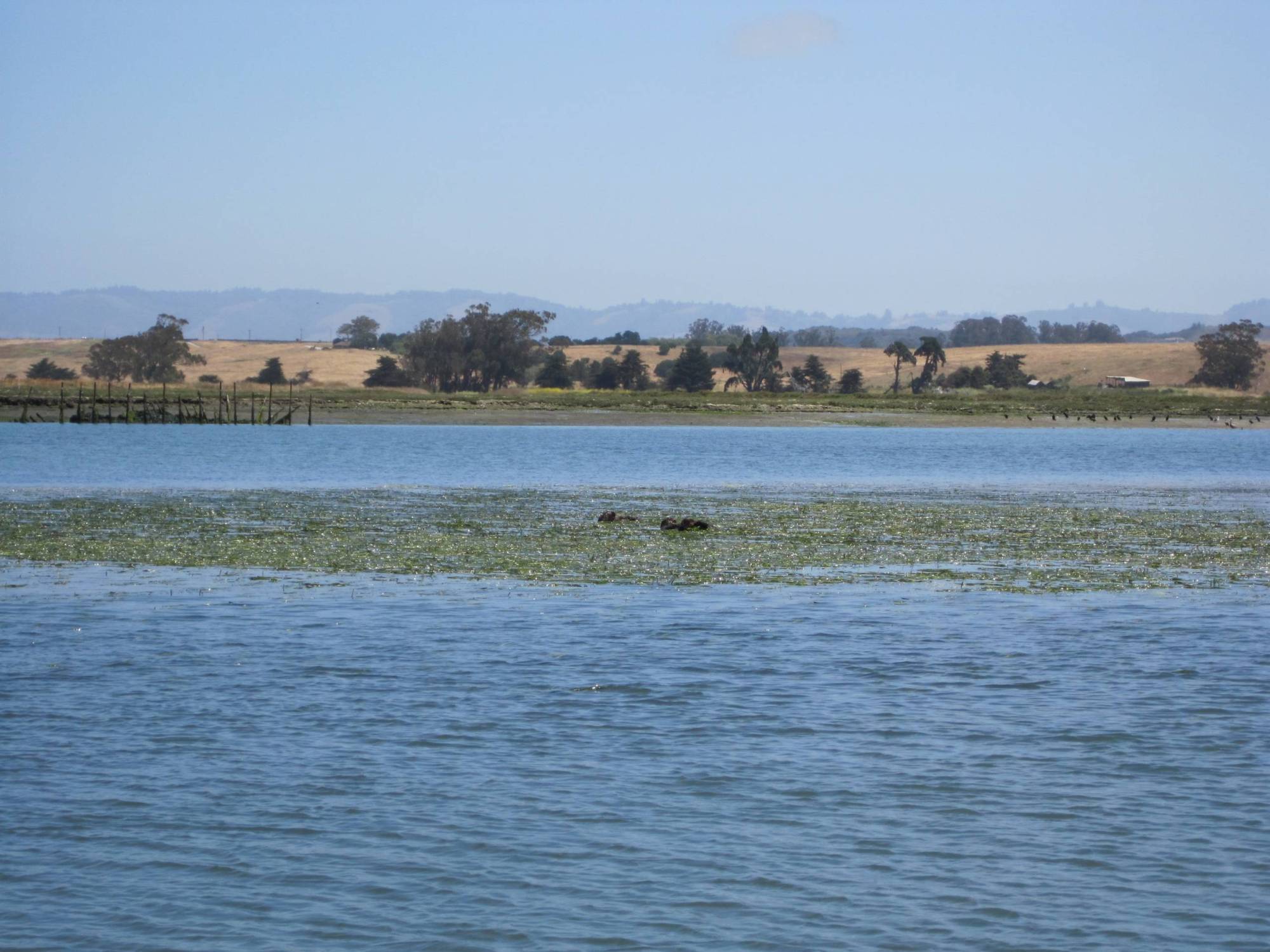
Gabriela Glueck: It’s a nice day to be out on the water. Warm, with a light breeze and a bit of that sulfur-wetland smell in the air. I’m hanging out with longtime Slough volunteer Ron Eby today, on one of his regularly scheduled otter monitoring research trips. He keeps his little electric motor boat tied up at Moss Landing harbor, so that’s where we’ve started our cruise. We’re making steady progress.
Ron Eby: So now we’re just going underneath the bridge. You can see it’s a pretty low tide, so you see all the barnacles and all that is growing on the bridge pilings.
Gabriela Glueck: The Highway 1 bridge marks the unofficial entrance to the estuary. The ocean is at our backs now, and ahead I can see what looks like a long winding river. It’s marshy and reminds me of Florida.
Ron Eby: In front of us, you see a group. It looks like maybe about 15 to 20 kayakers, there by a group of otters there.
Gabriela Glueck: The water here, at the start of the estuary, is brackish, meaning a mixture of salty ocean and freshwater.
Ron Eby: There’s a place for everybody here, because it’s such a varied environment.
Gabriela Glueck: At roughly 7 miles long, the estuary is home to an incredible diversity of life.
Ron Eby: One o’clock! So we have an otter here at one o’clock.
Gabriela Glueck: The Slough’s got southern sea otters, leopard sharks, stingrays, harbor seals, fat innkeeper worms, double-crested cormorants, white pelicans, the list goes on. If you want numbers, I’m talking 16 threatened and endangered species and 340 different kinds of birds.
Although it’s fair to say that most visitors, including Ron, have a singular focus — sea otters.
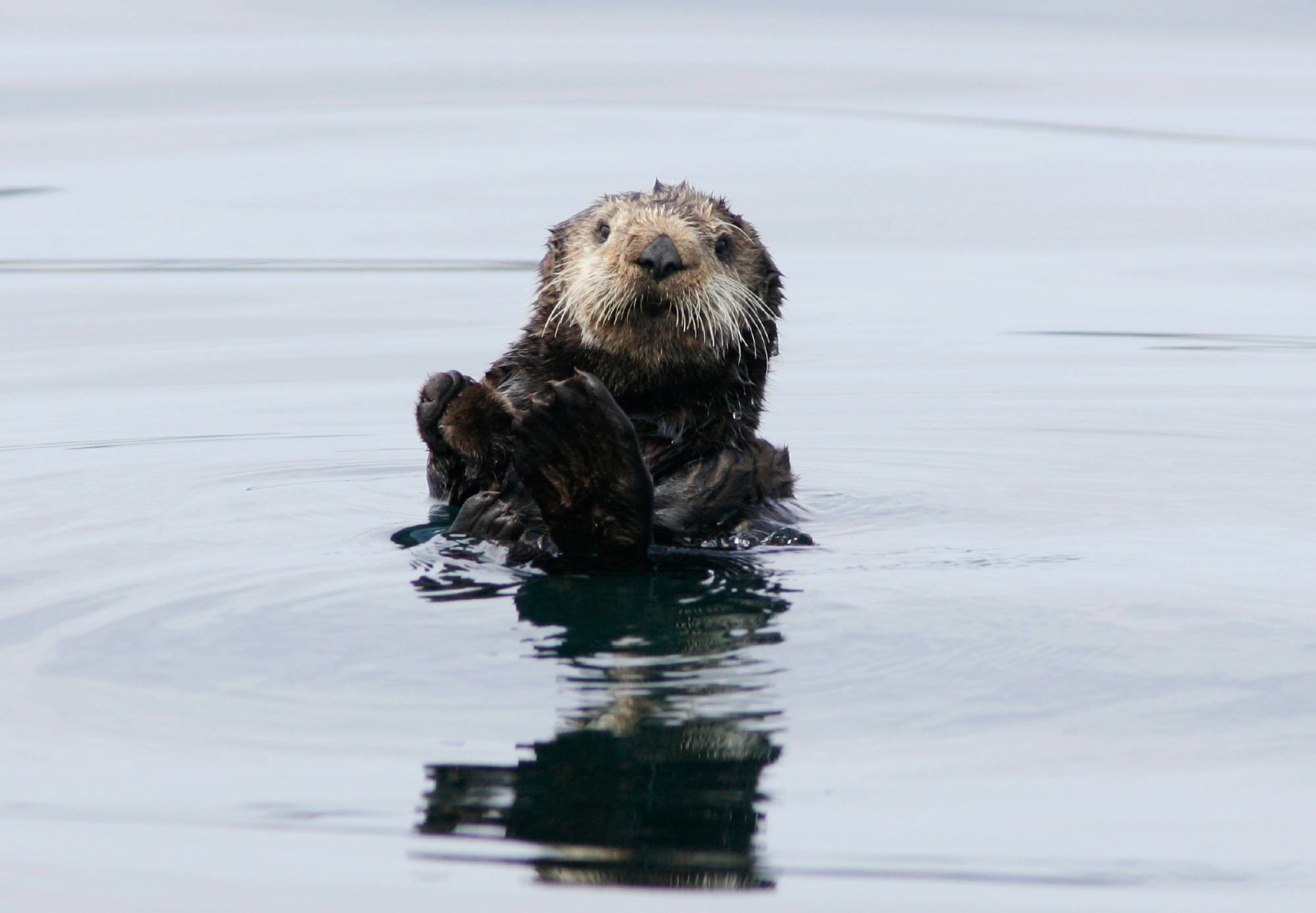
Ron Eby: We’ve got what looks like a mom pup foraging here in front of us. And there’s another one that’s coming up to them. So we got three otters active there.
Gabriela Glueck: The otters are adorable. They’ve got shaggy coats and curious little faces. And they love nothing more than a chill day on the water, just like Ron.
Ron Eby: So I grew up on the water, and as a young kid, I was able to go fishing all the time. I had my own little boat. I could go crabbing, I could go clamming.
Gabriela Glueck: As we cruise around, Ron keeps his finger at the ready, pointing out a near-endless stream of living things. The otters, birds, eelgrass.
Looking at this place now, it’s hard to believe it wasn’t always teeming with life. It turns out the Slough, like many California wetlands, has had its fair share of troubles.
Much of the surrounding land is used for agriculture, and the runoff of pesticides and fertilizer is a big problem. In the mid-1900s, the Army Corps of Engineers built Moss Landing Harbor, which messed with the natural water flow into and out of the estuary. Soon after, a power plant popped up nearby; that plant became a battery storage site, which made the news this year when it caught fire. But there was another loss, long ago, the disappearance of the Slough’s apex predator, the species at the very top of the food chain.
Ron Eby: They essentially wiped the southern sea otters out.
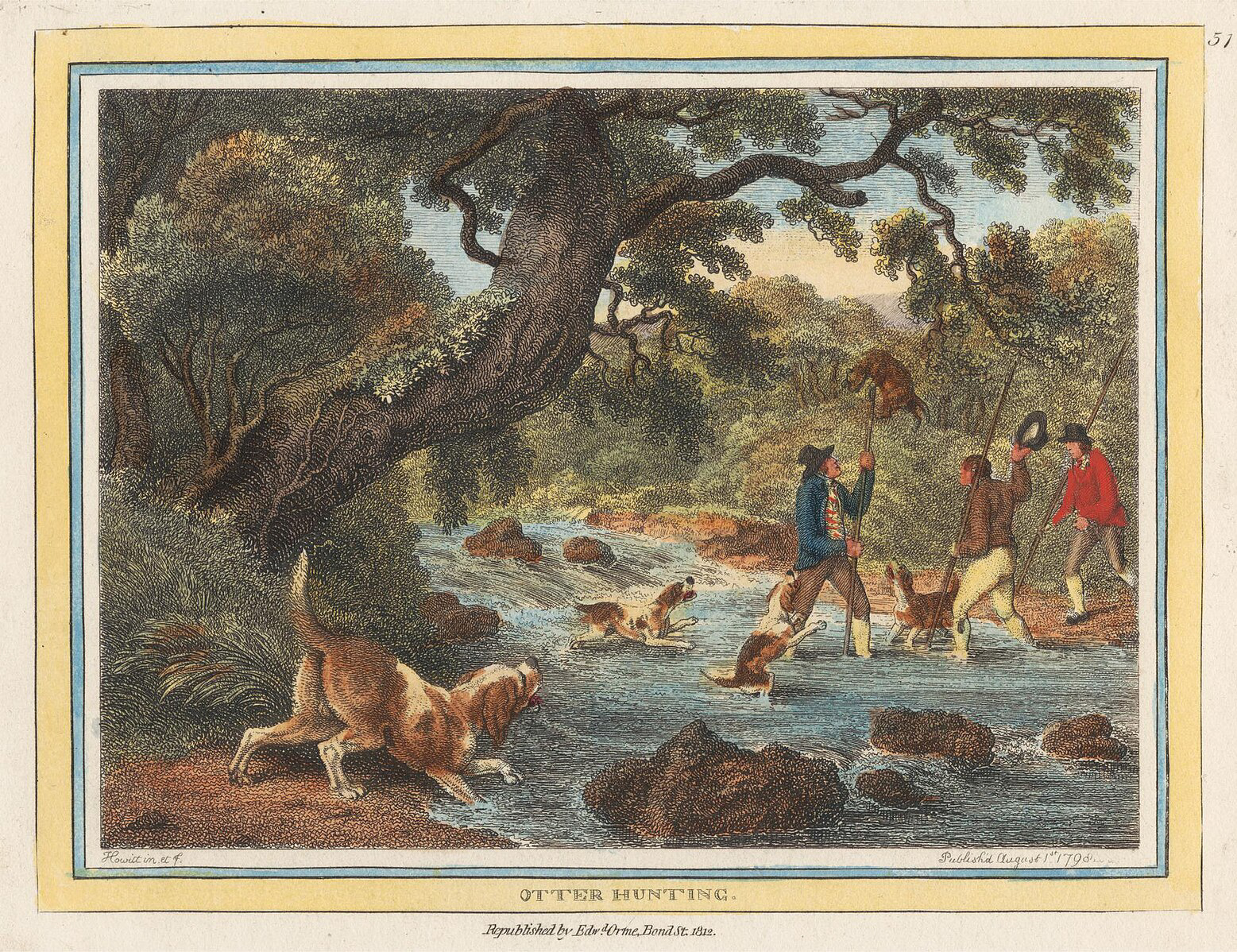
Gabriela Glueck: Back in the 18th and 19th centuries, European-American colonizers hunted the southern sea otters to near extinction for their thick, insulating pelts. Hunting was eventually restricted in 1911, but many thought the otters were already long gone, that it was too late.
Ron Eby: And then a small group of maybe 50 otters was found south of here, in the Big Sur area.
Gabriela Glueck: These otters were the holdouts. They’d taken up residence in some of California’s roughest, most inaccessible waters and had managed to evade extinction. With this remnant population as a base, conservationists began the slow work of rebuilding.
Ron Eby: And gradually over time, that small population of maybe 50 otters has grown to our current population of about 3000.
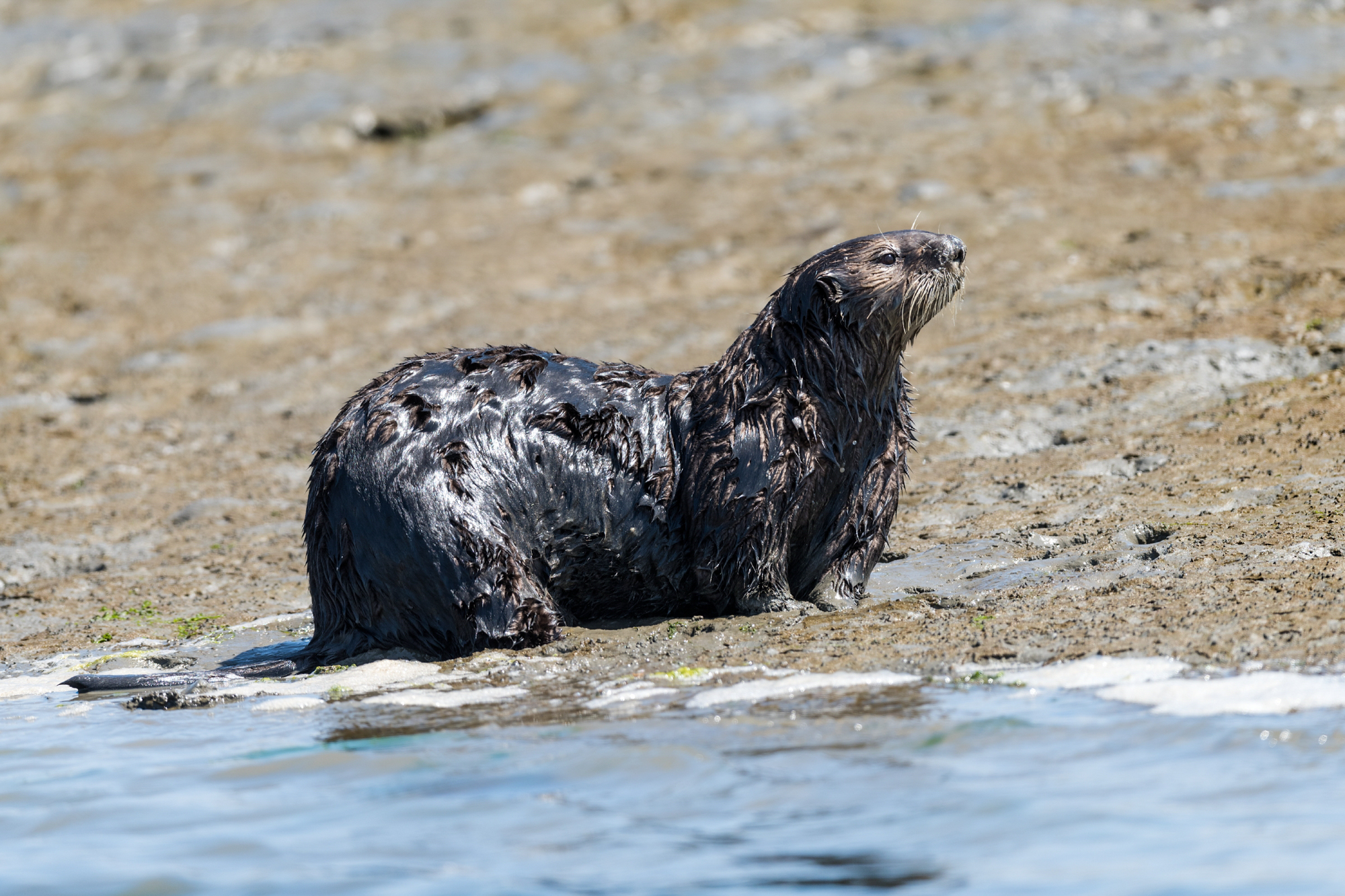
Gabriela Glueck: That’s where the Slough comes back into this story. Because otters actually love estuaries. And without the looming threat of a gun, a handful of otters made their way back to the Slough. This was 1984.
Ron Eby: And it was only males, and so they remained there for quite a few years, and then they gradually left.
Gabriela Glueck: Without females, they failed to establish a permanent population until the late 90s. That’s when nearby Monterey Bay Aquarium started releasing rehabilitated sea otters they’d rescued and nursed into the Slough. Turns out, it was the perfect drop-off spot. Marine ecologist Kathryn Beheshti explains:
Kathryn Beheshti: The estuary is this really protected, abundant prey system that they could reintroduce rehab sea otters into the wild safely, and also, maybe equally as importantly, they could monitor them closely with ease.
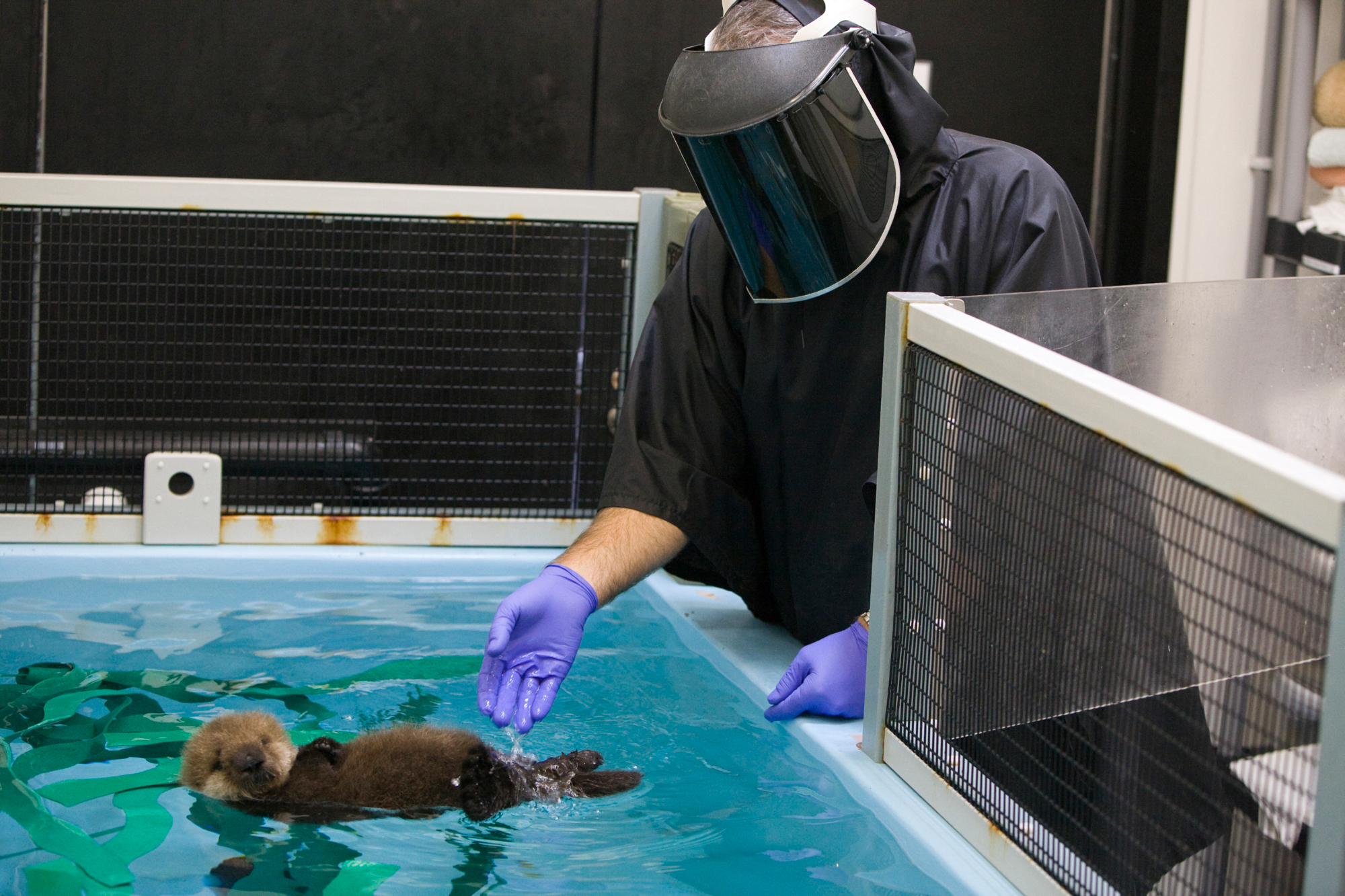
Gabriela Glueck: Many of these released otters are graduates of the aquarium’s sea otter surrogacy program. There, orphaned pups are paired with experienced otter moms, mimicking an adoption behavior that’s also seen in the wild.
Today, more than 120 Southern sea otters call the estuary home. And scientists estimate that surrogate-raised otters and their pups account for more than half of the Slough’s population growth in recent years.
Kathryn Beheshti: It almost cannot support any more otters in Elkhorn Slough.
Gabriela Glueck: Having all these otters in one easy-to-access estuary has given scientists a unique learning opportunity. In fact, a lot of what we know about otter behavior comes from science done at the Slough.
Kathryn Beheshti: And we’re like, this is amazing, this is incredible. What is this behavior? And they probably were doing that for hundreds and hundreds of years before, you know, Europeans came and colonized the area and almost hunted them to extinction. And so it’s really opening our eyes to how these top predators could impact these systems if they were allowed to reenter a lot of the habitats that they historically occupied.
Gabriela Glueck: One of the otter’s most impactful behaviors, ironically, is eating. These voracious munchers are apex predators, at the top of their food chain.
Kathryn Beheshti: Unlike a lot of their marine mammal friends in Elkhorn Slough, they don’t have blubber. They have this beautiful fur coat that has, like, incredible, incredibly high density of fur, but they lack that blubber layer. And so to keep up their metabolism and stay warm, they have to eat a ton.
Gabriela Glueck: This appetite has had a big impact on the broader estuary ecosystem. And as Kat explains, the balance of who eats who eats what is a key part of keeping biodiverse systems healthy.
Kathryn Beheshti: We intuitively understand the idea of a food web, where you know the bottom is supporting the top and the top is also impacting the bottom.
Gabriela Glueck: When otters came back to the Slough, scientists started to notice something surprising happening. The estuaries’ foundational plant species — eelgrass — was flourishing. In 2013, Kat’s colleague Brent Hughes, with help from Ron Eby and other collaborators, published a paper explaining why.
Kathryn Beheshti: Otters like to eat the big crabs. Those big crabs eat these little grazers that are like these little cows that are mowing down these plants that grow on the eelgrass. And these grazers, when they’re cleaning the eelgrass, they’re making it healthier because they’re removing these other plants that we call epiphytes, that can block sunlight from reaching the seagrass.
Gabriela Glueck: Without a layer of epiphytes, the eelgrass was able to snag some rays of sunshine and photosynthesize. Then, it could do all the other amazing things eelgrass does in an estuary.
Kathryn Beheshti: It’s also cycling nutrients; it’s storing carbon. It’s improving water clarity and water quality. So it’s also improving the conditions in the meadows themselves in a way that can benefit the life that depends on it.
Gabriela Glueck: This kind of interaction is called a trophic cascade. That’s when a top predator ends up affecting organisms at lower levels of the food chain. It’s kind of an amazing thing to think about, how all the different living things in an environment are connected. It’s what makes biodiverse systems like the Slough thrive. And that helps California on the whole. Estuaries like the Slough and the wetlands that flourish there act as natural water filters and help protect the coastline from flooding and sea level rise. As Kat puts it:
Kathryn Beheshti: If you like to eat seafood and if you like to have clean water when you go to the beach and if you like to have clean air, then we need these biodiverse systems to be functioning at their highest highest levels.
Gabriela Glueck: These days, the Slough is one of California’s largest and last remaining coastal wetlands, an outlier in a state where 91% of wetlands have been lost. And kayaking through its brackish waters offers a peek into the past, an image of what coastal California might have looked like back in the day.
While it’s still facing its fair share of environmental challenges, Elkhorn Slough has achieved an enviable time-machine effect. And scientists elsewhere in the state are trying to do something similar in very different habitats.
Gabriela Glueck: Our question-asker, Jake, wanted to know about efforts to boost biodiversity in the Bay Area. So, for part two of this story, we’re heading about 100 miles north to the Presidio, a huge park on San Francisco’s north side. Where we’ll visit a native ecosystem that almost disappeared. The sand dunes.
Scientists here are facing an uphill battle. The species they are trying to bring back is already extinct. But that hasn’t stopped them from trying to resurrect it.
Back in the day, the Xerces blue was a common dune butterfly, its blue-gray wings flitting about over a near-endless expanse of sand dunes.
Lew Stringer: If you can imagine, the dunes would have expanded from Ocean Beach all the way to where downtown is now.
Gabriela Glueck: Lew Stringer’s a San Francisco sand dune expert. He’s the Associate Director of Natural Resources at Presidio Trust.
Lew Stringer: Those of us who are in the business of ecological restoration know that the San Francisco dune system was one of the largest in California.
Gabriela Glueck: This sand-swept landscape stretched nearly seven miles, and it was home to a rich diversity of plants and animals. Like much of California, many of these species were hyper-local, living here and nowhere else in the world. The Xerces blue butterfly was one of these uniquely San Francisco creatures. It was a lover of fog and a muncher of deerweed.
Lew Stringer: And its role in the ecosystem was to be a pollinator of other plants, to be food source for birds and other invertebrates and animals. And it was just part of the web of life that was distinct, a part of San Francisco.
Gabriela Glueck: Until it started to disappear. After the Gold Rush in the mid-1800s, the city started to grow quickly. Dune systems were paved over to make way for housing, and dune dwellers like the Xerces were forced to adapt to an ever-shrinking environment. And in 1943, the Xerces blue was seen for a final time in the Presidio’s Lobos Creek dune.
Lew Stringer: That’s where they were holding on for dear life, and they eventually lost their life in this location.
Gabriela Glueck: The Xerces blue was considered the first butterfly to go extinct in North America because of human activities. To conservationists, it became a symbol of the devastating impact humans can have on the natural world.
For most animals, extinction is the end of the story. And for many years, the same was true for the Xerces. But as Lew and his team worked to restore native dune systems, carting in truckloads of sand and reintroducing native plants where they used to thrive, people started to wonder if maybe, just maybe, the Xerces could come back too. Maybe humans could put their fingers on the scale one more time, but in a positive way, turning the butterfly from a symbol of destruction to one of restoration.
Chris Grinter: I get a lot of fun emails. Sometimes people have off-the-wall requests. And when somebody says, I want to bring back an extinct species, I think I paused a minute.
Gabriela Glueck: Enter Chris Grinter.
Chris Grinter: Collection Manager of entomology at the California Academy of Sciences, down here in the basement with the entomology collections.
Gabriela Glueck: Chris is a scientist, an insect guy, and in this story, he’s kind of like the keeper of keys. Part of his job is fielding requests from scientists who want to access the Academy’s preserved specimens…
Chris Grinter: Which range from extinct butterflies to fossils, dinosaurs and blue whales.
Gabriela Glueck: The collection totals a staggering 46 million objects, Xerces blue included. And that’s what the email was about. It dinged in Chris’ inbox back in 2019 from an organization called Revive and Restore.
Chris Grinter: They wanted to borrow specimens that we have here at the Academy of the Xerces blue to do the sequencing, to look at the genome, in a question of can we de-extinct this actual butterfly?
Gabriela Glueck: Turns out, they weren’t the first people to come up with an idea like this. Back in 2000, butterfly conservationist Dr. Robert Michael Pyle made a similar pitch. He wasn’t going for full-on de-extinction, but something that could be just as effective. In his article, titled Resurrection Ecology: Bring Back the Xerces Blue, he lays out a plan.
It goes like this: If you can find a blue butterfly that’s genetically similar to the Xerces, like a cousin, and then move that butterfly to a restored San Francisco dune, maybe with time it’ll evolve into a butterfly that can play the same ecological role as the Xerces.
It’s basically an attempt to recreate an evolutionary split.
Chris Grinter: That’s when we pivoted to work with them on a slightly different question than they originally started with.
Gabriela Glueck: Scientists needed to take a closer look at the Xerces to get a better sense of what they should be looking for in a replacement butterfly.
Chris Grinter: So we are just walking into the entomology collections down here in the basement of the Cal Academy.
Gabriela Glueck: The walls are concrete, with row after row of identical white metal storage cabinets. If you’ve ever wandered into the library stacks, picture that.
Chris Grinter: You can feel it’s cold and dry in here, which is ideal for preserving biological material for long period of time.
These are tropical bird wing butterflies from Southeast Asia. These are tiny little ladybug beetles, actually. Plague locust here. These are little earrings that look like they came from flies.
Gabriela Glueck: Each specimen offers scientists valuable DNA information, especially the objects in the extinct section. That’s where the Xerces are.
Chris Grinter: So this is an entire drawer full of butterflies. The females are more brown, so they have a little bit of blue towards the center of the body, and then a white fringe around the outside.
Gabriela Glueck: So it says Xerces blue extinct, confined to San Francisco, from Twin Peaks to North Beach, Presidio to Lake Merced. Last example seen on March 23, 1943, ah, little likelihood it will ever appear again.
In 2021, scientists used these very butterflies to come up with a DNA map of the Xerces. Then they found a qualified replacement. The silvery blue butterfly from nearby Monterey County. A dune dweller, fog lover, and deerweed muncher.
Last spring, Academy scientist Durrell Kapan led a team of butterfly experts, wildlife ecologists, students, and interns to Monterey to collect them. Lew Stringer explains.
Lew Stringer: We go out and swipe nets in the air and capture them. And then we put them on ice, basically, or not exactly ice, but a cool environment where we feed them Gatorade in order to survive their transport back and to the release site here in the Presidio.
Gabriela Glueck: This is a video from the release day. In it, you can see a group of people, crouching down on their hands and knees on the sandy soil. Nearby, scrubby dune plants offer a riot of greens, purples, and oranges. Slowly, volunteers open up what look like little salsa containers and let the butterflies fly free.
Volunteer: Look at it fly!
Gabriela Glueck: Scientists are hoping these 60-some butterflies will lay eggs, and that their offspring will thrive, cementing the next generation. And just this spring, a handful of unmarked, Presidio-born silvery blues were spotted flitting around in the dunes. Early evidence that this crazy idea might just have wings.
Lew Stringer: It’s just another layer of this amazingly complex web of life.
Gabriela Glueck: A year after the initial effort, the team released their second cohort of butterflies in the Presidio. Now it’s a matter of wait and see.
Lew Stringer: One of the key lessons of ecology is that the more diversity you have, the stronger your ecosystem is. While one little butterfly isn’t going to and its loss isn’t likely to break the ecosystem, bringing back it and many other organisms strengthens that ecosystem and makes it more complex and redundant and beautiful.
Gabriela Glueck: The Xerces project also has implications beyond the Presidio. It’s something of a test run — an early look at what it takes to reintroduce a replacement species — to up biodiversity where we need it most.
Lew Stringer: We do know that if we’re going to help reverse the tide on this extinction crisis, we need to know as much as possible about how to do that.
Gabriela Glueck: It’s a small thing — a blue butterfly in a sand dune — but this attempt at resurrection has offered scientists like Lew a new kind of hope.
Lew Stringer: Something about this butterfly has captured people’s attention; it speaks to the ability of humans to heal some of problems that we’ve created.
Katrina Schwartz: That story was brought to us by Bay Curious producer Gabriela Glueck. Thanks to Jake Hanft for asking this week’s question. If you’ve got something you’ve been wondering about, head on over to Bay Curious.org to submit your question.
Jake Hanft: Bay Curious is made in San Francisco at member-supported KQED.
Katrina Schwartz: Our show is produced by Gabriela Glueck, Christopher Beale and me, Katrina Schwartz. With extra support from Maha Sanad, Katie Sprenger, Jen Chien and everyone on team KQED. Thank you so much for listening. Have a great week.